Jobs

Civil Grand Jury slams shipyard development project

5

“The Civil Grand Jury concludes that the Hunter’s Point Shipyard redevelopment project will require more communication, more transparency, and more commitment from the City in order to achieve its goals of providing housing, jobs and economic development, tax revenue and open spaces to San Francisco and its residents, particularly those residing in the surrounding neighborhoods.”

So reads the conclusion of the Civil Grand Jury’s 2010-2011 report, which is titled, “Hunters Point Shipyard: a shifting landscape.” The report makes six findings and seven recommendation that city departments and the Board will have to respond to within the next 60-90 days. And some of these recommendations reflect problems the Guardian unearthed and highlighted during in its coverage of the development.

The jury found that the San Francisco Department of Public Health (SFDPH) is not in compliance with its pledge to the California Department of Public Health to keep residents informed of developments at the Hunters Point Shipyard. As the report’s authors note, the SFDPH’s website “is not regularly updated.”

The jury also found that the City has placed itself in a potentially compromising situation with developer Lennar where in essence, “the wolf is paying the shepherd to guard the flock.”

The jury further noted that by having developer Lennar reimburse the city for monitoring expenses associated with the shipyard project, SFDPH has created a situation that “could raise doubt in the public’s mind about its commitment to proactively and impartially enforce environmental health regulations even when it might adversely impact Lennar.”

Public trust in the SFPDH has been further jeopardized by its failure to update its website in a timely manner, and its apparent reluctance to comment publicly on the best method to deal with the clean-up of Parcel E-2, which is the site of a former dump and deemed one of the most polluted parcels of land on the shipyard.

The jury found that the above concerns were “further reinforced by the recent release of email messages that purportedly showed inappropriate communications between senior officials at the SFDPH and the U.S. Environmental Protection Agency and Lennar.”

The jury found that with the exception of Parcel A, the City has no legal control over the remaining shipyard property. “Consequently, in a technical sense, the City has no authority over matters dealing with deadlines and deliverables for environmental clean-up. However, the City does in fact have some standing in these matters via the 2004 conveyance agreement between the San Francisco Redevelopment Agency (SFRA) and the Navy. The agreement stipulates that the Navy will work collaboratively with the SFRA and share information about cleanup work.”

Last but not least, the jury found the previous efforts by the City to implement workforce policies at city-funded construction projects such as the shipyard have “largely proved ineffective” as they only require contractors to make good-faith efforts, but that earlier this year, a new local hire ordinance was implemented with stricter requirements and mandates.

Based on these findings, the jury recommended that SFDPH needs to update its shipyard project website on a weekly or monthly basis, immediately stop accepting money from Lennar to pay for monitors at the shipyard and cover the costs from its own resources, rigorously enforce conflict of interest guidelines governing deals between its officials and the companies they are monitoring, and conduct its own environmental assessment of the issue of capping Parcel E-2 and make its findings available to the public for comment.

The jury also recommended that because the Navy still owns the majority of the shipyard land and therefore the city has no direct control over deadlines and deliverables, it is critical that the Bay Area Air Quality Management District and SFDPH be “particularly vigilant in monitoring clean-up activities at the shipyard.”

The jury further recommended that the City and the SFRA should have “contingency plans in place” for continuing Redevelopment-related projects, including the shipyard, “in the event State redevelopment plans are cut or eliminated.”

Last but not least, the jury recommended that to ensure that promised job creation goals for the shipyard are realized, “the City should ensure that the Office of Labor Standards Enforcement has sufficient resources to allow it to effectively enforce the provisions of the new workforce laws.”

According to the conditions of the Civil Grand Jury’s report, for each finding the responding parties must report if the recommendation has been implemented or not, whether it requires further analysis, or was not implemented because it is either unwarranted or not reasonable.

So, expect to see some fireworks in the coming weeks, given that the Mayor’s Office, the Board, the Office of Economic and Workforce Development, SFDPH, the Office of Labor Standards Enforcement, the Redevelopment Agency and the BAAQMD have been named as the responding parties in this report…

Cleaning up UC’s mess

5

news@sfbg.com

By 7 a.m., when engineering students begin to trickle into Cory Hall at UC Berkeley, Arnold Meza has already scrubbed the floors, wiped clean the chalkboards, and emptied the trash of 30 offices and many of the classrooms and hallways of the six-floor building.

His early shift as a custodian is a gift, he says, because it is steady compared to his former swing-shift schedule, but Meza is still barely making rent. And he is a single father of four. Like many service workers in the University of California system, Meza wonders how the university can refuse to give him a 3 percent wage increase while top UC executives receive six-figure bonuses every year.

“It falls on broken promises,” Meza said while tying up a bag of trash, one of hundreds he would take out that week. Meza was referring to an agreement in 2009 between the university and its service workers unions, including Meza’s union, AFSCME (American Federation of State, County and Municipal Employees). At that time, the administration established a minimum wage (currently $13 per hour) for the more than 7,000 service workers and agreed, if funding was available, to increase wages annually to bring their low-wage workers out of poverty.

But the university is going back on its promise, refusing to increase wages with the funding dedicated for that very purpose, the East Bay Alliance for a Sustainable Economy and the Partnership for Working Families (EBASE) notes in its recent report titled “Bad Budgeting, Broken Promises.”

As the UC Office of the President sees it, the 2009 discussion was not an agreement at all, but a “conditional memorandum of understanding” that would only be effective if state funding was available, said UCOP spokeswoman Dianne Klein.

“We’ve already taken $500 million in cuts. We’ll have to take another $500 million in cuts. Because there is no new money, the memorandum of understanding is moot,” Klein told us.

The state budget vetoed by Governor Jerry Brown last week would have set the UC system back $150 million in cuts on top of the $500 million in cuts approved by Brown in January. How much more will actually be cut from UC funding remains to be seen, but the forecast is not promising.

Despite the cuts, the proposed budget bill states that $3 million in distributed state funds should go toward the salaries and benefit of service workers in the UC system. In a March 24 letter to the governor, UC President Mark Yudof requested that the governor veto that restriction so the university could use the dedicated $3 million “to preserve our flexibility in dealing with the $500 million reduction.”

Compared to the total UC budget of $21.8 billion, that $3 million makes up only 0.014 percent — nickels and dimes to give employees a living wage.

Meanwhile, Meza and his fellow coworkers struggle to put food on the table, making ends meet by working two jobs. After his 4 a.m. to noon Monday through Friday shift, Meza works eight-hour shifts as a car mechanic on weekends. Similarly, many UC service workers collect cans to get a few dollars from the recycling center.

“When I started here 20 years ago, I was making close to $9 an hour. That wasn’t enough,” recalled Meza, who put his four children through public high school on that salary. Today, Meza brings home about $2,400 a month, barely enough to cover rent and a few bills at his El Cerrito home.

“I want my kids to go to college. But financially, I can’t afford it,” he said. “For me, it’s a sad reality.”

Meza’s union, AFSCME, is working with UC to lower the workers’ contribution to retirement pensions to 1.5 percent. The university proposes a 3.5 percent pension plan to go into effect this July and 5 percent in July 2012—the same amount requested from top UC executives. At their low wage, that would cost the service workers the equivalent of one biweekly paycheck a year.

Some UC executives, such as UC Berkeley Chancellor Robert Birgeneau, receive additional retirement perks. Roughly 200 highly paid UC executives receive a supplemental retirement benefit of 5 percent of their annual pay, said Nikki Fortunato Bas, the executive director of EBASE. That’s a total annual cost to UC of $4 million.

“If UC gets its way in 2011, instead of getting to climb that next rung on the ladder out of poverty, [the low wage workers] will take a step backward through a combination of increased contributions to retirement and healthcare and UC withholding a 3 percent raise,” Bas said. “All the while, UC is showering already highly-paid executives with six-figure bonuses.”

In an infamous budget battle that has required the UC system to restructure its quickly diminishing funding from the state, more than 100,000 employees’ paychecks have been reduced while top execs like UCLA Ronald Reagan Medical Center CEO David Feinberg receive thousands of dollars in bonuses. In September 2010, Feinberg’s base pay was increased by 22 percent and he received a $250,000 “retention bonus,” for a total compensation of $1.33 million.

These astounding numbers, as part of a $3.1 million package in bonuses for 37 UC executives last September, were quoted in the EBASE report, using data from the UC Regents website (www.universityofcalifornia.edu/regents).

UCOP says the retention bonuses are necessary “because we pay below market as it is [for top executives’ salaries],” said Klein, and the UC needs to offer huge bonuses to keep the executives from moving to higher paying universities. “You have two options: sayonara or we’ll match it,” Klein said. “You can’t recruit in the classifieds for these people … and you’ll have to replace them for the same money, anyway.”

The bonuses are not state-funded, said Klein, but are taken from research grants, patient care, and even federal funding. But Bas said the problem is with UC’s priorities: “Time and again, they have shown that they can find money to give bonuses or backfill sports programs,” she said. “UC may look at this as a matter of technicalities, but we cannot ignore the stories of employees and their families who are struggling to get by.”

As it stands, UC is short-staffed when it comes to service workers. “We’ve been short-staffed for the last 10 years,” said Meza, who estimates that UC Berkeley employs about 140 custodians, less than one-third of the 460 or so custodians the university employed in the 1980s. The result is that the students suffer, said Meza. “The students are getting the short end of the stick because we can only clean once a week in some classrooms because we’re short staff. We see the students pay a lot with tuition, and they’re getting less.”

Already, student fees have increased by more than 32 percent, and another 8 percent fee increase is pending, reported EBASE. As the state continues to make cuts, students and low wage service workers suffer the consequences.

According to the California Budget Project, a single-parent family needs to make $68,375 a year just to make ends meet in Alameda County. “UC workers have reduced-cost healthcare, so this number could be adjusted downward to $58,544,” said Bas. “For a custodian at UC Berkeley or UC San Francisco making $30,000 or even $40,000 a year, this means working two jobs and collecting cans just to scrape by.”

When his oldest was nine years old, Meza remembers, he used to drive his family to the recycling center to get cash for cans he had taken out of the garbage. “The kids were happy in the car because I was going to get money for food when I recycled cans,” which meant there would be dinner on the table that night, Meza said, apologizing for getting teary-eyed at the memory.

“I just don’t want people who work here to go through what I went through to raise a family,” he said.

No matter how many cars Meza fixes on the weekend, he never seems to have a break from the stress of trying to cover fuel, rent, heating bills, doctors’ bills, and other necessities. He’s only 43, but he feels much older after 20 years of working two jobs, seven days a week, providing for four children on his own.

UC workers, unions like AFSCME and other stakeholders have proposed $600 million in budget alternatives such as reducing the excessive 7-to-1 employee-to-management ratio (at UC Berkeley, the average is four employees to one manager). Yet UC does not appear to be seriously considering these alternatives; its current goal is to take back the $3 million dedicated to its low-wage service workers.

“We think this is a matter of finding the will within the UC administration to do what’s right by honoring their word to protect working families’ a path out of poverty,” Bas said.

Two months ago, Meza and his fellow union members marched into UC Berkeley’s Chancellor Robert Birgeneau’s office and asked him to spend one day in the life of a service worker on campus. He still hasn’t answered their request.

“People are really struggling here. We are committed to working and we give 110 percent — that should be accounted for,” said Meza. “Give us our 3 percent. We earned it.”

Some families don’t flee San Francisco

19

I hate to admit, I take this a little bit personally, all this stuff about how families are fleeing San Francisco and how it might be better to live in Omaha or Louisville. Cuz I have a family and we aren’t leaving. And neither are my friends and neighbors. There are plenty of us who think that San Francisco is a great place to raise kids.


Some of the stories in the recent Chron article are laughably unrepresentative:


For Kearsley Higgins, raising a baby in San Francisco was idyllic. She and her husband owned a small two-bedroom house in the Castro, she found plenty of activities for her daughter, Maya, and made friends through an 11-member mothers’ group.


Now as the mother of an almost 4-year-old, with a baby boy due in September, Higgins has left. A year ago, she and her husband, a digital artist, bought a four-bedroom home with a large backyard in San Rafael. Maya easily got into a popular preschool and will be enrolled in a good public elementary school when the time comes.


Nice: One-income family buys a four-bedroom home in Marin. I’m afraid that’s not the market most of us are in.


The statistics are real:


New census figures show that despite an intense focus by city and public school officials to curb family flight, San Francisco last year had 5,278 fewer kids than it did in 2000.


The city actually has 3,000 more children under 5 than it did 10 years ago, but has lost more than 8,000 kids older than 5.


But the reasons have a lot more to do with the cost of housing than with anything else. The lack of affordable housing for families — and frankly, none of the new market-rate condos the city is allowing offer much of anything to people with kids — drives people to the cheaper suburbs. And in this economy, it’s not as if they just quit their jobs. No: They commute, long distances — and when you have kids, it’s hard to rely on marginal public transportation. What happens if you’re at work in SF and your kid gets really sick at school in Brentwood? Are you going to spend all afternoon trying to get there on BART and buses? No — you’re hopping in the car, by yourself, and driving 80 miles an hour to the school site.


Which means that building dense, expensive, small condos in San Francisco is the opposite of sustainable planning or green building. Sustainable planning means preserving existing affordable family housing and building housing for the San Francisco workforce. San Francisco is doing none of that. Density isn’t smart growth if the housing doesn’t work for people who work in the city. It’s dumb growth.


End of rant.


What I started off to say was that some of us are very happy living in the city. I’m more than happy with our public schools (McKinley and Aptos so far). I really like the idea that my son can get home from school by himself, on Muni — and can go to his martial arts class on Muni, and can walk to music lessons and bike to the park, and when he’s 16 we won’t even have to talk about a car. I love the fact that my kids are growing up with people who are very different from them — and that ethnicity, socioeconomic status, religion, sexual orientation and all the other things that were such a big deal when we were growing up are utterly irrelevant in their circles. They have friends who come from two-dad families, two-mom families, single-parent families, single grandparent families, rich families, poor families, black familes, Asian families, Latino families, families where the parents speak no English … it’s all a big Whatever. It’s San Francisco.


The city is full of cool, fun stuff to do. It’s full of fascinating people and neighborhoods. My kids experience stuff every day that the suburban folks with their big back yards won’t see in a lifetime. It’s not all positive — we see homeless people on the streets, and we give them money and talk about why people are homeless. But it’s real and it’s life and I’m not taking my family and running away.


So there.      


The Duke abides: Gamer takes on “Duke Nukem Forever”

1

Duke Nukem Forever
Xbox 360, PS3, PC
(3D Realms / Triptych Games / Gearbox Software / 2K Games)

Duke Nukem Forever is an exploration of myth and ego, a commentary on celebrity-obsessed culture…

Oh, who are we kidding? Duke Nukem is a steroid-popping meathead who loves beer, blow jobs and blasting aliens. DNF is a direct sequel to Duke Nukem 3D, a PC game that debuted in 1996 – in those dying days of action movie excess, nu-metal and witty one-liners – and the sequel does not stray far from its roots.

That it took 15 years to release a sequel makes DNF the oldest video game joke in the industry. Following numerous delays, funding issues and company closures, its imminent release is a moment being watched by many gamers with cautious anticipation: Will the game enjoy the same success it might have had in the 90s? Or has the world changed too much, lending this joke a pitiful punchline?
Somehow, both of these things have happened. DNF successfully channels the crass humor of the original game, which was full of strip clubs and naughty curses, and it benefits from employing the same voice actor, Jon St. John. But the world has changed: it is still capable of containing a character as radical as Duke but the celebrated Duke gameplay is a tad past its sell-by date.

Following the events of Duke Nukem 3D, Duke is enjoying the good life in Las Vegas, where seemingly everything is Duke-branded, from burger joints (Duke Burger) to strip cubs (Duke Nukem’s Titty City.) As Duke is on his way to a late night talk show appearance, aliens attack once again and steal all of Earth’s women. It’s hard to tell whether, at some point in the game’s development, there was ever more to the story. Here it acts as a thin framework to drive the action across Vegas towards the Hoover Dam.

I was only half-joking by describing DNF as an exploration of myth and ego. Certainly, the game makes no great statements on matters of fame and narcissism, but the developers have fumbled the character’s celebrity into a game mechanic where your health is called “Ego” and performing tasks like signing autographs and admiring yourself in the mirror increase your Ego bar permanently. Yes, the first thing you do in the game is press the right trigger to “Piss” in a urinal.

While this jibes with the humor of the original game, it is also suspiciously pandering. There’s a strong disconnect between newly conceived gameplay and whatever was conceptualized over the course of 15 years. Fifteen years is a long time and Duke Nukem 3D wins no awards for its mechanics in today’s modern playground, but DNF more or less sticks to its guns. If you missed circle-strafing enemies, you’re going to have a blast with this.

Likewise, the platforming sections that interrupted the original game’s carnage can’t hold a candle to the type of sure-fingered control we enjoy today. Its inclusion here brought a smile of recognition and a frown of frustration when I couldn’t make jumps that I should have. Let’s not even bring up the fact that it takes over a minute to load a level after you die. How is that possible in 2011?

It’s hard to say what it would have taken to please everyone waiting for Duke Nukem Forever. In adhering to outdated mechanics you frustrate new players, and by updating everything you wind up with a relic of the ’90s in a world where Duke doesn’t belong. DNF straddles the line. It’s funny in a 12-year-old potty humor kind of way, and the Duke character survives his awakening into the 21st century. But 15 years of anticipation overshadows anything less than a home run and DNF is not a home run. If you are a card-carrying member of the cult of Duke, DNF often brings back the ridiculous feeling of playing that game, warts and all. I found myself excusing its failures whenever possible.

The mayoral poll: No surprises

18

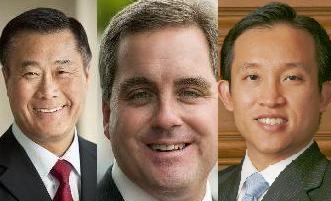
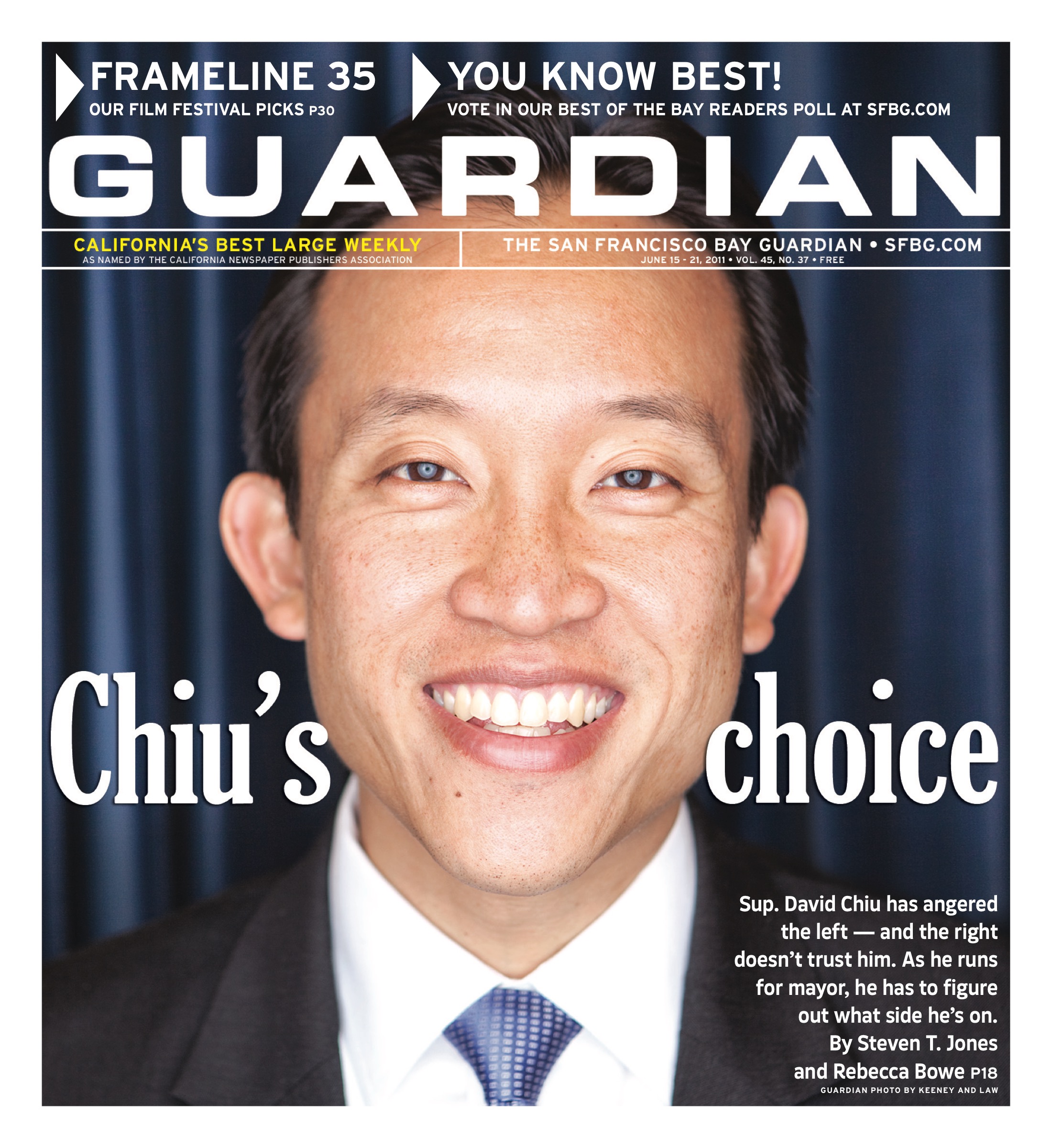
The David Chiu campaign has released a poll that isn’t really all that surprising. It shows that the two candidates who have run citywide races — State Sen. Leland Yee and City Attorney Dennis Herrera — are a little tiny bit ahead, and Chiu is a little tiny bit behind, but all of them are well within the margin of error of a poll sample of only 500 people. Yee is out in front at 17 percent (I’m actually surprised he’s not further ahead at this point, since so much of this is name recognition and he’s been elected so many times, to so many jobs, over so many years that he has by far the best name rec in the race). Chiu and Herrera are tied at 13 and 12 percent (but with a plus-or-minus five percent MOE, all three are statistically in a dead heat).


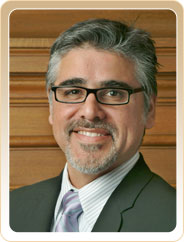
I would have thought John Avalos would be closer to the top at this point, since he’s doing a good job consolidating the left, but he’s never run citywide, and the campaigns have barely started. Again: It’s name recognition right now.


The bottom line: There is no front runner (with the possible exception of Yee). There may never be a front-runner among the three men bunched in the center of the pack. It’s all going to come down to who gets the second- and third-place votes — which is why ranked-choice voting is so valuable in a race like this. In a traditional race, two candidates who combined might have 35 percent of the vote would be in a runoff, and a candidate who missed the cut by half a percentage point would be out of the running.


One thing we do know: This poll is going to drive Rose Pak and Willie Brown nuts, and increase dramatically the pressure on Ed Lee to run. the more powerful Yee appears, the more likely it is that the center of power in the Asian community will shift away from Pak’s Chinatown operations. Yee’s base is west side, not Chinatown; always has been. Pak despises him (and the feeling is no doubt at least somewhat mutual).


The other fact that weighs in Yee’s favor: He’s doing a better job than anyone of expanding his base. He’s racking up leftside endorsements (unions, the Sierra Club) and aiming hard at the Avalos Number Twos.


As for the questions about what people want in a mayor? Again, these are poll-tested platitudes that we hear every year, and we’re going to hear more of them. “Together.” “Shared values.” “Making the city work.” If it weren’t such a beautiful day, I’d want to puke out my window.

Treasure Island: 11 ayes, no sight

6

On June 7, the San Francisco Board of Supervisors voted 11-0 to reject an appeal of the Treasure Island environmental impact report. The appeal was brought by Arc Ecology and our colleagues the Sierra Club, Golden Gate Audubon Society, Wild Equity, former Sup. Aaron Peskin, and Yerba Buena Island resident Ken Masters.

The board will tell you that the Department of City Planning and the Mayor’s Office of Economic and Workforce Development found the appeal lacking in merit.

In the appeal, we claimed the EIR lacked the specificity to qualify as a project EIR, which means that after it passes, the city will have substantially limited the ability of any future Board of Supervisors to address the project’s actual environmental impacts. But these impacts cannot and will not be known until actual development proposals, none of which presently exist, are made.

Sup. Jane Kim and city planning staffers argued that the EIR had almost too much specificity. For example, without showing a single confirming diagram, project sponsors claimed they could cut as many as 100 stories off the proposed skyscrapers — yet keep the same number of condos without increasing the bulk, height, or number of buildings in the overall project. How? Through the Harry Potter-like magic of “flex buildings and zones.”

The board will tell you that this project presents a vision of a new community unrivaled in the Bay Area and nation — a new Athens. But the supervisors don’t seem to realize that it’s a development with a population larger than Emeryville, about the size of Albany. Indeed, the separate dedicated buildings of affordable homes truly make Treasure Island like Athens of old, with poorer people segregated from the rich.

They don’t see that this is a self-reflecting vision blithely unconcerned about the impacts it will have on the greater Bay Area region, and that it’s a bloated project that will vastly exceed the region’s capacity to support it. It’s a project whose impacts will enslave legions of people to longer commutes as more cars flood the bridge, pushing traffic like rising sea levels into the upper reaches of East Bay freeways. Nor are project proponents particularly concerned about the impacts of air pollution blowing from the bridge and the region’s freeways into Berkeley, Emeryville, and Oakland.

Finally, neither the supervisors, nor the city planners, nor the Office of Economic and Workforce Development seem to be aware that San Francisco currently has 30,000 vacant housing units. It will cost a projected $577,000 to build each Treasure Island unit. But more units could be built on San Francisco’s mainland with almost no impact, simply by allowing rental units in the basements of some of our stock of 130,000 single-family homes.

That kind of housing isn’t as luxurious as a 45-story view of the bay from Treasure Island perhaps — but at a cost of $100,000 to $200,000 per unit, more than half of those in-law apartments could be rented at or below market rate. Infill housing of that sort would also mean greater stability for established home owners, more jobs and business opportunities, and more riders for Muni.

Still, the appellants weren’t trying to halt any project at Treasure Island. The appeal was about was fixing the deficiencies in the EIR and right-sizing the project so it can move forward with its benefits intact.

In the Tarot, the Five of Cups depicts an individual so besotted by that possibilities floating before his eyes that he stands mesmerized, believing they are at hand — of course, in reality he’s fooling himself. In the case of Treasure Island, the supervisors and city officials are intoxicated by the visions floating in the bay — and are thus blinded to the better options of making this city and region more sustainable and affordable.

Ten good bills for 2011

2

The news in Sacramento is mostly bad — Jerry Brown still can’t find the Republicans he needs to pass a budget, although maybe the redistricting process will help him. But it’s not all bad. Some important bills passed their houses of origin in the past week, and with Democrats controlling both the Senate and the Assembly and a Democratic governor, there’s actually a chance they could become law.


At the top of my list is the measure by Darrel Steinberg that could allow counties and school districts to raise a wide range of taxes. It is, as Sen. Mark Leno notes, a “game changer.” And it only requires a simple majority of both houses. (I wonder: Could the San Francisco supervisors put a tax measure on the ballot in November on the assumption that the Steinberg bill will be in effect by then?) If the GOP won’t budge on the budget, the Dems need to at least give local government the chance to find the resources to keep essential services running.


Assemblymember Tom Ammiano got AB 9, also known as Seth’s Law, approved on the Assembly floor. The measure, named in memory of Seth Walsh, a 13-year-old gay student from Tehachipi who suffered years of harassment and abuse, gives school districts the tools (and the mandate) to address bullying.


The Assembly also approved Ammiano’s AB 889, the Domestic Workers Bill of Rights, which gives domestic workers the same basic labor-law protections as other California workers, and AB 1081, the TRUST Act, which would allow California counties to opt out of S-Comm, the awful federal law that seeks to force local cops to become ICE agents.


Over at the state Senate, Mark Leno won approval for 11 bills, including SB 914, which would mandate that police get a warrant before searching the data on a person’s cell phone. It’s crazy that SB 914 is even necessary, but the state Supreme Court has ruled that, while you need a warrant to search a personal computer, you don’t need one to search a cell phone. SB 790 makes it easier for local agencies to form Community Choice Aggregation systems. SB 819 would give the state more authority to take firearms away from people who have committed felonies or have been institutionalized for mental illness. (The NRA’s going to hate this bill — felons have the right to guns, too …) SB 233 — another one I really like — gives local government the right to impose vehicle license fees.


Sen. Leland Yee won overwhelming support for SB 8, which mandates that foundations affiliated with the University of California, Cal State or community college campuses abide by the same public records laws as the schools themselves. (The Sarah Palin speaking fees bill.) SB 364, which requires corporations that get tax breaks for job creation to prove they’ve actually created jobs. SB 9 — another one that ought to be a no-brainer — ends the practice of giving juvenile offenders sentences of life without parole.


Seems likely all of these will emerge from the remaining house — and then we’ll see whether Brown is willing to sign progressive legislation.


The Guardian Forum: Issues for the next mayor

0

A series of panel discussions and participatory debates framing the progressive issues for the mayor’s race and beyond

Forum Two: Budget, Healthcare and Social Services
• Gabriel Haaland, SEIU 1021
• Brenda Barros, Health Care Worker, SF General Hospital
• Debbi Lerman, Human Services Network
• Jenny Friedenbach, Budget Justice Coalition
And others to be confirmed!

June 21 • 6 pm – 8 pm
UNITE HERE Local 2, 209 Golden Gate

Outline of Programs:
June 9: Economy, Jobs and the Progressive Agenda
June 21: Budget, Healthcare and Social Services
July 14: Tenants, Housing and Land Use
July 28: Immigration, Education and Youth
Aug. 25: Environment, Energy and Climate Change

Cosponsors:
• Harvey Milk LGBT Democratic Club
• San Francisco Tenants Union
• SEIU Local 1021
• San Francisco Rising
• San Francisco Human Services Network
• Council of community housing organizations
• Community congress 2010
• Center for Political Education

All events are free. Sessions will include substantial time for audience participation and discussion.
Please join us!

Dick Meister: The battle of our generation

0


President Bob King of the United Auto Workers union is proving again that he’s one of our most astute labor leaders, a worthy occupant of the position once held by the legendary Walter Reuther.

King’s latest column in Solidarity, the UAW’s official magazine, certainly proves that. King writes about the severe weakening of the union rights that are supposedly guaranteed all working people – the right to organize. King calls that “the first amendment for workers.”

That basic and essential right was granted U.S. workers by the National Labor Relations Act – the NLRA – that was enacted in 1935 as part of President Franklin D. Roosevelt’s New Deal measures that were designed in part to pull the country out of the Great Depression.

But now, says UAW President King, the NLRA’s basic process for determining whether workers want to organize – having them vote for or against unionization – is “fatally flawed.” King says the National Labor Relations Board ­–­ the NLRB – which is charged with enforcing the NLRA, does not do that – “does not protect workers’ right to organize.”

Workers’ lack of adequate legal protection is not a new development, as King notes. It’s been a serious problem for several decades. Since the 1970s, employers have been allowed to hire anti-union consultants “to design sophisticated ways to intimidate workers trying to organize.”

Boy, have they. Supervisors are trained to put pressure on individual workers to vote against unionizing. Workers are forced to attend meetings where they are warned of the dire consequences they’ll face if they vote for unionizing. Employers threaten to close down if their employees vote for a union. Union supporters are commonly disciplined, sometimes fired. And employer lawyers “find thousands of excuses for delaying elections. “

King needn’t look beyond his own union for examples of the NLRB’s ineffectiveness against the dictatorial actions of employers against unions. He could cite hundreds of cases involving the UAW.

For instance, last August, six years after the UAW lost a union election by just three votes at a facility in North Carolina, the NLRB finally ordered a new election “because the employer violated the law in more than a dozen ways.” The violations included threatening to do away with the jobs held by union supporters, spying on workers’ meetings and interrogating workers about union activity.

By now, however, all 25 members of the union’s organizing committee have left for other jobs, most union supporters have been fired, laid off or quit. And the new election still hasn’t been scheduled.

Another example involves a California facility. Seventy percent of the workers there signed union membership cards, but were so intimidated by management that only 19 workers out of 161 dared vote for UAW representation.

King says the union is “returning to its roots of direct action on behalf of workers rights.” Which is no small matter, given the UAW’s influential position within the labor movement.

The union is demanding that “all corporations, whether American or foreign-owned, allow their workers to freely decide whether to organize.”

King calls that “the battle of our generation,” as it surely is. He says “the battle for the First Amendment right to organize will determine the survival of the labor movement. It is the mission of our generation of trade unionists to secure these rights for future generations. We must win this fight for our children and grandchildren.”

King and other UAW officers are going to “call upon each and every member to give some time – perhaps two hours a week – to participate in public demonstrations for the First Amendment.”

The union also will be seeking the support of workers and their unions in other countries, since the UAW is dealing with companies whose owners are in Japan, Korea and Germany and whose products are sold worldwide. The UAW will in turn support the struggles of foreign workers for union rights in their countries, as part of “the global fight to force corporations to respect workers’ right to organize.”

It’s important to remember the UAW’s crucial role in helping establish a true middle class in this country through its organizing of the auto industry. That led workers in other industries to also demand – and get – decent wages, benefits and working conditions.

UAW President King thinks his union can lead the way again, this time to reforms that will protect and expand the union rights that the autoworkers and others won seven decades ago. Those are the rights that had so much to do with the rise of a true middle class, whose standing is now endangered by the anti-union onslaughts of employers and their government allies.


Dick Meister, former labor editor of the SF Chronicle and KQED-TV Newsroom, has covered labor and politics for more than a half-century. Contact him through his website, www.dickmeister.com, which includes more than 300 of his columns.


Guardian forum 6/8 (Thursday) — join us

1

The Guardian, with the support of numerous progressive political groups, is holding a series of forums this summer on issues in the SF mayor’s race. The idea is to get a discussion going on what a progressive agenda looks like, what issues the candidates ought to be talking about and how that could be implemented. The first session — focusing on economy and jobs — takes place Thursday June 9, from 6-8 pm, at the USF Lone Mountain campus, room LM 100. That’s at Turk and Parker, the Balboa bus stops right in front and we’ll have vans to help people with mobility issues get up the hill. Check out the details after the jump.

Tipping point

3

sarah@sfbg.com

On June 14, members of the Board of Supervisors will vote to appoint a new member of the Police Commission — in the wake of a messy string of alleged police misconduct scandals that, progressives argue, underscore why having strong civilian oversight is critical to ensuring a transparent, accountable police department the public can trust.

The appointment comes less than two months after San Francisco native Greg Suhr was sworn in as chief in the wake of Mayor Gavin Newsom’s decision to appoint former Chief George Gascón as the next district attorney — a move that has served to muddy the D.A. Office’s efforts to investigate the alleged police misconduct.

Further complicating the board’s choice is the heated battle that erupted over the appointment, led in part by members of two Democratic clubs that represent lesbian, gay, bisexual, and transgender communities.

The Alice B. Toklas LGBT Democratic Club has officially endorsed Julius Turman, a gay attorney and community activist who was a former assistant U.S. attorney and the first African American president of the Alice club. Turman currently works for Morgan, Lewis & Bockius, where he represents companies in actions for wrongful termination, employment discrimination, and unfair competition. He is also state Sen. Mark Leno’s (D-SF) proxy to the San Francisco Democratic County Central Committee and serves on the Human Rights Commission.

On the other side, members of the Harvey Milk LGBT Democratic Club, the voice of the city’s queer left, are supporting David Waggoner, an attorney and community activist who is a former Milk Club president. Waggoner has worked on police use-of-force policy and as a pro bono attorney for the National Lawyers Guild at the Oakland Citizen’s Police Review Board, and been a passionate advocate for the LGBT community, immigrants’ rights, people with disabilities, and the homeless.

The other two applicants for the post are Vanessa Jackson, a staffer at a women’s shelter with experience in counseling ex-offenders; and Phillip Hogan, a former police officer who serves on the board of the Nob Hill Association and has been trying to get on a commission for years.

Although both Jackson and Hogan have diverse experience with law enforcement — Jackson as an African American woman who claims the police have “no respect for people of color” and Hogan as a former police officer of Lebanese-Irish descent who manages real estate — neither has the support of the LGBT community. The position occupied by Deputy District Attorney James Hammer for the last two years, and Human Rights Commission director Theresa Sparks occupied before that, is widely considered to be an LGBT seat.


WHO’S THE REFORMER?

So now the fight is about whether Turman or Waggoner would be the strongest reformer.

In a recent open letter, former Board Presidents Harry Britt, Aaron Peskin. and Matt Gonzalez expressed support for Waggoner. “While most hardworking police officers perform their jobs admirably, insufficient oversight and poor management systems have led to significant problems,” their letter stated. “Despite these widely reported problems, the Police Commission has failed to adequately address these issues. San Francisco needs real reform, not more of the same. We believe David Waggoner will be that voice at this critical time.”

At the June 2 Rules Committee hearing, Waggoner proposed taking away master keys to single-resident occupancy (SRO) hotels from the police. “Significant abuse of that resulted in seriously tarnishing the department,” he said.

Turman made an equally impassioned — if less stridently reformist-sounding — speech. “Why would we allow an officer to enter a home, regardless of the master key rule, which I’m not a fan of?” Turman asked. He also said Tasers are dangerous weapons with unintended consequences. “I fear communities of color will suffer more from Taser use.”

Waggoner’s supporters noted that their candidate has more than 15 years of police accountability experience. Turman’s supporters vouched for his integrity, maturity, ability to build consensus, and “belief in strategically serving his community.”

In the end, Sups. Sean Elsbernd and Mark Farrell voted for Turman, while Rules Committee Chair Sup. Jane Kim voted for Waggoner.

That means Turman’s name has been forwarded to the full board with a recommendation. But because the Rules Committee interviewed all the candidates, the board can still appoint any of them.

At the Rules Committee, Sup. Scott Wiener voiced support for Turman. And Board President David Chiu recently told the Guardian that he has known Turman for years, has worked with him professionally, and will vote for him. “I found him to be fair, thoughtful, and compassionate,” Chiu said, noting that he believes the role of the commission is “to provide oversight and set policy.”

Sup. David Campos, one of the solid progressive votes on the board and a longtime Milk Club member, believes Waggoner would make an excellent commissioner but is a friend of Turman, and believes he’ll be a strong voice for reform. “Sean [Elsbernd] and Mark [Farrell] could be in for a big surprise if Julius gets appointed,” Campos mused shortly after Elsbernd and Farrell voted for Turman.

Campos recalled how he and Turman started working at the same firm years ago. “So I got to know him well,” he said, adding he is “like a family member.

“By virtue of his involvement with Alice, some folks think Julius will be a certain way,” Campos added. “But I believe he’ll take a progressive point of view on the issues. He has both the knowledge and the experience with the police, he understand the important role that police oversight and the Police Commission play in making the SFPD accountable.”

Kim told us that she primarily voted for Waggoner because she knows him the best, and not out of concern that Turman wouldn’t do a good job. “I’m more familiar with David and that’s what tipped the scale,” Kim said. “It’s great to have two strong LGBT attorneys who have a clear understanding of public safety issues, the law, and are advocates for the community.”

But Debra Walker, who ran against Kim last November, steadfastly supports Waggoner. “Julius has been active in the Alice B. Toklas club for a while, he’s a prosecutor, while David is more of a citizen’s defense attorney,” she said.

Turman continues to be dogged by reports of domestic violence, thanks to a lawsuit that Turman’s former domestic partner Philip Horne filed in March 2006 alleging that Turman came into his house when he was sleeping on New Year’s Day 2006 and tried to strangle him.

Horne claimed he “was terrified that the lack of air supply would cause him to pass out and potentially die at the hands of such a jealous and unmerciful former lover.” He alleged he was able to calm Turman down only to see him get enraged again and punch Horne in the face seven to 10 times. When Horne decided he needed to go to the emergency room, the complaint states, Turman grabbed his phone and keys saying, “If you leave, you’ll never see the cats (alive) again,” and “I will report you to the state bar.”

Horne claimed he ran outside screaming for help and that when SFPD arrived, they arrested Turman for domestic violence and called an ambulance for Horne.

Turman responded in July 2006 to what he described as Horne’s “unverified complaint,” arguing he acted in “self-defense” and that the conduct Horne complained of “constituted mutual combat.” He added that “damages, if any, suffered by Horne were caused in whole or in part by entities or persons other than Turman.”

In the end, no criminal charges were ever filed against Turman and the case was settled out of court. Turman now says “I’ve done nothing wrong and these allegations are false.”

Campos warns people not to jump to conclusions. “We need to remember that there is a presumption of innocence,” Campos said. “Yes, there was a court case, but there was never a conviction. Yes, there was a settlement, but people do that for a lot of reasons.”

Turman told the Rules Committee that the incident was from “an extremely difficult time that is now being used against me as a political sideshow.”

Meanwhile, Campos notes that without a reform-minded mayor, there will be only so much any board-appointed police commissioners can do. “What we really need to implement police reform is a mayor who is willing to do that,” he said. “Otherwise it’s going to be very difficult because the mayor still gets to appoint four commissioners and mayor still gets to control who is in charge of the police department.”


WHAT DIRECTION?

Civil liberties advocates praised as a “first step in the right direction” Suhr’s May 18 decision to issue an order clarifying that SFPD officers assigned to the FBI’s joint terrorism taskforce should adhere to SFPD policies and procedures set by the Police Commission, not FBI guidelines.

But in the coming months, the commission will have to decide whether to push a Portland-style resolution around SFPD involvement with the FBI. The commission also will be dealing with fallout from the other scandals, including the crime lab, the use of force against mentally ill suspects, and videos that allegedly show police conducting warrantless search and seizure raids in single residential occupancy hotels.

These scandals have progressives arguing that it’s critical that the board’s three seats on the commission are occupied by applicants with proven track records of reform.

Waggoner notes that in 2003, voters approved Prop. H., which changed the composition of the commission from five to seven members. Four are appointed by the mayor; three by the board.

Last year, he said, the commission made significant progress in the right direction when it adopted new rules after the Jan. 2 shooting of a man in a wheelchair in SoMa. “That was not the first time an unarmed person with a disability was killed,” he said. “After Prop. H and a crisis, the commission finally took steps. It remains to be seen if Chief Suhr will implement that.”

Waggonner said the current arrangement “creates tension between people who are more willing to defer to the chief on policy issues and being in an advisory capacity, as opposed to people who want to be in the forefront of setting policy.”

That tension played out when Commissioners James Hammer, Angela Chan, and Petra DeJesus tried to find consensus on the Taser controversy last year. “Overall they worked well together. But there’s been no progress yet on Tasers,” he said, noting that the commission eventually decided on a pilot project.

Waggoner said he would be in favor of the commission having a more active role and exerting its authority under the city charter to set policy, but in collaboration with the chief.

The Police Commission’s May 18 joint hearing with the Human Rights Commission about FBI spying concerns was a symbol of the broader issue at the Police Commission. The majority of the commission didn’t see any major problems — but the progressives were highly critical. “Is the commission there to set policy and take leadership, or is it there in an advisory capacity?” Waggoner asked.

With Hammer’s departure, Chan and DeJesus, both board-appointed women of color, are the most progressive members of the commission. Chan hopes Hammer’s replacement believes in strong civilian oversight. “We should never be a rubber stamp for the police department,” he said. “We need to take community concerns very seriously. When the police department is doing great things, we should support them — but if we see something wrong, we should not be afraid to speak out.”

Turman told the Guardian that “being the voice for reform and advising are not mutually exclusive roles — and an effective police commissioner needs to be both.

“I would advocate for series of meetings with representatives from the Arab community, the SFPD, and the FBI to increase communication and understanding of each side’s perspective on exactly what we need to implement in San Francisco,” Turman said.

Asked more about Tasers, Turman said that “one of the things I would be interested in pursuing is a recognition by some that female officers are less likely to incapacitate during an arrest, which could lead to learning for the larger police force.”

But does this means Turman will turn out to be a swing vote for Tasers? Only time — and the board’s June 14 vote — will tell.

How Recology will attack the garbage initiative

4

We got an interesting call June 5 from a polling company. These folks typically ask if any member of the household works for the news media, and we have to figure out whether to lie and hear the questions or tell the truth and save 20 minutes. This time, the caller didn’t bother. So we agreed to answer “a few questions about the upcoming mayor’s race.”

Except the questions weren’t about the mayor’s race at all. They were about the proposal to mandate competitive bidding in the city’s garbage contract. And the poll, which was clearly testing different pro and con arguments, gave a good sense of how Recology, which holds the current monopoly, will try to frame the issues.

For starters, the pollster kept saying — without any evidence — that the proposal was the work of Waste Management Inc., a giant national garbage company. Among the arguments he presented: “This initiative is pushed by WMI, which puts profits ahead of customer service.” The pollster also charged that WMI had broken environmental laws and had a bad labor record.

Among the other arguments: “San Francisco should stick with a home-grown company that has done a good job.”

“The recycling system works.”

“A multinational Houston-based conglomerate wants to take over San Francisco’s recycling program.”

“Workers would lose their jobs.”

“Garbage rates would go up, and recycling would go down.”

“Politicians would have control over your garbage rates.”

That’s a nice snapshot of the campaign we’re going to see in the fall — and it’s utter bullshit.

The initiative is the work of retired Judge Quentin Kopp, Potrero Hill activist Tony Kelly and a few others. And it’s all about bringing competitive bidding to the city’s garbage contract. Waste Management Inc. has zero involvement.

“They haven’t give us a dime,” Kelly told me. “Nobody from Waste Management was involved in any way in our meetings or discussions. This isn’t about Waste Management Inc.; this has to do with the city and competitive bidding.”

In fact, the original idea came from the board’s budget analyst, Harvey Rose.

David Tucker, Waste Management’s community and public relations director, was happy to go on the record and “let the world know that WM has not contributed any funding to this effort.”

“While it would be nice to be able to compete in San Francisco, the truth is that our focus is on the city’s landfill disposal and facilitation agreements,” Tucker said, referring to the battle that WM has been waging for several years now to have a fair chance at being selected as the company that disposes San Francisco’s trash in a landfill outside city limits. (Right now, WM disposes the city’s trash at its Altamont Landfill near Livermore, and Recology hauls the city’s trash across the Bay Bridge to Livermore. But the city’s Department of Environment has tentatively awarded the landfill disposal AND the facilitation (which refers to transporting the trash) to Recology, essentially giving them a monopoly over the city’s entire waste stream, starting in 2016.)

Kelly told us he has nothing against Recology: “If Recology wins the competitive bid for the next century, it’s fine with me.”

Fine with us, too — and the odds are that’s exactly what will happen. The initiative states clearly that the bids have to include zero waste goals and worker protections — and the city already gives preference to locally owned companies. (You can read the text here (pdf)).

But in the process, Recology will have to accept better controls on rates — and will no doubt have to pay a franchise fee. So the city will get a better deal.

Recology knows that if the question on the ballot is framed as whether the garbage contract should be up for competitive bidding, about 90 percent of the voters will say yes. So the only way to block this initiative is to muddy the waters and make it about another company that has no role in the campaign.

Recology’s got a sweet deal, a no-bid $220 million deal that dates back to the 1930s. The company wants to protect it — and apparently is prepared to use whatever misinformation is necessary to do that.

Avalos introduces SF-San Mateo Local Hire agreement

7

Last year, when Sup. John Avalos introduced and eventually won passage of the city’s landmark local hiring ordinance, a number of battles broke out, as folks in neighboring municipalities began fretting that the new law could shut them out of construction jobs in San Francisco. Avalos worked hard to make sure their concerns were addressed, but he continued to encounter resistance from San Mateo County.
And in February Assemblymember Jerry Hill (D-San Mateo) who is facing term limits and reapportionment, introduced a bill in Sacramento that was intended to limit the reach of the Avalos legislation, which aimed to put more San Francisco residents to work on city-funded construction projects.
Hill’s legislation, AB 356, sought to prohibit the use of state money on local-hire projects and prevent Avalos’ legislation from being applied to the city’s projects in counties within 70 miles of San Francisco, including upgrades to the Hetch Hetchy water system on the Peninsula.
“San Francisco can use its own money any way it wants,” Hill said at the time, “Taxpayers from San Mateo, Ventura, Solano and other California counties shouldn’t have to pay for the increased construction costs that will result from San Francisco’s local-hire ordinance.”
Plus, he said the city should be thinking regionally, not hyper-local.
But, as Avalos repeatedly pointed out, his local hire law doesn’t apply to projects funded with state money, and it only mandates 20 percent local hire this year, gradually increasing to 50 percent local hire over the next seven years.
At the time, the Guardian predicted that Hill’s bill would “probably go down the crapper because the San Francisco legislators, who have a fair amount of clout up in Sacramento these days, aren’t going to support it. Assemblymember Tom Ammiano and state Sens. Mark Leno and Leland Yee have all signed a letter supporting the city’s local hire law.”
And sure enough, after the mayors of San Francisco and Los Angeles, not to mention organizations from San Francisco, Oakland, Los Angeles and San Diego, and the State Building Trades Council made their views known, Assemblymember Charles Calderon requested June 3 that Hill’s legislation by ordered to the inactive file.
Local supporters of Avalos’ legislation say Hill’s bill got pulled because there was no chance in hell that it would ever get out of the State Assembly.
But Hill’s office claims it was because San Francisco and San Mateo reached a deal last week, and that this outcome was Hill’s intention all along.
“What happened was that the Assemblymember Jerry Hill put together a bill and his intention was to get his constituents in San Mateo a memorandum of understanding with San Francisco—and that MOU was signed last Friday (June 3) by San Francisco Mayor Ed Lee and San Mateo County Board President Carole Groom,” Hill’s legislative aide Aurelio Rojos told the Guardian.
And according to a statement that Hill’s office released June 3, Hill welcomed the signing of a reciprocity agreement that “ends a dispute between the counties of San Mateo and San Francisco by creating a level playing field for San Mateo County residents working on construction  projects in the county funded by San Francisco.”
Hill’s press release claims the MOU was “forged following weeks of negotiations that began in February after Hill introduced legislation that would have limited San Francisco’s recently enacted local hire ordinance to its geographic boundaries. The agreement allows contractors working on San Francisco public works projects located in San Mateo County to hire an equal number of workers from the two counties.  As a result of the agreement, Hill has agreed not to move forward with his legislation, Assembly Bill 356.”
 “San Mateo County construction workers will no longer be penalized by San Francisco’s local hire ordinance as a result of the agreement,” Hill said.  “I applaud Mayor Lee and Supervisor Groom for creating a level playing field that will enable San Mateo residents to work on construction projects within their county.”
 Hill claims that  with San Francisco scheduled to award $27 billion in public contracts during the next decade, the city’s local hire  provision would have impacted the ability of San Mateo County residents to work on construction projects in their county, including the San Francisco International Airport, the jail in San Bruno, Hetch Hetchy waterworks and other facilities on the Peninsula.”
Either way, today, Avalos, who has long maintained that Hill either didn’t understand his legislation or was refusing to understand the legislation, and Mayor Ed Lee are introducing a resolution, “approving a local hiring agreement between San Francisco and San Mateo County,” and reinforcing equal opportunity guaranteed under San Francisco’s Local Hire Policy and community-labor partnerships
Avalos, who is running for mayor, apparently led the negotiations alongside Lee to forge the agreement which allows contractors performing San Francisco public works projects in San Mateo County to equally draw workers from San Francisco and San Mateo to meet required staffing levels under the local hiring ordinance.
The agreement covers San Francisco-funded projects located in San Mateo County, including the San Francisco airport.  Under the agreement, San Mateo workers are included by the local hiring requirement for projects  in San Mateo County, and will be able to fill up to half of the local hiring requirement.
“This is a win-win for workers in San Francisco and San Mateo. Whatever we can do to support job creation in the Bay Area region during this very long recession is going to be very meaningful to the families that are struggling to stay in this area,” Avalos said.
“The achievement in securing this resolution is really a testament to the strength of communities united,” said Brightline executive director Joshua Arce. “Sup. Avalos always intended that his legislation would expand, in terms of opportunities on city-funded projects, outside San Francisco. On San Francisco-funded work in San Mateo, San Francisco and San Mateo workers will be working side by side, taking advantage of the local and regional aspects of the legislation.”
Or as Avalos put it,  “The local hiring ordinance is about making sure we create job opportunities in San Francisco when the city invests taxpayer dollars in construction projects. We included the flexibility to craft reciprocal agreements with other cities and counties, and that’s exactly what was accomplished in the deal that was reached between San Francisco and San Mateo.”

Treasure Island goes to the Board

37

There’s three reasons I’ll always remember the Chronicle’s Phil Bronstein: he used to be married to Sharon Stone, he got bitten by a Komodo Dragon at the L.A. zoo, and he had the audacity to write a column in the Chronicle that was titled “Treasure Island eco-dream is bad choice for funds.”
Now it’s true that Bronstein was a 1986 Pulitzer Prize finalist for his work in the Philippines. But that was 25 years ago, and I didn’t read what he wrote, so I can’t comment on the quality of his work  then. But now I live in the East Bay and drive past Treasure Island most days of the week—and I have been waiting for someone at the Chronicle to finally voice something other than their usual preppy praise for this increasingly large development in the middle of the Bay.
 
And Bronstein certainly did have plenty to say about Treasure Island. And it wasn’t the usual upbeat pap about “bold and robust visions” that the Chron usually serves up when it concerns anything that involves Lennar and public-private development. Instead,  Bronstein began by describing T.I.  as a “onetime secretive Navy base filled with deer, political patronage and who knows what buried in the ground.”

Now, part of Bronstein’s fire may have been a result of him writing his column in April, a few weeks after a massive earthquake and tsunami hit Japan, triggering a nuclear meltdown. Or two or three.

Bronstein’s infamous rant even mentioned some of the radiologically impacted things at Treasure Island that, as he put it, “leached into the soil from weaponry or other deadly items: radium and PCBs 100,000 times the acceptable levels.”
And then he compared Lennar and billionaire Ron Burkle to “contemporary development pirates.” Believe me, that was a surprise to read in the Chronicle.

“This year, they’re scheduled to break ground on a huge multibillion-dollar public-private ecotopia mini-city built upon toxic waste and landfill,” Bronstein wrote. “This glorious contradiction might become a triumph of super-green living and high-end dreams. But it also represents something else: bad choices about how to spend public money in ever tighter times.”

Bronstein noted that the Board has a brief panic in April when they considered whether a Japan-style disaster could wipe out the T.I. plan, but that Rich Hills of the Mayor’s Office said the “disaster potential has already been addressed.”
“Unless we have what Hills called ‘a freak disaster,’” Bronstein added with a cutting bite that his Komodo dragon would have been proud of, including Bronstein’s inclusion of the fact that Treasure Island is on the California Emergency Management Agency’s tsunami inundation map, and that while we are coughing up $105 million to developers who want to profit from high-density living on T. I, all of us are neglecting aging infrastructure that we already have.

“While T.I. developers are busy putting some kind of shower cap-like cover over the land so trees and foundations don’t touch toxic ground that can’t and won’t be cleaned up, our children stand a pretty good chance of being flattened like pancakes in existing structures while they’re learning math and history during the next, inevitable big quake,” Bronstein concluded.
Meanwhile, those of us who drive the seismically-compromised Bay Bridge each day can’t help wondering how folks who decide to move to the development that’s being planned for Treasure Island will ever get off the island—unless they have a pirate ship.

That’s because every morning, we get to see a long line of drivers waiting—without much success—for drivers on the Bay Bridge to slow down and let them into the traffic.

Those of us who sometimes commute by ferry also know how tricky it is try and catch the last ferry, which leaves the San Francisco Ferry Building at 8:25 p.m. That’s way earlier than most commission meetings end. And earlier than most nightlife begins.

And then there’s the question of what happens when you get back to Treasure Island–and realize you forgot to buy milk, collect the dog, or pick up the kids from day care.

Now, maybe the city and the developers believe they have thoroughly considered and answered all these questions. But have they done any outreach to East Bay commuters, whose journey will likely be further impacted by the T.I. plan? If so, I certainly haven’t heard about it. And what about the folks in Berkeley who likely won’t be able to see San Francisco once a bunch of high-rises pop up in the Bay? Have they been consulted?

This Tuesday (June 7) at 5 p.m., the Board will hear an appeal of the city’s Treasure Island environmental impact report and consider a huge batch of related documents. (And I’m willing to bet that most current supervisors don’t know too much about this plan, and probably have only flipped through the thousands of pages of documentation related to it)

The appeal was filed by the Sierra Club, Golden Gate Audubon Society, and Arc Ecology, who last year filed an appeal around the city’s EIR for Lennar’s massive Hunters Point Shipyard/Candlestick Project. Only this time, this trio is being joined by a group of Treasure Island residents—and former Board President Aaron Peskin.

Which reminds me: Three weeks after Bronstein wrote his amazing Treasure Island hit, piece, his fellow columnists at the Chronicle, Phillip Matier and Andy Ross, were back, sounding much more like the Chronicle’s attack dogs usually do, when it comes to anyone who dares to find the city and Lennar’s massive plans less than perfect: “Peskin, who as a supervisor was notorious for his middle-of-night phone rants to department heads, called the proposed high-rise plan that just squeaked by the Planning Commission a ‘laughingstock mistake,’” M& R crowed.

But in the end, they quoted the very thought that Peskin wants M&R to print and Chronicle readers to consider about the city’s current Treasure Island plan:

“It will horrify San Francisco and the Bay Area for decades to come,” Peskin said.

Now, as the folks joining Peskin in opposing the city’s current plan note, they aren’t trying to stop the development of Treasure Island. They are simply fighting the latest plan.

“The developer and the city already have an approved EIR and project plan for a 6,000 unit smaller scale, more transit friendly project that was passed in 2006,” Arc Ecology states in a flier that it plans to distribute at the June 7 hearing. “Environmentalists and many of the appellants supported that plan. Don’t be fooled by the rhetoric. It was the earlier plan that won all the awards for sustainability.”

And as Arc points out, the city’s latest EIR and the plan currently before the Board is an entirely different animal from the city’s 2006 plan.

“It’s 25 percent bigger than the 2006 plan, tipping the scales on its impacts,” Arc states. “It increases the housing by 25 percent to 8,000 units, decreases transit service and affordable housing and competes with hotels and businesses that already exist downtown.”

“What can you do? Tell the Board to go back to the 2006 plan,” Arc advises.

The flier also lists a bunch of bullet points that outline some of the coalition’s objections.

“It’s unsustainable,” the flier states, claiming that under the new plan, there will be, “too many cars, too much traffic, too much air pollution.”

Under the new plan, there is also a seven percent reduction on the affordable housing set aside and a 17 percent reduction in overall affordable housing units, Arc notes. That’s another way of saying, “There is not enough affordable housing.”

And Arc claims the island will remain contaminated (see Bronstein’s rant about radionuclides and PCBs at the beginning of this post) even after the Navy completes its toxic and radiological cleanup. That the 40-story high-rise towers will obstruct views of San Francisco from the East Bay, and vice versa. And that the project financing plan will drive the city further into debt for at least another 15 years.

Arc’s flier concludes by asserting that the whole plan is undemocratic.
“Once approved, there will be no further environmental review of project plans—ever!” Arc claims. “Once approved the project will be implemented by an unelected nonprofit corporation. There has been no outreach or involvement of East Bay residents despite traffic and view impacts. The plan repays $55 million in additional developer costs to purchase this island with hundreds of millions of dollars of impacts on Bay Area residents.”

Now, I’m sure officials for the City and the developer will have plenty of counter arguments–and possibly busloads of low-income T.I. residents/unemployed SF workers, who will be shipped into the Board’s Chambers to argue that they need the Board to approve this plan so they can have new homes and jobs. Because that’s what happened last year, when Arc and the Sierra Club and Golden Gate Audubon expressed their concerns about plans to carve up the Candlestick State Park Recreation Area and build a bridge over the Yosemite Slough. And suddenly found themselves cast as the big bad villains, when it came to the city and Lennar’s wish to ram through the Candlestick/Shipyard plan.

But regardless of whether you believe in the project, oppose it, or don’t know much about it, make sure you show up at 5pm in Room 250 at City Hall on June 7, if you want to hear what actually goes down. Especially if you work in San Francisco, and live in the East Bay, because much of the Treasure Island traffic will directly impact the East Bay. 

Or as Arc puts it, “This new project is 25 percent larger than the prior one and like the difference between a 75 degree day and a 100 degree day – this increase in size makes all the difference. The new project will overdrive bridge capacity, create too much traffic, not enough transit, reduced levels of affordable housing, and vests enormous public power in an unaccountable, unelected development authority.  Please tell the Board they don’t have to go back to the drawing board – just to the 2006 plan and recirculate the EIR.”
 

Protesters target Apple as a tax cheat

32

By Oona Robertson

Tomorrow (Sat/4), the economic justice organization US Uncut is protesting Apple Computers for trying to avoid paying $4 billion in federal taxes and for joining a corporate tax cheat lobbying group. Ironically, it is Apple’s good corporate reputation that has made it a target, as protesters hope the attention might shame the company into doing the right thing.

Apple has kept billions of dollars in profits in offshore tax havens and low-tax countries such as Ireland and the Netherlands. Through an organization called WIN America that Apple belongs to along with Google, Microsoft, and other large corporations, it is lobbying Congress for a tax holiday to bring $1.2 trillion in profits back to the U.S. to supposedly invest in the economy. Apple’s share of this tax break, $4 billion, would equal salaries for 90,000 teachers.

US Uncut is aware that the technology giant is an unlikely target for protest, due to its popularity and positive public image. Protesters are hoping that because Apple seems to care about its image in the eyes of consumers, it is more likely to respond to a protest.

“Most of the other companies aren’t really gonna give a damn if we go after them. They’re not concerned for their reputation. [With Apple] there’s a little more leverage,” US Uncut spokesperson Joanne Gifford told us. Apple did not return requests for comment.

Protesters hope to creatively drive their message home using flash mobs to get people’s attention. They are demanding Apple, “Leave the Tax Cheat Lobbying Group and Stop Lobbing Congress for More Tax Loopholes,” according to its website.

This Saturday’s action coincides with similar protests in 15 other U.S. cities, all organized by US Uncut as part of what it calls a national day of action. In San Francisco, protesters are meeting at Union Square to “discuss action ideas,” before heading over to the Apple flagship store on Market Street. Chanting, handing out leaflets and holding signs will be recommended, boasting slogans such as “Love the iPhone, hate the tax cheat,” and, “It only takes one bad apple.”

US Uncut’s website lists creative action ideas for protesters to employ, such as impersonating Apple employees by wearing turquoise blue shirts and nametags, or approaching the Genius Bar to ask questions such as, “Why can’t I sync my iPhone with my values?”

Teachers are being told to bring their pink slips and ask the “geniuses” how to save their jobs. The protesters’ last major flash mob, a music and dance number targeting Bank of America, made headlines and the hope is to replicate that level of publicity this Saturday.

Waggoner for Police Commission

6

By Harry Britt, Matt Gonzalez, and Aaron Peskin

OPINION Given the escalating scandals in the San Francisco Police Department, the time is ripe to appoint a police commissioner who understands the recurring problems and the need for reform.

The supervisors have the opportunity to appoint such a commissioner: David Waggoner. Waggoner’s extensive background in policy reform, community policing, and criminal justice issues will be a valuable asset to the commission.

Waggoner has worked as a pro bono attorney before the Oakland Civilian Police Review Board and has earned the respect and admiration of people from highly diverse political and social backgrounds. His integrity and sense of justice and fairness inspire trust and confidence — and frankly, we could use a lot more of that in this city.

Credibility with historically marginalized communities — including people of color, new immigrants, the homeless, people with disabilities and the LGBT community — is essential in developing the kind of mutual respect that makes the department’s work effective or even possible. David Waggoner has that credibility.

In 2003, in response to years of strained relations between the SFPD and the community, the voters approved Proposition H. Prop. H gave the Police Commission more authority to adjudicate cases of officer misconduct and changed the makeup of the commission by giving the board three appointments to balance the mayor’s four.

Despite these significant steps toward reform, eight years later we have a Police Department that is under investigation by the Justice Department and the FBI and struggling to overcome serious credibility and morale problems.

Case in point: in the last year alone, the department’s credibility was undermined by a major crime lab scandal, the disclosure of Fourth Amendment violations in SRO hotels, use of excessive force on the mentally ill, and widespread withholding of evidence of officer misconduct from attorneys. These scandals resulted in the dismissal of hundreds of cases.

A number of outstanding policy issues remain in need of serious attention. In 2005, the Civil Grand Jury published a report on compensation in the Police Department, finding that officers receive greater salary increases than other city employees while San Francisco is in a state of fiscal stress. In 2007, the grand jury recommended filling significant numbers of desk jobs with civilians. When the department finally rolled out a pilot program this year, it called for only 15 civilians.

The San Francisco Police Department needs to improve its training of officers, including fostering a respect for the civil liberties that San Franciscans cherish. This should be basic to all police work. However, last year San Francisco paid $11.5 million in lawsuits because of police misconduct.

San Francisco needs police commissioners who understand the challenges of police work but who also are willing to explore the nature of endemic problems that have led to embarrassing scandals. We need commissioners who have a broader understanding of criminal justice policy and how it can be changed to promote public safety.

We join with the San Francisco La Raza Lawyers Association, Community United Against Violence, the Harvey Milk LGBT Democratic Club, and a host of other elected officials, community activists, attorneys, and local leaders in wholeheartedly supporting the appointment of David Waggoner to the San Francisco Police Commission. It’s about time. 


Harry Britt is a former president of the Board of Supervisors and the author of the landmark 1982 legislation that created the Office of Citizen Complaints. Matt Gonzalez is chief attorney in the Public Defender’s Office, a former president of the Board of Supervisors, and a co-sponsor of Prop. H. Aaron Peskin is chair of the San Francisco Democratic Party, a former president of the Board of Supervisors, and a co-sponsor of Prop H.


Dick Meister: The minimum wage is a poverty wage

1

Imagine trying to live on pay of $7.25 an hour. Even if you managed to work full eight-hour days, you’d be making only about  $58 a day, $290 a week, or a measly $15,000 a year.  And out of that would come taxes and other deductions.

According to the standards of the federal government, you’d be living in poverty. Yet $7.25 an hour is the federal minimum wage set by Congress. State legislatures can and do set state minimums higher than the federal rate, but never lower, much as some would like to.

Far too many workers have no choice but to take minimum wage jobs, no choice that is, but to live in poverty. New research out of Columbia University’s law school lays out the sorry details of the minimum wage workers’ very serious situation, one that should never be tolerated in a country with such riches as ours.

In many states, the minimum wage laws are but barely enforced, in part because there’s little or no money budgeted for enforcement. But it’s also because the government agencies charged with enforcing the laws are clearly not much interested in carrying out their mandate.

Equally at fault are the governors and state legislators who’ve done virtually nothing to try to help their state’s neediest workers earn a decent living. They have to be aware that no one can make a decent living at the current minimum wage rates.

The government officials who have been ignoring the problems could at least try to make sure that employers pay workers the legal minimum, however inadequate it might be.  And the government officials could apply effective pressure to raise the minimum. They could, but given their record in such matters, that’s most doubtful.

Congress could raise the federal minimum, but having just recently raised it, that’s extremely unlikely, even though it should be obvious to everyone that a higher rate is needed to effectively help the many working people who badly need help.

It may be hard to believe, but despite the great need of workers and despite the widespread violations of the minimum wage laws, five states – Alabama, Florida, Georgia, Louisiana and Mississippi – have no agency assigned to enforce the minimum wage laws and other laws designed to protect workers rights.

The researchers also found that a majority of states do not fine or penalize employers who violate the minimum wage laws and other wage and hour laws. Which means that employers “have little or no incentive to obey wage and hour laws if the only repercussion for violating them is to have to pay wages owed in the first place.”

The report warns that “without meaningful enforcement by state regulators, some employers will simply disregard their legal obligation if doing so allows them to save time, money or effort, putting the majority who wish t abide by the law at a significant competitive disadvantage, This creates a regulatory race to the bottom by states as they seek to compete to attract businesses.”

Most important, it denies workers the basic rights and protections the law promises them but often fails to deliver.


Dick Meister, former labor editor of the SF Chronicle and KQED-TV Newsroom, has covered labor and politics for more than half-century. Contact him through his website, dickmeister.com, which includes more than 300 of his columns.


Vote your vote away

The article has been changed from the print version to correct an error.

In a surprising move that is causing a strong backlash from progressives and other groups that have won important reforms at the ballot box, Sup. Scott Wiener is pushing a charter amendment that would allow the Board of Supervisors to change or repeal voter-approved ballot measures years after they become law.

If voters approve Wiener’s charter amendment, among the most vulnerable reforms may be tenant protections such as limitations on rent increases, relocation assistance for no-fault tenant removal, and owner move-in eviction limits, to name a few.

The Rules Committee heard concerned testimony about the proposal May 19 and opted to hold off on voting to send it to the full board for approval until the next meeting on June 2 to allow for more public comment.

If approved, the amendment will be on the November ballot, although the public may be confused about why such an amendment would be on the ballot in the first place. The measure covers ordinances and resolutions that were placed on the ballot by supervisors, and Wiener has said he plans to amend the measure to exempt those placed on the ballot by voter petition. Changes to taxes or bonds are not a part of the amendment because those are required by state law to go to the ballot box.

Paradoxically, Wiener’s reasoning for the proposal is that he believes voters are bogged down with too many ballot measures with complex issues that need changes, measures he claims the board could deal with more efficiently. But critics say it makes progressive reforms vulnerable to attack by a board that is heavily influenced by big-money interests.

At the committee meeting, about a dozen people spoke in opposition to the amendment, saying it seemed broad in scope and would be a more appropriate change at the state level.

Matthias Mormino, a legislative aide to Sup. Jane Kim, who chairs the Rules Committee, said that his boss is still on the fence. “She has concerns and hasn’t made up her mind yet.”

Currently California is one of the last states where a voter-approved initiative cannot be subject to veto, amendment, or repeal, except by the voters.

“It’s not a radical thing,” Wiener told the Guardian about the proposed amendment. “My thinking is that we should do our jobs. We elect public officials to make decisions every week. I wanted to strike a balance where the voters still have a strong say.”

But how strong of a say will the voting public have in cases where voter-approved initiatives are changed by the decisions of a board of politicians with their own influences and bias?

Wiener stated that he had no specific initiatives in mind when he decided to propose the amendment nor was he targeting any kind of legislation, except ones that are “outdated.” Wiener cited an example of updating campaign consultant reporting from quarterly to monthly as a change that needed to happen but could seemingly be a nuisance at the ballot box.

He is proposing a tiered system in which, for the first three years, an initiative is untouchable. In four years, a two-thirds majority vote by the board could make changes to initiatives; after seven years, a simple majority could do so. That means a raft of tenant measures approved in the 1990s could come under immediate attack.

“Does he not like our sick-leave policy?” Sup. John Avalos told us. “It’s so vague and unclear on what he is trying to do. I’m afraid that he is trying to change laws that are popular with the voters. It’s not a democratic way to resolve policy issues.”

Calvin Welch, a longtime progressive and housing activist, has his own theory on Wiener’s proposal. “Voters don’t have a big problem discerning which ones they agree with and which ones they don’t,” he said about voter-approved initiatives.

He did the number-crunching and concluded that of the 983 policy ordinances on the books, 207 (21 percent) were policy initiatives. Of those, 102 (about 10 percent) were approved by the voters.

“Not quite overwhelming the ballot,” Welch said. “The argument that what is promoting this — the inundation of the initiatives — is not borne of the facts.”

Welch believes Wiener is targeting certain landlord and tenant issues that date back to 1978, when San Francisco voters first started adopting rent control measures. “That is what the agenda is all about — roughly 30 measures that deal with rent control and growth control,” he said.

Wiener denies this is an attack on tenants, and claims he doesn’t have a specific agenda in mind. “This is long-term reform, not immediate gratification reform. To take the big, big step, we would have to change state law. This is just a modest first step.”

Welch also took issue with the idea of “election proportionality,” calling the measure an undemocratic power grab since many initiatives in San Francisco’s history were approved with more than 200,000 votes.

“Mayors don’t get 200,000 votes — these measures do,” Welch said. “That a body can overrule thousands of voters undermines the election process of San Francisco. Why not limit government actors instead of the people? It’s about what Sup. Wiener wants to change.”

Budget set-asides have long been a target for legislators, explained Chelsea Boilard, a budget analyst with Coleman Advocates for Children and Youth. Historically in San Francisco, moderate politicians have mostly honed in on social service programs, not those with a lot of clout and political backing, like police and fire budgets. Although the Children’s Fund, which was set up by a charter amendment, would be exempt, other social program priorities set by voters could be eroded.

“The reality is that the police and fire departments don’t have to go to City Hall every year to defend their budgets, but health and human services do,” Boilard said.

While many on the left would love for the California Legislature to have the authority to make changes in the property-tax-limiting Proposition 13 — like by removing commercial property from being taxed at artificially low levels — activists see real danger in Wiener’s measure.

“I think this is bad policy. I know folks are frustrated with Prop. 13, for example, and wish it was easier to amend or repeal. But the way he’s going about this is odd to me,” political activist Karen Babbitt told us. “For one thing, it appears to apply to retroactively to existing ordinances and policy declarations.”

Babbitt also cites legal research indicating that Wiener’s proposal might contradict state law and be subject to legal challenge if it passes. Plus, that challenge could come from any direction since it would allow liberal and conservative reforms to be challenged by the board.

One proposition that would fall under Wiener’s amendment is Proposition L, the sit-lie ordinance approved last year that prohibits sitting or lying on public sidewalks between 7 am and 11 p.m. After a divisive campaign against the measure, police began enforcing it in April. In three years and with enough votes by the board, the board could repeal a law that Wiener supports.

“It’s really interesting,” said Bob-Offer Westort, a civil rights organizer with the San Francisco Coalition of Homelessness. “I have a lot of questions. I guess it cuts both ways. We’d like to see the aggressive panhandling law changed. We’d like to see the sit-lie repealed. There are definitely things, with the right composition of the board, we would benefit from. And there are things that we would not want to see changed.”

Either way, the measure could result in some divisive fights at the board. “One person presenting this as a way to get it done is not the answer,” Avalos said. “I worry that he will use the amendment to dismantle certain voter-approved laws.”

Awaiting consensus

5

news@sfbg.com

Mayor Ed Lee’s pension reform proposal was unveiled May 24 with support from some of those who helped develop it, including investment banker Warren Hellman, Rebecca Rhine from the Municipal Executives Association, San Francisco Chamber of Commerce head Steve Falk, and San Francisco Labor Council Executive Director Tim Paulson.

The plan would dramatically alter the way the city manages employee retirement benefits, starting July 2012, while exempting employees who earn less than $50,000. Lee described it as “serious,” “comprehensive,” and a plan that “reflects consensus.”

Already the legislation to place it on the fall ballot has secured the cosponsorship of Board President David Chiu and Sup. John Avalos, rival candidates for mayor. Other mayoral candidates also offered their support, including former Sup. Bevan Dufty and City Attorney Dennis Herrera.

But there is one notable exception to the support for this plan, a party that has been at the negotiating table where it was crafted: Service Employees International Union Local 1021, which represents about half of the city’s 26,000 employees. The union claims the plan disproportionately affects 500 SEIU members, who are mostly women and people of color and already took large pay cuts last year to avoid layoffs.

Avalos, who described Lee’s proposal as “a sensible approach” and “the right way to go,” has said that if SEIU’s concerns aren’t adequately addressed, he’ll withdraw his sponsorship.

“I’d like to get to a consensus, but if we don’t and 10,000 union workers don’t sign on, I’m going to take my name off as a sponsor,” Avalos said. “We have to find ways to pay for pension benefits without decimating jobs and social services.”

Lee’s measure also didn’t win over Public Defender Jeff Adachi, who claims the proposal won’t make deep enough or fast enough cost savings in the next few years, so he will continue gathering signatures to place a rival measure on the ballot.

So rather than the consensus product Lee hoped the whole city family would be able to convince voters to support, it’s looking like pension reform could again be a divisive issue and one that spills over into this year’s mayor’s race.

Chiu thanked “our brothers and sisters from the labor community” when Lee announced his pension measure, noting that “each city worker that makes more than $50,000 would have to give thousands every year.” He supports the pension deal and hopes SEIU will eventually back it. Avalos and Sen. Leland Yee, another mayoral candidate, seem to be waiting for SEIU to sign on before offering their full support.

Mayoral spokesperson Christine Falvey told us that Lee views SEIU’s concerns as separate from the pension reform proposal. “He appreciates SEIU’s input in the pension reform talks and has committed to sitting down with them and trying to resolve this issue.”

Then there’s Adachi, who helped qualify Measure B, a 2010 pension reform proposal that united labor and city leaders in opposition. He continues to gather signatures to qualify a competing pension measure, needing about 50,000 signatures by early July unless Lee amends his plan to secure greater cost savings in less time.

“My focus is on this issue,” Adachi said, praising Lee’s efforts at achieving consensus. “But is this going to solve this problem so we don’t have to come back within two to three years? It comes down to a math problem.”

Adachi says Lee’s plan doesn’t adequately address the city’s need to save money now.

“The stress period is really in the next four years, so my hope is that the mayor’s proposal could be strengthened,” Adachi said, noting that his proposal yields $90 to $144 million in annual savings, compared to $60 to $90 million annually under Lee’s plan.

“SEIU is right that Mayor Lee’s proposal is inequitable,” Adachi added, noting that Measure B was criticized for being unfair to lower-income workers. “That’s why my new proposal increases pension contribution rates in $10,000 graduations. But under Lee’s plan, a person who earns $100,000 contributes the same rate as someone who makes $50,000.”

He criticized Lee’s plan for requesting only modest increases from safety workers. “Police and fire cost two to three times as much as everyone else’s retirement. They pay 17 percent of what’s in the fund and take out 36 percent. So that means SEIU folks are subsidizing the costs of safety workers’ retirement.”

Adachi acknowledged it would be better to have one measure everyone can support. “But I don’t agree that we should put ineffective reform on the ballot,” he said.

Adachi took a lead role on the issue in 2010 when he qualified Measure B mostly with backing from a few wealthy sponsors, including venture capitalist Michael Moritz, a financial supporter of Republican Ohio Gov. John Kasich and the Ohio Republican Party. Adachi took lots of political heat for the move, but he shrugs off the criticisms.

“It comes down to making sure people understand the issue,” he said. “A year ago, no one was acknowledging that it was a problem, but now everyone does. I’m hoping the board strengthens the proposal. It’s going to take supervisors really looking at this to see if works, not just jumping on the bandwagon.”

According to the Department of Human Resources, Lee’s plan would yield an estimated savings of $800 million to $1 billion over 10 years, with the bulk coming from increased employee retirement fund contributions of up to 6 percent for future and current employees. The proposal raises the retirement age from 62 to 65 for most city workers and from 55 to 58 for public safety workers. It also imposes caps on pensions for new employees.

Lee’s proposal must now make its way through the Rules Committee and win the approval of the full board by July 12, the deadline for supervisors to submit charter amendments. According to the Department of Human Resources, 89 percent of San Francisco’s 26,000 city workers earn more than $50,000. That means only 3,000 city workers fall below the $50,000 cut-off that exempt them from paying extra, under Lee’s plan.

But Larry Bradshaw, a bargaining unit member of SEIU 1021, said that members who make slightly more than that threshold will face pay cuts under the plan, on top of the pay cuts they took last year to avoid being laid off by Mayor Gavin Newsom.

For certified nursing assistants, the shift would amount to a roughly $12,000 annual pay cut, Bradshaw said. Security guards would face an estimated $5,000 per year cut, and clerical workers could face anywhere from $1,000 to $11,000 per year.

These workers faced getting fired and rehired at lower-paid classifications to make up for a revenue shortfall, but the union reached an agreement to stave off the worst pay cuts for those “de-skilled” employees by imposing a one percent across-the-board cut for all members in order to restore the salary cuts.

As SEIU workers take the pay cut to fund pensions, he said union members won’t be able to continue subsidizing the salaries of these deskilled workers.

“So we’re not going to have that option of asking our members to keep funding these workers who have taken this 20 percent pay cut,” he said. “And these are primarily women and people of color.”

But Sup. Sean Elsbernd and other supporters of the pension deal say the plight of these workers is an unrelated issue. “They aren’t a pension issue, so wouldn’t it be more appropriate to discuss them in the collective bargaining context?”

Elsbernd believes Lee’s measure is “fair and equitable,” partly because employees’ pension contributions would be reduced in boom years when tax revenue and stock market gains swell the city’s coffers.

“But Jeff Adachi is throwing a big roll of the legal dice,” Elsbernd said. He noted that city employees have long paid 7.5 percent toward their pensions. “But now, along come two pension reform plans that both challenge that notion.

“And every case in California shows you have to provide a commensurate benefit to change that kind of right,” he continued, arguing that Lee’s proposal is more legally sound because it lowers employees’ contributions during boom years. “So the $60 million that our plan would save is a hell of a lot more secure than the $90 million Jeff claims his plan would save.”

Sup. David Campos has yet to take a position on Lee’s plan, but hopes there is a way to address legitimate concerns about lower-income workers. “There’s no question that we have to do something about pension reform,” he said. “I don’t know if there’s a perfect proposal. But I’m especially intrigued by Mayor Lee’s plan. It recognizes that low-wage workers should not be expected to contribute at a higher rate than higher-wage workers. But we have to put the mayor’s proposal in the context of what else is happening, which is why SEIU’s de-skilling concerns are legitimate.” Campos credited Adachi for highlighting pension reform. “My hope is that we can come up with something that we can all be supportive of, where the mayor and Jeff’s proposals are combined. And while we have to be careful that the balance that has been constructed is maintained, this allows for a dialogue at the board, and for Jeff to be involved, so we can come up with a unified proposal. Because if we are going to address pension reform, we need to do so with a united front.”

The problem with the yellow pages

5


Editors note: We ran an opinion piece this week opposing Sup. David Chiu’s proposal to limit delivery of yellow pages phone books. It’s gotten a lot of comments. Chiu asked if his supporters could respond.


By Michelle Myers and Janet Pomeroy
 
Tired of getting stacks of yellow pages books delivered to your front steps every year when you didn’t ask for them? Most people are.
 
Phone companies distribute 1.6 million phone book directories in San Francisco every year, which is two for every man, woman and child – producing 3,600 tons of waste annually, and costing residents as much as $1 million dollars a year. There are approximately 350,000 residential units in San Francisco and 80,000 businesses. If we had a single phone book in every home and office we would only need a third of what is currently being produced. That doesn’t even take into account the fact that many individuals no longer use the yellow pages to get information, and non-English language speakers don’t use the English print directory.
 
Does anyone in San Francisco need two five-pound yellow pages phone books delivered every year? No. So why does the industry do this? According to the Green Chamber of Commerce and independent research, the companies do it to pump up ad sales, which are based on inflated circulation numbers.
 
San Francisco’s attempt to restrict the mass over distribution of yellow pages, and to force an honest look at the industry, marks some of the most important environmental legislation of the last several years.
 
Supervisor David Chiu’s Yellow Pages legislation is supported by the Sierra Club, Rain Forest Action Network, The Green Chamber of Commerce, the Product Stewardship
Institute, Californians Against Waste, Senior Action Network, numerous small businesses, the San Francisco Small Business Commission, homeowners, tenants, and landlords.
 
The San Francisco city economist did an independent economic impact analysis of the legislation and found that this pilot program was good for business, good for the environment and would create 111 jobs while pumping $12 million dollars back into the local economy. The legislation is considered a no-brainer by serious economists, climate change experts and environmentalists who have examined it.
 
If you oppose this simple legislation, you are inviting a major corporation to come in, dump garbage on our front steps, and then volunteer to pay for the clean up. The financial loss of cleaning up over produced yellow pages is passed down to the residents and businesses of the city. And since the yellow pages are not produced locally the majority of the economic benefit of this industry accrues elsewhere.
 
The legislation will create a three year pilot program to reduce the waste of unwanted yellow page phone books. Under this legislation, anyone who wants a yellow page book can get one — but those who don’t want one won’t be responsible for the disposal of the books. Because this innovative and historic legislation is being set up as a test pilot for the nation, if San Franciscans see any negative impact we can adjust the program or end it altogether.
 
The paper industry is a massive polluter. It is the single largest consumer of water, has a toxic by-product, destroys trees we need to absorb carbon, and is the fourth largest manufacturing source of carbon dioxide in the United States. If we only distributed half as many yellow pages in San Francisco – to the people who actually need and want them — we would save 6,180 metric tons of carbon dioxide emissions each year.
 
Rather than being a good steward of the environment, the yellow page industry is producing far beyond the demand for their product. The companies do this as a way of inflating the amount they charge to the businesses that advertise with them. Today, this business model is wasteful and unnecessary. It is time to demand that these paper directories are only distributed to the people that want and need them.


Michelle Myers is with the Sierra Club and Janet Pomeroy is with the Green Chamber of Commerce.