Jane Kim

City officials pedal and praise on Bike to Work Day

6

photos by Luke Thomas/Fog City Journal

Almost every top city official pedaled up to City Hall this morning for the 17th annual Bike to Work Day, all pledging their support for expanding safe cycling opportunities in San Francisco and declaring the bike to be a vital part of the city’s transportation infrastructure that will only grow in importance in the coming years.

“We should all feel proud that we have more to celebrate than ever in the history of Bike to Work Day,” said Leah Shahum, executive director of the San Francisco Bicycle Coalition, which sponsored the event and facilitated the rides by city officials, including riding Sups. Jane Kim and Carmen Chu to work on tandem bikes. Shahum praised the city for rapidly expanding the network of bike lanes and facilities over the last year.

Shahum accompanied Mayor Ed Lee on a ride along JFK Drive in Golden Gate Park (which Lee announced will soon get the city’s next separated green bikeway), along car-clogged Fell and Oak streets, through the Wiggle, and along Market Street toward City Hall.

Lee told us, “I feel good, exhilarated,” as he neared City Hall, where he and officials gave speeches praising bikes and calling for improvements to the system. “I want to experiment with ways to have detached bike lanes on Fell and Oak,” Lee said to the applause of cyclists familiar with competing with cars on those fast-moving streets.

Lee also declared his support for the goals of SFBC’s Connecting the City initiative, which calls for a system of safe, crosstown bikeways, connecting the bay to the ocean and the northern waterfront to the south side of the city. He also called for continuing the green bike lanes on Market Street all the way to the Ferry Building and said, “I’m dedicated to it.”

Board President David Chiu, who sponsored the legislation that set the goal of achieving 20 percent of all vehicle trips by bicycle by the year 2020, said he was proud to see so many bikes on the streets today. “Thank you for showing the world how we roll,” he told the crowd, also voicing his support for the crosstown bike route plan. “We have to imagine safe enough conditions for 8- and 80-year-olds to bike.”

“It makes us a healthier, happier, and more vibrant city when we bike together,” Sup. Eric Mar told the gathering.

Sup. Sean Elsbernd was the only member of the board not to bike today, but his fellow fiscal conservative Sup. Mark Farrell biked in from District 2 and told the gathering that improving the city’s bicycling infrastructure “is critical to our future.”

Chu doesn’t ride a bike, but she hoped on a tandem bike with SFBC board member Amandeep Jawa and told him, “Thanks for helping me see San Francisco in a new way,” noting her new appreciation for the sights, smells, and small details that opened up along a route to work that she usually drives.

Sup. Ross Mirkarimi called his District 5 the “epicenter” for cycling in the city and declared, “It’s time that we take back Masonic Boulevard…to make sure it’s safe for bicyclists and pedestrians.”

Sup. Jane Kim told the crowd, “I grew up a city girl and I never learned how to ride a bike,” but said that former SFBC director Dave Snyder and others have been trying to teach her recently. In her ride in on the back of a tandem bike, “I got to feel how unsafe it is to have cars and buses jostle around you.”

Sup. Scott Wiener told the gathering, “This was my first Bike to Work Day and it’s not going to be my last.”

Sup. David Campos told us he really enjoyed his ride up Valencia Street, where the stoplights are timed to the pace of bicyclists. “It’s the best ride in the city. If we can make more streets like Valencia we’d be in better shape,” Campos told us.

In his speech, Campos said, “We have so much happening around bicycling, bu we also have a long way to go.”

Sup. Malia Cohen said she biked the longest way in to City Hall, all the way from 3rd Street and Thomas, and that she was happy about both the bike infrastructure improvements and carfree events like Sunday Streets. “I want to encourage you all to come out to the Bayview for Sunday Streets [on June 12],” she said.

For all the celebration and improvements to the system, Sup. John Avalos said it’s important to continue establishing respect on the roads for bicyclists. “We have to change many minds about biking in San Francisco,” he said.

To illustrate the increasingly important role that bicycling is playing in San Francisco, SFMTA Commissioner Cheryl Brinkman cited city studies showing a 58 percent increasing in the number of cyclists on the streets of San Francisco over the last four years, noting a comparable increase in Muni ridership or in motorists on the roads would have resulted in gridlock in those systems.

“It’s a good lesson for us,” Brinkman said, voicing support for the goal to creating 100 miles of dedicated bikeways throughout the city in order to promote safe cycling.

Campos urges Lee to implement entire due process law

12

Text by Sarah Phelan. Photographs by Luke Thomas


After the Guardian broke the news that Mayor Ed Lee was planning to only partially implement Sup. David Campos’ due process legislation, we headed to City Hall to witness Lee announce his partial shift during question time. And afterwards, Lee told reporters that he spent the months since he was appointed reviewing the policy and talking with leaders in the city’s juvenile justice departments.


“I looked at the difference between youth with family here and youth who did not,” Lee said, noting that his decision to let youth that have family here to have their day in court is in keeping with his policy of focusing on family reunification and getting families more involved.


Lee stressed that youth with family here will still need to be enrolled in school and not be repeat offenders in order to have their day in court.


“It will be decided upon on a case by case basis,” he said.


Lee said he has had conversations with the federal government and US Immigration and Customs Enforcement (ICE) about the policy shift. “We have discussed this,” Lee said. “And we did get a very strong feeling that the federal government is a bit confused.”


Asked how far he is willing to go to defend this latest policy shift, Lee said, “I’ll take that up as it comes. President Obama is struggling with immigration right now.”


Reminded that his predecessor Mayor Gavin Newsom refused to implement any aspect of Campos’ due process legislation, even though a super-majority of the Board passed the ordinance in 2009, Lee said, “I don’t compare myself with the former mayor.”


Asked what percentage of immigrant youth that end up getting booked are “unaccompanied,” Lee said he did not have those statistics. “Check with Siffermann,” he said, referring to the head of the city’s Juvenile Probation Department.”


Lee’s announcement was met with mixed reviews among immigrant advocates.


Civil rights groups applauded Lee’s decision to immediately begin implementation of Campos’ legislation, which was passed in November 2009, restores due process for immigrant youth in the city’s juvenile justice system and ensures that innocent youth are not torn from their families for deportation.  But they also expressed disappointment that Lee will only be implementing the policy for youth who have immediate family here, and not for unaccompanied youth.  And they all urge him to fully implement what they described as Campos’ “duly-enacting, common-sense law so that all innocent youth receive protections.”


They noted that implementation of Campos’ broadly-supported law, which has been endorsed by over 70 organizations, had been stalled until today due to former Mayor Newsom’s refusal to enact the law. 


Under Newsom’s direction, Juvenile Probation reported over 160 youth to ICE at the point of arrest, prior to the youth receiving due process, based only on a juvenile probation officer’s “reasonable suspicion” that a youth is undocumented. 


Civil rights advocates note that Newsom’s problematic policy was responsible for tearing innocent youth from their families and spreading fear among immigrant residents around coming forward to cooperate with police, either as witnesses or victims of crime.  


And they observe that the policy that Juvenile Probation Department has been enforcing since the summer of 2008, and which involved reporting youth for life-altering deportation at arrest, went well above and beyond any obligations under federal law. 


They noted that, as a cadre of legal scholars, including University of San Francisco Law Professor Bill Ong Hing, have repeatedly made clear, there is no requirement imposed on city officials under federal law to ask about immigration status or to report individuals suspected of being undocumented.”


Ana Perez, executive director of Central American Resource Center, agreed.“While we appreciate Mayor Lee taking action to finally begin implementation, we are concerned that he is only implementing the policy for accompanied youth and not for youth who may be unaccompanied because they are trafficked to this country, are orphans, or are escaping persecution.”


“I’m certain it’s not for all youth,” Pérez continued. “So, it’s a small win. But what about the kids who are victims of human trafficking? The fact is we spent so much time developing a policy that was approved by a majority of the Board. So, this is bitter sweet.”


Asked what became of the criminal grand jury investigation that then US Attorney Joe Russoniello initiated in 2008, when Mayor Gavin Newsom was running for governor, and news first broke that the city was accompanying youth who weren’t here with family back to their home country, Pérez suppressed a snort. “It seems that was a bunch of empty threats to try and get the city to move to a more conservative position,” she said. “It’s been a whole new day with Obama.”


Angela Chan, staff attorney at the Asian Law Caucus said that Juvenile Probation’s prior policy of reporting innocent youth exacerbated the impact of a broken federal immigration system on local immigrant families. “We appreciate that Mayor Lee has taken this long awaited step forward because he values family unity and due process for youth,” Chan said. “However, we ask that the Mayor not exclude unaccompanied youth from receiving due process protections.”


Patricia Lee, managing attorney in the Juvenile Unit at the Public Defender’s Office also supported the demand for complete implementation of Campos’ legislation. “If you want the immigrant community to feel safe enough to cooperate with police and probation, then those agencies should not be viewed as representatives of immigration,” she said. “My clients and their families are scared of probation, they are scared of police. Selective implementation of the due process policy for only accompanied youth and not to unaccompanied youth does not solve this problem.” 


And Charles Washington, the Muni bus driver and longtime San Francisco resident, whose wife and 14 year old son were almost separated from him as a result of the prior Juvenile Probation policy, expressed concern that the policy would only be implemented for some youth. “I’m glad to see Mayor Lee is doing the right thing by implementing the due process policy,” he said. “However, he should not leave any youth, especially those who are most vulnerable, behind.”


Sup. Campos applauded the Mayor for implementing the policy while expressing disappointment that it is only partial implementation. As Campos’ stated during the Board meeting, but after Lee had already left, “This body enacted that law and that law needs to be respected.  It is not up to the executive branch to second guess the legislative branch.” 


Sup. Eric Mar added that he supports full implementation for all youth.


 And Sup. Jane Kim, who asked the Mayor during the Board’s Question Time about his plans for implementation, stated, “My hope is that he will commit to full implementation of this policy.”


But in the end, the burden fell on Campos to explain why partial due process is unjust. “This is a good first step, but it doesn’t go far enough,” Campos explained. “As I understand it, the decision Mayor Lee has taken is, that if you are a minor, and are accused of a felony, you will be given due process if you have family here. But if you are charged with a felony, but don’t have family here, then you will not be given due process. Let me begin by thanking Mayor Lee for at least taking one step in the right direction. That said, we still will not have full compliance with a law that was duly enacted by this body. Full compliance means giving every child that interacts with the juvenile justice system due process. So, {Mayor Lee’s first step] is simply not sufficient.”


Campos noted that when mayors are sworn in, they agree to uphold laws that the Board enacts. “So, the law needs to be respected,” Campos said. “It’s not up to the executive branch to second guess the legislative body. That second guessing can only be done by the courts. Therefore, we, once again, ask the mayor of San Francisco to comply with full implementation.”


Noting that a bedrock of the U.S.’ justice system is the principle that we are innocent until proven guilty, Campos said that if the mayor does not fully implement the law, as approved by the Board, “There’s a very real possibility that children that we are reporting [to ICE for possible deportation] are not guilty of what they have been accused of. So, once again, I ask the mayor to reconsider his opinion.”


Campos also noted that there are already procedures in place, within the existing juvenile justice system, to ensure that “we do not have individuals released who should not be.”


After the meeting, Campos noted that the format for the Board’s question time with the mayor currently leaves something to be desired: an opportunity for the Board to reply.


“It would be better if it would allow for some exchange, though obviously, we don’t want it to be a ‘gotcha’ game. But at this moment, it’s too rigid.”


 Asked who drafted the current Question Time format, Campos replied, “Board President David Chiu.”

Mayor Lee to partially implement Campos’ due process ordinance

1

Today at question time, Sup. Jane Kim will ask Mayor Ed Lee what his plan is to implement a due process ordinance that Sup. David Campos authored and a super majority of the Board approved in 2009, prohibiting the Juvenile Probation Department from reporting undocumented youths at the time of arrest. And according to an anonymous source, Lee will say he has decided to implement the policy, if the youth in question are “accompanied,” which means they have family here.

Immigrant advocates say Mayor Lee should be commended for his leadership in implementing the due process policy to keep immigrant families together. But they believe that Lee needs to go the whole way. “Immigrant and civil rights groups are adamant that the policy must be implemented for all youth, accompanied and unaccompanied, and this has to be immediately,” our source said. “The due process policy does not discriminate between these two groups and the policy cannot be selectively enforced.”
 
As Kim planned to point out during the Board’s question time, voters approved San Francisco’s Sanctuary City Ordinance in 1989. That ordinance prohibits our Police Department and local government officials from assisting in the prosecution of immigration enforcement unless it is required under federal or state law.

In 2009, the Board, under Campos’ leadership, passed-by a supermajority-a clarification to that ordinance to prohibit local law enforcement from reporting undocumented youths unless they are convicted of a felony. To date, this ordinance has not been followed by the City.

But in a May 9 memo to the city’s Probation Department personnel, Juvenile Probation Department Chief Probation Officer William Siffermann and Assistant Chief Probation Officer Allen Nance wrote that since revising JPD’s policy 8.12 nearly three years ago [per Mayor Gavin Newsom’s instructions], they have closely monitored JPD’s implementation of its protocols.

And after considering all perspectives and after careful review, they have decided to “modify our existing policy in a manner that aligns our Departmental policies more closely with the values inherent within San Francisco’s Sanctuary City ordinance, without compromising our balanced commitment to public safety and the best interests of the minor.”

“Effective immediately, San Francisco Juvenile Probation Department notices to the federal authorities of minor/persons booked on felonies who are suspected of being undocumented AND are accompanied (lives with a verifiable parent, guardian or blood relative in the immediate Bay Area and is enrolled in school) will be made only upon a felony adjudication, upon apprehension on an outstanding warrant, or upon issuance of a new warrant following release from custody pending adjudication,” the JPD memo reads. “Minor/persons booked on felonies who are suspected as being undocumented, AND are verified adults or unaccompanied by any verifiable parent, guardian or blood relative residing in the Bay Area, whether or not enrolled in school, will continue to be reported to the federal authorities upon determination of this status.”

“Policy 8.12 will continue to ensure that all suspected undocumented minors booked and convicted of committing a felony will continue to be reported to the federal authorities,” the JPD memo continues. ‘While the Department will neither assist nor interfere with the federal authorities’ overwhelming duties and responsibilities related to the enforcement of immigration laws, we will continue to honor their lawful detainers regarding suspected illegal immigrants.”

“We are confident that your uniform compliance with this policy adjustment will continue to reflect the Department’s interest and your professional commitment to preserving families while we discharge all of our many duties that protect public safety,” the JPD memo concludes.

Endangered Eagle may still have hope

4

news@sfbg.com

An important community institution never truly dies. It remains in the hearts and minds of everyone it has touched — a fact that that patrons who have lived and loved (sometimes literally) in the Eagle Tavern understand. But that doesn’t mean they’re ready to loosen their talons and let go.

With the help of San Francisco’s supervisors, some seriously committed community energy — and maybe even a Dallas cowboy who likes his leather — they may not have to.

For the past week, patrons of one of San Francisco’s oldest and boldest gay leather bars have been rallying to save their stomping ground from uncertain fate. It started when they found that rumors swirling since early in the year were true: the Eagle was slated to close at the end of April and faced a May 1 eviction.

Since then, defenders of the 12th Street space have scraped together emergency meetings and impromptu marches, a surprise leather night at the Skylark Bar (owned by a believed-to-be buyer), and a demonstration on the steps of City Hall. Letters were sent to the Board of Supervisors, petitions signed, and pink tent campouts planned as vigils.

Through it all, the message carrying most clearly was that the Eagle Tavern is far more than a swingin’ hot spot. “It’s our history and it’s our culture,” said organizer Kyle DeVries at a rally on the steps of City Hall last Tuesday. “And we’re proud of what we’ve given to this city.”

That “what” includes more than $1 million raised through the years at popular Sunday beer busts supporting everything from breast cancer research to AIDS awareness. But it also includes providing a safe haven and sense of belonging for San Francisco’s queer community for more than three decades.

And now, patrons have learned they will eek out another month. Thanks to the huge outpouring of support from Eagle denizens, and political pressure from three San Francisco supervisors, the end-of-April plan to fly the coop has been delayed at least until the end of May, Eagle manager Ron Hennis said.

But since the issue first exploded April 11, efforts to save the sacred space haven’t slowed down. At press time, supporters were planning an April 19 “Tuesday roost” at the Eagle in hopes of pumping energy and cash back into the tavern on a night known to be quiet.

Sup. Scott Wiener, along with Sups. David Campos and Jane Kim, sent a letter to the San Francisco Police Department that reviews liquor license sales in connection with the California Department of Alcohol Beverage Control. The letter reviewed the Eagle’s importance in SF’s queer community and stated that its authors are “adamantly opposed to any sale that would result in the Eagle’s destruction.”

The supervisors urged the SFPD to “closely scrutinize, consistent with applicable legal standards, any requested liquor license transfer relating to the Eagle to ensure that any such transfer will not harm the LGBT community by putting an end to the Eagle.”

So far, these efforts have been promising for Eagle patrons. In a phone interview, Wiener told us that Skylark owner Steve Englebrecht has pulled out of negotiations to buy the place. But the situation remains complex.

Eagle manager Ron Hennis explained that current owners John Gardiner and Joe Banks decided to sell the Eagle a year ago to focus on their other SoMa leather bar, Hole in the Wall Saloon, which has been plagued with high-cost property battles of its own.

Gardiner and Banks didn’t respond to our e-mails. But Hennis said they intended to sell the business — which includes the Eagle name, equipment, and liquor license — to people they felt would maintain the existing spirit of the bar: Hennis, Eagle entertainment coordinator Doug Hilsinger, and Lila Thirkield, owner of the Lexington Club.

Hennis and Hilsinger told us a contract was signed and the deal had progressed through an initial set of inspections and into escrow when the property’s owner, John Nikitopoulos, refused to negotiate a new lease with the prospective owners.

Despite successful conversations up to that point, Gardiner and Banks “turned off and didn’t say why,” Hennis said.

Further complicating the matter, Gardiner and Banks’ lease ran out and Nikitopoulos hasn’t renewed it. He’s been renting the property month-to-month and is reportedly raising the monthly price tag, which has remained the same for the past 10 years.

Hennis said the owners were still paying rent when they were threatened with eviction — which would mean a death sentence for the Eagle unless they could sell the business to a party Nikitopoulos would be willing to negotiate a lease with.

In the midst of the stalemate, Nikitopoulos offered to buy the business (and most important, the liquor license) from Gardiner and Banks, who refused saying they’d already agreed to sell to Hennis and his partners. Nikitopoulos then approached Hennis, suggesting Hennis purchase the business as planned and then sell him the liquor license. When Hennis also turned down the landlord’s offer — without the liquor license, Hennis wouldn’t actually own the bar — he disappeared from the conversations.

At the April 12 demonstration, mayoral candidate Bevan Dufty called for the stakeholders involved to recognize that in a city that “values history — indeed, is defined by history,” the lease on the Eagle is “more than just a business transaction.

“The owner of this building needs to come to the table and talk about this,” he urged.

But Nikitopoulos, a resident of Santa Rosa who inherited the property from his father, hasn’t responded to Hennis, reporters, or even to calls from Sup. Wiener. He was, however, reportedly in communication with Englebrecht when the Skylark owner swept in to purchase the space and liquor license — but not the name or the leather culture.

Though Englebrecht withdrew, supporters worry Nikitopoulos could potentially negotiate a lease with a different tenant — leaving the bar a casualty of SoMa’s continued gentrification.

Longtime Eagle patron Mike Talley, who has lived in SoMa for more than two decades, fears the Eagle would fit perfectly into a familiar story of luxury lofts, astronomical rent increases, and — inevitably — mass evictions. He explained that what the Chronicle’s late columnist Herb Caen called the Miracle Mile — a strip of SoMa gay and leather bars that once numbered in the dozens — now consists of just a few properties “hanging in there.”

Mark Kliem, a.k.a Sister Zsa Zsa Glamour of the Sisters of Perpetual Indulgence, echoed Talley’s concern, saying, “The rest of the entire world is family-friendly. Why can’t we have this one little half-mile area to call queer space?”

It’s worth noting that the Eagle is by no means exclusively gay. It is famous for its Thursday-night rock shows where, according to an Eagle DJ, “a melting pot of hipsters, stoners, and rockers mixed with the leather crowd.”

“Everyone was cool,” he said. “Everyone was welcome.”

Still, the bar has become an icon of San Francisco’s queer community.

Kim, who represents the district, presented the Eagle with a letter of commendation recognizing its 30 outstanding years as a “venue, cultural institution, safe haven, and home for the LGBT community” at the April 12 meeting.

“You can’t threaten something as important as this institution,” Campos added.

Wiener, Kim, and California Sen. Mark Leno also praised the Eagle at Sunday’s regularly scheduled beer bust. Leno lauded the efforts of local drag queen/community organizer Anna Conda, and referred to the week’s events as “Stonewall West.”

If anything, the week of demonstrations has drawn San Francisco’s queer community closer. And there is hope that the crowd can stay together in the spot they claimed for themselves. One white-horse possibility is Mark Frazier, owner of a Dallas bar also named the Eagle — and also home to a leather crowd.

Seth Munter of Herth Realty in San Francisco said Frazier has been eyeing the SF Eagle for more than a year, and that he is “interested and able to participate in continuing the Eagle as it has been, either with partners or on his own.”

Reached by phone in Dallas, Frazier told us he’s dreamt of the business since before his own Eagle took flight in 1995. “I think the San Francisco Eagle has a lot of history and a core base of support,” he said. “Any time you go into a business with so much support, it’s going to be successful.”

Frazier stressed that like the SF original, his Eagle has raised substantial sums for charity. Though he acknowledged that the bottom line of all businesses is to make money, “the successful ones continue to give back to the community — and not only monetarily.”

So far, Frazier said he has “exchanged e-mails with the powers that be” and that he is confident the Eagle’s troubles stem from a “communication gap” he could help fix.

Hennis expressed hope about the possibility of working with Frazier in addition to pursuing other options like historical preservation.

Demonstrators have penned more than 100 hand-written letters to the Historic Preservation Commission urging it to assign the Eagle landmark status. Commissioner Alan Martinez said such a process could cost thousands of dollars and would not “grant the right to dictate businesses or tenants.”

Still, he announced publicly that giving the building historic status is not “about turning the city into a museum — it’s about our history.”

Though landmark status protects the physical property, it would also provide legitimacy, an instantaneous way to tell the building’s story and bind the community together. And no matter what happens with the sale of the Eagle, that’s one possibility that flies.


Supes vote on Botanical Garden fees

The Board of Supervisors voted on April 12 to keep in place nonresident fees at the San Francisco Botanical Garden for at least another two years, rejecting a proposal by Sup. John Avalos to do away with the fees and make up for the shortfall with a portion of revenues brought in by a real-estate transfer tax that was approved by voters last year.

Advocating for his position, Avalos stood to tell a story about his last visit to the Botanical Garden. “A couple months ago, I was able to go there with my kids,” he began. “I went in, I was asked for my ID, I showed my ID. I noticed the next person who came in after me looked very agitated when she got to the gate. She said the F-word very loud, and she started to walk away. I approached her, and I said, ‘hey what’s going on?’ And she said, ‘I come here everyday, and I’m being asked for my ID, and I have to go back to my house to get it because I don’t have it with me today.'”

She wasn’t the only person who seemed disgruntled by the gatekeeper that day. “On my way out, I noticed a few tourists coming up,” Avalos continued. “It looked like they were from Germany. They walked up to the gate and then they walked back away from the gate. They clearly did not go in because they did not want to pay the fee.” A couple in their 60s tried to enter, but they did not go in because they didn’t have their IDs proving that they lived in San Francisco, he added.

Bottom line: “The gate and the fee has really diminished what people’s enjoyment of the park has been like for decades,” he said. “Can’t there just be one fee that we don’t raise? Can this be that one fee? I don’t think that’s asking too much.” He also noted that budget analyst’s report showed that the fees did not bring in the revenue that had been anticipated, a point echoed by Sups. Ross Mirkarimi and David Campos.

Yet Avalos’ pitch wasn’t enough to persuade his colleagues. On the question of whether money from the real-estate transfer tax revenues should be used to make up for the nonresident fees so that the Botanical Garden could be free for everyone, supervisors said no on a 7-4 vote, with Sups. Eric Mar, Mirkarimi, Campos, and Avalos voting yes.

The board also voted on whether the nonresident admission fees should be extended beyond June 30, 2011 (a date set when the fee was initially imposed), as proposed by Mayor Ed Lee. Board President David Chiu offered an amendment that the fees would only remain in place for two years, after which point the debate could be rehashed. The amendment was adopted, and the mayor’s proposal passed on a 6-5 vote, with Sups. Jane Kim, Mar, Mirkarimi, Avalos, and Campos voting no.

So, that’s how it went down at the board. If you’re a nonresident, the Botanical Garden still isn’t free.

Since Kim and Avalos both shared their accounts of visiting the Botanical Garden, I thought I’d share my own photos and impressions from a visit on a recent afternoon, when I had several hours to myself to explore Golden Gate Park’s haven of greenery. Admission was free, since I’d planned ahead to bring my ID.

The day was sunny and warm, and I spent a long time photographing the light streaming through a cluster of bamboo and sitting by a pond watching some water bugs skip around on the surface. It was a welcome escape from city life with an element of educational value, since all the plants are labeled with plaques identifying their Latin names, common names, and places of origin.

I noticed two people sitting wordlessly together in the sun. The woman, who seemed to be a caregiver, was seated on a bench, and beside her was an elderly man in a wheelchair with a blanket over his lap. The man seemed to be very frail. Yet he wore a serene expression, and was clearly enjoying the calm and quiet afternoon.

I don’t know if they paid to get in or not. As Board President David Chiu noted at the meeting before voting in favor of keeping the fee in place, “We don’t live in a perfect world.” You can argue about the privatization of parks, or about the need to find all possible sources of revenue in order to fend off cuts to city-funded services. Nevertheless, it’s sad to think of the folks who would be barred from the simple pleasure of sitting in the sun surrounded by natural beauty, because they can’t afford to pay.

Seeking a watchdog’s watchdog

1

rebeccab@sfbg.com

When cash pumps through the guts of city politics, the Ethics Commission is charged with keeping track of it all to help members of the public follow the money. But what happens when the public loses faith in the ethics of the Ethics Commission?

In the run-up to a hotly contested mayoral race, in a city marked by rough-and-tumble politics influenced by moneyed power brokers, the function of this local-government watchdog agency is especially critical — and to hear some critics tell it, the Ethics Commission needs reform if it is to perform as an effective safeguard against corruption.

So it was hardly surprising that an April 5 discussion at the San Francisco Board of Supervisors meeting about whom to appoint to the Ethics Commission featured a low-level tug-of-war with some potentially high-level implications.

Sup. Eric Mar proposed that the board consider Allen Grossman for the seat. An octogenarian government watchdog unaffiliated with any political party, Grossman has gone so far as to file a successful lawsuit against the Ethics Commission for not following its own public-disclosure rules. As a potential appointee, he was widely viewed as reform-minded, following in the footsteps of others who have been purged from the body in recent years.

“Open government and good government work together, hand in hand,” Grossman told members of the board’s Rules Committee several weeks prior, interlacing his fingers for emphasis.

Grossman won the backing of Sups. John Avalos and Ross Mirkarimi. But Board President David Chiu spoke against the idea, throwing his support instead behind Dorothy Liu, an attorney and professional colleague of his through the Asian American Bar Association. The Rules Committee, chaired by Sup. Jane Kim and filled out by Sups. Sean Elsbernd and Mark Farrell, also turned down Grossman in favor of Liu.

“She’s extremely hard-working and does her homework,” Chiu later told the Guardian. He also saw it as a plus that Liu was not a political insider: “I think we need an individual on the Ethics Commission who will be impartial,” he said, adding that he’d prefer “someone who has not been involved in the rough-and-tumble of San Francisco politics.” Sup. Carmen Chu echoed Chiu’s comments during the meeting, saying she thought Liu would be an ideal candidate because she did not seem to have an agenda.

Mirkarimi and Avalos, on the other hand, said they were looking for a candidate who did possess a vision for strengthening the role of the agency as a watchdog. “I think our Ethics Commission and the department, as it stands, needs all the help it can get,” Mirkarimi said during the meeting. “I think having people who are well-seasoned with an understanding in the law of ethics and sunshine is something we should be looking for. Mr. Grossman has exhibited that well over the years in trying to do everything he possibly can to advance the cause in a nonpartisan way of making sure that we have a very strong Ethics Commission.”

Mar’s motion to consider Grossman was shot down on an 8-3 vote with Mirkarimi, Mar, and Avalos dissenting; Liu then won the commission appointment on a 10-1 vote, with Avalos dissenting.

Until recently, the Board of Supervisors seat on the Ethics Commission was held by Eileen Hansen, a progressive who had called for political reform under Mayor Willie Brown’s administration prior to being named to the post. When she was being considered for the commission, Hansen recalled, then-Sup. Michela Alioto-Pier raised an objection. “[She] thought the perfect person would be somebody who … would come essentially as a clean slate,” Hansen remembered. “Because I had been involved in organizing campaigns and had run for office, that was deemed too political.”

Yet Hansen viewed her familiarity with the system as an asset that helped her serve as an effective watchdog against corruption. During her six-year tenure, Hansen often cast lone dissenting votes against decisions she believed were weakening ethical standards. She told the Guardian she’d tried floating remedies for situations she viewed as inappropriate, only to have them summarily ignored, a role similar to that of former Ethics Commission member and staffer Joe Lynn.

In one case, Hansen recalled, she became concerned about a planning commissioner who also directed a nonprofit. To raise money, her organization held fundraisers that were ostensibly attended and funded by the very same developers and lobbyists who appeared before her at the Planning Commission. Yet Hansen said she was unable to persuade the other commissioners or staff to call for an investigation.

A more recent Ethics Commission vote underscores the same tension. On March 14, the commission voted unanimously to waive a pair of ethics regulations to allow a mayoral staff member to become executive director of the America’s Cup Organizing Committee (ACOC). Composed of highly influential business figures including at least two billionaire investors, ACOC is tasked with securing corporate donations for the America’s Cup to offset city costs of hosting the race.

Kyri McClellan, project manager with the Mayor’s Office of Economic and Workforce Development, helped craft a memorandum of understanding with ACOC regarding its fundraising obligations to the city. In her new job, without skipping a beat, she’ll interface with the city on behalf of ACOC. The rules that were waived for her benefit are meant to prevent city officials from holding undue influence over their former coworkers after leaving public service, and to prevent city staffers from accepting money from city contractors right after departing from city employment.

“If I had been there, there would have been at least one vote against that waiver,” said Hansen, whose term on the commission ended before this vote. “We have this law in place for a reason. By continuing to provide waivers … we create a situation where the public will not trust the Ethics Commission as a watchdog.”

Hansen said she was scouting for a new commissioner who would carry on with her work. “I was looking for and trying to recruit a visionary — someone who could really be a reformer,” she said. “We’re almost in a position now where we need a watchdog over the watchdog.” She said she saw Grossman as the right fit.

Other observers, such as CitiReport blogger Larry Bush — an investigative reporter who called for the creation of the Ethics Commission in San Francisco in the early 1990s — questioned whether Liu was the best choice after hearing her statements at the March 17 Rules Committee hearing. Liu did not come out strongly in favor of televising Ethics Commission meetings, which has long been a sticking point for open-government advocates.

“I absolutely support televising the Ethics Commission, I think it’s really important,” Kim noted when we asked her about this. She added that she would have supported Oliver Luby — a former Ethics Commission staff member and whistleblower who was ultimately ousted from the job — if he’d applied.

Kim noted that an initial concern she’d had in seeking an ethics commissioner was whether the person would vote to allow Mayor Lee to resume his job as city administrator after serving out his term as interim mayor, a key decision that the commission was scheduled to consider April 11.

Once she was advised that it would be inappropriate to ask which way they would vote when conducting candidate interviews, Kim said she withheld her question — and still didn’t know Liu’s or Grossman’s position at the time she spoke with the Guardian. “I think it’s very appropriate for him to get his job back,” Kim noted. “That vote is very important to me.”

That vote drew closer scrutiny, however, after Ethics Commission staff recommended that the exemption that would be built into the law for Lee’s benefit should be expanded to include appointed members of the Board of Supervisors. “This new proposal would convert a targeted, narrow exemption to deal with a special case into the ‘Politician Job Protection Act’ and could open the door to all kinds of unintended consequences,” charged Jon Golinger of San Franciscans for Clean Government.

Meanwhile, Luby seemed disheartened by the board’s selection of Liu for the Ethics Commission. He was looking to Grossman to fill Hansen’s shoes as the commission’s reformer — a role previously held by Lynn, Luby’s good friend and mentor who died last year.

He lamented, “This will mark the first time in over 10 years to have an Ethics Commission without someone who has past experience advocating for good government.” 


Man on the move

1

steve@sfbg.com

As the homegrown Burning Man festival and culture marks its 25th anniversary, Black Rock City LLC, the company that stages the annual event, is about to take a couple of big steps. Next month, organizers say it will move into a high-profile new headquarters on mid-Market Street and form a new nonprofit group to take over Burning Man.

Tickets to the weeklong festival, which takes place Aug. 28-Sept. 5 in Nevada’s Black Rock Desert, have been selling at their fastest pace ever and the city is likely to exceed a population of 50,000. Symbolizing perhaps the biggest transitional year since 1996, when the LLC was formed and a more formal civic infrastructure was created, the eponymous Man will be in a new pose for the first time: striding across a chasm rather than standing still.

While the transitions have been in the works for years, event founder Larry Harvey publicly laid out the details for the first time on April 1, when he addressed a gathering of Burning Man regional representatives from around the world.

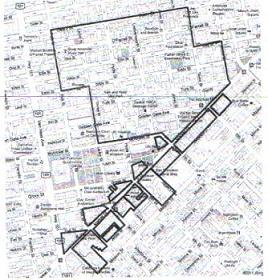
“I’m here tonight to talk to you about the next step for Burning Man,” Harvey told the crowd of about 150 regional representatives and another couple hundred burners, including Sup. Eric Mar, who attended the event last year for the first time. Sup. Jane Kim, who is sponsoring a controversial mid-Market tax exclusion zone that would benefit BRC and many other companies (see “Selling the Tenderloin,” March 30), appeared at the event briefly but didn’t stay for the whole speech.

Harvey then proceeded to talk for more than an hour, revealing often personal details about the bitter infighting among BRC’s six board members that followed lawsuits filed in 2006 by board member Michael Mikel and in early 2007 by John Law, an estranged founder of the modern event, over control of Burning Man’s trademarks and future (see “Burning Brand,” 1/6/07).

“It triggered a series of cascading events, and those began a rite of passage,” Harvey said, echoing this year’s Burning Man art theme, Rites of Passage.

With Mikel and Law forcing the question of what would become of the event, BRC realized it needed a new operating agreement, but the board members couldn’t agree on the fundamentals and ended up in mediation. “It began to look like everybody would lawyer up,” Harvey said. “It felt like the band was breaking up.”

They brought in corporate appraisers to “think about what the pie will fetch, then divide by six,” an idea that was as abhorrent to Harvey as it would certainly have been to the vast community of burners who have helped give the event its value over decades now.

“It was against everything we stood for, everything we had practiced,” he said. “How could we sell our life’s work like a commodity?”

Eventually, working with a committee of BRC senior employees that formed after relations on the board devolved, they decided to turn control of the event and its assets over to a new nonprofit group called The Burning Man Project.

“Why not act to change the world, a world that you won’t be in? And that’s what we want to do,” Harvey said, eliciting applause from the room. “We want to get out of running Burning Man. We want to move on.”

But it’s going to be a slow process. In May, he said the LLC will file papers to create the nonprofit, which will initially be run by the current board members and at least seven more directors selected by that board. In about three years, depending on how the new nonprofit forms up, the LLC will turn over management of Burning Man, while holding onto control of the logos and trademarks for another three years after that, Harvey said. And that’s when the six board members will officially cash out.

“We will liquidate our ownership interests and it will be for more than $20,000,” Harvey said, alluding to the sum promised to departing board member under the LLC’s original operating agreement, an amount he dismissed as “laughable.”

The slow, conditional transition and big potential payout were criticized by longtime burner and former mayoral candidate Chicken John Rinaldi, who led a 2004 rebellion against the board’s control over an event that is created mostly by its participants.

“We’ve gotta pay for their retirement for something they stole from us in the first place?” Rinaldi said. “They’re turning Burning Man into a commodity. They’re selling the event.”

Harvey, Mikel, and board member Marian Goodell say they are simply trying to safeguard Burning Man and ensure its longevity. “Nonprofits can go bad so the real challenge is creating a rugged framework,” Mikel said. “This thing needs to run beyond us.”

But even Rinaldi agreed with the move to Mid-Market, which Goodell said is good timing as BRC begins to create and shape the Burning Man Project. “We need to be in an urban environment to get a handle on what we need,” she said, noting how isolated their last two offices along Third Street have been. “We want to have a public face to the world.”

Guardian City Editor Steven T. Jones is the author of The Tribes of Burning Man: How an Experimental City in the Desert is Shaping the New American Counterculture.


Jane Kim’s credibility problem

96

(UPDATED AND CLARIFIED ON 4/7 BELOW) Two weeks ago, when Sup. Jane Kim voted to move the Twitter/mid-Market/Tenderloin tax exclusion zone forward before Twitter had agreed to a community benefits agreement (CBA), over the objections of Sup. Ross Mirkarimi and other opponents of the legislation who wanted a chance to review the CBA, she announced at the Budget & Finance Subcommittee meeting that she would delay the vote if the CBA wasn’t approved by the day before the hearing.

Today, the full board is scheduled to consider approving the legislation and Twitter has not yet agreed to a CBA, which is the only thing the city gets in return for giving the company a $57 million tax break. So, during a rally this morning at City Hall against the CPMC project, I asked Kim whether she would keep her word and delay the legislation.

No, she said, they will be voting today to approve it and then they’ll approve the CBA later as trailing legislation. When I pointed out that she was going back on her word and reminded her of the comments she made publicly two weeks ago, she said, “Well, the community understands and wants us to move this forward.”

What community, I asked, noting that much of the community opposes the legislation. She said, “SOMCAN is OK with this,” referring to the South of Market Community Action Network, whose members were perhaps the most vociferous opponents of the legislation at that March 23 committee hearing, their members uniformly asking that the legislation be delayed until after a CBA is approved by Twitter and subjected to community input.

After that conversation, a SOMCAN member who overheard the exchange confirmed that the organization continues to oppose the legislation, although City Hall sources tell us that Kim’s office has assured the group that it will get money out of the final CBA. It is illegal for supervisors to direct funding to specific groups in such agreements, which are negotiated by the Office of Economic and Workforce Development, as Deputy City Attorney Cheryl Adams testified at the March 23 hearing.

UPDATE AND CLARIFICATION: Kim legisiative aide Matias Mormino and SOMCAN organizational director Angelica Cabande strongly deny the organization was promised financial compensation from the Twitter CBA, saying the only assurance the organization was given was Kim’s pledge to create legislation designed to prevent the displacement that SOMCAN fears this legislation will create. Cabande also told us, ” The CBA will keep the corporation accountable to our neighborhood and residents’ concerns by specifically defining how Twitter’s presence will benefit the surrounding low-income communities.” 

Kim has made several statements about this legislation that weren’t true or were contradicted by the testimony of City Economist Ted Egan, as we’ve reported. Previously, she has also lied to others about statements I’ve made in conversations with her and about whether she’s ever met privately with Willie Brown, who supported her supervisorial campaign with an independent expenditure mailer that was illegally created in her campaign manager’s office.

Kim’s sponsorship of this tax break legislation comes despite the fact that she’s said she generally opposes such supply-side economic schemes. In his economic analysis of the legislation, Egan recommended doing a parcel tax on vacant commercial property as a better way to address vacant storefronts in mid-Market, the problem that Kim and others have claimed that this legislation is about.

I asked her about that recommendation during the March 16 committee hearing and she said that she strongly supports the proposal and that she has directed her staff to work on it. Is she going to keep her word and follow through on that pledge? I’ll believe it when I see it.

Redmond traded for Nevius in mid-season shocker

4

Bay Guardian Executive Editor Tim Redmond has been traded to the San Francisco Chronicle for columnist C.W. Nevius and a right-wing associate editor to be named later, it was announced today.

As part of the deal, the Chronicle will pick up the remainder of Redmond’s $25.3 million contract. In addition to a future editor, the Chron will pay the Guardian an undisclosed amount of money “just to get Nevius the fuck out of here,” Chronicle Editor Ward Bushee said.

“We respect all that Chuck has done for us, but when we realized he couldn’t even get a hippie recycling center evicted by the deadline, we knew it was time to make a change. This is the big leagues, boyo.”

Former Sup. Michela Alioto-Pier, one of the many die-hard Nevius fans who has become disillusioned of late, was more harsh. “Nobody pays any attention to his shit anymore,” she said.

Nevius, a former sportswriter, has been struggling lately with the transition to a political position. His Column Effectiveness Percentage has dropped to .212 and his embarrassing play on the Haight Asbury Neighborhood Council Recycling Center and the Park Merced development have spurred calls for his removal.

Redmond has been struggling, too, and is widely considered to be grossly overpaid. His CEP fell below .300 for the first time this year, a problem he has blamed on age and brain damage. He recently cut his hair in an effort to clear some of the heat from his leftist political rhetoric, but his last four pieces on tax policy have been complete failures – not one politician has held a hearing, made a statement or done anything but quietly murmur that Redmond “has gone off the deep end.” He has refused repeated calls to open up his stance.

Redmond insists that none of his problems are his own fault, and suggested that his lack of effectiveness is due to some sort of shadowy “juice” at City Hall. “David Chiu and Jane Kim can’t possibly be throwing curve balls like that on their own,” he said.

Under the terms of the deal, Nevius will immediately take over Redmond’s job and Redmond will become the Chron’s Conservative Suburban Twit.

Redmond announced that he will be selling his house in Bernal Heights and moving to a gated community in the East Bay. “If I’m going to trash San Francisco every day, I need to be living in a place where there’s no music and the cops shoot homeless people on sight,” he said. “If I’m going to become a conservative, it’s important to eliminate any actual connection to the people I’m writing about.”

April Fool’s.

5 Things: March 24, 2011

0

>>BEES ARE BACK IN TOWN On March 24, Hayes Valley Farm welcomes back the bees. Hives previously kept at the urban farm were wiped out by a mysterious pesticide sabotage, but head beekeeper Karen Peteros, co-founder of San Francisco Bee-Cause, has stayed busy bringing the pollinators back. Tonight’s oddly matched Return of the Bees event at the Korean American Community Center will feature a discussion about the new hives, as well as a meet-and-greet with San Francisco Sups. Jane Kim (D-6) and Scott Wiener (D-8) and Ross Mirkarimi (D-5). Catching the buzz of urban farming politics? Become a budding apiarist by signing up for an urban beekeeping workshop.

>>A NEW KIND OF NINJA  A recent New York Times editorial by 24-year-old Matthew Klein started out by drawing a parallel between Western youth and those young people in the Arab world who keep fomenting uprisings. “We all enjoy speculating about which Arab regime will be toppled next, but maybe we should  be looking closer to home. High unemployment? Check. Out-of-touch elites? Check. Frustrated young people?” he wrote. “About one-fourth of Egyptian workers under 25 are unemployed, a statistic that is often cited as a reason for the revolution there. In the United States, the Bureau of Labor Statistics reported in January an official unemployment rate of 21 percent for workers ages 16 to 24.” What all these unemployed young’uns do with all their free time? Apparently, they re-imagine themselves as ninjas on YouTube.

>>GENDER MYSTIC Didik Nini Thowok, a popular dancer, choreographer and comedian from Indonesia, will be in San Francisco April 21 through 24. According to a post on the Asian Art Museum website, “Didik is one of the few remaining Indonesian dancers today who explores transgender culture and its historical connection with mystical practices in Indonesia.” Didik will give a short talk about his creative process and a dance performance, followed by audience Q&A, on Saturday, April 23 at the Asian Art Museum. The talk is free with museum admission. 

You know your spring closet is begging for this Dry Bones “Hep Cat” button-down from Self Edge. Buy it Saturday AND help out communities in Japan? Me-yow. 

>>LAND OF THE RISING CREDIT CARD BILL Bust out those pocketbooks, cause it’s time to lend a hand across the Pacific. Local retailers like Valencia Corridor holder-downers Five and Diamond, Self Edge, and The Summit are among those participating in Saturday’s worldwide Shop For Japan event. So open up that studded hand-tooled leather clutch, dive into the pocket of your artisan Japanese jeans, indulge your soy mocha addiction — whatever, just do it to it, moneybags.

>>UGLY DOG, PRETTY CAUSE Can’t hardly wait for this summer’s Petaluma Sonoma-Marin Fair ugliest dog contest? The O.G. ugly dog pagaent has spawned its share of imitation events and Associated Press kowtows, and now there’s a kooky little documentary about the bonkers owners that parade their boxers with underbites and Chinese crested with… well, the typical Chinese crested attributes, with a little extra wartage and askew tounge thrown into the mix. Assuage your barely contained anticipation with tonight’s Worst in Show screening in Berkeley. Bonus: half of your ticket price goes to help out East Bay furry friends! That’s enough to make us wanna grab some fuzzy hips and f’in conga:

Unregistered lobbyist

0

tredmond@sfbg.com

In 2007 and 2008, Pacific Gas and Electric Co. paid former Mayor Willie Brown a total of $480,000 for consulting work. Since Brown has never been utility lawyer, it’s almost certain that money has bought political advice and access.

Brown is also working for the owners of the Fairmont Hotel, which wants to tear down one of its towers and build as many as 180 luxury condos.

His public affairs institute shares office space with one of the most powerful lobbying firms in town. He meets with or talks regularly with the mayor and members of the Board of Supervisors.

Yet unlike dozens of others who seek to influence public policy for hire, Brown is not registered as a lobbyist at City Hall.

On the surface, it’s a fairly modest issue — all Brown would have to do to comply with the letter and spirit of the city’s law is to fill out a form, list his clients, and reveal which officials he’s been talking to. It would take him 10 minutes.

But the fact that someone who is widely acknowledged to be among the most influential power brokers in San Francisco refuses to disclose whom he’s working for leaves city officials and the public in the dark — and raises a long list of questions about the effectiveness of the city’s ethics laws.

There’s a reason city law requires people who seek to influence city officials for money to disclose what they’re up to. When elected officials, commissioners, or department heads meet with advocates, they need to know who’s paying the bills. If, for example, Sup. Jane Kim has breakfast with Brown (which Brown himself reported on in a recent column in the San Francisco Chronicle), she needs to know: Does he have a client with an agenda? If he asks her to meet with someone, is he just looking out for the interests of the city — or is he pushing a paid special interest?

When Brown has dinner with Mayor Ed Lee (as he did several weeks ago) the voters need to know: Is this dinner companion pushing the mayor to make policy decisions that might help a private interest?


THE RULES

The definition of “lobbyist” in city law is designed to avoid putting special requirements on advocates who push issues on their own or for purely political reasons. A neighborhood activist pushing for a stop sign or better police patrols doesn’t have to register. Neither does a restaurant owner looking for a permit to put tables on the street. The only people who have to register are those who represent a client who pays them more than $3,000 in any given three-month period.

Lawyers are exempt if they’re contacting city officials purely about specific pending litigation or claims. Labor leaders are exempt if they’re talking about wages or benefits for their union members.

The requirements aren’t onerous. Lobbyists simply disclose their clients, the issues they’re working on, the city officials they have contacted, and any campaign contributions they’ve made.

There’s no doubt Brown meets the financial threshold in at least one instance. Documents on file with the state Public Utilities Commission show that PG&E paid him $280,000 in 2007 and almost $200,000 in 2008. And although Brown is a lawyer, there’s no indication that he is representing PG&E in any litigation against the city.

On the other hand, PG&E is fighting hard to derail the city’s community choice aggregation program. Is Brown part of that effort? There’s no way to know.

It’s clear he talks to local officials regularly. Most members of the Board of Supervisors we contacted said they had talked to Brown at some point in the past year. “He called me to ask how he could help with the local hire legislation,” Sup. John Avalos told us. “I told him he could call (then-Sup.) Bevan Dufty. He said he would, but I don’t know if it ever happened.” Sup. Sean Elsbernd told us he speaks to Brown about “the state of local political dynamics,” but said he can’t remember being lobbied on any particular issue.

Insiders say that’s typical — Brown rarely lets anyone know exactly what his interests are. “The talent of Willie is his ability to create plausible deniability,” one city official, who asked not to be named, told us.

But when Brown is involved, things have a funny way of happening. Take the Fairmont Hotel.


FRONT OF THE LINE

The Fairmont’s owners, who include the Saudi royal family and a group of American investors, want to tear down one of the hotel’s towers, eliminate several hundred hotel rooms, and replace them with high-end condominiums. That requires a city permit — legislation by former Sup. Aaron Peskin limits the number of hotel rooms that can be converted to condos and requires applicants to submit to a lottery for the right to convert.

The Fairmont applied for a permit in 2009, and won tentative approval. But in October 2010, the Planning Commission refused to certify the project’s environmental impact report. With no valid EIR, the permits expired, meaning the hotel would have to go back and reenter the lottery, with no guarantee of success.

So the Fairmont owners are seeking special legislation that would allow them to submit a new EIR without going to the back of the line — in essence, an exemption from the lottery. So far there’s no champion on the Board of Supervisors, and the hotel workers union has been dubious about the project, fearing it will cost union jobs in the long run.

But early in March, Mayor Lee quietly submitted his own legislation to the board, offering the Fairmont everything the owners want.

Who’s working for the owners? Willie Brown.

Bill Oberndorf, part of the local ownership group, told us Brown was an “advisor” to the project. “Nobody in the city has more knowledge about how to get things done than Mayor Brown,” he said.

So did Brown talk to Lee before the mayor introduced his Fairmont bill? And isn’t that a valid question? At press time, Lee’s office hadn’t responded to my questions. But if Brown was a registered lobbyist, he’d have to report that information.

Who else are Brown’s clients? Since he doesn’t register, there’s no list. But there are some clues.

For example, the headquarters of the Willie Brown Institute is situated at One Market Plaza, Suite 2250. That’s the same address as Platinum Advisors, the high-powered lobbying firm founded by Darius Anderson. Among the firm’s clients: AECOM, the engineering and construction giant, which has a $147 million contract on the Chinatown subway project; PG&E; and Sutter Health, which wants to build a $1 billion hospital on Van Ness Avenue.

Others who lobby regularly at City Hall don’t always register. Rob Black, who works for the Chamber of Commerce, is a constant presence.

Black told us the chamber used to be considered a “registered lobby entity” that was required to report all contacts with public officials and the issue involved. But the Board of Supervisors changed that law last year, requiring lobbyist registration only from individuals who are paid at least $3,000 per quarter for lobbying. Furthermore, the definition of lobbying doesn’t include attending or speaking at public hearings or writing letters. So while the SF Chamber’s Black, Steve Falk, and Jim Lazarus all lobby city officials, Black said, none have exceeded that threshold. “If we hit the monetary threshold, we’ll start filing individually,” he said.

The fact that Brown is a lawyer doesn’t excuse him from registering, said Ethics Commission director John St. Croix “If someone is paid specifically to lobby government, they should register,” St. Croix said.

Sup. Ross Mirkarimi told us that the city needs to take a look at the lobbyist registration law to make sure that everyone who has private interests is properly registered.

Elsbernd said that others — particularly labor leaders and union staffers — also regularly lobby but don’t register. And while the law may allow them to skate underneath (like Black), there’s a huge difference between, say, Labor Council Executive Director Tim Paulson appearing at City Hall and Brown meeting with city officials.

When Paulson appears, there’s no doubt in anyone’s mind whom he represents. The same could be said of Black. Although the chamber has many members, it’s clear that he’s pushing the interests of the big-business community.

On the other hand, Ken Cleaveland, public affairs director of the Building Owners and Managers Association, is duly registered with the Ethics Commission.

Brown — as is his typical practice — didn’t return my calls seeking comment. But by flouting the rules, he’s able to operate completely behind the scenes, influencing policy decisions in secrecy, with no accountability whatsoever. That’s a violation of the exact reason the lobbyist registration laws exist.