Interview

Newsom’s $72 million corporate giveaway

1

City economist Ted Egan yesterday released his analysis of the payroll tax exemption for new hires that Mayor Gavin Newsom has proposed, one of several business tax cut proposals that we discuss in this week’s Guardian. Egan estimates that the net revenue loss (which takes into account taxes paid by the new hires) to the city would be $72 million over the next two years.

“The proposed policy will have a strong positive effect on local hiring, albeit at a steep costs the City’s General Fund,” Egan wrote, later adding, “The policy would also make the City’s serious current budget deficit worse, and likely lead to significant employment reductions in the City’s workforce.”

While the tax breaks amount to only about 1 percent of businesses’ payroll costs, Egan’s models predict they would spur the creation of 4,330 jobs, or about 5 percent of the jobs lost since 2007. Yet he also notes that the unemployment rate in San Francisco has been dropping in recent months and the economy is predicted to add about 20,000 jobs in the next two years even without this subsidy by taxpayers.

Both Newsom and Egan have tried to cast these tax breaks as similar to the approach being taken by President Obama. Egan writes, “The policy is a targeted tax cut that mirrors the President’s New Jobs Tax Credit, which is supported by a wide range of economists.”

But the big difference is that the federal government can deficit-spend and doesn’t have to reduce its own spending, which would have a negative impact on economy, as Egan’s report acknowledged a few pages later: “Because the City cannot run a fiscal deficit from one year to the next, the lost revenue would necessitate reductions in City staffing and services, like any revenue shortfall.”

The report specifically doesn’t analyze the impact of that reduced government spending on the local economy, with Egan writing that, “is not considered, because the City could adjust to that impact in many ways.” New taxes, for example, which Newsom has avoided proposing as a partial solution to the city’s gargantuan $520 million projected budget deficit.

In an interview with the Guardian this morning, Egan also affirmed what he has told us before, that the consensus among economists is that direct government spending stimulates the economy more than tax cuts, even though these tax cuts tied to new hiring are better than general tax cuts.

For example, Egan said that another current Newsom tax cut proposal – a $2,000 tax break for businesses that provide health care to employees – “would have a negative effect on the economy” because it doesn’t encourage hiring.

While the report is generally favorable to the notion of these targeted tax cuts, it doesn’t make a recommendation. And it does take away a key argument that Newsom and other believers in trickle down economics generally make, that the tax cuts will ultimately be paid for by increased economic activity. Instead, the report shows the cuts will cost $85 million of two years and the new hires will generate $12 million in increased sales, hotel, and other taxes. Even stretching that analysis out over 10 years, assuming the new hires remain employed after the tax exemption ends, the reports says the policy will still cost the city $42 million.

Sup. John Avalos, the chair of the Board of Supervisors Budget and Finance Committee who has been skeptical of Newsom’s tax cut proposals, has set a Feb. 24 hearing on the proposal.

Basically, this is a policy decision rooted in ideological beliefs: Should the city subsidize private companies at great cost to the public treasury, payroll, and services? Does the public sector exist solely to serve private corporations? Economic conservatives who are hostile to government generally think so, but progressives think it’s crazy to make deep cuts to government spending and services just to subsidize private sector economic growth, most of which is going to occur naturally anyway.

DJ Similak Chyld dances to an unfamiliar beat

1

DJ Similak Chyld doesn’t mess with inspiration. When asked how she came up with the idea for Afro Chico Electro, her dance party that hits the floor at Triple Crown on Wed/10, she’s narrowed the concept down to a single visual. It’s a purple pencil drawing by graffitist Mode 2 that shows a swath of party people intertwined, their arms thrown in the air, eyes closed, smiles open. There’s a bald girl, a blonde girl, some b-boys, a cool guy in a hat- but they’re all dancing to the same beat. Quote the pint sized Similak, “the idea is basically merging all the genres that I love, to bridge the gap between different crews, djs, artists, etcetera. I figure it makes sense to me- why not throw a party that represents who I am at the core?”

This kind of inclusiveness drove Similak’s musical programming for an evening that breaks down a lot of the genre boundaries that can run the SF dance scene. The DJ lineup includes Chico Mann, who assembles afrobeat/afro Cuban sounds on the drum machine, synthesizer and guitar for sets that have been described as “instant vintage”- early 80s Fela Kuti meets the music melding of today’s technology.

He’ll be joined by the sexy, dub heavy sounds of local hip hop mixer J Boogie, DJ Sake 1 (whose group Local 1200 has snagged our Goldie Award in the past for best Bay DJ crew), DJ Apollo, Similak herself, and a whole passel of afrobeat, hip hop and latin dance crews. “There’s no reason why we can’t dance to a beat because it’s not familiar. An afro dance troupe can appreciate disco or hip hop breaks, just like b-boys can up-rock to an afro or latin breakdown,” says Similak, who was raised between California and Taiwan, and whose own sets have been known to include old school soul, roots music, pop tracks.

Her concept of musical universality is being put to the test at Afro Chico Electro- she’s partnering the dance crews with music they might not typically get down to and encouraging the djs to branch out with their beats as well.

Will it come off? Will it be crazy? Smart money is on yes and yes. Even the wallflowers will have something to look at- neighborhood gallery Lower Hater is curating the whole damn thing with their arsenal of works from smart local artists. All told, an evening that just may encapsulate a lady with layers. “People used to- and still do- get really confused about what I play,” says Similak. “I’ve stopped trying to argue, defend or explain myself and I think folks are slowly starting to get that you can’t really put me in a box.” Unless it’s got nice headphones and is somehow hooked up to some speakers, the woman just might be right about that one.


Afro Chico Electro Wed/10 10 p.m., $5 (before 11 p.m., $10 after)

Triple Crown

1760 Market, SF

(415) 863-3516

www.triplecrownsf.com

www.similakchyld.com

Join the Orchid and Hound fan club

0

I hate to be objectifying, but journalistic integrity be damned- Orchid and Hound are damn good looking. The queer pop duo, comprised of satyr-esque John Constantine and the coyly shaggy Lawrence Alarcon, were also charming and beautifully turned out when I met them for drinks the other night- and, of course, they are brilliant onstage. Their upcoming show at The Blue Macaw (Thur/11) promises to look a lot like what would happen if High School Musical came out of the closet, hired a better stylist and started partying. So you’re going to have to excuse me if the following article starts to sound like Tiger Beat at times. I’m a little smitten, so shoot me.

This is what you will see at an Orchid and Hound show. Lawrence Alarcon will bang out lovely up and down tunes on his piano, while John Constantine provides jazzy vocals that ease over here to a sound reminiscent of Broadway, then smooth down there to recall a smoky lounge somewhere in Vegas. They’ve dubbed it “queer pop”- a highly listenable, intimate little cabaret. “We like to think of ‘queer’ as ‘different,’ like melodrama,” says Constantine of their sound.

But you’re not going to hear the typical “where ya from” one liners and “waitress, get me another drink” admonitions at O & H shows- you know, the typical lounge standards. “I suck at banter,” says Constantine. “He rambles,” offers Alarcon. Perhaps it’s for the best- the pared down nature of Orchid and Hound makes it a little easier to focus on, you know, the music. “It’s just a show where you shut up and listen,” Constantine says (“ideally,” adds Alcarcon).

The sound the two put out is lighthearted, the piano rhythms and Constantine’s voice bouncy, even. But their lyrics are expressions of a life as a pretty 23 year old in the Castro- a life can prove more complicated upon closer inspection. “I find inspiration in the dialogues I have with the people around me,” says Alarcon, who penned one song for O & H born of a conversation he had with his boyfriend about nothing less than the end of the world. “We were talking about the Mayan prophecies for 2012, but my boyfriend’s a scientist. He was more concerned about 2013, when the oil crisis is set to hit.” Alarcon turns to Constantine, pondering the difference between their songwriting styles, finally hitting on the pith of the issue. “John’s more angsty, more metaphorical.” Ooo… angsty!

“I like to sing about the human condition,” says Constantine, picking up Alaron’s musings. One of John’s songs, ‘Sabotage,’ is a catchy dirge that hinges on a theme familiar to most dashing rock stars; self destruction. “[‘Sabotage’] is about that daily battle you have with the destructive side of yourself, that you live with but must control,” says Constantine, toying earnestly with the stem of his cocktail. To date, their audience favorite is “The Drinking Song”, a depraved little interactive ditty whose success amuses Alarcon. “Who knew our most disturbing song would turn out to be our most popular?” 

“Who knew our most disturbing song would turn out to be our most popular?” Photo by Erik Anderson

So back to our bar date (because that’s what I’m calling it, so there!) The two have a knack for finishing each other’s sentences, and where Lawrence can be artistically reticent, John is more than happy to tell me about the origin of O&H. Herein lies the duo’s sychronicity; they’ve known each other “since forever,” growing up best friends at an arts high school in Los Angeles. John and Lawrence even dated each other for three years, during which they moved up to SF into a shared apartment- where they live to this day, despite having subsequently broken up, moved on… and formed a band. When asked how this is earthly possible, they smile sweetly at each other as though nothing could have been easier. “It was rough, but we’re much more productive now- minus the sex,” says Constantine. “We would have killed each other if we’d kept dating.”

Though the two first collaborated on musical compositions for an installation artist in LA, John and Lawrence only just formed their current act last year. They can still tell you how many live shows they’ve had; a sprightly “twelve!”- blurted out in unison, of course. “We don’t fuck up that much though,” says Constantine with a winning smile. “The one time we noticeably fucked up, someone told me ‘it was cute when you fucked up,’ so I guess that’s good.” 

So what does 2010 hold for these darlings, who are still unsigned to a label as of press time? Well, besides the trail of broken hearts and rehearsal hours they’re working on a studio album and recently announced their gig at this year’s South by Southwest festival. And then? Says Constantine “We’ve planted a lot of seeds, we just have to water them all.” Somebody hand these boys a hose- the world hearts Orchid and Hound.


Orchid and Hound w/ Audrey Ryan & Il Gato

Thur/11 8 p.m., $5

The Blue Macaw

2565 Mission, SF

(415) 920-0577

www.thebluemacawsf.com

Roll over, Beethoven: Real Vocal String Quartet takes the classics for a ride

0

“The classical composers we know so well, Beethoven and Bach and Vivaldi, they were improvisers. So really, we’re carrying on that legacy,” says Real Vocal String Quartet founder Irene Sazer. I’d love to know what the old masters would think of a RVSQ gig- would they throw down their powdered wig and get down when the women launch their cellos into “Fontana Abandonada-Passatempo,” their Afro-Brazilian jam? Get their britches in a twist over “Kothbiro,” a nyatiti song by Kenyan artist Ayub Ogada?

I reckon they’d have dug the tunes. After all, RVSQ, performing this Thursday at Freight and Salvage, attributes their freedom to perform such divergent genres to their traditional classical training. The band members- Dina Maccabee and Sazer on the violin, Alisa Rose on the violin and fiddle and cellist Jessica Ivry- were all band kids, many raised in families of classical musicians and most recipients of college degrees in their respective axes.

Some started careers in orchestras and the like. But there was always something beyond the Bach that beckoned.

“For me growing up, I had two musical lives,” says the enthusiastic Sazer, who is given to excited exclamations and breathless descriptions of the energy she gleans from her RVSQ bandmembers. “One as a ‘serious’ violin player… but on the other side, my mom was into folk music from all over the world- she sang in Yiddish. I heard world music from an early age and always loved it. I heard the Beatles, Carol King, Joni Mitchell- the really great pop music informed my life as well.”

“Because of the pedagogy of being a classical musician,” she continues “it seemed so separate- but I never liked that. What I hoped for when I became a young adult was to explore lots of different styles of music- I hoped for my own individual musical language. I’m even luckier than that because I’ve found a group of people on similar musical paths.”

But RSVQ takes the path that’s not taken as much.

Their alternate path has led to a loosening for RVSQ. The group’s repertoire includes “Now,” an improvisational song they play at every show. It’s a chance to create a different sound for each new audience, a little klezmer here, maybe a smattering of bluegrass or trance rock of northern Mali origin, there.

rvsq 1 0210.jpg
Gotta love a classical quartet that chills barefoot in the dirt

Though Sazer says she was “really afraid” of improvisation in the early days of her classical training, “it’s such a pleasure when you have people who are accomplished on their instruments and love to jump in and take the risk. It’s a thrill that we have such a vehicle for exploration. And if you’re skilled you can do it mo’ better.”

Mo’ better indeed- the women are seeing their vision resonate with a growing audience, the demographic of whom Sazer confesses is a bit of a enigma. “We have to take polls! The finding of our people is kind of a mystery.” Difficult to pigeonhole themselves, RVSQ is now working on making their name in the world music arena, even landing a gig at 2010’s South by Southwest.

Locally, you can catch them at their album release party at Berkeley’s Freight & Salvage next week- but try to maintain your composure at the show. “People are going to want to come and be somewhat quiet and listen,” says Sazer, laughing somewhat at her exhortation. “There’s a lot of intimacy in our ensemble and musical product.” So keep a lid on it, Handel.

Real Vocal String Quartet
Thur/11 8 p.m., $18.50-19.50
Freight & Salvage Coffeehouse
2020 Addison, Berkeley
www.thefreight.org

Drinking the tea, ignoring the facts

3

Listening to members of the Tea Party movement on KQED’s Forum this morning, I and many callers to the show were struck by the basic inaccuracy of their core beliefs, these revanchist delusions about what’s in the U.S. Constitution and how this country really operates.

There’s a lot of justifiable anxiety out there over the state of the country, and the Tea Party movement has tapped into that with bumper sticker slogans that are just broad enough to capture alienated Americans from across the political spectrum. One recent poll shows that 41 percent of respondents are sympathize with the movement, stronger support than either major political party now enjoys.

But facts should matter, and they just don’t to many teabaggers or their high priestess, Sarah Palin, who is headlining the current national Tea Party convention in Nashville. For example, the two self-described “patriots” on this morning’s show railed against all the unconstitutional actions of the runaway federal government in ways that reveal an astonishing ignorance about the document they claim to prize so highly.

An East Bay woman from Bay Area Patriots, Heather Gaas, complained that the “government takeover” of the health care system is specifically prohibited by the constitution, seemingly unaware that there is no takeover, and even if there was, the federal government is specifically empowered to “regulate commerce” and see to the country’s “general welfare.”

North Bay teabagger Gary Hahn claimed that a free market system with minimal government is enshrined in the Constitution, another false claim. The words “capitalism” or “free market” aren’t in the Constitution, which doesn’t prescribe an economic system for the country and would even allow socialism to exist if we had to votes to approve it.

Luckily, while host Dave Iverson did little to correct the teabaggers’ inaccuracies on the first half of the show, a series of callers did that work on the second half. One caller, who was a self-described Tea Party member and Ron Paul supporter, criticized the hypocrisy of the guests’ for criticizing “big government” while supporting its wars and imperial overreach, sounding the anti-war position that is also an element of this broad and unfocused movement.

And that’s really why we shouldn’t read too much into this movement’s power and its implications (check out this interview for an insightful take on why conservatism no longer contributes anything useful to American politics). The Tea Party is best understood as a primal scream rather than a political movement. I’m a big government progressive, yet I share the teabaggers’ outrage over the Wall Street bailouts and the corruption and unresponsiveness of the two major political parties.

We may even share a few revanchist impulses, concerns that powerful forces have steered this country away from what it once was. But my concern is with Big Corporations that have eroded basic egalitarian principles expressed from the Declaration of Independence (the right to “life, liberty and the pursuit of happiness,” talk about radical!) to the New Deal, not with Big Government (except for its biggest and most wasteful element, the bloated military budget).

But the revanchist fantasies of most tea baggers long for a time that is no longer possible, when there was still a frontier on which rugged individualists could stake their claim, for that “shining city on the hill” that their god, Ronald Reagan, once conjured up in the national mind’s eye. They want to smite their liberal enemies and restore this country to a position of deserved greatness, an attitude that frankly scares the crap out of me, with its echoes of 20th Century fascism.

The realities of today are much more complex than the teabaggers’ simplistic beliefs. They want to deeply cut government spending, despite the damage that would do to the fragile economy. They want us to get tough with the terrorists, unaware that every bomb we drop has the potential to create new enemies. They want more power for the “real Americans,” however racist and divisive that judgment is made.

Yet their primal scream shouldn’t be ignored because it is the manifestation of frustration that cuts across a wide swath of the country that is fed up with politics as usual. But in the teabaggers’ ignorance of the Constitution and the basic social contract on which any country or government is based, we can see just how much work there is to do before we have an educated and engaged citizenry that is even capable of participating in a democracy. So this is still a party worthy of our attention.


An interview with a guitar-playing teabagger

0

By Jess Brownell

(Jess Brownell is our Voice of the Midwest, a freelance writer living in Milwaukee, Wisconsin.)

In the Feb. 1 issue of the New Yorker there’s a story about the Tea Party people the point of which seems to be that this is a genuine grass-roots movement rather than just a side-line activity for Fox News analysts taking a little time off from the competition to be the next Joseph Goebbels when their Adolph comes along. These Tea Partiers are just regular folks, according to the article. The actual people the New Yorker writer, Ben McGrath, interviewed seemed a little weird to me, to be honest, but if by regular he means there are a lot of them out there, I can’t argue.

After those interviews and a general discussion of the political power this group now wields, the article ends with a description of a meeting of enthusiasts in Brooklyn that concludes with the singing of a folk-style anthem about taking back America led by a gray-haired man with an acoustic guitar.

(Okay, let me ask right here: Just who the hell are these people who claim the right to “take back” America? Do they have any proof that they ever owned it in the first place? Do they have deeds? Where is their provenance? Are they really directly descended from the pioneers who stole it from the Indians or are they just the children of late-arriving immigrants like most of the rest of us? I want to see some documentation, damn it. I want to see some birth certificates.)

South African rap-rave, FTW?

0

Via The Awl. Er… we should be paying more attention to Africa, maybe.

From a recent interview with Vice:

Right. So, are you hip-hop or what?
Ninja: Ja we’re from the hip-hop family, but we do rap-rave next level shit. Die Antwoord started with my one homeboy, DJ Hi-Tek (shows tattoo on hand)—He’s got his own PC computer and he makes basically like phat rap-rave beats. I was checking out his shit, and we started making some beats, you know, next level shit. So then I was speaking to my homegirl Yo-Landi, you know she’s got some funk and super flavour, so we started with a kind of, like, 2Unlimited, C+C Music Factory kind of thing… but a bit more gangster, with a street edge.

See ya later, Infected Mushroom.

Redford honors Bay Area leaders for the art of their activism

0

In our highly messaged world, it follows that activism is followed closely by art. Sometimes the two are indistinguishable from each other. Film and music celebrities perform to raise funds for an earthquake-ravaged Haiti, a farm workers’ union organizes through political theater. Robert Redford is no stranger to this connection. Building on his history of work within the environmental movement, the actor has created the Robert Redford Center– an organization which holds its first event this Thursday, entitled “Art and Activism.” It will feature a public conversation with Redford himself on the title theme and present awards to two honorees, both of whom have elevated their responsibility to help others to veritable art forms.

Victor Diaz, one of the two leaders that will be recognized this week, might have benefited from a program like the one he runs today back when he was a teenager. Berkeley Technology Academy is a step away from traditional continuation schools, one that acknowledges the complexity of life as an underprivileged teenager. “Nine times out of ten,” Diaz says “a kid will tell us ‘I’m selling weed because I can’t get a job.’ We’ll work with them on resume building, help them with their job search- it’s not unusual for us to even buy them clothes that they can go to an interview in.”

This kind of holistic approach for students for whom the traditional educational system has failed is something that Diaz has worked hard to promote in his five years as principal at BTA. The academy strives to keep kids enrolled through their completion of high school, dodging the pitfalls that can occur with conventional “rehabilitation” schools. Typically, students are sent back to their original high schools after a few months at alternative schools- where the same factors that caused them to fail in the first place continue unabated. “[Our approach] holds us accountable to provide all the things they need to graduate,” says Diaz.

The principal has a pretty good idea of what these things are- he was one of these at-risk youth at one point. Bounced around from foster home to foster home- not to mention six different high schools- in his teens, Diaz managed to make it to community college, where his work with young people ignited a passion to make life better for them. He went back to school, and a master’s, law degree and PhD later has worked in county schools, SF Unified and juvenile hall. “This was the population I felt most connected to, that I felt like I had more to contribute to,” he says.

Under his watch BTA- whose attendance is 100 percent racial minority- has become a place where students and their families can receive more than just algebra and PE classes. In the past, young women were directed to off campus women’s advocacy groups when dealing with issues of abuse, but BTA now holds a class on women’s issues and has a health center for private, confidential care. They hold men’s classes as well for their guys that are going through tough personal issues and host health fairs that offer information to parents on Medi-Cal and vision screenings. “We try to do things in house and do them more efficaciously,” says Diaz.

The principal has changed up the staff on site too, to be more involved with students as human beings. “We’re not there just to teach math, we know that sometimes [ensuring kids’ success] requires a home visit. Many of our kids are in foster care, living with a non-custodial, biological parent. 30 to 40 percent don’t have someone to advocate for them. Another 30 to 40 percent, their parents are working overtime to pay their bills.”

redford 1 0110.jpg
Avery Hale’s only 16- but she donates shoes to developing countries and is getting a Redford award of her own

When asked about his upcoming honor, the principal becomes uncharacteristically shy, deflecting praise towards his peers. “Sometimes I’m a little embarrassed, overwhelmed by [the award]. I know a lot of people that are doing way more important work.” But he underscored the importance of the fact that the Redford Center is giving an activism award to an educator. “Sometimes a teacher who is preventing five kids from dropping out of high school- it’s not as ‘sexy’ [as foreign aid work], but it’s really important.” He says he’ll be encouraging the board to continue highlighting the achievements of “everyday” teachers and school administrators.

But are the kids at BTA impressed their principal will be getting an award from the star of “The Untouchables” and “A River Runs Through It”? Diaz applauds the “amazing” achievements by Redford in his career on screen and off- but was unconvinced his student body would be asking him for autographs. “They don’t know who he is! We live in a small world here.”

The Redford Center will also be honoring Avery Hale, a 15 year old who started an organization that sends footwear to shoeless kids in developing countries three years ago. Hale created her charity drive after seeing photos from her parents’ trip to Peru of little ones with infected feet, and has now shipped or delivered countless pairs to kids on three continents.

“The Art of Activism”
Thur/4 7-9 p.m., $20
Sundance Kabuki Cinemas
1881 Post, SF
www.redfordcenter.org
www.brownpapertickets.org


“Waiting for Guffman” forever!

0

By Louis Peitzman

In honor of SF Sketchfest’s Jan. 31 screening of Waiting for Guffman (1996) with star Fred Willard in person, I tried to interview the entire cast of the film. I failed. I did, however, speak to four cast members — two of Corky’s actors and two Blaine councilpeople — who reflected fondly on their experience and humored my fanboy questions. Where are these characters now? And, of course, is Broadway finally ready for Red, White and Blaine?

Fred Willard (Ron Albertson, travel agent)

On getting involved with director Christopher Guest: “I was in Spinal Tap. I’d worked with Michael McKean and Harry Shearer before, and I knew Rob Reiner. I was doing a show called Fernwood 2 Night at the same time he was doing All in the Family. We would pass in the halls and say hello, how are you. I would say mostly it was because of Harry Shearer, who’s a fairly good friend and who I’ve worked with. So I got in Spinal Tap, and then I was in a movie that Eugene Levy wrote and directed in Toronto called Sodbusters, which is kind of a spoof of Shane. Then next I knew, I got to know Christopher Guest.”

On the improv process: “[Guest] calls you and discusses your character and kind of aims you in the right direction. But there’s nothing, no lines written down. So he films a lot and then cuts out what he doesn’t need, and puts in what moves the plot forward, as he puts it. Which always kind of frustrates me, because some of the funniest stuff that not only I do but that a lot of people do, doesn’t really move the plot forward, but it’s just stuff I’d enjoy seeing. But he likes his movies about 85, 86 minutes. And that way, I think, a lot of people I find tell me they watch them over and over, which you can’t do with a two-and-a-half hour movie.”

On creating Ron: “First, [Guest] kind of gave me everything. He said I was a high school athlete. It was his idea, the penis reduction joke. In fact, he wanted to have a scene where I was running, you know an old film clip of me running the hurdles, and each hurdle being knocked over. That never was filmed or put in the movie, which I’m kind of glad about. He pretty much told me that Catherine [O’Hara] and I were like the Lunt and Fontanne of this little town, that we’d been in every production and when we had to audition, it was just kind of a technicality. We considered ourselves the pros of all the amateurs. I can say we’re about the most annoying couple I’ve seen in film.”

On the Chinese restaurant scene: “[Guest] just said, all right, what we’re going to do is, you’re going to take Eugene Levy and his wife out, because this is their first show and you’re going to try to make them more comfortable, because they’re the newcomers. So my key there is, in making them more comfortable, we would make them as uncomfortable as possible. And I didn’t know that Catherine was going to be drinking and get kind of tipsy during this scene, which added a whole nother dimension. And Eugene is a perfect victim. … [Guest] said the Chinese restaurant scene, we’ll probably film for two hours and then cut it down. And my first thought is, ‘Oh my God, what am I going to think of to say for two hours?’ But the night we did it, it was filmed late at night. We’d finished another scene. We got to the restaurant and we started filming, and went on and on. And finally, he said, cut, that’s it. And I said, ‘Wait a minute, Chris. There’s more! We can still do more!’”

On what Corky sees in the talentless Ron and Sheila: “I would think what Corky sees is a kind of commitment that we have. We probably show up on time, we probably bring baked goods to the cast. We probably have a lot of input and show off a lot of interest. I was going to say we’re probably very good with our lines in the script, but we probably aren’t actually. We probably make up for it by discussing points in the script and pointing out how we could improve our parts.”

On whether or not Ron and Sheila have a happy marriage: “Oh, no. [laughs] You could see that there’s just so much tension, with Sheila’s drinking and Ron kind of domineering her.”

On where Ron and Sheila are now: “If they stayed in Hollywood, they’d probably be running a little acting studio out in North Hollywood where they teach acting, and spend most of the class discussing their near-Broadway adventures, and how they were probably just as glad they never went to Broadway because it would be like prostituting their talents.”

On whether or not Broadway is ready for Red, White and Blaine: “I think it might be wonderful, yes. We were doing some promotion for Chris’s last movie, For Your Consideration, and someone asked, ‘I hear rumors that they want to do Waiting for Guffman on Broadway.’ And Chris was kind of swatting away the idea. He’s not too enthralled with that. And I yelled over to him, ‘Chris, does this mean we’re going to Broadway?’”

On a possible sequel: “I wrote an idea for a Waiting for Guffman, part two, and got it to [Guest]. And he discussed it with me, and said, ‘Well, I have several other ideas.’ That was before we did the next movie. I thought that was going to be the only one, and I said, ‘Chris, come on, this is my opportunity. Let’s do another one.’”

Catherine O’Hara (Sheila Albertson, travel agent)

On getting involved with Christopher Guest: “I worked with [Guest] — it was for HBO years ago, with Fred Willard and him. And we had a great time together. And I hoped to work with him again, and then I got a call about Waiting for Guffman.”

On the improv process: “It’s thrilling and exhilarating and scary. Really scary on the first couple of days, especially the first day, when you first open your mouth. Because there’s no rehearsal and you know, you open your mouth on camera, with the camera rolling, and you hope to God that you made a good choice. You’re locked in from that point on.”

On the outlines: “[Christopher Guest and Eugene Levy’s] outlines are inspiring, because they’re filled with funny ideas about these people. Everything that’s on the page is very well chosen. I think Waiting for Guffman was just a few pages — they’ve gotten longer. Because in Guffman, we all kind of traveled around as a group, so it would say, ‘They have rehearsal.’ Whereas the other stories, we sort of split up into different couples and different groups, so there were more pages.”

On creating Sheila: “They gave us the idea that Ron and Sheila ran a travel agency but had never been anywhere. So right there, you start thinking, ‘Why would I have never been anywhere when I have a travel agency?’ And you can make whatever choices you want, and there’s no discussion. You don’t have to run anything by Chris. You just come out with it on camera, and he can use it or not. But it’s so freeing that way, because everyone’s imaginations can be limited by directors or writers when it’s fully scripted. … You are totally free to create your own world and present their ideas with whatever voice you choose. And you just start rolling.”

On Sheila’s talent, or the lack thereof: “I would like to claim that I show the least talent. I think the others were probably thinking ahead to their careers outside of this movie. [laughs] But I showed no potential in Sheila’s performance.”

On playing a bad actor-singer: “Oh, it’s fun. It’s fun to try to ride the fine line of bad acting and not be too bad. You just want to be sincerely bad. But the best is — I mean, the saddest of the best in life, is when people kid themselves. And we’re all doing it every day, I’m sure. But you know, when someone sincerely believes that they have a right to be performing or doing whatever they’re doing in life and they don’t have talent or what it takes to pull it off. But they love it, and you can’t take that away from them. They love it and they get so much out of it and they believe they’re born to do it. And God bless them.”

On whether or not Ron and Sheila have a happy marriage: “What did Fred say? [laughs] I don’t think they have a healthy marriage. I think their marriage might last, just because, who else is going to be with them? [laughs] I think it’s a sad, codependent kind of relationship. They’re so deeply into their own whatever the hell they’ve got going on, I’m not sure they’d have the wherewithal or nerve or whatever, to leave each other.”

On the Chinese restaurant scene: “I loved that we had that [Chinese restaurant] scene. … I think I maybe did run that by him right before we did that. I asked him if I could be drunk and he said yeah. It was great because, you know, there’s a lot of stuff that Sheila’s burying deep down, in my mind anyway. And some of that got to come out because she was not editing herself and not aware of being on camera.”

On where Ron and Sheila are now: “They probably are together, but then she’d still be drinking if they are. No, maybe she’s gone sober. Sober and he found a true love for her, taking care of her through her rehab. And there are a lot of people in this city and every city who are acting in maybe not big famous ways, but they’re acting and they’ve got their groups of friends who they work with, and I’m sure Ron and Sheila could survive. And Ron, he’s got such nerve, he’d get them in the door.”

On whether or not Broadway is ready for Red, White and Blaine: “Oh, sad. Sad to say. Well, you know, I’ve seen some sad stuff on Broadway. Maybe. Let’s be honest.”

Michael Hitchcock (Steve Stark, councilperson)

On getting involved with Christopher Guest: “I’m a member of the Groundlings theater in Los Angeles, which is a comedy/improv troupe. And one night I was doing an all-improv show over there, and I found out afterwards that [Christopher Guest] had been in the audience. And I was glad I didn’t know ahead of time, because I would have been really nervous. I found out he wanted to interview me regarding Waiting for Guffman. He doesn’t really do auditions, per se — he interviews people he’s interested in. He kind of scours various improv theaters and comedy places.”

On the improv process: “Chris’s movies are so different from anything else that you’d ever imagine, because it’s such a creative experience, I think, for everyone involved. You just don’t get that in a scripted thing, and there’s obviously nothing wrong with scripted material—there’s writers who are usually very good at what they do and have written great things. But on something like this, you get to create your character.”

On creating Steve Stark: “We sat down, for my part, I was a councilman and we talked a little bit about it ahead of time. And he asked me, ‘What do you want to do?’ And I said, ‘Well, I would like to be someone who really wanted to be in the show but didn’t make it. And I’m kind of secretly in love with you.’ And he said, ‘All right, let’s try that.’ I chose for myself the occupation of being a pharmacist, because growing up, I had a job in a pharmacy, so I knew a lot about that. I knew about the pharmacy life. In improv, you obviously want to have specific information, so I could draw on life experience for that.”

On what makes Christopher Guest movies unique: “You never rehearse. So there’s never like a trial run of improv information. The first time anyone talks is when the cameras roll, which I really, really like. I think a lot of people don’t do it that way. Chris is one of the few people who actually do it like that and I love it. You can’t really plan ahead. You have no idea what the next person is going to say. It just makes it so invigorating. Certainly scary but invigorating at the same time. The weird thing about watching any Christopher Guest movie if you’re in it, is thinking, ‘I don’t even remember saying that.’ It’s so weird to look at them and go, ‘Oh my gosh, I really said that?’ You kind of forget, because you obviously film it more than one time.”

On where Steve is now: “In one of the reshoots, Corky and Steve Stark end up together in New York. And that was filmed and not used. So I’ve always thought, well, maybe he did. But in my own mind, I think poor Steve is probably at the pharmacy, hoping against hope that Corky moves back to town.”

On the gay subtext: “I think in that kind of a situation, the small town kind of situation, he was married and had a wife and kids. He probably didn’t even know himself exactly what was happening.”

On the Christopher Guest family: “It’s truly like a family reunion getting together. And Chris, to his credit, in subsequent films you usually get paired up with somebody new, so there’s a new chemistry and a new kind of playing around, which I just love. And plus, what’s great, he usually hires the same crew, too, so the people behind the scenes are familiar faces, which makes a huge difference when you’re flying by the seat of your pants in an improv situation.”

On whether or not Broadway is ready for Red, White and Blaine: “I think if a chandelier fell down. If you could get a chandelier to fly down, then yes, certainly. I think Broadway would certainly be ready for Red, White and Blaine. Some of the other Broadway shows, you kind of wonder how they got up there. If you actually look at Red, White and Blaine, it’s pretty well produced. So that’s what I really liked about Chris’s approach. It’s not like people are stumbling over their lines or falling over each other. Corky was a taskmaster: those people knew their lines and knew their dances and the scenery came in at the right time. In real life, that scenery could never have fit on the stage. So I thought, good for Corky. He had it figured out.”

Deborah Theaker (Gwen Fabin-Blunt, councilperson)

On getting involved with Christopher Guest: “I had met Catherine and Eugene and all of the SCTV people at the Second City, because they’d been there over the years. I was the lead actress on a series that Eugene Levy created for George Lucas called Maniac Mansion … That was my first big job, and then, I performed out here—there was a Second City in Los Angeles back in 1990, and Chris Guest just coincidentally happened to come to one of the shows we did. And he left me a note. There was no real audition. There was never any audition. I think he just called the people he liked.”

On the improv process: “What Chris has created is a two-sided thing, because you never feel the same about a script. You rarely get a script that passes your desk or that you see that you go, ‘Oh my God, this is fantastic.’ Improvising your own material and creating your own character ruins you for the real world. It’s just so inventive and so much more fun to do a movie that way that any scripted material pales in comparison. It’s almost like he’s ruined us for real movies.”

On creating Gwen: “In the outline, I was a city councilwoman — pretty much all we knew. I decided from watching dailies with them, I better come up with something more, because it could be very easy to get cut. I decided to make myself the last surviving descendent of Blaine Fabin, so that was me. But when we were meeting, talking about the character, he said, ‘I see you as the sort of woman who wears open-toed sandals with pantyhose,’ and I went, ‘Oh, I got ya.’ I used my friend’s name — her last name was Blunt — because we could pick our own character names. And I know that Mike Hitchcock, Steve Stark, also used his friend’s name.”

On holding her own against the wackier characters: “I think you only manage to be funny in that situation if you don’t try to be, if you just kind of go so deep or invest so much in your own viewpoint or whatever viewpoint your character has. I’ve never gotten a laugh if I’ve tried to be funny, ever. I don’t know why that is, but it is, so I always find — and to me, the things that are the best material are weird nuances of people’s behavior or their strange idiosyncrasies.”

On the comedic contributions of hair and makeup: “Look at Catherine with her ‘Texas claw,’ what they called the ‘Texas claw,’ where her bangs are so high, because women in Texas would wear their hair that way. To me, that was hilarious. And then there was the inspired bit that our makeup artist Kate Shorter put in of all the performers having those red dots by their eyes when they do the stage show. That just cracked me up.”

On the reality TV connection: “It’s just about — I hate to say it — the audacity of hope, that they all think they could be Broadway stars. It’s the same kind of misguidedness that you see on American Idol with the contestants who are as flat as pancakes and couldn’t carry a tune in a bucket, but they’re just so convinced that this is their big moment. There’s something borderline tragic but borderline sweet about how hopeful everybody is about having a show business career without having any talent. Now you see, it’s been backed up by all these years of reality television. You see all these competitors who are so earnest and so sincere in their desire to do whatever they cannot possibly do because they just don’t have a shred of talent.”

On how difficult Gwen’s life really is as a Fabin: “I think it’s her delusional creation of a dynasty. In that little place, she’s a big fish in a little pond only by reminding everyone that she’s a Fabin. People don’t honestly care or remember, but to her, that’s all she’s got to go on, so she’s going to milk it for every ounce that she can.”

On where Gwen is now: “I think that she would now be the mayor and she’d be a despot. I think that she’d have been all sweet and congenial all the way through. And then finally, once she got a little bit of power, she’d go completely power-hungry, because she’s a Fabin after all.”

On whether or not Broadway is ready for Red, White and Blaine: “There were rumors that at some point they were trying to make this into a musical. … If they did do it as a musical, it would have to be done with a sense of irony, and I don’t know if they could pull that off. The film was presented as verite, as a documentary. The musical in and of itself wouldn’t work as a musical without the framework of the documentary, so I don’t know. Hard to say.”

SF Sketchfest presents Waiting for Guffman with Fred Willard in person


Sun/31, 2 p.m., $15
Christopher B. Smith Rafael Film Center
1118 Fourth St, San Rafael
www.sfsketchfest.org


ACORN-hater O’Keefe arrested in Louisiana Watergate

0

We don’t know why O’Keefe targeted Louisiana’s Landrieu, but we do know he led the attack on ACORN in 2009

Last year, we wrote about how Karl Rove targeted ACORN in 2006 as part of a concerted Republican campaign to attack progressive organizations that were registering low-income voters and helping them fight corporate power.

Those attacks came to a seemingly salacious climax in 2009, when James O’Keefe, a conservative videographer, secretly taped some ACORN employees saying stupid things—an incident that somehow became one of the biggest political stories of the year.

And now O’Keefe is back in the political headlines, only this time as one of four men charged Jan. 26 with trying to illegally access and manipulate the phone system in a district office of U.S. Sen. Mary Landrieu of Louisiana.

We don’t yet know why O’Keefe targeted the Democratic senator from Louisiana. But his arrest has a fortunate side effect: it’s keeping the focus on the results of an official investigation into ACORN—a story that otherwise probably wouldn’t have got much coverage but is now being widely reported.

Take CNN’s coverage of O’Keefe’s arrest. It notes that, “a review by former Massachusetts Attorney General Scott Harshbarger, who was hired by ACORN to examine the issue, found no wrongdoing by ACORN employees.”

It also notes that O’Keefe and a female associate were named in a lawsuit that an ACORN worker in Philadelphia, Pennsylvania, filed Jan. 21, accusing the pair of illegally videotaping an interview with her last July and distributing it on the Internet.

“That video and others by O’Keefe and his associate led to the dismissal of four ACORN employees who appeared to offer advice to the couple and to federal legislation barring the group from receiving federal funds,” CNN notes.

Now, I don’t expect the right-wing attack machine to stop its assault on progressive organizations and individuals, any time soon, but there’s hope the truth will eventually out.

Meet Gavin Newsom: whine clerk

0

Text by Sarah Phelan

newsomd.jpg
Sorry, Maureen, but you omitted more than a few details of the real trials of Mayor Gavin Newsom…

I’m usually a fan of Maureen Dowd’s finely pointed writing, but her interview with Mayor Gavin Newsom in today’s New York Times left me with the sinking feeling that she was writing with an uncharacteristically unsharpened pencil.

Yes, it was funny when Dowd wrote, “It’s easy to picture the lithe and charming Newsom–with the well-cut suits, the electric Telsa, the beautiful blonde wife and baby–advising a Pacific Heights couple on a cabernet with aromas of eucalyptus and mint.”

But beyond that delightful dig, Dowd kept her pencil on an unusually tight leash.

Maybe that’s because Dowd doesn’t know the ins and outs of San Francisco politics and was fooled into misrepresenting Newsom’s whining as the rueful ruminations of a man so very far ahead of his time.

But it’s hard to believe that the indomitable Dowd doesn’t know that Newsom’s political career has been short circuited for a million reasons above and beyond gay marriage.

Maybe the fact that Newsom slept with his campaign manager’s wife isn’t perceived as a deal breaker in circles where everyone always seems to be betraying every one else.

But how about Newsom’s failure to show backbone when then Sup. (and now State Assemblymember) Tom Ammiano was trying to launch San Francisco’s trailblazing health care program–yes, the same one that President Obama has recently and widely praised, and for which Newsom has been happy to take all the credit?

Instead of showing leadership on Healthy San Francisco, Newsom stood back and let Ammiano do the heavy lifting, in face of the threat of legal opposition from the Golden Gate Restaurant Association. Newsom’s cowardice on that issue seems entirely understandable, given that, as Dowd points out, “Before he got into politics, after all, he started a boutique wine shop in Napa Valley that blossomed into a multimillion-dollar business.” (Heaven forbid that the former owner of a wine boutique would be seen leading the charge to ensure that the restaurant industry helps employees go see a doctor instead of sneezing into the endive soup and eucalyptus-scented cabernet that the Pacific Heights mafia has come to enjoy.)

But Dowd doesn’t make that, or any other, connection.

Instead, she lets Newsom stick his not-so-subtle knives into Obama’s back on same-sex marriage, without pointing out that after Newsom rushed into gay marriage, he failed to launch a much needed statewide campaign to reach out, across the aisle of intolerance, and help defeat the Prop. 8 party poopers.

The final insult in Dowd’s puff piece is when she lets the current mayor of San Francisco get away unchallenged with his bogus claim that, “we’ve always fought for the rights of minorities and against the whims of majorities.” Try telling that to the immigrants whose families have been ripped apart because gubernatorial candidate Newsom failed to support giving undocumented kids their day in court, before reporting them to the feds for deportation.

But Dowd does at least gives us a preview of what to expect when we stumble unwittingly into a wine store, somewhere in the backwaters of Napa, and overhear the clerk complaining that no one really understood him, back when he was mayor of San Francisco. Meet Gavin Newsom: whine clerk.

Clouds and mirrors

1

Carl Fisher turned a mosquito-plagued, malarial sandbar into Miami Beach, “The Sun and Fun Capital of The World,” in less than a decade — dredging up sea bottom to build the island paradise, an all-American Las Vegas-by-the- Sea, where Frank Sinatra and Jackie Gleason partied and Richard Nixon received two Republican nominations for president. Art Deco hotels lined the beach, bold as Cadillacs, defiant in the path of hurricanes, their confident Modern lines projecting postwar American power. Morris Lapidus, the architect of the Fontainebleau Hotel, understood that the skin-deep city Fisher conjured out of neon and sunshine was a stage for the leisure fantasies of the ruling class. When his iconic Collins Avenue hotel opened in 1954, Lapidus said he wanted to design a place “where when (people) walk in, they do feel ‘This is what I’ve dreamed of, this is what we saw in the movies.'”

For many years in Miami, that movie was Scarface, as Colombian drug lords shot it out in mall parking lots. A shiny new downtown skyline of banks and condos emerged during a recession economy from the laundered proceeds of drug smuggling. Today the cocaine cowboys have all died, or done their time and moved on. Their descendents are selling art.

Art Basel came to Miami Beach in 2002, and the rise of Miami as an international art world capital neatly coincided with the glory days of the housing bubble. According to Peter Zalewski of Condovulture.com, around 23,000 new condo units were built in and around downtown Miami during the Art Basel era — twice the amount built in the 40 previous years. The success of the international art exhibition has inspired a fever dream among city leaders, in which Miami’s skyline and neighborhoods are radically transformed by art world-related real estate development.

Cesar Pelli’s $461 million, 570,000-square-foot Carnival Center for the Performing Arts opened in 2006 in a moribund section of downtown known for its proximity to the faded 1970s-era mall, the Omni. That same year, the Miami Art Museum (MAM) hired as its new director Terence Riley, the former curator for architecture and design at the New York Museum of Modern Art. Heralded in his new city as “the Robert Moses of the new Miami millennium,” Riley initiated the development of Museum Park. This 29-acre complex would be home to new buildings for the Miami Art Museum and the Miami Museum of Science and Planetarium. It was to be built on the site of Miami’s last public waterfront park, Bicentennial Park, long a sort-of autonomous zone for Miami’s homeless residents. While the new MAM is not scheduled for completion until 2013, by 2007, a 50-floor, 200-unit luxury condo development, 10 Museum Park, had already been finished across the street.

Art Basel Miami Beach brings an estimated 40,000 people to Miami each year to look at art, party, and more important, look at celebrities as they look at art and party. The art fair, once dubbed “the planet’s highest concentration of wealth and talent,” generates an estimated $500 million in art sales each year. Yet while Miami leaders seek to present to the world Basel’s image of wealth and glamour, the iconic image of South Florida today has abruptly become the newly built and entirely empty condo development. Zalewski estimates that 40% of the condo units built since 2003 remain unsold. Florida’s foreclosure rate is the second-highest in the nation, and for the first time since World War II, people are leaving Florida faster than they are arriving. Just months before this year’s Art Basel Miami Beach, a New York Times cover story told of the lone occupant in a towering Broward County condo that had gone entirely into foreclosure. As the fair approached, I wondered: can art really save a city like Miami? Or is its reliance on art world money part of the city’s collapse?

ATLANTIS CITY

At this year’s Art Basel, the glitz was, of course, played down, what with the global economic collapse and Art Basel’s main corporate sponsor, top Swiss bank UBS, now the subject of an FBI probe on charges of helping billionaire clients evade taxes. In the weeks before the opening of the fair, it was announced that the legendary UBS free caviar tent would not be open this year. One could not help but notice that the ice sculptures on the beach itself, hallmarks of the recent boom, were gone, already as fabled as the lost city of Atlantis.

Still, the epic “Arts and Power” issue of Miami magazine hit the stands on time, luxurious full-color spreads on oversize glossy pages. Press from all over the world wrote a month’s worth of previews leading up to the event, and on the day of the VIP vernissage, TV news reporters from all continents were there to dutifully record the arrivals of billionaires, celebrities, and fashion models at the Miami Beach Convention Center. As Art Basel Miami Beach 2009 opened, the floor of the convention center was eerily quiet, with hardly a sound except a hushed, determined whisper a bit like paper money being rubbed together. It seemed to me like everyone was doing her or his part, as if the whole art fair was a sort of performance art piece demonstrating the vigor of the free market in dark times.

This murmur ceased completely, and the air filled with the muted clicking of camera shutters, as Sylvester Stallone passed me on the convention floor. Stallone, too, was stoic, his expression hidden by dark sunglasses at mid-day. He stopped next to me and began to talk to TV news cameras about his own paintings on display, presented by the gallery Gmurzynska. Close-up and in person, clumps of the actor’s face, now just inches from mine, seemed to lay inert and dead like the unfortunate globs of oil paint he had arranged on his own canvasses. Pieces of puffy cheek hung limp and jowly under taut eyebrow skin, Botox and facelifts fighting age for control. For a paparazzi flashbulb moment, I thought I saw in Rambo’s sagging face a metaphor for the doomed efforts to prop up a whole failing way of life.

The Miami Beach Convention Center’s 500,000 square feet had been blocked out into booths and concourses that comprised a pseudo-city of art. As a city, it most resembled some parts of the new Manhattan — crowded yet curiously hollowed out and lifeless, under relentless surveillance, full of nostalgia for its former, more vital self. Groundbreaking art that once had the power to shock, move, or startle — Rauschenberg’s collages, Richard Prince’s Marlboro men, Barbara Krueger’s text block barrages — were presented here as high-priced real estate. In the city of art, time stood still; Matisse, de Kooning, and Duchamp had all retired to the same street. A sailor portrayed in a 2009 life-size portrait by David Hockney seemed to gaze wistfully across the hall toward a 1981 silk-screened print of a dollar sign by Andy Warhol. The life-size portraits by Kehinde Wiley felt just like the city in summer, how the radio of every passing car seems to be blasting the same song. A print of a photo of Warhol and Basquiat together in SoHo stood catty-corner to a 1985 Warhol paining of the text, “Someone Wants To Buy Your Apartment Building.”

I wondered if this city of art offered clues as to the kind of city that developers imagined Miami might become.

ART MAUL

Across Biscayne Bay, away from Miami Beach in the city of Miami, the fever dream of art was turning a down-and-out neighborhood in the poorest city in America into an outdoor art mall. Fifteen satellite art fairs and 60 galleries staged simultaneous exhibitions in Miami during the week of Art Basel Miami Beach. Virtually all this art was crammed into about 80 square blocks north of downtown Miami, bisected by North Miami Avenue. The area included Miami’s African American ghetto, Overtown, the warehouse district of the low rent Puerto Rican neighborhood, Wynwood, and the resurgent Miami Design District up to its shifting borders with Little Haiti.

Walking up North Miami Avenue and Northwest Second Avenue the night before the exhibitions began, I could see the usually moribund main drags transforming before my eyes. Warehouses vacant the other 50 weeks of the year were hastily being turned into galleries or party spaces. Solely for Art Basel week, the Lower East Side hipster bar Max Fish had built an exact replica of its Ludlow Street digs in an Overtown storefront. In Wynwood, the paint still appeared wet on a fresh layer of murals and graffiti running up and down the streets.

The modern-day Carl Fisher most perhaps most responsible for dredging this new art world Miami up from the bottom of the sea is Craig Robins. “I transformed the image of my city from Scarface into Art Deco,” is how Robins put it when I talked to him in the Design District offices of his development firm, Dacra. Widely considered to be the person who brought Art Basel to Miami Beach, Robins is, at a youthful 46, the man who perhaps more than anyone embodies the values and tastes of a new Miami where art and real estate have become as inseparable as fun and sun. Robins takes art seriously — he is a major collector of artists like John Baldessari, Elizabeth Peyton, Rirkrit Tiravanija, and Richard Tuttle — and he made his name and fortune by restoring the derelict Art Deco motels on his native Miami Beach during the early 1990s into the international high-end tourist destination now known as South Beach. Today Robins is one of the principal owners of the warehouses in the Miami Design District and Wynwood.

With his casual dress, shaved head, and stylish Euro glasses, Robins could easily fit in as one of the German tourists who flock to the discos on the South Beach that he developed. His offices offer a rotating display of the works of art in his collection. Around the time of Art Basel, his staff had installed many works by the SoCal conceptual artist John Baldessari, in honor of Baldessari’s upcoming career retrospective at the Tate Gallery in London. Robins was friendly and projected a relaxed cool; when I’d met him on the convention center floor and asked for an interview, he gave me an affectionate shoulder squeeze and said, “Call my assistant and we’ll hang, OK?” A few days later, he grinned somewhat impishly when I sat down said, “I notice you sat in the Martin Bas chair,” as if it was a Rorschach test. Honestly, it was the only piece of furniture in the design collector’s office that looked dependably functional.

Not surprisingly, Robins was adept at explaining the art theory behind his development projects, and the ways Dacra is bringing art, design, and real estate together “to make Miami a brand name.” He said he learned from the successful preservation of historic buildings in his South Beach projects that consumers were starting to reject the cookie-cutter commodities of the mall and “starting to value unique experiences” made from “a combination of permanent and temporary things.” On the streets of the Design District and Wynwood, Robins sought to bring together restaurants, fashion showrooms, and high-end retail stores, surrounded by parties, international art shows, and public art. “This gives a richness to the experience of Miami,” Robins said. “That is the content that Miami is evolving toward right now.” I thought of Lapidus, the Godfather of Art Deco, and his quote about the Fontainebleau: In Wynwood, Robins wanted to turn not just a hotel lobby but an entire neighborhood into a place where visitors feel they have entered a movie.

Robins grew more excited as he discussed his vision. “With my work at Dacra, I build communities,” he told me. “When we brought Art Basel here, Miami immediately became recognized as a world-class city.”

Others are skeptical. “Miami will always be an attractive place for people to visit in December, but you can’t graft culture onto a city,” says Alan Farago of the widely read blog Eye On Miami. “It’s a mistaken belief that art can be a totem or a symbol of a great city without there being any substance. Miami will continue to be a pretender because there is no investment in local culture beyond building massive edifices like the Performing Arts Center.”

Indeed, the center — now renamed the Adrienne Arsht Performing Arts Center, in honor of a wealthy benefactor — has become perhaps another in a long line of tragicomic failed improvements for the area. Bunker-like, it has been likened by some architecture critics to an upside-down Jacuzzi. Though 20 years in the making and long heralded by boosters as a building that would instantly make Miami a “world-class city,” the center has operated at a deficit and suffered from poor attendance since its opening. The future of Museum Park suddenly turned cloudy a month before the opening of this year’s Art Basel, when Miami Art Museum director Terrence Riley unexpectedly resigned days after unveiling the architects Herzog and de Meuron’s final model for the new buildings. Riley sited a desire to return to private practice as an architect, but online speculation had it that he already knew cash-strapped Miami would ultimately be unable to raise the money to build the museum.

Farago wonders what would change if the city did have the money. “In Miami on one hand, we have public school teachers using their own salaries to buy art supplies for their students,” he says. “Then we have these one-off art events and a performing arts center that brings us road shows of Rent, Annie, and 101 Dalmatians.”

When I asked Robins what lasting benefits Art Basel provided to the community, he cited a roster of new restaurants opened by star chefs and fashion showrooms. “It encourages people to come down here year-round,” he said. It was clear that Robins was discussing amenities designed for tourists, or for a speculative community of future residents who might be enticed to come to Miami.

I suggested that there were actually two different communities in Wynwood with potentially opposing interests. I told Robins I’d attended a community meeting held by the activist groups Power University and the Miami Workers Center. There, Wynwood residents discussed how their rents had doubled, how the city continued to neglect the facilities at Roberto Clemente Park, and how the increased presence of police escorting the art patrons to the new galleries had made them feel like they didn’t belong in their own neighborhood.

Robins, who had been very loose and calm during the first 45 minutes of our talk, became visibly upset. He launched into a sustained rant. “Well, look, active communities are a good thing,” he said, shaking his head. “But just because a community is active doesn’t mean it is rational. You go and sit in these meetings and half the people are nuts. Half are just there because they are miserable people and they have some soapbox to go and rant about all these things that they think they have some entitlement to attack government about when they never do anything themselves for anyone. I find that 20 percent of these people are totally irrational, mean-spirited people who would never agree with anyone about anything good.”

“What kind of people do you mean?” I asked.

“People who feel disenfranchised! They’re very angry. They have psychological problems and they want a forum to vent. I’m not implying we should stifle democracy — I’m a big believer in it! I’m saying these people should not be taken seriously by enlightened people!”

Robins rose to look at a clock on his desk. Not surprisingly, our time was up. I politely excused myself to the restroom. When I returned it was like no tantrum had ever happened. Robins’ impish grin even returned as I asked him to pose for a photo in front of one of his Baldessari prints. I had him stand in front of Cigar Smoke to Match Clouds That are Different (By Sight/ First Version), a 1972-3 triptych of photos. As the artist looks into a mirror at clouds over his shoulder in the sky, he blows out a mouthful of twisting cigar smoke, trying to match their elusive shape in the air.

GIMME DANGER

Out on the streets of Wynwood, it was still mostly quiet, expectant, but the scene at David Lynch’s art opening gave one a sense of what the coming weekend would be like. Lynch was presenting photos from a book of staged stills he is releasing with a CD of music by Danger Mouse. Hundreds of hipsters, mostly locals, guzzled free booze and gawked when new Miami resident Iggy Pop showed up, shirtless as usual, in a Miami Vice-style blue blazer. As I watched the Godfather of Punk pose for pictures with his arm around Danger Mouse, I thought of the city of art, the Jackson Pollacks and Donald Judds together at last, on the convention center floor. I had the eerie feeling that the Internet had come to life.

I left the opening and walked at random through the streets of Wynwood at 2:00 a.m. While looking at murals and thinking about the changes Art Basel had wrought, I unexpectedly came upon a small street party of people I knew. The side street intersection was lit up like a stage with an enormous floodlight. Street artist SWOON stood high on a scissor lift, painting a mural on a warehouse wall, while below a couple of kids dressed like old tramps wrestled with a big, brown stuffed bear.

The bear split open, and thousands of tiny white particles of stuffing poured out into a warm Miami breeze, swirling high into the air and reflecting the glow from the floodlight. I ran to join the kids, who were now playing and laughing in the sudden snowstorm. A guy I recognized from Brooklyn rode by on a tall bike. Bay Area artist Monica Canilao went careening by on a scooter with no helmet. A cop drove by and smiled and waved. Guys from Overtown with cornrows and gold teeth were laying out a spread of huge chicken legs on a flaming grill. Some punk kids from Brooklyn sat on the curb, drinking beer. A girl in the group laid her head on a boy’s shoulder as they all watched SWOON work.

For a second, I flashed back to the Stallone scene earlier in the day, back on the convention floor. Here, in this intersection, I had found something living and breathing. This could be the real city of art. But I also knew the SWOON mural was commissioned by Jeffrey Deitch. I stood and watched the painting and the dancing and laughing and eating in the fake December snowstorm and contemplated what the city would be like if we all had the free time, resources, and permission to take to the streets and transform the city any way we pleased. Was this a window to a different world where anything might be possible?

Or was it just art?

The second half of this essay will run in the Jan. 27 Guardian. *


Let the gut-busting begin: Sketchfest 2010 hits the stage

0

By Caitlin Donohue

sketchfest 1 0110.jpg
Michael Ian Black and his oddly piercing gaze take the stage Friday at SF Sketchfest

It’s coming for you. That weird pain in your side after you’ve laughed so long all the air in your lungs has emptied and your stomach muscles have gotten really tired. Oh yeah, it’s on its way, cause today’s the day Sketchfest hits San Fran. The comedy festival was started by a group of local comedians, who wanted to re-establish SF as a premier spot for stand up performances and sketch work. Now in its eighth year, Sketchfest is made up of live shows by famous-and-not-so-much individuals and troupes, as well as the odd onstage interview and movie showing. The sheer girth of Sketchfest can be a bit… daunting to navigate, so we’re getting you started with a few of our fave upcoming shows. Enjoy. And remember to breathe, that’ll help with the laughter-cramps. Also: weed, which actually has utility on a variety of levels here. Sketchfest goes through Feb. 2nd and you can find info on schedules and ticketing at www.sfsketchfest.com.

Comedy Death Ray
You should not do Sketchfest without seeing some standup. Now, originally Michael Cera was scheduled to be on Death Ray, but he had some “scheduling conflicts” that left us with the more-than-capable Michael Ian Black to helm the ship. Black’s work in such shows as Comedy Central’s “Stella” and “The State” has left a large, hysterical footprint in this world of ours, and once you add in Dana Gould, Scott Aukerman and musical guest Aimee Mann, “Death Ray” looks to be a killer show.
Fri/15 8 p.m, 10:30 p.m., $30
Cobb’s Comedy Club
915 Columbus, SF

Garrapata Beach

0

Improved directions!

Rating: B

For now, Garrapata State Park, where rangers have posted anti-nudity signs, remains open. But it is expected to be closed, due to state budget cuts, by July 2012. The remaining nude sunbathers have been pushed to the northern edge of the beach. Officials say the nudists are vulnerable to citations if complaints are received. The property, located between Carmel and Big Sur, is breathtakingly beautiful, with picturesque coves, hidden caves, a lagoon, and hills that are bursting with spring flowers.


Legal status:

Garrapata is no longer patrolled specifically for nudity, but rangers act on complaints, don’t tolerate sex acts, and depending on the ranger, may warn or cite nudies. “We require that you be clothed,” says  supervising ranger Glenn McGowan. But state ranger Chuck Bancroft said in an interview, “If there are some people at the north end of the beach, we’re not looking except if there’s a real problem.” When asked to describe such a problem, he replied, “it could be aggressive (sexual) approaching or if there’s aggressive behavior toward people who don’t follow the same belief or lifestyle.”


How to find it:

The beach is 18 miles north of Big Sur, near milepost 63.1 on Highway 1. From the corner of Rio Road and Highway 1 in Carmel, take Highway 1 south for about 15 minutes or exactly nine miles. Park on either side of the road. That will put you next to a hard-to-find access trail, which takes you onto the more nude north end of the beach. Alternately, after some open hills and a stone house with tall windows on a plateau, look for a large parking area on Highway 1 about 9.6 miles south of the Rio light. After parking, come down the trail with a guardrail, which will take you to the middle of the beach, and walk north. If you pass the Garrapata Creek Bridge, you’ve gone too far.


The beach:

Because nudity is not officially permitted, there’s no specific nude area at the beach. But naturists have traditionally gathered on the far north end of the shore. “Once in a while someone (nude) will wander onto the south part,” says state ranger John McGee. The central part of the beach is so windswept that temperatures can be 20 degrees cooler than those at either end.


The crowd:

In the past, nudists, nonnudists, singles, families, locals, tourists, gays, and straights all mingled at Garrapata. Today, a few nudists — mostly gay males — remain on the north end of the beach, but quickly suit up if they see rangers approaching.


Problems:

Unpredictable law enforcement; increased use by suited sunbathers and strollers who wander into the “nude area;” fog; wind; cold water; hazardous swimming conditions (one person drowned in 1998); visitors trying to make their own trails on the slopes between the highway and the beach (one death in 1989); and periodic reports of sexual activity.

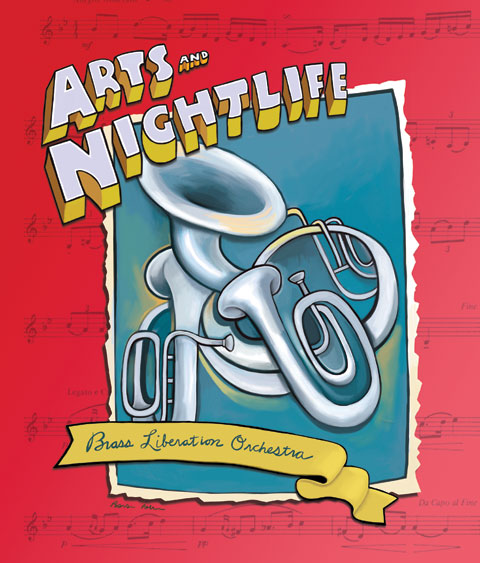
Best of the Bay 2009: Arts and Nightlife

0

Editors Picks: Arts and Nightlife

BEST BLOODY QUEEN

A gut-spewing zombie drag queen roller derby in honor of Evil Dead 2. An interview with The Exorcist‘s Linda Blair preceded by a rap number that includes the line, “I don’t care if they suck their mother’s cock, as long as they line up around the block!” A virtual wig-pulling catfight with Elvira, Mistress of the Dark. All this and more have graced the proscenium of the Bridge Theater as part of the jaw-dropping (literally) Midnight Mass summertime B-movie fun series, brought to us by the always perfectly horrific Peaches Christ. Her wigs alone are usually enough to scare the jellybean-bejeezus out of us, but Peaches combines live craziness with wince-worthy flicks to take everything over the top. After this, her 12th season of disembowelled joy, Peaches is moving on from Midnight Mass to become a director in her own right — she just wrapped up filming All About Evil with Natasha Lyonne and a cast of local fleshbots. Look for it in your googleplex soon, and know that Peaches still stumbles among us.

www.peacheschrist.com

BEST FLAMIN’ FUN

Kids, really, don’t try this at home. Don’t hook up your two-player Dance Dance Revolution game to a row of flamethrowers. Don’t rig said game to blast your dance competitior with a faceful of fire in front of an adoring crowd if they miss a step. Don’t invest in enough propane to fuel a small jet, a flaming movie screen for projecting all those awkward dance moves onto, and a booming sound system to play all the Japanese bubblegum techno you could ever hope to hear. Leave the setup to Interpretive Arson, whose Dance Dance Immolation game has wowed participants and spectators alike from Black Rock City to Oaktown — and will scorch Denmark’s footsies this fall. Do, however, seek out these intrepid firestarters, and don a giant silver fireproof suit with a Robby the Robot hood. Do the hippie shake to the mellifluous tones of Fatboy Slim and Smile.dk, and prepare yourself to get flamed, both figuratively and literally.

www.interpretivearson.com

BEST PENGUIN PARTY, PLANETARIUM INCLUDED

Penguins are damn funny when you’re drunk. They’re pretty entertaining animals to begin with, but after a couple martinis those little bastards bring better slapstick than Will Ferrell or Jack Black. But tipsily peeping innocent flightless birds — plus bats, butterflies, sea turtles, and manta rays — is just one of many reasons to attend Nightlife, the stunningly rebuilt California Academy of Sciences’ weekly Thursday evening affair. This outrageously popular (get there early) and ingenious party pairs gonzo lineups of internationally renowned DJs and live bands with intellectual talks by some of the world’s best-known natural scientists. Cocktails are served, the floor is packed, intellects are high — and where else can you order cosmos before visiting the planetarium? Another perk: the cost of admission, which includes most of the academy’s exhibits, is less than half the regular price, although you must be 21 or older to attend. Come for the inebriated entertainment, stay for the personal enrichment.

Thursdays, 6 p.m., $8-<\d>$10. California Academy of Sciences, 55 Music Concourse Dr., Golden Gate Park, SF. (415) 379-8000, www.calacademy.org/events/nightlife

BEST LINDY HOP TO LIL’ WAYNE

Retain a fond nostalgia for the 1990s swing revival scene? Swing Goth is the event you’ve been waiting for. Not quite swing and not even remotely goth, Swing Goth gives swing enthusiasts the go-ahead to boogie-woogie to modern tunes at El Rio. This isn’t your grandmother’s fox trot: rock, rap, ’80s, alternative, Madchester, Gypsy punk, and almost anything else gets swung. Held on the first and third Tuesday of each month and tailored for beginners, this event draws an eclectic crowd that includes dudes who call themselves “hep cats,” Mission hipsters, and folks who rock unironic mom jeans and Reebok trainers. If you’re new to swing, arrive at 7:30 and take a one-hour group lesson with ringleader Brian Gardner, who orchestrates the event, to get a quick introduction to swing basics before the free dance. Lessons are $5, but no extra charge for ogling the cute dykes who call El Rio their local watering hole. Swing? Schwing!

First and third Tuesdays, 7 p.m., free. El Rio, 3158 Mission, SF. (415) 282-3325, www.swinggoth.com

BEST CELESTIAL TRAJECTORISTS

Who can take a sunburst of boomer rock inspirations — like The Notorious Byrd Brothers-<\d>era Byrds and Meddle-some Pink Floyd — sprinkle it with dew, and cover it with chocolaty nouveau-hippie-hipster blues-rock and a miracle or two? The fresh-eyed, positive-minded folks of Assemble Head in Sunburst Sound can, ’cause they mix it with love and make a world many believed had grown hack and stale taste good. Riding a wave of local ensembles with a hankering for classic rock, hard-edged Cali psych, Japanese noise, and wild-eyed film scores, the San Francisco band is the latest to make the city safe once more for musical adventurers with open minds and big ears. What’s more, the Assemble Head in Sunburst Sound’s inspired new third album, When Sweet Sleep Returned (Tee Pee) — recorded with help from Tim Green at Louder Studios — has fielded much press praise for space-traveling fuzzbox boogie blowouts like “Drunken Leaves” and blissed-out, sitar-touched jangle rambles such as “Kolob Canyon.” Consider your mind burst.

www.myspace.com/theassembleheadinsunburstsound

BEST DANCE DYNAMO

You can’t miss him. He has legs like tree trunks and arm muscles that ripple like lava. When he leaps you think he’ll never come down, and his turns suggest the power of a hurricane. He is dancer Ramón Ramos Alayo, Six years ago he founded the CubaCaribe Festival that now packs in dance aficionados of all stripes, and he’s one of the shaping forces behind the wild San Francisco Carnaval celebration. He runs Alayo Dance Company, for which he choreographs contemporary works with Afro-Cuban roots, and he teaches all over the Bay Area — as many as 60 people show up for his Friday salsa classes at Dance Mission Theater. But Ramos is most strikingly unique as a performer. Ramos is as comfortable embodying Oshoshi, the forest hunter in the Yoruba mythology, as he is taking on “Grace Notes,” a jazz improvisation with bassist Jeff Chambers. No wonder Bay Area choreographers as radically different as Joanna Haigood, Sara Shelton Mann, and Robert Moses have wanted to work with him.

www.cubacaribe.org

BEST BLUEGRASS AMNESIAC

Toshio Hirano packs a mean sucker punch. At first glance he’s a wonderfully eccentric Bay Area novelty, a yodeling Japanese cowboy playing native songs of the American heartland. Yet upon further inspection, it becomes as clear as the skies of Kentucky that Toshio is the real deal when it comes to getting deep into the Mississippi muck of Jimmie Rodgers-<\d>style bluegrass. Enchanted by the sound of American folk music as a Japanese college student, Toshio soon ventured stateside to spend years traveling and playing from Georgia to Nashville to Austin before finally settling in the Bay Area. Today, Toshio plays once a month at Amnesia’s free Bluegrass Mondays to standing-room-only crowds. Stay awhile to hear him play Hank Williams’s “Ramblin’ Man” or Rodgers’s “Blue Yodel No. 1(T for Texas).” It’ll clear that Toshio’s novelty is merely a hook — his true appeal lies in his ability to show that there’s a cowboy lurking inside all of us.

www.toshiohirano.com

BEST COMMUNITY CHOREOGRAPHERS

A collective howl went up in 1995 when it was announced that the annual festival Black Choreographers: Moving into the 21st Century at Theater Artaud was ending due in part to lack of funding. But two East Bay dancers, Laura Elaine Ellis and Kendra Kimbrough Barnes, actually did something about it, working to ensure that African-American dancers and dance-makers received attention for the range and spirit of their work. It took 10 years, but in 2005, Ellis and Kimbrough Barnes helped launch Black Choreographers Festival: Here and Now, which takes place every February in San Francisco and Oakland. The three-week event is a fabulous way for a community to celebrate itself and to invite everyone to the party. While the choreographers’ range of talent and imagination has been impressive — and getting better every year — the performances are merely the icing on the cake. Master classes, mentoring opportunites for emerging artists, and a technical theater-training program for local high school and college students are building a dance infrastructure the next generation can plug into.

www.bcfhereandnow.com

BEST MADCAP POP MAIDENS

San Francisco can always use another all-female band — and Grass Widow satisfies that need beautifully, cackling with brisk, madcap rhythms and rolling out a happy, crazy quilt of dissonant wails. Drummer-vocalist Lillian Maring, guitarist-vocalist Raven Mahon, and bassist-vocalist Hannah Lew are punk as fuck, of course — in the classic, pre-pre-packaged noncodified mode — though many will instead compare the trio’s inspired, decentered pop to dyed-in-the-bluestockings lo-fi riot grrrl. Still, there’s a highly conscious intensity to Grass Widow’s questioning of the digital givens that dominate life in the late ’00s, as they sing wistfully then rage raggedly amid accelerating rhythms and a roughly tumbling guitar line on “Green Screen,” from their self-titled debut on Make a Mess: “Flying low into trees. We exist on the screen. Computer can you hear me? Understand more than 1s and 0s?” Grass Widow may sweetly entreat the listener, “Don’t make a scene,” but if we’re lucky, these ladies will kick off a new generation of estrogen-enhanced music-making.

www.myspace.com/grasswidowmusic

BEST PURPLE SING-ALONG

Karaoke is one of those silly-but-fun nightlife activities that always has the potential to be awesome but usually isn’t. The song lists at most karaoke bars suck, the sound systems are underwhelming, and no matter where you go there’s always some asshole bumming everyone out with painful renditions of Neil Diamond tearjerkers. Well, not anymore! Steve Hays, a.k.a. DJ Purple, is a karaoke DJ — or KJ — who has single-handedly turned the Bay Area’s once tired sing-along scene into a mother funkin’ party y’all. DJ Purple’s Karaoke Dance Party happens every Thursday night at Jack’s Club. Forget the sloppy drunks half-assing their way through Aerosmith and Beyoncé songs. DJ Purple’s Karaoke Dance Party is all about Iron Maiden, Snoop Dogg, Led Zeppelin, and Riskay. No slow songs allowed. An actual experienced DJ, Hays keeps the beats running smooth, fading and blending as each person stumbles onstage, and even stepping in for saxophone solos and backup vocals when a song calls for it. And sometimes even when it doesn’t.

Thursdays, 9 p.m., free. Jack’s Club, 2545 24th St., SF. (415) 641-5371, www.djpurple.com

BEST FLANNEL REVIVAL

In this age of continual retro, it comes as a surprise that listening to mainstream ’90s alternative rock can give you, under the right inebriated circumstances, the kind of pleasure not experienced since heroin went out of vogue. Debaser at the Knockout has become one of the best monthly parties in San Francisco, largely because it gives ’80s babies, who were stuck playing Oregon Trail in computer class while Courtney Love and Kat Bjelland were rocking it out in Portland, the chance to live out their Nirvana-era dreams. Debaser promoter Jamie Jams is the only DJ in San Francisco who will spin the Cranberries after a Pavement song, and his inspired mixology is empirically proven to induce moshing en masse until last call, an enticingly dangerous sport now that lead-footed Doc Martens are back in style. Sporting flannel gets you comped, so for those still hung up over Jordan Catalano and the way he leans, Debaser is rife with contemporary, albeit less angsty, equivalents.

First Saturdays, 9 p.m., Knockout, 3223 Mission, SF. (415) 550-6994, www.myspace.com/debaser90s

BEST CRANIUM MONOPOLY SCRABBLE RISK

The shaky economy’s probably put your $60 concert plans on hold and relegated those high-rolling VIP nights to the back burner. So it’s a great time to return to the simpler forms of social interaction, such as shaking some dice and screaming, “Yahtzee, bitches!” or guffawing maniacally every time some poor fool attempts to pass your two hotels on Boardwalk. Fortunately, game night at On the Corner café on Divisadero fills your staid Wednesday evenings with enough card-shuffling, Pop-o-matic popping, I-want-to-be-the-thimble classics to sink your battleship blues. Plus, there’s coffee and beer. Working in collusion with the colossal collection of neighboring Gamescape, On the Corner provides a plethora of gaming options to fit its large tables and vibrant atmosphere. Stratego, Scattergories, and other trivial pursuits are all available, and the 7 p.m.-<\d>to-<\d>closing happy hour includes $2.50 draft beers and sangria specials. The tables fill up quickly, though — arrive early so you won’t be sorry.

Wednesdays, 7–10 p.m., free. 359 Divisadero, SF. (415) 522-1101, www.sfcorner.com

BEST PARTY OF ONE

Perfect moments are never the ones you work hard to create. Too much effort kills the magic. Instead, the moments we treasure are those that steal up on us, slipping past our defenses to reveal, for just an instant, the sublime wonder of the universe. This is precisely what happens during one’s first encounter with the Lexington Street disco ball, innocuously spinning its multifaceted heart out on a quiet neighborly block in the heart of the Mission District. One moment you’re just walking down the street minding your own business — perhaps rehashing the “should have saids” or the “could have beens” in the muddled disquiet of your mind — when suddenly you spot it, the incongruously located disco ball suspended from a low-hanging branch, throwing a carpet of stars across the sidewalk for anyone to enjoy. All is still, but the music in your heart will lead you. Hold your hands in the air, walk into the light, and dance.

Lexington between 20th and 21st streets, SF

BEST BLOCK-ROCKIN’ BIKE

Amandeep Jawa’s bright blue, sound-rigged party-cycle — Trikeasaurus — is our bestest Critical Mass compadre and bike lane buddy, and an essential component of his impromptu FlashDance parties. This three-wheelin’, free-wheelin’, pedal-and-battery-powered funk machine has been bringing the party to the people — and leading spontaneous Michael Jackson tributes — from the Embarcadero to the Broadway tunnel for the past two years. Even if you’re just out for a stroll or a bit of that ephemeral San Francisco “sun”-bathing, when Trikeasaurus comes rolling along you just have to boogie on down the road, bust a move, get your groove thing on, let your freak flag fly, and insert ecstatic cliché here. We can pretend all we want in the privacy of our own hip sancta sanctorum that Destiny’s Child or OutKast will never move us, but somehow when Trikeasaurus comes bumping by, we just can’t help but bump right back. Don’t fight the feeling! Join the 500-watt, 150-decibel velolution today.

www.deeptrouble.com

BEST HOLES FOR YOUR KRAUTROCK SOUL

If you’ve done ketamine, you know what it’s like to get lost in the cosmic K-hole. To those who have entered the mystical D-hole, however, your ketamine story is child’s play. The Donuts dance party, thrown at various times and locations throughout the year by DJ Pickpocket and visual artist AC, provides adventurous club-goers with that most delicious of drugs: donuts, given away free. First timers, be careful: these potent little sugar bombs are highly addictive and can often lead to an all-night binge of ecstatic power-boogie, which can result in terrible withdrawal symptoms. Like many other popular club drugs, donuts are offered in powdered form, though they can also be glazed, which leaves no tell-tale residue around the mouth. But as long as you indulge responsibly, entering the Hole of the Donut is perfectly safe. Amp up your experience to fever-pitch perfection with Donuts’ pulse-pumping Krautrock, new wave, retro disco, and dance punk live acts and beats.

www.myspace.com/donutparty

BEST PLACE TO PARTY LIKE A SLOVENIAN

If there’s one thing all Slovenians have in common, it’s that they know how to deck a muthafunkin’ hall, y’all. It stands to reason then that Slovenians run one of the biggest and best halls in town. The Slovenian Hall in Potrero Hill is available for all your partying needs — birthdays, anniversary bashes, coming-out fests, etc. The rooms inside the hall are spacious and clean, the kitchen and bar spaces are outfitted to serve an entire army, and there are plenty of tables and chairs. But it’s the decor that makes this place unique: Soviet-era and vintage tourism advertisements are sprinkled throughout the place and banners promoting Slovenian pride hang from the ceiling. The hall also hosts live music events — recently an Argentine tango troupe took up residence there, making things border-fuzzingly interesting, to say the least.

2101 Mariposa, SF. (415) 864-9629

BEST FUTURE RAP CEO

Odds are you’ve not yet heard of East Bay teen hip-hop talent Yung Nittlz — but one day soon you will. The ambitious, gifted Berkeley High student has already amassed five albums worth of smooth and funky material that he wrote, produced, and rapped and sang on. In August 2007, when he was just 13, the rapper born Nyles Roberson scored media attention when Showtime at the Apollo auditions came to town and he was spotted very first in line, having camped out the night before. And while Yung Nittlz wasn’t among the lucky final few to be picked, he did make a lasting impression on the judges with his strong performance of the song “Money in the Air” and choreography that included him strategically tossing custom-made promo dollars that he designed and made. The gifted artist also designed the professional-looking cover for his latest demo CD, which suggests fans should request the hit-sounding “Feelin’ U” on KMEL 106 FM. Stay tuned. You’ll likely be hearing it soon.

www.myspace.com/yungnittlz

BEST B-MOVIE SURVIVOR

The crappy economy has ruined many things. It’s the reason both the Parkway and the Cerrito Speakeasy theaters — where you could openly drink a beer you’d actually purchased at the concession stand, not smuggled in under your sweatshirt — closed their doors this year. But even a bummer cash crunch can’t dampen a true cult movie fan’s love of all things B. Deprived of a permanent venue for his long-running “Thrillville,” programmer and host Will “The Thrill” Viharo adjusted his fez, brushed off his velvet lapels, and started booking his popular film ‘n’ cabaret extravaganzas at other Bay Area movie houses, including the 4-Star and the Balboa in San Francisco, and San Jose’s Camera 3. Fear not, devotees of film noir, tiki culture, the swingin’ ’60s, big-haired babes, Aztec mummies, William Shatner, the Rat Pack, Elvis, creature features, Japanese monsters, and zombies — the Thrill ain’t never gonna be gone.

www.thrillville.net

BEST GAY FLIPPER ACTION

Much like travel agents, beepers, and modesty, pinball machines are slowly becoming relics of the past. But it’s difficult to understand why these quarter-fed games would fall by the wayside, since they’re especially fun in a bar atmosphere. What else is there to do besides stare at your drink, hopelessly chat up the bartender, constantly check your phone, and try to catch that one cute patron’s eye. At the Castro’s Moby Dick, pinball saves you from such doldrums. Sure, the place has the requisite video screens blaring Snap! and Cathy Dennis chestnuts, and plenty of hunky drunkies to serve as distractions. But its quarter-action collection — unfortunately whittled down to three machines, ever since Theater of Magic was retired due to the difficulty of finding replacement parts — is a delightful retro rarity in this gay day and age. So tilt not, World Cup Soccer, Addams Family, and Attack from Mars fans. There’s still a queer home for your lightning-quick flipping.

4049 18th St., SF. www.mobydicksf.com

BEST BLAST OF JUSTICE

Founded in 2002, the many-membered Brass Liberation Orchestra has been blowing their horns for social justice all over the Bay Area — from the San Francisco May Day March and Oakland rallies for Oscar Grant, to protests against city budget cuts and jam sessions at the 16th Street BART station. Trombones out and bass drums at the ready, this tight-knit organization of funky folk recently returned from New Orleans, where they played to support community rebuilding projects in the Lower Ninth Ward. With a membership as diverse as they come, the BLO toots their horns specifically to “support political causes with particular emphasis on peace, and racial and social justice” — especially concerning immigrants’ rights and anti-gentrification issues. But the most joyful part of their practice is the spontaneous street parties they engender wherever they pop up, and their seemingly impromptu romps through neighborhoods and street festivals. Viva la tuba-lution!

www.brassliberation.org

BEST WITTY WONG

Is your idea of hell being trapped in a room with a white, collegiate, spoken-word “artist” — or worse yet, being forced to wear an Ed Hardy t-shirt? Are you a veteran of the 30 Stockton and the 38 Geary, with the wounds and the stories to prove it? Can you just not help but stare at someone who somehow can’t resist an act of street corner masturbation? Then you’re ready to lend an ear to Ali Wong, the funniest comedian to stomp onto a San Francisco stage in a long time. Some people get offended by Wong, which is one reason she’s funny — comedy isn’t about making friends, and she’s not sentimental. She draws on her family history and writing and performing experience in implicit rather than overt ways while remaining as blunt as your funniest friend on a bender.

www.aliwong.com

BEST SITE FOR SHUTTERBUGS

Take a picture, it’ll last longer. Especially if you take it to — or even at — RayKo Photo Center, a large SoMA space that boasts a studio, a shop stocked with new and used cameras, a variety of black-and-white and color darkrooms, a digital imaging lab (with discount last-Friday-of-the-month nighttime hours), and classes where one can learn the latest digital skills as well as older and arcane processes such as Ambrotype (glass plate) and Tintype (metal plate) image-making. Devoted in part to local photographers, RayKo’s gallery has showcased Bill Daniel’s panoramic yet raw shots of a post-Katrina Louisiana and has likely influenced a new generation of shutterbugs affiliated with groups and sites like Cutter Photozine and Photo Epicenter. One of its coolest and truly one-of-a-kind features is the Art*O*Mat Vending Machine, an old ciggie vendor converted into a $5-a-piece art dispenser. And of course RayKo has an old photo booth, so you can take some quick candid snapshots with or without a honey.

428 Third St., SF. (415) 495-3773, www.raykophoto.com

BEST RAPPING CABBIE

The great myth about cab drivers is that they’re a bunch of underappreciated geniuses who write poetry and paint masterpieces when they’re not busy shuttling drunks around. Most cabbies, however, aren’t Picassos with pine-scent air fresheners. They clock in and out just like we all do, and then they go home and watch reality TV. There are, however, a few exceptions to the rule: true artists who have deliberately chosen the cabbie lifestyle because it allows them the freedom to pursue their passions on the side. MC Mars is such a cabbie. A 20-year veteran on the taxi scene, Mars is also a hip-hop performer, a published author, and an HIV activist. You can check his flow every Wednesday night at the Royale’s open-mic sessions. Or, if you’re lucky enough to hail his DeSoto, you can get a free backseat show on weekends. And don’t forget to pick up his latest CD, “Letz Cabalaborate,” available on Mars’ Web site.

www.mcmars.net

BEST FRESH POETICS

The Bay Area knows poetry. And people in the Bay Area who know poetry today realize that the San Francisco Renaissance, the Beats, the Language poets, and even the New Brutalists might inspire contemporary writers, but they don’t own them. You can encounter proof in places like Books and Bookshelves, and read it in publications like Try. As the Bay Area Poetics anthology edited by Stephanie Young made clear in 2006, Bay Area verse is enormous and ever-changing. One year earlier, David Larsen established a space for it in Oakland with his New Yipes Reading Series, which frequently paired poets with filmmakers. He’s since moved to the East Coast, but Ali Warren and Brandon Brown re-energized the concept, simplifying its name to The New Reading Series and refining its content to readings with musical interludes. It’s the best place around to hear Tan Lin and Ariana Reines and confront notions of the self through Heath Ledger. It’s also hosted a kissing booth, for all you wordsmiths who aren’t above romantic trappings.

416 25th St., Oakl. www.newyipes.blogspot.com

BEST HOUSE OUTSIDE

For 15 years, the much-loved and lovable warm weather Sunset parties have shaken various hills, isles, parks, patios, and boats with funky, techy house sounds. Launched by underground hero DJ Galen in 1994, the outdoor Sunset gigs have amassed a huge following of excited party newbies and familiar old-school ravers — and now even their kids. Early on in the game, Galen was soon joined by fellow Bay favorite DJs Solar and J-Bird, and the three — collectively known as Pacific Sound — have kept the vibe strong ever since. This year saw a remarkable expansion on the Sunset fan base: attendance at the season opener at Stafford Lake reached almost 4,000, and Pacific Sound just launched an annual — and truly moving — party on Treasure Island that had multiple generations putting their hands in the air. The recent Sunset Campout in Belden drew hundreds for an all-weekend romp with some of the biggest names in electronic music — true fresh air freshness.

www.pacificsound.net

BEST SECRET OF ETERNAL RAVE

According to murky local legend, sometime in the early ’90s a Finnish archaeologist named Mr. Floppy passed through Oakland on a quest to find an inverted pyramid rumored to hold the secret to eternal life. He didn’t find anything like that, of course, but he did discover a really cool apartment complex run by an obsessive builder named George Rowan. The sprawling place, which housed multiple dwelling units as well as an outdoor dance area and an out-of-use bordello and saloon famously frequented by Jack London in the 1800s, was an interconnected maze of rooms decorated with found objects and outsider art. It was a perfect spot to throw underground raves, which is exactly what Floppy and Rowan did until the day they got slapped with a fire-hazard citation. Nobody really knows what happened to the psychedelic archaeologist after that, although his spirit lives on: Mr. Floppy’s Flophouse has recently re-opened as a venue for noise shows, freaky circuses, and all-night moonlit orgies.

1247 E. 12th St., Oakl

Raison ritual

0

YEAR IN FILM “We could live like this forever.” Josephine, the serious young woman in Claire Denis’ gorgeous chamber drama 35 Shots of Rum, whispers this line to her father while they’re camped out on the beach. It’s unclear, however, whether she’s referring to this particular sandy spot or the rituals of home and work that structure the film. As with Chris Chong’s remarkable short, Block B, 35 Shots of Rum (a ritual in the title itself) is set in a superficially unattractive apartment complex. Beyond the concrete is an intricate network of human relations. In the republic of cinema, the Denis film descends from that great poet of routine life, Yasujiro Ozu. Daily rituals dilate exposition and emotion; the safe enclosure of home unfolds in time.

Many of the most indelible, mood-lifting moments of my sporadic year of film-going arrived in the deepened presence of ritual: two shots of espresso, in separate cups; dismantling a bomb; shaving radishes; sheering sheep; the ecstatic sweat of a Lightning Bolt concert; the murderous talk surrounding a stand-up act. The Limits of Control cracks a zen joke out of those scenes that take us to edge of plotlessness; The Hurt Locker posits them at the lip of death. Every genre has its rites, but ritual is roped off by an extraordinary and transformative act of concentration: not so much a slice of life, as the heart of it.

To begin with an imperfect example, take Funny People. The informal joke workshops are the best thing about Judd Apatow’s chef-d’oeuvre by some distance — a romantic plot is deathly flat next to the backstage lollygagging. Likewise, for all The Hurt Locker‘s amazing mappings of harm’s way and its rigorous equation of work and action, Kathryn Bigelow’s film sags in the bland passages earmarked for character development. However momentarily, both movies put the blockbuster through paces.

Rituals, as I’ve described them, give us time to think and feel, and thus crop up with greater frequency in experimental work (ritual makes the documentary-fiction divide matter less). In Heddy Honigmann’s Oblivion, political history flows from her interview subjects’ ingenious livelihoods. Representatives of the service class relay personal and national narratives at work, their gestures embodying resilience and wisdom beyond the bounds of political rhetoric.

A clarifying admiration of labor also animates Sweetgrass, Ilisa Barbash and Lucien Castaing-Taylor’s near-wordless immersion into a final sheep drive across Montana. Recorded with ethnographic grit and uncommon lyricism, the film counterpoints detailed sound recordings with monumental, temporal landscape photography. A peculiar mix of estrangement (the implacable animal stare) and intimacy (the last cowboys’ muttered curses), Sweetgrass packages a dying way of life as a wayward phenomenological experience — the ritual as haunting.

Rendered as cinema, there is every possibility that ritual will make for a trance. Ben Russell actively cultivates this state in his Black and White Trypps series. Excerpts of all six of these shorts, as well as a 10-minute slice of Russell’s acclaimed feature debut, Let Each One Go Where He May, are available on his Vimeo site, but seeing the third installment in 35mm at the Pacific Film Archive raised the stakes considerably. In it, Russell sends a beam of light into the teenage sprawl of a Lightning Bolt show, creating a visible field barely broad enough for one or two wild faces. The crowd’s pulse makes for an ephemeral, twisting portrait. Projected on the big screen, the baroque expanse of sound and black gave the mined portraits a distinctly transcendent aura. Russell’s Warhol-worthy idea locates solitude in collectivity and authenticity in performance. The 11-minute film also invites us to reconsider the coordinates of that other common ritual that brings us alone together in the dark — cinema.

Grey’s anatomy: An interview with Sasha Grey

0

To state that hardcore porn nymphet Sasha Grey has mainstream appeal is like arguing a truism. Thrust onto billboards and magazine covers, written into highly publicized Hollywood movies, integrated into our cultural vernacular, Sasha Grey didn’t just cross over into mainstream territory; we brought her here.

It’s easy to see why, among the many female performers in adult entertainment, Sasha Gray has become the unwitting locus of the public’s gaze and speculation. Next to those flaxen, suprafemale Barbies who dominated porn in the 90s, Grey’s handsome brunette naturalism seems somehow transgressive. Grey’s bosoms are not big enough to generate their own gravity, and her smooth, skin-colored skin and svelte muscularity are the products of youth and genetics rather than of dubious cosmetic procedure. With her placid, heavy-lidded eyes, broad forehead, and insistent jawline, Grey’s face looks real rather than representational. She looks like the pretty 21-year-old that she is — with an age appropriate penchant for darkening her already dark Mediterranean eyebrows — and it’s this sense of the familiar that makes Grey, a real girl among a valley of dolls, so erotically appealing.


Sasha Gray in an ad for American Apparel

The media has the tendency to describe Grey in extreme binaries: young yet wise, beautiful yet intelligent, intellectual yet a porn star, and so on. In a sense, this tendency is understandable. Most writers, yours humbly included, are not citizens of the adult entertainment world. It’s tempting for writers to use obtuse paradoxes and reductive generalizations when describing those who seem, by virtue of their work, so fascinatingly equivocal. And Grey doesn’t make our jobs any easier, with her casual mentions of Baudrillard and Sartre, her appreciation of Godard, and her use of the adjective “Jungian,” while cheerfully inhabiting an industry that we take for granted as being intellectually unconcerned. As fellow twenty-something with an affection for cultural theory and French New Wave, I relate to some of her interests, but beyond that, my interpretive abilities hit a wall and all that’s left is conjecture. Grey is a descriptive paradox, and it would not surprise me if she preferred it that way.

Grey was recently announced as this year’s keynote speaker at the 2010 AVN Awards and I had the opportunity to interview her. Not wanting to add to the guesswork that surrounds Grey’s celebrity or to embark on a vague meditation of the porn-star psyche, I limited the questions to her involvement with the AVN ceremony. The result was simple, straightforward and, at least for me, refreshing.

SFBG: As such a young performer — and one relatively new to the adult entertainment industry — are you comfortable with the responsibility of giving the AVN keynote address?

SG: This has been an incredibly exciting year for me, and I feel each year I continue to excel… but the industry has changed rapidly, in my almost fourth year of experience. I am proud that I have the chance to share my voice with the industry and show appreciation for the fans that support my career and adult film-making.

SFBG: At the moment, what are some of the most important issues or concerns for the adult entertainment community?

SG: First and foremost the never-ending battle of obscenity laws, i.e. the ongoing case against Evil Angel Video. If Evil Angel is found guilty, we’ll be rolling backwards in time when Naked Lunch was banned for obscenity. Secondly, the state of AIM Healthcare, where all performers are tested, could be shut down any day due to grueling legal battles with Cal OSHA, which would temporarily shut the business down until there’s a replacement testing facility… and who knows how long that could take.

SFBG: You’ve performed in so many films and been in the spotlight for so long that it feels strange for me to ask, but are you nervous about giving this speech?

SG: Nope.

SFBG: This will be your third year attending the AVN Awards. Do you enjoy the ceremony?

SG: The awards show has always been a fun way to end a long week of press and meeting fans, and there’s certainly the neverending people watching which always entertains!

SFBG: Just out of curiosity, have you read “Big Red Son” by the late David Foster Wallace? He attended the AVNs 11 years ago and wrote about his overwhelmingly negative experiences as a journalist and onlooker. He prescribed the AVNs as a humble alternative to self-castration and described the adult industry as “predictably vulgar.”

SG: No I haven’t. Why do you think they don’t hold most awards shows in Vegas? People would be letting their inhibitions go! Vegas: a great example of the Jungian idea, the duality of man. People put on a mask; those who don’t ordinarily drink too much yet end up wasted, spend too much money on strippers and gambling, etc, this goes for 90% of people who visit the city of sin. People from the adult industry or those who mingle with its crowds are aware that Vegas calls for celebration, and they are usually comfortable letting their inhibitions go, or wearing these masks. I am sure this might intimidate an onlooker with no knowledge of the adult entertainment community, but this doesn’t reflect the day-to-day life of the businessmen and women that run this industry.

SFBG: What did it feel like to win your first AVN award in 2007, less than a year after having entered the industry?

SG: It was a real shock, I had only been in the business for five months before the nominations went out, so I was just happy to be nominated.

SFBG: You’ve won 4 AVN awards in 4 separate categories. Of these awards, which one meant the most to you?

SG: Female Performer of The Year of course!

SFBG: In your own career, are awards a huge honor for you, or just icing on the cake?

SG: I used to think they were something to add to your resume, until I actually won. The anticipation, being unsure, and then winning… yeah it’s incredibly gratifying.

The halting dance of Sirron Norris and Fox TV

0

By Caitlin Donohue

bobs burgers 1 1209.jpg
One more quirky animated show for FOX TV? Hey, at least it’s something to keep you busy in between episodes of The Cleveland Show!

Some may see it as a big leap to go from working on street murals in San Francisco to designing a pilot for Fox, but for painter Sirron Norris, it all comes down to the cheese. “Making a living is important to me,” says the Bay Area artist. Norris has been keeping busy working on the creative design for “Bob’s Burgers,” an animated series that the network just ordered 13 episodes of, set to debut in early 2011 with a cast of comedians in the vocal roles.

In our recent interview for this week’s SFBG Scene magazine, Norris leveled with me about the process his team went through to make “Bob’s Burgers” a TV series that was appropriate for the network home of the country’s first cartoon family.

FAIR: The 2009 P.U.-Litzer Awards

0

FAIR, the national media watch group, has been offering well-documented criticism of media bias and censorship since 1986.

The 2009 P.U.-Litzer Awards

For 17 years our colleagues Jeff Cohen and Norman Solomon have worked with FAIR to present the P.U.-Litzers, a year-end review of some of the stinkiest examples of corporate media malfeasance, spin and just plain outrageousness.

Starting this year, FAIR has the somewhat dubious honor of reviewing the nominees and selecting the winners. It’s a dirty job, but someone has to do it. So, without further ado, we present the 2009 P.U.-Litzers.

–The Remembering Reagan Award
WINNER: Joe Klein, Time

Time columnist Joe Klein (12/3/09), not altogether impressed by Obama’s announcement of a troop escalation in Afghanistan, wrote that a president “must lead the charge–passionately and, yes, with a touch of anger.”

He described the better way to do this:

Ronald Reagan would have done it differently. He would have told a story. It might not have been a true story, but it would have had resonance. He might have found, or created, a grieving spouse–a young investment banker whose wife had died in the World Trade Center–who enlisted immediately after the attacks…and then gave his life, heroically, defending a school for girls in Kandahar. Reagan would have inspired tears, outrage, passion, a rush to recruiting centers across the nation.

Ah, Reagan–now there was a president who could inspire people to fight and die based on lies.

–The Cheney 2012 Award
WINNER: Jon Meacham, Newsweek

Newsweek editor Jon Meacham declared (12/7/09) that Dick Cheney running for president in 2012 would be “good for the Republicans and good for the country.” He explained that “Cheney is a man of conviction, has a record on which he can be judged, and whatever the result, there could be no ambiguity about the will of the people…. A campaign would also give us an occasion that history denied us in 2008: an opportunity to adjudicate the George W. Bush years in a direct way.”

While the 2008 election might have seemed a sufficient judgment of the Bush years, it’s worth pointing out that at beginning of the year (1/19/09), Meacham was adamantly opposed to re-hashing Cheney’s record, calling it “the rough equivalent of pornography–briefly engaging, perhaps, but utterly predictable and finally repetitive.” The difference? That was in response to the idea that Cheney should be held accountable for lawbreaking. Apparently a few months later, the same record is grounds for a White House run.

–The Them Not Us Award
WINNER: Martin Fackler, New York Times

The New York Times (11/21/09) describes the severe problems with Japan’s elite media–a horror show where “reporters from major news media outlets are stationed inside government offices and enjoy close, constant access to officials. The system has long been criticized as antidemocratic by both foreign and Japanese analysts, who charge that it has produced a relatively spineless press that feels more accountable to its official sources than to the public. In their apparent reluctance to criticize the government, the critics say, the news media fail to serve as an effective check on authority.”

The mind reels.

–The Thin-Skinned Pundits Award
WINNER: Dana Milbank, Washington Post

Washington Post reporters Dana Milbank and Chris Cilizza got into trouble when, in an episode of their “Mouthpiece Theater” web video series, they suggested brands of beer that would be appropriate for various politicians. What would Hillary Clinton drink? Apparently something called “Mad Bitch.” The video, unsurprisingly, was roundly criticized, and was pulled from the Post site. So what lesson was learned? Milbank complained (8/6/09) that “it’s a brutal world out there in the blogosphere…. I’m often surprised by the ferocity out there, but I probably shouldn’t be.”

Yes, the problem with calling someone a “bitch” is the “ferocity” of your critics.

–The Sheer O’Reillyness Award
WINNER: Bill O’Reilly, Fox News Channel–TWICE!

1) Asked by a Canadian viewer, “Has anyone noticed that life expectancy in Canada under our health system is higher than the USA?,” Fox’s O’Reilly (7/27/09) responded: “Well, that’s to be expected, Peter, because we have 10 times as many people as you do. That translates to 10 times as many accidents, crimes, down the line.”

2) Drumming up fear of Democrats’ tax plans: “Nancy Pelosi and her far-left crew want to raise the top federal tax rate to 45 percent. That’s not capitalism. That’s Fidel Castro stuff, confiscating wages that people honestly earn.”

Perhaps Castro was president of the United States in 1982-86, when the top rate was 50 percent. Or maybe all of the 1970s, when it was 70 percent. Or from 1950-63, when it was 91 percent.

–The Less Talk, More Bombs Award
WINNER: David Broder, Washington Post

Post columnist Broder expressed the conventional wisdom on Barack Obama’s deliberations on the Afghanistan War, writing under the headline “Enough Afghan Debate” (11/15/09):

It is evident from the length of this deliberative process and from the flood of leaks that have emerged from Kabul and Washington that the perfect course of action does not exist. Given that reality, the urgent necessity is to make a decision–whether or not it is right.

–The Racism Is Dead Award
WINNER: Richard Cohen, Washington Post

Post columnist Richard Cohen wrote (5/5/09): “The justification for affirmative action gets weaker and weaker. Maybe once it was possible to argue that some innocent people had to suffer in the name of progress, but a glance at the White House strongly suggests that things have changed. For most Americans, race has become supremely irrelevant. Everyone knows this. Every poll shows this.”

For the record, “every poll” does not actually show this; the vast majority of Americans continues to recognize that racism is still a problem. Cohen went on to write months later–still presumably living in his racism-free world–that he did not believe Iran’s claims about its nuclear program, because “these Persians lie like a rug.”

–The When in Doubt, Talk to the Boss Award
WINNER: Matt Lauer, NBC News

Today show host Lauer announced a special guest on April 15: “If you really want to know how the economy is affecting the average American, he’s the guy to talk to.” Who was Lauer talking about? Wal-Mart CEO Mike Duke. The ensuing interview touched on the Employee Free Choice Act, which Lauer noted was supported by many unions but opposed by some large corporations–leading him to ask Duke, “What’s the truth?” Yes, look for “the truth” about a proposed pro-labor bill from the new CEO of an adamantly anti-labor corporation.

–The Socialist Menace Award
WINNER: Michael Freedman, Newsweek

Newsweek’s “We Are All Socialists Now” cover (2/16/09) certainly turned heads, but one of the stories inside explained in more detail the real threat. As senior editor Michael Freedman asked: “Have you noticed that Barack Obama sounds more like the president of France every day?”

The real problem, though, is what that’s going to do to us Americans, says Freedman: “If job numbers continue to look dismal, or get even worse, an ever-greater number of people will start looking to the government for support…. It’s very easy to imagine a chorus of former American individualists demanding cushy French-style pensions and free British-style healthcare if their private stock funds fail to recover and unemployment inches upward toward 10 percent and remains there.”

Pensions and healthcare for all–this is worse than we thought!

–The Iraq All Over Again Award
WINNER: Too Many to Name

After the invasion of Iraq, countless journalists who had treated allegations about Iraq’s weapons of mass destruction as facts were embarrassed when there were no such weapons to be found. So you’d think they’d be more careful about thinly sourced claims that Iran is seeking nuclear weapons. But in 2009, many journalists are still willing to treat such allegations as facts.

-NBC’s Chris Matthews (10/4/09): “As if Afghanistan were not enough, now there’s Iran’s move to get nuclear weapons.”

-NBC’s David Gregory (10/4/09). “Iran–will talks push that country to give up its nuclear weapons program?”

-Fox News Channel’s Bill O’Reilly (9/25/09): “All hell breaking loose as a new nuclear weapons facility is discovered in Iran, proving the mullahs have been lying for years…. Iran’s nuclear weapons program has now reached critical mass. And worldwide conflict is very possible. Friday, President Obama, British Prime Minister Brown and French President Sarkozy revealed a secret nuclear weapons facility located inside Iran.”

Some even went further, turning allegations of a nuclear weapons program into the discovery of actual nuclear weapons:

-ABC’s Good Morning America host Bill Weir (9/26/09): “President Obama and a united front of world leaders charge Iran with secretly building nuclear weapons.”

–The Talking Like a Terrorist Award
WINNER: Thomas Friedman, New York Times

In a January 14 column, New York Times superstar pundit Tom Friedman explained Israel’s war on Lebanon as an attempt to “educate” the enemy by killing civilians: The Israeli strategy was to “inflict substantial property damage and collateral casualties on Lebanon at large. It was not pretty, but it was logical.” Friedman added, “The only long-term source of deterrence was to exact enough pain on the civilians–the families and employers of the militants–to restrain Hezbollah in the future.” That strategy of targeting civilians to advance a political agenda is usually known as terrorism; Osama bin Laden couldn’t have explained it much better.

–The It Only Bothers Us Now Award
WINNER: Wall Street Journal editorial page

When Barack Obama only called on journalists from a list during a press conference, the Wall Street Journal did not like the new protocol (2/12/09):”We doubt that President Bush, who was notorious for being parsimonious with follow-ups, would have gotten away with prescreening his interlocutors.”

Actually, Bush was famous for calling only on reporters on an approved list; as he joked at a press conference on the eve of the Iraq War (3/6/03), “This is scripted.”

–The No Comment Award
WINNERS: MSNBC’s Mika Brzezinski and Rush Limbaugh

When asked by Politico (10/16/09) to name her favorite guest, MSNBC host Mika Brzezinski named arch-conservative Pat Buchanan “because he says what we are all thinking.”

Rush Limbaugh on Obama (Fox News Channel, 1/21/09): “We are being told that we have to hope he succeeds, that we have to bend over, grab the ankles…because his father was black.”

8, 9 … 2010

0

1. SF garage rock goes pop This year saw Bay Area garage rock go pop in style and impact without losing its soul. I’m thinking of the Fresh and Onlys, and of Ty Segall’s second solo effort Lemons (Goner), a lovely one. I’m thinking of Girls’ Album (True Panther/Matador), which threw down the crossover-move gauntlet with no shame in its game: Christopher Owens’ interviews were as entertaining as his music and brasher — his real talk about sex and drugs made good headline fodder for the excitable British press, but contained the kind of truth that honors life over rules or boring definitions. The secret keeper, though, was the Mantles’ self-titled debut on Siltbreeze. Drew Cramer’s lead guitar and Michael Oliveras’ vocals were even better live, the mark of a band in bloom.

2. The AfroSurreal In May, D. Scot Miller helped put together a special AfroSurreal issue of the Guardian, a collection of words and visions journeying beyond the potential of Barack Obama’s presidency. The Kehinde Wiley piece on the cover wasn’t the only AfroSurreal image on this paper’s front pages — just last week, Conrad Ruiz’s Godzilla-size Yes We Can stomped around the city. Musically, AfroSurrealism manifested in the mind- and mirror-bending quality Dam-Funk’s Toeachizown (Stones Throw) and the rehab hallucinations and Dante-like funeral marches of Chelonis R. Jones’s Chatterton (Systematic). It floated in through cracks in the time warp as well: the ghetto opera of 24 Carat Black’s Gone: The Promises of Yesterday (Numero Group); the proto-punk of Death’s For the World to See (Drag City), especially “Politicians in My Eyes”; and weirdest of all, the gothic funk and skronk of Wicked Witch’s Chaos: 1978-1986 (E.M.).

3. 21st century goth From blackness to deathly whiteface — something gothic this way came in 2009, thanks to Cold Cave’s Cremations (Hospital Productions) and Love Comes Close (Matador). Both staked a claim that the genre is as applicable as death metal to a post-Bush presidency globe. But while those albums notched acclaim and attention, the similar yet more audacious Cure and Cabaret Volatire moves of Jones’ months-earlier Chatterton went ignored and unappreciated. Evidence of racism, proof that German techno only gets appreciated years after the fact, or both?

4. Hauntological mutations In 2009’s sonic mansion, ghosts haunted the hallways leading to and from the gothic banquet hall, and hauntology — a Derrida term applied to music by the critic Simon Reynolds — continued to morph, just as any self-respecting specter should, well beyond dubstep. The maze-like passages of Rooj’s The Transactional Dharma of Rooj (Ghost Box) and Broadcast and the Focus Group’s Broadcast and the Focus Group Investigate Witch Cults of the Radio Age (Warp) both suggested that spirits have short attention spans, while Demdike Stare’s Symbiosis (Modern Love) traded seances on wet afternoons for retro-futurist meetings with medieval wicked witches.

5. Library music For evidence that the past resides in and fuels the present, go to the library. Specifically, to the abundant compilations and Web sites dedicated to library music — the scores of incidental music produced and recorded for soundtrack use on film, television, and radio. In the wake of his gorgeous book The Music Library (Fuel Publishing), Jonny Trunk released more albums devoted to library labels. The Parisian DJs Alexis Le-Tan and Jess put out a pair of Space Oddities library collections — one electronic, one psychedelic — on Permanent Vacation. Wax Poetics published a lengthy piece to the subject. In an interview, Trunk noted that his Scrapbook (Trunk) shares the same fast-change aesthetics of Broadcast and the Focus Group’s hauntological recordings, just one example of how library music of the past forms the music of now.

6. The new ambient The new ambient is not afraid of extreme melancholy, or long compositions — no longer only Kompact, it can be epic. One of the form’s peak representatives is San Francisco’s Brock Van Wey, whose White Clouds Drift On and On (Echospace) bravely strived for, and sometimes reached, sublime solitude. Another was Klimek, whose Movies is Magic (Anticipate), on which a track such as “pathetic and dangerous” lives up to its death-knell title. The last was Leyland Kirby. His three-CD contribution sums up the current moment in both its title and the name of its label: Sadly, the Future is No Longer What it Was (History Always Favours the Winners).

7. 2009=1989, synthpop and shoegaze I explored this theme in last week’s Decade in Music issue. See: Atlas Siund (in particular “Shelia,”), Crocodiles, Fuck Buttons, Loop, Night Control, Pains of Being Pure at Heart, Washed Out (responsible for two of this year’s most gorgeous tracks, “Belong” and “Hold Out”), Wavves, and the xx.

8. How old is now? As the music industry continues to fracture, reissues or uncovered old sounds were as vital and revelatory as new releases. In San Francisco, this meant new rereleases by San Francisco Express, the Units, and most excitingly, Honey Soundsystem’s work on behalf of Patrick Cowley and Jorge Socarras’ Catholic project. Beyond SF, it meant a one-of-a-kind treasure like Connie Converse’s How Sad, How Lovely (Lau derette): one woman, one guitar, one tape recorder, and perhaps the best music of this sad, lovely year.

SCENE: N.I.C.E. Collective designs a community

0

Interview by Laura Palmer. From SCENE: The Guardian Guide to Nightlife and Glamour on stands in the Guardian now

119-nice.jpg
The N.I.C.E. boys. All photos by Spencer Hansen

Designers Joe Haller and Ian Hannula of burgeoning San Francisco fashion brand N.I.C.E. Collective (www.nicecollective.com) met in a club more than a decade ago and started collaborating on projects — the first one was repurposing an electric blanket into a jumper — complete with tag and plug. Their big idea was to fuel fashion with a musical and nightlife sensibility, enabling the duo to build a community of artists. N.I.C.E. (an acronym for “navigate, inform, create, explore”) rocked New York Fashion Week last spring with a show that felt more art installation/dance party than runway presentation, and whose backdrop included a 19th century carriage and much charred wood. The impeccably edgy Time Machine line they introduced there took off and now holds its own on the floors of retail boutiques next to editorial darlings Rag & Bone and more established brands like Comme des Garcons.

But what next? Between constant trips back and forth from New York to the site of their “live fashion installment” in Bolinas, we managed to snag Joe and Ian for a moment to ask them about the concept for their latest, “communal” clothing line.

DJ nice collective.jpg

SFBG When did you start cultivating the concept for a communal line launch?
N.I.C.E. We came across this stretch of land in Bolinas, and we looked over it and thought, “with the economy tanking, why don’t we just set up a little commune together?” This thought became the jump-off point for our design inspiration for spring 2010. We decided to name it the Gathering.

Then when we didn’t find what we were looking for to show the clothes in New York during Fashion Week this fall, we thought back to Bolinas and decided to go ahead and actually set up a temporary community there. Instead of art directing an outdoor photo-shoot, we would live it and take pictures of our line that way.

Spencer Hansen nice collective 409.jpg

SFBG How did it go? Were any of the models eaten by bears?

SCENE: Sirron Norris bears all

0

Interview by Caitlin Donohue. From SCENE: The Guardian Guide to Nightlife and Glamour — on stands in the Guardian now!

119-sccover.jpg

“When you walk into a room in San Francisco, half the people in there are going to know who I am — or at least the bear,” says “cartoon literalism” artist (and palindrome) Sirron Norris. Norris may be right about his citywide ubiquity. The friendly blue bears and pink rabbits that frolic through his Technicolor streetscapes are probably brightening up a wall near you, from Balmy Alley to the neighborhood cheesesteak restaurant. But the lightheartedness of Norris’ popular work belies an artist with an intense drive to be commercially viable in the increasingly barebones world of art. Upcoming projects include Bob’s Burgers, an animated series on Fox, and a studio at 1406 Valencia where he’ll hawk his own work and teach cartooning classes — even a proposed reality show. Ever opinionated, Norris pulls no punches when it comes to taggers, the Mission anti-gentrification movement, and the value of commercialism.

SFBG How did you get started in the SF art scene?
SIRRON NORRIS I fell into fine art. I’d never planned on it at all. I was making video games at a software development company in San Rafael and painting on the side out of frustration. I was doing these canvases on my own and [one day] I took them down to Luggage Space, which was the hot gallery at the time. A few months later, I had a show.

SFBG I think, given the aesthetic of your work, a lot of people would be surprised to find out that you don’t come from a graffiti background.
SN I have a huge disdain for graffiti. My murals have been ripped apart by it. I exercise a lot and the main reason I started is honestly because I wanted to stay up super-late at night and run around with a baseball bat and find [taggers]. People don’t understand when they ruin my murals how hurtful that is. You are stealing that artist’s life away from them. And for what — you want people to notice you? I just think that it’s sad and self-indulgent. I’m an artist too, but when [someone tags a wall] it’s gonna be their name, or an elaborate form of their name, or their crew. It’s not like the murals, where we’re trying to tell some rich indigenous history or something about apartheid.

Stage listings

0

Stage listings are compiled by Molly Freedenberg. Performance times may change; call venues to confirm. Reviewers are Robert Avila, Rita Felciano, and Nicole Gluckstern. Submit items for the listings at listings@sfbg.com.

THEATER

OPENING

Black Nativity Marines’ Memorial Theatre, 609 Sutter; 474-8800, www.lhtsf.org. $30-$40. Previews Wed/16-Thurs/17. Opens Fri/18. Runs Wed-Fri, 8pm; Sat, 2 and 8pm; Sun, 4pm. Through Dec 27. Lorraine Hansberry Theatre presents its award-winning holiday gospel musical.

A Merry FORKING! Christmas Off-Market Theaters, 965 Mission; (800) 838-3006, www.pianofight.com. $20. Opens Thurs/17. Various days and times. Through Jan 2. Playwright Daniel Heath and PianoFight team up again for a fully scripted play in which the audience votes on how the plot will proceed.

Mr. YooWho’s Holiday NOHspace, 2840 Mariposa; 621-7978, theatreofyugen.org. $10-$15. Opens Fri/18. Runs Fri, 8pm; Sat, 3pm; Sun, 3pm; through Jan 3. Moshe Cohen and NOHspace co-present this one-man holiday show that takes the audience on a ride full of wonder and laughter that transcends generational barriers.

Yes Sweet Can Dance Mission Theater, 3316 24th St; 273-4633, sweetcanproductions.com. $15-$20. Opens Fri/18. Days and times vary. Through Jan 3. Sweet Can Productions presents this astonishing 60-minute show featuring acrobatics, aerial work, hula hoops and other combinations of traditional circus and physical theater.


ONGOING

The 39 Steps Curran Theater, 1192 Market; 551-2020, www.shnsf.com. $35-$80. Tues, 8pm; Wed, 2 and 8pm; Thurs, 8pm; Fri-Sat, 2 and 8pm; Sun, 2pm. Through Jan 3. The SHN Best of Broadway series kicks off with Alfred Hitchcock’s Tony Award-winning whodunit comedy.

Beautiful Thing New Conservatory Theatre Center, 25 Van Ness; 861-8972. $22-40. Wed-Sat, 8pm; Sun, 2pm. Through Jan 3. New Conservatory Theatre Center performs Jonathan Harvey’s story of romance between two London teens.

*Better Homes and Ammo (a post apocalyptic suburban tale) EXIT Stage Left, 156 Eddy; www.brownpapertickets.com/event/86070. $15-$19. Thurs/17-Sat/19, 8pm. Toting bible and AK-47, a shlubby but seemingly affable right-wing libertarian (B. Warden Lawlor) has led his nuclear family down into the survival pit beneath his ammo store just in time to escape the nuclear disaster above ground. Months into this millennial camping trip, mom (Molly Benson) dreams of starring in her own vaguely militant cooking show, while restive older brother (James Tinsley) and dippy but nubile little sister (Cassie Powell) turn their own hormonally charged dreams into a budding daytime romance (well, one of them’s adopted anyway). Can the center hold, with mere anarchy loosed above? "Since when," asks mom of her spouse, "have you resorted to lies and manipulation to maintain your authority?" Good question. He’d balk at the comparison—and the French—but basically, L’estat? C’est pah. The loathsome Bush years inspired this first full-length comedy from writer-director Wiley Herman, but its themes of fear mongering as social control, authoritarian excess, apocalyptic doom, and brother-sister whoopee are evergreens. The pacing can flag, the dramatic conventions can feel too familiar, but the writing has merit and a fair amount of laughs, while the cast warm to their parts with conviction and charm. All in all a promising debut from Herman, and if the world doesn’t end first we can expect better ammo down the line. (Avila)

The Bright River Climate Theater, 285 9th St; (800) 838-3006, thebrightriver.com. $15-$25. Runs Thurs-Sat, 8pm; Sun, 7pm. Through Dec 27. Climate presents this mesmerizing hip-hop retelling of Dante’s Inferno by Tim Brarsky.

A Christmas Carol American Conservatory Theater, 415 Geary; 749-2228, www.act-sf.org. $14-$102. Days and times vary. Through Dec 27. A.C.T. presents the sparkling, music-infused celebration of goodwill by Charles Dickens.

Cinderella African American Art and Culture Complex, 762 Fulton; (800) 8383-3006, www.african-americanshakes.org. $20-$30. Days and times vary. Through Dec 27. The African-American Shakespeare Company presents an enchanting production of the classic fairytale, re-set on the bayous of Louisiana.

Cotton Patch Gospel Next Stage, 1620 Gough; (800) 838-3006, www.custommade.org. $10-$28. Thurs/17-Sat/19, 8pm. Custom Made presents Harry Chapin’s progressive and musically joyous look at the Jesus story through a modern lens.

Dames at Sea New Conservatory Theatre Center, 25 Van Ness; 861-8972, www.nctcsf.org. $22-$40. Wed-Sat, 8pm; Sun, 2pm. Through Jan 17. NCTC presents the Off-Broadway musical hit.

*East 14th Marsh, 1062 Valencia; 1-800-838-3006, www.themarsh.org. $20-35. Fri/18, 9pm; Sat/19, 8:30pm. Don Reed’s solo play, making its local premiere at the Marsh after an acclaimed New York run, is truly a welcome homecoming twice over. It returns the Bay Area native to the place of his vibrant, physically dynamic, consistently hilarious coming-of-age story, set in 1970s Oakland between two poles of East 14th Street’s African American neighborhood: one defined by his mother’s strict ass-whooping home, dominated by his uptight Jehovah’s Witness stepfather; the other by his biological father’s madcap but utterly non-judgmental party house. The latter—shared by two stepbrothers, one a player and the other flamboyantly gay, under a pimped-out, bighearted patriarch whose only rule is "be yourself"—becomes the teenage Reed’s refuge from a boyhood bereft of Christmas and filled with weekend door-to-door proselytizing. Still, much about the facts of life in the ghetto initially eludes the hormonal and naïve young Reed, including his own flamboyant, ever-flush father’s occupation: "I just thought he was really into hats." But dad—along with each of the characters Reed deftly incarnates in this very engaging, loving but never hokey tribute—has something to teach the talented kid whose excellence in speech and writing at school marked him out, correctly, as a future "somebody." (Avila)

Eccentrics of San Francisco’s Barbary Coast: A Magical Escapade San Francisco Magic Parlor, Chancellor Hotel Union Square, 433 Powell; 1-800-838-3006. $30. Fri-Sat, 8pm. Ongoing. This show celebrates real-life characters from San Francisco’s colorful and notorious past.

Fun-derful Holidaze The Marsh, 1062 Valencia; (800) 838-3006, www.themarsh.org. $7-$12. Sat-Sun, 2pm. Through Jan 3. The Marsh presents Unique Derique in a fun-filled feast of frivolity for all ages.

I SF South of Market home stage, 505 Natoma; (800) 838-3006, www.boxcartheatre.org. Thurs-Sat, 8pm. Through Dec 19. Boxcar Theatre presents an improvised unabashed stage poem to all things San Francisco.

Katya’s Holiday Spectacular New Conservatory Theatre Center, 25 Van Ness; 861-8972, www.nctcsf.org. $22-$32. Days vary, 8pm, through Jan 2. NCTC presents a special winter cabaret starring Katya Smirnoff-Skyy.

Let It Snow! SF Playhouse Stage 2, 533 Sutter; 677-9596, www.sfplayhouse.org. $8-$20. Thurs/17-Fri/18, 8pm; Sat/19, 3 and 8pm. The Un-scripted Theater Company lovingly presents an entirely new musical every night based on audience participation.

The Life of Brian Dark Room Theater, 2263 Mission; 401-7987, darkroomsf.com. $20. Fri/18-Sat/19, 8pm. The Dark Room Theater presents a movie parody turned into a theatrical parody.

Ovo Grand Chapiteau, AT&T Park; (800) 450-1480, www.cirquedusoleil.com. $45.50-$135. Tues-Thurs, 8pm; Fri-Sat, 4 and 8pm; Sun, 1 and 5pm. Through Jan 24. The U.S. premiere of Cirque du Soleil’s latest extravaganza, written and directed by Deborah Colker, dependably sports several fine acts enmeshed in a visually buzzing insect theme. Highlights include a delighting set of juggling ants, twirling huge wedges of kiwi with their synchronized tootsies, very adorable and almost unbelievably deft; a mesmerizing and freely romantic airborne "Spanish Web" duet; and a spider traversing a "slackwire" web with jaw-dropping strength, balance and agility. The whisper-thin plot, thin even by Cirque standards, is nearly summed up in the title (Portuguese for "egg"). A very large "ovo" takes up most of the stage as the audience enters the tent. This is miraculously replaced in a flash by a smaller, though still ample one lugged around by one of three clowns (by the standards of past years, not a very inspired or absorbing bunch these three), and then snatched away amid a throng of insect types. An endoplasmic reticulum, or something, hovers a floor or two high toward the back of the stage, where the live band churns the familiar trans-inducing Euro-beats. The baseline entertainment value is solid, though the usual high jinx and overall charm are at somewhat lower ebb compared with recent years. (Avila)

Pearls Over Shanghai Hypnodrome, 575 Tenth St.; 1-800-838-3006, www.thrillpeddlers.com. $30-69. Sat, 8pm; Sun, 7pm. Through Jan 23. Thrillpeddlers presents this revival of the legendary Cockettes’ 1970 musical extravaganza.

Santaland Diaries Off Market Theater, 965 Mission; (800) 838-3006, www.brownpapertickets.com/event/89315. $25. Mon-Sun, 8 and 10pm. Through Dec 30. Combined Artform and Beck-n-Call present the annual production of David Sedaris’ story, starring John Michael Beck and David Sinaiko.

Shanghai San Francisco One Telegraph Hill; 1-877-384-7843, www.shanghaisanfrancisco.com. $40. Sat, 1pm. Ongoing. To be Shanghaied: "to be kidnapped for compulsory service aboard a ship&ldots;to be induced or compelled to do something, especially by fraud or force". Once the scene of many an "involuntary" job interview, San Francisco’s Barbary Coast is now the staging ground for Shanghai San Francisco, a performance piece slash improv slash scavenger hunt through the still-beating hearts of North Beach and Chinatown, to the edge of the Tendernob. Beginning at the base of Coit Tower, participants meet the first of several characters who set up the action and dispense clues, before sending the audience off on a self-paced jaunt through the aforementioned neighborhoods, induced and compelled (though not by force) to search for a kidnapped member of the revived San Francisco Committee of Vigilance. It’s a fine notion and a fun stroll on a sunny afternoon, but ultimately succeeds far better as a walking tour than as theatre. Because the actors are spread rather thinly on the ground, they’re unable to take better advantage of their superior vantage by stalking groups a little more closely, staging distractions along the way, and generally engaging the audience as such a little more frequently. But since Shanghai San Francisco is a constantly evolving project, maybe next time they’ll do just that. (Gluckstern)

She Stoops to Comedy SF Playhouse, 533 Sutter; 677-9596, www.sfplayhouse.org. $30-$40. Tues, 7pm; Wed-Fri, 8pm; Sat, 3 and 8pm. Through Jan 9. SF Playhouse continues their seventh season with the Bay Area premiere of David Greenspan’s gender-bending romp.

Under the Gypsy Moon Teatro ZinZanni, Pier 29; 438-2668, www.zinzanni.org. $117-$145. Wed-Sat, 6pm; Sun, 5pm. Through Jan 1. Teatro ZinZanni presents a bewitching evening of European cabaret, cirque, theatrical spectacle, and original live music, blended with a five-course gourmet dinner.

Who’s Afraid of Virginia Woolf? Actors Theatre of SF, 855 Bush; 345-1287, www.actorstheatresf.org. $26-$40. Thurs-Sat, 8pm; Sun, 2pm. Through Jan 23. Before throwing around terms like "dysfunctional, bi-polar, codependent," to describe the human condition became fodder for every talk show host and reality TV star, people with problems were expected to keep them tight to the chest, like war medals, to be brought out in the privacy of the homestead for the occasional airing. For George and Martha, the sort of middle-aged, academically-entrenched couple you might see on any small University campus, personal trauma is much more than a memory—it’s a lifestyle, and their commitment to receiving and inflicting said trauma is unparalleled. The claws-out audacity of mercurial Martha (Rachel Klyce) is superbly balanced by a calmly furious George (Christian Phillips), and their almost vaudevillian energy easily bowls over boy genius Biologist, Nick (Alessandro Garcia) and his gormless, "slim-hipped" wife Honey (Jessica Coghill), who at times exhibit such preternatural stillness they seem very much like the toys their game-playing hosts are using them as to wage their private war of attrition; their nervous reactions, though well-timed, coming off as mechanical in comparison to the practiced ease with which Klyce and Phillips relentlessly tear down the walls of illusion. But thanks to George and Martha’s menacing intensity, and self-immoutf8g love, this Virginia Woolf does not fail to hold the attentions of its audience captive, despite being a grueling (though never tedious) three-and-a-half hours long. (Gluckstern)

Wicked Orpheum Theatre, 1182 Market; 512-7770, www.shnsf.com. $30-$99. Tues, 8pm; Wed, 2pm; Thurs-Fri, 8pm; Sat, 2 and 8pm; Sun, 2pm. Ongoing. Assuming you don’t mind the music, which is too TV-theme–sounding in general for me, or the rather gaudy décor, spectacle rules the stage as ever, supported by sharp performances from a winning cast. (Avila)


BAY AREA

Aurelia’s Oratorio Berkeley Repertory Theatre, Roda Theatre, 2015 Addison, Berk; (510) 647-2949, berkeleyrep.org. $33-$71. Tues, Thurs, Fri, and Sat, 8pm; Wed, 7pm; Sun, 2 and 7pm. Through Jan 24. It’s such a relief during the Nutcracker-Christmas Memory-Carol-In Wales season to catch a show that creates a wonderland without the winter. Not a beat is lost as Aurélia morphs from bored vamp trapped in a chest of drawers to tempest-tossed refugee on the high seas (and higher rafters) to befuddled homemaker with a penchant for the topsy-turvy, sometimes pursued by the excellent Jaime Martinez, whose knockout, drag-down street brawls with his recalcitrant overcoat are just one example of the physical wit that permeates the piece. Aurélia’s housekeeping skills are another—she happily arranges her flowers upside-down and sprinkles her laundry hung on the line with a big watering can, while outside her window, an upside-down taxi cab awaits her fare. Each minute vignette shines on its own merits—a woman dissolving into sand, a poignant Indonesian-style shadow-puppet encounter behind a curtain of lacy "snow" (ok, they snuck in the winter after all), a musical interlude in a clock shop—tied loosely together by a design heavy on lush red velvet and modestly versatile black-and-white. Aurélia’s Oratorio combines the best of mime, acrobatics, dance, and design, to create a circuitous, circus revel guaranteed to transport and to charm. (Gluckstern)

The Coverlettes Cover Christmas Aurora Theatre, 2081 Addison, Berk; (510) 843-4822, auroratheatre.org. $25-$28. Mon-Sat, 8pm; Sun, 7pm. Through Dec 27. Aurora Theatre Company rocks the holiday season in the style of 1960’s girl groups.

The Stone Wife Berkeley City Club, 2315 Durant, Berk; 730-2901. $15-$20. Fri-Sat, 8pm; Sun, 6pm. Through Dec 20. The Berkeley City Club presents this award-winning play written and directed by Helen Pau.

*The Threepenny Opera Ashby Stage, 1901 Ashby, Berk; www.shotgunplayers.org. $18-$30. Thurs-Sat, 8pm; Sun, 5pm. Through Jan 17. Wednesday performances begin Jan 6. Shotgun Players present Bertolt Brecht’s beggar’s opera.


DANCE

"The Christmas Ballet" Yerba Buena Center for the Arts, 700 Howard; 978-2787, www.smuinballet.org. Wed-Fri, 8pm; Sat, 2 and 8pm; Sun, 2pm. Through Dec 27. $18-$56. Michael Smuin presents an unexpected holiday show featuring dancers in ’50s poodle skirts, feather boas, wide-brimmed hats, and panama suits and music from Mozart to Elvis Presley.

"DANCEfirst!" The Museum of the African Diaspora, 685 Mission; 358-7200, www.seethinkdance.com. Thurs, 6pm. $5-$10. Three local choreographers enlist their favorite house DJs to offer wildly unique perspectives on this rhythmic phenomenon.

"A Queer 20th Anniversary" Locations vary. www.circozero.org. Various days and times, Dec. 9 – Jan. 31. Zero Performance presents a retrospective of two seminal pieces performed by Keith Hennessy and company, including a restaging of Saliva at the original site under a freeway South of Market.

Mark Foehringer Dance Project/SF Zeum Theater, 221 Fourth St; 433-1235, www.tixbayarea.org. Sat-Sun, 11am and 2pm. $25. The dance project presents a unique rendition of The Nutcracker at Zeum, featuring the Magik*Magik Orchestra performing live.

"The Nutcracker" Mercy High School Theater, 3250 19th Ave; 731-2237, www.sanfranciscoyouthballet.org. Sat, 2 and 7pm; Sun, 2pm. $22-$24. San Francisco Youth Ballet Theatre presents its 9th annual production of the holiday classic.

Yaelisa’s Caminos Flamencos Cowell Theatre, Fort Mason; www.caminosflamencos.com. Fri-Sat, 8pm; Sun, 3pm. Check Web for price. This show features Yaelisa’s husband and artistic partner, 10-year-old Roberto Granados, Paco Borrego, Jesus Montoya, and Felix de Lola.


BAY AREA

"The Hard Nut" Zellerbach Hall, UC Berkeley, Berk; cpinfo.berkeley.edu. Days and times vary, through Sun. $36-$62. Mark Morris Dance Group and Berkeley Symphony Orchestra present this retelling of The Nutcracker.


PERFORMANCE

"Amahl and the Night Visitors" Randall Museum, 199 Museum Way; 826-8670. Sun, 3pm. Free. The Ina Chalis Opera Ensemble presents this one-hour Christmas opera by Gian-Carlo Menotti.

"Bijou" Martuni’s, Four Valencia; 241-0205, www.dragatmartunis.com. Sun, 7pm. $5. An eclectic weekly cabaret.

On Broadway Dinner Theater 435 Broadway; 291-0333, www.broadwaystudios.com. Thurs-Sat, 7pm. Ongoing. SF’s most talented singers, artists, and performers combine interactive shows with dining and dessert.

"A Cathedral Christmas" Grace Cathedral, 1100 California; 392-4400, www.cityboxoffice.com. Sat-Sun, 3pm; Mon, 7pm. $15-$50. Celebrate the season with the Choir of Men and boys with orchestra, featuring their signature performances of favorite carols, along with sacred masterpieces and yuletide classics.

"A Chanticleer Christmas" St. Ignatius Church, 650 Parker; 392-4400, www.chanticleer.org. Sat, 8pm. Check Web for ticket prices. The internationally renowned 12-man a cappella singing ensemble returns home with its critically acclaimed holiday concert.

"Electrofunkadelica & the BB Kink Show" Space Gallery, 1141 Polk; www.spacegallerysf.com. Thurs, 8pm. Shaunna Hall presents this live show and art exhibit.

Fauxgirls! Kimo’s Penthouse Lounge, 1351 Polk; 695-1239, www.fauxgirls.com. Sat, 10pm. Free. This revue features San Francisco’s finest female impersonators.

Full Spectrum Improvisation The Marsh, 1062 Valencia; 564-4115, www.themarsh.org. Tues, 7:30pm. $10-$15. Lucky Dog Theatre performs in its ongoing series of spontaneous theatre shows.

"The Greatest Bubble Show on Earth" The Marsh, 1062 Valencia; (800) 838-3006, www.themarsh.org. $7-$10. Sun, 11am. Through Dec 27. The Marsh Presents Louis Pearl, the Amazing Bubble Man, in this fun show suitable for all ages.

"Handel’s Messiah with American Bach Soloists" Grace Cathedral, 1100 California; 392-4400, www.cityboxoffice.com. Thurs-Fri, 7:30pm. Check Web for ticket prices. ABS conductor Jeffrey Thomas leads America’s best specialists in early music in this special concert.

"Home for the Holidays" First Unitarian Universalist Church, 1187 Franklin. 865-ARTS, www.sfgmc.org. Check Website for ticket info. Wed-Thurs, 7:30pm. Also special show at Castro Theatre on Dec 24. San Franciso Gay Men’s Chorus presents the 20th anniversary of a classic SF tradition.

"A Judy Garland Christmas" Rrazz Room, Hotel Nikko, 222 Mason; (866) 468-3399, www.therrazzroom.com. Tues, 8pm. $30. Connie Champagne brings her remarkable portryal of Judy Garland to the Rrazz Room.

"Monday Night ForePlays" Studio250, Off-Market, 965 Mission; www.pianofight.com. Mon, 8pm. $20. PinaoFight’s female-driven variety show extends into December with new sketches, dance numbers, and musical performances.

"Nocturnal Butterflies" Z Space at Theater Artaud, 450 Florida; (434) 535-2896, www.avykproductions.com. Thurs-Sat, 8pm. Check Web for price. Erika Tsimbrovsky/Avy K Productions presents this multimedia dance performance dedicated to Vaslav Nijinsky.

"Old English Christmas Feast" Mark Hopkins Hotel, 999 California; (510) 887-4311, www.ggbc.org. Sun, 4pm. $135. The Golden Gate Boys Choir present their annual fundraiser. (The choir also will perform for free in the hotel lobby on Monday, 11:30am.)

Porchlight Reading Series Verdi Club, 2424 Mariposa. Mon, 8pm. $12. The theme for this month’s installment is "toys," featuring stories by people who’ve played with them, dated them, and been disappointed by them.

"San Francisco Girls Chorus Annual Davies Hall Holiday Concert" Davies Symphony Hall, 201 Van Ness; www.sfgirlschorus.org. Tues, 7:30pm. $22-$58. San Francisco Girls Chorus presents the 27th annual, 300-voice holiday musical extravaganza.

Shadow Circus Creature Theatre Climate Theater, 285 9th St; www.musicboxseries.com. Wed, 8pm. $10-$13. San Francisco’s most belligerent puppetry troupe returns with a cornucopia of holiday mayhem.

"Trannyshack Star Search Competition" DNA Lounge, 375 11th St; www.dnalounge.com. Sat, 10pm. $15-$20. Heklina and Peaches Christ present the 11th annual competition where virgin drag queens compete for a title.

"Veils and Apparitions" The Garage, 975 Howard; 975howard.com. Fri-Sat, 8 and 10pm. $10-$15. Enter a poetic landscape, where boundaries bend between the folds of the human psyche in this evening of new works by a collective of artists.

"Wake the F@#k Up America: Holiday Edition" Herbst Theatre, 401 Van Ness; 392-4400, www.cityboxoffice.com. Fri, 8pm. Call for ticket price. The Kinsey Sicks, America’s favorite dragapella beautyshop quartet, bring their new holiday musical comedy to the Herbst Theatre.


BAY AREA

"The Christmas Revels" Scottis Rite Theater, 1547 Lakeside, Oakl; (510) 452-8800, www.calrevels.org. Fri, 7:30pm; Sat-Sun, 1 and 5pm. $12-$50. Experience the music, dance, and folklore of 19th century Bavaria with this beloved Bay Area holiday tradition.

"Garage Door Nativity" First Congregational Church of Berkeley, 2345 Channing Way, Berk; (510) 848-3696, www.fccb.org. Fri-Sun, 7:30pm. $5-$10. The church presents a poignant, humorous, and unique take on the Christmas narrative told without spoken words.

"Hubba Hubba Revue" Uptown, 1928 Telegraph, Oakl; www.hubbahubbarevue.com. Mon, 10pm. Ongoing. $5. Scantily clad ladies shake their stuff at this weekly burlesque showcase.

"It’s a Wonderful Life" Julia Morgan Center for the Arts, 2640 College Ave, Berk; www.berkeleyplayhouse.org. Tues, 6:30pm. $10-$25. Berkeley Playhouse presents a staged version of the 1946 classic radio play, complete with live sound effects, microphones, and commercial jingles.

"Reality Playings" Temescal Arts Center, 511 48th St, Oakl; (510) 526-7858, www.temescalartscenter.org. Fri, 8pm. Free. Frank Moore will conduct improvised passions of musicians, actors, dancers, and audience members in a laboratory setting.

"Winter Solstice" Studio 12, 2525 Eights St, Berk; www.studio12flys.org. Mon, 7pm. $20-$25. Studio 12 presents musical performance, dance performance, and a winter solstice altar for this celebration of the longest night of the year.


COMEDY

Annie’s Social Club 917 Folsom, SF; www.sfstandup.com. Tues, 6:30pm, ongoing. Free. Comedy Speakeasy is a weekly stand-up comedy show with Jeff Cleary and Chad Lehrman.

"Big City Improv" Shelton Theater, 533 Sutter; (510) 595-5597, www.bigcityimprov.com. Fri, 10pm, ongoing. $15-$20. Big City Improv performs comedy in the style of "Whose Line Is It Anyway?"

Brainwash 1122 Folsom; 861-3663. Thurs, 7pm, ongoing. Free. Tony Sparks hosts San Francisco’s longest running comedy open mike.

Club Deluxe 1511 Haight; 552-6949, www.clubdeluxesf.com. Mon, 9pm, ongoing. Free. Various local favorites perform at this weekly show.

Clubhouse 414 Mason; www.clubhousecomedy.com. Prices vary. Scantily Clad Comedy Fri, 9pm. Stand-up Project’s Pro Workout Sat, 7pm. Naked Comedy Sat, 9pm. Frisco Improv Show and Jam Sun, 7pm. Ongoing.

Cobbs 915 Columbus; 928-4320.

"Comedy Master Series" Blue Macaw, 2565 Mission; www.comedymasterseries.com. Mon, 6pm. Ongoing. $20. The new improv comedy workshop includes training by Debi Durst, Michael Bossier, and John Elk.

"Comedy on the Square" SF Playhouse, 533 Sutter; 646-0776, www.comedyonthesquare.com. Sun, 8:30pm, through Dec. Tony Sparks and Frisco Fred host this weekly stand-up comedy showcase.

"Comedy Returns" El Rio, 3158 Mission; www.koshercomedy.com. Mon, 8pm. $7-$20. Comedian/comedy producer Lisa Geduldig presents this weekly multicultural, multi-everything comedy show.

Danny Dechi & Friends Rockit Room, 406 Clement; 387-6343. Tues, 8pm. Ongoing. Free.

"Improv Society" Shelton Theater, 533 Sutter; www.improvsociety.com. Sat, 10pm, ongoing, $15. Improv Society presents comic and musical theater.

Punch Line San Francisco 444 Battery; www.punchlinecomedyclub.com. Check Website for times and prices.
Purple Onion 140 Columbus; 1-800-838-3006, www.purpleonionlive.com. Call for days and times.
Rrazz Room Hotel Nikko, 222 Mason; (866) 468-3399, www.therrazzroom.com.
"Raw Stand-up Project" SFCC, 414 Mason, Fifth Flr; www.sfcomedycollege.com. Sat, 7pm, ongoing.
BAY AREA
"Comedy Off Broadway Oakland" Washington Inn, 495 10th St, Oakl; (510) 452-1776, www.comedyoffbroadwayoakland.com. Fri, 9pm. Ongoing. $8-$10. Comedians featured on Comedy Central, HBO, BET, and more perform every week.


Jiz Lee: “An exciting time for queer porn”

2

By Juliette Tang

jiz11209.jpg
Photo of Jiz Lee by Nikola Tamindzic for Fleshbot

Jiz Lee exudes three things not frequently associated in tandem — sex appeal, brains, and sweetness — and copiously at that. High of cheekbone and strong of jaw, with a slinky frame and a startling, beautiful ethnic ambiguity, Jiz Lee has a face and name you don’t forget upon encountering. She walks the line between coquettish charm and full-on bravado, and in this she succeeds, exhibited tellingly by the opening line of the biography portion of her personal website: “With an ejaculation scene that knocked the concept of the facial cumshot on its ass, Jiz Lee unloaded into the revolutionary world of queer porn cinema.”

With degrees in dance and theater arts, Jiz Lee’s performance career began well before she started removing her garments on camera. Happily for her fans, she began to perform in queer porn while still remaining active in the local dance community, and she’s capably straddled both worlds ever since. I ran into Jiz in excess of five times before gathering my wits about to coherently request an interview, but I finally managed it. We emailed back and forth a few weeks ago and discussed her work as an adult performer, an artist, and a sex-positive activist.

SFBG: So, Jiz, what’s your back-story? What brought you to San Francisco and what led you to start performing in queer porn?

JL: I moved to the SF Bay Area from Hawai`i in 1999 to attend Mills College. My interests for a major were between experimental music (I was 1st chair French Horn throughout school and was part of the Select Band which toured the state. Band Geek!), in high school I had also performed in dramatic plays, and I was also in the Ensemble, the top level of dance which gave concerts regularly and through which I was able to take masterclass with well-known choreographers. (My background in dance began with Hula Auana and some Hula Kahiko and Tahitian which I performed with a Hula Halau and then in high school studied Limón modern dance technique and musical theater. I ended up finishing college with a B.A. in Dance and a minor in Theater Arts, along with a well-rounded liberal arts education that included Women/Gender Studies, and Queer Studies.

After graduation and working with several dance companies and non-profits, I began to feel the burn out. One of the festivals I produced lead me to meet Shawn, who now goes by Syd Blakovich. Syd told me about Shine Louise Houston’s new queer porn company Pink & White Productions, and asked if I were interested in shooting. I had become very comfortable with my naked body, particularly after touring with a modern dance troupe in a naked performance. I was also comfortable with my sexuality. I had seen “Please Dont Stop” “Hard Love & How to Fuck in High Heels” and Sex, Flesh in Blood”, however at the time there weren’t any porn opportunities available to me that I knew about until I met Shine, who’s first film was “The Crash Pad” and it’s all history from there.

I’ve since appeared in all of Shine’s feature films as well as her website, each of which has been awarded a Feminist Porn Award (in Toronto), the most recent being Champion which won Movie of the Year. I have also performed for Madison Young, and for Courtney Trouble who has run her queer company No Fauxxx for several years. Most recently I had the chance to work with Belladonna, a performer who was an inspiration to me when I first saw her work — she was the only pornstar I had seen with a shaved head. She’s athletic and a great performer and she’s very queer to me. “Strapped Dykes” releases soon and I was both honored to be a part of it, and thrilled about the rise of butch/genderqueer visibility in porn with casting of performers like myself.

jiz21209.jpg
Jiz Lee and Gay Pornstar Arpad Miklos, photo by Nikola Tamindzic

SFBG: Not only are you a performer, but you’re an activist as well. You’ve said on your blog that “performing is a feat of radical activism in itself”. How would you describe the particular kind of activism that reveals itself in your work as an adult performer? In what sense does it transcend the realm from pure entertainment into that of political, social, or cultural activism?

JL: I could write books and books on my thoughts on sex as a medium for social change and where this now fits within what could be defined as a renaissance of queer porn. This is not so much about the work “I’m” doing, but of the movement that is happening right now in a broader way. Work that new pornographers are doing, the talent who’s doing it with them, the sex toy retailers funding a lot of the work, and the growing audience of what used to be “niche” however is at this very moment entering mainstream adult industry consciousness — meaning that the money is there. There’s a major consumer shift happening, and if Oprah says women watch porn, you can bet the change is here. I think explicit queer sexuality on film will permeate the adult industry by opening dialogues about gender, sexuality, and sexual acts — queer porn can bring the seldom seen female-bodied authentic sexual response and pleasure to the screen, even going beyond basic female orgasm; the lack of which has given ‘porn’ a bad rap. Queer porn has the potential to affect the industry with celebrated natural sex acts including fisting, female ejaculation, sex while menstruating, and also safer sex practices.