Interview

Gav’s running for (lite) guv!

1

It’s not any big surprise that Gavin Newsom is officially running for lieutenant governor; we all knew that was in the cards. Newsom’s downtown allies don’t want him running, because he might win — which would mean a vacancy in the mayor’s office. But it’s really all about Newsom, and he doesn’t want to be termed out with nowhere to go.


Calitics makes the point that


In many ways, this race will showcase the future leadership of California Democrats. The winner of the primary will go on to defeat Abel Maldonado and will be a top contender to be the next governor, whether they succeed Jerry Brown or (god forbid) Meg Whitman. It’s to the benefit of Democrats and progressives that this race be issue-oriented, and free of the unfortunate personal attacks that would undermine all the candidates involved.


And Newsom loves the idea of being showcased as the future leader of California Democrats.


Newsom got a big bounce the moment he announced, when state Sen. Dean Florez, one of two other Democratic candidates for the office, dropped out and endorsed Newsom.


That leaves just Newsom and Janice Hahn, a Los Angeles City Council member who’s got an aggressive campaign (featuring Garry South, the asshole political consultant who used to work for Newsom).


Newsom starts off with a major lead; all the money he spent campaigning for governor gave him significant name recognition, and in a Democratic primary for a low-profile office, that makes a lot of difference. And his likely opponent in November is Abel Maldonado, a not-terribly-appealing Republican.


So the talk in San Francisco is all about who becomes the next mayor if Newsom wins — and already, the Newsom strategists are trying to figure out how to prevent the progressive district-elected board from appointing his replacement. The latest strategy: A Charter amendment establishing that a vacancy in the Mayor’s Office has to be filled in a special election.


Hard to argue against that — except that the special election would be in the spring of 2011, and the general election would be that fall, meaning two expensive elections (one of them guaranteed to have low turnout) in the course of 11 months.


There’s no way Newsom’s getting six votes on this board for his idea, which means he’s going to have to raise the money to gather 47,000 signatures. And if he does, the supervisors ought to respond with their own Charter amendment — establishing that vacancies on the Board of Supervisors (now filled by a mayoral appointment) also require a special election. That’s only fair.


And while Newsom and his allies talk about how unfair it is to have district supervisors, some of whom were elected with as few as 10,000 votes, decide on the next mayor, it’s worth thinking through what a special election for mayor would look like. For starters, a lot of people would probably run — and the results would be utterly unpredictable. Suppose everyone who really wants to be mayor jumped in: Leland Yee, Dennis Herrera, Aaron Peskin, Ross Mirkarimi, Bevan Dufty, maybe Michela Alioto-Pier, maybe Sean Elsbernd, maybe even Mark Leno … and the turnout will be ultra-low, and, well, the next mayor’s going to be elected with a remarkably small number of votes.


Assume a turnout of 100,000 — high for a special election. And assume seven candidates (there would probably be a lot more). That means the winner would be unlikely to have more than 20,000 first-place votes.


If it’s a ranked-choice voting situation, any of the above could pull it off. If it’s a simple plurality, hey: someone like Chris Daly, who has a small but highly devoted constituency, would have as good a chance as anyone.


The bottom line is that a special election doesn’t guarantee anything — in fact, it could turn out to be downtown’s worst nightmare.


Here’s the letter Newsom sent to potential supporters:


I didn’t come to this decision easily, but, after a great deal of consultation with my family, constituents and supporters, I believe that the best way for me to serve is by taking all of the many things that are right about California and applying them to fixing what’s wrong in Sacramento.  


The issues I fought for when I ran for Governor last year haven’t changed: our state still faces a massive budget crisis, painful unemployment, and rising student fees that threaten the stability and accessibility of our University system.  Too many Californians lack access to quality health care and too many schools are overcrowded and underfunded.


But, despite our challenges, I will always believe in California – the dynamism of its past and the promise of its future.  I’m also convinced that those of us who love this state have both an obligation and the capacity now to reform it and make it better. To do that, we need to embrace a new way of doing things in Sacramento and we need new leaders who are willing to stand up and change state government.


I’m proud that I have the support of Speaker Nancy Pelosi, Senate President Darrell Steinberg, Assembly Speaker John Perez, Sacramento Mayor Kevin Johnson, United Farm Workers co-founder Delores Huerta and California Nurses and teachers and I hope I can count on your support too.


And here’s some of the press coverage:


LA Times on Newsom run, including information on early fundraising.


Calitics on Florez’s exit from the race, including text of Florez
message and press release.


Newsom announces his candidacy in an interview with reporter Phil
Matier
on CBS 5. (video)

 Chronice on Newsom’s chances.


 Willie Brown on who will succeed Newsom as mayor.
 
Chronicle speculates on who will replace Newsom, specifically on the
possibility of David Chiu becoming mayor.

LA Observed on Gary South vs. Newsom.


LA Times blog on awkward Newsom-Brown pairing.

Supes pass resolution protecting SF Patrol Special Police Officers

Jane Warner, or “Officer Jane” as she’s known throughout the Castro, had a rough Christmas Eve. It started when Warner, a San Francisco Patrol Special Police officer who was out walking the foot beat, was alerted that a fight had broken out at Trigger, a bar on Market Street. When she arrived, she says she encountered a drunk and belligerent man. “He got more excited and charged the doormen, he pushed me, I pushed him back, and I said, ‘You’re under arrest,’” Warner told the Guardian shortly after the incident occurred. “He started to walk away from me, I drew my baton, I hit him twice, and he turned around and he hit me and I went to block his punch and he broke my arm,” at which point she fell to the ground in pain. “It cracked the bone right between the elbow and the shoulder,” she said.

According to a police report, several San Francisco police officers arrived on the scene shortly after and arrested the man, James Crayton McCullough. But when they arrived at the police station and tried to get him out of the police car, according to the report, he wedged his body onto the floor of the vehicle and allegedly shouted at one of them, “I’m going to shoot you in the fucking head!” Later, he was transported to San Francisco General Hospital because he had a laceration on his head, where he allegedly threatened a nurse.

Before he was through that night, he’d amassed six felony charges and three misdemeanor charges, District Attorney spokesperson Brian Buckelew told us shortly after the incident. He somehow managed to make $250,000 bail. But he was issued orders to stay 150 yards away from Warner, as well as Castro bars Trigger and Badlands. McCullough also received an order to stay out of the entire Castro neighborhood — a move Buckelew says is highly unusual.

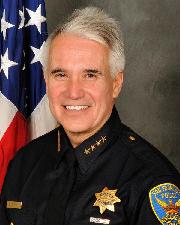
The incident prompted Sup. Bevan Dufty to introduce a resolution to encourage San Francisco Police Chief George Gascon to consider imposing an increase in penalties for an assault on a Patrol Special Police Officer. This past Tuesday, at the Board of Supervisors meeting, that resolution was approved.

Since Warner was assaulted, other incidents have occurred in which Patrol Special Officers were placed in harm’s way, according to a press release sent out yesterday by the organization.

San Francisco’s Patrol Special Police, roughly 40 strong, is a private force dating back to the days of the Gold Rush. In a rare arrangement, they’re authorized under the City Charter to patrol different neighborhoods, hired by private clients such as merchant associations, and they adhere to regulations set by the Police Commission. While they aren’t sworn officers, they undergo a training process similar to that of SFPD officers and they make arrests. Warner describes the patrol specials’ model as a form of “community policing” which she says emphasizes crime prevention.

When asked about Dufty’s resolution in an interview with the Guardian last week, Gascon was somewhat resistant to the idea. He said he had a problem with private policing in general. “This is more of a private police model,” he said. “Their uniforms are very similar to the San Francisco Police Department. So, quite frankly to the majority of the public, it is very hard to distinguish between one and the other.”

“I understand where Supervisor Dufty’s coming from,” Gascon added. “These are people that are certainly out there providing public safety services and they sometimes become the target of people that, for whatever reason or another, they don’t want to be subject to their authority. The problem that I have again is that it continues to blur the line of a very unusual process. … There’s no question that in some places there are people who certainly are in favor of having patrol specials. This is not to take away from the quality of service that patrol special officers provide because I think some of them are very professional and they are very courteous and very effective in what they do. ”

While it’s a felony to assault a San Francisco Police Officer, there are no special charges in the penal code for an individual who commits an assault on a patrol special officer. Dufty’s resolution asks the Police Commission and Gascon to provide Patrol Specials with “the same protections that San Francisco Police Department officers and a number of others who are protected under state code from being assaulted in the line of duty.”

Newsom’s plan means service cuts

15

The San Francisco Controller’s Office says that Mayor Newsom’s plan to lay off 15,000 city employees then hire most of them back at a reduced workweek will save $110 million. The Examiner quotes the mayor:


“The 37½-hour idea was a way of equalizing,” Newsom said in an interview Tuesday. “I would have to go to every single labor union, open contracts that are closed and engage with those open contracts in collective bargaining for each and every local.
“Every labor union is in this together. We aren’t going to pick and choose. That being said, they are coming back Thursday with a set of alternatives, and I will keep an open mind.”


Actually, it’s not exactly equalizing — no police officers or firefighters will get what amounts to 6.25 percent pay cuts. But here’s the more important issue:


The mayor — and, to a great extent, the newspapers — present this as a simple way of saving money; sure, the workers take a little hit in their pay, but jobs are preserved. What nobody’s saying is that this will amount to more very significant service cuts.


Take 15,000 employees and cut 2.5 hours from each of their workweeks. That’s 37,500 hours of work a week, or the equivalent of 937 full-time jobs. So one of two things are going to happen: Either city employees are going to be working 40 hours for 37.5 hours pay — that is, taking a direct pay cut, which is what I think Newsom really wants — or the city’s going to lose the equivalent of 937 workers.


If you assume that it’s unfair to ask people to work 40 hours for 37.5 hours pay (and if you assume, as I do, that the unions won’t stand for that), we’re going to be talking about service cuts — work that doesn’t get done. And where will those cuts happen? Guess what — it’s the usual places.


Public health takes the biggest hit, with $35.5 million in “savings” (actually, cuts) over the next 14 months. Human Services gets $10 million cut, and Muni about $8 million.


That means longer lines and sicker people at SF General, and more broken buses with no mechanics to fix them, which means slower Muni service … you get the picture.


I’m not saying that we don’t need cuts, and you could argue that it’s more fair to cut everyone’s pay a little than to eliminate 937 jobs altogether. But let’s be honest about this — it’s not just “salary savings.” It’s service cuts. On top of last year’s service cuts, on top of the previous year’s service cuts … and it’s being done without any real overall plan for what services we need to provide and what takes priority.


And of course, it’s being done with no discussion at all of raising new revenue.  

Film listings

0

Film listings are edited by Cheryl Eddy. Reviewers are Kimberly Chun, Michelle Devereaux, Max Goldberg, Dennis Harvey, Johnny Ray Huston, Erik Morse, Louis Peitzman, Lynn Rapoport, Ben Richardson, and Matt Sussman. The film intern is Peter Galvin. For rep house showtimes, see Rep Clock. For first-run showtimes, see Movie Guide.

SF INTERNATIONAL ASIAN AMERICAN FILM FESTIVAL

The 28th San Francisco International Asian American Film Festival runs March 11-21 at the Castro, 429 Castro, SF; Sundance Kabuki, 1881 Post, SF; Viz Cinema, 1746 Post, SF; Clay, 2261 Fillmore, SF; Pacific Film Archive, 2575 Bancroft, Berk; and Camera 12 Cinemas, 201 South Second St, San Jose. Tickets (most shows $12) available at www.asianamericanmedia.org. All times pm.

THURS/11

Castro Today’s Special 7.

FRI/12

Clay In the Manner of Cha Jung Hee 6:45. Raspberry Magic 9. The Forbidden Door 11:59.

Pacific Film Archive Independencia 7. The Message 8:40.

Sundance Kabuki Agrarian Utopia 3:45. Talentime 4:30. City of Life and Death 6:30. Fog 7. "Scene/Unseen" (shorts program) 9:15. "Sweet Dreams and Beautiful Nightmares" (shorts program) 9:30.

SAT/13

Clay China Sings! 1:30. "An Afternoon with Aasif Madvi" (on-stage interview) 4. Dear Lemon Lima 6:15. Prince of Tears 8:45.

Pacific Film Archive In the Matter of Cha Jung Hee 3:30. Like You Know it All 5:30. City of Life and Death 8.

Sundance Kabuki "3rd I South Asian International Shorts" (shorts program) noon. State of Aloha 1. A Village Called Versailles 2:15. Insiang 3:15. Ninoy Aquino and the Rise of People Power 4:30. God is D-ad 6. A Moment in Time 7. Agrarian Utopia 8:30. "Wandering, Wondering" (shorts program) 9:15.

Viz "Up Close and Personal with the Asian American Film Industry" (workshop) 1. Aoki 3:30. "Classic Filipino American Shorts" (shorts program) 6. Make Yourself at Home 8:30.

SUN/14

Castro The Housemaid noon. The Message 2:45. The People I’ve Slept With 6. Love Aaj Kal 9.

Clay What We Talk About When We… 1. Lt. Watanda and conversation with director Freida Lee Mock 3:15. Cooking with Stella 6. Like You Know It All 8:45.

Pacific Film Archive Lessons of the Blood 3. Dear Doctor 5:30. Prince of Darkness 8.

Sundance Kabuki "Blueprints for a Generation" (shorts program) 1. Manilatown is in the Heart 2. Wo Ai Ni Mommy 3:30. Independencia 4:30. Take Me Anywhere 6. Tehran Without Permission 6:30. Mundane History 8:15. Talentime 8:30.

Viz Hold the Sun 1:15. The Mountain Thief 6. Seven Intellectuals in a Bamboo Forest: Part 4 8:15.

MON/15

Sundance Kabuki Take Me Anywhere 4. Raspberry Magic 4:30. "Memory Vessels and Phantom Traces" (shorts program) 6:45. Manilatown is in the Heart 7. About Elly 9. Dear Lemon Lima 9:15.

Viz Fog 4:30. Hold the Sun 6:45. Seven Intellectuals in a Bamboo Forest: Part 5 9.

TUES/16

Pacific Film Archive Tehran Without Permission 7. The People I’ve Slept With 8:45.

Sundance Kabuki "Scene/Unseen" (shorts program) 4:15. A Moment in Time 5. State of Aloha 6:45. Lessons of the Blood 7. The Mountain Theif 9. Hana, Dul, Sed… 9:30.

Viz Make Yourself at Home 4:15. The Bonesetter’s Daughter (work-in-progress) 6:40. A Village Called Versailles 9.

OPENING

Ajami You may recognize the title of Yaron Shoni and Scandar Copti’s debut collaboration as one of five films nominated for a 2010 Academy Award in the Foreign Category. Though it didn’t bring home the grand prize, Ajami remains a complex and affecting story about desperation and its consequences in a religiously-mixed town in Israel. As we follow the lives of four of Ajami’s residents the narrative shifts perspective almost maddeningly, switching characters seemingly at the height of each story’s action. But once all of the stories fully intersect, the final product has the distinction of feeling both meticulously calculated and completely natural. I was most impressed to learn that Shani and Copti prepared their actors with improvised role-playing rather than scripts. By withholding what was going to happen in a scene before shooting, we are treated to looks of surprise and emotion on actor’s faces that never feel unnatural. Attaining such a level of realism may be Ajami‘s crowning achievement; it can’t have been easy to make a foreign world feel so familiar. (2:00) Embarcadero. (Galvin)

*The Art of the Steal How do you put a price on something that’s literally priceless? The Art of the Steal takes an absorbing look at the Barnes Collection, a privately-amassed array of Post-Impressionist paintings (including 181 Renoirs) worth billions — and the many people and corporate interests who schemed to control it. Founder Albert C. Barnes was an singular character who took pride in his outsider status; he housed his art in a specially-constructed gallery far from downtown Philadelphia’s museum scene, and he emphasized education and art appreciation first and foremost. But he had no heirs, and after his death in 1951, opportunists began circling his massive collection; the slippery political and legal dealings that have unfolded since then are nearly as jaw-dropping as Barnes’ prize paintings. Philly documentarian Don Argott has a doozy of a subject here, and his skillful, even suspenseful film does it justice. (1:41) Embarcadero, Shattuck, Smith Rafael. (Eddy)

*The Good Guy Romantic comedies often have very simple premises predicated on familiarity — you know why you go to see them, and they make sure to deliver. Much of the early goings of The Good Guy feel clichéd, but as it turns out, that’s kind of the point. Tommy (Scott Porter), a charming Wall Street investment banker, has been dating Beth (Alexis Bledel), and they’re taking things slow and sweet. When he loses one of his top sellers to another firm, Tommy decides to be a nice guy and give bumbling temp Daniel (Bryan Greenberg) a chance to shine; he also takes the time to teach him how to dress and pick up girls. But when Daniel decides to use his newfound skills on Beth &ldots; well, you see the triangle coming a mile away. How it all unfolds, however, proves far less obvious. In his writing-directing debut, Julio Depietro delivers what is very much a writer’s film, an experiment in form and expectation. Attempts to capture the culture of a Wall Street investment firm fare less well, but as a skewing of movie archetypes and presumptions, The Good Guy is surprisingly satisfying. It won’t change the rom-com game, but it’s something a little different in a genre that could use a kick in the pants. (1:31) Opera Plaza. (Galvin)

Green Zone Nope, it’s not a new Jason Bourne movie, but it is an action thriller directed by Paul Greengrass and starring Matt Damon. (1:55) California, Piedmont.

Our Family Wedding This multi-culti comedy boasts an all-star cast, including Forest Whitaker, America Ferrara, Regina King, Taye Diggs, and Carlos Mencia. (1:41) tk.

Remember Me Robert Pattinson attempts to prove his range beyond suckin’ blood. (2:08) tk.

She’s Out of My League Tale as old as time: beauty and the geek. (1:44) Oaks.

*Sweetgrass See "Wild Yonder." (1:41) Lumiere, Shattuck.

ONGOING

*"Academy Award-Nominated Short Films: Animated" Just because it’s animation doesn’t mean it’s just for kids. Like the live-action Oscar-nominated shorts, this year’s animated selections have got range, from the traditionally child-friendly to downright vulgar. Skewing heavily towards CG fare, the shorts vary from a Looney Tunes-style chase for an elderly woman’s soul (The Lady and the Reaper) to the Wallace and Gromit BBC special, A Matter of Loaf and Death. Most entertaining by far is Logorama, an action-packed tale set in a world populated by familiar trademarked logos. Any film that casts the Michelin man as a garbage-mouthed cop on the case of a renegade Ronald McDonald deserves to win all the awards in the universe. (1:35) Shattuck. (Galvin)

*"Academy Award-Nominated Short Films: Live Action" Aren’t you tired of wondering what all the fuss is about when the Academy awards their Oscar for Best Short? In an effort to give audiences a chance to play along, Shorts International is screening these less-seen works together. Though one or two of the five nominated films threaten to adhere to the Academy’s penchant for either heartbreaking or heartwarming, the majority are surprisingly oddball picks. Perhaps most odd of all is Denmark/U.S. submission The New Tenants. Feeling a tad forced but no less funny for it, Tenants draws on celebrities like Vincent D’Onofrio and comedian Kevin Corrigan to bring life to this surreal adaptation by Anders Thomas Jensen (2006’s After the Wedding). My pick would be Sweden’s gloriously goofy Instead of Abracadabra, which stars a stay-at-home slacker as he puts on a magic show for his father’s birthday. Obviously, some selections are going to be better than others, but hey, they’re shorts. If you don’t like one, just wait 10 minutes and you’ll find yourself somewhere completely different. (1:35) Shattuck. (Galvin)

Alice in Wonderland Tim Burton’s take on the classic children’s tale met my mediocre expectations exactly, given its months of pre-release hype (in the film world, fashion magazines, and even Sephora, for the love of brightly-colored eyeshadows). Most folks over a certain age will already know the story, and much of the dialogue, before the lights go down and the 3-D glasses go on; it’s up to Burton and his all-star cast (including numerous big-name actors providing voices for animated characters) to make the tale seem newly enthralling. The visuals are nearly as striking as the CG, with Helena Bonham Carter’s big-headed Red Queen a particularly marvelous human-computer creation. But Wonderland suffers from the style-over-substance dilemma that’s plagued Burton before; all that spooky-pretty whimsy can’t disguise the film’s fairly tepid script. Teenage Alice (Mia Wasikowska) displaying girl-power tendencies is a nice, if not surprising, touch, but Johnny Depp’s grating take on the Mad Hatter will please only those who were able to stomach his interpretation of Willy Wonka. (1:48) Castro, Empire, 1000 Van Ness, SF Center, Sundance Kabuki. (Eddy)

Avatar James Cameron’s Avatar takes place on planet Pandora, where human capitalists are prospecting for precious unobtainium, hampered only by the toxic atmosphere and a profusion of unfriendly wildlife, including the Na’vi, a nine-foot tall race of poorly disguised cliches. When Jake Sully (Sam Worthington), a paraplegic ex-marine, arrives on the planet, he is recruited into the "Avatar" program, which enables him to cybernetically link with a part-human, part-Na’vi body and go traipsing through Pandora’s psychedelic underbrush. Initially designed for botanical research, these avatars become the only means of diplomatic contact with the bright-blue natives, who live smack on top of all the bling. The special effects are revolutionary, but the story that ensues blends hollow "noble savage" dreck with events borrowed from Dances With Wolves (1990) and FernGully: The Last Rainforest (1992). When Sully falls in love with a Na’vi princess and undergoes a spirit journey so he can be inducted into the tribe and fight the evil miners, all I could think of was Kevin Bacon getting his belly sliced in The Air Up There (1994). (2:42) 1000 Van Ness, Sundance Kabuki. (Richardson)

The Blind Side When the New York Times Magazine published Michael Lewis’ article "The Ballad of Big Mike" — which he expanded into the 2006 book The Blind Side: Evolution of a Game — nobody could have predicated the cultural windfall it would spawn. Lewis told the incredible story of Michael Oher — a 6’4, 350-pound 16-year-old, who grew up functionally parentless, splitting time between friends’ couches and the streets of one of Memphis’ poorest neighborhoods. As a sophomore with a 0.4 GPA, Oher serendipitously hitched a ride with a friend’s father to a ritzy private school across town and embarked on an unbelievable journey that led him into a upper-class, white family; the Dean’s List at Ole Miss; and, finally, the NFL. The film itself effectively focuses on Oher’s indomitable spirit and big heart, and the fearless devotion of Leigh Anne Tuohy, the matriarch of the family who adopted him (masterfully played by Sandra Bullock). While the movie will delight and touch moviegoers, its greatest success is that it will likely spur its viewers on to read Lewis’ brilliant book. (2:06) Oaks. (Daniel Alvarez)

Brooklyn’s Finest "Really? I mean, really?" asked the moviegoer beside me as the final freeze-frame of Brooklyn’s Finest slapped our eyeballs. Yes, that’s the sound of letdown, despite the fact that Brooklyn’s Finest initially resembled a promisingly gritty juggling act in the mode of The Wire and Cop Land (1997), Taxi Driver (1976) and Training Day (2001). Bitter irony flows from the title — and from the lives, loves, bad habits, pressure-cooker stress, and unavoidable moral dilemmas of three would-be everyday cops, all occupying several different rungs on a food chain where right and wrong have an unpleasant way of switching sides. Eddie (Richard Gere) is the veteran officer just biding his time till he gets his pension, all while comforting himself with the meager sensuous attentions of hooker Chantel (Shannon Kane). Sal (Ethan Hawke) is the bad detective, stealing from the dealers to fund a dream home for his growing family with Angela (Lili Taylor). Tango (Don Cheadle) is the undercover detective who has cultivated friendships with dealers like Caz (Wesley Snipes) and sacrificed his marriage for a long-promised promotion from his lieutenant (Will Patton) and his superior (Ellen Barkin, in likely the most misogynist portrayal of a lady with a badge to date). You spend most of Brooklyn’s Finest waiting for these cops to collide in the most unfortunate, messiest way possible, but instead the denouement leaves will leave one wondering about unresolved threads and feeling vaguely unsatisfied. In any case, director Antoine Fuqua and company seem to pride themselves on their tough-minded if at times cartoonish take on law enforcement, with Hawke in particular turning in a memorably OTT and anguished performance. (2:13) 1000 Van Ness, Shattuck. (Chun)

Cop Out I think there was a plot to Cop Out — something involving a stolen baseball card and a drug ring and Jimmy (Bruce Willis) trying to pay for his daughter’s wedding. Frankly, it’s irrelevant. Kevin Smith’s take on the buddy cop genre, which partners Willis with Tracy Morgan, is more a string of dick jokes and toilet humor than anything else. Not that there’s anything wrong with that. Sometimes it’s nice to sit back and turn off your brain, as Morgan’s Paul describes his bowel movements or when hapless thief Dave (Seann William Scott) begins imitating everything our heroes say. At the same time, Cop Out is easily forgettable: Smith directed the film, but writing duties went to the Cullen Brothers of TV’s Las Vegas. All judgments about that series aside, the script lacks Smith’s trademark blend of heart and vulgarity. Even Mallrats (1995) had a beginning, a middle, and a satisfying end. Without Smith as auteur, Cop Out is worth a few laughs but destined for the bargain bin. (1:50) 1000 Van Ness. (Peitzman)

The Crazies Disease and anti-government paranoia dovetail in this competent yet overwhelmingly non-essential remake of one of George A. Romero’s second-tier spook shows. In a small Iowa hamlet overseen by a benevolent sheriff (Timothy Olyphant) and his pregnant wife (Radha Mitchell), who’s also the town doctor, a few odd incidents snowball into all-out chaos when a mysterious, unmarked plane crashes into the local water supply. Before long, the few residents who aren’t acting like homicidal maniacs are rounded up by an uber-aggressive military invasion. Though our heroes convey frantic panic as they try to figure out what the hell is going on, The Crazies never achieves full terror mode. It’s certainly watchable, and even enjoyable at times. But memorable? Not in the slightest. (1:41) 1000 Van Ness. (Eddy)

Crazy Heart "Oh, I love Jeff Bridges!" is the usual response when his name comes up every few years for Best Actor consideration, usually via some underdog movie no one saw, and the realization occurs that he’s never won an Oscar. The oversight is painful because it could be argued that no leading American actor has been more versatile, consistently good, and true to that elusive concept "artistic integrity" than Bridges over the last 40 years. It’s rumored Crazy Heart was slotted for cable or DVD premiere, then thrust into late-year theater release in hopes of attracting Best Actor momentum within a crowded field. Lucky for us, this performance shouldn’t be overlooked. Bridges plays "Bad" Blake, a veteran country star reduced to playing bars with local pickup bands. His slide from grace hasn’t been helped by lingering tastes for smoke and drink, let alone five defunct marriages. He meets Jean (Maggie Gyllenhaal), freelance journalist, fan, and single mother. They spark; though burnt by prior relationships, she’s reluctant to take seriously a famous drunk twice her age. Can Bad handle even this much responsibility? Meanwhile, he gets his "comeback" break in the semi-humiliating form of opening for Tommy Sweet (Colin Farrell) — a contemporary country superstar who was once Bad’s backup boy. Tommy offers a belated shot at commercial redemption; Jean offers redemption of the strictly personal kind. There’s nothing too surprising about the ways in which Crazy Heart both follows and finesses formula. You’ve seen this preordained road from wreckage to redemption before. But actor turned first-time director Scott Cooper’s screenplay honors the flies in the windshield inherited from Thomas Cobb’s novel — as does Bridges, needless to say. (1:51) Embarcadero, Empire, Piedmont, 1000 Van Ness, Shattuck, Sundance Kabuki. (Harvey)

*An Education The pursuit of knowledge — both carnal and cultural — are at the tender core of this end-of-innocence valentine by Danish filmmaker Lone Scherfig (who first made her well-tempered voice heard with her 2000 Dogme entry, Italian for Beginners), based on journalist Lynn Barber’s memoir. Screenwriter Nick Hornby breaks further with his Peter Pan protagonists with this adaptation: no man-boy mopers or misfits here. Rather, 16-year-old schoolgirl Jenny (Carey Mulligan) is a good girl and ace student. It’s 1961, and England is only starting to stir from its somber, all-too-sober post-war slumber. The carefully cloistered Jenny is on track for Oxford, though swinging London and its high-style freedoms beckon just around the corner. Ushering in those freedoms — a new, more class-free world disorder — is the charming David (Peter Sarsgaard), stopping to give Jenny and her cello a ride in the rain and soon proffering concerts and late-night suppers in the city. He’s a sweet-faced, feline outsider: cultured, Jewish, and given to playing fast and loose in the margins of society. David can see Jenny for the gem she is and appreciate her innocence with the knowing pleasure of a decadent playing all the angles. The stakes are believably high, thanks to An Education‘s careful attention to time and place and its gently glamored performances. Scherfig revels in the smart, easy-on-eye curb appeal of David and his friends while giving a nod to the college-educated empowerment Jenny risks by skipping class to jet to Paris. And Mulligan lends it all credence by letting all those seduced, abandoned, conflicted, rebellious feelings flicker unbridled across her face. (1:35) SF Center, Shattuck, Smith Rafael. (Chun)

Formosa Betrayed The turbulent modern history of Taiwan is certainly deserving of increased international attention, but writer-producer Will Tao’s strategy of structuring Formosa Betrayed as a political thriller is too often at odds with imparting facts and information. Set in the early 80s, the film thrusts viewers into an unraveling government conspiracy that has FBI agent Jake Kelly (James Van Der Beek) trailing the suspected murderers of a Chicago professor to Taipei. Initially, selling Dawson’s Creek alum Van Der Beek as an FBI agent seems a strange choice, but undoubtedly his name will fill seats, and Formosa Betrayed is shooting for maximum awareness. There are some scenes of real tension, but just when you are beginning to get wrapped up in the inherent drama of conspiracy and murder, the suspense is interrupted by a long-winded bout of soapboxing. Formosa Betrayed might enlighten some audiences about Taiwan’s controversial history, but it too often does so at the expense of its own watchability. You start to wonder why Tao didn’t just make a documentary. (1:43) SF Center. (Galvin)

*The Ghost Writer Roman Polanski’s never-ending legal woes have inspired endless debates on the interwebs and elsewhere; they also can’t help but add subtext to the 76-year-old’s new film, which is chock full o’ anti-American vibes anyway. It’s also a pretty nifty political thriller about a disgraced former British Prime Minister (Pierce Brosnan) who’s hanging out in his Martha’s Vineyard mansion with his whip-smart, bitter wife (Olivia Williams) and Joan Holloway-as-ice-queen assistant (Kim Cattrall), plus an eager young biographer (Ewan McGregor) recently hired to ghost-write his memoirs. But as the writer quickly discovers, the politician’s past contains the kinds of secrets that cause strange cars with tinted windows to appear in one’s rearview mirror when driving along deserted country roads. Polanski’s long been an expert when it comes to escalating tension onscreen; he’s also so good at adding offbeat moments that only seem tossed-off (as when the PM’s groundskeeper attempts to rake leaves amid relentless sea breezes) and making the utmost of his top-notch actors (Tom Wilkinson and Eli Wallach have small, memorable roles). Though I found The Ghost Writer‘s ZOMG! third-act revelation to be a bit corny, I still didn’t think it detracted from the finely crafted film that led up to it. (1:49) California, Embarcadero, Piedmont, Sundance Kabuki. (Eddy)

The Hurt Locker When the leader of a close-knit U.S. Army Explosive Ordnance Disposal squad is killed in action, his subordinates have barely recovered from the shock when they’re introduced to his replacement. In contrast to his predecessor, Sgt. James (Jeremy Renner) is no standard-procedure-following team player, but a cocky adrenaline junkie who puts himself and others at risk making gonzo gut-instinct decisions in the face of live bombs and insurgent gunfire. This is particularly galling to next-in-command Sanborn (Anthony Mackie). An apolitical war-in-Iraq movie that’s won considerable praise for accuracy so far from vets (scenarist Mark Boal was "embedded" with an EOD unit there for several 2004 weeks), Kathryn Bigelow’s film is arguably you-are-there purist to a fault. While we eventually get to know in the principals, The Hurt Locker is so dominated by its seven lengthy squad-mission setpieces that there’s almost no time or attention left for building character development or a narrative arc. The result is often viscerally intense, yet less impactful than it would have been if we were more emotionally invested. Assured as her technique remains, don’t expect familiar stylistic dazzle from action cult figure Bigelow (1987’s Near Dark, 1989’s Blue Steel, 1991’s Point Break) — this vidcam-era war movie very much hews to the favored current genre approach of pseudo-documentary grainy handheld shaky-cam imagery. (2:11) Opera Plaza, Shattuck. (Harvey)

*The Last Station Most of the buzz around The Last Station has focused on Helen Mirren, who takes the lead as the Countess Sofya, wife of Leo Tolstoy (Christopher Plummer). Mirren is indeed impressive — when is she not? — but there’s more to the film than Sofya’s Oscar-worthy outbursts. The Last Station follows Valentin Bulgakov (James McAvoy), hired as Tolstoy’s personal secretary at the end of the writer’s life. Valentin struggles to reconcile his faith in the anarchist Christian Tolstoyan movement with his sympathy for Sofya and his budding feelings for fellow Tolstoyan Masha (Kerry Condon). For the first hour, The Last Station is charming and very funny. Once Tolstoy and Sofya’s relationship reaches its most volatile, however, the tone shifts toward the serious — a trend that continues as Tolstoy falls ill. After all the lighthearted levity, it’s a bit jarring, but the solid script and accomplished cast pull The Last Station together. Paul Giamatti is especially good as Vladimir Chertkov, who battles against Sofya for control of Tolstoy’s will. You’ll never feel guiltier for putting off War and Peace. (1:52) Albany, Empire, Sundance Kabuki. (Peitzman)

*Leonard Cohen: Live at the Isle of Wight 1970 The dawn of the Me Decade saw the largest-ever music festival to that date —albeit one that was such a logistical, fiscal and hygenic disaster that it basically killed the development of similar events for years. This was the height of "music should be free" sentiments in the counterculture, with the result that many among the estimated six to eight hundred thousand attendees who overwhelmed this small U.K. island showed up without tickets, refused to pay, and protested in ways that included tearing down barrier walls and setting fires. It was a bummer, man. But after five days of starry acts often jeered by an antsy crowd — including everyone from Joni, Hendrix, Dylan, Sly Stone, the Who and the Doors to such odd bedfellows as Miles Davis, Tiny Tim, Voices of East Harlem, Supertramp, and Gilberto Gil — Canadian troubador Cohen appeared at 4 a.m. on a Monday to offer balm. Like director Murray Lerner’s 1995 Message to Love, about the festival as a whole, this footage has been shelved for decades, but it bounces right back from the dead — albeit soothingly. Cohen seems blissed out, pupils like black marbles, his between-song musings are as poetical as those fascinating lyrics, and his voice is suppler than the rasp it would soon become. Kris Kristofferson, Judy Collins, Joan Baez, and bandmate Bob Johnson offer reflections 40 years later. But the main attraction is obviously Cohen, who is magnetic even if an hour of (almost) nothing but ballads reveals how stylistically monotone his songwriting could be. (1:04) Roxie. (Harvey)

*The Most Dangerous Man in America: Daniel Ellsberg and the Pentagon Papers For many, Daniel Ellsberg is a hero — a savior of American First Amendment rights and one of the most outspoken opponents of the Vietnam war. But as this documentary (recently nominated for an Academy Award) shows, it’s never an an easy decision to take on the U.S. government. Ellsberg himself narrates the film and details his sleepless nights leading up to the leak of the Pentagon Papers — the top secret government study on the Vietnam war — to the public. Though there are few new developments in understanding the particulars of the war or the impact the release of the Papers had on ending the conflict, the film allows audiences to experience the famous case from Ellsberg’s point of view, adding a fresh and poignantly human element to the events; it’s a political documentary that plays more like a character drama. Whether you were there when it happened or new to the story, there is something to be appreciated from this tale of a man who fell out of love with his country and decided to do something about it. (1:34) Lumiere, Shattuck, Smith Rafael. (Galvin)

*North Face You’ll never think of outerwear the same way again — and in fact you might be reaching for your fleece and shivering through the more harrowing climbing scenes of this riveting historical adventure based on a true tale. Even those who consider themselves less than avid fans of outdoor survival drama will find their eyes frozen, if you will, on the screen when it comes to this retelling/re-envisioning of this story, legendary among mountaineers, of climbers, urged on by Nazi propaganda, to tackle the last "Alpine problem." At issue: the unclimbed north face of Switzerland’s Eiger, a highly dangerous and unpredictable zone aptly nicknamed "Murder Wall." Two working-class friends, Toni Kurz (Benno Fürmann of 2008’s Jerichow) and Andi Hinterstoisser (Florian Lukas) — here portrayed as climbing fiends driven to reach summits rather than fight for the Nazis — take the challenge. There to document their achievement, or certain death, is childhood friend and Kurz’s onetime sweetheart Luise (Johanna Wokalek, memorable in 2008’s The Baader Meinhof Complex), eager to make her name as a photojournalist while fending off the advances of an editor (Ulrich Tukur) seeking to craft a narrative that positions the contestants as model Aryans. But the climb — and the Eiger, looming like a mythical ogre — is the main attraction here. Filmmaker Philipp Stölzl brings home the sheer heart-pumping exhilaration and terror associated with the sport — and this specific, legendarily tragic climb — by shooting in the mountains with his actors and crew, and the result goes a way in redeeming an adventure long-tainted by its fascist associations. (2:01) Smith Rafael. (Chun)

*Percy Jackson and the Olympians: The Lightning Thief It would be easy to dismiss Percy Jackson and the Olympians: The Lightning Thief as an unabashed Harry Potter knock-off. Trio of kids with magic powers goes on a quest to save the world in a Chris Columbus adaptation of a popular young adult series — sound familiar? But The Lightning Thief is sharp, witty, and a far cry from Columbus’ joyless adaptation of Harry Potter and the Sorcerer’s Stone (2001). Logan Lerman stars as Percy Jackson, the illegitimate son of Poseidon and Catherine Keener. Once he learns his true identity at Camp Half-Blood, he sets off on a quest with his protector, a satyr named Grover, and potential love interest Annabeth, daughter of Athena. Along the way, they bump into gods and monsters from Greek mythology — with a twist. Think Percy using his iPhone to fight Medusa (Uma Thurman), or a land of the Lotus-Eaters disguised as a Lady Gaga-blasting casino. A worthy successor to Harry Potter? Too soon to say, but The Lightning Thief is at least a well-made diversion. (1:59) 1000 Van Ness. (Peitzman)

*Precious: Based on the Novel Push By Sapphire This gut-wrenching, little-engine-that-could of a film shows the struggles of Precious, an overweight, illiterate 16-year-old girl from Harlem. Newcomer Gabourey Sidibe is so believably vigilant that her performance alone could bring together the art-house viewers as well as take the Oscars by storm. But people need to actually go and experience this film. While Precious did win Sundance’s Grand Jury and Audience Award awards this year, there is a sad possibility that filmgoers will follow the current trend of "discussing" films that they’ve actually never seen. The daring casting choices of comedian Mo’Nique (as Precious’ all-too-realistically abusive mother) and Mariah Carey (brilliantly understated as an undaunted and dedicated social counselor) are attempts to attract a wider audience, but cynics can hurdle just about anything these days. What’s most significant about this Dancer in the Dark-esque chronicle is how Damien Paul’s screenplay and director Lee Daniels have taken their time to confront the most difficult moments in Precious’ story –- and if that sounds heavy-handed, so be it. Stop blahging for a moment and let this movie move you. (1:49) Roxie, Shattuck. (Jesse Hawthorne Ficks)

*Prodigal Sons Some of the best documentaries in recent years have been hijacked by their subject — or even by another subject the filmmaker wasn’t planning on. Prodigal Sons was supposed to be Kimberly Reed’s story about a high-school quarterback, basketball captain, class president, and valedictorian born to a family of Montana farmers, returning for a reunion 20 years later — albeit as a fully transitioned male-to-female transgender person attending with her female lover. That would have made for an interesting movie. What makes Sons a fascinating one is that Reed finds the camera focus stolen almost right away by a crisis in progress. Its name is Marc, adopted "problem child" of the McKerrow family (Kimberly changed her surname post-op). It’s not so much that Marc grabs the spotlight out of a jealous need for attention, though that may be a factor. It’s that he’s still trapped in a sibling relationship that for her ceased to exist — at least in its original form — decades ago. Running a gamut from harrowing to miraculous, the remarkable Prodigal Sons grows stranger than fiction when abandoned-at-birth Marc discovers something jaw-dropping about his ancestry. Suffice it to say, this results in a trip to Croatia and biological link to some of Hollywood’s starriest legends. If Kimberly’s story is about repression forcing a mentally healthy transformation, Marc wrests us away from that inspirational self-portrait. He renders Sons a challenging, head-on glimpse of mental illness with no easy answers in sight. (1:26) Lumiere, Shattuck. (Harvey)

*A Prophet Filmmaker Jacques Audiard has described his new film, A Prophet, as "the anti-Scarface." Yet much like Scarface (1983), A Prophet bottles the heady euphoria that chases the empowerment of the powerless and the rise of the long-shot loner on the margins. In its almost-Dickensian attention to detail, devotion to its own narrative complexity, and passion for cinematic poetry, A Prophet rises above the ordinary and, through the prism of genre, finds its own power. The supremely opportunistic, pragmatically Machiavellian intellectual and spiritual education of a felon is the chief concern of here. Played by Tahar Rahim with guileless, open-faced charisma, Malik is half-Arab and half-Corsican — and distrusted or despised by both camps in the pen. When he lands in jail for his six-year sentence, he’s 19, illiterate, friendless, and vulnerable. His deal with the devil — and means of survival — arrives with Reyeb (Hichem Yacoubi), temporarily locked up before his testifies against the mob. Corsican boss Cesar Luciani (Niels Arestrup) wants him dead, and Malik is tagged to penetrate Reyeb’s cell with a blade hidden in mouth. After Malik’s gory rebirth, it turns out that the teenager’s a seer in more ways than one. From his low-dog position, he can eyeball the connections linking the drugs entering the prison to those circulating outside, as well as the machinations intertwining the Arab and Corsican syndicates. It’s no shock that when Cesar finds his power eroding and arranges prison leaves for his multilingual crossover star that Malik serves not only his Corsican master, but also his own interests, and begins to build a drug empire rivaling his teacher’s. Throughout his pupil’s progress, Audiard demonstrates a way with Henri Cartier-Bresson’s decisive moment, and when Malik finally breaks with his Falstaffian patriarch, it makes your heart skip a beat in a move akin to the title of the director’s last film. This Eurozone/Obama-age prophet is all about the profit — but he’s imbued with grace, even while gaming for ill-gotten gain. (2:29) Embarcadero, Shattuck, Smith Rafael. (Chun)

Shutter Island Director Martin Scorsese and muse du jour Leonardo DiCaprio draw from oft-filmed novelist Dennis Lehane (2003’s Mystic River, 2007’s Gone Baby Gone) for this B-movie thriller that, sadly, offers few thrills. DiCaprio’s a 1950s U.S. marshal summoned to a misty island that houses a hospital for the criminally insane, overseen by a doctor (Ben Kingsley) who believes in humane, if experimental, therapy techniques. From the get-go we suspect something’s not right with the G-man’s own mind; as he investigates the case of a missing patient, he experiences frequent flashbacks to his World War II service (during which he helped liberate a concentration camp), and has recurring visions of his spooky dead wife (Michelle Williams). Whether or not you fall for Shutter Island‘s twisty game depends on the gullibility of your own mind. Despite high-quality performances and an effective, if overwrought, tone of certain doom, Shutter Island stumbles into a third act that exposes its inherently flawed and frustrating storytelling structure. If only David Lynch had directed Shutter Island — it could’ve been a classic of mindfuckery run amok. Instead, Scorsese’s psychological drama is sapped of any mystery whatsoever by its stubbornly literal conclusion. (2:18) California, 1000 Van Ness, Sundance Kabuki. (Eddy)

A Single Man In this adaptation of Christopher Isherwood’s 1964 novel, Colin Firth plays George, a middle-aged gay expat Brit and college professor in 1962 Los Angeles. Months after the accidental death of Jim (Matthew Goode), his lover for 16 years, George still feels worse than bereft; simply waking each morning is agony. So on this particular day he has decided to end it all, first going through a series of meticulous preparations and discreet leave-takings that include teaching one last class and having supper with the onetime paramour (Julianne Moore) turned best friend who’s still stuck on him. The main problem with fashion designer turned film director Tom Ford’s first feature is that he directs it like a fashion designer, fussing over surface style and irrelevant detail in a story whose tight focus on one hard, real-world thing — grief — cries for simplicity. Not pretentious overpackaging, which encompasses the way his camera slavers over the excessively pretty likes of Nicholas Hoult as a student and Jon Kortajarena as a hustler, as if they were models selling product rather than characters, or even actors. (In fact Kortajarena is a male supermodel; the shocker is that Hoult is not, though Hugh Grant’s erstwhile About a Boy co-star is so preening here you’d never guess.) Eventually Ford stops showing off so much, and A Single Man is effective to the precise degree it lets good work by Goode, Moore and especially the reliably excellent Firth unfold without too much of his terribly artistic interference. (1:39) Bridge, 1000 Van Ness, Shattuck. (Harvey)

Up in the Air After all the soldiers’ stories and the cannibalism canards of late, Up in the Air‘s focus on a corporate ax-man — an everyday everyman sniper in full-throttle downsizing mode — is more than timely; it’s downright eerie. But George Clooney does his best to inject likeable, if not quite soulful, humanity into Ryan Bingham, an all-pro mileage collector who prides himself in laying off employees en masse with as few tears, tantrums, and murder-suicide rages as possible. This terminator’s smooth ride from airport terminal to terminal is interrupted not only by a possible soul mate, fellow smoothie and corporate traveler Alex (Vera Farmiga), but a young tech-savvy upstart, Natalie (Anna Kendrick), who threatens to take the process to new reductionist lows (layoff via Web cam) and downsize Ryan along the way. With Up in the Air, director Jason Reitman, who oversaw Thank You for Smoking (2005) as well as Juno (2007), is threatening to become the bard of office parks, Casual Fridays, khaki-clad happy hours, and fly-over zones. But Up in the Air is no Death of a Salesman, and despite some memorable moments that capture the pain of downsizing and the flatness of real life, instances of snappily screwball dialogue, and some more than solid performances by all (and in particular, Kendrick), he never manages to quite sell us on the existence of Ryan’s soul. (1:49) Oaks, 1000 Van Ness, SF Center, Sundance Kabuki. (Chun)

Valentine’s Day Genre moviemaking loves it a gimmick — and nothing gets more greeting-card gimmicky or sell-by-date corny than the technique of linking holidays and those mandatory date nights out. You’re shocked that nobody thought of this chick flick notion sooner. Valentine’s Day is no My Bloody Valentine (1981, 2009) — it aspires to an older, more yupscale lady’s choice-crowd than the screaming teens that are ordinarily sought out by horror flicks. And its A-list-studded cast — including Oscar winners Julia Roberts, Jamie Foxx, and Kathy Bates as well as seemingly half of That ’70s Show‘s players — is a cut above TV tween starlets’ coming-out slasher slumber parties. It partly succeeds: bringing Valentine’s haters into the game as well as lovers is a smart ploy (although who believes that the chic-cheekbones-and-fulsome-lips crew of Jessica Biel and Jennifer Garner would be dateless on V-Day?), and the first half is obviously structured around the punchlines that punctuate each scene — a winning if contrived device. Juggling multiple storylines with such a whopping cast lends an It’s a Mad Mad Mad Mad World (1963) quality to the Jessica- and Taylor-heavy shenanigans. And some tales get a wee bit more weight than others (the charisma-laden scenes with Bradley Cooper and Roberts cry out for added screentime), creating a strangely lopsided effect that adds unwanted tedium to an affair that should be as here-today-gone-tomorrow as a Whitman’s Sampler. (1:57) 1000 Van Ness, Sundance Kabuki. (Chun)

*The White Ribbon In Michael Haneke’s The White Ribbon, his first German-language film in ten years, violence descends on a small northern German village mired in an atmosphere of feudalism and protestant repression. When, over the course of a year, a spate of unaccountable tragedies strikes almost every prominent figure as well as a powerless family of tenant farmers, the village becomes a crucible for aspersion and unease. Meanwhile, a gang of preternaturally calm village children, led by the eerily intense daughter of the authoritarian pastor, keep appearing coincidentally near the sites of the mysterious crimes, lending this Teutonic morality play an unsettling Children of the Corn undertone. Only the schoolteacher, perhaps by virtue of his outsider status, seems capable of discerning the truth, but his low rank on the social pecking order prevent his suspicions from being made public. A protracted examination on the nature of evil — and the troubling moral absolutism from which it stems. (2:24) Opera Plaza. (Nicole Gluckstern)

The Wolfman Remember 2000’s Hollow Man, an update of 1933’s The Invisible Man so over-the-top that it could only have been brought to you by a post-Starship Troopers (1997) Paul Verhoeven? Fear not, Lon Chaney, Jr. fanclub members — The Wolfman sticks fairly true to its 1941 predecessor, setting its tale of a reluctant lycanthrope in Victorian England, where there are plenty of gypsies, foggy moors, silver bullets, angry villagers, and the like. Benicia Del Toro plays Lawrence Talbot, who’s given an American childhood backstory to explain his out-of-place stateside accent (and a Mediterranean-looking mother to make up for the fact that he’s supposed to be the son of Anthony Hopkins). Soon after returning to his estranged father’s crumbling manor, Lawrence is chomped by a you-know-what. Next full moon, Lawrence realizes what he’s become; murderous rampages and much angst ensue. (He’s kind of like the Incredible Hulk, except much hairier). Director Joe Johnston (a tech whiz who worked on the original Star Wars movies, and helmed 2001’s Jurassic Park III), doesn’t offer much innovation on the werewolf legend (or any scares, for that matter). But the effects, including transformation scenes and claw-tastic gore, are predictably top-notch. (2:05) 1000 Van Ness, SF Center. (Eddy)

The Yellow Handkerchief The Yellow Handkerchief is one of those quiet, character-driven dramas that get mistaken for subtle classics. It’s not bad, just bland. In fact, there’s something pleasant about the way the film’s three unlikely friends forge a lasting bond, but the movie as a whole is never quite that cohesive. William Hurt stars as Brett Hanson, an ex-con with a dark past. (The Yellow Handkerchief tries to make this mysterious by way of vague flashbacks, but the audience gets there faster than the film does.) His inadvertent sidekicks are the troubled Martine (Kristen Stewart) and the awkward Gordy (Eddie Redmayne). The talented cast, rounded out by Maria Bello as the wife Brett left behind, does solid work with the material, but no one really stands out enough to elevate The Yellow Handkerchief to greatness. Redmayne is perhaps the most impressive, ditching his British accent to play a character so quirky, he’s almost Rain Man. But after taking a step back, the big picture is muddled. People are fascinating, but what does it all mean? (1:36) Shattuck, Sundance Kabuki. (Peitzman)

REP PICKS

*"Ben Russell: Let Each One Go Where He May" See "Wild Yonder." San Francisco Cinematheque.<\!s>

Laura Veirs gets excited for summer

0

Classic finger-picking and Laura Veirs’ girly vocals characterize the feather-light songs she’s written about sweet summer days on her seventh album, July Flame. The songs explore desire and happiness in stripped-down folk form, caressing questionable emotions with scents of firewood smoke, extended sunshine, and humid mid-summer evenings – all named after a variety of peach Veirs spied at her local farmer’s market. After 10 years in the music business, touring is nothing new to the Portland artist, but the trip supporting this album is different for two reasons: first, this album is being called her best; and second, Veirs is eight months pregnant. I caught Veirs on the phone on a Sunday afternoon, when she was taking a break at her parents’ place in Colorado, to chat about the album and the experience of touring while expecting.

“I’ve been really tired,” she says, noting she’s made lots of time for rest and good food. “And I can’t lift the amps.” Also, her huge baby bump pushes her guitar out at an awkward angle. Otherwise, though, the mom-to-be says touring prego hasn’t been much trouble. As for the album, she offered a few thoughts, compiled below in list form:

  • Veirs listened to The Beatles, The Shins, and lots of country-blues while writing July Flame.
  • Veirs isn’t a fan of writing expeditions, but she does like to “go out into the world and be awake.”
  • Her favorite place to visit: The Gorge for seagazing and Forest Park for an inner-city woodsy retreat
  • She and the band are currently covering Fleetwood Mac’s “Never Goin’ Back Again.”
  • July Flame is being called her best work and she agrees. “It’s taken me a long time to feel comfortable singing,” she says, “but I think there’s finally an underlying relaxed quality to my voice.”
  • The album often references smoke and flame, and nighttime creatures like bats and moths that fly around in the night pollinating.
  • Although summer is the overarching theme, the album’s mood isn’t all smiles. “It can be melancholy any time of year,” she says. “This album features a variety of emotions, not all just happy.”
  • Veirs wrote songs for July Flame on a variety of instruments, including a baritone guitar, banjo, and piano. She says, “It’s like changing colors or mediums as an artist, or switching to watercolors instead of oil paints.”

Laura Veirs w/Halls of Flames

Wed/10, 9pm

$15

Café du Nord

2174 Market, SF

www.cafedunord.com

“Original Plumbing” reading

0

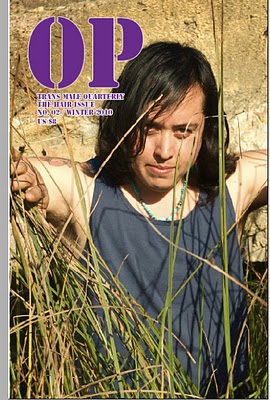
San Francisco’s sexiest new magazine, Original Plumbing, will be hosting a reading at Books Inc. this Thursday for the official launch their much anticipated second issue. Considering the diversity, scope, and increasing visibility of FTM culture, it’s mind-boggling that Original Plumbing — “OP” — is the first magazine of its kind. Now that Original Plumbing is here, let’s ensure that it stays.

Though locally headquartered, OP isn’t limited to the scope of San Francisco. The magazine takes care to address topics, like last year’s Trans March in Paris, that are relevant to the international FTM community. Politically charged as it is, OP is also visually compelling on an aesthetic level that you don’t have to be gay to appreciate. Amos Mac’s explicit photography of FTM bodies are the perfect conceptual counterparts to OP‘s literal content. Throughout all of this, OP is full of fun and lighthearted, campy humor. Even the sex readers are made so aware of refuses to take itself too seriously. Judging from the manscaping-themed second issue (titled “Hair Issue”), beefcake is an integral aspect of OP‘s editorial philosophy.

Incapable as I am of resisting a burly seduction, the following sneak peak already has me impressed.

Among other things, OP‘s second issue will feature an interview with the ever-supportive Margaret Cho (“She’s enTRANsed!” screams the blurb), a spotlight on the 2009 Paris Trans March, and a piece on writer T. Cooper. As accompaniment to divinely hirsute “Ayden” (who combines two of my favorite things in one convenient package: myopia + a hair vest), a new crop of FTM eye candy will be introduced in issue two and I have been promised that they will be present at the event for you to admire.

Dirty Stories with Original Plumbing: A Reading
“Celebrate Issue #2 with Books Inc and the OP guys”
Thurs/11, 7:30pm (ends at 8:30pm)
www.originalplumbing.com

Chelsea Handler bang bangs

0

Witness, if you will, the cast of the Jersey Shore‘s interview with Chelsea Handler. “I was excited to see what your body looked like in person, and I must admit I’m pleased,” Handler greeted Snookie, MTV’s bowling-ball-shaped Guidette. The host immediately progressed to feeling the neo Italian clan’s gel heavy coifs and commenting on Snookie’s famous roundhouse to the face made famous by the show.

It was an inspired conversation. The Jersey Shore cabal is blessed with a singular sense of humor about the deprecating whirlwind of fame that surrounds them these days, and Handler has built a career on being frank with her party girl lifestyle. After all, one of her three books was titled Are you there Vodka? It’s me, Chelsea. As the only female in the late night television game, lady’s got to be tough. And her show Chelsea Lately, a cross between the standard interview format and entertainment news hash-out, has carved a niche for itself based largely on Handler’s biting wit, self awareness and willingness to take it there. It continues to soar in ratings and ad revenue, even from its non traditional nest on the E! network. She’s bringing the noise to Davies Symphony Hall this weekend (Fri/12), so raise your glass to the lady of sass. 

San Francisco Bay Guardian: It’s already been quite the year. Which celebrity news story of 2010 have you had the best time covering on “Chelsea Lately”?

Chelsea Handler: I guess Tiger Woods. That story officially started in 2009, but it’s carried over into this year. He made my job easy for weeks. I didn’t need to think, I just needed to go on line and there would be a new VIP hostess telling yet another humiliating story about him giving her an extra big tip.

SFBG: Your upcoming stand up show sold out real fast in SF- so fast you scheduled a second. The gays just love them some Chelsea, don’t they?

CH: I think they all assume deep down I’m a lesbian. Which I’m not…unless you count college, which I didn’t even go to.


SFBG: Is this what you wanted to be when you grew up?

CH: I just knew I wanted to leave New Jersey. I couldn’t handle my father humiliating me anymore. I figured I’d either do something in the entertainment industry or take over for Julie McCoy on the Love Boat. I just always wanted to sit on the Captain at the Captain’s table. Once that dream died, I went for plan B…not the morning after pill; my actual plan B.


SFBG: I just got done reading “Memoirs of a Beatnik” by Diane di Prima and the author was sharing her sex life in explicit detail even back then in the 1960s. Will the kind of sexually up front, unapologetic humor that you do ever NOT be considered shocking, coming from a woman?

CH: I don’t think so. For some people, sure…but there will always be a large percentage of people who think a woman shouldn’t talk so openly about those things. I just disagree. Once I figured out what I could pull off in a room by myself, I knew finding a boy to do it with could only make my discovery that much better. Why wouldn’t I want to talk about it? If talking about sex saves at least one virgin in her late twenties from carrying out that whole “not before marriage” thing, then my work is done.


SFBG: I read an online review of “My Horizontal Life” that suggested the book might “inspire bad girls to more bad behavior”- but what is a ‘bad girl,’ nowadays?

CH: The only “Bad Girls” I know are the one from that Oxygen show, and they seem really annoying.


SFBG: Your show devotes a large amount of time to celebrity news, or rather, to mocking our obsession with celebrity news. Has there ever been a time when you’ve felt the brunt of paparazzi or had a ridiculous story about you hit the news?

CH: Perez Hilton once reported that I had vaginal rejuvenation surgery. So, there’s that.


SFBG: How do you get the celebrity guests on your show to get off the talking points they walked in with?

CH: The person that prepares the interview usually lets the guest know that I like to talk about things that wouldn’t normally be talked about on other late night shows. I think they’re usually prepared for my sense of humor. I don’t necessarily want to know about somebody’s new role in a movie, but I would like to know how they got their body or who they porked on set. So I just ask.


SFBG: You’re not exactly tip-toeing around a lot of your guests’ egos on the show- has anyone ever had an adverse reaction to your brand of humor?

CH: Probably, but that’s why I don’t read my e-mails.


Chelsea Chelsea Bang Bang Tour

Fri/12 10:30 p.m., $49.50- 75.50

Davies Symphony Hall

201 Van Ness, SF

(415) 864-6000

www.livenation.com

Police Commission shoots down Tasers

4

The San Francisco Police Commission came to its senses last night, and — after an immense amount of work by community activists and Commissioner Petra DeJesus — voted 4-3 not to move forward with a plan for giving the cops Tasers.


A lot of the discussion revolved around the safety of the stun guns; zapping someone with 50,000 volts can cause injury and sometimes death. But there’s another issue here, and the pres coverage only touched on it.


When, exactly, would Tasers be used?


From the Chron:


After becoming chief in July, Gascón commissioned a study of officer-involved shootings in San Francisco over five years that found that as many as one-third could have been avoided had police been able to use Tasers.


But 38-year SFPD veteran Vince Repetto, who joined a contingent of officers waiting to speak in favor of Tasers, said before the meeting that the Taser proposal is literally “a life-or-death decision.”
“It’s not if, but when, a Taser is used to stop a knife-wielding suspect and a life is saved,” he said. “Then you will see the results of your decision. Let us hope that same suspect is not shot dead because an officer lacked a valuable option to deadly force.”
Okay, so the idea here is that a Taser is a replacement for lethal force? That cops should use Tasers instead of their service pistol in an instance when a shooting would otherwise be justified?


Remember: Under police general orders, it’s only okay to draw and fire a gun when an officer’s life of the life of another person is in imminent danger. That means a suspect has a lethal weapon of his or her own, and is directly threatening someone with it.


Gascon says that there were five instances where a police shooting could have been prevented if the cops had Tasers. As he told my colleague Rebecca Bowe in an interview:


We just did a study of San Francisco police shootings in the last five years. We looked at 15 or 16 shootings, and of those we have determined at least five that, if the officer would’ve had a Taser available, they would have been able to control the situation without having to unload their firearm. And some of those shootings, by the way, resulted in the death of the other individuals. So we believe that even within the deadly force universe if you will, the Tasers sometimes have a very useful place in reducing violence.


What this says to me — since a Taser isn’t considered a substitute for a gun in a case where there’s a real threat — is that there were five cases where the cops shouldn’t have shot someone. Somehow, I can’t see the SF cops using Tasers on people they think are about to kill another person. 


What I do see is officers using their Tasers on people who are just a pain in the ass; it’s way easier to cuff a difficult suspect if you zap him immobile first.


The chief acknowledged to Bowe that Tasers could be misused:


Any time that you have human beings involved  there will be sometimes when they will be involved in aberrant behavior.


Do we have officers that overdrive? We do.


One of the deadliest weapons we have is an automobile, but I don’t hear people saying we should take their cars away and make them walk. It’s a tool, and it it’s a tool that has the potential for being misused. How do you reduce that misuse? Training, discipline and supervision.


The problem is that people in San Francisco — particularly people of color, low-income people and people in some neighborhoods — have had such a bad experience with the SFPD in the past that they aren’t going to trust the department to properly train, discipline and supervise its armed force. I think Gascon needs to rebuild that trust first — and one way to start is by demonstrating that the department is serious about internal discipline. Then we can talk about adding more firepower.


(Oh, and by the way: This entire episode demonstrates the value of having appointments to the Police Commission split between the mayor and the supervisors. The differing perspectives and opinions allowed for some real debate.

Five Questions: Sara talks, minus Tegan

1

It’s been 12 years and the two adorable Canadian Twins are still making perfectly pleasant, political pop. Their latest album, Sainthood, is a stellar collection of matured, electronically hinged tracks that never fail to get stuck in your head. The sassy duo plays at the Fox in Oakland Friday and are sure to reign in a full crowd of Bay Area queer ladies.

It’s hard not to fall for Tegan and Sara, their cute haircuts, charming smirks, and songs that seem to nuzzle up to any mood. And these ladies put on an awesome show with mouthfuls of quirky conversation and honest, adorable blabbing about all sorts of intelligent topics.

Before setting up shop at venue in Austin, Sara took a few minutes to let me in a few tour secrets and proved that her hilariously eccentric stage presence isn’t an act in the slightest.

SFBG:
Name a song you’ve had on repeat this week.
SARA: Four Tet, “Angel Echoes”

SFBG:
The most impressive meal you’ve had on the tour?
SARA: New Orleans, duck and sausage jambalaya

SFBG:
Your must-visit spot in San Francisco?
SARA: City Lights Bookstore

SFBG:
A recent exciting addition to your wardrobe?
SARA: I’ve stopped wearing jeans recently, but when I was in New York I had a moment where I couldn’t figure out why I didn’t have any jeans. Like, who did I think I was fooling? So I bought a pair of jeans and I’m wearing them right now.

SFBG:
Any new tattoos? Or plans for a new tat?
SARA: I’m planning. I have an appointment with my favorite artist in Portland to finish up a piece that will take up nearly half of my arm. Sometimes I want to get rid of them all, and other times I want to finish them. An ex-girlfriend keeps telling me I’m just over analyzing myself because I’m single—I’m dating myself. When you’re dating someone, you get positive affirmation from someone who loves you. Do you like my tattoos? Yes. Am I a bum? No. But now, I have to tell myself I’m not a bum in the mirror.

Tegan and Sara

Fri/5, 8pm

$35

Fox Theater

1807 Telegraph, Oakl.

www.thefoxoakland.com

Riff evangelists

0

arts@sfbg.com

MUSIC "I felt pretty much the day Wino called me up that it was a really important, really essential thing." Speaking by phone from Los Angeles, Shrinebuilder bassist/vocalist Al Cisneros makes the founding of his new band seem inevitable, like some sort of astronomical event. "Wino" is the nom de rock preferred by legendary guitarist/vocalist Scott Weinrich, cofounder of a new collaboration between musical luminaries that also includes guitarist/vocalist Scott Kelly and drummer/vocalist Dale Crover.

For fans of a certain kind of slow, heavier-than-lead music called "doom metal," these are all household names. Cisneros played bass in the mythical South Bay trio Sleep (with High on Fire’s Matt Pike) before founding drone metallers Om. Wino’s is the most impressive pedigree, one defined by stints with Washington, D.C.-area doom pioneers the Obsessed and L.A. cult heroes St. Vitus. Kelly is well-known in the Bay Area for his work with Oakland experimental titans Neurosis. Crover cut his teeth in Seattle, drumming for the Melvins.

The towering reputations and wide-ranging commitments of the musicians involved made creating the first Shrinebuilder album a scheduling nightmare. Rehearsals took place in multiple locations, often with only two members present — those absent participated by swapping riffs over the Internet. Despite these logistical difficulties, Cisneros insists, the process couldn’t have been more natural. "The in-person rehearsals really just confirmed the songs that we had going." Confined to only three days of studio time, they nevertheless crafted a self-titled album that exudes a confident coherence across its five lengthy tracks.

Even the lyrics, often a point of contention in other, lesser bands, benefited from this uncanny natural understanding: "Without explaining anything about the song, or the vibe, we just all knew what went next — how to proceed," Cisneros recalls. "We had a common understanding of the lyrical theme between all of us. I’m not sure that’s common in bands. We didn’t really need to say anything, we just all finished the lyrics as each other would have."

As can be guessed from the band’s name, the lyrical theme is one of religion, and construction, and the marriage of the two. Song titles like "Solar Benediction," "Pyramid of the Moon," and "The Architect" exemplify this fascination. More than just singing about worshipers, however, the members of Shrinebuilder are worshipers themselves, crafting a temple of their own design. As Kelly explains in an interview with Decibel magazine, "I think we’re just laying more bricks on the foundation that has been laid previously … it’s really an homage to sound, to music, and to its infinite wisdom, you know? The power of it. The religion that is sound. The electric church. All of that. I think that that’s been our lives."

The members of Shrinebuilder, then, are the four riff evangelists, and the album, like the New Testament, is a coherent whole that allows significant leeway for the individual tendencies of its creators. Each of the album’s five songs is a concatenation of different parts, many of which bear the tell-tale fingerprints of their authors. Wino’s bluesy howl makes his sections easy to identify; so too Kelly’s muscular, mammoth riffs and Cisneros’ syrupy bass lines. The album’s most liturgical passage occurs halfway through "Pyramid of the Moon," when an epic, reverberant riff suddenly culminates in haunting, euphonic chanting, which Kelly insists was entirely improvised by Crover and Cisneros in the studio.

Preparations have already begun for another, longer album, one that will involve more rehearsal and more studio time. But even if conflicts arise, the members of Shrinebuilder can rely on the natural affinity that results from their canonization as doom metal apostles. Have you heard the good news?

SHRINEBUILDER

with Harvestman, A Storm of Light

Sun/7, 8 p.m., $17

The Independent

628 Divisadero, SF

(415) 771-1421

www.theindependentsf.com

New New Orleans

0

arts@sfbg.com

MUSIC Galactic’s provocative new album, Ya-Ka-May (Anti-), is the sound of new New Orleans. It’s named after yaka mein (which is alternately spelled ya ka mein, yaca-meat, et cetera), a type of Asian noodle stew. Its clash of jazz, bounce, and R&B is hot and sweat-inducing, with so many voices that you can’t tell if it’s a great party or a riot breaking out. “No more dreams, this is reality!” shouts “sissy” performer Big Freedia on the bounce track “Double It.” “You gotta shake, baby!”

“I’m a wild man,” chants funk Indian Big Chief Bo Dollis from the Wild Magnolias. “I’m a wild man, oh y’all!”

At its center is a “Liquor Pang,” a derelict’s screed from Josh Charles and Ryan Scully (formerly of N’awlins funk band the Morning 40 Federation). “I’m making bad decisions with the money I earn,” slurs Charles. “Ain’t no shame like a pang for some liquor, man.” Meanwhile, Scully screams, “Yeah! I’m shutting it down!” “Liquor Pang” is supposed to sound like an oncoming hangover, but it feels like an alarm — a reminder of how dark and unhinged the Ya-Ka-May party becomes.

The album itself seems like a happy accident. For years, Galactic was best known as part of a sprawling jam scene, one of dozens of bands that traveled through earthy festivals and small theaters like wandering minstrels. The band’s early albums, including the 2003 Sanctuary release Ruckus (which featured production by Dan the Automator) hewed to the funky, organic side of downtempo — like flagship artists Medeski, Martin & Wood and Thievery Corporation — with long instrumental passages and wah-wah workouts punctuated by former member Theryl DeClouet’s gritty vocals.

“Some of our early success on the road was due to that scene embracing us,” says Galactic guitarist Jeff Raines during a phone interview. Like many associated with the jam scene, he dislikes that phrase, calling it a “label created by the press.” He seems to prefer “taper community,” although jam fans probably don’t use cassette recorders anymore. “Our band started in a grassroots way — we got in a van and literally drove around America. The way we approached our business originally was in the jam band style of grassroots, do it yourself.”

The turning point was 2007’s From the Corner to the Block (Anti-). Inspired by Brand New Heavies’ Heavy Rhyme Experience Vol. 1 (Delicious Vinyl), where the acid jazz pioneers recorded with golden age hip-hoppers like Kool G Rap and the Pharcyde. Galactic worked with indie-rappers like Gift of Gab, Lateef and Lyrics Born from the Quannum crew, pioneering 1990s bounce artist (and subsequent “Back Dat Azz Up” superstar) Juvenile, and DJ Z-Trip. Vibrant and energizing, From the Corner to the Block was the first Galactic album that didn’t seem like a byproduct of its neverending tours.

To hear Raines tell it, there wasn’t any grand ambition fueling Ya-Ka-May. “Our intent was not to create a dark, disturbing type of record,” he says. “We were really trying to work with some of our favorite artists and do a snapshot of what the current music is there, and maybe isn’t that well known outside of New Orleans.”

Much of Ya-Ka-May features Katey Redd, Sissy Nobby, and Big Freedia from New Orleans’ “sissy” bounce culture. It’s one of the few queer rap scenes in the country that isn’t divided from the mainstream since, as Raines puts it, they perform at clubs throughout the city. “These are bounce rappers that happen to be gay,” says Raines.

A local DJ, Jay “Rusty Lazer” Pennington, served as a liaison for the bounce rappers. Other guests like “supafunkrock” player “Trombone Shorty” Andrews and the world-famous Rebirth Brass Band are longtime acquaintances of the band. “It’s a small town. Everyone knows each other.”

With so many shouting and signifying, Ya-Ka-May can wear you out like a daylong community festival with 100 performers on the bill. The specter of Hurricane Katrina lingers above it all. Perhaps that’s where all the wondrous and sometimes-bizarre mania comes from.

“For years, you couldn’t walk out of your door without thinking about the storm or interacting with some aspect of it,” he says. “But there’s life there, and there’s art being made. It’s a really fascinating city to live in, to watch an American city go through something so traumatic.

“To some degree, everything in New Orleans now revolves around that event. But Ya-Ka-May isn’t about Hurricane Katrina. It’s about the contemporary scene in New Orleans as it exists today.”

GALACTIC

Fri/5, 9 p.m.

The Fillmore

1805 Geary, SF

(415) 346-6000

www.livenation.com

Marshall amps

1

johnny@sfbg.com

VISUAL ART/MUSIC I’m walking with Jim Marshall from his apartment in the Castro to his favorite restaurant just around the corner. The T-shirt he’s wearing showcases one of his more famous photos, of Johnny Cash flipping the bird. Marshall tells me and his friend and assistant of 13 years, Amelia Davis, about another time he was wearing the shirt. When the person he was with said he wanted one, he promptly took it off and gave it to him. We sit down at a table, I turn on my old tape recorder, and Marshall asks me for my first question. I say, “Well, it’s not a question, but I guess the first thing I could observe about you is that you’ll give someone the shirt off your back.” He laughs.

This story, itself born from a story from Marshall, suits an article about him, because as the title of his one of his new books makes clear, a major foundation of his photography is trust. Almost every page of Trust: Photographs of Jim Marshall (Vision On, 165 pages, $34.95) illustrates the deep implicit bond between photographer and subject in Marshall’s work, an element largely lacking from the prefab realm of music photography today. At times, this trust makes for startling juxtapositions: more than once Marshall’s camera catches a singer — Mahalia Jackson at Carnegie Hall; BB King at the Fillmore West; Janis Joplin at an outdoor concert in San Jose; Big Mama Thornton in a San Francisco recording studio; Nina Simone at New York Town Hall; Big Joe Turner at Berkeley Folk Festival — wholly unguarded, with arms open wide. The gesture reflects Marshall’s wholehearted embrace of music, an approach that makes his best images sing.

Marshall is a San Francisco photographer. “I was just starting out during the Beat era, in 1959, hanging out in North Beach,” he says. “They called me Jaguar Jim because I had a Jag 120. I photographed at the Hungry Eye. Lenny Bruce was the first roll of color I ever shot — 10 frames. Fantasy Records called me up about 10 years ago and said, ‘Jim, we’ve got some of your shots here.’ I figured there was some Creedence [Clearwater Revival] stuff, or Otis Redding. But there were 10 slides [of Bruce] that had been stuck under a cabinet for 35 years.” One of those 10 frames can be found in Match Prints (HarperCollins, 208 pages, $40), a just-published collaborative monograph that juxtaposes photos by Timothy White with photos by Marshall. In the shot, Bruce is standing before a brick wall, and he has his arms outstretched — almost like he’s expecting to be arrested. He’s on stage.

The back and forth between White’s photos and Marshall’s in Match Print — also on display at New York’s Staley-Wise Gallery later this month — is partly a conversation between on-the-scene verité images and the carefully set designed studio shots that tend to dominate magazine profiles. But it’s also about iconography and a memorable pose: Jim Morrison taking a drag from a cigarette for Marshall, Robert Mitchum inhaling (unlike Bill Clinton) for White. Match Prints has a casual sense of humor, evident in the pairing of Cash giving the finger with a White shot of Elizabeth Taylor flipping two birds after stepping out of a limo. (It’s also made clear by Alice Cooper’s playfully catty comments about his sister-in-leopard-skin-boots Lil’ Kim.) But the lingering moments of the book, and ironically, the most contemporary visions, come from older black and white Marshall photos, such as one of a zaftig Mama Cass in the back of a car, or bouffant-and-eyeliner beauty Little Richard lost in thought. Cass’s style and Richard’s drag are very Bay Area rock n’ roll 2010.

Marshall’s photography is 2010 enough to be lodged in the White House at the moment. President Obama has a Marshall shot of John Coltrane (also within Trust) on the wall. “He [Obama] had a White House photographer take a picture of him reflected in the [frame’s] glass,” Marshall explains with pride. “He signed it, ‘To Jim — I’m a big fan of your work … and Coltrane!” A little later, back at Marshall’s apartment, I look at this photo, and think of Obama’s image and trust. In deed, is the President doing right by the artists?

At lunch, Marshall zooms in on a telling moment from Obama’s recent State of the Union address. “He said, ‘This administration this year will end discrimination against gays in the military.’ The camera was on four generals and admirals in front of Obama. The whole place stood up and applauded. Those motherfuckers didn’t blink, didn’t move — nothing. They just sat there stone-faced. That’s the last thing they wanted to hear.”

The trust recorded in Trust is a different kind of commitment than one offered by a political figure. The photo of Coltrane — itself reflective, a bit melancholy, even haunted — that Obama sees himself within is a chief example. “Miles [Davis] saw my pictures of Coltrane and saw that John trusted me, and that was good enough for Miles,” Marshall explains, after I tell him about a great Davis interview in which he proclaimed that his favorite thing to do was watch white people act stupid on TV. “Miles, he didn’t like white people a whole lot. But for some reason he liked me. He said, ‘You’re as crazy as me.'” The truth is, in America, then and now, that’s as good a reason as any to like someone.

Truth is another strong element of Trust. Marshall’s investment in emotional truth means that his opinions aren’t always orthodox. Trust contains some photos of the infamous 1972 Rolling Stones American tour — “I must have done two pounds of blow on that tour,” Marshall crows — also documented by Robert Frank in the movie Cocksucker Blues. “I was never a big Robert Frank fan, and I’ll tell you why,” Marshall says, with trademark intimate candor. “As good as [Frank’s classic 1958 monograph] The Americans is — and it’s one of the all-time great photo books, damn near as great as [1955’s] Family of Man — what Frank failed to do is this: he didn’t show in one picture, as far as I can remember, the joy of being an American. It’s cynical. That bothers the shit out of me.”

As much as Frank, Marshall is a primary documentarian of 20th century America, well aware of a time when great filmmakers and photographers had enough faith in the government to work for it. “I had a Baby Brownie [camera] when I was a kid,” he says, when asked how he found his calling. “Everything was blurry — you had to take the picture when the sun was at your back. But I won a track meet, the 50 yard dash, and a guy was taking pictures for the school. He had an early Leica. When we go back to my apartment I’ll show you my scrapbook — it has pictures of cameras cut out of magazines and pasted on the paper, with their prices written in pencil. He took a picture of me that was razor sharp, and I thought, ‘This guy has a magic box.'”

Marshall’s Leica images have their own magic, evident in monographs such as Tomorrow Never Knows — The Beatles’ Last Concert (1987), Monterey Pop (1992), Not Fade Away (1997), Proof (2004), and Jazz (2005). Trust distinguishes itself by the dominance of color images — Marshall laughs heartily when I tell him that the blue sky found in a pair of outdoor concert photos of Joplin is a California blue. The color in Marshall’s photos is super-real, to re-deploy a word Anthony DeCurtis applies to White in the introduction to Match Prints. It isn’t the cliché hallucinogenic vision found in so many recreations of drug trips or the ’60s, but instead an extra intensity, utterly pure.

“The single greatest performance I ever saw in my life was Otis Redding in Monterey [at Monterey Pop in 1967],” Marshall says, as we page through Trust. “Brian Jones was there as a guest, and he said, ‘I think Mick [Jagger] is one of the greatest singers, and our band is one of the best, but personally, you couldn’t give me a million pounds to follow Otis Redding on stage.’ It was that shattering of a performance.” The photo we’re looking at as he says this is deep black and rich blue, with fists to the fore. It’s a cry — a shout — into the night.

A pair of photos in Trust capture confidences exchanged between Johnny Cash and a top-of-the-world Bob Dylan — a country-folk echo of the gestures of confidence between Marshall, Coltrane, and Davis. Marshall laughs when I tell him of an anecdote about the great folk artist-archivist and magician Harry Smith slamming the door of his Chelsea Hotel room in the young Dylan’s face with a loud “Fuck off!” When Marshall first began to photograph Cash and Dylan, the upstart musician was uncooperative, until his idol set him straight about the man behind the lens. “Bob Dylan respected without equivocation two people,” says Marshall. “Johnny Cash and Pete Seeger.” Indeed, Trust’s American history isn’t just a rock star history, it’s a secret history, a braided folk tale that extends from Elizabeth Cotten to the unlikely yet perfectly logical friendship between Sly Stone and Doris Day. Its stunning photos of the Carter Family can inspire a conversation about Redding’s and Anita Carter’s individually magnificent versions of “I’ve Been Loving You Too Long.”

Back at Marshall’s apartment, a photo of his late friend Tim Hardin at Woodstock broods as quietly as one of Hardin’s ballads, near the fireplace. “A million people around him, and he’s totally alone,” Marshall says, as if he took the shot yesterday. The hallway is lined with photos, not just by Marshall, but more often by famous acuaintances, many of them layered gestures of friendship that need no inscription. Marshall takes out his teenage scrapbook and sets it down on a table by his autographed images of Obama and Joe DiMaggio. “This was from the late 1940s!” he says, his voice rising in amazement. “Isn’t that a mindfuck?” It sure is. Another mindfuck would be for the best musicians and biggest personalities of the Bay Area to step in front of Marshall’s Leica today.


A NEW LOOK: JIM MARSHALL AND FRIENDS PUT THE FOCUS ON MS

VISUAL ART/EVENT This month, from March 5–19, one of Jim Marshall’s iconic images of Janis Joplin will be showcased in Union Square. The shot, of Joplin at the Palace of Fine Arts with arms outstretched as she sits atop a colorful Volkswagen Beetle, is just one of a number of prints being auctioned up for sale by photographers such as Baron Wolman, Michael Zagaris, Herb Greene, Robert Altman, Bobby Klein, and Marshall.

The cause is treatment of — and public awareness and conversation about — multiple sclerosis. All of the proceeds from sales of the photography goes to MSFriends, a grass-roots nonprofit begun by Marshall’s longtime friend Amelia Davis. Marshall hired Davis as an assistant knowing she had MS, and one encounter with Davis makes it easy to see why: she’s committed and dedicated. In the case of MSFriends, this dedication involves providing 24/7 telephone peer support, running an organization staffed by people who have MS, in an effort to help people with MS and others understand and respond to a misdiagnosed and misunderstood disease. 

For more information about MSFriends Rock for MS and MSFriends, go to www.msfriends.org  


Behind every good neighborhood…

0

“Like a wild garden full of it’s own offerings” says Mission Muralismo editor Annice Jacoby of the neighborhood that gave birth to Balmy Alley, Carlos Santana and countless rolls in Dolores Park’s grassy knolls. The Mission’s street art really does bear fruit, and this Friday will be an excellent chance to check out the women behind all the flowering at the de Young’s “Muralistas: the Mission and the World,” a continuation of the museum’s tribute to the neighborhood’s art that began last year.

In a recent KQED interview, Jacoby told the story of a mural of a motorcycle riding “chiquita” mural that was painted off of 16th Street and Mission. With her “derriere” in the air, the skimply clad painting had offended some of the neighbors that lived by the display. The artist’s solution? Merely to plump up those panties “with a few strokes of the brush.” Chiquita covered, community’s calm restored.

The neighborhood’s community-art feedback loop will be the subject of Jacoby’s talk on Friday, as well as other artists’, like Juana Alicia, painter of the much loved La Llorona on the corner of 24th and York. The beloved, building sized piece used to evoke the dangers of pesticide use for the farming women and families of Latin America, but when water damage threatened the mural, Alicia chose to paint a new scene in the area. Instead of “redefining my own existence,” as the artist called the process of doing spot touch-ups on La Llorona, Alicia painted over the old piece with one that was more relevant to her today- La Lechugeras: Sacred Waters, which focuses on water security issues on a global scale.

Just in time for International Woman’s Day, Friday’s event at the de Young will highlight just these kinds of human ties to art. Also featured will be a talk by Mona Caron (of the stunning Duboce Bikeway Mural), live Pakistani music by Riffat Sultana, an all female live-painting mural collaboration, and a projection show on Wilsey Court of work by various female artists featured in Mission Muralismo. All this, coupled with the regular Friday nights at the de Young lineup of cash bars and free admission to the show, a masterpiece if we do say so. 

And the street art/high art love doesn’t stop here! Check out the de Young’s continuing tribute to Mission art. Next up: What’s So Funny: Mission Comix Style (April 2).


Friday Nights at the de Young presents “Muralistas: the Mission and the world”

Fri/5 5- 8:45 p.m., free

de Young museum

Golden Gate Park

50 Hagiwara Tea Garden, SF

www.famsf.org

Newsom’s sanctuary policy destroys MUNI worker’s family

12

“They used our son as bait, just to get the mother to come in,” Washington said.

When San Francisco native and MUNI bus driver Charles Washington married Tracey, his Australian girlfriend in Reno last April, he never imagined that she and her sons would be deported after her 13-year-old bullied another kid at school for 46 cents.

But that’s what will happen Friday, March 5, almost a year after their wedding, unless a miracle happens. And this travesty is happening thanks to Mayor Gavin Newsom’s overreaching juvenile sanctuary policy, a broken federal immigration system, and a couple who tried to do the right thing, but were told they didn’t need to apply for a green card in a hurry, when they called an immigration number for information last year.

‘What more could we have done other than call the number?” Washington asked, noting that once they were told it wasn’t urgent, they began saving up, so they could afford the several thousand dollars a green card for his wife and two kids was going to cost.


But now, thanks to a bullying incident at school, and the city’s overly draconian policy towards immigrant youth, Washington’s wife and her 13-year-old son will be deported to Australia on Friday, and her 5-year-old boy will accompany them, while Washington  stays in San Francisco to look after his 12-year old daughter (pictured in a photograph taken at the March 1 press conference at Asian Law Caucus).

“There are no laws that prevent me from going to Australia, but I have joint custody of my daughter from a previous marriage and her mother is not going to authorize the child to move, so I’m hoping for a miracle,” Washington explained.

His wife Tracey, who has been forced to wear a federal electronic monitoring bracelet since February, looked on in silence, flanked by her sons and step-daughter.

Washington, who grew up on Mt. Davidson Terrace, and was formerly in the military, had been driving a MUNI bus for a year and a half, when he woke one morning after he got home from his late-night MUNI shift, to hear the phone ringing with a call from his stepson’s school to say there where problems between him and a sixth grader.

“The school told me it was their policy to call the parents any time the police are going to talk to a child,” Washington said. Twenty minutes later, he and his wife were at the school, talking to an SFPD officer, who said a report had been filed by another parent about the incident and the police now wanted to talk to their kid.

After the interview with the police, Washington thought the worst thing that could happen was that the officer would write a citation to say his son needed to appear at juvenile court. Instead, the police arrested his stepson, putting him in handcuffs and saying that they were going to take him to the Juvenile Justice center.

“I think my son was in shock, as I was, “ Washington said. “What he actually did, and what the actual charges are, they are universes apart. Back when I was in school, at worst, a bully was sent home for the day, creating problems for them at home, when they explain to their parents why they’ve been sent home.”

Instead, Washington’s stepson was charged with felony robbery, extortion and assault after the parents of a sixth-grader at his school called the police, but his case has yet to be adjudicated by a juvenile justice, –and a bench warrant will be issued if he fails to attend a March 8 hearing in San Francisco—3 days after he and his mother are deported.

According to Washington, (pictured here (left) with Angela Chan, (right) staff attorney for the Asian Law Caucus) no weapons, no injuries and no witnesses were involved in his stepson’s incident. “And it was strictly one kids’ words against the other,” Washington said.

So, why did the police decide to refer his stepson to the federal immigration authorities?

“I think the officer picked up on the fact that he had an accent,” Washington said. “And when asked where he was born, my stepson said, ‘Australia.’ He is 13 years old. He doesn’t know if he is undocumented or not. As far as he is concerned, he was born in Australia, moved to San Francisco, and this is his family, his new family.”

Washington said his stepson was held for a week at Juvenile Hall for a week, during which the atmosphere at home became tense and stressful.

“We did not understand why this was happening,” Washington said. “Kids on my bus get on and do way worse things than he actually did, and the police usually make their presence known, but there is no worry about going to Juvenile Hall.”

But the worst was yet to come.
After his stepson had been at Juvenile Hall for about a week, Washington got a call from his stepson’s probation officer, saying that he was going to have to contact federal Immigration and Customs Enforcement (ICE).

“He said he had to contact ICE, that he was just doing his job, that it’s what’s required under his job title,” Washington said.

Under a new policy that Mayor Gavin Newsom ordered in the summer of 2008, the city’s juvenile probation officers are required to contact the feds when a juvenile is booked on suspected felony charges. This means, the probation officers are required to contact ICE before immigrant kids have even had a hearing before a juvenile judge to determine if they are in fact, guilty, as charged.

‘They didn’t say, ‘he might be deported,’” Washington said.” I was just told that there might be a ‘ICE hold put on him,’ but at this point I was still not understanding the importance of ICE.”

Once ICE picked up his stepson and transferred him to ICE’s facility on Sansome Street, Washington got a call from his stepson, who said he was OK.

“At this point, we were aware of the immigration issue, so I told my wife to stay at home and I went down there with a lawyer, and I was able to meet with my son,” Washington recalled.

But when he got back home, he received a call from his lawyer who notified him that if his wife was willing to go in and put on an electronic monitoring ankle bracelet, the feds would release their son.

“So, I drove my wife to Sansome Street, and that’s when we were informed that she was being handed her deportation orders, along with our 13-year-old son,” he said

His wife has been wearing the electronic monitoring ankle bracelet ever since.

“She wore pants today because it makes her feel ashamed, and she cries nightly over the fact that she feels like she’s being treated like an animal,” Washington said. “She says, ‘I feel like they think I’m a murderer, but I’m not, I haven’t done anything wrong.’”

According to Washington, his wife arrived in the country along with her kids on a 90-day visa-waiver, and the couple got married about 45 days into that visa.

“We had known each other for seven years, and we looked into getting a green card, two days after we were married, and we were told, not once, but twice, that if you enter on a visa-waiver, there is no deadline to apply for your green card. We were misinformed.”

But while Washington notes that the office that he spoke to was a contractor for the federal government and had its information wrong, he still can’t get over the fact that the federal government would treat him and his wife this way, using their son as bait.

‘This is all shocking to me,” Washington said. “I never dreamed America would treat not only someone from America, but someone not from America, this way. All we want is for our application to be reviewed based upon the facts. We are being told it’s too late.”

Equally upsetting for Washington was the experience of seeing his stepson used as bait.

‘They used our son as bait, just to get the mother to come in,” he said. “ Our son wasn’t there for more than 4 or 5 hours ,and we had no clue that the deportation papers would be served until we walked in. They hadn’t even put the monitoring bracelet on her. She could easily have run, but we still don’t want to break the law, regardless of the outcome. Even though we did something wrong according to ICE, it wasn’t intentionally. If we had been given the correct information, we wouldn’t be here. Yes, we couldn’t afford the money at that time, but we’d have made sacrifices.”

Washington said he is reaching out to the media in a last ditch effort to save his family.

“I don’t know any other way but to network, maybe someone might know someone else who can save my family,” he said. ‘My stepson, he’s just a nerd, he’s not a violent person, he’s not aggressive at all, he’s just being a boy, and he really hasn’t had a father figure in his life, until he moved here.”

Angela Chan, staff attorney for the Asian Law Caucus, which has been helping the Washington family try to get their green cards, said that if the son had never been reported to ICE, then the family likely would have received green cards.

“But now they are refusing to consider it, because of the ICE referral,” Chan said.

Chan also explained that if the boy was able to appear before a juvenile justice, he’d likely get informal probation for a first-time minor offense.

“He only had a hearing, but the juvenile proceedings were halted, when he got handed off to ICE,” Chan said. “The District Attorney had filed charges, but they had not yet been adjudicated, and a judge had not yet reduced the charges.”

Jane Kim, President of the San Francisco United School District said the School Board unanimously supported the amendment to Newsom’s policy that Sup. David Campos introduced last year and which a supermajority of the Board of Supervisors supports.

“We have seen how changes in the Juvenile Probation Department as of August 2008 have been used as a blunt tool to separate family members, regardless of whether the juvenile is convicted of the charges, and regardless of the family’s circumstances. And we don’t believe that the Campos amendment violates the US Constitution.”

“Newsom’s policy has put a lot of burden on our staff,’ Kim said, explaining how schools are now worried about calling the police, lest students end up being deported because the police referred them to ICE, based merely on accusations, 

“For those worried about public safety, I think this type of situation encourages under reporting,” Kim said.

Washington for his worries that his wife and her kids will be homeless in Australia.

‘My wife sold her furniture and gave up her apartment in Melbourne to come here, and her mother and father have a one-bedroom apartment, so there is no space for her and two kids,” he said

He also worries that if they ever manage to come back, his stepson will have a warrant out for his arrests:
 ‘Today we were notified that if my stepson doesn’t show up for his March 8 pre-hearing (in the juvenile justice system where the DA’s office is pressing charges), we’ll have to worry about a warrant for his arrest, which will make it even more difficult for him to move back” Washington said.

If a person is deported, they are barred from reentering the country for 3-10 years.

The Washingtons’ federal deportation will occur the day after the Board of Supervisors holds a hearing into why the city’s Juvenile Probation Department has failed to implement the city’s new policy towards immigrant youth: under the new policy, which the Board passed in 2009, a teenager like Tracey Washington’s son would get his day in court before being referred to federal immigration.

Since July 2008, when Newsom first began requiring probation officers to report all suspected undocumented youth for deportation right after arrest – before the youth  receives an attorney or a hearing on the alleged charges, over 160 children have been reported to ICE without regard to their innocence or how minor the offense.

In November 2009, a community-based based campaign resulted in the passage of a new policy that restores due process to immigrant youth. The new policy gives youth an opportunity to have a hearing and requires a finding that the youth committed a felony before any referral to ICE. If implemented, the new policy would boost public safety for all residents because it would put an end to the Mayor’s policy, which has caused immigrant residents to be afraid to have contact with city employees.

 “Until Mayor Newsom restores due process to all youth in San Francisco, many more hard-working families like the Washingtons will be torn apart,” said Chan.
On Thursday, March 4, the Board’s’ Rules Committee will hold a 10.30 am hearing at City Hall regarding Juvenile Probation Department’s refusal to implement the Campos amendment which would restore due process to youth.

The clue master takes it down to Chinatown

2

It was a casual question to end a brief interview with SF Treasure Hunts clue master Jayson Wechter. “What’s something about San Francisco’s history that most people who live in the city don’t know about?” “Hmm, let’s see,” Wechter begins, whose Chinese New Year hunt this weekend (Sat/27) is his mostly highly attended event of the year. Before I can apologize for putting him on the spot, he starts reeling off the following:

1. The CIA used a house on Telegraph Hill in the 1950s to perform unauthorized LSD trials on men they hired prostitutes to bring home from bars.

2. The bay used to come all the way up to Montgomery Street on the east side of the city before it was filled in. Land being in such short supply back then, dud ships were converted to hotels, saloons and warehouse space.

3. William Tecumseh Sherman was a banker in SF before the Civil War.

4. In 1845, newspaper man and devote Mormon, Sam Brannan chartered a boat to take him and his Latter Day Saint brethren from the east coast to San Francisco (still part of Mexico when their journey began). They eventually migrated away from the city, but not before good old Sam had a street downtown named after him. “Had they stayed,” concluded Wechter solemnly “the SF sound would not have been Jefferson Airplane or the Grateful Dead but the Mormon Tabernacle Choir.”

Clearly, this man trivias.

Gleening post-collegiate inspiration from Keroauc’s On the Road, Wechter moved to San Francisco to work as a freelance journalist, taxi driver and eventually, private investigator. But a quick mind and a knack for knowing “a little bit about everything” had led Wechter to creating treasure hunts for his friends from the time he was 11 years old. He began in earnest with the SF hunts 20 years ago, to the delight of history/culture knick-knackery aficionados. Nowadays, the games attract clue hunters from all over the country, none more so than for the annual Chinese New Year hunt.

“There’s a great sense of joy in discovering something new… It’s a team activity for people that don’t have any athletic prowess,” he says of the events’ popularity today. Just make sure you’re ready to take the ‘me’ out of ‘team.’ Many of the groups at the fast paced, high pressure event are made of friends and couples- at least, before the competition starts. “Let’s just say the treasure hunts accentuate the ‘dynamics’ of a relationship,” chuckles Wechter.

Saturday’s Chinese New Year hunt will involve participants in a sort of noir mystery of their own making, racing in and out of parade routes, answering questions on the city’s landmarks, cultural history and general knowledge to win the competition’s big pay-off. “People have the ability to see things they normally wouldn’t [during Chinese New Year celebrations], says Wechter. “It’s a pedestrian focused event and has a festival, carnival like atmosphere- like Mardi Gras without the alcohol!”

The competition is broken into four levels of play; beginner, regular, master’s and “thinks faster than runs” for the competition’s less mobile participants. Already, 1,500 players are signed up for this weekend’s event.

So pop quiz: do you have what it takes to match wits with Jayson Wechter?

Sat/27 4:30 p.m., $35 pre order, $40 at event

Justin Herman Plaza

1 Market, SF

(925) 866-9599

www.sftreasurehunts.com

A look back at the 2010 Sundance Film Festival (part three: docs!)

2

Check out Jesse’s two-part take on Sundance’s narrative side here and here.

Sporting the revamped tagline “This is the renewed rebellion. This Sundance, reminded,” the festival’s always-stellar documentary selections most often live up to their astonishing subject matter. This year was no different. First up for me was the controversial 8: The Mormon Proposition by Reed Cowan and Steven Greenstreet. The film explores the Mormon Church’s involvement (and sneaky double-dealings) in the pro-Prop 8 campaign in California, as well as exploring how many Mormon leaders use God’s will as a manipulation tatic towards preventing (or in this case, taking away) civil rights. The film’s most jaw-dropping revelation, which draws a connection between the persecution of a follower of Mormon Church founder Joseph Smith and today’s struggle for same-sex marriage, will chill your bones with irony.

But while the audience at 8‘s world premiere gave the film a five-minute standing ovation (the crowd included everyone from Dustin Lance Black, Oscar-winning screenwriter of 2008’s Milk, to San Francisco mayor Gavin Newsom), the filmmakers make a major misstep by undercutting an otherwise powerful and damning interview from a Mormon leader with gurgling, demon-like sounds and a backdrop cartoon of the man as the devil. This Michael Moore-esque technique of falling prey to “emotional ranting” not only contradicts Sundance director John Cooper’s catalog description of the film, but helps shuts down the “conversation” (which both filmmakers stressed numerous times during the Q&A) with people who voted for Prop 8. Unfortunately, this cheap shot lowers the film’s credibility and when questioned by an audience member (who had voted for Prop 8) why they had used such tactics as “altering the [Morman man’s] voice,” the filmmakers quickly became defensive, shouting, “We didn’t alter anything!” and “Listen to the words!” When re-questioned, they stated, without a doubt, that they “stood by” how they had presented the information. Where was that conversation again?

Expanding on a six-minute short co-directed by Alfonso Cuaron (2008’s Children of Men), The Shock Doctrine (an adaptation of Naomi Klein’s book about economist Milton Friedman’s “Free Market” idea), is a 79-minute whirlwind of film. Directors Michael Winterbottom and Matt Whitecross disturbingly deconstruct this “marginalized backwater economic theory” and expose it as the main philosophy applied towards many of the U.S. and U.K’s current international (mis)handlings. While it may be a simplification in many areas (and filled with George W. Bush and conservative bashing), this doc sheds light on deregulated trading between countries, and how it has had devastating aftereffects on the rest of the world.

Also expanding on a previous short film (2006’s A Conversation with Basquiat), Tamra Davis’ Jean-Michel Basquiat: The Radiant Child is a tightly woven overview of his life combined with poignant interviews with friends and ex-lovers, topped off with very personal footage that Davis herself conducted in the early 1980s. With an outstanding soundtrack of early 80s no-wave tracks as well as classic hip-hop tunes, this tribute is a genuine crowdpleaser for fans and the uninitiated alike.

Leon Gast’s Smash His Camera uncovers villified 1970s paparazzo Ron Galella in a deliciously contradictory manner. Exploring the constant battles revolving around privacy rights (claimed by both Galella and his subjects), freedom of the press, and obsession with fame, the film asks viewers to question our own fascination with stars. It raises the revolutionary, contemporary question as to how legit Galella actually might be as an artist. With priceless moments signed and delivered by Galella himself, you may find yourself walking out of the film wanting to scapegoat and demonize an individual for showing us exactly what we are captivated by and are constantly seeking out.

The latest doc from Stanley Nelson’ (2006’s Jonestown: The Life and Death of the Peoples Temple), Freedom Riders, delivers the type of archival footage that we’ve forgotten history is made of. Beginning in 1961, if follows a few groups of devoted individuals who were brave enough to take buses into the deepest of the segregated South, with hopes of ending racial discrimination. Nelson’s film is a genuine tribute to the audacious and non-violent struggle by protestors who even Martin Luther King Jr, John F. Kennedy, and Robert Kennedy didn’t know how to support. With the current civil rights struggles in the United States, Freedom Riders strikes more than a few heartbreaking chords, making it a must-see.

Yael Hersonski’s A Film Unfinished deconstructs an infamous Nazi-produced documentary about the Warsaw ghetto, incorporating a newly-discovered reel of outtakes and contradictory footage. What was meant to be a document of how happy the Jewish people supposedly were in the ghetto is overwhelmingly exposed as nothing but reenactments and revisionism. The importance of A Film Unfinished goes beyond the subject matter, for it not only examines the misrepresentation of certain historical documents and the long-standing destructive side effects of doing so, but also directly correlates to so many dilemmas we currently have with the delivery of information through cinema, TV, and online media. The film picked up Sundance’s World Cinema Documentary Editing Award.

Tim Hetherington and Sebastian Junger’s Restrepo, which won the festival’s Documentary Grand Jury Prize, chronicles the deployment of a platoon of U.S. soldiers in Afghanistan’s Korengal Valley. The visceral footage is quiet, haunting, and surprisingly non-judgemental. Interspersed with interviews with the soldiers after they’ve returned home from their 15-month outing, the audience gets to experience not just individual journeys, but also the contrasting after effects on the group, post-tour of duty. As Hetherington and Junger spoke after the screening, the revelation of how close they become with the battalion (during the ten trips they made with the soldiers) brought up a valid question about the filmmaker’s impartiality. These soldiers saw and did things in Afghanistan they don’t seem to understand and I left the theater with the same confusion. Since seeing Restrepo, I haven’t been able to stop thinking it.

Christian Frei’s Space Tourists follows the spectacular quest of 40-year-old Anousheh Ansari, an Iranian-American millionaire whose dreams of becoming a space traveler came true. The film does not use narration, allowing its images to connect with the audience as opposed to telling them what and how to feel. This filmmaking choice (reminiscent of documentarian Frederick Wiseman) is risky business nowadays (more than two thirds of the audience filed out of the theater mid-film), but has the possibilty of achieving a transcendental feeling if you stick with it. Watching Ansari live out her fantasies (at a cost of $20 million) in real life, in slow motion on board the space shuttle is truly mesmerizing. But makes Frei’s film so profound is his attention to the world below, focusing on people like a gang of junk collectors who survive by scavenging the hills, retrieving the shuttle’s segmented remains. How rare that a film can provide so much insight to the world’s dichotomies while at the same time exploring (wo)man’s final frontier.

Heidi Ewing and Rachel Grady’s follow-up to their Oscar-nominated Jesus Camp (2006), finds them on a corner in Florida: 12th & Delaware. This intersection has a pro-choice abortion clinic on one side of the street — and on the other, a pro-life pregnancy care center. Using the same techniques as their previous documentary (no narration, very few statistics, and no talking head interviews), Ewing and Grady get astoundingly up close and personal with both centers’ employees and clients. Unbiased, respectful, and remarkably candid, 12th & Delaware offers insight and clarity into both sides’ passion. While most will leave the theater with the same belief system as they had before going in (though I have to say that I sure believe the other side’s dedication a whole lot better now), there’s no doubting that this is genuine journalistic cinema at its best.

And finally: Waiting For Superman, Davis Guggenheim’s follow-up to his Oscar-winning An Inconvenient Truth (2006), deftly explores the American education system in grueling detail, from the horrifying statistics of “academic sinkholes” and “drop-out factories” that plague our nation to the specific children, parents, and teachers that are caught in the middle. The incredible amount of research, follow-through, and devastating footage that Guggenheim has skillfully combined  is enough to open anyone’s eyes. The film suggests that while we all are waiting for a Superman figure to come and magically fix it all, every one of us is somehow involved with and affected by this nightmare. Along the way, this apolitical film becomes inspired, accountable, and motivational cinema. Rightfully, it won Sundance’s Audience Award for Best Documentary Feature.

Connecting flights

0

arts@sfbg.com

DANCE The buzz surrounding the Akram Khan Company’s second Bay Area visit — they first appeared in 2003 as part of the San Francisco International Arts Festival — proved that sometimes pre-performance excitement is not the result of marketing hype. A copresentation by San Francisco Performances and Yerba Buena Center for the Arts, Khan’s bahok (2008), a 75-minute evocation of displacement in a world constantly on the move, proved witty, humane, and haunting, despite its sentimental ending.

Though bahok (“carrier” in Bengali) is set for an international cast of eight, this was of less interest than the way Khan peeled away each dancer’s anonymity. The piece showed individuals who tease, love, fight, and ultimately find commonality despite linguistic and cultural differences. Each, some more clearly than others, was a “carrier” of the cultural forces that shaped them. But that’s not all they were.

Tall Taiwanese ballerina Cheng-Fang Wu’s character was an image-obsessed show-off. Her duet with the much shorter Indian Saju was pure Marx Brothers. Seoul-born Young-Jin Kim appears hopelessly lost in an interview with an immigration official but becames a determined peacemaker when breaking up a fistfight. And what about the neurotically self-possessed Spaniard Eulalia Ayguade Farro? She’s the one who breaks the ice by picking up a bag dropped by the catatonically staring Sung-Hoon Kim.

bahok is set in a place of transit, an airport, a bus station — but also, perhaps, a center for processing migrants. In Fabiana Piccioli’s somber lighting, the sense of nowhere numbs spirits as well as limbs, as those assembled wait for their numbers to come up. From anonymity and suffocating stasis, Khan built bahok into something like a community of hope — still waiting, but bathed in what looked suspiciously like a sunrise.

With an immaculate sense of timing, Khan layers individual dramatic episodes with fiercely physical dancing that rebounds from the floor even as it gives into it. The work started slowly with tiny movements from the seated dancers. A leg opens; an arm drops; papers are rustled. The immobile Sung-Hoon Kim seemed planted in front of a babbling electronic message-board, yet he had the first big solo, in which he sliced space with fractured fury only to melt into the ground. Then, one by one, the dancers opened themselves.

Among the most complex characters was a gymnastically flipping Farro, who raced around like an errant firecracker and turned into an attack dog when somebody dared to touch her precious papers. She just about ate the glued-to-his cell phone Saju when he didn’t seem to know all that much about Indian mythology. The dynamic Saju, who has a flair for the deadpan, later defended himself in a hilarious, but matter-of-factly delivered, pan-Asian solo.

Khan doesn’t shy away from metaphors; he slips them unobtrusively into his physical language. South African dancer Shanell Winlock, who tried to facilitate the interview with the non-English-speaking Young-Jin Kim, tells the invisible interrogator that she carries her father’s shoes in her bag. Later, having donned a man’s jacket, she stepped into them and haltingly performed a half-remembered version of an over-boot dance invented by South African miners.

One of bahok‘s wonderfully humorous duets showed Slovak Andrej Petrovic trying to wake up his floppy-doll Korean girlfriend, Set-Byeol Kim. Her resistance drives him to distraction, but they make a go of it, her still-sleeping form sitting on top of him as they try to find a common rhythm for their competing arms. Their bumbling was touching, funny, and all too believable.

I just wish Khan’s ending had not literally spelled out bahok‘s meaning on that otherwise well-used message-board. There was no need for that. We got it just fine.

This kiss’ progress

0

arts@sfbg.com

MUSIC Tino Sehgal doesn’t like objects. But it’s not just the thing-ness of things he shuns; it’s also the traces of things. In addition to refusing any recordings of his work, Tino (his last name is too “thingy” even for me) also refuses to deal with artist statements or written contracts, or anything, really, that might leave a material residue. (Digital photos? Sorry, they can be disseminated and printed.)

Tino is formally trained in dance and economics (not visual art). One starts to wonder if he doesn’t share the same eccentric anxieties and crackpot economic theories Ezra Pound did about usury. Pound loathed interest precisely because it left a trace; it created a thing (money) out of a non-thing (borrowed time) and refused to disappear. And this usurpation competed with the clean, rigid images and lines of Pound’s Vorticist vision and poetics of precision.

Despite Pound’s and Tino’s shared aversion for extraneous excess, there is one fundamental difference: if the Vorticist and Imagist movements attempted to “capture movement in an image,” then Tino’s work is attempting to release movement beyond the image — and into the realm of lived experience. But before I delve into the ontology of materialism, let me walk you through his current show at the Guggenheim Museum. (Those who plan to see the work in person should stop reading now.)

With a steady flow of people ahead and behind, you pass through the revolving doors at the Guggenheim’s entrance and are spit into the atrium of the Frank Lloyd Wright-designed rotunda — a naturally bright, open chamber that resembles an indoor shopping mall with circulating escalators, or the inside of an enormous Energy Dome (that Devo hat) flipped upside down and bleached white. Either way, when you look up, you feel vertigo. When you look back down, you see Tino’s first piece, Kiss (2004), and you start to feel dizzy again, but erotically so.

Kiss is two young things caught in a slow, exaggerated embrace of seamless looped sequences blending makeouts and dry humps all at about the speed of 2 frames per second. The couple is entirely absorbed into each other as they transition from standing to lying down and back again. And you become entirely absorbed in their absorption. It’s like watching a soft-core in slo-mo. You start to get aroused, but then a grandmother chides her grandson in that grating “New Yawk” accent, and your gaze breaks. You roll your head slowly, exhaling, then head for the ramp nearby.

After the first bend an elated, eager child steps in front of you and offers his hand. “Hi. This is a piece by Tino Sehgal, would you like to follow me?” “Sure,” you say. Then the precocious or extremely caffeinated kid asks you what your understanding of “progress” is, and you respond a bit sarcastically, “It’s a word.” But the kid doesn’t give a shit what you think or say; he’s just cataloging your responses in order to hand them off to the next interlocutor — a teenager with an opinion.

“You think “progress” is a word?” asks the confident teen, who anticipates your answer with a reply before you’re able to split your lips. You argue back and forth about the merits and semiotics of progress, and whether or not it’s even a real thing. The philosophical banter is fun for a moment but then you realize the jerk is basically repeating everything you say but with a contradictory spin. So you quicken your pace and by the next bend in the road the succeeding generation’s representative inserts an anecdotal non sequitur in stride.

“So the other day I lied about something really petty … You ever do that? Lie about stupid things?” Or “After I graduated law school, I realized I didn’t want to be a lawyer and am now doing voluntary work….” Or some other minor/major consciousness shift where one becomes concerned and aware of one’s life and its recursive trajectory. This is where the conversations actually start to “progress” and you find yourself engaging with a stranger who otherwise feels like an old friend — albeit a needy, unstable one.

At this point there are maybe two revolutions left in the rotunda. Your adult friend gets siphoned off somewhere into the building’s innards, and a weathered, smiling face greets you in relief. The two of you walk slowly as the senior agent massages a memory and focuses on the importance of restoring phenomenology. Your attention oscillates between boredom and intrigue as you offer “ums” and “uh-huhs” and the occasional “wow, really?” Then you reach the end, and Wisdom vanishes.

You start to wonder about the disingenuous aspects of Tino’s pieces — how some of the conversations felt artificial and scripted, not genuine and spontaneous — and if the experience was real. Like really real. As real as the people or walls you bumped into along the way, and as real as the vertigo-induced anxiety now screaming through your body as you look over the hip-high ledge and down the spiraling corridor at Kiss below. Kiss is now in its dry-humping stage and looks 100 percent flat, like a 2-D painting — a painting depicting a deformed centaur’s suicide: three legs, two heads, and one arm sprawled in an outline. But then it moves. Slightly.

“When you look at a painting,” Tino tells me in an interview back on ground level, “you know that you might like it or you might not like it, but you don’t have a similarity to it. With my work, the medium of the work is the same as you. And as a visitor, one has all the resources there as well.”

The interactions, Tino assures me, “are not scripted. They might repeat something sometimes, but that’s not what they’re supposed to do. They get information about you, and then they react to you. It’s a loose structure.” The only restrictions the conversationalists have: “They can’t talk about art, and they can’t talk about the piece itself.”

It’s this last part, the refusing to talk about itself — refusing, for instance, to call itself “This Is Progress” — that makes Tino’s work surpass a role as just the latest “Death of Art” incarnation in the Fountain and Brillo Box evolutionary chain. And because Sehgal’s work desperately needs you — an audience member, a participant — to exist, a sustainable and open relationship develops and lasts even after the museum’s doors close.

CCA Wattis Institute is currently hosting Tino’s first U.S. solo exhibition, a constantly evolving work incorporating pause, through April 24. It’s on a much smaller scale than the Guggenheim’s Sehgal show, but well worth the visit.

TINO SEHGAL

Through March 10

Solomon R. Guggenheim Museum

1071 Fifth Ave., N.Y.

(213) 423-3500

www.guggenheim.org

TINO SEHGAL

Through April 24

CCA Wattis Institute for Contemporary Arts

1111 Eight St., SF

(415) 551-9210

www.wattis.org

John Yoo’s torturous book tour

1

By Adrian Castaneda and Steven T. Jones

John Yoo – the infamous author of legal memos justifying torture for the Bush Administration and a controversial UC Berkeley law professor – continued his surreal book tour yesterday, stopping in San Francisco yesterday to appear on KQED’s forum.

And while host Michael Krasny did little to challenge Yoo’s tortured logic, including the ludicrous assertion that tactics like waterboarding are legal because they weren’t specifically outlawed by Congress, two callers who are lawyers correctly noted that the U.S. is bound by several treaties that bar torture, as well as inhumane or degrading treatment of prisoners, which the U.S. clearly engaged in based on Yoo’s legal advice that only pushing a prisoner to the brink of death or major organ failure constitutes impermissible torture.

One of those callers specifically asked Yoo why his memo to the White House – written in the wake of 9/11, which Yoo considers an “unprecedented” event that conveyed great new powers to the president – didn’t cite the U.S. constitutional provision that makes Congressional-approved treaties the “supreme law of the land,” comparable to any other laws Congress approves.

Yoo never answered that question, and Krasny quickly dropped the issue to quote an e-mail that was supportive of Yoo, the only such comment during the hour-long show. It’s a shame that Krasny was far easier on this locally infamous figure than the Daily Show’s Jon Stewart, whose interview with Yoo last month was far tougher and more revealing.

That’s particularly galling given that is was just last week that the Department of Justice issued its final report criticizing Yoo’s “flawed legal reasoning” even though it stopped short of finding professional misconduct that would warrant criminal sanctions or disbarment. That final report by David Margolis of the Justice Department overruled a preliminary report by the Office of Professional Standards that did find professional misconduct based on the fact that Yoo “knowingly provided incomplete and one-sided advice” to justify the Bush Administration’s desire to torture detainees that it dubbed “enemy combatants.”

Protesters with World Can’t Wait and other groups have been hounding Yoo on his tour to promote his new book, “Crisis and Command: A history of executive power from George Washington to George W. Bush,” calling him and Jay Bybee (another Bush Administration lawyer who approved torture and is now a judge on the Ninth Circuit Court of Appeals in San Francisco) to be tried for their role in facilitating war crimes.

“These are men covered with the blood of countless victims of unspeakably cruel torture, rendition, and imprisonment without any recourse to trial in hell hole dungeons across the planet,” reads a World Can’t Wait missive.

For his part, Yoo is unrepentant and dismissive of critics, repeatedly citing unnamed polls that he says indicate most Americans support the so-called “enhanced interrogation methods” and believe they have prevented terrorist attacks. “I don’t think the majority of the American people think we went too far,” Yoo told Stewart.

On Forum, Yoo criticized the Office of Professional Responsibility’s finding as “shoddy,” saying that the investigators did not take into account the pressure and national urgency of the months just after the 9/11 attacks. Yoo placed blame for the torture scandals not on the one-sided misinformation in his legal briefs but on the fact that Congress didn’t create specific laws to define torture technique after adopting international torture treaties into American law. Yoo also blamed Congress for its inability or unwillingness to reign in the President’s broad wartime powers. “Congress still has enormous authority over national security matters when it chooses to use them,” he said.

Congress also has the power to subpoena Yoo and hold public hearings on the latest Justice Department report, which critics say whitewashed what many consider to be blatantly illegal activities by Yoo and other Bush Administration officials – or to formally support the indictment of Yoo and others by a Spanish judge investigating U.S.-approved torture — if it chooses to do so.

Someone wonderful

0

Written with Cedar Sigo

Nancy Wilson has been quoted as saying that she doesn’t play clubs, she plays Yoshi’s. That’s the truth this weekend, especially on Feb. 20, when Miss Wilson will be celebrating her 73rd birthday on stage with a pair of shows. There is only one Nancy Wilson, only one singer who can bring a fusion of longing and attractiveness to a recording such as “He’s My Guy.” On the occasion of her birthday and upcoming Bay Area visit, I asked someone near and dear to me, the poet Cedar Sigo, if he’d like to interview Miss Wilson. He did.

SFBG It’s always a pleasure to hear you live. I have so many of your recordings, from the Capitol and Columbia albums to the more recent ones, and some of the live tracks really stand out to me.

NANCY WILSON I love [The Nancy Wilson Show] Live at the Coconut Grove (1965, Capitol).

SFBG Listening to “Don’t Take Your Love From Me” [off The Nancy Wilson Show], it’s a recording, nothing visual, but I can see you under the spotlight.

NW I understand what you’re saying.

SFBG Over the years, have you gotten a lot of crazy fan mail?

NW No, it’s been calm. I haven’t had a lot of crazies in my career.

SFBG Have fans painted portraits of you?

NW I’ve gotten some portraits [laughs]. Some of which were quite good. One was not at all good.

SFBG I’ve always been fascinated by your image, particularly during your albums with Columbia. Did you work with one particular stylist?

NW I never had a stylist.

SFBG The cover of Something Wonderful (Capitol, 1960) is terrific.

NW Oh yeah. My hands on my knees, right?

SFBG That’s the kind of music I put on when I’m trying to look totally hot and go out for the night. More recently, I like R.S.V.P. (MCG, 2004).

NW It’s hard to find songs, in fact I was just talking to MCG the other day and saying, ‘Just go through Gershwin and Cole Porter and Billy Strayhorn — is there anything I haven’t done?’ Finding something I have not recorded, that’s the hardest thing. I’ve done so many of the really great things already, and finding things of the same caliber is difficult.

SFBG When you were recording for Capitol, would you do many albums in a year?

NW At Capitol, we’d record every six months. Myself, Nat Cole, Peggy Lee, Tennessee Ernie Ford.

SFBG Are you still a quick study with a song? The impression I get is that you can instinctively or innately put your stamp on a song.

NW I just sing. I am what I am. It’s painless, it’s not a painful process.

SFBG When I listen to “Blame It on My Youth” [on R.S.V.P.], I think that your voice is not that different from when you first recorded. How do you account for that?

NW I don’t!

SFBG The same applies regarding your face, your body, your spirit.

NW Hey, listen, it is what it is!

SFBG I’ve heard you acknowledge Dinah Washington and Jimmy Scott as vocal influences.

NW Dinah — more the humor. Jimmy Scott, the sound and the phrasing. I guess my dad had recordings of when Jimmy was with Lionel Hampton. I was about 10, I guess. When he came out with his own album, my dad bought that, and I loved it. It just so happens that we phrase similarly, not so much that we sound alike. We phrase alike.

SFBG Yes, the long notes. Are there others besides Dinah Washington and Jimmy Scott you’d name?

NW Lena Horne.

SFBG What about instrumentalists?

NW I don’t know that any instrumentalists have influenced my vocal style. I don’t know that anyone has influenced my vocal style. I don’t recall wanting to be like or sound like anybody. It’s just been there.

SFBG That is completely true of you. It’s common for people to talk about a singer sounding like an instrument, but you’ve always brought a sense of drama.

NW I’m a lyric person. I’m not interested in vocalizing. I want to get the story across.

SFBG It seems now that the art of being an entertainer as well as a great singer is being lost. You bring that.

NW Yes. Hopefully it will come back, and there will be places for people to learn and hone their craft. It’s out there, you just have to hunt for it, whereas what I sing today was the pop music back in the day.

SFBG Lena Horne, whom you mentioned earlier, is an example of someone who could sing but also entertain.

NW Exactly.

SFBG One of my favorite of your albums is I Know I Love Him (Capitol, 1973). That one has “Don’t Misunderstand,” by Gordon Parks.

NW I’m the godmother to one of his children. I love Gordon.

SFBG Did he write a lot of music?

NW No. I don’t know where that one came from. But it’s a goodie.

SFBG Do you enjoy playing in the Bay Area?

NW I love Yoshi’s. I love that club.

SFBG It’s a nice size.

NW It’s the perfect size. If you’re going to choose a place to hang out and have some fun with a guy, that’s the place to do it.

SFBG I’m looking forward to seeing and hearing you there again.

NW There are certain songs I’ll have to sing — “I Can’t Make You Love Me” and “Guess Who [I Saw Today]?” Certain songs, you’ve just got to do them.

SFBG I don’t think people would let you off stage until you’ve done “Guess Who [I Saw Today]?” [Laughs] Songs like that one and “Face It Girl, It’s Over” have a gay appeal. Have you always had a strong gay following?

NW I would assume so. [Laughs]

SFBG Going to see you, one of the best things is the audience — they’re usually a great group of people who seem happy to be together.

NW I’ve been blessed, I’ve been fortunate.

SFBG Thank you. It’s an honor to talk with you after appreciating your music for so long.

NW I’m glad you called. It was enjoyable just to talk with someone who knows the body of work and appreciates it.

NANCY WILSON

Thurs/18–Sat/20, 8 and 10 p.m., $50

Yoshi’s Oakland

510 Embarcadero West, Oakl.

(510) 238-9200

www.yoshis.com

Come to life

0

arts@sfbg.com

In the 1970s and early ’80s, Gil Scott-Heron sang, spoke, and wrote viscerally of social and spiritual unrest. Few artists could voice acute awareness of the struggles of their time and still touch on glimmers of redemption with such aplomb. Even at his biting bleakest, Scott-Heron always preferred the profundity of hope to cynical withdrawal.

Born in Chicago and raised in Jackson, Tenn., a teenage Scott-Heron absorbed the successes and failures of the civil rights movement in the hustle of the Bronx. In the wake of Martin Luther King Jr.’s death, he moved to Manhattan, where he channeled the Harlem Renaissance and followed in the footsteps of Langston Hughes. Nearly a decade before the first hip-hop record was pressed on wax, Scott-Heron deftly rapped spoken word poetry over jazz-funk backbeats. His songs and street-talk illustrated the joys and sufferings of life — black self-determination and the plight of the inner city (“Home is Where The Hatred Is”), apartheid (“Johannesburg”), political protest (“B Movie”), the poisonous drug epidemic (“Bottle”), and an urgent call for uprising (“The Revolution Will Not Be Televised”). He cloaked poignant criticisms of the American dream with a tough wit sweetened by his rich, impassioned baritone. Today Gil Scott-Heron is the stuff of legend.

Despite the unwavering relevance of his music, Scott-Heron released his last album, Spirits (TVT), 16 years ago, his only recording since 1982. He spent much of the last decade in and out of prison and rehabilitation centers on cocaine possession and parole transgression charges. Upon release from Rikers Island in 2007, Scott-Heron started touring again with his band the Amnesia Express. Last fall, I managed to catch his inspiring live performance in San Francisco at the Regency Ballroom. Addressing rumors about his alleged drug abuses and weakened state of health, a jaunty Scott-Heron warned the audience not to trust the gossip circulating on the Internet. The plea seemed more like a strategy for protecting himself, perhaps stirred by the artist’s haunting realization that he couldn’t help falling victim to his own cautionary tales. Yet Scott-Heron prophesied it all 35 years prior. He told stories from life experience and out of necessity rather than through the idealistic eyes of a watchdog. “If you ever come looking for me/ You know where I’m bound to be — in a bottle,” he sang. “If you see some brother looking like a goner/ It’s gonna be me.”

On the brilliant new I’m New Here (XL), a 60-year-old Scott-Heron eschews outright protest to turn his sights inward. The concise effort, clocking in at just under 30 minutes, visits fragments of Scott-Heron’s life through an unusual, electronic-laced patchwork of introspective meditations, poetry snipped from earlier works, cover songs, and off-the-cuff interludes from recorded studio conversation. The two-part “On Coming From a Broken Home” bookends I’m New Here. The first part — a heartfelt tribute to his grandmother Lily Scott who raised him in Jackson — sets a confessional tone, one about searching for home. In the closer, a weathered and raspy-voiced Scott-Heron speaks in praise of the courageous women-folk who made him the man he is today. The introspective and momentous sound of “Broken Home” also sets up the multi-referential aesthetic of the record. Its production extends the intro loop of Kanye West’s “Flashing Lights” (continuing a dialogue — West sampled Scott-Heron in “No Way Home”), which itself took inspiration from the fluttering string arrangements in Curtis Mayfield’s Superfly theme, “Little Child Running Wild.”

I’m New Here then embarks on a starkly orchestrated narrative, largely the vision of Richard Russell, label head and main producer of XL Recordings, the home of Tom Yorke and Vampire Weekend. (Russell signed Scott-Heron four years ago, while he was still in Rikers.) Scott-Heron’s guttural blues pulls tremendous vigor from Russell’s bleak electronic beats and sparse folk arrangements. The shuffling rhythm and ghostly atmospherics of “Your Soul and Mine” recall the dreary wastelands and enchanted junkyards depicted by dub-step progenitor Burial. In “Running” and “The Crutch,” off-kilter industrial pounding weaves foreboding spirits into Scott-Heron’s words, which circle the question of absolute loneliness and salvation like a feverish pack of vultures. “Because I always feel like running,” Scott-Heron intones, “Not away, because there is no such place/ Because if there was, I would have found it by now.” He takes the outsider’s perspective on the isolating effect of pain in “The Crutch”: “From dawn to dawn his body houses hurt/ And none of us can truly aid his search.” The handclap driven gospel blues of “New York is Killing Me” sees Scott-Heron longing for his Jackson home over the alienating grind of city living; “Eight million people, and I didn’t have a single friend,” he levels.

On the three cover version here, Scott-Heron reimagines 20th century songs that play on the possibility that renewal might emerge from the final throes of desperation. He flips Robert Johnson’s shadowy dance with evil in the lead single “Me and the Devil” over a ravaging beat that intensifies the weight of solitude. The song transitions abruptly into the guitar strummed title track “I’m New Here,” wherein Scott-Heron invigorates alt-rocker Smog’s original lyrics with a contradictory pairing of confidence and stripped-down anxiety. “I did not become someone different/ That I did not want to be,” he proclaims, but then admits, as if pushing himself forward in a repeating line, “No matter how far wrong you’ve gone/ You can always — turn around.”

It’s easy to hear I’m New Here as autobiographical, but I can’t help but wonder how to piece together an accurate view of the man behind the music, beneath the icon. Sincere-sounding emotions — suffering, and hope for some sort of earthly redemption — emerge. But they come from an artist and occasional satirist who reminded us to always question the media spectacle, the beguiling and toxic messages foisted on us, the business of buying, selling, and experiencing art.

In a recent interview on BBC Radio 4, host Mark Coles attempted to address the subject of Scott-Heron’s personal trials. Scott-Heron interrupted, “Very few things have been autobiographical that have been included in my work … If you do a good job on a song and convince people of it, they’ll attach it to your biography as though it’s actually something that’s part of your life instead of a good acting job.”

Is Scott-Heron trying to protect himself once again from the public’s judgment? It’s a strategy that I’m New Here captures well. The lifelong fabulist can make the unhinged pathos underlying a cover song his own. He can conjure up moments of raw expression; he can recite reflective poems from distant nights. But Scott-Heron’s storytelling talent itself is what sinks into your gut. It’s the self-renewing life of the words and sounds that linger in your flesh. “And so we’ve made a lot of characters come to life for people,” he said, “because they needed them to come to life.” *

GIL SCOTT-HERON

March 16, 17

8pm, 10pm, $26

Yoshi’s San Francisco

1330 Fillmore, SF

(415) 655-5600

www.yoshis.com

SF Indiefest drops by the Corner Store

0

“We were looking for a working class hero story,” said Katherine Bruens, creator of feature film documentary Corner Store at its SF Indiefest preview this weekend. They found it. Corner Store (to be shown again on March 27) widens to include more, however- becoming a portrait of what it is to be an immigrant in this country, on missing home and personal conflict. On what it means to sleep in the back of the convenience store you work in 16 hours a day. The film joined a stellar lineup of shorts and features at the festival, a film geek’s delight which continues through Thur/18 around town.

The producers followed their protagonist, Yousef Elhaj, for 14 months, during which they say he was “too polite not to have a documentary made about him.” Elhaj hadn’t seen his family for the 10 years he’d spent funding a life for them at his Castro/Mission (“Mistro,” as an interview with some neighbors memorably dubs it) convenience store, where the majority of Corner Store takes place.

It’s a claustrophobic existence to say the least, marked by small talk with customers he’s seen year after year, and only occasional forays into the outside world. It would seem like the stuff of boring visuals, but Corner Store’s meticulous record of Yousef’s daily tasks around his space, straightening wine bottles and replacing his deli case, is fascinating. Corner stores are a fact of life in the city, but rarely does one stop to think about the dedication and perseverance that goes into maintaining a well run beer and grocery stop.

At long last, the green card process is achieved and Yousef heads back to Palestine to see his fam. Here, he’s surprised to initially feel like an outsider in his birthplace, and the scope widens. Does the family want to stay in their homeland or join Yousef in the New World? Yousef’s family lives in Bethlehem and has to pass through checkpoints to visit a town 10 miles away. The walls that run through their neighborhood become one of the film’s most evocative symbols — they are a touchstone for many of the world’s premier graffiti artists, and Banksy’s piece of a dove wearing a bullet proof vest seems to evoke Yousef’s journey to find the best life for his family.

Bruens seemed to shy from overtly political questions at the Indiefest post film question and answer session. The film, in its creators’ eyes, is far more about how a man’s life is affected by the Israeli-Palestine conflict than the conflict itself. How successful at convincing audiences of this fact remains to be seen, but I wish them the best. Corner Store is a remarkable achievement of documentary filmmaking; immortalizing the everyday to express a facet of human life.


Next showing w/ Q&A feat. Yousef Elhaj and Katherine Bruens

& Arab Film Festival executive director Michel Shehadeh

March 27th 3, 7 pm, $12-$25

Victoria Theater

2961 16th St., SF

 www.thecornerstoredocumentary.org

A gate so golden

0

Van Dyke Parks — who’ll be perfoming Fri/12 at Swedish American Hall — boasts an outstanding resume as an arranger, producer, lyricist, and studio musician for the likes of the Byrds, the Everly Brothers, Randy Newman, Tim Buckley, Phil Ochs, Rufus Wainwright, Frank Black, the Doobie Brothers, Sonny and Cher, Joanna Newsom, Ringo Starr, Saint Etienne … the list goes on. Under the heading “additional experience,” Parks could include actor: he was a minor child star, appearing in the Grace Kelly vehicle The Swan 1956), and in 1990, he showed up on David Lynch’s Twin Peaks. He’s also written film scores.

Considering this array of accomplishments, it’s surprising that Parks is still primarily renowned as a musical whiz within niche circles. Perhaps this is a consequence of his intricate and somewhat inaccessible solo albums, commercial failures to roughly the same the degree that they are creative successes. Whatever the case, he has a keen awareness of his legacy. “I prefer not being celebrated because I think that it brings only dangerous results,” he says, when the topic is broached during a recent phone interview. “It brings a self-importance. The best thing I can say is that I’ve created some works that I think have a shelf-life that is longer than a jar of yogurt.”

Born in Mississippi, Parks gravitated toward music early in life. He was deemed a child prodigy, and his interests led him to Carnegie Tech (now Carnegie Mellon) in Pennsylvania. But California is his “adopted reality,” the place where he’s lived for more than 40 years. He began to fill up his now extensive resume as a studio musician, arranger and, songwriter in Los Angeles. In 1966, Brian Wilson commissioned him to write lyrics for the now-legendary SMiLE (Nonesuch). In 1968, at the age of 24, Parks released his first solo record, Song Cycle (Warner Bros.).

This year, Parks is finally adding “touring” to the “additional qualifications” section of his resume. For the first time, he’s going on the road with his material, from Song Cycle to Orange Crate Art (Warner Bros.), which was released in 1995.

When I called Parks to interview him, one of the first things we touched on was the similarity between our names. For me, multiple names make for a confusing mouthful. VDP explained that he was named for his paternal grandmother’s “beloved” cousin, who was killed over the English Channel by the Nazis the same week he was born. He also said he’s never sobered up — I think this was a joke — because he can’t take his name to AA meetings. Hearing this, I realized that the complications of having a two-part first name might be more inconvenient than a three-part last name. After VDP initiated questions about our names, he continued as an interviewer and asked me my musical tastes and my age, at which point we established that we have 43 years between us.

“My goal is just to try and create things that will stand the test of time, Parks said. “That’s always been my goal. I have a great work ethic, and I put my heart into everything I do hoping it’ll be my life-defining moment.” At the moment, Parks is finishing a new album that he hopes to put out at the end of the summer. It’s been more than 15 years since he has released any of his own material. “I believe my work is better than it’s ever been,” he asserts. “And in a town [L.A.] that celebrates and worships youth at the expense of any other consideration, I think I’m going to be able to prove that my best work is ahead of me — and that’s what gets me up every day.”

Parks’ manner of speaking has a similarity with the music he creates, nonchalantly integrating influences from far and wide. Explaining himself, he blends in metaphors and proverbs: “I’m a black ant on a watermelon.” “It’s like going from zero to hero.” “There may be snow on the roof, but a fire rages within.” When making music, he moves through and fuses musical genres from every direction, finding new points of entry and exit. In 32 minutes, Song Cycle spans almost every American musical genre, from bluegrass to jazz to show tunes. It’s an idiosyncratic soundtrack of America’s musical history.

Parks’ solo work has the feel of a soundtrack, or even a Disney score, with its oddball yet familiar style of joining orchestration and instrumentation (i.e. strings with banjo and harmonica, or French horn with mandolin). The literate and witty lyrics — “Palm Desert” turns L.A. into Never-Never Land; “San Francisco” is a lovers’ paradise “with a gate so golden” — conjure vivid imagery like a film projected onto the inside of one’s skull.

Perhaps VDP is a culture-sponge. As he says about his musical tastes, “I like it all. I eat everything that’s good.” But his gift is more complex than a talent for simply absorbing sounds and spitting them out again. He has a tendency to find connections in unlikely places and among unusual things. One man’s genius is another man’s idiot, or however it goes. But Parks doesn’t care what either of those guys think — he just wants to make songs.

“A song is the lightest piece of cultural goods,” he says. “You don’t need to pick it up in your hands. You can take it out in your head. It encourages you to do something, hopefully the right thing. It’s why we shall overcome. It’s what gives peace a chance. The song moves people to political or social action like nothing else because it has melody. And melody creates feelings, and the words, of course, address the thoughts. And no kidding, I want to keep writing and being surrounded with song forever. I want to bop till I drop.”

As the saying goes, genius is patience.

VAN DYKE PARKS

Feb. 12, 6:30 p.m., $22/25

With Clare and the Reasons and Josh Mease

Swedish American Hall

2174 Market, SF

www.swedishamericanhall.com