Interview

Nneka hits the concrete jungle

0

It’s a long journey from Nigeria to Nas and Damian Marley’s side onstage at the Fox Theater (Tues/25). But 28 year old singer Nneka makes the road seem eminently walkable. Born to a father from the Nigerian Igbo tribe, and a German mother, her Erykah Badu like vocalizations didn’t really take off until she moved to Hamburg at 18. Since then, she’s risen to European fame on the verve of lyrics that reposition Africa as it’s own narrator, and are set to driving R&B and hip hop beats. And now the States are taking note of her song. Nneka is opening for Lenny Kravitz, Badu, and Mos Def, garnering comparisons with The Miseducation of Lauryn Hill for her recent US release, Concrete Jungle (an amalgamation of songs previously released on her European albums), and generally heralding a new era of socially driven, worldwide hip hop.

Plus, she showed up to her Manhattan CD release party in pig tails and a hoody. When asked to describe her sound in a single word, she comes up with “bush.” It’s clear that this woman has bigger things on her mind than album sales and accolades. We Skyped her just before she hit the stage for a show in France to ask; what’s good, Nneka?

San Francisco Bay Guardian: I’ve seen you at a lot of your appearances wearing an “Africa is the Future” sweatshirt. What does that phrase mean to you?
Nneka: Just a T-shirt (laughs) of course the saying is something we’ve been saying. Africa is the futre, it is the present the past and the future, this is part of the trinity that I believe in but its not just what I believe in, it’s a fact.

SFBG: You play the guitar in addition to singing. When did you learn how to play?
N: I picked up the guitar three years ago. But I’m still not doing it as you should.

SFBG: Why the guitar when you are already such a great singer?
N: As somebody who has been traveling around for awhile, I noticed that a musician is not just somebody who sings. Other people had the opportunity to grow up playing an instrument. [I didn’t bu I]I decided to use the guitar because it is a process to my heart. It fits best to my style.

SFBG: You just recently started performing in the United States. Were you surprised about Americans’ perception of our country’s place in the world?
N: I wouldn’t be able to make any solid statement about American people, since I have not lived in America enough for me to conclude on that. I had a certain way of seeing Americans — I had heard they were very plastic, artificial, not natural. But I came to see for myself, and I found you meet some people, and you can never generalize them. I’ve met people in the States who are way deeper than I imagined. When it comes to my audience, I noticed the Americans listen deeply compared to a lot of people out here in Europe. When I’m talking about political or religious issues, sometimes [European] people can’t understand. Compared to that, the Americans are like, ‘I understand where she’s at.’ It’s a good thing to have people that understand, that trigger you to understand more.

SFBG: You’ve toured with some of the most incredible performers in hip hop and R&B today. Who, of the people you’ve opened for, has taught you the most?
N: Lenny Kravitz, big time. I was on tour with him, and I was thinking, this man has been working in music for a long time. After doing this, I feel you might go on stage haphazardly, push aside your passion, you just function more or less. To my surprise, I saw that Lenny Kravitz is still passionate about his music. He lives his music. In addition, he’s a very humble personality. That is something I look up to, people who are still human despite fame.

SFBG: As a female performer, have you ever felt pressure from the industry to conform to a certain image?
N: If you know where you’re coming from, if you have your identity before you go to your record company than it’s much easier. Most of the acts in the States, they don’t have their own identity, they have their identity imposed on them. It has a lot to do with whether you are courageous about your artistry and creativity. It’s just like writing a book. If you’re sure about your subject, committed to yourself, than it will be much easier to see.

SFBG: What kind of role does music and the musician play in social change?
N: It’s the easiest way to me to express myself and make change possible. In order for me for me to evoke change, the only way I’m able to do that is through my music. This is something that I know won’t hurt anybody. I believe that music can make change when you believe what you say, and you’re part of what you preach. That change manifests eventually in the physical.

SFBG: Do you think the amount of traveling and touring you’ve done has given you a fuller perspective on the global community?
N: There’s a stage you reach when you’re like everything is everything. Whether in Europe, China, the USA, people are people. Everything is everything. And then you’re like, where do I go from here, when everything has been said before. We can’t lose hope now. Somebody has to say something.

Distant Relatives tour:

Nas and Damian Marley feat. Nneka

Tues/25 8 p.m., $39.50

Fox Theater

1807 Telegraph, Oakland

(510) 302-2277

www.foxoakland.com

Hot slice

0

Check out more photos of Boot and Shoe Service here.

DINE Interviewing a pizza guy: predictable banter about perfect crusts and luscious tomatoes, right? But restaurant owner Charlie Hallowell completely caught me off guard with a mouthful about life and the oven that sustains it. His new Boot and Shoe Service joint is a short walk from Oakland’s Grand Lake Theater and a neighborhood away from his other popular pizza hub, Pizzaiolo. Hallowell loves pizza, like, really loves it, and now he’s going to use it to love you.

“I want to love the shit out of [customers],” he says, chomping on his lunch amid tables covered with chairs, as the dinner-only resto fires up its oven.

Two dozen tables and bar seats and a first-come, first-served, no reservation policy, means the place has been continually packed since it opened in December. The 800-degree oven toasts the fluffy, handmade crusts a crisp golden brown with a little doughy squish in the middle. Toppings like wild arugula, Monterey Bay squid, calabrian peppers, rosemary, mint, and pancetta (all 100 percent organic) make each of the fluctuating menu choices a full-on pleasure.

The peculiar name pays homage to the building’s former shoe repair tenants and ink drawings on the walls show leggy slices wearing kicky boots. Hallowell’s intentions for the new place were pretty simple: employ some talented young cooks, hang friends’ art, sell Bourbon, play Otis Redding, and hire hot girls with tattoos to run the food. And make damn good pies.

“It’s a fucking pizza — a circle of dough with shit on top of it. But there’s something beautiful about doing something over and over again,” he says of the process of slinging pies day in and day out. Spin a little dough lasso-style, smear on the sauce, throw on some cheese … um, not quite. Hallowell says it’s about building a special relationship with the oven and the fire.

“If you’ve had a fight with your girlfriend, or you haven’t been laid in awhile, or your mom’s dying from cancer and you try to throw in a log — the log will roll off the fire, maybe it won’t catch, or it lands on a pizza,” he says. “When you’re not there and you’re not present, the pizza burns.”

Hallowell has dedicated his life to pizza — and sometimes that freaks him out. Making pizzas may feel mundane at times, but he believes that the three most important things in life — fucking, eating, and sleeping — can all have a tendency to feel that way. So he kneads in a little extra love and hopes it comes through.

“I feed people. I fuel people. I cook with love so people can keep living. They can go home after dinner and make love to their wife and look after their children. They can wake up a happy human being.”

His main concern is helping his customers relax. He tells me he’s tired of how insecure this world makes people feel and he points the blame at the male anatomy.

“It’s all about your dick. It’s all about the size of your dick,” he starts shouting at me. “Your dick isn’t big enough.” He repeats the phrase about six times, louder and louder, and when I look around to see if anyone else is put off by the phrase and the sheer volume of his voice, not one of the chefs looks up from their work.

All this insecurity, Hallowell says, is what make people question if they’re truly lovable.

“Are you lovable?” he shouts to one of his chefs.

“Hell yeah, I’m lovable!” the chef shouts back.

Hallowell turns back to me. “Your mom doesn’t love you. Your dad doesn’t love you. Your friends … ” He lists off more people in my life, locking his eyes on mine. I put my notebook over my head and jokingly mutter to the chefs, “I’m getting a little nervous and maybe this interview isn’t going as planned.”

“And this is all why I promise to love the shit out of people,” Hallowell calms down. “They deserve love and respect. The business part is for the birds.”

BOOT AND SHOE SERVICE

3308 Grand Ave., Oakl.

(510) 763 2668

www.bootandshoeservice.com

Director Travis Mathews makes gay porn intimate, cuddly, relatable

1

Travis Mathews is quickly making a name for himself in the San Francisco film scene. A short film culled from his In Their Room series earned him top honors at the Good Vibrations’ Independent Erotic Film Festival last year. Now he’s working on I Want Your Love, a full-length scripted feature. Although Mathews has only completed one demo scene, the project is already generating online buzz. I spoke to Mathews about his inspiration for I Want Your Love and how the short scene fits into the bigger picture.


San Francisco Bay Guardian: The last time I interviewed you, we were talking about In Their Room. What brings you back to erotic film?
Travis Mathews: I have always liked to see people be really candid, honest, raw, intimate, vulnerable. And I think there’s a lot of different ways that you can show that and reveal that in movies, and one of the ways you can do it is through sex. But strangely, I think that’s what’s missing in a lot of porn, is that all of those things that I just mentioned are missing from porn. Instead, it’s just the very carnal “money shot” where it seems often divorced from feeling, from interpersonal relationships, and then all those other things I mentioned, like intimacy, vulnerability, honesty. I consume porn like most people do, and I myself feel disconnected from it, and I don’t really feel engaged with it and I don’t expect much from it. And I hear a lot of other people complaining or echoing similar thoughts. It just seems crazy to me that there aren’t more depictions of real people—whatever real people means—but not chiseled, “I go to the gym four hours a day, six days a week” people, having sex in a believable scenario that doesn’t seem stagey or ridiculous.

Jesse in I Want Your Love

SFBG: The scenario you present in this scene from I Want Your Love is definitely relatable—two friends who haven’t had sex with each other but are thinking about giving it a try. It’s something that many gay men have experienced. What brought you to that scene?
TM: It’s a scene that’s been stretched for the demo for a feature that I wrote. So it’s one of among a lot of other things going on, a lot of scenes and a lot of other mini-dramas. It goes back to the original thing I told you: I want to write stuff and I want to show stuff that people can respond to that feels honest to them, even if they don’t totally relate to it. Like, maybe someone hasn’t had that same experience, but it is an experience that a lot of gay men have had. I think a lot of people can make that leap, that like, “I get that. I think that’s probably something that really happens.” I’m not interested in creating big dramas that overshadow the intimacy and the more nuanced stuff.
 

SFBG: One thing I really liked about the scene is how natural it felt. Was everything there scripted or was there improvisation as well?
TM: That was all scripted. The only thing that was improvised is when they’re having sex—there’s lines when they have sex that are scripted, but the only thing that’s improvised is, there’s a moment when they’re having sex when Jesse says, “Oh, this feels so good. Oh, I like it so much.” And then he checks in with Brenden, and says, “Are you OK? Do you want more?” And Brenden says, “Yeah.” Like, really soft, and I like that a lot. But everything else was scripted. So I gave them the script for the scene and they basically memorized it, and they knew about it, and we had talked about it. During our first rehearsal, it was more of a workshop. I told them from the beginning, “I’m not so married to this script that we can’t deviate from it. I want you guys to bring parts of your real self to it, and I also want you to give me feedback on whether this feels like something you or your character would say.” So we massaged it together as a team and it was definitely at that point a collaborative effort. It was very democratic at that point. Me, Jesse, and Brenden, and my DP/producer Keith sat together and went through the script and tried out lines that I had written to see how they worked.

Jesse from “In Their Room”

SFBG: It’s impressive to me that it’s scripted, because it does feel so real. You don’t really get the sense that they’re acting.
TM: That was at the top of my list of things that I really wanted to keep an eye on, is bad acting. I feel like there’s a lot of other things that you can massage or you can hide or you can choose not to include and insert something else. But if you’ve got bad acting, it’s really hard to recover from that, I think. Because as a viewer, when I see something that’s poorly acted, I lose interest and I just don’t believe it. And I feel disengaged from it, which goes back to the problem of so much porn that tries to be cinema or tries to be like a regular movie.

SFBG: So let’s talk about casting. I know you worked with Jesse on In Their Room, but how did you decide on these guys?
TM: The first time I met Jesse was when I basically knocked on his door and went to shoot him for In Their Room. And then, we had a mutual friend in common, and then we had other friends in common, and we became friends. And I also really liked the way Jesse looked on the camera. Not necessarily physically—although I think that he’s really a sexy, handsome guy—but how the camera would catch his eye, or I would be able to catch him doing something really small that seemed to say a lot more. He’s really good at just leaning into really quiet moments that we all engage with when we’re by ourselves. He’s a performance artist, so I think that’s part of it. I also think that there’s a comfort level that goes along with that. He does it in a way that’s so natural. He knew from the beginning—we talked very little about, with In Their Room, what my intention was, but he knew what I was getting very quickly. And with his own work, he deals with issues of masculinity and things like that, so it’s not like what I’m doing is divorced from the stuff he’s doing. So he got it right away, and that was really refreshing. So I knew I wanted to work with him again, and I was starting to write this feature toward the middle of last summer, and I definitely knew that I wanted him in it in some capacity. When we went forward to do the demo, I told him about the project, I told him I wanted him in it as this character, and he was enthusiastic about it and wanted to be involved.

So then it was a process of finding the person who was going to play opposite to him. We had a casting call on Butt Magazine’s blog, and I put the word out there among boys in San Francisco. We probably had less than a dozen serious contenders, and we auditioned a bunch of people. Brenden was actually the first person that we auditioned. I had seen Brenden out and told him I was interested in having him audition again, and he did. He and Jesse have really, really good chemistry together. They can be playful and sexy together, and that was key for me. A lot of these other guys would have been great, I’m sure, some of them, but it needed to feel like—because they were supposed to be old friends or best friends—it needed to feel like they were comfortable inhabiting each other’s space, and that it was a familiar thing for them to be doing that. So that’s what I was looking for. If it felt like these were two people who had just met each other yesterday, and now they’re pretending to be close friends, it wouldn’t have worked.

SFBG: So the movie extends past these two friends, then. Can you talk a little about what’s going on in the full feature?
TM: What’s potentially confusing, I think, to people is that, you don’t have any sense in just watching the demo, you don’t have any real sense of what this whole feature is about. Or I think people think they do. But the basic log line for it is, Jesse’s character has been living in San Francisco for a decade, and for reasons I’m going to leave a little bit vague, there’s money issues and he has to leave the city. He can’t afford to live here anymore, and he’s moving back to the Midwest to live with his dad. So it’s kind of an opposite Tales of the City story where he’s not coming bright-eyed and bushy-tailed into this Emerald City where everything’s new and he’s going to experience everything for the first time. It’s like he’s done it and the thing that he’s grappling with is how much he’s failed this experiment of moving to San Francisco, or how much the city’s failed him. And the movie takes place in the last 24 hours before he leaves San Francisco. There’s a party that happens the night before he leaves, so there’s all these opportunities for these friends that are interconnected and then with himself to have a lot of quiet moments and reflection and introspection and things about what it’s been like living here, and what it means to be leaving it. There’s also a lot of opportunities for playfulness and sexy times.

SFBG: There’s a thin line between “porn” and “erotic film,” if there is one. I wanted to ask you about your reaction to the term “porn,” and also some of the more recent variations, like “hipster porn” and “mumblecore,” which are kind of contentious.
TM: Honestly, I’m kind of entertained in hearing different people label it different things, and I’ve decided—before I even released this—to not get engaged with debates or arguments or getting in a place where I’m being defensive about what it is. I feel like, I’m going to hopefully get to make the movie that I want to make, and there’s going to be sex in it, and yes, it’s going to be produced by a porn company. If people want to stop there and just label it porn, they’re going to do that. I can’t control how people are going to respond to it, so I’ve kind of let go of that. Some of these terms, I think are funny. Like, “hipster porn,” I know that that has a—what did you say, “contentious”?

SBFG: Just because a lot of people immediately reject the term “hipster.”
TM: Sure. Yet at the same time, I think if you’re somebody who’s well-tuned with the word “hipster” and you heard “hipster porn,” I think your interest would be peaked and you would be like, “What is that? I want to see that.” Although, you know, you might have a knee-jerk reaction and be like, “Ugh, hipster porn.” So I don’t think it’s as simple as it being a pejorative thing. And “mumblecore,” I love Funny Ha Ha (2003). I think it’s amazing, and I actually think “mumblecore” is a funny term. I like it. I know the guys that are sort of spearheading that whole scene kind of hate that they’re reduced to that. I like the intention of mumblecore movies. I think that they’re often really poorly executed, but I think Humpday (2009) was a good movie. I think the dialog was fantastic and it seemed real. And I also think that about Funny Ha Ha. But I mean, you go further: sort of the grandfather of mumblecore movies is Cassavetes. He would shoot things in this cinema verite style and get people to bring their real selves to their performances.

SFBG: You said in another interview that you’d like I Want Your Love to feel very San Francisco, and I was hoping you could elaborate. Why is that important to you?
TM: I come from the country, Ohio—I’m a country boy from Ohio. I don’t mean that I’m a country bumpkin, but I still feel wide-eyed and really grateful for the fact that I live in San Francisco, and that I’m able to survive here. The city has its problems, but I love living here. For a long time now, I’ve wanted to do something that was, in some ways, a tribute to the city without being cheeseball or so obvious but more nuanced. But then, I also felt that there’s a particular brand—there’s a regional gay in San Francisco. I wanted to document the people that I know in San Francisco in a way that felt authentic to me. Not in a way to be like, “Look at us, we’re so cool!” But in a way to show these guys—and there will be women in the feature, too—in the most candid way that I can show. The more I do the In Their Room stuff, or after having done that, I realized how much the guys I shot for the most part and the spaces that they inhabit just ooze San Francisco, without me trying to do that. So that was part of the momentum as I was writing the feature. I was realizing that without really doing a lot of work or without really trying to do this explicitly, I was going to be able to showcase San Francisco in a very nuanced kind of way.

You can view the demo scene from I Want Your Love free of charge at Naked Sword. Perhaps needless to say, it’s NSFW. For more information about Travis Mathews, check out his Web site.

Ending the crackdown is as easy as ABC

0

Sup. Bevan Dufty brought a surprise guest to the “Death of Fun” panel at SPUR that we each served on last night: Steve Hardy, director of the California Department of Alcoholic Beverage Control, an agency that has played a key role in the crackdown on San Francisco nightlife.

Hardy sounded a conciliatory tone, telling me that ABC agent Michelle Ott is no longer working with SFPD officer Larry Bertrand – the undercover duo has wreaked havoc on clubs and parties – and telling the large crowd that he’s trying to heed the criticisms and change his agency’s ways. Well, sort of.

“We’re working very hard to create an image that does not draw so much hostility,” Hardy said, later complaining about the state budget shortfall’s squeeze on his agency and saying, “It’s wearing thin and there’s no relief.”

Hardy said he was raised and still lives in San Francisco and served as an SFPD beat cop before a 25-year career staffing the California Legislature, mostly with the Senate Committee on Government Organization. Three years ago, he was appointed by Gov. Arnold Schwarzenegger to run the ABC, an agency that has cited many SF clubs for noise complaints and not serving enough food with their booze, and private parties for serving alcohol without permits.

“We do have a tremendous relationship with the SFPD,” he told the crowd, as if that weren’t already clear.

SFPD Inspector Dave Falzon of the Vice Crimes Division, another panelist, repeatedly emphasized the department’s desire to improve communications with the community, which has organized against the crackdown by forming the California Music and Culture Association. And Falzon announced a new SFPD initiative to centralize and streamline its permitting functions for clubs and special events.

But when I was answered a question about what we’d like to see in terms of improved communication by saying I wanted the SFPD to finally grant the Guardian’s longstanding request to interview Bertrand (whose brutal and illegal actions have been publicly condoned by his captain) and to directly address the community’s concerns about the SFPD’s hostility to nightlife, I didn’t get much of a responsive answer from Falzon.

Two separate legal teams who are suing the department for its overreaching tactics are also seeking to depose Bertrand and his superiors, and to review Bertrand’s personnel file, but the city has so far been stonewalling them. The consensus on the panel was that city leaders haven’t adequately valued nightlife or special events or sent the message to various city departments that protecting the urban culture from bureaucratic excess is important.

For example, in the current budget crisis, most departments that deal with clubs and special events have adopted full cost recovery policies, and then jacked up those costs with demands that promoters pay for excessive police protection and other services. Just a few weeks ago, the Municipal Transportation Agency approved a budget that made full cost recovery official policy, thus jacking up prices for all events that require street closures or Muni diversions.

Who’s to blame? Well, Dufty and Sup. Ross Mirkarimi (who also served on the panel) each laid the blame squarely on Mayor Gavin Newsom, who they say has abdicated his responsibility to lead city departments through the sometimes complicated balancing act between protecting the urban culture and being sensitive to neighborhood concerns, leaving the city essentially rudderless on an issue vital to maintaining San Francisco’s status as a world-class city.

Carville: like Black Rock City, but more history-like

0

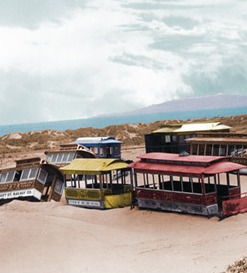
Repurposed streetcars perch haphazardly in dunes not yet cowed by asphalt and the Java Beach coffeeshops. They’re homes to a community of urban escapists and artists. Some of them have front porches, some of them house bicycle clubs. It’s like a Dali painting, it’s like the boxcar children — but it’s also an accurate picture of the first non-indigenous inhabitants of the Sunset, on whom local historian Woody LaBounty has written an awesome book, Carville-by-the-Sea.

The book’s images of 19th century Carville are chicken soup for the boho soul. I want one. My room mate wants one. LaBounty himself says he’d live in one — were the lone streetcars still surviving in the western neighborhoods’ not firmly in the grips of their current owners. There’s even one still-standing house built in 1908 that’s made of three cars; a two street car living room, and a bedroom from one that was horse drawn.

One of Carville-by-the-Sea‘s trippy colorized historical photographs

There used to be hundreds of these things. People moved out to Ocean Beach despite the subpar public transit service that places without sidewalks are often subject to — when the community was first started in 1895 was a steam car that ran out Lincoln Way down to the Cliff House, a service intended mainly for the weekend day trippers. They went to escape the city, to improve their health. There were bars and restaurants in street cars, shoe repair stores, artist studios.

So how did I not know about these things before? LaBounty says he grew up in the Richmond in the ‘60s and 70’s, a few blocks from one of the surviving streetcars, which latched a steampunk-sized hold in his childhood psyche.

More pages from Carville-by-the-Sea. Where’s a Delorean when you need one?

“I loved planes, trains, and automobiles, so living in a street car — it just seemed like the coolest thing in the world,” says LaBounty, who is one of the founders of the Western Neighborhoods Project, proprietor of what is reportedly the most popular SF history website/propagator of history walks, plays, and films by teenagers who interview older residents in their neighborhoods. “I used to watch Wild, Wild West, the ‘60s TV show, and they were living in a train, which I thought was great.”

To research, he began interviewing historians he knew, and motor vehicle enthusiastists, and learning all he could about the old community on the beach. Though he’s privy to all kinds of juicy info on the town’s colorful past, LaBounty found interest in his stories of the bohos and families living on the cars really captured listeners. “We all thought, there needs to be a book on this,” he says. “And then I realized that I should probably write it.”

So here it is, colorized like the postcards of yore for that extra oomph of fantasy creation. Newspaper articles from the 19th century on the streetcars, biographies of the community’s founding members, lots of lovely photos from the dunes.

La Bounty’s doing a series of live talks on his Carville expertise which are open to the public. Just be forewarned: he’s not versed in how to get you a steetcar of your own. Still fun to hear, though.

Carville-by-the-Sea presentation
Wed/19 7 p.m., free
History Guild of Daly City/Colma
Doelger Senior Center
Westlake Park
101 Lake Merced, Daly City
www.carville-book.com

Interview: Author Paul Loeb and Soul of a Citizen

0

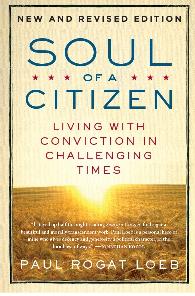
Paul Loeb, author, speaker, thinker and the man behind the surprising best-seller Soul of a Citizen stopped by the Guardian April 30 to chat about the new edition of his book — and about the state of community activism, the Obama administration, and the way people become engaged in politics. You can listen to the interview after the jump.


Paul Loeb by SFBG

Regime genie

0

arts@sfbg.com

FILM While his unauthorized appearance in Team America: World Police (2004) was surely disillusioning, Kim Jong-il is known to be a foreign film fanatic as well as someone with a keen interest in his own country’s popular media. Popular meaning propagandic, and vice versa — distinctions being useless in North Korea’s case. Inappropriate TV and radio signals are jammed; Internet access is scant; lively arts expressions are strictly “official.” Worldwide, only Eritrea rates lower for freedom of the press.

But why complain when a government-supervised communications realm allows the flourishing of such refined entertainment as Let’s Trim Our Hair In Accordance With the Socialist Lifestyle? Thanks to which broadcast series we know that shorter hair is not only more stylish, patriotic, and hygienic, but improves intelligence — because long locks drain the brain of needed nutrients. (Thus explaining the intellectual reputations of hippies and metalheads.)

The “Dear Leader” has also overseen numerous big-screen productions with alluring titles like A Faithful Servant, A Single Mind, Brigade’s Political Commissar and Let’s Go to Mt. Kumgang. In a 50-page pamphlet titled “Great Man and Cinema: Anecdotes,” he spills all about this fabulous showbiz sideline. Well, perhaps not all: one doubts, for instance, that he comes clean about the 1978 kidnapping of leading South Korean director Shin Sang-ok, who after an attitude-improving prison stint was compelled to make 1985’s nationalistic Godzilla-slash-Golem monster saga Pulgasari.

Other Cinema’s “Mayday Parade(e)” program offers a full dose of propagandic kitsch from the Democratic People’s Republic and beyond. Its centerpiece is The Juche Idea, an hour-long exploration of today’s united-front wonderland. There are excerpts from colossal choreographed Pyongyang patriotic displays, lugubrious dramas, poems (“O bureaucratic capitalism!/ Wet slug to be suffocated in eggshells and beer”) and other materials illustrating the regime’s titular essential ideology. Offering outside perspective is the lengthy interview with a South Korean film student who’s expatriated to an artists’ agricultural collective here after unimpressed stopovers in the U.S. and Japan.

You can stop dialing that local Tea Party hotline right now. The Juche Idea is not quite what it appears to be — though so nearly so it’s ingenious. The final section in an ultra deadpan mockumentary trilogy by plain old American Jim Finn, it mixes actual archival and faked footage to satirize revolutionary snowblindness so subtly you might well be fooled. Following his prior efforts’ send-ups of Peruvian Shining Path militants and a nonexistent East German space program, he again shoots and scores.

The most hilariously ersatz segments are those providing lessons in English as both a Socialist and Capitalist language. Speaking their dialogue with genius stiltedness is Oleg Mavromatti as a Russian visitor no doubt impressed to learn that as far as agricultural and other advancements are concerned, “The manure we’re spreading is just the beginning.”

Moving farther eastward, the ATA program offers fun from another People’s Republic. Great Advancement of Chairman Mao Tse-tung’s Thought (1966), better known hereabouts as Mao’s Little Red Video, is a half-hour newsreel/pep rally focusing mostly on China’s first atomic and nuclear bomb tests. These are triumphant, natch; but more important is the fact that the people themselves are “a spiritual atomic bomb” who will inevitably blow decadent capitalist aggressors to smithereens by their sheer purity of rhetoric.

Early arrivals will be greeted by the turntablings of DJ Onanism and partial screening of Situationist prankster René Viénet’s 1977 Peking Duck Soup, or One More Effort, Chinamen, If You Want to Be Revolutionaries! This cheeky collage uses official imagery in service of an illustrated lecture enumerating all the lies, backstabbings, and massacres throughout Mao’s “visionary” rule. Any regime without humor is bound to generate a lot of the unintentional kind, but Viénet can’t help adding his own particular brand of aesthetic snark. Particularly felicitous are the uses of Serge Gainsbourg’s “Je t’aime … moi non plus” and the Singing Dogs’ “Jingle Bells.”

OTHER CINEMA

Sat/1, 8:30 p.m., $6

Artists’ Television Access

992 Valencia, SF

www.othercinema.com

Burning the Man

14

steve@sfbg.com

Paul Addis is like the Man he burned: a symbol onto which people project their views of Burning Man, the San Francisco-born event that has become the most enduring countercultural phenomenon of this era. This summer, with the building of Black Rock City in the Nevada desert, marks the 25th annual event.

When Addis illegally torched Burning Man’s eponymous central icon during the Monday night lunar eclipse in 2007, he was either injecting much-needed chaos back into the calcified event; indulging in a dangerous, destructive, and delusional ego trip; or he was simply crazy, depending on the perspective of current and former burners who are still quite animated in their opinions about Addis and his act in online forums.

But Addis is also just a man, one who paid a heavy price to make his statement. After pleading guilty to a destruction of property charge in Nevada court, which became a felony after Burning Man leaders testified to more than $30,000 in damages from having to rebuild the icon, Addis served nearly two years in prison.

Addis was released late last year and recently returned to San Francisco, where this performance artist will debut his new solo show, “Dystopian Veneer,” at The Dark Room on April 30 (a second show is set for May 7). While Addis insists he didn’t seek the notoriety that came from getting caught, it’s clear he relishes this outlaw role, which follows naturally from his last stage incarnation as gun-loving journalist Hunter S. Thompson.

In a nearly three-hour interview with the Guardian, Addis described that fateful night and its implications, as well as why he turned on an event he once loved.


BURNING MAN GROWS UP

Addis first attended Burning Man in 1996, the last year in which anarchy and danger truly reigned, when a tragic death and serious injuries caused Burning Man organizers to impose a civic structure and rules, such as bans on firearms and high-speed driving, on future events.

Addis said he immediately became “a true believer,” seeing Burning Man as both a revolutionary experiment in free expression and political empowerment, and as a “wild, risk-taking thing for pure visceral power.” He came from what he called the “San Francisco arts underground” and had a libertarian’s love for guns, drugs, and explosives, but a progressive’s opposition to war and consumer culture.

“When you go to Burning Man, everyone has that feeling at a certain point in time. It is the most incredible thing you’ve been at. You do see the possibilities laid out in front of you,” Addis told me.

Addis poured himself into the event, but became frustrated with the rules and restrictions after three years and stopped going to Burning Man, although he remained in its orbit and closely followed it.

“There are some people who go to Burning Man who have extraordinary ideas and they are extraordinary people. They embody the type of concern and substantial action that I found so wonderfully possible in those early years. And to those people, thank you for what you do. But they are a minority,” Addis said.

Addis shared the anarchist mindset of John Law, who led Burning Man to the Black Rock Desert then left the event in frustration with its growing scale and popularity and never returned after 1996.

“Paul Addis’ early burning of the corporate logo of the Burning Man event last year was the single most pure act of ‘radical self expression’ to occur at this massive hipster tail-gate party in over a decade,” Law wrote on a Laughing Squid blog post after Addis’ sentencing hearing in 2008, one of 185 spirited comments on both sides of the debate.

Among this growing group of Burning Man haters and malcontents, which included self-imposed exiles like Law and provocateur attendees like Chicken John (see “State of the Art,” 12/20/04), there was always talk about burning the Man early as the ultimate strike against how ordered the event had become.

“Everyone knew it needed to be done for lots of reasons,” Addis said of his arson attack. So he returned to Burning Man in 2007 with the sole purpose of torching the Man in order to “bring back that level of unpredictable excitement, that verve, that ‘what’s going to happen next?’ feeling, because it had gotten orchestrated and scripted.”


TORCHING THE ICON

Addis can be very grandiose and self-important, prone to presenting himself in heroic terms or as the innocent victim of other people’s conspiracies, such as the police in Seattle and San Francisco who arrested him for possession of weapons and fireworks in separate instances within weeks of his arrest at Burning Man. But when it came to burning the Man, Addis was purposeful.

“Obviously a gesture like burning down Burning Man is very dangerous and very provocative. From my perspective, the No. 1 concern was safety. No one could get hurt unless it was me,” Addis said. Critics of the arson attack often note how dangerous it was, pointing out that there were a dozen or so people under the Man when it caught fire. But Addis said that he was on site for at least 30 minutes beforehand, encouraging people to move back with mixed results, shirtless and wearing the red, black, and white face paint that would later make for such an iconic mug shot.

As a full lunar eclipse overhead darkened the playa and set the stage for his act, Addis waited for his cue: someone, whom Addis won’t identify, was going to cut the lights that illuminated the Burning Man and give him at least 15 minutes to do his deed in darkness.

“I didn’t do this alone,” Addis said. “The lights were cut by someone else… The lights were cut to camouflage my ascent.”

Unfortunately for Addis, the operation didn’t go as smoothly as he hoped. He miscalcuated the tension in a guide-wire he planned to climb and the difficulty in using the zip-ties that attached a tent flap to it as steps, slowly pulling himself up the wire “hand over hand.”

Once he reached the platform at the bottom of one leg, “I reached for this bottle of homemade napalm that I made for an igniter and it’s gone,” dropped during his ascent. And his backup plan of using burlap and lighter fluid took a long time when he couldn’t get his Bic lighter to work under the 15 mph wind.

Then the lights came back on. “And now I know I’m exposed. Because the whole thing was not to get famous for doing this. It was to get away and have it be a mystery. That was the goal,” Addis said.

But then Addis got the fire going and it quickly spread up the Man’s leg, and Addis used nylon safety cables to slide down the guide-wire like a zip-line. “I landed perfectly right in front of two Black Rock Rangers who watched me come down,” Addis said. “And I turned to them and said, ‘Your man is on fire.'<0x2009>”

Addis said he was “furious” to see about nine people still under the burning structure, blaming the rangers and yelling at the people to clear the area before declaring, “This is radical free speech at Burning Man” and taking off running. Addis said he stopped at the Steam Punk Treehouse art exhibit, hoping to get lost in the crowd, but headlights converged on his location. He ran again, with a ranger close behind, and was finally caught, arrested, and taken to Pershing County Jail.


AFTERMATH

The arson attack made international news, and there were enough Addis’ supporters out there to convey the message that this was a political statement against the leadership of event founder Larry Harvey and Black Rock City LLC.

But those who run the event didn’t buy into Addis’ narrative. Instead, they ordered new materials to have the Man rebuilt and burned on schedule. And when it came time to testify at his sentencing hearing a year later, they sent LLC board member Will Roger and a tally for replacement costs that greatly exceeded the $5,000 level that bumped the charges up to a felony.

“They didn’t have to do this,” Addis said. “Instead, they decided to deliberately take action they knew would send me to prison.”

Burning Man spokesperson Marian Goodell wouldn’t discuss the charge. “It doesn’t do us or him any good to open that wound again.”

But an internal memo written by Executive Project Manager Ray Allen shortly after the hearing argued that they were required to respond honestly to requests for information from prosecutors and to do otherwise would have required perjury on behalf of an adversary.

“Part of putting on the Burning Man event means maintaining good relations with Pershing County so that we can continue to have the Burning Man event on BLM land within that county. Good relations means cooperating with criminal prosecutions,” Allen wrote to Burning Man employees.

Many of those employees remain profoundly offended by Addis and his act, mostly for the extra work it caused and the principle of such a selfish gesture. “The basic ethos out there is build your own stuff, burn your own stuff,” said Andy Moore, a.k.a. Bruiser, an employee since 2001 who helps build the city. “How would you have felt if he went to your house and burned it down because he didn’t like you?”

Yet as viscerally angry as Moore can still get when speaking of Addis, he also agreed that two years is a long prison term for this. “It seems a bit over the top. After all, it was a structure made of wood that was meant to burn.”

But Addis said that he has let go of the bitterness he felt toward Burning Man and is looking forward to being back on stage, something that he said was his main focus in prison. “It’s a brand new life, and I’ve got all this potential,” Addis said. “And I want to make the most out of it.”

No more stalling on CCA

1

EDITORIAL There’s nothing wrong with city officials taking tough stands in negotiations with private contractors. Hundreds, thousands of times in the past few years, San Francisco department heads have rolled over and given away the store in sweetheart deals that put the city on the hook for all the money, make the public take all the risk, and give a private outfit all the profit. Pacific Gas and Electric Co. (remember the Tulock-Modesto sellout contract?), Lennar Corp., Recurrent Energy, and countless other developers, builders, suppliers, and service providers have easily taken the public to the cleaners with contracts that never seemed to get stuck in the due diligence process.

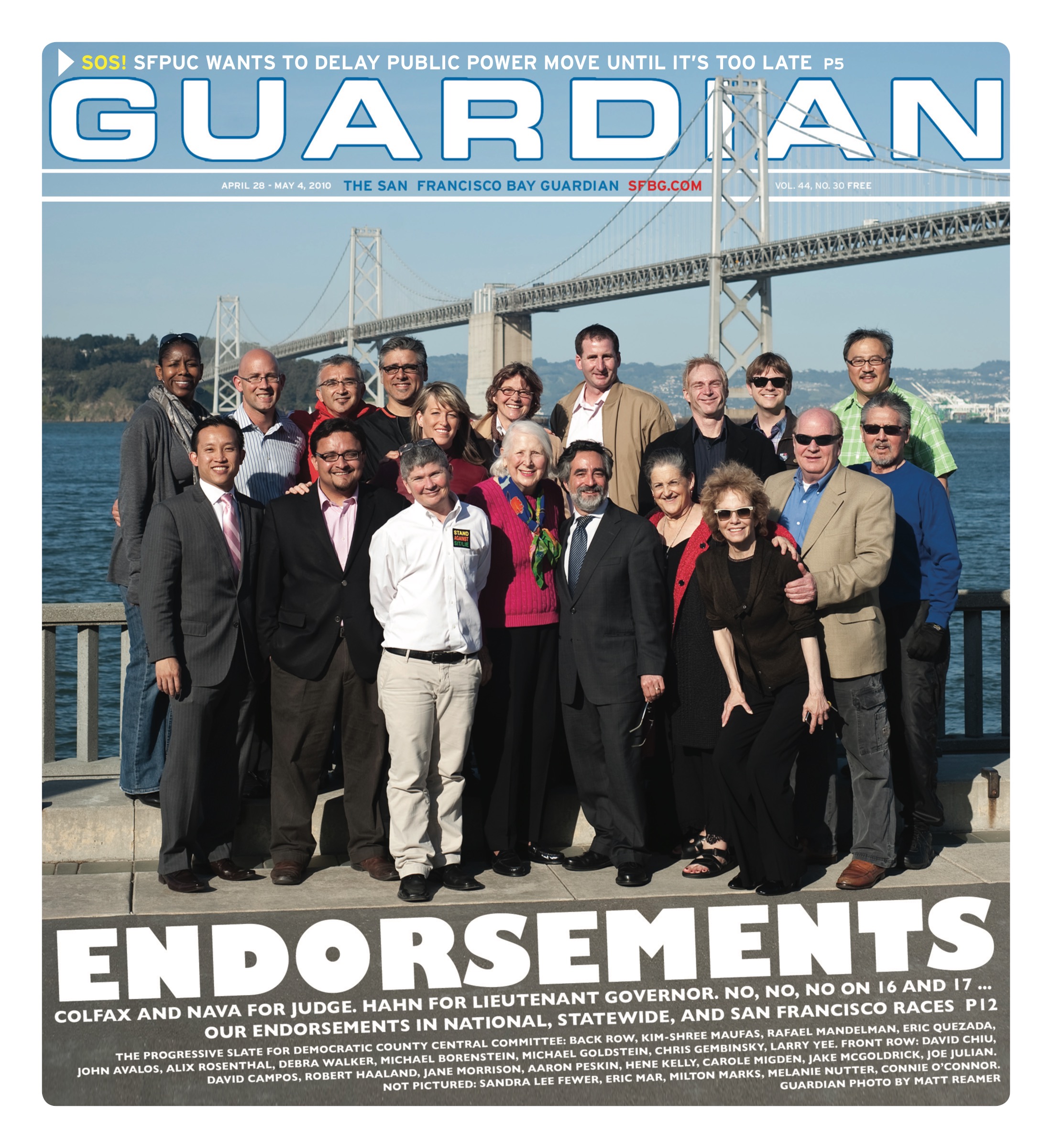
But when there’s a looming deadline, hundreds of millions of dollars, and the city’s energy future and environmental footprint at stake, why is the San Francisco Public Utilities Commission moving so incredibly slowly to hammer out a deal for the city’s community choice aggregation (CCA) program? And why is PUC general manager Ed Harrington doing everything in his power to make sure that nothing happens that might put the city in the power business until after PG&E’s initiative, Prop. 16 — which would block public power efforts — passes at the polls?

It’s infuriating — and the supervisors need to tell the PUC that they won’t approve anything the agency does or wants to do until this contract is completed.

Harrington’s shop has known for more than a year that it needed to work out a business deal with a supplier that could replace PG&E and manage a program to buy greener, cheaper power in bulk and resell it to San Francisco residents. Marin County is setting up a similar program and is far ahead of San Francisco. The city has chosen a vendor, Powerchoice Inc., run by people completely qualified to handle the business.

And now there’s a absolute, drop-deal mandate: the city has to complete negotiations and get the program underway before the June 8 election. That’s because PG&E is spending $35 million to try to pass an initiative that would mandate a two-thirds vote of the public before any new CCA can begin selling power to customers. If San Francisco wants to present a solid legal case that its CCA is already in business, the contract with Powerchoice needs to be completed and signed, now.

But Harrington has, to put it kindly, been dragging his feet. The negotiations are hung up on a few points, although none are deal-breakers; Powerchoice already has agreed to assume some of the financial risk, which was the biggest obstacle to a deal. Now it’s just a matter of hammering out the details — but the PUC staff isn’t acting as if there is any time pressure at all.

In fact, last week Harrington circulated a draft press release all but announcing that he was tossing the whole deal under the bus and postponing negotiations until after the June election. He wanted to say that the "uncertainly" surrounding Prop. 16 made a deal impossible.

But Powerchoice isn’t walking away or complaining about the initiative. The company’s CEO, Sam Enoka, made it clear to us in an interview April 26 that he is eager to move forward. If Harrington — an experienced negotiator with a large staff at his disposal — and his boss, Mayor Gavin Newsom, wanted a deal, it could be finished well ahead of the deadline.

Instead, Harrington showed up at the Local Agency Formation Commission meeting April 23 with charts and a PowerPoint presentation purporting to show that renewable energy is too expensive to sell at rates comparable to what PG&E charges local customers. That misses the point — PG&E’s rates are going up every year and renewables are coming down, and the greatest risk to the city, the ratepayers, and the planet is sticking with the unreliable private utility that relies on fossil fuels and nuclear power for much of its electricity portfolio.

If the city has legitimate issues with Powerchoice, fine: Sit down and begin working them out. Now. But the only thing we can see at this point is the administration of a mayor who wants to be lieutenant governor intentionally delaying the process and giving PG&E exactly what it wants. (We called the PUC April 26, our print deadline, to ask why there were no talks scheduled that day, but Harrington wasn’t available; he was taking the day off.)

Sups. Ross Mirkarimi and David Campos suggest that the board simply refuse to sign off on any contracts, appropriations, or other approvals for anything the SFPUC does until this contract is completed. That’s a fine idea; they should start today.

No more stalling on CCA

0

EDITORIAL There’s nothing wrong with city officials taking tough stands in negotiations with private contractors. Hundreds, thousands of times in the past few years, San Francisco department heads have rolled over and given away the store in sweetheart deals that put the city on the hook for all the money, make the public take all the risk, and give a private outfit all the profit. Pacific Gas and Electric Co. (remember the Tulock-Modesto sellout contract?), Lennar Corp., Recurrent Energy, and countless other developers, builders, suppliers, and service providers have easily taken the public to the cleaners with contracts that never seemed to get stuck in the due diligence process.

But when there’s a looming deadline, hundreds of millions of dollars, and the city’s energy future and environmental footprint at stake, why is the San Francisco Public Utilities Commission moving so incredibly slowly to hammer out a deal for the city’s community choice aggregation (CCA) program? And why is PUC general manager Ed Harrington doing everything in his power to make sure that nothing happens that might put the city in the power business until after PG&E’s initiative, Prop. 16 — which would block public power efforts — passes at the polls?

It’s infuriating — and the supervisors need to tell the PUC that they won’t approve anything the agency does or wants to do until this contract is completed.

Harrington’s shop has known for more than a year that it needed to work out a business deal with a supplier that could replace PG&E and manage a program to buy greener, cheaper power in bulk and resell it to San Francisco residents. Marin County is setting up a similar program and is far ahead of San Francisco. The city has chosen a vendor, Powerchoice Inc., run by people completely qualified to handle the business.

And now there’s a absolute, drop-deal mandate: the city has to complete negotiations and get the program underway before the June 8 election. That’s because PG&E is spending $35 million to try to pass an initiative that would mandate a two-thirds vote of the public before any new CCA can begin selling power to customers. If San Francisco wants to present a solid legal case that its CCA is already in business, the contract with Powerchoice needs to be completed and signed, now.

But Harrington has, to put it kindly, been dragging his feet. The negotiations are hung up on a few points, although none are deal-breakers; Powerchoice already has agreed to assume some of the financial risk, which was the biggest obstacle to a deal. Now it’s just a matter of hammering out the details — but the PUC staff isn’t acting as if there is any time pressure at all.

In fact, last week Harrington circulated a draft press release all but announcing that he was tossing the whole deal under the bus and postponing negotiations until after the June election. He wanted to say that the "uncertainly" surrounding Prop. 16 made a deal impossible.

But Powerchoice isn’t walking away or complaining about the initiative. The company’s CEO, Sam Enoka, made it clear to us in an interview April 26 that he is eager to move forward. If Harrington — an experienced negotiator with a large staff at his disposal — and his boss, Mayor Gavin Newsom, wanted a deal, it could be finished well ahead of the deadline.

Instead, Harrington showed up at the Local Agency Formation Commission meeting April 23 with charts and a PowerPoint presentation purporting to show that renewable energy is too expensive to sell at rates comparable to what PG&E charges local customers. That misses the point — PG&E’s rates are going up every year and renewables are coming down, and the greatest risk to the city, the ratepayers, and the planet is sticking with the unreliable private utility that relies on fossil fuels and nuclear power for much of its electricity portfolio.

If the city has legitimate issues with Powerchoice, fine: Sit down and begin working them out. Now. But the only thing we can see at this point is the administration of a mayor who wants to be lieutenant governor intentionally delaying the process and giving PG&E exactly what it wants. (We called the PUC April 26, our print deadline, to ask why there were no talks scheduled that day, but Harrington wasn’t available; he was taking the day off.)

Sups. Ross Mirkarimi and David Campos suggest that the board simply refuse to sign off on any contracts, appropriations, or other approvals for anything the SFPUC does until this contract is completed. That’s a fine idea; they should start today.

PBS’s Frontline edits out single payer

1

Documentary misrepresented advocates as supporters of a public option
4/23/10

Silencing supporters of single-payer, or Medicare for All, is a media staple, but PBS’s Frontline found a new way to do that on the April 13 special Obama’s Deal–by selectively editing an interview with a single-payer advocate and footage of single-payer protesters to make them appear to be activists for a public option instead.

The public option proposal would have offered a government-run health insurance program to some individuals as an alternative to mandatory private health insurance. Not only is this not the same thing as Medicare for All, it’s an idea many single-payer advocates actually opposed, arguing that it would leave the insurance industry intact as dominant players in the healthcare business (PNHP.org, 7/20/09).

In the report, Frontline explained that insurance industry lobbyists pushed a bill in the Senate Finance Committee chaired by Sen. Max Baucus (D.-Montana) “that would include the mandate to buy insurance and kill the public option.” That “didn’t sit well with the president’s liberal supporters,” the Frontline narrator told viewers. After a clip from public-option supporter Howard Dean, a full minute and a half focused on protests: “The left counterattacked in May…. Liberal outrage arrived in Baucus’ own hearing room as healthcare activists, one after another, shouted him down.” Several of these protesters are seen in action, with a clip of an interview with Margaret Flowers of Physicians for a National Health Program (PNHP) saying that these were members of her group shut out of the hearings.

Now, Flowers and PNHP are leading single-payer advocates–but you’d never learn that from watching the Frontline program, which never mentions the single-payer concept. Instead, viewers were left to assume that Flowers and the protesters were public-option proponents, since that was the only progressive proposal that had been discussed. As Flowers explained (Consortium News, 4/15/10):

When the host, Mr. [Michael] Kirk, interviewed me for Obama’s Deal, we spoke extensively of the single-payer movement and my arrest with other single-payer advocates in the Senate Finance Committee last May. However, our action in Senate Finance was then misidentified as “those on the left” who led a “counterattack” because of “liberal outrage” at being excluded.

Viewers saw more footage of protesters being handcuffed and led away, with an unidentified voiceover from Amy Goodman of Democracy Now! describing the arrests, and finally a voice was heard saying: “This option cannot be part of the discussion at a Senate hearing? Now, I think that’s wrong.”

The audience could only conclude that “this option” referred to the public option, but this conclusion would be incorrect; this voice was actually MSNBC host Ed Schultz, a single-payer supporter, and a fuller version of his quote (5/7/09) would have made it clear that he was complaining about single-payer being excluded from the hearing:

Now, let me explain single-payer for just a minute. The money comes from one source, the government. Now, you and I pay taxes, OK. The government pays the bill. It’s that simple. Patients are not caught in the middle between doctors and insurance companies, no game-playing here. There’s no middleman. You know? There’s no decision-makers between you and your doctor. It’s a clean deal.

So what Chairman Baucus has decided, this option cannot be part of the discussion at a Senate hearing? Now, I think that’s wrong. I don’t think it’s fair.

Frontline’s editors responded to Flowers’ complaints, saying that they “understand the frustration of Dr. Flowers and others in what she calls the ‘single-payer movement,'” but that “it’s the work of journalism to report widely on a topic, then find the sharpest focus for the reporting, unfortunately leaving out much strong material along the way to shaping the clearest communication possible in the time or space allowed.”

The statement also argued that

the section that included Dr. Flowers was focused on the power of the insurance lobby and showed how activists like Dr. Flowers were excluded from the debate over the bill. The protesters themselves said they were protesting the fact that they had been excluded from the debate, so we believe we presented the protests in the proper context.

But in Frontline’s presentation, “activists like Dr. Flowers”–that is, single-payer advocates–didn’t even exist. Having itself excluded their perspective from the debate–and even misrepresented them as supporters of a position that many of them actually oppose–there’s some irony in Frontline claiming to have put this exclusion in the “proper context.”

This is not the first time that Frontline has decided that a conversation about healthcare reform should exclude single-payer (FAIR Action Alert, 4/7/09). The March 31, 2009, Frontline special Sick Around America avoided discussions of national healthcare plans. This omission led Frontline correspondent T.R. Reid–who had hosted a previous Frontline special (4/15/08) that examined various public healthcare models–to withdraw from the project.
When Frontline pushed single-payer out of the debate last year, PBS ombud Michael Getler (4/10/09) weighed in on the side of critics, calling it a “missed opportunity.” Getler today (4/23/10) published a column about the latest Frontline omissions, once again finding that ignoring a popular policy like single-payer is problematic:

It seems to me that to ignore something that was out there and popular with millions of people and thousands of healthcare professionals, but not really on the table, was a mistake. Although obviously tight on time, the producers should have found 30 seconds to take this into account, because many Americans support it, yet the deal makers never mention it, nor is the politics of discarding it addressed.

We’re thankful that Getler has once again taken this view and encouraged a more inclusive discussion of healthcare on PBS. However, his criticism misses the critical journalistic fact that single-payer advocates were not only marginalized by Frontline–they were misrepresented.

ACTION:
Tell Frontline that their recent program Obama’s Deal should have accurately explained the views of single-payer advocates.

CONTACT:
Frontline
frontline@pbs.org

You may also want to write to PBS ombud Michael Getler (ombudsman@pbs.org).

    
TAKE ACTION!

ACTION:

Tell Frontline that their recent program Obama’s Deal should have accurately explained the views of single-payer advocates.

CONTACT:
Frontline
frontline@pbs.org

Conan O’Brien is employed so the rest of us don’t have to be

6

Yuppies love jokes about homeless people.

Consider that a telling, if ancillary, lesson I learned at last night’s Conan O’Brien “Legally Prohibited From Being Funny on Television” tour, which continues tonight, Fri/23.

In the wake of O’Brien’s sacking from his late night gig at NBC earlier this year, the show marked a return to relevancy for the comedian. His comeback seemed to resonate with the younger, upper middle crowd at the Nob Hill Masonic Center, many of whom are no doubt fighting to maintain their own $79.50 comedy show lifestyle in the face of economic shittiness and uncertain employment.

Before we could see the man himself, we the audience were treated to a video showing an obese, bearded Conan from “a month ago” lolling about in sweatpants and pizza boxes as he waited for the phone to ring that would grant him a chance to spread his snark to the masses once more. No job = letting the dog lick peanut butter off your toes and sweatsuits. I looked around, and the buttoned down, well coiffed crowd around me was chuckling uncomfortably to themselves. Unemployed — and that beard! What a loser Conan was!

But the call comes, and we watch the birth of the 72 city “Legally Prohibited” tour. Barred from TV, radio, and the Internet until the fall (when his new TBS series begins, surely a come down for a man used to the bright lights of network television) by the terms of his contract with NBC, live performances are one of the only options open right now to O’Brien, whose career’s been light on the stand up without the sound stage up to this point.

+ beard + certain degree of world weary grizzle = Conan from last night’s show

His lack of live experience didn’t matter to the folks last night, though. They whooped it up as the man made his entrance onstage, re-energized in a sharp suit, his band behind him once more. The gut was gone, but the beard stayed, a rugged look that seemed to scream ‘this man has been through some shit!’

“We played San Francisco in 2007 in the Tenderloin, at the Orpheum,” O’Brien explains to us. “I had to get to the theater by canoeing through hobo urine!”

Haaaa! “That’s the show it’s going to be,” he tells us, as the crowd cheers his cheekiness. He tells us he can see “some guy in a top hat in the balcony” telling his wife, Mildred “it’s time to go.” Frumpy old people aside “your asses are mine tonight! You can’t change the channel,” he tells us. But no one’s leaving. The bland jokes, humorous musical numbers, and even an appearance from Chris Isaak (omg! He’s like, so cute!) keep the endorphins up and the bright, shiny crowd enthralled.

In crazy times, your late night show will always be there for you. Even if that interview didn’t go so hot, or you’re forced to give up the private parking space, you know your favorite TV host awaits to round out the day with some reassuringly belittling comments on pretty much every single person in popular culture. All the better if he’s cracking wise about the unemployment office and the steps of grieving that happen when you lose your job.

These days, that’s what we call relevant humor. Go get ‘em, Coco.

Conan O’Brien’s “Legally Prohibited From Being Funny on Television” tour

Fri/23  8 p.m., $39.50-79.50

Nob Hill Masonic Center

1111 California, SF

(415) 630-8496

www.teamcoco.com

The Circus is back in SF

0

By Chhavi Nanda

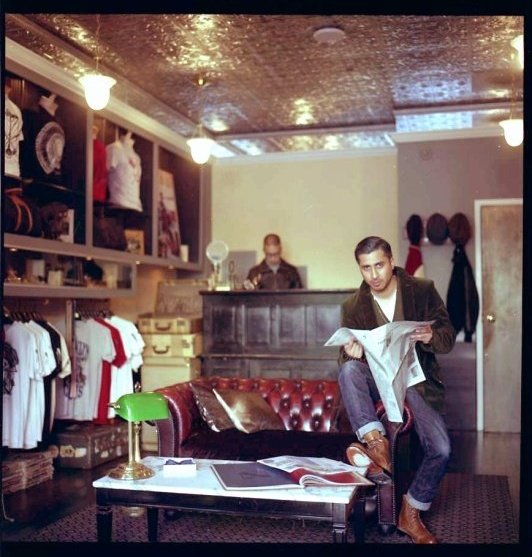
In the remains of what was left of Brooklyn Circus SF, I joined Gabe Garcia, BKC’s art director, for an intimate interview in the heart of San Francisco, the Fillmore.  Recently, the SF branch of the awesome men’s clothiers was forced to close for a few weeks due to a flood from the apartment building above. The damages caused the joint to pack up for a bit. The circus must go on, though, and Brooklyn Circus SF will be reopening this Fri/23, just like new. Thankfully Gabe, even in his frenzied panic to get the store back up and running,  talked to me about his career, the direction of fashion in San Francisco and New York City, and the industry in general. 


SFBG: Do you feel like your formal education at FIT in NYC helped prepare you for working in the industry?

Gabe Garcia: No, not at all.  FIT taught me the fundamentals of sewing, patternmaking, and things of that sort, but most of all what taught me the most was New York City itself. Living in NYC made me actually discipline myself. I didn’t even really know anyone in the city. I tried to get most out of school that I could, but NYC — being such a creative place — prepared me most for the industry.

SFBG: How do you compare fashion and the motivation behind designers in NYC in contrast to San Francisco? What would you like to see in fashion that is lacking in San Francisco, but prominent in NYC?

GG: San Francisco has a more laid-back attitude. Energy in the air is very infectious, so a majority of the people in San Francisco are very casual.  When people dress up to leave their house in the morning here, people are less motivated, which is cool, but peoples’ attitudes do transfer to their outfits. In NYC there is more pressure, desire and intrest. Life is about inspiration and how your surroundings inspire you. Each day I am in NYC I am inspired. Right now, what I am most inspired by is old cars. And all antiques in general, furniture, cars, etc.

SFBG: BKC is not only a fashion label, not it is also considered a lifestyle. Being a part of the BKC team means not only do you focus on the design aspect of the company, but also production, sales, finance, advertising, marketing, photography and blogging. Another than design, how else do you contribute to the BKC team?

GG: My position has evolved since I’ve been with the company. When we started I was standing right by Ouiji (the Brooklyn Circus owner) painting the walls of the store in Brooklyn. I started under Ouigi’s wing. Then I wanted to bring Brooklyn back to San Francisco. I found a way to do what I love while still living close to home. I built a bridge for my career and myself. The first thing we did was scout a perfect location. I am mostly involved with art direction, the creative concept and process, never avoiding the creative process.

SFBG: Can we anticipate any Brooklyn Circus collaborations anytime soon? What is your perspective on collaborations?
GG: Brand and image direction is really important to us right now. I have learned the things that you do wrong are just as impactful, if not more impactful, as the right decision. If you make a decision to go left instead of right, you could take the brand into the wrong direction. We want our brand to be here for the long run. We want to practice the fundaments of these big brands that have been here forever. If we do collaborate it just needs to make sense. It has to be a part of the big picture. Only if it a long term endeavor, we stay. The true importance is to stay with your brand vision. For example Porshe had approached Lacoste with a collaboration idea. Although Porshe is a huge company, Lacoste didn’t jump at that opportunity, because it just wasn’t in the DNA of the company. You see what I mean?  

SFBG: Would you ever consider starting your own label?
I have thought about it. Mostly small capsule collections though, like wallets, hats, neckwear, things like that. I really enjoy working in a team; I like people to bounce my creative ideas of. I like to think of myself as a visionary.

Reggie Watts is awesome, and I totally don’t get him

0

I’ve been a Reggie Watts aficionado for some time now — maybe since January. His video for “Fuck Shit Stack” was the most hilarious send up of hip hop culture I’ve seen in awhile, and one of the more visually creative videos. And I heard he was Seattle based, which got me very excited to see Pacific Northwest steez represented at his upcoming appearance at Conan O’Brien’s “The Legally Prohibited from Being on Television” tour stop, Thur/22 at the Nob Hill Masonic Center.

So I was stoked to get the chance to talk to the singer/beat boxer/comedian. Especially on 4/20. Interview dates don’t get much cooler. We’d straight kick it on the phone, giggle, talk about life, man. He says he’s in Seattle as we speak. What’s good in Northwest hip hop, Reggie?

“I haven’t lived in Seattle for over six years, and I’m not really a big hip hop guy,” says Watts. There is a medium sized pause as I mentally recalibrate, and feel out my new role as “reporter who doesn‘t get it.” Damn.

You’ll excuse me for being confused. Watts considers himself more of a comedic performer, but the majority of his work available online revolves around his prodigious musical talents that can be most readily understood in the language of hip hop. He’s been using a Line 6 DL4 delay box since the late nineties to concoct audio lasagnas of sound. And though the beats and bleats that come out of these largely improvised, layer cakes can borrow from retro commercial jingles and R&B hooks, the overwhelming impression they lay down is that of a super dope, low tech hip hop production.

I really like it. But, clearly, I don’t understand. So. Crap. But these things happen. What else can we talk about. Williamsburg? Blue Bottle coffee?

San Francisco Bay Guardian:
How’s Brooklyn, Reggie?
Reggie Watts: Brooklyn’s cool. Really cool parties, great comedy scene. I live in Williamsburg, and there’s lots of photographers, visual artists, everything’s there.

SFBG: And really, you’re not into hip hop?
RW: I like the beats, but I don’t really follow it. It’s kind of like sports. Well no, because I don’t really like sports at all. I have friends that will play me stuff, but I don’t know a lot about it.

SFBG: (grasping, trying to salvage predetermined flow of interview) But… “Fuck Shit Stack”! Such incisive social commentary — you have such smart things to say about hip hop culture!
RW: I like real hip hop, that song to me is about that kind of stuff. There’s plenty of hip hop that’s more in the tradition of bohemian hip hop, poetic spoken style. I have a problem with the too cool, money money lifestyle. It’s been around for a long time.

SFBG: Can’t you say the same thing about all forms of music?
RW: I think more so now than any other time period. Communication and product placement, trying to sell things. The concept of money being given to people to perpetuate certain kinds of lifestyles. We see the direct effect in our hearts. When Nas came out with “Made you Look,” I was like oh shit, something’s going to happen, but it was kind of a one hit thing. I don’t mind materialism, as long as you use it creatively.

SFBG:
Allright. So what will you listen to, left to your own devices?
RW: Techno, glitch, dub step. But I’m also really into… I don’t know, I enjoy the Carpenters, Seegar, Marvin Gaye — I pretty much really like everything. StereoLab I could listen to 24/7, Phoenix, I really like electronic music, ambient music.

SFBG: What are we going to see onstage at the show this week?
RW: 95% of what I do on stage is improvise, it’s up to the night and what’s going on. It’s usually me doing some really stupid shit for awhile, then I’ll do a song with the looping machine using really stupid lyrics. I’ll do a keyboard song, some more stupid bullshit.

SFBG: Are you excited to come to SF?
RW: Oh yeah, always a good time, I’ve got a lot of friends. And I’m excited for Blue Bottle coffee. We just got one in Brooklyn, I’m excited to see what it’s like out in SF.

SFBG: Oh yeah, we’ve got that Blue Bottle. It’s everywhere.
RW: It’ll fuck you up, in a good way.

Conan O’Brien’s “Legally Prohibited From Being Funny on Television” Tour feat. Reggie Watts

Thurs/22 8 p.m., $39.50-79.50

Nob Hill Masonic Center

1111 California, SF

(415) 776-4702

www.masonicauditorium.com

www.teamcoco.com

“The Loved Ones:” the complete interview!

0

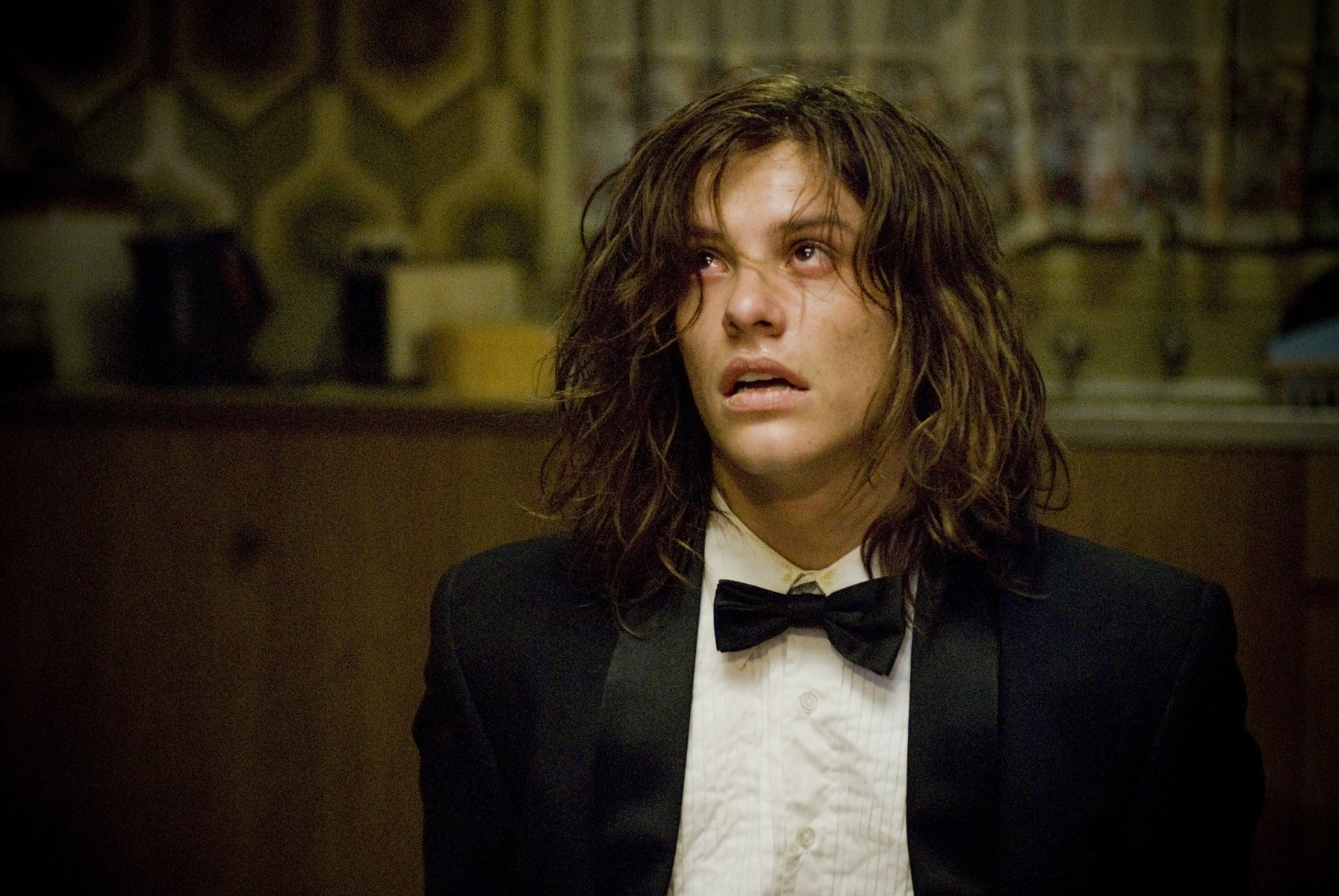
Pegged by some as “Misery meets Pretty in Pink,” Sean Byrne’s instant horror mini-classic is by turns poignant, funny, grotesque, alarming, and finally very, very satisfying. It’s sure to be a hit again in the San Francisco International Film Festival‘s Late Show section. Between festival travels, Byrne was back home in Melbourne when he answered my email queries.

San Francisco Bay Guardian:
The movie really throws you for a loop by spending the first stretch on serious psychological drama, then springing something entirely different.

Sean Byrne: Well, I needed [to establish] a hero who was uniquely qualified to survive hell. Someone who is conditioned to pain, who feels like they deserve to suffer. He’s a cutter or self-mutilator, someone who tries to block out emotional pain with physical pain. He’s a kid with a death wish who’s forced to endure a literal hell and in the process realizes he’s got everything to live for.

SFBG: Your central female character is more interesting than the usual horror movie villainness in that she’s so spoiled she thinks she’s a victim, which then excuses her behaving monstrously. Where did that come from?

SB: I was thinking about what could make a signature, iconic, highly marketable villain and I noticed how my five-year-old niece, along with almost every little girl, is obsessed with wearing pink. It’s part of the magic and fantasy stage of childhood, where they actually believe the Disney line “someday [my] prince will come.” So then I started thinking, well, what if our villain is a teenager with raging hormones but still somehow stuck in this spoiled, childish, pre-operational stage of development. I imagined “Princess” as a teenage version of that irritating kid in the supermarket who demands lollies and won’t stop screaming until she gets them!

SFBG: I like that her favorite song is self-pity anthem “Not Pretty Enough.” Has Kasey Chambers had any reaction to the film?

SB: I tried to stay within the horror genre but at the same time subvert the conventions, and having our troubled hero listen to heavy metal (the “devil’s music”) and our villain listen to a top-of-the-pops ballad like “Not Pretty Enough” was a way of doing that. As far as I know Kasey hasn’t seen the film. I’m dying to know how she’ll react.

SFBG: Did any particular films inspire you, in general or in making this film in particular?

SB: My filmic influences were a real mash up. Structurally the film is closest to Misery (1990) but tonally there are shades of Carrie (1976), Dazed and Confused (1993), Footloose (1984), The Terminator (1984), The Texas Chainsaw Massacre (1974 original), The Evil Dead (1981), Henry: Portrait of a Serial Killer (1986), [and the works of directors] David Lynch, Gaspar Noe, Michael Haneke, John Hughes, and even Walt Disney. The way Tarantino juxtaposes violence and comedy was a big influence. I’m also a huge David Fincher and P.T. Anderson fan. Audiences may recognize some of the influences but hopefully the film, as a whole, will be a fresh experience.

SFBG: A difference between this movie and those associated with “torture porn” is that here both victims and perps are pretty complicated characters.

SB: I hope so. I did my research and tried to get inside the heads of these characters before I started writing. Characters in horror movies are often one-dimensional cardboard cutouts. But really great ones like The Shining (1980), The Exorcist (1973), and Rosemary’s Baby (1968) delve into the psychology of the moment. They answer the question: how do ordinary people react to extraordinary situations honestly? They explore our base instincts with emotional authenticity.

I’ve made a horror movie, so I don’t want to sound hypocritical, but in my opinion movies that focus on the stalking bogeyman are actually kind of immoral because as an audience we’re almost forced to barrack for the killer. We know they won’t die (because there’s always a sequel) and we know nothing about the people being hunted and what makes them tick. So the main point of interest becomes, how much bare flesh am I going to see and how inventively gruesome is the next kill going to be? To me that’s not real horror. Real horror is having a relationship with the dark, extreme side of human nature and getting inside the cruelest of minds then genuinely caring about the people who are trapped in this terrifying web.

SFBG: The film really does dish out some horrifying abuse, though — did you ever pull back on how graphic it would be?

SB: No. Never. I’m not a fan of PG-13 horror. The middle ground is pretty boring — that’s why it’s called the middle ground. But we’re a balls-to-the wall pop-horror movie and as a fan growing up loving horror movies, I know what I like and I think I know what other true horror fans like, and we like to be pushed. Audiences go to horror movies to be scared. The brief is to freak them out so why hold back?

SFBG: Did anyone suggest you take out the whole comedy subplot involving the best friend’s dream date with the school’s goth chick? Although it works — both on its own and to provide some relief from the main action, which might be unbearable to watch without some interruption.

SB: The first draft of the screenplay was basically confined to the farmhouse, where most of the horror plays out, but it began to feel a bit suffocating. Like Misery, The Loved Ones is a kind of claustrophobic horror and also like Misery, which cuts to the sheriff and his wife for light relief, there are moments when the audience needs to take a breath, wipe their sweaty palms and maybe even have a nervous chuckle before preparing for the next white-knuckle onslaught.

SFBG: It’s a good thing your lead actress has already done some other, very different things, since otherwise she might be typecast forever as the horror-movie Girl from Hell.

SB: Yes, Robin McLeavy is an incredibly well-respected theater actress. She recently played Stella opposite Cate Blanchett’s Blanche in Liv Ullmann’s version of A Streetcar Named Desire, and won a Hayes Award for her performance, which is Washington’s answer to the Tonys.

SFBG: Upcoming projects? Have you gotten any overtures from major studios/producers?

SB: I’m writing a home invasion thriller with a unique twist, am attached to a medical thriller, which is a modern reworking of the Jekyll and Hyde story, and I’m in discussions with major studios and producers about a couple of other projects that I’d better keep quiet about for now.

The Loved Ones
San Francisco International Film Festival
May 2, 10:30 p.m., Castro, 429 Castro, SF
May 6, 3 p.m., Kabuki, 1881 Post, SF
www.sffs.org

Live on screen

0

johnny@sfbg.com

SFIFF All those with curious minds, step right up, we have live cinema waiting for you in this dark room. The idea of “live” or performance-generated movies has taken on a new vitality recently via the light-projecting likes of Bruce McClure, whose ear-splitting and eye-blasting appearances in San Francisco usually sell out. On a smaller local level, Konrad Steiner’s neo-benshi programs have united local writers and a wide variety of filmic subject matter in creative and sometimes entertaining ways. At the San Francisco Film Festival, live music by bands for silent works has become a reliable main attraction. But Sam Green’s and Dave Cerf’s new meta-documentary Utopia in Four Movements adds a new facet to the phenomenon: instead of utilizing an over-familiar voice-over, it unites live narration by Green with a musical performance overseen by Cerf, allowing for degrees of spontaneity and change.

Utopian, isn’t it? At the Mission bar the Phone Booth on an early Monday evening, Green can’t help but tease out his thoughts on the very word. “To me, utopia is almost a metaphor for hope, or hope in the imagination,” he says, shortly after we’ve been flirted with (and flashed) by one fierce female patron. “It’s about trying to be hopeful these days, which is hard. Utopia is almost a way to make up hope. In some ways it’s so preposterous. The word even has negative connotations these days — people are told not to be utopian.” Half an hour later, he returns for another analogy or two: “Utopia is a thing that never really exists. It’s like a flower — it always wilts. Even if there’s a moment of great utopian energy, it can’t last.”

Utopia may not exist in fully realized forms, but the quartet of mutations in Utopia in Four Movements (five if you count the movie) fascinate as real-life fables. The first segment explores Esperanto, which was invented in the late 19th century with the aim of its becoming a universal, international language. As Green puts it, Esperanto is “a wonderful idea that can’t be,” an idea that he illustrates with short direct portraits of contemporary Esperanto speakers that, uncannily, takes on a colors-of-Benneton feel.

Esperanto has also yielded some memorable black-and-white cinema, namely a 1965 Esperanto horror film shot in Big Sur by Conrad Hall, which stars a pre-Star Trek William Shatner. San Francisco movie maniacs may recognize Incubus through the efforts of Will The Thrill and Other Cinema’s Craig Baldwin. “William Shatner wrote a memoir in which he talks about it,” Green says, before adding some information that reflects Utopia‘s ever-changing nature –and utopia’s pitfalls. “I’m trying to do an interview with him because he’s practically the most famous person to have spoken Esperanto. But the world’s most famous Esperanto person is probably [financier] George Soros.”

The idea of utopia isn’t new to Green, whose best-known feature The Weather Underground (2002) digs deep into the multi-faceted realm of ’60s radicalism, riding out its actions and repercussions. The second part of Utopia, set in Cuba, adds a new chapter to Green’s explorations of thorny political contradiction. Like Assata Shakur, the segment’s subject lives in Cuba as a fugitive. In the present, she’s engaged with Cuban hip-hop, but she remains tied to her past as a radical in America. “It’s about the last embers of revolution,” says Green.

One of Utopia‘s movements examines the potential of forensice science in a manner quite different from pro-law enforcement US true crime television, showing how the smallest reinforcement can be regained from sites of mass tragedy. But the movie’s sojourn in China is in some ways its most vivid. There, Green takes an extended trip to the world’s largest shopping mall, in China. The subject matter is akin to dramas such as Jem Cohen’s Chain and Jia Zhangke’s The World (both from 2004), but this is a case of reality trumping fiction. “Almost every article I read about China and capitalism talked about how the world’s largest mall was there now,” says Green. “But nobody described it as a total failure. We were at the mall for ten days, and it was soul-killing. There’s something about a gigantic failed mall that is profoundly depressing.” Luckily, an encounter with a Teletubby who eventually removed its mask added some life to the experience.

The world’s largest shopping mall — at least for now: Green says it is slated to be bulldozed — may be grim, but it’s also richly symbolic when history is integrated to the picture. “Victor Gruen who essentially invented the [shopping] mall in the US in the 1950s was a socialist who came to America,” Green says, as “This Monkey’s Gone to Heaven” gives way to “I Feel Love” on the Phone Booth jukebox. “In turn the mall has gone to China, and the grounds of cultural revolution became the site of a government-funded bust of a mall. In a way, it’s the trajectory of the 20th century.

Today, we tiptoe into the 21st century, with a new president and old-new ways of seeing and making movies. “A year ago, when I was looking at [Utopia], people were saying ‘Aren’t you going to change everything because of Obama?’,” Green remarks. “It felt like cotton candy hope. When [U.S. presidents] are the limits of your possibility, it’s pretty lame.” Truth: Green may have used utopia in his title, but perhaps it’s time to come up with some fresh formulations of hope as well. *

UTOPIA IN FOUR MOVEMENTS

Sun/25, 9:30 p.m., Kabuki

Love, guts, and glory

0

arts@sfbg.com

SFIFF Though there were far starrier, more expensive films debuting in the Midnight Madness section of last year’s Toronto Film Festival, the category’s prize and foot-stomping audience favor was stolen by a low-budget Australian film that arrived with no fanfare, no name actors, and a writer-director who’d made no prior features.

Sean Byrne’s The Loved Ones focuses on small-town teenager Brent (Xavier Samuel), who’s severely depressed from a recent tragedy but rouses himself to attend the school prom — or would have, if he wasn’t hijacked instead for one of the most harrowing first dates in film history.

Pegged by some as "Misery meets Pretty in Pink," this instant horror mini-classic is by turns poignant, funny, grotesque, alarming, and finally very, very satisfying. It’s sure to be a hit again in the San Francisco International Film Festival’s Late Show section. Between festival travels, Byrne was back home in Melbourne when he answered my e-mail queries.

SFBG The movie really throws you for a loop by spending the first stretch on serious psychological drama, then springing something entirely different.

Sean Byrne Well, I needed [to establish] a hero who was uniquely qualified to survive hell. Someone who is conditioned to pain, who feels like they deserve to suffer. He’s a cutter or self-mutilator, someone who tries to block out emotional pain with physical pain. He’s a kid with a death wish who’s forced to endure a literal hell, and in the process realizes he’s got everything to live for.

SFBG Your central female character is more interesting than the usual horror movie villains in that she’s so spoiled she thinks she’s a victim, which then excuses her behaving monstrously. Where did that come from?

SB I was thinking about what could make a signature, iconic, highly marketable villain and I noticed how my five-year-old niece, along with almost every little girl, is obsessed with wearing pink. It’s part of the magic and fantasy stage of childhood, where they actually believe the Disney line "someday [my] prince will come." So then I started thinking, well, what if our villain is a teenager with raging hormones but still somehow stuck in this spoiled, childish, preoperational stage of development. I imagined "Princess" as a teenage version of that irritating kid in the supermarket who demands lollies and won’t stop screaming until she gets them.

SFBG I like that her favorite song is self-pity anthem "Not Pretty Enough." Has Kasey Chambers had any reaction to the film?

SB I tried to stay within the horror genre but at the same time subvert the conventions. And having our troubled hero listen to heavy metal (the "devil’s music") and our villain listen to a top-of-the-pops ballad like "Not Pretty Enough" was a way of doing that. As far as I know, Kasey hasn’t seen the film. I’m dying to know how she’ll react.

SFBG A difference between this movie and those associated with "torture porn" is that here both the victims and the perps are pretty complicated characters.

SB I hope so. I did my research and tried to get inside the heads of these characters before I started writing. Characters in horror movies are often one-dimensional cardboard cutouts. But really great ones like The Shining (1980), The Exorcist (1973), and Rosemary’s Baby (1968) delve into the psychology of the moment. They answer the question: how do ordinary people react to extraordinary situations honestly? They explore our base instincts with emotional authenticity.

SFBG The film really does dish out some horrifying abuse, though — did you ever pull back on how graphic it would be?

SB No. Never. I’m not a fan of PG-13 horror. The middle ground is pretty boring — that’s why it’s called the middle ground.

THE LOVED ONES

May 2, 10:30 p.m., Castro

May 6, 3 p.m., Sundance Kabuki


MORE ON SFBG.COM For an extended version of Dennis Harvey’s interview with Sean Byrne, visit www.sfbg.com/pixel_vision

Andy Stern to quit SEIU

3

Just days after a San Francisco trial aired the ugly battle between Service Employees International Union President Andy Stern and some of his former top aides in the Bay Area, Stern has confirmed that he’s resigning after 38 years in the movement, 14 as head of SEIU.

Stern was once thought of as a rising figure in the progressive movement, but in recent years he has become a polarizing figure within the labor movement, prone to undemocratic power-building and starting fights with other unions. He was criticized as too close to corporations and the Democratic Party, but he doesn’t endear himself to either in an exit interview with the Huffington Post.

The fight between SEIU and the National Union of Healthcare Workers has created bad feelings on both sides, as indicated by the comments section every time we write about it, and I can’t help but think that Stern’s decision can only help the labor movement. But I suppose we’ll see.

BTW, there’s more on the SEIU-NUHW fight here at Spot.us, which we partnered with on this week’s story.

Mission statement

0

By Elise-Marie Brown

arts@sfbg.com

FILM Che Rivera, a strong, middle-aged Latino man, approaches his son with festering anger and fury in his eyes. With outrage, he yells, “Why does this motherfucker have his tongue down your fucking throat?” as he points to a photo of his teenage son kissing another man. “Why do you think?” his son replies in a sharp tone. His rage surfacing, Che leans over, beats the boy, and forces him to leave their Mission District home.

Tackling issues of homophobia, masculinity, and violence, independent film La Mission uncovers the inner struggle of an obstinate father (Benjamin Bratt) learning to accept his son, Jesse (Jeremy Ray Valdez) for being gay. Throughout the film, Che is a dominating machismo presence. By day he works as a Muni driver who strives to keep his bus in line by fighting off difficult passengers. At night he customizes low rider cars and leads a group of friends and family through cruises in the city.

“Che is kind of the alpha male within Latino culture, as well as the alpha male in the dominant culture,” said director and writer Peter Bratt during a recent phone interview alongside younger brother Benjamin. “Something about the Latino community and having a gay son threatens the idea of being a powerful male.”

The role of Che was based on a real Mission resident, a fact that Bratt believes gives the movie more of an authentic feel. “The real Che is a larger-than-life persona. When he walks into the room, you feel his presence,” Peter said. “He’s a brown and proud Chicano who we thought represented the passion and vibrancy of the neighborhood.”

As the film unfolds, the audience starts to learn that Che is more than just a man of aggression. He also feels a strong love for his son and community, despite having a difficult time expressing that love.

“We found it intriguing to take a character like [Che] who appears to be one way and start to peel the layers back,” Benjamin explained. “A real tenderness exists. You don’t see it expressed in words or a physical action, But it comes in other forms.”

After looking back at films that portray men of color as one-dimensional, the actor decided his character would embody an array of emotions and struggles that previous stories had not explored. “When you look at a lot of representations of men of color, they’re often drawn as people to be feared,” Benjamin continued. “Che is a very familiar character that we’ve seen in cholo and urban films. We wanted to pull back the layers and actually show that there is a complex being underneath the swagger and stance.”

When it came to starting the production of the film and choosing a location, the Bratt brothers — who grew up in San Francisco — didn’t hesitate to base the story in the Mission.

“Benjamin and I had already dreamed of making a film in the Mission,” Peter said. “We know about Harlem, Brooklyn, and Queens from filmmakers like Woody Allen and Martin Scorsese. We feel like the Mission is up there with those neighborhoods. It’s just as vibrant, politically and culturally.”

In the four weeks it took to shoot the film, members of the community helped by working behind the cameras as well as in front of them. “We cast a lot of people right from the Mission, which we thought lent a certain level of authenticity,” Peter said.

Although the film takes place in a neighborhood with multiple cultures, traditions, and social issues, the Bratts believe the particular journey undertaken by their characters isn’t something everyone in the community goes through.

“There are a million and one stories going on in the Mission at any given time and this was not our attempt to create the definitive Mission story,” Benjamin said. “Our goal was to create something authentic and ultimately something that would entertain and enlighten you.” *

LA MISSION opens in Bay Area theaters Fri/16.


The dawn of Earth Day

2

tredmond@sfbg.com

GREEN ISSUE The heavens welcomed Earth Day to America. All over the country, April 22, 1970 dawned clear and sunny; mild weather made it even easier to bring people into the streets. The Capitol Mall was packed, and so many members of Congress were making speeches and appearing at events that both houses adjourned for the day.

Mayors, governors, aldermen, village trustees, elementary school kids, Boy Scout troops, labor unions, college radicals, and even business groups participated. In fact, the only organization in the nation that actively opposed Earth Day was the Daughters of the American Revolution, which warned ominously that "subversive elements plan to make American children live in an environment that is good for them."

By nightfall, more than 20 million people had participated in the First National Environmental Teach-In, as the event was formally known. It established the environmental movement in the United States and helped spur the passage of numerous laws and the creation of hundreds of activist groups.

It was, by almost all accounts, a phenomenal success, an event that dwarfed the largest single-day civil rights and antiwar demonstrations of the era — and the person who ran it, 25-year-old Denis Hayes, wasn’t happy.

His concern with the nascent movement back then says a lot about where environmentalism is 40 years later.

Gaylord Nelson, a mild-mannered U.S. senator from Wisconsin, came up with the idea of Earth Day on a flight from Santa Barbara to Oakland. Nelson was the kind of guy who doesn’t get elected to the Senate these days — a polite, friendly small-town guy who was anything but a firebrand.

A balding, 52-year-old World War II veteran who survived Okinawa, Nelson was a Democrat and generally a liberal vote, but he got along fine with the die-hard conservatives. He kept a fairly low profile, and did a lot of his work behind the scenes.

But long before it was popular, Nelson was an ardent environmentalist — and he was always looking for ways to bring the future of the planet into the popular consciousness.

In August 1969, Nelson was on a West Coast speaking tour — and one of his mandatory stops was the small coastal city that seven months earlier had become ground zero for the environmental movement. Indeed, a lot of historians say that Earth Day 1970 was the coming out party for modern environmentalism — but the spark that made it possible, the event that turned observers into activists, took place Jan. 28, 1969 in Santa Barbara.

About 3:30 on a Tuesday afternoon, a photographer from the Santa Barbara News Press got the word that something had gone wrong on one of the Union Oil drilling platforms in the channel just offshore. The platforms were fairly new — the federal government had sold drilling rights in the area in February 1968 for $603 million, and Union was in the process of drilling its fourth offshore well. The company had convinced the U.S. Geological Survey to relax the safety rules for underwater rigs, saying there was no threat of a spill.

But shortly after the drill bit struck oil 3,478 feet beneath the surface, the rig hit a snag — and when the workers got the equipment free, oil began exploding out. Within two weeks, more than 3 million gallons of California crude was on the surface of the Pacific Ocean, and a lot of it had washed ashore, fouling the pristine beaches of Santa Barbara and fueling an angry popular backlash nationwide.

Nelson received an overwhelming reception at his Santa Barbara talk — and horrified as he was by the spill, he was glad that an environmental concern was suddenly big news. But, as he told me in an interview years ago, he still wasn’t sure what the next steps ought to be — until, bored on an hour-long flight to his next speech in Berkeley, he picked up a copy of Ramparts magazine.

The radical left publication, once described as having "a bomb in every issue," wasn’t Nelson’s typical reading material. But this particular issue was devoted to a new trend on college campuses — day-long "teach-ins" on the Vietnam War.

Huh, Nelson thought. A teach-in. That’s an intriguing idea.

Hayes was a student in the prestigious joint program in law and public policy at Harvard. He’d been something of a campus activist, protesting against the war, but hadn’t paid much attention to environmental issues. He needed a public-interest job of some sort for a class project, though, so when he read a newspaper article about the senator who was planning a national environmental teach-in, he called and offered to organize the effort in Boston. Nelson invited him to Washington, was impressed by his Harvard education and enthusiasm, and hired him to run the whole show.

The senator was very clear from the start: the National Environmental Teach-In would not be a radical Vietnam-style protest. The event would be nonpartisan, polite, and entirely legal. Hayes and his staffers chafed a bit at the rules (and the two Senate staffers Nelson placed in the Earth Day office to keep an eye on things), and they ultimately set up a separate nonprofit called the Environmental Action Foundation to take more aggressive stands on issues.

Meanwhile, Hayes did the job he was hired to do — and did it well. Everywhere he turned, from small towns to big corporations, people wanted to plug in, to be a part of the first Earth Day. Many wanted to do nice, noncontroversial projects: In Knoxville, Tenn., students decided to scour rivers and streams for trash to see if they could each clean up the five pounds of garbage the average American threw away each day. In dozens of communities, people organized tree-plantings. In New York, Mayor John Lindsay led a parade down Fifth Avenue.

A few of the actions were more dramatic. A few protesters smashed a car to bits, and in Boston, 200 people carried coffins into Logan International Airport in a symbolic "die-in" against airport expansion. In Omaha, Neb., so many college students walked around in gas masks that the stores ran out. But it was, Hayes realized, an awful lot of talk and not a lot of action. The participants were also overwhelmingly white and middle-class.

Hayes wasn’t the only one feeling that way. In New York, author Kurt Vonnegut, speaking from a platform decorated with a giant paper sunflower, added a note of cynicism.

"Here we are again, the peaceful demonstrators," he said, "mostly young and mostly white. Good luck to us, for I don’t know what sporting event the president [Richard Nixon] may be watching at the moment. He should help us make a fit place for human beings to live. Will he do it? No. So the war will go on. Meanwhile, we go up and down Fifth Avenue, picking up trash."

Hayes finally broke with the politics of his mentor early on Earth Day morning when it was too late to fire him. The next day, the National Environmental Teach-In office would close and the organization would shut down. From that moment on, he could say what he liked and not worry who he offended.

"I suspect," he told a crowd gathered at the Capitol Mall, "that the politicians and businessmen who are jumping on the environmental bandwagon don’t have the slightest idea what they are getting into. They are talking about filters on smokestacks while we are challenging corporate irresponsibility. They are bursting with pride about plans for totally inadequate municipal sewage plants. We are challenging the ethics of a society that, with only 6 percent of the world’s population, accounts for more than half the world’s annual consumption of raw materials.

"We are building a movement," he continued, "a movement with a broad base, a movement that transcends traditional political boundaries. It is a movement that values people more than technology and political ideologies, people more than profit.

"It will be a difficult fight. Earth Day is the beginning."

I first met Hayes in 1990, near the office in Palo Alto where he was planning the 20th anniversary of Earth Day. He’d continued his environmental work inside and outside government, at one point running the National Energy Laboratory under President Jimmy Carter. Earth Day 20 was shaping up as a gigantic event, one that would ultimately involve 200 million people around the globe. Earth Day was becoming the largest secular holiday on the planet.

Hayes was excited about the event, which he was running this time without the moderating influence of a U.S. senator. And he was aiming for a much more activist message — in fact, at that point, he was pretty clear that the U.S. environmental movement was running out of time.

"Twenty years ago, Earth Day was a protest movement," he told a crowd of more than 300,000 in Washington, D.C. "We no longer have time to protest. The most important problems facing our generation will be won or lost in the next 10 years. We cannot protest our losses. We have to win."

And now another 20 years have passed — and by many accounts, we are not winning. Climate change continues, and even accelerates; an attempt at a global accord just failed; and Congress can’t even pass a mild, watered-down bill to limit carbon emissions.

And Hayes, now president of the Bullitt Foundation, a sustainability organization in Seattle, thinks the movement has a serious problem. "Earth Day has succeeded in being the ultimate big tent," he told me by phone recently. "To some rather great extent, is had some measure of success."

But he noted that "in American politics these days, it’s not the breadth of support, it’s the intensity that matters. Environmentalists tend to be broadly progressive people who care about war and the economy and health care. They aren’t single-issue voters. And somehow, the political intensity is missing."

Hayes isn’t advocating that environmentalists forget about everything else and ignore all the other issues — or that the movement lose its broad-based appeal — but he said it’s time to bring political leaders and policies under much, much sharper scrutiny and to "stop accepting a voting record of 80 percent."

It’s hard today to be bipartisan, and compromise is unacceptable, Hayes told me. "I was probably right [in 1990]," he said. "If what you’re aspiring to do is stop the greenhouse gases before they do significant damage to the environment, it’s too late." At this point, he said, it’s all about keeping the damage from turning into a widespread ecological disaster.

"I would like to see Earth Day 50 be a celebration," he said. "I would like to see by then a real price on carbon, nuclear power not proliferating, and a profound, stable investment in cost-effective, distributed renewable energy." But for that to happen, "we need to have a very intense core of environmental voters who realize that these threats to life on the planet are more important than a lot of other things."

Tim Redmond is the author, with Marc Mowrey, of Not In Our Back Yard: The People and Events that Shaped America’s Modern Environmental Movement (William Morrow, 1993) which can still be found in the remainder bins of a few used book stores.

The Daily Blurgh: That cat should have won the prize

0

Curiosities, quirks, oddites, and items from around the Bay and beyond

“We offer a kind of grittiness you can’t find much anymore,” said Randy Shaw, a longtime San Francisco housing advocate and a driving force behind the idea of Tenderloin tourism. “And what is grittier than the Tenderloin?”

Now that San Francisco is going to court the tourist dollars of baby boomers descending upon the TL in search of reawakening the pleasure centers of their youth – the music! the drugs! the picturesque squalor! – perhaps City Hall should also consider starting up tourism franchises in other “gritty” parts of the city? 

(But gawking humorously at the poor, addicted, and metally challenged makes for such a sensational blog post! –Ed.)

Also: Drubbing! This headline is the second Google hit that comes up for the search: “slumming San Francisco.” Take that, spendy New York Times (which seems to have a long history of reporting on slumming in other cities).


There are too many golden nuggets to choose from in Roger Ebert’s account of working on the Russ Meyer-directed Sex Pistols film that never was, but this exchange is one of them:
 
Meyer opened up by informing Johnny Rotten that with his stovepipe arms he wouldn’t have survived one day in the army.

“What do I want with the fucking army?” Rotten said.

 “You listen to me, you little shit. We won the Battle of Britain for you!”

I reflected that America had not been involved in the Battle of Britain, and that John Lydon (his real name) was Irish, and therefore from a non-participant nation. I kept these details to myself.


The anxiety of influence: The debate going on in the comments on this Fecal Face interview with local artist Maxwell Loren Holyoke-Hirsch is heated. Holyoke-Hirsch doesn’t seem to lack faith in his abilities (he is quoted as referring to himself as, “the hardest working illustrator and artist based in San Francisco, California”), although irony is sometimes lost in transcription. Hubris aside, there is still the question of whether or not his art, as some comments posit, swagger-jacks Chris Johansson and Barry McGee. But kids, it’s OK. Put down those rocks! Didn’t you know street art has already jumped the balaclava’d shark?

(Kidding!)


We love our cat
for her self
regard is assiduous
and bland

 
Congrats to personal fave Rae Armantrout for winning this year’s Pulitzer Prize in poetry. Cat people, this may be finally be your salve for the incredibly raw wounds from our canine-centric Pets issue.

Just out of prison, Addis returns to SF with a message

60

Paul Addis is a playwright and performance artist best known for prematurely igniting Burning Man‘s eponymous central effigy during a Monday night lunar eclipse at the event in 2007, a crime for which he served two years in a Nevada prison. He was recently released and returned to San Francisco, where his new one-man show debuts at The Dark Room on April 30.

Last week, Addis sat down for an extended interview with the Guardian to discuss that momentous night – when he grabbed the Holy Grail of burner malcontents, lighting the Man early, and paid a heavy price for it – and its aftermath, including developing his play, “Dystopian Veneer,” while in a prison work camp near Las Vegas.

“It’s a brand new life and I’ve got all this potential and I want to make the most out of it,” said Addis, an intense guy who exhibited a wide range of emotions during the three-hour interview, from easy laughter to frustrations with what he sees as the lack of risk-taking in San Francisco to excitement over his future to flashes of real menace when discussing those who have done him wrong.

Addis is a lightning rod whose torching of the Man still elicits strong reactions from those who attend Burning Man. Some angrily condemn an act they see as destructive and dangerous, while others appreciate the ultimate symbolic assault on an event that they think had become too orderly and calcified.  
Paul Addis's mug shot after burning The Man.

Addis’s post-burn mug shot.

“Everybody knew it needed to be done for lots of reasons,” Addis said of an action that was his sole purpose in attending Burning Man that year. “I felt like Burning Man as an event was starting to coddle people way too much.”

But the event’s leaders certainly didn’t coddle Addis, instead testifying at his 2008 sentencing hearing about the high cost of replacing the Man (high enough to bump the destruction of property charge up to a felony) and the early burn’s negative impact on the event. “They didn’t have to do this,” Addis said of Burning Man board member Will Roger’s testimony at the hearing. “Instead, they decided to deliberately take action they knew would send me to prison.”

Marian Goodell, the director of business and communications for Burning Man, declined to discuss the accusation, or Addis’ complaint that she and others have publicly misrepresented the role of Burning Man brass in sending him to prison, including statements in the film “Dust & Illusions” that the sentencing was beyond their control. “It doesn’t do us or him any good to open that wound again,” Goodell told the Guardian. “We’re not going to discuss it.”

Starting the fire wasn’t Addis’s only crime of that era. Within weeks of returning to Burning Man, he was arrested in Washington for carrying guns in public (he says they were props for the one-man play about Hunter S. Thompson he was doing at the time) and for possession of fireworks and an air gun near Grace Cathedral (which police said at the time was a plot to burn down the stone church, a notion that Addis calls preposterous). Addis has innocent narratives for each incident, blaming others for overreacting.

Yet Addis now says that he’s let go of his old grudges, describing a moment of clarity and peace that came over him while driving his motorcycle through the Nevada desert on his way back to San Francisco. He said that he feels most happy and alive when he’s on stage, a passion that he said sustained him while in prison, “so it’s imperative for me to get back to what I love doing.”

Addis posted a promotional video for his new show on Laughing Squid (whose owner, Scott Beale, Addis has known for many years). It opens with Addis looking up at the camera, his mouth covered in duct tape that he slowly rips off and begins speaking. “In a society whose foundation is free expression under the First Amendment and liberty under the Constitution, this is probably the most desperate, despicable and disgusting thing that can be done to an outspoken and risk-taking performance artist,” he says, indicating the tape in his fingers, before tossing it aside and saying, “Well, that’s over now.”

He goes on to criticize how sanitized San Francisco has become, singling out the police crackdown on SoMa parties and nightclubs that we’ve been covering in the Guardian and calling for people to join him in pushing the edge. But just how San Franciscans will greet this controversial figure is still an open question. 

I’ll have more from my interview with Addis, along with reactions from other figures in the Burning Man world, in the Guardian in coming weeks; and even more in my upcoming book, “The Tribes of Burning Man: How an Experimental City in the Desert is Shaping the New American Counterculture,” due out later this year from CCC Publishing.