Film listings are edited by Cheryl Eddy. Reviewers are Kimberly Chun, Michelle Devereaux, Peter Galvin, Max Goldberg, Dennis Harvey, Johnny Ray Huston, Louis Peitzman, Lynn Rapoport, Ben Richardson, and Matt Sussman. The film intern is Ryan Prendiville. For rep house showtimes, see Rep Clock. For first-run showtimes, see Movie Guide.
OPENING
Case 39 Renée Zellweger, Bradley Cooper, and yet another spooky kid actor star in this supernatural thriller. (1:49)
*A Film Unfinished See “False Witness.” (1:29) Opera Plaza, Shattuck.
Freakonomics Did you know that a 50-dollar incentive just might impact how much a ninth-grader is willing to study? Crazy, huh? It’s ho-hum “studies” like this that make Freakonomics’ interesting concept — finding new and interesting ways to interpret everyday life — a completely average affair. Based on the popular book series, the film version is stacked with a strong lineage of documentary filmmakers, who each tackle a section. Morgan Spurlock (2004’s Super Size Me) heads a fun, if inconclusive, look at the effect a first name can have on a person. Elsewhere, Eugene Jarecki (2005’s Why We Fight) has the most thought-provoking segment, which analyzes possible reasons for the drastic drops in crime rates in the 90s (legalized abortion being the most controversial of the bunch). All the directors handle the material they’re given with a lot of creativity — the problem is that the material just isn’t very interesting. But if you’re looking for a painstakingly slow investigation of corruption in the world of sumo wrestling, this one’s for you. (1:25) Embarcadero, Piedmont, Shattuck. (Landon Moblad)
Fresh Fresh may be a surprisingly hard sell in the Bay Area. Even though self-styled gourmands are as abundant here as subsidized corn in Iowa, they may have already seen 2008’s Food, Inc. And although Fresh bills itself as a next step in a dialogue on sustainable agriculture, it’s a bit of retread. Author and reluctant leader of the movement Michael Pollan (The Omnivore’s Dilemma) and small farm messiah Joel Salatin make obligatory appearances, if only in less depth than Food, Inc. While no more talky than Food Inc., Fresh‘s production frequently relies on stock footage against stagy interviews. The effect is more folksy than insightful. When it works, particularly in sections featuring urban farmer Will Allen, Fresh comes off as hopeful. But if you’re looking for a tool to educate someone about why they shouldn’t buy groceries at Target, you might want to shop around. (1:12) Red Vic, Smith Rafael. (Prendiville)
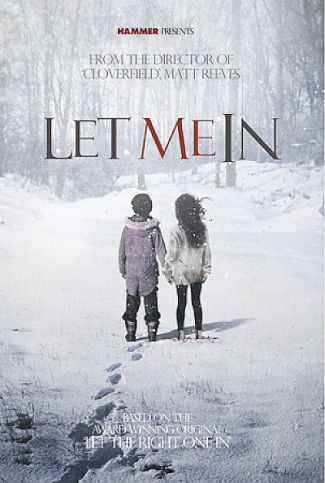
Let Me In In 2008, chilly Swedish import Let the Right One In offered an alternative, and an antidote, to the first Twilight movie’s sparkly vampire fantasy. John Ajvide Lindqvist adapted his own book for director Tomas Alfredson, and the tale — about a bullied, neglected 12-year-old boy who befriends the seemingly same-aged, mysterious new girl in his apartment complex, only to discover her monstrous secret — became a favorite among critics and genre fans unafraid of foreign flicks. Just two years later, writer-director Matt Reeves (whose Cloverfield was also a 2008 release) offers his own take on Lindqvist’s story, with Kodi Smit-McPhee (stronger here than he was in last year’s The Road) and tween It Girl Chloë Grace Moretz (Kick-Ass) taking the leads, and Richard Jenkins, Elias Koteas, and current Mad Men scene-stealer Cara Buono playing the peripheral adults. Reeves’ version is just fine — he shifts the action to the snowy New Mexico mountains, and Americanizes the original’s 80s setting (Reagan clips, new wave radio hits) — but doesn’t bring enough new to the table to justify remaking what was already a pretty fantastic film. Still, horror fans who haven’t seen the original, or who can’t be bothered to read subtitles, will no doubt appreciate this atmospheric spin on the age-old shared belief that growing up really sucks. For my interview with Reeves, including his explanation of why he chose to do a remake of a film he greatly admired, check out www.sfbg.com/pixel_vision. (1:55) Shattuck. (Eddy)
*The Social Network See “Status Update.” (2:00) Marina.
Sweethearts of the Prison Rodeo Director Bradley Beesley delves into the sort of unearthed Americana usually excavated by Werner Herzog and Errol Morris. In Oklahoma, a state that incarcerates women at higher rates than any other, female convicts have only recently been allowed participate in a 70-year-old rodeo for prison inmates. The filmmaker (best known for his work with fellow Oklahomans the Flaming Lips) avoids turning his documentary into a politicizing polemic, humanely focusing on what drives participants to risk potential death in a manner reminiscent of Roman gladiators. An overall lyrical sensibility is balanced by the main event, which excites in a Jackass sort of way. Even staunch death row supporters will find something to like: bones are broken and blood spilt between horns and hooves, as the riders attempt to hold on to culture beyond the prison walls, if only for eight seconds at a time. (1:30) Red Vic. (Prendiville)
*Waiting for “Superman” As was the case with Davis Guggenheim’s An Inconvenient Truth, his latest documentary has an active internet campaign: pledge to see Waiting for “Superman.” The films seem like apples and oranges at first glance — Truth warned about the extinction of our species, the end of life as we know it, while “Superman” takes on the public education system. But the picture Guggenheim paints in the latter is a bleak one: our schools are failing America’s youth. In clear, relatable words, he reveals the causes of this national epidemic lack of funding, misguided unions, no accountability. Like Truth, “Superman” is a smart and inspiring call to arms. Guggenheim’s wisest choice was following a group of young schoolchildren who want nothing more than to get a good education. Their struggle provides a necessary contrast to the bureaucracy. In showing the problem’s human face, the film offers further proof — as if we needed more—that something must be done to fix a broken system. For supplemental interview, visit www.sfbg.com/pixel_vision. (1:51) (Peitzman)
*Who Is Harry Nilsson? (And Why is Everybody Talkin’ About Him?) A loving, exhaustively fleshed-out tribute to now one of the more neglected stars to emerge from the classic rock firmament, Who Is Harry Nilsson? is lent the weight of the interviewees who knew and-or loved the singer-songwriter (including Van Dyke Parks, Brian Wilson, Randy Newman, Jimmy Webb, Yoko Ono, Micky Dolenz, Eric Idle, Paul Williams, and Robin Williams) and given much depth, courtesy of its almost two-hour length and its close ties to Nilsson himself: the musician’s attorney and estate representative Lee Blackman secured the funding for The U.S. vs. John Lennon (2006) co-director Jon Scheinfeld; widow Una and Nilsson’s children opened up on camera; and Sony allowed the remixing of more than two dozen songs. As bittersweet and uniquely shaped as a Nilsson song, this evocative classic-rock-fan must-see comes fully kitted out with charming and revealing rare performance footage of the man who otherwise refused to perform live, and much of the music that made 1971’s Nilsson Schmilsson a rock blockbuster and LP collection essential and transported such songs as Everybody’s Talkin’ and Without You into pop vernacular. Anecdotes, testimonials, home movies, and family snapshots fill out the picture of Nilsson, who despite his undeniable brilliance for lyrics and melody, and heaven-sent vocal gifts, seemed often driven to self-destruct as quickly as possible. Scheinfeld stops short of connecting all the dots explicitly. But the music, given its righteous due, goes a long way toward answering those hanging questions in the title and in the heart of Nilsson fans. (1:56) Roxie. (Chun)
You Will Meet a Tall Dark Stranger Woody Allen’s latest, once again set in tony London, has all the moving parts for a satisfying farce of self-sabotage, but the writer-director never gets past touching up his character sketches — which are far from interesting in themselves. There is Helena (Gemma Jones), elderly and recently divorced; she wants something stronger than tea and a psychic to rescue her from reality. Her daughter Sally (Naomi Watts) either wants a child or her boss, Greg (Antonio Banderas). She gets migraines and has an eye for art, and that’s about all. Meanwhile, hubby Roy (Josh Brolin) eyes the available young body across the way from his study (Freida Pinto) when he’s not grousing about his fledgling career as a novelist. Helena’s ex Alfie (Anthony Hopkins) is off in his own corner of the movie, taking up with a dopey prostitute (Lucy Punch) who, unlike his wife, is not old. There are sparks of life when these fine actors are allowed to play off one another — Jones and Brolin, in particular, work up a nicely caustic repartee — but a chirpy narrator belies the wobbly narrative construct. And unlike 2008’s Vicky Christina Barcelona, the ethnically marked objects of desire don’t get any good lines. Banderas as an art dealer is paint-by-numbers fantasy, while Pinto’s Dia is embarrassingly elaborated: always in red, a musicology PhD student who wants to be someone’s muse, she responds favorably to Roy’s slovenly flirtations, and, the kicker, has a father who translates Eastern European authors. Jones’ spiritualist is the only one who gets a Hollywood ending, and while I suppose that’s meant ironically, there’s plenty of soft-headedness to go around. (1:38) Albany, Embarcadero, Piedmont. (Goldberg)
ONGOING
*The Agony and the Ecstasy of Phil Spector Alternately slavish and critical, simultaneously buying into and subtly resisting the hype, The Agony and the Ecstasy of Phil Spector is a bit like the renowned producer himself, who said this to biographer Mick Brown in 2007’s Tearing Down the Wall of Sound: the Rise and Fall of Phil Spector: “I have a bipolar personality … I have devils inside that fight me. And I’m my own worst enemy … I would say I’m probably relatively insane.” You can see why director Vikram Jayanti scored the interview with Spector at the center of Agony, since he gets on board the musicmaker’s bifurcated, multichannel tip. The doc is both fascinating and monotonous, respectful of Spector’s achievements as well as the sensation surrounding his blighted celebrity. The filmmaker stays away from the specifics of the night in 2003 when Lana Clarkson was found dead at Spector’s mansion, while recontextualizing the producer’s words and music with images culled from the murder trial and other footage. The end result is an innuendo-laden pastiche that resembles an echo chamber reverberating with all the doomed dramatics of “He Hit Me (It Felt Like a Kiss).” (1:42) Roxie. (Chun)
Alpha and Omega (1:28) 1000 Van Ness.
*The American George Clooney caught in a moodily paranoid, yet exquisitely photographed, ’70s-style suspense-arthouse death-trap? Belmondo and Beatty could empathize. Nonetheless, veteran rock photographer and Control (2007) director Anton Corbijn suffuses the chilly proceedings with a fresh, wintry beauty, the carefully balanced sense of highly charged tension and silky smoothness that a gunsmith would appreciate, and a resonance that feels personal. How else would an ex-rock shooter like Corbijn, who’s made iconic images of the Clash, U2, and others, connect with this tale of an assassin masquerading as a photographer, one who’s constantly glancing behind and around himself — justifiably wary of being caught in another killer’s sights — and seemingly just as wary of the director’s, and audience’s, gaze? A character who wouldn’t be out of place in a Camus novella or a Melville brooder, Jack/Edward, or more accurately “the American,” (Clooney) is in exile after a bad collision with a girlfriend and hitmen in Sweden and hiding out in a picturesque Italian village, conspicuously the more-cold-than-cool outsider and doing one immaculate job for a gorgeous mysterious woman (Thekla Reuten). Is he a good or bad guy? The local priest (Paolo Bonacelli), who knows and sees all like a great eye in the sky, is trying to find out, as is the most beautiful prostitute in town (Violante Placido). The answers are nowhere near as clear or as plainly painted as a Sergio Leone Western, although Corbijn nods to the maestro when stone-cold killer Henry Fonda, then playing shockingly against type, appears on a cafe TV screen in Once Upon a Time in the West (1968). But the director’s care and attention to beauty — as well as the lines carved in the face of Clooney’s lean, mean-looking American, a whore like any other — say more than words. (1:43) Empire, 1000 Van Ness, Sundance Kabuki. (Chun)
*Buried Spanish director Rodrigo Cortés’ first English-language feature has one of the most deeply unsettling openings in recent memory: a pitch-black screen gradually soundtracked by the waking, disorientation, and frantic scratching made by Paul Conroy (Ryan Reynolds) as he realizes he’s been buried alive. A U.S. civilian contractor (the good, reconstructionist kind, not the gun-crazy, mercenary “security” type) in Iraq, he struggles to calm down as he uses a pocket lighter to view the coffin he’s trapped in. Finding a flashlight and cell phone, he soon receives a call from his kidnappers informing he has just 90 minutes of oxygen (and probably less time on the phone’s running-down battery) to raise a considerable ransom. Chris Sparling’s clever screenplay and Cortés’ surprisingly cinematic treatment (given the single location’s extreme claustrophobia) keep this potentially one-note real-world horror movie nail-bitingly tense throughout, while Reynolds runs a grueling emotive gamut with aplomb. (1:34) SF Center. (Harvey)
Cairo Time (1:29) Embarcadero, Shattuck.
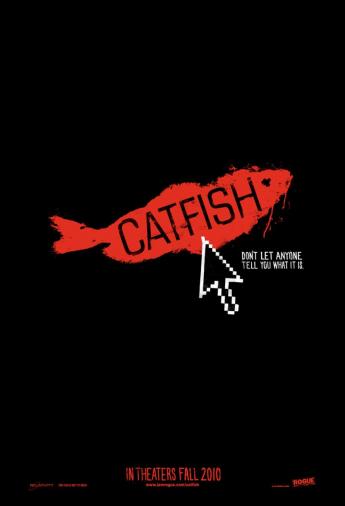
Catfish Please do not reveal the secret to Catfish — relax, I’m not going to. What I will say is this: Catfish’s uber-secretive, Paranormal Activity-esque ad campaign is effective, but the film ultimately stands on its own merits. This is an intriguing, relatable documentary, and if the studio feels that they’ll sell more tickets by promoting it in a certain way, so be it. Without giving away too much, Catfish is the spontaneous documentary that arose when filmmakers Rel Schulman and Henry Joost began filming Rel’s brother, Nev. Like so many of us, Nev finds himself drawn to a person he’s never met — embarking on a relationship through Facebook photos and wall posts. Of course, as is so often the case with the internet, nothing is quite what it seems. Catfish has already found its critics, particularly those who insist the documentary is a fake. I believe it, but either way it’s an impressive achievement: the best film yet about social networking. (1:26) Metreon. (Peitzman)
*The Desert of Forbidden Art Uzbekistan probably hasn’t been at the top of your vacation wish list, but it might be after seeing this documentary by Tchavdar Georgiev and Amanda Pope — at least if you’re a modern art lover. It centers on the Nukus Museum, an extraordinary institution founded by the late Igor Savitsky, a frustrated painter who came here first from Moscow as an archaeologist, then became fascinated with the remote region’s ethnic folk artifacts. By 1966 official policy had turned from wiping out regional traditions and identities to embracing them, so he was given public funds to showcase his collection here. But unbeknownst to the bureaucrats back home (until it was too late), he’d already found a new passion, and was busy funneling his budget toward it: Finding and archiving a wealth of virtually unknown Soviet modern art that had been created without notice (often in hiding) since Stalin’s cultural watchdogs condemned the once-favored avant-garde movement of the 1920s in favor of sentimental, propagandic “Soviet realism.” This stuff is the bomb — almost literally, since workaholic Savitsky finally died in 1984 of excess exposure to toxic restoration chemicals. There are poignant and colorful human stories here, but The Desert of Forbidden Art‘s exhilarating primary appeal lies in the fact that it features probably more eye-poppingly great visual art that you’ve never seen or known about before than quite possibly any documentary before it. You may well walk out with a question: so, are there cheap flights to Uzbekistan? (1:20) Four Star. (Harvey)
Devil (1:20) 1000 Van Ness.
*Easy A Take the sex out of a teen sex comedy and hone in on the heard-it-yesterday info overload of the highly social-networked ’00s, and you get Easy A, a whip-smart striver looking to give a whole new definition to fast fiction. The brainy grandchild of 1930s screwball comedies and the knowing offspring of more recent spoofs of the Clearasil years like Clueless (1995) — with blood ties to the on-point pop of pater familias John Hughes — Easy A doesn’t quite aspire to the grainy, your-so-called-reality of YouTube auteurs, à la The Virginity Hit, though Bert V. Royal’s script is just as steeped in the culture of viral gossip and TMZ-writ-small, as well as the high-low literary and cinematic referents, that ’80s babies-and-up were succored on. Welcome to the postmodern mixed-up world of the girl who gets straight As, a marked contrast to all the bromancin’ going down in other parts of the cineplex: Olive Penderghast (Emma Stone) is curious enough to venture fully down the rabbit hole of bad-girl schoolyard celebrity after fabricating a story about losing her virginity. Despite the swelling disapproval of Marianne (Amanda Bynes) and her virginal Christian fundamentalist crew, Olive’s soon giving pity faux-fucks to all the misfits on campus in exchange for gift cards to big-box stores. Her hilariously staged tryst with classmate Brandon (Dan Byrd), who’s sick of getting beaten up every day because he’s gay, is up there with anything in Ferris Bueller’s Day Off (1986). And though Easy A often seems pitched more to adults, like Olive’s wise-cracking parents (Patricia Clarkson and Stanley Tucci), its entertainingly self-aware fiction is still likely to bridge generational divides as much as anything on Facebook. (1:30) 1000 Van Ness, Presidio, Shattuck. (Chun)
Eat Pray Love The new film based on Elizabeth Gilbert’s chart-busting memoir, Eat Pray Love, benefits greatly from the lead performance by Julia Roberts, an actor who can draw from her own reserves of pathos when a project has none of its own. The adaptation, about a whiny American author farting around the globe in search of what amounts to spiritual room service, is nothing without her. The journey begins with the Type-A, book contract-inspired premise that Gilbert will travel to three appointed countries over the course of a year in order that, having thrice denied herself absolutely nothing, she might come out the other end a better-balanced human being. The first stop is Italy, where her entire plan is to finally unbutton her jeans and indulge in a celebrated cuisine, as if her home base of Manhattan were a culinary backwater. But this film is all about tired equivalencies, so Italy equals food, and expressive hand gestures, and “the art of doing nothing.” India, her next stop, equals enlightenment (her discovery that the guru she’s come to see is currently at an ashram in New York is an irony lost on the movie). And Bali, her final getaway, apparently equals contradictory but flattering aphorisms and thematically hypocritical romances. The sole appeal to a moviegoer here is aspirational. What’s so embarrassing about Eat Pray Love is its insistence that this appeal sprouts from the spiritual quest itself, and not just from the privilege that enables Gilbert to have such an extravagant quest in the first place. But then, self-awareness is supposed to be a obstacle to enlightenment. She’s got nothing to worry about there. (2:30) Sundance Kabuki. (Jason Shamai)
*The Girl Who Played With Fire Lisbeth Salander is cooler than you are. The heroine of Stieg Larsson’s bestselling book series is fierce, mysterious, and utterly captivating: in the movie adaptations, she’s perfectly realized by Noomi Rapace, who has the power to transform Lisbeth from literary hero to film icon. Rapace first impressed audiences in The Girl With the Dragon Tattoo (2009), a faithful adaptation of Larsson’s premiere novel, and she returns as Lisbeth in The Girl Who Played With Fire. The sequel, as is often the case, isn’t quite on par with the original, but it’s still a page-to-screen success. And while the first film spent equal time on journalist Mikael Blomkvist (Michael Nyqvist), The Girl Who Played With Fire is almost entirely Lisbeth’s story. Sure, there’s more to the movie than the hacker-turned-sleuth — and the actor who plays her — but she carries the film. Rapace is Lisbeth; Lisbeth is Rapace. I’d watch both in anything. (2:09) Four Star, Lumiere, Shattuck. (Peitzman)
Going the Distance If you live in San Francisco, don’t try to date someone in New York. It’s just not worth the hassle. But hey, maybe you’re as adorable as Drew Barrymore, and your boyfriend’s as charming as Justin Long — you can’t be expected to let a little geographical complication get in the way. That’s the driving force behind Going the Distance, a romcom that stars real-life couple Barrymore and Long as Erin and Garrett, two crazy kids trying to make it work cross-country. In many ways, the film is your standard boy-meets-girl story, but it’s cute enough that the predictability factor doesn’t really matter. The cast is universally strong, with bonus points to the standouts: It’s Always Sunny in Philadelphia‘s Charlie Day as Garrett’s embarrassing roommate, and Christina Applegate as Erin’s germaphobe sister. The humor is surprisingly sharp — and raunchy, which earned Going the Distance an R-rating. I’m not going to say Long’s bare ass is worth the price of admission, but it’s certainly a selling point. (1:43) SF Center. (Peitzman)
*Heartbreaker French import Heartbreaker is a star-driven romantic comedy that underlines how lame and formulaic Hollywood’s current endeavors in that genre almost invariably are. Not that it isn’t formulaic — but you don’t feel nose-led by a committee of script-coarsening hacks, and the usual escapist lifestyle pleasures don’t come off as a product-placement parade. Alex (Romain Duris) is the star performer in a biz run with pragmatic sibling Mélanie (Julie Ferrier) and her genially vague husband Marc (François Damiens). They orchestrate breakups with maximum guile but also strict ethical rules (“We open their eyes, not their legs … We only step in if the woman is unhappy”), usually hired by families desperate to wean daughters from bad relationships. An amusing montage of Alex essaying various roles — window washer, sushi chef, redeemable criminal — establishes this is an enterprise both elaborately thought-out and costly. Indeed, Alex and Co. are in debt, thanks to his theatrical perfectionism. Ergo they’ve no choice but to violate rules and accept a lucrative new assignment whose target seems far from unhappy. There’s never any doubt where Heartbreaker is headed. Cocky Alex will fall hard, repent his professional Don Juan fakery, almost lose the game, then grovel sufficiently to pull a Graduate as scruffy charmer triumphs over dully respectable Mr. Right. What happens after the fade, when reality dawns? We probably don’t want to know. Yet Heartbreaker earns that suspension of disbelief, arriving at a unabashedly melodramatic climax just as romantically intoxicating as it aims to be. (1:44) Opera Plaza. (Harvey)
*Howl Beatniks get the Mad Men treatment — with a cast that includes that AMC hit’s Jon Hamm, playing the lawyer who defended the publisher of Allen Ginsberg’s quintessential rebel yell, Lawrence Ferlinghetti, against obscenity charges in San Francisco’s most celebrated trial of the 1950s. It’s fun to see that anally nostalgic aesthetic translated to ramshackle North Beach apartments and sophomoric, filthy-mouthed literary heroes. Not so much fun: the overly literal animation chosen by the directors (famed documentarians Rob Epstein and Jeffrey Friedman). Yes, parts of “Howl,” the poem, are animated — unfortunately in a style that calls to mind bad 1980s French Canadian pseudo-spiritual arthouse schlock. Still, this brief slice of beats is juicy, confined to the trial and the tale of Ginsberg’s poetic and sexual awakening. James Franco is wonderful as the young, self-obsessed, epically needy yet still irresistible crank. It was the first time I found myself wishing to see more of Ginsberg naked. (1:30) Smith Rafael, Sundance Kabuki. (Marke B.)
I’m Still Here This examination of Joaquin Phoenix’s self-imposed Hollywood exile is neither fascinating nor insightful. More like tedious and aggravating, really. Whether or not “JP” — as the erstwhile Oscar nominee refers to himself as he takes on a new persona as unwashed hip-hop artist — is faking his downward spiral is supposed to be the great attraction for Casey Affleck’s apparently vérité vehicle. But Phoenix is so (deliberately?) unlikable it’s hard to care one way or the other. If he is having a breakdown, conveniently captured on film from multiple angles, he’s still a spoiled, private jet-taking movie star moping about existential woes while living a privileged life (hotel suites, fawning personal assistants, etc.) If he’s faking it, it’s unclear what the point of I’m Still Here is supposed to be, other than a “fuck you” to the industry that made Phoenix rich and famous. Either way, ugh. (1:48) Lumiere. (Eddy)
Inception As my movie going companion pointed out, “Christopher Nolan must’ve shit a brick when he saw Shutter Island.” In Nolan’s Inception, as in Shutter Island, Leonardo DiCaprio is a troubled soul trapped in a world of mind-fuckery, with a tragic-vengeful wife (here, Marion Cotillard) and even some long-lost kids looming in his thoughts at all times. But Inception, about a team of corporate spies who infiltrate dreams to steal information and implant ideas, owes just as much to The Matrix (1999), Eternal Sunshine of the Spotless Mind (2004), and probably a James Bond flick or two. Familiar though it may feel, at least Inception is based on a creative idea — how many movies, much less summer blockbusters, actually require viewer brain power? If its complex house-of-cards plot (dreams within dreams within dreams) can’t quite withstand nit-picking, its action sequences are confidently staged and expertly directed, including a standout sequence involving a zero-gravity fist fight and elevator ride. Though it’s hardly genius — and Leo-recycle aside — Inception is worth it, if you don’t mind your puzzle missing a few pieces. (2:30) 1000 Van Ness, Sundance Kabuki. (Eddy)
Jack Goes Boating Not all miserable people are interesting — sometimes they’re just miserable and dull. Case in point: all of the characters in Jack Goes Boating, adapted by Robert Glaudini from his play. The titular Jack (Philip Seymour Hoffman, who also directs) is an awkward limo driver with filthy dreads and an anger management problem. He does his best to court equally awkward Connie (Amy Ryan), while his best friends Clyde (John Ortiz) and Lucy (Daphne Rubin-Vega) watch their marriage collapse, spectacularly. Given the talent involved, Jack Goes Boating might be mistaken for a better film than it is. There are moments, in fact, when it’s almost good. But the movie is unpleasant on every level — and not in an engaging way, like far better Noah Baumbach films about dysfunction. The romance is strained and unrelatable: you want Jack and Connie to make it work, if only so that the movie can end. (1:29) Embarcadero, Shattuck, Sundance Kabuki. (Peitzman)
*The Kids Are All Right In many ways, The Kids Are All Right is a straightforward family dramedy: it’s about parents trying to do what’s best for their children and struggling to keep their relationship together. But it’s also a film in which Jules (Julianne Moore) goes down on Nic (Annette Bening) while they’re watching gay porn. Director Lisa Cholodenko (1998’s High Art) co-wrote the script (with Stuart Blumberg), and the film’s blend between mainstream and queer is part of what makes Kids such an important — not to mention enjoyable — film. Despite presenting issues that might be contentious to large portions of the country, the movie maintains an approachability that’s often lacking in queer cinema. Of course, being in the gay mecca of the Bay Area skews things significantly — most locals wouldn’t bat an eye at Kids, which has Nic and Jules’ children inviting their biological father (“the sperm donor,” played by Mark Ruffalo) into their lives. But for those outside the liberal bubble, the idea of a nontraditional family might be more eye-opening. It’s not a message movie, but Kids may still change minds. And even if it doesn’t, the film is a success that works chiefly because it isn’t heavy-handed. It refuses to take itself too seriously. At its best, Kids is laugh-out-loud funny, handling the heaviest of issues with grace and humor. (1:47) Opera Plaza, Piedmont. (Peitzman)
Last Train Home In disaster movies, there’s a familiar scene: panicked throngs press against barriers, crushing one another, pleading “I have to get through!” to impassive guards. Watching the documentary Last Train Home, you realize an over-dramatic Hollywood cliché is a depressing reality in other parts of the world, as workers in China annually endure massive crowds to get home for New Year’s. Filmmaker Lixin Fan focuses on one couple among the 130 million taking part in the world’s largest migration. Their sacrifice (being away from their children for work) is called into question when their daughter runs away to the city to sew jeans and party. By the producers of 2007’s equally cinematic Up the Yangtze, this doc unfolds like a scripted film, until the family’s conflict shatters the fourth wall, and you’re reminded that people actually have to endure intense hardships so that we can have cheap pants with 40-inch waists. (1:27) Lumiere, Shattuck. (Prendiville)
*Legend of the Guardians: The Owls of Ga’hoole Owl fever is everywhere — from the megahit Webcam trained on Molly the Barn Owl in San Marcos to the omnipresent ’70s-flavored owl necklaces designed by Real Housewife kook Kelly Bensimon. Animated fantasy Legend of the Guardians: The Owls of Ga’Hoole is yet another sign that the fascination hasn’t faded yet. Less sophisticated than Fantastic Mr. Fox (2009) and more straight-faced than this year’s Cats & Dogs: The Revenge of Kitty Galore, this animated talking-animal epic displays director Zach Snyder in family-friendly fantasy mode. While venturing out of the safety of their nest and attempting to test their wings, youthful barn owlet Soren (Jim Sturgess) and competitive brother Kludd (Ryan Kwanten) are captured by the hench-owls of Nyra (Helen Mirren) and Metalbeak (Joel Edgerton), two Aryan Nation-esque critters who style themselves as the Pure Ones. They’re bent on imposing a strict heirarchy on the owl kingdom, subjugating the “lesser” birds, and destroying a mythical crew of warrior owls called the Guardians. And thanks to Legend of the Guardians‘ cunning detail and solid 3-D effects, that world of good vs. evil takes on a breadth and depth that both children and adults can probably fly with. Though the owls’ eyes can seem a bit too cartoonishly, and wildly unrealistically, expressive, the director who made 300 (2006) and Watchman (2009) and creative team Animal Logic still can’t resist giving the kids a little gritty kick with bloodless yet visceral bird battle scenes, and those nuggets of mouse parts that the cute li’l owlets puke up. (1:31) 1000 Van Ness, Presidio. (Chun)
*Machete Probably the first movie that was initially conceived solely as a fake-movie trailer (as part of Quentin Tarantino and Robert Rodriguez’s 2007 Grindhouse), Rodriguez’s Machete emerges in full-length form to take on everyone’s sky-high expectations. I mean, the trailer promised motorcycles soaring through flames, a gun-toting priest, and the line “You just fucked with the wrong Mexican.” Fortunately, Machete the film does Machete the trailer proud; its deliberately silly revenge plot is both spot-on vintage homage and semi-serious commentary on America’s ongoing immigration debate. In addition, it features more severed limbs, gunshots to the head, irresponsible sex, and smirking Steven Seagal close-ups than any other movie in recent memory. Frequent Rodriguez supporting player Danny Trejo pretty much kills it as the title badass — but then, you already knew he would. (1:45) 1000 Van Ness. (Eddy)
*Mademoiselle Chambon Stéphane Brizé’s new Mademoiselle Chambon is a movie whose protagonists lunge toward each other — even though they shouldn’t, for their own sakes and everyone else’s. Grave-voiced, craggy-faced Jean (Vincent Lindon) is a construction-site laborer; Anne Marie (Aure Atika) his assembly-line worker wife; Jeremy (Arthur Le Hourerou) the eight-year-old offspring who’s already better educated than either of them. One day Anne Marie suffers a temporarily disabling factory accident, leaving Jean to pick up Jeremy from school. There, Jean first encounters Jeremy’s teacher, Véronique Chambon (Sandrine Kiberlain). She has the willowy body of a veteran ballet dancer and a naturally refined air — at least by his limited experiential standards. There’s an immediate if unadmitted spark between them, yet Mademoiselle Chambon doesn’t get cheap about it. None of these people are more than ordinary, kinda-attractive. As temptations and related tensions unravel their stability, Brize allows his characters to slip grip gracefully. No one behaves well, but they do behave credibly. Mademoiselle Chambon sees rational folk with well-organized lives stubbornly resisting a mutual pull whose logical outcome will surely suck for all concerned. It’s a fine, measured drama presented with typical Gallic insouciance — tenderly discreet even when conventional art and commerce shout for something more crudely dramatic. (1:41) Clay, Shattuck. (Harvey)
*Mao’s Last Dancer Based on the subject’s autobiography of the same name, this Australian-produced drama chronicles the real-life saga of Li Cunxin (played as child, teen, and adult by Huang Wen Bin, Chengwu Guo, and Chi Cao), who was plucked from his rural childhood village in 1972 to study far from home at the Beijing Dance Academy. He attracted notice from Houston Ballet artistic director Ben Stevenson (Bruce Greenwood) during a cultural-exchange visit, and was allowed to go abroad for a Texas summer residency. At first the film looks headed toward well-handled but slightly pat inspirational territory pitting bad China against good America, as it cuts between Li’s grueling training by (mostly) humorless Party ideologues, and his astonishment at the prosperity and freedom in a country he’d been programmed to believe was a capitalist hellhole of injustice and deprivation. (Though as a Chinese diplomat cautions, not untruthfully, he’s only been exposed to “the nice parts.”) Swayed by love and other factors, Li created an international incident — tensely staged here — when he chose to defect rather than return home. But Jan Sardi’s script and reliable Aussie veteran Bruce Beresford’s direction refuse to settle for easy sentiment, despite a corny situation or two. Our hero’s new life isn’t all dream-come-true, nor is his past renounced without serious consequence (a poignant Joan Chen essays his peasant mother). The generous ballet excerpts (only slightly marred by occasional slow-mo gimmickry) offer reward enough, but the film’s greatest achievement is its honestly earning the right to jerk a few tears. (1:57) Opera Plaza, Shattuck. (Harvey)
Never Let Me Go The time is not so long ago, and the atmosphere is of a rural England that resists change. So it takes a while for us to realize that this adaptation of Kazuo Ishiguro’s acclaimed book (by fellow novelist Alex Garland) takes place in an alternative recent past in which society has indeed changed in ways that are few, yet enormous. Raised at what appears to be a familiar if slightly peculiar English boarding school, the students of Hailsham are given limited but highly specific education preparing them for an adulthood of service. A short adulthood, that is, for they are clones grown from “originals,” considered not quite human, their purpose being eventual willing harvest for organs by a populace whom medical science breakthroughs can now allow extraordinarily long lifespans. Placidly preparing for that future sacrifice are best friends Ruth (Keira Knightley), Tommy (Andrew Garfield), and Kathy (Carey Mulligan), the latter such a born accommodator that she doesn’t utter a peep of protest when Ruth grabs Tommy as her boyfriend — destroying all Kathy’s hopes and probably dimming Tommy’s somewhat as well. Directed by Mark Romanek (2002’s One Hour Photo), Never Let Me Go spans a couple of decades, but its aura of mournful melancholy never wavers. The results are well cast, handsomely outfitted (Rachel Portman contributes a plaintive string score), tasteful, and just a little bit more monotonous and less touching than you might hope. Not particularly plot-driven, this is a good film that’s also another illustration (like such recent examples as 2009’s The Road and 2008’s Revolutionary Road) of how sometimes no amount of intelligent effort can make a movie achieve everything that some literature can. (1:43) Albany, Embarcadero, Sundance Kabuki. (Harvey)
Resident Evil: Afterlife (1:30) 1000 Van Ness, SF Center.
The Romantics Katie Holmes comes out of semi-retirement to bear gloomy witness, as Laura, to the nuptials of Tom (Josh Duhamel) and Lila (Anna Paquin) at one of those doomed Hollywood weddings where there seems to be little chance of the proceedings going further than “speak now or forever hold your peace.” The three compose a tense, unhappy triangle within their larger cohort of college friends (including Adam Brody, Elijah Wood, and Malin Akerman), who call themselves the Romantics in part — as Laura explains in an awkward, Rachel Getting Married–esque rehearsal-dinner toast — because of their history of incestuous intraclique couplings. Ten years postgraduation, aided by an open bar, the gang carry forward this tradition while stumbling around the grounds of an East Coast beach house looking for the AWOL groom, grimly reviewing their incremental progress in life since college, and, in Laura and Tom’s case, laying out for us in a series of raw, heated info-dumps their secret history, complete with angry recitations of Keats and metaphoric representations of their embattled relationship. The character deficits (particularly Tom’s) revealed by these and other exchanges make it difficult to know who or what to root for in this film (adapted from director-screenwriter Galt Niederhoffer’s novel), and by the time the wedding party is headed down the aisle, most of the romance has drained away. (1:35) Shattuck. (Rapoport)
*Scott Pilgrim vs. The World For fans of Bryan Lee O’Malley’s just-completed comics saga Scott Pilgrim, the announcement that Edgar Wright (2004’s Shaun of the Dead, 2007’s Hot Fuzz) would direct a film version was utterly surreal. Geeks get promises like this all the time, all too often empty (Guillermo del Toro’s Hobbit, anyone?). But miraculously, Wright indeed spent the past five years crafting the winning Scott Pilgrim vs. the World. The film follows hapless Toronto 20-something Scott Pilgrim (Michael Cera), bassist for crappy band Sex Bob-omb, as he falls for delivery girl Ramona Flowers (Mary Elizabeth Winstead), only to find he must defeat her seven evil exes — like so many videogame bosses — before he can comfortably date her. As it happens, he’s already dating a high-schooler, Knives (Ellen Wong), who’s not coping well with Scott moving on. Cera plays a good feckless twerp; his performance isn’t groundbreaking, but it dodges the Cera-playing-his-precious-self phenomenon so many have lamented. The film’s ensemble cast maintains a sardonic tone, with excellent turns by Alison Pill, Aubrey Plaza, and newcomer Wong. Jason Schwartzman is perfectly cast as the ultimate evil ex-boyfriend — there’s really no one slimier, at least under 35.The film brilliantly cops the comics’ visual language, including snarky captions and onomatopoetic sound effects, reminiscent onscreen of 1960s TV Batman. Sometimes this tends toward sensory overload, but it’s all so stylistically distinctive and appropriate that excess is easily forgiven. (1:52) California. (Sam Stander)
Soul Kitchen Director Fatih Akin (2004’s Head-On) offers a tribute to the German Heimat (“homeland”) film, as well as to his own hometown, Hamburg, with this gritty comedy set in a restaurant dubbed Soul Kitchen. Star Adam Bousdoukos, who co-wrote the script with Akin, really did own a similar greasy spoon, and his knowledge of what makes an eatery soar or fail is exaggerated here to humorous and occasionally surreal effect. Bousdoukos’ character, the scruffy Zinos, loves funk music; he’s also in an existential funk, having just seen his girlfriend move to Shanghai. What’s worse, he’s just injured his back, necessitating the hiring of snooty chef Shayn (Head-On‘s Birol Ünel); his ne’er-do-well brother (Moritz Bleibtreu) is freshly out of jail; and he owes big bucks to the local tax board. Also, an old childhood pal turned sleazy businessman (Wotan Wilke Möhring) is circling his property with sharky hunger. Will everything that can possibly go wrong, go wrong, with a side of ketchup and mayonnaise? Of course it will. Stylish direction and a game cast, including winning newcomer Anna Bederke as Zinos’ shot-gulping waitress, make Soul Kitchen a fun if non-essential diversion. (1:33) Lumiere. (Eddy)
*The Tillman Story To what extent is our government prepared to lie to us? Not just on a policy level, but a personal level, perverting actual instances of heroic self-sacrifice into propagandistic pablum? The answer during our prior White House administration was clearly: as far as possible, until caught. Perhaps the most egregious such instance was the case of Pat Tillman, who gave up a lucrative NFL contract, becoming a U.S. Army Ranger enlistee in a burst of genuine patriotic fervor post-9/11. He was subsequently killed in Afghanistan — but the “friendly fire” circumstances of that death, and its apparent cover-up, scandalized not only his military superiors but a command chain of deliberate disinformation stretching all the way to the White House. Amir Bar-Lev’s The Tillman Story is a documentary expose of unusual immediacy, narrative thrust, and outrage, which may partly stem from its being such a Bay Area story. The deceased subject’s South Bay family were diehard liberals dedicated to values that might be considered eccentric anywhere else. The mistake authorities made in casting Tillman’s death as a battlefield martyrdom — a scenario amply undermined by footage and testimony here — lay in underestimating the well-educated skepticism and doggedness of his blood relations, most notably mom, Mary. While other families might have simply accepted an official scenario, the Tillmans found logistical gaps, then pushed, and pushed. The Tillman Story is a journey toward justice (if not nearly enough). It’s engrossing, appalling, heartrending, and enraging, the nonfiction equivalent to last year’s underseen body bag drama The Messenger. (1:34) Shattuck, Sundance Kabuki. (Harvey)
The Town While not quite on par with The Departed (2006) or Gone Baby Gone (2007), The Town is a solid entry into the Boston crime drama genre. Ben Affleck directs — it’s his second full-length feature after Gone Baby Gone — and stars as Doug MacRay, a lifelong bank robber who wants out of the family business. His desire to change is further complicated when he falls for Claire (Rebecca Hall), the woman he and his gang took hostage during their latest robbery. The Town doesn’t offer much in the way of surprises: if you’re familiar with the genre, you know what to expect. But it’s sleek and well-paced, with a script that at least raises some thought-provoking questions. The film also boasts a universally accomplished cast. Affleck, Hall, and Academy Award nominee Jeremy Renner are predictably good, but the two standouts are actors better known for their television work: Mad Men‘s Jon Hamm as an FBI agent and Gossip Girl‘s Blake Lively (yes, really) as a drug-addled single mom. (2:10) California, Empire, 1000 Van Ness, Presidio, SF Center, Sundance Kabuki. (Peitzman)
*Undertow This sexy and delicate drama is a bisexual triangle that continues beyond the grave. In a Peruvian coastal hamlet, fisherman Miguel (Cristian Mercado) loves his pregnant wife and fellow church leader Mariela (Tatiana Astengo). But he’s also having a secret, passionate affair with Santiago (Manolo Cardona), an urbanite who moved there to paint the land- and seascapes, and who chafes at the restrictions Miguel places on their relationship. At a certain point one character dies, and writer-director Javier Fuentes-León seamlessly handles Undertow‘s transition to magical realism. The leisurely story doesn’t go where one expects, ending on a perfect grace note of bittersweet acceptance. (1:40) Bridge. (Harvey)
The Virginity Hit To its credit, The Virginity Hit is not what you’d expect. The trailer and concept recall the teen sex comedy trend that sprung up after 1999’s American Pie, but the actual film is a far more grounded in reality. It’s also not nearly as good. The Virginity Hit is a well executed mockumentary, in that it feels amateur even in its most absurd moments. The movie follows Matt (Matt Bennett) in his attempts to lose his virginity after a disastrous attempt with his girlfriend Nicole (Nicole Weaver). As you’ve probably guessed, hilarity ensues — and it ensues, for a YouTube generation, in the form of viral videos and crude parodies. The problem with The Virginity Hit is that it just isn’t funny: the tone is all over the place, and the bits that should be amusing fall flat. It’s interesting as an experiment and the cast is quite convincing, but the material never elevates the film past its gimmick. (1:26) 1000 Van Ness. (Peitzman)
Wall Street: Money Never Sleeps This seems just the moment for a sequel to Oliver Stone’s indictment-celebration of financial-sector yuppies: one again, all eyes are focused on Wall Street’s fluctuating fortunes and sleazy insider dealings. Oscar winner Michael Douglas reprises his role as the enjoyably sinister Gordon Gekko, but it’s kinda like watching Anthony Hopkins play Hannibal Lecter in anything post-Silence of the Lambs (1991), with a celebrated character floundering amid a script that doesn’t measure up to what came before. Gekko’s not even the main focus here, with Shia LaBeouf stepping up as Jake, a whiz kid who’s already made millions (unlike Charlie Sheen’s character in the first film, whose financial aspirations allowed him to be manipulated by the shellac-haired GG). See, Jake’s engaged to Gekko’s daughter (Carey Mulligan, fretting elegantly); they’ve already got a sweet loft and enough dough to kick hundreds of thousands over to Jake’s real estate-agent mom (a superfluous Susan Sarandon). Anyway, the main conflict involves evil banker Josh Brolin taking down Jake’s firm and driving his boss to suicide; meanwhile, Jake is a pure-hearted idealist lured into wrongdoing only to save his pet cause, alternative energy. Yeah, really. Any time there’s a financial concept to be explained, Stone revs up animated graphs and numbers, vainly attempting to create thrills from the inherently boring. And in case you were wondering, the once and future Bud Fox does indeed make a cameo, his winking, leathery visage a sad reminder that he was once a promising film actor before choosing a path of serial marriage and sitcom megabucks. (2:13) Empire, Four Star, Marina, 1000 Van Ness, SF Center, Sundance Kabuki. (Eddy)
Whiz Kids “One of the bad things about all methods of dating,” according to 17-year-old Harmain Khan, “is that if you want to date something, you have to destroy it.” A rather advanced notion about relationships, if not for the fact that the teen is actually referring to using electron spin resonance to date fossilized crocodile teeth. Yeah. And yet, he’s the most oddly charismatic among the three nerds at center in Tom Shepard and Tina DiFeliciantonio’s Whiz Kids. Like 2002’s Spellbound, the doc follows quirky kids as they prepare for an important competition, in this case the Intel Science Talent Search. Though the film isn’t ground-breaking, the subjects amuse with their odd mixture of scientific maturity and age-appropriate social naiveté; there’s a lot to relate to, even if they’re hoping to get into Harvard and solve the environmental crisis, and you at that age were just hoping to make it to graduation. (1:22) Balboa. (Prendiville)
A Woman, a Gun and a Noodle Shop An intriguing misfire on par with his 2006 OTT bodice-heaver Curse of the Golden Flower, A Woman, a Gun and a Noodle Shop sees filmmaker Zhang Yimou playfully dispensing with the serious rep cultivated by such films as Red Sorghum (1987) and Raise the Red Lantern (1981), movies that made Zhang a central figure amid Chinese film’s Fifth Generation. Deep into middle age, with crowd-pleasers like Hero (2002) and House of Flying Daggers (2004) behind him, Zhang appears fully committed to the low road of commercial entertainments — an approach completely in line with his country’s embrace of market-driven economics. But why remake the Coen brothers’ career-making 1984 noir tribute, Blood Simple? Zhang does little to refresh and improve on Coens’ noir retool, apart from drenching the proceedings in his homeland’s very dated, broad slapstick, including a jarringly out-of-place noodle-dough twirling scene, and setting some of the action on the glorious painted-desert mountainsides of the Gansu province. It’s as if Zhang has decided to send up himself — the film’s vivid palette and adulterous couple compares unfavorably with 1990’s Ju Dou — as well as with the brudders Coen. (1:35) Four Star. (Chun)
You Again (1:30) 1000 Van Ness, Presidio.