


Today, Johnny offers a fascinating idea. The GOP in Arizona has been forced to back down on some of its worst immigration policies — purely because of the economic impact. What if the 26 million or so American consumers who fall into the general category of the Left (and the anti-war Right) just stopped spending money on anything beyond essentials for one week — a boycott against the wars in Iraq and Afghanistan and in favor of taxes on the rich. Would it make anyone in Washington listen? You, of course, can listen all you want, after the jump.
Immigration
On the Cheap Listings
WEDNESDAY 9
DIY bike building Bazaar Cafe, 5927 California, SF; www.howtonight.com. 7pm, free. If you’ve ever thought about custom building a bike and wonder what exactly is involved, come to this latest workshop in the “How To Night” series. Tonight, bicycle and skateboard designer Peter Verdone will show you how he builds custom frames from raw materials.
THURSDAY 10
“Beneath the Pacific Ocean” USF Fromm Hall, 330 Parker, SF; (415) 422-6828, www.pacificrim.usfca.edu. 5:45pm, free. Dr. Stephen R. Hammond of the US National Oceanic and Atmospheric Administration will take you on a visual journey 20,000 leagues beneath the Pacific Rim as he presents his adventures and amazing discoveries from just the first year of a five year study. Learn about the diversity of animal communities, magnetically driven hot springs, underwater volcanoes, and more. Reservations are strongly encouraged.
FRIDAY 11
“History of the Animation Industry in California” California Historical Society Museum, 678 Mission, SF; (415) 357-1848, www.californiahistoricalsociety.org. 6pm, free. Join the California Historical Society and Cartoon Art Museum curator Andrew Farago as he presents his latest book The Looney Toons Treasure – a celebration of classic cartoons that have entertained generations. See how he breathes new life into such iconic characters as Yosemite Sam and Bugs Bunny, with behind-the-scenes memorabilia straight from the Warner Brothers vault.
SATURDAY 12
St. Patrick’s Day festival and parade Festival: Civic Center Plaza, Polk and McAllister, SF. 10am-5pm, free; parade starts at Second and Market, SF, 11:30am, free. www.sresproductions.com. San Francisco’s yearly St. Patrick’s Day festivities are the largest of any city west of the Mississippi, so be sure to attend this year’s 160th annual celebration of Irish American culture. The parade begins at Second and Market at 11:30am and will merrily march toward Civic Center Plaza, where many colorful festivities for the whole family awaits – cultural displays, a petting zoo, pony rides, and much more.
Asian American film festival forum Japantown Peace Plaza, Post and Buchanan, SF; www.caamedia.org; 12-10pm, free. Help kick off the Asian American film festival at this all-day showcase of live music, dancing, food, and fun. On this year’s bill are Taiwanese pop sensation Hola Sisters, indie rockers Soft Knife, dance crew Illest Villains, as well as slam poets, fine art exhibitions, film screenings, and more.
Urban foraging Meet at 7th Ave. and Lawton, SF; (415) 731-5627, www.gardenfortheenvironment.com. 1-3pm, free. Bring your walking shoes – and your appetite – for this eat-your-way-through-San-Francisco tour with local non-profit Garden for the Environment. Learn how to identify the abundant wild foods growing all around us and the best time to harvest as you hoof it up Sutro Hill. The tour is approximately three miles, half of which is uphill, so expect to get a good workout as well. Don’t forget to call ahead to register.
SUNDAY 13
Slingshot turns 23 Long Haul Infoshop, 3124 Shattuck, SF; (415) 863-8688, www.slingshot.tao.ca. 7-9pm, free. Wish Slingshot Collective a very happy birthday at this party featuring live acoustic bands, tons of food, good people, and fun. Slingshot, in case you don’t know, is the quarterly, independent, radical newspaper that’s been published in the East Bay since 1988. You may have seen their cute handy organizers chock-full of radical info, including a menstrual calendar, info on police repression, and more – very handy indeed. They’ll have back issues available as well as a discussion about the future of the collective.
“Breathed…Unsaid” film festival SOMArts Cultural Center, 934 Brannan, SF; (415) 863-1414, www.somarts.org. Noon-8pm, free. Come check out this all-day mini film festival to accompany SOMArts most recent show “Breathed…Unsaid,” the multi-disciplinary exhibit featuring the work of 20 Bay Area artists exploring such themes as geography, origin, borders, and cultural diaspora. Today’s festival includes City of Borders, a film about an underground gay bar in Jerusalem that stands as a symbol of peace in a land divided by war; Crepe Covered Sidewalks, on one woman’s journey back home to New Orleans after Katrina; The Wall, a film about the complicated US immigration issue and the border patrol as well as shorts, previews, and more.
TUESDAY 15
Persian New Year festival The Persian Center, 2029 Durant, Berk.; (510) 548-5335, www.persiancenter.com. 6-10pm, free. Jump over a bonfire for Chahr-Shanbeh Souri to shake off the darkness of winter and welcome the lightness of spring, a Persian ritual passed down since ancient Zoroastrian times. Persian music, food and craft vendors, cultural organizations, and children’s activities add to the experience.
On the Cheap listings are compiled by Jackie Andrews. Submit items for the listings at listings@sfbg.com. For further information on how to submit items for the listings, see Picks.
The American dream, for sale

news@sfbg.com
For Mao Huajun and Wen Lin, a trip to San Francisco is a chance to stock up on American retail. With at least five bags in each arm, the couple from China is all smiles. Through an interpreter, they point to the tags on their new clothes and cologne and explain: "Made in China."
Consumer products devised here and made there are too expensive or not available for Chinese shoppers, so Mao and Wen, who come from Wenzhou, where Mao made a fortune in wood products and real estate, are taking full advantage of their trip.
But don’t confuse them with typical tourists. The two are on a boutique pre-immigration tour of the Bay Area, tailored for rich people who want to move to this country — without the typical problem of getting documents.
An anti-immigration wave is sweeping across the country. The Obama administration has overseen the deportation of a record 390,000 people in the past year. College kids who came here as young children are finding they can’t stay and work. The much-anticipated DREAM Act, which would allow college graduates a chance at citizenship, is in a Republican-induced limbo. Poor and working-class immigrants are getting kicked out of the country every day.
But private companies are going overseas and recruiting investors with the promise of a little-known federal program: For half a million bucks, you can get yourself a green card.
If you’ve got the cash, the promoters say it’s easy. Invest that sum with a broker who’s doing some sort of development in a low-income area and you’re guaranteed the right to move to the United States, immediately, with your entire family. You can live anywhere you want (not just in the area where you invested). And you’re on track to become a U.S. citizen.
But the program, known by its federal moniker of EB-5, is riddled with loopholes and lack of oversight. It has a history of creating few or no jobs, and the projects it funds can harm low-income communities. The immigrant investors aren’t safe, either. They put their fate in the hands of brokers and immigration officials, and if everything doesn’t go according to plan (and sometimes they have no control over that plan), they lose their money and face deportation — sometimes years after settling into their new lives.
In truth, the real winners in this program are the private brokers who profit by connecting immigrant investors with projects that desperately need funding.
San Francisco has been late to enter the EB-5 game — but now long-time political figures, including former Redevelopment Commissioner Benny Yee, are getting in on the action. Oakland has several EB-5 centers looking for money.
THE RICH ARE DIFFERENT
The federal government has long offered employment-based visas that allow people with exceptional skills or who are otherwise valuable to the American economy to immigrate to the U.S. But EB-5, created in 1990, is different: it places value on immigrants based on their wallets, not on their brains.
When Congress debated the creation of EB-5, politicians and members of the public saw it as a bona fide way to create citizenship opportunities. The rationale: people who create jobs with their money deserve to live here.
Federal officials and EB-5 experts told us how it works, at least in theory. To gain initial residence visas for themselves and their families, would-be immigrants have to invest $1 million in a new business or an existing and struggling one. If the business is in a Targeted Employment Area — defined by law as "a rural area or an area that has experienced high unemployment of at least 150 percent of the national average" — the investment requirement drops to $500,000.
The EB-5 applicants can invest on their own or they through a broker, known as a regional center. Regional centers make the process easier for investors; they also pool investment to generate the capital necessary for big projects.
Each investor must create or preserve at least 10 full-time sustainable jobs within two years to stay in the country permanently.
Exact numbers aren’t available, but government data shows that the vast majority of investors opt for the $500,000 plan — and few invest on their own. Luz Irazabal, spokesperson for United States Citizenship and Immigration Services, the agency overseeing EB-5, estimates that 80 percent to 90 percent of visas are granted through the regional centers.
So in practice, the program allows private, unregulated brokers to take the money of wealthy people and invest it in projects that are supposed to create jobs in low-income areas. It’s not necessarily a bad idea, and there’s nothing wrong with opening the most possible paths to legal residency.
But it doesn’t always work out — for the immigrants or the community.
WIN-WIN-WIN-WIN?
The EB-5 program is booming. Only 11 regional centers existed in 2007. Today 133 businesses are designated as regional centers allowed to offer EB-5 visas to foreigners in exchange for their cash and 180 applications for the status are pending.
And while EB-5 started out slowly (only a few hundred green cards were issued in the first few years) and still isn’t a huge factor in immigration (1,886 permits were issued last year), most observers agree it’s on the rise.
"As domestic money has gotten tighter, project developers have discovered the EB-5 program as a possible way to obtain foreign capital," said Stephen Yale-Loehr, a professor at Cornell University Law School, veteran immigration lawyer, and self-described "guru" of EB-5."
Some are dubious. Henry Liebman, the Seattle-based CEO of one of the oldest and most successful regional centers, told us that "most of these [new] regional centers aren’t going to raise a nickel." He added that EB-5 is "not going to be the panacea that’s going to lift us out of the great depression."
And it’s something of a Wild West. The federal agency that runs the program doesn’t regulate the regional centers once they’re approved for business. And even though the centers make loans and invest money, the Securities and Exchange Commission doesn’t monitor them. Indeed, there’s no real regulation at all.
Yale-Loehr says the program helps everyone. "Project developers can win because they can get access to capital for their projects. U.S. workers win because the EB-5 money will create jobs. U.S. taxpayers win because EB-5 money stimulates the economy and creates jobs at no expense to taxpayers. And foreign investors win because they get a green card through their investments."
Not exactly. A Dec. 22, 2010 Reuters news service report notes that "thousands of immigrants have been burned by misrepresentations that EB-5 promoters make about the program, inside and outside the United States. Many have lost not only their money, but their chance at winning U.S. citizenship."
In fact, the news service found that in 2009 "four Koreans who invested in a South Dakota dairy farm through EB-5 lost their entire investment when the price of milk collapsed and the operators of the farm stopped paying the mortgage. When the four, who had invested a total of $2 million in the dairy, tried to step in and save the venture, they discovered their partner had left their names off the title. When they tried to sue in state court, the case went nowhere."
If a project falls apart and no jobs are created, the immigrants face deportation.
And there’s little guarantee that the projects these investors fund actually create any jobs for the communities where they’re located.
Regional centers have plenty of ways to win. According to center executives, they typically charge the investors a fee for facilitating the program they charge their clients. In some cases, the immigrant investors become part owners of a business enterprise; the investors and the regional center gets paid when the business turns a profit. But it’s far more common for the regional center to lend the money for projects and collect the interest. Usually immigrant investors get paid only around 1 percent in interest and the regional center picks up the rest.
It’s certainly worked for Liebman. He owns and runs 10 regional centers with offices throughout the United States and one in Tokyo. All his investments have gone into commercial real estate. "You don’t get to be Bill Gates through EB-5, but it certainly raises your game," he said.
Yale-Leohr did say the program must be "done correctly" and that it’s no piece of cake. "It is hard to set up a project that meets all immigration and securities-related requirements."
JOBS? WHERE?
Everyone agrees that the program exists primary because it’s supposed to create jobs. "There is a lot of scrutiny of job creation because that is the foundation of the program," Irazabal said.
But that scrutiny is actually limited.
It shouldn’t be hard to determine if an investment is creating jobs in the community; either there are people working in a local business or not. But EB-5 experts told us that most of the EB-5 investment doesn’t create direct jobs. Sharon Rummery, also a spokesperson for the Citizenship and Immigration Service, said she suspects most of the jobs are indirect. But after checking with agency staff, she told us there’s no data.
The difference is critical. Say, for example, some investors build an electric car factory in a neighborhood with high unemployment. They hire 10 people to build cars, and create 10 direct jobs.
But when the workers go out to lunch and the deli counter down the street hires more help, that’s indirect job-creation — and how one specific investment creates other jobs is essentially guesswork.
Of course, the electric car factory has to buy materials and parts — say, computer chips — that might be made halfway across the country (and possibly in an area that doesn’t have high unemployment). Those jobs count, too. According Irazabal, USCIS has "no requirement for the [indirect] jobs to be in the geographic area" that is struggling economically.
The geographic flexibility USCIS allows is interesting considering that, according USCIS rules, regional centers must have "plans to focus on a geographical region within the United States and must explain how the regional center will achieve economic growth within this regional area."
The most interesting question is whether any of the indirect jobs are ever really created. And the bottom line is, USCIS never checks.
Here’s the process, according to USCIS officials. Regional centers create business plans. Then they hire consulting firms to evaluate how many indirect jobs will be created if the business plan all goes as projected. USCIS signs off on the report and the E-5 visas are approved.
The government never does its own studies or reports, never tracks actual indirect job creation, and rarely questions what the private consultants say.
Economist Peter Donahue, who runs PBI Associates in San Francisco, told us the job creation promises under EB-5 amount to a "parable." Models used to track indirect jobs "give the appearance of the science but its probably someone’s best guess," he said. "I’m not persuaded this stuff adds up."
Assumptions inherent in the models are not commonly verified, he added, and often fail to calculate the net effect of an investment, like when a new firm crowds out existing firms.
Tom Henderson, who’s setting up an EB-5 center in Oakland, told us the indirect jobs model "is all smoke and mirrors — it’s bullshit" (see sidebar).
Still, Irazabal says, "numbers don’t lie." USCIS checks that business plan and the job creation strategy is "viable, can be reproduced, and is practical. We have people whose area of specialty is looking at this."
To make things more complicated, most EB-5 money isn’t going into creating goods or services. It’s going into real estate development. And unlike a factory, a new building by itself creates barely any direct jobs.
It may have the opposite effect. High-end office development often displaces existing businesses, particularly industrial ones. And those lost jobs aren’t taken into account.
THE AMERICAN DREAM
Mao said his No. 1 reason for seeking residency in the United States is the prospect of better education for his two sons, 5 and 17.
It’s ironic. Mao’s American Dream for his children is no different from the dreams of immigrants like Shing Ma "Steve" Li, a 20-year-old nursing student in San Francisco.
Li has lived in San Francisco since he was 12. speaks Cantonese, English, French and Spanish. He was arrested Sept. 15, 2010 by ICE agents, held in a detention center for two months, and threatened with deportation because his parents lacked the proper documentation.
Li, like tens of thousands of others, has talent and education and a lot to offer the United States. But he doesn’t have $500,000.
Immigration activists like Ali Noorani, executive director of the National Immigration Forum, aren’t against EB-5 just because its immigrants are privileged. "We don’t believe there are good immigrants or bad immigrants when it comes to folks who contribute to this nation," he said.
But, he added, "We are looking for equity in our immigration system."
Immigrant-rights activists properly support almost any program that helps open the doors, particularly at a time when the right-wing is exploiting anti-immigrant sentiment. But it seems unfair that one class of immigrants, the ones with large sums of extra money to invest, are getting recruited to come to the U.S. while a much larger group — including people who have lived here for years, worked hard, built businesses and contributed to the nation — is being shown the exit door.
Francisco Ugarte, an attorney with the San Francisco Immigrant Legal and Education Network, made the point: "We disagree with legal standards that make it easier for rich people to immigrate than poor people.
"Our legal system is designed to protect the rich and powerful," he added. "People who are coming out of necessity have a much harder time immigrating than wealthy people looking to move."
"It is," he added, indicative of a broken immigration system." *
EB-5 COMES TO SAN FRANCISCO
Tom Henderson’s clients call San Francisco jiou jin shan, meaning "old gold mountain" in Mandarin and referring to the Gold Rush era impression that San Francisco must be awash in opportunity.
His soon-to-be-unveiled San Francisco Regional center is still waiting on final government approval, but Henderson has already been lining up investors to participate in the program.
He spends a third of his year in China and has done business there for decades. Armed with an international network of business relationships and a quirky charisma, Henderson has won over people like Mao Huajun, low profile but extremely wealthy potential investors with sights on America.
Although more than 20 regional centers are certified to do work in Southern California, only a handful are operating in the Bay Area — although applications for more regional centers are in the pipeline.
Featured prominently on the website of the Synergy Regional Center are two prominent local figures: former Mayor Willie Brown and former Redevelopment Commission member Benny Yee.
The website has pictures of the Synergy management "meeting former San Francisco Mayor Willie Brown, to discuss about how EB-5 investment can stimulate the local economy."
Yee is listed as one of six principals at the firm. He didn’t return our phone calls seeking comment. Neither did Brown (who, to be fair, may have simply been part of a photo op since it appears the picture was taken at a fund-raising event for his institute).
According to Synergy CEO Simon Jung, Yee joined after initially "giving [Jung] advice on how to do business. He can help us bring deals in San Francisco we don’t have access to otherwise."
James Falaschi heads the Bay Area Regional Center in Oakland. His website that features three potential projects — all real estate developments in downtown and east Oakland.
Sunfield Development is the company building at the Fox Uptown and at Seminary and Ninth streets, two of the projects the Bay Area Regional center is working on. Sunfield CEO Sid Afshar said EB-5 is "a very good idea because it is a win-win for everyone."
The new player on the scene is Henderson, and he is unveiling an EB-5 vision with a lot of promise.
Mao was bombarded with options when he first heard of EB-5. As a savvy businessman, he was wary of jumping into something sketchy. Through an interpreter, he told us he went with Henderson because he "can see the way Tom is doing this business is transparent, so [he] know[s] the step by step."
Henderson has yet to reveal what his projects will be, but he says they are all businesses, not real estate projects. He said all the companies he is setting up will inhabit industries the city has identified as central to Oakland’s economic growth.
"I was born in Oakland. I work in Oakland. I live in Oakland," he said. "I won’t do projects that don’t create direct jobs."
Messages to the next police chief
While researching Tasers in the wake of last week’s police commission hearing, I came upon an online series published while the city of San Jose was considering candidates for police chief. Created by Silicon Valley De-Bug as part of an effort with San Jose’s Coalition for Justice and Accountability, the project featured the messages of people who wished to share their personal stories with the next top cop. Each week leading up to the selection of the new chief, the group posted another “Message to the Next Police Chief.”
One video featured Art Calderon, whose 68-year old father was beaten by San Jose police, addressing how officers could improve their relationship with the Latino community. A young homeless person weighed in on their interactions with the police. Another contributor wrote that he was bipolar and wanted the next chief to train officers to be sensitive to people with mental-health issues, since he was slammed against a squad car once while delusional.
Raj Jayadev, director of Silicon Valley De-Bug, told the Guardian that the project also included surveying 3,000 community members in three different languages, and organizing seven community forums to generate input from communities of color on what qualities and characteristics they hoped to see in the next chief. When the former chief retired, “We knew for sure that we were standing at this really historic moment,” Jayadev said. “We wanted to get as much community input as possible.” The coalition was motivated to improve relations between police and communities of color in San Jose amid a history of fatal officer-involved shootings, accidental deaths following deployment of Tasers, and disturbing accounts of excessive use of force, particularly against young people of color.
The group focused their questions on three “hot-button issues,” Jayadev said, including use of force, racial profiling, and concern surrounding police cooperation with federal immigration authorities. Based on a review of the survey responses, the coalition generated a list of six tenets they hoped would guide the selection process for the new police chief.
San Jose Police Chief Chris Moore, who was sworn in last week, wasn’t DeBug’s first choice, Jayadev said. However, Moore has met with the Coalition for Justice and Accountability and plans to sit down with them a second time. Although the community lacked decision-making power, Jayadev noted, thanks to De-Bug’s project “there’s going to be clarity on what the community wants.”
Meanwhile, San Francisco is undergoing its own process of selecting a new police chief, and the San Francisco Police Commission is expected to submit the names of up to three applicants to Mayor Ed Lee by March 15. The process is overshadowed by the mayor’s race, since a newly elected mayor could opt to initiate a new candidate search if he or she isn’t satisfied with Lee’s pick.
That uncertainty hasn’t discouraged the 75 hopefuls who reportedly submitted applications. Police Commission Secretary Lt. Tim Falvey told the Guardian that the number of candidates under consideration was recently whittled down to 25, but he declined to say how many candidates were to be interviewed by commissioners. Nor would he say when the interviews were taking place, or where they were being held.
Meanwhile, the San Francisco Police Commission held three community meetings in February to garner community input on the selection of the next chief, with three commissioners present at each forum. Asked if there were any notes, recordings, or other documentation of those meetings available, Falvey said nothing like that was required since they weren’t official commission meetings. “I don’t know if [commissioners] just took mental notes, or maybe they took notes for themselves, but that’s not something I have here,” he said.
Falvey said the turnout ranged from 25 to 45 people at the three meetings, which were held at the United Irish Cultural Center on 45th Avenue, the Southeast Community Facility in the Bayview, and the San Francisco LGBT Center in the Castro. “A lot of people wanted a track record in community policing,” Falvey noted when asked what points came up repeatedly during the community forums. Another common issue was improved relations with the nightlife and entertainment industry, he said.
At the end of the day, the choice lies with the police commissioners — four of whom were appointees of former Mayor Gavin Newsom — and of course, Mayor Lee.
Falvey said that candidates had expressed concern that they did not want their names publicized, and that every effort was being made to keep the applicants’ identities secret until Mayor Lee makes his final announcement.
What do San Francisco community members want in a new police chief? And in the end, how much will their opinions matter?
Mirkarimi running for sheriff
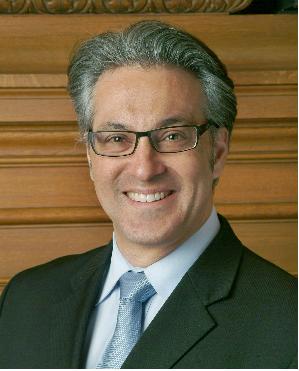
Sup. Ross Mirkarimi is going to file papers today (Feb 22) to begin his campaign for sheriff.
Mirkarimi told us he wants to continue the progressive legacy of Mike Hennessey and to work to reduce recidivism. “Eventually, almost everyone who’s incarcerated comes back to the community,” he said, noting that more than 60 percent of people released from the county jail are re-arrested at some point. “We have to work on re-entry programs to lower that number,” he said. “It’s about keeping communities safe.”
Hennessey, long regarded as one of the city’s most progressive elected officials, has served as sheriff for 31 years. He’s been a national leader in progressive law-enforcement programs, and last year made headlines by fighting the federal mandate that local authorities turn over to immigration offices anyone arrested in the city without proper documentation. He announced recently that he won’t seek another term in November.
Since nobody else has announced an interest in the job — and nobody with Mirkarimi’s record and name recognition is even being mentioned — he becomes the instant front-runner. But it won’t be an easy campaign — the last thing downtown wants is another progressive in citywide office — particularly someone who, like Mirkarimi, could one day use the sheriff’s office as a platform to run for mayor.
Mirkarimi is a graduate of the San Francisco Police Academy and former investigator in the district attorney’s office. He’s been a champion of community policing and antiviolence programs — but as someone who has never been part of the local law-enforcement community, he comes to the race with political independence.
“One of the greatest successes of Mike Hennessey was that he was an independent sheriff,” Mirkarimi noted.
We’ll have more details in the Feb. 23 issue.
A jaundiced proposal
news@sfbg.com
An ordinance to ban unsolicited print Yellow Pages across San Francisco, proposed Feb. 1 by Board of Supervisors President David Chiu, seeks to reduce waste and save money.
“Phone books are a 20th-century tool that doesn’t meet the business and environmental needs of the 21st century,” Chiu said as he introduced the measure in board chambers.
The ordinance would establish a three-year pilot program starting Oct. 1 in which the city would reduce the mass distribution of phone books, making them available only at distribution centers or to residents or businesses that request them.
A rally in support of the ban before the meeting included Rainforest Action Network’s founder Randall Hayes and California Sen. Leland Yee (D-San Mateo), who proposed legislation that failed to gain steam last year for making it easier for Californians to opt out of receiving phone books.
But the Yellow Pages Association refuses to be thrown out with the rest of yesterday’s trash. YPA Vice President of Public Policy and Sustainability Amy Healy said her group opposes the proposal but that she was encouraged that Chiu and his staff say they are open to working with the association.
BY THE NUMBERS
Chiu introduced the ordinance, which is cosponsored by Sup. Scott Wiener, because of the potential effect it could have on reducing city waste, both in the city’s garbage bins and its treasury.
According to Chiu’s office, San Francisco receives about 1.5 million phone books a year. At an average weight of 4.33 pounds per book, the current distribution system creates about 7 million pounds of waste. If the production were cut in half for the city, it would save nearly 6,180 metric tons of carbon dioxide emissions a year from polluting the air.
But it isn’t just the environmental cost that is wearing on the city.
Phone books are tough to recycle. With plastic inserts, bulky design, and low-grade paper, the books have to be presorted and recycled manually. It costs Recology, the company contracted with the city for waste disposal, $300 per ton to dispose of the city’s unused phone books, which in turn costs taxpayers about $1 million a year for their disposal.
OPT IN VS. OPT OUT
The YPA has been sensitive to the environmental concerns, recently launching a website that allows a person to opt out of receiving a phone book.
But it is also suing the Seattle City Council over its Feb. 1 approval of a plan to charge Yellow Pages a 14-cent publisher’s fee per book and create an opt out system for the city, arguing the Seattle ordinance violates the First Amendment’s free speech protections.
According to a statement by YPA President Neg Norton, the association believes that “if don’t want a phone book, you shouldn’t have to get one.”
But YPA opposes the ban on unsolicited books, citing the jobs it would cost, the business community’s desire to “generate leads and revenue from ready-to-buy consumers,” and claiming the First Amendment “prohibits government from licensing or exercising advance approval of the press and from directing publishers what to publish and to whom they may communicate.”
Wiener has a different take on the matter, a stand he said he has already received lots of criticism for, including from some constituents who compared it to the board vote to ban Happy Meals last year. But he said this issue is very different.
“An enormous number of books dumped all over the city is a bad thing, and we should do something to address the issue,” he told the Guardian, noting that the ability to opt out isn’t good enough. “It’s not like the do-not-call list where it is directly annoying and people are more likely to take action … Stacks sit in apartment lobbies, and people don’t decide to opt-out.”
But YPA is also citing the public’s apathy as a reason the ban is unfair. “People don’t take the time to respond to e-mails,” Healy said. “It’s an unreasonable barrier to have a stranger knock on your door and ask you to take something.” The YPA claims that “seven in 10 adults in California use print Yellow Pages, so we do not believe a system that puts a burden on the majority of people to opt in is the best path for choice.”
ARE THEY USEFUL?
Do people still value the Yellow Pages?
Healy believes they do, stating that advertising with the Yellow Pages gives businesses a “high return on their investment.” We asked some city businesses that still advertise in the Yellow Pages what they thought about the potential ban.
Barbara Barrish, manager of Barrish Bail Bonds, doesn’t see her customers using the Yellow Pages anymore. “We used to swear by the Yellow Pages. Now young people use the computers, or their Blackberries and phones.”
Although she has an ad in the print edition, Barrish said she wouldn’t advertise with the directory again and only did so this time because it slashed its prices. “It used to cost a lot more, but it cut its advertising costs by a third,” she said. “They gave me a good deal.”
When asked if she would request a copy if the ban goes through, she said she probably would. “I might grab a phone book if the computer is down.”
Daniel Richardson, an immigration attorney who advertised in the Yellow Pages until 2008, predicted the business community would kill or water down the ordinance. “You are talking about going up against AT&T and other major businesses,” he told the Guardian with a chuckle.
Richardson said he stopped advertising in the Yellow Pages because he didn’t get enough business. He believes people look to the Yellow Pages for criminal or personal injury lawyers, but not immigration attorneys.
Even pizza places, a staple of advertising in the Yellow Pages, are ho-hum about the usefulness of the Yellow Pages. Junior Reyes, who is in charge of advertising for Go Getter Pizza on Gough Street, believes the restaurant gets most of its customers from online. “We do a lot of advertising with other places and online,” he said. “The Yellow Pages isn’t our main source.”
But what about people who do use the Yellow Pages, particularly groups that are not big Internet users. Would they miss it?
David Bolt is the dean for academic affairs at Expression College for Digital Arts in Emeryville and producer of the PBS series The Digital Divide. He believes that banning the Yellow Pages may be a problem for certain groups, including the elderly, recent immigrants, and the poor — groups with the least access to Internet, particularly in urban centers.
“We should err on the side of giving as much information to the greatest numbers of people, especially to groups that may not be technologically literate,” he said. “Society should think about how groups could be impacted by this decision.”
But Barbara Blong, executive director of the Senior Action Network, said older people are becoming more tech savvy. She said computer classes and other resources have put many of the city’s seniors online. She questioned the concept that seniors are one of the largest groups affected by the digital divide, noting that seniors oppose wastefulness as much as anyone.
“We are against having a lot of Yellow Pages laying around,” she said. Blong also mentioned that seniors who do not use the Internet for contacts can use the public library or senior centers that have phone books on hand. “I don’t see it as a ban, but moving on so we don’t have a great deal of waste,” she said.
The ordinance also exempts foreign language phone directories, further diluting the divide argument. The legislation wouldn’t ban the Chinese Yellow Pages or Momento (Spanish Yellow Pages) because they are distributed through community centers, not residences.
The ordinance is expected to have its first public hearing around the end of the month. The YPA will continue to tout its opt out website to the board in hopes it might be enough to persuade the city to forgo the opt in system. The group also hasn’t ruled out a lawsuit.
But YPA’s Healy said he hopes the coming dialogue will be productive. “We share the same goal — we don’t want to print directories that are unwanted.”
Our Weekly Picks: February 9-15
WEDNESDAY 9
MUSIC
Turisas
I recently heard Turisas described as “Disney metal.” So before you run screaming in the other direction, hear me out when I claim that it was actually a compliment. Spearheaded by singer-founder Mathias “Warlord” Nygard, the band plays folk metal so lushly orchestrated that it sounds like a movie score, full of trumpet swells and epic organs. Onstage, it features an accordionist and a violinist; the latter is responsible for all the soloing that would traditionally be done on guitar. Turisas’ 2007 release The Varangian Way is an engrossing concept album whose eight tracks follow a group of Scandinavian travelers as they make their way across Russia by river and end up in Constantinople. New platter Stand Up and Fight is due Feb. 23, but you can get a sneak preview at the show. (Ben Richardson)
With Cradle of Filth, Nachtmystium, Daniel Lioneye
8 p.m., $27
Regency Ballroom
1300 Van Ness, SF
1-800-745-3000
DANCE
Eonnagata
Eonnagata comes with pretty impressive credentials, and promises to be unique. The work is a collaboration between maverick ballerina Sylvie Guillem, who has made waves ever since she dared to quit the Paris Opera Ballet to freelance; multi-whiz Canadian director Robert Lepage, whose Ex Machina company has redefined theater for the last 20 years; and dancer-choreographer Russell Maliphant, who mixes ballet with yoga and everything in between. The trio created and performs in a work that examines the in-between state of male-female sexual identity. Inspired by an 18th century French noble, spy, and diplomat who fluidly switched genders throughout his career, Eonnataga also acknowledges a debt to the onnagatas, the refined male actors in Kabuki who spent their careers playing female characters. (Rita Felciano)
Wed/9–Thurs/10, 8 p.m., $36–$72
Zellerbach Hall
Bancroft at Telegraph,
UC Berkeley, Berk.
(510) 642-9988
EVENT
“How to Write A Dynamic Online Dating Profile”
You’ve been on blind dates. You’ve tried speed dating. You’ve even have had your mother set you up. But you still can’t find love? Turn to cyberspace. (Don’t be embarrassed. According to those Match.com ads, one out of five relationships now begin online.) Take it from Carol Renee, a self-proclaimed “logophile,” English teacher, and aspiring novelist who found the love of her life using the handle “Fearlessly Compassionate.” She’ll hold your hand during the daunting tasks of coming up with a tantalizing user name, writing an attention-grabbing headline, and composing a succinct and yet true-to-life bio in this “how-to” class. (Jen Verzosa)
6:15 p.m., free
San Francisco Public Main Library
Latino/Hispanic Community Room B
100 Larkin, SF
THURSDAY 10
MUSIC
Ensiferum
The Finnish metallers in Ensiferum span many styles, taking the best of everything they encompass. From folk metal, they learned the power of haunting, infectious melody and atmospheric texture. From thrash, they got the exultation and catharsis of breakneck tempos and relentless picking. And from power metal, they got the gleeful, empowering satisfaction that comes from singing about dudes with swords. The recent infatuation with Pagan stylings among American metalheads has brought the band stateside numerous times now, and Ensiferum never disappoints. Having donned their warrior garb, the five Finns who make up the band don’t leave the stage until everyone and everything is vanquished. (Richardson)
With Finntroll, Rotten Sound, Barren Earth
7:30 p.m., $25
DNA Lounge
375 11th St., SF
415-626-2532
EVENT
“Lusty Trusty Ball SF”
Not on the guest list for the annual Manus-Salzman Valentine’s Day Ball? No matter. Your photo won’t be gracing the pages of the Nob Hill Gazette or SF Luxe this time next week, but as least you don’t have to worry about breaking out the black tie. At the less-costly-but-no-less-classy Lusty Trusty Ball, in exchange for forgoing the ice sculptures, posh catered nosh, and a live gingerbread boy to nibble candy off of (he was holdin’ it down for Hasbro’s Candy Land in keeping with last year’s Manus-Salzman theme, “The Game of Love”) you’ll enjoy DJs, VJs, and live groups galore. Plus, with punk rock cabaret from the Can-Cannibals, Circus Finelli’s all-female antics, and Red Hots Burlesque, you can have a hot night without the haut monde. (Emily Appelbaum)
8:30 p.m., $10–$20
Submission
2183 Mission, SF
(415) 425-6137
EVENT
“Oilpocalypse Now”
Last April’s Gulf Coast-ravaging oil spill may have slipped from the headlines, but the region is still struggling to recover. “Oilpocalypse Now” takes aim at the corporations that cause (and cover up) environmental disasters — indeed, the event is subtitled “Time for a 28th Amendment for the Separation of Corporation and State” — featuring a talk by Dr. Riki Ott, a community activist and marine biologist. Ott will present the documentary Black Wave: The Legacy of the Exxon Valdez (remember that one? Big Oil hopes you don’t!) Other speakers include Lisa Gautier, who helped organize the “hair boom” effort to soak up Gulf Coast oil; former Guardian columnist Summer Burkes, who witnessed the Louisiana devastation first-hand, and more. Proceeds benefit the Gulf Coast Fund, Ultimate Civics, and the Coastal Heritage Society of Louisiana. (Cheryl Eddy)
7 p.m., $10–$20
Grand Lake Theater
3200 Grand Lake, Oakl.
(510) 452-3556
www.summerburkes.wordpress.com
http://communitycurrency.org/node/63
FRIDAY 11
DANCE
“Black Choreographers Festival: Here and Now”
For the next three weekends the “Black Choreographers Festival: Here and Now” throws the spotlight on the Bay Area’s African American voices. Now in its seventh year, the festival brings together professionals from a rainbow of perspectives on dance. If this were an ideal world, these choreographers would have their own companies and regular seasons. Some do — Raissa Simpson, Deborah Vaughan, Paco Gomes — but the festival offers all an opportunity to make themselves heard in the context of their colleagues. The Oakland lineup is different from the San Francisco one; the third weekend focuses on up-and-coming new talent. And as always, the youth ensembles at the family matinee will be a special high-energy treat. (Felciano)
Fri/11–Sat/12, 8 p.m.;
Sun/13, 4 p.m., $10–$20
Laney College
900 Fallon, Oakl.
Feb. 17–19, 8pm; Feb. 20, 7 p.m.
ODC Theater
3153 17th St., SF
Feb. 25–26, 8 p.m.; Feb. 27, 7 p.m.
Dance Mission Theater
3316 24th St., SF
1-888-819-9106
PERFORMANCE
You’re Gonna Cry
Where better than 24th Street to watch a solo show about the real lives of Mission District residents at the height of gentrification? Touching on everyone from the techies and bohemians to the Latino locals and immigrants, HBO Def Poet and Youth Speaks cofounder Paul S. Flores performs his theatrical work about the human cost of gentrification in the neighborhood. In addition to masterful storytelling, get ready for a gangster puppet show and digital murals, illuminating the changes brought by the dot-com boom and bust, real estate bubble, immigration, and forced evictions. The Mission is loaded with characters and Flores’s dynamic fusion of urban culture and spoken word brings them all to life. (Julie Potter)
Fri/11–Sat/12, 8 p.m., $15
Dance Mission Theater
3316 24th St., SF
(415) 273-4633
EVENT
California International Antiquarian Book Fair
Ever wonder what ephemera left by our generation will be pored over in a millennium or two? Parking slips, band posters, books like Lady Isabella’s Scandalous Marriage and 1001 Deductions and Tax Breaks, 2011? Whatever the items, they’ll surely be found at the 1000th annual California International Antiquarian Book Fair. The festival, now only in its 44th year, tempts bibliophiles with a menagerie of historical snippets and antique selections. The perusables include musical prints and manuscripts, rare codices, antique children’s literature, fine bindings, maps, trade books, miscellaneous historical scraps, and — vocabulary word — “incunabula,” which are books, pamphlets, or broadsheets printed (not handwritten) in Europe before 1501. A trove of timeworn tomes? Simply splendid! (Appelbaum)
Fri/11, 3–8 p.m.; Sat/12, 11 a.m.–7 p.m.;
Sun/13. 11 a.m.–5 p.m., $10–$15
Concourse Exhibition Center
635 Eighth St., SF
(415) 551-5190
SATURDAY 12
DANCE
Company C Contemporary Ballet
With a sampling of contemporary ballet from choreographers active across North America and Europe, Company C’s mixed-bill winter program includes a premiere set to the music of Elvis Costello by Artistic Director Charles Anderson in collaboration with Benjamin Bowman (both formerly of the New York City Ballet), and another by Maurice Causey, a former principal of William Forsythe’s Ballet Frankfurt. Also appearing from the diverse repertory of this vibrant company is Tovernon, a solo work by David Anderson, the father of Charles Anderson, and Daniel Ezralow’s Pulse, during which dancers take running starts to slide across stage wearing socks. (Potter)
Sat/12, 8 p.m.; Sun/13, 2 p.m., $18–$40
Yerba Buena Center for the Arts
701 Mission, SF
(415) 978-2787
EVENT
“Woo At The Zoo”
Want to make things a bit more “wild” this year for Valentine’s Day? Then head on over to the San Francisco Zoo for “Woo At The Zoo,” the annual event that’s become a favorite activity for amorous humans looking to learn a bit more about our animal pals’ own mating habits and sexual behaviors. Make plans soon with your sweetheart for this special multimedia event that also includes a romantic brunch or dinner, along with drinks. Admit it — you’re already humming the words to the Bloodhound Gang’s “Discovery Channel” song, aren’t you? “You and me baby we ain’t nothing but mammals, so let’s do it like they do on the Discovery Channel!” (Sean McCourt)
Sat/12-Sun/13, 6 p.m.;
Also Sun/13, 11 a.m., $65–$75
San Francisco Zoo
One Zoo Road, SF
(415) 753-7080, ext. 7236
SUNDAY 13
MUSIC
High on Fire
How rad would it be to have an all-chick High on Fire tribute band called Pie on Fire? Though, yeah, that could go either way — hot cherry deliciousness or the evil feeling that makes your girlfriend chug sour pints of cranberry juice. And pulling off (literally) the shreddiness of Riffchild caliber is probably not gonna happen in this lifetime. In any case, join the real trio for a special one-off hometown show before they head out to tour New Zealand and beyond. An honorable way to ring in the annual holiday of love and lust, no? (Kat Renz)
8 p.m., $18
Slim’s
333 11th St., SF
(415) 255-0333
The Guardian listings deadline is two weeks prior to our Wednesday publication date. To submit an item for consideration, please include the title of the event, a brief description of the event, date and time, venue name, street address (listing cross streets only isn’t sufficient), city, telephone number readers can call for more information, telephone number for media, and admission costs. Send information to Listings, the Guardian Building, 135 Mississippi St., SF, CA 94107; fax to (415) 487-2506; or e-mail (paste press release into e-mail body — no text attachments, please) to listings@sfbg.com. Digital photos may be submitted in jpeg format; the image must be at least 240 dpi and four inches by six inches in size. We regret we cannot accept listings over the phone.
Sound and environment: Moving beyond tropical bass with Chief Boima

A couple weeks ago I shot a long-winded email to former Bay Area DJ and producer Chief Boima. I had just finished speaking to Dun Dun of the Los Rakas crew for what eventually became this article, and he mentioned an upcoming EP with former Bay Area DJ and producer Boima. Now, if you don’t know about Boima, you need to get acquainted with the Banana Clipz digital funk on Ghetto Bassquake (for free download, too). It’s a joint instrumental album between Boima and Oro 11 of Bersa Discos that merges electronic architectonics with rhythms, melodies, and sound bits from the African diaspora.
Enough of that, though — Boima withstood my long-windedness, and after a couple exchanges, he did all the explaining.
SFBG Dun said that you do with instrumentals what Los Rakas does with lyrics. Do you see similarities in your respective styles? Your backgrounds and influences?
Chief Boima Well, when I first came across Los Rakas I had just come back from Panama, and I was on this high from hearing all the big carnaval tunes and the mix of sounds that reflected my musical and cultural background, but in a Spanish-speaking world. I grew up on the stuff that a lot of Panamanians grew up on, zouk, dancehall, soca, etc. So I was at the SF Carnaval and I heard Panamanian reggae but with this Bay Area flavor to it. (Check my initial reaction here, and I had been posting stuff like this.) I identified with what they were doing immediately.
Also, my father is from Sierra Leone, and I grew up with West African cultural influences, so I try to incorporate that musically into my electronic and hip-hop beats. I feel like Los Rakas do the same thing with Panama, and what Dun said is a great compliment.
SFBG Dun also mentioned a future EP coming up. What’s your process working with Los Rakas? What are some of your thoughts on this upcoming EP?
CB Well I linked up with Rico and Dun after not seeing them for maybe a year. I had given Rico some instrumentals and I never had gotten the chance to record on them. At that point I had a little studio set up in my spot in Oakland, so I invited them down to work on stuff. I think it was a real natural collaboration because we knocked out a lot of different stuff in like 6 months. They would come over and just freestyle or write. A lot of songs came out through different processes. Like one song they gave me an acapella and I constructed a beat around it. Other songs, I played them the beat and they’d just start writing to it, and we’d record. This would all happen after work and on weekends, so it was cool because the sessions were real compact but productive. I’m real excited about the EP. I think the material is strong and unique, so I can’t wait to see the reception.
SFBG “Tropical” or “tropical bass” seems to be the new term which has emerged to cover the range of new electronic music informed by both American and Afro-Latin styles of music, and their many convergences and hybrids. Do you see yourself as part of this tropical movement? Would you trace its form or define it differently?
CB I get the name tropical bass, but I see it akin to a label like world music that’s just kind of vague. I think the styles that are included under the genre are diverse musically, but they share similarities in the production process that is informed by increased access to technology and information across the world. It’s also really related to urban environments, like hip-hop and house were in their beginning stages. So I see all this music as a kind of continuum of hip-hop and electronic music from Detroit and Chicago. I see myself as part of that production process, more than a musical genre.
The genres I enjoy and work with are informed by their local environments and have names like hip-hop, dancehall, coupe decale, house, soca, and kuduro. They come out of specific regions, and their environments inform the music. A lot of the most popular rhythms are related to Africa and its diaspora, people who are generally scattered around the tropics. So that’s why people use tropical, but I wouldn’t necessarily describe myself or anyone else that way. It doesn’t really work anymore when you get [sounds like] Balani in Mali, or UK Funky, which are not tropical [in setting], but are still informed by the same aesthetics and production processes.
SFBG Do you try to digitize or transfer Afro-Latin/Caribbean folk sounds, genres, or ideas into electronic form?
CB Yes, but I don’t explicitly set that as a goal. I add in all my influences, which are informed by growing up in the Midwest and spending time on the West Coast as much as “folk” music. I was into hip-hop and electronic music growing up, and my older relatives would get down to music that was recorded by live instruments. I love those older tunes, they make me nostalgic, and make me feel connected to my culture, so I wanted to bring the feelings that I have when I hear them to a contemporary club space.
SFBG Our sense of place is now more amorphous than it was maybe thirty years ago. The Internet has in many ways uprooted us, and with regards to music, given us access to all sorts of folk genres, sonic forms of indigenous culture, traditional sounds and instruments, beforehand only accessible perhaps by being there or coming into contact with someone who was indeed there. To what extent do you think the open source availability of the Internet influences the way you channel folk forms of music and older sonic traditions in your production? In what way does place or region (whether the Bay, Cuba, NY, or online places, even the temperate range of tropical) inform your music?
CB I think the Internet has facilitated interactions and dialogue, but you can’t overlook things like increased immigration and traveling. A New York Times article recently said that New York is as diverse as it’s ever been. It claims that NY has more people born in other countries living there than ever before. The whole United States is changing. Europe is changing. The feedback loop to global centers of production in the “South” is super influential. International travel is becoming cheaper, so it’s easier to see the whole world. I think we’re going to reach an energy crisis in the near future where all that will be curbed a little, and the Internet will keep those interactions going, but we’re really living at the apex of an empire, just like the Romans, and the Ottomans, and the Greeks were super diverse civilizations informed by cultures from all over the world. So the Internet is just our current means of achieving those interactions. It takes the place of the role that sailors and desert caravans and conquerors had before. It’s just faster, and totalizing across the globe.
I travel a lot, and I have a diverse cultural background with multiple influences. That puts me in a certain position of influence because of my experience, but someone who has never traveled can have the same influences because I post about it on the Internet. But that doesn’t mean that it’s a new thing. Cotton and sugar comes from India. Potatoes come from Peru. Coffee comes from Ethiopia. These are things that are fundamental to our cultural identity today, but we don’t necessarily think about them as coming from other places. I feel like these things seep into everyday life, and they become a part of wherever they end up whether NY, London, Rio, Kampala, etc. But when they get to those places I think they change. In other words, environment’s influence is fundamental and if you listen hard you can tell the difference.
Obama addresses DREAMer Steve Li’s video
Earlier this week, I posted a video clip that Community College nursing student Steve Li, who narrowly avoided deportation from San Francisco to Peru last year, submitted to the White House in answer to Obama’s groundbreaking online State of the Union outreach effort. And yesterday, Obama addressed Li’s video (featured at 33.10 minutes into a Jan. 27 interview that YouTube’s Steve Grove moderated) as he answered questions on a wide range of issues submitted by and voted on by YouTube users.
Li is a supporter of the DREAM Act, which would allow undocumented youth who attend college and/or serve in the military to apply for citizenship. And while the DREAM Act failed to get the necessary votes last year, advocates like Li have vowed to keep up the pressure until it becomes law. And Obama indicated yesterday that he believes expelling undocumented youth who are ready to serve in the military or at college makes no sense.
“Let’s stop expelling talented, responsible young people who can staff our research labs, start new businesses and further enrich this nation,” Obama said
DREAMers like LI and their allies will doubtless take Obama’s words and try to get the president to back them up with concrete actions, so stay tuned as the seemingly endless fight to reform the federal immigration system in a humane way continues.
DREAMer Steve Li asks Obama for a moratorium
Steve Li is a nursing student at San Francisco’s City College who narrowly avoided deportation to Peru last November, after a massive outpouring of community support and Sen. Dianne Feinstein’s decision to introduce a private bill to delay his removal from the United States. Now, Li has issued a short video in anticipation of the President’s State of the Union address, in which he asks Obama if he can commit to a moratorium on deportations of DREAM Act-eligible youth.
Watch Li’s video:
then watch the President’s address to see what happens.
Republicans worry about their “brand”

Like every political junkie in this state, I was fascinated to hear that Republican operatives think there’s a problem with their “brand.” It’s simple: Even when the state’s voters approve horrible right-wing anti-tax measures, they don’t seem willing to vote for Republicans. The way the operatives discuss the situation, it’s all about messaging; I think Robert Cruickshank at Calitics has a better analysis: “The CAGOP has made itself unelectable by being a white man’s party.”
It runs even deeper, though. In order to win a statewide GOP primary, you have to:
1. Oppose all taxes
2. Oppose gun control, even to the point of insanity
3. Support harsh crackdowns, bordering on open racism, on immigration and immigrants
4. Either be rich or toady up to the rich
And those positions aren’t winners in a statewide race.
The Democratic Party, for better or for worse (often for worse) has no such litmus tests. Yeah, it’s hard to get elected without labor support, but the Demos are much more of a “big tent” these days. Jerry Brown is more of a fiscal conservative than a lot of Republicans (who love to cut waste as long as it doesn’t hurt their rich supporters), but the tax-and-spend types like me all voted for him. Our senior senator, who happens to be the most popular politician in California in poll after poll, is only barely to the left of Joe Lieberman.
As long as the far right controls the part in what’s very much a centrist kind of state, the GOP isn’t going anywhere. Brand or no brand.
Challenging Gascón in the D.A.’s race
Challenging George Gascón in the District Attorney’s race isn’t going to be a cake walk, even though he was Newsom’s former police chief and was registered as Republican until Newsom appointed him D.A. a few weeks ago.
Here’s why:
Gascón has the next ten months to promote himself as San Francisco’s top prosecutor–and he’s already working that angle.
He has an ally in Lt. Governor Gavin Newsom who tapped Gascón as his top cop, then used his support to pass sit/lie and oppose community policing.
And he has another powerful ally in former mayor Willie Brown, who helped former D.A. Kamala Harris rise to the top, and periodically uses his column in the Chronicle to promote his latest pet cause. Take Brown’s Jan. 16 column about how Newsom ended up appointing Gascón as D.A.
The way Brown tells it, Newsom narrowed down potential candidates to retired Judge Harry Low and D.A.’s office insider Paul Henderson, then called in Gascón for advice, who started lobbying for Henderson, until Newsom informed Gascón that he was now a candidate for the job.
“And with that, only two details had to be worked out – assessing the odds of Gascón winning re-election and making sure Henderson was taken care of,” Brown claimed. “Both were done by the next morning when we all sat down.”
But Brown’s version of events doesn’t quite seem to square with reality.
Political consultant Jim Stearns, who is running Paul Henderson’s campaign and has been in almost daily communications with his client in the past weeks, told me that far from “being taken care of,” Henderson appeared to have been left agonizing over his future.
So, maybe Henderson was “taken care of,” but not quite in the way that Brown’s column implies.
Henderson hasn’t been returning calls since Gascón’s appointment, other than to say that Gascón called him with the news and that he is taking time to evaluate his options
But criminal justice reform advocate David Onek clearly still has both feet in the race.
In a Jan. 18 email that was titled “Time to Organize,” Onek reminded his supporters that “our campaign has always been about building the kind of grassroots network that can do more than win a campaign – but can bring tens of thousands of San Franciscans into the movement for a safer city through criminal justice reform.”
Onek, who has already organized 1,100 supporters and raised more than $160,000, told me that he was, “as surprised as everyone else” by Newsom’s decision to appoint Gascón to the D.A. post.
But he refused to speculate about “who is getting in or out of the race.”
“I’m focused on moving forward and building a grassroots campaign,” Onek said.
As part of that effort, Onek’s campaign recently announced a goal of hosting 500 community-based house parties.
“We already had a bunch of house parties early on,” Onek told me. “We feel great with where we are, and the great thing about San Francisco being a really small city is you can go out and meet the voters and build a robust grassroots network.”
Still, Onek, who jumped into the D.A.’s race last summer, suddenly finds himself running against San Francisco’s former police chief. And he didn’t pass up the opportunity to point that out in his Jan. 18 missive to supporters:
“The election ahead will give us the chance to debate a newly appointed incumbent – the city’s former police chief,” Onek wrote. “While I have enormous personal respect for the new DA, we have some significant differences and I am confident that our grassroots campaign will prevail.”
One of those significant differences is the candidates’ views on the death penalty.
“I’m against the death penalty,” Onek said.
As such, Onek finds himself in the same philosophical camp as all the district attorneys elected in San Francisco in the last ten years. And opposed to Gascón, who told reporters that he is “not philosophically opposed to the death penalty,” shortly after Newsom appointed him as D.A.
And then there is Gascon’s history as a longtime Republican who only came out as a Democrat after he was appointed D.A.
Gascón says his parting of the ways with the Republican Party occurred over differences in opinion on immigration, equal rights for gays, and social services. But despite his potential negatives, his position as the current D.A. gives him a stage that’s hard to fight—unless you work in another D.A.’s office.
Take Alameda County Assistant District Attorney Sharmin Bock. She filed papers in the D.A.’s race the day after Newsom named Gascón as interim D.A., allegedly has the support of the Gettys, and her name was all over the media last week when she helped bust a prostitution ring in the East Bay
“Yesterday’s multi-agency operation, stemming from the Hayward Police Department investigation, is a testament to this regional commitment,” stated Bock, who is in charge of Special Operations and Policy Development and head of the Alameda County Human Exploitation and Trafficking (HEAT) Watch Unit.
But lest anyone doubt that Gascón is playing to win, let it be known that he officially filed Jan. 20 in the D.A. Race
And in answer to the Guardian’s questions about possible conflict of interest in cases that he handled as chief, including police misconduct and crime lab issues, Gascón recently released a statement through Assistant District Attorney Seth Steward.
“We are conscious of the possibility of a conflict,” Gascón stated. “ We review everything on a case by case basis. The Attorney General’s Office has agreed to take cases as appropriate.”
So, while a Facebook page has been set up to send Gascón back to Arizona, don’t expect our silver-haired D.A. to heed their advice any time soon.
A fiction writer that beats FOX News for war coverage
Kudos to the New Yorker for bringing Daniel Alarcón to the attention of the eastern rag’s audience. The Oakland writer is one of the three West coast scribes from the New Yorker’s 20 Under 40 “young” writers anthology who will be reading at City Lights Books on Weds/19. I suggest you go check up on the event – if not for the magazine’s time-proven track record of tagging future lit stars, then because the more people in this country who read Alarcón, the less likely we are to plunge our country into madness.
Alarcón’s are war stories, but not in the sense that we grow up with in America, where the term brings to mind bombs and sharp, whizzing death. Alarcon draws on his cultural memory of home country Peru (where he left for Birmingham, Alabama when he was three years old) to speak of the more prosaic nature of conflict through the eyes of people to whom it is brought, not those that strap on uniforms and board helicopters to go to it.
Take the novel he’s best known for, Lost City Radio (Harper Collins, 288 pages, $24.95). It takes place – in the grand tradition of Latin American epics — in a mythic town, or at least an unnamed city. A war has raged for years, resulting in the disappearance of radio star Norma’s husband, Rey. An orphaned boy from the city shows up and with him an end to her endless, ragged wonderings about what happened to Rey. Every one of the book’s characters is struggling to deal with the real nature of war: a messy business, sure — but not one where the women, children, and elderly are left at home, as they are in many of our country’s depictions of conflict.
There are few gunshots fired in Lost City Radio. Instead, the scene of war is rendered in social notes – illicit dance parties held after curfew, names you can and can’t say on the radio, acceptance of loss, confusion. The story that Alarcón contributes to 20 Under 40 is Second Lives, which tells the story of a Peruvian family who sends their eldest son away from inflation and civil war to America, where he promptly immerses himself in the American life, which is to say he starts water-skiing, job-hopping, and stops writing home to his mom, dad, and brother.
What would our wars — including the one we are waging on immigration — be like if the general populace of our country saw it this way, instead of through the clip art pyrotechnics of TV news channels?
Plus, Alarcón is the only author I’ve ever heard to name-check a seminal tome from my childhood, The Phantom Tollbooth as being an influential one in his life. Plus, he lives in Oakland. The night’s other readers, Chris Adrian and Yiyun Li, both hail from the Bay too. The last time the New Yorker pulled this same anthology stunt in 1999 they pegged Junót Diaz, Jonathan Franzen, and Jhumpa Lahiri before their ascent into best-sellerdom, so it’ll be perfect if you’re the before-the-curve type about the national fiction scene.
20 Under 40: Stories from the New Yorker
Weds/19 7 p.m., free
City Lights Books
261 Columbus, SF
(415) 362-4921
The agenda for Mayor Lee
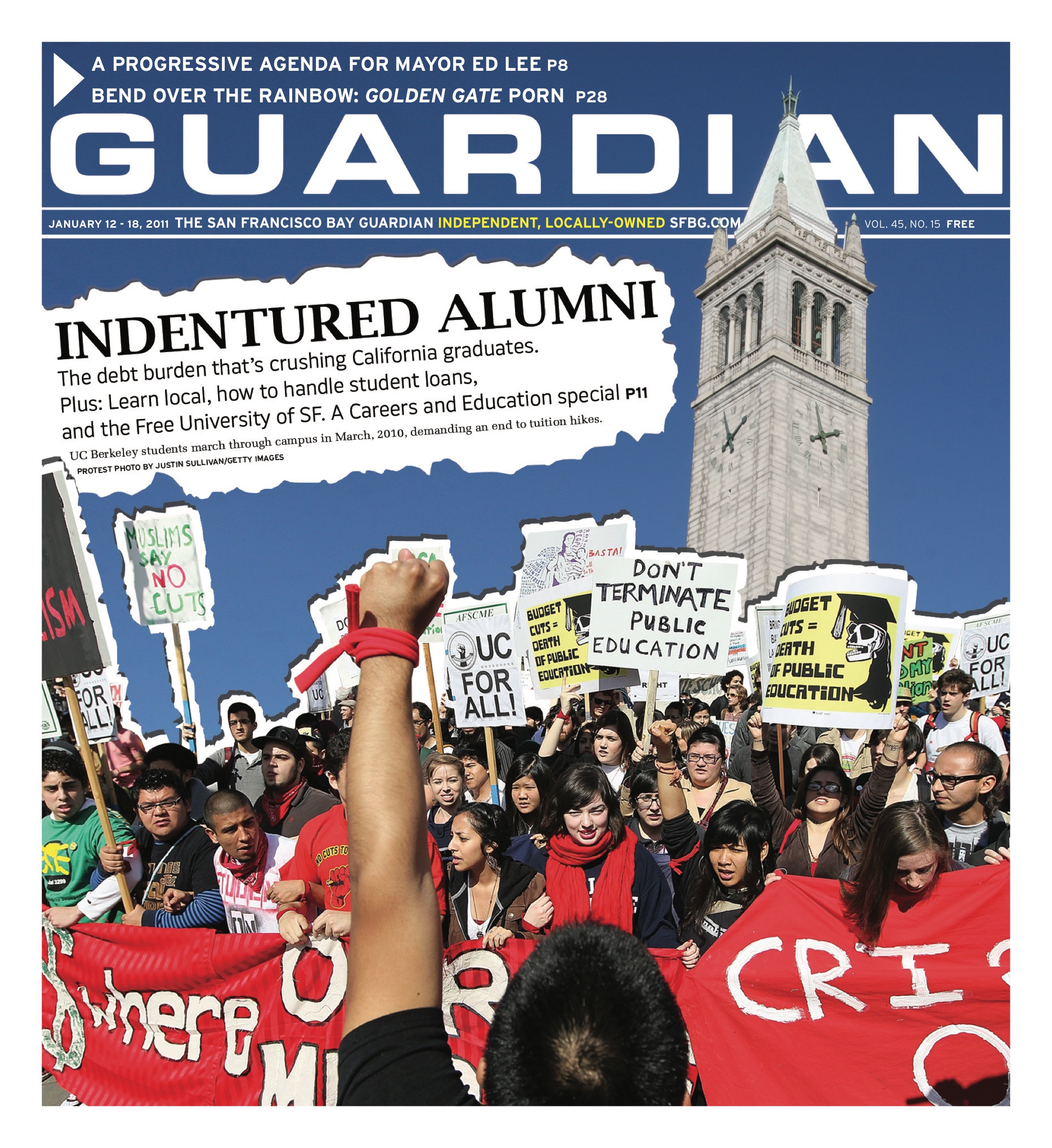
EDITORIAL San Francisco has its first Chinese American mayor, and that’s a major, historic milestone. Let’s remember: Chinese immigrants were among the most abused and marginalized communities in the early days of San Francisco. In 1870, the city passed a series of laws limiting the rights of Chinese people to work and live in large parts of the city. Chinese workers built much of the Transcontinental Railroad — at slave wages and in desperately unsafe conditions that led to a large number of deaths. The United States didn’t even repeal the Chinese Exclusion Act (an anti-immigration law) until 1943, and for years, Chinatown was one of the poorest and most neglected city neighborhoods.
So there’s good reason for Asians to celebrate that the last door in San Francisco political power is now open. And Mayor Ed Lee comes from a civil rights background; he got his start in politics working as a poverty lawyer and tenant organizer.
Unfortunately, his path to Room 200 was badly marred by some ugly backroom dealing involving Willie Brown, the most corrupt mayor in modern San Francisco history. Even Lee’s supporters agree the process was a mess and that it undermines Lee’s credibility. So it’s important for Mayor Lee to immediately establish that he’s independent of Brown and his cronies, that his administration will not just be a Gavin Newsom rerun, and that progressives can and should support him.
He has a tough job ahead. We urge him to make a clean break with the past and set the city in a new direction. Here are a few ways to get started.
• Clear out the Newsom operatives and bring some new people with progressive credentials into the senior ranks. Newsom’s chief of staff, Steve Kawa, has been a shadow mayor for the past year while Newsom was on the campaign trail, and is the architect of much of what the outgoing administration has done to sow political division and cripple city government. Lee needs his own chief advisor.
• Show up for question time and work with the district-elected supervisors. Newsom was openly dismissive of the board and refused to take the supervisors seriously as partners in city government. Lee should appear once a month to answer questions from the board in public, should meet regularly with all the supervisors and appoint a liaison that the board can work with and trust. He needs to make his administration as transparent and open as possible and ensure that everyone at City Hall follows the letter and spirit of the Sunshine Ordinance.
• Make it clear that the next city budget includes substantial new revenue. Newsom offered nothing but Republican politics when it came to city finance; his only solutions to the massive structural deficit involved service cuts.
The deficit will be even worse than projected this year, since Gov. Jerry Brown wants to transfer much of the state’s responsibility for public safety and public health back to local government — and there won’t be enough state money attached to handle the new burden. Lee needs to publicly call on Brown and the Legislature to give cities more ability to raise taxes on the local levee. Then he should start planning for a June ballot package that will raise as much as $250 million in new revenue for the city.
A substantially higher vehicle license fee on expensive cars, a congestion management fee, a significant annual transit impact fee on downtown offices, a restructured business tax, and a progressive tax on income of more than $50,000 a year would more than eliminate the structural deficit.
There are plenty of other revenue ideas out there; not all can or would pass on a single ballot. But Lee needs to make it clear that revenue will be part of the solution — and that he will use all the political capital he can muster to convince the voters to go along.
•<\!s> Get serious about community choice aggregation. Newsom loved to talk about his environmental agenda, but when it came to challenging the hegemony of Pacific Gas and Electric Co. and its dirty power portfolio, he ran for cover. His hand-picked Public Utilities Commission director, Ed Harrington, has been an obstacle to implementing the city’s CCA plan. Lee needs to get rid of Harrington or direct him to cooperate with the supervisors and get San Francisco on the path to clean public power.
•<\!s> Establish a real affordable housing program. The city plans to build housing for as many as 60,000 new residents in the southeast neighborhoods — but only a fraction of them will be affordable. This city is already well on its way to becoming a high-end bedroom community for Silicon Valley; only a clear policy that limits new market-rate condos until there’s a plan for adequate affordable housing will turn things around.
•<\!s> Support Sanctuary City and quit helping federal immigration authorities break up families. Newsom was just awful on this issue; Lee needs to work with Sup. David Campos to implement more humane laws.
•<\!s> End the demonization of homeless people and public employees. Newsom came to power attacking the homeless (with Care Not Cash) and went out attacking the homeless (with the sit-lie law). Lee ought to tell the Police Department not to aggressively enforce the ordinance.
•<\!s> Take on the sacred cows of the Police and Fire departments. The biggest salary and pension problems in the city are in the two public safety departments. The Fire Department budget has been bloated for years. If everyone else is taking cuts, so should the highest-paid cops and the overstaffed fire stations.
Some of Lee’s supporters insist he’s a solid progressive and that we shouldn’t hold the details of his selection — or the fact that he was chosen by people who are openly hostile to the progressive agenda — against him. We’re open to that — but the progressive community will judge him on his record. And he has to start right away.
EDITORIAL: The Agenda for Mayor Lee
San Francisco has its first Chinese American mayor, and that’s a major, historic milestone. Let’s remember: Chinese immigrants were among the most abused and marginalized communities in the early days of San Francisco. In 1870, the city passed a series of laws limiting the rights of Chinese people to work and live in large parts of the city. Chinese workers built much of the Transcontinental Railroad — at slave wages and in desperately unsafe conditions that led to a large number of deaths. The United States didn’t even repeal the Chinese Exclusion Act (an anti-immigration law) until 1943, and for years, Chinatown was one of the poorest and most neglected city neighborhoods.
So there’s good reason for Asians to celebrate that the last door in San Francisco political power is now open. And Mayor Ed Lee comes from a civil rights background; he got his start in politics working as a poverty lawyer and tenant organizer.
Unfortunately, his path to Room 200 was badly marred by some ugly backroom dealing involving Willie Brown, the most corrupt mayor in modern San Francisco history. Even Lee’s supporters agree the process was a mess and that it undermines Lee’s credibility. So it’s important for Mayor Lee to immediately establish that he’s independent of Brown and his cronies, that his administration will not just be a Gavin Newsom rerun, and that progressives can and should support him.
He has a tough job ahead. We urge him to make a clean break with the past and set the city in a new direction. Here are a few ways to get started.
• Clear out the Newsom operatives and bring some new people with progressive credentials into the senior ranks. Newsom’s chief of staff, Steve Kawa, has been a shadow mayor for the past year while Newsom was on the campaign trail, and is the architect of much of what the outgoing administration has done to sow political division and cripple city government. Lee needs his own chief advisor.
• Show up for question time and work with the district-elected supervisors. Newsom was openly dismissive of the board and refused to take the supervisors seriously as partners in city government. Lee should appear once a month to answer questions from the board in public, should meet regularly with all the supervisors and appoint a liaison that the board can work with and trust. He needs to make his administration as transparent and open as possible and ensure that everyone at City Hall follows the letter and spirit of the Sunshine Ordinance.
• Make it clear that the next city budget includes substantial new revenue. Newsom offered nothing but Republican politics when it came to city finance; his only solutions to the massive structural deficit involved service cuts.
The deficit will be even worse than projected this year, since Gov. Jerry Brown wants to transfer much of the state’s responsibility for public safety and public health back to local government — and there won’t be enough state money attached to handle the new burden. Lee needs to publicly call on Brown and the Legislature to give cities more ability to raise taxes on the local levee. Then he should start planning for a June ballot package that will raise as much as $250 million in new revenue for the city.
A substantially higher vehicle license fee on expensive cars, a congestion management fee, a significant annual transit impact fee on downtown offices, a restructured business tax, and a progressive tax on income of more than $50,000 a year would more than eliminate the structural deficit.
There are plenty of other revenue ideas out there; not all can or would pass on a single ballot. But Lee needs to make it clear that revenue will be part of the solution — and that he will use all the political capital he can muster to convince the voters to go along.
• Get serious about community choice aggregation. Newsom loved to talk about his environmental agenda, but when it came to challenging the hegemony of Pacific Gas and Electric Co. and its dirty power portfolio, he ran for cover. His hand-picked Public Utilities Commission director, Ed Harrington, has been an obstacle to implementing the city’s CCA plan. Lee needs to get rid of Harrington or direct him to cooperate with the supervisors and get San Francisco on the path to clean public power.
• Establish a real affordable housing program. The city plans to build housing for as many as 60,000 new residents in the southeast neighborhoods — but only a fraction of them will be affordable. This city is already well on its way to becoming a high-end bedroom community for Silicon Valley; only a clear policy that limits new market-rate condos until there’s a plan for adequate affordable housing will turn things around.
• Support Sanctuary City and quit helping federal immigration authorities break up families. Newsom was just awful on this issue; Lee needs to work with Sup. David Campos to implement more humane laws.
• End the demonization of homeless people and public employees. Newsom came to power attacking the homeless (with Care Not Cash) and went out attacking the homeless (with the sit-lie law). Lee ought to tell the Police Department not to aggressively enforce the ordinance.
• Take on the sacred cows of the Police and Fire departments. The biggest salary and pension problems in the city are in the two public safety departments. The Fire Department budget has been bloated for years. If everyone else is taking cuts, so should the highest-paid cops and the overstaffed fire stations.
Some of Lee’s supporters insist he’s a solid progressive and that we shouldn’t hold the details of his selection — or the fact that he was chosen by people who are openly hostile to the progressive agenda — against him. We’re open to that — but the progressive community will judge him on his record. And he has to start right away.
On the Cheap Listings
On the Cheap listings are compiled by Caitlin Donohue. Submit items for the listings at listings@sfbg.com. For further information on how to submit items for the listings, see Picks.
WEDNESDAY 5
Concierto de Reyes Mission Cultural Center for Latino Arts, 2868 Mission, SF; (415) 643-5001, www.missioncultural.org. 2pm, free. The Coro Hispano of San Francisco, a chorus comprised of Spanish-speaking community members, has been celebrating Latin America through song since 1975. Join ’em for their annual kids holiday concert, which will cover turf as varied as renaissance motets and aguinaldos (Christmas folk music) from Peru, Venezuela, Puerto Rico, and more.
Glen Canyon habitat restoration Glen Park Recreation Center, 70 Elk, SF; (415) 337-4705, www.sfrecpark.org. 9am-noon, free. Sure, you’ve made “that” resolution for the millionth time. But how about you snap out of that pudgy pity party and truck out to a little exercise that benefits more than just your waist line? SF parks are in need of TLC if they want to fend off invasive species and you can join in on the action at this morning of weeding, planting, and pruning. Dress to get muddy and active – and indulge in the free snacks provided free of your Christmas cookie guilt.
FRIDAY 7
Jaime Cortez: “Universal Remote” Southern Exposure, 3030 20th St., SF; (415) 863-2141, www.soex.org Through Feb. 19. Opening reception 7-9pm, free. It’s been months, but we still have a big in our hearts the size of a glittery glove. Thankfully, here comes visual artist Jaime Cortez’s solo exhibition, which calls out the tragic, tremendous pop culture whorl that was MJ – and highlights the King of Pop’s fluid moves through race, sexuality, and zombie-human relations.
Oakland Art Murmur Telegraph and 23rd St., Oakl.; www.oaklandartmurmur.com. 6-10 p.m., free. Rediscover what downtown Oakland’s got going on art-wise with this monthly show-and-tell by the neighborhood’s best and brightest art galleries. This week, catch Jennie Ottinger’s book art at Johansson Projects (excerpt from her truncated version of As I Lay Dying: “Holy shit, this family is cursed! Very National Lampoon’s Vacation.“)
SATURDAY 8
Parent-child snow globe class Randall Museum, 199 Museum Way, SF; (415) 554-9600, www.randallmuseum.org. 1-4pm, $6 for children; $10 for parent-child duos. The holidays are over, and yeah it’s still cold and rainy. But take heart! Winter can be time for good cheer even after Santa’s packed up the sleigh and gone north. Make a shakable wonder with your wee one and enjoy the rest of Randall Museum’s “Saturdays are Special” event (10am-4pm), which includes railroad exhibits, live animal feedings, and the rest of the science-y wonders present throughout the rest of this always-free museum.
Vintage Paper Expo Hall of Flowers, Golden Gate Park, Lincoln and Ninth Ave., SF; (328) 883-1702, www.vintagepaperfair.com. 10am-6pm, free. (Also Sun/9, 10am-4pm) Postcards, photos, brochures, stereoviews, and so much more! What’s a stereoview, you ask? Why, nothing less than an antique 3D image – something you can acquaint yourself with at this fair of all things printed and retro. The Vintage Paper Expo’s got over 100 vendors this year, all primed to sell you affordable scraps of history.
Writers With Drinks The Make Out Room, 3225 22nd St., SF; (415) 647-2888, www.writerswithdrinks.com. 7:30-9:30pm, $5-10 sliding scale. Writers? Drink? Well, I guess there’s a first time for everything! This long-standing lit night series pairs local scribes (this month’s are girl group Gogos founder Jane Wiedlin and socio-writer Ethan Watters) with a crowd that’s anything but stiff for readings, skits, and stand-up.
MONDAY 10
Cinema Drafthouse: Machete The Independent, 628 Divisadero, SF; (415) 771-1421, www.theindependentsf.com. 9pm, free. A deliberately silly revenge plot that’s both spot-on vintage homage and semi-serious commentary on America’s ongoing immigration debate gets the Indy’s free movie night treatment. Watch the film with a beer in hand (or two) – and feel free to shout advice to the characters on-screen. You’re in a music venue, for chrissakes.
TUESDAY 11
Pecha Kucha 330 Ritch, 330 Ritch, SF; www.pecha-kucha.org. 7pm, $5 donation suggested. Embarking as we are on month number one of year two-thousand-and-one-one, the theme of this month’s installation of this cross-discipline art night series is, yes, “one.” Not the most specific theme, sure – but that’s the way artists like it, and when you’ve assembled a passel of them from fields as varied as industrial design, animation, and fashion, sometimes it’s best just to step back and watch them unify.
2010 Offies!

tredmond@sfbg.com
When a major conservative political movement starts using a name that typically refers to the act of scrotal fellatio, you know it’s morning again in America. In 2010, the teabaggers came home. They nominated candidates who think masturbation is selfish and wonder why monkeys aren’t still evolving into humans. They held rallies urging the government to “get out of my Medicare,” which happens to be a government program. Their leaders praised dictators and urged women who had been raped to look at the bright side of things.
And those were just the headlines.
It’s hard to imagine a year that could be worse than 2010 — but it was a great vintage for the Offies.
Presenting the Off Guard awards for the silliest, most insane, and absolute worst of the year that was.
AND SHE FIGURES IF WE ARREST EVERYONE WITH BROWN SKIN, WE CAN FINALLY GET THIS SORT OF BEHAVIOR UNDER CONTROL
Arizona Governor Jan Brewer told reporters that illegal immigration resulted in beheadings in the desert.
BUT AS LONG AS YOU DON’T TOUCH YOURSELF WHEN YOU THINK OF THE DEVIL, IT’S GOING TO BE OKAY
Christine O’Donnell, the Republican candidate for Senate in Delaware who decried masturbation as a “selfish act,” said she only dabbled in witchcraft and had just one date on a satanic altar.
EXCEPT THAT WE ALREADY ARE, AND WE ALREADY ARE
Jerry Brown said he opposed the state’s marijuana legalization measure because “we can’t compete with China if we’re all stoned.”
LOOK BUSY
A Pew Research Center poll showed that 41 percent of Americans think Jesus will return in the next 40 years.
HEY, IF WE’D JUST CREATED THE WORST ENVIRONMENTAL DISASTER OF THE DECADE, WE’D WANT A LITTLE BREAK, TOO
A few days after the worst oil spill in U.S. history, BP Chief Executive Tony Hayward complained that he wanted his life back.
BUT HE SWEARS HE’LL STOP AT BEHEADINGS
Insurance Commissioner Steve Poizner said if he were governor he’d give the National Guard live ammunition to shoot at immigrants on the border.
AFTER ALL, IF THEY’RE NOT IN AN AIRPLANE, THEY CAN’T DO ANY DAMAGE
GOP Senate candidate Carly Fiorina said that people on the federal no-fly list should have the right to own guns.
OOH, WHEN YOU TALK TOUGH LIKE THAT YOU ALMOST SOUND LIKE SOMEONE WHO COULD STAND UP TO THE REPUBLICANS. OR MAYBE NOT
President Obama asked whose ass he should kick at BP.
IT’S OKAY, THOUGH, AS LONG AS THEY WEREN’T ENGAGING IN ANY SELFISH ACTS
Staffers at the Securities and Exchange Commission got caught spending as much as eight hours a day downloading porn at the office.
AND SOMETIMES GOP CANDIDATES ARE NITWITS
Nevada GOP Senate candidate Sharron Angle praised Chilean dictator Augusto Pinochet for his efforts to privatize that country’s retirement system, saying “sometimes dictators have good ideas.”
YEAH, COME ON, WHY CAN’T YOU LOOK AT THE BRIGHT SIDE OF THINGS?
Sharron Angle said that women who have become pregnant as the result of rape or incest should “turn lemons into lemonade.”
DAMN GUMMINT TRYING TO INTERFERE WITH PRIVATE BIDNESS
GOP Congressman Joe Barton of Texas apologized to BP for a White House “shakedown.”
YES, AS A MATTER OF FACT I DO OWN THE WHOLE GODDAM SCHOOL
Meg Whitman’s son threw softball equipment over a fence to kick a group of computer science and physics students off the Princeton rugby field.
NICE, SINCE THOSE GROUPS ALL GOT ALONG SO WELL
GOP Senate candidate Chuck DeVore compared Palestinian activists to Nazis, Fascists, and Communists.
AND OF COURSE, THAT WORKS SO WELL WITH MODERN MANAGED CARE
Nevada banned chicken costumes from the polls after Nevada Senate candidate Sue Lowden said that people should barter with doctors for health care the way “our grandparents would bring a chicken to the doctor.”
ANOTHER GREAT MOMENT IN THEOLOGY FROM THE MAN WHO BROUGHT YOU THE PEDOPHILE PRIEST COVER UP
Pope Benedict said it was okay for male prostitutes to wear condoms.
SO HE’S GOT THAT GOING FOR HIM. WHICH IS NICE
Formerly classified State Department cables revealed that the premier of Korea is still an excellent drinker.
ACTUALLY, THEY TOOK ONE LOOK AT THE TEA PARTY AND DECIDED THEY WERE BETTER OFF AS THEY ARE
Senate candidate Christine O’Donnell said that evolution was a myth; after all, she wondered, “why aren’t monkeys still evolving into humans?”

THE CHURCH HAS ALWAYS BEEN KNOWN FOR ITS SENSE OF PERSPECTIVE
The Vatican announced that the ordination of women and the abuse of children were both “grave crimes.”
THAT’S OKAY, IT WILL LOOK GOOD ON HIS RESUME
Gavin Newsom decided to run for lieutenant governor after saying he didn’t know what the job was.
YOUR TAX DOLLARS AT WORK, CIA EDITION
The United States held high-level negotiations with a supposedly senior Taliban operative who turned out to be a Pakistani shopkeeper.
BUT WAIT — HOW WILL WE KNOW IF WE’RE SUPPOSED TO WORRY OR NOT?
The Department of Homeland Security abandoned color-coded safety alerts.
THE INTELLIGENCE AND CULTURAL TASTE OF THE AMERICAN PEOPLE IS SIMPLY STAGGERING
Sarah Palin’s daughter, Bristol, made it to the final round of Dancing with the Stars.
WHICH MAKES HIM ENTIRELY QUALIFIED TO SERVE AS A REPUBLICAN POLITICIAN
Dan Quayle’s son ran for Congress in Arizona and admitted that he had been posting on “dirty Scottsdale” under the name of Brock Landers, a sidekick to porn star Dirk Diggler.
IS HE ONE OF THE NAZI FASCIST COMMUNISTS, TOO?
Rand Paul said Obama’s criticism of BP was “un-American.”
WAIT — WAS THAT A BROWN ALERT?
The California Highway Patrol shut down its South Lake Tahoe office after officers found an anal vibrator and thought it was a bomb.
HONESTY IS JUST PART OF THE PROCESS OF RECOVERY
Tiger Woods admitted that he sucked.
EXCEPT THAT IT MOSTLY BENEFITS THE INSURANCE INDUSTRY
Vice President Joe Biden called the health reform bill “a big fucking deal.”
IT’S THOSE CUTE WOODEN SHOES, YOU SEE
NATO Commander John Sheehan said Dutch soldiers were too gay.
DAMN, AND HE’S SUCH AN ATTRACTIVE MAN. I’M SURE THE TSA FOLKS WERE REALLY LOOKING FORWARD TO IT
John Tyner told Transportation Security Administration officials in San Diego that if “you touch my junk, I’ll have you arrested.”
AND HE WASN’T EVEN TALKING ABOUT HER
Sarah Palin demanded that Rahm Emanuel apologize for using the term “fucking retarded.”
SINCE WE ALL KNOW THOSE PEOPLE DON’T KNOW HOW TO SPEAK IN PUBLIC
MSNBC Host Chris Matthews was so excited by an Obama speech that he said he “forgot he was black.”
THE CUSTOMER IS ALWAYS RIGHT
Pacific Gas & Electric Co. spent $50 million on a ballot initiative to stop public power, and lost after getting soundly defeated in every county where the utility has customers.
YOU MAY BE PART OF THE FAMILY, BUT WHEN IT COMES TO MY POLITICAL CAREER, HONEY, YOU’RE OUT THE DOOR
Meg Whitman fired her housekeeper when she found out she was in the country illegally.
BUT THEY’RE ALIKE ANYWAY, RIGHT?
Sharron Angle defended a campaign ad depicting menacing-looking Hispanic men by telling members of the Hispanic Student Union at the University of Nevada, Las Vegas that many of the members looked Asian.
OF COURSE, SHE SKIPPED THE FIRST FEW AMENDMENTS — BOOORING!
Christine O’Donnell said she couldn’t find anything about the separation of church and state in the Constitution.
BECAUSE IN A FIREFIGHT, THE FIRST THING ANYONE WOULD BE THINKING ABOUT IS HIS SERGEANT’S CUTE ASS
Sen. John McCain said he opposed ending “don’t ask, don’t tell,” talked about all the soldiers and Marines who lost limbs, and said that “when your life is on the line, you don’t want anything distracting.”
SINCE WE ALL KNOW THAT HEALTH INSURANCE MAKES YOUR PEE SMELL FUNNY
Federal judge Henry Hudson asked Obama administration officials whether the new health care plan was similar to forcing all Americans to eat asparagus.
SO IT’S JUST AS WELL THOSE PEOPLE ON THE NO-FLY LIST HAVE THE RIGHT TO KEEP AND BEAR ARMS
Sharron Angle said that the Obama administration’s policies might require “Second Amendment solutions.”
IT’S PERFECTLY FINE FOR HOMOSEXUALS TO ATTEND MARRIAGE CEREMONIES, AS LONG AS THEY’RE JUST THE HIRED HELP
Sir Elton John played at Rush Limbaugh’s wedding.
SURE, GREAT FUN. JUST LIKE SHOOTING YOUR FRIENDS WITH A HUNTING RIFLE
Dick Cheney said he had been a “big supporter of water boarding.”
DAMN, SUPERVISOR, THE OFFIES WILL MISS YOU
Chris Daly vowed to say “fuck” at every single board meeting in 2010.
Pass the DREAM Act, now

by Eric Mar and Eric Quezada
news@sfbg.com
OPINION Imagine for a moment that you are 14 years old. Your parents, stuck in perpetual poverty and unemployment (or perhaps worse), move your family to a foreign country to begin a new life.
You work hard, struggle to fit in, study constantly, and fill your spare time with school activities. Maybe you even work a little on the side to chip in. You are a parent’s dream, and a model of young citizenship.
Except that you’re not a citizen. And one day, even as you’ve mastered English and flourished in school and in the community, you are stopped like a criminal by federal authorities.
This is what happened to Steve Li, an engaging and industrious 20-year-old student at City College of San Francisco and a graduate from George Washington High School. He always thought he was an average San Franciscan until the morning of Sept. 15, when Immigration and Customs Enforcement agents suddenly raided his home and arrested him and his parents. Steve was incarcerated in Arizona for more than 60 days, far from his friends and family. Through a full-court legal and legislative press, and a groundswell of immigrant community organizing leading to a private emergency bill by Sen. Dianne Feinstein, Li has temporarily staved off deportation. But Li and thousands of other hard-working young immigrant Americans could soon be summarily tossed out of the country if Congress doesn’t act now to pass the Development, Relief, and Education for Alien Minors (DREAM) Act.
The DREAM Act is a common-sense, bipartisan measure that is urgently needed to avoid countless other Steve Li cases. Despite congressional wavering on comprehensive immigration reform (which a consistent majority of Americans support), everyone should be able to agree on the basic right of undocumented immigrant minors, who are moved here by their parents, to gain steps toward obtaining citizenship.
In brief, the DREAM Act would enable some immigrant students who have grown up in the U.S. to apply for temporary legal status and to eventually obtain permanent status and become eligible for U.S. citizenship if they go to college or serve in the U.S. military.
According to the National Immigration Law Center (NILC), about 65,000 U.S.-raised high school students could qualify for the DREAM Act’s benefits each year. As NICL puts it, “These include honor roll students, star athletes, talented artists, homecoming queens, and aspiring teachers, doctors, and U.S. soldiers. They are young people who have lived in the U.S. for most of their lives and desire only to call this country their home … they face unique barriers to higher education, are unable to work legally in the U.S., and often live in constant fear of detection by immigration authorities.”
It makes no moral, economic, or social good sense to continue tearing apart families and communities and disrupting young people’s lives — all at great expense to the American public and taxpayers.
The time to act is now: please call your congressional representatives today and urge them to vote yes on the DREAM Act — without any amendments that might undermine its effectiveness. Although Nancy Pelosi and most Bay Area Democrats support the bill, Rep. Jerry McNerney (D-Stockton) and the Republicans are either on the fence or opposed. There’s no time to waste in giving hard-working young immigrant students this most American ideal — the opportunity to make their dreams a reality.
Eric Mar is a member of the San Francisco Board of Supervisors. Eric Quezada is executive director of Dolores Street Community Services in San Francisco.
Would ICE deport Superman?

Would ICE deport Superman?
That’s a question Erick Huerta, a journalism student in Los Angeles, poses in a timely DREAM Act-related first-person piece about the double life of an undocumented student.
“Once, when I was seven, I fell asleep in Michoacán and woke in Boyle Heights. No joke. Now I am a bewildered 26-year-old undocumented college student, whose life may become a slightly less surreal dream if the DREAM Act ever passes, but only slightly less so,” Huerta writes.
Huerta describes the depression he underwent when he graduated high school in 2002.
“I was horribly depressed because all I had to look forward to in life was selling hot dogs, fruit and shaved ice in a cart my dad owned. Not to mention that a decade of internalized oppression and instilled fear of La Migra traumatized me,” Huerta recalls.
His situation improved somewhat with the passage of state Assembly Bill 540, which allows folks in his situation to pay in-state tuition at college if they are California high school graduates. And inspired by a young woman named Tam Tram, the first undocumented student he ever saw speaking out openly and unafraid, Huerta stopped feeling bad for himself and started to try and make the best of his situation.
This mental shift included finding undocumented students organizing for the DREAM Act.
“I share my story regularly with high school kids because I know my words will resonate with others who are undocumented and afraid,” Huerta concludes. “I let them know they’re not alone and that things will get better if they continue their education. Despite lack of legal status, no one can take away our education.”
Huerta’s words probably won’t stop the haters from leaving offensive comments on the blogs. But as more undocumented youth step forward, tell their stories and put faces on their otherwise shadowy figurres, it’s going to get harder to scapegoat them.
A recent report by the Center for Investigative Reporting suggests the Obama administration has been trying to look tough on immigration enforcement in the past two years, in an effort to appease Republican factions that have been hell-bent on blocking immigration reform. It’s unclear whether personal stories by undocumented students will be able to transcend partisan politics and give undocumented youth a pathway to citizenship. But if they did, it would be the best gift the nation could give itself this holiday season.
Slideshow from Mission High DREAM Act rally
Click here to read the Guardian’s coverage of the DREAM Act rally outside Mission High, nationwide efforts to rally support for this legislation which Congress will vote on during its lame-duck seesion, and how the proposal could offer a pathway to citizenship for thousands of undocumented youth.
Cho tunes

superego@sfbg.com
SUPER EGO “You know me, I’m always doing something,” Margaret Cho practically purred over the phone en route to another smash show on the East Coast. Um, understatement of the year much? While the Cho-stess with the Mostest is lately giving off the chill vibes of an edgy comedian and right-on scenester in her prime (she’s not shy about being on the golden side of 40), she’s been more active than ever. “I totally have symbolic flames on the side of my tour bus,” she quipped. “It’s so retro ’90s.”
The San Francisco-born, Korean American, queer-lovin’ smart-mouth may have a fulltime TV job on Lifetime’s Drop Dead Diva, but she’s also just released an actually damn good album of “comedy music,” Cho Dependent, with guest helpers like Tegan and Sara, Fiona Apple, Ben Lee, and Ani DiFranco. (Her DIY dancing turd outfit for the “Eat Shit and Die” video is pretty priceless.) Her current “Cho Dependent” tour, however, focuses less on the tunes and more on the stand-up topics she’s polished to raucous perfection. “I talk about immigration, my mother, maybe my new bellydance workout. Also gay rights — I hear they’re really in right now,” she deadpans. High on her agenda when she hits the city? Some more ink at Everlasting Tattoo on Divisadero, “the best tattoo shop in the world.”
“It’s just so awesome to be coming back to SF on this tour,” she continues. “It’s always like coming home to family. A family with a lot of little dogs.”
MARGARET CHO: CHO DEPENDENT Sat/4, 8 p.m., $29.50–$49.50. Nob Hill Masonic Auditorium, 1111 California, SF. www.livenation.com, www.margaretcho.com
PHONIC
Thursday night workout time. The weekly Phonic party at Endup is one of my favorite scene treats, and the lineup this time around is too SF techno-tasty to pass up. Dabecy of Electronic Music Bears joins Honey Soundsystem’s Jason Kendig and Pee Play for some distinguished beats in a deeper vein.
Thu/2, 10 p.m.–4 a.m., free before midnight, $10 after. EndUp, 401 Sixth St., SF. www.theendup.com
BETTER
This party on Maiden Lane promises to be a fun crush of styles, with wide-ranging dancefloor selections from DJ Deevice (Pirate Cat Radio), Jason Kendig (again!), Sleazemore (Lights Down Low), and Solar (Sunset). “We’re really hoping to save downtown from douchebags and the women who love them,” Deevice told me. “The place is nice, but not chi-chi. I mean, it can’t obviously double as a strip joint like other downtown clubs. Just come and have some fun.”
Check out DJ Deevice’s absolutely lovely “Better” mix:
Fri/3, 9:30 p.m.–3 a.m., $5 before 11 p.m./ $10 after. 45 Maiden Lane, SF
LAZER SWORD
Finally! Bay natives Lazer Sword, the fab duo who basically broke the future bass scene wide open, are releasing their debut album and it’ll be bonkers. Lazer’s Low Limit and Lando Kal beam in for brain melt, with support from spooktastic up-and-comer OoOoOO, OG atmospheric electro-hopper Machinedrum, and DJ Dials, who always has great hats. It’s all part of Hacksaw Entertainment’s second anniversary blowout.
Sat/4, 9 p.m.–3 a.m., $14.50 advance. Mighty, 119 Utah, SF. www.hacksawent.com
SMALLTOWN DJS
One of the highlights of my recent trip up north — this rad-cute duo from Alberta, Canada, pops four turntables and manages to do in Girl Talk types when it comes to mixing electro banger flair with underground house beats, hip-hop and Bmore swagger, and sly pop winks. Somehow it doesn’t come off as Vegas-y mashup as one might supect — maybe it’s vinyl Canadian party magic.
Sat/4, 9 p.m.–3 a.m., $5 before 11 p.m., $10 after. Public Works, 161 Erie, SF. www.publicsf.com
TIARA SENSATION PAGEANT
Get ready for glamour and outrage — of a fantastic, ethereal bent, of course. The kids from the Friday weekly Some Thing party blow up with this must-see drag runway fundraiser for the Off Center theater. Contestants: Alotta Boutte, Elijah Minelli, Honey Mahogany, Lil Miss Hot Mess, Mercedez Munro, Monistat, and Turleen. DJs: Stanley Frank and Hoku Mama Swamp. Plus: Juanita More and Miss Rahni. Names!
Sun/5, 8 p.m.–midnight, $35. Temple, 540 Howard, SF. www.templesf.com
DREAM on
sarah@sfbg.com
Spurred by congressional Democratic leaders’ promises to hold a vote on the DREAM (Development, Relief, and Education for Alien Minors) Act before the end of Congress’ lame-duck session this month, immigrant and civil rights advocates are pushing for the passage of bipartisan legislation that would give undocumented youth a shot at citizenship if they go to college or serve in the military for two years.
On Nov. 29 in San Francisco, several undocumented young people joined members of the Bay Area Coalition for Immigration Reform outside Mission High School — where as much as 20 percent of the student population may be undocumented, according to principal Eric Guthertz — to explain why it makes sense to give youth who grew up in the United States a shot at legal status.
“We are not asking you to give us a green card,” Anna, a student from Guatemala, said at the event. “All we want is a chance to succeed and give back to this country. We live here, we pay taxes, we’re smart, we go to college, but afterward we can’t work and give back.”
Mario, a 22-year-old gay student who was born in Peru to a Chinese father and Peruvian mother, graduated from UC Berkeley with a civil engineering degree. He explained that because of his lack of documentation, he can’t get a job to pay his bills or save up to pursue a master’s degree, and fears being deported to a homophobic country.
“It would be a waste of talent because I’ve learned California-specific engineering rules and the U.S. building code,” Mario said. “Sometimes I wake up from a nightmare about being detained. I came out here, but in Peru, I’d probably be back in the closet.
Joining Anna and Mario was Shing Ma “Steve” Li, a nursing student at City College, who was released Nov. 19 after two months in federal detention, shortly before he was to be deported to Peru. San Francisco Democrat Sen. Dianne Feinstein introduced legislation to halt his removal, saying it would be “unjust” to deport Li before a DREAM Act vote takes place.
Li, who speaks Cantonese, English, French, and Spanish, grew up reciting the Pledge of Allegiance and dreams of opening a clinic to serve low-income San Franciscans. But recently, federal immigration authorities flew him 800 miles to a jail in Arizona, all because his parents brought him here when he was 12 and he lacks documentation.
“We were handcuffed and shackled to our seats, and I wondered what would happen if the plane went down,” Li recalled.
Li believes the main barriers to the legislation’s passage is lack of accurate information. “People need to know the facts, see the people, and hear their stories,” Li said. “Then they’ll know it is a human rights issue.”
Guthertz said that as principal of Mission High, every year he sees undocumented youth who have great grades and lots of advanced placement classes “hit the wall” of their status. “Over and over, I’ve seen the heartbreaking effect of their situation,” Guthertz said. “The DREAM Act is yet another avenue to help these students.”
Eric Quezada, executive director of Dolores Street Community Services, noted that congressional leaders did not agree to the DREAM Act vote “out of the goodness of their heart — it’s because of the hard work of immigrant advocates.”
Quezada said the push to force a DREAM Act vote in Congress this year began when undocumented youth staged a sit-in in Sen. John McCain’s (R-Ariz.) office in May. “And the vote of Latinos saved the Senate from a Republican takeover on Nov. 2,” he said.
“But we understand this window is closing,” Quezada added, referring to the reality that Republicans will take control of the House in January. “So we’re not taking one vote for granted. And this is the first step. If we are able to pass the DREAM Act, it will be a downpayment for comprehensive immigration reform.”
Sup. John Avalos says the DREAM Act recognizes the contribution immigrants make to the community, and to the creation of economic opportunities for everybody. “Immigrants here support themselves and their families across the water, so it makes sense that we make proper investments and support,” Avalos said. “Education is one way to make the world a more stable place.”
Sup. David Campos, who came to the U.S. from Guatemala as an undocumented teenager, sees the DREAM Act as a piece of commonsense legislation.
“It’s so modest,” Campos said. “Even those who are against comprehensive immigration reform should be for something that recognizes that young people, who came here not by choice but because of their parents’ issues, should be given a chance to give back.”
Campos said his father was able to gain legal status for his whole family because of his employment, but that many undocumented youth aren’t so lucky.
“We open the doors to our public schools, we invest in their education, and then, when they are ready to give back to us, we say, ‘No, we don’t want you here,'” Campos said. “The best and brightest, the risk-takers, come here. As a country, we cannot go forward unless we realize that this influx of creativity and entrepreneurship made this country what it is.”
The biggest fish
rebeccab@sfbg.com
Shortly after Larry Ellison, the billionaire CEO of Oracle Corp. and owner of the BMW Oracle Racing Team, won the 33rd America’s Cup off the coast of Valencia, Spain, in February 2010, a reception was held in his honor in the rotunda at San Francisco City Hall.
The event drew members of Ellison’s sailing crew, business and political heavyweights such as former Secretary of State George Schultz, and other VIPs. Attendees posed for photographs with the tall, glittering silver trophy at the base of the grand staircase.
As part of the celebration, Ellison helped Mayor Gavin Newsom into an official BMW Oracle Racing Team jacket, and Newsom granted Ellison a key to the city, a symbolic honor usually reserved for heads of state and the San Francisco Giants after they won the World Series. Shortly after, the mayor and the guest of honor, whom Forbes magazine ranked as the sixth-richest person in the world, sat down for a face-to-face.
That meeting marked the beginning of the city’s bid to host the 34th America’s Cup in San Francisco in 2013. Since securing the Cup, Ellison has made no secret of his desire to stage the 159-year-old sailing match against the iconic backdrop of the San Francisco Bay, a natural amphitheater that could be ringed with spectators gathered ashore while media images of the stunningly expensive yachts are broadcast internationally.
Newsom and other elected officials have feverishly championed the idea, touting it as an opportunity for a boost to the region’s anemic economy. The city’s Budget & Legislative Analyst projects roughly $1.2 billion in economic activity associated with the event — the real prize, as far as business interests are concerned. It would also create the equivalent of 8,840 jobs, mostly in the form of overtime for city workers and short-term gigs for the private sector.
While the idea has won preliminary support from most members of the Board of Supervisors, serious questions are beginning to arise as the finer details of the agreement emerge and the date for a final decision draws near.
Ellison and the race organizers would be granted control of 35 acres of prime waterfront property in exchange for selecting San Francisco as the venue for the Cup and investing $150 million into Port of San Francisco infrastructure. But the event would result in a negative net impact to city coffers.
Hosting the event and meeting Ellison’s demands for property would cost the city about $128 million, according the Budget & Legislative Analyst, just as city leaders grapple with closing a projected $712 million deficit in the budget cycle spanning 2011 and 2012.
Part of the impact is an estimated $86 million in lost revenue associated with rent-free leases the city would enter into with Ellison’s LLC, the America’s Cup Event Authority (ACEA). In exchange for selecting San Francisco as a venue and investing in port infrastructure, ACEA would win long-term control of Piers 30-32, Pier 50, and Seawall Lot 330 — waterfront real estate owned by the Port of San Francisco, with development rights included. Seawall Lot 330, a 2.5-acre triangular parcel bordered by the Embarcadero at the base of Bryant Street, would either be leased long-term or transferred outright to ACEA.
The most vociferous opponent of the America’s Cup plan is Sup. Chris Daly, who has voiced scathing criticism of the notion that the city would subsidize a billionaire’s yacht race at a time of fiscal instability. “The question is whether or not the package that San Francisco’s putting together is good or bad for the city,” Daly told the Guardian, “and whether or not it’s the best deal the city can get.”
THE CREW
According to a Forbes calculation from September 2010, Ellison’s net worth is $27 billion, making him several times wealthier than the City and County of San Francisco, which has a total annual budget of about $6 billion. Ellison reportedly spent $100 million and a decade pursuing the Cup.
As soon as Ellison expressed interest in bringing the Cup to San Francisco, Newsom began charting a course. Park Merced architect and Newsom campaign contributor Craig Hartman of the firm Skidmore, Owings & Merrill was tapped to reimagine the piers south of the Bay Bridge as the central hub for the event, and soon Hartman’s vision for a viewing area beneath a whimsical sail-like canopy was forwarded to the media.
The mayor also issued letters of invitation to form the America’s Cup Organizing Committee (ACOC), a group that would be tasked with soliciting corporate funding for the event. ACOC was convened as a nonprofit corporation, and it’s a powerhouse of wealthy, politically connected, and influential members.
Hollywood mogul Steve Bing, who’s donated millions to the Democratic Party and funded former President Bill Clinton’s 2009 trip to North Korea to rescue two imprisoned American journalists, is on the committee. So is Tom Perkins, a Silicon Valley venture capitalist, billionaire, and former mega-yacht owner who was once dubbed “the Captain of Capitalism” by 60 Minutes. George Schultz and his wife, Charlotte, are members. Thomas J. Coates, a powerful San Francisco real estate investor who dumped $1 million into a 2008 California ballot initiative to eliminate rent control, also has a seat. Coates resurfaced in the November 2010 election when he poured $200,000 into local anti-progressive ballot measures and the campaigns of economically conservative supervisorial candidates.
Billionaire Warren Hellman, San Francisco socialite Dede Wilsey, and former Newsom press secretary Peter Ragone are also on ACOC. There are representatives from Wells Fargo, AT&T, and United Airlines. One ACOC member directs a real estate firm that generated $2.5 billion in revenue in 2009. Another is Martin Koffel, CEO of URS Corp., an energy industry heavyweight that made $9.2 billion in revenue in 2009. There’s Richard Kramlich, a cofounder of a Menlo Park venture capital firm that controls $11 billion in “committed capital.” And then there’s Mike Latham, CEO of iShares, which traffics in pooled investment funds worth about $509 billion, according to a BusinessWeek article.
There’s also an honorary branch of ACOC composed of elected officials including House Minority Leader Nancy Pelosi, Gov. Arnold Schwarzenegger, Sen. Dianne Feinstein, and others. Their role is to help the Cup interface with various governmental agencies to control air space, secure areas of the bay exclusively for the event, set up international broadcasts, and bring foreign crew members and fancy sailboats into the United States without a hassle from immigration authorities.
ACOC is expected to raise $270 million in corporate sponsorships for the America’s Cup. That money will be funneled into the budget for ACEA. It’s unclear whether the $150 million ACEA is required to invest in city piers will be derived from ACOC’s fund drive.
The city also anticipates that ACOC would raise $32 million to help defray municipal costs. “However,” the Budget & Legislative Analyst report cautions, “there is no guarantee that any of the anticipated $32 million in private contributions will be raised.”
A seven-member board, chaired by sports management executive Richard Worth, will direct the ACEA, according to Newsom’s economic advisors, but the other six seats have yet to be filled. ACEA’s newly minted CEO is Craig Thompson, a native Californian who previously worked with a governing body for the Olympics and has helped coordinate major sporting events internationally. In an interview with sports blog Valencia Sailing, Thompson provided some insight on why major corporations might be inspired to donate to the cause. Basically, the Cup is the holy grail of networking events.
“It’s a very difficult economic situation we are going through, and it’s not the best time to be looking for sponsors for a major event,” Thompson acknowledged. “On the other hand, the America’s Cup is one of the very few activities … that offer access to really top-level individuals in terms of education or economic situation. The America’s Cup is a unique platform for a lot of companies that want access to those individuals that are very difficult to reach under normal circumstances. I can tell you for example that Oracle is very pleased with the marketing opportunity the America’s Cup has presented to them. They invite their best customers and are very successful in turning the America’s Cup into a platform for generating business. The same thing can be true for a lot of different companies that need access to wealthy individuals.”
But should San Francisco taxpayers really be subsidizing a networking event for the some of the business world’s richest and most powerful players?
TRANSFORMING THE WATERFRONT
Over the past four months, Newsom’s Office of Economic and Workforce Development (OEWD) has been negotiating with race organizers to hash out a Host City Agreement outlining the terms of bringing the America’s Cup to San Francisco.
The proposal will go before the Board of Supervisor’s Budget & Finance Committee on Dec. 8, and to the full board Dec. 14. A final decision on whether San Francisco will host the race is expected by Dec. 31. ACEA and ACOC will each sign onto the agreement with the City and County of San Francisco.
From the beginning, the event was envisioned as “the twin transformation,” according to OEWD — the America’s Cup would be transformed by attracting greater crowds and heightened commercial interest while San Francisco’s crumbling piers would be revitalized through ACEA’s $150 million investment in port infrastructure.
The plan paints downtown San Francisco as the “America’s Cup Village” during the sailing events, and a study produced by Beacon Economics estimates that the financial boost would come primarily from hordes of visitors flocking to the event — more than 500,000 are expected to attend. The city expects a minimum of 45 race days, including one pre regatta in 2011 and one in 2012 (or two in 2012 if the one in 2011 doesn’t happen), a challenger series in 2013, and a final match in 2013.
The transformation of the city’s waterfront would be dramatic. In addition to the rent-free leases for Piers 30-32, 50, and Seawall Lot 330, ACEA would be granted exclusive use of much of the central waterfront, water, and piers around Mission Bay, and water and land near Islais Creek during the course of the event. Under the Host City Agreement, race organizers would have use of water space spanning Piers 14 to 22 ½; Piers 28, 38, 40, 48, and 54, a portion of Seawall Lot 337, and Pier 80, where a temporary heliport would be sited.
Seawall Lot 330, a 2.5-acre parcel valued by the Port at $33 million, lies at the base of Bryant Street along the Embarcadero and has a nice unimpeded view of the bay. Piers 30-32 span 12.5 acres, and Pier 50 is 20 acres.
The Budget & Legislative Analyst’s study predicts that the ACEA could opt to build a 250-unit condo high-rise on Seawall Lot 330, deemed the most lucrative use. Under the Host City Agreement, the city would be obligated to remove Tidelands Trust provisions from Seawall Lot 330, which guarantee under state law that waterfront property is used for maritime functions or public benefit. Tweaking the law for a single deal would require approval from the State Lands Commission, but Newsom, in his new capacity as lieutenant governor, would cast one of the three votes on that body.
The combination of construction, demolition, lost rent revenue, police and transit, environmental analysis, and other event costs would hit the city with a bill totaling around $64 million, according to the Budget & Legislative Analyst study. Since city government would recoup around $22 million in revenue from hosting the Cup, the net impact would be around $42 million. That doesn’t include the potential $32 million assistance from ACOC.
At the same time, the city would stand to lose another $86.2 million by granting long-term development rights to 35 acres of Port property for 66 to 75 years without charging rent, bringing the total cost to $128 million. OEWD representatives played down that loss in potential revenue, saying past attempts to redevelop piers hadn’t been successful because none could handle the upfront investment to revitalize the crumbling piers.
The Host City Agreement has raised skepticism among Port staff and the Budget Analyst that tempered initial enthusiasm for the event. “The terms of the Host City Agreement will require significant city capital investment and will result in substantial lost revenue to the Port,” a Port study determined. Faith in that plan seems to be eroding and it may be scrapped for an alternative plan that’s cheaper for the city.
The Northern Waterfront alternative substitutes Piers 19-29 as the primary location for the event and eliminates the Mission Bay piers from the equation. Under this scenario, ACEA would invest an estimated $55 million, instead of $150 million. In exchange, it would receive long-term development rights to Piers 30-32 and Seawall 330 on “commercially reasonable terms,” according to a Port staff report.
Board of Supervisors President David Chiu requested that the Port explore that second option more fully, and the Port report notes that it would reduce the strain on Port revenue. The Northern Waterfront plan would cost the Port a total of $15.8 million, instead of $43 million, the report notes. Port staff recommended in its report that both the original agreement and the alternative be forwarded to the full board for consideration.
PHANTOM BIDS?
Under the competition’s official protocol, Ellison, as defender of the Cup, has unilateral power to decide where the next regatta will be held. Race organizers have said it’s a toss-up between San Francisco and an unnamed port in Italy — though it’s anyone’s guess how seriously a European site is being considered by a team headquartered at the Golden Gate Yacht Club, a stone’s throw from the Golden Gate Bridge.
According to a San Francisco Chronicle article published in early September, Newsom issued a memo stating that San Francisco was competing against Spain and Italy to become the chosen venue. Valencia was said to be offering a “generous financial bid,” and a group in Rome was rumored to have offered some $645 million to bring the Cup to Italian shores, the memo noted. It was a call for the city to present Ellison with the most attractive deal possible to compel him to pick San Francisco.
Speaking at an Oct. 4 Land Use Committee hearing, OEWD director Jennifer Matz told supervisors: “San Francisco was designated the only city under consideration back in July. Now we are competing against the prime minister of Italy and the king of Spain.”
However, the veracity of those claims came into question in mid-November. Daly, incensed that the Mayor’s Office never communicated with him about the Cup despite wanting to hold it in his sixth supervisorial district, launched his own personal investigation. He fired off an e-mail to Team Alinghi, a prior America’s Cup winner, and began communicating with other European contacts until he got in touch with someone in Valencia’s municipal government.
“I got a call back from a representative who basically said I should know something,” Daly recounted. Valencia, his source said, never submitted a bid to host the Cup. At a Nov. 13 press conference, Valencia’s mayor Rita Barbera confirmed this claim, according to a Spanish press report, expressing disappointment that the city had been eliminated from consideration as a host venue. “There was no formal bidding process,” she charged. She also denied reports that any money had been offered.
Meanwhile, the Budget Analyst was unable to find any concrete evidence that other host city bids had been submitted. “We have nothing to confirm that other offers have been made,” Fred Brousseau of the Budget Analyst’s office told the Guardian.
In response to Guardian queries about whether the Mayor’s Office had evidence that Italy had indeed submitted a bid, Project Manager Kyri McClellan of the OEWD forwarded a one-page resolution from the Italian prime minister assuring race organizers that there would be tax breaks, accelerated approvals, and other perks guaranteed if the Cup came to Italy. However, an Italian journalist who looked over the resolution told the Guardian that the document didn’t appear to be a formal bid, merely a response to a query from race organizers.
Daly has his doubts that either Valencia or the Italian port were ever seriously considered. “I think they were phantom bids,” he said, “created by either Larry Ellison or the Newsom administration … to place pressure on the Board of Supervisors.”
A representative from OEWD told the Guardian that officials have no reason to doubt that the European bids, and accompanying offers of money, were real. However, the city wasn’t privy to race organizer’s discussions about possible European venues. A final decision is expected before the end of the year.
Daly hasn’t held back in voicing opposition to the America’s Cup and blasted it at an Oct. 5 Board meeting. “This tacking around Sup. Daly will not get you in calmer waters,” Daly said. “I told myself I was not going to make a yachting reference. But I will bring a white squall onto this race and onto this Cup, and I will do everything in my power starting on Jan. 8 to make sure these boats never see that water.”
WIND IN WHOSE SAILS?
The America’s Cup would undoubtedly bring economic benefit to the area and create work at a time when jobs are scarce. Police officers would get overtime. Restaurant servers would be scrambling to keep up with demand. Construction workers seeking temporary employment would get gigs. Hotels would rake it in. Pier 39 would be booming. However, the Budget Analyst report cautioned: “It is unlikely that any labor benefits would remain in the years after the America’s Cup event is completed.”
Certain small businesses would catch a windfall. John Caine, owner the Hi Dive bar at Pier 28, didn’t hesitate when asked about his opinion on the city hosting the Cup. “Please come fix our piers. It’s a shout-out to Larry Ellison,” he said. Caine said he supports the America’s Cup bid 100 percent, and is excited about the boost it could give his business. The Hi Dive would not be required to relocate under the proposal, he added.
At the same time, other small business would be negatively affected, particularly those among the 87 Port tenants who would be forced to relocate to make way for the America’s Cup. The Budget Analyst’s report also notes that retail businesses in the area whose services had no appeal to race-goers might suffer from reduced access to their stores, since crowding and street closures would shut out their customers.
The sailing community has rallied in support of the Cup, and Newsom has received hundreds of e-mails from yachting enthusiasts from as far away as Hawaii and Florida promising to travel to San Francisco with all their sailing friends to watch the world-famous vessels compete.
Ariane Paul, commodore of a classic wooden boat club called the Master Mariners Benevolent Association, told the Guardian that she was excited about the opportunity for the America’s Cup to showcase sailing on the bay. “In the long term, it’s a win-win,” Paul said. “It would be great to have that boost.” As for the financial terms of the deal, she remained confident, saying, “I don’t think that the city is going to let Larry Ellison walk all over them.”
Sup. Ross Mirkarimi is often politically aligned with Daly, but not when it comes to the issue of the America’s Cup. As a kid growing up on the island of Jamestown, a tiny blue-collar community located off the coast of Rhode Island, Mirkarimi learned to sail and occasionally spent summers working as a deckhand. Every few years, the America’s Cup would come to nearby Newport, transforming the area into a bustling hub and bringing the locals into contact with famous sailors. It left an everlasting impression. When the BMW Oracle Racing Team secured the 33rd Cup off the coast of Valencia, Mirkarimi did a double-take when he saw a photograph of the winning team — his childhood friend from Rhode Island was on the crew.
Mirkarimi told the Guardian he supports bringing the Cup to San Francisco because of the economic boost the area will receive — if the Cup continues to return to San Francisco as it did for 53 years in Newport, he said, the city could look forward to a free gift in improved revenue associated with the event, and that could help quiet the tired annual debates over painful budget cuts.
At the same time, he acknowledged that the Budget Analyst report had prompted what he called healthy skepticism. “I think the onus is on the city and Cup organizers to make sure the benefits far, far outweigh the investment,” Mirkarimi said. “This effort is not just about making one of the wealthiest men in the United States that much more wealthy … That can’t be the case,” he said. “It has to be about what will the Cup do in order to be a win-win for the people of San Francisco.” Mirkarimi said he expected scrutiny of the details of the agreement at the Dec. 8 Budget and Finance Committee hearing: “Naturally, in this time of economic downturn … people want to know, what’s the outlay of cost, and what are we going to get in return?”