Immigration

Is ICE planning to destroy sanctuary city?

10

Virginia Kice, spokesperson for the Department of Homeland Security’s Immigration and Customs Enforcement (ICE), sounded hopping mad at the way that ICE’s Secure Communities initiative is being represented as undermining San Francisco’s sanctuary policy and possibly creating an even worse federal immigration system.

“It’s just an information sharing system,” Kice told the Guardian. “Any time someone is electronically booked by local or state law enforcement agencies, their fingerprints will be compared up against biometrics in U.S. Department of Justice, the F.B.I. and the Department of Homeland Security (DHS) databases. “


If a match is found, then ICE will do the follow-up investigation, Kice said.

“Not everyone in the system has violated the law,” Kice explained. “They may have applied for an immigration benefit or they could already be naturalized [have become a U.S. citizen]. It just means that they have had an encounter with DHS.”

Alluding to the ongoing debate about immigration law and racial profiling, Kice stressed that this new system doesn’t selectively finger print.

“It finger prints everybody, and because this system uses biometrics, it’s going to be accurate in terms of i.d.ing people who have had prior encounters with D.H.S,” she said.
“Some people use multiple aliases and give misinformation about their history. We know people have escaped deportation this way in the past, but fingerprints don’t lie.”

Local law enforcement officials are concerned that though the new policy is supposed to target folks charged with serious crimes, including murder, rape, sex crimes, serious assault, and resisting arrest, it will also sweep up folks charged with minor infractions, such as being drunk in public, who could now fall into ICE’s hands for deportation, especially if they resist arrest at the time, which happens to be defined as a serious crime.

“Not everybody who is in the country illegally has ever been encountered by D.H.S. and because we don’t have their biometrics, the system would not detect a match,” Kice continued. “But that does not mean they won’t be referred for a follow-up investigation. And it ensures that we get their information shortly after an encounter occurs.”

But despite Kice’s rosy assessment of the federal government’s Secure Communities program which she says has already been set up in 15 other California communities, 20 states and about 160 municipalities nationwide, the San Francisco Sheriff’s Office continued to express unease at how the new program will shift the local landscape.

 “The ground rules in the jails have changed, but not due to any decision on our part,” Eileen Hirst, spokesperson for the San Francisco Sheriff’s Department told the Guardian.

The interlinking automated database will remove the firewall that used to protect folks booked with low-level crimes from being referred to federal immigration authorities.

“The firewall was the discretion of local law enforcement,” Hirst explained.

In San Francisco, the Sheriff’s Department developed laws that were consistent with federal laws, as well as San Francisco’s sanctuary ordinance, which was enacted in 1989.

Under San Francisco’s current “City of Refuge” ordinance, local law enforcement officials refer individuals who are booked on felony charges, or have a history of felony charges, and are foreign born and have previous deportation orders or ICE holds.

But now everyone who gets arrested will be fingerprinted and referred to ICE, not through human intervention, but through a fingerprint database that connects to similar databases in Canada, Mexico and within Interpol.

“DHS, of which ICE is part, has interoperability agreements with California’s Department of Justice, which maintains a fingerprint database for state,” Hirst said.” ICE now has complete access to the DOJ databases and vice versa.”

This fundamental change in policy means that any time anyone is booked in San Francisco, they will be fingerprinted and automatically reported, including folks charged with misdemeanors, such as minor drug possession, low level financial crimes and misdemeanor battery.

“What happens next will depend on DOJ’s response,” Hirst said. “We are putting the word out because it was clear that the immediate community did not know about this.”

Local law enforcement officials say they were verbally informed of the new initiative at a recent meeting at ICE’ office at 630 Sansome Street in San Francisco. Asked if the system will go into effect June, Kice said the agency doesn’t typically inform communities when the program will be deployed, but promised to get back to us.

David Venturella, who has been involved with ICE for years and is currently the head of ICE’s Secure Communities initiative was not available for comment, but Kice sent a fact sheet, which claims the program “is leading ICE’s efforts to modernize and transform its criminal alien enforcement model, through technology, integration and information sharing.”

“This is the first time that the Federal government has used biometric identification technology to enforce immigration laws at the state and local law enforcement level,” the fact sheet states. “This enables ICE to accurately identify dangerous criminal aliens much more efficiently, and in significantly greater numbers. This also helps local law enforcement officials get dangerous criminals off their streets, at little or no additional cost. If an individual’s fingerprints match those of a person in DHS’s biometric system, the new automated process will notify ICE and the participating agency submitting the fingerprints. ICE will evaluate each case to determine the individual’s immigration status and take appropriate enforcement action. Top priority will be given to offenders who pose a threat to the public safety, such as aliens with prior convictions for major drug offenses, murder, rape, robbery, and kidnapping.”

The ICE fact sheet notes that, “Deployment of this interoperable technology across the nation is now underway as is expected to be complete by 2012.”

“Congress has allocated $350 million for Secure Communities in FY 2008 and FY 2009,” the fact sheet continues.  “As of March 2009, Secure Communities has been deployed to 48 sites in seven states – Arizona, Florida, Massachusetts, North Carolina, Pennsylvania, Texas, and Virginia.”

And clearly, it’s already expanded beyond those boundaries and is about to kick in, right here in San Francisco and other Bay Area municipalities.

Quick Lit: May 5-May 11

0

Literary readings, book tours, and talks this week

Jillian Lauren, Anna Quindlen, Bookswap, ghost photos, how to enjoy food and stay slim, New Yorker cartoonists, an author who claims she can revolutionize youir spending habits, and more.

Wednesday, May 5

Swinging from My Heels
The colorful, bawdy golfer Christina Kim teams up with author Alan Shipnuck to write a novel about the 2009 Ladies Professional Golf Association tour.
7 p.m., free
Borders
400 Post, SF
(415) 399-1633


Thursday, May 6

Beatrix Farrand: Private Gardens, Public Landscapes
Listen as author Judith B. Tankard discusses her new book about the life and work of Beatrix Farrand, one of the foremost landscape architects of the early 1900s in a time when most women were barred from the professional world. Tankard’s book presents readers with watercolor renderings of Farrand’s designs, archival photos, and design plans.
6 p.m., $12
Mechanics’ Institute
57 Post, SF
(415) 393-0100

The Big Bang Symphony: A novel of Antartica
Author Lucy Jane Bledsoe will discuss and sign her new novel about three women who become involved in each other’s lives after finding themselves transformed by their time on “the Ice.”
7 p.m., free
DIESEL, A Bookstore
5433 College, Oak.
(510) 653-9965

“The Ecopoetics of Water”
Participate in this special presentation by Professor and poet Brenda Hillman and Biodiversity scientist Healy Hamilton at this “Expert’s Mind” discussion, that asks scholars, poets, artists, scientists, and audience members to reexamine and challenge established ideas.
7:30 p.m., $22
Koret Auditorium
de Young Museum
50 Hagiwara Tea Garden Drive
Golden Gate Park, SF
(415) 354-0437

Picture the Dead
Attend this celebration and launch party for Lisa Brown’s and Adele Griffin’s new mystery book set against the backdrop of the American Civil War. Civil War-era attire encouraged. Featuring raffle prizes, ghost photos taken of all book buyers, refreshments, and special guest host Daniel Handler.
7:30 p.m., free
The Booksmith
1644 Haight, SF
(415) 863-8688
Friday, May 7

Booksmith Bookswap
Bring a book you loved but are prepared to part with and join other smart, creative lit-minded souls of the city for a night of good company, swell atmosphere, delicious Reverie food, free-flowing wine, wise discourse and hilarious anecdotes. Author Lewis Buzbee, of The Yellow Lighted Bookshop and Steinbeck’s Ghost, will be there. You’ll also receive a 20% off discount card.
6:30 p.m., $25
The Booksmith
1644 Haight, SF
(415) 863-8688


Human Rights Zine

Join authors and artists from SFSU for the release of their recently published human rights zine, Survival Rx: Knowledge for Health Equality, that focuses on themes of peace, clean water, food security, indigenous peoples’ and prisoners’ rights.
6 p.m., free
Pegasus Books Downtown
2349 Shattuck, Berk.
(510) 649-1320

Saturday, May 8

Bernal Yoga Literary Series
Enjoy this reading from local writers KM Soehnlein, Maggie Shipstead, Dina Hardy, Karin Cotterman, Francois Luong, Melissa Stein, and Paul Festa. Reception to follow.
7pm, $5 suggested donation
Bernal Yoga
461 Cortland, SF
www.bernalyoga.com


French Women Don’t Get Fat

Hear author Mireille Guiliano discuss her new cookbook organized around her three favorite pastimes, breakfast, lunch, and dinner, and learn from the writer of the ultimate non–diet book on how to enjoy food and stay slim.
11:45 a.m., free
CUESA Teaching Kitchen, North Arcade
Ferry Building
101 Embarcadero, SF
(415) 291-3276, ext. 101

I Hotel
Author Karen Tei Yamashita wrote this book consisting of ten novellas after interviewing activists from the Asian American movement, TWLF Strikers, I-Hotel tenants, and community residents to capture the International Hotel tenants fight against eviction in the Bay Area. The book is illustrated by Leland Wong.
3 p.m., free
Eastwind Books of Berkeley
2066 University, Berk.
(510) 548-2350

Sunday, May 9

Anna Quindlen
Bestselling novelist and award-winning journalist Anna Quindlen will discuss her body of work including her new book, Every Last One, a story about a mother, a father, a family, and the explosive, violent consequences of what seem like inconsequential actions.
8 p.m., $20
Herbst Theater
401 Van Ness, SF
www.city boxoffice.com

Monday, May 10

America, War, and Empire: A love-hate relationship
Newsweek editor and author Evan Thomas will explore our nation’s idiosyncratic urge to invade via the context of the Spanish-American war.
6 p.m., $35
Commonwealth Club
595 Market, 2nd floor, SF
(415) 597-6700

Fix It, Make It, Grow It, Bake It
Hear author Billee Sharp shares her freecycling, budgey-savvy, barter-better wisdom that she expounds in her new step-by-step handbook that can revolutionize your spending habits. Learn how to raise organic veggies, , eco-clean your house, cure minor maladies, save money on small repairs, and more.
7:30 p.m., free
Pegasus Books Downtown
2349 Shattuck, Berk.
(510) 649-1320

Sy Montgomery
Hear naturalist, bestselling author, documentary scriptwriter, and radio commentator Sy Montgomery discuss her new book, Birdology: Lessons learned from a pack of hens, a peck of pigeons, cantankerous crows, fierce falcons, hip hop parrots, baby hummingbirds, and one murderously big cassowary. Don’t miss Montgomery revealing seven essential truths about birds at this reading.
7:30 p.m., free
The Booksmith
1644 Haight, SF
(415) 863-8688

Tuesday, May 11

George Booth and Matthew Diffee
Hear these two New Yorker cartoonists discuss Booth’s new book, About Dogs,  and Diffee’s work on the off-Broadway event, The Rejection Show, featuring the rejected work of otherwise successful comedic writers and performers. With special guest Sophie McCall.
8 p.m., $20
Herbst Theater
401 Van Ness, SF
www.cityboxoffice.com

Chinese Immigrant Poetry of Angel Island
Hear author and scholar Marlon Hom discuss the poetry that thousands of Chinese immigrants inscribed on the walls of Angel Island detention centers during their immigration in the early 20th century, and how these poems give us a rare glimpse into these immigrants reasons for leaving China and their thoughts and dreams upon arrival in the United States.
12:30 p.m., free
111 Minna Gallery
111 Minna, SF
(415) 974-1719

Dead in the Family
Hear author Charlaine Harris discuss her new mystery novel about Sookie Stackhouse, a telepathic Luisiana barmaid and friend to vampires, werewolves, and other odd creatures. the television series True Blood was based on Harris’ Sookie Stackhouse novels.
7 p.m., free
Borders
233 Winston Drive, SF
(415) 731-0665

Private Life
Author Jane Smiley will discuss her novel about a 27 year old girl who marries a self-absorbed, obsessive man in 1905, when women were expected to live utterly subordinated to their husbands, and how historical disasters like the 1906 San Francisco earthquake helped to shape this woman’s private life and how to come to terms with it.
6 p.m., $12
Mechanics’ Institute
57 Post, SF
(415) 393-0100

Some Girls: My life in a harem
Hear author Jillian Lauren discusss her new book outlineing her coming of age, from a punk rock loving girl in New Jersey, to a stripper that winds up in a prince’s harem in Brunei, to the wife of Weezer bassist Scott Shiner.
7:30 p.m., free
Books Inc.
2251 Chestnut, SF
(415) 931-3633

Will Arizona trigger even worse federal immigration laws?

5

During interviews with civil and immigrant rights advocates about the complicated dynamics around immigration, several expressed concern that Arizona won’t be the ultimate game changer. Instead, they worried that it could result in the creation of an even worse federal immigration system.  And President Barack Obama, who has been accused of not doing enough to push ahead with federal immigration reform since he came into office, came under renewed fire last week, when he told reporters that “may not be an appetite” in Congress to deal with immigration, after a tough legislative year.

At the time, Obama had already denounced the Arizona bill as “misguided” and outlined a series of steps that he believes needs to happen to bring millions of undocumented residents out of the shadows.

“We are a nation of immigrants,” Obama said. “But we are also a nation of laws. The truth is that 11 or 12 million folks, we’re gonna have to make them take responsibility for what they did. And the way to do that is to make them register, make them pay a fine, make them learn English, make them take responsibility for the fact that they broke the law.”

But when the president praised as “an important first step” an April 29 framework for reform that Sen. Charles Schumer and a handful of other Democratic senators put together within a week of SB 1070’s passage, civil rights advocates voiced concerns.

The Democratic senators proposal includes efforts to enhance border security and create fraud-resistant social security cards. But some immigrant advocates fear such steps will lead to a less democratic society, without addressing the underpinning causes of undocumented immigration such as international trade agreements and the appetite of U.S. employers for cheap, but legally unprotected and easily disposable, migrant workers.

Latino advocate Robert Lovato, who co-founded presente.org and led the successful “Basta Dobbs!” campaign, isn’t convinced that SB 1070 will be the ultimate game changer.

“SB 1070 gives a national platform to the kind of sinister policies that extremist hate groups like FAIR and the Minute Men have been pushing for some time in Arizona,” he warned. “Those policies that have been in effect at the border are now going statewide and perhaps nationally.”

“The Obama administration has expressed brief and tepid concerns but has not done anything to demolish the legal foundation on which these racist policies are built,” Lovato continued.

Lovato points to the Bush administration’s flawed Section 287(g) program, which authorizes local and state law enforcement officials to be enforcers of federal immigration law, and has led to serious civil rights abuses and public safety concerns.

‘Now Obama and the Democrats are going to try and pin the tail of failure for federal immigration reform on the Republicans, ” Lovato claimed, criticizing, amongst other things, the Democrats’ national I.D. card program proposal.

Lovato believes the immigrant rights community and Latinos will rise to the occasion and face “unprecedented sinister hate.”
But he is less confident in spineless Democratic officials.
‘Immigration is a thorny issue, especially for spineless Democrats,” Lovato said. “That Mayor Gavin Newsom would waffle and water down boycott attempts is no surprise.”

Lovato recalled how national Latino organizations begged and pleaded with Newsom not to require local probation officers to refer youth to U.S. Immigration and Customs Enforcement (ICE) before they had their day in court, a policy Newsom ordered in July 2008, when he was running for governor.
Lovato said Newsom’s subsequent failure to respond to the community and their concerns “reflects an utter lack of leadership.”

Meanwhile, the American Civil Liberties Union is urging senators to press Department of Homeland Security secretary Janet Napolitano to terminate the 287(g) programs, and to make sure that lawmakers don’t acquiesce on civil liberties and privacy concerns in their rush to respond to demands for comprehensive immigration reform.

ACLU legislative counsel Joanne Lin told the Guardian that while Northern California does not have any official 287(g) agreements in place, Newsom’s flawed juvenile immigrant policy is part of a bigger and equally worrisome trend.

“The city’s sanctuary ordinance collapses criminal justice and the law enforcement system into one process,” Lin said. “And if we look at the federal Secure Communities Initiative that is now in over 100 jails, primarily those in southwest border districts, everyone is fingerprinted and run through a DHS and FBI database. It’s basically a way for DHS to i.d. everyone who is booked, whether they are here lawfully or their charges as are subsequently dropped or dismissed, and to fast track deportation.”

Supes continue AZ boycott resolution; Daly calls for boycott of AZ Diamondbacks

The San Francisco Board of Supervisors was scheduled to vote yesterday, May 4, on a resolution introduced by Sup. David Campos for a municipal boycott of Arizona-based businesses as a response to Arizona’s anti-immigration measure, which we report on in this week’s issue.

“I would imagine that if Arizona had passed a law that said if any person is Latino or who looks Latino has an added burden to prove and demonstrate their immigration status, then most of us would say that … action is needed,” Campos said. “Arizona hasn’t done that, explicitly, but … that is the direct result of this piece of legislation.

“At some point,” Campos added, “those of us who are looking at what’s happening in Arizona have to recognize that for us not to do something, or not to say something, in some respects, in an indirect way makes us complicit in that.”

The resolution was continued until May 11 on a motion by Sup. Sean Elsbernd, seconded by Sup. Carmen Chu.

Reached later by phone, Elsbernd said he opposes the boycott, and that he continued the item so he could cast a ‘no’ vote. If an item is introduced and then goes directly to the full board without committee reference, as happened in this case, it requires a unanimous vote to pass, he said — so if he had voted against it on May 4, the whole thing would have died. “I think the boycott is misguided. It’s not hitting the target,” Elsbernd said, adding that he opposes the law but thinks a boycott would have unintended consequences. He said he thought energy and resources should go instead toward fundraising support for Arizona Democrats who oppose the law, or lobbying in D.C. for federal immigration reform. While he said he traveled to D.C. for that purpose in 2007, he doesn’t have any concrete plans to organize a fundraiser or book a trip anytime soon.

Sup. Chris Daly rose from his seat and left the room the moment the item was continued. Earlier in the meeting, Daly introduced a resolution urging a boycott of the Phoenix-based Arizona Diamondbacks, scheduled to play the San Francisco Giants here in the city on May 28, 29, and 30. Daly’s resolution notes that team owner Ken Kendrick has contributed significantly to the Republican Party, although he has claimed to oppose the controversial legislation.

Daly’s resolution encourages “those concerned about immigrant rights to protest the Arizona Diamondbacks in San Francisco on May 28th – 30th,” encourages Giants fans to attend other games to support the team, and “encourages the San Francisco Giants and San Francisco Giants fans to wear Gigantes uniforms during our home stand against the Arizona Diamondbacks to show our support for Latino baseball players and the Latino and immigrant communities.”

Sounds and slides from May 1 immigration rally

Thousands of people spilled out into the streets of San Francisco on Saturday, May 1, to march for federal immigration reform and to denounce Arizona’s SB 1070, an anti-immigration measure widely perceived as a racist, ill-advised approach to addressing illegal U.S. border crossings. The law makes it a state-level crime to be in the U.S. illegally, and criminalizes failure to carry immigration papers at all times.

Sup. David Campos, who introduced a resolution at last week’s Board of Supervisors meeting calling for a city boycott of Arizona-based businesses until the law is repealed, delivered remarks in Spanish to a crowd of rally participants, which can be heard in the slideshow below. (Those of you with delicate sensibilities may want a heads up that his remarks are interrupted a couple times by a guy screaming “Fuck Arizona!!!” right into the mic.) Campos’ resolution is on the agenda for the May 4 Board of Supervisors meeting.

Here’s a translation of the Supervisor’s remarks: “Power to immigrants! Power to the workers! Power to the Latino community! Power to America! This is our country, we’re Americans like anyone else. We’re sending a clear message to the president and the Democratic Congress. They’ve been elected by the Latino Community. They were elected to pass immigration reform. It makes me proud that San Francisco was the first to send a message to the whole country. We’re going to boycott Arizona. We’re going to send a message to Arizona that they’re not going to violate our rights, that they’re not going to violate this country’s constitution. Let’s send a message to our brothers and friends in Arizona that you are not alone. We’re with you. Power to the immigrants! Yes we can! Let’s keep fighting onto victory!”

Audio and photos by Rebecca Bowe

For a more detailed story about the day’s events and local responses to the Arizona legislation, pick up this week’s Guardian.


Event Listings

0

Event Listings are compiled by Paula Connelly. Submit items for the listings at listings@sfbg.com.

WEDNESDAY 5

California Nights: Cinco de Mayo California Historical Society and Museum, 678 Mission, SF; (415) 357-1848. 6pm, free. Celebrate Mexico’s victory over invading French troops in 1862 and the continuous changes and developments in Latino communities throughout California since that time. Featuring complimentary Cinco de Mayo refreshments, DJ music, and admission to the museum’s Think California exhibit.

BAY AREA

Arctic Images David Brower Center, 2150 Allston, Berk.; (510) 550-6700. 6pm; free, RSVP at www.earthjustice.org/arctic. See the beauty of the Arctic along with the impending threats to this iconic region at this photo presentation with acclaimed wildlife photographer Florian Schulz.

THURSDAY 6

Fair Trade Wine Night Participating bars around the city, SF; www.fairtradewinenight.com. 7pm, free admission. Drink wine that tastes good and does good, where $1 from every glass you order will go to TransFair USA, a non profit dedicated to ensuring fair wages, safe working conditions, education for workers’ kids, and health care access for all workers.

Letters from the Other Side ATA, 992 Valencia, SF; (415) 821-6545. 7:30 p.m., $6 suggested donation. Watch this film that documents the realities of immigration and the families left behind through video letters carried across the U.S.-Mexico border, putting a human context onto the immigration debate. Sponsored by the A.N.S.W.E.R. Coalition.

FRIDAY 7

BAY AREA

Oakland Art Murmur Centered around 23rd St. and Telegraph, Oak.; oaklandartmurmur.com. 7pm, free. Wander between 19 Oakland galleries enjoying local art, free wine and snacks, occasional outdoor movies and other surprises. Participating galleries include Front Gallery, Mercury 20, Chandra Cerrito, Rock Paper Scissors Collective, and more. For a full list of participating galleries and for a map visit, oaklandartmurmur.com/map.

SATURDAY 8

Aorta Magazine Million Fishes Arts Collective, 2501 Bryant, SF; www.aortamagazine.com. 8pm, $5-10 sliding scale. Enjoy radical readings of poetry and prose, visuals, live music, and a dance party with DJ Puppet at the release party for the new issue of Aorta Magazine, Cardiac Unrest. Aorta is a self-produced, collectively-created publication that features emerging and established female, queer and transgender artists.

Art, Om, and Fortune Cookies Meet at sculpture on Patricia’s Green, Octavia at Hayes, SF; www.sfbike.org. 11am, $5 donation. Join local artists Erin Augustine and Colleen Mauer for a biking tour of the best outdoor sculptures in SF, followed by a mini-tour of the Golden Gate Fortune Cookie Factory and some light yoga. Bring a sketch book, camera, and thermos of tea.

Bacon Camp Chez Poulet, 3359 Cesar Chavez, SF; baconcamp.org. Noon, free. Share and learn about bacon in an event filled with discussions, demos and participant interaction centered around the uniting theme…bacon. Everyone is encouraged to participate by presenting food, art, demonstrations, judging contests, or volunteering.

Family Art Workshop The Imagine Bus Project, 342 9th St., SF; (415) 252-9125. 1pm, free. Explore an art exhibition from students who participate in the Imagine Bus Project’s after school programs, join in an art workshop led by Marcela Florez, and help create a short illustrated story about "The River of Things I Dream About," that will be included with the exhibit for its duration.

Meet the Animals Randall Museum, 199 Museum Way, SF; (415) 554-9600. 11am, free. Meet a variety of interesting creatures, from rodents to reptiles to birds of prey, that the Randall Museum provides a home to because they can no longer survive in the wild, and learn about California’s diverse and disappearing wildlife. This event is happening every Saturday in May.

BAY AREA

Pagan Festival Martin Luther King Jr. Civic Center Park, Berk.; thepaganalliance.org. 10am, free. Noon parade through Berkeley. Enjoy a procession, interfaith ritual, traditional dance, music, poetry, crafts, authors circle, vendors, food, altars, and more. This year’s theme is "Spiral of Life," which focuses on the turning of the wheel through the seasons and the stages of our lives.

Sweet and Savory Festival Jack London Square, 20th St. at Webster, Oak.; www.sweetshoppefests.com. Sat. 11am-10pm, Sun. 11am -6pm; $12. Celebrate all that is sweet at this two-day confectionary festival featuring goodies from SF Bay Area pastry chefs, confectioners, cupcake fairies, local restaurants, cheese makers, and more including a Champagne Bubble Bar.

SUNDAY 9

How Weird Street Faire Centered at Howard and 2nd St, 37° 47′ 12.4? N x 122° 23′ 53.7? W
San Francisco, Earth; howweird.org. Noon – 8pm; $10 suggested donation, $5 in costume. Enjoy ten blocks of art and celebration, and ten stages of music playing electronica, downtempo, dubstep, breaks, drum and bass, and more. Also featuring performances, colorful costumes, vendors, food and drinks, and a chance to take part in the setting of a new world record at 7:40pm, when all the stages broadcast a special peace song and revelers are invited to join in on the World’s Largest Bollywood Dance.

Walk the Tenderloin Meet at Powell, Eddy, and Market Streets, SF; www.sfcityguides.org. 9am, free. Explore the Tenderloin that evolved from an isolated rural village to it’s crucial role in the start of the California movie industry. Learn about famous madams, see where Billie Holiday was busted for opium, and discover the neighborhood poker clubs.

MONDAY 10

"Leaders at the Lab" Margaret Jenkins Dance Lab, Suite 200, 301 8th St., SF; (415) 861-3940. 7pm, free. Choreographers, dancers, dance-makers, and enthusiast are invited to take part in an intimate conversation with choreographer Simone Forti, where she will discuss the innovative career choices she made in order to flourish in the ever-changing climate of dance-making.

Editor’s Notes

0

Tredmond@sfbg.com

I’m glad to see Mayor Gavin Newsom finally opposing the anti-immigrant bill in Arizona, and maybe, kinda, sorta, being willing to support some sort of boycott. He’s right that the Arizona law practically mandates racial profiling; he’s also right that it’s an utterly inappropriate way to address immigration and crime issues.

The problem is that the Arizona policy is awfully close to what Newsom has implemented in his own city.

As Angela Chan, staff attorney at the Asian Law Caucus, points out in an opinion piece at sfbg.com, the mayor’s policy — which mandates that juvenile probation officers report young people to federal immigration authorities if they suspect the youth may not be in the country legally — also pretty much mandates racial profiling. It also tears apart families. And makes no sense.

It’s easy to criticize a state like Arizona, run by right-wing nuts who follow the lead of nativist bigots. And that’s fine; I’m on board. But let’s not forget what’s happening right here in San Francisco, where the Democratic mayor is taking the same essential policy approach as the Republican governor of the Grand Canyon State.

GOP debate sets up Brown for gov campaign

0

I don’t know how many people were watching a Sunday afternoon Republican gubernatorial debate, but it hardly matters: All that Steve Poizner and Meg Whitman did was help the Democrats.


This race is over — Poizner can’t win. He’s too far down, with too little money against a candidate who will spend every penny it takes, and has the pennies to do it. All he can do now — and he’s getting really good at it — is create soundbites for the Jerry Brown campaign (or more likely, for the well-funded independent expenditure effort that we all know is coming).


Whitman’s greatest vulnerability is her background as a rich businesswoman with ties to Goldman Sachs and a fortune built and expanded at a time when much of the state is badly hurting. Every time you say the words “Whitman” and “Goldman Sachs” in the same sentence, she loses votes.


And Poizner did that wonderfully during the debate:


“Meg Whitman has massive investments in Goldman Sachs, made huge amounts of money from the collapse of the housing market, and then, when it was time for Goldman Sachs to get bailed out by taxpayers, Meg Whitman actively campaigned for a taxpayer funded (bailout). The question is, did she let people know?”


And:


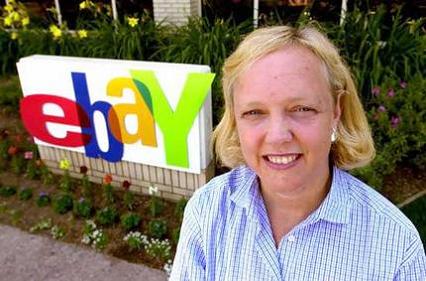
Wow, you really don’t get this Meg…You were the CEO of eBay receiving investment banking services from Goldman Sachs, then you joined the Goldman Sachs board and their compensation committee, then Goldman Sachs started to feed you these sweetheart deals, not one, not two but 100 of them, and you made a fortune, a separate fortune from your eBay fortune and then until you got caught you didn’t think anything was wrong. But the fact is, Congress investigated what you did, they called it corrupt, the SEC investigated what you did and immediately declared what you did illegal, and the eBay shareholders investigated what you did and they sued you. They sued you for a huge conflict of interest and the only reason why you paid back any of this money is because you had to settle the lawsuit.


None of that is going to elect Poizner (who essentially ceded the Latino vote by announcing he supports the Arizona immigration law), but it’s going to make great copy for the attack ads on Whitman this fall.


That’s the problem with primaries that become entirely negative — they come back to get you in the general election.


SFBG radio: Johnny Angel and Tim Redmond on Whitman and SF’s mayor

1

Johnny Angel Wendell and Tim Redmond talk about Meg Whitman’s oil-spill and immigration policy problems, why Jerry Brown isn’t getting on the stick and why San Franciscans have trouble electing a progressive mayor.

Johnny Angel SFBG Radio Show 4/30 by SFBG

Opinion: Immigration policy, in Arizona and at home

14

Editors note: This is an opinion piece the horrible immigration bill in Arizona — and its connections here in SF.


By Angela Chan


Mayor Gavin Newsom and City Attorney Dennis Herrera have publicly opposed the anti-immigrant bill, SB 1070 in Arizona.  A diverse coalition of civil rights organizations – including the Arab Resource & Organizing Center, Asian Law Caucus, Bernal Heights Neighborhood Center, Central American Resource Center, Community United Against Violence, Equal Justice Society, La Raza Centro Legal, National Lawyers Guild San Francisco Bay Area Chapter, POWER, and Pride at Work SF — applauds both city officials for taking a strong stand against the Arizona bill.  At the same time, we urge Newsom and Herrera to firmly and unequivocally support the implementation of a local policy that protects the due process rights of immigrant youth in San Francisco.


As with SB 1070 in Arizona, the mayor’s policy of requiring juvenile probation officers to report young people to federal Immigration and Customs Enforcement (ICE) before they receive due process has opened the door to racial profiling and torn many innocent youth from their families.


Since July 2008, pursuant to Newsom’s draconian reporting policy, more than 160 youth have been reported to ICE right after arrest, before they even have had a chance to be heard in juvenile court. That means that youth who are completely innocent of any crimes and youth who are overcharged have been reported to ICE.


Despite the veto-proof passage of a policy by the Board of Supervisors last fall that moves the point of reporting from the arrest stage to after a youth is found to have committed a felony, Newsom has insisted on ignoring the new city law.  Herrera, in turn, has yet to advise implementation of the new law.


Like the Arizona bill, Newsom’s policy requires reporting to ICE when local officials – in this case juvenile probation officers – merely have “reasonable suspicion” that an individual is undocumented. The factors that probation officers are required to use to determine reasonable suspicion have come under fire for codifying racial profiling into law.  Such factors as “length of time in the country” and “presence of undocumented persons in the same area where arrested or involved in the same illegal activity” have little to do with accurately determining an individual’s status, and much more to do with targeting the entire immigrant community and those who live in heavily immigrant communities.


In March, a year and a half after the mayor’s policy went into effect, Chief Probation Officer William Siffermann admitted before the Rules Committee of the Board of Supervisors that the latter factor could lead to racial profiling.  A few days later, Herrera stated that this factor had been removed from the policy.  However, if any changes have been made to the written policy, they have not been made available to the public.


Another similarity with the Arizona bill:  probation officers in San Francisco have not been properly trained and do not have the expertise in immigration law to accurately determine which youth are actually undocumented.  Rather, these officers rely on race, ethnicity, language ability, surnames, and accent as a basis for assuming immigration status.
Much like the Arizona bill, Mayor Newsom’s policy goes well beyond any obligations under federal law by requiring that probation officers report suspected undocumented youth to ICE.  As a cadre of legal scholars, including University of San Francisco Law Professor Bill Ong Hing, have repeatedly made clear, federal law does not require that city officials ask about immigration status or report individuals suspected of being undocumented to ICE.


Finally, as with the Arizona bill, the mayor’s draconian policy only compounds the harm to immigrant families caused by an already flawed federal immigration system, which is in drastic need of comprehensive reform. We need humane reform at the federal level, but in the meantime, Mayor Newsom and City Attorney Herrera need to take swift action to restore due process and protect family unity by ending San Francisco’s draconian policy. 


In standing up against racial profiling in Arizona, Mayor Newsom is back on the right track of defending immigrant rights — now is the time to give immigrant youth and families fairness and due process in San Francisco.


Angela Chan is staff attorney with the Juvenile Justice and Education Project at the Asian Law Caucus

MLBPA opposes Arizona immigration bill

2

The Major League Baseball Players Association Executive Director Michael Weiner sent out a letter this afternoon stating that the MLBPA opposes the immigration law recently passed by the state of Arizona.

In his letter, which was sent to City Attorney Dennis Herrera following Herrera’s call to find an alternative to Phoenix for the 2011 All-Star game, Weiner acknowledges that law’s passage “could have a negative impact on hundreds of Major League players who are citizens of countries other than the United States.”

“These international players are very much a part of our national pastime and are important members of our Association,” Weiner states.”Their contributions to our sport have been invaluable, and their exploits have been witnessed, enjoyed and applauded by millions of Americans. All of them, as well as the Clubs for whom they play, have gone to great lengths to ensure full compliance with federal immigration law.”

“The impact of the bill signed into law in Arizona last Friday is not limited to the players on one team,” Weiner continues.”The international players on the Diamondbacks work and, with their families, reside in Arizona from April through September or October. In addition, during the season, hundreds of international players on opposing Major League teams travel to Arizona to play the Diamondbacks. And, the spring training homes of half of the 30 Major League teams are now in Arizona. All of these players, as well as their families, could be adversely affected, even though their presence in the United States is legal. Each of
them must be ready to prove, at any time, his identity and the legality of his being in Arizona to any state or local official with suspicion of his immigration status. This law also may affect players who are U.S. citizens but are suspected by law enforcement of being of foreign descent.

“The Major League Baseball Players Association opposes this law as written,” Weiner concludes. “We hope that the law is repealed or modified promptly. If the current law goes into effect, the MLBPA will consider additional steps necessary to protect the rights and interests of our members. My statement reflects the institutional position of the Union. It was arrived at after consultation with our members and after consideration of their various views on this controversial subject.”

Take me out to the ball game (just not in Arizona)

1

City Attorney Dennis Herrera and Supervisor David Campos are asking Major League Baseball Commissioner Bud Selig to seek an alternative to Phoenix, Arizona to host the 2011 All-Star Game, unless that state’s controversial immigration law is repealed.
The move follows Herrera and the Board of Supervisors call to boycott Arizona, following Arizona’s accidental Gov. Jan Brewer’s infamous April 23 signing of SB 1070.

In their letter to the MLB’s Selig, Herrera and Campos call the new Arizona law, “an unambiguous and direct threat to the liberty of millions of Americans who are Latino or who may appear to be of foreign origin. And it comes as the debate over immigration ramps up nationwide, spilling over into city council chambers and federal court houses, as well as onto baseball fields, as rightwing electeds in Texas, Colorado and now Oklahoma boast of plans to introduce similar legislation to Arizona.

“Arizona’s new law goes far beyond merely pushing the envelope of a politically contentious issue,” Campos and Herrera state. “It is a direct and tangible threat to the fundamental rights of many Major League Baseball players and fans, and an affront to millions of Americans who are — or who may appear to be — of foreign heritage.”


Let’s talk

0

SUPEREGO The last time I got on the horn with scaldingly hilarious comedian Sandra Bernhard — one of the few people who can make me blush without pulling down their pants — it was the tail-end of that heady year, 2007. Remember then? Baby electro-hipsters were tiring of Justice, shutter shades caused several horrible traffic accidents, and Sandra was just about to blossom into a full-fledged political scandaleuse, among the first to publicly call out Sarah Palin for her anti-woman stance. (“A turncoat bitch whore in cheap-ass fucking New Vision plastic glasses” — those were fightin’ words back then.) I seem to recall we ranted about tight-fisted lesbians who won’t pay for extra corn bread. Things seemed so innocent …

Sandra’s coming into town to host a star-studded fundraiser for one of my favorite HIV/AIDS charities, Maitri, which cares for people severely debilitated by the disease. Although she’s settled down in New York City with her partner, daughter, and new dog, George, her sharp sense of outrage hasn’t dimmed one whit. This time, our goats were got and blazing over the just-passed, heinous Arizona “immigration law” that effectively criminalizes walking while brown. I love Real America! It’s like a marshmallow with a mullet. And not the hip kind of pony-hair mullet with shaved patches all the kids in Mexico are rocking this year.

“What the fuck is wrong with these people?” Sandra warmed up. “Nobody wants to say that these Teabaggers are racist, but, honey, let there be no question, they are racists. Here we have a handsome, incredibly intelligent black man as president, with a smart, beautiful wife and two great children — and these people are fucking losing their shit over it. They just can’t deal! All these creepy white men in their little super-secret militias who are freaking out because there are so many hot, chic people of color around them.

“Seriously, it makes me want to hurl. ‘Brown people get out!’ All I can say is, they better look into their family tree. We all started brown, honey. You want to take your country back? Back to what? Slavery? When women had to shut up? When we were all sharecroppers? Go have your little fantasy backwards country on the Internet or something. Look, I pay a lot more money in taxes than most of these tea people, and I am just fine with helping people afford health care, helping people get educated, fixing the infrastructure. Whatever happened to compassion? The world is so out of balance. We need to pull together and do what we can to make things better for everyone.”

BLISS

Hosted by Sandra Bernhard

Sunday, May 2, 6 p.m.–10 p.m., $150

Golden Gate Club

135 Fisher Loop, SF

www.maitrisf.org

MEAT VS. DEATH GUILD

Retro madness will surely be the fly on the windscreen, the fetus on your breath when SF’s biggest goth and industrial nights black-celebrate four years of unnerving collaboration. DJs Decay, BaconMonkey, Melting Girl, and more are your skinny puppies.

Fri/30, 8:30 p.m.–late, $8. DNA Lounge, 375 11th St., SF. www.meatsf.com

QUEENSDAY 2010

Did you know that, on one magical day a year, Dutch kids wear bright orange and dance around to Tiësto trance and Hollandaise hip-hop in honor of Queen Beatrix van Oranje-Nassau’s birthday? Neither-lands did I. DJ Marcus brings the hiep hiep hoera.

Fri/30, 8 p.m., $10/$20. Apartment 24, 440 Broadway, SF. www.mjdjevents.com

DEVOTION

Old school househeds will be in soul heaven when this long-awaited reunion of local rhythm giants Ruben Mancias and David Harness smokes out the EndUp, in honor of the ninth anniversary of Mancias’ Devotion party. Peace in the valley, people.

Sunday, May 2, 8 p.m.– 4 a.m., $12. The EndUp, 401 Sixth St., SF. www.theendup.com


Reading the tea leaves in the Arizona Governor race

6

A newly released survey of the AZ governor’s race at Public Policy Polling shows a tight race, with Attorney General Terry Goddard, a Democrat, leading all the GOP candidates, including current Arizona governor Jan Brewer, who just signed the state’s racist immigration bill, and Sheriff Joe Arpaio, who has been treating undocumented Mexicans like animals for years.


 “The remainder of the race could hinge on the popularity of the controversial new immigration law which Brewer signed, Goddard opposes, and Arpaio, naturally, has lauded,” said Dean Debnam, President of Public Policy Polling. “Brewer and Arpaio could both beat Goddard if they rally illegal immigration opponents.”

According to Public Policy Polling’s analysis, Brewer’s handling of the immigration bill gave her a much needed boost among Republicans in her quest to snatch the GOP gubernatorial nomination from Arpaio and other Republican candidates. But Democrats and Latinos are now flocking to Goddard in droves, as calls for a nationwide boycott of Arizona grow.

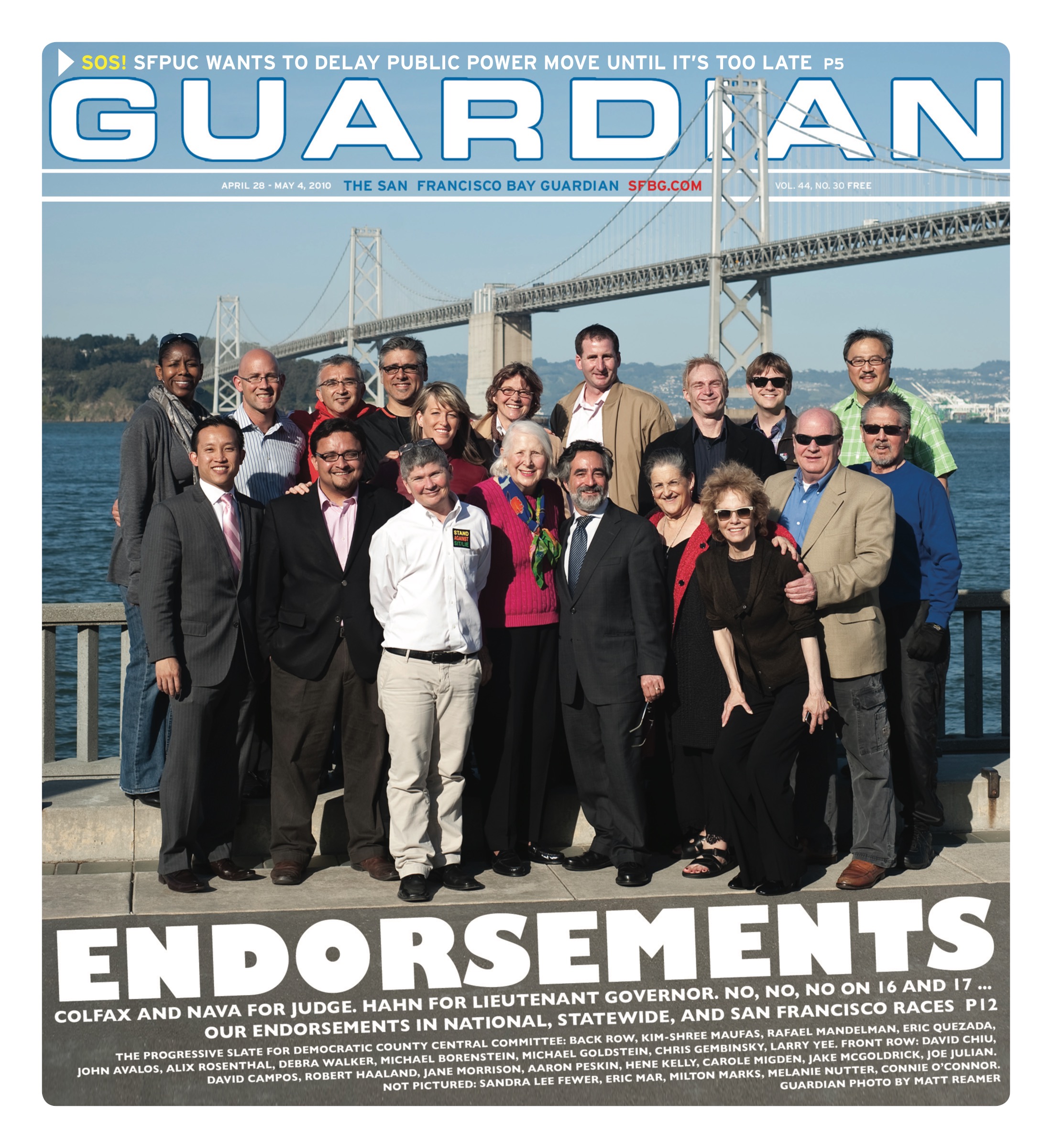
ENDORSEMENTS: National and state races

15

Editor’s note: the file below contains a correction, updated May 5 2010. 


National races


U.S. SENATE, DEMOCRAT


BARBARA BOXER


The Republican Party is targeting this race as one of its top national priorities, and if the GOP can dislodge a three-term senator from California, it will be a major blow for the party (and agenda) of President Obama. The pundits are happily talking about how much danger Barbara Boxer faces, how the country’s mood is swinging against big-government liberals.


But it’s always a mistake to count out Boxer. In 1982, as a Marin County supervisor with little name recognition in San Francisco, she trounced then-SF Sup. Louise Renne for an open Congressional seat. Ten years later, she beat the odds and won a hotly contested primary and tough general election to move into the Senate. She’s a fierce campaigner, and with no primary opposition, will have a united party behind her.


Boxer is one of the most progressive members of the not-terribly progressive U.S. Senate. She’s been one of the strongest, most consistent supporters of reproductive rights in Washington and a friend of labor (with 100 percent ratings from the AFL-CIO and National Education Association). We’ve had our disagreements: Boxer supported No Child Left Behind, wrote the law allowing airline pilots to carry guns in the cockpit, and was weak on same-sex marriage when San Francisco sought to legalize it (although she’s come around). But she was an early and stalwart foe of the war in Iraq, split with her own party to oppose a crackdown on illegal immigration, and is leading the way on accountability for Wall Street. She richly deserves reelection, and we’re happy to endorse her.


CONGRESS, 6TH DISTRICT, DEMOCRAT


LYNN WOOLSEY


It’s odd that the representative from Marin and Sonoma counties is more progressive by far than her colleague to the south, San Francisco’s Nancy Pelosi. But over the years, Lynn Woolsey has been one of the strongest opponents of the war, a voice against bailouts for the big Wall Street banks, and a foe of cuts in the social safety net. We’re proud to endorse her for another term.


CONGRESS, 7TH DISTRICT, DEMOCRAT


GEORGE MILLER


George Miller has been representing this East Bay district since 1974, and is now the chair of the Education and Labor Committee and a powerhouse in Congress. He’s too prone to compromise (with George W. Bush on education policy) but is taking the right line on California water (while Sen. Dianne Feinstein is on the wrong side). We’ll endorse him for another term.


CONGRESS, 8TH DISTRICT, DEMOCRAT


NANCY PELOSI


We’ve never been terribly pleased with San Francisco’s most prominent Congressional representative. Nancy Pelosi was the author of the bill that created the first privatized national park at the Presidio, setting a horrible standard that parks ought to be about making money. She was weak on opposing the war, ducked same-sex marriage, and has used her clout locally for all the wrong candidates and issues. But we have to give her credit for resurrecting and pushing through the health care bill (bad as it was — and it’s pretty bad — it’s better than doing nothing). And, at a time when the Republicans are trying to derail the Obama presidency, she’s become a pretty effective partner for the president.


Her fate as speaker (and her future in this seat) probably depends on how the Democrats fare in the midterm Congressional elections this fall. But if she and the party survive in decent shape, she needs to take the opportunity to undo the damage she did at the Presidio.


CONGRESS, 9TH DISTRICT, DEMOCRAT


BARBARA LEE


Barbara Lee, who represents Berkeley and Oakland, is co-chair of the Progressive Caucus in the House, one of the most consistent liberal votes in Congress, and a hero to the antiwar movement. In 2001, she was the only member of either house to oppose the Bush administration’s Use of Force resolution following the 9/11 attacks, and she’s never let up on her opposition to foolish military entanglements. We’re glad she’s doing what Nancy Pelosi won’t — represent the progressive politics of her district in Washington.


CONGRESS, 13TH DISTRICT, DEMOCRAT


PETE STARK


Most politicians mellow and get more moderate as they age; Stark is the opposite. He announced a couple of years ago that he’s an atheist (the only one in Congress), opposed the Iraq war early, called one of his colleagues a whore for the insurance industry, and insulted President Bush and refused to apologize, saying: “I may have dishonored the commander-in-chief, but I think he’s done pretty well to dishonor himself without any help from me.” He served as chair of the House Ways and Means Committee for exactly one day — March 3 — before the Democratic membership overruled Speaker Pelosi and chucked him out on the grounds that he was too inflammatory. The 78-year-old may not be in office much longer, but he’s good on all the major issues. He’s also fearless. If he wants another term, he deserves one.


State races


GOVERNOR, DEMOCRAT


EDMUND G. BROWN


Jerry Brown? Which Jerry Brown? The small-is-beautiful environmentalist from the 1970s who opposed Pacific Gas and Electric Co.’s Diablo Canyon nuke and created the California Conservation Corps, the Office of Appropriate Technology, and the Farm Labor Relations Board (all while running a huge budget surplus in Sacramento)? The angry populist who lashed out at corporate power on a KPFA radio talk show and ran against Bill Clinton for president? The pro-development mayor of Oakland who sided with the cops on crime issues and opened a military academy? Or the tough-on-crime attorney general who refuses to even talk about tax increases to solve the state’s gargantuan budget problems?


We don’t know. That’s the problem with Brown — you never know what he’ll do or say next. For now, he’s been a terribly disappointing candidate, running to the right, rambling on about preserving Proposition 13, making awful statements about immigration and sanctuary laws, and even sounding soft on environmental issues. He’s started to hit his stride lately, though, attacking likely GOP contender Meg Whitman over her ties to Wall Street and we’re seeing a few flashes of the populist Brown. But he’s got to step it up if he wants to win — and he’s got to get serious about taxes and show some budget leadership, if he wants to make a difference as governor.


LIEUTENANT GOVERNOR, DEMOCRAT


JANICE HAHN


Not an easy choice, by any means.


Mayor Gavin Newsom jumped into this race only after it became clear that he wouldn’t get elected governor. He sees it as a temporary perch, someplace to park his political ambitions until a better office opens up. He’s got the money, the statewide name recognition, and the endorsement of some of the state’s major power players, including both U.S. Senators and House Speaker Nancy Pelosi. He’s also been a terrible mayor of San Francisco — and some progressives (like Sup. Chris Daly) argue, persuasively, that the best way to get a better person in Room 200 is to ship Newsom off to an office in Sacramento where he can’t do much harm and let the supervisors pick the next mayor.


But it’s hard to endorse Newsom for any higher office. He’s ducked on public power, allowing PG&E to come very close to blocking the city’s community choice aggregation program (See editorial, page 5). His policies have promoted deporting kids and breaking up families. He’s taken an approach to the city budget — no new revenue, just cuts — that’s similar to what the Republican governor has done. He didn’t even bother to come down and talk to us about this race. There’s really no good argument for supporting the advancement of his political career.


Then there’s Janice Hahn. She’s a Los Angeles City Council member, the daughter of a former county supervisor, and the sister of a former mayor. She got in this race way before Newsom, and her nightmare campaign consultant, Garry South, acts as if she has some divine right to be the only Democrat running.


Hahn in not overly impressive as a candidate. When we met her, she seemed confused about some issues and scrambled to duck others. She told us she’s not sure she’s in favor of legalizing pot, but she isn’t sure why she’s not sure since she has no arguments against it. She won’t take a position on a new peripheral canal, although she can’t defend building one and says that protecting San Francisco Bay has to be a priority. She won’t rule out offshore oil drilling, although she said she has yet to see a proposal she can support. Her main economic development proposal was to bring more film industry work to California, even if that means cutting taxes for the studios or locating the shoots on Indian land where there are fewer regulations.


On the other hand, she told us she wants to get rid of the two-thirds threshold in the state Legislature for passing a budget or raising taxes. She supports reinstating the car tax at pre-Gov. Arnold Schwarzenegger levels. She supports a split-roll measure to reform Prop. 13. She wants to see an oil-severance tax to fund education. She’s one of the few statewide candidates who openly advocates higher taxes on the wealthy as part of the solution to the budget crisis.


We are under no illusions that Hahn will be able to use the weak office of lieutenant governor to move on any of these issues, and we’re not at all sure she’s ready to take over the top spot. But on the issues, she’s clearly better than Newsom, so she gets our endorsements.


SECRETARY OF STATE, DEMOCRAT


DEBRA BOWEN


Debra Bowen is the only Democrat running, a sign that pretty much everyone in the party thinks she’s doing a fine job as Secretary of State. She’s run a clean office and we see no reason to replace her.


CONTROLLER, DEMOCRAT


JOHN CHIANG


Like Bowen, John Chiang has no opposition in the primary, and he’s been a perfectly adequate controller. In fact, when Gov. Schwarzenegger tried two years ago to cut the pay of thousands of state employees to the minimum wage level, Chiang defied him and refused to change the paychecks — a move that forced the governor to back down. We just wish he’d play a more visible role in talking about the need for more tax revenue to balance the state’s books.


TREASURER, DEMOCRAT


BILL LOCKYER


Bill Lockyer keeps bouncing around Sacramento, waiting, perhaps, for his chance to be governor. He was attorney general. Now he’s treasurer seeking a second term, which he will almost certainly win. He’s done some good things, including trying to use state bonds to promote alternative energy, and has spoken out forcefully about the governor’s efforts to defer deficit problems through dubious borrowing. He hasn’t, however, come out in favor of higher taxes for the rich or a change in Prop. 13.


ATTORNEY GENERAL, DEMOCRAT


KAMALA HARRIS


There are really only two serious candidates in this race, Kamala Harris, the San Francisco district attorney, and Rocky Delgadillo, the former Los Angeles city attorney. Harris has a comfortable lead, with Delgadillo in second and the others far behind.


Delgadillo is on his second try for this office. He ran against Jerry Brown four years ago and got nowhere. And in the meantime, he’s come under fire for, among other things, using city employees to run personal errands for him (picking up his dry-cleaning, babysitting his kids) and driving his car without insurance. On a more significant level, he made his reputation with gang injunctions that smacked of ethnic profiling and infuriated Latino and civil liberties groups. It’s amazing he’s still a factor in this race; he can’t possibly win the general election with all his baggage.


Harris has a lot going for her. She was among the first California elected officials to endorse Barack Obama for president, and remains close to the administration. She’s a smart, articulate prosecutor and could be one of the few women atop the Democratic ticket this year. We were never comfortable with her ties to Willie Brown, but he’s no longer a factor in state or local politics. These days, she’s more closely allied with the likes of State Sen. Mark Leno.


That said, we have some serious problems with Harris. She’s been up in Sacramento pushing Republican-style tough-on-crime bills (like a measure that would bar registered sex offenders from ever using social networking sites on the Internet) and forcing sane Democrats like Assembly Member and Public Safety Committee Chair Tom Ammiano to try to tone down or kill them (and then take the political heat). If she didn’t know about the problems in the SFPD crime lab, she should have, and should have made a bigger fuss, earlier.


But Harris has kept her principled position against the death penalty, even when it meant taking immense flak from the cops for refusing to seek capital punishment for the killer of a San Francisco police officer. She’s clearly the best choice for the Democrats.


INSURANCE COMMISSIONER, DEMOCRAT


DAVE JONES


Two credible progressives are vying to run for this powerful and important position regulating the massive — and massively corrupt — California insurance industry. Dave Jones and Hector De La Torre are both in the state Assembly, with Jones representing Sacramento and De La Torre hailing from Los Angeles. Both have a record opposing insurance industry initiatives; both are outspoken foes of Prop. 17; and either would do a fine job as insurance commissioner. But Jones has more experience on consumer issues and health care reform, and we prefer his background as a Legal Aid lawyer to De La Torre’s history as a Southern California Edison executive. So we’ll give Jones the nod.


BOARD OF EQUALIZATION, DISTRICT 1, DEMOCRAT


BETTY T. YEE


Betty Yee has taken over a job that’s been a stronghold of progressive tax policy since the days of the late Bill Bennett. She’s done well in the position, supporting progressive financial measures and even coming down, as a top tax official, in favor of legalizing (and taxing) marijuana. We’re happy to endorse her for another term.


SUPERINTENDENT OF PUBLIC INSTRUCTION


TOM TORLAKSON


Two prominent Democratic legislators are running for this nonpartisan post, state Sen. Gloria Romero of Los Angeles and Assembly Member Tom Torlakson of Martinez. It’s a pretty clear choice: Romero is a big supporter of charter schools who thinks parents should be able to move their kids out of one school district and into another (allowing wealthier white parents, for example, to abandon Los Angeles or San Francisco for the suburban districts). She’s been supported in the past by Don and Doris Fisher, who put a chunk of their GAP Inc. fortune into school privatization efforts. Torlakson wants more accountability for charters, opposes the Romero district-option bill, and has the support of every major teachers union in the state. Vote for Torlakson.


STATE SENATE, DISTRICT 8, DEMOCRAT


LELAND YEE


Sen. Leland Yee can be infuriating. Two years ago, he was hell-bent on selling the Cow Palace as surplus state property and allowing private developers to take it over. In the recent budget crisis, he pissed off his Democratic colleagues by refusing to vote for cuts that everyone else knew were inevitable (while never making a strong stand in favor of, say, repealing Prop. 13 or raising other taxes). But he’s always been good on open-government issues and has made headlines lately for busting California State University, Stanislaus over a secret contract to bring Sarah Palin in for a fundraiser — and has raised the larger point that public universities shouldn’t hide their finances behind private foundations.


Yee will have no serious opposition for reelection, and his campaign for a second term in Sacramento is really the start of the Leland Yee for Mayor effort. With reservations over the Cow Palace deal and a few other issues, we’ll endorse him for reelection.


 Correction update: Yee’s office informs us that the senator suports an oil-severance tax and a tax on high-income earners and “believes that Prop. 13 should be reformed,” although he hasn’t taken a position on Assemblymember Tom Ammiano’s reform bill. 


STATE ASSEMBLY, DISTRICT 12, DEMOCRAT


FIONA MA


Fiona Ma’s a mixed bag (at best). She doesn’t like Pacific Gas and Electric Co. and supports public power, but comes up with strange bills that make no sense, like a 2009 measure to limit rent control in trailer parks. Why does Ma, who has no trailer parks in her district, care? Maybe because the landlords who control the mobile home facilities gave her some campaign cash. She faces no opposition, and we’re not thrilled with her record, but we’ll reluctantly back her for another term.


STATE ASSEMBLY, DISTRICT 13, DEMOCRAT


TOM AMMIANO


When the history of progressive politics in modern San Francisco is written, Tom Ammiano will be a central figure. His long-shot 1999 mayoral campaign against Willie Brown brought the left to life in town, and his leadership helped bring back district elections and put a progressive Board of Supervisors in place in 2000. As a supervisor, he authored the city’s landmark health care bill (which Newsom constantly tries to take credit for) and the rainy day fund (which saved the public schools from debilitating cuts). He uses his local influence to promote the right causes, issues, and candidates.


And he’s turned out to be an excellent member of the state Assembly. He forced BART to take seriously civilian oversight of the transit police force. He put the battle to reform Prop. 13 with a split-role measure back on the state agenda. And his efforts to legalize and tax marijuana are close to making California the first state to toss the insane pot laws. As chair of the Public Safety Committee, he routinely defies the police lobbies and the right-wing Republicans and defuses truly awful legislation. We’re glad Ammiano’s still fighting in the good fight, and we’re pleased to endorse him for another term.


STATE ASSEMBLY, DISTRICT 14, DEMOCRAT


NANCY SKINNER


Nancy Skinner has taken on one of the toughest, and for small businesses, most important, battles in Sacramento. She wants to make out-of-state companies that sell products to Californians collect and remit sales tax. If you buy a book at your local bookstore, you have to pay sales tax; if you buy it from Amazon, it’s tax-free. That not only hurts the state, which loses hundreds of millions of dollars in tax revenue, it’s a competitive disadvantage to local shops. Skinner’s a good progressive vote and an ally for Ammiano on the Public Safety Committee. We’re happy to endorse her for another term.


STATE ASSEMBLY, DISTRICT 16, DEMOCRAT


SANDRE SWANSON


Sandre Swanson represents the district where BART police killed Oscar Grant, but he wasn’t the one out front pushing for more civilian accountability; that was left to SF’s Ammiano. And while Swanson was generally supportive of Ammiano’s bill, he was hardly a leader in the campaign to pass it. This is too bad, because Swanson’s almost always a progressive vote and has been good on issues like whistleblower protection (a Swanson bill that passed this year protects local government workers who want to report problems confidentially). We’ll endorse him for another term, but he needs to get tougher on the BART police.

Newsom’s opponent Hahn calls for LA boycott of Arizona

The Arizona legislation that has sparked fury nationwide and even prompted City Attorney Dennis Herrera to call for a boycott of all things Arizona has also served to highlight a difference in opinion between Mayor Gavin Newsom and his opponent in the Lieutenant Governor’s race, Los Angeles City Councilwoman Janice Hahn.

In a Chronicle story today, Newsom took a murky stance on the Arizona boycott idea:

“Newsom argued that a total boycott of Arizona businesses could bring the city a wide range of problems that haven’t even been considered. ‘The notion of boycotting a state and every business that does business in the state is an extraordinarily complicated matter,’ he warned.”

To Hahn, the matter isn’t so complicated. According to a press release we received from her campaign:

“In response to newly-enacted legislation in Arizona which will require immigrants to carry documents about their immigration status at all times, and will allow police officers to question residents about their immigration status, today, Councilwoman Janice Hahn will introduce a resolution calling on the City of Los Angeles to boycott the State of Arizona. The resolution will call for Los Angeles, and all of its departments, to end any and all contracts with Arizona-based companies and to stop doing business with the state.”

Mexico warns citizens: use extreme caution in Arizona

7

It’s no surprise to anyone who has watched Newsom stubbornly refuse to take responsibility for the consequences of his flawed juvenile immigrant policy that the mayor is playing coy when it comes to the Board of Supervisors’ and the City Attorney’s attempts to institute a boycott of Arizona.


The real surprise in the fallout around Arizona SB 1070 is that the legislation doesn’t include a clause whereby all “aliens” must find a picture of the Arizona state flag, cut out the star in it, and wear it as a “badge,” much like the Nazis required of the Jews.


But Mexico does gets the threat this hateful legislation poses to its citizens. In a new twist on travel advisories, the Ministry of Foreign Affairs of Mexico has warned its citizens in Arizona to exercise extreme caution, whether they are demonstrating against Arizona SB 1070, going about their everyday affairs, attending classes or contemplating accepting work offered from a car on a highway.


“It is important to act with prudence and respect local laws,” the Mexican consulate states. It notes that the new law won’t take effect until 90 days after the end of the current session of the Arizona state legislature, but warns, “however, as was clear during the legislative process, there is a negative political environment for migrant communities and for all Mexican visitors.”


The consulate recommends that Mexican nationals carry available documentation, even before the new law takes place so as to “help avoid needless confrontations.”


“As long as no clear criteria defined for when, where and who the authorities will inspect, it must be assumed that every Mexican citizen may be harassed and questioned without further cause at any time,” the consulate states.


“The new law will also make it illegal to hire or be hired from a motor vehicle stopped on a roadway or highway, regardless of the immigration status of those involved. While these rules are also not yet in force, extreme caution should be used.”


The consulate concludes by reminding folks that “Mexican nationals who are in the United States, regardless of their immigration status, have inalienable human rights and can resort to protection mechanisms under international law, U.S. federal law, and Arizona state law. The functions of the five Mexican consulates in Arizona (Phoenix, Tuscon, Yuma, Nogales and Douglas) include providing legal advice to all Mexicans who consider that they have been subjected to any abuse by the authorities.”


It recommends that Mexicans requiring consular assitance in Arizona use the following toll-free number, available 24 hours a day, seven days a week:1.877.6326.6785 (1.877.63CONSUL).


Herrera to San Francisco: boycott Arizona

25

I almost visited Arizona once.
I was in Nevada, visiting the Hoover Dam which crosses the border between Nevada and Arizona and took a photo next to the Arizona state sign.

But I didn’t cross the line. I already suspected that Arizona was groundzero for wingnuts, thanks to the decision of Arizona U.S. senator, Republican John McCain, to choose then Alaska governor Sarah Palin as his running mate in the 2008 presidential election.


At least, Democrat Janet Napolitano was still governor of Arizona at the time, and so was able to veto similar attempts to pass racist immigration laws in the state of


But now Republican Jan Brewer, a former Maricopa County supervisor, is governor of Arizona and has signed Arizona’s SB  1070, I think I’ll follow San Francisco city Attorney Dennis Herrera’s advice and implement a sweeping boycott of all things Arizona.


Citing San Francisco’s “moral leadership against such past injustices as South African apartheid, the exploitation of migrant farm workers, the economic oppression of Catholics in Northern Ireland, and discrimination against the LGBT community,” Herrera offered the services of his office’s contracts, government litigation and investigations teams to work closely with city departments and commissions to identify applicable contracts and to aggressively pursue termination wherever legally tenable.


“Arizona’s controversial new law makes it a state-level crime for someone to be in the country illegally, and even criminalizes the failure to carry immigration documents at all times by lawful foreign residents,” Herrera’s April 26 press release observed. “It additionally imposes a requirement for police officers to question those they suspect may be in the United States illegally. Civil libertarians have sharply criticized the law for being an open invitation for harassment and discrimination against all Latinos, regardless of their citizenship. It has also been rebuked by the nation’s law enforcement community, with the president of the Major Cities Chiefs Association, San Jose Police Chief Robert Davis, reiterating his organization’s 2006 policy statement that requiring local police to enforce immigration laws “would likely negatively effect and undermine the level of trust and cooperation between local police and immigrant communities.”


“Arizona has charted an ominous legal course that puts extremist politics before public safety, and betrays our most deeply-held American values,” said Herrera, who is the son of an immigrant from Latin America. “Just as it did two decades ago when it refused to observe Martin Luther King Jr. Day, Arizona has again chosen to isolate itself from the rest of the nation. Our most appropriate response is to assure that their isolation is tangible rather than merely symbolic. San Francisco should lead the way in adopting and aggressively pursuing a sweeping boycott of Arizona and Arizona-based businesses until this unjust law is repealed or invalidated. My office is fully committed to work with San Francisco city departments and commissions to identify all applicable contracts, and to pursue termination wherever possible.  And my office stands ready to assist in any legal challenges in whatever way it can.”


Meanwhile, Napolitano, who is serving as Obama’s Department of Homeland Security Secretary, joined Obama in calling Arizona’s new immigration law “misguided.”


Appearing on ABC News, Napolitano said of the bill: “That one is a misguided law. It’s not a good law enforcement law. It’s not a good law in any number of reasons.”
She also warned that Arizona’s law could get other states trying to pass similar legislation, which could create a patchwork of immigration rules, instead of an an overall federal immigration system.


“This affects everybody, and I actually view it now as a security issue,” Napolitano said. “We need to know who’s in the country. And we need to know, for those who are in the country illegally, there needs to be a period under which they are given the opportunity to register so we get their biometrics, we get their criminal history and we know who they are. They pay a fine. They learn English. They get right with the law.”


Here on the streets of San Francisco, immigrant advocates are asking folks to march on May Day in solidarity with the immigrant communities of Arizona.


“In 2006, the immigrant community took to the streets in huge numbers,” a press release from the May 1st coalition stated. “Millions of undocumented working people and their families sought a pathway to legalization and to a life without fear of work-place raids or middle-of-the night deportations that tear families apart. In 2010, conditions have only worsened as hate crimes have increased exponentially; intolerance has been legitimized by the rhetoric of the Tea Party; and governments (like Arizona) have instituted harsh policing and employment practices that terrorize our communities. The federal government has failed to solve the crisis of undocumented workers in this country. In San Francisco, thousands of workers face losing their jobs because of a flawed employment verification process. Our children are deported without due process and now we must fear the codification of racial bigotry in Arizona.  State and federal governments have ineffectively solved the budget crisis on the backs of the lowest paid workers.  We march in solidarity with Arizona’s immigrants; immigrants everywhere; and the hard-working people of San Francisco who’ve unfairly endured the burden of this economic crisis.


The May 1st Coalition invites the community to join them for an April 28 poster-making party at 10 a.m, City College Mission Campus at 1125 Valencia Street in preparation for a May Day march at which Olga Miranda, President of SEIU Local 87, Jane Kim, SFUSD school board president, and Pablo Rodriguez, city college faculty, will speak.


My favorite comment on this unfunny situation comes from Daily Kos contributing editor and Las Vegas resident Jed Lewison.


“What do you call a bunch of people who not only don’t see anything wrong with Arizona’s new hate law, but blame federal inaction on immigration reform for “forcing” Arizona to enact the law while simultaneously trying to block federal immigration reform legislation?” Lewison asks. “You call them conservatives.”


Day laborers link sit-lie to Arizona crackdown

13

After another overwhelming vote against it last night, the sit-lie ordinance (banning sitting or lying on SF sidewalks) proposed by Mayor Gavin Newsom and Police Chief George Gascon is probably toast. But just to make sure, the activists at Stand Against Sit Lie are holding another day of creative protests on sidewalks around the city this Saturday, 4/24.

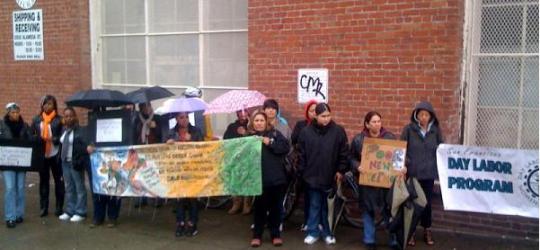
Among the 13 events scheduled so far will be immigrant day laborers sitting along Cesar Chavez Street between Mission and San Van Ness streets to protest both sit-lie and another legislative attack on immigrants, the controversial Arizona measure that essentially bans undocumented immigrants and encourages police to arrest them using racial profiling techniques.

The SF Day Labor Program is organizing the protest and today sent out a statement linking the two measures, noting that the sit-lie ordinance criminalizing otherwise lawful behavior and targets marginalized populations. Last night at the DCCC meeting, Sup. David Campos also made the point that day laborers who stand on street corners all day seeking work sometimes need to rest.

“Day laborers in San Francisco have to sit down once in awhile when they’re out on street corners waiting for work,” Jose Ramirez, a day laborer and coordinator of the SF Day Labor Program, said in today’s statement.  “Taking us to jail for sitting down in San Francisco is the same as immigrants being targeted by police for simply being Latino.”

After the Planning Commission early this month voted 6-1 to recommend against the sit-lie ordinance – finding that it violated a number of city goals and policies – the measure is awaiting consideration by the Board of Supervisors Public Safety Committee, possibly on May 3. 

Green cards in hand, Washingtons want Newsom to discuss immigrant youth policy. In person.

0

Tracey Washington and her 13-year old son heard today that their green card applications have been approved. This means that they will not be deported to Australia, and their personal immigration nightmare is over.
But even as the family rejoices, Tracey’s husband, Charles Washington, a Muni bus driver and long-term San Francisco resident, has written to Mayor Gavin Newsom, voicing disappointment over Newsom’s failure to reach out to his family during their time of need and over Newsom’s continuing refusal to implement the immigrant youth due process policy that a veto-proof majority of the Board approved, in November 2009.

“Our family’s luck n this case was unique, but Mr. Newsom, the pain we felt when our family was facing deportation as a result of your policy is not unique at all,” Washington wrote in his April 21 letter. “We share the pain felt by the many other families whose children were taken into ICE custody and ordered deported, as a result of your policy.” (The full text of the letter that Charles Washington sent to Newsom today is included at the end of this blog post.)
 
The Washingtons’ nightmare began in January, when their 13-year-old boy was reported by juvenile probation to ICE for a minor bullying incident, during which he took 46 cents from another youth, then gave it back and apologized. That’s when the family first discovered that, thanks to a new juvenile immigrant policy that Newsom implemented in July 2008, their teen was going to reported to ICE immediately after his arrest – and before his case was heard in juvenile court. 

And even though the family was eligible for green cards thanks to Tracey’s April 2009 marriage to U.S. citizen Charles Washington, ICE handed Tracey and her son their deportation orders on Feb. 5, 2010–the same day they picked the boy up from juvenile detention and used the boy as bait to get his mother to agree to wear an electronic monitoring anklet.

That anklet was finally taken off today, meaning that Tracey Washington was forced to wear this uncomfortable and humiliating device for two and a half months, even though she did not commit a crime–and even though her son was not found guilty as charged, when his case was finally adjudicated by a juvenile justice.

Following the bullying incident, local law enforcement officers charged the boy with three felony counts, triggering an immediate referral to ICE, under Newsom’s immigrant youth policy.  But a juvenile justice recently gave the boy informal probation, recognizing that the youth is a first-time offender who committed a low level offense and is a good candidate for rehabilitation.

But seven weeks ago (March 1), when Tracey and her son had exhausted their legal options and were facing imminent deportation, the five-member blended Washington family held a press conference as a last resort. Two days later, following a media firestorm, ICE granted the Washingtons a two-month reprive, so that U.S. Citizenship and Immigration Services could review and approve their green card applications.

“We really appreciate that U.S. Citizenship and Immigration Services was willing to look at our individual circumstances and approve our residency application, so that our family can stay together,” Tracey Washington said today. “ At the same time, my heart goes out to the many other families who were harmed by the Mayor’s policy.” 

Angela Chan, the staff attorney at the Asian Law Caucus, who handled the family’s case, noted that while the Washington’s nightmare ended happily, many other families continue to be broken up by harsh immigration laws, lack of access to affordable legal services, and Mayor Newsom’s local policy towards immigrant youth.

“Newsom’s policy exacerbates the impact of a broken federal immigration system on San Francisco families,” Chan said. “We need humane reform at the federal level, but in the meantime, Mayor Newsom needs to take a stand today for due process and family unity by ending San Francisco’s draconian policy. If the Washingtons’ son had not been reported to ICE, as required by Newsom’s policy, he would not have been sent to ICE, and he and his family would not have had to endure this nightmare.”
 
Letter to Mayor Newsom from Washington Family–
 
April        21, 2010
 
Mayor Gavin Newsom
City Hall, Room 200
1 Dr. Carlton B. Goodlett Place
San Francisco, CA 94102
 
RE: Unjust Policy Regarding Undocumented Youth in San Francisco

Dear Mayor Newsom,

My name is Charles Washington. I was born and raised in San Francisco, and am a long-time resident of this great city. I also am a city employee. I love the city of San Francisco and my family has developed strong roots here. Unfortunately, last month, we went through a horrible ordeal when my wife and step-son were ordered deported as a result of your policy, which requires reporting of youth to Immigration and Customs Enforcement (ICE) right after arrest, before the youth even has a chance to have a hearing in juvenile court regarding the charges.

As you may have read in the news, my 13-year-old son was arrested and reported to ICE for deportation over 46 cents in a minor, first-time bullying case. In accordance with your policy, San Francisco juvenile probation officers reported my son to ICE before the allegations could even be adjudicated by a juvenile court judge. To my shock, my wife also was ordered deported by ICE as a result of the reporting of my son by juvenile probation in keeping with your policy.

With the imminent deportation hanging over my wife and son’s heads, we were utterly terrified that our family would be torn apart. Since we had no other legal remedies when our request for a stay of deportation was denied, we desperately reached out to the media to seek help in a last ditch effort. Fortunately, a reporter contacted the White House, which then resulted in an extension of the deadline for the deportation. However, I must tell you that during this time, we were really disappointed that we did not receive a single call or any type of outreach from your office to offer my family support, especially when my son’s referral to ICE was a direct consequence of your policy.

I also would like to express my deep disappointment in the statements your office issued after my family was granted the reprieve through no help from your office. Your office made statements to the press suggesting that our situation proves your policy leads to just outcomes. I completely disagree with this assertion and firmly believe that our being granted the reprieve has proven even more so that your policy hurts families and tears children away from their parents for minor, first-time offenses. The White House seems to understand the importance of keeping families together in granting the reprieve. Unfortunately, your office appears to have missed this completely. It is extremely hurtful to our family that you would try to claim credit for the positive turn in events that my family and the community supporting us worked hard to obtain in order to combat the injustice brought upon us by the policy you implemented in the first place.

Let me also say that my family was lucky, but there are many other families who have not been as fortunate.There was no handbook to tell us what to do to obtain a reprieve when we were in this crisis. It just so happened that we were able to obtain legal assistance, but what if we had been unable to find legal services or if the press had not covered our story? My wife and son would have been torn from me and there is nothing I could have done to stop it from happening. Families in San Francisco should not have to struggle or rely on luck to stay together. In fact, there have been over a hundred families in this city who have not been as fortunate as my family since your harsh and inhumane policy was implemented in 2008.  Our family’s luck in this case was unique, but Mr. Newsom, the pain we felt when our family was facing deportation as a result of your policy is not unique at all.We share the pain felt by the many other families whose children were taken into ICE custody and ordered deported as a result of your policy.

Mr. Newsom, I know that you are a new father yourself and will teach your own daughter many lessons in her lifetime. I respectfully ask you to reexamine your policy from the eyes of a father, the way that I am looking at my son today. While I must say that I am greatly disappointed in the actions you have taken to support a flawed policy that has endangered the children of this city, I do hope that you will take this opportunity to do the right thing and support implementation of Supervisor Campos’ due process amendment, which is now city law.  Families like mine, who are hard-working and rooted in San Francisco, are depending on you to do what is right and to follow the law the community passed in November 2009.

I respectfully request a meeting with you, in which my lawyer, Angela Chan from the Asian Law Caucus, and my family can speak with you about this policy and how it has affected us and continues to impact families in San Francisco.
Sincerely,

Charles Washington

John Ross: Time travelling down the Mississippi

1

 Editors note: John Ross is wandering the country on a book tour, sharing his observations of Obamalandia, 2010. You can read his previous dispatches here and here  

I. Role models


When I finally made Chicago, they were all waiting for me down there two blocks south of the end of the Blue Line, through the wrought-iron gates of Forest Home Cemetery, past the ostentatious mausoleums of fabulous gypsies and clustered around the heroic monument to the Haymarket Martyrs: Red Emma, looking a little dingy these days; Elizabeth Gurley Flynn, the Rebel Girl; William Z. Foster, the CPUSA’s most rigid ideologue and the leaders of its black sector Henry Winston and William Patterson; the anarchist femme fatal Voltairine de Cleyres; hobo-ologist Ben Reitman; and, of course my personal role model, Lucy Parsons, who outlived her Albert (hung by the State for the Haymarket frame-up) by 50 years, traveling this poisoned landscape from sea to stinking sea speechifying to the masses and hawking her incendiary pamphlets to make ends meet. A single wilted rose adorned the soft granite pillow that bears her name and dates.


Scattered amidst the tombstones of the 70-plus anarchists and communists, radicals and rabble-rousers that Irving Abrams and the Pioneer Aid Society planted here are the DNAs of Joe Hill and Big Bill Haywood and Eddie Balchowsky, the one-winged barrelhouse piano player who gave up his arm to Franco’s fascists in the Spanish Civil War. Irving himself has a box seat at the foot of the Haymarket marker, now a National Historical Landmark managed by the government that these brave souls in residence once sought to overthrow.

Emma Goldman and her condescending epitaph (“a people must rise up to liberty”) was unquestionably Irving’s greatest steal, having won the bidding war for her cadaver after she croaked up in Toronto, to bring her home to the country from which she had been deported decades before for counseling young men not to sign up for the First Imperialist War. But despite the old-time luminaries in repose, I had journeyed down to Forest Home to visit with a recent implant, Franklin Rosemont, the anarchist writer and majordomo of Charles Kerr, the oldest radical publishing house in the U.S., now being sustained by his widow Penelope.  

“Surrealism Forever!” reads Franklin’s slab, in keeping with the celebratory tone of this section of the old boneyard. Franklin, who passed abruptly last year, is buried within the arc of the Haymarket monument.  The Cottons, Clara and Warren (not known to be subversives), keep him company.    

I doubt that our current president, whose adopted city Chicago is, has ever communed with these noble spirits, but it would be an educational experience if ever he should make his way down to Forest Home. Enveloped by deal-making devotees of Chicago’s backroom Democratic Party politics like Rahm Emmanuel, Valerie Jarrett, and Education Secretary Arne Duncan (now neck-deep in a hometown scandal for A-listing the scions of the influential in Chicago’s elite public schools), the examples set by Lucy Parsons and Emma Goldman might have stiffened Obama’s shaky backbone and taught him to stand up for the principles he has abandoned as the CEO of the planet’s longest-running criminal conspiracy.

Michael James rules the venerable Heartland Café in Rogers Park in the extreme northwest of this windy metropolis, a schmooze and booze venue for the left side of the local Democratic Party machine for the past three decades.  Both Obama and Bill Ayers have crossed its threshold occasionally at the same time, and Michael, the facilitator of “Rising Up Angry,” a militant Uptown youth group at the tail end of the turbulent ’60s, is now the chairperson of the local Demo ward committee. Although he will never concede that Baracko has squandered the faith that millions invested in him, I sense growing disappointment with Hope Man’s wishy-washy performance 15 months into his tainted term in office.  

As always, I bunked with the James Gang — Paige, the kids, and the estimable Che, a Labrador with a most dignified demeanor — and plunged into Chicago’s stimulating cultural mix. Also in residence: the foot-stomping Irish fiddler Paddy Jones, just in from Tralee — three years ago, Mike dragged Paddy and I off to the Korean baths where the local political class conspires. We sat buck naked in the sauna and Paddy insisted I regale him with the cautionary tale of El Che (the revolutionary martyr not the mutt).  

This time around, Michael escorted me to the late Nelson Algren’s birthday party in a church close by this quintessential Chicago scribbler’s beloved Division Street neighborhood, during which mash notes from his lover Simone de Beuvoir were read, lending credence to Frankie Lyman’s pointed inquiry “Why Do Fools Fall In Love?”

Yet another highpoint of my weeklong pilgrimage to the Hog Butcher of the World were a pair of meetings in Pilsen, an industrial enclave where the U.S. Communist Party first convened hard by Blue Island Avenue back in 1919 and now the most pertinent barrio in Mexico’s second U.S. city. More than a hundred Latino activists showed up to hear me rant and rave about the prospects for a new Mexican revolution and plot this year’s May 1st march in a city where immigrant workers first took to the streets 124 years ago to demand redress for crimes inflicted upon the working class by the bosses of industry and commerce. Four years ago, a half million immigrant workers marched here to demand recognition of their rights and despite the broken promises encapsulated in the Schumer-Graham proposed Immigration “Reform” bill, Chicago’s Mexican community is warming up for another red-hot May Day.  

II.  Resurrection

I followed the contours of the mighty Mississippi from Chicago to St. Louis through rich bottomland that is now the domain of Archer Daniels Midland. St. Louis is an urban hub that features wide, well-kept lawns and bushels of dirty money — Monsanto, Boeing, Peabody Energy, and Talx, which counsels greedy congloms on unemployment compensation, are all headquartered here.  

Yet, despite the capitalist connivance, the city has its own sui generis radical history. The 1877 railroad strike spread from the east to St. Louis and set the style for labor strife in the west, and the anarchist Flores Magon brothers published “Regeneracion,” the bible of the 100 year-old Mexican revolution, here before they were run out of town in the teens of the past century.

My days in St. Louis were well spent. I preached an Easter Sunday sermon at the Mid Rivers Ethical Society, sharing my vision of resurrection and insurrection in the aforementioned Forest Home boneyard, and offered up my palaver at a Black Green Party forum in a soul food parlor off Delmar, spreading the news of the Mexican government’s execrable persecution of  electrical workers pushed out of their workplaces last October at bayonet point by the military and police in a scheme to privatize electricity generation south of the border.  

I walked the St Louis Walk of Fame, stepping over the stars of the likes of William Burroughs, Chuck Berry, Walker Evans, and Fontella Bass, all of whom had to leave town to achieve a modicum of notoriety. I even encountered my very first St. Louie Cardinal, a crimson-hued bird perched in a sapling, spring zephyrs ruffling its crest, from which the Anheuser Busch dynasty drew the logo for the local nine in this beisbol-intoxicated town (they were previously dubbed the “Perfectos” after a popular cigar.)

III. Black & Brown

Further down river, the scrublands of Mississippi spread into the horizon beneath the cramped commuter flight in from Memphis. I had not touched down in the state since Freedom Summer 1964, when I arrived on the very day that the bodies of three civil rights workers (Michael Schwerner, Andrew Goodman, and James Chaney) were unearthed beneath a dam in Philadelphia, Miss.  

Although Black and White speak more cordially to each other these days and there are few black bodies swinging from the poplar trees, Mississippi God Damn (dixit Nina Simone) is still moldering down below. I could feel the heat at my hotel just off the Millsaps College campus in Jackson, where a statewide PTA meeting was in progress. In the conference rooms, black parents squared off against white school administrators over curriculums and the unequal quality of education. This is a commemoration year for black activism, the 40th anniversary of the killings at Jackson (and Kent) State and the 50th for SNCC — and old grievances burn long and deep.

The old civil rights movement achieved only token parity in this the poorest state in the union. Now a new civil rights movement is focusing on the flood of Mexican and Latino workers who poured into Mississippi in the wake of Katrina, and brown people are today’s niggers down at the bottom of the food chain.

Only 34,000 “Hispanics” were officially counted in the 2000 state census but Bill Chandler, a veteran of the Texas farm workers union and spokes for the Mississippi Immigrant Rights Alliance (MIRA), thinks that three times as many undocumented workers, lured to the state by casino construction, were overlooked back then. In 2010, Chandler calculates that the immigrant numbers have swelled to 200,000, nearly 10% of the state population, and taken together with close to a 40% Afro-American share, Mississippi now verges on becoming a majority People of Color entity. A similar equation is at work throughout the Deep South with Alabama and South Carolina and Georgia also hanging in the balance. Such changing demographics help to explain the vitriol the Teabaggers and White Citizen Council types shower upon the newcomers.

Back in August 2008, Immigration Control and Enforcement broke its own despicable workplace raid record by imprisoning (in Jena La., the site of other racist outrages) and deporting 595 Mexican and Latino workers who had been employed by Howard Industries down in Laurel. Chandler thinks the pogram was accomplished with the complicity of the company which was intent on cheating workers out of their wages. MIRA eventually won checks for most of those detained and deported.

An even more outrageous incidence of lingering Mississippi bigotry was the treatment of Cirila Balthazar Cruz, a mono-lingual Chatino indigena from Oaxaca who was picked up by police as she stumbled along the highway shoulder trying to get to a local hospital to give birth. Her baby daughter Ruby was subsequently stolen from her by child welfare authorities who deemed her an unfit mother because she couldn’t speak English and given to a well-appointed childless white couple. As might be anticipated, such blatant racism struck a tender nerve south of the border and a year later, Ruby was returned to her birth mother.  

Justice in Mississippi, as in much of Obamalandia, remains elusive but every once in a while the push of the people from down below captures such small prizes.

On their East Coast swing, John Ross & “El Monstruo” will visit Washington/Baltimore (Red Emma’s April 19th/ University of Maryland – Baltimore on the 20th/ Institute for Policy Studies the 21st); New York (NYU the 22nd/ Sixth Street Community Center the 23rd/Bluestockings the 25th); and Boston (Harvard Coop the 27th/David Rockefeller Center for Latin American Studies the 28th/Mass Global Action the 29th/IPS-Jamaica Plains the 30th/ topped of by a May 1st rally on the Boston Commons between Noon & Two.) All events are all free.


Chiu talks MTA reform as agency fails to support Muni

3

With the San Francisco Municipal Transportation Agency Board of Directors poised to approve a truly terrible two-year budget today (4/20) – one that locks in Muni service cuts, subsidizes the police and other city departments, and fails to seek new revenue sources – there is talk about reforming an agency run exclusively by appointees of Mayor Gavin Newsom.

The most significant figure sounding that call is Board of Supervisors President David Chiu, who told the Guardian that he plans to hold hearings this year on the MTA board failures to support transit service, with the goal of placing reform measures on the November ballot. Helping that effort will be his newest board aide, Judson True, who comes from a fire-tested stint as the MTA’s spokesperson and before that was a board aide to then-Sup. Gerardo Sandoval.

“We’re going to have a very serious discussion about MTA reform,” Chiu told the Guardian. “I’ve got some real questions and for the next six months, that will be front and center…I expect there to be a very robust discussion about the MTA and balancing that budget on the backs of transit riders.”

Those discussions will be wrapped into city budget season, a realm in which Chiu is also adding firepower right now by hiring Cat Rauschuber as his other new board aide. Rauschuber has her masters in public policy from Harvard’s Kennedy School of Government, most recently worked for city Budget Analyst Harvey Rose, and earlier worked in the city’s Legislative Analyst’s Office.

“It’s important that we hire folks who have experience in city government, particularly solid policy experience,” Chiu said, adding that his third board aide, Victor Lim, came from the Asian Law Caucus and has experience in immigration reform, another valuable asset given the ongoing standoff between the board and Newsom over sanctuary city policies. 

True and Rauschuber are also master networkers with strong and extensive connections in the progressive community, as well as more mainstream arts, culture, and political communities (Full disclosure: They’re also friends of mine). Those connections and social skills could help unite the varied critics of the current MTA budget, which range from the downtown-oriented SPUR to the new San Francisco Transit Riders Union (SFTRU) to the radical ANSWER Coalition, all of whom have areas of policy disagreement over the best way forward.

All are expected to weigh in today (4/20) at 2 p.m. when the SFMTA convenes in City Hall Room 400 to discuss and vote on the agency’s two-year budget. And while the groups may differ over partial solutions like extended parking meter hours, they all agree this a truly terrible budget that disproportionately punishes low-income people who rely on Muni.

“The budget is irresponsible and dishonest,” SFTRU project director Dave Snyder. “It reveals the hypocrisy in the mayor’s stated environmental commitments. This action will cut public transit permanently and that’s irresponsible.”

Mayoral press secretary Tony Winnicker has not yet responded to the accusations or to Chiu’s calls for MTA reform, but I’ll post his response in the comments section if I hear back.

SF’s Tax Day protests: Progressives 300, Teabaggers 4

31

For all the hype about Tax Day Tea Parties, include two in San Francisco this afternoon, it was progressive causes that put the most protesters on the streets today. In fact, at a 1 p.m. Tea Party outside City Hall, the teabaggers were way outnumbered by journalists and satirical “teabaggers” doing street theater.

For awhile, 70-year-old Al Anolik – clad in his American flag shirt and NRA hat – was the only teabagger present, although he was joined by 23-year-old Odell Howard (wearing his American flag on his hat) at about 1:20 p.m. Another pair arrived later, making it four in all.

“It is San Francisco,” Anolik offered by way of explaining the anemic gathering.

Contrast that with two other rallies going on at the same time: Service Employees International Union fielding about 200 protesters on Mission Street near the federal building demanding immigration reform and respect for immigrants, and about 100 people who turned out for the Mobilization for Climate Justice, protesting a conference on carbon offsets.

“Nobody should be given credit for creating greenhouse gas emissions,” Ana Orozco, an organizer for Communities for a Better Environment, Richmond, told the gathering.

CBE was one of several groups demonstrating on Fourth Street outside the Marriott, which was hosting New Direction for Climate Action, put on by Navigating the American Carbon World, a group that promotes a cap-and-trade market for pollution credits.

The protesters said that system would only legitimize pollution and delay the strong actions needed to avert the worst impacts of global warming. “Keep the cap, nix the trade,” the group chanted at one point.

I asked one conference attendee (who wouldn’t give his name) what he thought of the protesters and he called them, “watermelons – green on the outside and red on the inside.” Longtime progressive activist Chris Carlsson said accusing someone of being a communist has always been tactic capitalists use to shut down real debate on important issues.

Anolik and Howard were also quick to play the red card, accusing the Obama administration of plotting to take away people’s guns and instituting a government takeover of the health care system, and neither would listen to arguments that their claims were demonstrably false.

But the progressives on the street today were all about sparking debate, including two members of the Raging Grannies that were at the climate event and then headed over to the Tea Party, where they satirically advocated for a health care system run by wealthy corporations.

“Billionaires for Wealthcare,” was the sign one held, while the other’s read, “Blue Cross, Palin, 2012,” advocating that we cut out the middle man and elect Blue Cross as the next president, with Sarah Palin as its running mate.

And then they broke into the song “We shall overcome,” but with a modified chorus: “We shall overcharge.”