Immigration

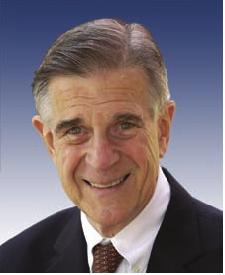
Another reason we love Pete Stark

0

He’s the only openly atheist member of Congress. He refused to apolgize after announcing that he had “no respect for” the commander in chief, George W. Bush or the generals who were sending young people to Iraq “to get their heads blown off for the presidents amusement.” He called one of his colleagues a “whore for the insurance industry.” The mainstream press refers to these statements as “gaffes.” But really, foul-mouthed as he can be, much of what he says is true.


And now he’s finally called out the anti-immigration nuts. They don’t make congressmembers like this any more.


25 ideas for our queer future

1

What does the future hold in store for us? In an age of mainstream assimilation and aspiration, is there even such a thing as the queer future? We asked 25 queer leaders, artists, and activists to offer visions in their areas of expertise. The results — philosophical, poetic, practical, and priceless — are inspiring. One thing’s for sure, we’ll never lose our creative spark. Nor will we lose our motivational zeal. Fate is for the lazy: take action now. (Marke B.)

>>Click here for ideas from our amazing 2010 Hot Pink List

>>Click here for our Pride listings, and get out there!

THE FUTURE OF QUEER ACTIVISM We need to take back the power and stop being led by what the other side is doing. We need to empower ourselves enough so that we are no longer reacting but acting. We must use online social networks the way we used the streets and bullhorns to show our strength, speak out against wrongdoing, change minds, and win back our rights. We also must unite with our allies in other communities that are underrepresented and maligned in much of the same ways we are. When we stand with one another, we have that much stronger a voice.

Kelly Rivera Hart is the founder of Poz Activists Network (pansf.blogspot.com).

THE FUTURE OF QUEER COMMUNITY The difference between straight and gay cultures seems to be breaking down more and more, which is one of our goals, but we still need to support our own businesses, nonprofits, and leaders. We need to continue interacting with each other in the real world and not lose sight of who we are and what we share. Despite how the rest of the world sees us, there is still a lot of loneliness and isolation in the queer community. I think many of us have forgotten even simple things, like how to make actual friends, not just online. And it’s so easy! Renewing that spirit of interaction, freeing ourselves from fear of judgment, and moving outside our “safe zone” can lead to the greatest rewards.

Mark Rhoades is a charitable event planner and fundraiser who throws the annual Cupid’s Back and City Hall Pride parties.

THE FUTURE OF QUEER FASHION The past decade has witnessed an obsession with bulky, voluminous silhouettes disguised as “futuristic avant-garde” and inspired by GaGa and the ’80s. Let’s move on. Through clean lines, elegance, and wearable pieces, the future of queer fashion will shine light on socially relevant issues like bottom shame, positive-negative status reinforcement, and elite subcultures by using gay textiles and forgotten, non-era-specific imagery.

Allán Herrera is the design head of fashion house Homo Atelier (www.homoatelier.com) and a founder of HomoChic (www.homochic.com).

THE FUTURE OF QUEER FILM Future queer film will depend on the gays being at the forefront of distribution technology in the same way we pioneered social networking 15 years ago, spreading provocative and sexually honest/explicit films beyond the film festival circuit and toward a global audience. Special attention must be paid to the creeping homophobia of cultural and technological juggernauts like Apple. Our stories will need to bust through the pigeonhole, weaving our traditional themes (AIDS, coming-of-age) into larger storylines that are relevant to multicultural and transcontinental viewers.

Leo Herrera is a video artist, filmmaker, and a founder of HomoChic (www.homochic.com).

THE FUTURE OF QUEER YOUTH To be a true leader, one must envision the future. The future is a diverse society where LGBTQQ youth are embraced for who they are and encouraged to be who they want to be. In my pursuit for LGBTQQ youth rights, leadership has been about fostering the awareness in LGBTQQ young people about their own power as individuals and as a group, supporting them to access, develop, and master the skills and knowledge they need to transform their power into action, and building bridges to opportunities where their action can create just communities.

Jodi Schwartz is the executive director of LYRIC Lavender Youth Recreation and Information Center (www.lyric.org).

THE FUTURE OF QUEER LABOR Storm of protest drives Congress to pass trans-inclusive ENDA! Support by labor unions critical to passage of this landmark legislation. Screaming, “We’re too queer for this bullshit!” workers hold drag-runway picket lines at transphobic companies across the country. Activists redefine the crisis of trans poverty and unemployment as the most critical queer civil rights issue of our time.

Bad hotel boycott forces Hyatt to sign a fair contract and treat their employees with respect. LGBTQ organizations rally with labor unions for immigration reform, hold signs reading “No borders on my cunt, no border on our countries!

Jane Martin is a queer labor activist and community organizer with SF Pride at Work (www.sfprideatwork.org).

THE FUTURE OF QUEER DRAG (PART ONE) My vision for the future of queer drag requires you to take a moment, stop, look, and listen to our past. We have such a rich history of fierce and amazing queens to learn from. The key is to get involved with a queer family that supports and loves you and what you do. Next, figure out your niche — whether it’s high drag or low camp, just be sure to always do it like you don’t need the money! Then pull it together and serve it up with lots of love and generosity. And, of course, top it all off with a fabulous wig!

Juanita More! (www.juanitamore.com) is the queen. Attend her boisterous Pride party on Sun/27 (see Pride listings), benefiting Bay Area Young Positives (www.baypositives.org).

THE FUTURE OF QUEER DRAG (PART TWO) Meg Whitman will become president of the United States and hire Lady Bunny as one of her speech writers. Oprah and Gayle will finally come out, and gender illusionist shows will dominate the OWN Network — every other channel will follow. In 2050, Heklina will clone herself, twice, and perform the hospital-convalescent home circuit as the Del Rubio Triplets. Apple will come out with a product called the iDrag, that transforms anyone into anything.

Fudgie Frottage is the king. He puts on the annual, wonderful SF Drag King Contest (www.sfdragkingcontest.com).

THE FUTURE OF QUEER DANCE FLOORS Lets start with a nice, clean piece of paper. Black paper. A clean slate. Say, for example, a deliriously rich and tasteful daddy were to buy the Stud. Step one: a deep, five-stage gay cleaning. Step two: gut the interior, maybe keep the bar and choo-choo train intact, they are cute. Otherwise keep it simple. Step three: install an exact copy of the sound system used by Dave Mancuso at the Loft parties in New York City. The tasteful daddy would have a matte gray private jet at our disposal to bring guests of our choosing. For the launch party we would have an all Kenny line-up: Kenny Dixon Jr., Kenny Hawkes, Kenny Carpenter, and Ken Collier (back from the dead) would DJ. Live PA by Kenny Bobien. Oh, and Kenny Kenny on the door. At the end, everyone would get together and cry like they do on those exploitative renovation reality shows. Daddy would miss the ribbon-cutting, but that’s OK — he sent flowers and bought an $80 Diptyque candle for the new bathroom. That would be a good start.

Honey Soundsystem is a future-past DJ collective. Catch the old-school house Honey Pride party on Sun/27 (see Pride listings).

THE FUTURE OF QUEER COMEDY The future is here. And now that gay marriage is mandatory for everyone, queer and straight, the same goes for comedy. All comedians, regardless of sexual orientation, are now required to do at least 75 percent queer comedy in their acts unless they obtain Permit No. 758219B through the Comedy Board, allowing for the special provision to do only 50 percent queer material. That’s right: comedy is now regulated by law. No jokes are allowed to have homophobic content, especially if you’re performing for tourists. Remember, you are ambassadors now. If you’re straight and have no queer material, just ask your aunt or your second cousin or your bachelor uncle whose best friend of 40 years, Bruce, comes to all the family functions.

Lisa Geduldig (www.koshercomedy.com) is a comic and MC who puts on such shows as Kung Pao Kosher Comedy, Funny Girlz, and Comedy Returns to El Rio!

THE FUTURE OF QUEER HOUSING It is beyond time for us queers to focus our fabulous and substantial God-given talents toward a vision of the future of queer housing. We are the trailblazers, the social entrepreneurs, the avant-garde. Imagining and creating the future is what we do best. Let’s put those substantial talents to work to realize our very own “No Place Like Home” dream of a home for our LGBT elders, our homeless LGBT youth, our people with HIV/AIDS, our artists, our activists, and everything in between. I’ll show you mine: the largest affordable housing for people with HIV/AIDS in the nation next to the Castro Theater and an LGBT homeless shelter at Geary and Polk. Now you show me yours.

Brian Basinger is the director of AIDS Housing Alliance/SF (www.ahasf.org).

THE FUTURE OF QUEER COMICS The future of LGBT comics will be about creators moving out of the traditional queer media ghetto and into new digital undergrounds, indie markets, and even the publishing mainstream. Web comics, graphic novels, minicomics, and zines … Queer comics will have to continue to diversify their formats to survive. At the core, though, remains the need to tell good stories! Look for more poignant narratives about the intersection of queer identities and the human condition. Also, robo-dykes, super-powered trannies, bisexual Lotharios, and zombie fags!

Justin Hall, a queer and erotic comics artist, runs All Thumbs Press (www.allthumbspress.com).

THE FUTURE OF QUEER LAW We would like to see the law catch up with the reality of transgender lives. Your gender identity is an innate and deeply felt sense of who you are. Whether you feel male, female, both, or neither, we envision a future where your legal gender will be exclusively determined by you and not by doctors or lawyers. By respecting your autonomy and your ability to know yourselves better than anyone else, the law will finally reflect society at large. The law is not far from fully recognizing that fact of life, but there is still work to be done. So break out your queer legal briefs and join in the fight for transgender civil rights!

Executive Director Masen Davis and the staff of the Transgender Law Center (www.transgenderlawcenter.org)

THE FUTURE OF QUEER SPIRIT As I look toward the future, I want to see the consciousness shift that Harry Hay and other gay pioneers were pushing for manifest itself more fully in both the gay culture and the larger hetero culture. As queer liberationists, we’ve already taught the world that we are a people. I want to see us recognized as always having been a people. I want to see us given the opportunity to cocreate a new, more beautiful world. To paraphrase: what if there were no “faggots,” only master healers, teachers, shamans? I hope to see the end of shame.

Zac Benfield is the president of the radical faerie Church of Nomenus. Attend his “Woo 101 for Hipster Faggots” workshop, part of the Faetopia Festival (See “Ongoing” in our Pride listings)

THE FUTURE OF QUEER SCIENCE

The alien scientist pipettes liquid
Into a flask to be shaken vigorously.
The origins of gay life.

On Earth, planets align, exposing
Realities once thought to be utterly impossible:
Gays are outta this world!

Queer scientists make the future
Always brighter, cleaner, sexier, and more fabulous
Stopping only for a cocktail.

Quietly, the gay scientist works,
Inching closer to the final answer that
Will change the world forever.

In the future of science
We see the world with different eyes,
All judged by ability alone.

Chris Waddling is a PhD scientist at UCSF.

THE FUTURE OF THE QUEER PAST The future of the queer past has always been fragile — and despite some positive developments in the past 25 years, it remains fragile today. The legacy of LGBT people is still largely invisible in the settings where our society formalizes its history. Our stories are rarely told in high school classrooms, in the galleries of museums, on the plaques of public monuments. Supporting the efforts and the growth of such organizations as the GLBT Historical Society and other pioneering queer history institutions will be key to ensuring that the memory of LGBT lives, struggles, setbacks, and triumphs can inform and inspire future generations.

Writer, editor, and antiquarian book dealer Gerard Koskovich is a founding member of the GLBT Historical Society and a member of the board of directors of the Mémorial de la Déportation Homosexuelle, a French national group that commemorates the homosexual victims of the Nazis.

THE FUTURE OF THE QUEER FUTURE My future selves are always popping back from the year 2023 or 2034 for the weekend, mostly because they know I’ll be their sex slave. They remember what 2010-me was like. (And apparently in the mid-2020s, time-traveling self-flagellation becomes a big fetish.) They’re not supposed to tell me anything about The Future, but they let slip wee details here and there — the 20-teens are a troubling time, but then we discover queer telepathy, and everybody starts secreting empathy endorphins and building communal gardens in the upper atmosphere. Hang in there until we get the first queer president, they always say. Once she comes out during her second term, that’s when the government really starts building something.

Charlie Anders is the managing editor of science fiction-forward site io9.com

Turning Clinton’s words into Brewer and Whitman’s problem

9

“Obama Admin has decided to sue AZ and we had to learn about it through Ecuadorean TV. Outrageous!”
So tweeted accidental Arizona Governor Jan Brewer, after Sec. of State Hillary’s Clinton admitted that the US DOJ has decided to sue Arizona over SB 1070. 
Brewer, who faces a gubernatorial primary August 24,  is betting that  talk about immigration, will help her win the race.
“This is no way to treat the people of Arizona,” Brewer said.

But wasn’t that exactly the point Clinton was making?

And isn’t it about time that the Dems figured out ways to counter the right’s “illegal alien” meme?

Not just in Arizona, but also in California where Republican gubernatorial nominee Meg Whitman recently told reporters in San Francisco that, “We have to prosecute illegal aliens and criminal illegal aliens in all of our cities, in every part of California.”

As far as I’m concerned, (and I’m speaking as an immigrant to North America) the only beings on the planet who can truly be defined as “aliens” are extra terrestrial visitors. The rest of us are humans, thank you very much. And most of us immigrants are economic refugees, not subhumans who somehow deserve to be  treated like shit by a bunch of white folks who turn red in the California and Arizona sun, and whose ancestors came here for similar reasons–and without paperwork–not so very long ago.

Super stories

0

arts@sfbg.com

FILM It’s film festival season, which means one thing: stories. Lots of them. And not just the ones that happen on film, but all the ones that happen before, during, and after the tapes get mastered and the crowds go home. While this is certainly true of all films, it’s especially true for the Queer Women of Color Film Festival, held annually at Brava Theater Center in the Mission.

Each year the festival premieres 25 short films made by and for women of color, who travel from across the Bay Area, and sometimes the state, to a small workshop in the Sunset District and learn the ins and outs of video production. The end results are nuanced, gripping, and often hilarious stories of how amazing, awkward, and complex love can be. So even though the festival’s yearly themes may be heavy — last year’s focused on immigration, this year’s celebrates queer indigenous communities — crowds pack the theatre, enjoy free food, and see that there’s more than enough to smile about.

This year’s festival brought a variety of movies. In Ferment Me My Heart, one Korean Canadian woman used animation to explore her love-hate relationship with kimchi and what it tastes like to be an outsider. Home is Where My Mother Is showed that all ain’t pretty in the world of queer families, as one woman confronted her lesbian mother over a traumatic interracial relationship. Bulldagger Women and Sissy Men paid homage to the Harlem Renaissance’s queer characters. A mother and daughter bonded over basketball in Hoops, and Passing Through Like Water followed three generations of Iranian women as they navigated how to deal with change and one another.

The festival also included a sacred ceremony for indigenous queer communities, and related films that unearthed the lessons of Cherokee elders and explored what Proposition 8 means to native women. If you missed out, you still have a chance to see some highlights when “F**king Traditional Values: Queer Women of Color Shorts” screens at Frameline.

F**KING TRADITIONAL VALUES: QUEER WOMEN OF COLOR SHORTS

Sun/20, 4:15 p.m., $8

Victoria Theatre

2961 16th St.

(415) 863-7576

www.frameline.org

www.qwocmap.org 


Voters are pissed

0

By Guardian News Staff

news@sfbg.com

After spending more than $70 million, two big corporations failed to convince Californians to vote their way. After spending nearly $70 million, the former head of a big corporation easily convinced Californians to vote her way. And that outcome is not as schizophrenic as it sounds.

On one level, the outcome of the June 8 election was a sign of the anti-corporate anger seething through the California electorate. “BP, Goldman Sachs, PG&E — anything that seems connected to a big corporation is in serious trouble right now,” one political insider, who asked not to be named, told us.

Yet two candidates who were very much corporate icons — Meg Whitman and Carly Fiorina — won handily in the Republican primaries and now have a real chance to become the state’s next governor and junior senator. What’s happening? It’s fascinating. The voters in the nation’s most populous state are pissed off — at big business, at government, at the oil spill, at 10 percent unemployment, at Washington, at Sacramento, at Wall Street. It’s an unsettled electorate, uncertain about its future and looking for something new, and definitely despising power.

There’s a populist fervor out there, and it’s going to define this fall’s expensive, dirty, and high-stakes battle for California’s future.


THE MAYOR GOES STATEWIDE

Addressing a crowd of supporters gathered at Yoshi’s San Francisco on election night, San Francisco Mayor Gavin Newsom — who easily beat opponent Janice Hahn to claim the Democratic nomination for lieutenant governor — said he was excited to be part of a crucial political year for the Golden State.

“We’re very proud to be in a position to be the Democratic nominee and to work with the other Democratic nominees,” Newsom told supporters. He lavished praise on the Democratic nominee for governor, Jerry Brown — the man who just last year he was trying to beat in a primary — telling stories about his father’s long relationship with the former governor and expressing his admiration. “I couldn’t be more proud to quasi- be on a ticket with Jerry Brown,” he said.

The race for lieutenant governor may prove one of the most interesting this election season — and not just because a victory for Newsom would transform San Francisco politics. Newsom’s opponent is Abel Maldonado, a moderate Republican who enjoys popularity among the growing, influential Latino community, and who Newsom’s team said will be a formidable challenge.

The campaign could revolve around an intriguing question. At a time when the Republican Party has been taken over by virulent anti-immigrant politicians — Whitman and Fiorina have both made harsh statements about illegal immigrants and vowed never to support “amnesty” (that is, immigration reform) — will Latino voters go for a white Democrat over a Latino Republican?

“You talk to them about all the same issues you talk to all voters about: jobs, education, and health care,” Newsom political strategist Dan Newman said when asked whether Newsom could win over Latino voters. “Latinos, like all voters, will appreciate someone with a proven record of success.”

Pollster Ben Tulchin also downplayed the trouble Newsom could encounter in winning the Latino vote. “With what’s going on in Arizona, they are very wary of Republicans,” Tulchin said, but then added: “We don’t want to underestimate the challenge we have. There’s never been a moderate Latino on the statewide ballot.”

Newsom sounded another alarm. If Whitman decides to help Maldonado, the race will get even tougher. “We’re running against Meg Whitman’s checkbook,” the mayor said.

“Expect to see Meg and Abel together a whole lot in the next few months,” one consultant predicted.

If Newsom wins, San Francisco will get a new mayor a year early — and the district-elected Board of Supervisors will choose the person to fill out the last year of Newsom’s term. Technically, the current board will still be in office then, but the task may well fall to the next board — which makes the local November elections even more important.

“Everyone is gaming this out and trying to figure out what happens,” political consultant Alex Clemens said during a post-election wrap-up at the San Francisco Planning and Urban Research Association office. “There will be a lot of dominoes to fall and deals to be cut.”

Meanwhile, Newsom’s nomination for lieutenant governor places many San Franciscans in an uncomfortable position, one that was illustrated well by Newsom’s victory speech, in which he proudly rejected taxes. Although most San Francisco progressives are disenchanted with their fiscally conservative mayor, few would rather vote for Maldonado.

Tim Paulson, the SF Labor Council president, was at the Newsom event gritting his teeth as he talked about the opportunity progressives now have to work with “a mayor of San Francisco we have issues with.” Now, he noted, “There is going to be a real campaign around this man. It could establish a narrative for what California is about.”


POWERFUL WOMEN

At Delancey Street on election night, San Francisco District Attorney Kamala Harris talked about getting “tough and smart on crime,” addressing gang-related criminal activity but also focusing on corporate criminals. She talked about cracking down on predatory lenders, supporting health care reform, and protecting California’s environment. And she made a point of dragging in BP.

“It must be the work of the next attorney general to ensure that the disaster and tragedy that happened in the Gulf of Mexico never happens in California,” she said, warning of attacks on AB 32, which set California’s 2020 greenhouse gas emissions reduction goal into law in 2006.

Of course, Harris now has to take on her southern counterpart, Los Angeles DA Steve Cooley, who is a moderate but comes in with much stronger law enforcement support. If Harris wins, it will go a long way to prove that opposition to the death penalty isn’t fatal in California politics, and that voters are finally ready for a women of color as the top law enforcement official — a first in state history.

But she and Newsom will both have to overcome likely attacks for the San Francisco’s crime lab scandal, one of many hits to be magnified by the size of Whitman’s war chest.

Whitman, who trounced opponent Steve Poizner in the primary, is riding the crest of a new wave of Republican-style “feminism,” starring her, Fiorina, and Fox news pundit Sarah Palin as female champions of the right-wing agenda. A few short months ago, it looked as if Brown was in serious trouble. But that was before Whitman and Insurance Commissioner Steve Poizner got into an $85 million bloodbath that left the winner of the GOP primary badly wounded. Whitman wants to play off the populist uprising by portraying herself as an outsider running against a career politician; Poizner gave her a huge scare by hammering her ties to Goldman Sachs.

That Wall Street narrative is one Democrats will push against Whitman and Fiorina. “I think it is stunningly politically tone deaf to nominate two Wall Street CEOs to the top of the ticket,” Newman said. Voters will decide whether they are fresh voices with new ideas or corporate hacks who laid off Californians and made fortunes with dubious stock market deals.

Brown leads in the polls — narrowly — but he’s vulnerable. He’s taken so many stands over so many years and Whitman’s fortune will hammer any openings they see. Brown is only slowly getting into campaign mode, but it’s no secret what he has to do. If the campaign is about Jerry Brown, unconventional politician, against Meg Whitman, Wall Street darling, then he wins.

But to take advantage of that, Brown has to offer some concrete solutions to the state’s problems — and he has to start acting like the progressive he once was. “If I were him, I’d run hard to the left,” a consultant who isn’t involved in any of the gubernatorial campaigns said.

The conventional wisdom had Barbara Boxer in trouble, too — but she’s a savvy campaigner who has beaten the odds before. And while the senator appears ripe for attack — almost 30 years in Washington, a voting record perhaps a bit more liberal than the state as a whole — her opponent, Fiorina, has baggage too.

For starters, Fiorina’s entire pitch is that she — like Whitman — would bring business-world savvy to politics. But as CEO of HP, “she was about perks and pink slips,” Newman said. “She laid off Californians and shipped those jobs overseas while enriching herself.”

Her own primary pushed her far to the right (at one point, in an embarrassing sop to the National Rifle Association, she actually argued that suspected terrorists on the federal no-fly list should be able to buy handguns). And speaking of feminist values, her anti-abortion positions won’t help her in a decidedly pro-choice state.


PROP. 16 GOES DOWN

The defeat of Proposition 16 will go down in history as one of the most remarkable campaigns ever. It was, Sup. Ross Mirkarimi noted, “a righteous win:” The No on 16 campaign spent less than $100,000 and still captured 52 percent of the vote. Another narrow corporate-interest measure, Mercury Insurance’s Prop. 17, faced a similar fate.

One reason: PG&E’s $50 million campaign backfired, making voters suspicious of the company’s propaganda. Another: it lost overwhelmingly in its own service area, the company rejected by those who know it best.

Now PG&E CEO Peter Darbee, who pushed to mount the expensive campaign, must return to his shareholders empty-handed — and that’s going to cause problems. “I assume the leadership of PG&E will be called to task,” Clemens said. “They truly rolled the dice.”

The day after the election, PG&E shares dropped 2.2 percent, a possible sign of shaken investor confidence. Mindy Spatt of the Utility Reform Network (TURN), a nonprofit that worked on the No on 16 effort, described the situation succinctly. “Peter Darbee’s got egg on his face,” she said. “Big-time.”

Mirkarimi has witnessed other battles with PG&E, and said this probably wouldn’t be the last. “PG&E, every time we want to have a seat at the table, tries to take us out, like assassins,” he said. “If they were smart, they would take us up on what we asked many years ago, and that is to abide by peaceful coexistence.”

On the statewide level, the bold and expensive deceptions pushed by PG&E and Mercury Insurance were countered by only a handful of super-committed activists and a broad cross-section of newspaper editorials, a reminder that newspapers — battered by the economy and technological changes — are neither dead nor irrelevant.

One of the wild cards of the election was Prop. 14, which will eliminate party primaries for state offices — and potentially shake up the state’s entire political structure. “This is a big deal even if we don’t know how it’s going to play out,” consultant David Latterman said at the SPUR event.

Interestingly, the only two counties that voted No on 14 were the most progressive — San Francisco — and the most conservative, Orange.

Progressives did well in San Francisco, expanding their majority on the Democratic County Central Committee. “In an environment where it was about hundreds of millions of dollars from PG&E and Meg Whitman and Chris Kelly outspending us, we showed that San Francisco is San Francisco and we support San Francisco values,” DCCC chair Aaron Peskin told us.

Money used to define the debates in San Francisco, but the dominant narratives are now being written by the coalition of tenants, environmentalists, workers, social justice advocates, and others who backed a progressive slate of DCCC candidates, which took 18 of the 24 seats on a body that makes policy and funding decisions for the local Democratic Party.

“This time it was the coalition that really made the difference,” DCCC winner Michael Bornstein said on election night. “Frankly, our people worked harder.”

Board of Supervisors President David Chiu agreed, telling us, “For the Central Committee, the message is people power wins.”

The lesson from this election is that people are starting to get wise to corporate deceptions. And they’re realizing that with hard work and smart coalition-building, the people can still prevail.

Steven T. Jones, Rebecca Bowe, Sarah Phelan, and Tim Redmond contributed to this report.


Arizona getting you down? Here’s some activist inspiration.

0

Two things I learned about Rosario Dawson last night:

  1. When she was little, she spent time living in a San Francisco squat with her “free spirited” mother.

  2. She’s heading up one of the most important non partisan political organizations in the country.

Dawson was honored with a Redford Center “Art of Activism” award at the Sundance Kabuki Theaters last night — and definitely not (should I feel bad saying this?) because she is the kind of natural beauty that made the host of the program and other honorees stutter through their on stage exchanges with her.

Voto Latino is an organization that was co founded by Dawson, Maria Teresa Kumar, and Brandon Hernandez as a way to encourage Latino participation in democracy. Which, given all this insanity in the aftermath of Arizona’s Senate Bill 1070, strikes me as what’s been missing in the back and forth vitrol; what it means to the people that it explicitly denegrates.

Dawson told the Art in Activism audience last night that her group’s mission is to take back the immigration issue from the divide and separate tactics of conservatives. Voto Latino’s anti 1070 ad campaign, which is slated to debut on national televisions shortly, is “about us together,” says the actress-activist. Privileged or not, she emphasived, we’ve all gotten to where we are today based on the labor of our community, even gorgeous movie stars.

The organization has been a pioneer in young Latino involvement in politics. They put together one of the first text message based political campaign in 2006, sent Latino youth to report on the 2008 party conventions that the young people identified as important to them, and have produced a tongue in cheek telenovela series, La Pasión de la Desición, that interjects talk of voter registration into the florid embraces of the popular genre. To combat the negative messaging of Arizona’s legislation, Dawson says they’ll be assembling an online map of the country where Latinos can publish their stories, becoming visible in a debate that often leaves out their voice.

Rosario Dawson and Wilmer Valdarama star in an episode of Voto Latino’s La Pasión de la Desición

So yay, Rosario’s awesome. We’re all awesome.

Although I must say, some of us may be extra-super awesome. Dawson was definitely upstaged last night by another one of the evening’s honorees; East Oakland’s Mandela Food Co-op worker-owner (and last week’s SFBG interviewee), the inspirational James Berk.

Berk, wearing a crisp suit and glasses, took a no-nonsense approach to a ceremony that at times ran dangerously close to hyperbole. It was immensely refreshing, especially when the 19 year old cautioned the audience not to regard him as an anomaly in the social activism field on account of his youth (Dawson took the moment to compare his struggle to hers with the media’s insistence that celebrities are different from us in some way, evoking about zero sympathy on my part. Still love you, Rosario!).

In all the labored modesty of the evening, Berk came across as a man who knows the worth of what he and his team have been able to accomplish. This is a guy who has gone from a malnourished teen whose neighborhood’s sole food sources were the corner store’s nutritional garbage, to the co owner of a place that sells low cost, fresh local food to his neighbors.

When asked what he wanted the people sitting out in the audience to take away from the night of awe inspiring activist stories, he took a moment to fully gauge what he was about to say. When he spoke, his message was clear. “Don’t forget. And don’t forget my name,” he said. Unsure about what to do to make change in this country? Look to our true leaders, people; Berk’s not.

P.S. Definitely not trying to forget the night’s other honoree, Martha Ryan. Ryan, a nurse who had never headed up her own program, started the Homeless Prenatal Program for at risk women and their families. Half of her staff is comprised of women that were once in the program.

Film listings

0

Film listings are edited by Cheryl Eddy. Reviewers are Kimberly Chun, Michelle Devereaux, Max Goldberg, Dennis Harvey, Johnny Ray Huston, Erik Morse, Louis Peitzman, Lynn Rapoport, Ben Richardson, and Matt Sussman. For rep house showtimes, see Rep Clock. For first-run showtimes, see Movie Guide.

OPENING

The A-Team Is nothing sacred? (1:57) Presidio.

The Full Picture See "Mama Drama." (1:20) Roxie.

Holy Rollers Holy Rollers isn’t a movie — it’s a headline stretched out to 90 minutes. Yes, the set-up is worthy of adaptation: Hassidic Jewish kid begins importing ecstasy from Amsterdam. And it’s based on a true story! But the film is far too matter-of-fact, never delving into the important questions that might elevate it past a glorified reenactment. That’s not to say the performances aren’t good. Jesse Eisenberg continues to prove he can do well in leading roles, while supporting actors Justin Bartha and Ari Graynor are both charming, in their own ways. The problem is the material. What is Holy Rollers saying about the war on drugs, or organized religion, or the desire to live above one’s means? Nothing, really. The tone is equally problematic, as it repeatedly fails to find the right blend of comedy and drama. The movie’s major selling point is that it will make you want to visit Amsterdam — you know, if you didn’t already. (1:29) Contemporary Jewish Museum, Lumiere, Shattuck. (Peitzman)

*Joan Rivers: A Piece of Work Whether you’re a fan of its subject or not, Ricki Stern and Annie Sundberg’s documentary is an absorbing look at the business of entertainment, a demanding treadmill that fame doesn’t really make any easier. At 75, comedian Rivers has four decades in the spotlight behind her. Yet despite a high Q rating she finds it difficult to get the top-ranked gigs, no matter that as a workaholic who’ll take anything she could scarcely be more available. Funny onstage (and a lot ruder than on TV), she’s very, very focused off-, dismissive of being called a "trailblazer" when she’s still actively competing with those whose women comics trail she blazed for today’s hot TV guest spot or whatever. Anyone seeking a thorough career overview will have to look elsewhere; this vérité year-in-the-life portrait is, like the lady herself, entertainingly and quite fiercely focused on the here-and-now. (1:24) Embarcadero. (Harvey)

The Karate Kid Is nothing sacred? (2:20)

Kinatay See Trash. (1:45) Yerba Buena Center for the Arts.

9500 Liberty 9500 Liberty spins off co-directors Eric Byler and Annabel Park’s YouTube series of "interactive documentary" footage surrounding a recent immigration policy struggle in Prince William County, Virginia. The Board of County Supervisors passed a resolution in 2007 mandating that police perform an immigration status check on any individual they had "probable cause" to believe was an illegal alien. The filmmakers emphasize the significance of new media in this local battle, as both sides mobilize through aggressive blogging. And you heard the part about how this movie is based on YouTube videos, right? The filmmakers’ sympathies are clear, as they reveal the hateful rhetoric of the anti-illegal immigration forces, but their emotional appeal hardly seems irresponsible — it serves to highlight the humanity often obscured by reductive xenophobia. The film apparently predates the recent Arizona immigration strife, but as the story unfolds, the parallels are both eerie and hopeful. (1:21) Lumiere. (Sam Stander)

*Ondine You want to believe in mermaids, leprechauns, tooth fairies, and Father Christmas — and director Neil Jordan plays with those hopes, and fears, in this unabashedly romantic fable set in a Irish fishing village. Mullet-ed fisherman Syracuse (Colin Farrell), dubbed "Circus," thanks to his days as a drinking fool, is the butt of everyone’s jokes till he happens to catch a mysterious girl (Alicja Bachleda) in his net. She calls herself Ondine, shies away from people, and sings in an unknown tongue to the sea, drawing salmon, lobster, and fortune to the fisherman otherwise down on his luck. His precocious daughter, Annie (Alison Barry), is in need of a kidney transplant — and a measure of hope — and she grows convinced that her father’s hidden-away water baby is a selkie, a mythical Celtic sea creature that can shed its seal skin, bond with humans, and make wishes come true. Unfortunately believing in magic doesn’t always make it so, though Ondine gracefully limns that space between belief and reality, squeezing small moments of pleasure and humor from its rough, albeit attractive, characters and absolutely stunning landscapes in scenes beautifully lensed by onetime Wong Kar Wai cinematographer Christopher Doyle. (1:43) Albany, Clay, Piedmont. (Chun)

*Perrier’s Bounty Not about sparkling water, director Ian Fitzgibbon and writer Mark O’Rowe’s giddy Irish crime tale is this year’s In Bruges (2008): a crass, self-consciously clever, amusingly characterful, and twisty take on Brit gangster tropes, with double-plus good actors and very scenic widescreen photography. Cillian Murphy — convincingly scruffy now that he’s aging out of excessive prettiness — plays a Dublin reprobate whose debt to some shady types is overdue. His attempts to neutralize that situation rapidly envelope the best-friend neighbor he’s secretly sweet on (Jodie Whittaker, Peter O’Toole’s protégée in 2006’s Venus) and the coke addict father (Jim Broadbent) he’s generally estranged from. Perrier’s Bounty
remains crafty and jaunty even as foretold "brutal and tragic events" unfold. Of course it’s contrived — but well contrived, with performances (including Brendan Gleeson as the titular crime boss) and piled-up incidents alike quite enjoyable. (1:28) Opera Plaza. (Harvey)

ONGOING

*Babies Thomas Balmes’ camera records the first year in the lives of four infants in vastly different circumstances. They’re respectively born to hip young couple in Tokyo’s high-tech clutter; familiar moderately alterna-types (the father is director Frazer Bradshaw of last year’s excellent indie drama Everything Strange and New) in SF’s Mission District; a yurt-dwelling family isolated in the vast Mongolian tundra; and a Namibian village so maternally focused that adult menfolk seem to have been banished. Yes, on one level this is the cutest li’l documentary you ever saw. But if you were planning to avoid thinking that is all (or most) of what Babies would be like, you will miss out big time. Void of explanatory titles, voice-over narration, or subtitle translations, this is a purely observatory piece that reveals just how fascinating the business of being a baby is. There’s very little predictable pooping, wailing, or coddling. Instead, Balmes’ wonderful eye captures absorbing moments of sussing things out, decision-making, and skill learning. While the First World tykes firstborns both — are hauled off to (way) pre-school classes, the much less day planned Third Worlders have more complex, unmediated dealings with community. Those range from fending off devilish older siblings to Mongol Bayarjargal’s startlingly casual consorting with large furry livestock. (Imagine the horror of parents you know were their baby found surrounded by massive cows — a situation that here causes no concern whatsoever for adults, children, or bovines.) So accustomed to the camera that it doesn’t influence their behavior, the subjects here are viewed with an intimacy that continually surprises. Babies is getting a wider-than-usual release for a documentary, one cannily timed to coincide with Mother’s Day. But don’t be fooled: this movie is actually very cool. (1:19) Piedmont, Presidio, Shattuck, Smith Rafael, Sundance Kabuki. (Harvey)

*City Island The Rizzo family of City Island, N.Y. — a tiny atoll associated historically with fishing and jurisdictionally with the Bronx — have reached a state where their primary interactions consist of sniping, yelling, and storming out of rooms. These storm clouds operate as cover for the secrets they’re all busy keeping from one another. Correctional officer Vince (Andy Garcia) pretends he’s got frequent poker nights so he can skulk off to his true shameful indulgence: a Manhattan acting class. Perpetually fuming spouse Joyce (Julianna Margulies) assumes he’s having an affair. Daughter Vivian (Dominik García-Lorido) has dropped out of school to work at a strip joint, while the world class-sarcasms of teenager Vinnie (Ezra Miller) deflect attention from his own hidden life as an aspiring chubby chaser. All this (plus everyone’s sneaky cigarette habit) is nothing, however, compared to Vince’s really big secret: he conceived and abandoned a "love child" before marrying, and said guilty issue has just turned up as a 24-year-old car thief on his cell block. Writer-director Raymond De Felitta made a couple other features in the last 15 years, none widely seen; if this latest is typical, we need more of him, more often. Perfectly cast, City Island is farcical without being cartoonish, howl-inducing without lowering your brain-cell count. It’s arguably a better, less self-conscious slice of dysfunctional family absurdism than Little Miss Sunshine (2006) — complete with an Alan Arkin more inspired in his one big scene here than in all of that film’s Oscar-winning performance. (1:40) Opera Plaza, Shattuck. (Harvey)

*Exit Through the Gift Shop Exit Through the Gift Shop is not a film about the elusive graffiti-cum-conceptual artist and merry prankster known as Banksy, even though he takes up a good chunk of this sly and by-no-means impartial documentary and is listed as its director. Rather, as he informs us — voice electronically altered, face hidden in shadow — in the film’s opening minutes, the film’s real subject is one Thierry Guetta, a French expat living in LA whose hangdog eyes, squat stature, and propensity for mutton chops and polyester could pass him off as Ron Jeremy’s long lost twin. Unlike Jeremy, Guetta is not blessed with any prodigious natural talent to propel him to stardom, save for a compulsion to videotape every waking minute of his life (roughly 80 percent of the footage in Exit is Guetta’s) and a knack for being in the right place at the right time. When Guetta is introduced by his tagger cousin to a pre-Obamatized Shepard Fairey in 2007, he realizes his true calling: to make a documentary about the street art scene that was then only starting to get mainstream attention. Enter Banksy, who, at first, is Guetta’s ultimate quarry. Eventually, the two become chummy, with Guetta acting as lookout and documenter for the artist just as the art market starts clambering for its piece of, "the Scarlet Pimpernel of street art," as one headline dubs him. When, at about three quarters of the way in, Guetta, following Banksy’s casual suggestion, drops his camcorder and tries his hand at making street art, Exit becomes a very different beast. Guetta’s flashy debut as Mr. Brainwash is as obscenely successful as his "art" is terribly unimaginative — much to the chagrin of his former documentary subjects. But Guetta is no Eve Harrington and Banksy, who has the last laugh here, gives him plenty of rope with which to truss himself. Is Mr. Brainwash really the ridiculous and inevitable terminus of street art’s runaway mainstream success (which, it must be said, Banksy has handsomely profited from)? That question begs another: with friends like Banksy, who needs enemies? (1:27) Embarcadero, Sundance Kabuki. (Sussman)

*The Father of My Children Grégoire Canvel (Louis-Do de Lencquesaing) is a perpetual motion machine: a Paris-based veteran film producer of complicated multinational whose every waking moment is spent pleading, finessing, reassuring, and generally putting out fires of the artistic, logistic, or financial kind. But lately the strain has begun to surpass even his Herculean coping abilities. Debtors are closing in; funding might collapse for a brilliant but uncommercial director’s already half-finished latest. After surviving any number of prior crises, Gregoire’s whole production company might finally dissolve into a puddle of red ink and lawsuits. He barely has time to enjoy his perfect family, with Italian wife Sylvia (Chiara Caselli) and three young daughters happily ensconced in a charming country house. Something’s got to give — and when it does, writer-director Mia Hansen-Love’s drama (very loosely based on the life of a late European film producer) drastically shifts its focus midway. Her film’s first half is so arresting — with its whirlwind glimpse at a job so few of us know much about, yet which couldn’t be more important in keeping cinema afloat — that the second half inevitably seems less interesting by comparison. Still, for about 55 minutes The Father of My Children offers something you haven’t quite seen before, an experience well worthwhile even if the subsequent 55 are less memorable. (1:50) Embarcadero. (Harvey)

Get Him to the Greek At this point movie execs can throw producer Judd Apatow’s name on the marquee of a film and it’s a guaranteed blockbuster. It’s hard to say whether this Forgetting Sarah Marshall (2008) spin-off benefits from the Apatow sign of approval or if it would be better off standing on its own, but it definitely doesn’t benefit from comparisons to its predecessor. Russell Brand returns as the British rock star Aldous Snow, and Jonah Hill, playing a different character this time, is given the task of chaperoning the uncooperative Snow from London to LA in 48 hours. Despite a great cast, including a surprisingly animated P. Diddy, the story is pretty bland and can’t match the blend of drama and comedy that Marshall achieved. Of course, none of that matters because the movie execs are right: if you like Apatow’s brand of humor, you’re going to have a good time anyway. (1:49) Empire, Four Star, 1000 Van Ness, Presidio, SF Center, Shattuck. (Peter Galvin)

*The Girl With the Dragon Tattoo By the time the first of Stieg Larsson’s so-called "Millennium" books had been published anywhere, the series already had an unhappy ending: he died (in 2004). The following year, The Girl With the Dragon Tattoo became a Swedish, then eventually international sensation, its sequels following suit. The books are addicting, to say the least; despite their essential crime-mystery-thriller nature, they don’t require putting your ear for writing of some literary value on sleep mode. Now the first of three adaptive features shot back-to-back has reached U.S. screens. (Sorry to say, yes, a Hollywood remake is already in the works — but let’s hope that’s years away.) Even at two-and-a-half hours, this Girl With the Dragon Tattoo by necessity must do some major truncating to pack in the essentials of a very long, very plotty novel. Still, all but the nitpickingest fans will be fairly satisfied, while virgins will have the benefit of not knowing what’s going to happen and getting scared accordingly. Soon facing jail after losing a libel suit brought against him by a shady corporate tycoon, leftie journalist Mikael Blomkvist (Michael Nyqvist) gets a curious private offer to probe the disappearance 40 years earlier of a teenage girl. This entangles him with an eccentric wealthy family and their many closet skeletons (including Nazi sympathies) — as well as dragon-tattooed Lisbeth Salander (Noomi Rapace), androgynous loner, 24-year-old court ward, investigative researcher, and skillful hacker. Director Niels Arden Oplev and his scenarists do a workmanlike job — one more organizational than interpretive, a faithful transcription without much style or personality all its own. Nonetheless, Larsson’s narrative engine kicks in early and hauls you right along to the depot. (2:32) Bridge, Piedmont, Shattuck, Smith Rafael. (Harvey)

Harry Brown Shades of Dirty Harry (1971) for the tea cozy and tweed set: elegantly rendered and very nicely played, Harry Brown might be the dark, late-in-the-day elder brother to 1971’s Get Carter, in the hands of eponymous lead Michael Caine. He’s a pensioner mourning the passing of his beloved wife, his mysterious life as a Marine stationed in Northern Ireland firmly behind him. Then his chess-playing pal Leonard (David Bradley) is terrorized and killed by the unsavory gang of heroin dealing hoodlums who lurk near their projects in a tunnel walkway like gun-toting, foul-mouthed, sociopathic trolls. Harry Brown is, er, forced to forsake a vow of peace and go commando on the culprits’ asses, triggering some moments of ultraviolence that are unsettling in their whole-hearted embrace of vigilante justice. Like predecessors similarly fixated on vengeance in their respective urban hells, a la Hardcore (1979) and Taxi Driver (1976) (Harry Brown echoes key moments in the latter, in particular — see, for instance, its keenly tense, eerily humorous gun shopping scene), Harry Brown is essentially an arch-conservative film, if good looking and even likable with Caine meting out the punishment. The overall denouement just might make some seniors feel very, very good about the coiled potential for hurt embedded in their aging frames. (1:42) Four Star. (Chun)

*Iron Man 2 Tony Stark (Robert Downey Jr.) returns, just as rich and self-involved as before, though his ego his inflated to unimaginable heights due to his superheroic fame. Pretty much, he’s put the whole "with great power comes great responsibility" thing on the back burner, exasperating everyone from Girl Friday Pepper Potts (Gwyneth Paltrow); to BFF military man Rhodey (Don Cheadle, replacing the first installment’s Terrence Howard); to certain mysterious Marvels played by Samuel L. Jackson and Scarlett Johansson; to a doofus-y rival defense contractor (Sam Rockwell); to a sanctimonius Senator (Garry Shandling). Frankly, the fact that a vengeful Russian scientist (Mickey Rourke) is plotting Tony’s imminent death is a secondary threat here — for much of the film, Tony’s biggest enemy is himself. Fortunately, this is conveyed with enjoyable action (props to director Jon Favreau, who also has a small role), a witty script (actor Justin Theroux — who knew? He also co-wrote 2008’s Tropic Thunder, by the way), and gusto-going performances by everyone, from Downey on down. Stay for the whole credits or miss out on the geek-gasm. (2:05) California, 1000 Van Ness, Sundance Kabuki. (Eddy)

Killers (1:40) Empire, Marina, 1000 Van Ness.

Letters to Juliet If you can stomach the inevitable Barbara Cartland/Harlequin-romance-style clichés — and believe that Amanda Seyfried as a New Yorker fact-checker — then Letters to Juliet might be the ideal Tuscan-sunlit valentine for you. Seyfried’s Sophie is on a pre-honeymoon trip to Verona with her preoccupied chef-restaurateur intended, Victor (Gael Garcia Bernal), who’s more interested in sampling cheese and purchasing vino than taking in the romantic attractions of Verona with his fiancée. Luckily she finds the perfect diversion for a wannabe scribe: a small clutch of diehard romantics enlisted by the city of Verona to answer the letters to Juliet posted by lovelorn ladies. They’re Juliet’s secretaries — never mind that Juliet never managed to maintain a successful or long-term relationship herself. When Sophie finds a lost, unanswered letter from the ’50s, she sets off sequence of unlikely events, as the letter’s English writer, Claire (Vanessa Redgrave), returns to Verona with her grandson Charlie (Christopher Egan), in search of her missed-connection, Lorenzo. Alas, Lorenzo’s long gone, and the fact-checker decides to help the warm-hearted, hopeful Claire find her lost lover. Unfortunately Sophie’s chemistry with both her matches isn’t as powerful as Redgrave’s with real-life husband Franco Nero — after all he was Lancelot to her Guenevere in 1967’s Camelot and the father of her son. Still, Redgrave’s power as an actress — and her relationship with Nero — adds a resonance that takes this otherwise by-the-numbers romance to another level. (1:46) SF Center. (Chun)

Living in Emergency Filmmakers follow four volunteers of Médecins Sans Frontiéres (MSF) in Liberia and the Congo, from the initial shock of a first-timer to the overwhelming exhaustion of a veteran. Morally ambiguous decisions have left many of them arrogant and bitter and it’s apparent that these people are not the inflated heroes that we might wish, but normal people who were drawn to test themselves in circumstances of little hope. Some fail. Living in Emergency is an interesting glimpse into a provocative world, and the morally icky stuff is sometimes worse than the blood and death on screen. But a glimpse is all it is. The filmmakers clearly have an agenda that doesn’t include time for exploring the lives of any of the doctors, patients or procedures, and they leave the audience wondering whether there might be more lurking beneath the surface. (1:33) Opera Plaza. (Galvin)

*Looking for Eric Eric Bishop (Steve Everts) is a single dad, frustrated at his inability to bond with his teenage sons and heartbroken over his failed marriage to Lily (Stephanie Bishop), the woman he walked out on 20 years ago but never managed to get over. Just when things are looking dire, Eric is delivered in surprising, magical fashion by hallucinatory visitations from Eric Cantona, his favorite soccer player, a philosophical Frenchman who was as renowned for his inscrutable press conferences as he was for his scintillating goals. Cantona plays himself, and passes pensive joints with Bishop as they slowly piece his shattered life back together. American viewers might be have trouble deciphering the intricacies of soccer culture or the molasses-thick Mancunian accents, but at its heart the movie (by Brit director Ken Loach) is an amusing, tautly crafted fable of middle-aged alienation giving way to hope and gumption. (1:57) Smith Rafael. (Richardson)

Marmaduke (1:27) 1000 Van Ness.

Micmacs An urge to baby-talk at the screen underlines what is wrong with Jean-Pierre Jeunet’s new film: it is like a precocious child all too aware how to work a room, reprising adorable past behaviors with pushy determination and no remaining spontaneity whatsoever. There will be cooing. There will be clucking. But there will also a few viewers rolling their eyes, thinking "This kid rides my last nerve." It’s easy to understand why Jeunet’s movies (including 2001’s Amélie) are so beloved, doubtless by many previously allergic to subtitles. (Of course, few filmmakers need dialogue less.) They are eye-candy, and brain-candy too: fantastical, hyper, exotic, appealing to the child within but with dark streaks, byzantine of plot yet requiring no close narrative attention at all. The artistry and craftsmanship are unmissable, no ingenious design or whimsical detail left unemphasized. In Micmacs, hero Bazil (Dany Boon) is a lovable misfit who lost his father to an Algerian landmine, then loses his own job and home when he’s brain-injured by a stray bullet. He falls in with a crazy coterie of lovable misfits who live underground, make wacky contraptions from junk, and each have their own special, not-quite-super "power." They help him wreak elaborate, fanciful revenge on the greedy arms manufacturers (André Dussollier, Nicolas Marié) behind his misfortunes, as well as various human rights-y global ones. So there’s a message here, couched in fun. But the effect is rather like a birthday clown begging funds for Darfur — or Robert Benigni’s dreaded Life is Beautiful (1997), good intentions coming off a bit hubristic, even distasteful. (1:44) Embarcadero, Shattuck, Smith Rafael. (Harvey)

La Mission A veteran S.F. vato turned responsible — if still muy macho — widower, father, and Muni driver, fortysomething Che (Benjamin Bratt) isn’t the type for mushy displays of sentiment. But it’s clear his pride and joy is son Jess (Jeremy Ray Valdez), a straight-A high school grad bound for UCLA. That filial bond, however, sustains some serious damage when Che discovers Jes has a secret life — with a boyfriend, in the Castro, just a few blocks away from their Mission walkup but might as well be light-years away as far as old-school dad is concerned. This Bratt family project (Benjamin’s brother Peter writes-directs, his wife Talisa Soto Bratt has a supporting role) has a bit of a predictable TV-movie feel, but its warm heart is very much in the right place. (1:57) Shattuck. (Harvey)

*Please Give Manhattan couple Kate (Catherine Keener) and Alex (Oliver Platt) are the proprietors of an up-market vintage furniture store — they troll the apartments of the recently deceased, redistributing the contents at an astonishing markup — and they’ve purchased the entire apartment of their elderly next-door neighbor (Ann Guilbert). As they wait for her to expire so they can knock down a wall, they try not to loom in anticipation in front of her granddaughters, the softly melancholic Rebecca (Rebecca Hall) and the brittle pragmatist Mary (Amanda Peet). Filmmaker Nicole Holofcener has entered this territory before, examining the interpersonal pressures that a sizable income gap can exert in 2006’s Friends with Money. Here she turns to the pangs and blunderings of the liberal existence burdened with the discomforts of being comfortable and the desire to do some good in the world. The film capably explores the unexamined impulses of liberal guilt, though the conclusion it reaches is unsatisfying. Like Holofcener’s other work, Please Give is constructed from the episodic material of mundane, intimate encounters between characters whose complexity forces us to take them seriously, whether or not we like them. Here, though, it offers these private connections as the best one can hope for, a sort of domestic grace accrued by doing right, authentically, instinctively, by the people in your immediate orbit, leaving the larger world to muddle along on its axis as best it can. (1:30) Lumiere, Piedmont, Shattuck. (Rapoport)

Prince of Persia: The Sands of Time It takes serious effort to make a movie with a story dumber than the video game it’s based on. Director Mike Newell somehow accomplishes this feat with Prince of Persia: The Sands of Time, a Disneyfied flop that flails clumsily in the PG-13 demilitarized zone, delivering sanitized violence, chaste romance, and dreary drama. Jake Gyllenhaal plays Dastan, an urchin boy — one jump, ahead of the bread line — adopted by the king and raised to be the wise-cracking black sheep in a family of feuding princes. He’s got Middle East ninja skills — one swing, ahead of the sword — and his infiltration of a sacred city nets him the magical Dagger of Time, a gilded rewind button coveted by his evil uncle Nizam (Ben Kingsley), who wants to use it for, well, evil, and Princess Tamina (Gemma Arterton), who’s sworn to protect it. Pressing a button on the dagger’s hilt allows its wielder to undo past events. If you have the misfortune of seeing this movie, you’ll want one for yourself. (2:10) California, 1000 Van Ness, Sundance Kabuki. (Richardson)

Robin Hood Like it or not, we live in the age of the origin story. Ridley Scott’s Robin Hood introduces us to the outlaw while he’s still in France, wending his way back to Albion in the service of King Richard III. The Lionheart soon takes an arrow in the neck in order to demonstrate the film’s historical bona fides, and yeoman archer Robin Longstride (Russell Crowe) — surrounded by a nascent band of merry men — accidentally embroils himself in a conspiracy to wrest control of England. The complications of this intrigue hie Robin to Nottingham, where he is thrown together with Maid Marion (Cate Blanchett), a plucky rural aristocrat who likes getting her hands dirty almost as much as she likes a bit of smoldering Crowe seduction. A lot of hollow medieval verisimilitude ensues, along with a good bit of slow-mo swordplay, but the cumulative effect is tepid and rote. (2:20) 1000 Van Ness. (Richardson)

The Secret in Their Eyes (2:07) Albany, Embarcadero.

Sex and the City 2 Sex and the City 2 couldn’t be anymore brazenly shameless, dizzyingly shallow, or patently offensive if it tried. This is aspiration porn, pure and simple, kitted out in the Orientalist trappings of a Vogue spread and with all the emotional intelligence of a 12 year-old brat. As the first SATC film nearly made short work of any shred of nuance or humanity that Carrie, Samantha, Charlotte, and Miranda carried over from their televised selves, SATC 2 fully embraces the bad pun-spewing, couture-clad clichés the girls have hardened into. Sure they have kids, husbands, career changes, and menopause to deal with, but who cares about those tired signposts of middle age when there is more shit to buy, more champagne to swill, private airlines to fly on, $22,000-a-night luxury suites to inhabit, Helen Reddy songs to butcher, and whole other peoples — specifically, the people of Abu Dhabi, who speak funny, dress funnier, and have craaazy notions about what it means to be "one of the girls" — to alternately boss around, offend, and pity? (Fun SATC2 fact: did you know that in the "new Middle East" women secretly wear designer duds underneath their abayas?) Oh, that one tiny pang of sympathy you feel during the tipsy confessional between Charlotte and Miranda in which they bond over how being a mother and giving up one’s life ambition is difficult? A mirage. Because really, the greater concern is flying back to JFK first class or bust. And let’s not even get into the few bones the film tosses to the homos, such as the opening set piece: a gay wedding only a straight man could’ve thought up, replete with a shopworn Liza Minnelli having her Gene Kelly-in-Xanadu moment. But seriously, Michael Patrick King, don’t get it twisted: Stanford may call it such, but it’s not "cheating" if you’re already in an open relationship. Then again, if being a foil for your straight BFF’s insecurities about the luxe confines of monogamy gets you a gift registry at Bergdorf’s, why not? The laughs are cheaper this time around, but SATC 2‘s fuckery is strictly price-upon-request. (2:24) Castro, Empire, Marina, 1000 Van Ness, Presidio, SF Center, Shattuck, Sundance Kabuki. (Sussman)

Shrek Forever After 3D It’s easy to give Dreamworks a hard time for pumping out a fourth sequel to a film that never really needed a sequel in the first place. But Shrek Forever After isn’t all that bad — it’s mostly just irrelevant. The film does begin on an interesting note, with Shrek discovering the consequences of settling down with a wife and kids: serious ennui. It’s refreshing to see a fairy tale in which "happily ever after" is revealed to be rather mundane. But soon there are wacky magical hijinks that spawn an alternate universe, a cheap way to inject new life into tired old characters. (You like Puss in Boots? Well, he’s fat now.) Luckily, the voice actors are still game and the animation remains top-notch. The 3D effects are well used for once, fleshing out Shrek’s world rather than providing an unnecessary distraction. The end result is a mildly entertaining addition to the franchise, but like the alternate universe in which Shrek finds himself stranded, there’s no real reason it should exist. (1:33) 1000 Van Ness, Sundance Kabuki. (Peitzman)

Solitary Man Consider this another chapter in a larger recession-era cinematic narrative: a kind of corollary to Up in the Air and another dispatch from the flip side of the American dream — namely, American failure. Wheeling, dealing, disgusting, and charming in turns, Michael Douglas manages the dubious achievement of making a hungry and lecherous BMW dealership honcho compelling, even as we roll our eyeballs in disgust. His Ben Kalmen was once at the top of the world, a fairy-tale self-made star whose luxury auto commercials were all over TV, a sharp-tongued wife (Susan Sarandon) and tenderly tolerant daughter (Jenna Fischer) by his side. After his career lands in the crapper, Ben begins a long climb up, trading favors with his girlfriend Jordan (Mary-Louise Parker) and taking her daughter Allyson (Imogen Poots) to his alma mater for her college interview. During this trip down memory lane he renews his ties with old pal Jimmy (Danny DeVito) and befriends budding schlub Daniel (Jesse Eisenberg), all while making some very bad, reflexively womanizing choices. If you can stomach its morally bereft, perpetually backsliding yet endearingly honest protagonist, you’ll be rewarded with on-point dialogue and a clear-eyed yet empathetic character study concerning the free fall of a self-sabotaging, old-enough-to-know-better prick, individualistic to the core and even more. Is Ben as worthy of a bailout, or a second chance, as the American auto industry? The answer remains up in the air. (1:30) Shattuck, Sundance Kabuki. (Chun)

*Splice "If we don’t use human DNA now, someone else will," declares Elsa (Sarah Polley), the brash young genetic scientist bent on defying the orders of her benign corporate benefactors in Vincenzo Natali’s pseudo-cautionary hybrid love child, Splice. From that moment on, it’s pretty clear that any ethical conundrums the movie raises aren’t really worthy of debate: what Elsa wants to do in the name of scientific progress — splice human DNA into gooey muscle masses to provide said corporation with proteins for gene therapy — is, you know, deranged. Elsa bucks both corporate policy and sound moral judgment and does it anyway, much to the horror of her husband and fellow hotshot research scientist, Clive (Adrien Brody). Her genetic tinkering soon results in the dramatic birth of something akin to a homicidal fetal chick crossed with a skinned bunny. It grows at an alarming rate, and when human characteristics become apparent, Elsa clings to it with the instinctual vigor of a tigress protecting her cub. When Elsa and Clive are forced to hide their creation at Elsa’s abandoned family farmhouse to escape detection from prying corporate eyes, Splice evolves into another kind of hybrid: a genetically engineered Scenes from a Marriage (1973) crossed with the DNA of The Omen (1976) and grafted onto the most very special My So-Called Life episode ever. Not that there’s anything wrong with that. Splice may be a ludicrous, cut-rate exercise in Brood-era David Cronenberg — but it’s a damned entertaining one. (1:45) California, 1000 Van Ness, Sundance Kabuki. (Devereaux)

Touching Home Hometown boys (Logan and Noah Miller) make good in this based-on-a-true-story tale of identical twins who must divide their time at home between training for major league baseball and looking after their alcoholic father. The brothers, who also wrote and directed the film, aim for David Gordon Green by way of Marin, but fall short of mastering that director’s knack for natural dialogue. Ed Harris is, unsurprisingly, compelling as the alcoholic father, but the actors in the film who are not named Ed Harris tend to contribute to the script’s distracting histrionics. Touching Home has some amazing NorCal cinematography, and I could see how family audiences might enjoy its "feel bad, then feel good" style of melodrama. But while it’s awkward to say that someone’s real-life experiences come off as trite, there are moments here that feel as clichéd as a Lifetime movie. (1:48) Smith Rafael. (Galvin)

Women Without Men Potent imagery has always been at the forefront of photographer and installation artist Shirin Neshat’s explorations of gender in Islamic society, and her debut feature Women Without Men certainly has its share. Loosely based on Shahrnush Parsipur’s novel of the same name, the film follows four Iranian women (down from the novel’s original five) — Fakhri, an upper-class military wife who longs to reconnect with an old lover; Zarin, a traumatized prostitute who escapes captivity; Munis, a housebound young woman reborn as a political dissident; and her friend, Faezeh, who longs to marry Munis’ domineering brother — in the days leading up to the 1953 coup d’etat that overturned democracy and restored the Shah to power. From the suicidal leap — filmed so as to suggest flight as much as falling — which opens the film, to the mist-shrouded groves of a rural orchard that becomes a refuge for the women, each shot is as striking for its beauty as it is uneven in conveying the allegorical significance behind all the lushness. The casts’ largely stilted performances don’t help much in this regard either. "All that we wanted to was to find a new form, a new way," says Munis in voiceover. As a creative act of mourning for Iran’s short-lived experiment in democracy — a moment, Neshat acknowledges in the film’s postscript, that clearly resonated with last year’s Green revolution — Women Without Men ambitiously attempts, albeit with mixed success, to envision just that. (1:35) Opera Plaza. (Sussman)<\!s>


Let the ICE picket begin

7

Members of the San Francisco Immigrant Rights Defense Committee launched a picket outside US Immigration and Customs Enforcement (ICE)’s Detention and Removal Operations office at 630 Sansome Street today to decry the activation of Secure Communities, which they describe as a “dangerous police-ICE collaboration program that threatens public safety.”


“In the wake of massive protests this weekend against Arizona’s anti-immigrant law, a broad coalition of immigrant rights advocates will stage a protest Tuesday in San Francisco against the implementation of a new police-ICE collaboration initiative which will harm public safety, the so-called ‘Secure’ Communities or S-Comm program,” SFIRDC’s press release states.

Concerned community members plan to form a picket line holding placards of enlarged fingerprints and multi-lingual messages “to expose the danger the program poses to the community.”

 “If we oppose Arizona’s SB1070, then we cannot stand aside while a dangerous policy with disturbing similarities to SB1070 is forced on our own city,” Carolina Morales of Community United Against Violence stated. “S-Comm gives dangerous discretion to police officers to falsely arrest or overcharge immigrant residents, who would then be automatically reported for deportation.”

The picket comes as a veto-proof majority of eight SF Supervisors stands poised to vote next week (there is no Board meeting today) on a resolution calling on local law enforcement to opt-out of S-Comm, noting that the policy “puts at risk even those subject to arrest for a minor infraction and those who did not commit any crime at all but were falsely arrested. “

To date, the Mayor’s Office has not indicated that Newsom has any concerns with the program.
But San Francisco Sheriff Michael Hennessey, who requested to opt out of the program, has stated that S-Comm “will widen the net (of people reported to ICE) excessively” and that ICE has a “record of secrecy.”

Last year, the California Dept. of Justice signed a memorandum with ICE on the S-Comm program; the cover letter indicated that counties needed to agree to the program by signing a “statement of intent.” But last week, Attorney General Brown denied the Sheriff’s request to opt out, so community and legal advocates continue to explore their options.
 
 “The Attorney General is mistaken in believing that this program will only affect people who have already been apprehended and deported by ICE or charged with serious offenses,” said Francisco Ugarte, an immigrant rights attorney with Dolores Street Community Services.

.
 According to ICE’s own data, 5  percent of the people identified under the S-Comm program were U.S. citizens, and some 9 out of 10 of the total identified were charged with low level offenses, including property and traffic violations, not serious crimes.
And then there’s the fact that ICE’s data does not indicate whether those deported were actually found guilty of crimes, or were simply charged with crimes—a key distinction for anyone who professes to believe in human rights.

 “Our city’s families are living in fear that if they report a threat to their own safety, they or their family member may risk deportation, “ Nour Chammas with the Arab Resource and Organizing Center stated in SFIRDC’s press release. “This policy will tear at the very fabric of San Francisco’s rich and diverse culture.”

And Bobbi Lopez of La Voz Latina observed that folks are working on a federal level for immigration reform because they know real solutions to a broken immigration system.  “However, we cannot just sit idly by and wait while ICE’s police collaboration schemes threaten our families daily,” Lopez warned. “ We are proud that city officials are standing with community members to halt this attack on our San Francisco community.” 

Today’s picket was called for by the following members of SFIRDC:
African Advocacy Network, Arab Resource and Organizing Center, Asian Law Caucus,
CARECEN, Causa Justa: Just Cause, Chinese for Affirmative Action, Chinese Progressive Association, Communities United Against Violence, Dolores Street Community Services, East Bay Alliance for Sustainable Economy, Immigrant Legal Resource Center, Instituto Familiar de la Raza, La Raza Centro Legal / SF Day Labor Program, La Voz Parents Council, Mujeres Unidas y Activas, National Lawyers Guild SF Bay Area Chapter, People Organizing to Demand Environmental & Economic Rights, People Organized to Win Employment Rights, SF Pride at Work, and South of Market Community Action Network.

Alerts

0

alert@sfbg.com

THURSDAY, JUNE 3

"Heather Has Cool Mommies"


In honor of Pride month and in light of current events around same-sex marriage, the San Francisco Public Library will be presenting a weekly documentary film series throughout June about LGBT parents. Films include Choosing Children, In My Shoes: Stories of Youth with LGBT Parents, Transparent, Transamerica, and Daddy and Pappa.

Noon, free

San Francisco Public Library

Main Branch

Koret Auditorium

100 Larkin, SF

(415) 557-4400

"Rape, Prostitution, and Trafficking"


Attend this discussion about the issue of consent in the occurrences of rape, prostitution, and trafficking worldwide and the growing international movement for women’s safety. The movement seeks to stop equating prostitution with rape, supports decriminalizing sex work, and opposes the use of trafficking laws to deport immigrant sex workers. Featuring keynote speaker Dr. Rita Nakashima Brock.

5:30 p.m., free

San Francisco Public Library

Main Branch

Latino Hispanic Room B

100 Larkin, SF

(415) 626-4114

FRIDAY, JUNE 4

Nuclear Abolition Day


In preparation for Nuclear Abolition Day on Saturday, Tri-Valley CAREs, United for Peace and Justice, and Peace Action West are organizing a protest at Bechtel Corporation, one of the top profiteers of the war in Iraq. Join protesters worldwide in demanding that governments begin negotiating a Nuclear Weapons Convention to ban all nuclear weapons.

Noon, free

Bechtel Corporation Headquarters

50 Beale, SF
www.trivalleycares.org

Respect for women


Join this conversation about violence against women and the need to foster shared respect and dignity. Featuring Elayne Doughty from Planet Breathe, Carolyn Thomas-Russell from A Safe Place, and Robert W. Plath from Worldwide Forgiveness Alliance. Proceeds benefit these organizations.

7 p.m., $5 suggested donation

Berkeley Fellowship of Unitarian Universalists Hall

1924 Cedar, Berk.

(415) 370-5466

SATURDAY, JUNE 5

Fight for Immigrant Rights


Attend this organizing meeting with the International Socialist Organization to demand amnesty and stop the racist scapegoating that Arizona’s anti-immigration law, AB 1070, encourages. A panel of immigrants’ rights and labor activists discuss what we can do to stop this civil injustice and to build a movement that can win justice and equality for all.

1 p.m., free

Redstone Building

Luna Sea Room, 2nd floor

2926-2948 16th St., SF

http://norcalsocialism.org

SUNDAY, JUNE 6

Grassroots House Collective


Attend this fundraiser for the Grassroots House Collective, a nonprofit community space and meeting place for grassroots organizations and projects like Copwatch, Prisoners Literature Project, Industrial Workers of the World, and more. Bay Area singer-songwriters will present new arrangements and interpretations of their songs.

3 p.m., $15-$25

Grassroots House Collective

2022 Blake, Berk.

www.grassrootshouse.org 2

Mail items for Alerts to the Guardian Building, 135 Mississippi St., SF, CA 94107; fax to (415) 437-3658; or e-mail alert@sfbg.com. Please include a contact telephone number. Items must be received at least one week prior to the publication date.

Is Secure Communities opt-out still an option?

5

Immigrant rights attorney Francisco Ugarte, who works for SFILEN,  just talked to me about why it’s critical that folks raise their concerns about immigrant rights with their elected officials in the face of Secure Communities, a program ICE is planning to bring to San Francisco June 1, and to all U.S. jails by 2013, without the openness and transparency that we have come to expect under the Obama administration.

“There’s a rise in xenophobia and the economy is going down, so this is the time when people should be speaking up for immigrants,” Ugarte said. “ICE is among the least transparent governmental agency in the U.S. It’s hard enough for lawyers to get information about their clients, let alone a member of the public who is trying to get information about an ICE program like Secure Communities.”

Ugarte notes that ICE’s own MOA (Memorandum of Agreement) with individual states prohibits them from providing information about Secure Communities to the media, without first getting the consent of ICE.

“ICE needs to be asked, whose confidentiality are you protecting, your own, or that of the members of the public that are being detained under this program?” Ugarte said.

He believes ICE is being so secretive because it doesn’t want to tell the stories of deportations and trauma that have created in the local community.

I asked Ugarte if he’d support the idea of a national I.D. card, based on the premise that if ICE is going to fingerprint and I.D. everyone anyways, then why not parlay this into giving folks who aren’t found guilty of a felony some kind of I.D. Card as a first step towards amnesty? (Provided folks aren’t found guilty of a felon, in which case ICE would deport them.)

“I’m not sure if we can support a national I.D. card,” Ugarte said. ‘The point is that ICE is intent on removing folks who they deem ‘dangerous,’ but they are not offering any relief for the millions of people who work hard and pay taxes yet remain second-class citizens. We need some kind of commensurate relief.”

Ugarte worries that a national I.D. card program would allow the federal government to become an even bigger Big Brother.
“But it’s crystal clear that there has to be some relief provided for the millions who have worked hard and contributed to their communities,” Ugarte said.

He noted that ICE deported 400,000 folks last year alone.
‘That’s more folks than in any of the Bush administration’s years,” he said. “This is affecting us directly. We did not elect Obama to destroy our community.”

Ugarte said that he doesn’t believe that Obama is controlling ICE, but that he should start doing so now.
“Obama needs to assert more control. He has the power through executive order to stop the deportation of people who have U.S. citizens in their families. He has the power to reform the system to prevent the destruction of people who live here. Right now, we’re seeing enforcement only, and it’s creating a human rights crisis.”

And Ugarte has not given up on the notion that San Francisco can opt out of Secure Communities, no matter what AG (and gubernatorial candidate) Jerry Brown says.

“Right now, it appears that the Department of Justice is resisting the opt-out idea from San Francisco, but the Attorney General did not cite any legal authority in his letter,” Ugarte observed. “All he said was based on policy reasons, in contrast to San Francisco Sheriff Mike Hennessey’s concerns, which were based on the impact of the program on public safety.”

Summing up Jerry Brown’s missive as a “political letter,” Ugarte says folks need to double their efforts to ensure that folks in Sacramento understand the implications of local police-ICE collaborations and their similarities to Arizona’s immigration law.

“We need to ensure that our voices are heard. Three people in D. C. and three people in Sacramento should not be dictating policy for millions.”

Immigration update: good news, bad news

7

Yesterday, the Board of Supervisors unanimously appointed tireless immigrant rights advocate Angela Chan to the San Francisco Police Commission.
That’s the good news.
The bad news? Attorney General and gubernatorial candidate Jerry Brown declined San Francisco Sheriff Mike Hennessey request to allow San Francisco to opt out of Secure Communities, ICE’s latest federal-local law enforcement collaboration.
“I think this program serves both public safety and the interests of justice,” Brown said. “ICE’s program advances an important law enforcement function by identifying those individuals who are in the country illegally and who have a history of serious crimes or who have previously been deported.”
“ Before the inception of Secure Communities allowing fingerprint identification, if a county suspected an arrestee was in the country illegally, the county submitted the person’s name to ICE for a background check,” Brown stated.

What Brown’s letter didn’t say was that, up until now in San Francisco, the county only submitted folks’ names to ICE if they were charged with a felony. Nor did he address why the federal government is sneaking around, switching this program on, without openly and transparently announcing their intentions to the local community.

Eileen Hirst, spokesperson for the San Francisco Sheriff’s Office said that, as a result of Brown’s letter, “As far as we know, San Francisco will be a part of Secure Communities as of June 1.”
In a statement, Sheriff Hennessey said, “I am disappointed with the Attorney General’s position and continue to be concerned that U.S. citizens and minor offenders will be caught up in the broad net of Secure Communities, and I will be studying the issue further to see how this program can be applied as fairly as possible and in the spirit of the sanctuary ordinance.”

So far, ICE’s data reveals the number of folks caught up in the Secure Communities net, plus a brief breakdown of the deportees’ level of crime.

It would be helpful, as several immigrants rights groups have suggested, if ICE revealed the nationality of these deportees, clarified if these folks were convicted of crimes or simply charged with them, and had to make frequent reports to Congress in which they included this data along with evidence that the program actually deports convicted criminals rather than folks simply arrested. Otherwise, the program could potentially be abused by renegades who realize that all you have to do to get someone deported is arrest them on trumped up charges

Anyways, you can read the rest of AG Brown’s letter below. My favorite line from Brown’s letter is, “Many of the people booked in local jails end up in state prison or go on to commit crimes in other counties or states.”  

Hmm. Does that mean that folks charged with crimes in this state are presumed guilty then, until proven otherwise? Or is that just the presumption about immigrants?


AG Brown’s letter:
“Dear Sheriff Hennessey:

I am writing in response to your letter regarding the Secure Communities program developed by U.S. Immigration and Customs Enforcement (ICE). The program is scheduled to be rolled out in San Francisco next month. You requested that the California Department of Justice (DOJ) block ICE from running checks on the fingerprints collected in San Francisco. The Secure Communities program is up and running in 169 counties in 20 states, including 17 counties in California. Because I think this program serves both public safety and the interest of justice, I am declining your request.

The DOJ Bureau of Criminal Identification and Investigative Services is the entity designated by California law to maintain a database of fingerprints used in the state for law enforcement purposes. When someone is arrested, the county forwards the fingerprints to the DOJ to identify the person, determine his or her criminal history and to discover any outstanding warrants. As in every other state, the DOJ forwards those fingerprints to the FBI to check for a history of criminal activity outside of the state. Under the Secure Communities program, the FBI forwards fingerprints collected at arrest to ICE. If ICE finds a match to prints in its database, ICE notifies the county. ICE’s stated intent and practice is to place holds on those individuals who are in the country illegally and who have a history of serious crimes or who have been previously deported.

Prior to the Secure Communities program, the name, but not the fingerprint, provided by an individual on arrest was run through ICE’s database of people known by ICE to be in the country illegally. Often, individuals with a criminal history were released before their immigration status was discovered. Using fingerprints is faster, race neutral and results in accurate information and identification.

In these matters, statewide uniformity makes sense. This is not simply a local issue. Many of the people booked in local jails end up in state prison or go on to commit crimes in other counties or states.

I appreciate your concern. But I believe that working with the federal government in this matter advances important and legitimate law enforcement objectives.

Sincerely,

EDMUND G. BROWN JR.
Attorney General.”

On the Cheap Listings

0

On the Cheap listings are compiled by Paula Connelly. Submit items for the listings at listings@sfbg.com. For further information on how to submit items for the listings, see Picks.

WEDNESDAY 26

“Meet the Change” Yerba Buena Center for the Arts, 701 Mission, SF; (415) 978-ARTS. 6pm, $5-15 sliding scale. Meet David Evan Harris, founder of the Global Lives Project which is currently on exhibition at the YBCA. Hear some lessons from his work, insights about our globalized world, and go on a guided tour of the exhibit, featuring 24 hours in the lives of people from around the world.

“SEX sells” 111 Minna Gallery, 111 Minna, SF; (415) 974-1719. 5pm, free. Attend this opening and cocktail party for the new exhibit, “SEX sells,” featuring photographic work by Michelle Tholen, Timothy D. Williamson, Lindsay Garvey, and George Mead that portrays suggestively sexual imagery in advertising.

THURSDAY 27

Coalition on Homelessness Karaoke Party Mint Karaoke Lounge, 1942 Market, SF; (415) 346-3740. 5:30pm; $5-$20 suggested donation, no one turned away. Sing songs in solidarity with the Coalition on Homelessness at this karaoke party and fundraiser for the campaign to fight against the proposed sit/lie ordinance in San Francisco. Featuring a raffle to win a mystery prize at 7:30pm.

Full Moon Celebration McLaren Park, Visitation and Mansell, SF; www.phases.org. 8pm, free. Celebrate the passing of the moon phases with dancing, drumming, singing, the passing on of traditions, readings, performances, community, and friends. Participation from all ages is welcome.

Remaking Citizenship Modern Times Bookstore, 888 Valencia, SF; www.mtbs.com. 7pm, free. Attend this book launch party for Kathleen Coll’s new book, Remaking Citizenship: Latina Immigrants and New American Politics, which looks at the impact that anti-immigration legislation has had on the lives of Mexican and Central American women and the grassroots political organizing that followed. Ten percent of book sales will be donated to Mujeres Unidas y Activas, in celebration of their 20th anniversary.

FRIDAY 28

Blue Stars Blue Apples The Spare Room Project, 270 Anderson, SF; http://thespareroomproject.net. 7pm, free. Attend this one night only convergence of the arts curated by Vanessa Norton and featuring a poetry reading by Eliza Rotterman, fiction readings by Jeremy Simmons and Vanessa Norton, and an exhibition of prints by Neal Pitak.

“Making Visible” Marina Abramovic Institute West, 575 Sutter, SF; http://marinaabramovicinstitute.org. Fri. and Sat. 4:30pm-8:30pm, Sun.-Mon. 12:30pm-4:30pm; free. Be a part of this unique installation and performance, where SF Ballet dancers Damian Smith and Muriel Maffre, choreographer Folawole, and composer Paul Dooley will make their creative process visible to the public. Audiences will be invited to observe, make recordings ask questions, and contribute to the overall project.

SATURDAY 29

Burger Queen Social Modern Times Bookstore, 888 Valencia, SF; www.mtbs.com. 5:30pm, free. Connect with wildly queer, deviously radical queers at this fun social event, perfect for insighting political witchery and great discussion.

Carnaval Festival Harrison between 16th and 22nd St., SF; www.sfcarnaval.com. Sat.-Sun. 10am-6pm, free. Celebrate the spirit of Latin American and Caribbean culture at this two-day Carnaval festival featuring food, live music, dance performances, salsa dance lessons, art, crafts, activities, and much more, including a “Niñolandia” section for kids.

San Francisco Really Really Free Market Dolores Park, 18th St. at Dolores, SF; www.reallyreallyfree.org. Noon, free. Bring usable items, food, skills, and talents for the sake of giving and because if we share, there really is enough for everyone. No one should have to go without food, shelter, entertainment, and community.

Walk the Wiggle Meet at Oasis Café, 901 Divisadero, SF; RSVP to thinkwalks@earthlink.net or call (415) 505-8255. 1pm; free, donations encouraged. Before San Francisco was a hub for cyclists, “the Wiggle” was a foot trail used to avoid the same hills. Change the way you look at the landscape on this guided walking tour where you will learn about art, bike politics, floods, lakes, and native societies.

BAY AREA

Himalayan Fair Live Oak Park, 1301 Shattuck, Berk.; www.himalayanfair.net. Sat. 10am-7pm, Sun. 10am-5:30pm; free. Enjoy Himalayan cuisine, including special momo’s made every year specifically for this event by the Tibetan Association of Northern California and the Nepalese Association of Northern California, check out vendors selling art, jewelry, clothing, antiques and collectables from Nepal, India, Tibet, Pakistan and Afghanistan, enjoy Himalayan entertainment, and more. Free bicycle parking available.

SUNDAY 30

Carnaval Parade Begins at Bryant and 24th St. and proceeds down Mission to 17th St., SF; www.sfcarnaval.com. 9:30a.m., free. Enjoy this multi-cultural parade in the tradition of cultures from around the world, filled with spectacular floats, music, costumes, dance, other performances, and more.

TUESDAY 1

Out and Off the Margins SF Public Library Main Branch, Koret Auditorium, 100 Larkin, SF; (415) 557-4400. 6pm, free. Kick-off San Francisco Pride season at this panel discussion featuring Cleis Press authors Ann Bannon, Jon Ginoli, Rob Rosen, Rachel Pepper, Carol Queen, and Felice Newman weighing in on how LGBT writing has changed as the margins of sexual identity have widened and shifted.

Insecure Sanctuary

9

Sarah@sfbg.com

The Board of Supervisors is urging San Francisco officials not to participate in Secure Communities, a controversial federal-local fingerprinting collaboration set to be activated June 1. But opting out of a program that threatens to make debates over “sanctuary city” protections of immigrants irrelevant may not be easy.

Speaking at a May 18 rally, Sup. Eric Mar warned that the use of Secure Communities by U.S. Immigration and Customs Enforcement (ICE) could cause the deportation of innocent residents and destroy local community policing efforts. “The police-ICE entanglement will hurt our communities and many people accused of minor crimes will see families torn apart,” Mar warned, as he urged the city to opt out of the Department of Homeland Security initiative, which identifies immigrants who are sitting in U.S. jails and may be deportable under federal immigration laws.

Cosponsored by Sups. John Avalos, David Campos, David Chiu, Chris Daly, Bevan Dufty, Sophie Maxwell, and Ross Mirkarimi, Mar’s resolution was scheduled for a May 25 vote that would make San Francisco the first jurisdiction in the nation to pursue withdrawing from the system.

“The shadow of Arizona is starting to cover other cities,” Mar said, referring to Arizona’s anti-immigrant legislation, SB 1070. “We can’t let Arizona come to San Francisco.”

ICE spokesperson Virginia Kice said the program’s focus is on criminal aliens. “These are folks who have been charged with or found guilty of felonies and have ignored deportation orders,” Kice said.

But ICE statistics show that the program mostly deports those with minor offenses. Between October 2008 and March 2010, Secure Communities submitted 1.9 million sets of digital fingerprints and deported 33,326 people nationwide. Fifteen percent of those deported (4,903 people) had criminal histories that included major drug and violent offenses such as murder, manslaughter, rape, robbery, and kidnapping (Level 1 crimes). The other 85 percent (28,423 people) were deported for less serious drug and property offenses (Level 2 crimes) and other minor charges (Level 3 crimes).

Kice admits that Level 2 and 3 offenders constitute the largest percentage of SC cases. “That’s because representatively more people are arrested for Level 2 and 3 offenses than Level 1,” she said. “That’s probably fortunate, because Level 1 crimes are very serious.”

But American Civil Liberties Union legislative counsel Joanne Lin warns that Secure Communities allows the federal government to circumvent local sanctuary policies and fast-track deportation. “It allows the Department of Homeland Security to identifty everyone who is booked, whether they are here lawfully or their charges are subsequently dropped or dismissed,” Lin said.

Mayor Gavin Newsom said he has no reservations about the program, which the Bush administration first announced in March 2008. “Sanctuary city policies were never meant to protect criminal behavior,” mayoral spokesperson Tony Winnicker said May 7, when San Francisco Sheriff Mike Hennessey blew the whistle on the federal-local fingerprinting collaboration. “At the end of the day, federal officials should enforce immigration laws. We report — we don’t deport.”

The program links local law enforcement databases to the Department of Homeland Security’s biometric system through interoperability agreements with states, allowing instantaneous information-sharing among local jails, ICE, and the FBI.

ICE implemented the program in North Carolina and Texas in October 2008. Under President Obama, the program has been activated in 169 jurisdictions in 20 states. ICE plans to have a Secure Communities presence in each state by 2011, and in each of the 3,100 state and local jails nationwide by 2013, according to its Web site.

Under the program, participating jails submit fingerprints of arrestees to immigration and criminal databases, thereby giving ICE a technological presence in prisons and jails. An overview conducted by the Washington, D.C.-based nonpartisan National Immigration Law Center observes that “the critical element” of the program is that, during booking in jail, arrestees’ fingerprints will be checked against DHS databases, rather than just against FBI criminal databases.

“ICE asserts that the purpose of the Secure Communities program is to target violent criminals for removal,” NILC observed. “Advocates had criticized the program’s operation because it took place at the beginning of the criminal process and therefore indiscriminately targeted persons arrested for crimes of all magnitudes, rather than persons convicted of serious crimes.”

“The underlying purpose may be to lay the groundwork for real immigration reform,” NILC concludes. “But the mechanisms put in place will be difficult to dismantle, and the civil rights violations they produce cannot be undone.”

Scott Lorigan of the California Department of Justice’s Bureau of Criminal Identification and Information signed an interoperability agreement with ICE’s John P. Torres in April 2009. Since then, the system has been activated in Alameda, Contra Costa, Fresno, Imperial, Los Angeles, Monterey, Orange, Sacramento, San Bernardino, San Diego, San Joaquin, San Luis Obispo, Santa Barbara, Solano, Sonoma, Stanislaus, and Ventura counties. Now it’s set to get switched on in San Francisco.

Campos thanks Hennessey for blowing the whistle, and lays the blame at Obama’s door. “None of us would have known this was happening,” Campos said. “This is the time for all San Francisco’s elected officials to stand up in support of the principles that led us to establish a sanctuary city. It’s not just the board, but also the mayor who needs to step up and say what just happened is not acceptable. This program eviscerates sanctuary city.”

Hennessey has written to California Attorney General Jerry Brown asking for assistance in opting out of the ICE program. Brown’s office is reviewing his request. “The California Department of Justice manages the statewide database of fingerprints that are essential to solving crimes, but we have no direct role in enforcing federal immigration laws,” Brown’s press secretary Christine Gasparac clarified. “We were informed by ICE that they will work with counties to opt out of their program. Because that is a process directly between the county and ICE, we’re advising local authorities who want to opt out to contact ICE directly.”

But it’s not clear what opting out will achieve. ICE’s Kice said jurisdictions can choose not to receive the immigration-related information on individuals who are fingerprinted, but that information will still be provided to ICE, which can act on it. Kice said that after an arrestee’s biometrics are forwarded to the feds, the information is bounced off FBI and DHS databases, and the information that comes back says if they have a record.

“What comes out is a recap of whatever relevant information is in the database,” she said. “For example, whether there has been a prior formal deportation or a prior arrest. It also shows if they have an adjusted status — whether they have legal permanent status. It will indicate if they are naturalized, in which case they are not subject to removal. That’s the information the community could cut off.”

“ICE always did these checks, but it was only available to local law enforcement agencies if they queried the system themselves, which required them to take a couple of extra steps,” Kice continued. “And it was name based. And that could be problematic, given duplicate names in system. That’s what fingerprints eliminate. Our concern is that municipalities are dependent to a large extent on information provided by the individual at the moment of arrest. We think the use of biometrics will ensure that folks who provide false information to local law enforcement officials don’t escape detection.”

Kice acknowledged that not everyone in the database is a violator. “The fact of having a record does not mean that you are a deportable alien,” she said. “And we understand that someone may get arrested and may not get convicted on their current charges. But what about a prior history? We know that folks have eluded detection, escaped, or been released from custody. So the individual may be someone who has other prior convictions. It’s the totality of their record that we are talking about here.”

At present, the San Francisco County Sheriff’s Department only reports noncitizens who are booked on felony charges. Hennessey expressed concerns about the unintended consequences of ICE technology interfacing with that of the Department of Justice’s fingerprint database.

He also warned that the 2,000 or so ICE referrals his office makes annually could explode. “We’ll be fingerprinting 35,000-40,000 persons annually,” Hennessey claimed. “And ICE has a record of secrecy. They won’t tell me what happened to folks they pick up. They won’t say if they are still in custody, been released or deported. The basis of sanctuary city is to protect immigrants who are not doing anything wrong or serious. When ICE grabs someone who failed to pay a traffic ticket and that person is supporting a family, I don’t think those crimes should rise to the level of deportation.”

Arizona strikes out

1

By Adrian Castañeda

The backlash over Arizona’s recently enacted Senate Bill 1070, which requires law enforcement to demand proof of citizenship if an individual is suspected of being in the U.S. illegally, is spreading faster than crude in the gulf, bringing America’s favorite pastime to the political battlefront.

In nearly every city the Arizona Diamondbacks have played baseball in during the last month, they have been met by hundreds of activists protesting the law as unjust. Beginning May 29, the San Francisco Gigantes will host the unintended ambassadors of bigotry for a three-game series. San Franciscans are already gearing up for a strong show of force with a protest march that begins at Justin Herman Plaza at 4 p.m. and follows the waterfront to AT&T Park.

Although batter’s box may be far removed from the governor’s desk, as David Zirin of The Nation reported May 10 in “Diamondbacks Owner Ken Kendrick Continues to Support SB1070,” Kendrick has stated his opposition to SB1070 but held a May 20 fundraiser for Republican Arizona State Sen. Jonathan Paton. The fundraiser for Paton, a supporter of the bill who is now running for Congress, was reportedly held inside the owner’s box during the Diamondbacks 8-7 win over the Giants in Phoenix.

Even before The Nation broke the story of using the publicly-funded stadium as a hub for Republican fundraising, bloggers and commentators were railing against Kendrick for his half-hearted attempts to distance the team from the political uproar. “The fallout from recent state legislation has a direct impact on many of our players, employees, and fans in Arizona, not to mention our local businesses, many of which are corporate partners of ours,” says a press release on the team’s Web site. Many take the statement as a sign that the demonstrations are working.

Articles on Kendrick’s political activities spurred the nationwide protests, but every city’s protest seems to be locally and spontaneously organized. Brian Cruz, part of the May 1st Coalition for Worker and Immigrant Rights, said that although the May 29 event may not have much economic impact on the Diamondbacks, it is a political statement: “We are boycotting the game because we need to do what we can to stop the state from implementing this law.”

Cruz hopes the protests draw national attention to the issue and force President Obama to take action. Cruz advocates for immigration reform and amnesty for those in the country without papers. “We believe in a world without borders,” Cruz told us. Cruz believes that U.S. foreign and economic policies are to blame for immigrants leaving their home countries, and that America’s rich people are merely using undocumented people as scapegoats. “We see it as a racist attack against immigrants that demonizes those who come to this country to work,” Cruz says of SB 1070.

Jevon Cochran, a student at Oakland’s Laney College, has been organizing along with others to boycott the law he says is racist against all people of color, not just Hispanics. Cochran says the protest is crucial in overturning Arizona’s law and preventing similar laws from spreading to other states. College campuses have been huge sources of support for immigrants’ rights with a wide variety of student groups coming out against the law. Most recently, Alpha Phi Alpha fraternity, the largest black fraternity in the U.S., cancelled its 40,000-member convention in Phoenix. The move came at great personal cost to the group but represents an even greater loss in revenue for Arizona businesses. “We want to strangle Arizona financially,” Cochran said.

In addition to the city’s resolution to boycott Arizona, Sup. Chris Daly called on the city and fans to protest at the Giants games against the Diamondbacks, home and away, and asked the Giants to wear their Gigantes jerseys in solidarity with the protestors.

But the Diamondbacks aren’t the only team facing scrutiny. Many teams, including the Giants, are being asked by immigrants’ rights groups to boycott Arizona by relocating their spring training camps to other states. The site (www.movethegame.org) hosts an online petition demanding MLB move its 2011 All-Star Game to another state. According to the site, there is a historical precedent for targeting professional sports for social change. In 1987, Arizona decided to ignore the Martin Luther King Jr. holiday. The NFL responded by moving the 1993 Super Bowl to from Tempe to California, costing Arizona millions in lost revenue. When Arizona later began recognizing the holiday, the 1996 Super Bowl was held in Phoenix.

Lefty protesters greet Obama in SF

6

President Barack Obama arrives in San Francisco this afternoon (5/25) for a fundraiser at the Fairmont Hotel, where he’ll be greeted by protesters from at least two realms of the progressive movement: immigrant rights activists unhappy with his administration’s reluctance to take on immigration reform, and anti-war activists angry that Obama has continued President George W. Bush’s pro-war and anti-civil liberties policies.

Both groups have been increasingly unhappy with a president whose candidacy they supported for the most part. In particular, the coalition of immigrant rights groups that will gather on the steps of Grace Cathedral starting at 3:30 pm say Obama hasn’t done enough to counter rising nativist extremism or Arizona’s SB1070, and that his administration has essentially nullified sanctuary city ordinances by extending the federal government’s Secure Communities, which allows immigration officials direct access to information on arrestees in jails throughout the country (see our story in this week’s Guardian for more).

“We are gathering to lament the intolerance and extremism that are setting back the national discussion on immigration. We need real solutions that uphold our values of fairness and compassion, and we pray for the President to take leadership to stop this heart-breaking separation of families,” Rev. Debbie Lee of Interfaith Coalition for Immigrant Rights said in a press release.

Meanwhile, Code Pink, World Can’t Wait, and other groups will also gather near the hotel starting at 3:30 to protest what it calls ongoing war crimes by the administration, including the escalation of war in Afghanistan, predator drone assassinations in Pakistan, Obama’s continued use of extraconstitutional war powers claimed by Bush, opposition to efforts to expose and redress imperial excesses by the Bush Administration, and denial of due process rights to those labeled enemy combatants.

World Can’t Wait has even made a point of calling on Obama supporters to hold him accountable with the slogan, “Crimes are crimes not matter who does them.”

Attendees to Obama’s Fairmont fundraiser are shelling out $17,500 each to Sen. Barbara Boxer and the Democratic Senatorial Campaign Committee, while an even higher roller affair will be held later that night at the home of Ann and Gordon Getty.

The feminization of Mexican agriculture

0

SANTA CRUZ TANACO (May 20th) – When I first settled into this tiny Purepecha Indian village high in the Meseta Tarasca of west-central Michoacan state 50 years ago, few women tilled the land. Tending the “milpa” (corn patch) was strictly a man’s work. The men ploughed the fields and planted in the spring and the wives and daughters would help to weed (“barbechar”) and glean in the harvest — but it was the men who strapped on the “tchundi” basket as they moved up and down the rows, snapping off the big ears of maiz to be sold in the markets of neighboring cities.

While the men lorded it over the corn patch, women had dominion over the home and the children. They cared for the kids and the chickens and prepared the meals. At mid-day, they wrapped up fresh, warm tortillas in colorful “servietas” and carried them out to the fields to feed their husbands.    

Only two women in Tanaco actually worked their own “parcelas” (plots.)  Dona Teresa Garcia had a handful of fields scattered up and down the valley she had inherited from her murdered husband and many sons to work them, and although she was known to get her hands dirty, she was more an overseer and administrator.


Slight and sprightly, Tere delighted in a full storehouse and was proudest of her purple and red and blue pinto corn she grew from her cache of grandfather seeds.  

Nana Eloisa, on the other hand, was a mountain of a woman who ploughed the rocky valley soil at the foot of volcanic mountains and lush pine forests — when she didn’t have an ox or the wherewithal to rent one, Eloisa was known to harness up the plough and pull it herself. Nana Eloisa had no husband although men sometimes hid in her long serge skirts. Unlike Dona Teresa, who preferred to negotiate off stage with the men who ruled the community, Eloisa, who was equipped with a stentorian voice, often spoke up at assemblies of the “comuneros” (indigenous landholders.) The neighbors talked about her in awed whispers.

Times have changed up in the Meseta — and changed again. In the 1980s, as the first of five neo-liberal regimes took hold far away in Mexico City, the Purepechas — who never strayed far from the Meseta, unlike their mestizo neighbors in Tangancicuaro and Gomez Farias who first began trekking north a hundred years ago — plunged into the immigration stream with a vengeance. Fathers and sons went off to find their fortunes in El Norte and many never came back.

The women were left in charge of the house and the milpa both, a double workday (“doble jornada.”) Their husbands would send home the “remisas” (money orders) with instructions on where and how much corn to plant. Any cash left over was destined to pay off loans for the “coyotes” who charged thousands of pesos to get the men across the border.  

Often the women would hire “peones” and “jornaleros” to do the fieldwork, but others worked the milpas on their own. Gradually the women began to make their own decisions about their husbands’ land.  Many stepped out of the traditional long Purepecha skirts and literally and figuratively put on the “pantalones.”

There are more women than men in Mexico 53,000,000 to 50,000,000, according to the 2005 half census. Although many are still tied to the home, women now comprise 40% of the workforce.


In the rural sector where 28% of the population continues to subsist, the stats are even more skewed. One estimate is that 18 million women are now the primary workers on the land — but only 4.5 million actually have title to it. Title allows them membership and voice and vote in the ejido (villages that are designated rural production units) and community, access to agricultural credits, and full agrarian rights. But women landholders are often relegated to servant stature in the ejido assemblies where only 2.5% serve as officials of the 28,000 communal farms so designated by the Secretary of Agriculture.

Although many women farmers or “campesinas” join mixed gender farmers organizations like the PRI party-run National Confederation of Campesinos (CNC) or the more left UNORCA and El Barzan, the dismaying disparity in their recognition as producers have motivated the women to form their own groupings such as the Ecological Campesinas of the Sierra of Petatlan Guerrero and the CONOC (National Council of Women Farmers’ Organizations.)  

But whether within the male-dominated farmers centrals or those of their own making, equal recognition has been slow in coming for the campesinas. Although agricultural budgets put together by the Secretary of Agriculture (SAGARPA) and the Secretary of Social Development (SEDESO) appear to allocate 42% of their resources to women, the numbers are deceiving – most of the money designated for women farmers is assistencial aid drawn down from the “Oportunidades” poverty program.  

Other monies are assigned to crafts collectives such as the ceramicists of Ocumicho just over the mountain from Tanaco, where the women throw the much-in-demand pots and the men bring the wood to keep the ovens fired up. Funds for micro-projects such as keeping chickens are available to women farmers but as Blanca Rubio writes in the left daily La Jornada, the campesinas would rather be recognized as producers of maiz than for their ancillary talents.          

In addition to the gender of farming, the gender of out-migration from feeder states like Michoacan, Jalisco, Guanajuato, Zacatecas, and more indigenous Chiapas and Oaxaca, has changed radically. Once upon a time only men headed for El Norte and the potentially mortal consequences of this dangerous migration but womens’ numbers in the flow north have tripled in the last decade as neo-liberal agrarian policies imposed from Mexico City have devastated the “campo” and the bottom has fallen out of Mexican agriculture.

Under presidents Carlos Salinas and Ernesto Zedillo (1988-2000), the Constitution was mutilated to allow the privatization of communally-held land, grain distribution was handed over to transnationals like the Cargill Corporation, guaranteed prices were scrapped, and credit for poor farmers dried up. Vicente Fox and Felipe Calderon (2000-2010), presidents chosen from the right-wing PAN party, have hastened the demise of the agricultural sector.

The coffin nail was the 1994 North American Free Trade Agreement.  Every year since, millions of tons of cheap U.S. and Canadian corn swamp Mexico forcing small-hold campesinos and campesinas out of business. A Carnegie Endowment investigation into the impacts of NAFTA on poor Mexican farmers published on the tenth anniversary of the trade treaty calculated that 1.8 million farmers had abandoned their milpas in NAFTA’s first decade – since each farm family represents five Mexicans, the real number of expulsees comes in close to 10,000,000, at least half of them women.

One consequence is that women now swim in the migration stream in dramatically increased numbers. Sisters follow their brothers north and wives their husbands, leaving the children at home with the grandmothers. A third of the households in Tanaco and just down the valley in Cucucho have no mother or father at home.  

For those women who stay behind, lifestyles have changed.  Families have abandoned or sold off their milpas and the remisas from El Norte (which decreased 20% in recession-ridden 2009) are now invested in building up the house, laying cement floors and hooking up electricity lines. Women open “changaros,” storefronts where they sell knicknacks and snacks to their neighbors.

Women farmers who still till their parcelas now have to work a triple workday (“triple Jornada”) just to make ends meet, finding jobs outside of the community as domestics or factory workers, taking care of the house and the kids and the chickens, and tending to the milpa. When the husbands do come home, the once rigidly defined roles of men and women in the Mexican countryside have been irreversibly altered. Men are not the sole breadwinners now and decisions must be taken together. Left to their own devices to survive, the campesinas have become empowered.  They have feminized agriculture.

The feminization of the Mexican campo is a bright light in a dismal prospectus, thinks the much-respected agrarian analyst Armando Bartra. Gender articulates how farmers approach the land, Bartra writes. Men wrest the crops from the soil. They plant to achieve bigger and better harvests and resort to chemical fertilizers and pesticides and genetically modified seed to speed up the bounty. They pin their hopes on the market, Bartra underscores, “and the market has no future” for small farmers.

By way of contrast, women are more in sync with the land. They don’t till the soil for profit as much as to keep their families well nourished. They are commited to auto-sufficiency first and do not poison the land upon which they grow their family’s food with chemicals. The feminization of farming, Bartra concludes, is “the only salvation for Mexican agriculture.”

John Ross has returned to El Monstruo (Mexico City), the title of his most recent volume “El Monstruo – Dread & Redemption in Mexico City” and the most contaminated, crime-ridden, corrupt, and conflictive megalopolis in the Americas.      


Immigration 101: Out of the mouth of babes

3

The Internet is abuzz with the news that a second-grader asked Michelle Obama about immigration during a visit to a Washington-area school–and in the process revealed that her mother is here without paperwork.

“My mom said, I think that she says that, Barack Obama is going to take away everybody that doesn’t have papers,” Margarita Zavala said.

“Yeah well that’s something that we have to work on, right?” the first lady replied. “To make sure that people can be here with the right kind of papers, right? That’s exactly right.”

“But, my mom doesn’t have any,” Zavala replied.

So, what will happen now that everybody in the world knows that Margarita’s mom is here without legal paperwork?

A) The feds descend on the Zavala household and slap an electronic monitoring bracelet on Margarita’s mother’s ankle, until they determine if she is deportable?

B) The Arizona-inspired alien-bashers cite Margarita’s mother as one more example of what is wrong with Obama’s administration, if the feds don’t haul her off pronto?

C) Margarita puts a human face on the people (and their kids) who are being terrorized by Arizona-style policies and helps the Obama administration move ahead with overdue immigration reform?

I don’t know what will happen. But I do know that it’s easy to rant about “illegal aliens” when they’re not your mother, the woman who tucks you into bed each night and helps you get to school on time, so you can open your mouth and speak truth to power.

Sheriff: ICE referrals will leap from 2,000 to 40,000

4

There was a strong showing of supervisors, activists and community members at today’s rally to urge San Francisco to opt out of the Secure Communities Initiative, an automated fingerprint screening system that U.S. Immigration and Customs Enforcement (ICE) plans to switch on, in San Francisco on June 1—just two weeks ago.

The program links local law enforcement agencies to the Department of Homeland Security’s biometric system through interoperability agreements with each state. Scott Lorigan in the California Department of Justice’s Bureau of Criminal Identification and Information reportedly signed such an agreement with John P. Torres, acting assistant Secretary of ICE, over a year ago, on April 10, 2009. And according to ICE, As April 2010, biometric identification has been activated in 169 jurisdictions in 20 states:

In California, the system has already been activated in Alameda, Contra Costa, Fresno, Imperial, Los Angeles, Monterey, Orange, Sacramento, San Bernadino, San Diego, San Joaquin, San Luis Obispo, Santa Barbara, Solano, Sonoma, Stanislaus, and Ventura.But as speakers pointed out at today’s rally, the supervisors and the communities they represent would not have even known that this system was about to go live in San Francisco, had it not been for San Francisco Sheriff Mike Hennessey, who spoke out after ICE informed local law enforcement agencies about the program three weeks ago.

Eric Quezada of Mission-based Dolores Street Community Services kicked off the rally with a rousing speech in which he warned that this “draconian Policy” was happening in the “shadow of Arizona.

Sup. Eric Mar warned that ICE’s proposed program will not make communities more safe.
”It was developed in the dead of night,” Mar said. “The police-ICE entanglement will hurt our communities and tear families apart.”

The Bush administration introduced the Secure Communities Initiative in March 2008. But as Mar observed, it is now being expanded under President Obama.“Many people accused of minor crimes will see families torn apart,” Mar said, citing statistics to show that  “90 percent of those IDed have been arrested for minor, less severe crimes.

“The shadow of Arizona is starting to cover other cities,” Mar continued. “We can’t let Arizona come to SF.”

Sheriff Hennessey told the crowd that he had written to California Attorney General Jerry Brown asking for his assistance in opting San Francisco out of the ICE program.“The Sheriff already has the authority to report foreign born folks charged with serious  felonies,” Hennessey explained.

In a May 18 letter to AG Jerry Brown, Hennessey wrote that he believed that Brown’s agency “has the technological capability to isolate by agency the information linked to ICE.”

““I ask that you isolate transactions from the San Francisco Sheriff’s Department because Secure Communities conflicts with local laws,” the Sheriff continued. “My department already has a system in place that reports individuals to ICE and I do not wish it to be replaced by Secure Communities.”

Hennessey also expressed concern about the unintended consequences of ICE technology interfacing with that of the Department of Justice’s fingerprint database, which also holds fingerprints collected for non-criminal justice purposes such as employment applications. And he warned that the number of ICE referrals could explode under the new system.
Under this system, we’ll be fingerprinting 35,000-40,000 persons annually, “ Hennessey said. “I think that’s excessive.”

Currently the Sheriff’s Dept. reports foreign-born individuals arrested on a felony crime or found during the booking process to have a felony of a previous ICE contact in their criminal histories.

‘Since 2007, the department has delivered more than 3,100 individuals to ICE, and has reported at least twice that number,” Hennessey wrote. “I would like to keep system that way.”

At the rally, Hennessey warned that the new system will widen excessively to include folks who were charged with misdemeanors, infractions and traffic violations, but failed to show up in court.

“ICE has a record of secrecy. They won’t tell me what happened to folks they picked up, they won’t say if they are still in custody, been released or deported,” Hennessey said.

Sup. John Avalos said the Secure Communities Initiative is yet another example of why the nation needs comprehensive immigration reform.
“I don’t know if we have the ability to opt out, there are a lot of obstacles in our oath, right now.”

But he warned that the nation is passing laws that “stand at odds” with the U.S. Constitution and the Bill of Rights “And we have rogue departments in the Obama administration, “ Avalos added. “ I consider ICE a rogue department. “
 
Rev. Phillip Lawson, a retired Methodist minister said he wanted to stand in solidarity with “resident aliens”.
“As black people, we know what it’s like to be aliens in our own land. And this enlarges the net of ICE. We will soon not be able to tell any difference between the police and ICE. And no one will trust the police.”

“I give thanks to the courage of folks here for instituting this attempt to say, no we will not cooperate…And we can also resist the law.”

Sup. David Campos, who provided much leadership in the last two years around the city’s sanctuary legislation, thanked Hennessey for blowing the whistle.

“None of us would have known this was happening,” Campos said. “This is the time for all San Francisco’s elected officials to stand up in support of the principles that led us to establish a sanctuary city. It’s not just the Board, but also the mayor who needs to step up and say that what just happened is not acceptable. This program eviscerates sanctuary city.”

Campos warned that the community has already lost trust in the local police, over the last two years, thanks to the city’s policy of referring juveniles to ICE when they are booked.

“If we cooperate [with SCI] that lack of trust will intensify,” he warned. “I applaud the sheriff, but we also need the police department to come forward.”

Campos laid the blame at Obama’s door.
“This is a Democratic president, who was elected with the support of the Latino and the immigrant community, but is engaging in practices worse than any other president.”

Tim Paulson, executive director of the Labor Council spoke on behalf of 150 unions in town. “Our work is dependent on the immigrant community,” He said. “Secure Communities is absolutely divisive and unconstructive. It pits worker against worker, families against families.”

Heidi Li of Asian Pacific Islander Legal Outreach warned that victims of domestic violence, trafficking and elder abuse would be at risk from ICE’s program.

“It will result in a situation where folks who need trust and assurance the most, will not feel safe and will no longer report to the police when they are the victims of abuse,” Li said.

At rally’s end, Hennessey told the Guardian, “The basis of Sanctuary city is to protect immigrants who are not doing anything wrong or serious. When ICE grabs someone who failed to pay a traffic ticket, and that person is supporting a family, I don’t think those crimes should rise to the level of deportation.”

Warning folks that folks did not know that SCI had been activated in Alameda and Contra Costa counties, Hennessey said all he can do is “raise the issue” of opting out. 

Sup. Mar told the Guardian that the request to opt out is a “unique and creative tactic.”

“We have the strong legal backing from organizations around the country, but SFPD Chief George Gascon doesn’t seem convinced,” Mar observed

Christine Gasparac, Attorney General Jerry Brown’s press secretary told the Guardian that they received Hennessey’s May 18 letter requesting to opt out and are reviewing it.

“To clarify, the California Department of Justice manages the statewide database of fingerprints that are essential to solving crimes, but we have no direct role in enforcing federal immigration laws,” Gasparac said. “We were informed by ICE yesterday that they will work with counties to opt out of their program. Because that is a process directly between the county and ICE, we are advising local authorities who want to opt out to contact ICE directly.

Virginia Kice, ICE’s Western Regional Communications Director said, “under Secure Communities jurisdictions can choose not to receive the immigration-related information on individuals who are fingerprinted, but that information will still be provided to ICE.

As April 2010, biometric identification has been activated in 169 jurisdictions in 20 states. Since it’s unclear, which communities know about the program, the Guardian is posting the list here:

In Arizona:  Cochise, Maricopa, Pima, Pinal, Santa Cruz, Yavapai and Yuma

In California Alameda, Contra Costa, Fresno, Imperial, Los Angeles, Monterey, Orange, Sacramento, San Bernadino, San Diego, San Joaquin, San Luis Obispo, Santa Barbara, Solano, Sonoma, Stanislaus, and Ventura

In Delaware: Kent, New Castle and Sussex

In Florida: Brevard, Browar, Charlotte, Clay, Collier, Duval, Escambia, Highlands, Hillsborough, Lake, Leon, Manatee, Marion,Miami Dade, Monroe, Orange, Osceola, Palm Beach, Pinellas, Polk
Sarasota, St. Johns, St. Lucie, Volusia

In Georgia: Clayton, DeKalb and Gwinnett

In Hawaii: Oahu

In Illinois: DuPage, Kane, Lake, Madison, McHenry, St. Clair, Will and Winnebago

In Lousiana: Jefferson Parrish

In Maryland: Frederick, Prince George’s, Queen Anne’s and St. Mary’s.

In Massachusetts: Suffolk

In Michigan: Wayne

In North Carolina: Brunswic, Buncombe, Cabarrus, Catawba, Columbus , Cumberland, Dare , Duplin, Durham, Gaston, Halifax, Harnett, Henderson, Jackson, Lee, Mecklenburg, New Hanover,
Orange, Transylvania, Union and Wake.

In New Mexico: Bernalillo, Dona Ana, Grant, Hidalgo, LunaOhio, Cuyahoga and Franklin

In Oklahoma: Oklahoma, TulsaOregon and Clackamas

In Pennsylvania: Bucks, Montgomery and Philadelphia

In Utah: Box Elder, Davis, Salt Lake, Utah and Weber

In Virginia: Alexandria City, Arlington, Fairfax, Fauquier, Henrico, Loudoun, Norfolk City, Prince William, Rappahannock. Richmond City and Virginia Beach City

In Texas: Bexar, Brazoria, Brewster, Brooks, Collin, Culberson, Dallas Dallas County Jail, Dallas Farmers Branch PD, Dallas Irving PD, Dallas and Collin Richardson PD, Dallas and Kaufman Mesquite PD, Dallas, Collin, Denton Carrollton PD, Denton, Dimmit, El Paso, Fort Bend, Galveston
Grayson, Harris, Hidalgo, Hudspeth, Hunt, Jeff Davis, Jefferson, Jim Wells, Johnson, Kaufman, Kenedy, Kinney, Kleberg, Maverick, McLennan, Montgomery, Nueces, Pecos, Presidio, Real, Starr, Tarrant, TDCJ, Terrell, Travis, Uvalde, Val Verde, Webb, Willacy, Williamson, Zapata and Zavala.

Supes to SF: Let’s opt out of ICE’s automatic fingerprint referral program

8

Just two weeks before a controversial collaboration between local police and ICE is set to get switched on in San Francisco, Sups. Eric Mar, John Avalos, David Campos, Chris Daly and Sophie Maxwell are introducing a  resolution that calls on the city to opt out of a program that could undermine public safety and threaten innocent community members with deportation.

Sheriff Michael Hennessey, who blew the whistle on this program, and Labor Council Executive Director Tim Paulson will join the supervisors May 18,  9 a.m. on the steps of City Hall. The resolution will be formally introduced at the Board’s afternoon meeting.

Sup. Mar’s legislative aide Lin-Shao Chin told the Guardian that it looks like an opt-out option is possible.
“It’s very vague, the way it’s written,” Chin said, referring to the contract that the Department of Homeland Security has drafted and that cities are required to sign onto, via a statement of intent.”So, while it doesn’t say you can opt out, it’s very vague, and from what we’ve heard, so far it’s all just been verbal communication between the law enforcement agencies.”

The fed’s proposed Secure Communities Initiative (SCI) has been criticized by civil rights experts.They say the program causes immigrants to be reported for deportation without due process and that it destroys trust between the police and immigrant communities.

The program seeks to check the immigration status of anyone whose fingerprints are taken by law enforcement personnel by cross-checking fingerprints through a federal database. They warn that  immigrants who are simply charged with very  minor charges – such as selling ice cream bars without a permit– or those who are overcharged on arrest–could end up torn from their families without due process and reported for deportation.
 
Advocates see similarities between the program and Arizona’s SB1070, since SCI gives discretion to individual police officers, who may mistakenly arrest or overcharge innocent immigrant residents, thereby triggering their deportation. 

“ICE’s own statistics, cited in news reports, indicate that some 88 percent of the 33,000 immigrants deported to date under the program had committed non-violent offenses or no offense at all,” community advocates note.

“Five percent of people tagged are actually documented, and only 10 percent are actually felons,” Chin claimed, warning that there is also, “the  potential for a whole bunch of databases, including those containing information on legal citizens, to be hooked together in ways that pose civil liberty concerns.”

Earlier this month, Washington, DC’s City Council unanimously introduced legislation that would prohibit local police from sharing arrest and booking information with ICE. But the Board’s resolution will be the first in the nation to urge an opt-out.

“The feds didn’t present opting-out as an option, they made it sound compulsory, but immigrant groups who met with ICE were verbally told the could opt out,” Chin claimed.
“Immigrant advocates in Contra Costa and Alameda counties didn’t even know their cities had opted into the program, until folks were referred to ICE. The good news is that we are touching this before we have been hooked into the program.”

Chin said it seems the SFPD CHief George Gascon’s office is “under the impression that the program is mandatory, but that’s not the impression we get from ICE.”
Chin also noted that the SCI is an “unfunded mandate,” since there could be costs to cities and municipalities who have to hold folks in jail longer than usual, while they wait for the feds to come and pick them up.

“From what we have heard, these [SCI] contracts are negotiated at the state level,” Chin added, suggesting that the ball on this issue in California lies within Attorney General and gubernatorial candidate Jerry Brown’s court.
 

Quick Lit: May 12-May 18

0

Literary readings, book tours, and talks this week

Norris Chruch Mailer, Daniel Clowes, real live magic, authors on immigration, the urban farming movement, and more.

Wednesday, May 12

Cakewalk
Hear author Kate Moses disuss her new memoir about being a self-taught baker whose appetite for sugar helped her to survive a tumultuous sixties-era childhood and the friendships she forged with famous authors while working in the editorial department of the North Point Press in Berkeley.
7:30 p.m., free
The Booksmith
1644 Haight, SF
(415) 863-8688
www.booksmith.com

Chronic
Hear D.A. Powell read from his new book of poetry.
6 p.m., free
University Press Books
2430 Bancroft, Berk.
www.universitypressbooks.com

“Urban Farming Movement”
Join leaders of the urban farming movement as they discuss their aspirations to shift our culture away from chain grocery stores in favor of local urban businesses. Featuring Jason Mark, manager of Alemany Farm and editor-in-chief of Earth Island Journal, Novella Carpenter, author of Farm City, and Christopher Burley, founder of Hayes Valley Farm.
6:30 p.m., $20
Commonwealth Club
595 Market, 2nd floor, SF
www.commonwealthclub.org

Thursday, May 13

Daniel Clowes

Enjoy a visual presentation and conversation with Oscar-nominated screenwriter and award-winning cartoonist, Daniel Clowes, about his new graphic novel, Wilson.
7:30 p.m., free
The Booksmith
1644 Haight, SF
(415) 863-8688
www.booksmith.com

Jamy Ian Swiss
Enjoy some live magic and conversation with slight-of-hand artist Jamy Ian Swiss, author of Shattering Illusions and The Art of Magic. In conversation with Adam Savage.
8 p.m., $20
Herbst Theater
401 Van Ness, SF
www.cityboxoffice.com

Saturday, May 15

Unbound: A true tale of war, love, and survival
Hear author Dean King discuss his new book about 30 women who participated in China’s Long March in 1934.
2:30 p.m., free
San Francisco Public Library
Chinatown Branch
1135 Powell, SF
www.shanghaicelebration.com


West Coast Live

Attend this live radio broadcast with host Sedge Thomson and guests Norris Church Mailer, author of A Ticket to the Circus, Eric Puchner, author of Model Home, Abraham Verghese, author of Cutting Stone, and more.
10 a.m., $18
Freight and Salvage
2020 Addison, Berk.
www.wcl.org

Monday, May 17

Authors on Immigration
Hear Peter Schrag, author of Not Fit for Society, discuss the modern immigration controversy within the context of three centuries of debate and Tyche Hendricks, author of The Wind Doesn’t Need a Passport, talk about her experience in the U.S.-Mexico borderlands and the ordinary Americans and Mexicans who live there.
7:30 p.m., free
The Booksmith
1644 Haight, SF
(415) 863-8688
www.booksmith.com

Counselor: Life at the Edge of History
Hear author Theodore Sorensen recount his experience as former Special Counsel and Advisor to President John F. Kennedy, including his significant input into JFK’s most important speeches.
6 p.m., $20
Commonwealth Club
595 Market, 2nd floor, SF
www.commonwealthclub.org

The Frugal Foodie Cookbook
Learn some tips on “Frugal Beauty” from author Lara Starr like how to make “sugar-free spa candy” and “wake up and smell the coffee scrub” as she discusses her new book, The Frugal Foodie Cokbook: Waste not recipes for the wise cook.
7:30 p.m., free
Pegasus Books Downtown
2349 Shattuck, Berk.
www.pegasusbookstore.com

Norris Church Mailer
Hear Norris Church Mailer discuss her new memoir, A Ticket to the Circus, that depicts the evolution of her marriage to Norman Mailer, as well as her early years in Little Rock Arkansas, where she was a young beauty queen who dated Bill Clinton.
8 p.m., $18-$20
Jewish Community Center of San Francisco
Kanbar Hall, 3200 California, SF
(415) 292-1233
www.jccsf.org/arts

Tuesday, May 18

Point Dume
Hear author Katie Arnoldi talk about her new novel set in Malibu where she takes on the death of surf culture, human trafficking, drug cartels, and the environmental devastation caused by illegal pot farms on public lands.
7:30 p.m., free
The Booksmith
1644 Haight, SF
(415) 863-8688
www.booksmith.com

Wordcatcher
Hear Phil Cousineau discuss his new book, Wordcatcher: An odyssey into the world of weird and wonderful words.
6 p.m., $12
Mechanics’ Institute
Room 406
57 Post, SF
www.milibrary.org

Immigrant rights – in Arizona and at home

0

By Angela Chan


Mayor Gavin Newsom and City Attorney Dennis Herrera have publicly opposed the anti-immigrant bill, SB 1070, in Arizona. A diverse coalition of civil rights organizations — including the Arab Resource and Organizing Center, Asian Law Caucus, Bernal Heights Neighborhood Center, Central American Resource Center, Community United Against Violence, Equal Justice Society, La Raza Centro Legal, National Lawyers Guild San Francisco Bay Area Chapter, POWER, and Pride at Work SF — applauds both city officials for taking a strong stand against the Arizona bill. At the same time, we urge Newsom and Herrera to firmly and unequivocally support the implementation of a local policy that protects the due process rights of immigrant youths in San Francisco.

As with SB 1070 in Arizona, the mayor’s policy of requiring juvenile probation officers to report young people to federal Immigration and Customs Enforcement (ICE) before they receive due process has opened the door to racial profiling and torn many innocent youth from their families.

Since July 2008, pursuant to Newsom’s draconian reporting policy, more than 160 youth have been reported to ICE right after arrest, before they even have had a chance to be heard in juvenile court. That means that youth who are completely innocent of any crimes and youth who are overcharged have been reported to ICE.

Despite the veto-proof passage of a policy by the Board of Supervisors last fall that moves the point of reporting from the arrest stage to after a youth is found to have committed a felony, Newsom has insisted on ignoring the new city law. Herrera, in turn, has yet to advise implementation of the new law.

Like the Arizona bill, Newsom’s policy requires reporting to ICE when local officials — in this case juvenile probation officers — merely have "reasonable suspicion" that an individual is undocumented. The factors that probation officers are required to use to determine reasonable suspicion have come under fire for codifying racial profiling into law.

In March, a year and a half after the mayor’s policy went into effect, Chief Probation Officer William Siffermann admitted before the Rules Committee of the Board of Supervisors that the latter factor could lead to racial profiling. A few days later, Herrera stated that this factor had been removed from the policy. However, if any changes have been made to the written policy, they have not been made available to the public.

Another similarity with the Arizona bill: probation officers in San Francisco have not been properly trained and do not have the expertise in immigration law to accurately determine which youth are actually undocumented. Rather, these officers rely on race, ethnicity, language ability, surnames, and accent as a basis for assuming immigration status.
Much like the Arizona bill, Newsom’s policy goes well beyond any obligations under federal law by requiring that probation officers report suspected undocumented youth to ICE. Finally, as with the Arizona bill, the mayor’s draconian policy only compounds the harm to immigrant families caused by an already flawed federal immigration system, which is in drastic need of comprehensive reform. We need humane reform at the federal level. But in the meantime, Newsom and Herrera need to take swift action to restore due process and protect family unity by ending San Francisco’s draconian policy. *

Angela Chan is a staff attorney with the Juvenile Justice and Education Project at the Asian Law Caucus.

SFBG Radio: Johnny and Tim on immigration politics

0

Today, the always calm, moderate and soft-spoken Johnny Angel Wendell talks to Tim Redmond about how the insanity of immigration politics in Arizona is going to impact the races for governor and senate in California. You can listen after the jump.

sfbg radio 5/11/2010 by SFBG

ICE says it will automatically vet juvenile immigrants fingerprints

25

In what appears to be another fatal blow for San Francisco’s sanctuary laws–and due process in general— officials for U.S. Immigration and Customs Enforcement (ICE) say the fingerprints of juvenile immigrants charged with serious offenses will also be automatically forwarded to ICE

“My colleagues in SF advise that the fingerprints of juveniles arrested for criminal offenses will also be vetted through Secure Communities,” Virginia Kice, ICE’s Western Regional Communications Director, told the Guardian.

“If that’s the case, that’s pretty significant,” said Sup. David Campos, who was under the impression that the Secure Communities initiative would not touch juveniles. The thinking, Campos said, was that juveniles’ fingerprints were handled through a separate database and therefore would be exempt from the new federal initiative.

Sheriff Mike Hennessey, who does not handle juvenile detainees, told the Guardian,  “If I had to guess, I would say that Ms. Kice is correct, but it’s possible that the computer could be bifurcated.”

Calls to Mayor Gavin Newsom, San Francisco Juvenile Probation Department Chief William Siffermann and California Attorney General Jerry Brown (whose office maintains fingerprinting databases) remained unanswered, as of blog posting time.

Knocking on fascism’s door

12

Like many folks in the United States, I’m an immigrant. But unlike many folks who crossed this nation’s borders, I was lucky to come here with a green card. I say “lucky” because getting a green card typically involves having the money and educational skills to make you “desirable” in the eyes of federal immigration authorities, things you are less likely to have if you are born into a dirt-poor country.

Getting my green card involved getting fingerprinted and biometrically assessed. So, I understand the national security argument for wanting every immigrant’s fingerprints. And I hear the feds saying that, thanks to limited resources, their prime objective is to deport undocumented immigrants with criminal records.

The question I have around the Secure Communities program is this: Where are the guarantees that this system won’t be used, now or in the future, to deport long-term or juvenile residents who haven’t actually committed serious crimes?

Imagine that your legal immigrant co-worker is charged with terrorist activity? You’d expect them to get their day in court before being stripped of their citizenship, right? You wouldn’t say “due process’ was never meant to protect criminal behavior, would you? But that’s exactly the slippery slope that folks start sliding down when they say that sanctuary city policies were never meant to protect criminal behavior, while refusing to stand up for the due process rights of immigrants who aren’t guilty as charged.

The point here is that there is a world of difference between being charged with and being guilty of a crime, (which explains why Arizona is trying to make it a crime to be here without paperwork.)  And without guarantees of due process, the potential for abuse of any law becomes immense.So, it’s kinda important that folks who want to be politcal leaders show us that they get that point. Otherwise, how can we trust them to stand up and do what’s right in the future?