Housing

Spotlight shone on gentrification in West Oakland and SF

0

Two stories on the theme of gentrification and displacement — a topic we at the Bay Guardian have expended plenty of ink on — ran in major news outlets recently, showing how intense the Bay Area housing market pressure has become as it continues to be fueled by a rapid growth in high-salaried jobs in big tech.

Zeroing in on San Francisco, the Los Angeles Times turned an eye toward Mission District gentrification (“San Francisco split by Silicon Valley’s wealth,” Aug. 14) illustrating the growing divide with a succinct comment overheard on a Muni bus: “I don’t know why old people ride Muni. If I were old, I’d just take Uber.”

And a Wall Street Journal article (“Companies spruce up neighborhoods, putting gentrification in overdrive,” Aug. 13) provides an eye-opening account of how REO Homes LLC is seeking to accelerate the gentrification process by “beautifying” West Oakland, an historically African American neighborhood that is home to predominantly low-income and working-class residents.

Minutes from downtown San Francisco via BART, West Oakland is dotted with Victorians and was hit with a wave of foreclosure during the economic crash, destabilizing the lives of many families who lost their homes.

REO is an investment firm helped along by San Francisco billionaire Tom Steyer, a well-connected venture capitalist (he even hosted a Democratic Party fundraiser with President Barack Obama at his Pacific Heights mansion earlier this year).

As the Journal’s Robbie Whelan reports, REO has been shelling out top dollar to spruce up not just its holdings, but residences nearby its West Oakland properties. In a rarely seen form of hyper-gentrification, the company has been planting trees, sprucing up homes (for free) of neighbors who aren’t in the market to sell or rent, mending fences, and making other improvements — all in an effort to lure higher-income residents to the neighborhood.

Since 2008, the height of the real-estate market crash, REO has acquired more than 200 homes in Oakland, Whelan reports, mostly in West Oakland. “Most houses cost around $200,000,” he writes, “and [founder Neill Sullivan] said he invests as much $100,000 to fix each one up.”

Real-estate agents have been marketing the sometimes-rough neighborhood to house-hunters as an affordable, nearby alternative to astronomically expensive San Francisco. Now that many people who weren’t able to keep up with mortgage payments have been forced out by foreclosure, things are changing swiftly, as if by magic. Armed with cash, bankers are chasing away the blight and rolling out the welcome mat for up-and-comers who can’t swing that $3,000 one-bedroom in The City. All of which will likely result in further displacement of Oakland residents who are barely holding on as it is. As Oakland City Council member Desley Brooks told the Journal: “I’m not interested in finding housing for San Franciscans who can no longer afford San Francisco. I’m interested in helping people here in Oakland.”

Can we get an amen?

24

OPINION Senior and Disability Action recently learned of the outcome of the case of the elder who was killed in a collision with a bicyclist in the city’s Castro District. The victim, 71 year old Sutchi Hui, was walking across the intersection of Castro and Market Streets with his wife when he was struck by 34 year old Chris Bucchere, a self-described “entrepreneur, software developer, founder and CEO of Social Collective Inc.”

Our organization has been involved in the issue of pedestrian safety, advocating for improvements on the city streets, corridors and areas that pose safety risks for seniors, people with disabilities and the public in general. The tragic incident that took Mr. Hui’s life emphasizes the need for better pedestrian safety and the need to hold bicyclists accountable for their actions.

Seniors have related stories of being run over or in near misses with bicycles speeding through crosswalks or sidewalks. One member of SDA recalls an incident at Critical Mass where a senior was driving a car with 2 kids in the backseat. The biker repeatedly kicked the elder’s car, verbally berating him and frightening the children.

Senior and Disability Action was dismayed by the breezy attitude of the cyclist, who, after the collision that claimed Mr. Hui’s life, lamented the loss of his bike helmet in a blog:

“In closing, I want to dedicate this story to my late helmet. She died in heroic fashion today as my head slammed into the tarmac…may she die knowing that because she committed the ultimate sacrifice, her rider can live and ride one. Can I get an amen? Amen”

Really? The cyclist was travelling in excess of 35 miles an hour. Witnesses saw him go through three red lights. It was announced that Mr. Bucchere’s punishment will be 3 years probation and 1000 hours of community service. This was the second fatality involving a cyclist in a year. The cyclist in the other fatality was sentenced to 500 hours of community service—at the Bike Coalition. Where will Mr. Bucchere do his community service? Will he have to look an elder in the face, or come into contact with a community of color, or a community of elders? Or will he use his race and class privilege to sacrifice somehow to a community that has lost much in the way of housing and services—from communities that have subsidized the lives of folks such as himself?

We all must adhere to the rules of the road; the rules apply to both motorists as well as cyclists. We recognize that there are cyclists that follow the rules of the road. But this case was egregious, not only in the loss of life, but in the arrogance of the cyclist, who was using an app that gauged his speed and overall performance on the road, offering a prize as an incentive. The metaphors are striking—plowing through an area as if one has the God-given right and too bad if you happen to be in my way. Mr. Bucchere’s actions in the aftermath is evincive of the race and class privilege that has permeated the city, where some lives are evidently worth more than others.

Can we get an amen?


Editor’s Note: On Aug. 15, Bucchere was formally sentenced to 1000 hours of community service and three years probation.

“Greyhound therapy” is wrong for Nevada, and San Francisco

22

It’s horribly inhumane and indefensible for Nevada to ship its mentally ill homeless to San Francisco, and City Attorney Dennis Herrera is right to go after that state with a lawsuit aimed at changing that policy and recovering the city’s costs, which he discussed today in a press release and San Francisco Chronicle article.

But San Francisco should have greater moral authority to make this stand than it does, thanks to the Homeward Bound program started by then-Mayor Gavin Newsom and continued by Mayor Ed Lee, a program that gives local homeless individuals a one-way bus ticket out of town.

The Chronicle took pains to say how different San Francisco’s exportation of its homeless is from Nevada’s, noting that we make sure our homeless are stable enough to travel alone and that there’s someone waiting for them on the other side before we send them to the bus station.

Sure, that’s better, but the basic concept is the same and it’s consistent with San Francisco basic approach toward much of its homeless population, for whom the city intentionally limits shelter beds and makes it difficult to get one and treats the resulting street population as a law enforcement issue.

Newsom was elected on his Care Not Cash promise to provide shelter and social services to the homeless, and it certainly did get many people who needed it into supportive housing. But the actual homeless problem is far worse and more systemic than that program (or feel-good gimmicks like Project Homeless Connect) can really address.

San Francisco should be leading the way in calling for this country to address the root causes of homelessness, as well as the related problems of poverty, exploitation of workers and natural resources, and a wasteful economic system that is cooking the planet and its biodiversity.

Instead, we’re leading the way in pushing unsustainable, technology-fueled economic growth with no regard for the byproducts of wealth generation by the privileged few, whether it be giving our homeless one-way bus tickets out of town, forcing our workers and nonprofits to seek reasonable rents elsewhere, undermining hard-won social compromises, or missing our own greenhouse gas reduction goals (today’s Examiner cover story).

We can — and we should — take greater responsibility for our city’s policies and prejudices and work to regain  the moral authority that we need to be an example for other cities and begin to advocate for needed reforms on the national and international levels.  

Plan Bay Area takes legal punches from the left and right

45

Plan Bay Area, the regional strategy to funnel future population growth into San Francisco and other big cities in order to combat climate change, is now being slammed with legal challenges from both sides of the ideological spetrum.

Those left-right punches could knock out a plan that critics called a schizophrenic attempt to accomplish competing goals with inadequate resources and resolve. For example, it created incentives to increase housing density along transit lines, but it did little to limit private automobile use, make that housing affordable by people who do use transit, or address the displacement of existing urban populations.

Earthjustice, Communities for a Better Environment, and the Sierra Club today filed a lawsuit in Alameda Couty Superior Court challenging Plan Bay Area’s recent approval by the Metropolitan Transportation Commission and the Association of Bay Area Governments.

That lawsuit follows one filed Friday with the same court by the Building Industry Association of the Bay Area. And those two suits follow another one filed Aug. 6 by the conservative Sacramento law firm Pacific Legal Foundation on behalf of a group calling itself Bay Area Citizens.

While that first lawsuit from the Tea Party crowd criticizes the very idea of regional planning and the validity of addressing global warming, these latest two lawsuits basically call out Plan Bay Area and its supporters for not going far enough to address the goals laid out in the plan.

Earthjustice and the community groups it works with criticize Plan Bay Area for disrupting Bay Area communities with an accelerated growth plan that doesn’t address environmental justice issues like those faced by West Oakland residents, whose air quality would be worsened by an influx of automobile traffic.   

 “The people of the Bay Area take pride in living in one of the most diverse, culturally and economically vibrant metropolitan areas in the world. We demand smart planning for growth—the kind that improves our quality of life, makes life easier and less expensive for residents all over the Bay Area, and allows our communities to thrive and grow,” Irene Gutierrez, Earthjustice associate attorney, said in a press release. “This requires responsible planning that reduces climate change pollution, plans for smart public transit growth, avoids toxic zones, and dirty and harmful air quality. Plan Bay Area does not achieve those goals. The people of the Bay Area deserve a much better plan.”

And Bay Area developers are focused on how the plan calls for more transit-oriented development without investing in the public infrastructure needed to serve it, criticizing the state legislation behind Plan Bay Area that relaxes the environmental studies of projects in transportation corridors.

“SB 375 calls on the Bay Area and other regions of California to integrate residential and transportation planning in ways that fully accommodate their housing need and in ways that allow for reduced reliance on and emissions from passenger vehicles,” said Bob Glover, executive officer of BIA | Bay Area. “Plan Bay Area is a cop out.  It neither plans for enough housing nor provides a reasonable path for developing it and therefore looks a lot more like a pulling up of the draw bridge than a sustainable communities strategy.”

To learn more about Plan Bay Area, you can read our May cover story, “Planning for Displacement,” or the coverage of a public forum that we and other groups sponsorerd.

West Oakland hyper gentrification in the WSJ

Two stories on the theme of gentrification and displacement – a topic we at the Guardian have expended plenty of ink on – ran in major news outlets recently, showing how intense the Bay Area housing market pressure has become as it continues to be fueled by a rapid growth in high-salaried jobs in big tech.

Zeroing in on San Francisco, the LA Times turned an eye toward Mission District gentrification, illustrating the growing divide with a succinct comment overheard on a Muni bus: “I don’t know why old people ride Muni. If I were old, I’d just take Uber.”

And a Wall Street Journal article provides an eye-opening account of how REO Homes LLC is literally seeking to accelerate the gentrification process by “beautifying” West Oakland, an historic Black neighborhood that is home to predominantly low-income and working-class residents. (Note: The article may be behind a paywall.)

Minutes from downtown San Francisco via BART, West Oakland is dotted with Victorians and was hit with a wave of foreclosure during the economic crash, destabilizing the lives of many families who lost their homes.

REO is an investment firm helped along by San Francisco billionaire Tom Steyer, a well-connected venture capitalist (he even hosted a Democratic Party fundraiser with President Barack Obama at his Pacific Heights mansion earlier this year).

As the Journal’s Robbie Whelan reports, REO has been shelling out top dollar to spruce up not just its holdings, but residences nearby its West Oakland properties. In a rarely seen form of hyper-gentrification, the company has been planting trees, sprucing up homes (for free) of neighbors who aren’t in the market to sell or rent, mending fences, and making other improvements – all in an effort to lure higher-income residents to the neighborhood.

Since 2008, the height of the real-estate market crash, REO has acquired more than 200 homes in Oakland, Whelan reports, mostly in West Oakland. “Most houses cost around $200,000,” he writes, “and [founder Neill Sullivan] said he invests as much $100,000 to fix each one up.”

Real-estate agents have been marketing the neighborhood – which is no stranger to violent crime – to house-hunters as an affordable, nearby alternative to astronomically expensive San Francisco. Now that many people who weren’t able to keep up with mortgage payments have been forced out by foreclosure (see: robocalls, bungled loan modifications, foreclosure abuses), things are changing swiftly, as if by magic. Armed with cash, bankers are chasing away the blight and rolling out the welcome mat for up-and-comers who can’t swing it for that $3,000 one-bedroom in the city.

All of which will likely result in further displacement of Oakland residents who are barely holding on as it is. As Oakland councilwoman Desley Brooks told the Journal: “I’m not interested in finding housing for San Franciscans who can no longer afford San Francisco. I’m interested in helping people here in Oakland.”

Shareable, smearable

25

After writing critically about problems in the business models of so-called “shareable economy” companies in last week’s issue — including our cover story on Airbnb and other companies that facilitate short-term home rentals (“Into thin air“) and a story on the rideshare company Lyft (“Driven to take risks“) — the topic continued to dominate the sfbg.com Politics blog, with fresh posts and lots of reader comments:

AIRBNB PILE-ON

The excellent bilingual newspaper El Tecolote covered some of the same ground we did in its Aug. 1 cover story, “Unregulated Rental Business Takes Over Housing,” focused on how Airbnb is contributing to gentrification and displacement in the Mission District.

Reporter Jackson Ly found a couple that turned a rent-controlled apartment on 24th St. into a $249 per month de facto hotel room, booking it for 24 nights in August and making $5,976 in just one month, on top of the $3,069 they’re making in August renting out the guest room in the apartment where they actually live for $99 per night.

“It’s cheating the people that pay taxes,” Maria, who lives in the unit below this couple’s investment apartment and is tired of the rotating stream of tourists in her building, told the newspaper.

I got ahold of El Tecolote Managing Editor Iñaki Fdez. de Retana, who said that housing issues like this one are extremely important to the Latino community that lives in the Mission, and he’s been surprised that Mayor Ed Lee has been unwilling to address the impacts of Airbnb and other tech community contributors to the problem.

“It is very important,” he told us, noting that visiting European tourists are changing the character of the neighborhood. “In particular on 24th Street, which was once seen as the heart of the Mission, it’s changing overnight and [Airbnb and other housing rental websites] is a big part of that.” (Steven T. Jones)


UBER UGLY CRASH

Uber’s policy on insuring its drivers will soon be taken for a test drive, as the company that runs the mobile app-based ride requesting service and a driver were served with a court summons last week from a woman severely injured after a crash near a San Francisco intersection.

Those insurance policies were said to meet brand new regulatory requirements on rideshare services introduced by the California Public Utilities Commission on July 30, which was meant to solve the longtime regulatory battle between rideshare services and local governments.

The plaintiff in the suit, Claire Farhbach, was a bystander, not a customer, and that unique twist in the injury suit has experts from the taxi industry waiting to see if Uber will step up to the plate to pay for Farhbach’s injuries, or if Uber will leave driver Djamol Gafurov on the hook for the bill.

Fahrbach was walking up Divisadero street near Hayes at quarter of midnight March 12 when Gafurov’s black town car, operating as a private taxi, collided with another car on Divisadero while turning left. One of the cars then collided with a fire hydrant, and in the words of the civil suit, “this impact caused the fire hydrant to be violently sheared from its base and propelled through the air a number of feet northbound…when the fire hydrant struck (Farhbach) with a tremendous amount of force.”

Gafurov’s private taxi was operating as a “partner” of Uber, which is how the company defines its relationship to the network of drivers on its website. No private taxis or drivers are considered to be employees of Uber, as the company has repeatedly maintained, claiming that the drivers, and their actions, are not its responsibility.

Uber spokesperson Andrew Noyes told us repeatedly that drivers are not employees of the rideshare company: “Our legal team took a look at the files you sent. This is not an ‘Uber’ driver, they’re not employed by us. They’re employed by their licensed and insured limousine company.” (Joe Fitzgerald)


MAKING CABS BETTER

For all the (justified) grumbling about the business models of ridesharing services like Lyft and Uber, the so-called ridesharing revolution may prove to be a catalyst for a taxi industry overhaul.

“We’re adding hundreds more taxis, and our board has approved regulations for each vehicle to provide real-time locational information,” San Francisco Municipal Transportation Agency spokesperson Paul Rose told us.

“One of our goals is to move forward with making the data available to our customers to hail a cab with an app,” Rose added, referencing a plan unveiled by the transit agency several weeks ago. Faced with stiff competition from random vehicles adorned with garish pink mustaches, the taxi industry is taking a stab at evolution, or at least imitation.

To be a cab driver right now, paying off the pricey medallion they must purchase in order to operate while oblivious new transplants rake in the cash without following the same set of rules, must be infuriating.

At the same time, let’s be honest here: There’s a reason people are ditching conventional cabs and climbing into cars with random strangers who may be beckoned with the tap of a smartphone. And it has nothing to do with passengers’ sentiments about government regulation or newly minted tech millionaires.

The taxi industry lags far behind the lightning-speed reality many Bay Area residents have come to inhabit, but if it weren’t for the competition, they might not have any incentive to change.

Rideshare services might be your quintessential rogue tech companies backed by nauseating sums of venture capital, but at the end of the day, people also want taxi service that does not suck. (Rebecca Bowe)

Compromises deliver results

5

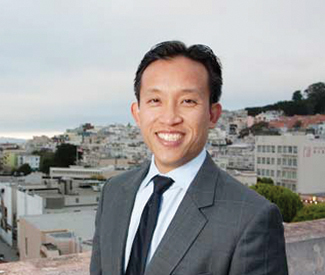
OPINION When Guardian Editor Steven T. Jones asked me to respond to his recent columns (“Chiu becomes City Hall’s go-to guy for solving tough problems“, 7/23/13; “Chiu: Centrist Compromiser, Effective Legislator, or Both,” 7/30/13), I reflected on how our Board of Supervisors’ 2013 accomplishments exemplifies the lessons and rewards of working together.

After several decades of intense fights between TIC owners and tenants, I asked both sides to sit down, share perspectives, and brainstorm beyond the impasse. To our surprise, when TIC owners shared their struggles and offered to pay a fee to condo convert, tenant advocates agreed to finally support conversions as long as their core principle of preventing evictions — which I strongly shared — was addressed.

After a decade of failed CEQA reform attempts, the pundits predicted an epic battle between developers and neighbors this year. The breakthrough for unanimous support occurred when both sides acknowledged to me that real neighborhood input and predictability in the planning process are not mutually exclusive, and progressive leaders wanted to ensure that pedestrian, bike, affordable housing, and public projects are not delayed.

After years of controversy, CPMC/Sutter and the coalition of dozens of community-based organizations deadlocked over how to rebuild the Cathedral Hill and St. Luke’s hospital campuses. After exposing financial documents challenging the original proposal, I worked with colleagues for six months at a mediation table that refashioned a CPMC plan to rebuild those 21st century hospitals the right way.

While each story is unique, what all of these accomplishments — along with recently balanced budgets, business tax reform, and pension reform — have in common is hard work and extreme patience by dedicated San Franciscans seeking creative solutions.

As Board President, my job is to build consensus among our diverse supervisors and deliver results. When I first came to City Hall, I asked my colleagues to move beyond past politics that had magnified differences. I am proud that today’s Board has the highest approval ratings in a decade, as we do more together working through our differences.

At the negotiation table, it’s essential to stand firm on core values. My vision for San Francisco has been of a city that protects tenants and families; creates good jobs across the economic spectrum; offers high quality public services with Muni, our schools, and our parks; and embraces our diversity, our immigrants, our seniors, and those who have been historically disenfranchised.

When we can’t always find creative win-wins, it’s still important to fight for what’s right. I’ve taken my political lumps championing the right of noncitizen parents to vote in school board elections, standing up for workers requesting family-friendly workplaces, and taking on a Yellow Pages industry dumping millions of phone books on our streets.

When I hear criticisms of “compromise,” I reflect that the most important federal legislation in recent years — from the Civil Rights Act to the Affordable Care Act, Wall Street reform to comprehensive immigration reform — were also criticized as “compromises.” Critics often forget the big picture: by incorporating different views, reforms actually get done, and if we wait forever for the perfect policy, people will suffer.

San Franciscans are at our best when we unite around shared values — from marriage equality to universal health care to environmental protections. We still have plenty of challenges: housing affordability, struggling workforces, family flight, public transit.

Let’s continue to work together to show the rest of the country how our city can govern.

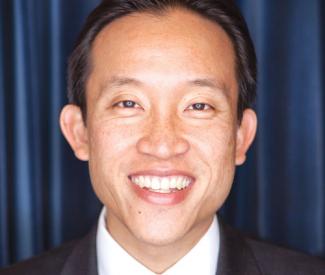
David Chiu, who represents District 3 (North Beach, Chinatown, Nob Hill), is serving his second term as president of the Board of Supervisors.

Boxes in space

38

rebecca@sfbg.com

On a recent weeknight, a group of volunteers met up at a warehouse space in SoMa to hash out plans for The Learning Shelter, a project that has attracted hefty donations and enthusiastic volunteers but lacks a permanent home base. The brainchild of Marc Roth, a maker-movement enthusiast, the idea is to give homeless people a boost toward a brighter future by teaching them how to make things with 3D printers, and other useful skills.

Eight large shipping containers, on loan from supportive organizations, are currently sitting in a gated lot adjacent to the 14,000-square-foot warehouse, which housed a community-based project called [freespace] in June and July.

Roth and his core group of volunteers have plans to retrofit each container to be a “shop in a box” — a mobile classroom, outfitted with whiteboards and enough juice to power the Cubes (a brand name for 3-D printers), CNC routers, laser cutters, and other maker toys. The vision is to use those retrofitted shipping containers to lead three-month intensives in technical skill instruction for up to 30 adult students without homes at a time.

Roth is currently working at a laser company startup, but it wasn’t long ago that he was among his project’s target population. He moved to San Francisco from Las Vegas in September of 2011 and slept in his car (which was “part of the plan,” he explained) while struggling to piece together a new life in the Bay Area.

After one job opportunity fell through, he landed a gig cooking pizzas on Treasure Island. But the long shifts kept him on his feet all day, and aggravated a health condition that causes nerve damage. With few options and a disability sending his health into a downward spiral, it was only a matter of months before he hit rock bottom and checked into a homeless shelter run by the St. Vincent de Paul Society.

It was near 5th and Bryant streets in SoMa. Just a few blocks away, Roth discovered TechShop, a do-it-yourself community workshop that describes itself as being “on a mission to democratize access to the tools of innovation.” An atypical member of the homeless population, Roth had worked as a programmer in the past, and had an itch to learn laser cutting. So he shelled out some of his last dollars for a TechShop membership.

At first, he was grateful just to have found a place where he could tinker for about 10 hours a day while sitting down, since his health problems were still sapping his energy. “I’d never heard of any of these machines,” Roth said. But soon, he was voraciously teaching himself to use them. “When they showed me what a water jet was and what it could do, the hair on the back of my neck stood up,” he said of the device that uses high-pressure water for cutting. “This was Disneyland, multiplied.”

Today, Roth is housed (for now, but he’s still seeking a permanent place to rent) and teaches multiple workshops at TechShop. Yet he’s acutely aware that there are others who were under the roof of St. Vincent with him who still wake up every day to a harsh and destitute life on the streets.

During his time there, he said he befriended several people and got a sense of their innate curiosity and creativity. “I was dragging people with me to the TechShop,” Roth recalled. “In my little group of five to six people, we had a couple ideas for inventions.” With the skills that could be mastered at the community workshop, “they could actually go out and get a part-time job.”


DIY BOOTSTRAPS

Of course, there are obvious barriers preventing the vast majority of San Francisco’s homeless population from following Roth’s example of just going out there and doing-it-yourself.

People who lack income generally cannot afford training programs to learn new skills. Nor is shelter ever a sure bet: Homeless advocates have reported that it can take eight hours of waiting around in line just to reserve a shelter bed through the lottery system, making it difficult even for would-be job hunters to devote time to much else — let alone the challenges presented by addiction, behavioral health problems, or a lack of access to nutritious food or bathing facilities.

Roth’s vision is to combine temporary housing with a 90-day training program, so that up to 30 individuals can participate in intensive trainings in how to use maker tools. His plan is to partner with homeless service providers who already offer basic computer-training courses, and enlist their help in screening for candidates who’ve demonstrated an interest in technical skills and stand to benefit the most.

To date, Roth has collected several Cubes donated by 3D Systems, eight shipping containers loaned by ReAllocate and Ekology, and struck a partnership with a similar project that seeks to convert retired Muni buses to bathing facilities for the homeless.

But things are still coming together, and the looming question (“the elephant in the room,” as one meeting participant put it) is location. The use of shipping containers as the basis for classroom design is intentional and a key element of the plan, Roth said, because the only surefire guarantee for viability in astronomically pricey San Francisco is to build something that can be taken apart and transported somewhere else if necessary. When economic barriers prevent cash-poor idealists from carving out a physical space, they find ways to adapt.

High on Roth’s wish list is finding a church to partner with, since he believes religious establishments can more easily gain residential permitting. And it almost goes without saying that there is a crowd-funding video pitch in his future.

“When I moved into the homeless shelter,” Roth said, “I thought it would be my secret until I died.”

Now, in a city where the idea of harnessing a powerful narrative to fuel crowd-funding campaigns is practically a way of life in some circles, he’s relating that experience to anyone willing to listen. Venture Beat, a magazine that chronicles tech culture, profiled Roth in an article that ran earlier this year (“Homeless to Hacker,” May 16, 2013).

Ilana Lipsett, an organizer who helped launch [freespace], read about Roth’s project and sent the article around to her co-conspirators, saying it seemed to complement their endeavor perfectly. Soon Roth was dubbed a “[freespace] fellow,” his shipping containers had found a home in the lot next door, and one of [freespace]’s final acts before its lease ran out at the end of July was to host a hackathon for The Learning Shelter.


BIG TECH, LITTLE TECH

The buzzy word hackathon is sometimes used to refer to different things; in this case, it was an extended brainstorming session organized over the Internet. Some 40 volunteers attended that event one July weekend, and wound up forming committees dedicated to tasks like promotion, workshop instruction, or soliciting donations.

The foundational reason for [freespace]’s existence was to host a series of hackathons under the umbrella theme “civic hacking,” to inspire a kind of extended collaboration-fest that would produce projects to benefit civic life in some way.

Its doors were open to all, “and you had people who had lived on the street interacting with people who worked in tech companies,” Lipsett recalled of some events hosted at the 14,000-square-foot warehouse space.

Can something with staying power emerge from this short-lived experiment? The concept behind [freespace] was to show what could be accomplished if a dedicated space was provided, and permission granted, for the civic hackers to run wild with their ideas. Emerging from the 60-day experiment was a community garden, a bike-sharing project, a plethora of visual art and a core of volunteers committed to making The Learning Shelter a reality.

[Freespace] came about when the landlords who own the spacious warehouse, a former sewing factory, agreed to rent it to the core group of volunteers for $1 during the month of June. (For the month of July, the tenants crowd-funded $24,000 and used $10,000 of it to pay the rent.) But now, [freespace] is technically homeless, because the space isn’t really free. In fact, the 14,000-square-foot SoMa warehouse is downright unaffordable to the group of makers and idealists who fervently believe they can better the lives of homeless people by teaching them skills that are in demand in the Bay Area’s changing economy. Lipsett says [freespace] will continue in some form, and Roth is still looking for collaborators to help elevate The Learning Shelter, but it’s struggle in a city where the economic forces unleashed by big tech is making things harder for little tech.

Alerts: August 14 – 20, 2013

0

WEDNESDAY 14

“Untitled” Mission Cultural Center for Latino Arts, 2868 Mission, SF. tinyurl.com/untitled814. 7-10pm, $5. The Mission Cultural Center for Latino Arts is kicking off one of its new exhibitions, “Untitled,” featuring pieces covering topics such as migration, intervention, documentation, and the interpretation of family and societal dreams. Work by artists such as Favianna Rodriguez, Carina Lomeli, Indira Urrutia, and Marc Hors will be up until Sept. 14. Chamber music band Classical Revolution will perform during the opening reception.

SATURDAY 17

World’s Largest Drag King Contest 550 Space, 550 Barneveld Ave, SF. www.sfdragkingcontest.com. 10pm, $15 to $35. DragStrip Productions presents the 18th Annual San Francisco Drag King Contest. Expect burlesque, lip-synching, mud-wrestling, and gender-bending stage acts judged by a panel of local drag celebrities. DJ after-party to follow the crowning of San Francisco’s next drag king. Fudgie Frottage and Sister Roma co-emcee. All benefits will go toward Pets Are Wonderful Support (PAWS).

Save CCSF: Lobby Committee Meeting Main Public Library, Mary Louise Strong Conference room, 100 Larkin. wendypalestine@gmail.com. 1-4pm, free. City College is slated to lose its accreditation in July of 2014, and Save CCSF is working to reverse that decision. The group has staged protests and Occupy-style actions, but also plans to lobby politicians about saving the college. Join them in planning how to save City College from its accreditors.

SUNDAY 18

Tenant Union Hall of Fame and auction San Francisco Tenants Union, 558 Capp, SF. www.sftu.org. 1-5pm, free. The San Francisco Tenants Union’s annual Hall of Fame ceremony recognizes tenants who have made notable contributions to the rights of tenants in San Francisco. This year the TU honors longtime volunteer Jim Faye, Tommi Avicolli Mecca and Sara Shortt from the Housing Rights Committee, and former Guardian Editor Tim Redmond. Join them for a BBQ and surf over to their website to scope out their silent auction, where one can bid on everything from a lunch with a supervisor to a sailboat ride.

NSA Surveillance and US: What We Know and What We Can Do About It Martin Luther King Room, Unitarian-Universalist Center, 1197 Franklin, SF. sf99percent@gmail.com. 3:45-6pm, free. This workshop will feature short presentations about NSA surveillance by attorneys and organizers, followed by breakout groups meeting to plan actions, write materials, and network. Hosted by the Unitarian Universalists for Peace-SF and the SF 99 Percent Coalition.

Prison hunger strike enters month two

As a hunger strike staged across California prisons enters its second month, inmates and their advocates are mourning the loss of Billy “Guero” Sells, a Corcoran State Prison inmate who committed suicide on July 22 after 14 days of fasting.

Advocates with the Prison Hunger Strike Solidarity Coalition counts Sells as the first casualty of the mass protest. Donna Willmott, a member of the coalition’s media committee, told the Bay Guardian that “people who knew him  believe that [suicide] was very uncharacteristic of him. As a coalition, we’re not saying, ‘no he didn’t commit suicide,’” Willmott added, “but we still think that the CDCR is responsible for what happened to him.”

State Assembly Member Tom Ammiano noted in an Aug. 1 statement that “although the death of a prisoner who had participated in the hunger strike has been ruled a suicide, I can’t be comforted by the knowledge that conditions in taxpayer funded institutions have led to unusual rates of suicide instead of reasonable rates of rehabilitation.”

Ammiano said he “remain[s] concerned about the hundreds of prisoners still participating in a hunger strike to protest conditions. These are not minor prisoner complaints; they are violations of international standards that have drawn worldwide attention. To keep anyone in severe isolation for indefinite amounts
of time does not meet norms of human rights that civilized countries accept.”

On August 8, the California Department of Corrections and Rehabilitation (CDCR) released a tally of 349 inmates in seven prisons who had skipped the last nine consecutive state-issued meals, including 193 who hadn’t eaten at all since the strike began on July 8.

Strike leaders at Pelican Bay State Prison have demanded reforms surrounding solitary confinement. They have asked the CDCR to address the unreliable method by which inmates are flagged for segregated housing, conditions in confinement, indeterminate and long sentences, and the lack of clear and fair guidelines on how inmates can work towards being released back into the prison’s general population.

Activists have organized a number of recent events to demonstrate support for the inmates. Demonstrators picketed outside of San Quentin State Prison recently. On Aug. 5, seven protesters were arrested after locking themselves to the front doors of the Elihu M. Harris State Building in Oakland.

The loss of Sells spurred a renewed sense of urgency amongst prisoners’ rights advocates. Danny Murillo, a formerly-incarcerated student at UC Berkeley, told the rallying crowd in Oakland that “as time progresses, we do need to put pressure, because we’ve already seen one of our brothers fall.”

Sanyika Bryant, a Civic Engagement Organizer at Causa Justa, added that “when people are going to go on a hunger strike, that’s really a last stand. The conditions are just so bad that you have to take your life on the line to stand up.” He added, “this is for real life and death.”

District 11 Supervisor John Avalos participated in a day of action on July 31 by forgoing meals. “I’m fasting today in solidarity,” he told the Guardian on that day, and went on to describe long-term solitary confinement as “completely inhumane. You take away so much liberty. You shouldn’t take away their humanity. People should have the ability for self-actualization.”

So far, a team of mediators has made little progress in reaching an agreement with state prison officials that could put an end to the strike. In the meantime, California Correctional Health Care Services (CCHCS) says it’s adhering to a care guide crafted by CDCR, outlining the protocol for dealing with inmates who reach the point of starvation.

Care providers are required to conduct body-mass index (BMI) determinations, and after 14 days of striking, fasting prisoners receive informational notifications from CDCR staff, informing them of their options if they reach a critical medical condition. Some inmates have reported not receiving BMI determinations, and being subjected to increased isolation or excessive heat or air conditioning, to the point of severe discomfort.

Ron Ahnen, Associate Professor of Politics at St. Mary’s College and President of the human rights non-profit California Prison Focus, expressed concern about “the coming tsunami of people collapsing and having serious medical issues. Especially all at the same time.”

Inmates have the right to refuse medical treatment, explained Joyce Hayhoe, Director of Legislation and Communications for CCHCS. “We cannot force them to eat or take measures to force them to eat without a court order. We do have inmates that fill out advance directives. If, for some reason, an inmate lost consciousness and there was not an advance directive, doctors would take whatever steps were necessary to preserve their life.” This could include feeding tubes, she said.

Melissa Guillen, who is 22, said her father Antonio Guillen is a strike organizer who has spent a decade in solitary at Pelican Bay. She’d heard from his counselor that “he’s doing okay. That he’s strong. He’s not planning on stopping anytime soon. But, you know, they’re getting weak.” She added, “We know he’s strong. I hope he gets what he wants out of this.”

Richmond gets radical, seizing foreclosed homes from banks

21

As a rule of thumb, we at the Guardian tend to believe that if the banking and real estate industries are against something, then we’re probably in support of it. But that’s not the only reason that I’m so intrigued about the possibilities of Richmond taking ownership of hundreds of foreclosed homes, using eminent domain laws as needed, to keep people from being evicted and rejuvenate the community.

Richmond officials want to take over 624 homes that are underwater in that foreclosure-plagued city, becoming the first city in the country to do so. San Bernardino had considered and rejected the idea earlier, largely because of opposition from banks and threats that they might stop lending in the city. But Richmond officials appear to be holding tough against such extortionary threats and moving forward.

KQED’s Forum did an interesting segment on the situation this morning, following up a report from Democracy Now! on Tuesday (KALW also did something on this last month), with the bankers and Realtors offering up all kinds of unfounded concerns and fear mongering to confuse the issue. Because this is a truly radical action that Richmond is considering, in the best sense of that term: banks and those who control property have too much power over our lives, and it’s about time a city takes some of that power back on behalf of its people.

This is like nationalizing the assets of corrupt capitalists who have gone too far in subverting the broad public interest, a populist shot over the bow of the people who consider themselves our economic masters, from Wall Street right down San Francisco’s Chamber of Commerce and Association of Realtors.  

As Richmond Mayor Gayle McLaughlin told Democracy Now: “The banks sold our community predatory loans, and now they have no solution that they’re presenting for this crisis. So we are stepping in to fix the situation. We’re stepping in by taking these troubled loans off the hands of the banks. And we’re paying them fair market value for these loans, and then we’re working with the homeowners to refinance and modify loans in line with current home values. So we call on the banks to voluntarily sell us these loans. And if they don’t cooperate, we will be considering eminent domain.”

Just think about the possibilities of this: cities could seize all their most distressed properties, then pay fair market value (which would be at fire sale prices for rundown homes in communities with high foreclosure rates), have the residents work with city officials to turn the area around and thus substantially increase the value of those homes, and eventually sell those homes at a profit, either to their current occupants or some other city residents (choosing buyers based on social considerations, not strictly financial ones). If it works on a small-scale, it could be ramped up to larger and larger scales, with cities selling bonds to buy real assets that would only go up in value as properties get more attention than these absentee bankers have been giving them.

If predatory entrepreneurs can buy these short-sale properties and flip them for a profit, why can cities do the same thing and do some good for their people in the process?

Community-based journalists also raising Airbnb’s issues in SF

111

Mainstream media outlets in San Francisco may be slow to pick up on how Airbnb and other online home rental companies are violating local laws and dodging local taxes — the subject of our cover story this week — but both international and community-based journalists are paying attention to this growing problem.

The excellent bilingual newspaper El Tecolote covered some of the same ground we did in its cover story this week, “Unregulated Rental Business Takes Over Housing,” focused on how Airbnb is contributing to gentrification and displacement in the Mission District.

Reporter Jackson Ly found a couple that turned a rent-controlled apartment on 24th St. into a $249 per month de facto hotel room, booking it for 24 nights in August and making $5,976 in just one month, on top of the $3,069 they’re making in August renting out the guest room in the apartment where they actually live for $99 per night.

“It’s cheating the people that pay taxes,” Maria, who lives in the unit below this couple’s investment apartment and is tired of the rotating stream of tourists in her building, told the newspaper.

I got ahold of El Tecolote Managing Editor Iñaki Fdez. de Retana, who told me, “it seems like we’re on the same page,” noting the Guardian has also recently written about the prison hunger strike and some other issues that his paper has covered.

He said that housing issues like this one are extremely important to the Latino community that lives in the Mission, and he’s been surprised that Mayor Ed Lee has been unwilling to address the impacts of Airbnb and other tech community contributors to the problem.

“It is very important,” he told us, noting that visiting European tourists are changing the character of the neighborhood. “In particular on 24th Street, which was once seen as the heart of the Mission, it’s changing overnight and [Airbnb and other housing rental websites] is a big part of that.

Meanwhile, we’re still waiting for a substantive response from Airbnb to the issues that we and a handful of other journalists are raising. CEO Brian Chesky, who was an amateur competitive bodybuilder before founding Airbnb in 2008, would apparently rather flex his muscles than deal directly with the community where his company is based.

Chiu: centrist compromiser, effective legislator, or both

0

At the start of this year, when I wrote a Guardian cover story profile of Sup. Scott Wiener (which SF Weekly and San Francisco Magazine followed shortly thereafter with their own long Wiener profiles), he seemed like the one to watch on the Board of Supervisors, even though I noted at the time that Board President David Chiu was actually the more prolific legislator.

Now, it’s starting to seem like maybe we all focused on the wrong guy, because it is Chiu and his bustling office of top aides that have done most of the heavy legislative lifting this year, finding compromise solutions to some of the most vexing issues facing the city (ironically, even cleaning up some of Wiener’s messes).

The latest example is Wiener’s CEQA reform legislation, which the board unanimously approved on July 23, a kumbaya moment that belies the opposition and acrimony that accompanied its introduction.

That effort comes on the heels of Chiu’s office solving another big, ugly, seemingly intractable fight: the condominium lottery bypass legislation sponsored by Wiener and Sup. Mark Farrell. To solve that one in the face of real estate industry intransigence, Chiu showed a willingness to play hardball, winning over swing vote Sup. Norman Yee to get six votes using some hostile amendments.

In the end, Chiu won enough support to override a possible veto by the waffling Mayor Ed Lee, who has always echoed Chiu’s rhetoric on seeking compromise and consensus and “getting things done,” but who lacks the political skills and willingness to really engage with all sides. For example, it was Chiu — along with Sups. Farrell and David Campos — who spent months forging a true compromise on the hospital projects proposed by California Pacific Medical Center, replacing the truly awful CPMC proposal that Lee readily accepted.

“It’s been a very long year,” Chiu told the Guardian. “It’s been important for me to not just to seek common ground, but legislative solutions that reflect our shared San Francisco values.”

Next, Chiu will wade into another thorny legislative thicket by introducing legislation that will regulate the operations of Airbnb, the online housing rental corporation with a problematic business model.

After posting the preceding analysis of Chiu on the SFBG.com Politics blog on July 23, we heard lots of back channel concerns and complaints from progressive San Franciscans (and even some from moderates and conservatives who consider Chiu a raving socialist for helping suspend the condo lottery).

Nobody really wanted to speak on the record against Chiu, which is understandable given the powerful and pivotal position that he’s carved out for himself as a swing vote between the two ideological poles and on the Land Use Committee, whose makeup he personally created to enhance that role.

The main issue seems to be that Chiu allows both progressive and anti-progressive legislation to be watered down until it is palatable to both sides, empowering the moderates over the progressives. That’s a legitimate point. It’s certainly true that Chiu’s worldview is generally more centrist than that of the Guardian and its progressive community, and we’ve leveled that criticism at Chiu many times over the years.

The fact that he ends up in a deciding role on controversial legislation is clearly a role that Chiu has carved out from himself, no doubt about it. And that’s certainly why he played the pivotal role that he has this year. But when he uses that role to empower and support tenant groups, as he did on the condo lottery bypass measure, I think that’s something worth noting and praising.

On the CEQA reform legislation, it’s also a valid criticism of Chiu to note that Sup. Jane Kim had five votes for her legislation and that it was only Chiu who stood in the way of its passage (whether Mayor Ed Lee would have vetoed it, necessitating the need for two more votes, is another question).

In the end, Chiu can be seen as an effective legislator, a centrist compromiser, or both. Perspective is everything in politics.

Plan Bay Area: better, but it still gentrifies

0

By Peter Cohen and Fernando Martí

Council of Community Housing Organizations

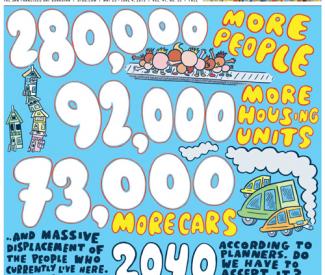
OPINION On July 18, the Metropolitan Transportation Commission (MTC) and the Association of Bay Area Governments (ABAG) adopted the region’s first so-called “sustainable communities strategy,” as required under new state environmental laws. Plan Bay Area will direct the largest share of the region’s growth to the region’s urban cores — two-thirds of the region’s overall housing production is directed to 15 specific cities.

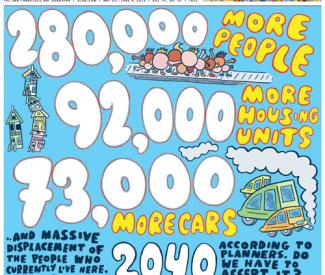
The vision is what environmentalists refer to as “smart growth” — shrinking the footprint of the region’s future development as a more environmentally friendly and geographically efficient pattern to absorb ever-increasing population. San Francisco alone has a very tall order: Our city will absorb 25 percent of new urban development, which equates to 92,000 new housing units and a pace of housing construction averaging around 3,100 units annually (a rate that has been reached only twice over the last 50 years since the era of 1960s urban renewal development).

The question that framed debates through the three-year process in drafting and finally adopting the plan is how that amount of new growth can be “done right;” that is, without gentrifying working class and poor communities and ensuring that infrastructure, including affordable housing and transit service, will keep up with that pace of growth. Tim Redmond’s feature article in the June 4 issue of the Guardian (“Planning for displacement”) and a June 12 forum sponsored by the Guardian, CCHO, and UrbanIDEA very thoroughly laid out the issues and critiques of the Plan Bay Area draft that was released by MTC/ABAG earlier this spring.

With such fundamental flaws when the draft plan was released in April, how did the July 18 adopted final Plan Bay Area fare? First, there is no question this regional “smart growth” plan will make combating gentrification at ground-level harder. But second, the plan could have been worse if not for a tremendous final pushback by progressive advocates from San Francisco and throughout the region loosely united in a “Six Wins for Social Equity” coalition and the committed leadership of a small core of progressive regional leaders — including two of San Francisco’s representatives, David Campos (MTC) and Eric Mar (ABAG) — who championed some final amendments.

Those “wins” (in reality, concessions by MTC/ABAG) achieved in this final push include: adding a public process to develop priorities for the Bay Area’s $3.1 billion share of state cap and trade funding, such as to affordable housing and local transit operations; strengthening the $14 billion transportation block-grant funds program (“OBAG”) to link it directly to local cities’ affordable housing production and displacement-prevention policies; and adding a requirement for MTC to develop a comprehensive strategy to prioritize funding of local transit service and transit maintenance.

Though the details of those amendments are fairly squishy and do not alter the development trajectory of the plan, they are potentially valuable handholds to work with going forward as Plan Bay Area gets implemented (and updated in four years).

That said, San Francisco’s front line working class neighborhoods and communities of color still stand to take the brunt of potential negative impacts from this regional “smart growth” plan. Theoretically they could receive the potential benefits of public infrastructure investments and stimulated economic activity. But while the risks are real, the potential benefits are still illusory.

We must become more engaged if we are to move Plan Bay Area beyond policy statements and promises of future “best-practices” to make sure vulnerable people are not displaced from their neighborhoods in the tide of infill real estate development and are guaranteed a real share of the fruits from “equitable” smart growth.

Jello sounds off

0

When setting up an interview with Jello Biafra, I got this light-hearted warning: “There is no such thing as a short interview with Jello.” It’s true, the legendary punk showman/spoken word enthusiast is full of political ideas, historical references, and elder-punk-dude tales. How can he be expected to keep it brief?

Below, we spend an intense half hour discussing the media, corruption, spoken word, Jello Biafra and the Guantanamo School of Medicine, Jello Biafra and the New Orleans Raunch and Soul All-Stars, and the future of underground rock’n’roll. (For the feature on Jello Biafra and the Guantanamo School of Medicine, see this week’s paper):

San Francisco Bay Guardian
Where do you gather your news? What are your sources for political commentary in your songs?

Jello Biafra Why, the Bay Guardian, of course! Where would a local voter be without your fine rag? I just hope the new ownership and staff goes pedal to the metal to keep up the standard of muckraking and ethics. There’s so much corruption to dig up in this area.

I think the real renaissance was before the Weekly was sold to New Times/VVM, when the Guardian and the Weekly were both muckraking papers concentrating on local issues and were trying to out-scoop each other. That’s what I’d like to see continue and come back.

But basically I’d read a lot of periodicals. Locally, we have you folks, among others. And then you know Nation, Progressive, Mother Jones, interesting things people send me in the mail, digitally or otherwise, talking to people, putting two and two together — trying to write songs about stuff that no one else has! Or at least not in the same way.

SFBG Why is that? Why choose to write songs about something no one else has?

JB It’s just filling in the gaps with what’s interesting. I’m proud that no two of my music albums sound alike. Not even the Lard albums sound alike. From Dead Kennedys onward my mission as the main lyricist and composer of the damn tunes, I kind of stick to my punk core — whether I intend to or not, it’s just who and what I am — and but kind of widen the base of the pyramid to what you can do with that energy.

http://www.youtube.com/watch?v=NQpPvFPegdE

SFBG What are some the topics you focused on when writing White People and the Damage Done?

JB I guess it was a little more focused as a semi-concept album, than anything since Frankenchrist. It’s basically about grand theft austerity, and how unnecessary it is, what a scam it is. People have asked me when we go to play different cities or countries, what I think is the biggest problem in the world today and they expect me to say something like “climate change” which I prefer to call “climate collapse” because that’s what it is, or inequality, or war, or whatever, and I say you know, there’s a worse one, it’s corruption. Because that is what’s blocking anything constructive being done about all the other problems. There’s a thread through White People and the Damage Done about that. 

The title track is not so much about race specifically, but about this attitude of the higher ups in the United States, the EU, and others, is that other countries, especially ones run by people of color, where we call them “Third World” or whatever, are somehow unfit to govern themselves and need us to pull the strings, plant the puppets, and tell everyone what to do. And it’s often for the purposes of looting their resources and exploiting their people. And what kind of unintended consequences that can have.

For example, we talk about why we need more democracy in Iran, and we don’t have the big bad Soviet Empire to freak out everyone anymore so we have Iran and North Korea instead. Wait a minute, you want democracy in the Middle East? Well Iran was a democracy in the early 1950s, guess who decided to overthrow the democratically-elected leader Mohammad Mosaddegh, and put the most hated person in the country, the Shah, back into power? But he was our policeman for the gulf basically, and he got overthrown anyway. And now it’s a theocratic regime. Where would be today if we had just left that region alone in the 1950s?

Same for Afghanistan. I nearly went through the roof when I found out about an interview with Jimmy Carter’s old national security advisor, Zbigniew Brzezinski’s, whose daughter is on one of the morning cartoon pundit shows, bragged on an interview with French media about what a great thing we did by arming, training, and financing the guerrillas in Afghanistan before the Soviet Union invaded, and how we cracked apart the evil empire, hooray for us, we win.

But look what we created for crying out loud. We were even helping back a young hothead with a trust fund named Osama Bin Laden. And then once the Soviets were out, we didn’t lift a finger to help rebuild the country, let alone take back the guns and rocket-launchers. And now look where we are. That’s another example of white people and the damage done.

[Pause] hold on my juice machine, now I have to turn it off, it’s bouncing all over the counter.

SFBG What kind of juice are you making?

JB Oh, just a mixture of stuff. Spinach, apples, other things.

SFBG Can you tell me about forming Guantanamo School of Medicine?

JB Here we go again. I wanted to have another band ever since Dead Kennedys, it just never quite happened. Either people weren’t available, or I was off doing spoken word or other adventures, but of course I never stopped making albums, there was Lard, two with the Melvins, one with DOA, Mojo Nixon, NoMeansNo.

I kept the music out there, I just didn’t have a performing vehicle. And then when I was down at the Warfield seeing the Stooges on Iggy’s 60th birthday, it occurred to me, “oh shit, I turn 50 next year. I better do something or I may never get another chance.” If it’s half as good as the Stooges, I’ll declare victory.

SFBG Do you have any other projects coming up?

JB I started getting back into spoken word. I did a tour in Australia after the band’s tour was done. And at some point, something that will probably see the light of day: some of the New Orleans guys from Cowboy Mouse and Dash Rip Rock dared me to come down there during the jazz fest a few years ago and do a whole set of New Orleans soul and rhythm and blues songs, which I did with some badly needed garage rock added in and we got Mojo Nixon’s keyboard wizard with all the Jerry Lee Lewis moves, and quite the cacophonous horn section, as well as [Cowboy Mouth’s] Fred LeBlanc, and [Dash Rip Rock’s] Bill Davis.

The multitrack recording was a trainwreck, but then Ben Mumphrey who works with Frank Black and the Pixies and many others, called me up and said he could rescue this recording. Slowly but surely he has been rescuing it. So Jello Biafra and the New Orleans Raunch and Soul All-Stars will see the light of day somehow. We haven’t been able to pull it together to play a show though. 

http://www.youtube.com/watch?v=as8Y2HWzUwI

SFBG I was wondering your opinion of this new, kind of second tech bubble taking over in areas like the Mission?

JB Again, I refer you to one of my songs. It came out on the EP of the rest of the recording session when we recorded The Audacity of Hype with Billy Gould. The song is called “Dot Com Monte Carlo.” And sure enough there was a little mini firestorm on the Internet of course. A lot of people writing in were too chicken-shit to sign their own names, but they said ‘oh that’s such an old topic, it doesn’t matter anymore.’

Well I had this funny feeling we weren’t done with the Dot Com Holocaust. Sure enough, now it’s more aggressive and obnoxious than ever. Dot Com Monte Carlo — that’s kind of what Willie Brown’s puppets are trying to turn this city into, yet again.

It has been really sad for me to see so many cool people and artists and service-workers and people of color just bull-dozed out of this town to make room for more mini little yuppies who treat San Francisco as a suburb of Silly-clone Valley.

And now you don’t see people like me when I was 19, just moving out to San Francisco chasing a dream. There was a time when the vitality of the underground was maintained by entire bands moving here as a unit. Everybody from MDC and the Dicks to DRI and later, Zen Guerilla, the only one I can think of in recent years, who dare tried to relocate to San Francisco were I believe No Doctors and Sixteen Bitch Pile-Up, and I’m not sure either one of them exist at this point. Maybe they all packed up and left. A lot of that underground fire, and that’s not just confined to rock of course, but a lot is going on in Oakland now.

SFBG Yeah, I’ve had a lot of bands telling me they can’t afford San Francisco anymore, so they’ve been moving to the East Bay or beyond…

JB I mean, I’d hate to see San Francisco turn any further into a giant Aspen, Colorado, or even Boulder, Colorado, which is where I fled from in order to come here [in ’78.]

SFBG Are there current East Bay or San Francisco bands that you feel like are doing good things?

JB Of course I always brain-fart on this question. Well, of course I’m going to support my label bands, I love Pins of Light.

SFBG How involved are you with Alternative Tentacles? Are you going out and finding bands?

JB Well I’m still the absentee-thought-lord, the buck stops with me. Someone deeply suspicious of capitalism has wound up owning a business by default, whether I should or not. Luckily there’s still money to pay a shrinking staff and to make sure we can keep putting out cool things. But it’s becoming harder and harder because of the combination of a crashed economy, rents going through the ceiling all over country, and file-sharing on the other hand. Of course, one feeds the other when people don’t have any money.

That doesn’t mean I support these misguided efforts, these major label RIAA scams to blackmail people and sue them for file-sharing. They’ve raked in over a hundred million dollars doing that and no artist has seen a penny. That’s not the way to solve this.

On the other hand, when I see one of the best bands we’ve seen in years like the Phantom Limbs break up way too soon, I can’t help but wonder whether file-sharing might be a part of the problem, with so many people going crazy over them and going to their shows all over the place, and then hardly anybody buys the album.

When you’ve got people in the age of high housing and transportation cost trying to keep themselves fed or also sustain a family, that hurts. I wonder how many people save up money from their shitty jobs for years in order to make some really cool piece of music only to find that nobody actually gives anything back; they’re that much more likely to quit making anything.

Maybe the solution is, for people who want to get their friends into really cool music, don’t just send them the whole album, pick some favorites and send them a little teaser package, a little file to inspire them to check out them more.

Not to mention, be conscious of whose file you’re sharing. Major labels go so far out of their way to rip off their artists anyways, with an army of lawyers to back them up. But when it’s an underground artist or label, that’s different. I never would have thought that GSL would’ve stopped, for example. Or that Touch and Go would draw mainly into reissues and back catalogue. It’s not just the economy and music industry crashed that’s to blame, it’s also people who don’t think artists should get any of their support.

SFBG Do you still love performing in front of a crowd? Do you have any recent performances with this band that you’ll take with you?

JB I’m not sure I’d be doing it if there wasn’t this inner need to do it. I’m really greatful that at my age anybody even cares about what I have to say, or new stuff I’ve been making.

We’ve been able to play a lot of places Dead Kennedys weren’t, because countries hadn’t opened up yet and they were still under the boot of Communist dictators or Latin American military or whatever. And we get to play for people in those places now. I don’t have the kind money where I can go jet-setting around to these places, I have to play my way to places like Buenos Aires or Slovenia, or I’ll never get there.

Bringing these musical riffs in my head to life and to have them actually work and getting to play them for people, that’s always pretty cool.

Some of the stranger moments were last time we were in Geneva we had a stage-diver in a wheelchair. The crowd was very gentle with him, passing him around, and making sure he was reunited with the chair, which was floating somewhere else in the crowd. Three or four songs later, he’d be back again! That was good.

Also, being able to scrape together just enough of my high school Spanish to be able to talk to people in Buenos Aires from the stage about some songs that were written with them in mind. I mean, “Bleed for Me,” the old Dead Kennedys song, was written about the Dirty Wars. And this was the first time I could actually dedicate “Bleed for Me” to the Desaparecidos in Argentina and explain it a little bit.

Jello Biafra and the Guantanamo School of Medicine
With D.I., the Divvys, Girl-illa Biscuits
Fri/26, 9pm, $15
Uptown
1928 Telegraph, Oakl.
www.uptownnightclub.com

New director triggers a brain drain at SFDPH

1

The San Francisco Department of Public Health has seen an exodus of top officials over the 18 months since Barbara Garcia took the reins from longtime chief Mitch Katz, the most recent being Environmental Health Director Dr. Rajiv Bhatia, who was placed on administrative leave last month pending an investigation into unspecified concerns.

Bhatia has been a hero to many progressive San Franciscans and public health professionals for his innovative work supporting expanded worker protections, regulation of cannabis dispensaries and restaurants, environmental justice initiatives, and other work that has landed him in the pages of the Guardian many, many times.

“The poorest Americans are about two times as likely to die. People in low-wage jobs have less access to health care … food, shelter, clothing, and transit,” Bhatia testified during the 2002 Board of Supervisors hearing that led to the creation of a city minimum wage.

Neither Bhatia nor the department would comment on his leave, although sources tell us that he has not been informed of the charges against him (which an item in the Chronicle last month suggested was a possible conflict of interest issue relating to his regulation of restaurants) and that Garcia has clashed with many top officials in the department since taking over.

Among those who have left the department are Dr. Susan Fernyak, Director of Communicable Disease Prevention and Control; Dr. Masae Kawamura, Director of TB Control; Dr. Grant Colfax, Director of HIV Prevention; Elizabeth Jacobi, Director of Human Resources; Tangerine Brigham, Director of Healthy San Francisco; Mark Trotz, Director of Housing and Urban Health; and Dr. Erica Pan, Director of Emergency Preparedness.

“SFDPH has a national and worldwide reputation for innovative solutions to traditional public health problems. As a citizen of this city, I’m concerned that the current leadership is fostering an environment that is driving out and stifling that innovation to the detriment of all of us. A number of staff people have told me they have been instructed not to stretch themselves to innovate, to do only what their job description says and no more,” said the source, who works for a nonprofit that partners with the department.

Asked to comment on the exodus and her role in it, Garcia issued the following statement in response to questions from the Guardian: “Three staff that reported to me directly were recruited and provided promotions in the Los Angeles Department of Health Services. I’m very proud of these staff who are now involved with Health Care Reform efforts for the Los Angeles area. Several other staff that reported to our Public Health Division left for positions that were closer to home and the majority of these departures were promotions. All staff left in good standing with the San Francisco Department of Public Health.”

Meanwhile, 93 “members of the public health, social and environmental justice, foundation and education communities” wrote a signed letter to Mayor Ed Lee on July 10 on behalf of Dr. Bhatia, highlighting his work and appealing for a just resolution to the situation.

“Many across the nation have been grappling with how to improve the social and environmental conditions that are the cause of poor health and health inequities. Under Dr. Bhatia’s leadership, the San Francisco Department of Public Health Environmental Health Section has found practical ways — using research, policy, regulation, and cross-sector collaboration — to produce measurable improvements to environmental and social conditions throughout San Francisco’s diverse communities,” they wrote.

While writing that they “have no knowledge or commentary on the details of the leave or investigations, they went on to note the initiative that Bhatia has shown in going beyond his prescribed duties to work with various San Francisco constituencies to support equitable solutions to this city’s problems: “He takes his responsibilities as a public servant seriously, working well beyond required hours, and he is committed to improving the life-chances of socially, economically, and politically marginalized communities.”

Striking Out

21

news@sfbg.com

Today marks 1,575 days since concession workers at AT&T Park have had a raise, during which time the San Francisco Giants have been fabulously successful, both on and off the playing field.

The 750 workers represented by UNITE-HERE Local 2 are currently involved in frustrating and fruitless negotiations with their employer, Centerplate, a South Carolina-based food service company contracted by the Giants to sell beer, garlic fries, and other overpriced consumables at games.

The Giants and its front office seem fairly unconcerned about the plight of workers who proudly don the team’s logo and pad its revenues. Not a single concession worker that we interviewed for this article said that they work for Centerplate — each of them said that they work for the Giants.

Since the last contract expired in March 2010, the Giants have won two World Series championships, raised the average ticket price by 20 percent, and have seen the value of the team shoot up by $223 million. The only thing that hasn’t improved are the wages of the concession workers.

Cashiers currently make $16.40 per hour, in-seat runners make $13.40, and some entry-level workers make just $10.45, which is actually less the city’s minimum wage. That’s only legal because those workers were under contract for $10.45 per hour when the wage increased to $10.55 at the beginning of this year. And Centerplate won’t even let Giants workers have a tip jar to augment their substandard wages.

Local 2 reports that revenue from concessions is divided up in a 55-45 split between the team and Centerplate (the Giants PR office disputes this number, but it won’t divulge the actual split). So when a fan spends $17 for a hot dog and 16oz beer, Centerplate and its workers get $7.65 and the Giants get $9.35, all of it pure profit. And the Giants executives even set the concession prices, not Centerplate.

But the team says the plight of these workers isn’t its problem. “We continue to urge both parties to get back to the bargaining table and to have productive discussions so the matter can be resolved as quickly as possible. This dispute is between Centerplate and Local 2, not the Giants,” is the team’s public position on the issue.

The Giants communications office responded with this stance to every question the Guardian asked about the issues involved: What have you done to “urge” Centerplate to settle the contract? Couldn’t the Giants force a settlement if it really wanted to? Why haven’t concessions workers shared in the team’s success and rising revenues? How can you claim to support the community if you can’t even ensure the people who work in your stadium are paid minimum wage?

The Giants had nothing to say about a petition signed by 600 of the workers urging the team and Centerplate to agree to a deal, instituting a company-wide no-comment policy on the standoff with concession workers.

“It would be nice if they would come in and talk—not be a mediator, but to know what we’re asking for and say why they’re not providing it or why they feel they shouldn’t provide certain information,” Billie Feliciano, who has worked as a Giants cashier for more than 30 years, told us. “They could talk to the president of the union on that if they wanted to. You know, we’re not asking you to tell us how you spend your money. We just want to know how much control you have of this situation.”

Feliciano and her fellow workers just want the Giants to be team players.


WHO’S IN CONTROL?

Contrary to what the Giants may say, there is one pressing issue—job security for the workers—that is nearly impossible for the workers and Centerplate to resolve. Every worker interviewed for this story has explicitly said that job security is their most important goal.

Even Centerplate says only the Giants can offer job security to concession workers. If Centerplate goes out of business or loses its contract, the concession workers will likely lose their jobs, which is why they’re advocating for a succesorship clause that would guarantee their employment in that scenario.

When The Guardian inquired with the Giants office about the issue, its spokesperson once again responded, “This is an issue between the workers and Centerplate, not the Giants.”

But with the Giants controlling who runs its concession and how much they charge the fans, is Centerplate just an easy scapegoat for squeezing more profits from workers? Because on the subject of health benefits and wages, the two camps are separated by a wide chasm.

In order to qualify for healthcare, the workers need to work at least 10 games in a month (they’re eligible for health insurance only from June 1 through December 1) to have coverage a month later, which means that the health and well-being of the 750 workers hinges on Major League Baseball’s scheduler.

Workers almost got denied coverage for August because June only had nine games, but they ended up qualifying because they worked a private event at AT&T Park for the biotechnology firm Genentech.

Yet Centerplate wants to raise the number of qualifying games to 12, while Local 2 wants to keep it at 10 and grant healthcare coverage to workers who work every game in months with less than 10 games.

On wages, Centerplate has offered 25-cent increase in hourly pay, no retro raises for the years worked under the expired contract, and a $500 bonus. Though Local 2 has not put out an exact number on their wage demands, its spokesperson says Centerplate’s wage offers are beyond unacceptable; they’re insulting.

Centerplate’s main message in this quarrel is its insistence that the concessions workers are among the highest paid in the nation and that they accrue more benefits than most part-time workers. But the workers say that claim is misleading given the high cost of living in the Bay Area.

“If we were living in Dallas, Texas, I’d say yeah, we’re probably overpaid. But we’re not,” Anthony Wendelburger, who has been a cook for three years, told us.

The Bay Area is among the most expensive metropolitan areas in the nation. Last month, the business consultant Kiplinger published a list of the top 10 most expensive cities in the U.S. San Francisco was third behind Honolulu and New York, with nearby San Jose in fourth and Oakland eighth.

The average concessions worker makes around $11,000 in a year while some make upwards of $13,000 during the regular season. Based on differences in the cost of living, we calculate (using www.bankrate.com) that $11,000 translates to $7,760 if they served food and drinks for the Seattle Mariners, $7,880 for the Chicago Cubs or White Sox, and $6,530 for the Atlanta Braves.


THE OLD BALLGAME

At the Giants-Padres game on June 18, a Tuesday, several hundred protesters gathered at a rally to show support for the Giants concession workers. Most were affiliated with Local 2, but a few off-duty concession workers came to join the demonstration.

They implored the fans—most whom seemed to be just learning about the dispute—to abstain from purchasing any concession stand products. The rally started an hour before game time engulfed fans waiting in line with chants of “No justice, no garlic fries!” and “Ain’t no protest like an union protest because an union protest don’t stop!”

Inside the stadium, 44 protesters (all of whom had purchased tickets) staged a sit-in in front the garlic fries stand situated behind sections 122 and 123. Their numbers withered as the game progressed and by the fourth inning, the area in front of the stand was cleared and business resumed, with 10 protesters arrested for refusing to disperse.

That protest followed a more significant action on May 25, when all of the 750 workers staged an one day strike, authorized by a 500-16 vote by workers. For that game, Centerplate employed volunteer workers who only got paid in tips. Yes, the scabs got the tips that the regular workers are being denied.

Food and drink service during that game was significantly slower than normal, as even the Giants acknowledged. There were reports of fans standing up to 40 minutes in line for a beer, which is usually more than two innings, an amount of playing time that few true baseball fan would ever give up for a beer run.

Critics—including several passerby fans who were loudly expressing their disdain for the demonstrators at the Giants-Padres game—say the workers should be content with what they have, perhaps assuming the workers were getting more from that $10 beer than they really are.

When Pearlie Jones started working concessions at Giants games 22 years ago, hot dogs were $3. Today they sell for twice that amount at the stand that Jones now manages.

We met Jones at the Local 2 building in the Tenderloin. She lives in Daly City, survives on unemployment during the off-season, and has no other source for health insurance. With nervous laughter, Jones told us she “prays to God during [the off season] that I don’t get sick.”

Wendelburger, who has to commute almost two hours each way to the ball park, works as a bartender during the off-season, although he can only get three days a week. When asked about health insurance during the off-season, this husband and father of two says, “Unless I’m going to die, I’m not going to see a doctor.”

But Jones says that as important as improved wages and healthcare benefits are to her and other employees, they really fear losing their jobs: “Our job security is the main issue that we’re pushing for right now.”

One issue that seems telling of the way Centerplate and the Giants are treating concession workers is on the issue of tips. The workers are currently not allowed a tip jar or a tip line on credit card receipts, a standard feature of food service, particularly here in the Bay Area, where even butchers and bakers have tip jars.

Ramirez says she’s utterly baffled by Centerplate’s stubbornness on the issue. “A tip line is something that doesn’t cost management anything and requires a small change in the computer system and is something the customers are actually demanding. We have a great experience with our fans and customers and they want to share their gratitude and they can’t,” she told us.

Another seemingly minor yet deadlocked issue is the request for benches for in-seat food runners. These workers currently have nowhere to sit for breaks or in between food runs, yet Centerplate has refused to budge on that issue.

When asked about these minor demands, a Centerplate spokesperson said that they have not seen any list of demands from Local 2, a statement disputed by workers and Local 2.

Centerplate has cast workers as greedy, even filing a lawsuit against Local 2 claiming that the union and the workers are trying to exploit the Giants’ World Series championships, an action that the union and its workers heard about from reporters, adding to the aura of mistrust hanging over these negotiations.


LONG STANDOFF

Both sides have accused the other of not operating in good faith, something they both hope will change when negotiations resume on July 29.

Centerplate says it wants to give the workers a contract, but blames the deadlocked negotiations on Local 2 head Mike Casey, who also serves as the elected president of the San Francisco Labor Council.

“Unfortunately, Local 2 and its leader Mike Casey have not responded to our economic proposal. Our employees, and Local 2 members, remain without a contract, raise, bonus, and health security all because of Casey’s failures,” Centerplate spokesperson Gina Antonini told us.

But the concession workers seem to strongly support Casey, who was on vacation and unavailable for comment. “I have tremendous faith in our Local 2 union leadership. Mike Casey is brilliant,” Patricia Ramirez, a line cook of 14 years, told us. “I think Casey and [Local 2 organizer] Alphonso Pines are leading us in the right way and I think we’re going to win because of their guidance.”

Centerplate seemed unaware of Casey’s local reputation and community support. “The entire labor community is supporting Local 2 and our message is clear: If you have to go to the games, don’t buy the food” San Francisco Labor Council Executive Director Tim Paulson told us.

Local 2’s tough, deliberate, long-term strategy is one that has paid big dividends numerous times in its history, even if it has resulted in long standoffs with management, as was been the case with hotel workers in San Francisco.

“We have seen plenty of times that they have deadlocked for a period of time, they hold out, they tend to fight as long as it takes, and they tend to win” said Ken Jacobs, chair of the UC Berkeley Labor Center.

For their part, concession workers involved in the negotiations blame Centerplate lawyer and lead negotiator George Aude and his abrasive style for the impasse and the tense relations. Several workers we talked to cited Aude’s disrespectful demeanor, with one worker calling him a “giant hothead”.

In one of the negotiations, Aude made several irate comments, which Local 2 took as a threat. They say Aude demanded of the Local 2, “If you don’t stop all these actions you’ve been doing, we’ll offer you less money.”

We reached Aude to comment on the contract talks, he said simply “unsatisfied,” and when we asked for further details, Aude hung up and refused to answer our calls.


SUPPORTING THE TEAM

Mayor Ed Lee says he’s urging the two sides to settle the standoff and that he has offered to help, although he’s leaving it to the mediators involved. So for those keeping score, City Hall has offered help but the Giants organization has not.

Yet Lee’s half-hearted offer to help Giants workers belies his zealous efforts to promote the Giants and its brand. In February, Lee and the Giants launched a citywide anti-litter program called “The Giant Sweep,” named in honor of the Giants’ sweep of the Detroit Tigers in the 2012 World Series.

“Last year the Giants showed us that winning the World Series took a team effort that went far beyond individual heroics. It required the effort of every player, coach, manager, and support staff — not to mention the fans — to build a championship team. The same approach is needed to attack San Francisco’s litter problem. The Giant Sweep will help San Francisco remain a place where people want to live, work and visit,” the Mayor’s Office said in announcing the program.

Mayor Lee and Gavin Newsom awarded the Giants a “Key to the City” for their World Series wins. Pitcher Matt Cain was awarded a “Key” last year for his perfect game against the Houston Astros. Even disgraced slugger Barry Bonds was given a “Key” after passing Hank Aaron on the all time home run list in August 2007.

“You know, we usually give keys to individual dignitaries who have accomplished great things, whether it was the president of Ireland, or Tony Bennett, or even a Matt Cain on his wonderful perfect game in San Francisco,” Lee said during last year’s celebration. “We normally celebrate those individual accomplishments, but today, we’re gonna break with that tradition and present this key to the entire team and coaching staff, everybody involved in the Giants, the investors, their front office. Congratulations to a team that doesn’t know how to quit, never gives up, and defied the odds at every opportunity.”

Then the city spent nearly a reported quarter-million-dollars to throw its team a massive victory parade and San Franciscans went wild in celebrating the Giants, once again, as the concession workers waited to feel like part of the team.

Could Lee or other City Hall figures help solve the standoff? Other mayors have successfully intervened in situations like this before. In 2004, then-Mayor Newsom sided with the 4,300 picketing hotel workers after the hotels refused his request to end a lockout.

Less than a year before that, Newsom ran for mayor as a “business friendly centrist” who raised millions of dollars from the hotel industry and other downtown business interests. But when he saw that hotel management wasn’t being reasonable, he used the power of his office to help broker an agreement.

It would seem Lee could do the same thing if he wanted, particularly given that the Giants are currently asking the city for land and support to help grow its business.

STADIUM SPRAWL

The Giants organization is currently working on a $1.6 billion, 27-acre development project at Pier 48, located on the opposite side of Mission Creek from AT&T Park. The gargantuan project will include 1,000 housing units, 125,000 square feet of retail, 1.7 million square feet of office space, 2,690 garage parking spaces, and more than eight acres of public space. The project is on public land and will be subject to numerous approval processes, by both the city and the Port of San Francisco. Pier 48 and Seawall Lot 337 are some of the last valuable, easily developable sections of waterfront in San Francisco, so one might say the team is asking a lot from the community. And of course, Mayor Lee offered unqualified, enthusiastic support for the project, telling the Chronicle, “Among my highest priorities is to make sure our homegrown companies can stay, grow, and hire right here in San Francisco, driving job growth, improving our neighborhoods, and in this case our world-class waterfront.” But Lee, Centerplate, and the Giants seem to think that just creating jobs is enough, regardless of pay, benefits, and job security. “The success of a Major League Baseball club is measured by more than game-winning rallies and pennant drives. Beyond the box scores, a ballclub has a unique opportunity to create partnerships to improve the quality of life in its community,” the Giants proclaim on its community page. But for Giants workers, such sentiments have done little to improve their quality of life.

Chiu becomes City Hall’s go-to guy for solving tough problems

60

At the start of this year, when I wrote a Guardian cover story profile of Sup. Scott Wiener (which SF Weekly and San Francisco Magazine followed shortly thereafter with their own long Wiener profiles), he seemed like the one to watch on the Board of Supervisors, even though I noted at the time that Board President David Chiu was actually the more prolific legislator.

Now, it’s starting to seem like maybe we all focused on the wrong guy, because it is Chiu and his bustling office of top aides that have done most of the heavy legislative lifting this year, finding compromise solutions to some of the most vexing issues facing the city (ironically, even cleaning up some of Wiener’s messes).

The latest example is Wiener’s CEQA reform legislation, which the board is poised to unanimously approve at today’s meeting, a kumbaya moment that belies the opposition and acrimony that accompanied its introduction. Rather than a battle between developers and the coalition of progressives, environmentalists, neighborhood activists, and historic preservationists, Chiu and board aide Judson True transformed the legislation into something that benefited both sides.

[UPDATE: For reactions to this post and another perspective on Chiu, read this.]

That effort comes on the heels of Chiu’s office solving another big, ugly, seemingly intractable fight: the condominium lottery bypass legislation sponsored by Wiener and Sup. Mark Farrell. To solve that one in the face of real estate industry intransigence, Chiu showed a willingness to play hardball and practice a bit of gamesmanship, winning over swing vote Sup. Norman Yee to get six votes using some hostile amendments to the legislation.

In the end, Chiu won enough support to override a possible veto by the waffling Mayor Ed Lee, who has always echoed Chiu’s rhetoric on seeking compromise and consensus and “getting things done,” but who lacks the political skills and willingness to really engage with all sides. For example, it was Chiu — along with Sups. Farrell and David Campos — who spent months forging a true compromise on the hospital projects proposed by California Pacific Medical Center, replacing the truly awful CPMC proposal that Lee readily accepted.

“It’s been a very long year,” Chiu told the Guardian. “It’s been important for me to not just to seek common ground, but legislative solutions that reflect our shared San Francisco values.”

Next, Chiu will wade into another thorny legislative thicket by introducing legislation that will regulate the operations of Airbnb, the online shared housing share corporation whose basic business model often violates local landlord-tenant laws, zoning codes, and lease conditions, in addition to openly defying rulings that it should be paying the city’s transient occupancy tax.      

“This challenge has been particularly difficult,” Chiu told us, referring the many hard-to-solve issues raised by companies such as Airbnb, who Chiu and board aide Amy Chan have been working with for several months. In fact, after originally predicting the legislation would be introduced before the board takes its August recess, Chiu now tells us it may need a bit more time to hammer out the details.

We’ll be watching to see how he sorts through the many tough issues raised by Airbnb’s approach, here and in other big cities with complicated landlord-tenant relations, which I will be exploring in-depth in an upcoming Guardian cover story. But if there’s anyone at City Hall capable of solving this one, it’s probably Chiu.

Street Fight: Plan Bay Area falls short of a worthy goal

20

Last week’s adoption of Plan Bay Area by the Metropolitan Transportation Commission was a watershed moment in regional planning. The plan links regional planning to state policies mandating reductions in greenhouse gas emissions, and aims to limit future sprawl by accommodating 2.1 million people, 1 million jobs, and 660,000 housing units largely within the existing built-up areas of the nine-county region.

Newly designated priority development areas (PDAs) will enable modest-density, walkable development in city and suburb alike, while preserving both existing single-family neighborhoods and open space. In a time of urgent need to address global warming, the Bay Area has once again proved a leader by enabling compact housing around transit, and its supporting studies expect the per capita greenhouse gas emissions from driving to decline by 15 percent in 2040.

This will not save the world and it’s not without some challenging byproducts — such as preventing displacement of low-income residents from San Francisco and other urban centers — but it is a start. And in a nation hell-bent on denying the urgency of global warming, it is refreshing and inspiring that someone, somewhere, is trying to do something.   

Yet the transportation component – the lynchpin and impetus of Plan Bay Area, according to many local leaders –is mediocre, uninspiring, and inadequate.  Despite land use policies enabling compact development, 80 percent of all travel in the Bay Area will still be in cars in 2040, not much different from today, and far short of the real change that is needed in this time of urgency. With 2 million more people, this is a recipe for gridlock, inequity, and ecological disaster – not sound public policy. 

 It should be no surprise that a big part of the problem is funding. The MTC, charged with assessing future regional transit potential, identifies just $289 billion between now and 2040 for roads, bridges, and transit — far short of what’s needed.  At $10.3 billion a year that may seem like a lot, but upwards of 87 percent of this is already committed to maintenance of existing roads and transit– not transit capacity expansion.  New homes and jobs might be focused around BART and Caltrain stations, but because there’s no real capacity expansion, the current iteration of Plan Bay Area can’t even reach its own modest goal of 74 percent of trips by car in 2040. 

With 2 million more people, cumulative emissions from driving will actually increase by 18 percent because so few new residents will be able to squeeze onto our already crowded transit systems.  Today BART is breaking ridership records but it is crowded. Extensions to far flung suburbs might be worthwhile but they don’t expand capacity in the system’s core. What we need is a second BART line and/or Amtrak service between San Francisco and Oakland, but this is absent from the plan. Meanwhile, most mainline Muni buses and railcars are currently jam-packed, yet San Francisco is somehow expected to absorb 92,000 housing units in Plan Bay Area.

Supervisors David Campos and Scott Weiner, representing San Francisco in the Plan Bay Area process, are to be commended for drawing attention to the transit problem and for asking MTC staff to show how to meet future funding gaps. By broaching the subject, they show that San Francisco might be poised to lead on this critical issue. But Campos and Weiner, working within the “fiscally constrained envelope” as framed by MTC planners, were only seeking to cover deficits for existing service – not visionary expanded service.  In the end, there was no real vision for adequate transit capacity expansion.

This foretells a troubling transit future – and one that will likely be more and more private. While many San Franciscans decry the proliferation of Google buses and other private corporate shuttles hogging Muni stops, these buses do lay bare the transit conundrum in the Bay Area. Without well-funded, visionary capacity expansion of public transit, those with the means (and high wage jobs) will shift to private buses while everyone else is left to duke it out on crowded highways, buses, and trains.

This conundrum demands that progressives in the Bay Area ramp up their transit politics to lead locally and nationally. The debate about transit finance needs to be redirected – away from regressive local sales tax measures (which often include more roads) back towards more progressive measures, such as transit assessment districts – which could require developers who profit from Plan Bay Area’s growth incentives to adequately finance transit expansion.

The debate needs to move away from demonizing public transit employees to a discussion of the role and responsibility of corporate health care, banks, and the real estate industry in causing economic instability (which has harmed public transit finance more in the last decade than a bus driver expecting a living wage and healthcare). The debate needs to move away from creating new roadway capacity, such as exclusive toll lanes, and focus on how to convert existing highway lanes into transit-only lanes with fast, frequent, reliable regional bus service open to all.

Plan Bay Area is a living document, a work in progress. Within the next four-five years it will need to be revised and can be improved.  The current version of the plan, weak on transit funding, has been dominated by a loud, irrational mob of Tea Party cranks bent on sabotaging anything that hints of progressive ideas. They were successful in diluting Plan Bay Area. While a smattering of progressive transit activists showed up and attempted to shape the plan, next time the plan needs a broader progressive movement — including housing, social justice, and environmental activists — to demand a truly visionary transportation plan.


Jason Henderson is a geography professor at San Francisco State University and the author of Street Fight: The Politics of Mobility in San Francisco. We’ll be sharing his perspective regularly in the Bay Guardian.

Change in leadership at DPH triggers brain (and heart) drain

26

The San Francisco Department of Public Health has seen an exodus of top officials over the 18 months since Barbara Garcia took the reins from longtime chief Mitch Katz, the most recent being Environmental Health Director Dr. Rajiv Bhatia, who was placed on administrative leave last month pending an investigation into unspecified concerns.

Bhatia has been a hero to many progressive San Franciscans and public health professionals for his innovative work supporting expanded worker protections, regulation of cannabis dispensaries and restaurants, environmental justice initiatives, and other work that has landed him in the pages of the Guardian many, many times.

“The poorest Americans are about two times as likely to die. People in low-wage jobs have less access to health care … food, shelter, clothing, and transit,” Bhatia testified during the 2002 Board of Supervisors hearing that led to the creation of a city minimum wage.

Neither Bhatia nor the department would comment on his leave, although sources tell us that he has not been informed of the charges against him (which an item in the Chronicle last month suggested was a possible conflict of interest issue relating to his regulation of restaurants) and that Garcia has clashed with many of top officials in the department since taking over.

Among those who have left the department, said one knowledgeable source, are Dr. Susan Fernyak, Director of Communicable Disease Prevention and Control; Dr. Masae Kawamura, Director of TB Control; Dr. Grant Colfax, Director of HIV Prevention; Elizabeth Jacobi, Director of Human Resources; Tangerine Brigham, Director of Healthy San Francisco; Mark Trotz, Director of Housing and Urban Health; and Dr. Erica Pan, Director of Emergency Preparedness.

“SFDPH has a national and worldwide reputation for innovative solutions to traditional public health problems. As a citizen of this city, I’m concerned that the current leadership is fostering an environment that is driving out and stifling that innovation to the detriment of all of us. A number of staff people have told me they have been instructed not to stretch themselves to innovate, to do only what their job description says and no more,” said the source, who works for nonprofit that deals with the department.

Asked to comment on the exodus and her role in it, Garcia issued the following statement in response to questions from the Guardian: “Three staff that reported to me directly were recruited and provided promotions in the Los Angeles Department of Health Services.   I’m very proud of these staff  who are now involved with Health Care Reform efforts for the Los Angeles area.  Several other staff that reported to our Public Health Division left for positions that were closer to home and the majority of these departures were promotions. All staff left  in good standing with the San Francisco Department of Public Health.”

Meanwhile, 93 “members of the public health, social and environmental justice, foundation and education communities” wrote a signed letter to Mayor Ed Lee on July 10 on behalf of Dr. Bhatia, highlighting his work and appealing for a just resolution to the situation.

“Many across the nation have been grappling with how to improve the social and environmental conditions that are the cause of poor health and health inequities. Under Dr. Bhatia’s leadership, the San Francisco Department of Public Health Environmental Health Section has found practical ways — using research, policy, regulation, and cross-sector collaboration — to produce measurable improvements to environmental and social conditions throughout San Francisco’s diverse communities,” they wrote.

While writing that they “have no knowledge or commentary on the details of the leave or investigations, they went on to note the initiative that Bhatia has shown in going beyond his prescribed duties to work with various San Francisco constituencies to support equitable solutions to this city’s problems: “He takes his responsibilities as a public servant seriously, working well beyond required hours, and he is committed to improving the life-chances of socially, economically, and politically marginalized communities.”

Giraudo (and activists) close CPMC deal

18

The takeaway message from a July 11 press conference held in the Mayor’s Office touting legislation authorizing California Pacific Medical Center’s construction of two new San Francisco hospitals was seemingly this: Everyone hearts Lou Giraudo.

A part owner of Boudin Bakery and former president of the San Francisco Police Commission, Giraudo was called in last year to help mediate a deal that seemed doomed when CPMC, city officials, and a coalition of labor and community organizations were unable to hash out an agreement that was acceptable to all sides.

Negotiations have been contentious over the past year due to early indications that CPMC would not guarantee that St. Luke’s, a health care facility relied upon by many low-income San Franciscans, would keep its doors open as a condition of moving forward with the new Cathedral Hill facility, a centerpiece of CPMC’s $2.5 billion project.

Enter Giraudo, who was, according to a not-so-subtle hint dropped by former Mayor Willie Brown in his San Francisco Chronicle column last year, “quietly brought in” by the mayor’s office to fix the half-baked mess that the CPMC deal had evidently devolved into.

Sup. David Campos sang Giraudo’s praises, saying, “I have yet to meet a finer public servant,” and calling Giraudo “a real hero of mine.”

Giraudo himself told the Guardian that his strategy was “to de-politicize the process and get people to think about the community.”

Board President David Chiu, who worked closely with Campos and Sup. Mark Farrell to negotiate with CPMC and other parties on behalf of the Board, went so far as to compare Giraudo to Batman. He even joked that he was going to shine a bat signal the next time a negotiator was needed, in hopes that Giraudo would save the day.

Yet while Giraudo may have provided the catalyst needed for a deal, it was community advocates who ensured that the public at large benefited from the CPMC plan more than they would have otherwise — since the mayor’s office seemed willing to go along with the health care giant’s original terms.

Long before Giraudo’s involvement, a coalition of labor and community organizations waged a campaign to rebuild CPMC “the right way,” holding strong on the issue of St. Lukes and refusing to agree to anything that would leave open the possibility that the hospital, a critically important facility for low-income patients, would be shuttered. “That coalition has been working for quite some time … to save St. Lukes,” Campos said of the diverse coalition of community and labor leaders, who formed under the name San Franciscans for Healthcare, Housing, Jobs and Justice. “It kept working for many years.” Under the terms of the agreement that was ultimately agreed upon, St. Luke’s will have a number of specified services to ensure it remains a full-service hospital, and CPMC will commit to providing services to 30,000 charity care patients and 5,400 Medi-Cal managed care patients per year. CPMC will also contribute $36.5 million to the city’s affordable housing fund, and it will pay $4.1 million to replace the homes it displaces on Cathedral Hill. While many advocates for San Francisco’s most vulnerable populations heralded the deal, some were disheartened that it did not dedicate space for psychiatric care.

Alerts: July 17 – 23, 2013

0

Wednesday 17

Panel: Upholding the People’s Right to Know ILWU Local 34 Hall, 801 Second St, SF. 7-9pm, free. It seems the phrase “whistleblower” is on everyone’s lips these days, and upholding the public’s right to know about government policies and actions is critical. Closely related is the right of the press to perform its job without fear of government reprisal. Join panelists Larry Bush, San Francisco political ethics and open-government activist and journalist; Peter Phillips, president, Media Freedom Foundation/Project Censored; Tracy Rosenberg, executive director of Media Alliance and Josh Wolf, freelance videographer-journalist for this important discussion on freedom of the press, government transparency, and the freedom of information.


Friday 19

Forum: The re-entry process and the Black community Rasselas Jazz Club, 1534 Fillmore, SF. sfblf2002@yahoo.com. 6-8pm, free. Join an informational forum with community experts on the re-entry process, and how it impacts the black community. The discussion will be led by Sheriff Ross Mirkarimi, Chief Adult Probation Officer Wendy Stills, and Public Defender Jeff Adachi’s Representative, Attorney Vilaska Nguyen. The discussion will focus on the re-entry policy and procedure, as well as its possible consequences, challenges and opportunities for the black community.


Friday 19

San Francisco Living Wage Coalition third annual awards dinner Janitors Local 87 Hall, 240 Golden Gate Avenue, SF. livingwage-sf.org, sflivingwage@riseup.net. 6:30pm, $35 in advance. Come out in support of a community that is working to improve economic conditions for all workers. Olga Miranda, president of Janitors Local 87, will be presented with the Labor Woman of the Year Award, and the Labor Man of the Year Award goes to Mike Casey, president of UNITE HERE Local 2 and president of the San Francisco Labor Council.


Saturday 20

Laborfest event: Kick the high rent monopoly goodbye Musician’s Union Hall, 116 9th St., SF. info@thecommonssf.org. 11am-3pm. Join a group of housing rights advocates, renters, gamers and friends for prizes, fine music and food. Play monopoly by the old rules and then a different set of rules designed to upend the housing market for working people.