History

Cannabis Club Guide

8

CANNABIS CLUB GUIDE 2012 When we first created our detailed local Cannabis Club Guide two years ago — which you can find at www.sfbg.com/cannabisguide — it seemed as if the marijuana business had entered a golden age of openness and professionalism in San Francisco. But with a federal crackdown shuttering at least a half-dozen dispensaries in the Bay Area (Market Street Collective, Sanctuary, Mr. Nice Guy, Medithrive, Divinity Tree, Marin Alliance for Medical Marijuana) things have changed. Luckily for needy patients and stoners alike, San Francisco has always been a resourceful city, so those meddling feds have actually done very little to disrupt the free flow of the world’s best marijuana.

Even before the cannabis industry moved above ground and into brick-and-mortar storefronts, there were always pot delivery services here. Now they’re really proliferating, so we thought it was high time to add them to our guide. And once we delved into this realm, we found that it was every bit as civilized and professional as a visit to our friendly neighborhood dispensary — and perhaps even more convenient and cost-effective.

The process seems just as secure and legally compliant as it is at the clubs, with most reputable delivery services requiring that you become a member before accessing their products. That means sending them copies of your doctor’s recommendation and California ID, which can be even done from a photo on your smart phone. After the services verify you, you’re good to go.

We’re starting the guide with just a trio of the most high-profile delivery services, as well as a couple more dispensaries, but we’ll be adding to the online guide throughout the year, so check back frequently for more updates.

DELIVERIES

THE GREEN CROSS

This is one of San Francisco’s premier cannabis clubs, setting the standard for everyone else in terms of quality, professionalism, and advocacy for the industry. My sources had long been telling me that the Green Cross carries the best weed in the city — information validated by the long string of awards it accumulates at cannabis competitions. And founder Kevin Reed has been a passionate, high-profile leader in the community for years.

But I became even more impressed once I actually used the service. Its great website features the best descriptions of its nearly two dozen strains of lab-tested marijuana, including where and how it was grown, as well as products ranging from inexpensive pipes to eye drops. I settled on a $40 eighth of Blue Deliah, a sativa-dominant hybrid that looked both cheap and good.

Within about 30 minutes, the friendly delivery guy showed up at my apartment, handed me a white paper bag full of goodies, and charged me $35 with my new customer discount. Inside the bag, there was a grinder, a cool jar, rolling papers, a lighter and other Green Cross swag, a pot cookie, non-medicated munchies, an information packet, a receipt stuck to the inside of the bag — and a baggie of beautifully trimmed buds.

www.thegreencross.org

(415) 648-4420

Opened in 2004

Price: Low to average

Selection: Huge and high-quality

Delivery time: Super fast

Sketch factor: Very low

Access: Secure but easy to use


MEDITHRIVE

When Medithrive opened as a dispensary in my Mission District neighborhood, it became one of my favorite clubs, so I was disappointed to see it shut down by threats from the federal government late last year. But it immediately reinvented itself as a delivery-only club, and it still retains the friendly service and large selection that first endeared me to it.

“It’s definitely been a change for us, but if patients can handle the delivery thing, it ends up being better for everyone,” said the employee who took my order: the Apocalypse Medi-Mix, a mix of high-quality small buds (better for vaporizers) for $40 for four grams. And because I was a newbie to its delivery service, they threw in a free joint.

I called at 3 p.m. and was told to expect delivery between 4:15 p.m.-4:45 p.m. — and it actually showed up at 4 p.m. It wasn’t a problem because I was working at home all afternoon, but I can imagine such a long arrival window wouldn’t be ideal for some. And frankly, the buds were pretty dry, perhaps the result of not moving as much inventory as Medithrive is used to.

But on the whole, it’s still a solid dispensary and a very friendly staff that’s still worth using.

www.medithrive.com

(415) 562-MEDI

Opened in 2010

Price: Average with good deals

Selection: Large

Delivery time: Fast but uncertain

Sketch factor: Low

Access: Secure but easy to use


FOGGY DAZE DELIVERY

This place pops up prominently when people Google marijuana delivery services in San Francisco, but other parts of its operation don’t seem quite as tight as its search engine savvy. Even its readily available website, I learned while trying to order, has an outdated menu of available items. For what it actually offers, customers need to visit www.weedmaps.com, where the guy said the menu would quickly appear when I typed in “foggydaze,” but it didn’t.

Finally, I just asked him to recommend a good sativa strain, and he mentioned just two that they had in stock: Headband and Cheezle. Shooting in the dark, I went with an eighth of Cheezle for $45, and he offered me a new member gift of a joint or sample of equal or lesser priced weed. I opted for the joint because it just seemed easier at that point, particularly since my initial call went to voicemail and then I had to wait 45 minutes to get my information verified. An hour later (he said it would be 45 minutes), I had my weed.

Compared to the bad old days of ordering whatever my underground drug dealer had and jumping through whatever hoops he required, Foggy Daze is much better. But in the modern marijuana scene in this highly evolved city, Foggy Daze doesn’t quite measure up as is.

www.foggydazedelivery.com

(415) 200-7451

Price: Average

Selection: Small

Delivery time: OK, but slow on verification

Sketch factor: Medium

Access: Pretty good


DISPENSARIES

APOTHECARIUM

It was only a matter of time before someone had the idea to really emphasize excellent personal service with high-end products in an elegant environment — but the folks at Apothecarium have done it in a way that really sets them apart from the rest of the pack. This place is an experience more than just a place to score weed, much the same way adventurous bars like Alembic aren’t just about getting tipsy but appreciating just what a cocktail can become in the right hands.

Visitors to the Apothecarium are warmly greeted and seated in front of an extensive (and well-designed) menu, which an knowledgeable staffer patiently and enticingly walks you through, focusing exclusively on you and your needs. Once you finally find what you want, a large jar of your chosen buds emerge, and the employee uses long silver tweezers to place the prettiest ones on a display tray in front of you to inspect while he weighs out your choice of small or large buds with an air of showmanship.

2095 Market, SF

(415) 500-2620

www.apothecariumsf.com

Buds weighed on purchase

Opened in 2011

Price: High to low (“compassionately priced” strains available)

Selection: Large, extremely informative menu available

Ambiance: Looks like a fancy hair salon, hardwood floors and patterned wallpaper

Smoke on site: No

Sketch factor: Low

Access/security: Secure but easy access


1944 OCEAN COLLECTIVE

Despite a somewhat forbidding waiting room, this neighborhood dispensary on a mellow stretch of Ingleside’s Ocean Avenue has a real family feel once you step onto the salesfloor.

I was in the market for edibles when I went to 1944, and chatted with the jocular sales staff about which available edible wouldn’t give me couch lock or paranoia — a fully-functioning treat, as it were. My budtender pointed me towards a sativa-based peanut butter cookie with high potency, and then made me feel OK about our difficulty making a decision. “We’re all stoners here,” he laughed.

Once you make your selection among the edibles, flowers, and tinctures on offer, head to the back of the low-glitz, comfortably appointed room to give your money at the cash register. Head back to the bud counter to pick up your selection — if you’re lucky you can grab a brownie bite, cup of tea, or apple from the buffet to assuage your munchies. There’s even a sign that announces the dispensary’s job counseling and resume writing classes. A somewhat cold exterior sure, but it belies a warm heart. (Reviewed by Caitlin Donohue)

1944 Ocean, SF.

(415) 239-4766

Buds weighed on purchase

Opened in 2004

Price: From cheap to high

Selection: Large

Ambiance: Comfortable seating, jovial staff, family feel

Smoke on site: No

Sketch factor: Forbidding waiting room, friendly inside

Access/security: Tight 


2011 REVIEWS

SPARC

The San Francisco Patient and Resource Center, or SPARC (1256 Mission, SF) immediately set a new standard for dispensaries when it opened last August, combining a stunningly beautiful facility with deep connections to the medical marijuana community and a strong commitment to taking care of patients and moving the movement forward.

Even the casual observer can see what a unique place this is. A selection of almost three dozen bud varietals is presented in the style of a Chinese apothecary, each strain laboratory-tested for strength and purity and labeled with THC and CBD levels. The facility was lovingly designed from scratch with state-of-the-art humidors and security systems, creating an environment that is warm, friendly, and secure, with more employees per customer than other clubs.

Below the surface, SPARC is also setting a standard. Founder Erich Pearson and others involved with the club have been movement leaders for many years and they have deep connections with growers, patient groups, and the progressive political community. So they offer everything from free acupuncture and other services to generous compassionate giving programs to strong support for all aspects of the vertically-integrated collective.

But it is the experience of visiting that is most striking. Get expert advice on choosing from a huge range on indoor and outdoor strains and then settle into one of the tables, load a bowl into the high-end Volcano vaporizer, and taste the fruits of SPARC’s expertise.

There are always lots of great deals to choose from, from one-pound bags for baking for $300 to eighths of the finest outdoor weed for as low as $28.

SPARC is truly an industry leader, setting a high bar for what dispensaries can be.

Prepackaged buds

Opened in 2010

Price: Wide range

Selection: Huge!

Ambiance: Warm, comfortable, hip

Smoke on site: Vaporizing only

Sketch factor: Low

Access/security: Tight but welcoming

———–

IGZACTLY HEALTH CENTER

Opening in late 2010, Igzactly (527 Howard, SF) is the new kid of the block — but it’s already establishing itself as one of the best cannabis clubs around. With a rotating supply of almost 40 varieties of buds to choose from at a full range of prices, it has the biggest selection in town. I asked the bud tender how the club is able to offer such a wide array of high-quality buds, and he said it’s because they’re using a different model than most clubs. Rather than buying the buds from growers, Igzactly uses a consignment system, splitting the proceeds with the growers.

Complementing the huge stock of dried buds, Igzactly also has a large selection of cannabis-infused edibles, concentrates, tinctures, ointments, and just about anything you can get weed into. On top of that, Igzactly has a comfortable lounge and is one of just a handful of clubs that allows vaporizing on site, giving clients a choice of using the top-end Volcano or the Zephyr (my personal favorite) vaporizer models. They even offer complimentary teas and coffee.

The staff there is friendly and customer-oriented. For example, when the club opened, it offered prepackaged buds like most clubs, but it heeded customer input and quickly switched to displaying all their buds in huge jars and weighing them out on purchase, which many patients prefer. And he said the club plans to expand the lounge soon and to add on-site laboratory services by year’s end.

If Igzactly is a sign of where the industry’s headed, the future looks bright and verdant.

Buds weighed on purchase

Opened in 2010

Price: From cheap to average

Selection: Huge!

Ambiance: Green, friendly, inviting

Smoke on site: Vaporizing only

Sketch factor: Low

Access/security: Secure but easy access

———–

SHAMBHALA

I visited Shambhala (2441 Mission, SF) on its second day open, when the smell of paint was stronger than that of weed, so it’s hard to judge it fairly. Check-in for new patients was maddening slow to an almost comical degree, they weren’t yet taking credit cards and had no ATM on site, and they offered a bigger selection of rolling papers than bud varieties.

But I still liked this place, the only one in that stretch of Mission Street. The staff is very friendly and they seem to really know their products. Unlike many clubs that offer a few good deals, the only cheap weed here was Afgoo for $25 per eighth, less than half the price of most of the 13 varieties they offered. When I asked why it was so much cheaper, the bud tender explained that the buds weren’t as tight or well-trimmed as the dispensary expects, although it still proved to be plenty strong and tasty.

Beyond the buds, Shambhala is also part head shop, selling lots of nice glass bongs, a display case filled with pipes, and rolling papers of all shapes and flavors. And while its selection of edibles is small, they do feature all of Auntie Dolores’ yummy cookies and savory snacks, even displaying the pretzels, chili-lime peanuts, and caramel corn in large glass jars on the counter.

Once Shambhala finds its groove, it will be a solid addition to the city’s dispensary network.

Prepackaged buds

Open since 2011

Price: Moderate

Selection: Limited buds, lots of paraphernalia

Ambiance: Clean, open, friendly

Smoke on site: No

Sketch factor: Low

Access/security: Tight

———-

MARKET STREET COOPERATIVE

It’s easy to overlook this place (1884 Market, SF), as I did last year when I first began to compile this guide. Nestled into the back of a wide sidewalk courtyard where Market meets Laguna just up the street from the LGBT Center, Market Street Cooperative has low-key signage and doesn’t seem to do much advertising or outreach, particularly compared to marketing-savvy clubs such as the Vapor Room, Medithrive, and SPARC.

But the operators clearly know what they’re doing, offering a wide product selection in a quiet, clean, no-nonsense environment. They offer a choice of buds for every taste and use, from the best high-end buds at a good price down to eighths for a dirt-cheap $18 and three different grades of shake, which many vaporizer users prefer over the tight buds that they need to grind themselves.

Access is limited to members, and the club insists on being able to verify the recommendation of users in a phone call to their doctors, a stricter standard that most clubs use and one that can get users turned away if their visit is after normal business hours (as they unapologetically did to my friend, the first time a club had denied him entry).

But once you’re in, you’re in, and this long-running club will take good care of you. 

Prepackaged buds

Opened in 1999

Price: Moderate with lots of good deals

Selection: High

Ambiance: Low-key and business-like

Smoke on site: No

Sketch factor: Very low

Access/security: Tight 


RE-LEAF HERBAL CENTER

I wasn’t terribly impressed by ReLeaf (1284 Mission, SF) when I first reviewed the club in 2010, so at their owner’s request I returned recently to give them another look. They have definitely improved in both the feel of the club and its customer service, but it still suffers from some of the same shortcomings I noticed last year.

While they allow smoking on site, which is great, they don’t have any vaporizers or bongs on hand for patients to use, making it seem a little sketchy. The selection of buds is also fairly limited, with about a dozen varieties divided into two pricing tiers (although only a couple selections on each tier really looked and smelled great), and the clones they had on sale during my visit looked scraggly and sickly.

But the employees there are very nice and helpful, and the atmosphere in the club has become more inviting. There carry a large stock of edibles not available in other clubs, including smoothies and other refrigerated snacks that require a special permit from the city to sell. And the customer appreciation barbecue events they offer are a nice touch.

For a small storefront operation, Releaf does a fine job and it’s worth a visit. But with the way in which the bar has been raised for dispensaries in this city, I wouldn’t put Releaf in the top tier. Sorry guys, maybe next year.


Buds weighed on purchase

Open since 2007 ( with three years at previous SF location)

Price: Moderate

Selection: Limited

Ambiance: A loud head shop that also has some weed

Smoke On Site: Yes

Sketch factor: Low

Access/Security: Moderate

—————

2010 REVIEWS

DIVINITY TREE

While the reviews on Yelp rave about Divinity Tree (958 Geary St.), giving it five stars, I found it a little intimidating and transactional (although it was the first club I visited, so that might be a factor). But if you’re looking to just do your business in a no-frills environment and get out, this could be your place.

The staff and most of the clientele were young men, some a bit thuggish. One worker wore a “Stop Snitching” T-shirt and another had “Free the SF8.” But they behaved professionally and were knowledgeable and easy to talk to. When I asked for a strain that would ease my anxiety but still allow me enough focus to write, my guy (patients wait along a bench until called to the counter) seemed to thoughtfully ponder the question for a moment, then said I wanted a “sativa-dominant hybrid” and recommended Neville’s Haze.

I bought 1/16 for $25 and when I asked for a receipt, it seemed as though they don’t get that question very often. But without missing a beat he said, “Sure, I’ll give you a receipt,” and gave me a hand-written one for “Meds.”

Buds weighed on purchase

Open for: four years

Price: Fairly low

Selection: Moderate

Ambiance: A transactional hole in the wall

Smoke On Site: No

Sketch factor: Moderate

Access/Security: Easy. Membership available but not required

————-

GRASS ROOTS

Located at 1077 Post St. right next to Fire Station #3, Grass Roots has the feel of a busy saloon. Indeed, as a worker named Justin told me, many of the employees are former bartenders who know and value customer service. With music, great lighting, and nice décor, this place feels comfortable and totally legit. Whereas most clubs are cash-only, Grass Roots allows credit card transactions and has an ATM on site.

The steady stream of customers are asked to wait along the back wall, perusing the menus (one for buds and another with pictures for a huge selection of edibles) until called to the bar. When asked, my guy gave me a knowledgeable breakdown of the difference between sativa and indica, but then Justin came over to relieve him for a lunch break with the BBQ they had ordered in and ate in the back.

Justin answered my writing-while-high inquiry by recommending Blue Dream ($17 for a 1.2-gram), and when I asked about edibles, he said he really likes the indica instant hot chocolate ($6), advising me to use milk rather than water because it bonds better with the cannabinoids to improve the high. Then he gave me a free pot brownie because I was a new customer. I was tempted to tip him, but we just said a warm goodbye instead.

Buds weighed on purchase

Open for: six years

Price: Moderate

Selection: High

Ambiance: A warm and welcoming weed bar

Smoke On Site: No

Sketch factor: Low

Access/Security: Easy

————–

HOPENET

Hopenet (223 Ninth St.) is one of the few places in the city where you can smoke on site, in a comfortable, homey style, as if you’re visiting a friend’s apartment. In addition to the loveseat, two chairs, and large bong, there is a small patio area for smoking cigarettes or playing a guitar, as someone was doing during my visit.

Although the small staff is definitely knowledgeable, they all seemed stoned. And when I asked about the right weed for my writing problem, a gruff older woman impatiently dismissed any indica vs. sativa distinctions and walked away. But I learned a lot about how they made the wide variety of concentrates from the young, slow-talking guy who remained.

He weighed out a heavy gram of White Grapes for $15, the same price for Blue Dream, and $2 cheaper than I had just paid at Grass Roots. That was in the back room, the big middle area was for hanging out, and the front area was check-in and retail, with a case for pipes and wide variety of stoner T-shirts on the walls.

Buds weighed on purchase

Open for: eight years

Price: Low

Selection: Moderate

Ambiance: Like a converted home with retail up front

Smoke On Site: Yes!

Sketch factor: Low

Access/Security: Easy

————

VAPOR ROOM

Vapor Room (607A Haight, www.vaporroom.com) is San Francisco’s best pot club, at least in terms of feeling like an actual club and having strong connections to its community of patients. It’s a large room where customers can smoke on site, giving this collective a warm, communal vibe that facilitates social interaction and fosters a real sense of inclusiveness.

Each of the four large tables has a high-end Volcano vaporizer on it, there’s a big-screen TV, elegant décor, and large aquarium. There’s a nice mix of young heads and older patients, the latter seeming to know each other well. But, lest members feel a little too at home, a sign on the wall indicates a two-hour time limit for hanging out.

Its early days in the spot next door were a bit grungier, but the new place is bright and elegant. It has a low-key façade and professional feel, and it strongly caters to patients’ needs. Low-income patients are regularly offered free medicine, such as bags full of vapor prepared by staff. Mirkarimi said the Vapor Room is very involved in the Lower Haight community and called it a “model club.”

But they’re still all about the weed, and they have a huge selection that you can easily examine (with a handy magnifying glass) and smell, knowledgeable staff, lots of edibles and concentrates, a tea bar (medicated and regular), and fairly low standardized pot prices: $15 per gram, $25 per 1/16th, $50 per eighth. And once you got your stuff, grab a bong off the shelf and settle into a table — but don’t forget to give them your card at the front desk to check out a bowl for your bong. As the guy told me, “It’s like a library.”

Buds weighed on purchase

Open for: seven years

Price: Moderate

Selection: High

Ambiance: Warm, communal hangout

Smoke On Site: Yes!

Sketch factor: Low

Access/Security: Easy, but membership required

————-

MEDITHRIVE

The newest cannabis club in town, MediThrive (1933 Mission, www.medithrive.com) has a bright, fresh, artsy feel to it, with elegantly frosted windows and a welcoming reception area as you enter. This nonprofit coop takes your photo and requires free membership, and already had almost 3,000 members when I signed up a couple weeks ago. Tiana, the good-looking young receptionist, said the club recently won a reader’s choice Cannabis Cup award and noted that all the art on the walls was a rotating collection by local patients: “We’re all about supporting local art.”

The decorators seemed to have fun with the cannabis concept, with a frosted window with a pot leaf photo separating the reception area from the main room, while the walls alternated wood planks with bright green fake moss that looked like the whole place was bursting with marijuana. There’s a flat-screen TV on the wall, at low volume.

The large staff is very friendly and seemed fairly knowledgeable, and the huge selection of pot strains were arranged on a spectrum with the heaviest indica varieties on the left to the pure sativas on the right. Lots of edibles and drinkables, too. The cheapest bud was a cool steel tin with a gram of Mission Kush for $14 (new members get a free sample), while the high rollers could buy some super-concentrated OG Kush Gold Dust ($50) or Ear Wax ($45) to sprinkle over their bowls.

Prepackaged buds

Open for: one year

Price: Moderate

Selection: High

Ambiance: Professional, like an artsy doctor’s office

Smoke On Site: No

Sketch factor: Very low

Access/Security: Easy, but membership required

————

KETAMA COLLECTIVE

At 14 Valencia St., Ketama is a testament to how silly it is that clubs within 1,000 feet of schools aren’t permitted to allow smoking on site. This former café has a large, comfortable seating area and full kitchen, both of which have had little use since a school opened way down the street last year, causing city officials to ban smoking at Ketama.

Pity, because it seems like a great place to just hang out. Yet now it just seemed underutilized and slow. The staff is small (one door guy and a woman hired last summer doing sales), and we were the only customers during the 20 minutes I was there (except for the weird old guy drinking beer from a can in a bag who kept popping in and out).

But it still had jars of good green bud, several flavors of weed-laced drinks and edibles, and a pretty good selection of hash and kief at different prices, and the woman spoke knowledgeably about the different processes by which they were created. To counteract the slow business, Ketama has a neon sign out front that explicitly announces its business — another indication the industry has gone legit.

Buds weighed on purchase

Open for: six years

Price: Low

Selection: Limited

Ambiance: Hippie hangout, but with nobody there

Smoke On Site: No

Sketch factor: Low

Access/Security: Easy, but free membership required

————

MR. NICE GUY

Belying its name, Mr. Nice Guy (174 Valencia St.) thrilled and scared me, but not necessarily in a bad way. Located across the street from Zeitgeist, the thug factor here was high and so was the security, allowing no human interaction that wasn’t mediated by thick Plexiglass, presumably bulletproof.

After initially being told by a disembodied voice to come back in five minutes, I submitted my doctor’s recommendation and ID into the slot of a teller’s window, darkened to hide whoever I was dealing with. Quickly approved, I was buzzed into a small, strange room with three doors.

I paused, confused, until the disembodied voice again told me, “Keep going,” and I was buzzed through another door into a hallway that led to a large room, its walls completely covered in brilliant murals, expertly painted in hip-hop style. Along the front walls, a lighted menu broke down the prices of about 20 cannabis varieties.

Then finally, I saw people: two impossibly hot, young female employees, lounging nonchalantly in their weed box, like strippers waiting to start their routines. The only other customer, a young B-boy, chatted them up though the glass, seemingly more interested in these striking women than their products.

I finally decided to go with the special, an ounce of Fever, normally $17, for just $10. I opened a small door in the glass, set down my cash, and watched the tall, milk chocolate-skinned beauty trade my money for Fever, leaving me feeling flushed. It was the best dime-bag I ever bought.

Prepackaged buds

Price: Moderate, with cheap specials

Selection: High

Ambiance: Hip hop strip club

Smoke On Site: No

Sketch factor: High

Access/Security: High security but low scrutiny

————-

BERNAL HEIGHTS COLLECTIVE

Bernal Collective (33 29th St. at Mission) seemed both more casual and more strict than any of the other clubs in town — and it also turned out to be one of my favorites.

After refusing to buy pot for a guy out front who had just been turned away, I entered the club and faced more scrutiny than I had at any other club. It was the only club to ask for my doctor’s license number and my referral number, and when I tried to check an incoming text message, I was told cell phone use wasn’t allowed for “security reasons.” On the wall, they had a blown-up copy of their 2007 legal notice announcing their opening.

But beyond this by-the-book façade, this club proved warm and welcoming, like a comfortable clubhouse. People can smoke on site, and there’s even a daily happy hour from 4:20–5:20 p.m., with $1 off joints and edibles, both in abundant supply. Normal-sized prerolled joints are $5, but they also offer a massive bomber joint with a full eighth of weed for $50.

The staff of a half-dozen young men were knowledgeable about the 20 varieties they had on hand and offered excellent customer service, even washing down the bong with an alcohol-wipe before letting a customer take a rip from the XXX, a strong, sticky bud that was just $15 for a gram.

Buds weighed at purchase

Open for: six years

Price: Fairly low

Selection: High

Ambiance: A clubhouse for young stoners

Smoke On Site: Yes

Sketch factor: Low

Access/Security: Fairly tight

————-

LOVE SHACK

This longtime club (502 14th St.) has had its ups and downs, the downs coming mostly because of its location on a fairly residential block. After taking complaints from neighbors, the city required Love Shack to cap its membership, although that seems to be changing because the club let me in, albeit with a warning that next time I would need to have a state ID card. It was the only club I visited to have such a requirement.

Once inside this tiny club, I could see why people might have been backed up onto the street at times. But the staff was friendly and seemed to have a great rapport with the regulars, who seemed be everyone except me. The knowledgeable manager walked me through their 20-plus varieties, most costing the standard street price of $50 per eighth, or more for stronger stuff like Romulan.

On the more affordable end of the spectrum was the $10 special for Jack Herrer Hash, named for the longtime legalization advocate who wrote The Emperor Wears No Clothes, a classic book on the history of the movement.

Buds weighed at purchase

Open for: nine years

Price: Moderate

Selection: High

Ambiance: Small, like a converted apartment

Smoke On Site: No

Sketch factor: Moderate

Access/Security: Tight

————-

COFFEE SHOP BLUE SKY

Blue Sky (377 17th St., Oakland)is based on the Amsterdam model of combining marijuana dispensaries with coffee shops, although it suffers a bit from Oakland’s ban on smoking. Still, it’s a cool concept and one that Richard Lee sees as the future of marijuana-related businesses because of the synergy between smoking and grabbing a bite or some coffee.

Most of Blue Sky is a small coffee shop and smoothie bar, but there’s a little room in back for buying weed. “We’ve got the best prices around,” said the guy who checked my ID, and indeed, $44 eighths and $10 “puppy bags” were pretty cheap. Customers can also sign up to do volunteer political advocacy work for free weed.

The only downside is the limited selection, only four varieties when I was there, although the woman at the counter said the varieties rotate over the course of the day based on the club’s purchases from growers.

Prepackaged buds

Open for: 15 years

Price: Low

Selection: Very limited

Ambiance: A fragrant little room behind a coffee shop

Smoke On Site: No

Sketch factor: Low

Access/Security: Easy

————–

HARBORSIDE HEALTH CENTER

I have seen the future of legitimized medical marijuana businesses, and it’s Harborside (1840 Embarcadero, Oakland). With its motto of “Out of the shadows, into the light,” this place is like the Costco of pot — a huge, airy facility with a dizzying number of selections and even a “rewards card” program.

All new members are given a tour, starting with sign-up sheets for daily free services that include yoga, chiropractic, acupuncture, reiki, consultations with herbalists, and classes on growing. Then we moved to a section with the clones of dozens of pot plant varieties available for purchase (limit of 72 plants per visit), along with a potted marijuana plant the size of a tree.

Harborside is also blazing the trail on laboratory services, testing all of its pot for contaminants and THC content, labeling it on the packaging just like the alcohol industry does. Some of the smaller clubs don’t like how over-the-top Harborside is, and they complain that its prices are high. But those profits seem to be poured back into the services at this unique facility.

Prepackaged buds

Open for: four years

Price: High

Selection: Huge

Ambiance: A big, open shopping emporium

Smoke On Site: No

Sketch factor: Low

Access/Security: Tight

————-

SANCTUARY

The people who run Sanctuary (669 O’Farrell St.), the first club to fully comply with the new city regulations and get its permanent license, have been active in the political push for normalizing medical marijuana, as a wall full of awards and letters from politicians attests. Owner Michael Welch was commended for his work by the Harvey Milk LGBT Democratic Club, where Sanctuary employee Tim Durning has been an active longtime member and former elected officer.

Sanctuary has a generous compassionate giving program and caters to lots of poor residents of the Tenderloin neighborhood. While the club is prohibited from allowing smoking, they fudge the restriction with a Volcano vaporizer. “A lot of patients are on fixed income and live in the SROs, where they can’t smoke, so we let them vaporize here whether they buy from us or not,” Durning told us.

Those who do buy from them find a huge selection — including 20 different kinds of hash and 17 varieties of buds — at a wide price range. Staffers know their products well and take their business seriously, giving a regular spiel to new members about responsible use, which includes maintaining neighborhood relations by not smoking near the business.

Buds weighed on purchase

Open for: six years

Price: Low to moderate

Selection: High

Ambiance: Campaign headquarters for the marijuana movement

Smoke On Site: No, but vaporizing OK

Sketch factor: Low

Access/Security: Easy

————–

GREEN DOOR

If low prices or a huge selection of edibles are what you seek, Green Door (843 Howard St., www.greendoorsf.com) could be the club for you.

Eighths of good green buds start at a ridiculously low $25 and go up to just $50 (the cheapest price for eighths at many clubs and also the standard black market price). If that’s not low enough, super-broke users can buy a quarter-ounce bag of high-grade shake for $40.

If you didn’t already have the munchies going in, you’ll get them perusing the huge menu of edibles: from weed-laced knockoffs of Snickers bars and Reese’s Peanut Butter Cups for just $5 to cupcakes, ice cream, or Chex party mix. They have lots of hash and other concentrates as well.

Somehow, the club also manages to have a strong compassionate giving program and contibutes to local civic organizations that include the Black Rock Arts Foundation, Maitri AIDS Hospice, and Friends of the Urban Forest.

The club itself is a little sterile and transactional, with an institutional feel and employees stuck behind teller windows. But even though that and the steady flow of tough-looking young male customers raise its thug factor a bit, the employees all seemed friendly and helpful, giving free edibles to first-time customers.

Prepackage buds

Open for: nine years (five here, four in Oakland)

Price: Cheap

Selection: High for edibles, moderate for weed

Ambiance: Like a community bank of cheap weed

Smoke On Site: No

Sketch factor: Moderate

Access/Security: Easy access, high security

————–

 

Historic preservation fight at the board

3

The supervisors will hear a recommendation from the Rules Committee Jan. 25th to appoint Richard Johns to a seat on the Historic Preservation Commission. These things typically aren’t that controversial — but there will probably be a fight over this one. And it’s significant because of what it says about the new board committees appointed by board President David Chiu.


Background: The Historic Preservation Commission was created by the voters with the passage of Prop. J in 2008. Then-Sup. Aaron Peskin authored the ballot measure, which gave the panel real teeth, the ability to prevent the destruction of important pieces of local history — and mandated professional qualifications for six of the seven members. The goal: Prevent a mayor who cared nothing about preservation from appointing hacks and cronies to the board.


Seat number 4, for example, is set aside for a professional historian, someone with exensive academic background in California and Bay Area history.  As Mike Buhler, director of the San Francisco Architectural Heritage foundation, noted in a Jan. 3, 2010 letter to the Rules Committee:


The minimum professional qualifications in history are a graduate degree in history or closely related field; or a bachelor’s degree in history or closely related field plus one of the following:
1. At least two years of full-time experience in research, writing, teaching, interpretation, or other demonstrable professional activity with an academic institution, historic organization or agency, museum, or other professional institution; or
2. Substantial contribution through research and publication to the body of scholarly knowledge in the field of history.


Just before leaving office, Newsom nominated Richard Johns, a lawyer, to that seat. Johns has been active in the movement to restore the Old Mint and create a San Francisco History Museum, and he clearly has more than a passing interest in local history — but he doesn’t even remotely meet the qualifications for this seat.


He also happens to be married to Eleanor Johns, who was chief of staff to Mayor Willie Brown.


Johns has done some good volunteer work, but according to Peskin, he’s a perfect case study in what Prop. J was supposed to prevent. “We wrote the measure to ensure high professional standards and qualifications for each seat,” Peskin told me. “If they can get away with this, the voters got bamboozled.”


Or, as Robert Cherny, an eminent professor and historian at San Francisco state, noted in a Jan. 17 letter to the commitee:


I am concerned that this nomination will set a precedent that the professional qualifications established by the charter can be ignored if a mayor wishes to do so.


The other problem with Johns became clear in his Jan. 20 testimony to the committee, when he talked about the important of the need for change and growth in San Francisco — key words that anyone who has followed local politics knows are the mantra of developers who want to get rid of historic landmarks.


I asked Sup. David Campos, who was on the previous Rules Committee, about Johns’ qualifications, and he told me that you could make a strictly legal argument either way; the charter language could be interpreted by a court to allow Johns to slide in. But he also said he didn’t support the nomination. “I had to ask,” he told me, “is this the best we can do?”


Good point — this is a city full of professional historians. Is Richard Johns the best we can do?


The current Rules Committee — with two conservatives (Mark Farrell and Sean Elsbernd) and one progressive (the chair, Jane Kim), apparently thought so. His nomination was approved unanimously.


It’s only one seat on one commission, but the precedent is important: You can’t set professional standards for commissions then let the mayor ignore them an appoint his political allies. And historic preservation is under attack in the city: Sup. Scott Wiener just announced that he’s calling for a hearing on how the city’s “prioritization of historic preservation is impacting, and possibly undermining, other key policy objectives.” In a press statement, he complained about too many things having to go through the Historic Preservation Commission.


Most nominations that get approval at Rules slide right through the full board. That’s the problem with a Rules Committe stacked with conservative, pro-development supervisors.


In this case, though, we can expect a bit of a fuss. I know the progressives on the board won’t be unanimous in approving Richard Johns. 

Dick Meister: Ronald Reagan’s Law of the Jungle

11

Dick Meister, formerly labor editor of the SF Chronicle and KQED-TV Newsroom, has covered labor, politics and other matters for a half-century.

The 100th anniversary of Ronald Reagan’ s birth is coming up in February, and before the inevitable gushing over what a wonderful leader he was begins, let me get in a few words about what sort of a leader he really was.

Ronald Reagan was, above all, one of the most viciously anti-labor presidents in American history, one of the worst enemies the country’s working people ever faced.

Republican presidents never have had much regard for unions. But until Reagan, no Republican president had dared challenge labor’s firm legal standing, gained through Democratic President Franklin D. Roosevelt in the mid-1930s.

Reagan’s Republican predecessors treated union leaders much as they treated Democratic members of Congress – as adversaries to be fought with at times, but also as people to be bargained with at other times. Reagan, however, engaged in precious little bargaining. He waged almost continuous war against organized labor and the country’s workers from the time he assumed office in 1980 until leaving the presidency in 1988.

Reagan had little apparent reason to fear labor politically. Opinion polls at the time showed that unions were opposed by nearly half of all Americans, and that nearly half of those who belonged to unions had voted for Reagan in both his presidential campaigns.

Reagan, at any rate, was a true ideologue of the anti-labor political right. Yes, he had been president of the Screen Actors Guild, but he was notoriously pro-management in that position. He led the way to a strike-ending agreement in 1959 that greatly weakened the union and finally resigned as union president under heavy membership pressure before his term ended.

Reagan’s war on labor as U.S. president began in the summer of 1981, when he fired 13,000 striking air traffic controllers and destroyed their union.

As Washington post columnist Harold Meyerson noted, that was “an unambiguous signal that employers need feel little or no obligation to their workers. Employers got that message loud and clear, illegally firing workers who sought to unionize, replacing  permanent employees  who could collect benefits with temps who could not, and shipping factories and jobs abroad.”

Reagan gave dedicated union foes direct control of the federal agencies that were originally designed to protect and further the rights of workers and their unions. Most important was Reagan’s appointment of three management representatives to the five- member National Labor Relations Board.

The appointees included NLRB Chairman Donald Dotson, who declared that “unionized labor relations have been the major contributors to the decline and failure of once healthy industries” and have caused “destruction of individual freedom.”

A House committee found that under Dotson, the NLRB abandoned its legal obligation to promote collective bargaining, in what amounted to “a betrayal of American workers.”

The NLRB settled only about half as many complaints about employers’ illegal actions as did the board during the previous administration of Democrat Jimmy Carter. Most of the complaints were against employers who responded to organizing drives by illegally firing union supporters. The employers were well aware that, under Reagan, the NLRB was taking an average of three years to rule on complaints, and the board did no more than order that the discharged unionists be reinstated with back pay – which was much cheaper than if the employers had been operating under a union contract.

The board stalled as long before acting on petitions from workers seeking union representation elections, and generally stalled for another year or two after such votes before certifying winning unions as the workers’ bargaining agents. Also under Reagan, employers were allowed to permanently replace workers who dared exercise their legal right to strike.

Reagan’s Labor Department was as one-sided as the NLRB. It became an anti-Labor Department, virtually ignoring, for example, the union-busting consultants that many employers hired to help them fend off unionization.

Very few consultants and very few of those who hired them were asked for the financial disclosure statements that the law demands, Yet all unions were required to file the statements that the law required of them – and that could be used to the advantage of their opponents. Although the department cut its overall budget by more than 10 percent, it increased the budget for such union-busting activities by almost 40 percent.

Among Reagan’s many other outrages, there were his attempts to lower the minimum wage for younger workers, weaken the child labor and anti-sweatshop laws, tax fringe benefits, and cut back programs to train unemployed workers for available jobs. He also tried to replace thousands of federal employees with temporary workers who would not have civil service or union protection.

Reagan all but dismantled programs that required affirmative action and other steps against discrimination by federal contractors. And he seriously undermined job safety programs.  He closed one-third of the Occupational Safety and Health Administration’s field offices, trimmed the agency’s staff by more than one-fourth and decreased the number of penalties assessed against offending employers by almost three-fourths.

Rather than enforce the laws, Reagan appointees sought “voluntary compliance” from employers on safety matters – and generally didn’t get or expect it. Reagan had so tilted the safety laws in favor of employers that safety experts declared them virtually useless.

The same could have been said of all other labor laws in the Reagan era. A statement issued at the time by the leaders of several major unions concluded that it would have been more advantageous for those who worked for a living to ignore the laws and return to “the law of the jungle” that prevailed a half-century before.

The suggestion came a little late. Ronald Reagan had already plunged the nation’s labor-management relations deep into the jungle.

Yet Reagan will nevertheless be honored in centennial celebrations throughout the United States, in Europe and elsewhere in coming days.  He’s become a much beloved mythical figure, and nothing will change that, certainly not the unheard or unacknowledged facts of his presidency and its disastrous effects on America’s working people, many of whom ironically will be among the celebrants.

Dick Meister, former labor editor of the SF Chronicle and KQED-TV Newsroom, has covered labor and politics for a half-century. Contact him through his website, www.dickmeister.com, which includes more than 250 of his columns.

Rep Clock

0

Schedules are for Wed/19–Tues/25 except where noted. Director and year are given when available. Double and triple features are marked with a •. All times are p.m. unless otherwise specified.

ARTISTS’ TELEVISION ACCESS 992 Valencia, SF; www.atasite.org. $5. “OpenScreening,” Thurs, 7:30. For participation info, email ataopenscreening@atasite.org.

CASTRO 429 Castro, SF; (415) 621-6120, www.castrotheatre.com. $7.50-20. The Social Network (Fincher, 2010), Wed, 2, 4:30, 7, 9:20. “SF Sketchfest: Tribute to It’s Garry Shandling’s Show,” Thurs, 7; “Night of the Shorts,” Thurs, 9:30. For tickets ($25) visit www.sfsketchfest.com. “Noir City 9:” •High Wall (Bernhardt, 1947), Fri, 7:30, and Stranger On the Third Floor (Ingster, 1940), Fri, 9:30; •Strangers in the Night (Mann, 1944), Sat, 1, 4:40, and Gaslight (Cukor, 1944), Sat, 2:20; •They Won’t Believe Me (Pichel, 1947), Sat, 7:30, and Don’t Bother to Knock (Baker, 1952), Sat, 9:30; •A Double Life (Cukor, 1947), Sun, 1, 4:15, 7:45, and Among the Living (Heisler, 1941), Sun, 3, 6:15; •The Lady Gambles (Gordon, 1949), Mon, 7:30, and Sorry, Wrong Number (Litvak, 1948), Mon, 9:30; The Dark Mirror (Siodmak, 1948), Tues, 7:30, and Crack-Up (Reis, 1947), Tues, 9:30. For complete program information, visit www.noircity.com.

CHRISTOPHER B. SMITH RAFAEL FILM CENTER 1118 Fourth St, San Rafael; (415) 454-1222, www.cafilm.org. $6.50-10.25. “For Your Consideration:” The Human Resources Manager (Riklis, 2010), Wed, 7; Steam of Life (Berghäll and Hotakainen, 2010), Thurs, 7. The Illusionist (Chomet, 2010), Jan 21-27, call for times.

FIRST UNITED METHODIST CHURCH Nine Ross Valley Dr., San Rafael; www.miffamericas.org. $5-10. Why We Come, Fri, 7:30.

HUMANIST HALL 390 27th St, Oakl; www.humanisthall.org. $5. Casino Jack and the United States of Money (Gibney, 2010), Wed, 7:30.

MECHANICS’ INSTITUTE 57 Post, SF; (415) 393-0100, rsvp@milibrary.org. $10. “CinemaLit Film Series: New Year’s Revolutions:” A Tale of Two Cities (Conway, 1935), Fri, 6.

PACIFIC FILM ARCHIVE 2575 Bancroft, Berk; (510) 642-5249, www.bampfa.berkeley.edu. $5.50-9.50. “Film 50: History of Cinema: Fantasy Films and Realms of Enchantment:” Beauty and the Beast (Cocteau, 1946), Wed, 3:10. “Radical Light: Alternative Film and Video in the San Francisco Bay Area:” “Luminous Projections: Light in Bay Area Film and Performance,” Wed, 7:30; “Post-Conceptual Performance Video, 1977-1997,” Sun, 5:30. “World Cinema Foundation:” Dry Summer (Erksan, 1964), Thurs, 7; Al Momia (Salam, 1969), Sat, 6:30; The Housemaid (Kim, 1960), Sat, 8:35; The Wave (Zinnemann and Muriel, 1936), Sun, 4. “Suspicion: The Films of Claude Chabrol and Alfred Hitchcock:” Blackmail (Hitchcock, 1929), Fri, 7; This Man Must Die (Chabrol, 1969), Fri, 8:40.

RED VIC 1727 Haight, SF; (415) 668-3994. $6-10; www.redvicmoviehouse.com. Breakfast at Tiffany’s (Edwards, 1961), Wed-Thurs, 7, 9:25 (also Wed, 2). Let Me In (Reeves, 2010), Fri-Sat, 7, 9:25 (also Sat, 2, 4:25). Last Train Home (Fan, 2009), Sun-Mon, 7:15, 9:15 (also Sun, 2, 4). Tiny Furniture (Dunham, 2010), Jan 25-27, 7:15, 9:25 (also Jan 26, 2).

ROXIE 3117 and 3125 16th St, SF; (415) 863-1087, www.roxie.com. $5-9.75. •On the Bowery (Rogosin, 1956) and The Perfect Team (Rogosin, 2009), Wed-Thurs, call for times. Two in the Wave (Laurent, 2009), Jan 21-27, call for times. “Bringing Up Léaud: The Antoine Doinel Cycle:” The 400 Blows (Truffaut, 1959), Fri, 6:45, 8:45; Made in the U.S.A. (Godard, 1966), Sat, 3:15, 5:15, 6:45, 8:45; Masculine Feminine (Godard, 1966), Sun, 2:45, 4:45, 9:15; La Chinoise (Godard, 1967), Sun, 7:15; Stolen Kisses (Truffaut, 1968) with “Anton Et Colette” (1962), Mon, 6:30, 9; Bed and Board (Truffaut, 1970), Tues, 6:45, 8:45.

VIZ CINEMA New People, 1746 Post, SF; www.vizcinema.com. $10-12. Evangelion 1.0: You Are (Not) Alone (Anno, 2009), Wed-Thurs, 7:15; Evangelion 2.0: You Can (Not) Advance (Anno, 2011), Jan 21-27, check website for times.

YERBA BUENA CENTER FOR THE ARTS 701 Mission, SF; (415) 978-2787, www.ybca.org. $6-8. “Volume 14: Middle East,” nine videos focusing on the Middle East compiled by ASPECT: The Chronicle of New Media Art, Jan 13-March 27 (gallery hours Thurs-Sat, noon-8; Sun, noon-6). Ne change rien (Costa, 2009), Thurs, 7:30; Sun, 2. DE YOUNG MUSEUM Koret Auditorium, 50 Hagiwara Tea Garden Dr., SF; www.ruthstable.org. Free. Ruth Asawa: Roots of an Artist (Toy, 2011), Fri, 6, 7:15.

Alerts

0

alert@sfbg.com

WEDNESDAY, JAN. 19


Money and politics

Alex Gibney’s 2010 documentary Casino Jack: The United States of Money discusses the relationship between politics and money and how the almighty dollar is used to manipulate government decisions. The film uses the well known story of lobbyist Jack Abramoff to illustrate the greed, lies, and corruption in U.S. politics by following Abramoff’s money trail around the world.

7:30–9:30 p.m., $5 suggested

Humanist Hall

390 27th St., Berk.

(510)681-8699


March for Oscar Grant

Join the struggle for justice and reparations for the family of Oscar Grant, who was killed by a BART cop on New Year’s Eve 2009. Meet at the West Oakland BART station and march through the historic sites of Marcus Garvey and the Black Panther movement. A rally is planned for after the march.

Noon ( 2 p.m. rally), free

West Oakland BART station

1451 Seventh St., Oakl.

www.inpdum.org

THURSDAY, JAN. 20


Become a climate leader

Free training for anyone interested in providing climate change workshops. Receive the tools and materials to lead community members in calculating and reducing their carbon footprint and in creating positive change throughout their communities.

6:30–9 p.m. The Ecology Center

2530 San Pablo, Berk. www.ecologycenter.org/climatechange

SATURDAY, JAN. 22


Pro-choice parade

Celebrate and defend the 37th anniversary of Roe v. Wade. March through downtown and rally for the cause — which also happens to be a counter demonstration for the annual pro-life Walk for Life parade. Bring your signs, costumes, creativity, and SF pride.

11a.m.–1 p.m.

Harry Bridges Plaza (in front of the Ferry Building)

Market and Embarcadero, SF

www.bacorr.org


Commemorate the Triangle Fire

Help build and plan the March 2011 events for the 100th anniversary of the Triangle Shirtwaist Factory fire, the most disastrous industrial event in New York City history. The fire led to legislation requiring improved factory safety standards and helped spur the growth of the International Ladies Garment Workers Union.

11a.m.–1 p.m., free

City College of San Francisco, Mission campus

1125 Valencia, Room 277, SF

(415) 867-0628


Talking truth

Cambiz A. Khosravi’s film A Really Inconvenient Truth goes a step beyond Al Gore’s popular documentary by framing the current climate crisis within the context of capitalism.

7–9 p.m., free

Niebl-Proctor Marxist Library

6501 Telegraph, Oakl.

(510) 595-7417

SUNDAY, JAN. 23


Radical roots sing-a-long

Sing along to your favorite old-timey songs of struggle and dissent. This session focuses on songs from the civil rights and labor movements. Don’t know the words? Lyric sheets provided.

5 p.m., donation

Modern Times Book Store

888 Valencia, SF

(415) 282-9246


To Haitian women

Ayana Lobossiere, Judith Mirkinson, and Leslie Mullin — who recently visited Haiti and interviewed hundreds of Haitian women — report on the remarkable grassroots women’s groups working to rebuild Haiti, end the cholera epidemic, fight for democracy, and advocate for the people.

5:30–8:30 p.m., free

Albany United Methodist Church

980 Stannage, Albany

(510) 526-7346 2

Mail items for Alerts to the Guardian Building, 135 Mississippi St., SF, CA 94107; fax to (415) 437-3658; or e-mail alert@sfbg.com. Please include a contact telephone number. Items must be received at least one week prior to the publication date.

Ms. Behavior

0

arts@sfbg.com

DANCE Fat chance Aura Fischbeck could have escaped becoming a dancer. Her mother was one of the last students of legendary German Expressionist dancer Mary Wigman; her father is an actor/musician who pioneered multimedia dance theater in the 1960s. Additionally, she had an older sister, also a dancer. “[She] was always a step or two ahead of me,” Fischbeck remembers. “I grew up surrounded by dance, but I didn’t like some of the politics that go with the profession.”

So what’s a gal to do? Fischbeck was drawn to poetry and history, but the pull of “embodying ideas,” as she puts it, was too strong. If you can’t fight ’em, join ’em; Fischbeck became a dancer.

The Philadelphia-born, Naropa University-trained dancer recently met me for an interview at CounterPulse during a break from rehearsing the upcoming world premiere of Bodies That Won’t Behave, to be presented this weekend in a double bill with The Riley Project. Although her company, Aura Fischbeck Dance, is only two years old, she has been dancing, rehearsing, choreographing, studying (with Kathleen Hermesdorf), and producing in SF ever since she hit town seven years ago. She immediately hooked up with Joe Landini when he opened The Garage in 2007. Since then, she has participated in just about all of the various programs that home-for-dancers offers.

As a choreographer, Fischbeck’s work — such as Relay and her solo Compass — has resembled a dialogue between a kind of abandon that looks spontaneous or improvised but isn’t, and a fascination with control and formalized structures. She has managed to put a personal, fresh twist on this common tension between two modes of being. It’s a pull she readily admits to in her own life. “I want to let loose and let go, and then I have to reign myself in.” In Fischbeck’s choreography you can also see a strong conceptual basis, much as you do in the work of people she admires: Miguel Gutierrez, Ralph Lemon, John Jasperse, and Jess Curtis.

In the trio for Bodies, which Gretchen Garnett, Julie Potter and Travis Rowland are rehearsing when I arrive at CounterPULSE, Fischbeck is working with “proper” and “improper” behavior. (An accompanying video by Chris Wise shows the dancers “misbehaving” in Golden Gate Park.) Fischbeck doesn’t make moral judgments about comportment. She wants to explore the body as a vessel for conflicting values.

In an e-mail later the same day, Fischbeck is at pains to articulate the motivating force behind Bodies: “The idea of misbehavior is unpacked in this work as a way of expressing love and acceptance for our imperfections,” she writes, “and for allowing the parts of ourselves that are awkward or unkempt or simply uncontrollable to be witnessed and celebrated.”

What you are likely to see on stage this weekend is comédie humaine: three dancers, with Potter as the smallest one in the middle, on adjacent folding chairs trying to negotiate individual and common spaces. During the rehearsal, this attempt to balance conflicting interests very quickly began to look like a fierce competition. Attempts to navigate and hoard resulted in moments that are frustrating, painful, hilarious, tender, and just plain awkward. When the trio finally broke into spaciously flowing unisons even those soon began to hiccup and disintegrate.

Bodies will be seen in conjunction with two premieres by Leigh Riley, All You Need and DuBeUs. All You Need grew out of Riley’s interest in Aristotle’s concepts of love: philia, eros, storge, and agape. “I grew up in a Christian tradition where we always heard about those four different kinds of love,” Riley explains. “But I really wanted to make four very different duets.” DuBeUs is a collaborative quintet for Caroline Alexander, Jennifer Bennett, Leah Curran, Stacy Swann, and Katharine Vigmostad. It examines the demands on an individual’s identity when belonging to and assimilating into a group, such as happened, for instance, throughout “Don’t ask, don’t tell.” *

AURA FISCHBECK DANCE AND RILEY PROJECT

Fri./21-Sat./22, 8 p.m. Sun./23, 2 p.m.; $12–$20

CounterPULSE

1310 Mission, SF

(415) 626-2060

www.brownpaperickets.com

Grind fidelity

0

arts@sfbg.com

MUSIC For years, critics have written about heavy metal using the vocabulary of biology — the increasingly byzantine music was framed as an evolutionary process, a family tree of genre and subgenre. Given the nature of the predominant acts at heavy metal’s initial apex, this move made perfect sense. Metal has always been a supremely visceral music, acutely concerned with human bodies, from the imperious god-beings of Judas Priest lyrics (are you standing by for Exciter?) to the figures’ inverse: the cadavers depicted by the gleeful medical dictionary versification of Carcass.

Human bodies will always be tethered to metal. But for not entirely arbitrary reasons, I’ve been finding it interesting these days to map out the unfolding universe of metal spatially — as doom continues to position itself as the vanguard of the music (and with good reason), creating sprawling, planar worlds of tone, this approach seems like a productive step toward thinking about the specifically musical elements that link so many disparate styles within the coordinates of the blanket term “metal.” It also seems conducive to starting arguments with your friends about bands and shit, which is a constructive goal in its own right.

If funeral doom represents this (sonic) world-creating move, then grindcore represents its spatial inverse, an implosion of familiar dynamics into dense, indecipherable fragments that are over too quickly to unfold in time. There’s always been something hilarious and perverse about this anti-musical gesture, which is perhaps best explained by the genre’s bifurcated history — as much as it was an antecedent to later metal styles, grindcore was also fundamentally the next logical extreme of punk rock, and thus, rock ‘n’ roll reduced to its most unpleasant and confrontational.

Fundamentally, grindcore has always had a healthy sense of humor about itself: former Napalm Death guitarist Justin Broadrick, as quoted in Albert Mudrian’s book Choosing Death, recalls doubling over with laughter during early rehearsals as he and his fellow bandmates pushed then-drummer Mick Harris to blast away on his kit at increasingly nonsensical speeds. This pervasive sense of fun underlying even some of the most aggressive bands is perhaps one reason why a genre that tends to allow itself an extremely narrow musical space in which its ideas can stretch out has lasted for so damn long.

Napalm Death’s Scum (Earache), the first grindcore record (hypothetical metal-nerd/Siege/Extreme Noise Terror fan: stop yelling at the newspaper; you’re making a scene …) was released in 1987, 24 years ago. Since then, grindcore is still going strong, while countless styles, seemingly more complex, have exhausted themselves and bored their former fanbases in the interim. (Even crabcore, a genre that combined the dynamism of Casio keyboard demos with the showmanship of inexplicably squatting while playing guitar, has fallen by the wayside.)

Speaking of improbable, heroic survivors, what better venue to host the 10th anniversary of Short, Fast, and Loud, a massive showcase of all things grind, than Berkeley’s 924 Gilman, which, like grindcore, has been sticking it to the mainstream’s delicate sensibilities for more than 20 years by simply existing?

This year’s installment is a two-day affair, featuring an impressive collection of scene favorites (including several alumni of the legendary Slap A Ham Records) mostly spanning the West Coast, with one extremely notable exception being New York City’s legendary Brutal Truth. Undeniably one of the genre’s greats, Brutal Truth affects the kind of balance between righteous, politically-conscious anger and the unbalanced energy of the maelstrom of noise and blastbeats and buzzsaw-on-sheet-metal riffs that characterizes its medium. Come watch bodies collide in the space of one of the Bay Area’s most culturally significant venues at what promises to be one of the most thrillingly merciless shows of the year. BLAST! *

SHORT, FAST, AND LOUD

Jan. 21

Brutal Truth, Lack of Interest, Plutocracy, Voëtsek, Iron Lung, D.H.C.

Jan. 22

Flagitious Idiosyncrasy in Dilapidation, Capitalist Casualties, Bastard Noise, Despise You, P.L.F.

Population Reduction

7 p.m. both nights, $12 each

924 Gilman, Berk.

(510) 525-9926

924gilman.org

www.924gilman.org

SF’s new political era

31

news@sfbg.com

You can argue about what the word “progressive” means, and you can argue about the process and the politics that put Ed Lee in the Mayor’s Office. And you can talk forever about which group or faction has how much of a majority on the San Francisco Board of Supervisors, but you have to admit: this city has just undergone a significant political realignment.

Some of that was inevitable. The last members of the class of 2000, the supervisors who were elected in a rebellion against the sleaze, corruption, and runaway development policies of the Willie Brown administration, have left office. Gavin Newsom, the mayor who was often at war with the board and who encouraged a spirit of rancor and partisanship, is finally off to Sacramento. For the first time since 1978, the supervisors will be working with a mayor they chose themselves.

For much of the past 15 years, progressive politics was as much about stopping bad things — preventing Brown and then Newsom from wrecking the city — as it was about promoting good things. But the “politics of anti,” as San Francisco State political scientist Rich DeLeon describes is, wasn’t a central theme in the November elections, and this generation of supervisors comes into office with a different agenda.

Besides, one of the clear divisions on the board the past seven years was the Newsom allies against the progressives — something that dissipated instantly when Lee took over.

But the realignment goes deeper.

Until recently, the progressives on the board had a working majority — a caucus, so to speak — and they tended to vote together much of the time. The lines on the board were drawn almost entirely by what Newsom disparagingly calls ideology but could more accurately be described as a shared set of political values, a shared urban agenda.

There are still six supervisors who call themselves progressives, but the idea that they’ll stick together was shattered in the battle over a new mayor — and the notion that there’s anything like a progressive caucus died with Board President David Chiu’s election (his majority came in part from the conservative side, with three progressives opposing him) and with Chiu’s new committee assignments, which for the first time in a decade put control of key assignments in the hands of the fiscal conservatives.


A PROGRESSIVE MAJORITY?

The progressive bloc on the board was never monolithic. There were always disagreements and fractures. And, thanks to the Brown Act, the progressives don’t actually meet outside of the formal board sessions. But it was fair and accurate to say that, most of the time, the six members of the board majority functioned almost as a political party, working together on issues and counting on each other for key votes. There was, for example, a dispute two years ago over the board presidency — but in the end, Chiu was elected with exactly six votes, all from the progressive majority that came together in the end.

That all started to fall apart the minute the board was faced with the prospect of choosing a new mayor. For one thing, the progressives couldn’t agree on a strategy — should they look for someone who would seek reelection in November, or try to find an acceptable interim mayor? The rules that barred supervisors from voting for themselves made it more tricky; six votes were not enough to elect any of the existing members. And, not surprisingly, some of the progressives had mayoral ambitions themselves.

When state Assemblymember Tom Ammiano — who would have had six votes easily — took himself out of the running, there was no other obvious progressive candidate. And with no other obvious candidate, and little opportunity for open discussion, the progressives couldn’t come to an agreement.

But by the Jan. 4 board meeting, five of the six had coalesced around Sheriff Mike Hennessey. Chiu, however, was supporting Ed Lee, someone he had known and worked with in the Asian community and whom he considered a progressive candidate. And once it became clear that Lee was headed toward victory, Sup. Eric Mar announced that he, too, would be in Lee’s camp.

A few days later, when the new board convened to choose a president, the progressive solidarity was gone. Sups. David Campos, John Avalos, and Ross Mirkarimi, now the solid left wing of the board, voted for Avalos. Chiu won with the support of Mar, Sup. Jane Kim, and the moderate-to-conservative flank.

Now the Budget Committee — long controlled by a progressive chair and a progressive majority — will be led by Carmen Chu, who is among the most fiscally conservative board members. The Land Use and Development Committee will be chaired by Mar, but two of the three members are from the moderate side. Same goes for Rules, where Sup. Sean Elsbernd, for years the most conservative board member, will work with ideological ally Sup. Mark Farrell on confirming mayoral appointments, redrawing supervisorial districts, and promoting or blocking charter amendments as Kim, the chair, does her best to contain the damage.

You can argue that having independent-minded supervisors who don’t vote as a caucus is a good thing. You can also argue that a fractured left will never win against a united downtown. And both arguments have merit.

But you can’t argue any more that the board has the same sort of progressive majority it’s had for the past 10 years. That’s over. It’s a new — and different — political era.

What happens now? Will the progressives hold enough votes to have an influence on the city budget (and ensure that the deficit solutions include new revenue and not just cuts)? What legislative priorities will the supervisors be pushing in the next year? How will the votes shake out on difficult new proposals (and ongoing issues like community choice aggregation)?

Mayor Lee has pledged to work with the board and will show up for monthly questions. How will he respond to the sorts of progressive legislation — like tenant protections, transit-first policies, immigrant rights measures, and stronger affordable housing standards — that Newsom routinely vetoed?

How will this all play out in a year when the city will also be electing a new mayor?


IDENTITY POLITICS?

When Sups. Chiu, Mar, and Kim broke with their three progressive colleagues to support Chiu for board president — just as Chiu and Mar helped clear the path for Ed Lee to become mayor days earlier — it seemed to many political observers that identity had trumped ideology on the board. There’s some truth to that observation, but it’s too simple an explanation. There’s also the fact that Chiu strongly supported Kim, who is a personal friend and former roommate, in her election, so it’s no surprise she went with him for board president.

And the phrase itself is so laden with baggage and problems that it’s hard to talk about. It has come to signify a wide range of political activity and theorizing founded in the shared experiences of injustice of members of certain social groups. “Rather than organizing solely around belief systems, programmatic manifestoes, or party affiliation, identity political formations typically aim to secure the political freedom of a specific constituency marginalized within its larger context,” says the Stanford Encyclopedia of Philosophy, an ongoing research project by the students and faculty at Stanford University.

Although the notion of identity politics took hold during the social movements of the 1960s and ’70s — when liberation and organizing movements among women and various ethic and other identity groups fed a larger liberal democratic surge that targeted war, economic inequity, social injustice, and other issues — it’s also a political approach that has divided the populace.

“One of the central charges against identity politics by liberals, among others, has been its alleged reliance on notions of sameness to justify political mobilization,” says the Stanford Encyclopedia. “Looking for people who are like you rather than who share your political values as allies runs the risk of sidelining critical political analysis of complex social locations and ghettoizing members of social groups as the only persons capable of making or understanding claims to justice.”

Mar explains that the reality of identity politics and whether it’s a factor in the current politics at City Hall is far more complex.

“With me, David Chiu, and Jane Kim as a block of three progressive Asians — and I still define David Chiu as a progressive though I think some are questioning that — we all come out of what I would call a pro-housing justice, transit-first, and environmental sustainability [mindset],” Mar told us. “But I think because of our ethnic background and experiences, we may have different perspectives at times than other progressives.”

For example, Mar said, many working class families of color need to drive a car so they’ll differ from progressives who want to limit parking spaces to discourage driving. He also has reservations about the proposed congestion pricing fee and how it might affect low-income drivers.\

“I think often when progressive people of color come into office — Jane Kim might be one of the best examples — that sometimes there’s an assumption that her issues are going to be the same as a white progressive or a Latino progressive,” he said. “But I think kind of the different identities that we all have mean that we’re more complex.”

Campos, a Latino immigrant who is openly gay, noted that “as a progressive person of color, I have at times felt that the progressive movement didn’t recognize the importance of identity politics and what it means for me to have another person of color in power.”

But, he added, “I don’t think identity politics alone should guide what happens. A progressive agenda isn’t just about race but class, sexual orientation, and other things. It’s not enough to say that identity politics justifies everything.”

University of San Francisco political science professor Corey Cook told the Guardian that identity has always been a strong factor in San Francisco politics, even if it was overshadowed by the political realignment around progressive ideology that occurred in 2000, mostly as a reaction to an economic agenda based on rapid development and political cronyism.

“I’m not sure that identity wasn’t relevant, but it was swamped by ideology,” Cook told the Guardian. Now, he said, another political realignment seems to be occurring, one that downplays ideology compared to the position it has held for the last 10 years. “I’m not sure that ideology is dead. But the dynamics have definitely changed.”

Cook sees what may be a more important change reflected in Chiu’s decision to put the political moderates in control of key board committees. But he said that shift was probably inevitable given the difficulties of unifying the diverse progressive constituencies.

“It’s hard to hold a progressive coalition together, and it’s amazing that it has lasted this long,” he said.

There’s another kind of identity politics at play as well — that of native San Franciscans, who often express resentment at progressive newcomers talking about what kind of city this is, versus those who see San Francisco as a city of immigrants and ideas, a place being shaped by a wider constituency than the old-timers like to acknowledge.

“I’m honored to join Sups. Elsbernd and Cohen in representing the neighborhoods they grew up in,” Sup. Mark Farrell said during his opening remarks after being sworn in Jan. 8., sobbing when he thanked his parents for their support.

As he continued, he fed the criticism of the notion of ideology-based politics that has been a popular trope with Gavin Newsom and other fiscal conservatives in recent years, telling the crowd he wanted “to turn City Hall into a place based on issues and ideas, not ideology.”

Cohen also placed more importance on her birthright than on her political philosophy, telling stories about entering board chambers through the back door at age 16 when she was part of a youth program created by then-Mayor Frank Jordan, and with former Mayor Dianne Feinstein coming to speak at Cohen’s third-grade class. “I am a San Francisco native, and that is a responsibility I take seriously,” said Cohen, who graduated from the Emerge Program, which grooms women for political office,

“We will have another woman as president of the Board of Supervisors, and we will have a woman as mayor of San Francisco,” she added. And as the sole African American on the board, she also pledged, “I will be working to add more members of the African American community to the elected family of San Francisco.”

But what issues she plans to focus on and what values she’ll represent were unclear in her comments — as they were throughout her campaign, despite the efforts of journalists and activists to discern her political philosophy. In her public comments, her only stated goal was to build bridges between the community and City Hall and let decisions be guided by the people “not political ideologies.”

Oftentimes in recent San Francisco history, identity and ideology have worked in concert, as they did with former Sup. Harvey Milk, who broke barriers as the first openly gay elected official, but who also championed a broad progressive agenda that included tenants rights, protecting civil liberties, and creating more parks and public spaces.

Sup. Scott Wiener, shortly after being sworn into office, acknowledged the legacy of his district, which was once represented by Milk and fellow gay progressive leader Harry Britt, telling the crowd: “I’m keenly aware of the leadership that has come through this district and I have huge shoes to fill.”

Yet Wiener, a moderate, comes from a different ideological camp than Milk and Britt and he echoed the board’s new mantra of collaboration and compromise. “I will always try to find common ground. There is always common ground,” he said.


GETTING THINGS DONE?

Chiu is making a clear effort to break with the past, and has been critical of some progressive leaders. “I think it’s important that we do not have a small group of progressive leaders who are dictating to the rest of the progressive community what is progressive,” he said.

While he didn’t single out former Sup. Chris Daly by name, he does seem to be trying to repudiate Daly’s leadership style. “I think that while the progressive left and the progressive community leaders have had very significant accomplishments over the past 10 years, I do think that there are many times when our oppositional tactics have set us back.”

When Chiu was reelected board president, he told the crowd that “none of us were voted into office to take positions. We were voted into office to get things done.”

Some progressives were not at all happy with that comment. “I thought that was a terrible thing to say,” Avalos told the Guardian, arguing the positions that elected officials take shape the legislation that follows. As an example, he cited the positions that progressive members of Congress took in favor of the public option during the health care reform debate.

Talking about getting things done is “a sanctimonious talking point that fits well with what the Chronicle and big papers want to hear,” Avalos said. He said the Chronicle and other downtown interests are more interested in preserving the status quo and blocking progressive reforms. “It’s what they want to see not get done.”

Campos even challenged the comment publicly during the Jan. 11 board meeting when he said, “It’s important to get things done, but I don’t think getting things done is enough. We have to ask ourselves: what is it that we’re getting done? How is it that we’re getting things done? And for whom is it that we’re doing what we’re doing? Is it for the people, or the downtown corporate interests? I hope it’s not getting things done behind closed doors.”

Chiu said that, for him, getting things done is about expanding the progressive movement and consolidating its recent gains. “I think we all share a political goal. As progressives, we all share a political goal of getting things done and growing mainstream support for our shared progressive principles so that they really become the values of our entire city.”

To do that, he said, progressives are going to need to be more conciliatory and cooperative than they’ve been in the past. “I think it’s easy to slip into a more oppositional way of discussing progressive values, but I’m really pushing to move beyond that.”

The biggest single issue this spring will be the budget — and it’s hard to know exactly where the board president will draw his lines. “I have spoken to Mayor Lee about the need for open, transparent, and community-based budget processes and he’s open to that,” Chiu told us — and that alone would be a huge change. But the key progressive priority for the spring will be finding ways to avoid brutal budget cuts — and that means looking for new revenue.

When asked whether new general revenue will be a part of the budget solution, instead of Newsom’s Republican-style cuts-only approaches, Chiu was cautious. “I am open to considering revenues as part of the overall set of solutions to close the budget deficit,” he said. “I am willing to be one elected here that will try to make that argument.” But with his political clout and connections right now, he can do a lot more than be one person making an argument.

Chiu has always been open to new revenue solutions and even led the way in challenging the cuts-only approach to both the city budget and MTA budget two years in a row, only to back down in the end and cut a deal with Newsom. When asked whether things will be better this year given his closer relationship to Lee, Chiu replied, “I think things are going to be different in the coming months.”

During the board’s Jan. 7 deliberation on Lee, Sup. Eric Mar also said that based on his communications with Lee, Mar believed that the Mayor’s Office is open to supporting new revenue measures. He echoed the point later to us.

In addition to supporting the open, inclusive budget process, Mar called for “a humane budget that protects the safety net and services to the most vulnerable people in San Francisco is kind of the critical, top priority.

“I think it’s going to be difficult working with the different forces in the budget process,” he added. “That’s why I wish it could have been a progressive who was chairing the budget process.”

Mar said progressive activism on the budget process is needed now more than ever. “The Budget Justice Coalition from last year I think has to be reenergized so that so many groups are not competing for their own piece of the pie, but that it’s more of a for-all, share-the-pain budget with as many people communicating from outside as possible, putting the pressure on the mayor and the board to make sure that the critical safety net’s protected.”


CUTS WILL BE CENTER STAGE

But major cuts — and the issue of city employees pay and benefits — will also be center stage.

At the board’s Jan. 11 meeting, before the supervisors voted unanimously to nominate Lee as interim mayor, Sup. Elsbernd signaled that city workers’ retirement and health benefits will once again be at the center of the fight to balance the budget.

Elsbernd noted that in past years he was accused of exaggerating the negative impacts that city employees’ benefits have on the city’s budget. “But rather than being inflated, they were deflated,” Elsbernd said, noting that benefits will soon consume 18.14 percent of payroll and will account for 26 percent in three years.

“Does the budget deficit include this amount?” he asked.

And at the after-party that followed Lee’s swearing-in, Public Defender Jeff Adachi, who caused a furor last fall when he launched the ill-considered Measure B, which sought to reform workers’ benefits packages, told us he is not one to give up lightly.

“We learned a lot from that,” Adachi said. “This is still the huge elephant in City Hall. The city’s pension liability just went up another 1 percent, which is another $30 million”

Chu agreed that worker benefits would be a central part of the budget-balancing debate. “Any conversation about the long-term future of San Francisco’s budget has to look at the reality of where the bulk of our spending is,” she said.

Avalos noted that he plans to talk to labor and community based organizations about ways to increase city revenue. “I’m going to work behind the scene on the budget to make sure the communities are well-spoken for,” Avalos said, later adding, “But it’s hard, given that we need a two-thirds majority to pass stuff on the ballot.”

Last year, Avalos helped put two measures on the ballot to increase revenue: Prop. J, which sought to close loopholes in the city’s current hotel tax and asked visitors to pay a slightly higher hotel tax (about $3 a night) for three years, and Prop. N, the real property transfer tax that slightly increased the tax charged by the city on the sale of property worth more than $5 million.

Prop. N should raise $45 million, Avalos said. “I’ve always had my sights set on raising revenue, but making cuts is inevitable.”


THE IDEOLOGY ARGUMENT

Newsom and his allies loved to use “ideology” as a term of disparagement, a way to paint progressives as crazies driven by some sort of Commie-plot secret agenda. But there’s nothing wrong with ideology; Newsom’s fiscal conservative stance and his vow not to raise taxes were ideologies, too. The moderate positions some of the more centrist board members take stem from a basic ideology. Wiener, for example, told us that he thinks that in tough economic times, local government should do less but do it better. That’s a clear, consistent ideology.

For much of the past decade, the defining characteristic of the progressives on the board has been a loosely shared urban ideology supported by tenants, immigrant-rights groups, queer and labor activists, environmentalists, preservationists, supporters of public power and sunshine and foes of big corporate consolidation and economic power. Diversity and inclusiveness was part of that ideology, but it went beyond any one political interest or identity group.

It was often about fighting — against corruption and big-business hegemony and for economic and social equality. The progressive agenda started from the position that city government under Brown and Newsom had been going in the wrong direction and that substantive change was necessary. And sometimes, up against powerful mayors and their well-heeled backers, being polite and accommodating and seeking common ground didn’t work.

As outgoing Sup. Daly put it at his final meeting: “I’ve seen go-along to get along. If you want to do more than that, if you think there’s a fundamental problem with the way things are in this world, then go-along to get along doesn’t do it.” When Chiu announced that the new progressive politics is one of pragmatism, he was making a break from that ideology. He was signaling a different kind of politics. He has urged us to be optimistic about the new year — but we still don’t know what the new agenda will look like, how it will be defined, or at what point Chiu and his allies will say they’ve compromised and reached out enough and are ready to take a strong, even oppositional, stand. We do know the outcome will affect the lives of a lot of San Franciscans. And when the budget decisions start rolling down the pike, the political lines will be drawn fairly clearly. Because reaching across the aisle and working together sounds great in theory — but in practice, there is nothing even resembling a consensus on the board about how the city’s most serious problems should be resolved. And there are some ugly battles ahead.

SFBG Radio: Truth and MLK Day

2

Today Johnny and Tim talk about how Martn Luther King Jr. Day celebrations tend to ignore the history of the civil rights leader who was also a progressive on labor and economic issues — and an outspoken opponent of the Vietnam war. Listen after the jump. 

sfbgradio1182011 by endorsements2010

2011 Cannabis Club Guide

0

Welcome to our 2011 Cannabis Club Guide. We’ve added four new clubs to our updated guide, a continuation of last year’s.

As I created my list of the clubs I planned to review, I found abundant online resources such as San Francisco Cannabis Clubs and Weed Tracker. But an even better indicator of how mainstream this industry has become were the extensive listings and reviews on Yelp.com.

I combined that information with recommendations from a variety of sources I interviewed to develop my list, which is incomplete and entirely subjective, but nonetheless a good overview of the local industry and the differences among the clubs.

Also, like our restaurant reviewers, I didn’t identify myself as a journalist on my visits, preferring to see how the average customer is treated — and frankly, I was amazed at the high level of friendly, knowledgeable customer service at just about every club. To comply with city law, all the clubs are fully accessible by those with disabilities.

So, with that business out of the way, please join me on my tour of local cannabis clubs, in the (random) order that I visited them. 

2011 REVIEWS

SPARC

The San Francisco Patient and Resource Center, or SPARC (1256 Mission, SF) immediately set a new standard for dispensaries when it opened last August, combining a stunningly beautiful facility with deep connections to the medical marijuana community and a strong commitment to taking care of patients and moving the movement forward.

Even the casual observer can see what a unique place this is. A selection of almost three dozen bud varietals is presented in the style of a Chinese apothecary, each strain laboratory-tested for strength and purity and labeled with THC and CBD levels. The facility was lovingly designed from scratch with state-of-the-art humidors and security systems, creating an environment that is warm, friendly, and secure, with more employees per customer than other clubs.

Below the surface, SPARC is also setting a standard. Founder Erich Pearson and others involved with the club have been movement leaders for many years and they have deep connections with growers, patient groups, and the progressive political community. So they offer everything from free acupuncture and other services to generous compassionate giving programs to strong support for all aspects of the vertically-integrated collective.

But it is the experience of visiting that is most striking. Get expert advice on choosing from a huge range on indoor and outdoor strains and then settle into one of the tables, load a bowl into the high-end Volcano vaporizer, and taste the fruits of SPARC’s expertise.

There are always lots of great deals to choose from, from one-pound bags for baking for $300 to eighths of the finest outdoor weed for as low as $28.

SPARC is truly an industry leader, setting a high bar for what dispensaries can be.

Prepackaged buds

Opened in 2010

Price: Wide range

Selection: Huge!

Ambiance: Warm, comfortable, hip

Smoke on site: Vaporizing only

Thug factor: Low

Access/security: Tight but welcoming

———–

IGZACTLY HEALTH CENTER

Opening in late 2010, Igzactly (527 Howard, SF) is the new kid of the block — but it’s already establishing itself as one of the best cannabis clubs around. With a rotating supply of almost 40 varieties of buds to choose from at a full range of prices, it has the biggest selection in town. I asked the bud tender how the club is able to offer such a wide array of high-quality buds, and he said it’s because they’re using a different model than most clubs. Rather than buying the buds from growers, Igzactly uses a consignment system, splitting the proceeds with the growers.

Complementing the huge stock of dried buds, Igzactly also has a large selection of cannabis-infused edibles, concentrates, tinctures, ointments, and just about anything you can get weed into. On top of that, Igzactly has a comfortable lounge and is one of just a handful of clubs that allows vaporizing on site, giving clients a choice of using the top-end Volcano or the Zephyr (my personal favorite) vaporizer models. They even offer complimentary teas and coffee.

The staff there is friendly and customer-oriented. For example, when the club opened, it offered prepackaged buds like most clubs, but it heeded customer input and quickly switched to displaying all their buds in huge jars and weighing them out on purchase, which many patients prefer. And he said the club plans to expand the lounge soon and to add on-site laboratory services by year’s end.

If Igzactly is a sign of where the industry’s headed, the future looks bright and verdant.

Buds weighed on purchase

Opened in 2010

Price: From cheap to average

Selection: Huge!

Ambiance: Green, friendly, inviting

Smoke on site: Vaporizing only

Thug factor: Low

Access/security: Secure but easy access

———–

SHAMBHALA

I visited Shambhala (2441 Mission, SF) on its second day open, when the smell of paint was stronger than that of weed, so it’s hard to judge it fairly. Check-in for new patients was maddening slow to an almost comical degree, they weren’t yet taking credit cards and had no ATM on site, and they offered a bigger selection of rolling papers than bud varieties.

But I still liked this place, the only one in that stretch of Mission Street. The staff is very friendly and they seem to really know their products. Unlike many clubs that offer a few good deals, the only cheap weed here was Afgoo for $25 per eighth, less than half the price of most of the 13 varieties they offered. When I asked why it was so much cheaper, the bud tender explained that the buds weren’t as tight or well-trimmed as the dispensary expects, although it still proved to be plenty strong and tasty.

Beyond the buds, Shambhala is also part head shop, selling lots of nice glass bongs, a display case filled with pipes, and rolling papers of all shapes and flavors. And while its selection of edibles is small, they do feature all of Auntie Dolores’ yummy cookies and savory snacks, even displaying the pretzels, chili-lime peanuts, and caramel corn in large glass jars on the counter.

Once Shambhala finds its groove, it will be a solid addition to the city’s dispensary network.

Prepackaged buds

Open since 2011

Price: Moderate

Selection: Limited buds, lots of paraphernalia

Ambiance: Clean, open, friendly

Smoke on site: No

Thug factor: Low

Access/security: Tight

———-

MARKET STREET COOPERATIVE

It’s easy to overlook this place (1884 Market, SF), as I did last year when I first began to compile this guide. Nestled into the back of a wide sidewalk courtyard where Market meets Laguna just up the street from the LGBT Center, Market Street Cooperative has low-key signage and doesn’t seem to do much advertising or outreach, particularly compared to marketing-savvy clubs such as the Vapor Room, Medithrive, and SPARC.

But the operators clearly know what they’re doing, offering a wide product selection in a quiet, clean, no-nonsense environment. They offer a choice of buds for every taste and use, from the best high-end buds at a good price down to eighths for a dirt-cheap $18 and three different grades of shake, which many vaporizer users prefer over the tight buds that they need to grind themselves.

Access is limited to members, and the club insists on being able to verify the recommendation of users in a phone call to their doctors, a stricter standard that most clubs use and one that can get users turned away if their visit is after normal business hours (as they unapologetically did to my friend, the first time a club had denied him entry).

But once you’re in, you’re in, and this long-running club will take good care of you. 

Prepackaged buds

Opened in 1999

Price: Moderate with lots of good deals

Selection: High

Ambiance: Low-key and business-like

Smoke on site: No

Thug factor: Very low

Access/security: Tight 


RE-LEAF HERBAL CENTER

I wasn’t terribly impressed by ReLeaf (1284 Mission, SF) when I first reviewed the club in 2010, so at their owner’s request I returned recently to give them another look. They have definitely improved in both the feel of the club and its customer service, but it still suffers from some of the same shortcomings I noticed last year.

While they allow smoking on site, which is great, they don’t have any vaporizers or bongs on hand for patients to use, making it seem a little sketchy. The selection of buds is also fairly limited, with about a dozen varieties divided into two pricing tiers (although only a couple selections on each tier really looked and smelled great), and the clones they had on sale during my visit looked scraggly and sickly.

But the employees there are very nice and helpful, and the atmosphere in the club has become more inviting. There carry a large stock of edibles not available in other clubs, including smoothies and other refrigerated snacks that require a special permit from the city to sell. And the customer appreciation barbecue events they offer are a nice touch.

For a small storefront operation, Releaf does a fine job and it’s worth a visit. But with the way in which the bar has been raised for dispensaries in this city, I wouldn’t put Releaf in the top tier. Sorry guys, maybe next year.


Buds weighed on purchase

Open since 2007 ( with three years at previous SF location)

Price: Moderate

Selection: Limited

Ambiance: A loud head shop that also has some weed

Smoke On Site: Yes

Thug factor: Low

Access/Security: Moderate

—————

2010 REVIEWS

DIVINITY TREE

While the reviews on Yelp rave about Divinity Tree (958 Geary St.), giving it five stars, I found it a little intimidating and transactional (although it was the first club I visited, so that might be a factor). But if you’re looking to just do your business in a no-frills environment and get out, this could be your place.

The staff and most of the clientele were young men, some a bit thuggish. One worker wore a “Stop Snitching” T-shirt and another had “Free the SF8.” But they behaved professionally and were knowledgeable and easy to talk to. When I asked for a strain that would ease my anxiety but still allow me enough focus to write, my guy (patients wait along a bench until called to the counter) seemed to thoughtfully ponder the question for a moment, then said I wanted a “sativa-dominant hybrid” and recommended Neville’s Haze.

I bought 1/16 for $25 and when I asked for a receipt, it seemed as though they don’t get that question very often. But without missing a beat he said, “Sure, I’ll give you a receipt,” and gave me a hand-written one for “Meds.”

Buds weighed on purchase

Open for: four years

Price: Fairly low

Selection: Moderate

Ambiance: A transactional hole in the wall

Smoke On Site: No

Thug factor: Moderate

Access/Security: Easy. Membership available but not required

————-

GRASS ROOTS

Located at 1077 Post St. right next to Fire Station #3, Grass Roots has the feel of a busy saloon. Indeed, as a worker named Justin told me, many of the employees are former bartenders who know and value customer service. With music, great lighting, and nice décor, this place feels comfortable and totally legit. Whereas most clubs are cash-only, Grass Roots allows credit card transactions and has an ATM on site.

The steady stream of customers are asked to wait along the back wall, perusing the menus (one for buds and another with pictures for a huge selection of edibles) until called to the bar. When asked, my guy gave me a knowledgeable breakdown of the difference between sativa and indica, but then Justin came over to relieve him for a lunch break with the BBQ they had ordered in and ate in the back.

Justin answered my writing-while-high inquiry by recommending Blue Dream ($17 for a 1.2-gram), and when I asked about edibles, he said he really likes the indica instant hot chocolate ($6), advising me to use milk rather than water because it bonds better with the cannabinoids to improve the high. Then he gave me a free pot brownie because I was a new customer. I was tempted to tip him, but we just said a warm goodbye instead.

Buds weighed on purchase

Open for: six years

Price: Moderate

Selection: High

Ambiance: A warm and welcoming weed bar

Smoke On Site: No

Thug factor: Low

Access/Security: Easy

————–

HOPENET

Hopenet (223 Ninth St.) is one of the few places in the city where you can smoke on site, in a comfortable, homey style, as if you’re visiting a friend’s apartment. In addition to the loveseat, two chairs, and large bong, there is a small patio area for smoking cigarettes or playing a guitar, as someone was doing during my visit.

Although the small staff is definitely knowledgeable, they all seemed stoned. And when I asked about the right weed for my writing problem, a gruff older woman impatiently dismissed any indica vs. sativa distinctions and walked away. But I learned a lot about how they made the wide variety of concentrates from the young, slow-talking guy who remained.

He weighed out a heavy gram of White Grapes for $15, the same price for Blue Dream, and $2 cheaper than I had just paid at Grass Roots. That was in the back room, the big middle area was for hanging out, and the front area was check-in and retail, with a case for pipes and wide variety of stoner T-shirts on the walls.

Buds weighed on purchase

Open for: eight years

Price: Low

Selection: Moderate

Ambiance: Like a converted home with retail up front

Smoke On Site: Yes!

Thug factor: Low

Access/Security: Easy

————

VAPOR ROOM

Vapor Room (607A Haight, www.vaporroom.com) is San Francisco’s best pot club, at least in terms of feeling like an actual club and having strong connections to its community of patients. It’s a large room where customers can smoke on site, giving this collective a warm, communal vibe that facilitates social interaction and fosters a real sense of inclusiveness.

Each of the four large tables has a high-end Volcano vaporizer on it, there’s a big-screen TV, elegant décor, and large aquarium. There’s a nice mix of young heads and older patients, the latter seeming to know each other well. But, lest members feel a little too at home, a sign on the wall indicates a two-hour time limit for hanging out.

Its early days in the spot next door were a bit grungier, but the new place is bright and elegant. It has a low-key façade and professional feel, and it strongly caters to patients’ needs. Low-income patients are regularly offered free medicine, such as bags full of vapor prepared by staff. Mirkarimi said the Vapor Room is very involved in the Lower Haight community and called it a “model club.”

But they’re still all about the weed, and they have a huge selection that you can easily examine (with a handy magnifying glass) and smell, knowledgeable staff, lots of edibles and concentrates, a tea bar (medicated and regular), and fairly low standardized pot prices: $15 per gram, $25 per 1/16th, $50 per eighth. And once you got your stuff, grab a bong off the shelf and settle into a table — but don’t forget to give them your card at the front desk to check out a bowl for your bong. As the guy told me, “It’s like a library.”

Buds weighed on purchase

Open for: seven years

Price: Moderate

Selection: High

Ambiance: Warm, communal hangout

Smoke On Site: Yes!

Thug factor: Low

Access/Security: Easy, but membership required

————-

MEDITHRIVE

The newest cannabis club in town, MediThrive (1933 Mission, www.medithrive.com) has a bright, fresh, artsy feel to it, with elegantly frosted windows and a welcoming reception area as you enter. This nonprofit coop takes your photo and requires free membership, and already had almost 3,000 members when I signed up a couple weeks ago. Tiana, the good-looking young receptionist, said the club recently won a reader’s choice Cannabis Cup award and noted that all the art on the walls was a rotating collection by local patients: “We’re all about supporting local art.”

The decorators seemed to have fun with the cannabis concept, with a frosted window with a pot leaf photo separating the reception area from the main room, while the walls alternated wood planks with bright green fake moss that looked like the whole place was bursting with marijuana. There’s a flat-screen TV on the wall, at low volume.

The large staff is very friendly and seemed fairly knowledgeable, and the huge selection of pot strains were arranged on a spectrum with the heaviest indica varieties on the left to the pure sativas on the right. Lots of edibles and drinkables, too. The cheapest bud was a cool steel tin with a gram of Mission Kush for $14 (new members get a free sample), while the high rollers could buy some super-concentrated OG Kush Gold Dust ($50) or Ear Wax ($45) to sprinkle over their bowls.

Prepackaged buds

Open for: one year

Price: Moderate

Selection: High

Ambiance: Professional, like an artsy doctor’s office

Smoke On Site: No

Thug factor: Very low

Access/Security: Easy, but membership required

————

KETAMA COLLECTIVE

At 14 Valencia St., Ketama is a testament to how silly it is that clubs within 1,000 feet of schools aren’t permitted to allow smoking on site. This former café has a large, comfortable seating area and full kitchen, both of which have had little use since a school opened way down the street last year, causing city officials to ban smoking at Ketama.

Pity, because it seems like a great place to just hang out. Yet now it just seemed underutilized and slow. The staff is small (one door guy and a woman hired last summer doing sales), and we were the only customers during the 20 minutes I was there (except for the weird old guy drinking beer from a can in a bag who kept popping in and out).

But it still had jars of good green bud, several flavors of weed-laced drinks and edibles, and a pretty good selection of hash and kief at different prices, and the woman spoke knowledgeably about the different processes by which they were created. To counteract the slow business, Ketama has a neon sign out front that explicitly announces its business — another indication the industry has gone legit.

Buds weighed on purchase

Open for: six years

Price: Low

Selection: Limited

Ambiance: Hippie hangout, but with nobody there

Smoke On Site: No

Thug factor: Low

Access/Security: Easy, but free membership required

————

MR. NICE GUY

Belying its name, Mr. Nice Guy (174 Valencia St.) thrilled and scared me, but not necessarily in a bad way. Located across the street from Zeitgeist, the thug factor here was high and so was the security, allowing no human interaction that wasn’t mediated by thick Plexiglass, presumably bulletproof.

After initially being told by a disembodied voice to come back in five minutes, I submitted my doctor’s recommendation and ID into the slot of a teller’s window, darkened to hide whoever I was dealing with. Quickly approved, I was buzzed into a small, strange room with three doors.

I paused, confused, until the disembodied voice again told me, “Keep going,” and I was buzzed through another door into a hallway that led to a large room, its walls completely covered in brilliant murals, expertly painted in hip-hop style. Along the front walls, a lighted menu broke down the prices of about 20 cannabis varieties.

Then finally, I saw people: two impossibly hot, young female employees, lounging nonchalantly in their weed box, like strippers waiting to start their routines. The only other customer, a young B-boy, chatted them up though the glass, seemingly more interested in these striking women than their products.

I finally decided to go with the special, an ounce of Fever, normally $17, for just $10. I opened a small door in the glass, set down my cash, and watched the tall, milk chocolate-skinned beauty trade my money for Fever, leaving me feeling flushed. It was the best dime-bag I ever bought.

Prepackaged buds

Price: Moderate, with cheap specials

Selection: High

Ambiance: Hip hop strip club

Smoke On Site: No

Thug factor: High

Access/Security: High security but low scrutiny

————-

BERNAL HEIGHTS COLLECTIVE

Bernal Collective (33 29th St. at Mission) seemed both more casual and more strict than any of the other clubs in town — and it also turned out to be one of my favorites.

After refusing to buy pot for a guy out front who had just been turned away, I entered the club and faced more scrutiny than I had at any other club. It was the only club to ask for my doctor’s license number and my referral number, and when I tried to check an incoming text message, I was told cell phone use wasn’t allowed for “security reasons.” On the wall, they had a blown-up copy of their 2007 legal notice announcing their opening.

But beyond this by-the-book façade, this club proved warm and welcoming, like a comfortable clubhouse. People can smoke on site, and there’s even a daily happy hour from 4:20–5:20 p.m., with $1 off joints and edibles, both in abundant supply. Normal-sized prerolled joints are $5, but they also offer a massive bomber joint with a full eighth of weed for $50.

The staff of a half-dozen young men were knowledgeable about the 20 varieties they had on hand and offered excellent customer service, even washing down the bong with an alcohol-wipe before letting a customer take a rip from the XXX, a strong, sticky bud that was just $15 for a gram.

Buds weighed at purchase

Open for: six years

Price: Fairly low

Selection: High

Ambiance: A clubhouse for young stoners

Smoke On Site: Yes

Thug factor: Low

Access/Security: Fairly tight

————-

LOVE SHACK

This longtime club (502 14th St.) has had its ups and downs, the downs coming mostly because of its location on a fairly residential block. After taking complaints from neighbors, the city required Love Shack to cap its membership, although that seems to be changing because the club let me in, albeit with a warning that next time I would need to have a state ID card. It was the only club I visited to have such a requirement.

Once inside this tiny club, I could see why people might have been backed up onto the street at times. But the staff was friendly and seemed to have a great rapport with the regulars, who seemed be everyone except me. The knowledgeable manager walked me through their 20-plus varieties, most costing the standard street price of $50 per eighth, or more for stronger stuff like Romulan.

On the more affordable end of the spectrum was the $10 special for Jack Herrer Hash, named for the longtime legalization advocate who wrote The Emperor Wears No Clothes, a classic book on the history of the movement.

Buds weighed at purchase

Open for: nine years

Price: Moderate

Selection: High

Ambiance: Small, like a converted apartment

Smoke On Site: No

Thug factor: Moderate

Access/Security: Tight

————-

COFFEE SHOP BLUE SKY

Blue Sky (377 17th St., Oakland)is based on the Amsterdam model of combining marijuana dispensaries with coffee shops, although it suffers a bit from Oakland’s ban on smoking. Still, it’s a cool concept and one that Richard Lee sees as the future of marijuana-related businesses because of the synergy between smoking and grabbing a bite or some coffee.

Most of Blue Sky is a small coffee shop and smoothie bar, but there’s a little room in back for buying weed. “We’ve got the best prices around,” said the guy who checked my ID, and indeed, $44 eighths and $10 “puppy bags” were pretty cheap. Customers can also sign up to do volunteer political advocacy work for free weed.

The only downside is the limited selection, only four varieties when I was there, although the woman at the counter said the varieties rotate over the course of the day based on the club’s purchases from growers.

Prepackaged buds

Open for: 15 years

Price: Low

Selection: Very limited

Ambiance: A fragrant little room behind a coffee shop

Smoke On Site: No

Thug factor: Low

Access/Security: Easy

————–

HARBORSIDE HEALTH CENTER

I have seen the future of legitimized medical marijuana businesses, and it’s Harborside (1840 Embarcadero, Oakland). With its motto of “Out of the shadows, into the light,” this place is like the Costco of pot — a huge, airy facility with a dizzying number of selections and even a “rewards card” program.

All new members are given a tour, starting with sign-up sheets for daily free services that include yoga, chiropractic, acupuncture, reiki, consultations with herbalists, and classes on growing. Then we moved to a section with the clones of dozens of pot plant varieties available for purchase (limit of 72 plants per visit), along with a potted marijuana plant the size of a tree.

Harborside is also blazing the trail on laboratory services, testing all of its pot for contaminants and THC content, labeling it on the packaging just like the alcohol industry does. Some of the smaller clubs don’t like how over-the-top Harborside is, and they complain that its prices are high. But those profits seem to be poured back into the services at this unique facility.

Prepackaged buds

Open for: four years

Price: High

Selection: Huge

Ambiance: A big, open shopping emporium

Smoke On Site: No

Thug factor: Low

Access/Security: Tight

————-

SANCTUARY

The people who run Sanctuary (669 O’Farrell St.), the first club to fully comply with the new city regulations and get its permanent license, have been active in the political push for normalizing medical marijuana, as a wall full of awards and letters from politicians attests. Owner Michael Welch was commended for his work by the Harvey Milk LGBT Democratic Club, where Sanctuary employee Tim Durning has been an active longtime member and former elected officer.

Sanctuary has a generous compassionate giving program and caters to lots of poor residents of the Tenderloin neighborhood. While the club is prohibited from allowing smoking, they fudge the restriction with a Volcano vaporizer. “A lot of patients are on fixed income and live in the SROs, where they can’t smoke, so we let them vaporize here whether they buy from us or not,” Durning told us.

Those who do buy from them find a huge selection — including 20 different kinds of hash and 17 varieties of buds — at a wide price range. Staffers know their products well and take their business seriously, giving a regular spiel to new members about responsible use, which includes maintaining neighborhood relations by not smoking near the business.

Buds weighed on purchase

Open for: six years

Price: Low to moderate

Selection: High

Ambiance: Campaign headquarters for the marijuana movement

Smoke On Site: No, but vaporizing OK

Thug factor: Low

Access/Security: Easy

————–

GREEN DOOR

If low prices or a huge selection of edibles are what you seek, Green Door (843 Howard St., www.greendoorsf.com) could be the club for you.

Eighths of good green buds start at a ridiculously low $25 and go up to just $50 (the cheapest price for eighths at many clubs and also the standard black market price). If that’s not low enough, super-broke users can buy a quarter-ounce bag of high-grade shake for $40.

If you didn’t already have the munchies going in, you’ll get them perusing the huge menu of edibles: from weed-laced knockoffs of Snickers bars and Reese’s Peanut Butter Cups for just $5 to cupcakes, ice cream, or Chex party mix. They have lots of hash and other concentrates as well.

Somehow, the club also manages to have a strong compassionate giving program and contibutes to local civic organizations that include the Black Rock Arts Foundation, Maitri AIDS Hospice, and Friends of the Urban Forest.

The club itself is a little sterile and transactional, with an institutional feel and employees stuck behind teller windows. But even though that and the steady flow of tough-looking young male customers raise its thug factor a bit, the employees all seemed friendly and helpful, giving free edibles to first-time customers.

Prepackage buds

Open for: nine years (five here, four in Oakland)

Price: Cheap

Selection: High for edibles, moderate for weed

Ambiance: Like a community bank of cheap weed

Smoke On Site: No

Thug factor: Moderate

Access/Security: Easy access, high security

————–
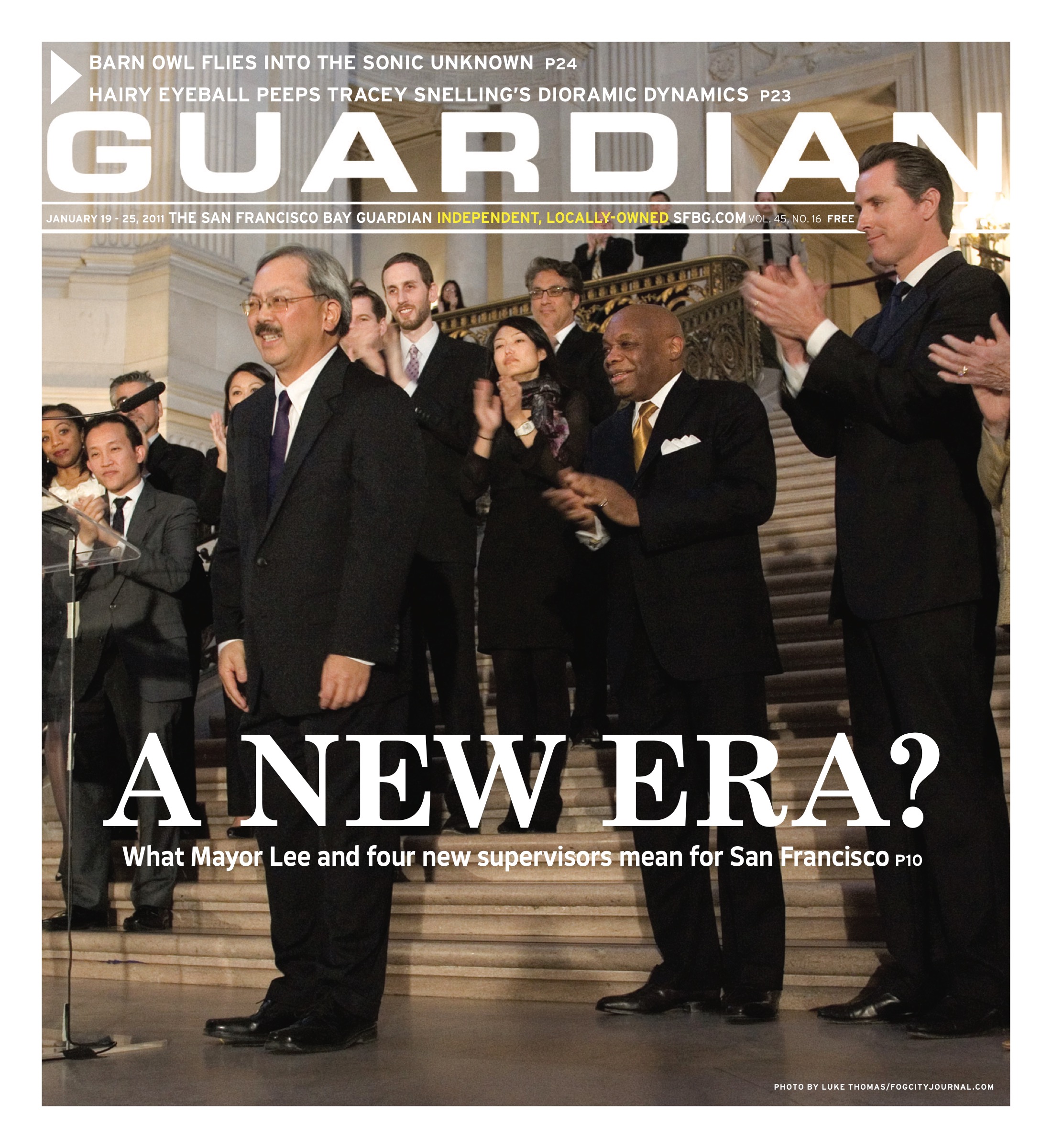
 

A (not so brief) history of hate

9

Since the horrific shooting of Rep. Giffords and the loss of Judge Roll, Christina Green, and four other innocent bystanders, folks have been grappling with the role of violent rhetoric in triggering the tragedy. And now the National Day Laborer Organizing Network has set up A History of Hate: Political Violence in a Rogue State to chronicle political violence and intimidation in Arizona since 1987, which is when U2’s Bono received a death threat because of his stance on Martin Luther King.

“Something strange happened toward the end of the Joshua Tree tour,” Bono noted in a 2006 interview. “We had campaigned for Martin Luther King Day in Tempe, Arizona, where the tour opened back in April. There was a governor there called Mecham who was holding out against it, and we had got involved in local politics there and took a stand. We went back to Tempe at the end of the tour, in December, to play the Sun Devil Stadium.”

“I was getting death threats throughout the tour,” Bono said. “This character was a racist offended by our work, he thought we were messing in other people’s business and taking sides with the Black man. One night the FBI said: ‘Look, it’s quite serious. He says he has a ticket. He said he’s armed.’… So we played the show, the FBI were around, everyone was a little unnerved. You just didn’t know, could he be in the building?”

A History of Hate’s stated mission is “collecting evidence of intolerance that have been brewing and boiling over in this country.” And it’s asking folks to  contribute their story to this growing archive, “so we can turn the tide from a history of hate to a future of progress.”

 “Our hearts go out to the victims and their families in this horrible tragedy,” NDLON director Pablo Alvarado stated. “We mourn alongside them in part because as day laborers, we understand deeply the experience of being targeted by violent hatred and extremism. If there is one lesson from those who have built the historical rights and privileges we enjoy, it is this: hate must be confronted so it can be overcome by love. It cannot be ignored and the world needs to know,” Alvarado continued. “What Arizona needs, and what all of us need, is to confront the hard truth of our current political environment with unifying steps. After we have paused to comprehend the immeasurable tragedy in Arizona, we must now do our part to make a more just society.”

Sounds like a good idea. Hey, maybe immigrant rights advocates and the communities they represent can submit all the hate mail and death threats they regularly receive –a burden they have so far largely borne alone and in silence.


The Ed Lee files

9

Ed Lee’s swearing-in as San Francisco’s first Asian American mayor was a historic occasion, especially in light of the city’s dark history of supporting the Chinese Exclusion Act. And it led to an impressive hands-across-the-water moment when Oakland Mayor Jean Quan arrived to see the Board vote for Lee.


But after Campos declared the progressive majority dead, folks across the city started debating the meaning of “progressive.” And after San Francisco got its first sighting of Mayor Lee’s wife and family, everyone was left wondering what his rapid ascension means for the mayor’s race in November.

Our Weekly Picks: January 12-18

0

WEDNESDAY 12

DANCE

“The A.W.A.R.D. Show!”

It had to happen: life imitating television. If you’ve ever wanted to put your body on the line and participate in judging a reality TV dance show, this is your opportunity. “The A.W.A.R.D. Show!” is a six-city endeavor in which 12 local choreographers (four per night) get evaluated by you and presenters from each participating entity. You get to vote for one artist each night. Each evening’s winner proceeds to Saturday’s final, where one will walk away with $10,000 check — chicken feed in television land, but a nice chunk for choreographers trying to find the cash for their next work. First on will be Manuelito Biag, Liss Fain, Katie Faulkner, and Catherine Galasso. (Rita Felciano)

Wed/12–Sat/15, 8 p.m., $20

ODC Theater

3153 17th St., SF

(415) 863-9834

www.odctheater.org


THEATER

Clue

Who killed Mr. Boddy? Was it Mrs. Peacock in the conservatory with the revolver? Or was it Professor Plum in the billiard room with the candlestick? Find out in Boxcar Theatre’s Clue, written and directed by Peter Matthews and Nick A. Olivero. First a popular board game, then a cult classic movie, this new version (adapted from the 1985 film) features a life-size board game with the audience watching six feet above. Secret passageways, murderous hilarity, and multiple possible endings make this whodunnit a must-see. Hot tip: get your tickets now — presale popularity has been so high that Boxcar has already added some performances to its run. (Emmaly Wiederholt)

Through Feb. 19

Wed.–Fri. 8 p.m.; Sat, 7 and 10 p.m., $15-$25

Boxcar Playhouse

505 Natoma, SF

(415) 776-1747

www.boxcartheatre.org


THURSDAY 13

FILM

“For Your Consideration: A Selection of Oscar Submissions from Around the World”

So you’ve been a good little film geek and seen all of 2010’s likely Oscar contenders: The King’s Speech, The Social Network, Toy Story 3, etc. etc. But what about those films submitted for Best Foreign Language Film consideration that get extremely limited stateside releases (if they even make here at all)? Though the films in the Smith Rafael’s “For Your Consideration” series probably aren’t destined to rake in massive box office dollars (see: 2000’s Crouching Tiger, Hidden Dragon), they still represent what each country felt was worthy of worldwide notice. “For Your Consideration” presents a handful of hand-picked selections, including Spain’s Even the Rain, starring Gael García Bernal as a filmmaker intent on making a film about Christopher Columbus; Crab Trap, about Colombia’s isolated Pacific coast community; and Poland’s All That I Love, the story of four friends who form a punk band amid early-1980s Communist unrest. (Cheryl Eddy)

Jan. 13–20, $6.75–$10.25

Christopher B. Smith Rafael Film Center

1118 Fourth St, San Rafael

(415) 454-1222

www.cafilm.org


PERFORMANCE

Women on the Way Festival

For the next three weeks, expect sassy women to please, surprise, and shake you during the 11th Women on the Way Festival. The format pairs newcomers (for example, Norwegian Muslim comedian Shabana Rehman), with established artists (like San Francisco poet Genny Lim). If you are into multimedia and dance theater, the Shotwell Studios are your place to go. If dance — more or less pure — is your bag, the Garage is opening its red door. W.O.W.’s Producer Mary Alice Fry, who has made a career of spotting new talent, says she was delighted to see that so many women are working with live and often original music. The festival’s website, www.ftloose.org, offers succinct, detailed information on the individual artists and the work they’ll present. (Felciano)

Through Jan. 30, $15–$20

Shotwell Studios

3252-A 19th St., SF

Garage

975 Howard, SF

1-800-838-3006

www.brownpapertickets.com/producer/5930


EVENT

Bay Area Puma Project

If you’re not sick of cougar jokes by now, I feel sorry for you. After all, most of the appeal is in giving up dominance, and really honey, you were never the top predator in the first place. Real cougars — as in mountain lions — are the last large animals in California with a substantial population, aside from us; their habitat covers about half our huge state. Join wildcat conservationist Zara McDonald, founder of the Felidae Conservation Fund, to hear about the first major, decade-long study of pumas in the Bay Area, efforts to protect them, and tips on coexisting with these elusive cats. Don’t you know 2011 is the year of the silver fox, anyway? (Kat Renz)

7:30–9:00 p.m., free

Randall Museum

199 Museum Way, SF

(415) 225-3830

www.sfns.org


COMEDY

SF Sketchfest

In 2002, I excitedly wrote about a brand-new event right here in these very pages: the first annual San Francisco Sketch Comedy Festival, a monthlong comedy smorgasbord featuring six local acts. Organizers, I wrote, foresaw “a Fringe Festival-style expansion that will bring comedy to the masses for years to come.” Well, that totally happened. Sketchfest, now in its 10th year, is the West Coast’s premiere comedy festival (in your face, L.A.), and it annually features superstars galore. This year’s sure-to-sell-out events include a 25th anniversary tribute to It’s Garry Shandling’s Show, tributes to Murphy Brown and Airplane! (1980), plus appearances by boldface names like James L. Brooks, Cloris Leachman, Dan Aykroyd, and David Byrne. And yeah, there are still some locals in the mix: SF native Greg Proops pops up in improv show Whose Live Anyway?, plus there’ll be a reunion show featuring the original six sketch groups (including Kasper Hauser and the Meehan Brothers) who got this party started in the first place. (Eddy)

Through Feb. 5, $15–$60

Various venues, SF

www.sfsketchfest.com


FRIDAY 14

EVENT

“Salute to Supernatural

In the television graveyard of contemporary TV dramas centered around vampires, werewolves, or horror-related themes, one of the more mainstream ones that doesn’t deserve a stake firmly implanted in its creators is the CW show Supernatural. Following the adventures of Sam and Dean Winchester, a pair of demon-hunting brothers, the program has become a hit with viewers over the past five years. At this weekend’s special Supernatural convention, Bay Area fans can meet the two lead actors, Jensen Ackles and Jared Padalecki, along with several costars, in addition to listening to talks, going to themed parties, perusing vendors, and much more. (Sean McCourt)

Fri/14, 1–6 p.m.; Sat/15, 11:30 a.m.–7 p.m.;

Sun/16, 10 a.m.–5:30 p.m., $20–$50

Westin St. Francis

335 Powell, SF

(818) 409-0960

www.creationent.com.


COMEDY

Norm MacDonald

Coming to fame as a cast member of Saturday Night Live from 1993-98, comedian Norm MacDonald made his name as the biting host of that show’s “Weekend Update” segment, along with his hilarious impersonations of celebrities including Burt Reynolds, Bob Dole, and Larry King. Though his departure from SNL was marred by controversy, MacDonald has continued to have a successful career in show business, punctuated by a variety of movie and television roles along with several writing gigs. Be prepared for laugh-induced side aches — the funnyman comes to the Fillmore for two special live shows tonight, taping a TV special for Comedy Central. (McCourt)

7:30 and 10 p.m., $35.25

Fillmore

1805 Geary, SF

(415) 346-6000

www.thefillmore.com


SATURDAY 15

FILM

A Brighter Summer Day

Tender and wise, Edward Yang’s A Brighter Summer Day (1991) is simply one of the finest historical dramatizations ever put to celluloid, ambitiously proportioned (four hours long, a cast of hundreds) but fine-grained in the telling. Yang traces Taiwan’s tumultuous midcentury history in the erring lives of teenagers. Between the deft staging of intergenerational conflict, Proustian attention to objects, and existential portraits of alienation, there’s enough material here for several filmmaking careers. Long inaccessible in the U.S., the film has been restored by Martin Scorsese’s laudably internationalist World Cinema Foundation. The Pacific Film Archive screens a selection of the organization’s recent projects throughout the month. (Max Goldberg)

6:30 p.m., $9.50

Pacific Film Archive

2575 Bancroft, Berk.

(510) 642-1412

www.bampfa.berkeley.edu


PERFORMANCE

Corpo/Ilicito: The Post Human Society

“It’s going to be a very wild performance,” performance artist Guillermo Gomez-Peña told Time Out Chicago about his troupe Pocha Nostra’s piece Corpo/Illicito. They’ll be performing at the closing reception of SOMArts’ group exhibit, “It’s All a Blur,” a reflection on empowerment and enfranchisement via the American dream. La Pocha Nostra is famed for using its performers’ bodies as canvases for its art, so get ready for some made-up, bound, embellished, and politically ostentatious artists gone wild. As for the exhibit’s more static installations, Dale Hoyt’s videos and drawings will be on view, as will Tony Labat’s Blanket Policy, a tent made of Goodwill paintings, and Labat’s 12-foot tall barbeque. To art and freshly grilled meat products! (Caitlin Donohue)

SOMArts Cultural Center

934 Brannan, SF

(415) 552-1770

www.somarts.org


MONDAY 17

EVENT

“Dr. Martin Luther King Jr. Birthday Celebration”

Hooray for MLK! Maybe this year we can eschew the sappy television specials and get a little work done on that old dream of his? That’s what’s going down at the Yerba Buena Gardens, where a daylong celebration dubbed “Sustaining the Dream: Through Community and Service” offers free admission to the Museum of the African Diaspora and the Contemporary Jewish Museum. The event also features a kid’s reading fest and a plethora of local health care providers doling out diabetes tests, children’s dental screenings, and a passel of other helpful services. Once they’ve got you feeling good, stick around for “King in Five Vignettes” at 12:15 p.m., music and performance dedicated to the man with the plan. (Donohue)

9 a.m.–5 p.m., free

Yerba Buena Gardens

Mission between Fourth and Third streets., SF

www.norcalmlk.org


TUESDAY 18

VISUAL ART

“Twist and Crawl”

The Bay Area is a major center for artists with disabilities, thanks to sites such as Oakland’s Creative Growth, San Francisco’s Creativity Explored, and the NIAD Center for Art and Disabilities in Richmond. Starting from an awareness that some major names in contemporary art work with disabilities, the new exhibition “Twist and Crawl” brings together work by 14 artists to bridge gaps and blur boundaries between traditionally-acknowledged painters, photographers, and sculptors and their disabled counterparts. “Twist and Crawl,” which takes its name from a frenetic song by the English Beat, is the first installment in a thematically arranged three-part series organized by artist and curator Timothy Buckwalter. Continuing through August, it syncs up with an upcoming traveling Berkeley Art Museum exhibition devoted to Creative Growth, Creativity Explored, and NIAD. (Johnny Ray Huston)

Through March 16

National Institute of Art and Disabilities (NIAD) Gallery

551 23rd St., Richmond

www.niadart.org


The Guardian listings deadline is two weeks prior to our Wednesday publication date. To submit an item for consideration, please include the title of the event, a brief description of the event, date and time, venue name, street address (listing cross streets only isn’t sufficient), city, telephone number readers can call for more information, telephone number for media, and admission costs. Send information to Listings, the Guardian Building, 135 Mississippi St., SF, CA 94107; fax to (415) 487-2506; or e-mail (paste press release into e-mail body — no text attachments, please) to listings@sfbg.com. Digital photos may be submitted in jpeg format; the image must be at least 240 dpi and four inches by six inches in size. We regret we cannot accept listings over the phone.

Will the “real” progressives please stand up?

Before Ed Lee was unanimously appointed interim mayor at the Jan. 11 Board of Supervisors meeting, Sup. David Campos delivered a speech about the progressive movement in San Francisco.

“Progressives are no longer in control of this Board of Supervisors,” Campos noted. “We have a president of the Board of Supervisors who was elected without a clear progressive majority, and who was elected with a clear backing of the moderate block of supervisors.”

Speaking to the notion that supervisors were not elected to take positions, but to get things done, an idea aired by Board President David Chiu, Campos demurred. “I don’t think it’s entirely accurate to say that none of us are elected to take certain positions,” he said.

“It’s important to get things done,” Campos continued. “But I don’t think getting things done is enough. We have to ask ourselves, what is it that we’re getting done? How is it that we’re getting things done? And for whom is it that we’re doing what we’re doing?”

Would things be done in the interests of the people, Campos wanted to know, “or the downtown corporate interests?”

Would things be done in a transparent way? “I hope we’re not getting things done behind closed doors,” Campos said.

Campos also took issue with the implication that “progressives cannot get things done.” He pointed to district elections, universal healthcare, domestic partner benefits, and police reform as accomplishments of the progressive community.

Despite Campos’ pronouncement that progressives were on the losing end, nearly every elected official who stood to speak throughout the course of the historic day uttered the P-word — including Lee himself.

“I was a progressive,” Lee said during his inaugural speech, “before progressive was a political faction in this town.” Lee pointed to his history of fighting for the rights of African Americans and Latinos, his move to establish a whistle-blower program, and his role in creating a recycling program for the city as evidence of his progressive credentials.

Supervisors Eric Mar, Ross Mirkarimi, and Chiu also touched on the issue of progressive politics in comments delivered before Lee was unanimously appointed. “Progressive politics needs to qualify its new definition,” Mirkarimi said, “which is more than just who we are by name or

by ethnicity or culture but by what we stand for.” Mirkarimi also spoke about the transition representing an opportunity to “inject a level of smart politics, not necessarily branded as a progressive or moderate or conservative, but smart politics that take us forward.”

Mar spoke about “our changing progressive movement,” and Board President David Chiu countered Campos’ charge that progressives had lost their control of the board, saying, “I do believe that the majority of this board shares progressive values.”

Chiu also said he believed that there is “a danger in an overly narrow definition of what is progressive.”

At this point, given so many different opinions and affiliations with the label, the very word “progressive” is starting to take on a confusing quality. Does this stem from a lack of a better term? Is it simply that many people with different sets of alliances and perspectives, sometimes at odds with one another, nonetheless identify as “progressives?”

Or is does this new, more complex version of “progressive” relate to the void left behind by two polarizing figures, who drew definitive battle lines between “progressives” and “moderates” by staking out furious opposition to each other? The transition of power in City Hall was marked not only by the introduction of new elected officials in the board chambers and Room 200, but by the departure of former Sup. Chris Daly and former Mayor Gavin Newsom, both towering white men known for relishing the limelight, delivering long-winded addresses, and waging fierce battles against their enemies.

If those elected officials once viewed as the solidly progressive block – former Sup. Chris Daly and Sups. John Avalos, David Campos, Eric Mar, and Ross Mirkarimi – were swept out of power with this shift, as Campos suggested, their political label seems to have survived intact. Despite the approving nod of the board’s moderates and two business-friendly powerhouses who hold tremendous sway even if they don’t hold office, the city’s top two officials — Chiu and Lee — nonetheless seemed eager to be associated with “progressive” values.

Faces of debt

0

caitlin@sfbg.com

CAREERS AND ED In this weeks’ issue, Rebecca Bowe examines rising tuition and its effect on this generation of Californian students. Here, we profile three scholars that are dealing with very real repercussions from their student debt load.


BEN GLEASON, 31

Mills College, teaching credential

Oberlin College, American literature major

Total debt: $25,000

Ben Gleason remembers the day that he applied for his $10,000 student loan from Citibank to finance his teaching credential tuition. “I got it done online within a half hour. I didn’t have to talk to anybody or write an essay — easy money with severe consequences.” The consequences of such a serious financial decision — sans the aid of any counseling from either his school or bank? Gleason’s eventual decision to leave classroom teaching.

It’s not an uncommon story for this generation of teaching school graduates, in a state where teaching salaries are hardly keeping pace with rising tuition. Gleason started working as an ESL teacher in Richmond’s underfunded West Contra Costa Unified School District right after graduating from Mills College. His student loans were overwhelming — a problem that was exacerbated when he took a trip to Guatemala to work and improve his ability to communicate with his Spanish-speaking pupils. To remain afloat financially, Gleason applied for a forbearance on his loans and was surprised to return home after two years to a loan that had gone up by 25 percent due to interest. “I was really, really screwed,” he recalls.

Gleason didn’t feel like there was any way he could go back to his teaching salary, so to support his new wife (the two met in Guatemala) and daughter, he decided to start his own business with the help of an old boss — a private firm that helps reeducate state government workers on sustainability issues.

That means one less qualified teacher for low-income Californian children. And Gleason still has 15 to 20 years left of debt payments. “I wish that there was a more systemic way to solve this problem,” says the former public educator.


ANNE MOSTAD-JENSEN, 28

Santa Clara University, law degree

College of St. Catherine St. Paul, library sciences

Concordia University St. Paul, international studies and history major

Total debt (estimated at graduation): $120,000

Anne Mostad-Jensen and her twin sister grew up in a small Minnesota town. They attended the same college, Concordia St. Paul, where they both majored in history and international studies. After that, they went on to College of St. Catherine (also in St. Paul) to get their master’s degrees in library science. But then their paths diverged. Her sister traveled to Denmark in pursuit of her Danish citizenship — their father is Danish — and was able to complete her master’s in a country where the government pays for most of its citizens’ educations. Mostad-Jensen remained in Minnesota, to continue on in the American university system.

What kind of difference has the move made in these women’s lives? Try $65,000 of student debt. That’s because Mostad-Jensen’s sister, even after completing her master’s and attending one of the Icelandic languages programs she’s currently applying for, will only owe roughly $55,000 worth of loans — all from her time at American schools. Mostad-Jensen, who is now attending law school at Santa Clara University, will owe $120,000 by the time she graduates. “I’ve never had any consumer debt, but I’ve always told myself not to pass up educational opportunities just because I didn’t have the cash on hand,” she says.

Mostad-Jensen wants to work at the intersection of international copyright and technology law, possibly in a law library, a specialty career that benefits from degrees in multiple areas of study. She counts herself lucky that homeownership and a family aren’t her immediate goals. “Having a family — I just don’t understand how people do it with debt these days.” Her Midwestern community values come to the fore when she talks about the U.S. government’s inability to provide Americans with affordable education. “Isn’t the government an extension of the community? Europeans, the lack of stress they have by not having to pay out of pocket for health care and education — I mean they can actually live their lives.”


RAMON QUINTERO, 32

UC Berkeley, geography major

Total debt: $25,000

Ramon Quintero is a UC Berkeley student activist, but he wasn’t always radicalized around debt issues. “I didn’t come to Berkeley because of its activist reputation. I became an activist because of my situation,” he says. Quintero could no longer pay for his student housing and wound up living in his 1979 Toyota truck with camper shell on the streets of Berkeley, sending his baby daughter home to live with her grandmother.

Quintero came to Berkeley via Southern California, where his family landed after immigrating from Sinaloa, Mexico, when he was 11. He attended community college to get his core credits before coming to Berkeley, where rapidly rising tuition fees are putting a strain on the student community. Although he is a legal resident, Quintero was especially concerned about the effect that the rising cost of education was having on undocumented students.

And, of course, on his leaky camper shell roof. He sprang into action, driving a truck that he calls Santa Rita, to all nine UC campuses, encouraging fellow students to paint art on it that spoke to their concerns for the future of public education. Quintero was arrested twice for his roles in campus protests and he and Santa Rita were profiled in The New York Times and several California newspapers. Suddenly, the university found space for him in student housing.

“I saw the hypocrisy in the system,” says Quintero, who has fulfilled all his UC coursework for graduation but has convinced a professor to hold credit for one of his courses for another semester so he could go on a research fellowship to Madrid. The fellowship, he says, is crucial for his application to grad schools — another step toward fulfilling life goals he doesn’t think would be possible if he has to begin assuming the burden of his student debt. 


Hot sexy events: January 12-18

0

Historically speaking, it’s good to be a geek. Think about it – has any era in history more readily rewarded those whose aptitudes shine in the areas of minutiae and social awkwardness? Thanks to the Internet, every geek has an audience – and thanks to the Internet there’s the Internet, a land where technological know-how gets you feature film bio-flicks and material fortune beyond your wildest science fiction fantasies. Basically, geeks get laid these days. Definitely prime time for Bawdy Storytelling to hold an evening of live show-and-tell entitled “Sex Wonk,” (Weds/12) wherein those who are super gungho about the old in-and-out can revel in their geekiness – and that Star Trek hand sign takes on new levels of perversion.


“A Penis Show”

Jack Davis crochets penis. Neither more nor less – the artist has whipped up hundreds, if not thousands of the little fellers since his first show upon graduating college. Thanks to his work, you can surround yourself with colorful, crochet cock and balls at Magnet, the free sexual health center in the Castro – take one home to make your apartment walls stand a little more erect. It’ll look great with your ’70s porn pillows!

Through Jan. 31 

Magnet 

4122 18th St., SF

(415) 581-1600

www.magnetsf.org


Bawdy Storytelling: Sex Wonk

The featured guests at this month’s sharing-is-caring story series include Sarah Dopp, eminent webmaster for the transgendered community, engineers, sex educators, and the good people from SF Sex Information, who will be on hand to answer all your pleasantly nerdy queries on boning in between the witty, touching, and downright blush-inducing stories from all the speakers. 

Weds/12 8 p.m., $10

The Blue Macaw

2565 Mission, SF

www.bawdystorytelling.com


Invasion: A Queer Takeover of the Citadel

The Citadel sheds all signs of straightness for a night: hosts Asher and Char preside over an evening of gay, lesbian, bisexual, pansexual, fag, dyke, leatherman, leatherwoman, butch, femme, transgender, transsexual, and genderqueer-styled BDSM debauchery. Added bonus: for all you cheap queers, members are invited to volunteer for an hour at the event and get in gratis.  

Fri/14 8 p.m.-1 a.m., $25 members only

SF Citadel 

1277 Mission, SF

(415) 626-2746

www.sfcitadel.org


SF Spanking Society Munch

Do you ever attend BDSM munches and feel, well, a little soft core? Is all you really want a good spank (or ass to spank)? This is the get-together for you then, cause all that’ll be on the table are the possibility of red cheeks and the probability of kinky conversation. 

Sat/15 noon-2 p.m., free

The Thirsty Bear 

661 Howard, SF

www.soj.org/calendar


Heavy Petting Zoo

Surely this month’s Kinky Salon dress-up swinger’s ball has a theme that most SF weirdos can get down on: the furry, feathery, bescaled kingdom of animalia. Everyone has some kitty cat ears or frog-hued face paint lying around the house, don’t they? And even if you don’t, you can still get your bootie on: swipe your buddy’s denim overalls and viola! You, sir, are a farm hand. Now get to milking that cow.

Sat/15 10 p.m.-late, $30-35 members only

Mission Control 

2519 Mission, SF

www.missioncontrolsf.org


Bedroom Body Moves

Y’know all those classes that are the rage with your racy Aunt Carol in Modesto, the pole dance for exercise courses? Those things are all over the place. But what the hell, why strip for the caloric exodus? Seems silly when you could instead take it all off to get your partner off, amiright? Leaving aside all questions of “staying in shape,” then, we present to you this course, which focuses on the simple act of clothes removal and its seductive powers (especially when you’re sitting on someone’s lap). 

Tues/18 6-8 p.m., $20-25

Good Vibrations

1620 Polk, SF

(415) 345-0500

www.goodvibes.com


The agenda for Mayor Lee

0

EDITORIAL San Francisco has its first Chinese American mayor, and that’s a major, historic milestone. Let’s remember: Chinese immigrants were among the most abused and marginalized communities in the early days of San Francisco. In 1870, the city passed a series of laws limiting the rights of Chinese people to work and live in large parts of the city. Chinese workers built much of the Transcontinental Railroad — at slave wages and in desperately unsafe conditions that led to a large number of deaths. The United States didn’t even repeal the Chinese Exclusion Act (an anti-immigration law) until 1943, and for years, Chinatown was one of the poorest and most neglected city neighborhoods.

So there’s good reason for Asians to celebrate that the last door in San Francisco political power is now open. And Mayor Ed Lee comes from a civil rights background; he got his start in politics working as a poverty lawyer and tenant organizer.

Unfortunately, his path to Room 200 was badly marred by some ugly backroom dealing involving Willie Brown, the most corrupt mayor in modern San Francisco history. Even Lee’s supporters agree the process was a mess and that it undermines Lee’s credibility. So it’s important for Mayor Lee to immediately establish that he’s independent of Brown and his cronies, that his administration will not just be a Gavin Newsom rerun, and that progressives can and should support him.

He has a tough job ahead. We urge him to make a clean break with the past and set the city in a new direction. Here are a few ways to get started.

Clear out the Newsom operatives and bring some new people with progressive credentials into the senior ranks. Newsom’s chief of staff, Steve Kawa, has been a shadow mayor for the past year while Newsom was on the campaign trail, and is the architect of much of what the outgoing administration has done to sow political division and cripple city government. Lee needs his own chief advisor.

Show up for question time and work with the district-elected supervisors. Newsom was openly dismissive of the board and refused to take the supervisors seriously as partners in city government. Lee should appear once a month to answer questions from the board in public, should meet regularly with all the supervisors and appoint a liaison that the board can work with and trust. He needs to make his administration as transparent and open as possible and ensure that everyone at City Hall follows the letter and spirit of the Sunshine Ordinance.

Make it clear that the next city budget includes substantial new revenue. Newsom offered nothing but Republican politics when it came to city finance; his only solutions to the massive structural deficit involved service cuts.

The deficit will be even worse than projected this year, since Gov. Jerry Brown wants to transfer much of the state’s responsibility for public safety and public health back to local government — and there won’t be enough state money attached to handle the new burden. Lee needs to publicly call on Brown and the Legislature to give cities more ability to raise taxes on the local levee. Then he should start planning for a June ballot package that will raise as much as $250 million in new revenue for the city.

A substantially higher vehicle license fee on expensive cars, a congestion management fee, a significant annual transit impact fee on downtown offices, a restructured business tax, and a progressive tax on income of more than $50,000 a year would more than eliminate the structural deficit.

There are plenty of other revenue ideas out there; not all can or would pass on a single ballot. But Lee needs to make it clear that revenue will be part of the solution — and that he will use all the political capital he can muster to convince the voters to go along.

<\!s> Get serious about community choice aggregation. Newsom loved to talk about his environmental agenda, but when it came to challenging the hegemony of Pacific Gas and Electric Co. and its dirty power portfolio, he ran for cover. His hand-picked Public Utilities Commission director, Ed Harrington, has been an obstacle to implementing the city’s CCA plan. Lee needs to get rid of Harrington or direct him to cooperate with the supervisors and get San Francisco on the path to clean public power.

<\!s> Establish a real affordable housing program. The city plans to build housing for as many as 60,000 new residents in the southeast neighborhoods — but only a fraction of them will be affordable. This city is already well on its way to becoming a high-end bedroom community for Silicon Valley; only a clear policy that limits new market-rate condos until there’s a plan for adequate affordable housing will turn things around.

<\!s> Support Sanctuary City and quit helping federal immigration authorities break up families. Newsom was just awful on this issue; Lee needs to work with Sup. David Campos to implement more humane laws.

<\!s> End the demonization of homeless people and public employees. Newsom came to power attacking the homeless (with Care Not Cash) and went out attacking the homeless (with the sit-lie law). Lee ought to tell the Police Department not to aggressively enforce the ordinance.

<\!s> Take on the sacred cows of the Police and Fire departments. The biggest salary and pension problems in the city are in the two public safety departments. The Fire Department budget has been bloated for years. If everyone else is taking cuts, so should the highest-paid cops and the overstaffed fire stations.

Some of Lee’s supporters insist he’s a solid progressive and that we shouldn’t hold the details of his selection — or the fact that he was chosen by people who are openly hostile to the progressive agenda — against him. We’re open to that — but the progressive community will judge him on his record. And he has to start right away.

Power and pragmatism

5

steve@sfbg.com

After an epic week at City Hall, the political dynamics in San Francisco have undergone a seismic shift, with pragmatism replacing progressivism, longtime adversarial relationships morphing into close collaborations, and Chinese Americans as mayor and board president.

It was a week of surprises, starting Jan. 4 when City Administrator Ed Lee came out of nowhere to become the consensus choice for interim mayor, and ending Jan. 9 when Mayor Gavin Newsom appointed Police Chief George Gascón to be the new district attorney, Newsom’s last official act as mayor before belatedly taking his oath of office as lieutenant governor on Jan. 10.

In between, the outgoing Board of Supervisors held a special final meeting Jan. 7, at which progressive supervisors fell into line behind Lee, some of them reluctantly, and accepted the new political reality. The next day, the new Board of Supervisors took office and overwhelmingly reelected David Chiu as board president, with only the three most progressive supervisors in dissent.

After Chiu played kingmaker as the swing vote for making Lee the new mayor, the board and Mayor’s Office are likely to enjoy far closer and more cooperative relations than they’ve had in many years. And the sometimes prickly, blame-game relations between the Police Department and D.A.’s Office should also get better now that the top cop has switched sides. But what it all means for the average San Franciscan, particularly the progressive voters who created what they thought was a majority on the Board of Supervisors, is still an open question.

One thing that is clear is the ideological battles that have defined City Hall politics — what Chiu called the “oppositional politics of personality” during his closing remarks on Jan. 8 — have been moved to the back burner while the new leaders try a fresh approach.

Newsom — with his rigid fiscal conservatism and open disdain for the Board of Supervisors, particularly its progressive wing — is gone. Also leaving City Hall is Sup. Chris Daly, a passionate and calculating progressive leader whose over-the-top antics caused a popular backlash against the movement.

In a way, Newsom and Daly were perfect foils for one another, caustic adversaries who often reduced one another to two-dimensional caricatures of themselves. But they were each strongly driven by rival ideologies and political priorities, despite Newsom’s rhetorical efforts to turn “ideology” into a dirty word applied only to his opponents.

“This year represents a changing of the guard, a transition,” Chiu said, pledging to continue pushing for progressive reforms, only with a more conciliatory approach, a theme also sounded by Sups. Eric Mar and Jane Kim, who each broke with their progressive colleagues to support Chiu over rival presidential nominee Sup. John Avalos.

“I will always support policies that will make our city more equitable and just,” Kim said after being sworn in to replace Daly, although she also made a claim about the new board with which her predecessor probably wouldn’t agree: “I think we have a lot more in common than we don’t.”

With a focus on diversity and compromise, “respect and camaraderie,” Mar said, “I think this new board represents the evolution of the progressive movement in San Francisco.”

If indeed City Hall is enjoying a “Kumbaya” moment, the path to this point was marred by backroom deal-making and old-school power politics, much of it engineered by a pair of figures from the previous era who are by no means progressives: former Mayor Willie Brown and Rose Pak, head of the Chinatown Chamber of Commerce.

Pak was seated front and center — literally and figuratively — during the board’s Jan. 7 vote for Lee and its Jan. 8 vote for Chiu, following media reports that it was she and Brown who persuaded Lee to take the job and city leaders (particularly Newsom, Chiu, and outgoing Sups. Bevan Dufty and Sophie Maxwell) to give it to him.

It all seemed sneaky and unsettling to board progressives, who questioned what kind of secret deal had been cut, even as they voiced their respect for Lee’s progressive roots and long history of service to the city. The sense that something unseemly was happening was exacerbated on Jan. 4 when Dufty abandoned a pledge of support for Sheriff Michael Hennessey — who five progressive supervisors supported for interim mayor — and left the meeting to confer with the Mayor’s Office before returning to announce his support for Lee.

Sups. David Campos, Ross Mirkarimi, and Avalos pleaded with their colleagues for time to at least talk with Lee, who was traveling in China since he reportedly changed his mind about wanting the interim mayor job. Maxwell was the only Lee supporter in the 6-5 vote for delaying the interim mayor item by a few days so the supervisors could speak with Lee by phone.

Pak and other Chinatown leaders put together a strong show of force by the Chinese American community at that Jan. 7 meeting, where the board voted 10-1 for Lee, with only Daly in dissent. Afterward, some of Lee’s strongest supporters — including the Rev. Norman Fong and Gordon Chin with the Chinatown Community Development Center — admitted that the process of picking Lee was flawed.

“Part of the problem was Ed’s because he couldn’t make up his mind. The process was bad,” Fong told the Guardian after the vote. Although Fong said he knows Lee to be a strong and trustworthy progressive, he admitted that the way it went down raised questions: “Some people were concerned about who he’ll listen to.”

Specifically, the concern is that Lee will be unduly influenced Brown and Pak, who each represent corporate clients whose interests are often at odds with those of the general public. And both operate behind the scenes and play a kind of political hardball that runs contrary to progressive values on openness, inclusion, and accountability.

“If there is a phone call from Willie Brown to Rose Pak, Ed Lee is going to go along with it,” predicted a knowledgeable source who has worked closely with all three, recalling the way they did business during Brown’s mayoral administration. “There was no real discussion of issues. The fix was always in.”

But Pak insisted that there was nothing wrong with the process of selecting Lee, and that all concerns about the nomination were driven by anti-Asian racism. “You have a plantation mentality,” Pak told the Guardian as she held court in front of a crowded press box before the Jan. 8 meeting. “The Bay Guardian has never given people of color a fair shot.”

While Newsom, Chiu, and Pak-allied political consultant David Ho all insisted “there was no deal” to win support for Lee, Pak seemed to revel in the high-profile role she played, with Bay Citizen reporter Gerry Shih labeling her “boastful” in his Jan. 6 article “Behind-The-Scenes Power Politics: The Making of Ed Lee,” which ran the next day in The New York Times.

“This was finally our moment to make the first Chinese mayor of a major city,” Pak reportedly told Shih. “How could you let that slip by?”

Chiu downplayed Pak’s influence, telling the Guardian that Lee was his top choice since November, and telling his colleagues before the Jan. 7 vote, “Ed is someone who does represent our shared progressive values.” But he also made it clear that helping the city’s progressive movement wasn’t what drove his decision.

“This is a decision beyond who were are as progressives and who we are as moderates. It’s about who we are as San Franciscans,” Chiu said. “This is a historic moment for the Chinese-American community,” calling it “a community that has struggled, a community that has seen discrimination.”

The next day, shortly after being elected to a second term as board president, Chiu acknowledged the “very real differences” in ideology among the supervisors, “but leadership is about working through those differences.” Ultimately, he said, “none of us were voted into office to take positions. We were voted into office to get things done.”

50 years in exile

0

arts@sfbg.com

VISUAL ART In 1988, Jeff Koons unveiled Michael Jackson and Bubbles, three ceramic sculptures of the pop icon and his pet chimpanzee. Koons’ sculptures, syncing his kitsch with Jackson’s gaudy tastes, were the conclusion of a series titled “Banality.”

In “Universal Remote,” Bay Area artist Jaime Cortez reintroduces Michael Jackson as an art subject. But Cortez is after something other than Koons’ surface banality. His exhibition’s variety of media — including a globular sculptural centerpiece that’s a counterpoint to Michael Jackson and Bubbles — form a mythic narrative. By turns revelatory and enigmatic, “Universal Remote”‘s look at history and human nature (to employ two Jackson keywords) is akin to Adam Curtis’ recent documentary It Felt Like a Kiss, which uses Phil Spector’s music to score the insidious maneuverings of the 1960s. If, as Cortez notes, the U.S. tends to sanitize the violence and viciousness of fairy tales, that clean-up work is trumped by a return-of-the-repressed within pop culture. I recently visited Cortez at Southern Exposure as he assembled the show, which includes a Jan. 29 program of readings and performances.

SFBG When did you decide to tell a Michael Jackson story?

JAIME CORTEZ It started a year ago. I was struck by how much Michael Jackson’s music was a part of my personal history. I’m at just the right age so that by the time I could be conscious of pop music, he was there. I realized that he did something that hardly anyone had done — he’d been a part of my life for decades. I started thinking about him more, and became fascinated with the aftermath of his death.

SFBG The degree of public scrutiny he received was akin to passing through the looking glass — you could say that he passed through the looking glass more often and intensely than anyone.

JC That’s a beautiful way of putting it. He was a creature of media. It was completely symbiotic — media tapped him, and he tapped media. My friend Ignacio [Valero] compares him to the frog put into boiling water that enjoys the heat until it’s too late.

He was consumed by this obsession with his own stardom. It’s almost as if he was making his face into a graphic brand. Everything was being flattened out: hot red lips, extremely pale face, shiny black eyebrows and hair.

SFBG His nose is central to your photo-collages. To me, it has fatal connotations. He marred or restricted a part of his body that is central to breathing and respiration.

JC I would look closely at photos of him and try to see him. There’s such a haze of media static and lies and mythologizing around him that it’s hard to get a bead on him. I feel that he was either in a deep state of constant denial, or a liar. He was constantly giving contradictory statements.

It actually made my eyes tear up when I took a good look at his face, his nose in particular — it was beyond repair. He had all the money in the world to change his face, but something went terribly wrong, and he was deformed.

SFBG Your show has many different forms: drawings, rotating scrolls, photo-collage, and sculpture. Why did you create more than one series of works?

JC There are theories about the five steps in the grieving process, and I was thinking about the different ways people deal with the passing of a person. The drawings of the animals represent a clean mourning. Michael Jackson was surrounded by so many parasitic people — those dependent on him for their financial well-being and sense of fabulousness — that his pets might have been the only place where he could get real love, besides maybe children. The pets are a stand-in for everyone’s grief.

The [show’s] lamps relate to the process of mythologizing from the record companies and the media — after a while, you couldn’t tell if the National Enquirer was more reliable than People or Newsweek. And then on top it all was his self-mythologizing. He alternated between extreme humility and grandiose egotism. The unadulterated rotating lamps that you buy for children’s rooms present a little story, one that illuminates a child’s space. I felt they were the proper form for exploring a very adult fairy tale about Faustian tradeoffs.

SFBG How did the text accompanying the lamps come about?

JC I was having dinner with Gary [Gregerson] and Jill Reiter, and Gary joked, “Michael Jackson was a castrato.” When he said that, I had this Tetris moment where all the blocks fell into place. When I began studying the castrati, it really got interesting. The most famous of them were basically rock stars. Women would faint or go gaga when they saw them. Women wanted to have sex with them. They looked different from other people because they developed differently from being castrated. And they had these gifts — the best of them had the lung power of a grown man coupled with a high, boyish or womanly voice.

SFBG How did you create the elaborate encasement that is the show’s centerpiece?

JC It’s built from a bunch of vases attached to each other with industrial adhesive. The statue is polymer modeling compound with wires for an Afro. The bubble on top is an acrylic globe I ordered from a street lamp company. On one hand, it makes him look like a specimen under a bell jar. Overall, it has a feeling of grandiosity and loneliness.

SFBG The mirror at the base adds another dimension.

JC Yes, it make the sense of space ambiguous. But most of all, I wanted to make something that looked precarious. For me, the piece is a visual analog for all the unbelievable machinery behind making a kid into a star. There’s an amazing amount of publicity and technology and image management, in addition to training and performing — this amazing apparatus, all of it built around a little 70-pound kid.

JAIME CORTEZ: UNIVERSAL REMOTE

Through Feb. 19, free

Southern Exposure

3030 20th St., SF

(415) 863-2141

www.soex.org

EDITORIAL: The Agenda for Mayor Lee

6

San Francisco has its first Chinese American mayor, and that’s a major, historic milestone. Let’s remember: Chinese immigrants were among the most abused and marginalized communities in the early days of San Francisco. In 1870, the city passed a series of laws limiting the rights of Chinese people to work and live in large parts of the city. Chinese workers built much of the Transcontinental Railroad at slave wages and in desperately unsafe conditions that led to a large number of deaths. The United States didn’t even repeal the Chinese Exclusion Act (an anti-immigration law) until 1943, and for years, Chinatown was one of the poorest and most neglected city neighborhoods.

So there’s good reason for Asians to celebrate that the last door in San Francisco political power is now open. And Mayor Ed Lee comes from a civil rights background; he got his start in politics working as a poverty lawyer and tenant organizer.

Unfortunately, his path to Room 200 was badly marred by some ugly backroom dealing involving Willie Brown, the most corrupt mayor in modern San Francisco history. Even Lee’s supporters agree the process was a mess and that it undermines Lee’s credibility. So it’s important for Mayor Lee to immediately establish that he’s independent of Brown and his cronies, that his administration will not just be a Gavin Newsom rerun, and that progressives can and should support him.

He has a tough job ahead. We urge him to make a clean break with the past and set the city in a new direction. Here are a few ways to get started.

Clear out the Newsom operatives and bring some new people with progressive credentials into the senior ranks. Newsom’s chief of staff, Steve Kawa, has been a shadow mayor for the past year while Newsom was on the campaign trail, and is the architect of much of what the outgoing administration has done to sow political division and cripple city government. Lee needs his own chief advisor.

Show up for question time and work with the district-elected supervisors. Newsom was openly dismissive of the board and refused to take the supervisors seriously as partners in city government. Lee should appear once a month to answer questions from the board in public, should meet regularly with all the supervisors and appoint a liaison that the board can work with and trust. He needs to make his administration as transparent and open as possible and ensure that everyone at City Hall follows the letter and spirit of the Sunshine Ordinance.

Make it clear that the next city budget includes substantial new revenue. Newsom offered nothing but Republican politics when it came to city finance; his only solutions to the massive structural deficit involved service cuts.

The deficit will be even worse than projected this year, since Gov. Jerry Brown wants to transfer much of the state’s responsibility for public safety and public health back to local government and there won’t be enough state money attached to handle the new burden. Lee needs to publicly call on Brown and the Legislature to give cities more ability to raise taxes on the local levee. Then he should start planning for a June ballot package that will raise as much as $250 million in new revenue for the city.

A substantially higher vehicle license fee on expensive cars, a congestion management fee, a significant annual transit impact fee on downtown offices, a restructured business tax, and a progressive tax on income of more than $50,000 a year would more than eliminate the structural deficit.

There are plenty of other revenue ideas out there; not all can or would pass on a single ballot. But Lee needs to make it clear that revenue will be part of the solution and that he will use all the political capital he can muster to convince the voters to go along.

Get serious about community choice aggregation. Newsom loved to talk about his environmental agenda, but when it came to challenging the hegemony of Pacific Gas and Electric Co. and its dirty power portfolio, he ran for cover. His hand-picked Public Utilities Commission director, Ed Harrington, has been an obstacle to implementing the city’s CCA plan. Lee needs to get rid of Harrington or direct him to cooperate with the supervisors and get San Francisco on the path to clean public power.

Establish a real affordable housing program. The city plans to build housing for as many as 60,000 new residents in the southeast neighborhoods but only a fraction of them will be affordable. This city is already well on its way to becoming a high-end bedroom community for Silicon Valley; only a clear policy that limits new market-rate condos until there’s a plan for adequate affordable housing will turn things around.

Support Sanctuary City and quit helping federal immigration authorities break up families. Newsom was just awful on this issue; Lee needs to work with Sup. David Campos to implement more humane laws.

End the demonization of homeless people and public employees. Newsom came to power attacking the homeless (with Care Not Cash) and went out attacking the homeless (with the sit-lie law). Lee ought to tell the Police Department not to aggressively enforce the ordinance.

Take on the sacred cows of the Police and Fire departments. The biggest salary and pension problems in the city are in the two public safety departments. The Fire Department budget has been bloated for years. If everyone else is taking cuts, so should the highest-paid cops and the overstaffed fire stations.

Some of Lee’s supporters insist he’s a solid progressive and that we shouldn’t hold the details of his selection or the fact that he was chosen by people who are openly hostile to the progressive agenda against him. We’re open to that but the progressive community will judge him on his record. And he has to start right away.