History

Film listings

0

Film listings are edited by Cheryl Eddy. Reviewers are Kimberly Chun, Michelle Devereaux, Max Goldberg, Dennis Harvey, Johnny Ray Huston, Erik Morse, Louis Peitzman, Lynn Rapoport, Ben Richardson, and Matt Sussman. The film intern is Peter Galvin. For rep house showtimes, see Rep Clock. For first-run showtimes, see Movie Guide.

OPENING

Alice in Wonderland Tim Burton and Johnny Depp go down the 3D rabbit hole. (1:48)

Brooklyn’s Finest "Really? I mean, really?" asked the moviegoer beside me as the final freeze-frame of Brooklyn’s Finest slapped our eyeballs. Yes, that’s the sound of letdown, despite the fact that Brooklyn’s Finest initially resembled a promisingly gritty juggling act in the mode of The Wire and Cop Land (1997), Taxi Driver (1976) and Training Day (2001). Bitter irony flows from the title — and from the lives, loves, bad habits, pressure-cooker stress, and unavoidable moral dilemmas of three would-be everyday cops, all occupying several different rungs on a food chain where right and wrong have an unpleasant way of switching sides. Eddie (Richard Gere) is the veteran officer just biding his time till he gets his pension, all while comforting himself with the meager sensuous attentions of hooker Chantel (Shannon Kane). Sal (Ethan Hawke) is the bad detective, stealing from the dealers to fund a dream home for his growing family with Angela (Lili Taylor). Tango (Don Cheadle) is the undercover detective who has cultivated friendships with dealers like Caz (Wesley Snipes) and sacrificed his marriage for a long-promised promotion from his lieutenant (Will Patton) and his superior (Ellen Barkin, in likely the most misogynist portrayal of a lady with a badge to date). You spend most of Brooklyn’s Finest waiting for these cops to collide in the most unfortunate, messiest way possible, but instead the denouement leaves will leave one wondering about unresolved threads and feeling vaguely unsatisfied. In any case, director Antoine Fuqua and company seem to pride themselves on their tough-minded if at times cartoonish take on law enforcement, with Hawke in particular turning in a memorably OTT and anguished performance. (2:13) Shattuck. (Chun)

*Prodigal Sons See "My Son, My Son." (1:26) Lumiere, Shattuck.

*A Prophet See "Education of a Felon." (2:29) Embarcadero, Shattuck.

The Yellow Handkerchief The Yellow Handkerchief is one of those quiet, character-driven dramas that get mistaken for subtle classics. It’s not bad, just bland. In fact, there’s something pleasant about the way the film’s three unlikely friends forge a lasting bond, but the movie as a whole is never quite that cohesive. William Hurt stars as Brett Hanson, an ex-con with a dark past. (The Yellow Handkerchief tries to make this mysterious by way of vague flashbacks, but the audience gets there faster than the film does.) His inadvertent sidekicks are the troubled Martine (Kristen Stewart) and the awkward Gordy (Eddie Redmayne). The talented cast, rounded out by Maria Bello as the wife Brett left behind, does solid work with the material, but no one really stands out enough to elevate The Yellow Handkerchief to greatness. Redmayne is perhaps the most impressive, ditching his British accent to play a character so quirky, he’s almost Rain Man. But after taking a step back, the big picture is muddled. People are fascinating, but what does it all mean? (1:36) Albany. (Peitzman)

ONGOING

*"Academy Award-Nominated Short Films: Animated" Just because it’s animation doesn’t mean it’s just for kids. Like the live-action Oscar-nominated shorts, this year’s animated selections have got range, from the traditionally child-friendly to downright vulgar. Skewing heavily towards CG fare, the shorts vary from a Looney Tunes-style chase for an elderly woman’s soul (The Lady and the Reaper) to the Wallace and Gromit BBC special, A Matter of Loaf and Death. Most entertaining by far is Logorama, an action-packed tale set in a world populated by familiar trademarked logos. Any film that casts the Michelin man as a garbage-mouthed cop on the case of a renegade Ronald McDonald deserves to win all the awards in the universe. (1:35) Opera Plaza, Shattuck. (Galvin)

*"Academy Award-Nominated Short Films: Live Action" Aren’t you tired of wondering what all the fuss is about when the Academy awards their Oscar for Best Short? In an effort to give audiences a chance to play along, Shorts International is screening these less-seen works together. Though one or two of the five nominated films threaten to adhere to the Academy’s penchant for either heartbreaking or heartwarming, the majority are surprisingly oddball picks. Perhaps most odd of all is Denmark/U.S. submission The New Tenants. Feeling a tad forced but no less funny for it, Tenants draws on celebrities like Vincent D’Onofrio and comedian Kevin Corrigan to bring life to this surreal adaptation by Anders Thomas Jensen (2006’s After the Wedding). My pick would be Sweden’s gloriously goofy Instead of Abracadabra, which stars a stay-at-home slacker as he puts on a magic show for his father’s birthday. Obviously, some selections are going to be better than others, but hey, they’re shorts. If you don’t like one, just wait 10 minutes and you’ll find yourself somewhere completely different. (1:35) Opera Plaza, Shattuck. (Galvin)

Avatar James Cameron’s Avatar takes place on planet Pandora, where human capitalists are prospecting for precious unobtainium, hampered only by the toxic atmosphere and a profusion of unfriendly wildlife, including the Na’vi, a nine-foot tall race of poorly disguised cliches. When Jake Sully (Sam Worthington), a paraplegic ex-marine, arrives on the planet, he is recruited into the "Avatar" program, which enables him to cybernetically link with a part-human, part-Na’vi body and go traipsing through Pandora’s psychedelic underbrush. Initially designed for botanical research, these avatars become the only means of diplomatic contact with the bright-blue natives, who live smack on top of all the bling. The special effects are revolutionary, but the story that ensues blends hollow "noble savage" dreck with events borrowed from Dances With Wolves (1990) and FernGully: The Last Rainforest (1992). When Sully falls in love with a Na’vi princess and undergoes a spirit journey so he can be inducted into the tribe and fight the evil miners, all I could think of was Kevin Bacon getting his belly sliced in The Air Up There (1994). (2:42) 1000 Van Ness, Sundance Kabuki. (Richardson)

The Blind Side When the New York Times Magazine published Michael Lewis’ article "The Ballad of Big Mike" — which he expanded into the 2006 book The Blind Side: Evolution of a Game — nobody could have predicated the cultural windfall it would spawn. Lewis told the incredible story of Michael Oher — a 6’4, 350-pound 16-year-old, who grew up functionally parentless, splitting time between friends’ couches and the streets of one of Memphis’ poorest neighborhoods. As a sophomore with a 0.4 GPA, Oher serendipitously hitched a ride with a friend’s father to a ritzy private school across town and embarked on an unbelievable journey that led him into a upper-class, white family; the Dean’s List at Ole Miss; and, finally, the NFL. The film itself effectively focuses on Oher’s indomitable spirit and big heart, and the fearless devotion of Leigh Anne Tuohy, the matriarch of the family who adopted him (masterfully played by Sandra Bullock). While the movie will delight and touch moviegoers, its greatest success is that it will likely spur its viewers on to read Lewis’ brilliant book. (2:06) Oaks. (Daniel Alvarez)

Broken Embraces Pedro Almodóvar has always dabbled in the Hitchcockian tropes of uxoricide, betrayal, and double-identity, but with Broken Embraces he has attained a polyglot, if slightly mimicking, fluency with the language of Hollywood noir. A story within a story and a movie within a movie, Embraces begins in the present day with middle-aged Catalan Harry Caine (Lluís Homar), a blind screenwriter who takes time between his successful writing career to seduce and bed young women sympathetic to his disability. "Everything’s already happened to me," he explains to his manager, Judit (Blanca Portillo). "All that’s left is to enjoy life." But this life of empty pleasures is brought to a sudden halt when local business magnate Ernesto Martel (José Luis Gómez) has died; soon after, Ernesto Jr. (Rubén Ochandiano), who has renamed himself Ray X, visits Caine with an unusual request. The action retreats 14 years when Caine was a young (and visually abled) director named Mateo Blanco; he encounters a breathtaking femme fatale, Lena (Penelope Cruz) — an actress-turned-prostitute named Severine, turned secretary-turned-trophy wife of Ernesto Martel — when she appears to audition for his latest movie. If all of the narrative intricacies and multiplicitous identities in Broken Embraces appear a bit intimidating at first glance, it is because this is the cinema of Almodóvar taken to a kind of generic extreme. As with all of the director’s post-’00 films, which are often referred to as Almodóvar’s "mature" pictures, there is a microscopic attention to narrative development combined with a frenzied sub-plotting of nearly soap-operatic proportions. But, in Embraces, formalism attains such prominence that one might speculate the director is simply going through the motions. The effect is a purposely loquacious and overly-dramatized performance that pleasures itself as much by setting up the plot as unraveling it. (2:08) Opera Plaza, Smith Rafael. (Morse)

Cop Out I think there was a plot to Cop Out — something involving a stolen baseball card and a drug ring and Jimmy (Bruce Willis) trying to pay for his daughter’s wedding. Frankly, it’s irrelevant. Kevin Smith’s take on the buddy cop genre, which partners Willis with Tracy Morgan, is more a string of dick jokes and toilet humor than anything else. Not that there’s anything wrong with that. Sometimes it’s nice to sit back and turn off your brain, as Morgan’s Paul describes his bowel movements or when hapless thief Dave (Seann William Scott) begins imitating everything our heroes say. At the same time, Cop Out is easily forgettable: Smith directed the film, but writing duties went to the Cullen Brothers of TV’s Las Vegas. All judgments about that series aside, the script lacks Smith’s trademark blend of heart and vulgarity. Even Mallrats (1995) had a beginning, a middle, and a satisfying end. Without Smith as auteur, Cop Out is worth a few laughs but destined for the bargain bin. (1:50) Oaks, 1000 Van Ness. (Peitzman)

The Crazies Disease and anti-government paranoia dovetail in this competent yet overwhelmingly non-essential remake of one of George A. Romero’s second-tier spook shows. In a small Iowa hamlet overseen by a benevolent sheriff (Timothy Olyphant) and his pregnant wife (Radha Mitchell), who’s also the town doctor, a few odd incidents snowball into all-out chaos when a mysterious, unmarked plane crashes into the local water supply. Before long, the few residents who aren’t acting like homicidal maniacs are rounded up by an uber-aggressive military invasion. Though our heroes convey frantic panic as they try to figure out what the hell is going on, The Crazies never achieves full terror mode. It’s certainly watchable, and even enjoyable at times. But memorable? Not in the slightest. (1:41) 1000 Van Ness. (Eddy)

Crazy Heart "Oh, I love Jeff Bridges!" is the usual response when his name comes up every few years for Best Actor consideration, usually via some underdog movie no one saw, and the realization occurs that he’s never won an Oscar. The oversight is painful because it could be argued that no leading American actor has been more versatile, consistently good, and true to that elusive concept "artistic integrity" than Bridges over the last 40 years. It’s rumored Crazy Heart was slotted for cable or DVD premiere, then thrust into late-year theater release in hopes of attracting Best Actor momentum within a crowded field. Lucky for us, this performance shouldn’t be overlooked. Bridges plays "Bad" Blake, a veteran country star reduced to playing bars with local pickup bands. His slide from grace hasn’t been helped by lingering tastes for smoke and drink, let alone five defunct marriages. He meets Jean (Maggie Gyllenhaal), freelance journalist, fan, and single mother. They spark; though burnt by prior relationships, she’s reluctant to take seriously a famous drunk twice her age. Can Bad handle even this much responsibility? Meanwhile, he gets his "comeback" break in the semi-humiliating form of opening for Tommy Sweet (Colin Farrell) — a contemporary country superstar who was once Bad’s backup boy. Tommy offers a belated shot at commercial redemption; Jean offers redemption of the strictly personal kind. There’s nothing too surprising about the ways in which Crazy Heart both follows and finesses formula. You’ve seen this preordained road from wreckage to redemption before. But actor turned first-time director Scott Cooper’s screenplay honors the flies in the windshield inherited from Thomas Cobb’s novel — as does Bridges, needless to say. (1:51) California, Embarcadero, Empire, Piedmont, Presidio, 1000 Van Ness, Sundance Kabuki. (Harvey)

Dear John As long as you know what you’re getting yourself into, Dear John is a solid effort. Not extraordinary by any means, it’s your standard Nicholas Sparks book-turned-film: boy meets girl — drama, angst, and untimely death ensue. Here, Channing Tatum stars at the titular John, a soldier on leave who falls in love with the seemingly perfect Savannah (Amanda Seyfried). Both actors are likable enough that their romance is charming, if not always believable. And Dear John‘s plot turns, while not quite surprising, are at least dynamic enough to keep the audience engaged. But at the end of the day, this is still a Nicholas Sparks movie — even with the accomplished Lasse Hallström taking over directorial responsibilities. There are still plenty of eye-roll moments and, more often than not, Dear John employs the most predictable tearjerking techniques. By the time you realize why the film is set in 2001, it’s September 11. Sad? Surely. Cheap? You betcha. (1:48) 1000 Van Ness, SF Center. (Peitzman)

Edge of Darkness (1:57) SF Center.

*An Education The pursuit of knowledge — both carnal and cultural — are at the tender core of this end-of-innocence valentine by Danish filmmaker Lone Scherfig (who first made her well-tempered voice heard with her 2000 Dogme entry, Italian for Beginners), based on journalist Lynn Barber’s memoir. Screenwriter Nick Hornby breaks further with his Peter Pan protagonists with this adaptation: no man-boy mopers or misfits here. Rather, 16-year-old schoolgirl Jenny (Carey Mulligan) is a good girl and ace student. It’s 1961, and England is only starting to stir from its somber, all-too-sober post-war slumber. The carefully cloistered Jenny is on track for Oxford, though swinging London and its high-style freedoms beckon just around the corner. Ushering in those freedoms — a new, more class-free world disorder — is the charming David (Peter Sarsgaard), stopping to give Jenny and her cello a ride in the rain and soon proffering concerts and late-night suppers in the city. He’s a sweet-faced, feline outsider: cultured, Jewish, and given to playing fast and loose in the margins of society. David can see Jenny for the gem she is and appreciate her innocence with the knowing pleasure of a decadent playing all the angles. The stakes are believably high, thanks to An Education‘s careful attention to time and place and its gently glamored performances. Scherfig revels in the smart, easy-on-eye curb appeal of David and his friends while giving a nod to the college-educated empowerment Jenny risks by skipping class to jet to Paris. And Mulligan lends it all credence by letting all those seduced, abandoned, conflicted, rebellious feelings flicker unbridled across her face. (1:35) Opera Plaza, Presidio, SF Center, Shattuck, Smith Rafael. (Chun)

*Fish Tank There’s been a string of movies lately pondering what Britney once called the not-a-girl, not-yet-a-woman syndrome, including 2009’s An Education and Precious: Based on the Novel Push By Sapphire. Enter Fish Tank, the gritty new drama from British filmmaker Andrea Arnold. Her films (including 2006’s Red Road) are heartbreaking, but in an unforced way that never feels manipulative; her characters, often portrayed by nonactors, feel completely organic. Fish Tank‘s 15-year-old heroine, Mia (played by first-time actor Katie Jarvis), lives with her party-gal single mom and tweenage sister in a public-housing high-rise; all three enjoy drinking, swearing, and shouting. But Mia has a secret passion: hip-hop dancing, which she practices with track-suited determination. When mom’s foxy new boyfriend, Connor (Michael Fassbender, from 2008’s Hunger) encourages her talent, it’s initially unclear what Connor’s intentions are. Is he trying to be a cool father figure, or something far more inappropriate? Without giving away too much, it’s hard to fear too much for a girl who headbutts a teenage rival within the film’s first few minutes — though it soon becomes apparent Mia’s hard façade masks a vulnerable core. Her desire to make human connections causes her to drop her guard when she needs it the most. In a movie about coming of age, a young girl’s bumpy emotional journey is expected turf. But Fish Tank earns its poignant moments honestly — most coming courtesy of Jarvis, who has soulfullness to spare. Whether she’s acting out in tough-girl mode or revealing a glimpse of her fragile inner life, Arnold’s camera relays it all, with unglossy matter-of-factness. (2:02) Smith Rafael. (Eddy)

Formosa Betrayed The turbulent modern history of Taiwan is certainly deserving of increased international attention, but writer-producer Will Tao’s strategy of structuring Formosa Betrayed as a political thriller is too often at odds with imparting facts and information. Set in the early 80s, the film thrusts viewers into an unraveling government conspiracy that has FBI agent Jake Kelly (James Van Der Beek) trailing the suspected murderers of a Chicago professor to Taipei. Initially, selling Dawson’s Creek alum Van Der Beek as an FBI agent seems a strange choice, but undoubtedly his name will fill seats, and Formosa Betrayed is shooting for maximum awareness. There are some scenes of real tension, but just when you are beginning to get wrapped up in the inherent drama of conspiracy and murder, the suspense is interrupted by a long-winded bout of soapboxing. Formosa Betrayed might enlighten some audiences about Taiwan’s controversial history, but it too often does so at the expense of its own watchability. You start to wonder why Tao didn’t just make a documentary. (1:43) SF Center, Shattuck. (Galvin)

From Paris with Love Every so often, I walk out of a film feeling like I’ve been repeatedly buffeted by blows to the face. Transformers 2: Revenge of the Fallen (2009) had this effect, and it is now joined by From Paris With Love, a movie so aggressively stupid that the mistaken assumption that it was adapted from a video game could be construed as an insult to video games. John Travolta shows up chrome-domed as Charlie Wax, a loose-cannon CIA operative with a lot of transparently screenwritten machismo and an endless appetite for violence. He is joined by Jonathan Rhys Meyers, sporting a risible American accent, and the two embark on a frantic journey across the French capital that is almost as racist as it is misogynistic. I could fill an entire issue of this newspaper eviscerating this movie —suffice to say, don’t see it. (1:35) SF Center. (Richardson)

*The Ghost Writer Roman Polanski’s never-ending legal woes have inspired endless debates on the interwebs and elsewhere; they also can’t help but add subtext to the 76-year-old’s new film, which is chock full o’ anti-American vibes anyway. It’s also a pretty nifty political thriller about a disgraced former British Prime Minister (Pierce Brosnan) who’s hanging out in his Martha’s Vineyard mansion with his whip-smart, bitter wife (Olivia Williams) and Joan Holloway-as-ice-queen assistant (Kim Cattrall), plus an eager young biographer (Ewan McGregor) recently hired to ghost-write his memoirs. But as the writer quickly discovers, the politician’s past contains the kinds of secrets that cause strange cars with tinted windows to appear in one’s rearview mirror when driving along deserted country roads. Polanski’s long been an expert when it comes to escalating tension onscreen; he’s also so good at adding offbeat moments that only seem tossed-off (as when the PM’s groundskeeper attempts to rake leaves amid relentless sea breezes) and making the utmost of his top-notch actors (Tom Wilkinson and Eli Wallach have small, memorable roles). Though I found The Ghost Writer‘s ZOMG! third-act revelation to be a bit corny, I still didn’t think it detracted from the finely crafted film that led up to it. (1:49) California, Embarcadero, Sundance Kabuki. (Eddy)

The Hurt Locker When the leader of a close-knit U.S. Army Explosive Ordnance Disposal squad is killed in action, his subordinates have barely recovered from the shock when they’re introduced to his replacement. In contrast to his predecessor, Sgt. James (Jeremy Renner) is no standard-procedure-following team player, but a cocky adrenaline junkie who puts himself and others at risk making gonzo gut-instinct decisions in the face of live bombs and insurgent gunfire. This is particularly galling to next-in-command Sanborn (Anthony Mackie). An apolitical war-in-Iraq movie that’s won considerable praise for accuracy so far from vets (scenarist Mark Boal was "embedded" with an EOD unit there for several 2004 weeks), Kathryn Bigelow’s film is arguably you-are-there purist to a fault. While we eventually get to know in the principals, The Hurt Locker is so dominated by its seven lengthy squad-mission setpieces that there’s almost no time or attention left for building character development or a narrative arc. The result is often viscerally intense, yet less impactful than it would have been if we were more emotionally invested. Assured as her technique remains, don’t expect familiar stylistic dazzle from action cult figure Bigelow (1987’s Near Dark, 1989’s Blue Steel, 1991’s Point Break) — this vidcam-era war movie very much hews to the favored current genre approach of pseudo-documentary grainy handheld shaky-cam imagery. (2:11) Opera Plaza, Shattuck. (Harvey)

Invictus Elected President of South Africa in 1995 — just five years after his release from nearly three decades’ imprisonment — Nelson Mandela (Morgan Freeman) perceives a chance to forward his message of reconciliation and forgiveness by throwing support behind the low-ranked national rugby team. Trouble is, the Springboks are currently low-ranked, with the World Cup a very faint hope just one year away. Not to mention the fact that despite having one black member, they represent the all-too-recent Apartheid past for the country’s non-white majority. Based on John Carlin’s nonfiction tome, this latest Oscar bait by the indefatigable Clint Eastwood sports his usual plusses and minuses: An impressive scale, solid performances (Matt Damon co-stars as the team’s Afrikaaner captain), deft handling of subplots, and solid craftsmanship on the one hand. A certain dull literal-minded earnestness, lack of style and excitement on the other. Anthony Peckham’s screenplay hits the requisite inspirational notes (sometimes pretty bluntly), but even in the attenuated finals match, Eastwood’s direction is steady as she goes — no peaks, no valleys, no faults but not much inspiration, either. It doesn’t help that Kyle Eastwood and Michael Stevens contribute a score that’s as rousing as a warm milk bath. This is an entertaining history lesson, but it should have been an exhilarating one. (2:14) Oaks. (Harvey)

*The Last Station Most of the buzz around The Last Station has focused on Helen Mirren, who takes the lead as the Countess Sofya, wife of Leo Tolstoy (Christopher Plummer). Mirren is indeed impressive — when is she not? — but there’s more to the film than Sofya’s Oscar-worthy outbursts. The Last Station follows Valentin Bulgakov (James McAvoy), hired as Tolstoy’s personal secretary at the end of the writer’s life. Valentin struggles to reconcile his faith in the anarchist Christian Tolstoyan movement with his sympathy for Sofya and his budding feelings for fellow Tolstoyan Masha (Kerry Condon). For the first hour, The Last Station is charming and very funny. Once Tolstoy and Sofya’s relationship reaches its most volatile, however, the tone shifts toward the serious — a trend that continues as Tolstoy falls ill. After all the lighthearted levity, it’s a bit jarring, but the solid script and accomplished cast pull The Last Station together. Paul Giamatti is especially good as Vladimir Chertkov, who battles against Sofya for control of Tolstoy’s will. You’ll never feel guiltier for putting off War and Peace. (1:52) Albany, Embarcadero, Empire, Piedmont, Sundance Kabuki. (Peitzman)

*Leonard Cohen: Live at the Isle of Wight 1970 The dawn of the Me Decade saw the largest-ever music festival to that date —albeit one that was such a logistical, fiscal and hygenic disaster that it basically killed the development of similar events for years. This was the height of "music should be free" sentiments in the counterculture, with the result that many among the estimated six to eight hundred thousand attendees who overwhelmed this small U.K. island showed up without tickets, refused to pay, and protested in ways that included tearing down barrier walls and setting fires. It was a bummer, man. But after five days of starry acts often jeered by an antsy crowd — including everyone from Joni, Hendrix, Dylan, Sly Stone, the Who and the Doors to such odd bedfellows as Miles Davis, Tiny Tim, Voices of East Harlem, Supertramp, and Gilberto Gil — Canadian troubador Cohen appeared at 4 a.m. on a Monday to offer balm. Like director Murray Lerner’s 1995 Message to Love, about the festival as a whole, this footage has been shelved for decades, but it bounces right back from the dead — albeit soothingly. Cohen seems blissed out, pupils like black marbles, his between-song musings are as poetical as those fascinating lyrics, and his voice is suppler than the rasp it would soon become. Kris Kristofferson, Judy Collins, Joan Baez, and bandmate Bob Johnson offer reflections 40 years later. But the main attraction is obviously Cohen, who is magnetic even if an hour of (almost) nothing but ballads reveals how stylistically monotone his songwriting could be. (1:04) Roxie. (Harvey)

*The Most Dangerous Man in America: Daniel Ellsberg and the Pentagon Papers For many, Daniel Ellsberg is a hero — a savior of American First Amendment rights and one of the most outspoken opponents of the Vietnam war. But as this documentary (recently nominated for an Academy Award) shows, it’s never an an easy decision to take on the U.S. government. Ellsberg himself narrates the film and details his sleepless nights leading up to the leak of the Pentagon Papers — the top secret government study on the Vietnam war — to the public. Though there are few new developments in understanding the particulars of the war or the impact the release of the Papers had on ending the conflict, the film allows audiences to experience the famous case from Ellsberg’s point of view, adding a fresh and poignantly human element to the events; it’s a political documentary that plays more like a character drama. Whether you were there when it happened or new to the story, there is something to be appreciated from this tale of a man who fell out of love with his country and decided to do something about it. (1:34) Bridge, Shattuck. (Galvin)

*North Face You’ll never think of outerwear the same way again — and in fact you might be reaching for your fleece and shivering through the more harrowing climbing scenes of this riveting historical adventure based on a true tale. Even those who consider themselves less than avid fans of outdoor survival drama will find their eyes frozen, if you will, on the screen when it comes to this retelling/re-envisioning of this story, legendary among mountaineers, of climbers, urged on by Nazi propaganda, to tackle the last "Alpine problem." At issue: the unclimbed north face of Switzerland’s Eiger, a highly dangerous and unpredictable zone aptly nicknamed "Murder Wall." Two working-class friends, Toni Kurz (Benno Fürmann of 2008’s Jerichow) and Andi Hinterstoisser (Florian Lukas) — here portrayed as climbing fiends driven to reach summits rather than fight for the Nazis — take the challenge. There to document their achievement, or certain death, is childhood friend and Kurz’s onetime sweetheart Luise (Johanna Wokalek, memorable in 2008’s The Baader Meinhof Complex), eager to make her name as a photojournalist while fending off the advances of an editor (Ulrich Tukur) seeking to craft a narrative that positions the contestants as model Aryans. But the climb — and the Eiger, looming like a mythical ogre — is the main attraction here. Filmmaker Philipp Stölzl brings home the sheer heart-pumping exhilaration and terror associated with the sport — and this specific, legendarily tragic climb — by shooting in the mountains with his actors and crew, and the result goes a way in redeeming an adventure long-tainted by its fascist associations. (2:01) Lumiere, Shattuck, Smith Rafael. (Chun)

*Percy Jackson and the Olympians: The Lightning Thief It would be easy to dismiss Percy Jackson and the Olympians: The Lightning Thief as an unabashed Harry Potter knock-off. Trio of kids with magic powers goes on a quest to save the world in a Chris Columbus adaptation of a popular young adult series — sound familiar? But The Lightning Thief is sharp, witty, and a far cry from Columbus’ joyless adaptation of Harry Potter and the Sorcerer’s Stone (2001). Logan Lerman stars as Percy Jackson, the illegitimate son of Poseidon and Catherine Keener. Once he learns his true identity at Camp Half-Blood, he sets off on a quest with his protector, a satyr named Grover, and potential love interest Annabeth, daughter of Athena. Along the way, they bump into gods and monsters from Greek mythology — with a twist. Think Percy using his iPhone to fight Medusa (Uma Thurman), or a land of the Lotus-Eaters disguised as a Lady Gaga-blasting casino. A worthy successor to Harry Potter? Too soon to say, but The Lightning Thief is at least a well-made diversion. (1:59) 1000 Van Ness. (Peitzman)

*Precious: Based on the Novel Push By Sapphire This gut-wrenching, little-engine-that-could of a film shows the struggles of Precious, an overweight, illiterate 16-year-old girl from Harlem. Newcomer Gabourey Sidibe is so believably vigilant that her performance alone could bring together the art-house viewers as well as take the Oscars by storm. But people need to actually go and experience this film. While Precious did win Sundance’s Grand Jury and Audience Award awards this year, there is a sad possibility that filmgoers will follow the current trend of "discussing" films that they’ve actually never seen. The daring casting choices of comedian Mo’Nique (as Precious’ all-too-realistically abusive mother) and Mariah Carey (brilliantly understated as an undaunted and dedicated social counselor) are attempts to attract a wider audience, but cynics can hurdle just about anything these days. What’s most significant about this Dancer in the Dark-esque chronicle is how Damien Paul’s screenplay and director Lee Daniels have taken their time to confront the most difficult moments in Precious’ story –- and if that sounds heavy-handed, so be it. Stop blahging for a moment and let this movie move you. (1:49) Presidio, Roxie, Shattuck. (Jesse Hawthorne Ficks)

*"Red Riding Trilogy" There’s a "wolf" of sorts and several unfortunate little girls, but no fairy tale whimsy whatsoever in this trilogy of features originally made for U.K. broadcast. Based on David Pearce’s literary mystery quartet (the second volume goes unadapted here), it’s a complicated dive into conspiracy, cover-up, and murder in England’s North Country. Directed by Julian Jarrold (2008’s Brideshead Revisited), first installment Red Riding: 1974 centers on ambitious young journalist Eddie (Andrew Garfield), who at first sees a string of abducted, then grotesquely mutilated children as a career-making opportunity. The deeper in he gets, though, the more troubling are the case’s murky connections to police and private-sector corruption. 1980, directed by James Marsh (2008’s Man on Wire), finds a new protagonist in Hunter (Paddy Considine). Now local fears are focused on the "Yorkshire Ripper" a savage (real-life) killer of at least 13 women between 1975 and 1981 whose so-far hapless police investigation Hunter has been assigned to audit. Finally, 1983 (directed by Anand Tucker of 2005’s Shopgirl) divides its attention between Yorkshire chief detective Jobson (David Morrissey) and low-rent lawyer Piggot (Mark Addy). After the first copycat child slaying in years occurs, both become convinced a mentally challenged man (Daniel Mays) was framed for the original murders. The nearly six hours this serpentine tale takes can’t help but impress as a weighty experience (at least on your posterior), and it’s duly won some sky-high critical acclaim ("better than the Godfather trilogy", etc.) Certainly Red Riding is rich in period detail, fine characterizations, and bleak atmospherics. But the cumulative satisfaction expected of a true epic is broken up by the sole ongoing characters being supporting ones — heroes who eventually "know too much" don’t survive long. In each segment (Marsh’s Super-16-shot one being most stylistically distinctive), women deployed as romantic interests seem largely superfluous. The whole fussy, cipherous narrative points toward a heart of jet-black darkness its climactic revelations are at once too banal and implausible to deliver. So, worthwhile? Yes, if you’ve got the time to spare. A hype-justifying masterpiece? No. (1974, 1:45; 1980, 1:36; 1983, 1:44) Lumiere. (Harvey)

Shutter Island Director Martin Scorsese and muse du jour Leonardo DiCaprio draw from oft-filmed novelist Dennis Lehane (2003’s Mystic River, 2007’s Gone Baby Gone) for this B-movie thriller that, sadly, offers few thrills. DiCaprio’s a 1950s U.S. marshal summoned to a misty island that houses a hospital for the criminally insane, overseen by a doctor (Ben Kingsley) who believes in humane, if experimental, therapy techniques. From the get-go we suspect something’s not right with the G-man’s own mind; as he investigates the case of a missing patient, he experiences frequent flashbacks to his World War II service (during which he helped liberate a concentration camp), and has recurring visions of his spooky dead wife (Michelle Williams). Whether or not you fall for Shutter Island‘s twisty game depends on the gullibility of your own mind. Despite high-quality performances and an effective, if overwrought, tone of certain doom, Shutter Island stumbles into a third act that exposes its inherently flawed and frustrating storytelling structure. If only David Lynch had directed Shutter Island — it could’ve been a classic of mindfuckery run amok. Instead, Scorsese’s psychological drama is sapped of any mystery whatsoever by its stubbornly literal conclusion. (2:18) California, Four Star, 1000 Van Ness, Presidio. (Eddy)

A Single Man In this adaptation of Christopher Isherwood’s 1964 novel, Colin Firth plays George, a middle-aged gay expat Brit and college professor in 1962 Los Angeles. Months after the accidental death of Jim (Matthew Goode), his lover for 16 years, George still feels worse than bereft; simply waking each morning is agony. So on this particular day he has decided to end it all, first going through a series of meticulous preparations and discreet leave-takings that include teaching one last class and having supper with the onetime paramour (Julianne Moore) turned best friend who’s still stuck on him. The main problem with fashion designer turned film director Tom Ford’s first feature is that he directs it like a fashion designer, fussing over surface style and irrelevant detail in a story whose tight focus on one hard, real-world thing — grief — cries for simplicity. Not pretentious overpackaging, which encompasses the way his camera slavers over the excessively pretty likes of Nicholas Hoult as a student and Jon Kortajarena as a hustler, as if they were models selling product rather than characters, or even actors. (In fact Kortajarena is a male supermodel; the shocker is that Hoult is not, though Hugh Grant’s erstwhile About a Boy co-star is so preening here you’d never guess.) Eventually Ford stops showing off so much, and A Single Man is effective to the precise degree it lets good work by Goode, Moore and especially the reliably excellent Firth unfold without too much of his terribly artistic interference. (1:39) Embarcadero, 1000 Van Ness, Piedmont, Shattuck. (Harvey)

*Terribly Happy The Coen Brothers’ Blood Simple (1984) is the obvious corollary for this coolly humorous Danish import, though director/co-writer Henrik Ruben Genz’s firmly dampened-down thriller of sorts is also touched by David Lynch’s parochial surrealism and Aki Kaurismäki’s backwater puckishness. Happy isn’t quite the word for handsome, seemingly upstanding cop Jakob (Robert Hansen), reassigned from the big city of Copenhagen to a tiny village in South Jutland. There he slowly learns that the insular and self-sufficient locals are accustomed to fixing problems on their own and that cows, trucks, and other troubles have a way of conveniently disappearing into the bog. When buxom blonde Ingerlise (Lene Maria Christensen) whispers to him that her husband Jørgen (Kim Bodnia) beats her, Jakob begins to find his moral ground slipping away from him — while his own dark secrets turn out to be not so secret after all. More of a winkingly paranoid, black-hearted comedy about the quicksand nature of provincial community and small-town complicity than a genuine murder mystery, Terribly Happy wears its inspirations on its sleeve, but that doesn’t stop this attractively-shot production from amusing from start to finish, never tarrying too long to make a point that it gets mired in the bog that swallows all else. (1:42) Opera Plaza. (Chun)

Up in the Air After all the soldiers’ stories and the cannibalism canards of late, Up in the Air‘s focus on a corporate ax-man — an everyday everyman sniper in full-throttle downsizing mode — is more than timely; it’s downright eerie. But George Clooney does his best to inject likeable, if not quite soulful, humanity into Ryan Bingham, an all-pro mileage collector who prides himself in laying off employees en masse with as few tears, tantrums, and murder-suicide rages as possible. This terminator’s smooth ride from airport terminal to terminal is interrupted not only by a possible soul mate, fellow smoothie and corporate traveler Alex (Vera Farmiga), but a young tech-savvy upstart, Natalie (Anna Kendrick), who threatens to take the process to new reductionist lows (layoff via Web cam) and downsize Ryan along the way. With Up in the Air, director Jason Reitman, who oversaw Thank You for Smoking (2005) as well as Juno (2007), is threatening to become the bard of office parks, Casual Fridays, khaki-clad happy hours, and fly-over zones. But Up in the Air is no Death of a Salesman, and despite some memorable moments that capture the pain of downsizing and the flatness of real life, instances of snappily screwball dialogue, and some more than solid performances by all (and in particular, Kendrick), he never manages to quite sell us on the existence of Ryan’s soul. (1:49) 1000 Van Ness, Piedmont, SF Center, Shattuck, Sundance Kabuki. (Chun)

Valentine’s Day Genre moviemaking loves it a gimmick — and nothing gets more greeting-card gimmicky or sell-by-date corny than the technique of linking holidays and those mandatory date nights out. You’re shocked that nobody thought of this chick flick notion sooner. Valentine’s Day is no My Bloody Valentine (1981, 2009) — it aspires to an older, more yupscale lady’s choice-crowd than the screaming teens that are ordinarily sought out by horror flicks. And its A-list-studded cast — including Oscar winners Julia Roberts, Jamie Foxx, and Kathy Bates as well as seemingly half of That ’70s Show‘s players — is a cut above TV tween starlets’ coming-out slasher slumber parties. It partly succeeds: bringing Valentine’s haters into the game as well as lovers is a smart ploy (although who believes that the chic-cheekbones-and-fulsome-lips crew of Jessica Biel and Jennifer Garner would be dateless on V-Day?), and the first half is obviously structured around the punchlines that punctuate each scene — a winning if contrived device. Juggling multiple storylines with such a whopping cast lends an It’s a Mad Mad Mad Mad World (1963) quality to the Jessica- and Taylor-heavy shenanigans. And some tales get a wee bit more weight than others (the charisma-laden scenes with Bradley Cooper and Roberts cry out for added screentime), creating a strangely lopsided effect that adds unwanted tedium to an affair that should be as here-today-gone-tomorrow as a Whitman’s Sampler. (1:57) Empire, 1000 Van Ness, Shattuck, Sundance Kabuki. (Chun)

*The White Ribbon In Michael Haneke’s The White Ribbon, his first German-language film in ten years, violence descends on a small northern German village mired in an atmosphere of feudalism and protestant repression. When, over the course of a year, a spate of unaccountable tragedies strikes almost every prominent figure as well as a powerless family of tenant farmers, the village becomes a crucible for aspersion and unease. Meanwhile, a gang of preternaturally calm village children, led by the eerily intense daughter of the authoritarian pastor, keep appearing coincidentally near the sites of the mysterious crimes, lending this Teutonic morality play an unsettling Children of the Corn undertone. Only the schoolteacher, perhaps by virtue of his outsider status, seems capable of discerning the truth, but his low rank on the social pecking order prevent his suspicions from being made public. A protracted examination on the nature of evil — and the troubling moral absolutism from which it stems. (2:24) Clay, Shattuck. (Nicole Gluckstern)

The Wolfman Remember 2000’s Hollow Man, an update of 1933’s The Invisible Man so over-the-top that it could only have been brought to you by a post-Starship Troopers (1997) Paul Verhoeven? Fear not, Lon Chaney, Jr. fanclub members — The Wolfman sticks fairly true to its 1941 predecessor, setting its tale of a reluctant lycanthrope in Victorian England, where there are plenty of gypsies, foggy moors, silver bullets, angry villagers, and the like. Benicia Del Toro plays Lawrence Talbot, who’s given an American childhood backstory to explain his out-of-place stateside accent (and a Mediterranean-looking mother to make up for the fact that he’s supposed to be the son of Anthony Hopkins). Soon after returning to his estranged father’s crumbling manor, Lawrence is chomped by a you-know-what. Next full moon, Lawrence realizes what he’s become; murderous rampages and much angst ensue. (He’s kind of like the Incredible Hulk, except much hairier). Director Joe Johnston (a tech whiz who worked on the original Star Wars movies, and helmed 2001’s Jurassic Park III), doesn’t offer much innovation on the werewolf legend (or any scares, for that matter). But the effects, including transformation scenes and claw-tastic gore, are predictably top-notch. (2:05) 1000 Van Ness, SF Center, Sundance Kabuki. (Eddy)

REP PICKS

*The Hellcats The problem with most old biker movies is that there’s waaaaay too much aimless hog riding occasionally interrupted by repetitious fist and/or chain-fighting. This obscure 1967 entry, however, gets its priorities right: the characters are pretty seldom on the road, for that would leach precious time away from the hilarious quasi-hipster dialogue, fascinating personalities (with names like "Six Pack," "Heinie" and "Zombie"), and complex intrigue. Ross Hagen and Dee Duffy play the military-officer brother and fianceé, respectively, of a freshly assassinated police detective. To investigate they go undercover as the new biker couple in town, infiltrating the Hellcats’ clubhouse where booze, acid ("You ran into a bad cube, man!"), drug-running, and chick-swapping are the usual entertainment. These are hippie bikers, though they talk like Hollywood "beatniks" circa 1959 — which is to say, like no one who ever actually lived. They call each other Mamma, Daddy, and Baby a lot, and it’s presumably this familial spirit that leads both motorcycle gang and undercover pigs to finally join forces in defeating the real bad guys, some big-league mobster types. You know this movie is going to rock from the start, as blobular psychedelic paintings background opening credits to the sound of the lamest Farfisa organ-driven theme song ever. This was the first narrative feature by director Robert F. Slatzer, who for years claimed he was married to Marilyn Monroe for three days in 1952 (and subsequently milked two books out of that tall tale). His second (and last) was the even more ludicrous 1970 Bigfoot, in which bikers rescue pretty girls kidnapped and kept chained in a cave by horny sasquatches. A past Mystery Science Theater fave that requires no snarky commentary to entertain, Hellcats is presented as a double-feature with a better-known wanton-youth nugget, 1964’s Kitten With a Whip, starring a very naughty Ann-Margret. Thurs/4, 9 p.m., $5, Vortex Room, 1082 Howard, SF; www.myspace.com/thevortexroom. (Harvey)
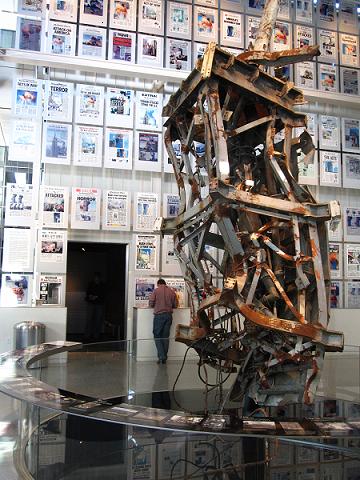
DC’s Newseum is a real headliner

0

It’s a lot to take in for a cub reporter. Seven stories of news. 250,000 square feet of news. Just down the street from our country’s Capitol Building, the Newseum is probably the most comprehensive, evocative look at the power and responsibility of the journalist under one roof that our country has yet produced.

What’s so impressive about the museum? Put simply, breadth and depth. Today’s front pages from around the US and world greet you to the museum. Inside, you journey through a carefully sculpted continuum of information and artifacts.

First up, media coverage of events that changed the course of our country- beginning with the manhunt for Lincoln’s killer and continuing through instances of incisive reporting (the role that news played in broadcasting the civil rights movement) to dark moments (a memorial to reporters who’ve died in the line of duty, threats to our Bill of Rights over the years).

There were even shades of grey- best embodied in the interactive “What Would You Do?” ethics game, which lets you weigh in on real world moral dilemmas that professional journalists face. I’m totally one of those, so I thought it would be a snap. But there were no easy answers. When it came to the iconic photo of an emaciated Sudanese baby crawling away from a vulture, a heartbreaking image that nonetheless has raised awareness of the plight of refugees the world over, I had to admit I would have swooped in to help, scattered the scavenger, before setting up the shot. So would 72 percent of the general public- but only 28 percent of the professional journalists surveyed agreed with me. The photographer who snapped the shot, Kevin Carter, won a Pulitzer Prize for his efforts- but committed suicide soon after.

Again, the responsibility of the press, a lot to take in for the young pup. But a great museum, and one that, regardless of your profession, will make you feel something.

Graffiti covered pieces of the Berlin Wall are another of the Newseum’s highlights. This was the easiest museum ever to take photos in- freedom of the press, baby!

Sections of the lunch counter that figured in the Greensboro, North Carolina civil rights sit-ins are accompanied by a news reel on the movement

Daniel Pearl’s passport and laptop, testament to the risk journalists run to inform the world of it’s most dangerous conflicts

Not the place where you want to be right before closing, when the Newseum has all but emptied out… Ted Kaczynski’s Unabomber cabin is part of the “G-Men and Spies” temporary exhibit


555 Pennsylvania, Washington D.C.

Open: 9 a.m.- 5 p.m., $19.95

(888) 639-7386

www.newseum.org

Dames on the brain

0

DVD REVIEW Columbia’s new two-volume, eight-film set "Bad Girls of Film Noir" is a delightful addition to any shelf of B-movies, and a damn good excuse to insist on using a friend’s DVD projector.

Two of the films in this package, Women’s Prison (1955) and One Girl’s Confession (1953), had pre-DVD release screenings at this year’s Noir City Film Festival at the Castro Theatre. Though he was not the most charismatic guest speaker in the history of that sublime annual SF movie ritual, Grover Crips, Sony’s vice president of asset management and film preservation, certainly deserved the tribute he received at Noir City. The transfers to DVD from new vault prints that make up this fine package are truly impressive. And while some of the titles included don’t exactly fit snugly in the noir canon, there’s so much here worth watching that for any fan of the array of delirious thrills that constitute "golden age" Hollywood filmmaking, such quibbles are strictly in killjoy territory.

Women’s Prison is a veritable treasure trove of guilty cinematic pleasures, and one of three flicks in the set featuring blonde bombshell Cleo Moore. The rest of the cast includes noir mainstays Audrey Totter (the versatile Swede who was so, so good in 1949’s The Set-Up, Tension, and Alias Nick Beal) and Jan Sterling (the scorching, jaded, less-than-faithful wife in 1951’s Ace in the Hole). Howard Duff and Ida Lupino, married in real life, seem to be having a blast as the good-guy prison doctor and his nemesis, the psycho warden obsessed with escalating levels of discipline.

For their glimpses of mid-20th century New York City, the two on-location thrillers The Killer That Stalked New York (1950, check out Jim Backus as a sleazy club owner) and The Glass Wall (1953) are hard to beat and show that John Huston wasn’t the only Hollywood director influenced by neorealism. These two feature, respectively, Evelyn Keyes and Gloria Grahame. The latter film especially, whose trailer brags that it was "shot secretly by hidden cameras in teeming Times Square and all over exciting New York City," really captures the flavor of midtown Manhattan street life.

And as inept as the story’s framing device is, I praise the gods of Tinsel Town for giving me Night Editor (1946), mostly because of the statuesque, scheming femme fatale played by Janis Carter. It’s a bit of stretch pairing her with the, shall we say, less than charismatic William Gargan, but I can’t imagine any actress putting more sexually-charged zest into a request to gaze at a murder victim.

Marshall amps

1

johnny@sfbg.com

VISUAL ART/MUSIC I’m walking with Jim Marshall from his apartment in the Castro to his favorite restaurant just around the corner. The T-shirt he’s wearing showcases one of his more famous photos, of Johnny Cash flipping the bird. Marshall tells me and his friend and assistant of 13 years, Amelia Davis, about another time he was wearing the shirt. When the person he was with said he wanted one, he promptly took it off and gave it to him. We sit down at a table, I turn on my old tape recorder, and Marshall asks me for my first question. I say, “Well, it’s not a question, but I guess the first thing I could observe about you is that you’ll give someone the shirt off your back.” He laughs.

This story, itself born from a story from Marshall, suits an article about him, because as the title of his one of his new books makes clear, a major foundation of his photography is trust. Almost every page of Trust: Photographs of Jim Marshall (Vision On, 165 pages, $34.95) illustrates the deep implicit bond between photographer and subject in Marshall’s work, an element largely lacking from the prefab realm of music photography today. At times, this trust makes for startling juxtapositions: more than once Marshall’s camera catches a singer — Mahalia Jackson at Carnegie Hall; BB King at the Fillmore West; Janis Joplin at an outdoor concert in San Jose; Big Mama Thornton in a San Francisco recording studio; Nina Simone at New York Town Hall; Big Joe Turner at Berkeley Folk Festival — wholly unguarded, with arms open wide. The gesture reflects Marshall’s wholehearted embrace of music, an approach that makes his best images sing.

Marshall is a San Francisco photographer. “I was just starting out during the Beat era, in 1959, hanging out in North Beach,” he says. “They called me Jaguar Jim because I had a Jag 120. I photographed at the Hungry Eye. Lenny Bruce was the first roll of color I ever shot — 10 frames. Fantasy Records called me up about 10 years ago and said, ‘Jim, we’ve got some of your shots here.’ I figured there was some Creedence [Clearwater Revival] stuff, or Otis Redding. But there were 10 slides [of Bruce] that had been stuck under a cabinet for 35 years.” One of those 10 frames can be found in Match Prints (HarperCollins, 208 pages, $40), a just-published collaborative monograph that juxtaposes photos by Timothy White with photos by Marshall. In the shot, Bruce is standing before a brick wall, and he has his arms outstretched — almost like he’s expecting to be arrested. He’s on stage.

The back and forth between White’s photos and Marshall’s in Match Print — also on display at New York’s Staley-Wise Gallery later this month — is partly a conversation between on-the-scene verité images and the carefully set designed studio shots that tend to dominate magazine profiles. But it’s also about iconography and a memorable pose: Jim Morrison taking a drag from a cigarette for Marshall, Robert Mitchum inhaling (unlike Bill Clinton) for White. Match Prints has a casual sense of humor, evident in the pairing of Cash giving the finger with a White shot of Elizabeth Taylor flipping two birds after stepping out of a limo. (It’s also made clear by Alice Cooper’s playfully catty comments about his sister-in-leopard-skin-boots Lil’ Kim.) But the lingering moments of the book, and ironically, the most contemporary visions, come from older black and white Marshall photos, such as one of a zaftig Mama Cass in the back of a car, or bouffant-and-eyeliner beauty Little Richard lost in thought. Cass’s style and Richard’s drag are very Bay Area rock n’ roll 2010.

Marshall’s photography is 2010 enough to be lodged in the White House at the moment. President Obama has a Marshall shot of John Coltrane (also within Trust) on the wall. “He [Obama] had a White House photographer take a picture of him reflected in the [frame’s] glass,” Marshall explains with pride. “He signed it, ‘To Jim — I’m a big fan of your work … and Coltrane!” A little later, back at Marshall’s apartment, I look at this photo, and think of Obama’s image and trust. In deed, is the President doing right by the artists?

At lunch, Marshall zooms in on a telling moment from Obama’s recent State of the Union address. “He said, ‘This administration this year will end discrimination against gays in the military.’ The camera was on four generals and admirals in front of Obama. The whole place stood up and applauded. Those motherfuckers didn’t blink, didn’t move — nothing. They just sat there stone-faced. That’s the last thing they wanted to hear.”

The trust recorded in Trust is a different kind of commitment than one offered by a political figure. The photo of Coltrane — itself reflective, a bit melancholy, even haunted — that Obama sees himself within is a chief example. “Miles [Davis] saw my pictures of Coltrane and saw that John trusted me, and that was good enough for Miles,” Marshall explains, after I tell him about a great Davis interview in which he proclaimed that his favorite thing to do was watch white people act stupid on TV. “Miles, he didn’t like white people a whole lot. But for some reason he liked me. He said, ‘You’re as crazy as me.'” The truth is, in America, then and now, that’s as good a reason as any to like someone.

Truth is another strong element of Trust. Marshall’s investment in emotional truth means that his opinions aren’t always orthodox. Trust contains some photos of the infamous 1972 Rolling Stones American tour — “I must have done two pounds of blow on that tour,” Marshall crows — also documented by Robert Frank in the movie Cocksucker Blues. “I was never a big Robert Frank fan, and I’ll tell you why,” Marshall says, with trademark intimate candor. “As good as [Frank’s classic 1958 monograph] The Americans is — and it’s one of the all-time great photo books, damn near as great as [1955’s] Family of Man — what Frank failed to do is this: he didn’t show in one picture, as far as I can remember, the joy of being an American. It’s cynical. That bothers the shit out of me.”

As much as Frank, Marshall is a primary documentarian of 20th century America, well aware of a time when great filmmakers and photographers had enough faith in the government to work for it. “I had a Baby Brownie [camera] when I was a kid,” he says, when asked how he found his calling. “Everything was blurry — you had to take the picture when the sun was at your back. But I won a track meet, the 50 yard dash, and a guy was taking pictures for the school. He had an early Leica. When we go back to my apartment I’ll show you my scrapbook — it has pictures of cameras cut out of magazines and pasted on the paper, with their prices written in pencil. He took a picture of me that was razor sharp, and I thought, ‘This guy has a magic box.'”

Marshall’s Leica images have their own magic, evident in monographs such as Tomorrow Never Knows — The Beatles’ Last Concert (1987), Monterey Pop (1992), Not Fade Away (1997), Proof (2004), and Jazz (2005). Trust distinguishes itself by the dominance of color images — Marshall laughs heartily when I tell him that the blue sky found in a pair of outdoor concert photos of Joplin is a California blue. The color in Marshall’s photos is super-real, to re-deploy a word Anthony DeCurtis applies to White in the introduction to Match Prints. It isn’t the cliché hallucinogenic vision found in so many recreations of drug trips or the ’60s, but instead an extra intensity, utterly pure.

“The single greatest performance I ever saw in my life was Otis Redding in Monterey [at Monterey Pop in 1967],” Marshall says, as we page through Trust. “Brian Jones was there as a guest, and he said, ‘I think Mick [Jagger] is one of the greatest singers, and our band is one of the best, but personally, you couldn’t give me a million pounds to follow Otis Redding on stage.’ It was that shattering of a performance.” The photo we’re looking at as he says this is deep black and rich blue, with fists to the fore. It’s a cry — a shout — into the night.

A pair of photos in Trust capture confidences exchanged between Johnny Cash and a top-of-the-world Bob Dylan — a country-folk echo of the gestures of confidence between Marshall, Coltrane, and Davis. Marshall laughs when I tell him of an anecdote about the great folk artist-archivist and magician Harry Smith slamming the door of his Chelsea Hotel room in the young Dylan’s face with a loud “Fuck off!” When Marshall first began to photograph Cash and Dylan, the upstart musician was uncooperative, until his idol set him straight about the man behind the lens. “Bob Dylan respected without equivocation two people,” says Marshall. “Johnny Cash and Pete Seeger.” Indeed, Trust’s American history isn’t just a rock star history, it’s a secret history, a braided folk tale that extends from Elizabeth Cotten to the unlikely yet perfectly logical friendship between Sly Stone and Doris Day. Its stunning photos of the Carter Family can inspire a conversation about Redding’s and Anita Carter’s individually magnificent versions of “I’ve Been Loving You Too Long.”

Back at Marshall’s apartment, a photo of his late friend Tim Hardin at Woodstock broods as quietly as one of Hardin’s ballads, near the fireplace. “A million people around him, and he’s totally alone,” Marshall says, as if he took the shot yesterday. The hallway is lined with photos, not just by Marshall, but more often by famous acuaintances, many of them layered gestures of friendship that need no inscription. Marshall takes out his teenage scrapbook and sets it down on a table by his autographed images of Obama and Joe DiMaggio. “This was from the late 1940s!” he says, his voice rising in amazement. “Isn’t that a mindfuck?” It sure is. Another mindfuck would be for the best musicians and biggest personalities of the Bay Area to step in front of Marshall’s Leica today.


A NEW LOOK: JIM MARSHALL AND FRIENDS PUT THE FOCUS ON MS

VISUAL ART/EVENT This month, from March 5–19, one of Jim Marshall’s iconic images of Janis Joplin will be showcased in Union Square. The shot, of Joplin at the Palace of Fine Arts with arms outstretched as she sits atop a colorful Volkswagen Beetle, is just one of a number of prints being auctioned up for sale by photographers such as Baron Wolman, Michael Zagaris, Herb Greene, Robert Altman, Bobby Klein, and Marshall.

The cause is treatment of — and public awareness and conversation about — multiple sclerosis. All of the proceeds from sales of the photography goes to MSFriends, a grass-roots nonprofit begun by Marshall’s longtime friend Amelia Davis. Marshall hired Davis as an assistant knowing she had MS, and one encounter with Davis makes it easy to see why: she’s committed and dedicated. In the case of MSFriends, this dedication involves providing 24/7 telephone peer support, running an organization staffed by people who have MS, in an effort to help people with MS and others understand and respond to a misdiagnosed and misunderstood disease. 

For more information about MSFriends Rock for MS and MSFriends, go to www.msfriends.org  


Taxi turbulence

13

By Skyler Swezy

news@sfbg.com

It’s 10:20 p.m. on a recent Saturday night. Cab driver Dorian Lavender picks up a middle-aged couple outside the Gold Club, a strip joint in SoMa.

The couple is sharply dressed for a night out. After requesting the Mitchell Brothers’ O’Farrell Theatre as their destination, the man brags to Lavender about having had sex with a stripper in one of the club’s private rooms. His female companion smiles and says nothing.

“This is before I met her,” the man explains. “We’re swingers.”

Minutes later, beneath the theater’s flashing marquee, the man hands the driver a $20 bill for the $10 fare. “Keep the change,” he says.

A few blocks away, a young couple flags the cab from the corner of Bush and Polk streets. They are talkative and entertained as Lavender tells them about the swingers. Ten minutes later, the meter reads $9.86. Apologizing, the young man hands him $11.

Lavender folds the bills into the cash-wad kept in his pocket.

“That’s how it goes with cab driving,” he says. “The nice couple tips 10 percent, the weird swingers tip 100 percent — and they were more interesting to talk to.”

At 25, Lavender considers cab driving a great gig and survives working only three shifts a week. He enjoys the cash, freedom, and unpredictable encounters. He’s even landed a few dates. A lot of career cabbies start driving for the same reasons. But after the excitement wears off, it turns out to be a tough job.

A typical cab driver in San Francisco makes less than $30,000 a year. Before drivers even start a shift, gate fees (covering the rental on the cab and the use of its permit, known here as a medallion), gas, and graft have already set them back close to $100. Bribes are commonplace in the industry, used to ensure weekend shifts, airport fares, and newer cars.

The industry offers no retirement plan or health coverage. In fact, the primary reason some people stay behind the wheel long after the thrill is gone is the promise that at some point, after maybe 15 years, an active driver becomes eligible for his or her own medallion. It costs almost nothing, and offers a tremendous benefit: drivers with medallions no longer pay high gate fees, get better shifts — and can lease out the permit when they’re not working. The lease revenue alone can nearly double a driver’s income.

Since 1978, medallions have been issued only to working drivers, and entirely on the basis of a waiting list that now numbers 3,200 names. New medallions become available when permit-holders retire, die, or are forced by disability to stop driving.

That system — and the entire cab industry — is about to change, profoundly. On Feb. 26, the San Francisco Municipal Transportation Agency agreed to allow some permits to be sold on the open market to help close its huge budget deficit. When the dust settles and the implications of that decision become clear, life for cab drivers and passengers will be very different.

Some say the industry will be better; some say it will be much worse — but the truth is, nobody really knows.


PRIVATIZING PERMITS

Mayor Gavin Newsom’s adminstration has talked about allowing the sale of permits for several years, but only in the past few months has Christine Hayashi, SFMTA’s deputy director of taxi services, come up with a detailed plan.

It’s aimed at addressing what some drivers call an unfair and flawed system. Permit-holders by law must drive a minimum number of shifts, and it they get hurt or just get too old to drive, they have to surrender their medallions, leaving them with no source of income.

It will also help SFMTA’s budget — the city could sell unclaimed permits for big money and would get a cut of every other sale.

But critics, including Judge Quentin Kopp, the former San Francisco supervisor who wrote the 1978 law that created the old system, say the medallion holders just want to cash in on something that has always been city property.

The pilot project approved by the SFMTA board allows the city to sell up to 60 medallions directly to drivers and allow about 300 drivers over the age of 70 to sell their medallions to any qualified driver who can come up with the cash. The program aims to set a fixed selling price, but has yet to do so, instead setting a $400,000 limit. It is estimated that medallions will sell for no less than $200,000.

That, of course, will be a huge windfall to the sellers, who paid nothing for their permits.

The pilot program was essentially a done deal even before the Feb. 26 vote. In an e-mail to the Guardian, agency spokesperson Judson True confirmed that $11 million in taxi revenue had been added into the MTA budget before the vote took place.


THE GREED FACTOR

Kopp sat behind the desk in his West Portal neighborhood office a week before the MTA vote, bitterly condemning the medallion sales program. “It’s based on greed. It’s based on City Hall greed,” he said. The stentorian 82-year-old occasionally thumped the desk with his fist for emphasis as he launched into the history of Proposition K. Then-Sup. Kopp authored that landmark legislation prohibiting private companies from owning driving permits, instead granting control to drivers.

“This will reverse a system that gave a genuine cab driver the opportunity to obtain a permit and replace it with a system that restores the ability of people with lots of money to buy a permit,” he said.

But Kopp’s bill had some unforeseen consequences. The list has become so long that medallions are being issued to people in their 60s and 70s — and some of those people are driving passengers around town despite failing reflexes, eyesight, and motor skills.

Carl Macmurdo, president of the Medallion Holders Association (MHA), believes that selling medallions will provide an exit plan for geriatric drivers while giving younger cabbies an entry opportunity. At 59, Macmurdo is still a full-time driver and has been in the industry 27 years.

It makes sense that MHA members are generally in favor of the pilot program — they could potentially make a mountain of money. Although only those over the age of 70 are now eligible to sell them, the age limit could be lowered in the future.


INDENTURED SERVANTS

The United Taxi Workers (UTW) headquarters consists of a few cramped offices on the fourth floor of an old office building in the Mission District. All the interior trim is painted taxi-yellow. In late January, UTW spokespersons Mark Gruberg and Rua Graffis sat at a large table, fearing the worst.

They predict the sale of medallions will provide large cab companies with the equivalent of indentured servants. They say drivers will need upwards of a $200,000 loan to purchase a medallion, requiring a hefty downpayment.

Few drivers will be able to pay for a permit with savings, so the system will only work if someone is willing to finance those purchases. And drivers who are recent immigrants or have bad credit may not be able to get traditional loans. So they could wind up borrowing from their employers, the cab companies, UTW activists say — and by owning the debt the companies will essentially own the medallion.

“Supposedly there’s going to be a provision that says a cab company can’t lend money to a driver toward purchasing a medallion. But it would be so easy to get around that by hooking up with an outside lender,” Gruberg said.

Another fear is that the pilot program will favor young drivers and punish veterans. “Suppose a 27 year-old is on the list and I’m 63. Which one of us is the bank more likely to lend money to?” Graffis asked.

Under the pilot program, drivers will have the option to purchase according to seniority on the list. But without a lender, that’s little help.


WHO’S GETTING SCREWED

At 1 p.m. the day of the SFMTA vote, Bill Mounsey and David Barlow were sitting on a bench outside the hearing room. Both are members of UTW and planned to speak in protest of the pilot program.

Mounsey is 63. He’s been on the list for 13 years and is No. 200. He is part of the group most vulnerable in the medallion reform process — drivers who have already waited more than a decade but still have years to go.

If at any point the board decides to eradicate the list before he receives a medallion, Mounsey’s years of waiting will be wasted. “I would never buy one. I’m 63 years-old, no one would ever give me a loan,” he said.

For now, the wait list survives. Under the pilot program, one medallion will be given away for every one sold until the list is exhausted. However, with only half as many medallions being given out, Mounsey fears the list will move half as fast.

Around 50 people attended the meeting, a small fraction of the city’s cab drivers. At 3:56 p.m. the board passed the pilot program and Prop. K moved a little closer toward death.

Hayashi spent more than 175 hours trying to create a pilot program that provides the city with revenue and benefits the taxi drivers. She has made an effort to engage the taxi community and worked with a group of drivers to draft the proposal. She even plans on getting a taxi license.

After the City Hall meeting, Hayashi explained the challenges facing the pilot program over coffee in a downtown cafe. Before March 30, when the proposal is set for a final SFMTA vote, Hayashi must lock down lenders, create lending programs feasible for drivers, and set a fixed selling price for the medallions.

The blaring problem with the pilot program is a lack of committed lenders ready to finance cab drivers’ loans. Bank of the West has expressed interest, as well as two New York credit unions experienced in medallion loans and two San Francisco credit unions.

But how will those loans be structured? Who will qualify? How much of a downpayment will drivers need? And how, in the end, will this change the experience and qualifications of the drivers — and the quality of cab service in the city?

Hayashi sounds confident. “Good service depends on happy drivers. Our goal is to restore professional pride for the drivers, allow them to feel that taxi driving is a career and a respected profession,” she said.

But a lot — a whole lot — can go wrong with this major change in a complex industry that provides essential service to residents and tourists alike. And once the city moves down the path to private medallions, it’s going to be hard to go back.

Expanding movement

1

rebeccab@sfbg.com

When University of California Berkeley students staged building occupations last fall, their furious, brazen response to startling tuition hikes and staff cutbacks captured the attention of the world, recalling the radical actions of earlier generations.

Yet the thrust behind the March 4 Strike and Day of Action, a mass mobilization for public education and services that is reaching into all corners of the state and spreading nationwide, appears to stem from widespread agitation that extends well beyond the flare-ups on college campuses.

"What’s historic about this is that pre-K through PhD has never walked together," said Lillian Taiz, president of the California Faculty Association, which represents faculty in the California State University system. "We have often been pitted against one another, and I think everyone feels finally, in the end, there is no difference in importance between pre-K and PhD. We need it all."

The historic new alliance faces an uphill climb in an environment characterized by a devastating budget crisis at the state level. California — the world’s eighth-largest economy — hovers around 47th in the nation in terms of per-pupil spending, and the most recent wave of budget rollbacks has cut to the bone.

Students and teachers across the Bay Area argue that with dramatic slashes in funding, the educational system is failing youth. Class sizes are ballooning to claustrophobic levels, students are unable to take their desired courses, fees are going up, bathrooms are getting cleaned less frequently, and staffers are getting stressed by overwhelming workloads. "Classes are jam-packed," Taiz says. "You have kids sitting on the floor. You have students just begging to be allowed in a class."

As University of California students decry a 32 percent hike in fees, the California State University system is suffering from damage inflicted by 2,000 faculty layoffs over the past year. The San Francisco Unified School District, meanwhile, is staring down an estimated $113 million budget deficit over the next two years, and 900 layoff notices recently were issued to teachers, librarians, secretaries, and other school employees to warn them that their jobs could be slashed by the end of the school year.

When San Francisco’s school district faced a gaping budget shortfall during the last budget cycle, it was propped up by a combination of Rainy Day Fund reserve dollars and stimulus funding from the American Recovery and Reinvestment Act. With no such safety nets in place this time around, anxiety levels are higher and the outlook is uncertain.

March 4 is shaping up to be more than an opportunity to vent frustrations to elected leaders. Instead, organizers describe it as a rallying point for a movement to defend public education that has caught on like wildfire, uniting people from different worlds. Pickets and rallies will be staged throughout the region. Thousands are expected to swarm Civic Center Plaza in San Francisco. Students from a handful of East Bay campuses are organizing marches to Frank Ogawa Plaza in downtown Oakland. Students and faculty from Berkeley will be boarding buses to take the message to Sacramento. The Oakland Unified School district will host a districtwide mock "disaster drill" to call attention to the disastrous budget. Even public transit activists opposed to the latest round of Muni service cuts and fare hikes are joining the protests, hoping to expand the discussion to support vital public services (for details on these and other events, see "Alerts" opposite this page).

"We’ve never gotten this level of activism over anything in SF since I’ve been here," says Matthew Hardy, communications director for United Educators of San Francisco. "There’s a growing movement for progressive taxation and budget reform instead of draconian cuts."

Taiz, who teaches history at Cal State Los Angeles, described March 4 as an opportunity to fill a void in leadership. "Historically, in these moments where ordinary people step up to the plate, you end up leading the leaders," she said. "We are kind of shocked, but in truth, we do know what has to be done." Quality education isn’t just important for young people, but for society as a whole, she argued. "I am a baby boomer, and if the folks coming up behind me don’t have really, really good jobs, I’m going to be eating dog food. Because those are the people who pay Social Security and pay the taxes."

In the week preceding March 4, teachers and students throughout the Bay Area were in a frenzy of preparation.

Carlos Baron, a theater professor at SF State, was wondering whether the grand procession of papier-mâché puppets his theater students will unveil on the March 4 Day of Action should take a V-shape or some other form. "The main puppet is the Draculator," explained Baron, a Chilean who directed plays in the Salvador Allende era before he began teaching at SF State in 1978. "It’s a cross between the Terminator-Governor and Dracula. But also it doubles as a banker and a general."

When asked how funding cutbacks affect students, Baron didn’t hesitate. "It impedes the creation of a positive vision for themselves and this society," he said. It stunts "the development of the imagination," he added. "We are trained as individuals to accept our failure and our smallness because we’re familiar with it. They don’t want an educated population, a sensitive population, a dreaming population. Would we select Schwarzenegger?"

Nicole Abreu Shepard, a first-grade teacher at Buena Vista Elementary in San Francisco’s Mission District, was collecting permission slips from parents to take her students to a rally and march down 24th Street. "The entire school is walking out," Abreu Shepherd said. Buena Vista’s art program exists solely because parents volunteer their time, she explained. More than half the students qualify for free or reduced lunch, and many incoming kindergarteners or preschoolers are new to the English language. Now there are proposals on the table to increase kindergarten class sizes to 25 or possibly even 30 students. "It’s sort of tying their hands behind their back and asking them to teach on one foot," she noted, and worried about the eventual result. "It’s going to be harder and harder to keep parents who could afford private school in a public school system."

Meanwhile, at the UC Berkeley campus, Krystof Cantor was sitting behind a table heaped with piles of radical literature bearing titles such as "After the Fall: Communiques from an Occupied California." Cantor, who earned his PhD in vision science in 2005, was joining student organizers in making one last push to drum up student interest in March 4 events at a multi-faceted event called "Rolling University." Late on the evening of Feb. 26, a dance party on the Berkeley campus morphed into a street riot — replete with ignited Dumpsters — in downtown Berkeley. The incident attracted media attention and drew public criticism from administrative officials.

The radicalized student movement that has erupted on the UC Berkeley campus is "very much about seizing power," Cantor told the Guardian several days before. "It’s been disruptive, it’s been militant, and it’s been creative. That’s very scary," to the administrators the movement is targeting, he added.

That focused pressure on UC administrators sets these students apart from the coalition of UC Berkeley faculty members and student government members and allies who are coordinating bus trips to protest in Sacramento March 4, he explained. "Sacramento’s not innocent, but it’s not like the administrators are just doing what they have to do," he charged, pointing to new construction projects on campus even as workers are hit with layoffs and furloughs, plus an increasing trend of privatizing on-campus jobs and services. "You can save the public sector by pouring money into it. But it won’t work if the people in charge … want to privatize everything."

Jasper Bernes, a graduate student in English who was seated next to Cantor, noted that the occupation tactic is catching on at other campuses. "I have no doubt that March 4 will greet us with news of many occupations," he said.

Baron, the Chilean theater professor, noted that some SF State students had occupied a business school building in protest of budget cuts. "They were pissed," he said. "They wanted to do something radical. They really inconvenienced a lot of people — but they took chances nonetheless. I went there, and I locked arms with them for awhile." At the same time, he wondered about how effective it was, he said.

And for all the months of preparation and visioning, Baron said he also wonders what will ultimately be borne out of the marches, rallies, pickets, and procession of lovingly crafted street puppets he helped breathe life into. For all the hard work and planning, he says, "My problem is not so much March 4. It’s March 5."

Bill Bennett, the only public official in California to take on PG&E

0

William Morgan Bennett, 1918-2010

On the front page of the Guardian of Oct. 19, 1988, we ran a big picture of Bill Bennett with a caption that read: “Bill Bennett, the only public official in California to take on PG&E.”

The reason we featured Bennett was because the California Public Utilities Commission was poised to make yet another multi-billion giveaway to the Pacific Gas & Electric Company.

This time the CPUC would force the public to pay $3.4 billion worth of PG&E’s mistakes  at its Diable Canyon nuclear power plant and not one public official in San Francisco, home of the PG&E/Raker Act scandal, and not one from any other public agency or public institution was on hand to monitor the CPUC hearings and testify about the horrible impacts the Diablo rate hike will have on the public.

The lone, honorable exception was Bill Bennett. Our editorial noted, “The only public official in California who has taken on the case is Bill Bennett, a member of the State Board of Equalization and a former member of the CPUC, a determined old warrior who fought Diablo from the start and continues to do so today, on his own, against the odds and at considerable personal cost.”

To drive the point home about Bennett’s couirageous stand, we continued, “Those who ignored the case–for example, the supervisors, mayor and city attorney of San Francisco, the board of directors of BART, the regents of the University of California and their counterparts in every other public agency and institution that pays or represents people who pay PG&E bills–ought to be ashamed. The citizens of every city, county and district ought to look at their representatives and ask: Where were you when PG&E walked away with all the marbles.”

 The press in Northern California was ignoring the story, despite the colorful,  forceful and newsworthy campaign that Bennett was waging. He said he had called the  Chronicle and Examiner reporters to try to interest them in the story, but “it was useless so I gave up.”  Guardian Reporter Jim Balderston did the story and quoted Bennett  as saying, among other things, “This commission (the CPUC) must think long and hard of the welfare of the ratepayers and the shareholders of PG&E.” With no Bill Bennett on the CPUC, PG&E once again quietly walked away with billions in ratepayer money.

William Morgan Bennett, the public attorney  who for more than five decades fought the corporate goliaths from taking all the marbles, died Feb.9th at his home in Kentfield after a short illness. He was 91. An overflow crowd paid tribute  to his extraordinary life and career at services held on Feb. 12th at St. Patrick’s Church in Larkspur

When his daughter Joan phoned me about Bennett’s death, I realized once again how much the Guardian and the consumer and the rate-payer would miss Bennett. We are in the middle of PG&E’s biggest monopoly scam ever –Prop l6 and PG&E’s initiative to kill public power and community choice aggregation (CCA)– and Bennett is alas missing in action, for one of the first times in his life. Today, there are other public officials out there fighting PG&E, but there is nobody who can  take on PG&E and its allies as effectively as Bennett.

Our 1988 story had a sidebar with the head, “Bennett vs. PG&E: The 30 years war.” The sidebar recounted an incident characteristic of Bennett and the way he gave new meaning to the term public service.  In 1959 the El Paso/Pacific Northwest natural gas pipeline merger was all but approved by the CPUC, except for an appeal from Bennett as CPUC general counsel.  Before Bennett could file the appeal, he got a phone call from Gregory Harrison, a partner in the politically powerful law firm of Brobeck, Phleger and Harrison. Harrison asked Bennett if he was going to file. Bennett said yes and Harrison responded, “I told them you would say that.”

Harrison told Bennett he would be removed from the case if he filed the appeal. Bennett told Harrison he was going to call a press conference. Harrison responded. “I told them you would say that,” and hung up. Shortly thereafter, Bennett got a call from Gov. Brown, who asked him if he was going to file the appeal. Bennett said yes and Brown refused to discuss the matter further.

Twenty minutes later, Bennett got a telegram from Brown that stated, “You no longer represent me or the State of California in USA v El Paso.” This infuriated Bennett and fueled his relentless 14-year crusade to compel El Paso to divest itself of Pacific Northwest. because of its price-fixing and monopolistic implications for California. In 1969, appearing as a private citizen, he successfully argued the final U.S. Supreme Court appeal in the case, the last oral argument heard by the Earl Warren court.

The Washington Monthly caught the drama and precedent of Bennett’s appearance in its November 1971 issue. “His last appearance before the court in 1969
needs to have been witnessed. Standing alone against an array of the best legal talent that could be provided by El Paso, the states of California and Utah, lawyers for other gas companies and the U.S. government, represented personally by Solicitor General Erwin Griswold, Bennett attacked as the lone surviving avenging angel of the original antitrust action. Finger in the air, voice crying out in toners of retribution, he spoke brilliantly and forcefully without notes for an hour…In the process, Bennett impressed at least one justice privately, and many more observers, as one of the most brilliant and effective lawyers to have gotten to his feet to present oral arguments to the court during the last 14 years.”

 As the final footnote in this legal saga, Bennett  stopped El Paso’s efforts in Congress to pass legislation to void the breakup of El Paso. The result: the largest refund for California ratepayers in the history of regulation to date.  The decision set a  national precedent in antitrust law.

Bennett was born Feb. 20, 1918 in San Francisco to Lt. William M. Bennett of the San Francisco Police Department and Eva Curran of Amador. He attended Most Holy Redeemer Elementary School, St. Ignatius High School, the University of San Francisco and the Hastings College of Law. At the outbreak of World War II, he suspended his law studies and joined the U.S. Army Air Corps.

He was a B-17 pilot in the North African, Mediterranean and European theater of operations, l5th Air Force, 483rd Bombardment Group, 815th Squadron, stationed in North Africa and then in Foggia, Italy. The 483rd flew a total of 215 combat missions during 14 months of combat duty and Bennett was in the middle of it all. “Wherever there were major oil refineries, aircraft and parts factories, tank works, railroad terminals and marshaling yards, supply dumps, bridges and communication networks, he saw action,” Jane Bennett said.  He flew 35 missions and encountered severe flak and fighter attacks at some of the most heavily defended targets in Europe:  Linz’ Herman Goering Tank Works; Berlin’s Daimler-Benz Tank Works; Innsbruck; Vienna; Regensburg; Blechhhammer; Schweinfurt; Salzburg; Landshut; Moosbierbaum, and Ruhland where ME 262 German jets attacked his squadron.

The Tuskegee Airmen, the famous black squadron, escorted Bennett’s missions. “Their base was right next to my father’s,” Joan Bennett said. “They were separated on the ground but equal in the air. That is, they were  equal targets for the Germans.” Bennett often visited some of the fighters across the runway that segregated the blacks.   George McGovern,  the bomber pilot who later became a presidential candidate in l972, was stationed at a nearby base.  He flew B-24s.

Bennett flew some of the first shuttle missions into Russia.  As the bomber squadrons flew deeper into Germany, the planes did not have fuel or were too shot up  to return to their base in Italy. So the squadrons continued on to Poltova,  Russia, to get refueled  and repaired, and  then either flew back  immediately back to their base or stayed over night and flew back the next day.  The missions were kept secret during the war  but later became known as the “Poltova missions.”

 Of the original 646 crew members sent to Italy in March 1944, 38 per cent were killed or missing in action. His bomb group received numerous battle awards, including two outstanding unit presidential citations. Bennett was highly decorated and won three Oak Leaf Clusters, four Bronze Stars and the Distinguished Flying Cross. He was awarded the DFC  for his courage and skill in miraculously bringing his plane back from a mission over Worgi, Austria, in February, 1945.  Bennett’s plane was hit by heavy enemy fire and the two right engines were shot out. He told his crew to bail out but they refused because they counted on Bennett to pull  them through.  Bennett did, safely piloting his crippled plane over the Alps. When the plane limped back to its base in Italy, there was nothing left inside, because the crew had ditched everything to lighten the load.


Col. Paul L. Barton, Bennett’s commanding officer, pins the Distinguished Flying Cross on Bennett in a ceremony on May 12, l945, at the air base on the Sterparone farm in Foggia, Italy.  Gen. Twining, head of the l5th Air Force who ended up as Chief of Staff of the USAF after the war,  attended the ceremony.  “There was no Tom Hanks, Brad Pitt, Tom Cruise WWII move glamor,”  Bennett’s daughter Jane told me.  “The base itself was primitive: steel mats for runways.  Ankle deep mud in the winter along with snow, ice and rain. Open latrines, no toilet paper, tent-living with one crew per tent. No mess halls. One canteen of water per day, etc.”  She said the Bennetts visited the farm in l982.  “The runways were vineyards,” she recalled. “The briefing hall for the men still stands. The interior of white plaster is still lined with drawings of pinup girls. The young girl who lived on the farm during the war is now the owner of the family land. She was very gracious.  She invited us in for coffee.”

 After the war, Bennett finished  law school at the University of San Francisco and then embarked upon a remarkable career of public service. Until I started working on his obituary,  I knew nothing about Bennett’s distinguished war record as a bomber pilot.   But it is clear to me that, having followed Bennett through the years, that  his combat experience under artillery fire and with flak coming at him from all directions served him well in public life.  He spent most of his public career  as a tough, smart and  aggressive attorney who relished  taking on the big cases and the big corporate behemoths who were screwing the public on illegal mergers or monopoly rate increases. To him, this was just combat in a different theater of operations. Sometimes as a public attorney, sometimes acting as an individual citizen, he handled precedent-setting cases  in antitrust, regulatory and criminal law and argued six times before the U.S. Supreme Court. He earned the nickname “the legal Houdini” but I always thought of him as “Fighting Bill” Bennett.

 As a deputy attorney general, he successfully prosecuted public corruption trials in 1954-55 against the State Board of Equalization in San Diego and put l3 public officials in jail. From 1957-59, he handled the celebrated case of Caryl Chessman, known as “the redlight bandit.” After his argument before the U.S. Supreme Court, the court clerk quietly handed him a note from Associate Justice Felix Frankfurter. He wrote, “There is no reason why I should not tell you how admirably you represented the state in this important case.” The clerk told Bennett he should save the note because it was only the second such note that Frankfurter had ever written.

From 1957-58, Bennett represented the state before the CPUC and won many cases against utilities that resulted in hundreds of millions of dollars in ratepayer rebates. Gov. Brown appointed him chief counsel of the PUC in 1958.

In 1960 Bennett was invited to join Sen. John F. Kennedy’s campaign as an advance man canvassing a territory from Chicago to New York.  He became friends with JFK and was considered part of Kennedy’s “Irish mafia.” Kennedy asked him to head the Federal Power Commission but he rejected it to remain with his family.

Bill Bennett and then presidential candidate John F. Kennedy  are pictured in 1960 as they got off the campaign plane at O’Hare field in Chicago.  Bennett was an advance man for JFK and helped stage several rallies in Chicago. Then JFK and Bennett headed east to Hamtramck, Michigan, and finished up at the garment center in New York.  JFK asked Bennett to be head of the Federal Power Commission but Bennett turned the appointment down to remain in California with his family.

In 1962, after Brown appointed Bennett to the CPUC, he promptly took on PG&E with gusto.  With the support of the Sierra Club, Bennett filed the lone dissenting opinion against the CPUC’s approval of a nuclear power plant upwind of San Francisco at Bodega Bay. The  Bodega fight was started in the living room of Prof. Joe Neilands, a UC-Berkeley biochemistry professor and stoked along by the Neilands/CharlieSmith/David Pesonen gang, with help from the Chronicle and its executive editor Scott Newhall and environmental writer Harold Gilliam.  The battle caught on and became a national story and focal point for the emerging anti-nuclear movement. PG&E was forced by public opinion to withdrew its application and skedall down  to Diablo Canyon. And so did Bennett.
Bennett was later visited by the chairman of PG&E, Robert Gerdes. told Bennett, “We don’t mind you dissenting, but do you realize the Russians are trying to stop us from building atomic plants.”

During his CPUC tenure, Bennett led the commission to regularly reduce electricity and gas rates in response to rate cases before the commission. In 1968, then Gov. Ronald Reagan refused to reappoint Bennett to the commission and sent Bennett a letter apologizing for not being able to reappoint him. Reagan did not explain the reason. Before Reagan could kick him off the CPUC,  Bennett  had saved the consumers hundreds of millions of dollars. Ever after Bennett, the CPUC has operated on a supine  basis with PG&E and other utilities and has handed down rate increases and goodies to them on a virtual assembly line basis.  

I first met Bennett in 1967 in his CPUC office overlooking the Civic Center  in the  state building. Lee Fremstad, then the San Francisco correndent for the Sacramento Bee, took me in and introduced me. I had rarely seen a public official like Bennett. He knew about the Guardian and me, had some juicy story ideas for me, and a batch more for Fremstad. Fremstad bantered back and forth with Bennett, noting a couple of ideas but rejecting others as too much even for the Bee and its longtime public power posture.  Bennett was open, expansive,  full of Irish humor,  a populist Democrat full of opinions I liked, jutting the Bennett jaw to make a point, and the kind of guy  who might be good for a lively  three martini lunch.

I thought he would have made a wonderful newspaper columnist or editorial writer, if he could find a newspaper that would publish his  tough consumer-oriented opinions that so  agitated the PG&Es and Hearsts  of the region.  We always enjoyed  Bennett at the Guardian, endorsed and supported him and used him as a friendly source and inspiration.all through the years. 

When Bennett left the CPUC, Neilands and Smith held an appeciation dinner for him in Berkeley that brought together the Bodega Bay/public power warriors of the era.   This was a watershed moment for the Guardian and me.  My wife Jean and I went, met Bennett and Neilands et al and got initiated. We also met Peter Petrakis, a fan of Bennett’s, and a graduate student of Neilands. Neilands did our pioneering expose of the PG&E/Raker Act  scandal in l969.   Petrakis joined the Guardian and  followed up Neilands’ work with a series of investigative storiies that revived the scandal and  the public power movement in San Francisco.  Bennett, as I realized, was a catalyst.  

Bennett’s next move to stay in public service was to run for the State Board of Equalization and Franchise Tax Board. He won his first campaign in l970 even though his opponent outspent him $450,000 to $4,000, all his own money. He was relected to five more terms, despite refusing to accept campaign contributions, and continued to fight the good fight against the special interests in Sacramento and beyond. He was also a professor of law at Hastings while on the board.

Bill Bennett with his wife Jane in 1943 at the primary cadet school in King City, Calif. They were married 67 years.

Bennett is survived by his wife of 67 years, Jane, and sons William (wife Gwendolyn) of Lafayette, James (Paula) of Kentfield, Michael (Roxanne) of Manhattan, Kansas, and daughter Joan of Kentfield and grandsons Jimmy, Will, Jack, and Brendan of Kentfield.

The Bennett family obituary  sums up their patriarch: “Despite his friendships with president and esteemed jurists, his out-going nature was such that he was a friend to all. He was a populist democrat, consumer rights advocate, and a veritable David against the corporate world’s Goliaths, in the vein of his mentor and ultimately friend, Earl Warren. Even with such achievements, his most important and cherished career was as a father and family man. Upon retirement, he embarked upon his most rewarding and enjoyable career: a devoted, loving, entertaining husband, father, and grandfather. For them and through them, he will live forever ‘in his way.'” 

For me, I will stick with our cutline under Bennett’s picture on our l988 front page: “Bill Bennett, the only public official in California to take on PG&E.”


The Bennett family photo was taken in May,  2009, at the Napa airport. A B-l7 was touring the country and Bennett wanted to see it. Jane Bennett said he actually went through the plane. “It was not easy. The access was a skinny, steep, metal ladder to the cockpit. I don’t know how he got up it. He refused a ride in the plane. As he said, ‘If I cannot fly it, what’s the point.'”

Bombers kick off derby days with home opener

6

Perhaps the snarling theatrics of Whip It have rubbed off on yours truly, but I think it’s no stretch to say that the upcoming bout between the Bay Bombers and the Brooklyn Red Devils (Sat/6, Kezar Stadium) will not only be a showdown between east and west, but also a fight between good and evil. This is co-ed roller derby at its most epic. Why? Your ignorance is regrettable, but forgiven. Let me brief you on the history that has lead up to this momentous event.

Jim Fitzpatrick, an ex firefighter, current general manager of our American Roller Skating Derby home team and a Bomber himself from 1977 to 1987, was injured on his day job years ago. After a long struggle with physical therapy and attempts to regain his athleticism, he was offered his old team’s GM position in 2007. He’s never looked back, winning the league championship and GM of the year award every season since. “Roller derby might seem like a strange outlet,” Fitzpatrick humbly says, “but if I can inspire someone go forward and not give up- no matter how difficult life can be at times- then I’ll feel I’ve accomplished something special.” Fitzpatrick’s daughter’s Alta Loma middle school band will be playing the national anthem before the Bombers’ bout on Saturday. Let’s say it all together; awwwwww.


Bay Bombers bust out their league champion blocking skills

And who is his team defending these hard-won accolades against? In the other corner! The Red Devils are managed by the “Demonic Dame of Derby,” Georgia Hase, who started skating professionally in 1964 but rose to fame as a supervillan on the ‘90s TV show Rollergames, where she screamed at her own players when they fell, broke up sister-sister teams and made families everywhere screw up their faces at the boob tube and say “I don’t like her at all!” And she’s started taunting our Bombers already, people! The Red Devils’ website says “our skaters are taught to skate hard and dirty the way we want them to- not the way the pansy San Francisco Bay Bombers or those San Diego Firebirds are taught to skate.” Oooooo! Talk bad about California, will you?! It’s on!

This year marks the return of Bombers stars Roman Lacson and Brian Perry, plus the newly signed speed skating champ/derby legend Patsy Delgado. The SF team, who have been in the bay since 1954,  longer even than the Giants, will also feature seven rookies who made it on the team fresh off of this winter’s banked track boot camp. The team is offering wannabe bruisers like yourself the chance to skate their track before this weekend’s game- the perfect chance to see for yourself what it feels like to bomb. 


San Francisco Bay Bombers vs. Brooklyn Red Devils

Sat/6 8 p.m., $10-20

Kezar Stadium

755 Stanyan, SF

www.arsdbombers.com


Who cares about San Francisco’s (black and brown) prisoners?

0

I knew Sup. Chris Daly was going to get slammed for his Feb. 23 vote against placing a $412 million earthquake-safety bond measure on the June ballot. I knew it when I heard him say the following: ”I care more about the people at the jail, the people who are there involuntarily, if we have a seismic incident, then I do about the rest of the people at 850 Bryant.”

Daly noted that he would have supported the bond package if it included money for new lockups, as was originally proposed.

‘What about the people in the jails?” Daly asked. “These are San Franciscans, my constituents, folks who are disproportionately people of color, folks who are disproportionately low-income and have been caught up in the criminal justice system.”

What I later discovered  was that several key figures in the local prison reform movement, including Dorsey Nunn of Legal Services for Prisoners with Children and Rhodessa Jones of the Medea Project, a visionary theater model for incarcerated women, were sitting in the Chambers, awaiting commendations as part of the city’s ongoing Black History Month celebrations.

Later that same afternoon, Sup Ross Mirkarimi honored Jones (left) and Idris Ackamoor (right) for their work with Cultural Oddysey. And afterwards, I caught up with Jones by phone to see what she thought of the plan not to rebuild the jails on Bryant Street , a decision apparently made to reduce the price of the city’s proposed seismic safety charter amendment by $250 million.

Jones, who conducted a residency at San Francisco county jail that resulted in the Medea Project, told me that these kind of inequitable decisions illustrate why she got motivated to do work inside jail, in the first place.

“When we walk into the jail, we try to educated the prisoners that they have no rights and no safety,” Jones said. “We are trying to find ways to infuse their lives with the political reality and end recidivism.”

She also noted that she has not been able to take the Medea Project inside the local jail because it’s gotten so crowded.

But last time she was there, the women were primarily black and brown and, according to Jones, “they are the fastest growing number inside.”

Jones, who is currently working on the issue of reparations and “how the prison-industrial complex looks so much like slavery,”  told me that in the 20 years since she began the Medea project, she’s learned that figuring out the questions around any issue is central to understanding it.

“So, are these folks not human beings as well? How do we transform the humanity? And what would Christ do? A lot of people don’t have any connection with an issue until it’s sitting at their dinner table,” Jones said.

Meanwhile, the Board also honored a dozen other local African American leaders,

These honorees included Brian Gadsden (at the podium) and Herve Ernes

Sup. Carmen Chu recognized Kenyatta Scott of Abraham Lincoln High School (in red at the podium.


Sup. Ross Mirkarimi recognized Don Lacey (KPOO FM) and Marcus Books.

Sup. Daly recognized Bobby Bogan (at the podium below) of Seniors Organizing Seniors.

Sup. Sean Elsbernd recognized Courtney Johnson Clenendin, and Sup. Bevan Dufty recognized John Weber (see below); emperor of the Imperial Court

Sup. David Campos recognized Karen Huggins (at the podium) for her work with residents of San Francisco Housing Authority properties, describing her as a “force of nature.”

Sup. Sophie Maxwell, whose district is the subject of our cover story recognized Emily Wade-Thompson (at podium below), George Wahington Elementary School principal.

Supervisor Avalos recognized Joseph Lambert and Elba Clemente-Lambert, (both at podium below) who run the Creative Music Emporium.

“We are the last remaining African American owned store in San Francisco, and the only independent music store south of Cesar Chavez,” the Lamberts said.

On the way out of the press box, I couldn’t help photographing  this cutting in a file compiled by local African American videographer and blogger Ace Washington, who is passionately concerned about the ongoing exodus of San Francisco’s already dwindling black population. 

Anyone want to hazard a guess what the 2010 census is going to reveal? (Here’s a clue: it’s doubtless less than it was ten years ago).

Meanwhile, I’ll leave you with this video clip of Bobby Bogan talking about how he used to be in a gang and recruit for the gang, but is now working for and with seniors, one of other most vulnerable populations in town besides blacks, children, folks with disabilities and, you guessed it, prisoners of color. 


Ethics for political consultants?

1

I got an email from Garry South today. He’s the guy who used to run Gavin Newsom’s campaign for governor. Now he’s turned on his previous client. And he’s sent out a message to political reporters explaining why Newsom — the guy he was pushing for governor of California — is actually a worthless hack.


Here’s the mail:


STATEMENT BY GARRY SOUTH


CHIEF STRATEGIST, JANICE HAHN FOR LT. GOVERNOR


FORMER SENIOR ADVISOR, GAVIN NEWSOM FOR GOVERNOR


I am surprised and perplexed that my friend and former client Mayor Gavin Newsom apparently has decided to jump into the lieutenant governor’s race at the last minute – especially against an already-announced candidate who would be the first woman lieutenant governor in California history.


In every one of several conversations we had about the job while he was running for governor, the Mayor expressed nothing but disinterest in and disdain for the office of lieutenant governor. In fact, he was derisively dismissive of Gray Davis’s decision to run for and serve as lieutenant governor prior to running for governor (“I’m not a Gray Davis,” he said). On a couple of occasions, he directed me to repudiate publicly in the strongest terms that he had any interest in ever running for lieutenant governor.


The Mayor himself told the Chronicle in October that rumors he may run for lieutenant governor were “absurd” and “a complete lie,” and angrily accused Jerry Brown of personally spreading false information to that effect. As recently as December, he himself said flatly “no” when asked directly on a San Francisco radio show whether he intended to run for lieutenant governor.


In addition, when he precipitously pulled out of the governor’s race in late October – against my advice – he said he couldn’t continue as a statewide candidate because he was a husband, a new father and the mayor of San Francisco. So far as I know, he’s still a husband, a new father and the mayor of San Francisco. So it’s pretty hard to see what’s changed over the last four months that would now allow him to run for another statewide office.


If the Mayor does run, it is his responsibility to explain why he now claims to want an elected office he summarily dismissed publicly numerous times over the last several months, and which just earlier this year he called “a largely ceremonial post” … “with no real authority and no real portfolio.”


Now, if Garry South were an attorney, I think he could be disbarred for that statement. Lawyers can’t discuss anything that transpired between them and their ckients.And it sounds to me like he’s taking confidential conversations between himself and his client — talks that occured during campaign strategy sessions — and passing them along to the world.


But since political consultants have no regulations, nothing will happen to him.


Now, there is a code of ethics of the American Association of Political Consultants, which you can read here. It says, in part:


  • I will treat my colleagues and clients with respect and never intentionally injure their professional or personal reputations.

  • I will respect the confidence of my clients and not reveal confidential or privileged information obtained during our professional relationship.

  • Of course, the AAPC is just a trade group, with no enforcement. (Just as journalism codes of ethics are not enforceable by anyone.) But if you ask me, it’s a little slimy.


    The clue master takes it down to Chinatown

    2

    It was a casual question to end a brief interview with SF Treasure Hunts clue master Jayson Wechter. “What’s something about San Francisco’s history that most people who live in the city don’t know about?” “Hmm, let’s see,” Wechter begins, whose Chinese New Year hunt this weekend (Sat/27) is his mostly highly attended event of the year. Before I can apologize for putting him on the spot, he starts reeling off the following:

    1. The CIA used a house on Telegraph Hill in the 1950s to perform unauthorized LSD trials on men they hired prostitutes to bring home from bars.

    2. The bay used to come all the way up to Montgomery Street on the east side of the city before it was filled in. Land being in such short supply back then, dud ships were converted to hotels, saloons and warehouse space.

    3. William Tecumseh Sherman was a banker in SF before the Civil War.

    4. In 1845, newspaper man and devote Mormon, Sam Brannan chartered a boat to take him and his Latter Day Saint brethren from the east coast to San Francisco (still part of Mexico when their journey began). They eventually migrated away from the city, but not before good old Sam had a street downtown named after him. “Had they stayed,” concluded Wechter solemnly “the SF sound would not have been Jefferson Airplane or the Grateful Dead but the Mormon Tabernacle Choir.”

    Clearly, this man trivias.

    Gleening post-collegiate inspiration from Keroauc’s On the Road, Wechter moved to San Francisco to work as a freelance journalist, taxi driver and eventually, private investigator. But a quick mind and a knack for knowing “a little bit about everything” had led Wechter to creating treasure hunts for his friends from the time he was 11 years old. He began in earnest with the SF hunts 20 years ago, to the delight of history/culture knick-knackery aficionados. Nowadays, the games attract clue hunters from all over the country, none more so than for the annual Chinese New Year hunt.

    “There’s a great sense of joy in discovering something new… It’s a team activity for people that don’t have any athletic prowess,” he says of the events’ popularity today. Just make sure you’re ready to take the ‘me’ out of ‘team.’ Many of the groups at the fast paced, high pressure event are made of friends and couples- at least, before the competition starts. “Let’s just say the treasure hunts accentuate the ‘dynamics’ of a relationship,” chuckles Wechter.

    Saturday’s Chinese New Year hunt will involve participants in a sort of noir mystery of their own making, racing in and out of parade routes, answering questions on the city’s landmarks, cultural history and general knowledge to win the competition’s big pay-off. “People have the ability to see things they normally wouldn’t [during Chinese New Year celebrations], says Wechter. “It’s a pedestrian focused event and has a festival, carnival like atmosphere- like Mardi Gras without the alcohol!”

    The competition is broken into four levels of play; beginner, regular, master’s and “thinks faster than runs” for the competition’s less mobile participants. Already, 1,500 players are signed up for this weekend’s event.

    So pop quiz: do you have what it takes to match wits with Jayson Wechter?

    Sat/27 4:30 p.m., $35 pre order, $40 at event

    Justin Herman Plaza

    1 Market, SF

    (925) 866-9599

    www.sftreasurehunts.com

    “The State of Black SF”

    2

    By Adrian Castañeda

    To support those living in public housing, the Osiris Coalition is hosting an event called The State of Black SF this Sunday (Feb. 28) at the Main Library’s Koret Auditorium from 2-4:30 pm. It will feature a short film and a panel discussion on the plight of the city’s African American population, a topic discussed in this week’s Guardian cover story.

    One of the items the panel is sure to discuss is the mayor’s Hope SF initiative to renovate eight public housing projects around the city. City officials, residents, and developers agree that housing projects like Hunter’s View and Alice Griffith are dilapidated. But while plans have been made for revitalization and rebuilding, some community groups are worried that current residents, an already marginalized population, will be overlooked.

    With this in mind, the Housing Rights Committee of San Francisco is drafting The Right to Remain Act that aims to assign accountability and protect current tenants during the construction process.

    If passed by the Board of Supervisors, the ordinance would provide for the establishment of a monitoring committee comprised of residents and community leaders to approve plans and keep the public informed.  The aim, says Julian Davis of the San Francisco Housing Development Corporation, is to guarantee that current residents benefit from revitalization and will be allowed to remain in their neighborhoods. “They’re all just stated policy goals at this point,” he said of the effort to provide stronger guarantees.

    Under the ordinance, existing provisions in the Hope SF plan would be enforced by limiting city funding for future projects until appropriate conditions for relocation and construction are met. The current Hope SF plan includes specific one-to-one placement and phased development provisions, where residents will be moved to on-site housing if possible.

    However, there is no guarantee the developers will abide by these plans, so the Right to Remain Act will fill in gaps in federal and state housing laws and hold the Hope SF plan to its goals by ensuring every resident will receive a contract for their home and can sue if their rights are not upheld. Sara Shortt of the HRCSF told us, “No matter what kind of rhetoric is thrown around by officials during all of this, there’s something real on paper that can be enforced.” Shortt, who served on the mayor’s Hope SF task force, says there is a long history of broken promises in communities like Hunter’s View and tenant’s fear being pushed out of their homes.

    Many city officials, including District 10 supervisor Sophie Maxwell and those in the Mayor’s Office of Housing, are receptive to the general idea behind the act but few have assured their support. “I don’t think the mayor’s office is particularly keen on it,” Davis said of the proposed residential committee. Shortt said, “It’s not just about logistical issues. We believe you can’t guarantee that without having accountability and oversight.” She adds that the act should be “in the spotlight,” for the November District 10 elections, “so all the candidates are aware this is something that they’re going to have to take a position on.”

    The act is still being drafted, but the relocation of residents at the Hunter’s View projects has already begun. The pre-existing surplus of hundreds of empty units has made the on-site relocation simple, and Jack Gardner of the John Stewart Company says demolition will begin in March. While the Right to Remain Act would not retroactively cover current projects, it will protect residents in future redevelopment plans.

    “Wouldn’t it be great to have it happen like Hunter’s View at the other sites?” says Davis.

    (Lack of) grace at EpiscoDisco

    0

    It was bound to happen. Some girl in a white coat tagged Grace Cathedral.

    One thousand flowers were suspended from above as an art installation while I watched Nodzzz run through a collection of songs. The band described the outing as the first time they had ever held a microphone in church. I took that as confirmation they weren’t pastors or priests in their previous line of work. As soon as their set was done someone, maybe the event’s organizer, got on the microphone and had a startling announcement to make. He informed us that this may have been the final installment of EpiscoDisco because the woman in white, who he accused of “probably tripping on acid,” had vandalized the church. The man on the mic rhetorically told us that in the event’s one-year history, no such disrespect had ever occurred up until now, and that the future of the monthly get-together was now in doubt, as the church’s leadership would likely frown upon that night’s incident. He described what she had done and what she was wearing. To be honest, I sort of feared for the girl, because it sounded as if this guy was hoping for a lynch mob or at least some sort of immediate repercussions for her actions. He seemed pretty pissed, and if he was to be held responsible, I’d say rightfully so.

    The church is one of those buildings a San Francisco resident is likely to take for granted. Grace’s occupation would normally be limited to parishioners or tourists, but its gothic majesty opens engraved chamber-like doors once a month on Saturday evenings, allowing a curious bunch of unlikely visitors to roam freely, seemingly unsupervised. Maybe it’s my Catholic upbringing, but something about the whole thing just seems so backwards. Disco scenesters mix it up with the garage rock crowd with drinks in their hands and stained glass windows in the background? Same-sex couples sharing intimate secrets littered among long rows of pews? Hipsters dressed (in their Sunday best?) ogling a giant crimson version of the holy bible all within the Episcopalian version of the house of the lord? It was madness. It seemed so wrong. Really, what would Jesus do?

    Who could blame the girl? Before the culprit’s act was publicly announced, I myself was tempted to do something drastic in iconoclastic fashion. In fact, I did voice my fantasy out loud to my friend, saying I wanted to tag or at least tip something over. I’m sure some of those feelings were just residual teenage angst from the aforementioned upbringing of religion’s expectations of conformity and control. However, whereas I was a talker, the woman in white was a walker. Without inhibition she let loose in the form of either spray paint or maybe one of those Magnum markers. One friend thought she smelled something funny, but figured someone had light up a cig indoors. I never saw (nor smelled) her work of attempted ecclesiastical immortalization, but her sacrilegious act made her instantly notorious and got her bounced. We could only wonder what compelled her to do it. What did she have to say? My guess was “666,” even if it is a bit cliché, while another friend suggested she graffiti-ed “This church rulz.” In any event and quite unceremoniously, she attempted to re-enter the place of worship, but to no avail.

    People filtered out of the cathedral slowly, just as they had been asked, while flamboyantl men with interesting haircuts decked out in leopard-print ensembles continued to berate the alleged vandal on their way out. As far as they were concerned, their EpiscoDisco was to suffer an uncertain future. So much for the church’s youth outreach program, but it was nice while it lasted. I guess we’ll just have to stay tuned.

    A look back at the 2010 Sundance Film Festival (part three: docs!)

    2

    Check out Jesse’s two-part take on Sundance’s narrative side here and here.

    Sporting the revamped tagline “This is the renewed rebellion. This Sundance, reminded,” the festival’s always-stellar documentary selections most often live up to their astonishing subject matter. This year was no different. First up for me was the controversial 8: The Mormon Proposition by Reed Cowan and Steven Greenstreet. The film explores the Mormon Church’s involvement (and sneaky double-dealings) in the pro-Prop 8 campaign in California, as well as exploring how many Mormon leaders use God’s will as a manipulation tatic towards preventing (or in this case, taking away) civil rights. The film’s most jaw-dropping revelation, which draws a connection between the persecution of a follower of Mormon Church founder Joseph Smith and today’s struggle for same-sex marriage, will chill your bones with irony.

    But while the audience at 8‘s world premiere gave the film a five-minute standing ovation (the crowd included everyone from Dustin Lance Black, Oscar-winning screenwriter of 2008’s Milk, to San Francisco mayor Gavin Newsom), the filmmakers make a major misstep by undercutting an otherwise powerful and damning interview from a Mormon leader with gurgling, demon-like sounds and a backdrop cartoon of the man as the devil. This Michael Moore-esque technique of falling prey to “emotional ranting” not only contradicts Sundance director John Cooper’s catalog description of the film, but helps shuts down the “conversation” (which both filmmakers stressed numerous times during the Q&A) with people who voted for Prop 8. Unfortunately, this cheap shot lowers the film’s credibility and when questioned by an audience member (who had voted for Prop 8) why they had used such tactics as “altering the [Morman man’s] voice,” the filmmakers quickly became defensive, shouting, “We didn’t alter anything!” and “Listen to the words!” When re-questioned, they stated, without a doubt, that they “stood by” how they had presented the information. Where was that conversation again?

    Expanding on a six-minute short co-directed by Alfonso Cuaron (2008’s Children of Men), The Shock Doctrine (an adaptation of Naomi Klein’s book about economist Milton Friedman’s “Free Market” idea), is a 79-minute whirlwind of film. Directors Michael Winterbottom and Matt Whitecross disturbingly deconstruct this “marginalized backwater economic theory” and expose it as the main philosophy applied towards many of the U.S. and U.K’s current international (mis)handlings. While it may be a simplification in many areas (and filled with George W. Bush and conservative bashing), this doc sheds light on deregulated trading between countries, and how it has had devastating aftereffects on the rest of the world.

    Also expanding on a previous short film (2006’s A Conversation with Basquiat), Tamra Davis’ Jean-Michel Basquiat: The Radiant Child is a tightly woven overview of his life combined with poignant interviews with friends and ex-lovers, topped off with very personal footage that Davis herself conducted in the early 1980s. With an outstanding soundtrack of early 80s no-wave tracks as well as classic hip-hop tunes, this tribute is a genuine crowdpleaser for fans and the uninitiated alike.

    Leon Gast’s Smash His Camera uncovers villified 1970s paparazzo Ron Galella in a deliciously contradictory manner. Exploring the constant battles revolving around privacy rights (claimed by both Galella and his subjects), freedom of the press, and obsession with fame, the film asks viewers to question our own fascination with stars. It raises the revolutionary, contemporary question as to how legit Galella actually might be as an artist. With priceless moments signed and delivered by Galella himself, you may find yourself walking out of the film wanting to scapegoat and demonize an individual for showing us exactly what we are captivated by and are constantly seeking out.

    The latest doc from Stanley Nelson’ (2006’s Jonestown: The Life and Death of the Peoples Temple), Freedom Riders, delivers the type of archival footage that we’ve forgotten history is made of. Beginning in 1961, if follows a few groups of devoted individuals who were brave enough to take buses into the deepest of the segregated South, with hopes of ending racial discrimination. Nelson’s film is a genuine tribute to the audacious and non-violent struggle by protestors who even Martin Luther King Jr, John F. Kennedy, and Robert Kennedy didn’t know how to support. With the current civil rights struggles in the United States, Freedom Riders strikes more than a few heartbreaking chords, making it a must-see.

    Yael Hersonski’s A Film Unfinished deconstructs an infamous Nazi-produced documentary about the Warsaw ghetto, incorporating a newly-discovered reel of outtakes and contradictory footage. What was meant to be a document of how happy the Jewish people supposedly were in the ghetto is overwhelmingly exposed as nothing but reenactments and revisionism. The importance of A Film Unfinished goes beyond the subject matter, for it not only examines the misrepresentation of certain historical documents and the long-standing destructive side effects of doing so, but also directly correlates to so many dilemmas we currently have with the delivery of information through cinema, TV, and online media. The film picked up Sundance’s World Cinema Documentary Editing Award.

    Tim Hetherington and Sebastian Junger’s Restrepo, which won the festival’s Documentary Grand Jury Prize, chronicles the deployment of a platoon of U.S. soldiers in Afghanistan’s Korengal Valley. The visceral footage is quiet, haunting, and surprisingly non-judgemental. Interspersed with interviews with the soldiers after they’ve returned home from their 15-month outing, the audience gets to experience not just individual journeys, but also the contrasting after effects on the group, post-tour of duty. As Hetherington and Junger spoke after the screening, the revelation of how close they become with the battalion (during the ten trips they made with the soldiers) brought up a valid question about the filmmaker’s impartiality. These soldiers saw and did things in Afghanistan they don’t seem to understand and I left the theater with the same confusion. Since seeing Restrepo, I haven’t been able to stop thinking it.

    Christian Frei’s Space Tourists follows the spectacular quest of 40-year-old Anousheh Ansari, an Iranian-American millionaire whose dreams of becoming a space traveler came true. The film does not use narration, allowing its images to connect with the audience as opposed to telling them what and how to feel. This filmmaking choice (reminiscent of documentarian Frederick Wiseman) is risky business nowadays (more than two thirds of the audience filed out of the theater mid-film), but has the possibilty of achieving a transcendental feeling if you stick with it. Watching Ansari live out her fantasies (at a cost of $20 million) in real life, in slow motion on board the space shuttle is truly mesmerizing. But makes Frei’s film so profound is his attention to the world below, focusing on people like a gang of junk collectors who survive by scavenging the hills, retrieving the shuttle’s segmented remains. How rare that a film can provide so much insight to the world’s dichotomies while at the same time exploring (wo)man’s final frontier.

    Heidi Ewing and Rachel Grady’s follow-up to their Oscar-nominated Jesus Camp (2006), finds them on a corner in Florida: 12th & Delaware. This intersection has a pro-choice abortion clinic on one side of the street — and on the other, a pro-life pregnancy care center. Using the same techniques as their previous documentary (no narration, very few statistics, and no talking head interviews), Ewing and Grady get astoundingly up close and personal with both centers’ employees and clients. Unbiased, respectful, and remarkably candid, 12th & Delaware offers insight and clarity into both sides’ passion. While most will leave the theater with the same belief system as they had before going in (though I have to say that I sure believe the other side’s dedication a whole lot better now), there’s no doubting that this is genuine journalistic cinema at its best.

    And finally: Waiting For Superman, Davis Guggenheim’s follow-up to his Oscar-winning An Inconvenient Truth (2006), deftly explores the American education system in grueling detail, from the horrifying statistics of “academic sinkholes” and “drop-out factories” that plague our nation to the specific children, parents, and teachers that are caught in the middle. The incredible amount of research, follow-through, and devastating footage that Guggenheim has skillfully combined  is enough to open anyone’s eyes. The film suggests that while we all are waiting for a Superman figure to come and magically fix it all, every one of us is somehow involved with and affected by this nightmare. Along the way, this apolitical film becomes inspired, accountable, and motivational cinema. Rightfully, it won Sundance’s Audience Award for Best Documentary Feature.

    The battle for the forgotten district

    24

    sarah@sfbg.com

    This November, when voters in District 10 — the largest, sunniest, and most diverse of the city’s 11 supervisorial districts — replace termed out Sup. Sophie Maxwell, they’ll be making a selection that could have pivotal implications for the entire city.

    That’s because the next supervisor from southeast San Francisco inherits a district that is home to some of the city’s biggest environmental and public health challenges, as well as the most potential for development that will determine what kind of city San Francisco becomes.

    District 10 is where you’ll find the most polluted and most underdeveloped lands in San Francisco, areas that could either be transformed into models of a sustainability or, in the words of Tony Kelly, the president of Potrero Boosters Neighborhood Association, “be turned into a toxic Foster City.”

    District 10 is where the slaughterhouses, tanneries, and glue factories set up shop and used the bay as a dumping ground. It’s where the smokestacks of coal and oil fired power plants polluted the air. It’s where the Navy filled the Bay, built a shipyard at Hunters Point and loaded parts of the first atomic bomb onto the USS Indianapolis in 1945.

    District 10 is where the bottom fell out of this industrial economy in 1974, when the Navy left, taking with it people’s jobs, pay, and hopes for a home of their own and a better future, particularly for what was then a predominantly African American population.

    And District 10 is ground zero for plans that will triple the population and double the number of homes — homes that likely will only be “affordable” to Google executives and retirees from Marin, forever changing the face of San Francisco’s southeast sector. Critics fear that will accelerate what has been a steady exodus of black residents, replaced by megadeveloper Lennar’s vision for a new D10.

    It’s against this dark history and difficult present that a wide open field of more than a dozen candidates are vying to replace Maxwell, who came to power in 2000 and has had a mixed voting record in her decade on the board. Sometimes, Maxwell was the eighth vote that let the progressive majority on the Board override Mayor Gavin Newsom’s veto and pass trailblazing legislation. Other times, she was the swing vote that allowed the moderate minority to carry Newsom’s water.

    So, in addition to D10’s many internal challenges, this seat could determine the political balance of power on the Board of Supervisors, placing all the more importance on voters in this long-marginalized part of town.


    DISTRICT OF DISCONTENT

    Eric Smith, a biodiesel activist who has thrown his hat in the D10 ring, says that there is a lot of frustration in the air, and looking at the problems the district is facing, it’s hardly surprising that it has what nearly every candidate agrees is a fractured political culture.

    “The Bayview, the Hunters Point Shipyard’s toxic Superfund site, the homicide rate, unemployment, poor public transportation, dwindling services and community resources have made D10 one of the city’s largest melting pots of discontent,” Smith said.

    Smith’s words were spoken while the Elections Department was verifying signatures earlier this month on a second failed effort to qualify a petition to recall Maxwell.

    Bayview resident and D10 candidate Marie Franklin didn’t support the attempt to recall Maxwell, but she understood it as “a frustration movement.”

    “People are sinking in the sand, we’ve already lost so many of them, and they felt Sophie wasn’t doing anything for them,” said Franklin, who praised Maxwell for helping get Franklin’s apartment building complex renovated — a job that was completed 18 months ago, at a cost of $65 million, creating 500 local jobs.

    “There are 654 units here, and they were uninhabitable,” Franklin said. “There was black mold, rain falling inside. We had people living worse than Haiti.”

    Franklin, who said she is running because she “knows the history,” came here in 1978, when she and her son were living in a car after a fire left them homeless. She said the Bayview was a totally isolated area, barely part of mainstream San Francisco.

    “There were no taxis, no services,” she recalled. “Nobody would come here, it was the stigmatized area where no one was accountable to provide services.”

    The Bayview — which in some ways is the heart of D-!0 — wasn’t always a black community. But African Americans have been living here for 70 years, dealing with all the racism, denial of services, poverty, and pollution. And it bothers Franklin that 85 percent of the 10,500 homes that Lennar plans to develop won’t be affordable to the elderly, disabled, unemployed and low-income people who currently live in the Bayview.

    “We need to preserve the diversity of the community and make sure their issues and information will flow to City Hall,” she said. “You must give the people a handle. If you don’t reach out, they’ll slip. That’s why folks out migrated.

    Whoever succeeds Maxwell will be a central player in addressing some very big and dirty issues: the future of the Navy’s radiologically impacted shipyard at Hunters Point, Lennar’s massive redevelopment plan for the Shipyard and Candlestick Point, the polluting power plants, replacement of stinky digesters at the sewage plant, and the SF Hope public lousing rebuild.

    There’s also the chance to address violence and crime. James Calloway, a candidate who has long worked in Bay Area schools, told us he believes that education and jobs are part of the keys to rejuvenating the district.

    “Job opportunities are not as plentiful in the district,” Calloway said. “When I was a kid, you could walk down Third Street at 2 a.m. Now I wouldn’t walk down it at 9 p.m., and I know the area.”

    Calloway is hopeful that the massive redevelopment plan, if done correctly, could start the district’s comeback. “Not a lot of black folks stay here when they have extensive education,” he said. “But it’s not only them. Many were displaced by redevelopment and had no way to go back.”


    ELECTION UP FOR GRABS

    The largest of the city’s 11 electoral districts, D10 is a huge triangular piece of land in the city’s southeast sector that was used as an industrial dumping zone for decades. Today, the district runs from the Giants stadium at AT&T Park to the 49ers stadium at Candlestick Point and encompasses Mission Bay, Potrero Hill, Dogpatch, India Basin, Portola, Little Hollywood, and Visitacion Valley. It’s also crossed by two freeways that isolate it from the rest of the city, and is home to a large number of crumbling housing projects that are in the process of being rebuilt.

    Candidate Ed Donaldson grew up in the projects until he was 10 years old, when the Redevelopment Agency kicked his family out in the 1970s. “We landed on our feet, but others weren’t so lucky,” said Donaldson, who works as a housing counseling director at the San Francisco Housing Development Corporation.

    “There is a sense that the Bayview and Visitacion Valley have not been included within the San Francisco family,” Donaldson said. “There is a sense of being forgotten.”

    In 2007, Donaldson co-founded the Osiris Coalition to tackle the city’s dormant Certificate of Preference program, in which the Redevelopment Agency issued a document to displaced residents and businesses in the 1960s promising that they could return.

    He also tried to rescue some 700 foreclosed properties and recycle them as affordable housing stock. And now he is trying to prevent the city from bulldozing seven SF Hope projects without guaranteeing residents that they have right to remain.

    In 2007, Mayor Gavin Newsom and Maxwell convened an African American Outmigration Task Force that didn’t get a public hearing about its findings until August 2008. The timing angered some, who questioned why the report’s findings and implications for urban planning weren’t released before June 2008, when the residents of San Francisco voted for the Lennar-led Proposition G, a proposal to build 10,000 market rate homes at one of San Francisco’s last remaining black communities, which Newsom and Maxwell endorsed.

    The taskforce didn’t publish its recommendations until the end of 2009, allegedly because of insider squabbling. Meanwhile, gentrification was going on actively, and many blamed Newsom, and by extension Maxwell, for failing to do anything with the group’s findings as D10 residents continued to suffer from high rates of asthma, cancer, unemployment and an ongoing black exodus.

    It wasn’t always this way. In the 1940s, the district’s black population exploded when migrants from the south and World War II veterans came to work at the Hunters Point Naval Shipyard. Some moved to Alice Griffith Public Housing complex, or Double Rock, which was built as military housing in 1962. Others relocated to the Bayview when the Redevelopment Agency took over the Fillmore/Western Addition in the ’60s and ’70s as part of a controversial urban renewal effort.

    But when the Navy abandoned the shipyard in 1974, unemployment hit the black community hard. Today, hundreds of the city’s lowest income residents live in Alice Griffith’s crumbling units and endure sewage backups, no heat, cloudy drinking water and leaking ceilings, as they wait for the projects to be rebuilt.

    “Generations have been trapped in the silo of public housing and cannot get out, because of lack of opportunity and education, so when we legislate, we need to take that into consideration,” said candidate Malia Cohen, whose grandfather came from Texas to work at the shipyard where he met her grandmother, whose family came from New Orleans.

    “My grandfather’s father was a longshoreman. He worked with the infamous Leroy King [a commissioner at the city’s Redevelopment Agency] and he has fantastically vivid stories of racism,” said Cohen, who works for the Federal Reserve Bank of San Francisco, previously served on the executive staff of Mayor Gavin Newsom, and has already raised over $18,000 in the D10 race and qualified for public matching funds.

    “My family came here to work hard, they lived on Navy road in the projects, and then they bought a house here. My parents were born here, and we were all public schooled,” Cohen recalled as she took me on a tour of D10 that ended up in Visitacion Valley, an increasingly Chinese-American neighborhood that reflects a district-wide trend.

    Census data show that by 2000, Asians were the largest racial group in the district (30 percent), followed by blacks (29 percent), whites (26 percent), and Latinos (19 percent). By 2003, according to the California Urban Issues project, the trend continued. Asians were the largest racial group (32 percent), followed by blacks (27 percent), whites (21 percent) and Latinos (17 percent) of the population.

    This means that D10 candidates will have to garner support from more than one ethnic group to win. Over a dozen candidates have already filed papers in the race, but so far there is no clear front-runner.

    Also frustrating the prognosticators is that fact that D10 has had the lowest voter turnout in the city, so the winner will also depend on who goes to the polls.

    D10 candidate Geoffrea Morris, who is the grand daughter of longtime Bayview activist Charlie Walker, has been knocking on doors and participating in voter registration drives.

    “We need new blood,” Morris said

    Getting elected will be a complicated equation. Although Bayview’s population was 50 percent African American at the time of the 2000 census, it didn’t turn out the vote. In the 2006 election, only 14,000 of the district’s 37,000 registered voters went to the ballot, and 50 percent were from whiter, richer, and more Asian neighborhoods.

    “It’s very important to the future of the city that the ethnicity diversity of the board be maintained and that the African American community have representation,” former Board President and current Democratic Party chair Aaron Peskin told the Guardian.

    Maxwell recently told the Guardian that she’s not ready to endorse any D10 candidates yet. “I’m waiting for people to have a better understanding of what this community is, what the common thread running through it is, and how to use rank choice voting,” she told us.

    The only candidate who currently holds elected office is BART director Lynette Sweet, who had her answers down pat when we reached her by phone, and even used wording that was eerily similar to Maxwell’s words.

    “D10 is a pretty diverse district, but there is only one common thread: the need for economic development,” Sweet told me. “That’s true in Potrero Hill, Portola, Dog Patch and the Bayview. It’s the same mantra: a lot of small businesses need help, and the only way to help them is through economic development. In Potrero Hill it’s about land use. In the Bayview, it’s about the shipyard and better transportation and truancies.”


    THE COMMON THREAD

    District 10 is ground zero for the Lennar’s $2.2 billion plan to develop 10,500 market rate condos at the Shipyard and Candlestick Point. The plan will allegedly create thousands of jobs and new parks, deliver on an historic community benefits agreement that labor groups claim is so “lawyered up” that the developer can’t renege on its promises.

    The package is framed as the one and only way to revitalize the southeast’s formerly vibrant economic engine. Indeed, any time anyone tries to slow down the process—to take time to thoroughly read the draft EIR and see if it adequately addresses the impacts of this massive urban reengineering project — a chorus of “no delays” starts up, either from residents of the housing projects desperate to see their homes rebuilt, or the labor contractors who hope to get jobs.

    “It’s as if the city is playing checkers, while Lennar is playing three-dimensional chess,” Eric Smith observed.

    Lennar has stated that it will contribute $711 million to finance this massive project. The remainder will be leveraged by Mello-Roos bonds, state taxes based on the use and size of a property and intended to raise money for needed services, and tax increment financing, which creates funding for projects by borrowing against future property tax revenues.

    The conceptual plan won Maxwell’s backing but environmental groups are critical of the draft EIR.

    During DEIR hearing, environmentalists questioned the wisdom and the cost of filling the Bay to build a bridge over Yosemite Slough, and building condos on Candlestick Point state recreation area, the only open major open space in the district.

    But the city’s Planning Department also has 20,000-30,000 units of housing in its pipeline. This means that if all these plans get approved in the next decade, they’d account for 80 percent of residential development citywide. And D10’s population could triple, further skewing the district’s already shifting demographics.

    In other words, D10 as we know it could become nothing more than a historic relic in a few years, and the next supervisor will play a key role in deciding whether that happens. SFHDC’s Ed Donaldson warns that any supervisor who does not understand the complexity of the city’s largest district can expect a similar recall backlash in future.

    “There is no one homogenous voice in the community,” Donaldson said. “The grass-roots organizing that brought about the recall effort was a result of a changing political structure in the area, but is not yet on par with other districts in town. We still allow our politics to be controlled from downtown.”

    Fellow candidate Eric Smith warns that the issues—and politics—are complex.

    “People were emotional, angry, and desperate because they feel no one listens to them,” Smith said. “That’s part of the problem here; they would rather have a supervisor go down swinging for them, rather than watch one seemingly side with Lennar, PG&E and the mayor on issues contrary to their interests. That’s the terrible irony and one of the biggest problems in District 10. Folks are so mad, they’re willing to do whatever it takes to make them feel they have a voice in the outcome, even if it’s potentially worse.”

    Smith cited the sequence of events that culminated last year in the Navy dissolving the community-based shipyard Restoration Advisory Board (RAB), which for years has reviewed technical documents and commented on the Navy’s clean-up proposals. But in December, the Navy made its official decision to disband the RAB, citing dysfunctional behavior and off-topic discussions that got in the way.

    “Some of the same folks who were frustrated by the process, tried to send a signal to the Navy that they weren’t being heard and for all their well-intentioned efforts got the RAB dissolved,” Smith said. “I truly feel for them, it’s absolutely heartbreaking, but at times, they can be their own worst enemy.”

    One of the looming issues about the shipyard is that the land has been polluted and needs to be cleaned. The shipyard contains radioactive debris from ships towed to the shipyard, after a 90-foot wave washed over them during an atomic test gone awry. The Navy burned 610,000 gallons of radioactively contaminated ship fuel at the shipyard, and workers showered on the shipyard, raising concerns that radioactive materials got into the drains and sewers. And questions have been raised about radiological tests on animals at the yard.


    LEAKS AND FLOODS

    It’s not just the shipyard that’s toxic. Even the buildings that were constructed to house workers 50 years ago are a serious mess.

    Realtor Diane Wesley Smith, who grew up in public housing projects, took me on a walking tour of Alice Griffith last week to see conditions that tenants will likely have to endure until at least 2014, if the city sticks to its plan to relocate people into a new replacement unit in the same geographical area, if not the exact same site.

    What we found was pretty messed up.

    “The water sometimes comes out brown and feels like sand. It’s been like that for a year,” one resident said.

    “The water is cloudy, the bath tub isn’t working and the sink keeps stopping up,” said another.

    A woman named Silvia showed us how the water from the tap in her elderly mother’s kitchen flows out cloudy and then doesn’t settle properly, like foamy beer.

    “The roof’s been leaking for years, the sewage backs up, but they just fixed the lights,” Silvia said. A neighbor named Linda was using her oven as a heater.

    “The toilet backs up a lot, and my grandson’s been coughing a lot from asthma,” Linda said.

    “Roaches is always a problem,” said a woman named Stormi, dressed in black sweats and a black T-shirt that read, “Can’t knock the hustle.”

    “They’re trying,” said Stormi, a member of the Alice Griffith Residents Association, as a couple of Housing Authority trucks pulled up to do repairs.

    “They promise that you will not have to leave your unit, but if they try to move us down to the waterfront, well, there’s a reason there’s no housing there, and it’s because the land will flood,” Stormi said.

    “If we don’t end up at the table, we’ll end up on the menu,” Wesley Smith warned, as she stopped to chat with a group of young men, who were worried they would pushed out of the Alice Griffith rebuild through the criteria being established.

    “Fred Blackwell, the executive director of the Redevelopment Agency, assures me that’s not the case, but Alice Griffith is a Housing Authority property, and empty promises have the potential to be great promises provided they are made in writing,” Wesley Smith said as we walked out of the projects and onto the road where a yellow and black sign announced “flooded” next to Candlestick Point park, where Lennar wants to build.

    Malia Cohen expressed concern about Hope SF residents, as we drove through the Sunnydale housing project.

    “We have to be diligent and mindful that people are not pushed out,” Cohen said, noting the sweeping views at Gleneagles golf course above Sunnydale, and the value of housing for a golf course community. “When public housing gets taken offline, we must work with Redevelopment and the Housing Authority to make sure no one is changing the rules halfway. We have to make sure the talks and walks line up. We need to be equal partners. We cannot be bulldozed by City Hall.”

    Geoffrea Morris is a Calworks employee, at the Southeast Community College facility on Oakdale, which was built to mitigate the city’s expansion of the sewage plant in 1987. She cited concerns about the literacy levels of people who live in the 2200 public housing units that cluster D10. “A lot of people in Alice Griffith don’t even know the dates or when it’s going to be reconstructed,” Morris said. “Folks like to be told stuff like that, but the city gives you a stack of papers. Some will read them, but others rely on folks they think are trustworthy. They need stuff in layman’s terms written on one sheet of paper.”

    Morris is a fan of the Internet who posted a community survey online, and made sure every housing project got some literature telling people to get informed. She worries about the digital divide in D10:

    “A lot of folks don’t have computers and access to important information,” Morris said. “And let’s talk about the way ‘affordable’ is used to trick people.”

    Michael Cohen, Newsom’s top economic adviser, recently stated in a memo that over the expected 15-20 year phased build out, Lennar’s Candlestick-Shipyard development would include, “up to 10,500 residential units, about 32 percent of which (3,345) will be offered at below market rates.”

    “But 892 units of this ‘affordable category’ will be sold to folks earning $100,000,” Morris said. “So if you subtract 892 units from affordable unit category, you’re back to 25 percent affordable.”

    Candidate Kristine Enea, an attorney and a former RAB member, chairs the India Basin Neighborhood Association, which administers a US EPA grant to hire experts to translate the Navy’s cleanup documents into plain English and comment on them She was frustrated by the Navy’s decision to dissolve the RAB.

    “The lack of a forum does nothing to bolster the community’s trust in the cleanup or the redevelopment process,” Enea said.

    Enea generally supports the Lennar project, but has concerns about whether it will adequately mitigate increased car traffic, or result in commercial development that benefits her neighborhood.

    “India basin is a pocket of Hunters Point right along the shoreline,” Enea said. “Right now, we have no shops or restaurants, no ATM, no groceries, nothing beyond one liquor store and a few industrial businesses.

    Potrero Boosters president Tony Kelly told us that District 10 residents can think for themselves. “D10 residents don’t need to rely on corporations to solve their problems,” he said.

    “Folks in the eastern neighborhoods came up with a better revitalization plan than what the city proposed and community activists managed to close the power plant, after the city said it was impossible,” Kelly recalled.

    And there’s no shortage of good ideas.

    Kelly suggested that an urban agriculture center could immediately put low-skilled folks to work by erecting greenhouses on unused land. Smith said the industrial zone could be “incredible eco-park made from sustainable sources.

    ‘D 10 is the dumping ground for everything, including all the city’s waste,” he said. “We could be a shining example, not just for D 10, but the rest of the state.”

    The D 10 candidate line up includes Calloway, Cohen, Donaldson, Smith, Enea: civil rights attorney Dewitt Lacy, Morris, Potrero View publisher Steve Moss; District 7 BART director Lynette Sweet, Wesley-Smith. Bill Barnes, who works for Sup. Michela Alioto-Pier, and Linda Richardson, who was appointed to the Human Rights Commission in 2007 by Mayor Newsom, have also expressed interest in the race.

    In such a huge field, name identification will play a major role. Sweet is in office, but BART Board is not a high-profile job and won’t give her a huge advantage.

    Cohen has a slight edge right now in that she’s raised $18,505, including $500 from former Newsom flak Peter Ragone, making her the first D. 10 candidate to qualify for campaign financing. The oldest of five girls, Cohen recalls how her mother got laid off from her city job as a school-based mental health worker and then rehired, as part of the city’s budget cuts.

    “We felt that pinch and the frustrating games that are played out between the leadership and the rank and file,” she said.

    Cohen who worked for Newsom in his first term as mayor, but has since left his administration , said she is uncomfortable at being framed as Newsom’s candidate.

    “Because I’m not, but I am one of the few candidates who has seen how the mayor and the Board work—and don’t work—together,” she said.

    Moss sees the city’s southeast as a “district in transition.” Over coffee at Farley’s in Potrero Hill, he told me that the southeastern neighborhoods could be “launching pads for environmentally sustainable growth.”

    “The district’s been in a frozen period for 30 years, But despite the problems, people are deeply committed to and in love with their community.

    “This district is the future of San Francisco and its social fabric—the diversity, income –and its problems are leftovers from the city’s industrial age.”


    DISTRICT 10, BY THE NUMBERS

    Total Acres: 5,650

    Average household income: $85,000

    Population: 73,000

    Registered voters: 37,700

    Average housing price: $335,000

    Ethnicity (2003 figures): Asian 32%, African American, 27%, white 21%, Hispanic 17%

    Development status of land: 18% residential, 38% is commercial, 38% undevelopable

    All figures the latest available. Sources: SFGIS, Association of Bay Area Governments, U.S. Census, California Urban Issues Project. Ethnicity and income data is from 2003 and almost certainly has changed.

    Siteseeing

    0

    FILM If America garlanded a filmmaker laureate, who would be better than James Benning? After helping thaw the structuralist/abstraction divide in the 1970s and ’80s, he’s since embarked on several adjoining 16mm contemplations of the American landscape, as marked by trains, lakes, paradises lost and alienation found — in the course, this son of Milwaukee has produced a matchless western oeuvre. In Ruhr (2009), his latest, Benning migrates to Europe and digital, but the bedrock is safe.

    The constant of Benning’s films is a multilevel engagement with time. Within the structural demands of the audience (you will sit and watch these 10-minute takes), different measures of duration are overlaid — if you find yourself contemplating industry, geology, historical revisionism, prophecy, chaos theory and, indeed, the meaning of contemplation itself, you are following Benning’s path.

    An earlier work screening this weekend, American Dreams (1983), is an intriguing bit of watch-making. The hour-long film tracks three chronologies, roughly aligning with image, sound, and text. Benning’s immaculate collection of cards and memorabilia plots Hank Aaron’s record-busting career (the home run king started as a Milwaukee Brave); the sound excerpts political speeches, newscasts, pop songs, and jingles concurrent with Hammerin’ Hank’s mounting statistics; and finally the text, in Benning’s own script, sources the 1972 diaries of Arthur Bremmer (also from Milwaukee), the man who shot George Wallace. On the one hand, we can’t take it all in; on the other, we never can. After RR (2007), it’s tempting to conceptualize the film’s historiography kit as a "if one train leaves the station at 2 p.m." problem, and indeed, the pleasure is not unrelated to that of an elegant math proof.

    The question of whose story this is lingers, as does the trifurcated quicksand of history as progress (the home run chase), rupture (the news briefs) and maelstrom (the sociopath’s diary). At the root of American Dreams’ archaeology is the triangulation of Aaron, Bremmer, and Benning’s respective quests (the latter as artist and collector), all encoded as different figures of masculinity. If the subject of his artist’s talk Sunday afternoon is any indication, Benning continues to work through this enigmatic mode of portraiture. Two years ago, he built replicas of a pair of all-American cabins: those of Thoreau’s Walden and Ted Kaczynski’s own private Montana. It takes a lively mind to discern this hermetic dialectic — and a brave one to turn it back on his own practice.

    "DARKEST AMERICANA AND ELSEWHERE"
    Fri/26, 7 and 8:15 p.m., $10
    Yerba Buena Center for the Arts
    701 Mission, SF
    Sat/27, 7:30 p.m., $10
    Presentation Theater at USF
    2350 Turk, SF
    Sun/3, 3 p.m., $10
    McBean Theater at Exploratorium
    3601 Lyon, SF

    Rep Clock

    0

    Schedules are for Wed/24–Tues/2 except where noted. Director and year are given when available. Double features are marked with a •. All times are p.m. unless otherwise specified.

    AUTOBODY FINE ART GALLERY 1517 Park, Alameda; www.autobodyfineart.com. $5. "Hunger," short zombie films by Bay Area filmmakers, Sat, 8.

    ARTISTS’ TELEVISION ACCESS 992 Valencia, SF; www.atasite.org. $6-10. Zeitgeist Addendum: The Resource-Based Economy, Thurs, 7. "Noise Pop Film Festival:" Blood Into Wine (Page and Pomerenke), Fri, 7; Downtown Calling (Nicholson), Fri, 9; •Lou Barlow: Goodnight Unknown (Harding) and The Mountain Goats: Life of the World to Come (Johnson), Sat, 2; Woodstock: Now and Then (Kopple), Sat, 4; The Secret to a Happy Ending (Weissman), Sun, 2; All My Friends Are Funeral Singers (Rutili), Sun, 4:15. For info on these screenings, visit www.noisepop.com.

    CAFÉ OF THE DEAD 3208 Grand, Oakl; (510) 931-7945. Free. "Independent Filmmakers Screening Nite," Wed, 6:30.

    CASTRO 429 Castro, SF; (415) 621-6120, www.castrotheatre.com. $7.50-10. My Son, My Son, What Have Ye Done (Herzog, 2009), Wed-Thurs, 7, 9:15 (also Wed, 2:30, 4:45). •Fight Club (Fincher, 1999), Fri, 7, and Donnie Darko (Kelly, 2001), Fri, 9:40. Up (Docter, 2009), Sat, 2, 4:30, 7, 9:15. "German Gems:" Tender Parasites (Becker and Schwabe, 2009), Sun, noon; Miss Stinnes (von Moeller, 2009), Sun, 2; Being Mr. Kotschie (Baumgarten, 2009), Sun, 4:15; Vision (von Trotta, 2009), Sun, 7; The Bone Man (Murnberger, 2009), Sun, 9:15. Call for Mon-Tues program information.

    CHRISTOPHER B. SMITH RAFAEL FILM CENTER 1118 Fourth St, San Rafael; (415) 454-1222, www.cafilm.org. $6.50-10. Broken Embraces (Almodóvar, 2009), call for dates and times. An Education (Scherfig, 2009), call for dates and times. Fish Tank (Arnold, 2009), call for dates and times. North Face (Stölzl, 2008), call for dates and times. "2010 Oscar Nominated Short Films," Wed-Thurs, call for times. "The Cinema of Jan Troell:" Everlasting Moments (2008), Sat, 7:15; The Emigrants (1971), Sat, 2 and March 6, 2; The New Land (1972), Sun, 2 and March 6, 7; "Dancing," "Reflexion 2001," and "Their Frozen Dream," Sun, 7; As White as Snow (2001), Mon and March 4, 7; Il Capitano (1991), Tues, 7.

    HERBST THEATRE 401 Van Ness, SF; (415) 392-4400. $20. Examined Life (Taylor, 2008), Thurs, 7:30.

    HUMANIST HALL 390 27th St, Oakl; www.humanisthall.org. $5. •Shellmound and In the Light of Reverence, Wed, 7:30.

    MECHANICS’ INSTITUTE 57 Post, SF; (415) 393-0100, rsvp@milibrary.org. $10. "CinemaLit Film Series: Reel Criminals — The Heist:" A Fish Called Wanda (Crichton, 1988), Fri, 6.

    MEZZANINE 444 Jessie, SF; www.sffs.org. $15. "SF360 Film + Club," sneak preview of a film about Stephin Merritt of the Magnetic Fields, Sun, 8.

    PACIFIC FILM ARCHIVE 2575 Bancroft, Berk; (510) 642-5249, www.bampfa.berkeley.edu. $5.50-9.50. "Film 50: History of Cinema:" Pursued (Walsh, 1947), Wed, 3. "African Film Festival:" In My Genes (Nyong’o, 2009), Wed, 7. "Before ‘Capraesque:’ Early Frank Capra:" The Younger Generation (1929), Thurs, 7; So This Is Love (1928), Fri, 7; The Bitter Tea of General Yen (1933), Fri, 8:30; It Happened One Night (1934), Sat, 6:30. "The Kids Are Alright: Post-Fifties Musicals and the Rise of Youth Culture:" Pink Floyd the Wall (Parker, 1982), Thurs, 8:35; True Stories (Byrne, 1986), Sat, 8:35; Fruit Fly (Mendoza, 2008), Sun, 5:30. "L@te: Friday Nights at BAM/PFA:" "Paul Clipson and Gregg Kowalsky; Keith Evans," Fri, 7:30. This event at the Berkeley Art Museum, 2626 Bancroft, Berk. "Celebrating Amateur Film:" "Sid’s Cinema: A Tribute to Amateur Filmmaker Sid Laverents (1963-85)," Sun, 3.

    RED VIC 1727 Haight, SF; (415) 668-3994. $6-10. The Yes Men Fix the World (Ollman, Price, and Smith, 2009), Wed, 2, 7:15, 9:15. The Bad Lieutenant: Port of Call New Orleans (Herzog, 2009), Thurs-Sat, 7, 9:35 (also Sat, 2, 4:30. Small Change (Truffaut, 1976), Sun-Mon, 7:15, 9:30 (also Sun, 2, 4). The Beaches of Agnès (Varda, 2008), March 2-3, 7, 9:20 (also March 3, 2).

    ROXIE 3117 and 3125 16th St, SF; (415) 863-1087, www.roxie.com. $5-9.75. "Noise Pop Film Festival:" Austin, TX: Live Music Capital of the World? (Christ), Wed, 7; P-Star Rising (Noble), Wed, 9:15. For info on these screenings, visit www.noisepop.com. Leonard Cohen: Live at the Isle of Wight 1970 (Lerner), Wed-Thurs, 6:40, 8, 9:30. Precious: Based on the Novel Push by Sapphire (Daniels, 2009), Thurs, 6:45. The Cove (Psihoyos, 2009), Thurs, 8:50. Call for Fri-Tues program information.

    SAN FRANCISCO CINEMATHEQUE Yerba Buena Center for the Arts, 701 Mission, SF; www.sfcinema.org. $10. "Darkest Americana and Elsewhere: Films, Video, and Words of James Benning:" "James Benning: American Dreams," Fri, 7; "James Benning: Landscape Suicide," Fri, 8:15. "Australian Avant-Garde: A Historical Overview," Tues, 7:30. Presentation Theater, University of San Francisco, 2350 Turk, SF. Same price and contact info. "James Benning:" Ruhr (2009) with "Fire and Rain" (2009), Sat, 7:30. McBean Theater, Exploratorium, 3601 Lyon, SF. Same price and contact info. "James Benning: Milwaukee to Lincoln, Montana Lecture," Sun, 3.

    SAN FRANCISCO PUBLIC LIBRARY Koret Auditorium, 100 Larkin, SF; www.sfpl.org. Free. "The Story of India:" Freedom (2007), Thurs, noon. Large-screen video presentation.

    VICTORIA 2961 16th St, SF; www.downstreamthemovie.com. $12. Downstream (Bartesaghi, 2009), Fri-Sat, 8; Sun, 7.

    VIZ CINEMA New People, 1746 Post, SF; www.newpeopleworld.com/films. $10-25. La Maison De Himiko (2005), through March 4, call for times. "Noise Pop Film Festival:" Blood Into Wine (Page and Pomerenke), Thurs, 7:30; The Heart is a Drum Machine (Pomerenke), Thurs, 9:30. For info on these screenings, visit www.noisepop.com.

    YERBA BUENA CENTER FOR THE ARTS 701 Mission, SF; (415) 978-2787, www.ybca.org. $6-8. "Freaks, Punks, Skanks, and Cranks:" To My Great Chagrin: The Unbelievable Story of Brother Theodore (Sumerel, 2008), Thurs, 7:30; Gold (Levis, 1968), Sat, 7:30.

    Film listings

    0

    Film listings are edited by Cheryl Eddy. Reviewers are Kimberly Chun, Michelle Devereaux, Max Goldberg, Dennis Harvey, Johnny Ray Huston, Erik Morse, Louis Peitzman, Lynn Rapoport, Ben Richardson, and Matt Sussman. The film intern is Peter Galvin. For rep house showtimes, see Rep Clock. For first-run showtimes, see Movie Guide.

    OPENING

    Cop Out Kevin Smith directs Tracy Morgan and Bruce Willis in this buddy-cop comedy. (1:50) Oaks.

    The Crazies Remake alert! This time, it’s a revisiting of George A. Romero’s 1973 cult flick about a town whose residents suddenly start going insane. (1:41)

    Formosa Betrayed The turbulent modern history of Taiwan is certainly deserving of increased international attention, but writer-producer Will Tao’s strategy of structuring Formosa Betrayed as a political thriller is too often at odds with imparting facts and information. Set in the early 80s, the film thrusts viewers into an unraveling government conspiracy that has FBI agent Jake Kelly (James Van Der Beek) trailing the suspected murderers of a Chicago professor to Taipei. Initially, selling Dawson’s Creek alum Van Der Beek as an FBI agent seems a strange choice, but undoubtedly his name will fill seats, and Formosa Betrayed is shooting for maximum awareness. There are some scenes of real tension, but just when you are beginning to get wrapped up in the inherent drama of conspiracy and murder, the suspense is interrupted by a long-winded bout of soapboxing. Formosa Betrayed might enlighten some audiences about Taiwan’s controversial history, but it too often does so at the expense of its own watchability. You start to wonder why Tao didn’t just make a documentary. (1:43) Shattuck. (Galvin)

    *"German Gems" Berlin and Beyond film festival founder Ingrid Eggers programmed this slate of 2009 German-language releases, which range in content and tone from a quirky documentary of a female-helmed, around-the-world adventure by automobile in 1927, Miss Stimmes, to the not-quite-dark-nor-funny enough "noir comedy" about extortion, cannibalism, and revenge, The Bone Man. But it’s the two featured dramas that will likely garner the most attention: Being Mr. Kotschie, by Norbert Baumgarten, and Vision, by Margarethe von Trotta. As Jürgen Kotschie wearily anticipates his fiftieth birthday, his rather bland, suburban life begins to fracture almost imperceptibly; imperceptibly, at least, to others. But from Kotschie’s point of view, the tenuous line between reality and dreams begins to blur, and he becomes increasingly alienated from his uneventful existence. A fevered, hallucinogenic road-trip to an equally uneventful village in search of an old flame ensues, and, somewhat remarkably for a modern German film, he learns to gratefully accept the simple pleasure of being alive. Being Mr. Kotschie offers a dose of existential-crisis-lite, neurotically embodied by a thoroughly likeable lead (Stefan Kurt), whose minor resemblance to Basil Fawlty adds a sense of physical playfulness to the role. In Vision, the remarkable life of Hildegard von Bingen is given the biopic treatment by von Trotta with mixed results. On the one hand, the subject matter of a multi-talented, visionary "renaissance woman" who lived 300 years before the Renaissance even began, is truly compelling. But von Trotta can’t help but throw a little Sapphic mystery into the mix, and the powerful bond between Hildegard (Barbara Sukowa) and the spirited Richardis (Hannah Herzsprung) plays out like a not entirely convincing hot-for-teacher melodrama. Fortunately, Sukowa plays the headstrong Hildegard with just the right amount of compassion and self-importance, and Heino Ferch is rock-solid as her confidante, scribe, and confessor, Brother Volmar. Castro. (Nicole Gluckstern)

    The Ghost Writer Embattled filmmaker Roman Polanski’s latest is a thriller starring Ewan McGregor, Pierce Brosnan, and Olivia Williams. (1:49) Embarcadero.

    *"Red Riding Trilogy" There’s a "wolf" of sorts and several unfortunate little girls, but no fairy tale whimsy whatsoever in this trilogy of features originally made for U.K. broadcast. Based on David Pearce’s literary mystery quartet (the second volume goes unadapted here), it’s a complicated dive into conspiracy, cover-up, and murder in England’s North Country. Directed by Julian Jarrold (2008’s Brideshead Revisited), first installment Red Riding: 1974 centers on ambitious young journalist Eddie (Andrew Garfield), who at first sees a string of abducted, then grotesquely mutilated children as a career-making opportunity. The deeper in he gets, though, the more troubling are the case’s murky connections to police and private-sector corruption. 1980, directed by James Marsh (2008’s Man on Wire), finds a new protagonist in Hunter (Paddy Considine). Now local fears are focused on the "Yorkshire Ripper" a savage (real-life) killer of at least 13 women between 1975 and 1981 whose so-far hapless police investigation Hunter has been assigned to audit. Finally, 1983 (directed by Anand Tucker of 2005’s Shopgirl) divides its attention between Yorkshire chief detective Jobson (David Morrissey) and low-rent lawyer Piggot (Mark Addy). After the first copycat child slaying in years occurs, both become convinced a mentally challenged man (Daniel Mays) was framed for the original murders. The nearly six hours this serpentine tale takes can’t help but impress as a weighty experience (at least on your posterior), and it’s duly won some sky-high critical acclaim ("better than the Godfather trilogy", etc.) Certainly Red Riding is rich in period detail, fine characterizations, and bleak atmospherics. But the cumulative satisfaction expected of a true epic is broken up by the sole ongoing characters being supporting ones — heroes who eventually "know too much" don’t survive long. In each segment (Marsh’s Super-16-shot one being most stylistically distinctive), women deployed as romantic interests seem largely superfluous. The whole fussy, cipherous narrative points toward a heart of jet-black darkness its climactic revelations are at once too banal and implausible to deliver. So, worthwhile? Yes, if you’ve got the time to spare. A hype-justifying masterpiece? No. (1974, 1:45; 1980, 1:36; 1983, 1:44) Lumiere, Shattuck. (Harvey)
    ONGOING

    *"Academy Award-Nominated Short Films: Animated" Just because it’s animation doesn’t mean it’s just for kids. Like the live-action Oscar-nominated shorts, this year’s animated selections have got range, from the traditionally child-friendly to downright vulgar. Skewing heavily towards CG fare, the shorts vary from a Looney Tunes-style chase for an elderly woman’s soul (The Lady and the Reaper) to the Wallace and Gromit BBC special, A Matter of Loaf and Death. Most entertaining by far is Logorama, an action-packed tale set in a world populated by familiar trademarked logos. Any film that casts the Michelin man as a garbage-mouthed cop on the case of a renegade Ronald McDonald deserves to win all the awards in the universe. (1:35) Lumiere, Opera Plaza, Shattuck. (Galvin)

    *"Academy Award-Nominated Short Films: Live Action" Aren’t you tired of wondering what all the fuss is about when the Academy awards their Oscar for Best Short? In an effort to give audiences a chance to play along, Shorts International is screening these less-seen works together. Though one or two of the five nominated films threaten to adhere to the Academy’s penchant for either heartbreaking or heartwarming, the majority are surprisingly oddball picks. Perhaps most odd of all is Denmark/U.S. submission The New Tenants. Feeling a tad forced but no less funny for it, Tenants draws on celebrities like Vincent D’Onofrio and comedian Kevin Corrigan to bring life to this surreal adaptation by Anders Thomas Jensen (2006’s After the Wedding). My pick would be Sweden’s gloriously goofy Instead of Abracadabra, which stars a stay-at-home slacker as he puts on a magic show for his father’s birthday. Obviously, some selections are going to be better than others, but hey, they’re shorts. If you don’t like one, just wait 10 minutes and you’ll find yourself somewhere completely different. (1:35) Lumiere, Opera Plaza, Shattuck. (Galvin)

    Avatar James Cameron’s Avatar takes place on planet Pandora, where human capitalists are prospecting for precious unobtainium, hampered only by the toxic atmosphere and a profusion of unfriendly wildlife, including the Na’vi, a nine-foot tall race of poorly disguised cliches. When Jake Sully (Sam Worthington), a paraplegic ex-marine, arrives on the planet, he is recruited into the "Avatar" program, which enables him to cybernetically link with a part-human, part-Na’vi body and go traipsing through Pandora’s psychedelic underbrush. Initially designed for botanical research, these avatars become the only means of diplomatic contact with the bright-blue natives, who live smack on top of all the bling. The special effects are revolutionary, but the story that ensues blends hollow "noble savage" dreck with events borrowed from Dances With Wolves (1990) and FernGully: The Last Rainforest (1992). When Sully falls in love with a Na’vi princess and undergoes a spirit journey so he can be inducted into the tribe and fight the evil miners, all I could think of was Kevin Bacon getting his belly sliced in The Air Up There (1994). (2:42) 1000 Van Ness, Sundance Kabuki. (Richardson)

    The Blind Side When the New York Times Magazine published Michael Lewis’ article "The Ballad of Big Mike" — which he expanded into the 2006 book The Blind Side: Evolution of a Game — nobody could have predicated the cultural windfall it would spawn. Lewis told the incredible story of Michael Oher — a 6’4, 350-pound 16-year-old, who grew up functionally parentless, splitting time between friends’ couches and the streets of one of Memphis’ poorest neighborhoods. As a sophomore with a 0.4 GPA, Oher serendipitously hitched a ride with a friend’s father to a ritzy private school across town and embarked on an unbelievable journey that led him into a upper-class, white family; the Dean’s List at Ole Miss; and, finally, the NFL. The film itself effectively focuses on Oher’s indomitable spirit and big heart, and the fearless devotion of Leigh Anne Tuohy, the matriarch of the family who adopted him (masterfully played by Sandra Bullock). While the movie will delight and touch moviegoers, its greatest success is that it will likely spur its viewers on to read Lewis’ brilliant book. (2:06) Marina, Oaks. (Daniel Alvarez)

    The Book of Eli The Book of Eli isn’t likely to win many prizes, but it could eventually be up for a lifetime achievement award in the "most sentimental movie to ever feature multiple decapitations by machete" category. Denzel Washington plays the titular hero, displaying scant charisma as a post-apocalyptic drifter with a beatific personality and talent for dismemberment. Eli squares off against an evil but urbane kleptocrat named Carnegie (Gary Oldman phoning in a familiar "loathsome reptile" performance). Convinced that possession of Eli’s book will place humanity’s few survivors in his thrall, Carnegie will do anything to get it, even pimping out the daughter (Mila Kunis, utterly unconvincing) of his blind girlfriend (Jennifer Beals, who should stick to playing people who can see). The two slumming lead actors chase each other down the highway, pausing for some spiritual hogwash and an exchange of gunfire before limping towards an execrable twist ending. At least there’s a Tom Waits cameo. (1:58) 1000 Van Ness. (Richardson)

    Broken Embraces Pedro Almodóvar has always dabbled in the Hitchcockian tropes of uxoricide, betrayal, and double-identity, but with Broken Embraces he has attained a polyglot, if slightly mimicking, fluency with the language of Hollywood noir. A story within a story and a movie within a movie, Embraces begins in the present day with middle-aged Catalan Harry Caine (Lluís Homar), a blind screenwriter who takes time between his successful writing career to seduce and bed young women sympathetic to his disability. "Everything’s already happened to me," he explains to his manager, Judit (Blanca Portillo). "All that’s left is to enjoy life." But this life of empty pleasures is brought to a sudden halt when local business magnate Ernesto Martel (José Luis Gómez) has died; soon after, Ernesto Jr. (Rubén Ochandiano), who has renamed himself Ray X, visits Caine with an unusual request. The action retreats 14 years when Caine was a young (and visually abled) director named Mateo Blanco; he encounters a breathtaking femme fatale, Lena (Penelope Cruz) — an actress-turned-prostitute named Severine, turned secretary-turned-trophy wife of Ernesto Martel — when she appears to audition for his latest movie. If all of the narrative intricacies and multiplicitous identities in Broken Embraces appear a bit intimidating at first glance, it is because this is the cinema of Almodóvar taken to a kind of generic extreme. As with all of the director’s post-’00 films, which are often referred to as Almodóvar’s "mature" pictures, there is a microscopic attention to narrative development combined with a frenzied sub-plotting of nearly soap-operatic proportions. But, in Embraces, formalism attains such prominence that one might speculate the director is simply going through the motions. The effect is a purposely loquacious and overly-dramatized performance that pleasures itself as much by setting up the plot as unraveling it. (2:08) Shattuck, Smith Rafael. (Morse)

    Crazy Heart "Oh, I love Jeff Bridges!" is the usual response when his name comes up every few years for Best Actor consideration, usually via some underdog movie no one saw, and the realization occurs that he’s never won an Oscar. The oversight is painful because it could be argued that no leading American actor has been more versatile, consistently good, and true to that elusive concept "artistic integrity" than Bridges over the last 40 years. It’s rumored Crazy Heart was slotted for cable or DVD premiere, then thrust into late-year theater release in hopes of attracting Best Actor momentum within a crowded field. Lucky for us, this performance shouldn’t be overlooked. Bridges plays "Bad" Blake, a veteran country star reduced to playing bars with local pickup bands. His slide from grace hasn’t been helped by lingering tastes for smoke and drink, let alone five defunct marriages. He meets Jean (Maggie Gyllenhaal), freelance journalist, fan, and single mother. They spark; though burnt by prior relationships, she’s reluctant to take seriously a famous drunk twice her age. Can Bad handle even this much responsibility? Meanwhile, he gets his "comeback" break in the semi-humiliating form of opening for Tommy Sweet (Colin Farrell) — a contemporary country superstar who was once Bad’s backup boy. Tommy offers a belated shot at commercial redemption; Jean offers redemption of the strictly personal kind. There’s nothing too surprising about the ways in which Crazy Heart both follows and finesses formula. You’ve seen this preordained road from wreckage to redemption before. But actor turned first-time director Scott Cooper’s screenplay honors the flies in the windshield inherited from Thomas Cobb’s novel — as does Bridges, needless to say. (1:51) California, Embarcadero, Empire, Piedmont, Presidio, 1000 Van Ness, Sundance Kabuki. (Harvey)

    Dear John As long as you know what you’re getting yourself into, Dear John is a solid effort. Not extraordinary by any means, it’s your standard Nicholas Sparks book-turned-film: boy meets girl — drama, angst, and untimely death ensue. Here, Channing Tatum stars at the titular John, a soldier on leave who falls in love with the seemingly perfect Savannah (Amanda Seyfried). Both actors are likable enough that their romance is charming, if not always believable. And Dear John‘s plot turns, while not quite surprising, are at least dynamic enough to keep the audience engaged. But at the end of the day, this is still a Nicholas Sparks movie — even with the accomplished Lasse Hallström taking over directorial responsibilities. There are still plenty of eye-roll moments and, more often than not, Dear John employs the most predictable tearjerking techniques. By the time you realize why the film is set in 2001, it’s September 11. Sad? Surely. Cheap? You betcha. (1:48) 1000 Van Ness, SF Center. (Peitzman)

    Edge of Darkness (1:57) 1000 Van Ness, SF Center.

    *An Education The pursuit of knowledge — both carnal and cultural — are at the tender core of this end-of-innocence valentine by Danish filmmaker Lone Scherfig (who first made her well-tempered voice heard with her 2000 Dogme entry, Italian for Beginners), based on journalist Lynn Barber’s memoir. Screenwriter Nick Hornby breaks further with his Peter Pan protagonists with this adaptation: no man-boy mopers or misfits here. Rather, 16-year-old schoolgirl Jenny (Carey Mulligan) is a good girl and ace student. It’s 1961, and England is only starting to stir from its somber, all-too-sober post-war slumber. The carefully cloistered Jenny is on track for Oxford, though swinging London and its high-style freedoms beckon just around the corner. Ushering in those freedoms — a new, more class-free world disorder — is the charming David (Peter Sarsgaard), stopping to give Jenny and her cello a ride in the rain and soon proffering concerts and late-night suppers in the city. He’s a sweet-faced, feline outsider: cultured, Jewish, and given to playing fast and loose in the margins of society. David can see Jenny for the gem she is and appreciate her innocence with the knowing pleasure of a decadent playing all the angles. The stakes are believably high, thanks to An Education‘s careful attention to time and place and its gently glamored performances. Scherfig revels in the smart, easy-on-eye curb appeal of David and his friends while giving a nod to the college-educated empowerment Jenny risks by skipping class to jet to Paris. And Mulligan lends it all credence by letting all those seduced, abandoned, conflicted, rebellious feelings flicker unbridled across her face. (1:35) Opera Plaza, Presidio, Shattuck, Smith Rafael. (Chun)

    *Fish Tank There’s been a string of movies lately pondering what Britney once called the not-a-girl, not-yet-a-woman syndrome, including 2009’s An Education and Precious: Based on the Novel Push By Sapphire. Enter Fish Tank, the gritty new drama from British filmmaker Andrea Arnold. Her films (including 2006’s Red Road) are heartbreaking, but in an unforced way that never feels manipulative; her characters, often portrayed by nonactors, feel completely organic. Fish Tank‘s 15-year-old heroine, Mia (played by first-time actor Katie Jarvis), lives with her party-gal single mom and tweenage sister in a public-housing high-rise; all three enjoy drinking, swearing, and shouting. But Mia has a secret passion: hip-hop dancing, which she practices with track-suited determination. When mom’s foxy new boyfriend, Connor (Michael Fassbender, from 2008’s Hunger) encourages her talent, it’s initially unclear what Connor’s intentions are. Is he trying to be a cool father figure, or something far more inappropriate? Without giving away too much, it’s hard to fear too much for a girl who headbutts a teenage rival within the film’s first few minutes — though it soon becomes apparent Mia’s hard façade masks a vulnerable core. Her desire to make human connections causes her to drop her guard when she needs it the most. In a movie about coming of age, a young girl’s bumpy emotional journey is expected turf. But Fish Tank earns its poignant moments honestly — most coming courtesy of Jarvis, who has soulfullness to spare. Whether she’s acting out in tough-girl mode or revealing a glimpse of her fragile inner life, Arnold’s camera relays it all, with unglossy matter-of-factness. (2:02) Smith Rafael. (Eddy)

    From Paris with Love Every so often, I walk out of a film feeling like I’ve been repeatedly buffeted by blows to the face. Transformers 2: Revenge of the Fallen (2009) had this effect, and it is now joined by From Paris With Love, a movie so aggressively stupid that the mistaken assumption that it was adapted from a video game could be construed as an insult to video games. John Travolta shows up chrome-domed as Charlie Wax, a loose-cannon CIA operative with a lot of transparently screenwritten machismo and an endless appetite for violence. He is joined by Jonathan Rhys Meyers, sporting a risible American accent, and the two embark on a frantic journey across the French capital that is almost as racist as it is misogynistic. I could fill an entire issue of this newspaper eviscerating this movie —suffice to say, don’t see it. (1:35) 1000 Van Ness, SF Center. (Richardson)

    The Hurt Locker When the leader of a close-knit U.S. Army Explosive Ordnance Disposal squad is killed in action, his subordinates have barely recovered from the shock when they’re introduced to his replacement. In contrast to his predecessor, Sgt. James (Jeremy Renner) is no standard-procedure-following team player, but a cocky adrenaline junkie who puts himself and others at risk making gonzo gut-instinct decisions in the face of live bombs and insurgent gunfire. This is particularly galling to next-in-command Sanborn (Anthony Mackie). An apolitical war-in-Iraq movie that’s won considerable praise for accuracy so far from vets (scenarist Mark Boal was "embedded" with an EOD unit there for several 2004 weeks), Kathryn Bigelow’s film is arguably you-are-there purist to a fault. While we eventually get to know in the principals, The Hurt Locker is so dominated by its seven lengthy squad-mission setpieces that there’s almost no time or attention left for building character development or a narrative arc. The result is often viscerally intense, yet less impactful than it would have been if we were more emotionally invested. Assured as her technique remains, don’t expect familiar stylistic dazzle from action cult figure Bigelow (1987’s Near Dark, 1989’s Blue Steel, 1991’s Point Break) — this vidcam-era war movie very much hews to the favored current genre approach of pseudo-documentary grainy handheld shaky-cam imagery. (2:11) Opera Plaza, Shattuck. (Harvey)
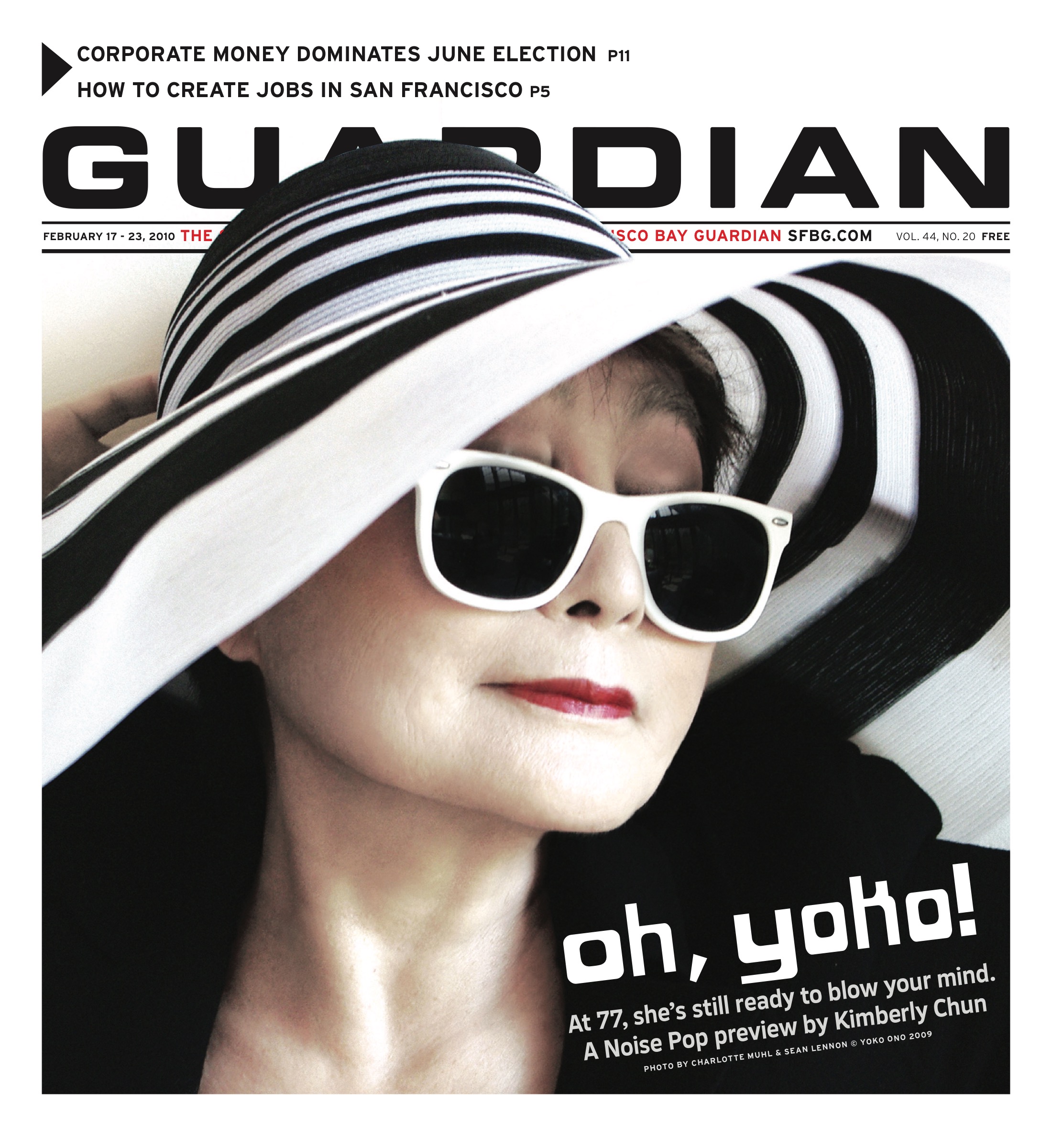
    *The Imaginarium of Doctor Parnassus From the title to the plot to the execution, The Imaginarium of Doctor Parnassus is the kind of movie you’re told not to see sober. This is a film in which Tom Waits plays the Devil, in which characters’ faces change repeatedly, in which Austin Powers‘ Verne Troyer makes his triumphant big-screen return. The story is your basic battle between good and evil, with Doctor Parnassus (Christopher Plummer) struggling to save souls from Mr. Nick (Waits) in order to protect his daughter Valentina (Lily Cole). Meanwhile, Valentina is wooed by the mysterious Tony, played by Heath Ledger in his final film role — along with Johnny Depp, Jude Law, and Colin Farrell. There are plenty of big important themes to be analyzed here, but it’s honestly more fun to simply get lost in Doctor Parnassus’ Imaginarium. Director and co-writer Terry Gilliam has created a world and a mythology that probably takes more than one viewing to fully comprehend. Might as well let yourself get distracted by all the shiny colors instead. (2:02) Shattuck. (Peitzman)

    Invictus Elected President of South Africa in 1995 — just five years after his release from nearly three decades’ imprisonment — Nelson Mandela (Morgan Freeman) perceives a chance to forward his message of reconciliation and forgiveness by throwing support behind the low-ranked national rugby team. Trouble is, the Springboks are currently low-ranked, with the World Cup a very faint hope just one year away. Not to mention the fact that despite having one black member, they represent the all-too-recent Apartheid past for the country’s non-white majority. Based on John Carlin’s nonfiction tome, this latest Oscar bait by the indefatigable Clint Eastwood sports his usual plusses and minuses: An impressive scale, solid performances (Matt Damon co-stars as the team’s Afrikaaner captain), deft handling of subplots, and solid craftsmanship on the one hand. A certain dull literal-minded earnestness, lack of style and excitement on the other. Anthony Peckham’s screenplay hits the requisite inspirational notes (sometimes pretty bluntly), but even in the attenuated finals match, Eastwood’s direction is steady as she goes — no peaks, no valleys, no faults but not much inspiration, either. It doesn’t help that Kyle Eastwood and Michael Stevens contribute a score that’s as rousing as a warm milk bath. This is an entertaining history lesson, but it should have been an exhilarating one. (2:14) Oaks. (Harvey)

    *The Last Station Most of the buzz around The Last Station has focused on Helen Mirren, who takes the lead as the Countess Sofya, wife of Leo Tolstoy (Christopher Plummer). Mirren is indeed impressive — when is she not? — but there’s more to the film than Sofya’s Oscar-worthy outbursts. The Last Station follows Valentin Bulgakov (James McAvoy), hired as Tolstoy’s personal secretary at the end of the writer’s life. Valentin struggles to reconcile his faith in the anarchist Christian Tolstoyan movement with his sympathy for Sofya and his budding feelings for fellow Tolstoyan Masha (Kerry Condon). For the first hour, The Last Station is charming and very funny. Once Tolstoy and Sofya’s relationship reaches its most volatile, however, the tone shifts toward the serious — a trend that continues as Tolstoy falls ill. After all the lighthearted levity, it’s a bit jarring, but the solid script and accomplished cast pull The Last Station together. Paul Giamatti is especially good as Vladimir Chertkov, who battles against Sofya for control of Tolstoy’s will. You’ll never feel guiltier for putting off War and Peace. (1:52) Albany, Embarcadero, Piedmont, Sundance Kabuki. (Peitzman)

    *Leonard Cohen: Live at the Isle of Wight 1970 The dawn of the Me Decade saw the largest-ever music festival to that date —albeit one that was such a logistical, fiscal and hygenic disaster that it basically killed the development of similar events for years. This was the height of "music should be free" sentiments in the counterculture, with the result that many among the estimated six to eight hundred thousand attendees who overwhelmed this small U.K. island showed up without tickets, refused to pay, and protested in ways that included tearing down barrier walls and setting fires. It was a bummer, man. But after five days of starry acts often jeered by an antsy crowd — including everyone from Joni, Hendrix, Dylan, Sly Stone, the Who and the Doors to such odd bedfellows as Miles Davis, Tiny Tim, Voices of East Harlem, Supertramp, and Gilberto Gil — Canadian troubador Cohen appeared at 4 a.m. on a Monday to offer balm. Like director Murray Lerner’s 1995 Message to Love, about the festival as a whole, this footage has been shelved for decades, but it bounces right back from the dead — albeit soothingly. Cohen seems blissed out, pupils like black marbles, his between-song musings are as poetical as those fascinating lyrics, and his voice is suppler than the rasp it would soon become. Kris Kristofferson, Judy Collins, Joan Baez, and bandmate Bob Johnson offer reflections 40 years later. But the main attraction is obviously Cohen, who is magnetic even if an hour of (almost) nothing but ballads reveals how stylistically monotone his songwriting could be. (1:04) Roxie. (Harvey)

    *The Most Dangerous Man in America: Daniel Ellsberg and the Pentagon Papers For many, Daniel Ellsberg is a hero — a savior of American First Amendment rights and one of the most outspoken opponents of the Vietnam war. But as this documentary (recently nominated for an Academy Award) shows, it’s never an an easy decision to take on the U.S. government. Ellsberg himself narrates the film and details his sleepless nights leading up to the leak of the Pentagon Papers — the top secret government study on the Vietnam war — to the public. Though there are few new developments in understanding the particulars of the war or the impact the release of the Papers had on ending the conflict, the film allows audiences to experience the famous case from Ellsberg’s point of view, adding a fresh and poignantly human element to the events; it’s a political documentary that plays more like a character drama. Whether you were there when it happened or new to the story, there is something to be appreciated from this tale of a man who fell out of love with his country and decided to do something about it. (1:34) Embarcadero, Shattuck. (Galvin)

    My Son, My Son, What Have Ye Done "David Lynch presents a Werner Herzog film" — there’s a phrase guaranteed to titillate a certain percentage of the filmgoing public. Anyone still reeling from last year’s The Bad Lieutenant: Port of Call New Orleans may not be ready for My Son, My Son, What Have Ye Done, a less accessible tale imprinted with trademark quirks from both its producer and director. Loosely based on a true case of matricide in San Diego, My Son begins as Brad McCullum (Michael Shannon of 2008’s Revolutionary Road) has just used a sword to slay his mother (Grace Zabriskie). As police, led by Detective Hank Havenhurt (Willem Dafoe), gather ’round Mark’s pink, flamingo-festooned home — where he’s barricaded himself, apparently with hostages — the tale of a son’s bizarre downfall is pieced together via flashbacks courtesy of his fiancée, Ingrid (Chloë Sevigny), and ascot-wearing theater director Lee (Udo Kier). The whole thing, as Brad might say, is a "cosmic melodrama" imbued with just enough surreal and off-putting stylistic choices to alienate general audiences. Ernst Reijseger’s score is haunting, often to the point of distraction. A tuxedo-wearing little person appears, maybe as a shout-out to Lynch fans. A dinner scene involving Jell-O is capped by a frozen tableau, actors motionless even as the dessert jiggles. Ostriches, only slightly more integrated into the plot than Bad Lieutenant‘s iguanas, stalk across the screen. Herzog, ever the outsider auteur, may win no new fans with My Son. One senses he’s just fine with that. (1:31) Castro. (Eddy)

    *North Face You’ll never think of outerwear the same way again — and in fact you might be reaching for your fleece and shivering through the more harrowing climbing scenes of this riveting historical adventure based on a true tale. Even those who consider themselves less than avid fans of outdoor survival drama will find their eyes frozen, if you will, on the screen when it comes to this retelling/re-envisioning of this story, legendary among mountaineers, of climbers, urged on by Nazi propaganda, to tackle the last "Alpine problem." At issue: the unclimbed north face of Switzerland’s Eiger, a highly dangerous and unpredictable zone aptly nicknamed "Murder Wall." Two working-class friends, Toni Kurz (Benno Fürmann of 2008’s Jerichow) and Andi Hinterstoisser (Florian Lukas) — here portrayed as climbing fiends driven to reach summits rather than fight for the Nazis — take the challenge. There to document their achievement, or certain death, is childhood friend and Kurz’s onetime sweetheart Luise (Johanna Wokalek, memorable in 2008’s The Baader Meinhof Complex), eager to make her name as a photojournalist while fending off the advances of an editor (Ulrich Tukur) seeking to craft a narrative that positions the contestants as model Aryans. But the climb — and the Eiger, looming like a mythical ogre — is the main attraction here. Filmmaker Philipp Stölzl brings home the sheer heart-pumping exhilaration and terror associated with the sport — and this specific, legendarily tragic climb — by shooting in the mountains with his actors and crew, and the result goes a way in redeeming an adventure long-tainted by its fascist associations. (2:01) Bridge, Shattuck, Smith Rafael. (Chun)

    *Percy Jackson and the Olympians: The Lightning Thief It would be easy to dismiss Percy Jackson and the Olympians: The Lightning Thief as an unabashed Harry Potter knock-off. Trio of kids with magic powers goes on a quest to save the world in a Chris Columbus adaptation of a popular young adult series — sound familiar? But The Lightning Thief is sharp, witty, and a far cry from Columbus’ joyless adaptation of Harry Potter and the Sorcerer’s Stone (2001). Logan Lerman stars as Percy Jackson, the illegitimate son of Poseidon and Catherine Keener. Once he learns his true identity at Camp Half-Blood, he sets off on a quest with his protector, a satyr named Grover, and potential love interest Annabeth, daughter of Athena. Along the way, they bump into gods and monsters from Greek mythology — with a twist. Think Percy using his iPhone to fight Medusa (Uma Thurman), or a land of the Lotus-Eaters disguised as a Lady Gaga-blasting casino. A worthy successor to Harry Potter? Too soon to say, but The Lightning Thief is at least a well-made diversion. (1:59) 1000 Van Ness. (Peitzman)

    *Precious: Based on the Novel Push By Sapphire This gut-wrenching, little-engine-that-could of a film shows the struggles of Precious, an overweight, illiterate 16-year-old girl from Harlem. Newcomer Gabourey Sidibe is so believably vigilant that her performance alone could bring together the art-house viewers as well as take the Oscars by storm. But people need to actually go and experience this film. While Precious did win Sundance’s Grand Jury and Audience Award awards this year, there is a sad possibility that filmgoers will follow the current trend of "discussing" films that they’ve actually never seen. The daring casting choices of comedian Mo’Nique (as Precious’ all-too-realistically abusive mother) and Mariah Carey (brilliantly understated as an undaunted and dedicated social counselor) are attempts to attract a wider audience, but cynics can hurdle just about anything these days. What’s most significant about this Dancer in the Dark-esque chronicle is how Damien Paul’s screenplay and director Lee Daniels have taken their time to confront the most difficult moments in Precious’ story –- and if that sounds heavy-handed, so be it. Stop blahging for a moment and let this movie move you. (1:49) Presidio, Roxie, Shattuck. (Jesse Hawthorne Ficks)

    *Sherlock Holmes There is some perfunctory ass-kicking in director Guy Ritchie’s big-ticket adaptation of the venerable franchise, but old-school Holmes fans will be pleased to learn that the fisticuffs soon give way to a more traditional detective adventure. For all his foibles, Ritchie is well-versed in the art of free-wheeling, entertaining, London-based crime capers. And though Sir Arthur Conan Doyle’s legendary characters have been freshened up for a contemporary audience, the film has a comfortingly traditional feel to it. The director is lucky to have an actor as talented as Robert Downey Jr. in the title role, and the pair make good use of the American’s talents to create a Holmes resplendent in diffident, pipe-smoking, idiosyncratic glory. Though the film takes liberal creative license with the literary character’s offhand reference to martial prowess, it’s all very English, very Victorian (flying bowler hats, walking sticks, and bare-knuckle boxing), and more or less grounded in the century or so of lore that has sprung up around the world’s greatest detective. Jude Law’s John Watson is a more charismatic character this time around, defying the franchise’s tradition, and the byzantine dynamics of the pair’s close friendship are perfectly calibrated. The script, by Michael Robert Johnson, Anthony Peckham, and Simon Kinberg, suffers a little by borrowing from other Victorian crime fictions better left untouched, but they get the title character’s inimitable "science of deduction" down pat, and the plot is rife with twists, turns, and inscrutable skullduggery. (2:20) SF Center. (Richardson)

    Shutter Island Director Martin Scorsese and muse du jour Leonardo DiCaprio draw from oft-filmed novelist Dennis Lehane (2003’s Mystic River, 2007’s Gone Baby Gone) for this B-movie thriller that, sadly, offers few thrills. DiCaprio’s a 1950s U.S. marshal summoned to a misty island that houses a hospital for the criminally insane, overseen by a doctor (Ben Kingsley) who believes in humane, if experimental, therapy techniques. From the get-go we suspect something’s not right with the G-man’s own mind; as he investigates the case of a missing patient, he experiences frequent flashbacks to his World War II service (during which he helped liberate a concentration camp), and has recurring visions of his spooky dead wife (Michelle Williams). Whether or not you fall for Shutter Island‘s twisty game depends on the gullibility of your own mind. Despite high-quality performances and an effective, if overwrought, tone of certain doom, Shutter Island stumbles into a third act that exposes its inherently flawed and frustrating storytelling structure. If only David Lynch had directed Shutter Island — it could’ve been a classic of mindfuckery run amok. Instead, Scorsese’s psychological drama is sapped of any mystery whatsoever by its stubbornly literal conclusion. (2:18) California, Four Star, 1000 Van Ness, Presidio, Sundance Kabuki. (Eddy)

    A Single Man In this adaptation of Christopher Isherwood’s 1964 novel, Colin Firth plays George, a middle-aged gay expat Brit and college professor in 1962 Los Angeles. Months after the accidental death of Jim (Matthew Goode), his lover for 16 years, George still feels worse than bereft; simply waking each morning is agony. So on this particular day he has decided to end it all, first going through a series of meticulous preparations and discreet leave-takings that include teaching one last class and having supper with the onetime paramour (Julianne Moore) turned best friend who’s still stuck on him. The main problem with fashion designer turned film director Tom Ford’s first feature is that he directs it like a fashion designer, fussing over surface style and irrelevant detail in a story whose tight focus on one hard, real-world thing — grief — cries for simplicity. Not pretentious overpackaging, which encompasses the way his camera slavers over the excessively pretty likes of Nicholas Hoult as a student and Jon Kortajarena as a hustler, as if they were models selling product rather than characters, or even actors. (In fact Kortajarena is a male supermodel; the shocker is that Hoult is not, though Hugh Grant’s erstwhile About a Boy co-star is so preening here you’d never guess.) Eventually Ford stops showing off so much, and A Single Man is effective to the precise degree it lets good work by Goode, Moore and especially the reliably excellent Firth unfold without too much of his terribly artistic interference. (1:39) Embarcadero, 1000 Van Ness, Piedmont, Shattuck. (Harvey)

    *Terribly Happy The Coen Brothers’ Blood Simple (1984) is the obvious corollary for this coolly humorous Danish import, though director/co-writer Henrik Ruben Genz’s firmly dampened-down thriller of sorts is also touched by David Lynch’s parochial surrealism and Aki Kaurismäki’s backwater puckishness. Happy isn’t quite the word for handsome, seemingly upstanding cop Jakob (Robert Hansen), reassigned from the big city of Copenhagen to a tiny village in South Jutland. There he slowly learns that the insular and self-sufficient locals are accustomed to fixing problems on their own and that cows, trucks, and other troubles have a way of conveniently disappearing into the bog. When buxom blonde Ingerlise (Lene Maria Christensen) whispers to him that her husband Jørgen (Kim Bodnia) beats her, Jakob begins to find his moral ground slipping away from him — while his own dark secrets turn out to be not so secret after all. More of a winkingly paranoid, black-hearted comedy about the quicksand nature of provincial community and small-town complicity than a genuine murder mystery, Terribly Happy wears its inspirations on its sleeve, but that doesn’t stop this attractively-shot production from amusing from start to finish, never tarrying too long to make a point that it gets mired in the bog that swallows all else. (1:42) Opera Plaza. (Chun)

    Up in the Air After all the soldiers’ stories and the cannibalism canards of late, Up in the Air‘s focus on a corporate ax-man — an everyday everyman sniper in full-throttle downsizing mode — is more than timely; it’s downright eerie. But George Clooney does his best to inject likeable, if not quite soulful, humanity into Ryan Bingham, an all-pro mileage collector who prides himself in laying off employees en masse with as few tears, tantrums, and murder-suicide rages as possible. This terminator’s smooth ride from airport terminal to terminal is interrupted not only by a possible soul mate, fellow smoothie and corporate traveler Alex (Vera Farmiga), but a young tech-savvy upstart, Natalie (Anna Kendrick), who threatens to take the process to new reductionist lows (layoff via Web cam) and downsize Ryan along the way. With Up in the Air, director Jason Reitman, who oversaw Thank You for Smoking (2005) as well as Juno (2007), is threatening to become the bard of office parks, Casual Fridays, khaki-clad happy hours, and fly-over zones. But Up in the Air is no Death of a Salesman, and despite some memorable moments that capture the pain of downsizing and the flatness of real life, instances of snappily screwball dialogue, and some more than solid performances by all (and in particular, Kendrick), he never manages to quite sell us on the existence of Ryan’s soul. (1:49) Marina, 1000 Van Ness, Piedmont, SF Center, Shattuck, Sundance Kabuki. (Chun)

    Valentine’s Day Genre moviemaking loves it a gimmick — and nothing gets more greeting-card gimmicky or sell-by-date corny than the technique of linking holidays and those mandatory date nights out. You’re shocked that nobody thought of this chick flick notion sooner. Valentine’s Day is no My Bloody Valentine (1981, 2009) — it aspires to an older, more yupscale lady’s choice-crowd than the screaming teens that are ordinarily sought out by horror flicks. And its A-list-studded cast — including Oscar winners Julia Roberts, Jamie Foxx, and Kathy Bates as well as seemingly half of That ’70s Show‘s players — is a cut above TV tween starlets’ coming-out slasher slumber parties. It partly succeeds: bringing Valentine’s haters into the game as well as lovers is a smart ploy (although who believes that the chic-cheekbones-and-fulsome-lips crew of Jessica Biel and Jennifer Garner would be dateless on V-Day?), and the first half is obviously structured around the punchlines that punctuate each scene — a winning if contrived device. Juggling multiple storylines with such a whopping cast lends an It’s a Mad Mad Mad Mad World (1963) quality to the Jessica- and Taylor-heavy shenanigans. And some tales get a wee bit more weight than others (the charisma-laden scenes with Bradley Cooper and Roberts cry out for added screentime), creating a strangely lopsided effect that adds unwanted tedium to an affair that should be as here-today-gone-tomorrow as a Whitman’s Sampler. (1:57) Empire, Marina, 1000 Van Ness, SF Center, Shattuck. (Chun)

    *The White Ribbon In Michael Haneke’s The White Ribbon, his first German-language film in ten years, violence descends on a small northern German village mired in an atmosphere of feudalism and protestant repression. When, over the course of a year, a spate of unaccountable tragedies strikes almost every prominent figure as well as a powerless family of tenant farmers, the village becomes a crucible for aspersion and unease. Meanwhile, a gang of preternaturally calm village children, led by the eerily intense daughter of the authoritarian pastor, keep appearing coincidentally near the sites of the mysterious crimes, lending this Teutonic morality play an unsettling Children of the Corn undertone. Only the schoolteacher, perhaps by virtue of his outsider status, seems capable of discerning the truth, but his low rank on the social pecking order prevent his suspicions from being made public. A protracted examination on the nature of evil — and the troubling moral absolutism from which it stems. (2:24) Albany, Clay. (Nicole Gluckstern)

    The Wolfman Remember 2000’s Hollow Man, an update of 1933’s The Invisible Man so over-the-top that it could only have been brought to you by a post-Starship Troopers (1997) Paul Verhoeven? Fear not, Lon Chaney, Jr. fanclub members — The Wolfman sticks fairly true to its 1941 predecessor, setting its tale of a reluctant lycanthrope in Victorian England, where there are plenty of gypsies, foggy moors, silver bullets, angry villagers, and the like. Benicia Del Toro plays Lawrence Talbot, who’s given an American childhood backstory to explain his out-of-place stateside accent (and a Mediterranean-looking mother to make up for the fact that he’s supposed to be the son of Anthony Hopkins). Soon after returning to his estranged father’s crumbling manor, Lawrence is chomped by a you-know-what. Next full moon, Lawrence realizes what he’s become; murderous rampages and much angst ensue. (He’s kind of like the Incredible Hulk, except much hairier). Director Joe Johnston (a tech whiz who worked on the original Star Wars movies, and helmed 2001’s Jurassic Park III), doesn’t offer much innovation on the werewolf legend (or any scares, for that matter). But the effects, including transformation scenes and claw-tastic gore, are predictably top-notch. (2:05) Empire, 1000 Van Ness, SF Center, Sundance Kabuki. (Eddy)

    REP PICKS

    *"Darkest Americana and Elsewhere: Films, Video, and Words of James Benning" See "Siteseeing." McBean Theater, Presentation Theater, Yerba Buena Center for the Arts.

    *To My Great Chagrin: The Unbelievable Story of Brother Theodore See "tk feature." (1:10) Yerba Buena Center for the Arts.

    Events listings

    0

    Events listings are compiled by Paula Connelly. Submit items for the listings at listings@sfbg.com.

    WEDNESDAY 24

    SF Noir Museum of African Diaspora, Marcus Books, The Atrium, and other Bay Area locations, for more information, visit www.sfnoir.org. Wed. – Sun., $10-$75. Celebrate Black History month at this year’s culinary arts focused SF Noir, featuring food wine and entertainment that highlight the best in Black cuisine.

    "World without us" Herbst Theater, 401 Van Ness, SF; (415) 561-6582. 7:30pm, $10. Attend this Long Now Foundation’s Seminar About Long-Term Thinking, where journalist Alan Weisman will discuss his experience traveling the world to investigate what happens when humans stop occupying an area.

    BAY AREA

    Bike Repair Class Cycles of Change APC Bike Shop, 650 W. Ranger, Alameda; (510) 898-7830. 6:30pm, $80-$150 sliding scale for all four classes. Learn how to fix your bike at this four part basic bike maintenance training program run by a nonprofit community bike shop. Classes include bike anatomy, brakes, shifting, and wheels.

    Working in the Shadows Revolution Books, 2425 Channing, Berk.; (510) 848-1196. 7pm, free. Hear Gabriel Thompson discuss his new book, Working in the Shadows: A year of doing the jobs (most) Americans won’t do, about a year spent working all over the United States alongside Latino immigrants.

    THURSDAY 25

    God, Seed San Francisco Center for the Book, 300 DeHaro, SF; (415) 565-0545. 7pm, free. Attend this reading and slide show presentation based on Bay Area artist Lorna Stevens and poet Rebecca Foust’s new collaborative book, that is a collection of poems and art about the environment.

    Historic Wineries of California California Historical Society Museum, 678 Mission, SF; (415) 357-1848. 6pm, $25. Attend this wine tasting and history lesson all in one, with winemakers representing some of the oldest, family-owned California wineries telling tales of growing up on vineyards and offering tastings of their latest vintage.

    Kamau Patton and Sara Kraft Yerba Buena Center for the Arts, Gallery 3, 701 Mission, SF; (415) 978-2787. 7pm, $7. Local visual artist Kamau Patton and performance artist Sarah Kraft come together to discuss commonalities within their artistic practice, presenting samples of sounds image and text to illustrate their discussion.

    Love Your Body Now Center for Sex and Culture, 1519 Mission, SF; (415) 255-1155. 7:30pm, $10-$30 sliding scale. This interactive workshop allows participants to explore the roots of their own body issues, how it has affected them, and how to combat the barrage of media that focuses on perfection.

    FRIDAY 26

    Pacific Orchid Exposition Fort Mason Center, Bay at Franklin, SF; (415) 665-2468. Fri. and Sun 10am-5pm, Sat. 10am-6pm; $14. Check out over 150,000 unique orchids from around the world, with educational displays and demonstration. This year’s theme of "Carnaval" will highlight the diverse natural habitats of orchids.

    BAY AREA

    Seed Swap Ecology Center, 2530 San Pablo, Berk.; (510) 658-9178. 7pm, food and seeds to share or $10 donation. Hang out with fellow local gardeners at this pot luck, seed swap, and party. Bring food, seeds, or a garden related treasure to raffle and you can get in for free.

    SATURDAY 27

    Chinese New Year Treasure Hunt Hunt begins at Justin Herman Plaza, Market at Embarcadero, SF; (415) 564-9400. 4:30pm, $30-$40. Channel your inner stealthy Tiger at this treasure hunt and urban sleuthing game taking place on the streets of Chinatown, North Beach, and Telegraph Hill. Rain or shine.

    Lunar New Year Festival Chinese Cultural Center, 3rd floor, 750 Kearny, SF; (415) 986-1822. Sat.-Sun. 11am-4pm, free. Usher in the year of the Tiger at this Spring Festival celebration featuring lion dancing, performances, activities, fortune telling, art, and more.

    Magazine Day Booksmith, 1644 Haight, SF; (415) 863-8688. 1pm, $5. Break out your piles of unread magazines and share them with other magazine lovers as Booksmith turns itself into a giant magazine reading room for the day featuring discussions about magazine publishing, wine, snacks, and plenty of mags to take home from the communal piles.

    Art to Empower Africa Space Gallery, 1141 Polk, SF; camfedfundraisersf.org. 7pm, free. Buy donated art from local artists at this auction where all of the proceeds will go to benefit Camfed, an organization that empowers girls in Africa by using a community-based, holistic approach to long-term education, small business training, and HIV prevention.

    SUNDAY 28

    Ayibobo! Glide Memorial Church, 330 Ellis, SF; (415) 626-7500. 1pm, free. Join San Francisco poet Laureates Lawrence Ferlinghetti, Jack Hirschman, and Janice Mirikitani at this poetry reading and benefit for Haiti. Donations will be given to Doctors Without Borders.

    Benefit for the Boob Wild Side West, 424 Cortland, SF; breastcanceremergencyfund.org. 4pm, $5-$20 donation. The Sisters of Perpetual Indulgence are hosting this fundraiser for the Breast Cancer Emergency Fund featuring burlesque performances, drag kings, comedy, sex education, raffle prizes, and more.

    TUESDAY 2

    Bike Touring 101 San Francisco Bicycle Coalition, Suite 1550, 995 Market, SF; www.sfbike.org. 6:30pm, free. This workshop will go over the basics of bicycle touring, like what you need, what you don’t need, and best practices to keep you happy and healthy on the road. Bring your bicycle to find out if it’s suited for bike touring.

    Stage listings

    0

    Stage listings are compiled by Molly Freedenberg. Performance times may change; call venues to confirm. Reviewers are Robert Avila, Rita Felciano, and Nicole Gluckstern. Submit items for the listings at listings@sfbg.com. For further information on how to submit items for the listings, see Picks. For the complete listings, go to www.sfbg.com.

    THEATER

    OPENING

    Mirrors In Every Corner Intersection for the Arts, 446 Valencia; 626-2787, www.theintersection.org. Opens Thurs/25. Runs Thurs-Sun, 8pm. Through March 21. Intersection for the Arts, Campo Santo, and the Living Word Project present the world premiere of Chinaka Hodge’s provocative show exploring race and identity from new perspectives.

    BAY AREA

    Beebo Brinker Chronicles Brava Theater Center, 2781 24th St; 641-2822, www.brava.org. $20-$30. Opens Thurs/25. Runs Thurs-Sun and March 6, 8pm, through March 13. The regional premiere of Kate Moira Ryan and Linda S. Chapman’s play adapted from a series of pulp novels.

    Concerning Strange Devices from the Distant West Roda Theatre, 2015 Addison, Berk; (510) 647-2949, berkeleyrep.org. $13.50-$27. Berkeley Rep presents a sexy and intriguing new show from Naomi Iizuka.


    ONGOING

    Animals Out of Paper SF Playhouse, 533 Sutter; 677-9596, www.sfplayhouse.org. $30-$40. Wed/24-Fri/26, 8pm; Sat/27, 3 and 8pm. SF Playhouse presents Rajiv Joseph’s quirky comedy.

    Bay One Acts Festival Boxcar Theatre, 505 Natoma; 776-7427, www.threewisemonkeys.org. $12-$24. Dates and times vary. Through March 13. Three Wise Monkeys presents eleven short plays by Bay Area playwrights, including Cris Barth, Stuart Bousel, and Lauren Yee.

    Beauty of the Father Phoenix Theatre, 414 Mason; (800) 838-3006, www.offbroadwaywest.org. $30. Thurs-Sat, 8pm. Through March 13. Off-Broadway West’s season opener offers the Bay Area a first look at the somewhat messy but ultimately rewarding 2006 drama by Cuban American Pulitzer Prize–winner Nilo Cruz ("Anna in the Tropics"). Set in contemporary Andalusia, in the south of Spain, it’s the story of an aging painter named Emiliano (Durand Garcia) whose best friend and near-constant companion is the ghost of Federico García Lorca (Michael Carlisi), poet and playwright long ago murdered by the fascists during the Spanish Civil War. Emiliano also lives with his mostly platonic sweetheart (Jeanette Sarmiento), whom he plans to marry after she divorces his other housemate, a young Moroccan immigrant named Karim (Chris Holland) who is tied to her for the green card but is also Emiliano’s sometime lover. When his long-estranged ex-wife back in the U.S. dies, he invites his grown daughter (Natasha Chacon) to come live with him, feeling the urge "to father her" again. She arrives for an indefinite stay instead, shedding the gloom of her mother’s death in the embrace of life under the Andalucian sun—and a smitten Karim in particular. There’s some piquancy to the unraveling of this romantic ménage, and real poetry in the language and perspective afforded through the magical realistic presence of Lorca, but despite Cruz’s muscular writing and ambitious thematic canvas, the drama flags at points and sometimes seems unsure of where it would take us or even the proper tone or color to employ. Nevertheless, artistic director Richard Harder helms a strong cast, which helps make the going worthwhile. (Avila)

    Don’t Feel: The Death of Dahmer Mama Calizo’s Voice Factory, 1519 Mission; mcvf.org. $20. Thurs/25-Sat/27, 8pm.For most of us, Jeffrey Dahmer is a set-up and punch line in one, a byword for the macabre phenomenon of serial killing, as mundane as cereal eating (at least in pop culture terms). He’s the inhuman incarnate, hiding behind boyish white male normality. But what does it mean to us that he was also homosexual? That’s an animating question behind Evan Johnson’s "Don’t Feel: The Death of Dahmer," whose great power lies in its rigorous seriousness, the skill and depth it brings to its subject that makes it unexpectedly complicated, fascinating, terrible, tragic—an altogether human and social drama, centered on a terrifyingly isolated figure, but including many others from immediate family to those of us in the room listening to Dahmer’s shy, earnest, enraged postmortem testimony. The eerie, shadowy setting, perfectly augmented by Sean Malroy’s buzzingly jarring soundscape, has Dahmer still in his orange penitentiary garb, his forehead soaked with blood from the fatal blow received from a fellow inmate nicknamed Christ. The impressive result of writer-performer Johnson’s DIY residency at Mama Calizo’s Voice Factory, beautifully directed by Eric Wilcox, "Don’t Feel" humanizes its subject without recourse to crass sentiment or apology. And Johnson’s supple, multifaceted performance is passionately committed, deft and fearless. It’s a riveting communion with the dead, in several directions at once, and it will leave you troubled and moved. (Avila)

    Eat, Pray, Laugh! Off-Market Theaters, 965 Mission; www.brownpapertickets.com. $20. Wed/24, 8pm. Off-Market Theaters presents stand up comic and solo artist Alicia Dattner in her award-winning solo show.

    Eccentrics of San Francisco’s Barbary Coast: A Magical Escapade San Francisco Magic Parlor, Chancellor Hotel Union Square, 433 Powell; 1-800-838-3006. $30. Fri-Sat, 8pm. Ongoing. This show celebrates real-life characters from San Francisco’s colorful and notorious past.

    Fabrik: The Legend of M. Rabinowitz Jewish Theatre, 470 Florida; 292-1233, www.tjt-sf.org. $20-$45. Thurs/25-Sat/27, 8pm; Sun/28, 2 and 7pm. The Jewish Theatre San Francisco presents a Wakka Wakka Productions presentation of this story of a Polish Jew who immigrated to Norway, told with hand-and-rod puppets, masks, and original music.

    The Gilded Thick House, 1695 18th St. www.thegilded.com. $18-$30. Thurs, 7pm; Fri-Sat, 8pm; Sun, 2pm. Through March 7. The Curiouser Group presents a new musical by Reynaldi Lolong.

    The Greatest Bubble Show on Earth Marsh, 1062 Valencia. (800) 838-3006, www.themarsh.org. $7-$50. Sun, 11am. Through April 3. The Amazing Bubble Man returns with his extraordinary family-friendly show.

    Hearts on Fire Teatro ZinZanni, Pier 29; 438-2668, www.zinzanni.org. $117-$145. Wed-Sat, 6pm; Sun, 5pm. Through May 16. Teatro ZinZanni celebrates its 10th anniversary with this special presentation featuring Thelma Houston, El Vez, and Christine Deaver.

    *Loveland The Marsh, 1074 Valencia; 826-5750, www.themarsh.org. $15-$50. Sat, 8:30pm; Sun, 7pm. Through April 11. Los Angeles–based writer-performer Ann Randolph returns to the Marsh with a new solo play partly developed during last year’s Marsh run of her memorable Squeeze Box. Randolph plays loner Frannie Potts, a rambunctious, cranky and libidinous individual of decidedly odd mien, who is flying back home to Ohio after the death of her beloved mother. The flight is occasion for Frannie’s own flights of memory, exotic behavior in the aisle, and unabashed advances toward the flight deck brought on by the seductively confident strains of the captain’s commentary. The singular personality and mother-daughter relationship that unfurls along the way is riotously demented and brilliantly humane. Not to be missed, Randolph is a rare caliber of solo performer whose gifts are brought generously front and center under Matt Roth’s reliable direction, while her writing is also something special—fully capable of combining the twisted and macabre, the hilariously absurd, and the genuinely heartbreaking in the exact same moment. Frannie Potts’s hysteria at 30,000 feet, as intimate as a middle seat in coach (and with all the interpersonal terror that implies), is a first-class ride. (Avila)

    Mahalia Lorraine Hansberry Theatre, 450 Post; 474-8800, www.lhtsf.org. $18-$40. Thurs/25-Sat/27, 8pm; Sun/28, 4pm. Lorraine Hansberry Theatre presents the inaugural production of Tom Stolz’s gospel musical.

    Oedipus el Rey Magic Theatre, Building D, Fort Mason Center; 441-8822, www.magictheatre.org. $20-$55. Days and times vary. Through March 14. Luis Alfaro transforms Sophocles’ ancient tale into an electrifying myth, directed by Loretta Greco.

    Pearls Over Shanghai Hypnodrome, 575 Tenth St.; 1-800-838-3006, www.thrillpeddlers.com. $30-69. Sat, 8pm; Sun, 7pm. Through April 24. Thrillpeddlers presents this revival of the legendary Cockettes’ 1970 musical extravaganza.

    *The Position Studio 250, 965 Mission; www.applyfortheposition.com. $20. Thurs/25-Sat/27, 8pm; Sun/28, 7pm. From the ready pen of local playwright William Bivins comes a witty dystopic thriller too good not to be (essentially) true: In the USA’s not-too-distant future, after "the Great Downturn," there’s 80% unemployment, the population lives by scavenging, despair is in the water and air, and there are no more dogs (those little four-legged ambassadors of hope). But there are still one or two job openings in the ultra-powerful, totemic, life-giving corporate universe of The Concern. A search narrows the candidates down to six (types played with palpable soul by Kate Jones, Asher Lyons, Gabi Patacsil, Eric Reid, Dan Williams, and Laura Zimmerman). They’re flown to an exclusive island, paradisial in its accommodations, totalitarian in its panoptic surveillance and haughty obscurantism. Greeted by icy hot Mrs. Radcliffe (Jessica Cortese) and her deliriously agreeable man-servant Baylian (a joyously loopy Even Winchester)—both nattily futuristic in coordinated turquoise outfits—the candidates learn there are no rules but two over the course of the evaluation, and no clue to what’s being evaluated. The contest begins and, in PianoFight’s high-spirited low-budget production, it makes no difference how familiar the themes or scenario. Adeptly suggesting classics new and hoary, from "Survivor" and "The Apprentice" to "The Most Dangerous Game," "The Position" never feels merely derivative, let alone dull or predictable. It’s inspired, rebellious lovemaking with our doom-clouded moment, engrossingly directed by PianoFight’s Christy Crowley. (Avila)

    The Real Americans The Marsh, 1062 Valencia; 826-5750, www.themarsh.org. $15-$50. Thurs-Fri, 8pm; Sat, 5pm. Through April 18. The Marsh presents the world premiere of Dan Hoyle’s new solo show.

    Suddenly Last Summer Actors Theatre, 855 Bush; 345-1287, www.actorstheatresf.org. $15-$35. Thurs-Sat, 8pm. Through March 27. Actors Theatre presents one of Tennessee Williams’ finest and most famous plays.

    Tick, Tick&ldots;Boom! Eureka Theatre, 215 Jackson. (800) 838-3006, www.therhino.org. $15-$30. Wed/24-Sat/27, 8pm; Sun/28, 3pm. "Rent" creator Jonathan Larson’s small autobiographical musical theater piece receives a modestly scaled but enthusiastic, generally sound staging from Theatre Rhinoceros and director Christopher Herold. The play, set in 1990 and written as Larson was still struggling to make a name for himself, revolves around the protagonist’s (Scott Gessford) impending 30th birthday and the crisis of confidence it triggers, as girlfriend (Holly Nugent) drifts away and best friend (Brian Yates Sharber)—in a supreme wake-up call to the heretofore self-absorbed artist—gets diagnosed with AIDS. The music—despite some sour notes and body mic problems on opening night—comes across most forcefully, especially one or two devilishly clever songs, but the storyline is thin and hard to care too much about on its own (it’s real dramatic power coming from the knowledge we have of Larson’s poignant end a few years later, dying on the eve of "Rent"’s phenomenal take-off). (Avila)

    What Just Happened? The Marsh, 1062 Valencia; (800) 838-3006, www.themarsh.org. $20-$50. Fri-Sat, 8pm. Through March 13. The Marsh presents Nina Wise’s improvisation-based sow about personal and political events which have transpired over the previous 24 hours.

    What Mama Said About ‘Down There Our Little Theater, 287 Ellis; 820-3250, www.theatrebayarea.org. $15-$25. Thurs-Sun, 8pm. Through July 30. Writer/performer/activist Sia Amma presents this largely political, a bit clinical, inherently sexual, and utterly unforgettable performance piece.

    Wicked Orpheum Theatre, 1182 Market; 512-7770, www.shnsf.com. $30-$99. Tues, 8pm; Wed, 2pm; Thurs-Fri, 8pm; Sat, 2 and 8pm; Sun, 2pm. Ongoing. Assuming you don’t mind the music, which is too TV-theme–sounding in general for me, or the rather gaudy décor, spectacle rules the stage as ever, supported by sharp performances from a winning cast. (Avila)


    BAY AREA

    An Anonymous Story by Anton Chekhov Berkeley City Club, 2315 Durant, Berk; (510) 558-1381, centralworks.org. $14-$25. Thurs-Sat, 8pm; Sun, 5pm. Central Works presents a new play adapted from the Checkhov novella.

    Coming Home Thrust Stage, Berkeley Repertory Theatre, 2025 Addison; (510) 647-2917, www.berkeleyrep.org. Wed/24, 7pm; Thurs/25-Sat/27, 8pm; Sun/28, 2 and 7pm. $33-$71. The rags to riches fantasy of the small town girl who hits the big time after abandoning her hometown for the brighter lights of a big city is one of the most well-worn yet perennially beloved plotlines. Less popular are the tales of the girls who return to their hometowns years later still in rags, their big city dreams crumbled and spent. Such a tale is Athol Fugard’s Coming Home, a cautious sequel to Valley Song, which follows Veronica Jonkers (a versatile Roslyn Ruff) to her childhood home in the Karoo, her own small child in tow and little else. The tragedy of her ignominious return is further compounded by her secret knowledge that she is HIV-positive, and her young son’s future therefore precarious. The slow-moving yet tenacious script stretches over a period of four years, following both the progression of Veronica’s dread decline in health, and the flowering intellectual development of her son, Mannetjie (played by Kohle T. Bolton and Jaden Malik Wiggins), who keeps his "big words" in his deceased Oupa’s pumpkin seed tin. Almost superfluous appearances by the ghost of Oupa (Lou Ferguson) are made enjoyable by Ferguson’s quiet mastery of the role, and Thomas Silcott parlays great empathy and range in his performance as Veronica’s irrepressible childhood companion and circumstantial caretaker Alfred Witbooi. (Gluckstern)

    *East 14th Laney College Theatre, 900 Fallon St, Oakl. www.east14thoak.eventbrite.com. $10-$50. Fri/26-Sat/27, 8:30pm. Also at the the Marsh Berkeley in March. Don Reed’s solo play, making its Oakland debut after an acclaimed New York run, is truly a welcome homecoming twice over. It returns the Bay Area native to the place of his vibrant, physically dynamic, consistently hilarious coming-of-age story, set in 1970s Oakland between two poles of East 14th Street’s African American neighborhood: one defined by his mother’s strict ass-whooping home, dominated by his uptight Jehovah’s Witness stepfather; the other by his biological father’s madcap but utterly non-judgmental party house. The latter—shared by two stepbrothers, one a player and the other flamboyantly gay, under a pimped-out, bighearted patriarch whose only rule is "be yourself"—becomes the teenage Reed’s refuge from a boyhood bereft of Christmas and filled with weekend door-to-door proselytizing. Still, much about the facts of life in the ghetto initially eludes the hormonal and naïve young Reed, including his own flamboyant, ever-flush father’s occupation: "I just thought he was really into hats." But dad—along with each of the characters Reed deftly incarnates in this very engaging, loving but never hokey tribute—has something to teach the talented kid whose excellence in speech and writing at school marked him out, correctly, as a future "somebody." (Avila)

    The First Grade Aurora Theatre, 2081 Addison, Berk; (510) 843-4822, auroratheatre.org. $15-$55. Wed/24-Sat/27, 8pm; Sun/28, 2 and 7pm. Aurora Theatre Company presents the world premiere of Joel Drake Johnson’s new play.

    *Learn to be Latina La Val’s Subterrnean, 1834 Euclid, Berk. impacttheatre.com. $10-$20. Thurs-Sat, 8pm. Impact Theatre continues its 14th season with the world premiere of Enrique Urueta’s play.


    DANCE

    "The Butterfly Lovers" Palace of Fine Arts Theatre; 392-4400, www.cityboxoffice.com. Wed, 7:30pm. $35-$70. Chinus Cultural Productions and China Arts and Entertainment Group present the U.S. premiere of China’s Romeo and Juliet, performed by the Beijing Dance Academy Youth Dance.

    "Intercontinental Collaborations" CounterPULSE, 1310 Mission; (800) 838-3006, www.counterpusle.org. Thurs-Sun, 8pm. Check for ticket prices. This evening features the U.S. premiere of Claire Cunninghma’s award-winning solo and a preview excerpt of Jess Curtis/Gravity’s Dances for Non-Fictional Bodies.

    "Olympus Rising" Dance Mission Theater, 3316 24th St. www.dancewright.com. Sun, 7pm. DanceWright Project appears in the Black Choreographers Festival to preview an excerpt from this sci-fi rock ballet.

    "When Dreams are Interrupted" City Hall Rotunda. Wed, noon. Purple Moon Dance Project presents a special performance of this inspiring work about the forced removal of Japanese Americans in San Francisco.


    BAY AREA

    "Ecstatic Dance" Sweets Historic Ballroom, 1933 Broadway, Oakl; 505-1112, info.ecstaticdance@gmail.com. Sun, 9:30am; Wed, 7pm. Ongoing. Move however you feel inspired with this freeform journey of movement.

    "here, look" Shawl-Anderson Dance Center, 2704 Alcatraz, Berk; (510) 654-5921, www.shawl-anderson.org. Fri-Sat, 8pm; Sun, 6pm. The Shawl-Anderson’s Dance Up Close/East Bay Series, ahdanco, presents an evening of new works by Abigail Hosein.

    "Saints and Angels" Temescal Arts Center, 511 48th St, Oakl. www.danceelixir.org. Fri, 6:30 and 9pm. Dance Elixir presents an evening of beautiful, austere, athletic, and comic contemporary dance.


    PERFORMANCE

    "All Star Magic & More" SF Playhouse, Stage 2, 533 Sutter; 646-0776, www.comedyonthesquare.com. Sun, 7pm. Ongoing. Magician RJ Owens hosts the longest running magic show in San Francisco.

    30th Anniversary Celebration of New Works African American Art and Culture complex, 762 Fulton; 292-1850, www.culturalodyssey.org/tickets. Thurs-Sat, 8pm; Sun, 3pm. Through March 14. $20. In celebration of Black History Month and National Women’s Month, Cultural Odyssey presents a festival featuring The Love Project, The Breach, and Dancing with the Clown of Love.

    BATS Improv Theatre Bayfront Theater, Fort Mason Center, B350 Fort Mason; 474-6776, www.improv.org. Fri-Sat, 8pm. $17-$20. The Theatresports show format treats audiences to an entertaining and engaging night of theater and comedy presented as a competition.

    Bijou Martuni’s, 4 Valencia; 241-0205, www.dragatmartunis.com. Sun, 7pm. $5. The eclectic live cabaret showcase features a night of love songs in honor of Valentine’s Day.

    "Black History Month Blacktacular&ldots; Black!" StageWerx Theatre, 533 Sutter. Thurs-Fri, 8pm. $20-$50. W. Kamau Bell aims to finally figure out what the big deal is about BHM.

    Don Carbone and Rick Shapiro Dark Room, 2263 Mission; 401-7987, darkroomsf.com. Sat. The Bay Area absurdist writer/performer shares an evening with the comic.

    "La Cenerentola" Legion of Honor; 972-8930, www.pocketopera.org. Sat-Sun, 2pm. Also March 7 in Napa. $31-$37. Pocket Opera presents Rossini’s twist on Cinderella.

    "The Cinderella Principle" Yerba Buena Center for the Arts, 701 Mission; 978-2787, www.ybca.org. Thurs-Sat, 8pm. $20-$35. Robert Moses’ Kin presents the world premiere of this show with Hush and Toward September.

    "The Legendary Lions vs. the Fists of Fury" Southern Exposure, 3030 20th St; 963-2141, www.soex.org. Fri, 8pm. Free. Mike Lai presents a one-night performance that juxtaposes traditional and contemporary Chinese culture.

    PianoFight Studio 250 at Off-Market, 965 Mission; www.painofight.com. Mon, 8pm. Through March 29. $20. The female-driven variety show Monday Night ForePlays returns with brand new sketches, dance numbers, and musical performances.

    "Talk to Me" The Marsh, 1062 Valencia; (800) 838-3006, www.themarsh.org. Wed, 7:30pm. $10-$15. The Marsh presents a performance of Hernan Ximenez’ funny and riveting play.

    "Unscripted: unscripted" Off-Market Theater, Studio 205, 965 Mission; 869-5384, www.un-scripted.com. Thurs-Sat, 8pm. Through March 13. The Un-Scripted Theater Company kicks off its eighth season with an improvised improv show.

    "Six" Commonwealth Club, 595 Market. www.magictheatre.org. Mon, 6pm. Free. Magic Theatre presents the Martha Heasley Cox Virgin Play Series, this time featuring a piece by Zohar Tirosh-Polk.


    BAY AREA

    "Come Home" La Pena, 3105 Shattuck, Berk; (510) 849-2568, www.lapnea.org. Sat, 8pm. $15-$18. In celebration of Black History Month, La Pena Cultural Center presents Jovelyn Richards in her solo performance theater piece.

    "Once Upon a Mattress" Julia Morgan Center for the Arts, 2640 College Ave, Berk; (510) 595-5514, www.ymtcberkeley.org. Feb 26, and 27, 7:30pm; Feb 21, 27, 2pm; Feb 28, 3pm. $10-$20. Young Musical Theater Company presents the Broadway classic.

    Upright Citizens Brigade Pan Theater, 2135 Broadway, Oakl; www.pantheater.com. Fri, 8 and 9:10pm. Ongoing. $14-$18. Upright Citizens Brigade Touring Co. brings the NYC funny to Oakland with this improve comedy show with guest performing troupes.


    COMEDY

    Annie’s Social Club 917 Folsom, SF; www.sfstandup.com. Tues, 6:30pm, ongoing. Free. Comedy Speakeasy is a weekly stand-up comedy show with Jeff Cleary and Chad Lehrman.

    "All Star Comedy and More with Tony Sparks" SF Playhouse, 533 Sutter; 646-0776, www.comedyonthesquare.com. Sun, 8:30pm. Ongoing. SF’s favorite comedy host brings a showcase of the Bay’s best stand-up comedy and variety.

    "Big City Improv" Shelton Theater, 533 Sutter; (510) 595-5597, www.bigcityimprov.com. Fri, 10pm, ongoing. $15-$20. Big City Improv performs comedy in the style of "Whose Line Is It Anyway?"

    Brainwash 1122 Folsom; 861-3663. Thurs, 7pm, ongoing. Free. Tony Sparks hosts San Francisco’s longest running comedy open mike.

    Club Deluxe 1511 Haight; 552-6949, www.clubdeluxesf.com. Mon, 9pm, ongoing. Free. Various local favorites perform at this weekly show.

    Clubhouse 414 Mason; www.clubhousecomedy.com. Prices vary. Scantily Clad Comedy Fri, 9pm. Stand-up Project’s Pro Workout Sat, 7pm. Naked Comedy Sat, 9pm. Frisco Improv Show and Jam Sun, 7pm. Ongoing.

    Cobbs 915 Columbus; 928-4320.

    "Comedy Master Series" Blue Macaw, 2565 Mission; www.comedymasterseries.com. Mon, 6pm. Ongoing. $20. The new improv comedy workshop includes training by Debi Durst, Michael Bossier, and John Elk.

    "Danny Dechi and Friends" Rockit Room, 406 Clement; 387-6343. Tues, 8pm. Free. Danny Dechi hosts this weekly comedy showcase through October.

    "Frisco Fred’s Comedy Hour" Chancellor Hotel in the Luques Restaurant, 433 Powell; 646-0776, www.comedyonthesquare.com. Sat, 7 and 8:30pm. Through March 27. $25. Frisco Fred presents this fun-filled hour of comedy, magic, crazy stunts and special guests.

    "The Howard Stone Show – 100th Show Celebration" SF Playhouse, 533 Sutter; 646-0776, www.comedyonthesquare.com. Sun, 8:30pm. $20. The Playhouse presents an off-beat comedy talk show hosted by Howard Stone and featuring the Danny Detchi Orchestra.

    "Improv Society" Shelton Theater, 533 Sutter; www.improvsociety.com. Sat, 10pm, ongoing, $15. Improv Society presents comic and musical theater.

    Punch Line San Francisco 444 Battery; www.punchlinecomedyclub.com.

    Purple Onion 140 Columbus; (800) 838-3006, www.purpleonionlive.com. Featuring Brent Weinbach and Will Franken Thurs.

    Rrazz Room Hotel Nikko, 222 Mason; 781-0306, www.therrazzroom.com.

    "Raw Stand-up Project SFCC, 414 Mason, Fifth Flr; www.sfcomedycollege.com. Sat, 7pm, ongoing. $12-15. SFCC presents its premier stand-up comedy troupe in a series of weekly showcases.

    "SF State Comedy Night" Creative Arts Building, McKenna Theatre, San Francisco Stat University; 338-2467, creativearts.sfsu.edu. Sat, 7:30pm. $35-$70. Ronnie Schell brings comedy back to the campus for the 10th annual comedy night.


    BAY AREA
    "Comedy Off Broadway Oakland" Ms. Pearl’s Jam House, 1 Broadway, Oakl; (510) 452-1776, www.comedyoffbroadwayoakland.com. Thurs-Fri, 9pm. Ongoing. $8-$10. Comedians featured on Comedy Central, HBO, BET, and more perform every week.
    "Sick Comedy" Berkeley Central Library, 2090 Kittredge, Berk; (510) 981-6100. Sun, 2pm. Free. See four professional comedians tell stories of the emotional and mental challenges brought on by illness.

    SPOKEN WORD
    "Black History Month Open Mic" Revolution Books, 2425 Channing Way, Berk; (510) 848-1196. Thurs, 7pm. Free. The theme is "What does liberation look like?" for tonight’s performance and discussion.
    "Grateful Tuesday" Ireland’s 32, 3920 Geary; 386-6173, www.myspace.com/thegrasshoppersongs. Tues, 8pm. Ongoing. Grasshopper hosts this weekly open mic featuring folk, world, and country music.

    John Yoo’s torturous book tour

    1

    By Adrian Castaneda and Steven T. Jones

    John Yoo – the infamous author of legal memos justifying torture for the Bush Administration and a controversial UC Berkeley law professor – continued his surreal book tour yesterday, stopping in San Francisco yesterday to appear on KQED’s forum.

    And while host Michael Krasny did little to challenge Yoo’s tortured logic, including the ludicrous assertion that tactics like waterboarding are legal because they weren’t specifically outlawed by Congress, two callers who are lawyers correctly noted that the U.S. is bound by several treaties that bar torture, as well as inhumane or degrading treatment of prisoners, which the U.S. clearly engaged in based on Yoo’s legal advice that only pushing a prisoner to the brink of death or major organ failure constitutes impermissible torture.

    One of those callers specifically asked Yoo why his memo to the White House – written in the wake of 9/11, which Yoo considers an “unprecedented” event that conveyed great new powers to the president – didn’t cite the U.S. constitutional provision that makes Congressional-approved treaties the “supreme law of the land,” comparable to any other laws Congress approves.

    Yoo never answered that question, and Krasny quickly dropped the issue to quote an e-mail that was supportive of Yoo, the only such comment during the hour-long show. It’s a shame that Krasny was far easier on this locally infamous figure than the Daily Show’s Jon Stewart, whose interview with Yoo last month was far tougher and more revealing.

    That’s particularly galling given that is was just last week that the Department of Justice issued its final report criticizing Yoo’s “flawed legal reasoning” even though it stopped short of finding professional misconduct that would warrant criminal sanctions or disbarment. That final report by David Margolis of the Justice Department overruled a preliminary report by the Office of Professional Standards that did find professional misconduct based on the fact that Yoo “knowingly provided incomplete and one-sided advice” to justify the Bush Administration’s desire to torture detainees that it dubbed “enemy combatants.”

    Protesters with World Can’t Wait and other groups have been hounding Yoo on his tour to promote his new book, “Crisis and Command: A history of executive power from George Washington to George W. Bush,” calling him and Jay Bybee (another Bush Administration lawyer who approved torture and is now a judge on the Ninth Circuit Court of Appeals in San Francisco) to be tried for their role in facilitating war crimes.

    “These are men covered with the blood of countless victims of unspeakably cruel torture, rendition, and imprisonment without any recourse to trial in hell hole dungeons across the planet,” reads a World Can’t Wait missive.

    For his part, Yoo is unrepentant and dismissive of critics, repeatedly citing unnamed polls that he says indicate most Americans support the so-called “enhanced interrogation methods” and believe they have prevented terrorist attacks. “I don’t think the majority of the American people think we went too far,” Yoo told Stewart.

    On Forum, Yoo criticized the Office of Professional Responsibility’s finding as “shoddy,” saying that the investigators did not take into account the pressure and national urgency of the months just after the 9/11 attacks. Yoo placed blame for the torture scandals not on the one-sided misinformation in his legal briefs but on the fact that Congress didn’t create specific laws to define torture technique after adopting international torture treaties into American law. Yoo also blamed Congress for its inability or unwillingness to reign in the President’s broad wartime powers. “Congress still has enormous authority over national security matters when it chooses to use them,” he said.

    Congress also has the power to subpoena Yoo and hold public hearings on the latest Justice Department report, which critics say whitewashed what many consider to be blatantly illegal activities by Yoo and other Bush Administration officials – or to formally support the indictment of Yoo and others by a Spanish judge investigating U.S.-approved torture — if it chooses to do so.

    And speaking of pot…

    3

    Just minutes after my last post on medical marijuana, Assembly member Tom Ammiano announced that he has reintroduced state legislation that would legalize and tax marijuana. Assembly Bill 2254 follows an earlier bill by Ammiano, AB 390, which made history in January by clearing the Assembly Public Safety Committee, only to die from failing to clear a second committee before the legislative deadline.

    “Just look at what is happening in our state and it’s obvious that the existing model of prohibition has been a tragic failure. Our prisons are overflowing and it’s easier now for teenagers to get marijuana than alcohol. But yet we continue to spend our limited resources on a failed war on drugs instead of education, health care or job training. With this bill, California can finally have a policy towards marijuana that reflects reality,” Ammiano said in a prepared statement. “We simply cannot afford to continue keeping our heads in the sand and pretend that everything is fine.  It’s time for California to regain control of this issue by taxing and regulating marijuana.”

    Loose in Obamalandia: Dead man walking through CA

    1

    I am on a low-rent book tour with my new cult classic El Monstruo – Dread & Redemption In Mexico City.  For the next three months, I will stumble across this land from sea to stinking sea probing the underbelly of Obama’s America.  The findings will be posted on these pages.

    1.
    First stop was the near north woods, Humboldt County USA, to wheedle the medicos into granting me a clean bill of health before I hit the road.  A year ago this February, my doctor who has poked and probed my old broken cadaver for nearly 20 years, pronounced me dead. “Liver Cancer” he parsed gravely — but I am still alive and kicking. The class enemy be warned: I am not dead yet.

    Humboldt had just been wracked by a 6.5 earthquake that cut a swath through Oldtown Eureka’s antique shops but was not quite Haiti.  Nonetheless, the shake-up worked its usual bad mojo and implanted the seeds of fear and loathing in every soul.  On January 22nd, three separate police agencies shut down the north end of Arcata and evacuated hundreds of residents after a scruffy hippie-type tried to fed ex a suspicious package to Berkeley that leaked, according to the clerk at Kinko’s, “a chemical odor.” The offending package was blown up in a back alley.

    The next day, the local rag commonly known as the Times-Slander conceded in front-page headlines that the “bomb” was “Actually a brake light.” The paranoia was symptomatic.  A commercial jetliner to Kentucky was forced down by air force jet fighters after an orthodox Jewish kid pulled out his Tefillin to pray and, in a spasm of extreme religious irony, the panicked stewardess took him for some Muslim terrorist and confused the leather straps and little prayer boxes with bomb components that would blow the paying customers to kingdom come. 

    Nine years ago, just weeks after 9/11, I got on the road to preach Zapatismo to the North Americanos. Flags flew from every home, a sort of Talisman against the terrorist devils.  It was not a healthy ambiance for spreading revolution and resistance in Amerikkka.  Prospects for the Monster Tour suddenly turned ominous.

    2.  
    San Francisco’s Mission District gets shabbier day by day as the “Great Recession” (read “Depression”) gallops towards economic Armageddon. The Miracle Mile is lined with empty storefronts and 98 Cent Stores (marked down from 99.)  The homeless sleep under their shopping carts – the Mission Local reports that 40 homeless families are living in 16th Street Single Room Occupancy hotels, twice the occupancy rate of a year ago.  In this Sanctuary City for the rich, the yuppie Mayor, who now aspires to be nothing more than a yuppie clerk in a yuppie wine store, is deporting undocumented teenagers convicted of no crime and the class divide seems more brutal than ever.

    We posted up on Market Street in front of the Commonwealth Club, where torture enabler John Yoo was hawking his new book to the City’s elite. Financial District drones en route back to the ‘burbs asked Yoo Who?
    I checked my watch.  It was time to hit the rails.

    3.
    The Central Valley was the first stop on the Monster Tour, the most deadly stretch of soil in North American California. The water plumes are all poisoned by agrochemicals and when one turns on the faucet on the west side of the valley, deformed babies pop out. 

    This cesspool of chemical effluvia is populated by perhaps the most ethnically diverse crazyquilt in all of Obama’s America.  Anglo bigwigs and white Armenians rule the roost but down below Mixteco is spoken on the radio, communicating the bad news to the out-of-work Oaxacans who once toiled in the fields and packing sheds. The humongous Hmung community is up in arms over the FBI’s harassment of their spiritual leader, General Vang Pau who authorities accuse of conspiring to overthrow the doctrinaire Communist government of Laos.  Unemployed Palestinians and Pakistanis, Filipinos, white trash, and historic enclaves of Blacks, survive in this fulminating chemical stew by their wits. On every street corner, the down-at-the-heels don shabby green gowns and sagging Styrofoam Statue-of-Liberty crowns, holding up cardboard arrows pointing towards strip mall tax return scammers.

    I stepped out into Catherine Campbell’s unplanted garden.  Police helicopters hovered overhead, searching out suspected gangbangers. Catherine is a veteran prison rights attorney who pays particular attention to what goes on behind bars at Corcoran and Chowchilla, two of the cruelest his & her lock-ups in the state. Recently, she put her know-how to work defending anarchists who had been beaten into the sidewalk by the Fresno pigs for handing out graphic leaflets depicting the torture of elephants during Ringling Brothers Barnum & Bailey’s annual visit to town, and she and a gaggle of advocates have been trying to keep the cops off a venerable homeless encampment. Now the City Council is seeking to felonize panhandling on Fresno’s median strips as a “safety hazard.” 

    The Fresno gendarmes are particularly keen on persecuting young adults of color for alleged gang activities. An article in the Morning Bee reported on the so-called “Bulldog Gang” (the bulldog is the icon of the Fresno State football team so gang colors are readily available) whose members were accused of smashing windows and barking at the cops over on the decrepit west side.  Catherine says the bulldogs’ bark is more a growl.  Such are the sounds of hope in the second year of Obama’s lacerated reign.

    Sam Stoker is a child of the Valley. One night last summer, I bought him a beer at the counter of my beloved Café La Blanca back home in the Centro Historico of Mexico City.  Sam, an acculturated Chicano, had journeyed to Mexico to connect with his family in Tamaulipas and bum around, sniffing out what was left of the 2006 rebellion in Oaxaca. When he went home to Winton near Merced, he spoke enough Spanish to delight his grandma. 

    Sam is also an anarchist and a budding journalist who has been up to his neck in the struggle for justice for Oscar Grant in Oakland. Now he had come to the Valley to spread the virus of anarchism. Rebellion in the fields could bring California to its knees, he confided. I was only too happy to help out. 

    Anarchism has a beachhead in Fresno at the Infoshop where 70 folks turned out to hear me preach revolution. Not all of the fellow workers were young punks. One gentleman in attendance told me he had been an organizer for Cuauhtemoc Cardenas’s foiled presidential campaign in 1988 in Sinaloa and fled Mexico when dozens of his companeros were gunned down by the mal gobierno.  He was still here, still waiting for the revolution. 

    Over in Merced, I shouted out my poems in a long dark bar, The Partisan, on Superbowl Sunday.  A “digital remix” of Guy Debord’s “Society of The Spectacle ” preceded my incendiary words.  Maybe Sam Stoker’s pipedream is not as wacky as it sounds.

    4.
    So it was goodbye to Fresno and hello to Hollywood. I accessed the City of Fallen Angels over the Grapevine with a pit stop at Bob Hope airport and a bar in Santa Monica to watch the Lakers kick booty. My gigs were spread out all over this pedestrian unfriendly megalopolis and the signs of hard times were hard to avoid.  On the beach in Santa Monica, excruciatingly gaunt old men jogged against debilitating cancers and aging hippies scoured the sands with metal detectors for spare change.

    Even out in ritzy Claremont, where I hobnobbed with a Palestinian restaurateur about the Nakba, Obama’s America seemed out of synch.  A student at Pomona College where I spieled had just been handcuffed and interrogated by transit security cops in Philadelphia for transporting 200 Arabic-English flashcards across state lines and some cad ripped off my cane down at the train station.  The Inland Empire, which abuts this restricted enclave, has the fifth highest mortgage foreclosure rates in the nation.

    In Hollywood, where I spent a night on my favorite sofa, the glitz was tempered by the homeless with all their possessions piled high atop their shopping carts around the new Metro station. How many of them were out-of-work script doctors is not yet known.

    Down in South Central, where anger is endemic, I spoke to a handful of Afro-Americans at Eso Won, an admirable black bookstore. The proprietor sported a prototypical pork pie hat and told me that when he sees the Mexicans coming over the border, he sees black people. We talked animatedly for a few hours about Afro-Mexicans who were a third of the population of Mexico at liberation from Spain in 1810 and whose history has been pointedly ignored south of the border.             

    L.A. is gearing up for the trial of killer BART cop Johannes Mehserle, Oscar Grant’s assassin, that will be held in the same court house where O.J. won acquittal — if it’s not moved to Ensenada, taking a cue from outgoing Governor Terminator’s plan to build California prisons south of the border.

    Students at Cal State L.A., the most Chicano university in Califas, honed in attentively when I expounded on the revolution that is brewing down south.  1810-1910-2010 – every hundred years on the tenth year of the century, Mexico explodes in violent social upheaval and even the Wall Street Journal is worried (see WSJ front pager January 15th.)

    Looking at Obamalandia through the eyes of students is a useful handle for understanding what comes next.  Classes and services have been bludgeoned by budget cuts and the profs at Cal State furlough one day a week to make ends meet in this damaged economy that the President lies is booming again because only a half a million workers filed first time unemployment claims last month.  The light at the end of the tunnel is a bullet train pointed straight at the heart of the people.

    All of this bad news is healthy for fightback.  The day I hit El Ley, Muslim students at U.C.-Irvine rose up against the Israeli consul ten times in a single speech until the university president sicced the campus cops on them. The next day a whole coast away, kids at Georgetown shouted down General Betrayus. Throw in the cutbacks and the furloughs and the hopelessness and it could be a long, hot spring semester and it won’t be just because of global warming.  I will do my best to fan the flames as I stumble front one campus to the next in the coming months.

    On my last days in the late great golden state, I slept in a yoga house under a colorful banner of Ganesh, the elephant guy who gets fat eating others’ obstacles.  Lets hope he’s on my side. A year ago I was sentenced to death and although I’m still kicking, the future is laced with sharpened punji sticks, not the least of which incubates on my liver.

    Talking truth to power is still the best medicine to beat back Nuestra Senora Santa Muerte.

    John Ross and The Monstruo will be visiting the Narciso Martinez Cultural Center in the heart of the Rio Grande Valley Sat. Feb 20th. The Monster Tour plays El Paso, Las Cruces, and Albuquerque from Feb. 21st-28th.  Consult the Nation Books page for details or write johnross@igc.org

    Playtime

    0

    “It’s like he was waiting for someone to find him. It was overwhelming at first because I was just this little person trying to write a dissertation, and here was someone I thought needed to be recognized by history.”

    Filmmaker and University of San Francisco professor Melinda Stone is telling me about Sid Laverents, the backyard auteur whose Multiple SIDosis (1970) is unlike any other work enshrined by the National Registry. Laverents died last May, at 100, but not before receiving the Library of Congress honor in 2000 — the result of years of faithful barnstorming by Stone and other enthusiasts (notably filmmaker and preservationist Ross Lipman). The 35mm UCLA restoration of SIDosis screening at a Pacific Film Archive tribute fits with Lipman’s ongoing historiographic missive to refurbish exemplars of Southern California’s “minor cinemas.” Charles Burnett, Kent Mackenzie, John Cassavetes, and Kenneth Anger are heady company, but then Laverents may yet be seen as San Diego’s own Georges Méliès.

    So then, what is Multiple SIDosis? Film archivist David Francis’ description of the nine-minute short as a “technical comedy” is apt. The film opens in Laverents’ conservative San Diego spread. It’s Christmas morning, and his wife has given him a reel-to-reel machine. He records a little banjo jaunt and listens to the playback, grabbing a few more instruments. Partly due to Laverents’ straight appearance, we begin to think we’re watching an ordinary demonstration. We’re not. Following a slightly psychedelic title card, Laverents’ trusty metronome is telescoped into a masked, locket-shaped image in the top-left of the frame. His banjo, ukulele, and whistling parts are split into three other miniatures, Brady Bunch style. Then, an amazing geometric panoply of six Sids, nine Sids, 16 Sids; chimes over here, harp over there, Sid, Sid, everywhere.

    Laverents created these pre-digital effects with a syncing system of his own devising (he honed his one-man band chops touring the Southern vaudeville circuit in the 1920s and ’30s). Multiple SIDosis is not merely inventive; it is, in some real way, an invention. “It’s so perfectly that confluence of aeronautical engineer and vaudeville performer,” Stone gushes. Local film buffs still drunk on a month’s worth of Jacques Tati screenings at various venues may well note a family resemblance in the way Laverents bends modern technology to his own idiosyncratic vision.

    Multiple SIDosis is not your typical home movie, but Laverents didn’t work in a vacuum — he was a proud member of the San Diego Amateur Moviemakers Club (motto: “If it moves, we’ll shoot it”), a once-thriving community group that, like many such organizations, provided encouragement, tech support, and elevated expectations. In proper club fashion, Stone graciously brings out tea and cookies when we meet.

    “I really came to believe in the cinema clubs and what they might tell us about the longevity of civic engagement,” she muses. But the number of clubs is dwindling. Even before YouTube presented a virtual forum (but definitely no tea and cookies), film schools attracted the young, would-be filmmakers who might have replenished the clubs’ stocks. Without wanting to disparage university programs, their emphasis on specialization comes at a cost — not to mention that the clubs offered a lifetime membership rather than a two- to four-year shot at community.

    The Pacific Film Archive’s “For the Love of It” program features a few recent selections from clubs in Cupertino, San Jose, and Los Angeles, along with one minor masterpiece from the now-defunct, SF-based Westwood Movie Club. Moods of a City (1972) may be the closest San Francisco ever gets to its Berlin: Symphony of a Great City (1927). To make the film, the club split into different teams covering fog, architecture, the sea, public gatherings, and typical San Franciscans.

    It’s a patchwork, but one with surprisingly perceptive seams: a perfect graphic match between a gleaming spider’s web and the Golden Gate Bridge’s cables, for instance, or the hard cut between a flock of suits rolling the Financial District and scattered hobos down and out in the urban wilderness. The postcard views all come at a local slant, and the architecture segment, with its minute focus on variations in windows and doorframes, reminds us that the etymological root of amateur is lover. The fog slides off, and we’re treated to a North Beach round of bocce. Better yet are the gestures (spitting, cigarettes held on the lower lip) that have disappeared — like so many buildings, but not so easily memorialized by a plaque.

    Moods of a City is a collective work, made during a period when avant-garde circles grappled with questions of authorship and community. Though Stone admits being somewhat resigned about bridging these worlds, she hasn’t stopped trying. When San Jose Movie Club rep Bernard Wood gave her a few rolls of discontinued Kodachrome stock — coincidentally, Nathaniel Dorsky’s last Kodachrome film, Compline (2009), premiers Feb. 23 at PFA — Stone distributed the film to a quartet of top Bay Area experimentalists. Their three-minute rolls will run with the club films at PFA. Refreshments to follow.

    “FOR THE LOVE OF IT: SEVENTH ANNUAL FESTIVAL OF AMATEUR FILMMAKING”

    Sun/21, 3 p.m.

    “SID’S CINEMA: A TRIBUTE TO AMATEUR FILMMAKER SID LAVERENTS”

    Feb. 28, 3 p.m.

    Both events $5.50–$9.50

    Pacific Film Archive

    2575 Bancroft, Berk.

    (510) 642-5249

    www.bampfa.berkeley.edu