Health

Our Weekly Picks: September 1-7, 2010

0

WEDNESDAY 1

FILM

“Oskar Fischinger Classics”

That one of cinema’s greatest modernists should have worked in animation is perhaps not so surprising — it’s the mode of film production most easily bent by a singular vision, in which aesthetic achievement is inextricable from mechanical innovation. Still, there’s no accounting for a genius like Oskar Fischinger, who channeled his knowledge of engineering, architectural design, and organ-building into his dense visual symphonies. Like many intellectual émigrés who fled Nazi Germany for Southern California, Fischinger found L.A.’s bottom-line culture inhospitable to his working methods. But a career-spanning program at the Pacific Film Archive reveals a master artisan who devised countless fresh ways to impress the rigor of form with sheer delight. (Max Goldberg)

7:30 p.m., $5.50–$9.50

Pacific Film Archive

2575 Bancroft, Berk.

(510) 642-1412

www.bampfa.berkeley.edu


EVENT

Ending Mountaintop Removal: Appalachian Activists in San Francisco

Another talk on humankind’s crusade to beat our planet to a bloody pulp is coming to town. But be forewarned: this ain’t no Sierra Club meeting. To save the last remaining mountaintop in their home from removal by coal mining corporations, the Appalachian community in Coal River Valley, W.V., (the name alone implies environmental havoc) has gone rogue — tree sittings, road blockades, and protests, leading to more than 150 arrests and exorbitant bail fees. Key activists from their group Climate Ground Zero have taken to the road to share the underreported story of their struggle. Raise a nonviolent fist in solidarity. (Caitlin Donohue)

7–9 p.m., $5–$10 donation suggested

Station 40

3030B 16th St., SF

(415) 235-0596

www.indybay.org

www.climategroundzero.org


THURSDAY 2

MUSIC

“On Land Festival”

Noise-waffle diehards, aural experimentalists, and, yes, Mills College students, have a world of ear-tugging wonder in store when Jefre Cantu-Ledesma’s and Maxwell Croy’s Root Strata label throws its second annual On Land music festival. “What I felt most happy about was the fact that the musicians thought it was really great,” Cantu-Ledesma said. “Not ‘blah, blah, blah,’ but a good response that really made it worth doing it another year.” This time they unearth a veritable treasure trove of juicy, internationally recognized undergroundlings, including some past residents of the Bay like Charalambides’ Tom Carter, Grouper’s Liz Harris, and Yellow Swans’ Pete Swanson. Top it off with the first West Coast appearance by New York’ Citys Oneohtrix Point Never (which put out the stirring Returnal not long ago and performs with live video by local artist Nate Boyce) and Zelienople, and you have something you might dub “must-see sounds” for the serious follower of well-grounded, out-there sounds. (Kimberly Chun)

Through Sun/5

7:30 p.m. (Sun/5 show at 6:30 p.m.), $10–$20 (four-show pass, $45)

Café du Nord and Swedish American Hall

2170 Market, SF

(415) 861-5016

www.cafedunord.com


EVENT

Arts Market SF

The Tenderloin-Civic Center neighborhood takes its knocks, but its rough exterior belies an urban work of art. Even historically speaking: Miles Davis blew his horn at the Blackhawk nightclub at the corner of Turk and Hyde streets and the Grateful Dead recorded American Beauty here. Today it’s one of the last remaining places in the city a real boho can afford to hunker down and throw paint at a canvas. So it makes perfect sense the hood hosts the city’s newest arts bazaar. Participating locals include T-shirt company the loin (which screens its wares in a nearby basement), plus jewelry artists, painters, and printers. Go to grow the artist network in our city’s hard knocks hub. (Donohue) Noon–8 p.m., free

U.N. Plaza

Market and Seventh, SF

www.artsmarketsf.org


FRIDAY 3

MUSIC

Terry Riley

At 75, “In C” composer Terry Riley is still capable of guiding several thousand souls in devotional listening. His caterwauling piano figures are anything but immobile, so it’s a dream to be able to move around during one of his concerts. Circling the Berkeley Art Museum during his last performance there, I came upon several unexpected pockets of resonance; for his part, Riley seemed perfectly calm, as if playing in his own private den (or geodesic dome, as the case may be). He returns for an encore performance tonight, again accompanied by his son Gyan on guitar, and once again for a bargain price. (Goldberg)

8 p.m., $7

Berkeley Art Museum

2626 Bancroft, Berk.

(510) 642-0808

www.bampfa.berkeley.edu


MUSIC

Miami Horror

Australian producer Benjamin Plant started out just a few short years ago as a remix artist and DJ in Melbourne, Australia, creating dance music inspired by ’70s disco and electronic soundtracks. The name said it all, really — Miami Horror. Since then, his quickly rising profile has sent Plant branching out (natch) into pop and making the inspired decision to tour with a live band. Having added the pizzazz of on-stage guitar and drums to the shimmery synths, Miami Horror isn’t just referencing the past any longer, it’s challenging contemporary dance acts to pick up the pace. (Peter Galvin)

With Parallels, Pance Party, and Eli Glad

9 p.m., $15

Mezzanine

444 Jessie, SF

(415) 625-8880

www.mezzaninesf.com


SATURDAY 4

DANCE

RAWDance

Lots of people, apparently, like watching dance in an almost-hidden space spawned from a ballroom hooking up with a bowling alley. RAWdance’s biannual Concept series has been smash hit ever since the first one in 2007. The idea is to informally present in-progress or excerpts from recent works on a pay-as-you-can, free-popcorn-and-coffee-and-snacks basis. Unfortunately, the current lineup — Holly Johnston, Lisa Townsend, Kelly Kemp, RAWdance, Catherine Galasso, and Laura Bernasconi/Carlos Ventura — may be one of the last. The James Howell Studio is on the market. Any suggestions for a new home for this nicely curated, always intriguing, and ever-so-welcoming dance series? (Rita Felciano)

Through Sun/5

8 p.m. (also Sun/5, 3 p.m.), pay what you can

James Howell Studio

66 Sanchez, SF

(415) 686-0728

www.rawdance.org


SUNDAY 5

MUSIC

Abe Vigoda

Once you get over the initial disappointment that this is not the actor Abe Vigoda opening for Cold Cave, I think you’ll be pleased to find an L.A. punk crew that plays a distinctly Caribbean style of punk — a lot of steel drums and reverbed guitars — and sounds like fellow Smell bands No Age and HEALTH while maintaining a personality very much their own. Abe Vigoda also exhibits something slightly unusual in the punk industry: a willingness to grow. Each subsequent record release has introduced new ideas into the band’s sound, from changes in tempo to exploring electronic textures. With a seemingly bright future, it’s possible that someday the band might even overtake the actor in popularity. Tell Abe it was only business; I always liked him. (Galvin)

With Cold Cave

9 p.m., $16

Great American Music Hall

859 O’Farrell, SF

(415) 885-0750

www.gamh.com


MONDAY 6

MUSIC

Panda Bear

One of the many mysteries of the intentionally mysterious Animal Collective is how the group’s later albums manage to make indie music so danceable. The man behind that particular mystery is Panda Bear (a.k.a. Noah Lennox), co-singer and sampling man, who seems to draw as much inspiration from electronic music as the ’70s psychedelia that is the Collective’s bread and butter. In his solo incarnation, Lennox tones down the grandiosity of his day job, drawing inspiration from the Beach Boys, R&B, and the widely eulogized hip-hop producer extraordinaire J Dilla to create a slower and more laid back atmosphere. Currently residing in Lisbon, which Lennox calls “the European California,” Panda Bear’s music is a clear reflection of a sunnier, sweeter lifestyle than we normally see here in Fogland. (Galvin)

With Nite Jewel

8 p.m., $25

Fox Theatre

1807 Telegraph, Oakl.

1-800-745-3000

www.thefoxoakland.com


MUSIC

“Cowgirl Palooza”

Saddle up, buttercup. It’s Labor Day weekend, all your pals are on the Playa, and you don’t know what to do with your dog day afternoon but head out for some honky-tonkin’. And sugar, El Rio’s got you covered. At the eighth annual Cowgirl Palooza, you can drown your sorrows with one of its signature margaritas, eat your fill of free BBQ (while supplies last), and scoot your boots to the cheekily country-fried tunage of one of San Francisco’s finest, most underrated bar bands, 77 El Deora. When Jenn Courtney dominates the mic, demanding a bad boy to do her good, poison for her heartbreak, and someone to please change the record, which sucks because it reminds her of “you,” you’ll be glad you skipped that silly little party in the desert after all. What’s it called again? (Nicole Gluckstern)

With Wicked Mercies, Bootcuts, Evangenitals, and Los Train Wrecks

3 p.m., $10

El Rio

3158 Mission, SF

(415) 282-3325

www.elriosf.com


TUESDAY 7

MUSIC

Extreme Animals

The Extreme Animals are difficult to pin down. The band’s website describes its sound as “No Doubt + Linkin Park + New Red Hot Chili Peppers,” and Jacob Ciocci, TEA’s spasmodic, pepperoni-pizza-eating leader, tries to pinpoint it further with this recent tweet: “If anyone ever asks, ‘What is Extreme Animals the band?’ say ‘it’s like Lady Gaga — it’s music AND art!'” Far from some self-effacing ironic gesture, these descriptors are entirely genuine and accurate. If anything, they leave out a smorgasbord of equally embarrassing acts and kitsch culture destined to be forgotten if not for zealous karaoke bars and garage sales. In other words, TEA doesn’t shy from absorbing and acknowledging its influences; it binges on anything and everything the pop entertainment world dishes out, then it shits and pukes it out on stage in phantasmagoric pixelated form. (Spencer Young)

9 p.m., free

Southern Exposure

3030 20th St., SF

(415) 863-2141

www.soex.org


MUSIC

Hope Sandoval and the Warm Inventions

Hope Sandoval’s voice remains a seductive study in contrast, sounding at once near and far, with a hollowed core and warm edges, always lingering. The darks shadows of that voice flicker over a whole generation of younger singers — male and female — woozy bedroom-pop types, and psych-folk melancholy cases. Mazzy Star’s “Fade Into You” is still a classic slow-burn ballad, but she’s recorded several fine, less remarked-upon albums since. In any case, you don’t forget a voice like hers. Sandoval doesn’t play out much. Jim Jarmusch talked her into his All Tomorrow’s Parties dream bill in New York City, but that’s her only other show in the States on this “tour” — so expect the Great American to be packed to sway. (Goldberg)

8 p.m., $26

Great American Music Hall

859 O’Farrell, SF

(415) 885-0750

www.gamh.com 


The Guardian listings deadline is two weeks prior to our Wednesday publication date. To submit an item for consideration, please include the title of the event, a brief description of the event, date and time, venue name, street address (listing cross streets only isn’t sufficient), city, telephone number readers can call for more information, telephone number for media, and admission costs. Send information to Listings, the Guardian Building, 135 Mississippi St., SF, CA 94107; fax to (415) 487-2506; or e-mail (paste press release into e-mail body — no text attachments, please) to listings@sfbg.com. We cannot guarantee the return of photos, but enclosing an SASE helps. Digital photos may be submitted in jpeg format; the image must be at least 240 dpi and four inches by six inches in size. We regret we cannot accept listings over the phone.


Burners in flux

39

steve@sfbg.com

Temples are the spiritual centers and gathering places for the communities that build them, standing as testaments to their faith. In traditional culture, they are lasting monuments. At Burning Man, these complex, beautiful structures are destroyed at the end of the festival.

Building something that takes months to plan, design, and construct but lasts only a week takes an unusual attitude and a faith — not in some unknowable deity, but in one another and the value of collective artistic collaboration. In many ways, the Temple of Flux, this year’s spiritual centerpiece on the playa, represents the essence of an event that is redefining the American counterculture.

Burning Man has been experiencing a renaissance in recent years as it moves from a wild bohemian celebration on the open frontier into a permanent counterculture with well-developed urban values, vast social networks, and regional manifestations around the world.

The Temple of Flux crew toiled for months in West Oakland’s huge, burner-run American Steel workspace, designing, cutting, painting, and assembling the parts and pieces of what would become five massive wooden structures. And for the last few weeks, they camped and worked in the desert to create what looks like a stunning series of peaks and canyons, dotted with caves and niches that tens of thousands of visitors will explore this week.

Even with volunteer labor, this 21,600 square foot project cost $180,000. And on Sunday, Sept. 5th, it will be completely destroyed by a carefully orchestrated fire. Yet its real value will linger on in the spirit, skills, and community that created it. And that’s true of many of the projects that comprise Black Rock City and this year’s particularly timely art theme: Metropolis: The Life of Cities.

The city that nearly 50,000 citizens build for Burning Man each year is one of world’s great urban centers while it stands, with mind-blowing art and world-class entertainment offered free to all in a stunning visual environment. The $210–$360 ticket that people buy to attend the event only entitles them to help build the city.

But it doesn’t last — the city is dismantled entirely, and some of the most impressive art is destroyed. Why do people devote months of their lives to build art that will be burned in a week?

An ambitious undertaking like the Temple of Flux required five carefully packed semi trucks to move and a mind-boggling logistical effort to construct in the hostile world of the Nevada desert. Making it happen was like a full-time unpaid job for four months for many of the more than 200 diverse volunteers.

I spent four months embedded with the crew and helped build the Temple, seeking to understand what drove the artists and builders. The question is pronounced, the answers varied, but it comes down to one of the defining characteristics of Burning Man: the process, the work, the experience, the challenge, and the ability to bond with and learn from others was far more important than the final product.

The three project principals and designers — Rebecca Anders, Jessica Hobbs, and PK Kimelman — have been lauded within the Burning Man community, but they say they are humbled by the efforts of the team that supported them and their vision.

“I was under the impression that I’d have to call in a lot of favors, but people have been coming out of the woodwork,” PK, a veteran of the Space Cowboys sound collective who is new to making large-scale art, told me in the desert. “It’s a very diverse group of people in their personalities and backgrounds, but it’s amazing how it’s become just one cohesive group without any factions.”

Indeed, a steady in-flow of volunteers showed up, ranging from experienced builders and grizzled Burning Man veterans to first-time burners (and a few who weren’t even attending the event) with no relevant skills but a desire to help in any way they can. Almost all said they were honored to simply be a part of the project and were willing to devote themselves to it.

“I’ve been amazed by people’s dedication and devotion. That doesn’t necessarily happen in the real world,” PK said.

This was a project that required an immense commitment, from raising the $120,000 needed to supplement a $60,000 art grant from Burning Man organizers to the thousands of person-hours required to build and burn it. And there were many unexpected obstacles to overcome along the way, such as when PayPal froze the group’s finances just as they were leaving for the playa.


BEFORE METROPOLIS

The only set pieces at Burning Man each year are the Man and the Temple, which get burned on successive nights as the week ends. Only the base of the Man changes each year, but the Temple gets designed from scratch. This is the first year the Temple isn’t a traditional building, but rather a throwback to precivilization.

The temple’s structure resembles five dunes, named for notable ridges, canyons, and land forms — Antelope, Bryce, Cayuga, Dumont, and El Dorado — the latter the biggest at more than 80 feet tall. Together they form sheltering canyons and create a contrast to the event’s Metropolis art theme and the tower that the Man stands on this year.

“Before we even discussed it together, we all gravitated toward the idea of natural formations, and the more we talked about it, the more it made sense. We wanted to relate Metropolis back to where we came from,” said Jessica Hobbs, who has done several large-scale artworks at Burning Man, last year creating Fishbug with fellow Temple artist Rebecca Anders.

Rebecca and Jess are veterans of the fire arts collective Flaming Lotus Girls (see “Angels of the Apocalypse,” 8/17/05), whose members are playing key roles with the Temple project as the group takes a year off. Rebecca has known PK since college and they’ve long talked about doing a big project together. The opportunity presented itself this year when Burning Man officials approached Jess and Rebecca about doing the Temple.

An architect by training, PK said the design and theme aren’t as incongruous as they might initially seem. “If the city was going to be architectural, then the Temple should stand in counterpoint to that and go back to where our collective enterprise began. Man originally sought shelter and dwelling in the land, in caves, and in canyons, and it was only after existing in the cradle of the earth, literally, that man then started making and building structures that became more and more elaborate … and we relate to it in very much the same way we once related to the peaks and canyons,” PK said.

Yet if the temple design seems to buck the Metropolis theme, the massive collaboration that created it epitomizes the urban ideal that Black Rock City is all about these days, as the chaotic frontier of old becomes a vibrant city with a distinctive DIY culture. The Temple of Flux drew together people of all skill sets from a wide variety of camps to design, build, fundraise, support, and create the nonprofit Flux Foundation to continue the collaboration into the future.

From the first meeting in mid-May, the project was broken down into teams devoted to design and structural engineering, fundraising, construction, a legal team (to create the nonprofit Flux Foundation, among other things), infrastructure and logistics, documentation, and the burn team, each headed by capable, experienced leaders (most of them women) with the authority to make myriad decisions big and small along the way.

“Big projects are really tough if I try to think about the whole thing all at once,” Jess told me June 6 during the regular Monday evening meeting and work session at American Steel.

Even at that early stage, before the design was done and all the wood had been ordered, there were already many moving parts to the project. A demonstration wall had been built to develop the look for the exterior cladding; a cutting station for creating the plywood strips for the cladding and a painting station for whitewashing them; 10 A-frames from Dumont — the smallest dune, the only one that would fit in the workspace — reached up about 20 feet and created a slow twist; scale models of the whole project were built and refined; and the whiteboard was filled with fundraiser dates and other project details.

Over the coming weeks, Dumont would be cladded with plywood strips and shapes, then torn apart and recladded, several times over, as part of the learning and training process. Caves and benches were added and refined. “This is the only one we can build in the shop, so this is our petri dish,” Rebecca said.

Johnny Poynton, a British carpenter and psychedelic therapist who didn’t really know anyone with the project but joined after his own request to Burning Man for “a ridiculous amount of money” for a lighthouse project was rejected, quickly became an integral member of the team, and perhaps its most colorful.

He had been going to Burning Man for 10 years with his son, Max, who is now 26. They each have been involved with a variety of camps, together and separately, something that has drawn them closer together. “It’s something we’ve bonded over, to say the least,” said Max, who worked hard on the Temple.

That kind of connecting through a shared purpose is important to Johnny, who quickly developed affectionate relationships with those on the project. He said it is the project, the shared vision, that unites people more than casual social connections. “For me, it’s not about how people are interconnected. It’s about what they want to do,” Johnny said.

Catie Magee, another former Flaming Lotus Girl, took on the role of project den mother, seeing to its myriad details while the principals initially focused on design and wrangling needed expertise and supplies. She was also dealing with Burning Man brass, who knew the project was underfunded but promised to make up for it with logistical support, free tickets, and as many early arrival passes as they needed to finish this labor-intensive project.

“From what we gather,” Catie said at the June 6 meeting of the passes needed to facilitate a large crew on the playa starting Aug. 13, “we get as many as we need.”


THE NATURE OF ART

The Flaming Lotus Girls, who work in steel and fire, have always focused on teaching and spreading the skills and knowledge to as many people as they could. But that was even easier to do with an accessible medium like wood, and all the more essential on a project of this scale. They needed as many people as possible to understand the design and do the work.

“A lot of us come from groups where we encourage empowerment and teaching,” Jess told the group during one meeting. “If the opportunity is there, please take it [and teach skills to someone who needs them].”

It was something all the leads encouraged throughout the project. “The design is about horizontal learning,” PK told group, referring to how the knowledge gets spread, with one person teaching another, who then teaches another.

The cladding on Dumont was placed and removed several times with different teams to hone the design and facilitate learning, waiting until late July to finally break it down and get its frames and cladding ready for transport to Burning Man. While the team used computer programs to design the structure and faces, the artistry came in modifying Dumont and letting it inform how the other dunes would look.

To represent the varied texture of hillsides, the plywood received a light latex whitewash, the wood grain showing through. Solid plywood sections would represent veins of solid rock, surrounded by the layers of sediment and dirt that would be created using strips of plywood randomly thatched together at varying angles.

“The metaphor we’re working for is the rock face with the various strata and how it changed over time,” Rebecca said.

“It’s important that it’s not an artist’s sketch,” PK said, but a work of art in progress. So as they learned from Dumont, studied photos of their dunes’ namesakes, and thought more about their art, the leads would draw new lines on the cardboard model they created, refining the design.

“I’m trying to use geological rules to do this. It’s all conceptual geology,” Jess said one Saturday in late June as she drew on the model with a pencil, shop glasses on her head, earplugs hanging about her neck, wearing a Power Tool Drag Races T-shirt.

In addition to doing freelance graphic design, she helps run All-Power Labs with her boyfriend, longtime Burning Man artist Jim Mason. “Work gets in the way,” said Jess, who was working on the temple project full-time. She supplemented her hands-on Burning Man art experience by studying at the San Francisco Art Institute, earning her MFA in 2005. So she brought an artistic eye to her innate social skills that made her an unflappable connecter of key people.

During a meeting at American Steel, PK said the architectural term for the way shapes are created that only fit together a few different ways is a “kit of parts,” adding, “It’s like building a puzzle without the box.”

Later, on the playa, he conveyed the concept to the group in a way that seemed downright zen. “The pieces will tell you the way more than the guidelines,” PK said of the cladding shapes and thatches. He said shapes have an inherent nature, something they want to be, and “they will show you the way if you let them.”

But the process was always more important than the product, something that was conveyed regularly through the project. At the July 12 meeting and work night, Jess, Rebecca, and Catie said the need for progress shouldn’t compromise the central mission of teaching and learning.

They told the temple crew that one woman working on the project complained that some of the more skilled men weren’t taking the time to teach her, and they said that was simply unacceptable. Rebecca even invoked the original Temple builder, artist David Best, who built all the Temples until 2005.

“David Best said, ‘Never take a tool out of a woman’s hand. It’s insulting and not OK.’ But I’d like to expand that and say never take a tool out of anyone’s hand,” Rebecca said. “Hopefully we can take on that sexism and some of the other isms in the world.”


TEMPLE OF FLUFF

Heavy equipment has become essential to creating the large-scale art that has been popping up in Black Rock City in recent years, so Burning Man has an Art Support Services crew to operate a fleet of cranes, construction booms, scissor lifts, and other equipment that big projects need.

For months, the Temple of Flux crew built sturdy frames that were carefully broken down for transportation on five tractor-trailers, along with hundreds of cladding thatches stacked on pallets, boxes of decorated niches, a tool room built in a shipping container, all the pieces and parts needed to create a smooth build on the playa.

“Then I get to pop in and help them make it art,” Davis, a.k.a. The Stinky Pirate, said as he prepared to take Lou Bukiet (a Flaming Lotus Girl in her early 20s) and a stack of thatches up in the boom lift on Aug. 23 to staple the cladding to the windward side of Cayuga, with Jess and her artistic eye spotting from the ground.

Davis has helped build Black Rock City every year since 1999 when he joined Burning Man’s Department of Public Works. In recent years, he has operated heavy equipment for a variety of notable artworks, such as Big Rig Jig and the Steampunk Treehouse. He said the groups do all the prep work and “I get to come in and be a star player.”

I began my work day on the playa ripping off cladding that had been placed on wrong the night before, an exercise that was a regular occurrence as the artists sought to perfect their work.

It was a little frustrating to undo people’s hard work, and Davis even told Jess before going up into the lift with Lou, “My goal is no more redoes, whatever time we have to take for a do.” Yet it was a minor quibble with a group he said was the best on the playa.

“This is a killer group. It’s probably the best crew I’ve gotten to work with,” Davis said, explaining that it was because of their attitude and organization. “Art is more than just building the art. It’s about community, and this group is really good at taking care of each other.”

Taking care of each other was a core value with this group. Not only did the Temple team have a full kitchen crew serving three hot, yummy meals a day and massage therapists to work out sore muscles, it also had a team of “fluffers” who brought the workers snacks, water, sunscreen, cold wet bandanas, sprays from scented water bottles, and other treats, sometimes topless or in sexy outfits, always with a smile and personal connection.

Margaret Monroe, one of the head fluffers, instructed her team to always introduce themselves to workers they don’t know and to touch them on the arms or back to make a physical connection and help them feel cared for and supported.

PK said he initially bristled at the high kitchen expense and other things that seemed extraneous to the cash-strapped project. “People are eating better here than they eat back at home,” he said. But he came to realize the importance of good meals and attentive fluffers: “If you keep people happy, then it’s fun. And if it’s fun, then it’s not like work.”


BUILT TO BURN

Don Cain is the head of the burn team, the group charged with setting the temple on fire. They worked out of his workspace and home in Emeryville, known as the Department of Spontaneous Combustion, which is like a burner clubhouse complete with bar, rigging, classic video games, old art projects, and the equipment to make new ones.

Don grew up in Georgia working in his dad’s machine shop and did stints as a police officer — where he cross-trained with the fire department and developed a bit of pyromania — and in the Army. After that, he lived in Humboldt and then came to the Bay Area to study art photography at San Francisco State University.

He attended his first Burning Man in 2000 “and my very first night there was epic.” So he immersed himself in the culture, making massive taiko drums for the burner musical ensemble The Mutaytor, creating liquid fuel fire cannons and building massive fire-spewing tricycles.

“I’ve been doing the fire stuff for a while and I have all my fingers and toes and I haven’t set anyone on fire yet,” Don told me in his shop.

So he was the natural choice to lead the team that will “choreograph the burn” of the Temple, as Don put it, an experienced group that loves geeking out on the best ways to burn things. “We have a collection of very experienced people in the fire stuff,” Don told me. “About 50 years of experience.”

The most basic goal was to create hundreds of “burn packs” made of paraffin, sawdust, burlap, and other flammable materials to “add a lot of calories in one spot, which is what we’re after,” he said. The burn packs, stacks of kindling, and tubes of copper and chlorine shavings to create a blue-green color were placed strategically throughout the Temple as soon as the framing was done.

The idea is to break down the structure before the cladding burns away so the A-frames aren’t standing up the air. “I would like to get the structure to collapse relatively quickly,” Don said. “Then we’ll have a pile of fuel that will burn for a while.”

They also created 13 “sawdust cannons” using the finest, cleanest sawdust from the cutting of wood at American Steel, one of many creative reuses of the project’s byproducts. Tubes of the sawdust, so fine they called it “wood flour,” were placed over buried air compressors that will be silently fired off during the burn to create flammable plumes. “I’ve taken the opportunity to turn this burn into more than just setting a structure on fire,” Don said.

The Temple is where burners memorialize those who have died, something that took on personal significance with the Department of Spontaneous Combustion crew when member Randall Issac died suddenly of cancer earlier this year.

So they created the largest cave in the Temple of Flux as a memorial to him, only to have Burning Man brass threaten to close it down because of concerns about the potential fire hazard. On Aug. 25, Burning Man fire safety director Dave X (who founded the Flaming Lotus Girls in 2000) led a delegation to inspect the Temple, which includes Bettie June from the Artery, lawyer Lightning Clearwater, Tomas McCabe from Black Rocks Arts Foundation, and fire marshal Joseph P.

“The thing we’re concerned about is closed spaces, ingress and egress,” said Dave X, who assembled all the relevant department heads to consider it together.

After touring the site with PK and Jess, the group eventually agreed that the risk was manageable if the Temple Guardians who will work shifts monitoring the project during the week watch out for certain things. “Their mantra needs to be no smoking, no fire,” Dave said. Joseph also said the caves needed to be named and a protocol developed for evacuation in case of accidental fire.

“The important thing is that whoever is calling in can use the terminology we use in our dispatch center,” Joseph said.

The fire arts were largely developed in the Bay Area by burners, who have developed an expertise and understanding that exceeds most civil authorities. And even though the Temple crew was like family to him, Dave X warned them, “You guys are in the yellow zone here where you’re taking precautions.”


KEEPING THE PACE

On the playa, a sense of camaraderie and common purpose propelled the Temple crew to make rapid progress on the project, working all day, every day, and most of every night. Given the uncertain weather on the playa, they still felt time pressure and the need to crack the whip on the crew periodically, particularly guarding against letting the great social vibe turn into a party that steals the focus from the work at hand.

“Let this temple be your highest priority,” Rebecca also said the night of Tuesday, Aug. 24, asking for a show of hands of when people were committing to work on the project: that night, the next morning, during the heat of the next day. “Look at each other and know that you’re making a commitment to yourselves and each other.”

That sort of hard sell, used several times during the week, hardly seemed necessary most of the time. People really were there to work long hours on the project and seemed to take great pride in it — even if many also took car trips during the hottest part of the day to the nearby reservoir and the on-playa hot springs Frog Pond and Trego. This was a treat for the crew, since they are all closed during Burning Man.

By Wednesday, Aug. 25, word arrived that windy, rainy weather was on the way that weekend, which got the group even more focused on finishing. “We need to ask everybody for a really big push,” Rebecca said.

“We are so close, so we need everyone to get out there and kick ass,” Jess said that evening. “We’re going to finish this tonight, and then we’re going to have fun for the rest of the time.”

And that’s what happened, with a huge crew working until the wee hours of the morning, leaving mostly fine-tuning to go as the winds began to pick up the next day, growing to zero-visibility dust storms by evening. But they finished with time to spare before the event began on Aug. 30, despite a nasty storm rolling in on the final weekend, complicating the breakdown of the camp and touched frayed nerves.

Seeing this massive project through was particularly poignant for PK, who suffered a seizure at Burning Man in 2001, leaving the playa with Rebecca and ending up getting a golf ball-sized brain tumor removed, the first of two craniotomies that left him partially paralyzed on his left side.

“I should have been dead by now if you look at the averages. I should have been dead a long time ago. So you learn to appreciate life in a slightly new way,” PK told me as the project was just getting underway. “The minute you give up the lust for life is the minute your life is over.

“Most importantly,” he continued, “you learn to appreciate the community, the people around you, and your support system.”

Catie, who has her master’s in public health and does evaluations and qualitative research, said the project was transformative for many of its participants. “It’s the capacity that has been built in people and the skills they’ve discovered,” Catie said of this project’s real value. “Even in West Oakland, people were having profound experiences. At the shop, I tell people it’s like being in love.”

And that love is likely to only grow as a spectacular fire consumes the Temple of Flux.

City Editor Steven T. Jones, who also goes by the playa name Scribe, is the author of the upcoming book The Tribes of Burning Man: How an Experimental City in the Desert Is Shaping the New American Counterculture, which draws from articles he has written for the Guardian on Flaming Lotus Girls, Burners Without Borders, Opulent Temple, Indie Circus, Borg2, and other Burning Man tribes.


 

SEIU and the new McCarthyism

2

OPINION More than 43,000 California health care employees are currently involved in the largest union election in private industry since the 1940s, a contentious campaign that pits officials of the Service Employees International Union (SEIU) against the National Union of Health Care Workers (NUHW). The outcome of the election may well determine the future of the labor movement for years to come.

The leaders of NUHW (the interim president is Sal Rosselli) are the same organizers who inspired and united us in achieving a historic victory: the five-year Kaiser Permanente contract of 2005-10. Health care workers all over the state depend on the benefits enumerated in that contract, including employment and income seniority, paid retirement, paid family health care, and employee participation in staffing and health care issues. The contract is still considered the national gold standard for hospitals.

A few years ago, our union, part of SEIU, was united and strong. The nurses, lab technicians, secretaries, operators, environmental service personnel, x-ray technologists — we were all proud to work together in a noble enterprise, fostering and saving human life. Today, SEIU is in disarray.

The decline began when Andy Stern took power in Washington. He established absentee rule of California. After he withdrew SEIU from the AFL-CIO (which prohibits union raids of other unions), Stern launched a series of raids on two sister unions, UNITE HERE and the Puerto Rican Teachers’ Union. The San Francisco Labor Council (along with the AFL-CIO) formally denounced the Stern raid on UNITE HERE. The raid cost our members millions of dollars. Stern then moved against our California locals, particularly United Healthcare Workers-West, led by Rosselli. Rosselli was the leading champion of democratic unionism in the state. In defiance of the wishes of our membership, Stern fired Rosselli.

The bitterness and hostility within our union today are a direct result of Stern’s mass purges. One hundred elected members of the executive board were removed by fiat. Hundreds of elected shop stewards were dismissed. Subsequently, 48 other stewards resigned in protest of the autocratic policies of the national office. The standard joke at California Kaiser worksites is, “Got a grievance? Call Washington!” Juan Gonzalez, the widely read columnist for the New York Daily News, called the Stern blitz “a stunning assault on democracy within his own union.”

SEIU represents a new kind of McCarthyism in the labor movement, a trend that threatens the unity of labor as a whole.

SEIU bully tactics to prevent workers from joining NUHW are so widespread, so well-documented, that Dolores Huerta, cofounder of the United Farm Workers, sent an open letter to SEIU President Mary Kay Henry, who succeeded Stern after he retired. Huerta complained that “every time workers met to talk about NUHW, SEIU staff surrounded them and began chanting and yelling insults, refusing to let workers talk.”

Even the homes of workers are not off limits. In Fresno, local TV stations (just Google “TV Coverage of SEIU Threats”) documented SEIU pressure tactics during house visits, after workers received their ballots in the mail.

The demise of our once great union has implications far beyond our locals in California. If California’s most successful, democratic labor organizers can be overthrown, If elected shop steward networks (shop stewards are the backbone of union democracy) can be dismantled by fiat, if Washington can establish absentee rule of locals from 3,000 miles away, no union is safe, and American democracy itself is diminished.

Jessica Garcia and Elaine Monney are rank-and-file members of SEIU.

Alerts

0

alert@sfbg.com

WEDNESDAY, SEPT. 1

Outlaws live on


As a follow-up to Kate Bornstein’s 1995 book, Gender Outlaw, Bornstein and S. Bear Bergman edited the new anthology, Gender Outlaws: The Next Generation. The book gives voice to this generation’s trans and genderqueer forward thinkers as their narratives make their way from the margins to the mainstream. Readers include Serilyn Connelly, Sarah Dopp, Luis Gutierrez-Mock and Amir Rabiyah.

7 p.m., free

Modern Times Bookstore

888 Valencia, SF

www.mtbs.com

FRIDAY, SEPT. 3

Eco reads


Join the Political Ecology reading group, which focuses on issues of geopolitics, energy descent, decolonization, agroecology, and the emerging diagonal economy. The group meets the first and third Fridays of the month and plans to begin with Kevin Carson’s The Homebrew Industrial Revolution: A Low-Overhead Manifesto.

6:30 p.m., free

Near Fruitvale Bart Station, Oakl.

Email roadtosantiago@gmail.com for exact address and directions

SATURDAY, SEPT. 4

Catch the buzzzzzzz


Khaled Almaghafi, fourth-generation beekeeper and owner of Queen Sheba Farms, brings a small colony of bees to the North Oakland farmers market as a part of its Food ‘N’ Justice workshop series. Learn the tricks to becoming an urban Bay Area beekeeper.

Noon, free

Arlington Medical Center Parking Lot

5715 Market, Oakl.

(510) 689-3068

"Beyond Darkness and Light"


Attend the opening reception for artists Sonya Genel and Sallie Smith’s new exhibit, which invites you to reflect on the psyche of the 21st century with photos, drawings and paintings that "illuminate the beautifully stained parts of the human condition." There will also be a window installation by Poetry Store Poet, Silvi Alcivar.

7 p.m., free

Femina Potens Art Gallery

2199 Market, SF

TUESDAY, SEPT 7

Road warriors

Shot over the course of five years, American Gypsy tells the tale of one Romani family in the United States fighting a civil rights battle to defend Romani history and culture. The documentary also provides viewers with a glimpse into an immigrant world at a crucial turning point for survival.

7:30 p.m., $3–$5 sliding scale

Station 40

3030B 16th St., SF

www.americangypsy.com

Poking holes in ’em

Hear Rick Rowden, author of The Deadly Ideas of Neoliberalism, discuss the International Monetary Fund (IMF), global economic recession, and how citizens are mobilizing with a rights-based approach for alternative economic policies. Rowden is a senior policy analyst for ActionAid, an international advocacy NGO that works with women’s rights organizations, small farmers, and health and education activists in Africa, Asia, and Latin America.

Noon, free

Global Exchange

2017 Mission, SF

www.priorityafrica.org

Mail items for Alerts to the Guardian Building, 135 Mississippi St., SF, CA 94107; fax to (415) 437-3658; or e-mail alert@sfbg.com. Please include a contact telephone number. Items must be received at least one week prior to the publication date.

Portland’s Macro BrewFest cheers the chug

0

“Are you noting the hints of coriander in your Rolling Rock?” my buddy wants to know. On a late summer afternoon, the couples and regulars scattered around us throughout a southeast Portland, Oregon neighborhood dive are taking a break from the microbrews their city is known for. For them, it was all about the tall cans. And for a damn good reason – the proud beginning of what may well be the world’s first Macro BrewFest, which went down this past weekend.

Not that Glen Wallace, owner of festival host O’Malley’s Saloon and Grill, isn’t into fancy suds. Wallace, who moved to Portland from his native Boston nine years ago, came up with the idea while at one of Beervana’s (as Portland, site of a national record 30 in-city craft breweries, has been colloquially termed) many micro brew fests. 

“Me and my buddy were sitting there with our little plastic cups and our beer nickels,” Wallace, an affable chap, tells us as we drink to his new festival’s health at one of O’Malley’s streetside picnic tables, the Southeast Foster Road traffic whizzing by a few feet from our bench seats. The two friends were reflecting on the bum hand that cheap beers are dealt in a town that often prizes hops over national ad campaigns. “The macro and domestic beers really seem to get shunned a little bit,” Wallace says, whose own draft pulls are evenly split between local stars like Eugene’s Ninkasi Brewery, and old school pulls of Coors and Pabst Blue Ribbon. “And I tend to think in contrarian terms.”

O’Malley’s Saloon and Grill owner Glen Wallace and his macros

Credit to this oppositional nature his next move: Wallace placed an order for an obscene amount of 16 different kinds of suds, the beers that we all drink, but aren’t necessarily stomping at the bit to stand up for. I take a break from sampling wares so that he can proudly escorts me into his walk-in refrigerator, which at the three day festival’s start was piled with cases of Coors Banquet, Steel Reserve, Olympia, Old German, and Natural Ice. “We were going to stock Iron City too, but they had a canning problem in Pennsylvania or something like that,” he reflects.

To truly give the much maligned macrobrew it’s due, Wallace went big with the concept: a bluegrass night, a comedy night that with the help of a stand-up connected staffer attracted sign-ups from 34 amateur yucksters. He sold “beer passes” for five bucks, which got you four tall cans of the Americana elixir of your choice, and in this manner got rid of 800 beers in three days – a big event for a small dive bar. To get people invested in the concept he offered a bonus feature: ballots to vote on O’Malley’s new house beer. His “dark horse” favorite, the white and red cans of Rainier, took home top honors from his discerning patrons, which he seemed to be happy about. “I’ve had a few long nights with Rainier,” he told me.

And such was the world’s first Macro BrewFest – which, judging from the way Wallace was talking, may not be the world’s last. He’s looking into trademarking the event’s name. After all, he says, people are beginning to return to their old standbys in these economic hard times. Miller High Life will always be there for its fans, an important fact in a Beervana where unemployment is currently standing at 10.2%. Chug! 


The Chamber of Commerce is clueless

7

Check out the Chamber of Commerce and its vice president for public policy, Jim Lazarus, commenting on the state of the city’s finances in the Chron:


The Chamber opposes forcing the mayor to appear at “question time,” — “pure political theater,” — and an increase in property transfer tax — “Why do we need it? The budget is balanced.”


Yes, Jim — the budget is balanced. That’s a legal requirement. And it’s balanced by cutting all sorts of essential services. You like what’ s happening to Muni, and to public health? You like having mentally ill homeless people on the streets because there’s nowhere for them to get treatment?


But don’t worry — the budget is balanced.


Show time

0

Alps, Sept. 4, Cafe du Nord

Baths, Oct. 12, Bottom of the Hill

Best Coast (with Sonny and the Sunsets), Oct. 26, Great American Music Hall

Big Boi, Sept. 23, Regency Ballroom

Black Mountain, Nov. 26, Fillmore,

Blonde Redhead, Nov. 19, Warfield

Caribou (with Emeralds), Oct. 6, Regency Ballroom

Chapterhouse (with Ulrich Schnauss), Oct. 9, Mezzanine

CocoRosie, Oct. 5, Regency Ballroom

Cold Cave, Sept. 5, Great American Music Hall

Connie Francis, Oct. 16, Castro Theatre

Corin Tucker Band, Oct. 11, Great American Music Hall

Davy Jones, Oct. 8-10, Rrazz Room,

Deerhunter (with Real Estate), Oct. 29, Great American Music Hall

Delorean, Nov. 10, Great American Music Hall

Elvis Costello (with Nick Lowe), Oct. 1, Great American Music Hall

Fennesz, Sept. 28, Swedish American Hall

Flaming Lips (with Ariel Pink, Health), Oct. 1-2, Fox Theater

Florence and the Machine, Nov. 5, Fox Theater

Ghostface Killah, Nov. 11, Slim’s

Hardly Strictly Bluegrass Festival, Oct. 1-3, Golden Gate Park

High on Fire, Sept. 29, Great American Music Hall

Hot Chip, Oct. 17, Warfield

Indian Jewelry, Oct. 15, Hemlock Tavern

Interpol, Oct. 18, Fox Theater

Jeffrey Johnson (as “Edie Beale”), Nov. 5-6, Rrazz Room

Jennifer Holliday, Nov. 12, Castro Theatre

Jenny & Johnny, Sept. 3, Great American Music Hall

Jonas Brothers, Sept. 18, Shoreline Amphitheatre

Jonsi, Oct. 19, Fox Theater

Jose James and Jef Neve, Nov. 7, Gould Theatre

Klaxons, Oct. 7, Great American Music Hall

Mantles, Oct. 1, Hemlock Tavern

Marina and the Diamonds, Sept. 15, Independent

Mary Wilson, Sept. 22-26, Rrazz Room

Melvins, Sept. 19, Slim’s

Nobunny, Oct. 14, Uptown

Of Montreal, Oct. 29, Warfield

Oneohtrix Point Never, Sept. 3, Cafe du Nord

Panda Bear (with Nite Jewel), Sept. 6, Fox

Pantha Du Prince, Sept. 18, Independent

Perfume Genius, Sept. 27, Bottom of the Hill

Queers, Nov. 27, Bottom of the Hill

Ravi Shankar, Oct. 27, Davies Symphony Hall

Rubinoos, Oct. 23, Great American Music Hall

Ryuichi Sakamoto, Nov. 3, Regency Ballroom

San Francisco Electronic Music Festival, Sept. 8-11, Brava Theatre

School of Seven Bells, Sept. 30, Independent

Screaming Females, Sept. 3, Thee Parkside

Rufus Wainwright, Nov. 11, Davies Symphony Hall

Sleep (with Thrones, Saviours), Sept. 12-13, Regency

Stereo Total, Sept. 2, Slim’s

Taj Mahal, Oct. 23, Paramount Theatre

Tallest Man on Earth, Sept. 13. Fillmore

Teenage Fanclub, Oct. 12, Fillmore

Tom Tom Club, Oct. 8, Great American Music Hall

Treasure Island Music Festival, Oct. 16-17, Treasure Island

Trey Songz (with Monica), Warfield

Unkle, Oct. 28, Regency Ballroom

Vampire Weekend (with Beach House, Very Best), Sept. 25, Greek Theatre

Van Morrison, Oct. 8, Nob Hill Masonic Center

Vaselines (with Dum Dum Girls), Oct. 20, Great American Music Hall

Vetiver (with Fresh & Onlys), Sept. 5, Independent

Weekend, Oct. 30, Hemlock Tavern

xx (with Zola Jesus), Sept. 23, Fox

Yusef Lateef, Oct. 22, Grace Cathedral

ZZ Top, Sept. 3, Shoreline Amphitheatre

EPA moves to protect California coasts from sewage dumping

Jared Blumenfeld told the Guardian that his son, who is in the sixth grade, was grossed out when he found out what his dad had been working on recently — crafting a new rule that would ban ships from dumping sewage into California’s coastal waters. The youngster quite sensibly expressed disbelief that up until now, such a thing hadn’t been adequately dealt with.

Blumenfeld, the U.S. Environmental Protection Agency (EPA) Region 9 Administrator and former director of the San Francisco Department of the Environment, signed a new rule on Aug. 25 establishing a No Discharge Zone for vessel sewage in California marine waters. The rule, which will become effective next year, places an enforceable ban on dumping treated and untreated sewage into coastal waters up to three miles offshore that will apply to cruise ships and major commercial vessels. “It will prevent up to 20 million gallons of sewage from going into coastal waters,” Blumenfeld explained, citing EPA estimates.

The No Discharge Zone will cover 1,624 miles of coastline, including major islands and tidally influenced bays, estuaries, and rivers, making it the largest protection zone of its kind nationwide.

A Clean Water Act ban on vessel discharges of untreated sewage already exists off the coast of California, and International Maritime Organization rules currently prohibit dumping treated or untreated sewage up to three miles offshore, and untreated sewage up to 12 miles offshore. However, the EPA’s new rule has teeth thanks to the introduction of a key player: The U.S. Coast Guard. The maritime arm of the Department of Homeland Security “has a very hands-on approach” to enforcement, Blumenfeld explained, and suggested that the Coast Guard’s involvement could go a long way toward ensuring compliance.

The creation of this new, enforceable rule has been in the works for nearly half a decade, but the process was slow going. “This administration came on board and said, let’s take some action and move this forward,” Blumenfeld said.

Unchecked sewage discharges have impacted beaches all along California’s coast, presenting health hazards and occasionally prompting beach closures. Statewide, 40 percent of beaches monitored in 2009 experienced advisories for exceeding water-quality standards due to pathogens found in sewage. In San Francisco, more than 85 percent of the beaches had advisories, likely a byproduct of the thousands of passengers aboard roughly 60 densely-packed cruise ships and 2,000 cargo ships coming into the San Francisco Bay each year. No one can pinpoint exactly what quantity of the sewage that is released is treated, or untreated, Blumenfeld noted.

Beachgoers aren’t the only ones impacted by harmful pathogens in organic waste. Inland waters such as those found in the Sacramento-San Joaquin Delta provide spawning grounds for important fishery species including striped bass, California halibut, white sea bass, herring, and various types of salmon. Coastal waters, meanwhile, serve as key habitat for kelp forests, which — in addition to providing refuge for many kinds of marine life — are routinely harvested for use in products like cosmetics or ice cream. Other species supported in coastal waters include sea urchin, squid, abalone, spiny lobster, California halibut, Pacific mackeral, rockfish, and several kinds of crab. Sewage is one of many different varieties of pollution that can impact inland and coastal waters in California.

While the EPA’s newly established No Discharge Zone signifies an important step forward in the realm of marine conservation, it’s still just one piece of the puzzle. Once the rule is implemented, cruise ship operators will likely opt to discharge their sewage outside of the three-mile protection zone, free of charge. To discourage these discharges farther out at sea, a whole new rulemaking process would probably have to be set in motion banning oceangoing vessels from discharging any sewage anywhere, and requiring docks to have infrastructure for ships to pump out when they come into port. No such requirement currently exists.

The theory behind allowing sewage discharges outside the No Discharge Zone is that waste is more effectively diluted in greater oceanic depths farther off the coast. But a sixth grader would probably tell you that at the end of the day, it still doesn’t remove the estimated 20 million gallons of sewage from the ocean.

Historic election for labor

0

Labor and Democratic Party leaders are concerned – and rightly so – that labor’s rank-and-file may not turn out in November to support labor-friendly Democrats in the massive numbers that played a major role in the election of President Obama and Democratic congressional majorities in 2008.

AFL-CIO officials are hoping to turn the anger and frustration that so many working people feel into votes, financial support and campaigning in behalf of pro-labor Democrats.  But the officials worry about an “enthusiasm gap” among unionists and their supporters stemming from the relatively slow pace of the progressive economic and political changes that they had very much expected from Obama and the congressional Democrats.

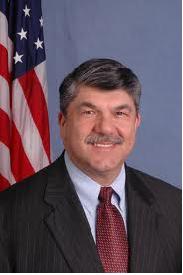
Many unionists are frustrated as usual by the lack of a viable progressive alternative to the Democratic Party. But they’d best beware, as AFL-CIO President Richard Trumka says, of the serious consequences of   being less than enthusiastic supporters of Democratic candidates in November’s elections.

“The Republican Party of NO doesn’t want our vote,” says Trumka. “All they want is for us to stay home. They want us to feel hopeless and disgusted so they can come back by default.”

 Trumka acknowledges that many union members, and many of their supporters and other progressives, are frustrated with the slow pace of economic change, the continuing high unemployment rate, continuing wars and other serious, unsettled problems.

But Trumka points out that in just a year and a half, Obama has had to dig out of a huge economic hole and “face extremist opposition on every point.” Yet, Trumka notes, “We’ve halted taxpayer bailouts … no longer are losing 700,000 jobs a month but are gaining a few… And by the end of this year we will have created or saved 3 1/2 million jobs and have fulfilled the dream of every president since Harry Truman and started to move down the road to health care for all. “

Organized labor has particularly good reason to be pleased with the performance of Obama and the congressional Democrats – particularly good reason to once again deploy millions of campaign dollars and millions of campaign workers in their behalf as labor did in the 2008 elections.

The Labor Department and National Labor Relations Board, virtually tools of the anti-labor right wing under President Bush, are under Obama returning to their job of enforcing the laws that guarantee workers the right to unionize without employer interference.

 And federal agencies are once again strictly enforcing the minimum wage and hour laws and other vital pro-worker laws that had been seriously neglected under Bush’s distinctly anti-labor administration. What’s more, the Occupational Safety and Health Administration is actually attempting to clamp down on the widespread violation of the job safety laws that has led to the needless deaths and serious injury of millions of American workers.

“We know you are angry,” Trumka told a recent gathering of labor leaders, “but we have made progress. No one said this was going to be easy. Ask African Americans how long they have fought and continue to fight. If they had given up after a year and a half they would still be in chains.”

 November’s election, says Richard Trumka, is  “the most crucial election in 75 years.” It will in any case be of unusually high importance to America’s working people and their unions and of exceptional importance to the rest of us as well.

Dick Meister, former labor editor of the SF Chronicle and KQED-TV Newsroom, has covered labor and politics for a half-century. Contact him through his website, www. dickmeister.com, which includes more than 250 of his recent columns.

Arnold’s budget casts most vulnerable as The Expendables

5

As California’s Budget Conference Committee moves forward with negotiations for the 2010 budget, Assembly member Nancy Skinner (D-Berkeley) is promoting her movie, “Faces Behind the Governor’s Cuts,” to different Bay Area venues in an effort to send a message to Gov. Arnold Schwarzenegger that his proposed cuts on services ignore the needs of the poor, parents who use child care facilities, and the elderly.
http://www.youtube.com/watch?v=cA3UieZCYj0

Skinner had her first screening of the movie just days after the blockbuster premiere of “The Expendables,” which includes a Schwarzenegger cameo. Yet instead of high packed action featuring a slew of legendary actions stars, Skinner presents a one minute short featuring interviews with home care workers, a single mother, a teacher, and an elder day care provider – all of whom would be severely impacted by the Schwarzenegger’s budget proposals.

The Budget Conference Committee released its balanced budget on August 4, rejecting Schwarzenegger’s cuts on jobs, senior care, and closure of child care centers – exactly the issues that the stars of Skinner’s film address. The committee suggested ways of raising revenue in lieu of cuts on vital services, such as closing the oil drilling loophole and delaying new corporate tax breaks. Despite the Committee settling on a budget with $14 billion in spending reductions and $4 billion in new revenue, Schwarzenegger still wants more cuts.

Yet Skinner says that Schwarzenegger’s plan would cost more than 430,000 private sector, local government and school jobs. The committee’s budget protects these jobs and creates thousands of new jobs from a $300 million private sector jobs fund.

“Unemployment is not the path to economic recovery,” Skinner told the Guardian. “There’s a way to craft a budget that protects people and jobs and it’s going to require a little revenue. There’s no way to do an all cuts budget – at this point in time – that doesn’t bring harm.”

Schwarzenegger spokesman Aaron McLear didn’t see Skinner’s movie, but responded to Skinner’s concerns, telling us, “We understand Assemblywoman Skinner supports a massive tax increase to protect public employee pensions and the status quo for unions. We simply disagree.”

But looking beyond tensions between Schwarzenegger’s camp and the budget committee are the people these budget decisions affect – parents who work full time and use state-subsidized care for their children and the in-home attendants who the elderly rely on for care.

Daniel McGrath is an in-home supportive services (IHSS) caregiver who takes regular trips to Sacramento to speak out about the issue. “Life and death should never be on the table,” McGrath told us. “These disabled, elderly, and sick community members – our grandparents, brothers, sisters, cousins – are the most vulnerable in our society and the fact that they have to fight for themselves is ridiculous.”

McGrath accompanies his clients, Mark Beckwith, to Sacramento despite a health condition that only allows Beckwith to move his fingers. Beckwith comes to Sacramento to send the message that “the IHSS program saves the state so much money. In institutions like nursing homes, it costs five times as more.”

In addition to cuts to elderly care, Schwarzenegger’s budget plan cuts eliminates child care programs – a blow to parents who work full time and cannot afford to pay for market rate child care and will have no choice but to quit their jobs to take care of their children full time.

Michelle Alvarez, an administrative assistant at UC Berkeley, said in a written statement, “I don’t think my family would have been able to survive with out the help of BUSD preschools and after school programs. The state childcare has allowed me to have a stable job here at UC Berkeley for the past 8 years. Without the state childcare, it would be hard for not just my family, but other low income families to keep our jobs or go to school and care for our kids.”

As the budget committee and Schwarzenegger continue to duke out their differences, the fate of these people lingers in the distance. But Skinner poses a question for Schwarzenegger to think about: “For the governor, it appears that the numbers math is easy, but what about the human math – the impact on people, their livelihood, their jobs, and the ability to live independently?”

Not according to plan

3

rebeccab@sfbg.com

The long-term viability of eight women’s health clinics operating under regional affiliate Planned Parenthood Golden Gate (PPGG) was thrown into question Aug. 6 when Planned Parenthood Federation of America (PPFA) announced that the affiliate would lose its accreditation.

The clinics — which serve roughly 55,000 clients, predominantly women living at or below the federal poverty level — will still be allowed to operate but must stop using Planned Parenthood’s nationally trusted name beginning Sept. 3.

Some news articles immediately following PPFA’s announcement referenced confidential internal conflicts to explain the break, but financial documents and the accounts of several former employees gathered by the Guardian suggest that the organization had reached a precarious financial position that made it difficult to meet accreditation standards.

“To not have a Planned Parenthood in San Francisco is like heresy,” a former PPGG employee told the Guardian. Yet this person and other former coworkers attributed this outcome to dysfunction at the senior management level of PPGG and said the national organization had little choice but to take action.

The Bay Citizen reported that 30 members of PPGG’s medical services staff sent a letter to Harrison and PPFA executives in October 2008 to raise concerns about “the misappropriation and mismanagement of PPGG’s funds.” The letter charges that “executive staff’s personal expenditures are excessive and are not aligned with the mandatory fiscal restrictions. Flagrant use of PPGG funds to pay for personal belongings, personal services, and exorbitant technology products is seemingly unchallenged and not subject to the same financial scrutiny that clinic supplies and staff salaries are, for example.”

A former PPGG staffer noted that employees had tried in the past to sound the alarm, including going to the media. Another noted that they had been made to sign a confidentiality agreement on leaving the organization, a practice that was common within PPGG.

While the current CEO, Therese Wilson, did not return numerous phone calls seeking comment, she was quoted in a fairly sympathetic San Francisco Chronicle article referencing the economic downturn and inability for many of the clients to pay as reasons behind the agency’s financial woes. While the recession, cuts to state funding to nonprofits, and other external factors have clearly had an impact, documents suggest that things were going awry before the recession hit full force.

An internal PPGG document provided to the Guardian displays the agency’s on-hand cash reserves compared with other affiliates, suggesting that the reserve ratios were at or below the minimum required by Planned Parenthood national for all but one year from 1998 to 2007 — and well below that of other affiliates of similar size. That is a key requirement for meeting accreditation standards.

When we asked Elizabeth Toledo, a Planned Parenthood Federation of America (PPFA) spokesperson, about this apparent pattern, she said she could not comment because she had not seen the documents. She also said the accreditation reviews were confidential. “Understanding the true financial picture for health care providers takes a very in-depth evaluation,” Toledo said. “PPFA and PPGG were working together over the last few years to resolve fiscal challenges.”

The Packard Foundation, a major donor to Planned Parenthood, awarded PPGG a $30,000 “organizational effectiveness” grant last year to “select a talented, external provider to help them think through some of these challenges.” The grant expires in September, according to spokesperson Dan Cohen.

In an era marked by high unemployment, economic instability, and deep cuts in public funding for health services, Planned Parenthood clinics provide an increasingly important safety net for uninsured and low-income clients in need of birth control, screenings for sexually transmitted disease or cervical cancer, abortion services, or information on sexual health that isn’t manipulated by a pro-life agenda. As things stand, women in rural communities seeking abortions often must travel very long distances to clinics, and any gap in services resulting from a PPGG accreditation loss could further broaden those geographical boundaries.

Since financial problems are at the root of the San Francisco-based affiliate’s problems, the PPGG clinics — which are located in San Francisco, Alameda, San Mateo, Sonoma, Marin, and Mendocino counties — are in an especially precarious position without national support, despite operating as a separate entity from PPFA. Planned Parenthood affiliates Mar Monte and Shasta Diablo plan to take over some of the existing clinics or cover gaps in service area by opening satellite centers, Toledo told us. “It’s unusual to have a disaffiliation,” she said. “But it’s not unusual for national committees to have a reallocation of service area. That part is well practiced.” She added that “every effort possible will be made” to ensure continuity of care.

The Mar Monte affiliate operates clinics in the Central Valley, Sacramento, the Sierra region, the San Joaquin Valley, and Silicon Valley. The Shasta Diablo affiliate covers areas in Butte, Contra Costa, Lake, Napa, Shasta, and Solano counties, with locations in El Cerrito and Walnut Creek. Depending on clients’ starting points, travel times could lengthen considerably and waiting rooms could become more crowded if the current PPGG clinics can’t stay afloat.

It’s too early to say just how PPGG staff members and patients will be affected by the loss of accreditation. However, it became obvious from Guardian interviews and more than two dozen Web comments on the Guardian’s online coverage of PPGG management woes that there was a high level of employee discontent at PPGG. Former staffers even keep in touch through a sort of club titled “PPGG PTSD” — a humorous reference to being shaken by the experience of working there. Yet while many were angered by the affiliate’s administrative problems, they nonetheless remain dedicated to the mission of Planned Parenthood.

“I’m a senior citizen who hasn’t needed birth control in quite some time, yet I remember when I was a young woman without resources who depended on PPGG for basic health care,” noted “Ellen,” a commenter. “They provide more than just reproductive services. They found an early cervical cancer, and I’m alive today as a result of the early diagnosis that they provided.

“It’s a tragedy that the current and recent trustees and management ruined such a fine organization,” she continued. “A friend of mine is a talented and dedicated nurse with a background of serving low-income women. She resigned from PPGG a year ago because she couldn’t handle the mismanagement any longer. I hope one of the nearby chapters is able to take over the PPGG clinics. In any case, current PPGG management and trustees need to go.”

Democrats divided

25

Update:This online article contains a correction concerning the DCCC’s vote on Sup. Sean Elsbernd’s Muni pay guarantees (Prop. G). In the print version of this article, the Guardian reported that the DCCC had voted “to recommend a no vote” on Prop. G. This is incorrect. The DCCC voted “not to endorse” Prop. G. As Elsbernd points out, “This is a key distinction.”

Sarah@sfbg.com

With fewer than 10 weeks to go until a pivotal November election, the San Francisco Democratic County Central Committee (DCCC) approved a package of endorsements at its Aug. 11 meeting, giving the nod to mostly progressive candidates and rejecting Mayor Gavin Newsom’s most divisive ballot measures.

This crucial election could alter the balance of power on a Board of Supervisors that is currently dominated by progressives, and that new board would be seated just as it potentially gets the chance to appoint an interim mayor.

That’s what will happen if Newsom wins his race for lieutenant governor. The latest campaign finance reports show that Newsom has raised twice as much money as the Republican incumbent, former state Sen. Abel Maldonado. But the two candidates are still neck-and-neck in the polls.

Although the DCCC supports Newsom in the race, it is resisting his agenda for San Francisco, voting to oppose his polarizing sit-lie legislation (Prop. L), a hotel tax loophole closure (Prop. K) that would invalidate the hotel tax increase that labor unions placed on the ballot, and his hypocritical ban on local elected officials serving on the DCCC (Prop. H).

Shortly after the vote, the San Francisco Chronicle reported that Newsom called an emergency closed-door meeting with some of his downtown allies to discuss the upcoming election. “We just wanted to get on the same page on what’s going on locally, what’s going with the ballot initiatives, where people are on the candidates for supervisor,” Newsom told the newspaper.

DCCC Chair Aaron Peskin, who regularly battled with Newsom during his tenure as president of the Board of Supervisors, voted with the progressive bloc against Newsom’s three controversial measures. But he told us that he was glad to see the mayor finally engage in the local political process.

Sup. David Campos kicked off the DCCC meeting by rebuffing newly elected DCCC member Carole Migden’s unsuccessful attempt to rescind the body’s endorsement of Michael Nava for Superior Court Judge, part of a push by the legal community to rally behind Richard Ulmer and other sitting judges.

Things got even messier when the DCCC endorsed the candidates for supervisor. In District 2, the DCCC gave the nod to Janet Reilly, snubbing incumbent Sup. Michela Alioto-Pier, who is running now that Superior Court Judge Peter Busch has ruled that she is not termed out (a ruling on City Attorney Dennis Herrera’s appeal of Busch’s ruling is expected soon).

In District 6, where candidates include DCCC member Debra Walker, School Board President Jane Kim, Human Rights Commission Executive Director Theresa Sparks, neighborhood activist Jim Meko, and drag queen Glendon Hyde (a.k.a. Anna Conda), the club endorsed only Walker, denying Kim the second-place endorsement she was lobbying for.

But in District 8, where candidates include progressive DCCC member Rafael Mandelman, moderate DCCC member Scott Wiener, and moderate Rebecca Prozan, the politics got really squirrelly. As expected, Mandelman got the first-place nod with 18 votes: the progressive’s bare 17-vote majority on the 33-member body plus Assembly Member Leland Yee.

Yet because Yee supports Prozan and David Chiu, the Board of Supervisors president who was also part of the DCCC progressive slate, had offered less than his full support for Mandelman, a deal was cut to give Prozan a second-place endorsement.

That move caused some public and private grumbling from Jane Kim’s supporters, who noted that Kim is way more progressive than Prozan and said she should have been given the second-place slot in D6.

A proxy for John Avalos even tried to get the DCCC to give Walker and Kim a dual first-place endorsement, but Peskin ruled that such a move was not permitted by the group’s bylaws. Then DCCC members Eric Mar and Eric Quezada argued that Kim should get the club’s second-choice endorsement.

But Walker’s supporters argued that Kim only recently moved into the district and changed her party affiliation from the Green Party to the Democratic Party, and Kim’s supporters failed to find the 17 votes they needed.

“District 6 has an amazing wealth of candidates and I look forward to supporting many of them in future races,” Gabriel Haaland told his DCCC colleagues. “I will just not be supporting them tonight.”

Wiener told the group he would not seek its endorsement for anything below the top slot. “I’m running for first place and I intend to win,” Wiener said, shortly before Prozan secured the club’s second-choice endorsement.

In District 4, the DCCC endorsed incumbent Carmen Chu, who is running virtually unopposed. The DCCC also endorsed Bert Hill’s run for the BART Board of Directors, where he hopes to unseat James Fang, San Francisco’s only elected Republican.

The body had already decided to delay its school board endorsements until September and ended up pushing its District 10 supervisorial endorsement back until then as well because nobody had secured majority support.

“I think it’s because they want to give members of the DCCC a chance to learn more about some of the candidates,” District 10 candidate Dewitt Lacy told the Guardian. “I don’t think folks have spent enough time to make an informed decision.”

D10 candidate Chris Jackson agreed, adding, “The progressives in this race have brought our issues to the forefront.”

“I think it’s appropriate,” concurred D10 candidate Isaac Bowers. “D10 is a complicated district. It’s wise to wait and see how it settles out.”

The main thing that needs to be resolved is which candidate in the crowded field will emerge as the progressive alternative to Lynette Sweet, who has the support of downtown groups and mega-developer Lennar Corp.

After the meeting, Walker said different races require different political strategies. “I think it’s hard in the progressive community, where so many of us know each other and even our supporters know the other candidates and are their supporters in other scenarios,” Walker said.

“But the Democratic Party makes decisions not just based on politics,” she continued. “So the endorsement is about being viable and successfully involved in Democratic issues. And even though I want to encourage everyone to run, and we have that ability with ranked choice voting and public financing, when it comes to straight-on politics, the goal is winning.”

Walker said the vote on D8 reflected the reality that Mandelman was having trouble getting the necessary number of votes. “I know Rebecca and I know Rafael, and Rafael was my clear first choice,” Walker said.” Rafael asked me to consider voting for Rebecca—and I voted for her as my second choice.”

Walker predicts she’ll have union support behind her campaign, while Kim, who leads in fundraising, will have independent expenditure committees that will support her campaign.

“My consultant says it’s a $250,000 race, and unfortunately the viability is based on that reality, the funds, the money,” Walker observed.

On the fall ballot measures, the DCCC voted to recommend a no vote on Public Defender Jeff Adachi’s measure to make city employees pay more for the pension and healthcare costs (Prop. B), Sup. Sean Elsbernd’s Health Service Board Elections (Prop. F,) and Newsom’s three controversial measures. And they voted “no endorsement” on Elsbernd’s measure to remove from the charter Muni pay guarantees (Prop. G). 

But the DCCC did vote to endorse a local vehicle registration fee surcharge (Prop. AA), Newsom’s earthquake retrofit bond (Prop. A), Sup. Chris Daly’s proposed legislation to require mayoral appearances at board meetings (Prop. C), Chiu’s measure to allow noncitizen voting in school board elections (Prop. D), Sup. Ross Mirkarimi’s Election Day voter registration (Prop. E), former Newsom campaign manager Alex Tourk’s Saturday voting proposal (Prop. I) Labor’s hotel tax (Prop. J ), Mirkarimi’s foot patrols measure (Prop. M) and Avalos’ real estate transfer tax (Prop. N).

With just about everybody opposed to Adachi’s measure going after public employee unions, Walker observed that Adachi probably wishes he had done it differently now. But looking into the future, Walker sees opportunities for the party to come back together.

“There’s an opportunity to start a dialogue because everyone is hurting,” Walker said. “The more we don’t have a proactive solution, the more we get caught at the bottom.”

And in a feel-good vote for the frequently divided body, the DCCC also voted overwhelmingly to endorse the statewide initiative to legalize and tax marijuana (Prop. 19). Normally local party committees don’t take a position on state initiatives, but because the California Democratic Party took no position on Prop. 19, the DCCC had permission to weigh in.

As Peskin put it before the enthusiastic marijuana vote, “Raise your hands — high.”

Editor’s Notes

4

tredmond@sfbg.com

I suppose I should be thrilled that 40 of the richest people in the United States have agreed to give away half their money before they die. Actually, it kind of makes me sick.

The concept is called the Giving Pledge, and Bill Gates and Warren Buffet started it. The two have been on the phones this summer, dialing up other really, really rich people and asking them to sign on. I’ve got nothing against Gates and Buffet (well, Gates has always been into world domination, so that’s a problem, but Buffet seems a decent sort for a billionaire). In fact, Buffet has promised to give away 99 percent of his $47 billion, which would leave him and his heirs with just a paltry $470 million.

Even that much money fits into New York Mayor (and billionaire) Michael Bloomberg’s entirely accurate statement: “The reality of great wealth is that you can’t spend it and you can’t take it with you.”

That’s the thing: You can’t spend that much money, and you can’t take it with you, and the United States used to be the kind of country that disdained inherited monarchy. Bloomberg says he wants his kids to have to work for a living, which is nice, although even after he gives away half his wealth, none of them are likely to miss any meals or have trouble paying the rent. His children, and their children, and their children, will all be able to afford to go to good schools and colleges, even if the public education system in America completely collapses for lack of adequate funding.

The irony is that, for the most part, these exceptionally rich people who feel so good about giving their money to charities of their choosing (which then honor them with awards and testimonials and dinners) oppose the notion of raising taxes on high incomes.

The problem with charity is that it won’t ever really reduce the gap between the rich and the poor in this country. The only way you do that is with aggressive, effective government action: by taxing the great wealth when it comes in (as income) and when it goes out (as estates) — and then, through a democratic process involving elected representatives, deciding where the money should go.

The Bill and Melinda Gates Foundation is wonderful, I guess, but it won’t provide mental health care for homeless people in San Francisco. That’s a government job. It also won’t ensure that every kid in America gets quality preschool, good teachers, schools that aren’t falling apart, and access to a college education. That’s what we pay taxes for.

But wait a minute. There’s never enough money for these things, because we keep cutting taxes on the rich. Instead, these guys can give money to their own pet projects — and pay no taxes at all. It’s charity! It’s a tax write-off!

I wanna throw up.

Community Congress convened

1

news@sfbg.com

About 60 San Francisco citizens voted just before 1 p.m. on Aug. 15 to adopt a progressive platform of approximately 100 policy recommendations they hope will define the agenda of candidates and elected officials in coming years and offer a contrasting vision for the city to that of downtown corporate interests.

Sunday’s culmination of the 2010 Community Congress represented almost a year’s work by some 400 San Franciscans and dozens of community-based organizations, according to the Congress’ draft recommendations. The congress convened all day Aug. 14, at the University of San Francisco’s Fromm Hall, where participants engaged in breakout groups aimed at addressing four distinct local policy categories: health and human services; Muni and public transportation; affordable housing and tenant rights; and community-based economic development.

Recommendations in the four areas were drafted prior to the congress and published by the Guardian (see “Reinvention of San Francisco,” Aug. 4 and “Ideas that work: a plan for a new San Francisco,” Aug. 11), but planning group coordinator Calvin Welch said between a one-quarter and one-third were rewritten and amended during the breakout sessions on Saturday and by the congress as a whole on Sunday. Representatives from the breakout groups are working to finalize all the last-minute amendments and hope to post a final document by on the congress’ website (www.sfcommunitycongress.wordpress.com) by Aug. 20.

“This is a group of left-progressive people trying to articulate a left-progressive view for the city that is distinct from the cynicism of the [San Francisco] Chronicle and [Mayor] Gavin Newsom’s message,” Welch told the Guardian after the vote.

Gail Gilman facilitated the final adoption session on Aug. 15, passing a microphone to those who wished to speak or propose amendments while pushing the group to stick to the schedule. “I think we produced a solid progressive platform that will gain traction in the upcoming supervisors race,” Gilman told the Guardian outside the congress. “We’re hoping to have actionable items implemented over the next five years.”

Some of the congress’ ambitious agenda had to be put on hold, either because consensus couldn’t be reached or groups simply ran out of time. The Muni group’s recommendation to delay the Central Subway Project and use those funds to address “Muni’s backlog of operating, maintenance, and capital improvement needs” was tabled, as was decentralizing control of expenditures in health and human services out of the mayor’s hands. However, several agencies that the congress hopes to create, including a “canopy” entity to manage San Francisco’s public health system, would have direct budgetary control over city departments.

Health and human services group coleader and Bayview-Hunters Point Foundation Executive Director Jacob Moody told the crowd about a question posed early in the congress that informed his group’s recommendations: How do we create a city where people can live, work, and prosper together?

Welch admitted that some of policy recommendations would be difficult to realize and would draw the ire of powerful political groups in San Francisco, but he insisted that creating a municipal bank, an economic redevelopment agency, and a health and human services planning agency, and implementing several of the Muni group’s recommendations, were actionable in the short term.

“Some others would need to wait until the election of a new mayor,” Welch said. “I hope we can get some mayoral candidates to endorse some of these proposals.”

Sunnydale/southeast neighborhood community organizer Sharen Hewitt said that although there were often disagreements at the congress, the most important aspect of the event to her was that everyone learned from the perspectives of others.

“Tension is not always bad,” Hewitt told the Guardian at the event. “Everybody came here with biases and interests. Everybody needs to leave here with more. I’m damn near 60 years old and I grew half an inch today.”

Sunday’s congress and policy platform were modeled after San Francisco’s first Community Congress, which took place in 1975. But Welch told us this congress was entirely new. “To the extent that there is a historical aspect, 35 years ago we tried to figure out a way to bring people together. And 35 years later, young people want to do the same thing.”

“Diamond” Dave Whittaker, a modern Emperor Norton-esque San Francisco personality, closed the congress with a poem. “The basis of real social change is happening here,” he said. “And we need to continue casting a wider net, finding the thread, and letting it flourish.”

Alerts

0

alert@sfbg.com

THURSDAY, AUG. 19


Celebrating Young Activists

Mingle with environmental activists and community group members of all ages at the networking event Celebrating Young Activists: Building a Green Movement and Changing the World. The event features talks by inspirational young leaders, winners of the Brower Youth Awards, environmental and social justice organization information tables, and live jazz.

6:30 p.m., $10–$20

Richard and Rhoda Goldman Theater

David Brower Center

2150 Allston, Berk.

(510) 859-9100

SATURDAY, AUG. 21


Shoot Hoops, Not Guns

Commemorate the 25th birthday of Elliot Jemar Noble, who was killed by an Oakland police officer in 2005, at this combination march, basketball tournament, and gospel concert. The event is a benefit for the Elliot J. Noble Multiservice Family Organization, a nonprofit that provides support for families affected by violence. The parade begins at 10 a.m. at Eldridge and Darien streets, progresses to a 1 p.m. basketball tournament where players assume the names of slain or incarcerated loved ones, and ends with a gospel concert at 6 p.m.

10 a.m., $5–$10 for the concert

Ira Jinkins Recreation Center

9175 Ededs, Oakl.

(510) 895-5234

SUNDAY, AUG. 22


Tour Alameda Naval Air Station

Find out more about Alameda’s Naval Air Station, which closed in 1997 and remains the subject of much controversy and public debate over what to do with this prime piece of real estate. This guided tour combines a two-hour bus tour followed by a self-guided walking tour of the businesses engaged in adaptive reuse of the buildings. Reservations required.

1 p.m., 3 p.m.; $10

Meet in front of Alameda Naval Air Museum

2151 Ferry Point Road, Alameda

(510) 479-6489


Mobilization for Climate Justice

Get involved in the effort to stand up to big oil companies by attending this public action planning meeting for an Aug. 30 march and protest on the five-year anniversary of Hurricane Katrina. The protests will target the offices of BP and Chevron for their roles in environmental and community destruction in the gulf, the Bay Area, and around the world.

Noon, free

Mission Cultural Center

2868 Mission, SF

www.actforclimatejustice.org/west


Nuevos Horizontes

Attend a benefit dinner and show for Nuevos Horizontes, a domestic violence shelter in Guatemala that provides long-term housing, psychological counseling, legal advice, job training, and health care for women and children. There will be vegan and vegetarian options for dinner, bands, and speakers.

6 p.m., $8–$10

Call (510) 878-8879 or e-mail bigcavecomix@live.com for Oakland location

www.ahnh.org


Street Food Conference

Following the San Francisco Street Food Fest, attend this conference dedicated to the exploration of food, policy and economics. Participants will engage in discussions about the creation of viable economic models that allow small-scale food entrepreneurs to bring the foods they love to the cities in which they live.

Sat. Noon-5pm, Sun. 9 a.m.–3:30 p.m., $20–$50

Hotel Vitale

8 Mission, SF

sfstreetfoodconference.eventbrite.com

Mail items for Alerts to the Guardian Building, 135 Mississippi St., SF, CA 94107; fax to (415) 437-3658; or e-mail alert@sfbg.com. Please include a contact telephone number. Items must be received at least one week prior to the publication date.


Two steaming non-scandals

24

The political press is all over two of the big non-scandals of the day, Jerry Brown’s pension and Jeff Adachi’s budget. Let’s start with ol’ Jer’.


You can say a lot of things about Jerry Brown, and I’ve said a lot of them myself, but the guy has never tried to enrich himself off the public dollar. Fact is, Jerry’s about as cheap as you can get, and hates to spend money — his money, campaign money, public money. In some ways, he’s responsible for Prop. 13, because he was such a cheapskate as governor in the 1970s that he ran up a huge billion-dollar-plus surplus in Sacramento at a time when property taxes were soaring.


But Matt Drudge, playing off public anger at state employee pensions, decided that Brown was “double dipping,” citing and OC Register report, and suddenly, the former gov’s secret pension was big news. But wait, the Chron actually figured it out: Brown isn’t drawing any pension at all right now. If he were to retire after about 25 years of service as secretary of state, governor, mayor of Oakland, attorney general and a Supreme Court clerk, he’d be eligible for a pension of $78,450 — considerably less than your average San Francisco cop or firefighter. Knowing Jerry, he’ll probably decline it anyway.


In other words: No story.


Then there’s Jeff Adachi’s budget. I know, it looks bad for a guy who’s trying to cut worker pensions and health care to be seeing budget increases and still leave the city with a $2 million legal tab for work he refused to handle. But really, this is old news — Adachi’s been warning for a couple of years that he was going to have to decline cases (and thus stick the city with a private legal bill). And let’s remember: The staff in the Public Defender’s Office handles almost twice as many cases as they ought to.


Adachi’s ballot initiative annoys me — he’s going after city employee benefits instead of looking at where the city can raise new revenue. And he’s acting like a lone wolf, demanding that his office is properly staffed and launching an initiative that attacks public employee unions instead of trying to work with them.


But I don’t blame him for being agressive in pushing for adequate funding for his shop — I wish the director of public health was willing to try as hard to avoid cutbacks instead of going along with whatever the mayor proposes. And his current budget is nowhere near as scandalous as what happens every single year with police and fire.


Will the Potrero power plant be shut down by the end of the year?

At the beginning of 2010, the official word was that an undersea high-voltage power line called the Trans Bay Cable would go live in February, supplying up to 40 percent of San Francisco’s power. This was the missing piece of the puzzle that would finally lead to the shuttering of Mirant’s Potrero power plant, which activists and city officials have railed against for years.

But February came and went. March, April, May, June, and July brought the same story, and the Potrero power plant kept chugging away. Good news for the roughly 30 employees who work there, bad news for nearby residents with lung problems.

August rolled around, and we decided to ask San Francisco Mayor Gavin Newsom what the deal was.

“We’re very close to making an announcement,” Newsom said at an Aug. 9 press conference, and added that he has been working closely with the head of the California Independent System Operator (Cal-ISO), Yakout Mansour, who has “made it a priority.” Then Newsom found a way to work in something about his bid for lieutenant governor. “I made it clear that I’m not leaving till it’s shut down,” he said, and reminded us that he fully intends to leave for Sacramento in January.

Why the seven-month delay? Newsom’s press secretary, Tony Winnicker, chimed in to say the setback had something to do with how the Trans Bay Cable “couldn’t carry capacity,” which didn’t sound too good for a $500 million project. But project spokesperson P.J. Johnston sounded confident in a recent telephone message, saying work crews have identified the problem and corrected it. “We still believe we can go operational this year,” Johnston said.

Apparently, the delay resulted from a technical issue involving some faulty sub-module parts, which have since been replaced. “Hopefully this fix did the trick,” Johnston said.

“We’ve been doing testing since June with Siemens,” he added, referring to Siemens Power Transmission & Distribution, Inc., a partner in the project development. “We started a second round of testing here in August, and we should be doing so for several weeks, well into September.”

If the Trans Bay Cable goes live before the end of 2010 and the Cal-ISO finally releases the Potrero power plant from a requirement that says it “must run,” the result will be an improvement in air quality in San Francisco – particularly for residents in Dogpatch and Bayview Hunter’s Point neighborhoods.

However, the Trans Bay Cable will ultimately be bringing in power from somewhere else, and for now, the bulk of that electricity will still be generated by fossil fuels. The other end of the 53-mile, high-voltage undersea cable will connect to power sources in the city of Pittsburg. Mirant operates two major electricity generation units there — one is 50 years old and the other is 38 years old — for a total capacity of 1,311 megawatts. It sells the power to Pacific Gas & Electric Co. PG&E is seeking state approval to build two more power plants in Antioch and Oakley, located a bit further east of Pittsburg in Contra Costa County.

A report by Pacific Environment explores the potential health impacts of PG&E’s proposed power plants, highlighting the toxic landmarks that already mar the air quality in that area.

“Contra Costa County already contains more than its share of polluting industries,” Pacific Environment notes, “including over a dozen power plants, five oil refineries, several chemical plants, and many other industrial facilities. Due to the volume of pollution already located in Eastern Contra Costa, the increased emissions from these two new power plants are likely to exacerbate already-high rates of respiratory and other diseases. The report also concludes that PG&E does not need the power plants, as the utility already has more than 30 percent of the power needed in ‘peak’ conditions.”

Maybe Newsom will boast someday about being the San Francisco mayor who worked with the Cal-ISO to shut down the Potrero power plant. But at the state level, a sustainable solution is one that would leave residents of Pittsburg, Antioch, and Oakley breathing easier too.

Former employees saw problems coming at Planned Parenthood Golden Gate

This week’s announcement that Planned Parenthood Federation of America (PPFA) was severing ties with Planned Parenthood Golden Gate (PPGG) came as no surprise to some former employees, who have for months been trying to sound the alarm that the chapter was being mismanaged, had major financial problems, and was in a steep decline that could threaten important reproductive care services that low-income women rely on.

A former PPGG employee with knowledge of the organization’s internal affairs described a longstanding pattern of financial mismanagement when former president and CEO Dian Harrison was at the helm. There was widespread concern about spending on expensive marketing campaigns and lavish functions, the person said, and a high level of employee turnover and discontent.

Warning signs of financial difficulties surfaced at least a year ago. Dan Cohen, a spokesperson of the Packard Foundation — a major donor to PPGG — told the Guardian that Packard awarded PPGG a 12-month, $30,000 “organizational effectiveness” grant, which will expire in September. The grant “allows an organization to select a talented, external provider to help them think through some of these challenges,” Cohen explained. The Packard Foundation also awarded a 3-year grant for general operating support for $800,000, which will also expire next month.

Another former employee told the Guardian that she would love to discuss internal problems, but was made to sign a confidentiality agreement upon leaving the organization.

Therese Wilson, executive vice president of Planned Parenthood Golden Gate — who took over PPGG when Harrison left last year on medical leave — did not return repeated calls seeking comment.

An internal PPGG document provided to the Guardian displays the agency’s on-hand cash reserves as compared with other affiliates, suggesting that the reserve ratios were at or below the minimum required by the national Planned Parenthood federation for all but one year from 1998 to 2007 — and well below that of other affiliates of similar size. That is a key requirement for meeting accreditation standards.

When we asked Elizabeth Toledo, a PPFA representative, about this apparent pattern she said she could not comment because she had not seen the documents. She also said the accreditation reviews were confidential. “Understanding the true financial picture for health care providers takes a very in-depth evaluation,” Toledo said. “PPFA and PPGG were working together over the last few years to resolve fiscal challenges.”

Despite delays at the state level in awarding nonprofit funding and the loss of support from the national organization, Toledo and a union representative for PPGG employees both said they believe the clinics will continue serving patients under a different name.

“They plan to stay open, and employees are planning to stay,” said SEIU Local 1021 representative Sarah Sherpun-Zimmer, who has been a union rep for PPGG employees for the last two years. “Folks are really happy working there and they feel like it’s going in a good direction.”

PPGG operated eight clinics, which will lose their Planned Parenthood accreditation Sept. 3, effectively severing their ties to a trusted entity that thousands of low-income women rely upon for birth control, abortion procedures, and other forms of reproductive health care. PPGG operates clinics in San Francisco, Alameda, San Mateo, Sonoma, Marin, and Mendocino counties, serving about 55,000 women per year.

Roughly 92 percent of the clients they serve live at or below the federal poverty line, according to PPGG’s 2008 annual report.

Planned Parenthood affiliates Mar Monte and Shasta Diablo are in the process of hatching plans for taking over some of the eight affected clinics or otherwise growing their own operations to cover any gaps in service area, according to Toledo. She said neighboring affiliates are in a position financially to be able to cover a wider territory and added that they have been in “expansion mode,” adding new clinics over the past couple years.

“It’s unusual to have a disaffiliation,” she said. “But it’s not unusual for national committees to have a reallocation of service area. That part is well-practiced.” Toledo added that “Every effort possible will be made” to ensure continuity of care.

Nima Maghame contributed to this report.

Get that paper

0

caitlin@sfbg.com

CAREERS AND ED Our fair state gives out the most postsecondary degrees in the country. We’re so smart! But we rank somewhere around 43rd when you convert that number to a per capita figure — and of course there’s a budget kerfuffle afoot. Shucks. Still, there are a passel of innovative, unique degree programs available now to suit your unique self and give your career a boost. Consider these.


NATIVE STUDIES

Inspired by the Alcatraz takeover and the university’s late 1960s student strike, SF State’s Native studies was the nation’s first degree program of its kind. Students focus on how Native American populations are affected by everything from environmental justice issues to health practices.

San Francisco State, 1600 Holloway, SF. (415) 338-1111, www.sfsu.ca


HUMAN SEXUALITY

The institution that awarded the world’s first PhD to a porn star (Annie Sprinkle took home a diploma from IASHS) certainly has what it takes in this field. The school offers legit advanced degrees in that most delicate of our instruments.

Institute for Advanced Study of Human Sexuality, 1523 Franklin, SF. (415) 928-1133, www.iashs.edu


DOCTOR OF PSYCHOLOGY

It’s hard to say no to a psychologist with more field experience. The PsyD program at CIIS takes a relatively new approach to the advanced psychology degree, focusing less on lab and library research and more on clinical opportunities.

Center for the Institute of Integral Studies, 1453 Mission, SF. (415) 575-6100, www.ciis.edu


TEACHING ENGLISH AS A FOREIGN LANGUAGE

Yup, looks like Sarah Palin’s rearing her aspirational highlights again — that trip overseas is looking more attractive all the time. A TEFL certificate makes you eligible to teach English abroad, a perfect gig for the wannabe expat.

Teach English Abroad, www.onlinetefl.com


MUSIC FOR VISUAL MEDIA

Jingle writers, hum-along gamers, and stock characters in middling comedies like Three and a Half Men, Last Chance Harvey, and The Good Night: up your musical game to professional levels. Academy of Art offers a flexible schedule to help you reach your earworming goals.

Academy of Art University, SF. (800) 544-2787, www.academyart.edu


FIBER AND POLYMER SCIENCE

Sure, your Etsy store is kicking ass, but when it’s time to move to the next level, this program can deepen your understanding of the hang of that skirt. And how. Study physics, chemistry, and consumer science on this fashion-spelunking expedition.

UC Davis, Davis. (530) 752-2580, www.ucdavis.edu 


DCCC endorsements will test progressive unity

2

When the San Francisco Democratic County Central Committee convenes tomorrow (Aug. 11) evening to vote on its endorsements for the November races and ballot measures, the clout and unity of its slim progressive majority will be tested in a few high profile contests where the outcome isn’t entirely clear.

As I reported last week, progressives occupy only about 17 of the 33 seats, so any defectors from the slate that won in June could create some squirrely politics or backroom deals. Progressive supervisorial candidates Rafael Mandelman from District 8 and Debra Walker from District 6 are widely expected to get the top endorsements in their races, but Rebecca Prozan in D8 and Jane Kim (and possibly Jim Meko) in D6 each have some progressive supporters on the committee and could make a play for the second slot in the ranked-choice voting election. D8 candidate Scott Wiener, the former DCCC chair, will probably also try to get some kind of spot on the slate but is likely to be met with fairly unified progressive opposition.

The District 10 endorsement will be a free-for-all with no clear progressive consensus alternative to downtown-backed candidate Lynette Sweet yet emerging from the crowded field. Party chair Aaron Peskin has endorsed Malia Cohen and Tony Kelly in that race, but Chris Jackson, Dewitt Lacy, Kristine Enea, and other candidates also have progressive backing, so it could be tough for any of them to get to 17 votes at this point. But in District 2, Janet Reilly appears to have the endorsement locked down, despite a judge allowing incumbent Sup. Michela Alioto-Pier to run for a third term.

On the local ballot measures, the progressive majority is likely to endorse the revenue measures (a hotel tax increase pushed by labor, a transfer tax on properties worth over $5 million, and a small local vehicle license fee surcharge) and reject Public Defender Jeff Adachi’s measure to increase how much city employees pay for health care and into their pensions and Sup. Sean Elsbernd’s measure to end pay guarantees for Muni drivers (although not even progressives are feeling much love for the recalcitrant Transportation Workers Union these days).

The aggressive effort by the legal community to overturn the DCCC endorsement of Michael Nava for judge – waged on behalf of Judge Richard Ulmer, a recent appointee of Gov. Arnold Schwarzenegger, ostensibly over judicial independence but also as a way of sucking up to judges that lawyers want to curry favor with – is expected to fail, mostly because it requires a two-thirds vote. An ordinance to ban sitting or lying on sidewalks that is being pushed by Mayor Gavin Newsom, Police Chief George Gascon, and San Francisco Chronicle columnist CW Nevius is also likely to be soundly rejected by the party.

DCCC endorsements usually carry quite a bit of weight in heavily Democratic San Francisco, getting the candidates on party slate cards and entitling them to other party resources. Any races that don’t yield a majority endorsement this week would get pushed back to the September meeting, when the DCCC will consider school board endorsements.

The fun starts at 6 p.m. at the Unite-Here Local 2 office at 209 Golden Gate Avenue.

Ideas that work: a plan for a new San Francisco

6

OPINION San Francisco is a city of tremendous riches and problems — a locus of wealth, inequality, innovation, creativity, and sometimes stifling resistance by political and economic power brokers. It’s time to break through. We have the ability, and opportunity, to create a whole new set of economic, social, and political relationships between people and government. On everything from municipal banking, to Muni reform, to public-controlled sustainable energy production and community-driven budgeting, we have a flood of ideas from thinkers and activists across the city.

The Aug. 14-15 Community Congress at the University of San Francisco will focus on turning those ideas into a political platform the city can implement. Last week, we described the vision; this week, we offer some proposals that will be discussed at the event; following the event, others will be posted at sfbg.com.

The event runs Aug. 14 from 9 a.m.–5 p.m. and Aug. 15 from 9 a.m.–1 p.m. at USF’s McLaren Conference Center. For information, go to www.sfsummitcongress.wordpress.com. (Karl Beitel and Christopher Cook)

1. A MUNICIPAL BANK


San Francisco is rich — it has $16.1 billion in assets, with a net worth of $6.5 billion, according to the city treasurer. With a little maneuvering and political will, roughly a half-billion of that money could be devoted to creating a municipal bank: a fiscally solvent, federally insured economic engine that would invest in community development projects serving underfunded activities and endeavors, providing significant economic and social benefits to the residents of San Francisco.

With its own public bank, San Francisco could begin to fund and promote more community-centered forms of economic development. Worker co-ops, for instance, could get loans for projects that are socially beneficial and economically viable. The bank could also help generate new homegrown industries that produce both revenue and social value to the city. This would help democratize the city economy, giving financial muscle to community-based projects and neighborhood-serving businesses.

Over a period of three to five years, a modest portion of the city’s liquid investments can be transferred to create to the new bank. The bank could use this pool of capital to extend low-interest, long-term loans for projects located in San Francisco. The bank would offer a full spectrum of retail banking services, such as money market accounts, to attract additional deposits to supplement funds from the city.

A municipal bank has potential to grow into a major economic force in the city for financing community-centered development. With the right up-front commitment from the city, the total asset portfolio of loans and other investments would grow far beyond this initial public investment — representing a significant infusion of loan capital into currently underserved segments of the credit market in San Francisco.

The municipal bank would be a member-owned, federally chartered, and federally insured credit union. It would engage in rigorous vetting of loan applicants. But because the bank would not run as a profit-maximizing enterprise, loan officers would explicitly consider projects in light of their economic viability and potential contribution to the economic, social, and cultural well being of San Francisco.

Priority could, for instance, be given to loans for affordable housing development and community economic development. In particular, the bank could prioritize businesses and enterprises that represent alternative models of ownership such as worker co-ops and worker collectives, and smaller, community-serving, locally-based, social enterprise-type businesses.

To ensure that the bank’s lending activities reflect the need for more democratic modes of credit and finance, governance and oversight could include representation from social groups and constituents normally excluded from corporate governance. The bank’s member-owners would elect the board of directors.

Municipal bank funds would be completely separate from the city’s general fund, with strict firewalls imposed to assure that lending activities do not become intermingled in any way with the annual appropriations process.

By creating its own bank, San Francisco would be a national model for community-based development and economic democracy. It would be a national first, and has the potential to transform how cities think about local economic development. (Beitel)

2. HOUSING SAN FRANCISCO


Since the beginning of the dot-com boom, San Francisco has seen displacement of low-income families from rent-controlled housing in alarming numbers. Much of this displacement has been happening through conversion of small residential apartment buildings (between four and 12 units) into tenancy in common units. Small-site displacement tends to target seniors, disabled people, and working class families — and many of the units that were converted were, under rent control, de facto affordable housing.

In addition, over the past 15 years the city has lost 4,370 units due to Ellis Act evictions. At the same time, the city’s housing production model favors larger projects because of the economies of scale possible for new construction of big projects, with 70 or more units. While these projects are important in adding to the city’s affordable housing stock, sites to accommodate giant developments are in short supply.

So how do we address San Francisco’s chronic affordable housing crisis. First, stabilize low-income communities and preserve diverse neighborhoods by encouraging the city to invest in developing a small sites acquisition and rehabilitation program that could help nonprofits take over and operate affordable rental housing for low-income tenants. That property could also be converted to limited equity housing cooperatives and community land trust properties.

Next, the city should ban all TICs from becoming condos. The city can give landlords and speculators a choice: If you want your property to be eligible for condo conversion, with all the economic benefits that come with that designation, then you need to follow the process and abide by tenant protections in the condo law. If you want to ignore the condo law, then you’re stuck with a TIC.

To further protect renters, prior to sale of a renter-occupied unit, the city could require the owner to offer tenants the right to buy the unit, at a price based on the last best offer from a bona fide purchaser.

The Rent Board also needs reform. The panel, which oversees rent increases, consists of five members: two landlords, two tenants, and one homeowner. All are appointed by the mayor. We suggest three tenants, two landlords, and two homeowners — with the appointments split between the mayor and the supervisors.

There also must be a permanent, local source of funding for affordable housing development. A progressive increase in the real estate transfer tax could generate $45 million annually.

We further support Sup. Ross Mirkarimi’s proposed legislation that would protect resident’s rights during relocation and ensure their right to return to buildings that have been redeveloped. (Amy Beinart and the Council of Community Housing Organizations)

3. THE CRISIS IN CARE


More than any other American city, San Francisco relies on a network of faith- and community-based nonprofits to deliver critical health and human services to its poorest and sickest residents. More than 15,000 people are employed in this sector, which had a total budget of almost $800 million in 2000.

Health and human service nonprofits play a significant role in providing a substantial portion of the city’s services for seniors, people with AIDS, the homeless, children and youth, people with special physical and mental needs, and those who suffer from substance abuse.

Yet this critical sector finds itself bearing the brunt of cuts and reduction in services caused by the fiscal crisis facing San Francisco.

So what can we do? Here are seven suggestions.

First, conduct a coordinated citywide health and human services needs assessment driven by neighborhoods and communities.

Second, working with service users, service providers, and city employees, create a 10-year plan for health and human services that can guide yearly budget considerations.

Third, as the city implements the 2009 ballot measure that calls for a two-year budget cycle informed by five-year financial plans, require department heads and commissions to include the perspective of professional service providers and service users, including a standards analysis plan and a narrative about the impact on services.

Fourth, open a dialogue with the foundation community on addressing the changing needs of the nonprofit human services community, including community needs, accountability, and funding cycles.

Fifth, depoliticize the request-for-proposals (RFP) process by moving it out of city departments and into the Controller’s Office.

Sixth, require city departments that contract with nonprofit health and human service providers to complete their implementation of the recommendations to streamline the city’s contracting and monitoring processes approved by the 2003 City Nonprofit Contracting Task Force, and ensure that current procedures and processes are consistent with those recommendations.

And seventh, preserve services for the most vulnerable San Franciscans by focusing on revenue solutions to the city’s ongoing structural budget deficit, including November 2010 campaigns to increase the hotel tax and the real property transfer tax. (Debbi Lerman, Human Services Network)

4. BUILDING WORKER COOPERATIVES


Although these are hard times, there’s an opportunity for San Francisco to realize a new model of economic sustainability — by supporting worker cooperatives.

The worker cooperative model is a business form well-suited to the diverse needs of urban areas and is already viable in a broad variety of sectors including manufacturing, service, and retail. A key aspect of worker cooperative development is that its goal is not just the creation of jobs; it’s also about making business ownership accessible.

An inspiring new model of economic development is currently taking place with the Evergreen Cooperatives in Cleveland. In an ambitious effort, anchor institutions such as the local universities, hospitals, and the City of Cleveland have established procurement agreements with developing worker cooperatives rooted in the struggling urban communities of Cleveland (where unemployment rates are as high as 25 percent). The goal is to redirect the estimated $3 billion that these anchor institutions spend on goods and services toward worker cooperatives in the communities where these institutions are located. The first two business models underway are a commercial laundry service and a solar installation company.

There’s also a lot of inspiring work already being done by the worker cooperative community in the Bay Area. The Arizmendi Association continues to develop new worker-owned bakeries despite the economic recession. This fall, Arizmendi will launch its second SF location in the Mission District, creating new jobs and opportunities for local residents to have ownership over their work. Rainbow Grocery and Other Avenues are two extremely successful, long-lasting worker-owned grocery stores in San Francisco.

The city ought to officially recognize the worker cooperative model as both viable and preferable, and include it in the city’s various efforts of economic development. And city officials should take a leadership role in reimagining what a vibrant economy could look like and begin to promote worker cooperatives as central to that vision. (Poonam Whabi, Rick Simon, Steve Rice, Inno Nagara, and Nadia Khastagir)

D. 10 candidates split on Lennar’s plan

3

One of the key questions at the Potrero Hill Democratic Club’s forum for D. 10 candidates revolved around Lennar’s Candlestick Point-Hunter’s Point Shipyard redevelopment plan.

The current Board of Supervisors recently approved Lennar’s plan by a 10-1 vote (D.6 Sup. Chris Daly dissented). Following that vote, Mayor Gavin Newsom rushed to sign twelve pieces of legislation that approve and enable what could shape up to be the largest redevelopment project in San Francisco´s history.

“Today is a historic day for San Francisco and a testament to so many who have worked for more than a decade to secure this critical engine for our City´s economic future,” Newsom said in a press statement, after he signed off on the Lennar deal. “I want to thank Sup. Sophie Maxwell for spearheading this effort throughout her entire tenure on the Board of Supervisors and our State and Federal representatives including Speaker Pelosi and Senator Feinstein as we take a giant leap forward towards our shared vision of jobs, housing, and hope for the Bayview-Hunters Point community.”

But with Maxwell termed out in January, the successful candidate in the D. 10 race stands to inherit a plan that has been approved, but apparently isn’t funded yet. And by my accounting, the majority of the candidates who spoke at the D. 10 forum expressed reservations with Lennar’s proposal, with only a few firmly against it, and only a few firmly in favor of it. But read their comments, decide for yourself–and keep tracking this fascinating race!

 
Asked how she would have voted on Lennar’s plan, Lynette Sweet, who voted to make Lennar the shipyard’s master developer when she was a member of the Redevelopment Commission in 1999, said she would have approved it.
“I voted for it then, and I would have voted for it now,” Sweet said. “And I want to be the person who shepherds it through in the next eight years.” But Sweet also sought to reduce the many ongoing questions about the plan–including housing affordability levels, local job creation, air quality impacts, and the  Navy’s related shipyard clean-up–to one simplistic issue: the bridge over Yosemite Slough.

“There’s been a lot of controversy over a bridge,” Sweet said. “But we don’t give up on people for a bridge. We just can’t.”

Eric Smith said he was supportive of the plan and the community benefits agreement, but he voiced criticism of the project’s environmental Impact report (EIR).
“The project’s EIR wasn’t perfect,” Smith noted. “And I wasn’t a huge fan of the bridge, but I’ve walked around Alice Griffith [a dilapidated public housing project in the Bayview] and when you see folks with moldy pipes, broken ceilings, and rats, it moves you. So, I’m supportive of it, and I’m supportive of the community benefits agreement [that the SF Labor Council negotiated with Lennar] and the jobs it can bring.”

Nyese Joshua said she would have voted against the plan, starting years ago.
“I would have voted to stop that project in 2006, when the dust issue was going on,” Joshua said. “And it’s a misnomer to claim the Board voted 10-1 for Lennar,” Joshua contined, as she pointed out that five progressive supervisors on the Board voted against the bridge and for air quality analysis, greater affordability and greater workforce protections. But ultimately, this progressive core was unable to pass those amendments, because Sups. Maxwell, Bevan Dufty, Sean Elsbernd, Carmen Chu, Michela Alioto-Pier and Board President David Chiu did not support them.
“That 10-1 vote is being called a pyrrhic victory,” Joshua added.


Kristine Enea indicated that she would have voted yes, but with reservations.
“I would have consistently voted yes to amendments, but there was no comprehensive transportation analysis,” Enea said.
Enea, who has served on the now disbanded Navy’s Hunter’s Point Shipyard Restoration Advisory Board, noted that she is “intimately familiar with the technical data,” surrounding the Navy’s shipyard clean-up plans.
“And I live a stone’s throw from the shipyard, and I believe we are safe,” Enea added.
“There is hope soon to be a restored public process on the Navy’s clean up,” Enea continued, referring to the Navy’s 2009 decision to dissolve the RAB.“But we need to be very vigilant that cleanup of Parcel E2.”

Malia Cohen said she would have supported Lennar’s plan,
“Lennar has dominated the lion’s share of our conversations,” Cohen said, noting that there are a bunch of redevelopment projects in the southeast. “So, we can’t be singular in our vision of what we want our community to look like. We can’t let Lennar dominate. But I’d have supported the project because I believe what Lennar represents is an extraordinary opportunity for us to pick ourselves up, organize and collectively voice what we’d like our community to look like. It’s imperative that Lennar’s plan moves forward, but it has to be environmentally sound.”

Steve Moss said he probably would have voted for the project’s EIR, but voiced concern about the lack of affordability within the project’s 10,500 units of housing.
“But nothing is more toxic than the shipyard than the conversation about the shipyard,” Moss added, noting that the Navy and US EPA have collectively committed to spend millions and millions on shipyard cleanup, but the community doesn’t trust the process.
“So, what went wrong with the conversation in a community that is clearly wounded?” Moss said. “We need to start having honest conversations. And we’re programming a lot of housing [within the Lennar development,] but not enough jobs.”

Stephen Weber said he would have voted for it.
“ I believe that we need it, that we can’t wait any longer,” Weber said. “But it goes back to oversight. It’s the responsibility of the city to make sure the developer and everyone connected to the development is held accountable and is made to follow through on procedures, and make sure affordable housing is mixed into the plan. It has to be a neighborhood built on diversity.”

Isaac Bowers said he’d have been in favor of sending the plan back to Redevelopment to be amended.
“This is a very difficult decision,” Bowers observed. “We all know that the area has suffered from many decades of neglect. But when I looked closely at the plan’s environmental impact report and the process, I didn’t think the range of alternatives for the bridge were sufficient. The demands for [greater oversight] of the shipyard clean-up were legitimate. The analysis of how many jobs in research and development was insufficient. There was no analysis of displacement. There were inadequate levels of truly affordable housing. We need to look at real jobs when we look at development. And the Redevelopment Agency has to be put back under the control of the Board. It can’t be allowed to put out fake projects that don’t benefit the community.”

Diane Wesley Smith suggested she’d have voted no when she pointed to Lennar’s “trail of broken promises.”
“And talk about collusion,” Wesley Smith said. “ I understand this was a done deal, five years ago.”

Geoffrea Morris said she would have voted no.
“There was a lot of money, a lot of power pushing the shipyard project,” Morris said.
“If this happened in any other community [in the city], it wouldn’t have happened,” Morris continued. And they wouldn’t have got rid of the [Navy’s community-based] restoration advisory board,” Morris added.”But ours is a poor community of minority people and a majority are African Americans.”

Chris Jackson said he would have voted yes, but with amendments.
“I would have supported the plan, but with amendments to ensure the full clean-up of the shipyard to residential standards, and to work towards on agreement on the bridge,” Jackson said.
 “We are a better city than just saying no,” Jackson continued, as he outlined ways to ensure that local workers get decent paying jobs, the community gets an expanded health clinic, the city includes a cooperative housing and land trust element to provide affordable housing, and the city is required to provide a supplemental environmental impact report.

Tony Kelly said he would have voted no–and noted that he was the only candidate to publicly testify against the certification of project’s EIR.
“I was the only candidate to testify against the environmental impact report and in support of the appeal [that three separate groups brought after the Redevelopment and Planning Commissions voted to certify the city’s EIR for Lennar’s plan],” Kelly said.
‘Michael Cohen, the Mayor of San Francisco,” Kelly half-jokingly continued, “has said the project is not going to be started to be built for at least 4 to 5 years. So, how can the city say, you must support the plan now, when it’s not going to happen for a long time?”

Marlene Tran said she can’t support the plan until the shipyard’s cleaned up.
Tran explained that initially, when Arc Ecology’s Saul Bloom gave the community a presentation about the plan, she was intrigued.
“It seemed to bring a lot of promises, but then Bloom presented ten of the deficiencies with the plan,” Tran said, referring to heavy metals and other toxins on the shipyard.
“I will make sure they will do the clean-up first,” Tran said. “If we go for it, and then construction workers and residents, get sick…well, there’s no way I can condone the project, until it’s absolutely clean. And what if the developer goes bankrupt?”

Espanola Jackson gave folks a history lesson
“When I learned that the shipyard was a Superfund site was not until 1990, because we was illiterate about environmental justice in a black community,” Jackson recalled. “I thought environmental justice was white kids chasing whales. But then I went to Monterey and learned about restoration advisory boards [RABs].”

Noting that the local community got its own RAB in 1994, Jackson recalled how former Mayor Willie Brown appointed Lynette Sweet to the Redevelopment Commission, before the Commission voted 4-3 in 1999 to select Lennar as master developer for the shipyard.
“Willie Brown brought in Lynette Sweet to be the swing vote to bring Lennar into the community,” Jackson said.

DeWitt Lacy said he wouldn’t have supported the plan, as it was, and given the Board’s limited ability to amend it under the city charter.
“I’d have supported the plan, if I’d had the power to amend the project’s environmental impact report and get it done right,” Lacy explained.
Lacy faulted the plan for carving up a state park, building a bridge over an environmentally sensitive slough, and not doing enough to ensure local jobs or guarantee benefits.
“Folks didn’t believe it was important for black folks to have state park land, but it’s important for our kids to have this,” Lacy said. “The state has spent $5 million to rehabilitate Yosemite Slough… And a ‘good faith’ agreement [around local hiring quotas] doesn’t get it for me. We have to have absolute certainties to make sure our people get the benefits.”


You can watch video of both the D. 10 forums, which were moderated by Keith Goldstein, here. And stay tuned for coverage of the endorsements and financing behind each candidates’ campaign. D. 10 is already shaping up to be one of the most fascinating and pivotal races in the fall.


Adachi’s pension reform and the D. 10 candidates

37

As pretty much everyone knows by now, Jeff Adachi collected enough signatures to place a charter amendment on the November ballot that would reform the city’s retirement and health benefits plan. His amendment has become such a hot political topic that the Potrero Hill Democractic Club asked the 15 candidates who spoke at the club’s  August 2 and 3 District 10 forums what they thought of Adachi’s “smart reform.”

By my understanding of what the candidates said, four seemed unsure what the Adachi amendment would do, or were open to the idea, while the other eleven were opposed. But read for yourself what the D. 10 candidates said and decide where they stand on this issue:

Kristine Enea: “Certainly something needs to be done. I did sign [Adachi’s] petition. Adjusting for new employees has an inherent fairness. The path we are on is not sustainable.”

Nyese Joshua: (After admitting that she didn’t know much about Adachi’s amendment), “In terms of bringing it to the ballot, I agree.”

Lynette Sweet: “What Jeff Adachi did was not a bad thing, but the way he went about it was.”

Stephen Weber: “I don’t believe it was done right way, but I like the idea. The labor leaders are willing to sit down and discuss the pension plan. They just want to discuss it with the Board that is sitting there now.”

Eric Smith. “I love Jeff Adachi. And initially it looked great. But Beyond Chron [for which Smith sometimes writes] has an interesting story: When I read it, it says the measure goes after people’s health benefits. That’s troubling. I can’t really get behind this. We need to do reform from the bottom up, not from the top down.”

Malia Cohen: “Adachi’s a great public defender, but he’s taken an approach that’s disrespectful of public policy. Instead, he’s created a policy. I’m not in favor of it, if it unfairly taxes those at the bottom.”

Steve Moss: “The labor unions are rightfully furious. Pensions need reform. Things are out of whack. But this could lead to folks losing healthcare because they have to pay more to cover their dependants.”

Geoffrea Morris: “He had a point. The unions are very powerful in the city, he didn’t want to go through the red tape. Something needs to be done to reform healthcare and pensions.”

Isaac Bowers: “I thoroughly reviewed the San Francisco civil grand jury’s ‘Pension Tsunami’ report. I don’t think his initiative is the right way to go. I fear copayments for healthcare will throw people back on the city.”

Tony Kelly: “Great guy, stupid idea.”

Espanola Jackson: “You should talk to Adachi. Don’t shoot him down.”

Chris Jackson: “The measure is popular, it’s polling in the 60 percent range. But Adachi never talked to the nurses and the workers who make $35,000. And then there is the fact that this in an attack on healthcare. So a large percentage of the ‘savings’ is what workers will have to contribute. It’s a move away from supporting working class individuals.”

DeWitt Lacy: “We need pension reform. But no one likes change rammed down their throats without any negotation with, or input from, the workers. It addresses an important issue, but it’s too divisive.”

Diane Wesley Smith: “It’s ridiculous. Some reform has to happen, but this isn’t it.”

Marlene Tran: “Jeff Adachi took a lot of risks in this pro-labor town. He claims a $170 million savings. I would support it, because everyone should pay into the pension fund.”