Health

Hidden health care costs of Adachi’s pension reform measure

New information about the health care costs associated with a pension reform measure backed by Public Defender Jeff Adachi suggests that the highest cost burden would fall to parents at the lowest end of the pay scale.

An analysis of the Adachi measure estimates that city employees with two or more dependents could face monthly healthcare cost increases of $220 a month, which would bring their total monthly contributions to $448, $765, or $1,630, depending on the health care plan. Dental care would bring those costs up an additional $82 per month.


Rael & Letson, an actuary firm hired to calculate premium contributions, completed the analysis on behalf of the Public Employees Committee of the San Francisco Labor Council. The city has not done a formal analysis of employee contribution increases to date.

Rael & Letson’s report estimates that for employees with a single dependent, the monthly employee contribution would go up an additional $240 under Kaiser, $352 under Blue Shield, and $419 under the city plan — bringing the total monthly contributions to $249, $473, and $1,098, respectively. Dental benefits would bring each of those costs up another $50 per month. That’s compared with current contribution levels of $8.84, $120, and $679 for employees in that category.

The analysis found that if approved, the policy change would result in “a relatively modest monthly out-of-pocket increase for Kaiser participants without dependents, but a significant shift in … costs paid by employees enrolled in other plans … especially those with employee + 1 dependent coverage. These increases could make covering dependents unaffordable for lower income employees.”
According to StateHealthFacts.org, a website run by the Kaiser Family Foundation, the average employee contribution to a family health insurance premium in the state of California amounted to about $290 per month in 2009.

Whether or not these proposed increases are manageable depends of course on an employee’s salary, whether or not they have assistance from a spouse or family members, and other personal circumstances. In the case of a single mother with two or more children at the lower end of the pay scale, the spike in health care costs could force some very difficult choices.

Meanwhile, an analysis of the pension reform measure written by the director of San Francisco’s Health Service System (HSS) at the request of the city’s Department of Elections suggests that the measure could jeopardize an estimated $23 million in federal funding that is expected to be awarded annually for the next four years under the new federal healthcare reform bill. HSS administers healthcare benefits to city employees.

A new program created under federal healthcare reform — the Early Retiree Reinsurance Program (ERRP) — is designed to ease employers’ financial burden of healthcare costs for retirees not eligible for Medicare. ERRP funds can be used reimburse 80 percent of claims between $15,000 and $90,000 for each retiree over 55 who isn’t eligible for Medicare. In San Francisco, this new federal subsidy amounts to an estimated $23 million annually over the next four years, which would be deposited into the city’s HSS trust fund and used to lower premium requirements.

The HSS memo warns that since Adachi’s measure proposes increasing employee healthcare contributions, “This proposed Charter amendment will therefore eliminate this anticipated subsidy of premium contributions not only for the City and County but also for City College and the Unified School District who are also employers within the San Francisco Health Service System.”

The memo also points out that just $53 million out of the $83 million in savings that the Adachi measure is expected to generate will go into the city’s General Fund, because more than a third of employees work for non-General Fund supported departments.

“If this Charter amendment becomes law, the balance of the contributions required to fully fund the HSS benefits will ultimately have to shift to the employees,” according to the HSS memo. “This Charter amendment does not address the underlying factors that will continue to drive increases in the cost of providing healthcare benefits.”

The recession has brought a recent spate of finger pointing at public-sector workers, and some might consider sharp healthcare cost increases to be a worthwhile tradeoff when it comes to the anticipated savings. Yet the decision to take more money out of the pockets of working people comes with its own set of consequences, which might be felt most acutely at the individual level but will also have a ripple effect on a broader economic scale.

Gabriel Haaland, an organizer with SEIU Local 1021, told the Guardian he believes that Adachi’s measure has been misrepresented as a pension-reform measure and ought to be discussed in the context of health care. “It’s a wolf in sheep’s clothing,” he said. Haaland added that he thought the sharp contribution increases would lead to more people opting out of healthcare benefits altogether, which could in turn place more of a strain on the city’s public healthcare system.

We contacted Adachi for comments, and we’ll be sure to post his response if and when we receive it.

Reinventing San Francisco

8

By Christopher D. Cook, Karl Beitel, and Calvin Welch. 

OPINION It’s hard to trust hope these days — to imagine that our world, or even our city — could be different. But for the next 10 or 15 minutes, as you read this, we invite you to suspend the cynicism and disbelief that hang over contemporary life, and allow your mind to imagine that, yes, a different San Francisco is possible. Just for 15 minutes, although we hope this helps kick-start a much longer-term revival of hope and urban reimagining.

It’s time to create something new in San Francisco — a visionary movement for constructive change that’s bold and unapologetic. Imagine, for instance, if San Francisco became a national model for how cities can reinvest local profits (public and private) and assets to expand economic opportunity and social equity. Imagine if, instead of promoting a dispiriting and volatile blend of corporate development and Darwinian “free-market” anarchy, San Francisco transformed how American cities define success by creating concrete alternatives to the chaos of capitalism.

Now imagine that San Francisco had its own public bank — a fiscally solvent, interest-generating financial force (potentially a half-billion dollars strong) dedicated to public financing and economic stimulus, that functioned as a vigorous incubator for homegrown industries and sustainable, true-green job creation.

We are proposing no less than a reinvention of San Francisco — a dramatic shift in priorities, resources, politics, and culture that marries the very best in both creative innovation and urgently needed reforms to make our city socially equitable and sustainable, both ecologically and economically.

Toward this end, the Community Congress, Aug. 14-15 on the University of San Francisco campus, will stimulate ideas, discussion, and planning to reinvigorate civic engagement and inspiration and create a concrete, locally actionable agenda for reshaping the city. You’re invited. (Visit www.sfcommunitycongress.wordpress.com for more information.) The congress is a conversation starter and idea incubator — an opportunity to begin reimagining San Francisco as a socially equitable, racially inclusive, ecologically sustainable city that grows its own food, supplies its own energy, and is an affordable haven for working-class people, immigrants, artists, and creative folk of all stripes.

We humbly propose a city that embraces cosmopolitanism and international exchange while empowering its residents to achieve a decent and livable quality of urban life. We are not trying to turn back the clock; we are trying to create new forms of social and economic value that give people meaning and sustenance, and hope.


WHY A COMMUNITY CONGRESS—WHY NOW?

Couldn’t we save such sweeping aspirations for a rainy day? The sky isn’t falling yet, is it? Not quite, but the present constellation of crises San Francisco is ensnarled in — massive and rising structural deficits, a boom/bust economy that’s profoundly unstable and inequitable, deepening economic and social divides that destabilize communities, to name a few — is simply unsustainable.

San Francisco’s economic and fiscal crisis is not a passing moment. Rather, it signals long-term structural flaws in the city’s economic policies and planning. San Francisco has lost roughly 45,000 jobs since 2000, and each “recovery” is marked by steadily higher unemployment rates (currently resting at 9.2 percent). More critically, as jobs and wages have grown more precarious and housing prices have steadily risen (over the long term), thousands of San Franciscans have been displaced.

Any serious vision for change must incorporate race and class dynamics. Consider the economic evisceration of much of the city’s African American population, which has plummeted from 13.4 percent of the population in 1970 to just 6.5 percent today (more than 22,000 African Americans left the city between 1990 and 2008). The gutting of communities of color is intrinsically intertwined with issues of job and wage loss and soaring housing costs. This is particularly acute in the geographic and political dislocation of African Americans in San Francisco. Add to this picture intense overcrowding and poverty in Chinatown and in Latino and immigrant communities, and you get a set of inequities that are morally unacceptable and socially untenable.

Like other major American cities, San Francisco faces a crucial historical moment. Global warming and fast-dwindling oil supplies require a transformative shift in how we conceive (and implement) economic development far beyond the city’s current piecemeal approach to “green procurement.” The Peak Oil Preparedness Task Force, appointed by the Board of Supervisors in 2007, concluded that a full 86 percent of San Francisco’s energy use comes from fossil fuels, primarily petroleum and natural gas, and a small amount of coal. Given the world’s fading oil supplies and mounting climate chaos, this is simply unsustainable.

The specter of a looming energy and environmental crisis, combined with economic instability marked by persistently high unemployment, rising income inequality, systemically entrenched homelessness, consumer debt, and the deepening crisis of cutbacks to critically needed human services and affordable housing call for a radical shift in how society — and San Francisco’s economy — are run.

Transforming San Francisco into a truly sustainable city will mean dramatic shifts in what (and how) we produce and consume, and aggressive city policies that promote local renewable energy. Our economy — how our food, housing, transportation and other essential goods are made — will have to be rebuilt for a world without oil.

These and other limits mean we must redefine growth and profit—fast. Work and sustainability must become fully intertwined, and we must think creatively about how jobs can produce social and community value, instead of profits concentrated at the top.

Creating truly sustainable and equitable cities for the 21st century will also mean dramatic shifts in how we produce and consume. There is no better place to begin than here in San Francisco, long an incubator in progressive thinking and genuine grassroots action and innovation. In an earlier Community Congress in 1975, residents and groups from across San Francisco united in a movement of ideas and organizing that led to district supervisorial elections and successful campaigns to stem the tide of downtown corporate development, helping to democratize politics and economics in San Francisco.

The 2010 Community Congress is aimed at reinvigorating local movements for lasting change, both on the policy level and in the relationship between people and their government. We hope to inspire a spirited and creative shift in the city’s culture and politics — with concrete, politically actionable policies to democratize planning and development and a more sweeping transformation of our expectations — toward a far richer and deeper engagement of people and communities in their own governance.


A NEW FRAMEWORK FOR URBAN DEVELOPMENT

What would this City of Hope look like, and how would it work? Consider what we could accomplish with a municipal bank. The City and County of San Francisco currently has almost $2.6 billion in highly liquid reserves, about $500 million of which could be used to fund a Municipal Bank of San Francisco. Once established (and federally insured), the Municipal Bank could take additional deposits and use this to issue more loans. The bank could promote economically viable worker-run cooperatives that produce goods and services addressing community needs — be it day care, urban gardening, or ecologically sustainable light industry that creates meaningful employment for local residents. The bank could provide competitive small-interest loans to help stimulate small-business development — the key economic engine of the city. Currently, access to credit is one of the primary impediments to small business growth in San Francisco.

The city could also start a Municipal Development Corporation to produce goods and services that meet essential needs, boost local employment, and generate surpluses that would be available for local reinvestment. San Francisco could launch itself on the path to local energy self-reliance with funds from the Municipal Bank, together with revenue bonds—raising large pools of capital to finance large-scale alternative energy investments such as solar panels to generate energy for sale to local businesses and households.

The proceeds could help subsidize community-based development such as urban farming projects that could grow food for our public schools. The Municipal Development Corporation could explore other initiatives like large-scale medical marijuana cultivation and development of a commercial fiberoptic network. Other ideas can be developed; we need to engage our collective imagination to envision what can exist if there’s enough people power and political will.

By expanding access to credit, municipalizing a chunk of the city’s assets, establishing an economically viable municipal development enterprise, and democratizing city planning and development, San Francisco can enable long-disenfranchised communities to create sustainable and diversified development — instead of fighting over “jobs versus the environment” and other false choices and getting nowhere for decades.

It’s time for proactive, community-led economic development that addresses urgent needs, from local hiring and training, to creating a diverse base of neighborhood-serving businesses, to ecologically sustainable and healthful development and planning that is driven by communities and residents.

San Francisco’s job creation policies can be transformed to prioritize community needs over corporate profits by linking major development contracts to strict local hiring and training, community benefits agreements that invest in social goods like childcare and in-home health services, and ensuring dramatic increases in the city’s stock of affordable housing.

We need to build new forms of public participation in local government in ways that address people’s everyday needs. For instance, the congress will propose a new partnership between residents and Muni to make Muni work better, involving current riders and drivers in a new, more powerful role in how Muni lines function.

We need to find better ways to sustain a diverse population of working-class, people of color, artists, writers, musicians, and others. We need to make sure development isn’t just code for finding new ways to gentrify neighborhoods and displace existing residents.

Specific proposals will address how the city and community-based nonprofits deliver critical health and human services to our neediest residents. We propose making this an integrated part of the budget process, not a last-minute afterthought. Toward this end, the Community Congress will present actionable proposals to create innovative “resident/government” partnerships to improve local government responsiveness and efficiency.


RAISING—AND SPENDING—THE BENJAMINS

One of the keys to unlocking the city’s stagnating economy is progressive revenue generation and more democratic participation in budgeting. We must enlarge the public pie while reapportioning it in a way that stimulates job creation and shifts the tax burden onto the large businesses that reap vast private benefits from public goods and services. The city’s budget process must be dramatically reshaped and democratized. Communities need a seat at the fiscal table when the budget is being crafted — instead of lobbying tooth and nail at the end of the process just to retain funding that barely keeps programs afloat.

How can we build a participatory budgeting movement that brings residents and communities into the process? For instance, community budget councils composed of elected and appointed residents from every supervisorial district could assess neighborhood needs and incorporate them into drafting the budget. Whatever form this takes, the goal is to put the needs of residents at the forefront of how the city spends its resources.

The Community Congress can also help redefine fiscal responsibility. Taxing and spending must be accountable and transparent and respect the fact that this is the public’s money. Let’s be honest: much of what passes for government excess is due to management and executive bloat at the top, not salaries of frontline workers like bus drivers, social service providers, and hospital workers. True fiscal responsibility also means investing in prevention: education, healthcare, and services that help people build their lives.


RECLAIMING HOPE

It’s time to reclaim the public sector as the sphere of our shared interest. Rather than thinking in terms of the old paradigm that counterpoises “government” and “the market,” let us envision a new citizen movement to create a more participatory, democratic, and accountable system of self-government.

The San Francisco Community Congress is about bringing people together — community activists, those working in the trenches of our increasingly strained social services, our environmental visionaries, our artists, the urban gardeners and permaculturists, poets, bicycle enthusiasts, inventors … in short, assembling our pool of collective knowledge and wisdom, and yes, our differences — in a forum to discuss, debate, share concerns and viewpoints, and ultimately produce a working template that is both visionary and can be implemented.

The Community Congress will create a space for all of us to participate in defining our own vision of San Francisco. It is a first step toward reasserting popular control over economic development. It is an invitation to be visionary, rethinking in fundamental ways what it means to live in the 21st century city, and a forum for creating real, practical platforms and proposals that can be implemented using the powers of local government.

We want to propose a new vision of urban governance. Not more bureaucracy, more commissions, more departments, but the creation of new institutions that are democratically accountable and place new kinds of economic and political resources in the hands of ordinary citizens.

We don’t have any illusions. There are limits to what local government can do. Ultimately, deep change will require actions by higher levels of government. More profoundly, it will require a deeper change in citizen awareness, a rejection of life dominated by the pursuit of narrow self-interest, in favor of a more ecologically sustainable, socially just, and more democratic way of life.

But we can begin at the local level, here and now, to envision and implement the kind of changes that will need to take place if we want to insure that our city, our country, and our planet will be the kind of place we want our children to live. Please come. Bring your hopes, passions, and ideas. This is our collective project, our shared wisdom, our joint vision of the kind of city and society in which we want to live.

Christopher D. Cook is an author, journalist, and former Bay Guardian city editor (www.christopherdcook.com). Karl Beitel is a writer, scholar, and activist. Calvin Welch is the director of the San Francisco Information Clearinghouse and a long-time affordable housing advocate. This story was funded in part by www.spot.us


Psychic Dream Astrology

0

Aug. 4-10

ARIES

March 21-April 19

Focusing on setting your goals into action doesn’t have to mean that you get all micromanage-y about the details. Get to work making your vision reality and infuse fun and levity into your efforts for best results.

TAURUS

April 20-May 20

You are so not in control, Taurus. Life may feel like being in a roller coaster with a blindfold on, but don’t despair. Go with things instead of bracing yourself against every turn. Life is easier when you stop fighting it.

GEMINI

May 21-June 21

Ideals are beautiful, but they are much like stars — they guide you, but are hard as hell to reach. Don’t fret if you’re a little lost in space in your search of best case scenarios; deal with what’s real in the here and now.

CANCER

June 22-July 22

It’s such a delicate balance between taking care of others versus enabling them, having healthy self- preservation and being selfish. Check your motives and check in with your heart to maintain your equilibrium this week.

LEO

July 23-Aug. 22

Don’t just create fancy theories to match your mood, Leo. Take the time and energy to reflect on what’s true for you deep inside. Go for heart over head this week.

VIRGO

Aug. 23-Sept. 22

Pushing change because you’re uncomfortable is likely to find you getting your ears pierced to distract you from a headache. Don’t pile distractions on top of crap. Slow down and edit before you make your next move.

LIBRA

Sept. 23-Oct. 22

Feelings can make us believe things. If you have low self-esteem you’re likely to believe you suck, and if you are super hot for someone you’re likely to believe that they’re worth it. Let time and your best efforts tell the truth.

SCORPIO

Oct. 23-Nov. 21

Rise up, dear Scorpio, and take the challenges your life is bringing you as an opportunity to thrive. Find the creative potential in all that befalls you. For example, if you get the flu, take inspiration to reprioritize your health.

SAGITTARIUS

Nov. 22-Dec. 21

Put on your walking shoes and hit the road, Sag. Now is the time to take steps toward your heart’s desires without treading over the details. Put yourself out there in a way that is dynamic and sustainable.

CAPRICORN

Dec. 22-Jan. 19

Throwing blame around only leads to resentments and allows you to put off the inevitable. Accept and deal with the hand you’ve been dealt, pal. Let your integrity guide you moving forward, no matter who did or said what.

AQUARIUS

Jan. 20-Feb. 18

Love is a glorious and healing thing! Make sure that the areas of your life that are filled with love are able to flow to other, more needy parts of your you-ness. Success is secured by emotional connectedness this week.

PISCES

Feb. 19-March 20

Practice random acts of kindness this week, even if that sounds hecka cheesy. The more you give, the more room you have to receive — if you do the giving with an open heart. Try it out, Pisces!

Jessica Lanyadoo has been a Psychic Dreamer for 16 years. Check out her website at www.lovelanyadoo.com or contact her for an astrology or intuitive reading at (415) 336-8354 or dreamyastrology@gmail.com.

Bondassage gets at that kink in your back

1

Headphones pump cool, slow beats into your ears as hands wander over your back’s knots. Assured, soothing touch works its way down your spine. A feather tickles your lumbar. Is that a whip running over your ass? Relax, you’re in the hands of professionals. “I wanted to make it accessible to quote-unquote newbies,” Jaeleen Bennis says of her S&M-massage hybrid, Bondassage. “It’s great for people who are afraid to take that first step of going to see a dominatrix.”

It was a simple equation for Bennis, a certified massage therapist with 20 years of experience and a professional dominatrix with five years under her latex belt, to (spike-heeled) boot. Why not handcuff together the two things that brought her joy? The fruit of her joyful union combines the soothing touch of therapeutic body work with something a little darker. 

Here’s a table side view: Bondassage customers are blindfolded, a collar placed on their neck, and cuffs on their wrists and ankles. “You’re lightly tied to the table,” Bennis told me over the phone. “There’s no crazy positions or anything.” Those headphones block out all noise from the room so what comes next can’t be anticipated by happy victims. Hint: prop play may figure even more prominently in Bondassage than realignment of that tricksy vertebrae from last week’s soccer game.

The formula appears to have found its audience in health-hungry Bay Area kinksters. “Everything is moving so fast for me!” Bennis told me, happy as hell with the way her passion has taken off. Though the lady herself is based out of Capitola, you have lots of options if you’d like to get caned (therapeutically) up here in the Bay. To date she’s trained 14 sex positive body workers in the art of Bondassage, including a phalanx around SF, Oakland, and Berkeley, and one outlier in the sexy slums of Indiana. Bennis and partner Mistress Montaine are taking the act to the road this fall, when they’ll be teaching workshops on the form around the country. Get in while the getting’s good people, it’s not every day that a new form of sensual touch comes around (but if you know of one, give a girl a shout, willya?).


For appointments, contact one of the practicioners listed at www.bondassage.com

Best of the Bay 2010 Editors Picks: Shopping

0


Best of the Bay 2010 Editors Picks: Shopping


BEST SUBJUGATION TO A QUEEN

Well before colony collapse disorder became a phrase of terror, Bay Area bee geeks were eyeing their neglected backyard anise and eucalyptus plants as potential ambrosial fill-up stations for honeybees. In 2008, Her Majesty’s Secret Beekeeper entered the scene, giving the city’s swelling ranks of colonial wannabees the ultimate sweet spot: a one-stop source for everything Apoidea. The clean, light-filled store — which has the distinction of being the only urban beekeeping store in the country — stocks backyard starter kits and supplies, those fabulous white hazmat-style suits (and really, haven’t you always wanted one for demonstrations or Halloween?) beeswax candles, books, bee DIY products (i.e., honey and honeycombs), and, yes, bees. Let’s face it, you haven’t really tasted SF or embraced its hive mentality until you’ve drizzled some Gold Fine Crystal over your locally baked artisanal bread.

3520 20th St., SF. (415) 744-1465. www.hmsbeekeeper.com


BEST STEAMY SHOPPING

Shopping at P-Kok can be exhausting. You have to the cross the street, sometimes several times, just to take in all the cute clothes, bags, jewelry, scarves, etc. (and all at affordable prices) at P-Kok’s two Haight Street locations. It’s enough to make you want to find a tranquil garden, flop down on a chaise lounge with a beverage, and soothe your weary self with a sauna. At the P-Kok on the even side of the street (the one at 776 Haight), you can. Formerly the site of a day spa, P-Kok has preserved and replanted the inherited backyard garden sauna — renamed Eden — and rents it for $15 an hour. The best part: it accommodates up to 10. Packed like sardines or solo, it’s the perfect antidote to bustling Haight Street— and the perfect refreshment before going back out into P-Kok(s) and loading up on more cute stuff.

776 Haight, SF. (415) 503-1280, www.pkoksf.com


BEST PLACE TO PLAY FOOTSIE

Distraction is the enemy of sock shopping — you came for ultrathin running socks, but omigod, the store has lilac suede Fluevogs with four-inch heels! Before you know it, you’re out $250 and you still have no socks. That cannot happen at SockShop Haight Street. The small, newish, locally-owned store has nothing but socks and sock-related habiliment, including high socks, low socks, toe socks, boot socks, jock socks, kids socks, dad socks, tights, slipper-socks, and sock monkeys. And within those categories, SockShop goes way deep with wool socks, striped socks, plain socks, dot socks, cotton socks, argyle socks, cashmere socks, skull socks, floral socks, flag socks, food socks, animal socks, music socks, holiday socks, fox socks, blocks socks, and rocks socks … Really, need we say more?

1780 Haight, SF. (415) 396-5400, www.sockshoponhaight.com


BEST MAJOLICA RUSH

OK, not all of us can afford to buy some ancient heap of stones fixer-upper villa in Siena where, caressed by sun and Italian hunks, we blossom into writers (bite us, Under the Tuscan Sun and Bella Tuscany). No, we must make do in our fog-shrouded garrets, scrounging for dropped change for a $2 cappuccino. But at some point, we can all afford to splurge on at least one small piece of authentic Italian splendor to add luster to our hardscrabble lives. That’s when we head to Biordi Art Imports in North Beach, a floor-to-ceiling treasure trove of hand-painted Majolica ceramics. And once you start sipping your coffee from a gorgeous De Simone mug or spooning your gruel from a colorful Eurgenio Ricciarelli bowl, the virtual sunlight comes rushing in. You won’t miss that stinkin’ villa at all. Maybe the hunks.

412 Columbus, SF. (415) 392-8096, www.biordi.com


BEST CACHE OF GRACE NOTES

Be it ever so humble or token, city dwellers always seem to crave some connection to the natural world: the single bathroom orchid, the three desktop seashells, the rock and glass arrangement lining the windowsill. When it comes to finding these small grace notes (outside of illicitly pocketing them from Glass Beach or Muir Woods), our vote goes to Xapno. The small one-woman shop in the Lower Haight offers a beautiful and fragrant cornucopia of the best that nature and humanity create: fresh and dried flowers, plants, vases, candles, jewelry, cards, shells, branches, cacti, books, paper, paintings, and sometimes clothes and shoes. Furthermore, about half the artists are local, including a ceramics student at City College who has been baking baskets-full of delicate ceramic roses in varying shades of ivory, peach, and pink.

678 Haight, SF. (415) 863-8199, www.xapno.com


BEST GIRLY GIFTERIA

Ombre feather earrings, Hollywood Regency lamps, and two-headed chicks by way of the taxidermist — that’s what BellJar is made of. Less evocative of Sylvia Plath’s total collapse than a delicate glass chamber filled with oodles of fascinating objects, the Mission boutique has made a name for itself as the discriminating gothette or vintage girl’s go-to for unique tchotchkes and gifts for loved ones — or, better yet, one’s own bad, sweet self. Here, and on the store’s recently revamped website, you’ll find delightfully retro-esque and oh-so-womanly clothing, witty trinkets that draw inspiration from nature’s bounty, exquisite earrings and necklaces, and founder Sasha Darling’s dark-femme ‘n’ fabulous eye for the Francophile, the girly, and the gorgeously Grimm.

3187 16th St., SF. (415) 626-1749, www.shopbelljarsf.com


BEST HANDCRAFTED NIP-HUGGERS

Seductively snug latex over a perfectly pert nipple — yes, please! Skip the tassels, beads and sequins, and go for a super-sexy set of pasties that show off your breasts and hint at the budding shape beneath. The Heartbreaker pasties by Madame S are individually fashioned by hand in the SoMa fetish wear and sex shop’s very own latex production lab by Madame’s devilishly talented crafters. Hidden in the back behind kinky-costumed mannequins and closed doors, your breast’s friend is taking on a cute, heart-shaped form right now and you should be anticipating ways to fit them into your daily wardrobe. Traditional black- and red-rimmed, these pasties are coquettish, classy, and come-hither all at once. Guaranteed to make jaws drop and temperatures rise with appreciation.

385 Eighth St., SF. (415) 863-9447, www.madame-s.com


BEST GOLD-GILDED GUIGNOL

Nothing celebrates life more than death — or at least, nothing is more invigoratingly creepy than opening a beautifully wrapped gift to find a life-size crown of thorns made with an assortment of deceased birds’ legs. Haight boutique Loved to Death is stocked with goose-bump inflicting fancies, many of which are gold-encrusted and way more thought-provoking than a living bouquet. Say “I love you” with a 24-karat badger-claw brooch, surprise him with a scorpion in a vial, or show her you care by putting an antique baby doll head under her pillow. Taxidermy (no animals were killed in the making — they were dead already), resurrected art, antiques, and goth-hip jewelry are way more fun when they test your lover’s limits. And if your delicate beloved can’t handle your purchase, you’ll get to keep the muskrat mandible gold-gilded earrings yourself.

1681 Haight, SF. (415) 551-0136, www.lovedtodeath.net


BEST HOMEGROWN DISNEY ALTERNATIVE

“We want to make things that have joy and humor, but that people aren’t embarrassed to have lying around their house,” says Gama-Go cofounder Greg Long. When Long and Chris Edmundson quit their day jobs at an East Bay toy company 10 years ago, they were following a dream to make well-designed, cartoon-inspired clothing and products that played off the enormously popular, collectible-crazy pop surrealism movement happening in L.A. at the time. It was a vision that launched a thousand T-shirts. Today, some of Gama’s cute-with-bite stock characters like Tigerlily, DeathBot, and that cuddly ice-bluish fave, Yeti, are common sights on city streets, clubbers’ chests, and shopaholics’ totes. And now there’s Go for your pad too. Guitar-shaped spatulas and “pot” holders that resemble big old Mary Jane leaves make perfect gifts for that urban class clown.

335 Eighth St., SF. (415) 626-1213, www.gama-go.com


BEST SMELL OF AEROSOL IN THE MORNING

Photo by Ben Hopfer

Screw a monument and urban planning: we live in City Beautiful. Walk down nearly any street in SF and there on the pavement and buildings you will find the stencils, murals, super burners, tags, and — how do you say? — art that makes this town rich in color, rich in mind. So where does the discerning street artist go for the tools and gear she needs to make these blocks pop? It’s gotta be 1:AM gallery, where prices on paint pens and aerosol spray trump the art supply and hardware stores every time. (1:AM as in “First Amendment” — and a tagger’s preferred rise and shine.) Not to mention the whole gallery side of the space, which hosts some of the most original sometimes-street artists around — who often tag the outside of the store’s Sixth Street walls in kaleidoscopic temporary letterings and designs.

1000 Howard, SF. (415) 861-5089, www.1amsf.com


BEST MAKEUP AS DRAMATIC AS YOU ARE

Word to the aspiring pageant queens: (apparently) it’s not all about the Vaseline on the teeth and duct-taped boobs. You want that crown, you need a face full of grade-A goos and glosses — and we know just the place to get them, girl. Kryolan Professional Makeup has been in the primp game since 1942, plumping and perking a passel of pretties, including the 2010 Miss USA contestants. But maybe you’re a DIY kind of queen? All good — Kryolan’s got a kaleidoscopic showroom full of the glitz and glamour for them bright lights, including glitter in animal, vegetable, and mineral form (the company produces more than 16,000 products in 750 colors — over the top, just like you!). If you need help slopping it on in style, or just some tips on how to blend with a little subtlety, then strut, mamma, strut to application classes in the same building.

132 Ninth St., SF. (415) 863-9684, www.kryolan.com


BEST RUN TO FREEDOM

Better circulation, cardiovascular health, time to reflect: running makes you free. (Especially if it’s away from an out-of-shape cop.) But pounding these city streets can be tough on the joints and bones. You’d like a little freedom from aching discomfort as well. So jog over to On the Run, an Inner Sunset shoe store that specializes in helping peeps in pain — seriously, half the store’s first-time customers arrive with a doctor’s referral. Its trained staff will send you for a walk on an electronic pad that measures foot pressure, plus pronation and supination (both refer to the angle at which your foot hits the block). They use a fancy device to measure your feet accurately, then hook you up with some sweet kicks that have you feeling fit, fast, and fab. You pay a bit more for all this podiatric prognostication, but hey, all runners know there’s gotta be some pain in the gain.

1310 Ninth Ave., SF. (415) 665-5311, www.ontherunshoes.com


BEST SUCCOR FOR SUCCULENTS

The fog makes a great excuse for those with black thumbs. Usually we can blame our houseplants’ premature striptease of this mortal coil on the clouded vagaries of our mini-ecosystem. However, even fact-based finger-pointing fails when it comes to the death of a beloved succulent. One simply should not be able to kill a cactus. And yet one does. Sigh. Should your astrophytum be stymied or your once-verdant aloe shade into an unbecoming red, Succulence is there. This secret garden store is hidden away on a Bernal Heights video store’s back patio, packed with many a bulbous, spiny, or just plain prickly new friend for you to take home in an inventive recycled planter. But don’t ditch that sickly chum languishing in your window box! Succulence also mixes a special soil blend that can resuscitate even the saddest looking ball o’ spikes.

402 Cortland, SF. (415) 282-2212


BEST TEMPLE OF LIFE

In some lovely, distant universe, all we buy are magnificent orchids, and all the money goes to AIDS prevention and relief organizations. This impractically gorgeous fantasy becomes reality at nonprofit Orchid Mania’s beautifully named Orchid Temple, based in an unassuming house in the Excelsior District that contains a three-climate greenhouse. OM has packed its temple with orchids that resemble dancing ladies, some smelling of blood (all the better to woo their insect pollinators), that will stop your housemates in their tracks with their glory on your kitchen table. Call ahead to alert the temple guards — or show up during the all-volunteer operation’s open orchard hours, 11 a.m.-2 p.m. Sundays — and take your time browsing for a worthy cause. The temple also functions as a bulb foster home to keep rare species from extinction. Let’s just say they’re into the preservation of beautiful lives all around.

717 Geneva, SF. (415) 841-1678, www.orchids.org


BEST ONE-STOP SKULL SHOP

You can’t walk by Martin’s 16th Street Emporium without ogling the ghoulish delights displayed in the windows. Casual strollers might be forgiven for thinking the place is called “The Skull Store” — an apt description, anyway, considering that the store is stuffed floor-to-ceiling with skulls galore. Though it’s not open very often (try Thurs.-Sat. afternoons — look for the pirate flag out front), it’s well worth a special visit to pick up a gift for your favorite skull collector. Sterling silver jewelry is the main attraction, with everything from dangerous-looking knuckle-duster rings (scary skull!) to delicate pendants and earrings (fashion skull!). It also carries skull figurines and other knickknacks, not all of them skull-related, but many of them vintage. Imagine stumbling upon an uber-cool, slightly spooky estate sale. If the estate was owned by Cap’n Blood, that is.

3248 16th St., SF. (415) 552-4631, www.skullsinsf.com


BEST STASH OF CULTURED BOOTIE

Do you need a dashiki-looking starter jacket, a grafted Italian fresco, an antique colored glass chandelier — like, yesterday? Friend, welcome to the power of collection. And welcome to Cottage Industry, the domain of a one Claudio Barone. The Italian-born Barone has spent the last 22 years traipsing about the globe, purchasing goods from indigenous craftspeople (at prices reasonable to all parties involved), and then retreating to Fillmore, treasure secured and ready to be squeezed into his darling shop — waiting for the day when you must, absolutely, positively, have that carved ebony figurine from the Congo, right away! Even if your mission lacks a hysterical level of urgency, do drop by. The piled shelves of goods ranging in price from 10 cents to $30,000 will either heighten or assuage the most pressing case of wanderlust.

2326 Fillmore, SF. (415) 885-0326


BEST FOLDING FANATICS

A gorilla sits in Japantown’s classic origami store. She’s squat and a little wrinkly, but say what you want about her lumps and rolls, she’s fantastically multidimensional — and even carries a little baby on her back. You can expect that kind of artistic wonder from Paper Tree, opened by the Mihara family in 1978 and run to this day by sisters Vicky and Linda, who constructed the primate in question. Not only can their shop meet your most fantastical origami needs (and those for quirky Japanese “office supplies” like sushi-shaped erasers and beribboned money envelopes), but the Miharas are serious about taking a role in their neighborhood community. Their lively origami classes and art, a staple for the last 43 years at the Cherry Blossom Festival, are testament to their desire to share the love of a good fold.

1743 Buchanan, SF. (415) 921-7100, www.paper-tree.com


BEST BEACHY DREAMS

There are those who blow and bluster about the lack of true beach weather in our city of rolling fog. And then there are those that smile and manifest sunbeams. Of the latter faction is Meggie White, whose Marina boutique, .meggie., imparts the same hope for rays as its fetching blonde owner. A breezy interior of hardwood and weathered white fixtures plays snazzy backdrop to .meggie.’s wonderland: fly floral sundresses share racks with the thinnest of sherbet-colored tees and cardigans. So stock up — what if that freak summer sunburst pokes through, and you without your pastels! .meggie. stocks several local designers, and White herself makes a supremely sand-worthy line of hand-forged silver, stone, and shell jewelry. So much more fun than that panicked schlep to J.Crew.

2277 Union, SF. (415) 525-3586, www.meggiejewelry.com


BEST SOLUTION TO THE OMNIVORE’S DILEMMA

Stymied on the menu for tonight’s dinner? Try this: start with a solid base of local, independent business, add two cups of foodie focus, stir in equal parts retro chic and current craze, bake with a product no one can get enough of, and never allow to cool (serve each slice with a celebrity sighting.) Problem solved! Such is the taste of your new culinary North Star, Omnivore Books, which happens to be the hawtest cookbook-only lit shop in Noe Valley. Owner Celia Sack has stocked her shelves with yummy tomes both new and old, and the small space packs in hungry audiences for its stellar author events. Recent speakers have included New York Times food writer Frank Bruni and local cheesemonger Gordon Edgar. It’s enough food inspiration to sate the least decisive dining divas among us.

3885 Cesar Chavez, SF. (415) 282-4712, www.omnivorebooks.com


BEST TL ROUGHNECKS

So you’re headed to psych class at City College one day when, on a dime, you say forget it — I’m going to follow my love and start a mini-skateboard empire in the Tenderloin instead. Welcome to the life of Johnny Roughneck. The boarder opened tee shirt treasure trove Dwntwn Skate Supply to hawk his Roughneck line of skate hardware and give a hand to new designers, like those of TL-repping clothing line The Loin, all while establishing a let’s-have-fun attitude in a neighborhood that often has its odds stacked against it. Occasional barbeques out on the Hyde Street pavement have given the shop some presence on the block, and Dwntwn has even played jump-off to some wildly legit skating events. Check out the video of the Roughneck crew’s 2010 Caltrain tour for Bay skating inspiration.

644 Hyde, SF. (415) 913-7422, www.dwntwnsf.com


BEST PRINTER WITH A PURPOSE

Raising your fist is all well and good, but if your arm gets tired, you’ll want that rebel yell printed on your T-shirt for good measure. After helping to found the Mission’s community screen-printing shop, Mission Gráfica, radical artist Jos Sanches opened Alliance Graphics in 1988. He needed a place where he could continue to churn out his poster print protests against the world’s various sources of evil (capitalism, neoimperialism, commercialism, and a busted justice system, to name some of his faves) — and still be a resource for the progressive causes that to this day need a voice on the street. Does your war cry scream out to be monogrammed on a bumper sticker, backpack, or umbrella? Alliance can get the job done right, with union labor and made in the USA products to boot.

1101 Eighth St., Berk. (510) 845-8835, www.unionbug.com


BEST FAST TRACK TO THRIFT BLISS

Lord, these used clothing stores. The racks of oversized leggings, the bins of kitty-appliquéd sweatshirts, the puff paint visors. (Wait, are those hip now?) Who has the time for such excavations? There are times when you just want to throw your hands in the air like you just don’t care and head to the local Anthropologie. But back down off that ledge! Delisa Sage’s Collage on Potrero Hill can be your one-stop cool kid shop when you haven’t the time to rifle through Grandma’s old church dresses. Skone-Rees has stocked her boutique with well-edited used clothing at prices not too far above Goodwill price gouges. (Her nifty store of scavenged home décor is next door.) And you’ll never find her array of locally-made jewelry and well-preserved boots and slippers at any Salvation Army. But be forewarned: Collage’s collection of late 1990s failed tech startup mascot hats is a bit lacking.

1345 18th St., SF. (415) 282-4401, www.collage-gallery.com


BEST BOUTIQUE STARR

Is there anything that Bianca Starr owner Bianca Kaplan can’t do? After moving on from her and hubby’s bangin’ DJ spot, 222 Hyde, Kaplan turned her eyes from beats to threads — secondhand designer label threads, which her Mission boutique sells to all the fly ladies looking for a clubby, classy, strappy looks (with just a hint of “Dynasty” decadence and chola sass) in which to creature up the night. Dresses, separates, handbags, belts, jewelry, and footwear: no detail is overlooked. Always collaborative, Kaplan picks chic up-and-coming designers to feature at her packed monthly stylist boutique events, and hands them the reigns to her racks for the night. And if you happen to stroll past Bianca Starr (so-called for her childhood friend’s coolest name ever) on a sunny day, you might just catch Kaplan and her girlfriends lounging streetside with a bottle of champagne. Wearing the cutest frocks you’ve ever seen, natch.

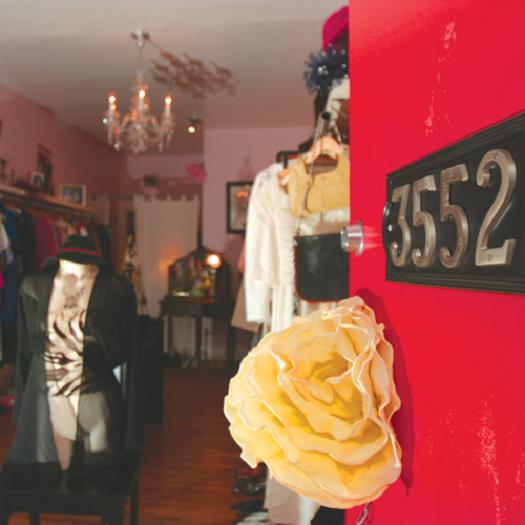
3552 20th St., SF. (415) 341-1020, www.biancastarr.com


BEST FANTASY FABRICATORS

Photo by Ben Hopfer

The mother-in-law’s birthday approaches, and all we know is that she likes to knit socks. Maybe we can help out with her frosty feet at the ImagiKnit store we always pass in the Castro? Probably great for some yarn — maybe a little bit fusty, too, though, and maybe somewhat intimidating to those who’ve never pearled. Imagine our surprise as we enter a rainbow wonderland busting with spectacular spun materials — spiky mohair, luminous silk, titillating cashmere, speckled cotton — and staffed by immediately accommodating people who don’t want to stick needles in our naïve newbie eyes. More shock: we run into several of our hippest friends leafing through vintage pattern books and holding court at the DIY wool winders. ImagiKnit’s community vibe and vibrant stock draw us in for hours. In the end we make the momentous decision to knit those socks ourselves. Sorry about the six toes, Mom.

3897 18th Street, SF. (415) 621-6642, www.imagiknit.com


BEST NIBSTER

Fountain pen lovers are a strange bunch. We spend hundreds of dollars on something that’s part status symbol, part jewelry, part objet d’art and, oh, yes, part writing instrument. Sometimes these works of exquisite craftsmanship write beautifully; sometimes they leak, skip, spurt ink all over the paper (and our hands), and don’t write at all. That’s why Stephanie Boyette, the fountain pen expert at Flax, is our favorite nibster. She can help you pick the right pen and ink, tell you how to use acrylic flow enhancers, give you tips on maintenance, and often tell you with a quick glance why your precious pen is malfunctioning. In fact, she’s so devoted that she’s been chosen to work as an apprentice to John Mottishaw, the Los Angeles nib-repair expert who is widely regarded as the best fountain pen surgeon in America.

1699 Market, SF. (415) 552-2355, www.flaxart.com


BEST PLACE TO FLIP YOUR WIG

What’s that on your head? If it ain’t a wig, get thee to the Wig Factory, pronto, because every man, woman, boy, girl, dog, cat, bird, and goldfish needs at least one follicular embellishment to send their look into another, more fabulous dimension. The Wig Factory’s capital selection includes everything from utter realness to costume frivolity — it’s got you covered like Andre Agassi’s cranium after half a can of Ron Popeil’s spray-on hair. Devotees know that Wig Factory is subject to some controversy because of its rules limiting the number of hairpieces you can try on in a single visit, which some people complain about. Such folks conflate whining with Yelping — ignore them. Do you want to try on a wig that’s already been tested by a hundred finicky entitled shoppers who think their scalps don’t stink? We don’t think so. Queens and princesses, beauty is here, on a mannequin head. Kings and princes, you can look like Adam Lambert or a Brylcreemed silver fox in a single fitting.

3020 Mission, SF. (415) 282-4939


BEST MINTY FRESH FASHIONS

It’s easy to show your California love when it’s directed at Mint Mall, a SF-based online clothing shop that mixes fine originals with vintage finds. An appreciation for natural fabrics, an eye for vibrant eras of well-known and obscure labels, and the type of tough dedication required to make the best thrifting finds are three of the special ingredients that make up Mint Mall. But the two main factors are co-owners Corina Biliandzija and Genevieve Dodge, who teamed up over half-a-decade ago and have refined their own designs and vintage visions with each passing day. Mint Mall items are fun to wear and born from the pair’s love and enthusiasm for fashion and everyday style. Native fringe, Aztec or cartoon prints, bell-sleeved tunic tops, Grecian gold thread minis, Bergdorf Goodman floral maxis, Diane von Furstenberg silk wraps, Givenchy platforms, original hoodies — the dynamic duo behind Mint Mall work hard for your closet, so you better treat them right.

www.stores.ebay.com/the-mint-mall


BEST SWEET SHOP TO MAKE A SUPERSTAR PROUD

Even before it opened, Candy Darling had a reputation, thanks to its fabulous name and kicky red plastic sign. Passersby were left to wonder — would it be a candy shop, or a drag queen fashion emporium? Those with a sweet tooth were the ones who received the happy answer, though, to be honest, there’s something wonderfully Grey Gardens about the store’s vintage 1960s or ’70s feel. Candy Darling the Warhol superstar was utterly unique, the essence of feminine glamour, and as soft and lovely as a lilac-scented breeze. Candy Darling the corner shop is a little paradise of sea-salt caramels, milk chocolate turtles, rocky road clusters, English toffee bars, and dark chocolate-dipped candied ginger. It does its namesake proud, which is no small feat. Visit Candy Darling just once and you might never see Mrs. See again.

798 Sutter, SF. (415) 346-1500


BEST BOOK HAVEN FOR ART LOVERS

A great bookstore is almost like an inspiring place of worship, except more fun and more grounded in palpable truth. Some of San Francisco’s best bookstores are nestled into nooks, like the esoteric Bolerium, or ready to move, like 871 Fine Arts. The numbers in this tome emporium and gallery’s name are enigmatic: for years, it brought some historical heart and heft to the art biz maze that is 49 Geary, and now it’s at 20 Hawthorne, another half-hidden location. (So the name’s obviously not address-oriented; perhaps it refers to the year Viking king Bagsecg died?) Owner Adrienne Fish has developed a selection of art books that is simply second to none in SF — 871 mixes old and new titles, is well-organized, and brings a sense of depth and breadth to any movement or era. The layout and lighting are attractive and efficient, and browsers and buyers can also enjoy an art show during a visit, since Fish’s curatorial acumen regarding California art is extra-sharp.

20 Hawthorne, SF. (415) 543-5155


BEST KANDI WHEN YOU’RE RANDY

Great reasons to use a glass dildo: they last longer, they’re less likely to harbor harmful bacteria, they retain temperature well — and on first glance, they more resemble works of fine art than hump handles. It was this urge toward aesthetic excellence that compelled Samantha Liu to open Glass Kandi, the display shop for her online catalog Glass Dildo Me. Liu provides expert guidance to the adventurous singles and curious couples who grace her door, smoothly introducing them to the exact masterpiece of whorled glass and embedded metals that will rev their engines. And don’t worry if you have a lady who likes to accessorize — Glass Kandi’s arsenal of whips, wigs, jewelry, and more is tinglingly top notch.

569 Geary, SF. (415) 931-2256, www.glasskandi.com


BEST SQUEAKY-SHARP WHEELS

It’s a bad cliché. The snooty bike repair dude, sniffing down his (lensless) thick-frame glasses at your beloved, if somewhat mind-boggling, bicycle. Will he overquote you? Will he really fix the problem with due diligence? Will you regret asking him the question in the first place? Blow by those stereotypical scaries and enter the world of Roaring Mouse Cycles. Racks and racks of high-quality road, track, and mountain bikes await to be sized expertly to your frame. (Should your size not be in stock, they’ll order it for you with a perfect-fit guarantee). Plus, the racing enthusiast staff is pro enough to know exactly what your two-wheeled buddy needs to get rolling again. They pride themselves on a steel frame code of service, and definitely won’t hurt your bike — or your ego. You’ll never feel velo-vapid again!

1352 Irving, SF. (415) 753-6272, www.roaringmousecycles.com


BEST REFINED RUGGEDNESS

Photo by Ben Hopfer

Way out west, where Midwestern dreams take form, there’s a Victorian that predates the great 1906 quake. There, you’ll find men’s workwear goods refined to something like an art form. They’re well-arranged in a shop known to sport an American flag or two, not in any jingoistic way, but as a reflection of its “finest quality dry goods”: jeans, shirts, bags, boots, and other masculine items, all selected by Todd Barket, whose design eye has influenced some of the more popular mass-market clothing brands on Market Street. The attire in Unionmade is considerably pricier for the most part, but with a sharpness, durability, and practical ingenuity (they’ve carried Chester Wallace canvas bags built to fit two six-packs) you won’t find for a lower tag. While a different nearby store has Japanese denim for those whose wallets can indulge in jean dreams, Barket stocks Levi’s from the ’40s, ’50s, and ’60s, a tack that taps into the brand’s SF past and relates to it newer brands such as Woolrich and Gitman Tanner. Look for the Unionmade label, or rather, for the stamp on your bag when you’ve made a purchase.

493 Sanchez, SF. (415) 861-3373, www.unionmadegoods.com


BEST FRILLS OF A LIFETIME

If you can’t find something to geek out on in Japantown’s five-story New People Tokyo fashion mall, you’re not doing it right. But not many of the pop culture palace’s multitudinous corners have spawned their very own local subcultures — which brings us to Baby, the Stars Shine Bright, a Harajuku ministore mecca, and one of the original brands responsible for the “Sweet Lolita” dress up movement in Japan. Lady-like Lolita adherents flounce around in intensely festooned outfits otherwise seen only on the most precious of collectible baby dolls. And since this is the BSSB brand’s only U.S. retail source, pretty-pretty princesses come from far and wide to partake in the store’s frillfest of matching dresses, bonnets, Mary Janes, and parasols. For extra credit, the Lolitas can play at BSSB-organized tea parties, held at pinkies-up swank spots all over the city.

1746 Post, SF. (415) 525-8630, www.newpeopleworld.com

 

Local ‘bucha bottlers rise effervescently over booze content controversy

0

At first, we were frightened. My god, they’re taking our kombucha! But though distribution of our liquid love has drastically slowed, there’s one good thing about the ‘bucha alcohol labeling debacle: it’s been great for local businesses. That’s because while bigger companies are halting production, the small scale of the Bay Area’s local kombucha operations are allowing them to dodge the labeling problems of national chains.

In mid-June the hammer dropped. Trashy media found a way to link the sudden dearth of kombucha on shelves to Lindsey Lohan’s hot mess, but the official verdict was that the alcohol content in the live-fermentation tea drinks had tested at levels above the .5% legal limit for non-alcoholic beverages, causing a nationwide forehead slapping Eureka moment who all those who use the stuff as holistic hangover cure. Bay Area distributor UNFI stopped delivering the stuff. Whole Foods and Rainbow Grocery nearly emptied their shelves of our liquid love. GT’s, the country’s largest kombucha producer, halted production of its lines, its current voicemail stating “We are working quickly to identify the possible causes and which lot codes and or regions are being potentially affected. We are trying our best to have product back on the shelves of stores as soon as possible.”

But a few kombuchas remained serene in their squat little bottles. SoMa’s House Kombucha, which has been selling its wares in farmers markets since the fall of 2009 and bottling for stores since early this year, was one of them. “Rather than it sitting on a shelf for six months in a warehouse somewhere, we get our product to our customers pretty fast,” says founder Rana Chang. “We’re not distributing to Michigan.” The problem of heightened alcohol levels has been shown to be caused by the continued fermentation that takes place after kombucha has been bottled, usually after it has left company facilities. In other words, the longer your bottle of ‘bucha sits and waits to be shipped to you or yet another warehouse, the more boozy it will be.

So small outfits, which distribute to their local retail sources a few times a week, have a leg up on the competition. For once! “It’s about time,” says Chris Campagna of Bay Area-based Rejuvenation Company, who says his company ran “a gamut of tests” on its kombucha, but did not pull their bottles from shelves because no labeling disreprencies were found. “It’s becoming apparent the benefit of small local companies. We have to fight for the small amount of shelf space we get, but now we’re seeing an increase in volume, better presence in accounts, and new accounts on the horizon.” 

Chang also noted a considerable uptick in business and said that House is now looking for expanded facilities and to hire new staff to keep up with demand. “It’s been an extraordinary opportunity to get into some stores where [before the voluntary recalls] shelves were so crowded with other products we couldn’t get in,” she told SFBG. A full list of stores selling both Rejunevation and House are available on their websites (including health food standards Rainbow, Other Avenues, and Berkeley Bowl), so dry your eyes, hop on your trike, and head out for some pro-biotic lovin’.

Board progressives ditch their own tax measures

5

After failing to win support from the small business community for a measure that would have helped it and fearing a well-funded attack from large corporations, Board of Supervisors President David Chiu today made the motion to reject his business tax reform ballot measure.
Labor leaders have also raised concerns about not having enough resources to fight for several revenue measures on the November ballot, mostly because they are focused on approving a hotel tax increase, supporting progressive supervisorial candidates, and defeating Jeff Adachi’s measure to increase how much city employees pay for health care and into their pensions.
“There is still not consensus about whether this should move forward,” Chiu said of his measure, which also suffered from being complicated and not easy to explain in an election campaign. It would have created a more progressive payroll tax structure – increasing taxes on large corporations and lowering them on small businesses – and a commercial rent tax that also would have exempted small businesses, raising about $25 million for the city and creating hundreds of private sector jobs, according to the city’s Office of Economic Analysis.
But the fear among some progressives is that too many revenue proposals would hurt their individual chances, given that the ballot will now include a hotel tax increase, a real estate transfer tax on properties worth more than $5 million (which the board approved today on an 8-3 vote), a $10 local surcharge on vehicle license fees, and a parcel tax from the Community College District.
So Sup. Ross Mirkarimi today also abandoned his proposal to increase the city’s parking tax from 25 percent to 35 percent, which would have raised about $25 million per year. Both Chiu and Mirkarimi said their measures were good policy and would have raised desperately needed revenue, but they were bowing to political reality.
“We’re challenged by the practicality of mounting a fall campaign around these revenue measures,” Mirkarimi said at the meeting.
The board voted 10-1 to table both measures, with a dissenting vote by Sup. Chris Daly, who said, “I just disagree with that political analysis.” He said voters would consider the measures individually and “I don’t think disappearing a progressive payroll tax and progressive parking tax are going to help the real estate transfer tax.”

Best of the Bay 2010: Local Heroes

0

2010 LOCAL HERO

SHAREN HEWITT


“The thing I love most in life is being a grandmother for social change.”

“If you mess up, you fess up — and then you fix it up.” That’s one of the motivational philosophies Sharen Hewitt, founder and executive director of the Community Leadership Academy and Emergency Response Project (CLAER) passes on to the people she works with. Her organization provides peer-to-peer empowerment and civic engagement programs as well as immediate crisis stabilization for victims of violence, helping them get the support they need. CLAER is based in Bayview, “but we serve the whole city, which unfortunately needs us more than ever,” she says.

A community leader and organizer for decades, Hewitt has been a critical and unyielding voice on housing, voter registration, education, employment, and political access issues. Her current focus has been on easing recent tensions between the African American and Asian American communities, weeding through the crowded field of candidates running for District 10 supervisor, and “insuring continuing dialogue about the development of sound public policy in the face of diminishing resources.”

“We celebrate diversity, and we try to raise the bar every day,” she says of CLAER. “San Francisco is the richest city in the richest state in the richest country in the world. It should be unlimited in its capacity to serve.” 


2010 LOCAL HERO

ISO RABINS

“My favorite thing about the Bay Area is the coast along Route 1. It consistently amazes me.”

Food revolutionary Iso Rabins has organized the most intriguing — and fun — food events of the last year, expanding his health code-defying Underground Market far beyond its original berth in a Mission District home. But his keystone contribution to the Bay Area is his ability to communicate his vision of feeding communities without the agro-industrial machine — by recognizing the soil-generated bounty available to all of us if we know where to look.

“The way our society is structured right now didn’t seem like it paid attention to our local community. I think food is a great way to break through that,” Rabins says. His brainchild is forageSF, an organization that promotes hunting and gathering through wild food walks, eight-course foraged meals, and retail opportunities for foragers who spend days picking through the woods, fields, and coastlines. In the locavore-freegan vein, Rabins calls attention to a world beyond shrink-wrap and leaden government regulations. And his message is being eaten up by change-hungry SF. “I really think you can do business and help people at the same time,” he says.


2010 LOCAL HERO

KATHERINE PRIORE

“Something I love about San Francisco is being able to take yoga classes with the best teachers from here to Timbuktu.”

Eleven years ago Katherine Priore was an English teacher in Cincinnati’s public school system. After a particularly stressful day in the classroom, she finally took a close friend’s advice by attending said friend’s yoga class. Priore was instantly hooked. “I had never experienced such profound internal stillness. My stress was alleviated and the stream of anxious, teaching-related thoughts vanished in those 90 minutes.” It was this eureka moment that set Priore on the path to creating Headstand, an organization providing youth in economically disadvantaged areas with access to yoga.

The organization’s ultimate goal is to create a shift in the education system whereby the physical, emotional, and psychological health of students has the same importance as the academic skills they’re building. Headstand aims to do its part by integrating yoga into the curriculum, not just as an elective but as a requirement. Over the past two years, the organization has offered 1,400 yoga classes to 660 youths in the East Bay and San Francisco, and this fall it plans to bring Headstand to San Jose and Houston. With a slew of evidence that Headstand is positively affecting the lives of its students, all signs point to the early success of the program and to the potential it may just be starting to fulfill.


2010 LOCAL HERO

ERICA MCMATH SHEPPARD

“I love the Youth Speaks office. It doesn’t matter what I’m wearing or what I look like there.”

Odds were against Erica McMath Sheppard to be onstage at the Warfield this past March receiving thunderous applause from a sold-out crowd. But as McMath Sheppard’s powerful championship Youth Speaks Teen Poetry Slam spoken word performance put it, “I been helping myself my whole damn life .” Two things were clear under those bright lights: this woman has a story to tell, and the world’s going to hear it — no matter a difficult childhood, a disastrous trek through the foster care system, and eventual emancipation from her guardians at age 16.

In addition to her poetry laurels and longtime involvement with the Youth Speaks arts program, the Class of ’10 Leadership High graduate was senior class president, involved in the Black Student Union, and active in a slew of other extracurriculars — a record that earned her admission to Dillard University in New Orleans this fall. Does she consider herself a role model? “I’m not trying to be the voice for foster girls around the world,” she says. “But this is my dream.”


2010 LOCAL HERO

DONNA SACHET


“It’s not always easy to live in San Francisco — but it sure is a hell of a lot of fun.”

A constant presence on the queer and charitable scenes for years, Donna Sachet will go to any lengths to call attention to worthy causes — including rappelling down 38 stories of the Grand Hyatt San Francisco to raise money for the Special Olympics.

As a performer and sparkling personality, Sachet MCs the popular Sunday’s a Drag weekly brunch spectacular at Harry Denton’s Starlight Room, hosts the live coverage of the Pride parade on television, writes a society column for The Bay Area Reporter, and attends pretty much every charitable event worth attending. (You can always spot her by her impeccably tailored red outfits — she is, after all, Scarlet Empress XXX of San Francisco’s Imperial Court.) Her annual holiday Songs of the Season event and Pride Brunch fundraiser, along with her involvement with the Bare Chest Calendar benefiting the AIDS Emergency Fund, have raised thousands of needed dollars.

“You just have to do it,” she tells us of her unflagging energy. “I love my community. But even if it’s not particularly about your own community, we’re all in this together.”


2010 LOCAL HERO

VERNON DAVIS

“When I paint, I focus completely on what I’m doing and everything else fades.”

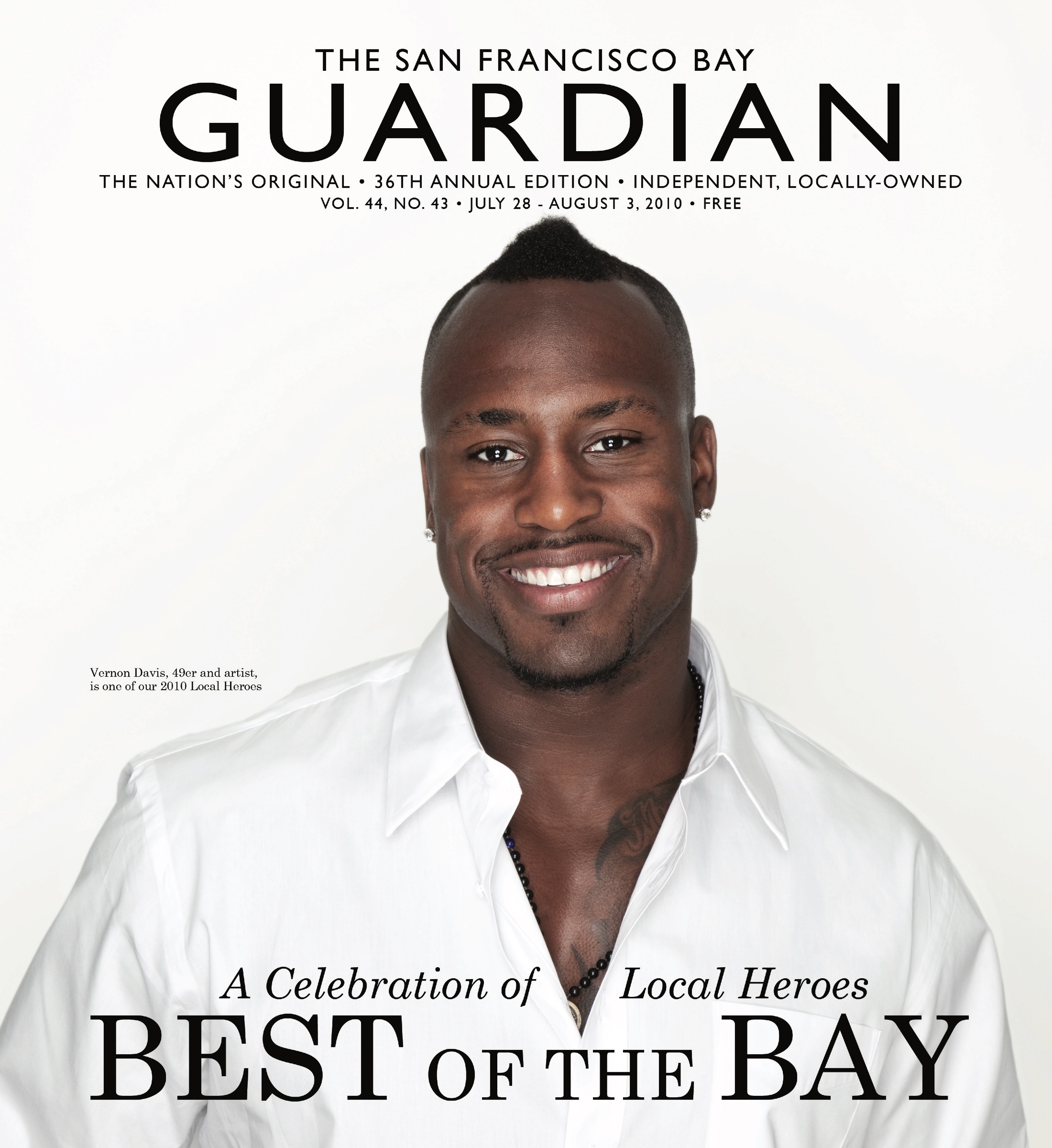
Freshly minted Pro Bowl superstar Vernon Davis has shown immense prowess on the football field since being drafted by the San Francisco 49ers in 2006. His career is on the upswing, and last season he tied the NFL all-time record for most touchdowns as a tight end. Davis’ success is the product of natural talent combined with drive and vision. He grew up in inner-city Washington, D.C., where a wise grandmother helped him dodge the environment’s potential pitfalls.

That same talent, drive, and vision extend beyond the goal posts into more esoteric realms. He’s an avid painter and seeks to be a role model for kids who might be afraid to explore their creativity. Earlier this year he launched the Vernon Davis Scholarship Fund, which will benefit a deserving Bay Area art student who would otherwise not be able to afford college. “I want to keep encouraging kids, especially in the inner city, to stay on track and pursue their dreams.”


2010 LOCAL HERO

JANE MARTIN


“I love being around a really vibrant queer and progressive community.”

On March 8, labor activist Jane Martin helped organize a flash mob in the crowded lobby of San Francisco’s Westin St. Francis Hotel. The purpose was to spread the word about a worker-called boycott of the hotel and urge tourists coming in for Pride to stay elsewhere. For five raucous and entertaining minutes, members of Pride at Work/HAVOQ, One Struggle One Fight, and the Brass Liberation Orchestra burst through the doors to sing, play, and dance to Lady Gaga’s hit “Bad Romance,” warning bewildered patrons not to “get caught in a bad hotel.”

The result: A collaborative effort of young and innovative labor leaders like Martin became a viral YouTube sensation, reaching hundreds of thousands of viewers. Martin has been joining with hotel workers in picket lines and organizing around queer economic justice issues in the Bay Area since 2001. She led picket lines at the Omni Hotel to decry the company’s move of locking out thousands of workers. “To ultimately win was really exciting,” she said. “When the hotels backed off, that was really inspiring.”

She recently joined 1,000 in staging a protest at the home of GOP gubernatorial candidate Meg Whitman as part of her organizing work with the California Nurses Association. And, as always with Martin, there’s more in the works.


2010 LOCAL HERO

DAVID CAMPOS


“The Bay Area embodies the American spirit more than anyplace else in the country. You can be who you are without any fear.”

San Francisco is a city of immigrants, a place where generations of people have come — from all over the country and all over the world — for a fresh start in a welcoming environment. But Mayor Gavin Newsom put that tradition at risk this year when he directed law enforcement agents to start referring juveniles charged with crimes to federal immigration authorities. It’s been a disaster — in one case, a 13-year-old charged with stealing 46 cents was turned over to the feds, and he and his mom, who is married to a U.S. citizen, both faced deportation, breaking up a family.

San Francisco Sup. David Campos has led the battle to protect the city’s sanctuary policy — and has taken on the larger issue of immigration reform. An immigrant who arrived in the United States from Guatemala at 14 (and who couldn’t get federal financial aid to go to college because of his status), Campos isn’t afraid to challenge the growing nativist movement: “What’s made this country great,” he told us, “is taking talent from all over the world and integrating it into society. Now the current climate precludes that.” 


PHOTO OF VERNON DAVIS BY PETER BOHLER. ALL OTHER PHOTOS BY KEENEY + LAW.

City Hall standoff

0

steve@sfbg.com

Backroom politics, vote-trading, threats, and tricky legislative maneuvering marked — some would say marred — the approval of the city’s 2010-11 budget and a package of fall ballot measures.

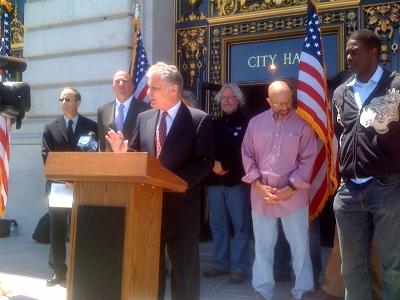
For weeks, Mayor Gavin Newsom had been threatening to simply not spend the roughly $42 million in budgetary add-backs the supervisors had approved July 1, mostly for public health and social services, unless they agreed to withdraw unrelated November ballot measures that Newsom opposes (see "Bad faith," July 14).

The board’s July 20 meeting included a flurry of last-minute maneuvers interrupted by an hours-long recess during which Newsom, Board President David Chiu, and their representatives negotiated a deal that was bristled at by progressive supervisors and fiscal conservative Sup. Sean Elsbernd.

Ideological opposites Elsbernd and Sup. Chris Daly voted against motions to delay consideration of several measures — including splitting appointments to the Rent, Recreation and Park, and Municipal Transportation Authority boards; revenue measures; and requiring police foot patrols — until after approval of the city budget.

"What is the connection between [seismic retrofit] bonds and the budget?" Elsbernd asked as Budget Committee chair John Avalos made the motion to delay consideration of the $46 million general obligation bond Newsom proposed for the November ballot.

Avalos made an oblique reference to "other meetings" that were happening down the hall. Daly then criticized the maneuver, noting that "vote trading is illegal," later citing a 2006 City Attorney’s Office memo stating that supervisors may not condition their votes on unrelated items.

But that didn’t stop supervisors from engaging in a complex, private dance with the Mayor’s Office and other constituencies that day. In the end, the board approved the budget on a 10-1 vote, with Daly in dissent. Then Chiu provided the swing vote to kill the progressive proposal to split with the mayor appointments to the Recreation and Park Commission, with Sups. Daly, Avalos, Ross Mirkarimi, David Campos, and Eric Mar on the losing end of a 5-6 vote to place the measure on the fall ballot.

A measure to split appointments to the Rent Board was defeated on a 10-1 vote, with Daly dissenting, although that seems to be tactical concession by progressives. Campos, who sponsored the measure, said landlord groups were threatening an aggressive campaign against the measure that would also seek to tarnish progressive supervisorial candidates.

Removal of an MTA reform measure from the ballot, another mayoral demand, was also likely at the July 27 meeting (held after Guardian press time). Chiu told his colleagues July 20 that he was still negotiating with the mayor on implementing some of its provisions without going to the ballot this year.

Chiu rejected the notion that he cut an inappropriate budget deal, saying he was concerned the split appointment measures would be portrayed as a board power grab, noting that community groups need the funding that Newsom was threatening to withhold, and saying the board’s threats not to fund Newsom’s Project Homeless Connect facility and Kids2College Savings program were also factors in the deal.

"We were engaged with a number of conversations, they all took time, and we didn’t finish until very late," Chiu told us.

Even Daly acknowledged supervisors had few options to counter Newsom’s threats, but told us, "It’s just not the way we should be doing things."

The decision on three revenue measures (a parking tax increase, property transfer tax, and business tax reform) was set for July 27, with sources telling the Guardian that only one or perhaps two would make it onto the ballot. Newsom opposes all of them. Also hanging in the balance was Mirkarimi’s ballot measure requiring police to do more foot patrols, as well as another version in which Chiu added a provision that would invalidate the Newsom-backed ordinance banning sitting or lying on sidewalks, a retaliation for Newsom inserting a similar poison pill in his hotel tax loophole measure that would invalidate the hotel tax increase that labor put on the ballot if it gets more votes.

But most of the action was on July 20. The Transportation Authority (comprised of all 11 supervisors) voted 8-3 (with Chiu, Avalos, and Mar opposed) to place a $10 local vehicle license fee surcharge on the ballot, which would raise about $5 million a year for Muni. A Daly-proposed ballot measure to create an affordable housing fund and plan failed on 4-7 vote, with only Campos, Mar, and Chiu joining Daly.

There were some progressive victories as well. A charter amendment by Mirkarimi to allow voters to register on election day was approved 9-2, with Elsbernd and Alioto-Pier in dissent. A Chiu-proposed measure to allow non-citizens to vote in school board elections was approved 9-2, with Elsbernd and Carmen Chu voting no. And a Daly-proposed charter amendment to require the mayor to engage in public policy discussions with the board once a month was approved 6-5, opposed by Dufty, Alioto-Pier, Elsbernd, Maxwell, and Chu.

But the busy day left some progressives feeling unsettled. "How do you do this and not be trading votes?" Campos told us. "In the end, we’re saving programs, but what does it say about the institution of the board?"

Newsom spokesperson Tony Winnicker denied that the mayor made inappropriate threats, but confirmed that a deal was cut and told us, "Yes, the Mayor made his concerns about the budget clear. Yes, the mayor made his concerns about the charter amendments clear."

Arrests made as hotel workers and their supporters target Hyatt

5

Images by Ramsey El-Qare, who contributed to this report.

An ongoing labor conflict between the hospitality workers union Unite-Here Local 2 and the Hyatt Corporation boiled over into the streets yesterday (7/22) with a union-organized protest and civil disobedience outside the Grand Hyatt San Francisco hotel. Union leaders see the action as another step in the fight for their members’ workplace rights. Hotel management called the action a staged spectacle and a waste of energy that would be better spent at the bargaining table.
San Francisco hospitality workers have been without a contract for nearly a year as Local 2 and hotel management of several corporations have reached an impasse over securing health care benefits, pension improvement, wage increases, and the right to organize without intimidation from employers. San Francisco Police Department Sgt. Tadao Yamaguchi confirmed that 150 demonstrators were arrested after blocking Stockton Street outside the Grand Hyatt San Francisco hotel. All were cited and released.

“The Hyatt Corporation has repeatedly said they want workers to pay hundreds of dollars per month for family medical,” Local 2 spokeswoman Riddhi Mehta told the Guardian. “Workers have sacrificed wages for decades to keep health care, to the point that their average income is $30,000 to $35,000 per year.”

Hyatt spokesman Peter Hillman told the Guardian that management wants to renegotiate the health care portion of the contract, but that negotiations hadn’t reached the point to make specific demands for worker contributions to the plan.

“They are sitting on top of $35 million that could be used to help address the overall health care plan that hasn’t been addressed in 30 years,” Hillman told us. “If there is finger pointing on profits and all that, I would ask them why they haven’t opened up that?”

Mehta told the Guardian that $35 million is in an health and welfare trust fund specifically for emergencies, like earthquakes or lockouts in which union members aren’t working enough hours to get health benefits. Local 2 President Mike Casey told the Guardian that the union does not control the trust fund. It’s managed by trustees from both employers and the union. “Bringing this up is it’s a delay tactic on their part,” Mehta said.

Casey, who was arrested during the demonstration, said it was a success. “We’re going to win,” he said. “It’s going to take some time. It’s a question of who’s going to last one day longer than the other side.”

“The game Unite Here is playing is to generate more union membership, to some extent at the expense of the current membership,” Hillman said. “These are staged spectacles. The energy would be better spent at the bargaining table and we encourage Local 2 to come back to that.”

To watch video of the action taken by the Guardian, click here, here, here, here, and here.


Unions say grand juror unethically helped Adachi measure

57

San Francisco’s police and fire unions are taking a lead role in opposing Public Defender Jeff Adachi’s November initiative to make city employees pay more of their pension and health care costs, despite the fact that both unions have recently renegotiated their contracts to exempt their members from paying those increased costs until 2013.

The unions and Bob Muscat from the San Francisco Labor Council recently formed the group Stand Up for Working Families to run the opposition campaign to Adachi’s SF Smart Reform, yesterday holding a press conference at City Hall to highlight the allegedly unethical role that a grand juror has played in pushing the Adachi measure.

Civil Grand Jury member Craig Weber led the committee that in June released a report on the city’s pension system called “Pension Tsunami: The Billion Dollar Bubble,” warning that employee pension costs to the city would more than double in the next five years and “fundamental adjustments must be made to the City’s employee pension program.”

Yet by the time that report came out (following a similar grand jury report from a year earlier), Weber was already working as treasurer for the Adachi’s signature-gathering campaign, which City Attorney Dennis Herrera called an inappropriate conflict of interest and which Muscat says that raises questions about data manipulation and access to secret grand jury proceedings.

“I have serious concerns in this particular instance that Mr. Weber’s dual roles create a conflict of interest, or at least the appearance of conflict of interest, which would undermine the integrity of any Civil Grand Jury investigation into these issues,” Herrera wrote in a June 14 letter to Presiding Judge James McBride, relating how Weber had sought advice from Herrera’s office on the matter in March and that both Weber and the Grand Jury chair refused to heed his advice that Weber recuse himself from working on the report.

“We believe he used his position on the Civil Grand Jury to manipulate the civil grand jury report,” attorney Peter Saltzman, who represents opponents of the measure, said at the press conference.

But Adachi called the charges “just smoke and mirrors,” telling the Guardian that his initiative was based on data from the Controller’s Office and that the measure was written and publicly available before the latest grand jury report was released. “We received zero information from the grand jury,” Adachi told us. “We relied on public information that we received from the Controller’s Office.”

He has claimed the measure will save the city about $167 million per year by making city employees pay more into their pensions and health care costs for their dependents, although that figure will be lower for the next two years because of exemptions that were written into five police and fire memorandums of understanding that the Board of Supervisors approved last week, agreements negotiated by the Mayor’s Office and opposed by Sups. David Campos and Chris Daly (Sup. Ross Mirkarimi also voted against the MOU for Fire Department executives) because of the exemption.

Police union head Gary Delagnes, who was at the press conference, told the Guardian that the special consideration for those two unions – both of which are key supporters of Mayor Gavin Newsom — was simply a function of negotiating their MOUs later than the other unions. “By the time we and the firefighters were in there, this thing [Adachi’s campaign] had really picked up steam,” he told us.

During the press conference, Muscat highlighted how billionaire Michael Moritz, managing partner of Sequoia Capital, put almost a quarter-million-dollars into qualifying the Adachi measure for the ballot and said, “This is a measure not in the interests of anyone in San Francisco and it represents the interests of people outside of San Francisco” who are attacking public employee unions for political reasons.

Safety first!

0

Dick Meister, former labor editor of the SF Chronicle and KQED-TV Newsroom, has covered labor and politics for a half-century. Contact him through his website, www.dickmeister.com, which includes more than 250 of his recent columns.

The number of serious on-the-job accidents this year have yet again made very clear the urgent need for expanded and tightened government safety regulation. The toll on workers has been high, as President Cecil Roberts of the United Mine Workers union told the House Education and Labor Committee in mid-July.

Roberts noted the explosion at a mine in West Virginia that killed 29 coal miners, a blast at a refinery in Washington State that killed seven workers, the BP oil rig blast in the Gulf of Mexico that killed 11, an explosion that killed six workers at an Energy Systems facility in Connecticut.

Those were but a very small sampling of the on-the-job accidents that kill nearly 6,000 U.S. workers every year. More than two million other American workers are seriously injured yearly. And another 50,000 or more die yearly from cancer, lung and heart ailments and other occupational diseases caused by exposure to toxic substances.

The Mine Workers’ Roberts came before the House committee to urge passage of a bill, the Miner Safety and Health Act, that focuses on mine safety but also includes provisions that would strengthen safety protections in all other workplaces.

Joe Main, who heads the federal Mine Safety and Health Agency, said the bill would do nothing less than “change the culture of safety in the mining industry, and put the health and safety of miners first.”  That indeed would be a major shift in focus, a very much needed and most welcome shift.

It’s sad but true that the safety of miners has often been a secondary consideration of many mine owners and government regulators. Greater profit and productivity – not safety – has been the overriding concern, and far too many workers have suffered because of that.

Too many have been maimed, too many killed for lack of proper protections, some required by law but ignored, some not required at all, however essential they are.

The Mine Safety and Health Agency’s Main says the proposed law would give his agency the tools to make employers live up to their legal and moral obligation. And if they don’t meet their obligation, the agency would be empowered to step in to see that they do so.

As the AFL-CIO’s general counsel, Lynn Rinehart, told the House committee, the federal job safety laws – now 40 years old – are way out-of-date. They have never been significantly strengthened, Rinehart noted, and their penalties are slight compared to those imposed for violations of other labor laws.

What’s more, Rinehart said, the law gives workers little protection from employer retaliation against those who raise safety concerns. Current law, he added, “simply does not provide a sufficient deterrent against employers who would cut corners on safety and put workers in harm’s way.”

Among the bill’s most important provisions is one that would guarantee workers the right to refuse to work in unsafe conditions. That right is guaranteed in mineworker union contracts, and for good reason: Non-union miners have long complained that they fear employer retaliation if they speak out about mine safety problems.

The bill would give the mine safety agency authority to close a mine if there’s a continuing threat to workers safety, and would subject mine owners to increased civil and criminal penalties for safety violations.

The AFL-CIO’s Rinehart noted that the median penalty for having working conditions that cause a fatality was a mere $5,000 in 2009. The penalties generally have been mere slaps on the wrist.

One of the most important parts of the proposed safety law would extend coverage of the Occupational Safety and Health Act  – OSHA – to the millions of local and state government employees who are not covered by the law.

Sponsors of the proposed law face formidable opposition – the National Association of Manufacturers, U.S. Chamber of Commerce and nearly two dozen other industry groups whose members aren’t eager to spend money on safer workplaces.

The Bush administration was openly on the side of those groups. Safety laws were only lightly enforced – if enforced at all – by the Bush appointees who ran the federal safety agencies. Peg Seminario, the AFL-CIO’s safety and health director, figures it will take years to reverse and undo the “many bad policies and practices that were put into place” under Bush.

It will indeed be a long time before the government can provide the full protection from on-the-job hazards that will continue to needlessly harm millions of American workers. But the proposed new safety law, and the worker-friendly Obama administration, give us a fighting chance to finally do what must be done if we are to have truly safe workplaces.

Dick Meister, former labor editor of the SF Chronicle and KQED-TV Newsroom, has covered labor and politics for a half-century. Contact him through his website, www.dickmeister.com, which includes more than 250 of his recent columns.

Board reverses mayor’s mental health cuts

9

San Francisco’s $6.5 billion budget, which the Board of Supervisors approved late Tuesday nigth, included a complete restoration of outpatient mental health services funded through the city’s Department of Public Health. The board is expected to finalize the same budget after a second reading scheduled for July 27.

The board reversed a more than $4.1 million cut to community behavioral health services proposed by Mayor Gavin Newsom in early June, which would have affected a dozen agencies and approximately 1,000 patients. As the Guardian reported on June 8, Newsom’s massive cut to the DPH would have resulted in a much greater loss to community nonprofits that leverage federal dollars from city funding to treat San Francisco’s most severely mentally ill homeless and poor.

Sup. Bevan Dufty told the Guardian he was very impressed by Citywide Case Management and Community Focus after walking rounds with one of the nonprofit’s caseworkers. Citywide is one of the San Francisco’s best performing mental health nonprofits, according to DPH reviews, and it would also have been the hardest hit under Newsom’s plan.

“It’s clear to me that this is a program that we ought to be doubling rather than cutting,” Dufty told us. “The more that people saw what they were doing, the more people would get behind what they were doing. Other cities are building models based on what Citywide Case management is doing now.”

Citywide Director Dr. David Fariello wrote the Guardian this letter about restoration of funding to his program to the Guardian: “We have good news for the supporters of Citywide Case Management and Community Focus mental health services. As you remember we were facing the prospect of 38 percent budget lose and cutting services to 240 of the severely mentally ill clients that we treat. On July 20, the Board of Supervisors voted for a full restoration of outpatient mental health services. This means that we will not need to cut services to the clients we serve.
“Your article, as well as phone calls, emails, and letters from supporters made clear to the Mayor’s Office and to the Board of Supervisors how critical our services are. Citywide/Community Focus supporters generated more input than any other budget cut issue. The Mayor restored 40 percent of our cuts, even after submitting his budget to the Board of Supervisors. Ours was the only cut to be so restored. The Board restored the remainder along with other outpatient mental health programs.
“Thank you for your support. In return, we are rededicating ourselves to providing comprehensive, cutting-edge, quality treatment to those San Franciscans at highest risk because of their mental illness.”

SF hospitality workers to protest Hyatt today

0

San Francisco hospitality workers will join hotel employees in 14 other cities across the United States and Canada today, July 22, in a protest and civil disobedience demonstration against the Hyatt Corporation. The action in San Francisco begins at Local 2 Plaza, between 3rd and 4th streets on Market, at 4 p.m. The demonstration will eventually move toward Union Square and the Grand Hyatt San Francisco hotel, organizers said.

More than 1,000 protesters are expected in San Francisco, with approximately 150 prepared to be arrested, hospitality union Unite Here Local 2 spokeswoman Riddhi Mehta told the Guardian. Tens of thousands of hotel workers are anticipated to participate in protests across North America, and more than 1,000 plan to be arrested.

The union is demanding a contract with the Hyatt Corporation that does not unduly burden middle-class workers with health care costs, Mehta said.

“The Hyatt Corporation has repeatedly said they want workers to pay hundreds of dollars per month for family medical,” Mehta told the Guardian. “Workers have sacrificed wages for decades to keep health care, to the point that their average income is $30,000 to $35,000 per year.”

Union hospitality workers have been without a contract in the city for nearly a year, resulting in an organized boycott of eight San Francisco hotels, including the three owned by the Hyatt Corporation. Union leaders criticize Hyatt’s attempts to “lock workers into recession” while the corporation has made windfall profits since the company first offered public sale of stock last November, according to the Hotel Workers Rising website.

Laura’s Law’s reactionary backers demonize progressives

23

San Francisco Chronicle columnist C.W. Nevius often gets things wrong in his columns, sometimes painfully so. Nobody’s perfect and we all make mistakes. But what’s less excusable is the fact that Chuck’s erroneous reporting, prominently presented by his newspaper, almost always serves a conservative political agenda. Even worse is that he won’t admit when he gets something wrong, even when directly confronted with accurate information – a cardinal sin for anyone who considers himself a journalist.

I experienced Chuck’s incurious intransigence at Tuesday’s Board of Supervisors meeting, the same day his column on Laura’s Law – which Sup. Michela Alioto-Pier is proposing to implement in San Francisco — appeared in the paper. Laura’s Law is a controversial measure that would allow counties to force medication and other psychiatric treatments on individuals who show signs of schizophrenia and other serious mental health issues, but who haven’t committed any crimes.

As with a Chronicle editorial the day before, Nevius took an overheated whack at progressives for not wholeheartedly supporting the measure: “Laura’s Law, which provides court-ordered mental health treatment for those individuals, is the kind of bold, breakthrough idea the city was once known to promote. But today, when it is considered by the Board of Supervisors, it will face an uphill battle. This is San Francisco at its worst, protecting small constituencies, worrying about legal consequences and letting lobbyists carry the agenda. It is an embarrassment for the city that used to know how to take a courageous stand.”

But none of that was true. The reality is that forcing treatment on mental health patients is an issue that divides that community and raises civil liberties concerns. This is an issue on which reasonable people can disagree, but Nevius’s column never aired that perspective, and it didn’t even mention that forced medication was an aspect of this law, so I asked him why and whether he understood that.

Nevius vehemently denied that forced medication was part of Laura’s Law, even though Dr. James Dillard from SF General Hospital had just testified that “medication is the single most important aspect of this care,” given that the patients involved are often exhibiting psychotic behavior, testimony on which Nevius took no notes and seemed to be playing with his phone during.

So I pulled out my own Iphone and quickly pulled up this recent article by the Chronicle’s Kevin Fagan, where the opening sentence defines the purpose of the law as “to compel the mentally ill to take medications.” Still, Nevius didn’t believe it, illogicaly quibbling over the definition of “compel,” and we stepped out into the hall to argue for a moment. There, representatives for the California Network of Mental Health Clients were gathered to oppose implementation of the law, distributing literature calling it, “an outdated, coercive, unproven, and divisive law that codifies involuntary outpatient commitment.” I left them to educate Nevius and went back inside, but after a few minutes he pulled me out to listen to one guy say that the law didn’t have strong enough teeth, thinking this supported his point. But when I asked point blank whether the law was about involuntary treatment, he agreed it was – and still Nevius wouldn’t relent.

Now, this is a complex issue, and Laura’s Law may actually be a good idea on balance. But rather than relying solely on horrific anecdotes of mentally ill people who commit crimes, as both Nevius and Alioto-Pier are doing, a smart and thorough legislative process will take into account a broad array of issues, including civil liberties concerns.

That’s what the progressive supervisors who Nevius tried to demonize did during the hearing, asking many questions for which Alioto-Pier didn’t have good answers. Dr. Mitch Katz, who runs the city’s Department of Public Health, the agency that would implement the law, opposes Laura’s Law but neither Alioto-Pier or Nevius could explain why in a way that made sense, and Katz was out of town during the hearing.

So rather than be pressured by these hyperventilating reactionaries, the board did the right thing and – over Alioto-Pier’s objections — delayed consideration of the item by two weeks, expressing support for the notion of improved pubic safety and mental health treatment, noting that the budget proposed by Mayor Gavin Newsom would have slashed mental health treatment services in the city, and asking for more information to reach a well-considered decision.

Nevius loves to paint progressives as wild-eyed ideologues who won’t listen to reason, but once again, this episode seems to show that it is this city’s so-called “moderates” that are most prone to going off on half-cocked ideological crusades using the most reactionary arguments.

Oy-urveda

0

Dear Readers:

This week’s letter of greatest interest, a well-composed rant against my supposed blind devotion to Western medicine, ignorance of same, and lack of understanding of the holistic approach to complaints such as hyposexual desire disorder, is really, really long. Here is one of the good parts:

I am an ayurvedic practitioner (traditional Indian medicine) and am obliged to look at things holistically (meaning from the perspective of the WHOLE person, not just their vaginas.) From this perspective, "HSDD" is just a name given to the complaint of low libido that could be caused by anything from poor diet to bad relationship to hormonal imbalance to stressful work-life and everywhere in between. Drugs don’t cure these things, they just give temporary "help" that you pay for in side-effects, cardiac risks, and possible worsening of the condition over time. Take away the drug, and you still have the problem. There is a cure for HSDD. It’s called education, lifestyle, diet and emotional healing, not your beloved Flibanserin.

If you want to empower women, don’t push drugs; push health, self-acceptance, and self-love.

OK, hang on there. We misunderstand each other. Keep in mind that Flibanserin doesn’t work, hence is not beloved by me or anyone else. But what’s really important to restate is this: Female desire turns out to be rather complicated and often dependant on prerequisite (feeling desired in return, fr’instance) that there just isn’t going to be a pill for. Ever.

My ayurvedic friend is completely correct when she says that many physical and emotional stressors can affect a woman’s libido, few if any of which can be addressed by a simple rearrangement of neurotransmitters. BUT. If you truly believe in a holistic approach to sexual health, you have to add those neurotransmitters to the equation — because if they are not skipping merrily across the synapses the way they are supposed to, no amount of yoga and yogurt is going to make sex happen. That’s where a drug like Flibanserin (if it worked) could be useful.

Western medicine may often overlook the importance of well-being, self-acceptance, love, and fresh vegetables in its pursuit of mechanistic fixes for poorly understood problems. Doesn’t mean it doesn’t work, although it surely does have its limits — Prozac isn’t going to "make" you happy if your life sucks. If you’re lucky, it may allow you to get out of your own way enough to begin to address some of the suckage.

I am more than happy to concede that a more holistic approach would vastly improve Western medicine. Let’s have one! And while we’re at it, let’s have an end to misogyny and sexual double standards and the "second shift."

I do not expect a one-size-fits-all drug to fit all. But I do think a brain-chemistry drug could have a salutary effect on brain chemistry. And while I would expect an approach like yours to be more effective than any Flibberwhatsis for complaints of the soul, I am taking my infected toe to Dr. Western, MD. Ayurveda may be ancient and time-tested, but so is gangrene.

Love,

Andrea
Got a question? Email Andrea at andrea@mail.altsexcolumn.com

Growing pains

1

steve@sfbg.com

The medical marijuana movement was born and raised in the Bay Area, and now the city of Oakland is poised to take the next big step forward by being the first city to explicitly allow and permit several massive cannabis cultivation facilities on industrial land, making millions of dollars in taxes in the process.

It’s the latest move in a growing trend toward Bay Area cities figuring out how to regulate and tax a booming industry that could really explode if California voters approve Proposition 19 in November, which would legalize even recreational uses of marijuana and give local jurisdictions more authority to control it.

Pot growing has long been the murkiest realm within an increasingly legitimate and professional medical marijuana industry (see “Marijuana goes mainstream,” 1/27/10). While Oakland, Berkeley, and San Francisco all have well-defined and regulated systems governing the 30 licensed cannabis dispensaries in those three cities, most of their growers are underground operations with no official oversight.

Public officials on both sides of the bay — who almost universally voice their support for the medical marijuana industry — say there can be problems associated with unregulated grows. Jerry-rigged wiring can pose a fire danger, and valuable crops can be targeted by criminals. Growers can be raided by police even when they have valid paperwork. And cash-strapped city governments aren’t able to tax or regulate an industry that has kept on booming throughout the Great Recession.

“There is no system to regulate production,” Oakland City Council member Rebecca Kaplan, who has authored cultivation regulations, along with co-sponsor Council member Larry Reid. Although the city may lack resources to enforce new requirements on growers, Kaplan believes growers will sign up voluntarily: “Every time we’ve created a permitting system, people have sought to use it. They want to be above board.”

The measure would permit growing facilities of more than 100,000 square feet, charging them each a $5,000 permit fee and $211,000 “regulatory fee,” as well as a gross receipts tax to be determined. The Oakland City Council approved the measure July 20 after Kaplan agreed to have staff also create a permit system for smaller growers, with both regulatory systems slated to take effect Jan. 1, 2011.  Kaplan has also proposed a November ballot measure to increase the current gross receipts tax on cannabis-related businesses from 1.8 percent now to up to as high as 11.2 percent, which the council is set to consider July 22.

Kaplan’s cultivation proposal initially generated a backlash from some small growers and Harborside Health Center, Oakland’s largest dispensary, because of its focus on creating mega-facilities that could monopolize the market and hurt the small growers who have been at the heart of the medical marijuana movement.

“All we’re asking for is a level playing field and a fair opportunity to compete with these factories,” attorney James Anthony, who represents Harborside and its network of growers, told the Guardian. “As medical cannabis comes into the light, it’s still capitalism out here in the world.”

Oakland developer and business person Jeff Wilcox, who is new to the marijuana industry, has been aggressively pushing to create a massive cannabis growing and manufacturing facility on his 7.4-acre warehouse complex near the Oakland Coliseum, covering 172,000 square feet over four buildings.

On May 21, Wilcox and his company, AgraMed, released a report showing how the facility could produce about 21,100 pounds of high-grade marijuana per year, generating about $60 million in gross sales and more than $2 million a year in taxes for Oakland, assuming a 3 percent tax rate (or about $3.5 million if the rate is set at 5 percent). The report was based partly on information gathered from independent local growers.

“By closing the loop and regulating the entire industry, we can ensure the healthy production and use of cannabis, and ensure its legitimate standing in our society. We’re working with public health and public safety agencies to make sure we do this right,” Wilcox, who did not return Guardian calls for comment, said in his press release.

Anthony said he was wary of Oakland politicians handing so much market power to one person: “It’s not for the government to pick the winners and losers through a regulatory scheme.” But he does agree that growers are overdue for regulation. “It’s time for cultivation to come into the light.”

State law requires growers to be part of the collective that uses or distributes the product, and the facility proposed by Wilcox would contract with many collectives, a model that hasn’t been tested in the courts yet. In fact, Council member Nancy Nadel has expressed concern that what she called “a structurally flawed proposal” could be on shaky legal ground (City Attorney John Russo, who has endorsed Prop. 19, did not return our calls with questions about the Oakland measure’s legality. His office also has not issued an opinion because it conflicts with federal law).

“Though state law allows for the operation of medical marijuana cooperatives by primary caregivers and patients, it does not legitimize large-scale growing operations. Just in the past few months, the DEA has raided two medical cannabis testing labs in Colorado. We need to retain a level of good sense and discretion,” Nadel wrote in a July 13 memo to her council colleagues, urging them to hold off on approving the measure until after voters decide Prop. 19 in November.

Yet Kaplan told us that even though the council moved the legislation forward, staff would continue to work through its myriad regulatory details and no permits will be issued until January. She also agreed that “it’s really important for Prop. 19 to pass,” giving Oakland more explicit authority to regulate the industry.

Oaksterdam University founder Richard Lee, who bankrolled the campaign to place Prop. 19 on the ballot, supports Kaplan’s regulations (although he told us he would like to see a greater focus on small cultivators) and called regulation of growers “a historic next step” that further legitimizes the industry.

“I think this will help Prop. 19 pass and help Oakland be ready when it does,” Lee said, voicing support for Wilcox and other business people who seek to join this movement. “We need everyone we can get on our side.”

Most polls show that Californians are split fairly evenly on Prop. 19. Even so, several California cities are already making preparations to use the new taxation and regulation authority that the measure would bestow.

Lee said Sacramento, Oakland, Stockton, Long Beach, San Jose, and Berkeley all have been working on cannabis regulatory schemes for voters to approve. For example, on July 13, the Berkeley City Council placed a measure on the November ballot proposing a gross receipts tax of 2.5 percent on medical marijuana and a 10 percent tax on recreational pot, as well as a system for permitting up to 10 medical marijuana growing operations.

“State law is really a mess at the moment and there are a number of things happening now that violate state law,” Lee told us. “That’s why Prop. 19 is going to be a cleanup law to deal with a lot of the stuff that’s going on now.”

Kaplan, who has been working on her ordinance for almost a year and got help from students in UC Berkeley’s Goldman School of Public Policy, agreed that the current legal requirements for growing medical marijuana are unclear: “There isn’t a right way [to permit cultivation facilities] under state law. The law isn’t clear.”

Attorney David Owen, who has researched medical marijuana laws for the new SPARC dispensary in San Francisco and for local growers, echoed the point. “The short answer is that we know so little about the boundaries of state law.”

Prop. 215, the 1996 measure that legalized medical marijuana, was broadly written and then codified largely by Senate Bill 420, portions of which were later struck down by the courts. But enforcement of marijuana laws has primarily been done by the federal government, which backed off after President Barack Obama took office, leaving state and local officials to regulate a fast-growing industry using standards that the courts have yet to clarify.

“We don’t have appellate court decisions to interpret a lot of key terms in state law,” Owen said. “We don’t really know what state law says.”

For example, Owen said the widely used term “dispensary” doesn’t even appear in state law. Local jurisdictions often define how much pot a patient can grow. For example, Oakland allows groups of three patients to grow up to 72 plants in 96 square feet. But most of those standards haven’t been held up by the courts. And even though state law says growers must be part of the same collective as their patients, Owen said, “In theory, you could have a collective with 37 million members.”

Although Owen said a large scale doesn’t necessarily make a marijuana operation illegal, he said permitting a 170,000 square foot facility is bound to draw attention from the feds: “I guarantee the DEA will be at their doorstep the day they open.”

Council member Nadel said Oakland could be liable then as well, noting that it would be permitting a facility that would meet about 60 percent of the entire Bay Area’s demand for 35,000 pounds of pot per year. “Thus, to prevent diversion to illegal markets and collective members outside of the cultivation collective (which would violate state law), the city must act responsibly and set a limit on the total size of cultivation allowed in Oakland. While the memo from the Council members discusses the alternative method [permitting a smaller capacity], it does not recognize the problems with projecting sales to dispensaries outside the Bay Area,” Nadel wrote.

Kaplan said the ordinance is a starting point that can be further refined by staff. But she emphasized the need to regulate the industry, warning of risks to Oakland residents. Her measure’s staff report attributes at least seven house fires, eight robberies, seven burglaries, and two homicides to unregulated growing operations in 2008 and 2009. Kaplan also said she worries about the possibility of “another Oakland Hills fire.”

Yet Kaplan, who is running for mayor, also told us the taxes are important in a city that was recently forced to fire 80 police officers. “Given Oakland’s budget crisis,” she said, “the revenue for the city is no small thing.”

Deal time

1

sarah@sfbg.com

Lennar Corp.’s massive redevelopment plan for Candlestick Point-Hunters Point cleared a critical hurdle July 14 when the Board of Supervisors voted 8-3 to affirm the Planning Commission’s certification of the project’s final environmental impact report, with Sups. John Avalos, Chris Daly, and Eric Mar opposed

Board President David Chiu called the vote "a milestone." Termed-out Sup. Sophie Maxwell, whose District 10 includes Candlestick Point and the former Hunters Point Naval Shipyard, saw the vote as evidence that city leaders support the ambitious plan. Yet many political observers saw the vote as proof that Lennar and its Labor Council allies have succeeded in lobbying supervisors not to support opponents of the project.

"I’m concentrating on pushing this over the finish line," Maxwell said at the hearing in the wake of the vote, which came in the wee hours of July 14 after a 10-hour hearing. Supervisors can still amend Lennar’s development plan during a July 27 hearing and project opponents are hoping for significant changes.

Mar said he wants to focus on guaranteeing that the city has the authority to hold Lennar responsible for its promises. "I want to make sure that we have the strongest enforcement we can," he said.

Lennar’s plan continues to face stiff opposition from the Sierra Club, the Golden Gate Audubon Society, the California Native Plant Society, San Francisco Tomorrow, POWER (People Organized To Win Employment Rights) and CARE (Californians for Renewable Energy).

Representatives for these groups, whose appeals of the EIR certification were denied by the board, say they are now weighing their options. Those include taking legal action within 30 days of the board’s second reading of and final action on the developer’s final redevelopment plan, which will be Aug. 3 at the earliest.

Supervisors are expected to introduce a slew of amendments July 27, when they consider the details of the proposal and its impacts on the economically depressed and environmentally polluted.

Michael Cohen, Mayor Gavin Newsom’s top economic advisor, admitted July 19 that all these various demands will likely delay project construction. "But 702 acres of waterfront land in San Francisco is an irreplaceable asset," Cohen reportedly told the San Francisco Chronicle. "It’s not a question of if — but when — it gets developed."

Chiu already has introduced five amendments to the plan in an effort to alleviate concerns about shipyard toxins, Lennar’s limited financial liability, a proposed bridge over Yosemite Slough, and the possibility that local residents will need more access to healthcare and training if they are to truly benefit from the development plan.

Sup. Ross Mirkarimi told the Guardian that he expects the board will require liquidated damages to ensure the city has some redress if the developer fails to deliver on a historic community benefits agreement that labor groups signed when Lennar was trying to shore up community support for Proposition G, the conceptual project plan voters approved in June 2008.

Mirkarimi said the board would also seek to increase workforce development benefits. "Thirty percent of the target workforce population are ex offenders. So while they might get training, currently they won’t get jobs other than construction," Mirkarimi observed.

He supports the health care access amendment and the public power amendment Chiu introduced July 21, pointing to Mirkarimi’s previous ordinance laying the groundwork for public power in the area. "This ordinance established that where feasible, the City shall be the electricity provider for new City developments, including military bases and development projects," Mirkarimi said. "PG&E was ripped when we pushed that through."

But Sierra Club activist Arthur Feinstein isn’t sure if additional amendments will help, given intense lobbying by city officials and a developer intent on winning project approvals this summer before a new board and mayor are elected this fall.

"Chiu’s amendments gave us what we asked for over Parcel E-2" Feinstein said, referring to a severely contaminated section of the shipyard for which Chiu wants an amendment calling for a board hearing on whether it’s clean enough to be accepted by the city and developed on.

But Feinstein is less than happy with Chiu’s Yosemite Slough amendment, which would limit a proposed bridge over it to a width of 41 feet and only allow bike, pedestrian, and transit use unless the 49ers elect to build a new stadium on the shipyard. In that case, the project would include a wider bridge to accommodate game-day traffic.

"The average lane size is 14 feet, so that’s a three-lane bridge. So it’s still pretty big. And it would end up filling almost an acre of the bay," Feinstein said.

Feinstein thanked Mirkarimi and Campos for asking questions that showed that the argument for the bridge has not been made. "But it’s disappointing that a progressive Board would be willing to fill the Bay for no reason," Feinstein said.

He concurred with the testimony of Louisiana-based environmental scientist Wilma Subra and environmental and human rights activist Monique Harden, who challenged the wisdom of the Navy digging out toxins while the developer installs infrastructure at the same site.

Subra said contamination is often found at Superfund sites after they have been declared clean when contractors to later dig into capped sites and expose workers and the community to contamination. Harden said the plan to begin construction on some shipyard parcels while the Navy removes radiological-contamination from shipyard sewers is "like a person jumping up and down on a bed that another person is trying to make."

But Cohen, who has aggressively pushed the project on Newsom’s behalf, countered that there is no scientific evidence to support such concerns. "It’s a very common situation," Cohen said. "It’s the basis for shipyard artists and the police being on the site for many years … It’s safe based on an extraordinary amount of data."

But Feinstein pointed to his experience working for the Golden Gate Audubon Society at the former Alameda Naval Station. He recalls how a remediation study was completed, but then an oil spill occurred at the site, which had been designated as a wildlife refuge.

"The military didn’t know about everything that happened and was stored on site, and it’s easy to miss a hot spot," he said. "And who’ll be monitoring when all these homes are built with deeds that restrict the renters and owners from digging in their backyards?"

Feinstein said he’s concerned that only Campos seemed to be asking questions and making specific requests for information around the proposed project’s financing

"Lennar is paying city staff and consultants and promising labor huge numbers of jobs. When you are throwing that much money around, it’s hard for people to resist — and the city has been co-opted," Feinstein said. "And how much analysis and resistance can you expect from city commissions when the Mayor’s Office is the driving force behind the project? So we don’t have a stringent review. The weakness of the strategy of ignoring our bridge concerns is that when we sue, we may raise a whole bunch of issues."

Arc Ecology director Saul Bloom says Chiu’s bridge proposal "screwed up the dialogue. We were close to a deal," Bloom claims. "But while that amendment allowed one board member to showboat, it prevented the problem from being solved."

Bloom is concerned that under the financing deal, the project won’t make any money for at least 15 years and will be vulnerable to penalties and bumps in the market — an equation that could lead the developer to build only market rate housing at the site.

"It’s a problematic analysis at best," he said.

"The bigger the development, the more it benefits people who have the capacity to address it — and that’s not the community," Bloom said. "So there’ll be more discussion of the bridge, and that’s where the horse-trading is going to be."

He also said the bridge has now taken on a symbolic value. "The thing about the bridge is that it’s not actually about the bridge any more," Bloom added. "It’s about Lennar telling people, ‘You will support us.’ If they get the bridge, it will give them free rein, an unencumbered capacity to do as they see fit. They are willing to make deals, but they have to have the bridge because it defeats the people who have been the most credible and visible — and then they have no opposition."

Benefits: July 21-July 27

0

Ways to have fun while giving back this week


Thursday, July 22

“Battles Yet to be Won”
This benefit for political prisoner Marie Mason, who was sentenced to 22 years in 2009 on charges of property destruction related to her involvement in animal rights and environmental activism, will feature speakers Jeff Luers, Linda Evans, and Karen Pickett and tunes by KUSF DJ Carolyn Keddy. The speakers will contextualize Mason’s severe sentence with the U.S. governments past attempts at supressing the Black Panthers, the American Indian movement, Chicano rights, Puerto Rican Independentistas, and other political movements.
7:30 p.m., $5-$20 sliding scale
Submission Gallery
2183 Mission, SF
www.supportmariemason.org

Beer, Bites, and Bikes
Eat organic and locally made sausages and drink fine brews at this fundraiser for the San Francisco Bicycle Coalition’s Green Streets Project to improve Market street for cyclists.
6 p.m., $20
Show Dogs
1020 Market, SF
www.sfgreatstreets.org

Saturday, July 24

Pet-a-palooza
Help raise funds for the Alameda Animal Shelter, the Northern California German Shorthaired Pointer Rescue, and Friends of the Alameda Animal Shelter at this annual benefit party featuring an afternoon street fair from 1pm-6pm with a photobooth, a doggie fashion show, vendors, and more and an evening silent auction with entertainment.
1 p.m.-9 p.m., $20
Autobody Fine Art
1517 Park, Alameda
(510) 865-2608

Tuesday, July 27

Vote Health
Attend this 25th anniversary party for Vote Health, an Alameda based public health care advocacy group that supports a universal, single payer health care system for both the state and national levels. Featuring guest speaker Dr. Steffie Woolhandler, a founding member of Physicians for a National Health Program (PNHP) and renowned advocate for a  national single payer health system.
7 p.m., $15 suggested donation
California Nurses Association
2000 Franklin, Oakl.
(510) 658-1147

Editor’s Notes

0

Tredmond@sfbg.com

I just got back from a short trip to Canada, the land of government health care and tight bank regulations, where business is booming. From my hotel room in downtown Toronto, I could see construction cranes everywhere. The Globe and Mail had a fascinating report on a construction company manager in Winnipeg who was learning the language of the Cree tribe and creating a new apprenticeship program for First Nations people — in large part because he was facing a serious labor shortage.

Yeah, that’s right: in Canada, they can’t find enough construction workers to fill all the jobs. And there’s a good reason (which has nothing to do with zoning or taxes or fees on developers): The banks in our neighboring country to the north have always been more tightly regulated, so they didn’t have the same meltdown we saw here in the USA.

Then I came back and read that Meg Whitman, candidate for governor of California, wants to eliminate the capital gains tax in the state. I like the Huffington Post headline: "Meg Whitman tax plan: she stops paying hers."

There are two types of people in the world, the rich and the rest of us, and the rich quite often don’t work for a living. Whitman, for example, doesn’t have a day job. She pays the bills with the money she makes by investing the billion dollars or so that she racked up working at eBay.

Actually, she probably doesn’t invest much of it herself these days; she hires someone else to do that. Which means she doesn’t do anything at all to earn the money that comes in each week.

That income is called capital gains — and the HuffPo estimates that she’s bringing in enough that she’d probably owe the state about $4 million a year in taxes at current rates. If she gets elected, and manages to repeal the capital gain tax, she won’t pay any taxes on that money at all.

Which means the state will be even more broke — or that the rest of us suckers, who actually go to work every morning, will have to pay more to make up for it.

I suppose next she’ll want to deregulate the banks.

The martyrdom of Mooney and Billings

0

Dick Meister , former labor editor of the SF Chronicle and KQED-TV Newsroom, has covered labor and politics for a half-century. Contact him through his website, www.dickmeister.com, which includes more than 250 of his recent columns.

It was an unusually hot July day in San Francisco.   There was a parade on that day in 1916 – a “Preparedness Day” parade organized by local Republican businessmen. It was intended to drum up support for U.S. entry into World War I and embarrass Democratic President Woodrow Wilson, who was running for re-election on a platform that stressed,  “He kept us out of war!”

A lot of people supported neither the war nor the parade, however. The opponents particularly included the union organizers who were the radicals of that period – “reds” who were trying to establish the right of unionization in the face of often violent opposition from the business interests who controlled the city and who most assuredly supported the war.

Many thousands of spectators, as many as 100,000 by some accounts, lined the parade route down Market Street, cheering and enthusiastically waving American flags. At precisely 2:06, less than a half-hour after the parade of more than 25,000 marchers had begun, just as contingents from the Grand Army of the Republic and Sons of the American Revolution were passing the crowded corner of Steuart and Market  streets. . . Boom!

It was the thunderous blast of a bomb that had either been thrown into the crowd or planted there.  The horrific explosion killed 10 bystanders and seriously wounded 40 others.

Within a few hours, the authorities had their culprits. Not surprisingly, all of those arrested as suspects were union organizers. Among them were two men who were especially despised by the city’s virulently anti-labor business establishment — Tom Mooney, 34, a burly Irish-American organizer for the International Molders Union who was one of San Francisco’s most prominent labor activists, and his close friend, slim, short, boyish Warren Billings, a 23-year-old shoe factory worker.

Mooney and Billings were San Francisco’s “most notorious reds,” declared the SF Chamber of Commerce in one of its typically frenzied assessments of those who dared challenge the status quo in which workers were treated as mere chattel.

The others who were arrested were soon freed, but Mooney and Billings were put on trial and eventually found guilty. Mooney was sentenced to death by hanging, Billings to life imprisonment.

There’s absolutely no doubt Mooney and Billings were framed. Federal investigators, investigative newspaper reporters and others proved that beyond any doubt.  The city’s famously corrupt district attorney, Charles Frickert, was found to have suppressed evidence that proved the pair’s innocence, joining with corrupt policemen to fabricate evidence that supposedly proved their guilt, and failing to call witnesses who, as he knew, had solid evidence that they were not guilty. Frickert hired other witnesses and coached them to give perjured testimony implicating Mooney and Billings.

Eventually, every major witness confessed to lying to the juries at both the Mooney and Billings trials. Some of them claimed to have seen the men plant the bomb on the day of the explosion, although it turned out the supposed eye-witnesses hadn’t even been in the city at the time.

Some gave their perjured testimony in exchange for such favors as the parole of relatives who were serving prison sentences, others for the pay District Attorney Frickert offered them. All were after the $17,500 reward posted for evidence leading to the conviction of Mooney and Billings.

 The judge who presided over Mooney’s trial told California’s governor he had determined through personal investigation that “every single witness who testified against Mooney had lied.” Mooney’s lawyer declared them “the weirdest collection of God-damned liars” he’d ever seen.

 A federal fact-finding commission concluded that “there was never any scientific attempt made by either the police or the prosecution to discover the perpetrators of the crime. The investigation was in reality turned over to a private detective, who used his position to cause the arrest of the defendants.” 

Fremont Older, the crusading editor of the San Francisco Bulletin, concluded that the authorities “conspired to murder a man with the instruments that the people have provided for bringing about justice. There isn’t a scrap of testimony that wasn’t perjured.”

The cases quickly drew widespread national attention, right up to the White House. President Wilson argued against Mooney’s hanging on grounds that there wasn’t a shred of evidence to support his guilt.

It was obvious that the Chamber of Commerce’s so-called Law and Order Committee had played a major role in framing Mooney and Billings as part of the chamber’s drive to change San Francisco’s status as one of the country’s most heavily unionized cities. 

Mooney and Billings, of course, had been attempting to enhance that status, in part by helping wage major organizing drives among the city’s vital transit workers and the equally vital employees of the company that supplied the city’s gas and electricity. Which was a very good reason the utility company – Pacific Gas & Electric – hired the private detective cited by federal fact-finders to help District Attorney Frickert and the police fabricate evidence against Mooney and Billings.  Not incidentally, Frickert was backed financially by Pacific Gas & Electric in his election campaigns for district attorney.

 The convictions prompted protests across the United States and worldwide, much like those raised five years later in behalf of two other union radicals, Nicola Sacco and Bartolomeo Vinzetti, who were executed in Massachusetts for a murder they clearly did not commit.

The Mooney and Billings case was dubbed internationally as “America’s Dreyfus Case,” a comparison to the famous French case that also drew worldwide protests. The protests stemmed from the rigged conviction of Jewish French Army Captain Alfred Dreyfus in 1894 for allegedly attempting to turn over secret military documents to the German government. Although the “Dreyfus Affair,” as it was called, was based on another issue – anti-Semitism – it similarly involved the use of false evidence against an innocent man by powerful authorities.

 Protestors in the United States and abroad quickly formed a network of defense committees in behalf of Mooney and Billings, and mounted rallies and other noisy and highly visible public demonstrations. 

 Freeing the two men became labor’s cause célèbre. Unions everywhere voiced loud and frequent protests, as did all other segments of the left, ranging from liberal to Communist. Eventually, they helped force California authorities to reduce Mooney’s death sentence to life imprisonment, ironically on the basis of evidence that should have freed him.

 President Wilson’s request that Mooney be spared was probably the main reason his sentence was commutated, but the heavy pressures of the Mooney-Billings defense committees and the American Federation of Labor, which Wilson most certainly felt, also had much to do with it.
   
Mooney finally was freed in 1939, twenty-one years later. Culbert Olson, California’s first Democratic governor in 44 years, granted him a full and unconditional pardon. Mooney, said Gov. Olson, was “wholly innocent,” and his conviction  “wholly based on perjured testimony.” 

Mooney’s release sparked great celebration among his supporters, who had fought so long for his freedom. Thousands paraded up Market Street behind Mooney shortly after his release, the street cleared for them by police, past the site of the explosion 23 years earlier that had sent Mooney to prison.

The next day, Mooney joined a picket line of striking department store employees on Market Street and donated to their cause half of the $10 the state had given him on his release from San Quentin Prison. Mooney sent the other half to Newspaper Guild members who were waging a major strike in Chicago.

Tom Mooney hadn’t much time to enjoy his freedom. His health had been broken in prison and he soon was hospitalized with a serious stomach ailment. He remained in a hospital bed until his death at age 60, less than two years later.

Billings got his freedom a few months after Mooney left San Quentin. Gov. Olson commutated his life sentence to time served – 23 years for a crime that no one really believed he or Mooney had committed.  Finally, in 1961, Gov. Edmund G. Brown granted Billings a full pardon. But, as Billings complained, it was granted on grounds that he had been “rehabilitated” rather than because he was innocent.

After leaving prison, Billings married and settled down in San Mateo, working in  San Francisco as a watch repairman, a trade he had learned in prison, and later set up his own repair business at home.  Billings quickly resumed his labor activism, as a member of the Watchmakers Union executive board and delegate to the San Mateo Labor Council. He was active as well in the anti-Vietnam War movement and various other political, economic and social causes. 

I interviewed Billings just before his death in 1972 at age 79. I expected to encounter a bitter, angry old man. Yes, he was old, but his spritely manner belied that basic fact of his life, and he showed absolutely no bitterness over the great injustice that had been done him – none! He talked instead of injustices that were being done to others, and of joining in efforts to help overcome them.

“I don’t have anything against anybody about anything,” Billings told me. “The people who testified against me were after that reward, but it all went to the police who arrested me. I’ve never felt any bitterness, but the fact that the witnesses against me didn’t get any of the reward money should make them bitter.”

Warren K. Billings was a great inspiration to me and others who knew him, and to many who just knew of him. He was a man possessing a spirit that could not be broken by circumstances far more severe than most of us have ever had to endure.  A man who would not even raise his voice in anger or bitterness against the terrible injustice that was done him. A man who maintained his convictions through it all. A strong and courageous man, but kind and gentle, and possessed of an incredible measure of tolerance and understanding.

The Preparedness Day bombing has never been solved.

NOTE: For more on the Mooney-Billings case, See “Frame-up” by Curt Gentry, an extraordinary work of investigative journalism book covering all aspects
of the case.

Dick Meister , former labor editor of the SF Chronicle and KQED-TV Newsroom, has covered labor and politics for a half-century. Contact him through his website, www.dickmeister.com, which includes more than 250 of his recent columns.

Hotel Fairness Initiative qualifies for fall ballot

10

By Brittany Baguio

The Department of Elections has announced that the Hotel Fairness Initiative was approved for the November ballot. Labor and community groups last week turned in 10,544 signatures, a little more than the required 7,168 signatures needed to put an initiative on the ballot. The Department of Elections did a sample of 500 signatures to check the validity and reported that 478 of the 500 signatures sampled were valid, resulting in a 95.6 percent accuracy rate.

The Hotel Fairness Initiative would increase revenue by imposing a 2 percent hotel tax on San Francisco hotel rooms temporarily for 4 years, with an average surcharge of $3 per hotel room per night, and close loopholes that let some visitors avoid paying the hotel tax. The hotel tax is currently 14 percent. According to the Controller’s Office, if the Hotel Fairness Initiative passes, it is expected to raise $25 million a year in revenue.

The hotel tax is one of five measures proposed to help close the budget deficit, which we discuss in more detail in this week’s paper. Mayor Gavin Newsom has also placed a measure of the ballot to also close the loopholes that lets airline employees and those who book hotels online avoid paying hotel taxes, as the Hotel Fairness Initiative would also do, but it includes a provision that would invalidate the hotel tax if his measure gets more votes.

Supporters of the Hotel Fairness Initiative claim that online booking companies and airline companies have been using corporate loopholes that have cost the city about $6 million per year. In total, online booking companies have escaped paying $70 million in hotel taxes through its loophole of taking the hotel tax out of a portion of the money the hotel receives, rather than the total amount the customer pays.

For example, Internet booking companies would charge customers $200 for a room and then pay the hotel $170. Internet booking companies argue that the hotel tax comes from a portion of $170, instead of $200. Similarly, airlines have avoided paying hotel taxes by renting blocks of rooms for its flight crews and claiming that airline companies are protected by the Permanent Resident Exclusion law. This law was originally intended to help the homeless and states that individuals who occupy a room for at least 30 days are tax exempted. However, airlines have been taking advantage of this law by moving different flight crews in and out of their hotel rooms rather than an individual person occupying the room for 30 consecutive days that is implied by the law.

Opponents of the Hotel Fairness Initiative, such as the San Francisco Chamber of Commerce and the Hotel Council, contend that the hotel tax would hurt tourism to San Francisco as well as cause job cuts. In a press release, Steve Falk, President & CEO of the San Francisco Chamber of Commerce said, “This misguided effort will discourage travel to San Francisco, hurt our city’s largest industry, and eliminate many of the union jobs the Labor Council seeks to protect. Raising city revenue at the expense of hotels and hospitality workers is not the answer to the city’s fiscal problems.”

A Hotel Council press release states that “the Hotel Fairness Initiative will lead to 7.3 jobs lost for every million dollars in revenue gained.” If this is true, about 182 jobs could be lost as a result of this initiative, offset by the city being able to save many public sector jobs and services with the revenue. The hotel industry already fluctuates in the number of positions available as a result of the market. According to California Labor Market Info’s latest data, the average amount of hotel jobs lost per month in 2009 was 143 jobs.

Although the Hotel Council and the Chamber of Commerce claim that the initiative would eliminate jobs, one of the biggest supporters of the hotel tax is UNITE HERE LOCAL 2, a union of hotel workers. UNITE HERE representative Ian Lewis emphasized that opponents of the issue are conveniently ignoring the lack of fairness in current hotel booking practices. “Hotel workers live in San Francisco,” Lewis told the Guardian, “We’re taxpayers like everyone else. We are in a severe budget crisis and everyone needs to carry their fair share.”

Community groups, retirees, and hospital workers all volunteered their time to collect signatures supporting the Hotel Fairness Initiative. Community groups such as UNITE HERE collected 1700 signatures, Keep the Arboretum Free collected 1000, and a collection of nonprofit groups collected more than 4000. With the efforts of these community groups, the coalition was able to collect an estimated 15,000 signatures.

Family health advocate for the Tenderloin Housing Clinic, Bobbi Lopez, said she found that those who signed the petition saw the hotel tax as a necessary step in closing the budget deficit, “They understood that the necessity of fighting the cuts, particularly the cuts to MUNI, to parks, and to hospitals,” Lopez told us, “I think that they were getting the idea that in desperate budget times, we need a temporary solution and long term solution and that’s exactly what the Hotel Fairness Initiative is.”

Community groups remain optimistic that this grass roots effort will pass. Brenda Barrows, a health care provider at San Francisco General Hospital, told the Guardian, “My hope is that in November it passes and the city’s financial situation gets better so that people who live in the city don’t have to suffer and also people who work for the city don’t have to suffer.”

Lopez told us she thinks that the initiative will pass if there is an ongoing effort on the issue. “We want to remind folks that this is just the beginning and now we have to embark on a long term campaign,” Lopez told us, “so it’s really about sustaining the energy that we had on June 1 when we kicked off and reminding folks that its going to necessitate all the same volunteers to work together and make it reality.”


Board accepts EIR, but vows to amend Candlestick-Shipyard plan

14

Text by Sarah Phelan, images by Luke Thomas


At the end of a ten-hour hearing to appeal the final environmental impact report  for the city and Lennar’s massive Candlestick-Shipyard redevelopment project, the Board voted 8-3 to accept the FEIR, with only Sups. John Avalos, Chris Daly and Eric Mar voting to reverse certification of what they said was a flawed document.


But the vote does not mean the Board has voted to accept the city and the developer’s final redevelopment plan. That plan will come before the Board on July 27, and the supervisors are expected to introduce a slew of amendments, in addition to  five amendments that Board President David Chiu introduced earlier this week.


These amendments are intended to address longstanding concerns about toxins at the shipyard, limited liability on the part of the developer, the questionable need for a bridge over Yosemite Slough, the reality that Bayview residents may be cut out of any upcoming jobs, and the desire to nail down efforts to use public power at the site


“We can’t do the amendments here, we are frozen out, all we can do is an up and down vote on the EIR for now,” Sup. Ross Mirkarimi told the Guardian last night. 
Mirkarimi anticipates that the Board will seek additional mitigations, such as requiring liquidated damages to shore up a community benefits agreement that Labor entered into with Lennar in May 2008.


Mirkarimi said the Board would also seek to increase workforce development benefits.
“Thirty percent of the target workforce population are ex-offenders, so while they might get training, currently they won’t get jobs other than construction,” Mirkarimi observed.


Mirkarimi was proud of the Public Power amendment that Chiu has already lintroduced, pointing to an ordinance that he and then Sup. Gerardo Sandoval introduced and Mayor Gavin Newsom signed into law, in March 2006. This public power ordinance established that “where feasible, the City shall be the electricity provider for new City developments, including military bases and development projects.”


“PG& E was ripped when we pushed that through,” Mirkarimi said.


During yesterday’s marathon hearing, the supervisors grilled city staff on issues that have proved to be key sticking points, as the city seeks to win final project approvals, even though they cannot address these issues with amendments until the July 27 meeting.


The Board questioned the wisdom of moving forward with development on the Shipyard, as the Navy continues to clean up radiological contamination and other toxins at the site, including Parcel E-2, which contains some of the nastiest pollution at the yard.


“Why not just wait until the CERCLA process is completed?” Sup. Campos asked, referring to the fact that the Navy is responsible for shipyard clean up, under CERCLA, which is also known as the Superfund Act.


Campos question came after acclaimed environmental scientist Wilma Subra and national environmental human rights lawyer Monique Harden, challenged the sanity of having the Navy digging out toxins while a developer simultaneously installs infrastructure at the same site.


Subra, who works in Superfund sites throughout the U.S, warned the Board that it’s very common to find contamination at these sites after they have been declared clean.


“So, the number of samples isn’t the magic answer,” Subra said, referring to the city’s constant refrain that the Navy has taken thousands of samples at the site. Subra also warned that it is not uncommon for a contractor to dig into an area that has been capped, thereby potentially exposing workers and the community to contamination and resulting in legal stand-offs, as various parties argue as to who has responsibility to fix the resulting mess.


Harden, who is based in New Orleans but also has an office in D.C., expressed concern over the plan to begin construction on some shipyard parcels, even as the Navy continues to remove radiologically contaminated sewers and other deep infrastructure at the site.
“That’s like a person jumping up and down on a bed that another person is trying to make up,” Harden said


But Michael Cohen, Mayor Gavin Newsom’s chief economic advisor countered that there was no scientific evidence to support Subra or Harden’s concerns.


“It’s a very common situation, especially on brownfields,” Cohen said, (though the Shipyard is a Superfund site that’s been contaminated with radiological waste that was sandblasted off ships returning from a Bikini Atoll atomic testing experiment gone awry.)


“It’s the basis for shipyard artists and the police being on the site for many years,” Cohen continued. “It’s safe based on an extraordinary amount of data.”


But Cohen did agree that language in Chiu’s Parcel E-2 amendment should be changed from “should” to “shall” to indicate that city oversight is a requirement, not a request, when it comes to final decisions over the transfer of this particular parcel.


Mark Ripperda of U.S. EPA assured the Board that his agency is not going to permit transfer of parcels for development until cleanup is completed.
“We are not going to allow any transfer until we are convinced it’s safe,” Ripperda said.


Sup. Eric Mar chastised the EIR for its apparent failure to adequately discuss the impacts of the proposed development on schools in the surrounding area.


“There is less discussion of the impacts on schools than there is of the A-Bomb, which was held at the Shipyard for 1 to 2 days,” Mar said. “The analysis seems very weak.”


And Daly expressed frustration that the Board was being asked to take a decision when it lacked sufficient information about and understanding of the project.


“How do we know it’s safe? ” Daly asked, noting that, “Money talks, bullshit walks.”
(His point resonated as City staff scrambled to find key information within the 7,000 pages of comments and responses in the massive FEIR documents, and Amy Brownell of the city’s Public Health Department rattled off a series of measurements and schedules that few on the Board seemed to understand.)


“The risks are acceptable,” Brownell said. “And the only people allowed on the property [during the development] will be the ones doing the work.”


The Board also challenged the need for a bridge over the environmentally sensitive Yosemite Slough, especially in the wake of the June 2010 election in which Santa Clara voters approved building a new stadium for the 49ers near Great America.


“One reason I’ve been given for [the need for the bridge] is the financial viability of this project,” Campos said.


Cohen replied that if the city does not to build the bridge, “it elevates the financial risk.”


“Parcel C [on the shipyard] has been zoned for green tech, and for major employers, having that direct connectedness to BART and the T-Third is very important.”


Cohen also indicated that, thanks to the project’s huge reliance on tax increment financing, the loss of the bridge would translate into lost property tax revenues.


“Some of the repayment comes from generation of tax increment financing, so the failure to have a bridge here, degrades the potential of property tax revenues, and so you get much less tax increment,” Cohen stated.


The Board also expressed concerned that under the current terms of the deal they are now set to consider July 27, the developer has limited liability—an arrangement that has got supervisors worried that the city, and Bayview residents whose increased property taxes will help pay for the development, could end up on the wrong end of the financial hook.


Campos pointed to the disposition and development agreement (DDA) that the city drew up with Lennar.
“I’m specifically worried about a provision that on the face of it limits the developer’s liability,” Campos said, pointing to language that seems to say that “monetary damages are inappropriate”—conditions that Campos deemed, “Very unusual.


Cohen responded that the deal reflects the reality that, “the Navy, not Lennar is responsible for the cleanup.”
He added that the city retains the legal ability to sue, various remedies and, ultimately, “the right of reverter” (which folks call the “nuclear option” since it involves kicking out the developer, but losing everything in the process.)


“This is an incredibly frontloaded project,  in which we have the ability to terminate the developer at the cost of millions of dollars,” Cohen said.


But while the city and the developer ultimately affirm EIR certification, the decision left the Bayview community deeply divided, with many concerned that the FEIR failed to address their concerns, while others rejoiced, believing that they will benefit from jobs that will be created during the development’s 10-15 year build out and beyond. Only time will tell how it all plays out, but stay tuned as the Board prepares to try and make the plan the best it can in face of all these competing concerns.