Guns

Trash Lit: Robert Ludlum is (really) dead

1

The Ares Decision
By Kyle Mills
Grand Central Publishing, 410 pp $27.99

The official title of this particular work of literary art, as it were, is “Robert Ludlum’s (TM) The Ares Decision.” That because the name Robert Ludlum sells — still, long after he left for the Great Bestseller List In The Sky. See, Ludlum — by many accounts the modern master of the international spy/thriller genre — died in 2001. But they made movies and they’ve made sequels and they’ve made more sequels and they’ve made movies out of stuff Ludlum never wrote. Jason Bourne is almost the new James Bond — a character who far outlives the guy who created him.

So they’ve found other writers to pretend they’re Ludlum and write stuff that maybe the Late Great might have done if he had lived forever (TM).

And as long as people keep making money on this shit, the producers are going to keep producing it.

In fact, there’s a whole lotta James Bond going on in this latest “Robert Ludlum’s (TM)” book. I can tell you this: It reads sometimes like a script for a Bond movie (which is embarassing). It reads sometimes like a Tom Clancy novel (which is not all bad). It hardly ever reads like something that Robert Ludlum would have written.

Here’s the deal:

There’s some nasty parasite that turns people into living zombies — they feel no pain, just anger, and fight and kill until their bodies are so hacked up that they can’t move any more. Of course, the little bug is very fatal; the living zombies only last a few hours before they die almost as horribly as the people they killed along the way.

Perfect bio-weapon, no?

Well, the Iranians (of course) think so, and they’re trying to force a young biologist who just wants to study ant parasites into turning this thing into a weapon. (The ant girl, Sarie Van Keuren, is the best character in the book, a gin-driniking scientist who is excellent with guns, a first-rate mechanic and a total space cadet. She has more depth than any of the rest of the sterotypes who people the sordid tale.)

Naturally, the CIA is involved, and naturally, it’s trouble: The director really wants the Iranians to use the zombie weapon so he’ll have an excuse to get the president to nuke the whole country back to the stone age. He doesn’t want too many people to die though; just a few million Americans, enough to create the political climate for mushroom clouds over the Middle East.

And he’s a bad guy, the CIA director, a nasty dude who puts secret paralysis death drugs in the General Tso’s Chicken.

There’s a looney Kurtz-style African strongman who has something of a cult. He is in the employ of Iran, and has an undergound fortress lab in Central Uganda, where the kidnapped Dr. Van Keuren is put to work. The only one who can save her is a super-secret operative who works directly for the president in an off-the-books op called Covert-One (how imaginative).

Along the way, there’s more living zombie attacks, crazed infected monkey attacks, machete attacks, a severed-head-in-the-back-of-a-pickup scene and a little bit of conventional warfare.

I read the whole thing. I liked Sarie enough to keep going. And it’s got an interesting plot, in a sick Clancy-ish way. But don’t name this stuff after Robert Ludlum; he had a lot more class.   

Film Listings

0

MILL VALLEY FILM FESTIVAL

The 34th Mill Valley film festival runs Oct. 6-16 at various North Bay venues, including the Christopher B. Smith Rafael Film Center, 1118 Fourth St., San Rafael. For tickets (most shows $13.50) and complete schedule, visit www.mvff.com. For commentary, see “Do North.”

OPENING

*American Teacher Public school teachers have one of the most important jobs in America — and most of them are paid very little in proportion to the long, difficult hours they put in (truth, no matter what Tea Partiers say). Vanessa Roth’s American Teacher — narrated by Matt Damon, co-produced by Dave Eggers, and spurred by the nonprofit Teacher Salary Project — examines the current state of the teaching profession, from its many drawbacks (like those mentioned above) to its chief rewards, namely, the feelings of joy that come from helping to expand young minds. As education experts lament the fact that top college grads gravitate toward big-bucks careers in law and medicine instead of teaching, the film profiles four teachers who’re struggling to stay in the career they love (one of them reluctantly quits his job at San Francisco’s Leadership High School in favor of a higher-paying gig with his family’s real-estate business). There’s also the Harvard grad tempted by a magnet school that pays its teachers over $100,000 a year; the pregnant first-grade teacher worried about the intricacies of maternity leave; and the most devastating tale, of a small-town Texas teacher and coach forced to take on a second job to support his family, at the eventual expense of his marriage. It’s likely that American Teacher will play mostly for audiences already sympathetic to its message, but there’s always hope a film like this will inspire an angry Fox News-er to have a change of heart. (1:21) Roxie. (Eddy)

*The Dead Most zombie movies tell the same basic story, some variation of “survivors on the run.” Sometimes, the repetition is forgivable, as when the special effects are particularly juicy, or there’s totally unique plot twist (2009’s Zombieland set a new gold standard for that one), or there’s some other special thing that makes the film stand out from the brains-gobbling pack. For British directing brothers Howard J. and Jon Ford, that thing is the setting, which is neither backwoods America nor empty London, but West Africa. When The Dead begins, the outbreak (never explained) has already commenced; in an abandoned village, a grizzled American soldier (Rob Freeman) encounters a grim African soldier (Prince David Osei). Since they’re the only two living humans for miles, logic dictates they should team up; much of the film follows the pair on a surreal road trip through a rural landscape populated only by slow-moving, staring, ever-hungry undead. Despite some flaws (uneven acting, plus a few culturally iffy points — isn’t “witch doctor” kind of an outdated turn of phrase?), The Dead delivers where it matters, with moments of genuine suspense and some satisfyingly gross-outs. A+ in the ripped-off limbs department, Ford brothers. (1:45) Metreon. (Eddy)

Dirty Girl The teenage heroine and hero of Dirty Girl, a self-possessed, unabashed slut and a chubby, diva-loving gay boy, were clearly meant for better things than life in the small-minded town of Norman, Okla., where they seem destined for a succession of beat-downs and shunnings. But as writer-director Abe Sylvia’s sweet-tart 1987-set story opens, Danielle (Juno Temple) and Clarke (Jeremy Dozier) have been wedged by a high school administration ill-equipped to handle square pegs into a remedial-track classroom that resembles the Island of Misfit Toys. There they are paired up for a “life skills” project as unenthusiastic new parents to a five-pound sack of flour (christened Joan after the pair’s respective idols, Jett and Crawford). Parenting missteps loom uncomfortably large in their lives: on Danielle’s home front, an ineffectual mother (Milla Jovovich), feebly deflecting her daughter’s rancor and clinging to her cheery Mormon boyfriend (William H. Macy); on Clarke’s, a homophobic father (Dwight Yoakam) and a recessive mother (Mary Steenburgen) passively witnessing his abuses. With none of the adults seeming up to the task of competently raising these misfit teenagers, it’s something of a relief when they acquire some wheels and Dirty Girl turns into a road movie — destination: Danielle’s mystery birth father, now living in California. With Danielle narrating — and penning diary entries in baby Joan’s name — Sylvia’s skillfully made first feature maps the high and low points of the journey with a comic eye and compassion, depicting a girl and her (flour)baby daddy’s deepening relationship and the complications attending any attempt to draw a family tree from scratch. (1:45) Shattuck. (Rapoport)

The Human Centipede II: Full Sequence In which a mentally disturbed man becomes obsessed with, and attempts to recreate, events that occurred in the original Human Centipede film. I think you know which events. (runtime not available) Lumiere.

The Ides of March George Clooney directs and co-stars, along with Ryan Gosling and Paul Giamatti, this timely political drama. (1:51) Balboa, California, Marina, Piedmont.

Margaret Lisa Cohen (Anna Paquin) is an Upper West Side teen living with her successful actress mother (J. Smith-Cameron, wife to writer-director Kenneth Lonergan) — dad (Lonergan) lives in Santa Monica with his new spouse — and going through normal teenage stuff. Her propensity for drama, however, is kicked into high gear when she witnesses (and inadvertently causes) the traffic death of a stranger. Initially fibbing a bit to protect both herself and the bus driver (Mark Ruffalo) involved, she later has second thoughts, increasingly pursuing a path toward “justice” that variably affects others including the dead woman’s friend (Jeannie Berlin), mom’s new suitor (Jean Reno), teachers at Lisa’s private school Matt Damon and Matthew Broderick), etc. Lonergan is a fine playwright and uneven sometime scenarist who made a terrific screen directorial debut with 2000’s You Can Count On Me (which also featured Ruffalo, Broderick and Smith-Cameron). He appears to have intended Margaret as a pulse-taking of privileged Manhattanites’ comingled rage, panic, confusion, and guilt after 9-11. But if that’s the case, then this convoluted story provides a garbled metaphor at best. It might best be taken as a messy, intermittently potent study of how someone might become the kind of person who’ll spend the rest of their lives barging into other people’s affairs, creating a mess, assuming the moral high ground in a stubborn attempt to “fix” it, then making everything worse while denying any personal responsibility. Certainly that’s the person Lisa appears to be turning into, though it’s unclear whether Lonergan intends her to be seen that way. Indeed, despite some sharply written confrontations and good performances, it’s unclear what Lonergan intended here at all — and since he’s been famously fiddling with Margaret‘s (still-problematic) editing since late 2005, one might guess he never really figured that out himself. (2:29) Embarcadero. (Harvey)

1911 Jackie Chan’s 100th film is a historical epic, presumably containing some pretty awesome fight scenes. (2:05) Four Star, Opera Plaza, Shattuck.

*Puncture Chris Evans seems poised to break out of that chiseled superhero category with this smart, quietly rabble-rousing portrait of a hard-partying lawyer who makes the switch from ambulance-chasing to crusading. Mike Weiss (Evans) is an attorney with a penchant for cruising for crack, jumping on bumps, and hitting the hypodermic while buried in briefs or on the way to the courtroom or Senator’s office. He comes to learn that chemical addiction can translate into a consuming passion for justice when he and his partner, Paul (Mark Kassen, co-directing with brother Adam Kassen) meet with nurse Vicky (Vinessa Shaw), who has become infected with HIV after a prick from a contaminated needle. She only wants one thing: that her inventor friend Jeffrey Dancort’s (Marshall Bell) safety needle is used in hospitals to avoid future accidents like her own. “Sometimes the brightest light comes from the darkest places,” she assures Mike, in the throes of his fighting a battle with his own addicted body as his way-over-its-head firm struggles to wage war with a massively well-funded pharmaceutical giant. Throughout Mike’s showdowns and screw-ups — notably, nodding out and dripping blood from his ravaged nostrils instead of attending a vital meeting with his client — Evans convincingly pours himself into his part, while imparting the idea that his counselor’s only hope is the conviction that he’s in a righteous fight. Also on point: the Kassens’ restrained direction — encapsulating the seedy eccentricity of their protagonist, the OTT opulence of the opposition, and the crumminess of generic hotel suites, as well as rain drops refracting street lights — and Ryan Ross Smith’s minimal electronic score. (1:39) Bridge. (Chun)

Real Steel Father-son bonding, plus robot boxing. Or vice versa, not sure. (2:07) Presidio.

*Sleep Furiously Gideon Koppel’s poetical feature takes a snapshot of an ebbing agricultural hamlet in middle Wales where his parents now live, one near in flavor and geography to Dylan Thomas’ fictive “Llareggub” in Under Milk Wood. Not that any background information is laid out here — this is the kind of documentary that eschews narrative and informational elements for an impressionist approach, little fragments of artfully arranged life adding up to a flavorsome if incomplete whole picture. Koppel is attracted to the way things haven’t changed — we never see a TV on, let alone somebody using a cell phone — yet we soon glean that things in Trefeurig are changing whether he likes it or not. The local residents we meet don’t: a dwindling populace has already shuttered the post office and other basic lifelines, with the schoolhouse scheduled next. What’s at issue here is the extinction of a community, though despite the attempts we see at sustaining local traditions, that may already be a foregone conclusion. Still, life goes on, from livestock birthings and shearings to the rain-or-shine route of John the mobile librarian, whose monthly visits to isolated pensioners provides Sleep‘s closest thing to a connecting thread. Some may be frustrated by the film’s opacity, and Koppel’s directorial choices can be pointlessly mannered. Yet there’s a lovely, lyrical warmth of observation that makes this perversely named (after a Noam Chomsky quote) nonfiction work a real pleasure to watch. It’s also a pleasure to hear, thanks to one exceptional local choir (featured in a rehearsal segment) and an original ambient soundtrack by Aphex Twin. (1:34) Roxie. (Harvey)

*Take Shelter Jeff Nichols directed Michael Shannon in 2007’s Shotgun Stories, released right around the time the actor’s decade-plus prior career broke huge with an Oscar nom for 2008’s Revolutionary Road. Their second collaboration, Take Shelter, is a subtle drama that succeeds mostly because of Shannon’s strong star turn, with an assist from Jessica Chastain (suddenly ubiquitous after The Help, The Debt, and Tree of Life). Curtis (Shannon) and Samantha (Chastain) live paycheck to paycheck in a small Midwestern town; the health insurance associated with his construction job is the only reason they’ll be able to afford a cochlear implant for their deaf daughter. When Curtis starts having horrible nightmares, he can’t shake the feeling that his dreams prophesize an actual disaster to come — or are an indicator that Curtis, like his mother before him, is slowly losing touch with reality. Curtis does seek professional help, but he also starts ripping up his backyard, making expensive improvements to the family’s tornado shelter. You know, just in case. Domestic turmoil, troubles at work, and social ostracization inevitably follow. Where will it all lead? Won’t spoil it for you, but Take Shelter‘s conclusion isn’t nearly as gripping as Shannon’s performance, an skillfully balanced mix of confusion, anger, regret, and white-hot terror. (2:00) Embarcadero. (Eddy)

*Weekend See “A New England.” (1:36) Embarcadero, Shattuck.

ONGOING

Abduction (1:46) 1000 Van Ness.

*The Black Power Mixtape 1967-1975 Cinematic crate-diggers have plenty to celebrate, checking the results of The Black Power Mixtape 1967-1975. Swedish documentarian Göran Hugo Olsson had heard whispers for years that Swedish television archives possessed more archival footage of the Black Panthers than anyone in the states — while poring through film for a doc on Philly soul, he discovered the rumors were dead-on. With this lyrical film, coproduced by the Bay Area’s Danny Glover, Olsson has assembled an elegant snapshot of black activists and urban life in America, relying on the vivid, startlingly crisp images of figures such as Stokely Carmichael and Huey P. Newton at their peak, while staying true to the wide-open, refreshingly nonjudgmental lens of the Swedish camera crews. Questlove of the Roots and Om’Mas Keith provide the haunting score for the film, beautifully historicized with shots of Oakland in the 1960s and Harlem in the ’70s. It’s made indelible thanks to footage of proto-Panther school kids singing songs about grabbing their guns, and an unforgettable interview with a fiery Angela Davis talking about the uses of violence, from behind bars and from the place of personally knowing the girls who died in the infamous Birmingham, Ala., church bombing of 1963. (1:36) Lumiere, Shattuck. (Chun)

Circumstance Thirteen (2003) goes to Tehran? The world of sex, drugs, and underground nightclubs in Iran provides the backdrop for writer-director Maryam Keshavarz’s lusty, dreamy take on the passionate teenagers behind the hijabs. Risking jail and worse are the sassy, privileged Atafeh (Nikohl Boosheri) and the beautiful, orphaned Shireen (Sarah Kazemy), who, much like young women anywhere, just want to be free — to swim, sing, dance, test boundaries, lose, and then find themselves. The difference here is that they’re under constant, unnerving surveillance, in a country where more than 70 percent of the population is less than 30 years old. Nevertheless, within their mansion walls and without, beneath graffitied walls and undulating at intoxicating house parties, the two girls begin to fall in love with each other, as Atafeh’s handsome, albeit creepy older brother Mehran (Palo Alto-bred Reza Sixo Safai) gazes on. The onetime musical talent’s back from rehab, has returned to the mosque with all the zeal of the prodigal, and has hooked up with the Morality Police that enforces the nation’s cultural laws. Filmed underground in Beirut, with layers that permit both pleasure and protest (wait for the hilarious moment when 2008’s Milk is dubbed in Farsi), Circumstance viscerally transmits the realities and fantasies of Iranian young women on the verge. (1:45) Opera Plaza, Shattuck. (Chun)

City of Life and Death There have been a number of recent works about the “rape of Nanking,” but perhaps none tackles the brutal nature of Nanjing’s fall with as much beauty as City of Life and Death. Shot in striking black and white, the film depicts the invasion of China’s capital by Japanese forces from a number of points of view, including that of a Japanese soldier. It can be difficult at times to become emotionally attached to characters within such a restless narrative, but the structure goes a long way toward keeping the proceedings balanced. The stunningly elaborate sets and cinematography alone are worth the price of admission, and it’s amazing that such detail was achieved with a budget of less than $12 million. But it is the unflinching catalog of the some 300,000 murders and rapes that took place between 1937 and 1938 in Nanjing that will remain with you long after watching. (2:13) Four Star. (Peter Galvin)

*Contagion Tasked with such panic-inducing material, one has to appreciate director Steven Soderbergh’s cool head and hand with Contagion. Some might even dub this epic thriller (of sorts) cold, clinical, and completely lacking in bedside manner. Still, for those who’d rather be in the hands of a doctor who refuses to talk down to the patient, Contagion comes on like a refreshingly smart, somewhat melodrama-free clean room, a clear-eyed response to a messy, terrifying subject. A deadly virus is spreading swiftly — sans cure, vaccine, or sense — starting with a few unlikely suspects: globe-trotting corporate exec Beth (Gwyneth Paltrow), a waiter, a European tourist, and a Japanese businessman. The chase is on to track the disease’s genesis and find a way to combat it, from the halls of the San Francisco Chronicle and blog posts of citizen activist-journalist Alan (Jude Law), to the emergency hospital in the Midwest set up by intrepid Dr. Mears (Kate Winslet), to a tiny village in China with a World Health investigator (Marion Cotillard). Soderbergh’s brisk, businesslike storytelling approach nicely counterpoints the hysteria going off on the ground, as looting and anarchy breaks out around Beth’s immune widower Mitch (Matt Damon), and draws you in — though the tact of making this disease’s Typhoid Mary a sexually profligate woman is unsettling and borderline offensive, as is the predictable blame-it-on-the-Chinese origin coda. (1:42) California, 1000 Van Ness, Sundance Kabuki. (Chun)

Crazy, Stupid, Love Keep the poster’s allusion to 1967’s The Graduate to one side: there aren’t many revelations about midlife crises in this cleverly penned yet strangely flat ensemble rom-com, awkwardly pitched at almost every demographic at the cineplex. There’s the middle-aged romance that’s withered at the vine: nice but boring family man Cal (Steve Carell) finds himself at a hopeless loss when wife and onetime teenage sweetheart Emily (Julianne Moore) tells him she wants a divorce and she’s slept with a coworker (Kevin Bacon). He ends up waxing pathetic at a slick nightclub where he catches the eye of the well-dressed, spray-tanned smoothie Jacob (Ryan Gosling), who appears to have taken his ladies man stance from the Clooney playbook. It’s manly makeover time: GQ meets Pretty Woman (1990)! Cut to Cal and Emily’s babysitter Jessica (Analeigh Tipton), who is crushing out on Cal, while the separated couple’s tween Robbie (Jonah Bobo) hankers for Jessica. Somehow Josh Groban worms his way into the mix as the dullard suitor of Hannah (Emma Stone) in a hanging chad of a storyline that must somehow be resolved in this mad, mad, mad, mad — actually, the problem with Crazy, Stupid, Love is that it isn’t really that crazy. It tries far too hard to please everybody in the theater to its detriment, reminding the viewer of a tidy, episodic TV series (albeit a quality effort) like Modern Family more than an actual film. Likewise I yearned for a way to fast-forward through the too-cute Jessica-Robbie scenes in order to get back to the sleazy-smart, punchy complexity of Gosling, playing adeptly off both Carrell and Stone. (1:58) SF Center. (Chun)

The Debt On paper, The Debt has a lot going for it: captivating history-based plot, “it” actor Jessica Chastain, Helen Mirren vs. Nazis. And while the latest from John Madden (1998’s Shakespeare in Love) is fairly entertaining, the film is ultimately forgettable. Chastain plays Rachel, a member of an Israeli team tasked with capturing a Nazi war criminal and bringing him to justice. Mirren is the older Rachel, who is haunted by the long-withheld true story of the mission. Although The Debt traffics in spy secrets, it’s actually rather predictable: the big reveal is shrug-worthy, and the shocking conclusion is expected. So while the entire cast — which also includes Tom Wilkinson, Sam Worthington, and Ciaran Hinds — turn in admirable performances, the script is lacking what it needs to make The Debt an effective drama or thriller. Like 2008’s overrated The Reader, the film tries to hide its inadequacies under heavy themes and the dread with which we remember the Holocaust. (1:54) Piedmont, Sundance Kabuki. (Louis Peitzman)

Detective Dee and the Mystery of the Phantom Flame (2:02) Lumiere.

Dolphin Tale (1:53) 1000 Van Ness, Presidio, SF Center.

Dream House (1:33) 1000 Van Ness, SF Center.

*Drive Such a lovely way to Drive, drunk on the sensual depths of a lush, saturated jewel tone palette and a dreamlike, almost luxurious pacing that gives off the steamy hothouse pop romanticism of ’80s-era Michael Mann and David Lynch — with the bracing, impactful flecks of threat and ultraviolence that might accompany a car chase, a moody noir, or both, as filtered through a first-wave music video. Drive comes dressed in the klassic komforts — from the Steve McQueen-esque stances and perfectly cut jackets of Ryan Gosling as the Driver Who Shall Remain Nameless to the foreboding lingering in the shadows and the wittily static, statuesque strippers that decorate the background. Gosling’s Driver is in line with Mann’s other upstanding working men who hew to an old-school moral code and are excellent at what they do, regardless of what side of the law they’re working: he likes to keep it clear and simple — his services as a wheelman boil down to five minutes, in and out — but matters get messy when he falls for sweet-faced neighbor Irene (Carey Mulligan), who lives down the hall with her small son, and her ex-con husband (Oscar Isaac) is dragged back into the game. Populated by pungent side players like Albert Brooks, Bryan Cranston, Ron Perlman, and Christina Hendricks, and scattered with readily embeddable moments like a life-changing elevator kiss that goes bloodily wrong-right, Drive turns into a real coming-out affair for both Danish director Nicolas Winding Refn (2008’s Bronson), who rises above any crisis of influence or confluence of genre to pick up the po-mo baton that Lynch left behind, and 2011’s MVP Ryan Gosling, who gets to flex his leading-man muscles in a truly cinematic role, an anti-hero and under-the-hood psychopath looking for the real hero within. (1:40) Four Star, 1000 Van Ness, SF Center, Sundance Kabuki. (Chun)

50/50 This is nothing but a mainstream rom-com-dramedy wrapped in indie sheep’s clothes. When Adam (Joseph Gordon-Levitt) learns he has cancer, he undergoes the requisite denial, anger, bargaining, depression, and acceptance like a formality. Aided by his bird-brained but lovable best friend Kyle (Seth Rogan), lovable klutz of a counselor Katherine (Anna Kendrick), and panicky mother (Anjelica Huston), Adam gets a new lease on life. This comes in the form of one-night-stands, furious revelations in parked cars, and a prescribed dose of wacky tobaccy. If 50/50 all sounds like the setup for a pseudo-insightful, kooky feel-goodery, it is. The film doesn’t have the brains or spleen to get down to the bone of cancer. Instead, director Jonathan Levine (2008’s The Wackness) and screenwriter Will Reiser favor highfalutin’ monologues, wooden characters, and a Hollywood ending (with just the right amount of ambiguity). Still, Gordon-Levitt is the most gorgeous cancer patient you will ever see, bald head and all. (1:40) 1000 Van Ness, Presidio, SF Center, Sundance Kabuki. (Ryan Lattanzio)

The Guard Irish police sergeant Gerry Boyle (Brendan Gleeson) is used to running his small town on his own terms — not in a completely Bad Lieutenant (1992) kind of way, though he’s not afraid to sample drugs and hang with hookers. More like, he’s been running the show for years, and would prefer that big-city cops stay the hell out of his village. Alas, a gang of drug smugglers is doing business in the area, so an officious group of investigators from Dublin (horrors!) and America (in the form of an FBI agent played by Don Cheadle) soon descend. His mother’s dying, his brand-new partner’s missing, and between all the interlopers on both sides of the law, Boyle’s having a hard time having a pint in peace. Good thing he’s not as simple-minded as all who surround him think he is. Writer-director John Michael McDonagh (brother of playwright Martin, who directed 2008’s In Bruges — also starring Gleeson) puts an affable Irish spin on what’s essentially a pretty typical indie comedy, with some pretty typical crime-drama elements layered atop. Boyle’s character is memorably clever, but the film that contains him never quite elevates to his level. (1:36) Lumiere. (Eddy)

The Help It’s tough to stitch ‘n’ bitch ‘n’ moan in the face of such heart-felt female bonding, even after you brush away the tears away and wonder why the so-called help’s stories needed to be cobbled with those of the creamy-skinned daughters of privilege that employed them. The Help purports to be the tale of the 1960s African American maids hired by a bourgie segment of Southern womanhood — resourceful hard-workers like Aibileen (Viola Davis) and Minny (Octavia Spencer) raise their employers’ daughters, filling them with pride and strength if they do their job well, while missing out on their own kids’ childhood. Then those daughters turn around and hurt their caretakers, often treating them little better than the slaves their families once owned. Hinging on a self-hatred that devalues the nurturing, housekeeping skills that were considered women’s birthright, this unending ugly, heartbreaking story of the everyday injustices spells separate-and-unequal bathrooms for the family and their help when it comes to certain sniping queen bees like Hilly (Bryce Dallas Howard). But the times they are a-changing, and the help get an assist from ugly duckling of a writer Skeeter (Emma Stone, playing against type, sort of, with fizzy hair), who risks social ostracism to get the housekeepers’ experiences down on paper, amid the Junior League gossip girls and the seismic shifts coming in the civil rights-era South. Based on the best-seller by Kathryn Stockett, The Help hitches the fortunes of two forces together — the African American women who are trying to survive and find respect, and the white women who have to define themselves as more than dependent breeders — under the banner of a feel-good weepie, though not without its guilty shadings, from the way the pale-faced ladies already have a jump, in so many ways, on their African American sisters to the Keane-eyed meekness of Davis’ Aibileen to The Help‘s most memorable performances, which are also tellingly throwback (Howard’s stinging hornet of a Southern belle and Jessica Chastain’s white-trash bimbo-with-a-heart-of-gold). (2:17) 1000 Van Ness, SF Center, Shattuck, Sundance Kabuki. (Chun)

*Killer Elite Jason Statham has a lot going on, in addition to devastatingly attractive male-pattern balding: along with fellow Brit Daniel Craig, he’s one of the most believable action heroes in the cineplex today. This continent-hopping, Bourne-ish exercise, kitted out with piercingly loud sound design, comes chock-full of promise in the form of Statham, Robert De Niro, and Clive Owen, wielding endless firearms and finding new deadly uses for bathroom tile — you don’t want to be caught solo in anger management class with these specialists in cinematic rageaholism. Mercenary assassin Danny (Statham) wants out of the game after a traumatic killing involving way too much eye contact with a small child. Killer coworker Hunter (De Niro) pulled him out of that tight spot, so when the aging gunman is held hostage, Danny must emerge from hiding in rural Australia and take on a seemingly impossible case: avenge the deaths of a dying sheik’s sons, who were gunned down by assorted highly trained British military hotshots, get them to confess, and make it all look like an accident. Oh, yes, and try to make sure his own loved ones aren’t killed in the process. Dancing backwards as fast as he can is those retired Brits’ guardian angel-of-sorts, Spike (Owen), another intense, dangerous fellow with too much time on his hands. Throw in my favorite Oz evil-doer Adewale Akinnuoye-Agbaje as Danny and Hunter’s boss, some welcome been-there twinkle from De Niro, as well as a host of riveting fight scenes (and that ’00s cliché: sudden death by bus/truck/semi), and you have diverting popcorn killer. (1:40) 1000 Van Ness. (Chun)

The Lion King 3D (1:29) 1000 Van Ness, SF Center, Shattuck, Sundance Kabuki.

*Love Crime Early this year came the announcement that Brian De Palma was hot to do an English remake of Alain Corneau’s Love Crime. The results, should they come to fruition, may well prove a landmark in the annals of lurid guilty-pleasure trash. But with the original Love Crime finally making it to local theaters, it’s an opportune moment to be appalled in advance about what sleazy things could potentially be done to this neat, dry, fully clothed model of a modern Hitchcockian thriller. No doubt in France Love Crime looks pretty mainstream. But here its soon-to be-despoiled virtues of narrative intricacy and restraint are upscale pleasures. Ludivine Sagnier plays assistant to high-powered corporate executive Christine (Kristin Scott Thomas). The boss enjoys molding protégée Isabelle to her own image, making them a double team of carefully planned guile unafraid to use sex appeal as a business strategy. But Isabelle is expected to know her place — even when that place robs her of credit for her own ideas — and when she stages a small rebellion, Christine’s revenge is cruelly out of scale, a high-heeled boot brought down to squash an ant. Halfway through an act of vengeance occurs that is shocking and satisfying, even if it leaves the remainder of Corneau and Nathalie Carter’s clever screenplay deprived of the very thing that had made it such a sardonic delight so far. Though it’s no masterpiece, Love Crime closes the book on his Corneau’s career Corneau (he died at age 67 last August) not with a bang but with a crisp, satisfying snap. (1:46) Albany, Clay. (Harvey)

Machine Gun Preacher The title sounds like a sequel to Hobo with a Shotgun — but there’s nary a speck of tongue-in-cheek, kitschy-koo-koo irony in this passionate rendering of the life of Sam Childers. Childers (Gerard Butler) was a former dealing, thieving biker who found God, built a refuge for Sudanese orphans and former child soldiers, and became their fiercest fight-fire-with-fire defender. As Machine Gun Preacher opens, Childers has just emerged from the pen — he’s still the mean motherfucker he always was, shooting up within hours of release and hooking up with chum Donnie (Michael Shannon) to rob dealers. But a semi-mystical run-in forces him to face the worst and sends him to church, to join wife Lynn (Michelle Monaghan), a former stripper and addict. Childers’ fiery love of the Lord, and his spontaneous visions, lead him to construct his own church for sketched-out recovered sinners like himself and then on to war-torn Sudan, where he discovers even more to fix — and likely more than he ever can. To his credit, director Marc Forster (2001’s Monster’s Ball, 2008’s Quantum of Solace) doesn’t shy away from the visceral violence nor the enraged holy-rolling that’s a clear part of Childers’ life, although the most memorable part of Machine Gun Preacher must be Butler, who gets his righteous wrath on in his meatiest part since 2006’s 300. (2:03) Sundance Kabuki. (Chun)

Midnight in Paris Owen Wilson plays Gil, a self-confessed “Hollywood hack” visiting the City of Light with his conservative future in-laws and crassly materialistic fiancée Inez (Rachel McAdams). A romantic obviously at odds with their selfish pragmatism (somehow he hasn’t realized that yet), he’s in love with Paris and particularly its fabled artistic past. Walking back to his hotel alone one night, he’s beckoned into an antique vehicle and finds himself transported to the 1920s, at every turn meeting the Fitzgeralds, Gertrude Stein (Kathy Bates), Dali (Adrien Brody), etc. He also meets Adriana (Marion Cotillard), a woman alluring enough to be fought over by Hemingway (Corey Stoll) and Picasso (Marcial di Fonzo Bo) — though she fancies aspiring literary novelist Gil. Woody Allen’s latest is a pleasant trifle, no more, no less. Its toying with a form of magical escapism from the dreary present recalls The Purple Rose of Cairo (1985), albeit without that film’s greater structural ingeniousness and considerable heart. None of the actors are at their best, though Cotillard is indeed beguiling and Wilson dithers charmingly as usual. Still — it’s pleasant. (1:34) Albany, Embarcadero. (Harvey)

The Mill and the Cross One of the clichés often told about art is that it is supposed to speak to us. Polish director Lech Majewski’s gorgeous experiment in bringing Flemish Renaissance painter Peter Bruegel’s sprawling 1564 canvas The Procession to Calvary to life attempts to do just that. Majeswki both re-stages Bruegel’s painting –which draws parallels between its depiction of Christ en route to his crucifixion and the persecution of Flemish citizens by the Spanish inquisition’s militia — in stunning tableaux vivant that combine bluescreen technology and stage backdrops, and gives back stories to a dozen or so of its 500 figures. Periodically, Bruegel himself (Rutger Hauer) addresses the camera mid-sketch to dolefully explain the allegorical nature of his work, but these pedantic asides speak less forcefully than Majeswki’s beautifully lit vignettes of the small joys and many hardships that comprised everyday life in the 16th century. Beguiling yet wholly absorbing. (1:37) Embarcadero, Shattuck. (Sussman)

Moneyball As fun as it is to watch Brad Pitt listen to the radio, work out, hang out with his cute kid, and drive down I-80 over and over again, it doesn’t quite translate into compelling cinema for the casual baseball fan. A wholesale buy-in to the cult of personality — be it A’s manager Billy Beane or the actor who plays him — is at the center of Moneyball‘s issues. Beane (Pitt) is facing the sad, inevitable fate of having to replace his star players, Jason Giambi and Johnny Damon, once they command the cash from the more-moneyed teams. He’s gotta think outside of the corporate box, and he finds a few key answers in Peter Brand (a.k.a. Paul DePodesta, played by Jonah Hill), who’s working with the sabermetric ideas of Bill James: scout the undervalued players that get on base to work against better-funded big-hitters. Similarly, against popular thought, Moneyball works best when director Bennett Miller (2005’s Capote) strays from the slightly flattening sunniness of its lead actor and plunges into the number crunching — attempting to visualize the abstract and tapping into the David Fincher network, as it were (in a related note, Aaron Sorkin co-wrote Moneyball‘s screenplay) — though the funny anti-chemistry between Pitt and Hill is at times capable of pulling Moneyball out of its slump. (2:13) Balboa, Marina, 1000 Van Ness, Sundance Kabuki. (Chun)

Mozart’s Sister Pity the talented sister of a world-shaking prodigy. Maria Anna “Nannerl” Mozart, who may have had just as much promise as a composer as her younger brother, according to Rene Féret’s Mozart’s Sister. A scant five years older, enlisted in the traveling family band led by father-teacher Leopold (Marc Barbe), yet forced to hide her music, being female and forbidden to play violin and compose, Nannerl (Marie Féret, the filmmaker’s daughter) tours the courts of Europe and is acclaimed as a keyboardist and vocalist but is expected to share little of her brother’s brilliant future. Following a chance carriage breakdown near a French monastery, Nannerl befriends one of its precious inhabitants, a daughter of Louis XV (Lisa Féret, another offspring), which leads her to Versailles, into a cross-dressing guise of a boy, and puts her into the sights of the Dauphin (Clovis Fouin, who could easily find a spot in the Cullen vampire clan). He’s seduced by her music and likewise charms Nannerl with his power and feline good looks — what’s a humble court minstrel to do? The conceit of casting one’s daughters in a narrative hinging on unjustly neglected female progeny — shades of Sofia Coppola in The Godfather: Part III (1990)! — almost capsizes this otherwise thoughtful re-imagination of Maria Anna’s thwarted life; despite the fact Féret has inserted his children in his films in the past, both girls offer little emotional depth to their roles. Nevertheless, as a feminist rediscovery pic akin to Camille Claudel (1988), Mozart’s Sister instructs on yet another tragically quashed woman artist and might inspire some righteous indignation. (2:00) Shattuck. (Chun)

*My Afternoons with Margueritte There’s just one moment in this tender French dramedy that touches on star Gerard Depardieu’s real life: his quasi-literate salt-of-the-earth character, Germain, rushes to save his depressed friend from possible suicide only to have his pretentious pal pee on the ground in front of him. Perhaps Depardieu’s recent urinary run-in, on the floor of an airline cabin, was an inspired reference to this moment. In any case, My Afternoons With Margueritte offers a hope of the most humanist sort, for all those bumblers and sad cases that are usually shuttled to the side in the desperate ’00s, as Depardieu demonstrates that he’s fully capable of carrying a film with sheer life force, rotund gut and straw-mop ‘do and all. In fact he’s almost daring you to hate on his aging, bumptious current incarnation: Germain is the 50-something who never quite grew up or left home. The vegetable farmer is treated poorly by his doddering tramp of a mother and is widely considered the village idiot, the butt of all the jokes down at the cafe, though contrary to most assumptions, he manages to score a beautiful, bus-driving girlfriend (Sophie Guillemin). However the true love of his life might be the empathetic, intelligent older woman, Margueritte (Gisele Casadesus), that he meets in the park while counting pigeons. There’s a wee bit of Maude to Germain’s Harold, though Jean Becker’s chaste love story is content to remain within the wholesome confines of small-town life — not a bad thing when it comes to looking for grace in a rough world. (1:22) Opera Plaza. (Chun)

*Point Blank Not for nothing did Hollywood remake French filmmaker Fred Cavaye’s last film, Anything for Her (2008) as The Next Three Days (2010) — Cavaye’s latest, tauter-than-taut thriller almost screams out for a similar rework, with its Bourne-like handheld camera work, high-impact immediacy, and noirish narrative economy. Point Blank — not to be confused with the 1967 Lee Marvin vehicle —kicks off with a literal slam: a mystery man (Roschdy Zem) crashing into a metal barrier, on the run from two menacing figures until he is cornered and then taken out of the action by fate. His mind mainly on the welfare of his very pregnant wife Nadia (Elena Anaya), nursing assistant Samuel (Gilles Lellouche) has the bad luck to stumble on a faux doctor attempting to make sure that the injured man never rises from his hospital bed. As police wrangle over whose case this exactly is — the murder of an industrialist seems to have expanded the powers of the stony-faced, monolithic Commandant Werner (Gerard Lanvin) — Samuel gets sucked into the mystery man’s lot, a conspiracy that allows them to trust no one, and seemingly impossibly odds against getting out of the mess alive. Cavaye never quite stops applying the pressure in this clever, unrelenting cat-and-mouse and mouse-and-his-spouse game, topping it with a nerve-jangling search through a messily chaotic police station. (1:24) Opera Plaza. (Chun)

*Rise of the Planet of the Apes “You gotta love a movie where the animals beat up on the humans,” declared my Rise of the Planet of the Apes companion. Indeed, ape must not kill ape, and this Planet of the Apes prequel-cum-remake of Conquest of the Planet of the Apes (1972) takes the long view, back to the days when ape-human relations were still high-minded enough to forbid smart apes from killing those well-armed, not-so-bright humanoids. I was a fan of the original series, but honestly, I approached Rise with trepidation: I dreaded the inevitable scenes of human cruelty meted out to exploited primates — the current wave of chimp-driven films seems focused on holding a scary, shaming mirror up to the two-legged mammalian violence toward their closest living genetic relatives. It’s a contrast to the original series, which provided prisms with which to peer at race relations and generational conflict. But I needn’t have feared this PG-13 “reboot.” There’s little CGI-driven gore, apart from the visceral opening and the showdown, though the heartbreak remains. Scientist Will (James Franco, brow perpetually furrowed with worry) is working to find a medicine designed to supercharge the brain in the wake of Alzheimer’s — a disease that has struck down his father (John Lithgow). When the experimental chimp that responds to his serum becomes violently aggressive, the project is shut down, although the primate leaves behind a surprise: a baby chimp that Will and his father name Caesar and raise like a beloved child in their idyllic Bay Area Victorian. Growing in intelligence as he matures, Caesar finds himself torn by an existential dilemma: is he a pet or a mammal with rights that must be respected? Rise becomes Caesar’s story, rendered in heart-wrenching, exhilarating ways — to director Rupert Wyatt and his team’s credit you don’t miss the performance finesse of Roddy McDowell and Kim Hunter in groundbreaking prosthetic ape face in the original movies — while resolving at least one question about why humans gave up the globe to the primates. One can only imagine the next edition will take care of the lingering question about how even the cleverest of apes will feed themselves in Muir Woods. (1:50) 1000 Van Ness. (Chun)

Sarah Palin: You Betcha! Isn’t the Sarah Palin joke kind of over at this point? Apparently not, as British documentarian Nick Broomfield (1998’s Kurt and Courtney) dons his ear-flap hat and travels to Alaska, intent on discovering the real Palin. Unsurprisingly, Palin dodges his interview requests; her supporters are none to eager to speak to Broomfield either, after word gets out he’s making “a hit [piece],” according to Palin’s father (who does appear in the film, along with his “antler dog”). Broomfield doggedly traces Palin’s path from Wasilla beauty queen to mayor to Alaska governor to Vice Presidential nominee, finding plenty of dirt (albeit no real revelations) along the way. Worth seeing for some of the odder asides (Levi Johnston’s manager suggesting the lad won’t go below $20,000 for an interview), but there’s not much new Sarah-bashing material here. Now, if Broomfield could marshal a Michele Bachmann hit-piece right quick, that’d be something worth cashing in on. (1:30) Sundance Kabuki. (Eddy)

*Senna When Ayrton Senna died in 1994 at the age of 34, he had already secured his legacy as one of the greatest and most beloved Formula One racers of all time. The three-time world champion was a hero in his native Brazil and a respected and feared opponent on the track. This eponymous documentary by director Asif Kapadia is nearly as dynamic as the man himself, with more than enough revving engines and last minute passes to satisfy your lust for speed and a decent helping Ayrton’s famous personality as well. Senna was a champion, driven to win even as the sometimes-backhanded politics of the racing world stood in his way. A tragic figure, maybe, but a legend nonetheless. You don’t have to be an F1 fan to appreciate this film, but you may wind up one by the time the credits roll. (1:44) Opera Plaza. (Cooper Berkmoyer)

*Tucker and Dale vs. Evil Hillbilly horror is nothing new. Some might mark its heyday as the 1970s, a decade containing Deliverance (1972) and The Texas Chain Saw Massacre (1974), The Hills Have Eyes (1977), and I Spit On Your Grave (1978). Others might point to Herschell Gordon Lewis’ immortal Two Thousand Maniacs! (1964), probably cinema’s most persuasive example of why Yankees road-tripping below the Mason-Dixon Line should never, for any reason, detour off the main highway. Twenty-first century hillbillies are still scary, at least on the big screen; this is one stereotype that’ll never die. Any number of recent horror films — most of them remakes of the films noted above (or directed by Rob Zombie) — have drawn their clichéd plots from a checklist that always includes city slickers, cars that break down, cell phones that don’t work, and inbred locals. The lesson remains the same: stay the hell out of the backwoods, yuppie! But what if, asks Eli Craig’s Tucker and Dale vs. Evil, you were totally misjudging those sinister-seeming whiskey-tango yokels? What if, despite being a little unwashed and fond of sharp objects and power tools, they happened to be really nice guys? The film — about a couple of blue-collar guys (Tyler Labine and Alan Tudyk) hanging out at their mountain cabin who unwittingly terrify a group of vacationing college kids — finds a sense of humor in the tired genre. The result is blood-spattered comedy gold. (1:28) Lumiere, Shattuck. (Eddy)

*We Were Here Reagan isn’t mentioned in David Weissman’s important and moving new documentary about San Francisco’s early response to the AIDS epidemic, We Were Here — although his communications director Pat Buchanan and Moral Majority leader Jerry Falwell get split-second references. We Were Here isn’t a political polemic about the lack of governmental support that greeted the onset of the disease. Nor is it a kind of cinematic And the Band Played On that exhaustively lays out all the historical and medical minutiae of HIV’s dawn. (See PBS Frontline’s engrossing 2006 The Age of AIDS for that.) And you’ll find virtually nothing about the infected world outside the United States. A satisfying 90-minute documentary couldn’t possibly cover all the aspects of AIDS, of course, even the local ones. Instead, Weissman’s film, codirected with Bill Weber, concentrates mostly on AIDS in the 1980s and tells a more personal and, in its way, more controversial story. What happened in San Francisco when gay people started mysteriously wasting away? And how did the epidemic change the people who lived through it? The tales are well told and expertly woven together, as in Weissman’s earlier doc The Cockettes. But where We Were Here really hits home is in its foregrounding of many unspoken or buried truths about AIDS. The film will affect viewers on a deep level, perhaps allowing many to weep openly about what happened for the first time. But it’s a testimony as well to the absolute craziness of life, and the strange places it can take you — if you survive it. (1:30) Castro. (Marke B.)

What’s Your Number? Following some sage relationship advice from Marie Claire about the perils of a lengthy sexual résumé, Ally (Anna Faris) resolves to cut off her partner roster at 20, too late to avoid getting tagged a slut by her friends but not, she hopes, to secure her soul mate — if she can cast back over a storied career of failed relationships and hook the one who might not have been a total douche after all. Aiding her in this sad, misguided quest is her far sluttier across-the-hall neighbor, Colin (Chris Evans), whose main selling point other than P.I. skills and a well-defined set of obliques seems to be that he’s virtually the only person in the movie who doesn’t think Ally is doomed to solitude for having slept with 20 people. Faris is a charmer, and — no mean feat given the modest claims of the material at hand — she injects a comic exuberance into Ally’s reunions with a succession of impossibles, who are either engaged to be married, still not interested, or a gay politico seeking a beard. For jokes not revealed in the trailer, see: the inexorable progression of Ally and Colin’s friendship (they have plenty of time to hang out, cyber-stalk people, and play games of strip H-O-R-S-E since she’s just been laid off and he has no visible source of income), which leaves Ally with a couple of insights into Colin’s character and motivations and the viewer shrugging, only half-convinced of the merits of bachelor number 21. (1:46) 1000 Van Ness, Presidio. (Rapoport)

Film listings are edited by Cheryl Eddy. Reviewers are Kimberly Chun, Max Goldberg, Dennis Harvey, Lynn Rapoport, and Matt Sussman. For rep house showtimes, see Rep Clock.

Film Listings

0

OPENING

Dream House Newlyweds Daniel Craig and Rachel Weisz, plus third wheel Naomi Watts, star in this psychological thriller. (1:33)

50/50 This is nothing but a mainstream rom-com-dramedy wrapped in indie sheep’s clothes. When Adam (Joseph Gordon-Levitt) learns he has cancer, he undergoes the requisite denial, anger, bargaining, depression, and acceptance like a formality. Aided by his bird-brained but lovable best friend Kyle (Seth Rogan), lovable klutz of a counselor Katherine (Anna Kendrick), and panicky mother (Anjelica Huston), Adam gets a new lease on life. This comes in the form of one-night-stands, furious revelations in parked cars, and a prescribed dose of wacky tobaccy. If 50/50 all sounds like the setup for a pseudo-insightful, kooky feel-goodery, it is. The film doesn’t have the brains or spleen to get down to the bone of cancer. Instead, director Jonathan Levine (2008’s The Wackness) and screenwriter Will Reiser favor highfalutin’ monologues, wooden characters, and a Hollywood ending (with just the right amount of ambiguity). Still, Gordon-Levitt is the most gorgeous cancer patient you will ever see, bald head and all. (1:40) Presidio. (Ryan Lattanzio)

Machine Gun Preacher The title sounds like a sequel to Hobo with a Shotgun — but there’s nary a speck of tongue-in-cheek, kitschy-koo-koo irony in this passionate rendering of the life of Sam Childers. Childers (Gerard Butler) was a former dealing, thieving biker who found God, built a refuge for Sudanese orphans and former child soldiers, and became their fiercest fight-fire-with-fire defender. As Machine Gun Preacher opens, Childers has just emerged from the pen — he’s still the mean motherfucker he always was, shooting up within hours of release and hooking up with chum Donnie (Michael Shannon) to rob dealers. But a semi-mystical run-in forces him to face the worst and sends him to church, to join wife Lynn (Michelle Monaghan), a former stripper and addict. Childers’ fiery love of the Lord, and his spontaneous visions, lead him to construct his own church for sketched-out recovered sinners like himself and then on to war-torn Sudan, where he discovers even more to fix — and likely more than he ever can. To his credit, director Marc Forster (2001’s Monster’s Ball, 2008’s Quantum of Solace) doesn’t shy away from the visceral violence nor the enraged holy-rolling that’s a clear part of Childers’ life, although the most memorable part of Machine Gun Preacher must be Butler, who gets his righteous wrath on in his meatiest part since 2006’s 300. (2:03) (Chun)

The Mill and the Cross One of the clichés often told about art is that it is supposed to speak to us. Polish director Lech Majewski’s gorgeous experiment in bringing Flemish Renaissance painter Peter Bruegel’s sprawling 1564 canvas The Procession to Calvary to life attempts to do just that. Majeswki both re-stages Bruegel’s painting –which draws parallels between its depiction of Christ en route to his crucifixion and the persecution of Flemish citizens by the Spanish inquisition’s militia — in stunning tableaux vivant that combine bluescreen technology and stage backdrops, and gives back stories to a dozen or so of its 500 figures. Periodically, Bruegel himself (Rutger Hauer) addresses the camera mid-sketch to dolefully explain the allegorical nature of his work, but these pedantic asides speak less forcefully than Majeswki’s beautifully lit vignettes of the small joys and many hardships that comprised everyday life in the 16th century. Beguiling yet wholly absorbing. (1:37) Embarcadero, Shattuck. (Sussman) *Mysteries of Lisbon Though produced for Portuguese television, Raúl Ruiz’s Mysteries of Lisbon won awards and raves on the festival circuit. Suddenly, the aging Ruiz seemed more assured his rightful status as a master. Mysteries of Lisbon has arrived for a rather miraculous theatrical run — but Ruiz is gone. He died in August 2011, having directed many more films than his 70 years. His movies have typically been the province of hardcore cinephiles, but this splendid epic holds wider appeal. It’s difficult to think of another movie that so satisfyingly captures the intricacies and volatilities of the 19th century novel — anyone enthralled by the teeming creations of Balzac and Dickens will find that Mysteries of Lisbon‘s four-and-a-half hours stream by. Ruiz was no stranger to the 19th century — his recent films included Klimt (2006) and the Proustian Time Regained (1999) — but the ornately plotted trio of novellas by Portuguese author Camilo Castelo Branco which supply these mysteries seem specially tailored to the director’s affinity for involved narrations. The story sweeps across dozens of characters and several generations of doomed love, revenge plots, disguised identities, uncertain parentages, and religious vows. We even glimpse the Napoleonic Wars. Ruiz’s narrations are commonly likened to labyrinths, but for Mysteries of Lisbon‘s vigorous expansion I reach for the cosmos: one luminous sphere rotates another which in turn rotates a larger system, the whole of it spreading outwards in all directions at once. (4:26) Embarcadero, Shattuck. (Goldberg)

Passione John Turturro’s lush tribute to the music of Naples, Italy is beamed directly from a strange alternate universe completely devoid of snark — a place where grand emotions and sweeping melodrama are presented at face value. In other words, anyone who can’t stomach a heaping helping of cheese will miss the point of Passione. (If you can stomach a small helping of cheese, the film will suck you in after a few minutes.) Passione is more free-form than docs like Buena Vista Social Club (1999), but it’s in a similar vein: a celebration of the musical traditions and artists from a specific place, and an exploration of what it is about that specific place that inspires such creativity. In Naples, there are centuries-old folk ballads, comedic ditties about the mafia, histrionic romantic duets, slinky laments, opera, and more. Actor-turned-director Turturro — the Brooklyn-born son of Italian immigrant parents — doesn’t really provide a structure so much as simply let the performances, most of which are staged in organic settings, flow. Fans of Italian popular music might recognize some of the singers, but most will be unfamiliar to stateside viewers. The majority of the songs offer subtitles, but even the ones that don’t are so over-the-top that their meanings (usually having to do with anguish, love, or the anguish of love) are easy to decipher. Turturro is scheduled to appear in person at the film’s Mon/3 evening screenings; check www.sffs.org for updates. (1:31) SFFS New People Cinema. (Eddy)

*Tucker and Dale vs. Evil See “Twang On.” (1:28) California, Lumiere.

What’s Your Number? Unlucky-in-love Anna Faris checks back in with all her former conquests in this romantic comedy. (1:46) Presidio.

ONGOING

Abduction (1:46) 1000 Van Ness.

*The Black Power Mixtape 1967-1975 Cinematic crate-diggers have plenty to celebrate, checking the results of The Black Power Mixtape 1967-1975. Swedish documentarian Göran Hugo Olsson had heard whispers for years that Swedish television archives possessed more archival footage of the Black Panthers than anyone in the states — while poring through film for a doc on Philly soul, he discovered the rumors were dead-on. With this lyrical film, coproduced by the Bay Area’s Danny Glover, Olsson has assembled an elegant snapshot of black activists and urban life in America, relying on the vivid, startlingly crisp images of figures such as Stokely Carmichael and Huey P. Newton at their peak, while staying true to the wide-open, refreshingly nonjudgmental lens of the Swedish camera crews. Questlove of the Roots and Om’Mas Keith provide the haunting score for the film, beautifully historicized with shots of Oakland in the 1960s and Harlem in the ’70s. It’s made indelible thanks to footage of proto-Panther school kids singing songs about grabbing their guns, and an unforgettable interview with a fiery Angela Davis talking about the uses of violence, from behind bars and from the place of personally knowing the girls who died in the infamous Birmingham, Ala., church bombing of 1963. (1:36) Embarcadero, Piedmont, Shattuck. (Chun)

Circumstance Thirteen (2003) goes to Tehran? The world of sex, drugs, and underground nightclubs in Iran provides the backdrop for writer-director Maryam Keshavarz’s lusty, dreamy take on the passionate teenagers behind the hijabs. Risking jail and worse are the sassy, privileged Atafeh (Nikohl Boosheri) and the beautiful, orphaned Shireen (Sarah Kazemy), who, much like young women anywhere, just want to be free — to swim, sing, dance, test boundaries, lose, and then find themselves. The difference here is that they’re under constant, unnerving surveillance, in a country where more than 70 percent of the population is less than 30 years old. Nevertheless, within their mansion walls and without, beneath graffitied walls and undulating at intoxicating house parties, the two girls begin to fall in love with each other, as Atafeh’s handsome, albeit creepy older brother Mehran (Palo Alto-bred Reza Sixo Safai) gazes on. The onetime musical talent’s back from rehab, has returned to the mosque with all the zeal of the prodigal, and has hooked up with the Morality Police that enforces the nation’s cultural laws. Filmed underground in Beirut, with layers that permit both pleasure and protest (wait for the hilarious moment when 2008’s Milk is dubbed in Farsi), Circumstance viscerally transmits the realities and fantasies of Iranian young women on the verge. (1:45) Opera Plaza, Shattuck. (Chun)

City of Life and Death There have been a number of recent works about the “rape of Nanking,” but perhaps none tackles the brutal nature of Nanjing’s fall with as much beauty as City of Life and Death. Shot in striking black and white, the film depicts the invasion of China’s capital by Japanese forces from a number of points of view, including that of a Japanese soldier. It can be difficult at times to become emotionally attached to characters within such a restless narrative, but the structure goes a long way toward keeping the proceedings balanced. The stunningly elaborate sets and cinematography alone are worth the price of admission, and it’s amazing that such detail was achieved with a budget of less than $12 million. But it is the unflinching catalog of the some 300,000 murders and rapes that took place between 1937 and 1938 in Nanjing that will remain with you long after watching. (2:13) Four Star. (Peter Galvin)

*Contagion Tasked with such panic-inducing material, one has to appreciate director Steven Soderbergh’s cool head and hand with Contagion. Some might even dub this epic thriller (of sorts) cold, clinical, and completely lacking in bedside manner. Still, for those who’d rather be in the hands of a doctor who refuses to talk down to the patient, Contagion comes on like a refreshingly smart, somewhat melodrama-free clean room, a clear-eyed response to a messy, terrifying subject. A deadly virus is spreading swiftly — sans cure, vaccine, or sense — starting with a few unlikely suspects: globe-trotting corporate exec Beth (Gwyneth Paltrow), a waiter, a European tourist, and a Japanese businessman. The chase is on to track the disease’s genesis and find a way to combat it, from the halls of the San Francisco Chronicle and blog posts of citizen activist-journalist Alan (Jude Law), to the emergency hospital in the Midwest set up by intrepid Dr. Mears (Kate Winslet), to a tiny village in China with a World Health investigator (Marion Cotillard). Soderbergh’s brisk, businesslike storytelling approach nicely counterpoints the hysteria going off on the ground, as looting and anarchy breaks out around Beth’s immune widower Mitch (Matt Damon), and draws you in — though the tact of making this disease’s Typhoid Mary a sexually profligate woman is unsettling and borderline offensive, as is the predictable blame-it-on-the-Chinese origin coda. (1:42) California, 1000 Van Ness, Sundance Kabuki. (Chun)

Crazy, Stupid, Love Keep the poster’s allusion to 1967’s The Graduate to one side: there aren’t many revelations about midlife crises in this cleverly penned yet strangely flat ensemble rom-com, awkwardly pitched at almost every demographic at the cineplex. There’s the middle-aged romance that’s withered at the vine: nice but boring family man Cal (Steve Carell) finds himself at a hopeless loss when wife and onetime teenage sweetheart Emily (Julianne Moore) tells him she wants a divorce and she’s slept with a coworker (Kevin Bacon). He ends up waxing pathetic at a slick nightclub where he catches the eye of the well-dressed, spray-tanned smoothie Jacob (Ryan Gosling), who appears to have taken his ladies man stance from the Clooney playbook. It’s manly makeover time: GQ meets Pretty Woman (1990)! Cut to Cal and Emily’s babysitter Jessica (Analeigh Tipton), who is crushing out on Cal, while the separated couple’s tween Robbie (Jonah Bobo) hankers for Jessica. Somehow Josh Groban worms his way into the mix as the dullard suitor of Hannah (Emma Stone) in a hanging chad of a storyline that must somehow be resolved in this mad, mad, mad, mad — actually, the problem with Crazy, Stupid, Love is that it isn’t really that crazy. It tries far too hard to please everybody in the theater to its detriment, reminding the viewer of a tidy, episodic TV series (albeit a quality effort) like Modern Family more than an actual film. Likewise I yearned for a way to fast-forward through the too-cute Jessica-Robbie scenes in order to get back to the sleazy-smart, punchy complexity of Gosling, playing adeptly off both Carrell and Stone. (1:58) SF Center, Shattuck. (Chun)

The Debt On paper, The Debt has a lot going for it: captivating history-based plot, “it” actor Jessica Chastain, Helen Mirren vs. Nazis. And while the latest from John Madden (1998’s Shakespeare in Love) is fairly entertaining, the film is ultimately forgettable. Chastain plays Rachel, a member of an Israeli team tasked with capturing a Nazi war criminal and bringing him to justice. Mirren is the older Rachel, who is haunted by the long-withheld true story of the mission. Although The Debt traffics in spy secrets, it’s actually rather predictable: the big reveal is shrug-worthy, and the shocking conclusion is expected. So while the entire cast — which also includes Tom Wilkinson, Sam Worthington, and Ciaran Hinds — turn in admirable performances, the script is lacking what it needs to make The Debt an effective drama or thriller. Like 2008’s overrated The Reader, the film tries to hide its inadequacies under heavy themes and the dread with which we remember the Holocaust. (1:54) Four Star, 1000 Van Ness, Presidio, Sundance Kabuki. (Peitzman)

Detective Dee and the Mystery of the Phantom Flame (2:02) Embarcadero, Four Star, Shattuck, Sundance Kabuki.

Dolphin Tale (1:53) 1000 Van Ness, Presidio, SF Center.

*Drive Such a lovely way to Drive, drunk on the sensual depths of a lush, saturated jewel tone palette and a dreamlike, almost luxurious pacing that gives off the steamy hothouse pop romanticism of ’80s-era Michael Mann and David Lynch — with the bracing, impactful flecks of threat and ultraviolence that might accompany a car chase, a moody noir, or both, as filtered through a first-wave music video. Drive comes dressed in the klassic komforts — from the Steve McQueen-esque stances and perfectly cut jackets of Ryan Gosling as the Driver Who Shall Remain Nameless to the foreboding lingering in the shadows and the wittily static, statuesque strippers that decorate the background. Gosling’s Driver is in line with Mann’s other upstanding working men who hew to an old-school moral code and are excellent at what they do, regardless of what side of the law they’re working: he likes to keep it clear and simple — his services as a wheelman boil down to five minutes, in and out — but matters get messy when he falls for sweet-faced neighbor Irene (Carey Mulligan), who lives down the hall with her small son, and her ex-con husband (Oscar Isaac) is dragged back into the game. Populated by pungent side players like Albert Brooks, Bryan Cranston, Ron Perlman, and Christina Hendricks, and scattered with readily embeddable moments like a life-changing elevator kiss that goes bloodily wrong-right, Drive turns into a real coming-out affair for both Danish director Nicolas Winding Refn (2008’s Bronson), who rises above any crisis of influence or confluence of genre to pick up the po-mo baton that Lynch left behind, and 2011’s MVP Ryan Gosling, who gets to flex his leading-man muscles in a truly cinematic role, an anti-hero and under-the-hood psychopath looking for the real hero within. (1:40) Marina, 1000 Van Ness, SF Center, Sundance Kabuki. (Chun)

Farmageddon First-time director Kristin Canty embarked on this documentary after discovering the healing power of raw milk in helping her child’s allergies. And it shows. Farmaggedon really should have been titled A Raw Deal for Raw Milk, considering its primary focus on several small family-operated dairies and the souring treatment they have received from government bureaucrats, spurring Canty’s activist act of making this movie. Larry and Linda Failace of Three Shephard’s Cheese in Vermont (the latter wrote her own book, 2007’s Mad Sheep: The True Story Behind the USDA’s War on a Family Farm) seem to have suffered the most, driven out of business when the sheep they brought over legally, with all the required quarantines, were seized and destroyed by the government agents on the pretext that the animals might spread “mad cow” disease. The sight of Linda Failace breaking into tears reading her daughter’s words about how the sheep were like her brothers and sisters is heart-breaking. Undermining such powerful, outrageous material are Canty’s textbook missteps: the director has major problems organizing her seemingly scattershot, lopsided material into a coherent and, er, organic whole, and lets her many sources drone on without a strong narrative through-line. All of this makes Farmaggedon a bit of a struggle to watch, although the dirt Canty digs up is likely to justifiably raise the hackles of progressive foodies. (1:30) Roxie, Smith Rafael. (Chun)

*The Future Dreams and drawings, cats and fantasies, ambition and aimlessness, and the mild-mannered yet mortifying games people play, all wind their way into Miranda July’s The Future. The future’s a scary place, as many of us fully realize, even if you hide from it well into your 30s, losing yourself in the everyday. But you can’t duck July’s collection of moments, objects, and small gestures transformed into something strangely slanted and enchanted, both weird and terrifying, when viewed through July’s looking glass. Care and commitment — to oneself and others — are two vivid threads running through The Future. Cute couple Sophie (July) and Jason (Hamish Linklater) — unsettling look-alikes with their curly crops — appear at first to be sailing contently, aimlessly toward an undemanding unknown: Jason works from home as a customer-service operator, and Sophie attempts to herd kiddies as a children’s dance instructor. But enormous, frightening demands beckon — namely the oncoming adoption of a special-needs feline named Paw-Paw (voiced by July as if it’s a traumatized, innocent child). Lickety-splitsville, they must be all they can be before Paw-Paw’s arrival. The weirdness of the familiar, and the kindness of strangers, become ways into fantasy and escape when the couple bumps up against the limits of their imagination. This ultra-low-key horror movie of the banal is obviously remote territory for July (2005’s Me and You and Everyone We Know). The Future is her best film to date and finds her tumbling into a kind of magical realism or plastic fantastic, embodied by a talking cat that becomes the conscience of the movie. (1:31) Roxie. (Chun)

The Guard Irish police sergeant Gerry Boyle (Brendan Gleeson) is used to running his small town on his own terms — not in a completely Bad Lieutenant (1992) kind of way, though he’s not afraid to sample drugs and hang with hookers. More like, he’s been running the show for years, and would prefer that big-city cops stay the hell out of his village. Alas, a gang of drug smugglers is doing business in the area, so an officious group of investigators from Dublin (horrors!) and America (in the form of an FBI agent played by Don Cheadle) soon descend. His mother’s dying, his brand-new partner’s missing, and between all the interlopers on both sides of the law, Boyle’s having a hard time having a pint in peace. Good thing he’s not as simple-minded as all who surround him think he is. Writer-director John Michael McDonagh (brother of playwright Martin, who directed 2008’s In Bruges — also starring Gleeson) puts an affable Irish spin on what’s essentially a pretty typical indie comedy, with some pretty typical crime-drama elements layered atop. Boyle’s character is memorably clever, but the film that contains him never quite elevates to his level. (1:36) Lumiere, Shattuck, Sundance Kabuki. (Eddy)

*The Hedgehog You needn’t possess the rough, everyday refinement of the characters of The Hedgehog to appreciate this debut feature by director-screenwriter Mona Achache — just an appreciation for a delicate touch and a tender heart. Eleven-year-old Paloma (the wonderful Garance Le Guillermic) is too smart for her own good, bored, neglected by her parents, and left to fend for herself with only her considerable imagination and a camcorder. She drifts around her fishbowl of privilege, a deluxe art nouveau-style apartment building in Paris, leveling her all-too-wise gaze on its denizens and plotting certain suicide on her 12th birthday — that is until a new resident appears in her viewfinder: a kindly Japanese gentleman Kakuro Ozu (Togo Igawa). He has as much of a connoisseur’s eye as Paloma — the proof is in his unlikely focus of attention, the building’s concierge Renée Michel (Josiane Balasko, resembling a burly Gertrude Stein), who hides her cultured and bookish inclinations behind a gruff, drab exterior. They recognize in each other a reverence for an almost monkish life of the mind, the austere elegance of wabi-sabi, and the transient beauty of rough-hewn imperfection, even in the sleek, well-heeled heart of the City of Light. To the credit of Achache, working with Muriel Barbery’s novel, these unlikely fragile friendships between outsiders take hold in a way that sidesteps preciousness and stays with you long after its pages have turned. (1:40) Smith Rafael. (Chun)

The Help It’s tough to stitch ‘n’ bitch ‘n’ moan in the face of such heart-felt female bonding, even after you brush away the tears away and wonder why the so-called help’s stories needed to be cobbled with those of the creamy-skinned daughters of privilege that employed them. The Help purports to be the tale of the 1960s African American maids hired by a bourgie segment of Southern womanhood — resourceful hard-workers like Aibileen (Viola Davis) and Minny (Octavia Spencer) raise their employers’ daughters, filling them with pride and strength if they do their job well, while missing out on their own kids’ childhood. Then those daughters turn around and hurt their caretakers, often treating them little better than the slaves their families once owned. Hinging on a self-hatred that devalues the nurturing, housekeeping skills that were considered women’s birthright, this unending ugly, heartbreaking story of the everyday injustices spells separate-and-unequal bathrooms for the family and their help when it comes to certain sniping queen bees like Hilly (Bryce Dallas Howard). But the times they are a-changing, and the help get an assist from ugly duckling of a writer Skeeter (Emma Stone, playing against type, sort of, with fizzy hair), who risks social ostracism to get the housekeepers’ experiences down on paper, amid the Junior League gossip girls and the seismic shifts coming in the civil rights-era South. Based on the best-seller by Kathryn Stockett, The Help hitches the fortunes of two forces together — the African American women who are trying to survive and find respect, and the white women who have to define themselves as more than dependent breeders — under the banner of a feel-good weepie, though not without its guilty shadings, from the way the pale-faced ladies already have a jump, in so many ways, on their African American sisters to the Keane-eyed meekness of Davis’ Aibileen to The Help‘s most memorable performances, which are also tellingly throwback (Howard’s stinging hornet of a Southern belle and Jessica Chastain’s white-trash bimbo-with-a-heart-of-gold). (2:17) California, 1000 Van Ness, SF Center, Sundance Kabuki. (Chun)

I Don’t Know How She Does It I don’t know how a likable comedian like Sarah Jessica Parker does it — meaning, such mediocre material as this mom-com. Parker may have parlayed her Sex and the City fame into a fashion, fragrance, and spin-off franchises, but she still hasn’t quite found her stride away from Carrie Bradshaw, though her Lucille Ball-esque physical comedy here — pulling down her skirt in mid-mommy-frazzle in front of her high-powered client — can be cute. Kate (Parker) just might be the busiest mom in the world: she’s juggling two kids, a hubby whose own career is on the rise (Greg Kinnear), and a major fund idea, which she has to sell to an attractive banking bigwig (Pierce Brosnan). Poor, poor privileged mom — in the trenches of the still-unadorable field of banking, with her obviously sizable salary, enviable Boston duplex, flaky-nice nanny, and bubbly single-mom friend (Christina Hendricks)! The biggest assist comes from her careerist aide, played by Olivia Munn, who grabs the biggest laughs with her deadpan delivery. (1:35) 1000 Van Ness. (Chun)

*Killer Elite Jason Statham has a lot going on, in addition to devastatingly attractive male-pattern balding: along with fellow Brit Daniel Craig, he’s one of the most believable action heroes in the cineplex today. This continent-hopping, Bourne-ish exercise, kitted out with piercingly loud sound design, comes chock-full of promise in the form of Statham, Robert De Niro, and Clive Owen, wielding endless firearms and finding new deadly uses for bathroom tile — you don’t want to be caught solo in anger management class with these specialists in cinematic rageaholism. Mercenary assassin Danny (Statham) wants out of the game after a traumatic killing involving way too much eye contact with a small child. Killer coworker Hunter (De Niro) pulled him out of that tight spot, so when the aging gunman is held hostage, Danny must emerge from hiding in rural Australia and take on a seemingly impossible case: avenge the deaths of a dying sheik’s sons, who were gunned down by assorted highly trained British military hotshots, get them to confess, and make it all look like an accident. Oh, yes, and try to make sure his own loved ones aren’t killed in the process. Dancing backwards as fast as he can is those retired Brits’ guardian angel-of-sorts, Spike (Owen), another intense, dangerous fellow with too much time on his hands. Throw in my favorite Oz evil-doer Adewale Akinnuoye-Agbaje as Danny and Hunter’s boss, some welcome been-there twinkle from De Niro, as well as a host of riveting fight scenes (and that ’00s cliché: sudden death by bus/truck/semi), and you have diverting popcorn killer. (1:40) 1000 Van Ness, Presidio. (Chun)

The Lion King 3D (1:29) SF Center, Shattuck, Sundance Kabuki.

*Love Crime Early this year came the announcement that Brian De Palma was hot to do an English remake of Alain Corneau’s Love Crime. The results, should they come to fruition, may well prove a landmark in the annals of lurid guilty-pleasure trash. But with the original Love Crime finally making it to local theaters, it’s an opportune moment to be appalled in advance about what sleazy things could potentially be done to this neat, dry, fully clothed model of a modern Hitchcockian thriller. No doubt in France Love Crime looks pretty mainstream. But here its soon-to be-despoiled virtues of narrative intricacy and restraint are upscale pleasures. Ludivine Sagnier plays assistant to high-powered corporate executive Christine (Kristin Scott Thomas). The boss enjoys molding protégée Isabelle to her own image, making them a double team of carefully planned guile unafraid to use sex appeal as a business strategy. But Isabelle is expected to know her place — even when that place robs her of credit for her own ideas — and when she stages a small rebellion, Christine’s revenge is cruelly out of scale, a high-heeled boot brought down to squash an ant. Halfway through an act of vengeance occurs that is shocking and satisfying, even if it leaves the remainder of Corneau and Nathalie Carter’s clever screenplay deprived of the very thing that had made it such a sardonic delight so far. Though it’s no masterpiece, Love Crime closes the book on his Corneau’s career Corneau (he died at age 67 last August) not with a bang but with a crisp, satisfying snap. (1:46) Albany, Clay, Smith Rafael. (Harvey)

Mary Lou A musical fable for fans of Glee, Hedwig and the Angry Inch (2001), The Adventures of Priscilla, Queen of the Desert (1994), and Bollywood, the latest from Eytan Fox (2002’s Yossi and Jagger) is a drag-flavored dramedy (Israel’s first?) Originally a hit miniseries in its home country, Mary Lou screens at the Castro in one big chunk jammed with singing, dancing, and a dreamy cast. Pouty Ido Rosenberg stars as Meir, a gay boy obsessed with finding the mother who left him when he was 10. After a disastrous graduation party, Meir flees his homophobic high school for the worldly environs of Tel Aviv, where he soon becomes a drag star named Mary Lou, after his mother’s favorite song. Love, loss, friendship, tragedy, joy, coming-of-age, and quite a few elaborate musical numbers soon transpire — the plot is not without clichés, to be sure, but it’s hard to hate on anything possessed of such sparkly energy. Not familiar with Svika Pick, the Israeli legend whose music provides much of the soundtrack? It matters not, especially if you’re a fan of deliriously corny pop tunes. (2:30) Castro. (Eddy)

Midnight in Paris Owen Wilson plays Gil, a self-confessed “Hollywood hack” visiting the City of Light with his conservative future in-laws and crassly materialistic fiancée Inez (Rachel McAdams). A romantic obviously at odds with their selfish pragmatism (somehow he hasn’t realized that yet), he’s in love with Paris and particularly its fabled artistic past. Walking back to his hotel alone one night, he’s beckoned into an antique vehicle and finds himself transported to the 1920s, at every turn meeting the Fitzgeralds, Gertrude Stein (Kathy Bates), Dali (Adrien Brody), etc. He also meets Adriana (Marion Cotillard), a woman alluring enough to be fought over by Hemingway (Corey Stoll) and Picasso (Marcial di Fonzo Bo) — though she fancies aspiring literary novelist Gil. Woody Allen’s latest is a pleasant trifle, no more, no less. Its toying with a form of magical escapism from the dreary present recalls The Purple Rose of Cairo (1985), albeit without that film’s greater structural ingeniousness and considerable heart. None of the actors are at their best, though Cotillard is indeed beguiling and Wilson dithers charmingly as usual. Still — it’s pleasant. (1:34) Albany, Embarcadero, Four Star, Piedmont. (Harvey)

Moneyball As fun as it is to watch Brad Pitt listen to the radio, work out, hang out with his cute kid, and drive down I-80 over and over again, it doesn’t quite translate into compelling cinema for the casual baseball fan. A wholesale buy-in to the cult of personality — be it A’s manager Billy Beane or the actor who plays him — is at the center of Moneyball‘s issues. Beane (Pitt) is facing the sad, inevitable fate of having to replace his star players, Jason Giambi and Johnny Damon, once they command the cash from the more-moneyed teams. He’s gotta think outside of the corporate box, and he finds a few key answers in Peter Brand (a.k.a. Paul DePodesta, played by Jonah Hill), who’s working with the sabermetric ideas of Bill James: scout the undervalued players that get on base to work against better-funded big-hitters. Similarly, against popular thought, Moneyball works best when director Bennett Miller (2005’s Capote) strays from the slightly flattening sunniness of its lead actor and plunges into the number crunching — attempting to visualize the abstract and tapping into the David Fincher network, as it were (in a related note, Aaron Sorkin co-wrote Moneyball‘s screenplay) — though the funny anti-chemistry between Pitt and Hill is at times capable of pulling Moneyball out of its slump. (2:13) Marina, 1000 Van Ness. (Chun)

Mozart’s Sister Pity the talented sister of a world-shaking prodigy. Maria Anna “Nannerl” Mozart, who may have had just as much promise as a composer as her younger brother, according to Rene Féret’s Mozart’s Sister. A scant five years older, enlisted in the traveling family band led by father-teacher Leopold (Marc Barbe), yet forced to hide her music, being female and forbidden to play violin and compose, Nannerl (Marie Féret, the filmmaker’s daughter) tours the courts of Europe and is acclaimed as a keyboardist and vocalist but is expected to share little of her brother’s brilliant future. Following a chance carriage breakdown near a French monastery, Nannerl befriends one of its precious inhabitants, a daughter of Louis XV (Lisa Féret, another offspring), which leads her to Versailles, into a cross-dressing guise of a boy, and puts her into the sights of the Dauphin (Clovis Fouin, who could easily find a spot in the Cullen vampire clan). He’s seduced by her music and likewise charms Nannerl with his power and feline good looks — what’s a humble court minstrel to do? The conceit of casting one’s daughters in a narrative hinging on unjustly neglected female progeny — shades of Sofia Coppola in The Godfather: Part III (1990)! — almost capsizes this otherwise thoughtful re-imagination of Maria Anna’s thwarted life; despite the fact Féret has inserted his children in his films in the past, both girls offer little emotional depth to their roles. Nevertheless, as a feminist rediscovery pic akin to Camille Claudel (1988), Mozart’s Sister instructs on yet another tragically quashed woman artist and might inspire some righteous indignation. (2:00) Bridge, Shattuck, Smith Rafael. (Chun)

*My Afternoons with Margueritte There’s just one moment in this tender French dramedy that touches on star Gerard Depardieu’s real life: his quasi-literate salt-of-the-earth character, Germain, rushes to save his depressed friend from possible suicide only to have his pretentious pal pee on the ground in front of him. Perhaps Depardieu’s recent urinary run-in, on the floor of an airline cabin, was an inspired reference to this moment. In any case, My Afternoons With Margueritte offers a hope of the most humanist sort, for all those bumblers and sad cases that are usually shuttled to the side in the desperate ’00s, as Depardieu demonstrates that he’s fully capable of carrying a film with sheer life force, rotund gut and straw-mop ‘do and all. In fact he’s almost daring you to hate on his aging, bumptious current incarnation: Germain is the 50-something who never quite grew up or left home. The vegetable farmer is treated poorly by his doddering tramp of a mother and is widely considered the village idiot, the butt of all the jokes down at the cafe, though contrary to most assumptions, he manages to score a beautiful, bus-driving girlfriend (Sophie Guillemin). However the true love of his life might be the empathetic, intelligent older woman, Margueritte (Gisele Casadesus), that he meets in the park while counting pigeons. There’s a wee bit of Maude to Germain’s Harold, though Jean Becker’s chaste love story is content to remain within the wholesome confines of small-town life — not a bad thing when it comes to looking for grace in a rough world. (1:22) Embarcadero, Shattuck. (Chun)

*Point Blank Not for nothing did Hollywood remake French filmmaker Fred Cavaye’s last film, Anything for Her (2008) as The Next Three Days (2010) — Cavaye’s latest, tauter-than-taut thriller almost screams out for a similar rework, with its Bourne-like handheld camera work, high-impact immediacy, and noirish narrative economy. Point Blank — not to be confused with the 1967 Lee Marvin vehicle —kicks off with a literal slam: a mystery man (Roschdy Zem) crashing into a metal barrier, on the run from two menacing figures until he is cornered and then taken out of the action by fate. His mind mainly on the welfare of his very pregnant wife Nadia (Elena Anaya), nursing assistant Samuel (Gilles Lellouche) has the bad luck to stumble on a faux doctor attempting to make sure that the injured man never rises from his hospital bed. As police wrangle over whose case this exactly is — the murder of an industrialist seems to have expanded the powers of the stony-faced, monolithic Commandant Werner (Gerard Lanvin) — Samuel gets sucked into the mystery man’s lot, a conspiracy that allows them to trust no one, and seemingly impossibly odds against getting out of the mess alive. Cavaye never quite stops applying the pressure in this clever, unrelenting cat-and-mouse and mouse-and-his-spouse game, topping it with a nerve-jangling search through a messily chaotic police station. (1:24) Opera Plaza. (Chun)

*Rise of the Planet of the Apes “You gotta love a movie where the animals beat up on the humans,” declared my Rise of the Planet of the Apes companion. Indeed, ape must not kill ape, and this Planet of the Apes prequel-cum-remake of Conquest of the Planet of the Apes (1972) takes the long view, back to the days when ape-human relations were still high-minded enough to forbid smart apes from killing those well-armed, not-so-bright humanoids. I was a fan of the original series, but honestly, I approached Rise with trepidation: I dreaded the inevitable scenes of human cruelty meted out to exploited primates — the current wave of chimp-driven films seems focused on holding a scary, shaming mirror up to the two-legged mammalian violence toward their closest living genetic relatives. It’s a contrast to the original series, which provided prisms with which to peer at race relations and generational conflict. But I needn’t have feared this PG-13 “reboot.” There’s little CGI-driven gore, apart from the visceral opening and the showdown, though the heartbreak remains. Scientist Will (James Franco, brow perpetually furrowed with worry) is working to find a medicine designed to supercharge the brain in the wake of Alzheimer’s — a disease that has struck down his father (John Lithgow). When the experimental chimp that responds to his serum becomes violently aggressive, the project is shut down, although the primate leaves behind a surprise: a baby chimp that Will and his father name Caesar and raise like a beloved child in their idyllic Bay Area Victorian. Growing in intelligence as he matures, Caesar finds himself torn by an existential dilemma: is he a pet or a mammal with rights that must be respected? Rise becomes Caesar’s story, rendered in heart-wrenching, exhilarating ways — to director Rupert Wyatt and his team’s credit you don’t miss the performance finesse of Roddy McDowell and Kim Hunter in groundbreaking prosthetic ape face in the original movies — while resolving at least one question about why humans gave up the globe to the primates. One can only imagine the next edition will take care of the lingering question about how even the cleverest of apes will feed themselves in Muir Woods. (1:50) 1000 Van Ness, SF Center. (Chun)

Sarah’s Key (1:42) Opera Plaza.

*Senna When Ayrton Senna died in 1994 at the age of 34, he had already secured his legacy as one of the greatest and most beloved Formula One racers of all time. The three-time world champion was a hero in his native Brazil and a respected and feared opponent on the track. This eponymous documentary by director Asif Kapadia is nearly as dynamic as the man himself, with more than enough revving engines and last minute passes to satisfy your lust for speed and a decent helping Ayrton’s famous personality as well. Senna was a champion, driven to win even as the sometimes-backhanded politics of the racing world stood in his way. A tragic figure, maybe, but a legend nonetheless. You don’t have to be an F1 fan to appreciate this film, but you may wind up one by the time the credits roll. (1:44) Opera Plaza, Smith Rafael. (Cooper Berkmoyer)

*Shaolin There’s a lot to like about Shaolin, from Andy Lau, as a warlord turned passionate monk, to the return of Jackie Chan, as a stir-frying Shaolin, to its overall Buddhistic message (by way of heaps of chopsocky, blood-spitting violence), to its many action scenes, complete with mucho ax-throwing and horsing around with out-of-control carriages. We’re at the dawn of China’s republic, and the warlords are squabbling over the country’s spoils. General Hou Jie (Lau) appears to be the most ruthless of them all, following his second in command Cao Man (Nicholas Tse) into the Shaolin Temple to pursue an enemy with a golden secret and arrogantly leaving his mark on the sanctuary signage. But tragedy turns Hou around and sends him in the temple once more, where he finds real brotherhood with the good-hearted monks. Lau has reteamed here with director Benny Chan, and the results effectively recast the star, sometimes too easily pictured as a villain with his hawkish looks, as a hero once again, all while foregrounding Buddhism and giving it to the white devils at the end — an anti-imperialism message that has become rote in recent years, little wonder considering China’s growing might and the hardening of positions on the front lines of the global economy. (2:11) SFFS New People Cinema. (Chun)

Straw Dogs Never could I have predicted there would be a day when the violent finale of Straw Dogs would be met with raucous cheers. The original 1971 film was produced within a morally ambiguous social climate and remains one of director Sam Peckinpah’s most controversial efforts; contemporary audiences trained to applaud a payoff of blood and gore are likely in the wrong headspace for a film like this. The remake, which sends a good-natured screenwriter (James Marsden) on a retreat in his wife’s (Kate Bosworth) sweaty Southern hometown where they find themselves at odds with a group of good ol’ boys, remains powerful and just as uncomfortable and mean as Peckinpah’s version, but it’s in service of a moral outcome that’s more in line with its commercial placement: ultimately it takes the road of “man becomes protector” over “man becomes monster.” If you have no interest in the original, you will find a fair bit of talent in this remake, but without the cynical attitude it can be hard to separate Straw Dogs from any other horror-movie-of-the-week. (1:50) 1000 Van Ness, SF Center. (Galvin)

*3 The press literature for 3, Tom Tykwer’s latest, throws around references to classic Hollywood screwball comedies, but this romantic drama is far too self-conscious, serious, and almost pretentious to ever completely ape the mercury lightness of that genre. Apart from one slightly jarring fantasy sequence or two, this polyamorous love story is all about contemporary Berlin bohemia, from hero Hanna’s (Sophie Rois) immersion in the worlds of science and art, to her increasingly plastic relationship with partner Simon (Sebastian Schipper). On the edge of their 20th anniversary, the smart, stylish 40-ish bohos are still in love, though a younger, perpetually amused-looking doctor Adam (Devid Striesow) threatens to turn their two-decade itch into something much more involved. Tykwer kicks off his high-minded romp with a pas de trois, sprinkling split-screen interludes into the program as he goes, but such devices fall away — sucking the viewer into its heady, seductive undertow — beneath the sheer eroticism of these sexual empiricists’ couplings, particularly in the humid, Cat People-like scenes set in a Badeschiff pool, which comes to resemble a carnally charged hothouse as envisioned by Olafur Eliasson. (1:59) Sundance Kabuki. (Chun)

The Tree of Life Mainstream American films are so rarely adventuresome that overreactive gratitude frequently greets those rare, self-conscious, usually Oscar-baiting stabs at profundity. Terrence Malick has made those gestures so sparingly over four decades that his scarcity is widely taken for genius. Now there’s The Tree of Life, at once astonishingly ambitious — insofar as general addressing the origin/meaning of life goes — and a small domestic narrative artificially inflated to a maximally pretentious pressure-point. The thesis here is a conflict between “nature” (the way of striving, dissatisfied, angry humanity) and “grace” (the way of love, femininity, and God). After a while Tree settles into a fairly conventional narrative groove, dissecting — albeit in meandering fashion — the travails of a middle-class Texas household whose patriarch (a solid Brad Pitt) is sternly demanding of his three young sons. As a modern-day survivor of that household, Malick’s career-reviving ally Sean Penn has little to do but look angst-ridden while wandering about various alien landscapes. Set in Waco but also shot in Rome, at Versailles, and in Saturn’s orbit (trust me), The Tree of Life is so astonishingly self-important while so undernourished on some basic levels that it would be easy to dismiss as lofty bullshit. Its Cannes premiere audience booed and cheered — both factions right, to an extent. (2:18) Lumiere. (Harvey)

*Warrior Those wondering why the mixed martial arts scene has captured the imagination of so many can finally understand what the fuss is all about, now that it comes filtered through a melodramatic narrative akin to The Fighter (2010). Warrior‘s mis-en-scene is immediately recognizable: a prodigal returns, in the form of Tom Conlon (Tom Hardy). Once a talented teenage wrestler, the now-battered man is the damaged youngest son of alcoholic ex-boxer Paddy Conlon (Nick Nolte). Tom wants his father to train him for a major mixed martial arts tournament with a multimillion-dollar purse, though the two obviously still have a deadly hold on each other — the repentant Paddy is on the wagon and the emotionally bruised Tom harbors secrets he won’t reveal — and battle with cutting comments rather than fists. Tom isn’t the only prodigal in the house: Paddy has lost the trust of Tom’s bro, Brendan (Joel Edgerton), a former fighter and present-day physics high school teacher who’s struggling to make ends meet with an underwater mortgage. Though Warrior is no Raging Bull (1980), it almost outdukes The Fighter in terms of its brutal bouts, conveying the swift, no-holds-barred action of MMA in the ring, while giving actors plenty of drama to wrap their jowls ’round — particularly in Nolte’s case. His tore-up turn as an all-excuses patriarch is as heartbreaking as a solid kick to the jaw. (2:19) SF Center. (Chun)

*We Were Here Reagan isn’t mentioned in David Weissman’s important and moving new documentary about San Francisco’s early response to the AIDS epidemic, We Were Here — although his communications director Pat Buchanan and Moral Majority leader Jerry Falwell get split-second references. We Were Here isn’t a political polemic about the lack of governmental support that greeted the onset of the disease. Nor is it a kind of cinematic And the Band Played On that exhaustively lays out all the historical and medical minutiae of HIV’s dawn. (See PBS Frontline’s engrossing 2006 The Age of AIDS for that.) And you’ll find virtually nothing about the infected world outside the United States. A satisfying 90-minute documentary couldn’t possibly cover all the aspects of AIDS, of course, even the local ones. Instead, Weissman’s film, codirected with Bill Weber, concentrates mostly on AIDS in the 1980s and tells a more personal and, in its way, more controversial story. What happened in San Francisco when gay people started mysteriously wasting away? And how did the epidemic change the people who lived through it? The tales are well told and expertly woven together, as in Weissman’s earlier doc The Cockettes. But where We Were Here really hits home is in its foregrounding of many unspoken or buried truths about AIDS. The film will affect viewers on a deep level, perhaps allowing many to weep openly about what happened for the first time. But it’s a testimony as well to the absolute craziness of life, and the strange places it can take you — if you survive it. (1:30) Castro. (Marke B.)


Film listings are edited by Cheryl Eddy. Reviewers are Kimberly Chun, Michelle Devereaux, Max Goldberg, Dennis Harvey, Louis Peitzman, Lynn Rapoport, Ben Richardson, and Matt Sussman. For rep house showtimes, see Rep Clock. For complete film listings, see www.sfbg.com.

Film Listings

0

OPENING

Abduction A teenager (Taylor Lautner) sets out to find his true identity (duh, dude, everyone knows you’re a werewolf) in John Singleton’s action thriller. (1:46)

*The Black Power Mixtape 1967-1975 Cinematic crate-diggers have plenty to celebrate, checking the results of The Black Power Mixtape 1967-1975. Swedish documentarian Göran Hugo Olsson had heard whispers for years that Swedish television archives possessed more archival footage of the Black Panthers than anyone in the states — while poring through film for a doc on Philly soul, he discovered the rumors were dead-on. With this lyrical film, coproduced by the Bay Area’s Danny Glover, Olsson has assembled an elegant snapshot of black activists and urban life in America, relying on the vivid, startlingly crisp images of figures such as Stokely Carmichael and Huey P. Newton at their peak, while staying true to the wide-open, refreshingly nonjudgmental lens of the Swedish camera crews. Questlove of the Roots and Om’Mas Keith provide the haunting score for the film, beautifully historicized with shots of Oakland in the 1960s and Harlem in the ’70s. It’s made indelible thanks to footage of proto-Panther school kids singing songs about grabbing their guns, and an unforgettable interview with a fiery Angela Davis talking about the uses of violence, from behind bars and from the place of personally knowing the girls who died in the infamous Birmingham, Ala., church bombing of 1963. (1:36) Embarcadero, Piedmont, Shattuck. (Chun)

City of Life and Death There have been a number of recent works about the “rape of Nanking,” but perhaps none tackles the brutal nature of Nanjing’s fall with as much beauty as City of Life and Death. Shot in striking black and white, the film depicts the invasion of China’s capital by Japanese forces from a number of points of view, including that of a Japanese soldier. It can be difficult at times to become emotionally attached to characters within such a restless narrative, but the structure goes a long way toward keeping the proceedings balanced. The stunningly elaborate sets and cinematography alone are worth the price of admission, and it’s amazing that such detail was achieved with a budge of less than $12 million. But it is the unflinching catalog of the some 300,000 murders and rapes that took place between 1937 and 1938 in Nanjing that will remain with you long after watching. (2:13) Opera Plaza. (Peter Galvin)

Dolphin Tale A wayward dolphin with an injured tail is rescued by marine biologists, befriends a little boy and his single mother (Ashley Judd), and somehow Kris Kristofferson and Morgan Freeman are involved. Admit it, you’re weeping already. (1:53) Presidio.

Farmageddon First-time director Kristin Canty embarked on this documentary after discovering the healing power of raw milk in helping her child’s allergies. And it shows. Farmaggedon really should have been titled A Raw Deal for Raw Milk, considering its primary focus on several small family-operated dairies and the souring treatment they have received from government bureaucrats, spurring Canty’s activist act of making this movie. Larry and Linda Failace of Three Shephard’s Cheese in Vermont (the latter wrote her own book, 2007’s Mad Sheep: The True Story Behind the USDA’s War on a Family Farm) seem to have suffered the most, driven out of business when the sheep they brought over legally, with all the required quarantines, were seized and destroyed by the government agents on the pretext that the animals might spread “mad cow” disease. The sight of Linda Failace breaking into tears reading her daughter’s words about how the sheep were like her brothers and sisters is heart-breaking. Undermining such powerful, outrageous material are Canty’s textbook missteps: the director has major problems organizing her seemingly scattershot, lopsided material into a coherent and, er, organic whole, and lets her many sources drone on without a strong narrative through-line. All of this makes Farmaggedon a bit of a struggle to watch, although the dirt Canty digs up is likely to justifiably raise the hackles of progressive foodies. (1:30) Roxie, Smith Rafael. (Chun)

*Killer Elite Jason Statham has a lot going on, in addition to devastatingly attractive male-pattern balding: along with fellow Brit Daniel Craig, he’s one of the most believable action heroes in the cineplex today. This continent-hopping, Bourne-ish exercise, kitted out with piercingly loud sound design, comes chock-full of promise in the form of Statham, Robert De Niro, and Clive Owen, wielding endless firearms and finding new deadly uses for bathroom tile — you don’t want to be caught solo in anger management class with these specialists in cinematic rageaholism. Mercenary assassin Danny (Statham) wants out of the game after a traumatic killing involving way too much eye contact with a small child. Killer coworker Hunter (De Niro) pulled him out of that tight spot, so when the aging gunman is held hostage, Danny must emerge from hiding in rural Australia and take on a seemingly impossible case: avenge the deaths of a dying sheik’s sons, who were gunned down by assorted highly trained British military hotshots, get them to confess, and make it all look like an accident. Oh, yes, and try to make sure his own loved ones aren’t killed in the process. Dancing backwards as fast as he can is those retired Brits’ guardian angel-of-sorts, Spike (Owen), another intense, dangerous fellow with too much time on his hands. Throw in my favorite Oz evil-doer Adewale Akinnuoye-Agbaje as Danny and Hunter’s boss, some welcome been-there twinkle from De Niro, as well as a host of riveting fight scenes (and that ’00s cliché: sudden death by bus/truck/semi), and you have diverting popcorn killer. (1:40) Presidio. (Chun)

Moneyball As fun as it is to watch Brad Pitt listen to the radio, work out, hang out with his cute kid, and drive down I-80 over and over again, it doesn’t quite translate into compelling cinema for the casual baseball fan. A wholesale buy-in to the cult of personality — be it A’s manager Billy Beane or the actor who plays him — is at the center of Moneyball‘s issues. Beane (Pitt) is facing the sad, inevitable fate of having to replace his star players, Jason Giambi and Johnny Damon, once they command the cash from the more-moneyed teams. He’s gotta think outside of the corporate box, and he finds a few key answers in Peter Brand (a.k.a. Paul DePodesta, played by Jonah Hill), who’s working with the sabermetric ideas of Bill James: scout the undervalued players that get on base to work against better-funded big-hitters. Similarly, against popular thought, Moneyball works best when director Bennett Miller (2005’s Capote) strays from the slightly flattening sunniness of its lead actor and plunges into the number crunching — attempting to visualize the abstract and tapping into the David Fincher network, as it were (in a related note, Aaron Sorkin co-wrote Moneyball‘s screenplay) — though the funny anti-chemistry between Pitt and Hill is at times capable of pulling Moneyball out of its slump. (2:13) Marina. (Chun)

*My Afternoons with Margueritte There’s just one moment in this tender French dramedy that touches on star Gerard Depardieu’s real life: his quasi-literate salt-of-the-earth character, Germain, rushes to save his depressed friend from possible suicide only to have his pretentious pal pee on the ground in front of him. Perhaps Depardieu’s recent urinary run-in, on the floor of an airline cabin, was an inspired reference to this moment. In any case, My Afternoons With Margueritte offers a hope of the most humanist sort, for all those bumblers and sad cases that are usually shuttled to the side in the desperate ’00s, as Depardieu demonstrates that he’s fully capable of carrying a film with sheer life force, rotund gut and straw-mop ‘do and all. In fact he’s almost daring you to hate on his aging, bumptious current incarnation: Germain is the 50-something who never quite grew up or left home. The vegetable farmer is treated poorly by his doddering tramp of a mother and is widely considered the village idiot, the butt of all the jokes down at the cafe, though contrary to most assumptions, he manages to score a beautiful, bus-driving girlfriend (Sophie Guillemin). However the true love of his life might be the empathetic, intelligent older woman, Margueritte (Gisele Casadesus), that he meets in the park while counting pigeons. There’s a wee bit of Maude to Germain’s Harold, though Jean Becker’s chaste love story is content to remain within the wholesome confines of small-town life — not a bad thing when it comes to looking for grace in a rough world. (1:22) Embarcadero, Shattuck. (Chun)

Restless See “Twee of Life.” (1:35) Lumiere, Shattuck.

*3 The press literature for 3, Tom Tykwer’s latest, throws around references to classic Hollywood screwball comedies, but this romantic drama is far too self-conscious, serious, and almost pretentious to ever completely ape the mercury lightness of that genre. Apart from one slightly jarring fantasy sequence or two, this polyamorous love story is all about contemporary Berlin bohemia, from hero Hanna’s (Sophie Rois) immersion in the worlds of science and art, to her increasingly plastic relationship with partner Simon (Sebastian Schipper). On the edge of their 20th anniversary, the smart, stylish 40-ish bohos are still in love, though a younger, perpetually amused-looking doctor Adam (Devid Striesow) threatens to turn their two-decade itch into something much more involved. Tykwer kicks off his high-minded romp with a pas de trois, sprinkling split-screen interludes into the program as he goes, but such devices fall away — sucking the viewer into its heady, seductive undertow — beneath the sheer eroticism of these sexual empiricists’ couplings, particularly in the humid, Cat People-like scenes set in a Badeschiff pool, which comes to resemble a carnally charged hothouse as envisioned by Olafur Eliasson. (1:59) Sundance Kabuki. (Chun)

ONGOING

Bucky Larson: Born to Be a Star (1:36) 1000 Van Ness.

Circumstance Thirteen (2003) goes to Tehran? The world of sex, drugs, and underground nightclubs in Iran provides the backdrop for writer-director Maryam Keshavarz’s lusty, dreamy take on the passionate teenagers behind the hijabs. Risking jail and worse are the sassy, privileged Atafeh (Nikohl Boosheri) and the beautiful, orphaned Shireen (Sarah Kazemy), who, much like young women anywhere, just want to be free — to swim, sing, dance, test boundaries, lose, and then find themselves. The difference here is that they’re under constant, unnerving surveillance, in a country where more than 70 percent of the population is less than 30 years old. Nevertheless, within their mansion walls and without, beneath graffitied walls and undulating at intoxicating house parties, the two girls begin to fall in love with each other, as Atafeh’s handsome, albeit creepy older brother Mehran (Palo Alto-bred Reza Sixo Safai) gazes on. The onetime musical talent’s back from rehab, has returned to the mosque with all the zeal of the prodigal, and has hooked up with the Morality Police that enforces the nation’s cultural laws. Filmed underground in Beirut, with layers that permit both pleasure and protest (wait for the hilarious moment when 2008’s Milk is dubbed in Farsi), Circumstance viscerally transmits the realities and fantasies of Iranian young women on the verge. (1:45) Embarcadero, Shattuck. (Chun)

*Cold Fish Did you love (or find yourself baffled by) Sion Sono’s Love Exposure during its Roxie run? Sono’s Cold Fish is similarly occupied with indoctrination, masochism, and extreme behavior. However, it’s also somewhat better able to sustain a tone of hysteria escalating toward dementia. An unhappy family (father Mitsuru Fukikoshi, daughter Hikari Kajiwara, stepmother Megumi Kagurazaka) is yanked into the orbit of a tropical-fish tycoon (Denden) who at first seems a boisterous benefactor providing shock therapy to their depressed lives out of simple altruism. But he and his bombshell wife (Asuka Kurosawa) soon reveal sides not just sinister but psychopathic, ensnaring all three in diabolical doings that encompass murder, rape, grisly corpse disposals, and more. Structured like Love Exposure as one long countdown to a transformative moment, Cold Fish pushes black comedy way beyond the bounds of taste with an oddly neutralizing good cheer. It’s a manic Grand Guignol set to the soothing kitsch strains of retro Hawaiian-flavored lounge music. (2:24) Roxie. (Harvey)

Colombiana (1:47) 1000 Van Ness.

*Connected: An Autoblogography About Love, Death, and Technology Local filmmaker Tiffany Shlain (founder of the Webby Awards) takes a look at 21st century connections, both technological and personal, in this documentary. And the film gets very personal at times; constructed mostly as a video collage (using animation, stock footage, etc.), its few original clips come from Shlain family movies, which become more poignant when it’s revealed that the filmmaker’s beloved father, an author and brain surgeon, is dying of brain cancer. Shlain’s film draws some of its themes from her father’s 1999 book The Alphabet Versus the Goddess, a study of literacy’s effect on male-female dynamics over history, and the film is dedicated to him. But though the Shlain family’s struggles with loss and life (the filmmaker was pregnant when her father died) form Connected‘s thru line, the film’s probing, lively exploration of links (on- and offline) is universally relatable, and ultimately quite thought-provoking. (1:20) Embarcadero, Shattuck. (Eddy)

*Contagion Tasked with such panic-inducing material, one has to appreciate director Steven Soderbergh’s cool head and hand with Contagion. Some might even dub this epic thriller (of sorts) cold, clinical, and completely lacking in bedside manner. Still, for those who’d rather be in the hands of a doctor who refuses to talk down to the patient, Contagion comes on like a refreshingly smart, somewhat melodrama-free clean room, a clear-eyed response to a messy, terrifying subject. A deadly virus is spreading swiftly — sans cure, vaccine, or sense — starting with a few unlikely suspects: globe-trotting corporate exec Beth (Gwyneth Paltrow), a waiter, a European tourist, and a Japanese businessman. The chase is on to track the disease’s genesis and find a way to combat it, from the halls of the San Francisco Chronicle and blog posts of citizen activist-journalist Alan (Jude Law), to the emergency hospital in the Midwest set up by intrepid Dr. Mears (Kate Winslet), to a tiny village in China with a World Health investigator (Marion Cotillard). Soderbergh’s brisk, businesslike storytelling approach nicely counterpoints the hysteria going off on the ground, as looting and anarchy breaks out around Beth’s immune widower Mitch (Matt Damon), and draws you in — though the tact of making this disease’s Typhoid Mary a sexually profligate woman is unsettling and borderline offensive, as is the predictable blame-it-on-the-Chinese origin coda. (1:42) California, Empire, Marina, 1000 Van Ness, Sundance Kabuki. (Chun)

Crazy, Stupid, Love Keep the poster’s allusion to 1967’s The Graduate to one side: there aren’t many revelations about midlife crises in this cleverly penned yet strangely flat ensemble rom-com, awkwardly pitched at almost every demographic at the cineplex. There’s the middle-aged romance that’s withered at the vine: nice but boring family man Cal (Steve Carell) finds himself at a hopeless loss when wife and onetime teenage sweetheart Emily (Julianne Moore) tells him she wants a divorce and she’s slept with a coworker (Kevin Bacon). He ends up waxing pathetic at a slick nightclub where he catches the eye of the well-dressed, spray-tanned smoothie Jacob (Ryan Gosling), who appears to have taken his ladies man stance from the Clooney playbook. It’s manly makeover time: GQ meets Pretty Woman (1990)! Cut to Cal and Emily’s babysitter Jessica (Analeigh Tipton), who is crushing out on Cal, while the separated couple’s tween Robbie (Jonah Bobo) hankers for Jessica. Somehow Josh Groban worms his way into the mix as the dullard suitor of Hannah (Emma Stone) in a hanging chad of a storyline that must somehow be resolved in this mad, mad, mad, mad — actually, the problem with Crazy, Stupid, Love is that it isn’t really that crazy. It tries far too hard to please everybody in the theater to its detriment, reminding the viewer of a tidy, episodic TV series (albeit a quality effort) like Modern Family more than an actual film. Likewise I yearned for a way to fast-forward through the too-cute Jessica-Robbie scenes in order to get back to the sleazy-smart, punchy complexity of Gosling, playing adeptly off both Carrell and Stone. (1:58) SF Center, Shattuck, Sundance Kabuki. (Chun)

The Debt On paper, The Debt has a lot going for it: captivating history-based plot, “it” actor Jessica Chastain, Helen Mirren vs. Nazis. And while the latest from John Madden (1998’s Shakespeare in Love) is fairly entertaining, the film is ultimately forgettable. Chastain plays Rachel, a member of an Israeli team tasked with capturing a Nazi war criminal and bringing him to justice. Mirren is the older Rachel, who is haunted by the long-withheld true story of the mission. Although The Debt traffics in spy secrets, it’s actually rather predictable: the big reveal is shrug-worthy, and the shocking conclusion is expected. So while the entire cast — which also includes Tom Wilkinson, Sam Worthington, and Ciaran Hinds — turn in admirable performances, the script is lacking what it needs to make The Debt an effective drama or thriller. Like 2008’s overrated The Reader, the film tries to hide its inadequacies under heavy themes and the dread with which we remember the Holocaust. (1:54) Four Star, 1000 Van Ness, Sundance Kabuki. (Peitzman)

Detective Dee and the Mystery of the Phantom Flame (2:02) Embarcadero, Shattuck, Sundance Kabuki.

*Drive Such a lovely way to Drive, drunk on the sensual depths of a lush, saturated jewel tone palette and a dreamlike, almost luxurious pacing that gives off the steamy hothouse pop romanticism of ’80s-era Michael Mann and David Lynch — with the bracing, impactful flecks of threat and ultraviolence that might accompany a car chase, a moody noir, or both, as filtered through a first-wave music video. Drive comes dressed in the klassic komforts — from the Steve McQueen-esque stances and perfectly cut jackets of Ryan Gosling as the Driver Who Shall Remain Nameless to the foreboding lingering in the shadows and the wittily static, statuesque strippers that decorate the background. Gosling’s Driver is in line with Mann’s other upstanding working men who hew to an old-school moral code and are excellent at what they do, regardless of what side of the law they’re working: he likes to keep it clear and simple — his services as a wheelman boil down to five minutes, in and out — but matters get messy when he falls for sweet-faced neighbor Irene (Carey Mulligan), who lives down the hall with her small son, and her ex-con husband (Oscar Isaac) is dragged back into the game. Populated by pungent side players like Albert Brooks, Bryan Cranston, Ron Perlman, and Christina Hendricks, and scattered with readily embeddable moments like a life-changing elevator kiss that goes bloodily wrong-right, Drive turns into a real coming-out affair for both Danish director Nicolas Winding Refn (2008’s Bronson), who rises above any crisis of influence or confluence of genre to pick up the po-mo baton that Lynch left behind, and 2011’s MVP Ryan Gosling, who gets to flex his leading-man muscles in a truly cinematic role, an anti-hero and under-the-hood psychopath looking for the real hero within. (1:40) Empire, 1000 Van Ness, Presidio, SF Center, Sundance Kabuki. (Chun)

*The Future Dreams and drawings, cats and fantasies, ambition and aimlessness, and the mild-mannered yet mortifying games people play, all wind their way into Miranda July’s The Future. The future’s a scary place, as many of us fully realize, even if you hide from it well into your 30s, losing yourself in the everyday. But you can’t duck July’s collection of moments, objects, and small gestures transformed into something strangely slanted and enchanted, both weird and terrifying, when viewed through July’s looking glass. Care and commitment — to oneself and others — are two vivid threads running through The Future. Cute couple Sophie (July) and Jason (Hamish Linklater) — unsettling look-alikes with their curly crops — appear at first to be sailing contently, aimlessly toward an undemanding unknown: Jason works from home as a customer-service operator, and Sophie attempts to herd kiddies as a children’s dance instructor. But enormous, frightening demands beckon — namely the oncoming adoption of a special-needs feline named Paw-Paw (voiced by July as if it’s a traumatized, innocent child). Lickety-splitsville, they must be all they can be before Paw-Paw’s arrival. The weirdness of the familiar, and the kindness of strangers, become ways into fantasy and escape when the couple bumps up against the limits of their imagination. This ultra-low-key horror movie of the banal is obviously remote territory for July (2005’s Me and You and Everyone We Know). The Future is her best film to date and finds her tumbling into a kind of magical realism or plastic fantastic, embodied by a talking cat that becomes the conscience of the movie. (1:31) Roxie. (Chun)

The Guard Irish police sergeant Gerry Boyle (Brendan Gleeson) is used to running his small town on his own terms — not in a completely Bad Lieutenant (1992) kind of way, though he’s not afraid to sample drugs and hang with hookers. More like, he’s been running the show for years, and would prefer that big-city cops stay the hell out of his village. Alas, a gang of drug smugglers is doing business in the area, so an officious group of investigators from Dublin (horrors!) and America (in the form of an FBI agent played by Don Cheadle) soon descend. His mother’s dying, his brand-new partner’s missing, and between all the interlopers on both sides of the law, Boyle’s having a hard time having a pint in peace. Good thing he’s not as simple-minded as all who surround him think he is. Writer-director John Michael McDonagh (brother of playwright Martin, who directed 2008’s In Bruges — also starring Gleeson) puts an affable Irish spin on what’s essentially a pretty typical indie comedy, with some pretty typical crime-drama elements layered atop. Boyle’s character is memorably clever, but the film that contains him never quite elevates to his level. (1:36) Lumiere, Shattuck, Sundance Kabuki. (Eddy)

*The Hedgehog You needn’t possess the rough, everyday refinement of the characters of The Hedgehog to appreciate this debut feature by director-screenwriter Mona Achache — just an appreciation for a delicate touch and a tender heart. Eleven-year-old Paloma (the wonderful Garance Le Guillermic) is too smart for her own good, bored, neglected by her parents, and left to fend for herself with only her considerable imagination and a camcorder. She drifts around her fishbowl of privilege, a deluxe art nouveau-style apartment building in Paris, leveling her all-too-wise gaze on its denizens and plotting certain suicide on her 12th birthday — that is until a new resident appears in her viewfinder: a kindly Japanese gentleman Kakuro Ozu (Togo Igawa). He has as much of a connoisseur’s eye as Paloma — the proof is in his unlikely focus of attention, the building’s concierge Renée Michel (Josiane Balasko, resembling a burly Gertrude Stein), who hides her cultured and bookish inclinations behind a gruff, drab exterior. They recognize in each other a reverence for an almost monkish life of the mind, the austere elegance of wabi-sabi, and the transient beauty of rough-hewn imperfection, even in the sleek, well-heeled heart of the City of Light. To the credit of Achache, working with Muriel Barbery’s novel, these unlikely fragile friendships between outsiders take hold in a way that sidesteps preciousness and stays with you long after its pages have turned. (1:40) Smith Rafael. (Chun)

The Help It’s tough to stitch ‘n’ bitch ‘n’ moan in the face of such heart-felt female bonding, even after you brush away the tears away and wonder why the so-called help’s stories needed to be cobbled with those of the creamy-skinned daughters of privilege that employed them. The Help purports to be the tale of the 1960s African American maids hired by a bourgie segment of Southern womanhood — resourceful hard-workers like Aibileen (Viola Davis) and Minny (Octavia Spencer) raise their employers’ daughters, filling them with pride and strength if they do their job well, while missing out on their own kids’ childhood. Then those daughters turn around and hurt their caretakers, often treating them little better than the slaves their families once owned. Hinging on a self-hatred that devalues the nurturing, housekeeping skills that were considered women’s birthright, this unending ugly, heartbreaking story of the everyday injustices spells separate-and-unequal bathrooms for the family and their help when it comes to certain sniping queen bees like Hilly (Bryce Dallas Howard). But the times they are a-changing, and the help get an assist from ugly duckling of a writer Skeeter (Emma Stone, playing against type, sort of, with fizzy hair), who risks social ostracism to get the housekeepers’ experiences down on paper, amid the Junior League gossip girls and the seismic shifts coming in the civil rights-era South. Based on the best-seller by Kathryn Stockett, The Help hitches the fortunes of two forces together — the African American women who are trying to survive and find respect, and the white women who have to define themselves as more than dependent breeders — under the banner of a feel-good weepie, though not without its guilty shadings, from the way the pale-faced ladies already have a jump, in so many ways, on their African American sisters to the Keane-eyed meekness of Davis’ Aibileen to The Help‘s most memorable performances, which are also tellingly throwback (Howard’s stinging hornet of a Southern belle and Jessica Chastain’s white-trash bimbo-with-a-heart-of-gold). (2:17) California, Empire, 1000 Van Ness, Presidio, SF Center, Sundance Kabuki. (Chun)

I Don’t Know How She Does It I don’t know how a likable comedian like Sarah Jessica Parker does it — meaning, such mediocre material as this mom-com. Parker may have parlayed her Sex and the City fame into a fashion, fragrance, and spin-off franchises, but she still hasn’t quite found her stride away from Carrie Bradshaw, though her Lucille Ball-esque physical comedy here — pulling down her skirt in mid-mommy-frazzle in front of her high-powered client — can be cute. Kate (Parker) just might be the busiest mom in the world: she’s juggling two kids, a hubby whose own career is on the rise (Greg Kinnear), and a major fund idea, which she has to sell to an attractive banking bigwig (Pierce Brosnan). Poor, poor privileged mom — in the trenches of the still-unadorable field of banking, with her obviously sizable salary, enviable Boston duplex, flaky-nice nanny, and bubbly single-mom friend (Christina Hendricks)! The biggest assist comes from her careerist aide, played by Olivia Munn, who grabs the biggest laughs with her deadpan delivery. (1:35) 1000 Van Ness. (Chun)

The Lion King 3D (1:29) 1000 Van Ness, SF Center, Shattuck, Sundance Kabuki.

*Love Crime Early this year came the announcement that Brian De Palma was hot to do an English remake of Alain Corneau’s Love Crime. The results, should they come to fruition, may well prove a landmark in the annals of lurid guilty-pleasure trash. But with the original Love Crime finally making it to local theaters, it’s an opportune moment to be appalled in advance about what sleazy things could potentially be done to this neat, dry, fully clothed model of a modern Hitchcockian thriller. No doubt in France Love Crime looks pretty mainstream. But here its soon-to be-despoiled virtues of narrative intricacy and restraint are upscale pleasures. Ludivine Sagnier plays assistant to high-powered corporate executive Christine (Kristin Scott Thomas). The boss enjoys molding protégée Isabelle to her own image, making them a double team of carefully planned guile unafraid to use sex appeal as a business strategy. But Isabelle is expected to know her place — even when that place robs her of credit for her own ideas — and when she stages a small rebellion, Christine’s revenge is cruelly out of scale, a high-heeled boot brought down to squash an ant. Halfway through an act of vengeance occurs that is shocking and satisfying, even if it leaves the remainder of Corneau and Nathalie Carter’s clever screenplay deprived of the very thing that had made it such a sardonic delight so far. Though it’s no masterpiece, Love Crime closes the book on his Corneau’s career Corneau (he died at age 67 last August) not with a bang but with a crisp, satisfying snap. (1:46) Albany, Clay, Smith Rafael. (Harvey)

Mary Lou A musical fable for fans of Glee, Hedwig and the Angry Inch (2001), The Adventures of Priscilla, Queen of the Desert (1994), and Bollywood, the latest from Eytan Fox (2002’s Yossi and Jagger) is a drag-flavored dramedy (Israel’s first?) Originally a hit miniseries in its home country, Mary Lou screens at the Castro in one big chunk jammed with singing, dancing, and a dreamy cast. Pouty Ido Rosenberg stars as Meir, a gay boy obsessed with finding the mother who left him when he was 10. After a disastrous graduation party, Meir flees his homophobic high school for the worldly environs of Tel Aviv, where he soon becomes a drag star named Mary Lou, after his mother’s favorite song. Love, loss, friendship, tragedy, joy, coming-of-age, and quite a few elaborate musical numbers soon transpire — the plot is not without clichés, to be sure, but it’s hard to hate on anything possessed of such sparkly energy. Not familiar with Svika Pick, the Israeli legend whose music provides much of the soundtrack? It matters not, especially if you’re a fan of deliriously corny pop tunes. (2:30) Castro. (Eddy)

Midnight in Paris Owen Wilson plays Gil, a self-confessed “Hollywood hack” visiting the City of Light with his conservative future in-laws and crassly materialistic fiancée Inez (Rachel McAdams). A romantic obviously at odds with their selfish pragmatism (somehow he hasn’t realized that yet), he’s in love with Paris and particularly its fabled artistic past. Walking back to his hotel alone one night, he’s beckoned into an antique vehicle and finds himself transported to the 1920s, at every turn meeting the Fitzgeralds, Gertrude Stein (Kathy Bates), Dali (Adrien Brody), etc. He also meets Adriana (Marion Cotillard), a woman alluring enough to be fought over by Hemingway (Corey Stoll) and Picasso (Marcial di Fonzo Bo) — though she fancies aspiring literary novelist Gil. Woody Allen’s latest is a pleasant trifle, no more, no less. Its toying with a form of magical escapism from the dreary present recalls The Purple Rose of Cairo (1985), albeit without that film’s greater structural ingeniousness and considerable heart. None of the actors are at their best, though Cotillard is indeed beguiling and Wilson dithers charmingly as usual. Still — it’s pleasant. (1:34) Albany, Embarcadero, Piedmont. (Harvey)

Mozart’s Sister Pity the talented sister of a world-shaking prodigy. Maria Anna “Nannerl” Mozart, who may have had just as much promise as a composer as her younger brother, according to Rene Féret’s Mozart’s Sister. A scant five years older, enlisted in the traveling family band led by father-teacher Leopold (Marc Barbe), yet forced to hide her music, being female and forbidden to play violin and compose, Nannerl (Marie Féret, the filmmaker’s daughter) tours the courts of Europe and is acclaimed as a keyboardist and vocalist but is expected to share little of her brother’s brilliant future. Following a chance carriage breakdown near a French monastery, Nannerl befriends one of its precious inhabitants, a daughter of Louis XV (Lisa Féret, another offspring), which leads her to Versailles, into a cross-dressing guise of a boy, and puts her into the sights of the Dauphin (Clovis Fouin, who could easily find a spot in the Cullen vampire clan). He’s seduced by her music and likewise charms Nannerl with his power and feline good looks — what’s a humble court minstrel to do? The conceit of casting one’s daughters in a narrative hinging on unjustly neglected female progeny — shades of Sofia Coppola in The Godfather: Part III (1990)! — almost capsizes this otherwise thoughtful re-imagination of Maria Anna’s thwarted life; despite the fact Féret has inserted his children in his films in the past, both girls offer little emotional depth to their roles. Nevertheless, as a feminist rediscovery pic akin to Camille Claudel (1988), Mozart’s Sister instructs on yet another tragically quashed woman artist and might inspire some righteous indignation. (2:00) Bridge, Shattuck, Smith Rafael. (Chun)

*One Day Why do romantic comedies get such a bad rap? Blame it on the lame set-up, the contrived hurdles artificially buttressed by the obligatory chorus of BFFs, the superficial something-for-every-demographic-with-ADD multinarrative, and the implausible resolutions topped by something as simple as a kiss or as conventional as marriage, but often no deeper, more crafted, or heartfelt than an application of lip gloss. Yet the lite-as-froyo pleasures of the genre don’t daunt Danish director Lone Scherfig, best known for her deft touch with a woman’s story that cuts closer to the bone, with 2009’s An Education. Her new film, One Day, based on the best-selling novel by David Nicholls, flirts with the rom-com form — from the kitsch associations with Same Time, Next Year (1978) to the trailer that hangs its love story on a crush — but musters emotional heft through its accumulation of period details, a latticework of flashbacks, and collection of encounters between its charming protagonists: upper-crusty TV presenter Dexter (Jim Sturgess) and working-class aspiring writer Emma (Anne Hathaway). Their quickie university friendship slowly unfolds, as they meet every St. Swithin’s Day, July 15, over a span of years, into the most important relationship of their lives. Despite the blue-collar female lead and UK backdrop that it shares with An Education, One Day feels like a departure for Scherfig, who first found international attention for her award-winning Dogme 95-affiliated Italian for Beginners (2000). (1:48) 1000 Van Ness, Piedmont. (Chun)

*Our Idiot Brother If you thought 1998’s The Big Lebowski had eked all the humor that it could from the Dude, well, screenwriter (and Vanity Fair contributor) Evgenia Peretz, her not-so-idiotic brother (director Jesse Peretz), and star Paul Rudd would differ. They correctly guessed that there are still laughs to be wrung from a shaggy stoner in floral jams, only this time with less fuuuck-s and more benevolent, idiot-savant good vibrations. Dazed and confused broheim 2.0 (Rudd) is glimpsed through the jaded, harried prism of his three dysfunctional, supposedly normal sisters: frumpadelic mom Liz (Emily Mortimer), queen-bitch Vanity Fair writer Miranda (Elizabeth Banks), and slatternly would-be comedian Natalie (Zooey Deschanel). A good-hearted naïf who’s easily entrapped by a uniformed police officer claiming to need some pity doobage, Ned has just emerged from the joint and is now couch-surfing among his sibs, exposing the hypocrisies of bourgie-hipster Brooklyn, as well as the infidelities and vanities of family, friends, and partners (Steve Coogan, Rashida Jones, Adam Scott, and Hugh Dancy) as he goes, in his own good-natured, aw-shucks way. As innocuous (and desexualized) as Andy Griffith beneath the hippie trappings, this dude-with-a-little-d knows where his real family is — with his dog, Willie Nelson, who loves him just as unconditionally. Beastie besties have never seemed so innocent as they are in this proudly feel-good comedy, and despite a cringe-y, saccharine soundtrack and lackadaisical pacing, Rudd’s charismatic sunny slacker and some pointed jabs at the follies of the cooler-than-thou save this indie-that-could. (1:36) 1000 Van Ness, Sundance Kabuki. (Chun)

*Point Blank Not for nothing did Hollywood remake French filmmaker Fred Cavaye’s last film, Anything for Her (2008) as The Next Three Days (2010) — Cavaye’s latest, tauter-than-taut thriller almost screams out for a similar rework, with its Bourne-like handheld camera work, high-impact immediacy, and noirish narrative economy. Point Blank — not to be confused with the 1967 Lee Marvin vehicle —kicks off with a literal slam: a mystery man (Roschdy Zem) crashing into a metal barrier, on the run from two menacing figures until he is cornered and then taken out of the action by fate. His mind mainly on the welfare of his very pregnant wife Nadia (Elena Anaya), nursing assistant Samuel (Gilles Lellouche) has the bad luck to stumble on a faux doctor attempting to make sure that the injured man never rises from his hospital bed. As police wrangle over whose case this exactly is — the murder of an industrialist seems to have expanded the powers of the stony-faced, monolithic Commandant Werner (Gerard Lanvin) — Samuel gets sucked into the mystery man’s lot, a conspiracy that allows them to trust no one, and seemingly impossibly odds against getting out of the mess alive. Cavaye never quite stops applying the pressure in this clever, unrelenting cat-and-mouse and mouse-and-his-spouse game, topping it with a nerve-jangling search through a messily chaotic police station. (1:24) Opera Plaza. (Chun)

*Rise of the Planet of the Apes “You gotta love a movie where the animals beat up on the humans,” declared my Rise of the Planet of the Apes companion. Indeed, ape must not kill ape, and this Planet of the Apes prequel-cum-remake of Conquest of the Planet of the Apes (1972) takes the long view, back to the days when ape-human relations were still high-minded enough to forbid smart apes from killing those well-armed, not-so-bright humanoids. I was a fan of the original series, but honestly, I approached Rise with trepidation: I dreaded the inevitable scenes of human cruelty meted out to exploited primates — the current wave of chimp-driven films seems focused on holding a scary, shaming mirror up to the two-legged mammalian violence toward their closest living genetic relatives. It’s a contrast to the original series, which provided prisms with which to peer at race relations and generational conflict. But I needn’t have feared this PG-13 “reboot.” There’s little CGI-driven gore, apart from the visceral opening and the showdown, though the heartbreak remains. Scientist Will (James Franco, brow perpetually furrowed with worry) is working to find a medicine designed to supercharge the brain in the wake of Alzheimer’s — a disease that has struck down his father (John Lithgow). When the experimental chimp that responds to his serum becomes violently aggressive, the project is shut down, although the primate leaves behind a surprise: a baby chimp that Will and his father name Caesar and raise like a beloved child in their idyllic Bay Area Victorian. Growing in intelligence as he matures, Caesar finds himself torn by an existential dilemma: is he a pet or a mammal with rights that must be respected? Rise becomes Caesar’s story, rendered in heart-wrenching, exhilarating ways — to director Rupert Wyatt and his team’s credit you don’t miss the performance finesse of Roddy McDowell and Kim Hunter in groundbreaking prosthetic ape face in the original movies — while resolving at least one question about why humans gave up the globe to the primates. One can only imagine the next edition will take care of the lingering question about how even the cleverest of apes will feed themselves in Muir Woods. (1:50) 1000 Van Ness, SF Center. (Chun)

Sarah’s Key (1:42) Four Star, Opera Plaza.

*Senna When Ayrton Senna died in 1994 at the age of 34, he had already secured his legacy as one of the greatest and most beloved Formula One racers of all time. The three-time world champion was a hero in his native Brazil and a respected and feared opponent on the track. This eponymous documentary by director Asif Kapadia is nearly as dynamic as the man himself, with more than enough revving engines and last minute passes to satisfy your lust for speed and a decent helping Ayrton’s famous personality as well. Senna was a champion, driven to win even as the sometimes-backhanded politics of the racing world stood in his way. A tragic figure, maybe, but a legend nonetheless. You don’t have to be an F1 fan to appreciate this film, but you may wind up one by the time the credits roll. (1:44) Opera Plaza, Smith Rafael. (Cooper Berkmoyer)

Straw Dogs Never could I have predicted there would be a day when the violent finale of Straw Dogs would be met with raucous cheers. The original 1971 film was produced within a morally ambiguous social climate and remains one of director Sam Peckinpah’s most controversial efforts; contemporary audiences trained to applaud a payoff of blood and gore are likely in the wrong headspace for a film like this. The remake, which sends a good-natured screenwriter (James Marsden) on a retreat in his wife’s (Kate Bosworth) sweaty Southern hometown where they find themselves at odds with a group of good ol’ boys, remains powerful and just as uncomfortable and mean as Peckinpah’s version, but it’s in service of a moral outcome that’s more in line with its commercial placement: ultimately it takes the road of “man becomes protector” over “man becomes monster.” If you have no interest in the original, you will find a fair bit of talent in this remake, but without the cynical attitude it can be hard to separate Straw Dogs from any other horror-movie-of-the-week. (1:50) 1000 Van Ness, SF Center, Shattuck. (Galvin)

The Tree of Life Mainstream American films are so rarely adventuresome that overreactive gratitude frequently greets those rare, self-conscious, usually Oscar-baiting stabs at profundity. Terrence Malick has made those gestures so sparingly over four decades that his scarcity is widely taken for genius. Now there’s The Tree of Life, at once astonishingly ambitious — insofar as general addressing the origin/meaning of life goes — and a small domestic narrative artificially inflated to a maximally pretentious pressure-point. The thesis here is a conflict between “nature” (the way of striving, dissatisfied, angry humanity) and “grace” (the way of love, femininity, and God). After a while Tree settles into a fairly conventional narrative groove, dissecting — albeit in meandering fashion — the travails of a middle-class Texas household whose patriarch (a solid Brad Pitt) is sternly demanding of his three young sons. As a modern-day survivor of that household, Malick’s career-reviving ally Sean Penn has little to do but look angst-ridden while wandering about various alien landscapes. Set in Waco but also shot in Rome, at Versailles, and in Saturn’s orbit (trust me), The Tree of Life is so astonishingly self-important while so undernourished on some basic levels that it would be easy to dismiss as lofty bullshit. Its Cannes premiere audience booed and cheered — both factions right, to an extent. (2:18) California, Lumiere. (Harvey)

*Warrior Those wondering why the mixed martial arts scene has captured the imagination of so many can finally understand what the fuss is all about, now that it comes filtered through a melodramatic narrative akin to The Fighter (2010). Warrior‘s mis-en-scene is immediately recognizable: a prodigal returns, in the form of Tom Conlon (Tom Hardy). Once a talented teenage wrestler, the now-battered man is the damaged youngest son of alcoholic ex-boxer Paddy Conlon (Nick Nolte). Tom wants his father to train him for a major mixed martial arts tournament with a multimillion-dollar purse, though the two obviously still have a deadly hold on each other — the repentant Paddy is on the wagon and the emotionally bruised Tom harbors secrets he won’t reveal — and battle with cutting comments rather than fists. Tom isn’t the only prodigal in the house: Paddy has lost the trust of Tom’s bro, Brendan (Joel Edgerton), a former fighter and present-day physics high school teacher who’s struggling to make ends meet with an underwater mortgage. Though Warrior is no Raging Bull (1980), it almost outdukes The Fighter in terms of its brutal bouts, conveying the swift, no-holds-barred action of MMA in the ring, while giving actors plenty of drama to wrap their jowls ’round — particularly in Nolte’s case. His tore-up turn as an all-excuses patriarch is as heartbreaking as a solid kick to the jaw. (2:19) California, 1000 Van Ness, SF Center. (Chun)


Film listings are edited by Cheryl Eddy. Reviewers are Kimberly Chun, Michelle Devereaux, Max Goldberg, Dennis Harvey, Louis Peitzman, Lynn Rapoport, Ben Richardson, and Matt Sussman. For rep house showtimes, see Rep Clock.


Film Listings

0

OPENING

Abduction A teenager (Taylor Lautner) sets out to find his true identity (duh, dude, everyone knows you’re a werewolf) in John Singleton’s action thriller. (1:46)

*The Black Power Mixtape 1967-1975 Cinematic crate-diggers have plenty to celebrate, checking the results of The Black Power Mixtape 1967-1975. Swedish documentarian Göran Hugo Olsson had heard whispers for years that Swedish television archives possessed more archival footage of the Black Panthers than anyone in the states — while poring through film for a doc on Philly soul, he discovered the rumors were dead-on. With this lyrical film, coproduced by the Bay Area’s Danny Glover, Olsson has assembled an elegant snapshot of black activists and urban life in America, relying on the vivid, startlingly crisp images of figures such as Stokely Carmichael and Huey P. Newton at their peak, while staying true to the wide-open, refreshingly nonjudgmental lens of the Swedish camera crews. Questlove of the Roots and Om’Mas Keith provide the haunting score for the film, beautifully historicized with shots of Oakland in the 1960s and Harlem in the ’70s. It’s made indelible thanks to footage of proto-Panther school kids singing songs about grabbing their guns, and an unforgettable interview with a fiery Angela Davis talking about the uses of violence, from behind bars and from the place of personally knowing the girls who died in the infamous Birmingham, Ala., church bombing of 1963. (1:36) Embarcadero, Piedmont, Shattuck. (Chun)

City of Life and Death There have been a number of recent works about the “rape of Nanking,” but perhaps none tackles the brutal nature of Nanjing’s fall with as much beauty as City of Life and Death. Shot in striking black and white, the film depicts the invasion of China’s capital by Japanese forces from a number of points of view, including that of a Japanese soldier. It can be difficult at times to become emotionally attached to characters within such a restless narrative, but the structure goes a long way toward keeping the proceedings balanced. The stunningly elaborate sets and cinematography alone are worth the price of admission, and it’s amazing that such detail was achieved with a budge of less than $12 million. But it is the unflinching catalog of the some 300,000 murders and rapes that took place between 1937 and 1938 in Nanjing that will remain with you long after watching. (2:13) Opera Plaza. (Peter Galvin)

Dolphin Tale A wayward dolphin with an injured tail is rescued by marine biologists, befriends a little boy and his single mother (Ashley Judd), and somehow Kris Kristofferson and Morgan Freeman are involved. Admit it, you’re weeping already. (1:53) Presidio.

Farmageddon First-time director Kristin Canty embarked on this documentary after discovering the healing power of raw milk in helping her child’s allergies. And it shows. Farmaggedon really should have been titled A Raw Deal for Raw Milk, considering its primary focus on several small family-operated dairies and the souring treatment they have received from government bureaucrats, spurring Canty’s activist act of making this movie. Larry and Linda Failace of Three Shephard’s Cheese in Vermont (the latter wrote her own book, 2007’s Mad Sheep: The True Story Behind the USDA’s War on a Family Farm) seem to have suffered the most, driven out of business when the sheep they brought over legally, with all the required quarantines, were seized and destroyed by the government agents on the pretext that the animals might spread “mad cow” disease. The sight of Linda Failace breaking into tears reading her daughter’s words about how the sheep were like her brothers and sisters is heart-breaking. Undermining such powerful, outrageous material are Canty’s textbook missteps: the director has major problems organizing her seemingly scattershot, lopsided material into a coherent and, er, organic whole, and lets her many sources drone on without a strong narrative through-line. All of this makes Farmaggedon a bit of a struggle to watch, although the dirt Canty digs up is likely to justifiably raise the hackles of progressive foodies. (1:30) Roxie, Smith Rafael. (Chun)

*Killer Elite Jason Statham has a lot going on, in addition to devastatingly attractive male-pattern balding: along with fellow Brit Daniel Craig, he’s one of the most believable action heroes in the cineplex today. This continent-hopping, Bourne-ish exercise, kitted out with piercingly loud sound design, comes chock-full of promise in the form of Statham, Robert De Niro, and Clive Owen, wielding endless firearms and finding new deadly uses for bathroom tile — you don’t want to be caught solo in anger management class with these specialists in cinematic rageaholism. Mercenary assassin Danny (Statham) wants out of the game after a traumatic killing involving way too much eye contact with a small child. Killer coworker Hunter (De Niro) pulled him out of that tight spot, so when the aging gunman is held hostage, Danny must emerge from hiding in rural Australia and take on a seemingly impossible case: avenge the deaths of a dying sheik’s sons, who were gunned down by assorted highly trained British military hotshots, get them to confess, and make it all look like an accident. Oh, yes, and try to make sure his own loved ones aren’t killed in the process. Dancing backwards as fast as he can is those retired Brits’ guardian angel-of-sorts, Spike (Owen), another intense, dangerous fellow with too much time on his hands. Throw in my favorite Oz evil-doer Adewale Akinnuoye-Agbaje as Danny and Hunter’s boss, some welcome been-there twinkle from De Niro, as well as a host of riveting fight scenes (and that ’00s cliché: sudden death by bus/truck/semi), and you have diverting popcorn killer. (1:40) Presidio. (Chun)

Moneyball As fun as it is to watch Brad Pitt listen to the radio, work out, hang out with his cute kid, and drive down I-80 over and over again, it doesn’t quite translate into compelling cinema for the casual baseball fan. A wholesale buy-in to the cult of personality — be it A’s manager Billy Beane or the actor who plays him — is at the center of Moneyball‘s issues. Beane (Pitt) is facing the sad, inevitable fate of having to replace his star players, Jason Giambi and Johnny Damon, once they command the cash from the more-moneyed teams. He’s gotta think outside of the corporate box, and he finds a few key answers in Peter Brand (a.k.a. Paul DePodesta, played by Jonah Hill), who’s working with the sabermetric ideas of Bill James: scout the undervalued players that get on base to work against better-funded big-hitters. Similarly, against popular thought, Moneyball works best when director Bennett Miller (2005’s Capote) strays from the slightly flattening sunniness of its lead actor and plunges into the number crunching — attempting to visualize the abstract and tapping into the David Fincher network, as it were (in a related note, Aaron Sorkin co-wrote Moneyball‘s screenplay) — though the funny anti-chemistry between Pitt and Hill is at times capable of pulling Moneyball out of its slump. (2:13) Marina. (Chun)

*My Afternoons with Margueritte There’s just one moment in this tender French dramedy that touches on star Gerard Depardieu’s real life: his quasi-literate salt-of-the-earth character, Germain, rushes to save his depressed friend from possible suicide only to have his pretentious pal pee on the ground in front of him. Perhaps Depardieu’s recent urinary run-in, on the floor of an airline cabin, was an inspired reference to this moment. In any case, My Afternoons With Margueritte offers a hope of the most humanist sort, for all those bumblers and sad cases that are usually shuttled to the side in the desperate ’00s, as Depardieu demonstrates that he’s fully capable of carrying a film with sheer life force, rotund gut and straw-mop ‘do and all. In fact he’s almost daring you to hate on his aging, bumptious current incarnation: Germain is the 50-something who never quite grew up or left home. The vegetable farmer is treated poorly by his doddering tramp of a mother and is widely considered the village idiot, the butt of all the jokes down at the cafe, though contrary to most assumptions, he manages to score a beautiful, bus-driving girlfriend (Sophie Guillemin). However the true love of his life might be the empathetic, intelligent older woman, Margueritte (Gisele Casadesus), that he meets in the park while counting pigeons. There’s a wee bit of Maude to Germain’s Harold, though Jean Becker’s chaste love story is content to remain within the wholesome confines of small-town life — not a bad thing when it comes to looking for grace in a rough world. (1:22) Embarcadero, Shattuck. (Chun)

Restless See “Twee of Life.” (1:35) Lumiere, Shattuck.

*3 The press literature for 3, Tom Tykwer’s latest, throws around references to classic Hollywood screwball comedies, but this romantic drama is far too self-conscious, serious, and almost pretentious to ever completely ape the mercury lightness of that genre. Apart from one slightly jarring fantasy sequence or two, this polyamorous love story is all about contemporary Berlin bohemia, from hero Hanna’s (Sophie Rois) immersion in the worlds of science and art, to her increasingly plastic relationship with partner Simon (Sebastian Schipper). On the edge of their 20th anniversary, the smart, stylish 40-ish bohos are still in love, though a younger, perpetually amused-looking doctor Adam (Devid Striesow) threatens to turn their two-decade itch into something much more involved. Tykwer kicks off his high-minded romp with a pas de trois, sprinkling split-screen interludes into the program as he goes, but such devices fall away — sucking the viewer into its heady, seductive undertow — beneath the sheer eroticism of these sexual empiricists’ couplings, particularly in the humid, Cat People-like scenes set in a Badeschiff pool, which comes to resemble a carnally charged hothouse as envisioned by Olafur Eliasson. (1:59) Sundance Kabuki. (Chun)

ONGOING

Bucky Larson: Born to Be a Star (1:36) 1000 Van Ness.

Circumstance (1:45) Embarcadero, Shattuck.

*Cold Fish (2:24) Roxie.

Colombiana (1:47) 1000 Van Ness.

*Connected: An Autoblogography About Love, Death, and Technology Local filmmaker Tiffany Shlain (founder of the Webby Awards) takes a look at 21st century connections, both technological and personal, in this documentary. And the film gets very personal at times; constructed mostly as a video collage (using animation, stock footage, etc.), its few original clips come from Shlain family movies, which become more poignant when it’s revealed that the filmmaker’s beloved father, an author and brain surgeon, is dying of brain cancer. Shlain’s film draws some of its themes from her father’s 1999 book The Alphabet Versus the Goddess, a study of literacy’s effect on male-female dynamics over history, and the film is dedicated to him. But though the Shlain family’s struggles with loss and life (the filmmaker was pregnant when her father died) form Connected‘s thru line, the film’s probing, lively exploration of links (on- and offline) is universally relatable, and ultimately quite thought-provoking. (1:20) Embarcadero, Shattuck. (Eddy)

*Contagion (1:42) California, Empire, Marina, 1000 Van Ness, Sundance Kabuki.

Crazy, Stupid, Love (1:58) SF Center, Shattuck, Sundance Kabuki.

The Debt (1:54) Four Star, 1000 Van Ness, Sundance Kabuki.

Detective Dee and the Mystery of the Phantom Flame (2:02) Embarcadero, Shattuck, Sundance Kabuki.

*Drive Such a lovely way to Drive, drunk on the sensual depths of a lush, saturated jewel tone palette and a dreamlike, almost luxurious pacing that gives off the steamy hothouse pop romanticism of ’80s-era Michael Mann and David Lynch — with the bracing, impactful flecks of threat and ultraviolence that might accompany a car chase, a moody noir, or both, as filtered through a first-wave music video. Drive comes dressed in the klassic komforts — from the Steve McQueen-esque stances and perfectly cut jackets of Ryan Gosling as the Driver Who Shall Remain Nameless to the foreboding lingering in the shadows and the wittily static, statuesque strippers that decorate the background. Gosling’s Driver is in line with Mann’s other upstanding working men who hew to an old-school moral code and are excellent at what they do, regardless of what side of the law they’re working: he likes to keep it clear and simple — his services as a wheelman boil down to five minutes, in and out — but matters get messy when he falls for sweet-faced neighbor Irene (Carey Mulligan), who lives down the hall with her small son, and her ex-con husband (Oscar Isaac) is dragged back into the game. Populated by pungent side players like Albert Brooks, Bryan Cranston, Ron Perlman, and Christina Hendricks, and scattered with readily embeddable moments like a life-changing elevator kiss that goes bloodily wrong-right, Drive turns into a real coming-out affair for both Danish director Nicolas Winding Refn (2008’s Bronson), who rises above any crisis of influence or confluence of genre to pick up the po-mo baton that Lynch left behind, and 2011’s MVP Ryan Gosling, who gets to flex his leading-man muscles in a truly cinematic role, an anti-hero and under-the-hood psychopath looking for the real hero within. (1:40) Empire, 1000 Van Ness, Presidio, SF Center, Sundance Kabuki. (Chun)

*The Future (1:31) Roxie.

The Guard (1:36) Lumiere, Shattuck, Sundance Kabuki.

*The Hedgehog (1:40) Smith Rafael.

The Help (2:17) California, Empire, 1000 Van Ness, Presidio, SF Center, Sundance Kabuki.

I Don’t Know How She Does It I don’t know how a likable comedian like Sarah Jessica Parker does it — meaning, such mediocre material as this mom-com. Parker may have parlayed her Sex and the City fame into a fashion, fragrance, and spin-off franchises, but she still hasn’t quite found her stride away from Carrie Bradshaw, though her Lucille Ball-esque physical comedy here — pulling down her skirt in mid-mommy-frazzle in front of her high-powered client — can be cute. Kate (Parker) just might be the busiest mom in the world: she’s juggling two kids, a hubby whose own career is on the rise (Greg Kinnear), and a major fund idea, which she has to sell to an attractive banking bigwig (Pierce Brosnan). Poor, poor privileged mom — in the trenches of the still-unadorable field of banking, with her obviously sizable salary, enviable Boston duplex, flaky-nice nanny, and bubbly single-mom friend (Christina Hendricks)! The biggest assist comes from her careerist aide, played by Olivia Munn, who grabs the biggest laughs with her deadpan delivery. (1:35) 1000 Van Ness. (Chun)

The Lion King 3D (1:29) 1000 Van Ness, SF Center, Shattuck, Sundance Kabuki.

*Love Crime (1:46) Albany, Clay, Smith Rafael.

Mary Lou A musical fable for fans of Glee, Hedwig and the Angry Inch (2001), The Adventures of Priscilla, Queen of the Desert (1994), and Bollywood, the latest from Eytan Fox (2002’s Yossi and Jagger) is a drag-flavored dramedy (Israel’s first?) Originally a hit miniseries in its home country, Mary Lou screens at the Castro in one big chunk jammed with singing, dancing, and a dreamy cast. Pouty Ido Rosenberg stars as Meir, a gay boy obsessed with finding the mother who left him when he was 10. After a disastrous graduation party, Meir flees his homophobic high school for the worldly environs of Tel Aviv, where he soon becomes a drag star named Mary Lou, after his mother’s favorite song. Love, loss, friendship, tragedy, joy, coming-of-age, and quite a few elaborate musical numbers soon transpire — the plot is not without clichés, to be sure, but it’s hard to hate on anything possessed of such sparkly energy. Not familiar with Svika Pick, the Israeli legend whose music provides much of the soundtrack? It matters not, especially if you’re a fan of deliriously corny pop tunes. (2:30) Castro. (Eddy)

Midnight in Paris (1:34) Albany, Embarcadero, Piedmont.

Mozart’s Sister (2:00) Bridge, Shattuck, Smith Rafael.

*One Day (1:48) 1000 Van Ness, Piedmont.

*Our Idiot Brother (1:36) 1000 Van Ness, Sundance Kabuki.

*Point Blank (1:24) Opera Plaza.

*Rise of the Planet of the Apes (1:50) 1000 Van Ness, SF Center.

Sarah’s Key (1:42) Four Star, Opera Plaza.

*Senna (1:44) Opera Plaza, Smith Rafael.

Straw Dogs Never could I have predicted there would be a day when the violent finale of Straw Dogs would be met with raucous cheers. The original 1971 film was produced within a morally ambiguous social climate and remains one of director Sam Peckinpah’s most controversial efforts; contemporary audiences trained to applaud a payoff of blood and gore are likely in the wrong headspace for a film like this. The remake, which sends a good-natured screenwriter (James Marsden) on a retreat in his wife’s (Kate Bosworth) sweaty Southern hometown where they find themselves at odds with a group of good ol’ boys, remains powerful and just as uncomfortable and mean as Peckinpah’s version, but it’s in service of a moral outcome that’s more in line with its commercial placement: ultimately it takes the road of “man becomes protector” over “man becomes monster.” If you have no interest in the original, you will find a fair bit of talent in this remake, but without the cynical attitude it can be hard to separate Straw Dogs from any other horror-movie-of-the-week. (1:50) 1000 Van Ness, SF Center, Shattuck. (Galvin)

The Tree of Life (2:18) California, Lumiere.

*Warrior (2:19) California, 1000 Van Ness, SF Center.


Film listings are edited by Cheryl Eddy. Reviewers are Kimberly Chun, Michelle Devereaux, Max Goldberg, Dennis Harvey, Louis Peitzman, Lynn Rapoport, Ben Richardson, and Matt Sussman. For rep house showtimes, see Rep Clock.
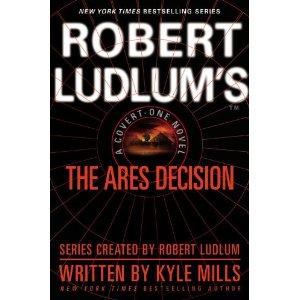
Three is the so-so number

0

GAMER Take a look at your favorite games from the past few years and you’ll find most were released not only on one system, but on two or three. The days of platform exclusivity are waning, and all these multi-platform releases mean console exclusives like Resistance 3 are increasingly important to manufacturers interested in maintaining their position in the industry.

Sony’s Resistance saga traces the path of a space virus sent to Earth to turn humans into alien-beings called the Chimera. The first two games follow Nathan Hale, a soldier who battles the virus across Europe, and eventually America. Resistance 3 kicks off where the second game ended (Resistance 2 spoiler warning): virus-stricken Hale is shot dead by his second-in-command Joseph Capelli.

Capelli is a more interesting protagonist than his predecessor, and killing off the main character allows developer Insomniac Games to create a more compelling story that deviates from the military action of the first two titles, but it also robs the story of its building tension, and the final product doesn’t have the oomph needed for an epic end to a purported trilogy.

Visually, Resistance 3 boasts some impressive animations and lots of detail. Little things, like trees bent backwards and street signs trembling during a windswept shootout on small-town Main Street, create an uncanny atmosphere that is not unlike Half Life 2 — a game that the cross-country trek of Resistance 3 evokes in more than just atmosphere.

Where Resistance 2 had a more modern shooter attitude (maximum of two guns, regenerative health), the third entry flips the switch in a positively old-school way. Health is distributed via health packs and you can carry a vast and devastating weapons arsenal for the duration of the campaign. Much like Insomniac’s other series Ratchet & Clank, the devil is in the arsenal.

Weapons are introduced at an alarming pace, each with primary and secondary fire, doubling the number of options. Even the earliest of weapons, like the Bullseye (shoots around corners) and the Auger (shoots through walls) are designed to create diverse combat experiences, and a limited ammo supply encourages you to try them all.

Three years of polish has done wonders for Resistance 3, but it’s hard to believe this is the end Insomniac had in mind. Despite its Sony exclusivity, consumer hype is not where it needs to be and Insomniac recently indicated that they are ready to move on. On paper, Resistance 3 is easy to recommend: it’s atmospheric, varied, and has a ton of content when you factor in above-average multiplayer, 3D and Move support. But in a sea of options, it’s hard not to be wary of the sinking ship. 

Film Listings

0

OPENING

Amigo John Sayles’ career is a fascinating one too varied to fully examine here; suffice it to say, the man’s first big gig was writing 1978’s Piranha before he became the indie auteur behind such notables as 1984’s The Brother from Another Planet, 1987’s Matewan, 1988’s Eight Men Out, and 1996’s Lone Star. He favors large ensemble casts, socially-conscious themes, and an unhurried pace that allows the exploration of various plot threads. Amigo is possibly most similar to 1997’s Men With Guns, in that it’s largely subtitled, is set in a foreign country (here, the Philippines), and plays out against a backdrop of political and military unrest. The film takes place during the Philippine-American War, circa 1900, as U.S. troops (led by Sayles favorite Chris Cooper) roam the just-freed-from-Spain jungles searching for rebels who threaten America’s claim to the land. Also in the mix are town leader Rafael (Filipino superstar Joel Torre), his guerilla brother (Ronnie Lazaro), and a crooked priest (Yul Vázquez) fond of incorrectly translating between sides. Amigo‘s an important film simply because it educates about a little-known conflict — frankly, America’s conduct as occupiers is so cruel that it’s no surprise the history books gloss over it — but it’s slow-moving and heavy-handed, with a tone that pitches uneasily between humor and tragedy. (2:08) Stonestown. (Eddy)

*The Arbor An audaciously conceived and genuinely haunting chronicle of a family, The Arbor reinvents two of the most debased forms of nonfiction film: the venerating portrait of an artist who died young and the voyeuristic confession of abuse. The locus here is the short, bottle-strewn life of Andrea Dunbar, a brilliant playwright whose work distilled the manners and speech of the West Yorkshire housing projects. The Arbor effectively stages some of this work in a park near the same apartments, but the project’s focus is Dunbar’s shambling private life and its devastating effect on friends, lovers, and daughters. Our emotions are strained by their collective fury and grief, but never cheated. Curiously, Clio Barnard accomplishes this by being up front in her manipulations. After collecting interviews with the key players, she cast actors to lip sync the answers — that is, the voices are documentary while the images are staged, an uncanny effect that becomes even more so when Barnard stitches together responses to narrate a single event. The technique is eerie and literally disembodying. In the same way that one affected by trauma may experience a separation from his or her self, so the image of the actor speaking comes unglued from the “real” voice — and so too is there a crucial hesitation in our assigning authenticity to a single, undivided subject. There are shades of Greek tragedy in The Arbor‘s patient, distanced unfolding of its characters’ fates. The speakers are imagined as a chorus, and though the drama is offscreen, long since buried, the pain still lives. (1:34) Roxie. (Goldberg)

*Bellflower Picture Two Lane Blacktop (1971) drifters armed with “dude”-centric vocabulary and an obsession with The Road Warrior (1981) and its apocalypse-wow survivalist chic. There are so many pleasures in this janky, so-very-DIY, heavy-on-the-sunblasted-atmosphere indie that you’re almost willing to overlook the clichés, the dead zones, and the annoying characters. Seeming every-dudes Woodrow (director-writer-producer Evan Glodell) and Aiden (Tyler Dawson) are far too obsessed with tricking out their cars and building a flamethrower for their own good — the misfits must force themselves out of the metal shop of the mind to meet women. So when Woodrow goes up against Milly (Jessie Wiseman) in a cricket-eating contest at a bar, it’s love at first bite. Their meet-gross morphs into a road trip and eventually a relationship, while the flamethrower nags, unexplained, in the background, like an unfired gun — or an unconsummated, not-funny bromance. These manifestations of male fantasy — muscle cars, weapons, and tough chicks — are cast in a dreamy, saturated, and burnt-at-the-edges light, as Glodell and company weave together barely articulated reveries and bad-new-west imagery with a kind of fuck-all intelligence, culminating in a finale that will either haunt you with its scattershot machismo-romanticism or leave you scratching your noggin wondering what just happened. (1:46) (Chun)

Conan the Barbarian Jason Momoa (Game of Thrones), Rose McGowan, and Ron Perlman star (in 3D) in this latest take on the Robert E. Howard hero. (1:42)

*The Future See “Fear and Longing.” (1:31)

Fright Night Don’t let the spooky trailer fool you: the Fright Night remake is almost as silly as the original. In fact, it follows the 1985 film closely, as young Charley Brewster (Anton Yelchin) comes to realize that his neighbor Jerry (Colin Farrell) is a vampire. The biggest change is a smart one — this Fright Night transforms late-night TV host Peter Vincent into Criss Angel-type illusionist Peter Vincent (David Tennant). The casting is spot on all-around, and frankly, Farrell is a lot more believable than Chris Sarandon as the seductive bad boy. The only real problem with the new Fright Night — other than the unnecessary 3D — is that it never fully commits to camp the way the original did. There’s a bit too much back-and-forth between serious scares and goofy blood splatters. Luckily, it’s still an entertaining remake that doesn’t crap all over a classic. It’s also a great reminder that vampires don’t have to be moody — remember, they used to be fun. (2:00) (Peitzman)

Griff the Invisible See “Fortress of Meh.” (1:33) Shattuck.

Gun Hill Road See “Once Upon a Time in the Bronx.” (1:28) Sundance Kabuki.

*One Day See “Deep in the Heart.” (1:48) Balboa.

*Senna When Ayrton Senna died in 1994 at the age of 34, he had already secured his legacy as one of the greatest and most beloved Formula One racers of all time. The three-time world champion was a hero in his native Brazil and a respected and feared opponent on the track. This eponymous documentary by director Asif Kapadia is nearly as dynamic as the man himself, with more than enough revving engines and last minute passes to satisfy your lust for speed and a decent helping Ayrton’s famous personality as well. Senna was a champion, driven to win even as the sometimes-backhanded politics of the racing world stood in his way. A tragic figure, maybe, but a legend nonetheless. You don’t have to be an F1 fan to appreciate this film, but you may wind up one by the time the credits roll. (1:44) Embarcadero, Smith Rafael. (Cooper Berkmoyer)

Sholem Aleichem: Laughing in the Darkness This documentary cuts to the chase right at the beginning: yeah, Sholem Aleichem was the guy who wrote the Tevye stories that inspired Fiddler on the Roof. But filmmaker Joseph Dorman isn’t trying to make Fiddler: Behind the Musical. Instead, he takes an in-depth look at the life, writing career, and cultural significance of “one of the great modern Jewish writers — and our greatest Yiddish writer,” per the film’s press notes. Fans of Jewish lit will be particularly engaged by Sholem Aleichem’s tale; raised in a shtetl in what’s now the Ukraine, he moved around Europe and to the United States pursuing various careers, but always writing the popular stories that addressed not just Jewish life, but broader issues facing turn-of-the-last-century Jews, including the cross-generational conflicts that make up much of Fiddler‘s plot and humor. That said, this film does rely an awful lot on PBS-style slow pans over black-and-white photos and intellectual talking heads; one suspects the subject himself (so devoted was he to entertaining the regular folk who gobbled up his tales) would’ve preferred his life story to unfold in a livelier fashion. (1:33) Opera Plaza. (Eddy)

Spy Kids: All the Time in the World Robert Rodriguez just can’t stop making these. (1:29)

ONGOING

Another Earth After serving a prison sentence for a youthful drunk-driving incident that killed two passengers in another car, Rhoda (Brit Marling) emerges no longer a blithe party girl but a haunted loner who prefers working as a high school janitor. Obsessed by her crime, she starts spying on the man it had left widowed and childless, a onetime composer (William Mapother) who like her has retreated into a solitary shell of depression. She finds a way to integrate herself (without revealing her identity) into his threadbare current existence, the two of them bonding over fascination with a newly discovered planet that appears the exact duplicate of Earth — complete with the possibility of our doubles living a parallel existence there. You can take Mike Cahill’s modestly scaled U.S. indie feature (cowritten with actor Marling) as a familiar drama about grief and repentance with a novel gloss of sci-fi, or as a sci-fi story with unusual attention to character emotions and almost no need of fantasy FX. Either way, it’s earnest, well-acted and interesting if not quite memorable; as has been noted elsewhere, the material could have fit just as effectively into a half-hour Twilight Zone episode. (1:32) Opera Plaza, Shattuck. (Harvey)

*Attack the Block The Goonies go to a South London projects, with more gore, guts, and gumption? With good reason, writer, director, and Edgar Wright/Simon Pegg cohort Joe Cornish’s own project, Attack the Block, has been getting raves at fests for its effortless, energetic originality, discernible through its thick, glottal stop-chomping, Jafaican-draped local brogue. The question posed, ever so entertainingly: what happens when you pit the toughest kids on the block against a ferocious pack of outer-space critters — not quite out to serve man but rather sever him limb from limb? We start out seeing this gang of at-risk, risk-taking youth through the peepers of a vulnerable female mugging victim and neighbor, Sam (Jodie Whittaker) — they seem as scary as any alien invader and she wants to bring down the full force of the law on them. But the pack, led by Moses (John Boyega, who charismatically scowls like a young 50 Cent), has more pressing matters at hand: a mysterious creature has come crashing down from out of the sky, and naturally, being nasty terrors, they kill it, bringing down a intergalactic shit storm of trouble. Their favorite refuge: the top-floor weed room overseen by Ron (Pegg sidekick Nick Frost), where they attempt to suss out why they’ve become the prime prey for wolfish aliens out for blood. Throw in chills, bike chases, a resourceful use of elevators and dumpsters, and an epic, eerie dubstep theme by Basement Jaxx, and you have a very fun horror-thriller that declines to preach but manages to bring home a message reminiscent of Night of the Living Dead (1968). Consider this a whole-hearted, double-fisted antidote to the fearful vigilantism of films like 2009’s Harry Brown. (1:28) Metreon. (Chun)

Beats, Rhymes & Life Actor Michael Rapaport probably didn’t set out to make a hip-hop Metallica: Some Kind of Monster (2004), but that’s pretty much where his portrait of A Tribe Called Quest ends up. The first half of Beats, Rhymes & Life: The Travels of A Tribe Called Quest is predictably worshipful, slathering on low angles and slow motion to cover mediocre live shows. More effectively, Rapaport traces the Queens group’s brief incubation period and subsequent breakthroughs in what would later be called alternative or, more obnoxiously, conscious hip-hop. A slew of notable followers and contemporaries toast Tribe’s first three albums, but by the time Rapaport catches up to the group’s 2008 reunion even their longtime friends De La Soul are wishing they’d call the whole thing off. The documentary slides into the Monster zone of hurt feelings and passive aggressive behavior in accounting for the group’s split after their inappropriately named 1998 album, The Love Movement. Phife Dawg and Q-Tip are the warring egos, though perennially slighted Phife is really no match for the imperially cool Tip. DJ Ali Shaheed Muhammad is the Kirk Hammett of the outfit, looking on helplessly as the two bigger personalities make a mess of things. There’s still novelty in a story about aging in hip-hop, but Rapaport’s portrait is utterly conventional. He also doesn’t pursue more interesting questions of race and politics that naturally follow the band’s crossover appeal. (1:38) Shattuck. (Goldberg)

*Beginners There is nothing conventional about Beginners, a film that starts off with the funeral arrangements for one of its central characters. That man is Hal (Christopher Plummer), who came out to his son Oliver (Ewan McGregor) at the ripe age of 75. Through flashbacks, we see the relationship play out — Oliver’s inability to commit tempered by his father’s tremendous late-stage passion for life. Hal himself is a rare character: an elderly gay man, secure in his sexuality and, by his own admission, horny. He even has a much younger boyfriend, played by the handsome Goran Visnjic. While the father-son bond is the heart of Beginners, we also see the charming development of a relationship between Oliver and French actor Anna (Mélanie Laurent). It all comes together beautifully in a film that is bittersweet but ultimately satisfying. Beginners deserves praise not only for telling a story too often left untold, but for doing so with grace and a refreshing sense of whimsy. (1:44) Lumiere. (Peitzman)

Bride Flight Who doesn’t love a sweeping Dutch period piece? Ben Sombogaart’s Bride Flight is pure melodrama soup, enough to give even the most devout arthouse-goer the bloats. Emigrating from post-World War II Holland to New Zealand with two gal pals, the sweetly staid Ada (Karina Smulders) falls for smarm-ball Frank (Waldemar Torenstra, the Dutchman’s James Franco) and kind of joins the mile high club to the behest of her conscience. The women arrive with emotional baggage and carry-ons of the uterine kind. As the harem adjusts to the country mores of the Highlands, Frank tries a poke at all of them in a series of sex scenes more moldy than smoldery. This Flight, set to a plodding score and stuffy mise-en-scene, never quite leaves the runway. Not to mention the whole picture, pale as a corpse, resembles one of those old-timey photographs of your great grandma’s wedding. These kinds of pastoral romances ought to be put out to, well, pasture. (2:10) Opera Plaza. (Ryan Lattanzio)

*Bridesmaids For anyone burned out on bad romantic comedies, Bridesmaids can teach you how to love again. This film is an answer to those who have lamented the lack of strong female roles in comedy, of good vehicles for Saturday Night Live cast members, of an appropriate showcase for Melissa McCarthy. The hilarious but grounded Kristen Wiig stars as Annie, whose best friend Lillian (Maya Rudolph) is getting hitched. Financially and romantically unstable, Annie tries to throw herself into her maid of honor duties — all while competing with the far more refined Helen (Rose Byrne). Bridesmaids is one of the best comedies in recent memory, treating its relatable female characters with sympathy. It’s also damn funny from start to finish, which is more than can be said for most of the comedies Hollywood continues to churn out. Here’s your choice: let Bridesmaids work its charm on you, or never allow yourself to complain about an Adam Sandler flick again. (2:04) Shattuck. (Peitzman)

Buck This documentary paints a portrait of horse trainer Buck Brannaman as a sort of modern-day sage, a sentimental cowboy who helps “horses with people problems.” Brannaman has transcended a background of hardship and abuse to become a happy family man who makes a difference for horses and their owners all over the country with his unconventional, humane colt-starting clinics. Though he doesn’t actually whisper to horses, he served as an advisor and inspiration for Robert Redford’s The Horse Whisperer (1998). Director Cindy Meehl focuses generously on her saintly subject’s bits of wisdom in and out of a horse-training setting — e.g. “Everything you do with a horse is a dance” — as well as heartfelt commentary from friends and colleagues. In the harrowing final act of the film, Brannaman deals with a particularly unruly horse and his troubled owner, highlighting the dire and disturbing consequences of improper horse rearing. (1:28) Opera Plaza, Shattuck. (Sam Stander)

Captain America: The First Avenger OK, Marvel. I could get behind 2008’s Iron Man (last year’s Iron Man 2, not so much), but after Thor and now Captain America, I’m starting to get cynical about this multi-year build-up to the full-on Avengers movie, due in May 2012. Can even a superhero-stuffed movie directed by Joss Whedon live up to all this hype? There’s plenty of time to ponder, and maybe worry a little, with Captain America’s backstory-explaining picture now in theaters. Chris Evans stars as the 90-pound weakling who morphs into a supersoldier, thanks to the World War II-era tinkerings of a scientist (Stanley Tucci) and an inventor (Dominic Cooper as Howard Stark, a.k.a. Iron Man’s dad). The original plan for the musclebound shield-bearer (fighting Nazis, natch) gets waylaid a bit when the newly famous Captain America becomes a PR prop for the U.S. government; it’s abandoned entirely when a worse-than-Hitler foe, in the guise of power-obsessed Red Skull (Hugo Weaving), threatens the world. Directed by Spielberg cohort Joe Johnston, Captain America is gee-whiz enjoyable enough, but it’s very nearly the same movie as Thor, which no amount of Tommy Lee Jones (as a sarcastic army colonel) wisecracks can conceal. And here’s an anti-spoiler: there’s no post-credits surprise in this one, so you can bolt as soon as they start to roll. (2:09) SF Center, Shattuck, Sundance Kabuki. (Eddy)

The Change-Up This brom-com just might go down as the one where Ryan Reynolds proves his acting chops by playing a creepy Peter Pan and an upstanding family man with Jason Bateman’s physical tics. And it’s almost good enough to wipe out those terrible memories of Reynolds’ dances with CGI in Green Lantern. Yet 2011 summer movies’ MVP Bateman still manages to steal all the best scenes as both the straight man and the kidult-in-a-grown-up’s-body: namely those R-pushing moments he’s changing diapers and taking a face full of baby poo, coming on like a pink-Polo’d jackass at a big-money meeting, and watching the woman of his dreams saunter into the can to cope with backfiring Thai grub. It’s the stuff of fantasy — as well as some clever writing and considerable buddy-buddy chemistry — when career-climbing, do-right lawyer Dave (Bateman) and perpetual playa Mitch (Reynolds) voice envy for each other’s lives while pissing into a magical fountain. The old switcheroo inexplicably occurs the next morning when each chum find himself in the other’s body. Fortunately the Freaky Friday (1976) kookiness that ensues rises a bit above the safe norm by plunging headlong into all the cringey discomfort that comes with watching babies toy with cleavers and electrical outlets. The Change-Up is completely ludicrous, fo’ sho’, and never really strays from the reassuring confines of its story arc, but the laughs accompanying its morning-afters will satisfy more than any new Hangover. (1:52) Four Star, Marina, 1000 Van Ness, Shattuck. (Chun)

Cowboys and Aliens Here ’tis in a nutshell: the movie’s called Cowboys and Aliens — and that’s exactly, entirely what you’ll get. Director Jon Favreau may never best 2008’s Iron Man (actor Jon Favreau will prob never top 1996’s Swingers, but that’s a debate for another time), but that doesn’t mean he won’t have a good time trying. Cowboys is a genre mash-up in the most literal sense; as the title suggests, it pits Wild West gunslingers (Harrison Ford as a crabby cattleman, Daniel Craig as an amnesiac outlaw) against gold-seeking space invaders who also delight in kidnapping and torturing humans. As stupidly entertaining as it is, this is a textbook example of a pretty OK movie that could have been so much better … if only. If only the alien characters had a little bit more District 9-style personality. If only the story had a shred of suspense — look ye not here for “spooky” and “mysterious;” this shit is 100 percent full-on explosions. If only Craig’s comically fine-tooled physique didn’t outshine his wooden acting. And so forth. (1:58) 1000 Van Ness, Presidio, SF Center. (Eddy)

Crazy, Stupid, Love Keep the poster’s allusion to 1967’s The Graduate to one side: there aren’t many revelations about midlife crises in this cleverly penned yet strangely flat ensemble rom-com, awkwardly pitched at almost every demographic at the cineplex. There’s the middle-aged romance that’s withered at the vine: nice but boring family man Cal (Steve Carell) finds himself at a hopeless loss when wife and onetime teenage sweetheart Emily (Julianne Moore) tells him she wants a divorce and she’s slept with a coworker (Kevin Bacon). He ends up waxing pathetic at a slick nightclub where he catches the eye of the well-dressed, spray-tanned smoothie Jacob (Ryan Gosling), who appears to have taken his ladies man stance from the Clooney playbook. It’s manly makeover time: GQ meets Pretty Woman (1990)! Cut to Cal and Emily’s babysitter Jessica (Analeigh Tipton), who is crushing out on Cal, while the separated couple’s tween Robbie (Jonah Bobo) hankers for Jessica. Somehow Josh Groban worms his way into the mix as the dullard suitor of Hannah (Emma Stone) in a hanging chad of a storyline that must somehow be resolved in this mad, mad, mad, mad — actually, the problem with Crazy, Stupid, Love is that it isn’t really that crazy. It tries far too hard to please everybody in the theater to its detriment, reminding the viewer of a tidy, episodic TV series (albeit a quality effort) like Modern Family more than an actual film. Likewise I yearned for a way to fast-forward through the too-cute Jessica-Robbie scenes in order to get back to the sleazy-smart, punchy complexity of Gosling, playing adeptly off both Carrell and Stone. (1:58) Marina, 1000 Van Ness, SF Center, Shattuck, Sundance Kabuki. (Chun)

*Crime After Crime In 1983, Deborah Peagler was sentenced to 25 years to life for first-degree murder in the death of her former boyfriend Oliver Wilson, whom two local L.A. gang members had strangled — supposedly at her behest. Encouraged to plead guilty to avoid the death penalty, Peagler had a juryless trial and was quickly shunted off to prison. There she was repeatedly turned down for parole despite spending the years of her incarceration as a church leader, mentor, and tutor to other inmates; a highly skilled electronics-assembly supervisor; earning two degrees; and sustaining good long-distance relationships with her two daughters. Even most of the victim’s surviving relatives had come to believe she should have been released years earlier. For her part, Peagler always claimed she intended Wilson to be beaten, but had not asked for or condoned his murder. What was missing (or suppressed) from the original trial were the myriad reasons she’d wanted to frighten him away from herself and her family, including the fact that he’d frequently beaten her. Walnut Creek attorneys Nadia Costa and Joshua Safran agreed to take on Peagler’s case pro bono, and they launched what turned into years of effort during which her cause becomes a public cause célèbre, and indications emerge of some very ugly misconduct by the District Attorney’s office. This battle is chronicled in Bay Area filmmaker Yoav Potash’s documentary Crime After Crime. It’s a story with plenty of lurid and tragic revelations, ranging from child sexual abuse to terminal illness to hidden evidence of perjury. The film won’t exactly stoke your faith in the justice system, but this thoroughly engrossing document does affirm that there is hope good people can and will fight the system. (1:33) Smith Rafael. (Harvey)

The Devil’s Double Say hello to my little friend, again— and rest assured, it’s not a dream and you’re seeing double. New Zealand filmmaker Lee Tamahori gets back to his potboiler roots with this campy, claustrophobic look back at the House of Saddam Hussein, based on a true story and designed to win over fans of Scarface (1983) with its portrait of mad excess and deca-dancey ’80s-ish soundtrack. The craziest poseur of all is Hussein’s son Uday (Dominic Cooper), a petty dictator-in-the-making — and, according to this film, a full-fledged murderous pedophile — who chomps cigars and wraps his jaws around schoolgirls while Cooper happily chews scenery. Uday needs a double to sidestep all those troublesome assassination attempts, so he enlists look-alike childhood friend Latif (also Cooper) to get the surgery, pop in the overbite, bray like a madman, make appearances in his stead, and function as a kind of pet human. Never mind Ludivine Sagnier, glassy-eyed and absurd in the role of Uday’s favorite sex kitten Sarrab — Double is completely Cooper’s, who seizes the moment, investing the morally upstanding Latif with a serious sincerity with just his eyes and body language and infusing evil odd job Uday with a dangerous, comic-book unpredictability. To his credit, Cooper imbues such cult-ready, blow-the-doors-off lines as “I love cunt! I love cunt more than god!” with, erm, believability, even as the denouement rings somewhat false. (1:48) California, SF Center, Sundance Kabuki. (Chun)

*Final Destination 5 The thing about my undying love for the Final Destination series is that it’s completely legitimate and 100 percent sincere. You know exactly what you’re getting with each new movie, and these films never try to tell you otherwise. Yes, everyone will die. Yes, the deaths will be creative and disgusting. Yes, the quality of acting will be sacrificed for some of the more expensive splatter effects. For those of us who understand what the series is all about, Final Destination 5 is a triumph. It’s gory, wickedly funny, and a notable improvement on previous sequels. Not to mention the fact that Tony “Candyman” Todd gets a beefed-up role. For once, the 3D is actually a big help, with some of the best in-your-face effects I’ve seen. As for non-fans, I can’t say Final Destination 5 has much to offer. You have to embrace the absurdity and the mission statement before you can fully appreciate death by laser eye surgery. (1:32) 1000 Van Ness. (Peitzman)

*Friends With Benefits If you see only one romantic comedy this summer about a sex-sans-pair-bonding pact between a girl and a guy saddled with intimacy issues — well, chances are, if you tend to see movies with premises like this, you probably already saw No Strings Attached. In which case, poor unlucky Friends with Benefits may be filed away in your brain as that other movie about fuckbuddies, the one in which Ashton Kutcher is played by Justin Timberlake and Natalie Portman (in a slightly eerie cosmic echo of last year’s Black Swan) is played by Mila Kunis. But if you see two such movies this summer, and admit it, you probably might, you’ll likely agree that FWB kicks NSA‘s booty call, particularly in the areas of scriptwriting ingenuity, pacing, and the casting subcategory of basic chemistry between romantic leads, with points possibly taken off for shark-jumping use of flash mobs and the fact that the maddeningly sticky song “Closing Time” will now be with you from closing credits ’til doomsday. This is not a searing, psychologically nuanced portrayal of two young people’s struggles to grapple with modern-day sexual mores and their own crippling pathologies — rather, the pair’s emotional baggage mostly seems to be stuffed with packing peanuts, and scenes in which they catalog their sexual proclivities in a humorously businesslike, gently raunchy fashion reveal them to be hearteningly adept at the art of communication. But such moments keep us entertained as the film, salted with light jabs at the genre’s worn-down touchstones yet utterly complicit, depicts the inevitable stages of a non-relationship relationship. (1:44) Sundance Kabuki. (Rapoport)

*The Future Dreams and drawings, cats and fantasies, ambition and aimlessness, and the mild-mannered yet mortifying games people play, all wind their way into Miranda July’s The Future. The future’s a scary place, as many of us fully realize, even if you hide from it well into your 30s, losing yourself in the everyday. But you can’t duck July’s collection of moments, objects, and small gestures transformed into something strangely slanted and enchanted, both weird and terrifying, when viewed through July’s looking glass. Care and commitment — to oneself and others — are two vivid threads running through The Future. Cute couple Sophie (July) and Jason (Hamish Linklater) — unsettling look-alikes with their curly crops — appear at first to be sailing contently, aimlessly toward an undemanding unknown: Jason works from home as a customer-service operator, and Sophie attempts to herd kiddies as a children’s dance instructor. But enormous, frightening demands beckon — namely the oncoming adoption of a special-needs feline named Paw-Paw (voiced by July as if it’s a traumatized, innocent child). Lickety-splitsville, they must be all they can be before Paw-Paw’s arrival. The weirdness of the familiar, and the kindness of strangers, become ways into fantasy and escape when the couple bumps up against the limits of their imagination. This ultra-low-key horror movie of the banal is obviously remote territory for July (2005’s Me and You and Everyone We Know). The Future is her best film to date and finds her tumbling into a kind of magical realism or plastic fantastic, embodied by a talking cat that becomes the conscience of the movie. (1:31) Shattuck. (Chun)

Glee: The 3D Concert Movie (1:30) 1000 Van Ness.

The Guard Irish police sergeant Gerry Boyle (Brendan Gleeson) is used to running his small town on his own terms — not in a completely Bad Lieutenant (1992) kind of way, though he’s not afraid to sample drugs and hang with hookers. More like, he’s been running the show for years, and would prefer that big-city cops stay the hell out of his village. Alas, a gang of drug smugglers is doing business in the area, so an officious group of investigators from Dublin (horrors!) and America (in the form of an FBI agent played by Don Cheadle) soon descend. His mother’s dying, his brand-new partner’s missing, and between all the interlopers on both sides of the law, Boyle’s having a hard time having a pint in peace. Good thing he’s not as simple-minded as all who surround him think he is. Writer-director John Michael McDonagh (brother of playwright Martin, who directed 2008’s In Bruges — also starring Gleeson) puts an affable Irish spin on what’s essentially a pretty typical indie comedy, with some pretty typical crime-drama elements layered atop. Boyle’s character is memorably clever, but the film that contains him never quite elevates to his level. (1:36) Embarcadero, Shattuck, Sundance Kabuki. (Eddy)

*Harry Potter and the Deathly Hallows Part 2 Chances are you aren’t going to jump into the Harry Potter series with Harry Potter and the Deathly Hallows Part 2. So while the movie is probably the best Harry Potter film yet, it’s more a fitting conclusion than a standalone film. For fans of the books, there are no real surprises — this is a close adaptation. And for those Harry Potter movie fans who haven’t read the books, shame on you, and kudos if you managed to not get spoiled. It’s hard for me to offer a serious critical analysis of Part 2, because it represents the end of a long and very emotional journey. (Everyone in that audience was crying. Everyone.) I will say that, as was the case in the book, there are a few overdone, schmaltzy moments that aren’t really necessary. But in the context of the series, they’re forgivable — this may not be the great cinematic event of our generation, but Harry Potter as a whole is sure to be one of our most enduring cultural icons. (2:10) Empire, 1000 Van Ness, Sundance Kabuki. (Peitzman)

The Help It’s tough to stitch ‘n’ bitch ‘n’ moan in the face of such heart-felt female bonding, even after you brush away the tears away and wonder why the so-called help’s stories needed to be cobbled with those of the creamy-skinned daughters of privilege that employed them. The Help purports to be the tale of the 1960s African American maids hired by a bourgie segment of Southern womanhood — resourceful hard-workers like Aibileen (Viola Davis) and Minny (Octavia Spencer) raise their employers’ daughters, filling them with pride and strength if they do their job well, while missing out on their own kids’ childhood. Then those daughters turn around and hurt their caretakers, often treating them little better than the slaves their families once owned. Hinging on a self-hatred that devalues the nurturing, housekeeping skills that were considered women’s birthright, this unending ugly, heartbreaking story of the everyday injustices spells separate-and-unequal bathrooms for the family and their help when it comes to certain sniping queen bees like Hilly (Bryce Dallas Howard). But the times they are a-changing, and the help get an assist from ugly duckling of a writer Skeeter (Emma Stone, playing against type, sort of, with fizzy hair), who risks social ostracism to get the housekeepers’ experiences down on paper, amid the Junior League gossip girls and the seismic shifts coming in the civil rights-era South. Based on the best-seller by Kathryn Stockett, The Help hitches the fortunes of two forces together — the African American women who are trying to survive and find respect, and the white women who have to define themselves as more than dependent breeders — under the banner of a feel-good weepie, though not without its guilty shadings, from the way the pale-faced ladies already have a jump, in so many ways, on their African American sisters to the Keane-eyed meekness of Davis’ Aibileen to The Help‘s most memorable performances, which are also tellingly throwback (Howard’s stinging hornet of a Southern belle and Jessica Chastain’s white-trash bimbo-with-a-heart of-gold). (2:17) Balboa, California, Empire, 1000 Van Ness, Presidio, SF Center, Sundance Kabuki. (Chun)

Horrible Bosses Lead by a clearly talented ensemble of comic actors, Horrible Bosses is yet another example of a big-budget summer comedy with a promising conceit (see Bad Teacher) that fails to deliver anything but crude alms to the lowest common denominator. Seth Gordon directs Jason Bateman, Jason Sudeikis, and Charlie Day as three pals fed up with their evil employers (Kevin Spacey, Colin Farrell and Jennifer Aniston, respectively) so they hatch a plan to have them killed. Because the answer to their problem obviously lies in a dive bar in the “bad part of town,” Jamie Foxx plays Motherfucker Jones, their murder consultant and the film’s most likable character-stereotype. In the tradition of The Hangover (2009) and its ilk of beer-guzzling, frat-boy cousins, Horrible Bosses is a disastrous pile-up of idiocy that’s more vapid than vulgar despite a few amusing performances. See it for no other reason than Michael Bluth and Charlie Kelly on coke. (1:33) 1000 Van Ness. (Lattanzio)

*Magic Trip How to bottle the lysergic thrills and chills of a monumental road trip that marked the close of the Beat Generation era and the dawn of the hippie years? Remarkably, Ken Kesey and his Merry Pranksters did just that — and with the help of directors-writers Alison Ellwood and Alex Gibney, their efforts have been retrieved from the swamps of yesterday. You don’t have to be a Summer of Love easy rider, Kesey reader, Deadhead, or acid gobbler to appreciate the freewheeling energy and epoch-making antics of Magic Trip, which arrives well-outfitted in much invaluable, real-deal-y footage and audio of Kesey, driver Neal Cassady, and the proto-Merry Pranksters, shot during their 1964 trip from La Honda to the World’s Fair in NYC, off, on, and hovering 10 miles above the paint-strewn school bus named Further. Already viewed through the lens of Tom Wolfe’s The Electric Kool-Aid Acid Test, the trip unfolds in all its truly weird, silly, LSD-laden, improvised, awkward, flailing, freeing glory, as the filmmakers gracefully sidestep the audio sync problems that drove Kesey to give up on assembling the film himself. Instead Ellwood and Gibney contextualize the hijinks with voice-over interviews from Pranksters prepped to look back on the journey’s consciousness-expanding trips, both good and bad, and imaginatively animate memorable asides, including a tape recording of Kesey’s first LSD experiments as a Stanford student. “What long, strange trip,” indeed — and this affectionate document viscerally, wonderfully conveys why it changed lives as well. (1:47) Lumiere. (Chun)

Midnight in Paris Owen Wilson plays Gil, a self-confessed “Hollywood hack” visiting the City of Light with his conservative future in-laws and crassly materialistic fiancée Inez (Rachel McAdams). A romantic obviously at odds with their selfish pragmatism (somehow he hasn’t realized that yet), he’s in love with Paris and particularly its fabled artistic past. Walking back to his hotel alone one night, he’s beckoned into an antique vehicle and finds himself transported to the 1920s, at every turn meeting the Fitzgeralds, Gertrude Stein (Kathy Bates), Dali (Adrien Brody), etc. He also meets Adriana (Marion Cotillard), a woman alluring enough to be fought over by Hemingway (Corey Stoll) and Picasso (Marcial di Fonzo Bo) — though she fancies aspiring literary novelist Gil. Woody Allen’s latest is a pleasant trifle, no more, no less. Its toying with a form of magical escapism from the dreary present recalls The Purple Rose of Cairo (1985), albeit without that film’s greater structural ingeniousness and considerable heart. None of the actors are at their best, though Cotillard is indeed beguiling and Wilson dithers charmingly as usual. Still — it’s pleasant. (1:34) Albany, Embarcadero, 1000 Van Ness, Piedmont, Sundance Kabuki. (Harvey)

*My Perestroika Robin Hessman’s very engaging documentary takes one very relatable look at how changes since glasnost have affected some average Russians. The subjects here are five thirtysomethings who, growing up in Moscow in the 70s and 80s, were the last generation to experience full-on Communist Party indoctrination. But just as they reached adulthood, the whole system dissolved, confusing long-held beliefs and variably impacting their futures. Andrei has ridden the capitalist choo-choo to considerable enrichment as the proprietor of luxury Western menswear shops. But single mother Olga, unlucky in love, just scrapes by, while married schoolteachers Lyuba and Boris are lucky to have inherited an apartment (cramped as it is) they could otherwise ill afford. Meanwhile Ruslan, once member of a famous punk band (which he abandoned on principal because it was getting “too commercial”), both disdains and resents the new order just as he did the old one. Home movies and old footage of pageantry celebrating Soviet socialist glory make a whole ‘nother era come to life in this intimate, unexpectedly charming portrait of its long-term aftermath. (1:27) Balboa. (Harvey)

*The Names of Love Arthur (Jacques Gamblin) is a 40-ish scientist being interviewed about the threat of a bird flu epidemic when his radio broadcast is interrupted by 20-something Baya (Sara Forestier), who denounces him on-air as a “fascist” for frightening the public. But then, Baya tends to use that label rather indiscriminately, applying it to anyone who might conceivably have views to the right of the dial — and Arthur is in fact a solid liberal, which means she can bed him for love. As opposed to the many, many other men she beds as a self-described “political whore,” seeking out conservative types in order to seduce them and hopefully induce an idealogical shift by whispering sweet nothings (“Not all Arabs are thieves,” etc.) as they orgasm. Raised by parents whose emotions are so tightly wound his mother won’t acknowledge her parents were Jews killed at Auschwitz, Arthur has a hard time adjusting to a relationship with a lover who is faithful emotionally but sees promiscuity as her propagandic gift to the world. Meanwhile Baya’s largely Algerian family treats garrulous political argument as the very air they breathe. This odd-couple story written by Baya Kasmi and director Michel Leclerc deals with serious issues in both humorous and respectful fashion, making for one of the more novel, delightful and depthed French romantic comedies in a long time. Added plus: lots of antic gratuitous nudity. (1:42) Clay, Piedmont, Shattuck, Smith Rafael. (Harvey)

*Point Blank Not for nothing did Hollywood remake French filmmaker Fred Cavaye’s last film, Anything for Her (2008) as The Next Three Days (2010) — Cavaye’s latest, tauter-than-taut thriller almost screams out for a similar rework, with its Bourne-like handheld camera work, high-impact immediacy, and noirish narrative economy. Point Blank — not to be confused with the 1967 Lee Marvin vehicle —kicks off with a literal slam: a mystery man (Roschdy Zem) crashing into a metal barrier, on the run from two menacing figures until he is cornered and then taken out of the action by fate. His mind mainly on the welfare of his very pregnant wife Nadia (Elena Anaya), nursing assistant Samuel (Gilles Lellouche) has the bad luck to stumble on a faux doctor attempting to make sure that the injured man never rises from his hospital bed. As police wrangle over whose case this exactly is — the murder of an industrialist seems to have expanded the powers of the stony-faced, monolithic Commandant Werner (Gerard Lanvin) — Samuel gets sucked into the mystery man’s lot, a conspiracy that allows them to trust no one, and seemingly impossibly odds against getting out of the mess alive. Cavaye never quite stops applying the pressure in this clever, unrelenting cat-and-mouse and mouse-and-his-spouse game, topping it with a nerve-jangling search through a messily chaotic police station. (1:24) Embarcadero. (Chun)

*Rise of the Planet of the Apes “You gotta love a movie where the animals beat up on the humans,” declared my Rise of the Planet of the Apes companion. Indeed, ape must not kill ape, and this Planet of the Apes prequel-cum-remake of Conquest of the Planet of the Apes (1972) takes the long view, back to the days when ape-human relations were still high-minded enough to forbid smart apes from killing those well-armed, not-so-bright humanoids. I was a fan of the original series, but honestly, I approached Rise with trepidation: I dreaded the inevitable scenes of human cruelty meted out to exploited primates — the current wave of chimp-driven films seems focused on holding a scary, shaming mirror up to the two-legged mammalian violence toward their closest living genetic relatives. It’s a contrast to the original series, which provided prisms with which to peer at race relations and generational conflict. But I needn’t have feared this PG-13 “reboot.” There’s little CGI-driven gore, apart from the visceral opening and the showdown, though the heartbreak remains. Scientist Will (James Franco, brow perpetually furrowed with worry) is working to find a medicine designed to supercharge the brain in the wake of Alzheimer’s — a disease that has struck down his father (John Lithgow). When the experimental chimp that responds to his serum becomes violently aggressive, the project is shut down, although the primate leaves behind a surprise: a baby chimp that Will and his father name Caesar and raise like a beloved child in their idyllic Bay Area Victorian. Growing in intelligence as he matures, Caesar finds himself torn by an existential dilemma: is he a pet or a mammal with rights that must be respected? Rise becomes Caesar’s story, rendered in heart-wrenching, exhilarating ways — to director Rupert Wyatt and his team’s credit you don’t miss the performance finesse of Roddy McDowell and Kim Hunter in groundbreaking prosthetic ape face in the original movies — while resolving at least one question about why humans gave up the globe to the primates. One can only imagine the next edition will take care of the lingering question about how even the cleverest of apes will feed themselves in Muir Woods. (1:50) Empire, 1000 Van Ness, Presidio, SF Center, Sundance Kabuki. (Chun)

*Salvation Boulevard The ridiculous and ill-reputed worlds of ex-Deadheads and evangelical mega-churches collide in director George Ratliff’s Salvation Boulevard, based on Larry Beinhart’s novel of the same name. When proselytizing pastor Dan Day (Pierce Brosnan) accidentally murders an atheist professor (Ed Harris), churchgoer Carl (Greg Kinnear) tries to forget what he saw. He soon finds himself embroiled in plots involving a kidnapping in Mexico and the fundamentalist takeover of his town. Carl’s god-fearin’, brainwashed wife (Jennifer Connelly) isn’t the least bit understanding, and instead takes to painting demons to exorcise her grief. Though the film often struggles to find a consistent tone, its lampoon of spiritual hogwash (i.e. purity balls) and the sheer inanity of the situational comedy makes for pleasantly amusing satire. The real saint of the film — and no surprise here — is Marisa Tomei as a pothead security guard named Honey. (1:35) Opera Plaza, Shattuck. (Lattanzio)

Sarah’s Key (1:42) Albany, Embarcadero, Piedmont.

Sex and Zen: Extreme Ecstasy (2:09) Four Star.

30 Minutes or Less In some ways, 30 Minutes or Less is reminiscent of 2008’s Pineapple Express: both are stoner action comedies about normal people shoved into high-stakes criminal activity. But while Pineapple Express was an exciting addition to the genre, 30 Minutes or Less is a flimsy 80-minute diversion that still feels like a waste of time. Jesse Eisenberg plays Nick, a pizza delivery boy who is forced to rob a bank after two would-be criminals strap a bomb to his chest. Strangely, Eisenberg was more charming as Mark Zuckerberg in The Social Network (2010) — and his buddy Chet (Aziz Ansari) doesn’t exactly up the likability factor. There’s actually the potential for an interesting story here: something darker seems appropriate, given that 30 Minutes or Less was inspired by a true story with a very unhappy ending. But the film completely fumbles, delivering an action comedy that’s neither tense nor funny. That means the pizza’s free, right? (1:29) 1000 Van Ness, Presidio, SF Center, Shattuck. (Peitzman)

The Tree of Life Mainstream American films are so rarely adventuresome that overreactive gratitude frequently greets those rare, self-conscious, usually Oscar-baiting stabs at profundity. Terrence Malick has made those gestures so sparingly over four decades that his scarcity is widely taken for genius. Now there’s The Tree of Life, at once astonishingly ambitious — insofar as general addressing the origin/meaning of life goes — and a small domestic narrative artificially inflated to a maximally pretentious pressure-point. The thesis here is a conflict between “nature” (the way of striving, dissatisfied, angry humanity) and “grace” (the way of love, femininity, and God). After a while Tree settles into a fairly conventional narrative groove, dissecting — albeit in meandering fashion — the travails of a middle-class Texas household whose patriarch (a solid Brad Pitt) is sternly demanding of his three young sons. As a modern-day survivor of that household, Malick’s career-reviving ally Sean Penn has little to do but look angst-ridden while wandering about various alien landscapes. Set in Waco but also shot in Rome, at Versailles, and in Saturn’s orbit (trust me), The Tree of Life is so astonishingly self-important while so undernourished on some basic levels that it would be easy to dismiss as lofty bullshit. Its Cannes premiere audience booed and cheered — both factions right, to an extent. (2:18) California, Lumiere. (Harvey)

*The Trip Eclectic British director Michael Winterbottom rebounds from sexually humiliating Jessica Alba in last year’s flop The Killer Inside Me to humiliating Steve Coogan in all number of ways (this time to positive effect) in this largely improvised comic romp through England’s Lake District. Well, romp might be the wrong descriptive — dubbed a “foodie Sideways” but more plaintive and less formulaic than that sun-dappled California affair, this TV-to-film adaptation displays a characteristic English glumness to surprisingly keen emotional effect. Playing himself, Coogan displays all the carefree joie de vivre of a colonoscopy patient with hemorrhoids as he sloshes through the gray northern landscape trying to get cell reception when not dining on haute cuisine or being wracked with self-doubt over his stalled movie career and love life. Throw in a happily married, happy-go-lucky frenemy (comic actor Rob Brydon) and Coogan (TV’s I’m Alan Partridge), can’t help but seem like a pathetic middle-aged prick in a puffy coat. Somehow, though, his confused narcissism is a perverse panacea. Come for the dueling Michael Caine impressions and snot martinis, stay for the scallops and Brydon’s “small man in a box” routine. (1:52) Bridge, Shattuck. (Devereaux)

*Vigilante Vigilante Eschewing any pretense of objectivity and adopting a civic-journalism approach, Bay Area director Max Good and producer Nathan Wollman exhaustively explore the issues at stake in the current graffiti and street art scene by focusing on some unexpected, once-hidden antagonists: the so-called buffers, graffiti abatement advocates, and self-styled vigilantes who obsessively paint over graffiti in cities like Los Angeles (Joe Connolly) and New Orleans (Fred Radtke). Good wraps his interviews with well-known street artists like Shepard Fairey, cultural critics such as Stefano Bloch, and graf advocates a la SF author Steve Rotman around his central pursuit: he’s trying to uncover the identity of the Silver Buff, the mysterious figure who has splashed silver over artwork and tags in Berkeley for more than a decade. After capturing the Buff on camera in the wee hours of the morn, the documentarian get his story — it’s Jim Sharp, a stubborn preservationist intent on “beautifying” the blight, tearing down street posters, picking up trash, and covering over what he sees as vandalism, even if he has to damage the property he claims to be cleaning up. In a witty twist on if-you-can’t-beat-’em-join-’em, Good and Wollman ratchet their tale up a notch when they follow Sharp with colorful paint of their own, brilliantly driving home an appeal for freedom of expression and a reclamation of public space. (1:26) Roxie. (Chun)

The Whistleblower (1:58) Embarcadero, Shattuck, Smith Rafael.


Film listings are edited by Cheryl Eddy. Reviewers are Kimberly Chun, Michelle Devereaux, Max Goldberg, Dennis Harvey, Louis Peitzman, Lynn Rapoport, Ben Richardson, and Matt Sussman. For rep house showtimes, see Rep Clock.
California dreaming

2

arts@sfbg.com

HAIRY EYEBALL In his review of the latest Venice Biennale, Boston Globe art critic Sebastian Smee threw down something of a gauntlet when he wrote, “The received wisdom is that contemporary art is mostly about ideas. In truth, however, it’s mostly about gestures.”

Smee’s generalization offers plenty to chew on and plenty to disagree with. For starters, it implicitly presents one of art’s oldest chicken-egg scenarios — one that was muddied decades ago by Marcel Duchamp and later Conceptual Art — as a false choice between thought and spectacle, sustained engagement and capricious showmanship.

But it can also be read as a pretty spot-on diagnosis of the current moment in art — at least, as refracted through the fun house mirror of the Biennale — in which having a gimmick, however thought through or critically engaged, or bringing out the big guns guarantees attention in an increasingly crowded market already clogged with gimmicks and big guns.

Bay Area Now, Yerba Buena Center for the Arts’ triennial snapshot of local creative culture, is the closest thing the Bay Area has to the Biennale and also, thankfully, the furthest thing from it. Still, Smee’s comment provides a useful rubric for navigating its sixth installment, which is full of gestures (some well-executed, others not so much) that at times overshadow the ideas (some half-baked, others worth mulling over) they’re meant to put across.

Visual art curators Betti-Sue Hertz and Thien Lam have pared the number of participating artists, now augmented by art collectives, to a tidy 18. This smaller range gives each participant’s work — most of it created especially for BAN6 — a little more breathing room, although the exhibition’s layout isn’t exactly conducive to following the connecting threads (environmentalism, geopolitics, Americana, and local subcultures, among other topics) unspooled in their curators’ statement.

Tammy Rae Carland’s wonderful series of work about the self-effacing price female comedians have had to pay (and continue to pay) to get a laugh is the first thing you see when you enter. But her photographs of local comediennes in ambiguous forms of self-presentation, text pieces that isolate the painful punch lines of Phyllis Diller, Joan Rivers, et al., and banana peels cast in brass are spread between two floors: a confusing arrangement if you don’t directly proceed up the stairway next to which Carland has created an elegiac installation that, save for the large helium balloons suspending a porcelain microphone, is also easy to miss.

YBCA’s main gallery is another case in point: it’s a good site for large installations that pack a lot of visual impact (think Song Dong’s Waste Not or Nick Cave’s soundsuits), but can pose a challenge for arranging groups of smaller-scale pieces coherently. It’s too bad, then, that the three box-like structures housing works by Brion Nuda Rosch, Rio Babe International, and Chris Sollars cut diagonally across the space like a semipermeable wall of shipping crates. Incidentally, these installations are also some of BAN6’s least compelling pieces.

Harder to ignore is Ben Venom’s See You on the Other Side, a giant quilt whose centerpiece motif of snakes sprouting from a human skull, all made from old metal band T-shirt scraps, only becomes visible as your eyes adjust to the surrounding negative space. It is, in a word, awesome. But it’s also a canny fusion of craft traditions already present in metal subcultures — the quilt is flanked by two cut-off embroidered and studded denim vests, familiar handmade vestments of the tribe — with an older American precedent.

Quilting is also taken up in Suzanne Husky’s nearby Sleep Cell Hotel installation, a collection of three potentially inhabitable nest-like wooden structures that resemble porcupines, replete with quilts covered in radical slogans. A goofy infomercial touts the dwellings as the next development in politically conscious eco-tourism, while a hand-drawn sign warns of their structural unsoundness. Husky’s isolation tanks take the piss out of radical chic and backpackers alike while questioning the impact even the most well-intentioned and off-the-grid 21st century nomads leave in the wake of their habitats beyond carbon footprints.

That question is reframed in more ambiguous terms by Ranu Mukherjee’s wonderful series of drawings and watercolors of “nomadic artifacts” located in YBCA’s smaller second gallery. Each work is based on an image or stories sent to Mukherjee by friends and associates that reflect their conception of the nomadic, a process of translation neatly embodied by the blank fields against which a camper van or an ancient Egyptian temple is depicted. Isolated from their original contexts, these purloined postcards from the edge form an ongoing archive of mobile existence (the call for submissions is still open).

This second room — darkened to accommodate a video projection by Mukherjee as well as Sean McFarland’s crepuscular, large-format photographs of forest interiors — is actually BAN6’s most coherent grouping, with Weston Teruya’s architectural model-like paper sculptures and Richard T. Walker’s winsome three channel video installation rounding out a chorale of differing takes on land use, abuse, occupation, and representation.

In many cases at BAN6, ambition tends to exceed execution, but the results — as with Tony Labat’s large neon marijuana leaf that, seen from the outside, makes YBCA’s Mission Street lobby look like the city’s chicest pot dispensary — still pack a punch. Whether that is enough, or enough for a “moment in time” group survey such as this, is another question.

BAY AREA NOW 6

Through Sept. 25

Thurs.–Sat., noon–8 p.m.; Sun, noon–6 p.m., $5–$7

Yerba Buena Center for the Arts

701 Mission, SF

www.ybca.org


Film Listings

0

Film listings are edited by Cheryl Eddy. Reviewers are Kimberly Chun, Michelle Devereaux, Peter Galvin, Max Goldberg, Dennis Harvey, Johnny Ray Huston, Louis Peitzman, Lynn Rapoport, Ben Richardson, and Matt Sussman. For rep house showtimes, see Rep Clock.

OPENING

Beats, Rhymes & Life See “Buggin’ Out.” (1:38) Shattuck.

*”An Evening With Andy and Jonathan” Before the 80s standup craze dredged up so much bottom-feeding crap, the comedy world had room for a few chameleonic improv innovators like the subjects of this Roxie program hosted by Johnny Legend. Making its theatrical debut is his recent DVD assembly Jonathan Winters: Birth of a Comedy Genius, a compilation bringing together clips from various long-forgotten shows like The NBC Comedy Hour and The Steve Allen Plymouth Show. A man of a thousand voices, Winters (who’s still occasionally active — he voices Papa Smurf in the imminent Smurfs feature) anticipated the manic improvisational glee of Jim Carrey and others as he sped through myriad instantly-created characters, often leaving any fellow players silenced and agog. If these segments predating his peak fame in the late 60s aren’t necessarily stellar in terms of material — it was an era when TV allowed very little that was “edgy” — the performer himself is always a marvel to watch. The co-feature is cult fave My Breakfast with Blassie, the 55-minute semi-staged, all-improv vehicle for the late Andy Kaufman — very much “playing” himself — and his older pro wrestler friend Fred Blassie. Legend co-directed that 1983 oddity, made just a year before the “dadaist” comedian’s untimely death; also on the bill is a one-hour program of ultra-rarities featuring Kaufman, Blassie, Legend and more. Roxie. (Harvey)

Harry Potter and the Deathly Hallows Part 2 Game over. (2:10)

If A Tree Falls: A Story of the Earth Liberation Front If A Tree Falls: A Story of the Earth Liberation Front traces the roots and development of the controversial environmental activist organization through one of its members, Daniel McGowan, as he faces trial for the newly imagined charge of eco-terrorism. McGowan is thoughtful and open about his participation in numerous actions against perceived enemies of Earth, allowing director Marshall Curry to craft an intelligent documentary as much about McGowan and the E.L.F. as the almost insurmountable ethical murkiness of activism in America. Frustrated by the apparent ineffectuality of peaceful protest and faced with the continued despoiling of our planet, McGowan and his peers pose a difficult question: how far is too far? Or, what price do we pay by failing to go far enough? Curry is careful to allow both sides of the debate ample time on screen in a timely consideration of the viability of direct action and the human face behind a media frenzy. (1:30) Shattuck. (Cooper Berkmoyer)

*Project Nim This is the story of an individual plucked from their native culture even before birth, separated from parents shortly after, handed over to a chaotic if loving urban foster family, yanked from them to a lavish, isolated country estate, then shipped off to a medical experimentation lab, “rescued” only to be placed in prison like solitary confinement, and … well, things finally get a little better, but isn’t this enough abuse for several lifetimes? Before you call Child Services or the ACLU, be informed that this is not the saga of a human being, but one Nim Chimpsky, a chimpanzee born in U.S. captivity, then set on a highly unusual life course as the subject of a study in animal language acquisition by Columbia University linguist Herbert S. Terrace. Nim did indeed prove remarkably adept at learning sign language to communicate with his teachers/minders — even if Terrace finally belittled that as no more than imitation performed to beg food and other favor. Nim was a prodigy, and for a while a media sensation. He was also a temperamental, physically powerful wild beast who could (and sometimes did) cause considerable harm to those around him. Regardless, both his adaptation to human habitats and animal instincts should have been deal with a great deal more care and consistency — there was no overall plan for his well-being beyond serving (or being abandoned by) whoever his keepers were at any given moment. This latest documentary by James Marsh (2008’s Man on Wire, 1999’s Wisconsin Death Trip) is an involving story whose latter-day interviewees — tumbling rather easily into hero and villain categories, with Prof. Terrance not in the first camp — annotate an enormous amount of archival footage shot throughout Nim’s life. (1:33) (Harvey)

*Snow Flower and the Secret Fan Working with Lisa See’s novel, director Wayne Wang returns to the crowd-pleasing territory of his wildly popular Joy Luck Club (1993) — fortunately it’s also material that feels intensely personal, even transposed in 21st century China (one of those modern Chinese women, Rupert Murdoch’s wife Wendi bought the rights to the book and provides a financial boost here). Modern-day Nina (Bingbing Li) is about to leave her native Shanghai for NYC and certain success in the banking world when she learns that her best friend, her laotong or sworn sister, Sophia (Gianna Jun), is in a coma. She must piece together the mystery of her friend’s life since they last parted, studying the book written about her 19th century forbearer Snow Flower (also Jun) and her own laotong Lily (Li). An uncredited turn by Hugh Jackman as a caddish boyfriend is beside the point here; Wang’s take on the bond of friendship that ties two women together, beyond the pain of foot-binding, marriage, class, and adversity is tremulously sentimental, in way that will have many would-be Joy Luck Club-ers happily identifying with these sisters from other mothers — and leave everyone else sobbing in the darkness. (1:40) Albany. (Chun)

*Tabloid Taking a break from loftier subjects, Errol Morris’ latest documentary simply finds a whopper of a story and lets the principal participant tell her side of it — one we gradually realize may be very far from the real truth. In 1978 former Miss Wyoming Joyce McKinney flew to England, where the Mormon boy she’d grown infatuated with had been posted for missionary work by his church. What ensued became a U.K. tabloid sensation, as the glamorous, not at all publicity-shy Yankee attracted accusations of kidnapping, imprisonment, attempted rape and more. Her victim of love, one Kirk Anderson, is not heard from here — presumably he’s been trying to live down an embarrassing life chapter ever since. But we do hear from others who shed considerable light on the now middle-aged McKinney’s continued protestations that it was all just one big misunderstanding. Most importantly, we hear from the lady herself — and she is colorful, unflappable, unapologetic, and quite possibly stone-cold nuts. (1:28) California. (Harvey)

*Terri What happens when the camera stops on the quiet, shy and heavy 15-year-old in the corner of the classroom? Terri might be his story — if he cut class regularly to avoid being teased about his man-breasts, wore PJs to school, and befriended an affable, straight-talking Shrek of a teacher. Painfully awkward Terri (Jacob Wysocki) is ignored or mocked by most, left to feed the mice he catches in traps to passing raptors, care for his ailing uncle, and avoid the school bullies as best he can. But assistant principal Mr. Fitzgerald (John C. Reilly), who has a habit of nurturing the school’s misfits, recognizes Terri’s tender heart and takes him under his wing. It’s catching, apparently, as Terri first befriends the hair-pulling Chad (Bridger Zadina) and then Heather, the girl who allows herself be fingered in home ec (Olivia Crocicchia). What transpires among these school outcasts, shaped by director-writer Azazel Jacobs, subtly subverts your conventional teen identity story arc —Terri isn’t the only one here that’s good-hearted. (1:45) California. (Chun)

Trigun: Badlands Rumble Set in a futuristic western border town with as much variety in firepower as in its inhabitants (think Mos Eisley with way more guns), anime import Trigun: Badlands Rumble follows Vash the Stampede, an apparently bungling but actually expert gunslinger, as he attempts to both woo the beautiful and dangerous Amelia and prevent the infamous robber Gasback from pulling off the most daring heist in history. The orgy of destruction that results wears thin, as does the philosophical side to a movie that employs “rolling the dice” as a metaphor at least seven times. Vash’s staunch thou-shalt-not-kill posturing is somewhat intriguing if not wildly incongruous with the level of chaos celebrated by Badlands Rumble; there’s simply no way that everyone lives with the sheer tonnage of lead in the air. I’m guessing this could be a blast for those more familiar with the manga and animated series it’s based upon, but as for the casual viewer, it may leave you somewhat confused. (1:30) Viz Cinema. (Berkmoyer)

*”TV Noir” This-three night retrospective of broadcast episodes from the boob tube’s formative decade — in which it went from being the luxury of a few to the nation’s primary entertainment — spotlights moody crime, procedural, and morality dramas that fit into the medium’s early fast-cheap requirements. Network TV in the 1950s wasn’t yet mostly L.A.-based, and as a result providing a starting point for a lot of actors, writers and directors who’d soon make a splash on Broadway or in Hollywood, as well as established stars willing to slum a bit. Among those whose work you’ll catch in the series’ six separate programs are Leslie Nielsen, Sidney Lumet, Joanne Woodward, Boris Karloff, James Coburn, Robert Aldrich, Blake Edwards, Angie Dickinson, Lee Marvin, and even Harpo Marx. Highlights include Charles Bronson, atypically manic as an ex-con released to terrorize his wife (“Don’t you understand I love you, I’d never hurt you…” [Five seconds later] “You let a cop in here, Laura, and I’ll blow off his head, then yours!”) in an episode from forgotten 1955 series Treasury Men in Action. Jack Palance is swell as usual in “The Kiss Off,” a 1953 segment from long-running omnibus Suspense. And Brian Keith, a long way from the treacle train of Family Affair a decade later, plays Mike Hammer in a failed pilot of that name, the first attempted TV version of Mickey Spillane’s take-no-prisoners private eye. It was excellent but evidently too hardboiled for the tube at the time, although subsequent attempts both big- and small-screen would be more successful. While not all the largely very rare, commercially unavailable materials here qualify as “noir” by even a generous stretch of the imagination, they’re all testaments to the TV’s industry and invention back when many programs were broadcast “live.” Collector-curator Johnny Legend will be on hand to introduce all shows. Roxie. (Harvey)

Winnie the Pooh John Cleese narrates this new animated film about the honey-loving bear and his pals in the Hundred Acre Wood. (1:09)

ONGOING

Bad Teacher Jake Kasdan, the once-talented director of a few Freaks and Geeks episodes and 2002’s underrated Orange County, seems hell-bent on humiliating everyone in the cast of Bad Teacher. Cameron Diaz is Elizabeth, the title’s criminally bad pedagogue who prefers the Jack Daniels method to the Socratic. Her impetus for pounding Harper Lee into her middle school students’ bug-eyed little heads is to cash in on a bonus check to fund her breast-y ambitions and woo Justin Timberlake and his baby voice. The only likable onscreen presence is Jason Segal as a sad sack gym teacher in love with Elizabeth. But he could do so much better. There’s no shortage of racist jokes and potty humor in this R-rated comedy pandering to those 17 and below. When asked if she wants to go out with her coworkers, Elizabeth ripostes, “I’d rather get shot in the face!” That scenario is likely a better alternative than suffering this steaming pile of cash cow carcass. (1:29) 1000 Van Ness, SF Center, Shattuck. (Lattanzio)

*Beginners There is nothing conventional about Beginners, a film that starts off with the funeral arrangements for one of its central characters. That man is Hal (Christopher Plummer), who came out to his son Oliver (Ewan McGregor) at the ripe age of 75. Through flashbacks, we see the relationship play out — Oliver’s inability to commit tempered by his father’s tremendous late-stage passion for life. Hal himself is a rare character: an elderly gay man, secure in his sexuality and, by his own admission, horny. He even has a much younger boyfriend, played by the handsome Goran Visnjic. While the father-son bond is the heart of Beginners, we also see the charming development of a relationship between Oliver and French actor Anna (Mélanie Laurent). It all comes together beautifully in a film that is bittersweet but ultimately satisfying. Beginners deserves praise not only for telling a story too often left untold, but for doing so with grace and a refreshing sense of whimsy. (1:44) Balboa, Piedmont, Sundance Kabuki. (Peitzman)

A Better Life (1:38) Shattuck, Sundance Kabuki.

*Bill Cunningham New York To say that Bill Cunningham, the 82-year old New York Times photographer, has made documenting how New Yorkers dress his life’s work would be an understatement. To be sure, Cunningham’s two decades-old Sunday Times columns — “On the Street,” which tracks street-fashion, and “Evening Hours,” which covers the charity gala circuit — are about the clothes. And, my, what clothes they are. But Cunningham is a sartorial anthropologist, and his pictures always tell the bigger story behind the changing hemlines, which socialite wore what designer, or the latest trend in footwear. Whether tracking the near-infinite variations of a particular hue, a sudden bumper-crop of cropped blazers, or the fanciful leaps of well-heeled pedestrians dodging February slush puddles, Cunningham’s talent lies in his ability to recognize fleeting moments of beauty, creativity, humor, and joy. That last quality courses through Bill Cunningham New York, Richard Press’ captivating and moving portrait of a man whose reticence and personal asceticism are proportional to his total devotion to documenting what Harold Koda, chief curator at the Costume Institute at the Metropolitan Museum of Art, describes in the film as “ordinary people going about their lives, dressed in fascinating ways.” (1:24) Castro. (Sussman)

*Bridesmaids For anyone burned out on bad romantic comedies, Bridesmaids can teach you how to love again. This film is an answer to those who have lamented the lack of strong female roles in comedy, of good vehicles for Saturday Night Live cast members, of an appropriate showcase for Melissa McCarthy. The hilarious but grounded Kristen Wiig stars as Annie, whose best friend Lillian (Maya Rudolph) is getting hitched. Financially and romantically unstable, Annie tries to throw herself into her maid of honor duties — all while competing with the far more refined Helen (Rose Byrne). Bridesmaids is one of the best comedies in recent memory, treating its relatable female characters with sympathy. It’s also damn funny from start to finish, which is more than can be said for most of the comedies Hollywood continues to churn out. Here’s your choice: let Bridesmaids work its charm on you, or never allow yourself to complain about an Adam Sandler flick again. (2:04) 1000 Van Ness, Shattuck, Sundance Kabuki. (Peitzman)

Buck This documentary paints a portrait of horse trainer Buck Brannaman as a sort of modern-day sage, a sentimental cowboy who helps “horses with people problems.” Brannaman has transcended a background of hardship and abuse to become a happy family man who makes a difference for horses and their owners all over the country with his unconventional, humane colt-starting clinics. Though he doesn’t actually whisper to horses, he served as an advisor and inspiration for Robert Redford’s The Horse Whisperer (1998). Director Cindy Meehl focuses generously on her saintly subject’s bits of wisdom in and out of a horse-training setting — e.g. “Everything you do with a horse is a dance” — as well as heartfelt commentary from friends and colleagues. In the harrowing final act of the film, Brannaman deals with a particularly unruly horse and his troubled owner, highlighting the dire and disturbing consequences of improper horse rearing. (1:28) Shattuck, Smith Rafael, Sundance Kabuki. (Sam Stander)

Cars 2 You pretty much can’t say a bad thing about a Pixar film. Cars 2 is by no means Ratatouille (2007) or Wall-E (2008), but the sequel to the 2006 hit Cars offers plenty of sleek visuals and one-note gags under its hollow hood. If nothing else, Pixar seems to have overcome the dingy, dark glaze that plagues 3-D films. Directors John Lasseter and Joe Ranft return to beloved autos Lightning McQueen (Owen Wilson) and the “extremely American” Mater (Larry the Cable Guy). This time around, secret agents Finn McMissile (Michael Caine) and Holley Shiftwell (Emily Mortimer) come along for the ride while working to expose sabotage in the alternative fuel industry. Compelling chase sequences, explosions and more than a few jabs at cultural stereotypes follow suit. This is the lightest, silliest Pixar film to date, but you probably don’t have any business seeing it unless you’ve got a kid in tow. (1:52) 1000 Van Ness, SF Center, Shattuck. (Lattanzio)

*Cave of Forgotten Dreams The latest documentary from Werner Herzog once again goes where no filmmaker — or many human beings, for that matter — has gone before: the Chauvet-Pont-d’Arc Cave, a heavily-guarded cavern in Southern France containing the oldest prehistoric artwork on record. Access is highly restricted, but Herzog’s 3D study is surely the next best thing to an in-person visit. The eerie beauty of the works leads to a typically Herzog-ian quest to learn more about the primitive culture that produced the paintings; as usual, Herzog’s experts have their own quirks (like a circus performer-turned-scientist), and the director’s own wry narration is peppered with random pop culture references and existential ponderings. It’s all interwoven with footage of crude yet beautiful renderings of horses and rhinos, calcified cave-bear skulls, and other time-capsule peeks at life tens of thousands of years ago. The end result is awe-inspiring. (1:35) SF Center, Shattuck. (Eddy)

Green Lantern This latest DC Comics-to-film adaptation fails to recognize the line between awesome fantasy-action and cheeseball absurdity, often resembling the worst excesses of the Christopher Reeve Superman movies. A surprisingly palatable Ryan Reynolds stars as Hal Jordan, the cocky test pilot who is chosen to wield a power ring as a member of an intergalactic police force called the Green Lantern Corps. He must face down Parallax, an alien embodiment of fear, who appears here as a chuckle-inducing floating head surrounded by tentacles. Peter Sarsgaard is effectively nauseating as Hector Hammond, who becomes Parallax’s crony after he is transformed by a transfusion of fear energy. The acting is all over the map, with Blake Lively’s blank-faced love interest caricature as the weakest link, and the effects are hit-or-miss, but scenes featuring alien Green Lanterns should please fans, and you could probably do worse if you’re looking for an entertaining popcorn flick. (1:45) 1000 Van Ness. (Stander)

The Hangover Part II What do you do with a problematic mess like Hangover Part II? I was a fan of The Hangover (2009), as well as director-cowriter Todd Phillips’ 1994 GG Allin doc, Hated, so I was rooting for II, this time set in the East’s Sin City of Bangkok, while simultaneously dreading the inevitable Asian/”ching-chang-chong” jokes. Would this would-be hit sequel be funnier if they packed in more of those? Doubtful. The problem is that most of II‘s so-called humor, Asian or no, falls completely flat — and any gross-out yuks regarding wicked, wicked Bangkok are fairly old hat at this point, long after Shocking Asia (1976) and innumerable episodes of No Reservations and other extreme travel offerings. This Hangover around, mild-ish dentist Stu (Ed Helms) is heading to the altar with Lauren (The Real World: San Diego‘s Jamie Chung), with buds Phil (Bradley Cooper) and Doug (Justin Bartha) in tow. Alan (Zach Galifianakis) has completely broken with reality — he’s the pity invite who somehow ropes in the gangster wild-card Mr. Chow (Ken Jeong). Blackouts, natch, and not-very-funny high jinks ensue, with Jeong, surprisingly, pulling small sections of II out of the crapper. Phillips obviously specializes in men-behaving-badly, but II‘s most recent character tweaks, turning Phil into an arrogant, delusional creep and Alan into an arrogant, delusional kook, seem beside the point. Because almost none of the jokes work, and that includes the tired jabs at tranny strippers because we all know how supposedly straight white guys get hella grossed out by brown chicks with dicks. Lame. (1:42) SF Center. (Chun)

Happy Happy, a documentary by Roko Belic (1999’s Genghis Blues), traces the contented lifestyles of men and women around the globe. Manoj Singh is a Kolkata rickshaw driver sustained by his son’s smile. Anne Bechsgaard’s life is enriched by her co-housing community in Denmark. These soothingly sentimental profiles are intercut with commentary from leading neuroscientists and psychologists. They provide a cursory guide to the rare balancing act that is happiness in the 21st century. A brisk 75 minutes, the film is saturated with thought-provoking tidbits (the Bhutan government aims for gross national happiness instead of GDP) and an ambient backing track that’s heavy on the chimes. However, sometimes there’s the sense that these mechanics of happiness aren’t cinematically compelling enough, and that rifling through a couple Wikipedia pages might offer just as much insight. At its best, Happy sparks a reflection on how many of the unofficial criteria for joy one has fulfilled, and suggests ideas for simple happiness boosters. (1:15) Roxie. (Getman)

Horrible Bosses Lead by a clearly talented ensemble of comic actors, Horrible Bosses is yet another example of a big-budget summer comedy with a promising conceit (see Bad Teacher) that fails to deliver anything but crude alms to the lowest common denominator. Seth Gordon directs Jason Bateman, Jason Sudeikis, and Charlie Day as three pals fed up with their evil employers (Kevin Spacey, Colin Farrell and Jennifer Aniston, respectively) so they hatch a plan to have them killed. Because the answer to their problem obviously lies in a dive bar in the “bad part of town,” Jamie Foxx plays Motherfucker Jones, their murder consultant and the film’s most likable character-stereotype. In the tradition of The Hangover (2009) and its ilk of beer-guzzling, frat-boy cousins, Horrible Bosses is a disastrous pile-up of idiocy that’s more vapid than vulgar despite a few amusing performances. See it for no other reason than Michael Bluth and Charlie Kelly on coke. (1:33) 1000 Van Ness, Sundance Kabuki. (Lattanzio)

Larry Crowne While Transformers: Dark of the Moon may be getting all the attention for being the most terrible summer movie, I’d like to propose Larry Crowne as the bigger offender. No, it doesn’t have the abrasive effects of a Michael Bay blockbuster, but it’s surely just as incompetent. And coming from an actor as talented as Tom Hanks — who co-wrote, directed, produced, and stars in the film —Larry Crowne is insulting. The plot, insofar as there is one, centers around the titular Larry (Hanks), a man who goes to community college, joins a scooter gang led by Wilmer Valderrama, and ends up falling for his cranky, alcoholic teacher Mercedes (Julia Roberts). The scenes are thrown together hapharzadly, with no real sense of character development or continuity. Larry Crowne doesn’t even feel like a romantic comedy until a drunk Mercedes begins kissing and dry humping her student. But hey, who can resist a shot of Larry’s middle-aged bottom as he tries to wriggle into jeans that are just too small? (1:39) 1000 Van Ness, Piedmont, SF Center. (Peitzman)

Midnight in Paris Owen Wilson plays Gil, a self-confessed “Hollywood hack” visiting the City of Light with his conservative future in-laws and crassly materialistic fiancée Inez (Rachel McAdams). A romantic obviously at odds with their selfish pragmatism (somehow he hasn’t realized that yet), he’s in love with Paris and particularly its fabled artistic past. Walking back to his hotel alone one night, he’s beckoned into an antique vehicle and finds himself transported to the 1920s, at every turn meeting the Fitzgeralds, Gertrude Stein (Kathy Bates), Dali (Adrien Brody), etc. He also meets Adriana (Marion Cotillard), a woman alluring enough to be fought over by Hemingway (Corey Stoll) and Picasso (Marcial di Fonzo Bo) — though she fancies aspiring literary novelist Gil. Woody Allen’s latest is a pleasant trifle, no more, no less. Its toying with a form of magical escapism from the dreary present recalls The Purple Rose of Cairo (1985), albeit without that film’s greater structural ingeniousness and considerable heart. None of the actors are at their best, though Cotillard is indeed beguiling and Wilson dithers charmingly as usual. Still — it’s pleasant. (1:34) Albany, Balboa, 1000 Van Ness, Piedmont, Sundance Kabuki. (Harvey)

Monte Carlo (1:48) 1000 Van Ness.

Mr. Popper’s Penguins (1:35) SF Center.

*My Perestroika Robin Hessman’s very engaging documentary takes one very relatable look at how changes since glasnost have affected some average Russians. The subjects here are five thirtysomethings who, growing up in Moscow in the 70s and 80s, were the last generation to experience full-on Communist Party indoctrination. But just as they reached adulthood, the whole system dissolved, confusing long-held beliefs and variably impacting their futures. Andrei has ridden the capitalist choo-choo to considerable enrichment as the proprietor of luxury Western menswear shops. But single mother Olga, unlucky in love, just scrapes by, while married schoolteachers Lyuba and Boris are lucky to have inherited an apartment (cramped as it is) they could otherwise ill afford. Meanwhile Ruslan, once member of a famous punk band (which he abandoned on principal because it was getting “too commercial”), both disdains and resents the new order just as he did the old one. Home movies and old footage of pageantry celebrating Soviet socialist glory make a whole ‘nother era come to life in this intimate, unexpectedly charming portrait of its long-term aftermath. (1:27) Balboa. (Harvey)

*Page One: Inside the New York Times When Andrew Rossi’s documentary premiered at Sundance this January, word of mouth on it was respectable but qualified, with nearly everyone opining that it was good … just not what they’d been led to expect. What they expected was (in line with the original subtitle A Year Inside the New York Times) a top-to-bottom overview of how the nation’s most respected — and in some circles resented — arbiter of news, “style,” and culture is created on a day-to-day as well as longer term basis. That’s something that would doubtless fascinate anyone still interested in print media, or even that realm of web media not catering to the ADD nation. But that big picture and the wealth of minute cogs within isn’t Page One‘s subject. Instead, Rossi focuses on the Gray Lady’s wrestling with admittedly fast-changing times in which newspapers and any other information source on paper seem to constitute an endangered species. This particular Times, however, is such a special case that that crisis might better have been explored by training a camera on a less fabled publication, perhaps one of the many that have succumbed to a once unthinkable, market-shrunk mortality in recent years. The film finds its colorful protagonist in David Carr, an ex-crack addict turned media columnist who retains his cranky, nonconformist edge even as he defends the Times itself from the same out-with-the-old cheerleaders who 15 years ago were inflating the dot-com boom till it burst. Facing one particularly smug champion of the blogosphere at a forum, Carr notes that without a few remaining outlets — like the Times — doing the hard work of serious research and reportage, the web would have nothing to purloin or offer but its own unending trivia and gossip. Page One does what it does entertainingly well, but if you’re looking for insight toward this not-dead-yet U.S. institution as a whole, you’d be better off simply picking up this week’s Sunday edition and reading every last word. (1:28) Smith Rafael. (Harvey)

Pirates of the Caribbean: On Stranger Tides The last time we saw rascally Captain Jack Sparrow (Johnny Depp), he was fighting his most formidable enemy yet: the potentially franchise-ending Pirates of the Caribbean: At World’s End (2007). The first Pirates movie (2003) was a surprise critical success, earning Depp his first-ever Oscar nomination; subsequent entries, though no less moneymaking, suffered from a detectable case of sequel-itis. Overseeing this reboot of sorts is director Rob Marshall (2002’s Chicago), who keeps the World’s End notion of sending Jack to find the Fountain of Youth, but adds in a raft of new faces, including Deadwood‘s Ian McShane (as Blackbeard) and lady pirate Penélope Cruz. The story is predictably over-the-top, with the expected supernatural elements mingling with sparring both sword-driven and verbal — as well as an underlying theme about faith that’s nowhere near as fun as the film’s lesser motifs (revenge, for one). It’s basically a big swirl of silly swashbuckling, nothing more or less. And speaking of Depp, the fact that the oft-ridiculous Sparrow is still an amusing character can only be chalked up to the actor’s own brand of untouchable cool. If it was anyone else, Sparrow’d be in Austin Powers territory by now. (2:05) SF Center. (Eddy)

*Super 8 The latest from J.J. Abrams is very conspicuously produced by Steven Spielberg; it evokes 1982’s E.T.: The Extra-Terrestrial as well as 1985’s The Goonies and 1982’s Poltergeist (so Spielbergian in nature you’d be forgiven for assuming he directed, rather than simply produced, the pair). But having Grandpa Stevie blessing your flick is surely a good thing, especially when you’re already as capable as Abrams. Super 8 is set in 1979, high time for its titular medium, used by a group of horror movie-loving kids to film their backyard zombie epic; later in the film, old-school celluloid reveals the mystery behind exactly what escaped following a spectacular train wreck on the edge of their small Ohio town. The PG-13 Super 8 aims to frighten, albeit gently; there’s a lot of nostalgia afoot, and things do veer into sappiness at the end (that, plus the band of kids at its center, evoke the trademarks of another Grandpa Stevie: Stephen King). But the kid actors (especially the much-vaunted Elle Fanning) are great, and there’s palpable imagination and atmosphere afoot, rare qualities in blockbusters today. Super 8 tries, and mostly succeeds, in progressing the fears and themes addressed by E.T. (divorce, loneliness, growing up) into century 21, making the unknowns darker and the consequences more dire. (1:52) Empire, 1000 Van Ness, Shattuck. (Eddy)

Transformers: Dark of the Moon I’ll never understand the wisdom behind epic-length children’s movies. What child — or adult, for that matter — wants to sit through 154 minutes of assaultive popcorn entertainment? It’s an especially confounding decision for this third installment in the Transformers franchise because there’s a fantastic 90-minute movie in there, undone at every turn by some of the worst jokes, most pointless characters, and most hateful cultural politics you’re likely to see this summer. But when I say a fantastic movie, I mean a fantastic movie. It took two very expensive earlier attempts before director Michael Bay figured out that big things require a big canvas. Every shot of Dark of the Moon‘s predecessors seemed designed to hide their effects by crowding the screen. Finally we get the full view — the scale is now rightly calibrated to operatic and ridiculous. The marquee set pieces are inspired and terrifying, eliciting a sense of vertigo that’s earned for once, not imposed by the editing. The human hijinks are less consistent but ingratiatingly batshit, and without resorting to preening self-awareness and elaborately contrived mea culpas. But unfortunately Bay is too unapologetic even to walk back the ethnic buffoonery that not only upsets hippies like me but also seems defiantly disharmonious with the movie he’s trying to make. Bay is like that guy at the party who thinks amping up the racism will prove he’s not a racist. It’s that kind of garbage (plus, I guess, some universal primal hatred of Shia LaBeouf that I don’t really get) that makes people dismiss these movies wholesale. This time it’s just not deserved. I wouldn’t want to meet the asshole who made this thing, but credit where credit is due. It’s a visual marvel with perfectly integrated, utterly tactile, brilliantly choreographed CG robotics — a point that’ll no doubt be conceded in passing as if it’s not the very reason the movie exists. As if it’s not a feat of mastery to make a megaton changeling truck look graceful. (2:34) Empire, 1000 Van Ness, Sundance Kabuki. (Jason Shamai)

The Tree of Life Mainstream American films are so rarely adventuresome that overreactive gratitude frequently greets those rare, self-conscious, usually Oscar-baiting stabs at profundity. Terrence Malick has made those gestures so sparingly over four decades that his scarcity is widely taken for genius. Now there’s The Tree of Life, at once astonishingly ambitious — insofar as general addressing the origin/meaning of life goes — and a small domestic narrative artificially inflated to a maximally pretentious pressure-point. The thesis here is a conflict between “nature” (the way of striving, dissatisfied, angry humanity) and “grace” (the way of love, femininity, and God). After a while Tree settles into a fairly conventional narrative groove, dissecting — albeit in meandering fashion — the travails of a middle-class Texas household whose patriarch (a solid Brad Pitt) is sternly demanding of his three young sons. As a modern-day survivor of that household, Malick’s career-reviving ally Sean Penn has little to do but look angst-ridden while wandering about various alien landscapes. Set in Waco but also shot in Rome, at Versailles, and in Saturn’s orbit (trust me), The Tree of Life is so astonishingly self-important while so undernourished on some basic levels that it would be easy to dismiss as lofty bullshit. Its Cannes premiere audience booed and cheered — both factions right, to an extent. (2:18) California, Empire, Smith Rafael, Sundance Kabuki. (Harvey)

*The Trip Eclectic British director Michael Winterbottom rebounds from sexually humiliating Jessica Alba in last year’s flop The Killer Inside Me to humiliating Steve Coogan in all number of ways (this time to positive effect) in this largely improvised comic romp through England’s Lake District. Well, romp might be the wrong descriptive — dubbed a “foodie Sideways” but more plaintive and less formulaic than that sun-dappled California affair, this TV-to-film adaptation displays a characteristic English glumness to surprisingly keen emotional effect. Playing himself, Coogan displays all the carefree joie de vivre of a colonoscopy patient with hemorrhoids as he sloshes through the gray northern landscape trying to get cell reception when not dining on haute cuisine or being wracked with self-doubt over his stalled movie career and love life. Throw in a happily married, happy-go-lucky frenemy (comic actor Rob Brydon) and Coogan (TV’s I’m Alan Partridge), can’t help but seem like a pathetic middle-aged prick in a puffy coat. Somehow, though, his confused narcissism is a perverse panacea. Come for the dueling Michael Caine impressions and snot martinis, stay for the scallops and Brydon’s “small man in a box” routine. (1:52) Shattuck, Smith Rafael. (Devereaux)

Zookeeper (1:42) 1000 Van Ness, Shattuck.

Film Listings

0

Film listings are edited by Cheryl Eddy. Reviewers are Kimberly Chun, Michelle Devereaux, Peter Galvin, Max Goldberg, Dennis Harvey, Johnny Ray Huston, Louis Peitzman, Lynn Rapoport, Ben Richardson, and Matt Sussman. For rep house showtimes, see Rep Clock.

OPENING

Beats, Rhymes & Life See “Buggin’ Out.” (1:38) Shattuck.

*”An Evening With Andy and Jonathan” Before the 80s standup craze dredged up so much bottom-feeding crap, the comedy world had room for a few chameleonic improv innovators like the subjects of this Roxie program hosted by Johnny Legend. Making its theatrical debut is his recent DVD assembly Jonathan Winters: Birth of a Comedy Genius, a compilation bringing together clips from various long-forgotten shows like The NBC Comedy Hour and The Steve Allen Plymouth Show. A man of a thousand voices, Winters (who’s still occasionally active — he voices Papa Smurf in the imminent Smurfs feature) anticipated the manic improvisational glee of Jim Carrey and others as he sped through myriad instantly-created characters, often leaving any fellow players silenced and agog. If these segments predating his peak fame in the late 60s aren’t necessarily stellar in terms of material — it was an era when TV allowed very little that was “edgy” — the performer himself is always a marvel to watch. The co-feature is cult fave My Breakfast with Blassie, the 55-minute semi-staged, all-improv vehicle for the late Andy Kaufman — very much “playing” himself — and his older pro wrestler friend Fred Blassie. Legend co-directed that 1983 oddity, made just a year before the “dadaist” comedian’s untimely death; also on the bill is a one-hour program of ultra-rarities featuring Kaufman, Blassie, Legend and more. Roxie. (Harvey)

Harry Potter and the Deathly Hallows Part 2 Game over. (2:10)

If A Tree Falls: A Story of the Earth Liberation Front If A Tree Falls: A Story of the Earth Liberation Front traces the roots and development of the controversial environmental activist organization through one of its members, Daniel McGowan, as he faces trial for the newly imagined charge of eco-terrorism. McGowan is thoughtful and open about his participation in numerous actions against perceived enemies of Earth, allowing director Marshall Curry to craft an intelligent documentary as much about McGowan and the E.L.F. as the almost insurmountable ethical murkiness of activism in America. Frustrated by the apparent ineffectuality of peaceful protest and faced with the continued despoiling of our planet, McGowan and his peers pose a difficult question: how far is too far? Or, what price do we pay by failing to go far enough? Curry is careful to allow both sides of the debate ample time on screen in a timely consideration of the viability of direct action and the human face behind a media frenzy. (1:30) Shattuck. (Cooper Berkmoyer)

*Project Nim This is the story of an individual plucked from their native culture even before birth, separated from parents shortly after, handed over to a chaotic if loving urban foster family, yanked from them to a lavish, isolated country estate, then shipped off to a medical experimentation lab, “rescued” only to be placed in prison like solitary confinement, and … well, things finally get a little better, but isn’t this enough abuse for several lifetimes? Before you call Child Services or the ACLU, be informed that this is not the saga of a human being, but one Nim Chimpsky, a chimpanzee born in U.S. captivity, then set on a highly unusual life course as the subject of a study in animal language acquisition by Columbia University linguist Herbert S. Terrace. Nim did indeed prove remarkably adept at learning sign language to communicate with his teachers/minders — even if Terrace finally belittled that as no more than imitation performed to beg food and other favor. Nim was a prodigy, and for a while a media sensation. He was also a temperamental, physically powerful wild beast who could (and sometimes did) cause considerable harm to those around him. Regardless, both his adaptation to human habitats and animal instincts should have been deal with a great deal more care and consistency — there was no overall plan for his well-being beyond serving (or being abandoned by) whoever his keepers were at any given moment. This latest documentary by James Marsh (2008’s Man on Wire, 1999’s Wisconsin Death Trip) is an involving story whose latter-day interviewees — tumbling rather easily into hero and villain categories, with Prof. Terrance not in the first camp — annotate an enormous amount of archival footage shot throughout Nim’s life. (1:33) (Harvey)

*Snow Flower and the Secret Fan Working with Lisa See’s novel, director Wayne Wang returns to the crowd-pleasing territory of his wildly popular Joy Luck Club (1993) — fortunately it’s also material that feels intensely personal, even transposed in 21st century China (one of those modern Chinese women, Rupert Murdoch’s wife Wendi bought the rights to the book and provides a financial boost here). Modern-day Nina (Bingbing Li) is about to leave her native Shanghai for NYC and certain success in the banking world when she learns that her best friend, her laotong or sworn sister, Sophia (Gianna Jun), is in a coma. She must piece together the mystery of her friend’s life since they last parted, studying the book written about her 19th century forbearer Snow Flower (also Jun) and her own laotong Lily (Li). An uncredited turn by Hugh Jackman as a caddish boyfriend is beside the point here; Wang’s take on the bond of friendship that ties two women together, beyond the pain of foot-binding, marriage, class, and adversity is tremulously sentimental, in way that will have many would-be Joy Luck Club-ers happily identifying with these sisters from other mothers — and leave everyone else sobbing in the darkness. (1:40) Albany. (Chun)

*Tabloid Taking a break from loftier subjects, Errol Morris’ latest documentary simply finds a whopper of a story and lets the principal participant tell her side of it — one we gradually realize may be very far from the real truth. In 1978 former Miss Wyoming Joyce McKinney flew to England, where the Mormon boy she’d grown infatuated with had been posted for missionary work by his church. What ensued became a U.K. tabloid sensation, as the glamorous, not at all publicity-shy Yankee attracted accusations of kidnapping, imprisonment, attempted rape and more. Her victim of love, one Kirk Anderson, is not heard from here — presumably he’s been trying to live down an embarrassing life chapter ever since. But we do hear from others who shed considerable light on the now middle-aged McKinney’s continued protestations that it was all just one big misunderstanding. Most importantly, we hear from the lady herself — and she is colorful, unflappable, unapologetic, and quite possibly stone-cold nuts. (1:28) California. (Harvey)

*Terri What happens when the camera stops on the quiet, shy and heavy 15-year-old in the corner of the classroom? Terri might be his story — if he cut class regularly to avoid being teased about his man-breasts, wore PJs to school, and befriended an affable, straight-talking Shrek of a teacher. Painfully awkward Terri (Jacob Wysocki) is ignored or mocked by most, left to feed the mice he catches in traps to passing raptors, care for his ailing uncle, and avoid the school bullies as best he can. But assistant principal Mr. Fitzgerald (John C. Reilly), who has a habit of nurturing the school’s misfits, recognizes Terri’s tender heart and takes him under his wing. It’s catching, apparently, as Terri first befriends the hair-pulling Chad (Bridger Zadina) and then Heather, the girl who allows herself be fingered in home ec (Olivia Crocicchia). What transpires among these school outcasts, shaped by director-writer Azazel Jacobs, subtly subverts your conventional teen identity story arc —Terri isn’t the only one here that’s good-hearted. (1:45) California. (Chun)

Trigun: Badlands Rumble Set in a futuristic western border town with as much variety in firepower as in its inhabitants (think Mos Eisley with way more guns), anime import Trigun: Badlands Rumble follows Vash the Stampede, an apparently bungling but actually expert gunslinger, as he attempts to both woo the beautiful and dangerous Amelia and prevent the infamous robber Gasback from pulling off the most daring heist in history. The orgy of destruction that results wears thin, as does the philosophical side to a movie that employs “rolling the dice” as a metaphor at least seven times. Vash’s staunch thou-shalt-not-kill posturing is somewhat intriguing if not wildly incongruous with the level of chaos celebrated by Badlands Rumble; there’s simply no way that everyone lives with the sheer tonnage of lead in the air. I’m guessing this could be a blast for those more familiar with the manga and animated series it’s based upon, but as for the casual viewer, it may leave you somewhat confused. (1:30) Viz Cinema. (Berkmoyer)

*”TV Noir” This-three night retrospective of broadcast episodes from the boob tube’s formative decade — in which it went from being the luxury of a few to the nation’s primary entertainment — spotlights moody crime, procedural, and morality dramas that fit into the medium’s early fast-cheap requirements. Network TV in the 1950s wasn’t yet mostly L.A.-based, and as a result providing a starting point for a lot of actors, writers and directors who’d soon make a splash on Broadway or in Hollywood, as well as established stars willing to slum a bit. Among those whose work you’ll catch in the series’ six separate programs are Leslie Nielsen, Sidney Lumet, Joanne Woodward, Boris Karloff, James Coburn, Robert Aldrich, Blake Edwards, Angie Dickinson, Lee Marvin, and even Harpo Marx. Highlights include Charles Bronson, atypically manic as an ex-con released to terrorize his wife (“Don’t you understand I love you, I’d never hurt you…” [Five seconds later] “You let a cop in here, Laura, and I’ll blow off his head, then yours!”) in an episode from forgotten 1955 series Treasury Men in Action. Jack Palance is swell as usual in “The Kiss Off,” a 1953 segment from long-running omnibus Suspense. And Brian Keith, a long way from the treacle train of Family Affair a decade later, plays Mike Hammer in a failed pilot of that name, the first attempted TV version of Mickey Spillane’s take-no-prisoners private eye. It was excellent but evidently too hardboiled for the tube at the time, although subsequent attempts both big- and small-screen would be more successful. While not all the largely very rare, commercially unavailable materials here qualify as “noir” by even a generous stretch of the imagination, they’re all testaments to the TV’s industry and invention back when many programs were broadcast “live.” Collector-curator Johnny Legend will be on hand to introduce all shows. Roxie. (Harvey)

Winnie the Pooh John Cleese narrates this new animated film about the honey-loving bear and his pals in the Hundred Acre Wood. (1:09)

ONGOING

Bad Teacher Jake Kasdan, the once-talented director of a few Freaks and Geeks episodes and 2002’s underrated Orange County, seems hell-bent on humiliating everyone in the cast of Bad Teacher. Cameron Diaz is Elizabeth, the title’s criminally bad pedagogue who prefers the Jack Daniels method to the Socratic. Her impetus for pounding Harper Lee into her middle school students’ bug-eyed little heads is to cash in on a bonus check to fund her breast-y ambitions and woo Justin Timberlake and his baby voice. The only likable onscreen presence is Jason Segal as a sad sack gym teacher in love with Elizabeth. But he could do so much better. There’s no shortage of racist jokes and potty humor in this R-rated comedy pandering to those 17 and below. When asked if she wants to go out with her coworkers, Elizabeth ripostes, “I’d rather get shot in the face!” That scenario is likely a better alternative than suffering this steaming pile of cash cow carcass. (1:29) 1000 Van Ness, SF Center, Shattuck. (Lattanzio)

*Beginners There is nothing conventional about Beginners, a film that starts off with the funeral arrangements for one of its central characters. That man is Hal (Christopher Plummer), who came out to his son Oliver (Ewan McGregor) at the ripe age of 75. Through flashbacks, we see the relationship play out — Oliver’s inability to commit tempered by his father’s tremendous late-stage passion for life. Hal himself is a rare character: an elderly gay man, secure in his sexuality and, by his own admission, horny. He even has a much younger boyfriend, played by the handsome Goran Visnjic. While the father-son bond is the heart of Beginners, we also see the charming development of a relationship between Oliver and French actor Anna (Mélanie Laurent). It all comes together beautifully in a film that is bittersweet but ultimately satisfying. Beginners deserves praise not only for telling a story too often left untold, but for doing so with grace and a refreshing sense of whimsy. (1:44) Balboa, Piedmont, Sundance Kabuki. (Peitzman)

A Better Life (1:38) Shattuck, Sundance Kabuki.

*Bill Cunningham New York To say that Bill Cunningham, the 82-year old New York Times photographer, has made documenting how New Yorkers dress his life’s work would be an understatement. To be sure, Cunningham’s two decades-old Sunday Times columns — “On the Street,” which tracks street-fashion, and “Evening Hours,” which covers the charity gala circuit — are about the clothes. And, my, what clothes they are. But Cunningham is a sartorial anthropologist, and his pictures always tell the bigger story behind the changing hemlines, which socialite wore what designer, or the latest trend in footwear. Whether tracking the near-infinite variations of a particular hue, a sudden bumper-crop of cropped blazers, or the fanciful leaps of well-heeled pedestrians dodging February slush puddles, Cunningham’s talent lies in his ability to recognize fleeting moments of beauty, creativity, humor, and joy. That last quality courses through Bill Cunningham New York, Richard Press’ captivating and moving portrait of a man whose reticence and personal asceticism are proportional to his total devotion to documenting what Harold Koda, chief curator at the Costume Institute at the Metropolitan Museum of Art, describes in the film as “ordinary people going about their lives, dressed in fascinating ways.” (1:24) Castro. (Sussman)

*Bridesmaids For anyone burned out on bad romantic comedies, Bridesmaids can teach you how to love again. This film is an answer to those who have lamented the lack of strong female roles in comedy, of good vehicles for Saturday Night Live cast members, of an appropriate showcase for Melissa McCarthy. The hilarious but grounded Kristen Wiig stars as Annie, whose best friend Lillian (Maya Rudolph) is getting hitched. Financially and romantically unstable, Annie tries to throw herself into her maid of honor duties — all while competing with the far more refined Helen (Rose Byrne). Bridesmaids is one of the best comedies in recent memory, treating its relatable female characters with sympathy. It’s also damn funny from start to finish, which is more than can be said for most of the comedies Hollywood continues to churn out. Here’s your choice: let Bridesmaids work its charm on you, or never allow yourself to complain about an Adam Sandler flick again. (2:04) 1000 Van Ness, Shattuck, Sundance Kabuki. (Peitzman)

Buck This documentary paints a portrait of horse trainer Buck Brannaman as a sort of modern-day sage, a sentimental cowboy who helps “horses with people problems.” Brannaman has transcended a background of hardship and abuse to become a happy family man who makes a difference for horses and their owners all over the country with his unconventional, humane colt-starting clinics. Though he doesn’t actually whisper to horses, he served as an advisor and inspiration for Robert Redford’s The Horse Whisperer (1998). Director Cindy Meehl focuses generously on her saintly subject’s bits of wisdom in and out of a horse-training setting — e.g. “Everything you do with a horse is a dance” — as well as heartfelt commentary from friends and colleagues. In the harrowing final act of the film, Brannaman deals with a particularly unruly horse and his troubled owner, highlighting the dire and disturbing consequences of improper horse rearing. (1:28) Shattuck, Smith Rafael, Sundance Kabuki. (Sam Stander)

Cars 2 You pretty much can’t say a bad thing about a Pixar film. Cars 2 is by no means Ratatouille (2007) or Wall-E (2008), but the sequel to the 2006 hit Cars offers plenty of sleek visuals and one-note gags under its hollow hood. If nothing else, Pixar seems to have overcome the dingy, dark glaze that plagues 3-D films. Directors John Lasseter and Joe Ranft return to beloved autos Lightning McQueen (Owen Wilson) and the “extremely American” Mater (Larry the Cable Guy). This time around, secret agents Finn McMissile (Michael Caine) and Holley Shiftwell (Emily Mortimer) come along for the ride while working to expose sabotage in the alternative fuel industry. Compelling chase sequences, explosions and more than a few jabs at cultural stereotypes follow suit. This is the lightest, silliest Pixar film to date, but you probably don’t have any business seeing it unless you’ve got a kid in tow. (1:52) 1000 Van Ness, SF Center, Shattuck. (Lattanzio)

*Cave of Forgotten Dreams The latest documentary from Werner Herzog once again goes where no filmmaker — or many human beings, for that matter — has gone before: the Chauvet-Pont-d’Arc Cave, a heavily-guarded cavern in Southern France containing the oldest prehistoric artwork on record. Access is highly restricted, but Herzog’s 3D study is surely the next best thing to an in-person visit. The eerie beauty of the works leads to a typically Herzog-ian quest to learn more about the primitive culture that produced the paintings; as usual, Herzog’s experts have their own quirks (like a circus performer-turned-scientist), and the director’s own wry narration is peppered with random pop culture references and existential ponderings. It’s all interwoven with footage of crude yet beautiful renderings of horses and rhinos, calcified cave-bear skulls, and other time-capsule peeks at life tens of thousands of years ago. The end result is awe-inspiring. (1:35) SF Center, Shattuck. (Eddy)

Green Lantern This latest DC Comics-to-film adaptation fails to recognize the line between awesome fantasy-action and cheeseball absurdity, often resembling the worst excesses of the Christopher Reeve Superman movies. A surprisingly palatable Ryan Reynolds stars as Hal Jordan, the cocky test pilot who is chosen to wield a power ring as a member of an intergalactic police force called the Green Lantern Corps. He must face down Parallax, an alien embodiment of fear, who appears here as a chuckle-inducing floating head surrounded by tentacles. Peter Sarsgaard is effectively nauseating as Hector Hammond, who becomes Parallax’s crony after he is transformed by a transfusion of fear energy. The acting is all over the map, with Blake Lively’s blank-faced love interest caricature as the weakest link, and the effects are hit-or-miss, but scenes featuring alien Green Lanterns should please fans, and you could probably do worse if you’re looking for an entertaining popcorn flick. (1:45) 1000 Van Ness. (Stander)

The Hangover Part II What do you do with a problematic mess like Hangover Part II? I was a fan of The Hangover (2009), as well as director-cowriter Todd Phillips’ 1994 GG Allin doc, Hated, so I was rooting for II, this time set in the East’s Sin City of Bangkok, while simultaneously dreading the inevitable Asian/”ching-chang-chong” jokes. Would this would-be hit sequel be funnier if they packed in more of those? Doubtful. The problem is that most of II‘s so-called humor, Asian or no, falls completely flat — and any gross-out yuks regarding wicked, wicked Bangkok are fairly old hat at this point, long after Shocking Asia (1976) and innumerable episodes of No Reservations and other extreme travel offerings. This Hangover around, mild-ish dentist Stu (Ed Helms) is heading to the altar with Lauren (The Real World: San Diego‘s Jamie Chung), with buds Phil (Bradley Cooper) and Doug (Justin Bartha) in tow. Alan (Zach Galifianakis) has completely broken with reality — he’s the pity invite who somehow ropes in the gangster wild-card Mr. Chow (Ken Jeong). Blackouts, natch, and not-very-funny high jinks ensue, with Jeong, surprisingly, pulling small sections of II out of the crapper. Phillips obviously specializes in men-behaving-badly, but II‘s most recent character tweaks, turning Phil into an arrogant, delusional creep and Alan into an arrogant, delusional kook, seem beside the point. Because almost none of the jokes work, and that includes the tired jabs at tranny strippers because we all know how supposedly straight white guys get hella grossed out by brown chicks with dicks. Lame. (1:42) SF Center. (Chun)

Happy Happy, a documentary by Roko Belic (1999’s Genghis Blues), traces the contented lifestyles of men and women around the globe. Manoj Singh is a Kolkata rickshaw driver sustained by his son’s smile. Anne Bechsgaard’s life is enriched by her co-housing community in Denmark. These soothingly sentimental profiles are intercut with commentary from leading neuroscientists and psychologists. They provide a cursory guide to the rare balancing act that is happiness in the 21st century. A brisk 75 minutes, the film is saturated with thought-provoking tidbits (the Bhutan government aims for gross national happiness instead of GDP) and an ambient backing track that’s heavy on the chimes. However, sometimes there’s the sense that these mechanics of happiness aren’t cinematically compelling enough, and that rifling through a couple Wikipedia pages might offer just as much insight. At its best, Happy sparks a reflection on how many of the unofficial criteria for joy one has fulfilled, and suggests ideas for simple happiness boosters. (1:15) Roxie. (Getman)

Horrible Bosses Lead by a clearly talented ensemble of comic actors, Horrible Bosses is yet another example of a big-budget summer comedy with a promising conceit (see Bad Teacher) that fails to deliver anything but crude alms to the lowest common denominator. Seth Gordon directs Jason Bateman, Jason Sudeikis, and Charlie Day as three pals fed up with their evil employers (Kevin Spacey, Colin Farrell and Jennifer Aniston, respectively) so they hatch a plan to have them killed. Because the answer to their problem obviously lies in a dive bar in the “bad part of town,” Jamie Foxx plays Motherfucker Jones, their murder consultant and the film’s most likable character-stereotype. In the tradition of The Hangover (2009) and its ilk of beer-guzzling, frat-boy cousins, Horrible Bosses is a disastrous pile-up of idiocy that’s more vapid than vulgar despite a few amusing performances. See it for no other reason than Michael Bluth and Charlie Kelly on coke. (1:33) 1000 Van Ness, Sundance Kabuki. (Lattanzio)

Larry Crowne While Transformers: Dark of the Moon may be getting all the attention for being the most terrible summer movie, I’d like to propose Larry Crowne as the bigger offender. No, it doesn’t have the abrasive effects of a Michael Bay blockbuster, but it’s surely just as incompetent. And coming from an actor as talented as Tom Hanks — who co-wrote, directed, produced, and stars in the film —Larry Crowne is insulting. The plot, insofar as there is one, centers around the titular Larry (Hanks), a man who goes to community college, joins a scooter gang led by Wilmer Valderrama, and ends up falling for his cranky, alcoholic teacher Mercedes (Julia Roberts). The scenes are thrown together hapharzadly, with no real sense of character development or continuity. Larry Crowne doesn’t even feel like a romantic comedy until a drunk Mercedes begins kissing and dry humping her student. But hey, who can resist a shot of Larry’s middle-aged bottom as he tries to wriggle into jeans that are just too small? (1:39) 1000 Van Ness, Piedmont, SF Center. (Peitzman)

Midnight in Paris Owen Wilson plays Gil, a self-confessed “Hollywood hack” visiting the City of Light with his conservative future in-laws and crassly materialistic fiancée Inez (Rachel McAdams). A romantic obviously at odds with their selfish pragmatism (somehow he hasn’t realized that yet), he’s in love with Paris and particularly its fabled artistic past. Walking back to his hotel alone one night, he’s beckoned into an antique vehicle and finds himself transported to the 1920s, at every turn meeting the Fitzgeralds, Gertrude Stein (Kathy Bates), Dali (Adrien Brody), etc. He also meets Adriana (Marion Cotillard), a woman alluring enough to be fought over by Hemingway (Corey Stoll) and Picasso (Marcial di Fonzo Bo) — though she fancies aspiring literary novelist Gil. Woody Allen’s latest is a pleasant trifle, no more, no less. Its toying with a form of magical escapism from the dreary present recalls The Purple Rose of Cairo (1985), albeit without that film’s greater structural ingeniousness and considerable heart. None of the actors are at their best, though Cotillard is indeed beguiling and Wilson dithers charmingly as usual. Still — it’s pleasant. (1:34) Albany, Balboa, 1000 Van Ness, Piedmont, Sundance Kabuki. (Harvey)

Monte Carlo (1:48) 1000 Van Ness.

Mr. Popper’s Penguins (1:35) SF Center.

*My Perestroika Robin Hessman’s very engaging documentary takes one very relatable look at how changes since glasnost have affected some average Russians. The subjects here are five thirtysomethings who, growing up in Moscow in the 70s and 80s, were the last generation to experience full-on Communist Party indoctrination. But just as they reached adulthood, the whole system dissolved, confusing long-held beliefs and variably impacting their futures. Andrei has ridden the capitalist choo-choo to considerable enrichment as the proprietor of luxury Western menswear shops. But single mother Olga, unlucky in love, just scrapes by, while married schoolteachers Lyuba and Boris are lucky to have inherited an apartment (cramped as it is) they could otherwise ill afford. Meanwhile Ruslan, once member of a famous punk band (which he abandoned on principal because it was getting “too commercial”), both disdains and resents the new order just as he did the old one. Home movies and old footage of pageantry celebrating Soviet socialist glory make a whole ‘nother era come to life in this intimate, unexpectedly charming portrait of its long-term aftermath. (1:27) Balboa. (Harvey)

*Page One: Inside the New York Times When Andrew Rossi’s documentary premiered at Sundance this January, word of mouth on it was respectable but qualified, with nearly everyone opining that it was good … just not what they’d been led to expect. What they expected was (in line with the original subtitle A Year Inside the New York Times) a top-to-bottom overview of how the nation’s most respected — and in some circles resented — arbiter of news, “style,” and culture is created on a day-to-day as well as longer term basis. That’s something that would doubtless fascinate anyone still interested in print media, or even that realm of web media not catering to the ADD nation. But that big picture and the wealth of minute cogs within isn’t Page One‘s subject. Instead, Rossi focuses on the Gray Lady’s wrestling with admittedly fast-changing times in which newspapers and any other information source on paper seem to constitute an endangered species. This particular Times, however, is such a special case that that crisis might better have been explored by training a camera on a less fabled publication, perhaps one of the many that have succumbed to a once unthinkable, market-shrunk mortality in recent years. The film finds its colorful protagonist in David Carr, an ex-crack addict turned media columnist who retains his cranky, nonconformist edge even as he defends the Times itself from the same out-with-the-old cheerleaders who 15 years ago were inflating the dot-com boom till it burst. Facing one particularly smug champion of the blogosphere at a forum, Carr notes that without a few remaining outlets — like the Times — doing the hard work of serious research and reportage, the web would have nothing to purloin or offer but its own unending trivia and gossip. Page One does what it does entertainingly well, but if you’re looking for insight toward this not-dead-yet U.S. institution as a whole, you’d be better off simply picking up this week’s Sunday edition and reading every last word. (1:28) Smith Rafael. (Harvey)

Pirates of the Caribbean: On Stranger Tides The last time we saw rascally Captain Jack Sparrow (Johnny Depp), he was fighting his most formidable enemy yet: the potentially franchise-ending Pirates of the Caribbean: At World’s End (2007). The first Pirates movie (2003) was a surprise critical success, earning Depp his first-ever Oscar nomination; subsequent entries, though no less moneymaking, suffered from a detectable case of sequel-itis. Overseeing this reboot of sorts is director Rob Marshall (2002’s Chicago), who keeps the World’s End notion of sending Jack to find the Fountain of Youth, but adds in a raft of new faces, including Deadwood‘s Ian McShane (as Blackbeard) and lady pirate Penélope Cruz. The story is predictably over-the-top, with the expected supernatural elements mingling with sparring both sword-driven and verbal — as well as an underlying theme about faith that’s nowhere near as fun as the film’s lesser motifs (revenge, for one). It’s basically a big swirl of silly swashbuckling, nothing more or less. And speaking of Depp, the fact that the oft-ridiculous Sparrow is still an amusing character can only be chalked up to the actor’s own brand of untouchable cool. If it was anyone else, Sparrow’d be in Austin Powers territory by now. (2:05) SF Center. (Eddy)

*Super 8 The latest from J.J. Abrams is very conspicuously produced by Steven Spielberg; it evokes 1982’s E.T.: The Extra-Terrestrial as well as 1985’s The Goonies and 1982’s Poltergeist (so Spielbergian in nature you’d be forgiven for assuming he directed, rather than simply produced, the pair). But having Grandpa Stevie blessing your flick is surely a good thing, especially when you’re already as capable as Abrams. Super 8 is set in 1979, high time for its titular medium, used by a group of horror movie-loving kids to film their backyard zombie epic; later in the film, old-school celluloid reveals the mystery behind exactly what escaped following a spectacular train wreck on the edge of their small Ohio town. The PG-13 Super 8 aims to frighten, albeit gently; there’s a lot of nostalgia afoot, and things do veer into sappiness at the end (that, plus the band of kids at its center, evoke the trademarks of another Grandpa Stevie: Stephen King). But the kid actors (especially the much-vaunted Elle Fanning) are great, and there’s palpable imagination and atmosphere afoot, rare qualities in blockbusters today. Super 8 tries, and mostly succeeds, in progressing the fears and themes addressed by E.T. (divorce, loneliness, growing up) into century 21, making the unknowns darker and the consequences more dire. (1:52) Empire, 1000 Van Ness, Shattuck. (Eddy)

Transformers: Dark of the Moon I’ll never understand the wisdom behind epic-length children’s movies. What child — or adult, for that matter — wants to sit through 154 minutes of assaultive popcorn entertainment? It’s an especially confounding decision for this third installment in the Transformers franchise because there’s a fantastic 90-minute movie in there, undone at every turn by some of the worst jokes, most pointless characters, and most hateful cultural politics you’re likely to see this summer. But when I say a fantastic movie, I mean a fantastic movie. It took two very expensive earlier attempts before director Michael Bay figured out that big things require a big canvas. Every shot of Dark of the Moon‘s predecessors seemed designed to hide their effects by crowding the screen. Finally we get the full view — the scale is now rightly calibrated to operatic and ridiculous. The marquee set pieces are inspired and terrifying, eliciting a sense of vertigo that’s earned for once, not imposed by the editing. The human hijinks are less consistent but ingratiatingly batshit, and without resorting to preening self-awareness and elaborately contrived mea culpas. But unfortunately Bay is too unapologetic even to walk back the ethnic buffoonery that not only upsets hippies like me but also seems defiantly disharmonious with the movie he’s trying to make. Bay is like that guy at the party who thinks amping up the racism will prove he’s not a racist. It’s that kind of garbage (plus, I guess, some universal primal hatred of Shia LaBeouf that I don’t really get) that makes people dismiss these movies wholesale. This time it’s just not deserved. I wouldn’t want to meet the asshole who made this thing, but credit where credit is due. It’s a visual marvel with perfectly integrated, utterly tactile, brilliantly choreographed CG robotics — a point that’ll no doubt be conceded in passing as if it’s not the very reason the movie exists. As if it’s not a feat of mastery to make a megaton changeling truck look graceful. (2:34) Empire, 1000 Van Ness, Sundance Kabuki. (Jason Shamai)

The Tree of Life Mainstream American films are so rarely adventuresome that overreactive gratitude frequently greets those rare, self-conscious, usually Oscar-baiting stabs at profundity. Terrence Malick has made those gestures so sparingly over four decades that his scarcity is widely taken for genius. Now there’s The Tree of Life, at once astonishingly ambitious — insofar as general addressing the origin/meaning of life goes — and a small domestic narrative artificially inflated to a maximally pretentious pressure-point. The thesis here is a conflict between “nature” (the way of striving, dissatisfied, angry humanity) and “grace” (the way of love, femininity, and God). After a while Tree settles into a fairly conventional narrative groove, dissecting — albeit in meandering fashion — the travails of a middle-class Texas household whose patriarch (a solid Brad Pitt) is sternly demanding of his three young sons. As a modern-day survivor of that household, Malick’s career-reviving ally Sean Penn has little to do but look angst-ridden while wandering about various alien landscapes. Set in Waco but also shot in Rome, at Versailles, and in Saturn’s orbit (trust me), The Tree of Life is so astonishingly self-important while so undernourished on some basic levels that it would be easy to dismiss as lofty bullshit. Its Cannes premiere audience booed and cheered — both factions right, to an extent. (2:18) California, Empire, Smith Rafael, Sundance Kabuki. (Harvey)

*The Trip Eclectic British director Michael Winterbottom rebounds from sexually humiliating Jessica Alba in last year’s flop The Killer Inside Me to humiliating Steve Coogan in all number of ways (this time to positive effect) in this largely improvised comic romp through England’s Lake District. Well, romp might be the wrong descriptive — dubbed a “foodie Sideways” but more plaintive and less formulaic than that sun-dappled California affair, this TV-to-film adaptation displays a characteristic English glumness to surprisingly keen emotional effect. Playing himself, Coogan displays all the carefree joie de vivre of a colonoscopy patient with hemorrhoids as he sloshes through the gray northern landscape trying to get cell reception when not dining on haute cuisine or being wracked with self-doubt over his stalled movie career and love life. Throw in a happily married, happy-go-lucky frenemy (comic actor Rob Brydon) and Coogan (TV’s I’m Alan Partridge), can’t help but seem like a pathetic middle-aged prick in a puffy coat. Somehow, though, his confused narcissism is a perverse panacea. Come for the dueling Michael Caine impressions and snot martinis, stay for the scallops and Brydon’s “small man in a box” routine. (1:52) Shattuck, Smith Rafael. (Devereaux)

Zookeeper (1:42) 1000 Van Ness, Shattuck.


BART service disruptions as protesters call for transit police to be disbanded (video)

Rush hour on the BART system in downtown San Francisco was royally screwed up for several hours July 11, and for protesters who paced along station platforms chanting “No justice, no peace!” and engaging in verbal clashes with transit cops, that was the point. The group, after all, is called No Justice, No BART, and they were there to pressure the agency in the wake of a BART police shooting.

The protesters were there to call attention to the fatal July 3 shooting of Charles Hill, a man who had no permanent address. The BART passenger was gunned down roughly a minute after two transit officers responded to a call from a station agent.

Things started heating up at around 5 p.m., when protesters who had gathered at Civic Center Station, the place where the shooting occurred, moved in a procession up and down the platform, chanting. According to fliers handed out to all the participants, the plan was for groups to board and exit the train cars together.

“None of this is really a question of public opinion — nobody here is in favor of people being shot down,” an organizer said into a megaphone at the beginning of the protest. “The question is, what is it going to take to make it stop?” To cheers and applause, he said, “We’re here today to take action to stop the BART police from killing. We don’t think the BART police should exist. There’s a mobilized angry public that isn’t going to take this shit anymore.”

Here’s what happened when the group tried boarding the first train:

http://www.youtube.com/watch?v=6axP9OO3sCc

The video was captured by Josh Wolf.

BART Deputy Police Chief Daniel Hartwig was in the thick of it all. The chaos prompted police to shut down Civic Center Station and order everyone to leave. Once a dispersal order was issued, protesters and media exited the station, and passed by a line of officers from the San Francisco Police Department that had formed on the street.

The march then proceeded down Market Street to Powell station, and many activists boarded a train there, then exited at the 16th and Mission Street Station. With police and media still trailing behind, they proceeded back downtown on foot.

A second standoff occurred around 7 p.m. at the cable car turnaround, just outside Powell Street Station, much to the bewilderment of shoppers who gathered outside The Gap and Forever 21, clutching their shopping bags. Wearing helmets and holding nightsticks ready, police stood in a line to block off Powell street, facing protesters who were congregating in the plaza.

Tensions ran high as chanting continued and people shouted at police. At one point, a young mother who held her three-year old son started shrieking at police, enraged. She said that an officer had taunted her by saying, “Bang, bang, we’ll come.”

No one was arrested while the crowd remained in the plaza, but after mostly everyone else had left, a man who had joined in the protest was taken into custody and charged with being intoxicated in public.

Earlier in the afternoon, at Civic Center Station, Laura Wolterstorff held a photograph of Hill that she had found online. “This happens often in our city, not only with BART police, but with the SFPD as well,” she said, adding that she works with people who are struggling with homelessness and mental health issues. In the case of transit cops, “Is it necessary to have a police force that carries guns?” she asked.

Another woman who joined the protest at Civic Center, who gave her name as Miriam, said flatly, “I think if he was wearing a suit, he wouldn’t have been killed.”

Details about why transit police fired at Hill three times about a minute after arriving on the scene are sketchy. While the police have justified the shooting by saying he was brandishing a knife, the agency has yet to release a surveillance video of the incident.

Guns and necessity

4

The Public Defender’s Office is getting a lot of press for its trial victory in the case of Johnny Stone. And as a big fan of the Public Defender’s Office (although not always of Jeff Adachi’s outside political ventures), I have to say: Congratulations. Arial Boyce-Smith came up with an effective strategy to keep Stone out of jail on a gun charge. I’m generally happy when the defense wins; I think our criminal justice system is so screwed up, and our prison system is a costly, brutal, inhuman and ineffective way to handle offenders. A few high-profile cases aside, the times when prosecutors put innocent people (or people who don’t deserve prison time) behind bars far exceeds the number of times when a truly guilty bad actor gets away.


So good for the PD. From the facts in this case, I see no reason why Mr. Stone should have been convicted.


But I also have to say: I’m glad this was just a trial court case and doesn’t set any precedent. Because the idea that a person can carry a concealed firearm around any time he or she can claim to be afraid of crime is a pretty dangerous idea.


I know all the gun nuts will be on my case here, but I’ve never been big on handguns, and never believed guns are a terribly good means of self-defense. And while Stone was in fact in a situation that could have made him fearful for his life, I wonder: Was he really going to point the gun and shoot somebody? Would another gun battle in front of the Sunnydale Housing Project be good for anyone?


And how scared do you have to be? I know plenty of people who worry about crime in the Mission — and I wouldn’t want any of them walking around with concealed handguns.


I appreciate the excellent trial work here. But let’s not try that too often.

Dick Meister: Farm workers need drastic change

0

No workers are more in need of union protection than the nation’s miserably treated farm workers. Yet a promising new effort to ease their path to unionization has been blocked by one of their former champions, Gov. Jerry Brown.

Brown was rightly hailed for signing, in an earlier term as governor, the 1975 law that granted farm workers in California the collective bargaining rights denied them nationwide. It’s the weapon farm workers must have if they are to escape poverty and the arbitrary and often harmful actions of grower employers.

But now, Brown has vetoed a bill sponsored by the United Farm Workers union, the UFW, that would have made it much easier for farm workers to unionize. Currently, they can be granted bargaining rights only if a majority working for a particular grower votes for unionization. The vetoed measure, the so-called Card-Check Bill, would have granted bargaining rights simply on the showing of union membership cards or petitions for union recognition signed by a majority of workers.

Farm workers, of course, are among our most important workers. They help feed us, after all. Their pay nevertheless averages less than $10,000 a year, and most lack employer-paid health care and other benefits. They work hard, frequently under the blazing sun, with few  – if any – rest breaks and without even such simple on-the-job amenities as fresh drinking water and toilets.

The UFW, which sponsored California’s 1975 law, has been trying for many years to remedy farm workers’ conditions by leading them in drives aimed at winning union contracts that promise them decent treatment and an effective voice in determining their wages, hours and working conditions.

 It’s not been easy for the UFW, even with the law in effect. Thanks mainly to employer intimidation and high worker turnover, the union has been able to sign up only a small part of California’s farm labor force and to win only a relatively few contracts from growers. But it’s an important start. Without the law, it would have been nearly impossible.

So why in the world did self-proclaimed farm worker advocate Jerry Brown veto the bill that would have strengthened the union rights granted farm workers in the bill he signed 36 years earlier?

Well, Brown didn’t say much, but did say he didn’t like the bill because it called for “drastic change.”  Which it did, of course. That, as Brown must know, is exactly what’s needed.

Requiring union rights to be granted only by elections gives growers a great opportunity to unfairly pressure workers into voting against unionization – and many take full advantage of the opportunity.

It’s common for growers faced with elections to require workers to attend meetings at which they rail against unions, threaten to fire union supporters and warn that they might have to go out of business if their farms are unionized, or at least greatly curtail operations and thus job opportunities.

“You’re talking about voting on the employer’s site, with foremen and supervisors making eye-contact with you after they’ve alluded to or flat out threatened you with the loss of your job or your housing,” notes a UFW vice president, Armando Elenes. “It takes a lot of strength to even vote.”

There’s plenty of evidence that employers do indeed put lots of pressure on workers to vote against unionization. UFW President Arturo Rodriguez notes, for example, instances of growers pulling guns on workers who were trying to organize.  That may seem exaggerated – but not to anyone who’s experienced the superheated grower-worker confrontation up close.

The UFW is not giving up the struggle for Card-Check recognition. The union will soon re-introduce the Card-Check bill in Congress with the strong backing of the nation’s labor leaders. Some of them call it the single most important labor bill in the country this year.

It certainly is for farm workers and should be for workers in other industries throughout the country who also seek Card-Check rights, and for anyone who wants decent treatment for those whose vital work helps put food on our tables.


Dick Meister is co-author of “A Long Time Coming: The Struggle to Unionize America’s Farm Workers” (Macmillan). He can be reached through his website, www. dickmeister.com.


Ghost Fleet wanderers

5

Scott Haefner, Stephen Freskos, and Jon Haeber aren’t the types to stand out in a crowd. Haefner is a web developer, Freskos supervises projects for an engineering firm, and Haeber has a desk job at a company that helps businesses hit high on Google — three straight-laced Bay Area professionals who blend readily into the corporate world.

But everyone’s got their thing — a way to break out of bounds, or scratch the itch of some incessant curiosity.

For these three friends in their late-20s to mid-30s, their thing entails prowling around in rundown deserted places by the light of the full moon, at times taking great pains to avert detection by security patrols. “We go into places that most people don’t go,” Haefner says. They’ve been traipsing into the unknown and documenting their discoveries together for years, motivated as much by art as adrenaline.

This past May, after weighing the consequences, they publicized one of their boldest excursions yet: Sneaking aboard the Mothball Fleet in Suisun Bay to spend entire weekends roaming the bowels of the mildewed vintage ships, while dodging the beams of patrol-boat searchlights.

Unlike many nocturnal wanderers magnetically drawn to abandoned spaces — squatters, taggers, or scrappers, for instance — they don’t break in, vandalize, or steal. Instead, they adopt the same sense of reverence in decaying, chemical-laden industrial places that conscientious hikers assume on backwoods trails. They shoot night photos with professional quality gear, occasionally using flashlights to achieve a technique called light painting.

Haefner, Freskos and Haeber consider themselves advanced practitioners in the art of urban exploration (a.k.a. urbex or UE), an underground activity that’s grown trendier as it draws in adventuresome novices. Now that they’ve publicized their caper aboard the Mothball Fleet, however, they’ve also come under the watchful eye of the feds.


EXPIRATION DATE

At first they thought it was a pipe dream. Doubting their ability to access the Mothball Fleet was saying a lot, considering they’d once snuck onto the Vandenberg Air Force Base and wandered amid abandoned missile silos, absorbing the gravity of the military history those Cold War artifacts represented. Another time they’d managed a nighttime excursion to Neverland Ranch, the famed private amusement park of the late Michael Jackson.

But the ghost ships moored at Suisun Bay seemed out of their league. The rows of hulking, government-owned vessels were locked up and berthed offshore, surrounded by a security headquarters and a shoreline barricade plastered with “No Trespassing” signs. Patrol boats equipped with searchlights circled the docks 24 hours a day, and the prospect of climbing aboard without being spotted seemed crazy.

But then they got word that the last of the aging ships would soon be towed away and destroyed. For Haeber, the history nut of the bunch, this changed everything. “It was about the urgency of making sure these ships were documented,” he explained. “Getting them in the current state that they’re in is so important.”

Alternatively known as the Mothball Fleet and the Ghost Fleet, the ships are part of the National Defense Reserve Fleet, a collection of cargo ships, tankers, and military auxiliaries overseen by the U.S. Maritime Administration (MARAD). Created in 1946 to be ready for deployment in case a national emergency arose, the fleet consisted of 2,277 ships at its height in 1950, strategically stationed at eight anchorages nationwide. For most of the vessels, the call to service never came, and they declined into obsolescence. By April, the entire fleet had dwindled to just 178 ships, at dock in Suisun Bay; Fort Eustis, Va.; and Beaumont, Texas.

The ships that have been moored at Suisun Bay for decades have long since deteriorated, and now they’re being hauled off to the scrap yard bit by bit, though the spot will continue to serve as an anchorage for newer additions to the National Defense Reserve Fleet.

Some were constructed in the World War II era, while others date back to the 1960s and 1970s. While many are tankers or merchant vessels, there are also warships, relics of history deployed in World War II, the Korean War, the Vietnam War, and Operation Desert Storm.

Many of the roughly 70 dilapidated ships have become ecological hazards, leaching toxins and heavy metals into the tidal estuary, which flows into San Francisco Bay. The monumental task of removing and dismantling them began late last year, providing badly needed blue-collar jobs on Mare Island, in the economically depressed city of Vallejo.

By 2017, the last of the ghost ships will have met with torch cutters. At least one will be salvaged: the USS Iowa (BB-61) — a 1938 lead battleship that shuttled President Franklin D. Roosevelt to and from the Tehran Conference during World War II — will be donated and turned into a museum.

Aside from being scrapped, outmoded ships meet with a variety of fates. Some are donated for educational use while others are deliberately sunk to create artificial reefs. Still others are used for target practice in the Navy’s sink-at-sea live-fire training exercises program (SINKEX).

“We saw that these things were going to be gone,” Haefner said. “So we planned it out.”

Haeber examined satellite imagery on Google Earth. Freskos, who’d spent time at sea, studied the tidal patterns. The three scoured the Internet for online photos of the Ghost Fleet. They conducted a scouting mission with binoculars in hand, and gained a sense of when they could take advantage of windows of opportunity between the 30-minute patrol boat rounds.

Long before they even discovered a navigable slough that snaked through a marsh into Suisun Bay or spotted the Craigslist post advertising an inflatable raft for sale, Freskos went up to shoreline gate where the “No Trespassing” signs were posted. He peered through at the tantalizing rows of mothballed ships, and hollered as loud as he could. Nobody responded.


DECAYED TIME CAPSULES

After the months of planning left them confident that it was indeed possible to access the Mothball Fleet, the trio of photographers set out for their first visit, with about 700 pounds of gear in tow. They split the cost of a 12-foot inflatable Fish Hunter raft with a Minn Kota trolling motor. They carried the raft and their gear through a muddy expanse to a marshy spot where the low-profile craft could be set into a narrow slough, safely out of view.

“We always went on or exited at nighttime,” Haefner said. “We would go on nights near the full moon so we could take pictures. It makes it look even more ghostly.”

Their first target was Row F, a line of ships docked in a straight shot from where the slough filtered into the bay. They maneuvered down the narrow channel in their raft, dodging submerged obstacles along the way. Keeping tabs on the whereabouts of the security boat, they started rowing once they reached the open water, and managed to bridge the 800-foot distance to the first ship.

“Our plans were kept secret to all except our loved ones,” Haeber wrote in an online account of that first excursion. “Nobody, other than my girlfriend, knew exactly where I was that weekend. For all intents and purposes, I was on a fishing trip with some friends.”

“Keep Off” signs announcing an invisible 500-foot barrier that was not to be breached were affixed to the hull of every ship. The intruders maneuvered their raft between two Coast Guard cutters, Planetree and Iris, and tied up.

“It can be kind of a challenge getting on,” Haefner explained. “We’re risking ourselves, obviously, but we also brought a bunch of expensive camera gear.” He was the first one to climb aboard the Iris, reaching high to grab onto a bumper that he could then pull himself up on to gain access to the ship. While Freskos kept watch, Haeber handed the gear up to Haefner bit by bit. Once all three were aboard with their backpacks and camera equipment, they hauled up the raft and deflated it.

The Iris was commissioned in 1944. In 1970, it responded to the scene of an oil-rig fire in Galveston, Texas. In 1987, it assisted with cleanup operations in Prince William Sound after the Exxon-Valdez spill. It was decommissioned in 1995, so their entrance likely marked the first time anyone other than MARAD employees had been aboard in 16 years.

A handy feature of ghost ship exploration is that once aboard a ship, it’s possible to access any ship along the entire row, thanks to gangplanks connecting the vessels. So while many of the mothballed vessels were completely secured, there was always the chance that the next one down would have an unlocked entranceway. Part of the ethos of urban exploration is to avoid breaking anything, so they only accessed the interiors of unsecured ships. “They are fairly vigilant about keeping doors locked up tight,” Haefner said. “But there are just so many doors.”

Haeber found a single open door on the SS Exxon Gettysburg, a mammoth oil tanker constructed in 1957, and entered the ship alone, enthralled. The interior, he later wrote, smelled like a mix of mold, benzene, and soggy newspaper. He turned on his flashlight and began tiptoeing through the corridors and peering into the cabins. “They were like time capsules, untouched since the 1970s,” Haeber said.

“Some of the ships were 15 stories deep, like a maze,” Freskos said. “We’d get lost inside.” The trio split from Row F before sunrise and managed to get back to the slough without any mishaps, but they returned on a handful of other occasions with sleeping bags and enough food and water to last a weekend. On those subsequent journeys, they’d seek out places to sleep, often crashing in the once-luxurious captain’s quarters. They slept by day, so that entire nights could be devoted to wandering in awe of the decayed, post-apocalyptic industrial environs, shooting hundreds of photographs.

They visited rooms where crews once hung out playing board games, still littered with cigarettes. They photographed molded interiors, dark cavernous stairwells, engine parts, navigational equipment, and abandoned cabins with peeling wallpaper. “We found personal letters, cards, things people left,” Haefner said. “We were always looking for signs of life.” They wandered through mess halls, engine rooms, bathrooms, galleys, even chilling places with operating chairs and overhead spotlights. They climbed around on the decks in the open night air, wandering through derricks and cranes.

The old ships would make eerie creaking noises when the tide rushed in, and there was always that mild sensation that one experiences on a boat, of things not staying still. “It was like a cacophony of sound when the current was coming in,” Freskos recalled. Hawks, osprey, and owls nested aboard some of them, so the creaking noises were sometimes accompanied by screeching birds of prey.

“The place is steeped in history,” Freskos said. “I’d always think of what this room was used for, or what went on here, when people were experiencing the suffering, craziness, and nervousness of war.”


HIGHLIGHTS AND HAIR-RAISERS

A highlight of their journeys aboard the Mothball Fleet was stumbling across the sleek black Sea Shadow, a stealth ship, which was ensconced within a barge on Row G. Shrouded in secrecy, the angular vessel was developed by Lockheed for the U.S. Navy to test how low of a radar profile could be achieved, and it served as inspiration for a stealth ship featured in a James Bond film. According to the MARAD website, “Sea Shadow was constructed and tested under a high degree of secrecy; until the Navy made its existence public in 1993, all tests were conducted at night.” The ship entered the Suisun Bay Reserve Fleet in September 2006.

They also found their way aboard the USS Iowa, which bears the distinction of being the only U.S. Navy warship ever outfitted with a bathtub, so FDR could have a soak while crossing the Atlantic. While they didn’t manage to go inside, an eerie photograph of three enormous guns on deck conveys the magnitude of the battleship.

One of Haeber’s most cherished discoveries was a three-story-tall mural he photographed inside the SS President Lincoln, an American President Lines ship constructed in San Francisco in 1961. An early version of a containerized cargo vessel, the Lincoln doubled as a cruise ship catering to a small number of elite passengers, and remnants of the elegant interior décor remained. The ship has since been hauled to the scrap yard.

It wasn’t always smooth sailing for the three urban explorers. Once they narrowly dodged a work crew aboard a ship — “but we saw or heard them before they saw us,” Haefner said. Another time, while paddling back to the slough, they discovered their raft was punctured and had to manually pump air into it as they traveled. Then, at the tail end of their final journey to the Ghost Fleet, they found themselves fully illuminated by the dreaded patrol-boat searchlight for a full 10 seconds. They froze, convinced they’d been caught. But nothing happened, so they powered up and rowed like hell to get back ashore, and never returned.

Of course, posting interior photographs of the Mothball Fleet all over the Internet and delivering a public slideshow about their sneak-aboard escapades has attracted the attention of the federal government. “The Department of Homeland Security has been looking into it,” said Haefner, who can tell by monitoring web traffic on his blog. “I know that they know.” He also noticed hits from the U.S. State Department and the U.S. Department of Justice, but so far, none have come knocking.

In response to a Guardian request for comment about the Mothball Fleet photographers, Kim Riddle, a spokesperson for MARAD, e-mailed an official statement. “We were aware of the intrusion,” she wrote. “We are concerned about the safety of individuals onboard our ships. This is a dangerous industrial site, and we take significant precautions for our own workers when they are onboard the fleet to make sure that areas are safe for them to enter. While trespassing on federal property, these photographers put themselves in a very dangerous position and could have been severely injured or killed from a fall or by entering an enclosed space that doesn’t have enough oxygen. Since learning of this incident, we took additional security steps, reviewed our procedures, and reinforced training with our employees to stop these kinds of intrusions.”

Freskos touched on the safety issue in an online discussion about the project. “There were many long discussions about oxygen-deprived spaces such as anchor chain lockers and ballast tanks,” he wrote. “There were contingency plans made for injuries. We carried a medical kit, we wore [life jackets], and took many other precautions.” He also responded to those who questioned the wisdom of publicizing their late-night excursions to the Mothball Fleet. “I think I speak for the three of us when I say that we are well aware of the consequences,” Freskos wrote. “But it’s a passion of ours, and it’s worth it.”

The photographers’ work can be viewed here, here, and here.


Down Mexico way

0

arts@sfbg.com

FILM Traditional noir cinema is like a whirlpool (and there is, in fact, a 1949 noir titled Whirlpool): its protagonists are haplessly sucked into a vortex of escalating, devouring peril against which their struggles are likely to be futile. Violence, deceit, perversity, love gone wrong, vengeance, and insanity envelop the good and the weak, the haunted and proud alike.The familiar noir setting is that of the bustling city turned malevolent and strange, suddenly underpopulated streets fraught with danger in an unending night of guns, dames, and double crosses. But the open road is equally a noir landscape, exchanging the maze of urban entrapment for flights that seek rescue from dire straits but instead only dig deeper into trouble with each incriminating mile. Loss of control and comfort is the noir hero’s inevitable slippery slope; he (or the occasional she) is increasingly at the mercy of cruel fate, unrelenting pursuit, bad judgment, and/or unforgiving alien surroundings.

The Pacific Film Archive July series “Going South: American Noir in Mexico” explores one such manifestation of the traveler becoming “lost” in ways no AAA map can help. The eight vintage black and white features in curator Steve Seid’s program trace Yank protagonists’ odysseys southward, often on the lam or otherwise under duress. Some never actually make it to Mexico, or just to those border towns fabled for lawlessness and licentiousness (if largely because northern money, cultural ignorance, and thrill-seeking encouraged criminal predation).

Those who do make it find no comfort in a strange land: the stark desert, tourist traps, and insinuating locals with their maddening foreign tongue (the titular villain from 1953’s The Hitch-Hiker keeps expressing exasperation that Mexicans insist on speaking “Mexican”) provide no hiding place from their demons.

No less than three features star the inimitable sloe-eyed Robert Mitchum, a man who always seemed like he’d have a few Tijuana stories unfit for family consumption. Two by Mia’s dad John Farrow (1950’s Where Danger Lives and the next year’s His Kind of Woman), as well as Jacques Tourneur’s 1947 noir classic Out of the Past, find his variably innocent heroes drawn like flies into ornate sticky webs with an alluring brunette at their center. If Danger and Past prove her deadlier than the male, Woman‘s lighter tone allows a tropical resort near Santa Rosalita to parody den-of-thieves exoticism. In it, Jane Russell gets to be one dame who’s hard-boiled on the outside but soft on the in, as opposed to vice versa.

Mexico is likewise just the end point of thorny chases — after stolen loot or lying tail, respectively — in Phil Karlson’s excellent 1952 Kansas City Confidential and Anthony Mann’s cheesy Blue Angel (1930) update The Great Flamarion (1945) (with Erich von Stroheim as a grandiose vaudeville sharpshooter). But it’s central to the series’ three most potent entries, which also notably offer more complex takes on the relationship between our perennially poorer neighbor and imposing Gringolandia.

If you haven’t seen Orson Welles’ 1958 Touch of Evil — either in its original studio cut or drastically different 1998 Walter Murch reconstruction of the director’s original intent — you need to, because it’s a masterpiece of noir, exploitation, irony, and stylistic delirium. When Charlton Heston’s unlikely spray-tanned Mexican narcotics agent marries very blonde, “pure” (and racist) gringa Janet Leigh, their honeymoon becomes a grotesque nightmare of border-straddling sleaze, though the Spanish-speaking miscreants are just pawns in the hands of Yankee pros — especially Welles’ own Jabba the Hutt-like police captain.

Much lesser-known are two other films by actors behind the camera. Ida Lupino’s The Hitch-Hiker finds two average American Joes on a Baja fishing trip kidnapped by a serial-murdering psycho who forces them deep into desolate foreign terrain. It’s the keen eye of locals rather than our desperate heroes’ resourcefulness that might ultimately save them from the maniac’s itchy trigger finger. Spare, tense and realistic, it’s contrasted by Robert Montgomery’s 1947 Ride the Pink Horse, a sort of noir-fever-dream spin on Under the Volcano (1984) in which the director stars as a war-veteran tough guy unraveling from sleep deprivation and general dislocation on a revenge mission in a fictitious border town. Full of phony ethnic exoticism and stereotypes, it nonetheless offers hope of salvation solely from kindly Spanish-speaking locals, notably a teenage girl (pigtailed Wanda Hendrix) who can see his imminent death in our gruff hero’s eyes.

“Go on, beat it. Scrambo!” he barks at her — a good line to be sure, though none can beat Out of the Past‘s (false, it turns out) koan “A dame with a rod is like a guy with a knitting needle.”

GOING SOUTH: AMERICAN NOIR IN MEXICO

July 1–29, $5.50–$9.50

Pacific Film Archive

2575 Bancroft, Berk.

(510) 642-5249

www.bampfa.berkeley.edu

On the hook

4

rebeccab@sfbg.com

Unique Roberts squared back her shoulders and recalled what it was like when she first moved to San Francisco from East Oakland more than a decade ago. A tall, 33-year-old African American transgender woman with piercing eyes and a charming smile despite gaps of missing teeth, Roberts said she performed as a showgirl at clubs like Harvey’s and the Pendulum in the Castro. In those exciting days, “I fell in love with this boy, and he was an addict,” she explained. “I thought that if I did it, it would keep our relationship together.”

She recalled how awful her boyfriend felt when he found out she was using, telling her, “You don’t know what you’re doing to yourself.” He departed for Texas several years later, but addiction stuck with her as a way of life.

She says she’s tried to kick the habit, but it’s wrapped up in a battle against depression stemming from the loss of loved ones. Roberts was wearing one of the bright orange sweatshirts issued to inmates at San Francisco County Jail. She landed there after being arrested in April for allegedly selling a tiny rock of crack, weighing just 9/100s of a gram, to an undercover narcotics officer. According to the police report, the cop offered her $20 for it — but based on National Drug Intelligence Center street-value estimates, that amount is only worth about $2.50.

Roberts may go by the first name Unique, but her lawyer Tal Klement, who works for the San Francisco Public Defender’s Office, is fond of saying her case is hardly unique at all. She was one of several people arrested in the Tenderloin that day after interacting with the same plainclothes officer.

It was part of a coordinated sweep known as a buy-bust, a common practice under which an officer may pose as a homeless person, a clueless outsider, or a dope-sick fiend to lure people into selling crack, pills, meth, heroin, or marijuana. Once a transaction is made, a team of officers awaiting the signal immediately closes in and arrests the seller.

As of June 20, there were at least 109 open buy-bust cases in San Francisco. Based on defendants’ rap sheets, 92 percent had prior drug-use histories, according to a tally conducted by the Public Defender’s Office.

The officers posing as buyers — who often earn overtime — use street lingo, know which drugs can be obtained at which intersections, and sometimes offer higher prices than the accepted street value. Attorney Anne Irwin, also a public defender, is critical of the practice, saying it’s an expensive tactic that’s makes for easy arrests — because the money is irresistible to addicts who think they’re getting an opportunity to convert a personal stash into more drugs.

In a lean budget year, “they’re cutting social services left and right, and these are the very services that could help the addicts get off the street,” Irwin noted. She’s skeptical that the strategy stems the flow of substantial quantities of drugs.

Police Chief Greg Suhr, who said he participated in buy-busts for years as a narcotics officer, credits the tactic for helping to eradicate a rampant open-air drug market on Third Street in the Bayview, and says it can help prevent drug-related violence.

Klement, however, condemns it as a “war on crumbs,” saying it ensnares far more addicts than serious dealers and often ends up unnecessarily pinning felony convictions onto low-level offenders.


NUMBERS GAME

Buy-busts usually involve around eight officers, according to an average calculated by the Public Defender’s Office based on open cases, but have involved as many as 14 and as few as three. There’s the decoy buyer, who sometimes dresses in grimy sweatpants, goes without shaving, or dirties his face to look like a street addict in desperate need of a fix. There’s a “close cover” officer who follows the decoy, plus an arrest team that is also sometimes in plainclothes. Beforehand, officers will photocopy cash — usually $20 bills — to document the serial numbers so that the same marked city funds can be used as evidence once recovered from arrestees. Busts can happen within minutes of one another, and a single shift may net five or six arrests.

Irwin says the people snared aren’t typical drug dealers — certainly not big-time players. But they’re charged as dealers — and in many cases wind up branded as felons, with severe legal penalties such as multiyear prison sentences.

While the police department is able to show on paper that it’s brought hundreds of drug dealers into custody — and the district attorney can point to a boost in the conviction rate thanks to the program’s efficiency — Irwin says the amounts being peddled are tiny.

“In traditional narcotics operations, they cultivated snitches, used surveillance, and obtained search warrants” to go after major dealers, Irwin said. With buy-busts, “It’s like shooting fish in a barrel. Everyone agrees that we need cops on the streets to help keep us safe … But do we want to be paying hundreds of thousands of dollars for this?”

Sharon Woo, chief assistant of operations for the San Francisco District Attorney, told the Guardian that “we charge based on the conduct of the individual.” Woo went on to say that the DA tried to “exercise appropriate discretion” on a case-by-case basis when individuals are selling to support an addiction or due to being in dire financial straits.

Sometimes individuals are ushered into alternative programs such as drug court or a Back on Track program for first-time offenders, Woo said. And while the DA typically includes charges that make defendants ineligible for probation under state law if they have prior convictions for selling crack-cocaine — a discretionary practice that has drawn criticism from public defenders — Woo observed that “it doesn’t mean that’s how cases resolve.”

Police forces in nearly every major metropolitan area practice buy-busts, said Frank Zimring, a law professor at UC Berkeley’s Boalt Hall School of Law specializing in criminal justice issues. Yet he described the practice as costly and noted that paying overtime for it “makes what would ordinarily be a very expensive operation into a more expensive operation.”

Cost estimates for the entire program are tough to pin down. It costs $130 per day to house each prisoner in the county jail, amounting to more than $14,000 per day if all of the defendants with pending cases are in custody. If an average of eight officers per bust were paid $60 an hour each to spend six hours conducting a buy-bust, the current caseload represents more than $300,000 in officer pay — a conservative estimate — and that’s before lawyers in the offices of the public defender and district attorney are paid to prosecute and defend the suspects in court.

But no matter how you add it up, it’s a lot of money.

Suhr told the Guardian that apprehending street-level offenders occasionally leads officers to bigger fish. “Sometimes you get a low-level person, or a buyer if you will … if that same person would say, ‘But I know this guy and he has guns and he’s a big dealer and whatever.’ That is a good way to get to those bigger people.”

“We’ve never seen that happen in practice,” Klement countered.

One of Irwin’s clients, a homeless man, was charged with selling narcotics after he scraped out the contents of his pipe to sell 1/1,000th of a gram of crack to an undercover officer for $20. In a rare twist, the case was ultimately settled on a misdemeanor possession of narcotics.

Inspector Robert Doss, who served as the decoy in that case, has earned substantial amounts of overtime while going undercover to buy drugs, according to a court transcript. In 2009 Doss earned $35,488 in combined overtime and “other pay,” which includes time spent testifying in court, according to a San Francisco Chronicle database of municipal salaries.


ON THE STREET, OFF THE STREET

The Tenderloin is frequently targeted for buy-busts, with 65 percent of open cases as of June 13 having taken place in that neighborhood. The Haight ranked second, with nearly 12 percent of cases, and the Mission followed with 10 percent. Shortly after District Attorney George Gascón was sworn into his prior post as police chief in 2009, he announced a concerted effort to clean up the Tenderloin, and Klement maintains he’s seen a surge in cases stemming from buy-busts there ever since.

Drug dealing in the Tenderloin often makes the news as a source of frustration to merchants and residents. “You try and explain to the people of San Francisco that it’s okay for people to have open-air drug markets right in front of their stores,” Suhr said.

Yet Klement maintains that what is essentially a quality-of-life crime should not be treated as a felony. “There’s a lot of pressure from people who are invested in businesses [in the Tenderloin] who would love to see that neighborhood become the next Hayes Valley,” he said. “But what they don’t realize is that people are paying with prison for that agenda.”

Once someone has been labeled a drug dealer in the eyes of the law, he said, it becomes more difficult for them to access drug treatment — not to mention get a job, qualify for a student loan, or find housing.

Roberts’ case nearly went to trial. If convicted, she could have been sent to prison for a minimum of three and a maximum of 17 years due to extra penalties from prior convictions. On the eve of the trial, however, the case was settled on a possession charge for a year in jail, a rare outcome. Klement was hoping to have her placed in a treatment program.

Asked if she knew of others swept up in undercover operations, Roberts gave a wry chuckle and gestured to the jail corridor behind her, indicating that nearly everyone there had been taken down in similar fashion. Klement noted that the targets of the buy-busts are almost exclusively people of color, saying, “You walk into the holding cell and you think you’re in Alabama or Mississippi, not San Francisco.”

In an editorial on the subject that he wrote a couple years ago, Klement noted that by contrast, predominantly white middle class people with a fondness for illegal drugs are rarely targeted because they aren’t the ones selling drugs on the street. “The hard truth is that the police ignore most of the middle class drug use and dealing occurring out of private homes in every neighborhood or other public venues in the city — bars, nightclubs, concert halls. More drugs are being transported to Burning Man as we speak than will probably be seized during Gascón’s entire crackdown.”

For Klement, it’s just another symptom of a broken system. “A lot of these people are repeat players because we don’t have the right interventions at the right time,” he said. “We don’t understand addiction.”


The Duke abides: Gamer takes on “Duke Nukem Forever”

1

Duke Nukem Forever
Xbox 360, PS3, PC
(3D Realms / Triptych Games / Gearbox Software / 2K Games)

Duke Nukem Forever is an exploration of myth and ego, a commentary on celebrity-obsessed culture…

Oh, who are we kidding? Duke Nukem is a steroid-popping meathead who loves beer, blow jobs and blasting aliens. DNF is a direct sequel to Duke Nukem 3D, a PC game that debuted in 1996 – in those dying days of action movie excess, nu-metal and witty one-liners – and the sequel does not stray far from its roots.

That it took 15 years to release a sequel makes DNF the oldest video game joke in the industry. Following numerous delays, funding issues and company closures, its imminent release is a moment being watched by many gamers with cautious anticipation: Will the game enjoy the same success it might have had in the 90s? Or has the world changed too much, lending this joke a pitiful punchline?
Somehow, both of these things have happened. DNF successfully channels the crass humor of the original game, which was full of strip clubs and naughty curses, and it benefits from employing the same voice actor, Jon St. John. But the world has changed: it is still capable of containing a character as radical as Duke but the celebrated Duke gameplay is a tad past its sell-by date.

Following the events of Duke Nukem 3D, Duke is enjoying the good life in Las Vegas, where seemingly everything is Duke-branded, from burger joints (Duke Burger) to strip cubs (Duke Nukem’s Titty City.) As Duke is on his way to a late night talk show appearance, aliens attack once again and steal all of Earth’s women. It’s hard to tell whether, at some point in the game’s development, there was ever more to the story. Here it acts as a thin framework to drive the action across Vegas towards the Hoover Dam.

I was only half-joking by describing DNF as an exploration of myth and ego. Certainly, the game makes no great statements on matters of fame and narcissism, but the developers have fumbled the character’s celebrity into a game mechanic where your health is called “Ego” and performing tasks like signing autographs and admiring yourself in the mirror increase your Ego bar permanently. Yes, the first thing you do in the game is press the right trigger to “Piss” in a urinal.

While this jibes with the humor of the original game, it is also suspiciously pandering. There’s a strong disconnect between newly conceived gameplay and whatever was conceptualized over the course of 15 years. Fifteen years is a long time and Duke Nukem 3D wins no awards for its mechanics in today’s modern playground, but DNF more or less sticks to its guns. If you missed circle-strafing enemies, you’re going to have a blast with this.

Likewise, the platforming sections that interrupted the original game’s carnage can’t hold a candle to the type of sure-fingered control we enjoy today. Its inclusion here brought a smile of recognition and a frown of frustration when I couldn’t make jumps that I should have. Let’s not even bring up the fact that it takes over a minute to load a level after you die. How is that possible in 2011?

It’s hard to say what it would have taken to please everyone waiting for Duke Nukem Forever. In adhering to outdated mechanics you frustrate new players, and by updating everything you wind up with a relic of the ’90s in a world where Duke doesn’t belong. DNF straddles the line. It’s funny in a 12-year-old potty humor kind of way, and the Duke character survives his awakening into the 21st century. But 15 years of anticipation overshadows anything less than a home run and DNF is not a home run. If you are a card-carrying member of the cult of Duke, DNF often brings back the ridiculous feeling of playing that game, warts and all. I found myself excusing its failures whenever possible.

Gamer road trip: E3 report!

0

If last week’s E3 press conferences in Los Angeles are any indication, game consoles are no longer just about games. The Electronic Entertainment Expo, the year’s biggest video game industry event, lavishly presented gamers with a sneak peek at the most-anticipated titles and hardware goodies looking to lighten wallets later this year. But as more blockbuster game franchises are released simultaneously on the Wii, PlayStation, and Xbox, it’s become imperative for their parent companies to differentiate themselves — and traditional gaming has begun to take a back seat to this broad experimentation.

Along those lines, Microsoft attempted to guide itself out of the corner it had painted itself into following the huge sales of Kinect, the camera device that quickly became the fastest-selling consumer electronic of all time. Microsoft has been lacking significant game releases for Kinect owners, making this year’s release slate integral to satisfying the new and unexpectedly large consumer base. An upcoming Xbox interface allowing users to control other entertainment like Netflix and live TV by voice seemed to be a hit, as was the announcement of Kinect controls for traditional games like Mass Effect 3 and Ghost Recon: Future Soldier. Microsoft undoubtedly launched Kinect to compete with the draw of Nintendo’s family-friendly Wii, and the device’s appeal to the more serious gamer is a delicate maneuver that these franchises could help accomplish.

In the PlayStation camp, Sony made a speedy apology for the PlayStation Network outage that has battered its reputation for the past two months and piggybacked its return with announcements for bundles, deals, and partnerships offering consumers considerable content for their respective price points. Presenting these products as “gifts” to consumers was an interesting approach to mitigating ire over the network snafu. All business, Sony’s presentation was the least titillating but perhaps most solid of the conferences.

No more beating around the bush: the biggest question going into E3 2011 was “What is Nintendo’s new console?” Leaked information that pointed to a new, more powerful console was confirmed when Nintendo announced the Wii U, a console with a touchscreen controller capable of streaming games to your hands — with or without a television screen. Actual game announcements were left to the newly-launched 3DS and surprises were scarce: tried-and-true franchises Mario Kart, Starfox, and The Legend of Zelda. While the possibilities for Wii U initially seem vast, the console’s true nature — and that of its “revolutionary” controller — remains nebulous. There’s the potential for an HD system to recapture Nintendo’s diminishing hardcore audience, but right now the Wii U looks like another stab at cornering families and casual players.

Third-party publishers care less about console revolutions and more about good ol’ fashioned video games. Electronic Arts stuck to its guns, offering concrete gameplay footage and loud (loud!) speakers that shook the Orpheum Theatre with Battlefield 3 explosions. The Battlefield franchise is looking to take Call of Duty head-on this year, and time will tell if players favor authenticity over that series’ scripted bombast. Either way, Battlefield 3 is one pretty game. EA also made a strong go at providing social networking experiences that augment traditional play, and offered them all for free — perhaps a dig at Activision’s recent announcement it will offer paid subscriptions to a similar Call of Duty social experience.

Inside the Los Angeles Convention Center, many newly-announced games were playable or shown in demo form. Highlights: Uncharted 3‘s two gameplay demos both boasted a top-tier knack for exciting set-pieces and storytelling, and it is the first game to truly suggest the power 3-D can add to the gameplay experience. BioShock Infinite was unmatched in attention to detail with its departure to a city-in-the-clouds backdrop. And Mass Effect 3 finally gave gamers a glimpse of Earth’s destruction in a short demo that demonstrated massive carnage and a surprisingly-affecting level finale. There were tears in a few eyes, folks.

E3 2011 was less about this or that game, and more about the process of evolving your traditional game console into an entertainment center where you surf the Web, watch movies, and even take the experience on the go. Nintendo was eager to suggest the new home applications its controller might afford, and Microsoft and Sony focused on expanding new possibilities for their current hardware through Kinect and Sony’s motion device, PlayStation Move. As more and more of the public identify as gamers, this is the playing field expanding to allow for different types of game experiences. Even so, games like Battlefield 3, Uncharted 3, and Mass Effect 3 suggest traditional gaming is more than up to the competition a broader user base might bring. 


Wild is the wind

0

marke@sfbg.com

SUPER EGO “I remember the last time I saw Nina Simone, it was just after the Bush-Gore election fiasco. She was maaad,” graciously loquacious jazz chanteuse Kim Nalley told me over the phone when I asked her about the High Priestess of Soul’s relevance today. “Here was this woman who had been there through so many stages of the civil rights struggle, fought for voting rights in Mississippi, been there through all of that — and then to hear about black communities, Jewish communities, where the votes just disappeared …

“Well, she wasn’t having any of that. She told us we had to always keep up the fight, keep the fire going, and never let go. What was gained in one generation could be completely wiped out in the next. And all the while she was playing the most spellbinding music. I think that’s her angle on now”

Golden-voiced and full of fierceness, Ms. Nalley, a longtime (but not too long) Bay Area phenom and former owner of Jazz at Pearl’s in North Beach, intends to keep that message alive for five straight weeks at the Rrazz Room — and sing the sugar out of a Nina Simone set list that runs to 44 songs, augmented with tales of the activist diva’s life and accomplishments. If just thinking about doing all that makes you draw a breath, add in that Nalley is finishing up her Ph.D. in history at UC Berkeley, teaching jazz to grade school kids, and preparing to embark on a string of international tours and recording projects. Plus she’s catching up on all four seasons of Mad Men. Did I mention she’s gorgeous and actually exists?

She’s also well aware of the hold almighty Nina still exerts on the dancefloor imagination — from the famous, or infamous, Verve Remixed series of the early ’00s, to more recent sample-based efforts like those of Massive Attack, Gui Boratto, Ark, and this spring’s rather unfortunate minimal-tech hit “Sinnerman 2011” by Sean Miller and Daniel Dubb, which apparently took two people to make. (Civilization has so far escaped an Auto-Tuned strip-rap version of “See-Line Woman” or Deadmau5’s “Young Gifted and Black” but I could easily see Nicki Minaj as all “Four Women” at once.)

“You hear these newer versions of her, but some can sound so dated so quickly,” Kim said. “The originals never stop being fresh, alive. There’s nothing wrong with introducing her to new audiences in different ways. But Nina has always been with us, right there, so go out and hear her actual music, already.” *

SHE PUT A SPELL ON ME: THE MUSIC OF NINA SIMONE

Through July 17, Wed.–Sat., 8 p.m.,

Sundays, 7 p.m., $30–$37.50

Rrazz Room at Hotel Nikko

222 Mason, SF

www.therrazzroom.com


TRANNYSHACK: HEKLINA’S BIRTHDAY

The highest hog in dragland turns 103, and this night of greatest hits command performances will be an over-the-top trashtacular. Plus: Justin V. Bond from New York City, and probably some light rimming.

Fri/17, 9:30 p.m.–-3 a.m., $12–>$15. DNA Lounge, 375 11th St., SF. www.trannyshack.com


PRECOMPRESSION

It’s that time, again — time for the Burning Man gear-up and things that sound like this: “We invite you to live out this year’s theme in ways that manifest your personal journey.” I’m gonna be a pizza! Put it on the pizza! Put it on the pizza! It’s all good. With a holy helluva lot of DJs, theme installations, and fun-fur coughs.

Sat/18, 8 p.m.–4 a.m., $15 in “Playa finery,” $20 without. Public Works, 161 Erie, SF. www.publicsf.com


FLYING SAUCER BEACH PARTY

What do you get when you mix big-headed invaders, a slew of hot bodies, a ton of zombie-Martian makeup, and the “Hand Jive”? No, not Weinergate II: Night of the Living Tweets. Culturally invaluable burlesque crew Hubba Hubba Revue and a slew of groovy ghoulies play beach blanket bingo — but with laser guns! — at this ginchy all-day dress-up-and-rock-out bash.

Sun/16, 2 p.m.-8 p.m., $10 before 3 p.m., $12 after. DNA Lounge, 375 11th St., SF. www.hubbahubbarevue.com

Ten good bills for 2011

2

The news in Sacramento is mostly bad — Jerry Brown still can’t find the Republicans he needs to pass a budget, although maybe the redistricting process will help him. But it’s not all bad. Some important bills passed their houses of origin in the past week, and with Democrats controlling both the Senate and the Assembly and a Democratic governor, there’s actually a chance they could become law.


At the top of my list is the measure by Darrel Steinberg that could allow counties and school districts to raise a wide range of taxes. It is, as Sen. Mark Leno notes, a “game changer.” And it only requires a simple majority of both houses. (I wonder: Could the San Francisco supervisors put a tax measure on the ballot in November on the assumption that the Steinberg bill will be in effect by then?) If the GOP won’t budge on the budget, the Dems need to at least give local government the chance to find the resources to keep essential services running.


Assemblymember Tom Ammiano got AB 9, also known as Seth’s Law, approved on the Assembly floor. The measure, named in memory of Seth Walsh, a 13-year-old gay student from Tehachipi who suffered years of harassment and abuse, gives school districts the tools (and the mandate) to address bullying.


The Assembly also approved Ammiano’s AB 889, the Domestic Workers Bill of Rights, which gives domestic workers the same basic labor-law protections as other California workers, and AB 1081, the TRUST Act, which would allow California counties to opt out of S-Comm, the awful federal law that seeks to force local cops to become ICE agents.


Over at the state Senate, Mark Leno won approval for 11 bills, including SB 914, which would mandate that police get a warrant before searching the data on a person’s cell phone. It’s crazy that SB 914 is even necessary, but the state Supreme Court has ruled that, while you need a warrant to search a personal computer, you don’t need one to search a cell phone. SB 790 makes it easier for local agencies to form Community Choice Aggregation systems. SB 819 would give the state more authority to take firearms away from people who have committed felonies or have been institutionalized for mental illness. (The NRA’s going to hate this bill — felons have the right to guns, too …) SB 233 — another one I really like — gives local government the right to impose vehicle license fees.


Sen. Leland Yee won overwhelming support for SB 8, which mandates that foundations affiliated with the University of California, Cal State or community college campuses abide by the same public records laws as the schools themselves. (The Sarah Palin speaking fees bill.) SB 364, which requires corporations that get tax breaks for job creation to prove they’ve actually created jobs. SB 9 — another one that ought to be a no-brainer — ends the practice of giving juvenile offenders sentences of life without parole.


Seems likely all of these will emerge from the remaining house — and then we’ll see whether Brown is willing to sign progressive legislation.


Great news! More BART Police tasers!

7

I cannot contain my joy and excitement: BART is buying 130 new Tasers so every cop can have one! Imagine — more ways for the not-ready-for-prime-time police force to hurt people!


I’m dubious about BART police carrying guns — the seem to shoot the wrong people pretty often. And this new policy won’t replace lethal weapons with “less lethal” ones — the idea is to give the BART cops TWO ways to shoot people.


As we all know, “less lethal” is like “a little bit pregnant.” Either a weapon kills you or it doesn’t. Tasers are known to kill people.


But the larger point is that cops with Tasers are going to use them — and use them in circumstances where other alternatives tha don’t involve shooting anyone with anything were also possible. Tasers are a shortcut, an easy way to subdue a suspect. And I don’t care how much training the BART cops get; there are going to be mistakes, possibly deadly mistakes.


Why is the BART Board allowing this to happen?

Masturbation inspiration at The Magazine

0

Your wrist is tired, the lube is running low and you’ve exhausted all your favorite porn; it’s been a wonderfully fulfilling four weeks but the last weekend of Masturbation Month has come (pun intended) and it’s time to refresh your stash of erotic stimuli. Whether you’re lusting for vintage pin-ups or need pure smut to finish off, The Magazine‘s overflowing shelves are sure to satisfy.

Taking over an entire house at 920 Larkin Street, The Magazine’s ridiculously abundant collection of printed publications neatly encapsulates all spaces from the basement to a stunning third floor. This gigantic library of periodicals includes items both dirty and ‘clean’, some dating back as far as the 1860s and others fresh off the press. Trent Dunphy and Bob Mainardi opened up the literary collector’s wet dream in 1973 with the primary intention to be a porn trading post; bring in old porn and swap it for something fresh. The shop has inhabited their current Tenderloin location for 17 years and the owners also recently celebrated their 40th anniversary as a couple. 

A curious gander at The Magazine always ends well– it’s legitimate to say that this place can fancy a wide variety of tastes. From leg fetishes and bondage photo collections, to old school Playboys and ’50s gay romance novels, this place is serious about stocking variety. In the beginning Mainardi and Dunphy would troll garage sales and fleas for naughty gems, but at this point they’ve got such a large back stash that they can solely rely on people that bring in items to trade or sell. 

mag1

The rise in web-based porn has stolen a lot of the shop’s business but thankfully their DVD section has constantly been a hit. Even though the printed word may be struggling in our society, Mainardi doesn’t seem worried about the shop’s future. 

“As long as we’re around, there will be people who want to buy old fashioned, printed smut,” he says, sitting alongside towers of boxes, each filled with printed gems. As suspected, Mainardi gets a lot of super-fun, special requests. Just a couple he rambled off: hairy girls, girls with guns, fat girls, various ethnicities, and body modification. Only rarely can their vast collection not accommodate. 

“When we first opened, there was a man looking for photographs of women who changed their hair color. He wanted to see a woman go from blonde to brunette, or something. I couldn’t help him. I didn’t know where to start. And that really set the tone from there on out. The requests just keep coming,” he smiles. 

mag2

Mainardi sees lots of trends come, go and come again. In the beginning he says it was pretty “vanilla”, followed by an Asian fad, an explosion of fetish and gear seekers. Right now transgender materials are the hot item and there’s a slow growing marketing for British skinheads. The rise of burlesque has brought back an interest in “cheesecake” magazines, artsy ’50s porn, splashed with partially-nude ladies lounging provocatively. 

“They’re so dated,” he says holding up, “Copper Cuties”, a super PG tease that would look like a text book alongside a current Cosmo cover. “There’s a charm there that straight, hardcore porn of today just doesn’t have.”


mag3

While younger generations may not be collectors, Mainardi has been quite pleased to see an influx in younger customers. A lot of art students come by to scope out the 35 cent specials, browse the bargain bin and look for inspiration. Technology has wiped out an entire generation’s exposure to porn in paper form and watching the enthusiasm of young people “discovering” for the first time has been satisfying for Mainardi and Dunphy. 

“We both just really love what we do. We’ve always collected hopelessly,” he says in between the full tour, from the basement stacked with back issues to the top floors full of photographs and a large paperback collection. Rooms are dominated by gigantic bookcases. The stairs cluttered with additional boxes. Walls filled with posters, paintings, drawings and advertisements. There is no space left uncovered. “We’re image junkies.”


Dick Meister: A Memorial Day Massacre

1


It’s a dramatic, shocking and violent film. Some 200 uniformed policemen armed with billy clubs, revolvers and tear gas angrily charge an unarmed crowd of several hundred striking steelworkers and their wives and children who are desperately running away. The police club those they can reach, shoving them to the ground and ignoring their pleas as they batter them with further blows. They stand above the fallen to fire at the backs of those who’ve outraced them.

Police drag the injured along the ground and into patrol wagons, where they are jammed in with dozens of others who were also arrested. Four are already dead from police bullets, six others are to die shortly. Eighty are wounded, two-dozen others so badly beaten that they, too, must be hospitalized.

The close-ups are particularly brutal. As one newspaper reviewer noted, “In several instances from two to four policemen are seen beating one man. One strikes him horizontally across the face, using his club as he would a baseball bat. Another crashes it down on top of his head and still another is whipping him across the back.”

The film ends with a sweaty, fatigued policeman looking into the camera, grinning, and motioning as if dusting off his hands.

The film was made in 1937. It was not, however, one of those popular cops and robbers features of the thirties. It was not fictional. It was an on-the-scene report of what historians call “The Memorial Day Massacre,” a newsreel segment filmed by Paramount Pictures as it was happening on the south side of Chicago on May 30, 1937.

We’re accustomed these days to the use of videotaped evidence to show wrongdoing by abusive law enforcement officers. Video technology was unknown in 1937, of course, and though film was available, it had rarely – if ever – been used for that purpose. The 1937 film, in fact, was initially kept from the general public by Paramount’s executives. Fearful of “inciting riots,” they refused to include it in any of their newsreels that were shown regularly in movie theaters nationwide.

But the film was shown to a closed session of a Senate investigating committee chaired by Robert LaFollette Jr. of Wisconsin. The committee, concerned primarily with civil liberties, was outraged – particularly since the Chicago police had acted in violation of the two-year-old federal law that guaranteed workers the right to strike and engage in other peaceful union activities.

The committee found that strikers and their families, while noisily demanding collective bargaining rights as they massed in front of the South Chicago plant operated by Republic Steel, had indeed been generally peaceful.

But that was beside the point to the police in Chicago and other cities with plants operated by Republic and two other members of the “Little Steel” alliance that also were struck.  For, as the committee concluded, the police had been “loosed … to shoot down citizens on the streets and highways” at the companies’ behest. The companies even supplied them with weapons and ammunition from their own stockpiles.

The committee said the companies had spent more than $40,000 on machine guns, rifles, shotguns, revolvers, tear gas canisters and launchers and 10,000 rounds of ammunition to use against strikers. Republic alone had more supplies than any law enforcement agency in the entire country.

The companies were prepared to go to any extreme to remain non-union. Two closed their plants temporarily, anticipating that most of the 85,000 strikers would soon be forced to return to work because they had little – if any – savings. But though Republic Steel closed most of its plants, it continued to operate the Chicago plant and a few others.

Republic fired union members at the plants that remained open and, with police help, cleared out union sympathizers and brought in strikebreakers to replace them. The strikebreakers, guarded by police day and night, ate and slept in the plants to avoid confronting the pickets outside.

Municipal police, company police and National Guardsmen harassed and often arrested pickets for doing little more than lawfully picketing. Six strikers were killed outside Republic’s Ohio plants in Cleveland, Youngstown, Canton and Massillon.

The killings and other violence, the steadily increasing financial pressures on strikers, unceasing anti-union propaganda – all that and more combined to end the strike in mid-July, two months after it had begun.

But the steelworkers didn’t give up.  Determined to not have made such great sacrifices in vain, they turned to the labor-friendly administration of President Franklin D. Roosevelt for help. They got it in 1941, when heavy pressures from the administration finally forced the steel companies to recognize their employees’ legal right to unionization and the many benefits, financial and otherwise, that it brought them and the many other industrial union members who followed their lead.

Dick Meister, former labor editor of the SF Chronicle and KQED-TV Newsroom, has covered labor and politics for more than a half-century. Contact him through his website, dickmeister.com, which includes more than 300 of his columns.


Film Listings

0

Film listings are edited by Cheryl Eddy. Reviewers are Kimberly Chun, Michelle Devereaux, Peter Galvin, Max Goldberg, Dennis Harvey, Johnny Ray Huston, Louis Peitzman, Lynn Rapoport, Ben Richardson, and Matt Sussman. For rep house showtimes, see Rep Clock. For first-run showtimes, see Movie Guide.
OPENING

American: The Bill Hicks Story The late comedian gets his due in this documentary about his life and career. (1:41) Sundance Kabuki.

*L’Amour Fou See “The Long Goodbye.” (1:43) Embarcadero.

The First Grader After a government announcement offering free elementary school educations to all Kenyans, an elderly man, Maruge (Oliver Litondo), shuffles to the nearest rural classroom in search of reading lessons. Though school officials (and parents, miffed that the man would take a child’s place in the already overcrowded system) protest, open-minded head teacher Jane (Naomie Harris) allows him to stay and study. Maruge’s freedom-fighter past, which cost him his family at the brutal hands of the British, is an important part of this true story, which otherwise would’ve felt a bit too heavy on the heartwarming tip. (His classmates, actual students at the school used for filming, are pretty unavoidably adorable.) As directed by Justin Chadwick (2008’s The Other Boleyn Girl ), Harris and Litondo turn in passionate performances, but the film unfolds like a heavy-handed TV movie. The facts of this story are inspiring enough — the film shouldn’t have to try so hard. (1:43) Embarcadero. (Eddy)

Pirates of the Caribbean: On Stranger Tides Jack’s back. (2:05) Balboa, Presidio.

*13 Assassins See “Bastard Samurai.” (2:06) Embarcadero.

The Topp Twins: Untouchable Girls It’s hard to name an American equivalent of New Zealand’s Topp Twins — a folk-singing, comedy-slinging, cross-dressing duo who’re the biggest Kiwi stars you’ve never heard of (but may be just as beloved as, say, Peter Jackson in their homeland). Recent inductees in the New Zealand Music Hall of Fame, the fiftysomething Jools and Lynda, both lesbians, sing country-tinged tunes that slide easily from broad and goofy (with an array of costumed personas) to extremely political, sounding off on LGBT and Maori rights, among other topics. Even if you’re not a fan of their musical style, it’s undeniable that their identical voices make for some stirring harmonies, and their optimism, even when a serious illness strikes, is inspiring. This doc — which combines interviews, home movies, and performance footage — will surely earn them scores of new stateside fans. (1:24) Lumiere. (Eddy)

ONGOING

The Beaver It’s been more than 15 years since Jodie Foster sat in the director’s chair; she’s back with The Beaver, which tells the unique story of Walter Black (Mel Gibson), a clinically depressed man who struggles through his suicidal desires with the help of a beaver puppet. Walter uses the puppet — which he also voices — as a way of connecting with his family and the outside world. The film examines both the comedic aspects and the devastating reality of mental illness, and the script walks the line between dark and light — it’s the first feature from Kyle Killen, who created the critically adored but short-lived TV series Lone Star. The Beaver gets points for ambition, but it’s ultimately too all over the place to come together in the end. The moments of humanity are undercut by scenes of Walter and his wife Meredith (Foster) having sex with the puppet in the bed — intentionally funny, but jarring nonetheless. Still, Foster’s direction is solid and, for all its faults, The Beaver is a great reminder of Gibson’s legitimate talent. (1:31) SF Center, Sundance Kabuki. (Peitzman)

*Bill Cunningham New York To say that Bill Cunningham, the 82-year old New York Times photographer, has made documenting how New Yorkers dress his life’s work would be an understatement. To be sure, Cunningham’s two decades-old Sunday Times columns — “On the Street,” which tracks street-fashion, and “Evening Hours,” which covers the charity gala circuit — are about the clothes. And, my, what clothes they are. But Cunningham is a sartorial anthropologist, and his pictures always tell the bigger story behind the changing hemlines, which socialite wore what designer, or the latest trend in footwear. Whether tracking the near-infinite variations of a particular hue, a sudden bumper-crop of cropped blazers, or the fanciful leaps of well-heeled pedestrians dodging February slush puddles, Cunningham’s talent lies in his ability to recognize fleeting moments of beauty, creativity, humor, and joy. That last quality courses through Bill Cunningham New York, Richard Press’ captivating and moving portrait of a man whose reticence and personal asceticism are proportional to his total devotion to documenting what Harold Koda, chief curator at the Costume Institute at the Metropolitan Museum of Art, describes in the film as “ordinary people going about their lives, dressed in fascinating ways.” (1:24) Embarcadero. (Sussman)

*Bridesmaids For anyone burned out on bad romantic comedies, Bridesmaids can teach you how to love again. This film is an answer to those who have lamented the lack of strong female roles in comedy, of good vehicles for Saturday Night Live cast members, of an appropriate showcase for Melissa McCarthy. The hilarious but grounded Kristen Wiig stars as Annie, whose best friend Lillian (Maya Rudolph) is getting hitched. Financially and romantically unstable, Annie tries to throw herself into her maid of honor duties — all while competing with the far more refined Helen (Rose Byrne). Bridesmaids is one of the best comedies in recent memory, treating its relatable female characters with sympathy. It’s also damn funny from start to finish, which is more than can be said for most of the comedies Hollywood continues to churn out. Here’s your choice: let Bridesmaids work its charm on you, or never allow yourself to complain about an Adam Sandler flick again. (2:04) Balboa, Empire, Four Star, 1000 Van Ness, Sundance Kabuki. (Peitzman)

*Cave of Forgotten Dreams The latest documentary from Werner Herzog once again goes where no filmmaker — or many human beings, for that matter — has gone before: the Chauvet-Pont-d’Arc Cave, a heavily-guarded cavern in Southern France containing the oldest prehistoric artwork on record. Access is highly restricted, but Herzog’s 3D study is surely the next best thing to an in-person visit. The eerie beauty of the works leads to a typically Herzog-ian quest to learn more about the primitive culture that produced the paintings; as usual, Herzog’s experts have their own quirks (like a circus performer-turned-scientist), and the director’s own wry narration is peppered with random pop culture references and existential ponderings. It’s all interwoven with footage of crude yet beautiful renderings of horses and rhinos, calcified cave-bear skulls, and other time-capsule peeks at life tens of thousands of years ago. The end result is awe-inspiring. (1:35) SF Center, Sundance Kabuki. (Eddy)

The Conspirator It may not be your standard legal drama, but The Conspirator is a lot more enjoyable when you think of it as an extended episode of Law & Order. The film chronicles the trial of Mary Surratt (Robin Wright), the lone woman charged in the conspiracy to assassinate Abraham Lincoln. It’s a fascinating story, especially for those who don’t know much of the history past John Wilkes Booth. But while the subject matter is compelling, the execution is hit-or-miss. Wright is sympathetic as Surratt, but the usually great James McAvoy is somewhat forgettable in the pivotal role of Frederick Aiken, Surratt’s conflicted lawyer. It’s hard to say what it is that’s missing from The Conspirator: the cast — which also includes Evan Rachel Wood and Tom Wilkinson — is great, and this is a story that’s long overdue to be told. Still, something is lacking. Could it be the presence of everyone’s favorite detective, the late Lennie Briscoe? (2:02) Four Star, Opera Plaza. (Peitzman)

*The Double Hour Slovenian hotel maid Sonia (Ksenia Rappoport) and security guard Guido (Filippo Timi) are two lonely people in the Italian city of Turin. They find one another (via a speed-dating service) and things are seriously looking up for the fledgling couple when calamity strikes. This first feature by music video director Giuseppe Capotondi takes a spare, somber approach to a screenplay (by Alessandro Fabbri, Ludovica Rampoldi, and Stefano Sardo) that strikingly keeps raising, then resisting genre categorization. Suffice it to say their story goes from lonely-hearts romance to violent thriller, ghost story, criminal intrigue, and yet more. It doesn’t all work seamlessly, but such narrative unpredictability is so rare at the movies these days that The Double Hour is worth seeing simply for the satisfying feeling of never being sure where it’s headed. (1:35) Clay, Smith Rafael. (Harvey)

*Everything Must Go Just skirting the edge of sentimentality and banality, Everything Must Go aims to do justice by its source material: Raymond Carver’s rueful, characteristically spare short story, “Why Don’t You Dance?,” from the 1988 collection Where I’m Calling From. And it mostly succeeds with some restraint from its director-writer Dan Rush, who mainly helmed commercials in the past. Everything Must Go gropes toward a cinematic search for meaning for the Willy Lomans on both sides of the camera — it’s been a while since Will Ferrell attempted to stretch beyond selling a joke, albeit often extended ones about masculinity, and go further as an actor than 2006’s Stranger Than Fiction. The focus here turns to the despairing, voyeuristic whiskey drinker of Carver’s highly-charged short story, fills in the blanks that the writer always carefully threaded into his work, and essentially pushes him down a crevasse into the worst day of his life: Ferrell’s Nick has been fired and his wife has left him, changing the locks, putting a hold on all his bank accounts, and depositing his worldly possessions on the lawn of their house. Nick’s car has been reclaimed, his neighbors are miffed that he’s sleeping on his lawn, the cops are doing drive-bys, and he’s fallen off the wagon. His only reprieve, says his sponsor Frank (Michael Pena), is to pretend to hold a yard sale; his only help, a neighborhood boy Kenny who’s searching for a father figure (Christopher Jordan Wallace, who played his dad Notorious B.I.G. as a child in 2009’s Notorious) and the new neighbor across the street (Rebecca Hall). Though Rush expands the characters way beyond the narrow, brilliant scope of Carver’s original narrative, the urge to stay with those fallible people — as well as the details of their life and the way suburban detritus defines them, even as those possessions are forcibly stripped away — remains. It makes for an interesting animal of a dramedy, though in Everything Must Go‘s search for bright spots and moments of hope, it’s nowhere near as raw, uncompromising, and tautly loaded as Carver’s work can be. (1:36) Sundance Kabuki. (Chun)

Fast Five There are plenty of laugh-out-loud moments in Fast Five, in addition to a much demolition derby-style crunch — instances that stretch credulity and simultaneously trigger a chuckle at the OTT fantasy of the entire enterprise. Two unarmed men chained to the ceiling kick their way out of a torture cell, jump favela rooftops to freedom with nary a bullet wound in sight, and, in the movie’s smash-’em-up tour de force, use a bank vault as a hulking pair of not-so-fuzzy dice to pulverize an unsuspecting Rio de Janeiro. Not for nothing is rapper Ludacris attached to this franchise — his name says it all (why not go further than his simple closing track, director Justin Lin, now designated the keeper of Fast flame, and have him providing the rap-eratic score/running commentary throughout?) In this installment, shady hero Dominic (Vin Diesel) needs busting out of jail — check, thanks to undercover-cop-turned-pal Brian (Paul Walker) and Dominic’s sis Mia (Jordana Brewster). Time to go on the lam in Brazil and to bring bossa nova culture down to level of thieving L.A. gearheads, as the gearhead threesome assemble their dream team of thieves to undertake a last big heist that will set ’em up for life. Still, despite the predictable pseudo-twists — can’t we all see the bromance-bonding between testosteroni boys Diesel and Dwayne Johnson coming from miles of blacktop away? — there’s enough genre fun, stunt driving marvels, and action choreography here (Lin, who made his name in ambitious indies like 2002’s Better Luck Tomorrow, has developed a knack for harnessing/shooting the seeming chaos) — to please fans looking for a bigger, louder kick. (1:41) 1000 Van Ness. (Chun)

Forks Over Knives Lee Fulkerson steps up as the latest filmmaker-turned-guinea-pig to appear in his own documentary about nutrition. As he makes progress on his 12-week plan to adopt a “whole foods, plant-based diet” (and curb his Red Bull addiction), he meets with other former junk food junkies, as well as health professionals who’ve made it their mission to prevent or even reverse diseases strictly through dietary changes. Along the way, Forks Over Knives dishes out scientific factoids both enlightening and alarming about the way people (mostly us fatty Americans, though the film investigates a groundbreaking cancer study in China) have steadily gotten unhealthier as a direct result of what they are (or in some cases, are not) eating. Fulkerson isn’t as entertaining as Morgan Spurlock (and it’s unlikely his movie will have the mainstream appeal of 2004’s Super Size Me), but the staunchly pro-vegan Forks Over Knives certainly offers some interesting, ahem, food for thought. (1:36) Bridge. (Eddy)

*Hanna The title character of Hanna falls perfectly into the lately very popular Hit-Girl mold. Add a dash of The Boys from Brazil-style genetic engineering — Hanna has the unfair advantage, you see, when it comes to squashing other kids on the soccer field or maiming thugs with her bare hands — and you have an ethereal killing/survival machine, played with impassive confidence by Atonement (2007) shit-starter Saoirse Ronan. She’s been fine-tuned by her father, Erik (Eric Bana), a spy who went out into the cold and off the grid, disappearing into the wilds of Scandinavia where he home-schooled his charge with an encyclopedia and brutal self-defense and hunting tests. Atonement director Joe Wright plays with a snowy palette associated with innocence, purity, and death — this could be any time or place, though far from the touch of modern childhood stresses: that other Hannah (Montana), consumerism, suburban blight, and academic competition. The 16-year-old Hanna, however, isn’t immune from that desire to succeed. Her game mission: go from a feral, lonely existence into the modern world, run for her life, and avenge the death of her mother by killing Erik’s CIA handler, Marissa (Cate Blanchett). The nagging doubt: was she born free, or Bourne to be a killer? Much like the illustrated Brothers Grimm storybook that she studies, Hanna is caught in an evil death trap of fairytale allegories. One wonders if the super-soldier apple didn’t fall far from the tree, since evil stepmonster Marissa oversaw the program that produced Hanna — the older woman and the young girl have the same cold-blooded talent for destruction and the same steely determination. Yet there’s hope for the young ‘un. After learning that even her beloved father hid some basic truths from her, this natural-born killer seems less likely to go along with the predetermined ending, happy or no, further along in her storybook life. (1:51) 1000 Van Ness, SF Center. (Chun)

*Hesher Young teen TJ (Devin Brochu) has lost his mom, and her shockingly sudden passing has sent his entire family into a tailspin. His father (Rainn Wilson) can barely rouse himself from his heavily medicated stupor, while his lonely grandmother (Piper Laurie) is left to care for the wrecked men folk as best she can. All TJ can do is to try to desperately hang onto the smashed car that has been sold to the used car salesman and then the junkyard. So it almost seems like a dream when he catches the attention of an aloof, threatening metalhead named Hesher (a typecast-squashing, perfectly on-point Joseph Gordon-Levitt), squatting in an empty suburban model home. Hesher threatens to kill him, then moves in, becoming his so-called “friend” and brand-new, unwanted shadow. What’s a grieving family lost in its own tragic inertia supposed to do with a home invasion staged by an angry, malevolent spirit? Coming to terms with Hesher’s presence becomes a lot like going through Kubler-Ross’s five stages of grief: there’s the denial that he’s taken over the living-room TV and rejiggered the cable to get a free porn channel, the anger that he’s set fire to your enemy’s hot rod and left you at the scene of the crime, and lastly the acceptance that there’s no good, right, or unmessy way to say goodbye. Director Spencer Susser (with co-writer David Michod of 2010’s Animal Kingdom) modeled the character of Hesher after late Metallica bassist Cliff Burton, and that fact, along with the film’s independent-minded spirit, is probably one of the reasons why Metallica allowed more than one of their songs to be used in the film. Hesher itself also likely had something to do with it: if the intrigue with heavy-metal-parking-lot culture doesn’t do donuts in your cul-de-sac, then the sobering story might. (1:45) Embarcadero. (Chun)

*Incendies When tightly wound émigré Nawal (Luba Azabal) dies, she leaves behind adult twins Jeanne (Mélissa Désormeaux-Poulin) and Simon (Maxim Gaudette) — and leaves them documents that only compound their feelings of grief and anger, suggesting that what little they thought they knew about their background might have been a lie. While resentful Simon at first stays home in Montreal, Jeanne travels to fictive “Fuad” (a stand-in for source-material playwright Wajdi Mouawad’s native Lebanon), playing detective to piece together decades later the truth of why their mother fled her homeland at the height of its long, brutal civil war. Alternating between present-day and flashback sequences, this latest by Canadian director Denis Villeneuve (2000’s Maelstrom) achieves an urgent sweep punctuated by moments of shocking violence. Resembling The Kite Runner in some respects as a portrait of the civilian victimization excused by war, it also resembles that work in arguably piling on more traumatic incidences and revelations than one story can bear — though so much here has great impact that a sense of over-contrivance toward the very end only slightly mars the whole. (2:10) Lumiere. (Harvey)

Jumping the Broom (1:48) 1000 Van Ness.

Last Night Married for three years and together “since college,” New York City yuppies Michael (Sam Worthington) and Joanna (Keira Knightley) have a comfortable, loving relationship, though it’s unclear how much passion remains. Still, it doesn’t take much for Joanna to bristle jealously when she meets Michael’s co-worker and frequent business-trip companion, Laura (Eva Mendes). As Michael and Laura flirt their way to an overnight meeting in Philly, Joanna runs into an old flame (Guillaume Canet); before long, it becomes a cross-cutting race to see who’ll cheat first. Writer-director Massy Tadjedin isn’t spinning a new story here — and though the film offers a sleek look at contemporary marriage, Last Night takes itself a tad too seriously, purporting to showcase realistic problems and emotions amid a cast beamed directly from Planet Gorgeous Movie Star. Beautiful people: they’re just like us? (1:30) Sundance Kabuki. (Eddy)

*Limitless An open letter to the makers of Limitless: please fire your marketing team because they are making your movie look terrible. The story of a deadbeat writer (Bradley Cooper) who acquires an unregulated drug that allows him to take advantage of 100 percent of his previously under-utilized brain, Limitless is silly, improbable and features a number of distracting comic-book-esque stylistic tics. But consumed with the comic book in mind, Limitless is also unpredictable, thrilling, and darkly funny. The aforementioned style, which includes many instances of the infinite regression effect that you get when you point two mirrors at each other, and a heavy blur to distort depth-of-field, only solidifies the film’s cartoonish intentions. Cooper learns foreign languages in hours, impresses women with his keen attention to detail, and sets his sights on Wall Street, a move that gets him noticed by businessman Carl Van Loon (Robert DeNiro in a glorified cameo) as well as some rather nasty drug dealers and hired guns looking to cash in on the drug. Limitless is regrettably titled and masquerades in TV spots as a Wall Street series spin-off, but in truth it sports the speedy pacing and tongue-in-cheek humor required of a good popcorn flick. (1:37) 1000 Van Ness. (Galvin)

*My Perestroika Robin Hessman’s very engaging documentary takes one very relatable look at how changes since glasnost have affected some average Russians. The subjects here are five thirtysomethings who, growing up in Moscow in the 70s and 80s, were the last generation to experience full-on Communist Party indoctrination. But just as they reached adulthood, the whole system dissolved, confusing long-held beliefs and variably impacting their futures. Andrei has ridden the capitalist choo-choo to considerable enrichment as the proprietor of luxury Western menswear shops. But single mother Olga, unlucky in love, just scrapes by, while married schoolteachers Lyuba and Boris are lucky to have inherited an apartment (cramped as it is) they could otherwise ill afford. Meanwhile Ruslan, once member of a famous punk band (which he abandoned on principal because it was getting “too commercial”), both disdains and resents the new order just as he did the old one. Home movies and old footage of pageantry celebrating Soviet socialist glory make a whole ‘nother era come to life in this intimate, unexpectedly charming portrait of its long-term aftermath. (1:27) Balboa. (Harvey)

*Nostalgia for the Light Chile’s Atacama Desert, the setting for Patricio Guzmán’s lyrically haunting and meditative documentary, is supposedly the driest place on earth. As a result, it’s also the most ideal place to study the stars. Here, in this most Mars-like of earthly landscapes, astronomers look to the heavens in an attempt to decode the origins of the universe. Guzmán superimposes images from the world’s most powerful telescopes — effluent, gaseous nebulas, clusters of constellations rendered in 3-D brilliance — over the night sky of Atacama for an even more otherworldly effect, but it’s the film’s terrestrial preoccupations that resonate most. For decades, a small, ever dwindling group of women have scoured the cracked clay of Atacama searching for loved ones who disappeared early in Augusto Pinochet’s regime. They take their tiny, toy-like spades and sift through the dirt, finding a partial jawbone here, an entire mummified corpse there. Guzmán’s attempt through voice-over to make these “architects of memory,” both astronomers and excavators alike, a metaphor for Chile’s reluctance to deal with its past atrocities is only marginally successful. Here, it’s the images that do all the talking — if “memory has a gravitational force,” their emotional weight is as inescapable as a black hole. (1:30) Lumiere. (Devereaux)

Priest (1:27) 1000 Van Ness, SF Center.

*The Princess of Montpensier Marie (Mélanie Thierry), the titular figure in French director Bertrand Tavernier’s latest, is a young 16th century noblewoman married off to a Prince (Grégoire Leprince-Ringuet) of great wealth and property. But they’ve barely met when he’s called off to war — leaving her alone on his enormous estate, vulnerable to myriad suitors who seem to be forever throwing themselves at her nubile, neglected body. Lambert Wilson (2010’s Of Gods and Men) is touching as the older soldier appointed her protector; he comes to love her, yet is the one man upstanding enough to resist compromising her. If you’ve been jonesing for the kind of lush arthouse period epic that feels like a big fat classic novel, this engrossing saga from a 70-year-old Gallic cinema veteran in top form will scratch that itch for nearly two and a half satisfyingly tragic-romantic hours. (2:19) Smith Rafael. (Harvey)

Potiche When we first meet Catherine Deneuve’s Suzanne — the titular trophy wife (or potiche) of Francois Ozon’s new airspun comedy — she is on her morning jog, barely breaking a sweat as she huffs and puffs in her maroon Adidas tracksuit, her hair still in curlers. It’s 1977 and Suzanne’s life as a bourgeois homemaker in a small provincial French town has played out as smoothly as one of her many poly-blend skirt suits: a devoted mother to two grown children and loving wife who turns a blind eye to the philandering of husband Robert (Fabrice Luchini), Suzanne is on the fast track to comfortable irrelevance. All that changes when the workers at Robert’s umbrella factory strike and take him hostage. Suzanne, with the help of union leader and old flame Babin (Gerard Depardieu, as big as a house), negotiates a peace, and soon turns around the company’s fortunes with her new-found confidence and business savvy. But when Robert wrests back control with the help of a duped Babin, Suzanne does an Elle Woods and takes them both on in a surprise run for political office. True to the film’s light théâtre de boulevard source material, Ozon keeps things brisk and cheeky (Suzanne sings with as much ease as she spouts off Women’s Lib boilerplate) to the point where his cast’s hammy performances start blending into the cheery production design. Satire needs an edge that Potiche, for all its charm, never provides. (1:43) Opera Plaza, Smith Rafael. (Sussman)

Queen to Play From first-time feature director Caroline Bottaro comes this drama about … chess. Wait! Before your eyes glaze over, here are a few more fast facts: it’s set in idyllic Corsica and features, as an American expat, Kevin Kline in his first French-speaking role. (Side note: is there a Kline comeback afoot? First No Strings Attached, then The Conspirator, and now Queen to Play. All within a few short months.) Lovely French superstar Sandrine Bonnaire plays Héléne, a hotel maid who has more or less accepted her unremarkable life — until she happens to catch a couple (one half of which is played by Jennifer Beals, cast because Bottaro is a longtime fan of 1983’s Flashdance!) playing chess. An unlikely obsession soon follows, and she asks Kline’s character, a reclusive doctor who’s on her freelance house-cleaning route, to help her up her game. None too pleased with this new friendship are Héléne’s husband and nosy neighbors, who are both suspicious of the doctor and unsure of how to treat the formerly complacent Héléne’s newfound, chess-inspired confidence. Queen to Play can get a little corny (we’re reminded over and over that the queen is “the most powerful piece”), and chess is by nature not very cinematic (slightly more fascinating than watching someone type, say). But Bonnaire’s quietly powerful performance is worth sticking around for, even when the novelty of whiskery, cardigan-wearing, French-spouting Kline wears off. (1:36) Smith Rafael. (Eddy)

Rio (1:32) 1000 Van Ness, SF Center.

Something Borrowed (1:53) 1000 Van Ness, Presidio.

*Source Code A post-9/11 Groundhog Day (1993) with explosions, Inception (2010) with a heart, or Avatar (2009) taken down a notch or dozen in Chicago —whatever you choose to call it, Source Code manages to stand up on its own wobbly Philip K. Dick-inspired legs, damn the science, and take off on the wings of wish fulfillment. ‘Cause who hasn’t yearned for a do-over — and then a do-over of that do-over, etc. We could all be as lucky — or as cursed — as soldier Colter Stevens (Jake Gyllenhaal), who gets to tumble down that time-space rabbit hole again and again, his consciousness hitching a ride in another man’s body, while in search of the bomber of a Chicago commuter train. On the upside, he gets to meet the girl of his dreams (Michelle Monaghan) — and see her getting blown to smithereens again and again, all in the service of his country, his commander-cum-link to the outside world (Vera Farmiga), and the scientist masterminding this secret military project (Jeffrey Wright). On the downside, well, he gets to do it over and over again, like a good little test bunny in pinball purgatory. Fortunately, director Duncan Jones (2009’s Moon) makes compelling work out of the potentially ludicrous material, while his cast lends the tale a glossed yet likable humanity, the kind that was all too absent in 2010’s Inception. (1:33) 1000 Van Ness. (Chun)

There Be Dragons (2:00) SF Center.

These Amazing Shadows If you love movies, it’ll be hard to resist These Amazing Shadows (subtitled “A story about the National Film Registry and the power of the movies”) — it’s chock full o’ clips from films that’ve been deemed worthy of inclusion in the National Film Registry’s elite ranks. This includes, of course, the likes of 1942’s Casablanca and 1939’s Gone With the Wind, but also more recent cultural touchstones like 1985’s Back to the Future and a number of experimental, short, and silent works, and even a few cult films too. Along the way film scholars and makers (including locals Barry Jenkins, Rick Prelinger, and Mick LaSalle) chime in on their favorite films and stress why preserving film is important. There’s a healthy dose of film history, as well, with mentions of groundbreaking director Lois Weber (one of early cinema’s most prolific artists, despite her gender) and a discussion of why racially questionable films like 1915’s The Birth of a Nation — a film that Boyz n the Hood (1991) director John Singleton recommended for Registry inclusion — are historically important despite their content. Dedicated film buffs won’t discover any surprises, and there’s not much discussion of queer film (unless John Waters talking about 1939’s The Wizard of Oz counts?), nor any mention of the current shift from film to digital formats (of course preserving old films is important, but will the Registry also start considering digital-only films for inclusion?) But perhaps these are topics for another film, not this nostalgia-heavy warm fuzzy that’ll affect anyone who remembers the magic of seeing a personally significant film — join the mob if it’s 1977’s Star Wars — for the first time. (1:28) Sundance Kabuki. (Eddy)

*Thor When it comes to superhero movies, I’m not easily impressed. Couple that with my complete disinterest in the character of Thor, and I didn’t go into his big-screen debut with any level of excitement. Turns out Kenneth Branagh’s Thor is a genre standout — the best I’ve seen since 2008’s Iron Man. For those who don’t know the mythology, the film follows Thor (Chris Hemsworth) as he’s exiled from the realm of Asgard to Earth. Once there, he must reclaim his mighty hammer — along with his powers — in order to save the world and win the heart of astrophysicist Jane Foster (Natalie Portman). Hemsworth is perfectly cast as the titular hero: he’s adept at bringing charm to a larger-than-life god. The script is a huge help, striking the ideal balance between action, drama, and humor. That’s right, Thor is seriously funny. On top of that, the effects are sensational. Sure, the 3D is once again unnecessary, but it’s admittedly kind of fun when you’re zooming through space. (2:03) Empire, Four Star, 1000 Van Ness, Presidio, Sundance Kabuki. (Peitzman)

True Legend Just because True Legend is as canned and derivative as a Five Venom Fist sucker punch or a lousy Kung Fu episode, doesn’t mean there are moments of enjoyment to be culled from the spectacle in this, the first Chinese martial arts flick on 3-D. In fact, it’s easy to read True Legend as Matrix series action choreographer Yuen Woo Ping ripping himself off by returning to the tipsy territory of one of his early films (the influential 1978 Jackie Chan comedy Drunken Master), calling in favors, and updating it with the international crowd-pleasing elements pulled from the many movies he’s worked on, from Iron Monkey (1993) to Crouching Tiger, Hidden Dragon (2000) to the Kill Bill flicks (2003 and 2004). Our hero, Su Can (Vincent Zhao/Man Cheuk Chiu), is the good-hearted Qing dynasty general who just wants to settle down humbly and peacefully with wife Ying (Xuan Zhou of 2000’s Suzhou River) and open his own wushu school. He hands off a power position to his foster brother (and his wife’s blood sibling), Yuan (Andy On), and retreats to the country. Alas, bro comes calling with vengeance on his mind and destroys Su Can’s happy family, sending Ying into the winemaking biz and transforming the injured Su Can into a long-haired madman (picture a more innocuous Chinese Charles Manson intent on bashing the gods of wushu). This sets us up for some majestic Crouching Tiger-like nature scenes, a climactic bout with foreign fighters in line with nationalistic sentiments of recent Chinese martial arts offerings a la 2010’s Ip Man 2, and and some rather poorly explicated yet humorous scenes of a dreadlocked, now alcoholic and homeless Su Can discovering a new martial art — Zui Quan (the Drunken Fist) — while resembling a shaggy, ragged, breakdancing B-boy. The latter just might inspire the sooty-faced crust punk in each of us to take up MMA. While kicking considerable old-school cred — along with brief guest turns by Michelle Yeoh, Jay Chou, Gordon Liu, and David Carradine — True Legend is about as messy, shambolic, and up for entertaining action as a urine-soaked panhandler with a soiled yet solid iron fist. (1:56) Opera Plaza. (Chun)

Water for Elephants A young man named Jacob Jankowski (Robert Pattinson) turns his back on catastrophe and runs off to join the circus. It sounds like a fantasy, but this was never Jacob’s dream, and the circus world of Water for Elephants isn’t all death-defying feats and pretty women on horses. Or rather, the pretty woman also rides an elephant named Rosie and the casualties tend to occur outside the big top, after the rubes have gone home. Stumbling onto a train and into this world by chance, Jacob manages to charm the sadistic sociopath who runs the show, August (Christophe Waltz), and is charmed in turn by August’s wife, Marlena (Reese Witherspoon), a star performer and the object of August’s abusive, obsessive affections. Director Francis Lawrence’s film, an adaptation of Sarah Gruen’s 2006 novel, depicts a harsh Depression-era landscape in which troupes founder in small towns across America, waiting to be scavenged for parts — performers and animals — by other circuses passing through. Waltz’s August is a frightening man who defines a layoff as throwing workers off a moving train, and the anxiety of anticipating his moods and moves supplies most of the movie’s dramatic tension; Jacob and Marlena’s pallid love story feeds off it rather than adding its own. The film also suffers from a frame tale that feels awkward and forced, though Hal Holbrook makes heroic efforts as the elderly Jacob, surfacing on the grounds of — what else? — a modern-day circus to recount his tale of tragedy and romance. (2:00) Empire, Marina, 1000 Van Ness, SF Center, Sundance Kabuki. (Rapoport)

*Win Win Is Tom McCarthy the most versatile guy in Hollywood? He’s a successful character actor (in big-budget movies like 2009’s 2012; smaller-scale pictures like 2005’s Good Night, and Good Luck; and the final season of The Wire). He’s an Oscar-nominated screenwriter (2009’s Up). And he’s the writer-director of two highly acclaimed indie dramas, The Station Agent (2003) and The Visitor (2007). Clearly, McCarthy must not sleep much. His latest, Win Win, is a comedy set in his hometown of New Providence, N.J. Paul Giamatti stars as Mike Flaherty, a lawyer who’s feeling the economic pinch. Betraying his own basic good-guy-ness, he takes advantage of a senile client, Leo (Burt Young), when he spots the opportunity to pull in some badly-needed extra cash. Matters complicate with the appearance of Leo’s grandson, Kyle (newcomer Alex Shaffer), a runaway from Ohio. Though Mike’s wife, Jackie (Amy Ryan), is suspicious of the taciturn teen, she allows Kyle to crash with the Flaherty family. As luck would have it, Kyle is a superstar wrestler — and Mike happens to coach the local high school team. Things are going well until Kyle’s greedy mother (Melanie Lynskey) turns up and starts sniffing around her father’s finances. Lessons are learned, sure, and there are no big plot twists beyond typical indie-comedy turf. But the script delivers more genuine laughs than you’d expect from a movie that’s essentially about the recession. (1:46) Four Star, Opera Plaza, Presidio. (Eddy)