Governor

Editor’s notes

1

tredmond@sfbg.com

Does anybody else feel as if the whole country is collapsing around us?

I mean, I’m not an apocalypse fan. I remember when Ronald Reagan was elected and we had a big meeting at the Connecticut Citizen Action Group, where I worked, and a lot of people were on the edge of a serious panic, and Miles Rapoport, the staff director, told us all to calm down: the organization, and our work, would survive. So would the nation. I spent a lot of time with serious anarchist types in the 1980s, and I never really bought the notion that the revolution was at hand (alas, it was not) or that the United States of America and the corporate world order were on the brink of collapse (alas, again).

I think I slept through the great Harmonic Convergence on Aug. 17, 1987 (“the point at which the counterspin of history finally comes to a momentary halt”) and I’m not terribly concerned about the Mayan calendar.

But I’m getting so I wake up every morning these days asking myself exactly what the fuck is going on.

I called my old friend Calvin Welch the other day to talk about the San Francisco mayor’s race, and when I asked him how he was doing, he told me: “Well, other than the fact that America is falling apart everywhere I look, I’m doing fine.” And he’s not any crazier than me.

It’s funny. I never felt as nervous about the state of the nation under Reagan or Bush as I’m feeling right now under President Obama. And I wasn’t as scared about California when Arnold Schwarzenegger was governor as I am now, with Jerry Brown in charge.

Not that Reagan and Bush weren’t far, far worse, or that Brown isn’t doing a decent job, all thing considered. But when our folks are in charge — decent, smart folks who, for all their flaws, have essentially decent ideas about politics and humanity — and they can’t seem to make anything better … I guess that’s when I start to wonder if anyone can.

I’m not one to make sweeping generalizations (well, not usually), but in 2011, the country, and the state, are being run by a handful of bullies. They’re wrecking the economy, wrecking the schools, wrecking the future — and nobody seems to be able to stand up to them. And even this diehard optimist is starting to wonder when it will ever end.

Mayoral staff member to direct America’s Cup Organizing Committee

The San Francisco Ethics Commission voted unanimously on March 14 to waive a pair of ethics rules in order to allow Kyri McClellan, a project manager in the Mayor’s Office of Economic and Workforce Development (OEWD), to become executive director of the nonprofit America’s Cup Organizing Committee (ACOC). The fundraising arm of the America’s Cup effort, ACOC’s role in bringing the world-famous sailing regatta to San Francisco is to secure corporate donations to offset city costs.

For months, McClellan has been on the city’s side of the negotiating table in discussions with ACOC to hash out a memorandum of understanding (MOU) concerning its fundraising obligations to the city. Without skipping a beat, she’ll now be interfacing with the city on the ACOC side. At press time, it was unclear whether McClellan had already started her new job, but her voicemail with OEWD was still in service. We left a message, but haven’t heard back.

McClellan sat down with the Guardian last November for an interview about the America’s Cup. She seemed knowledgeable and organized — and race organizers were clearly impressed with her performance. Regardless of how qualified she may be, however, the Ethics Commission’s decision to grant these waivers raises the question of whether McClellan received special treatment from the very entity that’s tasked with ensuring ethical government conduct.

The move also raises concerns about a revolving door between the Mayor’s Office of Economic and Workforce Development and the powerful private-sector interests behind the prestigious sailing event. Rather than preserving the ethical barrier that the rules intended, ACOC will now gain a team member who has detailed knowledge of OEWD’s inner workings.

In order to accommodate McClellan, commissioners agreed to waive two post-employment restrictions for city officials. The first is a yearlong post-employment communications ban, and the second prohibits former city employees from receiving compensation from city contractors for two years.

To better understand the intent behind these bans, the Guardian phoned the Ethics Commission and was connected to Deputy Executive Director Mabel Ng. She explained that the communications ban prohibits former city employees from taking private-sector positions that interface with the same department they worked for, “because you might have some undue influence.”

The two-year ban on receiving compensation from city contractors is meant to ensure that city officials engaged in negotiating contracts are not doing so to secure an outcome that would benefit them personally. “This again, just to make sure that when you are negotiating a contract … you’re doing this on behalf of the city,” Ng said.

Asked to explain the commission’s reasoning behind the granting McClellan the waivers, Ng said it was because “it determined that there would not be a potential for undue influence … because it seemed like [ACOC’s] interests were aligned with the city’s interests.”

As one ethics commissioner pointed out during the meeting, however, the same could be said of virtually any nonprofit entering into an agreement with the city.

Asked what would happen if ACOC somehow failed to raise the agreed-upon funds, placing McClellan in the position of having to explain the shortfall or re-negotiate with her former coworkers, Ng allowed, “If something like that happened, there might be a conflict.”

And what justification was given for waiving the ban on former employees receiving compensation from city contractors? “For that one, in the law itself, it says the commission may waive it … if it would cause extreme hardship,” Ng explained. “There would be a hardship, because … this is a great opportunity for her, and there was a short timeline for her to do it.”

Pressed on that point, Ng confirmed that the “hardship” in this case was the possibility of being barred from a great job opportunity, not the threat of financial impact or job loss.

The other issue, Ng said, was that without McClellan serving in that post, the committee’s fundraising effort might not be successful. “It just seemed like, you need to have somebody take charge,” she said. “The committee may suffer without her at the helm. If she were not able to do that, the committee — which plays a very crucial role in this — may not be able to meet its obligations.”

When we mentioned to Ng that the committee was composed of some very well-connected individuals, she noted that she was not familiar with its membership.

As we reported in previous coverage of the America’s Cup, ACOC is a veritable who’s who. Hollywood mogul Steve Bing, who’s donated millions to the Democratic Party and funded former President Bill Clinton’s 2009 trip to North Korea to rescue two imprisoned American journalists, is on the committee. Tom Perkins, a Silicon Valley venture capitalist, billionaire, and former mega-yacht owner, has a seat. George Schultz and his wife, Charlotte, are members. Billionaire Warren Hellman, San Francisco socialite Dede Wilsey, and former Newsom press secretary Peter Ragone are also on the committee. And that’s to say nothing of the less well-known investors, or the honorary members — elected officials serving at all levels of government. Would a powerful crew such as this have a difficult time raising money without McClellan’s leadership? Seems like a stretch, but that reasoning was offered as a factor in the decision to grant the waiver.

In an odd twist, McClellan might also be working alongside her former boss on the America’s Cup effort. In January, ACOC named its “first ever” Ambassador at Large: Lt. Governor Gavin Newsom.

While several ethics commissioners raised questions before granting the waiver, the vote ultimately came to 4-0 in favor of McClellan’s request. Board President David Chiu sent his legislative aide, Judson True, to speak in support of issuing the waiver.

Taxes — without the GOP

1

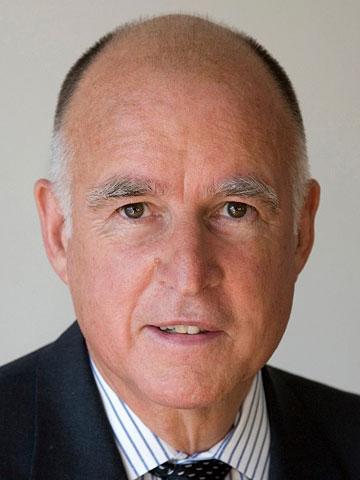
EDITORIAL Gov. Jerry Brown did everything he promised to do. He negotiated in good faith with the Republicans. He listened to their ideas. He made it clear he was willing to accept concepts (pension reform, for example) that his biggest campaign supporters wouldn’t like. And he got absolutely nowhere.

The Republicans in Sacramento have demonstrated over the past two months that they have no interest in solving the state’s budget crisis and that they’re nothing more than obstructionists. It’s time for the Democratic Party leadership to give up on all this talk of bipartisanship and craft a budget solution that works — without the GOP.

There are several possible alternatives, but they all require Brown and the Democratic leadership in the Legislature to acknowledge that there’s no way to keep the state solvent and functional without at least extending existing taxes — and no way to get two-thirds support in the Assembly or Senate for any tax measure.

There’s some talk among progressives in Sacramento of using a creative legal strategy to put the extension of temporary sales and car taxes on the ballot with a simple majority vote. In essence, the Legislature can amend any existing law with a simple majority vote — and amending the current tax code to extend the temporary taxes for a year might work. Republicans will howl and sue, and it’s possible that the courts will side with them — but it’s worth a try. At the very least, the Democrats will be highlighting the difference between the two parties, giving the public a clear choice — and putting the GOP legislators on notice that if they won’t help find a solution, they’re going to be irrelevant.

The other option is to start gathering signatures immediately for a ballot initiative, or series of initiatives, that not only extends the temporary taxes but increases taxes on big corporations and the very rich. It’s too bad Brown didn’t start that process months ago; it would have given him immense bargaining clout with the Republicans. As it is, any initiative would have to wait until November; there’s nowhere near enough time to qualify a measure for a special June election.

Still, a lot of the projected state cuts could be delayed until after the voters have a chance to weigh in — and the politics are clearly on the side of progressive taxes. In fact, a poll commissioned by the California Federation of Teachers shows that 78 percent of Californians support a 1 percent increase in income taxes for Californians earning more than $500,000 a year. Even Republicans back the notion by a 60 percent majority.

With Brown leading the charge, raising the money for a signature-gathering effort and a strong campaign shouldn’t be a problem. And if California can start clearing up its red ink with taxes on the very wealthy, it will send a profound message nationwide.

Brown, to his credit, is finally starting to travel around the state and preach his message. He’s hitting Republican districts and trying to get voters to pressure their representatives to work with him. It’s a nice idea, two months too late — and it’s unlikely to turn any legislators around at this point.

On the other hand, the governor, whose popularity is high, would do wonders for the politics of the state and the nation by resuming the old populist stance he took in the early 1990s when he campaigned for president as a foe of corporate power and concentrated wealth. The folks at Calbuzz, the Santa Barbara political blog, put it nicely, suggesting that Brown start channeling the legendary former Wisconsin governor, Bob La Follette.

“As a political matter, it’s time for Jerry Brown to reach for his inner La Follette and start sounding some good, old-fashioned, Wisconsin-style populism. Instead of going after the railroads, as La Follette did, however, Brown should aim at the ultrawealthy, the oil companies, and other greedy corporate interests that have a) allowed the California Republican Party to gridlock the budget process and b) fought to keep special corporate loopholes, including outrageously low property tax rates from Prop. 13.”

That’s how you turn California around.


Editorial: Taxes — without the GOP

0

Gov. Jerry Brown did everything he promised to do. He negotiated in good faith with the Republicans. He listened to their ideas. He made it clear he was willing to accept concepts (pension reform, for example) that his biggest campaign supporters wouldn’t like. And he got absolutely nowhere.

The Republicans in Sacramento have demonstrated over the past two months that they have no interest in solving the state’s budget crisis and that they’re nothing more than obstructionists. It’s time for the Democratic Party leadership to give up on all this talk of bipartisanship and craft a budget solution that works — without the GOP.

There are several possible alternatives, but they all require Brown and the Democratic leadership in the Legislature to acknowledge that there’s no way to keep the state solvent and functional without at least extending existing taxes — and no way to get two-thirds support in the Assembly or Senate for any tax measure.

There’s some talk among progressives in Sacramento of using a creative legal strategy to put the extension of temporary sales and car taxes on the ballot with a simple majority vote. In essence, the Legislature can amend any existing law with a simple majority vote — and amending the current tax code to extend the temporary taxes for a year might work. Republicans will howl and sue, and it’s possible that the courts will side with them — but it’s worth a try. At the very least, the Democrats will be highlighting the difference between the two parties, giving the public a clear choice — and putting the GOP legislators on notice that if they won’t help find a solution, they’re going to be irrelevant.

The other option is to start gathering signatures immediately for a ballot initiative, or series of initiatives, that not only extends the temporary taxes but increases taxes on big corporations and the very rich. It’s too bad Brown didn’t start that process months ago; it would have given him immense bargaining clout with the Republicans. As it is, any initiative would have to wait until November; there’s nowhere near enough time to qualify a measure for a special June election.

Still, a lot of the projected state cuts could be delayed until after the voters have a chance to weigh in — and the politics are clearly on the side of progressive taxes. In fact, a poll commissioned by the California Federation of Teachers shows that 78 percent of Californians support a 1 percent increase in income taxes for Californians earning more than $500,000 a year. Even Republicans back the notion by a 60 percent majority.

With Brown leading the charge, raising the money for a signature-gathering effort and a strong campaign shouldn’t be a problem. And if California can start clearing up its red ink with taxes on the very wealthy, it will send a profound message nationwide.

Brown, to his credit, is finally starting to travel around the state and preach his message. He’s hitting Republican districts and trying to get voters to pressure their representatives to work with him. It’s a nice idea, two months too late — and it’s unlikely to turn any legislators around at this point.

On the other hand, the governor, whose popularity is high, would do wonders for the politics of the state and the nation by resuming the old populist stance he took in the early 1990s when he campaigned for president as a foe of corporate power and concentrated wealth. The folks at Calbuzz, the Santa Barbara political blog, put it nicely, suggesting that Brown start channeling the legendary former Wisconsin governor, Bob La Follette.

“As a political matter, it’s time for Jerry Brown to reach for his inner La Follette and start sounding some good, old-fashioned, Wisconsin-style populism. Instead of going after the railroads, as La Follette did, however, Brown should aim at the ultrawealthy, the oil companies, and other greedy corporate interests that have a) allowed the California Republican Party to gridlock the budget process and b) fought to keep special corporate loopholes, including outrageously low property tax rates from Prop. 13.”

That’s how you turn California around.


Maine’s labor mural not the first time we’ve wiped off workers’ history

1

At a certain point, you kind of have to wonder what the end goal is. What did Maine governor Paul LePage stand to benefit from taking down a painting in the state’s Labor Department building that glorifies the history of American workers?

For the record, here’s a piece of what Mainers aren’t going to get to see anymore when they’re getting their Labor Department errands done (you can click the image below to see the whole 36-foot piece):

LePage’s press secretary said that the governor feels that the 11 panel piece, which was painted by artist Judy Taylor in 2007 to represent the history of labor, is too sympathetic with labor. Also this, from HuffPo:

LePage’s office originally said that the governor made his decision after complaints from businesses owners, eventually pointing to a single anonymous letter, in which the author said that when looking at the mural, he or she felt like it was something from “communist North Korea.”

Sigh. Apparently, he’s looking to achieve a little visual parity in the building with the “side” of business, which apparently is not fairly done by works that honor the history of people working in them. That’s also why he called to rename the Labor Department’s conference rooms, which are labeled with the names of famous union leaders like Cesar Chavez of the United Farm Workers and — gasp! — Frances Perkins, the first woman to be appointed secretary in the U.S. cabinet who was Secretary of Labor in the 1930s-’40s. 

The issue has its historical precedent, of course (and I’m not making the totalitarian jump that some are quick to launch into).

Artist Ben Wood, whose plan to recreate a centuries-old Ohlone mural on the Mission Market we covered in the paper a few weeks ago, made a short film on the Rockefeller Center Diego Rivera mural that was ordered removed because Rivera had snuck a portrait of Lenin into the fresco’s depicted multitudes.

Goes to show you how much we’ve progressed – now, you don’t even have to show Communist Party leaders, the reality and triumphs of working class people are enough to be considered unpalatable (and unfair?) by business leaders. 

And don’t get me started on Italian street artist Blu’s dollar bill-draped coffins, whitewashed from a wall the Museum of Contemporary Art in Los Angeles a day after he painted the thing. Dead soldiers = not on our walls. Not mention a poorly-executed gambit by Vancouver, Canada to remove an anti-Olympic art installation on a gallery’s storefront.

“Man at the Crossroads” (here, a partial view of the mural) was not a big hit with the business set either 

The removal of Blu’s MOCA piece incited artist protests

SF muralists, which side are you on? How does it make you feel to see this kind of thing happen to art?

A creative way out of the state budget mess

36

With no Republicans willing at this point to go along with the governor’s June election plans, Jerry Brown has quite the problem on his hands. There never really was a Plan B. And now he’s got to find one, fast. He’s already made the cuts, and they’re awful. He’s not going to get his own party to go along with much more. But it’s legally dubious whether he can put taxes on a special election ballot without any Republican support, and he clearly doesn’t want to.


So what’s the best option? Well, the deep thinkers over at CalBuzz have a brilliant scheme. The idea: Pass an all-cuts budget, a devastating, ugly, puke-inducing thing — then


gather signatures to place that on the November ballot, with a provision that if the measure fails the cuts will not occur because the 2009 taxes and fees will be re-instated for five years. As a practical matter, cuts can be delayed to occur after November. And costs can be shifted to local government for local responsibilities whether the measure wins or loses.


Then let Grover Norquist, Jon Fleischman, radio heads John and Ken and the rest of their not-our-problem cadre be forced to argue for the budget ballot measure while Democrats and labor argue against it.


It’s much easier to get a vote against something in California — particularly when that something contains provisions that nobody wants. A No vote means Yes on taxes and No on cuts.


Man, why aren’t these guys running for office?


Editor’s Notes

2

tredmond@sfbg.com

Calling for painful spending cuts, it turns out, is the easy part. Calling for relatively painless tax increases requires real political courage.

— The New York Times, March 13

The Times is hardly a crazy socialist rag; it’s always been the voice of the establishment, more Democrat than Republican but never even close to radical. The Gray Lady certainly can’t be accused of fomenting class warfare.

But in a calm, measured tone this week, the paper made the exact point about New York State that some of us whose politics lean a bit more to the left have been making about San Francisco.

The governor of New York, Andrew Cuomo, has presented the state Legislature with an all-cuts budget. The Times suggests that the wealthier residents of the state should share just a small amount of the economic pain. Extending a surtax on high earners would be more than tolerable, the paper notes:

“A couple with $350,000 in taxable income would simply continue to pay an extra $3,500; a couple with taxable income of $1.5 million would continue to pay $31,800 more. Those payments would be more than offset by the federal tax breaks those same taxpayers got with the recent renewal of the Bush-era tax cuts.”

Of course, in New York, as here, those state tax payments are deductible from the already-too-low federal income taxes the rich are paying.

It’s too much to ask that the San Francisco Chronicle pick up that line; the Chron, out here on the Left Coast, is far more conservative than the stodgy old Times. But you’d think that in a city where Republican voter registration is below 10 percent, that local officials — including a mayor who calls himself “progressive” — would be able to go at least as far as a moderate national newspaper.

Because the argument is pretty simple and basic.

Cuts in public services fall hardest on the poor and middle class. Families that can afford to join a private club don’t have to worry when hours at the city pools are cut back; their kids learn to swim anyway. People with good health insurance can try to ignore the conditions at San Francisco General Hospital. Private school parents think the size of classrooms in the public schools isn’t a big factor in their lives.

But it all comes back to haunt us, every one of us, in this city. When the number of beds in General’s psych ward is cut from 80 to 20, more people with severe mental illness are out on the streets. Cutting public schools not only makes class divisions more deeply entrenched, it damages the city’s economy.

As the Times says, painful cuts are easy. Taxing the rich never seems to be on the table

Sacramento needs a foreign policy

0

OPINION “The country is rich, but not so rich as we have been led to believe. The choice to do one thing may preclude another. In short, we are entering an era of limits.”

Presidential candidate Jerry Brown said that in 1976. Thirty five years later, second-time-around Gov. Jerry Brown has a profound opportunity to finish the thought — by pointing out that we can no longer afford follies like the Afghanistan war.

Any reluctance Brown might feel about discussing foreign policy — an area of responsibility clearly not assigned to the states by the founding fathers, or anyone else’s fathers — must be weighed against his understanding that when it comes to budget matters, the buck stops at the California statehouse — and the other 49 state houses. The feds can print money, but the states can’t.

California famously faces an immediate budget deficit in the $25 billion range. This, while the federal government burns through taxpayers’ money on a war that even Secretary of Defense Robert Gates acknowledges as insane. He recently told an audience of West Point cadets: “In my opinion, any future defense secretary who advises the president to again send a big American land army into Asia or into the Middle East or Africa should ‘have his head examined,’ as General MacArthur so delicately put it.”

The National Priorities Project puts the current cumulative cost of the war to California taxpayers at $48.5 billion. The $110 billion Washington plans on spending in the upcoming year pencils out to another $14 billion from California taxpayers, while they deal with what the California Legislative Analyst’s Office estimates will be an annual $20 billion state budget shortfall through 2015-16.

Brown, then, has everything to gain from a serious domestic redirection of funds now squandered in this war, yet runs little risk in going out front for a national movement in that direction. After all, it’s not just Robert Gates having second thoughts: A CNN poll found the U.S. population opposing the war by a 63 percent to 35 percent margin last December. Last month, 24 of the 53 members of the California congressional delegation voted in favor of a budget amendment to cut all but $10 billion of the war’s funding, with the remaining money to be used to withdraw troops.(Jackie Speier voted for; Nancy Pelosi against.) The California Democratic Party called for “a timetable for withdrawal of our military personnel” well over a year ago, and last month the Democratic National Committee told the president to get a move on in ending this war.

When Brown first became governor, best-selling author Alvin Toffler’s Future Shock had posed the question of whether the country was suffering from too much change, too fast — a type of thinking the new governor appeared very much in tune with. In the interim, Naomi Klein has written a less known but probably more important book called The Shock Doctrine. New York Times columnist Paul Krugman describes the “shock doctrine” as an ongoing effort to exploit “crises to push through an agenda that has nothing to do with resolving those crises, and everything to do with imposing” a “vision of a harsher, more unequal, less democratic society.”

As the governor of the largest state in the union, with the nation’s biggest deficit, Jerry Brown is in a unique position to influence the national debate by simply pointing out the elephant in the room: A healthy portion of the nation’s economic crisis will melt away if we will just do today what the secretary of defense says we should do tomorrow — get out of Afghanistan. 2

Former Massachusetts state legislator Tom Gallagher is a San Francisco writer and activist.

Is the California GOP done?

16

The folks at CalBuzz — veteran political reporters who know their shit — thing the CAGOP is teetering on the brink of irrelevance:


Like a herd of wooly mammoths at the end of the Pleistocne epoch, the California Republican Party is on the verge of extinction.


It may still recover. The CRP has come back from near death before. And redistricting, alongside the top-two primary system may yet revive it. But judging from the infighting, narrow thinking and rigid ideological positioning on display at the party’s organizing convention last weekend in Sacramento, the signs are not good.


But that assumes that the party wants to recover, wants to be part of governing the state and actually has a plan to do that. Right now, Republicans in Sacramento are standing up and denouncing some of Gov. Brown’s proposed cuts — while refusing to even allow a public vote on extending taxes.


Over at Calitics, David Atkins suggests another perspective:


In reality, the GOP at a national and state level exists to 1) deliver money from the poor and middle class to the rich; and 2) feed enough red meat to their prejudiced and unthinking base to garner just enough votes to continue achieving objective #1. That’s pretty much it.


Right now, the GOP doesn’t actually need to win any of the statewide elections in order to accomplish those goals. Winning them would be helpful, but is ultimately unnecessary. Knowing that the chances of anyone overturning Prop 13 and the 2/3 requirement on revenues are slim to none, all they need is at least 1/3 of the members of just one of the statehouse chambers. To ram through all cuts budgets and destroy faith in government, they need do nothing more.


In fact:


There’s nothing that serves Republican interests at a state and national level more than to see California fiscally collapse. That means shock doctrine, a transfer of wealth from the middle class to the rich, an ability to end all state labor contracts in a way Governor Walker would only dream of, and ultimately the ability to crush the belief of the People in the power of their government to do good on their behalf.


I’m not sure everyone in the GOP thinks this way, but on a macro level, it certainly makes sense. That’s exactly what the Repubicans are doing in Congress — make it impossible for the Obama Administration to succeed, and you’ve done your job. It doesn’t hurt that Obama is allowing that to happen.


Brown continues to say that he doesn’t want to pull any legal chicanery, that he wants Republican support for his plan to but the tax extensions before the voters in June. But if this is the game they’re playing, he may have to reconsider.

Imagine evacuating New York

2

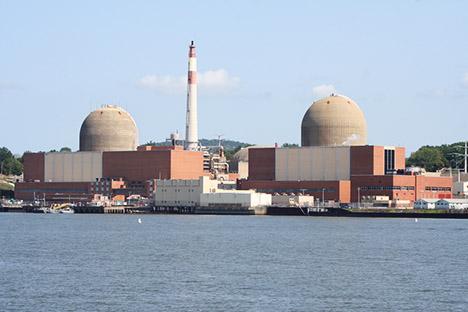
My brother lives a few miles upwind (usually) of the Indian Point nuclear plant on the Hudson River, north of New York City. He called me this morning to ask if we were worried about radiation hitting the West Coast, which all of the government isn’t anything to worry about. Of course, if it were something to worry about, we’d be hearing the same thing anyway.


Truth is, I’m only a little nervous right now. One really cool chart of prevailing winds shows some of a possible plume hitting right smack into the San Francisco area, although by that point it should be sufficiently dispersed that the concentration won’t be high enough to cause any immediate human health impacts. That, of course, assumes that the reactors are brought under control before the plutonium in the core and the spent fuel rods catches fire, explodes or otherwise becomes airborne. Plutonium’s an alpha-emitter with a half life of 24,500 years, and you only need to inhale a tiny speck before it becomes fatally toxic.


Still, let’s not forget: When you release significant amounts of radioactivity into the atmosphere, there are human health consequences — and not just in the immediate area. There’s no doubt in my mind (and in the minds of many experts) that above-ground nuclear testing in the 1950s and 1960s contributed to cancer rates world wide. You can’t prove that any individual got cancer because of exposure to the specific fallout from a specific explosion on a specific date; you can prove that the likelihood of increased cancer risk in large populations increases with almost any measurable increase in background radiation.


That said: My worries are pretty minor compared to the folks in Japan. The head of the company that ran the nukes now admits that the radiation released over the past few days will kill people. And if the situation deteriorates any further, the risk is going to ge beyond a few miles.


The heartbreaker: There’s not a lot anyone can do. You can’t evacuate Tokyo. Where would the people go?


Ralph Nader send out a press release today warning about the problem the United States would face if one of its nuclear plants — say, Indian Point — had a similar accident:


Imagine evacuating the long-troubled Indian Point plants 26 miles north of New York City. Workers in that region have a hard enough time evacuating their places of employment during 5 pm rush hour. That’s one reason Secretary of State Clinton (in her time as Senator of New York) and Governor Andrew Cuomo called for the shutdown of Indian Point.


You can’t evacuate New York. My brother’s on the edge of the official evacuation zone for Indian Point (which is a creaky, leaky old nuke); the roads aren’t wide enough to handle the traffic where he is — and he’s a fair ways upstate from NYC.


The New York Daily News headline talks about the handful or workers still trying (at the risk of their own lives) to get the troubled nukes under control: “The Whole World Is Depending On Them.” And if they somehow prevent disaster, we can all take a deep breath — and start working to shut down the old, past-their-prime, unsafe power plants that are near populated areas.


Oh: that’s almost all of them.

SFBG Radio: Good news from Wisconsin — maybe

0

A judge in Wisconsin has tossed out the governor’s anti-labor law — but does that just mean the Republicans are going to go back and do it again? And what’s going on in Michigan, where the governor wants to get rid of labor contracts by taking control of local government? Check out our discussion after  the jump.


sfbgradio3182011 by endorsements2010

The GOP convention dilemma

9

Word in Sacramento is that five Republicans may be close to going along with the governor’s plan to put $12 billion in tax extensions (NOT tax increases, just extensions of existing taxes) before the voters. The problem: They don’t want to vote for taxes and then have to show up at the state convention March 18 — where there’s a move afoot (I kid you not) to pass a resolution (thanks, CalBuzz) that calls on the party to censure any “traitorous Republicans-in-Name-Only, ask for their resignation from their positions within the California Republican Party, pledge to endorse and support efforts to recall them from office, and direct the California Republican Party staff, agents and officers to refuse to provide them with funding or assistance in future elections.”


Why can’t the Democrats do shit like this? Censure and abandon any Democrat-in-Name-Only who supports continuing the wars in Iraq and Afghanistan and refuses to increase taxes on the rich? (Oh, wait — then we wouldn’t have very many Democrats left. Which, I guess, is the GOP problem.)


At any rate, the Legislature is going into session this afternoon to try to push this package through — and it could be one of those marathon sessions that lasts all night. Or maybe the Republicans will vote for the budget plan — but only if they can wait until Monday.


By the way: Isn’t it odd that two crazy talk-show hosts in L.A. can hold an entire state hostage? How come we don’t have a couple of crazy talk show hosts in San Francisco who can make very Democrat in Sacramento pay attention?

Board considers extra $75.4 million for Mission Bay redevelopment

0

UPDATE: An earlier version of this post reported that the Board was meeting in closed session. This was incorrect.

The Board is meeting today  to consider amending the San Francisco Redevelopment Agency’s (SFRA)  budget to issue an additional $70 million in tax increment bonds and appropriate $75.4 million ($70 million in bond proceeds, plus $5.4 million tax increment). The request, which comes on the heels of last year’s $64 million request, represents a 109.4 increase of tax increment bonds in 2010-2011. The city says thiis has nothing to do with Gov. Jerry Brown’s proposal to eliminate redevelopment agencies. But the last-minute timing of today’s session looks a tad fishy at best. And it’s playing out as a vote on Treasure Island’s final environmental impact report approaches, and against a backdrop of extreme funcertaintly related to all things Redevelopment, as Mayor Ed Lee and other city leaders try to figure out ways to prevent or reduce the affordable housing fallout from the governor’s elimination proposal.

According to a Budget and Legislative Analyst’s summary of today’s request, the requested bond issuance and expenditure is part of the “SFRA’s normal course of fulfilling its obligations under the tax increment allocation pledge agreements between the city, SFRA and FOCIL-MB (Catellus’ successor entity at the Mission Bay redevelopment sites), and not as a result of the Governor’s proposal to eliminate local redevelopment agencies. Ms. Lee [deputy executive director at the SFRA] states, that, as of the writing of this report, the impact of the Governor’s proposal on the Mission Bay Redevelopment Project is currently unclear and ambiguous as to whether approval of the Governor’s proposal would affect the requested bond issuance and expenditure authority.”

“At the time of the development and approval of the FY 2010-2011 budget, the Agency and Tax Assessor did not have available tax roll information that resulted in a significant increase in property taxes in Mission Bay due to the accelerated assessment agreement between the Assessor and the Agency,” states today’s Board resolution that Mayor Lee sponsored, explaining why there’s a request for an additional $70 million in bonds, so soon on the heels of the $64 million that the Board approved last year.

“The Agency wishes to amend its budget for the fiscal year 2010-2011 to permit the receipt of additional tax increment of $5.44 million and bond proceeds in the amount of $70 million for the purposes of low moderate housing and for the reimbursement of public improvements made by Catellus pursuant to the tax increment allocation pledge agreement between the City and County of San Francisco, San Francisco Redevelopment Agency and Catellus made in November 16,1998 for Mission Bay North and South,” the resolution continues.

 Mission Bay North and South are two separate redevelopment areas that encompass 303 acres, bounded by King Street and AT&T Park on the north, the San Francisco Bay and the I-280 freeway on the east and west, and Mariposa Street to the south, according to Redevelopment Agency documents.

The Budget and Legislative Analyst notes that of the $5.4 million in additional tax increment, an estimated $3.48 million would fund a portion of the Agency’s required educational revenue augmentation fund payment to the state for FY 2010-2011. And that the remaining $1.95 million would be distributed to tax entities, with $870,400 to be expended on the agency’s low and moderate income housing fund.

 The BLA notes that the proposed sale of $70 million in tax increment bonds will provide $60.345 million bond proceeds, including $12 million (20 percent) to fund the construction of 1180 4th Street, a development of 150 units of family rental housing, including 25 units for formerly homeless families and $48. 276 million (80 percent) to reimburse Catellus’ successor, FOCIL-MB, LLC, for public infrastructure development that FOCIL-MB constructed..

“If the proposed resolution is approved, of the $177 million total estimated debt service, $100, 890,000 or 57 percent will be paid from the City’s General Fund. The City’s General Fund estimated additional annual cost would be $3,648,000 for the first 20 years, decreasing to $2,793,000 for the next ten years.” The BLA concludes, explaining that approval of the proposed resolution is a Board policy decision because it adds up to a total General Fund cost of more than $100 million.

 According to the BLA report, Amy Lee, SF Redevelopment Agency deputy executive director, the requested $70 million in tax increment bonds would be sold in late March 2011, “such that no debt service payments would be required in FY 2010-2011.

 The BLA also notes that if the Board approves the proposed resolution, the net effect of each property tax dollar expended for tax increment that is provided to SFRA would result in a reduction of $0.57 on each dollar from the city’s General Fund.

“In other words, for each tax increment dollar provided to SFRA, the City would no longer have to provide payments to other tax entities,” the BLA observes.

These entities include the city’s Children’s Fund, Library Preservation Fund, Open Space Acquisition Fund, and the General City Bond Debt fund, the Community College district, the San Francisco United School District, BART, and the Bay Area Air Quality Management District, which total approximately $0.43 of each property tax dollar.

It’s because of these property tax dollar equations that the annual cost to the city’s general fund for proposed increased debt service would rise, if the Board approves today’s Redevelopment resolution, by more than $100 million over the next 30 years.

And as local Democratic Party chair and former Board President Aaron Peskin explains, there’s nothing much the Board can do about the deal today, but they might want to reconsider getting into more deals like this at Treasure Island and beyond, in future.

“A deal is a deal is a deal,” Peskin said. ‘So, there’s nothing the Board could do differently, but that’s $3.648 million that otherwise would be going into the General Fund, and it’s a sign we should pay attention to, when considering Treasure Island, as deals like this will continue to impoverish the General Fund.”

 “Even though they deny it has nothing to do with Gov. Jerry Brown’s pending legislation to eliminate redevelopment agencies, I have never seen something scheduled so quickly,” Peskin added, noting that the Board’s agenda is published Thursday evening or Friday morning, but this item wasn’t on that agenda, hence the need to publish a separate notice.

Meanwhile, Treasure Island’s final environmental impact report has been released, and the way the current plan looks, will forever alter our view of the Bay.

“It will have enormous impacts on services for the City and traffic for the entire Bay Area,” Saul Bloom, executive director of Arc Ecology, told the Guardian.

On April 7, a joint session of the San Francisco Planning Commission and Treasure Island Development Authority will be meeting to consider certifying the EIR, but Arc is asking for an extension of two more weeks to provide the public with 42 days for review.

“Fourteen additional days for public review is a very modest request for a project with such significant impacts yet, the City has thus far refused,” Bloom notes.

Is David Crane just another Kochhead?

24

This week the Chronicle majorly attacked State Sen. Leland Yee, claiming Yee tried “to distort the words” of billionaire investment banker and UC Regent David Crane on collective bargaining.

The Chron’s attack came on the heels of Yee’s attempt to block Crane’s UC Regents confirmation. And Yee’s attempt to block Crane came in response to an op-ed Crane wrote for the Chron titled “Should public employees have collective bargaining rights?”

In its counter-counter attack editorial this week, the Chronicle accused Yee of falsely claiming that Crane had “called for an end to collective bargaining rights for California teachers, nurses, firefighters, university employees and other public sector worker.”

“What the former adviser to Gov.Arnold Schwarzenegger did was present a history of collective bargaining in California and explain how a 1977 law had changed the balance of power by giving public employees power over their compensation and benefits,” the Chronicle stated. “Crane did assert that extending collective bargaining to employees who already have civil service protections ‘serves to reduce benefits for citizens and to raise costs for taxpayers. Anyone who would argue with that fact has not been paying attention to what is happening with state and local budgets lately.”

The Chronicle finished by praising Crane, who is currently a lecturer on Public Policy at Stanford University and is reportedly working with former Fed Chairman Paul Volcker to form a task force to examine current state budget practices. Crane, the Chron asserted, has “long been widely respected as a teller of inconvenient truths about the rising costs of public-employee pensions and benefits. He should not be silenced – or misquoted by opportunistic politicians. The Senate should vote to confirm him as regent.”

Now, when Schwarzenegger appointed Crane as a UC Regent in December 2010 as one of his last acts as Governor, the Sacramento Bee described Crane as Schwarzenegger’s “chief public employee pension critic.” But here in San Francisco, the Chron didn’t bother to flesh out Crane’s history of employment, campaign contributions, prior statements on collective bargaining, and financial investments.

Maybe it was because these public records reveal Crane to be less a dyed-in-the-wool Democrat and more of a Bushocrat, an ultra-rich investor who supported G.W. Bush through two elections, and repeatedly frames the collective bargaining rights of government employees as an obstacle standing in the way of pension reform and budget balancing.

Campaign finance records show that in March 1999, when Democrats were trying to hang onto the White House in the wake of Clinton’s sex scandals, Crane gave $1,000 to Bush. And in June 2003, just three months after Bush invaded Iraq on a false pretext, Crane saw fit to give Bush another $2,000.

The good news? Crane didn’t support Sarah Palin and John McCain in 2008. But he did donate $7,200 to Republican Tom Campbell’s unsuccessful 2010 bid for US Sen. Barbara Boxer’s seat. And here in San Francisco, Crane was one of several billionaires who wrote big fat checks last fall in support of Measure B, which sought to curb the pension and health benefits of city workers, most of whom will make a fraction in their lifetime of what Crane rakes in each year from his widely diversified financial portfolio.

Crane’s 2009 statement of economic interest shows he has over $1 million invested in Farallon Capital Partners, one of the world’s largest hedge funds, many of whose investors include top university endowments.

Crane also has over $1 million invested in Acacia Partners, over $1 million in Bislett Partners, over $1 million in Kensico Partners, over $1 million in Semper Vic Partners, over $1 million in Berkshire Hathaway, whose CEO is Warren Buffet, over $1 million in the HCP Absolute Return Fund, whose Board includes Warren Hellman, and up to $1 million in Hall Capital Management, whose Board includes Hellman and Gap heir John Fisher. Crane also owns several million dollars stake in real estate investments, and has sizeable stock in Wells Fargo, Chesapeake Energy, Microsoft, Google, Pangloss Oil, Whole Foods Market, M&T Bank Corp., IBM, American Express, WalMart and Exxon.

And he gets income from Acacia Partners and Babcock & Brown, where he was a former partner from 1979 to 2003. While at Babcock, Crane reportedly brokered a controversial jet-lease deal between Arnold Schwarzenegger and Singapore Airlines that allowed Schwarzenegger to defer taxes on millions of dollars. And in 2004, Crane went to work for then Republican Gov. Schwarzenegger as special advisor for Jobs and Economic Growth. The Terminator returned the favor by appointing Crane to the California Commission in Economic Development and the California High Speed Rail Authority. But Crane was rejected in Senate confirmation proceedings for a position on the board of California State Teachers Retirement System.

Now, clearly it’s not a crime to be a billionaire, even though the way some folks make their billions is criminal. But you have to wonder if UC really needs another ultra-rich Regent on its Board. You also have to wonder why the wealthy Crane sought reimbursements of $2,812 from UC in 2009, if he cares about saving the state money.

And Crane has made plenty of statements about collective bargaining rights and pension reform in recent months that seem to frame government employees as the bogey men, not just in California, but across the entire nation.

Take his April 2010 comments to the Los Angeles Times: “State legislators are afraid even to utter the words ‘pension reform’ for fear of alienating what has become — since passage of the Dills Act in 1978, which endowed state public employees with collective bargaining rights on top of their civil service protections — the single most politically influential constituency in our state: government employees,” Crane said.

Or what he said in August 2010 to the Fox Business Network: “Even if you took care of every one of these spiked above the iceberg level pensions in California, you would not take care of the pension problem in California, which is true of virtually every state in the country, at least those where, you know, government employees have collective bargaining rights,” Crane said

In December 2010, he told the L.A. Times that the year 1978, ”wasn’t notable just because of Proposition 13. That was also the year public employees gained a power Franklin D. Roosevelt had warned against: collective bargaining rights.”

“California hasn’t been the same since,” Crane continued. “Public workers have gained at the expense of private workers as government spending was redirected from infrastructure and education to higher salaries, pensions and other benefits.”

And in his Feb. 27 Chronicle op-ed, Crane claimed that, “The battle in Wisconsin is not over collective bargaining rights generally but rather the appropriateness of those rights in the public sector ”

“Collective bargaining is a good thing when it’s needed to equalize power, but when public employees already have that equality because of civil service protections, collective bargaining in the public sector serves to reduce benefits for citizens and to raise costs for taxpayers,” Crane continued. “Citizens and taxpayers should consider this as they watch events unfold in Madison.”

As of today, letters are circulating in Sacramento opposing Crane’s confirmation. And Sen. Ted W. Lieu (D-Torrance), Chair of the Labor and Industrial Relations Committee in Sacramento, has already signaled his opposition.

“I cannot support someone for the powerful post of UC Regent who continues to perpetuate the myth that collective bargaining caused our state economic crisis and has a fundamental misunderstanding of how our state budget operates,” Lieu said in a statement. He noted that in the Chron op-ed Crane claimed that because of collective bargaining, “general fund spending on higher education, parks and environmental protection was flat or lower.” 
“As a matter of historical fact, that is false,” Lieu countered. “ Our general fund spending generally declined because of a national economic recession.  The recession was not caused by collective bargaining or public sector unions, but by private sector, out of control Wall Street firms at the time.”

“The specific reason our general fund spending sharply declined was because the person Mr. Crane advised, former Gov. Arnold Schwarzenegger, reduced the Vehicle License Fee and replaced it with . . . nothing,” Lieu continued. “As a result, the state general fund lost over $5 to $6 billion in revenues per year for every year Mr. Schwarzenegger was in office.  The VLF reduction has resulted in a total loss of over $30 billion to the state, an amount in excess of the current California budgetary shortfall.  How conveniently Mr. Crane forgot to mention that critical fact when it doesn’t suit his ideological assault on public sector unions.”

“Now that Mr. Crane senses his confirmation may be in jeopardy, he attempts to marginalize his own Op-Ed by releasing a new statement saying he really didn’t mean to attack all public sector unions, just those who happen to have statutory civil service protections,” Lieu added. “For those in Ivory Towers that distinction may have some academic meaning, but for everyone else in the real world that is a distinction without a difference. Civil Service protections do not prevent employees from being terminated or laid off, they provide standards for government to follow when firing or disciplining employees. Such protections do not guarantee appropriate wages or benefits, nor address a plethora of other issues, such as workforce safety issues.”
 
“Mr. Crane’s Op-Ed also discusses political spending by public sector unions, “Lieu concluded. “In his world view, political spending by the California Teachers Association is inappropriate, but the massive political spending by the Koch Brothers would presumably be acceptable. I cannot, and will not, support someone for the post of UC Regent who blames public sector employees, such as teachers, for somehow being responsible for our economic crisis or the resulting decline in general fund spending.  We need UC Regents who are interested in solving problems, not those who twist historical facts to suit an ideological agenda.”

So, as I wait for Crane to return my call, I’ll leave you with something reporter Peter Byrne, who authored the award-winning investigative series ‘Investor’s Club” How the Regents of the University of California spin public funds into private profit,” said to me yesterday when I asked him about the wisdom of putting investment bankers on the UC Regents Board. “Putting investment bankers in front of a plate of $63 billion is like putting a pound of hamburger in front of a bunch of feral cats. They are going to eat it. It’s in their nature.”

So, would confirming Crane be like adding another feral cat to the mix? Is he just another Kochhead? Or is he just maligned and misunderstood, as the Chron vehemently implies?

More than 80 percent of Americans want to tax the rich

9

Senator Bernie Sanders (I-VT) is calling for an emergency surtax on millionaires as a way to combat the deficit. Which, of course, is a great idea. His colleague Chuck Schumer (D-NY) is on the same page. And the polls show that most of the country agrees with the concept; in fact, a Wall Street Journal/NBC News poll says that a staggering 81 percent of Americans think it’s basically a good idea to increase taxes on incomes of more than $1 million a year.


I imagine that the population of San Francisco is somewhat more liberal on the issue of taxes than the nation as a whole, which leads me to believe that a very substantial percentage of the city’s residents (including some of the very rich ones) was support increased local taxes that would require the wealthy to pay more to preserve city services.


There are, I’m sure, plenty of creative ways to do that. But it doesn’t seem to be at the top of the budget discussion at City Hall.


I realize that it would require a two-thirds vote in November for any tax hikes — unless the supervisors declared a financial emergency. And it certainly seems as if we’re in a state of emergency — and if the governor can’t find a couple of Republicans to vote for his budget package, it’s going to get much worse, very quickly.


If we can’t do that, and we have to wait a year and do it next fall, we still ought to be starting now — and the supervisors ought to be telling every community that’s facing cuts that there won’t be any more reductions without at least a plan for new revenue.


Keep David Crane away from your government

24

Sen. Leland Yee continues to strongly push his case against confirming San Francisco venture capitalist David Crane to the UC Board of Regents, finding allies among labor unions and Sen. Ted Lieu (D-Torrance), chair of the Senate Labor Committee, but failing so far to win over legislative leaders that Yee has alienated himself from with his quixotic budget stands of recent years.

It’s a sign of just how bad things have gotten for public employee unions that Crane, a last minute appointment by former Gov. Arnold Schwarznegger, wasn’t immediately rejected by Legislature after writing an op-ed siding with right-wing attacks on public employees in Wisconsin and calling for an end to public employee union’s collective bargaining rights in California.

After all, Crane – while he considers himself a Democrat – is little more than a right-wing shill wielding misleading data to justify his thinly veiled contempt for the public sector. He didn’t return my call about the latest controversy, but I did interview him a few years ago as he and Arnold tried to torpedo the California high-speed rail project before voters could approve it.

I didn’t expect much from a corporate Democrat who was working for a Republican governor, but I was still fairly astounded by his arrogant condemnation of public officials and agencies and his indignation at being challenged in his basic belief in the infallibility of capitalists. Simply put, the guy was a world-class jerk (an opinion that’s widely shared) who has no business working for government agencies because his only interest in them seems to be to weaken or destroy them.

George W. Bush loved to put guys like this in charge of government agencies, which is why Halliburton fleeced taxpayers, FEMA utterly failed New Orleans after Hurricane Katrina, oil companies ran dangerously amuck, and on and on. But in California under Gov. Jerry Brown and a big Democratic majority in the Legislature, someone like David Crane should have the door to government quickly slammed in his face if there’s any integrity left to the political system.

UPDATE: Crane just returned my call, but he did little to forthrightly answer my questions, instead referring me to his interview with KGO’s Ronn Owens last week. When I asked whether he thinks it’s fair that his critics are calling him hostile to the public sector, he told me to read his op-ed. And when I said that I did and the he seemed to be siding with the Republican governor of Wisconsin, he said disdainfully, “That’s an interesting interpretation.”

That seemed to be the clear intention of his piece, to tell readers that they’re simply wrong in seeing Wisconsin (and then Ohio, and other states that might eventually include California) as a right-wing attack on public employee unions, which is itself part of a long-running attack on the public sector by conservative capitalists like Crane. As Crane wrote in his first sentence, “The battle in Wisconsin is not over collective bargaining rights generally but rather the appropriateness of those rights in the public sector.”

Sure, this former attorney tries to couch his narrow, convoluted argument in legalisms and distorted history lessons, but the message seems clear, even if he acts as people just aren’t smart enough to understand his wise point (one that he didn’t use the opportunity of our interview to clarify). And when I noted that he has a history of anti-government animus, including trying to derail the high-speed rail project, he said indignantly, “I’m responsible for that thing making the ballot.”

By which he probably means that after trying and failing to delay the vote, he led the effort to require more detailed financial analysis of the project’s fiscal challenges, which he helped execute — and which had nothing to do with voters approving a measure that the Legislature had placed on the ballot years earlier, only to go along with Arnold’s efforts to delay it twice.

Or maybe I’m wrong and this self-described libertarian really just wants to make government stronger and more efficient. What do you think?

In Wisconsin, it’s all about jobs–249,865 of them

1


By Jess Brownell

(Jess Brownell is a freelance writer in Milwaukee who keeps a sharp eye on job-creating events in Madison, Wisconsin.)

  According to our new Governor, Scott Walker, his budget – which includes big tax breaks for the private sector and strips public employees and teachers of their collective bargaining rights – will engender a business climate that will soon produce 250,000 new jobs in Wisconsin.  Right now the outcome remains uncertain.  The battle is on, and after the battle the war will continue.   Yet who can argue with the need for jobs?  And what state couldn’t use 250,000 new ones?  So in the interest of fairness, let us put aside our differences for a moment and peer into this rosy future . . .

(The Governor of Wisconsin and an aide are showing a prospective factory site to a manufacturer who is considering moving his production facility to Wisconsin.)

WisGov:  I’m sure you’ll like it here.  We are all very proud of our natural beauty.  Why, not far from here Frank Lloyd Wright built his dazzling Taliesin.  With no help from the state, I might add.  And with my new budget and laws governing bargaining and employment we’re attracting attention all over the world.  You could lose out on this prime location if you don’t move quickly.

Mfr:  Very nice, the beauty and the Frank-What’s-His-Name and all that, but what about the nitty-gritty?  What about taxes?

WisGov:  No taxes.

Mfr:  No taxes?

WisGov:  None at all.  We’ve eliminated all taxes on business.  I would point out that even Alabama and Mississippi still collect some taxes, or try to.   We’ve given that up. So there you go.  Moving to Wisconsin just makes economic sense.

Mfr:  It’s very tempting, I must admit.  Could you tell me a little about the public school system?

WisGov:  Don’t have one.

Mfr:  No public schools?

WisGov:  Nope.  We used to have them, but after I gave the teachers the ass-kicking they had coming our damn test scores kept going down.  So we closed the public schools and now we give every kid a voucher for a private school instead.

Mfr:  And the test scores are better? 

WisGov:  That’s the beauty part.  There’s no requirement for testing private school students.  We are totally off the hook on education.  Saves a ton of money.

Aide:  We’re pretty sure that a lot of those kids can read and write.

WisGov:  And do simple sums.

Mfr:  Well, our jobs aren’t terribly demanding in that way.  But it could cause some problems in assembling a competent work force.

WsGov:  We’ve got that covered, too.  Our new laws say that you don’t have to pay any employee until you are completely satisfied with his or her performance.  It’s part of what we call the Wisconsin Idea.

Mfr:  Wow.  How long does that provision last?

WisGov:  There’s no time limit.  (Laughs.)  Wink, wink, nudge, nudge.

Mfr:  Got ya.  I have to hand it to you folks in state government here.  You really do have your people on the run.  Talk about desperation!

WisGov:  I said I was going to create a business-friendly climate, and with the help of the good Lord and a Republican majority, that’s what I’ve done.

Mfr:  You’ve convinced me.  I’m moving the business to Wisconsin.  Uh, you wouldn’t throw in a sign, would you?

WisGov:  You bet we would.  Neon, if you want.  I can see it now, right out on the highway.  The H. Allen Smith Putty Knife Factory.

Mfr:  Big letters?

WisGov:  As big as you want.  By the way, how many jobs are we talking about?

Mfr:  Oh, 25, maybe 30.

Aide:  That’s really great.  (To WisGov, looking at his clipboard.)  Only 249, 865 to go.  Or 249,870, as the case may be.  (To Mfr.)  That’s counting the 105 new state workers we hired to run the Business Development Department, of course.

Mfr:  (Glancing up at the sky.)  What was that?

WisGov:  That?  Just a snowflake.

Mfr.  You have snow?

Wisgov:  It’s Wisconsin.  You have to expect a little snow in the winter.

Mfr:  There wasn’t anything in your brochure about snow.  Or winter.

WisGov:  We didn’t really think it was necessary.

Mfr:  I’m not moving anyplace that’s got winter.

WisGov:  You don’t have to live here, for God’s sake.

Mfr:  Yeah, but what if I have to come here in the wintertime for a meeting or something.  I could get snowed in.  I could slip and fall on the ice and hurt myself.

WisGov:  We’ve got snowplows.  We’ve got salt.

Mfr:  That’s just it.  I don’t want anything to do with any place that needs snowplows and salt.

WisGov:  Look, we’re burning coal and oil as fast as we can.  We buy it at a discount from the Koch brothers.  At least they assured me over the phone it was a discount.  But climate change doesn’t happen overnight, you know.

Mfr:  But you do expect a winter this year?

WisGov:  Yes.

Mfr:  And next year?

Wisgov:  Probably.

Mfr:  Sorry, but that’s a deal-breaker for me.  I’m outa here.  (Shivers, puts up his collar and hurriedly departs.)

Aide:  Well, I guess we’re back to 249, 895.

WisGov:  Goddamn wimp.

Aide:  Don’t take it so hard, Governor.  We’ve got that delegation coming in from Fiji tomorrow.  They’re sure to love it here.

Okay, the above is admittedly fanciful.  Given its current poisonous political climate, not even a putty knife manufacturer would consider moving to Wisconsin.   Also, I know the reference to H. Allen Smith is pretty obscure.  Anyone who recalls H. Allen Smith reveals a lot about both his age and his taste in literature, but I always thought that his Life in a Putty Knife Factory was one of the great American book titles.  I never thought that as a concept it would be preferable to life in Wisconsin, though.


Newsom’s fancy gift, trip to China

The Chronicle’s got a story today about how Lt. Gov. Gavin Newsom’s personal investments and earnings, documented in an economic disclosure form released by the Fair Political Practices Commission (FPPC), make him a lot richer than his boss, Gov. Jerry Brown.

The form also discloses travel payments and gifts Newsom received in 2010, which makes for some interesting reading. For one, San Francisco’s former mayor evidently received a very expensive pen (made by Louis Vuitton and valued at $398) last year from this guy.

The most significant item in the travel and gifts category, of course, was Newsom’s trip to Shanghai last June, valued at $9,082 and paid for by the San Francisco-Shanghai Sister City Committee. He traveled there with former Mayor Willie Brown and some others for San Francisco week at Expo 2010 Shanghai China.

Evidently, it was a week filled with dancing, singing, and celebration. (And dressing to impress. Check out the creamy, eco-friendly suit Brown wore at this “dazzling” event.)

http://www.youtube.com/watch?v=NZ8rKho15dw

Since becoming lieutenant governor of California, Newsom has continued his efforts to improve business relations between China and San Francisco. Just have a look at his recent article in China Brief, a magazine published by the American Chamber of Commerce in the People’s Republic of China (AmCham-China).

In the article, penned in late January of 2011, Newsom wrote:

“China’s central government stresses the importance of developing their innovation industry sectors–including clean-tech, biotech and information technology (IT)—and is projected to commit over $600 million of government funds to support this development. This overlaps with San Francisco’s core industry sectors. With over 500 tech and new media companies (including leaders such as Salesforce.com, Zynga and Twitter), more than 225 clean-tech companies and a worldclass biotech hub (anchored by the University of California San Francisco), San Francisco brings together internationally-recognized leadership in each of these sectors.”

Meanwhile, a few items on that economic disclosure form suggest that what’s good for business in China is also good for Newsom. His wife’s investment portfolio, the Jennifer Siebel Newsom Trust, includes stocks ranging from $10,001 to $100,000 each in China Valves Technology, a for-profit, “e-learning services provider” called  Chinacast, and a Chinese motor manufacturer called Harbin Electric.

Redevelopment debate full of bum choices

3

At the Potrero Hill Democratic Club’s debate about Gov. Jerry Brown’s proposal to ax local redevelopment agencies to balance the state’s $26 billion deficit, folks attempted to evaluate if redevelopment agencies are essential for job creation and community revitalization, if reform, not total destruction, is possible, and if bum choices are all we have to look forward to.

The Chronicle’s Marisa Lagos, who moderated the debate, noted that redevelopment agencies were created over 60 years ago to create economic development opportunities by borrowing against future tax increases that agencies think they can create.

 “That’s a fancy way to say ‘borrow against future taxes,’” Lagos joked, pointing to the Candlestick Point/Hunters Point Shipyard project as an example of an ongoing project, and the Yerba Buena project as an example of a completed success.

 “The Governor is arguing that when the state is cutting schools and other essential services, this is not the best use of tax dollars,” Lagos stated.

 Panelist Olson Lee, deputy executive director of San Francisco’s Redevelopment Agency, pointed to affordable housing as evidence of the agency’s positive impact.

 “I think Redevelopment is important because of the good things it has done,” Lee said, pointing to 11,000 units of affordable housing that the agency helped build in the city.

 Panelist Carroll Wills, the communications director for the California Professional Firefighters, said “many wonderful projects” have occurred under Redevelopment. But he pointed to what he called “a decade of tricks and games,” on the part of Redevelopment agencies as one reason why the state is in a fiscal crisis that threatens firefighters’ jobs.

 “Concrete does not trump core services,” Wills said, arguing that it’s not clear that many affordable housing projects would not have been built without redevelopment aid

Arc Ecology’s Saul Bloom accused Gov. Brown of “short-circuiting” what could have been an important statewide discussion about redevelopment reform, with his bombshell suggestion in January to eliminate redevelopment agencies entirely

 “I’m sympathetic to the argument that Redevelopment takes money away from core services,” Bloom said. “But what do we do to replace it? And is economic development versus core services a false choice?”

Lee pointed to Mission Bay as further evidence of Redevelopment’s success.

“It was considered a brown field, and through development, it’s much different,” Lee said, noting that 20 percent of tax increment financing goes to the General Fund to pay for redevelopment infrastructure. “Clearly the university would not have been there. It was an opportunity to place UC there and generate economic opportunities.”

 Wills argued that Redevelopment Agencies are a luxury we can no longer afford, even as he acknowledged being unfamiliar with local redevelopment projects.

“At best, redevelopment moves around the pieces,” Wills said. “It doesn’t increase economic development and it doesn’t necessarily pay for itself.”

Bloom noted that developments like Mission Bay are dependent on large institutions, like the University of California, which can’t be forced to implement city laws like local hire.

And he said he found it “disappointing” that there wasn’t much more of a dialogue around the plans to redevelop Candlestick Point and the Shipyard, despite the fact that the city held hundreds of meetings over the past decade.

“It was more a case of, Here’s our idea, tell us what you think of it,’” Bloom said. “Perhaps if we had invited the nation’s largest industrial developer, instead of the nation’s second largest home developer, we would have had a different dialogue.”

 Lee replied that the Shipyard has been under discussion for 15 years.

“It’s a very large project, the largest in the Western United States,” Lee said. “It’s a brownfield, though I know Espanola will say it’s a Superfund site,” he continued, as Bayview elder Espanola Jackson bristled under her hat, and the audience wondered if Lee meant that the US E.P.A. somehow got it all wrong.

Lee further shocked audience members by saying Treasure Island was not a redevelopment project (leading Bloom to clarify that Treasure Island is under the jurisdiction of the local Treasure Island Development Authority, if not the SF Agency).

“People felt they wanted economic development at the shipyard,” Lee continued, noting that the neighborhood suffered after the Navy withdrew from the shipyard in the 1970s. But he did not mention that major bones of contention around the redevelopment proposal, centered on plans to build 10,000 mostly market-rate condos, a bridge over an environmentally sensitive slough, the taking of a chunk of the community’s only major park, and no proof that thousands of promised jobs will materialize.

Wills noted that most local redevelopment commissions are peopled by the members of each municipality’s city council, a situation he believes leads to a lack of accountability. But members of the audience, including this reporter, noted that San Francisco’s Redevelopment Agency consists entirely of mayoral appointees, who, unlike elected officials, can’t easily be voted off the proverbial island.

It was at this point that panelist Calvin Welch, a longtime housing activist, showed up at the debate, apologizing for being late, but blaming his tardiness on being on a phone call with Sen. Mark Leno to discuss Brown’s redevelopment proposal.

And from there, the conversation veered towards discussions of what could happen to existing redevelopment projects if Brown goes through with his elimination threat.

 Lee noted that if projects simply had a disposition and development Aagreement (DDA), but Redevelopment was no longer there, there would be no project financing. “The devil’s in the details,” Lee said. “Because if you don’t have bonds, what’s the point of having an agreement.”

 Wills opined that Gov. Brown’s proposal has “a vehicle to roll back the bum’s rush” of projects that local municipalities have been trying to push across the finish line, ever since Brown dropped his Redevelopment elimination bomb in January.

 Welch went off on a historical riff about how the San Francisco Redevelopment Agency (SFRA) was met with controversy and outrage until 1988, when Art Agnos was elected mayor, and brokered a deal under which SFRA could do tax increment financing, provided the majority of funds were used for affordable housing.

“It became a finance agency to build infrastructure and affordable housing,” Welch said, noting that attempts to build out Mission Bay around commercial offices and high rises failed, until the Agency used tif to redevelop the site.

 “But mark my words, Lennar is going to come out of this just fine,” Welch added, reminding me of a recent comment that former Lennar executive Emile Haddad reportedly made that suggests Haddad believes the California housing market is poised for a rebound.

(The article outlined how Haddad sold 12,000 acres in California for a $277 million profit at the housing market’s peak four years ago, reacquired it at half the price in 2009, and is now saying it’s time to build in his new role as CEO of FivePoint Communities Inc., which is developing four new master-planned communities with a combined 45,000 residences at Newhall Ranch north of L.A., the El Toro Marine Corps Air Station in Orange County, the Candlestick Point/Hunters Point shipyard and Treasure Island  in San Francisco, with investors including Lennar, Michael S. Dell’s MSD Capital LP, Ross Perot Jr.’s Hillwood Development Co. and Rockpoint Group LLC. “I don’t want the party to show up and I’m not dressed,” Haddad, 52, reportedly said in a recent interview. “When the market says ‘I’m here,’ we’ll be one of the few that can deliver inventory.” 

(The Haddad article, which appears to be a non-bylined reprint from Bloomberg News, also claimed that Hunters Point sales are set to begin by late 2012 with prices starting at $525,000, as the Navy continues its cleanup of the 700-acre site. And that the plan now calls for as many as 12,000 homes, 3 million square feet (of commercial space and a new stadium for the 49ers. And that 7,000 homes may eventually be built on Treasure Island and adjoining Yerba Buena Island, under terms of a final development agreement that may go before the San Francisco Board of Supervisors for approval in May, with units averaging  $800,000 and reaching up to $2 million, according to Lennar V.P Kofi Bonner.)

And during the Potrero Hill Dems debate, Bloom noted that the Treasure Island plan is being “sped up” and that the Board is expected to vote on the plan as soon as possible. “But since these plans were not bonded before January [when Gov. Brown took office], what’s the point of speeding up the process?” Bloom asked.

“We’re basically seeing a brick wall,” Welch interjected. “There are virtually no funds for permanent affordable housing in San Francisco.But Jerry Brown is not going to commit financial hari kari. Every major developer of market rate housing will come out just fine, because of state actions, not because of a local vote. Deals are going to be made. It’s the question of affordable housing that’s our challenge. You’re gonna be stuck with public housing, as it is, unless there’s affordable housing financing.”

 Wills claimed that Prop. 22, which voters approved last November, “created a mechanism so rigid,” that the state’s only option was to eliminate redevelopment. “Basic services are dying on the vine,” he said. “We can’t afford to give developers subsidies.”

 Lee noted that SFRA built thousands of affordable units over the years that saved the city thousands in terms of core services it would otherwise have to provide. “Affordable housing is so basic, you can’t do things we take for granted if you are living under a freeway,” he said.

 Bloom suggested Redevelopment could do a better job of economic development, including the creation of permanent and sustainable jobs, like his proposal to create maritime uses at the Shipyard—something not entertained under the city’s Shipyard plan.

 Welch connected the dots between the taxpayer revolt that led to Prop. 13’s passage and the current fiscal woes of municipalities unable to raise taxes on commercial development. “That’s a killer,” he said, noting that housing costs more to build and maintain than it generates property taxes, especially if it’s family housing. ‘It’s those damn kids,” he joked.

Welch noted that Gov. Brown used redevelopment money to enable market rate development in downtown Oakland when he was mayor of Oakland—and claimed that Brown equated affordable housing with crime, at the time.

“We love Brown better than Meg Whitman, but it’s 2011 and we face bum choices.”

Community advocate Sharen Hewitt, who heads the C.L.A.E.R. project, asked if the panel thought San Francisco could be a “demonstration model” for using Redevelopment funds to build 50 percent affordable housing.

Welch said conversations have “already happened” between Mayor Ed Lee and Gov. Jerry Brown that have led him to believe that, “all of San Francisco’s redevelopment projects will be made whole, affordable housing will be protected and Brown will be committed to a San Francisco model.”

“It’s like the film Casablanca, when people are shocked to find out that gambling is going on in a casino,” Welch said. “People are shocked to find out that capital talks in a capitalist system.”

 Espanola Jackson asked Welch what will happen to the shipyard development, in face of a lawsuit that POWER brought that’s due to be heard March 24.

“The shipyard plan has a political function,” Welch said, noting that it was the result of a citywide vote in 2008. ‘We opposed it, but we lost. The structure of that deal flows from the vote.”

 City College Board member Chris Jackson expressed frustration that the Redevelopment conversation had devolved into a housing conversation.

“Mission Bay is all about biotech, but who works at UCSF?” Jackson said, noting that Redevelopment, as a state-funded agency, does not have to agree to the city’s newly approved local hire law.

Welch acknowledged that there has never been a study to determine the tipping point required to lift the Bayview out of poverty.

Lee admitted that Redevelopment’s focus has been housing, “because San Francisco is such an unaffordable city.” But he claimed that SFRA had a “much more aggressive program on local hire than the city, for many years.” Noting that SFRA has tried to attract restaurants and food establishments to Third Street, over the years, Lee said, “It hasn’t been something we’ve been particularly successful at.”

Welch opined that the “skills and abilities of the San Francisco community are far greater at stopping projects and protecting neighborhood character, but we can’t figure out how community-based organizations can employ their own people.”

 And then it was time to go back out into the cold March wind and try to wrap our minds about the true meaning of “bum choices” in 2011.

Yee plans to block Crane’s UC Regents confirmation

11

Citing UC Regent David Crane’s op-ed in the Chronicle, in which Crane questioned if public sector workers should have collective bargaining rights, Sen. Leland Yee says he wants to stop Crane’s UC Regents confirmation and protect the vital services provided in our communities by public employees.”

In his op-ed, Crane argues that “collective bargaining for public employees in California changed the balance of power and – most importantly – gave public employees power over their compensation and benefits.”

But Yee, who is running in the San Francisco mayor’s race this fall, counters that the only public employees at the UC that have any real power over their compensation are the top executives.

“The Regents consistently cater to the elite and ignore their unionized workers – nurses, janitors, technicians, bus drivers, teaching assistants, and others,” Yee stated. “Collective bargaining is vital in addressing this disparity and fighting the unconscionable acts of UC administrators.”

Crane, who identifies as a Democrat, was an adviser to Republican Gov. Arnold Schwarzenegger, who appointed him to the Board of Regents during his final days as governor. And Crane awaits final confirmation to the Board of Regents by the Senate.

But Sen. Yee and a bunch of community members and public employees hope to block Crane’s confirmation, starting with a noontime rally in San Francisco on Friday, March 4, at UC’s Medical Center at 513 Parnassus Avenue.

“UC Regent David Crane recently took his cue from Republican Wisconsin Governor Scott Walker and called for an end to collective bargaining rights for California’s teachers, nurses, firefighters, university employees, and other public sector workers,” Yee stated in a press release. “While the Regents approve million dollar contracts for their top administrators, David Crane wants to take away the rights of working class families. It is time for Regent Crane to put away his Wisconsin playbook and come down from his ivory tower.”
 
“While the Regents have approved million dollar contracts for their top administrators, they allow many UC workers and their families to live in poverty,” Yee continued. “Now, Regent Crane wants to take away their only avenue to earning a livable wage and a respectable retirement – their collective bargaining rights.”

Yee notes that UC service workers wages’ can be as low as $13 an hour. That 96 percent of these workers are income eligible for at least one of the following public assistance programs: food stamps, WIC (women, infants, and children), public housing subsidies, and reduced lunch. That many work two or three jobs to meet their families’ basic needs.  And that all this is happening against a backdrop in which the UC Board of Regents has consistently provided double-figure raises to their top administrators. 

Yee cites the “retention salary adjustment” for UCLA Medical Center CEO David Feinberg, whose salary was recently increased by an additional $160,300 per year to $900,000.  The Regents also voted to award Feinberg an additional $250,000 annual retention bonus. And if you add in his annual Medical Center incentive payment, Feinberg’s annual compensation is more than $1. 3 million. UC President Mark Yudof also pulls in over a million annually, when salary, housing, and benefits are factored in.


Stage Listings

0

THEATER

OPENING

Beauty and the Beast Young Performers Theatre, Fort Mason Theatre, Bldg C; 346-5550, www.ypt.org. $7-10. opens Sat/5, 1pm. Runs Sat, 1pm; Sun 1 and 3:30pm. Young Performers Theatre presents the classic fairy tale.

Geezer Marsh, 1062 Valencia; (800) 838-3006, www.themarsh.org. $20-50. Previews Thurs, 8pm; Sat, 5pm; Sun, 3pm (through March 27). Opens March 31, 8pm. Runs Thurs, 8pm; Sat, 5pm; Sun, 3pm. Through May 1. The Marsh presents a new solo show about aging and mortality by Geoff Hoyle.

James Bond: Lady Killer Dark Room Theater, 2263 Mission; 732-9592, www.brownpapertickets.com. $20. Opens Fri/4, 8pm. Runs Fri-Sat, 8pm. Through March 26. Dark Room Theater presents an all-new James Bond adventure.

Regrets Only New Conservatory Theatre Center, 25 Van Ness; 861-8972, www.nctcsf.org. $24-40. Previews Wed/2-Fri/4, 8pm. Opens Sat/5, 8pm. Runs Wed-Sat, 8pm; Sun, 2pm. Through April 3. New Conservatory Threatre presents a play by Paul Rudnick, directed by Andrew Nance.

Tenth Annual Bay One-Acts Festival Boxcar Theatre, 505 Natoma; 891-7235, www.bayoneacts.org. $20-32. Opens Wed/6, 8pm. Runs Wed-Fri, 8pm; Sat, 3 and 8pm; Sun, 3pm. Through March 26. Three Wise Monkeys Theatre Company presents the tenth incarnation of the curated festival.

BAY AREA

Free Range Thinking Marsh Berkeley, TheaterStage, 2120 Allston, Berk; 1-800-838-3006, www.themarsh.org. $15-50. Previews Fri, 8pm; Sat, 5pm (through March 12). Opens March 18, 8pm. Runs Fri, 8pm; Sat, 5pm. Through April 9. The Marsh Berkeley presents a new comedic solo show by Robert Dubac.

ONGOING

Devil/Fish Brava Theater, 2781 24th St; www.criquenoveau.com. $26. Thurs/3-Sat/5, 7pm; Sun/6, 6pm. Cirque Noveau presents a contemporary circus that riffs off of the Faust legend.

*Farragut North NOHSpace, 2840 Mariposa; www.opentabproductions.com. $25. Thurs/3-Sat/5, 8pm. Former Howard Dean speechwriter Beau Willimon’s formulaic but solidly crafted 2008 play about backroom politics and the seamy side of what’s euphemistically called the American democratic process seems like it’d make a good George Clooney movie. George Clooney thought so too. He’s making it now under the title The Ides of March. You can see it sooner and without all those goddamn movie stars in this low-budget, high-octane staging by OpenTab Productions (Fishing). Stephen (Ben Euphrat) is a 25-year-old wiz of a press secretary for a “maverick” governor heading into a major primary battle on the road to the White House. But an unexpected phone call leads “idealistic” power-lover Stephen into temptation, even as it reveals the real dynamics of the electoral system he thought he’d mastered. A battle for career survival ensues with his former boss (Alex Plant), in which loyalty is a password and decency the first sandbag to drop. Opening night had one or two timing issues and some actors lost in shadow, but director Dave Sikula builds the action well and gets strong performances from an uneven but generally winning cast. Particularly nice work comes from a convincingly unraveling Euphant, a coolly compassionate Carla Pauli (as precocious intern–turned–unwitting pawn), and the formidable Nathan Tucker as Stephen’s slickly conniving counterpart and Mephistopheles of the moment.

40 Pounds in 12 Weeks: A Love Story The Marsh, 1062 Valencia; 1-800-838-3006, www.themarsh.org. $15-35. Fri, 8pm; Sat, 8:30pm. Through March 26. A one-woman show about eating and weight loss, by Pidge Meade.

*Loveland Marsh, 1062 Valencia; 1-800-838-3006, www.themarsh.org. $20-50. Fri, 8pm; Sat, 8:30pm. Through March 26. Ann Randolph’s one-woman show extends its run.

Out of Sight Marsh, 1062 Valencia; 1-800-838-3006, www.themarsh.org. $15-50. Thurs and Sat, 8pm; Sun, 3pm. Through March 27. Sara Felder’s one-woman show extends its run.

Party of 2 – The New Mating Musical Shelton Theater, 533 Sutter; 1-800-838-3006, www.partyof2themusical.com. $27-29. Sun, 3pm. Open-ended. A musical about relationships by Shopping! The Musical author Morris Bobrow.

*Pearls Over Shanghai Thrillpeddlers’ Hypnodrome, 575 Tenth St; 1-800-838-3006, www.brownpapertickets.com. $30-69. Sat, 8pm. Through April 9. Thrillpeddlers’ acclaimed production of the Cockettes musical continues its successful run.

Sex and Death: A Night with Harold Pinter Phoenix Theatre, ste 601, 414 Mason; 1-800-838-3006, www.offbraodwaywest.org. $35. Thurs-Sat, 8pm. Through March 26. Off Broadway West Theatre Company presents two Pinter one-acts: The Dumb Waiter and The Lover.

What We’re Up Against Magic Theatre, Fort Mason Center, bldg D; 441-8822, www.magictheatre.org. Wed/2-Fri/4, 8pm; Sat/5, 2:30 and 8pm; Sun/6, 2:30pm. Following the popularity of Theresa Rebeck’s Mauritius in 2009, Magic Theatre brings the New York playwright back for the world premiere of a decidedly flimsy comedy about sexual discrimination at a busy architecture firm. Eliza (Sarah Nealis) is the bright and brash new employee who finds herself shut out by an old boys network. Sodden boss Stu (Warren David Keith) resents her heartily for her competence and ambition, while ass-kissing power-jockey Weber (James Wagner) uses the leverage for all its worth. Gender solidarity with sole (but soulless) sister Janice (Pamela Gaye Walker) doesn’t get Eliza very far either. One guy at the firm, Ben (Rod Gnapp), alone knows better (among what amounts to an unbelievably inept staff). Eliza, meanwhile, crafts a form of revenge from her well-guarded solution to the otherwise stymieing “duct problem” in the plans for a new mall, a major account hitting the skids. Ben’s obsession with ducts is something of a key joke here, which ends up being characteristic of a play that stretches its not-very-new conceits thinly over two acts. The glass ceiling, ducts and all, is a bit too transparent in this bloodless production (helmed by artistic director Loretta Greco), leaving precious little to wonder or worry about. (Avila)

William Blake Sings the Blues Actors Theatre of SF, 855 Bush; 345-1287, www.brownpapertickets.com. $26-38. Wed-Sat, 8pm. Through Sat/5. Actors Theatre of San Francisco presents the world premiere of a play by Keith Philips.

BAY AREA

Collapse Aurora Theatre, 2081 Addison, Berk; (510) 843-4822, www.auroratheatre.org. $34-55. Wed/2-Sat/5, 8pm; Sun/6, 2 and 7pm. Aurora Theatre presents a comedy by Allison Moore.

Death of a Salesman Pear Avenue Theatre, Mtn View; (650) 254-1148, www.thepear.org. $15-30. Thurs-Sat, 8pm; Sun, 2pm. Through March 20. Pear Avenue Theatre presents the Arthur Miller classic.

A Man’s Home…an Ode to Kafka’s Castle Berkeley City Club, 2315 Durant; (510) 558-1381, www.centralworks.org. $14-25. Thurs-Sat, 8pm; Sun 5pm (also Sat/5 and March 12, 5pm). Through March 13. Central Works

Romeo and Juliet La Val’s Subterranean, 1834 Euclid, Berk; www.impacttheatre.com. $10-20. Thurs-Sat, 8pm. Through March 26. Impact Theatre presents a Russian mafia interpreation of the tragic romantic classic.

Ruined Berkeley Repertory Theatre, Roda Theatre, 2015 Addison, Berk; (510) 647-2949, www.berkeleyrep.org. $29-73. Call for dates and times. Through April 10. Berkeley Rep presents Lynn Nottage’s Pulitzer-winning play about the lives of women in Africa.

World’s Funniest Bubble Show The Marsh Berkeley, 2120 Allston Way, Berk; 1-800-838-3006, www.themarsh.org. $8-11. Sun, 11am. Through April 3. The Amazing Bubble Man extends the bubble-making celebration.

PERFORMANCE/DANCE

Comedy Brains The Cabaret at the Marsh Berkeley, 2120 Allston Way, Berk; 1-800-838-3006, www.themarsh.org. Sat/5, 8:30pm. $15-35. Scott Capurro and Piano Fight’s ForePlays are this week’s lineup.

Devotion ODC Theater, 3153 17th St; 863-9834, www.odctheater.org. Fri/4-Sun/6, 8pm. $15-18. Sarah Michelson and Richard Maxwell present a new dance work.

Halau o Keikiali’i City Hall; 920-9181, www.dancersgroup.org. Fri/4, noon. Free. The first installment in a monthly lunchtime dance series.

Hope Mohr Dance Z Space at Theater Artaud, 450 Florida; 1-800-838-3006, www.hopemohr.org. Thurs/3-Sat/5, 8pm; Sun/6, 2pm. The company presents its fourth home season with the world premiere of The Unsayable.

Miss Toolbox Pageant Club 93, 93 Ninth St; www.club93sf.com. Thurs/3, 11pm. Free. Witness performers of all genders and sexualities utilizing their style, talent, beauty, and star wattage.

Qcomedy Showcase Martuni’s, 4 Valencia; www.Qcomedy.com. Mon/7, 8pm. $5-16. Performers include Kat Evasco, Dana Cory, Cookie Dough, Maggie Dolan, and Nick Leonard.

Stephen Petronio Company Novellus Theater, Yerba Buena Center for the Arts, 701 Mission; 392-6449, www.sfperformances.org. Thurs/4-Fri/5, 8pm. $30-50. SF Performances presents Stephen Petronio Dance Company’s 25th anniversary work, I Drink the Air Before Me.

BAY AREA

Bale Folklorico Da Bahia Zellerbach Hall, UC Berkeley campus, Berk; (510) 642-9988, www.calperformances.org. Sun/6, 7pm; Mon/7, 11am. $5-52. The Brazilian troupe of dancers, musicians, and singers performs Sacred Heritage.

Body of Knowledge Western Sky Studio, Eighth St. and Dwight, Berk; www.bodyresearch.org. Thurs/4-Fri/5, 8pm. $12-20. Karl Frost/Body rearch presents a new work and a happening.

Marga’s Funny Mondays Cabaret at Marsh Berkeley, 2120 Allston; 1-800-838-3006, www.themarsh.org. Mon/28, 8pm. $10. Marga Gomez hosts a Monday night comedy series.

Merce Cunningham Dance Company Zellerbach hall, UC Berkeley campus, Berk; (510) 642-9988, www.calperformances.org. Thurs/3-Sat/5, 8pm. The legendary company makes its final Bay Area appearance.

Stage listings are compiled by Guardian staff. Performance times may change; call venues to confirm. Reviewers are Robert Avila, Rita Felciano, and Nicole Gluckstern. Submit items for the listings at listings@sfbg.com. For further information on how to submit items for the listings, see Picks. For complete listings, see www.sfbg.com.