Governor

Will Whitman’s spending backfire?

11

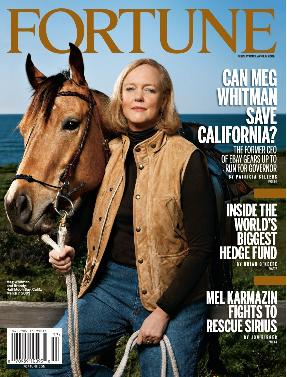
The political graveyards of California are littered with the bones of candidates who tried to get elected to statewide office on the basis of their own great wealth. Steve Westly, Al Checchi, Jane Harmon, Michael Huffington, Darrell Issa … lots of people though they could buy the job of governor or senator. Most of them failed — in part because they couldn’t craft a message that appealed to the voters.


But I think they also failed because on some level, California voters don’t like being bought. The idea that someone is so rich that he or she can spend around $50 million to get elected governor is kind of appaling, particularly in an era when people aren’t so happy with the very rich.


Calbuzz had a little fun looking at all the things Meg Whitman could buy with the $40 million she’s already spent (Madonna’s apartment, Conan O’Brien’s silence, a Cape Cod wastewater plant), but really: You have to wonder what she could have done for society if she’d used that cash for something other than her vanity campaign.


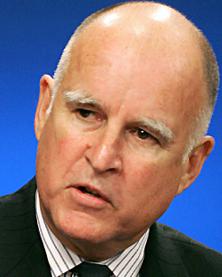
I have no polling data on why mega-millionaires don’t win; the current polls show Meg’s ahead of Jerry Brown . But I’m not sure her cash and her obscene spending won’t become a negative at some point.

The Daily Blurgh: San Fran pranksters

0

Curiosities, quirks, oddites, and items from around the Bay

As Laughing Squid wisely reminds us, today is Internet Annoyance Day. So, rather than annoy you with fake news items that SURPRISE! Link to NSFWLOLfunnytimes, here’s a compedium of some of my favorite moments in which our city has played the fool at the hands of some trickster, egghead-with-a-funny bone, practical joker, anonymous collective, or plain ‘ol sick fuck.


“The Stockton Street Tunnelway, running South below this ‘Tunnel Top,’ is recognized as the first of 200 ‘Oriental labor tunnels’ dug within the state of California. Dating to the year 1894, the Oriental labor force indentured by the Moorlock-Datsun Company worked tirelessly in deep water and suffered many deaths in the pursuit of easy, underground passage for the residents of San Francisco.

This Plaque was erected in July 2002 in memoriam for the 3 men who lost their lives digging here, having succumbed to a sudden and terrible subterranean whirlpool.”


“Enter the world of the samurai, where more than seven centuries of martial rule are reduced to a single Disney-like trope of gentleman-warrior myth. Military prowess  meets cultural connoisseurship in an ideal of masculine perfection–selling militarism as beauty in a time of war.”


www.youtube.com/watch?v=MFHxn_9aVq8


“It’s Official…I am Running for Governor of California”


“Back in 1998 several San Francisco Bay Area radio stations had April Fool s-themed programming, including commercial station KITS (aka Live 105), which changed to KGAY for a day, airing gay-themed music. That same year college station KUSF read an announcement over the air stating that the university was selling off the station and commercial rock station KFOG devoted their 10 at 10 3 segment to big band music. Another year KFOG spent part of their program day playing the best 15 seconds of songs as their new format.”

(Yeah, yeah. “KGAY” is about as funny as Rudy Giuliani in drag, but props to KFOG’s 15 second rule)


For a true education pick up a copy of Re-Search #11: Pranks, as well as the follow-up volume, for interviews and invaluable tips from past and current local funny folks as Jello Biafra, Monte Cazazza, Mal Sharpe, and Bruce Conner, among many others.

Editor’s Notes

4

Tredmond@sfbg.com

The pot initiative’s going to pass in November. California’s going to legalize personal use and small sales. I think that’s clear from the polls, and from the fact that the pot supporters are raising a fair amount of money, and the fact that there won’t be much effective opposition.

The state Legislature might not like it — ballot measures are impossible to amend, and with debate and discussion the measure might be a little different. But Assembly Member Tom Ammiano has tried, again and again, to get his colleagues to see the light: this is going to happen, and if the folks in Sacramento are afraid of it, then they’re not going to have any influence over the final product.

And it’s amazing to me how many people are afraid of this issue.

All three major candidates for governor, including Jerry Brown, who must have smoked pot at some point in his life (would Linda Ronstadt have gone out with a guy who never smoked weed?), are publicly opposing the measure. Ammiano can’t get a majority of the Assembly to vote yes on his legalization bill — and Democrats control things. You wonder when these people are going to understand that the voters, most of them, really don’t care if pot becomes legal. It doesn’t frighten anybody anymore — except elected officials.

Humboldt County is already preparing for this; business leaders are talking about the economic impact on the region and how the North Coast can become the Napa Valley of green bud. The Obama administration needs to get ready too — ready to tell the federal drug agents to leave California alone. And a few years from now, life will go on, and everyone will take legal pot for granted — and I wonder how silly Jerry Brown’s going to feel. *

Editorial: CCA: Get it done by the deadline

1

If the mayor and his handpicked PUC director, Ed Harrington, and his handpicked commissioners dawdle and delay, they’ll be giving a corrupt private utility exactly what it wants

EDITORIAL San Francisco has been talking about creating a community-choice aggregation system to sell cleaner electricity for five years now. There have been hearings, studies, debates, discussions, and negotiations. And now it’s coming down to the wire: to avoid the prospect of a Pacific Gas and Electric Company initiative on the June ballot that cuts the city’s effort off at the knees, San Francisco officials need to get CCA up and running before June 8.

But the mayor and the Public Utilities Commission don’t seem to have any sense of urgency. And the slow pace of negotiations with the contractor that would handle the electricity purchases is playing right into PG&E’s hands. If the mayor and his handpicked PUC director, Ed Harrington, and his handpicked commissioners dawdle and delay, they’ll be giving the corrupt private utility exactly what it wants.

It’s particularly frustrating since Marin County – which, unlike San Francisco, has no federal mandate for public power – is far ahead of this city, has a CCA program ready to go, and most likely won’t be affected by the PG&E initiative. What on earth is wrong with San Francisco?
CCA would allow the city to create the equivalent of an electricity buyer’s co-op, so that San Francisco could purchase electricity in bulk from providers that offer a more renewable mix. PG&E gets only a tiny portion of its power from renewables. With the advantage of wholesale purchases and no corporate profit, the city ought to be able to offer lower rates.

The contractor that won the bid to put the co-op together, Power Choice LLC, is run by people with substantial experience in the electricity business. The city’s been in talks with Power Choice about a contract since Feb. 9 – but progress is slow.

Harrington told us that he expects to have “a contract as soon as we can get a contract” but there’s no deadline. That’s crazy – there’s a very real deadline looming, a time bomb planted by PG&E, and the city needs to take it seriously. PG&E has used vast sums of corporate money to place a measure on the June ballot that would make it almost impossible to create new public-power entities; Proposition 16 would mandate a two-thirds local vote for any public agency that wants to sell retail electricity. And the company is spending $35 million on a campaign to get it passed.

That election is barely two months away – and if Prop. 16 passes before San Francisco has a signed contract and a CCA program under way, five years of work, led by Sup. Ross Mirkarimi and the Local Agency Formation Commission, could be for nothing. The best chance the city has to fight global warming, promote renewable energy, take control of its own energy future, and offer more stable, cheaper rates to customers could be gone, forever.

What’s the hang-up? Nobody’s talking, since the negotiations are still ongoing, but from what we hear, Harrington, Newsom, and the PUC members are worried about “risk” – that is, the risk that the San Francisco CCA might have to raise rates above what PG&E is currently charging to make the numbers pencil out. (Part of the risk: PG&E will have 60 days to try to convince customers to "opt out" of the CCA and stay with the private utility. If a critical mass of residents and businesses doesn’t stick with the CCA program, the economics could be dicey.)

But the risk discussions are missing a critical point: PG&E’s rates are going to go up, dramatically, over the next few years. The company already has an application for a stiff rate hike this year, and it’s inconceivable that the utility’s prices will do anything but continue to climb. So meeting the current rates is a moot point. And as Harrington acknowledged, renewable power rates are "much, much more stable than natural gas, oil, those kinds of things."

Besides, the real risk is that San Francisco will continue to violate the Raker Act and allow PG&E’s illegal monopoly to continue unabated. The PUC needs to get moving, now. Harrington should set a deadline, well in advance of the June election, and direct his staff to make every possible effort to get the program going by then. Newsom should publicly announce his support for the project and demand that the PUC finish its work in time to beat PG&E’s anti-public-power measure (unless he wants to run for lieutenant governor as the mayor who went back on his own positions and allowed PG&E to control the city).

Because right now, the only thing that has to happen for PG&E to win is nothing. *

CCA: Get it done by the deadline

1

EDITORIAL San Francisco has been talking about creating a community-choice aggregation system to sell cleaner electricity for five years now. There have been hearings, studies, debates, discussions, and negotiations. And now it’s coming down to the wire: to avoid the prospect of a Pacific Gas and Electric Company initiative on the June ballot that cuts the city’s effort off at the knees, San Francisco officials need to get CCA up and running before June 8.

But the mayor and the Public Utilities Commission don’t seem to have any sense of urgency. And the slow pace of negotiations with the contractor that would handle the electricity purchases is playing right into PG&E’s hands. If the mayor and his handpicked PUC director, Ed Harrington, and his handpicked commissioners dawdle and delay, they’ll be giving the corrupt private utility exactly what it wants.

It’s particularly frustrating since Marin County — which, unlike San Francisco, has no federal mandate for public power — is far ahead of this city, has a CCA program ready to go, and most likely won’t be affected by the PG&E initiative. What on earth is wrong with San Francisco?
CCA would allow the city to create the equivalent of an electricity buyer’s co-op, so that San Francisco could purchase electricity in bulk from providers that offer a more renewable mix. PG&E gets only a tiny portion of its power from renewables. With the advantage of wholesale purchases and no corporate profit, the city ought to be able to offer lower rates.

The contractor that won the bid to put the co-op together, Power Choice LLC, is run by people with substantial experience in the electricity business. The city’s been in talks with Power Choice about a contract since Feb. 9 — but progress is slow.

Harrington told us that he expects to have "a contract as soon as we can get a contract," but there’s no deadline. That’s crazy — there’s a very real deadline looming, a time bomb planted by PG&E, and the city needs to take it seriously. PG&E has used vast sums of corporate money to place a measure on the June ballot that would make it almost impossible to create new public-power entities; Proposition 16 would mandate a two-thirds local vote for any public agency that wants to sell retail electricity. And the company is spending $35 million on a campaign to get it passed.

That election is barely two months away — and if Prop. 16 passes before San Francisco has a signed contract and a CCA program under way, five years of work, led by Sup. Ross Mirkarimi and the Local Agency Formation Commission, could be for nothing. The best chance the city has to fight global warming, promote renewable energy, take control of its own energy future, and offer more stable, cheaper rates to customers could be gone, forever.

What’s the hang-up? Nobody’s talking, since the negotiations are still ongoing, but from what we hear, Harrington, Newsom, and the PUC members are worried about "risk" — that is, the risk that the San Francisco CCA might have to raise rates above what PG&E is currently charging to make the numbers pencil out. (Part of the risk: PG&E will have 60 days to try to convince customers to "opt out" of the CCA and stay with the private utility. If a critical mass of residents and businesses doesn’t stick with the CCA program, the economics could be dicey.)

But the risk discussions are missing a critical point: PG&E’s rates are going to go up, dramatically, over the next few years. The company already has an application for a stiff rate hike this year, and it’s inconceivable that the utility’s prices will do anything but continue to climb. So meeting the current rates is a moot point. And as Harrington acknowledged, renewable power rates are "much, much more stable than natural gas, oil, those kinds of things."

Besides, the real risk is that San Francisco will continue to violate the Raker Act and allow PG&E’s illegal monopoly to continue unabated. The PUC needs to get moving, now. Harrington should set a deadline, well in advance of the June election, and direct his staff to make every possible effort to get the program going by then. Newsom should publicly announce his support for the project and demand that the PUC finish its work in time to beat PG&E’s anti-public-power measure (unless he wants to run for lieutenant governor as the mayor who went back on his own positions and allowed PG&E to control the city).

Because right now, the only thing that has to happen for PG&E to win is nothing. *

Yee’s two-fer: Bashing Palin while promoting sunshine

5

Sen. Leland Yee scored a two-fer yesterday when he blasted a California State University organization for hiding how much it’s playing Sarah Palin for a speaking gig, raising an important sunshine issue and knocking Palin’s populism-for-pay schtick in the process. And at the heart of the issue is how public education institutions increasingly use foundations to avoid accountability.

That issue was recently raised in San Francisco, when City College Foundation sought to keep its financial dealings secret. The Guardian sounded the alarm last month, and City College Trustee John Rizzo, who led the fight for more sunshine, negotiated a more open arrangement that the Board of Trustees unanimously approved last week.

“We got most of what we wanted,” Rizzo told us. “Most of the things are open and they have to give us a quarterly report on donations.”

Yee – who the Society of Professional Journalist-NorCal recently honored with a James Madison Award for his struggles to promote greater government transparency and protections for journalists – has long been fighting for more sunshine in the CSU and UC systems, which is particularly important as they make deep cuts to higher education spending. For example, Yee’s Senate Bill 330 would explicitly require those systems to adhere to the California Public Records Act.    

“These are public institutions that should embrace transparency and accountability,” Yee said yesterday in a press release announcing his request that CSU-Stanislaus’s foundation disclose how much it is paying Palin for a $500 per head speech on June 25. The press release triggered a front-page story in today’s San Francisco Chronicle, with CSU and foundation officials rebuffing Yee’s request.

So now, Yee gets to bash Palin and make an important stand for sunshine, both of which will likely help his nascent campaign to be elected mayor of San Francisco next year.

As Yee wrote in a letter to campus President Hamid Shirvani, who also serves as the chair of the foundation: “The sensational nature of former Governor Palin’s political commentary, coupled with an ongoing book tour, has allowed her to charge top dollar for speaking engagements. As was reported in the media, her speaking appearances typically command $100,000 per event. To that end, I request the foundation to respond to the following issues: 1. Is the former governor being compensated by the CSUS Foundation in any form for her participation in the event on June 25th?  If so, please describe the amount and nature of the compensation being awarded to the former governor.  2. Please disclose any contracts between the former governor and the CSUS Foundation involving the June 25 speaking engagement.”

Later in the press release, he added: “The CSU should immediately disclose how much money is being diverted from students to pay Sarah Palin’s exorbitant speaking fees. At a time when students are struggling to afford an education at CSU, I would hope that spending potentially hundreds of thousands of dollars on a guest speaker for a black-tie gala would be low on the priority list.  Money that is spent on bringing an out-of-touch former politician to campus could be spent on scholarships and other financial assistance during these challenging budget times.”

Win or lose, this is the right fight for Yee, both morally and politically. Go git ‘er!

Study: Cuts to health programs a bad plan for state economy

It doesn’t take a Ph.D. to understand that people who earn less shell out a greater percentage of their income from month to month than those occupying more elite ranks. Anyone fortunate enough to be holding down even a low-paying gig in a state where unemployment stands at 12.5 percent knows that basic living expenses can quickly consume a paycheck in San Francisco.

A study released by the Center for Labor and Research Education at the University of California at Berkeley has found that cutting relatively low-paying jobs in the state’s health and human services sector would deal a harsher blow to California’s financial health than alternative budget-balancing measures, like raising taxes on the wealthiest residents. Gov. Arnold Schwarzenegger has proposed cutting $6.4 billion from California’s health and human services budget, part of his solution for closing a roughly $20 billion budget gap.

“The budget proposals that the governor is making would … significantly worsen the economic crisis in the state, rather than pull us out,” said Ken Jacobs, chair of the Labor Center at UC Berkeley.

The report highlights “multiplier” effects of hypothetical cuts to statewide health and human services programs. The study examined the impacts of cutting $1 billion each from Medi-Cal, Healthy Families, and CalWORKS – state programs that assist low-income families – and found that the resulting losses would total 98,600 jobs for all three combined. The worst impacts from cuts to those programs would come from indirect consequences, according to Jacobs. Since those programs are funded in part from federal dollars, a loss in federal funding matched for every dollar the state invests also takes a toll.

A $1 billion cut to state funding for In-Home Supportive Services (IHSS), which aids disabled and elderly people who want to remain in their homes, would result in a statewide loss of 215,900 jobs, the report found.

Meanwhile, generating that same $1 billion through taxes from households in the highest income bracket in California would result in a comparatively lower job loss of 6,400, the research group estimated.

Health Access, a nonprofit consumer advocacy group, used the study’s findings in its own report to predict ramifications of the actual proposals in Schwarzenegger’s budget. According to Health Access, a minimum of 42,384 jobs would be lost as a result of proposed health cuts to Healthy Families and Medi-Cal, with more than $2.7 billion lost in business activity. It predicted 370,000 jobs would be wiped out if IHSS were eliminated altogether.

In a tumultuous economic downturn like the one facing California right now, “the best stimulus is funds in the pockets of low-income families,” according to Jacobs. Cutting these health and human service programs, which employ low-income workers and serve residents living near the poverty line, would do just the opposite.

Speaking of multipliers, Jacobs noted that corporate tax cuts produce the absolute worst bang for the buck out of any other schemes to fix the economy.

The pot initiative’s going to win

9

It seems pretty clear to me that, with polls showing widespread support and money pouring in for the campaign, the initiative to legalize pot in California is going to pass. So why are all of the candidates for governor, even Jerry Brown (who may have smoked a joint or two in his time) coming out so strongly against it?


Jerry knows that legal pot isn’t going to create new law-enforcement problems; quite the contrary. It’s going to save huge amounts of money that the state and local governments now waste enforcing a silly law that nobody respects, will cut down on the jail population and discourage the environmentally damaging (and sometimes violent) gangs of rogue growers who plant on public land.


And he ought to know that this kind of a stand isn’t going to help him get elected. Once you take the hard-core Republicans who would never vote for Brown anyway out of the equation and look at the universe of potential Brown voters, legalizing pot probably gets more than 60 percent approval.


If you asked me back in 1978 whether I could imagine a day when Jerry Brown would oppose a marijuana legalization measure that was polling at 60 percent, I would have said: Whoa, man, no way. But then, I inhaled.

Hank Plante’s exit interview

2

Hank Plante ends a three-decade run as a political journalist with tonight’s (March 24) broadcast of the CBS 5 Eyewitness News, where he has worked since 1986 after starting his career with newspapers in Washington DC. So we took the occasion to talk politics with him, learning that his loyalties lie downtown.

Plante agreed that politics has become ugly these days. “It’s just so much more acrimonious, that’s one thing that’s changed. The other is just the money that’s involved,” Plante told us, marveling at Meg Whitman’s plans to spend $40 million of her own money to run for governor and the $1 million per day that corporations spent lobbying against the health reform bill signed by President Obama.

But the changes haven’t gotten Plante down, as they have many political junkies, who decry the crippling of government’s ability to combat corporate power and address real social and economic problems. “I’ve never become a cynic, and I think that’s one thing that sets me apart from many political journalists,” he said, adding, “I still think politicians can make a difference.”

Yet like many political journalists, when I ask who his favorite politicians have been, he rates them based on whether they’ve made good stories, not whether they good for the people. For journalists, bad is often good, whether it be natural disasters or disgraceful politicians.

“Arnold is a great story. Willie Brown was a great story. Gray Davis was a dull story until he got recalled, then he was a good story,” Plante said.

What about Mayor Gavin Newsom, who has often given Plante exclusive access (including Newsom’s first extended interview after his 2007 sex scandal), but who has also angrily walked out in the middle of an interview with Plante. 

“Personally, I like the mayor. But I have to ask him tough questions, so he can be mercurial. Right now, he’s running for office again, so he’s charming,” Plante said.

In fact, for a journalist, Plante makes clear his preference for Newsom over the progressive majority on the Board of Supervisors, joking, “If I had a month to live, I’d spend it with the Board of Supervisors because it would seem like five years.”

Plante also said that he opposes district elections — which he said have prevented the emergence of big-stature political figures like Dianne Feinstein and Quintin Kopp — and Plante said he doesn’t see the value of district elections in counteracting the political power of downtown corporations. “I’m a capitalist and I have no problem with people making money,” he said.

Yet Plante acknowledges the divide between downtown and progressives is San Francisco’s dominant political dynamic, noting, “You see how afraid downtown is of the Board of Supervisors appointing the new mayor.”

While Plante said he believes in the importance of politics, he does decry how political science and public relations have been manipulated in recent years.

“They’re taken a page out of the Karl Rove playbook to talk over the journalists right at the public,” Plante said, noting how many politicians no longer feel the need to be accessible to journalists or honestly and directly answer their questions. “They really want to control the message, so the accessibility is diminished.”

Nonetheless, Plante said he regularly emphasizes the importance of political engagement: “In a place like the Bay Area, where people are inundated with lots of information sources, you have to keep saying it over and over again.” 

Plante, 63, is retiring and moving to his home in Palm Springs with his partner, Roger. Among the many awards and accolades he earned during his career are several Emmys and a prestigious Peabody Award. His station sent out a press release praising Plante, including this comment by anchor Dana King: “There is an entire population of politicians breathing a sigh of relief at the news of Hank’s retirement. Hank was the consummate professional, never combative but he did his homework and asked tough, pointed questions. Politicians, love him or hate him, respected and answered them, every single time. Our newsroom will suffer a huge intellectual void when he leaves.”

John Ross: The damaged spine of America

2


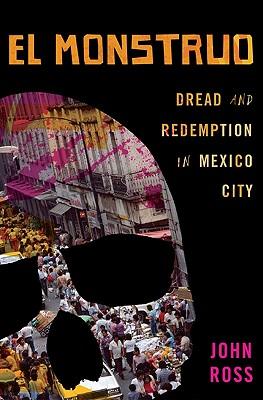
I am on a low-rent book tour with my new cult classic El Monstruo – Dread & Redemption In Mexico City.  For the next three months, I will stumble across this land from sea to stinking sea probing the underbelly of Obama’s America.  The findings will be posted on these pages.


LAS CRUCES N.M. — The snow was already dusting the Organ Mountains fringing this high desert town, promising a hard winter further up the spine of Obama’s America. I ride the Mexican bus (officially doing business as the El Paso-L.A, Limousine Express) when I ply the back roads of the southwest. Greyhound, with its stern rules and regulations and surly drivers who threaten their cargos with summary expulsion for minor infractions, doesn’t much inspire me these days.  


With notable exceptions, Greyhound passengers are a harried and haunted bunch, riding the Big Dog from trouble to trouble, often with all their possessions stuffed into plastic garbage bags. In the cruelest of gestures, the Greyhound management has recently banned garbage bags as an instrument of luggage.  Zombie passengers on the Big Dog stare out at the distant horizon submerged in their worries or stab music into their ears to sever all human communication. No one talks to their fellow travelers anymore.

By way of contrast, the Mexican bus bubbles with chatter.  “Platicame!” (“Talk to me!”) my seatmates insist. The chitchat often gravitates towards work — where they have recently toiled, the job towards which they are headed. Wistful nostalgia for their families and pueblos down in Mexico are common ground. Rancheros belch from the speakers and the taste of tamales flavors the ride. It feels like going home.

Bus rides are an opportunity to reinvent oneself. I am usually the only gabacho on these long hauls through the rugged mountains and barren deserts of the southwest, but I speak colloquial, unaccented Mexican and who I really am excites curiosities. These days, my kuffiyah wrapped around my scrawny neck, I pass myself as an Arab from Mexico City hawking books from tank town to tank town, a plausible story — back home, Arabs are often stereotyped as itinerant peddlers.

North of Las Cruces, the Mexican bus is pulled into a Migra shed and the conversation modulates real quick. A blonde woman agent jumps on board and demands to see everyone’s documents. She studies the passports and green cards under the glare of her flashlight and then shines it into the eyes of the passengers to see who will blink first. One young man — he looks like a university student – is pulled off the bus and is never seen again. When the Mexican bus slides out of the shed, the chatter resumes — but with one less voice in the mix.

Clayton, a young Wobbly who used to run a bookshop down by the rail yards in Albuquerque that was mostly frequented by hobos looking for a little warmth in a cold winter world, is now teaching at a troubled middle school. Patrol cars are often parked out front and half the kids – 99.99% of who are “Hispanics” (read Mexicans) – have juvenile police records. Clayton asks me in to talk to the students, who have never seen a real author in the flesh.  

We hunker down in the library and I step into my Grandpa persona and tell tales of the Mexican revolution while Clayton projects portraits of the Great Zapata and Pancho Villa on the audio-visual screen. I recount how the two men met in a rural schoolhouse in Xochimilco, now a borough of Mexico City, in December 1914. For an hour the two sat in frozen silence until Zapata, unable to contain his bitterness, declares that Carranza, their rival, is “un hijo de puta!” The kids fall off their little library chairs in gales of Mexican mirth. Clayton frets for his job but the librarian apparently doesn’t understand Spanish.  

I show the kids my books. Helen, a boisterous tweener, grabs “Iraqigirl” from Clayton’s hand and announces she is taking it home. The next day, she returns it with a review: “this is the best book I have ever read.” Two boys sit at the round reading table with copies of “El Monstruo — Dread & Redemption In Mexico City” and “Murdered by Capitalism — 150 Years of Life & Death on the American Left” spread before them. They pour over the subversive pages all through the lunch hour. When we prompt them that we have to leave, they hide the books under their hoodies.

 “I don’t have it — check me out!” Salvador (not his real name) challenges. The librarian rushes over and promises the boys that she has just ordered the books on line for them. They will be here Monday morning.  “But this is only Thursday,” protests Manuel (not his real name.)  

Garfield middle school is the best stop so far on this monstrous book tour.

Attendance at public events in Albuquerque is sparse. A vegan spread at the Catholic Worker House drums up a dozen hungry souls, a presentation of “Iraqigirl” at the Peace & Justice Center eight, including an Iraqi woman who leaves early. I show “Corazon del Tiempo” (“Heart of Time”), the new Zapatista movie (it was previewed at Sundance) in a small room at the university – Weather veterano Mark Rudd and the remarkable investigator Nelson Valdez and a handful of starry-eyed students (“Corazon” is a love story) show up.  


I sorely miss my old pal Tilda Sosaya who fought doggedly for prisoners’ rights in the nearly wholly privatized New Mexico prison system for decades after her son was imprisoned for ten years for some dumb teenage caper. Last March, I wrote Tilda that I had been diagnosed with liver cancer and she wrote back that she had it too. The cancer took her quickly and now she is gone and her son is back in prison. We fight for justice but life in this lane is not very just.

I catch the day train up to Santa Fe to visit with the writer Chellis Glendinning. Chellis has lived for the past 18 years on a tiny plot in Chimayo, the land of miraculous dirt and a key distribution point for black tar heroin from Sinaloa and Nayarit — see her “Chiva – How One New Mexican Town Took On The Global Heroin Trade.” Now she is pulling up stakes and throwing in with Evo Morales. Her jeep flies a Bolivian flag and she is rushing to be in Cochabamba for the tenth anniversary of the landmark struggle against the privatization of that city’s water supply by the Bechtel Corporation. Adios companera — la lucha sigue y sigue y sigue!

I am back on the Mexican bus heading towards Denver. The riders get off at whistlestops like Las Vegas and Durango and Colorado Springs where they will do the dirty work of this country — walloping pots, washing cars, cleaning motel rooms, milking cows, shoveling their manure, keeping Obama’s America spic and span for the next paying customer at minimum wages if indeed they are not cheated out of them by unscrupulous contractors.  

When the guy across the aisle gets curious, I revive my new identity as an Arab peddler. “Donde esta tu mujer?” he asks (“Where is your wife?”) and I lie that she is in Iraq taking care of her people. “The Yanquis invaded her country and bombed her neighborhood…”  “Pobre gente,” he sympathizes.  Santiago (is that his real name?) is from Hidalgo de Parral, Chihuahua and says he is on his way to work the Colorado ski resorts where so many Mexicans slave for Senor Charlie these days. He knows all about exile.  

I am invited to deliver a pair of lectures at Denver University, Condoleezza Rice’s alma mater (her father was provost.)  Doug Vaughn, also a DU grad who went left at an early age, notices that I will be speaking at the same time as Cindy Courville, Condi’s roommate who followed her to the National Security Council and then became U.S. emissary to the African Union.

My talks are programmed for the Josef Korbel Center for International Studies. Josef Korbel was Madeline Albright’s father, to give you some assessment of my chances of winning converts here. Indeed, the students are polite and well-groomed, models of future CIA assets — in tracking down the announcement of Courville’s talk on a Korbel Center bulletin board, Doug encounters a CIA recruitment leaflet. The grad students have been forewarned they will be visited by a representative of the lunatic fringe and busy themselves with their e-mail under the pretext of taking notes.  

Academic acrimony flourishes in the Denver- Boulder axis.  Everywhere else in this land where my father croaked, the trials and tribulations of Ward Churchill and his ill-timed assault on the “little Eichmans” deconstructed in the Twin Towers conflagration went out with the fish wrap the next morning — but here in mile-high city, mention of Ward and Colorado AIM can still start a prairie fire. Although such Churchill accusers as the governor and the Colorado U president have long since resigned due, in fact, to other scandals after successfully silencing Ward, his detractors’ thirst for blood remains unsatiated.

Infused with the venom of the dearly departed Bellencourts (who Churchill once dissed as “Nebraska wigmakers”), Ernesto B. Vigil, author of an action-packed bio of Corky Gonzalez, the Denver-based Xicano founder of the Nation of Aztlan, is still brandishing the long knives. Ward Churchill is a fake Indian, Ernesto obsesses, a white guy whose claim to indigenousness is backed up by white people because white people only listen to white people.  White people think they know everything, he scoffs in a heated e-mail in which he disparages my whiteness a dozen times in as many lines.

Actually, I don’t give a rat’s ass if Ward Churchill is one/sixteenth Cherokee or not (the tribal government recently expelled all its black members) — Churchill remains the most lucid writer on American genocide in this benighted country.

Boulder is said to be the most over-regulated city in North America although white liberal enclaves like Madison Wisconsin and Arcata California could give Boulder a run for its money.  I accompany Joe Richey, a local alternative radio sleuth, to the Boulder dog pound to bail out his black lab “Yanqui” (as in “Yanqui! Go home!) “Yanqui” has been adjudged guilty of illicit dog-like behavior i.e. nuzzling a neighborhood garbage can.  

After Joe pays off the authorities and the mutt is released to his custody and properly admonished, we drive past a local dog park.  In a paroxysm of charitable intent, the Boulder City Council permits the homeless to encamp at night amidst the dog turds but they must be gone by daybreak when the pooches of the city’s housed residents take possession or risk a $100 fine. How the homeless, forced to bed down in dog shit nightly, can afford this astronomical sum is unclear. Such is what passes for compassion on the underbelly of Obama’s Amerikkka.


On my final day in Denver, Hank Lamport, a local schoolteacher who favorably reviewed “El Monstruo” for the Post, today the only daily in this formerly two-newspaper town, drives me out to the Rocky Mountain Arsenal National Wildlife Rehabilitation Area. Until a few years ago, the Rocky Mountain Arsenal manufactured and stored deadly nerve gas, chiefly Serin — an occasional lost canister still spooks the wildlife.  The displays at the Visitors’ Center feature photos of workers filling “Honest John” missiles with the stuff. Napalm was also cooked up here. I study the glazed eyes of taxidermied foxes and coyotes and bald eagles and hastily bid adieu.

On the way out of town, we stop to worship the victuals in an Aurora, Colorado taco shop. Hank laments that when he first became a devotee of “Tacos y Salsas,” the clientele, uniformly Mexicanos, would greet him with a “buen provecho” (“good appetite” — a universal courtesy in the Spanish-speaking world) but now the customers have become so gringo-ized that the salutation is a lost art. Nonetheless, when we polish off our orders and head for the door, two working stiffs at the next table wish us each “buen provecho.”
  
It warms the cockles of my contused heart to know that such cultural resistance still percolates out here on the damaged spine of Obamalandia.

Next stop: the frozen, melancholy flatlands of the Great Midwest.  

John Ross and “El Monstruo – Dread & Redemption in Mexico City” (“gritty and pulsating” – NY Post) will be visiting Traverse City and Grand Rapids Michigan in the final week of March. You can catch them at the Headland Café in Chicago’s Rogers Park March 31st, Toronto’s Hoggtown April 1st-4th, and St. Louis Mo. April 7th.  


Jerry Brown’s inner populist emerges

3

In the 1990s, when Jerry Brown ran for president against Bill Clinton, his whole persona had a populist streak. He crashed with supporters instead of staying in fancy hotels; he raised money with an 800 number (the precursor to netroots fundraising); he railed against big-money interests. He even once put the future president of the United States on hold while he took another phone call. (Clinton gave up after waiting about ten minutes and disconnected.) 


But then he became mayor of Oakland and turned into a friend of developers, a tough-on-crime hardass and a promoter of military school. And he ran for attorney general as that Jerry Brown, not the old one.


So I’m glad to see some of his populism starting to re-emerge, not that I really think it’s going to stick (he’s still against raising taxes on the rich), but because it’s the only way he’s going to beat Meg Whitman.


Meg’s got a problem — the incumbent Republican is now rated as the worst governor ever, with the lowest popularity ratings in history. So Brown’s going to be running against the party that, by almost all accounts, wrecked California — and Whitman will have to run like hell away from the titular head of her own party in this state.


Brown also has the advantage, if he wants to take it, of being able to rail against the very types of financial institutions that Whitman and her anti-regulation platform represents. If he can make this about Wall Street, he wins, going away.


Editorial: Who wins with the Transamerica condos?

4

The developers aren’t offering to build something that will create permanent jobs for local residents. They want a huge favor from San Francisco: they want the city to ignore its own planning rules, ignore its park-shadow ordinance, and hand over a piece of city street, just to make their project more profitable.

EDITORIAL  As the Planning Commission prepares to vote March 18 on a pointless and overly large condominium complex next to the Transamerica Pyramid, let us take a moment to look at who would benefit from the project’s approval.

The project sponsors, Aegon USA and Lowe Enterprises, would get the right to shadow public parkland, turn a city street into a private parking garage, and construct a project far beyond the allowable height for the location. They’d construct 248 luxury condos, which the city doesn’t need and will do nothing for the housing crisis. The developers would also make a lot of money on the deal; that’s why they want spot zoning to double the allowable height. When it comes to these sorts of projects, taller is more profitable.

And the two companies asking for these civic favors aren’t exactly San Francisco outfits that share the city’s values.

Aegon is a giant insurance and finance company based in the Netherlands that bought out the local Transamerica Company in 1999. The money Aegon makes on the deal won’t stay in San Francisco; even Aegon’s American subsidiary doesn’t have a home office here.

The company’s PAC is a major contributor to Republican causes and candidates (although some Democrats get money, too, particularly the likes of Sen. Blanche Lincoln of Arkansas, one of Aegon’s top-dollar friends, who is among the main reasons the Senate won’t pass a public option for health insurance). And over the past 10 years, Aegon PAC has contributed $39,500 to Lifepac, a Columbus, Ohio-based anti-abortion group.

Then there’s Lowe Enterprises, based in Los Angeles. The company’s chairman, Robert Lowe, and his employees were among Arnold Schwarzenegger’s top donors, with a whopping $159,500 in contributions to the Republican governor. Lowe is also a big supporter of Meg Whitman’s campaign for governor, and is on her finance committee.

So here we are in Democratic San Francisco, with a mayor who will be running on a Democratic ticket for statewide office (and a mayor, by the way, who loves to talk about supporting small local business and keeping money in the local economy) preparing to give a huge financial gift to a pair out out-of-town companies that share their wealth with right-wing Republicans.

Of course, it’s no surprise that a real estate developer would support Republican candidates — and it’s no surprise an insurance company would be working against health care reform. And if the city granted or denied building permits based on the politics of the applicant, there’d be serious legal consequences (and there should be). These things ought to be decided on the merits; developers who contribute to Democrats (like the Shorenstein Company) deserve the same scrutiny as the ones who give to Republicans.

But this isn’t a typical development deal. Aegon and Lowe aren’t asking for a permit for a project that meets the current zoning laws. They aren’t offering to build something that will create permanent jobs for local residents. They want a huge favor from San Francisco: they want the city to ignore its own planning rules, ignore its park-shadow ordinance, and hand over a piece of city street, just to make their project more profitable — and to give them more money that can go to opposing health-care reform and opposing abortion rights and electing right-wing Republicans. And they’re offering the city nothing in return.

On the merits, the project richly deserves to be rejected. The only reason to approve it is to grant a civic boon to a bunch of out-of-town corporations that ought to be embarrassed to be asking a favor from San Francisco. And the Planning Commission should be embarrassed to consider granting it.

Alerts

0

By Jobert Poblete


alert@sfbg.com

WEDNESDAY, MARCH 17

Citywide community meeting


Advocates for homeless youth in San Francisco discuss the upcoming supervisor elections and the proposed sit/lie ordinance, a proposal by Mayor Gavin Newsom to criminalize sitting on sidewalks.

5:30–7 p.m., free

LGBT Community Center

1800 Market, SF

smashbangboom@gmail.com

"Shout! Art by Women Veterans"


The peace and social justice group Swords to Plowshares hosts this two-day event to honor women veterans and bring together community members working to serve them.

6–-9 p.m., $10

1632 C Market, SF

www.swords-to-plowshares.org

THURSDAY, MARCH 18

Poizner on Poizner


The Commonwealth Club hosts Steven Poizner, California’s insurance commissioner and a candidate to be the Republican nominee for governor this June. Poizner has stirred controversy recently with his anti-immigrant position, so come listen to or protest his plans for California.

5:30 p.m., $7–$45

Lafayette Veterans Memorial Hall

3780 Mount Diablo Blvd., Lafayette

www.commonwealthclub.org

Bilingually speaking


The Piedmont Appreciating Diversity Committee, Piedmont League of Women Voters, and Diversityworks screens Speaking in Tongues, a film about bilingual programs in Bay Area Schools and a 2009 SF International Film Festival Audience Award winner.

6:30–9 p.m., free

Wildwood School Auditorium

301 Wildwood, Piedmont

www.diversityfilmseries.org

FRIDAY, MARCH 19

Planetary grooving


Stomp the Stumps! brings together political rock dance bands to raise money for environmental causes. This year’s concert features the Quilt, the Funky Nixons, and the Gary Gates Band. Proceeds go to the Bay Area Coalition for Headwaters and Earth First!

8 p.m., $10 adv/$12-15 at the door

Ashkenaz

1317 San Pablo, Berk.

www.ashkenaz.com

SATURDAY, MARCH 20

Antiwar march and rally


Another year, another Iraq war anniversary. This one marks the seventh anniversary of the start of the Iraq war. This year’s march also supports city hotel workers’ contract fights by paying visits to two hotels being boycotted by their union, UNITE HERE Local 2.

11 a.m., free

Civic Center Plaza, SF

www.answersf.org

SUNDAY, MARCH 21

Great American Meatout


Thinking about going vegetarian? To get you started, the San Francisco Vegetarian Society and Unitarian Universalist Church will host its fifth Meatout Celebration, complete with a vegetarian lunch and free recipes.

12:15–3:30 p.m., $5

Unitarian Center

1187 Franklin, SF

www.sfvs.org

TUESDAY, MARCH 23

UC Regents Meeting


Today is the first day of the UC Board of Regents’ three-day meeting at UCSF. Inside, the regents will discuss buildings, grounds, and capital projects; outside, there will be fireworks of sorts as activists mobilize for protests.

2:30 p.m., free

Community Center, UCSF Mission Bay

1675 Owens, SF

www.universityofcalifornia.edu/regents

Mail items for Alerts to the Guardian Building, 135 Mississippi St., SF, CA 94107; fax to (415) 255-8762; or e-mail alert@sfbg.com. Please include a contact telephone number. Items must be received at least one week prior to the publication date.

Editor’s Notes

0

Tredmond@sfbg.com

For decades, the San Francisco City Charter has had a fairly simple process for filling vacancies in local elected offices: the mayor makes an appointment. A supervisor leaves office, or the district attorney leaves office, or the city attorney leaves office, or the controller leaves office, or the assessor leaves office, or the public defender leaves office … there’s no election. It’s up to the mayor to fill the job. It gives the person in Room 200 a tremendous amount of power.

Gavin Newsom’s a beneficiary of this system — he didn’t run for election the first time he took elected office. A mayor named Willie Brown appointed him to the Board of Supervisors.

If the mayor leaves office, on the other hand, the Board of Supervisors, by a majority vote, gets to fill that position. And while Newsom has never complained about any of this in the past, now that he thinks he’s going to get elected lieutenant governor, he’s got a campaign underway to make sure the current district-elected board doesn’t get to name his successor. He wants to change the City Charter to mandate a special election if a mayor leaves office before the end of his or her term.

It’s about as hypocritical and self-serving as you can imagine, although he carefully talks about “democracy” and “the voters choosing.”

I find it kind of silly (and expensive) to plan a special election for mayor in March or April of next year when there’s already a regular election for mayor in November. And special elections have notoriously low turnout (favoring candidates with money and name recognition). But let’s play this out.

I’ve always thought it was odd that the mayor got to appoint supervisors. The governor can’t appoint state legislators; the president doesn’t appoint members of Congress. So if we’re going to change things, let’s be sure to change that, too. And then let’s take away the mayor’s ability to fill any vacancy in any elected office.

But you see, Newsom’s office told me he’s against that. He doesn’t want to limit the mayor’s power — just the power of the supervisors. Go figure.


Who wins with the Transamerica condos?

0

EDITORIAL As the Planning Commission prepares to vote March 18 on a pointless and overly large condominium complex next to the Transamerica Pyramid, let us take a moment to look at who would benefit from the project’s approval.

The project sponsors, Aegon USA and Lowe Enterprises, would get the right to shadow public parkland, turn a city street into a private parking garage, and construct a project far beyond the allowable height for the location. They’d construct 248 luxury condos, which the city doesn’t need and will do nothing for the housing crisis. The developers would also make a lot of money on the deal; that’s why they want spot zoning to double the allowable height. When it comes to these sorts of projects, taller is more profitable.

And the two companies asking for these civic favors aren’t exactly San Francisco outfits that share the city’s values.

Aegon is a giant insurance and finance company based in the Netherlands that bought out the local Transamerica Company in 1999. The money Aegon makes on the deal won’t stay in San Francisco; even Aegon’s American subsidiary doesn’t have a home office here.

The company’s PAC is a major contributor to Republican causes and candidates (although some Democrats get money, too, particularly the likes of Sen. Blanche Lincoln of Arkansas, one of Aegon’s top-dollar friends, who is among the main reasons the Senate won’t pass a public option for health insurance). And over the past 10 years, Aegon PAC has contributed $39,500 to Lifepac, a Columbus, Ohio-based anti-abortion group.

Then there’s Lowe Enterprises, based in Los Angeles. The company’s chairman, Robert Lowe, and his employees were among Arnold Schwarzenegger’s top donors, with a whopping $159,500 in contributions to the Republican governor. Lowe is also a big supporter of Meg Whitman’s campaign for governor, and is on her finance committee.

So here we are in Democratic San Francisco, with a mayor who will be running on a Democratic ticket for statewide office (and a mayor, by the way, who loves to talk about supporting small local business and keeping money in the local economy) preparing to give a huge financial gift to a pair out out-of-town companies that share their wealth with right-wing Republicans.

Of course, it’s no surprise that a real estate developer would support Republican candidates — and it’s no surprise an insurance company would be working against health care reform. And if the city granted or denied building permits based on the politics of the applicant, there’d be serious legal consequences (and there should be). These things ought to be decided on the merits; developers who contribute to Democrats (like the Shorenstein Company) deserve the same scrutiny as the ones who give to Republicans.

But this isn’t a typical development deal. Aegon and Lowe aren’t asking for a permit for a project that meets the current zoning laws. They aren’t offering to build something that will create permanent jobs for local residents. They want a huge favor from San Francisco: they want the city to ignore its own planning rules, ignore its park-shadow ordinance, and hand over a piece of city street, just to make their project more profitable — and to give them more money that can go to opposing health-care reform and opposing abortion rights and electing right-wing Republicans. And they’re offering the city nothing in return.

On the merits, the project richly deserves to be rejected. The only reason to approve it is to grant a civic boon to a bunch of out-of-town corporations that ought to be embarrassed to be asking a favor from San Francisco. And the Planning Commission should be embarrassed to consider granting it.

Editorial: Needed — some teeth for the San Francisco sunshine law

2

EDITORIAL The San Francisco Sunshine Ordinance is a national model for open government, the first and strongest local sunshine law in the country. It was written to improve public access to government records and meetings, and to clear up some of the problems and loopholes in state law. On paper, it makes San Francisco a shining example of how concerned residents can come together and eliminate secrecy at City Hall.

But 17 years after its passage, it’s still not working. That’s because city officials routinely ignore the law — and the city attorney, the district attorney, and the Ethics Commission have utterly failed to enforce it.

Here’s how it works, in theory: A San Franciscan makes a request for records in the office of a public official. The official is supposed to make the documents available promptly — within 48 hours for immediate disclosure requests and within 10 working days for routine requests. If the records aren’t forthcoming, the resident can complain to the Sunshine Ordinance Task Force, which brings both sides in, holds a hearing, gets legal advice, and determines whether the complain is valid. If the task force finds that the official should have made the records available, the matter gets referred to the Ethics Commission, which can file charges of official misconduct.

Here’s how it happens in practice: Some officials, like Mayor Gavin Newsom, simply ignore sunshine requests, or delay responding well beyond the statutory limit, or refuse to release records on grounds that clearly violate the law. The task force holds a hearing, and nobody from the Mayor’s Office shows up. Then the task force finds in favor of the person seeking the records, sends the file to the Ethics Commission — and the whole thing dies.

Not once in the history of the ordinance has the Ethics Commission actually filed misconduct charges. Not once. Violating the Sunshine Ordinance is a crime, but D.A. Kamala Harris has never once prosecuted a miscreant. And public officials who disobey the law hide under the protection of advice from the city attorney — although that advice itself is secret.

The message to City Hall is clear: you can defy the sunshine law with impunity; nothing will ever happen.

The task force is offering a series of amendments to the law that would improve enforcement and give the measure some teeth. The supervisors ought to support those proposals — but the board ought to go even further.

The proposals would turn the task force into a commission, which is a fine idea. But more important, the new commission would have something extraordinary: a $50,000 litigation fund to pay for an outside lawyer — not the city attorney — to sue officials who flout the law. If those lawsuits succeed, the city would have to pay attorneys’ fees, which would replenish the fund. And the very threat of that could have a huge impact on the way City Hall responds to sunshine requests.

We support the plan — and since nobody else will enforce the law, we think the task force (or commission) needs the authority to do it. The body overseeing sunshine complaints should be able to force public officials to release records or open meetings; rulings from that body should have the force of law. That works well in Connecticut, where a state Freedom of Information Commission has the authority to order anyone, from the governor to a city council, to open up files. Government in that state hasn’t become unwieldy; officials secrets haven’t fallen into the hands of terrorists. But ordinary citizens who can’t afford a lawsuit have a forum to force reluctant public officials to do their business in public.

San Francisco should adopt that model, and the sooner the better.

Daly for mayor?

9

Sup. Chris Daly just called to comment on the selection of the next mayor of San Francisco. Gavin Newsom may want to change the Charter to mandate a special election if there’s a vacancy in the Mayor’s Office (thus preventing the district-elected supes from choosing a new mayor if he’s elected lieutenant governor). Daly’s already a step ahead: He’s planning to introduce his own Charter amendment, which would mandate special elections to fill vacancies for either supervisor or mayor — and the election would be a plurality victory. That means the person with the most votes wins — no matter how many candidates or how small the actual victory total.


Under that scenario, a special election for mayor — a crowded special election, with eight or ten or 15 candidates — could go to almost anyone; someone with a loyal, organized and modest constituency could round up, say, 20,000 votes and be the next mayor.


Even, maybe, someone like Chris Daly.


And he knows that. “I will not be running for mayor of San Francisco in November, 2011,” he told me. “But I would seriously consider running in March.”


Gavin — you sure this is a good idea?

Gav’s running for (lite) guv!

1

It’s not any big surprise that Gavin Newsom is officially running for lieutenant governor; we all knew that was in the cards. Newsom’s downtown allies don’t want him running, because he might win — which would mean a vacancy in the mayor’s office. But it’s really all about Newsom, and he doesn’t want to be termed out with nowhere to go.


Calitics makes the point that


In many ways, this race will showcase the future leadership of California Democrats. The winner of the primary will go on to defeat Abel Maldonado and will be a top contender to be the next governor, whether they succeed Jerry Brown or (god forbid) Meg Whitman. It’s to the benefit of Democrats and progressives that this race be issue-oriented, and free of the unfortunate personal attacks that would undermine all the candidates involved.


And Newsom loves the idea of being showcased as the future leader of California Democrats.


Newsom got a big bounce the moment he announced, when state Sen. Dean Florez, one of two other Democratic candidates for the office, dropped out and endorsed Newsom.


That leaves just Newsom and Janice Hahn, a Los Angeles City Council member who’s got an aggressive campaign (featuring Garry South, the asshole political consultant who used to work for Newsom).


Newsom starts off with a major lead; all the money he spent campaigning for governor gave him significant name recognition, and in a Democratic primary for a low-profile office, that makes a lot of difference. And his likely opponent in November is Abel Maldonado, a not-terribly-appealing Republican.


So the talk in San Francisco is all about who becomes the next mayor if Newsom wins — and already, the Newsom strategists are trying to figure out how to prevent the progressive district-elected board from appointing his replacement. The latest strategy: A Charter amendment establishing that a vacancy in the Mayor’s Office has to be filled in a special election.


Hard to argue against that — except that the special election would be in the spring of 2011, and the general election would be that fall, meaning two expensive elections (one of them guaranteed to have low turnout) in the course of 11 months.


There’s no way Newsom’s getting six votes on this board for his idea, which means he’s going to have to raise the money to gather 47,000 signatures. And if he does, the supervisors ought to respond with their own Charter amendment — establishing that vacancies on the Board of Supervisors (now filled by a mayoral appointment) also require a special election. That’s only fair.


And while Newsom and his allies talk about how unfair it is to have district supervisors, some of whom were elected with as few as 10,000 votes, decide on the next mayor, it’s worth thinking through what a special election for mayor would look like. For starters, a lot of people would probably run — and the results would be utterly unpredictable. Suppose everyone who really wants to be mayor jumped in: Leland Yee, Dennis Herrera, Aaron Peskin, Ross Mirkarimi, Bevan Dufty, maybe Michela Alioto-Pier, maybe Sean Elsbernd, maybe even Mark Leno … and the turnout will be ultra-low, and, well, the next mayor’s going to be elected with a remarkably small number of votes.


Assume a turnout of 100,000 — high for a special election. And assume seven candidates (there would probably be a lot more). That means the winner would be unlikely to have more than 20,000 first-place votes.


If it’s a ranked-choice voting situation, any of the above could pull it off. If it’s a simple plurality, hey: someone like Chris Daly, who has a small but highly devoted constituency, would have as good a chance as anyone.


The bottom line is that a special election doesn’t guarantee anything — in fact, it could turn out to be downtown’s worst nightmare.


Here’s the letter Newsom sent to potential supporters:


I didn’t come to this decision easily, but, after a great deal of consultation with my family, constituents and supporters, I believe that the best way for me to serve is by taking all of the many things that are right about California and applying them to fixing what’s wrong in Sacramento.  


The issues I fought for when I ran for Governor last year haven’t changed: our state still faces a massive budget crisis, painful unemployment, and rising student fees that threaten the stability and accessibility of our University system.  Too many Californians lack access to quality health care and too many schools are overcrowded and underfunded.


But, despite our challenges, I will always believe in California – the dynamism of its past and the promise of its future.  I’m also convinced that those of us who love this state have both an obligation and the capacity now to reform it and make it better. To do that, we need to embrace a new way of doing things in Sacramento and we need new leaders who are willing to stand up and change state government.


I’m proud that I have the support of Speaker Nancy Pelosi, Senate President Darrell Steinberg, Assembly Speaker John Perez, Sacramento Mayor Kevin Johnson, United Farm Workers co-founder Delores Huerta and California Nurses and teachers and I hope I can count on your support too.


And here’s some of the press coverage:


LA Times on Newsom run, including information on early fundraising.


Calitics on Florez’s exit from the race, including text of Florez
message and press release.


Newsom announces his candidacy in an interview with reporter Phil
Matier
on CBS 5. (video)

 Chronice on Newsom’s chances.


 Willie Brown on who will succeed Newsom as mayor.
 
Chronicle speculates on who will replace Newsom, specifically on the
possibility of David Chiu becoming mayor.

LA Observed on Gary South vs. Newsom.


LA Times blog on awkward Newsom-Brown pairing.

Politics and redistricting: The madness in SF’s future

8

The political merry-go-round in San Francisco going to be whirling at light speed soon. It’s partially the fault of term limits — over the next couple of years, some very talented, ambitious politicians are going to be forced to leave local office, and they’re looking for the next step. Part of it is the confluence of a bunch of events, starting with Mayor Gavin Newsom and District Attorney Kamala Harris both seeking statewide office.


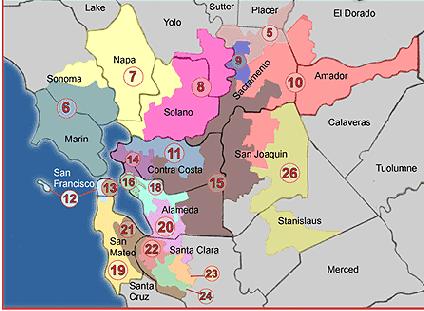
And there’s another factor that hasn’t been talked about much, but it’s really important: Next year, every Congressional, state Legislative and local supervisorial district is going to change.


After the decennial census, everyone has to draw new lines to reflect population shifts. At the state level (and Congressional redistricting is also a state function), that’s in the hands of a reapportionment commission, which I’m dubious about: The majority of the applicants are white people, and it’s supposed to have an equal number of Democrats and Republicans, although the state has far more Democratic voters. It’s anybody’s guess how they’ll actually draw the lines.


An elections task force will do the local lines, and it’s going to be harder to screw up; San Francisco supervisorial districts are supposed to reflect established neighborhood boundaries, and the population shifts within the city haven’t been that dramatic.And it’s unlikely anyone’s going to try to draw lines just to force an incumbent supervisor out of a district. But the districts will be a little bit different, and in San Francisco politics, a little bit can mean a lot.


The state Legislative districts will change significantly — and could change the politics of this area, and the state, in dramatic ways. For example, suppose Mark Leno’s Senate District moves somewhat North, to include a majority of Marin and Sonoma residents and only a small minority of San Franciscans? Suppose that district no longer includes Marin or Sonoma, but includes all of San Francisco (which would put Leno and Leland Yee in the same district)?


Suppose the 12th and 13th Assembly Districts, which now divide about East/West, shift to North and South? What if Tom Ammiano and Fiona Ma end up in the same district? (Um, I think that’s a closer relationship than either of them wants ….)


What happens if Nancy Pelosi is redistricted out of her seat? (Heh heh, won’t happen, but in theory, she and Lynn Woolsey could wind up living in the same district.)


It’s going to change the dynamics in a city that’s already poised for some upsets to the political apple cart.


Ross Mirkarimi’s termed out in 2012, and if he doesn’t run for mayor (or doesn’t get elected) he’ll be looking for the next step, which could be a run for the state Assembly; Tom Ammiano will be termed out in 2014. Of course, that’s been a gay seat for a long time (Carole Migden, Mark Leno, Ammiano) and by them someone like David Campos might be interested.


Or the district lines might have changed so much that both of them – or neither of them – can get elected.


If Bevan Dufty doesn’t get elected mayor, he’s out of a job – and he’s a political junkie who won’t easily retire. He’ll be looking at other offices, too. So will Sean Elsbernd, I suspect.


And that doesn’t even count the mayor’s race, which could, at this point, involve both state Senators, Leno and Leland Yee, and if either one wins, that opens up a Senate seat. And at the same time, if Kamala Harris is elected district attorney, that job will be open, and it’s an open secret that Board of Supervisors President David Chiu, a former prosecutor, would love to be in that office some day.


And in the background is the question of who becomes mayor if Newsom becomes lt. governor


 (and what happens to Aaron Peskin, an astute politician if ever there were one, and a potential mayor if this board of supervisors gets to make the appointment ). At lot to think about – and trust me, the thinking is already going on.

Informing the public

1

news@sfbg.com

Information is power. But too often, those with political power guard public documents and information from the journalists, activists, lawyers, and others who seek it on the people’s behalf. So every year, we at the Guardian honor those who fight for a freer and more open society by highlighting the annual winners of the James Madison Freedom of Information Awards, which are given by the Northern California chapter of the Society of Professional Journalists.

This year’s winners are:

Beverly Kees Educator Award

Rachele Kanigel

Rachele Kanigel, an associate professor of journalism and advisor to Golden Gate Xpress publications at San Francisco State University, has been highly involved in student press rights work on a national level. She wrote The Student Newspaper Survival Guide (Blackwell Publishing, 2006), a book designed to empower budding campus reporters. A champion of the free speech rights of her students, Kanigel has gone to bat on several occasions on behalf of student journalists whose work was challenged by interests that didn’t believe students should be afforded the same protections as professional reporters. Kanigel sees part of her job as educating the world about the importance of student journalists and standing up for their rights. “A lot of people won’t talk to student journalists, but they’re doing some really important work,” she said. “A lot of what we have to do is to assure the student journalists and tell the world outside that these are journalists.” The educator award is named in honor of Beverly Kees, who was the SPJ NorCal chapter president at the time of her death in 2004.

Norwin S. Yoffie Career Achievement Award

Mark Fricker

Mary Fricker is the kind of investigative reporter many of us would like to be.

She started out in the 1980s investigating complaints of irregularities at her local savings and loan when she was reporting for the old Russian River News community paper. Her dogged research and hard-hitting stories produced the first major investigation into the toxic problems of financial deregulation in S&Ls. Her work won numerous awards, including the Gerald Loeb Award given out by UCLA and the prestigious George Polk Award, and ultimately led to the book, Inside Job: The Looting of America’s Savings and Loan. The book won Best Book of the Year award from the Investigative Reporters and Editors association.

Fricker did business reporting and major investigative work for 20 years with the Santa Rosa Press Democrat. She retired and joined the Chauncey Bailey Project as a volunteer investigative reporter, researcher, Web site maestro, and general good spirit. Her work included several key investigations that determined that the Oakland Police Department was virtually alone in not taping interviews with suspects in investigations. Her stories changed that practice. She is a most worthy recipient of the Norwin S.<0x2009>Yoffie award, which honors the memory of the former publisher of the Marin Independent Journal, a founder of the SPJ/FOI committee, and a splendid warrior in the cause of Freedom of Information.

Professional Journalist

G.W. Schulz

G.W. Schulz was busy when we got him on the phone. “I’m sending out about eight or nine new freedom of information requests a day,” he said. “I fired off a few to the governor of Texas this morning.”

The relentless reporter is working on the Center for Investigative Reporting’s program exposing homeland security spending. It hasn’t been easy. Since the federal government began making big grants to local agencies for supposed antiterrorism and civil emergency equipment and programs, following the money has required unusual persistence. Homeland Security officials don’t even know where their grants are going, so Schulz has been forced to dig deeper.

“I think this is the biggest open government campaign I’ll ever do in my career,” he said. “We’re juggling dozens of requests, state by state. And it’s breathtaking what some people will ignore in their own public records laws.”

He’s found widespread abuse. “These agencies are getting all this expensive equipment and they don’t even maintain it or train their staff how to use it,” he said. CIR is not only doing its own stories, it’s working with local papers that don’t have the resources to do this kind of work. “Lots of great stories in the pipeline,” he said before signing off to get back to the battle. “I’m really excited.”

Legal Counsel

Ann Brick/ACLU

On the heels of a now-infamous Supreme Court ruling on so-called First Amendment rights for corporate political speech, SPJ is honoring an individual who has made a career devoted to protecting real, individual free speech rights for almost 20 years. Ann Brick, staff attorney for the Northern California chapter of the American Civil Liberties Union, has litigated in defense of privacy rights, free speech, government accountability, and student rights in cases ranging from book burning to Internet speech to illegal government wiretapping. “I can’t tell you how much of an honor it is to have worked with the ACLU,” she says, adding, “I can’t think of another award I’d rather get than this one — an award from journalists.” But the public’s gratitude goes to Brick, whose years of service are a shining example of speaking truth to power.

Computer Assisted Reporting

Phillip Reese

Phillip Reese of The Sacramento Bee is being honored for his unrelenting pursuit of public records and for producing interactive databases. Reese was the architect of the Bee‘s data center, providing readers readily accessible information about legislative voting records, neighborhood election results, state employee salaries, and other important information. At one point, the city of Sacramento demanded several thousand dollars in exchange for employee salary data. Reese gathered the city’s IT workers and a city attorney for a meeting, where he argued that organizing records in an analyzable format would insure the system wasn’t being abused, so they chose to provide the records for free. The online databases provide public access to records that are often disorganized and cryptic. “Sometimes these databases go well with a story, and sometimes they can stand on the Internet alone. People can view them in a way that is important to themselves,” Reese said.

Public Official

Leland Yee

State Sen. Leland Yee (D-San Francisco) has been an open government advocate since his days on the San Francisco Board of Supervisors, and one of his favorite targets is the administration of the University of California. He has fought to protect UC students from administrators who want to curtail their free-speech right and to get documents from university officials.

In 2008, he authored and passed SB 1696, which blocked the university from hiding audit information behind a private contractor. UCSF was refusing to release the information in an audit the school paid a private contractor to conduct. “I read about this in the newspaper and I was just scratching my head. How can public officials do this stuff?” Yee said. He had to overcome resistance from university officials and public agencies arguing that the state shouldn’t be sticking its nose into their business. “But it’s public money, and they’re public entities, and the people have a right to know where that money is going.”

Computer Assisted Reporting

Thomas Peele and Daniel Willis

This duo with the Bay Area News Group, which includes 15 daily and 14 community newspapers around the Bay Area, performed monumental multitasking when they decided to crunch the salaries of more than 194,000 public employees from 97 government agencies into a database. Honored with the Computer Assisted Reporting Award, the duo provided the public with a database that translated a gargantuan amount of records into understandable information. They had to submit dozens of California Public Records Act requests to access the records of salaries that account for more than $1.8 billion in taxpayer money. “It is important that the public know how its money is spent. This data base, built rather painstakingly one public records act request at a time by Danny Willis and myself as a public service, goes a long way in helping people follow the money,” Peele said.

Nonprofit

Californians Aware: The Center for Public Forum Rights

California’s sunshine laws, including the Brown Act open meeting law and California Public Records Act, aren’t bad. Unfortunately, they are routinely flouted by public officials, often making it necessary to go to court to enforce them. That’s why we need groups like CalAware, and individuals like its president, Rick McKee, and its counsel, longtime media attorney Terry Francke. Last year, while defending an Orange County school board member’s free speech rights and trying to restore a censored public meeting transcript, CalAware not only found itself losing the case on an anti-SLAPP (strategic lawsuit against public participation) motion, but being ordered to pay more than $80,000 in school district legal fees. “It’s never been easy, but that was going to be the end of private enforcement of the Brown Act,” Francke said. Luckily, Sen. Leland Yee intervened with legislation that prevents awarding attorney fees in such sunshine cases, leaving CalAware bruised but unbowed. “We’ve become active in court like never before.”

News Media

SF Public Press/McSweeney’s

Last year, when author Dave Eggers and his McSweeney’s magazine staff decided to put out a single newspaper issue (because “it’s a form we love,” Eggers told us), they filled San Francisco Panorama with the unusual mix of writers, topics, and graphics one might expect from a literary enterprise. But they wanted a hard-hitting investigation on the cover, so they turned to the nonprofit SF Public Press and reporters Robert Porterfield and Patricia Decker. Together, they worked full-time for four months to gather information on cost overruns on the Bay Bridge rebuild, fighting for public records and information from obscure agencies and an intransigent CalTrans. “We’re still dealing with this. I’ve been trying to secure documents for a follow-up and I keep getting the runaround,” said Decker, a new journalist with a master’s degree in engineering, a nice complement to Porterfield, an award-winning old pro. “He’s a great mentor, just such a fount of knowledge.”

Professional Journalist

Sean Webby

San Jose Mercury News reporter Sean Webby won for a series spotlighting the San Jose Police Department’s use of force and how difficult it is for the public or the press to track.

The department and the San Jose City Council refused to release use-of-force reports, so Webby obtained them through public court files. He zeroed in on incidents that involved “resisting arrest” charges, and even uncovered a cell phone video in which officers Tasered and battered suspects who did not appear to be resisting.

Webby has won numerous awards in the past, but says he is particularly proud of this one. “Freedom of information is basically our mission statement, our bible, our motto,” he said. “We feel like the less resistance the average person has to getting information, the better the system works.”

Webby said that despite causing some tension between his paper and the San Jose Police Department, the project was well worth it. “We are never going to back off the hard questions. It’s our job as a watchdog organization.”

Public Service

Rita Williams

KTVU’s Rita Williams is being honored for her tireless efforts to establish a media room in the San Francisco Federal Building that provides broadcasters the same access to interviews as print reporters.

Television and radio equipment was banned from the federal pressroom following 9/11, but Williams solicited support from television stations, security agencies, the courts, and the National Bar Association. After a six-year push, they were able to restore access.

Williams and her supporters converted a storage unit in the federal building into a full-blown media center, which was well-used during the Proposition 8 trial. “I only did two days of the trials, but every time I walked into the room, I would just be swarmed with camera folks saying thank you, thank you, thank you,” she said. “I’m getting close to retirement and I was in the first wave of women in broadcasting, and I’m proud that almost 40 years later, I can leave this legacy.”

Citizen

Melissa Nix

With her Betty Page looks, dogged sense of justice, and journalistic training, Melissa Nix became a charismatic and relentless force in the quest to find out how her ex-boyfriend Hugues de la Plaza really died in 2007. Nix began her efforts after the San Francisco medical examiner declared it was unable to determine how de la Plaza died and the San Francisco Police Department seemed to be leaning toward categorizing the case as a suicide. Using personal knowledge of de la Plaza and experience as a reporter with The Sacramento Bee, Nix got the French police involved, who ruled the death a homicide, and unearthed the existence of an independent medical examiner report that concluded that de la Plaza was murdered.

Editorial/Commentary

Daniel Borenstein

Contra Costa Times reporter Daniel Borenstein wasn’t out to deprive public worker retirees of yachting, country club golf, and rum-y cocktails at tropical resorts. The columnist was only trying to figure out how, for example, the chief of the Moraga-Orinda Fire District turned a $185,000 salary into a $241,000 annual pension. Borenstein’s effort to unearth and make public, in easily readable spreadsheets, the records of all Contra Costa County public employee pensioners led the Contra Costa Times to a court victory stipulating just that: all records would be released promptly on request without allowing retirees time to go to court to block access. The effects have been noticeable: “I get scores of e-mails most weeks in reaction to the columns I’m writing on pensions, [and] public officials are much more sensitive to the issue,” Borenstein says. It is a precedent that has carried into the Modesto Bee‘s similar pension-disclosure efforts in Stanislaus County.

Student Name Withheld After a photojournalism student at San Francisco State University snapped photographs at the scene of a fatal shooting in Bayview-Hunters Point, police skipped the usual process of using a subpoena to seek evidence, and went straight into his home with a search warrant to seize this student’s work. But with the help of his attorney, the student quashed the warrant, arguing California’s shield law prevents law enforcement from compelling journalists to disclose unpublished information. He won, and the case served to demonstrate that the shield law should apply to nontraditional journalists.

The student is being recognized because he resisted the warrant rather than caving into the demands of law enforcement. Invoking the shield law in such cases prevents reporters from being perceived as extensions of law enforcement by the communities they report on, enabling a free exchange of information. The student remained anonymous in the aftermath of the shooting because he feared for his life. Based on his ongoing concerns, NorCal SPJ and the Guardian have agreed to honor his wish to have his name withheld.

Some teeth for the sunshine law

1

EDITORIAL The San Francisco Sunshine Ordinance is a national model for open government, the first and strongest local sunshine law in the country. It was written to improve public access to government records and meetings, and to clear up some of the problems and loopholes in state law. On paper, it makes San Francisco a shining example of how concerned residents can come together and eliminate secrecy at City Hall.

But 17 years after its passage, it’s still not working. That’s because city officials routinely ignore the law — and the city attorney, the district attorney, and the Ethics Commission have utterly failed to enforce it.

Here’s how it works, in theory: A San Franciscan makes a request for records in the office of a public official. The official is supposed to make the documents available promptly — within 48 hours for immediate disclosure requests and within 10 working days for routine requests. If the records aren’t forthcoming, the resident can complain to the Sunshine Ordinance Task Force, which brings both sides in, holds a hearing, gets legal advice, and determines whether the complain is valid. If the task force finds that the official should have made the records available, the matter gets referred to the Ethics Commission, which can file charges of official misconduct.

Here’s how it happens in practice: Some officials, like Mayor Gavin Newsom, simply ignore sunshine requests, or delay responding well beyond the statutory limit, or refuse to release records on grounds that clearly violate the law. The task force holds a hearing, and nobody from the Mayor’s Office shows up. Then the task force finds in favor of the person seeking the records, sends the file to the Ethics Commission — and the whole thing dies.

Not once in the history of the ordinance has the Ethics Commission actually filed misconduct charges. Not once. Violating the Sunshine Ordinance is a crime, but D.A. Kamala Harris has never once prosecuted a miscreant. And public officials who disobey the law hide under the protection of advice from the city attorney — although that advice itself is secret.

The message to City Hall is clear: you can defy the sunshine law with impunity; nothing will ever happen.

The task force is offering a series of amendments to the law that would improve enforcement and give the measure some teeth. The supervisors ought to support those proposals — but the board ought to go even further.

The proposals would turn the task force into a commission, which is a fine idea. But more important, the new commission would have something extraordinary: a $50,000 litigation fund to pay for an outside lawyer — not the city attorney — to sue officials who flout the law. If those lawsuits succeed, the city would have to pay attorneys’ fees, which would replenish the fund. And the very threat of that could have a huge impact on the way City Hall responds to sunshine requests.

We support the plan — and since nobody else will enforce the law, we think the task force (or commission) needs the authority to do it. The body overseeing sunshine complaints should be able to force public officials to release records or open meetings; rulings from that body should have the force of law. That works well in Connecticut, where a state Freedom of Information Commission has the authority to order anyone, from the governor to a city council, to open up files. Government in that state hasn’t become unwieldy; officials secrets haven’t fallen into the hands of terrorists. But ordinary citizens who can’t afford a lawsuit have a forum to force reluctant public officials to do their business in public.

San Francisco should adopt that model, and the sooner the better.

Oil company profits vs. education

4

I like Darrell Steinberg’s idea: The people protesting cuts in education should sign on to the oil-severance tax bill, and then force the Republicans to decide whether they want to protect the oil companies or fund public education.


Not that the crazy no-new-taxes folks will come around and do the right thing, but the issue will be pretty clear; it’s not, as Gloria Romero argues, a Sophie’s Choice:


We don’t want to cut education. The thing you have to ask is, are you willing to yank the dentures out of the mouths of the elderly? Am I willing to take away that wheelchair?”


It’s oil company profits against the future of the state. Let’s let Meg Whitman run for governor on that platform.


Newsom’s silly trick

19

Gavin Newsom’s got a plan: He’s going to stop those damn district-elected progressives from appoining a new mayor even if it takes some wacky legal footwork. According to the Chron’s Matier and Ross:


For the past two weeks, Newsom’s political team has been combing the state Constitution to determine if the mayor, assuming he’s elected statewide, could legally push back his Jan. 3 swearing-in for the new job until after Jan. 8.


If he can, the job of naming his successor would go to the newly elected Board of Supervisors, which is sworn in Jan. 8, instead of the current lineup.


I don’t know where that team is looking in the state Constitution, but the language seems pretty clear to me. Article V, section 2, provides that the “Governor shall be elected every fourth year…and hold office from the Monday after January 1….” In 2011, that’s Jan. 3. It also says (article V, section 11) that “The Lieutenant Governor, Attorney General, Controller, Secretary of State, and Treasurer shall be elected at the same time and places and for the same term as the Governor.”


And since the mayor of San Francisco is, by Charter, a full-time job, Newsom can’t be both mayor and lt. governor. Which means, I think, that he’s got to start the new job Jan. 3, and the new Board of Supervisors doesn’t take office until a week later.


There’s another twist here: The City Charter discusses a “vacancy” in the office of mayor, and authorizes the Board of Supervisors to select someone to fill the remainder of a vacant term. If Newsom wins in November, it will be clear that a vacancy is looming — and there’s no reason why the supervisors can’t pass a motion right away designating the person who they intend to have fill that vacancy. In other words, this current board could select the next mayor even before Newsom officially resigns.


Now, it’s also true that the motion wouldn’t become effective until the mayor actually left office, and could be rescinded at any time up until that moment. But if the supervisors find six votes for a candidate, and designate that person as Newsom’s successor, it’s unlikely the board would decide to change its mind and rescind in just a few weeks.


And even if all that doesn’t fly, there’s a very good chance that progressives will still control the next board. Four progressive supes will carry over — Ross Mirkarimi, John Avalos, Eric Mar and David Campos. If progressive candidates win two of the three swing races — in districts 6, 8 and 10 — then the overall politics of the board won’t change dramatically.


So there’s actually a chance that a progressive mayor could take office next January. Whether Newsom likes it or not