Government

Dick Meister: Unemployment is slamming public employees

18


By Dick Meister

Dick Meister, former labor editor of the SF Chronicle and KQED-TV Newsroom, has covered labor and politics for more than a half-century. Contact him through his website, www.dickmeister.com, which includes more than 350 of his columns.

The latest job reports show that public employees, those favorite targets of Republicans and other government budget slashers, are being hit particularly hard by the country’s severe unemployment problems.

As the New York Times reported, 20,000 government workers were laid off in November alone, most of them state, county and city employees.

The public workers’ unemployment numbers have been steadily increasing for the past several years, at the same time that the jobless figures for workers in private employment actually have been decreasing.

In fact, private employers have been adding jobs since the end of 2009, a year after the beginning of the Great Recession. More than a half-million government jobs have been lost since the recession began.

The Times noted that in most cases, the layoffs were made because of declining tax revenues, or reduced federal aid “because of Washington’s inexplicable decision to focus more on the deficit in the near term than on jobs.”

The layoffs mean “a lower quality of life . . . fewer teachers, pothole repair crews and nurses.” It’s been happening all over the country, of course. The Times cited as a typical example what’s been happening in the Indiana city of Marion, population 30,000.

Marion city officials recently announced what they called a “radical reorganization” of city services that will mean laying off 15 of the city’s 58 police officers and 12 of its 50 firefighters. Radical, indeed. That’s more than 25 percent of Marion’s police and firefighters.

As elsewhere, the layoffs of course reduce vital public services, but it’s important to note that they also of course have a serious impact on those who lose their jobs. The impact has been especially harsh on African- American workers.

The Times’ Timothy Williams reported that one-fifth of the nation’s millions of black workers “have entered the middle class through government employment” and tend to make 25 percent more than other African-American workers. But now tens of thousands are being forced to leave both their jobs and the middle class.

The Times cited as a prime example the city of Chicago, which is scheduled to lay off more than 200 employees in the next fiscal year, two-thirds of them African-Americans.

It shouldn’t be surprising, then, that the African-American jobless rate has risen to more than 15 percent nationwide, almost double the rate for other workers.

As the Times said, the effect has been severe – “destabilizing black neighborhoods and making it harder for young people to replicate their parents’ climb up the economic ladder.” Their rise was made largely by the government jobs that they’re now losing without much hope of finding other jobs, given the current tattered state of the economy and continued job discrimination against African-American workers generally.

It certainly would be hard to disagree with the Times’ conclusion that much of the public job losses and consequent cutbacks in public services stem from the fact that many Republicans “don’t regard government jobs as actual jobs, and are eager to see them disappear. Republican governors around the Midwest have aggressively tried to break the power of public unions while slashing their workforces, and Congressional Republicans have proposed paying for a payroll tax cut by reducing federal employment rolls by 10 percent through attrition.”

That 10 percent, the Times pointed out, is 200,000 jobs. And, surprise! Many of those jobs “would be filled by blacks and Hispanics and others who tend to vote Democratic.” So, said the Times, those workers “are considered politically superfluous” by the GOP.

But, the Times concluded, “every layoff, whether public or private, is a life, and a livelihood, and a family. And too many of them are getting battered by the economic storm.”

Dick Meister, former labor editor of the SF Chronicle and KQED-TV Newsroom, has covered labor and politics for more than a half-century. Contact him through his website, www.dickmeister.com, which includes more than 350 of his columns.


Occupy movement targets foreclosed homes

14

Throughout the Bay Area on Tuesday (Dec. 6), Occupy activists and housing advocates launched what they said will be an ongoing effort to place families back into their foreclosed homes, seizing bank-owned homes to put pressure on the banking industry to cooperate with homeowners in loan trouble.

In San Francisco, San Jose, and Oakland, activists highlighted the nation’s foreclosure crisis by occupying foreclosed homes as part of the Occupy movement’s national day of action against foreclosures. Occupy Oakland activists said the tents are gone in downtown Oakland, but the move toward house occupations represents a new phase for the movement.

“I am here fighting for my home,” said Margarita Ramirez, addressing a crowd of 150 supporters at the West Oakland BART station. Ramirez said her family fell behind on their mortgage payments after her husband was laid off at the onset of the recession. The Ramirez family applied for a loan modification under the federally subsidized Home Affordable Modification Program(HAMP) hoping for some relief, but their lender, Bank of America, denied their request. Though HAMP is a federal program, it is administered though individual mortgage lenders.

According to Ramirez, with time left before her foreclosure, Bank of America urged them to explore other options to save their home. Then, inexplicably, Bank of America sold her home to Fannie Mae, leaving her family out of options despite what Ramirez says is Bank of America’s later admission to the error and willingness to work with the family. Fannie Mae however has held firm that the sale was valid, leaving the Ramirez family in an uncomfortable comprise of renting their own home.

In order to pressure Fannie Mae on behalf of the Ramirez family, activists with Occupy Oakland and Just Cause seized a vacant Fannie Mae owned foreclosure at 1417 Tenth street in West Oakland.

“This house is owned by the federal government, who we pay taxes to,” said Occupy Oakland activist Thaddeus Guidry, who said that he had struggled hard to get by during the recession. As he stood over a grill cooking hotdogs for the crowd gathered in the yard of the newly occupied house, he said he had found new inspiration and hope after becoming part of Occupy Oakland.

“Tonight will be the first night here in the house,” said Guidry. “This is my home now. We hope to house eight people here.”

Fannie Mae, which was effectively foreclosed on by the U.S. Treasury in 2008 under a process know as conservatorship, has received $169 billion in federal bailout money and remains under federal control.

The house on Tenth street is modest but spacious, with electricity and water. Downstairs, Just Cause is getting ready to start an eviction defense clinic. Just Cause organizer Maria Zamudio told the Bay Guardian that the group holds regular eviction defense clinics in San Francisco and Oakland, but the freshly occupied house in West Oakland would serve as a community space that people can drop into to learn their rights.

“We have been doing eviction defense for a long time. Since the recession, we have seen a change to tenants being pressured to leave by banks after landlords lose a house to foreclosure,” said Zamudio. “It is important for tenants to know that they do not need to leave a foreclosed property. The tenant has more rights in these situations then the homeowner.”

Only blocks away, Gayla Newsome stood in front of her house at 1536 Adeline St with another crowd of supporters from Occupy Oakland, and housing advocates from the Alliance of Californians for Community Empowerment(ACCE). She has been out of the house for six months after the foreclosure, leaving her and her children to stay with family in an overcrowded situation as the house sat vacant.

“This is the moment I take my house back. I’m a little scared, a little nervous, but I have to do this for my kids and grandkids. I have to do this for the other people who are going through this,” said Newsome.

Newsome said Chase Bank repeatedly denied receiving her HAMP loan modification paperwork. When she finally sent a copy by certified mail, they acknowledged the application and denied her eligibility in the program.

The eviction came swiftly. Unaware of the looming eviction, and believing she still had time to save her house even though Chase was outside the HAMP program, Newsome was called by her children while at work the morning of July 19.

“The kids were given 10 minutes to grab what they could before they were put on the sidewalk in their pajamas by the bank representative and the sheriff. They called me frantic,” recalled Newsome.

The recession has been hard on West Oakland. One out of 236 houses in West Oakland are in foreclosure, with many more families hard-pressed to hang on. Housing advocates say that foreclosures destabilize entire neighborhoods, as surrounding property values plummet and blight spreads.

“I’m not just here personally to reclaim my house, I’m here to say it is time to reclaim this neighborhood,” said Newsome, who laid the blame for the neighborhood’s sharp decline at the feet of the banks.

Residents of the neighborhood gathered for the rally shared stories of realtors cruising the neighborhood stopping to photograph even properties that are not in foreclosure or for sale.

“This was not an accident, this is redlining,” said Nell Myhand of Just Cause about West Oakland’s housing troubles.

“It’s time to take this to the politicians,” said ACCE organizer Shirley Burnell. “If they are not willing to help us, then they got to go. We will take them to the streets.”

Outside, activists signed up for shifts to help defend Newsome’s home from eviction, and started an emergency phone tree in case of trouble.

“The tents are gone but we are still here!” yelled an Occupy activist from the crowd as home defense clipboards circulated.

“I appreciate everyone doing this with me,” said Newsome. “That’s what Occupy is all about. We will take our homes back one at a time – no, five at a time.”

Occupy hip-hop

3

caitlin@sfbg.com

LIT The Occupy movement, though it’s been criticized by many for the lack of racial diversity among protesters, has certainly attracted its share of black rappers. Here in the Bay, Boots Riley has been a vocal supporter, participating in Oakland’s November 2 general strike. On the other side of the country Occupy Wall Street has met Kanye West, not to mention music mogul Russell Simmons (okay, he’s not a rapper) making space in his predatory debit card-selling schedule to stage rants over the influence of lobbyists on the federal government. And how could forget the furor that erupted over Jay-Z’s line of OWS-inspired Rocawear T-shirts?

The admirable efforts of Boots notwithstanding, there was a time when all of hip-hop was going to save the world, not just sell its most vital revolutions for $22 a shirt. The time is ripe, it seems, for some books to pay homage to that fact. And although they vary in the specifics, there are a few that are doing just that.

THE PLOT AGAINST HIP HOP

By Nelson George

(Akashic Books, 176pp, paper, $15.95)

Hip hop academic par excellence Nelson George is occupying the bottom half of a computer screen for a Skype-conducted interview with the Guardian.

George’s latest novel (his third, though he’s better known for his non-fiction, including the seminal Death of Rhythm and Blues) follows the adventures of D. Hunter, a security guard from the projects of Brownsville, Brooklyn. Hunter is embroiled in the murder of Dwanye Robinson, a hip hop academic who bears more than a passing resemblance to George himself. To solve the crime, Hunter must plunge into the untoward world of the hip-hoperati — the movers and shakers and producers and makers that may or may not be out to annihilate the culture’s populist powers.

George isn’t an adherent of all the conspiracy theories in the book. But he is concerned about a “chill factor” that has artists considering the views of corporate sponsors before penning lyrics that speak truth to power.

“This stuff they’re making,” he says, speaking of today’s radio stars in his characteristically familiar tone (he is, after years of writing about them and producing VH1’s Hip Hop Honors awards show, on a first name basis with many of the big guns). “They’re not even hoping for art. They’re just hoping to sell sugar water, T-shirts — whatever Jay(-Z)’s selling this week. I don’t think people were feeling that way about L.L., Eazy E.

“There was a whole period when every success, every commercial was a cause for celebration,” he says. “Now, the whole game has to change.”

And in Occupy, he sees an opportunity. Emcees have made their way down to Zuccotti Park — and not just Simmons and Jigga. Talib Kweli, Lupe Fiasco, and David Banner (of “Whisper Song” fame) have performed and listened at their local Occupy encampment. “I think this will goose people to deal with a lot of things that are going on,” says George.

Reading the rife-with-history Plot Against Hip-Hop can’t hurt one’s knowledge of the institutional forces behind what we hear on the radio. Says George before signing off: “Every book I write is a tool of education.”

THE LEGENDS OF HIP HOP

By Justin Bua

(Harper Design, 160pp, hardcover, $34.99)

Of course, not every one believes in the institutional approach to social change. Hip-hop artist and author Justin Bua follows the personal habit gospel. “Veganism, that would really change the world,” he says. “Everyone should have a garden if they can. When people lead, the leaders follow.”

This individualized vision of change makes sense in relation to Bua’s art. He is a portraitist, famous for “The DJ,” a print of which went viral in the college-dorm-room-poster sense of the word. Though he started out by painting jazz scenes, he created “The DJ” after convincing his distributor that there was a chance that hip-hop images would sell just as well. He was right — that initial foray turned out to be one of the top selling posters of all time.

His most recent project is a love ode to similarly meteoric rises: to the B-boys, graffiti artists, emcees, and producers that made it to the top of the pack. In Legends of Hip-Hop, Bua pairs his trademark expressive faces and limbs with kind-of journal entries that sum up what they to him, or to the world of hip-hop at large. Veganism doesn’t make an appearance — but that’s not to say the book is without social significance for him.

“These people are part of our history,” Bua says during his Guardian interview at vegan Mexican restaurant Gracias Madre. “It’s really in the tradition of the Grecos, the Raphaels, the Rubins.”

And where the old masters painted kings and queens, Bua paints Biggie and Queen Latifah. To Bronx-bred Bua, they are royalty and more than that, the meter sticks of our time. Hip-hop’s effects can even be seen in the Oval Office (President Obama’s is the face that concludes Legends of Hip-Hop).

Bua thinks this power can be harnessed. “If you look at all the money generated by hip-hop — that could change the world.” And by no means does he think that the animal-product-free lifestyle and that of beats and breaks are unrelated.

“I think being vegan is the ultimate expression of hip-hop,” he says before rattling off a list of dairy-free icons. (KRS-ONE, Russell Simmons, Dead Prez, DJ Qbert, and famous breakdancer Mr. Wiggles the are all vegans.) “It’s irreverent, subversive, truth — it’s about having a clear head and mind. The ultimate form of respect is to not eat each other. That’s fucking weird.”

SOME DAY, IT’LL ALL MAKE SENSE

By Common

(Atria Books, 320pp, hardcover, $25)

Common’s autobiography (which he penned with the help of ghostwriter Adam Bradley) debuted in the 20th spot of the New York Times’ hit parade. The book itself is heartrendingly earnest — you’ll find none of the sly jabs of Bua or George hidden among its pages. But in a way, it is the more personal ode to the curative powers of hip-hop than either of those authors’ tomes.

Putting aside the namedropping of ex-lovers (Erykah Badu) and current brothers (Kanye West), Some Day exposes a shocking truth. Common, he himself insists, is no more godly than the rest of us — he just chose the music as the rope that would pull him to that level. Sure, he wrote the woman-worshipping “The Light,” but don’t you still hear him using the word ‘bitch’?

Common has perhaps the most call of the three authors to strike out against Tea Party tomfoolery and mechanized mediocrity in American government. (Lest we forget, when Obama invited him to perform at the White House, the Fox News Palin-Hannity-O’Reilly cabal screeched he was a “vile rapper” in part due to his song for Assata Shakur — something he speaks frankly about.) He also seems to have realized something that many haven’t: hip-hop can be, in fact has proven itself to be, a tool towards whatever ends an artist has in mind.

The player shapes the game. Which is something, I fear, that will take a long time to start making sense to some.

Film Listings

0

Film listings are edited by Cheryl Eddy. Reviewers are Kimberly Chun, Max Goldberg, Dennis Harvey, Lynn Rapoport, and Matt Sussman. For rep house showtimes, see Rep Clock.

OPENING

Another Happy Day You’d think that if your entire extended family treated you like a waste of space, you’d avoid all unnecessary contact. Seems this strategy never occurred to Lynn (Ellen Barkin), who shows up a few extra days early for her son’s wedding to stay with her aging parents (Ellen Burstyn, George Kennedy) and spend time with her obnoxious sisters (Diana Scarwid, Siobhan Fallon). Furthering the unpleasantries are Lynn’s ex-husband (Thomas Haden Church) and his wife (Demi Moore, in catty Real Housewives mode) and Lynn’s other children, a troubled bunch that includes Kate Bosworth as a self-mutilating waif and Ezra Miller as a depressed, jerky outcast (basically, a milder version of the character he plays, to much greater effect, in the upcoming We Need to Talk About Kevin). No wonder Lynn is a screechy, hysterically-crying mess — “toxic” barely begins to describe the situation. Writer-director Sam Levinson won a Sundance Film Festival award for his script, a fine example of indie-film misery at its most unbearable. (1:55) Balboa. (Eddy)

Golf in the Kingdom Golfers, apparently, worship Michael Murphy’s 1971 best-seller Golf in the Kingdom for its explorations of the sport’s more mystical qualities (for context, Murphy also co-founded Big Sur’s Esalen Institute). It’s unlikely there’ll be any new converts via director Susan Streitfeld’s low-budget attempt to translate the cult novel to the big screen — supply your own “sand trap” joke here, but this movie is a mess: murky night scenes, strange editing choices, and pretentious new age dialogue (“Keep asking questions. The best ones don’t have answers!”) that might’ve felt deep on the page, but is hilariously woo woo when spoken aloud. In fact, if you pretend Golf in the Kingdom — the tale of a young American golfer who encounters a meditating, is-it-wisdom-or-is-it-bullshit-spouting teacher during a stopover in Scotland — is a comedy, you’ll be better off. Not as well off as if you just watched Caddyshack (1980) instead, though. (1:26) Roxie, Smith Rafael. (Eddy)

Magic to Win The latest from Wilson Yip (2008’s Ip Man) is a fantasy about dueling magicians starring Louis Koo and Raymond Wong. (runtime not available) Metreon.

New Year’s Eve Remember when movies named after holidays were slasher flicks, not cheesy, star-studded rom-coms? (1:58) Presidio.

*Outrage The title definitely works: not only is this the most violent Takeshi Kitano film in a stretch, but the shameless, strangely off-key caricatures, especially that of a corrupt African diplomat, veer into offensiveness. Then again, what isn’t offensive, broadly sketched-out, and nasty about this yakuza crime drama-cum-jet-black comedy concerning a particularly code-less, amoral band of modern-day ronin? Chaos reigns, sucking even the beautiful and the charismatic into its quicksand. Kitano here is stony-faced Otomo, the chief bully for boss Kato (Miura Tomokazu) and underboss Ikemoto (Kunimura Jun). Kato is being screwed with by his own godfather, and must distance himself from ex-con brethren, or “brother,” Murase (Renji Ishibashi), then offend him, and finally do much worse. Otomo and his own crew of tough guys, headed up by the wickedly handsome Mizuno (Kippei Shiina) are charged with enacting the twisted plan, which is nihilistically comical in its Byzantine politics and back-stabbing switchbacks — the U.S. Congress will see much that’s familiar in Outrage‘s gaming of an already-decaying system. The shameless caricature of the mob’s African gambling cohort, which succeeds in making him the only vaguely sympathetic character of the lot, only demonstrates how irredeemable and decadent the so-called system — one filled with criminals obsessed with hierarchy and equally preoccupied with wrecking disorder within a very rotten order — has become, especially in the context of the interracial crime-brethren bonding of Kitano’s Brother (2000), the director’s last yakuza flick. Using Japan’s mafia as a cruel funhouse mirror through which to peer at his culture, Kitano finds much wanting with this, his 15th film, and much like Takashi Miike and his recent 13 Assassins, the filmmaker questions the core Japanese notions of duty, conformity, and loyalty and finds that, much like trickle-down economics, power corrupts from the top down. (1:49) Lumiere, Shattuck. (Chun)

*Saxon: Heavy Metal Thunder — The Movie At last, the gritty NWOBHM band gets its Behind the Music — except two hours long and created, tellingly, with fan-raised funding. What Craig Hooper’s doc lacks in technical slickness (for U.S. audiences, subtitles might’ve been a good idea) it more than makes up for in enthusiasm, not to mention thoroughness; though the band has gone through countless members in its 30-plus years, nearly all are interviewed at length, especially singer Biff Byford, who’s still part of the band, and bassist Steve “Dobby” Dawson, who is not. Though Saxon never quite conquered America — despite its best efforts, some of which are kind of regrettable in hindsight — the band enjoyed considerable success in Europe and was on the front lines for some of metal’s most exciting years, storming stages with Motörhead on the Bomber tour and mixing it up with a very young Metallica. Though the band’s overall story arc is a familiar one, anecdotes and asides (and the addressing of those “We inspired Spinal Tap” rumors!) make Saxon essential viewing for any metalhead. (2:00) Yerba Buena Center for the Arts. (Eddy)

The Sitter Indie darling-turned-stoner auteur David Gordon Green (Your Highness) directs Jonah Hill in this R-rated babysitting comedy. (1:21) Shattuck.

A Warrior’s Heart This movie stars secondary Twilight dreamboats Kellan Lutz and Ashley Greene, and its tagline is “In the twilight of their youth … her love gave him the courage to win.” Ah, I see what you did there, A Warrior’s Heart. Very subtle. An improbably buff, infuriatingly cocky lacrosse player (Lutz, who is 26 and in no way resembles a high schooler) wreaks havoc on and off the field, with anger management issues that go totally Krakatoa after his father is killed in Iraq. (Not a spoiler. Like I said, this movie is hardly subtle.) Dad’s gruff-yet-kind military buddy (Adam Beach) takes the troubled lad under his wing, spiriting him from jail to a work camp run by Native Americans. Did you know, as A Warrior’s Heart explains earnestly and often, that Native Americans invented lacrosse? Lessons are learned, the comely daughter (Greene) of the distrustful lacrosse coach (William Mapother) is wooed, and … well, I’ll let you figure out who scores the deciding goal in the national championship game. (1:38) Opera Plaza, Shattuck. (Eddy)

*Young Adult We first meet Mavis Gary (Charlize Theron) passed out next to last night’s bar pickup, whose name she won’t remember upon waking. You get the feeling this scenario happens a lot to Mavis — she’s the aging Manhattan model who seems like a trophy until the guy realizes she’s an even bigger asshole than he is. Plus, she’s in Minneapolis, on a house-grade scotch budget, where the denizens of the Midwestern home town she’s long abandoned assume she’s living a relatively glittering existence as swinging single and published author (albeit ghost author, of a petering-out tween fiction franchise). But no, her life is empty. Save your sympathy, however — Mavis might feel she’s missing something, but her consumerist values and incredible selfishness aren’t going to be sacrificed in finding it. After getting a courtesy baby announcement from old boyfriend Buddy (Patrick Wilson), she makes a determination as arbitrary as it is adamant: they were always meant to be together, and she needs to reclaim him so they can re-live their glory as King Jock and Queen Bitch of high school. Never mind that Buddy is quite happy where he is — let alone that new baby, and a wife (Elizabeth Reaser) less glam but cooler than Mavis will ever be. Acting as her confidant on this kamikaze mission is ex-classmate Matt (Patton Oswalt), who wants to reverse time about two decades for very different reasons. This reunion for the Juno (2007) duo of director Jason Reitman and writer Diablo Cody puts the latter’s facile wit to more complex, mature, organic use — though this ruthless yet quiet black character comedy is no uptempo crowd-pleaser. Rather, it’s an insidious, incisive commentary on such entertainments, as well as on juvie fiction like Sweet Valley High, whose adaptation is what Cody was developing before this tangent trumped it. It’s a surprisingly nervy movie, more like a 20-years-later sequel to Heathers (1988) than to Juno. (1:34) (Harvey)

ONGOING

Answers to Nothing The first scene is of Dane Cook getting a blow job. If you don’t run screaming from the room after that, you’ll be mildly rewarded by this ensemble drama tracing the lives of several Los Angeles residents trapped in various states of quiet desperation. At least director and co-writer Matthew Leutwyler (2010’s The River Why) has the sense to cast Cook (2007’s Good Luck Chuck) as a character you’re supposed to hate; he’s a therapist who’s cheating on his trying-to-get-pregnant wife (Elizabeth Mitchell) with a hipster singer (Aja Volkman) inexplicably hung up on a married dude who treats her like an afterthought. Barbara Hershey has a few understated scenes as Cook’s lonely mother; Julie Benz plays his sister-in-law, a no-nonsense detective investigating the disappearance of a young girl. Probably the most unexpected plot thread — in a film that remains more or less identical to all others cast in the Crash (2004) mode — follows a guilt-ridden woman (Miranda Bailey) determined to help her paralyzed brother complete a marathon. These characters could’ve been the whole movie, no blow job required. (2:03) Metreon. (Eddy)

Arthur Christmas (1:37) 1000 Van Ness, Shattuck.

*The Artist With the charisma-oozing agility of Douglas Fairbanks swashbuckling his way past opponents and the supreme confidence of Rudolph Valentino leaning, mid-swoon, into a maiden, French director-writer Michel Hazanavicius hits a sweet spot, or beauty mark of sorts, with his radiant new film The Artist. In a feat worthy of Fairbanks or Errol Flynn, Hazanavicius juggles a marvelously layered love story between a man and a woman, tensions between the silents and the talkies, and a movie buff’s appreciation of the power of film — embodied in particular by early Hollywood’s union of European artistry and American commerce. Dashing silent film star George Valentin (Jean Dujardin, who channels Fairbanks, Flynn, and William Powell — and won this year’s Cannes best actor prize) is at the height of his career, adorable Jack Russell by his side, until the talkies threaten to relegate him to yesterday’s news. The talent nurtured in the thick of the studio system yearns for real power, telling the newspapers, “I’m not a puppet anymore — I’m an artist,” and finances and directs his own melodrama, while his youthful protégé Peppy Miller (Bérénice Béjo) becomes a yakky flapper age’s new It Girl. Both a crowd-pleasing entertainment and a loving précis on early film history, The Artist never checks its brains at the door, remaining self-aware of its own conceit and its forebears, yet unashamed to touch the audience, without an ounce of cynicism. (1:40) Embarcadero, Smith Rafael. (Chun)

*The Descendants Like all of Alexander Payne’s films save 1996 debut Citizen Ruth, The Descendants is an adaptation, this time from Kaui Hart Hemmings’ excellent 2007 novel. Matt King (George Clooney) is a Honolulu lawyer burdened by various things, mostly a) being a haole (i.e. white) person nonetheless descended from Hawaiian royalty, rich in real estate most natives figure his kind stole from them; and b) being father to two children by a wife who’s been in a coma since a boating accident three weeks ago. Already having a hard time transitioning from workaholic to hands-on dad, Matt soon finds out this new role is permanent, like it or not — spouse Elizabeth (Patricia Hastie, just briefly seen animate) will not wake up. The Descendants covers the few days in which Matt has to share this news with Elizabeth’s loved ones, mostly notably Shailene Woodley and Amara Miller as disparately rebellious teen and 10-year-old daughters. Plus there’s the unpleasant discovery that the glam, sporty, demanding wife he’d increasingly seemed “not enough” for had indeed been looking elsewhere. When has George Clooney suggested insecurity enough to play a man afraid he’s too small in character for a larger-than-life spouse? But dressed here in oversized shorts and Hawaiian shirts, the usually suave performer looks shrunken and paunchy; his hooded eyes convey the stung joke’s-on-me viewpoint of someone who figures acknowledging depression would be an undeserved indulgence. Payne’s film can’t translate all the book’s rueful hilarity, fit in much marital backstory, or quite get across the evolving weirdness of Miller’s Scottie — though the young actors are all fine — but the film’s reined-in observations of odd yet relatable adult and family lives are all the more satisfying for lack of grandiose ambition. (1:55) California, Marina, 1000 Van Ness, Piedmont, SF Center, Sundance Kabuki. (Harvey)

*Drive Such a lovely way to Drive, drunk on the sensual depths of a lush, saturated jewel tone palette and a dreamlike, almost luxurious pacing that gives off the steamy hothouse pop romanticism of ’80s-era Michael Mann and David Lynch — with the bracing, impactful flecks of threat and ultraviolence that might accompany a car chase, a moody noir, or both, as filtered through a first-wave music video. Drive comes dressed in the klassic komforts — from the Steve McQueen-esque stances and perfectly cut jackets of Ryan Gosling as the Driver Who Shall Remain Nameless to the foreboding lingering in the shadows and the wittily static, statuesque strippers that decorate the background. Gosling’s Driver is in line with Mann’s other upstanding working men who hew to an old-school moral code and are excellent at what they do, regardless of what side of the law they’re working: he likes to keep it clear and simple — his services as a wheelman boil down to five minutes, in and out — but matters get messy when he falls for sweet-faced neighbor Irene (Carey Mulligan), who lives down the hall with her small son, and her ex-con husband (Oscar Isaac) is dragged back into the game. Populated by pungent side players like Albert Brooks, Bryan Cranston, Ron Perlman, and Christina Hendricks, and scattered with readily embeddable moments like a life-changing elevator kiss that goes bloodily wrong-right, Drive turns into a real coming-out affair for both Danish director Nicolas Winding Refn (2008’s Bronson), who rises above any crisis of influence or confluence of genre to pick up the po-mo baton that Lynch left behind, and 2011’s MVP Ryan Gosling, who gets to flex his leading-man muscles in a truly cinematic role, an anti-hero and under-the-hood psychopath looking for the real hero within. (1:40) Lumiere. (Chun)

*Eames: The Architect and the Painter Mad Men would boast considerably fewer sublime lines without the design impact of postwar masters Charles and Ray Eames. Touching on only the edges of the wide net cast by the couple and the talented designers at their Venice, Calif., studio, Eames attempts to sum up the genius behind the mid-century modern objets that brought a sophisticated new breed of beauty and glamour to an American middle class. Narrated by James Franco and chock-full of interviews with everyone from grandson Eames Demetrios to director Paul Schrader, this debut feature documentary by Jason Cohn opens on the then-married would-be architect Charles and sidetracked painter Ray meeting and swooning at the Cranbook Academy of Art in Michigan, all while working with Eero Saarinen on a prize-winning molded-wood chair for a MOMA competition. Their personal and design lives would remain intertwined forever more — through their landmark furniture designs (who doesn’t drool for that iconic Eames lounge and ottoman, one of many pieces still in production today); their whimsical, curious, and at-times-brilliant films; their exuberant propaganda for the US government and assorted corporations; and even those Mad Men-like indiscretions by the handsome Charles (Cohn drops one bombshell of an interview with a girlfriend). Throughout, in a way that faintly reflects the industrial design work at Apple today, the Eameses made selling out look good — even fun. One only wishes Cohn, who seems to get lost in the output, delved further into the specific furniture designs and films themselves (only 1968’s Powers of Ten is given adequate play), but perhaps that’s all fated to be sketched out for a sequel on the powers of two. (1:24) Smith Rafael. (Chun)

Happy Feet Two (1:40) 1000 Van Ness.

Le Havre Aki Kaurismäki’s second French-language film (following 1992’s La Vie de Boheme) offers commentary on modern immigration issues wrapped in the gauze of a feel good fairy tale and cozy French provincialism a la Marcel Pagnol. Worried about the health of his hospitalized wife (Kaurismäki regular Kati Outinen), veteran layabout and sometime shoe shiner Marcel (Andre Wilms) gets some welcome distraction in coming to the aid of Idrissa (Blondin Miguel), a young African illegally trying to make way to his mother in London while eluding the gendarmes. Marcel’s whole neighborhood of port-town busybodies and industrious émigrés eventually join in the cause, turning Le Havre into a sort of old-folks caper comedy with an incongruously sunny take on a rising European multiculturalism in which there are no real racist xenophobes, just grumps deserving comeuppance. Incongruous because Kaurismäki is, of course, the king of sardonically funny Finnish miserabilism — and while it’s charmed many on the festival circuit, this combination of his usual poker-faced style and feel-good storytelling formula may strike others as an oil-and-water mismatch. (1:43) Opera Plaza. (Harvey)

House of Boys Amsterdam, 1984: a hot young thing named Frank (Layke Anderson) stumbles out of a rainstorm and into the House of Boys, an only-in-the-movies establishment with a cabaret stage downstairs and a boarding house of sorts for taut-torso’d dancers upstairs. At its helm are Cher … er, Madame (Udo Kier, dazzling in drag), who tut-tuts and dispenses world-weary advice, and earthy mother figure Emma (Eleanor David). As Frank finds himself onstage and off — he’s run away from a middle-class home with a father who insists he remove the “I Heart Boys” bumper sticker from his car — he falls in love with go-go star Jake (Benn Northover). But by the film’s third act, House of Boys’ dance-club melodrama has given way to a far less glitter-infused look at the frightening early days of the AIDS epidemic, with Stephen Fry playing a kindly doctor who snarls when he sees Ronald Reagan on TV. Director and co-writer Jean-Claude Schlim’s film shifts wildly in tone, dips its toes in narrative cheese, and contains lines like “You didn’t have sex — you made love” and “Don’t dream your life, live your dreams!”, but it’s vividly atmospheric throughout, and unexpectedly heartfelt at the finish. (1:53) Roxie. (Eddy)

Hugo Hugo turns on an obviously genius conceit: Martin Scorsese, working with 3D, CGI, and a host of other gimmicky effects, creates a children’s fable that ultimately concerns one of early film’s pioneering special-effects fantasists. That enthusiasm for moviemaking magic, transferred across more than a century of film history, was catching, judging from Scorsese’s fizzy, exhilarating, almost-nauseating vault through an oh-so-faux Parisian train station and his carefully layered vortex of picture planes as Hugo Cabret (Asa Butterfield), an intrepid engineering genius of an urchin, scrambles across catwalk above a buzzing station and a hotheaded station inspector (Sacha Baron Cohen). Despite the special effects fireworks going off all around him, Hugo has it rough: after the passing of his beloved father (Jude Law), he has been stuck with an nasty drunk of a caretaker uncle (Ray Winstone), who leaves his duties of clock upkeep at a Paris train station to his charge. Hugo must steal croissants to survive and mechanical toy parts to work on the elaborate, enigmatic automaton he was repairing with his father, until he’s caught by the fierce toy seller (Ben Kingsley) with a mysterious lousy mood and a cute, bright ward, Isabelle (Chloe Grace Moretz). Although the surprisingly dark-ish Hugo gives Scorsese a chance to dabble a new technological toolbox — and the chance to wax pedantically, if passionately, about the importance of film archival studies — the effort never quite despite transcends its self-conscious dazzle, lagging pacing, diffuse narrative, and simplistic screenplay by John Logan, based on Brian Selznick’s book. Even the actorly heavy lifting provided by assets like Kingsley and Moretz and the backloaded love for the fantastic proponents at the dawn of filmmaking fail to help matters. Scorsese attempts to steal a little of the latters’ zeal, but one can only imagine what those wizards would do with motion-capture animation or a blockbuster-sized server farm. (2:07) 1000 Van Ness, Presidio, Shattuck, Sundance Kabuki. (Chun)

Immortals Arrow time (comin’ at ya, in 3D), blood lust, fascinating fascinators, and endless seemingly-CGI-chiseled chests mark this rework of the Theseus myth. Tarsem Singh flattens out the original tale of crazy-busy hero who founded Athens yet seems determined to outdo the Lord of the Rings series with his striking art direction (so chic that at times you feel like you’re in a perfume ad rather than King Hyperion’s torture chamber). As you might expect from the man who made the dreamy, horse-slicing Cell (2000), Immortals is all sensation rather than sense. The proto-superhero here is a peasant (Henry Cavill), trained in secret by Zeus (John Hurt and Luke Evans) and toting a titanic chip on his shoulder when he runs into the power-mad Cretan King Hyperion (Mickey Rourke, struggling to gnash the sleek scenery beneath fleshy bulk and Red Lobster headgear). Hyperion aims to obtain the Epirus Bow — a bit like a magical, preindustrial rocket launcher — to free the Titans, set off a war between the gods, and destroy humanity (contrary to mythology, Hyperion is not a Titan — just another heavyweight grudge holder). To capture the bow, he must find the virgin oracle Phaedra (Freida Pinto), massacring his way through Theseus’ village and setting his worst weapon, the Beast, a.k.a. the Minotaur, on the hero. Saving graces amid the gory bluster, which still pays clear tribute to 1963’s Jason and the Argonauts, is the vein-bulging passion that Singh invests in the ordinarily perfunctory kill scenes, the avant-garde headdresses and costumes by Eiko Ishioka, and the occasional edits that turn on visual rhymes, such as the moment when the intricate mask of a felled minion melts into a seagoing vessel, which are liable to make the audience gasp, or laugh, out loud. (1:50) 1000 Van Ness. (Chun)

In Time Justin Timberlake moves from romantic comedy to social commentary to play Will Salas, a young man from the ghetto living one day at a time. Many 12-steppers may make this claim, but Salas literally is, because in his world, time actually is money and people pay, say, four minutes for a cup of coffee, a couple hours for a bus ride home from work, and years to travel into a time zone where people don’t run from place to place to stay ahead of death. In writer-director Andrew Niccol’s latest piece of speculative cinema, humans are born with a digitized timepiece installed in their forearm and a default sell-by date of 25 years, with one to grow on — though most end up selling theirs off fairly quickly while struggling to pay rent and put food on the table. Time zones have replaced area codes in defining social stature and signaling material wealth, alongside those pesky devices that give the phrase “internal clock” an ominous literality. Niccol also wrote and directed Gattaca (1997) and wrote The Truman Show (1998), two other films in which technological advances have facilitated a merciless, menacing brand of social engineering. In all three, what is most alarming is the through line between a dystopian society and our own, and what is most hopeful is the embattled protagonist’s promises that we don’t have to go down that road. Amanda Seyfried proves convincible as a bored heiress to eons, her father (Vincent Kartheiser) less amenable to Robin Hood-style time banditry. (1:55) Four Star, Shattuck. (Rapoport)

*Into the Abyss: A Tale of Death, a Tale of Life How remarkable is it that, some 50-plus features along, filmmaker Werner Herzog would become the closest thing to a cinema’s conscience? This time the abyss is much closer to home than the Amazon rainforest or the Kuwaiti oil fields — it lies in the heart of Rick Perry country. What begins as an examination of capital punishment, introduced with an interview with Reverend Richard Lopez, who has accompanied Texas death row inmates to their end, becomes a seeming labyrinth of human tragedy. Coming into focus is the execution of Michael Perry, convicted as a teenager of the murder of a Conroe, Tex., woman, her son, and his friend — all for sake of a red Camaro. Herzog obtains an insightful interview with the inmate, just days before his execution, as well as his cohort Jason Burkett, police, an executioner, and the victims’ family members, in this haunting examination of crime, punishment, and a small town in Texas where so many appear to have gone wrong. So wrong that one might see Into the Abyss as more related to 1977’s Stroszek and its critical albeit compassionate take on American life, than Herzog’s last tone poem about the mysterious artists of 2010’s Cave of Forgotten Dreams (and it’s also obviously directly connected to next year’s TV documentary, Death Row). The layered tragedies and the strata of destroyed lives stays with you, as do the documentary’s difficult questions, Herzog’s gentle humanity as an interviewer, and the fascinating characters that don’t quite fit into a more traditional narrative — the Conroe bystander once stabbed with a screwdriver who learned to read in prison, and the dreamy woman impregnated by a killer whose entire doomed family appears to be incarcerated. (1:46) Opera Plaza. (Chun)

J. Edgar The usual polished, sober understatement of Clint Eastwood’s directing style and the highlights-compiling CliffsNotes nature of Dustin Lance Black’s screenplay turn out to be interestingly wrong choices for this biopic about one of the last American century’s most divisive figures. Interesting in that they’re perhaps among the very few who would now dare viewing the late, longtime FBI chief with so much admiration tempered by awareness of his faults — rather than the other way around. After all, Hoover (played by Leonardo DiCaprio) strengthened his bureau in ways that, yes, often protected citizens and state, but at what cost? The D.C. native eventually took to frequently “bending” the law, witch-hunting dubious national enemies (he thought the Civil Rights movement our worst threat since the bomb-planting Bolshevik anarchists of half a century earlier), blackmailing personal ones, weakening individual rights against surveillance, hoarding power (he resented the White House’s superior authority), lying publicly, and doing just about anything to heighten his own fame. A movie that internalized and communicated his rising paranoid megalomania (ironically Hoover died during the presidency of Nixon, his equal in that regard) might have stood some chance of making us understand this contradiction-riddled cipher. But J. Edgar is doggedly neutral, almost colorless (literally so, in near-monochrome visual presentation), its weird appreciation of the subject’s perfectionism and stick-to-it-iveness shutting out almost any penetrating insight. (Plus there’s Eastwood’s own by-now-de rigueur soundtrack of quasi-jazz noodling to make what is vivid here seem more dull and polite.) The love that dare not speak its name — or, evidently, risk more than a rare peck on the cheek — between Hoover and right-hand-man/life companion Clyde Tolson (Armie Hammer, very good if poorly served by his old-age makeup) becomes both the most compelling and borderline-silly thing here, fueled by a nervous discretion that seems equal parts Black’s interest and Eastwood’s discomfort. While you might think the directors polar opposites in many ways, the movie J. Edgar ultimately recalls most is Oliver Stone’s 1995 Nixon: both ambitiously, rather sympathetically grapple with still-warm dead gorgons and lose, filmmaker and lead performance alike laboring admirably to intelligent yet curiously stilted effect. (2:17) Four Star, 1000 Van Ness, SF Center, Shattuck, Sundance Kabuki. (Harvey)

*Like Crazy Jacob (Anton Yelchin) and Anna (Felicity Jones) meet near the end of college; after a magical date, they’re ferociously hooked on each other. Trouble is, she’s in Los Angeles on a soon-to-expire student visa — and when she impulsively overstays, then jets home to London for a visit months later, her re-entry to America is stopped cold at LAX. (True love’s no match for homeland security.) An on-and-off long-distance romance ensues, and becomes increasingly strained, even as their respective careers (he makes furniture, she’s a magazine staffer) flourish. Director and co-writer Drake Doremus (2010’s Douchebag) achieves a rare midpoint between gritty mumblecore and shiny Hollywood romance; the characters feel very real and the script ably captures the frustration that settles in when idealized fantasies give way to the messy workings of everyday life. There are some contrivances here — Anna’s love-token gift from Jacob, a bracelet engraved “Patience,” breaks when she’s with another guy — but for the most part, Like Crazy offers an honest portrait of heartbreak. (1:29) California, Piedmont, SF Center, Sundance Kabuki. (Eddy)

*Love Crime Early this year came the announcement that Brian De Palma was hot to do an English remake of Alain Corneau’s Love Crime. The results, should they come to fruition, may well prove a landmark in the annals of lurid guilty-pleasure trash. But with the original Love Crime finally making it to local theaters, it’s an opportune moment to be appalled in advance about what sleazy things could potentially be done to this neat, dry, fully clothed model of a modern Hitchcockian thriller. No doubt in France Love Crime looks pretty mainstream. But here its soon-to be-despoiled virtues of narrative intricacy and restraint are upscale pleasures. Ludivine Sagnier plays assistant to high-powered corporate executive Christine (Kristin Scott Thomas). The boss enjoys molding protégée Isabelle to her own image, making them a double team of carefully planned guile unafraid to use sex appeal as a business strategy. But Isabelle is expected to know her place — even when that place robs her of credit for her own ideas — and when she stages a small rebellion, Christine’s revenge is cruelly out of scale, a high-heeled boot brought down to squash an ant. Halfway through an act of vengeance occurs that is shocking and satisfying, even if it leaves the remainder of Corneau and Nathalie Carter’s clever screenplay deprived of the very thing that had made it such a sardonic delight so far. Though it’s no masterpiece, Love Crime closes the book on his Corneau’s career Corneau (he died at age 67 last August) not with a bang but with a crisp, satisfying snap. (1:46) Four Star. (Harvey)

*The Man Nobody Knew: In Search of My Father, CIA Spymaster William Colby A man who dove straight from college into intelligence work — joining the CIA after World War II, and working against communism in Italy (successfully) and Vietnam (not so much) — William Colby became head of the CIA amid the organization’s most tumultuous years; he was called before an angry Congress multiple times in the mid-1970s to answer questions about the agency’s top-secret “Family Jewels” documents, among other cover-ups. This documentary, made by his son, Carl, combines archival footage with contemporary insights from politicians (Donald Rumsfeld, James Schlesinger) and journalists (Bob Woodward, Seymour Hersh), as well as Colby’s first wife (and Carl’s mother) Barbara Heinzen. The Man Nobody Knew is an apt title; in the beginning, at least, William Colby was perfectly suited for covert work — able to square his Roman Catholic beliefs with the shifty moral ground that comes with, say, allegedly ordering assassinations. But he was so closed-off in other aspects that his own son remembers him as a total enigma. Colby’s mysterious death, officially due to a boating accident, adds one more unknowable layer to the film, which intriguingly frames a controversial segment of American history through a very personal lens. (1:44) Lumiere, Shattuck. (Eddy)

*Margin Call Think of Margin Call as a Mamet-like, fictitious insider jab at the financial crisis, a novelistic rejoinder to Oscar-winning doc Inside Job (2010). First-time feature director and writer J.C. Chandor shows a deft hand with complex, writerly material, creating a darting dance of smart dialogue and well-etched characters as he sidesteps the hazards of overtheatricality, a.k.a. the crushing, overbearing proscenium. The film opens on a familiar Great Recession scene: lay-off day at an investment bank, marked by HR functionaries calling workers one by one into fishbowl conference rooms. The first victim is the most critical — Eric Dale (Stanley Tucci), a risk-management staffer who has stumbled on an investment miscalculation that could potentially trigger a Wall Street collapse. On his way out, he passes a drive with his findings to one of his young protégés, Peter (Zachary Quinto), setting off a flash storm over the next 24 hours that will entangle his boss Sam (Kevin Spacey), who’s agonizing over his dying dog while putting up a go-big-or-go-home front; cynical trading manager Will (Paul Bettany); and the firm’s intimidating head (Jeremy Irons), who gets to utter the lines, “Explain to me as you would to a child. Or a Golden Retriever.” Such top-notch players get to really flex their skills here, equipped with Chandor’s spot-on script, which manages to convey the big issues, infuse the numbers with drama and the money managers with humanity, and never talk down to the audience. (1:45) Four Star, Presidio, Sundance Kabuki. (Chun)

*Melancholia Lars von Trier is a filmmaker so fond of courting controversy it’s like he does it in spite of himself — his rambling comments about Hitler (“I’m a Nazi”) were enough to get him banned from the Cannes Film Festival earlier this year, where Melancholia had its debut (and star Kirsten Dunst won Best Actress). Oops. Maybe after the (here’s that word again) controversy that accompanied 2009’s Antichrist, von Trier felt like he needed a shocking context for his more mellow latest. Pity that, for Melancholia is one of his strongest, most thoughtful works to date. Split into two parts, the film follows first the opulent, disastrous, never-ending wedding reception of Justine (Dunst) and Michael (Alexander Skarsgard), held at a lavish estate owned by John (Kiefer Sutherland), the tweedy husband of Justine’s sister, Claire (Charlotte Gainsbourg). Amid the turmoil of arguments (John Hurt and Charlotte Rampling as Justine and Claire’s divorced parents), pushy guests (Stellan Skarsgard as Justine’s boss), livid wedding planner (Udo Kier, amazing), and hurt feelings (Michael is the least-wanted groom since Kris Humphries), it’s clear that something is wrong with Justine beyond just marital jitters. The film’s second half begins an unspecified amount of time later, as Claire talks her severely depressed, near-catatonic sister into moving into John’s mansion. As Justine mopes, it’s revealed that a small planet, Melancholia — glimpsed in Melancholia‘s Wagner-scored opening overture — is set to pass perilously close to Earth. John, an amateur astronomer, is thrilled; Claire, fearful for her young son’s future and goaded into high anxiety by internet doomsayers, is convinced the planets will collide, no matter what John says. Since Justine (apparently von Trier’s stand-in for himself) is convinced that the world’s an irredeemably evil place, she takes the news with a shrug. Von Trier’s vision of the apocalypse is somber and surprisingly poetic; Dunst and Gainsbourg do outstanding work as polar-opposite sisters whose very different reactions to impending disaster are equally extreme. (2:15) Albany, Bridge. (Eddy)

Midnight in Paris Owen Wilson plays Gil, a self-confessed “Hollywood hack” visiting the City of Light with his conservative future in-laws and crassly materialistic fiancée Inez (Rachel McAdams). A romantic obviously at odds with their selfish pragmatism (somehow he hasn’t realized that yet), he’s in love with Paris and particularly its fabled artistic past. Walking back to his hotel alone one night, he’s beckoned into an antique vehicle and finds himself transported to the 1920s, at every turn meeting the Fitzgeralds, Gertrude Stein (Kathy Bates), Dali (Adrien Brody), etc. He also meets Adriana (Marion Cotillard), a woman alluring enough to be fought over by Hemingway (Corey Stoll) and Picasso (Marcial di Fonzo Bo) — though she fancies aspiring literary novelist Gil. Woody Allen’s latest is a pleasant trifle, no more, no less. Its toying with a form of magical escapism from the dreary present recalls The Purple Rose of Cairo (1985), albeit without that film’s greater structural ingeniousness and considerable heart. None of the actors are at their best, though Cotillard is indeed beguiling and Wilson dithers charmingly as usual. Still — it’s pleasant. (1:34) Opera Plaza, Shattuck. (Harvey)

The Muppets Of course The Muppets is a movie appropriate for small fry, with a furry cast (supplemented by human co-stars Jason Segel and Amy Adams) cracking wise and conveying broad themes about the importance of friendship, self-confidence, and keeping dreams alive despite sabotage attempts by sleazy oil tycoons (Chris Cooper, comically evil in the grand Muppet-villain tradition). But the true target seems to be adults who grew up watching The Muppet Show and the earliest Muppet movies (1999’s Muppets from Space doesn’t count); the “getting the gang back together” sequence takes up much of the film’s first half, followed by a familiar rendition of “let’s put on a show” in the second. Interwoven are constant reminders of how the Muppets’ brand of humor — including Fozzie Bear’s corny stand-up bits — is a comforting throwback to simpler times, even with a barrage of celeb cameos and contemporary gags (chickens clucking a Cee-Lo Green tune — I think you can guess which one). Co-writer Segal pays appropriate homage to the late Jim Henson’s merry creations, but it remains to be seen if The Muppets will usher in a new generation of fans, or simply serve as nostalgia fodder for grown-ups like, uh, me, who may or may not totally still own a copy of Miss Piggy’s Guide to Life. (1:38) Balboa, 1000 Van Ness, Presidio. (Eddy)

My Week With Marilyn Statuette-clutching odds are high for Michelle Williams, as her impersonation of a famous dead celebrity is “well-rounded” in the sense that we get to see her drunk, disorderly, depressed, and so forth. Her Marilyn Monroe is a conscientious performance. But when the movie isn’t rolling in the expected pathos, it’s having other characters point out how instinctive and “magical” Monroe is onscreen — and Williams doesn’t have that in her. Who could? Williams is remarkable playing figures so ordinary you might look right through them on the street, in Wendy and Lucy (2008), Blue Valentine (2010), etc. But as Monroe, all she can do is play the little-lost girl behind the sizzle. Without the sizzle. Which is, admittedly, exactly what My Week — based on a dubious true story — asks of her. It is true that in 1956 the Hollywood icon traveled to England to co-star with director Sir Laurence Olivier (Kenneth Branagh) in a fluff romance, The Prince and the Showgirl; and that she drove him crazy with her tardiness, mood swings, and crises. It’s debatable whether she really got so chummy with young production gofer Colin Clark, our wistful guide down memory lane. He’s played with simpering wide-eyed adoration by Eddie Redmayne, and his suitably same-aged secondary romantic interest (Emma Watson) is even duller. This conceit could have made for a sly semi-factual comedy of egos, neurosis, and miscommunication. But in a rare big-screen foray, U.K. TV staples director Simon Curtis and scenarist Adrian Hodges play it all with formulaic earnestness — Marilyn is the wounded angel who turns a starstruck boy into a brokenhearted but wiser man as the inevitable atrocious score orders our eyes to mist over. (1:36) Albany, Clay, 1000 Van Ness, Piedmont. (Harvey)

Puss in Boots (1:45) 1000 Van Ness.

*Shame It’s been a big 2011 for Michael Fassbender, with Jane Eyre, X-Men: First Class, Shame, and the upcoming A Dangerous Method raising his profile from art-house standout to legit movie star (of the “movie stars who can also act” variety). Shame may only reach one-zillionth of X-Men‘s audience due to its NC-17 rating, but this re-teaming with Hunger (2008) director Steve McQueen is Fassbender’s highest achievement to date. He plays Brandon, a New Yorker whose life is tightly calibrated to enable a raging sex addiction within an otherwise sterile existence, including an undefined corporate job and a spartan (yet expensive-looking) apartment. When brash, needy, messy younger sister Cissy (Carey Mulligan, speaking of actors having banner years) shows up, yakking her life all over his, chaos results. Shame is a movie that unfolds in subtle details and oversized actions, with artful direction despite its oft-salacious content. If scattered moments seem forced (loopy Cissy’s sudden transformation, for one scene, into a classy jazz singer), the emotions — particularly the titular one — never feel less than real and raw. (1:39) Embarcadero, Sundance Kabuki. (Eddy)

The Skin I Live In I’d like to think that Pedro Almodóvar is too far along in his frequently-celebrated career to be having a midlife crisis, but all the classic signs are on display in his flashy, disjointed new thriller. Still mourning the death of his burn victim wife and removed from his psychologically disturbed daughter, brilliant-but-ethically compromised plastic surgeon Robert (played with smoldering creepiness by former Almodóvar heartthrob Antonio Banderas) throws himself into developing a new injury-resistant form of prosthetic skin, testing it on his mysterious live-in guinea pig, Vera (the gorgeous Elena Anaya, whose every curve is on view thanks to an après-ski-ready body suit). Eventually, all hell breaks loose, as does Vera, whose back story, as we find out, owes equally to 1960’s Eyes Without a Face and perhaps one of the Saw films. And that’s not even the half of it — to fully recount every sharp turn, digression and MacGuffin thrown at us would take the entirety of this review. That’s not news for Almodóvar, though. Much like Rainer Werner Fassbinder before him, Almodóvar’s métier is melodrama, as refracted through a gay cinephile’s recuperative affections. His strength as a filmmaker is to keep us emotionally tethered to the story he’s telling, amidst all the allusions, sex changes and plot twists torn straight from a telenovela. The real shame of The Skin I Live In is that so much happens that you don’t actually have time to care much about any of it. Although its many surfaces are beautiful to behold (thanks largely to cinematographer José Luis Alcaine), The Skin I Live In ultimately lacks a key muscle: a heart. (1:57) Lumiere, Shattuck. (Sussman)

*Sutro’s: The Palace at Land’s End Filmmaker Tom Wyrsch (2008’s Watch Horror Films, Keep America Strong and 2009’s Remembering Playland) explores the unique and fascinating history behind San Francisco’s Sutro Baths in his latest project, an enjoyable documentary that covers the stories behind Adolph Sutro, the construction of his swimming pools, and the amazingly diverse, and somewhat strange collection of other attractions that entertained generations of locals that came to Land’s End for amusement. Told through interviews with local historians and residents, the narrative is illustrated with a host of rarely-seen historic photographs, archival film footage, contemporary video, and images of old documents, advertisements and newspapers. The film should appeal not only to older viewers who fondly remember going to Sutro’s as children, and sadly recall it burning down in 1966, but also younger audiences who have wandered through the ruins below the Cliff House and wondered what once stood there. (1:24) Balboa, Smith Rafael. (Sean McCourt)

*Tomboy In her second feature, French filmmaker Céline Sciamma (2007’s Water Lilies) depicts the brave and possibly perilous gender experimentations of a 10-year-old girl. Laure (Zoé Héran) moves with her family to a new town, falls in with the neighborhood gang during the summer vacation, and takes the stranger-comes-to-town opportunity to adopt a new, male persona, Mikael, a leap of faith we see her consider for a moment before jumping, eyes open. Watching Mikael quietly observe and then pick up the rough mannerisms and posturing of his new peers, while negotiating a shy romance with Lisa (Jeanne Disson), the sole female member of the gang, is to shift from amazement to amusement to anxiety and back again. As the children play games in the woods and roughhouse on a raft in the water and use a round of Truth or Dare to inspect their relationships to one another, all far from the eyes of the adults on the film’s periphery, Mikael takes greater and greater risks to inhabit an identity that he is constructing as he goes, and that is doomed to be demolished sooner, via accidental discovery, or later, when fall comes and the children march off to school together. All of this is superbly handled by Sciamma, who gently guides her largely nonprofessional young cast through the material without forcing them into a single precocious situation or speech. The result is a sweet, delicate story with a steady undercurrent of dread, as we wait for summer’s end and hope for the best and imagine the worst. (1:22) Opera Plaza, Shattuck. (Rapoport)

Tower Heist The mildest of mysteries drift around the edges of Tower Heist — like, how plausible is Ben Stiller as the blue-collar manager of a tony uptown NYC residence? How is that Eddie Murphy’s face has grown smoother and more seamless with age? And how much heavy lifting goes into an audience member’s suspension of disbelief concerning a certain key theft, dangling umpteen floors above Thanksgiving parade, in the finale? Yet those questions might not to deter those eager to escape into this determinedly undemanding, faintly entertaining Robin Hood-style comedy-thriller. Josh Kovacs (Stiller) is the wildly competent manager of an upscale residence — toadying smoothly and making life run perfectly for his entitled employers — till Bernie Madoff-like penthouse dweller Arthur Shaw (Alan Alda) is arrested for big-time financial fraud, catching the pension fund of Josh’s staffers in his vortex. After a showy standoff gets the upstanding Josh fired, he assembles a crew of ex-employees Enrique (Michael Peña) and Charlie (Casey Affleck), maid Odessa (Gabourey Sidibe), and foreclosed former resident Mr. Fitzhugh (Matthew Broderick), as well as childhood friend, neighbor, and thief Slide (Murphy). Murphy gets to slink effortlessly through supposed comeback role — is he vital here? Not really. Nevertheless, a few twists and a good-hearted feel for the working-class 99 percent who got screwed by the financial sector make this likely the most likable movie Brett Ratner has made since 2006’s X-Men: The Last Stand — provided you can get over those dangles over the yawning gaps in logic. (1:45) 1000 Van Ness. (Chun)

Twilight Saga: Breaking Dawn — Part One Some may have found Robert Pattinson’s stalker-suitor Edward Cullen sufficiently creepy (fits of overprotective rage, flirtatious comments about his new girlfriend’s lip-smackingly narcotic blood) in 2008’s first installment of the Twilight franchise. And nothing much in 2009’s New Moon (suicide attempt) or 2010’s Eclipse (jealous fits, poor communication) strongly suggested he was LTR material, to say nothing of marriage for all eternity. But Twilight 3.5 is where things in the land of near-constant cloud cover and perpetually shirtless adolescent werewolves go seriously off the rails — starting with the post-graduation teen nuptials of bloodsucker Edward and his tasty-smelling human bride, Bella Swan (Kristen Stewart), and ramping up considerably when it turns out that Edward’s undead sperm are, inexplicably, still viable for baby-making. One of the film’s only sensible lines is uttered at the wedding by high school frenemy Jessica (Anna Kendrick), who snidely wonders whether Bella is starting to show. Of course not, in this Mormon-made tale, directed by Bill Condon (1998’s Gods and Monsters, 2004’s Kinsey). And while Bella’s dad, Charlie (Billy Burke), seems slightly more disgruntled than usual, no one other than lovesick werewolf Jacob Black (Taylor Lautner) seems to question the wisdom of this shotgun-free leap from high school to honeymoon. The latter, however, after a few awkward allusions to rough sex, is soon over, and Bella does indeed start showing. Suffice it to say, it’s not one of those pregnancies that make your skin glow and your hair more lustrous. What follows is like a PSA warning against vampire-bleeder cohabitation, and one wonders if even the staunchest members of Team Edward will flinch, or adjust their stance of dewy-eyed appreciation. (1:57) Marina, 1000 Van Ness, SF Center, Sundance Kabuki. (Rapoport)


Editor’s notes

0

tredmond@sfbg.com

The private sector that Republicans see as our economic savior has been creating jobs. Not a lot, a few hundred thousand a month, but some. And yet the unemployment rate remains stubbornly high.

There’s a reason for that, one politicians from San Francisco to Washington D.C. don’t want to talk about. But the New York Times put it nicely in a Dec. 5 editorial:

“While the private sector has been adding jobs since the end of 2009, more than half a million government positions have been lost since the recession…”

“The cutbacks hurt more than just services. As Timothy Williams of the Times reported last week, they hit black workers particularly hard. Millions of African Americans — one in five who are employed — have entered the middle class through government employment, and they tend to make 25 percent more than other black workers. Now tens of thousands are leaving both their jobs and the middle class.”

Remember: Most of the biggest employers in this city are not corporations; they’re government agencies. The City and County of San Francisco, the University of California, the State of California, the United States Postal Service, City College and the San Francisco Unified School District drive the local economy more than any one private company. Between them, those public-sector operations employ more than 60,000 people. The largest single private employer, Wells Fargo, has fewer than one sixth of that number.

Most of the those public-sector jobs are unionized and offer decent benefits. They are such an important part of the city’s economic development future that it’s impossible to talk about jobs in San Francisco unless you start the conversation with the public sector.

Mayor Ed Lee is about to enter negotiations with unions representing 24,000 city employees. His office is already indicating that cost savings will be a big part of the discussion. I know there are cost savings out there — you can’t spend $2 billion on payroll and not have some waste somewhere in the package.

But if he’s serious about his campaign mantra — jobs, jobs, jobs — I hope he remembers what the Republicans don’t: Government jobs count, too.

Homeless families still waiting for a meeting … and housing

San Francisco Mayor Ed Lee still has not met with homeless parents organized by the Coalition on Homelessness to discuss their proposed solutions to combat the growing problem of youth homelessness. Nor has the mayor’s office responded to multiple Guardian phone calls inquiring why a meeting hasn’t been scheduled.

Homeless parents organized by the Coalition entered City Hall last Wednesday to raise awareness about a growing problem of San Francisco families lacking a permanent home, and to request a meeting with mayor, whom advocates first contacted Oct. 26.

Coalition on Homeless executive director Jennifer Friedenbach said the mayor’s office had offered to schedule a meeting with a mayoral representative, but not with Lee. “Why would we meet with a representative?” she asked. “We want a meeting with the mayor himself. It should be important for the mayor to meet with parents in a crisis.”

As the Guardian reported last week, the number of homeless families on shelter waitlists citywide has risen to an unprecedented high of 267, while the number of homeless students in public schools identified by San Francisco Unified School District stands at a high of 2,167. Both figures suggest homelessness is on the rise in a city where rents are well above average and the recession has given rise to job loss, evictions, and foreclosures. A nationwide Occupy Our Homes day of action scheduled for today, Dec. 6, is meant to draw attention to tenant evictions and homeowners losing their properties to bank foreclosure.

Part of the problem facing newly homeless families in San Francisco is the lack of availability in public housing and other housing assistance programs such as Section 8 rental assistance vouchers. The waitlist for public housing units in San Francisco stands at between 24,000 and 25,000 — enough would-be tenants to fill the roughly 6,500 units in the city’s public housing system nearly four times over. The San Francisco Housing Authority closed its waitlist for public housing several years ago. The waitlist for Section 8, a separate program administered by the federal government, is also closed.

“Why do waiting lists close? The demand for low-income housing so far outweighs the available vacancy,” said San Francisco Housing Authority (SFHA) spokesperson Rose Dennis. “A number of housing authorities have had to close their waitlists, because we cannot serve the people who are not on the waitlist right now. This is not unique to San Francisco.”

Nevertheless, advocates with the Coalition on Homelessness say part of their strategy is to pressure the mayor to revamp units sitting empty in housing authority properties so they can be used for housing.

Asked about this, Dennis responded that there are relatively few vacancies, and that all vacant units are already in the process of being prepared for new tenants — some of whom have already been identified and promised a unit, and others who are part of a pool of applicants undergoing a screening and selection process.

Housing Rights Committee executive director Sara Shortt, however, told the Guardian public housing tenants she’s worked with have long observed boarded-up units on SFHA properties. She added that they’ve raised concerns about the tendency for empty units to attract rodents, graffiti, or squatters engaged in drug sales or use, which can lead to violence.

Friedenbach said she’d heard from multiple people seeking public housing units who said they’d been promised a unit only to experience delay after delay, for weeks on end. Dennis said it takes SFHA between one and 45 days to move a tenant into a unit once the housing has become available, depending on the status of the tenant.

In addition to the conflicting accounts, another complicating factor is that the actual number of vacancies in housing authority property seems difficult to pin down. Dennis told the Guardian that the occupancy rate in SFHA property typically stands at around 93 percent. Since there are roughly 6,500 units total, this would imply that there are about 450 vacant units. Yet Dennis also stressed that the number of vacant units is always around 225, give or take, and has hovered consistently around that level without any dramatic spikes in vacancy.

A SFHA report to its federal parent agency, the Housing and Urban Development (HUD), which housing advocates received as part of a Freedom of Information request, listed a total of 847 vacant public housing units as of May 2011. That’s nearly twice as high as a 7 percent vacancy rate, and almost four times as high as the 225 vacant units Dennis said the authority consistently has in its system.

“That’s not a vacancy rate,” Dennis explained after we sent her a copy of the document. “That’s a cumulative, historic count that HUD has that is different from day-to-day management. These are not numbers that accurately represent what you would go out and see on a site. These numbers have a lot of other aspects to them.” She added, “The numbers that I gave you are accurate and true.”

The Guardian has placed a call to the Human Services Agency, as well, in hopes of sorting out some of these issues. We’ll update this post if we hear back.

Government jobs are jobs, too

81

The New York Times weighed in Dec. 4 on an economic fact of life that I’ve been harping about for years now: Jobs in the public sector are … jobs. In many cases, they’re good jobs. And when conservatives and business leaders talk about reducing the size of government — and then complain about the unemployment rate — they’re stuck in doublespeak.

I know the Times has a paywall now, so if you can’t get in from that link I’ll give you the main points of the editorial:

While the private sector has been adding jobs since the end of 2009, more than half a million government positions have been lost since the recession. … The cutbacks hurt more than just services. As Timothy Williams of The Times reported last week, they hit black workers particularly hard. Millions of African-Americans — one in five who are employed — have entered the middle class through government employment, and they tend to make 25 percent more than other black workers. Now tens of thousands are leaving both their jobs and the middle class. Chicago, for example, is laying off 212 employees in the upcoming fiscal year, two-thirds of whom are black.

That’s one reason the black unemployment rate went up last month, to 15.5 percent from 15.1. The effect is severe, destabilizing black neighborhoods and making it harder for young people to replicate their parents’ climb up the economic ladder. …

Many Republicans, however, don’t regard government jobs as actual jobs, and are eager to see them disappear. Republican governors around the Midwest have aggressively tried to break the power of public unions while slashing their work forces, and Congressional Republicans have proposed paying for a payroll tax cut by reducing federal employment rolls by 10 percent through attrition. That’s 200,000 jobs, many of which would be filled by blacks and Hispanics and others who tend to vote Democratic, and thus are considered politically superfluous.

But every layoff, whether public or private, is a life, and a livelihood, and a family. And too many of them are getting battered by the economic storm.

Something to think about as city officials try to eliminate the latest defict and negotiate new union contracts. Because Repbulicans aren’t the only ones who don’t regard government jobs as actual jobs; a lot of Democratic officials and business leaders in liberal San Francisco seem to feel the same way.J


Dick Meister: Six ways to heal the economy

8


By Dick Meister

 Dick Meister, former labor editor of the SF Chronicle and KQED-TV Newsroom, has covered labor and politics for more than a half-century. Contact him through his website, www.dickmeister.com, which includes more than 350 of his columns.

The AFL-CIO has come up with an ambitious six-point plan for healing our very sick economy – one of the best plans that have yet been suggested by anyone.

Point one calls for rebuilding the school, transportation and energy systems by spending at least $2.2 trillion to restore crumbling 20th century infrastructure. As the AFL-CIO says, it would be an investment that would put millions of people to work while laying the foundation for the nation’s long-term growth and competitiveness with other nations.

Point two is as direct: “Revive U.S. manufacturing and stop exporting good jobs overseas.”  That would involve, among many other steps, reforming and enforcing tax policies that are currently encouraging U.S. companies to have manufacturing done in other countries. And enhance Buy America standards, increase investment in job training and oppose free trade deals.

Point three: Provide federal help for hiring people to do at least part of the work that needs to be done nationwide. That could create millions of jobs in distressed communities, especially communities of color, where much of the work is badly needed. In doing so, pay competitive wages and do not replace existing jobs.

Point four: Help federal, state and local governments avoid more of the layoffs and cutbacks of public services that have been a major drag on the economy. Congress should make a commitment to not lay off any more federal employees. It should prevent more state and local layoffs by providing increased federal funding of Medicaid when unemployment is high and providing additional federal funds directly to communities “to save and create jobs and protect and restore public services.”

Point five: Extend unemployment benefits for at least a year to those whose benefit payout time has expired. “Our economy continues to suffer from a massive shortfall of consumer demand . . . the primary reason why businesses are not hiring.”

The AFL-CIO calls for combining the extension of benefits with providing relief to homeowners facing foreclosure. If banks lowered the principal balance on mortgages to current market value, the AFL-CIO calculates that “over $70 billion a year would be pumped back into the economy, millions of families would be able to stay in their homes and over one million jobs would be created.”

Point six: “Reform Wall Street so that it helps Main Street create jobs.” That would mean channeling capital into productive sectors of the economy – more lending to small businesses, for instance – and enacting a federal financial speculation tax to discourage harmful speculation and “make Wall Street pay to rebuild the economy it helped destroy.” The government should “enforce tough safeguards to stop the kind of cheating and massive fraud on Wall Street that precipitated the crisis of 2008.”

Many of those who did indeed cause the crisis are still in control, many still doing just what brought on the economic ailments that so deeply affect the country. It will take a lot to loosen their tight grip on the economy. But it can be done if we are wise enough to adopt reforms such as the AFL-CIO advocates.

Dick Meister, former labor editor of the SF Chronicle and KQED-TV Newsroom, has covered labor and politics for more than a half-century. Contact him through his website, www.dickmeister.com, which includes more than 350 of his columns.

BART adopts policy on cutting cell phone service

1

 The Bay Area Rapid Transit (BART) Board of Directors has adopted the nation’s first policy outlining the circumstances under which cell phone service can be suspended. The policy comes in the wake of BART’s disruption of cell service in a bid to preempt an August 11 anti-police brutality protest that was called to highlight the July 4 police slaying of Charles Hill by BART police at San Francisco’s Civic Center station.

That cell service cut thrust BART into the middle of a national debate over if and when it is appropriate for government agencies to cut cell service to the public. The fallout included multiple rush hour protests against BART this summer led by activists with No Justice, No BART and supporters of the hacker group Anonymous. In the wake of the controversy, BART directors set out to create a policy outlining the circumstances under which BART would cut cell service in the future.

“The intent of this cell phone interruption policy is to balance free speech rights with legitimate public safety concerns,” BART Board President Bob Franklin said. “This policy, with input from the Federal Communications Commission and the American Civil Liberties Union, will serve as a pioneering model for our nation, as a reference to other public agencies that will inevitably face similar dilemmas in the future.”

The policy was quickly adopted yesterday at the BART board’s regular meeting by a vote of 7-0, with directors Lynette Sweet and Joel Keller absent for the vote. The policy states cell service will be “interrupted only in the most extraordinary circumstances that threaten the safety of District passengers, employees and other members of public, the destruction of District property, or the substantial disruption of public transit service.”

What remains unclear is if BART’s controversial decision to cut cellphone service in order to prevent protest would have been justified under the new policy. In the lead up to the policy, BART directors said their aim was to craft a policy to be used in the most extreme emergencies, and not against the free speech rights.

“If we were faced with the exact same situation, we would not shut off cell phone service,” Franklin said, “we would arrest people.”

However, in the wake of the action, BART asserted in an official statement that, “Organizers planning to disrupt BART service on August 11, 2011 stated they would use mobile devices to coordinate their disruptive activities and communicate about the location and number of BART Police. A civil disturbance during commute times at busy downtown San Francisco stations could lead to platform overcrowding and unsafe conditions.”

BART would seemingly be justified in a disruption cell service in these circumstances under the new policy, as the planned protest represented in the eyes of BART officials both a perceived risk to safety and a potential for service disruption – the stated strategy in the announcement of the August 11 anti-police brutality protest.

The judgment call on where to draw the line in emergency circumstances will rest with predesignated top BART officials. Those officials will be obligated to immediately inform BART’s directors of any disruption of cell service.

Federal Communications Commission Chairman Julius Genachowski said BART’s policy was an important step towards responding to the incident, but he cautioned, “the legal and policy issues raised by the type of wireless service interruption at issue here are significant and complex.”

He said that the FCC will be undertaking a review of the issue and will “consider the constraints that the Communications Act, First Amendment, and other laws and policies place upon potential service interruptions.”

The FCC regulates cellphone service as part of its broader regulation of the nation’s airwaves. BART’s new policy outlining when to cut cellphone service will take effect immediately.

A link to download the new policy can be found here. http://www.bart.gov/news/articles/2011/news20111201.aspx.


More backroom policy talks with the California Public Utilities Commission

On Dec. 8 and 9, high-ranking state government officials will attend a private conference with executives from Pacific Gas & Electric Co. (PG&E), Chevron, AECOM, and other major energy industry players at Cavallo Point, a luxury resort in Marin County to talk about distributed generation, a decentralized system for renewable power. It’s a gathering of top governmental officials and industry leaders to talk about policy issues with far-reaching effects on California’s energy future, but members of the general public are not invited.

As officials pack their bags for the conference at the plush resort, California Sen. Leland Yee is preparing two separate pieces of legislation designed to promote transparency within the California Public Utilities Commission (CPUC) and to make it harder for energy company executives to transition seamlessly into posts at the CPUC, the governing body that regulates utilities.

The conference is being organized by the California Foundation for the Environment and the Economy (CFEE), a nonprofit funded by investor-owned utilities and other corporations that wield tremendous influence in the Bay Area.

The Guardian spotlighted CFEE in an article about California Public Utilities Commission (CPUC) President Michael Peevey, who regularly participates in educational travel excursions funded indirectly by the companies his commission oversees.

When CFEE spokesperson PJ Johnston was interviewed for that article, he justified CFEE events by saying, “The idea for us was that it made sense to have someplace where it was nonconfrontational to engage in policy, work-type discussions,” and added they’re “all about policy, on the 30,000-foot level.”

Peevey will be attending this conference, according to a list of participants posted on CFEE’s website. So will PUC commissioners Mark Ferron, Michael Florio, and Nancy Ryan. By press time, the CPUC had not returned calls seeking comment about why commissioners are participating.

More than a dozen California senators and assembly members are listed as conference participants, as are the director and deputy director of Gov. Jerry Brown’s Office of Planning and Research, Ken Alex and Wade Crowfoot. (Crowfoot previously served in former Mayor Gavin Newsom’s administration as an environmental advisor. Newsom now serves at the state’s lieutenant governor.) Executives from Shell Energy North America, the Alliance of Automobile Manufacturers, Southern California Edison, and other heavy hitters in the industry will attend the conference too.

The conference agenda features educational sessions on distributed generation and state renewable energy goals. Several environmental and consumer advocacy groups will be present as well.

Mark Toney, executive director of The Utility Reform Network (TURN), a consumer advocacy group, also plans to attend. “Events like this give the utility industry and energy regulators an opportunity to have policy discussions and to influence policy decisions outside of the political process. It’s a privileged space,” Toney acknowledged. “We don’t think this is a good way to make policy.”

Yet he said advocacy groups like his own face a dilemma when deciding whether to participate in such events. “On one hand, we could decide we want to have nothing to do with it. But if TURN isn’t represented, then the view of ratepayers and consumers won’t be represented by anybody.” He stressed that while TURN attends daylong conferences hosted by CFEE in order to gain access and hopefully have a positive influence within that priveleged space, the group does not participate in travel excursions organized by the organization, which have drawn controversy in the past. “It’s kind of a judgment call,” he added.

Closed-door, backroom policy discussions aren’t the only CPUC transparency problem drawing scrutiny lately. Recent press reports have spotlighted instances of the CPUC denying public access to safety reports, a highly sensitive issue given the fatal pipeline explosion that destroyed a neighborhood in San Bruno last year.

On Nov. 29, Sen. Yee announced he would introduce legislation in early 2012 to subject the CPUC to the California Public Records Act, by stripping away provisions that allow the commission to block the release of information. It would place the body on the same footing as other state agencies with regards to information sharing.

“If you want anything out of the PUC, it takes an affirmative vote of the commission,” explained Adam Keigwin, Yee’s legislative aide. Secretary of State and former Assembly Member Debra Bowen initiated a similar push for transparency at the CPUC in 2006, but the effort did not go anywhere. On Nov. 30, Yee sent a letter to Peevey, the CPUC president, asking for the results of a study on transparency issues that the commission was supposed to undertake nearly six years ago when Bowen was pushing for the bill.

Keigwin added that Yee is also looking at legislation that would bar utility executives from serving on the PUC for a certain length of time, so as to prevent undue influence.

Film Listings

0

Film listings are edited by Cheryl Eddy. Reviewers are Kimberly Chun, Max Goldberg, Dennis Harvey, Lynn Rapoport, and Matt Sussman. For rep house showtimes, see Rep Clock.

OPENING

Answers to Nothing The first scene is of Dane Cook getting a blow job. If you don’t run screaming from the room after that, you’ll be mildly rewarded by this ensemble drama tracing the lives of several Los Angeles residents trapped in various states of quiet desperation. At least director and co-writer Matthew Leutwyler (2010’s The River Why) has the sense to cast Cook (2007’s Good Luck Chuck) as a character you’re supposed to hate; he’s a therapist who’s cheating on his trying-to-get-pregnant wife (Elizabeth Mitchell) with a hipster singer (Aja Volkman) inexplicably hung up on a married dude who treats her like an afterthought. Barbara Hershey has a few understated scenes as Cook’s lonely mother; Julie Benz plays his sister-in-law, a no-nonsense detective investigating the disappearance of a young girl. Probably the most unexpected plot thread — in a film that remains more or less identical to all others cast in the Crash (2004) mode — follows a guilt-ridden woman (Miranda Bailey) determined to help her paralyzed brother complete a marathon. These characters could’ve been the whole movie, no blow job required. (2:03) (Eddy)

*The Artist See “Silence Is Golden.” (1:40) Embarcadero.

*”Christmas in Acidland” Psychedelic it may not be, but the Roxie’s two days of Yuletide weirdness curated by Johnny Legend offers plenty of seasonal nostalgia heavily seasoned by kitsch. The two titular programs compile Xmas-themed errata including animation shorts, musical interludes (Liberace, Ricky Nelson, a tranquilized-looking Rosemary Clooney, a bizarrely maudlin song from none other than Joan Rivers, a “Little Drummer Boy” duet from the mutually nonplussed Bing Crosby and David Bowie), Bob Hope cracking wise on Elvis and gay cowboys, Howdy Doody visiting Santa’s workshop, and greetings from the Reagans — Ron, Nancy, and future turncoat Patty. A “Christmas Noir” program features dramatic miniatures including Dragnet forced at gunpoint to be heartwarming, and Harpo Marx’s only dramatic role as a deaf-mute mime who witnesses a mob hit while performing in a department store window display. Last but far from least there’s the 1959 Mexican family spectacular Santa Claus, which in its English-language version played for years at U.S. kiddie matinees and on TV. One could make the case for a certain lysergic tenor to this wacko color fantasy that starts with a ballet for leaping devils in hell and seldom reduces the insanity level thereafter. Old St. Nick here has competition from one of Satan’s horned, red-jumpsuited minions in determining the naughtiness or niceness of several Mexico City children. (Though there are also “It’s a Small World”-style production numbers representing Xmas spirit in other cultures, including “the Orient” and “even Russia.”) The film’s equal-opportunity jumble of mythologies also has room for Vulcan, Merlin, and a “magic parasol.” A fairly elaborate production for Mexican exploitation king René Cardona (1969’s Night of the Bloody Apes), it’s warped the holiday realities of many a child over the last 50-plus years, and remains an uncontrolled substance of dubiously wholesome oddity still. Roxie. (Harvey) 2Eames: The Architect and the Painter Mad Men would boast considerably fewer sublime lines without the design impact of postwar masters Charles and Ray Eames. Touching on only the edges of the wide net cast by the couple and the talented designers at their Venice, Calif., studio, Eames attempts to sum up the genius behind the mid-century modern objets that brought a sophisticated new breed of beauty and glamour to an American middle class. Narrated by James Franco and chock-full of interviews with everyone from grandson Eames Demetrios to director Paul Schrader, this debut feature documentary by Jason Cohn opens on the then-married would-be architect Charles and sidetracked painter Ray meeting and swooning at the Cranbook Academy of Art in Michigan, all while working with Eero Saarinen on a prize-winning molded-wood chair for a MOMA competition. Their personal and design lives would remain intertwined forever more — through their landmark furniture designs (who doesn’t drool for that iconic Eames lounge and ottoman, one of many pieces still in production today); their whimsical, curious, and at-times-brilliant films; their exuberant propaganda for the US government and assorted corporations; and even those Mad Men-like indiscretions by the handsome Charles (Cohn drops one bombshell of an interview with a girlfriend). Throughout, in a way that faintly reflects the industrial design work at Apple today, the Eameses made selling out look good — even fun. One only wishes Cohn, who seems to get lost in the output, delved further into the specific furniture designs and films themselves (only 1968’s Powers of Ten is given adequate play), but perhaps that’s all fated to be sketched out for a sequel on the powers of two. (1:24) Balboa, Smith Rafael. (Chun)

House of Boys Amsterdam, 1984: a hot young thing named Frank (Layke Anderson) stumbles out of a rainstorm and into the House of Boys, an only-in-the-movies establishment with a cabaret stage downstairs and a boarding house of sorts for taut-torso’d dancers upstairs. At its helm are Cher … er, Madame (Udo Kier, dazzling in drag), who tut-tuts and dispenses world-weary advice, and earthy mother figure Emma (Eleanor David). As Frank finds himself onstage and off — he’s run away from a middle-class home with a father who insists he remove the “I Heart Boys” bumper sticker from his car — he falls in love with go-go star Jake (Benn Northover). But by the film’s third act, House of Boys’ dance-club melodrama has given way to a far less glitter-infused look at the frightening early days of the AIDS epidemic, with Stephen Fry playing a kindly doctor who snarls when he sees Ronald Reagan on TV. Director and co-writer Jean-Claude Schlim’s film shifts wildly in tone, dips its toes in narrative cheese, and contains lines like “You didn’t have sex — you made love” and “Don’t dream your life, live your dreams!”, but it’s vividly atmospheric throughout, and unexpectedly heartfelt at the finish. Star Udo Kier appears in person at Fri/2 screenings. (1:53) Roxie. (Eddy)

*The Man Nobody Knew: In Search of My Father, CIA Spymaster William Colby A man who dove straight from college into intelligence work — joining the CIA after World War II, and working against communism in Italy (successfully) and Vietnam (not so much) — William Colby became head of the CIA amid the organization’s most tumultuous years; he was called before an angry Congress multiple times in the mid-1970s to answer questions about the agency’s top-secret “Family Jewels” documents, among other cover-ups. This documentary, made by his son, Carl, combines archival footage with contemporary insights from politicians (Donald Rumsfeld, James Schlesinger) and journalists (Bob Woodward, Seymour Hersh), as well as Colby’s first wife (and Carl’s mother) Barbara Heinzen. The Man Nobody Knew is an apt title; in the beginning, at least, William Colby was perfectly suited for covert work — able to square his Roman Catholic beliefs with the shifty moral ground that comes with, say, allegedly ordering assassinations. But he was so closed-off in other aspects that his own son remembers him as a total enigma. Colby’s mysterious death, officially due to a boating accident, adds one more unknowable layer to the film, which intriguingly frames a controversial segment of American history through a very personal lens. (1:44) Lumiere, Shattuck. (Eddy)

*Seducing Charlie Barker Veteran local theater director Amy Glazer’s second feature is, like her first, adapted from a play she’d already done on stage — this one by Theresa Rebeck, retitled from its less descriptive original The Scene. Charlie (Stephen Turner Barker) is an actor whose career might have already peaked; tired of his sloth while she slaves in a TV casting gig she hates, wife of 14 years Stella (Daphne Zuniga) insists he hit up a long-ago pal turned sleazy but successful producer for a job. At the party he’s forced to attend for that purpose, however, Charlie gets sidelined — from his task, his art, his marriage — by Clea (Heather Gordon), a new arrival in Manhattan who has a hard body, bottomless ambition, no inhibitions, and no scruples. She’s a monster who might leave him picked clean as carrion in a vulture cage by the time they’re done. The narrative is a little over-crammed and a little underballasted to be fully credible. But Rebeck writes knockout dialogue for the numerous scorched earth confrontations here, and Glazer’s actors do a terrific job fleshing out characters that might read a bit schematic on the page. The results are imperfect but pack considerable juicy dramatic punch. (1:29) Opera Plaza, Smith Rafael. (Harvey)

*Shame It’s been a big 2011 for Michael Fassbender, with Jane Eyre, X-Men: First Class, Shame, and the upcoming A Dangerous Method raising his profile from art-house standout to legit movie star (of the “movie stars who can also act” variety). Shame may only reach one-zillionth of X-Men‘s audience due to its NC-17 rating, but this re-teaming with Hunger (2008) director Steve McQueen is Fassbender’s highest achievement to date. He plays Brandon, a New Yorker whose life is tightly calibrated to enable a raging sex addiction within an otherwise sterile existence, including an undefined corporate job and a spartan (yet expensive-looking) apartment. When brash, needy, messy younger sister Cissy (Carey Mulligan, speaking of actors having banner years) shows up, yakking her life all over his, chaos results. Shame is a movie that unfolds in subtle details and oversized actions, with artful direction despite its oft-salacious content. If scattered moments seem forced (loopy Cissy’s sudden transformation, for one scene, into a classy jazz singer), the emotions — particularly the titular one — never feel less than real and raw. (1:39) Embarcadero. (Eddy)

ONGOING

Anonymous Hark, what bosom through yonder bodice heaves? If you like your Shakespearean capers OTT and chock-full of fleshy drama, political intrigue, and groundling sensation, then Anonymous will enthrall (and if the lurid storyline doesn’t hold, the acting should). Writer John Orloff spins his story off one popular theory of Shakespeare authorship — that Edward de Vere, the 17th Earl of Oxford, was the true pen behind the works attributed to William Shakespeare of Stratford-upon-Avon. Our modern-day narrator (Derek Jacobi) foregrounds the fictitious nature of the proceedings, pulling back the curtain on Ben Jonson (Sebastian Armesto) staging his unruly comedies for the mob, much to the amusement of a mysterious aging dandy of a visitor: the Earl of Oxford (Rhys Ifans). Hungry for the glory that has always slipped through his pretty fingers, the Earl yearns to have his works staged for audiences beyond those in court, where Queen Elizabeth I (Vanessa Redgrave as the elder regent, daughter Joely Richardson as the lusty young royal) dotes on them, and out of the reach of his puritan father-in-law Robert Cecil (David Thewlis), Elizabeth’s close advisor, and he devises a plan for Jonson to stage them under his own name. But much more is triggered by the productions, uncovering secret trysts, hunchback stratagems, and more royal bastards than you can shake a scepter at. Director Roland Emmerich invests the production with the requisite high drama — and camp — to match the material, as well as pleasing layers of grime and toxic-looking Elizabethan makeup for both the ladies and the dudes who look like ladies (the crowd-surfing, however, strikes the off-key grunge-era note). And if the inherent elitism of the tale — could only a nobleman have written those remarkable plays and sonnets? — offends, fortunately the cast members are more than mere players. Ifans invests his decadent Earl with the jaded gaze and smudgy guyliner of a fading rock star, and Redgrave plays her Elizabeth like a deranged, gulled grotesque. (2:10) Four Star. (Chun)

Arthur Christmas (1:37) 1000 Van Ness, Presidio, Shattuck.

*The Descendants Like all of Alexander Payne’s films save 1996 debut Citizen Ruth, The Descendants is an adaptation, this time from Kaui Hart Hemmings’ excellent 2007 novel. Matt King (George Clooney) is a Honolulu lawyer burdened by various things, mostly a) being a haole (i.e. white) person nonetheless descended from Hawaiian royalty, rich in real estate most natives figure his kind stole from them; and b) being father to two children by a wife who’s been in a coma since a boating accident three weeks ago. Already having a hard time transitioning from workaholic to hands-on dad, Matt soon finds out this new role is permanent, like it or not — spouse Elizabeth (Patricia Hastie, just briefly seen animate) will not wake up. The Descendants covers the few days in which Matt has to share this news with Elizabeth’s loved ones, mostly notably Shailene Woodley and Amara Miller as disparately rebellious teen and 10-year-old daughters. Plus there’s the unpleasant discovery that the glam, sporty, demanding wife he’d increasingly seemed “not enough” for had indeed been looking elsewhere. When has George Clooney suggested insecurity enough to play a man afraid he’s too small in character for a larger-than-life spouse? But dressed here in oversized shorts and Hawaiian shirts, the usually suave performer looks shrunken and paunchy; his hooded eyes convey the stung joke’s-on-me viewpoint of someone who figures acknowledging depression would be an undeserved indulgence. Payne’s film can’t translate all the book’s rueful hilarity, fit in much marital backstory, or quite get across the evolving weirdness of Miller’s Scottie — though the young actors are all fine — but the film’s reined-in observations of odd yet relatable adult and family lives are all the more satisfying for lack of grandiose ambition. (1:55) California, 1000 Van Ness, Piedmont, SF Center, Sundance Kabuki. (Harvey)

*Drive Such a lovely way to Drive, drunk on the sensual depths of a lush, saturated jewel tone palette and a dreamlike, almost luxurious pacing that gives off the steamy hothouse pop romanticism of ’80s-era Michael Mann and David Lynch — with the bracing, impactful flecks of threat and ultraviolence that might accompany a car chase, a moody noir, or both, as filtered through a first-wave music video. Drive comes dressed in the klassic komforts — from the Steve McQueen-esque stances and perfectly cut jackets of Ryan Gosling as the Driver Who Shall Remain Nameless to the foreboding lingering in the shadows and the wittily static, statuesque strippers that decorate the background. Gosling’s Driver is in line with Mann’s other upstanding working men who hew to an old-school moral code and are excellent at what they do, regardless of what side of the law they’re working: he likes to keep it clear and simple — his services as a wheelman boil down to five minutes, in and out — but matters get messy when he falls for sweet-faced neighbor Irene (Carey Mulligan), who lives down the hall with her small son, and her ex-con husband (Oscar Isaac) is dragged back into the game. Populated by pungent side players like Albert Brooks, Bryan Cranston, Ron Perlman, and Christina Hendricks, and scattered with readily embeddable moments like a life-changing elevator kiss that goes bloodily wrong-right, Drive turns into a real coming-out affair for both Danish director Nicolas Winding Refn (2008’s Bronson), who rises above any crisis of influence or confluence of genre to pick up the po-mo baton that Lynch left behind, and 2011’s MVP Ryan Gosling, who gets to flex his leading-man muscles in a truly cinematic role, an anti-hero and under-the-hood psychopath looking for the real hero within. (1:40) Lumiere. (Chun)

Happy Feet Two (1:40) 1000 Van Ness.

Le Havre Aki Kaurismäki’s second French-language film (following 1992’s La Vie de Boheme) offers commentary on modern immigration issues wrapped in the gauze of a feel good fairy tale and cozy French provincialism a la Marcel Pagnol. Worried about the health of his hospitalized wife (Kaurismäki regular Kati Outinen), veteran layabout and sometime shoe shiner Marcel (Andre Wilms) gets some welcome distraction in coming to the aid of Idrissa (Blondin Miguel), a young African illegally trying to make way to his mother in London while eluding the gendarmes. Marcel’s whole neighborhood of port-town busybodies and industrious émigrés eventually join in the cause, turning Le Havre into a sort of old-folks caper comedy with an incongruously sunny take on a rising European multiculturalism in which there are no real racist xenophobes, just grumps deserving comeuppance. Incongruous because Kaurismäki is, of course, the king of sardonically funny Finnish miserabilism — and while it’s charmed many on the festival circuit, this combination of his usual poker-faced style and feel-good storytelling formula may strike others as an oil-and-water mismatch. (1:43) Opera Plaza. (Harvey)

Hugo Hugo turns on an obviously genius conceit: Martin Scorsese, working with 3D, CGI, and a host of other gimmicky effects, creates a children’s fable that ultimately concerns one of early film’s pioneering special-effects fantasists. That enthusiasm for moviemaking magic, transferred across more than a century of film history, was catching, judging from Scorsese’s fizzy, exhilarating, almost-nauseating vault through an oh-so-faux Parisian train station and his carefully layered vortex of picture planes as Hugo Cabret (Asa Butterfield), an intrepid engineering genius of an urchin, scrambles across catwalk above a buzzing station and a hotheaded station inspector (Sacha Baron Cohen). Despite the special effects fireworks going off all around him, Hugo has it rough: after the passing of his beloved father (Jude Law), he has been stuck with an nasty drunk of a caretaker uncle (Ray Winstone), who leaves his duties of clock upkeep at a Paris train station to his charge. Hugo must steal croissants to survive and mechanical toy parts to work on the elaborate, enigmatic automaton he was repairing with his father, until he’s caught by the fierce toy seller (Ben Kingsley) with a mysterious lousy mood and a cute, bright ward, Isabelle (Chloe Grace Moretz). Although the surprisingly dark-ish Hugo gives Scorsese a chance to dabble a new technological toolbox — and the chance to wax pedantically, if passionately, about the importance of film archival studies — the effort never quite despite transcends its self-conscious dazzle, lagging pacing, diffuse narrative, and simplistic screenplay by John Logan, based on Brian Selznick’s book. Even the actorly heavy lifting provided by assets like Kingsley and Moretz and the backloaded love for the fantastic proponents at the dawn of filmmaking fail to help matters. Scorsese attempts to steal a little of the latters’ zeal, but one can only imagine what those wizards would do with motion-capture animation or a blockbuster-sized server farm. (2:07) 1000 Van Ness, Shattuck, Sundance Kabuki. (Chun)

Immortals Arrow time (comin’ at ya, in 3D), blood lust, fascinating fascinators, and endless seemingly-CGI-chiseled chests mark this rework of the Theseus myth. Tarsem Singh flattens out the original tale of crazy-busy hero who founded Athens yet seems determined to outdo the Lord of the Rings series with his striking art direction (so chic that at times you feel like you’re in a perfume ad rather than King Hyperion’s torture chamber). As you might expect from the man who made the dreamy, horse-slicing Cell (2000), Immortals is all sensation rather than sense. The proto-superhero here is a peasant (Henry Cavill), trained in secret by Zeus (John Hurt and Luke Evans) and toting a titanic chip on his shoulder when he runs into the power-mad Cretan King Hyperion (Mickey Rourke, struggling to gnash the sleek scenery beneath fleshy bulk and Red Lobster headgear). Hyperion aims to obtain the Epirus Bow — a bit like a magical, preindustrial rocket launcher — to free the Titans, set off a war between the gods, and destroy humanity (contrary to mythology, Hyperion is not a Titan — just another heavyweight grudge holder). To capture the bow, he must find the virgin oracle Phaedra (Freida Pinto), massacring his way through Theseus’ village and setting his worst weapon, the Beast, a.k.a. the Minotaur, on the hero. Saving graces amid the gory bluster, which still pays clear tribute to 1963’s Jason and the Argonauts, is the vein-bulging passion that Singh invests in the ordinarily perfunctory kill scenes, the avant-garde headdresses and costumes by Eiko Ishioka, and the occasional edits that turn on visual rhymes, such as the moment when the intricate mask of a felled minion melts into a seagoing vessel, which are liable to make the audience gasp, or laugh, out loud. (1:50) 1000 Van Ness. (Chun)

In Time Justin Timberlake moves from romantic comedy to social commentary to play Will Salas, a young man from the ghetto living one day at a time. Many 12-steppers may make this claim, but Salas literally is, because in his world, time actually is money and people pay, say, four minutes for a cup of coffee, a couple hours for a bus ride home from work, and years to travel into a time zone where people don’t run from place to place to stay ahead of death. In writer-director Andrew Niccol’s latest piece of speculative cinema, humans are born with a digitized timepiece installed in their forearm and a default sell-by date of 25 years, with one to grow on — though most end up selling theirs off fairly quickly while struggling to pay rent and put food on the table. Time zones have replaced area codes in defining social stature and signaling material wealth, alongside those pesky devices that give the phrase “internal clock” an ominous literality. Niccol also wrote and directed Gattaca (1997) and wrote The Truman Show (1998), two other films in which technological advances have facilitated a merciless, menacing brand of social engineering. In all three, what is most alarming is the through line between a dystopian society and our own, and what is most hopeful is the embattled protagonist’s promises that we don’t have to go down that road. Amanda Seyfried proves convincible as a bored heiress to eons, her father (Vincent Kartheiser) less amenable to Robin Hood-style time banditry. (1:55) Four Star, Shattuck. (Rapoport)

*Into the Abyss: A Tale of Death, a Tale of Life How remarkable is it that, some 50-plus features along, filmmaker Werner Herzog would become the closest thing to a cinema’s conscience? This time the abyss is much closer to home than the Amazon rainforest or the Kuwaiti oil fields — it lies in the heart of Rick Perry country. What begins as an examination of capital punishment, introduced with an interview with Reverend Richard Lopez, who has accompanied Texas death row inmates to their end, becomes a seeming labyrinth of human tragedy. Coming into focus is the execution of Michael Perry, convicted as a teenager of the murder of a Conroe, Tex., woman, her son, and his friend — all for sake of a red Camaro. Herzog obtains an insightful interview with the inmate, just days before his execution, as well as his cohort Jason Burkett, police, an executioner, and the victims’ family members, in this haunting examination of crime, punishment, and a small town in Texas where so many appear to have gone wrong. So wrong that one might see Into the Abyss as more related to 1977’s Stroszek and its critical albeit compassionate take on American life, than Herzog’s last tone poem about the mysterious artists of 2010’s Cave of Forgotten Dreams (and it’s also obviously directly connected to next year’s TV documentary, Death Row). The layered tragedies and the strata of destroyed lives stays with you, as do the documentary’s difficult questions, Herzog’s gentle humanity as an interviewer, and the fascinating characters that don’t quite fit into a more traditional narrative — the Conroe bystander once stabbed with a screwdriver who learned to read in prison, and the dreamy woman impregnated by a killer whose entire doomed family appears to be incarcerated. (1:46) Opera Plaza, Shattuck. (Chun)

J. Edgar The usual polished, sober understatement of Clint Eastwood’s directing style and the highlights-compiling CliffsNotes nature of Dustin Lance Black’s screenplay turn out to be interestingly wrong choices for this biopic about one of the last American century’s most divisive figures. Interesting in that they’re perhaps among the very few who would now dare viewing the late, longtime FBI chief with so much admiration tempered by awareness of his faults — rather than the other way around. After all, Hoover (played by Leonardo DiCaprio) strengthened his bureau in ways that, yes, often protected citizens and state, but at what cost? The D.C. native eventually took to frequently “bending” the law, witch-hunting dubious national enemies (he thought the Civil Rights movement our worst threat since the bomb-planting Bolshevik anarchists of half a century earlier), blackmailing personal ones, weakening individual rights against surveillance, hoarding power (he resented the White House’s superior authority), lying publicly, and doing just about anything to heighten his own fame. A movie that internalized and communicated his rising paranoid megalomania (ironically Hoover died during the presidency of Nixon, his equal in that regard) might have stood some chance of making us understand this contradiction-riddled cipher. But J. Edgar is doggedly neutral, almost colorless (literally so, in near-monochrome visual presentation), its weird appreciation of the subject’s perfectionism and stick-to-it-iveness shutting out almost any penetrating insight. (Plus there’s Eastwood’s own by-now-de rigueur soundtrack of quasi-jazz noodling to make what is vivid here seem more dull and polite.) The love that dare not speak its name — or, evidently, risk more than a rare peck on the cheek — between Hoover and right-hand-man/life companion Clyde Tolson (Armie Hammer, very good if poorly served by his old-age makeup) becomes both the most compelling and borderline-silly thing here, fueled by a nervous discretion that seems equal parts Black’s interest and Eastwood’s discomfort. While you might think the directors polar opposites in many ways, the movie J. Edgar ultimately recalls most is Oliver Stone’s 1995 Nixon: both ambitiously, rather sympathetically grapple with still-warm dead gorgons and lose, filmmaker and lead performance alike laboring admirably to intelligent yet curiously stilted effect. (2:17) Marina, 1000 Van Ness, SF Center, Shattuck, Sundance Kabuki. (Harvey)

*Like Crazy Jacob (Anton Yelchin) and Anna (Felicity Jones) meet near the end of college; after a magical date, they’re ferociously hooked on each other. Trouble is, she’s in Los Angeles on a soon-to-expire student visa — and when she impulsively overstays, then jets home to London for a visit months later, her re-entry to America is stopped cold at LAX. (True love’s no match for homeland security.) An on-and-off long-distance romance ensues, and becomes increasingly strained, even as their respective careers (he makes furniture, she’s a magazine staffer) flourish. Director and co-writer Drake Doremus (2010’s Douchebag) achieves a rare midpoint between gritty mumblecore and shiny Hollywood romance; the characters feel very real and the script ably captures the frustration that settles in when idealized fantasies give way to the messy workings of everyday life. There are some contrivances here — Anna’s love-token gift from Jacob, a bracelet engraved “Patience,” breaks when she’s with another guy — but for the most part, Like Crazy offers an honest portrait of heartbreak. (1:29) California, Piedmont, SF Center, Sundance Kabuki. (Eddy)

*Margin Call Think of Margin Call as a Mamet-like, fictitious insider jab at the financial crisis, a novelistic rejoinder to Oscar-winning doc Inside Job (2010). First-time feature director and writer J.C. Chandor shows a deft hand with complex, writerly material, creating a darting dance of smart dialogue and well-etched characters as he sidesteps the hazards of overtheatricality, a.k.a. the crushing, overbearing proscenium. The film opens on a familiar Great Recession scene: lay-off day at an investment bank, marked by HR functionaries calling workers one by one into fishbowl conference rooms. The first victim is the most critical — Eric Dale (Stanley Tucci), a risk-management staffer who has stumbled on an investment miscalculation that could potentially trigger a Wall Street collapse. On his way out, he passes a drive with his findings to one of his young protégés, Peter (Zachary Quinto), setting off a flash storm over the next 24 hours that will entangle his boss Sam (Kevin Spacey), who’s agonizing over his dying dog while putting up a go-big-or-go-home front; cynical trading manager Will (Paul Bettany); and the firm’s intimidating head (Jeremy Irons), who gets to utter the lines, “Explain to me as you would to a child. Or a Golden Retriever.” Such top-notch players get to really flex their skills here, equipped with Chandor’s spot-on script, which manages to convey the big issues, infuse the numbers with drama and the money managers with humanity, and never talk down to the audience. (1:45) Presidio, Sundance Kabuki. (Chun)

*Melancholia Lars von Trier is a filmmaker so fond of courting controversy it’s like he does it in spite of himself — his rambling comments about Hitler (“I’m a Nazi”) were enough to get him banned from the Cannes Film Festival earlier this year, where Melancholia had its debut (and star Kirsten Dunst won Best Actress). Oops. Maybe after the (here’s that word again) controversy that accompanied 2009’s Antichrist, von Trier felt like he needed a shocking context for his more mellow latest. Pity that, for Melancholia is one of his strongest, most thoughtful works to date. Split into two parts, the film follows first the opulent, disastrous, never-ending wedding reception of Justine (Dunst) and Michael (Alexander Skarsgard), held at a lavish estate owned by John (Kiefer Sutherland), the tweedy husband of Justine’s sister, Claire (Charlotte Gainsbourg). Amid the turmoil of arguments (John Hurt and Charlotte Rampling as Justine and Claire’s divorced parents), pushy guests (Stellan Skarsgard as Justine’s boss), livid wedding planner (Udo Kier, amazing), and hurt feelings (Michael is the least-wanted groom since Kris Humphries), it’s clear that something is wrong with Justine beyond just marital jitters. The film’s second half begins an unspecified amount of time later, as Claire talks her severely depressed, near-catatonic sister into moving into John’s mansion. As Justine mopes, it’s revealed that a small planet, Melancholia — glimpsed in Melancholia‘s Wagner-scored opening overture — is set to pass perilously close to Earth. John, an amateur astronomer, is thrilled; Claire, fearful for her young son’s future and goaded into high anxiety by internet doomsayers, is convinced the planets will collide, no matter what John says. Since Justine (apparently von Trier’s stand-in for himself) is convinced that the world’s an irredeemably evil place, she takes the news with a shrug. Von Trier’s vision of the apocalypse is somber and surprisingly poetic; Dunst and Gainsbourg do outstanding work as polar-opposite sisters whose very different reactions to impending disaster are equally extreme. (2:15) Albany, Bridge. (Eddy)

Midnight in Paris Owen Wilson plays Gil, a self-confessed “Hollywood hack” visiting the City of Light with his conservative future in-laws and crassly materialistic fiancée Inez (Rachel McAdams). A romantic obviously at odds with their selfish pragmatism (somehow he hasn’t realized that yet), he’s in love with Paris and particularly its fabled artistic past. Walking back to his hotel alone one night, he’s beckoned into an antique vehicle and finds himself transported to the 1920s, at every turn meeting the Fitzgeralds, Gertrude Stein (Kathy Bates), Dali (Adrien Brody), etc. He also meets Adriana (Marion Cotillard), a woman alluring enough to be fought over by Hemingway (Corey Stoll) and Picasso (Marcial di Fonzo Bo) — though she fancies aspiring literary novelist Gil. Woody Allen’s latest is a pleasant trifle, no more, no less. Its toying with a form of magical escapism from the dreary present recalls The Purple Rose of Cairo (1985), albeit without that film’s greater structural ingeniousness and considerable heart. None of the actors are at their best, though Cotillard is indeed beguiling and Wilson dithers charmingly as usual. Still — it’s pleasant. (1:34) Opera Plaza, Shattuck. (Harvey)

The Muppets Of course The Muppets is a movie appropriate for small fry, with a furry cast (supplemented by human co-stars Jason Segel and Amy Adams) cracking wise and conveying broad themes about the importance of friendship, self-confidence, and keeping dreams alive despite sabotage attempts by sleazy oil tycoons (Chris Cooper, comically evil in the grand Muppet-villain tradition). But the true target seems to be adults who grew up watching The Muppet Show and the earliest Muppet movies (1999’s Muppets from Space doesn’t count); the “getting the gang back together” sequence takes up much of the film’s first half, followed by a familiar rendition of “let’s put on a show” in the second. Interwoven are constant reminders of how the Muppets’ brand of humor — including Fozzie Bear’s corny stand-up bits — is a comforting throwback to simpler times, even with a barrage of celeb cameos and contemporary gags (chickens clucking a Cee-Lo Green tune — I think you can guess which one). Co-writer Segal pays appropriate homage to the late Jim Henson’s merry creations, but it remains to be seen if The Muppets will usher in a new generation of fans, or simply serve as nostalgia fodder for grown-ups like, uh, me, who may or may not totally still own a copy of Miss Piggy’s Guide to Life. (1:38) Balboa, 1000 Van Ness, Presidio. (Eddy)

My Week With Marilyn Statuette-clutching odds are high for Michelle Williams, as her impersonation of a famous dead celebrity is “well-rounded” in the sense that we get to see her drunk, disorderly, depressed, and so forth. Her Marilyn Monroe is a conscientious performance. But when the movie isn’t rolling in the expected pathos, it’s having other characters point out how instinctive and “magical” Monroe is onscreen — and Williams doesn’t have that in her. Who could? Williams is remarkable playing figures so ordinary you might look right through them on the street, in Wendy and Lucy (2008), Blue Valentine (2010), etc. But as Monroe, all she can do is play the little-lost girl behind the sizzle. Without the sizzle. Which is, admittedly, exactly what My Week — based on a dubious true story — asks of her. It is true that in 1956 the Hollywood icon traveled to England to co-star with director Sir Laurence Olivier (Kenneth Branagh) in a fluff romance, The Prince and the Showgirl; and that she drove him crazy with her tardiness, mood swings, and crises. It’s debatable whether she really got so chummy with young production gofer Colin Clark, our wistful guide down memory lane. He’s played with simpering wide-eyed adoration by Eddie Redmayne, and his suitably same-aged secondary romantic interest (Emma Watson) is even duller. This conceit could have made for a sly semi-factual comedy of egos, neurosis, and miscommunication. But in a rare big-screen foray, U.K. TV staples director Simon Curtis and scenarist Adrian Hodges play it all with formulaic earnestness — Marilyn is the wounded angel who turns a starstruck boy into a brokenhearted but wiser man as the inevitable atrocious score orders our eyes to mist over. (1:36) Albany, Clay, 1000 Van Ness, Piedmont. (Harvey)

Puss in Boots (1:45) 1000 Van Ness, Presidio.

*Sigur Rós: Inni This ain’t your mom’s 3D IMAX arena-rocker exercise. The follow-up to 2007’s Heima, which set out to contextualize Sigur Rós in its native Iceland, Inni opens with a torrent of light and shadow that resolves into the image of frontperson Jónsi Birgisson on bowed guitar, a bright splinter on a stage otherwise drenched in black. The screen explodes with bleached-out light as Birgisson hits the high note, drummer Orri Pall Dyrason bashes his cymbal, and the combo picks up a symphonic head of noise. The still somewhat-mysterious ensemble that burst fully formed onto the international music scene along with the new millennium is seen here through the prism of live performance, worth catching on a big screen (Inní was also released this month on DVD along with a live double-CD). Director Vincent Morisset infuses the often-not-so-interesting genre of concert film with all the drama and unique strategies appropriate to a group that has charted its own indelible path from the start. Sigur Rós’ music may connect to that of Mogwai and other post-rock outfits, but those groups can only hope to score the moving-image counterpart that the Icelandic band finds here, its own variant of Inní‘s smoky, reflective black and white imagery, flickering in time to the beat, fading in and out of focus, and favoring off-center compositions. Undercutting the serious beauty onstage are clips of Sigur Rós’s slightly surreal reality of life on tour and snippets of archival footage from its first decade of life. (1:14) Roxie. (Chun)

The Skin I Live In I’d like to think that Pedro Almodóvar is too far along in his frequently-celebrated career to be having a midlife crisis, but all the classic signs are on display in his flashy, disjointed new thriller. Still mourning the death of his burn victim wife and removed from his psychologically disturbed daughter, brilliant-but-ethically compromised plastic surgeon Robert (played with smoldering creepiness by former Almodóvar heartthrob Antonio Banderas) throws himself into developing a new injury-resistant form of prosthetic skin, testing it on his mysterious live-in guinea pig, Vera (the gorgeous Elena Anaya, whose every curve is on view thanks to an après-ski-ready body suit). Eventually, all hell breaks loose, as does Vera, whose back story, as we find out, owes equally to 1960’s Eyes Without a Face and perhaps one of the Saw films. And that’s not even the half of it — to fully recount every sharp turn, digression and MacGuffin thrown at us would take the entirety of this review. That’s not news for Almodóvar, though. Much like Rainer Werner Fassbinder before him, Almodóvar’s métier is melodrama, as refracted through a gay cinephile’s recuperative affections. His strength as a filmmaker is to keep us emotionally tethered to the story he’s telling, amidst all the allusions, sex changes and plot twists torn straight from a telenovela. The real shame of The Skin I Live In is that so much happens that you don’t actually have time to care much about any of it. Although its many surfaces are beautiful to behold (thanks largely to cinematographer José Luis Alcaine), The Skin I Live In ultimately lacks a key muscle: a heart. (1:57) Lumiere, Shattuck. (Sussman)

*Sutro’s: The Palace at Land’s End Filmmaker Tom Wyrsch (2008’s Watch Horror Films, Keep America Strong and 2009’s Remembering Playland) explores the unique and fascinating history behind San Francisco’s Sutro Baths in his latest project, an enjoyable documentary that covers the stories behind Adolph Sutro, the construction of his swimming pools, and the amazingly diverse, and somewhat strange collection of other attractions that entertained generations of locals that came to Land’s End for amusement. Told through interviews with local historians and residents, the narrative is illustrated with a host of rarely-seen historic photographs, archival film footage, contemporary video, and images of old documents, advertisements and newspapers. The film should appeal not only to older viewers who fondly remember going to Sutro’s as children, and sadly recall it burning down in 1966, but also younger audiences who have wandered through the ruins below the Cliff House and wondered what once stood there. (1:24) Balboa. (Sean McCourt)

*The Swell Season In 2008, musicians Glen Hansard (1991’s The Commitments, Irish band the Frames) and Markéta Irglová won an Oscar for the original song “Falling Slowly” from the folk rock musical Once, in which they star as a Dublin street busker and a young Czech immigrant who spend a week writing and recording songs that document their falling in love. The film boosted them into the public eye at hyperspeed, and they began to tour extensively, performing under the name the Swell Season. For three years following Once‘s debut, filmmakers Nick August-Perna, Chris Dapkins, and Carlo Mirabella-Davis followed the pair, who had become romantically involved, as they struggled to negotiate sudden fame, life on the road, and the stresses of time and change on their relationship. The beautifully filmed black-and-white documentary that resulted is a quiet affair whose visual intimacies and personal revelations are balanced by soft, muted monochromes that preserve some necessary degree of distance for Hansard and Irglová. Troubling issues are engaged in conversational tones, and the rest of the tale is told onstage amid Hansard’s gorgeous emotional storms and Irglová’s more spare but equally lovely compositions. The honesty is sometimes uncomfortable to witness, as two people accustomed to baring their souls in their songs agree to face the camera for a little while longer. (1:31) SFFS New People Cinema. (Rapoport)

*Tomboy In her second feature, French filmmaker Céline Sciamma (2007’s Water Lilies) depicts the brave and possibly perilous gender experimentations of a 10-year-old girl. Laure (Zoé Héran) moves with her family to a new town, falls in with the neighborhood gang during the summer vacation, and takes the stranger-comes-to-town opportunity to adopt a new, male persona, Mikael, a leap of faith we see her consider for a moment before jumping, eyes open. Watching Mikael quietly observe and then pick up the rough mannerisms and posturing of his new peers, while negotiating a shy romance with Lisa (Jeanne Disson), the sole female member of the gang, is to shift from amazement to amusement to anxiety and back again. As the children play games in the woods and roughhouse on a raft in the water and use a round of Truth or Dare to inspect their relationships to one another, all far from the eyes of the adults on the film’s periphery, Mikael takes greater and greater risks to inhabit an identity that he is constructing as he goes, and that is doomed to be demolished sooner, via accidental discovery, or later, when fall comes and the children march off to school together. All of this is superbly handled by Sciamma, who gently guides her largely nonprofessional young cast through the material without forcing them into a single precocious situation or speech. The result is a sweet, delicate story with a steady undercurrent of dread, as we wait for summer’s end and hope for the best and imagine the worst. (1:22) Opera Plaza, Shattuck. (Rapoport)

Tower Heist The mildest of mysteries drift around the edges of Tower Heist — like, how plausible is Ben Stiller as the blue-collar manager of a tony uptown NYC residence? How is that Eddie Murphy’s face has grown smoother and more seamless with age? And how much heavy lifting goes into an audience member’s suspension of disbelief concerning a certain key theft, dangling umpteen floors above Thanksgiving parade, in the finale? Yet those questions might not to deter those eager to escape into this determinedly undemanding, faintly entertaining Robin Hood-style comedy-thriller. Josh Kovacs (Stiller) is the wildly competent manager of an upscale residence — toadying smoothly and making life run perfectly for his entitled employers — till Bernie Madoff-like penthouse dweller Arthur Shaw (Alan Alda) is arrested for big-time financial fraud, catching the pension fund of Josh’s staffers in his vortex. After a showy standoff gets the upstanding Josh fired, he assembles a crew of ex-employees Enrique (Michael Peña) and Charlie (Casey Affleck), maid Odessa (Gabourey Sidibe), and foreclosed former resident Mr. Fitzhugh (Matthew Broderick), as well as childhood friend, neighbor, and thief Slide (Murphy). Murphy gets to slink effortlessly through supposed comeback role — is he vital here? Not really. Nevertheless, a few twists and a good-hearted feel for the working-class 99 percent who got screwed by the financial sector make this likely the most likable movie Brett Ratner has made since 2006’s X-Men: The Last Stand — provided you can get over those dangles over the yawning gaps in logic. (1:45) 1000 Van Ness, Shattuck. (Chun)

Twilight Saga: Breaking Dawn — Part One Some may have found Robert Pattinson’s stalker-suitor Edward Cullen sufficiently creepy (fits of overprotective rage, flirtatious comments about his new girlfriend’s lip-smackingly narcotic blood) in 2008’s first installment of the Twilight franchise. And nothing much in 2009’s New Moon (suicide attempt) or 2010’s Eclipse (jealous fits, poor communication) strongly suggested he was LTR material, to say nothing of marriage for all eternity. But Twilight 3.5 is where things in the land of near-constant cloud cover and perpetually shirtless adolescent werewolves go seriously off the rails — starting with the post-graduation teen nuptials of bloodsucker Edward and his tasty-smelling human bride, Bella Swan (Kristen Stewart), and ramping up considerably when it turns out that Edward’s undead sperm are, inexplicably, still viable for baby-making. One of the film’s only sensible lines is uttered at the wedding by high school frenemy Jessica (Anna Kendrick), who snidely wonders whether Bella is starting to show. Of course not, in this Mormon-made tale, directed by Bill Condon (1998’s Gods and Monsters, 2004’s Kinsey). And while Bella’s dad, Charlie (Billy Burke), seems slightly more disgruntled than usual, no one other than lovesick werewolf Jacob Black (Taylor Lautner) seems to question the wisdom of this shotgun-free leap from high school to honeymoon. The latter, however, after a few awkward allusions to rough sex, is soon over, and Bella does indeed start showing. Suffice it to say, it’s not one of those pregnancies that make your skin glow and your hair more lustrous. What follows is like a PSA warning against vampire-bleeder cohabitation, and one wonders if even the staunchest members of Team Edward will flinch, or adjust their stance of dewy-eyed appreciation. (1:57) Marina, 1000 Van Ness, SF Center, Sundance Kabuki. (Rapoport)
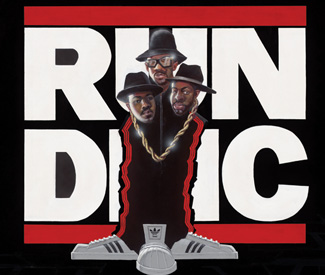
Young Goethe in Love You might be suspect North Face (2008) director Philipp Stölzl’s take on Germany’s most renowned writer is biting off of 1998’s Shakespeare in Love, but the filmmaker manages to rise above facile comparisons to deliver his own unique stab at re-creating the life and love of the 23-year-old polymath, long before he became an influential poet and cultural force. Stölzl and co-writers Christoph Müller and Alexander Dydyna spin off the autobiographical nature of what some consider the world’s first best-seller, 1774’s The Sorrows of Young Werther, though there were few sorrows at first for the young Johann Wolfgang von Goethe (Alexander Fehling) — a perpetually raging, playful party animal rather than the brooding forerunner of romanticism. Unable to move forward in his law studies and believed a wretched failure by his father (Henry Hübchen), Goethe is exiled to a job in a small-town court, beneath the thumb of the fiercely bourgeois court councilor Kestner (Moritz Bleibtreu). Embodying the charms of provincial life: Lotte Buff (Miriam Stein), the bright-eyed, artistic eldest daughter of a struggling widower. Naturally Goethe and Lotte end up caught in each other’s orbits, although rivals for affection and attention lie around each corner, as does a certain inevitable sense of despair. Charismatic lead actors and attention to period details — as well as an infectious joie de vivre — are certain to animate fans of historical romance. (1:42) Opera Plaza, Shattuck. (Chun)


Ongoing research

0

caitlin@sfbg.com

HERBWISE The Multidisciplinary Association for Psychedelic Studies (MAPS) is better known for its scientific research on hallucinogenic drugs than on marijuana. That’s because the federal government is holding, but it won’t share with the decades-old nonprofit.

“The National Institute of Drug Abuse is ‘the National Institute of Drug Abuse,'” said MAPS director of field development Brian Wallace in a recent phone interview with the Guardian. “It’s not ‘the National Institute of Drug Research’. Its members are focused on the abuse of drugs, not their potential applications.”

Wallace — who was in the midst of preparing for “Cartographie Psychedelica,” next week’s MAPS 25th Anniversary Conference in downtown Oakland — was speaking about the NIDA’s decades of refusal to sell clinical study-grade cannabis to his organization. MAPS’ mission is to learn more about the potential of psychedelics and marijuana in treating ailments that Western medicine has proven ineffective in mitigating.

“It’s a conflict of interest that they have the monopoly on that cannabis,” said Wallace, adding that a farm located on the outskirts of the University of Mississippi is the only enterprise legally permitted by the federal government to produce buds.

The continued rebuff means that studies that could potentially prove the medicinal properties of cannabis are impossible to conduct. Not that there aren’t better buds out there. “Any medical marijuana patient has access to better weed in California’s dispensaries,” says Wallace, noting that government-approved weed isn’t available with the same diversity of cannabinoid levels.

Ironically, MAPS has had more luck obtaining MDMA for its clinical studies than marijuana, which they hope someday to test in post-traumatic stress disorder among veterans.

But the group has had its share of victories to celebrate over the last few decades. Enter the anniversary conference, five days of lectures, workshops, and parties that will assemble drug experts to speak on the past, present, and future of drug research. The event will feature a banquet to honor the progenitors of holotropic breathwork, a self-healing technique that involves quickened breathing and music engineered to take listeners to another stage of consciousness. The conference’s “most festive occasion,” according to Wallace, will be Saturday, Dec. 10’s late-night “Medicine Ball,” featuring glitchy DJs like LA’s Sugarpill and Canadian soul vocalist Ill-Esha.

Of course, it won’t be all fun and games at the Oakland City Center Marriott. The days’ programs are filled with hallucinogenic and marijuana-themed lectures and workshops. Cannabis enthusiasts will be stoked on opportunities to learn about the cutting-edge of research theories, even if the government is being prohibitive about testing the theories out. A full day’s workshop on the science and politics of medical marijuana is planned featuring doctors and activists for Friday, Dec. 9. Those unwilling to sit through that many hours of dishing on dank can check out University of California San Francisco Osher Center’s Donald Abrams, who will be giving a run-down of the past two decades of medical marijuana research in a lecture on the afternoon of Saturday, Dec. 10.

Wallace hopes that the conference will provide a learning opportunity — even to those who are not died-in-the-wool drug users.

“We have people that come dressed in a suit and tie and we have people that come dressed in tie-dye,” he says of his organization’s reach. “The MAPS community is expanding and growing to be much more expansive, to the point that a veteran who is affected with PTSD will know about the work that we do.”

“CARTOGRAPHIE PSYCHEDELICA: MAPS 25TH ANNIVERSARY CONFERENCE”

Dec. 8-12, all access conference pass $310–$455

Medicine Ball Party

Dec. 10, 8 p.m., $25–$35

Oakland Marriott Civic Center

www.maps.org/25


Occupy standoffs continue as poll finds public support for the movement

11

As OccupyOakland moves to reoccupy Frank Ogawa/Oscar Grant Plaza today and the burgeoning OccupySF encampment braces for another long-threatened raid by police, a new Field Poll finds that about half of registered California voters identify with the Occupy movement and support its goals, which include taxing the rich and limiting the ability of large corporations to corrupt the political and economic systems.

As the San Francisco Chronicle reports, 46 percent of respondants said they identified with the Occupy movement and 58 percent agree with the cause that prompted it, compared with 32 percent who say they disagree with it. Unsurprisingly, those on the left were more likely to support Occupy while those on the right were more likely to oppose it. A previous Field Poll at the height of the right-wing Tea Party movement found it had only about half as much support as Occupy now enjoys.

Still, as it enters its third month and winter descends on the encampments, Occupy faces myriad challenges. In San Francisco, the mainstream media — particularly curdmugeonly Chronicle columnist CW Nevius — has regularly highlighted conflicts and other conditions in the camps and pushed Mayor Ed Lee to follow-through on his threats to clear the tents from Justin Herman/Bradley Manning Plaza. Rumors abound that a raid could come on Wednesday night, when SFPD beefs up its staffing for training exercises.

In Oakland, the site of some of the most violent police crackdowns on Occupy encampments, OccupyOakland members are right now (noon, Tues/29) marching back into their former home and pledging to set up a 24/7 protest in defiance of city officials. While they seem to be stopping short of a full-blown occupation and tent city, they claim to be setting up a model for the next phase of the Occupy movement.

The group’s press release follows:


FOR IMMEDIATE RELEASE:

Contact:

Phil Horne, Esq., Occupy Oakland Vigil Committee

415-874-9800; occupylaw@riseup.net

www.occupyoakland.org

OCCUPY OAKLAND— RE-OCCUPYING OSCAR GRANT a.k.a. FRANK OGAWA PLAZA

On Tuesday, November 29, 2011 at noon, Occupy Oakland activists will retake Frank Ogawa a.k.a. Oscar Grant Plaza in downtown Oakland with a 24-hour, 7 day-a-week vigil.  Occupiers hope to create a model for a new wave of “Occupation” protest throughout the United States. With the vigil, Occupiers will continue asserting rights guaranteed by the United States Constitution to assemble, speak, and petition government for redress of grievances.  The vigil is not the product of a bargain with Mayor Quan, nor is it negotiated with law enforcement–permission from the city is not required to exercise these constitutionally guaranteed rights.

The structures in the plaza will be symbolic and part of the vigil protest. A teepee will remind the public of the former Occupy camp and historic struggles of the Sioux Indians on the Plains of the U.S.; homeless workers in Hoovervilles during the Great Depression; the “Bonus March” to Washington D.C. by unpaid and unemployed veterans in 1932; Resurrection City following the assassination of Martin Luther King; the AIDS vigil of 1980s San Francisco; and the redwood occupations of Judi Bari and Running Wolf.

Occupy Oakland continues its occupation because residents of Oakland and across the US are still fighting for food, shelter, medical care, school, childcare, and other necessities.  The 1% enjoy 40% of U.S. wealth and 50% ownership of Wall Street stocks and bonds.  The bottom 80% split 7% of the former and just 5% of the latter.  The average 35-year-old in the 99% has a net worth less than $3,000.00.  Occupiers ask the public to consider, “How long does it take an unemployed member of the 99% to go through $3,000.00 and become homeless.” In Oakland, the unemployment rate is nearly double that of the national average. These are issues of crucial relevance to our city.

Occupy Oakland’s vigil declares, “If the 1% won’t share voluntarily through a sense of morality and concern for the well-being of all, then through protest and direct action, we will force change!  Occupy the Plaza!  De-colonize the 99%!”

Occupy Oakland will have sign-up sheets starting Tuesday at 11 am. at the Plaza, but sign up is not a prerequisite for participation in the vigil. Supporters are encouraged to come out day or night to participate.  The Plaza is fully accessible to the differently-abled.

About OccupyOakland:

Occupy Oakland is an emerging social movement without leaders or spokespeople. It is one of 1,570 occupations currently occurring around the world in solidarity with Occupy Wall St. For more information about the other occupations, see: http://www.occupytogether.org/

An up-to-date calendar announcing Oakland actions, and more information can be found at:

http://www.occupyoakland.org/


About that “acrimonious fall”

Catch this. Mayor Ed Lee’s mayoral victory had nothing to do with millions of dollars in campaign contributions from private interests, a sophisticated get-out-the vote effort targeting Lee supporters, the advantage of incumbency, some funny business, or a calculated campaign strategy concentrating efforts on absentee ballots.

Instead, the fact that Lee triumphed over voters’ second pick, the significantly less well-funded progressive candidate Sup. John Avalos, is proof that the left in San Francisco has plummeted into a dark abyss. In fact, the progressive movement has descended so far into disarray and become so irrelevant that its condition warrants front page news.

That’s essentially the narrative that Benjamin Wachs and Joe Eskenazi of the San Francisco Weekly offer in their cover article, “Progressively Worse: The Tumultuous Rise and Acrimonious Fall of the City’s Left,” in which they refer to the Guardian as “the movement’s cajoling ward boss, kingmaker, and sounding board.” Gosh, I feel so goddamn important right now.

Once the blood pressure returned to normal, my initial reaction to this piece was that Wachs and Eskenazi seem to misunderstand who and what progressives actually are. They portray the city’s left as a caricature, a brash bunch of power mongers now on the losing end that can be easily summed up with pithy video game references, Happy Meal toy bans, and bikes.

Witness the contrast between the Weekly’s portrayal of progressives (helped along by former Newsomite Eric Jaye), and the portrait of the left the Guardian offers this week with an Op-Ed written by NTanya Lee — an actual progressive who volunteered for the Avalos for Mayor campaign.

Here’s the Weekly on the left:

“This is an eclectic group, one often bound not by mutual interests as much as mutual enmity — toward Brown, his successors, and the corporate interests of ‘downtown.’ As a result, progressive principles are often wildly inconsistent. Progressives favor more government control over people’s lives for their own good, as when they effectively banned McDonald’s Happy Meals. But sometimes progressives say the government needs to let people make their own choices … Progressives believe government should subsidize homeless people who choose to drink themselves to death, while forbidding parents from buying McNuggets because fast food is bad for us. … Without consistent principles, it’s easy to associate progressives with the craziest ideas to come out of City Hall, and the movement’s bad ideas are memorable. … Daly’s pledge to say ‘Fuck’ at every public meeting makes a killer Internet meme. Hey, let’s legalize prostitution and outlaw plastic bags!”

Here’s Lee on the left:

“The Avalos coalition was largely community forces: SF Rising’s base in working class Black, Latino, Filipino and Chinese communities; the Bike Coalition’s growing base of mostly white bike riders; affinity groups like Filipinos, Queers, Latinos and Arabs for Avalos; progressive Democrats; social networks of creative, young progressive activists affiliated with the League of Young Voters; and loyal families and neighborhood leaders from John’s own District 11. The campaign prioritized communicating to voters in four languages, and according to the Chinese press, John Avalos was the only non-Chinese candidate with a significant Chinese outreach program. There were stalwarts from progressive labor unions (most notably SEIU 1021 and USWW) who threw down — but overall, labor played it safe and invested resources in other guys. And then, in the great surprise development of the race, supporters of the new national occupy movement came to be a strong part of the Team Avalos base because the campaign was so well positioned to resonate with the call to take on the one percent.”

When it comes to takeaways from the November election, the Weekly’s conclusion is essentially opposite that of progressives. While many on the left see themselves as regaining momentum and building the power to rise even in the face of defeat by the established powers-that-be, the Weekly casts San Francisco’s left as deflated and out-of-touch.

Speaking of out-of-touch, the SF Weekly refers to San Francisco’s “increasingly imaginary working class.”  But in reality, 61 percent of students attending public schools in S.F. Unified School District qualify for free or reduced lunch, and a majority of San Franciscans cannot afford market-rate housing.

However, the Weekly is correct in pointing out that shifting demographics have dealt a blow to the progressive base.

“Between 2000 and 2010, the city grew older (every age group over 50 increased), wealthier (there are now 58 percent more households earning $125,000 or more), and more heavily Asian (up from around 30 to nearly 35 percent of the city’s population): exactly the groups progressives don’t win with. These voters don’t respond well to campaigns against developments or for city services, because they’re often living in those developments and don’t need city services.”

I take issue with the Asian part of that statement as a sweeping generalization, however, having witnessed the solid organizing work of the Chinese Progressive Association, for example.

The Weekly also says progressives and the Guardian never called out former Mayor Gavin Newsom for ripping off their best ideas. Oh, they didn’t?  That’s news to me.

The Weekly article implies that progressives got trounced by moderates because jobs are priority No. 1 for voters, and the left has no feasible economic plan — but at the same time, the article completely dismisses ideas that the Guardian has put forth, like creating a municipal bank, implementing Avalos’ Local Hire legislation, or taxing the rich.

Taxing the rich is precisely the kind of economic solution the international Occupy movement is clamoring for, and the concept has even attracted a few unlikely supporters, like billionaires Warren Buffet and Sean Parker, who is not some conservative a*hole by the way.

“The Guardian … stays on the progressive agenda because they put it there, along with taxing the rich, tapping downtown to subsidize Muni, and other measures … Proposing the same old solutions to every new problem turns policies into punch lines.”

Speaking of predictable, no profile authored by the Weekly mentioning the Guardian would be complete without some dig about public power. “The Guardian has been flogging public power since Tesla invented the alternating-current generator,” the S.F. Weekly squawks. Those clever reporters, turning policies into punch lines.

But wait, I thought the problem was that progressives couldn’t get it together on the job creation thing. Consider the CleanPower SF program, which has been strongly advocated for by progressive Sup. and Sheriff-elect Ross Mirkarimi (who it turns out is “not toxic,” according to the Weekly, since he was elected citywide and all). According to an analysis by the Local Clean Energy Alliance, CleanPowerSF will create 983 jobs — 4,357 jobs when indirect job creation is factored in — over the course of three years, assuming the 51 percent renewable energy target is met. Presented with this kind of information, the Weekly will only yawn and say, “Are we on that again?”

That being said, our friends’ article might actually have a pearl of wisdom or two buried somewhere in that nauseating sea of sarcasm. Everyone needs to engage in self-reflection. So right after you’re done throwing up, think about how to take advantage of the opportunity this article presents for a citywide dialogue about progressivism in San Francisco.

Our Weekly Picks: November 23-29

0

WEDNESDAY 23

Immortal Technique

“So now that it’s proven, that a soldier of revolution/ Or head of an empire, disguised in a constitution/ Can not escape the retribution or manipulation/ Of the self-appointed rulers of the planet’s corporations.” So says Afro-Peruvian rapper Immortal Technique on new mixtape The Martyr (Viper Records). Born Felipe Coronel, Tech seizes every opportunity to eviscerate American class warfare and excoriate the United States government’s complicity. Tech’s angry sermons get a little lost in the first half of Martyr because of distracting riffs taken from the Beatles, Aerosmith, and The Goonies soundtrack, though there is a clever reworking of ABBA’s “Money, Money, Money” in reference to this generation’s “Rich Man’s World (1%).” Pure, undiluted Tech shines through on the mixtape’s second half. Swill with care. (Kevin Lee)

With Chino XL, Da Circle, DJ GI Joe

8 p.m., $32.50

Fillmore

1805 Geary, SF

(415) 346-6000

www.thefillmore.com


MOM’s Family Funk’tion

Before you indulge in caloric binges, first endear yourself to the soulful 1960s sound that has always sounded sweeter during the holidays: Motown. No one knows and appreciates this more than the masterminds behind MOM (Motown on Mondays) who bring originals, remixes, and “close relatives” of Motown label songs to venues and events across San Francisco, including Madrone Art Bar, Public Works, SF Funk Fest, even the Treasure Island Music Festival. The first MOM’s Family Funk’tion goes down the night before the turkey funeral that is Thanksgiving at Brick & Mortar, with DJs Gordo, Timo, Phleck, and Matteo spinning the tracks that get the tail-feathers shaking. The crew from MOM promises to provide “toasty soul and fresh funk jams.” (Emily Savage)

10 p.m., $5

Brick & Mortar Music Hall

1710 Mission, SF

(415) 800-8782

www.brickandmortarmusic.com


tUnE-YarDs

Before her set at Pitchfork Music Festival last summer, we were all given tubes of neon yellow warpaint so we could emulate tUnE-YarDs’ Merrill Garbus. Though we may have resembled her, it was no use. We would never be as badass as the woman on stage looping ukulele, smashing drums, and wailing something fierce. With help from additional saxophonists and drummers, the playful jams of Garbus’ quirky hit album w h o k i l l (4AD) burst forth into the calculated cacophony that is tUnE-YarDs. (Frances Capell)

With Pat Jordache

8 p.m., $23

Regency Ballroom

1300 Van Ness, SF

(415) 673-5716

www.theregencyballroom.com


FRIDAY 25

“Sing-A-Long Sound of Music”

Chances are “Sing-A-Long Sound of Music,” the classic musical from 1964 with lyric subtitles so the whole theater can burst into song, is your mother’s dream come true — unless I am the only one who has watched their mom caper around the house, singing “My Favorite Things” (a possibility). It’s fortunate that “Sing-A-Long Sound of Music” should show the weekend after Thanksgiving. If mom’s in town, it’s your best bet. Additionally, the theater hands out goody bags, holds a pre-film concert featuring organist David Hegarty, as well as a costume contest. Your mom can dress up as Maria, of course, and you can dress as one of the Von Trapp children. Come on, do it for family. (James H. Miller)

7 p.m., $15

Castro Theater

429 Castro, SF

(415) 621-6120

www.castrotheater.com


Nadastrom

Are there a lot of orphans in the DJ community? Why are they active the weekend after Thanksgiving, when touring bands are presumably in food comas? Thankfully, there’s still down and dirty shows like this to sweat the gravy out, featuring a big lineup of international and SF DJs including Nadastrom, the progenitors of the bastard toddler of Dutch house and reggaeton: moombahton. Put on by Soundpieces, Camp?, and Irie Cartel, the proceeds of the event will benefit DJs Bogl and Benjammin Taylor, who lost their home in the fire above the Haight and Fillmore Walgreens a couple months back.(Ryan Prendiville)

With Truth (NZ), Stylust Beats (CAN), Lorne B (CAN), Tuffist (SP), Dnae Beats and more

10 p.m., $15 advance

103 Harriet, SF

(415) 431-1200

www.1015.com


“Velveteen Rabbit”

There is a lovely tradition in English children’s books that dresses issues around growing up with imagination and a gentle but firm hold on reality. Winnie the Pooh and Wind in the Willows are two of them. Marjorie Williams’ 1922 The Velveteen Rabbit is another. ODC/Dance’s KT Nelson, a young mother at the time, choreographed it 24 years ago. Today, it’s as fresh and imaginative as ever, with wonderfully colorful costumes, Benjamin Britten’s splendid score and Geoff Hoyle’s intimate narration. The two-person high Nana has just a touch of Victorian strictness about cleaning up the nursery but her efficiency is more than held in check by the toys who have minds of their own. Opening performance is Grandparents’ (20 percent off) and photo day (Rita Felciano)

Through Dec. 11, times vary, $15–$45

Novellus Theater

Yerba Buena Center for the Arts

700 Howard, SF

(415) 978-2787

www.ybca.org


“Great Dickens Christmas Fair”

Do not discount the Dickens Fair’s potential for holiday weekend shenanigans. Opportunities for hijinx abound, and not just because the fair’s 800 performers — from dirty-overcoated “guvnah!” drunks to crinoline-encased ladies who tea — are encouraged to interact in character with passers-by (mess with them gently! They love it!) The fair fills the cavernous Cow Palace, and houses a corsetry with live models coordinated by local cinchers Dark Garden, an adventurer’s salon where you can share your rollicking tales of shot glass exploration with fantastically mustached gents — and yes, you can booze your face off. Four bars, people! Including an absinthery in an alley, where you can mix chemically-induced hallucinations in with your environment-induced ones. (Caitlin Donohue)

Through Dec. 18, $22–$25

Cow Palace

2600 Geneva, SF

1-800-510-1558

www.dickensfair.com


Boys Noize

Here’s a great way to shed those new extra turkey (or Tofurkey) pounds — waddle into the Mezzanine Saturday night in your most comfortable tight jeans and dance your ass off. Boys Noize throws down the kind of relentlessly squelchy music that might make pioneers of Detroit’s minimal techno scene wince. Noize, actually the moniker of German DJ Alex Ridha, has been busy as of late, pushing releases on his record label, BoysNoize Records and its digital offshoot BNR Trax. The label’s sounds range from acidy techno to sinister electro, with a sprinkle of wobbly dubstep and a dash of oddball, leftfield sounds — much like the label’s creator himself. (Lee)

10 p.m., $30

Mezzanine

444 Jessie, SF

415) 625-8880

www.mezzaninesf.com


SUNDAY 11/27

Jeffrey Luck Lucas and Nebulous Orchestra

The Mission District’s Episcopal Church of St. John the Evangelist is no ordinary church — sure, it holds regular worship services, but it is also highly progressive (vocally supportive of LGBT rights, for example), boasts a colorful mural on one of its exterior walls, and is staunchly community-oriented, welcoming the occasional secular event into its historic (circa 1910, after being rebuilt post-1906 quake) building. Tonight’s performance features Mission troubadour Jeffrey Luck Lucas, heading up an “orchestra” (pipe organ, oboes, clarinets, strings, and more) comprised of other local musicians. You can bet that the acoustics in the church — itself known for a strong music program — will render the experience even more amen-worthy. (Cheryl Eddy)

With Gloaming Boys

6 p.m., $8–$20 (no one turned away for lack of funds)

Episcopal Church of St. John the Evangelist

1661 15th St., SF

www.saintjohnsf.org


MONDAY 11/28

“You Are All Captains”

A beguiling and beautiful meta-fiction, You All Are Captains grew out of Oliver Laxe’s experience teaching film workshops to local kids in Tangiers. Everyone plays themselves in this reflexive movie, though Laxe casts himself as the fool — a presumptuous European director guiding students to his own ends. The disguise allows him to realize sly but substantive reflections upon the ontology and ethics of filming. It’s fitting that You All Are Captains is making its local premier in a classroom: a U.C. Berkeley student group flying under the banner of “Picturing Neo-Imperialism” has invited Laxe to present his debut in person more than a year after it won the FIPRESCI critics’ award at Cannes. (Max Goldberg)

7 p.m., free

UC Berkeley

Dwinelle B-4, Berk.

www.pnwg.wordpress.com/events


TUESDAY 11/29

Metal Mother

By some standards, Oakland’s Tara Tati came into music fairly late: she didn’t take up the piano seriously until she was 23. But you wouldn’t guess as much listening to her ethnic fusion project, Metal Mother. On the debut album Bonfire Diaries, the singer-songwriter builds up a bold and elemental sound. With its trudging percussion and distinctly dark temper, Metal Mother invokes ’80s goth rock, ethnic fusion bands like Dead Can Dance, and at times, world ambient soundscapes. And yet, at heart, Tati sounds like a pop artist in the same vein as Björk circa Homogenic, and that alone implies talent. (Miller)

With Horns of Happiness, Mortar and Pestle, Birdseye

8 p.m., $10

Cafe Du Nord

2170 Market, SF

(415) 861- 5061

www.cafedunord.com


Retox

Is the Locust a joke? With its speedy deliver, high vocals, beepy attack synth, and masked personas, I never could quite decide. And yet, who cares? The energy level was always high, the shows always masterful absurdist romps. Justin Pearson and Gabe Serbian from the screamy ’90s-born Three One G act have now formed Retox — like Locust 2.0. Masks now off, and sounds a bit filled in (but really, just a smidge — its new album clocks in at 13 minutes total), it’s shinier, thicker, less jokey. It’s helter-skelter rock’n’roll, minus the screeching buzz-saw, the painful intro to “Boredom is Counter-Revolutionary” notwithstanding. The band is matched well with frantic experimental Japanese noise-punk act Melt-Banana. Anticipate high-energy, non-medical spasms. (Savage)

With Melt-Banana, Peace Creep

9 p.m., $14

Bottom of the Hill

1233 17th St., SF

(415) 621-4455

www.bottomofthehill.com

Dick Meister: The lessons of Ohio

0

By Dick Meister

Dick Meister, former labor editor of the SF Chronicle and KQED-TV Newsroom, has covered labor and politics for more than a half-century. Contact him through his website, www.dickmeister.com, which includes more than 350 of his columns.

AFL-CIO President Richard Trumka has drawn some important lessons from last week’s election in Ohio that repealed a state law severely limiting the collective bargaining rights of public employees. Worse, it threatened to inspire passage of similar anti-bargaining laws elsewhere.

Listen to Trumka, a man who obviously knows what he’s talking about. In an article he wrote for Reader Supported News, he cites post-election polls showing that more than half of Ohio’s voters correctly “perceived the law as a political maneuver by Gov. John Kasich and state Republicans to weaken labor unions, rather than a genuine effort to make state government more efficient.”

Another poll, done for the AFL-CIO, showed that more than half the voters also found that Kasich and his allies “are putting the interests of big corporations ahead of average working people.”<–break->

Voters everywhere in the mid-term elections clearly wanted change. But, as Trumpka says, they did not want “political maneuvers and overreach” like those of Kasich and Republican legislators. They want effective action to curb unemployment, create jobs and deal with the other severe economic problems facing the country.

As Trumka notes, public employees, union members, Democrats and liberals voted overwhelmingly to repeal the Ohio law, but so did a majority of voters “from households with no public employee, workers without union representation and independents – as well as 30 percent of Republicans and 36 percent of conservatives.”

One of the key lessons Trumka draws from Ohio’s election is that “the myth of the pampered public employee has been busted. Public employees didn’t cause the economic crisis and they’re not the enemy. Demonization of public employees is neither a strategy nor a solution and the heartland Americans who voted to restore rights for public employees understood that.”

The election also reinforced the continued need for working people, public and private employees alike, to join closely together. That’s what happened in Ohio. There, as Trumka notes, “firefighters, teachers and other public employees were joined by plumbers, pilots and all kinds of private sector employees to win. Worker to worker, neighbor to neighbor, the message spread, and what began as an attempt to divide workers flopped famously. In the end, working people’s solidarity was the message.”

Politicians could also learn important lessons – if they will. For the Ohio voters “showed that when fundamental rights and livelihoods are targeted, working people will not only defend themselves, but come back stronger.”

The outcome of the Ohio vote should show politicians seeking office that it would be wise for them to pay much more attention to the wishes of working and middle class voters than to those of the wealthy and privileged. Says Trumka:

“Cutting taxes for millionaires and billionaires, scapegoating working Americans and their unions and downsizing Social Security and Medicare may get you a standing ovation from the 1%, but the voters who decide elections will not be fooled – and you may just get more than you bargained for.”

Trumka’s correct. But despite the results in Ohio and the lessons they hold for the anti-labor political right, many undoubtedly will continue what the AFL-CIO sees as “part of Wall Street’s strategy to chip away at collective bargaining rights, piece by piece, law by law, until unions and collective bargaining rights are destroyed.”

Working people and their unions can be reasonably certain, at least, that they’ll have strong support in trying to withstand the attack – including support from the Occupy Wall Street movement, which Trumka credits with “redefining the political narrative.”

The next major test will come in the presidential and congressional elections in 2012. They’re especially looking for support from the swing voters who supported President Obama in the 2008 election and generally have the same political views as the majority of Ohio voters.

Trumka describes the swing voters as “working Americans with modest incomes, moderate views and little patience for polices that aren’t fair and don’t work.”

He says politicians seeking election or re-election next year must heed them and “support public policies for the 99 percent – policies that create jobs, invest in America’s future, safeguard Social Security, Medicare and Medicaid, and promote fiscal sanity by requiring millionaires and billionaires to pay their fair share.”

OK, that’s asking for much more than we’ve been getting. But the Ohio vote demonstrated that it is possible to garner the votes necessary to overcome the forces that would deny us vital economic and political rights.

Dick Meister, former labor editor of the SF Chronicle and KQED-TV Newsroom, has covered labor and politics for more than a half-century. Contact him through his website, www.dickmeister.com, which includes more than 350 of his columns.

Ed Lee’s challenges

2

EDITORIAL Mayor Ed Lee has always talked about bringing the city together, about avoiding division and harsh conflict. And how that he’s won a four-year term, he’s going to have to address a wide range of city problems that in the past haven’t responded well to consensus and compromise.

He’s going to have to do it in the wake of an election in which the centrist candidates all finished low in the pack — and the strongest progressive actually won more votes than anyone else on Election Day. And his victory comes at a time when there’s more concern over economic inequality than this country has seen since the 1930s — represented most visibly by the large and growing OccupySF encampment.

The mayor received huge financial support — in the hundreds of thousands of dollars — from some of the same people and businesses that the Occupy movement is targeting. Some of his campaign contributors have an conservative economic agenda that’s way to the right of the center of San Francisco politics. And some of his closest allies (and strongest supporters) are, to put it kindly, ethically challenged.

So it’s not going to be easy for the mild-mannered mayor to lead the city — and if he wants to be successful, he needs to work with and not ignore the left.

There are a few critical steps that would show the people who opposed him that he’s not a captive of big-business interests and that he can be trusted:

1. Appoint a real progressive to Sheriff-elect Ross Mirkarimi’s District Five supervisorial seat. If Lee is really a mayor who’s above petty politics, the chief criterion for the appointment shouldn’t be loyalty to Lee.

District Five supported Avalos over Lee by a solid margin (in the Haight, Avalos got twice as many votes as Lee). The district has been represented by two people, Matt Gonzalez and Mirkarimi, both of whom were elected as Green Party members. It’s almost certainly the most left-leaning district in the city, and deserves a supervisor who represents that political perspective. Most of the qualified people who fit that description supported a candidate other than Ed Lee for mayor.

2. Don’t send the cops to roust OccupySF. The movement has support all over the city and is making an historic statement. It’s probably the most important political demonstration in San Francisco since the 1960s. A mayor who has any shred of a progressive soul should recognize that the most important issue facing this city and this nation is the wealth and income gap and help OccupySF make its voice even louder.

3. Present a plan for more than a “cuts only” budget. Yes, the sales tax measure lost, putting a hole in the city budget, and yes, it will be a year before a credible new revenue measure can go on the ballot. But now is the time to start bringing people together to look at what comprehensive tax reforms might be more appealing than a regressive sales tax.

4. Don’t give away the city to the One Percent. A developer wants to build 160 condos for the very, very rich on the waterfront at 8 Washington. Mayoral ally Rose Pak supports the project. It’s about as blatant an example as possible of something that only benefits multimillionaires, and it will be one of the first major land-use decisions Lee will have to grapple with. Making his opposition clear would demonstrate his independence.

5. Run an open administration. Both previous mayors, Gavin Newsom and Willie Brown, were openly hostile to the press, hostile to open government and supremely arrogant. Lee has a different personal style — and he ought to show that he respect the Sunshine Ordinance by directing his departments to abide by the rulings of the Sunshine Task Force.

That’s what good government would look like.

Alerts

0

alert@sfbg.com

WEDNESDAY 16

Confront the UC Regents

Editor’s Note: The UC canceled this meeting as we were going to press, citing public safety concerns, and protest organizers were figuring out how to respond. Check our Politics blog or www.makebankspaycalifornia.com for the latest.

The UC Board of Regents will be meeting at the UCSF Mission Bay Campus at 10 am, and students have been organizing for months to make their voices heard. The message: stop tuition hikes, budget cuts, and privatization of public schools; tax the 1 percent.

ReFund California and the Northern California Convergence will join up with OccupySF and Occupy encampments being set up on various college campuses this week to “Shut down the UC Regents meeting and take control of our education and our future.” ReFund California is also threatening to march on the Financial District to shut down banks if the Regents don’t support their five-point pledge of action (see “The growing 99 percent,” 11/9).

OccupySF will be marching from their encampment at Justin Herman Plaza (Market and Embarcadero) to the Mission Bay Campus starting at 7 am. UC Berkeley students can board a ReFund California bus at 7 am at Bancroft and Telegraph in Berkeley.

10 a.m., free

UCSF Mission Bay Campus

1675 Owens, SF

(650) 238-4821

www.occupyed.org

makebankspaycalifornia.com

occupyoureducation@gmail.com

rose.goldman@gmail.com


THURSDAY 17

Changing Congress

San Francisco Progressive Democrats of America hosts a discussion with Norman Solomon, a prolific progressive political writer who is running for Congress to replace retiring Rep. Lynn Woolsey (D-Marin), a member and former chair of the Congressional Progressive Caucus. The event opens the floor for questions and concerns regarding future legislation.

7-9 p.m., free

Harry R. Bridges Memorial Building, ILWU, 4th Floor

1188 Franklin, SF

sig4re@comcast.net

www.pdamerica.org


SATURDAY 19

Addiction & Society

Our capitalist society may be to blame for our addictive tendencies and obsessive consumerism. Dr. Gabor Mate, an author and physician who focuses on mental illness, explains how our market economy drives us crazy and leads us down a path toward dependency. Speak Out Now’s colloquium event will help listeners connect the dots between two of our country’s most prevalent concerns.

5-7 p.m., $2 suggested donation

South Berkeley Senior Center 2939 Ellis, Berk.

contactspeakout@gmail.com

www.speakout-now.org


MONDAY 21

“Gay Politics in Africa”

Beyond our own shores, homophobia persists to infiltrate government and subjugate people with leaders who use religion and law as instruments to thwart the freedom of sexual expression. Dr. Sylvia Tamale, renowned African feminist, analyzes the Ugandan Anti-Homosexuality Bill and opines on the roots of homosexual suppression in Africa and Western societies.

6- 7:30 p.m., free

Berman Hall in the Fromm Building, USF Golden Gate and Parker, SF

510-663-2255

priorityafrica@priorityafrica.org

www.priorityafrica.org

State of the occupations

0

rebeccab@sfbg.com

The police evictions of OccupyOakland and OccupyCal over the last week, and the looming threat of another attempt to evict OccupySF, presented challenges for the Bay Area protests just as similar police crackdowns targeted Occupy encampments in Portland, Denver, New York, and other cities nationwide.

These fast-moving developments also come at a time when university students from around California will be descending on San Francisco for a Nov. 16-17 University of California Board of Regents meeting that was canceled this week because of public safety concerns. All of this adds up to a big and unpredictable moment for the widening movement (see “The growing 99 percent,” 11/9).

So we’ve decided to start a regular feature to track the latest developments in an Occupy movement that seems adamant about standing its ground even as it’s forced to deal with threats from police, organizing challenges, and the coming of winter.


#OCCUPYCAL GROWS UP FAST

Students at the University of California at Berkeley burst onto the Occupy scene Nov. 9 with the launch of OccupyCal, a student-led protest that made waves nationally after university police advanced on around 500 students in Sproul Plaza, the historic epicenter of the Free Speech Movement, and struck them with batons after they tried to set up camp.

UCB police made 39 arrests in two separate actions against protesters, fueling student protesters’ resolve at a general assembly convened afterward that drew more than 1,000 people and lasted well into the night. At around 1:30 am, students voted to hold a student strike on Nov. 15 in solidarity with others throughout the UC system.

The harsh police response prompted condemnation from the Free Speech Movement Archives (FSM-A). “It appears that the campus police are in need of remedial education concerning fundamental protections offered by the US Constitution — including First Amendment rights to Free Speech and Free Assembly that were clearly recognized and enshrined on the UCB campus 47 years ago on these very steps,” the group noted in an open letter.

UC Berkeley Chancellor Robert J. Birgeneau, who was out of the country during the violent police crackdown, issued a statement on Nov. 14 ordering a third-party investigation of the clash and granting amnesty under the Student Code of Conduct to all students who were arrested for blocking police from removing the encampment.

“It was only yesterday that I was able to look at a number of the videos that were made of the protests on November 9. These videos are very disturbing. The events of last Wednesday are unworthy of us as a university community. Sadly, they point to the dilemma that we face in trying to prevent encampments and thereby mitigate long-term risks to the health and safety of our entire community,” he wrote. “Most certainly, we cannot condone any excessive use of force against any members of our community.”


#OCCUPYSF, THE NEXT BATTLEGROUND

At press time, student and labor groups that were planning to converge on the UC Regents meeting at UCSF Mission Bay on Nov. 16 by the thousands were deciding how to respond to the meeting cancellation, but protests are still planned for that day, with support from OccupySF.

Meanwhile, Mayor Ed Lee continues to insist that OccupySF break camp, but instead it has only grown larger, with the tents spreading out from Justin Herman Plaza onto the nearby sidewalk along Market Street in front of the Federal Reserve. At press time, protesters feared what seemed an imminent police raid, particularly now that the election is over and busloads of student protesters were headed into town.


TRAGEDY STRIKES #OCCUPYOAKLAND

On Nov. 10, Kayode Ola Foster, 25, suffered a fatal gunshot wound to the head following an argument, just yards from the Occupy Oakland encampment in Frank Ogawa Plaza (Oscar Grant Plaza to the occupiers who’d camped there for a solid month).

A somber mood settled over the plaza in the hours following the shooting as the tent city dwellers absorbed the gravity of the situation, and occupy activists held a candlelight vigil. Although initial reports suggested Foster had no relationship to the camp, police later said they believed he and one of two shooting suspects had spent time there.


#OCCUPYOAKLAND GETS THE BOOT

Three days after the fatal shooting near the OccupyOakland encampment sparked a hard-line response from local government officials, the camp was dismantled in an early morning police raid Nov. 14, the second to befall the occupation since it began a month ago. That evening, thousands marched back to the plaza in response to the raid and held a general assembly.

On the night of the raid, it took several hours for police to arrive at 14th and Broadway streets, where protesters began congregating in the intersection around 2 a.m. in anticipation of the forced eviction from camp. Law enforcement came en masse, with mutual aid support from seven different regional law enforcement agencies.

While two lines of riot police formed an L-shaped formation blocking protesters’ access to the plaza and nearby streets, hundreds more poured into the plaza to dismantle tents, flatten structures, and make arrests. Police arrested 32, the majority of whom belonged to a group of clergy members from the occupation’s Interfaith Coalition tent who sat calmly together in the plaza and sang by candlelight as they waited for police. Occupiers who witnessed the dismantling of the camp from behind police barricades yelled out, “Shame! Shame! Shame!”

Steven T. Jones contributed to this report.

Guardian editorial: Mayor Ed Lee’s challenges

21

 Mayor Ed Lee has always talked about bringing the city together, about avoiding division and harsh conflict. And now  that he’s won a four-year term, he’s must address a wide range of city problems that in the past haven’t responded well to consensus and compromise.
He’s going to have to do it in the wake of an election in which the centrist candidates all finished low in the pack — and the strongest progressive actually won more votes than anyone else on Election Day. And his victory comes at a time when there’s more concern over economic inequality than this country has seen since the 1930s — represented most visibly by the large and growing OccupySF encampment.
The mayor received huge financial support — in the hundreds of thousands of dollars — from some of the same people and businesses that the Occupy movement is targeting. Some of his campaign contributors have an conservative economic agenda that’s way to the right of the center of San Francisco politics. And some of his closest allies (and strongest supporters) are, to put it kindly, ethically challenged. So it’s not going to be easy for the mild-mannered mayor to lead the city — and if he wants to be successful, he needs to work with and not ignore the left.
There are a few critical steps that would show the people who opposed him that he’s not a captive of big-business interests and that he can be trusted:

1. Appoint a real progressive to Sheriff-elect Ross Mirkarimi’s District Five supervisorial seat. If Lee is really mayor who’s above petty politics, the chief criterion for the appointment shouldn’t be loyalty to Lee or Willie Brown or Rose Pak et al.  District Five supported Avalos over Lee by a solid margin (in the Haight, Avalos got twice as many votes as Lee). The district has been represented by two people, Matt Gonzalez and Mirkarimi, both of whom were elected as Green Party members. It’s almost certainly the most left-leaning district in the city, and deserves a supervisor who represents that political perspective. Most of the qualified people who fit that description supported a candidate other than Ed Lee for mayor.

2. Don’t send the cops to roust OccupySF. The movement has support all over the city and is making an historic statement. It’s probably the most important political demonstration in San Francisco since the 1960s. A mayor who has any shred of a progressive soul should recognize that the most important issue facing this city and this nation is the wealth and income gap and help OccupySF make its voice even louder.

3. Present a plan for more than a “cuts only” budget. Yes, the sales tax measure lost, putting a hole in the city budget, and yes, it will be a year before a credible new revenue measure can go on the ballot. But now is the time to start bringing people together to look at what comprehensive tax reforms might be more appealing than a regressive sales tax.4. Don’t give away the city to the One Percent. A developer wants to build 160 condos for the very, very rich on the waterfront at 8 Washington. Mayoral ally Rose Pak supports the project. It’s about as blatant an example as possible of something that only benefits multimillionaires, and it will be one of the first major land-use decisions Lee will have to grapple with. Making his opposition clear would demonstrate his independence.

5. Support public power and community chocie aggregation. And appoint SPUC commissioners with visible, credible public power credentials. PG&E has maintained its illegal private power monopoly in San Francisco for decades  by muscling  mayors to appoint only PG&E-friendly commissioners who keep City Hall safe for PG&E.

6.  Run an open administration. Both previous mayors, Gavin Newsom and Willie Brown, were openly hostile to the press, hostile to open government and and supremely arrogant. Lee has a different personal style and he ought to show that he respects the Sunshine Ordinance by directing his departments to abide by the rulings of the Sunshine Task Force. That’s what good government would look like.

What if you were rich?

14

There seem to be more and more millionaires coming out of the nicely paneled woodwork to tell us that they should pay higher taxes.  I heard one of these folks on NPR yesterday and she was talking about what made her happy in life. She’s loaded, young, and could have anything she wanted, but what she said made a lot of sense: She said she would be better off and a lot happier if everyone in the country had access to decent housing, enough to eat, quality transportation and a chance at a good education. 

So I started thinking about it, I guess there’s a reason that I’m a horrible capitalist, because I totally agree with her. If I hit the lottery …  well (geek alert), I’ve had my eye on that cool Visconti lava fountain pen, but there’s really not of lot of stuff that I want. And maybe I’m not that odd – maybe most people really don’t want isn’t Michael Moore’s mansion (gawd, who would keep it clean? I can’t even get the dog hair off the floor of my little place in Bernal Heights). Maybe most of us want to make sure our family has a place to live and there’s money for the kids to go to college and medical care for our aging parents and a job that’s not awful.

What else do I want? I want to be able to ride high-speed rail to L.A. instead of driving the car on I-5 on Thanksgiving week. I want the kids to be able to take buses directly to school so I don’t have to drive them. I want more nudity on TV (well, that’s not really about money, I guess). I want the rec centers and libraries to be open every day and on the weekends, and I want them to have great programs, and I want to have more swim classes at the public pools so I don’t have to pay to send my daughter to the YMCA, and I want to be able to see a doctor when my leg hurts without waiting a month for a manged-care appointment. A nice fishing boat would be cool, but I could share.

Seriously: I’m like the rich girl on NPR (kind of): Most of what I want is stuff that the government ought to be providing to everyone anyway. If only she and the rest of the rich people in the country, who already have everything they want, were paying fair taxes. I got no problem with people wanting to be the next Bill Gates, and even in a really good capitalist system (is that possible?) there will always be rich people, and I suppose the desire for financial success drives progress.

But wouldn’t we all be better if … we were all better? What would you want if you were rich?

And if I do hit the lottery, do I get a tax deduction on the boat?

AIDS vigil returns at Occupy SF

3

A coalition has come together to bring a striking new component to OccupySF: a rebirth of the ARC/AIDS Vigil. The vigil created an encampment similar to OccupySF’s at UN Plaza in the 1980s and remained there for ten years, protesting the federal government’s refusal to put resources into research and support for people with HIV/AIDS. Some who were involved in the vigil are currently part of the OccupySF encampment as individuals. Now, many hope to make that relationship more direct and active.


Brian Basinger, a longtime activist in several capacities including work with the AIDS Housing Alliance, is one of those involved in this effort. Says Basinger, “We are resurrecting the ARC/AIDS Vigil at 11/11/11 at 11:11 am. We are going to provide housing counseling, bring needle exchange, providing HIV testing, distributing organic vegetarian brown bag lunches, holding a speak-out, and presenting our demands to mayor Ed Lee to cure homelessness for people with HIV/AIDS, LGBT youth and transgender San Franciscans.”

All of this will take place tomorrow from 11am-2pm at Justin Herman Plaza, the site of Occupy SF’s encampment. Or, says Basinger, “Ethel Merman Plaza, as we like to call it.”

Those interested in the speak-out should be sure to get there by 11:11, as that will likely be first on the agenda. The food distribution is planned for the end of the kick-off event.

The group will provide services to the OccupySF encampment and anyone who comes through it. “We’re looking to create a safe space for homeless LGBT youth to gather…queer homelessness is invisible. We experience homelessness differently than the non-gay world.”

Like the ARC/AIDS Vigil of the 1980s and the Occupy Movement today, this event has the potential to be ongoing. Said Basinger plainly, “We won’t leave until we get our demands are met.”

Basinger warns: “It’s going to rain. But we want to highlight that people with fullblown AIDS and cancer are out in the goddamn rain everyday because the mayor has failed. ‘Ed Lee gets it done’- he’s not ‘getting it done’ for people with AIDS.” Basinger added that San Francisco “has the highest rate of homelessness for people with AIDS in the country.”

The group is putting out a call for “Rain gear to keep us warm- tarps and umbrellas.” Added Basinger, “Umbrella, ella, ella. Also, we put out a call for Rhianna. Rhianna, if you’re listening, come tomorrow.”

And with the impossible to predict explosion of the Occupy Movement- hey, anything could happen.