food

On the Cheap listings

0

Submit items at listings@sfbg.com. For further information on how to submit items for listings, see Picks

WEDNESDAY 6

RayKo’s sixth annual plastic camera show RayKo Photo Center, 428 Third St., SF. www.raykophoto.com. Through April 22. Opening reception: 6-8pm, free. You’d never these cameras’ non-pro status by the breathtaking images they are capable of creating. Highlighted in this year’s RayKo show is LA-based artist Thomas Alleman, who began using a Holga camera in 2001 to document the aftermath of 9/11. His dreamy, dramatic prints perfectly pinpoint the dysfunctional beauty of these toy cameras.

“Beyond THC: Cannabidiol and the future of medical marijuana” Commonwealth Club of California, 595 Market, SF. www.commonwealthclub.org. 5:30pm, $12 members, $7 students, $20 nonmembers. Martin A. Lee, author of Smoke Signals — which focuses on the social history of cannabis — will be speaking about the benefits of cannabidiol (CBD), a non-psychoactive component of marijuana that lacks the “high” effect of THC and contains key medicinal benefits. Lee will discuss how the medical marijuana industry has responded to the discovery of CBD and sign copies of his book afterward.

THURSDAY 7

Robot NightLife California Academy of Sciences, 55 Music Concourse, SF. www.calacademy.org. 6-10pm, $12. This beloved weekly museum soiree delves into sci-fi this evening with a focus on robots. Managing director of Silicon Valley Robotics will speak to the local innovation and commercialization of robots and Academy curator Gary Williams will show off footage of deep-sea corals from Pillar Point Harbor. A robotic performance by art group Survival Research Labs and exceptional designs by robot design studio BeatBots are also on tonight’s schedule.

“Art Star” Otis Lounge, 25 Maiden Lane, SF. www.otissf.com. 10pm-2am, free. If you’re looking to submerge yourself into the city’s art community, head over to Otis Lounge to meet and network with artsy individuals at this monthly first Thursday event. Whether you make, buy, sell, or just love art, all creatives are welcome.

Community dinner St. Cyprian’s Episcopal Church, 2097 Turk, SF. www.saintcyprianssf.org. 7pm, free. Hungry, cash-strapped health nuts listen up. This free dinner created from USF’s garden and local farmers markets is open to everyone and anyone interested. The event lacks any motivation beyond a heartfelt effort to bring the community together through wholesome food.

Writerscorps Live with Tamim Ansary Contemporary Jewish Museum, 736 Mission, SF. www.sfartscommission.org. 6:30-7:30pm, free. Award-winning youth writing program WritersCorps has partnered with the CJM for a multi-generational live reading. Author Tamim Ansary will read from his memoir West of Kabul, East of New York, based on his family’s immigration from Afghanistan to San Francisco. The reading will also showcase WritersCorps teaching artist Minna Dubin and students from Downtown High School, Aptos Middle School, Mission High School, and more.

First Thursday with OM Cocktails Hang Street Gallery, 567 Sutter, SF. www.hangart.com. 6-8pm, free. Organic mixology — premixed in the bottle? Will wonders never cease. Check out this brand’s coconut-lychee cocktails and more at Hang Street’s First Thursday reception.

FRIDAY 8

East Bay Bike Party, location TBA. 7:30, free. eastbaybikeparty.wordpress.com. It’s time to go green, literally. The theme of this month’s East Bay group rideout is the favored color of enviro-fans and Kermit the Frog alike. Whether you want to channel your inner leprechaun or bike around as giant pot leaf, the possibilities are endless. If you’re a Bike Party virgin make sure to also look over the code of conduct to help keep the event as community-friendly as possible.

SATURDAY 9

White Walls gallery 10th anniversary show White Walls, 886 Geary, SF. www.whitewallssf.com. Through April 6. Opening reception 7-11pm, free. Town’s best-known “urban art” gallery hosts this retrospective of a decade of boundary-breaking work within its wall (kind of — the gallery recently moved to a larger space on Geary Street). Check out works from Shepard Fairey, ROA, Apex, Ferris Plock, and of the best who have plied works there.

“Doctors on Board” Oakland Marriott City Center, 1001 Broadway, Oakl. www.pmfmd.com/doctors-on-board. 6am-6:30pm, free to students. Application required. The Physicians Medical Forum is hosting a day of workshops and skills training session helping African American students to attend medical school and residency programs. Prominent physicians will provide information about medical school preparation, medical specialties, and life as a physician.

“Quilt San Francisco” Concourse Exhibition Center, 635 Eighth St., SF. www.sfquiltersguild.org Also Sun/10. 10am-4pm, $10 for two-day pass. This two-day exhibit, organized by the San Francisco Quilters Guild, vividly showcases the revitalization of the traditional art form. 400 quilts and special exhibits will shown the many artistic dimensions of wearable art and modern stitching. There will also be a children’s corner, where kids can get marching orders for a treasure hunt that will lead them to special quilts in the show.

Irish-American children’s hour of music, song and dance San Francisco Public Library, Fisher Children’s Center, 100 Larkin, SF. 11am, free. www.sfpl.org. Crossroads, an annual Irish-American festival timing to open up St. Patrick’s Day season, invites the kiddos to learn traditional Irish dance taught by instructors from the Brosnan School of Irish Dance.

Fourth annual World Naked Bike Ride Meet at Justin Herman Plaza, Market and Embarcadero, SF. www.worldnakedbikeride.org. 11am-4pm, free. Protest global dependency on oil and find out what its like to pedal through Fisherman’s Wharf in the buff. All are welcome to take part — even clothed riders — but those in the buff earn extra badass points, given the uncertain status of the ride under the city’s new anti-public nudity ordinance.

“Permutation Unfolding” Root Division, 3175 17th St., SF. www.rootdivision.org. Opening reception 7-10pm, free. Bring the kids to the opening of this group exhibition exploring the biomorphic formations that can spring from the artistic process (we’re not sure what that means either.) There will be an all-ages creativity station, a perfect place to craft while Markus Hawkins spins an auditory web in an 8pm performance.

SUNDAY 10

Exploratorium’s On the Move Fest Mission District location: Buena Vista Horace Mann School, 3351 23rd St., SF. 11am-4pm, free; Bayview location: Bayview Opera House Ruth Williams Memorial Theatre, 4705 Third St., SF. 11am-4pm; Embarcadero location: Pier 15, 11am-10pm. www.exploratorium.edu. All locations offer free admission. Everyone’s favorite on-hiatus science museum is sending 10 trucks tricked out with the kind of wacky, hands-on exhibits its know for to the Mission, Bayview, and the Embarcadero for a day of science, music, and food. In both Bayview and the Mission, enjoy itinerant filmmaking, projects that encourage attendees to sport costumes and act out a special script which will then be chopped, screwed, and shown to the public.

TUESDAY 12

“Stars of Stand-up Comedy” Neck of the Woods, 406 Clement, SF. www.dannydechi.com. 8pm, $10. Comedian and pencil musician (exactly what that means we are not quite sure, please report back if you go) Danny Delchi is hosting tonight’s show. Long-time Niners field announcer Bob Sarlatte and the quirky Mr. Mystic will be performing alongside a number of other top Bay Area comedians.

Persian New Year Festival Persian Center, 2029 Durant, Berk. www.anotherbullwinkelshow.com. What better way to welcome spring than to jump over a bonfire? Head over to the Persian Center to take part in this ritual that has been passed down since Zoroastrian times. Accompanying the fiery activity will be Persian food, music, and dancing.

The Oscars are over … time for some new movies!

0

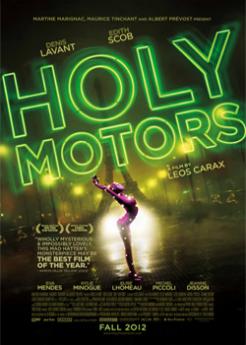
The Oscars are over! You may now openly admit that Silver Linings Playbook offered just a slightly edgier twist on a pretty predictable rom-com, with one great lead performance (duly rewarded) and a De Niro crying scene. Time to revisit the should-have-won-everything Holy Motors (which came out on Blu-ray this week) and cheer that theaters will finally begin phasing out all the awards hopefuls and bringing in fresh new movies.

This week: Cinequest continues in San Jose, the Roxie screens both a gleefully nasty pre-Code fest (Dennis Harvey’s appreciative article here) and a Jeffrey Dahmer doc (my review here). Hollywood trots out yet another fairytale-inspired CG spectacle, Jack the Giant Slayer; a submarine drama with Ed Harris and David Duchovny, Phantom; and a PG-13 horror sequel, The Last Exorcism Part II.

More reviews, including the Oscar-nominated Chilean import No and an informative doc about hunger in America, A Place at the Table, after the jump.

http://www.youtube.com/watch?v=hPBCwDR8giI

Lore Set in Germany amid the violent, chaotic aftermath of World War II, Lore levels some brutally frank lessons on its young protagonist. Pretty, smart 14-year-old Lore (Saskia Rosendahl) is tasked with caring for her twin brothers, sister, and infant brother when her SS officer father (Hans-Jochen Wagner) and true-believer mother (Ursina Lardi) depart. Her seemingly hopeless mission is to get what’s left of her family across a topsy-turvy countryside to her grandmother’s house, a journey that’s less a fairy tale than a kind of inverted nightmare — yet another dystopic vision — as seen by children who must beg, barter, and scrounge to survive when they aren’t singing songs in praise of the Third Reich. Enter magnetic mystery man Thomas (Kai Malina), who offers Lore life lessons about the assumed enemy. Tarrying briefly to savor the sensual pleasure of a river bath or the beauty of a spring landscape, albeit one riddled with bodies, director and co-writer Cate Shortland rarely averts her eyes from the sexual and psychological dangers of her charges’ circumstances, making us not only care for her players but also imparting the dark magic of a world destroyed then born anew. (1:48) (Kimberly Chun)

http://www.youtube.com/watch?v=lOeiw_BJPas

No Long before the Arab Spring, a people’s revolution went down in Chile when a 1988 referendum toppled the country’s dictator, Augusto Pinochet, thanks in part to an ad exec who dared to sell the dream to his countrymen and women — using the relentlessly upbeat, cheesy language of a Pepsi Generation. In No‘s dramatization of this true story, ad man Rene Saavedra (Gael Garcia Bernal) is approached by the opposition to Pinochet’s regime to help them on their campaign to encourage Chile’s people to vote “no” to eight more years under the brutal strongman. Rene’s well-aware of the horrors of the dictatorship; not only are the disappeared common knowledge, his activist ex (Antonia Zegers) has been beaten and jailed with seeming regularity. Going up against his boss (Alfredo Castro), who’s overseeing the Pinochet campaign, Rene takes the brilliant tact in the opposition’s TV programs of selling hope — sound familiar? — promising “Chile, happiness is coming!” amid corny mimes, dancers, and the like. Director-producer Pablo Larrain turns out to be just as genius, shooting with a grainy U-matic ‘80s video camera to match his footage with 1988 archival imagery, including the original TV spots, in this invigorating spiritual kin of both 2012’s Argo and 1997’s Wag the Dog. (1:50) (Kimberly Chun)

http://www.youtube.com/watch?v=cgxxT4xpVNI

A Place at the Table Obesity gets all the concern-trolling headlines, but America’s hunger crisis is also very real — and the two are closely related to each other, as Kristi Jacobson and Lori Silverbush’s sobering, informative documentary investigates. A Place at the Table assembles a mix of talking-head experts, celebrities (actor and longtime hunger activist Jeff Bridges; celebrity chef Tom Colicchio, who’s married to Silverbush), and (most compellingly) average folks dealing with “food insecurity:” a Philadelphia single mom who joins the Witnesses to Hunger advocacy project; a pastor in small-town Colorado who oversees his struggling community’s crucial food bank; the Mississippi elementary-school teacher who uses her own struggles with diabetes to educate her students about nutrition. The film digs into the problem’s root causes (one being a government that prefers to subsidize mega-farming corporations that produce ingredients used in processed food), and conveys its message with authentic urgency. (1:24) (Cheryl Eddy)

http://www.youtube.com/watch?v=EaNAtkzaKe4

The Sweeney Based on the 1970s British TV series, Nick Love’s action drama is bolstered enormously by Ray Winstone’s snarling-bulldog lead performance. He plays skull-cracking cop Regan, head of an elite unit that has relied upon freely violent, rule-bending methods to bust many an in-progress armed robbery. As his worried boss (Homeland‘s Damian Lewis) warns, internal affairs has taken an interest in Regan’s activites, and the situation isn’t helped by the fact that Regan is having an affair with a comely co-worker (Hayley Atwell) who is married to IA’s prick-in-chief (Steven Mackintosh). When a Serbian assassin enters the picture and monkey-wrenches Regan’s career, love life, and tenuously calibrated moral compass, all hell predictably breaks loose. Shot in moody, London-appropriate gray and blue monochrome, and featuring bravura set pieces (a shootout in Trafalgar Square) and a supporting cast that includes Ben Drew (a.k.a. rapper Plan B) and Downtown Abbey‘s Allen Leech, The Sweeney doesn’t surprise much with its beat-by-beat plot. But it’s enjoyable — maybe not enough to travel to Antioch (its only local theatrical opening) to see it, but worth a look on its simultaneous VOD release. (1:52) (Cheryl Eddy)

Pies at the ready: Seniors prep for this weekend’s Black Cuisine Festival

2

“This is the hippest, hottest senior center in the city,” said a volunteer as she shredded chicken. Dr. George W. Davis Senior Center was in full cooking mode, preparing for Sat/2’s Black Cuisine Festival. There were sweet potato pies baking in the oven, fresh-battered catfish sizzling in oil, and pans of corn bead cooling on tables, waiting to be crumbled into a chicken dressing. The smells were intoxicating.

This community knows how to put on a food festival. Saturday will mark the 33rd year of the center’s food festival, and I was excited to get a sneak peek of Saturday’s dishes. So were the volunteers. I’ve never seen a group of octogenarians jump up and rush a table as fast as they did. These old-timers know good soul food — and how to ensure it tastes just as good as their parents’ cooking.

This weekend’s event will be packed with things to do, see, hear, and eat with two music stages, a kid’s area, a marketplace selling locally made goods, VIP lounge, cook-off contest with prizes, and of course, plenty of classic black cuisine, dished up by Big Mama’s Kitchen. For those squeemish about the idea of eating traditional black cuisine, be assured: Big Mama’s Light also offers vegan and low-fat options.

Reverand Hall gave us a tour of the senior center before frying us up some of his fabulous catfish, giving me a chance to meet some of the people that the Senior Center provides for. Sitting down with a group of women making dolls to sell at the fair, I learned how they come to the Center every day to visit friends, take classes, use the computers, share in daily meals, go on field trips, and play bingo (of course). Going to the festival is their annual ritual, and, for so many reasons, they told me I just had to go.  

Listen to your elders and come out this Saturday, have a plate, and support Bay View Hunters Point Multipurpose Senior Services. Bon appetit!

Black Cuisine 2013

Sat/2, 11am-7pm, $25

Dr. George W. Davis Senior Center

1706 Yosemite, SF

www.bhpmss.org

Bombay Ice Cream closed, no forwarding address

5

Perhaps it should have come as no surprise, given the ignominious location under the freeway where Mission favorite Bombay Ice Cream relocated in 2011, but this: I went by for icecream the other day to discover the place was totally vacant, with no clues as to where its cones of cardamom and chicku icrecream might reappear.

Old-timers (people who have lived here since 2011) will remember Bombay’s heyday as a counter-service Indian restaurant, icecream shop, and Indian bazaar, a one-stop shop for lassi mix, Ganesh decal stickers, bindis, and samosas to go. It was featured on a segment on the Food Channel, and at one point National Geographic named it one of the top 10 places to eat icecream in the god-damn world.

There’s no news on the website that would indicate that the business is no more, but the phone number of the Mission District standby has been disconnected and the contact email on the website deactivated, which would suggest that the rumors swirling on the Yelp page about a return to Valencia Street (perhaps started by early reports that the South Van Ness site was only temporary) may just be wishful thinking. 

Owners Bharti and Suresh Parmar in the Guardian’s 2004 Best of the Bay issue

Punting for Peru

0

le.chicken.farmer@gmail.com

CHEAP EATS First time she touched a football it was a wonky, bouncing punt, and she plucked it up and ran it back 180 yards to the five-yard line. I say 180 yards because there was a lot of zigging and zagging involved. Coach’s grillfriend Zeezee is a professional surfer, and ever since that punt return (October), I have had newfound respect for the athleticism of professional surfers. Not to mention which, a bouncing punt is the hardest kind of football to pick up cleanly.

So . . . nice hands!

Her dad down San Diego way teaches surfing, as far as I know, and music. He made a cajon, which is that Peruvian box drum that you sit on while you play. I’ve seen Zeezee play the cajon, and she played the kaboodle out of it. In fact, ever since then I have had a newfound respect for punt returners. As musicians, I mean.

Anyway, Zeezee lives in S.F. now, so we get to have her for a full season this Spring, so long as she doesn’t get a job. That’s right: If you are looking for a rad-ass surfing teacher with great hands and cajones, look away. Please. We need her. Sunday mornings, at least.

For Hedgehog’s birthday I bought a cajon from Zeezee’s dad. It’s beautiful enough to be furniture, and Hedgehog has been spending a lot of time on it. She uses her hands, uses brushes, wears her washboard . . . Somehow I knew she would know what to do with a beautiful box.

But there is something about February makes me mad. Maybe because you never really quite get your money’s worth, rentwise. I don’t know. Or Valentine’s Day, which bugged me this year very literally. One of my cute little charges got sent home from school on account of lice, and me and her mom had to pick through her and her sister’s hair looking for and yanking out nits.

Then their mom went through my hair and found one there, too, so I had to sit on the edge of the tub just like them and get sprayed and combed and just all around humiliated. All on account of one lousy nit, yuk yuk.

And also, yuck.

So that was how I spent my Valentine’s evening: at the laundromat, washing our clothes and towels and bedding and everything, while the lovers passed two-by-two on their way to Delfina.

My own lover was in New Orleans, out with her single work friends. I called her, I was so depressed, and she sang “You Are My Sunshine” to me — wisely leaving out the verses. The day before she had sent me flowers with the sweetest little note attached. I forget what it said, but I read it again that night once everything was finally folded and put away, and I went to bed.

Her birthday is the real holiday, and she was back for that, like I said, slapping out straightforward 4/4 rhythms, as she ain’t Peruvian. She’s rock’n’roll. But for dinner we went to her favorite restaurant (and mine), Limon Rotisserie — not even thinking that it completed the Peruvian circle.

Next morning I woke up a little later than usual, threw on some clothes, sprayed my hair down with tea tree oil, and risked life and limb and driving record only to get to work two hours early. I had forgot (as usual) to look at my work calendar.

And this is where Olivia’s comes in. Olivia’s Brunch and Fine Dining. In Bernal Heights, down from Holly Park on Mission. Instead of driving all the way back home, during rush hour no less, I decided to kill two hours with two eggs.

Huevos Rancheros!

Good ones! With pinto beans, avocado slices, ranchero sauce, a corn tortilla underneath, and a whole damn quesadilla on top. Note: That’s two meals in one. Yeppers, Olivia puts the unch back in brunch. Which wasn’t exactly what I needed, since it was still pre-9am. But it did help kill the time.

There was no one else in the place to talk to. Just Mona Lisa, a painting of a mounted deer head, a charging elephant, and a very crooked picture of our lord and savior Jesus Christ pulling some crazed dude out of a pretty turbulent sea. Either that or pushing him back in. No no, he’s got him by the arm. See? They don’t call Him lord and savior for nothing.

Nice place. Good food for under 10 bucks. Boom, back to work.

OLIVIA’S

Mon-Sat 8am-2pm, 5-9pm; Sun 8am-3pm

3771 Mission St., SF

(415) 970-0375

AE/D/MC/V

Beer & wine


Stage Listings

0

Stage listings are compiled by Guardian staff. Performance times may change; call venues to confirm. Reviewers are Robert Avila, Rita Felciano, and Nicole Gluckstern. Submit items for the listings at listings@sfbg.com. For further information on how to submit items for the listings, see Picks.

THEATER

OPENING

Assistance NOHspace, 2840 Mariposa, SF; www.opentabproductions.com. $20. Opens Sat/2, 8pm. Runs Thu-Sat, 8pm; Sun, 6pm. Through March 30. Leslye Headland’s comedy about assistants is loosely based on her experiences working for Harvey Weinstein.

Inevitable SF Playhouse, 533 Sutter, SF; www.sfplayhouse.org. $20. Previews Thu/27-Fri/1, 8pm. Opens Sat/2, 8pm. Runs Thu-Sat, 8pm. Through March 23. SF Playhouse’s "Sandbox Series," enabling new and established playwrights to stage new works, kicks off its third season with Jordan Puckett’s drama about a woman trying to make sense of her life.

Just One More Game Exit Theatre, 156 Eddy, SF; www.tripleshotprodutions.org. $25. Opens Fri/1, 8pm. Runs Thu-Sat, 8pm; March 10 and 17, 2pm. Through March 30. Triple Shot Productions presents Dan Wilson’s video game-themed romantic comedy.

Pageant: The Musical! Victoria Theatre, 2961 16th St, SF; www.brownpapertickets.com. $25. Opens Thu/28, 8pm. Runs Thu-Sat, 8pm. Through March 9. Robbie Wayne Productions presents this "drag-tastic adventure through the hilarious world of beauty contests."

The Voice: One Man’s Journey Into Sex Addition and Recovery Stage Werx Theater, 446 Valencia, SF; thevoice.brownpapertickets.com. $10-18. Previews Sun/3, 7pm. Opens Tue/5, 8pm. Runs Fri-Sat, 8pm. Through April 6. Ticket sales for David Kleinberg’s autobiographical solo show benefit 12-step sex addiction recovery programs and other non-profits.

ONGOING

Foodies! The Musical Shelton Theater, 533 Sutter, SF; www.foodiesthemusical.com. $30-34. Fri-Sat, 8pm. Open-ended. AWAT Productions presents Morris Bobrow’s musical comedy revue all about food.

God of Carnage Shelton Theater, 533 Sutter, SF; www.sheltontheater.org. $38. Thu-Sat, 8pm. Through March 30. Shelton Theater presents Yasmina Reza’s Tony-winning comedy about upper-middle-class parents clashing over an act of playground violence between their children.

Hedwig and the Angry Inch Boxcar Playhouse, 505 Natoma, SF; www.boxcartheatre.org. $25-40. Wed/27-Sat/2, 8pm (also Sat/2, 5pm). Hold onto your hairpiece, Boxcar Theatre is reprising their all-too short summer run of Hedwig and the Angry Inch, and just in case you think you saw it already, be forewarned — you ain’t seen nothing yet. Recast, redesigned, and re-vamped, this outcast-rock musical familiarly follows the misadventures of one Hedwig Robinson (né Hansel Schmidt) with glam, guts, and glitter. But unlike the movie version penned by and starring John Cameron Mitchell as the titular chanteuse, or other staged versions, director Nick A. Olivero splits the larger-than-life, would-be rock sensation into eight different characters, who are each given a solo turn as well as plenty of ensemble harmonizing during the course of the two hour-plus performance. The effect is often electric, and just as frequently hilarious, as when the four female actors playing the role stomp across the stage swinging imaginary dicks in the air to the lyric "six inches forward and five inches back, I got a, I got an angry inch!" Supported by a tight quartet of rock musicians led by Rachel Robinson, and the phenomenal Amy Lizardo as Hedwig’s beleaguered "man Friday" Yitzhak, Hedwig keeps on extending for what appears to be an indefinite run, employing the time-honored Thrillpeddlers’ tradition of rotating cast members and comeback performances, which means you could theoretically go multiple times and never see quite the same show twice. I certainly plan to. (Gluckstern)

Jurassic Ark Exit Theatre, 156 Eddy, SF; www.theexit.org. $15-25. Fri-Sat, 8pm. Through March 16. Writer-performer David Caggiano’s zany, well-executed solo play centers on a Christian televangelist who is unwaveringly bent on making a big-budget movie about a cowboy-like Biblical Noah, his Ark, and the largely lovable dinosaurs callously left out of the story — a project he sees delivering a decisive blow to the Darwinians, while turning cineplexes across the land into celluloid cathedrals. Brother Dallas and his proselytizing pitch eventually find receptive ears in a trinity of movie-industry heavies, whose collective business acumen demands a few changes to the script. Meanwhile, the intoxicating power of it all leads to a lapse in Brother Dallas’s righteousness and a scandal reminiscent of Hugh Grant’s career. Dallas rebounds from this bout with the Devil and sees his movie made — but surely only he is unaware that the Devil keeps a Hollywood address. Smartly directed by Mark Kenward, this low-frills production relies almost exclusively on Caggiano’s sturdy ability with quick-change characterizations (couched in Dylan West’s modest lighting design and a suggestive soundscape by sound editor–musician John Mazzei). The fitful satire trades in pretty orthodox caricature and, in Brother Dallas, lacks a very compelling or sympathetic central figure; but it unfolds with a very cinematic imagination that, while formulaic, is itself one hell of a movie pitch. (Avila)

The Lisbon Traviata New Conservatory Theatre Center, 25 Van Ness, SF; www.nctcsf.org. $25. Wed-Sat, 8pm; Sun, 2pm. Through March 24. New Conservatory Theatre Center performs Terrence McNally’s play, a mix of comedy and tragedy, about the relationship between two opera fanatics.

The Motherfucker with the Hat San Francisco Playhouse, 450 Post, SF; www.sfplayhouse.org. $30-70. Tue-Thu, 7pm; Fri-Sat, 8pm (also Sat, 3pm). Through March 16. A fine cast makes the most of Stephen Adly Guirgis’s deceptively coarse, often amusing little play, The Motherfucker with the Hat, which receives its local premiere in a sure and rowdy production from SF Playhouse. Director and designer Bill English’s striking two-tier set almost belies the intimate nature of the quirky story, which concerns a hapless parolee and recovering alcoholic named Jackie (a winningly frazzled, bumptious Gabriel Marin) who retreats to his AA sponsor’s apartment to pine and plot revenge after he discovers a stranger’s hat in the bedroom of his longtime Puerto Rican girlfriend, Veronica (played vividly by an at once edgy and vulnerable Isabelle Ortega). But Ralph, his suave and persuasive sponsor (played with unctuous charm gilded by just a hint of ineptitude by an excellent Carl Lumbly), may not be the guy he wants in his corner. Not that Jackie can see that — he’s got a man-crush on Ralph that dwarfs his already ambivalent affection for much put-upon but stalwart cousin Julio (a sharply funny Rudy Guerrero) and blinds him to the warning signals from Ralph’s own disgruntled wife (a coolly disgusted Margo Hall). Throughout, these working-class New York borough dwellers display their wit and shield their soft underbellies with a rapid-fire barrage of creative swearing. English and cast display a real comfort with this kind of material (this is SF Playhouse’s fourth Girguis play), which drapes its soft heart in the intimations of violence more than the real thing. If the heat and imaginative cursing also seem to cover up for a play with little dramatic purpose beyond a gentle and somewhat pat exploration of loyalty, maturity, and trust, there’s pleasure to be had in the unfolding. (Avila)

Sex and the City: LIVE! Rebel, 1760 Market, SF; trannyshack.com/sexandthecity. $25. Wed, 7 and 9pm. Open-ended. It seems a no-brainer. Not just the HBO series itself — that’s definitely missing some gray matter — but putting it onstage as a drag show. Mais naturellement! Why was Sex and the City not conceived of as a drag show in the first place? Making the sordid not exactly palatable but somehow, I don’t know, friendlier (and the canned a little cannier), Velvet Rage Productions mounts two verbatim episodes from the widely adored cable show, with Trannyshack’s Heklina in a smashing portrayal of SJP’s Carrie; D’Arcy Drollinger stealing much of the show as ever-randy Samantha; Lady Bear as an endearingly out-to-lunch Miranda; and ever assured, quick-witted Trixxie Carr as pent-up Charlotte. There’s also a solid and enjoyable supporting cast courtesy of Cookie Dough, Jordan Wheeler, and Leigh Crow (as Mr. Big). That’s some heavyweight talent trodding the straining boards of bar Rebel’s tiny stage. The show’s still two-dimensional, even in 3D, but noticeably bigger than your 50" plasma flat panel. (Avila)

Steve Seabrook: Better Than You Marsh San Francisco, 1062 Valencia, SF; www.themarsh.org. $15-50. Fri, 8pm; Sat, 8:30pm. Through March 22. Kurt Bodden’s San Francisco Best of Fringe-winning show takes a satirical look at motivational speakers.

The Waiting Period Marsh San Francisco, 1062 Valencia, SF; www.themarsh.org. $25-50. Fri, 8pm; Sat, 5pm. Through March 30. Brian Copeland (comedian, TV and radio personality, and creator-performer of the long-running solo play Not a Genuine Black Man) returns to the Marsh with a new solo, this one based on more recent and messier events` in Copeland’s life. The play concerns an episode of severe depression in which he considered suicide, going so far as to purchase a handgun — the title coming from the legally mandatory 10-day period between purchasing and picking up the weapon, which leaves time for reflections and circumstances that ultimately prevent Copeland from pulling the trigger. A grim subject, but Copeland (with co-developer and director David Ford) ensures there’s plenty of humor as well as frank sentiment along the way. The actor peoples the opening scene in the gun store with a comically if somewhat stereotypically rugged representative of the Second Amendment, for instance, as well as an equally familiar "doood" dude at the service counter. Afterward, we follow Copeland, a just barely coping dad, home to the house recently abandoned by his wife, and through the ordinary routines that become unbearable to the clinically depressed. Copeland also recreates interviews he’s made with other survivors of suicidal depression. Telling someone about such things is vital to preventing their worst outcomes, says Copeland, and telling his own story is meant to encourage others. It’s a worthy aim but only a fitfully engaging piece, since as drama it remains thin, standing at perhaps too respectful a distance from the convoluted torment and alienation at its center. Note: review from an earlier run of the same production. (Avila)

The World’s Funniest Bubble Show Marsh San Francisco, 1062 Valencia, SF; www.themarsh.org. $8-50. Sun, 11am. Extended through March 17. The Amazing Bubble Man (a.k.a. Louis Pearl) continues his family-friendly bubble extravaganza.

BAY AREA

Dostoevsky’s The Grand Inquisitor Berkeley City Club, 2315 Durant, Berk; www.centralworks.org. $15-28. Thu-Sat, 8pm; Sun, 5pm. Through March 31. Central Works performs Gary Graves’ adaptation of the story-within-a-story from The Brothers Karamazov.

The Fourth Messenger Ashby Stage, 1901 Ashby, Berk; www.thefourthmessenger.com. $23-40. Wed-Thu, 7pm; Fri-Sat, 8pm; Sun, 2pm. Through March 10. It’s been some time since a work by local playwright Tanya Shaffer last graced our stages, not since 2005 to be precise, and in keeping with her penchant for multicultural themes, her latest piece, The Fourth Messenger, is a reimagining of the Siddhartha story, written as a musical in collaboration with composer Vienna Teng. Raina (Anna Ishida), a "hungry" journalism intern with a secret agenda, pitches her first scoop — the debunking of a beatific guru named Mama Sid (Annemaria Rajala) — and embeds herself in a meditation retreat where she can get close to the famously private teacher and uncover her past. Neither as humorous or as merciless as Jesus Christ Superstar or as exuberant as Godspell (though the excellent song "Monkey Mind" crackles with wit and trenchant observation, and the tender "Human Experience" genuinely uplifts), Messenger does offer a fairly solid primer to the path of spiritual enlightenment including its all-too-human fallout and sacrifices. The white-on-wood set design by Joe Ragey frames the action in a deceptively delicate layer of gauze and mystery, and the capable ensemble inhabit their multiple roles with ease — from jaded newsies to loyal disciples. Which makes it doubly unfortunate that the jazzy, piano-driven score seems pitched just outside of most of the actor’s ranges, even those of the notably skilled Ishida and Rajala, an admitted distraction for the monkey-minded, which is to say most of us. (Gluckstern)

My Recollect Time South Berkeley Community Church, 1802 Fairview, Berk; (510) 788-6415. $12-25. Thu/28, Sat/2, March 7, and 9, 8pm; Fri/1, March 8, 9pm; Sun/3, 5pm. Through March 9. Inferno Theater performs Jamie Greenblatt’s play about the life of former slave Mary Fields.

Our Practical Heaven Aurora Theatre, 2081 Addison, Berk; www.auroratheatre.org. $32-60. Wed/27-Sat/2, 8pm; Sun/3, 2 and 7pm. Anthony Clarvoe’s new play receives its world premiere as a 2011 prizewinner in Aurora’s Global Age Project (GAP), which cultivates new work addressing life in the 21st century. In the case of this labored and dull effort, the young century and its anxious outlook come refracted through three generations of women who gather for holidays at a seaside home whose own future is threatened by, first, financial and, ultimately, climatic conditions. Neurotic, self-absorbed Sasha (Anne Darragh) and capable businesswoman Willa (Julia Brothers) are middle-aged best friends forever who grew up in the home of Sasha’s mother (Joy Carlin) and late father. Joining Sasha’s two daughters by separate husbands, Suze (Blythe Foster) and Leez (Adrienne Walters), is Willa’s daughter, Magz (Lauren Spencer), who suffers from a debilitating disease. Despite many personal and generational differences — and a rising conflict over the house — all six women share in a traditional bout of bird watching in this fragile nature "refuge" for bird and human alike. While bird watching supplies the play’s operative metaphors, however, it does little to actually bring these characters together in any compelling or convincing way. In fact, respective backstories are pretty sketchy in general, dialogue strained and broadcasting, and performances correspondingly patchy. The three stage veterans in director Allen McKelvey’s cast — Brothers, Carlin, and Darragh — go furthest toward making Clarvoe’s leaden exposition somewhat buoyant, but the momentary pleasure they provide can’t stem the overall tide. (Avila)

PERFORMANCE/DANCE

"Cabaret Showcase Showdown, Year #4: Best Singer/Songwriter" Martini’s, 4 Valencia, SF; (415) 241-0205. Sun/3, 7pm. $5. Contestants compete in front of a panel of judges, including Katy Stephan (who also performs).

"Hand to Mouth Comedy" Dark Room Theater, 2263 Mission, SF; www.handtomouthcomedy.com. Fri/1, 10pm. $8. With stand-up comedians Trevor Hill, James Fluty, Lydia Popovich, Cameron Vannini, Kelly Anneken, and more.

"Mike Tyson: Undisputed Truth" Orpheum Theatre, 1192 Market, SF; www.shnsf.com. Thu/28-Sat/2, 8pm. $50-310. The controversial former boxer performs his Spike Lee-directed solo show.

"The News with Fembot and Friends" SOMArts Cultural Center, 934 Brannan, SF; somarts.org/thenews. Tue/5, 7:30pm. $5. New and experimental queer performance.

Elaine Page Venetian Room, Fairmont San Francisco, 950 Mason, SF; www.bayareacabaret.org. Fri/1, 8pm. $47. The musical theater icon performs.

"Pamtastic’s Comedy Clubhouse Presents: A Comedy Showcase" Mutiny Radio, 2781 21st St, SF; www.mutinyradio.org. Fri/1, 9pm. $5-20. Live podcast recording with Zorba Jevon, Glamis Rory, Luna Malbroux, and more, hosted by DJ Eddie Winters.

"Rotunda Dance Series: ODC/Dance" City Hall, Van Ness at McAllister, SF; www.dancersgroup.org. Fri/1, noon. Free. Dancers’ Group and World Arts West host a monthly free dance performance under City Hall’s rotunda. This month: KT Nelson’s Transit.

"San Francisco Magic Parlor" Chancellor Hotel Union Square, 433 Powell, SF; www.sfmagicparlor.com. Thu-Sat, 8pm. Ongoing. $40. Magic vignettes with conjurer and storyteller Walt Anthony.

BAY AREA

"The Buddy Club Children’s Shows" JCC of the East Bay Theater, 1414 Walnut, Berk; www.thebuddyclub.com. Sun/3, 1pm. $8. Daniel DaVinci, "the Juggling Genius," performs. Also Sun/3, 1pm, $8, Kanbar Center for the Performing Arts, 200 North San Pedro, San Rafael. Juggler and physical comedian Unique Derique performs.

"I Like Everything About You (Yes I Do!)" Taoist Center, 3824 MacArthur, Oakl; ww.crosspulse.com. Sat/2, 10:30am, $5-10 (family, $25). Also Sun/3, 4pm, $6-12, Dance Palace, 503 B St, Point Reyes. Celebrate body music with this kid-friendly show that’s "part international drill team, part polycultural rhythm section."

"One-Off Wednesdays (or sometimes Two-Off)" Marsh Berkeley, 2120 Allston, Berk; www.themarsh.org. Wed/27 and March 6, 8pm. $15-50. This week: Roy Zimmerman in Wake Up Call.

"PoRazone Love Project" Musically Minded Academy, 5776 Broadway, Oakl; www.musicallyminded.com. Sun/3, 3pm. $12-15. Raz Kennedy and Pollyanna Bush present original song, storytelling, theater, video, and dance.

Film Listings

0

Film listings are edited by Cheryl Eddy. Reviewers are Kimberly Chun, Dennis Harvey, Lynn Rapoport, and Sara Maria Vizcarrondo. For rep house showtimes, see Rep Clock.

OPENING

Jack the Giant Slayer Bryan Singer directs this live-action, CG-enhanced spin on the classic fairy tale. (1:55) Presidio.

The Jeffrey Dahmer Files See "American Horror Story." (1:16) Roxie.

The Last Exorcism Part II Ashley Bell reprises her role as the possession-prone Nell. (1:28)

Lore Set in Germany amid the violent, chaotic aftermath of World War II, Lore levels some brutally frank lessons on its young protagonist. Pretty, smart 14-year-old Lore (Saskia Rosendahl) is tasked with caring for her twin brothers, sister, and infant brother when her SS officer father (Hans-Jochen Wagner) and true-believer mother (Ursina Lardi) depart. Her seemingly hopeless mission is to get what’s left of her family across a topsy-turvy countryside to her grandmother’s house, a journey that’s less a fairy tale than a kind of inverted nightmare — yet another dystopic vision — as seen by children who must beg, barter, and scrounge to survive when they aren’t singing songs in praise of the Third Reich. Enter magnetic mystery man Thomas (Kai Malina), who offers Lore life lessons about the assumed enemy. Tarrying briefly to savor the sensual pleasure of a river bath or the beauty of a spring landscape, albeit one riddled with bodies, director and co-writer Cate Shortland rarely averts her eyes from the sexual and psychological dangers of her charges’ circumstances, making us not only care for her players but also imparting the dark magic of a world destroyed then born anew. (1:48) Embarcadero, Shattuck. (Chun)

No Long before the Arab Spring, a people’s revolution went down in Chile when a 1988 referendum toppled the country’s dictator, Augusto Pinochet, thanks in part to an ad exec who dared to sell the dream to his countrymen and women — using the relentlessly upbeat, cheesy language of a Pepsi Generation. In No‘s dramatization of this true story, ad man Rene Saavedra (Gael Garcia Bernal) is approached by the opposition to Pinochet’s regime to help them on their campaign to encourage Chile’s people to vote "no" to eight more years under the brutal strongman. Rene’s well-aware of the horrors of the dictatorship; not only are the disappeared common knowledge, his activist ex (Antonia Zegers) has been beaten and jailed with seeming regularity. Going up against his boss (Alfredo Castro), who’s overseeing the Pinochet campaign, Rene takes the brilliant tact in the opposition’s TV programs of selling hope — sound familiar? — promising "Chile, happiness is coming!" amid corny mimes, dancers, and the like. Director-producer Pablo Larrain turns out to be just as genius, shooting with a grainy U-matic ’80s video camera to match his footage with 1988 archival imagery, including the original TV spots, in this invigorating spiritual kin of both 2012’s Argo and 1997’s Wag the Dog. (1:50) Embarcadero. (Chun)

Phantom Ed Harris and David Duchovny star in this Cold War tale set aboard a Russian nuclear submarine. (1:37)

A Place at the Table Obesity gets all the concern-trolling headlines, but America’s hunger crisis is also very real — and the two are closely related to each other, as Kristi Jacobson and Lori Silverbush’s sobering, informative documentary investigates. A Place at the Table assembles a mix of talking-head experts, celebrities (actor and longtime hunger activist Jeff Bridges; celebrity chef Tom Colicchio, who’s married to Silverbush), and (most compellingly) average folks dealing with "food insecurity:" a Philadelphia single mom who joins the Witnesses to Hunger advocacy project; a pastor in small-town Colorado who oversees his struggling community’s crucial food bank; the Mississippi elementary-school teacher who uses her own struggles with diabetes to educate her students about nutrition. The film digs into the problem’s root causes (one being a government that prefers to subsidize mega-farming corporations that produce ingredients used in processed food), and conveys its message with authentic urgency. (1:24) Embarcadero, Shattuck. (Eddy)

The Sweeney Based on the 1970s British TV series, Nick Love’s action drama is bolstered enormously by Ray Winstone’s snarling-bulldog lead performance. He plays skull-cracking cop Regan, head of an elite unit that has relied upon freely violent, rule-bending methods to bust many an in-progress armed robbery. As his worried boss (Homeland‘s Damian Lewis) warns, internal affairs has taken an interest in Regan’s activites, and the situation isn’t helped by the fact that Regan is having an affair with a comely co-worker (Hayley Atwell) who is married to IA’s prick-in-chief (Steven Mackintosh). When a Serbian assassin enters the picture and monkey-wrenches Regan’s career, love life, and tenuously calibrated moral compass, all hell predictably breaks loose. Shot in moody, London-appropriate gray and blue monochrome, and featuring bravura set pieces (a shootout in Trafalgar Square) and a supporting cast that includes rapper Ben Drew (a.k.a. Plan B) and Downtown Abbey‘s Allen Leech, The Sweeney doesn’t surprise much with its beat-by-beat plot. But it’s enjoyable — maybe not enough to travel to Antioch (its only local theatrical opening) to see it, but worth a look on its simultaneous VOD release. (1:52) AMC Deer Valley. (Eddy)

21 and Over Even an important med-school interview can’t get in the way of some wild birthday shenanigans, because YOLO, amirite? (1:33)

ONGOING

Amour Arriving in local theaters atop a tidal wave of critical hosannas, Amour now seeks to tempt popular acclaim — though actually liking this perfectly crafted, intensely depressing film (from Austrian director Michael Haneke) may be nigh impossible for most audience members. Eightysomething former music teachers Georges and Anne (the flawless Jean-Louis Trintignant and Emmanuelle Riva) are living out their days in their spacious Paris apartment, going to classical concerts and enjoying the comfort of their relationship. Early in the film, someone tries to break into their flat — and the rest of Amour unfolds with a series of invasions, with Anne’s declining health the most distressing, though there are also unwanted visits from the couple’s only daughter (an appropriately self-involved Isabelle Huppert), an inept nurse who disrespects Anne and curses out Georges, and even a rogue pigeon that wanders in more than once. As Anne fades into a hollow, twisted, babbling version of her former self, Georges also becomes hollow and twisted, taking care of her while grimly awaiting the inevitable. Of course, the movie’s called Amour, so there’s some tenderness involved. But if you seek heartwarming hope and last-act uplift, look anywhere but here. (2:07) Albany, Clay, Smith Rafael. (Eddy)

Argo If you didn’t know the particulars of the 1979 Iranian Revolution, you won’t be an expert after Argo, but the film does a good job of capturing America’s fearful reaction to the events that followed it — particularly the hostage crisis at the US embassy in Tehran. Argo zeroes in on the fate of six embassy staffers who managed to escape the building and flee to the home of the sympathetic Canadian ambassador (Victor Garber). Back in Washington, short-tempered CIA agents (including a top-notch Bryan Cranston) cast about for ways to rescue them. Enter Tony Mendez (Ben Affleck, who also directs), exfil specialist and father to a youngster wrapped up in the era’s sci-fi craze. While watching 1973’s Battle for the Planet of the Apes, Tony comes up with what Cranston’s character calls "the best bad idea we have:" the CIA will fund a phony Canadian movie production (corny, intergalactic, and titled Argo) and pretend the six are part of the crew, visiting Iran for a few days on a location shoot. Tony will sneak in, deliver the necessary fake-ID documents, and escort them out. Neither his superiors, nor the six in hiding, have much faith in the idea. ("Is this the part where we say, ‘It’s so crazy it just might work?’" someone asks, beating the cliché to the punch.) Argo never lets you forget that lives are at stake; every painstakingly forged form, every bluff past a checkpoint official increases the anxiety (to the point of being laid on a bit thick by the end). But though Affleck builds the needed suspense with gusto, Argo comes alive in its Hollywood scenes. As the show-biz veterans who mull over Tony’s plan with a mix of Tinseltown cynicism and patiotic duty, John Goodman and Alan Arkin practically burst with in-joke brio. I could have watched an entire movie just about those two. (2:00) Marina, Opera Plaza, Sundance Kabuki. (Eddy)

Beasts of the Southern Wild A year after winning the Grand Jury Prize at Sundance (and a Cannes Camera d’Or), Beasts of the Southern Wild proves capable of enduring a second or third viewing with its originality and strangeness fully intact. Magical realism is a primarily literary device that isn’t attempted very often in U.S. cinema, and succeeds very rarely. But this intersection between Faulkner and fairy tale, a fable about — improbably — Hurricane Katrina, is mysterious and unruly and enchanting. Benh Zeitlin’s film is wildly cinematic from the outset, as voiceover narration from six-year-old Hushpuppy (Quvenzhané Wallis) offers simple commentary on her rather fantastical life. She abides in the Bathtub, an imaginary chunk of bayou country south of New Orleans whose residents live closer to nature, amid the detritus of civilization. Seemingly everything is some alchemical combination of scrap heap, flesh, and soil. But not all is well: when "the storm" floods the land, the holdouts are forced at federal gunpoint to evacuate. With its elements of magic, mythological exodus, and evolutionary biology, Beasts goes way out on a conceptual limb; you could argue it achieves many (if not more) of the same goals Terrence Malick’s 2011 The Tree of Life did at a fraction of that film’s cost and length. (1:31) Opera Plaza. (Harvey)

Beautiful Creatures In the tiny South Carolina town of Gatlin, a teenage boy named Ethan Wate (Alden Ehrenreich) finds himself dreaming about a girl he’s never met (Alice Englert), until she shows up at school one day with an oddly behaving tattoo on her wrist and the power to disrupt local weather patterns when she loses her temper. Thus begins Richard LaGravenese’s adaptation of the first installment in Kami Garcia and Margaret Stohl’s four-book YA series the Caster Chronicles. The girl of Ethan’s dreams, Lena Duchannes, is the youngest member of a reclusive local family long suspected by the town’s inhabitants of performing witchcraft and otherwise being in league with Satan. They’re at least half right, though Lena and her relatives (among them Jeremy Irons, Emma Thompson, and Emmy Rossum) prefer the term caster to witch, a slur inflicted on them by mortals. As for the diabolical part, casters are, it seems, slaves to essentialism: their coming-of-age rite at age 16 entails learning whether their true nature will turn them toward the forces of darkness or light. Lena’s special birthday, as it happens, is coming up, a circumstance complicating the romance that sparks between her and Ethan. Though the altitude is lower, and the sweeping pans of coniferous forests have been replaced by claustrophobic shots of swampland and live oaks draped with Spanish moss, comparisons to the Twilight franchise are inevitable. But while we’re not unfamiliar with the arc of a human teenage protagonist who is drawn into the orbit of an alluring supernatural and finds life forever changed, Beautiful Creatures‘ young lovers are more relatable, less annoying and creepy, and smaller targets for an SNL spoof. (2:04) 1000 Van Ness, SF Center. (Rapoport)

Bless Me, Ultima A mysticism that melds the Latin American shamanism with old-world Catholicism suffuses this bildungsroman of a memory movie, warmly rendered by director Carl Franklin, perhaps best known for his noirish tendencies in Devil in a Blue Dress (1995) and One False Move (1992). Here, working with Rudolfo Anaya’s landmark Chicano novel and material steeped in curandera, or shamanistic, folkways, he continues to exhibit that close attention to detail and the emotional truth of his characters that he brought to his more sensational genre work. This is a smaller, yet no less powerful, story: Antonio (Luke Ganalon) is the youngest son of a vaquero father (Benito Martinez) and a mother (Dolores Heredia) who hails from a farming family — yet perhaps his most important connection is with the woman who midwifed him, Ultima (Miriam Colon), who is taken in by his family out of respect for her deep folk magic and knowledge as a healer. Under Ultima’s close tutelage — while faithfully attending church and working his uncles’ fields —Antonio learns about life and the earth’s bounty, dangers, and cycles, particularly when one of his uncles falls prey to wicked brujas who practice blood sacrifice and Ultima is called in to help him. All of which makes for emotionally resonant storytelling that imparts the impact of Anaya’s tale and his reverence for spiritual practice — of all sorts — and our planet’s power and magic. (1:46) SF Center, Sundance Kabuki. (Chun)

Chronicle of My Mother (1:59) Four Star.

Dark Skies The Barretts are a suburban family stuck together with firm-enough glue of love and habit, even if they’re suffering from some unfortunately typical current problems: architect dad (Josh Hamilton) has been out of work for some time, mom’s (Keri Russell) own job isn’t going gangbusters, they’re mortgaged to the hilt, and the fiscal prognosis is not good. These issues are stressing their marriage, and that vibe is stressing their sons, a 13-year-old (Dakota Goya) and a 6-year-old (Kadan Rockett). So initially it seems somebody might be acting out when they begin experiencing nocturnal disturbances that could be chalked up to an intruder if there were any sign of forced entry. But soon the disturbances grow inexplicable by any normal standard, and it begins to seem they might be having unwelcome "visitors" of the evil-E.T. kind. Writer-director Scott Stewart’s prior features were breathless, ludicrous, FX-cluttered fantasy action films (2010’s Legion, 2011’s Priest); this goes in the opposite direction by carefully building atmosphere, character, and credibility while withholding spectacle for as long as possible. That’s an admirable approach, and Dark Skies duly holds attention — but one wishes the basic ideas were a little more original, and the payoff a little more substantial. (1:35) Metreon, 1000 Van Ness. (Harvey)

Django Unchained Quentin Tarantino’s spaghetti western homage features a cameo by the original Django (Franco Nero, star of the 1966 film), and solid performances by a meticulously assembled cast, including Jamie Foxx as the titular former slave who becomes a badass bounty hunter under the tutelage of Dr. Schultz (Christoph Waltz). Waltz, who won an Oscar for playing the evil yet befuddlingly delightful Nazi Hans Landa in Tarantino’s 2009 Inglourious Basterds, is just as memorable (and here, you can feel good about liking him) as a quick-witted, quick-drawing wayward German dentist. There are no Nazis in Django, of course, but Tarantino’s taboo du jour (slavery) more than supplies motivation for the filmmaker’s favorite theme (revenge). Once Django joins forces with Schultz, the natural-born partners hatch a scheme to rescue Django’s still-enslaved wife, Broomhilda (Kerry Washington), whose German-language skills are as unlikely as they are convenient. Along the way (and it’s a long way; the movie runs 165 minutes), they encounter a cruel plantation owner (Leonardo DiCaprio), whose main passion is the offensive, shocking "sport" of "Mandingo fighting," and his right-hand man, played by Tarantino muse Samuel L. Jackson in a transcendently scandalous performance. And amid all the violence and racist language and Foxx vengeance-making, there are many moments of screaming hilarity, as when a character with the Old South 101 name of Big Daddy (Don Johnson) argues with the posse he’s rounded up over the proper construction of vigilante hoods. It’s a classic Tarantino moment: pausing the action so characters can blather on about something trivial before an epic scene of violence. Mr. Pink would approve. (2:45) Metreon, 1000 Van Ness, Sundance Kabuki. (Eddy)

Escape from Planet Earth (1:35) Metreon, 1000 Van Ness, Shattuck.

56 Up The world may be going to shit, but some things can be relied upon, like Michael Apted’s beloved series that’s traced the lives of 14 disparate Brits every seven years since original BBC documentary 7 Up in 1964. More happily still, this latest installment finds nearly all the participants shuffling toward the end of middle-age in more settled and contented form than ever before. There are exceptions: Jackie is surrounded by health and financial woes; special-needs librarian Lynn has been hit hard by the economic downturn; everybody’s favorite undiagnosed mental case, the formerly homeless Neil, is never going to fully comfortable in his own skin or in too close proximity to others. But for the most part, life is good. Back after 28 years is Peter, who’d quit being filmed when his anti-Thatcher comments provoked "malicious" responses, even if he’s returned mostly to promote his successful folk trio the Good Intentions. Particularly admirable and evidently fulfilling is the path that’s been taken by Symon, the only person of color here. Raised in government care, he and his wife have by now fostered 65 children — with near-infinite love and generosity, from all appearances. If you’re new to the Up series, you’ll be best off doing a Netflix retrospective as preparation for this chapter, starting with 28 Up. (2:24) California, Opera Plaza. (Harvey)

The Gatekeepers Coming hard on the heels of The Law in These Parts, which gave a dispassionate forum to the lawmakers who’ve shaped — some might say in pretzel form — the military legal system that’s been applied by Israelis to Palestinians for decades, Dror Moreh’s documentary provides another key insiders’ viewpoint on that endless occupation. His interviewees are six former heads of the Shin Bet, Israel’s secret service. Their top-secret decisions shaped the nation’s attempts to control terrorist sects and attacks, as seen in a nearly half-century parade of news clips showing violence and negotiation on both sides. Unlike the subjects of Law, who spoke a cool, often evasive legalese to avoid any awkward ethical issues, these men are at times frankly — and surprisingly — doubtful about the wisdom of some individual decisions, let alone about the seemingly ever-receding prospect of a diplomatic peace. They even advocate for a two-state solution, an idea the government they served no longer seems seriously interested in advancing. The Gatekeepers is an important document that offers recent history examined head-on by the hitherto generally close-mouthed people who were in a prime position to direct its course. (1:37) Embarcadero, Shattuck. (Harvey)

A Good Day to Die Hard A Good Day to Die Hard did me wrong. How did I miss the signs? Badass daddy rescues son. Perps cover up ’80s era misdeeds. They’re in Russia&ldots;Die Hard has become Taken. All it needs is someone to kidnap Bonnie Bedelia or deflower Jai Courtney and the transformation will be complete. What’s more, A Good Day is so obviously made for export it’s almost not trying to court the American audience for which the franchise is a staple. In a desperate reach for brand loyalty director John Moore (2001’s Behind Enemy Lines) has loaded the film with slight allusions to McClane’s past adventures. The McClanes shoot the ceiling and litter the floor with glass. John escapes a helicopter by leaping into a skyscraper window from the outside. John’s ringtone plays "Ode to Joy." The glib rejoinders are all there but they’re smeared by crap direction and odd pacing that gives ample time to military vehicles tumbling down the highway but absolutely no time for Bruce’s declarations of "I’m on VACATION!" Which may be just as well — it’s no "Yipee kay yay, motherfucker." When Willis says that in A Good Day, all the love’s gone out of it. I guess every romance has to end. (1:37) Metreon, 1000 Van Ness, Sundance Kabuki. (Vizcarrondo)

Happy People: A Year in the Taiga The ever-intrepid Werner Herzog, with co-director Dmitry Vasyukov, pursues his fascination with extreme landscapes by chronicling a year deep within the Siberian Taiga. True to form, he doesn’t spend much time in the 300-inhabitant town nestled amid "endless wilderness," accessible only by helicopter or boat (and only during the warmer seasons); instead, he seeks the most isolated environment possible, venturing into the frozen forest with fur trappers who augment their passed-down-over-generations job skills with the occasional modern assist (chainsaws and snowmobiles are key). Gorgeous cinematography and a curious, respectful tone elevate Happy People from mere ethnographic-film status, though that’s essentially what it is, as it records the men carving canoes, bear-proofing their cabins, interacting with their dogs, and generally being incredibly self-reliant amid some of the most rugged conditions imaginable. And since it’s Herzog, you know there’ll be a few gently bizarre moments, as when a politician’s summer campaign cruise brings a musical revue to town, or the director himself refers to "vodka — vicious as jet fuel" in his trademark droll voice over. (1:34) California, Opera Plaza, Smith Rafael. (Eddy)

The Hobbit: An Unexpected Journey Make no mistake: the Lord of the Rings trilogy represented an incredible filmmaking achievement, with well-deserved Oscars handed down after the third installment in 2003. If director Peter Jackson wanted to go one more round with J.R.R. Tolkien’s beloved characters for a Hobbit movie, who was gonna stop him? Not so fast. This return to Middle-earth (in 3D this time) represents not one but three films — which would be self-indulgent enough even if part one didn’t unspool at just under three hours, and even if Jackson hadn’t decided to shoot at 48 frames per second. (I can’t even begin to explain what that means from a technical standpoint, but suffice to say there’s a certain amount of cinematic lushness lost when everything is rendered in insanely crystal-clear hi-def.) Journey begins as Bilbo Baggins (a game, funny Martin Freeman) reluctantly joins Gandalf (a weary-seeming Ian McKellan) and a gang of dwarves on their quest to reclaim their stolen homeland and treasure, batting Orcs, goblins, Gollum (Andy Serkis), and other beasties along the way. Fan-pandering happens (with characters like Cate Blanchett’s icy Galadriel popping in to remind you how much you loved LOTR), and the story moves at a brisk enough pace, but Journey never transcends what came before — or in the chronology of the story, what comes after. I’m not quite ready to declare this Jackson’s Phantom Menace (1999), but it’s not an unfair comparison to make, either. (2:50) Metreon, Shattuck. (Eddy)

Identity Thief America is made up of asshole winners and nice guy losers — or at least that’s the thesis of Identity Thief, a comedy about a crying-clown credit card bandit (Melissa McCarthy) and the sweet sucker (Jason Bateman) she lures into her web of chaos. Bateman plays Sandy, a typical middle-class dude with a wife, two kids, and a third on the way. He’s always struggling to break even and just when it seems like his ship’s come in, Diana (McCarthy) jacks his identity — a crime that requires just five minutes in a dark room with Sandy’s social security number. Suddenly, his good name is contaminated with her prior arrests, drug-dealer entanglements, and mounting debt; it’s like the capitalist version of VD. But as the "kind of person who has no friends," Diana is as tragic as she is comic, providing McCarthy an acting opportunity no one saw coming when she was dispensing romantic advice on The Gilmore Girls. Director Seth Gordon (2011’s Horrible Bosses) treats this comedy like an action movie — as breakneck as slapstick gets — and he relies so heavily on discomfort humor that the film doesn’t just prompt laughs, it pokes you in the ribs until you laugh, man, LAUGH! While Identity Thief has a few complex moments about how defeating "sticking it to the man" can be (mostly because only middle men get hurt), it’s mostly as subtle as a pratfall and just as (un-)rewarding. (1:25) 1000 Van Ness, SF Center, Sundance Kabuki. (Vizcarrondo)

The Impossible Spanish director Juan Antonio Bayona (2007’s The Orphanage) directs The Impossible, a relatively modestly-budgeted take on the 2004 Indian Ocean tsunami, based on the real story of a Spanish family who experienced the disaster. Here, the family (Naomi Watts, Ewan McGregor, three young sons) is British, on a Christmas vacation from dad’s high-stress job in Japan. Beachy bliss is soon ruined by that terrible series of waves; they hit early in the film, and Bayona offers a devastatingly realistic depiction of what being caught in a tsunami must feel like: roaring, debris-filled water threatening death by drowning, impalement, or skull-crushing. And then, the anguish of surfacing, alive but injured, stranded, and miles from the nearest doctor, not knowing if your family members have perished. Without giving anything away (no more than the film’s suggestive title, anyway), once the survivors are established (and the film’s strongest performer, Watts, is relegated to hospital-bed scenes) The Impossible finds its way inevitably to melodrama, and triumph-of-the-human-spirit theatrics. As the family’s oldest son, 16-year-old Tom Holland is effective as a kid who reacts exactly right to crisis, morphing from sulky teen to thoughtful hero — but the film is too narrowly focused on its tourist characters, with native Thais mostly relegated to background action. It’s a disconnect that’s not quite offensive, but is still off-putting. (1:54) Metreon. (Eddy)

Life of Pi Several filmmakers including Alfonso Cuarón, Jean-Pierre Jeunet, and M. Night Shyamalan had a crack at Yann Martel’s "unfilmable" novel over the last decade, without success. That turns out to have been a very good thing, since Ang Lee and scenarist David Magee have made probably the best movie possible from the material — arguably even an improvement on it. Framed as the adult protagonist’s (Irrfan Khan) lengthy reminiscence to an interested writer (Rafe Spall) it chronicles his youthful experience accompanying his family and animals from their just shuttered zoo on a cargo ship voyage from India to Canada. But a storm capsizes the vessel, stranding teenaged Pi (Suraj Sharma) on a lifeboat with a mini menagerie — albeit one swiftly reduced by the food chain in action to one Richard Parker, a whimsically named Bengal tiger. This uneasy forced cohabitation between Hindu vegetarian and instinctual carnivore is an object lesson in survival as well as a fable about the existence of God, among other things. Shot in 3D, the movie has plenty of enchanted, original imagery, though its outstanding technical accomplishment may lie more in the application of CGI (rather than stereoscopic photography) to something reasonably intelligent for a change. First-time actor Sharma is a natural, while his costar gives the most remarkable performance by a wild animal this side of Joaquin Phoenix in The Master. It’s not a perfect film, but it’s a charmed, lovely experience. (2:00) 1000 Van Ness. (Harvey)

Lincoln Distinguished subject matter and an A+ production team (Steven Spielberg directing, Daniel Day-Lewis starring, Tony Kushner adapting Doris Kearns Goodwin, John Williams scoring every emotion juuust so) mean Lincoln delivers about what you’d expect: a compelling (if verbose), emotionally resonant (and somehow suspenseful) dramatization of President Lincoln’s push to get the 13th amendment passed before the start of his second term. America’s neck-deep in the Civil War, and Congress, though now without Southern representation, is profoundly divided on the issue of abolition. Spielberg recreates 1865 Washington as a vibrant, exciting place, albeit one filled with so many recognizable stars it’s almost distracting wondering who’ll pop up in the next scene: Jared Harris as Ulysses S. Grant! Joseph Gordon-Levitt as Robert Lincoln! Lena Dunham’s shirtless boyfriend on Girls (Adam Driver) as a soldier! Most notable among the huge cast are John Hawkes, Tim Blake Nelson, and a daffy James Spader as a trio of lobbyists; Sally Field as the troubled First Lady; and likely Oscar contenders Tommy Lee Jones (as winningly cranky Rep. Thaddeus Stevens) and Day-Lewis, who does a reliably great job of disappearing into his iconic role. (2:30) Metreon, Shattuck. (Eddy)

"Oscar Nominated Short Films 2013: Animated" If you caught Wreck-It Ralph, nominated in the Best Animated Feature category, you’ve already seen John Kahrs’ Paperman, about a junior Mad Men type who bumbles through his pursuit of a lovely fellow office drone he spots on his commute. (Clearly, its charm won over Oscar voters, since it picked up the gold man Feb. 24.) Or, if you saw Ice Age: Continental Drift, you’ve seen Maggie Simpson in The Longest Daycare, starring Homer and Marge’s wee one as she grapples with the social order at the Ayn Rand School for Tots. Among the stand-alones, Minkyu Lee’s Adam and Dog features a quick appearance by Eve, too, but the star is really the scrappy canine who gallops through prehistory playing the world’s first game of fetch with his hairy master. Two minutes is all PES (nom de screen of Adam Pesapane) needs to make Fresh Guacamole — which depicts grenades, dice, and other random objects as most unusual ingredients. The only non-US entry, UK director Timothy Reckart’s Head Over Heels, is about an elderly married couple whose relationship has deteriorated to the point where they (literally) no longer see eye to eye on anything. The program is rounded out by three more non-Oscar-nominated animated shorts: Britain’s The Gruffalo’s Child, featuring the voices of Helena Bonham Carter and Robbie Coltrane; French art-thief caper Dripped; and New Zealand’s sci-fi tale Abiogenesis. (1:28) Opera Plaza, Shattuck, Smith Rafael. (Eddy)

"Oscar Nominated Short Films 2013: Documentary" (3:29) Smith Rafael.

"Oscar Nominated Short Films 2013: Live Action" (1:54) Opera Plaza, Shattuck, Smith Rafael.

Quartet Every year there’s at least one: the adorable-old-cootfest, usually British, that proves harmless and reassuring and lightly tear/laughter producing enough to convince a certain demographic that it’s safe to go to the movies again. The last months have seen two, both starring Maggie Smith (who’s also queen of that audience’s home viewing via Downton Abbey). Last year’s The Best Exotic Marigold Hotel, in which Smith played a bitchy old spinster appalled to find herself in India, has already filled the slot. It was formulaic, cute, and sentimental, yes, but it also practiced more restraint than one expected. Now here’s Quartet, which is basically the same flower arrangement with quite a bit more dust on it. Smith plays a bitchy old spinster appalled to find herself forced into spending her twilight years at a home for the elderly. It’s not just any such home, however, but Beecham House, whose residents are retired professional musicians. Gingerly peeking out from her room after a few days’ retreat from public gaze, Smith’s Jean Horton — a famed English soprano — spies a roomful of codgers rolling their hips to Afropop in a dance class. "This is not a retirement home — this is a madhouse!" she pronounces. Oh, the shitty lines that lazy writers have long depended on Smith to make sparkle. Quartet is full of such bunk, adapted with loving fidelity, no doubt, from his own 1999 play by Ronald Harwood, who as a scenarist has done some good adaptations of other people’s work (2002’s The Pianist). But as a generator of original material for about a half-century, he’s mostly proven that it is possible to prosper that long while being in entirely the wrong half-century. Making his directorial debut: 75-year-old Dustin Hoffman, which ought to have yielded a more interesting final product. But with its workmanlike gloss and head-on take on the script’s very predictable beats, Quartet could as well have been directed by any BBC veteran of no particular distinction. (1:38) Albany, Embarcadero, Piedmont, Presidio, Smith Rafael. (Harvey)

Safe Haven Over a decade and a half, as one Nicholas Sparks novel after another has hit the shelves and inexorably been adapted for the big screen, we’ve come to expect a certain kind of end product: a romantic drama that manages, in its treacly messaging and relentless arc toward emotional resonance, to give us second thoughts about the redemptive power of love. The latest, Safe Haven, directed by Lasse Hallström (2011’s Salmon Fishing in the Yemen, 1993’s What’s Eating Gilbert Grape), follows the formula fairly dutifully. Julianne Hough (2012’s Rock of Ages) plays Katie, a Boston woman on the run from the kind of terrifying event that causes a person to dye their hair platinum blond and board a Greyhound in the middle of the night, a trauma whose details are doled out to us in a series of flashbacks. Winding up in a small coastal town in North Carolina, she meets handsome widower and father of two Alex (Josh Duhamel), who runs the local general store and takes a shine to the unfriendly new girl. Viewers of last year’s Sparks adaptation The Lucky One will find some familiar elements (the healing balm of a good man’s love, cloying usage of the paranormal), as will viewers of 1991’s Sleeping with the Enemy, another film that presents the fantasy of a fresh start in Smalltown, U.S.A. (1:55) 1000 Van Ness, SF Center. (Rapoport)

Side Effects Though on the surface Channing Tatum appears to be his current muse, Steven Soderbergh seems to have gotten his smart, topical groove back, the one that spurred him to kick off his feature filmmaking career with the on-point Sex, Lies, and Videotape (1989) and went missing with the fun, featherweight Ocean’s franchise. (Alas, he’s been making claims that Side Effects will be his last feature film.) Here, trendy designer antidepressants are the draw — mixed with the heady intoxicants of a murder mystery with a nice hard twist that would have intrigued either Hitchcock or Chabrol. As Side Effects opens, the waifish Emily Taylor (Rooney Mara), whose inside-trading hubby (Tatum) has just been released from prison, looks like a big-eyed little basket of nerves ready to combust — internally, it seems, when she drives her car into a wall. Therapist Jonathan Banks (Jude Law), who begins to treat her after her hospital stay, seems to care about her, but nevertheless reflexively prescribes the latest anti-anxiety med of the day, on the advice of her former doctor (Catherine Zeta-Jones). Where does his responsibility for Emily’s subsequent actions begin and end? Soderbergh and his very able cast fill out the issues admirably, with the urgency that was missing from the more clinical Contagion (2011) and the, ahem, meaty intelligence that was lacking in all but the more ingenious strip scenes of last year’s Magic Mike. (1:30) California, Metreon, 1000 Van Ness, Presidio, Sundance Kabuki. (Chun)

Silver Linings Playbook After guiding two actors to Best Supporting Oscars in 2010’s The Fighter, director David O. Russell returns (adapting his script from Matthew Quick’s novel) with another darkly comedic film about a complicated family that will probably earn some gold of its own. Though he’s obviously not ready to face the outside world, Pat (Bradley Cooper) checks out of the state institution he’s been court-ordered to spend eight months in after displaying some serious anger-management issues. He moves home with his football-obsessed father (Robert De Niro) and worrywart mother (Jacki Weaver of 2010’s Animal Kingdom), where he plunges into a plan to win back his estranged wife. Cooper plays Pat as a man vibrating with troubled energy — always in danger of flying into a rage, even as he pursues his forced-upbeat "silver linings" philosophy. But the movie belongs to Jennifer Lawrence, who proves the chops she showcased (pre-Hunger Games megafame) in 2010’s Winter’s Bone were no fluke. As the damaged-but-determined Tiffany, she’s the left-field element that jolts Pat out of his crazytown funk; she’s also the only reason Playbook‘s dance-competition subplot doesn’t feel eye-rollingly clichéd. The film’s not perfect, but Lawrence’s layered performance — emotional, demanding, bitchy, tough-yet-secretly-tender — damn near is. (2:01) Four Star, Marina, 1000 Van Ness, Piedmont, SF Center, Shattuck, Sundance Kabuki. (Eddy)

Snitch (1:35) Metreon, 1000 Van Ness.

Warm Bodies A decade and a half of torrid, tormented vampire-human entanglements has left us accustomed to rooting for romances involving the undead and the still-alive. Some might argue, however, that no amount of pop-cultural prepping could be sufficient to get us behind a human-zombie love story for the ages. Is guzzling human blood really measurably less gross than making a meal of someone’s brains and other body parts? Somehow, yes. Recognizing this perceptual hurdle, writer-director Jonathan Levine (2011’s 50/50, 2008’s The Wackness) secures our sympathies at the outset of Warm Bodies by situating us inside the surprisingly active brain of the film’s zombie protagonist. Zombies, it turns out, have internal monologues. R (Nicholas Hoult) can only remember the first letter of his former name, but as he shambles and shuffles and slumps his way through the terminals of a postapocalyptic airport overrun by his fellow corpses (as they’re called by the film’s human population), he fills us in as best he can on the global catastrophe that’s occurred and his own ensuing existential crisis. By the time he meets not-so-cute with Julie (Teresa Palmer), a young woman whose father (John Malkovich) is commander-in-chief of the human survivors living in a walled-off city center, we’ve learned that he collects vinyl, that he has a zombie best friend, and that he doesn’t want to be like this. We may still be flinching at the thought of his and Julie’s first kiss, but we’re also kind of rooting for him. The plot gapes in places, where a tenuous logic gets trampled and gives way, but Levine’s script, adapted from a novel by Isaac Marion, is full of funny riffs on the zombie condition, which Hoult invests with a comic sweetness as his character staggers toward the land of the living. (1:37) 1000 Van Ness, SF Center, Shattuck. (Rapoport)

Zero Dark Thirty The extent to which torture was actually used in the hunt for Osama Bin Ladin may never be known, though popular opinion will surely be shaped by this film, as it’s produced with the same kind of "realness" that made Kathryn Bigelow’s previous film, the Oscar-winning The Hurt Locker (2008), so potent. Zero Dark Thirty incorporates torture early in its chronology — which begins in 2003, after a brief opening that captures the terror of September 11, 2001 using only 911 phone calls — but the practice is discarded after 2008, a sea-change year marked by the sight of Obama on TV insisting that "America does not torture." (The "any more" goes unspoken.) Most of Zero Dark Thirty is set in Pakistan and/or "CIA black sites" in undisclosed locations; it’s a suspenseful procedural that manages to make well-documented events (the July 2005 London bombings; the September 2008 Islamabad Marriott Hotel bombing) seem shocking and unexpected. Even the raid on Bin Ladin’s HQ is nail-bitingly intense. The film immerses the viewer in the clandestine world, tossing out abbreviations ("KSM" for al-Qaeda bigwig Khalid Sheikh Mohammed) and jargon ("tradecraft") without pausing for a breath. It is thrilling, emotional, engrossing — the smartest, most tightly-constructed action film of the year. At the center of it all: a character allegedly based on a real person whose actual identity is kept top-secret by necessity. She’s interpreted here in the form of a steely CIA operative named Maya, played to likely Oscar-winning perfection by Jessica Chastain. No matter the film’s divisive subject matter, there’s no denying that this is a powerful performance. "Washington says she’s a killer," a character remarks after meeting this seemingly delicate creature, and he’s proven right long before Bin Ladin goes down. Some critics have argued that character is underdeveloped, but anyone who says that isn’t watching closely enough. Maya may not be given a traditional backstory, but there’s plenty of interior life there, and it comes through in quick, vulnerable flashes — leading up to the payoff of the film’s devastating final shot. (2:39) Four Star, 1000 Van Ness, Presidio, SF Center, Sundance Kabuki. (Eddy)

Why labor should oppose the pipeline

0

OPINION As pressure from the fossil-fuel industry, conservative Canadian and US politicians, and some construction unions mounts on President Obama to greenlight the controversial Keystone XL Pipeline project, a growing coalition has a different message.

On February 17, tens of thousands rallied against the pipeline in cities across the US, including San Francisco — a testament to the climate movement, ranchers and farmers, First Nations leaders, most Canadian unions, some US unions (including my nurses’ organization), transport and domestic workers, and young people who are rightfully alarmed over the global impact of Keystone XL.

For nurses, who already see patients sickened by the adverse effects of pollution and infectious diseases linked to air pollutants and the spread of water and food borne pathogens associated with environmental contaminants, Keystone XL presents a clear and present danger.

First, extracting tar sands is more complex than conventional oil drilling, requiring vast amounts of water and chemicals. The discharge accumulates in highly toxic waste ponds and risks entering water sources that may end up in drinking water, as is already occurring.

Second, the corrosive liquefied bitumen form of crude the pipeline would carry is especially susceptible to leaks that can spill into farmland, water aquifers and rivers on route, threatening an array of adverse health outcomes.

Public health costs from fossil-fuel production in the US through contaminants in our air, rivers, lakes, oceans, and food supply are already pegged at more than $120 billion every year by the National Academy of Sciences. The Environmental Protection Agency warns that exposure to particulate matter emitted from fossil fuel plants is a cause of heart attacks, long term respiratory illness including asthma, cancer, developmental delays and reproductive problems. Global-warming inducted higher air temperatures can also increase bacteria-related food poisoning, such as salmonella, and animal-borne diseases like the West Nile virus.

That’s just the tip of the melting iceberg given the planet altering consequences of rising sea levels, intensified weather events including droughts, floods and super storms already in evidence, and mass dislocation of coastal populations and starvation that may well follow our failing to stem climate change.

Far more jobs would be created by converting to a green economy. As economist Robert Pollin put it in his book Back to Full Employment, every $1 million spent on renewable clean energy sources creates 16.8 jobs, compared to just 5.2 jobs created by the same spending on fossil-fuel production.

And, as one person acerbically commented on a recent New York Times article, there are no jobs on a dead planet.

Further, stumping for the pipeline puts labor in league with the many of the most anti-union, far right corporate interests in the U.S., such as the oil billionaire Koch Brothers and energy corporations, abetted by the politicians who carry their agenda.

The future for labor should not be scrambling for elusive crumbs thrown down by corporate partners, but advocating for the larger public interest, as unions practiced in the 1930s and 1940s, the period of labor’s greatest growth and the resulting emergence of a more egalitarian society.

Deborah Burger is a registered nurse and co-president of National Nurses United, the nation’s largest organization of nurses.

Just chill

0

arts@sfbg.com

MUSIC Four years ago, in the waning days of the aughts, the befuddling adlib term “chillwave” forged in the throes of the blogosphere, accompanied nearly every story about acts like Neon Indian, Washed Out, and Toro Y Moi. For the uninitiated, chillwave is a cheap, slap-on label used to describe grainy, dancey, lo-fi, 1980s inspired music, and most importantly is a disservice to any band associated with it. Luckily for music writers and listeners alike, this term has died a relatively swift death.

Toro Y Moi, the one-man bedroom project of Chaz Bundick, has exponentially progressed since the chillwave era, in addition to his relocation to Berkeley in August 2011. Bundick is currently on a sold-out tour with his live band and will headline two sold-out Noise Pop shows at the Independent this weekend.

His latest LP, Anything In Return, which came out last month on Carpark Records and was recorded in full in the Bay Area, is a fruitful expansion beyond his earlier albums Causers of This and Underneath the Pine, and a shining foray into experimental styles and sounds.

Anything In Return marks an ambitious departure from anything Bundick has done in the past; Bundick describes it to me as a “bigger sounding album, more accessible and poppy.” The result is a fluent and delicate fabrication of funk grooviness, R&B introspection, and swirling pop melodies. The success — and more importantly, the ethos of the effort — is highly indebted to the late sacrosanct hip-hop producer J Dilla. If Anything in Return signifies a reinvention of Toro Y Moi, then J Dilla and his “try anything, do anything” mantra are its guiding light.

Such a transformation can be daunting to some, but as Bundick notes during our phone call, Dilla “makes everything seem like it’s alright to try.” One of the few Dilla tributes outside of the Paid Dues and Rock the Bells festivals.

Though maturation and cheer remain central themes in terms of sound side of things, Anything in Return is loaded with confessions about Bundick grappling with his relationship and the strain the life of a touring musician has placed on it. The gripes are most poignant on tracks like “Cola” and “Say That,” where he laments the state of flux his and his girlfriend’s different lives have placed on their relationship and the resulting insecurities that arise from such limbo.

His new life in the Bay Area — he moved out here from his hometown of Columbia, South Carolina because his girlfriend enrolled in a grad program at Cal — is expectedly represented in Anything in Return‘s character and aural makeup. One of the first and last things heard on the opening track “Harm in Change” is the crisp noise of a BART train accelerating as it leaves a station — most likely one of the three Berkeley stations.

So far Bundick has fluidly adjusted to life in Berkeley and in the Bay Area in general and signals his health as the biggest benefactor of his relocation. Coming from BBQ-laden South Carolina, the recent vegetarian convert is grateful for the Bay Area’s wealth of veggie options; in a recent interview with SFStation, he listed the revered Berkeley institution Cheese Board Pizza as his favorite food joint. And like pretty much anyone who moves here, he’s been biking, busing, and BARTing more and more.


TORO Y MOI

With Sikane, Dog Bite, DRMS (Fri.), James and Evander (Sat)

Fri/1-Sat/2, 8pm, sold out

Independent

628 Divisadero, SF

www.theindependentsf.com

Who’s hungry for a ‘Shrimp Dufty’? UPDATED

30

I’m not really sure what the connection is between “homeless czar” and former Castro district supe Bevan Dufty embracing pescetarianism on his 58th birthday and raising money for an LGBT-friendly homeless shelter, but Sliderbar is certainly making it.

Tonight, Tue/26, 6-10:30pm, the Castro burger joint is hosting a fundraiser celebrating Dufty’s birthday and creating a “shrimp sandwich” especially for him. (In case you’re not up on such things, every successful restaurant opening in the Castro lately has been burger-based — not sure if it’s something to do with mainstreaming of gay culture or what but it’s sizzling red meat everywhere — so a seafood option is certainly welcomed. No horsemeat, please! j/k, Sliderbar, j/k)

Accidental equestrivorianismy aside, this is a great cause — many queer homeless people have reported harassment at shelters due to their sexual orientation, and the creation of an LGBT-friendly shelter would be a relief — especially as, well, evictions are rising in the Castro (and everywhere else). Dolores Street Community Services is on it, and 50% of the proceeds from food and drink tonight go to the cause (plus $1 from every pescatarian slider throughout March).

UPDATE: The sandwich is actually called a Pickled Pink.

So grab a slidey piece of our Director of Housing Opportunities, Partnerships and Engagement tonight, it promises to be a bit of a scene. Shrimp sliders, ahoy! I am not going to tell you what shrimping means.  


Nite Trax: DJ Sprinkles lays it out

32

The phenomenal house DJ and experimental musicmaker on mainstream visibility, transgender globalism, Bay Area queer culture, and the “shopping mall diversity” of the current dance music scene.

Techno has always had room for theorists and intellectuals, from Derrick May to the Mille Plateaux label roster, and social activists, like Moodymann and Underground Resistance. Most of that discourse usually takes place musically, however, with concepts emerging from the vinyl itself. The celebrated DJ Sprinkles, a.k.a. Terre Thaemlitz, the American head of Japan-based label Comatonse, tops all that by making intellectually grounded music glimmering with poetic touches and expounding in interviews and writing on such heady, heated topics as essentialism, gender idenitity, surveillance, and authenticity. She leads workshops, goes on speaking engagements, and isn’t afraid to let loose in interviews. (For example — see below — rather than “born this way” platitudes, she considers her queer identity “beat this way.”) 

It’s a beautiful thing, especially in the rare context of controversial truth and radical opinion pouring from the mouth and keyboard of an outspoken transgender major player on the stubbornly homogenous global house-techno DJ scene. Of course, it all comes down to the music — we’ll get a treat when Sprinkles (who chose the name because he wanted something that sounded “totally pussy” in opposition to macho DJ culture, to buck the testosteronal scene) performs Sun/24 at Honey Soundsystem — and Sprinkles certainly has the goods. He’s released umpteen pieces in an astoundng breadth of genres under multiple pseudonyms over the past 20 years. Masterpiece deep house album “Midtown 120 Blues” siezed the top of several best of 2009 charts and was, typically, followed by Soulnessless, a 30-hour “mp3 album” of music and video. Because why the hell not?

I got a chance to exchange emails with Sprinkles before her appearance here. It’ll be an interesting return to the Bay Area, where she lived for several years before decamping to Japan. Here’s all she had to say.    

http://www.youtube.com/watch?v=UY79cyv8pH8

SFBG It’s been 13 years since you lived in Oakland, is that correct? Can you tell me why you decided to leave and what it was like to live here then, with regards to the music, political, and queer scene?

DJ SPRINKLES Yes, it’s been a long time. I used to live across the street from a hotel where the Unabomber once stayed. Honestly, I can’t say I miss California. I never really connected with any queer or transgendered communities in SF or Oakland. Whenever I tried, they seemed immersed in West Coast spiritualism and zodiac bullshit, which I found completely alienating. Most of the transgendered people I met there were prone to metaphysics — by which I mean they were ideologically (and economically and medically) invested in defining their transgenderism in relation to a perceived split between their “physical bodies” and their “true inner selves.” I’m an anti-essentialist, non-op, materialist, anti-spiritualist… so that clearly wasn’t a match with my own transgendered identity.

There was also a weird conservatism in SF’s queer scenes that I associated with the fact a lot of people in SF had been raised in conservative Midwestern towns, so they were in SF to “live the life.” I felt there was a lot of unacknowledged parody and role play going on — people trying to overcome a life of repression and closets by wrapping themselves in rainbow flag culture. Yet, when going to buy groceries or such, I still found myself being harassed as a “fag” on the street like in any other town in the US. I felt my four years there was all quite standard. I don’t really think of the Bay Area as a “special place” for being queer and transgendered.

US identity politics have a particularly inextricable link to the concept of the ghetto — not only as a place of economic strife and forced communal ostracization from a “white middle-class mainstream,” but also as a self-invested “safe space” for non-mainstream social movements. This is part of migrant culture. For example, after my grandparents passed through Ellis Island, they immediately moved to a place where people spoke the same language as their homeland, etc. The Castro, New York’s West Village, Little Italy, China Town… these are all migrant-based communities formed by people seeking safety in numbers in the face of not being welcome elsewhere — these two dynamics of “safety” and “alienation” are inseparable to most US identity politics. So these communal zones all display the problems and contradictions of cultural identification that plague mainstream US culture as an “immigrant nation” that is simultaneously “anti-immigrant” – because the “immigrant” is a brutal reminder that there are no “real Americans” beyond Native Americans, which the majority are not. And of course, the fact that recent generations of immigrants are primarily people of color does not jibe with conventional black/white US race discourse, which continues to be largely devoid of other browns, as well as the concept of the person of color as a willing immigrant (as opposed to the descendant of a slave). This history and context is peculiar to the US social landscape, and it creates a lot of weird identity essentialisms and hostilities around gender, sexuality, race, ethnicity, class…

Not to say other countries don’t have their own fucked up ways of causing and dealing with social problems, but moving to Japan and realizing that pretty much the entirety of Western identity politics did not function here was a big life experience. It was like leaving the Earth’s gravitational pull — it didn’t mean gravity no longer existed, but almost everything I had internalized and believed I understood about my relationship to gravity was no longer helpful in understanding the dynamics of dominations at work in this other context. I wasn’t freed of gravity, but lost in weightlessness. I had to learn to feel weight in a completely different way. This is why so many of my projects dealing with my own immigration and cultural issues consistently invoke the rather limited and problematic US language of black/white race relations. It is a critical gesture intended to highlight the limitations of my having been raised amidst that US language and social conditioning, yet now living within a non-US context with few tools to work with.

Because music’s value is so often tied to an essentialist concept of racial authenticity, it becomes difficult and risky to ask an audience to question their relationships to the very value systems through which they likely purchased the album – but that is also why I choose to work with audio. Not because of its possibilities, but its all-too-clear limitations. Since I am unable to believe in the authenticity or purity of identities of any kind, when I invoke “identifiable” sounds (a “queer” sound, a “black” sound, etc.) I am doing so to question the social relationships around their construction, proliferation, and distribution. The moment we become lazy about our use of those “identifiable” sounds — the minute we take it for granted that the essentialist associations they have come to carry are unquestionable and real reflections of material social experiences — everything becomes one-dimensional and shallow. This is why almost all music is one-dimensional and shallow! [Laughs.] For example, if I can beat a dead horse, my problem with Madonna’s “Vogue” is not that it was “inauthentic,” but that its terms of discourse misrepresented its relationship to vogueing by actively erasing the very contexts of Latina and African-American transgendered culture that inspired it (via lyrics about “It makes no difference if you’re black or white, a boy or a girl”… it TOTALLY made a difference, and THAT SOCIAL REALITY is where any real discussion on vogueing BEGINS.). So I’m interested in these other directions of audio discourse that cannot even occur if one is preoccupied with conflated essentializations of identity and sound. There is never a true point of origin for anything. It’s all referential and contextual. In my opinion, there is no point in discussions focussing on identifying the source of a sound or style — that is a hopelessly futile exercise, although it is the dominant exercise! It’s a distraction from the real discussions needing to be held, and those are discussions on relations of domination.

As a DJ in the late ’80s and early ’90s, there were a lot of drag queens asking me to play Madonna’s “Vogue” when it first came out. I refused, but I could understand their requests. We all have very complicit and complex relationships to dominations, and a perverse desire to celebrate our visibility within the dominant mainstream, no matter how unfamiliar or distorted that reflection may be… often because we are conditioned to feel so unhappy with what we see in the mirror to begin with. Mainstream visibility is like getting approval of the Father. It’s a mental and abusive process. It is also totally standard. So I get it… But there is also that which remains unrepresented and invisible to most. That which existed, and may have already been lost, but did so without seeking approval of the Father. And again, this is generally not a freed or liberated space, but a space of intense hatred for the Father. These are difficult things to speak of and represent, because any act of representation has the potential to be a violation of the cultural site it wishes to speak of. So to speak of them requires obfuscating or complicating the usual functions of language – not through vague poetry, but unexpected flashes of clarity coming from unexpected vectors.

http://www.youtube.com/watch?v=R2iKF_11WbY

SFBG You left during the first Internet boom I believe, and now SF is in the middle of a second one (although a bit different than the first —  the first wave seemed to have much more geeks and freaks in it, while this one seems much more regimented and Ivy League, even while many longtime residents are still feeling the results of “global recession”). When was the last time you were back here? And what are some of your recent thoughts on how house music is being affected by economic circumstances?

DJ SPRINKLES I was only back once about 10 years ago, visiting friends for a few days. When I moved away at the end of 2000, internet and web development had already undergone a rigid formalization. Years earlier, a web designer did a bit of everything. By 2000, developers were already split into specific teams focussing on interface, coding, page flow, etc… all processes were specialized, departmentalized, corporatized. I hadn’t heard about the “second internet boom” there, but the way you describe it doesn’t surprise me since it would surely be an extension of that regimentation that took place in the first boom.

And in a way, the same can be said of this “second boom” (third?) around house music. In the same way almost all websites have taken on the same continuity and feel, so has electronic dance music. You buy an album, and all the tracks sound similar — as opposed to the old days when an electronic dance track like Donna Summer’s “I Feel Love” was tacked on to the end of an otherwise standard soul-band album that didn’t sonically match it at all. Today’s music consumer experience is much more streamlined and organized, which affects how people produce an album as well. Younger generations — 20-somethings — grew up amidst this homogenization, so I am fairly sure they do not feel what I am speaking of… although they may recognize it as a historical process.

I try to play with discontinuity and mixing things up, like in my K-S.H.E album, “Routes not Roots,” which had monologues and ambient tracks interspersed between house cuts. But I once made the mistake of reading people’s blog comments, and they really seemed upset about this kind of thing. “Way to ruin the mix,” or “Why the fuck didn’t you put that monologue at the end of the album?” They have no patience for non-homogeneity. The same goes for my Comatonse Recordings website itself — people seem utterly confused and helpless. If one doesn’t do everything completely standard and at the same level, people get disoriented. It’s a kind of cultural compression going on, similar to audio compression, where everything has to be “punched up” to the same intensity or people feel lost. What the fuck is so wrong with being lost? Why would you expect — let alone insist — your interactions with non-mainstream media to be completely mainstream in process?

http://www.youtube.com/watch?v=B8iF7JQiz50

SFBG I’ve been hanging out recently with the new, young generation of ACT-UP activists who are transcending mere ’90s revival and undertaking a lot of energizing political discourse and action. Were you involved in the queer activist movement back then — or now? Would you characterize your musical project as a form of activism, especially in its more intellectual and challenging aspects?

DJ SPRINKLES That’s nice to hear. Although you use the term “action,” I assume the real interesting stuff has little to do with demos and “direct actions,” and more to do with communal education initiatives, etc.? My direct action days were mostly during the late ’80s and early ’90s, while living in New York. Most of those activities were in conjunction with various caucuses in ACT-UP, and WHAM! (Women’s Health Action & Mobilization).

I do consider my audio and other projects “political” — in theme, and also in their attempts to (dis)engage with standard industry practices. But clearly this is something different than direct action “activism” or community outreach, because my main social engagements are with people working for labels, distributors, music festivals, museums, and other culture industries. Maybe “culture jamming” is a better way to put this kind of political activity. Personally, I found myself distanced from direct action groups because the terms of identification they cultivated out of strategic necessity so often folded back into essentialisms that excluded me on a personal level. So I was always advocating for the recognition and acceptance of something other than myself (like the way “born this way” ideologies take over discussions of LGBT rights… I consider myself more “beat this way,” my queer identity being primarily informed by material ostracism and harassment than by some mythological self-actualization and pride). That, combined with the mid-’90s move away from direct action toward CBO’s (Community Based Organizations) — largely because the tactics of direct action had been so thoroughly coopted by mainstream media – was pretty much the end of my serious direct action involvements. Over the years, enunciating this process has become the core political act of my projects and activities. I do not do this to discourage people from forms of direct action, but as a simultaneous form of critical analysis that hopefully contributes in other ways to our various attempts to react to dominations.

SFBG Do you feel that, as the means of production and distribution have been more and more democratized in the past decade, house and techno music-making and DJing have been living up to their potential as a form of resistance to mainstream capitalism and culture, or do you feel they’ve become more homogenized and/or annexed by neoliberal, bourgeois culture?

DJ SPRINKLES I do not believe the means of production and distribution have become more democratized. I take issue with the way people always confuse “commercial accessibility” with “democratization.” The breadth and variation of today’s music production strategies is no more than a shopping mall diversity. We are all working with similar software on similar platforms. Mac, Windows, Unix… Banana Republic, Abercrombie & Fitch, The Gap… Having said that, if these musics had a potential, I believe it was lost back in the ’90s when anti-sampling legislation (mostly focusing on hip-hop) laid the groundwork for today’s electronic music. It basically reinvigorated house with “musicianship,” “authorship,” and all that crap which used to play far less of a role in this genre’s early days. And the younger generation – basically, today’s 20-somethings who grew up after the whole sampling debates — really don’t seem to understand how record label legal departments work.

So they list up all the samples they recognize in a track in the comment fields of music websites, which is putting the producers they wish to support at risk. There is no sense of how we can cultivate — let alone protect — “underground” media and information in this online era. Everything is about “sharing,” when in fact we need to be developing a parallel discourse around meaningful information distribution patterns, including strategically withholding information from the web. The cliché idea of making “everything accessible for everyone” is not only naîve, but negates the social and cultural specificities that give certain forms of media their alternative values, in particular collage and sampling. Anyone who has used a random image taken from a Google image search on their blog page, and then gotten an email from Getty Images’ legal department asking for back royalties, knows what I’m talking about. Treating subcultural musics as though they are meant for “everyone” — whether this is being done by fans, or the labels and online distributors themselves — is the biggest sign of people not understanding the media they are dealing with. And since all of that is SOP these days, it’s pretty much a sign that the sample-based genres of house is dead. Is talking about house’s political potential in 2013 really all that different than the trend of talking about the radical politics of ’60s rock during the ’80s?

http://www.youtube.com/watch?v=v4M3-t9lw7o

SFBG I feel like, with parties like Honey Soundsystem, there is a huge resurgence of interest in an underground queer dance music culture — a kind of new underground opposed to corporate or low-quality dance music (yet still taking place in corporate spaces). Is this phenomenon occurring in Japan as well? Do you feel there are specific possibilities with this, not just in terms of opportunity for queer DJs to travel but of transformation of queer discourse and politically actualizing a new generation?

DJ SPRINKLES Hey, low-quality is where it’s at. It’s what it’s all about. What was Chicago house if not low quality? It’s important to place value within the “low” in order to counter conventional associations between the terms “good,” “high quality” and “upper class.” I’m not talking about celebrating kitsch, or that kind of petit-bourgeois trivialization of the “low.” I’m talking about finding other values in the “low” that cannot find expression within a language developed to express everything in terms of “low vs. high.” This is ultimately about the identification of other values amidst class struggle.

I don’t think house resonates as a queer medium anymore. Those days are over. Today it is primarily a white, heterosexual, European phenomenon. That was the case early on. I mean, how many Americans became aware of house music in the ’80s by buying Chicago house sold back to us on UK compilations? The US has always treated its own history of electronic music like utter shit… The US is such a fucking rock’n’roll shithole. So I think for people to appreciate house music’s queer roots, and to actively invest in those themes today, requires people becoming deliberate and explicit about those interests. But whether that deliberate action would focus on “queer visibility” or not is another issue. It doesn’t have to focus on “visibility” — especially since visibility has become such an oppressive aspect of dominant LGBT movements. Explicitness can also be about closets. Not only the usual closets born of heterosexism, but less considered closets around sexuality and gender that have been formed by the actions of the “born this way” LGBT mainstream. Well, that’s the direction I try to take it… reflecting on, and constructing, queer and transgendered histories that are as skeptical of Pride[TM] as they are angry about violence. And I do believe, globally speaking, queer and transgendered experiences are much more informed by violence than pride. So this should be reflected in how and where we make noise. In my opinion, music that functions in completely standard ways – socially and economically – does not have much potential for reflecting queer or transgendered contexts in politically precise, helpful or meaningful ways. You end up with essentialist, humanist shit like Lady Gaga’s, “Born This Way.” She is not somebody I would consider an ally.

You know, American media is so fixated on the idea that sexuality and gender must either be biologically predetermined, or a personal choice. The “it’s not a choice” argument is a common theme in television shows, etc. Both of these options revolve around a fiction of free will. Like, if it’s not a choice, then the only other possibility must be some supra-social, biological reason that cannot be questioned. Both of these conclusions preserve the status quo brutality of how culture forces gender and sexual binaries upon us. The thought that our absence of choice might be rooted in social tyrannies – not biological predispositions – remains unthinkable. The mainstream has it half right when they say, “it’s not a choice,” but it’s a half-truth that has been twisted into a decoy from the real issues at hand – the inescapability of the hetero/homo and female/male paradigms. We are given no other choices through which to understand our genders and sexualities. Sexuality is far greater than two or three. The same goes for gender — and yes, I’m speaking biologically, human bodies are way more diverse than A or B. To argue that the reason you deserve rights under a humanist democratic system is because of genetics is a retreat into feudalist logic. It’s the same as an aristocrat arguing that their rights and privileges were deserved because of their family blood-line and DNA. “Born this way” is antithetical to any democratic argument for rights rooted in a social capacity for understanding and transformation. It is astounding that the majority of people cannot comprehend that any “born this way” argument is a complete obliteration of their social agency. “I can’t help it, so give me the same rights as you…” Fuck that. We shouldn’t be asking to participate in the rights and privileges of those who have oppressed us. We should be trying to divest those groups of privileges. That is the best way to help ourselves and minimize the violence we enact on others.

Humanist legislative practices are still rooted in feudal ideologies, and I am convinced the long-term repercussions of this is a cultural entrenchment that makes any democratic project (including US-brand democracy, socialism or communism) an impossibility. We can already see how the post-Cold War world is retreating into clan-based, privatized, anti-state organization structures. Capitalism is increasingly liberated of democratic agendas because — surprise! — capitalism works better with slavery. Capitalism is not about the distribution of wealth, and everyone’s equal chance to partake in a petit-bourgois lifestyle. It is about the isolation of wealth. There is no doubt in my mind that today’s moral insistence that all people must work at whatever job society throws them, and the accompanying presumption that all lower-class unemployed people are “lazy” (which is perpetuated by many lower-class peoples themselves), is an argument for slavery: forced labor in return for base subsistence at best. How is that not the reality of poverty under globalized capitalism?

…and that’s why I hate Lady Gaga. [Laughs.]

http://www.youtube.com/watch?v=y-JtoRxqK8s

SFBG You have some fascinatingly poetic thoughts about the intersection of transgender issues and immigration, the idea of “living as a ghost” in politicized and police-monitored spaces. Do you have any current thoughts on how globalization continues to affect transgender issues?

DJ SPRINKLES I think the fact that the world’s two largest economies around gender transitioning are in Thailand and Iran, yet the aesthetics of those economies follow largely western models of beauty and body, says a lot about how globalization affects transgendered issues. Thailand’s dominant transgendered culture revolves around the “Ladyboy” — a very essentialist transgendered model that is rooted in heterosexism and the cultural/ideological necessity for some men to “unbecome-man” in order for “straight men” to have sex with other men. Western transgendered discourses love to fetishize the “Ladyboy” as some kind of locally celebrated and accepted third-world transgendered native other, but this is patent orientalism. It refuses to envision how the strict regimentation of social codes for those transgendered people can be oppressive, or how the mythical “transgendered native’s special place at the edge of the village, possibly as a shaman” is a form of segregation. People also never address how such cultures are invariably patriarchies, and their models for transgenderism almost exclusively revolve around the MTF paradigm. And far as I know, Thailand has still not lifted their government prohibition on homosexual government employees, which is relatively new legislation passed just a few years back. This is all part of that context of transgendered production.

Meanwhile, Iran is a country where Islamic law prohibits homosexuality by fatwah. Since the ’70s, gender transitioning has been promoted as a way for men who have sex with men to avoid the death penalty, although many transitioned people still face the possibility of being murdered by their families or local communities. The cost of their procedures is partially subsidized by the Iranian government itself. While some Westerners have attempted to portray that as “progressive,” clearly it is the opposite. Many post-op transsexuals find themselves ghettoized, unemployed and cut off from the family structures that play such important roles in Iran’s social structure.

In both Thailand and Iran one can see how the global growth of gender-transitioning economies is connected to heterosexism and homophobia — something current Western gender analyses attempt to separate from gender transitioning through clear ideological divisions between gender and sexuality. While I believe these divisions between gender and sexuality are important and do have social value in the West, it is clear that the West is not the world. And the West has surely not overcome its heterosexism and homophobia, either. I believe it is more than coincidence that the global proliferation of gender transitioning technologies is happening parallel to medical industries’ attempts to divest of their previously blatant attempts to cure homosexuality, due to such methods falling out of cultural favor in the West and elsewhere. I also believe it is more than coincidence that today’s inescapable “born this way” arguments serve and justify today’s medical agendas so well.

For sure, my stance on medical transitioning has always been that I support peoples’ abilities to transform their bodies as they see necessary. Considering how few options for gender identification are offered to us, I can understand how a person can become no longer able to live within one’s body as it has been defined and shaped by social gender constraints. But, for obvious reasons, I am unable to believe those medical systems which propagated today’s gender binary are capable or willing to offer us a way out of our gender crises. Those industries move us further and further away from cultural environments that enable transgendered people to build medically unmediated relationships to our bodies. I just can’t accept that the medical industry’s methods for mediating our suffering are the only way. It really angers me… particularly since so many transgendered people are impoverished and without health care…

Hmm, you’re probably getting an idea as to why I am never invited to perform my more thematic projects in the US — just to DJ some house and go back home to Japan. [Laughs.]

SFBG Speaking of essentialism, ha: Any food or restaurants you miss from living here?

DJ SPRINKLES Mexican food…! It’s shockingly absent in Japan… and when you do find some, you generally wish you hadn’t. But what a weak note upon which to end this interview. [Laughs.]

Party Radar: Terracotta Warriors come out to plaaa-aay

0

I’ve dreamt of traveling to Xi’an, China and witnessing the ancient army of buried terracotta warriors practically my whole life. The uncanny legions frozen in fired clay, each individual’s features uniquely fashioned, were discovered underground in 1974, a kinda creepy burial accompaniment of the first emperor Qin Shihuang (259-210 BCE), in a tomb complex the size of a city.    

Now, some of those mesmerising warriors are coming to me, via the Asian Art Museum‘s “China’s Terracotta Warriors: The First Emperor’s Legacy” where a selection of life-size figures and related objects will be exhibited Feb 22-May 27.

So of course it’s time to party, electro ’80s cult B-movie style!

In an inspired touch, the everyone-should-be-there opening party on Thu/21 will feature Cheryl, a surrealist disco performance quartet — think retro-future aerobics meets electro Warriors — from New York, as well as DJs Pink Lightning (Stay Gold), Nick, and Bay favorite Hokobo kicking out gritty jams. And, in fact, that staple of ’80s sci-fi playlist movie musts, Warriors, is providing the theme. Although with Cheryl, you never know where that theme is gonna go. Somewhere cosmically Warrior-y, I’m sure.

(I’ll be there of course, but I’m also gonna get to Xi’an someday — the food is supposed to be bonkers good.)

Thu/21, 7-11pm, $15 advance, $18 door. Asian Art Museum, 200 Larkin, SF. www.asianart.org/ party


PS The Asian Art Museum has been doing these cute promotional spots from famous San Franciscans, looking for a lost terracotta warrior:

Up the game

0

le.chicken.farmer@gmail.com

CHEAP EATS K-3PO lives right in the neighborhood and claims to have played ping-pong with me in the ’90s. He also claims to have photographed my old band, and on this score I believe him.

We write at the same coffee shop. Right now, for example, I’m writing about him and he’s sitting across the room from me, either oblivious or not. Who knows?

He doesn’t have a cell phone. He has a weekly planner, with a black cover.

“Remember these?” he said, trying to make a dinner plan with me.

“Oh yeah. You’re old-fashioned,” I said, and he feigned offense. “I mean that as a compliment.” (The truth.)

Anyway, yeah, we had tried to go eat barbecue one night last week at the new neighborhood smokehouse, Hi-Lo, and luckily for all of us — but especially Hi-Lo, I’m thinking — they were closed for a private function.

I buy my pork steaks at that divey little market, 19th and Mission, and my bread at Duc Loi, so I walk past Hi-Lo pretty often, “doing the block.” There’s always some kind of friendliness marking the spot, lately. Like, a couple weeks ago a guy was standing outside and Hedgehog had already told me that barbecue was going in there, so I said: “Open?”

“Not yet,” he said, “but go on in and look around.”

I did. It must have been like a dress rehearsal, or something. Waitresspersonpeople were everywhere, the kitchen was all a-bustle, smelled like smoke . . . The one thing missing was customers. Of which I would have gladly been one, if they were open open.

I also wish they would have showed me to the basement, where they keep their three-ton smoker, but that didn’t seem to be going to happen, so I went on ahead to the market and got my pork steaks, and to Duc Loi, and home.

Then, when we tried to go with K-3PO, there was a sign on the door saying closed for private function. I must have looked sad, cause someone came out and gave me a little paper bag of cookies.

Those cookies were good! They were not barbecue, but they were sweet and salty. And buttery. I ate them at Baobab, while we were waiting for our red curry prawns, red curry chicken, and some other kind of chicken. With black-eyed peas.

None of which was barbecue, either. But: good. But, according to K-3PO, overpriced. I give up on anything ever being cheap anymore, in the Mission. I just wish that places would step up their game a little, to earn it. In addition to going, OK, it’s the Mission so let’s charge 20 to 30 percent more, go: it’s the Mission so let’s also make our food 20 to 30 percent more amazing.

It’s too close: I will, eventually, give Hi-Lo a chance, but people on Yelp are saying 15 clams for three to five slices of pretty dry brisket, without any sides. So they better step up their game. I can get friendliness and cookies for a lot cheaper than that, even without leaving the ‘hood, and I have a smoker of my own. Albeit not a three-ton one.

Wait. Why would you want a giant smoker? If the idea of barbecue is to impart smoke to meat (and it is) . . . seems to me that smaller spaces full of smoke would make meat smokier than bigger ones. But there’s probably something I’m not factoring in.

Anyway, this isn’t a review of Hi-Lo.

It’s a character study of K-3PO, who — this is what he’s been up to: “watching hundreds of archived mental hygiene films from the ’40s and ’50s,” he said.

Because that’s what he does. Here in the teens. He makes mentally hygienic films, hisself. I saw one, one time. It was freakin’ beautiful.

Another thing we talked about was almost dying, and how each of us has done it, in life. K-3PO told the story of a hike he took in Israel, in the desert, when he and a friend got stuck on the trail overnight and almost froze to death.

Hedgehog, turns out, just missed being torpedoed by an exploding fire extinguisher while she was in film school.

And I … I ate too many pancakes.

Fresh sips

2

virginia@bayguardian.com

APPETITE In my endless treks ’round the city for the best partnerships of drink and food, here are a few notable current menu offerings.

MEZCAL AND COFFEE

Easily one of our city’s best bars, Comstock Saloon maintains historical reverence to SF’s Barbary Coast days without being stuffy. Old World decor, live jazz, and bartenders who know how to make a proper cocktail make it one of the most blessedly grown-up watering holes, particularly in partying North Beach. If this weren’t enough, it’s a top notch restaurant. Chef Carlo Espinas churns out dishes better than your typical gastropub “upscale comfort food” fare.

Mostly classic cocktails ($8-12) are often best ordered as a “Barkeep’s Whimsy” option (let the bartender decide how to make it, $12), like a gorgeous Smith & Cross Sour, showing off the musky-elegant-spicy notes of Smith & Cross rum with lemon, sugar, and frothy egg white. Another “whimsy” from the talented Ethan Terry: a stunner of smoky mezcal weaving with Firelit Coffee liqueur, Oloroso sherry and orange bitters. Menu classics remain, like an ever-drinkable Cherry Bounce: bourbon, cherry brandy, lemon, Angostura, Champagne.

Eat: I can’t resist melting soft, mashed potato fritters ($9) dipped in “loaded baked potato dip” (essence of bacon and chives in sour cream — I had to ask for more). Salads are refined yet comforting, whether the austere green of raw kale ($9) tossed with little gems, Parmesan and watermelon radishes in bright lemon dressing, or chunks of fresh crabmeat and smoked trout in a lentil, baby chicories salad ($12). Good thing I can contrast that healthy eating with bacon-wrapped meatloaf ($16), bearing a caramelized “skin” of ridiculously fine house ketchup (of brown sugar, tomato, chili, and more) alongside dreamy coleslaw.

Comstock Saloon 155 Columbus Ave., (415) 617-0071, www.comstocksaloon.com

MINI-MARTINIS AND G&TS

Consider leisurely Brasserie S&P, inside the Mandarin Oriental hotel, your gin and tonic haven. But not just any G&T. Though cocktails fall on the pricey side ($12-16), beverage manager Priscilla Young oversees a robust gin collection, blends tonic waters in house, and presents mix-and-match G&T options via iPad. Her sommelier’s palate ensures tonics align with botanical profiles of gins like local Old World Spirits’ Blade Gin, its Asian botanicals dancing with Young’s citrus-tinged Sensei #1 tonic, orange, and Thai chilies. There’s an earthier G&T of St. George’s Dry Rye Gin with Sensei #1 tonic, orange, black pepper. In a “Dirty” G&T, Scottish Botanist Gin flows with celery brine and Q Tonic, decorated with salt-pepper rim. Outside of G&Ts, Fresno chilis and bacon make the Diablo’s Whisper a refreshingly savory cocktail of Don Julio reposado tequila, blackcurrant hibiscus, and lime.

Bonus: A new (and genius) offering is mini-martinis available all day at $5, like First Word, a twist on a classic Last Word cocktail, with Beefeater Gin, Green Chartreuse, lime and grapefruit. Imbibing guilt free, the diminutive size makes you want to order another.

Eat: Conveniently open 11am-11pm, the Bar at Brasserie S&P is an all day, downtown drink option, though it’s also a smart, non-trendy power lunch spot. Light, clean kanpachi crudo ($17) nods to Hawaii with Kona fish and macadamia nuts, drizzled in sesame oil and Fresno chilis. Also light yet laden with Dungeness crab is a Louie salad ($19) stacked with butter lettuce, sieved egg, avocado. I often glaze over chicken, but Mary’s chicken paillard ($18) is a highlight breaded in anchovy garlic crumbs over marcona almond pesto.

Brasserie S&P Mandarin Oriental, 222 Sansome, (415) 986-2020, www.mandarinoriental.com

CILANTRO DAIQUIRIS AND CIDER SOURS

Rock-star cool and sexy describe Chambers’ record-lined dining room, one of the most striking in the city. Cocktails ($11) are improved from early days when it opened in 2011. Straightforward and unfussy, the drinks are well-made and thirst-quenching. Playing off one of the greats, a whiskey sour, the Whiskey Cider Sour combines house-made cider, whiskey, egg, and fresh-grated nutmeg. A garden-fresh cilantro daiquiri blends silver rum, Cointreau, and lime with plenty of muddled cilantro.

Eat: Appreciating executive chef Trevor Ogden’s unique presentation of smoked fish (salmon) in the past, now it’s tea-smoked tombo tuna ($15), slowly smoking over a grate tableside. Despite pork belly burnout years ago, I hadn’t tried smoking pork belly ($13) until recently, soft fat releasing its aromas as it burns before you, accompanied by Early Girl tomato kimchee. How could I resist? But salads unexpectedly steal the show. Winter is exemplified in an artistic display of fuyu persimmons ($10) happily partnered with burrata and toasted oat toffee, dotted with Angostura bitters (you heard right), olive oil, sea salt, and garam masala spices. Salade Lyonnaise ($12) is artfully deconstructed: grapefruit wedges, pork biscotti, lardons (thin strips of pork fat), and candied pomelo splay out spoke-like from a sous vide egg resting atop a mound of frisée in the center.

Chambers 601 Eddy St., (415) 829-2316, www.chambers-sf.com

Subscribe to Virgina’s twice-monthly newsletter, The Perfect Spot, www.theperfectspotsf.com

Stage Listings

0

Stage listings are compiled by Guardian staff. Performance times may change; call venues to confirm. Reviewers are Robert Avila, Rita Felciano, and Nicole Gluckstern. Submit items for the listings at listings@sfbg.com. For further information on how to submit items for the listings, see Picks.

THEATER

OPENING

The Lisbon Traviata New Conservatory Theatre Center, 25 Van Ness, SF; www.nctcsf.org. $25. Opens Fri/22, 8pm. Runs Wed-Sat, 8pm; Sun, 2pm. Through March 24. New Conservatory Theatre Center performs Terrence McNally’s play, a mix of comedy and tragedy, about the relationship between two opera fanatics.

Steve Seabrook: Better Than You Marsh San Francisco, 1062 Valencia, SF; www.themarsh.org. $15-50. Opens Fri/22, 8pm. Runs Fri, 8pm; Sat, 8:30pm. Through March 22. Kurt Bodden’s San Francisco Best of Fringe-winning show takes a satirical look at motivational speakers.

BAY AREA

Dostoevsky’s The Grand Inquisitor Berkeley City Club, 2315 Durant, Berk; www.centralworks.org. $15-28. Previews Thu/21-Fri/22, 8pm. Opens Sat/23, 8pm. Runs Thu-Sat, 8pm; Sun, 5pm. Through March 31. Central Works performs Gary Graves’ adaptation of the story-within-a-story from The Brothers Karamazov.

My Recollect Time South Berkeley Community Church, 1802 Fairview, Berk; (510) 788-6415. $12-25. Opens Fri/22, 9pm. Runs Sat/23-Sun/24, Feb 28, March 2, 7, and 9, 8pm; March 1, 8, 9pm; March 3, 5pm. Through March 9. Inferno Theater performs Jamie Greenblatt’s play about the life of former slave Mary Fields.

ONGOING

Dear Harvey New Conservatory Theatre Center, 25 Van Ness, SF; www.nctcsf.org. $25-45. Wed/20-Sat/23, 8pm; Sun/24, 2pm. There’s always room in San Francisco for milk — Harvey Milk, that is, our very own out-and-proud crusader for equal rights for all, whose election as city supervisor in 1977 and assassination in 1978 galvanized the LGBT movement on a national level. Part history lesson, part memorial tribute, the Patricia Loughrey-penned Dear Harvey offers details of the extent of his influence, mostly in the realm of the political, collected from interviews with over 30 of Milk’s associates and friends. Interspersing testimonials with Bay Area Reporter headlines, fan mail, and projections of Daniel Nicoletta’s candid photos of the era, each member of the ensemble cast assumes multiple roles throughout the piece including Harvey’s activist nephew Stuart Milk, the "Queen Mother of the Americas" Nicole Murray-Ramirez, openly-gay politician Tom Ammiano, former youthful aide and prominent AIDS activist Cleve Jones, Milk’s spitfire campaign manager Anne Kronenberg, and even Milk himself. At its core, Dear Harvey plays out mainly like a talking head-style documentary, the disparate strands of monologue woven together providing a composite image of a single character. But as endearing in many ways that character is, it’s not enough to sustain the overall piece, which never develops its other, often fascinating, characters enough for the audience to feel much of a connection to the stage, no matter how much, personally, they might feel a connection to Milk himself. (Gluckstern)

Foodies! The Musical Shelton Theater, 533 Sutter, SF; www.foodiesthemusical.com. $30-34. Fri-Sat, 8pm. Open-ended. AWAT Productions presents Morris Bobrow’s musical comedy revue all about food.

God of Carnage Shelton Theater, 533 Sutter, SF; www.sheltontheater.org. $38. Thu-Sat, 8pm. Through March 30. Shelton Theater presents Yasmina Reza’s Tony-winning comedy about upper-middle-class parents clashing over an act of playground violence between their children.

Hedwig and the Angry Inch Boxcar Playhouse, 505 Natoma, SF; www.boxcartheatre.org. $25-40. Wed-Sat, 8pm (also Sat, 5pm). Through March 2. Hold onto your hairpiece, Boxcar Theatre is reprising their all-too short summer run of Hedwig and the Angry Inch, and just in case you think you saw it already, be forewarned — you ain’t seen nothing yet. Recast, redesigned, and re-vamped, this outcast-rock musical familiarly follows the misadventures of one Hedwig Robinson (né Hansel Schmidt) with glam, guts, and glitter. But unlike the movie version penned by and starring John Cameron Mitchell as the titular chanteuse, or other staged versions, director Nick A. Olivero splits the larger-than-life, would-be rock sensation into eight different characters, who are each given a solo turn as well as plenty of ensemble harmonizing during the course of the two hour-plus performance. The effect is often electric, and just as frequently hilarious, as when the four female actors playing the role stomp across the stage swinging imaginary dicks in the air to the lyric "six inches forward and five inches back, I got a, I got an angry inch!" Supported by a tight quartet of rock musicians led by Rachel Robinson, and the phenomenal Amy Lizardo as Hedwig’s beleaguered "man Friday" Yitzhak, Hedwig keeps on extending for what appears to be an indefinite run, employing the time-honored Thrillpeddlers’ tradition of rotating cast members and comeback performances, which means you could theoretically go multiple times and never see quite the same show twice. I certainly plan to. (Gluckstern)

Jurassic Ark Exit Theatre, 156 Eddy, SF; www.theexit.org. $15-25. Fri-Sat, 8pm. Through March 16. Writer-performer David Caggiano’s zany, well-executed solo play centers on a Christian televangelist who is unwaveringly bent on making a big-budget movie about a cowboy-like Biblical Noah, his Ark, and the largely lovable dinosaurs callously left out of the story — a project he sees delivering a decisive blow to the Darwinians, while turning cineplexes across the land into celluloid cathedrals. Brother Dallas and his proselytizing pitch eventually find receptive ears in a trinity of movie-industry heavies, whose collective business acumen demands a few changes to the script. Meanwhile, the intoxicating power of it all leads to a lapse in Brother Dallas’s righteousness and a scandal reminiscent of Hugh Grant’s career. Dallas rebounds from this bout with the Devil and sees his movie made — but surely only he is unaware that the Devil keeps a Hollywood address. Smartly directed by Mark Kenward, this low-frills production relies almost exclusively on Caggiano’s sturdy ability with quick-change characterizations (couched in Dylan West’s modest lighting design and a suggestive soundscape by sound editor–musician John Mazzei). The fitful satire trades in pretty orthodox caricature and, in Brother Dallas, lacks a very compelling or sympathetic central figure; but it unfolds with a very cinematic imagination that, while formulaic, is itself one hell of a movie pitch. (Avila)

The Little Foxes Tides Theatre, 533 Sutter, SF; www.tidestheatre.org. $20-38. Wed/20-Sat/23, 8pm. Tides Theatre Company performs a modern take on the Lillian Hellman classic.

The Motherfucker with the Hat San Francisco Playhouse, 450 Post, SF; www.sfplayhouse.org. $30-70. Tue-Thu, 7pm; Fri-Sat, 8pm (also Sat, 3pm). Through March 16. A fine cast makes the most of Stephen Adly Guirgis’s deceptively coarse, often amusing little play, The Motherfucker with the Hat, which receives its local premiere in a sure and rowdy production from SF Playhouse. Director and designer Bill English’s striking two-tier set almost belies the intimate nature of the quirky story, which concerns a hapless parolee and recovering alcoholic named Jackie (a winningly frazzled, bumptious Gabriel Marin) who retreats to his AA sponsor’s apartment to pine and plot revenge after he discovers a stranger’s hat in the bedroom of his longtime Puerto Rican girlfriend, Veronica (played vividly by an at once edgy and vulnerable Isabelle Ortega). But Ralph, his suave and persuasive sponsor (played with unctuous charm gilded by just a hint of ineptitude by an excellent Carl Lumbly), may not be the guy he wants in his corner. Not that Jackie can see that — he’s got a man-crush on Ralph that dwarfs his already ambivalent affection for much put-upon but stalwart cousin Julio (a sharply funny Rudy Guerrero) and blinds him to the warning signals from Ralph’s own disgruntled wife (a coolly disgusted Margo Hall). Throughout, these working-class New York borough dwellers display their wit and shield their soft underbellies with a rapid-fire barrage of creative swearing. English and cast display a real comfort with this kind of material (this is SF Playhouse’s fourth Girguis play), which drapes its soft heart in the intimations of violence more than the real thing. If the heat and imaginative cursing also seem to cover up for a play with little dramatic purpose beyond a gentle and somewhat pat exploration of loyalty, maturity, and trust, there’s pleasure to be had in the unfolding. (Avila)

Not a Genuine Black Man Marsh San Francisco, 1062 Valencia, SF; www.themarsh.org. $25-50. Fri/22, 8pm; Sat/23, 5pm. What, the unapologetically middle-class Brian Copeland asks, is the real meaning behind the phrase "a genuine black man"? By way of an answer, the stand-up comic and KGO radio host offers up a simultaneously funny and disarmingly frank story about growing up African American in the racist suburb that was San Leandro in the early 1970s. Letting his narrative bounce back and forth between his boyhood memories and a period of depression that overtook him as a parent in 1999 — and interlacing the autobiography with verbatim utterances from both sides of the fight his family joined to desegregate the city — Copeland brings admirable chops as a comedian to bear on some difficult and disturbing, if ultimately hopeful, material. Note: review from an earlier run of the same show. (Avila)

Sex and the City: LIVE! Rebel, 1760 Market, SF; trannyshack.com/sexandthecity. $25. Wed, 7 and 9pm. Open-ended. Lady Bear, Trixie Carr, Heklina, and D’Arcy Drollinger star in this drag tribute to the long-running HBO show.

The World’s Funniest Bubble Show Marsh San Francisco, 1062 Valencia, SF; www.themarsh.org. $8-50. Sun, 11am. Extended through March 17. The Amazing Bubble Man (a.k.a. Louis Pearl) continues his family-friendly bubble extravaganza.

You Know When the Men Are Gone Z Space, 450 Florida, SF; www.zspace.org. $30-55. Wed/20-Thu/21, 7pm; Fri/22-Sat/23, 8pm; Sun/24, 3pm. Word for Word mounts two related short stories from the titular collection by Siobhan Fallon about the home-front impact of warfare on the families of an American army base. In The Last Stand, an injured soldier (Chad Deverman) returns home to his young wife (Roselyn Hallett) to find she has decided to leave him. In Gold Star, a wife (Arwen Anderson) learns of her soldier husband’s (Ryan Tasker) death — the officer who died saving the life of the young soldier in the first story. Reeling from grief, she innocently hangs on the words of the young soldier (Deverman) as he comes to visit her. Beautifully designed — with shrewd use of Z Space’s large, potentially engulfing stage by Jacqueline Scott (set), Drew Yerys (lighting, sound), Delia McDougall (costume, props), and Andrea Weber (choreography) — directors Joel Mullennix (Last Stand) and Amy Kossow (Gold Star) show an imaginative command of the material that has made the company’s trademark verbatim staging of literature a viable theatrical undertaking in its own right, with much to admire and ponder in the juxtaposition of words, blocking, characterization, and imagery. Moreover, the ensemble (rounded out by Marilet Martinez and Armando McClain) is very strong, with standout turns from the mutually sympathetic but achingly at-odds characters played by Deverman and Hallett in the first half, and by Anderson’s shattered, erratic, yet highly attuned new widow in the second. As for the stories themselves, certain details of base life (such as the prime parking spaces eerily and crassly allotted widows of soldiers killed in combat) reveal the author’s firsthand knowledge as the wife of an active-duty soldier, adding a sense of authenticity to these intimate, heartfelt, and movingly told stories. Their essentially everyday tragedies, however, remain tightly focused on the subtleties of grief rather than any larger contextualizing of the immediate political and moral dimensions of the American imperial machine in which all characters ultimately serve. That leaves largely intact and unexamined the usual allusions to sacrifice, service, nationhood, duty, and traditional modes of male and female heroism in war, which is perhaps the most distressing thing about these otherwise quietly troubled stories. (Avila)

BAY AREA

The Fourth Messenger Ashby Stage, 1901 Ashby, Berk; www.thefourthmessenger.com. $23-40. Wed-Thu, 7pm (no show Wed/20); Fri-Sat, 8pm; Sun, 2pm. Through March 10. It’s been some time since a work by local playwright Tanya Shaffer last graced our stages, not since 2005 to be precise, and in keeping with her penchant for multicultural themes, her latest piece, The Fourth Messenger, is a reimagining of the Siddhartha story, written as a musical in collaboration with composer Vienna Teng. Raina (Anna Ishida), a "hungry" journalism intern with a secret agenda, pitches her first scoop — the debunking of a beatific guru named Mama Sid (Annemaria Rajala) — and embeds herself in a meditation retreat where she can get close to the famously private teacher and uncover her past. Neither as humorous or as merciless as Jesus Christ Superstar or as exuberant as Godspell (though the excellent song "Monkey Mind" crackles with wit and trenchant observation, and the tender "Human Experience" genuinely uplifts), Messenger does offer a fairly solid primer to the path of spiritual enlightenment including its all-too-human fallout and sacrifices. The white-on-wood set design by Joe Ragey frames the action in a deceptively delicate layer of gauze and mystery, and the capable ensemble inhabit their multiple roles with ease — from jaded newsies to loyal disciples. Which makes it doubly unfortunate that the jazzy, piano-driven score seems pitched just outside of most of the actor’s ranges, even those of the notably skilled Ishida and Rajala, an admitted distraction for the monkey-minded, which is to say most of us. (Gluckstern)

Our Practical Heaven Aurora Theatre, 2081 Addison, Berk; www.auroratheatre.org. $32-60. Tue and Sun, 7pm (also Sun, 2pm); Wed-Sat, 8pm. Through March 3. Anthony Clarvoe’s new play receives its world premiere as a 2011 prizewinner in Aurora’s Global Age Project (GAP), which cultivates new work addressing life in the 21st century. In the case of this labored and dull effort, the young century and its anxious outlook come refracted through three generations of women who gather for holidays at a seaside home whose own future is threatened by, first, financial and, ultimately, climatic conditions. Neurotic, self-absorbed Sasha (Anne Darragh) and capable businesswoman Willa (Julia Brothers) are middle-aged best friends forever who grew up in the home of Sasha’s mother (Joy Carlin) and late father. Joining Sasha’s two daughters by separate husbands, Suze (Blythe Foster) and Leez (Adrienne Walters), is Willa’s daughter, Magz (Lauren Spencer), who suffers from a debilitating disease. Despite many personal and generational differences — and a rising conflict over the house — all six women share in a traditional bout of bird watching in this fragile nature "refuge" for bird and human alike. While bird watching supplies the play’s operative metaphors, however, it does little to actually bring these characters together in any compelling or convincing way. In fact, respective backstories are pretty sketchy in general, dialogue strained and broadcasting, and performances correspondingly patchy. The three stage veterans in director Allen McKelvey’s cast — Brothers, Carlin, and Darragh — go furthest toward making Clarvoe’s leaden exposition somewhat buoyant, but the momentary pleasure they provide can’t stem the overall tide. (Avila)

PERFORMANCE/DANCE

"Analog: New Work by Katharine Hawthorne" Joe Goode Annex, 401 Alabama, SF; analogdance.eventbrite.com. Fri/22-Sat/23, 8pm. $15-25. A full evening of choreography inspired by the intersection of art and science.

BATS Improv Bayfront Theater, Fort Mason Center, Marina at Laguna, SF; www.improv.org. Sat/23, 8pm. $20. The company performs "Warp Speed: An Improvised Trek!"

"Comedy Night at the Presidio" Presidio Café and Golf Course, 300 Finley, SF; www.presidiocafe.com. Thu/21, 8pm. $10. With Will Durst, Andrew Holmgren, and host Justin Gomes.

"Dance and Diaspora" ODC Theater, 3153 17th St, SF; www.odctheater.org. Fri/22-Sat/23, 8pm. $25-30. Featuring the work of belly dance artist Jill Parker and Afro-Brazilian choreographer Tania Santiago.

"Fabulous Artistic Guys Get Overtly Traumatized Sometimes: The Musical!" CounterPULSE, 1310 Mission, SF; www.counterpulse.org. Thu/21-Sun/24, 8pm. $20-25. DavEnd’s performance extravaganza promises "singing pink cakes, dancing mirrors, and couture genitalia."

"Killing Me Softly With Jazz Hands" Stage Werx Theatre, 446 Valencia, SF; (415) 517-3581. Wed/20, 8pm. $10. Comedian Becky Pedigo performs.

"Megillah 3.0" Intersection for the Arts, 925 Mission, SF; www.killingmylobster.com. Sat/23, 7pm, $20. Killing My Lobster launches its online collection of original videos, music, and performance with a Purim carnival, featuring live sketch shows, KML comedy videos, and more.

"Our Voices, Our Stories Play Reading Festival" San Francisco Playhouse, 450 Post, SF; www.sfplayhouse.org. Mon/25, 7:30pm. Free. Readings of in-development works Without and Opportunity for Defense and Obeah.

"San Francisco Magic Parlor" Chancellor Hotel Union Square, 433 Powell, SF; www.sfmagicparlor.com. Thu-Sat, 8pm. Ongoing. $40. Magic vignettes with conjurer and storyteller Walt Anthony.

"Smack Dab" Magnet, 4122 18th St, SF; www.magnetsf.org. Wed/20, 8pm. Free. Open mic featuring Randy Alford.

"Solo Sundays: Family Blend, the Sweet and the Bitter" Stage Werx Theatre, 433 Valencia, SF; www.brownpapertickets.com. Sun/24, 7pm. $12. With Susan Ito, Lisa Marie Rollins, and Zahra Noorbakhsh.

Tanya Bello’s Project. B. and Karen Reedy Dance ODC Dance Commons, 351 Shotwell, SF; www.odcdance.org. Sat/23, 8pm; Sun/24, 7pm. $22. Featuring the world premiere of Bello’s Games We Play(ed).

BAY AREA

"One-Off Wednesdays (or sometimes Two-Off)" Marsh Berkeley, 2120 Allston, Berk; www.themarsh.org. Wed/20, 8pm. $15-50. This week: Wayne Harris in The Letter: Martin Luther King at the Crossroads.

Film Listings

0

Film listings are edited by Cheryl Eddy. Reviewers are Kimberly Chun, Dennis Harvey, Lynn Rapoport, and Sara Maria Vizcarrondo. For rep house showtimes, see Rep Clock. Due to the Presidents’ Day holiday, theater information was incomplete at presstime.

OPENING

Bless Me, Ultima A mysticism that melds the Latin American shamanism with old-world Catholicism suffuses this bildungsroman of a memory movie, warmly rendered by director Carl Franklin, perhaps best known for his noirish tendencies in Devil in a Blue Dress (1995) and One False Move (1992). Here, working with Rudolfo Anaya’s landmark Chicano novel and material steeped in curandera, or shamanistic, folkways, he continues to exhibit that close attention to detail and the emotional truth of his characters that he brought to his more sensational genre work. This is a smaller, yet no less powerful, story: Antonio (Luke Ganalon) is the youngest son of a vaquero father (Benito Martinez) and a mother (Dolores Heredia) who hails from a farming family — yet perhaps his most important connection is with the woman who midwifed him, Ultima (Miriam Colon), who is taken in by his family out of respect for her deep folk magic and knowledge as a healer. Under Ultima’s close tutelage — while faithfully attending church and working his uncles’ fields —Antonio learns about life and the earth’s bounty, dangers, and cycles, particularly when one of his uncles falls prey to wicked brujas who practice blood sacrifice and Ultima is called in to help him. All of which makes for emotionally resonant storytelling that imparts the impact of Anaya’s tale and his reverence for spiritual practice — of all sorts — and our planet’s power and magic. (1:46) SF Center, Sundance Kabuki. (Chun)

Chronicle of My Mother Japanese import about the post-war relationship between a successful but arrogant writer, who bases his novels on his own life experiences, and his aging mother. (1:59) Four Star.

Dark Skies Keri Russell and Josh Hamilton star in this aliens-in-suburbia thriller. (runtime not available)

The Gatekeepers Coming hard on the heels of The Law in These Parts, which gave a dispassionate forum to the lawmakers who’ve shaped — some might say in pretzel form — the military legal system that’s been applied by Israelis to Palestinians for decades, Dror Moreh’s documentary provides another key insiders’ viewpoint on that endless occupation. His interviewees are six former heads of the Shin Bet, Israel’s secret service. Their top-secret decisions shaped the nation’s attempts to control terrorist sects and attacks, as seen in a nearly half-century parade of news clips showing violence and negotiation on both sides. Unlike the subjects of Law, who spoke a cool, often evasive legalese to avoid any awkward ethical issues, these men are at times frankly — and surprisingly — doubtful about the wisdom of some individual decisions, let alone about the seemingly ever-receding prospect of a diplomatic peace. They even advocate for a two-state solution, an idea the government they served no longer seems seriously interested in advancing. The Gatekeepers is an important document that offers recent history examined head-on by the hitherto generally close-mouthed people who were in a prime position to direct its course. (1:37) (Harvey)

Happy People: A Year in the Taiga The ever-intrepid Werner Herzog, with co-director Dmitry Vasyukov, pursues his fascination with extreme landscapes by chronicling a year deep within the Siberian Taiga. True to form, he doesn’t spend much time in the 300-inhabitant town nestled amid “endless wilderness,” accessible only by helicopter or boat (and only during the warmer seasons); instead, he seeks the most isolated environment possible, venturing into the frozen forest with fur trappers who augment their passed-down-over-generations job skills with the occasional modern assist (chainsaws and snowmobiles are key). Gorgeous cinematography and a curious, respectful tone elevate Happy People from mere ethnographic-film status, though that’s essentially what it is, as it records the men carving canoes, bear-proofing their cabins, interacting with their dogs, and generally being incredibly self-reliant amid some of the most rugged conditions imaginable. And since it’s Herzog, you know there’ll be a few gently bizarre moments, as when a politician’s summer campaign cruise brings a musical revue to town, or the director himself refers to “vodka — vicious as jet fuel” in his trademark droll voice over. (1:34) Smith Rafael. (Eddy)

Snitch The Rock goes undercover for the DEA to help clear his son’s name. What could possibly go wrong? (runtime not available)

ONGOING

Amour Arriving in local theaters atop a tidal wave of critical hosannas, Amour now seeks to tempt popular acclaim — though actually liking this perfectly crafted, intensely depressing film (from Austrian director Michael Haneke) may be nigh impossible for most audience members. Eightysomething former music teachers Georges and Anne (the flawless Jean-Louis Trintignant and Emmanuelle Riva) are living out their days in their spacious Paris apartment, going to classical concerts and enjoying the comfort of their relationship. Early in the film, someone tries to break into their flat — and the rest of Amour unfolds with a series of invasions, with Anne’s declining health the most distressing, though there are also unwanted visits from the couple’s only daughter (an appropriately self-involved Isabelle Huppert), an inept nurse who disrespects Anne and curses out Georges, and even a rogue pigeon that wanders in more than once. As Anne fades into a hollow, twisted, babbling version of her former self, Georges also becomes hollow and twisted, taking care of her while grimly awaiting the inevitable. Of course, the movie’s called Amour, so there’s some tenderness involved. But if you seek heartwarming hope and last-act uplift, look anywhere but here. (2:07) Smith Rafael. (Eddy)

Argo If you didn’t know the particulars of the 1979 Iranian Revolution, you won’t be an expert after Argo, but the film does a good job of capturing America’s fearful reaction to the events that followed it — particularly the hostage crisis at the US embassy in Tehran. Argo zeroes in on the fate of six embassy staffers who managed to escape the building and flee to the home of the sympathetic Canadian ambassador (Victor Garber). Back in Washington, short-tempered CIA agents (including a top-notch Bryan Cranston) cast about for ways to rescue them. Enter Tony Mendez (Ben Affleck, who also directs), exfil specialist and father to a youngster wrapped up in the era’s sci-fi craze. While watching 1973’s Battle for the Planet of the Apes, Tony comes up with what Cranston’s character calls “the best bad idea we have:” the CIA will fund a phony Canadian movie production (corny, intergalactic, and titled Argo) and pretend the six are part of the crew, visiting Iran for a few days on a location shoot. Tony will sneak in, deliver the necessary fake-ID documents, and escort them out. Neither his superiors, nor the six in hiding, have much faith in the idea. (“Is this the part where we say, ‘It’s so crazy it just might work?'” someone asks, beating the cliché to the punch.) Argo never lets you forget that lives are at stake; every painstakingly forged form, every bluff past a checkpoint official increases the anxiety (to the point of being laid on a bit thick by the end). But though Affleck builds the needed suspense with gusto, Argo comes alive in its Hollywood scenes. As the show-biz veterans who mull over Tony’s plan with a mix of Tinseltown cynicism and patiotic duty, John Goodman and Alan Arkin practically burst with in-joke brio. I could have watched an entire movie just about those two. (2:00) Castro. (Eddy)

Beasts of the Southern Wild A year after winning the Grand Jury Prize at Sundance (and a Cannes Camera d’Or), Beasts of the Southern Wild proves capable of enduring a second or third viewing with its originality and strangeness fully intact. Magical realism is a primarily literary device that isn’t attempted very often in U.S. cinema, and succeeds very rarely. But this intersection between Faulkner and fairy tale, a fable about — improbably — Hurricane Katrina, is mysterious and unruly and enchanting. Benh Zeitlin’s film is wildly cinematic from the outset, as voiceover narration from six-year-old Hushpuppy (Quvenzhané Wallis) offers simple commentary on her rather fantastical life. She abides in the Bathtub, an imaginary chunk of bayou country south of New Orleans whose residents live closer to nature, amid the detritus of civilization. Seemingly everything is some alchemical combination of scrap heap, flesh, and soil. But not all is well: when “the storm” floods the land, the holdouts are forced at federal gunpoint to evacuate. With its elements of magic, mythological exodus, and evolutionary biology, Beasts goes way out on a conceptual limb; you could argue it achieves many (if not more) of the same goals Terrence Malick’s 2011 The Tree of Life did at a fraction of that film’s cost and length. (1:31) (Harvey)

Beautiful Creatures In the tiny South Carolina town of Gatlin, a teenage boy named Ethan Wate (Alden Ehrenreich) finds himself dreaming about a girl he’s never met (Alice Englert), until she shows up at school one day with an oddly behaving tattoo on her wrist and the power to disrupt local weather patterns when she loses her temper. Thus begins Richard LaGravenese’s adaptation of the first installment in Kami Garcia and Margaret Stohl’s four-book YA series the Caster Chronicles. The girl of Ethan’s dreams, Lena Duchannes, is the youngest member of a reclusive local family long suspected by the town’s inhabitants of performing witchcraft and otherwise being in league with Satan. They’re at least half right, though Lena and her relatives (among them Jeremy Irons, Emma Thompson, and Emmy Rossum) prefer the term caster to witch, a slur inflicted on them by mortals. As for the diabolical part, casters are, it seems, slaves to essentialism: their coming-of-age rite at age 16 entails learning whether their true nature will turn them toward the forces of darkness or light. Lena’s special birthday, as it happens, is coming up, a circumstance complicating the romance that sparks between her and Ethan. Though the altitude is lower, and the sweeping pans of coniferous forests have been replaced by claustrophobic shots of swampland and live oaks draped with Spanish moss, comparisons to the Twilight franchise are inevitable. But while we’re not unfamiliar with the arc of a human teenage protagonist who is drawn into the orbit of an alluring supernatural and finds life forever changed, Beautiful Creatures‘ young lovers are more relatable, less annoying and creepy, and smaller targets for an SNL spoof. (2:04) (Rapoport)

Bullet to the Head Not to be mistaken for the John Woo passion play, this head wound of a revenge flick instead pits a hired assassin (Sylvester Stallone) against an outsider cop (Sung Kang), the corroded action star who emerged from the thicket of ’70s Italian American iconic actors against a smooth-faced Asian American indie actor associated with the Fast and Furious franchise. Sly’s James Bonomo and his partner have been set up by a set of tepid bad guys (Oz fave Adewale Akinnuoye-Agbaje, here sleep-raging his way through Bullet; a very unpumped Christian Slater; and Jason Momoa, who glowers like he’s still playing a warlord on Game of Thrones). So Bonomo and Kang’s Taylor Kwon — the former’s got the brawn, the latter’s got the smartphone with access to criminal databases — must reluctantly team up to mete out some kind of justice. Yawn. The uninspired oh-so-gritty camera effects don’t help matters when it comes to staving off the sleepies induced by this tired enterprise — director Walter Hill certainly seems to have succumbed to the big snooze. The only real fun to be gleaned here is in watching your random, uh, ax fight and studying the Stallone’s weirdly crumbling yet inert rubble of face, which almost seems to scream to us about — yo, not Adrian, but the ravages of age, surgery, and excess. (1:32) (Chun)

Django Unchained Quentin Tarantino’s spaghetti western homage features a cameo by the original Django (Franco Nero, star of the 1966 film), and solid performances by a meticulously assembled cast, including Jamie Foxx as the titular former slave who becomes a badass bounty hunter under the tutelage of Dr. Schultz (Christoph Waltz). Waltz, who won an Oscar for playing the evil yet befuddlingly delightful Nazi Hans Landa in Tarantino’s 2009 Inglourious Basterds, is just as memorable (and here, you can feel good about liking him) as a quick-witted, quick-drawing wayward German dentist. There are no Nazis in Django, of course, but Tarantino’s taboo du jour (slavery) more than supplies motivation for the filmmaker’s favorite theme (revenge). Once Django joins forces with Schultz, the natural-born partners hatch a scheme to rescue Django’s still-enslaved wife, Broomhilda (Kerry Washington), whose German-language skills are as unlikely as they are convenient. Along the way (and it’s a long way; the movie runs 165 minutes), they encounter a cruel plantation owner (Leonardo DiCaprio), whose main passion is the offensive, shocking “sport” of “Mandingo fighting,” and his right-hand man, played by Tarantino muse Samuel L. Jackson in a transcendently scandalous performance. And amid all the violence and racist language and Foxx vengeance-making, there are many moments of screaming hilarity, as when a character with the Old South 101 name of Big Daddy (Don Johnson) argues with the posse he’s rounded up over the proper construction of vigilante hoods. It’s a classic Tarantino moment: pausing the action so characters can blather on about something trivial before an epic scene of violence. Mr. Pink would approve. (2:45) (Eddy)

Escape from Planet Earth (1:35)

56 Up The world may be going to shit, but some things can be relied upon, like Michael Apted’s beloved series that’s traced the lives of 14 disparate Brits every seven years since original BBC documentary 7 Up in 1964. More happily still, this latest installment finds nearly all the participants shuffling toward the end of middle-age in more settled and contented form than ever before. There are exceptions: Jackie is surrounded by health and financial woes; special-needs librarian Lynn has been hit hard by the economic downturn; everybody’s favorite undiagnosed mental case, the formerly homeless Neil, is never going to fully comfortable in his own skin or in too close proximity to others. But for the most part, life is good. Back after 28 years is Peter, who’d quit being filmed when his anti-Thatcher comments provoked “malicious” responses, even if he’s returned mostly to promote his successful folk trio the Good Intentions. Particularly admirable and evidently fulfilling is the path that’s been taken by Symon, the only person of color here. Raised in government care, he and his wife have by now fostered 65 children — with near-infinite love and generosity, from all appearances. If you’re new to the Up series, you’ll be best off doing a Netflix retrospective as preparation for this chapter, starting with 28 Up. (2:24) Smith Rafael. (Harvey)

Gangster Squad It’s 1949, and somewhere in the Hollywood hills, a man has been tied hand and foot to a pair of automobiles with the engines running. Coyotes pace in the background like patrons queuing up for a table at Flour + Water, and when dinner is served, the presentation isn’t very pretty. We’re barely five minutes into Ruben Fleischer’s Gangster Squad, and fair warning has been given of the bloodletting to come. None of it’s quite as visceral as the opening scene, but Fleischer (2009’s Zombieland) packs his tale of urban warfare with plenty of stylized slaughter to go along with the glamour shots of mob-run nightclubs, leggy pin-curled dames, and Ryan Gosling lounging at the bar cracking wise. At the center of all the gunplay and firebombing is what’s framed as a battle for the soul of Los Angeles, waged between transplanted Chicago mobster Mickey Cohen (Sean Penn) — who wields terms like “progress” and “manifest destiny” as a rationale for a continental turf war — and a police sergeant named John O’Mara (Josh Brolin), tasked with bringing down Cohen’s empire. The assignment requires working under cover so deep that only the police chief (Nick Nolte) and the handpicked members of O’Mara’s “gangster squad” — ncluding Gosling, a half-jaded charmer who poaches Cohen’s arm candy (Emma Stone) — know of its existence. This leaves plenty of room for improvisation, and the film pauses now and again to wonder about what happens when you pit brutal amorality against brutal morality, but it’s a rhetorical question, and no one shows much interest in it. Dragged down by talking points that someone clearly wanted wedged in (as well as by O’Mara’s ponderous voice-overs), the film does better when it abandons gravitas and refocuses on spinning its mythic tale of wilder times in the Golden State. (1:53) (Rapoport)

A Good Day to Die Hard A Good Day to Die Hard did me wrong. How did I miss the signs? Badass daddy rescues son. Perps cover up ’80s era misdeeds. They’re in Russia&ldots;Die Hard has become Taken. All it needs is someone to kidnap Bonnie Bedelia or deflower Jai Courtney and the transformation will be complete. What’s more, A Good Day is so obviously made for export it’s almost not trying to court the American audience for which the franchise is a staple. In a desperate reach for brand loyalty director John Moore (2001’s Behind Enemy Lines) has loaded the film with slight allusions to McClane’s past adventures. The McClanes shoot the ceiling and litter the floor with glass. John escapes a helicopter by leaping into a skyscraper window from the outside. John’s ringtone plays “Ode to Joy.” The glib rejoinders are all there but they’re smeared by crap direction and odd pacing that gives ample time to military vehicles tumbling down the highway but absolutely no time for Bruce’s declarations of “I’m on VACATION!” Which may be just as well — it’s no “Yipee kay yay, motherfucker.” When Willis says that in A Good Day, all the love’s gone out of it. I guess every romance has to end. (1:37) (Vizcarrondo)

Hansel & Gretel: Witch Hunters So here’s something you may not have been wondering: what exactly happened to Hansel and Gretel after they killed the gingerbread-house witch and made their way to freedom? Did they really live happily ever after? Did they land in the foster care system? Did they enter adulthood bearing the deep psychic wounds a person might well suffer after shoving a living creature into an oven and listening to her agonized howls as she burned alive? Or did they realize they’d discovered their life’s vocation without even having to complete the Myers-Briggs test? Shutting his eyes and pointing at random, director and screenplay cowriter Tommy Wirkola (2009’s Dead Snow) chooses the latter scenario, keeping his eyes closed to stab out some weak dialogue and half a plot for a script that leans heavily on the power of 3D technology to send eviscerated-witch guts and other biological shrapnel flying toward the eyeballs of audience members. Hansel (why, Jeremy Renner?) and Gretel (Gemma Arterton) have grown up to share the intense sibling bond and wandering ways you might expect from a brother and sister abandoned at a tender age to starve and be rent limb from limb by wild animals. They’ve also taken full advantage of a niche witch-slaying market in and around the gloomy forest where they made their first kill. When they’re hired to track down a particularly loathsome practitioner of the dark arts (Famke Janssen) who’s been snatching up local children, multidimensional mayhem ensues. Arterton’s Gretel is pretty much a badass and the brains of the operation, while Renner’s Hansel is more of a strong, silent, and occasionally shit-faced type. Neither makes for a particularly memorable protagonist, but that flat look on their faces could just be disappointment or boredom with the material. (1:41) (Rapoport)

The Hobbit: An Unexpected Journey Make no mistake: the Lord of the Rings trilogy represented an incredible filmmaking achievement, with well-deserved Oscars handed down after the third installment in 2003. If director Peter Jackson wanted to go one more round with J.R.R. Tolkien’s beloved characters for a Hobbit movie, who was gonna stop him? Not so fast. This return to Middle-earth (in 3D this time) represents not one but three films — which would be self-indulgent enough even if part one didn’t unspool at just under three hours, and even if Jackson hadn’t decided to shoot at 48 frames per second. (I can’t even begin to explain what that means from a technical standpoint, but suffice to say there’s a certain amount of cinematic lushness lost when everything is rendered in insanely crystal-clear hi-def.) Journey begins as Bilbo Baggins (a game, funny Martin Freeman) reluctantly joins Gandalf (a weary-seeming Ian McKellan) and a gang of dwarves on their quest to reclaim their stolen homeland and treasure, batting Orcs, goblins, Gollum (Andy Serkis), and other beasties along the way. Fan-pandering happens (with characters like Cate Blanchett’s icy Galadriel popping in to remind you how much you loved LOTR), and the story moves at a brisk enough pace, but Journey never transcends what came before — or in the chronology of the story, what comes after. I’m not quite ready to declare this Jackson’s Phantom Menace (1999), but it’s not an unfair comparison to make, either. (2:50) (Eddy)

Identity Thief America is made up of asshole winners and nice guy losers — or at least that’s the thesis of Identity Thief, a comedy about a crying-clown credit card bandit (Melissa McCarthy) and the sweet sucker (Jason Bateman) she lures into her web of chaos. Bateman plays Sandy, a typical middle-class dude with a wife, two kids, and a third on the way. He’s always struggling to break even and just when it seems like his ship’s come in, Diana (McCarthy) jacks his identity — a crime that requires just five minutes in a dark room with Sandy’s social security number. Suddenly, his good name is contaminated with her prior arrests, drug-dealer entanglements, and mounting debt; it’s like the capitalist version of VD. But as the “kind of person who has no friends,” Diana is as tragic as she is comic, providing McCarthy an acting opportunity no one saw coming when she was dispensing romantic advice on The Gilmore Girls. Director Seth Gordon (2011’s Horrible Bosses) treats this comedy like an action movie — as breakneck as slapstick gets — and he relies so heavily on discomfort humor that the film doesn’t just prompt laughs, it pokes you in the ribs until you laugh, man, LAUGH! While Identity Thief has a few complex moments about how defeating “sticking it to the man” can be (mostly because only middle men get hurt), it’s mostly as subtle as a pratfall and just as (un-)rewarding. (1:25) (Vizcarrondo)

The Impossible Spanish director Juan Antonio Bayona (2007’s The Orphanage) directs The Impossible, a relatively modestly-budgeted take on the 2004 Indian Ocean tsunami, based on the real story of a Spanish family who experienced the disaster. Here, the family (Naomi Watts, Ewan McGregor, three young sons) is British, on a Christmas vacation from dad’s high-stress job in Japan. Beachy bliss is soon ruined by that terrible series of waves; they hit early in the film, and Bayona offers a devastatingly realistic depiction of what being caught in a tsunami must feel like: roaring, debris-filled water threatening death by drowning, impalement, or skull-crushing. And then, the anguish of surfacing, alive but injured, stranded, and miles from the nearest doctor, not knowing if your family members have perished. Without giving anything away (no more than the film’s suggestive title, anyway), once the survivors are established (and the film’s strongest performer, Watts, is relegated to hospital-bed scenes) The Impossible finds its way inevitably to melodrama, and triumph-of-the-human-spirit theatrics. As the family’s oldest son, 16-year-old Tom Holland is effective as a kid who reacts exactly right to crisis, morphing from sulky teen to thoughtful hero — but the film is too narrowly focused on its tourist characters, with native Thais mostly relegated to background action. It’s a disconnect that’s not quite offensive, but is still off-putting. (1:54) (Eddy)

Life of Pi Several filmmakers including Alfonso Cuarón, Jean-Pierre Jeunet, and M. Night Shyamalan had a crack at Yann Martel’s “unfilmable” novel over the last decade, without success. That turns out to have been a very good thing, since Ang Lee and scenarist David Magee have made probably the best movie possible from the material — arguably even an improvement on it. Framed as the adult protagonist’s (Irrfan Khan) lengthy reminiscence to an interested writer (Rafe Spall) it chronicles his youthful experience accompanying his family and animals from their just shuttered zoo on a cargo ship voyage from India to Canada. But a storm capsizes the vessel, stranding teenaged Pi (Suraj Sharma) on a lifeboat with a mini menagerie — albeit one swiftly reduced by the food chain in action to one Richard Parker, a whimsically named Bengal tiger. This uneasy forced cohabitation between Hindu vegetarian and instinctual carnivore is an object lesson in survival as well as a fable about the existence of God, among other things. Shot in 3D, the movie has plenty of enchanted, original imagery, though its outstanding technical accomplishment may lie more in the application of CGI (rather than stereoscopic photography) to something reasonably intelligent for a change. First-time actor Sharma is a natural, while his costar gives the most remarkable performance by a wild animal this side of Joaquin Phoenix in The Master. It’s not a perfect film, but it’s a charmed, lovely experience. (2:00) (Harvey)

Lincoln Distinguished subject matter and an A+ production team (Steven Spielberg directing, Daniel Day-Lewis starring, Tony Kushner adapting Doris Kearns Goodwin, John Williams scoring every emotion juuust so) mean Lincoln delivers about what you’d expect: a compelling (if verbose), emotionally resonant (and somehow suspenseful) dramatization of President Lincoln’s push to get the 13th amendment passed before the start of his second term. America’s neck-deep in the Civil War, and Congress, though now without Southern representation, is profoundly divided on the issue of abolition. Spielberg recreates 1865 Washington as a vibrant, exciting place, albeit one filled with so many recognizable stars it’s almost distracting wondering who’ll pop up in the next scene: Jared Harris as Ulysses S. Grant! Joseph Gordon-Levitt as Robert Lincoln! Lena Dunham’s shirtless boyfriend on Girls (Adam Driver) as a soldier! Most notable among the huge cast are John Hawkes, Tim Blake Nelson, and a daffy James Spader as a trio of lobbyists; Sally Field as the troubled First Lady; and likely Oscar contenders Tommy Lee Jones (as winningly cranky Rep. Thaddeus Stevens) and Day-Lewis, who does a reliably great job of disappearing into his iconic role. (2:30) (Eddy)

Les Misérables There is a not-insignificant portion of the population who already knows all the words to all the songs of this musical-theater warhorse, around since the 1980s and honored here with a lavish production by Tom Hooper (2010’s The King’s Speech). As other reviews have pointed out, this version only tangentially concerns Victor Hugo’s tale; its true raison d’être is swooning over the sight of its big-name cast crooning those famous tunes. Vocals were recorded live on-set, with microphones digitally removed in post-production — but despite this technical achievement, there’s a certain inorganic quality to the proceedings. Like The King’s Speech, the whole affair feels spliced together in the Oscar-creation lab. The hardworking Hugh Jackman deserves the nomination he’ll inevitably get; jury’s still out on Anne Hathaway’s blubbery, “I cut my hair for real, I am so brave!” performance. (2:37) (Eddy)

“Oscar Nominated Short Films 2013: Animated” If you caught Wreck-It Ralph, nominated in the Best Animated Feature category, you’ve already seen John Kahrs’ Paperman, about a junior Mad Men type who bumbles through his pursuit of a lovely fellow office drone he spots on his commute. Or, if you saw Ice Age: Continental Drift, you’ve seen Maggie Simpson in The Longest Daycare, starring Homer and Marge’s wee one as she grapples with the social order at the Ayn Rand School for Tots. Among the stand-alones, Minkyu Lee’s Adam and Dog features a quick appearance by Eve, too, but the star is really the scrappy canine who gallops through prehistory playing the world’s first game of fetch with his hairy master. Two minutes is all PES (nom de screen of Adam Pesapane) needs to make Fresh Guacamole — which depicts grenades, dice, and other random objects as most unusual ingredients. The only non-US entry, UK director Timothy Reckart’s Head Over Heels, is about an elderly married couple whose relationship has deteriorated to the point where they (literally) no longer see eye to eye on anything. The program is rounded out by three more non-Oscar-nominated animated shorts: Britain’s The Gruffalo’s Child, featuring the voices of Helena Bonham Carter and Robbie Coltrane; French art-thief caper Dripped; and New Zealand’s sci-fi tale Abiogenesis. (1:28) (Eddy)

“Oscar Nominated Short Films 2013: Documentary” (3:29)

“Oscar Nominated Short Films 2013: Live Action” (1:54)

Quartet Every year there’s at least one: the adorable-old-cootfest, usually British, that proves harmless and reassuring and lightly tear/laughter producing enough to convince a certain demographic that it’s safe to go to the movies again. The last months have seen two, both starring Maggie Smith (who’s also queen of that audience’s home viewing via Downton Abbey). Last year’s The Best Exotic Marigold Hotel, in which Smith played a bitchy old spinster appalled to find herself in India, has already filled the slot. It was formulaic, cute, and sentimental, yes, but it also practiced more restraint than one expected. Now here’s Quartet, which is basically the same flower arrangement with quite a bit more dust on it. Smith plays a bitchy old spinster appalled to find herself forced into spending her twilight years at a home for the elderly. It’s not just any such home, however, but Beecham House, whose residents are retired professional musicians. Gingerly peeking out from her room after a few days’ retreat from public gaze, Smith’s Jean Horton — a famed English soprano — spies a roomful of codgers rolling their hips to Afropop in a dance class. “This is not a retirement home — this is a madhouse!” she pronounces. Oh, the shitty lines that lazy writers have long depended on Smith to make sparkle. Quartet is full of such bunk, adapted with loving fidelity, no doubt, from his own 1999 play by Ronald Harwood, who as a scenarist has done some good adaptations of other people’s work (2002’s The Pianist). But as a generator of original material for about a half-century, he’s mostly proven that it is possible to prosper that long while being in entirely the wrong half-century. Making his directorial debut: 75-year-old Dustin Hoffman, which ought to have yielded a more interesting final product. But with its workmanlike gloss and head-on take on the script’s very predictable beats, Quartet could as well have been directed by any BBC veteran of no particular distinction. (1:38) Smith Rafael. (Harvey)

Rust and Bone Unlike her Dark Knight Rises co-star Anne Hathaway, Rust and Bone star Marion Cotillard never seems like she’s trying too hard to be sexy, or edgy, or whatever (plus, she already has an Oscar, so the pressure’s off). Here, she’s a whale trainer at a SeaWorld-type park who loses her legs in an accident, which complicates (but ultimately strengthens) her relationship with Ali (Belgian actor Matthias Schoenaerts, so tremendous in 2011’s Bullhead), a single dad trying to make a name for himself as a boxer. Jacques Audiard’s follow-up to 2009’s A Prophet gets a bit overwrought by its last act, but there’s an emotional authenticity in the performances that makes even a ridiculous twist (like, the kind that’ll make you exclaim “Are you fucking kidding me?”) feel almost well-earned. (2:00) (Eddy)

Safe Haven Over a decade and a half, as one Nicholas Sparks novel after another has hit the shelves and inexorably been adapted for the big screen, we’ve come to expect a certain kind of end product: a romantic drama that manages, in its treacly messaging and relentless arc toward emotional resonance, to give us second thoughts about the redemptive power of love. The latest, Safe Haven, directed by Lasse Hallström (2011’s Salmon Fishing in the Yemen, 1993’s What’s Eating Gilbert Grape), follows the formula fairly dutifully. Julianne Hough (2012’s Rock of Ages) plays Katie, a Boston woman on the run from the kind of terrifying event that causes a person to dye their hair platinum blond and board a Greyhound in the middle of the night, a trauma whose details are doled out to us in a series of flashbacks. Winding up in a small coastal town in North Carolina, she meets handsome widower and father of two Alex (Josh Duhamel), who runs the local general store and takes a shine to the unfriendly new girl. Viewers of last year’s Sparks adaptation The Lucky One will find some familiar elements (the healing balm of a good man’s love, cloying usage of the paranormal), as will viewers of 1991’s Sleeping with the Enemy, another film that presents the fantasy of a fresh start in Smalltown, U.S.A. (1:55) (Rapoport)

The Sessions Polio has long since paralyzed the body of Berkeley poet Mark O’Brien (John Hawkes) from the neck down. Of course his mind is free to roam — but it often roams south of the personal equator, where he hasn’t had the same opportunities as able-bodied people. Thus he enlists the services of Cheryl (Helen Hunt), a professional sex surrogate, to lose his virginity at last. Based on the real-life figures’ experiences, this drama by Australian polio survivor Ben Lewin was a big hit at Sundance this year (then titled The Surrogate), and it’s not hard to see why: this is one of those rare inspirational feel-good stories that doesn’t pander and earns its tears with honest emotional toil. Hawkes is always arresting, but Hunt hasn’t been this good in a long time, and William H. Macy is pure pleasure as a sympathetic priest put in numerous awkward positions with the Lord by Mark’s very down-to-earth questions and confessions. (1:35) (Harvey)

Side Effects Though on the surface Channing Tatum appears to be his current muse, Steven Soderbergh seems to have gotten his smart, topical groove back, the one that spurred him to kick off his feature filmmaking career with the on-point Sex, Lies, and Videotape (1989) and went missing with the fun, featherweight Ocean’s franchise. (Alas, he’s been making claims that Side Effects will be his last feature film.) Here, trendy designer antidepressants are the draw — mixed with the heady intoxicants of a murder mystery with a nice hard twist that would have intrigued either Hitchcock or Chabrol. As Side Effects opens, the waifish Emily Taylor (Rooney Mara), whose inside-trading hubby (Tatum) has just been released from prison, looks like a big-eyed little basket of nerves ready to combust — internally, it seems, when she drives her car into a wall. Therapist Jonathan Banks (Jude Law), who begins to treat her after her hospital stay, seems to care about her, but nevertheless reflexively prescribes the latest anti-anxiety med of the day, on the advice of her former doctor (Catherine Zeta-Jones). Where does his responsibility for Emily’s subsequent actions begin and end? Soderbergh and his very able cast fill out the issues admirably, with the urgency that was missing from the more clinical Contagion (2011) and the, ahem, meaty intelligence that was lacking in all but the more ingenious strip scenes of last year’s Magic Mike. (1:30) (Chun)

Silver Linings Playbook After guiding two actors to Best Supporting Oscars in 2010’s The Fighter, director David O. Russell returns (adapting his script from Matthew Quick’s novel) with another darkly comedic film about a complicated family that will probably earn some gold of its own. Though he’s obviously not ready to face the outside world, Pat (Bradley Cooper) checks out of the state institution he’s been court-ordered to spend eight months in after displaying some serious anger-management issues. He moves home with his football-obsessed father (Robert De Niro) and worrywart mother (Jacki Weaver of 2010’s Animal Kingdom), where he plunges into a plan to win back his estranged wife. Cooper plays Pat as a man vibrating with troubled energy — always in danger of flying into a rage, even as he pursues his forced-upbeat “silver linings” philosophy. But the movie belongs to Jennifer Lawrence, who proves the chops she showcased (pre-Hunger Games megafame) in 2010’s Winter’s Bone were no fluke. As the damaged-but-determined Tiffany, she’s the left-field element that jolts Pat out of his crazytown funk; she’s also the only reason Playbook‘s dance-competition subplot doesn’t feel eye-rollingly clichéd. The film’s not perfect, but Lawrence’s layered performance — emotional, demanding, bitchy, tough-yet-secretly-tender — damn near is. (2:01) (Eddy)

Skyfall Top marks to Adele, who delivers a magnificent title song to cap off Skyfall‘s thrilling pre-credits chase scene. Unfortunate, then, that the film that follows squanders its initial promise. After a bomb attack on MI6, the clock is running out for Bond (Daniel Craig) and M (Judi Dench), accused of Cold War irrelevancy in a 21st century full of malevolent, stateless computer hackers. The audience, too, will yearn for a return to simpler times; dialogue about “firewalls” and “obfuscated code” never fails to sound faintly ridiculous, despite the efforts Ben Whishaw as the youthful new head of Q branch. Javier Bardem is creative and creepy as keyboard-tapping villain Raoul Silva, but would have done better with a megalomaniac scheme to take over the world. Instead, a small-potatoes revenge plot limps to a dull conclusion in the middle of nowhere. Skyfall never decides whether it prefers action, bon mots, and in-jokes to ponderous mythologizing and ripped-from-the-headlines speechifying — the result is a unsatisfying, uneven mixture. (2:23) (Ben Richardson)

Stand Up Guys Call it oldster pop, call it geriatricore, just don’t call it late for its meds. With the oncoming boomer elder explosion, we can Depends — har-dee-har-har — on the fact that action-crime thrillers-slash-comedies like 2010’s Red, 2012’s Robot and Frank, and now Stand Up Guys are just the vanguard of an imminent barrage of grumpy old pros locking and loading, grousing about their angina, and delivering wisdom with a dose of hard-won levity. As handled by onetime teen-comedy character actor Fisher Stevens, Stand Up Guys is a warm, worthy addition to that soon-to-be-well-populated pantheon. It grows on you as you spend time with it — much like the two aging reprobates at its core, Val (Al Pacino) and Doc (Christopher Walken). Val, the proverbial stand-up guy who took the fall for the rest of his gang, has just completed a 25-year-plus stint in the pen. There to meet him is his only pal, and former partner in crime, Doc, who has been leading a humble life but has one last hit to commit for their old boss Claphands (Mark Margolis), who’s inexplicably named after a Tom Waits song. Sex, drugs, and some Viagra commercial-esque bluesy guitars are in order, but first Val and Doc must find their drive, in the form of their old driver buddy Hirsch (Alan Arkin), who they break out of a rest home, and, perhaps, their moral compass, which arrives with the discovery of a victim (Vanessa Ferlito) of baddies much less couth than themselves. The pleasure comes with following these stand-up guys as they make that leap from craven self-preservation to heroism, which might seem implausible to some. But to the cast’s, and Stevens’s, credit, they make it work — and even give the sentiment-washed finale a swashbuckling buddy-movie romanticism, the kind that a young Tarantino might dislike and an older Tarantino would be loathe to begrudge his lovable louses. (1:34) (Chun)

Warm Bodies A decade and a half of torrid, tormented vampire-human entanglements has left us accustomed to rooting for romances involving the undead and the still-alive. Some might argue, however, that no amount of pop-cultural prepping could be sufficient to get us behind a human-zombie love story for the ages. Is guzzling human blood really measurably less gross than making a meal of someone’s brains and other body parts? Somehow, yes. Recognizing this perceptual hurdle, writer-director Jonathan Levine (2011’s 50/50, 2008’s The Wackness) secures our sympathies at the outset of Warm Bodies by situating us inside the surprisingly active brain of the film’s zombie protagonist. Zombies, it turns out, have internal monologues. R (Nicholas Hoult) can only remember the first letter of his former name, but as he shambles and shuffles and slumps his way through the terminals of a postapocalyptic airport overrun by his fellow corpses (as they’re called by the film’s human population), he fills us in as best he can on the global catastrophe that’s occurred and his own ensuing existential crisis. By the time he meets not-so-cute with Julie (Teresa Palmer), a young woman whose father (John Malkovich) is commander-in-chief of the human survivors living in a walled-off city center, we’ve learned that he collects vinyl, that he has a zombie best friend, and that he doesn’t want to be like this. We may still be flinching at the thought of his and Julie’s first kiss, but we’re also kind of rooting for him. The plot gapes in places, where a tenuous logic gets trampled and gives way, but Levine’s script, adapted from a novel by Isaac Marion, is full of funny riffs on the zombie condition, which Hoult invests with a comic sweetness as his character staggers toward the land of the living. (1:37) (Rapoport)

West of Memphis At this point, it’s hard to imagine a present-day murder trial more painstakingly documented than that of the so-called West Memphis Three. West of Memphis can be considered a crash course for those who somehow missed the Bruce Sinofsky and Joe Berlinger-directed Paradise Lost trilogy; it’s an evenly-paced montage of talking heads, archival trial footage, and interviews with investigators and legal experts, with additional focus on the relationship between former death row inmate Damien Echols and his wife Lorri Davis. (The other two accused men do appear in the film, but Echols is the focal point.) The doc traces the entire case, from the initial news reports of the disappearance of eight-year-olds Christopher Byers, Michael Moore, and Steve Branch, to the supporter-funded, post-conviction investigation and appeals process still unfolding today. Over the years, Echols’ defense team had gradually amassed testimony from a slew of high-powered experts, which not only pointed away from the West Memphis Three, but also suggested new suspects. Despite this seemingly compelling material, Echols’ appeal hit a wall in 2008, when then-Circuit Court judge David Burnett, who had presided over the original trials, denied a new hearing, citing “inconclusive” evidence. At that point, Peter Jackson and Fran Walsh, who had privately bankrolled much of the investigation leading to the DNA appeal, decided produce a doc; Amy Berg (2006’s Deliver Us from Evil) was tapped to direct. Whether or not this film advances the legal process any further remains to be seen, but it does offer a telling portrait of a deeply-flawed criminal justice system at work. (2:26) (Nicole Gluckstern)

Yossi A decade after Yossi (Ohad Knoller) lost his secret lover Jagger in a night raid during their Israeli Army service, the former is no longer a strapping, macho figure but a prematurely middle-aged sad sack. He works to the point of exhaustion as a Tel Aviv cardiologist, and his home life is pathetically lonely — an attempt to step out of the closet with an internet hookup turns out so humiliatingly that it seems he might as well shut the door on love for keeps. But forced to take a vacation, he finds some measure of hope in a chance encounter with four young soldiers who remind him of himself and still-mourned Jagger back when — except times have changed, and the gay identity he still hides even from closest colleagues doesn’t phase them in the least. Eytan Fox’s 2002 breakthrough Yossi & Jagger (originally made for Israeli TV) was sexy, then tragic, then stinging — consistently surprising and nuanced, with a memorably bitter resolution of social injustice. A sequel was theoretically a good idea, but the choices Fox has made for it (and for Yossi) are at once depressing and pat. It’s one thing that our hero has turned into such a piteous loser — these things happen, though the original edition didn’t seem like he’d give up so easily — quite another that his salvation comes in an all-too-convenient, movie wish-fulfillment form. As a stand-alone, melancholic character-study drama, Fox’s latest has its points. As a follow-up to what’s still his best film, however, it’s a bit more deflating and deflated than necessary. (1:24) (Harvey)

Zero Dark Thirty The extent to which torture was actually used in the hunt for Osama Bin Ladin may never be known, though popular opinion will surely be shaped by this film, as it’s produced with the same kind of “realness” that made Kathryn Bigelow’s previous film, the Oscar-winning The Hurt Locker (2008), so potent. Zero Dark Thirty incorporates torture early in its chronology — which begins in 2003, after a brief opening that captures the terror of September 11, 2001 using only 911 phone calls — but the practice is discarded after 2008, a sea-change year marked by the sight of Obama on TV insisting that “America does not torture.” (The “any more” goes unspoken.) Most of Zero Dark Thirty is set in Pakistan and/or “CIA black sites” in undisclosed locations; it’s a suspenseful procedural that manages to make well-documented events (the July 2005 London bombings; the September 2008 Islamabad Marriott Hotel bombing) seem shocking and unexpected. Even the raid on Bin Ladin’s HQ is nail-bitingly intense. The film immerses the viewer in the clandestine world, tossing out abbreviations (“KSM” for al-Qaeda bigwig Khalid Sheikh Mohammed) and jargon (“tradecraft”) without pausing for a breath. It is thrilling, emotional, engrossing — the smartest, most tightly-constructed action film of the year. At the center of it all: a character allegedly based on a real person whose actual identity is kept top-secret by necessity. She’s interpreted here in the form of a steely CIA operative named Maya, played to likely Oscar-winning perfection by Jessica Chastain. No matter the film’s divisive subject matter, there’s no denying that this is a powerful performance. “Washington says she’s a killer,” a character remarks after meeting this seemingly delicate creature, and he’s proven right long before Bin Ladin goes down. Some critics have argued that character is underdeveloped, but anyone who says that isn’t watching closely enough. Maya may not be given a traditional backstory, but there’s plenty of interior life there, and it comes through in quick, vulnerable flashes — leading up to the payoff of the film’s devastating final shot. (2:39) (Eddy)

From the counter: Shots from Reformation Foods’ pop-up dinner

2

“This should be put in a frame and hung on the wall,” said our table mate Jo. The food really did look like pieces of fine art. Chef Keven Wilson has an eye for color. He said he even has a painting in his home that he made using spoons as the brushes. A true chef-artist! We were all gathered around a kitchen counter in a large Victorian in the Mission for a Sunday evening five-course tasting menu that used local, fresh ingredients.

Each course brought together a balance of wonderful textures (think crunchy hazelnut and soft pork belly, ending with smooth chocolate milk) and a wild variety of flavors (horseradish, sea urchin, even squab). Although there were other tables around the building, our kitchen counter was the best spot in house because that’s where all the action was happening. We had great foodie discussions with our two counter friends Jo and Colin, and as soon as a new dish arrived, we all whipped out our cameras to take a snapshot of the edible masterpiece placed before us. Portions were generous and very filling and chef Keven even wrapped up some of our leftovers so we could take them home. A few pieces of succulent squab came home wrapped in a tinfoil squab. Pretty adorable.

Be sure to check out more fun pop-up events with the Naked Kitchen in the coming months – they are bound to be scrumptious gatherings!


Latin highs

0

virginia@sfbg.com

APPETITE Nothing replaces actually experiencing a cuisine served in its place of origin, but regional dinners are one way of traveling vicariously (and, perhaps, with less of a carbon footprint).

Occasionally, you get more than a meal, as with a January 23 dinner at Oakland’s Latin American haven, Bocanova (www.bocanova.com), which hosts the monthly Rick’s Supper Club, highlighting South American cuisine. As a lucky few dug into wild shrimp and lobster ceviche or smoky, steamed mussels, dinner sponsor LAN Airlines surprised attendees with free round trip tickets to fly to any South American destination… a freak out “Oprah moment.” In lieu of that kind of bell and whistle, here are two restaurants fiercely dedicated to uncovering the subtlety of their chosen cuisine.


OLIVETO

Every year I’d anticipate legendary Whole Hog dinners at Oakland’s temple to regional Italian cuisine, Oliveto, which recently celebrated its 25th anniversary. I dropped off after chef of 15 years, Paul Canales departed — he just opened buzzed-about restaurant-bar-music venue Duende. But I returned this year to the warm and stylish upstairs restaurant (there’s a more casual cafe downstairs). Just over a year ago, young chef Jonah Rhodehamel took over. With consummate host-proprietors Bob and Maggie Klein thankfully still running the restaurant, Oliveto maintains its purpose as a culinary community stalwart akin to Chez Panisse (community journal, whole-animal history, food activism), with regional Italian focus and themed dinners.

Rhodehamel honors Oliveto history while unafraid to experiment. Pastas ($15-18), which remain the highlight, might be a traditionally-influenced spaghettini neri of squid ink pasta, shrimp, and chili pepper, but he’ll add chocolate to tomato-braised oxtail corzetti, use red winter wheat in penne alla Bolognese, or infuse Floriani Red Flint corn polenta under duck giblet ragu with intense lavender vanilla notes. The fritto misto ($13) stands out from what is often merely a pile of fried food. Rhodehamel fries up the unusual: scungil (whelk), herring, blood orange, and shirako (cod milt, ahem, I mean, sperm).

The only lackluster starter was miniscule pan-fried frog’s legs ($14) with a parsley sformatino (like savory panna cotta). Charcoal-grilled meats are impeccable: buttery, crispy pork porterhouse ($30) sits amidst cannellini beans and braised chard, while rare Piedmontese ribeye ($36) is crispy on the exterior, radiant pink inside, next to creamed spinach and Yukon Gold potatoes. Espresso chocolate stracciatella ice cream ($8) is a lush, caffeine finish, though after trying all recent desserts, I’d also take fluffy ricotta cheesecake ($8) with candied kumquats.

5655 College Ave., Oakl. (510) 547-5356, www.oliveto.com


GITANE

Since opening in 2008, Gitane is easily one of our sexiest restaurants. Ducking into an alley, down a couple steps into the lush reds, tapestries, and chandelier glow of a tiny, two level space… so begins your seduction by a lover who knows how. Executive chef Bridget Batson has been here since the beginning. In November, the restaurant shifted directions with the addition her husband, co-executive chef Patrick Kelly (of La Folie and Napa’s Angèle), and chef de cuisine David Martinez.

Staying true to the meaning of gitane — gypsy woman — the new menu wanders gypsy-like through Southern Spain, changing cities (Andalusia, Sevilla, Valencia) every few weeks. In keeping with the celebratory setting, the appropriately deemed “passport” tasting menu is $65 for five courses (wine pairings from new wine director, Sarah Knoefler, $45), available in the intimate upstairs dining room. Bar and alley/patio seating offers an a la carte menu ($12-36) or bar bites.

Though they’ve combined Spanish and Moroccan influence since day one, Bridget and Patrick’s recent Spain travels allow them to now dig deeper into regional Spanish cuisine. The first regional focus was Valencia. The tasting menu began with a salad of baby beets, fuyu persimmon, Marcona almonds, citrus, nasturtium paired with honeysuckle notes of a Musva Moscatel from Valencia. Moving on, Dungeness crab and cuttlefish were touched with sea urchin vinaigrette and pineapple. A delight of fatty Iberico pork cheeks, Matsutake mushroom and raw Nantucket Bay scallops sat in a brilliant golden raisin-saffron-mushroom coulis. Fourth course: pan-roasted duck breast in tempranillo chili puree accented by oloroso sherry-compressed pears (yes!) The finish? A winning pumpkin creme caramel.

An à la carte meal yielded an over-salted but beautifully seared scallop with crispy sweetbreads ($16). I preferred crisped, roasted artichokes piled with sunchokes and Manchego cheese ($13), or an entree of rabbit (conejo) two ways ($32): roasted saddle and a dreamy riletta, accompanied by braised snails and caramelized squash. Ramon Garcia remains Bar Manager, still serving refreshing cocktails ($12) like an elegantly smoky Chimenea: mezcal, rye, allspice dram, maple syrup, orange bitters.

6 Claude Lane, SF. (415) 788-6686, www.gitanerestaurant.com

Subscribe to Virginia’s twice-monthly newsletter The Perfect Spot, www.theperfectspotsf.com


On the Rise: Trails and Ways

1

This is the year we’ll finally get to spend some QT with Trilingual, which will technically be Trails and Ways’ debut LP. Though there’s still no release date or label, it will be coming out in 2013. It seems like we’ve been hearing about this much-anticipated release for ages, given all the buzzy blog love thrust on the Oakland indie-pop quartet.

And when I say anticipated, I mean it. Trails and Ways even made it on Hype Machine’s list of the “Most Blogged About Artists of 2012,” partially due to chatter about Trilingual, but likely more to the ingenious covers of Miike Snow, M83, and the like by guitarist-synth master Hannah Van Loon, rhythm guitarist Keith Brower Brown, bassist Emma Oppen, and drummer Ian Quirk.

The band is savvy, and knows how to keep up the momentum for its own projects. It’s posted dreamy official videos for tracks off the upcoming record, including “MTN Tune” and “Border Crosser.” And since December 2012, Trails and Ways have been slowly releasing songs for a remix EP, including one for “Border Crosser” by another On the Rise 2013 act: the Seshen.

Of course there’s more to T&W than a media-hold; the root reason for the frenzy is the music itself. Along with tropical synths, technical guitarwork, and Afro-pop inspired rat-a-tat drums, there’s the four glorious female-male multi-part harmonies that warm and come together like a picturesque sunrise on any given white sand beach (with or without tequila). It’s snark-proof, globally inspired pop, with hints of Brazilian tones, Spanish language snippets, and the occasional whistle, or group ooh-ooh.

Description of sound: You say bossa nova dream pop, I say Brazilian shoegaze.

What you like most about the Bay Area music scene: Our friends Bells Atlas, Astronauts Etc., the Bilinda Butchers, Waterstrider, the Seshen, and the widespread non-commercial ethos of groove.

What piece of music means a lot to you: Pat Metheny Group ft. David Bowie, “This Is Not America”; This song sounds like the boundary waters of dream pop and smooth jazz and it was my favorite song from my dad’s whole CD collection and I think I learned how to use a stereo by hitting repeat for this song.

Favorite local eatery and dish: Oasis Food Market falafel sandwich.

Who would you most like to tour with: tUnE-yArDs.

www.trailsandways.com