Food and Drink

Summer ale-manac

0

culture@sfbg.com

SUMMER DRINKS When Anchor Steam began its renaissance back in the early ‘80s, California went all in on the craft beer movement, and hasn’t looked back since. Three decades later, this renewed approach to brewing has not only radically pushed boundaries, but redefined the role of beer in our social fabric.

In the right setting, a quality brew can carry the dignity of a fine wine; but don’t let today’s rampant, beer-geek elitism fool you. It’s still a populist beverage if ever there was one. Looking for a refreshing, approachable ale or lager to nurse on a hot day in Dolores Park? Fear not: our nation’s maverick microbrewers have your back. So, before you go throwing those Coronas in the cooler, take a minute to reassess your options.

For six years now, SoMa’s City Beer Store has curated one of the most exhaustive selections of any bottle shop in town. Owner and buyer Craig Wathen had the following brews to recommend over the coming summer months, which you can snag either in bottles his store (1168 Folsom, SF. www.citybeerstore.com).


SESSION BEERS

Alpha Session (Drake’s; San Leandro, CA)

Table Beer (Stillwater; Baltimore, MD)

Kent Lake Kölsch (Iron Springs; Fairfax, CA)

Highly drinkable and low in alcohol, these session beers are ideal for a leisurely day of drinking in the sunshine. An ideal replacement for macro-lagers like Bud and PBR, they pack a serious hop-punch, while avoiding the heavy malt backbone of most aggressively hopped beers. Stillwater’s Table Beer is fermented with a wild yeast strain, imparting the tart funkiness of Belgian sour ales, while Iron Springs’ Kent Lake Kölsch, a riff on the crisp, clean German style, was awarded the bronze medal for Best Blonde or Golden Ale at the 2011 Great American Beer Festival in Houston.


SOUR BEERS

Gueuze Tilquin (Belgium)

Sanctification (Russian River; Santa Rosa, CA)

Berliner Weisse (High Water; Chico, CA)

Oro de Calabaza (Jolly Pumpkin; Dexter, MI)

Cited for their fruity tartness, barnyard funkiness, and vinegary acidity, Belgian-derived sour beers are among the most complex in the world. Fermented with wild yeasts, and oftentimes aged in barrels, these brews are risky and expensive to make, and usually produced in small quantities. While sours remain a niche product, you owe it to your palate to try one; the four listed above are relatively light-bodied, golden in color (as opposed to certain red and brown sours), and totally satisfying on a hot day.


INDIA PALE ALES

Summer Yulesmith (Alesmith; San Diego, CA)

Simtra Triple IPA (Knee Deep; Lincoln, CA)

Constantly evolving and developing, aggressively hopped IPAs are the bread and butter of California craft brewing. Knee Deep’s Simtra Triple IPA is an extreme example of the style: taking inspiration from Russian River’s Pliny the Younger, it contains three times the hops of a standard IPA, resulting in an onslaught of bitterness. Alesmith’s Summer Yulesmith, a seasonal double-IPA, is similarly assertive; check out the fireworks on its label, and consider picking up a few bottles for your Fourth of July bash.


S’MORE STOUT?!

Campfire Stout (High Water; Chico, CA)

A heavy, roasty, dark beer can be a great indulgence on a summer night, and High Water Brewing offers a great novelty with its Campfire Stout: s’mores in beer form. Brewed with graham crackers, chocolate malt, and toasted marshmallow flavor. Before you begin that rousing round of “Kumbaya,” pop one of these.

OTHER SF BEER SPOTS WORTH CONSIDERING:

Ales Unlimited 2398 Webster, SF. (www.alesunlimited.com)

Healthy Spirits 2299 15th St., SF. (www.healthy-spirits.blogspot.com)

La Trappe 800 Greenwich, SF. (www.latrappecafe.com)

Rosamunde Sausage Grill 2832 Mission, SF. (www.rosamundesausagegrill.com)

Toronado 547 Haight, SF. (www.toronado.com)

Suppenküche 525 Laguna, SF. (Hayes Valley, www.suppenkuche.com)

Beer Revolution 464 Third St., Oakl. (www.beer-revolution.com)


Who to drink

2

virginia@sfbg.com

SUMMER DRINKS Incas at Heaven’s Dog with a side of Stax? A Cherry Bounce at Comstock Saloon with some Booker T and the M.G.’s? How about just a nice, perfectly made sazerac? Whether through years of bartending or expertise in classic cocktails and spot-on service, the five respected mixers below have long encapsulated what has made San Francisco a leader in the cocktail renaissance of the past decade-plus. To get a (summer) taste of their different styles and recommendations, we asked them to fill out a questionnaire delving into their personalities and cocktail prowess. The responses showed that the past is more present than ever as a delicious, tipsy inspiration in finer Bay bars.


ERIK ELLESTAD

Savoy Stomp, Heaven’s Dog

Erik Ellestad first landed on the cocktail map in 2006 with his blog, Savoy Stomp (www.savoystomp.com) — during his off hours as a tech engineer he began working his way through the classic Savoy Cocktail Book, one recipe at a time. This led to monthly gathering and demonstration Savoy Cocktail Book Nights at revered Upper Haight cocktail hotspot the Alembic since 2008, and bartending at chic SoMa Chinese restaurant Heaven’s Dog since its opening in January 2009. He’s an expert on classic recipes; his technically-minded side informs his precision and sense of balance.

SFBG Where did you grow up, and how did that influence your bartending style and taste?

Erik Ellestad I’m from a small town near Madison, WI. Other than developing my taste for beer, cheese, and Old Fashioned cocktails, I don’t think growing up in Wisconsin particularly affected my bartending. However, the 10 years I spent as a line and prep cook while living in Madison definitely affected both the way I approach cocktails and how I prioritize tasks while bartending.

SFBG What’s your area of expertise or obsession?

EE Pre-Prohibition American beverages. Almost all my real favorite cocktails go back to the 19th and early 20th centuries, or before.

SFBG What do you drink most during off hours?

EE To be honest, now that I’ve nearly finished the Savoy Cocktail Book Project, I’ve been taking a bit of a break from drinking cocktails. You’ll most often find me drinking esoteric beers or interesting wines.

SFBG What cocktail is exciting you lately?

EE I try to learn a new cocktail or perfect an old one every week just so I can have an answer to the inevitable cocktail nerd question, “What have you been working on lately?” This week I was inspired by Leopold’s Navy Strength Gin to perfect the Inca cocktail:

3/4 oz Leopold’s Navy Strength Gin

3/4 oz Dolin Dry Vermouth

3/4 oz Carpano Antica Italian Vermouth

3/4 oz Manzanilla Sherry

1 tsp Small Hand Foods Orgeat

1 dash Orange Bitters

Add ice and stir until well chilled. Strain into a small cocktail glass and garnish with an orange twist.

SFBG Favorite off-hours food or drink hangouts? 

EE I live in Bernal Heights, so the places I get to most often are in the neighborhood: Gialina for pizza, Papalote for burritos, Front Porch for soulful American food, and Ichi Sushi, for, well, awesome sushi. If my wife and I are splurging, we’ll go out to Bar Tartine, Bar Jules, or Commonwealth. Other than the bars I work in, Rock Bar, Royal Cuckoo, Glen Park Station, St. Mary’s Pub, and Wild Side West are the bars I’m most likely to be found in.

SFBG Your bartending playlist? 

EE The core of my playlist at Heaven’s Dog is the box set of Stax-Volt Soul singles from 1959 through 1968.


JEFF LYON

Range

Jeff Lyon has been tending for about 16 years, the last five being at Range in the Mission, where he’s currently the restaurant’s bar manager. Besides a keen love and knowledge of whiskey and tequila, he’s well-versed in music and sets an utterly comfortable tone at his bar with his dry, sly sense of humor.

SFBG Where did you grow up, and how did that influence your bartending style and taste? 

Jeff Lyon I was born in Long Beach, CA, but bumped around CA until I was 20, then moved to Minneapolis to become a rock star with my brother. In order to fund our impending international success (ahem), we waited tables, but I noticed bartenders had way more fun than waiters. So I watched what they did and asked a lot of questions. Eventually I lied and told my boss I knew what I was doing, and they let me behind the bar. Minneapolis influenced my bartending style in that I picked up a strong work ethic. It wasn’t about “mixology” — it was about being nice, working clean and fast, having fun.

SFBG What’s your area of expertise or obsession?

JL I’m a whiskey guy and Bourbon is my favorite, but right now I’m really excited about the wine-based world of vermouth, sherry, and Madeira. I wouldn’t call it an area of expertise, but I find the variety and subtlety of this stuff endlessly fascinating. Who needs crazy tinctures, bitters, and infusions when you can simply pour a Barolo Chinato over a big chunk of ice? Done!

SFBG What do you drink most during off hours?

JL I drink more beer and wine than anything else.

SFBG What cocktail is exciting you lately?

JL I’m proud of a cocktail I do called Dante that’s inspired by the sazerac’s “whiskey, sugar, bitters and a rinse” structure. I stir up Angel’s Envy bourbon, Perucchi Blanc vermouth, and Rothman and Winters Pear Orchard liqueur to provide sweetness, and Peychaud’s to balance it out. Standing in for the absinthe is a generous rinse of St. George Spirits pear eau de vie.

SFBG Current favorite off-hours hangouts for food or drink?

JL More often than not, I go to dive bars. I do my share of cocktail R&D right in my neighborhood — Wo Hing and Locanda are rockin’ it. Beretta is always great. Outside the neighborhood I love the usual suspects: 15 Romolo, Alembic, Bar Agricole, Comstock. The great thing is that there are so many bars raising the standards, even dive-y bars are making better drinks.

SFBG Your bartending playlist?

JL If I could have a night full of Bill Withers, Django Reinhardt, and Thelonious Monk, balanced with Nirvana, The Beatles, and Led Zeppelin, I could smile through just about anything.


AURORA SIEGEL

Hotsy Totsy, Dogwood

A true veteran of cocktailia, Aurora Siegel has been tending bar for the better part of 17 years. Having worked as a GM and beyond, she deeply understands service and the full restaurant-bar experience. Years at North Beach classic Rose Pistola honed her skills in numerous aspects of management and bar service, and she’s quite the cook herself (she makes a mean kimchi). You’ll currently find her rocking the East Bay at Albany’s Hotsy Totsy and Oakland’s Dogwood.

SFBG Where did you grow up, and how did that influence your bartending style and taste?

Aurora Siegel I grew up in Hawaii where hospitality is key and a cold refreshing drink while caressed by a light breeze makes all feel right with the world. That background influenced my style on many levels, hospitality being the most important. I believe if you don’t truly like serving people you shouldn’t because it always shows. I happen to love it. The drinks I tend to create are often light and refreshing: four dimensional, not eight; balanced but not too complicated; drinks you can make in under a minute — with a smile, of course. So you can sit back and say all is right with the world, even without the tropical breeze!

SFBG What’s your area of expertise or obsession?

AS My obsession is balance. Balance of sight, smell and of course taste. I’m often making ingredients to help me meld balance with speed such as my own home-brewed ginger beer, tonic base, and falernum.

SFBG What do you drink most during off hours? 

AS Pisco sours: I just love ’em! Or a good sazerac, negroni, or Old Fashioned. I like trying new drinks but a well-made classic will almost always win out in the end.

SFBG What cocktail is exciting you lately?

AS Robert Hess’ Trident [with sherry, Cynar, aquavit, peach bitters]! I think it’s one of those drinks that will go down in history.

SFBG Current favorite off-hours hangouts for food or drink?

AS Three of my favorite spots are Comstock for the whole package: good late night bites, great drinks, and real bartenders! Madrone on Divisadero: nice staff, good drinks, and unique music. Or Tony Nik’s in North Beach, where the staff are true pros and drinks are good, too.

SFBG Your bartending playlist?

AS Anything from the ’80s just gets my hips shaking, but I must say we have one of the most diverse and fun playlist at the Totsy. I’m almost always feeling the groove there!


JONNY RAGLIN

Comstock Saloon

A bartender for the past 16 years, Jonny Raglin is an English lit major with a sense of style that includes several evolutions of mustache. He started tending in SF over a decade ago at Stars, then B44, then the early days at Absinthe with Jeff Hollinger, with whom he eventually opened Comstock Saloon in 2010, a haven for classic cocktails in a historic Barbary Coast space with live jazz (and the occasional Gold Rush tune) and honky tonk and classic country vinyl Sundays.

SFBG Where did you grow up, and how did that influence your bartending style and taste?

Jonny Raglin I’m from Oklahoma. It certainly does influence my style of bartending. I’m cavalier, self-taught, hard-working, hard-headed, whiskey-slinging, whiskey-drinking, a lover not a fighter — except when fighting — and the fastest hand in the West!

SFBG What’s your area of expertise or obsession?

JR My obsession is the 9/10ths of bartending that has nothing to do with “mixology.” That is what I try every day to improve upon. Not to say I’ve given up on the drink itself, but I am certainly concerned with what Leary called “set and setting,” i.e. a perfect cocktail can only be had in perfect company.

SFBG What do you drink most during off hours?

JR Margaritas with my wife. I typically order dry martinis at any given bar since its REALLY hard to fuck up cold gin.

SFBG What cocktail is exciting you lately?

JR I’m really digging making cocktails from who I consider to be the two queens of the cocktail in New York: Julie Reiner and Audrey Saunders. I feel like they have a firm grasp of not only the classic cocktail but also the modern palate. I find myself in the Savoy Cocktail Book for inspiration as I have for the past five years or so. And people sure like the Cherry Bounce at Comstock which is a recipe I came up with (made from the juice of house-made brandied cherries).

SFBG Favorite off-hours food or drink hangouts?

JR To me the best place to eat and drink in SF is Cotogna. God bless the Tusks [Michael and Lindsay] for their little trattoria a block from us at Comstock!

SFBG Your bartending playlist?

JR When Booker T. and the M.G.’s comes on, I’m the fastest bartender on the planet. On Friday lunch at Comstock, we play Buddy Holly radio on Pandora. It’s a bit of a sock hop with bow ties and suspenders, giving away lunch, selling booze… and fun!


STEVEN LILES

Smugglers Cove

Tending bar since 1997, Steven Liles dons a Hawaiian shirt and mixes it up tiki-style to exotica tunes at the Cove, after having spent years crafting cocktails at fine dining spots like Boulevard and Fifth Floor. Besides his stylin’ wardrobe and hats, Liles has his own 1930s home bar, an extensive music collection (start asking him about ’60s soul), and is well-versed on classic recipes and spirits distillation.

SFBG Where did you grow up, and how did that influence your bartending style and taste?

Steven Liles I was born in Compton, California, but mainly grew up in Lancaster, in the Mojave Desert. So my style is dry, like my humor. Growing up in California with all of its diversity has developed a sense that I should explore the different facets of my career as much as possible. I am defined by the desire to expand the definition of myself.

SFBG What’s your area of expertise or obsession?

SL I’ve never been the type to focus on one particular thing as a bartender. I prefer a more rounded approach. Working at a rum-centric bar is fun and fascinating, but I also pay attention to other spirits and styles of tending bar. I love pisco, gin, Calvados, and so many other amazing spirits with amazing stories.

SFBG What do you drink most during off hours?

SL It varies. My go-to cocktails are the martini and negroni. I love a glass of champagne — or a bottle. With so many great cocktail bars, I always try out new ideas that bartenders are creating. It’s a lot of fun.

SFBG What cocktail is exciting you lately?

SL With 75 drinks on the menu at The Cove, I can’t help but be excited: it is a great challenge. I love making new drinks but that’s not really a big focus of mine. I have a regular, Paul Cramer, that I make original creations for all the time. I don’t bother writing anything down. I find that fun, to just go off he cuff, in a care-free way.

SFBG Favorite off-hours food or drink hangouts?

SL I love Maven, Comstock Saloon, AQ, Heaven’s Dog, Jasper’s, Wo Hing, Bar Agricole. There are so many more.

SFBG Your bartending playlist?

SL Sam Cooke’s “Good Times” is a great bar song to me: “We are going to stay here ’til we soothe our souls, if it takes all night long.” That’s perfect.

Subscribe to Virgina’s twice-monthly newsletter the Perfect Spot, www.theperfectspotsf.com

 

Appetite: Whiskies of the World tastes and gin tales

1

A better than ever year aboard the SF Belle at Whiskies of the World last month meant some fine, global pours of whisk(e)y from Scotland to Australia. Here were some highlights:

On the fun and interesting tip, Lark Distillery distills single malt whisky in Tasmania, an Australian island – and it’s surprisingly solid. Distilled in copper pot stills, it’s smooth with a modicum of peat, aged five years, yet with a bit of complexity. I appreciated returning to 10-year-old old Masterson’s Straight Rye Whiskey. Aged in charred white oak barrels, this Canadian rye evokes whispers of pepper, vanilla, spice, and a soft sweetness.

Count me smitten with Glenmorangie’s new Artein ($79.50), an elegant whisky of stone fruit, mint, even chocolate and lemon zest, matured in Super Tuscan wine casks. It’s sexy, evening wear without being sweet or dessert-y. Speaking of Glenmorangie, Chef Tyler Stone brought a memorable touch to the evening making boozy, liquid nitrogen bowl after bowl of Glenmorangie’s Nectar D’Or whisky served in a mini-glass with egg white lime foam on top. Brilliant.

Funny enough, my favorite taste of the night, the one I couldn’t get out of my mind (and wanted to linger on my taste buds) was not even a whisk(e)y. It’s a a rare brandy (only 220 bottles out there) of Germain-Robin Small Blend No. 1, blended from a 1990 Austin Ranch Pinot (south of Ukiah), ’94 custom Clos du Val Pinot, ’83 Hildreth Ranch Colombard, and small amount of ’87 Colombard brandy. If you can get your hands on it, it’s a stunner.

GIN TALES

Every time I turn around there’s a new gin. Though not on par with some of the best American gins already out there (Junipero, Death’s Door, St. George’s gins, 209, etc…), these new gins offer yet another gin route for those wanting sweeter gins or to try something new from small producers who care. Here’s two new American gins, and a rare Dutch gin that sells for more than almost any gin in the world.

Greenhook Ginsmiths ($31.99) – As one myself, I value stories of career-changers – Steven DeAngelo left a finance career to launch his own gin, just out in February. Dubbed “ginsmith”, his master distiller is Ed Tiedge who uses very low temperatures, nearly 40 degrees below typical gin distillation temps (approx. 132ºF ) for intense and solidified flavors. It’s non-traditional, with heavy floral, chamomile, coriander, elderflower, orange blossom and ginger notes – a little too sweet for me, but bold and  bright. They’re releasing the first of its kind, a Beach Plum Gin Liqueur http://greenhookgin.com/plum.html soon, a variation of an English sloe gin with plums sourced locally from a beachfront Hamptons’ farm.

Small’s American Dry Gin plays a little more like a London Dry with American roots, made from an 1850’s recipe. Created by the Local Wine & Spirits http://www.localwineandspirits.com/ crew in Oregon who produced Ransom Old Tom Gin and Whipper Snapper Oregon Whiskey, this “American Dry” uses US-grown grains, a mid-19th century recipe and pot-distilled methods. It’s juniper-heavy, a little sweet as well but also sharply herbaceous, with elegant, Colonial-spirited label and convenient screwcap.

NOLET’S Silver Gin is unique gin with botanicals including Turkish rose, peach, raspberry… they recently hosted a private dinner with Carl H.J. Nolet, Jr., who owns the distillery with his father, Carolus and brother, Bob. We dined at one of San Francisco’s best new restaurants in SF, AQ, complete with cocktails from AQ’s stellar bartending crew, like the Contemporarian, mixing NOLET, chamomile peach tea, citric acid and simple syrup.

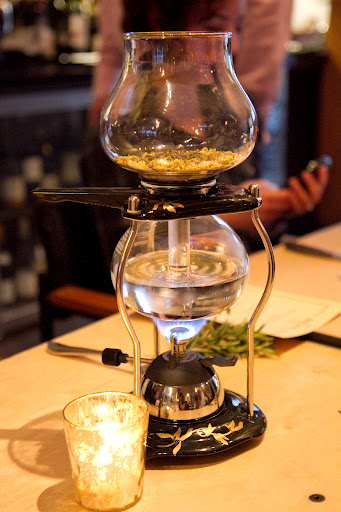
In a nod to The Aviary in Chicago, they set up a boiler emitting chamomile into the air, rounding out our experience with intense aromas.

A floral Heirloom Rose cocktail (NOLET, simple syrup, lime, rose water) elevated the interplay of botanicals with food alongside Mark Liberman’s gorgeous white tuna cured in beets, hibiscus, and juniper. Best of all, we finished with Carolus Nolet, Sr.’s (a 10th generation distiller who launched Ketel One in the 1980’s) NOLET’S Reserve Dry Gin. Typically selling for over $600 a bottle (K&L has it for $550), this extremely allocated, small production gin is a complex, spicy, verbena-laden imbibement that lingered with me long after dinner was through.

Subscribe to Virgina’s twice-monthly newsletter, The Perfect Spot, www.theperfectspotsf.com

So close

0

le.chicken.farmer@gmail.com

CHEAP EATS It’s birthday season! Me, yeah, but more importantly:

Happy birthday to C. Chunk, 5. Happy birthday to K. Chunk, 4. I took the train home for C. Chunk’s birthday, and now I’m taking it home for K. Chunk’s. That’s a lot of trains, in case you were wondering, and I’m starting to feel like I could write a Jimmie Rodgers song.

What rhymes with Amtrak?

Ah, nevermind. I think I’ll play with my laptop.

Hedgehog has one more month of work in New Orleans, and then we’ll be coming home by car, and for good. But since our new car is smaller than the one we went to New Orleans with, and that one was popping buttons as it was, I am traveling with roughly half of our crap, including an electric guitar.

Shit! It’s left-handed, and both me and Jimmie Rodgers are righty . . .

I got the wrong-hand blues

My baby’s got me all turned round

Got the wrong-hand blues

My baby’s got me all turned round

This guitar won’t listen to me

It says I’m sitting upside-down

yodel-eh-hee-oh d’eleh-hee-oh d’eleh-hee

Please forgive me. It’s the middle of the night in Texas. (And elsewhere, I imagine.)

One of the nice things about going away for months at a time is you come home and things are different. Give you an example, from my last time home: There’s barbecue in the Mission!

There’s barbecue in the Castro!

This review has nothing to do with barbecue.

Yesterday I barbecued a slab of ribs the size of a small table. We could have put our plates on top of the ribs — but then what would we have eaten?

And how would we have washed the sauce off our knees?

My barbecue sauce is blueberry-based, and stains. Bacon fat, garlic, onions, cayenne, rice vinegar, maple syrup, black pepper, celery seed . . .

But this isn’t about barbecue.

It’s about Thai. The Maze said he thought there was a new Thai restaurant on 16th and Guerrero, and I said I thought I saw one there too, let’s go.

Interestingly, he was thinking of Malai, which has been there for decades and decades. Which goes to show you how much Maze loves Pakwan. He eats there all the time, and just now notices the Thai place across the street?

But there really is a new one, too. New to me, anyway. I think it’s only been there for months and months, almost a year maybe.

And that’s what I like about coming home, I’m saying: Thai food. Which isn’t very good in New Orleans. Not to mention Texas, in the middle of the night.

So, yeah, Krua, kitty-corner from Malai, and first things first: they do have duck soup. In fact, it was one of the best I’ve had, brothwise: salty and rich. The celery was a nice touch, and the noodles were good; but the bowl could have used more ducks in it was all.

As for the gold bags . . .

Well, I don’t have anything to compare them to. I never had gold bags before. In fact, what the hell are gold bags?

All the rage, according to Maze. He keeps seeing them on menus, and now probably I will too. They are dumplingy collections of shrimps, chickens, water chestnuts, and corn, tied off at the top like . . . gold bags, apparently.

Were they good? Yeah. Sure.

I forget what else we had. Probably tofu, or else I would remember. In any case: new favorite restaurant. I just can’t get over the fact that there is duck noodle soup within two blocks of my apartment, and barbecue. Even ramen now, I’m pretty sure. Within two blocks of my apartment!

Our apartment.

All we have to do now is live in it.

KRUA THAI

Daily 11:30am-10:30pm

3214 16th St., SF

(415) 913-7886

MC, V

Beer and wine


Namu Gaji

0

virginia@sfbg.com

APPETITE Although Asian outpost Namu Gaji is brand new, the presence of Namu restaurant itself and owners the Lee brothers — Dennis, David and Daniel — has been felt in San Francisco for years. Since 2006, the Lees have been weaving Korean, Japanese, and other Asian cuisines with California spirit in the original, now shuttered Richmond restaurant and eventually Namu’s Ferry Building farmers market stand on Tuesdays and Saturdays. In early April, the brothers opened their Mission incarnation, Namu Gaji.

Its kitchen is in direct view of the small dining room, as Dennis Lee and Chef de Cuisine Michael Kim (Craft Los Angeles, SPQR) cook at a grill fired with bincho-tan, a low smoke, Japanese charcoal. The Lee brothers’ aunt, direct from Korea, will oversee a house fermenting program, bringing with her bacteria strains from the family’s Korean village. The chefs do the usual sourcing from local farms but, in an unusual slant, have commissioned farmer Kristyn Leach to grow exclusively for them on a one-acre plot at Baia Nicchia Farm in Sunol, where she’s raising rare Korean chiles and herbs — quite a treat.

I already miss the chic, spare Richmond dining room compared to the cramped Mission space, despite its striking communal table and tree branch sculpture weaving dramatically from the ceiling. Granted, the Dolores Park location is prime real estate, particularly when it comes to daytime takeout, perfect for picnicking in the park, possibly my favorite way to enjoy Namu Gaji. But the Mission is saturated with hip dining destinations in a way the Richmond, one of our great underrated neighborhoods, is not. This was an understandably strategic move, but the new space gets progressively warmer and noisier as an evening evolves. For those who don’t enjoy yelling through dinner, I’d suggest dining early, although do note the actual dinner menu doesn’t start until 6pm.

In multiple early visits, truly unique dishes flow from the kitchen. The menu is grouped in categories like raw, broth, salad, crispy, grill, and comfort, with a handful of key choices under each heading. The “raw” section is pricey ($18), but raw King salmon, topped with pickled red onion, a dollop of whipped yuzu cream, and shiso (Japanese herb from the mint family) is generously portioned, bright sashimi. Uni sure is fantastic fried — what isn’t? — as tempura ($14) alongside fried shiso leaf, lemon zest, and market veggies, which on a recent visit were fava beans and a yellow onion. Grilled octopus ($14) is a tad bland compared to other grilled octopus dishes around town, though pleasingly plated with English peas, spring onion, fried garlic, and that fabulously pungent Korean chili paste, gochujang.

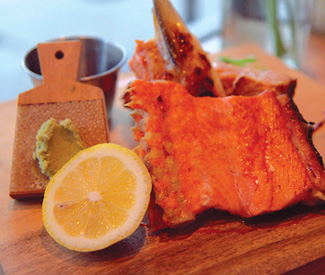
It gets exciting with an off-menu special of buckwheat gnocchi, pan seared in black garlic gastrique, with English peas and pea shoots (can you tell peas are in season?) This non-traditional gnocchi is earthy, lively, playful. “Fish parts” ($18) arrive on a wood slab, generously portioned and artfully arranged, more hearty than fussy. The fish parts change, but one night I dined on impeccable wild salmon belly and spine, with caramelized, crispy-sweet skin. Its partner requires a more adventurous palate: ahi tuna roe, cured and grilled. A dining companion bluntly called this large hunk of meat what it was: a giant egg sac. If you didn’t know, however, you’d think the pink, meaty fish a more savory, funky cut of salmon. Either way, I was delighted to be served something I’d never had before.

One evening after a 90-minute dinner, I waited nearly 30 minutes after all dishes had been served (and eaten) for a dessert which my sweet, adept server kept informing us was about to arrive. Though next time I’ll skip dessert under those conditions, I was pleased with shaved ice ($8), or shave ice as it’s known in Hawaii, which you can order doused in Four Barrel coffee and cocoa crumbles. My top choice is in coconut cream with coconut crumble and strawberries. The ice is creamy soft, feathery… and quickly devoured.

The brothers’ Korean heritage shines best in their street food-style dishes, available at the Ferry Building Farmers Market as well as during the day at Namu Gaji, ideal taken across the street to Dolores Park. Their beloved nori “tacos” ($3) and okonomiyaki ($10 lunch, $16 dinner) still delight, while BBQ belly and Korean BBQ-style marinated chicken thigh ($10) are packed into pan de mie bun layered with Swiss cheese, soy glazed onions, pickled daikon, aioli, Dijon mustard — a buttery, fatty pleasure of a sandwich. Gamja fries ($10), essentially organic fried potatoes piled with short ribs, kimchee relish, gochujang, kewpie mayo, and green onions, are the fast food of your dreams. KFC ($12) is a quarter of a Marin Sun Farms chicken tossed in sweet and tangy sauce with dashi gravy. Each of these heartwarmers not only satiate but illuminate best why the Lee brothers have become an SF staple.

NAMU GAJI

499 Dolores, SF

(415) 431-6268

www.namusf.com

Subscribe to Virgina’s twice-monthly newsletter, The Perfect Spot: www.theperfectspotsf.com


O, queso! Delectable slices of Spain and Portugal

0

“Don’t. Eat. The. Cheese.”

I kept telling myself this as I stared down at my plate during the Cheeses of Spain and Portugal Class at the Cheese School on May 23. Nine slices of sweating, salty, pungent wonderfulness looked back at me, taunting. Thankfully, there were endless glasses of delicious white wine to drink before the class started.

Juliana Uruburu (imagine this name pronounced with a beautiful Spanish accent) was our teacher for the evening, guiding us through the diverse and tremendous flavors of Spanish cheese. “Cheese chose me,” exclaimed Uruburu, who has been working in cheese for decades and is an obvious fanatic from the way she talks about it. How can you not be a fanatic when you spend your days doting over wheels of cheese like majon — a sheep cheese with cajones! — and visiting Paris every year for the Salon du Fromage, the equivalent of the World’s Fair of cheeses.

Eventually we were able to eat the cheese… but first we had to smell it first, then break it in half, before tasting the creamy subtle center and slowly sampling outwards to the funky rind. Uruburu explained that Spain is one of the most innovative and exciting places when it comes to food. This year at the Salon in Paris, Spain presented over 50 new varieties of cheese. Así que mucha innovación! So much innovation!

Uruburu taught us a bunch of geeky tidbits about cheese-making and tasting. For example, those little crunchy crystals in some cheeses like Manchego aren’t made from salt, but a protein called tyrosine that develops in certain curds. Another fact for gluten-conscious eaters: blue cheese may contain wheat gluten because the culture is often made with moldy bread. Who knew? After devouring a large plate of cheese (and several glasses of wine), there was one queso that stood out the most to me. Cadi urgelia. Soft but stinky.

Four couples in the room had trips planned to Spain, thinking it would be a fun idea to get a little cheese primer first. For me, I was able to satisfy some of my travel lust through this class by letting my palate transport me back to Spain, with their countless tapas bars, colorful flamenco music, and beautiful mid-day siestas.

The Cheese School hosts a variety of fun cheese classes and events, including cheese-making classes with the SF Milk Maid.

The Performant: All you can eat

0

Wild Food Walks and Bal Littéraire satisfy imaginative appetites.

“First, the bad news,” says our guide and frequent forager Kevin Feinstein. “Foraging in the Bay Area is illegal.”

Well, swell, I guess it’s a good thing that I packed snacks. “If the land is private, and you have permission from the owners, you can forage,” Feinstein amends, which still doesn’t help me in planning my lunch, but good to know for future reference. I’m attending one of ForageSF’s “Wild Food Walks,” along with about 15 others, hoping to graze upon that freest of foodstuffs, the weeds in our backyards — and yours.

The tour kicks off on the perimeter of Golden Gate Park, and without even taking a step, we’re summarily introduced to common mallow, miner’s lettuce, and stinging nettles. After another reminder about the illegality of *picking* the plants in the park, Feinstein exhaustively details each plant’s properties — their nutritional content, the edible parts of each, identification and preparation tips. Mallow is mucilaginous and anti-inflammatory, and the seed pods or “cheese wheels” can be eaten as well as the leaves, stalks, and everything else. Miner’s lettuce, which looks a bit like a land-locked lily-pad, is native to California, high in Omega-3s, and never gets bitter, even when older. Nettles do sting (which one curious child found out the hard way), but not when crushed or cooked. Extremely high in various minerals and vitamins, nettles are also easily cultivated, making them a good bet for amateur urban farmers as well as foragers.

“One five-gallon nursery pot grows more nettle than one person can handle,” promises Feinstein as visions of pestos and cream soups begin to creep into our collective consciousness.

Two hours and a dozen plants later, we’re all a little overwhelmed, but there’s excitement in it, like people are going to go home immediately and weed the garden, not for the usual reasons, but to make a salad. It almost makes one want to trade one’s wallet for a foraging basket, until reminded that urban foraging has its share of downsides — legal issues, contaminated soil, plant misidentification. Even so, I’m betting that hardly anyone in that group will be able to pass by a big clump of hilltop-dwelling nasturtiums or wild radish without checking for their crunchy, spicy seed pods, or slipping a few leaves in their bag for later.

Another new taste I was introduced to over the weekend was San Francisco’s first ever “Bal Littéraire,” a Parisian concept imported over as part of the French-American translation exchange, the Des Voix Festival. Though I’d been given an idea of the concept ahead of time — an ephemeral, collaborative work created by six playwrights, using pop songs to tie the scenes together and turning the floor into a giant dance party — nothing could have prepared me for the high-spirited spectacle it became.

Seeing a “typical” Bay Area theatre crowd getting down and dirty to hyphy hit “Fast (Like a Nascar)” in the middle of a French-accented, surrealistic serial romantic comedy featuring Liz Duffy Adams as a tough-talking, Jackie-of-all-trades stalking a middle-aged French divorcee, and Marcus Gardley as an octogenarian in drag, was a taste of contemporary France mixed with a Bay Area spice that titillated a cosmic palate, and won’t soon be forgotten. Here’s hoping that either Playwrights Foundation or the Consulate General of France find a way to keep this new theatrical tradition going in SF for years to come.

Brews and Boontling: Beer fest shots from Anderson Valley

1

Photographer Allen David sent us these snaps from the May 12 Boonville Beer Festival, good old-fashioned weekend porn if ere we’ve some. Check them (and his prose below) out to kickstart your next mission outside city limits, using our 2012 Summer Fairs and Festival guide for additional inspiration.  

A scenic drive north takes me to the festival at which the suds spread and the language are both unique. Boontling, an Anderson Valley regional dialect with words from the British Empire, the Pomo Californian indigenous people, and Spain can be heard between the festival’s many taps: “The ballets steinbok horning’, chiggrul groin’ tiddrick in the heelch of the Boont Region!”

For four hours I am able to sample the finest beers that the West has to offer. From golden pale ales to dark oatmeal stouts to Double IPAs with more hops than I thought possible. Two hours into the festival, everyone’s feeling hoppy themselves. Those sudden yells of joy you only find at beer festivals spread across the crowd, as smiles stretch further and further across faces.

Beer bellies be damned, when the end of the festival approaches everyone finishes their last glass and heads to the fair campground to continue the party, with DJs and dancing ’til the moon is high above. Great festival. See you next year, Boontling.

Whorls away

1

le.chicken.farmer@gmail.com

CHEAP EATS Way out in the water.

A severed head, a small treasure in gold, or drugs, my own death, fish, a baby in a basket, the murder weapon, the meaning of life, peace and quiet, a clue .. . A long time ago, when I was fearless, I swam toward something. That’s how curious I was. It could have been anything, but I had to know.

Now, I can float. I like to think I can float.

Then, I was a pretty good swimmer. I could swim, see me swimming?

My people on the shore, Moonpie, Baby Rae, and Moonpie’s now resting-in-peace sister, Sweetpee … they didn’t know where I was going, because the fearless don’t always say.

They watched. They worried. And they must have seen what I was seeing — this bobbing thing, way out on the horizon.

As the ocean floor sloped and sloped and sloped away from my kicking feet, they watched, helpless and wondering, and I suppose I got a rise out of this.

Good. Risings was what I needed then, maybe even more than treasure. What it was, though, that I risked my ass for all those years ago, was an Igloo cooler with a half a loaf of sliced white bread in it, an open package of lunch meat, and mustard. Or in other words: sandwiches.

I risked my life for sandwiches!

And I don’t even particularly like sandwiches, I thought, watching a matzoh ball bob in my bowl of matzoh ball soup. That is so David Copperfield.

And these were some hard-earned matzoh balls. Not only because Soup Freaks is off my beaten path (unless I happen to be BARTing to a ballgame), but also because the matzoh gods were not looking out for me, on this particular day.

“Matzoh ball soup!” I said.

And the serverwomanperson digged and dug and couldn’t find hardly no matzoh balls in that there silver thingie of soup. Just one, and some broken off pieces of a couple others.

“Hold on a second,” she said, stepping away from the counter and returning, many months later, with a bag of frozen ones. At least they looked like they were frozen.

At least it seemed like many months.

Anyway, she was fixing to pour them into the vat when, apparently, a thought occurred to her: Did I want to wait for them to warm up, or…

“I’ll just take it as is,” I said, and that was how I wound up with a bowl of matzoh ball soup without hardly any matzoh balls in it. My fault, let the record show.

Theirs: to compensate, probably, they gave me three big pieces of bread — which seemed pretty generous, but I would have rather had a bigger bowl of soup with more things in it. I mean, classically, matzoh ball soup is not the most populated bowl of soup in the world, but, really? No carrots? No celery?

What little chicken there was was really not very good. It was peppered, and dry. Very dry. And there’s nothing worse than dry chicken in soup. Well, except maybe dry chicken outside of soup.

So I’m afraid I’m going to have to break with tradition here and declare Soup Freaks “just another restaurant.”

Not my new favorite.

David Copperfield, on the other hand. On the other hand, the Pixies. I haven’t read or listened to it or them in quite a while, respectively; but at times like these, when everything starts going wrong and doesn’t seem to want to right itself, we will grab at books and songs, if not straws.

If not drinks.

If not lunch itself.

See me swimming? Between waves, a mile from shore … the skinny girl, kicking frantically, breathing hard, and holding on for dear buoyancy to flotsam, jetsam, to little coolers full of someone else’s sandwiches. That’s me.

SOUP FREAKS

Mon.-Fri. 7am-8pm; Sat.-Sun. 10am-6pm

667 Mission St., SF

(415) 543-7687

AE,D,MC,V

No alcohol


Appetite: 2 new Bay cheap eats spots

0

In the spirit of my recent “new SF cheap eats” article, here are two noteworthy new cheap eats joints East and South: Berkeley and Palo Alto.

ASIAN BOX

Asian Box is a newer take-out shop (with one narrow communal table inside and a couple tables outside) in a mobbed Palo Alto strip mall. What could be just another casual Asian food joint has two key things going for it. One is two former San Francisco chefs behind it: executive chef Grace Nguyen, of Out The Door’s Bush Street location, and Chad Newton, who many of us followed at Fish and Farm (where he created one incredible burger).

The other is that Asian Box’s affordable food ($6.95-$8.25) is ultra-fresh and satisfying.

It’s an assemble-your-own meal, starting with short or long grain rice, Asian vegetable salad or rice noodles. Choose a protein — I like juicy garlic soy glazed beef or creamy coconut curry tofu, and finish with add-ons like jalapeno, bean sprouts, carrots, peanuts, mint, basil, pickled vegetables, lime – all at no additional charge (except for a .95 caramel egg).

In terms of sauces, creamy peanut sauce with lime and coconut stands out, while there are also Sriracha and a no oil fish sauce. Vietnamese iced coffee and tart lemon lime marmalade ($2.95 – both winners) flow from juice dispensers, while, much as I wanted to try it, house Jungle jerky ($2.75) was sold out on my recent visit.

Though SF residents needn’t trek from the city, if you’re in the area, it’s easily one of the best cheap meals in Palo Alto and would be a lunch hit in SF if they had a Financial District location.

855 El Camino Real, Palo Alto. (650) 391-9305, www.asianboxpaloalto.com

BRASA

In the space were eVe used to be (which I included in the Guardian’s 2010 Best of the Bay), husband-and-wife owners Veronica and Chris Laramie, reopened the place as Brasa, a casual Peruvian eatery with lime green and neutral walls, and idyllic back deck. While they hope to revisit the eVe concept in a bigger space eventually, Veronica tells me the current goal is to open another Brasa.

The menu is simple, heartwarming Peruvian fare, if not solely worth heading across the bridge for, yet worthwhile if in the area. Classic Peruvian favorites like Lomo Saltado here become a sandwich ($8.25) packed with hangar steak, red onion, tomato, soy sauce, and French fries.

The house specialty is rotisserie chicken (quarter to whole chicken with 1-2 sides: $8.75-$21.75), crispy skin dotted with herbs. We have quality rotisserie in SF, but dipping sauces are a plus here, featuring common Peruvian peppers, aji amarillo and rocoto, my favorite being a green hucatay, sometimes referred to as Peruvian black mint, though it is actually an herb related to marigold and tarragon. The sauce is spicy, herbaceous and creamy.

Sip a refreshing chicha morada ($2), a sweet, purple corn Peruvian juice laden with clove and cinnamon, and finish with house alfajores ($3.50), dulce de leche sandwich cookies (though my favorite alfajores are from Sabores del Sur in SF) or Straus soft serve ice cream (cone $3, pint $6) infused with coffee caramel.

1960 University Ave., Berk. (510) 868-0735, www.brasajoint.com

Subscribe to Virgina’s twice-monthly newsletter, The Perfect Spot, www.theperfectspotsf.com

Live Shots: Avital tours Mission District food hotspots

0

Photos by: Bowerbird Photography

It was 11:30am on a Saturday morning, and we were tipping back salty oysters and chasing them down with sweet pink rhubarb cocktail, and then, just because pig meat tastes so good, ate some wonderfully cured, sliced Southern ham. The day was off to a great start and just kept getting tastier as our little posse made its way through the Mission, led by our knowledgeable and ebullient guide, Avital of Avital Tours.

She described her name as sounding like “Advil” and “Tylenol” mixed together, perhaps also hinting of the hangover and pharmaceutical cure we might need unless we paced ourselves on the drinks. Avital organizes food and wine tours in San Francisco, and specializes in discovering special local eateries that may be off an SF local’s radar.

There was a little of everything on the tour: local cuisine, history, talks by the chefs or restaurant owners, and even a little hands-on cooking stuffing mini meat pastries. Avital is an expert at pairing foods and balancing the tasting options. A super-energizing coffee sampling came at a perfect time, providing a needed lift after the morning cocktail and a delicious beer and cheese adventure.

As we meandered through the streets, Avital narrated our journey with interesting anecdotes about the history of the neighborhoods and murals that decorate the Mission, giving even me, a native San Franciscan, some insight into the neighborhood. The tour ended with ice cream sandwiches on the steps of Mission High, looking out over the Cinco de Mayo celebrations in Dolores Park.

We climbed to the top of those steps after our three-hour culinary adventure, and felt a sense of accomplishment not unlike how hikers feel after reaching the summit of a mountain. Eating and drinking ourselves silly takes work, and we felt perfectly contented to just sit there, loosen our belts, and soak in the sunbeams. What a nommy day!


Deutch maneuver

0

le.chicken.farmer@gmail.com

CHEAP EATS “Berlin is awesome,” Kayday writes me, from Berlin. “We should all live here.”

Amazingly, I answer her in German. “Genau,” I write.

Berlin is awesome, true. But it’s one thing May through September, and something very much else the rest of the time. Is my opinion.

Kayday lives in Seattle, and complains about the weather there from September through July.

She doesn’t want to live in Germany, I feel certain.

When she was here, just a few weeks ago, she wanted to eat at Schmidt’s, maybe for practice. So we did. No complaints from me. Schmidt’s has the best wild boar sausage in all of San Francisco.

We also ate at my new favorite Chinese restaurant, in the Richmond, but I’m not going to tell you yet about that. Maybe next week. If you’re good.

Wild boar sausage, I’m pretty sure I already told you about. There’s Rice Broker though, in the Mission, which is another place where Kayday and me ciao’d down.

“Hi,” I said.

“Hello.”

“Hola.”

And she tried to answer — probably in German — but couldn’t, because something had gone down the wrong pipe. Maybe, I’m thinking, a sesame seed. Or a teeny tiny speck of almond?

Both things were in her rice bowl, which was the two skewers of lemongrass beef one, with whole orange slices, string beans, and, yeah, almonds and sesame seeds.

Now, I’ve seen people choking in restaurants before. I’ve even been the person choking in restaurants. It’s no big thing. You cough, you turn red, you hold up your finger to let your dining companions know that, no, in fact you don’t need the Heimlich. Yet. And then you drink some water, cough some more, tear up a little, feel like an idiot, and continue eating.

So happens, the wrong-pipe problem is a recurring theme for me, in life. I have lots and lots of sympathy and patience, and too am ready — if necessary — to spring into action. Ever the nanny, I am trained in CPR and so forth.

“Hello?” I said again. “Are you quite sure you don’t need the Heimlich?”

“I’m OK,” Kayday said. “I just need to go for a walk.” And she excused herself. “Be right back.” And left.

This was a first.

I digged into my own bowl, which was rice porridge with pork-and-ginger meatballs, bok choy, and cilantro. It was excellent, and went down very smoothly.

While I ate, though, I couldn’t take my eyes off of Kayday’s bowl, which was beautiful. The meat, as yet untouched, glistened on its skewers. The orange slices shone forth, like little sunsets. The beans — it was just a beautiful bowl of food. Calling to me.

Kayday is a dear and good friend. She’s an important part of my band. It occurred to me she could choke and die outside on the sidewalk. Still, I decided not to eat her food. When she came back, I would ask. And she would share.

Then, the hell with it, I reached across the table and tried a piece of meat from her skewer. Tough city, go figure!

But, like I says, mine was very good. The meatballs were almost as smooth as the porridge, and good and gingery. And I loved my edamame snack bowl, with dandelion and cane vinegar.

Come to think of it, she’d had a snack bowl appetizer too. Pickled daikon and carrots. And I can’t remember now if I even tasted it, but it sounds pretty good, no?

Of course, this isn’t Kentucky Fried Chicken. But to its credit it isn’t Spork either. And even though it choked my friend, I like that Rice Broker is there. Here in the hood.

And anyway, she survived. She came back.

“Hello,” I said.

She said, “Hi.”

RICE BOWL

Wed-Sun 6-10pm

1058 Valencia, SF.

(415) 643-5000

Cash only

Beer and wine


Sushi east and west

0

virginia@sfbg.com

APPETITE Despite the countless lauded sushi restaurants I’ve eaten at in NY and LA, I find San Francisco more than keeps up, whether due to the staggering range of fish (and lovably surly attitude) Roger delivers at Zushi Puzzle (www.zushipuzzle.com) (pencilfish or flying fish, anyone?), the sustainable efforts of Tataki (www.tatakisushibar.com) and Sebo (www.sebosf.com), or the pristine precision of Sausalito stalwart Sushi Ran (www.sushiran.com), which tops overrated Nobu (www.noburestaurants.com) restaurants, in my book.

Here is one new SF spot and one revamped Berkeley restaurant adding more welcome sushi diversity to the Bay Area.


SARU SUSHI BAR

Why couldn’t Saru Sushi Bar have been in Noe Valley all the years I lived right by this 24th Street storefront? The space’s original two sushi incarnations were less than desirable, where I was once subjected to smelly, rubbery fish. The closet-sized restaurant is completely revamped to the unrecognizable point. Still tiny, it feels roomier with large front windows and sleek brown color scheme. Cheery service pleasantly elevates the experience, particularly on a sunny day at lunch.

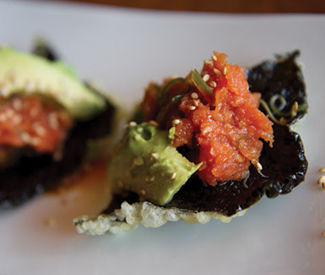
I’d claim the space has finally arrived. There’s not just the usual hamachi and sake (salmon), but rather playful, unique bites prepared with care. “Spicy cracker” ($7) is a sheet of seaweed fried in tempura, topped with spicy tuna and avocado — a textural bite. Bright halibut tartare is drizzled in lime zest, yuzu juice, and Japanese sea salt. Though I ever appreciate sampling options, some tasting spoons ($7) work better than others. One that worked: young yellowtail (kanpachi) in truffle oil and ponzu sauce, with garlic chips and scallions.

I know I’m good hands if raw spot prawns (amaebi) are on the nigiri menu ($7 two pieces). Bright and firm, they taste as if they were caught fresh that morning. Snappy rolls (maki) are not overwrought. Quality raw scallops are a favorite, so I appreciate Naked Scallop ($12), a roll wrapped in light green soy paper, filled with snow crab, avocado, masago (smelt roe), and, of course, scallop. Not near as junk-food-sushi as it sounds, is the fresh, fun, subtly crispy Popcorn Tuna roll ($10): panko-crusted spicy tuna is topped with masago (smelt roe), scallions, spicy mayo, and a sweet soy glaze.

Noe Valley finally has a destination sushi bar.

3856 24th St., SF. (415) 400-4510, www.akaisarusf.com


JOSHU-YA BRASSERIE

At first glance, Joshu-ya Brasserie could be another hip Berkeley student hang-out: a funky, converted old house with red-gated front patio. But step inside the recently remodeled space and bamboo and dark wood exude an Old World Zen. A fountain out front murmurs soothingly while the sun warms the partially covered patio.

A chalkboard lists fish specials, but also rabbit tacos and Kobe kimchi sliders (the latter cooked too medium-well for me). One immediately realizes this is no typical sushi or even Japanese restaurant. Young executive chef-owner Jason Kwon’s vision is bigger. Yes, he is going for the Bay Area standard of seasonal, sustainable, locally-sourced ingredients — after all, he founded Couteaux Review (www.couteauxreview.com), a culinary organization promoting sustainable agriculture. But French influence and unique twists keep things interesting, with dishes like pan-roasted rib-eye medallions in blackberry balsamic reduction, or duck confit with buckwheat noodles, nori and bonito flakes. In some ways, the vision feels beyond what the restaurant has yet fully grown into, but the intriguing elements hold promise.

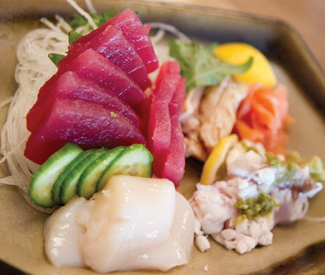
The $35 omakase is a steal, particularly when chef Kwon informs you his fish supplier is the same one that French Laundry and Morimoto buy from. After a starter of seared albacore, fresh and bright, if a little too doused in fried onions and ponzu sauce, a giant, artistic sashimi platter hits a number of high notes with actual fresh wasabi (always a good sign), aji tataki (horse mackerel) from Japan, kanpachi (young yellowtail) from Hawaii, hirame (halibut) from Korea, and chu-toro (bluefin tuna) from Spain. Only one fish on the platter arrived too cold and firm. The rest were silky and satisfying.

Being less of a sweet tooth, I’d rather have finished the omakase with another savory dish than tempura red bean ice cream. Generous scoops of fried ice cream and pound cake were a little weighted after such a refreshing meal. Seared salmon in truffle creme sounds like a fine dessert to me.

2441 Dwight Way, Berk. (510) 848-5260, www.joshu-ya.com

Subscribe to Virgina’s twice-monthly newsletter, The Perfect Spot, www.theperfectspotsf.com
Appetite: More Upper highs and Valley loves

0

In this week’s Appetite column in the paper, I ran down my picks for the best spots to eat a quality meal (without the expense of other areas) in the Upper Haight and Cole Valley region. Below are more of my favorites from my home ‘hood, including picks for coffee, brunch, and cocktails — including delicious sangria, a cheese gem, and a woeful tale of a hot dog scramble to avoid.

COFFEE: Coffee has long been rough in the Haight. Until Haight Street Market opened a Blue Bottle kiosk in their store, one couldn’t get a proper cup. While appealing cafes like Reverie boast a welcome back patio, and the La Boulange chain on Cole serves substantial pastries, none offers a cappuccino or espresso to satisfy coffee snobs. But just in the last week or so, there’s a quiet coffee revolution afoot with two new cafes. Flywheel Coffee Roasters looks like a hipster Mission coffee spot with a handful of laptops and industrial-stark interior. Though they aren’t going the foam art/microfoam route at this point and they have not begun roasting their own beans in-house as they plan to, initial cups are promising. The other new spot is Stanza in the Coco Luxe space. They’ll be doing coffee cuppings on the first Thursday of each month (7pm) and have their coffee roasted by Augies in Southern California. They DO have foam art and proper cappuccinos. A welcome neighborhood addition.

BRUNCH: I’ve never gotten Zazie‘s endless brunch waits. Sure, it’s a charming, little Parisian space, though I’ve had better luck with non-brunch meals. But for 1-2 hour waits (they do have a nice system now that alerts you when your table is ready), it’s amazingly mediocre. Personally, I wouldn’t wait any amount of time for mediocre. There are so many delicious brunches in the city, I am flummoxed as to why, after all these years, this remains many locals’ favorite. The original Pork Store Cafe likewise has waits (though not as painful as Zazie’s) which I likewise don’t find worth it. I once had a “sausage” scramble here that was hot dog slices. What it does have is quirky, old school diner charm and clientele. My brunch recommend in the ‘hood, though, is always Magnolia. Arriving before noon, I’ve never had a wait and the food is quality (plus there’s Blue Bottle coffee and beers).

FOOD: Kezar Bar (the one on Cole, not the pub on Stanyan) can occasionally surprise with above-average bar food, like giant potato pancakes with Andouille sausage, applesauce, sour cream – in a cozy, pub atmosphere. Despite the crowds and its faded glory, there’s still something appealing about the original Cha Cha Cha. Maybe it’s Mother Mary presiding over the bar, plants surrounding tables for that tropical effect, the festive atmosphere, plantains and black beans, or that damn tasty sangria. Citrus Club‘s food is pretty hit and miss – downright average, really (who has time for that in this city?) – but many adore it because it’s cheap and easy Asian “fusion” (they mix and match Asian cuisines with abandon).

For burgers, if you’re not eating Magnolia’s fab burger, local chain Burgermeister is the best bet as Burger Urge just doesn’t cut it. Since the ’70s, Say Cheese is a tiny Cole Valley gem of a market. Their small selection of cheeses, meats, wines, chocolates, is well curated, the staff are responsive and they make worthy deli sandwiches (like Cajun turkey, creole mustard, pepperoncini, pepper havarti), ideal to take to nearby parks.

DRINK: Us spirits and cocktail lovers have a soft spot for Aub Zam Zam. This is not cutting edge cocktails. It’s a slice of SF history, with a strong spirits selection and older, seasoned bartenders who are knowledgeable and sweet (since lovably cantankerous Bruno passed away, God rest his soul, there’s no kicking people out on a whim anymore). They make a mean gin martini, boozy and bright. The space evokes the Art Deco era with an exotic, Moroccan slant. Divey and dingy, it’s a classic I hope we’ll never lose.

Subscribe to Virgina’s twice-monthly newsletter, The Perfect Spot, www.theperfectspotsf.com
Upper highs, Valley loves

0

virginia@sfbg.com

APPETITE I’m constantly asked what my favorite restaurant is. It’s an impossible question. Inquire about my favorite taqueria, German spot, tea house, French bistro, and I’m ready to talk. There’s a favorite for every style and mood in a metropolitan city such as ours. My current home is on the cusp of Haight-Ashbury and Cole Valley, which, like every neighborhood in our food-rich city, has its treasures. We’ll breeze past the touristy swill and explore its best here. Find more of my picks in this neighborhood, from coffee to cocktails, here.


ALEMBIC

Thank God for The Alembic. The bar has been one of SF’s best since it opened, thanks to bar manager Daniel Hyatt, whose expertise in American whiskeys equals an ahead-of-the-curve selection. Alembic claims many gifted bartenders, like Danny Louie and Janiece Gonzalez, and I’m never disappointed when asking for an off-menu cocktail creation. The food is destination-worthy in its own right — maybe the best in the Haight. Whether at the bar with jerk-spiced duck hearts and a bowl of shishito peppers, or dining on caramelized scallops and sweetbreads over kabocha squash spaetzle, I continue to be satisfied.

1725 Haight, SF. (415) 666-0822, www.alembicbar.com


MAGNOLIA PUB AND BREWERY

Owner and brewmaster Dave McLean opened Magnolia Brewery more than 14 years ago, brewing the best beers in SF (in my humble opinion). Magnolia’s space has Old World, gastropub charm in black leather and wood booths and antique floor tiles. It serves the best brunch in the area — sorry, Zazie and Pork Store — which includes BBQ belly over Anson Mills cheddar grits, or quinoa hash and eggs if you want to cut down the fat quotient. For lunch and dinner, house sausages delight (rabbit currywurst!) as does savory mushroom bread pudding or a near-perfect Magnolia pub burger.

1398 Haight, SF. (415) 864-7468, www.magnoliapub.com


GIOVANNI’S PIZZA AT CLUB DELUXE

Upper Haight’s best hidden gem is Giovanni’s, a pizza kitchen in the back of Club Deluxe (eat in the bar or take-out). Giovanni’s pies aren’t so much Neapolitan perfection as a mix between Italian and East Coast styles, with a classic margherita and spicy Diavola, laden with pepperoncini, salami, Parmigiano, and a Belizean hot sauce. Save room for a West Coast rarity: a fresh cannoli, sweet ricotta stuffing brightened with orange blossom oil. Club Deluxe’s drinks are of the mojito, greyhound kind. Not exactly a cocktailian destination. What makes Deluxe special? Nightly live jazz in a well-loved bar that thankfully hasn’t changed decor for decades, with a 1950s, cozy bar feel. Bands rotate: trios, duos, quartets, even organ acts, providing some of the best jazz in the city, usually free. If only, like New Orleans, our neighborhoods were lined with such clubs.

1511 Haight, SF. (415) 552-6948, www.sfclubdeluxe.com


ICE CREAM BAR AND SODA FOUNTAIN

I wrote much of Ice Cream Bar back in February, so I’ll send you to the review detailing my fascination with this one-of-a-kind, 1930s-era soda fountain. It’s my top pick for dessert.

815 Cole, SF. (415) 742-4932, www.theicecreambarsf.com


PARADA 22

Parada 22 is a vibrant little space with aquamarine walls and vintage South American food products lining the shelves. The casual eatery feels vacation-like, offering Puerto Rican food. My favorite dish here is camarones a la Criolla: sauteed shrimp, tomato and onions in a dreamy-light cream sauce. Sides like plantains and red or white beans in sofrito-based sauces, are fresh and appealing. The restaurant has recently joined forces with sister restaurant Boogaloos (www.boogaloossf.com) in the Mission, serving Boogaloos’ brunch menu every weekend.

1805 Haight, SF. (415) 750-1111, www.parada22.com


THAI DUO: PLOY II AND SIAM LOTUS

Haight-Ashbury has two unexpectedly strong Thai spots serving authentic dishes. Ploy II is upstairs in an old Victorian space, with weathered carpet and decor (elephants, tapestries) straight out of Chang Mai’s Night Bazaar. It does standards well, and I crave the mango panang curry: spicy, creamy with coconut milk and peanut sauce. Siam Lotus also is reliable on Thai classics, though it’s the daily changing chef’s special board that sets it apart. Thankfully on the permanent menu, the Thai tacos are a must. Though the paper thin crepes fall apart at the touch, a filling of ground chicken, shredded coconut, mini-shrimp, and peanuts makes for one of the more fun Thai dishes anywhere.

Ploy II: 1770 Haight, SF. (415) 387-9224, www.ployii.com

Siam Lotus: 1705 Haight, SF. www.siamlotussf.com


HAMA-KO

Hama-Ko husband-and-wife owners Tetsuo and Junko Kashiyama open only when they feel ready and usually treat regulars best, service is slow, and certainly there are no California rolls. But this nearly 30-year-old classic is one of those neighborhood secrets that locals return to and sushi devotees enjoy. It’s straightforward sushi: silky scallops, bright-as-the-sea tai (red snapper), melt-in-your-mouth unagi avocado maki. You won’t find the variety of rare fish found at Zushi Puzzle (www.zushipuzzle.com), but you will find impeccable freshness — Tetsuo sources his fish from the same place The French Laundry and Chez Panisse gets theirs, he proudly tells me — from a couple who cares.

108 Carl, SF. (415) 753-6808

Subscribe to Virgina’s twice-monthly newsletter, The Perfect Spot, www.theperfectspotsf.com 
 

Something to chew on

1

caitlin@sfbg.com

FOOD Veganism isn’t just for rich people. It’s okay to care about what you eat. It doesn’t diminish your commitment to social issues — in fact, it is one.

He just wrote a cookbook that I love, but in his modest home in hills above Fruitvale, food activist and vegan chef Bryant Terry is telling me about class struggle.

“So often, I think that the stories that are told are from young, privileged white kids,” says Terry.

He’s not a young white kid, but he is the epitome of health. Terry’s clean house smells like incense and when I rolled up to the front yard he was gardening in cargo shorts in raised beds of greens. He tells me his beds started a trend — indeed, many of the houses on the block now have a similar vegetal presence.

“Part of my goal is to shed light on other communities that haven’t had much of a voice,” he tells me. If broadening the appeal of healthful cooking is Terry’s goal, then his new book The Inspired Vegan (Da Capo Lifelong Books, 240 pp, $19) is a step in the right direction. Each chapter holds a complete menu with a social justice-related theme. Informative introductions teach about the plant-based, whole food recipes, but the most exciting features are complimentary play lists and reading suggestions that go along with each chapter’s theme. The Inspired Vegan advises you on a lifestyle, not just a shopping list.

Weeks after meeting Terry, I helped host a dinner through the Urban Eating League, a social sustainability project started within the folds of the hyper-educated, environmentally-geared Wigg Party group in the Western Addition. Hosts serve locally-harvested meals, and choose themes to help eaters remember them when it comes time to vote on winners of various honors.

We decided to base the dinner around Terry’s suggestion, his “Detroit Harvest” menu. The recipes pulled their flavor cues from the work of a Motor City nonprofit, Detroit Summer, which started connecting high school students with senior citizens in the early 1990s, young helping old grow produce in their gardens.

My co-hosts and I played the recommended tracks during our meal: Detroit classics like J Dilla, Motown sounds, Aaliyah (yeah, she’s from there). We chatted with the other participants about where they learned about sustainable food systems, what they thought needed to be done to strengthen the good food movement. Few mentioned poor and minority families, but all staunchly believed that the way we eat today will play a big role in what our future will look like tomorrow.

Terry learned about food from his family, from a grandpa whose rows covered a sideyard so large that Terry is reluctant to call it a garden — maybe farm would be a better term for it. He learned early on that growing food could be the basis of independence for African Americans. “Once they decide to stop feeding you, you’re going to starve,” he says simply. He quibbles with the definition of food deserts, saying oftentimes they overlook the DIY kitchen gardening tradition in minority communities.

After going to cooking school “with the express goals of starting a project to help young people,” Terry started b-healthy!, a New York City program that taught kids in poor neighborhoods about healthy eating habits. He counts Edible Schoolyard founder and Chez Panisse icon Alice Waters as a role model. Like Waters, he’s become a national figure, drawing decent crowds across the country to events.

Terry is a realist — he doesn’t believe that everybody needs to be vegan, or a raw foodist, or follow any one nutritional track necessarily. “I’m not that guy. This is someone who understands that we have diverse nutrition needs. To just say that fixing food is going to help resolve issues in these communities — it’s not looking at the bigger picture. If we do have access to healthful foods, that would address a lot of other issues, but we can’t look at food to fix everything.”

It’s not like those raised beds in the front yard are going to save the world. But as far as the sustainable food movement goes, it could do worse than have a mind like Terry’s at its forefront.

All together now

0

virgnia@sfbg.com

APPETITE Incredible burgers in a bowling alley, SF’s deaf community gathering over Neapolitan pizzas, brothers serving food from their hometown of Nice in a tiny restaurant, dining around a U-shaped counter off a FiDi alley… each of the restaurants below opened within the last 6 months, providing a unique communal experience (and, most important, fine food to go with) that makes one feel like actually engaging with, rather than ignoring, fellow diners.


MISSION BOWLING CLUB

Mission Bowling Club (MBC) is one badass bowling alley. Squeaky clean hipster all the way: there’s no funky smell or dated dinginess in this brand new space. Open and industrial, it boasts a front patio, separate dining room downstairs and one upstairs overseeing six lanes and a wood-lined bar area. Cheer on bowlers from comfy couches while sipping a cocktail (solid, though not noteworthy drinks) and filling up on French onion casserole.

As soon as I heard chef Anthony Myint, Mission Chinese Food and Mission Street Food wunderkind, would oversee the menu, it was easy to guess MBC was going to boast exceptional food. The beloved Mission Burger ($15, $10 during happy hour) is back. I missed the rich, granulated patty, lathered in caper aioli. An avowed carnivore, I was shocked to find the vegan burger ($10) is almost as exciting. A fried chickpea, kale, shitake fritter is brightened up with sambal (Indian chili sauce), guacamole, and fennel slaw. A juicy sausage corn dog ($7) arrives upright in molecular fashion, standing watch over a dollop of habanero crema. Only a hard, small “everything pretzel” ($5) disappointed. Not bad for a bowling alley.

3176 17th St., SF. (415) 863-2695, www.missionbowlingclub.com


CASTAGNA

Brothers Jerome and Stephane Meloni from Nice infuse their Italian heritage and French upbringing in Italian and Niçoise dishes. I enjoyed Stephane’s cooking at their former Restaurant Cassis, a far roomier Pac Heights space, but their tiny new Castagna lends itself to connection. Stephane cooks within full view, Jerome interacts with diners, and I found myself in conversation with tables next to me. On a good night, it exudes that neighborhood conviviality found in similar-sized restaurants around Europe. Decor isn’t particularly memorable, though red walls always bring a space to life.

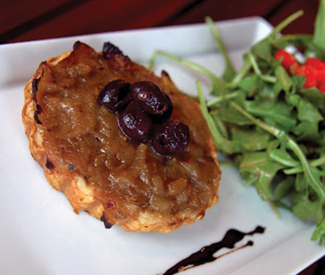
Sticking closer to tradition is the best way to navigate Castagna’s menu. Stephane’s classic Niçoise caramelized onion tart ($7.50) is the best dish, silky with caramelized onions in a flaky crust, with (the good stuff) white anchovies on the side, which they explained neighborhood diners weren’t quite ready for — I say place them on top and let diners sort it out. I found the steak in my steak frites ($18) too well done (medium rare, please) despite a lush green peppercorn sauce. I’d opt instead for French-style campagnarde pizza ($15), in the spirit of flammkuchen (Alsatian flatbread), covered in potato sauce, bacon, crème fraîche and raclette.

2015 Chestnut, SF. (415) 440-4290, www.castagnasf.com


MOZZERIA

The communal award could easily go to the Mission’s Mozzeria. Maybe we didn’t need an umpteenth Neapolitan pizza place, but there’s none quite like this, run by a deaf couple and staff. San Francisco’s deaf community gathers en masse at a hangout where speaking with your eyes and hands is as important as speaking verbally. Of course, verbal processors are welcome, too.

The dining bar is my preferred perch, particularly to engage with chef Russell Stein (who co-owns Mozzeria with wife Melody). He’s hilarious and reads lips like a master, joking with diners as he spreads ingredients over wheels of dough before popping them into a wood-burning oven. His heartwarming Neapolitan pizzas ($12-18) are topped with the likes of caramelized onion, pancetta, mozzarella or goat cheese and eggplant. I must admit, my favorite item, Mozzeria bar ($8), isn’t the most gourmet, but hearkens back to my Jersey youth. Let’s call it what it is: a fried mozzerella cheese log doused in pomodoro sauce and basil. Sheer comfort.

3228 16th St., SF. (415) 489-0963, www.mozzeria.com


CLAUDINE

Claudine’s chic cafe charms. Big picture windows and corner space on an alley up a half flight of stairs appeal, while a u-shaped bar creates a convivial dining experience, the bar is so small so you can’t help but exchange good will with neighboring patrons. You can dine at a table, but the bar is far more fun, and works for a casual meal all day.

Much has been made of the meatball, kale, and fregola soup ($7/10), and rightly so. It is an unexpected culinary delight: olive oil-laced broth, laden with Parmesan, onions, carrots. I can be bored by broth soups at times, but this one holds my interest with plump veal-pork-beef meatballs and pleasantly soggy kale. Roasted mussels ($12 and $17) arrive aromatic with fennel sausage in lemon and white wine, while even avocado toast ($12) delights topped with dill gravlax, Spanish black radish, and lemon. Leave room at the end for Claudine favorite s’mores ($7) baked in a glass bowl with layers of marshmallow and chocolate on graham cracker crust. My meals at dinner have been more satisfying than at lunch, but each visit improves my opinion.

8 Claude Lane, SF. (415) 362-1988, www.myclaudine.com *

Subscribe to Virgina’s twice-monthly newsletter, The Perfect Spot, www.theperfectspotsf.com
 

Appetite: Pebble Beach Food and Wine Fest delighted with celeb chefs, wine copter

3

Despite chilly breezes and outrageously high ticket prices ($500 was cheap), PBF&W, April 12-15, was a bustling, fun-filled weekend, with celebrity chefs, after (and after-after) parties, copious amounts of caviar, champagne and white Burgundy sipped overlooking the waves from the Inn at Spanish Bay fire pits, and a helicopter ride with sommeliers(!) to Carmel Road’s vineyards.

3 spring cocktail trends

3

Spring imparts new life and lush green after winter rains. It also ushers in a glut of new cocktail menus, emphasizing the best produce of the season and exciting new trends.

BOTTLED COCKTAILS

These are sprouting up everywhere, including at the newest addition to the Bourbon & Branch family, the 1950s-styled Local Edition (691 Market, SF. www.localeditionsf.com), which opened April 12. There is no carbonation in these blends, just sophisticated, straightforward bottlings that utilize house syrups to drive flavor profile. Instead of individual-sized bottles, bar manager Ian Scalzo opts for 750-milliliter bottles that he corks and seals in-house. Order a large bottle of rum infused with house made yerba maté syrup — some come with a shot of sparkling wine, or soda — or avail yourself to tableside decanter service as you enjoy live music in this spacious, underground bar.

At Harry Denton’s Starlight Room (450 Powell, SF. (415) 395-8595, www.harrydenton.com) bar manager Joel Teitelbaum created a carbonated line-up at $12 per bottle, with even more in the works. Clear spirits dominate this bottled cocktail menu, which just launched April 10, but don’t be surprised if brown liqueur shows up too. Teitelbaum is already working on a Bulleit Rye cocktail for bottling. Try a carbonated Negroni made lively with Campari, Plymouth gin, and sweet vermouth, or a Phizzed Phosphate daiquiri of white rum perked up with cane sugar, phosphate, citric acid, and distilled lime juice.

You read that right, distilled juice. Citrus can easily turn bitter and pungent during distillation, but with lots of experimentation (and failed batches) using various juices, Teitelbaum has cornered a subtle lime aroma that blends seamlessly into his bottled daiquiri, mojito, and Brokers gin-based gin and tonic — my favorite of the bunch. His homemade tonic is a light brown, a natural result from leaving in the cinchona bark filtered out of most tonics. The drink gives off a floral, cardamom aroma, and the distilled lime juice tastes here of kaffir lime. Cutting-edge bars like The Aviary in Chicago are also experimenting with high concept bottled cocktails, but Teitelbaum is going for approachable, crowd-pleasing classics — with a twist.

PIMM’S CUP REVIVAL

Pimm’s Cups are on the rise. For those unfamiliar, the English brand Pimm’s has a full lineup of spirits, but its most-popular Pimm’s No. 1 is a gin-based, rosy red liqueur with notes of citrus and spice. In addition to Pimm’s, the famous cocktail made from the spirit can include lemon and cucumber, even gin, ginger ale, 7-Up, soda water, or mint. It’s a boozy cucumber lemonade for grown-ups that typically comes generously garnished — a drink that is as visually pleasing as it is to taste.

Pimm’s Cups are staples in London, even offered as a morning imbibement at farmers markets. In New Orleans, the drink is a tradition at 1700s bar Napoleon House (even if the version served is less than exemplary), a welcome treat in muggy Nola heat.

I wouldn’t mind seeing more Pimm’s traditions in our own city, but it seems we’re on our way. I’ve long gotten my Pimm’s Cup fix at 15 Romolo (15 Romolo, SF. (415) 398-1359, www.15romolo.com), which makes a lovely version with your choice of liquor (“anything but scotch,” reads the menu), plus Pimm’s, cucumber, mint, lemon, house ginger syrup, bitters, and soda water. Get the from-scratch treatment at Heaven’s Dog (1148 Mission, SF. (415) 863-6008, www.heavensdog.com) next month when new bar manager Trevor Easter makes a fresh batch of gin-based, housemade Pimm’s liqueur from bar director Erik Adkins’ recipe. With this base, the two craft a gorgeous drink, lively with cucumber and lemon.

Jasper’s Corner Tap (401 Taylor, SF. (415) 775-7979, www.jasperscornertap.com) bar manager Kevin Diedrich just started bottling his own Pimm’s Cup. A vivid orange, it goes down bright and bold with cucumber, ginger, lemon, Pimm’s, soda, and the no-longer-secret ingredient: a hint of fresh strawberry. Diedrich’s little bottled beauties border on addictive. I wish I could stock them at home.

WINE COCKTAILS

Sampling through spring menus I’ve noticed this old trend getting fresh life. At Wo Hing (584 Valencia, SF. (415) 552-2510, www.wohinggeneralstore.com), bar manager Brooke Arthur’s new spring cocktails include a Cynar spritzer made from the Italian artichoke liqueur and Plymouth Gin, alongside Punt e Mes vermouth, cava, orange bitters, lemon peel, and a pinch of salt. This dark, earthy, red refresher is blissfully bitter, bright, and invigorating. The salt enhances flavors, the bubbles impart texture.

Kevin Diedrich at Jasper’s Corner Tap created a St. Helena fizz served tall in a Collins glass. This wine-based cocktail is blessedly light on the alcohol — perfect for a mid-day imbibing. It uses Newton Chardonnay, St. Germain elderflower, Benedictine, Peychaud’s bitters, Bitter Truth grapefruit bitters, and soda. It’s like a mini-escape to wine country.

Kate Bolton of Maven (598 Haight, SF. (415) 829-7982, www.maven-sf.com) created a unique wine aperitif in Global Warming. Dry riesling features, but also sake, even a splash of Ransom’s Old Tom gin. Tart with lemon, a little scoop of absinthe sorbet permeates the drink as it melts. Who says vino and hard alcohol don’t mix?

7 vegan and gluten-free indulgences

0

True, at first glance a vegan and gluten-free lifestyle sounds like a joke from Portlandia‘s Allergy Pride Parade. Wave those flags high, besmirched friends. But here’s a non-snarky thought: for some people, it’s just life. They have actual allergies to gluten and/or dairy.

Or, there are those who simply eat delectable vegan meals for personal reasons and have best friends, family, or partners with high risks of Celiac disease. Either way, any way, whatever way, with all the delicious, forward-thinking offerings in the Bay Area, it ain’t so bad. In fact, it’s really, really good. Don’t hate, just taste. 

QUESADILLAS DE CALABAZA AT GRACIAS MADRE

This quesadilla is the antitheses of the greasy pocket you’re used to. It’s a folded upright pillow, weighted lightly in the base with mouth-watering folds of whipped butternut squash and carmelized onions. While the presentation — which reimagines the quesadilla with a classic samosa shape — is worth it alone, the dish comes slathered in Gracias Madre’s signature spicy cashew cheese and a nutty pumpkin seed salsa. It defies logic, and sets gentle fire to the tongue.

2211 Mission, SF (415) 683-1346, www.gracias-madre.com

FRESH SPINACH LEAVES APPETIZER AT ANGKOR BOREI

When you listen close enough, people in bars are having conversations about food all over San Francisco. Angkor Borei Cambodian Cuisine is a word of mouth restaurant, passed from vegan to vegan, bar patron to bar patron. While there are other yummy choices here (try the pumpkin curry with tofu, served in half a pumpkin piece), perhaps the most surprising, most exemplary idea of what you can do without wheat and dairy is the deceptively simple vegetarian fresh spinach leaves app. It’s a circle of little glass bowls, each with one ingredient: ginger cubes, peanuts, coconut, lime wedges, and the titular fresh spinach leaves. Scoop up a leaf, pile on the accoutrement with tiny spoons then spread the dipping sauce atop; the combined pop of zesty flavor is a delicious experiment.

3471 Mission, SF (415) 550-8417, www.cambodiankitchen.com

VEGAN CHARCUTERIE AT GATHER

It’s an elegant, inspired dish, there’s no debate. Loved by both vegans and omnivores alike. It won Best of the Bay in 2010, made Food & Wine’s 10 Best Dishes of 2010, and earned countless, breathless reviews on local and visiting vegan blogs. But it also should be noted that the vegan charcuterie at Gather — a sturdy board dotted with the most imaginative vegan offerings imaginable, from smoky watermelon to unrecognizable trios of mushrooms — is also gluten-free (save for the hunk of unnecessary Acme bread on the side). Dip your fork tenderly into the offerings, for each is a piece of tasty art.

2200 Oxford, Berk. (510) 809-0400, www.gatherrestaurant.com

PISTACHIO AND CORNMEAL-CRUSTED TEMPEH QUINOA AT THE PLANT CAFE

This tempeh provides a mouthful of dancing flavors. The large pistachio and cornmeal-crusted triangles meet rich, fluffy quinoa covered in a spicy cucumber sauce. Pow. The zing. The Plant is another spot that has many delicious vegan options, and some wheat-free choices, but this is one of few meals that encompass both. Make sure to check the menu — true to its cause, the Plant’s dishes are seasonal, though the crusted tempeh itself seems to be a frequent option (previous incarnations have come dressed up with pumpkin seeds and served over coconut mashed yams).

Pier 3, Ste 103, SF (415) 984-1973, www.theplantcafe.com

GREEN PAPAYA SALAD AT HERBIVORE

Let’s get to the most salient question: yes, this salad is big enough to fill you up on its own. Its tangy shreds cover the whole plate and rises in a crunchy mound in the center. Next, let’s discuss the unfairness of most green papaya salad itself: yes, the Thai custom is to make dish with dried shrimp, and we’re not trying to change tradition here, however, it’s a shame such a tantalizing dish isn’t more often served vegan, when it’s just one ingredient that offends. Herbivore’s version has crispy shreds of tomato, green beans, red cabbage, carrots, onions, tofu, peanut, and mint, all with a spot-on ginger-tamarind dressing. No shrimp needed.

531 Divisadero, SF (415) 885-7133, www.herbivorerestaurant.com

FRIED OKRA AT SOULEY VEGAN

Just thinking about these tiny fried balls of perfection makes me long for a warm afternoon perched on the outdoor benches next door at Beer Revolution, chomping okra and scarfing vegan mashed potatoes. Everything at Souley Vegan is rich and delicious. But there’s something about that spicy fried okra that makes the meal super-special. Twist the lemon slice offered atop, pop one in, then share among friends on the benches. Or keep them all to yourself. No one will judge you.

301 Broadway, Oakl. (510) 922-1615, www.souleyvegan.com

SAHA SAMPLER AT SAHA

Saha has the goods: creamy hummus, smokey baba ganoush perfection, fire-roasted eggplant and tomato spread, and a colorful mix of Mediterranean olives. All of these come in one dish, naturally, the Saha sampler. The cherry on the sampler is the offering of gluten-free pita wedges, every bit as hearty as the kind with wheat, and just as perfect for scooping all that good Middle East-inspired spread.

1075 Sutter, SF (415) 345-9547, www.sahasf.com

Appetite: An elegant line of tequilas

0

Tequila Avión has gained a sort of cult status from a (unsolicited) mention in the show Entourage, but I’m glad to say this tequila holds enough quality to stand on its own. Produced in the Jalisco highlands, in the town of Jesus Maria at the highest elevation of any tequila producer (7000 feet), brings a naturally higher sugar content to the agave plants. Their process is to roast the agave plants at very low temperatures and let them cool naturally which retains more juices and makes the plants less fibrous when crushed.

In meeting with Tequila Avión’s lovely president, Jenna Fagnan, I learned that they use 60% more agave to make a bottle of Avión than the average tequila. It’s intriguing to note that they went to the town itself to find their distiller: Alejandro Lopez is a young distiller from a fifth generation family of agave farmers and distillers right there in Jesus Maria.

Launched only a year and a half ago, Avión is now available in 48 states and Canada. Growing rapidly, Fagnan says, “We’ll grow as fast as the quality allows us to,” emphasizing that they won’t be taking shortcuts to meet the demand. Though in a joint venture with behemoth spirits supplier Pernod Ricard, Fagnan says they retain full control over production and the recipes they began with.

All three are smooth, elegant, flavorful expressions, and generally affordable – even the anejo is reasonably priced around $50. As is typical, I like the blanco and reposado best, the blanco bright and silky, the reposado subtle with spice and toast. The anejo (aged 2 years in light char bourbon barrels) is not much darker than the reposado, a natural color vs. having any color added. It manages to retain herbaceous, agave properties alongside barrel notes of vanilla and caramel.

Sample Avión at Colibri Mexican Bistro downtown or purchase at K&L.

–Subscribe to Virgina’s twice-monthly newsletter, The Perfect Spot, www.theperfectspotsf.com
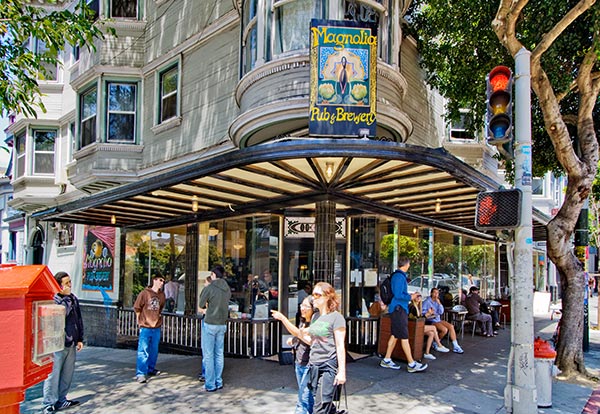
Appetite: Exploring 3 wineries in Niagara-on-the-Lake, Ontario

0

Call it dessert wine if you will, icewine (eiswein in German) is definitely sweet. But winemakers prefer to call it “rich and concentrated,” an apt icewine description, which, when produced well, retains enough acidity to keep it from being cloying.

Icewine’s intensity comes from frozen grapes, allowing greater flavor concentration. Unlike in Sauternes, Bordeaux, icewine is not sweet from botrytis (noble rot), rather from frozen, concentrated juice. Canada and Germany are the largest icewine producers in the world, with most of Canada’s icewine vineyards in Ontario, which I recently visited. Besides attending the annual Niagara Icewine Festival, I spent time with three wineries and tasted winning salumi and cheeses made locally.


INNISKILLIN WINERY

On a clear winter night, I arrived in Niagara-on-the-Lake, an idyllic, sleepy town on Lake Ontario, a short distance from Niagara Falls. By morning, a gentle but steady snowfall covered the woods and stately homes in a blanket of white.

Legendary Inniskillin winery, which put Canadian icewine on the map in the ’80′s, was my home base. A flat expanse of vines and shimmering, frosty grapes surround the warm, modern Inniskillin buildings, including one that is a restored 1920′s barn.

Austrian native Karl Kaiser started Inniskillin in the 1970′s with Donald Ziraldo to fill a need for premium Canadian table wine, getting into icewine in the 1980′s. Kaiser was Inniskillin’s first winemaker, while Nicholson got into wine in Niagara in the 1980′s, quickly moving up the ranks to winemaker at Jackson Trigg’s Okanagan winery in British Columbia. He returned to the East Coast and became Inniskillin’s winemaker in 2007, his wines having won over 1400 awards internationally. Terroir-driven as a winemaker, Nicholson states: “You don’t try to emulate someone else’s style because the terroir will dictate the wine you make.”

Due to icewine’s labor-intensive process, including picking in the middle of the night at lowest temperatures, the best icewine is expensive. And being as good as it gets, Inniskillin wines can be pricey.

Nicholson says for it to be icewine, they cannot legally pick until temperatures reach -8 Celsius (17.6 °F), a lower temp than required in Germany (-7 °C), but he typically prefers -10 °C or below. He calls that: “the sweet spot for balance of acidity and sweet.”

Inniskillin produces far more than icewine with Burgundian influenced Pinot Noir, Chardonnay and the like. I was impressed with numerous wines like an acidic, floral Riesling icewine. I particularly love their sweet but earthier Vidal icewines, from a balanced, bright 2008 Vidal to a  2008 Gold Vidal, uber sweet with marmalade and candied brown sugar balanced by crisp acidity and funky earth notes. Another standout is a red icewine, 2007 Cabernet Franc, robust, rosy, tasting more like strawberry conserves vs. fresh strawberries. If you’re at the winery tasting room in winter, ask for a hot chocolate made with icewine. You won’t regret it.

JACKSON-TRIGGS WINERY

A sister winery to Inniskillin, Jackson-Triggs impressed with dramatic high ceilings, a modern barn-like feel, giant, roaring fireplace, and state-of-the-art production facilities.

We met with head winemaker Marco Piccoli, who is from Friuli, Italy. He brings a European aesthetic to the wines, married to New World vision, having also worked in Argentina. He was long ago fascinated by icewine and how it single-handedly put Canada on the wine map, though he produces everything from a peach blossom-redolent 2010 Sauvignon Blanc to an acidic, sandalwood-inflected 2007 Cab Franc. I enjoyed a unique 2007 Entourage Sparkling Merlot, but my favorite was their buttery yet citrus-laden Silver Series Chardonnay, which unfortunately we do not yet have available in the state.

LE CLOS JORDANNE

I met with young winemaker Sébastien Jacquey from Burgundy who creates Burgundian-style, single vineyard Pinots at Le Clos Jordanne. I wasn’t as taken with Pinots as with best wines at Inniskillin or Jackson-Triggs, but enjoyed a mint and plum-accented 2009 Pinot Noir Le Grand Clos and a dusty, earthy 2009 Talon Ridge Vineyard Pinot.

WINERY MEALS

Eating well was not a problem at the wineries. Great Estates of Niagara chef David Penny (who worked at Four Seasons Hawaii) cooked Inniskillin meals with a couple key highlights.

He smoked a luscious slab of pork belly on a smoker behind the winery. Braving the snow and wind, Penny cooked the fatty belly, slicing it on toasts with an onion jam. A superb breakfast. Penny also created an Inniskillin poutine, topping warm fries with duck confit, Niagara Gold cheese, and red wine gravy.

On a freezing cold night, I was warmed by a moveable feast all over the Jackson-Triggs winery, starting with a spread of excellent Pingue charcuterie. The meal was prepared by pastry chef Anna Olson, a Food Network star in Canada, and culinary instructor/chef husband Michael Olson. Favorite eats from the night were a mini-tureen of choucroute garnie, a favorite Alsatian sausage and sauerkraut dish of mine, and mushrooms in Chardonnay thyme cream sauce with potato cheddar focaccia. No surprise: a round of Anna’s desserts was the perfect ending, each rich and flavorful, from raisin butter tarts to cranberry gingerbread upside down cake.

Subscribe to Virgina’s twice-monthly newsletter, The Perfect Spot, www.theperfectspotsf.com