Film

So ya wanna be in pictures? Two calls for onscreen lovemakers

0

Has your lover ever gazed at you over a post coital puff, coughed, and whispered through a cancer-wracked, husky voice (sorry, those damn cigs have me all riled today) “baby, we should be in pictures,”? Of course, right? Like, this morning, probably! Well, fire up that Gchat and ready your Flip on its charger, because you and and he-she-it have a date with destiny — times two! — this Pride weekend. That’s because Good Vibes is running two calls for submissions of homemade/independent sex films, both due Wed/30.


Numero uno: The Independent Erotic Film Festival 

Everyone’s always dreaming of the day when Dr. Carol Queen and Peaches Christ dissect your lovemaking onstage in front of the audience of the Castro Theater! Right? Right? “There’s nothing like discussing film criticism with a bunch of drag queens,” Queen told me in a recent phone interview. Queen, SF’s resident sexpert, one-time Lusty Lady peep show tease, and founder of the Center for Sex and Culture, said the 4th year of the IXFF (which will take place Sept. 23) will be great because “we can see things that aren’t in the genre expectations of porn — it expands peoples’ ideas of what a sex movie is. If people are only looking at porn on cable TV, they’re only seenig a little bit of what sexuality can be.”

And you, gentle reader, can be part of that sexuality expansion! Of course, not everyone’s entry needs to be hard core. Says Dr. Queen, some past films could have made it as a documentary. “Some are different,” she told me. “They’re artier, they’re more personal.” Whatever’s sexy to you, mmkay?

Entries can be up to seven minutes long (keep it short and more of your randy peers can air their nasty bits at the festival). Good Vibes chooses the shorts they air based on how “good” they are, as well as in the spirit of fostering diversity of sexual representation. Oh, and the People’s Choice award winner gets $1,500 — that’ll keep you condoms for days! You can send it in until midnight on Wed/30, which by my count means you have about 5 days and 10 hours to get it up.


Numero dos: “The G-Spot Does Exist” challenge

“We decided to make this film after after all the press about the G-spot not really existing,” said Dr. Queen about Good Vibes and Je Joue‘s new project, Gush: The Official Guide to the G-Spot and Female Ejaculation, the third in the Good Releasing “Pleasure Ed” series (for which she writes and hosts). “It was this ridiculous study they did — they weren’t sex researchers! They asked a lot of dumb questions, got dumb answers.”

The companies will be tapping porn performers to act in G-spot stimulating scenes — with real life partners, and favored co stars, as has been the series’ wont in the first “Pleasure Ed” movies, of which the first two installations focused on cunnilingus and fellatio. “We want people to learn seeing genuine sexual energy,” said Queen.

But they’re also seeking a regular gal who just really likes her spongey mass of pleasure.

“We wanted to see who out there wanted to represent her own skills and knowledge,” Queen told me. They’re accepting submissions in the form of videos, or even an essay and photos. Once you have won the G-spot crown, your next task is to find out who you want to share it with; like the pros, you’ll be performing for Gush with a partner of your choice — even if that’s a Je Joue G-Ki.


For salacious details on how to submit to the The Independent Erotic Film Festival (entries due Wed/30), go to www.gv-ixff.org

For all the gushing glory of “The G-Spot Does Exist” challenge, send videos to: Good Releasing G-Spot Video, 934 Howard Street, San Francisco, CA 94103. Or or or! Just join the rest of the world by digitizing, and sending a link, photo and/or essay to casting@goodreleasing.com

The Daily Blurgh: Caged tigers I have known

0

Curiosities, quirks, oddites, and items from around the Bay and beyond

SF may put the “booooo” back in booze: “San Francisco could become California’s first city and county to tax booze — about a nickel a drink — in an effort to recover taxpayer health care costs for alcohol abusers.”

*****

RIP: SF Zoo’s Tony the Tiger.

*****

Architecture firm Diller Scofidio + Renfro was picked yesterday by the UC Berkeley to design the university’s new art and film complex that will house the Berkeley Art Museum and the Pacific Film Archive. Does that mean DS+R are still in the running to design SFMOMA’s planned expansion?

*****

Palin PWND in ethics probe (but, sadly, at this point, isn’t $390,000 just chump change to her?).

*****

“Though Mr. Tabbert, 28, personally prefers G-star denim and concert tees, he was on the hunt for 150 dishdashas, the ankle-length garments worn by men in Iraq and elsewhere in the Arab world. In July, actors will wear them in a simulated Iraqi village, posing as townspeople, clerics and insurgents at a National Guard training ground in the Midwest.”

*****
A gallery of Klubstitute fliers from SF’s gay 90s.

*****
In honor of the late Tony and the gay high holidays that are upon us, here is some feline pride from France:

Frameline34: Local drama “The Stranger in Us”

0

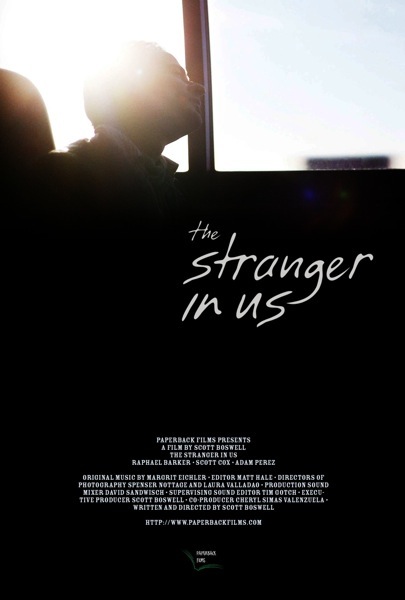
Local filmmaker Scott Boswell may not have set out to make the film he ended up with, but he stands behind the finished product. The Stranger In Us stars ShortbusRaphael Barker as Anthony, a young man who moves from Virginia to San Francisco in order to live with his boyfriend Stephen (Scott Cox). When the relationship turns violent, Anthony finds solace in his friendship with Gavin (Adam Perez), an underage street huster. I spoke to Boswell and Barker about the film’s origins, its unique content, and what this year’s San Francisco International LGBT Film Festival says about the future of queer cinema.

San Francisco Bay Guardian: What was your inspiration for The Stranger In Us? Where did the story come from?

Scott Boswell: Ultimately the story ended up being fairly autobiographical. But it started in a different place. Originally — and Raphael knows this because we talked about it — originally, I had intended to do a much more experimental film, kind of a hybrid documentary-narrative, because of my fascination with the Polk Street, Tenderloin area, which I’ve always had since I moved here in the mid ‘90s. I had considered doing a bit of a portrait of the neighborhood, and kind of infusing actors into it, just shooting a lot of footage and seeing what we came up with. There’s a part of me that wishes I had still done that, but in all honesty, I can say that after Raphael expressed some interest in the project, I suddenly felt like it needed to be more narrative in its scope. He didn’t suggest that. It was just my intuition around the project. So I had been talking to him about doing it for months, without even having a complete script, and continued writing it and auditioning actors. Eventually it became much more traditional in terms of its narrative. It became what it is now.

SFBG: And Raphael, what brought you onto the project?

Raphael Barker: Scott. There wasn’t really a finished script and a lot of it was sort of up in the air, but I was just really comfortable with the process and how it evolved, because it was Scott. He and I just hit it off really well.

SFBG: Did you collaborate at all in terms of creating the character of Anthony or writing the script?

SB: Not so much on the script. I run a screenwriting group, here in the city. It’s a small group and we meet a couple times a month, and they had the most impact on the final script. However, there are quite a few places in the script where it suddenly says, “We’re gonna improv here.” And there are definitely scenes where the actors brought the dialog to the scene. Quite a few, actually, especially between his character and Gavin, the street kid. Largely because they had such wonderful chemistry, and I felt like I could trust them to pull it off.

SFBG: Raphael, can you talk about how the improv process was, as an actor?

RB: Scott would set up the scene and then let us go, and just see what happens. And then would make comments as necessary and readjustments. But I felt very free to just let the scene kind of take over and do its thing. I think Scott and I are just both very instinctual. Like, “That’s not how I planned it, but I kind of like it that way. Let’s play with that.” I think especially when you’re talking about Gavin, there was something almost unwritten about our relationship that was allowed to evolve through improv.

SB: Right, because there’s a piece that’s semi-autobiographical that has a place in history, and then there’s the piece that — I feel like Gavin’s character brings a newness, a sort of unfinished, still to be defined ending. There was something about the energy that really brought novelty to the script.

SFBG: You said originally you wanted to showcase this particular neighborhood in your film, and then it became more of a narrative. But it’s still a very San Francisco film. How did you go about capturing that?

SB: The main thing was choosing that location as his studio that he moves into after leaving Stephen, which actually wasn’t true to my experience. However, the person on which Stephen is most based actually lives there, so I kind of flipped it. And the character on whom Gavin is based actually hung out in the Castro, not the Tenderloin. So I flipped those around, and then because the character is so stuck and lost and wandering, he was able to go out into the street and that became the portrait of the neighborhood right there. We had spent a lot of time trying to work out just how we were going to portray that, and ultimately he’s always in the space. I actually did go out and shoot footage of the neighborhood without Raphael, and none of that is in the film.

SFBG: Anthony moves to San Francisco from Virginia, so he’s experiencing the city from an outsider’s perspective. Why did you decide to write him that way? And Raphael, how did that affect your performance?

SB: I think it’s a very common experience in San Francisco. It seems like the majority of people I meet here have migrated from somewhere else. And I think especially for gay men, when we arrive here, we don’t always quite find what we’re expecting, and especially for queer youth, which is an idea that Gavin embodies. I’m very interested in that sort of push-pull between the desire to be in the city of San Francisco and the challenges that you can face when you arrive. So I was interested in exploring that experience, and I’ve found subsequently that quite a few people — they’re almost always gay men — have come to me and said that they relate to that experience. Different generations of men, and different decades of coming here. It seems to be a continuing phenomenon in a way. In that sense, I think it’s very much a San Francisco story, even though it could probably happen in just about any urban area, especially when someone who doesn’t have experience in an urban environment suddenly arrives and is just thrown into it.

RB: I experienced something very similar coming out here to chase after someone I was pretty in love with, and then being dumped like a week and a half after moving here. And just feeling like I didn’t have that orientation anymore, and everything in the city was associated with this person. I’m sure I’ve one of millions of stories of people — with San Francisco being a kind of pilgrimage, then as soon as we get here we complain about it. But we wouldn’t want to be anywhere else, so there’s kind of that love-hate relationship with it. So I could definitely relate to coming out here to be with someone and having all that kind of expectation and hope, and then me kind of losing that central focus and orientation and realizing, “Now what?” I think that’s a theme that’s not just gay or even queer, but it seems like anyone I talk to who comes from a different place has that similar experience. They knew they needed to be out of wherever they were at, but they weren’t sure what they were exactly coming into.

SFBG: The film also deals with an abusive relationship, which is something we don’t see a lot of in queer cinema. I was wondering why you think that is, and also why you wanted to include it in your movie?

SB: I don’t know why it is, but because it is [not often seen] is one of the main reasons I wanted to include it. Hustlers and street kids appear in a lot of gay cinema  — and just to go down that tangent for a second — which is why I chose to not make that character the protagonist but a supporting role. In terms of same sex domestic violence, it is an issue that permeates probably just about any community, but I have seen and heard very little about it among same sex couples. There are some things, some things written and there’s an organization in San Francisco called Community United Against Violence that works to combat and end violence. So there are resources out there, but I wanted to explore it because it’s an issue that’s personal for me, on several levels. It’s something that I’ve experienced and it’s also something that I just personally have always cared about. I volunteered to do work at battered women’s shelters in the past—this was actually in Madison, Wisconsin, long before I’d ever had any kind of experience with it. What I find really interesting is the degree to which people don’t really understand it. No one thinks they’re going to enter a relationship like that. I certainly didn’t think so. I thought I understood it.

RB: Much less something that’s so countercultural in some sense.

SB: Yes, exactly.

RB: Like, “Oh, if I can requite this kind of relationship, that’s kind of the end game.”

SB: The thing is you don’t necessarily recognize it when you’re there. People always say, many people say and have said about this film, “Why does he stay? Why doesn’t he leave?” It’s interesting that people continue to not understand that issue, because it’s clearly a very common human experience. So I guess in a sense, that question to me opens up a dialog on the issue that I find very important. I’ve been asked that a lot from people, and so far, that’s only come from the very limited number of people who have seen [the film].

SFBG: Well, without sounding like I’m trying to justify the abuse at all, these characters are complex enough that you get a sense of why they’re together. You can see how they got to that point. How did you go about creating that, and making sure they weren’t too clear cut or one-dimensional?

RB: I think to show just how much we loved each other is one way to do it.

SB: Yeah, that was important. I approached this very much as a character piece. I mean, that’s what interests me as a filmmaker and as a writer. In terms of the kind of genres I might be able to work in, I think it’s an area I probably have more of a knack for. But I think it’s true for any genre you’re working in, you have to rewrite. You have to be able to get down the ideas and the scenes on paper, and then take a look at them and be open to feedback. And assessing where it is that they’re black-and-white or flat and one-dimensional, and trying to create scenes that are more organic and layered. So that’s what we did. Once I knew what the story was, it still took me a good nine months to write the thing before we started shooting.

SFBG: One last, much broader question. How have you seen queer cinema change over the years, and what is the direction that you see it taking?

SB: In just the past few days, in the films that I’ve seen at Frameline this year, I’m very excited. I think queer cinema has gotten better and better. I have reaffirmed my understanding of the necessity of LGBT festivals, because it has definitely gone through phases. There was kind of an indie new queer cinema in the early ‘90s, when Gus Van Sant was coming on the scene, and Gregg Arraki and Todd Haynes. Then in the later ‘90s and maybe early 2000s, it kind of evolved into a lighter, more mainstream cinema, which I actually don’t relate to as much. But the best of them are actually quite good. What I’ve seen more recently, and I hope our film falls into that, is really kind of the ability to look more closely at ourselves and tell our own stories without any kind of concern about the broader mainstream appeal. I know that those kinds of films still exist. I think that independent cinema has gotten to a place where it’s not just simply seeing ourselves portrayed on screen anymore, but it has to be good cinema now.

RB: I saw a lot of films at the Frameline festival two or three years ago when the documentary about the making of Shortbus came out, and it just made me realize that the quality — instead of it being a kind of niche genre, I don’t want to say the opposite of what you’re saying, but I almost see Frameline as becoming redundant, because the films are good enough to stand on their own. They don’t have to be a genre film or a niche or a sexuality genre film. We have to keep working and working toward the specific, and then eventually the specific becomes universal. And I think that’s the beauty of the films that are starting to come out. In the Frameline context, it’s going to actually make it almost redundant because they’re just going to be good films, period. That’s what excites me, because everyone’s experience is so unique. And sure, we’re working within paradigms and categories, but I think it’s just getting better.

SB: It’s interesting looking at where these films fit in in terms of festivals and markets and things like that. I guess what I was trying to say is that I feel like Frameline still needs to be around in order for these films to get shown, because they’re not all going to fit into SF International, they’re not all going to fit into all of the big festivals. The sort of bigger queer films coming out may not need Frameline. There have been a quite a few in recent years: Bad Education, Mysterious Skin, Capote. They’re playing at the bigger festivals or getting distribution without festivals. There is sort of a distinction there. But when I see something like I Killed My Mother, which just kind of knocked me on my ass because I thought it was so brilliant, I don’t know where else I would have seen it.

THE STRANGER IN US

Wed/23, 6:45 p.m., Roxie

Fri/25, 11 a.m., Castro

www.frameline.org


Your big queer week

0

ONGOING

Boys in their Bedrooms Lexington Club, 3464 19th St., SF; (415) 863-2052, www.lexingtonclub.com. Mon-Thu 5 p.m.–2 a.m., Sat–Sun 2 p.m.–2 a.m. Through June 30. Photographer Amos Mac of Original Plumbing zine gets up close and personal, chronicling the trans male lifestyle.

Chronotopia SOMArts, 934 Brannan, SF; (415) 552-1770, www.somarts.org. Explore “the past, present, and future of queer histories” with this eye-popping photography exhibit that celebrates the spectrum of queer images.

Faetopia Festival Old Tower Records space at Market and Noe streets, SF; Various times and prices. Through June 26. www.playajoy.org/faetopia. The lovely, radical faeries of Comfort and Joy take over this huge space for a “remix of the past and present for future utopias,” including eco-homo installations, “cuddle cinema” events, and a gossamer wing-load of ideas and performances.

Frameline Film Festival Various locations; see website for dates and times, www.frameline.org. The humongous citywide queer flick fest is still going strong, with dozens of screen gems.

Golden Girls Mama Calizo’s Voice Factory, 1519 Mission, SF; (415) 690-9410, www.voicefactorysf.org. Thu/24 and Fri/25, 7p.m. and 9 p.m.. $20–$25. Heklina, Cookie Dough, Matthew Martin, and Pollo Del Mar are joined by Mike Finn and Laurie Busman for live-action versions of two all-new episodes of the beloved TV show.

National Queer Arts Festival Various locations; see website for details, www.queerculturalcenter.org. Experience scandalously good spoken word, cabaret, art installations, and so much more as this powerhouse monthlong celebration of queer revelations continues.


WEDNESDAY 23

Allstars 4 The Garage, 975 Howard, SF; (415) 518-1517, www.975howard.com. 8 p.m., $10-$20. An array of one-person shows and monologues that focus on the diversity and struggle of queer daily life.

Booty Call Q Bar, 456 Castro, SF; (415) 626-7220, www.qbarsf.com. 9p.m., $3. Juanita More, Joshua J, and photographers whip up dirty tunes and photobooth eye-candy, with DJ W, Jeremy of House of Stank.

HomoEvolution El Rio, 3158 Mission, SF; (415) 282-3325, www.elriosf.com. 8p.m., free. LGBT hip-hop showcase in full effect, with Foxxjazell, Bry’Nt, Benni E, Drew Mason, and Sgt. Sass.

Mary Go Round LookOut, 3600 16th St, SF; (415) 431-3111, www.lookoutsf.com. 10 p.m., $5. House of Glitterati invades the weekly drag show, anchored by Suppositori Spelling, Cookie Dough, and Pollo Del Mar.

OH! Powerhouse, 1347 Folsom, SF; (415) 552-8689, www.powerhouse-sf.com. The Bright Young Gentlemen’s Adventuring Society cordially invites you to get it on. With DJs Taco Tuesday and PDX hottie Stormy.

Pullin’ Pork for Pride Pilsner Inn, 225 Church, SF; (415) 621-7058. 6 p.m.–9 p.m. free. Hot pork in hot buns (free sandwiches from the Funk N Chunk crew, we mean). It’s the Guardian’s annual free-for-all shindig with DJ Stanley Frank of Vienetta Discotheque, games, surprises, more.

Radar: Old School 3 San Francisco Public Library, Koret Auditorium, 100 Larkin, SF; (415) 557-4400, www.radarproductions.org. SF’s top writers reimagine the lives and legacies of queers gone by. With Justin Chin, Len Plass, Cyd Nova, and more.


THURSDAY 24

A Spot of Tea African American Arts and Culture Complex, 762 Fulton, SF; www.queerculturalcenter.org. 8 p.m., $12–$20. Original Plumbing brings on an all-transmale cabaret extravaganza with Chris Vargas, Berlin Reed, Ketch Wehr, Glenn Marla, and more.

Bad Reputation Lexington Club, 3464 19th St., SF; (415) 863-2052, www.lexingtonclub.com. 9 p.m., free. The sexy Lex’s infamous Pride kick-off, with DJs Jenna Riot and Dee Dee Crocodile, go-gos, drink specials. Oh, and smokin’ hot grrrls.

Bedtime Stories A Different Light, 498 Castro, SF; (415) 431-0891, www.adlbooks.com. 7:30 p.m., free. Fabio, oh, Fabio? Erotic gay romance author G.A. Hauser steams up the windows of A Different Light.

Carletta Sue Kay, Brent James, Pepperspray The Eagle, 398 12th St., SF. (415) 626-0880, www.sfeagle.com. 10 p.m., $5. Faggotty rock time. A screwed-up Appalachian-ish crooner, a naughty country high-flyer, and four heavy metal drag queens take over the Eagle. What’s not to love?

Gold Queers in the Night 111 Minna, SF; (415) 974-1719, www.111minnagallery.com. 9 p.m., $7. The Stay Gold and Hella Gay crews team up with Blood, Sweat, and Queers for an epic night of youthful, sweaty jams in the indie dance vein.

Gretchen Phillips and Phranc El Rio, 3158 Mission, SF; (415) 282-3325, www.elriosf.com. 8 p.m., $8–$15. Texan Phillips and “all–American, Jewish, lesbian folksinger” Phranc bring the Sapphic sounds.

Marga Gomez is Proud and Bothered New Conservatory Theater, 25 Van Ness, SF; (415) 861-4914, www.nctcsf.org. 8 p.m., $28 advance. Also Sat/26. The hilarious lesbian Latina queen of comedy takes a sharp-shootin’ walk of shame through her not-so-Prideful past.

Nightlife California Academy of Sciences, 55 Music Concourse, SF; (415) 379-5128, www.calacademy.org. 6 p.m.-10 p.m., $8–$10. Get thee to the awesome museum for tunes by Juanita More!, LadyHouse, and Stanley Frank, plus Sex Talk with Jane Tollini, and, of course, live penguins.

Queer Radicals New Valencia Hall, 625 Larkin, SF; (415) 864-1278. 7p.m., free (summer buffet for $7.50). A panel of queer and transgender activists discusses how to build a militant movement for LGBT liberation.

The Sound of Fabulous Mission High School, 3750 18th St., SF: www.sfprideconcert.org. 8 p.m., $15–$40. Also Fri/25. The Lesbian/Gay Chorus of San Francisco celebrates 30 years of, yes, fabulous, joining forces with the Gay Men’s Chorus, and the Freedom Marching Band for some “out loud and proud.”

Sybaritic Cougars with Ecosexual Tendencies Good Vibrations Polk, 1620 Polk, SF; (415) 345-0400, www.goodvibes.com. 6 p.m.–8 p.m., free. Sex-positive activists Annie Sprinkle and partner Beth Stephens host a retrospective of their Love Art Lab series.

The Tubesteak Connection Aunt Charlie’s, 133 Turk, SF; (415) 441-2922, www.auntcharlieslounge.com. 10 p.m., $4. A sticky, finger-lickin’, Hi-NRG hijinks tribute to bathhouse disco and funk rarities, swarthy clones, and outfits Grace Jones would die for. With DJ Bus Station John.


FRIDAY 25

Art Attack Pride Supperclub, 657 Harrison, SF; (415) 348-0900, www.supperclub.com. 9 p.m., $20. Video artist III paints the club fuchsia for DJ Lady Kier of Deee-Lite, the return of drag-rock amazers Pepperspray, and LA mesh-wonder Fade-Dra.

Bearracuda Pride DNA Lounge, 375 11th St., SF; (415) 626-2532, www.dnalounge.com. 9 p.m.-late. $20. Two floors of beard rubs, belly bumps, fur fun, and hairy hijinks as the city’s wild bear club goes big. DJ Ted Eiel heads up.

Bibi Gay Middle Eastern Mega Pride Party Paradise, 1501 Folsom, SF; (415) 252-5018, www.paradisesf.com. 9 p.m., $15. One of the most-anticipated parties of the season, with DJs Nile, Nadar, and Cheon delving into global sounds for a hip-shaking, ululating crowd of all stripes. Hookahs! Hotties! Bellydancers!

Folsom Friday Various SoMa venues, www.folsomfriday.com. 10 p.m.–2 a.m., free. Shuttles run down Folsom Street all night for a sleazy-fun bar crawl in SF’s other mecca for queer venues, including Truck, Chaps, Powerhouse, Blow Buddies, Lone Star, Mr. S, and Off Ramp Leathers.

MR. Mighty, 119 Utah, SF; (415) 626-7001, www.mighty119.com. 8 p.m.–4 a.m. $15. Break out your giant fake mustaches: NYC’s Larry Tee and our own house hero David Harness rock all night at this annual campy hoot. Yes, there’ll be a hot ‘stache (and ‘stache-riding?) contest.

San Francisco Trans March Dolores Park, Dolores and 18th St.; (415) 447-2774, www.transmarch.org. 3 p.m. stage, 7 p.m. march; free. Join the transgender community of San Francisco and beyond for a day of live performances, speeches, and not-so-military marching.

Some Thing Biggest Bestest Gayest Funnest Drag Show Sensation! Ever The Stud, 399 Ninth St., SF; (415) 863-6623, www.studsf.com. 9 p.m.–4 a.m., $10. Er, the name kind of says it all? The packed weekly club goes nuclear. VivvyAnne ForeverMore, Glamamore, Juanita More, Down-E, Diamond Daggers, Anna Conda &ldots; who’ll walk away with the mushroom cloud?

Original Plumbing presents Unofficial! Elbo Room, 647 Valencia, SF; (415) 552-7788, www.elbo.com. 9 p.m., $10. A party in honor of trans pride and visibility — plus, it’ll be a blast. Rocco Katastrophe and Jenna Riot host, DJs Chelsea Starr and 100 spokes spin, furry photo booth, trans slideshow, performances by Glenn Marla and Ice Cream Socialites.

Trans March 2010 Dolores Park, 17 Street and Dolores, SF. Rally at 3:30, march at 7 p.m.. www.transmarch.org. “United by Pride, United by Power” is the theme of this year’s inspiring event, with performances by the Transcendence Gospel Choir, Nori Herras, and a ton more.

.

SATURDAY 26

Big Top vs. Trannyshack Club Eight, 1151 Folsom, SF; (415) 431-1151, www.eightsf.com. 9 p.m., $10 adv. Surely, it will be a circus when these two balls-out parties collide. Big Top brings the half-naked cockring-masters, Trannyshack brings the barkers. With DJ W. Jeremy. Midnight dragocalypse with Heklina, Ambrosia Salad, Miss Rahni, and more.

Bootie: Lady Gaga vs. Madonna DNA Lounge, 375 11th St., SF; (415) 626-2532, www.dnalounge.com. Could it get any stereotypically gayer? Don’t worry, punkers, the Bootie mashup crew are here to subvert it into happy chaos. Huge drag show at midnight.

Chaser: The Imminent Return EndUp, 401 Sixth St., SF; (415) 896-1075, www.theendup.com. 5 p.m.–10 p.m., $10. Monistat lives! Her ass-whoopin’, drink-spillin’ drag club resurrects itself, with a full-on show of every insanely entertaining alternaqueen in the phonebook, apparently. Plus DJ Guy Ruben.

Cockblock Mega-Pride Rickshaw Stop, 155 Fell, SF; (415) 861-2011, www.rickshawstop.com. 9 p.m., $20-$25. Wild, wet, and more wild at this ecstatic, high-hoofin’ joint for lezzies, queers, and lovers. With DJs Nuxx and Motive and hot chicks galore.

Excuses for Skipping and Lauren DeRose Lexington Club, 3464 19th St., SF; (415) 863-2052, www.lexingtonclub.com. 3 p.m., free. Warm up for the Dyke March with these two live rockin’ acts.

Go Bang! Pride Edition Deco Lounge, 510 Larkin, SF; (415) 346-2025, www.decosf.com. 9 p.m.-after hours, $5. One of our cutest disco and house parties goes pink with DJs Jason Kendig, Marcelino Andrade, Sergio, and more. Expect to be turned out, put upside-down, and spun around.

Lights Down Low Pride Edition Triple Crown, 1760 Market, SF; (415) 863-3516, www.triplecrownsf.com. 8 p.m.–4 a.m., $15. The gonzo electro party delivers a worthy Pride blackout with DJs Larry Tee, Kim Ann Foxman, Saratonin from Brownies for my Bitches, Sleazemore, Derek Bobus, and more. Hosted by the Miss Honey kids and Davi.

LGBT Pride Celebration Civic Center, Carlton B. Goodlett Place and McAllister, SF; (415) 864-3733, www.sfpride.org. Noon–6 p.m., free. Celebrate LGBT pride at this free outdoor event featuring DJs, speakers, and live music. This is the first half of the weekend-long celebration sponsored by SF Pride, featuring hip-hop, a battle of the bands, and more.

LGBTQ History Bike Tour Meet at Cupid’s Arrow on the Embarcadero near the Ferry Building, SF; 2 p.m.–5 p.m., $5 donation. Get smart (and fit) for Pride on this eight-mile tour of queer history hotspots, ending up at the Dyke March.

Love and Happiness SOM, 2925 16th St., SF; (415) 558-8521, www.som-bar.com. 10 p.m.–4 a.m., $15. It’s a glorious old-school house reunion for the rainbow children, with David Harness and Ruben Mancias on decks, Robnoxious at the door, and Joseph Solis hosting.

Kiss Me Deadly Lexington Club, 3464 19th St., SF; (415) 863-2052, www.lexingtonclub.com. 9 p.m., free. After the Dyke March, cool off (most likely get hotter) with DJ Bunnystyle of Blood, Sweat, and Queers.

Mango After Dyke March Party El Rio, 3158 Mission, SF; (415) 282-3325, www.elriosf.com. 8 p.m., $10/$15. Food, drink, dancing, and girls, girls, girls at this juicy ladies night.

Pink Pleasure Party Good Vibrations Valencia, 603 Valencia, SF; (415) 522-5460, www.goodvibes.com. 8–10p.m., free. Drop in, dyke out, gear up for a sensual Pride at this Good Vibes mix n’ mingle.

Pink Saturday Castro District, SF; www.thesisters.org. 6p.m.–midnight, donation requested, all ages. The Sisters of Perpetual Indulgence host their cuckoo annual outdoor event, featuring entertainment, beer, cocktails, food, and, duh, cruising galore.

Pink Triangle Installation Twin Peaks Vista, Twin Peaks Blvd parking area, SF; (415) 247-1100, ext 142, www.thepinktriangle.com. 7:30–10:30 a.m., free. Bring a hammer and your hunky work boots and help install the humongous pink triangle atop Twin Peaks for everyone to see. Volunteers needed! Do it!

San Francisco Dyke March Dolores Park, Dolores and 18th St., SF; www.dykemarch.org. Rally at 3 p.m.. March at 7 p.m.. Free. The one “do not miss” event of Pride, with tons of entertainment and speakers, impossibly sexy crowd, and a “Dyke Planet, Green Planet” theme.

Sundance Saloon Pride Dance Hotel Whitcomb, 1231 Market, SF; (415) 626-8000, www.sundancesaloon.org. 8 p.m., $10. Also Sun/27. Shine up your spurs for a country line-dance party that’ll put you in a hootin’ mood.


SUNDAY 27

Body Rock Temple Bar, 600 Polk, SF; (415) 931-5196. 11 a.m.–6 p.m., 18+ free. Delightfully tawdry Miss Monistat queens it over this all-day dragstravaganza, featuring the Sisters of Perpetual Indulgence, Mutha Chucka, Cher-A-Little, and others. With crazy beats from Electronic Music Bears, High Fantasy, and more.

Gay Shame Goth Cry-In Outside LGBT Center, 1800 Market, SF; www.gayshamesf.org. 2 p.m.–3:30 p.m., free. Protest and grieve the commercialization of Pride and the community – throw on your blackest black and let the tears roll.

Juanita MORE!’s Pride Party 2010 Kelly’s Mission Rock, 817 Terry Francois Blvd, SF; (415) 626-5355, www.juanitamore.com. 2 p.m.–2 a.m., $35. Pretty much the charitable Pride party of the year, flooded with cool kids, admirers, and the sounds of the mind-blowing Cougar Cadet Corps Drumline. DJs James Glass, Chelsea Starr, Kim Ann Foxman, and many more. Benefiting Bay Positives. Shuttles available from the Pride Celebration.

Les Beaux SOM, 2925 16th St., SF; (415) 558-8521, www.som-bar.com. 3 p.m.–9 p.m., $10. Don’t catch your breath after Pride, girls. Get beautiful with Cockblock’s DJ Nuxx and decks guests Sarah Delush and Rapid Fire.

LGBT Pride Celebration Civic Center, Carlton B. Goodlett Place and McCallister, SF; (415) 864-3733, www.sfpride.org. Noon–7 p.m., free. The celebration hits full stride, with a buttload of musical and dance performances and, truly, something for everyone. Don’t forget your sunscreen or little umbrella.

LGBT Pride Parade Market at Davis to Market and Eighth Sts, SF; (415) 864-3733, www.sfpride.org. 10:30 a.m.–noon, free. This 40th annual parade, with an expected draw of 500,000, is the highlight of the Pride Weekend in the city that defines queer culture.

Honey Pride Paradise, 1501 Folsom, SF; (415) 252-5018, www.paradisesf.com. 6 p.m.–2:30 a.m., $3. Legendary (actually) disco DJ Steve Fabus goes classic house on us, joining the regular Honey Soundsystem discaires for stylish specialness all around. $8 beer bust 6 p.m.-9 p.m..  

Queerly Beloved Pink Sunday Party El Rio, 3158 Mission, SF; (415) 282-3325, www.elriosf.com. 3 p.m.–8 p.m., $5. Courtney Trouble and Tina Horn host this benefit for queerporn.tv. DJs Campbell and Venus in Furs, performers Alotta Boutte and Dexter James, kissing and kink booths, and dirty, sexy queers.

Too Fast for Love Lexington Club, 3464 19th St., SF; (415) 863-2052, www.lexingtonclub.com. 9 p.m., free. “Shake it, fake it, take it” as DJ Campbell spins the dirty at this Pride after-affair.


Pulp vicious

0

arts@sfbg.com

FILM An entirely fake controversy brewed at the Sundance Film Festival three years ago in anticipation of the "Dakota Fanning rape movie," otherwise known as Hounddog. Fanning was then a cloyingly cute, frequently tearful actor known for family-friendly films — ergo, her appearance as a victim of child abuse in a 1950s rural drama got fanned by hysterical pundits and popular media into terrible child actor abuse. Before anyone actually saw the film, of course.

Once they had, however, the scandal quickly slunk into a corner and died. Hounddog was barely released many months later — and not because it was an exploitative shocker. Rather, it turned out to be a ludicrous gumbo of Southern gothic clichés and clumsy good intentions that violated no standards beyond those of intelligence and art.

This January another Sundance controversy broke. It was, coincidentally, over another Deep South period piece, and also wrong-headed. The movie was eclectic English director Michael Winterbottom’s The Killer Inside Me, the latest screen version of a beloved and spectacularly nasty noir tale by literary pulp hero Jim Thompson. The protest, aired in audience walkouts and complaints, was that the onscreen violence against women was viciously excessive.

In this case, the accusation is as true as the ones against Hounddog were false. But that’s just one reason that Killer is good art while Hounddog is fraudulently bad. In Winterbottom’s film, violence is horribly immediate, sadistic yet matter-of-fact, almost unendurable — everything movie violence almost never is. There’s nothing remotely comfortable about the highly personal, unnecessary cruelty our antihero wreaks. And there’s real deliberateness about the way that brutality escalates when he’s putting down female, as opposed to male, obstacles. S’called misogyny, folks.

The Killer Inside Me is about Sheriff Lou Ford (Casey Affleck), a good ol’ boy (if not yet so old) in his dusty, back-slappy west Texas hometown of the late 1950s. Lou plays the part so well no one in this sleepily, routinely corrupt berg would ever suspect him of being … complicated. Indeed, he is a world-class sociopath who depends on their lazy small-town gullibility and rote suspicion toward outsiders to literally) get away with murder.

Affleck is oddly cast in that he lacks the innate bully heft or lunacy that made Stacey Keach an ideal embodiment of Thompson’s ultimate unreliable-narrator concept in Burt Kennedy’s 1976 screen version. This Affleck can’t possibly be mistaken for John Wayne 4.0. But could the Duke have played the game-changing weenie in 2007’s The Assassination of Jesse James By the Coward Robert Ford?

Winterbottom’s Killer Inside Me is all about antiheroic nightmares hidden beneath blinding Texan skies. Outwardly placid, inwardly paranoid, Lou is shagging local Amy (Kate Hudson) — secretly, because she’s a "nice girl" — but gets distracted by Joyce (Jessica Alba), a probable prostitute he’s asked to bum rush outta town. They discover an S–M bond he’s reluctant to sever. Unless, that is, imminent exposures of a criminal, monetary, or moral kind direct otherwise. Which they rapidly do.

Leading ladies Alba and Hudson are widely perceived as spoiled hotties of little talent — hence perfect battering-rams for pulp-machismo movie violence. What’s cool about Winterbottom’s Killer is that it refuses to let you enjoy the abuse they endure, which is viscerally unpleasant as a fist to the gut. Escapist air sucks from the room every time these long-term starlets (both actually pretty good here) get battered. It’s not slasher-flick funny, entertaining, or otherwise easily dismissed. It’s abrupt, grueling, and horrific.

At once folksy-nostalgic and vicious, The Killer Inside Me is unabashedly about men who hate women. It successfully translates Thompson’s gambit of insinuating us into the seemingly pleasant, reasonable viewpoint of a protagonist we are then surprised to discover is psychotic and without a conscience. Offended Sundance attendees should’ve gotten a clue: deliberately misleading in its pulp-nostalgia trappings, this is one movie that upsets not gratuitously, but exactly as it should.
THE KILLER INSIDE ME opens Fri/25 at the Sundance Kabuki.

Sonny dearest

0

FILM It’s tempting to label Mark and Jay Duplass’ Cyrus as “mumblecore goes mainstream.” Yes, the mumblecore elements are all there: plentiful moments of awkward humiliation, characters fumbling verbally and sometimes physically in desperate attempts to establish emotional connections, and a meandering, character-driven plot, in the sense that the characters themselves possess precious little drive.

The addition of bona fide indie movie stars John C. Reilly, Catherine Keener, and Marisa Tomei — not to mention Hollywood’s chubby-funny guy du jour, Jonah Hill — could lead some to believe that the DIY-loving Duplass brothers (2005’s The Puffy Chair, 2008’s Baghead) have gone from slacker disciples of John Cassavetes (informally known as “Slackavetes”) to worshippers at the slickly profane (with a heart) altar of Judd Apatow.

But despite the presence of Apatow protégé Hill (2007’s Superbad) in the title role, Cyrus steers clear of crowd-pleasing bombast, instead favoring small, relatively naturalistic moments. That is to say, not much actually happens. Mumblecore? More or less. Mainstream? Not exactly.

On the surface, Hill’s character in particular has the ring of an outrageous Hollywood comedic foil, the kind of outsized and broadly drawn (in every sense) clown who ratchets up the action by assaulting the movie’s loser hero, John (Reilly, in lost puppy dog mode) with endless, over-the-top Machiavellian schemes.

Cyrus — a disingenuous 21-year-old schlub who still lives with his mother (Tomei) and engages in creepy, inappropriate activities with her, like wrestling in the park — is actually more sad mouse than psychotic lion. The most heinous crime he ever perpetrates on fellow schlub John — this one painfully sincere, competing for his mother’s affections — is stealing his shoes.

“Molly and I are really best friends,” he tells John, before giving him a steely-eyed stare-down while serenading him on the synthesizer, in one the few moments between Cyrus and John that’s both funny and tension-filled.

Despite playing a character with some serious psychological issues, Hill comes off as likeable. Unfortunately the movie is neither as broadly comic nor as emotionally poignant as it needs to be — the two opposing forces seem to cancel each other out like acids and bases.

Strongly evocative of 1970s new American filmmaking, Cyrus‘ naturalism mixed with absurdity brings to mind great ’70s auteurs like Hal Ashby or even Robert Altman. Even the set and wardrobe (particularly the winsome Tomei’s poodle curls, heavy mascara, and hippie caftans) nostalgically evoke the era. But the Duplass brothers have neither the chops nor the strong point of view of world-class filmmakers. Those great earlier films were shambling and disjointed, yes, but they did ultimately have a destination. Cyrus is content to just spend the day in the park, engaging in some Oedipal wrestling.

CYRUS opens Fri/25 in San Francisco theaters.

Inflated meaning

0

arts@sfbg.com

FILM Don’t let Air Doll‘s title fool you. Mannequin (1987) or Lars and the Real Girl (2007) this ain’t. This gritty, Tokyo-set fairytale about an inflatable sex doll who comes to life represents a departure on many fronts for director Hirokazu Koreeda, who has become known for such faintly melancholy studies of quiet perseverance as Nobody Knows (2004) and After Life (1998). Despite its fantastic premise and candid eroticism, Air Doll covers similar emotional territory to those older titles, surveying with no less an empathetic eye the fickleness of human connection, the power of adoration, and the loneliness that seems to be a hallmark of urban life.

Saucer-eyed Korean actress Doona Bae (of 2005’s Linda Linda Linda fame) stars as Nozomi, the titular doll who escapes her devoted owner’s apartment and wanders through the densely packed surrounding streets. Eventually she finds employment at a video store, where she falls in love with a coworker (after he gives her one of the best and queerest BJs ever committed to film). Along the way she learns to tell lies, harbor jealousy, and experience what it’s like to have the "heart [she] wasn’t supposed to have" break. In short, what it means to be human.

All the while, Koreeda never sugarcoats Nozomi’s "vocation," letting sexually frank but never prurient episodes stand in contrast to the film’s more lighthearted moments. But, as I found out when I spoke to Koreeda the day after Air Doll screened at the 2010 San Francisco International Film Festival, that’s part of being human too. My thanks go out to Beth Cary for being such a wonderful interpreter.

SFBG You’ve never made an adaptation before. What initially attracted you to Yoshiie Goda’s manga series?

Hirokazu Koreeda There was one scene in particular that attracted me. In the video shop, when the air doll snags her arm on a nail in the wall and starts deflating and the young male clerk comes over and tends to her wound. At first she is shy and embarrassed but then she starts feeling a real sense of fulfillment and satisfaction as he blows air into her. To me it was like a sex scene, but done with the breath. Using a person’s breath as a way that people commingle and communicate was very interesting to me.

SFBG Air Doll has really divided critics. I think it’s because the film doesn’t stick to a certain tone or mood. Is this what you were aiming for?

HK In a way it was. What I discussed with Doona Bae is that the doll is born like a baby — innocent — and then learns various things about the world by imitating humans. In that process, she sees how poetic things are, how pessimistic things are, and how comedic things are, so she changes as well. I think such a mix of elements is present in our everyday lives, so I wanted the film to reflect that.

SFBG How was it working with Doona Bae? Her performance has such a Giulietta Masina-like quality to it.

HK [Laughs] Actually, before we started filming I suggested that she watch La strada (1954) and Nights of Cabaria (1957), not because I was aiming for a certain style, but because I thought they might be helpful. I also spent about five hours walking her through the entire film (with an interpreter, since she doesn’t speak Japanese). During that time even she would tear up and cry during the sad parts and laugh during all the pleasurable parts. Afterward she said, "I’ve got it. I understand the character now." And in the two months of filming, she didn’t waver from what we discussed at all. She was great.

AIR DOLL opens Fri/25 in Bay Area theaters.

Your big queer week

0

ONGOING

Boys in their Bedrooms Lexington Club, 3464 19th St., SF; (415) 863-2052, www.lexingtonclub.com. Mon-Thu 5 p.m.–2 a.m., Sat–Sun 2 p.m.–2 a.m. Through June 30. Photographer Amos Mac of Original Plumbing zine gets up close and personal, chronicling the trans male lifestyle on the sexy Lex’s walls.

Chronotopia SOMArts, 934 Brannan, SF; (415) 552-1770, www.somarts.org. Explore “the past, present, and future of queer histories” with this eye-popping photography exhibit that celebrates the spectrum of queer images.

Faetopia Festival Old Tower Records space at Market and Noe streets, SF; Various times and prices. Through June 26. www.playajoy.org/faetopia. The lovely, radical faeries of Comfort and Joy take over this huge space for a “remix of the past and present for future utopias,” including eco-homo installations, “cuddle cinema” events, and a gossamer wing-load of ideas and performances.

Frameline Film Festival Various locations; see website for dates and times, www.frameline.org. The humongous citywide queer flick fest is still going strong, with dozens of screen gems.

Golden Girls Mama Calizo’s Voice Factory, 1519 Mission, SF; (415) 690-9410, www.voicefactorysf.org. Thu/24 and Fri/25, 7p.m. and 9 p.m.. $20–$25. Heklina, Cookie Dough, Matthew Martin, and Pollo Del Mar are joined by Mike Finn and Laurie Busman for live-action versions of two all-new episodes of the beloved TV show.

National Queer Arts Festival Various locations; see website for details, www.queerculturalcenter.org. Experience scandalously good spoken word, cabaret, art installations, and so much more as this powerhouse monthlong celebration of queer revelations continues.


WEDNESDAY 23

Allstars 4 The Garage, 975 Howard, SF; (415) 518-1517, www.975howard.com. 8 p.m., $10-$20. An array of one-person shows and monologues that focus on the diversity and struggle of queer daily life.

Booty Call Q Bar, 456 Castro, SF; (415) 626-7220, www.qbarsf.com. 9p.m., $3. Juanita More, Joshua J, and photographers whip up dirty tunes and photobooth eye-candy, with DJ W, Jeremy of House of Stank.

HomoEvolution El Rio, 3158 Mission, SF; (415) 282-3325, www.elriosf.com. 8p.m., free. LGBT hip-hop showcase in full effect, with Foxxjazell, Bry’Nt, Benni E, Drew Mason, and Sgt. Sass.

Mary Go Round LookOut, 3600 16th St, SF; (415) 431-3111, www.lookoutsf.com. 10 p.m., $5. House of Glitterati invades the weekly drag show, anchored by Suppositori Spelling, Cookie Dough, and Pollo Del Mar.

OH! Powerhouse, 1347 Folsom, SF; (415) 552-8689, www.powerhouse-sf.com. The Bright Young Gentlemen’s Adventuring Society cordially invites you to get it on. With DJs Taco Tuesday and PDX hottie Stormy.

Pullin’ Pork for Pride Pilsner Inn, 225 Church, SF; (415) 621-7058. 6 p.m.–9 p.m. free. Hot pork in hot buns (free sandwiches from the Funk N Chunk crew, we mean). It’s the Guardian’s annual free-for-all shindig with DJ Stanley Frank of Vienetta Discotheque, games, surprises, more.

Radar: Old School 3 San Francisco Public Library, Koret Auditorium, 100 Larkin, SF; (415) 557-4400, www.radarproductions.org. SF’s top writers reimagine the lives and legacies of queers gone by. With Justin Chin, Len Plass, Cyd Nova, and more.


THURSDAY 24

A Spot of T African American Arts and Culture Complex, 762 Fulton, SF; www.queerculturalcenter.org. 8 p.m., $12–$20. Original Plumbing brings on an all-transmale cabaret extravaganza with Chris Vargas, Berlin Reed, Ketch Wehr, Glenn Marla, and more.

Bad Reputation Lexington Club, 3464 19th St., SF; (415) 863-2052, www.lexingtonclub.com. 9 p.m., free. The sexy Lex’s infamous Pride kick-off, with DJs Jenna Riot and Dee Dee Crocodile, go-gos, drink specials. Oh, and smokin’ hot grrrls.

Bedtime Stories A Different Light, 498 Castro, SF; (415) 431-0891, www.adlbooks.com. 7:30 p.m., free. Fabio, oh, Fabio? Erotic gay romance author G.A. Hauser steams up the windows of A Different Light.

Carletta Sue Kay, Brent James, Pepperspray The Eagle, 398 12th St., SF. (415) 626-0880, www.sfeagle.com. 10 p.m., $5. Faggotty rock time. A screwed-up Appalachian-ish crooner, a naughty country high-flyer, and four heavy metal drag queens take over the Eagle. What’s not to love?

Gold Queers in the Night 111 Minna, SF; (415) 974-1719, www.111minnagallery.com. 9 p.m., $7. The Stay Gold and Hella Gay crews team up with Blood, Sweat, and Queers for an epic night of youthful, sweaty jams in the indie dance vein.

Gretchen Phillips and Phranc El Rio, 3158 Mission, SF; (415) 282-3325, www.elriosf.com. 8 p.m., $8–$15. Texan Phillips and “all–American, Jewish, lesbian folksinger” Phranc bring the Sapphic sounds.

Marga Gomez is Proud and Bothered New Conservatory Theater, 25 Van Ness, SF; (415) 861-4914, www.nctcsf.org. 8 p.m., $28 advance. Also Sat/26. The hilarious lesbian Latina queen of comedy takes a sharp-shootin’ walk of shame through her not-so-Prideful past.

Nightlife California Academy of Sciences, 55 Music Concourse, SF; (415) 379-5128, www.calacademy.org. 6 p.m.-10 p.m., $8–$10. Get thee to the awesome museum for tunes by Juanita More!, LadyHouse, and Stanley Frank, plus Sex Talk with Jane Tollini, and, of course, live penguins.

Queer Radicals New Valencia Hall, 625 Larkin, SF; (415) 864-1278. 7p.m., free (summer buffet for $7.50). A panel of queer and transgender activists discusses how to build a militant movement for LGBT liberation.

The Sound of Fabulous Mission High School, 3750 18th St., SF: www.sfprideconcert.org. 8 p.m., $15–$40. Also Fri/25. The Lesbian/Gay Chorus of San Francisco celebrates 30 years of, yes, fabulous, joining forces with the Gay Men’s Chorus, and the Freedom Marching Band for some “out loud and proud.”

Sybaritic Cougars with Ecosexual Tendencies Good Vibrations Polk, 1620 Polk, SF; (415) 345-0400, www.goodvibes.com. 6 p.m.–8 p.m., free. Sex-positive activists Annie Sprinkle and partner Beth Stephens host a retrospective of their Love Art Lab series.

The Tubesteak Connection Aunt Charlie’s, 133 Turk, SF; (415) 441-2922, www.auntcharlieslounge.com. 10 p.m., $4. A sticky, finger-lickin’, Hi-NRG hijinks tribute to bathhouse disco and funk rarities, swarthy clones, and outfits Grace Jones would die for. With DJ Bus Station John.


FRIDAY 25

Art Attack Pride Supperclub, 657 Harrison, SF; (415) 348-0900, www.supperclub.com. 9 p.m., $20. Video artist III paints the club fuchsia for DJ Lady Kier of Deee-Lite, the return of drag-rock amazers Pepperspray, and LA mesh-wonder Fade-Dra.

Bearracuda Pride DNA Lounge, 375 11th St., SF; (415) 626-2532, www.dnalounge.com. 9 p.m.-late. $20. Two floors of beard rubs, belly bumps, fur fun, and hairy hijinks as the city’s wild bear club goes big. DJ Ted Eiel heads up.

Bibi Gay Middle Eastern Mega Pride Party Paradise, 1501 Folsom, SF; (415) 252-5018, www.paradisesf.com. 9 p.m., $15. One of the most-anticipated parties of the season, with DJs Nile, Nadar, and Cheon delving into global sounds for a hip-shaking, ululating crowd of all stripes. Hookahs! Hotties! Bellydancers!

Folsom Friday Various SoMa venues, www.folsomfriday.com. 10 p.m.–2 a.m., free. Shuttles run down Folsom Street all night for a sleazy-fun bar crawl in SF’s other mecca for queer venues, including Truck, Chaps, Powerhouse, Blow Buddies, Lone Star, Mr. S, and Off Ramp Leathers.

MR. Mighty, 119 Utah, SF; (415) 626-7001, www.mighty119.com. 8 p.m.–4 a.m. $15. Break out your giant fake mustaches: NYC’s Larry Tee and our own house hero David Harness rock all night at this annual campy hoot. Yes, there’ll be a hot ‘stache (and ‘stache-riding?) contest.

San Francisco Trans March Dolores Park, Dolores and 18th St.; (415) 447-2774, www.transmarch.org. 3 p.m. stage, 7 p.m. march; free. Join the transgender community of San Francisco and beyond for a day of live performances, speeches, and not-so-military marching.

Some Thing Biggest Bestest Gayest Funnest Drag Show Sensation! Ever The Stud, 399 Ninth St., SF; (415) 863-6623, www.studsf.com. 9 p.m.–4 a.m., $10. Er, the name kind of says it all? The packed weekly club goes nuclear. VivvyAnne ForeverMore, Glamamore, Juanita More, Down-E, Diamond Daggers, Anna Conda &ldots; who’ll walk away with the mushroom cloud?

Original Plumbing presents Unofficial! Elbo Room, 647 Valencia, SF; (415) 552-7788, www.elbo.com. 9 p.m., $10. A party in honor of trans pride and visibility — plus, it’ll be a blast. Rocco Katastrophe and Jenna Riot host, DJs Chelsea Starr and 100 spokes spin, furry photo booth, trans slideshow, performances by Glenn Marla and Ice Cream Socialites.

Trans March 2010 Dolores Park, 17 Street and Dolores, SF. Rally at 3:30, march at 7 p.m.. www.transmarch.org. “United by Pride, United by Power” is the theme of this year’s inspiring event, with performances by the Transcendence Gospel Choir, Nori Herras, and a ton more..


SATURDAY 26

Big Top vs. Trannyshack Club Eight, 1151 Folsom, SF; (415) 431-1151, www.eightsf.com. 9 p.m., $10 adv. Surely, it will be a circus when these two balls-out parties collide. Big Top brings the half-naked cockring-masters, Trannyshack brings the barkers. With DJ W. Jeremy. Midnight dragocalypse with Heklina, Ambrosia Salad, Miss Rahni, and more.

Blow Off Slim’s 333 11th St., SF. (415) 255-0333, www.slims-sf.com. 10pm, $15-$20. DJs Bob Mould (of Sugar) and Rich Morel spin the rock remixes for a packed crowd of large hairies, scruffy fairies, and their admirers. Get into it. 

Bootie: Lady Gaga vs. Madonna DNA Lounge, 375 11th St., SF; (415) 626-2532, www.dnalounge.com. Could it get any stereotypically gayer? Don’t worry, punkers, the Bootie mashup crew are here to subvert it into happy chaos. Huge drag show at midnight.

Chaser: The Imminent Return EndUp, 401 Sixth St., SF; (415) 896-1075, www.theendup.com. 5 p.m.–10 p.m., $10. Monistat lives! Her ass-whoopin’, drink-spillin’ drag club resurrects itself, with a full-on show of every insanely entertaining alternaqueen in the phonebook, apparently. Plus DJ Guy Ruben.

Cockblock Mega-Pride Rickshaw Stop, 155 Fell, SF; (415) 861-2011, www.rickshawstop.com. 9 p.m., $20-$25. Wild, wet, and more wild at this ecstatic, high-hoofin’ joint for lezzies, queers, and lovers. With DJs Nuxx and Motive and hot chicks galore.

Excuses for Skipping and Lauren DeRose Lexington Club, 3464 19th St., SF; (415) 863-2052, www.lexingtonclub.com. 3 p.m., free. Warm up for the Dyke March with these two live rockin’ acts.

Go Bang! Pride Edition Deco Lounge, 510 Larkin, SF; (415) 346-2025, www.decosf.com. 9 p.m.-after hours, $5. One of our cutest disco and house parties goes pink with DJs Jason Kendig, Marcelino Andrade, Sergio, and more. Expect to be turned out, put upside-down, and spun around.

Lights Down Low Pride Edition Triple Crown, 1760 Market, SF; (415) 863-3516, www.triplecrownsf.com. 8 p.m.–4 a.m., $15. The gonzo electro party delivers a worthy Pride blackout with DJs Larry Tee, Kim Ann Foxman, Saratonin from Brownies for my Bitches, Sleazemore, Derek Bobus, and more. Hosted by the Miss Honey kids and Davi.

LGBT Pride Celebration Civic Center, Carlton B. Goodlett Place and McAllister, SF; (415) 864-3733, www.sfpride.org. Noon–6 p.m., free. Celebrate LGBT pride at this free outdoor event featuring DJs, speakers, and live music. This is the first half of the weekend-long celebration sponsored by SF Pride, featuring hip-hop, a battle of the bands, and more.

LGBTQ History Bike Tour Meet at Cupid’s Arrow on the Embarcadero near the Ferry Building, SF; 2 p.m.–5 p.m., $5 donation. Get smart (and fit) for Pride on this eight-mile tour of queer history hotspots, ending up at the Dyke March.

Love and Happiness SOM, 2925 16th St., SF; (415) 558-8521, www.som-bar.com. 10 p.m.–4 a.m., $15. It’s a glorious old-school house reunion for the rainbow children, with David Harness and Ruben Mancias on decks, Robnoxious at the door, and Joseph Solis hosting.

Kiss Me Deadly Lexington Club, 3464 19th St., SF; (415) 863-2052, www.lexingtonclub.com. 9 p.m., free. After the Dyke March, cool off (most likely get hotter) with DJ Bunnystyle of Blood, Sweat, and Queers.

Mango After Dyke March Party El Rio, 3158 Mission, SF; (415) 282-3325, www.elriosf.com. 8 p.m., $10/$15. Food, drink, dancing, and girls, girls, girls at this juicy ladies night.

Pink Pleasure Party Good Vibrations Valencia, 603 Valencia, SF; (415) 522-5460, www.goodvibes.com. 8–10p.m., free. Drop in, dyke out, gear up for a sensual Pride at this Good Vibes mix n’ mingle.

Pink Saturday Castro District, SF; www.thesisters.org. 6p.m.–midnight, donation requested, all ages. The Sisters of Perpetual Indulgence host their cuckoo annual outdoor event, featuring entertainment, beer, cocktails, food, and, duh, cruising galore.

Pink Triangle Installation Twin Peaks Vista, Twin Peaks Blvd parking area, SF; (415) 247-1100, ext 142, www.thepinktriangle.com. 7:30–10:30 a.m., free. Bring a hammer and your hunky work boots and help install the humongous pink triangle atop Twin Peaks for everyone to see. Volunteers needed! Do it!

San Francisco Dyke March Dolores Park, Dolores and 18th St., SF; www.dykemarch.org. Rally at 3 p.m.. March at 7 p.m.. Free. The one “do not miss” event of Pride, with tons of entertainment and speakers, impossibly sexy crowd, and a “Dyke Planet, Green Planet” theme.

Sundance Saloon Pride Dance Hotel Whitcomb, 1231 Market, SF; (415) 626-8000, www.sundancesaloon.org. 8 p.m., $10. Also Sun/27. Shine up your spurs for a country line-dance party that’ll put you in a hootin’ mood.


SUNDAY 27

Body Rock Temple Bar, 600 Polk, SF; (415) 931-5196. 11 a.m.–6 p.m., 18+ free. Delightfully tawdry Miss Monistat queens it over this all-day dragstravaganza, featuring the Sisters of Perpetual Indulgence, Mutha Chucka, Cher-A-Little, and others. With crazy beats from Electronic Music Bears, High Fantasy, and more.

Gay Shame Goth Cry-In Outside LGBT Center, 1800 Market, SF; www.gayshamesf.org. 2 p.m.–3:30 p.m., free. Protest and grieve the commercialization of Pride and the community – throw on your blackest black and let the tears roll.

Juanita MORE!’s Pride Party 2010 Kelly’s Mission Rock, 817 Terry Francois Blvd, SF; (415) 626-5355, www.juanitamore.com. 2 p.m.–2 a.m., $35. Pretty much the charitable Pride party of the year, flooded with cool kids, admirers, and the sounds of the mind-blowing Cougar Cadet Corps Drumline. DJs James Glass, Chelsea Starr, Kim Ann Foxman, and many more. Benefiting Bay Positives. Shuttles available from the Pride Celebration.

Les Beaux SOM, 2925 16th St., SF; (415) 558-8521, www.som-bar.com. 3 p.m.–9 p.m., $10. Don’t catch your breath after Pride, girls. Get beautiful with Cockblock’s DJ Nuxx and decks guests Sarah Delush and Rapid Fire.

LGBT Pride Celebration Civic Center, Carlton B. Goodlett Place and McCallister, SF; (415) 864-3733, www.sfpride.org. Noon–7 p.m., free. The celebration hits full stride, with a buttload of musical and dance performances and, truly, something for everyone. Don’t forget your sunscreen or little umbrella.

LGBT Pride Parade Market at Davis to Market and Eighth Sts, SF; (415) 864-3733, www.sfpride.org. 10:30 a.m.–noon, free. This 40th annual parade, with an expected draw of 500,000, is the highlight of the Pride Weekend in the city that defines queer culture.

Honey Pride Paradise, 1501 Folsom, SF; (415) 252-5018, www.paradisesf.com. 6 p.m.–2:30 a.m., $3. Legendary (actually) disco DJ Steve Fabus goes classic house on us, joining the regular Honey Soundsystem discaires for stylish specialness all around. $8 beer bust 6 p.m.-9 p.m..  

Queerly Beloved Pink Sunday Party El Rio, 3158 Mission, SF; (415) 282-3325, www.elriosf.com. 3 p.m.–8 p.m., $5. Courtney Trouble and Tina Horn host this benefit for queerporn.tv. DJs Campbell and Venus in Furs, performers Alotta Boutte and Dexter James, kissing and kink booths, and dirty, sexy queers.  

Too Fast for Love Lexington Club, 3464 19th St., SF; (415) 863-2052, www.lexingtonclub.com. 9 p.m., free. “Shake it, fake it, take it” as DJ Campbell spins the dirty at this Pride after-affair.

25 ideas for our queer future

1

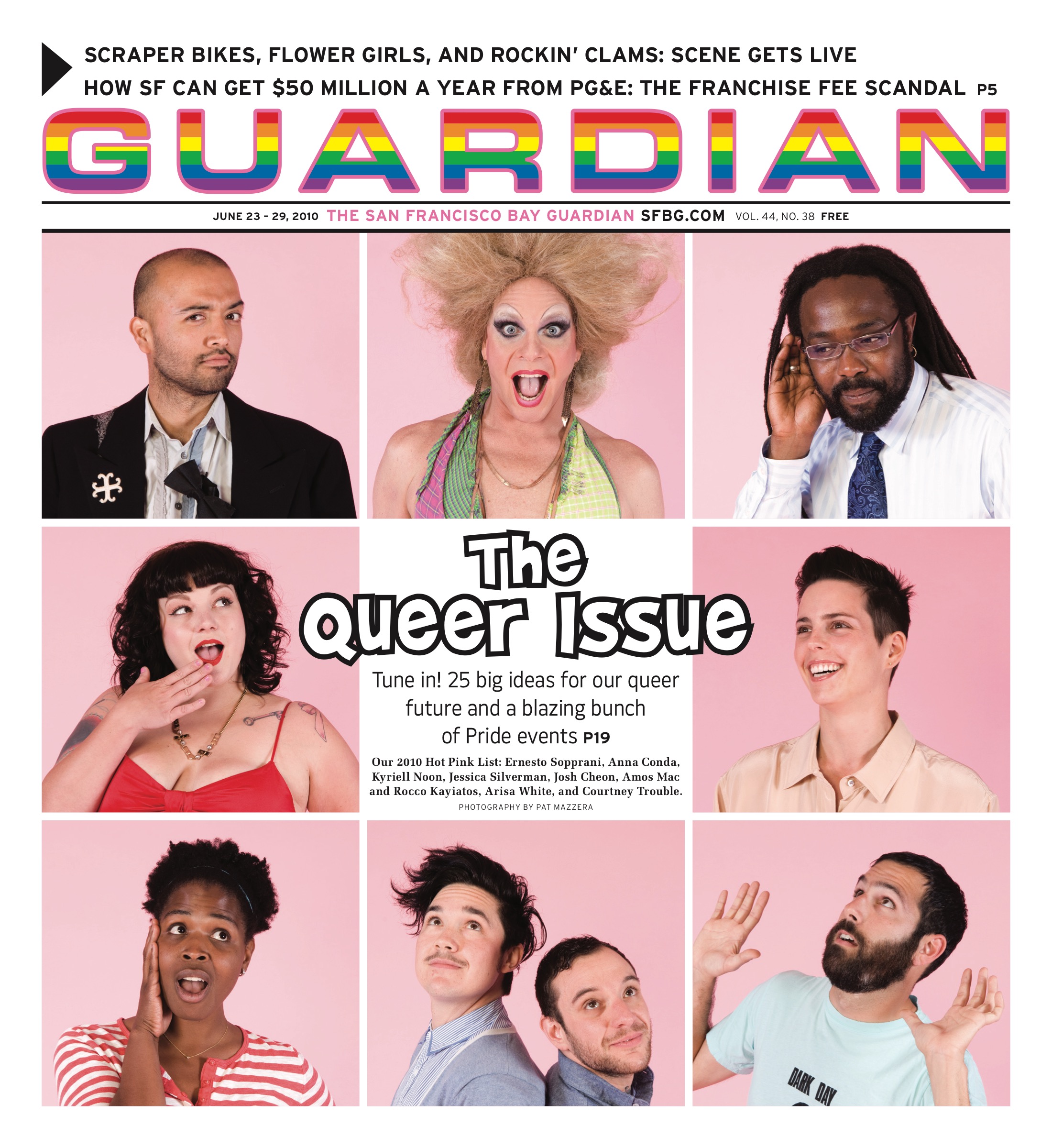
What does the future hold in store for us? In an age of mainstream assimilation and aspiration, is there even such a thing as the queer future? We asked 25 queer leaders, artists, and activists to offer visions in their areas of expertise. The results — philosophical, poetic, practical, and priceless — are inspiring. One thing’s for sure, we’ll never lose our creative spark. Nor will we lose our motivational zeal. Fate is for the lazy: take action now. (Marke B.)

>>Click here for ideas from our amazing 2010 Hot Pink List

>>Click here for our Pride listings, and get out there!

THE FUTURE OF QUEER ACTIVISM We need to take back the power and stop being led by what the other side is doing. We need to empower ourselves enough so that we are no longer reacting but acting. We must use online social networks the way we used the streets and bullhorns to show our strength, speak out against wrongdoing, change minds, and win back our rights. We also must unite with our allies in other communities that are underrepresented and maligned in much of the same ways we are. When we stand with one another, we have that much stronger a voice.

Kelly Rivera Hart is the founder of Poz Activists Network (pansf.blogspot.com).

THE FUTURE OF QUEER COMMUNITY The difference between straight and gay cultures seems to be breaking down more and more, which is one of our goals, but we still need to support our own businesses, nonprofits, and leaders. We need to continue interacting with each other in the real world and not lose sight of who we are and what we share. Despite how the rest of the world sees us, there is still a lot of loneliness and isolation in the queer community. I think many of us have forgotten even simple things, like how to make actual friends, not just online. And it’s so easy! Renewing that spirit of interaction, freeing ourselves from fear of judgment, and moving outside our “safe zone” can lead to the greatest rewards.

Mark Rhoades is a charitable event planner and fundraiser who throws the annual Cupid’s Back and City Hall Pride parties.

THE FUTURE OF QUEER FASHION The past decade has witnessed an obsession with bulky, voluminous silhouettes disguised as “futuristic avant-garde” and inspired by GaGa and the ’80s. Let’s move on. Through clean lines, elegance, and wearable pieces, the future of queer fashion will shine light on socially relevant issues like bottom shame, positive-negative status reinforcement, and elite subcultures by using gay textiles and forgotten, non-era-specific imagery.

Allán Herrera is the design head of fashion house Homo Atelier (www.homoatelier.com) and a founder of HomoChic (www.homochic.com).

THE FUTURE OF QUEER FILM Future queer film will depend on the gays being at the forefront of distribution technology in the same way we pioneered social networking 15 years ago, spreading provocative and sexually honest/explicit films beyond the film festival circuit and toward a global audience. Special attention must be paid to the creeping homophobia of cultural and technological juggernauts like Apple. Our stories will need to bust through the pigeonhole, weaving our traditional themes (AIDS, coming-of-age) into larger storylines that are relevant to multicultural and transcontinental viewers.

Leo Herrera is a video artist, filmmaker, and a founder of HomoChic (www.homochic.com).

THE FUTURE OF QUEER YOUTH To be a true leader, one must envision the future. The future is a diverse society where LGBTQQ youth are embraced for who they are and encouraged to be who they want to be. In my pursuit for LGBTQQ youth rights, leadership has been about fostering the awareness in LGBTQQ young people about their own power as individuals and as a group, supporting them to access, develop, and master the skills and knowledge they need to transform their power into action, and building bridges to opportunities where their action can create just communities.

Jodi Schwartz is the executive director of LYRIC Lavender Youth Recreation and Information Center (www.lyric.org).

THE FUTURE OF QUEER LABOR Storm of protest drives Congress to pass trans-inclusive ENDA! Support by labor unions critical to passage of this landmark legislation. Screaming, “We’re too queer for this bullshit!” workers hold drag-runway picket lines at transphobic companies across the country. Activists redefine the crisis of trans poverty and unemployment as the most critical queer civil rights issue of our time.

Bad hotel boycott forces Hyatt to sign a fair contract and treat their employees with respect. LGBTQ organizations rally with labor unions for immigration reform, hold signs reading “No borders on my cunt, no border on our countries!

Jane Martin is a queer labor activist and community organizer with SF Pride at Work (www.sfprideatwork.org).

THE FUTURE OF QUEER DRAG (PART ONE) My vision for the future of queer drag requires you to take a moment, stop, look, and listen to our past. We have such a rich history of fierce and amazing queens to learn from. The key is to get involved with a queer family that supports and loves you and what you do. Next, figure out your niche — whether it’s high drag or low camp, just be sure to always do it like you don’t need the money! Then pull it together and serve it up with lots of love and generosity. And, of course, top it all off with a fabulous wig!

Juanita More! (www.juanitamore.com) is the queen. Attend her boisterous Pride party on Sun/27 (see Pride listings), benefiting Bay Area Young Positives (www.baypositives.org).

THE FUTURE OF QUEER DRAG (PART TWO) Meg Whitman will become president of the United States and hire Lady Bunny as one of her speech writers. Oprah and Gayle will finally come out, and gender illusionist shows will dominate the OWN Network — every other channel will follow. In 2050, Heklina will clone herself, twice, and perform the hospital-convalescent home circuit as the Del Rubio Triplets. Apple will come out with a product called the iDrag, that transforms anyone into anything.

Fudgie Frottage is the king. He puts on the annual, wonderful SF Drag King Contest (www.sfdragkingcontest.com).

THE FUTURE OF QUEER DANCE FLOORS Lets start with a nice, clean piece of paper. Black paper. A clean slate. Say, for example, a deliriously rich and tasteful daddy were to buy the Stud. Step one: a deep, five-stage gay cleaning. Step two: gut the interior, maybe keep the bar and choo-choo train intact, they are cute. Otherwise keep it simple. Step three: install an exact copy of the sound system used by Dave Mancuso at the Loft parties in New York City. The tasteful daddy would have a matte gray private jet at our disposal to bring guests of our choosing. For the launch party we would have an all Kenny line-up: Kenny Dixon Jr., Kenny Hawkes, Kenny Carpenter, and Ken Collier (back from the dead) would DJ. Live PA by Kenny Bobien. Oh, and Kenny Kenny on the door. At the end, everyone would get together and cry like they do on those exploitative renovation reality shows. Daddy would miss the ribbon-cutting, but that’s OK — he sent flowers and bought an $80 Diptyque candle for the new bathroom. That would be a good start.

Honey Soundsystem is a future-past DJ collective. Catch the old-school house Honey Pride party on Sun/27 (see Pride listings).

THE FUTURE OF QUEER COMEDY The future is here. And now that gay marriage is mandatory for everyone, queer and straight, the same goes for comedy. All comedians, regardless of sexual orientation, are now required to do at least 75 percent queer comedy in their acts unless they obtain Permit No. 758219B through the Comedy Board, allowing for the special provision to do only 50 percent queer material. That’s right: comedy is now regulated by law. No jokes are allowed to have homophobic content, especially if you’re performing for tourists. Remember, you are ambassadors now. If you’re straight and have no queer material, just ask your aunt or your second cousin or your bachelor uncle whose best friend of 40 years, Bruce, comes to all the family functions.

Lisa Geduldig (www.koshercomedy.com) is a comic and MC who puts on such shows as Kung Pao Kosher Comedy, Funny Girlz, and Comedy Returns to El Rio!

THE FUTURE OF QUEER HOUSING It is beyond time for us queers to focus our fabulous and substantial God-given talents toward a vision of the future of queer housing. We are the trailblazers, the social entrepreneurs, the avant-garde. Imagining and creating the future is what we do best. Let’s put those substantial talents to work to realize our very own “No Place Like Home” dream of a home for our LGBT elders, our homeless LGBT youth, our people with HIV/AIDS, our artists, our activists, and everything in between. I’ll show you mine: the largest affordable housing for people with HIV/AIDS in the nation next to the Castro Theater and an LGBT homeless shelter at Geary and Polk. Now you show me yours.

Brian Basinger is the director of AIDS Housing Alliance/SF (www.ahasf.org).

THE FUTURE OF QUEER COMICS The future of LGBT comics will be about creators moving out of the traditional queer media ghetto and into new digital undergrounds, indie markets, and even the publishing mainstream. Web comics, graphic novels, minicomics, and zines … Queer comics will have to continue to diversify their formats to survive. At the core, though, remains the need to tell good stories! Look for more poignant narratives about the intersection of queer identities and the human condition. Also, robo-dykes, super-powered trannies, bisexual Lotharios, and zombie fags!

Justin Hall, a queer and erotic comics artist, runs All Thumbs Press (www.allthumbspress.com).

THE FUTURE OF QUEER LAW We would like to see the law catch up with the reality of transgender lives. Your gender identity is an innate and deeply felt sense of who you are. Whether you feel male, female, both, or neither, we envision a future where your legal gender will be exclusively determined by you and not by doctors or lawyers. By respecting your autonomy and your ability to know yourselves better than anyone else, the law will finally reflect society at large. The law is not far from fully recognizing that fact of life, but there is still work to be done. So break out your queer legal briefs and join in the fight for transgender civil rights!

Executive Director Masen Davis and the staff of the Transgender Law Center (www.transgenderlawcenter.org)

THE FUTURE OF QUEER SPIRIT As I look toward the future, I want to see the consciousness shift that Harry Hay and other gay pioneers were pushing for manifest itself more fully in both the gay culture and the larger hetero culture. As queer liberationists, we’ve already taught the world that we are a people. I want to see us recognized as always having been a people. I want to see us given the opportunity to cocreate a new, more beautiful world. To paraphrase: what if there were no “faggots,” only master healers, teachers, shamans? I hope to see the end of shame.

Zac Benfield is the president of the radical faerie Church of Nomenus. Attend his “Woo 101 for Hipster Faggots” workshop, part of the Faetopia Festival (See “Ongoing” in our Pride listings)

THE FUTURE OF QUEER SCIENCE

The alien scientist pipettes liquid
Into a flask to be shaken vigorously.
The origins of gay life.

On Earth, planets align, exposing
Realities once thought to be utterly impossible:
Gays are outta this world!

Queer scientists make the future
Always brighter, cleaner, sexier, and more fabulous
Stopping only for a cocktail.

Quietly, the gay scientist works,
Inching closer to the final answer that
Will change the world forever.

In the future of science
We see the world with different eyes,
All judged by ability alone.

Chris Waddling is a PhD scientist at UCSF.

THE FUTURE OF THE QUEER PAST The future of the queer past has always been fragile — and despite some positive developments in the past 25 years, it remains fragile today. The legacy of LGBT people is still largely invisible in the settings where our society formalizes its history. Our stories are rarely told in high school classrooms, in the galleries of museums, on the plaques of public monuments. Supporting the efforts and the growth of such organizations as the GLBT Historical Society and other pioneering queer history institutions will be key to ensuring that the memory of LGBT lives, struggles, setbacks, and triumphs can inform and inspire future generations.

Writer, editor, and antiquarian book dealer Gerard Koskovich is a founding member of the GLBT Historical Society and a member of the board of directors of the Mémorial de la Déportation Homosexuelle, a French national group that commemorates the homosexual victims of the Nazis.

THE FUTURE OF THE QUEER FUTURE My future selves are always popping back from the year 2023 or 2034 for the weekend, mostly because they know I’ll be their sex slave. They remember what 2010-me was like. (And apparently in the mid-2020s, time-traveling self-flagellation becomes a big fetish.) They’re not supposed to tell me anything about The Future, but they let slip wee details here and there — the 20-teens are a troubling time, but then we discover queer telepathy, and everybody starts secreting empathy endorphins and building communal gardens in the upper atmosphere. Hang in there until we get the first queer president, they always say. Once she comes out during her second term, that’s when the government really starts building something.

Charlie Anders is the managing editor of science fiction-forward site io9.com

Film listings

0

Film listings are edited by Cheryl Eddy. Reviewers are Kimberly Chun, Michelle Devereaux, Max Goldberg, Dennis Harvey, Johnny Ray Huston, Erik Morse, Louis Peitzman, Lynn Rapoport, Ben Richardson, and Matt Sussman. For rep house showtimes, see Rep Clock. For first-run showtimes, see Movie Guide at www.sfbg.com.

FRAMELINE34

The 34th San Francisco International LGBT Film Festival runs through Sun/27 at the Castro, 429 Castro, SF; Roxie, 3117 16th St, SF; Victoria, 2961 16th St, SF; and Rialto Cinemas Elmwood, 2966 College, Berk. Tickets (most shows $8-15) can be purchased at www.frameline.org. All times pm unless otherwise noted.

WED/23

Castro Thy Will Be Done: A Transsexual Woman’s Journey Through Family and Faith 11am. Mädchen in Uniform 1:30. The Golden Pin 4. Beautiful Darling 7. Children of God 9:30.

Roxie The Stranger in Us 6:45. Tough Girls 9:30.

Victoria Bloomington 7. The Adults in the Room 9:30.

Elmwood We Have to Stop Now 7. Going South 9:30.

THURS/24

Castro "Deep Red" (shorts program) 11am. "Says Who? Gender Variant Representation in Media" (free panel discussion) 2. All Boys 4:30. The Sea Purple 6:45. Spring Fever 9:30.

Roxie Stonewall Uprising 7. The Motionless 9:30.

Victoria Plan B 6:30. "Transtastic!" (shorts program) 9:30.

Elmwood The Last Summer of La Boyita 7. The Man Who Loved Yngve 9:30.

FRI/25

Castro TBA 1 11am. Gay Days 1:30. "Worldly Affairs" (shorts program) 4. Elena Undone 6:45. Hideaway 9:30.

Roxie Out in the Silence 7. The Fish Child 9:30.

Victoria The String 7. We Have to Stop Now 9:30.

SAT/26

Castro Out of Annapolis 11am. FIT 1. "Dyke Delights" (shorts program) 3:45. From Beginning to End 6. BearCity 8:30.

Roxie Holding Hands 11am. The Sons of Tennessee Williams 1:30. Uncle Bob 4. Mother Earth 7. "The Experimentals" (shorts program) 9:30.

Victoria Heretics 11am. Other Nature 1:30. The Chorus/HIV Story Project 4:15. Lost in the Crowd 7. TBA 2 9:30.

SUN/27

Castro "Fun in Girls’ Shorts" (shorts program) 11:30. "Fun in Boys’ Shorts" 2. Going South 4:30. Howl 7:30.

OPENING

*Air Doll See "Inflated Meaning." (1:56) Lumiere.

Cyrus See "Sonny Dearest." (1:32)

Grown Ups Another man-child comedy? Is there a time-traveling hot tub in this one? (1:42) Marina, Shattuck.

Have You Heard from Johannesburg? The best word to describe Connie Field’s Have You Heard From Johannesburg? is "impressive." At eight-and-a-half hours, the seven-part documentary series spans nearly five decades of the South African anti-apartheid movement. The individual films are well-researched and thought-provoking. The stories are compelling — that is, until you put them all together. The complete series is just too long for those without a strong, vested interest in South African history. It’s simply not approachable for the mainstream, and the approximately three-hour chunks it’s meant to be consumed in are daunting. These films are better suited to a televised series, where viewers could appreciate hearing about anti-apartheid pioneers like Oliver Tambo and Desmond Tutu in smaller, digestible bites. As it stands, Field’s documentary is not likely to find a wide audience — a real pity, given the 10 years of effort she put into it, and the importance of sharing the South African struggle for equality with the rest of the world. (8:30) Roxie, Smith Rafael. (Peitzman)

*The Killer Inside Me See "Pulp Vicious." (1:48) Sundance Kabuki.

*I Am Love I Am Love opens in a chilly, Christmastime Milan and deliberately warms in tandem with its characters. Members of the blue-blood Recchi family are content hosting lavish parties and gossiping about one another, none more than the matriarch Emma (Tilda Swinton). But when prodigal son Edoardo befriends a local chef, Emma finds herself taken by both the chef’s food and his everyman personality, and is reminded of her poor Soviet upbringing. The courtship that follows is familiar on paper, but director Luca Guadagnino lenses with a strong style and small scenes acquire a distinct energy through careful editing and John Adams’ unpredictable score. Swinton portrays Emma’s unraveling with the same gritty gusto she brought to Julia (2008), and her commitment to the role recognizes few boundaries. You’ve probably seen this story before, but it has rarely been this powerful. (2:00) Albany, Embarcadero. (Peter Galvin)

*Knight and Day A Bourne-again Vanilla Sky (2001)? Considerably better than that embarrassingly silly stateside remake, though not quite as fulfilling as director James Mangold’s 3:10 to Yuma (2007) rework, this action caper played for yuks still isn’t the most original article in the cineplex. But coasting on the dazzling Cheshire grins of its stars, Tom Cruise and Cameron Diaz, reunited for the first time since Sky, you can just make out the birth of a beautiful new franchise. Everygirl June Havens (Diaz) is on her way to her sister’s wedding when she collides-cute at the airport with Roy Miller (Cruise). After killing the passengers and pilots on their plane, he literally sweeps her off her feet — thanks to some potent drugs. Picture a would-be Bond girl dragged against a spy-vs.-spy thriller semi-against-her-will — grappling with the subtextual anxiety rushing beneath all brief romantic encounters as well as some very justifiable survival fears. Can June overcome her trust issues? Is Roy the man of her dreams — or nightmares? Mangold and company miss a few opportunities to have more fun with those barely teased out ideas, and the polished, adult-yet-far-from-knowing charisma of the leads doesn’t quite live up to sophisticated interplay of Cary Grant and Grace Kelly, or even the down-home fun of Burt Reynolds and Sally Field, but it’s substantial enough for Knight and Day to coast on, for about 90 minutes tops. (2:10) Four Star, Presidio. (Chun)

The Message This period melodrama-meets-spy thriller is set in 1942 Nanjing. (1:57) Four Star.

ONGOING

The A-Team (1:57) 1000 Van Ness, Presidio, SF Center.

*Babies (1:19) Shattuck, Smith Rafael, Sundance Kabuki.

*City Island (1:40) Shattuck.

*Coco Chanel and Igor Stravinsky (1:55) Shattuck, Sundance Kabuki.

*Exit Through the Gift Shop (1:27) Lumiere, Shattuck, Sundance Kabuki.

Get Him to the Greek (1:49) Empire, Four Star, 1000 Van Ness, Presidio, SF Center, Shattuck, Sundance Kabuki.

*The Girl With the Dragon Tattoo (2:32) Clay, Piedmont, Red Vic, Shattuck, Smith Rafael.

*Iron Man 2 (2:05) 1000 Van Ness, Sundance Kabuki.

*Joan Rivers: A Piece of Work (1:24) Bridge, Embarcadero, Piedmont, Shattuck, Smith Rafael.

Jonah Hex Based on DC’s dark western comics, Jonah Hex is a jumbled mess of mishandled superhero tropes and obligatory attempts at badass-ery. The title character, a grizzled gunfighter with a distinctive facial scar, could be an engaging outsider antihero, but as portrayed by Josh Brolin, he feels neither as cool nor as tortured as we’re clearly expected to believe. The film has a decidedly ’90s feel to it — think overbudgeted, underthought masterpieces like Wild Wild West (1999) — with its farcically fantastical take on post-Civil War supervillainy. Its ridiculous cast of character actors is almost completely squandered, including archvillain John Malkovich, Aidan Quinn as Ulysses S. Grant, and Will Arnett in an inexplicably serious role. Megan Fox is trying the hardest out of the whole cast, but in a rather sleazy move, her character always seems to appear in soft focus. Oh, and there are a few explosions. (1:81) 1000 Van Ness. (Sam Stander)

The Karate Kid (2:20) 1000 Van Ness, SF Center, Sundance Kabuki.

Killers (1:40) 1000 Van Ness.

Letters to Juliet (1:46) SF Center.

Lovers of Hate (1:33) Roxie.

Micmacs (1:44) Embarcadero, Shattuck, Smith Rafael.

La Mission (1:57) Opera Plaza, Red Vic.

*Ondine (1:43) California, Opera Plaza.

*Please Give (1:30) Opera Plaza.

Prince of Persia: The Sands of Time (2:10) California, 1000 Van Ness.

The Secret in Their Eyes (2:07) Albany, Lumiere.

Sex and the City 2 (2:24) 1000 Van Ness, SF Center, Sundance Kabuki.

Solitary Man (1:30) Empire, Opera Plaza, Piedmont, Shattuck, Sundance Kabuki.

*Splice (1:45) 1000 Van Ness.

The Sun Behind the Clouds A delicate political subject that penetrates to the roots of a nation’s cultural identity, the Tibetan "issue" most recently re-entered the Western consciousness in 2008, preceding China’s hosting of the Olympics. Ritu Sarin and Tenzing Sonam’s informative documentary addresses the issue from many perspectives, including those of protest marchers, Tibetans dwelling around the world, Chinese anti-Tibetan-independence campaigners, cultural commentators, and the Dalai Lama himself. Thoughtful narration by Sonam elaborates on the difficult ramifications of the Dalai Lama’s pursuit over the past few decades of the "Middle Way Approach," which does not incorporate Tibetan independence from Chinese rule. The film is tinged with great sadness, which gives the proceedings a decidedly biased feel but also a sincere glow. The Chinese state’s continuing suspicion of the Dalai Lama’s intentions led to a breakdown in talks, but the documentary’s very title alludes to a protest song which predicts the inevitability of Tibetan freedom. (1:19) Opera Plaza. (Stander)

Touching Home (1:48) Smith Rafael.

*Toy Story 3 You’ve got a friend in Pixar. We all do. The animation studio just can’t seem to make a bad movie — even at its relative worst, a Pixar film is still worlds better than most of what Hollywood churns out. Luckily, Toy Story 3 is far from the worst: it’s actually one of Pixar’s most enjoyable and poignant films yet. Waiting 11 years after the release of Toy Story 2 was, in fact, a stroke of genius, in that it amplifies the nostalgia that runs through so many of the studio’s releases. The kids who were raised on Toy Story and its first sequel have now grown up, gone to college, and, presumably, abandoned their toys. For these twentysomethings, myself included, Toy Story 3 is a uniquely satisfying and heartbreaking experience. While the film itself may not be the instant classic that WALL-E (2008) was, it’s near flawless regardless of a viewer’s age. Warm, funny, and emotionally devastating—it’s Pixar as it should be. (1:49) Empire, Marina, 1000 Van Ness, Sundance Kabuki. (Peitzman)

*Winter’s Bone Winter’s Bone has already won awards at the Berlin International Film Festival and the Sundance Film Festival, but it’s the kind of downbeat, low-key, quiet film that may elude larger audiences (and, as these things go, Oscar voters). Like Andrea Arnold’s recent Fish Tank, it tells the story of a teenage girl who draws on unlikely reserves of toughness to navigate an unstable family life amid less-than-ideal economic circumstances. And it’s also directed by a woman: Debra Granik, whose previous feature, 2004’s Down to the Bone, starred Vera Farmiga (2009’s Up in the Air) as a checkout clerk trying to balance two kids and a secret coke habit.

Drugs also figure into the plot of the harrowing Winter’s Bone, though its protagonist, Ree Dolly (Jennifer Lawrence), is faced with a different set of circumstances: her meth head father has jumped bail, leaving the family’s humble mountain home as collateral; the two kids at stake are her younger siblings. With no resources other than her own tenacity, Ree strikes out into her rural Missouri community, seeking information from relatives who clearly know where her father is — but ain’t sayin’ a word. It’s a journey fraught with menace, shot with an eye for near-documentary realism and an appreciation for slow-burn suspense; Lawrence anchors a solid cast with her own powerful performance. Who says American independent film is dead? (1:40) California, Embarcadero. (Eddy)

Rep Clock

0

Schedules are for Wed/23–Tues/29 except where noted. Director and year are given when available. Double and triple features are marked with a •. All times are p.m. unless otherwise specified.

AMNESTY INTERNATIONAL 350 Sansome, SF; www.theresponsemovie.com. Free. The Response (2009) Wed, 6.

ARTISTS’ TELEVISION ACCESS 992 Valencia, SF; www.atasite.org. $6. The Female Face of AIDS: Crisis in Malawi (Boyce and Karr, 2008), Sun, 7.

CASTRO 429 Castro, SF; (415) 621-6120, www.castrotheatre.com. $8-13. San Francisco International LGBT Film Festival, through Sun/27. See film listings. The Castro (1997) Tues, 6:30. Free screening presented by KQED in honor of Pride.

CHRISTOPHER B. SMITH RAFAEL FILM CENTER 1118 Fourth St, San Rafael; (415) 454-1222, www.cafilm.org. $6.50-10.25. Babies (Balmès, 2010), call for dates and times. The Girl With the Dragon Tattoo (Oplev, 2009), call for dates and times. Micmacs (Jeunet, 2010), call for dates and times. Touching Home (Miller and Miller, 2009), call for dates and times. Have You Heard from Johannesburg? (Field, 2006), June 25-July 1, call for times. Joan Rivers: A Piece of Work (Stern and Sundberg, 2010), June 25-July 1, call for times.

HUMANIST HALL 390 27th St, Oakl; www.humanisthall.org. $5. Food, Inc. (Kenner, 2008), Wed, 7:30.

OPERA PLAZA 601 Van Ness, SF; (415) 267-4893, www.anightmaretoremember.com. $8-10. “A Nightmare to Remember International Film Festival,” short horror films, Sat, 7.

PACIFIC FILM ARCHIVE 2575 Bancroft, Berk; (510) 642-5249, www.bampfa.berkeley.edu. $5.50-9.50. “Brought to Light: Recent Acquisitions to the PFA Collection:” Forest of Bliss (Gardner, 1985), Wed, 7. “El Futuro Está Aqui: Sci-Fi Classics from Mexico:” The Ship of Monsters (González, 1959), Thurs, 7:30; The Stronger Sex (Muriel, 1945), Fri, 7:30; The Aztec Mummy vs. The Human Robot (Portillo, 1957), Sat, 7; Santo vs. the Martian Invasion (Crevenna, 1966), Sat, 8:35; Planet of the Female Invaders (Crevenna, 1965), Sun, 7:10. “Tales from the Golden Age: Recent Romanian Cinema:” The Death of Mr. Lazarescu (Puiu, 2005), Fri, 7:30; Videograms of a Revolution (Farocki and Ujica, 1992), Sun, 5.

RED VIC 1727 Haight, SF; (415) 668-3994. $6-10. No One Knows About Persian Cats (Ghobadi, 2009), Wed, 2, 7:15, 9:25. La Mission (Bratt, 2010), Thurs-Fri, 7, 9:25. “Fundraiser for Bay Area Young Positives,” Sat, 2-4. For more info, visit www.baypositives.org. The Bigtop (Reed, 2010), Sat, 7, 9:15. The Girl With the Dragon Tattoo (Oplev, 2009), Sun, 2, 5:15, 8:30; Mon, 7:30. Casino Jack and the United States of Money (Gibney, 2010), June 29-July 1, 7, 9:30 (also June 30, 2).

ROXIE 3117 and 3125 16th St, SF; (415) 863-1087, www.roxie.com. Free-$10.75. Lovers of Hate (Poyser, 2010), Wed-Thurs, 7:15, 9:15. San Francisco International LGBT Film Festival, Wed-Sun. See film listings. Have You Heard from Johannesburg? (Field, 2006), June 27-July 1, call for times.

“TEMESCAL STREET CINEMA” 49th St at Telegraph, Oakl; www.temescalstreetcinema.com. Free. Etienne! (Mizushima), Thurs, 8. With free popcorn and live music.

VIZ CINEMA New People, 1746 Post, SF; www.thirdi.org. $10-16. “Mizoguchi on Desperate Women:” Street of Shame (1965), Wed, 5; Utamaro and His Five Women (1946), Wed-Thurs, 7; Sisters of the Gion (1936), Thurs, 5.

YERBA BUENA CENTER FOR THE ARTS 701 Mission, SF; (415) 978-2787, www.ybca.org. $6-8. Eccentricites of a Blond Hair Girl (de Oliveira, 2009), Thurs and Sat, 7:30; Sun, 2.<\!s>

Celebration at Big Sur — 2010 edition

0

Watching Celebration at Big Sur, the film that documents the 1969 Big Sur Folk Festival, I witness the crystalline Pacific Ocean, members of the audience freaking out in face paint, and Crosby, Stills, Nash and Young, Joan Baez, Joni Mitchell and more singing merry tunes about coming together and putting a lil’ love in your heart.

This is not the ’60s, this is not the Summer of Love  – this is the first Great Recession of the 21st century. At the Woodsist celebration at Big Sur on June 12th, 2010, we did not “freak-out.” Instead, we lied around on flannel blankets, baking in the sun. Everyone we met at the festival had come from urban zones, from Brooklyn, from Portland, from special San Francisco, or even from Hollywood – like Kirsten Dunst, as well as drummer Jason Boesel and Jenny Lewis of Rilo Kiley.

In between sets, we explored the woods behind Henry Miller Library, hiking through creeks and over fallen trees. We drank cold beers or sipped on cocktails mixed in water bottles as we listened to bands hailing from Brooklyn’s Woodsist label, founded by Jeremy Earl of Woods. We were happy for the freedom to forget.

http://vimeo.com/12755753

The Art Museums, a San Fran/Santa Cruz band at the end of their very first tour, performed with a unified front, as if ready to play Red Rover and decisively send anyone back who might try to break their ties. In between songs, while amps were tweaked, cute stage banter was in effect, with drummer Virginia Weatherby talking about lady bugs. San Francisco’s the Mantles, who include Weatherby on a complete drum set instead of a drum kit, had a few mishaps. Guitarist-vocalist Michael Olivares’ guitar strap malfunctioned, but such issues suited the group’s goofy good-time vibe.

Portland’s Eat Skull, about to move and realign, performed a stripped-down collection of songs that perhaps came up wanting. Philly’s Kurt Vile climbed on stage to join the group for a cover of Spaceman 3’s “Come Down Easy,” and then played an acoustic set while the sun speckled the stage. Letting his long locks cover his face, he stared at his strings and intricately finger-picked. Later, as he tuned his guitar, he asked if we were prepared for the weather to get cold.

San Fran’s the Fresh & Onlys played two new tracks, including “Waterfall.” Moon Duo, a new San Fran psych-band, played as the sun set and ended up in the dark — and the cold that Vile had predicted. The group’s guitarist Ripley Johnson (also of Wooden Shijps) is a madman on the guitar.

After Moon Duo, NY’s Woods mesmerized with a tripped-out opening and all their quintessential hits. The festival ended with Real Estate, who, like many of the bands, craft anthems for our times. Take these lines, from “Green River”: “Hey green river, what can I do?/If it’s alright I’ll walk next to you/Sit in the shade of your beechwood trees/Don’t you know these days I ain’t hard to please.”

No traffic lights on Market Street!

3

No stop signs, either. Just an amazing collection of horses, cars, trolleys and — yes! — bicycles crowding the city’s main drag, just four days before the 1906 quake. Check out the footage here. 


Bicycles sharing the street with cars (and also horses, and people who just run right out in front of traffic), police foot patrols, multi-modal transportation … good times. It’s great film, and fun to watch.


From the email Larry Fahn, former Sierra Club president sent me:


This film, originally thought to be from 1905 until David Kiehn with the Niles Essanay Silent Film Museum figured out exactly when it was shot. From New York trade papers announcing the film showing to the wet streets from recent heavy rainfall & shadows indicating time of year & actual weather and conditions on historical record, even when the cars were registered (he even knows who owned them and when the plates were issued!).. It was filmed only four days before the quake and shipped by train to NY for processing. Amazing but true!


Feliz cumple, Tamale lady!

0

Jack Daniels and I were hanging out late last week at the 500 Club when in she came. No one was particularly hungry, but when the Tamale Lady’s there, the Tamale Lady’s there, so we ate. And along with my cheese and rajas ‘male, she passed me a flier. “Virginia, it’s your birthday next week?” It was, and to celebrate, her traditional fiesta/documentary is going down at Zeitgeist Mon/21.

Writing about the Tamale Lady is frustrating, because what angle, exactly, are you going to take? She makes delicious tamales? Well obviously. She is nice to punks, and hooligans? Anyone who has ever taken a bench at Zeitgeist can tell you that. I went ahead and enlisted her documentarian, Cecil B. Feeder, to help make this blog post interesting.

“I love her tamales, I always have.” Great, thanks Cecil. Actually, he did have a theory as to her continued late night allure. “I think she’s human enough to know that it doesn’t matter what people think of you – it’s what you think of yourself.” And if what you think of yourself is drunk and hungry, well than you’ve found your savior in Virginia “Tamale Lady” Ramos.

Feeder will be screening his 2004 film on Virginia’s life, “Our Lady of Tamale,” on the patio wall of the Zeit at Monday festivities – the same place he debuted the movie six years ago, on the night that big wooden “Tamale Lady” plaque was first erected near the front door inside the Zeitgeist bar. Where’d that thing come from, anyway?

According to Ramos, the plaque was made for a SOMarts benefit for a man with cancer many years ago that she catered. After the party, she took it home, but when she showed up for her film debut/birthday party, she found the sign hanging near Zietgeist’s formidable selection of draft beers and famously surly bartenders. “I said ‘who brought my board in here!’ ” Ramos told me. Turns out, her kids had put it up there to honor her. “I’m telling you, I don’t know why they bring it out here!”

She kind of wanted it back. But to be honest, it looked nice up there, and Ramos concluded that the man for whom the original benefit had been thrown (who has since passed away), had engineered its placement in spirit. “I realized he wants to keep it over there, because he wants people to know my name,” she says. A tamale lady’s work, she realized, is never done.

A word about Mr. Feeder’s involvement – after seeing his flick Meter Maid Me Massacre (introduced on his Youtube as “ “The Gone with the Wind” of kung fu zombie movies”), Ramos approached him about making a documentary of her life. What exactly drew Ramos to Feeder’s vision of parking ticket revenge? Has Ramos had issues of her own from past times improperly parking her tamale wagon?

Well, we’re not really sure. “I always thought she was ambitious, you know?” Feeder told me over the phone. “At the time, I had just started making films. I thought about it and I said, ‘you know what Virginia, I don’t think we can make a straight documentary – but we can make a rockumentary!’ ”


And a rockumentary was made.

Our Lady of Tamale is comprised of scenes from the life of Virginia, backed by over 50 songs composed by local musicians especially for the occasion. They debuted it at the Zeit in honor of her 50th birthday party – a tradition that continues on Monday, with another screening of the film, some additional Feeder shorts, and a performance by his band.

Oh, and there will be free booze, according to Feeder. “Speakeasy and Zeitgeist are donating beer, four kegs flowing until they’re gone!” Some of the proceeds from the night (should those kegs be tapped), will go to Feeder’s plane ticket to Bolivia, where he’s in the midst of filming a documentary about an Engineers Without Borders project in progress.

“Hey Honey, It’s My Birthday!”: The Tamale Lady’s 57th Birthday Celebration
Mon/21 6-10 p.m., free
Zeitgeist
199 Valencia, SF
(415) 255-7505
www.cecilbfeeder.com
www.zeitgeistsf.com

A very cinematic Juneteenth: previews from the SF Black Film Festival

0

General Gordon Granger could hardly have known that by signing General Order No. 3 into effect that sunny June 19th, 1865 in Galveston, Texas, he’d be providing an occasion for San Francisco’s young black filmmakers to share their artistic voice. He (most likely) didn’t appreciate that Juneteenth – as the day would come to be called – would mark a time for Bay area African Americans to reflect on the past, present, and future of their community. Probably not. But we get it. So as you munch your popcorn through these previews of the stories screening at this year’s San Francisco Black Film Festival (Thurs/17-Sat/19), take a moment to think on history’s – often unseen – framing of today.

Sounds of Poetry

When I first watched this preview, the young poet’s eloquence struck me. Child actors these days are something else, I thought. But Dawntavia Butler, who plays the lead role of Monique, a girl striving to rise above her mother’s addictions, is only half acting. Filmmaker Henderson Maddox based the script of Sounds of Poetry on Dawntavia and her sisters’ real life experiences at home. In light of the challenges she faced, Bullard’s spoken word performance takes on new meaning.

Flags, Feathers, Lies

The Mardi Gras Indians is a long standing tradition in New Orleans, a group that honors the role Native Americans played in helping slaves escape their bondage. But ask around at the parades these days – nary a party goer knows their name. Filmmaker Pablo Palacios makes the connection between the disappearing Indians with the devastating displacement Katrina left in its wake.


Mountains That Take Wing: Angela Davis & Yuri Kochiyama

Sure, you know about Angela Davis. But what about Yuri Kochiyama, who was interned with her family during World War II, and grew up to join the struggle for Puerto Rican independence, liberation of political prisoners, and nuclear disarmament? What about what those two civil rights leaders would chat about, if they got the chance to hang? Mountains That Take Wing is here for you so that you can find out.


Trapped Haitian Nights

Of course, it’s not all civil rights and social problems. Take this action packed suspense, the last movie shot in Haiti before the disaster. The plot follows Vivica A. Fox investigating the murder of a doctor’s wife, a yellow boa, and rumors of voodoo craziness.

San Francisco Black Film Festival

Thurs/17-Sat/19

various venues and times, SF

(415) 400-4602

www.sfbff.org

Before I die, if printing still exists: An interview with Daniel Clowes

0

By Sam Stander

Daniel Clowes has made the leap over the past decade from underground comics hero to a more mainstream identity, with an Oscar nomination for screenwriting, several New Yorker covers, and a comic serialized in the New York Times Magazine under his belt. Despite his raised profile, his newest work, Wilson (Drawn and Quarterly, 80 pages, $15.37), comes closer to home than ever before. The cynical comic strip-based book is largely set in Oakland, of which he is a proud denizen. Clowes recently appeared at Diesel in Oakland, in conversation with McSweeney’s editor Eli Horowitz and the audience. On the setting of the comic, he proclaimed, “I’m pro-Oakland, I’m not sure Wilson is.” He also discussed his forays into film, his debt to Charles M. Schulz and R. Crumb, and the slight controversy over his recent New Yorker cover, among other things.

A lengthy signing followed, where fans presented everything from freshly purchased copies of Wilson to old favorites like David Boring to collector’s items like Lout Rampage for signing. Once the line had dwindled, Clowes sat down for a one-on-one interview.

San Francisco Bay Guardian One of the things I wanted to ask you, if the Oakland observations haven’t been beaten into the ground, was that you also used to live in Berkeley, right? When you were writing Ghost World?
Daniel Clowes Yeah, I was living up by College and Ashby.

SFBG Why are you explicitly writing about Oakland now, and why did you choose to live in Oakland? What do you see as the differences between the different areas?
DC It’s funny, I sort of wound up in Oakland by default. We were living in Berkeley, because my wife was going to Berkeley, and our landlord doubled our rent one month, which I actually didn’t think was legal. And so we said, well, maybe we should try to buy a house. This was years ago. We looked all around Berkeley and it was really expensive, and we found this neighborhood in Oakland that we didn’t even know about, over where we live now, and wound up buying a house there.
You know, I never really thought about Oakland. Even living there for two or three years, I thought, well, we’re near San Francisco and Berkeley. Then I started to walk around and embrace the idea of Oakland. I kind of learned to like Oakland above all its other surrounding cities. I’ve gotten to the point where I almost never go to San Francisco. It’s like, I go to LA more than I go to San Francisco. I just don’t relate to San Francisco at all, and somehow Oakland feels — I grew up in Chicago, and Oakland has this kind of second-tier quality that I find appealing.

SFBG Second-tier?
DC It’s not San Francisco. It’s [its] ugly sister across the Bay, and I prefer that somehow. I was in New York recently, and I was on a block in the Upper East 70s, I think, and I was looking around and I realized every building on the block was a beautiful art deco building built in the ’20s. And I thought, well, Oakland has one building like that. It has the Bellevue-Staten down by Lake Merritt. That’s it. But I’d prefer that, because, to see 20 of them, it has no impact anymore. It’s just, wow, a lot of buildings, and your brain can’t grasp that. But somehow I’m obsessed with this one building in Oakland and I know all about it. I can fixate on that one thing, so I like a city that has one of everything rather than hundreds of the same thing.

SFBG One of the strips in Wilson is him talking about all the bookstores closing down. I was wondering if that was you speaking through him at all, and if so, what bookstore are you saddest to see close down?
DC Well, that was really all about Cody’s. My wife worked at Cody’s, and when I moved here, I sort of agreed to move to Berkeley with my wife because of Cody’s. I thought that [was] something I needed, this world-class bookstore. It was sort of the focal point of my life for many years. I would go there two, three times a week and see what was new, and it just felt like the focus of my world in a way. And when it closed down, it was really hard for me to accept. It was like, you know, you always hear stories of guys who talk about their baseball team leaving town. The guys from Brooklyn are like, “The Dodgers left town in 1958,” or whenever it was. It felt like that to me…Still, when I go to downtown Berkeley and see that empty building, it seems so awful. It seems just like an awful thing that the world couldn’t support that.

SFBG At least it didn’t become a CVS.
DC Exactly.

SFBG [There] was a brief interlude where it was going to be a CVS.
DC Yeah, that’s true. There is that. At least the tomb of Cody’s is still there. And you think, “Well, somebody could just reopen it. Why not? Nobody’s paying rent.”

SFBG Looming over Moe’s.
DC Yeah, I should count my blessings. At least Moe’s is still around, and this place. Better than most cities.

SFBG You were talking about Wilson sort of materializing as a character, [that] you didn’t know who he was at first, but that it was you interacting with him. I was wondering if you’ve ever had experiences with a character who you didn’t have such a productive relationship with, or if you’ve ever had characters who worked against you?
DC Oh, that’s a good question. It’s more that they just run out of — it’s usually a character that I’ve kind of predetermined. Like, I need a character who’s a certain type of person to fit into a story, like, “I need a comic relief character.” Something where you have a role for them, and then they’re never that interesting. I find the best way to do it is to just let the characters come naturally. If they’re forced at all, they tend to [be] artificial. They have to seem like real people. There are characters that I’ve written the hell out of for page after page and they never quite are real people to me. Those are the things that never work, and that I usually have the good sense to throw away before they see print. [Laughs]

SFBG You’ve always had a really strong interest in perversity and human weirdness, and that’s not so central in Wilson. Was that a conscious move away or a permanent move away, or just a change in interests?
DC I think that’s true, you know. I always had a real interest in outsider culture. When I first began doing comics, that kind of thing was so inaccessible. I had a little group of friends who would send me all these weird things. You’d find out about little groups of people who were all linked together by some really odd interest, but they were so segregated. They’d maybe have some little newsletter that they all communicated through, but it felt like the world was filled with these little secret societies. And ever since the Internet has taken hold, it doesn’t feel like that anymore. It feels like the minute anybody hears about any weird little perversion or interest or anything like that, that everybody finds out about it and they know all about it, so it’s sort of lost its interest.
Also, having a child, you sort of reassess what you’re interested in, and you think, would this make me proud for my son to find my collection of books of pictures of freaks, or whatever? You just think, “Ehhh, I’m not sure I want to stand behind that.” Certain [times], you [decide] “I really do think this is cool and I will defend this,” but you weed out a lot of things that were just there because they would get a good reaction out of people.

SFBG Possibly spinning off from that question, but on another angle: You said [during the Q&A] that, specifically, no filmmaker has a strong specific influence on you, but certain films or certain scenes do. Are there any films or scenes you have in mind for Wilson or any of your other works?
DC I feel like Wilson is very non-filmic as far as most of my books go. It’s not about the images at all. A lot of my comics come from ideas that are images, that then turn into stories. Like David Boring and the Velvet Glove thing, and even a little bit of Ghost World. But Wilson was really all about this guy. If it were a movie, it would be more like a Mike Leigh movie or something than a Stanley Kubrick movie. [Laughs]

SFBG And you were saying that to make it into a film would be a strange format for a film.
DC It would be a strange format. I mean, you could certainly rethink it as a story about a guy, and sort of have the same elements, but to replicate the feel of the book would be a very odd thing. That’s the beauty of comics, is you can do all those different styles and they actually resonate off of each other, and even a really amateurish reader, a non-reader of comics, can tell the difference between the styles, whereas in a movie it’d be very hard to do different styles. Only film experts would get that you’re doing, you know, Michael Bay and then Alfred Hitchcock, or whatever.

SFBG Have you seen Natural Born Killers?
DC Yeah, that’s a perfect example.

SFBG Where it’s kind of off-putting at the end of the movie.
DC Right, it’s just a little irritating. Although I think that was the idea, I suppose. I haven’t seen that movie in a long time, I bet it’s really irritating now.

SFBG I’ve never seen all of it, actually. I’ve had friends show me parts.
DC I barely could tolerate it in theaters.

SFBG Woody Harrelson and Juliette Lewis are —
DC Yeah, she’s great. I like him, too.

SFBG In the right role.
DC Yeah, yeah.

SFBG Somebody was asking you about drawing eyes and mouths and conceiving of how people look in each panel, and you were saying that you do [stick-figure] sketches beforehand. How much do you script or plan out or storyboard versus just drawing a comic?
DC It depends on, not even the story, but just on my mood before I start. I usually try to do each story somewhat consistently, but I’m always trying to come up with a new way to do things. Not to be different or to give myself a challenge, but [because] I’m looking for a better way to work. And I always have this carrot dangling in front of me that there’s some other way, that if I could only find that way, it’ll make everything easy. And then it never does, and it always comes out exactly the same, no matter if I script the thing carefully or if I make it up off the top of my head. I could show those comics to a hundred people, and they would have no idea what was the planned-out one and what was the one I just made up. It all turns out the same. And I think that’s true of most artists. You can’t really tell what they’re going through, it’s just their work is always them, you know.

SFBG Do you always get a stack of other people’s works [at signings]?
DC [Holding a thick stack of various printed matter presented by fans] This was a good stack, I’d have to say. Often it’s much more, like, Xeroxed stuff. This actually looks like some pretty decent stuff that people have actually printed up. But yeah, usually you get a big pile of stuff, although not as much anymore, because a lot of people don’t print anything. So now I get business cards, like, “Check out my webcomic.” I have to go type it in at home.

SFBG You have the thing in the little author’s bio in Wilson about [how] you have danielclowes.com reserved.
DC That’s right.

SFBG Do you have any ideas for using that, or anything you want to use it for?
DC Well, my publisher actually said, “Now you have to put something on there, since you said that in the book.” So they just put an ad for Wilson that links right back to their website. I don’t want to get into doing, like, a blog or responding to people, ’cause my life is already so taken up by just responding to e-mails from my friends that I can’t imagine introducing a whole ’nother element of that. But it would be good to make announcements, and just to clarify things. I feel like the average reader doesn’t understand that I used to do a comic called Eightball and the stories were serialized — I figure if there’s some way [to] really concisely explain my career, then I won’t have to explain it to everybody over and over. [Laughs]

SFBG Are the original sequences of Eightball ever going to be made available again, and things that aren’t collected?
DC One of these days we’re going to do the complete Eightball, and do like a hardcover thing, but that’s nine projects down the road or something. But before I die, if printing still exists.

SFBG As far as film projects, is there anything on the horizon or anything you’re excited about working on?
DC With Ghost World, I learned, don’t tell anybody about your film projects until they have a release date. I used to tell people, “Oh, they’re going to make a Ghost World movie,” and then five years later, they finally actually made it. I felt like such a chump. But I wrote a screenplay for this thing that Michel Gondry came up with, this crazy dystopian sci-fi epic. I wrote a script based on his ideas. His son is going to do the drawings for it. I’m not animating it, but I think he wants to do that as his next film, so that should be fun, if that actually happens.

SFBG Have you ever done any animation?
DC I did a video for the Ramones in 1995, and that was it.

SFBG Would you ever do it again?
DC Yeah, I’d like to, I’d like to. I need to sort of come up with an idea that’s only appropriate for animation, and then actually try to get somebody interested in producing it. So there’s lots of hurdles there. [Laughs] But yeah, I’d love to. I feel like I should do that one of these days.


Imported cheese

0

CINE DE CULTO It’s impossible to undersell the extent to which everyone was space travel crazy from the 1950s through the early ’70s. Even nations not actively involved in the Cold War race for space “supremacy” shared the giddy thrill as U.S.S.R., then U.S. efforts successfully launched projectiles toward the cosmos. Those technological leaps and Cold War-fueled fears that the bomb could end life as we know it turned science fiction from an infrequent cinematic genre into a popular, prolific one.

Different nations put their own spin on this celluloid space race, the Soviets for instance treating it as territory of soberly scientific national pride. On the other end of the spectrum, Mexico did sci-fi wackier, cheaper, and often with more inspiration than its neighbor up north. These movies often ended up cut, retitled, and badly dubbed for U.S. consumption at kiddie matinees and on late-night creature feature shows, where they inevitably provoked howls of laughter.

Some camp value definitely remains, but next week’s Pacific Film Archive series “El Futuro Está Aqui: Sci-Fi Classics From Mexico” offers a rare chance to see several choice nuggets in their original-language form and in pristine prints. As a result, they seem more conspicuously well-crafted (on par with major studio Hollywood B movies of the ’50s), even — dare we say — dignified, than you’d expect. Which is not to say they aren’t frequently nuts as well.

Nothing says Mexploitation more succinctly than Santo vs. the Martian Invasion, a 1966 adventure that was one of the immortal masked wrestling hero’s last in B&W. Aliens in flying hubcaps — I mean flying saucers — seek to invade Earth by making people disappear with their ray-guns and interfering with TV transmissions. They also wear silver Mylar pants without shirts (dudes) or low-cut onesies (chicks). These Martians are hot. But they insist on world peace, so of course they must be stopped.

What could be more terrifying? Civilizations ruled by women, of course! In the prior year’s Planet of the Female Invaders, abducted Earthlings find themselves on Sibila, where that terrible reversal of the natural order has come to pass. But fear not: as lost visitors from the normal world soon discover, the women secretly long to be fussed over and told what to do by he-men.

Also in the PFA series are 1959’s lunatic The Ship of Monsters, which manages to encompass singing cowboys, Venusians in taped-on J-Lo dresses, vampires, and more. As for 1957’s The Aztec Mummy vs. the Human Robot, it involves … well, you figure it out. (Dennis Harvey)

EL FUTURO ESTÁ AQUI: SCI-FI CLASSICS FROM MEXICO

June 24–27, $5.50–$9.50

Pacific Film Archive

2575 Bancroft, Berk.

(510) 642-5249

www.bampfa.berkeley.edu


Our Weekly Picks: June 16-22, 2010

0

WEDNESDAY 16

THEATER/DANCE

The Tosca Project

American Conservatory Theater artistic director Carey Perloff and San Francisco Ballet choreographer Val Caniparoli have teamed up with an all-star cast of ACT actors and San Francisco Ballet principal dancers (Lorena Feijoo, Pascal Molat, and Sabina Allemann) to bring theater and dance to one stage. Tracing the history of SF’s famous Tosca Café, The Tosca Project at ACT journeys through the love, loss, and popular dances of the past century to a soundtrack (featuring everything from Stravinsky to Hendrix) as diverse as the café’s ever-changing clientele. (Katie Gaydos)

Through June 27

Tues.–Sat., 8 p.m. (also Wed. and Sat., 2 p.m.); Sun, 2 p.m., $15–$85

American Conservatory Theater

415 Geary, SF

(415) 749-2228

www.act-sf.org/0910/tosca/index

THURSDAY 17

PERFORMANCE

Fresh Meat Festival

It’s that time again when Sean Dorsey brings tranny and queer performers for a love feast of dance, humor, music theater, and just about any other form of performance you could want. Most remarkable perhaps is how the Fresh Meat Festival — a tiny, local event only a few years ago — has grown into a national forum for often very polished performers who stick their necks out in every direction. Part of the festival’s fun is people-watching; some audience members’ get-ups nearly rival what’s seen on stage. Highlights from the lineup include world premieres of Dorsey’s take on Craigslist’s Missed Connections, Annie Danger’s media-style life coaching session, and SoliRose’s music-theater reflections about life in the Middle East. (Rita Felciano)

Thurs/17-Sat/19, 8 p.m.; Sun/20, 7 p.m., $17–$20

Z Space @ Theater Artaud

450 Florida, SF

www.brownpapertickets.com

MUSIC

U.S. Bombs

Boasting one of the most unpredictable, energetic, and enthralling bandleader of any punk band ever to set foot in front of an audience, U.S. Bombs has cultivated an incendiary reputation thanks to singer, legendary skateboarder, and all-around “master of disaster,” Duane Peters. Combining sounds culled from old school influences like the Clash and mixing them with the raw, adrenaline-pumping attitude needed while attacking a half-pipe, the band’s lineup has gone through several variations. But no matter which members of punk rock royalty he has behind him, Peters is guaranteed to steal the spotlight and make for a show you won’t likely soon forget. (Sean McCourt)

With the Forgotten, Druglords of the Avenues, and Cunt Sparrer

8 p.m., $14

Slim’s

333 11th St., SF

(415) 255-0333

www.slims-sf.com

EVENT

Decomposition reading

It’s sometimes said that, like pop songs, all good poems are ultimately about either love or death. Instinctively, I think most of us know this to be incorrect. Sometimes, though, we need a little reminder, which is where events like this one come in handy. Decomposition is an anthology of fungi-themed poetry from throughout the ages — apparently, many of America’s most seminal wordsmiths, including Sylvia Plath and Emily Dickinson, drew tremendous inspiration from the lowly mushroom (and no, not like that). Leading this tour of verse’s dark, dewy reaches will be editor Kelly Chadwick and poet Charlotte Innes. (Zach Ritter)

7–9 p.m., free

Ecology Center Store

2530 San Pablo, Berk.

(510) 548-3402

www.ecologycenter.org

FRIDAY 18

DANCE

Great Integration: A Chamber Hip-Hop Opera

By calling Great Integration — an allegory about the end of times — a hip-hop opera, choreographer Raissa Simpson and composer-pianist JooWan Kim may be on to something. Hip-hop is music, it’s dance, it’s poetry, and above all it’s a way of being. It means living on the edge, on unstable ground and embracing the subversive. Longtime East Bay activist and Integration contributor MC Kirby Dominant can attest to that. As far as the opera part is concerned, the Chinese and the Italians discovered centuries ago that opera is a messy, all-encompassing form of theater splendidly suited for big topics. Sounds just about right for all aspects of Integration. On opening night, jazz vocalist Christopher Nicholas joins Kim’s Ensemble Mik Nawooj and Simpson’s Push Dance Company. (Felciano)

Fri/18–Sat/19, 8 p.m., $15–$25

ODC Commons

351 Shotwell, SF

(415) 863-9834

www.brownpapertickets.com/event/104653

MUSIC

QM

Do you like hip-hop? Do you like cheap booze? Get your ass down to Hotel Utah for a stiff double dose of both and party like your parents are outta town. Local rapper QM of the Rec-League, self-described as “your favorite rapper’s favorite rapper to drink with,” is finally releasing his latest album, Happy Hour, and is throwing his own happy hour to celebrate. QM’s clever punch lines and West Coast sound may not change your political views, but they just might leave you hung over. Throw in $1 PBRs and Happy Hour grab bags filled with the album, a beer koozie, and other surprises, and Hotel Utah’s guaranteed to get wild. Be prepared for a drunken good time, and keep some aspirin and water ready for the morning after. (Ben Hopfer)

With Rec-League, Adverse, and Parable Paul

9 p.m., $10

Hotel Utah

500 Fourth St., SF

(415) 546-6300

www.routinefly.com

EVENT

“Cultural Encounters: Friday Nights at the de Young”

If you’re one of those people for whom a croissant is a “kwah-sahn,” then this week’s Friday Soirée at the de Young Museum, presented in partnership with the Alliance Française, should cater to your Francophiliac tastes. Though not French himself, Rich Kuhns accompanies the “Birth of Impressionism” exhibit as a strolling accordionist. The Bay Area monsieur of musette hearkens back to traditional French sounds — he plays Jacques Brel and Edith Piaf, of course — while also adding some contemporary flair to the fête. Following his performance, Dr. Alexandra Amati-Camperi lectures on the Fête de la Musique, French singer-songwriter Eric John Kaiser performs, and you can make your own found object instrument with Kim Erickson, described as an “art diva” by the de Young website. It’s no coincidence that the word “cliché” is French,” but zut alors, clichés never sounded so good. (Ryan Lattanzio)

5–8:45 p.m., free

de Young Museum

50 Hagiwara Tea Garden Drive, SF

(415) 750-3600

www.deyoung.famsf.org

FILM

Top of the Food Chain

Bluntly retitled Invasion! for its American release, Canadian filmmaker John Paizs’ homage to 1950s sci-fi films, Top of the Food Chain (1999), is the second of his films to screen at Artists’ Television Access in as many months. Previously, the auteur worked on beloved Canadian comedy series Kids in the Hall, but his films have a miniscule presence on the Internet — a few blog reviews here and there, and only two relevant YouTube clips. However, both of those clips are of hilariously non sequitur musical numbers, so that’s a promising sign. Indeed, Paizs’ fetishization of a seemingly outdated genre should be right at home alongside ATA’s usual assemblage of experimental video art. (Sam Stander)

8 p.m., $6

Artists’ Television Access

992 Valencia, SF

(415) 824-3890

www.atasite.org

PERFORMANCE

Miriam’s Well

This cultural and artistic mashup tells the stories of Mary, Maryam, and Miriam from the Christian, Muslim, and Jewish traditions connecting across time and distance at an ancient water well, the source of life and strife in a world that has yet to come to terms with how we can come together around our most basic shared needs. The performance involves dance, live music, poetry, and readings of sacred texts by a variety of acclaimed artists, from creator and dancer Miriam Peretz to musicians the Qadim Ensemble and master percussionist Pezhham Ackavass to spoken word artist Lana Nasser. It’s a story of visionary women leading all us past our historical and still-growing divisions and toward the realization that “without peace the well will soon run dry.” (Steven T. Jones)

8 p.m., $20

Grace Cathedral

1100 California, SF

(415) 749-6355

www.brownpapertickets.com/event/97354

SATURDAY 19

EVENT/PERFORMANCE

Birthfest and The Dynamite Show

FouFouHa!, San Francisco’s uniquely zany clown dance troupe, wants to take you on a strange journey all the way from a woman’s womb to a glitzy reality show set in Hollywood. That may seem like a long road to travel, but with troupe founder and performance director/choreographer Maya Culbertson-Lane, a.k.a. MamaFou, behind the wheel, it’s sure to be a fun ride. The play, which runs at Brava June 17-26, follows the Fous as they audition to be humiliated on television, exploring the role of the fool in society. But this show is preceded by a film festival on midwifery, with proceeds benefiting the Foundation for the Advancement of Midwifery, which recently helped MamaFou deliver her second child. What’s the connection? As she explains, it’s about power, “the power to not give into social fears created by a system run by money — in this case Hollywood and insurance companies.” With live music by the Gomorrans Social Aide and Pleasure Club and a photo exhibit by Eric Gillet. (Jones)

Birthfest, noon-6 p.m.; The Dynamite Show, 8 p.m., $20–$40

Brava Theater

2781 24th St., SF

www.foufouha.com

www.birthfest.com

EVENT

StreetSmARTS Community Extravaganza

It’s afternoon in the Tenderloin, and muralist Jet Martinez has been sponsored by the SF Arts Commission to paint traditional Oaxacan embroidery flowers in Cedar Alley. His audience: a man who has been yelling “I’m gonna kill you!” to no one in particular all day. The guy starts to approach him, and when he gets close enough says this to Jet in a low, articulate voice: “We really appreciate what you’re doing for the community.” Don’t ever let them tell you art doesn’t matter. Celebrate the beautiful walls created through StreetSmARTS with b-boys, DJs, and a midnight unveiling of “The Elements of Hip Hop,” a indoor gallery of works by the muralists themselves. (Caitlin Donohue)

Sat/19, 6 p.m., free

African American Art and Culture Complex

762 Fulton, SF

(415) 252-2598

www.sfartscommission.org

MONDAY 21

MUSIC

Brian Jonestown Massacre

Who Killed Sgt. Pepper? the Brian Jonestown Massacre asks in the title of its latest album. It’s possible bandleader Anton Newcombe did, if you recall how insane he was in Ondi Timoner’s documentary Dig! (2004). The San Francisco-bred band returns to the Fillmore in conjunction with its new release — a rather disquieting listen with plenty of dissonant space noise and expletives to make for a psychedelic headbanger’s wet dream. Newcombe, steeped in notoriety since Dig! and its frenetic portrait of the artist as a disturbed man, has been honing his sound since 1990. If you can separate art and artist (or don’t even bother — it makes things more interesting), BJM is one of today’s only bands that should be allowed to remain as prolific as it is. (Lattanzio)

9 p.m., $22.50

Fillmore

1805 Geary, SF

(415) 346-6000

www.livenation.com The Guardian listings deadline is two weeks prior to our Wednesday publication date. To submit an item for consideration, please include the title of the event, a brief description of the event, date and time, venue name, street address (listing cross streets only isn’t sufficient), city, telephone number readers can call for more information, telephone number for media, and admission costs. Send information to Listings, the Guardian Building, 135 Mississippi St., SF, CA 94107; fax to (415) 487-2506; or e-mail (paste press release into e-mail body — no text attachments, please) to listings@sfbg.com. We cannot guarantee the return of photos, but enclosing an SASE helps. Digital photos may be submitted in jpeg format; the image must be at least 240 dpi and four inches by six inches in size. We regret we cannot accept listings over the phone.

Love stories, politics, yodeling, and more: Frameline 34 short takes

2

The Secret Diaries of Miss Anne Lister (James Kent, UK, 2010) A BBC production set in the northern English countryside of the early 19th century, James Kent’s The Secret Diaries of Miss Anne Lister depicts the amatory adventures of a gentlewoman landowner (Maxine Peake) in search of a “female companion” with whom to live out her days. The narrative is somewhat breathless, the seductions equally so and yet a bit anemic, and our strong-willed, fearless heroine is admirable without being entirely engaging. Still, besides tapping into the Jane Austen slash fiction demographic, this tale of pre-Victorian bodice ripping and skirt lifting among the female gentry offers the considerable thrill of being adapted from the actual secret diaries of the titular Miss Lister, decoded by a biographer 150 years after her death. A documentary in the festival, Matthew Hill’s The Real Anne Lister, offers a complementary version of her story. Thurs/17, 7 p.m., Castro. (Lynn Rapoport)

I Killed My Mother (Xavier Dolan, Canada, 2009) The title I Killed My Mother suggests a different kind of movie from what it actually is. But that’s OK: though not a crime thriller, the film is still a tightly wound, high stakes drama. Writer-director Xavier Dolan stars as Hubert, the angsty son of the titular mother. When you consider that Dolan’s script is autobiographical — and that he was only 20 when the film was made — his performance becomes all the more impressive. As the mother, Chantale, Anne Dorval is also a force to be reckoned with. Despite its presence as part of a queer film festival, I Killed My Mother is not all that “gay” in the traditional “gay movie” sense. Hubert’s relationship with Antonin (François Arnaud) is secondary — what’s important is how his refusal to share it with his mother affects her. That helps make the movie a refreshing alternative to many more mainstream offerings. Sat/19, 6:45 p.m., Castro. (Louis Peitzman)

The Owls (Cheryl Dunye, USA, 2010) Expectations are high for The Owls: writer-director Cheryl Dunye again collaborates with Guinevere Turner, V.S. Brodie, and other notable queer performers — you can’t not think of classics like Go Fish (1994) and The Watermelon Woman (1996). The Owls isn’t quite at that level, but it’s a fairly thought-provoking piece. Four middle-aged lesbians — played by Dunye, Turner, Brodie, and Lisa Gornick — accidentally kill a younger lesbian and try to cover up the murder. Their ages are central: the fear of getting older is a major thematic concern. So, too, ideas of gender identity, with the introduction of androgynous Skye (Skyler Cooper). But Dunye breaks the fourth wall, staging her film as a pseudo-mockumentary with both the characters and the actors offering commentary. At just over an hour, The Owls can’t sustain all the back-and-forth, and too many intriguing ideas are left unfinished. Fri/18, 7 p.m., Castro. (Peitzman)

The Topp Twins: Untouchable Girls (Leanne Pooley, New Zealand, 2009) It’s hard to name an American equivalent of New Zealand’s Topp Twins — a folk-singing, comedy-slinging, cross-dressing duo who’re the biggest Kiwi stars you’ve never heard of (but may be just as beloved as, say, Peter Jackson in their homeland). Recent inductees in the New Zealand Music Hall of Fame, the fiftysomething Jools and Lynda, both lesbians, sing country-tinged tunes that slide easily from broad and goofy (with an array of costumed personas) to extremely political, sounding off on LGBT and Maori rights, among other topics. Even if you’re not a fan of their musical style, it’s undeniable that their identical voices make for some stirring harmonies, and their optimism, even when a serious illness strikes, is inspiring. This doc — which combines interviews, home movies, and performance footage — will surely earn them scores of new stateside fans. Sun/20, 3:45 p.m., Castro. (Cheryl Eddy)

Out of the Blue (Alain Tasma, France, 2007) Wearily preparing for a dinner party on a day they’ve both forgotten is their anniversary, Marion (Mireille Perrier) suddenly realizes her 22-year-marriage to Paul (Robin Renucci) is dead. Her decision to end it, however, comes as an infuriating surprise to him and a destabilizing one to their teenage daughter Justine (Chloé Coulloud). They all get quite a surprise when Marion’s new friendship with younger, flamenco-dancing female antiques dealer Claude (Rachida Brakni) turns into something more. This latest in a long line of very good French made-for-TV dramas at Frameline typically handles its complex load of familial and sexual issues with grace and intelligence, if with an occasional excess of high dramatics. Sun/20, 9:30 p.m., Roxie. (Dennis Harvey)

The Consul of Sodom (Sigfrid Monleón, Spain, 2009) Late Spanish poet Jaime Gil de Biedma was many things: an intellectual, aesthete, hedonist, bohemian, discotheque owner, Communist sympathizer (though the Party wouldn’t have him), publisher, more-or-less out gay man, and an occasional lover of flamboyant women like Bel (played by pop singer Bimba Bose). Sheltered by wealth and privilege — to the extent possible in Franco’s Spain — he dabbled in ghetto flesh, sometimes on trips abroad for his family’s tobacco family. As portrayed by actor Jordi Mollá and director Sigfrid Monleon, he’s a mixture of arrogance,
compassion, self-destruction, and shark-like perpetual motion. Seldom missing a chance to drop some full-frontal nudity or a kitschy period song (from 1950s to 80s), this biographical drama — which has been decried as overly sensationalized by some Spanish cultural watchdogs, including a few of the subject’s surviving cronies — is a shamelessly flamboyant and entertaining portrait of a life lived large. Sun/20, 9:30 p.m., Castro. (Harvey)

Dzi Croquettes (Tatiana Issa and Raphael Alvarez, Brazil, 2009) Whatever magic fairy dust fuelled the Cockettes’ glitter-covered hippy drag must’ve drifted down south to Brazil to inspire the similarly named Dzi Croquettes. Of course, that’s not the real origin of the equally colorful cabaret troupe, whose fantastic story is told in Raphael Alvarez and Tatiana Issa’s riveting and rollicking documentary. Blending Ziegfeld Follies-style glamour with agitprop, Dzi Croquettes were more polished and more overtly political than their North American sisters; something which frequently landed the group in hot water with José Sarney’s dictatorship. Finding an unlikely and unexpected advocate in Liza Minnelli, Dzi Croquettes fled their homeland in the mid 70s, becoming the unexpected toast of Europe until AIDS began to take its toll. Filled with delightful archival footage and insightful interviews with alumni, Dzi Croquettes is a joyful affirmation of the power of art (and a feathered boa or two) to effect positive change. Mon/21, 11 a.m., Castro. (Matt Sussman)

Brotherhood (Nicolo Donato, Denmark, 2009) It’s hard to feel much sympathy for neo-Nazis. Perhaps that goes without saying, but Danish film Brotherhood asks us to do just that: Lars (Thure Lindhardt) and Jimmy (David Dencik) meet in the service of Hitler’s ideals, then find themselves drawn to each other. As they struggle to come to terms with their attraction, we’re supposed to care. Fat chance. Although Lars initially disproves of the neo-Nazis, he becomes quickly (read: unrealistically) interested in their cause. Soon, he’s writing his own anti-Pakistani propaganda. And Jimmy is devoted to the movement from the get-go, even condemning “faggots” despite his own same-sex attraction. Maybe I’d feel differently if either Lars showed any sign of internal conflict. Neither displays a sense of regret over being a racist, xenophobic, anti-semitic asshole. They’re down with the gay but only in relation to each other. Who gives a crap if these two make it work? Mon/21, 9:30 p.m., Castro. (Peitzman)

Plan B (Marco Berger, Argentina, 2009) It’s the oldest story in the book: boy meets girl, boy loses girl, boy seduces girl’s new boyfriend. OK, maybe not, but the set-up isn’t entirely unheard of either. It’s a credit to Plan B’s sharp aesthetic and strong performances that it still feels fresh. The Argentinean export stars Manuel Vignau as Bruno. When his girlfriend Laura (Mercedes Quinteros) breaks up with him, he decides to get revenge by making his move on Laura’s supposedly bisexual boyfriend Pablo (Lucas Ferraro). If you’ve seen any romantic comedy ever, you know that what begins as a game for Bruno becomes true love. But Plan B doesn’t go the comedy route, and instead offers a compelling, somewhat subtle drama. The love affair is slow but well-paced, so that the inevitable conclusion feels earned and completely satisfying. Mon/21, 9:30 p.m., Elmwood; June 24, 6:30 p.m., Victoria. (Peitzman)

Undertow (Javier Fuentes-León, Peru, 2009) This sexy and delicate drama is a bisexual triangle that continues beyond the grave. In a Peruvian coastal hamlet, fisherman Miguel (Cristian Mercado) loves his pregnant wife and fellow church leader Mariela (Tatiana Astengo). But he’s also having a secret, passionate affair with Santiago (Manolo Cardona), an urbanite who moved there to paint the land- and seascapes, and who chafes at the restrictions Miguel places on their relationship. At a certain point one character dies, and writer-director Javier Fuentes-León seamlessly handles Undertow’s transition to magical realism. The leisurely story doesn’t go where one expects, ending on a perfect grace note of bittersweet acceptance. Tues/22, 7 p.m., Castro. (Harvey)

Children of God (Kareem J. Mortimer, Bahamas, 2009) Likely the first gay-themed film not just shot in but produced by the Bahamas, Kareem J. Mortimer’s first feature is an occasionally heavy-handed but consistently engrossing mix of romance, religion, and homophobia. Johnny (Johnny Ferro) is a withdrawn Nassau art student who’s a target of gay taunts and bashers. A teacher who says his paintings lack emotion gives him keys to her cottage on the “ultimate landscape” of isle Eleuthera, where he promptly meets the aggressively friendly and inquisitive Romeo (Stephen Tyrone Williams). Also headed here is Lena (Margaret Laurena Kemp), righteous wife of pastor Ralph (Ralph Ford), with whom she shares a strong penchant to publicly denounce the moral threat of “the gays.” She has, however, just left her husband after he furiously denied giving her VD — to confess might reveal that he is, in fact, playing around on the downlow. That’s just the starting point for a complicated, perhaps over-ambitious but sometimes powerfully sensual and poignant film that is definitely amongst this year’s Frameline highlights. June 23, 9:30 p.m., Castro. (Harvey)

Spring Fever (Lou Ye, China, 2009) Shot surreptitiously and chock full of gay sex, Chinese director Lou Ye’s latest film isn’t likely to earn him any additional slack from Chinese government censors (his 2006 film, Summer Palace, got him banned from filmmaking for five years after he failed to preview it before it screened at Cannes). Using hand-held cameras, public settings, and natural lighting, Lou follows Wang Ping (Wu Wei), who’s been having a passionate, messy affair with travel agent Jiang Cheng (Qin Hao). Things get more complicated when the snoop Wang’s wife hires to follow her closeted husband winds up pursuing the two men in ways he never imagined. What Spring Fever lacks in continuity and psychological depth, it makes up for with sexual candor and a genuine frisson of risk, given the secretive conditions under which it was made. That thrill doesn’t quite last through the film’s duration, but as a document of defiance Spring Fever is commendable. June 24, 9:30 p.m., Castro. (Sussman)

The String (Medhi Ben Attia, France/Belgium, 2010) The cross-cultural coming out drama is a perennial at LGBT film festivals, but Medhi Ben Attia’s assured debut feature presents a familiar tale in new surroundings with flashes of charm. Handsome architect Malik (Antonin Stahly) returns to his posh, Tunisian homestead from France to lay his father to rest, fully intent on coming out to his overly doting, oblivious mother (former Fellini muse Claudia Cardinale). But when he falls for hunky house-boy Bilal (Salim Kechiouche), he finds that the truth has a way of outing itself. Although Attia unspools his film’s titular metaphor rather quickly (having hid his true feelings for so long, Malik feels continuously “tied-up” by a piece of imaginary string), he deserves credit for his nuanced portrayal of gay life in the Maghreb and his inspired casting of Cardinale, who can’t help but radiate an Auntie Mame-ish joie de vivre even when the script calls for “disappointed” over “daffy.” June 25, 7 p.m., Victoria. (Sussman)

Hideaway (Francois Ozon, France, 2009) The very French insouciance with which Francois Ozon usually treats his characters and narratives sometimes makes a film seem perilously slight — yet more often than not he manages to pull off a surprising climactic resonance. Which is the case with this latest. When they both overdose on heroin, Mousse (Isabelle Carré) wakes up pregnant in the hospital — but her boyfriend doesn’t wake at all. Declining his mother’s offer to pay for an abortion, she retreats to a friend’s empty seaside chateau. There she gets an unexpected visitor in Raul (Louis-Ronan Choisy), her late lover’s surviving sibling. Their prickly interplay (and his affair with a local handyman) sometimes seems to be drifting pleasantly nowhere in particular — yet it does end up somewhere, rather poignantly. June 25, 9:30 p.m., Castro. (Harvey)

From Beginning to End (Aluízio Abranches, Brazil/Argentina/Spain, 2009) Just about the definition of upscale gay male softcore, this “big brother” fantasy has nothing to do with George Orwell. Its protagonists are inseparable Brazilian half-brothers (played as adults by Joao Gabriel Vasconcellos and Rafael Cardoso) whose bond caves in to the physical once parental boundaries are removed by mom’s death. This over-the-top kinship is tested when the younger bro is invited to train as a swimmer in the Olympics … in Russia. Near-plotless and borderline senseless, this shamelessly sexy tale from The Three Marias (2002) director Aluízio Abranches succeeds as a guilty pleasure on the sheer, convincing ardor he and his actors bring to their “taboo” love story. June 26, 6 p.m., Castro. (Harvey)

Howl (Rob Epstein and Jeffrey Friedman, USA, 2010) Beatniks get the Mad Men treatment — with a cast that includes that AMC hit’s Jon Hamm, playing the lawyer who defended the publisher of Allen Ginsberg’s quintessential rebel yell, Lawrence Ferlinghetti, against obscenity charges in San Francisco’s most celebrated trial of the 1950s. It’s fun to see that anally nostalgic aesthetic translated to ramshackle North Beach apartments and sophomoric, filthy-mouthed literary heroes. Not so much fun: the overly literal animation chosen by the directors (famed documentarians Rob Epstein and Jeffrey Friedman). Yes, parts of “Howl,” the poem, are animated — unfortunately in a style that calls to mind bad 1980s French Canadian pseudo-spiritual arthouse schlock. Still, this brief slice of beats is juicy, confined to the trial and the tale of Ginsberg’s poetic and sexual awakening. James Franco is wonderful as the young, self-obsessed, epically needy yet still irresistible crank. It was the first time I found myself wishing to see more of Ginsberg naked. June 27, 7:30 p.m., Castro. (Marke B.)

Frameline34: San Francisco International LGBT Film Festival
June 17-27, most shows $8-15
Castro, 429 Castro, SF; Roxie, 3117 16th St, SF; Victoria, 2961 16th St, SF; Rialto Cinemas Elmwood, 2966 College, Berk
www.frameline.org

Reel groundbreaking

0

FRAMELINE Appropriately enough, Kathy Wolfe — founder and CEO of this year’s Frameline Award winner, Wolfe Video — realized her calling while attending a Frameline screening.

“Somewhere around 1979, I went to a Frameline screening of [pioneering 1977 doc] Word is Out. Within the body of that film, there’s a challenge to make a difference,” she remembers, speaking from her San Jose office. “I started working in my local public access television station, and for four years I studied and worked in every aspect of video production. At the end of that, I actually had a few documentary-style pieces and some women’s music videos I wanted to sell. In order to get more serious, I took out a business license, and that was in 1985. But I very much was inspired by the challenge in the movie. Our mission today is very similar to the mission we had at that time: to make these images more available to the world at large so that people would feel empowered to come out.”

Today, Wolfe Video is the leading exclusive distributor of LGBT films, which they do via film festivals, video stores, video on demand, and the Internet, including their website, Wolfevideo.com. Their catalog includes hits like Big Eden (2000) and Claire of the Moon (1992), as well as the entire performance catalog of Lily Tomlin — whose early support helped the company make key contacts with distribution networks and retail outlets. According to president Maria Lynn, who joined in 1993, the fact that Wolfe Video is celebrating its 25th anniversary is a testament to the increasing popularity of LGBT films.

“[In 1985] the gay genre, as it were, was considered small and unknown. Now it’s a very significant genre in independent film. Between Wolfe distributing them, and filmmakers making them, and festivals like Frameline screening them, it has created its own category within independent film,” she says. “We have a lot of movies now that have a more mainstream appeal, for example Undertow, which is going to be a centerpiece at Frameline, is a beautiful film from Peru. And the way people talked about Brokeback Mountain as being about love — people will talk about this one similarly. It touches people very deeply and it is not limited to a gay and lesbian audience as well. That’s one of the biggest things that’s changed: the filmmakers have really been able to branch out, whether it’s with casting, or better stories, or bigger budgets.” 

FRAMELINE AWARD: WOLFE VIDEO

With Undertow Tues/22, 7 p.m., Castro

Super stories

0

arts@sfbg.com

FILM It’s film festival season, which means one thing: stories. Lots of them. And not just the ones that happen on film, but all the ones that happen before, during, and after the tapes get mastered and the crowds go home. While this is certainly true of all films, it’s especially true for the Queer Women of Color Film Festival, held annually at Brava Theater Center in the Mission.

Each year the festival premieres 25 short films made by and for women of color, who travel from across the Bay Area, and sometimes the state, to a small workshop in the Sunset District and learn the ins and outs of video production. The end results are nuanced, gripping, and often hilarious stories of how amazing, awkward, and complex love can be. So even though the festival’s yearly themes may be heavy — last year’s focused on immigration, this year’s celebrates queer indigenous communities — crowds pack the theatre, enjoy free food, and see that there’s more than enough to smile about.

This year’s festival brought a variety of movies. In Ferment Me My Heart, one Korean Canadian woman used animation to explore her love-hate relationship with kimchi and what it tastes like to be an outsider. Home is Where My Mother Is showed that all ain’t pretty in the world of queer families, as one woman confronted her lesbian mother over a traumatic interracial relationship. Bulldagger Women and Sissy Men paid homage to the Harlem Renaissance’s queer characters. A mother and daughter bonded over basketball in Hoops, and Passing Through Like Water followed three generations of Iranian women as they navigated how to deal with change and one another.

The festival also included a sacred ceremony for indigenous queer communities, and related films that unearthed the lessons of Cherokee elders and explored what Proposition 8 means to native women. If you missed out, you still have a chance to see some highlights when “F**king Traditional Values: Queer Women of Color Shorts” screens at Frameline.

F**KING TRADITIONAL VALUES: QUEER WOMEN OF COLOR SHORTS

Sun/20, 4:15 p.m., $8

Victoria Theatre

2961 16th St.

(415) 863-7576

www.frameline.org

www.qwocmap.org 


Star on the rise

0

FRAMELINE I’ve had a bit of a crush on the young Argentine actress Inés Efron since Frameline31, when she played one corner of the teen love triangle in Alexis Dos Santos’ Glue (2006). There was something in the way Efron used her gangly build and heavy-lidded eyes to telegraph her character’s mix of trembling desire and adolescent ungainliness that brought to mind Kids-era Chloë Sevigny.

Efron’s ability to allow her physicality to articulate what her characters can’t would be even more fiercely on display when she returned to Frameline the following year, front and center, as the conflicted, intersexed youth Alex in another equally strong Argentine debut, Lucía Puenzo’s XXY (2007). Efron is back at Frameline this year, as is Puenzo, in the director’s sophomore effort, The Fish Child. The film actually made its festival debut last year, in one of the last-minute TBA slots, but fans of the duo’s previous collaboration would do well to catch its proper run this time around.

Part cross-class lesbian love story, part crime telenovella (with a touch of magical realism), The Fish Child is a flashy departure from XXY‘s brooding coming-of-age character study. Puenzo displays a tight grasp of the film’s various narrative strands as it jumps back and forth across time and geographic borders (she did adapt the script from her own novel, after all), but much of the film’s emotional impact comes from the performances of its leads.

Looking ever more the gamine, Efron plays Lala, the teen daughter of a wealthy Buenos Aires judge (Pep Munné), who is as in love with the household’s 20-year-old Paraguayan maid Ailin (Mariela Vitale) as her father is. Lala and Ailin’s dream of escaping to Lake Ypoa in Paraguay, Ailin’s childhood home, becomes complicated when Ailin winds up in jail and Lala flees to Ypoa alone, where she discovers more about her lover’s damaged past. Efron’s Lala lets us be sympathetic to her love for Ailin even as we see the ways in which her star-eyed optimism about their future life is as enabled by the privilege she refuses to acknowledge as it is by raw passion. She’s a rebel with a cause, but she just can’t ‘fess up to it yet.

As Efron grows older, it’s going to become harder for her to keep convincingly playing the hormonally-charged and dissolute (see also her supporting role in another recent Argie art house hit, Lucrecia Martel’s 2008 The Headless Woman). Clearly, though, she has a good agent and even better instincts. I’m excited to see what she does next.

THE FISH CHILD

Thurs/22, 9:30 p.m., Elmwood

Fri/25, 9:30 p.m., Roxie

Get thee to the gym

2

arts@sfbg.com

FRAMELINE It’s a little-noted fact that the gay community is absolutely thick with twins. Not biological, but the kind that grow more identical when they take their shirts off.

Whoever said opposites attract clearly never went to the Folsom Street Fair, where every body type runs in packs of two (or several). Sure, mom said looks aren’t everything. But was she a gay man? It’s brutal out there. Combine a sophisticated, compartmentalized urban gay scene like San Francisco’s own with the Internet’s heightened judging-book-by-cover — no actual book reading implied — and you’ve got a recipe for looks obsessiveness that can snare even the safely off-market.

An older friend who said at 40 he’d eventually retire from gym habituation because “I don’t want to be a 50-year-old face on a 25-year-old body” is now a 60-year-old with a 35-year-old bodybuilder’s torso — plus the blown-out knees and other ailments decades of body-sculpting punishment have wrought. What for? Not for his committed partner, one assumes, but for the accustomed thrill of feeling the breeze shift from swiveling heads.

A number of films in Frameline’s 34th edition (Skinnyfat, BearCity, The Adonis Factor, Bear Nation) address the complicated landscape of gay male body image issues. They’re not always pretty — at least emotionally. Although it is generally also the business of people in movies to be pretty. It is also the business of these particular movies to question just what pretty is, and why the hell it has to be so important.

The topic is taken head-on — if also superficially, which is ironically apt — by The Adonis Factor. Its interviewees from various gay terrariums (SF, Palm Springs, West Hollywood) say things like “Gay men tend to have more of an appreciation for beauty in all aspects, whether it is other male bodies or just antiques.”

Leafing through relevant issues magazine-style, from circuit parties to surgery to eating disorders, Christopher Hines’ documentary ponders endemic, sometimes compulsive shallowness while providing a lot of eye candy. “If you’re gonna be gay, you’re just gonna have to experience the wrath of the A crowd,” one perfect 10 in search of an 11 attests. Some of us are just too allergic to house music to hazard that.

A mutable “culture of desire” has spawned myriad subdivisions based on body type, the greatest latest boom being bear-ish. But Malcolm Ingram’s documentary Bear Nation finds fissure in a movement supposedly all about including the excluded. One specialty magazine publisher bluntly insists “bear” means hairy, not big (save musculature), and who asked these fat fucks to the party anyway? If there was a fetish mag focused on the proudly obnoxious, he’d rate the cover.

Frameline34 — so old! who’d sleep with that?! — features a lot of films that in one way or another uphold a beauty standard. Among them are conventional gay romcoms like Is It Just Me?, whose John Cusack-y protagonist — torso more rectangle than triangle — is appalled by the looks-ist superficiality of the L.A. gay scene he’s just moved into. But of course there’s a selfless hunk who, amid Cyrano de Bergerac-inspired contrivances, is eager to love him for his mind.

Foreign films — like such excellent Frameline entries as Undertow, Children of God, or Francois Ozon’s Hideaway — tend to be less rigidly codified in terms of physical casting. Their protagonists are attractive but natural, not conspicuously pumped by hours of gym devotion. Still, their soft-pedaled sexy glamour seems contrite alongside the futurist masculinity line-blurring of Frameline flicks like tranny-band survey Riot Acts: Flaunting Gender Deviance in Music Performance. Or Jake Yerra’s Open, whose ethereal dramatic panoply encompasses a femmy boi in love with a pregnant FTM as well as an intersex couple undergoing surgery to become identical. “Being average in a world of physical perfection is the worst kind of gay purgatory,” a character says in Is It Just Me? Maybe worse: being slave to that sensibility.

FRAMELINE34: SAN FRANCISCO INTERNATIONAL LGBT FILM FESTIVAL

June 17–27, most shows $8–$15

Castro, 429 Castro, SF; Roxie, 3117 16th St., SF; Victoria, 2961 16th St, SF; Rialto Cinemas Elmwood, 2966 College, Berk.

Frameline short takes

0

The Secret Diaries of Miss Anne Lister (James Kent, UK, 2010) A BBC production set in the northern English countryside of the early 19th century, James Kent’s The Secret Diaries of Miss Anne Lister depicts the amatory adventures of a gentlewoman landowner (Maxine Peake) in search of a “female companion” with whom to live out her days. The narrative is somewhat breathless, the seductions equally so and yet a bit anemic, and our strong-willed, fearless heroine is admirable without being entirely engaging. Still, besides tapping into the Jane Austen slash fiction demographic, this tale of pre-Victorian bodice ripping and skirt lifting among the female gentry offers the considerable thrill of being adapted from the actual secret diaries of the titular Miss Lister, decoded by a biographer 150 years after her death. A documentary in the festival, Matthew Hill’s The Real Anne Lister, offers a complementary version of her story. Thurs/17, 7 p.m., Castro. (Lynn Rapoport)

The Owls (Cheryl Dunye, USA, 2010) Expectations are high for The Owls: writer-director Cheryl Dunye again collaborates with Guinevere Turner, V.S. Brodie, and other notable queer performers —compels you to think of classics like Go Fish (1994) and The Watermelon Woman (1996). The Owls isn’t quite at that level, but it’s a fairly thought-provoking piece. Four middle-aged lesbians — played by Dunye, Turner, Brodie, and Lisa Gornick — accidentally kill a younger lesbian and try to cover up the murder. Their ages are central: the fear of getting older is a major thematic concern. So, too, ideas of gender identity, with the introduction of androgynous Skye (Skyler Cooper). But Dunye breaks the fourth wall, staging her film as a pseudo-mockumentary with both the characters and the actors offering commentary. At just over an hour, The Owls can’t sustain all the back-and-forth, and too many intriguing ideas are left unfinished. Fri/18, 7 p.m., Castro. (Louis Peitzman)

Dzi Croquettes (Tatiana Issa and Raphael Alvarez, Brazil, 2009) Whatever magic fairy dust fuelled The Cockettes’ glitter-covered hippy drag must’ve drifted down south to Brazil to inspire the similarly named Dzi Croquettes. Of course, that’s not the real origin of the equally colorful cabaret troupe, whose fantastic story is told in Raphael Alvarez and Tatiana Issa’s riveting and rollicking documentary. Blending Ziegfeld Follies-style glamour with agitprop, Dzi Croquettes were more polished and more overtly political than their North American sisters; something which frequently landed the group in hot water with José Sarney’s dictatorship. Finding an unlikely and unexpected advocate in Liza Minnelli, Dzi Croquettes fled their homeland in the mid 1970s, becoming the unexpected toast of Europe until AIDS began to take its toll. Filled with delightful archival footage and insightful interviews with alumni, Dzi Croquettes is a joyful affirmation of the power of art (and a feathered boa or two) to effect positive change. Mon/21, 11 a.m., Castro. (Matt Sussman)

Undertow (Javier Fuentes-León, Peru, 2009) This sexy and delicate drama is a bisexual triangle that continues beyond the grave. In a Peruvian coastal hamlet, fisherman Miguel (Cristian Mercado) loves his pregnant wife and fellow church leader Mariela (Tatiana Astengo). But he’s also having a secret passionate affair with Santiago (Manolo Cardona), an urbanite who moved there to paint the land and seascapes, and who chafes at the restrictions Miguel places on their relationship. At a certain point, one character dies and writer-director Javier Fuentes-León seamlessly handles Undertow‘s transition to magical realism. The leisurely story doesn’t go where one expects, ending on a perfect grace note of bittersweet acceptance. Tues/22, 7 p.m., Castro. (Dennis Harvey)

Howl (Rob Epstein and Jeffrey Friedman, USA, 2010) Beatniks get the Mad Men treatment — with a cast that includes that AMC hit’s Jon Hamm, playing the lawyer who defended the publisher of Allen Ginsberg’s quintessential rebel yell, Lawrence Ferlinghetti, against obscenity charges in San Francisco’s most celebrated trial of the 1950s. It’s fun to see that anally nostalgic aesthetic translated to ramshackle North Beach apartments and sophomoric, filthy-mouthed literary heroes. Not so much fun: the overly literal animation chosen by the directors (famed documentarians Rob Epstein and Jeffrey Friedman). Yes, parts of “Howl,” the poem, are animated — unfortunately in a style that calls to mind bad 1980s French Canadian pseudospiritual arthouse schlock. Still, this brief slice of beats is juicy, confined to the trial and the tale of Ginsberg’s poetic and sexual awakening. James Franco is wonderful as the young, self-obsessed, epically needy yet still irresistible crank. It was the first time I found myself wishing to see more of Ginsberg naked. June 27, 7:30 p.m., Castro. (Marke B.)

FRAMELINE34: SAN FRANCISCO INTERNATIONAL LGBT FILM FESTIVAL

June 17–27, most shows $8–$15

Castro, 429 Castro, SF; Roxie, 3117 16th St., SF; Victoria, 2961 16th St, SF; Rialto Cinemas Elmwood, 2966 College, Berk.

www.frameline.org