Film

Protests turn to riots in wake of Mehserle verdict (VIDEO)

In the hours following the announcement of that Johannes Mehserle had been found guilty of involuntary manslaughter for fatally shooting Oscar Grant in the back on a BART platform on New Year’s Eve 2009, downtown Oakland became a drama-filled scene that changed minute by minute.

In the early hours, rallies were held, with community leaders speaking out against the killing of Oscar Grant and police brutality in general. At least 1,000 protesters gathered peacefully at the intersection of 14th and Broadway streets to hear a series of speakers venting anger. Representatives from the nonprofit Youth UpRising and other groups tried to discourage violence, but anger and frustration erupted into acts of vandalism once the rally came to a close and the night set in. Around the same time, police strapped on gas masks, readied clubs, and issued a dispersal order.

Around 8:30 bottles started flying among shouts of “fuck the police,” and “no justice, no peace.” A window was smashed at a Foot Locker near 14th and Broadway, and another window came down at the Far East National Bank, across the street. Looting followed, as did graffiti tagging, and trash cans lit ablaze.

By 10 p.m., things descended into further disarray as smaller crowds advanced north on Broadway and Telegraph, with just a few hundred continuing to smash windows at Whole Foods, Sears, Starbucks, and several other locations. The Guardian was on the scene and caught much of the early activity and some of the later rioting on film. The videos are presented below in chronological order. The Guardian left a crowd of less than 50 rioters near Whole Foods at Bay Place and Vernon Street, around 10:30.

http://www.youtube.com/watch?v=O_t8w7-_bVc
Shortly after the verdict was announced, Oscar Grant’s sister-in-law, Yolanda Mesa, tearfully addressed a small crowd outside Oakland City Hall. Video by Wendi Jonassen

http://www.youtube.com/watch?v=V1qclrgIOtE
A rally being held in the middle of the intersection at 14th and Broadway in downtown Oakland dissolved into chaos when police in riot gear approached and announced through a megaphone, “We are here to assist you in your peaceful protest.” Video by Rebecca Bowe

http://www.youtube.com/watch?v=Si0sH_v0oq8
As a marching band played in the background, activists hoisted a sign onto a lamppost over the intersection of 14th and Broadway in downtown Oakland. Video by Rebecca Bowe

http://www.youtube.com/watch?v=Y9S144Tptbg
A protester challenging police in the midst of demonstrations in downtown Oakland was tackled by officers in riot gear. Video by Alex Emslie

http://www.youtube.com/watch?v=V4veyVC204E
Oakland City Council member Rebecca Kaplan gave an interview at the line between demonstrators and police as she linked arms with others at 12th Street and Broadway. Council member Jean Quan stood nearby. Video by Alex Emslie

http://www.youtube.com/watch?v=EiV2-kp5Gc8
Police declared the protest to be an unlawful assembly and issued an order to disperse just before 9 p.m. The police charged, and this reporter got caught in the fray. Video by Alex Emslie

http://www.youtube.com/watch?v=NBwMMiFEe-o
Rioters ignited a trash can and dragged it down 15th Street toward the police line at around 9:30 p.m. Video by Alex Emslie

http://www.youtube.com/watch?v=z2eIW9YTwzQ
The riots took a noticeable turn just before 10 p.m. Even as the crowds diminished, more fires were ignited and store front windows were broken between 15th and 17th streets on Broadway as and rioters began to move further North. Video by Alex Emslie


Oliver Stone hits the spin cycle with South of the Border

3

Gosh I love a good bite of propaganda. But maybe instead of “good” I should demur to “appealing”; it’s probably a bit redundant to say that I don’t brook with the smug-mongering on FOX, and even if it’s couched in concern for the personal safety of Americans, the advisories that our government puts out on the countries of our brothers and sisters in South American scared the dickens out of my mom when I decided to do Carnaval in Colombia.

Point being, we’re surrounded by propaganda. And I know Oliver Stone thinks so too. The fact appears to be the motivation behind his new movie South of the Border (opens Fri/16 in Bay area theaters), in which he travels down there to meet with Hugo Chavez and seven other leaders of what he believes to be the new Bolivarian movement. “I think that there has been so much unbalance [in American coverage of Latin America] that we are definitely a counter to that,” the director told the New York Times.

And like any good propaganda, the movie’s raised a tidy amount of hullabaloo. Maria Conchita Alonso is raising a stink at Stone appearances, and Larry Rohter wrote a scathing piece on the film’s inaccuracies for the NYT (see the film’s rebuttal to his points here). Even that astute analyzer of Western Hemisphere policy, Perez Hilton “weighed in.”

So why then did our friendly neighborhood center for Latino arts care to show such a piece of inflammatory rhetoric? I hollered at Jason Wallach, who was the evil mastermind behind a recent showing of South of the Border at the Mission Cultural Center for Latino Arts. Jason, you crazy commie red, what gives?

“It’s like this,” said Wallach, cheerfully disregarding my hate speak. “The cultural center for many years has taken it upon itself to be the outlet for news and critical analysis in Latin America, and helping the community stay up to date on development.” Wallach told me that the Latino activist community has taken issue with Washington’s trade policies, which “are only there so that the U.S. can have access to new markets and have nothing to do with those countries. We never hear that in the U.S.”

Somewhere between Evo Morales supplying Oliver Stone with amphetamines and what happens next in this scene with Hugo and some kid’s bike lies the genius of South of the Border. Photo by Jose Ibanez

Wallach noted that although MCCLA does not endorse everything said in the film, and that even though the left also has its concerns about Chavez (see in particular his sorry record on freedom of the press) “our job is to create a space for open debate.”

And so it came to be that the other night I turned off Hannity and Colmes for a moment, and had the pleasure of watching the Bay area premiere of the film at the Mission Cultural Center for Latino Arts, where it was screened for an assemblage of political activists and alternative press (meaning for once I was the most mainstream journalist in the room, ha!). 

It was a highly amenable audience. In one Stone-Chavez interview scene, the two discuss the aftermath of the 2002 attempted coup on the president (that many have found similar to CIA interventionist operations in the past). Chavez described his version of non-violence, the art of being “pacífico, pero armado” (peaceful, but armed). Seated behind me, a man breathed a sigh of relief. “Exacto,” he whispered. Like I said, every once in awhile we all need a shot of the propaganda that tastes good to us. 

South of the Border opens Fri/16 at the Sundance Kabuki (1881 Post, SF. (415) 929-4650, www.sundancecinemas.com) and Rialto Cinemas Elmwood (2966 College, Berk. (510) 433-9730, www.rialtocinemas.com) )


Docs! More Another Hole in the Head reviews

0

More bloodthirsty coverage of the San Francisco IndieFest’s horror-fest offshoot, Another Hole in the Head, in this week’s Guardian.

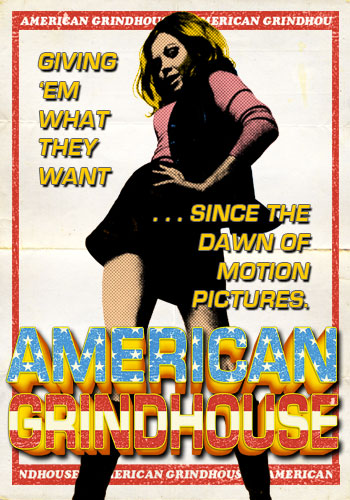
Another Hole in the Head’s two documentary offerings concern themselves with the distinctly American roots of two related strains of genre filmmaking. Elijah Drenner’s American Grindhouse traces the history of exploitation film, with a particular focus on the grindhouse theater as a cultural institution. Narrator Robert Forster recounts the tendency of even the earliest films to cater to prurient interests, and how the establishment and eventual dissolution of the Motion Picture Production Code stimulated the development of exploitation subgenres. The featured film clips are impeccably selected, mixing titillation and shock with a healthy sense of humor about the over-the-top absurdity of films like Ilsa: She Wolf of the SS (1975). Surprisingly candid interviews with gore luminary Herschell Gordon Lewis and blaxploitation director Larry Cohen prevent the film from taking on a too-self-important tone — these folks knew they were making b-pictures, and were damn proud of it. One of the most charming aspects of the documentary is the juxtaposition of different attitudes, wherein one interviewee will sing the praises of a classic, followed in quick succession by another talking head declaring it to be trash. It feels like John Landis gets the most screen time of any subject, but his charisma as well as the breadth of his oeuvre make it seem appropriate.

Nightmares in Red, White, and Blue, on the other hand, focuses specifically on horror, and director Andrew Monument in turn delivers a harsher, more self-serious take on shocking cinema. Some interviewees cross over, but standouts here include John Carpenter and modern torture porn auteur Darren Lynn Bousman. The editing here is less edifying and more irritating, though since we’re dealing with horror films, sometimes the heavy-handedness works — case in point, a lengthy montage of nudity and sex from slasher films effectively communicates both the puerile interests and blunt moralizing of much of the genre. Nightmares is also more explicitly concerned with how horror films relate to America, with many interview subjects noting how each decade’s horror trends mirrored its political issues, hence the title’s direct allusion to the perversion of the American dream.

Both films provide a historical framework for films that, as Grindhouse insists, have become part of our modern mythology and mindset. Grindhouse is more watchable, but both are worth seeing for anyone who didn’t live through the long history of genre madness and brilliance.

ANOTHER HOLE IN THE HEAD FILM FESTIVAL
July 8–29, $11
Roxie, 3117 16th St, SF
Viz Cinema, New People, 1746 Post, SF
www.sfindie.com

Gore … and bores: more Another Hole in the Head reviews

0

More bloodthirsty coverage of the San Francisco IndieFest’s horror-fest offshoot, Another Hole in the Head, in this week’s Guardian.

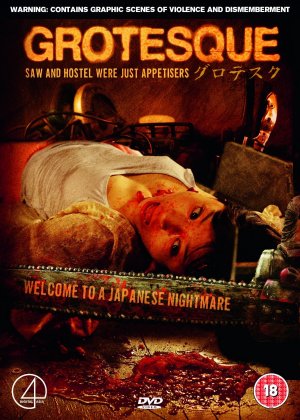
Grotesque (Koji Shiraishi, Japan, 2009) When did gorno stop being sick and start becoming sad? In Koji Shiraishi’s Gurotesuku, or Grotesque – banned in the UK – a chainsaw is brought to chests, arms, legs, and fingers when really it should be brought down on this celluloid garbage. Shiraishi presents a film that is sloppy, badly written, badly acted, and is above all things, deeply unentertaining. The plot is as thin and drawn-out as one of the protagonist’s intestines: While on a date, two dumbfucks get picked up by a craaaaaazy doctor (at least I think he’s a doctor – and I think he’s lost his board certification) who proceeds to do sick but unoriginal things to them (sawing off a girl’s fingers and stringing them on a necklace for her BF? C’MON!). There are some brief moments of respite, albeit painfully acted and ridiculous respite, but the torture tries not to let up its chokehold on the audience. Unfortunately, it just ends up being a chokehold on our time. Fri/16, 5 p.m. and Sun/18, 7 p.m., Roxie.

Ticked-Off Trannies With Knives (Israel Luna, USA, 2010) Trannies should get ticked-off more often. In a mock-exploitation fest like this one – which has the candid crudeness of a John Waters film – the tranny is the ultimate hero because she embodies the street smarts and agility of a woman, and the muscles and thirst for vengeance of a man. After an aggressive brush-up with some nasty bros (and what’s worse than a weapon-wielding homophobe?) the titular trannies in Ticked-Off set out to put the ol’ Hammurabi’s Code to the test – and with results both hilarious and flat-out gross. The cheeseball aesthetics and maudlin acting are surprisingly funny and self-conscious rather than self-effacing – yet in dealing with something like a hate crime, how else can you approach the material? July 22, 5 p.m., Roxie and July 23, 9 p.m., Viz.

Doctor S Battles the Sex Crazed Reefer Zombies (Bryan Ortiz, USA, 2008) Apparently, Reefer Madness (1936) and the public health warnings like it were right: weed does turn you into a monster. But in this underachieving student film, the message arrives a little too late. Doctor S has a promising start: some hilarious faux-film reel ads, and many a nod to cult horror films. In stark black-and-white, it’s as if Candace Hilligoss were running from stoners in Carnival of Souls (1962). But once the PhD of the title teams up with a cheerleader, saved from her post-puff zombified boyfriend at Make Out Hill, the film quickly devolves into amateurism. The thrills are cheap – too cheap – and the laughs are forced. Not to mention the title is way cooler than the movie itself. July 23, 7 p.m and July 26, 9 p.m., Viz.

ANOTHER HOLE IN THE HEAD FILM FESTIVAL
July 8–29, $11
Roxie, 3117 16th St, SF
Viz Cinema, New People, 1746 Post, SF
www.sfindie.com

Lisa Cholodenko on “The Kids Are All Right”

0

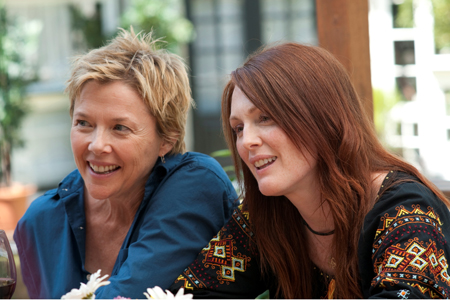
Writer-director Lisa Cholodenko earned attention with critically acclaimed features like High Art (1998) and Laurel Canyon (2002). Her latest movie, The Kids Are All Right, is a “personal film” about a lesbian couple raising teenagers. I spoke to Cholodenko about queer politics, explicit content, and keeping things lighthearted.

San Francisco Bay Guardian: Recently, there was a lot of controversy surrounding a Newsweek article, in which the author wrote about the difficulty of queer actors playing straight roles. I was wondering about your take on that, and on the opposite — straight actors playing queer roles. Is that something you even considered when casting?
 
Lisa Cholodenko: I’ll be honest, I was just told about this article and I didn’t read it. You know, I think it’s kind of weird thing to even discuss in a way, to me. Chiefly because I think actors’ personal lives — I just think people should have a private life, not that they should be in the closet, but that there should be a separation between professional life and personal life. And if a director feels like so-and-so, whether they’re gay or straight, would be good for a role, give them the role. What does it matter? As it turns out, I think gay people have more of an affect, whether they’re lesbians or gay men, that’s harder to camouflage in straight roles. Why that is, I mean, you could talk about that. I think it’s easier to go the other way. That’s just what it is. I say that without a value judgment. It is what it is.

SFBG: The Kids Are All Right has a same-sex relationship, of course, but it also has a fair amount of graphic sex and even a snippet of hardcore gay porn. Do you think it will shock a mainstream audience? Are they ready for it, and does that matter?

LC: I think it’s shocking in a sense that it’s portrayed in such a real way, that it’s not super arch, or it’s not like The L Word. This stuff has been on TV and in films. In a way, I’m not inventing the wheel at all. But I think the package that it’s coming in is going to be disarming to people. I think we tried and I think we were somewhat successful in making it so that you don’t realize exactly what you’re watching, the subversiveness of what you’re seeing. You can settle into watching it without that kind of discomfort of being super aware of, “This is something I’m not. I’m other and this is not my thing.” I think we figured out a way for people to enter it, and that was really important for us.

SFBG: I ask because I do feel like this shouldn’t be a big deal, that people should be able to handle it. And yet, the night before I saw your movie, I saw Sex and the City 2, in which there was a gay wedding. And as soon as the two men kissed, the camera cut away. There’s a lot of intimacy between Nic and Jules in the movie, so I was wondering particularly about that. Are people outside of San Francisco going to be apprehensive?

LC: Yeah. You know, I think we didn’t really know. I think we tried to write it and I tried to direct it in a way that the humor would be disarming enough, and the images themselves, if you really deconstruct it, would be tame enough. So it was more the suggestion of it. That would be the kind of twist. The people in the know would get it more than the people that were not in the know, maybe. I think we hoped that it would have a mainstream appeal to it, and that we could get beyond the people who would be apprehensive. There were questions about the gay porn and about how much sexuality we were showing, but we felt like, this is the fun of the film. It’s not going to be Spider-man 12 or something. It’s not going to be a multiplex film. But we hope it’s not going to be super rarefied art house film. So in terms of the Sex and the City thing, I think that they’re looking to go as wide as humanly possible, to every grandmother to every neck of whatever, so you can only take it so far.

SFBG: I want to touch on the humor that you mentioned, because I think it’s one of the movie’s real strong points. It’s so funny. What was your approach when you were co-writing to keeping the drama of the story but still making it fun?

LC: It was like a process, it was a real evolution. We had sort of a plot, a conceit for how the plot comes together, which was this thing about the kind of doofus friend wanting to watch the DVDs, and finding the porn, and blah, blah, blah, blah. So that all was funny, and then the kind of awkward conversation about trying to tiptoe around trying to figure out if their kid was gay, and that they would even care that the kid is gay, and how ironic that two gay moms are going to care that there kid is gay. And all that stuff. So it made us laugh, but there was a lot of other stuff in there that we took a lot more seriously and played a lot more seriously. I think as we went deeper into the drafts and moved along in the evolution of getting the film done, I really, really, really pushed for us to take whatever was potentially funny in there and just kick it up a notch. Stuart [Blumberg, who co-wrote the film] is a really funny guy — we have a similar sensibility. The same kind of stuff makes us laugh. So we knew if we were sitting there writing it and laughing, it was good. We had kind of gotten there.

SFBG: I think a lot of the humor comes from the fact that the film is so real and grounded. You have Laser, a 15-year-old boy, who talks like a 15-year-old boy, and that’s something we don’t always see in movies. And so it’s not stereotypical or preachy—it feels more organic than that.

LC: Yeah, we were really passionate about making it not politically correct and not sanctimonious and not super earnest and just hoping that there would be heart in it, simply because these were sympathetic and three-dimensional characters in a difficult situation.

SFBG: I wanted to ask about the character of Nic [played by Annette Bening], who could have been played very typically butch, because she has a masculine name and short hair and these traditionally “male” qualities. In terms of the writing and the directing, how did you make sure there was more complexity there?

LC: You know, I think that wasn’t super overdetermined. It’s really just kind of my worldview. I don’t live in a world where people are super stratified. I don’t feel like my partner and I are super — I kind of see the butch and femme in every lesbian I know. I know that there are lesbians who really kind of identify with that, and that’s there thing in the world, and that’s good. But it’s a personal film, so it’s written from my worldview. So there’s that, and then there’s also, you get Annette Bening and you get Julianne Moore, and they come with their own essence and personality. Julianne Moore has some butch in her and Annette Bening has some femme in her. They are who they are.

SFBG: There’s a great conversation early on in the film about the spectrum of sexuality and how it’s not so easily defined, which ties into Jules sleeping with a man. Were you concerned about an audience’s reaction to a lesbian having sex with a straight guy?

LC: I mean, it was a concern for me, but I felt like, you know what, oh well. I might be nailing the coffin. It might just be a bad choice. But in essence, the whole plot of the film revolves around that, so it was either, ditch the film or run with it and try to make it feel earned and interesting and viable and what not. In the early drafts I would show people — and when I started getting feedback in the early drafts, and “This is good,” I stopped being so uptight about that and just let myself kind of take it to the next place.

SFBG: It wasn’t an issue for me, but I think for a lot of people, they expect more rigid definitions. We don’t see a lot of queer characters on screen, and so when we do, many want them to be perfect: the queer voice, the lesbian, the gay man. And when they step outside those boundaries, suddenly it becomes an issue, politically.

LC: The calculated thing was that, I thought, a) I identify with this. This is something that I feel like, that makes sense to me. That makes sense to people I know. That makes sense to whatever. So it didn’t feel like some weird kind of conceit that I came up with that was like, that never happens. All lesbians are rigidly this and don’t go over that boundary. Because we know that’s not true. So there was that, and then I thought, I like this set-up and I like this plot, and also I feel like, it’s kind of an interesting intermingling of straight and gay. I felt like, if I really want this to be a mainstream film, that’s good. This is really inclusive of gay and straight, and I like that. I like that personally and I like that for this film. I was much more interested in reaching out to the male population than I was concerned about alienating a sector of the lesbian population.

SFBG: I wanted to talk about the title, The Kids Are All Right, and that focus on the children. How did the title come about? How do you feel about the role the kids play, and why is that central to the film?

LC: The film is about, you know, these women and their experience making a family. The family. The man who comes in and wants to be part of the family. Really when you’re talking about the family, it’s about the life of the kids. So it’s sort of an ironic title, in the sense that the kids are kind of doing better than the moms, in a way. And it’s also a kind of a wink to the notion that gay people can’t raise healthy, psychologically healthy children. Like, the kids are fine. Don’t worry about them. They’re just right.

SFBG: You talked a bit about what Annette Bening and Julianne Moore brought to the film, but I was wondering if you could elaborate on casting.

LC: Julianne was someone I had probably 10 years ago, just at some function somewhere. We had spoken about wanting to work together at some point. She was a fan of the first film that I made, High Art, and I was always a fan of hers, particularly in Boogie Nights (1997). So when Stuart and I wrote this, we asked ourselves several times, could Julianne play this part or that part? We were sort of on the fence. We thought she could play either part. So I sent it to her and I said, “Which part would you like to play?” And she picked Jules. Which, we weren’t surprised. We knew she’d want to play that part, but I thought I’d offer her the other one if she wanted it. And that was great.

Then finding her counterpart, the Nic character, was more difficult. It was kind of vexing. I just didn’t know what actor in that age group who had great acting chops, who was funny and dramatic and sexy, could be a good match for her. But when I stumbled on the idea of Annette Bening, I kind of got rabid about it. OK, this is it, this is the only person who can do it. So come hell or high water, she’s gonna do it.

SFBG: And then in terms of the younger actors — you don’t always see teenagers who actually look like teenagers.

LC: Well, they’re pretty close to the ages they’re supposed to play. Mia [Wasikowska] was like 19 at the time, and Josh [Hutcherson] was maybe 16, going on 17. So they were pretty close. Mia was someone that I had seen on an HBO series called In Treatment and thought she was interesting. I liked that she was Australian, not a typical American young actor, from LA or New York and wouldn’t have that baggage or affect that you might find in a lot of young actors from here. And he — I didn’t know his work, but I knew that he had done a lot of work. I was told he was an up-and-coming actor, so I was open to meeting him as well as other people, but when he came in and did the scene, it was just one of those things where you go like, “Oh, yeah.” I thought maybe Laser would be more of a Paul Dano-type kid, a little bit more twee, but when I saw him, I thought, oh, that’s good. He should be more boyish and more kind of robust, and just like a dude. I like that.

SFBG: There’s a lot of subtlety in The Kids Are All Right. I liked Nic’s drinking, which was fairly underplayed but came up several times. What was the thought process behind that? Does she have a drinking problem, or is that just the manifestation of the turmoil going on in her family?

LC: I think we felt like, oh, you know what? She’s kind of borderline. She’s a little bit of a lush. She’s kind of leaning on the wine too much, and this has become a thing and the other partner is now noticing. She’s drinking too much and she’s a stress case and she’s not dealing with it very well. She doesn’t have a good off valve. I think we tried to design it in a way that it felt like, this is something that’s coming to a head in their relationship. One partner’s seeing a behavior that’s making her concerned and the other one doesn’t want to deal with it yet, and she’s boozing it up.

SFBG: It’s also interesting because it’s easy to label Nic the control freak. But here’s Nic, who can’t control her drinking, and Jules, the free spirit, trying to get her to keep it in line.

LC: Right, right, right. Well, I felt like everybody has their ironies and contradictions and stuff. It’s endemic, I think, in all long-term relationships.

SFBG: There was another relationship that interested me, which was the relationship between Paul [Mark Ruffalo] and Tanya [Yaya DaCosta]. I was wondering if it was significant that it was an interracial relationship. In the sense that, 40 years ago, audiences might have been shocked by an interracial relationship, but now it plays naturally — and hopefully, the same will be true of same-sex relationships. Was that intentional, or am I reading into things too much?

LC: You know, I think it wasn’t totally consciously mediated, but at a certain point when I was thinking about casting, I had Erykah Badu in my mind for that role. I felt like, who’s the kind of person who Paul would be with? It seems like he’s the kind of guy who would be running after the most exotic person. That character to me was sort of gorgeous and exotic and whatever. And then, to go from that to Jules, who is totally exotic in her own way, because she’s who she is and she’s older and she’s beautiful and she’s a lesbian. It was this kind of motif of like, what’s exotic? The Tanya character, the black character, is clearly in love with him and would be devoted to him in a heartbeat. And the white character, who’s a lesbian and completely inaccessible, is not available at all.

I guess the second part to that question is, at a certain point when we were putting this together was, it’s not only that, in terms of the psychology of the character, but I think this is good to mix it up. You know, he’s screwing this black woman, and OK, compare that to the lesbians watching gay male porn. This is what people do in life. It’s not just white people and straight people. It’s mixed up.

The Kids Are All Right opens Fri/9 in San Francisco.

Splattergories

0

FILM FESTIVAL Now in its seventh year, San Francisco’s Another Hole in the Head Film Festival aims to draw fans of fantastical and shocking cinema into the Roxie and Viz theaters for its slate of 32 films. Spanning horror, science fiction, and fantasy, Hole Head features films from Singapore to Serbia, including 10 flicks from Japan.

Despite this cultural eclecticism, there is one theme that seems to crop up throughout the program: homage. A surprising number of these films are primarily interested in referencing or commenting on formative genre pictures that came before.

Of course, such an approach to genre filmmaking need not be retrograde. When it works, as in the hilarious kaiju pastiche Death Kappa, there’s no question about why someone would want to both mock and commemorate the storied run of man-in-suit monster movies. Kappa brings out the humor in an already existing template, mixing shades of H.P. Lovecraft and E.T. (1982) with Japanese folklore but ultimately ending up in the same place: city-smashing mayhem.

Among the Japanese selections is an assortment of gore films, weird fantasy-action movies entirely predicated on opportunities for spouting blood. These often feel like they’re in dialogue with themselves, lampooning older forms but also riffing on their own ridiculousness. RoboGeisha plays like a live-action cartoon, where laws of logic and good taste don’t apply and the best way to deal with a terrorist is two tempura shrimp to the eyes. Not gory but similarly frenetic is shock auteur Takashi Miike’s latest, an unexpectedly light adaptation of a children’s anime series called Yatterman, which is literally a live-action cartoon as well as a 1970s throwback.

Sometimes, though, the tribute-obsession can seem like wallowing. Reykjavik Whale Watching Massacre, blessed with an absurd title and the exotic appeal of being an Icelandic horror film, is basically a by-the-numbers slasher that retreads The Texas Chain Saw Massacre (1974) and others to the point that its shocks are predictable.

Many other subgenres are represented, from torture porn to luchador action, but one of the festival’s highlights dwells outside any such bracket. Japanese comedian Hitoshi Matsumoto’s metaphysical fantasy Symbol documents the travails of a man inexplicably trapped in a mysteriously interactive white room. It sometimes feels like a feature-length comedy sketch, governed by certain rules or patterns that drive its simple but ultimately cosmic plot. Constrained though it may be, it makes no concessions to genre and feels inspiringly new as a result.

Regardless of a few staid entries, such a forum for genre cinema is absolutely crucial, particularly on such an international scale. Even if we need another zombie reinterpretation like we need a hole in the head, Another Hole in the Head will hopefully be with us well into the future.

ANOTHER HOLE IN THE HEAD FILM FESTIVAL

July 8–29, $11

Roxie, 3117 16th St, SF

Viz Cinema, New People, 1746 Post, SF

www.sfindie.com


Our Weekly Picks: July 7-13, 2010

0

WEDNESDAY 7

EVENT

The Butterfly Mosque reading

Journalist and author G. Willow Wilson is familiar to comics fans for her Vertigo-published modern fantasy series Air and graphic novel Cairo, both with artist M.K. Perker, as well as her work on various superhero properties. A woman in mainstream comics is unusual enough, but Wilson is also a Muslim. Her new prose memoir, The Butterfly Mosque: A Young American Woman’s Journey to Love and Islam, treats the experiences that led her from her home in Denver through Boston University to time spent teaching in Cairo. Much of her comics work deals with the collision of the West with the Middle East, often in fictionalized political contexts, and this reading and Q & A should include plenty of her uniquely positioned insights on this cultural dynamic. (Sam Stander)

7:30 p.m., free

Booksmith

1644 Haight, SF

(415) 863-8688

www.booksmith.com


DANCE

The Foundry

When words fail, a turn of a cheek or small shift in stance can signify a world of meaning. Choreographer, dancer, and director of the Foundry Alex Ketley is hyperconscious of the subtle secrets our bodies both hide and reveal. This consciousness allows him to deconstruct and reconstruct movement in such a way as to capture the emotional unknown that lies beyond words. Enlisting a cast of captivating dancers and former Ballet Frankfurt media artist Les Stuck, Ketley’s newest project, Please Love Me, explores how we relate to others and investigates the contradictory nature of love and relationships. (Katie Gaydos)

8 p.m., $20

Z Space at Theater Artaud

450 Florida, SF

www.conservatoryofdance.org


THURSDAY 8

FILM

Mulholland Dr.

Lucid dreams, fever dreams, wet dreams — what’s the difference in Mulholland Dr., David Lynch’s 2001 apocalyptic vision of Hollywood? Above all else, the film is a love story doomed from the very start as Rita (Laura Herring) stumbles out of a car wreck and into the arms of Betty (Naomi Watts, in a performance somewhere between Pollyanna and Patty Hearst). What follows is a Pandora’s box — and Rita’s got the key to a blue one of those you definitely shouldn’t open — of Bergmanesque female trouble, and some surrealist hell to boot: the jitterbug, Roy Orbison, and bite-size geriatrics, to name a few. In every dread-drenched scene, Lynch has our undivided attention even when we have no idea what the hell is going on. (Ryan Lattanzio)

2 and 7 p.m., $7.50–$10

Castro Theatre

429 Castro, SF

(415) 621-6120

www.castrotheatre.com


COMEDY

David Alan Grier

Although he got his start in acting by tackling serious roles and earning a master’s at the Yale School of Drama, David Alan Grier got his first taste of mainstream exposure and success as a cast member on the classic 1990s TV show In Living Color, where he brought to life hilarious characters such as Antoine from “Men on Film” and the crazy blues singer Calhoun Tubbs. In the years since, Grier has lent his considerable talents to several other projects, more recently Comedy Central’s show Chocolate News and his 2009 book Barack Like Me: The Chocolate Covered Truth. Here’s your chance to check out Grier live, uncensored, raw, and on stage. (Sean McCourt)

Through Sun/11

8 p.m. (also Fri/9-Sat/10, 10:15 p.m.)

$22.50–$23.50

Cobb’s Comedy Club

915 Columbus, SF

(415) 928-4320

www.cobbscomedyclub.com


EVENT

Cybernet Expo

It would seem like a no-brainer, filling a webmaster job at an adult Internet company. Geeks love porn, right? True as that may be, they still need a conference to link them up to the pervy, techie job of their dreams. Never fear, Cybernet Expo is here! The trade show has been linking sticky palms since 1997, and offers seminars, panel discussions, networking opportunities — and a convention-closing get down among the chains and whips of the SF Armory. “Oh yeah, it’s gonna be a fun party,” says Terry Mundell, business development manager of Kink.com, who will be organizing Saturday night’s after hours good times. Even better than a night on his website? (Caitlin Donohue)

Through Sat/10, $199

Golden Gateway Hotel (most events)

1500 Van Ness, SF

www.cybernetexpo.com


FRIDAY 9

DANCE

“Symbiosis: A Celebration of Dance and Music”

Kara Davis seems to be able to do it all. A trained ballet dancer, she has danced for the last 14 years with who’s who of modern dance in San Francisco. No matter the style and the challenge, she eats it up. Now she is also developing a strong, independent voice as a choreographer for her project agora company. This program, presented as part of Dance Mission Theater’s “Down and Dirty Series,” is half dance and half music. It reprises Davis’ two substantial ensemble pieces, A Softened Law and one Tuesday afternoon, first seen at ODC in December, and the gorgeous 2006 duet, Exit Wound, choreographed for herself and Nol Simonse. Exit‘s music was written by Sarah Jo Zaharako, whose Gojogo quartet, in the evening’s second half, will play more of Zaharako’s compositions. The lineup culminates in a premiere, Symbiosis, which features — no surprise here — Davis as a solo dancer. (Rita Felciano)

Through Sun/11

8 p.m., $20

Dance Mission Theater

3316 24th St., SF

www.dancemission.com


EVENT

Pantheon

The Temple is Burning Man’s sacred space. And this year, the Temple of Flux is really something special, among other reasons for its massive collaboration of various Bay Area tribes to build the biggest and most unusual and ambitious temple in the event’s long history (something I know from embedding myself with the project for an upcoming Guardian cover story). But to pull this off, the Temple crew has embarked on an equally aggressive and unprecedented fundraising campaign, the centerpiece of which is Pantheon, featuring Elite Force, Soul of Man, 21 of SF’s best DJs, transformative décor, and a slew of sexy gods and goddesses roaming the temple grounds. So don a toga or other Greek or Roman attire and join this bacchanalian celebration. (Steven T. Jones)

9 p.m.–5 a.m., $20–$25

103 Harriett, SF

www.pantheonsf.eventbrite.com

www.temple2010.org


SATURDAY 10

VISUAL ART

“Alien/ation”

A showcase of illustrators whose work has appeared in Hyphen magazine, “Alien/ation: An Illustration Show” will open at SPACE Gallery in SF with DJ sets by B-Haul and Gordon Gartrell and live painting from participating artists, in what is billed as “an art riot extravaganza.” Currently on its 20th issue, Hyphen is a San Francisco-based publication focusing on Asian American culture, and the crossover of its featured art into a gallery setting is a welcome development. Magazine illustration is generally frequented by talented cartoonists and fine artists, and the artists featured here are excellent and stylistically diverse enough to keep things interesting. Particularly exciting is the inclusion of oddball cartoonist Rob Sato, lush illustrator Kim Herbst, and distinctive portraitist Jon Stich. (Stander)

7 p.m. (artists’ reception, 5:30 p.m.), $5

SPACE Gallery

1141 Polk, SF

(415) 377-3325

www.spacegallerysf.com


SUNDAY 11

MUSIC

“Simcha! The Jewish Music Festival’s 25th Anniversary Party”

Rabbi Nachman, a 14th century Chassidic scholar, counted in his teachings the importance of displaying simcha (Hebrew for joy), like, all day every day so that you could effectively carry out God’s commandments. The translation for all you pagan sinners remains salient: you gotta be loose to enjoy the flow. Take simcha as your mantra when you head to the Jewish Music Festival’s 25th anniversary party, where tunes from Glenn Hartman and the Klezmer Playboys, the Red Hot Chacklas, Eprhyme, and oh so much more will trip happily through the Yerba Buena Gardens. Duck next door to the Yerba Buena Center for the Arts Sculpture Court (Third Street at Mission) to check out Jewlia Eisenberg and Charming Hostess’ “The Bowls Project: Secrets of the Apocalyptic Intimate,” an odd blending of sustainable architecture, the domestic sacred, and haunting evocations of secrets held and shared. (Donohue)

Noon–5 p.m., free

Yerba Buena Gardens

Mission at Fourth St., SF

(510) 848-0237, ext. 119

www.jewishmusicfestival.org


MUSIC

Gipsy Kings

It might seem ridiculous to argue that the Gipsy Kings are underrated, but bear with me. Sure, they’ve sold millions and millions of albums worldwide, and sure, they contributed a key cut to the iconic Big Lebowski (1998) soundtrack (their music is also featured in Toy Story 3). Despite this, or perhaps because of it, they still don’t seem to get much respect. The Gipsy Kings aren’t anyone’s favorite band. People rarely argue about the extent of their cultural influence or whether they’re “important.” This is a shame, really, because their covers reveal an unexpectedly sly, parodic impulse, while their standard flamenco tracks are actually relatively innovative in their merging of traditional Spanish dance with more modern pop influences. (Zach Ritter)

8 p.m., $85

Fillmore

1805 Geary, SF

(415) 346-3000

www.thefillmore.com


MUSIC

Weed Diamond

Though Weed Diamond hails from Denver, its conspicuous name alone suggests a sentiment we San Franciscans can relate to. Despite an insistently lo-fi, reverb-soaked gamut — like putting a beautiful indie rock seashell to the ears — these guys aren’t afraid of an infectious chorus. They also aren’t afraid of paying due respect to their influences, especially in the trippy shoegaze and heavy-on-the-feedback noise pop elements. Now on tour with Dash Jacket and Tan Dollar, Weed Diamond evolved from the solo project of Tim Perry to a full five-piece band and has since played SXSW and up and down the West. It’s like a psychoactive bonbon: delicious yet intoxicating. (Lattanzio)

With Tan Dollar and Dash Jacket

4 p.m., free

Milk Bar

1840 Haight, SF

www.milksf.com


MONDAY 12


PERFORMANCE

“What’s Cookin’ With Josh Kornbluth”

Monday special at the Contemporary Jewish Museum café: Josh Kornbluth on wry. Popular monologist Kornbluth, fresh from his latest solo flight, Andy Warhol: Good For the Jews?, is once again hanging out on the border of fine art and cultural critique, only this time there’s matzo ball soup and a Cobb salad option. It’s also more interactive. From noon to 2 p.m. (each Monday over the next five weeks) Kornbluth will be offering conversation to museum patrons bold or clueless enough to enter his well-appointed lair. It’s as simple as that. But then, if you know Kornbluth, nothing is ever that simple. (Robert Avila)

Through Aug. 9

Mondays, noon-2 p.m., free (museum admission not included)

Contemporary Jewish Museum

736 Mission, SF

(415) 655-7800

www.thecjm.org 

The Guardian listings deadline is two weeks prior to our Wednesday publication date. To submit an item for consideration, please include the title of the event, a brief description of the event, date and time, venue name, street address (listing cross streets only isn’t sufficient), city, telephone number readers can call for more information, telephone number for media, and admission costs. Send information to Listings, the Guardian Building, 135 Mississippi St., SF, CA 94107; fax to (415) 487-2506; or e-mail (paste press release into e-mail body — no text attachments, please) to listings@sfbg.com. We cannot guarantee the return of photos, but enclosing an SASE helps. Digital photos may be submitted in jpeg format; the image must be at least 240 dpi and four inches by six inches in size. We regret we cannot accept listings over the phone.

Sicily unbound

0

arts@sfbg.com

FILM Francesco Rosi once remarked to an interviewer, “A film is always a testimony of the age in which it lives.” It’s one thing to recognize this as an incipient truth and quite another to enact it as a code of filmmaking. Rosi’s films from the 1960s and ’70s evince the common roots of aesthetic and ethic, exhibiting what can only be called an ardor for the analysis of social conditions — both their mechanisms and mentalities. Though still relatively unsung among the major Italian auteurs, of which he is certainly one, a career-spanning retrospective at the Pacific Film Archive makes the case for the writer-director’s staying power.

Rosi studied law at school and film with the Italian directors of the 1940s and ’50s. In his own early features, he placed additional demands upon the conventions of neorealism. Putting aside the tempting notion that the camera will discover a transcendent truth if only stripped of the artifices of professional actors and sets, Rosi’s films are concerned with inventing a public sphere for argument and questioning — this before the age of the Internet and 24-hour news.

Take Salvatore Giuliano (1961), his sophisticated dissembling of the tangled (and at that time recent) history of the eponymous gangster, a Robin Hood figure in the postwar Sicilian imagination who aided the area’s separatist movement. “He took from the rich and gave to the poor,” a local tells a bored reporter. When he finds out the newsman is from Rome, he adds, “What can you understand about Sicily?”

Rosi’s out-of-joint narration of events from before and after Giuliano’s death in 1950 takes at least a couple of viewings to puzzle together, and even then, much remains pointedly obscure. The film recalls Borges’ description of Citizen Kane (1941) as “a labyrinth without a center,” and, as such, contains an implicit disavowal of neorealist orthodoxy (if such a thing ever existed). If “reality” is transparent, why the confusing jumps in time? Why go to such lengths to keep Giuliano himself in the shadows? Why leave so much basic plot material unclear, from major events (the motivation behind Giuliano’s orchestration of a massacre of communists at Portella della Ginestro, for instance) to minor gestures (like when, at the end, one of Giuliano’s associates palms the bottle of medicine that has apparently just poisoned the bandit’s right-hand man)?

The answer has to do with Rosi’s desire to replace the “not knowing” of complacency with that of skepticism. The subject of the film is not Giuliano so much as the Sicilians who presume to know him. We begin with the bandit’s death, in Kane fashion, but even before the plot has insinuated a cover-up, Rosi visually undermines any easy sense of certitude. We watch the inspection of Giuliano’s prone corpse from several striking bird’s-eye-view shots, but soon discover these compositions are not as omniscient as we might first (complacently) assume. In fact, they represent the vantage point of the reporters hounding the carabinieri and citizens for a story quite separate from Rosi’s. Here the director insinuates how difficult it is to find your footing in the Sicilian situation. Taking aim at collusion, he formally imbricates us in its grip.

Rosi’s neorealism is one of provocation. He obsessively stages recent history in the actual locations in which it unfolded, employing eyewitnesses as themselves. Testimony is activated, not relegated to incidental afterthought. Even in later, more traditionally allegorical films like Three Brothers (1981), in which Rosi seems to move toward seeing political discourses as being channeled and contained by subjective experience, his visual and narrative designs mirror the macro controls at work in complex social systems. Watching Rosi’s work, we realize that the news lives inside us, whether we like it or not.

MODERNIST MASTER: THE CINEMA OF FRANCESCO ROSI

July 8-Aug 28, $5.50–$9.50

Pacific Film Archive

2575 Bancroft, Berk.

(510) 642-5249

www.bampfa.berkeley.edu

We are family

0

arts@sfbg.com

>>Read Louis Peitzman’s complete interview with director Lisa Chodolenko here

FILM In many ways, The Kids Are All Right is a straightforward family dramedy: it’s about parents trying to do what’s best for their children and struggling to keep their relationship together. But it’s also a film in which Jules (Julianne Moore) goes down on Nic (Annette Bening) while they’re watching gay porn.

“I think we tried and I think we were somewhat successful in making it so that you don’t realize exactly what you’re watching, the subversiveness of what you’re seeing,” says writer-director Lisa Cholodenko (1998’s High Art). “I think we figured out a way for people to enter it, and that was really important for us.”

That blend between mainstream and queer is part of what makes The Kids Are All Right such an important — not to mention enjoyable — film. Despite presenting issues that might be contentious to large portions of the country, the movie maintains an approachability that’s often lacking in queer cinema.

“I thought it was a very classic story,” Bening says, “other than that the women are gay.”

Cholodenko and Bening were both on hand in San Francisco to promote and speak about the film. Of course, being in the gay mecca of the Bay Area skews things significantly — most locals wouldn’t bat an eye at The Kids Are All Right, which has Nic and Jules’ children inviting their biological father (“the sperm donor”) into their lives. But for those outside the liberal bubble, the idea of a nontraditional family might be more problematic. Combine that with the film’s semiexplicit sexual content and a darkly comic, matter-of-fact script, and you’ve got a tougher sell.

“There were questions about the gay porn and about how much sexuality we were showing, but we felt like this is the fun of the film,” Cholodenko reflects. “It’s not going to be a multiplex film. But we hope it’s not going to be super-rarefied art house film.”

The fun Cholodenko mentions is the real strength of The Kids Are All Right, a movie that refuses to take itself too seriously. At its best, the film is laugh-out-loud funny, handling the heaviest of issues with grace and humor.

“To me, [the humor] is so important — and it’s harder,” Bening says. “That’s why more movies don’t have it. It’s because it’s harder. It’s much easier to write in an earnest way.”

That’s not to say that the film is insincere. Much of the humor is derived from the fact that it’s grounded in reality. The characters respond to their situation as real people do — and that’s far funnier than the broad, over-the-top reactions that often plague more mainstream comedies.

“We were really passionate about making it not politically correct and not sanctimonious,” Cholodenko explains. “As we went deeper into the drafts and moved along in the evolution of getting the film done, I really, really, really pushed for us to take whatever was potentially funny in there and just kick it up a notch.”

Besides — as Bening puts it — “I think if you’re trying to make an earnest movie about a lesbian couple with teenagers, whoa, what a nightmare that would be.” It’s not a message movie, but The Kids Are All Right may still change minds. And even if it doesn’t, the film is a success that works chiefly because it isn’t heavy-handed.

“It doesn’t ever have to go out and carry the banner, which is what great movies and great stories can do,” Bening notes. “You take an individual group of people, a specific little pod of people, and you try to tell their own personal stories as specifically as possible. Hopefully you get at something true and universal by doing that.”

THE KIDS ARE ALL RIGHT opens Fri/9 in San Francisco.

Rep Clock

0

Schedules are for Wed/7–Tues/13 except where noted. Director and year are given when available. Double and triple features are marked with a •. All times are p.m. unless otherwise specified.

BRIDGE 3010 Geary, SF; (415) 668-6384. $10. “Rocksploitation with Citizen Midnight:” Ladies and Gentlemen: The Fabulous Stains (Adler, 1981), Sat, midnight.

CASTRO 429 Castro, SF; (415) 621-6120, www.castrotheatre.com. $7.50-10. •Myra Breckenridge (Sarne, 1970), Wed, 3, 7, and The Wild Party (Merchant, 1975), Wed, 4:45, 8:50. •Mulholland Dr. (Lynch, 2001), Thurs, 7, and The Loved One (Richardson, 1965), Thurs, 9:45. •The Bad and the Beautiful (Minnelli, 1952), Fri, 2:35, 7, and The Big Knife (Aldrich, 1955), Fri, 4:50, 9:20. “Alan Cumming: I Bought a Blue Car Today,” Sat, 8. Tickets ($37.50-85) at www.ticketweb.com. “Midnites for Maniacs: Embracing Aliens:” •E.T.:The Extra-terrestrial (Spielberg, 1982), Sun, 2, and Mac and Me (Raffill, 1988), Sun, 4:15. Five Easy Pieces (Rafelson, 1970), Sun, 7, 9.

CERRITO 10070 San Pablo, El Cerrito; www.rialtocinemas.com. $7. “Cerrito Classics:” Jaws (Spielberg, 1975), Thurs, 7:15.

CHRISTOPHER B. SMITH RAFAEL FILM CENTER 1118 Fourth St, San Rafael; (415) 454-1222, www.cafilm.org. $6.50-10.25. Babies (Balmès, 2010), call for dates and times. The Girl With the Dragon Tattoo (Oplev, 2009), call for dates and times. Micmacs (Jeunet, 2010), call for dates and times. OSS 117: Lost in Rio (Hazanavicius, 2009), call for dates and times. The Sun Behind the Clouds (Sonam and Sarin, 2010), call for dates and times. Touching Home (Miller and Miller, 2009), call for dates and times. The Girl Who Played With Fire (Alfredson, 2009), July 9-15, call for times. “San Francisco Opera: Grand Opera Cinema Series:” “Madama Butterfly,” Thurs, 7.

“FILM NIGHT IN THE PARK” This week: Creek Park, 451 Sir Francis Drake, San Anselmo; (415) 272-2756, www.filmnight.org. Donations accepted. Let It Be (Lindsay-Hogg, 1970), Fri, 8. Union Square, Geary and Powell, SF; same contact and ticket info. Dirty Dancing (Ardolino, 1987), Sat, 8.

MECHANICS’ INSTITUTE 57 Post, SF; (415) 393-0100 (reservations required). $10. “CinemaLit: Musicals With a Message:” Pennies From Heaven (Ross, 1981), Fri, 6.

PACIFIC FILM ARCHIVE 2575 Bancroft, Berk; (510) 642-5249, www.bampfa.berkeley.edu. $5.50-9.50. “Akira Kurosawa Centennial:” •Sanshiro Sugata (1943) and Sanshiro Sugata II (1945), Wed, 7; Stray Dog (1949), Sat, 8:30. “Modernist Master: The Cinema of Francesco Rosi:” Three Brothers (1981), Thurs, 7; The Challenge (1958), Fri, 7; The Swindlers (1959), Fri, 8:55; The Mattel Affair (1972), Sun, 7. “A Theater Near You:” Close-Up (Kiarostami, 1990), Sat, 6:30; Sun, 5.

RED VIC 1727 Haight, SF; (415) 668-3994. $6-10. “Big Wednesday: Best of Powerlines Productions,” Wed, 2, 7:15, 9:15. Greenberg (Baumbach, 2010), Thurs-Sat, 7, 9:20 (also Sat, 2, 4:30). Sweetgrass (Castaing-Taylor and Barbash, 2010), Sun-Mon, 7:15, 9:25 (also Sun, 2, 4). “The San Francisco Museum and Historical Society Presents: The Haight: Before, During, and After the Sixties,” Tues, 7.

ROXIE 3117 and 3125 16th St, SF; (415) 863-1087, www.roxie.com. $5-11.50. Trash Humpers (Korine, 2009), Wed-Thurs, call for times. “SF Indie Presents: Another Hole in the Head Film Festival,” July 8-22. See www.sfindie.com for schedule.

“TEMESCAL STREET CINEMA” 49th St at Telegraph, Oakl; www.temescalstreetcinema.com. Free. “Will Power: A Night of Short Films,” Thurs, 8. With free popcorn and live music.

VOGUE 3290 Sacramento, SF; www.lolsf.org. $10. “LOL-SF: A Celebration of Comedy On-Screen,” comedy films with celebrity presenters, July 8-15.

YERBA BUENA CENTER FOR THE ARTS 701 Mission, SF; (415) 978-2787, www.ybca.org. $6-8. “Something From Nothing: Films on Design and Architecture:” “Refrigerator Fetish: Vintage Industrial Design Films,” Sun, 2.

Stage listings

0

Stage listings are compiled by Guardian staff. Performance times may change; call venues to confirm. Reviewers are Robert Avila, Rita Felciano, and Nicole Gluckstern. Submit items for the listings at listings@sfbg.com.

THEATER

OPENING

Cindy Goldfield & Scrumbly Koldewyn in Cowardly Things New Conservatory Theatre Center, 25 Van Ness; 861-8972, www.nctsf.org. $20-28. Previews Thurs/8, 8pm. Opens Fri/9, 8pm. Runs Thurs-Sat, 8pm. Through July 31. Cindy Goldfield and Scrumbly Koldewyn in a tribute to Noel Coward.

Comedy Ballet The Garage, 975 Howard; (800) 838-3006, www.brownpapertickets.com. $15-25. Opens Fri/9, 8pm. Runs Thurs-Sat, 8pm, Sun, 3pm. Through July 18. Dark Porch Theatre presents an outlandish and unusual dance and theater hybrid.

Dead Certain Royce Gallery, 2901 Mariposa; (866) 811-4111. $12-28. Previews Thurs/8-Fri/9, 8pm. Opens Sat/10, 8pm. Runs Thurs-Sat, 8pm. Through August 14. Expression Productions presents a psychological thriller by Marcus Lloyd.

Foresight Fort Mason Southside Theater, Building D; www.fortmason.org. $22-27. Opens Fri/9, 8pm. RunsFri-Sat, 8pm; Sun, 2 and 8pm. Through July 18. Easily Distracted Theatre presents a new play by Bay Area filmmaker Ruben Grijalva.

Gilligan’s Island: Live on Stage! The Garage, 975 Howard; (800) 838-3006, www.brownpapertickets.com. $15-20. Opens Sun/11 8pm. Runs Sun, 8pm. Through August 29. Moore Theatre and SAFEhouse for the Performing Arts brings the TV show to the stage, lovey.

The 91 Owl African American Arts Cultural Complex, 762 Fulton; 574-8908, www.brownpapertickets.com. $10-25. Previews Thurs/8, 8pm. Opens Fri/9 8pm. Runs nightly 8pm. Through July 22. A production of Bernard Norris’s play about the life of a San Francisco bus stop.

Piaf: Love Conquers All Eureka Theatre, 215 Jackson; (800) 838-3006, www.brownpapertickets.com. $25-36. Previews Wed/7-Thurs/8, 8pm. Opens Fri/9 8pm. Runs Tues-Fri, 8pm; Sat, 2 and 8pm. Through August 7. Tone Poet Productions brings a portrait of Edith Piaf to the stage.

"San Francisco Olympians Festival" Exist Stage Left, 156 Eddy; www.sfolympians.com $10.

BAY AREA

Mrs. Warren’s Profession Bruns Ampitheatre, 100 California Theatre Shakespeare Way, Orinda; (510) 548-9666, www.calshakes.org. $34-70. California Shakespeare Theater presents George Bernard Shaw’s classic morality play.


ongoing

Abigail: The Salem Witch Trials Temple SF, 540 Howard; www.templesf.com. $10. Thurs/8, 29, Aug 5, 12, 19, 26, 9pm. Through Aug 26. Buzz Productions, with Skycastle Music and Lunar Eclipse Records, presents an original rock opera based on the Salem witch trials.

Beijing, California Thick House Theater, 1695 18th St; www.asianamericantheater.org. $15-25. Thurs-Sat, 8pm; Sun, 5pm. Through July 17. Asian American Theater Company presents a new play by Paul Heller set in the year 2050, when China invades America.

*Blackbird: Honoring a Century of Pansy Divas Mama Calizo’s Voice Factory, 1519 Mission; 786-9325, www.evezen.org. Thurs-Sat, 8pm. Through Sat/10. The intimate Blackbird Funeral Parlour Speakeasy is somber-toned and deceptively hushed, complete with period furnishings, a see-through dressing room, softly flickering altar, and obligatory piano. Only a few moments into Seth Eisen’s exceptional one-man cabaret, however, and the place is alive and kicking: doleful aspects of the décor making ample room for a sly, vigorous, soulful performer and a completely unexpected journey through some vibrant underground queer history (backed by fellow Circo Zero alum Sean Feit’s sharp musical direction and breezy accompaniment, and Alanna Simone’s gently humorous and haunting video pieces). Your guide is 100-year-old Jean Marlin, author of the notorious 1930s Pansy Craze, 75 years dead and looking fabulous in tails, bold green cravat, dapper purple hankie and a topping of regal black plumage (costumer Jack Davis demonstrates a genius throughout for turning a shoestring budget into a G-string–supported extravaganza). A multifaceted performer with quick tongue, nimble steps, and hearty voice (giving life to an assortment of extraordinary songs), Eisen uses drag, dance, puppetry, and performance art techniques to give flight to worthy exotic blackbirds known and forgotten—drag queen Zen priest Tommy Issan Dorsey; sexually ambiguous Danny Kaye; Brazil’s inimitable Ney Matogrosso; the definitely outré Klaus Nomi; and disco treasure Sylvester, whose live rendition of the Beatles’ "Blackbird" at SF’s War Memorial Opera House is one of several standout moments in this rollicking and poignant act of resurrection, insurrection, and homage. (Avila)

"Durang Me!" Next Stage, 1620 Gough; 1-800-838-3006, www.custommade.org. $10-28. Thurs-Sat, 8pm. Through Sat/10. Christopher Durang’s The Actor’s Nightmare could just as easily be called The Accountant’s Nightmare, as befuddled Everyman and presumed non-actor George Spelvin (Eric O’ Kelly) attempts to navigate his way out of a confused rendition of Noel Coward’s "Private Lives" dressed as Prince Hamlet and menaced by a trashcan-bearing Beckett-arian (AJ Davenport). This traditional companion piece to Durang’s Catholic School send-up Sister Mary Ignatius Explains It All for You references a Catholic boyhood several times, but it is the anxiety of the present moment that prevails, as the stage clears, and Spelvin is chased into a corner by an unforgiving spotlight to deliver his frantic last-ditch attempt at a soliloquy: his ABC’s. The titular Sister Mary Ignatius (AJ Davenport), by turns arctic and expansive, attempts to explain all, while periodically trotting out her star pupil Thomas (Cole Cloud) to recite catechism and spell eck-u-men-ickle for cookies. Davenport plays the pedantic side of Sister Mary with humorous vigor, but when a group of her former students drop by "to embarrass her" she doesn’t quite pull off embodying the ogress of their now-adult nightmares. Of her former students, it is probably Aloysius Benheim (Eric O’Kelly) who comes across as the most damaged by her tyranny, and not coincidentally, suffers the piece’s greatest humiliation. (Nicole Gluckstern)

How the Other Half Loves Phoenix Theatre, 414 Mason; (800) 838-3006, www.offbroadwaywest.org. $35, Thurs-Sat, 8pm. Through July 31. In Alan Ayckbourn’s 1971 comedy, a night of infidelity propels two colliding couples into menacing a third, a pair of innocents unwittingly drawn into the whole affair as alibis. The collisions are made all the more kinetic by the fact that Ayckbourn cheekily drops the two principal couples into overlapping living rooms, where they continually brush by each other in ironic obliviousness. At the outset of this droll two-act, Fiona Foster (a smart, cucumber-cool Sylvia Kratins) has just slept with Bob Phillips (a brilliantly sourpussed James Darbyshire), junior colleague of her husband Frank (Jeff Garrett, exuding the animated splendor of the full-on English twit), on the night of the couple’s wedding anniversary (pure coincidence for the forgetful, loveless Fiona). In loose coordination with lover Bob, Fiona explains her late night absence with reference to a pair of vague acquaintances, the Featherstones (Jocelyn Stringer and Adam D. Simpson). Bob does the same with Teresa (a spunky Corinne Proctor), his homebound wife and a new, deeply disgruntled young mother. Naturally, back-to-back dinner parties with said alibis ensue, much to the horror and chagrin of the adulterers. Off Broadway West Theatre Company’s production, smoothly helmed by Richard Harder, makes the most of the complex staging as both time and space collapse over intersecting dining tables. If the play is slow to catch fire, it reaches a nice sustained peak that proves worth the going. Shaky accents from Garrett and especially Simpson can distract at times, but Harder’s cast is generally solid and engaging, with particularly enjoyable work from Darbyshire and Proctor as the volatile younger Phillips with their crass bickering, canned erotic energy, and barely countenanced off-stage baby. (Avila)

The New Century New Conservatory Theatre Center, 25 Van Ness, SF; 861-8972, www.nctcsf.org. $22-40. Wed-Sat, 8pm; Sun/11, 2pm. Through Sun/11. New Conservatory Theatre Center performs Paul Rudnick’s bill of short comedies.

Peter Pan Threesixty Theater, Ferry Park (on Embarcadero across from the Ferry Bldg); www.peterpantheshow.com. $30-125. Tues and Thurs, 7pm; Fri-Sat, 7:30pm (also Sat, 2pm); Wed, 2pm; Sun, 1 and 5pm. Through August 29. JM Barrie’s tale is performed in a specially-built 360-degree CGI theater.

Posibilidad, or Death of the Worker Dolores Park and other sites; 285-1717, www.sfmt.org. Free. Sat-Sun, 2pm; also Sept 6, 2pm; Sept 17, 8pm. The San Francisco Mime Troupe opens its 51st season with a modern song and tango about politics in the workplace.

Reading My Dad’s Porn and French Kissing the Dog The Marsh Studio Theater, 1074 Valencia; (800) 838-3006, www.themarsh.org. Thurs-Sat, 8pm. Through July 17. The title of San Francisco writer-performer Cherry Zonkowski’s confessional solo show gives only a little away—a passing detail from the Nordic diversions of a spirited army brat and daughter of an alcoholic father—but the rest of the narrative leaves even less to the imagination. An account of Zonkowski’s initiation into the sex party and BDSM scene, Reading My Dad’s Porn bounces gleefully between comically graphic depictions of sweaty, writhing Bay Area meet-and-greets and a childhood and young adulthood buried in family dysfunction, a loveless marriage, and the grueling teaching load of a recent English PhD. Ultimately, it’s the story of a woman finding her own identity and community, and if the outlines sound familiar they also feel that way. The straightforward plot—peppered with humorous details and asides (as well as the odd song, accompanied by accordionist Salane Schultz, alternating nights with Aaron Seeman)—lacks both urgency and characters of much complexity. The story’s patina of outré sex, meanwhile, is far from revelatory and too superficial and jokey to offer much dramatic heft. Nevertheless, the show, developed with director David Ford, draws a limited appeal from the force of Zonkowski’s extroverted personality, whose orientation sexual and otherwise skews toward fun—although her more aggressive attempts to corral the audience into participating (mainly vocally) in the show’s narrative high jinx may put some off even more than the fisting by the snack table. (Avila)

What Mama Said About Down There Our Little Theater, 287 Ellis; 820-3250, www.theatrebayarea.org. $15-25. Thurs-Sun, 8pm. Through August 28. Writer-performer-activist Sia Amma presents this largely political, a bit clinical, inherently sexual, and utterly unforgettable performance piece.

Young Frankenstein Golden Gate Theatre, 1 Taylor; 551-2000, www.shnsf.com. $30-99. Thurs-Sat, 8pm; Sun, 2pm, also Tues/13, July 20, 8pm; Wed/7, July 24, 21, 2 and 8pm. Through July 25.

For all its outlandish showmanship, Mel Brooks’s other movie-turned-musical is not quite as grand a beast as The Producers . Still, the adventures of Victor Frankenstein’s reputation-conscious grandson, Frederick Frankenstein—played with exceeding charm and surgeon-like skill by major cut-up Roger Bart, originator of the role on Broadway—remains a monster of a show, in more ways than one. The rapid-fire repartee, for starters, is scarily deft, the comic timing among a first-rate cast all but flawless (even when milking a line shamelessly), the fancy footwork (choreographed by director Susan Stroman) pretty fancy, and the mise en scène holds some attractive surprises as well. At the same time, and despite the fecund humor revolving around questions of size and virility, the show’s actual two-and-a-half-hour length proves a bit wearying, especially as many of the best jokes (though by no means all) are the much-loved and universally much-repeated gags from the film. Moreover, Brooks’s songs, while very able, rarely rise to memorable and sometimes feel perfunctory or a bit busy. One of the glorious exceptions is the blind hermit scene (played brilliantly by Brad Oscar), which combines the hilariously plaintive song "Please Send Me Someone" with a lovingly faithful rendition of the original spoof for a sequence that literally smokes. (Avila)


BAY AREA

*East 14th: True Tales of a Reluctant Player Marsh Berkeley, 2120 Allston, Berk; www.themarsh.org. $20-50. July 24, 31, 8pm; July 18, 25, Aug 1, 7pm; Fri/9, 16, 9pm. Through August 1. Don Reed’s solo play, making its Oakland debut after an acclaimed New York run, is truly a welcome homecoming twice over. (Avila)

Left of Oz Ashby Stage, 1901 Ashby, Berk; (800) 838-3006, www.brownpapertickets.com. $25-50. Fri-Sat, 8pm, Sun, 7pm. Through July 18. Stephanie’s Playhouse presents a lez-queer musical comedy following the out west adventures of Dorothy.

Les Liasons Dangereuses Redwood Ampitheatre, 30 Sir Francis Drake, Ross; (415) 251-1027, www.porchlight.net. $15-30. Thurs-Sat, 7:30pm; also Wed/7, 7:30pm. Through Sat/10. Porchlight Theatre Company presents a production of Christopher Hampton’s adaptation of the 1782 novel.

Loveland The Marsh Berkeley, 2120 Allston, Berk; (800) 838-3006, www.themarsh.org. $25-50. Fri/9, 7pm; Sun/11, 2pm. Through July 11. Ann Randolph’s comic solo show about an irreverent woman’s trip back to her childhood home in Ohio.

Shaker Chair Pear Avenue Theatre, 1220 Pear Avenue, Mtn View; (800) 838-3006, www.brownpapertickets.com. $15-30. Thurs-Sat, 8pm; Sun, 2pm (also Sat/10, 2pm). Through July 11. Pear Avenue Theatre presents Adam Bock’s play about a middle-aged widow who applies Shaker philosophy to her lifestyle.

Speech & Debate Aurora Theatre, 2081 Addison, Berk; www.auroratheatre.org. $34-55. Wed-Sat, 8pm; Sun, 2pm, 7pm; Tues, 7pm. Through July 18. Aurora Theatre closes its 18th season with Stephen Karam’s comedy about three teen misfits connected to a small town sex scandal.


PERFORMANCE/DANCE

BATS Improv Theatre Bayfront Theater, Fort Mason Center, B350 Fort Mason; 474-6776, www.improv.org. Fri-Sat, 8pm. Through July 31. Bay Area Theatresports presents an evening of theater and comedy.
The Bowls Project: Secrets of the Apocalyptic Intimate Yerba Buena Center for the Arts, Sculpture Court, 701 Mission; 978-2787, www.ybca.org. Tues/6, 6-8pm, free. Through August 22. Charming Hostess presents a series of performances in conjunction with an interactive sound sculpture.
Liz Grant Variety Pack Comedy Show Purple Onion, 140 Columbus; 200-8781, www.brownpapertickets.com. Fri, 4:30pm. Through Sept 3. $10. A changing lineup of stand up comedy.
"San Francisco Olympians Festival" Exit Stage Left, 156 Eddy; www.sfolympians.com Fri/9-Sat/10, 8pm, $10. A series of one=act perfomances by No Nude Men Productions.

On the cheap listings

0

On the Cheap listings are compiled by Paula Connelly. Submit items for the listings at listings@sfbg.com.

WEDNESDAY 7

“Misspelled” Robert Berman/E6 Gallery, 1632 Market, SF; (415) 558-9975. 7pm, free. Attend the opening reception for Victor Reyes’ public art installation turned gallery exhibition that explores Reyes’ unique approach to graffiti, by dissecting individual letters and exposing the anatomy and architecture found in the symbols we use to communicate. Inspired by San Francisco’s streets, these alphabets recontextualize abandoned city surfaces to raise questions about how we interpret these spaces and the content within them.

FRIDAY 9

Japanese Superheroes Viz Cinema, New People, 1746 Post, SF; (415) 525-8600. 7pm, $10. Join hosts Patrick Macias, August Ragone, and Tomohiro Machiyama for a new talk in the TokyoScope Talk Series about the fascinating history and origins of Japanese superheroes featuring rare film clips and images from numerous tokusatsu, sentai, and henshin hero productions including Ultra Seven, Kikaida, Space Sheriff Gavan, and more.

BAY AREA

Juggling and Unicycling Festival Berkeley High School, Jacket Gym, 1980 Allston, Berk.; www.berkeleyjuggling.org/festival. Fri. 3pm-Midnight, Sat. 9am-Midnight, Sun. 9am-5pm; free. Vaudeville style variety show Sat. 7:30pm, $15. Meet and watch some of the best jugglers and unicyclists on the West Coast and learn some tricks of the trade for all skill levels at juggling, unicycle, and circus arts workshops.

SATURDAY 10

Art Riot Space Gallery, 1141 Polk, SF; www.hyphenmagazine.com. 7pm; $5, or $15 including a one year subscription to Hyphen Magazine. Featuring an exhibit by illustrators and painters from across the country, live painting, music by DJs B-Haul and Gordon Gartrell, and vegan cupcakes by Black Orchid Bakery. Featured artists include Danny Neece, Eve Skyler, Jon Stich, Jorge Mascarenhas, and more.

“Borders” Root Division, 3175 17th St., SF; (415) 863-7668?. 7pm, free. This exhibit about lines and how we cross them will feature work by artists from 9 different states, representing 9 different ethnicities, that explores how we define and interact with the borders that surround us. Mediums to include interactive sculpture, video, photography, installation, performance, and new media.

Hayes Valley Community Picnic Patricia’s Green Park, Hayes at Octavia, SF; RSVP at (415) 240-2433. 1pm, free. Join members of your community for a picnic brought to you by the Dean Clark Store, where revelers will share food, soft drinks, play games, and exchange gifts.

Strike Reenactment Hyde Street Pier, Jefferson at Hyde, SF; www.laborfest.net. Noon and 3pm, free. See a live reenactment of the 1901 San Francisco Waterfront strike, when sailors, teamsters, and longshoremen went on strike for better pay and working conditions. Hear speeches and join the march to implore ships’ crews to join the ranks. Part of the 2010 LaborFest.

Summer Freedom School St. Francis Lutheran Church, 152 Church, SF; (415) 703-0465. Saturdays through Aug. 14; 10am, free. This six week seminar on the Civil Rights Movement (aka the Southern Freedom Movement) serves as a case study for how social movements happen and a tool for getting ready for the next one. Mornings will feature guest speakers, short films and discussions, followed by a pot luck lunch, and an afternoon portion of discussions and activities. For more information visit www.educationanddemocracy.org.

A Voice for Justice in Honduras Mission Cultural Center for Latino Arts Theater, 2868 Mission, SF; 415-643-5001. 7pm, donations encouraged. Hear Karla Lara sing from the classic “Nueva Trova” repertoire with added themes of love, motherhood, and human rights. Lara and other musicians formed Artists in Resistance, a group that performs to maintain an open public opposition to the de facto governments of Roberto Micheletti and Porfirio Lobo, which repress media and democracy. Proceeds benefit Artists in Resistencia in Honduras.

BAY AREA

Treasure Island Triathlon 533 California, Treasure Island, San Francisco Bay; www.tricalifornia.com. 5k-10k Run Race, Sat. 7am-Noon; Olympic Distance Triathlon, Sat. 7:30am-5pm; Sprint Distance Triathlon, Sun. 7am-Noon; Sports Expo, Sat. 7am-3pm, Sun. 7am-Noon. All events free for spectators. Enjoy views from the scenic looped course as you watch athletes compete, including 50 contestants from past seasons of the TV series The Biggest Losers. A Sports Expo will be going on all weekend featuring the latest triathlon gear, athlete services and food vendors.

SUNDAY 11

Big Umbrella Open Studios Big Umbrella Studios, 906.5 Divisadero, SF; (415) 359-9211. 3:30pm; free, suggested donation for use of supplies. Join Big Umbrella artists in art making, art being, or art gazing at this participatory workshop for adults and children. Bring supplies, found objects, and works in progress. Art making supplies will also be available. Collaboration encouraged.

Jewish Music Festival Party Yerba Buena Gardens, Mission at 3rd. St., SF; (510) 848-0237 ext. 119. Noon, free. Celebrate the 25th Anniversary of the Jewish Music Festival at this picnic and party featuring performances, instrumental jams, a parade, and an instrument petting zoo for all ages. Instruments encouraged. Artists to include Eprhyme, Glenn Hartman and the Klezmer Playboys, Peter Jacques, Elana Jagoda, and more.

World Cup Finals Civic Center Plaza, Polk between McAllister and Grove, SF; (415) 831-2782. 11:30 a.m., free. Join fellow San Francisco soccer fans for a big screen broadcast of the World Cup finals featuring soccer-related activities for youth, food vendors, and valet bike parking. No glass bottles or alcohol permitted.

MONDAY 12

“What’s Cookin’ with Josh Kornbluth” Contemporary Jewish Museum Café, 736 Mission, SF; (415) 655-7800. Noon, free. Liven up your Mondays with an interactive improvised lunch performance by monologist Josh Kornbluth, who will entertain and engage you with lively lunchtime banter all summer long. Every Monday through August 30.


Film listings

0

Film listings are edited by Cheryl Eddy. Reviewers are Kimberly Chun, Michelle Devereaux, Max Goldberg, Dennis Harvey, Johnny Ray Huston, Erik Morse, Louis Peitzman, Lynn Rapoport, Ben Richardson, and Matt Sussman. For rep house showtimes, see Rep Clock. For first-run showtimes, see Movie Guide. Due to the July 4 holiday, theater information was incomplete at presstime.

ANOTHER HOLE IN THE HEAD

The seventh Another Hole in the Head Film Festival runs July 8-29 at the Roxie, 3117 16th St, SF; and Viz Cinema, New People, 1746 Post, SF. For tickets (most shows $11), visit www.sfindie.com. For commentary, see Trash and http://www.sfbg.com/pixel_vision

THURS/8

Roxie Death Kappa 5. Mutant Girls Squad 7. A Serbian Film 9.

FRI/9

Roxie Samurai Princess 5. Symbol 7. RoboGeisha 9. Tucker and Dale vs. Evil 11.

SAT/10

Roxie Satan Hates You 5. A Serbian Film 7. Vampire Girl vs. Frankenstein Girl 9. The Exterminator 11.

SUN/11

Roxie Nightmares in Red, White, and Blue 5. The Violent Kind 7. Yatterman 9.

MON/12

Roxie Sexy Time Trip Ninjas 5. Samurai Princess 7. Nightmares in Red, White, and Blue 9.

TUES/13

Roxie Satan Hates You 5. Silent Night, Zombie Night 7. Yatterman 9.

OPENING

Beetle Queen Conquers Tokyo Opening with the humid buzz of crickets and the probings of bug aficionados in the thick of a forest, first-time documentarian Jessica Oreck puts Japan’s fascination with insects under the microscope. Preferring to let the images and interview subjects speak for themselves, she turns a lens to young children who clamor to buy sleek, shiny, obsidian beetles, as well as the giant big city gatherings of insect collectors — events that likely are less than familiar to western audiences. Oreck’s intent is to get at the ineffable attraction behind such astonishing sales as that of a single beetle for $90,000 not so long ago, and to that end, she weaves in looks at insect literature and art, visits to Buddhist temples, and historical factoids about, for instance, the first cricket-selling business in the early 1800s. (1:30) Elmwood, Sundance Kabuki. (Chun)

*Daddy Longlegs Purportedly based on their own growing-up experiences, Ben and Joshua Safdie’s feature does for the terminally immature Manhattan reluctant father what Roger Dodger (2002) did for the terminally predatory heterosexual Manhattan bachelor: provide gruesome shaky-cam dissection of a dad dreadful by any common moral standard, yet who is more pathetic and oddly ingratiating than loathsome. The two weeks Lenny (Ronald Bronstein) is charged with caring for his two unruly young sons (Sage Ranaldo, Frey Ranaldo) by a pointedly estranged, vacationing ex-spouse provide enough evidence for a hundred angry divorce proceedings. While a friend is behaving inappropriately with the kids, Lenny goes into the bathroom to smoke a doob; when he’s got a babysitting work conflict, he sedates them into a near-coma. Yet at the same time he’s also a really fun, loving dad — just one lacking all conventional instincts for appropriate behavior. On the one hand this is a parental horror film, on the other a touching and delicate portrait of someone who would very much like to be a good dad but is congenitally doomed as fuckup. Both hands say: this is rather wonderful, ultimately very poignant movie. (1:40) Roxie. (Harvey)

Despicable Me The ad campaign for this film is completely impenetrable, is it not? Apparently it’s a 3-D animated comedy about a guy plotting to steal the moon, with some sentimental stuff thrown as a bonus. (1:35)

*The Girl Who Played With Fire Lisbeth Salander is cooler than you are. The heroine of Stieg Larsson’s bestselling book series is fierce, mysterious, and utterly captivating: in the movie adaptations, she’s perfectly realized by Noomi Rapace, who has the power to transform Lisbeth from literary hero to film icon. Rapace first impressed audiences in The Girl With the Dragon Tattoo (2009), a faithful adaptation of Larsson’s premiere novel, and she returns as Lisbeth in The Girl Who Played With Fire. The sequel, as is often the case, isn’t quite on par with the original, but it’s still a page-to-screen success. And while the first film spent equal time on journalist Mikael Blomkvist (Michael Nyqvist), The Girl Who Played With Fire is almost entirely Lisbeth’s story. Sure, there’s more to the movie than the hacker-turned-sleuth — and the actor who plays her — but she carries the film. Rapace is Lisbeth; Lisbeth is Rapace. I’d watch both in anything. (2:09) Smith Rafael. (Peitzman)

Grease Sing-A-Long Snore. Where’s the sing-a-long love for Grease 2 (1982)? “Cool Rider” forever! (1:50)

John Rabe John Rabe (Ulrich Tukur) was the Oskar Schindler of Nanking: A man who, under discreetly opportunist pretenses, attempted to keep the Chinese in a safety zone from the Japanese in the late 30s. Steve Buscemi plays Robert Wilson, a surly American doctor. He’s to Tukur as Ben Kingsley was to Liam Neeson in 1993’s Schindler’s List, but without the nuance or iconic chemistry. Tukur is understated, bordering on uninteresting, and Buscemi is just over-the-top. Unlike Spielberg’s film, John Rabe grants us little access to the stories of civilians. The film is so preoccupied with people of power and those like Rabe, couched in a world of privilege, that the film lacks an emotional, human center. It’s impossible to feel much of anything because we’re never asked to feel, nor are we ever asked to endure any especially difficult scenes. Even the occasional rain of hellfire isn’t as wallop-packing as it ought to be. (2:14) Elmwood, Presidio. (Ryan Lattanzio)

*The Kids Are All Right See “We Are Family.” (1:47) SF Center.

Predators The hunt-happy creatures take a break from fighting the Aliens to terrorize a surprisingly highbrow cast, including Adrien Brody and Laurence Fishburne (but not, alas, Chris Hansen). (runtime not available)

*Stonewall Uprising See “Riot Awakening.” (1:22)

*Wild Grass The premise of Wild Grass, Alain Resnais’ loopy new film, could have come straight from Nancy Meyers: an older married man finds a single, middle-aged woman’s wallet. He returns it but can’t stop thinking about her. She, in turn, is intrigued by his attentions. Both are surprised by the connection they feel growing between them, one which they nevertheless have difficulty articulating. When they finally meet, sparks fly. That purloined wallet, along with the romcom set-up, aren’t the only MacGuffins in Resnais’ Wild ride, which uses Christian Gailly’s novel L’ Incindent as a rough guide for its careening tour of the irrational courses that desire can lead us down. The man and woman in question are Georges, an embittered writer with a possibly dark past, and flame-haired Marguerite, a dentist and part-time aviatrix, both played to neurotic perfection by longtime Resnais regulars André Dussollier and Sabine Azéma. Resnais’ attempt to translate what he has called the “musicality” of Gailly’s prose has resulted in a frenetic everything-but-the-kitchen-sink approach that tries to visually approximate Georges and Marguerites’ every internal monologue, fantasy, and increasingly risky instance of impulsive behavior, throwing in some knowing winks to classic Hollywood cinema for good measure. It’s a mess, to be sure (there are even two endings!). But like Mr. Magoo, the 87-year-old Resnais, as if by some unseen hand, steers clear of complete disaster. There hasn’t been a Gallic car crash this delightful to watch since Godard’s famous pile-up in 1967’s Week End. (1:44) Clay, Shattuck. (Sussman)

ONGOING

The A-Team Why was the original A-Team the most popular band of mercenaries on TV? The estimable chemistry and comedic skills of Mr. T; legit Breakfast at Tiffany‘s star George Peppard; conservative commentator Dwight Schultz; and Dirk Benedict, fresh from his role as the original Starbuck on Battlestar Galactica, played a major part, as did the quasi-anti-authoritarian, boyish, blow-’em-up-real-good tone, making it more of a cartoonishly violent kin to MASH than First Blood (1982). The cheeky humor and snappy writing were the real key to The A-Team‘s popularity — the reason impressionable protein units like yours truly tuned in. Director Joe Carnahan (2006’s Smokin’ Aces) and cast seem to have sussed out a bit of that magic, especially when the sun-roasted Bradley Cooper as Faceman and Sharlto Copley as Murdock roll with the what-the-hell non-sequiturs (less sure is the star of last year’s District 9‘s grip on exactly what accent he’s been charged with). But the cinematic version won’t be rehabbing the public’s view of guns-for-hire like Blackwater anytime soon. Liam Neeson lacks the cigar-chomping paternal bravado of Peppard, Quinton “Rampage” Jackson is tasked with the unenviable job of following T time, and the script, complete with the ludicrously elaborate plans and a spark-challenged romance between Cooper and Jessica Biel, is just a rough excuse to watch boys and their toys. (1:57) (Chun)

*Babies Thomas Balmes’ camera records the first year in the lives of four infants in vastly different circumstances. They’re respectively born to hip young couple in Tokyo’s high-tech clutter; familiar moderately alterna-types (the father is director Frazer Bradshaw of last year’s excellent indie drama Everything Strange and New) in SF’s Mission District; a yurt-dwelling family isolated in the vast Mongolian tundra; and a Namibian village so maternally focused that adult menfolk seem to have been banished. Yes, on one level this is the cutest li’l documentary you ever saw. But if you were planning to avoid thinking that is all (or most) of what Babies would be like, you will miss out big time. Void of explanatory titles, voice-over narration, or subtitle translations, this is a purely observatory piece that reveals just how fascinating the business of being a baby is. There’s very little predictable pooping, wailing, or coddling. Instead, Balmes’ wonderful eye captures absorbing moments of sussing things out, decision-making, and skill learning. While the First World tykes firstborns both — are hauled off to (way) pre-school classes, the much less day planned Third Worlders have more complex, unmediated dealings with community. Those range from fending off devilish older siblings to Mongol Bayarjargal’s startlingly casual consorting with large furry livestock. (Imagine the horror of parents you know were their baby found surrounded by massive cows — a situation that here causes no concern whatsoever for adults, children, or bovines.) So accustomed to the camera that it doesn’t influence their behavior, the subjects here are viewed with an intimacy that continually surprises. Babies is getting a wider-than-usual release for a documentary, one cannily timed to coincide with Mother’s Day. But don’t be fooled: this movie is actually very cool. (1:19) Smith Rafael. (Harvey)

*Coco Chanel and Igor Stravinsky Revered for the innovative fashion house that set the bar for style and was always knocked off but never cut prices for the real deal (and still sniffs at online clothing sales), Gabrielle “Coco” Chanel gets her second biopic, as an artist on par with composer Igor Stravinsky in this rhapsodically sensuous love letter to an unlikely romance. It opens with the designer and future branding legend (depicted with burning eyes and pantherine mystery by Anna Mouglalis) attending the controversial, riot-starting 1913 premiere of Stravinsky’s The Rite of Spring in Paris. Recognizing Stravinsky (a viral avant-garde stud-muffin in the hands of Mads Mikkelsen, last in deadlocks and warrior face in Clash of the Titans) as a simpatico radical spirit, Chanel lends her house to the composer. He comes with considerable baggage: a slew of children and a consumptive wife, Katarina (Elena Morozova). Morozova’s performance as the angel-faced earth mother scorned, so blatantly disrespected by the rad lovers madly getting down on the music-room carpet, almost steals the show, but then the house-porn fabulosity of the recreated Chanel villa in Garches — a symbol of their hermetic attraction and shot like a seductive, claustrophobic, black-and-white deco womb — takes over, and we’re back in the thick of CoGor’s somewhat inexplicable affair once again. (1:55) (Chun)

Cyrus It’s tempting to label Mark and Jay Duplass’ Cyrus as “mumblecore goes mainstream.” Yes, the mumblecore elements are all there: plentiful moments of awkward humiliation, characters fumbling verbally and sometimes physically in desperate attempts to establish emotional connections, and a meandering, character-driven plot, in the sense that the characters themselves possess precious little drive. The addition of bona fide indie movie stars John C. Reilly, Catherine Keener, and Marisa Tomei — not to mention Hollywood’s chubby-funny guy du jour, Jonah Hill — could lead some to believe that the DIY-loving Duplass brothers (2005’s The Puffy Chair, 2008’s Baghead) have gone from slacker disciples of John Cassavetes (informally known as “Slackavetes”) to worshippers at the slickly profane (with a heart) altar of Judd Apatow. But despite the presence of Apatow protégé Hill (2007’s Superbad) in the title role, Cyrus steers clear of crowd-pleasing bombast, instead favoring small, relatively naturalistic moments. That is to say, not much actually happens. Mumblecore? More or less. Mainstream? Not exactly. Despite playing a character with some serious psychological issues, Hill comes off as likeable. Unfortunately the movie is neither as broadly comic nor as emotionally poignant as it needs to be — the two opposing forces seem to cancel each other out like acids and bases. (1:32) (Devereaux)

8: The Mormon Proposition (1:30)

*Everyone Else Maren Ade’s Everyone Else is a distinctly modernist romantic comedy — one without air. Gitti (Birgit Minichmayr) and Chris (Lars Eidinger) are on vacation, and failing miserably at basic communication. Everyone Else figures holiday as a stage, in which the principles grasp for their roles in relationship to the other. They are a young, bourgeoisie German couple staying at his parents’ villa in Sardinia. He is a disappointed architect, she a music publicist. Already, though, this capsule betrays the film’s methodical mode of exposition, whereby facts like “his parents’ villa” and “in Sardinia” are realized in conversation, later than we expect. Before then, we’re privy to inner jokes, private nonsense, and gestural rapport. Rather than using such minutiae to ingratiate us into Chris and Gitti’s quirks, Ade is embedding us in the relationship’s interior. We realize how deeply during the course of two dinners with an architect acquaintance and his wife, the first at the new couple’s house and the second at the villa. The other pair stands in for the “everybody else” of the title, and, in their outsized performance as a couple, acts as a convenient cipher for Chris and Gitti’s bottomless insecurities. Chris and Gitti are not cold fish — their passion is intense, if swollen by doubt — but the fact that their relationship’s obstacles are self-imposed leads to a certain captive mentality, in which staying together means being marooned from the outside world. (1:59) (Goldberg)

*Exit Through the Gift Shop Exit Through the Gift Shop is not a film about the elusive graffiti-cum-conceptual artist and merry prankster known as Banksy, even though he takes up a good chunk of this sly and by-no-means impartial documentary and is listed as its director. Rather, as he informs us — voice electronically altered, face hidden in shadow — in the film’s opening minutes, the film’s real subject is one Thierry Guetta, a French expat living in LA whose hangdog eyes, squat stature, and propensity for mutton chops and polyester could pass him off as Ron Jeremy’s long lost twin. Unlike Jeremy, Guetta is not blessed with any prodigious natural talent to propel him to stardom, save for a compulsion to videotape every waking minute of his life (roughly 80 percent of the footage in Exit is Guetta’s) and a knack for being in the right place at the right time. When Guetta is introduced by his tagger cousin to a pre-Obamatized Shepard Fairey in 2007, he realizes his true calling: to make a documentary about the street art scene that was then only starting to get mainstream attention. Enter Banksy, who, at first, is Guetta’s ultimate quarry. Eventually, the two become chummy, with Guetta acting as lookout and documenter for the artist just as the art market starts clambering for its piece of, “the Scarlet Pimpernel of street art,” as one headline dubs him. When, at about three quarters of the way in, Guetta, following Banksy’s casual suggestion, drops his camcorder and tries his hand at making street art, Exit becomes a very different beast. Guetta’s flashy debut as Mr. Brainwash is as obscenely successful as his “art” is terribly unimaginative — much to the chagrin of his former documentary subjects. But Guetta is no Eve Harrington and Banksy, who has the last laugh here, gives him plenty of rope with which to truss himself. Is Mr. Brainwash really the ridiculous and inevitable terminus of street art’s runaway mainstream success (which, it must be said, Banksy has handsomely profited from)? That question begs another: with friends like Banksy, who needs enemies? (1:27) (Sussman)

Get Him to the Greek At this point movie execs can throw producer Judd Apatow’s name on the marquee of a film and it’s a guaranteed blockbuster. It’s hard to say whether this Forgetting Sarah Marshall (2008) spin-off benefits from the Apatow sign of approval or if it would be better off standing on its own, but it definitely doesn’t benefit from comparisons to its predecessor. Russell Brand returns as the British rock star Aldous Snow, and Jonah Hill, playing a different character this time, is given the task of chaperoning the uncooperative Snow from London to LA in 48 hours. Despite a great cast, including a surprisingly animated P. Diddy, the story is pretty bland and can’t match the blend of drama and comedy that Marshall achieved. Of course, none of that matters because the movie execs are right: if you like Apatow’s brand of humor, you’re going to have a good time anyway. (1:49) (Peter Galvin)

*The Girl With the Dragon Tattoo By the time the first of Stieg Larsson’s so-called “Millennium” books had been published anywhere, the series already had an unhappy ending: he died (in 2004). The following year, The Girl With the Dragon Tattoo became a Swedish, then eventually international sensation, its sequels following suit. The books are addicting, to say the least; despite their essential crime-mystery-thriller nature, they don’t require putting your ear for writing of some literary value on sleep mode. Now the first of three adaptive features shot back-to-back has reached U.S. screens. (Sorry to say, yes, a Hollywood remake is already in the works — but let’s hope that’s years away.) Even at two-and-a-half hours, this Girl With the Dragon Tattoo by necessity must do some major truncating to pack in the essentials of a very long, very plotty novel. Still, all but the nitpickingest fans will be fairly satisfied, while virgins will have the benefit of not knowing what’s going to happen and getting scared accordingly. Soon facing jail after losing a libel suit brought against him by a shady corporate tycoon, leftie journalist Mikael Blomkvist (Michael Nyqvist) gets a curious private offer to probe the disappearance 40 years earlier of a teenage girl. This entangles him with an eccentric wealthy family and their many closet skeletons (including Nazi sympathies) — as well as dragon-tattooed Lisbeth Salander (Noomi Rapace), androgynous loner, 24-year-old court ward, investigative researcher, and skillful hacker. Director Niels Arden Oplev and his scenarists do a workmanlike job — one more organizational than interpretive, a faithful transcription without much style or personality all its own. Nonetheless, Larsson’s narrative engine kicks in early and hauls you right along to the depot. (2:32) Smith Rafael. (Harvey)

Grown Ups In order of star power, Grown Ups casts Adam Sandler, Kevin James, Chris Rock, Rob Schneider, and David Spade as five fortysomething friends who reunite to attend the funeral of their high school basketball coach, and play catch-up over a long weekend together at a cabin by the lake. If you’re expecting five of America’s biggest comedy stars to form like Voltron and make the most hilarious movie of the year, you’ve got a sad day coming. Grown Ups is never the sum of its parts, it’s about on par with Sandler’s other producing/starring affairs, and probably features a lot of the same jokes. People fall in poop and little kids say cute things designed to make audiences awww, but history has shown that’s exactly what a popcorn viewer is looking for. By these standards, Grown Ups is a perfectly summer-y movie. (1:42) (Galvin)

*I Am Love I Am Love opens in a chilly, Christmastime Milan and deliberately warms in tandem with its characters. Members of the blue-blood Recchi family are content hosting lavish parties and gossiping about one another, none more than the matriarch Emma (Tilda Swinton). But when prodigal son Edoardo befriends a local chef, Emma finds herself taken by both the chef’s food and his everyman personality, and is reminded of her poor Soviet upbringing. The courtship that follows is familiar on paper, but director Luca Guadagnino lenses with a strong style and small scenes acquire a distinct energy through careful editing and John Adams’ unpredictable score. Swinton portrays Emma’s unraveling with the same gritty gusto she brought to Julia (2008), and her commitment to the role recognizes few boundaries. You’ve probably seen this story before, but it has rarely been this powerful. (2:00) (Galvin)

*Iron Man 2 Tony Stark (Robert Downey Jr.) returns, just as rich and self-involved as before, though his ego his inflated to unimaginable heights due to his superheroic fame. Pretty much, he’s put the whole “with great power comes great responsibility” thing on the back burner, exasperating everyone from Girl Friday Pepper Potts (Gwyneth Paltrow); to BFF military man Rhodey (Don Cheadle, replacing the first installment’s Terrence Howard); to certain mysterious Marvels played by Samuel L. Jackson and Scarlett Johansson; to a doofus-y rival defense contractor (Sam Rockwell); to a sanctimonius Senator (Garry Shandling). Frankly, the fact that a vengeful Russian scientist (Mickey Rourke) is plotting Tony’s imminent death is a secondary threat here — for much of the film, Tony’s biggest enemy is himself. Fortunately, this is conveyed with enjoyable action (props to director Jon Favreau, who also has a small role), a witty script (actor Justin Theroux — who knew? He also co-wrote 2008’s Tropic Thunder, by the way), and gusto-going performances by everyone, from Downey on down. Stay for the whole credits or miss out on the geek-gasm. (2:05) (Eddy)

Jonah Hex Based on DC’s dark western comics, Jonah Hex is a jumbled mess of mishandled superhero tropes and obligatory attempts at badass-ery. The title character, a grizzled gunfighter with a distinctive facial scar, could be an engaging outsider antihero, but as portrayed by Josh Brolin, he feels neither as cool nor as tortured as we’re clearly expected to believe. The film has a decidedly ’90s feel to it — think overbudgeted, underthought masterpieces like Wild Wild West (1999) — with its farcically fantastical take on post-Civil War supervillainy. Its ridiculous cast of character actors is almost completely squandered, including archvillain John Malkovich, Aidan Quinn as Ulysses S. Grant, and Will Arnett in an inexplicably serious role. Megan Fox is trying the hardest out of the whole cast, but in a rather sleazy move, her character always seems to appear in soft focus. Oh, and there are a few explosions. (1:81) (Sam Stander)

The Karate Kid The most baffling thing about The Karate Kid is its title: little Dre Parker (Jaden Smith) never actually learns karate. He practices kung-fu, an entirely different form of martial arts — you know, from a different country. There’s something obnoxious and absurd about the misnomer: the film seems to suggest that if you’ve seen one Asian culture, you’ve seen them all. That aside, it’s not a bad movie. Smith is mostly pretty likeable, and there’s a definite satisfaction to seeing him grow from bullied weakling to kung-fu star. And Jackie Chan gets to exercise his dramatic chops — he even gets a crying scene! But Karate Kid is a “reboot,” the preferred term for the endless stream of unnecessary remakes Hollywood keeps churning out. You can’t help but think about the superior 1984 version. Jaden Smith is no Ralph Macchio, Jackie Chan is no Pat Morita, and kung-fu is no karate. Don’t even get me started on the “jacket on, jacket off” crap. Which, if you say it quickly, sounds a little adult for a PG movie. (2:20) (Peitzman)

*The Killer Inside Me This January a Sundance controversy broke. The movie in question was eclectic English director Michael Winterbottom’s The Killer Inside Me, the latest screen version of a beloved and spectacularly nasty noir tale by literary pulp hero Jim Thompson. The protest was that the onscreen violence against women was viciously excessive. The accusation is true: in Winterbottom’s film, violence is horribly immediate, sadistic yet matter-of-fact, almost unendurable — everything movie violence almost never is. There’s nothing remotely comfortable about the highly personal, unnecessary cruelty our antihero wreaks. Sheriff Lou Ford (Casey Affleck), a good ol’ boy in his dusty, back-slappy west Texas hometown of the late 1950s, is a world-class sociopath who depends on lazy small-town gullibility and rote suspicion toward outsiders to literally get away with murder. Lou is shagging local Amy (Kate Hudson) — but gets distracted by Joyce (Jessica Alba), a probable prostitute he’s asked to bum rush outta town. Leading ladies Alba and Hudson are widely perceived as spoiled hotties of little talent — hence perfect battering-rams for pulp-machismo movie violence. What’s cool about Winterbottom’s Killer is that it refuses to let you enjoy the abuse they endure, which is viscerally unpleasant as a fist to the gut. It’s abrupt, grueling, and horrific. At once folksy-nostalgic and vicious, The Killer Inside Me is unabashedly about men who hate women. It successfully translates Thompson’s gambit of insinuating us into the seemingly pleasant, reasonable viewpoint of a protagonist we are then surprised to discover is psychotic and without a conscience. Offended Sundance attendees should’ve gotten a clue: deliberately misleading in its pulp-nostalgia trappings, this is one movie that upsets not gratuitously, but exactly as it should. (1:48) (Harvey)

Killers (1:40)

*Knight and Day A Bourne-again Vanilla Sky (2001)? Considerably better than that embarrassingly silly stateside remake, though not quite as fulfilling as director James Mangold’s 3:10 to Yuma (2007) rework, this action caper played for yuks still isn’t the most original article in the cineplex. But coasting on the dazzling Cheshire grins of its stars, Tom Cruise and Cameron Diaz, reunited for the first time since Sky, you can just make out the birth of a beautiful new franchise. Everygirl June Havens (Diaz) is on her way to her sister’s wedding when she collides-cute at the airport with Roy Miller (Cruise). After killing the passengers and pilots on their plane, he literally sweeps her off her feet — thanks to some potent drugs. Picture a would-be Bond girl dragged against a spy-vs.-spy thriller semi-against-her-will — grappling with the subtextual anxiety rushing beneath all brief romantic encounters as well as some very justifiable survival fears. Can June overcome her trust issues? Is Roy the man of her dreams — or nightmares? Mangold and company miss a few opportunities to have more fun with those barely teased out ideas, and the polished, adult-yet-far-from-knowing charisma of the leads doesn’t quite live up to sophisticated interplay of Cary Grant and Grace Kelly, or even the down-home fun of Burt Reynolds and Sally Field, but it’s substantial enough for Knight and Day to coast on, for about 90 minutes tops. (2:10) (Chun)

The Last Airbender There must be some M. Night Shyamalan fans out there. How else does one explain the fact that he keeps making movies? And yet, most of his post-Sixth Sense (1999) work has ranged from forgettable to downright reviled. His latest disaster is sure to fall into the latter category: in The Last Airbender, he takes a much-loved Nickelodeon cartoon and transforms it into an awkwardly paced, poorly acted mess. Woefully miscast Noah Ringer stars as Aang, the avatar with the power to end the Fire Nation’s dominion. Along with his friends, siblings Sokka (Jackson Rathbone) and Katara (Nicola Peltz), Aang must — oh, just watch the damn show. For newcomers, the film is as confusing as Shyamalan’s equally self-indulgent Lady in the Water (2006). For fans of the TV show, The Last Airbender is nearly unbearable, condensing the entire first season into one film by removing the humor, the heart, and the complexity of the characters. There’s no twist here — we expect Shyamalan to disappoint, and he does. (1:34) (Peitzman)

Love Ranch “Who do you think you are, the queen of fucking England?” That’s Joe Pesci to Helen Mirren in Love Ranch, a film that takes Mirren about as far as possible from her titular role in 2006’s The Queen. She stars as Grace Botempo, co-owner of Nevada’s first legal brothel alongside her husband, Pesci’s Charlie. The fact that the regal British dame is entirely convincing as an American madam speaks to her impressive versatility. While the movie as a whole is engaging — insofar as it’s a 1970s period piece about legalized prostitution — the plot is mostly predictable. Grace finds herself drawn to the Argentinean prize fighter her husband forces her to manage. In Bruza (Sergio Peris-Mencheta), she gets the attention and appreciation Charlie can no longer offer. In Grace, Bruza gets a woman who looks damn good at 64. Above all else, it’s enjoyable watching Mirren in this context; she gets ravaged by a much younger man, breaks up girl-on-girl fights, and says things like “I’ve got 25 psychotic whores to manage. That’s a full dance card.” Though it has its charmingly trashy moments, it’s doubtful Love Ranch would be worthwhile without her performance. (1:57) (Peitzman)

Micmacs An urge to baby-talk at the screen underlines what is wrong with Jean-Pierre Jeunet’s new film: it is like a precocious child all too aware how to work a room, reprising adorable past behaviors with pushy determination and no remaining spontaneity whatsoever. There will be cooing. There will be clucking. But there will also a few viewers rolling their eyes, thinking “This kid rides my last nerve.” It’s easy to understand why Jeunet’s movies (including 2001’s Amélie) are so beloved, doubtless by many previously allergic to subtitles. (Of course, few filmmakers need dialogue less.) They are eye-candy, and brain-candy too: fantastical, hyper, exotic, appealing to the child within but with dark streaks, byzantine of plot yet requiring no close narrative attention at all. The artistry and craftsmanship are unmissable, no ingenious design or whimsical detail left unemphasized. In Micmacs, hero Bazil (Dany Boon) is a lovable misfit who lost his father to an Algerian landmine, then loses his own job and home when he’s brain-injured by a stray bullet. He falls in with a crazy coterie of lovable misfits who live underground, make wacky contraptions from junk, and each have their own special, not-quite-super “power.” They help him wreak elaborate, fanciful revenge on the greedy arms manufacturers (André Dussollier, Nicolas Marié) behind his misfortunes, as well as various human rights-y global ones. So there’s a message here, couched in fun. But the effect is rather like a birthday clown begging funds for Darfur — or Robert Benigni’s dreaded Life is Beautiful (1997), good intentions coming off a bit hubristic, even distasteful. (1:44) Smith Rafael. (Harvey)

*Ondine You want to believe in mermaids, leprechauns, tooth fairies, and Father Christmas — and director Neil Jordan plays with those hopes, and fears, in this unabashedly romantic fable set in a Irish fishing village. Mullet-ed fisherman Syracuse (Colin Farrell), dubbed “Circus,” thanks to his days as a drinking fool, is the butt of everyone’s jokes till he happens to catch a mysterious girl (Alicja Bachleda) in his net. She calls herself Ondine, shies away from people, and sings in an unknown tongue to the sea, drawing salmon, lobster, and fortune to the fisherman otherwise down on his luck. His precocious daughter, Annie (Alison Barry), is in need of a kidney transplant — and a measure of hope — and she grows convinced that her father’s hidden-away water baby is a selkie, a mythical Celtic sea creature that can shed its seal skin, bond with humans, and make wishes come true. Unfortunately believing in magic doesn’t always make it so, though Ondine gracefully limns that space between belief and reality, squeezing small moments of pleasure and humor from its rough, albeit attractive, characters and absolutely stunning landscapes in scenes beautifully lensed by onetime Wong Kar Wai cinematographer Christopher Doyle. (1:43) (Chun)

*Please Give Manhattan couple Kate (Catherine Keener) and Alex (Oliver Platt) are the proprietors of an up-market vintage furniture store — they troll the apartments of the recently deceased, redistributing the contents at an astonishing markup — and they’ve purchased the entire apartment of their elderly next-door neighbor (Ann Guilbert). As they wait for her to expire so they can knock down a wall, they try not to loom in anticipation in front of her granddaughters, the softly melancholic Rebecca (Rebecca Hall) and the brittle pragmatist Mary (Amanda Peet). Filmmaker Nicole Holofcener has entered this territory before, examining the interpersonal pressures that a sizable income gap can exert in 2006’s Friends with Money. Here she turns to the pangs and blunderings of the liberal existence burdened with the discomforts of being comfortable and the desire to do some good in the world. The film capably explores the unexamined impulses of liberal guilt, though the conclusion it reaches is unsatisfying. Like Holofcener’s other work, Please Give is constructed from the episodic material of mundane, intimate encounters between characters whose complexity forces us to take them seriously, whether or not we like them. Here, though, it offers these private connections as the best one can hope for, a sort of domestic grace accrued by doing right, authentically, instinctively, by the people in your immediate orbit, leaving the larger world to muddle along on its axis as best it can. (1:30) (Rapoport)

*Restrepo Starting mid-’07, journalists-filmmakers Tim Hetherington and Sebastian Junger spent some 15 months off and on embedded with a U.S. Army platoon in Afghanistan’s Korengal Valley, a Taliban stronghold with steep, mountainous terrain that could hardly be more advantageous for snipers. Particularly once a second, even more isolated outpost is built, the soldiers’ days are fraught with tension, whether they’re ordered out into the open on a mission or staying put under frequent fire. Strictly vérité, with no political commentary overt or otherwise, the documentary could be (and has been) faulted for not having enough of a “narrative arc” — as if life often does, particularly under such extreme circumstances. But it’s harrowingly immediate (the filmmakers themselves often have to dive for cover) and revelatory as a glimpse not just of active warfare, but of the near-impossible challenges particular to foreign armed forces trying to make any kind of “progress” in Afghanistan. (1:33) (Harvey)

The Secret in Their Eyes (2:07)

Sex and the City 2 Sex and the City 2 couldn’t be anymore brazenly shameless, dizzyingly shallow, or patently offensive if it tried. This is aspiration porn, pure and simple, kitted out in the Orientalist trappings of a Vogue spread and with all the emotional intelligence of a 12 year-old brat. As the first SATC film nearly made short work of any shred of nuance or humanity that Carrie, Samantha, Charlotte, and Miranda carried over from their televised selves, SATC 2 fully embraces the bad pun-spewing, couture-clad clichés the girls have hardened into. Sure they have kids, husbands, career changes, and menopause to deal with, but who cares about those tired signposts of middle age when there is more shit to buy, more champagne to swill, private airlines to fly on, $22,000-a-night luxury suites to inhabit, Helen Reddy songs to butcher, and whole other peoples — specifically, the people of Abu Dhabi, who speak funny, dress funnier, and have craaazy notions about what it means to be “one of the girls” — to alternately boss around, offend, and pity? (Fun SATC2 fact: did you know that in the “new Middle East” women secretly wear designer duds underneath their abayas?) Oh, that one tiny pang of sympathy you feel during the tipsy confessional between Charlotte and Miranda in which they bond over how being a mother and giving up one’s life ambition is difficult? A mirage. Because really, the greater concern is flying back to JFK first class or bust. And let’s not even get into the few bones the film tosses to the homos, such as the opening set piece: a gay wedding only a straight man could’ve thought up, replete with a shopworn Liza Minnelli having her Gene Kelly-in-Xanadu moment. But seriously, Michael Patrick King, don’t get it twisted: Stanford may call it such, but it’s not “cheating” if you’re already in an open relationship. Then again, if being a foil for your straight BFF’s insecurities about the luxe confines of monogamy gets you a gift registry at Bergdorf’s, why not? The laughs are cheaper this time around, but SATC 2‘s fuckery is strictly price-upon-request. (2:24) (Sussman)

Solitary Man Consider this another chapter in a larger recession-era cinematic narrative: a kind of corollary to Up in the Air and another dispatch from the flip side of the American dream — namely, American failure. Wheeling, dealing, disgusting, and charming in turns, Michael Douglas manages the dubious achievement of making a hungry and lecherous BMW dealership honcho compelling, even as we roll our eyeballs in disgust. His Ben Kalmen was once at the top of the world, a fairy-tale self-made star whose luxury auto commercials were all over TV, a sharp-tongued wife (Susan Sarandon) and tenderly tolerant daughter (Jenna Fischer) by his side. After his career lands in the crapper, Ben begins a long climb up, trading favors with his girlfriend Jordan (Mary-Louise Parker) and taking her daughter Allyson (Imogen Poots) to his alma mater for her college interview. During this trip down memory lane he renews his ties with old pal Jimmy (Danny DeVito) and befriends budding schlub Daniel (Jesse Eisenberg), all while making some very bad, reflexively womanizing choices. If you can stomach its morally bereft, perpetually backsliding yet endearingly honest protagonist, you’ll be rewarded with on-point dialogue and a clear-eyed yet empathetic character study concerning the free fall of a self-sabotaging, old-enough-to-know-better prick, individualistic to the core and even more. Is Ben as worthy of a bailout, or a second chance, as the American auto industry? The answer remains up in the air. (1:30) (Chun)

*Splice “If we don’t use human DNA now, someone else will,” declares Elsa (Sarah Polley), the brash young genetic scientist bent on defying the orders of her benign corporate benefactors in Vincenzo Natali’s pseudo-cautionary hybrid love child, Splice. From that moment on, it’s pretty clear that any ethical conundrums the movie raises aren’t really worthy of debate: what Elsa wants to do in the name of scientific progress — splice human DNA into gooey muscle masses to provide said corporation with proteins for gene therapy — is, you know, deranged. Elsa bucks both corporate policy and sound moral judgment and does it anyway, much to the horror of her husband and fellow hotshot research scientist, Clive (Adrien Brody). Her genetic tinkering soon results in the dramatic birth of something akin to a homicidal fetal chick crossed with a skinned bunny. It grows at an alarming rate, and when human characteristics become apparent, Elsa clings to it with the instinctual vigor of a tigress protecting her cub. When Elsa and Clive are forced to hide their creation at Elsa’s abandoned family farmhouse to escape detection from prying corporate eyes, Splice evolves into another kind of hybrid: a genetically engineered Scenes from a Marriage (1973) crossed with the DNA of The Omen (1976) and grafted onto the most very special My So-Called Life episode ever. Not that there’s anything wrong with that. Splice may be a ludicrous, cut-rate exercise in Brood-era David Cronenberg — but it’s a damned entertaining one. (1:45) (Devereaux)

Touching Home Hometown boys (Logan and Noah Miller) make good in this based-on-a-true-story tale of identical twins who must divide their time at home between training for major league baseball and looking after their alcoholic father. The brothers, who also wrote and directed the film, aim for David Gordon Green by way of Marin, but fall short of mastering that director’s knack for natural dialogue. Ed Harris is, unsurprisingly, compelling as the alcoholic father, but the actors in the film who are not named Ed Harris tend to contribute to the script’s distracting histrionics. Touching Home has some amazing NorCal cinematography, and I could see how family audiences might enjoy its “feel bad, then feel good” style of melodrama. But while it’s awkward to say that someone’s real-life experiences come off as trite, there are moments here that feel as clichéd as a Lifetime movie. (1:48) Smith Rafael. (Galvin)

*Toy Story 3 You’ve got a friend in Pixar. We all do. The animation studio just can’t seem to make a bad movie — even at its relative worst, a Pixar film is still worlds better than most of what Hollywood churns out. Luckily, Toy Story 3 is far from the worst: it’s actually one of Pixar’s most enjoyable and poignant films yet. Waiting 11 years after the release of Toy Story 2 was, in fact, a stroke of genius, in that it amplifies the nostalgia that runs through so many of the studio’s releases. The kids who were raised on Toy Story and its first sequel have now grown up, gone to college, and, presumably, abandoned their toys. For these twentysomethings, myself included, Toy Story 3 is a uniquely satisfying and heartbreaking experience. While the film itself may not be the instant classic that WALL-E (2008) was, it’s near flawless regardless of a viewer’s age. Warm, funny, and emotionally devastating—it’s Pixar as it should be. (1:49) (Peitzman)

The Twilight Saga: Eclipse The only person more bored by the Twilight franchise than I am is Kristen Stewart. In Eclipse, the third installment of the film series, she mopes her way through further adventures with creepily obsessive vampire Edward (Robert Pattinson). Look, you’re either sold on this star-crossed love story or you’re not, and it’s clear which camp I fall into. Besides, Eclipse is at least better than New Moon, the dreadful Twilight film that preceded it last year. But the story is still ponderous and predictable — Eclipse sets up a conflict and then quickly resolves it, just so it can spend more time on the Bella-Edward-Jacob love triangle. (As if we don’t know how that ends.) Then there’s the unfortunate anti-sex subtext: carnal relations are cast as dirty, wrong, and soul-destroying. I’m not saying we should be encouraging all teenagers to have sex, but that doesn’t mean we should make them feel ashamed of their desires. And what parent would approve of Eclipse‘s conclusion? Marrying your first boyfriend at 18—not always the best move. (2:04) (Peitzman)

*Winter’s Bone Winter’s Bone has already won awards at the Berlin International Film Festival and the Sundance Film Festival, but it’s the kind of downbeat, low-key, quiet film that may elude larger audiences (and, as these things go, Oscar voters). Like Andrea Arnold’s recent Fish Tank, it tells the story of a teenage girl who draws on unlikely reserves of toughness to navigate an unstable family life amid less-than-ideal economic circumstances. And it’s also directed by a woman: Debra Granik, whose previous feature, 2004’s Down to the Bone, starred Vera Farmiga (2009’s Up in the Air) as a checkout clerk trying to balance two kids and a secret coke habit.

Drugs also figure into the plot of the harrowing Winter’s Bone, though its protagonist, Ree Dolly (Jennifer Lawrence), is faced with a different set of circumstances: her meth head father has jumped bail, leaving the family’s humble mountain home as collateral; the two kids at stake are her younger siblings. With no resources other than her own tenacity, Ree strikes out into her rural Missouri community, seeking information from relatives who clearly know where her father is — but ain’t sayin’ a word. It’s a journey fraught with menace, shot with an eye for near-documentary realism and an appreciation for slow-burn suspense; Lawrence anchors a solid cast with her own powerful performance. Who says American independent film is dead? (1:40) (Eddy)


 

COH sends in “hostage negotiators” during budget talks (VIDEO)

Members of the Board of Supervisors, their legislative aides, and other City Hall regulars were all looking a bit sleep-deprived as they darted from office to office at City Hall July 1 after ongoing budget negotiations kept everyone up late the night before. Just as an agreement on the city budget seemed within reach on June 30, Mayor Gavin Newsom and his chief of staff, Steve Kawa, had expressed strong opposition to several initiatives that progressive members of the Board of Supervisors sought to place on the November ballot.

The mayor’s last-minute move was described by some as a quid pro quo that withheld support for an amended budget — which included about $40 million in restorations to community programs that are high priorities for members of the board — unless four different proposals were struck from the ballot. Three were proposed charter amendments dealing with commission appointments that would distribute power more evenly between the board and the mayor, and the fourth was a proposal put forth by Sup. Ross Mirkarimi that would have required the San Francisco Police Department to adopt a community-policing model and engage in neighborhood foot patrols, initially cast as an enlightened alternative to Newsom’s proposed law banning sitting or lying down on the sidewalk. 

“In so many words, he had expressed clear dissent, and that was made relative to our budget proceedings,” Mirkarimi said, noting that the mayor didn’t phrase it in a way that would have run afoul of a law prohibiting that kind of bargaining over legislation. Newsom Press Secretary Tony Winnicker dodged repeated Guardian questions about whether Newsom was demanding conditions unrelated to the budget, coming closest to a direct answer when he said, “Before discussions of vetoing would even come up there would have to be something at the full Board to consider or veto, and there’s not, so NO.”

Technically legal or not, Newsom’s move was enough to prompt members of the Coalition on Homelessness, an advocacy group, to decry it as “a hostage situation.” As if negotiators ping-ponging back and forth across City Hall weren’t jarred enough already, the Coalition on Homelessness and Budget Justice Coalition members opted to underscore their point by blasting heavy metal music outside the mayor’s office windows in order to push the standoff to a close, and release the needed funds to safety.”

“The package of add-backs and cuts would have preserved the essential services San Francisco families rely on to survive the recession,” the Coalition wrote in a press statement that was released as budget negotiations wore on. “In order to leverage political gain on unrelated issues, the Mayor chose to hold hostage the package of restorations to vital senior health services, youth violence prevention programs, mental health treatment and cuts to waste.”

The heavy metal stunt only lasted about two minutes before deputy sherriffs put the kibosh on it, but “hostage negotiators” Patrick Flanagan (shown in the video wearing sunglasses), James Chionsini, Que Newbill, Lorraine Deguzman, Bob Offer-Westort, and Jennifer Friedenbach managed to make their way into the reception area of the mayor’s office. Mike Farrah, director of the Mayor’s Office of Neighborhood Services, was sent out for a bargaining session with the pizza-bearing crew. We caught the whole tense situation on film, and here’s how it went:

The “hostage negotiations” session took place around 4 p.m. Around the same time, various members of the board were going in to meet with the mayor on what several described as “parallel conversations” regarding the charter amendments, and the roster of programs that supervisors wanted to see restored after Newsom proposed slashing them in his June 1 budget proposal.

As the Budget & Finance Committee prepared to meet around 6:30 p.m., the worst fears of the Budget Justice Coalition did not seem to be realized. City Controller Ben Rosenfield arrived to the board chambers with freshly printed copies of an add-back list that included most of the programs that were high priorities for progressive supervisors and community advocates. However, Newsom had not given that list his stamp of approval, so a final budget agreement between both parties remained elusive. Winnicker cast those add-backs as contrary to Newsom’s wishes: “Don’t for a second even try to suggest that it’s improper to raise concerns about the fiscal impact of a new $40 million setaside in the context of a discussion of the budget.”

As for the discussion about the charter amenments, Mirkarimi characterized it as “ongoing.” Avalos called the preliminary amended budget “a work in progress,” but members of the Budget & Finance Committee still voiced a round of thank-yous to one another and all of the community groups who were there to assist with the process.

The Budget & Finance Committee forwarded the budget, including the restoration package, to the full board. Using a variety of sources, supervisors were able to restore $32,941,541 in funding for programs ranging from homeless services, to mental health care programs, to programs that aid and assist impoverished single-room-occupancy hotel residents, and others. An additional $7.4 million meant to cover a variety of youth and senior programs will depend on a supplemental appropriation that won the committee’s preliminary approval. Sup. Sean Elsbernd dissented on both counts, but still made a point of thanking the other committee members for their work.


First-person shooter

0

Extra Lives: Why Video Games Matter

Tom Bissell

(Pantheon Books/Random House, 218 pages, $22.95)

In the fifth chapter of his essay collection Extra Lives: Why Video Games Matter, author Tom Bissell meets “Al,” a staffer at the 2009 DICE convention, an annual game industry event held in Las Vegas. “By 2020,” gushes Al, “there is a very good chance that the president will be someone who played Super Mario Bros. on the NES.”

There exists an entire generation who grew up alongside video games, and while it might well include a future president or two, it also contains a handful of talented writers eager to vivisect their childhood obsessions. Bissell is a model for this new breed of video game journo — schooled in the discourse of academic criticism, tempered in the crucible of high-stakes, highbrow publishing, and possessed of an unapologetic love for the medium — and Extra Lives is an important, relentlessly perceptive book.

Bissell began as a travel writer, and his background gives him a gift for evocative descriptions of video game vignettes that sketch the aesthetic and technical particulars in deft, efficient strokes. Each of the nine essays in the collection is roughly centered around a single game; the limited corpus, chosen with conviction and care, skews toward recent games like Bethesda’s Fallout 3 and Bioware’s Mass Effect.

This modern focus is a reaction to a game design sea change, one that privileges story and artistic ambition over technical achievement and mindless action. But games have a long way to go, and Bissell is determined to unpack their puerility, along with his unblinking acceptance of it: “If I were reading a book or watching a film that, every 10 minutes, had me gulping a gallon of aesthetic Pepto, I would stop reading or watching,” he opines. “Games, for some reason, do not have this problem. Or rather, their problem is not having this problem. I routinely tolerate in games crudities I would never tolerate in any other form of art or entertainment.”

Veering constantly from the personal to the theoretical, Bissell proves that it’s possible to ruminate on the past, present, and future of video games in a way that is both intellectually rigorous and consistently entertaining. The book’s only flaw is its relative brevity, especially considering that two essays (“The Grammar of Fun” and “Grand Thefts”) already have appeared in print in an abridged form. Nevertheless, games and gamers should count themselves lucky to have Extra Lives on their side.

Madam majesty

0

“Who do you think you are, the queen of fucking England?”

That’s Joe Pesci to Helen Mirren in Love Ranch, a film that takes Mirren about as far as possible from her titular role in 2006’s The Queen. She stars as Grace Botempo, co-owner of Nevada’s first legal brothel alongside her husband, Pesci’s Charlie. The fact that the regal British dame is entirely convincing as an American madam speaks to her impressive versatility.

In fact, Love Ranch is more of a showcase for Mirren than anything else. While the movie as a whole is engaging — insofar as it’s a 1970s period piece about legalized prostitution — the plot is mostly predictable. Grace finds herself drawn to the Argentinean prize fighter her husband forces her to manage. In Bruza (Sergio Peris-Mencheta), she gets the attention and appreciation Charlie can no longer offer. In Grace, Bruza gets a woman who looks damn good at 64.

The unlikely relationship between the two is actually Love Ranch‘s weakest element. It’s clear why they’re drawn to each other, despite the age and cultural gaps between them, but the affair plays out like an indie flick cliché. From the moment Grace and Bruza meet, you sense where things are going — and that takes away most of the excitement from the eventual consummation.

Still, there’s a lot to like about Love Ranch, which should be taken as more of a character piece anyway. Aside from Mirren, who carries most of the weight, Pesci returns to form as the violent and volatile Charlie. Then there are the prostitutes, a veritable who’s who of sexy, seedy actors: Bai Ling, Taryn Manning, and Gina Gershon, who turns in her finest work since 1995’s Showgirls.

Obviously Love Ranch is in a different class than Showgirls, but there is something charmingly trashy about it regardless. Part of what makes it so enjoyable is seeing Mirren in this context, watching her get ravaged by a much younger man, break up girl-on-girl fights, and say things like, “I’ve got 25 psychotic whores to manage. That’s a full dance card.” It’s doubtful the film would be worthwhile without Mirren’s efforts. We care about Grace because of her sympathetic portrayal, but also because she’s Helen effing Mirren. And though there’s something disingenuous, perhaps even gimmicky about that, it works despite itself. We’re drawn to Grace, even when Love Ranch‘s third act proves disappointing, and that’s enough to keep watching.

LOVE RANCH opens Wed/30 in San Francisco.

Fisher-priced cinema that isn’t Pixelvision at SFMOMA

0

This week SFMOMA inaugurates a film series called “A Portrait of the Artist, or Fisher-Inspired Films” with Dreams That Money Can Buy (1946), a surrealist collaboration directed by Hans Richter and featuring contributions by Max Ernst, Man Ray, and others. The series is constructed around the collection of Doris and Donald Fisher, featuring cinematic work by artists including Andy Warhol and Agnes Martin.
Here’s an excerpt from the Alexander Calder portion of Dreams That Money Can Buy:

http://www.youtube.com/watch?v=CdjbJsWNEdA

Next week, Chelsea Girls (1965):

http://www.youtube.com/watch?v=KvOnRdMi4OM


A PORTRAIT OF THE ARTIST, OR FISHER-INSPIRED FILMS

Through August 26
Dreams That Money Can Buy: Thurs/1, 7 p.m., free-$5
SFMOMA
151 Third St, SF
(415) 357-4000
www.sfmoma.org

Sibling rivalry with the stars of “The Last Airbender”

0

While Twihards know Jackson Rathbone from his portrayal of Jasper Hale in the first three Twilights films, Nicola Peltz is a relative newcomer. But both are sure to get a burst of fame with their starring roles in M. Night Shyamalan’s The Last Airbender, an epic live-action adaptation (out Fri/2) of the animated Nickelodeon series. Rathbone and Peltz play siblings Sokka and Katara, refugees of the water tribe who join forces with Aang (that’d be the last airbender) to save the world. In talking to the actors about their filming experiences, it’s clear they’ve got the sibling rivalry thing down pat: their snarky back-and-forth dominated the conversation.

San Francisco Bay Guardian: I’ve got to start by asking you guys the obvious question, which is if you were familiar with the series Avatar: The Last Airbender before you signed on to the movie.

Nicola Peltz: Yes, I was. I actually have six brothers and a sister, and two of my younger brothers that are seven, we watch the cartoon all the time together. And when I got the role, they literally didn’t believe me. They were like, “You’re lying!” “No, I’m really not!” They’re really excited for me.

Jackson Rathbone: I knew of it, too. I hadn’t seen the entire series, but a lot of my really good friends had, so I told them I was going out for the role, and they were extremely impressed. It was nice to have my friends behind me on this one.


SFBG: How would you say the movie is different from the series, and do you think it’ll still appeal to those fans?

JR: I think it definitely will still appeal to all the hardcore fans, because the filmmakers were fans of the series themselves. [M.] Night [Shyamalan] really wanted to make the film for his daughters, who loved the series.

NP: Yeah, it was actually his daughter’s idea to make the film, because she fell in love with the series so much, and she loved the characters. And I think this movie’s so interesting because it is for all ages. It’s not like just a kids’ movie. A lot of grown-ups were into the cartoon as well.

SFBG: How are Last Airbender fans different from, say, Twilight fans?

NP: Jackson?

JR: [laughs] I think with Twilight fans, there’s definitely a larger female fanbase, just based off the first two films. I think Eclipse is going to probably bring a lot more guys in. But for The Last Airbender, I find that it’s across the board. I mean, like Nikki’s just said, it’s kind of an all ages thing.

NP: It’s a family movie. You know, like some Friday nights, people go to them. It’s like the perfect movie, because everyone’s gonna love it. It’s not like the parents are going to be bored watching a kids’ movie.

JR: Yeah, it’s like the first Shrek. It’s a family film, except this is an action film so it’s going to be a lot more entertaining for everyone, because it’s really exciting. There’s all this martial arts, there’s all this special bending. It’s gorgeous.

SFBG: As a fan of the series myself, my main concern was if Appa [a “sky bison”] and Momo [a “winged lemur”] were involved in the movie. [Both appear in CG form.]

NP: Yes! Of course. It wouldn’t be a movie without Appa and Momo.

JR: You’ve gotta have those characters. They’re so much fun. My only regret is that I didn’t get to work with Momo as much.

NP: Yeah, same here. Actually, one of those scenes, I got to feed him a little peach. That was the only thing, but it was really cute.

SFBG: You’ve talked about how it’s a pretty intense action movie. How much stuntwork was involved?

NP: Yeah, there was a lot. I learned kung-fu and tai chi. I started in October last year, and then we went through the end of the movie, but we all went in February, moved to Philly and we did boot camp. We did hours and hours and hours a day, and it was so much fun. We got to do — did you do wire work? You did, right?

JR: I didn’t do wire work, because I don’t have special bending abilities. No, I just did mainly kung-fu, like hand-to-hand kind of kung-fu, and then they taught me wrestling and grappling moves. Because they wanted Sokka to be more like a young warrior, who doesn’t necessarily have the technical ability but he definitely has the heart. And a boomerang. And a really sharp wit.

NP: Oh, do you want to tell him what happened when you first tried to use your boomerang?

JR: …No.

SFBG: Well, now I have to hear.

JR: OK, well, the boomerang’s a little bit different than the boomerang that you think of from Australia or whatever. But the shape is actually of a common, real boomerang. And so when I went to go throw it—

NP: He hit the only rock in Greenland! The only big stone in Greenland.

JR: Greenland is all rocks and ice! It’s everywhere. But I was throwing it up in an incline, it went straight up, and—

NP: It never came back.

JR: It went straight. It broke.

SFBG: But I assume your skills improved?

JR: Yeah, definitely, definitely. However, I did break like four boomerangs and three spears.

NP: Yeah, he had like six boomerangs throughout the movie.

JR: Well, that’s because I was learning to do tricks with them. I would like flip it behind my back and catch it and try to just make it as cool as possible.

NP: He would attempt, but…

SFBG: You guys definitely have this rapport down — you do seem like siblings. How did you develop that on set?

JR: Well, basically, the first day of filming, I picked Nicola up and I dunked her in a snowbank, to really get the brother and sister thing going. That’s the only reason.

NP: Oh, yeah, he was getting into character, as he tells everybody. But at the Kids’ Choice Awards, I got to slime him.

JR: Yeah, that’s called payback.

SFBG: That’s awesome. Although getting slimed is kind of a good thing. I would love to get slimed.

NP: Actually, it was fun. I tasted it.

SFBG: How was that?

NP: It was slimy.

JR: I had no choice but to taste it. So thank you.

SFBG: With all this back-and-forth, I feel like a fight is inevitable. If Sokka and Katara threw down, who would win?

JR: Katara.

NP: Come on!

JR: There’s no way Sokka would ever raise a fist to his little sister.

NP: OK, well, even if he did, I would win. Obviously. I’m a water bender! Please. He has a boomerang.

SFBG: Can you talk about what it was like working with M. Night Shyamalan?

JR: It was incredible. Being young actors, it’s one of those things, you get to work with somebody that you’ve respected and admired. He’s just an incredible artist and a really awesome, down-to-earth family guy.

NP: Yeah, he’s a really great guy. When I saw The Sixth Sense, I was like — it’s one of my favorite movies ever. And now I get to work with him, which is so much fun. Family and morals and values are really important to him, and it definitely shines in the movie. You can definitely tell. But he was so much fun to work with.

SFBG: He’s known for having a very particular mark. Does that carry over to The Last Airbender? Because this does seem very different from his past projects.

NP: Yeah, it is different. He did a lot of scary movies and this is a movie for all ages.

JR: It’s a family film. He did thrillers. With The Happening, he did his first R-rated film. And here with The Last Airbender, he’s doing his first family film. It’s an action, epic, fantasy adventure — there’s a lot of CGI. ILM did the CGI.

NP: We also went to Greenland, though. So a lot of it was real, which was really cool.

SFBG: Now you’ve probably been asked this before, but if you had to pick one bending power, what would you choose?

NP: Water! And I’m not just saying that because I’m a water bender in the movie. But water’s so interesting because it can harm you but it can also save you. It does heal people, but at the same time, there are tsunamis, which harm things. I think it’s the most interesting element.

JR: Oh, yeah, definitely. I’ve always been a big fan of Bruce Lee, and in his book, Artist of Life, he talks about how to be like water and what that means. You kind of go with the flow. Water can become strong and become like ice, and in it’s flowing form even, in hundreds of years, it’ll carve the Grand Canyon. Water’s a very powerful element.

The Last Airbender opens Fri/2 in Bay Area theaters.

Our Weekly Picks: June 31-July 6

0

WEDNESDAY 30

FILM

The Hidden Fortress

There are certain experiences that, when given the chance, you should never pass up. Skydiving, for instance. Eating unusually good pizza. Seeing a Kurosawa film on the big screen. Well rejoice, reader, because at least one of those three is within your immediate grasp. UC Berkeley’s Pacific Film Archive is celebrating the centennial of Akira Kurosawa’s birth with a summer-long retrospective. On June 30, it will be showing The Hidden Fortress (1958), which directly inspired the (good) Star Wars trilogy and by proxy, pretty much every lighthearted action/fantasy caper you’ve ever seen. Also keep an eye out for The Seven Samurai (1954) on July 17, Yojimbo (1961) on July 24, and Ran (1985) on Aug. 21. (Zach Ritter)

7 p.m., $5.50–$9.50

Pacific Film Archive

2575 Bancroft, Berk

(510) 642-5249

www.bampfa.berkeley.edu


EVENT

God’s Lunatics

One of the main problems with today’s secularist revival is that it has no sense of the grotesque. Richard Dawkins and Sam Harris are bright dudes, but they can be just as dour and unyielding as their fundamentalist targets. They tend to lose sight of the notion that fanatics are more susceptible to mockery than they are to sober polemics. Enter award-winning author Michael Largo, whose new book God’s Lunatics takes the reader on a whirlwind tour of faith’s more ridiculous manifestations. The work presents a Victorian freak show of cult leaders, mystics, and crusaders from throughout history, chronicling the chaos and pitch-black comedy that inevitably results when humans exchange rational thought for passionate, earnest insanity. (Ritter)

7 p.m., free

Modern Times Bookstore

888 Valencia, SF

(415) 282-9246

www.mtbs.com


THEATER

Young Frankenstein

If you’ve seen Mel Brooks’ classic spoof Young Frankenstein (1974), you know that migrating humps, rolls in ze hay, and correcting people’s mispronunciation of his name are all in a day’s work for the young Dr. Frankenstein. But apart from his monster’s debut, which features a classy take on “Puttin’ on the Ritz,” he’s not necessarily one for musical numbers. Until 2007, that is, when the stage musical adaptation of the film premiered in Seattle, then migrated to Broadway, following in the footsteps of Brooks’ successful musical reworking of The Producers (1968) with collaborator Thomas Meehan. Now SF gets a taste of the wackiness, perhaps followed by the inevitable (if unfortunate) readaptation into film. (Sam Stander)

Through July 25

Tues.–Sat., 8 p.m. (also Wed. and Sat., 2 p.m.);

Sun, 2 p.m., $30–$99

Golden Gate Theatre

One Taylor, SF

(415) 551-2000

www.shnsf.com


THURSDAY 1

VISUAL ART

“Renaissance”

Many of the images in Bill Armstrong’s “Renaissance” series possess the eeriness of a certain strain of uncanny portrait photography, but these photos don’t incorporate living models. They’re defocused captures of Renaissance-era drawings that Armstrong has painted over with bright swathes of color. The out-of-focus effect combines with his choice of colors to lend the photos a haunting depth, so much so that it’s sometimes easy to forget the inanimate qualities of the subjects. Despite their vivaciousness, the sometimes bizarre hues prevent the images from seeming entirely organic. By photographing works of printed art, Armstrong plays with the idea of the photographic subject, resulting in these deceptively simple and fascinating shots. (Stander)

Through Aug. 28

Opening 5:30–7:30 p.m., free

Dolby Chadwick Gallery

210 Post, SF

(415) 956-3560

www.dolbychadwickgallery.com


FRIDAY 2

FILM

San Francisco Frozen Film Festival

The San Francisco Frozen Film festival’s mission statement insists “we seek to unfreeze the arts frozen beneath the weighty realities of prejudice, poverty, ignorance, and isolation.” I’m just hoping that means the name does not, in fact, reference Mark Twain’s played-out ol’ chestnut about summer temperatures in San Francisco. Whatever. This intriguing, up-and-coming fest plunges into its fourth incarnation with Dive, a doc about Dumpster diving, and continues with a variety of shorts programs (doc, experimental, animated, comedic — there’s even a “crime and western” category!), plus features like Do It Again (Kinks), about a fan’s rabid quest to get his favorite band to reunite, and 16 mm New Jersey surf film A Pleasant Surprise. (Cheryl Eddy)

Through Sat/3, $10

Roxie, 3117 16th St, SF

www.frozenfilmfestival.com


THEATER

Left of Oz

No matter how many times The Wizard of Oz is revamped, remade, or spoofed, the results are always different from what came before. This summer season, Left of Oz comes to Ashby Stage, and if you couldn’t guess by the title, the tagline — “Dorothy Comes Out!” — gives away the game. Dorothy swaps the yellow brick road for a bus to San Francisco, where she hopes to find herself and some Sapphic loving. Left borrows clichés associated with San Francisco (tie-dye, marijuana, yoga) and merges them with the fantasy elements of Victor Fleming’s 1939 movie, flipping the whole sparkly thing on its head. There may have been previous queer readings of Oz, but Left has to be among the most playful. (Ryan Lattanzio)

Through July 18

Fri.–Sat., 8 p.m.; Sun, 7 p.m., $25–$50

Ashby Stage

1901 Ashby, Berk.

(510) 841-6500

www.leftofoz.com


MUSIC

Carte Blanche

It may be impossible to predict the music game, but so far DJ Mehdi is 1 for zero. Sure, these days it’s not uncommon for a hip-hop single to blatantly cop a beat from Daft Punk, but French DJ Mehdi Favéris-Essadi has been mixing the hip-hop and dance since the days when finding Daft Punk on your rap CD was like finding a cockroach in your cereal. Now the Ed Banger cohort has hooked up with U.K. house DJ Riton to form the duo Carte Blanche, and the pair are banging out hard Chicago house like it’s next in line to take over the world. With Mehdi’s track record, I wouldn’t necessarily count it out. With White Girl Lust, Alona, and Shane King. (Peter Galvin)

9 p.m., $15

Mezzanine

444 Jessie, SF

(415) 625-8880

www.mezzaninesf.com


EVENT

“Mission Muralismo Celebrates the Graff Convention”

If there’s one thing the de Young Museum is prospering at recently, it’s the way it has been bringing SF communities not usually done right by the fine art world into its fold, and respectfully. From establishing its Native American Programs Board to this week’s continuation of the Mission Muralismo street art event series, more of the neighborhood is finding reasons to get its bags searched to enter that crazy bronze building. At the Graff Convention, the city’s top burners and sprayers will share their knowledge in lecture form, and Audiobraille will supply funky Latin jazz beats. Just don’t bring your new aerosol — that shit will get taken for sure. (Caitlin Donohue)

5–8:45 p.m., free

de Young Museum

50 Hagiwara Tea Garden Dr., SF

(415) 750-3600

www.famsf.org


SATURDAY 3

MUSIC

Fillmore Jazz Festival

San Francisco has no shortage of street fairs. But unlike those held in the duller byways of suburbia, each gathering has its own neighborhood flavor: the Haight hosts a hippie happening, Union Street conveys a yuppie flair, and the Fillmore pays homage to the music that made it famous back in the day: jazz. Ella Fitzgerald and Duke Ellington rocked the local clubs then, and while the area has changed dramatically over the years, there’s a bit of a flashback feel during this annual fest. Along with the usual street food and craft vendors, there’ll be stages of talent, including Bobbie Webb and the Smooth Blues Band, Kim Nalley, Marcus Shelby Orchestra, the Coltrane Church, and much more. (Eddy)

Through Sun/4

10 a.m.–6 p.m., free

Fillmore between Jackson and Eddy, SF

www.fillmorejazzfestival.com


SUNDAY 4

EVENT

“Pooches on Parade”

For its second year in a row, Half Moon Bay hosts “Pooches On Parade,” where you can show off your dog-walking skills — oh, and your dog, of course — if Fido or Fifi is up to par, that is. If you don’t have a dog, the event coordinators are willing to spare their imaginary dogs, Cuff and Link. Even a stuffed animal will suffice. Afterward, if all the doggone mayhem awakens your carnivorous appetite, there’s a “Bark BQ” where you and your pooch can dine while enjoying a live band. Unless you’re a staunch cat person, so many dogs in one place is probably reason enough to make the trip down coastside. (Lattanzio)

Noon, free ($10 for same-day parade registration)

Main Street

Half Moon Bay

www.poochesonparade.org


EVENT/DANCE

“Tango in the Square”

As we’ve all been repeatedly reminded, “it takes two to tango.” But before pairing off, it might be useful to learn a few basics by yourself. You can start by promenading (yes, that’s a step) over to Union Square for “Tango in the Square.” The event is part of Union Square’s 2010 Jewels in the Square series, which offers free lessons in milonga, tango, and vals (tango waltz). With hot new moves, you’ll be ready to hit the square’s open dance floor. Choose among a variety of partners (professional and amateur), watch performances by experienced tango dancers, or simply enjoy the live music by the Argentine tango band Tangonero. (Gaydos)

2 p.m., free

Union Square

Powell and Geary, SF

www.unionsquarepark.us/JewelsJuly


EVENT

Fourth of July Waterfront Celebration

If patriotic displays of gunpowder are what you seek on America’s 234th birthday, Bay Area skies will not let you down. Particularly brave San Francisco residents and their pushy out-of-town guests can head to Pier 39 for a full day of Uncle Sam-endorsed fun, with live music (including “the soft rock explosion of Mustache Harbor” — God bless irony, and God bless the U.S.A.), street performers, and fireworks galore. Pray for an unfoggy night, kids. Alternative: live in the Mission? Get thee to your roof to spot all the homespun, charmingly dangerous fireworks that inevitably appear every July 4. You’ll be up all night listening to them anyway. (Eddy)

3–9:30 p.m., free

Pier 39, SF

www.pier39.com/Events


The Guardian listings deadline is two weeks prior to our Wednesday publication date. To submit an item for consideration, please include the title of the event, a brief description of the event, date and time, venue name, street address (listing cross streets only isn’t sufficient), city, telephone number readers can call for more information, telephone number for media, and admission costs. Send information to Listings, the Guardian Building, 135 Mississippi St., SF, CA 94107; fax to (415) 487-2506; or e-mail (paste press release into e-mail body — no text attachments, please) to listings@sfbg.com. We cannot guarantee the return of photos, but enclosing an SASE helps. Digital photos may be submitted in jpeg format; the image must be at least 240 dpi and four inches by six inches in size. We regret we cannot accept listings over the phone.

Nobody but you

0

arts@sfbg.com

FILM The couple on holiday is one of modern cinema’s quintessential sites of anxiety: Voyage to Italy (1954), Bonjour Tristesse (1958), Weekend (1967), and L’avventura (1960) all chart its precipitous course. The merely inexorable ennui of the vacationing lovers is the existential flipside of the couple bound by oblivion, like so many Bonnie and Clydes. That may be heady company with which to introduce Maren Ade’s pairing in Everyone Else, her second feature, but in so laying bare the behavioral excesses of characters struggling for authentic expression, she’s made a distinctly modernist romantic comedy — one without air.

Gitti (Birgit Minichmayr) and Chris (Lars Eidinger) are failing miserably at basic communication. This happens on vacation. Without the steadying rails of vocation, moods and unintended remarks are pursued further than they would be otherwise. Everyone Else figures holiday as a stage, in which the principles grasp for their roles in relationship to the other. Acting is brought up early and often. After a dangerous conversation about Chris’s masculinity, Gitti laughs at his "bad acting" when he casually throws his arm around her. "I didn’t know I was acting," he mutters.

They are a young, bourgeoisie German couple staying at his parents’ villa in Sardinia. He is a disappointed architect, she a music publicist. Already, though, this capsule betrays the film’s methodical mode of exposition, whereby facts like "his parents’ villa" and "in Sardinia" are realized in conversation, later than we expect. Before then, we’re privy to inner jokes, private nonsense, and gestural rapport. Rather than using such minutiae to ingratiate us into Chris and Gitti’s quirks, Ade is embedding us in the relationship’s interior.

We realize how deeply during the course of two dinners with an architect acquaintance and his wife, the first at the new couple’s house and the second at the villa. The other pair stands in for the "everybody else" of the title, and, in their outsized performance as a couple, acts as a convenient cipher for Chris and Gitti’s bottomless insecurities. As an afternoon champagne toast for the other’s couple’s pregnancy (one of many reminders in the film that Chris and Gitti are not expecting — a baby or anything else) gives way to sour bickering, Chris and Gitti’s conventional appearance cracks under the stress of false pretenses; just sitting on the same side of the table seems like a lie.

Both characters trail inconstant emotions without having resolved their meaning beforehand, but there’s a far greater dynamic range in their body language. Ade’s staging of Minichmayr and Eidinger’s bodies forms a vividly choreographed counterpoint to the many doublings in her script. Twice, Chris roughly embraces Gitti after she’s told him that she loves him: a false show of decisiveness masking indifference. Gitti wraps herself around Chris’ body when she’s most insecure of his love: hardly subtle, and, tragically, with an effect precisely contrary to her desire for comfort.

In screwball comedies, a couple’s disliking each other is a sure sign of their chemistry — it looks like fun, especially when the plot throws obstacles in the way of the inevitable consummation. Chris and Gitti are not cold fish — their passion is intense, if swollen by doubt — but the fact that their relationship’s obstacles are self-imposed leads to a certain captive mentality, in which staying together means being marooned from the outside world.

EVERYONE ELSE opens Fri/2 in Bay Area theaters.

REELing against the tide

0

In a world of relative cinema-watching convenience, with Netflix and Blockbuster By Mail, the quirky neighborhood video rental store is going the way of the record store and the dodo. However, the East Bay still houses at least one fantastic holdout, REEL Video, located on Shattuck Ave. in Berkeley. But perhaps not for long — despite REEL’s unique stock and organization, it is in fact owned by Hollywood Video, which recently filed for bankruptcy and announced the liquidation of all its stores. Over the past few weeks, REEL was suddenly plastered with fliers addressing frequently-asked questions about the store’s imminent closure, and calling for customer input on the store’s uncertain future.


Thanks to its impressive Netflix-besting selection (a VHS copy of 1965’s Chimes at Midnight!) and its invitingly idiosyncratic shelving categories (e.g. “Your Mom,”” “So Bad It’s Half Off,” “One Man Army,” “British Television,” “Werner Herzog,” “Bromance”), REEL is a staple of the Berkeley film-buff/geek/cultist community. With a section devoted specifically to the beloved Criterion Collection, and a broad array of international cinema, it’s a great resource for UC Berkeley students studying film or just looking for a crazy popcorn movie on a Friday night (Black Gestapo, anyone?).

The latest press release from REEL details a proposed future for the store, wherein it would become “ a community movie education and gathering place in addition to its on-going video rental business.” REEL’s employees and other champions are seeking “angel investors” to help purchase the video collection and lease the store grounds, in preparation for their newly conceived “potentially non-profit” status.

On or around Wednesday, June 23, REEL launched www.savereelvideo.com; they’ve also set up SaveReelVideo@gmail.com for interested customers to communicate with the store’s management.

Get on this, people! A genuine outpost of cultural weirdness and passion is about to be subsumed by the tide. It seems these are slowly dissipating, at least in the non-virtual world, so we have to save what we can.

Rep Clock

0

Schedules are for Wed/30–Tues/6 except where noted. Director and year are given when available. Double and triple features are marked with a •. All times are p.m. unless otherwise specified.

BRIDGE 3010 Geary, SF; www.peacheschrist.com. $13. "Midnight Mass:" Purple Rain (Magnoli, 1984), Fri-Sat, midnight.

CASTRO 429 Castro, SF; (415) 621-6120, www.castrotheatre.com. $7.50-10. •Singin’ in the Rain (Donen and Kelly, 1952), Wed, 3:05, 7, and It’s A Great Feeling (Butler, 1949), Wed, 5:10, 9:05. •In a Lonely Place (Ray, 1950), Thurs, 2:35, 7, and The Player (Altman, 1992), Thurs, 4:30, 8:55. •What’s the Matter With Helen? (Harrington, 1971), Fri, 2:30, 7, and What Ever Happened to Baby Jane? (Aldrich, 1962), Fri, 4:20, 9:05. •The Star (Heisler, 1952), Sat, 1. 5:05, 9:10, and Sunset Blvd. (Wilder, 1950), Sat, 2:55, 7. A Star is Born (Cukor, 1954), Sun, noon, 3:30, 7. •The Aviator (Scorsese, 2004), Mon, noon, 6, and Boogie Nights (Anderson, 1997), Mon, 3:05, 9:05. •Gods and Monsters (Condon, 1998), Tues, 2:30, 7, and Ed Wood (Burton, 1997), Tues, 4:30, 9:05.

CHRISTOPHER B. SMITH RAFAEL FILM CENTER 1118 Fourth St, San Rafael; (415) 454-1222, www.cafilm.org. $6.50-10.25. Babies (Balmès, 2010), call for dates and times. The Girl With the Dragon Tattoo (Oplev, 2009), call for dates and times. Micmacs (Jeunet, 2010), call for dates and times. Touching Home (Miller and Miller, 2009), call for dates and times. Have You Heard from Johannesburg? (Field, 2006), Wed-Thurs, call for times. Joan Rivers: A Piece of Work (Stern and Sundberg, 2010), Wed-Thurs, call for times. Every War Has Two Losers (Reiss, 2009), Wed, 7:15. Filmmaker Haydn Reiss in person with Alice Walker and Norman Solomon. The Sun Behind the Clouds (Sonam and Sarin, 2010), July 2-8, call for times.

JACK LONDON SQUARE PAVILION THEATER 98 Broadway, Oakl; www.oakuff.org. Free. "Oakland Underground Film Festival: "Hot Summer and Salon with Tracy Snelling," Fri, 7:30.

PACIFIC FILM ARCHIVE 2575 Bancroft, Berk; (510) 642-5249, www.bampfa.berkeley.edu. $5.50-9.50. "Akira Kurosawa Centennial:" The Hidden Fortress (1958), Wed, 7. No programs July 1-6.

RED VIC 1727 Haight, SF; (415) 668-3994. $6-10. Casino Jack and the United States of Money (Gibney, 2010), Wed-Thurs, 7, 9:30 (also Wed, 2). Kick-Ass (Vaughn, 2010), Fri-Sat and Mon, 7, 9:25 (also Sat, 2, 4:30). Closed Sun/4 and Tues/6.
ROXIE 3117 and 3125 16th St, SF; (415) 863-1087, www.roxie.com. Free-$10.75. Have You Heard from Johannesburg? (Field, 2006), Wed-Thurs, 7. Lovers of Hate (Poyser, 2010), Wed-Thurs, 9:30. La Mission (Bratt, 2009), Wed-Thurs, 7. San Francisco Frozen Film Festival, cutting-edge films from indie artists, Fri-Sat. Full schedule at www.frozenfilmfestival.com.
"TEMESCAL STREET CINEMA" 49th St at Telegraph, Oakl; www.temescalstreetcinema.com. Free. P-Star Rising (Noble), Thurs, 8. With free popcorn and live music.

Film listings

0

Film listings are edited by Cheryl Eddy. Reviewers are Kimberly Chun, Michelle Devereaux, Max Goldberg, Dennis Harvey, Johnny Ray Huston, Erik Morse, Louis Peitzman, Lynn Rapoport, Ben Richardson, and Matt Sussman. For rep house showtimes, see Rep Clock. For first-run showtimes, see Movie Guide.

OPENING

*Everyone Else See "Nobody But You." (1:59) Lumiere, Shattuck.

The Last Airbender Millions of people out of work, and M. Night Shyamalan is still making movies. (1:34) Presidio.

Love Ranch See "Madam Majesty." (1:57) Embarcadero.

*Restrepo Starting mid-’07, journalists-filmmakers Tim Hetherington and Sebastian Junger spent some 15 months off and on embedded with a U.S. Army platoon in Afghanistan’s Korengal Valley, a Taliban stronghold with steep, mountainous terrain that could hardly be more advantageous for snipers. Particularly once a second, even more isolated outpost is built, the soldiers’ days are fraught with tension, whether they’re ordered out into the open on a mission or staying put under frequent fire. Strictly vérité, with no political commentary overt or otherwise, the documentary could be (and has been) faulted for not having enough of a "narrative arc" — as if life often does, particularly under such extreme circumstances. But it’s harrowingly immediate (the filmmakers themselves often have to dive for cover) and revelatory as a glimpse not just of active warfare, but of the near-impossible challenges particular to foreign armed forces trying to make any kind of "progress" in Afghanistan. (1:33) Bridge. (Harvey)

The Twilight Saga: Eclipse Another one already? Jeez. (2:04) California, Shattuck, Sundance Kabuki.

ONGOING

The A-Team Why was the original A-Team the most popular band of mercenaries on TV? The estimable chemistry and comedic skills of Mr. T; legit Breakfast at Tiffany‘s star George Peppard; conservative commentator Dwight Schultz; and Dirk Benedict, fresh from his role as the original Starbuck on Battlestar Galactica, played a major part, as did the quasi-anti-authoritarian, boyish, blow-’em-up-real-good tone, making it more of a cartoonishly violent kin to MASH than First Blood (1982). The cheeky humor and snappy writing were the real key to The A-Team‘s popularity — the reason impressionable protein units like yours truly tuned in. Director Joe Carnahan (2006’s Smokin’ Aces) and cast seem to have sussed out a bit of that magic, especially when the sun-roasted Bradley Cooper as Faceman and Sharlto Copley as Murdock roll with the what-the-hell non-sequiturs (less sure is the star of last year’s District 9‘s grip on exactly what accent he’s been charged with). But the cinematic version won’t be rehabbing the public’s view of guns-for-hire like Blackwater anytime soon. Liam Neeson lacks the cigar-chomping paternal bravado of Peppard, Quinton "Rampage" Jackson is tasked with the unenviable job of following T time, and the script, complete with the ludicrously elaborate plans and a spark-challenged romance between Cooper and Jessica Biel, is just a rough excuse to watch boys and their toys. (1:57) 1000 Van Ness, SF Center. (Chun)

*Babies Thomas Balmes’ camera records the first year in the lives of four infants in vastly different circumstances. They’re respectively born to hip young couple in Tokyo’s high-tech clutter; familiar moderately alterna-types (the father is director Frazer Bradshaw of last year’s excellent indie drama Everything Strange and New) in SF’s Mission District; a yurt-dwelling family isolated in the vast Mongolian tundra; and a Namibian village so maternally focused that adult menfolk seem to have been banished. Yes, on one level this is the cutest li’l documentary you ever saw. But if you were planning to avoid thinking that is all (or most) of what Babies would be like, you will miss out big time. Void of explanatory titles, voice-over narration, or subtitle translations, this is a purely observatory piece that reveals just how fascinating the business of being a baby is. There’s very little predictable pooping, wailing, or coddling. Instead, Balmes’ wonderful eye captures absorbing moments of sussing things out, decision-making, and skill learning. While the First World tykes firstborns both — are hauled off to (way) pre-school classes, the much less day planned Third Worlders have more complex, unmediated dealings with community. Those range from fending off devilish older siblings to Mongol Bayarjargal’s startlingly casual consorting with large furry livestock. (Imagine the horror of parents you know were their baby found surrounded by massive cows — a situation that here causes no concern whatsoever for adults, children, or bovines.) So accustomed to the camera that it doesn’t influence their behavior, the subjects here are viewed with an intimacy that continually surprises. Babies is getting a wider-than-usual release for a documentary, one cannily timed to coincide with Mother’s Day. But don’t be fooled: this movie is actually very cool. (1:19) Shattuck, Smith Rafael. (Harvey)

*Coco Chanel and Igor Stravinsky Revered for the innovative fashion house that set the bar for style and was always knocked off but never cut prices for the real deal (and still sniffs at online clothing sales), Gabrielle "Coco" Chanel gets her second biopic, as an artist on par with composer Igor Stravinsky in this rhapsodically sensuous love letter to an unlikely romance. It opens with the designer and future branding legend (depicted with burning eyes and pantherine mystery by Anna Mouglalis) attending the controversial, riot-starting 1913 premiere of Stravinsky’s The Rite of Spring in Paris. Recognizing Stravinsky (a viral avant-garde stud-muffin in the hands of Mads Mikkelsen, last in deadlocks and warrior face in Clash of the Titans) as a simpatico radical spirit, Chanel lends her house to the composer. He comes with considerable baggage: a slew of children and a consumptive wife, Katarina (Elena Morozova). Morozova’s performance as the angel-faced earth mother scorned, so blatantly disrespected by the rad lovers madly getting down on the music-room carpet, almost steals the show, but then the house-porn fabulosity of the recreated Chanel villa in Garches — a symbol of their hermetic attraction and shot like a seductive, claustrophobic, black-and-white deco womb — takes over, and we’re back in the thick of CoGor’s somewhat inexplicable affair once again. (1:55) Shattuck, Sundance Kabuki. (Chun)

Cyrus It’s tempting to label Mark and Jay Duplass’ Cyrus as "mumblecore goes mainstream." Yes, the mumblecore elements are all there: plentiful moments of awkward humiliation, characters fumbling verbally and sometimes physically in desperate attempts to establish emotional connections, and a meandering, character-driven plot, in the sense that the characters themselves possess precious little drive. The addition of bona fide indie movie stars John C. Reilly, Catherine Keener, and Marisa Tomei — not to mention Hollywood’s chubby-funny guy du jour, Jonah Hill — could lead some to believe that the DIY-loving Duplass brothers (2005’s The Puffy Chair, 2008’s Baghead) have gone from slacker disciples of John Cassavetes (informally known as "Slackavetes") to worshippers at the slickly profane (with a heart) altar of Judd Apatow. But despite the presence of Apatow protégé Hill (2007’s Superbad) in the title role, Cyrus steers clear of crowd-pleasing bombast, instead favoring small, relatively naturalistic moments. That is to say, not much actually happens. Mumblecore? More or less. Mainstream? Not exactly. Despite playing a character with some serious psychological issues, Hill comes off as likeable. Unfortunately the movie is neither as broadly comic nor as emotionally poignant as it needs to be — the two opposing forces seem to cancel each other out like acids and bases. (1:32) California, Metreon. (Devereaux)

8: The Mormon Proposition (1:30) Elmwood, Sundance Kabuki.

*Exit Through the Gift Shop Exit Through the Gift Shop is not a film about the elusive graffiti-cum-conceptual artist and merry prankster known as Banksy, even though he takes up a good chunk of this sly and by-no-means impartial documentary and is listed as its director. Rather, as he informs us — voice electronically altered, face hidden in shadow — in the film’s opening minutes, the film’s real subject is one Thierry Guetta, a French expat living in LA whose hangdog eyes, squat stature, and propensity for mutton chops and polyester could pass him off as Ron Jeremy’s long lost twin. Unlike Jeremy, Guetta is not blessed with any prodigious natural talent to propel him to stardom, save for a compulsion to videotape every waking minute of his life (roughly 80 percent of the footage in Exit is Guetta’s) and a knack for being in the right place at the right time. When Guetta is introduced by his tagger cousin to a pre-Obamatized Shepard Fairey in 2007, he realizes his true calling: to make a documentary about the street art scene that was then only starting to get mainstream attention. Enter Banksy, who, at first, is Guetta’s ultimate quarry. Eventually, the two become chummy, with Guetta acting as lookout and documenter for the artist just as the art market starts clambering for its piece of, "the Scarlet Pimpernel of street art," as one headline dubs him. When, at about three quarters of the way in, Guetta, following Banksy’s casual suggestion, drops his camcorder and tries his hand at making street art, Exit becomes a very different beast. Guetta’s flashy debut as Mr. Brainwash is as obscenely successful as his "art" is terribly unimaginative — much to the chagrin of his former documentary subjects. But Guetta is no Eve Harrington and Banksy, who has the last laugh here, gives him plenty of rope with which to truss himself. Is Mr. Brainwash really the ridiculous and inevitable terminus of street art’s runaway mainstream success (which, it must be said, Banksy has handsomely profited from)? That question begs another: with friends like Banksy, who needs enemies? (1:27) Lumiere. (Sussman)

Get Him to the Greek At this point movie execs can throw producer Judd Apatow’s name on the marquee of a film and it’s a guaranteed blockbuster. It’s hard to say whether this Forgetting Sarah Marshall (2008) spin-off benefits from the Apatow sign of approval or if it would be better off standing on its own, but it definitely doesn’t benefit from comparisons to its predecessor. Russell Brand returns as the British rock star Aldous Snow, and Jonah Hill, playing a different character this time, is given the task of chaperoning the uncooperative Snow from London to LA in 48 hours. Despite a great cast, including a surprisingly animated P. Diddy, the story is pretty bland and can’t match the blend of drama and comedy that Marshall achieved. Of course, none of that matters because the movie execs are right: if you like Apatow’s brand of humor, you’re going to have a good time anyway. (1:49) Empire, Four Star, 1000 Van Ness, Presidio, SF Center, Shattuck, Sundance Kabuki. (Peter Galvin)

*The Girl With the Dragon Tattoo By the time the first of Stieg Larsson’s so-called "Millennium" books had been published anywhere, the series already had an unhappy ending: he died (in 2004). The following year, The Girl With the Dragon Tattoo became a Swedish, then eventually international sensation, its sequels following suit. The books are addicting, to say the least; despite their essential crime-mystery-thriller nature, they don’t require putting your ear for writing of some literary value on sleep mode. Now the first of three adaptive features shot back-to-back has reached U.S. screens. (Sorry to say, yes, a Hollywood remake is already in the works — but let’s hope that’s years away.) Even at two-and-a-half hours, this Girl With the Dragon Tattoo by necessity must do some major truncating to pack in the essentials of a very long, very plotty novel. Still, all but the nitpickingest fans will be fairly satisfied, while virgins will have the benefit of not knowing what’s going to happen and getting scared accordingly. Soon facing jail after losing a libel suit brought against him by a shady corporate tycoon, leftie journalist Mikael Blomkvist (Michael Nyqvist) gets a curious private offer to probe the disappearance 40 years earlier of a teenage girl. This entangles him with an eccentric wealthy family and their many closet skeletons (including Nazi sympathies) — as well as dragon-tattooed Lisbeth Salander (Noomi Rapace), androgynous loner, 24-year-old court ward, investigative researcher, and skillful hacker. Director Niels Arden Oplev and his scenarists do a workmanlike job — one more organizational than interpretive, a faithful transcription without much style or personality all its own. Nonetheless, Larsson’s narrative engine kicks in early and hauls you right along to the depot. (2:32) Clay, Four Star, Piedmont, Shattuck, Smith Rafael. (Harvey)

Grown Ups In order of star power, Grown Ups casts Adam Sandler, Kevin James, Chris Rock, Rob Schneider, and David Spade as five fortysomething friends who reunite to attend the funeral of their high school basketball coach, and play catch-up over a long weekend together at a cabin by the lake. If you’re expecting five of America’s biggest comedy stars to form like Voltron and make the most hilarious movie of the year, you’ve got a sad day coming. Grown Ups is never the sum of its parts, it’s about on par with Sandler’s other producing/starring affairs, and probably features a lot of the same jokes. People fall in poop and little kids say cute things designed to make audiences awww, but history has shown that’s exactly what a popcorn viewer is looking for. By these standards, Grown Ups is a perfectly summer-y movie. (1:42) Empire, Marina, 1000 Van Ness, Shattuck. (Peter Galvin)

Have You Heard from Johannesburg? The best word to describe Connie Field’s Have You Heard From Johannesburg? is "impressive." At eight-and-a-half hours, the seven-part documentary series spans nearly five decades of the South African anti-apartheid movement. The individual films are well-researched and thought-provoking. The stories are compelling — that is, until you put them all together. The complete series is just too long for those without a strong, vested interest in South African history. It’s simply not approachable for the mainstream, and the approximately three-hour chunks it’s meant to be consumed in are daunting. These films are better suited to a televised series, where viewers could appreciate hearing about anti-apartheid pioneers like Oliver Tambo and Desmond Tutu in smaller, digestible bites. As it stands, Field’s documentary is not likely to find a wide audience — a real pity, given the 10 years of effort she put into it, and the importance of sharing the South African struggle for equality with the rest of the world. (8:30) Roxie, Smith Rafael. (Peitzman)

*I Am Love I Am Love opens in a chilly, Christmastime Milan and deliberately warms in tandem with its characters. Members of the blue-blood Recchi family are content hosting lavish parties and gossiping about one another, none more than the matriarch Emma (Tilda Swinton). But when prodigal son Edoardo befriends a local chef, Emma finds herself taken by both the chef’s food and his everyman personality, and is reminded of her poor Soviet upbringing. The courtship that follows is familiar on paper, but director Luca Guadagnino lenses with a strong style and small scenes acquire a distinct energy through careful editing and John Adams’ unpredictable score. Swinton portrays Emma’s unraveling with the same gritty gusto she brought to Julia (2008), and her commitment to the role recognizes few boundaries. You’ve probably seen this story before, but it has rarely been this powerful. (2:00) Albany, Embarcadero, Sundance Kabuki. (Galvin)

*Iron Man 2 Tony Stark (Robert Downey Jr.) returns, just as rich and self-involved as before, though his ego his inflated to unimaginable heights due to his superheroic fame. Pretty much, he’s put the whole "with great power comes great responsibility" thing on the back burner, exasperating everyone from Girl Friday Pepper Potts (Gwyneth Paltrow); to BFF military man Rhodey (Don Cheadle, replacing the first installment’s Terrence Howard); to certain mysterious Marvels played by Samuel L. Jackson and Scarlett Johansson; to a doofus-y rival defense contractor (Sam Rockwell); to a sanctimonius Senator (Garry Shandling). Frankly, the fact that a vengeful Russian scientist (Mickey Rourke) is plotting Tony’s imminent death is a secondary threat here — for much of the film, Tony’s biggest enemy is himself. Fortunately, this is conveyed with enjoyable action (props to director Jon Favreau, who also has a small role), a witty script (actor Justin Theroux — who knew? He also co-wrote 2008’s Tropic Thunder, by the way), and gusto-going performances by everyone, from Downey on down. Stay for the whole credits or miss out on the geek-gasm. (2:05) 1000 Van Ness. (Eddy)

*Joan Rivers: A Piece of Work Whether you’re a fan of its subject or not, Ricki Stern and Annie Sundberg’s documentary is an absorbing look at the business of entertainment, a demanding treadmill that fame doesn’t really make any easier. At 75, comedian Rivers has four decades in the spotlight behind her. Yet despite a high Q rating she finds it difficult to get the top-ranked gigs, no matter that as a workaholic who’ll take anything she could scarcely be more available. Funny onstage (and a lot ruder than on TV), she’s very, very focused off-, dismissive of being called a "trailblazer" when she’s still actively competing with those whose women comics trail she blazed for today’s hot TV guest spot or whatever. Anyone seeking a thorough career overview will have to look elsewhere; this vérité year-in-the-life portrait is, like the lady herself, entertainingly and quite fiercely focused on the here-and-now. (1:24) Embarcadero, Piedmont, Shattuck, Smith Rafael. (Harvey)

Jonah Hex Based on DC’s dark western comics, Jonah Hex is a jumbled mess of mishandled superhero tropes and obligatory attempts at badass-ery. The title character, a grizzled gunfighter with a distinctive facial scar, could be an engaging outsider antihero, but as portrayed by Josh Brolin, he feels neither as cool nor as tortured as we’re clearly expected to believe. The film has a decidedly ’90s feel to it — think overbudgeted, underthought masterpieces like Wild Wild West (1999) — with its farcically fantastical take on post-Civil War supervillainy. Its ridiculous cast of character actors is almost completely squandered, including archvillain John Malkovich, Aidan Quinn as Ulysses S. Grant, and Will Arnett in an inexplicably serious role. Megan Fox is trying the hardest out of the whole cast, but in a rather sleazy move, her character always seems to appear in soft focus. Oh, and there are a few explosions. (1:81) 1000 Van Ness. (Sam Stander)

The Karate Kid The most baffling thing about The Karate Kid is its title: little Dre Parker (Jaden Smith) never actually learns karate. He practices kung-fu, an entirely different form of martial arts — you know, from a different country. There’s something obnoxious and absurd about the misnomer: the film seems to suggest that if you’ve seen one Asian culture, you’ve seen them all. That aside, it’s not a bad movie. Smith is mostly pretty likeable, and there’s a definite satisfaction to seeing him grow from bullied weakling to kung-fu star. And Jackie Chan gets to exercise his dramatic chops — he even gets a crying scene! But Karate Kid is a "reboot," the preferred term for the endless stream of unnecessary remakes Hollywood keeps churning out. You can’t help but think about the superior 1984 version. Jaden Smith is no Ralph Macchio, Jackie Chan is no Pat Morita, and kung-fu is no karate. Don’t even get me started on the "jacket on, jacket off" crap. Which, if you say it quickly, sounds a little adult for a PG movie. (2:20) 1000 Van Ness, SF Center. (Peitzman)

*The Killer Inside Me This January a Sundance controversy broke. The movie in question was eclectic English director Michael Winterbottom’s The Killer Inside Me, the latest screen version of a beloved and spectacularly nasty noir tale by literary pulp hero Jim Thompson. The protest was that the onscreen violence against women was viciously excessive. The accusation is true: in Winterbottom’s film, violence is horribly immediate, sadistic yet matter-of-fact, almost unendurable — everything movie violence almost never is. There’s nothing remotely comfortable about the highly personal, unnecessary cruelty our antihero wreaks. Sheriff Lou Ford (Casey Affleck), a good ol’ boy in his dusty, back-slappy west Texas hometown of the late 1950s, is a world-class sociopath who depends on lazy small-town gullibility and rote suspicion toward outsiders to literally get away with murder. Lou is shagging local Amy (Kate Hudson) — but gets distracted by Joyce (Jessica Alba), a probable prostitute he’s asked to bum rush outta town. Leading ladies Alba and Hudson are widely perceived as spoiled hotties of little talent — hence perfect battering-rams for pulp-machismo movie violence. What’s cool about Winterbottom’s Killer is that it refuses to let you enjoy the abuse they endure, which is viscerally unpleasant as a fist to the gut. It’s abrupt, grueling, and horrific. At once folksy-nostalgic and vicious, The Killer Inside Me is unabashedly about men who hate women. It successfully translates Thompson’s gambit of insinuating us into the seemingly pleasant, reasonable viewpoint of a protagonist we are then surprised to discover is psychotic and without a conscience. Offended Sundance attendees should’ve gotten a clue: deliberately misleading in its pulp-nostalgia trappings, this is one movie that upsets not gratuitously, but exactly as it should. (1:48) Shattuck, Sundance Kabuki. (Harvey)

Killers (1:40) 1000 Van Ness.

*Knight and Day A Bourne-again Vanilla Sky (2001)? Considerably better than that embarrassingly silly stateside remake, though not quite as fulfilling as director James Mangold’s 3:10 to Yuma (2007) rework, this action caper played for yuks still isn’t the most original article in the cineplex. But coasting on the dazzling Cheshire grins of its stars, Tom Cruise and Cameron Diaz, reunited for the first time since Sky, you can just make out the birth of a beautiful new franchise. Everygirl June Havens (Diaz) is on her way to her sister’s wedding when she collides-cute at the airport with Roy Miller (Cruise). After killing the passengers and pilots on their plane, he literally sweeps her off her feet — thanks to some potent drugs. Picture a would-be Bond girl dragged against a spy-vs.-spy thriller semi-against-her-will — grappling with the subtextual anxiety rushing beneath all brief romantic encounters as well as some very justifiable survival fears. Can June overcome her trust issues? Is Roy the man of her dreams — or nightmares? Mangold and company miss a few opportunities to have more fun with those barely teased out ideas, and the polished, adult-yet-far-from-knowing charisma of the leads doesn’t quite live up to sophisticated interplay of Cary Grant and Grace Kelly, or even the down-home fun of Burt Reynolds and Sally Field, but it’s substantial enough for Knight and Day to coast on, for about 90 minutes tops. (2:10) Four Star, 1000 Van Ness, Presidio. (Chun)

Lovers of Hate Living out of his car after being dumped by Diana (Heather Kafka), perpetually dour Rudy (Chris Doubek) can hardly find a place to take a shower. In stark contrast to his desperate situation, Rudy’s brother Paul (Alex Karpovsky) is a successful children’s fantasy writer, holed up in a borrowed mansion in Utah to work on his next book. Rudy decides to pay his bro an unwelcome surprise visit, but he arrives just behind Diana, who has come to have a serious chat (and also some sex) with Paul. Still in love with Diana, Rudy skulks unnoticed through the tremendous house, playing vengeful voyeur to the new couple’s already rather weird relationship. Lovers of Hate‘s central trinity are not especially nice people, but neither are any of them evil; writer-director Bryan Poyser balances pity and disgust at their painfully human actions, without necessarily making a case for why we care. (1:33) Roxie. (Stander)

Micmacs An urge to baby-talk at the screen underlines what is wrong with Jean-Pierre Jeunet’s new film: it is like a precocious child all too aware how to work a room, reprising adorable past behaviors with pushy determination and no remaining spontaneity whatsoever. There will be cooing. There will be clucking. But there will also a few viewers rolling their eyes, thinking "This kid rides my last nerve." It’s easy to understand why Jeunet’s movies (including 2001’s Amélie) are so beloved, doubtless by many previously allergic to subtitles. (Of course, few filmmakers need dialogue less.) They are eye-candy, and brain-candy too: fantastical, hyper, exotic, appealing to the child within but with dark streaks, byzantine of plot yet requiring no close narrative attention at all. The artistry and craftsmanship are unmissable, no ingenious design or whimsical detail left unemphasized. In Micmacs, hero Bazil (Dany Boon) is a lovable misfit who lost his father to an Algerian landmine, then loses his own job and home when he’s brain-injured by a stray bullet. He falls in with a crazy coterie of lovable misfits who live underground, make wacky contraptions from junk, and each have their own special, not-quite-super "power." They help him wreak elaborate, fanciful revenge on the greedy arms manufacturers (André Dussollier, Nicolas Marié) behind his misfortunes, as well as various human rights-y global ones. So there’s a message here, couched in fun. But the effect is rather like a birthday clown begging funds for Darfur — or Robert Benigni’s dreaded Life is Beautiful (1997), good intentions coming off a bit hubristic, even distasteful. (1:44) Embarcadero, Shattuck, Smith Rafael. (Harvey)

La Mission A veteran S.F. vato turned responsible — if still muy macho — widower, father, and Muni driver, fortysomething Che (Benjamin Bratt) isn’t the type for mushy displays of sentiment. But it’s clear his pride and joy is son Jess (Jeremy Ray Valdez), a straight-A high school grad bound for UCLA. That filial bond, however, sustains some serious damage when Che discovers Jes has a secret life — with a boyfriend, in the Castro, just a few blocks away from their Mission walkup but might as well be light-years away as far as old-school dad is concerned. This Bratt family project (Benjamin’s brother Peter writes-directs, his wife Talisa Soto Bratt has a supporting role) has a bit of a predictable TV-movie feel, but its warm heart is very much in the right place. (1:57) Opera Plaza, Roxie. (Harvey)

*Ondine You want to believe in mermaids, leprechauns, tooth fairies, and Father Christmas — and director Neil Jordan plays with those hopes, and fears, in this unabashedly romantic fable set in a Irish fishing village. Mullet-ed fisherman Syracuse (Colin Farrell), dubbed "Circus," thanks to his days as a drinking fool, is the butt of everyone’s jokes till he happens to catch a mysterious girl (Alicja Bachleda) in his net. She calls herself Ondine, shies away from people, and sings in an unknown tongue to the sea, drawing salmon, lobster, and fortune to the fisherman otherwise down on his luck. His precocious daughter, Annie (Alison Barry), is in need of a kidney transplant — and a measure of hope — and she grows convinced that her father’s hidden-away water baby is a selkie, a mythical Celtic sea creature that can shed its seal skin, bond with humans, and make wishes come true. Unfortunately believing in magic doesn’t always make it so, though Ondine gracefully limns that space between belief and reality, squeezing small moments of pleasure and humor from its rough, albeit attractive, characters and absolutely stunning landscapes in scenes beautifully lensed by onetime Wong Kar Wai cinematographer Christopher Doyle. (1:43) Opera Plaza. (Chun)

*Please Give Manhattan couple Kate (Catherine Keener) and Alex (Oliver Platt) are the proprietors of an up-market vintage furniture store — they troll the apartments of the recently deceased, redistributing the contents at an astonishing markup — and they’ve purchased the entire apartment of their elderly next-door neighbor (Ann Guilbert). As they wait for her to expire so they can knock down a wall, they try not to loom in anticipation in front of her granddaughters, the softly melancholic Rebecca (Rebecca Hall) and the brittle pragmatist Mary (Amanda Peet). Filmmaker Nicole Holofcener has entered this territory before, examining the interpersonal pressures that a sizable income gap can exert in 2006’s Friends with Money. Here she turns to the pangs and blunderings of the liberal existence burdened with the discomforts of being comfortable and the desire to do some good in the world. The film capably explores the unexamined impulses of liberal guilt, though the conclusion it reaches is unsatisfying. Like Holofcener’s other work, Please Give is constructed from the episodic material of mundane, intimate encounters between characters whose complexity forces us to take them seriously, whether or not we like them. Here, though, it offers these private connections as the best one can hope for, a sort of domestic grace accrued by doing right, authentically, instinctively, by the people in your immediate orbit, leaving the larger world to muddle along on its axis as best it can. (1:30) Elmwood. (Rapoport)

The Secret in Their Eyes (2:07) Albany, Lumiere.

Sex and the City 2 Sex and the City 2 couldn’t be anymore brazenly shameless, dizzyingly shallow, or patently offensive if it tried. This is aspiration porn, pure and simple, kitted out in the Orientalist trappings of a Vogue spread and with all the emotional intelligence of a 12 year-old brat. As the first SATC film nearly made short work of any shred of nuance or humanity that Carrie, Samantha, Charlotte, and Miranda carried over from their televised selves, SATC 2 fully embraces the bad pun-spewing, couture-clad clichés the girls have hardened into. Sure they have kids, husbands, career changes, and menopause to deal with, but who cares about those tired signposts of middle age when there is more shit to buy, more champagne to swill, private airlines to fly on, $22,000-a-night luxury suites to inhabit, Helen Reddy songs to butcher, and whole other peoples — specifically, the people of Abu Dhabi, who speak funny, dress funnier, and have craaazy notions about what it means to be "one of the girls" — to alternately boss around, offend, and pity? (Fun SATC2 fact: did you know that in the "new Middle East" women secretly wear designer duds underneath their abayas?) Oh, that one tiny pang of sympathy you feel during the tipsy confessional between Charlotte and Miranda in which they bond over how being a mother and giving up one’s life ambition is difficult? A mirage. Because really, the greater concern is flying back to JFK first class or bust. And let’s not even get into the few bones the film tosses to the homos, such as the opening set piece: a gay wedding only a straight man could’ve thought up, replete with a shopworn Liza Minnelli having her Gene Kelly-in-Xanadu moment. But seriously, Michael Patrick King, don’t get it twisted: Stanford may call it such, but it’s not "cheating" if you’re already in an open relationship. Then again, if being a foil for your straight BFF’s insecurities about the luxe confines of monogamy gets you a gift registry at Bergdorf’s, why not? The laughs are cheaper this time around, but SATC 2‘s fuckery is strictly price-upon-request. (2:24) 1000 Van Ness, Presidio, SF Center. (Sussman)

Solitary Man Consider this another chapter in a larger recession-era cinematic narrative: a kind of corollary to Up in the Air and another dispatch from the flip side of the American dream — namely, American failure. Wheeling, dealing, disgusting, and charming in turns, Michael Douglas manages the dubious achievement of making a hungry and lecherous BMW dealership honcho compelling, even as we roll our eyeballs in disgust. His Ben Kalmen was once at the top of the world, a fairy-tale self-made star whose luxury auto commercials were all over TV, a sharp-tongued wife (Susan Sarandon) and tenderly tolerant daughter (Jenna Fischer) by his side. After his career lands in the crapper, Ben begins a long climb up, trading favors with his girlfriend Jordan (Mary-Louise Parker) and taking her daughter Allyson (Imogen Poots) to his alma mater for her college interview. During this trip down memory lane he renews his ties with old pal Jimmy (Danny DeVito) and befriends budding schlub Daniel (Jesse Eisenberg), all while making some very bad, reflexively womanizing choices. If you can stomach its morally bereft, perpetually backsliding yet endearingly honest protagonist, you’ll be rewarded with on-point dialogue and a clear-eyed yet empathetic character study concerning the free fall of a self-sabotaging, old-enough-to-know-better prick, individualistic to the core and even more. Is Ben as worthy of a bailout, or a second chance, as the American auto industry? The answer remains up in the air. (1:30) Elmwood, Opera Plaza, Piedmont. (Chun)

*Splice "If we don’t use human DNA now, someone else will," declares Elsa (Sarah Polley), the brash young genetic scientist bent on defying the orders of her benign corporate benefactors in Vincenzo Natali’s pseudo-cautionary hybrid love child, Splice. From that moment on, it’s pretty clear that any ethical conundrums the movie raises aren’t really worthy of debate: what Elsa wants to do in the name of scientific progress — splice human DNA into gooey muscle masses to provide said corporation with proteins for gene therapy — is, you know, deranged. Elsa bucks both corporate policy and sound moral judgment and does it anyway, much to the horror of her husband and fellow hotshot research scientist, Clive (Adrien Brody). Her genetic tinkering soon results in the dramatic birth of something akin to a homicidal fetal chick crossed with a skinned bunny. It grows at an alarming rate, and when human characteristics become apparent, Elsa clings to it with the instinctual vigor of a tigress protecting her cub. When Elsa and Clive are forced to hide their creation at Elsa’s abandoned family farmhouse to escape detection from prying corporate eyes, Splice evolves into another kind of hybrid: a genetically engineered Scenes from a Marriage (1973) crossed with the DNA of The Omen (1976) and grafted onto the most very special My So-Called Life episode ever. Not that there’s anything wrong with that. Splice may be a ludicrous, cut-rate exercise in Brood-era David Cronenberg — but it’s a damned entertaining one. (1:45) SF Center. (Devereaux)

Touching Home Hometown boys (Logan and Noah Miller) make good in this based-on-a-true-story tale of identical twins who must divide their time at home between training for major league baseball and looking after their alcoholic father. The brothers, who also wrote and directed the film, aim for David Gordon Green by way of Marin, but fall short of mastering that director’s knack for natural dialogue. Ed Harris is, unsurprisingly, compelling as the alcoholic father, but the actors in the film who are not named Ed Harris tend to contribute to the script’s distracting histrionics. Touching Home has some amazing NorCal cinematography, and I could see how family audiences might enjoy its "feel bad, then feel good" style of melodrama. But while it’s awkward to say that someone’s real-life experiences come off as trite, there are moments here that feel as clichéd as a Lifetime movie. (1:48) Smith Rafael. (Galvin)

*Toy Story 3 You’ve got a friend in Pixar. We all do. The animation studio just can’t seem to make a bad movie — even at its relative worst, a Pixar film is still worlds better than most of what Hollywood churns out. Luckily, Toy Story 3 is far from the worst: it’s actually one of Pixar’s most enjoyable and poignant films yet. Waiting 11 years after the release of Toy Story 2 was, in fact, a stroke of genius, in that it amplifies the nostalgia that runs through so many of the studio’s releases. The kids who were raised on Toy Story and its first sequel have now grown up, gone to college, and, presumably, abandoned their toys. For these twentysomethings, myself included, Toy Story 3 is a uniquely satisfying and heartbreaking experience. While the film itself may not be the instant classic that WALL-E (2008) was, it’s near flawless regardless of a viewer’s age. Warm, funny, and emotionally devastating—it’s Pixar as it should be. (1:49) Empire, Marina, 1000 Van Ness, Sundance Kabuki. (Peitzman)

*Winter’s Bone Winter’s Bone has already won awards at the Berlin International Film Festival and the Sundance Film Festival, but it’s the kind of downbeat, low-key, quiet film that may elude larger audiences (and, as these things go, Oscar voters). Like Andrea Arnold’s recent Fish Tank, it tells the story of a teenage girl who draws on unlikely reserves of toughness to navigate an unstable family life amid less-than-ideal economic circumstances. And it’s also directed by a woman: Debra Granik, whose previous feature, 2004’s Down to the Bone, starred Vera Farmiga (2009’s Up in the Air) as a checkout clerk trying to balance two kids and a secret coke habit.

Drugs also figure into the plot of the harrowing Winter’s Bone, though its protagonist, Ree Dolly (Jennifer Lawrence), is faced with a different set of circumstances: her meth head father has jumped bail, leaving the family’s humble mountain home as collateral; the two kids at stake are her younger siblings. With no resources other than her own tenacity, Ree strikes out into her rural Missouri community, seeking information from relatives who clearly know where her father is — but ain’t sayin’ a word. It’s a journey fraught with menace, shot with an eye for near-documentary realism and an appreciation for slow-burn suspense; Lawrence anchors a solid cast with her own powerful performance. Who says American independent film is dead? (1:40) Embarcadero, Shattuck. (Eddy)

On the Cheap listings

0

On the Cheap listings are compiled by Paula Connelly. Submit items for the listings at listings@sfbg.com.

THURSDAY 1

Laborfest At venues throughout the Bay Area. Through July 31, visit www.laborfest.net for more information. Attend one of the many exciting events at this annual labor cultural, film and arts festival featuring talk, movies, walking tours, bike tours, book readings, discussions, and more. Most events are free or donation based.

FRIDAY 2

BAY AREA

Fuck the Fourth Sale AK Press Warehouse, 674-A 23rd St., Oakl.; (510) 208-1700. 4-10pm, free. Head down to the Anarchist Press warehouse and browse discounted shirts, DVDs, CDs, books, and more in dishonor of the 4th of July. AK Press collective members will be there offering companionship and complimentary refreshments.

SATURDAY 3

Fillmore Jazz Festival Fillmore between Jackson and Eddy, SF; www.sresproductions.com. Sat.-Sun. 10am-6pm, free. Groove to the sounds of live music, browse arts and crafts, enjoy food from the street vendors, and witness all sorts of new and classic talent from Bay Area performers at this weekend long street festival.

POSIBILIDAD, or Death of the Worker Dolores Park, 18th St. at Dolores, SF; (415) 285-1717. Sat.- Mon. 2pm, free. The San Francisco Mime Troupe is back with a new production about a small U.S. factory about to shut down and how the workers accidentally occupy the factory.

SUNDAY 4

FOURTH OF JULY CELEBRATIONS:

All American Concert Music Concourse, Golden Gate Park, 55 Hagiwara Tea Garden Drive, SF; (415) 831-5500. 1pm, free. The Golden Gate Park Band will perform music of all styles and eras from by American composers.

San Francisco Waterfront Celebration and Fireworks Aquatic Park, Jefferson at Hyde, SF; www.pier39.com. 3pm-9:30pm, free. Featuring live music on Pier 39 and fireworks launching from the foot of the Municipal Pier and barges in the bay starting at 9:30pm. To get there by public transit take the Cable Car, F, 9x, 10, 30, 45, 47, or 49.

BAY AREA

Anti- 4th of July Picnic Carmen Flores Park, 1637 Fruitvale, Oakl.; (510) 848-1196. 1-6pm, $5-$25 suggested donation. Attend this anti-4th of July BBQ and picnic where you can meet other revolutionaries and discuss strategies for putting a national campaign for revolution on the map. Bring a dish to share.

Berkeley Marina Celebration and Fireworks Berkeley Marina, 201 University, Berk; (510) 548-5335. Noon-10pm, free. Enjoy live music, performances, arts and crafts, massages, sail boat rides, and more culminating in a fireworks display off the end of the Berkeley Pier at 9:30pm.

East Bay Symphony and Fireworks Craneway Pavilion, Ford Point Building, Richmond; www.craneway.com. 5pm, free. Enjoy food vendors on the dock, and local jazz and gospel music, followed by a patriotic performance by the Oakland East Bay Symphony at 8pm, culminating in a grand finale fireworks display over the water at 9:15pm.

Frederick Douglass Day Humanist Hall, 390 27th St., Oakl.; (510) 835-5348. 7pm, $15. Attend this alternative 4th of July celebration featuring excerpts from Frederick Douglass’ speech, selections from John Brown’s Truth, a musically improvised opera, the Frederick Douglass Youth Ensemble, Vukani Mawethu, and more.

Oakland Family 4th Jack London Square, Franklin at Water, Oakl.; www.jacklondonsquare.com. Noon-4pm, free. Featuring food, live music, wine bar, DJs, magician and jugglers, Kinetic Art’s Youth Circus Troupe, petting zoom, farmers’ market, bicycle rentals, and more.

Orinda Parade and Celebration Orinda Community Park, Orinda; www.orindaassociation.org. 7:30am-2:30pm, free. Featuring pancake breakfast, family activities, book sale, parade at 11am, and more.

Patriotic Picnic and Stereopticon Ice Cream Social Pardee Home Museum, 672 11 St., Oakl.; (510) 444-2187. Noon-4pm, $10. Pay homage to your grandmother at this costumed patriotic picnic and ice cream social featuring live rag time, croquet, lawn tennis, and more. Period dress (1890-1919) strongly encouraged.

San Jose Fireworks Celebration San Jose Municipal Stadium, 10 St. at Alma, San Jose; www.sjgiants.com. 7pm, $9.75. Enjoy 95.3 KRTY’s All American Country Music Jam followed by a fireworks display starting at 9:30 p.m. Watch for free from the San Jose State campus and neighboring parks.

San Ramon’s Picnic and Fireworks Central Park, 12501 Alcosta, San Ramon; www.sanramon.org. 1pm-10pm, free. Bring family and friends for an early evening picnic and stake out a spot for the fireworks display, which will be synchronized to music, at 9:30 p.m. Accompanying music can also be heard on 101.7 KKIQ radio.

Sausalito Parade and Fireworks Parade begins at 2nd and Main and ends at Dunphy Park, 10am, free; Dunphy Park picnic, Caledonia Street, 10am-5pm, free; Fireworks at Gabrielson Park, Sausalito, 6:30pm, free. Enjoy live music, food, dancing and family activities all day at Dunphy Park followed by fireworks off Spinnaker Point that will be visible from Gabrielson Park.

Summer Festival and Chili Cook-off Mitchell Park, 600 East Meadow Dr., Palo Alto; www.cityofpaloalto.org/recreation. Noon-5pm, free. With live Music, chili tastings, kids area, food and drink vendors, and more.

USS Hornet USS Hornet, 707 W. Hornet, Pier 3, Alameda; (510) 521-8448 ext. 282. 11am-10pm, $25. Celebrate Independence Day on board the USS Hornet and enjoy great views of all the Bay Area fireworks, live music from the ship deck, food, beer, and wine. Tours of the historic ship will be available throughout the day.