Evictions

Why do evictions continue despite widespread banking fraud?

9

Do you think a groundbreaking report – showing that 84 percent of foreclosures in San Francisco over the last three years involved faulty paperwork, some of it amounting to fraud – would finally mean swift justice for victims of those crimes?

Think again.

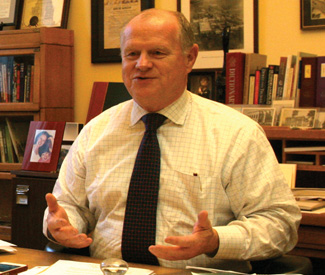
According to Assessor-Recorder Phil Ting, whose office produced the astonishing report, government action is certainly appropriate in the follow-up to the report. “There are potential legal action on behalf of the attorney general and potential policy solutions at the state level,” said Ting.

But these solutions will likely take their long, bureaucratic time. And in the meantime, San Francisco homeowners — many of whom say that they were lied to, tricked, or defrauded by the lenders or beneficiaries of their mortgage loans — will continue to be kicked out of their homes with no legal oversight.

People have been claiming these injustices for years. Now, the report has proven that the vast majority of them are probably right.

“Until now, public information in California regarding improper foreclosure practices has been largely anecdotal. This report is important because it is the first to provide a rigorous, quantifiable analysis of the nature and frequency of foreclosure irregularities in California,” said Lou Pizante of Aequitas, a mortgage investigation firm that partnered with the Assessor-Recorder’s office to produce the report, in a press release.

The report focuses on six areas: assignments, notice of default, substitution of trustee, notice of trustee sale, suspicious activities indicative of potential fraud, and conflicts relating to MERS (short for Mortgage Electronic Registration Systems, Inc.).

In 99 percent of loans, the report identifies “one of more irregularities.” In 84 percent, there were “what appear to be one or more clear violations of the law.”
These violations include forging signatures, failing to file proper paperwork, failing to notify borrowers of things that they are legally required to know such as changes in the owners of their mortgages and notices that they have been put on track for foreclosure. And lots of felony fraud. 

Yet Ting told us it will be difficult to use these findings to hold banks and other lenders accountable, at least any time soon.
The report is likely the beginning of a lengthy process that will, at best, involve investigations from several city and state departments.
Matt Dorsey, press secretary for the city attorney’s office, confirmed that “we’re working with our client department the Assessor-Recorder,” but couldn’t say much else.

District Attorney George Gascon released a statement addressing the report, which says that “Mortgage-related fraud is a top priority in my office will prosecute those who pray on vulnerable homeowners. Many people have lost their homes due to foreclosures, tearing apart families and communities.”

But according to Assistant District Attorney Omid Talai, the DA’s office cannot begin looking into the cases until it receives documents from the Assessor-Recorder detailing the allegations in the report.

Talai emphasized that “our door remains open, and we would always welcome anyone with any kind of information”; homeowners with documents that they believe contain proof of invalid foreclosure proceedings can go to the DA themselves.

But will the release of the report help these homeowners?
 
When asked if people who believe they were a victim of these “irregularities” and “felony crimes” could use the report to challenge their lenders, Ting replied, “they could potentially.”

But, “the alternate question would be asked, which is: were they actually making payments on their homes? If they weren’t, they would have a very hard time challenging their foreclosure.”

Yet, anecdotally, lenders often tell consumers that they need to stop making loan payments in order to qualify for loan modification. They then get put on the fast track for foreclosure. Ting said his office heard these anecdotes too.

“Unfortunately, oftentimes when that happens, it’s done verbally. We also heard that. But it becomes almost impossible to prove,” Ting told me.

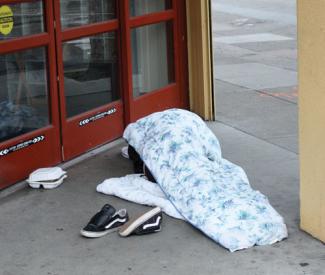
So banks can lie to consumers, thus potentially immunizing themselves from prosecution based on crimes committed against consumers. Then to top it all off, when folks get evicted and become homeless, they can be ticketed or jailed for sitting on the sidewalk. Thanks, justice system.

Hopefully, this report can act as an important step in the right direction.

“I’m proud of the fact that this is the first report of its kind, in the state, really identifying these issues on a systematic basis,” said Ting.

At least now the thousands of San Francisco residents that have lost their homes can point to evidence proving that this is a more complicated problem than people borrowing money that they can’t afford to pay back.

As the report states, “Reckless borrowing notwithstanding, much publicly available evidence suggests that there are indeed many legitimate victims of abusive lending and service practices.”

These people didn’t need the report to tell them that they were “legitimate victims.” But let’s hope that, with its help, they can see some justice.

Alerts

0

WEDNESDAY, FEB. 22


Police graft

This event, part of the Shaping SF Public Talk series, will focus on the 1937 Atherton Report that blew the lid off San Francisco police corruption in that era. Speakers Hank Chapot and Chris Agee will address their research, on the report and on SF policing and crime in the 1950s, respectively.

7:30pm, free

CounterPULSE

1310 Mission, SF

www.counterpulse.org/?tribe_events=shaping-sf-public-talk-police-graft-in-san-francisco/

THURSDAY, FEB. 23

Eviction community forum

A panel discussion and chance to access resources for those affected by and interested in the epidemic of foreclosures and evictions in our neighborhoods. Hear from community organizers, foreclosure lawyers, and affected homeowners and tenants. This is organized by Occupy Bernal and will feature Spanish translation and childcare.

7pm, free

Bernal Heights Community Center

515 Cortland, SF

415-821-7617


Garden for the environment

Enjoy live music, food from Haight Street Market, a raffle, and a celebration of urban permaculture at the fundraiser. The Haight Ashbury Neighborhood Center celebrates the achievements of Garden for the Environment, a group that maintains a one-acre garden in the Sunset demonstrating the educational, environmental and food-security possibilities of permaculture.

6pm, $5

111 Minna, SF

www.hanc-sf.org/urban-farming-fundraiser-and-party.html

FRIDAY, FEB. 24


History of porn

Join author Sam Benjamin and golden age porn star Richard Pacheco for a lively presentation chronicling how porn emerged in its present form by looking back over past decades. The presentation will use non-explicit clips but promises to be funny and informative. Benjamin is the author of American Gangbang: A Love Story.

8pm, $10-30 suggested donation

Center for Sex and Culture

1349 Mission, SF

www.sexandculture.org/

SATURDAY, FEB. 25

Foreclose on Wells Fargo CEO

A demonstration, complete with street theater and education, as activists attempt to foreclose on and evict Wells Fargo CEO John Stumpf. According to Occupy Bernal, this fun community event will feature “street theater to foreclose, auction home, and evict the CEO, music, Pride at Work dance mob, and special surprise bidders.”

1pm, free

1090 Chestnut, SF

www.occupybernal.org/wordpress


Deep Green Resistance

Have you ever felt that to continue to live on the planet, people must actively dismantle industrial systems which are destroying the earth, perhaps by any means necessary? If so, you should hear author Aric McBay speak about his book Deep Green Resistance: Strategy to Save the Planet. In the book, also by Derrick Jensen and Lierre Keith, the authors discuss the philosophies, tactics and implications of this brand of radical environmental activism.

7:30pm, free

Unite HERE Local 2

209 Golden Gate, SF

www.occupysf.org/calendar-2/

Who gets to live here?

38

yael@sfbg.com

Housing policy — which determines who will be able to live in San Francisco — has been a hot topic at City Hall these days.

At a Board of Supervisors Land Use and Economic Development Committee meeting on Feb. 13, representatives from the Mayors Office of Housing (MOH) reported on the state of middle-income housing in San Francisco, at the request of Sup. Scott Wiener. “Middle class” people make up 28 percent of the city’s population, a 10 percent decrease in the past two decades, and to reverse that decline would cost about $4.3 billion in housing subsidies, or more than half the city’s annual budget.

Wiener, who insists that “middle income and low income housing are not mutually exclusive,” said he’s raising the issue because the needs of the shrinking middle class are not being addressed. But during the public comment period, a long procession of low-income residents say city housing policies have kept them on the brink of homelessness. The takeaway message was: don’t embark on new housing efforts until you can enforce the ones that are already in place.

Also underscoring the desperate state of many San Francisco residents, Assessor-Recorder Phil Ting released a report Feb. 16 that contains shocking statistics about invalid foreclosures and illegal evictions in San Francisco. Ting found that 99 percent of all foreclosure proceedings in San Francisco in the past four years have contained paperwork irregularities, and in 84 percent of cases, banks or lenders have committed fraud or broke other laws.

With the loss of the redevelopment agencies, Mayor Ed Lee’s proposal for a housing trust fund, renewed calls for more condo conversions, and a new focus on middle income housing incentives, the conversation on housing in San Francisco is heating up.


MOVING TOWARDS RENTAL

San Francisco’s housing market is 64 percent rentals and 36 percent ownership, according to MOH. So despite the focus of politicians and developers on homeownership, housing policy in San Francisco mostly involves renters, many of whom face myriad threats.

Rents can be so steep that market-rate rental housing is becoming increasingly accessible only for parts of the middle class and the highest income brackets in the city. People in San Francisco tend to pay a huge chunk of their income towards rent.

The federal Housing and Urban Development Agency considers it reasonable for a households to pay 30 percent of their income towards rent; but for the city’s very low income households, rent is typically nearly 60 percent of income. For middle income households, the average percent paid toward rent has increased since 1990, but remains below 30 percent.

Those people fall mainly into the middle-income bracket, those earning 80-120 percent of Area Median Income (AMI.) Planning Director John Rahaim said that for the very low-income population (0-50 percent AMI) all rental housing is “virtually off-limits.”

So, for the middle class, renting a place in San Francisco is tough. For the low and very-low income, it’s next to impossible. And that reality threatens the city’s diversity.

“The highest rent burden still falls on lower income residents, many of whom pay 70 percent of their income as rent,” Sup. Eric Mar, who also sits on the Land Use Committee, said at the hearing. “In my district, people have whole families living in their living room or extra bedroom.”

But things may be looking up for renters. MOH’ Brian Cheu said developers believe that the market trends are heading towards construction of new rental housing after being almost exclusively owner-occupied units for many years. Cheu said there are 725 rental units in the pipeline for the next five to ten years, more than twice the new housing units meant for ownership slated for that time period.

Most of this will be market rate housing, and thus still unaffordable for a good deal of the population. But for those making around 100 percent of AMI — the middle class that Wiener hopes to serve — there are more rental units on the way.

“Any increase in supply of rental housing would help,” said San Francisco Tenants Rights head Ted Gullickson, “because there’s been virtually no new rental housing built in San Francisco is last 20 years.”

Even as Wiener promised to continue to prioritize the needs low-income residents, the foreclosure crisis was barely acknowledged at the Feb. 13 hearing. Many low-income residents say they are not sure they can trust the city’s claim that “this is not a matter of us vs. them.”

At public comment, many community members spoke of the housing troubles that they were already facing. Yue Hua Yu, who spoke at the Feb. 13 hearing, lives with her family of four in a single residency occupancy hotel room (SRO), units intended for single occupants.

“We would support a policy that protects the city’s affordable housing stock,” said a statement from Wing Hoo Leumg, president of the Chinatown Community Tenants Association.

Renting may be the realistic choice for most San Franciscans, but homeownership remains an important goal and achievement for many families, and the main obsession of many politicians.

Part of the middle class exodus is unmistakably due to better homeownership rates in Oakland, Daly City, Marin, and other surrounding areas. But there are neighborhoods with higher rates of homeownership than others, including Bayview-Hunters Point.

BHP has long been a prime spot for low-income homeowners, but it’s slated for extensive new housing construction in the coming decades that could compromise its affordability. It is also an area hit hard by the foreclosure crisis: there have been 2,000 foreclosures in Bayview in the past four years, according to Ed Donaldson, housing counseling director at the San Francisco Housing Development Corporation.

Rising prices and the foreclosure crisis have played a large part in the large-scale African American out-migration that has devastated San Francisco communities in recent decades.


APARTMENTS OR CONDOS?

One of the biggest points of controversy in the homeownership debate has been the issue of condo conversion, which was brought up again this past week at the Feb. 14 Board of Supervisors meeting, when Sup. Mark Farrell asked Lee if he would support legislation to let 2400 tenancy-in-common (TIC) owners bypass legal limits and fastrack towards condo conversion.

Farrell framed this as “a vehicle to allow residents of our city to realize their goal of homeownership.”

On Jan. 16, the city held its annual condo conversion lottery, in which 200 lucky TIC owners win the chance to convert their units into condos, thereby legally becoming homeowners. TICs and condo conversion have long been fraught with controversy in San Francisco, where there is never enough housing for everyone who wants it.

Condo conversion proponents say that turning a TIC — usually a building that used to be rental housing that has been purchased by a group of people that own it in common — into condos is a cheap way to become a homeowner in a city as expensive as San Francisco.

But tenants rights advocates have long opposed this process on the basis that it depletes the city of its rental housing stock. “When you have more condo conversions, you have more evictions, and it’s harmful to low-income residents” Gullicksen said.

This controversy, and the struggle to maintain a balance between opportunities for homeownership and reasonable rents has raged in San Francisco for years. In 1982, the Board of Supervisors passed a limit of 200 condo conversions per year as a compromise. There are no regulations, however, on converting rental housing to TICs.

“This has come up almost every single year for years and years about this time,” said Peter Cohen, organizer with the Council of Community Housing Organizations.

This year, however, proponents are not simply reiterating a request to bypass the condo conversion lottery. Plan C, a coalition of San Francisco moderates, is pushing for adding a fee to condo conversion, ranging from $10,000 to $25,000, which would go towards an affordable housing fund.

Mayor Lee said that he is open to considering a change in condo conversion policy, “providing it balances our need for revenue for affordable housing, the value that responsible homeownership brings to the city, and the rights of tenants who could be affected by a change in policy.”


WHOSE TRUST FUND?

This comes at a time when the city is facing a loss of millions per year for affordable housing with the dissolution of the redevelopment agency (see “Transfer of power, Jan. 31).

That dissolution led to Mayor Lee’s plan for an affordable housing trust fund, to be voted on as a ballot measure this November. The kick-off for that plan also began recently, with a press conference and big-tent meeting to discuss what it might look like.

On the day after the Land Use Committee meeting, where he started the conversation on “middle class” housing, Wiener posed a question to Lee at a Board of Supervisors meeting, asking how the mayor plans to “ensure that the housing trust fund that comes out of the process you have convened will meaningfully address the need for moderate/middle income housing.”

Some are concerned that too much of the trust fund could be allocated outside low-income demographics. “There’s a limited size pie of resources,” Cohen said. “Just in a matter of the last months, we lost the redevelopment agency. The city is madly scrambling to try to replace that through housing trust fund, and working to get us back to somewhere close to where we were…Is that pie, that has dramatically shrunk, going to be stretched further for another income band?”

That question will be important when the proposal goes to vote in November. According to Donaldson, many low-income homeowners will not vote for the measure unless it addresses their needs. The specifics of the measure calling for the trust fund are still being worked out. But, it will likely be funded by an increase of the transfer tax paid when homes change ownership.

Yet that proposal was the subject of an unusual political broadside from the San Francisco Association of Realtors, which last week sent out election-style mailers attacking the idea. “Brace yourself for an unexpected visit from the city’s tax collector,” the mailer warns, showing the hand of government bursting through the wall of a home, urging people to contact Lee’s office.

The measure may also see opposition from low-income communities, especially if, as Wiener has urged in the past week, it allocates a chunk of funds towards middle-income housing.

“It’s hard to find people who will support it. They’re saying, ‘what’s in it for me? Why would I vote for a transfer tax that I’m going to have to pay to help finance the building of affordable housing or middle-income housing. Why support programs that will support middle income people, who make more money than existing homewoners?” explained Donaldson. To agree on a way forward for housing in San Francisco, policymakers will need to reconcile a range of interests. In the worst-case scenario, the profit interests of realtors and developers will overtake the interests of San Francisco families struggling to continue to live in the city they love. But housing advocates are willing to work together to come to a solution. “Let’s put everything on the table, and let’s figure it out. In the spirit of cooperation, and with the understanding that each respective constituent group is not going to get everything that they want, but let’s put all the cards of the table,” said Donaldson.

Valentine’s Day dump the banks rally: If only all break-ups involved this much singing (VIDEO)

7

Protesters across the country participated in “break up with your bank” day on Feb. 14. Several protesters happened throughout the Bay Area, including a demonstration organized by Causa Justa :: Just Cause, Occupy Bernal, Occupy SF Housing, and the San Francisco Tenants Union.

In past months those organizations have variously stopped evictions and foreclosures, prevented homes from being auctioned off, and organized mass protests. They’ve created trouble shutting down bank branches, sometimes for hours, on dozens of occasions.

For Valentine’s Day, protesters decided to have a little fun.

“Our intention is not to shut down the banks,” insisted Causa Justa organizer Maria Zamudio. “Just to break up with them.”

About 60 marched through the financial district Feb. 14, presenting large red broken hearts and “dump the banks” banners decorated with pink balloons.

http://www.youtube.com/watch?v=6-f6pHXQkbs

Security guards at the banks that the group approached locked their doors. Protesters, amused, began chanting “the banks shut themselves down.”

Bank of America building locked their doors when they saw the protest approaching. At the Wells Fargo west coast headquarters around the corner, a representative who identified himself as David accepted the card.

Afterwards, a dozen members of the group headed to City Hall for a Board of Supervisors meeting in support of a resolution brought by Supervisor John Avalos and co-sponsored by Supervisor Eric Mar. The resolution supports the city treasurer’s office in its recent efforts to include social responsibility and community reinvestment in its evaluation criteria as it searches for new banks in which to invest San Francisco’s money. The resolution passed.

“It’s not a victory, but a great step in the right direction,” said Zamudio. She hopes that the social responsibility assessment will look at a bank’s history with predatory loans, investment in small businesses, and refinancing mortgages.

“Occupy Wall Street West” hopes to see massive protest

14

A coalition from across San Francisco is hoping to make tomorrow – Friday, Jan. 20 – a monumental day in the history of Bay Area activism, the Occupy movement, and the fight against home foreclosures and other manifestations of corporate greed.Organizers call the day of protests, marches, street theater, pickets, and more “Occupy Wall Street West.”

Those that urged Occupy protesters to focus in on a list of demands should be pleased, as the day includes a list of demands on banks, including a moratorium on foreclosures and an end to predatory and speculative loans.


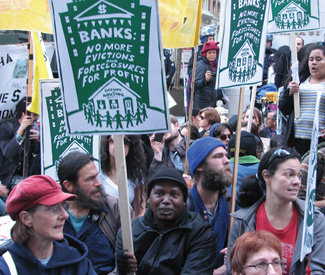
Organizers note that Occupy SF Housing, the coalition that planned the day, is separate from OccupySF. In fact, a subset of the group known best for its months-long tent city at Justin Herman Plaza was only one part of a substantial coalition that planned this day of action. Among others, the coalition includes the SF Housing Rights Committee, Homes Not Jails, Alliance of Californians for Community Empowerment (ACCE), and Occupy Bernal, a neighborhood-focused Occupy group specifically aimed at preventing evictions and foreclosures.

Justin Herman Plaza – or Bradley Manning Plaza, as many in OccupySF like to refer to the park just across from the Ferry Building – will be a crucial meeting point. A press spokesperson said that “down at Bradley Manning Plaza at 6 a.m.,12 p.m., and 5 p.m., we’re going to be launching various segments of the protests, and there will be information desks and education all for those who are interested.”

Organizers hope to culminate the day with a mass march at 5 p.m. A map of the planned actions can also be found here.

Many of the groups in the coalition have focused on specific cases of homeowners and tenants facing eviction and foreclosure; tomorrow, they bring their power to the Financial District.

Vivian Richardson, a member of the coalition who has also worked with ACCE and the newer Foreclosure Fighters group in Bayview, says that she remains in her home after being threatened with foreclosure due to community support.

“On my own, I tried everything to get out of this bad loan… I fought for two years on my own, only to have my home foreclosed on and taken away,” Richardson said at a press conference held yesterday.

“With the help of my community, unions, and ACCE members throughout the state, we generated over 1,400 emails and a few hundred calls to the CEO of [lender] Aurora Bank, and within one hour they called me to reopen my case,” she said. “As of today, the bank has voided the sale of my home and rescinded the foreclosure.”

Groups hoping to prevent foreclosures have had many success stories like Richardson’s. But tomorrow, they will put pressure on large corporate banks.

As SF Housing Rights Committee Executive Director Sarah Shortt said at the rally, “What we’re trying to do here is draw connections between some of those issues and the banking industry… I think that’s one of the most important pieces of the Occupy movement: starting to educate ourselves and each other about how ubiquitous the toll that’s been taken on cities, neighborhoods, communities by banking industry and the one percent.”

The focus is on housing, but in typical Occupy fashion, protesters will draw connections between all kinds of concerns that they see as abuses by banks and corporations.

According to OccupySF member Lisa Guide, the day is about “war profiteering, unjust foreclosures and evictions for profits by the big banks, exploitation of labor and union workers, and liberation of the commons for public good, among many other [issues].”

Guide also mentioned that Jan. 20 is “the eve of the Citizens United Supreme Court case, the court case that gave corporations the power to buy our government.” Simultaneous actions are planned to protest Citizens United, including an Occupy the Courts action at the Ninth District Court of Appeals at noon, to coincide with a national call to “Occupy the Courts

More than 55 organizations are involved in the day of action, and their focuses go beyond housing rights. These include students from Occupy SF State, Occupy Modesto Junior College, and other campus Occupy groups; anti-war organizations such as Iraq Veterans Against the War; environmental organizations such as the Rainforest Action Network; several unions, including UNITE HERE Local 2 and the California Nurses Association; the Chinese Progressive Alliance; and the Interfaith Allies of Occupy, which will be hosting an all-day “respite area” at Saint Patrick’s Roman Catholic Church at 756 Mission.

The array of events planned for Friday is overwhelming. There are demonstrations, pickets, and occupations planned at dozens of banks and corporations throughout the Financial District. Street theater is planned in several places, including an adaptation of A Christmas Carol by the San Francisco Mime Troupe at Justin Herman Plaza at noon and a show from Iraq Veterans Against the War that, according to IVAW member Jason Matherne, a Navy veteran who served in Qatar, “is called Operation First Casualty, because the first casualty of war is the truth.”

Matherne said, “corporations are profiting off the war at the expense of the 99 percent. Specifically, the Bechtel Corporation is using–misusing–billions of dollars to rebuild the infrastructure in Iraq.”

Tomorrow should be big. In a press release, organizers claim that “this is predicted to be the largest street protest of the Financial District since anti-war protests in 2003.”

Whatever the turnout, the Saint Patrick’s “respite” should be a boon, as weather reports indicate rain for tomorrow. Luckily, as Vicki Gray, a Deacon in the Episcopal Diocese of California, Occupy supporter and Interfaith Organizer, said of the sanctuary: “All are welcome. It will be warm, it will be quiet, and you will be loved.”

Alerts

0

yael@sfbg.com


FRIDAY, JAN 20

Occupy Wall Street West

OccupySF revs back up for a day of nonviolent mass action to connect their protest against Wall Street banks and corporations to foreclosures, evictions, and homelessness here in San Francisco. The day will include teach-ins, marches, rallies, and “many ways to participate without risking arrest!”

Mobilizations at 6 a.m., noon, and 5 p.m., free

101 Market, SF

www.occupywallstwest.org/wordpress


SATURDAY 21

Chalk screening

A screening of the landmark Bay Area grassroots/indie film Chalk, which tells the story of competition, family, justice, and a game of pool. The film is a product of the Tenderloin Action Group, which creates “responsive cinema, generated out of the streets from pain and sacrifice, made from sweat, tears, and anguish.” Join producers Ethan Sing and Rand Crook for this screening.

2 p.m., free

Koret Auditorium, San Francisco Public Library main branch

100 Larkin, SF

www.sfpl.org

ggood@sfpl.org


Rally for Reproductive Justice

This annual rally for a woman’s right to choose started to counter-protest the pro-life Walk for Life march. This year, a rally will be held with speakers Sen. Mark Leno, Sup. David Chiu, and representatives from Slutwalk, Radical Women, and CA NOW. Also featuring a DIY art/activist tent and balloon artists and face paint for kids. Organized by Bay Area Coalition for our Reproductive Rights (BACORR.)

11 a.m., free

Justin Herman Plaza

Embarcadero and Market, SF

www.bacorr.org


SUNDAY 22

Remember Harding

The Kenneth Harding Jr. Foundation, in commemoration of the 19-year-old who was killed by San Francisco Police officers on July 16, calls for a protest to demand justice. Harding was unarmed when he exited the T train and was asked by police to show his transfer.

Instead, he ran away and police shot and killed him. Organizers plan to surround Candlestick Park during the NFC championship game to “raise awareness that police in the Bay View/Hunters Point community are killing our kids, violating our rights, and trying to silence us.”

Noon, free

Candlestick Park

602 Jamestown Ave, SF

www.poormagazine.org/node/4238 

Occupy Nation

15

news@sfbg.com

The Occupy movement that spread across the country last fall has already changed the national discussion: It’s brought attention to the serious, systemic problem of gross inequities of wealth and power and the mass hardships that have resulted from that imbalance.

Occupy put a new paradigm in the political debate — the 1 percent is exploiting the 99 percent — and it’s tapping the energy and imagination of a new generation of activists.

When Adbusters magazine first proposed the idea of occupying Wall Street last summer, kicking off on Sept. 17, it called for a focus on how money was corrupting the political system. “Democracy not Corporatocracy,” the magazine declared — but that focus quickly broadened to encompass related issues ranging from foreclosures and the housing crisis to self-dealing financiers and industrialists who take ever more profits but provide fewer jobs to the ways that poor and disenfranchised people suffer disproportionately in this economic system.

It was a primal scream, sounded most strongly by young people who decided it was time to fight for their future. The participants have used the prompt to create a movement that drew from all walks of life: recent college graduates and the homeless, labor leaders and anarchists, communities of colors and old hippies, returning soldiers and business people. They’re voicing a wide variety of concerns and issues, but they share a common interest in empowering the average person, challenging the status quo, and demanding economic justice.

We chronicled and actively supported the Occupy movement from its early days through its repeated expulsions from public plazas by police, particularly in San Francisco, Oakland, and Berkeley. We supported the right of the protesters to remain — even as we understood they couldn’t and shouldn’t simply stay forever. Occupy needed to evolve if it was to hold the public’s interest. The movement would ultimately morph into something else.

That time has come. This spring, Occupy is poised to return as a mass movement — and there’s no shortage of energy or ideas about what comes next. Countless activists have proposed occupying foreclosed homes, shutting down ports and blocking business in bank lobbies. Those all have merit. But if the movement is going to challenge the hegemony of the 1 percent, it will involve moving onto a larger stage and coming together around bold ideas — like a national convention in Washington, D.C. to write new rules for the nation’s political and economic systems.

Imagine thousands of Occupy activists spending the spring drafting Constitutional amendments — for example, to end corporate personhood and repeal the Citizens United decision that gave corporations unlimited ability to influence elections — and a broader platform for deep and lasting change in the United States.

Imagine a broad-based discussion — in meetings and on the web — to develop a platform for economic justice, a set of ideas that could range from self-sustaining community economics to profound changes in the way America is governed.

Imagine thousands of activists crossing the country in caravans, occupying public space in cities along the way, and winding up with a convention in Washington, D.C.

Imagine organizing a week of activities — not just political meetings but parties and cultural events — to make Occupy the center of the nation’s attention and an inspiring example for an international audience.

Imagine ending with a massive mobilization that brings hundreds of thousands of people to the nation’s capitol — and into the movement.

Occupy activists are already having discussions about some of these concepts (see sidebar). Thousands of activists are already converging on D.C. right now for the Occupy Congress, one of many projects that the movement can build on.


DEFINING MOMENTS

Mass social movements of the 20th Century often had defining moments — the S.F. General Strike of 1934; the Bonus Army’s occupation of Washington D.C.; the Freedom Rides, bus boycotts and Rev. Martin Luther King Jr.’s March on Washington; Earth Day 1970; the Vietnam War teach-ins and moratoriums. None of those movements were politically monolithic; all of them had internal conflicts over tactics and strategies.

But they came together in ways that made a political statement, created long-term organizing efforts, and led to significant reforms. Occupy can do the same — and more. At a time of historic inequities in wealth and power, when the rich and the right wing are stealing the future of generations of Americans, the potential for real change is enormous.

If something’s going to happen this spring and summer, the planning should get under way now.

A convention could begin in late June, in Washington D.C. — with the goal of ratifying on the Fourth of July a platform document that presents the movement’s positions, principles, and demands. Occupy groups from around the country would endorse the idea in their General Assemblies, according to procedures that they have already established and refined through the fall, and make it their own.

This winter and spring, activists would develop and hone the various proposals that would be considered at the convention and the procedures for adopting them. They could develop regional working groups or use online tools to broadly crowd-source solutions, like the people of Iceland did last year when they wrote a new constitution for that country. They would build support for ideas to meet the convention’s high-bar for its platform, probably the 90 percent threshold that many Occupy groups have adopted for taking action.

Whatever form that document takes, the exercise would unite the movement around a specific, achievable goal and give it something that it has lacked so far: an agenda and set of demands on the existing system — and a set of alternative approaches to politics.

While it might contain a multitude of issues and solutions to the complicated problems we face, it would represent the simple premise our nation was founded on: the people’s right to create a government of their choosing.

There’s already an Occupy group planning a convention in Philadelphia that weekend, and there’s a lot of symbolic value to the day. After all, on another July 4th long ago, a group of people met in Philly to draft a document called the Declaration of Independence that said, among other things, that “governments … deriv[e] their just powers from the consent of the governed … [and] whenever any Form of Government becomes destructive of these ends, it is the Right of the People to alter or to abolish it, and to institute new Government, laying its foundation on such principles and organizing its powers in such form, as to them shall seem most likely to effect their Safety and Happiness.”


ON THE ROAD

If the date is right and the organizing effort is effective, there’s no reason that Occupy couldn’t get close to a million people into the nation’s capital for an economic justice march and rally.

That, combined with teach-ins, events and days of action across the country, could kick off a new stage of a movement that has the greatest potential in a generation or more to change the direction of American politics.

Creating a platform for constitutional and political reform is perhaps even more important than the final product. In other words, the journey is even more important than the destination — and when we say journey, we mean that literally.

Occupy groups from around the country could travel together in zig-zagging paths to the Capitol, stopping and rallying in — indeed, Occupying! — every major city in the country along the way.

It could begin a week or more before the conference, along the coasts and the northern and southern borders: San Francisco and Savannah, Los Angeles and New York City, Seattle and Miami, Chicago and El Paso, Billings and New Orleans — Portland, Oregon and Portland, Maine.

At each stop, participants would gather in that city’s central plaza or another significant area with their tents and supplies, stage a rally and general assembly, and peacefully occupy for a night. Then they would break camp in the morning, travel to the next city, and do it all over again.

Along the way, the movement would attract international media attention and new participants. The caravans could also begin the work of writing the convention platform, dividing the many tasks up into regional working groups that could work on solutions and new structures in the encampments or on the road.

At each stop, the caravan would assert the right to assemble for the night at the place of its choosing, without seeking permits or submitting to any higher authorities. And at the end of that journey, the various caravans could converge on the National Mall in Washington D.C., set up a massive tent city with infrastructure needed to maintain it for a week or so, and assert the right to stay there until the job was done.

The final document would probably need to be hammered out in a convention hall with delegates from each of the participating cities, and those delegates could confer with their constituencies according to whatever procedures they prescribe. This and many of the details — from how to respond to police crackdowns to consulting of experts to the specific scope and procedures of this democratic exercise — would need to be developed over the spring.

But the Occupy movement has already started this conversation and developed the mechanisms for self-governance. It may be messy and contentious and probably even seem doomed at times, but that’s always the case with grassroots organizations that lack top-down structures.

Proposals will range from the eminently reasonable (asking Congress to end corporate personhood) to the seemingly crazy (rewriting the entire U.S. Constitution). But an Occupy platform will have value no matter what it says. We’re not fond of quoting Milton Friedman, the late right-wing economist, but he had a remarkable statement about the value of bold ideas:

“It is worth discussing radical changes, not in the expectation that they will be adopted promptly, but for two other reasons. One is to construct an ideal goal, so that incremental changes can be judged by whether they move the institutional structure toward or away from that ideal. The other reason is very different. It is so that if a crisis requiring or facilitating radical change does arrive, alternatives will be available that have been carefully developed and fully explored.”

After the delegates in the convention hall have approved the document, they could present it to the larger encampment — and use it as the basis for a massive rally on the final day. Then the occupiers can go back home — where the real work will begin.

Because Occupy will wind up spawning dozens, hundreds of local and national organizations — small and large, working on urban issues and state issues and national and international issues.


WASHINGTON’S BEEN OCCUPIED BEFORE

The history of social movements in this country offers some important lessons for Occupy.

The notion of direct action — of in-your-face demonstrations designed to force injustice onto the national stage, sometimes involving occupying public space — has long been a part of protest politics in this country. In fact, in the depth of the Great Depression, more than 40,000 former soldiers occupied a marsh on the edge of Washington D.C., created a self-sustaining campground, and demanded that bonus money promised at the end of World War I be paid out immediately.

The so-called Bonus Army attracted tremendous national attention before General Douglas Macarthur, assisted by Major George Patton and Major Dwight Eisenhower, used active-duty troops to roust the occupiers.

The Freedom Rides of the early 1960s showed the spirit of independence and democratic direct action. Raymond Arsenault, a professor at the University of South Florida, brilliantly outlines the story of the early civil rights actions in a 2007 Oxford University Press book (Freedom Rides: 1961 and the Struggle for Racial Justice) that became a national phenomenon when Oprah Winfrey devoted a show and a substantial online exhibition to it.

Arsenault notes that the rides were not popular with what was then the mainstream of the civil rights movement — no less a leader than Thurgood Marshall thought the idea of a mixed group of black and white people riding buses together through the deep south was dangerous and could lead to a political backlash. The riders were denounced as “agitators” and initially were isolated.

The first freedom ride, in May, 1961, left Washington D.C. but never reached its destination of New Orleans; the bus was surrounded by angry mobs in Birmingham, Alabama, and the drivers refused to continue.

But soon other rides rose up spontaneously, and in the end there were more than 60, with 430 riders. Writes Arsenault:

“Deliberately provoking a crisis of authority, the Riders challenged Federal officials to enforce the law and uphold the constitutional right to travel without being subjected to degrading and humiliating racial restrictions … None of the obstacles placed in their path—not widespread censure, not political and financial pressure, not arrest and imprisonment, not even the threat of death—seemed to weaken their commitment to nonviolent struggle. On the contrary, the hardships and suffering imposed upon them appeared to stiffen their resolve.”

The Occupy movement has already shown similar resolve — and the police batons, tear gas, pepper spray, and rubber bullets have only given the movement more energy and determination.

David S. Meyer, a professor at U.C. Irvine and an expert on the history of political movements, notes that the civil rights movement went in different directions after the freedom rides and the March on Washington. Some wanted to continue direct action; some wanted to continue the fight in the court system and push Congress to adopt civil rights laws; some thought the best tactic was to work to elect African Americans to local, state and federal office.

Actually, all of those things were necessary — and Occupy will need to work on a multitude of levels, too, and with a diversity of tactics.

Single-day events have had an impact, too. Earth Day, 1970, was probably the largest single demonstration of the era — in part because it was so decentralized. A national organization designed events in some cities — but hundreds of other environmentalists took the opportunity to do their own actions, some involving disrupting the operations of polluters. The outcome wasn’t a national platform but the birth of dozens of new organizations, some of which are still around today.

There’s an unavoidable dilemma here for this wonderfully anarchic movement: The larger it gets, the more it develops the ability to demand and win reforms, the more it will need structure and organization. And the more that happens, the further Occupy will move from its original leaderless experiment in true grassroots democracy.

But these are the problems a movement wants to have — dealing with growth and expanding influence is a lot more pleasant than realizing (as a lot of traditional progressive political groups have) that you aren’t getting anywhere.

All of the discussions around the next step for Occupy are taking place in the context of a presidential election that will also likely change the makeup of Congress. That’s an opportunity — and a challenge. As Meyer notes, “social movements often dissipate in election years, when money and energy goes into electoral campaigns.” At the same time, Occupy has already influenced the national debate — and that can continue through the election season, even if (as is likely) neither of the major party candidates is talking seriously about economic justice.

That’s why a formal platform could be so useful — candidates from President Obama to members or Congress can be presented with the proposals, and judged on their response.

Some of the Occupy groups are talking about creating a third political party — a daunting task, but certainly worth discussion.

But the important thing is to let this genie out of the bottle, to move Occupy into the next level of politics, to use a convention, rally, and national event to reassert the power of the people to control our political and economic institutions — and to change or abolish them as we see fit.

OCCUPY AMERICA IS ALREADY UNDERWAY

All across the country, Occupy organizers are developing and implementing creative ways to connect and come together, many of which we drew from for our proposal. We hope all of these people will build on each other’s ideas, work together, and harness their power.

From invading the halls of Congress to “occutripping” road trips to ballot initiatives, here is a list of groups already working on ways to Occupy America:


OCCUPY CONGRESS

Occupy Congress is an effort to bring people from around the country — and, in many cases, from around the world — to Washington DC on Jan. 17. The idea is to “bring the message of Occupy to the doorstep of the capital.” The day’s planned events include a “multi-occupation general assembly,” as well as teach-ins, idea sharing, open mics, and a protest in front of the Capitol building.

A huge network of transportation sharing was formed around Occupy Congress, with a busy Ridebuzz ridesharing online bulletin board, and several Occupy camps organizing buses all around the country, as well as in Montreal and Quebec.

There are still two Occupy tent cities in DC, the Occupy DC encampment at McPherson Square and an occupation called Freedom Plaza, just blocks from the White House. Both will be accepting hundreds of new occupiers for the event, although a poster on the Occupy Congress website warns that “the McPherson Square Park Service will be enforcing a 500 person limit.”

www.occupyyourcongress.info


OCCUPY BUS

The Occupy Bus service was set up for Occupy Congress, but organizers say if the idea works out, it can grow and repeat for other national Occupy calls to action. They have set up buses leaving from 60 cities in 28 U.S. states as well as Canada’s Quebec province. The buses are free to those who can’t afford to pay, and for those who pay, all profits will be donated to Occupy DC camps.

If all goes to plan, buses will be packed with passengers, their gear, and bigger donations for the event, as the “undercarriages of a bus are voluminous.” What gear do they expect each occupier to bring? “One large bag, one small bag, and a tent.”

congress.occupybus.com


DENVER OCCUTRIP

Many occupations have put together car and busloads of people to road trip to other occupations, hoping to learn, teach, network, and connect the movement across geographic barriers. One example is the Denver Occutrip, in which a handful of protesters toured West Coast occupations. The tenacious Occupy Denver recently made headlines when, rather than allow police to easily dismantle their encampment, a couple of occupiers set the camp on fire. It sent delegates to Occupations in Las Vegas, Los Angeles, Long Beach, Oakland, San Francisco, Berkeley, and Sacramento.

Sean Valdez, one of the participants, said the trip was important to “get the full story. What I’d been told by the media was that Occupy Oakland was pretty much dead, but we got there and saw there are still tons of dedicated, organized people working on it. It was important to see it with our own eyes, and gave a lot of hope for Occupy.”

Like lots of road-tripping Occupiers, they made it to Oakland for the Dec. 12 West Coast Port Shutdown action there. In fact, “occutrippers” from all around the country have flocked to Bay Area occupations in general, and especially the uniquely radical Occupy Oakland.

www.occupydenver.org/denver-occutrip-road-trip/


OCCUPY THE CONSTITUTION

An Occupy Wall Street offshoot — Constitution Working Group, Occupy the Constitution — argues that many of the Occupy movements concerns stem from violations of the constitution. They hope to address this with several petitions on issues such as corporate bailouts, war powers, public education, and the Federal Reserve bank. The group hopes to get signatures from 3-5 percent of the United States population before the list of petitions is “formally served to the appropriate elected officials.”

www.givemeliberty.org/occupy


THE 99% DECLARATION

This is a super-patriotic take on the Occupy movement, described on its website as an “effort run solely by the energy of volunteers who care about our great country and want to bring it back to its GLORY.” The group’s detailed plan includes holding nationwide elections on the weekend of March 30 to choose two delegates from “each of the 435 congressional districts plus Washington, D.C. and the U.S. Territories.”

These delegates would write up lists of grievances with the help of their Occupy constituents, then convene on July 4, 2012 in Philadelphia for a National General Assembly. They plan to present a unified list of grievances to Congress, the President, and the Supreme Court. If the grievances are not addressed, they would “reconvene to organize a new grassroots campaign for political candidates who publicly pledge to redress the grievances. These candidates will seek election for all open Congressional seats in the mid-term election of 2014 and in the elections of 2016 and 2018.”

www.the-99-declaration.org/


MOVE TO AMEND/OCCUPY THE COURTS

Move to Amend is a coalition focusing on one of the Occupy movement’s main concerns: corporate personhood. The group hopes to overturn the Citizens United vs. Federal Elections Commission ruling and “amend our Constitution to firmly establish that money is not speech, and that human beings, not corporations, are persons entitled to constitutional rights.”

The group has drafted a petition, signed so far by more than 150,000 people, and established chapters across the country. Its next big step is a national day of action called Occupy the Courts on Jan. 20. On the anniversary of the Citizens United ruling, the group plans to “Occupy the US Supreme Court” and hold solidarity occupations in federal courts around the country.

www.movetoamend.org/


THE OCCUPY CARAVAN

The Occupy Caravan idea originated at Occupy Wall Street, but the group has been coordinating with occupations across the country. If all goes according to plan, a caravan of RVs, cars, and buses will leave Los Angeles in April and take a trip through the South to 16 different Occupations before ending up in Washington DC.

Buddy, one of the organizers, tells us that the group already has “a commitment right now of 10 to 11 RVs, scores of vehicles, and a bio-diesel green machine bus. This caravan will visit cities, encircle city halls, and visit the local Occupy groups to assert their presence, and move on to the next, not stopping for long in each destination.”

This caravan is all about the journey, calling itself a “civil rights vacation with friends and family” and planning to gather “more RVs, more cars, more supporters…and more LOVE” along the way.

occupycaravan.webs.com

OCCUPY WALL STREET WEST

The Occupy movement in San Francisco has been relatively quiet for the past few weeks, but it’s planning to reemerge with a bang on Jan. 20, with an all-day, multi-event rally and march that aims to shut down the Financial District.

The protest is an effort to bring attention to banks’ complicity in the housing crisis plaguing the United States, and how that process manifests itself here in San Francisco.

At least 20 events are planned, centered in the Financial District. The plans range from teach-ins at banks to “occupy the Civic Center playground” for kids to a planned building takeover where hundreds are expected to risk arrest. A list of planned events can be found at www.occupywallstwest.org/wordpress/?page_id=74.

The day is presented by the Occupy SF Housing Coalition, which includes 10 housing rights and homeless advocacy groups. Dozens of other organizations will be involved in demonstrations throughout the day. “We’re asking the banks to start doing the right thing,” said Gene Doherty, a media spokesperson for the Occupy SF Housing Coalition. “No more foreclosures and evictions for profits. On the 20th, we will bring this message to the headquarters of those banks.”


Protesters climb on Wells Fargo roof to protest evictions

9

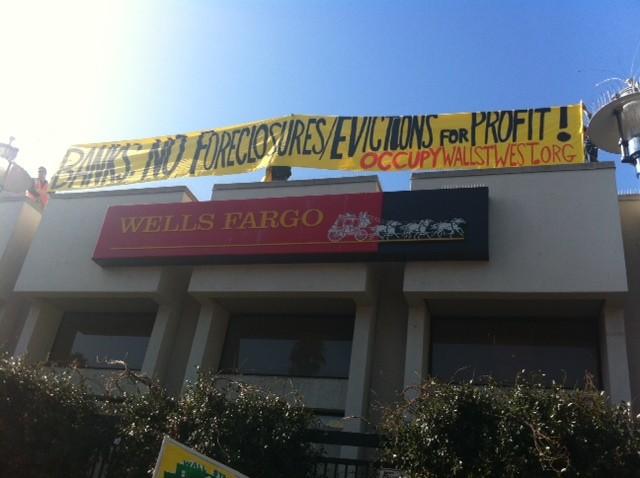
Activists held a massive banner and pitched a tent on the roof of the Wells Fargo branch at 16th and Mission Jan 14, while 150 supporters watched from the parking lot. Seven were arrested.

Organizers say the demonstration was meant to draw attention to the bank’s complicity in unfair foreclosures and evictions.

The protest was planned by a coalition of Bay Area housing rights and homelessness advocacy groups, along with organizers from Occupy San Francisco.

Sarah Shortt, Executive Director of the San Francisco Housing Rights Committee, says that abuses by corporate banks are inextricably linked to issues that her group has been working on for years; “evictions, displacement, affordable housing, and tenants rights.”

After rallying at 16th and Mission, protesters looked up to see that six had climbed to the roof. They unfurled a banner reading “Banks: No Foreclosures/Evictions for Profit!”

A fire truck arrived ten minutes later, and put up a ladder to give the police and firefighters access to the roof.

The Police Department cooperated with protesters, assisting a negotiation with the bank branch’s manager. A letter detailing their demands, including a moratorium on foreclosures and an end to predatory and speculative loans, was apparently faxed to Wells Fargo spokeswoman Holly Rockwood.

Protesters said that they would not leave the roof until they had a meeting scheduled with Wells Fargo CEO John Stumpf. Six were arrested.
According to an SFPD statement, “A bank employee signed a private person’s arrest (citizens arrest) for trespassing.”

After those arrested were painstakingly shuttled down the ladder and into a police van, protesters blocked the van from leaving Hoff street between 16th and 17th for about ten minutes until it sped out through the parking lot. Protesters then marched to the nearby Mission Police Station, where a drummer from the Brass Liberation Orchestra, which often accompanies protest events in the city, was arrested for allegedly assaulting a police officer with her drum.

Those arrested on the roof were cited for trespassing and released within hours. Supporters have put up money to release the drummer, known as Montana; bail was set at $8,100.

While the drama on the roof unfolded, Shortt, along with organizers from Causa Justa: Just Cause and the San Francisco Tenants Union, spoke about abuses committed against tenants and homeowners. They also spoke about Wells Fargo’s investment in private prisons. 

In a press release, organizers said that the protest was meant to call attention to “predatory equity scams, Ellis Act evictions, and immoral home loans.”

The Ellis Act allows landlords to evict tenants for any reason, if they don’t re-rent the units at a higher price in the next five years. The act hasno restrictions on selling the units as tenancies in common — a backdoor way to create condos — and that’s a lucrative and common practice in the Mission.

Ellis Act evictions increased by 8% in 2011, According to the San Francisco Rent Board Annual Report.

Jose Morales, a tenant who was evicted based on the Ellis Act and activist with the San Francisco Tenants Union, spoke to the crowd Saturday. Said Morales, “I have osteoporosis, I’m 82 and a half years old, but you still see me walking around with my sign.”

He displayed protest signs declaring that housing is a human right and urging single-payer health care.

Mesha Irizarry also told her story to the protesters. Her Bayview home was sold to Bank of New York, then transferred to Bank of America on September 1, but says that she refuses to leave and is fighting the foreclosure.

“We do not play the blame-the-victim game. We are not alone. We are not ashamed to sat ay what has happened to us. We are fighting back, and we are going to win” said Irizarry, who named several other women who are resisting foreclosures in Bayview. 

Irizarry began a San Francisco chapter of Occupy the Hood, a group dedicated to confronting problems that disproportionately affect the poor and people of color within the Occupy Movement. In San Francisco, the branch has focused mainly on defending homes from foreclosure and eviction. Saturday’s protest was part of that effort.

This demonstration was also a part of a series targeting banks, that protesters plan to top off with a day-long “occupation of the financial district” January 20th.

Said Occupy SF Housing Coalition media spokesman Gene Doherty, “The banks and the development companies that have gotten us all into (the foreclosure crisis) are a major part of the problem…it is their ethical duty, moral duty right now to be fixing this. And if that means it’s going to eat into their profit, that means it eats into their profit.”


Alerts

0

yael@sfbg.com

THURSDAY 12

Dinner for the 99 percent

Rebecca Solnit, author of A Paradise Built in Hell, will speak with her brother, long-time activist and OccupySF organizer David Solnit, about “hope, strategy and actions to build a better world.” A dinner featuring gluten-free spaghetti and real or tofu meatballs will be served. Following dinner, hosts will screen a documentary of the life and work of Martin Luther King Jr.. This event will raise money for the San Francisco 99% Coalition.

6 p.m., $10-20

Unitarian Universalist Center

1187 Franklin, SF

(415) 608-1585

www.occupysf.org/2012/01/09/spaghetti-dinner-for-the-99


FRIDAY 13

The shame of Guantanamo

Historian, journalist, and author of The Guantanamo Files, Andy Worthington, will join investigative reporter Jason Leopold for a “freewheeling interview” discussing the history of torture and illegal detention without accountability spanning the George W. Bush and Barack Obama presidencies. This event marks the 10-year anniversary of the opening of the Guantanamo Bay Prison.

Noon-2 p.m., free

Louis B. Mayer Lounge, UC Hastings College of the Law

198 McAllister, SF

www.andyworthington.co.uk


SATURDAY 14

Run on the banks

The Occupy Housing Coalition will demonstrate to protest evictions of renters for condo conversions in the Mission District. Join them to demand that Wells Fargo stop all pending evictions for profit.

Noon, free

16th and Mission, SF

www.occupysf.org/2012/01/07/run-on-the-banks-mission-district-january-14


SUNDAY 15

Mission community forum

For the first time, Occupy SF will hold its weekly community forum, a space to air general concerns and foster discussion, outside the Financial District. Come speak about topics specific to the Mission community, and discuss how to build a broad movement that “mirrors the diversity of San Francisco.”

6-8 p.m., free

Location TBA

Email Lisa Guide: lgru3221@gmail.com


MONDAY 16

MLK Day gathering

Celebrate the life of Martin Luther King Jr. and “call for a ceasefire in the streets” after a tragic year of 110 homicides in Oakland. A community gathering will include gospel, spoken word, drama, and time to talk with your neighbors.

10 a.m.-noon, free

Regeneration Church

238 E. 15th, Oakl

(510) 508-4888

www.regenerationweb.com/node/86

An open letter to Ed Lee

76

OPINION Dear Mr. Mayor,

During the next week you will be appointing the a supervisor for District 5, an area of the city that has been historically considered the most progressive part of one of the most progressive cities in the country. It will be a signature decision for you in the next year, and will reveal the tone of your administration. Will you be a consensus mayor — or will you carry on your predecessor’s fight with progressives?

You have many qualified choices, but there is probably only one on your list that a majority of progressives would consider a clear progressive choice: Christina Olague, president of the Planning Commission. There are some who have hesitations about her, but ironically those hesitations are based on her relationship to you and her support for your candidacy for mayor. I have to admit, as a supporter of progressive Supervisor John Avalos for mayor, I shared some disappointment that she didn’t support John.

I’m sure there’s intense pressure on you to choose a more moderate choice, and I’m sure there are from your perspective some valid points to that argument. That said, District 5 deserves progressive representation.

I am a Haight resident, and I ran for Supervisor in District 5 in 2004. Supervisor Ross Mirkarimi came in first, I came in second, and Lisa Feldstein came in third. Both Lisa and I have spoken repeatedly about whether we would run next year, and we have even discussed running as a slate. Most political analysts think one of us would have a decent shot at winning — but I think both of us would support Christina, assuming that her votes continue to reflect her commitment to the progressive values of the district.

Christina not only supported you, she also supported Mirkarimi in 2004, and Matt Gonzalez when he ran for supervisor in 2000. She was appointed to the Planning Commission by Gonzalez and has been reappointed repeatedly by progressive supervisors to that commission. While her votes have not been perfect, by and large, her record is excellent; she has never succumbed to pressure, has listened well to all sides, and has ultimately done what she thought was right.

For example, she stood up for tenants’ rights when the landlord from Park Merced came to the Planning Commission to ask that 1,500 apartments be demolished, all of which were subject to the city’s rent control ordinance. She recognized the flaws in the landlord’s argument that a side agreement (negotiated without the local tenant groups involved) would prevent rent hikes and evictions. Olague was on the right side of history on the Park Merced deal, and has a long record of building tenant and senior tenant power. That’s the kind of leadership we need for District 5, an area comprised of primarily renters. I believe Olague will be a supervisor tenants can trust.

I can’t guarantee that all progressives will stand down if Olague gets the seat. The ego game is what it is. You have learned that from politics, I’m sure. But I think most progressive institutions and progressive activists will see her appointment as a victory and will support her candidacy for Supervisor next fall, as they should if she shows that her votes reflect the trends and values of District 5.

With Christina Olague, you have a win-win. You appoint a supervisor who reflects the progressive values of the district and who is also electable in November. 

Gabriel Haaland is an elected member of the San Francisco Democratic County Central Committee and an LGBT labor and tenant activist.

12 arrested in raid of occupied Oakland home

There were 12 arrests in West Oakland today, Dec. 29, after police raided a foreclosed home on 10th Street that Occupy Oakland activists had taken over to use as housing for the homeless and meeting space, according to a press release just issued by Causa Justa :: Just Cause, a housing and immigrant rights organization based in Oakland and S.F.

Here’s a link to live footage shot earlier today: http://www.ustream.tv/recorded/19454451

Organizers are asking supporters to contact the Oakland Police Department and demand the release of those in custody, the press release noted.

Activists took over the Fannie Mae-owned vacant property on Dec. 6, on the National Day of Action, “as a call to stop fraudulent lending practices and illegal evictions by banks,” according to CJJC.

Activists provided two reasons for taking over the property:”To demand that Fannie Mae turn it into low-income housing,” and “In support of the Ramirez family, whose home in East Oakland was improperly foreclosed on by Fannie Mae in May of 2011. Bank of America acting on behalf of Fannie Mae sold the Ramirez home while the bank was supposed to still be working with them. The family is now renting the home they once owned.”

The unlikely sheriff

1

Michael Hennessey has served as San Francisco’s sheriff for half of his life, the longest such career in California history — and by all accounts the most progressive. Since taking office in 1980, Hennessey has been an island of liberal enlightenment in a political climate and law enforcement culture where tough-talking conservatism has been ascendant.

Yet in that era, Hennessey pioneered the creation of innovative programs to compassionately deal with drug abuse, violence, recidivism, and lack of education among jail inmates. He proactively brought unprecedented numbers of minorities, women, LGBT employees, and ex-convicts onto his staff. And he sometimes resisted carrying out evictions or honoring federal immigration hold orders, bold and risky social-justice stands.

His stances drew scorn from the local law enforcement community, which never endorsed him in contested elections, and criticism from political moderates and national media outlets. But San Francisco voters reelected him again and again, until he finally decided to retire as his current term ends next month.

He credits his success and longevity to the people of San Francisco, who have also bucked the harsh national attitude toward criminals and the poor. “San Francisco is still largely a liberal voting town,” he told us in his well-worn office at City Hall, “and not many liberals run for sheriff.”

That logic held up in this year’s election when progressive Sup. Ross Mirkarimi — Hennessey’s hand-picked successor — was elected to the post. Mirkarimi, who led a tribute to Hennessey at the Dec. 13 Board of Supervisors meeting, said he’s honored to be able to continue the legacy of someone he called “the most innovative sheriff in the United States.”


LONG RECORD

Hennessey was a 32-year-old Prisoner Legal Services attorney for the Sheriff’s Department in 1979 as he watched then-Sheriff Eugene Brown letting go of reform-minded staffers and ending his predecessor Dick Hongisto’s early experiment with a school in the jail. So Hennessey quit his job and focused on running for the office.

“I said to myself that I’m not sure if I’ll be a good sheriff or not, but I know I’m better than anyone else running,” he told us, later adding, “I certainly never expected to be sheriff for 32 years.”

Rank-and-file deputies — with whom Hennessey has periodically clashed throughout his career — always preferred one of their own in the job. “As seen in this election, they would like to see someone coming from their ranks,” said Hennessey, even though he notes that at this point, he has hired all but three of the department’s nearly 1,000 employees.

But Hennessey’s outsider status allowed him to deal with the inmate population in a way that the average San Franciscan appreciated, even if the average cop didn’t. “When you’re in law enforcement, all you see are criminals, victims, and people in law enforcement. But I would talk to all kinds of people in the community,” Hennessey said, noting that his experience as a jailhouse attorney gave him a holistic view of his job. “I worked in the jail and I got to know prisoners as people.”

They were people who had certain needs and problems, such as substance abuse, a common problem among criminals. And they were people who would be returning to society at some point, as Hennessey constantly reminded those who expected prisoners to be treated harshly or simply warehoused.

So he broke down the wall between the jail and the community, bringing the city’s social service providers and educators to work programs in the jails, and developing anti-recidivism and vocational programs that allowed ex-offenders to re-engage with the local community.

“Take the bold step of inviting the public in, not all the public, but those who can provide services and help address people’s problems,” Hennessey said. “Then we took the same concept and applied it to violent offenders, which is a little riskier.”

But it was a risk that has paid off as recidivism rates among jail inmates has dropped, and it’s been without any serious cases of inmates harming outsiders. Hennessey is particularly proud of the high school he created in the jail, which will graduate its next class on Jan. 3.

He said the school can truly transform those who end up behind bars. “It gives them a leg up and it’s like a booster shot,” Hennessey said. “They’re at the lowest point in their lives when the come to jail, and then they’re given an opportunity to accomplish something they haven’t been able to on the outside.”

One of many controversial moves during Hennessey’s storied career was his decision to allow female inmates to leave the jails and perform in theaters around San Francisco with the Medea Project, which was created by Rhodessa Jones and the Culture Odyssey art collective to turn the stories of female inmates into plays.

“Rhodessa is a very persuasive person who talked me into letting these women out of jail to perform,” Hennessey said, smiling at the memory. “It was very controversial.”


HIRING REFORMERS

Hennessey’s mentor in the Sheriff’s Department — the man who hired him, ran his first campaign, and then became his longtime chief-of-staff — was the late Ray Towbis, a tough activist whose social justice stands on behalf of tenants, prisoners, and other marginalized members of society would sometimes put Hennessey into difficult positions.

“Ray caused me aggravation many times,” said Hennessey, who nonetheless kept a life-sized cutout photo of Towbis in his office long after he was gone, a reminder to fight for the values he believed in.

There was the time when Towbis angrily flipped over a table and cursed at a panel of parole commissioners after failing to win the release of a model inmate, triggering a demand from the presiding judge that Hennessey fire Towbis, which the sheriff ignored.

Later, Towbis adopted a compassionate approach to the evictions that sheriff’s deputies are forced to perform, allowing deputies to spare tenants who were disabled or elderly and personally calling journalists to help publicize cases in which the parties bringing the eviction action might back off. That sensitivity stays with Hennessey today.

“That’s one of the tough spots I’m in is doing these foreclosure evictions,” Hennessey said, clearly troubled by his duty but also aware that it is one that he is required to perform, despite pressure from progressive groups urging him to refuse to carry them out.

As a lawyer, Hennessey said he must respect court orders and avoid being held in contempt of court, as Hongisto was in the mid-1970s for refusing to carry out evictions against tenants in the International Hotel.

Hennessey and his staff have always been willing to help tenants resist eviction. His office has an eviction assistance program, and Towbis would sometimes tip off the media to publicize certain unjust evictions. One time, Hennessey said Towbis even called hotel magnate Leona Helmsley and talked her out of allowing her company to evict an elderly ParkMerced resident. Instead, Helmsley allowed the woman to live rent-free for the rest of her life, an unlikely gesture of kindness from the “queen of mean” that Towbis helped publicize.

Hennessey draws the line at outright refusal to carry out a judge’s eviction order. “The sheriff shouldn’t be a law-breaker,” he says. Yet Hennessey’s lawyerly approach to complex issues also resulted in his recent policy of not honoring federal detention holds on undocumented immigrants in the jail, after discovering that the holds are administrative — different than arrest warrants — so defying them isn’t a crime.

The policy Hennessey created last year was to ignore ICE requests for prisoners who aren’t charged with felonies or domestic violence charges, noting that the latter charges are often brought but eventually dropped against people who are the victims of domestic violence.

Hennessey tapped federal and foundation grant money to fund his new treatment and educational programs, hiring an ex-convict to write his grant proposals, something that particularly irked many of his deputies.

But Hennessey believed that ex-offenders had something to offer the department so he didn’t back down in hiring them, going so far as to elevate Michael Marcum, who had gone to prison for killing his own abusive father, to the top position of undersheriff in 1993.

Police groups were outraged, but Hennessey said he had known Marcum for many years and valued his counsel and perspective on the criminal justice system. “It wasn’t hard because I knew him and I know of his integrity and loyalty,” Hennessey said.

Hennessy also irked conservative cop culture for aggressive efforts to make the department more diverse. “We wanted more minorities, we wanted more women, and we wanted gay people,” said Hennessey, who initiated outreach efforts to each of those communities.

In 1984, when he approved of an outreach event in Chaps, a gay leather bar in the Castro — complete with flyers around the Castro publicizing the event — it generated a furor that made headlines not just locally in the San Francisco Chronicle, but the National Enquirer tabloid as well.

Yet Hennessey was able to ride out each of the controversies, many of which happened to fall years away from his next reelection campaign. “Those are good times to make dramatic changes,” Hennessey said.

And because he also saw to some neglected basics in the Sheriff’s Department — such as improving training and the jails’ physical structures to prevent escapes and instituting policies to reduce violence between inmates and guards — Hennessey endured and became a beloved sheriff.


VICTORY OF PERSISTENCE

“I’ve always felt somewhat isolated in these beliefs,” said Hennessey, who said that the biggest failure of his career was not proselytizing those beliefs to a statewide and national audience more aggressively. Instead, he has focused on San Francisco, quietly turning the city into a national model for a different kind of policing.

Despite his progressive record, Hennessey has won plaudits and respect from across the political spectrum. In the last election, even the cops who sought to replace him and to undermine his endorsement of Mirkarimi — Chris Cunnie, Paul Miyamoto, and David Wong — all praised Hennessey and promised to continue his programs.

During the Dec. 13 board meeting, Sup. Mark Farrell — consistently one of the most conservative votes on the board — said he has known Hennessey almost his entire life (the sheriff and Farrell’s dad were law school classmates). “I cannot think of anyone with more integrity, a more trustworthy and honest person, than I’ve ever know in my life,” Farrell said.

Sup. David Campos said the immigrant community owes Hennessey a tremendous debt of gratitude. “You have been a tremendous champion for civil rights,” Campos said. “For that, history will judge you very kindly.”

It is a history that Mirkarimi pledges to continue. “Who’s going to fill his shoes? It’s impossible,” Mirkarimi said at the board meeting. “But we certainly have an incredible standard to try to live up to.”

As for Hennessey, he has a fairly clear idea of what he plans to do now that his long and unlikely run as one of the city’s top cops is over: “I’m going to goof around.” *

Homes for the 99 percent

0

news@sfbg.com

Pressed by foreclosures, evictions, and an economic crisis with the gnawing tenacity of an early winter flu, San Franciscans protested in neighborhoods throughout the city on Saturday, Dec. 3. Marches from four of the city’s most impacted neighborhoods merged in the Financial District to pressure landlords, banks, and what the Occupy movement has dubbed the 1 percent to ease the spreading hardship surrounding housing in San Francisco.

“The 99 percent tenants and homeowners can no longer let the 1 percent banks and real estate speculators destroy our city and our lives so we’re marching in the neighborhoods and on the streets today,” asserted the statement read by the Occupy SF Housing coalition to the crowd gathered in the Financial District. The message echoed through the glass and granite corridors in front of Wells Fargo, passed along in a thousand voices by the now ubiquitous “mic check” style of Occupy crowd communication.

Housing advocates warned that a steady stream of foreclosures, climbing rents, and lagging job opportunities are driving even native San Franciscans out of the city for the relatively affordable housing in the East Bay or forcing them out of the region altogether, transforming the face of San Francisco into an older, whiter, wealthier demographic.

Throughout the economic crisis, San Francisco as a whole has posted lower foreclosure rates than surrounding counties. At first glance, San Francisco, with one in 880 homes facing foreclosure, looks like a safe harbor in the state’s troubled residential real estate market compared with the statewide foreclosure rate of one home in 243, according RealtyTrac. That represents 55,312 residential units across the state. Nationally, one in 563 homes was in some stage of foreclosure as of October 2011, the most recently released numbers.

However, a near absence of foreclosures in affluent, stable, San Francisco neighborhoods like Pacific Heights and Noe Valley hide troubling foreclose rates in the city’s blue collar ZIP codes that far exceed national and statewide levels. In the 94124 zip code that includes the Bayview and Hunters Point, one in 180 homes received foreclosure filings, higher then Oakland’s overall average rate of one in 245 homes — levels that reflect the experience of some of the nation’s most hard hit areas.

Of the 1,513 homes currently listed on the San Francisco housing market, 1,255 were in the pre-foreclosure, auction, or bank-owned stages of the foreclosure process, representing roughly 82 percent of the available housing stock.

At the downtown headquarters of Wells Fargo, Occupy protesters were placing some of the blame for the deepening hardship at the feet of the big banks. According to the Occupy SF Housing coalition, Wells Fargo is the mortgage lender for 226 homes in San Francisco that are in some stage of foreclosure. That represents about 18 percent of the total homes in San Francisco under foreclosure.

In neighborhoods like Hunters Point, these evictions have turned into an economic cascade of household wealth in decline, even for those who have managed to hold onto their homes.

With foreclosures flooding the market, the median sales price for homes in Hunters Point from Aug. 11 to Oct. 11 was $167,500. This represents a decline of 13.2 percent, or $25,500 per home on average, compared to the prior quarter. Sales prices have depreciated 62.6 percent over the last five years in Hunters Point, wiping out equity families have built over years, and leaving those who hang on stuck in underwater mortgages, where their debt far exceeds the value of their home.

“Predatory equity loans make a quick profit (for the lender) at the expense of home owners in the Bayview,” said Grace Martinez of the Alliance of Californians for Community Empowerment (ACCE). “There are 11 homeowners on a two-block stretch of Quesada in default or have already lost their homes.”

While the Obama administration has tried to ease the foreclosure crisis through the federally subsidized Home Affordable Modification Program (HAMP), only a small percentage of people who apply through their mortgage holder for relief under the program receive a loan adjustment. At Wells Fargo, only one in five borrowers applying for HAMP relief have received a loan modification.

Protesters sitting in the streets in front of Wells Fargo demanded that the company establish a moratorium on all foreclosures until it reforms its loan modification practices, halts the eviction of homeowners who have faced foreclosure, and instead offers them a rental option to keep them in their homes — a solution they say will ease the suffering of those caught in the middle of the banking crisis.

The banking and real estate driven economic crash has lead to the largest drop in home ownership nationally since the Great Depression. At the same time that home ownership has become increasingly out of reach for many San Franciscans, increases in rental rates and high competition for rental units are driving out many blue collar San Franciscans from the transit-friendly Mission District, in favor of a generally younger, wealthier, more educated, tech-savvy population.

As rallies took place across the city Saturday in the lead up to the afternoon’s Wells Fargo protest, a group of concerned residents and community groups gathered at 24th and Mission to highlight San Francisco’s other housing crisis — the rental market. The other marches started in the Castro, the Bayview, and the Tenderloin.

Much of the turnover of long-occupied rent controlled housing units in San Francisco comes as a result of the Ellis Act, a state law that allows evictions when an owner’s family wants to move in or when the unit is taken off the rental market. Brenda Nedina’s family is facing an Ellis Act eviction at 874 Shotwell Street.

“I’ve lived in that unit my whole life. My family has lived in the unit for 28 years,” said the tearful, 25-year-old San Franciscan native. “We would love to stay here, but with rents so high, it is not likely that we would find a place in San Francisco.”

Nedina, who works a service industry job at Pier 39, says the economic crisis has made it more difficult for her survive in San Francisco. She has had to cut down her college course load to get by in the tough economy. The troubles will get more complicated if her family is priced out of the city, as critical health services that they rely on are available through their San Francisco residency.

“A lot of people suffer through this as a private problem, but we are making it a public problem, and if the problem belongs to all of us then so does the solution,” said Maria Poblet of Just Cause, hugging a tearful Nedina as she addressed a crowd gathered at 24th and Mission streets.

Latino families like Brenda’s continue to be forced out of the Mission District by rising rent, and less economic opportunity for them in the recession. According to the 2010 U.S. Census, the past decade has seen a 22 percent decrease in the Mission’s Latino population.

“Landlords often abuse the Ellis Act as a way to remove tenants from rent controlled units,” Just Cause organizer Maria Zamudio told the Guardian. “I’m occupying Kaleidoscope free speech zone art space on 24th and Folsom. My slumlord landlord is not down with that mission,” said artist and gallery proprietor Sara Powell, also facing a Ellis Act eviction after pressuring her landlord to address substandard building maintenance issues. Powell’s landlord withdrew a standard eviction process that housing advocates said was unlikely to succeed before launching the Ellis Act eviction.

“With the help off the 99 percent and with right on our side we are going to fight this and we are going to win,” said Powell, whose gallery next door to Philz Coffee is a cornerstone of the neighborhood’s multi-ethnic arts scene. The San Francisco Rent Board has received more than 4,000 petitions to remove rental units from the real estate market since 1999 through the Ellis Act. While Ellis Act evictions have seen some decline during the economic crisis, more Ellis Act evictions are now concentrated in the Mission District, where 40 percent of all Ellis Act petitions are now filed. At the same time, evictions based on breach of lease throughout the city are on track to double pre-recession numbers this year as more and more San Franciscans are have trouble earning enough to keep up with the city’s exorbitant rental rates. According to Just Cause, the average rent for a two-bedroom apartment in the Mission District is now $2,497. “The only way to keep our Chinese, Latino, Arabic, English speaking neighborhood is to fight like hell for our homes,” said Poblet. “Even before Wall Street was occupied, we have been defending this neighborhood. This is the neighborhood of the 99 percent.”

Bank of America frets about Occupy

An internal Bank of America email has surfaced, making it clear that the megabank is concerned about the national day of action against evictions and foreclosures being carried out today, Dec. 6, by the Occupy Wall Street movement. The leaked internal memo suggests BofA is taking Occupy housing actions very seriously.

According to the email, which was sent to BofA’s third-party Field Services suppliers, the nationwide protests “could impact our industry.”

“We believe protests will likely take place tomorrow at auction sites, homes that are being foreclosed, homes in the eviction stage, and vacant homes,” the BofA memo notes. “We want to make sure that we are all prepared.”

It goes on to emphasize three points: do not engage with the protesters, ensure that vacant homes are secured, and report “media incidents” to 800-796-8448. I called that number to verify that the email was real, and sure enough, a spokesperson confirmed that it was.

The memo concludes with proof that the Bank of America has been paying close attention to activist websites. “The website occupyourhomes.org has a story posted of a Bank customer we are researching,” the email notes. “The web site has an event finder that can help identify upcoming protests.”

After the Guardian called the BoFA to determine whether the email was real, media relations representative Jumana Bauwens followed up with this statement:

“As a matter of normal course of business, when we are alerted to activities that may affect our real estate owned properties, we inform our third party contractors. This is standard operating procedure. The safety of our associates and third party contractors is our first priority. It is the bank’s policy to protect and secure our properties for the investors who own them. Bank of America is committed to helping our customers with home retention solutions and other foreclosure avoidance programs. Foreclosure is always our last resort.”

Homeless families still waiting for a meeting … and housing

San Francisco Mayor Ed Lee still has not met with homeless parents organized by the Coalition on Homelessness to discuss their proposed solutions to combat the growing problem of youth homelessness. Nor has the mayor’s office responded to multiple Guardian phone calls inquiring why a meeting hasn’t been scheduled.

Homeless parents organized by the Coalition entered City Hall last Wednesday to raise awareness about a growing problem of San Francisco families lacking a permanent home, and to request a meeting with mayor, whom advocates first contacted Oct. 26.

Coalition on Homeless executive director Jennifer Friedenbach said the mayor’s office had offered to schedule a meeting with a mayoral representative, but not with Lee. “Why would we meet with a representative?” she asked. “We want a meeting with the mayor himself. It should be important for the mayor to meet with parents in a crisis.”

As the Guardian reported last week, the number of homeless families on shelter waitlists citywide has risen to an unprecedented high of 267, while the number of homeless students in public schools identified by San Francisco Unified School District stands at a high of 2,167. Both figures suggest homelessness is on the rise in a city where rents are well above average and the recession has given rise to job loss, evictions, and foreclosures. A nationwide Occupy Our Homes day of action scheduled for today, Dec. 6, is meant to draw attention to tenant evictions and homeowners losing their properties to bank foreclosure.

Part of the problem facing newly homeless families in San Francisco is the lack of availability in public housing and other housing assistance programs such as Section 8 rental assistance vouchers. The waitlist for public housing units in San Francisco stands at between 24,000 and 25,000 — enough would-be tenants to fill the roughly 6,500 units in the city’s public housing system nearly four times over. The San Francisco Housing Authority closed its waitlist for public housing several years ago. The waitlist for Section 8, a separate program administered by the federal government, is also closed.

“Why do waiting lists close? The demand for low-income housing so far outweighs the available vacancy,” said San Francisco Housing Authority (SFHA) spokesperson Rose Dennis. “A number of housing authorities have had to close their waitlists, because we cannot serve the people who are not on the waitlist right now. This is not unique to San Francisco.”

Nevertheless, advocates with the Coalition on Homelessness say part of their strategy is to pressure the mayor to revamp units sitting empty in housing authority properties so they can be used for housing.

Asked about this, Dennis responded that there are relatively few vacancies, and that all vacant units are already in the process of being prepared for new tenants — some of whom have already been identified and promised a unit, and others who are part of a pool of applicants undergoing a screening and selection process.

Housing Rights Committee executive director Sara Shortt, however, told the Guardian public housing tenants she’s worked with have long observed boarded-up units on SFHA properties. She added that they’ve raised concerns about the tendency for empty units to attract rodents, graffiti, or squatters engaged in drug sales or use, which can lead to violence.

Friedenbach said she’d heard from multiple people seeking public housing units who said they’d been promised a unit only to experience delay after delay, for weeks on end. Dennis said it takes SFHA between one and 45 days to move a tenant into a unit once the housing has become available, depending on the status of the tenant.

In addition to the conflicting accounts, another complicating factor is that the actual number of vacancies in housing authority property seems difficult to pin down. Dennis told the Guardian that the occupancy rate in SFHA property typically stands at around 93 percent. Since there are roughly 6,500 units total, this would imply that there are about 450 vacant units. Yet Dennis also stressed that the number of vacant units is always around 225, give or take, and has hovered consistently around that level without any dramatic spikes in vacancy.

A SFHA report to its federal parent agency, the Housing and Urban Development (HUD), which housing advocates received as part of a Freedom of Information request, listed a total of 847 vacant public housing units as of May 2011. That’s nearly twice as high as a 7 percent vacancy rate, and almost four times as high as the 225 vacant units Dennis said the authority consistently has in its system.

“That’s not a vacancy rate,” Dennis explained after we sent her a copy of the document. “That’s a cumulative, historic count that HUD has that is different from day-to-day management. These are not numbers that accurately represent what you would go out and see on a site. These numbers have a lot of other aspects to them.” She added, “The numbers that I gave you are accurate and true.”

The Guardian has placed a call to the Human Services Agency, as well, in hopes of sorting out some of these issues. We’ll update this post if we hear back.

Alerts

0

alert@sfbg.com

WEDNESDAY, NOV. 30


Protesting Muni firings

Transport Workers Solidarity Committee hosts a press conference to highlight Muni operators who have recently been fired. The group claims SF politicians, the MTA, and the current Transit Workers Union Local 250A leaders are culpable in unfair and unjustified dismissals. TWSC — with support from the NAACP and United Public Workers for Action — says it hopes to spur the TWU to speak out against unfair contracts and bosses.

11 a.m., free

San Francisco Chronicle 5th & Mission, SF

415-867-3320

www.transportworkers.org


Occupying foreclosed homes

Occupy Santa Cruz is taking opposition to the 1 percent a step further. Congregate and picket in front of corporate banks in downtown Santa Cruz to show contempt for unfair capitalistic practices. A march toward the foreclosed homes in Santa Cruz will protest against banks and highlight how many properties are left empty and unused despite many citizens who struggle to find affordable shelter.

2-6 p.m., free

Meet at the Courthouse on Water Street March to banks at *:30 p.m.

www.occupysantacruz.org


SATURDAY, DEC. 3


OccupySF Housing

OccupySF Housing, a coalition comprised of the Housing Rights Committee, OccupySF, Asian Law Caucus, San Francisco Tenants Union, Eviction Defense Collaborative, Tenants Together, and other groups leads a protest to protect San Franciscans from predatory banks and landlords who degrade the 99 percent’s access to affordable housing. The protest will highlight equity loans designed to turn a fast profit at the expense of homeowners and illegal evictions financed by big banks and their role in contributing to the city’s affordable housing crisis. Delegations from four of the most affected SF neighborhoods will converge on the banks most responsible for foreclosures in the city.

11 am, 3rd and Palou (Bayview)

Noon, Market and Castro (Castro)

1 p.m., Mission and *4th (The Mission)

1 p.m., Civic Center (Tenderloin)

March will end @ 3 p.m. in Justin Herman Plaza

Contact Amitai Heller at 415-971-9664

amitai@sftu.org

SUNDAY, DEC. 4


Occupy Oakland Self Defense

Occupy Oakland ensures that the 99 percent can protect itself. Girl Army spearheads community development as a self-defense collective, run through Suigetsukan Dojo, a nonprofit martial arts school in Oakland. Women and queer people are especially welcome, but the class is also geared toward those who are occupying foreclosed homes and camping in protest of the 1 percent.

1-2:30 p.m., free

Oscar Grant Park/Frank Ogawa Plaza, Oakland

Meet at North Plaza near the flower shop

Contact Melissa at girlarmyoakland@gmail.com

www.girlarmy.org

Mail items for Alerts to the Guardian Building, 135 Mississippi St., SF, CA 94107; fax to (415) 437-3658; or e-mail alert@sfbg.com. Please include a contact telephone number. Items must be received at least one week prior to the publication date.

There are homeless people and mental problems at Occupy encampments? No duh, that’s the point.

23

The SF Examiner reporter that embedded at the Occupy SF camp just brought back a titillating story of pants-off rowdies, pot smoking, and screaming. This is how it starts (I swear):

The third major fight at the Occupy SF encampment was supposed to be the last of it Monday night after about 100 protesters banished “Jimmy the Instigator.”

Most protesters believed he was responsible for about half the brawls that broke out there in recent days. Once he was gone, tensions eased, and a heartwarming singalong forecast a peaceful night.

Then Nick took off his pants, the drugs and alcohol took their toll and the violence returned.

Examiner staff writer Mike Aldax spent 24 hours at the encampment undercover. He didn’t tell anyone he was a reporter or his real name, which I can tell you is A) arguably unethical as a journalist in a situation that doesn’t explicitly call for it and B) a great way to ensure that you don’t have any honest conversations with any of the people you’re reporting on. 

It’s fine if you’re just there to find ways to belittle protesters though! Like this gem: 

The east side now resembles a scene from “Pirates of the Caribbean.” Drunk people are fighting and yelling incessantly as someone sings a folk song in a low, bluesy voice.

I mean, that verbal imagery is hilarious but then, making fun of addicts is kind of like shooting fish in the bucket. Ahem, homeless fish that have run into all the injustices and inequities in life that the Occupy movement has sprung up in reaction to. 

Aldax differentiates the troublemakers from “responsible protesters” and tells tales of people with mental illness, not to mention someone who asks him for money, hugs him, and asks him for more, and of course, an incident in which he is told to turn his camera off. Of course, he’s undercover so the person that asks him to do so calls him by his psuedonym, which is Mickey (which I consider a fake name with flair, btw, begrudging props). 

I was also at the encampment the other day interviewing occupiers to get a deeper understanding of the society that’s sprung up in Justin Herman Plaza. Only I told the occupiers my real name. Even though I am a member of the media, I am of the belief that even if you are homeless you still merit the basic standards of human interaction. 

A photographer and I were at the Occupy SF info table when Nate Paluga (by the way Examiner, the occupiers have last names), came up and pointed to a cardboard sign that read “equality and justice” amid the brochures and fliers. “I did that,” he told me. “I’m kind of the camp philosopher. This movement means something different to different people, but I haven’t found anyone that disagrees with those being some core values.”

It turned out he was a bike mechanic who left his apartment in Nob Hill to come live at the camp. He also was one of the camp peacekeepers, and knew a fair amount about the “addicts, opportunists, and people suffering from mental illness” profiled in the Examiner post. 

Here’s the thing, Paluga told me – there’s a reason why people are like that. 

“They’re coming from places where there wasn’t a lot of equality and justice and they’re bringing that with them. You gotta step in and tell them ‘you’re gonna be okay.’”

That’s the role he fills on camp, but he says that kind of intervention also serves to reinforce the camp’s core values.

At Occupy SF, there’s a 70-year-old woman who is nuts. She screams a lot, occupiers told me. But she’s also a barometer for them: when people freak out on her, the craziest one there, others know that that person needs to be spoken with, and reminded of why OccupySF is there in the first place. Because we’re all crazy in our own way. There’s homeless people with mental problems at Occupy because there are homeless people with mental problems everywhere — it’s just that at the Occupy encampments they’re not precluded from being heard because of it. 

Paluga wasn’t denying that disruptions or evictions happen at Occupy – but also he was acknowledging that the movement has the responsibility to deal with trodden-upon people in a different way than the castigation techniques of our legal and social system. “You’ll see it,” Paluga told me. “People will step in.”

This line kills me in the Examiner article. In it, Aldax considers the failure of Occupy if the “good” and “bad” protesters are forced to co-exist:

As long as these two communities live side by side, it’s hard to see how the movement’s message will ever transcend the storyline being scripted by the troublemakers. 

But what about the storyline being scripted by the mass media?

State of the occupations

0

rebeccab@sfbg.com

The police evictions of OccupyOakland and OccupyCal over the last week, and the looming threat of another attempt to evict OccupySF, presented challenges for the Bay Area protests just as similar police crackdowns targeted Occupy encampments in Portland, Denver, New York, and other cities nationwide.

These fast-moving developments also come at a time when university students from around California will be descending on San Francisco for a Nov. 16-17 University of California Board of Regents meeting that was canceled this week because of public safety concerns. All of this adds up to a big and unpredictable moment for the widening movement (see “The growing 99 percent,” 11/9).

So we’ve decided to start a regular feature to track the latest developments in an Occupy movement that seems adamant about standing its ground even as it’s forced to deal with threats from police, organizing challenges, and the coming of winter.


#OCCUPYCAL GROWS UP FAST

Students at the University of California at Berkeley burst onto the Occupy scene Nov. 9 with the launch of OccupyCal, a student-led protest that made waves nationally after university police advanced on around 500 students in Sproul Plaza, the historic epicenter of the Free Speech Movement, and struck them with batons after they tried to set up camp.

UCB police made 39 arrests in two separate actions against protesters, fueling student protesters’ resolve at a general assembly convened afterward that drew more than 1,000 people and lasted well into the night. At around 1:30 am, students voted to hold a student strike on Nov. 15 in solidarity with others throughout the UC system.

The harsh police response prompted condemnation from the Free Speech Movement Archives (FSM-A). “It appears that the campus police are in need of remedial education concerning fundamental protections offered by the US Constitution — including First Amendment rights to Free Speech and Free Assembly that were clearly recognized and enshrined on the UCB campus 47 years ago on these very steps,” the group noted in an open letter.

UC Berkeley Chancellor Robert J. Birgeneau, who was out of the country during the violent police crackdown, issued a statement on Nov. 14 ordering a third-party investigation of the clash and granting amnesty under the Student Code of Conduct to all students who were arrested for blocking police from removing the encampment.

“It was only yesterday that I was able to look at a number of the videos that were made of the protests on November 9. These videos are very disturbing. The events of last Wednesday are unworthy of us as a university community. Sadly, they point to the dilemma that we face in trying to prevent encampments and thereby mitigate long-term risks to the health and safety of our entire community,” he wrote. “Most certainly, we cannot condone any excessive use of force against any members of our community.”


#OCCUPYSF, THE NEXT BATTLEGROUND

At press time, student and labor groups that were planning to converge on the UC Regents meeting at UCSF Mission Bay on Nov. 16 by the thousands were deciding how to respond to the meeting cancellation, but protests are still planned for that day, with support from OccupySF.

Meanwhile, Mayor Ed Lee continues to insist that OccupySF break camp, but instead it has only grown larger, with the tents spreading out from Justin Herman Plaza onto the nearby sidewalk along Market Street in front of the Federal Reserve. At press time, protesters feared what seemed an imminent police raid, particularly now that the election is over and busloads of student protesters were headed into town.


TRAGEDY STRIKES #OCCUPYOAKLAND

On Nov. 10, Kayode Ola Foster, 25, suffered a fatal gunshot wound to the head following an argument, just yards from the Occupy Oakland encampment in Frank Ogawa Plaza (Oscar Grant Plaza to the occupiers who’d camped there for a solid month).

A somber mood settled over the plaza in the hours following the shooting as the tent city dwellers absorbed the gravity of the situation, and occupy activists held a candlelight vigil. Although initial reports suggested Foster had no relationship to the camp, police later said they believed he and one of two shooting suspects had spent time there.


#OCCUPYOAKLAND GETS THE BOOT

Three days after the fatal shooting near the OccupyOakland encampment sparked a hard-line response from local government officials, the camp was dismantled in an early morning police raid Nov. 14, the second to befall the occupation since it began a month ago. That evening, thousands marched back to the plaza in response to the raid and held a general assembly.

On the night of the raid, it took several hours for police to arrive at 14th and Broadway streets, where protesters began congregating in the intersection around 2 a.m. in anticipation of the forced eviction from camp. Law enforcement came en masse, with mutual aid support from seven different regional law enforcement agencies.

While two lines of riot police formed an L-shaped formation blocking protesters’ access to the plaza and nearby streets, hundreds more poured into the plaza to dismantle tents, flatten structures, and make arrests. Police arrested 32, the majority of whom belonged to a group of clergy members from the occupation’s Interfaith Coalition tent who sat calmly together in the plaza and sang by candlelight as they waited for police. Occupiers who witnessed the dismantling of the camp from behind police barricades yelled out, “Shame! Shame! Shame!”

Steven T. Jones contributed to this report.

The odd evictions at Parkmerced

8

rebeccab@sfbg.com

The San Francisco City Attorney’s Office has started investigating conditions at Parkmerced in the wake of housing advocates’ concerns that tenants have been issued a high volume of notices warning that they could face eviction due to unpaid utility fees.

The questions surrounding back payments and pending evictions, many of which impact low-income renters, have emerged only a few months after the Board of Supervisors narrowly approved a controversial redevelopment project at the neighborhood-scale housing complex. When it was under consideration, project opponents voiced concerns that housing for low-income residents could be jeopardized under the plan if tenant protections guaranteed by the developers did not stand up in court.

“The timing of it is a little suspicious,” said Tyler McMillan, executive director of the San Francisco-based Eviction Defense Collaborative. “A lot of folks suddenly are moving toward the eviction process … right after they got approved for this big development. It all just smells really bad.”

Parkmerced spokesperson PJ Johnston told the Guardian the notices had nothing to do with the development approval, and were simply a consequence of unpaid bills. “I don’t think the city attorney is going to find anything of particular interest,” he said. “This is an issue of a property owner telling people who owe bills that they have to pay their bills.”

Stellar Management, Parkmerced’s property management company, issued 196 notices this past summer and in September warning tenants that they could face eviction if they did not take steps to bring their accounts current within three days.

In some cases, back payments had piled up for more than a year, and the bills ranged from around $400 to $1,200 — a burdensome dilemma for very low income residents getting by on fixed incomes.

The issue wasn’t payment of rent; most of the charges stemmed from water, sewer, and trash pick-up fees administered by a third-party billing company called American Utility Management (AUM). Parkmerced cited breach of the lease agreement as grounds for eviction.

Some tenants dispute the charges, and have told the San Francisco Rent Board and other agencies that they were surprised to receive the bills and didn’t know they had past-due amounts until they were presented with the high bills.

In any case, it’s an unusual situation — San Francisco tenants rarely face eviction over water or garbage bills.


A HUGE GROUNDSWELL

Many tenants have since been given a chance to set up payment plans and were granted a 45-day timeline to work out a payback system, noted San Francisco Rent Board director Delene Wolf. But not everyone was lucky enough to dodge the bullet. Since the notices went out, the Eviction Defense Collaborative has taken on cases for 14 separate eviction proceedings at Parkmerced, McMillan said.

“They are evicting a lot more people in the last couple months than they were at this time last year,” McMillan noted. Wolf confirmed this, saying, “We saw a huge groundswell.”

The city attorney has been responsive to advocates’ concerns. “We met with the City Attorney’s office, and they’re collecting cases,” explained Sara Shortt, executive director of the Housing Rights Committee. “A key question is, why are these low-income renters behind?”

So far, the answer remains unclear. Tenant advocates remain skeptical that the charges are legitimate, in part because they have questions about how fees were assessed. There have also reports of monthly parking fees charged to tenants who don’t own vehicles. “They’re really questionable amounts … that are years and years old,” McMillan noted. “There’s so much doubt about whether they owe this money.”

Some of the 196 tenants who received warning notices claimed they didn’t know they were responsible for the fees. John Martinek tried to help his friend, a 55-year-old Parkmerced resident and veteran, after he was hit with a bill totaling more than $600.

“He might’ve owed it, but here’s the thing: They never told him anything about paying water and garbage,” Martinek said. “They never once asked him, they never once said a word. They were trying to scare him, there’s no question about it. They were trying shake him out of there.” He said his friend had been spared from eviction thanks to legal assistance.

Johnston, meanwhile, dismissed the idea that tenants were in the dark on how much they owed. “It’s patently ridiculous to suggest that residents who have signed a lease weren’t aware that they had to pay their bills,” he said.

In most cases, garbage charges in San Francisco are either included in the rent or are completely separate from rent, collected by a private company and can’t be grounds for eviction. Water bills are typically included in monthly rent or collected by the city — and thus aren’t grounds for eviction either.


WHERE IS DAVID CHIU?

Of the 14 eviction proceedings that are going forward, McMillan said, 10 involve tenants who receive Section 8 housing assistance, a federal program administered by the San Francisco Housing Authority. Of those 10, eight concerned disputed fees, he said.

There are a total of 170 Section 8 tenants at Parkmerced, according to figures cited by Megan Baker of Catholic Charities CYO, and 82 of them were among the 196 tenants who received three-day notices.

While Parkmerced previously attracted renters enrolled in the Section 8 program, Stellar stopped accepting those housing applications about a year ago, Baker said. Her organization provides emergency financial assistance for families at risk of homelessness and has been working with Parkmerced tenants since October 2009.

Baker added that she’d met with some tenants who were charged attorney’s fees on top of the back-payments. “They don’t have the means to pay legal costs,” she said. “These very large charges are not going hand-in-hand with their monthly statements. It’s all of a sudden. It leads us to think that in the process of changing management and gearing up for redevelopment, they really don’t want low-income tenants.”

In the wake of recent coverage about the trend of eviction notices in the Guardian and other publications (See “Low Income Tenants Face Possible Eviction at Parkmerced,” Politics Blog, Oct. 7, 2011), the three-day notices have slowed, reports Wolf, of the Rent Board. “There were no notices this month,” she said, referring to October, which could be a sign that management had taken a different tack under pressure from housing advocates and media scrutiny.

Shortt, of the Housing Rights Committee, noted that she had sought assistance from Board President David Chiu after her organization began working with impacted tenants. Chiu cast the swing vote on Parkmerced, sparking the ire of tenant advocates, but professed to be looking out for tenant interests.

Chiu introduced 14 pages of amendments to the Parkmerced development agreement intended to strengthen tenant protections, and used those changes to justify his support for the project. However, the Sunshine Ordinance Task Force determined Nov. 1 that members of the Land Use and Economic Development Committee violated the San Francisco Sunshine Ordinance when it considered Chiu’s amendments, because the public wasn’t provided with full documentation of the proposed changes.

Chiu’s office contacted Parkmerced with questions about the eviction notices, but Shortt said she came away with the impression that the board president was not about to exert pressure on Stellar Management or Parkmerced developers over this issue. Chiu’s office indicated to Shortt that they planned to collaborate with Sup. Sean Elsbernd, whose District 11 includes Parkmerced, to decide how to proceed.

“We haven’t seen any evidence that this is connected to the development in any way,” Judson True, Chiu’s legislative aide, told the Guardian. “We’re committed to working with Parkmerced, Sup. Elsbernd’s office, and the residents to keep as many people in their homes as possible.”

The San Francisco City Attorney’s office is urging any Parkmerced tenants experiencing questionable late-payment charges to contact the Code Enforcement Hotline at 415-554-3977.

The bad old days

0

tredmond@sfbg.com

Willie L. Brown, according to the Chronicle’s John Cote, is “a tremendously popular figure in the city, viewed by many as an avuncular man-about-town, elder statesman and a uniquely San Franciscan character.” The Ed Lee Story, a hagiographic campaign book, refers to Brown’s “characteristic showmanship and hypnotic charm.” Even Randy Shaw, the housing activist who clashed with Brown over gentrification once upon a time, now says in BeyondChron that Brown’s first term “was the most progressive of any mayor in modern San Francisco history.”

I feel as if I’m living in some sort of strange parallel universe, something out of Orwell or North Korea or the Soviet Union of the 1950s. It’s as if history never happened, as if the years between 1996 and 2004 have just vanished, have been deleted from San Francisco’s collective memory. It’s crazy.

I wonder:

What about the thousands and thousands of people who lost their homes and were tossed out of the city like refugees from a war? What about the rampant corruption at City Hall? What about the legions of unqualified political cronies who got good jobs and commission posts? What about the iron-fisted machine rule that kept local politics closed to all but the loyal insiders? Doesn’t any of that count?

Here are some things that absolutely, undeniable, demonstrably happened while Willie Brown was mayor:

Rents on the East Side of town, particularly in the Mission, tripled and sometimes quadrupled between 1996, when Brown took office, and 2004, when he left. Evictions more than tripled, too, and at one point more than 100 people a month were losing their homes. Most of those people were low-income, long-term tenants. They were forced out because richer people were moving into town during the dot-com boom and could pay more for those apartments. We called it the “Economic Cleansing of San Francisco.”

Every day, it seemed, we’d be out at another rally as the Tenants Union and the Mission Antidisplacement Coalition tried to save another family from the forces of gentrification. Every week, it seemed, another group house full of artists would be served an eviction notice. Everywhere you looked, nonprofits and small businesses were losing space to high-tech companies with plenty of money.

I watched the wrecking crew tear down a studio complex on Bryant Street, forcing more than 100 painters and photographers to leave, to make way for a high-tech office project that was approved even though it violated the local zoning laws — and then was never built. For two years, I walked to get my lunch past the empty hole in the ground that had once been a thriving community.

That was typical. Every developer who waved money in front of the mayor got a building permit, no matter how crazy, illogical or illegal the project was. The Planning Department and the Bureau of Building Inspection were little more than fronts for the lobbyists and Brown cronies who determined development policy in the city.

In October, 1999, the author Paulina Borsook wrote a famous piece in Salon called “How the Internet Ruined San Francisco.” I agreed with the sentiment; the influx of the dot-commers was wrecking all that was cool and weird about the city. But she got one point wrong: The Internet didn’t ruin anything. The Internet was, and is, a technology, a tool, something that, like most technological advances, can be used for good or evil.

Mayor Brown didn’t create the dot-com boom. Although he took credit for an awful lot of things, even Willie didn’t claim to have invented the Internet.

But what he did — and what ruined many San Francisco neighborhoods, and ruined the lives of many San Franciscans — was to let the economic cleansing of the city happen, without raising a finger to slow it down or prevent the evictions or protect the most vulnerable people in the city. Over and over, he encouraged it — by appointing commissioners and supervisors and department heads who allowed evictions and development and displacement in the name of growth and prosperity.

In fact, when reporters from the zine Maximum Rock ‘n’ Roll asked Brown about the problems facing poor people, he told them that the city had become so expensive that poor people would be better off living somewhere else.

Because he didn’t care about poor people, or tenants, or artists, or anyone who lacked money and flash and dazzle and clout. He was the worst kind of imperial mayor.

Here’s how we put in it in our 33rd anniversary issue in 1998:

“Let’s say the next major earthquake that hits San Francisco is of roughly the same magnitude of the Loma Prieta quake of 1989, or maybe just a bit stronger. Let’s say it wipes out right 1,000 houses and leave some 5,000 people homeless … and lets say a few unscrupulous profiteers take advantage of the shortages of critical supplies and charge desperate residents triple the normal rate for food, blankets and drinking water….

“The profiteers, speculators and charlatans would be exposed in the press and roundly, loudly denounced by every political and community leader in the city. The ones who didn’t wind up in jail would be forced to leave town in disgrace.”

Or else they wouldn’t. Because when an economic earthquake ravaged San Francisco during his term, Brown — the most powerful mayor in modern history, a guy who could have had an immense impact on what was happening — went to meet the speculators and profiteers with outstretched arms, welcomed them to the city and partied with them at night.

And when he ran for re-election, they thanked him by funding an astonishing $5 million campaign.

Then there was the corruption. Not only did Brown raise pay-to-play to a new art form, he filled the city payroll and key commissions with campaign workers, former political allies, and cronies, subverting the civil service system and undermining both the function of city agencies and public respect for local government. At least seven Brown appointees were indicted or investigated for criminal misconduct. While sentencing a Housing Authority official to five years in prison, U.S. District Judge Charles Legge decried what he called Third World-style corruption at San Francisco City Hall.

When Mayor Ed Lee, who is now seeking a full four-year term, was asked to give Brown a grade for his eight years in Room 200, Lee said: A-Plus.

Which makes us a little nervous. To say the least.

I’ve been going back through the Guardian archives over the past couple of weeks, picking out some great covers to reproduce (see page 18) and looking at four and a half decades of alternative news coverage of San Francisco. And if there’s one theme that emerges from the stacks and stacks and stacks of papers, it’s that local government matters.

In the 1960s, when the underground press was talking about sex, drugs and dropping out, the Guardian was talking about the ways big corporations were stealing the taxpayers’ money at City Hall. (Okay, the Guardian wrote about sex and drugs too. But sex and drugs and political scandals.)

The difference between the independent alternative press and the underground papers of the era was more than just thematic. The underground publishers were having a great time and celebrating culture, but none of those publications was built to last. From the day they published their first issue in October, 1966, Guardian founders Bruce Brugmann and Jean Dibble intended their paper to become a permanent part of San Francisco.

The Guardian quickly demonstrated that it had a different approach than a lot of the “New Left” — particularly when it came to electoral politics. At a time when some were saying that it made no difference whether Ronald Reagan or Pat Brown won the 1966 governor’s race, the Guardian made the key point about Reagan.

“California cannot afford the luxury of this kind of conservatism,” a Nov. 7, 1966 editorial stated. “Because of the millions of people coming to California, because San Francisco and Los Angeles soon will have the greatest concentration of urban power in history, because farm land and open space is vanishing at a suicidal rate, because technology is putting vast populations out of work, because of the social neglect of our cities and the uglification of our countryside, because we now have the knowledge to bridge the gap between the rich and the poor.”

And while the paper devoted considerable space to reporting on and opposing the war in Vietnam, it was also developing a reputation for local investigative reporting. One June 7, 1971 story showed how the city had all of its short-term deposits in local banks that paid no interest at all. The story parked an investigation by the city’s budget analyst, the resignation of the city treasurer — and a new investment policy that brought the city at least $1 million more revenue a year. (Adjusted for inflation, that’s about $5 million a year, times 40 years is a lot of money that the Guardian brought into the city coffers).

And from the start, the Guardian was a nonpartisan, independent foe of corruption, secrecy and undue influence at City Hall. So while the paper eagerly endorsed Phil Burton (and later his brother, John) for Congress and lauded their antiwar and environmental policies, the Guardian also blasted the Burtons for exercising undue influence back home. The paper strongly endorsed George Moscone for mayor — then denounced him when he fired Harvey Milk from a commission post after Milk had the gall to challenge the Moscone/Burton candidate for state Assembly.

The 1999 Sunshine Ordinance, which dramatically opened up City Hall records, was sponsored and promoted by the Guardian. Willie Brown and his cronies hated it.

It’s probably a misnomer to say that the Burtons, who were a dominant force in local politics in the 1970s and 1980s, ran an old-fashioned machine. They didn’t have the iron control over local politics and the patronage jobs system that the word “machine” implies.

But when Brown became mayor of San Francisco, he had all of that. Brown controlled eight solid votes on the Board of Supervisors (and through various political machinations, had managed to appoint most of them). “He ruled the building,” Assemblymember Tom Ammiano, who was a supervisor during those years, recalled. “If you defied him, you were radioactive.”

And one of the people who rose through the ranks as a loyal Brown appointee was Ed Lee. Who to this day thinks things in that administration were just dandy.


The Lee campaign complains about “guilt by association,” and that’s a legitimate point. Ed Lee isn’t Willie Brown. He’s a lot more open, a lot (a lot) more humble, and as numerous progressives have pointed out to us, his door is open. He doesn’t have the history of sleaze that pretty much defined Brown’s political career.

There will be no “Ed Lee Machine.” In fact, with district elections of supervisors pretty much guaranteeing more diffuse political power in the city, there will never be another mayor able to rule the way Brown did.

And these days, Brown’s clout could easily be overstated. Until he engineered the selection of Ed Lee as mayor, his power seemed to be waning. And even Mayor Lee hasn’t done everything that Brown wanted.

Of course, the Chronicle, which he helped immensely when Hearst Corp. bought the paper and had trouble with federal regulators, has helped Brown by giving him a column that created a new, sanitized persona.

But the important thing about the Brown administration was not so much who was in charge but who benefited. The landlords, the developers, the big corporations got pretty much what they wanted from City Hall. The rest of us got screwed.

And now those same interests — in some cases, the exact same people — who supported, promoted and worked with Willie Brown are backing Lee for mayor. If they thought he was going to be an independent progressive, that money and support wouldn’t be coming in. There are people who miss the machine days — and if they think Ed Lee is their guy, it’s reason to worry.

Corruption matters. When people lose faith in local government because they see the kind of sleaze that was daily business under Brown, then they stop wanting to pay taxes for public services. After all, the mayor is wasting our money already. Lee may be a decent guy — but some of the people he hangs out with, some of the people who are supporting him, have a long and very unpleasant history in this town. And all the time he was sitting there at City Hall, while Brown was running a corrupt operation that did lasting damage, Lee never raised a public finger in protest. I hate to see all the history forgotten when people decide who to support for mayor in November, 2011.

The Quezada memorial

0

It was standing room only, and not even much of that left, when I arrived at the memorial for community organizer and Mission District icon Eric Quezada Sept 25. “It is,” my friend Chri Cook noted, “as if the entire San Francisco left is here.”

Well, maybe not quite — but close. The auditorium at Horace Mann Middle School couldn’t hold the huge, diverse crowd that packed the downstairs and the balcony and flowed out the doors and into the halls. The speakers talked of Eric’s life — as an activist, a soccer player and a father  — but also, in a dramatic way, about the part of the Mission, the part that doesn’t live off tapas and $12 martinis on Valencia Street, a community that fought displacement in the dot-com era, that fights evictions and condo conversions and high-end housing developments every day, that supports artists and musicians and immigrants and working-class people … Eric Quezada’s Mission. Long may it live.

The family needs help with medical expenses — and also to help with the education of Eric’s daughter, Ixchel. Contributions can be made to the Ixchel Quezada education fund or mailed to 470 Columbus Ave., Suite 211, San Francisco, 94133. Checks should be made payable to Eric Quezada Memorial Fund. A fundraiser is being held at Jane Morrison’s home at 44 Woodland Ave. on Oct. 16 between 3 and 5 p.m.