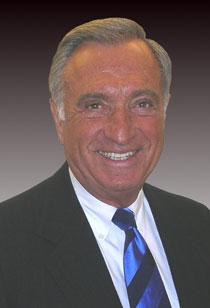
Eric Mar

SF’s new political era

31

news@sfbg.com

You can argue about what the word “progressive” means, and you can argue about the process and the politics that put Ed Lee in the Mayor’s Office. And you can talk forever about which group or faction has how much of a majority on the San Francisco Board of Supervisors, but you have to admit: this city has just undergone a significant political realignment.

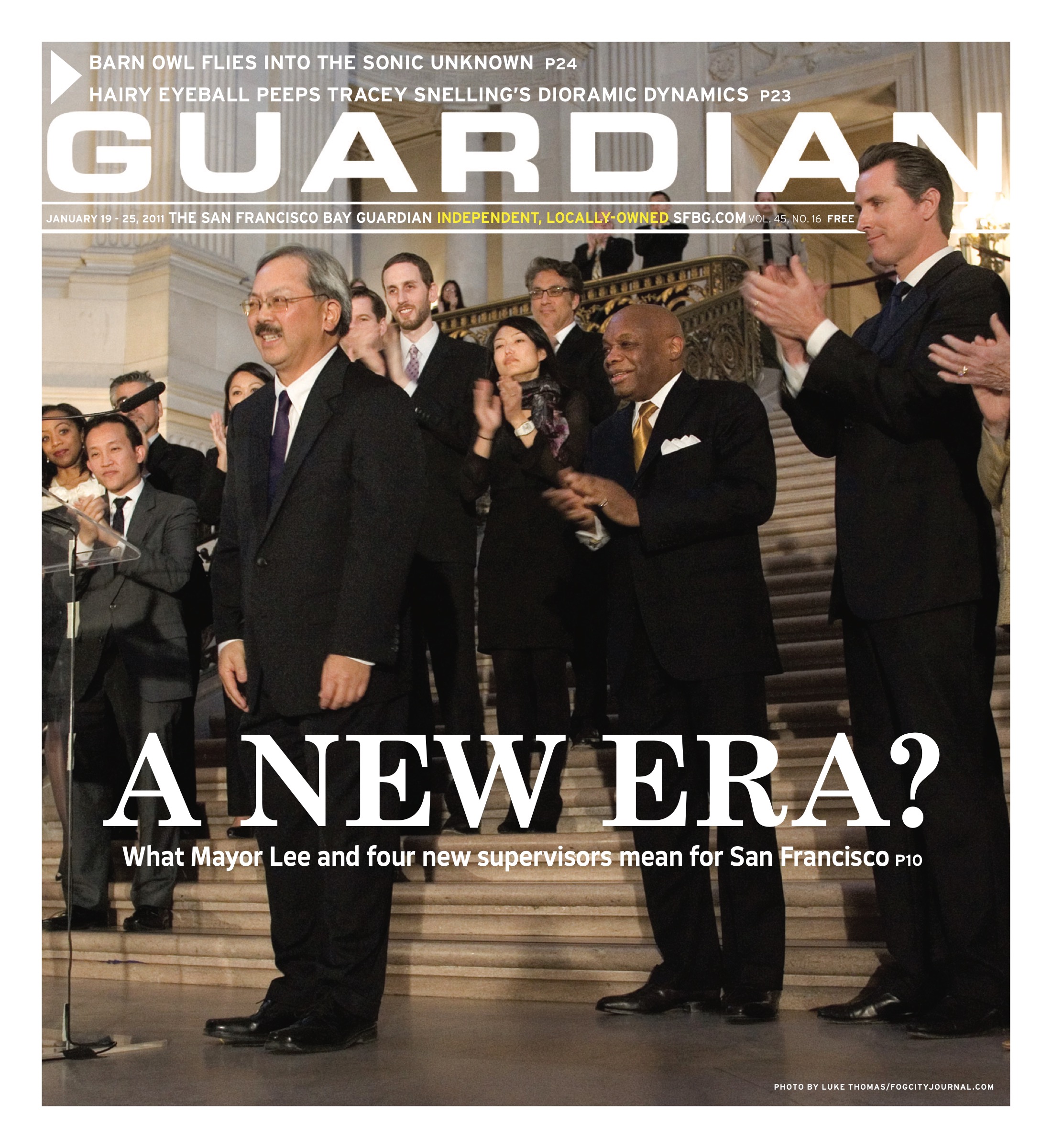
Some of that was inevitable. The last members of the class of 2000, the supervisors who were elected in a rebellion against the sleaze, corruption, and runaway development policies of the Willie Brown administration, have left office. Gavin Newsom, the mayor who was often at war with the board and who encouraged a spirit of rancor and partisanship, is finally off to Sacramento. For the first time since 1978, the supervisors will be working with a mayor they chose themselves.

For much of the past 15 years, progressive politics was as much about stopping bad things — preventing Brown and then Newsom from wrecking the city — as it was about promoting good things. But the “politics of anti,” as San Francisco State political scientist Rich DeLeon describes is, wasn’t a central theme in the November elections, and this generation of supervisors comes into office with a different agenda.

Besides, one of the clear divisions on the board the past seven years was the Newsom allies against the progressives — something that dissipated instantly when Lee took over.

But the realignment goes deeper.

Until recently, the progressives on the board had a working majority — a caucus, so to speak — and they tended to vote together much of the time. The lines on the board were drawn almost entirely by what Newsom disparagingly calls ideology but could more accurately be described as a shared set of political values, a shared urban agenda.

There are still six supervisors who call themselves progressives, but the idea that they’ll stick together was shattered in the battle over a new mayor — and the notion that there’s anything like a progressive caucus died with Board President David Chiu’s election (his majority came in part from the conservative side, with three progressives opposing him) and with Chiu’s new committee assignments, which for the first time in a decade put control of key assignments in the hands of the fiscal conservatives.


A PROGRESSIVE MAJORITY?

The progressive bloc on the board was never monolithic. There were always disagreements and fractures. And, thanks to the Brown Act, the progressives don’t actually meet outside of the formal board sessions. But it was fair and accurate to say that, most of the time, the six members of the board majority functioned almost as a political party, working together on issues and counting on each other for key votes. There was, for example, a dispute two years ago over the board presidency — but in the end, Chiu was elected with exactly six votes, all from the progressive majority that came together in the end.

That all started to fall apart the minute the board was faced with the prospect of choosing a new mayor. For one thing, the progressives couldn’t agree on a strategy — should they look for someone who would seek reelection in November, or try to find an acceptable interim mayor? The rules that barred supervisors from voting for themselves made it more tricky; six votes were not enough to elect any of the existing members. And, not surprisingly, some of the progressives had mayoral ambitions themselves.

When state Assemblymember Tom Ammiano — who would have had six votes easily — took himself out of the running, there was no other obvious progressive candidate. And with no other obvious candidate, and little opportunity for open discussion, the progressives couldn’t come to an agreement.

But by the Jan. 4 board meeting, five of the six had coalesced around Sheriff Mike Hennessey. Chiu, however, was supporting Ed Lee, someone he had known and worked with in the Asian community and whom he considered a progressive candidate. And once it became clear that Lee was headed toward victory, Sup. Eric Mar announced that he, too, would be in Lee’s camp.

A few days later, when the new board convened to choose a president, the progressive solidarity was gone. Sups. David Campos, John Avalos, and Ross Mirkarimi, now the solid left wing of the board, voted for Avalos. Chiu won with the support of Mar, Sup. Jane Kim, and the moderate-to-conservative flank.

Now the Budget Committee — long controlled by a progressive chair and a progressive majority — will be led by Carmen Chu, who is among the most fiscally conservative board members. The Land Use and Development Committee will be chaired by Mar, but two of the three members are from the moderate side. Same goes for Rules, where Sup. Sean Elsbernd, for years the most conservative board member, will work with ideological ally Sup. Mark Farrell on confirming mayoral appointments, redrawing supervisorial districts, and promoting or blocking charter amendments as Kim, the chair, does her best to contain the damage.

You can argue that having independent-minded supervisors who don’t vote as a caucus is a good thing. You can also argue that a fractured left will never win against a united downtown. And both arguments have merit.

But you can’t argue any more that the board has the same sort of progressive majority it’s had for the past 10 years. That’s over. It’s a new — and different — political era.

What happens now? Will the progressives hold enough votes to have an influence on the city budget (and ensure that the deficit solutions include new revenue and not just cuts)? What legislative priorities will the supervisors be pushing in the next year? How will the votes shake out on difficult new proposals (and ongoing issues like community choice aggregation)?

Mayor Lee has pledged to work with the board and will show up for monthly questions. How will he respond to the sorts of progressive legislation — like tenant protections, transit-first policies, immigrant rights measures, and stronger affordable housing standards — that Newsom routinely vetoed?

How will this all play out in a year when the city will also be electing a new mayor?


IDENTITY POLITICS?

When Sups. Chiu, Mar, and Kim broke with their three progressive colleagues to support Chiu for board president — just as Chiu and Mar helped clear the path for Ed Lee to become mayor days earlier — it seemed to many political observers that identity had trumped ideology on the board. There’s some truth to that observation, but it’s too simple an explanation. There’s also the fact that Chiu strongly supported Kim, who is a personal friend and former roommate, in her election, so it’s no surprise she went with him for board president.

And the phrase itself is so laden with baggage and problems that it’s hard to talk about. It has come to signify a wide range of political activity and theorizing founded in the shared experiences of injustice of members of certain social groups. “Rather than organizing solely around belief systems, programmatic manifestoes, or party affiliation, identity political formations typically aim to secure the political freedom of a specific constituency marginalized within its larger context,” says the Stanford Encyclopedia of Philosophy, an ongoing research project by the students and faculty at Stanford University.

Although the notion of identity politics took hold during the social movements of the 1960s and ’70s — when liberation and organizing movements among women and various ethic and other identity groups fed a larger liberal democratic surge that targeted war, economic inequity, social injustice, and other issues — it’s also a political approach that has divided the populace.

“One of the central charges against identity politics by liberals, among others, has been its alleged reliance on notions of sameness to justify political mobilization,” says the Stanford Encyclopedia. “Looking for people who are like you rather than who share your political values as allies runs the risk of sidelining critical political analysis of complex social locations and ghettoizing members of social groups as the only persons capable of making or understanding claims to justice.”

Mar explains that the reality of identity politics and whether it’s a factor in the current politics at City Hall is far more complex.

“With me, David Chiu, and Jane Kim as a block of three progressive Asians — and I still define David Chiu as a progressive though I think some are questioning that — we all come out of what I would call a pro-housing justice, transit-first, and environmental sustainability [mindset],” Mar told us. “But I think because of our ethnic background and experiences, we may have different perspectives at times than other progressives.”

For example, Mar said, many working class families of color need to drive a car so they’ll differ from progressives who want to limit parking spaces to discourage driving. He also has reservations about the proposed congestion pricing fee and how it might affect low-income drivers.\

“I think often when progressive people of color come into office — Jane Kim might be one of the best examples — that sometimes there’s an assumption that her issues are going to be the same as a white progressive or a Latino progressive,” he said. “But I think kind of the different identities that we all have mean that we’re more complex.”

Campos, a Latino immigrant who is openly gay, noted that “as a progressive person of color, I have at times felt that the progressive movement didn’t recognize the importance of identity politics and what it means for me to have another person of color in power.”

But, he added, “I don’t think identity politics alone should guide what happens. A progressive agenda isn’t just about race but class, sexual orientation, and other things. It’s not enough to say that identity politics justifies everything.”

University of San Francisco political science professor Corey Cook told the Guardian that identity has always been a strong factor in San Francisco politics, even if it was overshadowed by the political realignment around progressive ideology that occurred in 2000, mostly as a reaction to an economic agenda based on rapid development and political cronyism.

“I’m not sure that identity wasn’t relevant, but it was swamped by ideology,” Cook told the Guardian. Now, he said, another political realignment seems to be occurring, one that downplays ideology compared to the position it has held for the last 10 years. “I’m not sure that ideology is dead. But the dynamics have definitely changed.”

Cook sees what may be a more important change reflected in Chiu’s decision to put the political moderates in control of key board committees. But he said that shift was probably inevitable given the difficulties of unifying the diverse progressive constituencies.

“It’s hard to hold a progressive coalition together, and it’s amazing that it has lasted this long,” he said.

There’s another kind of identity politics at play as well — that of native San Franciscans, who often express resentment at progressive newcomers talking about what kind of city this is, versus those who see San Francisco as a city of immigrants and ideas, a place being shaped by a wider constituency than the old-timers like to acknowledge.

“I’m honored to join Sups. Elsbernd and Cohen in representing the neighborhoods they grew up in,” Sup. Mark Farrell said during his opening remarks after being sworn in Jan. 8., sobbing when he thanked his parents for their support.

As he continued, he fed the criticism of the notion of ideology-based politics that has been a popular trope with Gavin Newsom and other fiscal conservatives in recent years, telling the crowd he wanted “to turn City Hall into a place based on issues and ideas, not ideology.”

Cohen also placed more importance on her birthright than on her political philosophy, telling stories about entering board chambers through the back door at age 16 when she was part of a youth program created by then-Mayor Frank Jordan, and with former Mayor Dianne Feinstein coming to speak at Cohen’s third-grade class. “I am a San Francisco native, and that is a responsibility I take seriously,” said Cohen, who graduated from the Emerge Program, which grooms women for political office,

“We will have another woman as president of the Board of Supervisors, and we will have a woman as mayor of San Francisco,” she added. And as the sole African American on the board, she also pledged, “I will be working to add more members of the African American community to the elected family of San Francisco.”

But what issues she plans to focus on and what values she’ll represent were unclear in her comments — as they were throughout her campaign, despite the efforts of journalists and activists to discern her political philosophy. In her public comments, her only stated goal was to build bridges between the community and City Hall and let decisions be guided by the people “not political ideologies.”

Oftentimes in recent San Francisco history, identity and ideology have worked in concert, as they did with former Sup. Harvey Milk, who broke barriers as the first openly gay elected official, but who also championed a broad progressive agenda that included tenants rights, protecting civil liberties, and creating more parks and public spaces.

Sup. Scott Wiener, shortly after being sworn into office, acknowledged the legacy of his district, which was once represented by Milk and fellow gay progressive leader Harry Britt, telling the crowd: “I’m keenly aware of the leadership that has come through this district and I have huge shoes to fill.”

Yet Wiener, a moderate, comes from a different ideological camp than Milk and Britt and he echoed the board’s new mantra of collaboration and compromise. “I will always try to find common ground. There is always common ground,” he said.


GETTING THINGS DONE?

Chiu is making a clear effort to break with the past, and has been critical of some progressive leaders. “I think it’s important that we do not have a small group of progressive leaders who are dictating to the rest of the progressive community what is progressive,” he said.

While he didn’t single out former Sup. Chris Daly by name, he does seem to be trying to repudiate Daly’s leadership style. “I think that while the progressive left and the progressive community leaders have had very significant accomplishments over the past 10 years, I do think that there are many times when our oppositional tactics have set us back.”

When Chiu was reelected board president, he told the crowd that “none of us were voted into office to take positions. We were voted into office to get things done.”

Some progressives were not at all happy with that comment. “I thought that was a terrible thing to say,” Avalos told the Guardian, arguing the positions that elected officials take shape the legislation that follows. As an example, he cited the positions that progressive members of Congress took in favor of the public option during the health care reform debate.

Talking about getting things done is “a sanctimonious talking point that fits well with what the Chronicle and big papers want to hear,” Avalos said. He said the Chronicle and other downtown interests are more interested in preserving the status quo and blocking progressive reforms. “It’s what they want to see not get done.”

Campos even challenged the comment publicly during the Jan. 11 board meeting when he said, “It’s important to get things done, but I don’t think getting things done is enough. We have to ask ourselves: what is it that we’re getting done? How is it that we’re getting things done? And for whom is it that we’re doing what we’re doing? Is it for the people, or the downtown corporate interests? I hope it’s not getting things done behind closed doors.”

Chiu said that, for him, getting things done is about expanding the progressive movement and consolidating its recent gains. “I think we all share a political goal. As progressives, we all share a political goal of getting things done and growing mainstream support for our shared progressive principles so that they really become the values of our entire city.”

To do that, he said, progressives are going to need to be more conciliatory and cooperative than they’ve been in the past. “I think it’s easy to slip into a more oppositional way of discussing progressive values, but I’m really pushing to move beyond that.”

The biggest single issue this spring will be the budget — and it’s hard to know exactly where the board president will draw his lines. “I have spoken to Mayor Lee about the need for open, transparent, and community-based budget processes and he’s open to that,” Chiu told us — and that alone would be a huge change. But the key progressive priority for the spring will be finding ways to avoid brutal budget cuts — and that means looking for new revenue.

When asked whether new general revenue will be a part of the budget solution, instead of Newsom’s Republican-style cuts-only approaches, Chiu was cautious. “I am open to considering revenues as part of the overall set of solutions to close the budget deficit,” he said. “I am willing to be one elected here that will try to make that argument.” But with his political clout and connections right now, he can do a lot more than be one person making an argument.

Chiu has always been open to new revenue solutions and even led the way in challenging the cuts-only approach to both the city budget and MTA budget two years in a row, only to back down in the end and cut a deal with Newsom. When asked whether things will be better this year given his closer relationship to Lee, Chiu replied, “I think things are going to be different in the coming months.”

During the board’s Jan. 7 deliberation on Lee, Sup. Eric Mar also said that based on his communications with Lee, Mar believed that the Mayor’s Office is open to supporting new revenue measures. He echoed the point later to us.

In addition to supporting the open, inclusive budget process, Mar called for “a humane budget that protects the safety net and services to the most vulnerable people in San Francisco is kind of the critical, top priority.

“I think it’s going to be difficult working with the different forces in the budget process,” he added. “That’s why I wish it could have been a progressive who was chairing the budget process.”

Mar said progressive activism on the budget process is needed now more than ever. “The Budget Justice Coalition from last year I think has to be reenergized so that so many groups are not competing for their own piece of the pie, but that it’s more of a for-all, share-the-pain budget with as many people communicating from outside as possible, putting the pressure on the mayor and the board to make sure that the critical safety net’s protected.”


CUTS WILL BE CENTER STAGE

But major cuts — and the issue of city employees pay and benefits — will also be center stage.

At the board’s Jan. 11 meeting, before the supervisors voted unanimously to nominate Lee as interim mayor, Sup. Elsbernd signaled that city workers’ retirement and health benefits will once again be at the center of the fight to balance the budget.

Elsbernd noted that in past years he was accused of exaggerating the negative impacts that city employees’ benefits have on the city’s budget. “But rather than being inflated, they were deflated,” Elsbernd said, noting that benefits will soon consume 18.14 percent of payroll and will account for 26 percent in three years.

“Does the budget deficit include this amount?” he asked.

And at the after-party that followed Lee’s swearing-in, Public Defender Jeff Adachi, who caused a furor last fall when he launched the ill-considered Measure B, which sought to reform workers’ benefits packages, told us he is not one to give up lightly.

“We learned a lot from that,” Adachi said. “This is still the huge elephant in City Hall. The city’s pension liability just went up another 1 percent, which is another $30 million”

Chu agreed that worker benefits would be a central part of the budget-balancing debate. “Any conversation about the long-term future of San Francisco’s budget has to look at the reality of where the bulk of our spending is,” she said.

Avalos noted that he plans to talk to labor and community based organizations about ways to increase city revenue. “I’m going to work behind the scene on the budget to make sure the communities are well-spoken for,” Avalos said, later adding, “But it’s hard, given that we need a two-thirds majority to pass stuff on the ballot.”

Last year, Avalos helped put two measures on the ballot to increase revenue: Prop. J, which sought to close loopholes in the city’s current hotel tax and asked visitors to pay a slightly higher hotel tax (about $3 a night) for three years, and Prop. N, the real property transfer tax that slightly increased the tax charged by the city on the sale of property worth more than $5 million.

Prop. N should raise $45 million, Avalos said. “I’ve always had my sights set on raising revenue, but making cuts is inevitable.”


THE IDEOLOGY ARGUMENT

Newsom and his allies loved to use “ideology” as a term of disparagement, a way to paint progressives as crazies driven by some sort of Commie-plot secret agenda. But there’s nothing wrong with ideology; Newsom’s fiscal conservative stance and his vow not to raise taxes were ideologies, too. The moderate positions some of the more centrist board members take stem from a basic ideology. Wiener, for example, told us that he thinks that in tough economic times, local government should do less but do it better. That’s a clear, consistent ideology.

For much of the past decade, the defining characteristic of the progressives on the board has been a loosely shared urban ideology supported by tenants, immigrant-rights groups, queer and labor activists, environmentalists, preservationists, supporters of public power and sunshine and foes of big corporate consolidation and economic power. Diversity and inclusiveness was part of that ideology, but it went beyond any one political interest or identity group.

It was often about fighting — against corruption and big-business hegemony and for economic and social equality. The progressive agenda started from the position that city government under Brown and Newsom had been going in the wrong direction and that substantive change was necessary. And sometimes, up against powerful mayors and their well-heeled backers, being polite and accommodating and seeking common ground didn’t work.

As outgoing Sup. Daly put it at his final meeting: “I’ve seen go-along to get along. If you want to do more than that, if you think there’s a fundamental problem with the way things are in this world, then go-along to get along doesn’t do it.” When Chiu announced that the new progressive politics is one of pragmatism, he was making a break from that ideology. He was signaling a different kind of politics. He has urged us to be optimistic about the new year — but we still don’t know what the new agenda will look like, how it will be defined, or at what point Chiu and his allies will say they’ve compromised and reached out enough and are ready to take a strong, even oppositional, stand. We do know the outcome will affect the lives of a lot of San Franciscans. And when the budget decisions start rolling down the pike, the political lines will be drawn fairly clearly. Because reaching across the aisle and working together sounds great in theory — but in practice, there is nothing even resembling a consensus on the board about how the city’s most serious problems should be resolved. And there are some ugly battles ahead.

They have issues: Members of the new Board speak

20

Board President David Chiu touched off a broad political discussion in recent weeks with his statement that officials were elected “not to take positions, but to get things done.” Delivered just before his reelection as Board President with the solid backing of the board’s moderate faction, Chiu’s comment has been viewed in light of City Hall’s shifting political dynamic, a subject the Guardian explores in a Jan. 19 cover story. Politics aside, Chiu’s statement also begs the question: Just what do members of the board hope to get done, and how do they propose to accomplish the items on their agenda?
Last week, Guardian reporters tracked down every member of the board to find out. We asked, what are your top priorities? And how do you plan to achieve them? Some spoke with us for 25 minutes, and others spoke for just 5 minutes, but the result offers some insight into what’s on their radar. Not surprisingly, getting the budget right was mentioned by virtually everyone as a top priority, but there are sharp differences in opinion in terms of how to do that. Several supervisors, particularly those in the moderate wing, mentioned ballooning pension and healthcare costs. Aiding small business also emerged as a priority shared by multiple board members.

Sup. Eric Mar
District 1

Issues:
*Budget
*Assisting small businesses
*Programs and services for seniors
*Food Security
*Issues surrounding Golden Gate Park

Elected in 2008 to represent D1, Sup. Eric Mar has been named chair of the powerful Land Use & Economic Development Committee and vice chair of the City Operations and Neighborhood Services Committee.

Asked to name his top priorities, Mar said, “A humane budget that protects the safety net and services to the must vulnerable people in San Francisco is kind of the critical, top priority.”

It’s bound to be difficult, he added. “That’s why I wish it could have been a progressive that was chairing the budget process. Now, we have to work with Carmen Chu to ensure that it’s a fair, transparent process.”

A second issue hovering near the top of Mar’s agenda is lending a helping hand to the small businesses of the Richmond District. “There’s a lot of anxiety about the economic climate for small business. We’re trying to work closely with some of the merchant associations and come up with ideas on how the city government can be more supportive,” he said. Mar also spoke about the need to respond to the threat of big box stores, such as PetCo, that could move in and harm neighborhood merchants. “I’m worried about too many of the big box stores trying to come in with an urban strategy and saying that they’re different — but they sure have an unfair advantage,” he noted.

Programs and services for the senior population ranked high on his list. Mar noted that he’d been working with senior groups on how to respond to a budget analyst’s report showing a ballooning need for housing – especially affordable housing – for seniors. “It’s moving from the Baby Boom generation to the Senior Boomers, and I think the population, if I’m not mistaken, by 2020 it’s going up 50 percent,” he said. “It’s a huge booming population that I don’t think we’re ready to address.”

Addressing food security issues through the Food Security Task Force also ranked high on Mar’s list, and he noted that he’s been working with a coalition that includes UCSF and the Department of Public Health to study the problem. “We’ve had a number of strategy meetings already, but we’re trying to launch different efforts to create healthier food access in many of our lowest income neighborhoods,” Mar said.

Finally, Mar talked about issues relating to the park. “I do represent the district that has Golden Gate Park, so I’m often busy with efforts to preserve the park, prevent privatization, and ensure enjoyment for the many residents not just in the Richmond but throughout the city that enjoy the park.” Although it’s not technically in his district, Mar noted that he is very supportive of HANC Recycling Center – and plans to advocate on their behalf to Mayor Lee.

Sup. Mark Farrell
District 2
Issues:
*Pension reform
*Long-term economic plan for city
*Job creation
*Quality-of-life issues

Elected to replace termed-out D2 Sup. Michela Alioto-Pier, Farrell has been named vice-chair of the Government Audits & Oversight Committee and a member of the Rules Committee. A native of D2, Farrell told the Guardian he believes his roots in the city and background as a venture capitalist would be an asset to the city’s legislative body. “I know at the last board, Carmen [Chu] was the only one who had any finance background,” he said. “To have someone come from the private sector with a business / finance background, I really do believe … adds to the dialogue and the discussion here at City Hall.”

Along those lines, Farrell said one of his top priorities is the budget. “I’m not on the budget and finance committee this time around, but given my background, I am going to play a role in that,” he said.

So what’s his plan for closing the budget deficit? In response, he alluded to slashing services. “In the past, there have been views that we as a city don’t provide enough services and we need to raise revenues to provide more, or the perspective that we first need to live within our means and then provide more services. Everyone’s going to disagree, but I’m in the latter camp,” he said. “I do believe we need to make some tough choices right now – whether it be head count, or whether it be looking at …pension reform. I do believe pension reform needs to be part of the dialogue. Unfortunately, it’s unsustainable.”

He also said he wanted to be part of “trying to create and focus on a framework for a long-term financial plan here in San Francisco.”

Secondly, Farrell discussed wanting to put together a “jobs bill.”

“Jobs is a big deal,” he said. “It’s something I want to focus on. There are only so many levers we can pull as a city. I think the biotech tax credits have spurred a lot of business down in Mission Bay.”

Next on Farrell’s agenda was quality-of-life issues, but rather than talk about enforcing San Francisco’s sit/lie ordinance – supported by political forces who organized under the banner of maintaining ‘quality-of-life’ – Farrell revealed that he is incensed about parking meter fines. “It is so strikingly unjust when you are 1 minute late to your parking meter and you have a $65 parking fine,” he said.

Farrell also mentioned development projects that would surely require time and attention. “CPMC is going to be a major dominant issue,” he said. He also mentioned Doyle Drive, and transitional age youth housing projects proposed in D2 – but as far as the housing project planned for the King Edward II Inn, which has generated some controversy among neighborhood groups, he didn’t take a strong position either way, saying he wanted to listen to all the stakeholders first.

Board President David Chiu
District 3
Issues:
*Budget
*Preserving neighborhood character
*Immigrant rights
*Preserving economic diversity
*Transit

Elected for a second two-year term as President of the Board, D3 Sup. David Chiu is rumored to be running in the mayor’s race, after he turned down former Mayor Gavin Newsom’s offer to appoint him as District Attorney. That offer was made after Kamala Harris won the state Attorney General’s race this fall. And when Chiu turned it down, former Mayor Gavin Newsom shocked just about everybody by appointing San Francisco Police Chief George Gascon, who is not opposed to the death penalty and was a longtime Republican before he recently registered as a Democrat, instead.

A temporary member of the Board’s Budget acommittee, Chiu is also a permanent member of the Board’s Government Audits & Oversight Committee.

Asked about his top priorities, Chiu spoke first and foremost about  “ensuring that we have a budget that works for all San Franciscans, particularly the most vulnerable.” He also said he wanted to see a different kind of budget process: “It is my hope that we do not engage in the typical, Kabuki-style budget process of years past under the last couple of mayors, where the mayor keeps under wraps for many months exactly what the thinking is on the budget, gives us something on June 1 for which we have only a couple of weeks to analyze, and then engage in the tired back-and-forth of debates in the past.” Chiu also spoke about tackling “looming pension and health care costs.”

Another priority, he said, was “Ensuring that our neighborhoods continue to remain the distinctive urban villages that they are, and protecting neighborhood character,” a goal that relates to “development, … historic preservation, [and] what we do around vacant commercial corridors.”

*Immigrant rights also made his top-five list. “I was very sad that last November we didn’t prevail in allowing all parents to have a right and a voice in school board elections,” he said, referencing ballot measure Proposition D which appeared on the November 2010 ballot. “I think we are going to reengage in discussion around Sanctuary City, another topic I have discussed twice already with Mayor Lee.”

Another issue for Chiu was  “ensuring again that hopefully San Francisco continues to remain an economically diverse city, and not just a city for the very wealthy.” He spoke about reforming city contracts: “In particular, dealing with the fact that in many areas, 70 to 80 percent of city contracts are awarded to non-San Francisco businesses. … I think there is more significant reform that needs to happen in our city contracting process.” Another economic-diversity measure, he said, was tax policy, “particularly around ensuring that our business tax is incenting the type of economic growth that we want.”

Finally, Chiu spoke about “Creating a transit-first city. This is not just about making sure MUNI is more reliable and has stable funding, but ensuring that we’re taking steps to reach a 2020 goal of 20 percent cycling in the city. Earlier this week I called for our transit agencies to look at pedestrian safety, because we are spending close to $300 million a year to deal with pedestrian deaths and injuries.”

Sup. Carmen Chu
District 4
*Budget
*Core Services
*Jobs
*Economy

Chiu has just named Sup. Carmen Chu as chair of the powerful Board and Finance Committee. And Chu, who worked as a budget analyst for Newsom’s administration, says the budget, core services, employment and the economy are her top priorities.

“My hope is that this year the budget is going to be a very collaborative and open process,” Chu said.

Chu believes workers benefits will be a central part of the budget-balancing debate.
“Any conversation about the long-term future of San Francisco’s budget has to look at the reality of where the bulk of our spending is,” she said.

Chu noted that the budget debate will have to take the state budget into account.
“At the end of the day, we need to take into account the context of the state budget, in terms of new cuts and taxes, because anything we do will be on top of the state level.

“We need to ask who do these measures really impact,” she added, noting that there were attempts to put revenue measures on the ballot last year.

Sup. Ross Mirkarimi
District 5
* Local Hire / First Source / Reentry programs
* Budget / generating revenue
* Infrastructure improvements
*Reversing MTA service cuts

With only two years left to serve on the Board, D5 Sup. Ross Mirkarimi has been named chair of the Board’s Public Safety Committee and vice-chair of the Budget and Finance Committee.

“One of my top priorities is building on and strengthening the work that I’ve already done and that Avalos is doing on mandatory local hire and First Source programs,” Mirkarimi said. He also spoke about “strengthening reentry programs for those coming out of the criminal justice system, because we still have an enormously high recidivism rate.”

The budget also ranked high on Mirkarimi’s list, and he stressed the need for “doing surgical operations on our budget to make sure that services for the vulnerable are retained, and looking for other ways to generate revenue beyond the debate of what’s going on the ballot.

“For instance, I helped lead the charge for the America’s Cup, and while the pay-off from that won’t be realized for years, the deal still needs to be massaged. What we have now is an embryonic deal that still needs to be watched.”

Mirkarimi mentioned safeguarding the city against privatization, saying one of his priorities was “retooling our budget priorities to stop the escalating practice of privatizing city services.”

 He spoke about “ongoing work citywide to make mixed-use commercial and residential infrastructure improvements, which coincide with bicycle and pedestrian improvements.”

Finally, Mirkarimi said he wanted to focus on transportation issues. “As Chair of the Transportation Authority, if I even continue to be chair, to take the lead on signature transit projects and work with the M.T.A. to reverse service cuts.”

Sup. Jane Kim
District 6
Issues:
*Jobs
*Economic Development
*Small Business
*Pedestrian Safety
*Legislation to control bedbug infestations

Elected to replace termed-out D6 Sup. Chris Daly, Kim has been named chair of the Rules Committee and a member of the Budget & Finance committee.

Kim believes that she will prove her progressive values through her work and she’s trying to take the current debate about her allegiances on the Board in her stride.

“The one thing I learned from serving on the School Board was to be really patient,” Kim told me, when our conversation turned to the issue of “progressive values.”

“I didn’t want to be President of the School Board for the first few years, because I loved pushing the envelope,” Kim added, noting that as Board President David Chiu is in the often-unenviable position of chief negotiator between the Board and the Mayor.

But with Ed Lee’s appointment as interim mayor, Kim is excited about the coming year.
“There are a lot of new opportunities, a different set of players, and it’s going to be very interesting to learn how to traverse this particular scene.”

Kim is kicking off her first term on the Board with two pieces of legislation. The first seeks to address bedbug infestations. “Particularly around enforcement, including private landlords,” Kim said, noting that there have also been bedbug problems in Housing Authority properties.

Her second immediate goal is to look at pedestrian safety, a big deal in D6, which is traversed by freeways with off-ramps leading into residential zones.
“Pedestrian safety is a unifying issue for my district, particularly for all the seniors,” Kim said, citing traffic calming, speed limit enforcement and increased pedestrian traffic, as possible approaches.

Beyond those immediate goals, Kim plans to focus on jobs, economic development and small businesses in the coming year. “What can we do to create jobs and help small businesses? That is my focus, not from a tax reduction point of view, but how can we consolidate the permitting and fees process, because small businesses are a source of local jobs.”

Kim plans to help the Mayor’s Office implement Sup. John Avalos’ local hire legislation, which interim Mayor Ed Lee supports, unlike his predecessor Mayor Gavin Newsom.

“Everyone has always liked the idea of local hire, but without any teeth, it can’t be enforced,” Kim observed. “It’s heartbreaking that young people graduate out of San Francisco Unified School District and there’s been not much more than retail jobs available.”

She noted that jobs, land use and the budget are the three overarching items on this year’s agenda. “I’m a big believer in revenue generation, but government has to come half-way by being able to articulate how it will benefit people and being able to show that it’s more than just altruistic. I think we have to figure out that balance in promoting new measures. That’s why it’s important to be strong on neighborhood and community issues, so that folks feel like government is listening and helping them. I don’t think it’s a huge ask to be responsive to that.”

Kim said she hoped the new mayor would put out a new revenue measure, enforce local hire, and implement Sup. David Campos’ legislation to ensure due process for immigrant youth.

“I think Ed can take a lot of the goodwill and unanimous support,” Kim said. “We’ve never had a mayor without an election, campaigns, and a track record. Usually mayors come in with a group of dissenters. But he is in a very unique position to do three things that are very challenging to do. I hope raising revenues is one of those three. As a big supporter of local hire, I think it helps having a mayor that is committed to implement it. And I’m hoping that Ed will implement due process for youth. For me, it’s a no brainer and Ed’s background as a former attorney  for Asian Law Caucus is a good match. Many members of my family came to the U.S. as undocumented youth, so this is very personal. Kids get picked up for no reason and misidentified. People confuse Campos and Avalos, so imagine what happens to immigrant youth.”

Sup. Sean Elsbernd
District 7
Issues:
*Parkmerced
*Enforcing Prop G
*Pension & healthcare costs
*CalTrain

With two years left to serve on the Board, D7 Sup. Sean Elsbernd has been named vice-chair of the Rules Committee and a member of the City Operations & Neighborhood Services Committee. He was congratulated by Chinatown powerbroker Rose Pak immediately after the Board voted 11-0 to nominated former City Administrator Ed Lee as interim mayor, and during Lee’s swearing-in, former Mayor Willie Brown praised Elsbernd for nominating Lee for the job.

And at the Board’s Jan. 11 meeting before the supervisors voted for Lee, Elsbernd signaled that city workers’ retirement and health benefits will be at the center of the fight to balance the budget in the coming year.

Elsbernd noted that in past years, he was accused of exaggerating the negative impacts that city employees’ benefits have on the city’s budget. “But rather than being inflated, they were deflated,” Elsbernd said, noting that benefits will soon consume 18.14 percent of payroll and will account for 26 percent in three years. “Does the budget deficit include this amount?” he asked.

And at the afterparty that followed Lee’s swearing in, Public Defender Jeff Adachi, who caused a furor last fall when he launched Measure B, which sought to reform workers’ benefits packages, told the Guardian he is not one to give up lightly. “We learned a lot from that,” Adachi said. “This is still the huge elephant in City Hall. The city’s pension liability just went up another 1 percent, which is another $30 million.”

As for priorities, Elsbernd broke it down into district, city, and regional issues. In D7, “Hands-down, without question the biggest issue … is Parkmerced,” he said, starting with understanding and managing the environmental approval process. If it gets approved, he said his top concerns was that “the tenant issue. And the overriding concern of if they sell, which I think we all think is going to happen in the near-term – do those guarantees go along with the land?”

Also related to Parkmerced was planning for the traffic conditions that the development could potentially create, which Elsbernd dubbed a “huge 19th Avenue issue.”

Citywide, Elsbernd’s top priorities included enforcing Proposition G – the voter-approved measure that requires MUNI drivers to engage in collective bargaining – and tackling pension and healthcare costs. He spoke about “making sure that MTA budget that comes to us this summer is responsive” to Prop G.

As for pension and healthcare, Elsbernd said, “I’ve already spent a good deal of time with labor talking about it, and will continue to do that.” But he declined to give further details. Asked if a revenue-generating measure could be part of the solution to that problem, Elsbernd said, “I’m not saying no to anything right now.”

On a regional level, Elsbernd’s priority was to help CalTrain deal with its crippling financial problem. He’s served on that board for the last four years. “The financial situation at CalTrain – it is without question the forgotten stepchild of Bay Area transit, and the budget is going to be hugely challenging,” he said. “I think they’ll survive, but I think they’re going to see massive reductions in services.”

Sup. Scott Wiener
District 8
Issues:
*Transportation
*Reasonable regulation of nightlife & entertainment industry
*Pension reform

Elected in November 2010 to replace termed-out D8 Sup. Bevan, Wiener has been named a temporary member of the Board’s Budget and Finance Committee and a permanent member of the Land Use and Economic Development Committee.

“Transportation is a top priority,” Wiener said. ‘That includes working with the M.T.A. to get more cabs on the street, and making sure that the M.T.A. collectively bargains effectively with its new powers, under Prop. G.”

“I’m also going to be focusing on public safety, including work around graffiti enforcement, though I’m not prepared to go public yet about what I’ll be thinking,” he said.

“Regulating nightlife and entertainment is another top priority,” Wiener continued. “I want to make sure that what we do is very thoughtful in terms of understanding the economic impacts, in terms of jobs and tax  revenues, that this segment has. With some of the unfortunate incidents that have happened, it’s really important before we jump to conclusions that we figure out what happened and why. Was it something the club did inappropriately, or was it just a fluke? That way, we can avoid making drastic changes across the board. I think we have been very reactive to some nightclub issues. I want us to be more thoughtful in taking all the factors into consideration.”

“Even if we put a revenue measure on the June or November ballot, we’d need a two-thirds majority, so realistically, it’s hard to envision successfully securing significant revenue measure before November 2012,” Wiener added. “And once you adopt a revenue measure, it takes time to implement it and revenue to come in, so it’s hard to see where we’ll get revenue that will impact the 2012 fiscal year. In the short term, for fiscal year 2011/2012, the horse is out of the barn”

“As for pension stuff, I’m going to be very engaged in that process and hopefully we will move to further rein in pension and retirement healthcare costs.”

Sup. David Campos
District 9
Issues:
*Good government
*Community policing
*Protecting immigrant youth
*Workers’ rights and healthcare

Elected in 2008, D9 Sup. David Campos has been named chair of the Board’s Government Audit & Oversight Committee and a member of the Public Safety Committee. And, ever since he declared that the progressive majority on the Board no longer exists, in the wake of the Board’s 11-0 vote for Mayor Ed Lee, Campos has found his words being used by the mainstream media as alleged evidence that the entire progressive movement is dead in San Francisco.

“They are trying to twist my words and make me into the bogey man,” Campos said, noting that his words were not a statement of defeat but a wake-up call.

“The progressive movement is very much alive,” Campos said. “The key here is that if you speak your truth, they’ll go after you, even if you do it in a respectful way. I didn’t lose my temper or go after anybody, but they are trying to make me into the next Chris Daly.”

Campos said his overarching goal this year is to keep advancing a good government agenda.

“This means not just making sure that good public policy is being pursued, but also that we do so with as much openness and transparency as possible,” he said.

As a member of the Board’s Public Safety Committee, Campos says he will focus on making sure that we have “as much community policing as possible.

He plans to focus on improving public transportation, noting that a lot of folks in his district use public transit.

And he’d like to see interim mayor Ed Lee implement the due process legislation that Campos sponsored and the former Board passed with a veto-proof majority in 2009, but Mayor Gavin Newsom refused to implement. Campos’ legislation sought to ensure that immigrant youth get their day in court before being referred to the federal immigration authorities for possible deportation, and Newsom’s refusal to implement it, left hundreds of youth at risk of being deported, without first having the opportunity to establish their innocence in a juvenile court.
‘We met with Mayor Lee today,” Campos told the Guardian Jan. 18. “And we asked him to move this forward as quickly as possible. He committed to do that and said he wants to get more informed, but I’m confident he will move this forward.”

Campos also said he’ll be focusing on issues around workers’ rights and health care.
“I want to make sure we keep making progress on those fronts,” Campos said.

“It’s been a rough couple of days,” Campos continued, circling back to the beating the press gave him for his “progressive” remarks.“But I got to keep moving, doing my work, calling it as a I see it, doing what’s right, and doing it in a respectful way. The truth is that if you talk about the progressive movement and what we have achieved, which includes universal healthcare and local hire in the last few years, you are likely to become a target.”

Sup. Malia Cohen
District 10
Issues:
*Public safety
*Jobs
*Preserving open space
*Creating Community Benefit Districts
*Ending illegal dumping
Elected to replace termed-out D10 Sup. Sophie Maxwell, Cohen has been named chair of the City & School District committee, vice chair of the Land Use and Economic Development Committee and vice chair of the Public Safety Committee.

Cohen says her top priorities are public safety, jobs, open space, which she campaigned on, as well as creating community benefits districts and putting an end to illegal dumping.

“I feel good about the votes I cast for Ed Lee as interim mayor and David Chiu as Board President. We need to partner on the implementation of local hire, and those alliances can help folks in my district, including Visitation Valley.”

“I was touched by Sup. David Campos words about the progressive majority on the Board,” she added. “I thought they were thoughtful.”

Much like Kim, Cohen believes her legislative actions will show where her values lie.
“I’d like to see a community benefits district on San Bruno and Third Street because those are two separate corridors that could use help,” Cohen said. 

She pointed to legislation that former D10 Sup. Sophie Maxwell introduced in November 2010, authorizing the Department of Public Works to expend a $350,000 grant from the Solid Waste Disposal Clean-Up Site trust fund to clean up 25 chronic illegal dumping sites.
“All the sites are on public property and are located in the southeast part of the city, in my district,” Cohen said, noting that the city receives over 16,000 reports of illegal dumping a year and spends over $2 million in cleaning them up.

Sup. John Avalos
District 11
*Implementing Local Hire
*Improving MUNI / Balboa Park BART
*Affordable housing
*Improving city and neighborhood services

Sup. John Avalos, who chaired the Budget committee last year and has just been named Chair of the Board’s City Operations and Neighborhood Services Committee, said his top priorities were implementing local hire, improving Muni and Balboa Park BART station, building affordable housing at Balboa, and improving city and neighborhood services.

“And despite not being budget chair, I’ll make sure we have the best budget we can,” Avalos added, noting that he plans to talk to labor and community based organizations about ways to increase city revenues. “But it’s hard, given that we need a two-thirds majority to pass stuff on the ballot,” he said.

Last year, Avalos helped put two measures on the ballot to increase revenues. Prop. J sought to close loopholes in the city’s current hotel tax, and asked visitors to pay a slightly higher hotel tax (about $3 a night) for three years. Prop. N, the real property transfer tax, h slightly increased the tax charged by the city on the sale of property worth more than $5 million.

Prop. J secured only 45.5 percent of the vote, thereby failing to win the necessary two-thirds majority. But it fared better than Prop. K, the competing hotel tax that Newsom put on the ballot at the behest of large hotel corporations and that only won 38.5 percent of the vote. Prop. K also sought to close loopholes in the hotel tax, but didn’t include a tax increase, meaning it would have contributed millions less than Prop. J.

But Prop. N did pass. “And that should raise $45 million,” Avalos said. “So, I’ve always had my sights set on raising revenue, but making cuts is inevitable.”

Do free trips influence SF’s elected officials?

6

San Francisco public officials have received $44,000 in trips and travel expenses from private interests in the last two years – with Board of Supervisors President David Chiu the biggest recipient and controversial Chinatown power broker Rose Pak the biggest giver – according to “Flying Through Loopholes,” a report by a new group named San Franciscans for Clean Government.

The report questions whether the gift of free trips, a rare exception to the city’s otherwise strict ban on gifts to public officials, is a way of currying favor with decision-makers. “The appearance of thousands of dollars changing hands doesn’t look good and it could be easily fixed,” says attorney Jon Golinger, Chiu’s former campaign manager and a founder of the group. He raises the question, “Is a person who paid for a trip more likely to get a return phone call?”

The disclosure of Pak’s largesse comes in the wake of reports that she engineered the selection of Ed Lee as the city’s new mayor. The records show that Pak and the Chinatown Chamber of Commerce she heads gave travel gifts totaling nearly $20,000, almost half of the total. Most of that was for sending Sups. Chiu, Eric Mar, and Carmen Chu to southern China in November at a cost of $6,122 each. Pak also sent Chiu to China in September, with the World Economic Forum Young Leaders Program also kicking in another $1,544 for the trip.

Chiu was by far the largest recipient of the travel funds, taking in $16,640 for seven trips, including trips to the Netherlands, Taiwan, Washington DC, and Cambridge, Mass., in addition to his two China trips. Neither Pak nor Chiu have returned Guardian calls for comment yet, but we’ll update this post when and if they do. UPDATE: Chiu returned our call and said, “Our trips provide significant public benefits to San Francisco, from advocating for federal stimulus funds in Washington DC, to strengthening ties with government leaders in San Francisco’s sister cities, to learning about comparative transit first practices.  The report shows that our system of full disclosure of travel is working, and I welcome the conversation.”

The group is calling for the city to close the travel gift loohole and require fuller reporting of the details of the trips – such as where they stayed and other indicators of how lavishly the officials were treated – as well as calling on elected officials to voluntarily refuse to accept gifts. Golinger also raised questions about the influence that Pak is exerting on city government, which is largely invisible considering that she doesn’t even register as a lobbyist even though she’s known to be in regular contact with public officials.

“That is the bigger issue that needs to be looked at,” he said, “now that it’s become clear that Rose Pak and her group are so influential.”

Chiu stiffs progressives on key committee appointments

21

Belying his repeated claims to being part of the progressive movement, Board of Supervisors President David Chiu has ousted his progressive colleagues from key leadership positions on board committees, placing fiscal conservatives into the chairs and majorities on the three most important committees and giving downtown interests more control over city legislation and projects than they’ve had in a decade.

Most notably, the chair of the Budget & Finance Committee was taken away from Sup. John Avalos – who challenged Chiu for the board presidency on Saturday – and given to Sup. Carmen Chu. While Chu did work on budget issues as a staffer in the Mayor’s Office before being appointed supervisor, which Chiu cited in support of his decision, she has consistently voted with the three-member minority of fiscal conservatives throughout her tenure as supervisor, opposing even the most widely accepted revenue proposals and progressive initiatives.

Chiu also placed himself in the swing vote role on that committee, naming Sups. Ross Mirkarimi and Jane Kim as the permanent committee members and Scott Wiener and himself as the temporary members who serve on the committee from March 1 through budget season. Asked if that was intentional, Chiu told us, “Sure was.” With the city facing a budget deficit of almost $400 million after seven years of budget deficits that were closed almost entirely through service cuts and fee increases – rather than general revenue increases targeted at the city’s richest individuals and corporations – the committee will be a key battleground between progressives and fiscal conservatives this year.

“The makeup of the committee reflects a real need for collaboration at this time of transition,” Chiu said of the Budget Committee. But Sup. David Campos was among the many progressives calling the committee assignments a major political realignment, telling us, “I don’t see how you can look at the committee assignments and not see some kind of realignment. The progressives are no longer in control of the key committees.” Avalos called it, “the price of moderates voting for Chiu.”

Also disappointing to progressives were Chiu’s choices for the Rules and Land Use committees. On the Rules Committee, which confirms mayoral appointments, approves the placement of charter amendments on the ballot, and will play a big role this year in approving the redrawing of supervisorial districts in the wake of the 2010 Census, Chiu named Kim and Sups. Sean Elsbernd and Mark Farrell, the latter two childhood buddies who represent the city’s two most conservative districts.

The committee takes the lead role in proposing the board’s three appointees to a task force that will draw the new legislative lines, as well as reviewing the other six appointees (three each from the Mayor’s Office and Elections Commission) and approving the plan that the task force produces. Downtown groups are expected to use the opportunity to negate the gains progressives have made in electing supervisors, probably in collaboration with Elsbernd and Farrell, a venture capitalist new to politics.

“Sean and Mark understand that if they push things through Rules that are outside the mainstream of who the board is, I expect that the full board will stop them,” Chiu told us. He also emphasized that Kim is chairing the committee, a role that can influence what items the committee considers: “On Rules, Sup. Kim will set the agenda there.”

Chiu sounded a similar rationale in defending a makeup on the Land Use & Economic Development Committee, to which he named new Sups. Scott Wiener and Malia Cohen – who were backed by development interests and opposed by tenant groups in last year’s election – along with Sup. Eric Mar as chair.

“With Eric at the helm, he will do a very good job at fighting for neighborhoods, tenants, and other interests,” Chiu said. But Avalos noted that Mar will have his hands full trying to manage a high-stakes, high-profile agenda with little help from his colleagues. “There’s a lot on Eric Mar’s shoulders. It’s his coming of age moment and he’ll have to step up big time to run that committee,” Avalos said.

Avalos said he was disappointed to be removed from the Budget Committee after working on it for eight of the last 10 years, first as Sup. Chris Daly’s legislative aide and then as a supervisor. “But I’m going to work behind the scene on the budget to make sure the communities are well-spoken for,” he said.

Chiu said he has gotten assurances from both Chu and Mayor Ed Lee “about the need for an open, transparent, and community-based budget process.” Carmen Chu echoed the point, telling us, “My hope is that this year the budget is going to be a very collaborative and open process.”

But on the need for need for revenue solutions, which Avalos has said are vital, David Chiu only went this far: “I am open to considering revenues as part of the overall set of solutions to close the budget deficit.” And Carmen Chu wouldn’t even go that far.

“At the end of the day, we need to take into account the context of the state budget, in terms of new cuts and taxes, because anything we do will be on top of the state level,” she told us, adding this about the revenue measures that she opposed last year, “We need to ask who do these measures really impact.”

For progressives, the only bright spots in the committee appointments were Avalos chairing the City Operations & Neighborhood Services Committees, with Mar and Elsbernd also serving; and Sup. Ross Mirkarimi chairing the Public Safety Committee, with Cohen and Campos on it as well.

“I told people I was going to be fair in committee assignments and I have been,” Chiu said.

Sarah Phelan and Tim Redmond contributed to this report.

Will the “real” progressives please stand up?

Before Ed Lee was unanimously appointed interim mayor at the Jan. 11 Board of Supervisors meeting, Sup. David Campos delivered a speech about the progressive movement in San Francisco.

“Progressives are no longer in control of this Board of Supervisors,” Campos noted. “We have a president of the Board of Supervisors who was elected without a clear progressive majority, and who was elected with a clear backing of the moderate block of supervisors.”

Speaking to the notion that supervisors were not elected to take positions, but to get things done, an idea aired by Board President David Chiu, Campos demurred. “I don’t think it’s entirely accurate to say that none of us are elected to take certain positions,” he said.

“It’s important to get things done,” Campos continued. “But I don’t think getting things done is enough. We have to ask ourselves, what is it that we’re getting done? How is it that we’re getting things done? And for whom is it that we’re doing what we’re doing?”

Would things be done in the interests of the people, Campos wanted to know, “or the downtown corporate interests?”

Would things be done in a transparent way? “I hope we’re not getting things done behind closed doors,” Campos said.

Campos also took issue with the implication that “progressives cannot get things done.” He pointed to district elections, universal healthcare, domestic partner benefits, and police reform as accomplishments of the progressive community.

Despite Campos’ pronouncement that progressives were on the losing end, nearly every elected official who stood to speak throughout the course of the historic day uttered the P-word — including Lee himself.

“I was a progressive,” Lee said during his inaugural speech, “before progressive was a political faction in this town.” Lee pointed to his history of fighting for the rights of African Americans and Latinos, his move to establish a whistle-blower program, and his role in creating a recycling program for the city as evidence of his progressive credentials.

Supervisors Eric Mar, Ross Mirkarimi, and Chiu also touched on the issue of progressive politics in comments delivered before Lee was unanimously appointed. “Progressive politics needs to qualify its new definition,” Mirkarimi said, “which is more than just who we are by name or

by ethnicity or culture but by what we stand for.” Mirkarimi also spoke about the transition representing an opportunity to “inject a level of smart politics, not necessarily branded as a progressive or moderate or conservative, but smart politics that take us forward.”

Mar spoke about “our changing progressive movement,” and Board President David Chiu countered Campos’ charge that progressives had lost their control of the board, saying, “I do believe that the majority of this board shares progressive values.”

Chiu also said he believed that there is “a danger in an overly narrow definition of what is progressive.”

At this point, given so many different opinions and affiliations with the label, the very word “progressive” is starting to take on a confusing quality. Does this stem from a lack of a better term? Is it simply that many people with different sets of alliances and perspectives, sometimes at odds with one another, nonetheless identify as “progressives?”

Or is does this new, more complex version of “progressive” relate to the void left behind by two polarizing figures, who drew definitive battle lines between “progressives” and “moderates” by staking out furious opposition to each other? The transition of power in City Hall was marked not only by the introduction of new elected officials in the board chambers and Room 200, but by the departure of former Sup. Chris Daly and former Mayor Gavin Newsom, both towering white men known for relishing the limelight, delivering long-winded addresses, and waging fierce battles against their enemies.

If those elected officials once viewed as the solidly progressive block – former Sup. Chris Daly and Sups. John Avalos, David Campos, Eric Mar, and Ross Mirkarimi – were swept out of power with this shift, as Campos suggested, their political label seems to have survived intact. Despite the approving nod of the board’s moderates and two business-friendly powerhouses who hold tremendous sway even if they don’t hold office, the city’s top two officials — Chiu and Lee — nonetheless seemed eager to be associated with “progressive” values.

Power and pragmatism

5

steve@sfbg.com

After an epic week at City Hall, the political dynamics in San Francisco have undergone a seismic shift, with pragmatism replacing progressivism, longtime adversarial relationships morphing into close collaborations, and Chinese Americans as mayor and board president.

It was a week of surprises, starting Jan. 4 when City Administrator Ed Lee came out of nowhere to become the consensus choice for interim mayor, and ending Jan. 9 when Mayor Gavin Newsom appointed Police Chief George Gascón to be the new district attorney, Newsom’s last official act as mayor before belatedly taking his oath of office as lieutenant governor on Jan. 10.

In between, the outgoing Board of Supervisors held a special final meeting Jan. 7, at which progressive supervisors fell into line behind Lee, some of them reluctantly, and accepted the new political reality. The next day, the new Board of Supervisors took office and overwhelmingly reelected David Chiu as board president, with only the three most progressive supervisors in dissent.

After Chiu played kingmaker as the swing vote for making Lee the new mayor, the board and Mayor’s Office are likely to enjoy far closer and more cooperative relations than they’ve had in many years. And the sometimes prickly, blame-game relations between the Police Department and D.A.’s Office should also get better now that the top cop has switched sides. But what it all means for the average San Franciscan, particularly the progressive voters who created what they thought was a majority on the Board of Supervisors, is still an open question.

One thing that is clear is the ideological battles that have defined City Hall politics — what Chiu called the “oppositional politics of personality” during his closing remarks on Jan. 8 — have been moved to the back burner while the new leaders try a fresh approach.

Newsom — with his rigid fiscal conservatism and open disdain for the Board of Supervisors, particularly its progressive wing — is gone. Also leaving City Hall is Sup. Chris Daly, a passionate and calculating progressive leader whose over-the-top antics caused a popular backlash against the movement.

In a way, Newsom and Daly were perfect foils for one another, caustic adversaries who often reduced one another to two-dimensional caricatures of themselves. But they were each strongly driven by rival ideologies and political priorities, despite Newsom’s rhetorical efforts to turn “ideology” into a dirty word applied only to his opponents.

“This year represents a changing of the guard, a transition,” Chiu said, pledging to continue pushing for progressive reforms, only with a more conciliatory approach, a theme also sounded by Sups. Eric Mar and Jane Kim, who each broke with their progressive colleagues to support Chiu over rival presidential nominee Sup. John Avalos.

“I will always support policies that will make our city more equitable and just,” Kim said after being sworn in to replace Daly, although she also made a claim about the new board with which her predecessor probably wouldn’t agree: “I think we have a lot more in common than we don’t.”

With a focus on diversity and compromise, “respect and camaraderie,” Mar said, “I think this new board represents the evolution of the progressive movement in San Francisco.”

If indeed City Hall is enjoying a “Kumbaya” moment, the path to this point was marred by backroom deal-making and old-school power politics, much of it engineered by a pair of figures from the previous era who are by no means progressives: former Mayor Willie Brown and Rose Pak, head of the Chinatown Chamber of Commerce.

Pak was seated front and center — literally and figuratively — during the board’s Jan. 7 vote for Lee and its Jan. 8 vote for Chiu, following media reports that it was she and Brown who persuaded Lee to take the job and city leaders (particularly Newsom, Chiu, and outgoing Sups. Bevan Dufty and Sophie Maxwell) to give it to him.

It all seemed sneaky and unsettling to board progressives, who questioned what kind of secret deal had been cut, even as they voiced their respect for Lee’s progressive roots and long history of service to the city. The sense that something unseemly was happening was exacerbated on Jan. 4 when Dufty abandoned a pledge of support for Sheriff Michael Hennessey — who five progressive supervisors supported for interim mayor — and left the meeting to confer with the Mayor’s Office before returning to announce his support for Lee.

Sups. David Campos, Ross Mirkarimi, and Avalos pleaded with their colleagues for time to at least talk with Lee, who was traveling in China since he reportedly changed his mind about wanting the interim mayor job. Maxwell was the only Lee supporter in the 6-5 vote for delaying the interim mayor item by a few days so the supervisors could speak with Lee by phone.

Pak and other Chinatown leaders put together a strong show of force by the Chinese American community at that Jan. 7 meeting, where the board voted 10-1 for Lee, with only Daly in dissent. Afterward, some of Lee’s strongest supporters — including the Rev. Norman Fong and Gordon Chin with the Chinatown Community Development Center — admitted that the process of picking Lee was flawed.

“Part of the problem was Ed’s because he couldn’t make up his mind. The process was bad,” Fong told the Guardian after the vote. Although Fong said he knows Lee to be a strong and trustworthy progressive, he admitted that the way it went down raised questions: “Some people were concerned about who he’ll listen to.”

Specifically, the concern is that Lee will be unduly influenced Brown and Pak, who each represent corporate clients whose interests are often at odds with those of the general public. And both operate behind the scenes and play a kind of political hardball that runs contrary to progressive values on openness, inclusion, and accountability.

“If there is a phone call from Willie Brown to Rose Pak, Ed Lee is going to go along with it,” predicted a knowledgeable source who has worked closely with all three, recalling the way they did business during Brown’s mayoral administration. “There was no real discussion of issues. The fix was always in.”

But Pak insisted that there was nothing wrong with the process of selecting Lee, and that all concerns about the nomination were driven by anti-Asian racism. “You have a plantation mentality,” Pak told the Guardian as she held court in front of a crowded press box before the Jan. 8 meeting. “The Bay Guardian has never given people of color a fair shot.”

While Newsom, Chiu, and Pak-allied political consultant David Ho all insisted “there was no deal” to win support for Lee, Pak seemed to revel in the high-profile role she played, with Bay Citizen reporter Gerry Shih labeling her “boastful” in his Jan. 6 article “Behind-The-Scenes Power Politics: The Making of Ed Lee,” which ran the next day in The New York Times.

“This was finally our moment to make the first Chinese mayor of a major city,” Pak reportedly told Shih. “How could you let that slip by?”

Chiu downplayed Pak’s influence, telling the Guardian that Lee was his top choice since November, and telling his colleagues before the Jan. 7 vote, “Ed is someone who does represent our shared progressive values.” But he also made it clear that helping the city’s progressive movement wasn’t what drove his decision.

“This is a decision beyond who were are as progressives and who we are as moderates. It’s about who we are as San Franciscans,” Chiu said. “This is a historic moment for the Chinese-American community,” calling it “a community that has struggled, a community that has seen discrimination.”

The next day, shortly after being elected to a second term as board president, Chiu acknowledged the “very real differences” in ideology among the supervisors, “but leadership is about working through those differences.” Ultimately, he said, “none of us were voted into office to take positions. We were voted into office to get things done.”

Chiu and pragmatism win over the new board

13

Despite the re-election of David Chiu as president of the Board of Supervisors today, there was a palpable shift in the political dynamics at City Hall. “Ideology” has been deemed a dirty word by a majority of the Board of Supervisors, while the politics of identity and “getting things done” is the new imperative.
That shift was most evident in the 8-3 vote for Chiu, with progressive Sups. John Avalos, David Campos, and Ross Mirkarimi supporting Avalos for the post through two rounds of voting. Chiu won it on the second round after fiscal conservative Sup. Sean Elsbernd withdrew his nomination, with he and his other three backers – Sups. Carmen Chu, Scott Wiener, and Mark Farrell – all supporting Chiu in the second round.
“This year represents a changing of the guard, a transition,” Chiu told us, noting the departure of both Mayor Gavin Newsom and supervisors that include Chris Daly. “We’re going to have to get past the oppositional politics of personality.”
In place of a progressive politics based on principled positions and aggressively challenging the influence that powerful downtown interests still exert on City Hall, Chiu is advocating for more pragmatic solutions to the considerable challenges facing the city, starting with a projected budget deficit of almost $400 million.
“None of us were voted into office to take positions, we were voted into office to get things done,” Chiu said.
His approach has occasionally earned him the scorn of progressives over the last two years, particularly in Chiu’s high-profile compromises with Newsom over cuts to Muni and city programs, business tax breaks, and other issues, as Avalos noted. But as Avalos told Chiu, “Clearly today, you have been validated in your hard work.”
Chiu was backed in both rounds of voting by progressive Asian-American Sups. Jane Kim and Eric Mar, both of whom also struck pragmatic notes in their comments. But they also noted that the board’s new civility and diversity are progressive values. “I think this new board represents the evolution of the progressive movement in San Francisco,” Mar said.
Newsom has been pointedly criticizing the notion of ideology for years – apparently unaware that his anti-tax, pro-business philosophy is an ideology – and it was echoed by several supervisors, including Farrell, who said he wants “to turn City Hall into a place based on issues and ideas and not ideology.”
Now, we’re all left to wait and see what kinds of issues and ideas take root. We’ll have much more on an extraordinary week at City Hall – with a new board and new incoming Mayor-select Ed Lee – in next week’s Guardian.

Historic mayoral vote followed a flawed process

6

Ed Lee would be San Francisco’s first Chinese-American mayor right now – if Mayor Gavin Newsom wasn’t delaying his swearing in as lieutenant governor. And Lee might also have had 10 votes on the Board of Supervisors on Tuesday, as he had today, if the process hadn’t involved backroom deals and moderate, lame-duck supervisors kowtowing to the outgoing mayor. In other words, this historic occasion just didn’t need to be sullied the way it was this week.
There was real jubilation at City Hall when I left there a few minutes ago, and for good reason, even though today’s vote will have to be repeated by the new board after Newsom officially resigns. “This is a historic moment for the Chinese-American community,” Board President David Chiu told a packed board chambers, calling it, “a community that has struggled, a community that has seen discrimination.”
Chiu braved the taunts of Sup. Chris Daly and some progressive activists for supporting Lee on Tuesday, steadfastly maintaining that Lee is progressive and the best candidate for this job, despite his five progressive colleagues voting for Sheriff Michael Hennessey. And Lee does have progressive roots and support, as the progressive supervisors have attested publicly.
Once the progressive supervisors were given the chance to talk to Lee – whose openness to accepting the nomination came out of nowhere, reportedly at the urging of Chinatown power broker Rose Pak and former Mayor Willie Brown – all but Daly voted to support Lee.
Yet all of them also publicly noted how the process was deeply flawed and contrary to progressive principles of openness and accountability. “I have questions about the process and how we got to this point,” Sup. John Avalos said before announcing his support for Lee based on a half-hour telephone conversation yesterday (Lee has been in China through his public consideration as interim mayor).  
Sup. David Campos said he nominated Hennessey as a compromise caretaker mayor based on the representation from Newsom that he was acceptable and after being told by Sup. Bevan Dufty that he would support Hennessey. Instead, Dufty refused to vote until calling for a recess and marching down to the Mayor’s Office on Tuesday, returning to be the swing vote for Lee.
“I’m very disappointed in the way this process has gone down,” Campos said, adding that Hennessey “did not deserve the kind of treatment he received.” Sups. Ross Mirkarimi and Eric Mar echoed the point, with Mirkarimi saying he still doesn’t understand why Dufty flipped or what happened when he went to visit the Mayor’s Office.
Through the whole hearing, Dufty – a candidate for mayor himself – didn’t say a word. At one point, he even started clearing out his desk in Board Chambers, throwing away recycled papers and filling a big envelope full of paper clips. He didn’t stick around the hallway for the celebration that he helped enable, instead going straight into his office, where I found him and asked for a reaction to his colleagues’ questioning of his motives and integrity.
“My actions speak for themselves,” was all Dufty would say.
Perhaps they do, but even Lee’s strongest supporters acknowledged that the process of picking him was flawed. “Part of the problem was Ed’s because he couldn’t make up his mind,” Rev. Norman Fong told the Guardian. “The process was bad.”
Without a public discussion or the ability of reporters or supervisors to talk to Lee, Fong acknowledged why some progressives worried that a deal had been cut to continue with Newsom’s policies and personnel. “Some people were concerned about who he’ll listen to,” Fong said, but he said, “I’ve fought with Ed Lee and I know his heart…He’ll do the right thing.”
Gordon Chin of Chinatown Community Development Center said he has worked closely with both Lee and Hennessey and both would have been good interim mayors, and he said this should not have been a partisan fight. “Who nominated Mike Hennessey as the nominee of all of progressive San Francisco?” Chin asked, noting that few progressive constituencies were consulted on the choice or offered their buy-in.
Yet he also acknowledged the unseemly way in which Lee came out of nowhere to get the nomination, with little public vetting, “If Ed was out there a week earlier, it would have been a lot better. It was a flawed process,” Chin said.
So flawed that Daly and many progressive activists are still smarting about what happened and wary of what kind of mayor Lee will be. “No more backroom deals,” queer activist and blogger Michael Petrelis repeatedly shouted at Rose Pak as she was being interviewed outside board chambers.
But Fong just shrugged and told me, “There’s backroom deals on the left too.”

Daly goes down swinging

7

The League of Pissed of Voters made a Daly roast video honoring the “biggest asshole in San Francisco politics”

Between last night’s epic Chris Daly Roast and Daly’s crazy-man antics on Tuesday night, Daly is ending his 10-year tenure on the Board of Supervisors in fitting fashion: as a passionate leader of the progressive movement who has also been its – and his own – worst enemy.

A huge crowd packed The Independent to honor and make fun of Daly and other political figures, and it definitely had the feel of an alcohol-fueled progressive love-fest, right down to conservative Chronicle columnist CW Nevius taking a pie in the face after stepping off the stage for the evening’s most tedious session behind the microphone.

Well, at least it was until Daly took the mike, going on and on in often tasteless fashion and resisting efforts by his wife, Sarah Low, and others to get him to give up the spotlight. Daly just isn’t ready to leave the stage yet, despite buying and running the Buck Tavern, soon to be renamed Daly’s Dive. He’s even half seriously talking about running for mayor.

But for all of Daly’s many accomplishments – he is the most productive supervisor of his era and the most passionately progressive – his personal grudges also create problems for the movement. On Tuesday, Daly led the effort to name Sheriff Michael Hennessey as interim mayor, twisting Sup. Eric Mar’s arm to get him to come along, only to fall one vote short.

Even though Hennessey and Ed Lee are similar figures, Daly turned Board President David Chiu’s support for Lee into an act of epic ideological betrayal, aggressively menacing Chiu at the meeting and shouting at him, “I will haunt you! I will politically haunt you! It’s on like Donkey Kong.” He spoke over his colleagues as they had the floor and tried to talk, including repeatedly yelling at Sup. Michela Alioto-Pier, “You are a representative of the rich!” And when the board reconvened after a short recess, Daly remained in the audience, periodically flipping the bird to the board.

But for all Daly’s current ire toward Chiu, it should be noted that Chiu became board president two years ago because Daly led the opposition to Sup. Ross Mirkarimi becoming board president, giving Chiu far more political power than he would otherwise have. Daly has long prided himself on his good political instincts, and at times he has indeed been a masterful political tactician, but his ego sometimes gets the better of him. He’s hyper competitive and just wants to win, even when victory carries an unacceptable price.

When the new Board of Supervisors takes the oath of office at noon on Saturday, the progressive movement will lose a passionate leader in Chris Daly. But as it elects a new president and its political dynamics take shape, someone will need to take Daly’s role as the whip and conscience of the board, a role even his enemies acknowledged that he played.

“Chris, I think San Francisco is better because you served,” Sup. Sophie Maxwell said on Tuesday, gritting her teeth in praising someone who has at times scorned and belittled her. It will be interesting to see how Daly’s role is filled on the new board, and whether we can still have the passion without its pitfalls.

Chiu rejects DA job and defends his support for Lee

22

Amid speculation that he was angling to be appointed district attorney – and questions about whether that goal influenced his support for Ed Lee to be named interim mayor – Board of Supervisors President David Chiu has issued a press release announcing that he’s withdrawing from consideration for the DA’s job.

“Right now my strong belief is that I can best serve San Francisco from City Hall. The challenges ahead of us will require a new level of collaboration between our elected leaders—many of them new to office—and all San Franciscans who care about the future of our incredibly diverse and inclusive City,” Chiu said in the prepared statement, thanking Mayor Gavin Newsom and Attorney General Kamala Harris for their consideration and for recent meetings with Chiu on the appointment.

When I spoke with Chiu yesterday afternoon, he said that he was leaning against taking the job, partly out of concern that Newsom would replace him with a fiscal conservative like Joe Alioto Jr. “I would not want to leave my seat to someone whose perspective on issues is drastically different than mine,” Chiu told me.

He also strongly emphasized that there was no connection at all between his discussion with Newsom over the DA appointment and with Chiu’s pivotal support for Lee, and Chiu said Newsom did not raise the issue during their conversations. On Tuesday, Chiu broke with his progressive colleagues to be the sixth vote in favor of Lee.

Chiu said that he has long been supportive of Lee and Chiu disagrees with the assertion that Lee is a less progressive pick than Sheriff Michael Hennessey, who had the support of five progressive supervisors. “He’s someone who has tremendous progressive roots,” Chiu said of Lee, noting that Chinese-American progressives have long considered him one of their own. “We have been working with Ed Lee for years and we know where his heart is.”

Chiu argued that Lee is experienced in a broad range of city functions and issues while Hennessey’s knowledge of city government issues is limited mainly to law enforcement. While the strong and sudden support for Lee among fiscal conservatives has been worrisome to many progressives, Chiu noted that “unfortunately, the moderates are far more disciplined than we are on the progressive side.”

“We have many competing and diverse constituencies that led us to be unable to get to consensus around one candidate,” Chiu said.

The current Board of Supervisors will convene for a final time at 3 p.m. tomorrow to vote on Lee after progressive supervisors successfully pushed for a delay in the vote on Tuesday. In addition to Chiu and the five supervisors to his ideological right, Sup. Eric Mar has announced that he will also support Lee, and Sups. John Avalos and David Campos said they are open to backing Lee after they get the chance to speak with him.

Backroom Ed Lee mayoral deal raises suspicions

11

Last night’s dramatic eight-hour Board of Supervisors meeting, at which six supervisors suddenly came together around naming City Administrator Ed Lee to succeed Gavin Newsom as mayor, was a classic case of backroom dealing making, the full results of which the public still doesn’t know. And it is those unknowns that have progressives rightfully pissed off and distrustful of the choice.
On the surface, both Lee and the progressives’ preferred pick, Sheriff Michael Hennessey, are similar figures who fit Newsom’s demand for a nonpolitical caretaker mayor. He has publicly said both would be acceptable, and both have some impressive progressive credentials as well.
Lee was a civil rights attorney who help run the Asian Law Caucus before being hired by then-Mayor Art Agnos as an investigator for whistleblower complaints, and he’s worked for the city ever since, serving as executive director of the Human Rights Commission and director of the Department of Public Works. Newsom moved him in the powerful post of city administrator in 2005 and he was recently approved for a second five-term for that job, unanimously approved by the Board of Supervisors.
Sup. Bevan Dufty and other supervisors had even talked to Lee about being interim mayor, and he has consistently said that he didn’t want it – until a couple days ago. That’s when Newsom and the fiscal conservatives on the board suddenly coalesced around Lee, who apparently changed his mind while on a trip to China, from which he is scheduled to return on Sunday, although that might be moved up now that the board has delayed the vote choosing him until Friday afternoon.
That delay was won on a 6-5 vote, with moderate Sup. Sophie Maxwell heeding progressive requests for an opportunity to at least be able to speak with Lee before naming him the city’s 43rd mayor. “I don’t think we should make such a decision blindly,” Sup. John Avalos said.
It was a reasonable request that neither the fiscal conservatives nor Board President David Chiu, the swing vote for Lee in what his progressive supporters angrily call a betrayal, would heed. And the question is why. What exactly is going on here? Because it’s not just progressive paranoia to think that a deal has been cut to maintain the status quo in the Mayor’s Office, as Newsom’s downtown allies have desperately been seeking.
Just consider how all of this went down. Sources have confirmed for the Guardian that Chiu met with Newsom at least twice in recent days, and that Newsom offered Chiu the district attorney’s job, hoping to be able to put a fiscal conservative into the D3 seat and topple a bare progressive majority on the board. Chiu reportedly resisted the offer and tried to influence who Newsom would name to succeed him, and we’ll find out as soon as today who the new district attorney will be.
Closed door meetings also apparently yielded Lee as Newsom’s choice for successor mayor, with both Chiu and Sup. Eric Mar initially inclined to back Lee, who would be the city’s first Chinese-American mayor. After pushing his colleagues for weeks to name a new mayor, Daly tried to thwart the Lee pick by initially seeking a delay, then finally persuading Mar to go with Hennessey as his first choice.
“Politically, he will work for the other side, my progressive colleagues,” Daly said at the hearing, calling it “the biggest fumble in the history of progressive politics in San Francisco.”
As the deliberations began, Mar called Lee his mentor at the Asian Law Caucus and someone whom he respects, but that he preferred to keep Lee in his current post and to support Hennessey, who got five votes on the first round, while Lee got four, including Chiu.
Dufty – who said that he would be supportive of Hennessey for mayor – and Sup. Sophie Maxwell abstained from voting for anyone during the first round. On the second round, Maxwell went with Lee, leaving Dufty as the kingmaker. But rather than decide, he asked for a recess at 8:45 pm, and he and Maxwell went straight to Room 200 to confer with Newsom.
When the board reconvened, Dufty announced his support for Lee. Dufty denies that Newsom offered him anything, but he did confirm that Newsom indicated a preference for Lee and a willingly to help Lee return to his current post next year, which requires some tricky maneuvering around city ethics laws. Similarly, Chiu denies that his support for Lee was anything less than his unconditional preference.
But it’s hard to know. After weeks of Newsom playing games with leaving the Mayor’s Office to assume his duties at lieutenant governor (a stand egged on by his downtown allies and Chronicle editorial writers), it seems likely that Lee has given them some kind of assurance that he won’t rock the boat or side with board progressives on key issues.
Some progressives aren’t ready to accept that Lee will be our next mayor, believing that Chiu, Dufty, or Maxwell can still be shamed into changing their minds, but that seems unlikely. Instead, progressive Sups. John Avalos, David Campos, and Ross Mirkarimi just want to talk to Lee and they hope to be convinced that he’ll work cooperatively with the board and not simply be a Newsom puppet.
“I have been open and I remain open to supporting Ed Lee,” Campos said in support of the motion to continue the meeting to Friday at 3 pm, the day before the new Board of Supervisors is sworn in.
But he and the other progressives are openly questioning the Lee power play. After all, Campos said, his nomination of Hennessey was already an olive branch to Newsom’s side, saying he wasn’t the progressives’ first choice but simply the most acceptable from Newsom’s list. “It was in the spirit of one side of the political spectrum saying to the other side, ‘We want to come together,’” Campos said.
Instead, it was a backroom political deal with carried the day, a deal that Chiu went along with.
“I feel amazingly betrayed right now,” Jon Golinger, Chiu’s campaign manager, told us after the meeting. “It’s a shock…Process-wise, Ed Lee came out of nowhere.”
And that’s antithetical to the progressive values on transparency and public process. So now, it’s up to Lee, Chiu, and the other involved in this deal to fill in a few of the many blanks, and to assure the public that this choice is in the best interests of the whole city.

The problem with Ed Lee

3

Is not just that he’s the candidate of the conservatives on the board; I don’t even know at this point how to describe his political inclinations, and Eric Mar thinks he’s got progressive credentials (from the past, though, not from anything recent.) The problem is that we don’t have any idea how he would handle any of the central issues facing the city, starting with the budget mess.

Although I’m pissed that the other candidates didn’t show up for a Milk Club forum, at least Art Agnos and Mike Hennessey have been talking to people, meeting with supervisors and activists and giving some indication of how they might handle the job. If Ed Lee has been doing that, it’s been very, very quiet — and if he wants to be mayor of the entire city, he can’t just ignore the progressives.

So at the very least, David Chiu ought to allow the board to recess until tomorrow so a few of the people who will be voting for the next mayor can talk to the guy they may be electing.


Progressive supervisors block mayoral appointments

15

UPDATED: Progressives on the Board of Supervisors have finally started to push back on Mayor Gavin Newsom for his petulant refusal to vacate Room 200 unless his conditions for choosing a successor mayor are met, with the Rules Committee today blocking nine [UPDATE: seven] of 10 of the mayor’s committee and commission appointments.

Led by Sups. David Campos and Eric Mar, the three-member committee has been voting to continue consideration of the appointees to a future date at the discretion of Chairman Campos, even those who they voice support for. But they are trying to force a more equitable approach to governing the city during this transition period. The meeting is ongoing at this writing and can be viewed live here.

The one exception so far has been San Francisco Public Utilities Commission appointee Vince Courtney, with Mar and Campos voicing the urgency of filling the appointment on a body that is now moving forward Clean Power SF and other important initiatives. But they have blocked the appointment of Andrew Wolfram, Richard Johns, and Karl Kasz to the Historic Preservation Commission, Harry Kim and Herb Cohn to the Relocation Appeals Board, Florence Kong to the City Hall Preservation Advisory Board, Leona Bridges to the Municipal Transportation Agency Board of Directors, and Michael Kim and Leslie Katz to the Port Commission.

Former Sup. Amos Brown lashed out at the move, telling the committee, “I’m appalled to witness what’s happening here.”

But progressives have been equally appalled at Newsom for delaying today’s scheduled swearing in as lieutenant governor, reportedly to Jan. 10 after the new board is sworn in, and for demanding that the supervisors guarantee him that they will only support one of his preferred moderate caretakers for the interim mayor position. Newsom’s office did not return a Guardian call for comment on today’s meeting.

UPDATE 1:25 PM: After hearing more than an hour’s worth of testimony in support of Bridges, the committee unanimously voted to recommend her nomination to the MTA, citing that agency’s urgent need for a nominee from the African-American community who has a strong financial management background. The full board will consider her nomination tomorrow.

UPDATE 2:20 PM: Shortly before adjourning, the committee also unanimously recommended Katz be appointed to the Port Commission, saying that agency urgently needs another good appointee, although Mar indicated he didn’t think Kim was right for the position and that nomination was continued.

Trash talk

0

sarah@sfbg.com

The fate of the city’s mountains of garbage — 1,400 tons a day — will be decided some time in the next few months. Maybe.

Two competing proposals for hauling away the trash have been up for consideration since last spring. But the San Francisco Board of Supervisors still doesn’t seem to know which alternative is better, and the board still hasn’t scheduled a hearing on the issue.

Waste Management Inc. has the current contract and trucks waste to the Altamont landfill. Recology now wants to ship the garbage by rail three times as far away, to the company’s Ostrom Road landfill in Yuba County (“A Tale of Two Landfills,” 06/15/10).

David Assmann, deputy director of San Francisco’s Department of the Environment told the Guardian that his department asked for a hearing in October on its proposal to award the contract to Recology when the city’s contract at Altamont landfill expires in 2015.

“But that hearing request got delayed,” Assmann said. “With a new board, new committees, and maybe new chairs of committees coming in January, I’m not sure when the hearing will take place,” he added. “But I’d be surprised if it’s before Jan. 15.”

Sup. David Campos told the Guardian he still has many questions about the contract. “I don’t know if it’s the correct way to go at this point,” he said. “I’m trying to figure it out.”

That sentiment seems to be shared by Sups. John Avalos and Eric Mar, who took a road trip earlier this year to see both landfills. And some local waste management experts have suggested that Recology’s plan would be greener if the city barged its trash to Oakland, then loaded it onto trains, instead of driving it across the Bay Bridge.

Assmann acknowledged that the barging question keeps coming up, but said would be cost prohibitive since trash would have to be loaded and unloaded both sides of the bay. “It would be horrendously expensive, so it’s not a likely option unless folks want their rates to go up dramatically.”

And now Yuba County officials are rethinking how much to charge the city to dump it waste in their rural county’s backyard. Yuba County Supervisor Roger Abe told the Guardian his board has asked the county administrator to look into the process for raising disposal fees at Ostrom Road.

“We’re supposed to receive a report on that, plus parameters on what you can change,” Abe said, noting that fees at Ostrom Road were set at $4.40 per ton in 1996. “So it’s a 14-year-old fee. Clearly, the cost of living is a lot higher now. And when the landfill was established, it was only serving Yuba County. But now it’s being touted as a regional landfill, an approach that is depleting our county’s ability to dispose of its own trash. So if people outside the county are using our landfill, they should be paying more.”

But Assmann doesn’t think the rate hikes would torpedo the city’s plan. “Whichever one of the two landfills is chosen can always opt to raise fees. But that would also impact the fees of local residents, so it’s a self-inhibiting factor,” he said.

“And who knows the implications of Prop. 26 on this,” he continued, referring to the statewide proposition voters approved in November that requires a two-thirds supermajority vote in the state Legislature and at the ballot box in local communities to pass fees, levies, charges, and tax revenue allocations that previously could be enacted with a simple majority vote.

“But even if the fees double in Yuba County, they’ll still be less expensive that at Altamont,” he said. “So our recommendation is to go forward with the Ostrom Road landfill proposal.”

Abe agreed that Prop. 26 could have an impact on the fee-raising process. “But I find it difficult to believe that Yuba County would have a problem raising fees on out of town garbage,” he said. “If I had a choice, I’d say no to Recology. But if it’s coming anyway, I know that $4.40 per ton is not going to be sufficient compensation — and this county is desperate for funds.”

DoE director Melanie Nutter has claimed the Recology contract is environmentally friendlier and could save ratepayers $125 million over the life of the contract. “This is a good deal for San Francisco and for the environment,” Nutter stated when DoE was pushing for a board hearing in October. “Ostrom Road is a state-of-the-art facility that employs industry best practices, and the price is dramatically lower than the competition. This will help us maintain reasonable refuse collection costs as we move toward zero waste.”

The landfill disposal contract is for 5 million tons or 10 years, whichever comes first. DoE predicts that this amount will decrease in the coming years because of prior success in waste prevention, recycling, and composting programs. San Francisco already recycles 77 percent of its waste stream, the highest diversion rate of any city nationwide.

But Abe notes that Waste Management proposes to use methane generated from trash disposed at its Altamont landfill to power its liquid natural gas trucks. “I can’t see how using trains would be greener,” he said.

Recology spokesperson Adam Alberti has told the Guardian that Recology’s waste disposal contract was environmentally superior, in part because San Francisco has mandatory composting legislation that reduces the amount of decomposing organics, a major source of greenhouse gas emissions, being sent to landfills. But Irene Creps, who has homes in San Francisco and Yuba County, pointed out that not all municipalities disposing trash at Ostrom Road have mandatory composting laws, which means the landfill will continue to generate methane. “A lot of places around here only have a black bin,” Creps said.

Meanwhile, Waste Management has threatened legal action if San Francisco awards the contract to Recology, alleging that Recology’s bid was procured under flawed and potentially unlawful application of administrative rules. In a Nov. 9, 2010 letter, WM’s Bay Area Vice President Barry Skolnick urged San Francisco’s Board of Supervisors to “reject the award to Recology and avoid entering into a high-priced 10-year contract that is not even necessary until 2015, at the earliest, and to apply the procurement process to all qualified bidders fairly and consistently, as the law requires.”

The local trash controversy continues as a grassroots movement to stop Recology from expanding at the Jungo Road Landfill in Humboldt County, Nev., won an interim round. At a Dec. 20 meeting, Humboldt County commissioners voted 4-1 to reject a proposed settlement agreement with Recology that would have allowed the landfill to continue.

Does Mayor Newsom represent SF workers or San Mateo politicians?

2

“Does Newsom represent local workers or San Mateo politicians?” That’s the question being asked  at City Hall today. And it’s threatening to deliver an unwelcome kick to Mayor Gavin Newsom on his way out of City Hall’s revolving doors, as dozens of unemployed construction workers deliver 1,000 Christmas cards that residents of Bayview Hunters Point, Chinatown, the Mission, the Tenderloin and South of Market have signed. The cards urge Mayor Gavin Newsom to “put the Merry into Christmas and the Happy back into New Year” and sign local hire law that the Board passed a week ago.

This special holiday season delivery has been in the works since Dec. 14, when Bayview-based job advocates Aboriginal Blackmen United (ABU) tried to meet with Newsom and get his signature on legislation that a super-majority on the Board support.

But after Newsom was a no-show and his chief of staff Steve Kawa refused to give ABU any assurances, community advocates Brightline Defense Project printed up a thousand of the cards urging Newsom to “put the Merry into Christmas”. And Brightline, ABU, Chinese for Affirmative Action, PODER, and the A. Philip Randolph Institute then asked unemployed workers, activists, and concerned citizens to sign this unusual set of greeting cards.

The move comes a day after the San Mateo County Board of Supervisors voted unanimously to urge Newsom to veto Avalos local hire policy. Local hire advocates suspect this counter-move was orchestrated to give Newsom political cover, should he choose to make the seemingly Scrooge-like move of vetoing, just before the holiday season, legislation that would help San Francisco residents secure work on billions of dollars worth of local tax-payer funded construction projects .

But the San Mateo supervisors claim that San Francisco’s plan, which would mandate that 50 percent of workers on city-funded projects are local residents, threatens to hurt an already sluggish regional economy.

“This is not the time to put isolation around a community,” San Mateo Sup. Carole Groom reportedly said at a hastily convened Dec. 21 special session.
 “If this is rejected, it would be time for all of us to sit down and talk about this,” fellow San Mateo County Sup. Adrienne Tissier reportedly said.

Newsom has until Christmas Eve to either sign or veto the law, though the Board can still override his veto, provided Avalos still has eight votes in the New Year. And if Newsom doesn’t sign or veto the law by week’s end, it will go into effect in 60 days.


San Mateo officials are arguing that the local hire legislation particularly impacts their county, because the law contains a “70-mile” clause that includes the San Francisco Airport, the Hetch Hetchy water system and the San Bruno jail.

Sup. John Avalos previously told the Guardian that project labor agreements protect workers at the airport and working on projects that the San Francisco Public Utilities Commission funds. But Tissier reportedly claimed that San Francisco’s local hire policy would kick in, once new contracts are negotiated.

Reached by phone, Avalos said it’s not clear if the San Mateo supervisors have actually read his legislation
‘If they had, they’d see a lot of ways that is supports San Mateo workers,” Avalos said.

San Francisco’s local hire legislation, which is the nation’s strongest, requires that 20 percent of workers within each construction trade be local residents starting in 2011. That number increases 5 percent annually for seven years, as local workers join trades where community representation is lacking, before reaching 50 percent. In other words, 80 percent of the workforce could be non-city residents in 2011, and even at 50 percent local hire, half of the jobs will still be available to workers who don’t live in San Francisco.
 
“That’s hardly an exclusion especially when you consider that San Francisco taxpayers are making the investments on these projects,” Avalos stated.
He believes that the San Mateo County Building Trades Council pressured the San Mateo Board to pass their Dec. 21 resolution urging a veto on his measure. Either way,  Victor Torreano, vice president of the San Mateo County Building Trades Council was quoted in media coverage of the Dec. 21 vote, saying, “the need for housing in San Francisco and the Peninsula make it impossible for many blue collar workers from sinking family roots in the area.”

Avalos acknowledges that San Francisco International Airport is in San Mateo County, and its workers understandably wants jobs there,
“San Mateo County has to put up with the sound of the airport, and its residents deserve to have jobs there, but this is much ado about nothing,” Avalos said. “But it’s the Building Trades that are uncomfortable with changing slightly their practices.”

Mike Theriault, Secretary-Treasurer of the San Francisco Building Trades Council, acknowledged that his group has never been pleased with Avalos’ legislation.

“But we are resigned to seeing how it plays out,” Theriault told the Guardian. “We think there are better things they could have done to guarantee access of San Francisco residents to careers in our trades.”

Theriault believes that Avalos may not understand the project labor agreement are of limited duration.
“So, they will require an extension of the existing labor agreement,” Theriault said,  noting the legislation states that future extensions would have to comply with the new law.

But Theriault acknowledged that with or without Newsom, Avalos’ legislation still has a chance to move forward.
“If he vetoes it, I understand that the Board will have another crack at it, Jan. 4,” THeriault said, referring to the current Board’s last meeting in January.
 
The Bay Area Council has also announced its opposition to Avalos’ legislation,
 “This troubling trend of intra-county battles being started by the San Francisco Board of Supervisors needs to stop,: Bay Area Council President and CEO Jim Wunderman said in a Dec. 21 statement. “The Bay Area is one regional economy, not nine island states. We need to focus on nurturing the fragile economic recovery in our region, not setting bad policies that pit county against county.  The Bay Area Council urges Mayor Newsom to veto this foolhardy piece of legislation.  Right now, we do not need any more incentives for businesses to leave any county, the Bay Area, or California.”

But advocates for the legislation note that the San Francisco Controller recently estimated that the law will pump $270 million into the local economy over the next 10 years. They hope Newsom will emerge from his warren-like office today and sign the law, delivering a historic Christmas present to the city’s growing ranks of unemployed workers.


But even if he doesn’t, Avalos isn’t sweating it.


“Newsom probably won’t sign it, and he’ll write a letter saying he’s opposed to it,” Avalos predicted. “And even if the new mayor is [SFPUC director] Ed Harrington, he’s been supportive of the measure. So Newsom has to answer his own conscience and ask himself, if he’s going to represent local residents or San Mateo politicians.”


According to Brightline’s Joshua Arce, ABU led about 30 to 40 workers from Bayview, Chinatown, and the Mission up to Room 200 today to drop off 1,000 signed  cards from residents in every neighborhood asking the Mayor to sign the community’s local hiring law by Christmas.
 
“Room 200 was locked, but we kept knocking,” Arce told the Guardian. “Eventually the doors opened and out came [Mayor Gavin Newsom’s chief of staff] Steve Kawa. We showed him all of the Christmas cards that we had for his boss and he thanked us. Ashley Rhodes of ABU explained that since we heard how much the Mayor liked the ABU holiday card last week, we printed up 1,000 more and got them signed by people from every community in San Francisco.”
 
“We asked where the Mayor was in terms of making his decision, he said that the Mayor was still studying all of the issues,” Arce continued. “He brought up the opposition from the San Mateo County Board of Supervisors, so we asked him to tell the Mayor to support us, the thousands of unemployed and job-hungry San Franciscans, over four San Mateo politicians.”
 
“Steve Kawa said that they will be working around the clock to make sure all concerns are addressed, and we showed Steve a card signed by Sup. Bevan Dufty just moments before we came upstairs,” Arce addded. “Sups. John Avalos and Eric Mar also signed Christmas cards to the Mayor.”

According to Arce, ABU left the two huge Santa bags full of cards with Kawa, who picked them up, commenting “These bags are awfully heavy.” 

“I asked him to make sure to tell his boss that the cards were printed on 100% recycled paper,” Arce concluded. “Let’s hope that Mayor Newsom puts the Merry into Christmas and the Happy back into New Year!”

Mayoral dynamics

5

steve@sfbg.com

Despite the best efforts of Sup. Chris Daly and some of his progressive colleagues to create an orderly transfer of authority in the city’s most powerful office, the selection of a successor to Mayor Gavin Newsom will come down to a frantic, unpredictable, last-minute drama starting a few days into the new year.

The board has convened to hear public testimony and consider choosing a new mayor three times, each time delaying the decision with little discussion by any supervisor except Daly, who pleaded with his colleagues on Dec. 14 to “Say something, the people deserve it,” and asking, “Are we going to take our charge?”

The current board will get one more crack at making the decision Jan. 4, a day after the California Constitution calls for Newsom to assume his duties as lieutenant governor — although Newsom has threatened to delay his swearing-in so Daly and company don’t get to the make the decision.

“I can’t just walk away and see everything blow up. And there are a few politicians in this town that want to serve an ideological agenda,” Newsom told KCBS radio reporter Barbara Taylor on Dec. 16, two days after praising the board for its “leadership and stewardship” in revising and unanimously approving the city’s bid to host the America’s Cup.

Newsom and his fiscally conservative political base fear that the board’s progressive majority will nominate one of its own as mayor, whereas Newsom told Taylor, “The board should pick a caretaker and not a politician — that’s my criteria.”

Some board members strongly disagree. “It’s not his to decide. Besides, what’s not ideological? That doesn’t make sense. Everyone’s ideological,” Sup. John Avalos told the Guardian, a point echoed by other progressives on the board and even many political moderates in town, who privately complain that Newsom’s stand is hypocritical, petty, and not in the city’s best interests.

The Guardian has interviewed a majority of members of the Board of Supervisors about the mayoral succession question, and all expect the board to finally start discussing mayoral succession and making nominations on Jan. 4.

But whether the current board, or the newly elected board that is sworn in on Jan. 8, ultimately chooses the new mayor is anyone’s guess. And at Guardian press time, who that new mayor will be (and what conditions that person will agree to) was still a matter of wild speculation, elaborate conspiracy theories, and backroom deal making.


GETTING TO SIX

A majority of supervisors say there’s a simple reason why the board hasn’t seriously discussed mayoral succession since it unanimously approved the procedures for doing so Nov. 23 (see “The process begins,” Nov. 30). Everyone seems to know that nobody has the required six votes.

Avalos said he thinks the current board is better situated to choose the new mayor because of its experience, even though he voted for the delay on Dec. 14 (in an 8-3 vote, with Daly and Sups. Ross Mirkarimi and David Campos in dissent). “I supported the delay because we were not closer to having a real discussion about it than we were the week before,” Avalos told us, noting that those who were pushing for Campos “didn’t do enough to broaden the coalition to support David Campos.”

For his part, Campos agreed that “the progressive majority has not figured out what it wants to do yet,” a point echoed by Mirkarimi: “I don’t think there’s a plan.” Sup. Sophie Maxwell, who made both the successful motions to delay the vote, told us, “There’s a lot more thinking that people need to do.”

“We do not yet have consensus,” Chiu said of his reasons for supporting the delay, noting that state conflict-of-interest and open government laws also make it difficult for the board to have a frank discussion about who the new mayor should be.

For example, Chiu is barred from even declaring publicly that he wants the job and describing how he might lead, although he is widely known to be in the running.

The board can’t officially name a new mayor until the office is vacant. Sup. Bevan Dufty, who is already running for mayor, told us the board should wait for Newsom to act. “I felt the resignation should be in effect before the board makes a move,” Dufty said.

Sups. Sean Elsbernd, Carmen Chu, Michela Alioto-Pier, and Eric Mar did not return the Guardian’s calls for comment.


PIECES OF THE PUZZLE

Adding to the drama of the mayoral succession decision will be the new Board of Supervisors’ inaugural meeting on Jan. 8, when the first order of business will be the vote for a new board president, who will also immediately become acting mayor if the office has been vacated by then and the previous board hasn’t chosen a new mayor.

While Newsom and his downtown allies are clearly banking on the hope that the new board will select a politically moderate caretaker mayor, something that three of the four new supervisors say they want (see “Class of 2010,” Dec. 8), the reality is that the new board will have the same basic ideological breakdown as the current board and some personal relationships that could benefit progressives Chiu and Avalos.

Daly said downtown is probably correct that the current board is more likely than the new one to directly elect a progressive mayor who might run for the office in the fall, such as Campos or former board President Aaron Peskin. But he thinks the new board is likely to elect a progressive as president, probably Campos, Chiu, or Avalos, and that person could end up lingering as acting mayor indefinitely.

“They really haven’t thought through Jan. 8. Downtown doesn’t like to gamble, and I think it’s a gamble,” Daly said. “There’s a decent chance that we’ll get a more progressive mayor out of the leadership vote for board president.”

Avalos said it “would be a disaster” for the board president to linger as acting mayor for a long time, complicating the balance of power at City Hall. But he wouldn’t mind holding the board gavel. “I think I would do a good job as board president, but I’m not going to scratch and claw my way to be board president,” Avalos said. “I’d be just as happy to be chair of the Budget Committee again.”

Avalos said he thinks it’s important to have a mayor who is willing to work closely with board progressives and to support new revenues as part of the budget solution, which is why he would be willing to support Chiu, Campos, or Mirkarimi for mayor, saying “All of them could do a good job.”

Given the progressive majority on the board, it’s also possible that there will be a lingering standoff between supporters for Chiu, a swing vote in budget and other battles who has yet to win the full confidence of all the progressive supervisors, and former Mayor Art Agnos, who has offered to serve as a caretaker. Some see Agnos as more progressive than the other alternatives pushed by moderates, including Sheriff Michael Hennessey and San Francisco Public Utilities Commission head Ed Harrington.

Moderates like Dufty are hopeful that a couple of progressives might break off to support Hennessey (“From the first minute, he knows everything you’d need to know in an emergency situation,” Dufty said) or Harrington (“I could see him stepping in and closing the budget deficit and finding a good compromise on pension reform,” Dufty said) after a few rounds of voting.

Mirkarimi is openly backing Agnos. “He has evolved, as I’ve known him, in the days since being mayor,” Mirkarimi said. “I think we’ve spent too much time on finding the progressive guy to be mayor than on setting up what a progressive caretaker administration would look like.” And then there are the wild cards, like state Sen. Mark Leno and City Attorney Dennis Herrera. Herrera’s a declared candidate and Leno has made it clear that he’d take the job if it were offered to him.

Given the fact that supervisors can’t vote for themselves, it’s difficult for any of them to win. “I don’t think it’s likely that a member of the Board of Supervisors will get enough votes to be mayor,” Avalos told us, although he said that Chiu is the one possible exception.

But to get to six votes, Chiu would have to have most of the progressive supervisors supporting him and some moderates, such as D10 Supervisor-elect Malia Cohen (whom Chiu endorsed), D8’s Scott Wiener, and/or Chu (who might be persuaded to help elect the city’s first Chinese American mayor).

That would be a delicate dance, although it’s as likely as any of the other foreseeable scenarios.

Chiu wins holiday bake-off “most artistic” category

1

The 4th annual Board of Supervisors holiday treat throw down at City Hall today featured elegant trophies, celebrity judges and fierce competition. The desserts were judged in three categories: Most Tasty, Most Festive and Most Artistic. And the judges seemed to be enjoying themselves as they sampled the goodies and decided on the awards, as the rest of us waited hungrily, dessert forks in hand

Sup. Eric Mar’s legislative aide Cassandra Costello won—and lost—the “Most Tasty” category, after the judges (who city insiders say were playing by hardcore Top Chef rules) deemed her apple tart “most tasty” but too late to qualify.

Sup. Bevan Dufty’s former legislative aide Boe Hayward won the “Most Festive” category for his Giants inspired cake. It didn’t hurt that his super cute 51/2 week-old baby Eloise was on hand to help accept the award.

But when it came to the most artistic category, Board President David Chiu’s “Mud Wrestling on the Board” narrowly beat out Sup. Carmen Chu’s legislative aide Katy Tang’s “Board of Chess-Off”. (Oops: as readers will notice if they read the comments on this post, Katy Tang’s entry was actually titled “Board of Chess-Eff,” a subtle play on the Board of SF. Sorry for the error, KT, and thanks for your fabulous bake art.)

Chiu’s mud wrestling confection featured 11 snow people. Each snow person had a numbered clue attached to help cake eaters identify which supervisor they were supposedly eating.  The clues were as follows: 1 Happy Meals. 2 Swans. 3 Gavel. 4 Her Dog Birdie. 5 Plastic Bags. 6 F-Bomb. 7 Throwing the Microphone. 8 Sidney. 9 Progressive Fists in the Air. 10 Stylishly Dressed. 11 Budget Chair. (Scroll down to find answers to Chiu’s quizz).

Chiu’s entry also came with a print out of what the Board President says is his favorite President Roosevelt quote: “The credit belongs to the man in the arena, whose face is marred by dust and sweat and blood.”  A clue, perhaps, as to how Chiu is feeling about his often-embattled position on the Board.

But while Tang’s Chess-Eff didn’t win the “most artistic award,” it was a classic illustration of what Chiu described as “the three-dimensional game of chess” being played around the choice of the next mayor. Featuring marshmallows for interim mayors and/or mayoral candidates, the Board of Chess-Eff came with a warning that the dessert wasn’t actually edible. No kidding. Don’t know about you, but the never-ending speculation about the mayor is giving me major indigestion.

Answers to Chiu’s Mud Wrestling quiz: 1 Eric Mar. 2 Michela Alioto-Pier. 3 David Chiu. 4 Carmen Chu. 5 Ross Mirkarimi. 6 Chris Daly. 7 Sean Elsbernd. 8 Bevan Dufty. 9 David Campos. 10 Sophie Maxwell. 11 John Avalos. (The answers correspond to the numeric district that each supervisor represents. And while this looks a tad too obvious, Chiu said that until he organized it this way, no one could figure out which supervisor he was talking about.)

Hiring at home

1

sarah@sfbg.com

The lame duck Board of Supervisors made history Dec. 7 when it voted 8-3 to approve mandatory local hire legislation for city-funded construction projects. The measure ends a decade-long effort to reach 50 percent local hiring goals through good-faith efforts.

“That’s a sea change in our local hiring discussion,” said Sup. John Avalos, who launched the legislation in October as part of the LOCAL-SF (Local Opportunities for Communities and Labor) campaign, which seeks to strengthen local hiring, address high unemployment rates, and boost the local economy.

The veto-proof passage of Avalos’ measure comes in the wake of a city-commissioned study indicating that San Francisco has failed to meet good-faith local hiring goals for public works projects even as unemployment levels rise in the local construction industry and several local neighborhoods face concentrated poverty.

Although Cleveland also has a local-hire law, the Avalos measure will be the strongest in the nation. Avalos’ legislative aide Raquel Redondiez told the Guardian that Cleveland’s 2003 legislation requires 20 percent local hire.

“This legislation doesn’t just have a mandated 50 percent goal,” Avalos explained, noting that San Francisco will require that each trade achieve a mandated rate and that 50 percent of apprentices be residents.

“This will ensure that our tax dollars get recycled back into the local economy, and that San Franciscans who are ready to work are provided the opportunity to do so,” Avalos said.

Avalos’ groundbreaking legislation phases in mandatory requirements that a portion of San Francisco public works jobs go to city residents and includes additional targets for hiring disadvantaged workers.


WHO GETS $25 BILLION?

The legislation replaces the city’s First Source program, under which contractors were required only to make good faith efforts to hire 50 percent local residents on publicly-funded projects. But the measure begins slowly by mandating levels some contractors are already reaching. According to a study commissioned by the city’s Office of Employment and Workforce Development and released in October, 20 percent of work hours on publicly-funded construction projects are going to San Francisco residents.

Avalos’ legislation, which is supported by a broad coalition of labor and community groups including PODER, the Filipino Community Center, Southeast Jobs Coalition, Kwan Wo Ironworks Inc., Rubecon, and Chinese for Affirmative Action, comes at a critical moment for the recession-battered construction industry.

Under the city’s capital plan, more than $25 billion will be spent on public works and other construction projects in the next decade — and two-thirds of this money will be spent over the next five years.

The measure has environmental benefits too. Transportation still accounts for more greenhouse gas emissions generated in the Bay Area than any other source, and San Francisco residents are more likely to take transit, walk, or bike to work than residents of other Bay Area counties. “When local citizens are able to work locally, there are fewer cars on the road and less air pollution,” Avalos said.

Sup. Ross Mirkarimi said that Avalos’ legislation is “just a start.”

“People have talked a good game about local hiring,” observed Mirkarimi, whose district includes the high unemployment-affected Western Addition.

“We are going to have to go beyond construction and start thinking about delving into the private sector,” Mirkarimi continued, pointing to the need to build 100,000 housing units over the next 25 years if the city is to keep up with a projected population increase. “Who is going to build that housing?” he asked.

Sup. Eric Mar noted that “the Sierra Club endorsed the measure early on because of the environmental benefits of having people work close to where they live.”

Sup. David Campos, whose district includes the Mission, said the measure was one of the most significant pieces of legislation to emerge from the board in recent years. “In the past, a lot of obstacles got in the way, including some legal challenges,” said Campos, who credited Avalos for navigating a complicated legal structure. “At the end of the day, I think this is going to benefit everyone.”

Mike Theriault, secretary-treasurer for the San Francisco Building Trades Council, told the Guardian he remains opposed to the legislation because the union presers to allocate jobs based on seniority, not residency. But he said the amendments make the measure “less harmful and more survivable in the short-term.”


THE ECONOMIC GAP

Termed-out Sup. Sophie Maxwell, who represents the city’s economically distressed southeast sector, has often noted that the construction industry provides a path to the middle class for people without advanced degrees or facing barriers to employment. She thanked Avalos for pushing legislation that promises to provides opportunities for “growing the middle class instead of importing it.”

“This industry closes the economic gap,” she said.

Board President David Chiu and termed-out Sups. Chris Daly and Bevan Dufty also supported Avalos legislation. But Dufty, who is running in the 2011 mayoral race, cast the eighth vote, which gave the measure a veto-proof majority.

The board’s Dec. 7 vote came a few hours after Bayview-based Aboriginal Blacks United founder James Richards and a score of unemployed local residents rallied at City Hall in the hopes of securing Dufty’s vote.

ABU has recently been protesting at UCSF’s Mission Bay hospital buildings site on 16th and Third streets. Its members also triggered a shut down at the Sunset Reservoir last month after a court ruled that locals promised jobs installing solar panels at the plant be replaced by higher-skilled engineers,

“It’s been too long that we have been protesting and fighting this good faith effort,” Richards told the Guardian. “We need a mandatory policy.”

Dufty is also hoping the Avalos measure could spread to other cities and benefit workers nationwide. “At a certain point I looked at labor and said, ‘Yes, I’m going for this legislation. But not just for San Francisco — you want to take this concept to other cities,’ ” Dufty said, as he made good on his promise to Richards to vote to support Avalos’ law.

Dufty seemed hopeful that Mayor Gavin Newsom would get behind the legislation. “But I respect that there may be a little bit of coming together between now and the second reading.”

Newsom spokesman Tony Winniker told the Guardian that the mayor has 10 days to review Avalos’ legislation after its Dec. 14 second reading. “He supports stronger local hire requirements but does want to review the many amendments that were added before deciding,” Winnicker said.

But will Newsom, who is scheduled to be sworn in as California’s next lieutenant governor Jan. 3, issue a veto on or before Christmas Eve on legislation that has been amended to address the stated concerns of the building trades?

That would be ironic since the amended legislation appears to match recommendations that the Mayor’s Taskforce on African American Outmigration published in 2009. The California Department of Finance projected that San Francisco’s black population would continue to decline from 6.5 percent (according to 2005 census data) to 4.6 percent of the city’s total population by 2050 — in part because of a lack of good jobs.


WILL NEWSOM VETO?

Avalos originally proposed to start at 30 percent and reach 50 percent over three years. But after the building trades complained that these levels were unworkable, Avalos amended the legislation to require an initial mandatory participation level of 20 percent of all project work-hours within each trade performed by local residents, with no less than 10 percent of all project work-hours within each trade to be performed by disadvantaged workers.

He also amended his legislation to require that this mandatory level be increased annually over seven years in 5 percent increments up to 50 percent, with no less than 25 percent within each trade to be performed by disadvantaged workers in the legislation’s sixth year.

A Dec. 1 report from city economist Ted Egan estimated that the local hire legislation would create 350 jobs and cost the city $9 million annually. But Egan clarified for the Guardian that this cost equals only 1 percent of the city’s spending on public works in any given year.

Vincent Pan of Chinese Affirmative Action, which supports Avalos’ local hiring policy, suggested that the mayor “check the temperature.”

“It would be leadership on the part of the mayor not to veto legislation that’s about San Francisco,” Pan said.

And Mindy Kener, an organizing member of the Southeast Jobs Coalition breathed a deep sigh of relief when Dufty’s vote made the law veto-proof. “It’s gonna go across the country,” Kener said. “We just made history.”

The mayoral roulette

23

At the San Francisco Tomorrow holiday party Dec. 8th, David Chiu, Dennis Herrera, John Rizzo, Jake McGoldrick and a host of others who I’ve seen at these events for at least the past few years were doing their usual schmoozing — when Ross Mirkarimi, a former SFT board member, showed up with …. Art Agnos. I haven’t seen the former mayor at an SFT event since … I don’t know. Since a long long time ago.


Agnos made a short speech and talked about all of the rising stars in the San Francisco progressive movement — Mirkarimi, Chiu, Rizzo, David Campos, Eric Mar, John Avalos … and it was all very nice and low key. But there was a message in his appearance, in his connection with Mirkarimi, and even in the overall tone of his remarks, which amounts to this:


If the supervisors have trouble finding a progressive who can get six votes — and if they want an old hand, someone who has been through a brutal recession as mayor of San Francisco and dealt with awful budgets and nasty politics, someone who will serve for a year and then walk away — Agnos is open to being asked.


Well, maybe a little more than open to being asked. I wouldn’t say he’s actively, publicly campaiging for the job, but he has met with most of the supervisors, and dropped them all a 13-page memo listing all of his accomplishments, and his supporters (maybe his emissaries) are making the rounds and making the case for Agnos. Which amounts to this:


None of the progressives now more-or-less openly in the mix (Campos, Chiu, Mirkarimi, even Aaron Peskin) can realistically take on all the sacred cows (esp. police and fire), make a bunch of other cuts, and push for all sorts of revenue increases — and at the same time try to run for re-election in November (when the tax hikes would be on the ballot). The only way to do “what needs to be done” is to put in a progressive caretaker who can then take the political heat for the tough decisions — and help set up a campaign for another progressive in November.


I’m not sure I entirely agree — the right person, with the right leadership and agenda, could set up a five-year plan for fiscal stability, launch year one immediately and tell the public that he/she needs a full term to finish the job. But it’s true that it will be tough — and it’s also true that none of the obvious alternatives have ever run citywide.


If Tom Ammiano were interested, we wouldn’t be having this discussion. Tom has run citywide numerous times (for School Board, pre-district elections supervisor and mayor), has been elected by half the city (to the Assembly), and has the credibility to deal with the budget crisis and still win in November. But he’s not, and we have to respect that.


Right now, the progressives can’t seem to unite on a candidate. None of the current board members has six votes today. And Campos, Chiu, Mirkarimi and everyone else in the game knows full well how hard it will be to win in November, particularly against State Sen. Leland Yee, who will be a formidable candidate, and possibly City Attorney Dennis Herrera (who has won citywide), State Sen. Mark Leno (who is popular all over town) and others.


So if a couple rounds pass and there’s no winner, the “progressive caretaker” concept will be in play. It’s possible Mirkarimi would give up his seat two years early and take that job; it’s likely Peskin would agree to serve one year and then step down. But it’s also possible that neither scenario works out — at which point Sheriff Mike Hennessey and Agnos will be in play.


(I hear through the grapevine that Willie Brown is nosing around, too — and let’s remember that he became Assembly speaker by cutting a deal with the Republicans.)


Hennessey’s got a strong progressive record, but has never had to deal with anything remotely as awful as what the next mayor will face. So Agnos backers will make the case that their guy has the experience and gravitas to pull it off.


Given all of that, let me say a couple of things about Agnos, since I was around and watching City Hall when he was mayor (and some of the people who will be voting on this weren’t.)


Art’s a mixture. He was a great progressive member of the state Assembly. When he ran for mayor, we backed him strongly; he seemed to be the great progressive hope. Then his long list of wonderful promises ran into the buzz saw of a deep recession — and made things much worse with his arrogant, imperious style. His first major act in office was to sign a set of contracts that gave away the store to PG&E. He never lifted a finger for public power. And it quickly became clear that he wasn’t a fan of open government or public process. We were all supposed to “Trust in Art” and shut up if we didn’t like it.


That’s why — despite what was at the time and is in retrospect a pretty darn progressive record, a lot of solid accomplishments and absolutly no hint of corruption or scandal — the progressives just weren’t all that excited about his re-election. So he lost to Frank Jordan, who was way worse.


The thing is, Agnos these days is a lot more mellow. He’s 72, knows he’s not going anywhere else in politics, and has essentially admitted to me that he made a lot of mistakes, and his arrogance and closed-door attitude were top on the list. A reformed Agnos — willing to serve with a degree of humility and an acceptance that progressive politics in this town demands inclusiveness, and that even though he’s a former mayor, he’s not by definition the most important person in any room he walks into — would present an interesting option.


Of course, we still don’t know exactly where he would be on the issues, since, like Chiu, he hasn’t even publicly called himself a candidate for the job. I still think anyone who is a serious contender ought to be willing to appear before the supervisors and answer questions.


We all know where to start: What’s your plan for raising a quarter billion dollars in new revenue in 2011?    

Pass the DREAM Act, now

11

by Eric Mar and Eric Quezada

news@sfbg.com

OPINION Imagine for a moment that you are 14 years old. Your parents, stuck in perpetual poverty and unemployment (or perhaps worse), move your family to a foreign country to begin a new life.

You work hard, struggle to fit in, study constantly, and fill your spare time with school activities. Maybe you even work a little on the side to chip in. You are a parent’s dream, and a model of young citizenship.

Except that you’re not a citizen. And one day, even as you’ve mastered English and flourished in school and in the community, you are stopped like a criminal by federal authorities.

This is what happened to Steve Li, an engaging and industrious 20-year-old student at City College of San Francisco and a graduate from George Washington High School. He always thought he was an average San Franciscan until the morning of Sept. 15, when Immigration and Customs Enforcement agents suddenly raided his home and arrested him and his parents. Steve was incarcerated in Arizona for more than 60 days, far from his friends and family. Through a full-court legal and legislative press, and a groundswell of immigrant community organizing leading to a private emergency bill by Sen. Dianne Feinstein, Li has temporarily staved off deportation. But Li and thousands of other hard-working young immigrant Americans could soon be summarily tossed out of the country if Congress doesn’t act now to pass the Development, Relief, and Education for Alien Minors (DREAM) Act.

The DREAM Act is a common-sense, bipartisan measure that is urgently needed to avoid countless other Steve Li cases. Despite congressional wavering on comprehensive immigration reform (which a consistent majority of Americans support), everyone should be able to agree on the basic right of undocumented immigrant minors, who are moved here by their parents, to gain steps toward obtaining citizenship.

In brief, the DREAM Act would enable some immigrant students who have grown up in the U.S. to apply for temporary legal status and to eventually obtain permanent status and become eligible for U.S. citizenship if they go to college or serve in the U.S. military.

According to the National Immigration Law Center (NILC), about 65,000 U.S.-raised high school students could qualify for the DREAM Act’s benefits each year. As NICL puts it, “These include honor roll students, star athletes, talented artists, homecoming queens, and aspiring teachers, doctors, and U.S. soldiers. They are young people who have lived in the U.S. for most of their lives and desire only to call this country their home … they face unique barriers to higher education, are unable to work legally in the U.S., and often live in constant fear of detection by immigration authorities.”

It makes no moral, economic, or social good sense to continue tearing apart families and communities and disrupting young people’s lives — all at great expense to the American public and taxpayers.

The time to act is now: please call your congressional representatives today and urge them to vote yes on the DREAM Act — without any amendments that might undermine its effectiveness. Although Nancy Pelosi and most Bay Area Democrats support the bill, Rep. Jerry McNerney (D-Stockton) and the Republicans are either on the fence or opposed. There’s no time to waste in giving hard-working young immigrant students this most American ideal — the opportunity to make their dreams a reality.

Eric Mar is a member of the San Francisco Board of Supervisors. Eric Quezada is executive director of Dolores Street Community Services in San Francisco.

Dufty was Avalos’ eighth vote on local hire

3

History was made at City Hall on December 7, when the Board voted 8-3 to approve local hire legislation for city-funded construction projects.
“This is the strongest local hiring measure in the nation, “ said Sup. John Avalos, the legislation’s chief sponsor. “It doesn’t just have a mandated 50 percent goal. It has a ‘by trade’ mandate. It requires 50 percent of apprentices to be residents. More than anything we are moving away from a good faith policy. That’s a sea change in our local hiring discussion.”
Sup. Sophie Maxwell thanked Avalos “for taking up the mantle” and pushing construction industry legislation that will provide opportunities for ”growing the middle class instead of importing it.”
“This industry closes the economic gap,” Maxwell said,
Board President David Chiu, Sups. John Avalos, David Campos, Chris Daly, Bevan Dufty, Eric Mar, Sophie Maxwell and Ross Mirkarimi voted for the legislation. But Dufty was the eighth vote that gave the measure a veto-proof majority. His vote came after he met ABU (Aboriginal Blacks United) leader James Richards and other advocates of unemployed residents. They see the legislation as a way to invest local tax dollars in local communities, reduce crime and poverty, and lessen pollution by reducing workers’ commutes.


“It’s been too long that we have been protesting and fighting this good faith effort,” Richards said.” We need a mandatory policy.”
ABU member Troy, 47, who was born and raised in the Bayview, and has two sons, said he had been unemployed for six months.
“If we don’t work, nobody works, that’s ABU’s motto,” Troy said. ‘We can’t have nobody come from Marin, taking our jobs and pushing us back onto the streets, selling drugs. We gotta put the merry back into Christmas.”


“A lot of moving parts had to come together for this legislation to be successful,” Dufty told the Board, a couple of hours after he met ABU’s Richards. “This is very reminiscent of Healthy San Francisco, which was one of the most monumental changes in the city.”
Dufty said he believes that, much like Healthy San Francisco, local hire legislation is bigger than just San Francisco. “At a certain point, I looked at labor and said, yes, I’m going for this legislation, but not just for San Francisco,” Dufty said. “You want to take this concept to other cities.”


Dufty  was hopeful that Mayor Gavin Newsom will get behind the legislation, before its Dec.14 second reading.
“But I respect that there may be a little bit of coming together between now and the second reading,” he said.
Newsom spokesperson Tony Winniker told reporters that the mayor plans to review the amended legislation and consult with impacted contractors and unions before deciding whether to veto the legislation.
A December 1 report from city economist Ted Egan estimated that the local hire legislation will create 350 jobs and cost the city $9 million annually, or 1 percent of whatever it spends on public works. (San Francisco is set to spend an estimated $27 billion on capital projects over the next decade.)
Vincent Pan of Chinese Affirmative Action, which supports Avalos’ local hiring policy, suggested that the mayor “check the temperature.”
“It would be leadership on the part of the mayor not to veto legislation that’s about San Francisco,” Pan said.

Supervisors punt mayoral decision back a week

11

The San Francisco Board of Supervisors today voted to delay until Dec. 14 the process of choosing a mayor to succeed departing Mayor Gavin Newsom after taking about 40 minutes worth of public testimony, most of it calling on supervisors to act quickly to choose a public-spirited mayor to deal with a variety of neglected issues.
After Assembly member Tom Ammiano announced earlier today that he would not accept the board’s nomination to become mayor, it seemed unlikely that anyone could get the required six votes. But Sup. Chris Daly, who led the campaign to recruite Ammiano, argued for beginning the process today as agendized.
“While the Board of Supervisors is not prepared today to appoint someone as successor mayor of San Francisco, we shouldn’t truncate the conversation,” Daly argued, reiterating his call last week for a mayor who is experienced, compassionate, and willing to work cooperatively with the board.
But Sup. Sophie Maxwell didn’t want to have that conversation, making the motion to continue the item for one week, a motion seconded by Sup. Bevan Dufty. Neither offered reasons or arguments for the action.
Yet Daly noted that the board has an approved process for selecting a new mayor and “it might be a good idea to try it out and see how it works,” even if six votes aren’t there yet to approve a nominee. “I’m prepared to make a nomination.”
He addressed calls for delaying the mayoral succession decision by noting that Oakland Mayor-elect Jean Quan and Governor-elect Jerry Brown have both put together transition teams to prepare for taking power at the same time that Newsom will resign as mayor to become lieutenant governor.
“Typically, a mayor would have had about a month to put together a transition team,” Daly said, also noting, “We are now borrowing time against the next administration of San Francisco.”
Sups. David Campos and Eric Mar also spoke in support of this board making the mayoral succession decision “sooner rather than later,” as Campos put it. “We do have a very tough budget year we will be facing and many challenges in front of us,” he said. Campos said he was open to the delay, but he said “it would be a mistake” not to begin dealing with the decision in earnest next week.
Mar said he was open to the delay because he was interested to read the “Values-based Platform for the next Mayor” that a coalition of labor and progressive groups called San Francisco for All distributed at the meeting. The four-page document called for a mayor to value accessibility, consensus-building, making appointments who are accountable to the community, more equitable budget priorities, and transparency.
The motion to delay was approved on a 9-2 vote, with Daly in Sup. John Avalos in dissent.

The process begins

0

steve@sfbg.com

The Board of Supervisors has unanimously adopted a set of procedures for choosing a new mayor to replace Gavin Newsom when he becomes California’s lieutenant governor on Jan. 3. The board is scheduled to formally begin the mayoral selection process Dec. 7 with a discussion of what people want in a new mayor and perhaps even the first votes on nominees for the office.

If the process of approving a process was any indicator, choosing a new mayor won’t be easy. Just sorting out how supervisors will vote on nominees, which the board spent hours doing Nov. 23, illustrated the complex political dynamics and potential for parliamentary gamesmanship at play on a body with a deep ideological divide.

Progressives are on the dominant side of that divide, with Sups. John Avalos, David Campos, David Chiu, Chris Daly, Eric Mar, and Ross Mirkarimi sticking together on a pair of 6-5 procedural votes that sought to dilute their voting power, an effort led by Sup. Sean Elsbernd and supported by his moderate colleagues.

Both sides accused the other of playing games with this all-important process, but the greatest complicating factor seems to be the California Political Reform Act and related conflict-of-interests case law. Because the mayor is paid more than supervisors, board members are barred from doing anything to influence the process to become the new mayor.

That means they can’t publicly voice a desire to become mayor or lobby colleagues for votes. And once supervisors have been nominated to be mayor and they accept that nomination, they must immediately leave the room and be sequestered incommunicado until they decide to withdraw their nominations and participate in the process, after which they may not be renominated.

But the newly adopted details of exactly how that process plays out — including when the vote is called on each nominee, how it is taken, and in what order — will determine if any nominees can get the six votes they need to serve as mayor for the final year of Newsom’s term.

If the current board can’t do it, then the newly elected board — which has an ideological breakdown similar to the current board, but with slightly different personal relationships and alliances — will take up the matter when it is sworn in on Jan. 11. And that board’s challenge won’t be any easier.

Board of Supervisors Clerk Angela Calvillo and the Santa Clara County Counsel’s Office (legal counsel in the matter after our own City Attorney’s Office recused itself, largely because City Attorney Dennis Herrera wants to be mayor) proposed procedures whereby all nominees leave the room while the remaining supervisors vote.

But as Daly noted, clearing several supervisors from the room would make it unlikely that those remaining could come up with six votes for anyone. He also said the system would deny too many San Franciscans of a representative in this important decision and allow sabotage by just a few moderate supervisors, who could vote with a majority of supervisors present to adjourn the meeting in order to push the decision back to the next board.

“The process before us is flawed,” Daly said.

So Daly sought to have the board vote on every nomination as it comes up, but Elsbernd argued that under Robert’s Rules of Order, nominations don’t automatically close like that and to modify a board rule that contradicts Robert’s Rules requires a supermajority of eight votes. Calvillo, who serves as the parliamentarian, agreed with that interpretation and Chiu (who serves as chair and is the final word on such questions) ruled that a supermajority was required.

Although some of his progressive colleagues privately grumbled about a ruling that ultimately hurt the progressives’ preferred system, Chiu later told the Guardian, “I gotta play umpire as I see the rules … We need to ensure the process and how we arrive at a process is fair and transparent.”

Nonetheless, Chiu voted with the progressives on the rule change, which failed on a 6-5 vote. But Daly noted that supervisors may still refuse nominations and remain voting until they are ready to be considered themselves, which could practically have the same effect as the rejected rule change. “If we think that’s a better way to do it, we can do it. But we don’t need to fall into the trap and subterfuge of our opponents,” Daly told his colleagues.

Elsbernd then moved to approve the process as developed by Calvillo, but Daly instead made a motion to amend the process by incorporating some elements on his plan that don’t require a supermajority. After a short recess to clarify the motion, the next battleground was over the question of how nominees would be voted on.

Calvillo and Elsbernd preferred a system whereby supervisors would vote on the group of nominees all at once, but Daly argued that would dilute the vote and make it difficult to discern which of the nominees could get to six votes (and conversely, which nominees couldn’t and could thereby withdraw their nominations and participate in the process).

“It is not the only way to put together a process that relies on Robert’s Rules and board rules,” Daly noted, a point that was also confirmed at the meeting by Assistant Santa Clara County Counsel Orry Korb under questioning from Campos. “There are different ways to configure the nomination process,” Korb said. “Legally, there is no prohibition against taking single nominations at a time.”

So Daly made a motion to have each nominee in turn voted up or down by the voting board members, which required only a majority vote because it doesn’t contradict Robert’s Rules of Order. That motion was approved by the progressive supervisors on a 6-5 vote.

After the divisive procedural votes played out, Chiu stepped down from the podium and appealed for unity around the final set of procedures. He said that San Franciscans need to have confidence that the process is fair and accepted by all. So, he said, “It would be great if we have more than a 6-5 vote on this.”

As the role call was taken, Sup. Carmen Chu was the first moderate to vote yes, and her colleagues followed suit on a 11-0 vote to approve the process.

That unity isn’t likely to last long as supervisors fill an office that wields far more power than any other in city government. But both sides voiced an appreciation for what a monumental task they’re undertaking. “This is without a question the most important vote that any of us will take as a member of the Board of Supervisors and one that everyone is watching,” Elsbernd said of choosing a new mayor.

Daly called for supervisors to open the Dec. 7 meeting with a discussion about what qualities they all want to see in a mayor. “We owe it to the public, we owe it to the city, to discuss it and have it out in the open,” he said, going on to criticize the idea of a nonpolitical “caretaker mayor” and say, “I would like to see a mayor that works with the Board of Supervisors.”

But as the parliamentary jousting between Daly and Elsbernd en route to a bare-bones set of procedures shows, such high-minded ideals are likely to be mixed with some tough political brawls, back room deals, and power plays using arcane rules that guide the deliberations of legislative bodies.

In fact, when Korb was asked whether the adopted process precludes new amendments or procedural gambits, he noted that the Nov. 23 vote was probably just the beginning “given the parliamentary skills of this board.”


Progressives show unity as board approves mayoral succession process

21

The San Francisco Board of Supervisors unanimously approved a process for replacing Mayor Gavin Newsom last night after the progressive majority stuck together on a pair of key procedural votes and some parliamentary jousting provided a preview of the high-stakes power struggle that will begin Dec. 7.

Sup. Sean Elsbernd led the board moderates (Sups. Carmen Chu, Michela Alioto-Pier, Bevan Dufty, and Sophie Maxwell) in trying to dilute the voting power of the six progressives on the board (Sups. David Chiu, Chis Daly, David Campos, Eric Mar, Ross Mirkarimi, and John Avalos) and ensure they can’t vote as a bloc to choose the new mayor.

State conflict-of-interest rules spelled out by the California Political Reform Act and associated rulings prevent supervisors from voting in their economic interests, as becoming mayor would be. So Board Clerk Angela Calvillo and the Santa Clara County Counsel’s Office (legal counsel in the matter after our own City Attorney’s Office recused itself) created procedures whereby all nominees leave the room while the remaining supervisors vote.

But as Daly noted, clearing several supervisors from the room would make it unlikely that those remaining to come up with six votes for anyone. He also said the system would deny too many San Franciscans of a representative in this important decision and allow sabotage by just a few moderate supervisors, who could vote with a majority of supervisors present to adjourn the meeting in order to push the decision back to the next board that is sworn in on Jan. 11.

“The process before us is flawed,” Daly said.

So Daly sought to have the board vote on every nomination as it comes up, but Elsbernd argued that under Robert’s Rules of Order, nominations don’t automatically close like that and to modify a board rule that contradicts Robert’s Rules requires a supermajority of eight votes. Calvillo, who serves as the parliamentarian, agreed with that interpretation and Chiu (who serves as chair and is the final word on such questions) ruled that a supermajority was required.

Although some of his progressive colleagues privately grumbled about a ruling that ultimately hurt the progressives’ preferred system, Chiu later told the Guardian, “I gotta play umpire as I see the rules…We need to ensure the process and how we arrive at a process is fair and transparent.”

Nonetheless, Chiu voted with the progressives on the rule change, which failed on a 6-5 vote. But Daly noted that supervisors may still refuse nominations and remain voting until they are ready to be considered themselves, which could practically have the same effect as the rejected rule change. “If we think that’s a better way to do it, we can do it, but we don’t need to fall into the trap and subterfuge of our opponents,” Daly told his colleagues.

Elsbernd then moved to approve the process as developed by Calvillo, but Daly instead made a motion to amend the process by incorporating some elements on his plan that don’t require a supermajority. After a short recess to clarify the motion, the next battleground was over the question of how nominees would be voted on.

Calvillo and Elsbernd preferred a system whereby supervisors would vote on the group of nominees all at once, but Daly argued that would dilute the vote and make it difficult to discern which of the nominees could get to six votes (and conversely, which nominees couldn’t and could thereby withdraw their nominations and participate in the process).

“It is not the only way to put together a process that relies on Robert’s Rules and board rules,” Daly noted, a point that was also confirmed at the meeting by Assistant Santa Clara County Counsel Orry Korb under questioning from Campos. “There are different ways to configure the nomination process,” Korb said. “Legally, there is no prohibition against taking single nominations at a time.”

So Daly made a motion to have each nominee in turn voted up or down by the voting board members, which required only a majority vote because it doesn’t contradict Robert’s Rules of Order. That motion was approved by the progressive supervisors on a 6-5 vote.

Both sides at times sought to cast the other as playing procedural games, and both emphasized what an important decision this is. “This is without a question the most important vote that any of us will take as a member of the Board of Supervisors and one that everyone is watching,” Elsbernd said of choosing a new mayor.

So after the divisive procedural votes played out, Chiu stepped down from the podium and appealed for unity around the final set of procedures. He said that San Franciscans need to have confidence that the process is fair and accepted by all, and so, “It would be great if we have more than a 6-5 vote on this.”

As the role call was taken, Carmen Chu was the first moderate to vote “yes,” and her colleagues followed suit on a 11-0 vote to approve the process. At that point, the board could have begun taking nominations, but it was already 7 p.m. and both Daly and Chiu argued to delay that process by couple weeks.

“We owe it to ourselves and this city to have a discussion [of what qualities various supervisors want to see in a new mayor] before we get into names and sequestration,” Daly said.

He and other progressive proposed to continue this discussion to Dec. 7, but Elsbernd – who was visibly agitated by the discussion – suddenly moved to table the item (which would end the discussion without spelling out the next step), a motion rejected on a 4-7 vote, with Maxwell joining the progressives.

The discussion ended with a unanimous vote to continue the item to Dec. 7, when supervisors will discuss what they want in a new mayor and possibly begin the process of making and voting on nominations. Anyone who receives six votes will need to again be confirmed during the board meeting on Jan. 4, a day after Newsom assumes the office of lieutenant governor.