Environment

LA’s pot war shows SF did it right

0

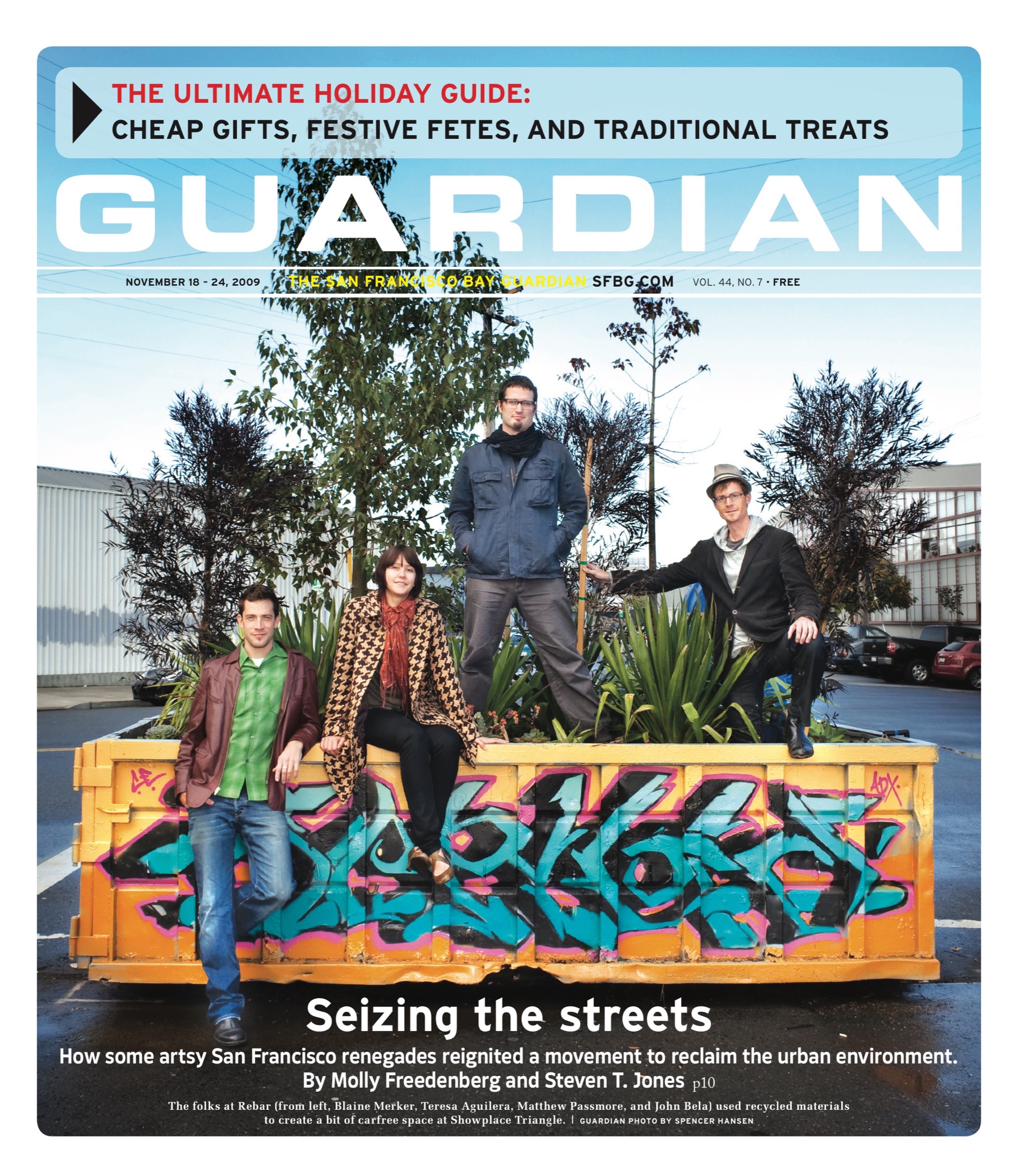
Yesterday’s vote by the Los Angeles City Council to impose strict new restrictions on the city’s medical cannabis dispensaries – an unenforceable approach likely to cause a legal and political backlash – validates the proactive and cooperative approach that San Francisco has taken to the clubs, which I discuss in this week’s cover story.

By simply ignoring the issue, Los Angeles created a lax environment where more than 800 clubs opened shop, prompting a community backlash. And now that they’re attempting to put that genie back in the bottle, they’re using tools that most likely run afoul of the rights created by Prop. 215, which legalized medical marijuana.

While LA City Council members, national political commentators, and even the latest issue of Harpers Magazine have parroted the point that LA now has more pot clubs that Starbucks, legalization advocates say it’s a bogus point. “It’s bullshit the way they compare it to Starbucks. How about comparing that to all the coffee shops, or the number of places that sell alcohol,” said Richard Lee, founder of Oaksterdam University and a key proponent of a proposed fall initiative to legalize weed for even recreational uses.

BTW, marijuana activists have made that comparison, calculating that Los Angeles has about 15,000 liquor stores, and even more stores where cigarettes are available. So which drug is really threatening the neighborhoods?

Saving ocean ecosystems

0

GREEN CITY In the spring and summer months, pacific leatherback sea turtles arrive just outside the Golden Gate to feast on jellyfish. The turtles, which can weigh up to 1,200 pounds and live as long as a century, are some of the oldest reptiles in existence.

In a single year, a leatherback may swim 6,200 miles as it encircles the Pacific Ocean, migrating from nesting grounds as far away as Indonesia to feed off the coasts of California, Oregon, and Washington. The leatherback was listed as a federally endangered species in 1970, and scientists now worry that the turtles could go extinct in as little as 10 years.

The ancient reptile may be rare, but its vanishing act is becoming common for marine creatures. Jackie Dragon, a campaign organizer with Pacific Environment, told us large fish populations, including bluefin tuna, Atlantic cod, marlin, and certain sharks, have declined by 90 percent since the advent of industrialized fishing in the 1950s. Meanwhile, ocean acidification due to rising carbon dioxide levels has imperiled key species, threatening to alter the food web with potentially drastic implications.

Recently, San Francisco’s ocean conservationists have displayed rare optimism, however, as historic new protections for ocean ecosystems and the leatherback seem within reach.

A coalition of local environmental organizations staged a Jan. 13 event at City Hall to rally for the creation of a new, comprehensive ocean-protection policy at the federal level. Dubbed Wear Blue for Oceans Day, the event drew a crowd of around 75 who donned blue in support of the federal policy, put forth by President Barack Obama last June.

Under the current regulatory system, there are 140 different laws relating to ocean management, and more than 20 disparate agencies, according to Dragon. “They have varying purposes and often conflicting mandates,” she explained. “Right now, it’s inconsistent with a healthy future for the ocean to have a piecemeal approach. And it’s absolutely necessary to appreciate that ecosystems in the ocean depend on a kind of management that takes into consideration the fact that these habitats … need to be looked at from a broader perspective.”

According to an interim report drafted by a 23-member task force convened by Obama to make suggestions for crafting a federal policy, the new approach would place ecosystem protection at the heart of regulatory decisions. Environmentalists hope it will improve the overall health of oceans.

The task force is scheduled to submit its final recommendations to Obama in early February, and the president is expected to announce the creation of the new policy shortly afterward. “The importance of ocean, coastal, and Great Lakes ecosystems cannot be overstated,” the report notes. “Simply put, we need them to survive.” Climate change and ocean acidification are named as top priorities.

A second regulatory victory seems imminent for the Sea Turtle Restoration Project, a San Francisco-based environmental organization that joined Oceana, the Center for Biological Diversity, and the Turtle Island Restoration Network in pressing for expanded critical habitat designation for the pacific leatherback turtles in 2007.

The groups sued the National Marine Fisheries Service, a division of the National Oceanic and Atmospheric Administration, for failing to take action for two years. Following a settlement, the agency finally submitted its proposal Jan. 5 for a new protection zone. The critical habitat area would span some 70,000 square miles of open waters along the West Coast.

Chris Pincetich, a campaign organizer with the Sea Turtle Restoration Project, called the designation “a long overdue action by federal agencies.” However, the proposal doesn’t limit commercial fishing, which Pincetich notes is one of the greatest threats to the leatherbacks, because they can become ensnared in gillnets. Nor does it cover habitat areas in Southern California, where turtles have been known to migrate, Pincetich said. NMFS will accept public comments on the proposal until March 8.

Although it’s a major step forward, changes won’t be implemented until January 2011 at the earliest.

For the leatherback, with about a decade to fight for survival, time is of the essence.

Herrera defends CCA against attacks

0

By Rebecca Bowe

San Francisco City Attorney Dennis Herrera filed a petition with the California Public Utilities Commission today urging it to restrict Pacific Gas & Electric Co.’s hostile attacks against Community Choice Aggregation (CCA), a program that allows local governments to establish alternative power programs.

The petition asks the CPUC to modify one of its decisions by inserting clear language spelling out that that investor-owned utilities are prohibited from sending out anti-CCA marketing materials, making misleading statements, or engaging in other activities that interfere with the creation of these alternative energy programs.

San Francisco’s CCA, dubbed CleanPower SF, is in the phase of reviewing five different applications from prospective electricity service providers. The goal of the program is to offer San Franciscans electricity derived from 51 percent renewable sources by 2017 at rates that match or beat PG&E prices. Contract negotiations with the highest-scoring candidate could begin as early as next month.

PG&E initially supported to the 2002 legislation, AB 117, which enabled the creation of CCAs statewide and prohibited utilities from interfering with efforts to set them up. But in recent months, California’s largest utility has made a complete turnaround, spending $5 million on a proposed ballot initiative that would require a two-thirds majority vote in local jurisdictions before governments could implement CCAs.

As Marin County and San Francisco move forward with their respective attempts to set up greener alternatives to PG&E, the pressure is intensifying. Several weeks ago, a wave of attack mailers paid for by PG&E crashed into San Francisco homes and businesses. This is the sort of activity Herrera is seeking to prevent by filing today’s petition with the CPUC. Because the city is short on time, he requested an expedited review.

“We cannot let Californians be denied the benefits of cleaner, cost-effective energy alternatives — consumer choice is simply too important to ratepayers and the environment,” Herrera said. “The California Public Utilities Commission exists to police giant utilities, to assure that their monopoly advantages aren’t abused to exploit consumers or frustrate the policy objectives of our state lawmakers. Yet that is exactly what has happened since PG&E locked CCA into its crosshairs. It is critical for state regulators to move quickly and decisively to tighten regulations, and restore teeth to the law as the legislature intended.”

10 sexy books published in 2009

0

As the aughts, a decade fondly described by many to be the worst decade ever, mercifully makes way to the grave, an uncharacteristically optimistic blogosphere is abuzz with requisite “best of the decade” lists, signaling that even the grimmest times come with small condolences. These “best of the decade” lists are — for all their neat hierarchies, pithy generalizations, and annoying assumption of authority — quite fun to read. And, as a rare opportunity to recycle old news as relevant content, they are also fun to write.

Among the many “best ofs” floating about at the moment, I find myself gravitating toward the literary. For all their Anglo-centric, sexist, dead white male undertones, and despite the occasional mentions of Malcolm Gladwell or Dan Brown, these “best books” lists seem far less depressing than their pop-cultural (like hipster of the decade) or political counterparts (like top political scandals of the decade). And as I peruse the many books deemed by many opinions to be the best of the year or, grander yet, best of the decade, I find myself compiling a modest, literary list of my own: 10 Sexy Books Published in 2009. Having been all of 14-years-old in the year 2000, I don’t really have the authority to create a “best of the decade list” regarding anything sexual.

However, I have certainly read some very sexy books this past year.

If sexy is to be taken by its dictionary definition as “sexually interesting or exciting,” then the following ten decidedly qualify. Some are sexy for their potent ability to raise readerly temperatures, others, for their intellectually seductive, mentally stimulating faculties. Despite a somewhat disparate array of themes and subjects, each book is capable of producing the feeling that compels readers to, as my aunt puts it, “close their legs and open a book”: the ecstasy of reading.

10. Confessions of an Ivy League Pornographer, by Sam Benjamin. Ahh, Ivy Leaguers, drawn, as moths are to a flame, to porn careers which are subsequently turned into quarter-life memoirs. Or not. Mind you, this career trajectory is not something I fault a college graduate, or anyone at all, from pursuing. In an economy in which a college graduate is lucky to find a job doing anything, partying with porn stars sounds like the glittering reward at the end of a Horatio Alger (himself an Ivy League grad) tale. With the dreaded spring semester looming ahead, soon-to-be-graduates are advised to find inspiration where they can. Hint: Benjamin’s book.

9. Over Here, a volume of poems by Frank Sherlock. Having won a coveted Sexiest Poem of 2009 award, from CAConrad’s “Sexiest Poem Award” blog, Sherlock is a shoo-in for a spot on this list. “Over Here” is, without a doubt, a sexy poem — though it’s not a poem about sex. What makes Sherlock’s poem sexy is, in CAConrad’s words, its “tenacious defiance for culture’s endless forms of violence to our fellow humans, other animals and the environment.” Hmm… tenacious defiance…

8. Live Nude Girl: My Life as an Object, by Kathleen Rooney. In the beginning, there was irony: Rooney began working as a nude model after being fired from her cafe job because she refused to sleep with her boss. Her experiences as an art model are the inspiration and subject of her book. Rooney is a talented writer whose honesty, conviction, and obvious poetic gifts underline her ambitious theoretical observations. In this contemplative book, Rooney ruminates on working in the buff and, in the process, finds something to say about Roland Barthes, Judeo-Christianity, and the Terra Cotta warriors of China. Somehow, she succeeds in making such declarations convincing; Rooney did earn money being naked, but her memoir cloaks that nudity in layers of meaning.

7. Obsession: An Erotic Tale, by Gloria Vanderbilt. I wrote about Vanderbilt’s erotica earlier this year. Vanderbilt, who will be entering her 86th year in 2010, has a habit of becoming hugely successful in endeavors that should reasonably predict the exact opposite. Like that time in the ’80s when she lent her name a line of high-waisted mom jeans… for women and men. The famous socialite’s new career as a writer of BDSM erotica has impressed even Salman Rushdie, who acknowledged, “Writing about work and writing about sex are probably the two hardest things. If I’m still doing it when I’m 85, I’ll be very grateful.”

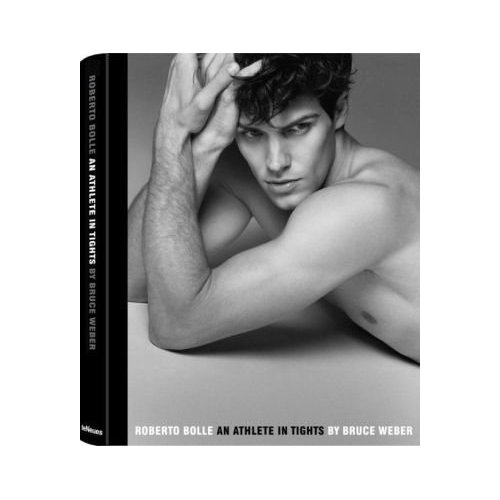
6. Roberto Bolle: An Athlete in Tights, photographed by Bruce Weber. Men are lucky. Men are not confronted nearly to the degree that women are by images of bodily perfection. Can you imagine what would happen if half the advertisements featuring undressed women, from Victoria’s Secret to American Apparel to PETA, were to be replaced with one of Weber’s strapping Adonises? For my benefit, can we conduct an informal experiment using Weber’s images of Roberto Bolle?

5. Best Women’s Erotica 2010, edited by SF’s own Violent Blue. As a genre, erotica is tarnished with a sorry reputation, so it is a truth universally acknowledged that a writer in possession of good erotica-writing abilities must be in want of a literary champion. Anais Nin had Henry Miller; these women writers have Violet Blue. Like the other “Best Women’s Erotica” collections Ms. Blue edits, her latest will not disappoint her readers and fans.

4. Important Artifacts and Personal Property from the Collection of Lenore Doolan and Harold Morris, Including Books, Street Fashion, and Jewelry, by Leanne Shapton. To any degree that a break-up can be sexy, this one is, perhaps because, in reading Shapton’s book (an experiment of form that is part story, part photo essay, part auction catalogue) we can’t help but recall the intensity and sadness of our own past relationships. Through ingeniously chosen ephemera, vibrant “artifacts” Shapton employs to bring her characters to life, the otherwise cloying artifice of a fictional auction becomes believably real. As this is a story of a break-up, it makes perfect sense that we should see nothing of Lenore and Harold themselves. Like our own ex-lovers, their identies are marked by absence outlined in memory, as invisible fingerprints tracing the objects they leave behind.

adderall-diaries0110.jpg

3. The Adderall Diaries: A Memoir of Moods, Masochism, and Murder, by local writer Stephen Elliott. Granted, neither murder nor Adderall is sexy. Then again, this isn’t a book about murder or Adderall. Like most of Elliott’s work, The Adderall Diaries is about Stephen Elliott and, true to form, his latest effort contains (in addition to good writing and a dark backstory that readers familiar with Elliott’s work will recognize as one that could only have happened in this author’s universe) a healthy dose of stolid sexual confessionism. Judging from the behavior of some of Elliott’s fans, as gathered from his own reports and my own firsthand observations of several local readings, Stephen Elliott is a subject that some women do find sexy indeed.

2. We Did Porn: Memoir and Drawings by local writer/artist/pornographer Zak Smith, a tome that helped SFBG‘s D. Scot Miller overcome his “fear and predjudice of hipsters.” Given that Smith looks like a combination between Devon Sawa’s character in SLC Punk and a guy I had a crush on in high school who drew pentagrams on his fingernails with a White Out pen, we shouldn’t understate the accomplishment. In any case, it was the art that swayed D. Scot, who contends that despite being a “artsty-fartsy, probably spoiled, uber-talented white boy artist,” Smith’s “artwork is impeccable. There is tenderness, daring, heat in his pieces. With a Nan Goldin compassion, he captures an intimacy and inclustion that is often lacking in the movies he and his comrades made.” Seconded.

1. Don’t Cry, by Mary Gaitskill. Mary Gaitskill is, in my opinion, the sexiest writer currently working in the English language. I’ve been an overzealous fan since I discovered, at an impressionable age, her short story “Secretary,” a BDSM-themed story of a young secretary’s affair with her boss (that later inspired the Gyllenhaal/Spader movie of the same name). Gaitskill is unafraid to tackle grand themes in small spaces, and it’s her short stories — oozing as they are in love, sex, and grief — that her formidable abilities are most obvious. She lends an intelligence, devastating accuracy, and unmatched bravery of sentiment to topics otherwise reducable as merely “perverse”. In “Folk Song,” Gaitskill creates a female character who decides to have sex with a thousand men in a row. A 43-year-old woman, in “Old Virgin,” lends her anatomy to Gaitskill’s precisely honed scalpel. My favorite of the collection, “Mirror Ball,” reveals the theft of a soul, literally, as something that a beautiful young Mephistopheles collects from his trail of lovers. Like the sex that Gaitskill is so adept at describing, the stories in this collection are first brutal, then revealing — and necessarily in that order.

Best of the Bay 2009: Sex and Romance

0

Editors Picks: Sex and Romance

BEST FAIR THAT’S UP YOURS

While the Folsom Street Fair has grown into an international destination for kinksters and the tourists who ogle them, the Up Your Alley Fair has become increasingly important as a more intimate oasis for local leatherheads who remember the scene’s old days. The fair — better known as Dore Alley Fair, though the event was named when it started in 1985 on a different street — has brought much-needed attention to the oft-overlooked SoMa neighborhood. We love the organization’s dedication to supporting groups and charities like the Episcopal Community Services, AIDS Emergency Fund, and Transgender Law Center. What we don’t love is that this event may be the next target on the Police Department’s Death of Fun Crusade. Show your support this year so that Up Your Alley doesn’t go the way of Castro Halloween.

Last Sunday in July, Dore Alley, between Folsom and Howard. www.folsomstreetevents.org/alley

BEST SEX AND SERVICE

Having sex doesn’t take much: a partner (or not), a place, a modicum of desire. But feeling sexy isn’t always so easy — especially if you’re in a relationship that has reached the sweatpants, TV–dinner, oral-sex-what? stage. Enter Intima Girl, the Marina’s boudoir of a boutique. The small, upscale shop stocks a variety of items meant to up the ante in the bedroom, from sex toys to lotions to lingerie, most geared toward girls (and their partners) who want a little class in their kink. Think sleek vibrators, high-end candles, silk bondage ropes, and sex books that could sit on your coffee table. But Intima Girl doesn’t skimp on the fun. Adventurous types can head home with an edible candy bra, assless panties, and metallic condom compacts for stylish safe-sex on the go. Best of all, the owner and staff are as knowledgeable, friendly, and helpful as you always wished your big sister would be.

3047 Fillmore, SF. (415) 563-1202, www.intima-online.com

BEST SMOKE GETS IN YOUR EYES

Dim, crimson lighting. The Stones on the sound system. Attractive youngsomethings lounging languidly on plush couches. And there, across the room, a tall, lean brunette, sipping a PBR, staring through the haze. Will Amber, the worker-owned watering hole with stiff drinks and legal cigarette smoking (thanks to labor law loopholes), be the setting of your “How We Met” story? Are those the tears of love at first sight? If you’re not a smoker, your eyes might just be irritated or you might be frustrated knowing tonight’s bar clothes will smell when you wear them to work tomorrow. But for those brave (stupid? nah) few who still toke the tobacco stick, this Duboce Triangle destination is a sexy, sultry, smoky oasis in a world that’s become increasingly cold (literally) to the dwindling minority. Just for this moment, in this beautiful bar out of time, nothing exists but you and your beloved. Not work. Not cancer. Maybe not even a future for your relationship. But what does it matter? Since the first release of studies on the dangers of smoking, people who continue to puff have lived in the here and now. And at Amber, there’s no better place to be now than here.

718 14th St., SF. (415) 626-7827

BEST WEDDING SINGERS WHO AREN’T ADAM SANDLER

You’re getting married to the love of your life, and every member of your extended families will be in attendance, including your Aunt Jolene, who lives in an RV in the Nevada desert and talks to inanimate objects, and your future spouse’s Harvard-educated litter, all flying in from Martha’s Vineyard. How are you going to pick a wedding band that will get everyone — from your lumpy litigator father-in-law-to-be to your own Crazy Uncle Cletus — on their feet dancing? Tainted Love, the best ’80s tribute band since The Wedding Singer, is the answer. This talented seven-piece act regularly draws sold-out crowds to venues like Bimbo’s and Red Devil Lounge, while also happily playing private parties, corporate events, and, yes, weddings. Now that ’80s music is almost the golden oldies, you can count on the fact that Love’s renditions of “Purple Rain,” “Sweet Child o’ Mine,” and, of course, “White Wedding” will appeal to all the guests on your list — no matter how far they traveled (or how much they put in for the ceremony).

(510) 655-7926, www.taintedlove.com

BEST COCK RING FOR THE CREATIVE CLASS

What’s wrong with loving a product for its design? That’s really why Apple fanatics love all things “i.” And that’s why we lust after sex toys from Jimmyjane, the Potrero Hill pleasure purveyors whose vibes, games, and accessories would look as natural in a museum gift shop as they would in your minimalist, modern bedroom. The Form 6 vibrator looks like a cross between a stylized pen and a high-end electric toothbrush, while the Little Chromas model has the sleek grace of a bullet, or a small cigar (we refuse to make that joke). And Jimmyjane’s Usual Suspects line is nothing short of inspired — celebrating both form and function by interpreting classic toys, in flawless white. Yes, the company does seem to cater to Audi drivers and iPhone users — collaborating on expensive special editions with well-known designers and bragging about appearances on cable TV shows. But we can’t argue with the nontoxic materials and the unprecedented one-year warranty. And the fact that they just look so cool.

www.jimmyjane.com. Available at Good Vibrations, various locations. www.goodvibrations.com

BEST QUEER PORN

The problem with mainstream porn is that most of it is made in the San Fernando Valley by brainless douche bags and lazy ex-cheerleaders looking for a quick buck. But this is San Francisco. This is the art capital of the world, the home of the free thinker, the land of the awesome. Can’t we get some porn made for us? Yes, we can! Yes, we can! If you’re as sick of Barbie Doll smut as we are, then you should know about local filmmaker-producer-writer-artist Courtney Trouble. Trouble is the founder of a queer porn site called Nofauxxx.com (“queer” as in not just homo, but alternative as well). She’s the final word when it comes to smut with attitude, character, and soul. Not only is No Fauxxx the oldest running queer porn site on the Internet, it’s also the only spot that mixes alt, gay, lesbian, straight, trans, kink, and BBW content. It’s sexy, artsy, entertaining, all-inclusive, and totally DIY. In a word: ours.

www.nofauxxx.com

BEST CONTEST FOR WANKERS

The Masturbate-a-thon is an annual pledge drive for the Center for Sex and Culture during which people gang up in a hot and sweaty room to watch each other jerk off for an entire day. Sounds like fun, right? But what if you’re not an exhibitionist? No worries. The whole show (held in May, which is Masturbation Month) is broadcast live on the Internet so that shy people can join in too. Categories include “Most Money Raised,” “Most Orgasms,” and “Longest Squirt,” and the winners in each division receive sexy prizes from Good Vibrations (and perhaps a lifetime of wishing Google and YouTube were never invented). Score! Exhibitionists, porn addicts, and the rest of us are encouraged to ogle, vote, and even participate alongside certified wank-masters such as Dr. Carol Queen, Fellatio Brown, and Masanobu Sato, a Japanese toymaker who holds the world record for “Longest Time Spent Masturbating” (to be fair, it should be noted that his company, Tenga, makes masturbation cups for men). The time to beat next year is nine hours and 58 minutes, so fire up Fleshbot.com now and start practicing. You can be sure that’s what Masanobu is doing.

www.masturbate-a-thon.com

BEST PLACE TO PARK WITH YOUR PARAMOUR

The place where Broadway meets Lyon and dead-ends into the edge of the Presidio is almost always empty. Here, the steep angle of the land affords swoon-inducing vistas of the Marina, the Palace of Fine Arts, and the bay, and tranquility hovers amid the perfectly manicured gardens and the improbably large and ornate houses to which they are attached. The drawback? If you’re not in the mood for a workout on the Lyon steps, there’s not really anything to do here except park, which, if you’ve brought an attractive friend along for the ride, is no drawback at all. If there’s an ounce of chemistry, the solitude and stunning view will have you two making out in the backseat of your car. In fact, come here with someone for whom you have feelings that run deeper than lust, and you may just be inspired to make things official. There are few better spectacular, proposal-inducing viewpoints in our spectacular, proposal-inducing city that haven’t been completely co-opted by tourists. Relationship-phobes and impulsive romantics, consider yourself forewarned.

Broadway at Lyon

BEST TASSELS WITH TALENT

Burlesque is bawdy. It’s lowbrow. It’s often political, and always boundary- pushing. But sexy? Not necessarily. As the new burlesque movement merges with circus and performance arts, it sometimes sacrifices the delight of the tease in favor of mere shock and awe. But Rose Pistola knows how to balance her solo performances so they get your panties wet and in a bunch. The classic beauty has graced stages in an octopus skirt, an Elvis costume, a mullet, a Victorian mime outfit, and a full tulle gown (that she rolled out of) — always mastering a blend of humor and class. But it’s not just her performances at places like Hubba Hubba Revue and Bohemian Carnival that rev our engines — Pistola also designs costumes, including tiny hats, vinyl corsets, and almost all of her fabulous stage get-ups. What could be sexier than a woman with pasties and a pincushion? How about one who plays with fire? Oh yeah, Pistola does that too.

www.myspace.com/rosepistola

BEST MEETING GROUND FOR SWINGERS

Not big on commitment? At Lindy in the Park, the weekly swing dance party that’s been uniting partners with fancy footwork since 1996, change companions as often as you change your mind. With free lessons starting at 11 a.m. and open to the public, it’s the perfect place to flirt with fellow Lindy Hop fans and then flee. But this outdoor event near the de Young Museum isn’t just for eternally happy singles. Couples know the best thing about the swingout is the swing-back-in. And once you’ve seen your honey doing the sugar push, you might just find that your hip-to-hip leads to lip to lip.

JFK Dr. (between 8th and 10th avenues), Golden Gate Park, SF. www.lindyinthepark.com

BEST PLACE TO PICK UP CHICKS (WHO LIKE CHICKS)

Whatever your definition of cockblocking — whether it’s using a friend to pose as a lover to deter unwanted advances, or stopping a fellow suitor from stealing your paramour with their charm and free drinks — the idea is clear: there’s a third-party penis, and its plans must be thwarted. What better name, then, for a dance night geared toward girl-on-girl love? But it’s not just clever nomenclature that fuels our love for Cockblock, the monthly lesbian dance party at the Rickshaw Stop. It’s the fact that these get-togethers feature infectious music, cheap drinks, good vibes, and that rare chance for girls-who-like-girls to get together without sweaty heteros trying to get in the way (or cast them in their personal porn fantasies). Plus, queer ladies should have at least one surefire place other than the Lex to scope out a hottie.

Second Saturdays, Rickshaw Stop,155 Fell, SF. www.cockblocksf.com

BEST CIRCLE TO JOIN AND JERK

Masturbation need not be a covert mission reserved for solo artists behind bedroom doors or within shower stalls. If you’re the type who is more of a team player, you might like SF Jacks, a group of like-minded men who appreciate a good circle jerk. The group has been perfecting its “loose and goofy environment” for 26 years, regularly drawing as many as 70 Jacks and Joes who want to lose their clothes — and their inhibitions — together. Meetings are held every second and fourth Monday at the Center for Sex and Culture, where lube and refreshments are provided. Just show up with your $7 donation (though no one’s turned away for lack of funds), ready to do the hand jive. But just remember to follow the rules. You can touch your dick, but don’t be one.

Second and fourth Mondays, 7:30-<\d>8:30 p.m. $7. Center for Sex and Culture, 1519 Mission, SF. (415) 267-6999, www.sfjacks.com

BEST WAY TO GET YOUR DATE SWEATY

Dinner and a movie, a night at the bar, a drive down the coast — all these date options have their merits. But when you’re trying to plan a partner activity that’s off the beaten path, consider renting bikes from Golden Gate Park Bike and Skate and exploring less charted territory (especially on Sundays, when Golden Gate is closed to car traffic). For just $5 an hour, you can check out hidden trails, watch the legendary bison do whatever it is bison do, and take a breather by the ocean. Not only will you get beautiful views (of park and partner), but the chemicals you release while exercising will bring you and your paramour closer together. This is an especially good thing if you’re looking to take your relationship to the next level, because producing endorphins together might just lead to … uh … producing endorphins together.

3038 Fulton, SF. (415) 668-1117, www.goldengateparkbikeandskate.com

BEST PLACE TO PARTY LIKE A PORN STAR

Unbeknownst to pretty much everyone, Dogpatch Studios, the nondescript warehouse on Tennessee Street marked by a benign and vaguely cutesy flag featuring a black Labrador, is where the Mitchell Brothers filmed Behind the Green Door, the first feature-length hardcore porn film to be widely released in the United States. Today, with enough green of your own, you can host a private event inside this historic sex landmark. While the venue still welcomes movie shoots, your options are unlimited. Dogpatch Studios will provide you with flexible floor plans, kitchen facilities, wireless internet, lighting services, staffing, and just about anything else you require, whether it’s for a sedate corporate retreat, a no-holds-barred bacchanal, or even a wedding. Because nothing says everlasting love quite like tying the knot where Marilyn Chambers (R.I.P.) filmed money shots.

991 Tennessee, SF. (415) 641-3017, www.dogpatchstudios.com

BEST XXX XX IN THE CASTRO

Remember when the Castro was just a big boys’ club? That’s changed somewhat, thanks in no small part to Femina Potens, the nonprofit art gallery dedicated to women, transgendered folk, kink, and the sex worker community that anchors the corner of Market and Sanchez. Cofounded by renaissance porn star and queer BDSM queen Madison Young, the cozy spot has been hosting exhibits, workshops, spoken word performances, film screenings, and readings by queer literary and artistic legends like Michelle Tea, Annie Sprinkle, and Inga Muscio since 2001 — and recently has added health and wellness programming into the mix. With showcases tackling topics from body image to safer sex, suicide prevention, and breast cancer awareness, there’s no question that what Femina Potens does is important. But we think art shows about bondage and performances about breasts are also just damn sexy. Plus, it’s about time the Castro got a little more double-X (chromosome) action.

2199 Market, SF. (415) 864-1558, www.feminapotens.org

BEST KINKY DINNER

Dark Tasting is the most unintentionally kinky thing to happen to dining since the invention of the hot dog. The very concept sounds like something out of a Marquis de Sade novel. The San Francisco group believes that sight deprivation heightens the sensory experience of having a meal, from the taste, smell, and feel of your food, to the sound of your company’s voices. Before the meal is served, diners are blindfolded and rendered submissive. (Doesn’t that alone sound like something out of a deliciously depraved Japanese bondage flick involving nyotaimori?) Sponsored by TasteTV and held at a different venue once every two months, Dark Tasting events offer gourmet multicourse meals with wine parings, with the caveat that you have to pay $95 per person and can’t see what you’re eating. Events are described as a “sensual dining experience,” and given that no one can see what a pervert you are, you can freely grope your partner under the table without eliciting “Get a room!” remarks from fellow diners. If you’re into BDSM, we highly recommend Dark Tasting as a romantic prelude to being hog-tied in a cage (where the real fun begins).

www.darktasting.com

Best of the Bay 2009: Shopping

0

Shopping

BEST NEW NECESSITIES

Sure, you can buy anything you want on the Internet, but there’s still a certain charm in entering a store whose items have been carefully chosen to delight the eye in three dimensions. That’s the idea behind Perch, Zoel Fages’s homage to all things charming and cheeky, from gifts to home décor. Do you need a set of bird feet salt-and-pepper shakers? A rhinoceros-head shot glass? A ceramic skull-shaped candleholder that grows “hair” as the wax drips? Of course not. But do you want them? The minute you enter the sunny, sweet Glen Park shop, the obvious answer will be yes. And for those gifty items you do need — scented candles and soaps, letterpress greeting cards, handprinted wrapping paper — Perch is perfect too. We’d recommend you stop by just to window-shop, but who are we kidding? You can’t visit here without taking something home.

654 Chenery, SF. (415) 586-9000, www.perchsf.com

BEST PENNYSAVERS FOR EARTHSAVERS

How many environmentalists does it take to change a light bulb? None: LED light bulbs last longer than environmentalists. If you think that joke’s funny — or at least get why it’s supposed to be — you might just be the target market for Green Zebra. Based on the idea that environmentally aware consumers like to save money as much as their Costco-loving neighbors, this book melds the concept of a coupon book with the creed of environmental responsibility. It’s a virtual directory of deals at local businesses trying to work outside the world of pesticidal veggies and gas-guzzling SUVs. Anne Vollen and Sheryl Cohen’s vision now comes in two volumes — one for San Francisco, and one for the Peninsula and Silicon Valley — featuring more than 275 exclusive offers from indie bookstores, art museums, coffee houses, organic restaurants, pet food stores, and just about anywhere else you probably already spend your money (and wouldn’t mind spending less).

(415) 346-2361, www.thegreenzebra.org

BEST ONE-STOP SHOP

So you need a salad spinner, some kitty litter, a birthday card for your sister, and a skein of yarn, but you don’t feel like going to four different stores to check everything off the list? Face it, you’re lazy. But, you’re also in luck. This year marks the 70th anniversary of the Standard 5 and 10, a one-stop wonderland in Laurel Village that caters to just about every imaginable whim, need, and desire of serious shoppers and procrastinators alike. Don’t be fooled by the large red Ace sign on the storefront — this is not merely a hardware store (although it can fulfill your hardware needs, of course). It’s an everything store. Walking the aisles here is a journey through consumerism at its most diverse. Greeting cards and tabletop tchotchkes fade into rice cookers then shower curtains, iron-on patches, Webkinz, motor oil…. It’s a dizzying array of stuff you need and stuff you simply want.

3545 California, SF. (415) 751-5767, www.standard5n10.com

BEST PLACE TO SINK A BATTLESHIP

Maybe we don’t have flying cars yet, but with video chatting, iPhones, and automated vacuum cleaners, we’re pretty close to living in the imaginary future The Jetsons made magical. Is it any wonder that, while loving our new technologies (hello, Kindle), we’ve also developed a culturewide nostalgia for simpler times? A perfect example is the emergence of steampunk — perhaps familiar to the mainstream as jewelry made of watch parts and cars crafted to look like locomotives. There also seems to be a less expensive, less industrial trend for the pastimes of yore: Croquet. Talk radio. And board games. The last of which is the basis of Just Awesome, the Diamond Heights shop opened by Portland escapee Erik Macsh as a temple to old-fashioned charms. Here you can pick up a myriad of boxes full of dice, cards, and plastic pieces. Head home with Clue, one of the Monopoly iterations (was Chocolate-opoly really necessary?), or a new game that came out while you were distracted by Nintendo Wii. You can even open the box and try a round or two in the shop. How’s that for old-world service?

816 Diamond, SF. (415) 970-1484, www.justawesomegames.com

BEST BORROWED CLOTHES

The nice thing about having a sister, a roommate, or a tolerable neighbor who’s exactly your size is that there’s always someone else’s closet to raid when your own is looking dismal. But what to do when you live alone, your neighbor’s not answering your calls, and you desperately need an attention-getting outfit right now? Make a new best friend: Shaye McKenney of La Library. The friendly fashionista will let you borrow a pair of leather hot pants for a Beauty Bar boogie or a German knit couture gown for that gold-digging date to the opera, all for a small pay-by-the-day price. You can even bring your makeup and get ready for the evening in front of the antique mirrors in her socialist street shop. It’s all the fun of sharing, without having to lend out any of your stuff.

380 Guerrero, SF. (415) 558-9481, www.la-library.com

BEST ROCKSTAR STYLES

Need clothes a rockstar would wear but a starving musician can afford? Look no further than Shotwell, whose blend of designer duds and vintage finds are worthy of the limelight and (relatively) easy on your budget. Think jeans with pockets the size of guitar picks, sculptural black dresses, handpicked grandpa sweaters, and reconstructed ’80s rompers that can be paired with lizard skin belts or dollar sign boots, all for less than the cutting-edge designer labels would suggest they should cost. And it’s not just for the ladies. Michael and Holly Weaver stock their adorable boutique with clothing and accessories for all chromosomal combinations. The concept’s become such a success that Shotwell’s moving from its old locale to a bigger, better space. All we can say is, rock on.

320 Grant, SF. (415) 399-9898, www.shotwellsf.com

BEST LOOKIN’

The best stores are like mini-museums, displaying interesting wares in such a way that they’re almost as fun to peruse as they are to take home. Park Life takes this concept one step further by being a store (wares in the front are for sale) and a gallery (featuring a rotating selection of local contemporary artists’ work). No need to feel guilty for window-shopping: you’re simply checking out the Rubik’s Cube alarm clock, USB flash drive shaped like a fist, and set of “heroin” and “cocaine” salt-and-pepper shakers on your way to appreciating the paintings in the back, right? And if you happen to leave with an arty coffee-table book, an ironic silk-screen T-shirt, or a Gangsta Rap Coloring Book, that’s just a bonus.

220 Clement, SF. (415) 386-7275, www.parklifestore.com

BEST LITTLE COOKING STORE THAT COULD

In a world replete with crates, barrels, Williams, and Sonomas, it’s easy to forget there’s such a thing as an independent cooking store. But Cooks Boulevard is just that: an adorable, one-stop shop for reasonably priced cooking paraphernalia, from a pastry scale or Le Creuset to a candy mold or stash of wooden spoons. And if the shop doesn’t have what you need, the friendly staff will order it for you. In fact, this Noe Valley gem has everything the big stores have, including online ordering, nationwide shipping, and a well-kept blog of missives about the foodie universe. It even offers cooking classes, on-site knife sharpening, community events such as food drives and book clubs, and CSA boxes of local organic produce delivered to neighborhood clientele. With knowledgeable service and well-stocked shelves, the Boulevard makes it easy for home cooks and professional chefs to shop local.

1309 Castro, SF. (415) 647-2665, www.cooksboulevard.com

BEST BROOKLYN ALTERNATIVE

No sleep ’til Brooklyn? Fine. But no style ’til you reach the Big Apple? We just can’t give you license for that kind of ill, especially since the Brooklyn Circus came to town last July. With its East Coast–style awning, living room vibe, and indie hip-hop style, this boutique might just be the thing to keep those homesick for NYC from buying that JetBlue ticket for one … more … week. Want to save your cash just in case? You’re welcome to chill out on the leather sofas and listen to Mos Def mixtapes. At the store you can soak in the charm of the Fillmore’s colorful energy and history, while checking out the trends that blend Frank Sinatra and Kanye West almost seamlessly. Sure, you could visit the Chicago outpost before going to the original in the store’s namesake city, but why bother? Next year’s selection will include an expanded line of locally produced goodies — all available without having to brave a sweltering Big City summer.

1525 Fillmore, SF. (415) 359-1999, www.thebkcircus.com

BEST YEAR-ROUND HOLIDAY GIFT BASKET

I know. It’s July. The last thing you want to do is think about that stupid holiday shopping season that’ll dominate the entire universe in about three months. But the gift baskets at La Cocina are worth talking about year-round, not only because purchasing one supports a fantastic organization (dedicated to helping low-income entrepreneurs develop, grow, and establish their businesses) but because the delightful packages really are great gifts for any occasion. Whether it’s your boss’s birthday, your friend’s dinner party, or simply time to remind your grandmother in the nursing home that you’re thinking of her, these baskets full of San Francisco goodness are a thoughtful alternative to flower bouquets and fruit collections ordered through corporations. Orders might include dark chocolate-<\d>covered graham crackers from Kika’s Treats, spicy yucca sticks, toffee cookies from Sinful Sweets, roasted pumpkin seeds, or shortbread from Clairesquare, starting at $23. Everything will come with a handwritten note and a whole lot of love.

www.lacocinasf.org

BEST UNDERWATERSCAPING

Aqua Forest Aquarium has reinvented the concept of fish in a bowl. The only store in the nation dedicated to a style of decorating aquariums like natural environments, Aqua Forest boasts an amazing display of live aquatic landscapes that seem directly transplanted from more idyllic waters. With good prices, knowledgeable staff, a focus on freshwater life, and a unique selection of tropical fish, the shop is not only proof that aquarium stores need not be weird and dingy, but that your home fish tank can be a thriving ecosystem rather than a plastic environment with a bubbling castle (OK, a thriving ecosystem with a bubbling castle). Part pet store, part live art gallery, Aqua Forest is worth a visit even if you’re not in the market for a sailfin leopard pleco.

1718 Fillmore, SF. (415) 929-8883, www.adana-usa.com

BEST FRIDGE FILLERS ON A BUDGET

Remember when we all joked that Whole Foods should be called Whole Paycheck? Little did we realize the joke would be on us when the only paper in our purses would be a Whole Pink Slip. In the new economy, some of us can’t afford the luxury of deciding between organic bananas or regular ones — we’re trying to figure out which flavor of ramen keeps us full the longest. Luckily, Duc Loi Supermarket opened in the Mission just in time. This neighborhood shop is big, bright, clean, well stocked, cheap, and diverse, with a focus on Asian and Latino foods. Here you can get your pork chops and pig snouts, salmon and daikon, tofu and tortilla chips — and still have bus fare for the ride home. In fact, young coconut milk is only 99 cents a can, a whole dollar less than at Whole Foods.

2200 Mission, SF. (415) 551-1772

BEST PLACE TO DISS THE TUBE

Some people go their entire lives buying replacement 20-packs of tube socks from Costco, socks whose suspicious blend of elastic, petroleum products, and God-knows-what signals to wearers and viewers alike: Warm, shwarm! Fit, shmit! Style, shmyle! Other people, even if they keep their socks encased in boots or shoes, want to know that their foot coverings are just one more indicator of their fashion — and common — sense. Those people go to Rabat in Noe Valley, where the sock racks look like a conjuring of the chorus of “Hair”: “curly, fuzzy, snaggy, shaggy, ratty, matty, oily, greasy, fleecy, shining, gleaming, streaming, flaxen, waxen, knotted, polka-dotted, twisted, beaded, braided, powdered, flowered, and confettied; bangled, tangled, spangled, and spaghettied.” Furthermore, the socks are mostly made from recognizable materials like wool, cotton, or fleece. As for you sensible-shoe and wingtip types, not to worry. Rabat also stocks black and white anklets and nude-colored peds.

4001 24th St., SF (415) 282-7861. www.rabatshoes.com

BEST BOOKS FOR KIDS YOU DON’T KNOW

Don’t let the small storefront at Alexander Book Company deter you — this three-story, independent bookstore is packed with stuff that you won’t find at Wal-Mart or the book malls. We’re particularly impressed with the children’s collection — and with the friendly, knowledgeable staff. If you’re looking for a birthday present for your kid’s classmate, or one for an out-of-town niece or nephew — or you just generally want to know what 10-year-old boys who like science fiction are reading these days — ask for Bonnie. She’s the children’s books buyer, and not only does she have an uncanny knack for figuring out what makes an appropriate gift, chances are whatever the book is, she’s already read it.

50 Second St., SF. (415) 495-2992, www.alexanderbook.com

BEST PLACE TO SELL THE CLOTHES OFF YOUR BACK

If you think Buffalo Exchange and Crossroads are the only places to trade your Diors for dollars, you’re missing out. Urbanity, Angela Cadogan’s North Berkeley boutique, is hands down the best place to consign in the Bay. The spot is classy but not uppity, your commission is 30 percent of what your item pulls in, and, best of all, you’d actually want to shop there. Cadogan has a careful eye for fashion, choosing pieces that deserve a spot in your closet for prices that won’t burn a hole in your wallet. Want an even better deal on those Miu Miu pumps or that YSL dress? Return every 30 days, when items that haven’t sold yet are reduced by 40 percent. But good luck playing the waiting game against Urbanity’s savvy regulars — they’ve been eyeing those Pradas longer than you have.

1887 Solano, Berk. (510) 524-7467, www.shopurbanity.com

BEST TIME MACHINE

Ever wish you could be a character in a period piece, writing love letters on a typewriter to your distant paramour while perched upon a baroque upholstered chair? We can’t get you a role in a movie, but we can send you to the Perish Trust, where you’ll find everything you need to create a funky antique film set of your very own. Proprietor-curator team Rod Hipskind and Kelly Ishikawa have dedicated themselves to making their wares as fun to browse through as to buy, carefully selecting original artwork, vintage folding rulers, taxidermied fowl, out-of-print books, and myriad other antique odds-and-ends from across the nation. As if that weren’t enough, this Divisadero shop also carries Hooker’s Sweet Treats old world-<\d>style gourmet chocolate caramels — and that’s definitely something to write home about.

728 Divisadero, SF. www.theperishtrust.com

BEST MISSION MAKEOVER

If Hayes Valley’s indie-retailer RAG (Residents Apparel Gallery) bedded the Lower Haight’s design co-op Trunk, their love child might look (and act) a lot like Mission Statement. With a focus on local designers and a philosophy of getting artists involved with the store, the 18th Street shop has all the eclectic style of RAG and all the collaborative spirit of Trunk — all with a distinctly Mission District vibe. Much like its namesake neighborhood, this shop has a little of everything: mineral makeup, fedoras adorned with spray-painted designs, multiwrap dresses, graphic tees, and more. Between the wares of the eight designers who work and play at the co-op, you might find everything you need for a head-to-toe makeover — including accessorizing advice, custom designing, and tailoring by co-owner Estrella Tadeo. You may never need to leave the Valencia corridor again.

3458-A 18th St., SF. (415) 255-7457, www.missionstatementsf.com

BEST WALL OF BEER

Beer-shopping at Healthy Spirits might ruin you. Never again will you be able to stroll into a regular suds shop, eye the refrigerated walk-in, and feign glee: “Oh, wow, they have Wolaver’s and Fat Tire.” The selection at Healthy Spirits makes the inventory at almost all other beer shops in San Francisco — nay, the fermented universe — look pedestrian. First-time customers sometimes experience sticker shock, but most quickly understand that while hops and yeast and grain are cheap, hops and yeast and grain and genius are not. Should you require assistance in navigating the intriguing and eclectic wall of beer, owner Rami Barqawi and his staff will guide you and your palate to the perfect brew. Once you’ve got the right tipple, you can choose from the standard corner-store sundries, including coffee, wine, ice cream, and snacks. Chief among them is the housemade hummus (strong on the lemon juice, just the way we like it). Being ruined never tasted so good.

2299 15th St., SF. (415) 255-0610, healthy-spirits.blogspot.com

BEST PLACE TO CHANNEL YOUR INNER BOB VILLA

When is a junkyard not just a junkyard? When you wander through its labyrinth of plywood, bicycle tires, and window panes only to stumble upon an intricately carved and perfectly preserved fireplace mantle which, according to a handwritten note taped to it, is “circa 1900.” This is the kind of thing that happens at Building Resources, an open air, DIY-er’s dream on the outskirts of Dogpatch, which just happens to be the city’s only source for recycled building and landscape materials. Maybe you’ll come here looking for something simple: a light fixture, a doorknob, a few pieces of tile. You’ll find all that. You’ll also find things you never knew you coveted, like a beautiful (and dirt cheap) claw-foot bathtub that makes you long to redo your own bathroom, even though you don’t own tools and know nothing about plumbing. No worries. That’s what HGTV is for.

701 Amador, SF. (415) 285-7814, www.buildingresources.org

BEST WAY TO SHOP LOCAL

It’s impossible not to be impressed with the selection at Collage, the tiny jewel-box of a shop perched atop Potrero Hill. The home décor store and gallery specializes in typography and signage, refurbished clocks and cameras, clothing, unique furniture, and all kinds of objects reinvented and repurposed to fit in a hip, happy home. But what we like best is owner Delisa Sage’s commitment to supporting the local community and economy. Not only does she host workshops on the art of fine-art collage, she carries a gorgeous selection of jewelry made exclusively by local woman artists. Whether you’re looking for knit necklaces, Scrabble pieces, typewriter keys, or an antiqued kitchen island, you’ll find ’em here. And every dollar you spend supports San Francisco, going toward a sandwich at Hazel’s, or a cup of joe at Farley’s, or an artist’s SoMa warehouse rent. Maybe capitalism can work.

1345 18th St., SF. (415) 282-4401, www.collage-gallery.com

BEST BRAND-NEW VINTAGE STYLE

There’s something grandmothers seem to understand that the Forever 21, H&M, Gap generation (not to mention the hippies in between) often miss: the value of elegant, tailored, designer classics that last a lifetime. Plus, thanks to living through the Great Depression, they know a good bargain. Luckily, White Rose got grandma’s memo. This tiny, jam-packed West Portal shop is dedicated to classy, timeless, well-made style, from boiled wool-<\d>embroidered black coats to Dolce handbags. Though the shelves (stacked with sweaters) and racks (overhung with black pants) may resemble those in a consignment or thrift store, White Rose is stocked full of new fashions collected from international travels, catalog sales, or American fabricators. In fact, it’s all part of the plan of the owner — who is reputed to have been a fashion model in the ’50s — to bring elegant chemises, tailored blouses, and dresses for all sizes and ages to the masses. The real price? You must have the patience to sort through the remarkable inventory.

242 W. Portal, SF. (415) 681-5411

BEST BOUTIQUE FOR BUNHEADS

It seems you can get yoga pants or Lycra leotards just about anywhere these days (hello, American Apparel). But elastic waists and spaghetti straps alone do not make for good sportswear. SF Dancewear knows that having clothes and footwear designed specifically for your craft — whether ballroom dance, gymnastics, theater, contact improv, or one of the good old standards like tap, jazz, or ballet — makes all the difference. This is why they’ve been selling everything from Capezio tap shoes to performance bras since 1975. The shop is lovely. There are clear boxes of pointe shoes nestled together like clean, shiny baby pigs; glittering displays of ballroom dance pumps; racks of colorful tulle, ruched nylon, patterned Lycra; and a rope draped with the cutest, tiniest tutus you ever did see. The store is staffed by professional dancers who’re not only trained to find the perfect fit but have tested most products on a major stage. And though your salesclerk may dance with Alonzo King’s Lines Ballet or have a regular gig at the S.F. Opera, they won’t scoff at middle-aged novice salsa dancers or plus-size burlesqueteers looking for fishnets and character shoes. Unlike the competitive world of dance studios, this retail shop is friendly and open to anyone who likes to move.

659 Mission, SF. (415) 882-7087; 5900 College, Oakl. (510) 655-3608,

www.sfdancewear.com

BEST GIFTS FOR YESTERYEAR’S KIDS

We weren’t sure it could get any better — or weirder — than Paxton Gate, that Mission District palace of science, nature, and dead things. But then the owner, whose first trade was landscape architecture, opened up Paxton Gate Curiosities for Kids down the street, and lo and behold, ever more awesomeness was achieved. Keeping the original store’s naturalist vibe but leaving behind some of its adults-only potential creepiness, this shop focuses on educational toys, vintage games, art supplies, and an eclectic selection of books sure to delight the twisted child in all of us. From handblown marbles to wooden puzzles, agate keychains to stop-motion booklets, and Lucite insects to Charlie Chaplin paper doll kits, everything here seems to be made for shorties from another time — an arguably better one, when kids rooted around in the dirt and made up rules for imaginary games and didn’t wear G-string underwear.

766 Valencia, SF. (415) 252-9990, www.paxtongate.com

BEST DAILY TRUNK SHOW

San Francisco sure does love its trunk shows: all those funky people hawking their one-of-a-kind wares at one-of-a-kind prices. The only problem? Shows happen intermittently (though with increasing frequency in the pre-<\d>Burning Man frenzy). Lucky for us, Miranda Caroligne — the goddess who makes magic with fabric scraps and a surger — co-founded Trunk, an eclectic indie designer showcase with a permanent address. The Lower Haight shop not only features creative dresses, hoodies, jewelry, and menswear by a number of artists, but also functions as an official California Cooperative Corporation, managed and run by all its 23 members. That means when you purchase your Kayo Anime one-piece, Ghetto Goldilocks vest, or Lucid Dawn corset, you’re supporting an independent business and the independent local artists who call it home.

544 Haight, SF. (415) 861-5310, www.trunksf.com

BEST PLACE TO GET IRIE WITH YOUR OLLIE

Skate culture has come a long way since its early surfer punk days. Now what used to be its own subculture encompasses a whole spectrum of subs, including dreadheaded, jah-lovin’, reggae pumpin’ riders. And Culture Skate is just the store for those who lean more toward Bob Marley than Jello Biafra. The Rasta-colored Mission shop features bamboo skate boards, hemp clothing, glass pipes, a whole slew of products by companies such as Creation and Satori, and vinyl records spanning genres like ska, reggaeton, dub, and, of course, good old reggae. Stop by to catch a glimpse of local pros — such as Ron Allen, Matt Pailes, and Karl Watson. But don’t think you have to be a skater to shop here: plenty of people stop by simply for the environmentally-friendly duds made with irie style.

214 Valencia, SF. (415) 437-4758, www.cultureskate.com

The year in blog

0

By Steven T. Jones
politics_banner-z.jpg
It’s been a big year on this blog, as I discuss in this week’s paper. To go along with that story, I’m including in this post a ridiculous number of links to issues and stories that we covered the most in 2009, as well as some to one-time or limited coverage stories that we liked. We hope you find this useful.

Fiscal issues
The year began with the Board of Supervisors calling for a special election on revenue measures to prevent deep cuts to city government, but that effort was thwarted by Mayor Gavin Newsom’s preference for hollow fiscal gimmicks and opposition to general tax increases. Similarly, on the state level, Republican opposition to revenue side solutions has all but destroyed the California Dream — including the state’s commitment to supporting quality, affordable higher education – prompting calls for a constitutional convention in the near future, as the political dysfunction leads to bad decisions about critical state resources.

Police oversight and crackdowns
The fatal shooting of Oscar Grant by a BART police officer a year ago led to a long saga of promised civilian oversight that still hasn’t been delivered. In the meantime, San Francisco got a new police chief who promised reforms, but has so far delivered only crackdowns, pushing the city closer to the Death of Fun as popular events and nightclubs face an ever more restrictive enforcement environment. Police also failed to own up to a bungled murder investigation.

City life

The face of San Francisco began to change in 2009, for better and worse. Lennar and PG&E continued to corrupt the local political system, compromise the promise of green power, break promises, and subvert popular will. But partially countering their corporate malevolence were grassroots efforts to reclaim the streets and promote alternative transportation options (despite a major defeat this year for those who want motorists to pay for more of their societal impacts), including the longawaited construction of bicycle projects after a three-year ban.

Swans, symmetry, and sensations

0

DANCE Looking back over a year’s dance performances feels like reading a horoscope backward. Were there surprises, disappointments, new loves, emerging trends, familiar encounters, and reasons for hope and despair? Of course. Perhaps the best part of this yearly exercise is that it allows works to bubble up that for one reason or another — quality, daring, perspective, innovation — stuck in the mind. You want to see them again. Some, you actually will. As for the not-that-again, forget-it, or please-don’t pieces, they already have sunk into the grand pool of oblivion. The following is a baker’s dozen of top picks, chosen roughly in the order in which they were seen.

Sean Dorsey’s dance-theater piece Lou, based on the writings of transgender pioneer Lou Sullivan and danced by Dorsey, Brian Fisher, Juan de la Rosa, and Nol Simonse, was a penetrating portrait of one man’s courage and lust for life. It also highlighted Dorsey’s increasingly fluid skill in fusing language and dance.

San Francisco Ballet’s most recent Swan Lake (to be reprised in January 2010) is an odd mix of traditional (the choreography) and edgy (the production). By using the bold design of a ballet neophyte, Broadway-credited Jonathan Fensom, Helgi Tomasson took a huge risk in offending traditionalists who like their swans pure. Danced fabulously well, this is a Swan Lake for our own time.

Pichet Klunchun and Myself was just a one-night stand, but what a night it was. To watch French super-theorist Jérôme Bel and classical Thai dancer Klunchun play their intellectual ping pong game about life, dance, culture, and everything in between was to watch two master performers at work.

The big deal about Jess Curtis/Gravity’s brainy and sensuous The Symmetry Project was not that Curtis and Maria Francesca Scaroni performed nude, but that they embodied the idea of relationships — physical, intellectual, emotional, erotic — as being constantly in play.

Presented by the San Francisco Museum of Modern Art in conjunction with their exhibit on William Kentridge, The Return of Ulysses was Kentridge’s translation of Monteverdi’s jewel into puppet theater. The multiple perspectives on time and place and the exquisite cooperation between puppets and singers were awe-inspiring.

ODC/Dance — just because of who they are. Sometimes we tend to take established hometown companies for granted. Yet these dancers have never looked better. Additionally, both Brenda Way’s In the Memory of the Forest and KT Nelson’s Grassland overflowed with commanding and beautifully shaped ideas.

We know Heidi Schweiker best as an interpreter of other people’s choreography. That’s why it was so gratifying to see her first full evening of work. Dreams of Speaking showed a choreographer of intelligence, imagination, and a fine sense of craft.

Ramón Ramos Alayo’s fifth annual Cuba Caribe Festival packed them in. It’s SoMa’s own ethnic dance festival sporting a highly partisan and knowledgeable audience and performers who compete — in a friendly way. High points were the sassy female Las Que Son Son and Alayo dancing up a storm with Silfredo La O Vigo.

Seen in a drizzly rain on a preview performance, Spirit of Place (to be reprised this spring), Anna Halprin’s tribute to husband Lawrence Halprin’s reimagined Stern Grove Theater, was a gorgeous response to a space where nature and art collaborate. The dancers looked like spirits emanating from this magisterial grass and granite environment.

Togetherness suits artistic and life partners Janice Garrett and Charles Moulton. For their second collaboration, The Illustrated Book of Invisible Stories (which returns in January 2010), they worked with two groups of completely different dancers. The result was mysterious, mesmerizing, and surprisingly fresh.

The big surprise at the San Francisco International Arts Festival was the extraordinarily skilled and theatrically vibrant The Angel and the Woodcutter, South Korea’s Cho-In Theatre’s eloquent retelling in movement of a popular Korean fairy tale. It deserved a larger audience.

Suzanne Farrell Ballet’s lecture-demonstration, The Balanchine Couple, served as a vivid reminder that Balanchine never ran out of ideas for pas de deux. The nine on this program could not have been more different — all of them first-rate. The program also brought home the painful truth that such finely detailed and musically phrased Balanchine interpretations are a rarity.

Sometimes it helps to look beyond the hook. The big deal about South African dancer Gregory Maqoma’s Beautiful Me was that he used material from three other (cooperating) artists for his own choreography. Fair enough, but what left this audience member speechless was the grace, virility, and technical and emotional virtuosity with which Maqoma realized this portrayal of self.

Finally, the Performing Diaspora Festival was an ambitious project “featuring traditional forms as a basis for experimentation and innovation.” It boasted an elaborate support structure of studio time, blogs, workshops, and symposia. In the two programs I saw, the work ranged from first rate to mediocre. Fortunately, this is a two-year project — so let’s toast to 2010.

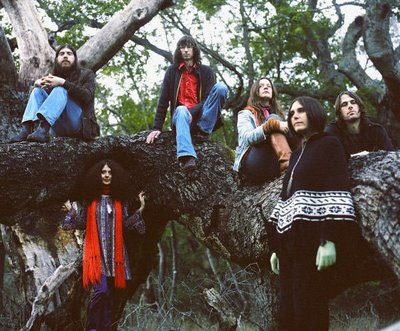
Espers: high-maintenance psych rock that hopes to hang in there and be of use to humans

0

Espers sailed through the Independent not long ago, spreading their ecstatic breed of folk rock tither and fro. I spoke to Meg Baird before the date, while she was getting ready for a show in the band’s hometown of Philadelphia.

SFBG: How did you approach this new album, III (Drag City)? Were you working with any particular narrative or set of images?

Meg Baird: We didn’t have anything that concrete as far as unified images go. We did kind of talk and get a sense of different places it would be coming from, especially in relationship to II. And we had a big hodgepodge of common ground where we thought it might come from.

We thought about things like new world colonialism, things being above ground instead of underground, something that would be a good counterpoint to the dense underworld of II. Something had landed, in comparison to the space place that II generated. Exuberance, weird Christianization.

Just a common sense of images or feelings. We tend to just write when we write. It’s really loose, more of a guide, so it feels like there’s a sense to everything. Not so that it’s a hard and fast rule — it’s just a way to talk about things.

SFBG: One also gets a sense that there’s a narrative there?

MB: We’re really not that narrative. Again it’s just trying to find a common ground of images. I think even with thinking of things like ships, boats, The Heart of Darkness. It’s so big. It just makes a little more fun when we can come up with a palette of common things. It’s really about tone and sounds — the imagistic stuff is a fluffy way to talk about it. It’s always about tone and feel.

SFBG: So “Trollslända” is not about trolls?

MB: That’s actually a Swedish word for dragonfly. Helena [Espvall], the cellist in the band, is Swedish. We like to have a Swedish language nod in every record.

SFBG: How does Espers write songs?

MB: It’s very ensemble-based, that’s for sure. Which makes it a little tense. I think we have a slightly tense presence on the live front because things are pretty worked out and rehearsed but we’re kind of not sure how it’s going to work at any moment. Especially because the band’s not leader-based. It doesn’t have that dynamic to the band, even if someone is playing a lead part for us. It’s never gone that way for us in a live setting.

SFBG: What was the weirdest show ever for Espers?

MB: Something really weird happened at a beautiful show — formerly the HockHocking Festival in Nelsonville, Ohio. We were invited to play by Michael Hurley — it was a beautiful outdoor festival and somehow people got in a fight right by the stage. It was only happening on my side of the stage — I found it really upsetting that this throw-down fight was happening, especially since it was such an intense environment.

SFBG: Espers are paranormal creatures — is that something you folks believe in?

MB: It’s cool that that’s in there. The name is pretty simple — it’s a reference to a book that Greg [Weeks] had, a book thinking about intellectualism as a form of social deviancy. There was a chapter on a cult in North Carolina — they didn’t use their names. They just referred to themselves as espers.

SFBG: Members of Espers have worked with other performers like Vetiver and Vashti Bunyan — what brings you back together after those other projects?

MB: Wow, it would be hard to describe exactly, which is probably why we like it. There’s something there in the dynamic that we don’t get anywhere else. I don’t know. Now that we know each other so well, it’s just a known quality that there’s a dynamic coming only from the group. It definitely feels like a real collaboration, not just, there’s a leader and here’s a song and back it up. I guess that’s why we like it. It’s always going to be bigger than ourselves — you’re putting a lot into it, but it’s going to be more than the one thing you’re doing.

SFBG: The album art is so beautiful — what’s the story behind it?

MB: Oh, yeah, we’re so pleased with album art. That came from the goofy concepts I was telling you about in the beginning, when we were just getting a feel for the record. Brook [Sietinsons] had this book on a woman artist, Xavier Schipani — it seemed to jive with some of the things we were talking about. She did a new drawing based on ideas we were throwing around.

SFBG: It’s about community-building?

MB: I think it would be a little more cynical than that. It’s about colonialism, too. It’s not all good. Of course, when people were there they had to build community and all those things — we’re just looking at it in a realistic and nonromantic way.

I might be more interested in it because of my interest in early American music. That comes from a family connection. My family is all from Appalachia, from way back — that’s part of the reason why I got interested in folk music.

SFBG: If Espers could be a tree, what would it be?

MB: Probably something very, very high maintenance. Hopefully one that will live… long. That hung in there for a while and maybe had some use to humanity with shade or fruit or something useful rather than pure ornamentation.

SCENE: N.I.C.E. Collective designs a community

0

119-nice.jpg
The N.I.C.E. boys. All photos by Spencer Hansen

Designers Joe Haller and Ian Hannula of burgeoning San Francisco fashion brand N.I.C.E. Collective (www.nicecollective.com) met in a club more than a decade ago and started collaborating on projects — the first one was repurposing an electric blanket into a jumper — complete with tag and plug. Their big idea was to fuel fashion with a musical and nightlife sensibility, enabling the duo to build a community of artists. N.I.C.E. (an acronym for “navigate, inform, create, explore”) rocked New York Fashion Week last spring with a show that felt more art installation/dance party than runway presentation, and whose backdrop included a 19th century carriage and much charred wood. The impeccably edgy Time Machine line they introduced there took off and now holds its own on the floors of retail boutiques next to editorial darlings Rag & Bone and more established brands like Comme des Garcons.

But what next? Between constant trips back and forth from New York to the site of their “live fashion installment” in Bolinas, we managed to snag Joe and Ian for a moment to ask them about the concept for their latest, “communal” clothing line.

DJ nice collective.jpg

SFBG When did you start cultivating the concept for a communal line launch?
N.I.C.E. We came across this stretch of land in Bolinas, and we looked over it and thought, “with the economy tanking, why don’t we just set up a little commune together?” This thought became the jump-off point for our design inspiration for spring 2010. We decided to name it the Gathering.

Then when we didn’t find what we were looking for to show the clothes in New York during Fashion Week this fall, we thought back to Bolinas and decided to go ahead and actually set up a temporary community there. Instead of art directing an outdoor photo-shoot, we would live it and take pictures of our line that way.

Spencer Hansen nice collective 409.jpg

SFBG How did it go? Were any of the models eaten by bears?

N.I.C.E. It was absolutely fantastic. We underestimated how difficult it would be. We could only drive so far, and had to carry everything to the site for a quarter mile. We didn’t finish unloading until 3 a.m. We were up there for four-and-a-half days, with perfect weather, building domes and tents and art installations.

The models were great: they were pitching tents and carrying sound equipment. Even models are creative: they were building visual platforms that had a good flow. We ended up chasing light a lot of the time to capture what was going on, and the images were not as haphazard as we had envisioned. But in the end, it was really a magical experience.

The biggest thing for us is to be able to share our thought process. The design is so close to our hearts, but I think oftentimes it’s missed by the customer. We want to give people a path to see it.

Spencer Hansen nice collective 383.jpg

SFBG Do tell a bit about the clothes, then.
N.I.C.E. The idea we’re focusing on is pioneering, which highlights utilitarian use. But we try to make the utilitarian component hidden, and clothes that fit and work no matter what environment you’re in. Nothing is too precious: everything is beautiful but still sturdy. Each garment has a little way of achieving a secondary use; technology is layered in to communicate that a little more. We have a fabric that has stainless steel woven into it, so it holds where you form it, creates a great wrinkle. And garments reconstructed from military tents that can be worn as either a parka or a skirt.

ENCOURAGEMENT nice colletive.jpg

SFBG Brilliant. So seems like you’ve entirely eschewed New York.
N.I.C.E. In New York, there is this typical fashion noise where everyone is kind of vibrating at the same pace. San Francisco lets us be apart from that and do our own thing. It is a challenge working here. The fashion industry is not here, but it’s such a great, inspiring city to work in that the benefits are worth it. When we came back from Fashion Week, we needed a month to recover. But since we’ve been back from the Gathering, we’ve still got an inspirational glow.

Nothing like it

0

119-hiphop.jpg
Guardian illustration of E-40, Mac Dre, and Mistah F.A.B. by Matt Furie and Aiyana Udesen

Crack baby anthem, you can feel this music — Mistah F.A.B., "Crack Baby Anthem," from Baydestrian (SMC, 2007)

DECADE IN MUSIC In retrospect, it’s easy to see 1999 as the end of Bay Area rap’s glory. The ’90s mob music era was pretty good around here. Too Short had paved the way from releasing local discs to landing a major deal. A spate of acts were signed in the early ’90s (Digital Underground, E-40, Spice-1, the Delinquents) and the mid-’90s (the Luniz, Dru Down, Richie Rich, 3X Krazy), not to mention that the world’s most popular rapper, 2pac, claimed Oakland as his home.

So what happened? 2pac’s murder in 1996, for starters, took the jewel in the Bay’s crown. The second round of signings yielded less sales than the first, with only the Luniz’s debut, Operation Stackola (Noo Trybe/Virgin, 1995), hitting putf8um. Conventional wisdom and conspiracy theory generally hints that the murder of Queens rapper Notorious B.I.G. in L.A. in 1997 — frequently portrayed as a revenge killing for 2pac — turned major label interest away from Bay Area rappers, though it’s unclear whether anyone from the Bay had anything to do with either Biggie’s or Pac’s death. The majors stopped signing Bay Area rappers around that time, a situation that remains largely, though not entirely, unchanged today. The final factor was the purchase of local rap station KMEL by Clear Channel in 1999. KMEL never played enough Bay Area music, but soon stopped altogether, save for E-40 and Too Short, the only two acts to retain their major deals as the new century dawned.

Enter "the drought." With no radio and no major-label interest, Bay Area rap languished. Local alternative rap fared better because its business model usually didn’t include the radio or the majors. Though the Hieroglyphics had been around since the early ’90s, the collective stepped up their activities in the late ’90s and early ’00s. Given their devoted following, heavy touring, and iconic symbol, Hiero was Bay Area hip-hop for many outside the region. The Bay was also home to hip-hop collectives like the Solesides-derived Quannum Projects, whose Blackalicious put out Blazing Arrow through MCA in 2002, during a brief blip of major label interest in progressive hip-hop.

Two of the significant records from this period were Party Music (75Ark/Warner, 2001) by the Coup and Sonic Jihad (Guerilla Funk, 2003) by Paris. A neo-P-Funk dust-up, Party Music achieved much notoriety for its original cover depicting members Boots Riley and Pam the Funkstress seemingly blowing up the World Trade Center. Scheduled for September release, the album was of course put on hold after 9/11 until new art could be arranged. Paris was one of the earliest local acts to go major. He predates the concept of "alternative" rap — when he began, you could be a militant rapper like Chuck D and still get signed. After two years of mind-numbing flag-waving in this country, Paris had the audacity to release an album whose cover depicted a plane about to fly into the White House, and whose lyrics excoriated the Bush administration, accusing it of complicity with the 9/11 attacks. It was a bold action in an otherwise spineless cultural moment.

Meanwhile, the Bay was reloading. Special mention must go to Mac Dre, who, with the Delinquents and a few others, held the scene together in its lean years. Dre went to jail for four years beginning in 1992. When he emerged in 1996, major label opportunities were drying up, but he refused to let it stop him. From 1998 to 2004, he released 11 solo albums on his Thizz Entertainment label, not to mention innumerable compilations and side-projects. At a time when almost no records were selling locally, Dre was moving between 30,000 and 60,000 units. In an increasingly homogenized MC environment, Dre’s distinctive personality shone through, manifesting itself in a series of humorous characters on Thizz: Thizzelle Washington (2003), Ronald Dregan (2004), and The Genie of the Lamp (2004).

During the ensuing hyphy movement (circa 2005-07), debates ensued over who was responsible for the new music. Dre was a huge influence on hyphy’s colorful, comic aesthetics, but he was murdered before he could reap the rewards of his efforts. Producer Rick Rock, one of the Bay’s few national hitmakers, landed a deal with Virgin for the Federation, breaking them onto the radio with the hit "Hyphy" in 2003. Former 3X Krazy-member Keak da Sneak, however, was the man who brought this particular bit of Oakland slang to hip-hop, asserting his own claim with the Traxamillion-produced, local No. 1 "Super Hyphy" in 2005.

In between, newcomers the Team had a 2004 local radio hit, "It’s Gettin’ Hot," and inked a deal with a Universal imprint which ultimately fell through, while producers EA-Ski and CMT got their own protégés, Frontline, a deal with Ryko-imprint Penalty Records. Still in high school, E-40’s son Droop-E also contributed to the sound through radio singles like Mistah F.A.B.’s 2005 track "Super Sic Wid It."

Even this tiny amount of major interest and radio support resulted in heady times: "the drought," it seemed, was officially over. Yet after a couple of years of valuable if lukewarm support, KMEL again stopped playing local hip-hop, and the few major deals haven’t panned out. Clyde Carson from the Team was picked up by Capital, only to be dropped three years later without releasing an album. Mistah F.A.B., who continues to enhance his profile through collaborations with the likes of Snoop Dogg, remains subjected to Atlantic Records’ agonizing delays, which would have killed the career of anyone less determined.

After a couple years, the post-hyphy period of Bay rap took on a discernible personality. Though many complained hyphy was too oriented toward kids, that trend has continued to develop. The new crop of Bay Area acts — including J. Stalin, Shady Nate, Beeda Weeda, D-Lo, Stevie Joe — identify with their high school-age fans, whereas previous generations rapped as adults, even acts like Dre or the Mob Figaz who were still in high school when they began their careers. The generational shift might be considered in terms of the 1980s rise of crack, for whereas Dre, the Jacka, and others dealt crack as teenagers, the current crop was born at this time.

J. Stalin, for example, literally is a crack baby, and all these younger MCs grew up with crack as an established fact of life. The new vibe might be labeled "crack baby music," for this fact is explicitly if inarticulately present as a subject or theme. The anger of this generation manifests in the extreme violence of its lyrics, and the gangsta social consciousness of 2pac’s time is extremely attenuated, though not entirely gone. Its appeal to ghetto youth growing up in this appalling post-9/11 era is perfectly comprehensible. Yet despite its darkness, the current music also illustrates the resilience of this regional culture even in the face of indifference and neglect. In terms of the overall American rap world, there’s nothing quite like the Bay.

The human right to water

0

rebeccab@sfbg.com

At a recent San Francisco conference in a plush downtown hotel packed with big-business representatives, venture capitalists, and public relations practitioners, some insiders from high-profile multinational beverage corporations spoke about the moments they realized how crucial water is as a resource.

For Harry Ott, who formerly worked for the Coca-Cola Company, the epiphany struck in 1998 when he arrived at a Coke bottling plant in Darussalam, Tanzania for a routine inspection.

"When we walked into the plant … I noticed that there was no one there," Ott explained in a careful, Southern-accented voice. "And I said to the plant manager there, ‘Is it a holiday? Did I mess up in scheduling this?’ And he said, ‘No, we had a real severe outbreak of amoebic dysentery and all the employees have been affected by it.’ At that moment it really brought it home to me … every human should have access to clean water and sanitation to be able to maintain a healthy lifestyle."

But then Ott seemed to disavow this last statement, which implied support for what water rights activists have been pushing for: an inalienable right to clean drinking water, unmediated by corporations. As he told the crowd, "I don’t necessarily agree with the term ‘human right to water,’ because then the lawyers jump in here … and become rich off of this back-and-forth, knocking-heads process."

For corporations and advocacy groups alike, defining a human right to water is more than just a legal battle or academic exercise. As bottled-water companies weather mounting criticism for depleting aquifers to sustain profits and nongovernmental organizations point to the pitfalls of water privatization, control of the ultimate life-sustaining resource is becoming an increasingly important issue.

Widespread industrial contamination means less potable water to go around — particularly in developing countries, but in parts of California too — and intensifying drought due to climatic change means water scarcity is becoming a bigger problem. Water issues now represent a big financial risk for multinational companies and the top priority for communities that depend upon groundwater for their survival, so battle lines have been drawn for a struggle that is a matter of survival.

The second annual Corporate Water Footprinting conference, part of a corporate conference series called Action for Sustainable America, cost approximately $2,000 to attend. Unlike last year, when conference organizers denied press passes to both the Guardian and the San Francisco Chronicle, they opted to allow reporters in this time — perhaps as a show of goodwill after being publicly critiqued for a lack of transparency (see "Tap dreams," 12/10/08). The event was held at Le Meridien, a swank Financial District hotel, and was attended by businesspeople from a variety of high-profile companies.

Representatives from Coca-Cola, PepsiCo, and Nestle portrayed their respective corporations as model stewards of the environment, the opposite of the bad raps they’ve been branded with by social justice advocates, who complain that these corporate entities are responsible for exacerbating water shortages in drought-prone areas. Rather than profit-driven behemoths sapping communities of a critical resource, the spokespeople described their companies as environmentally-minded leaders acutely aware of the widespread lack of access to clean water and actively trying to hatch solutions to alleviate it.

Dan Bena, director of sustainability, health, safety and environment for PepsiCo International, kicked off with a presentation about how an estimated 1.5 billion impoverished people living in developing countries worldwide lack access to safe drinking water. Showing images of African children swimming naked in a river, he stressed the frequently repeated statistic that once every 15 seconds, another child in the developing world perishes from waterborne illness.

To hear Bena tell it, PepsiCo is emerging as a corporate trailblazer in protecting people from such a fate. In addition to its conservation efforts, it has donated to an organization that provides microloans to families for small-scale water infrastructure projects, he said. And at the urging of one of its shareholders, it recently agreed to sign a commitment supporting "the human right to water."

But when asked whether PepsiCo, the parent company of Aquafina, has a strategy for reducing the widespread use of bottled water — a flashpoint for environmentalists because it taxes aquifers, requires extensive shipping, and uses tons of plastic to produce — Bena didn’t have a straight answer. "We are evaluating it, but I can’t tell you," he said. "The critics are certainly very strong, but we think that people, by and large, want the convenience that bottled water provides."

In San Francisco, some of the beverage companies’ harshest critics organized a counter-conference to the 2008 Corporate Water Footprinting conference. This year, one of the counter-conference participants was seated on the same panel with Bena and the former Coca-Cola representative.

Mark Schlosberg, California director of Food & Water Watch, made it clear that he views the human right to water through a very different lens than the other panelists. "The ‘human right to water’ is not a concept for corporations to implement," Schlosberg said, relaying what was perhaps an unpopular message to a tough crowd. "Just as free speech is not a concept for corporations to implement. The human right to water is a concept which says that nobody should be denied access to clean water for basic human needs. It’s not a question of whether or not a corporation wants to adhere to that. It’s the responsibility of governments to create laws, and of corporations to follow laws. I don’t think that the basic human right to water … is alienable, just like certain constitutional rights are also inalienable and can’t be contracted away."

Speaking by phone several days later from New Delhi, India, Amit Srivastava, executive director of the India Resource Center, explained his perspective on the human right to water: "For us, the right to water means the community has control over its water resources. It is our fundamental human right to live free of pollution of water." As for PepsiCo’s efforts, "It sounds all good, but what is the reality on the ground?"

Srivastava, the driver behind the counter-conference to last year’s Corporate Water Footprinting Conference, spends half the year in India working in rural agrarian villages, where he says the impacts of Coca-Cola’s operations are hugely detrimental to people’s interests. PepsiCo has caused its share problems in India too, Srivastava said.

"Seventy percent of Indians make a living with agriculture," he explained. "They rely on groundwater — the same groundwater Coca-Cola uses to meet its production needs." Tens of thousands of farmers have been affected by a dearth of water in communities where Coca-Cola plants are sited, he says, and many have also been adversely affected by water contamination linked to the manufacturing facilities. As water becomes scarce, crops dry out and women must walk farther away to haul fresh water back home.

On Nov. 30, Srivastava said the India Resource Center helped bring 1,000 people out to a rally against Coca-Cola. "We’ve launched an international campaign to hold Coca-Cola accountable," he said, explaining that the goal is to "apply market pressure for the abuses they continue to commit in India."

Of particular concern is the village of Kala Dera, located in an area that was identified as a water-stressed region more than a decade ago, Srivastava said. Nonetheless, the construction of a new Coke bottling plant forged ahead there in 2000. A severe drought plagued the region this year, and Kala Dera experienced the sharpest drop in groundwater levels ever recorded, according to Srivastava. "When the rains didn’t come, the crops failed, and there was a sharp increase in the use of groundwater," he said. "For all its talk, Coca-Cola continued to mine for water, even as the community did not have ready access."

According to Denise Knight, a Coca-Cola Company representative who spoke at the Corporate Water Footprinting Conference, the multinational giant uses a total of 313 billion liters of water annually to produce 129 billion liters of soft drinks, juice, water, and other beverages.

Knight said Coca-Cola is committed to "replenish" the places it operates by returning the equivalent of the water it uses to communities and water bodies. Trumpeting a splashy green catchphrase, "Water Neutrality," Knight acknowledged that the term itself might be somewhat misleading because, "as our business grows, no matter how efficient we are, we’ll still use more water." This program essentially consists of making it a goal to live up to its self-guided wastewater treatment standards (wastewater is treated in 80 percent of its 1,000 facilities, Knight noted), stepping up conservation efforts and funding small-scale projects like rainwater harvesting.

Knight couched it in terms of fiduciary responsibility: in the past decade, Coca-Cola’s Securities and Exchange Commission filings have listed water shortages and poor water quality as financial risks to company profits. A third area of risk for the company is public perception, an uphill battle in India.

Srivastava summed up his opinion of Coca-Cola’s "Water Neutrality" pitch as "hogwash." In reality, the company is extracting clean, drinkable water from poor communities that need it, leaving behind processed wastewater that people can’t drink and calling it "neutral."
"It really is lies dreamed up by their PR department," he said. "They’re trying to suggest that Coca-Cola has no impact whatsoever on water resources. This is outrageous."
Srivastava said the conference is essentially a scam. "We see the Corporate Water Footprinting conference as nothing more than a greenwashing effort by companies that are the biggest abusers of water. We see it as just you guys in suits and ties. The communities that are suffering as a result, their voices are never there."

Cleaner air for Oakland — but no one wants to pay for it

0

news@sfbg.com

GREEN CITY On Jan. 1, the Port of Oakland and surrounding areas will get cleaner air — and as many as 1,000 truck drivers may lose their jobs.

That’s when the port’s Clean Truck Management Plan (CTMP) takes effect, setting strict requirements for trucks operating in the port. The new rules are an effort to address the public health crisis in communities near the port, where diesel exhaust fumes have been contributing to rampant asthma and increased cancer rates.

While no one questions the need for cleaner air, there’s still a raging battle over who should pay to overhaul old, dirty trucks — and how to make it possible for small independent truckers not to lose their livelihoods.

The new regulations, set by the California Air Resources Board (CARB), ban all trucks older than 1994 from entering the port. Trucks built between 1994 and 2003 are allowed if they’re retrofitted with a special filter, which by most estimates costs between $20,000 and $25,000.

Eventually CARB’s regulations will reduce diesel particulate matter emissions by 90 percent in areas most affected by the noxious pollution.

The problem — at least for some of the drivers — is that two-thirds of the trucks running cargo in and out of the Oakland port are run by independent owner-operators, who say they don’t make enough money on the cargo runs to pay for cleaner trucks or upgrades.

The Coalition for Clean and Safe Ports of Oakland (CCSP) is campaigning with Teamsters Union members and some truckers and Congress members to take the burden off independent owner-operators. But some say the industry model itself is the problem — that all the drivers should be employees of larger trucking firms that can pay for the latest equipment.

"The lack of resources among [independent owner-operators] and the inefficiencies in the current system strongly favor a more employee-oriented drayage sector," states an economic impact report on the issue commissioned by the port and prepared by Beacon Economics.

Currently the drivers wait, engines idling, an average of 3.6 hours at or in the terminal. That’s in part because they don’t get hourly pay — which gives the shippers and trucking contractors little incentive to hurry things.

As independent trucker Abdul Khan puts it: "Everybody certainly wants to have clean air. I might not be happy with this law, but I’m the one in this business being affected by this pollution." Still, with a 2003 engine in his truck, he expects to be out of a job come Jan. 1.

Khan has been a driver at the Port of Oakland for five years. He and his wife and child had to leave their home of 15 years to move in with his brother after fuel prices rose by 300 percent last year.

Khan has been without health insurance for his entire trucking career. The Beacon report states that "most [independent owner-operators] do not have health insurance from any source." Yet they are among those who suffer most from breathing the polluted air all day at work.

In some ways, the problem is the result of the 1990s-era deregulation of the trucking industry. In November, 24 members of California’s Congressional delegation, including East Bay Democratic Reps. Barbara Lee, Pete Stark, and George Miller, signed an open letter to the chairman of the House Transportation and Infrastructure committee encouraging members of the House to "consider making changes to [federal law] so that California ports can successfully implement and enforce needed truck management programs."

The Federal Aviation Administration Authorization Act was supposed to standardize the regulation of cargo carriers and encourage competition. But mistreatment of drivers and detrimental working conditions are, says CCSP director Doug Bloch, some of the consequences of deregulation, which essentially bars local or state governments from legisutf8g industry working conditions.

The Port of Oakland, the Environmental Protection Agency, and the Bay Area Air Quality Management District set up a grant fund to help drivers retrofit their equipment to meet the new standards, and some did. But others who sold their older trucks and bought upgradeable models lost out when the money ran dry.

Robert Bernardo, spokesperson for the port, told us the grants were unusual: "Typically, whenever a regulation comes into effect, by CARB or DMV, it’s incumbent upon business owners to purchase any upgrades," he explained.

That’s not a simple story, though, since the finances of port shipping are immensely complex. In theory, the bigger players in the industry — the large trucking companies and the corporations doing most of the shipping — have the access to capital for creating an ecologically-sound fleet and more power to negotiate shipping prices.

When items are shipped from overseas, shipping lines set the prices. Since the commerce is international, there’s no regulation of anything, including prices. The shipping lines set the prices for the trucking companies, which in turn tell the independent truckers what they’ll pay per load. The independently-contracted drivers have no leverage at all.

Matt Schrap, an intermodel transport expert at the California Truckers Association, notes that international shipping rates "are negotiated somewhere in Shanghai and set by steamship lines. Then you go into contract for two to three years at locked-in rate." Since the steamship lines aren’t subject to antitrust laws, he warns of their ability to collude in price-setting.

So the debate has become as much about labor issues as the environment. Some activists argue that the entire economic model of independent drivers contracting with trucking firms is unworkable, and would prefer to see all the drivers become employees. Not all drivers want that; some are happy with being independent. And the trucking contractors love the current system, since they pay no benefits.

Valerie Lapin, spokesperson for the Coalition of Clean and Safe Ports in Oakland, says that that port drivers are misclassified as independent. She explains that typically they can only work for one company, which tells them where and when to go. With the current classification, trucking companies "skirt all responsibility for paying taxes and benefits. Drivers have to pay for everything — trucks, fuel, maintenance, registration, and parking. And [the trucking companies] pay them really low wages."

The fate of the new regulations may depend on what happens to a legal battle at the Port of Los Angeles. L.A. has sought to mandate that trucking companies hire drivers as employees, and the port would allow only newer, cleaner trucks to enter.

But the American Trucking Association sued the port under FAAAA, saying the law bars the city from requiring employee-drivers. The courts put the program on hold until further hearings, scheduled for May 2010.

Paying with our Health, a 2006 report by the Pacific Institute assessing the practicality of "ditching dirty diesel" to improve health in the communities suffering from freight transport pollution, concluded that "the industry is quite capable of standing on its own and paying for cleaner technologies, instead of standing on the backs of California’s poor and minority communities."

It’s not clear what the truckers who own banned trucks will do come Jan. 1. Some say they will look for work elsewhere.

And there’s still the issue of whether the port will have enough clean trucks to haul all the cargo. Bernardo insists that won’t be a problem. Others, including Wayne Steinberg, terminal manager at Horizon Lines, an all-employee based trucking company with a fleet in full compliance, says the company is "extremely concerned about not having enough drivers Jan. 1."

Shades of green

0

news@sfbg.com

Can "green" consumerism help "green" the planet? In other words, can we spend our way to a better future? Or is the demand for more environmentally benign products and services just a way of making people feel better while delaying capitalism’s inevitable day of reckoning?

To explore these questions, consider the San Francisco Green Festival, the second-most attended green festival in the world and what organizers say is the country’s largest sustainability event. More than 40,000 people and 350 companies visited the eighth annual festival, held last month at the San Francisco Concourse Exhibition Center.

The emphasis of the event was on the power of purchasing. Just about everything was for sale, from fair-trade chocolate and hemp sweaters to paper journals made from Sri Lankan elephant dung. Certified "green" companies were happy to spend from $5,000 to $100,000 for their stalls and passersby shopped for guilt-free gifts. But critics of the trend question whether green consumption is ever better than no consumption at all.

"I believe we are getting to the point of urgency. We are beyond incremental reform and need significant structural change," said Brahm Ahmadi, cofounder and executive director of People’s Grocery. "What we really need to do is fundamentally shift the level of consumerism — not just shift into the consumption of more sustainable things — but realize that we need to consume less as a society."

The 2008 Living Planet Report, produced by the World Wildlife Fund, indicates that our global footprint now exceeds the world capacity to regenerate by about 30 percent. The report notes that if demands on the planet continue at the same rate, by the mid-2030s, we will need to the equivalent of two planets to maintain our lifestyles.

Ahmadi said trade-show events like the Green Festival can function as a good point of entry for people interested in reducing their own ecological footprint, but added that they don’t go nearly far enough in addressing the problem. They may even hinder people’s understanding of what needs to be done.

"The problem is that the words "green," "local," and "sustainable" can be used interchangeably now. They have become another sort of brand element in marketing," he said. "If this festival is the first step in a multistep strategy on how to change the planet, then that is great. But impressions aren’t set up in a way that puts the consumer on the path to a longer-term perspective."

For example, the Green Festival isn’t local. Although festival organizers say it promotes local companies that make green products, a spokeswoman admitted that about 40 percent of the exhibitors reside more than 150 miles from the site — the criteria one must meet to be deemed local by the festival.

Kevin Danaher, founder of Green Festivals and the cofounder of Global Exchange, told the Guardian that the festival costs almost $1 million to put on and makes $10,000–$30,000 in profit each year. He stressed that the aim of the event is to accelerate the transition to a green economy, an economy he says "will make better profits by saving nature rather than destroying it.

"We are trying to take enterprise away from big corporations and redefine it," Danaher continued. "For us, free enterprise should mean the freedom for everybody to be enterprising, the realization that alternative business models can make better profits than traditional ones."

Although Danaher claims the festival is an "enterprise-based event that encourages people to consume less," he believes it’s better to meet consumer demand with a green-mind business than leave it to be filled by a multinational corporation. "We know that people buy socks, toilet paper, and cat litter, and they can either buy the crappy corporate stuff or the good, green, socially-responsible stuff. That’s the choice," he said.

But Ahmadi sees a flaw in this premise. As long as progress is measured and defined by economic growth — the neverending requirement of the capitalist system — society will continue to fall short of sustainability targets, no matter what kind of products people buy, he said.

"At some point there is a threshold, even for green products, when the net benefits of producing the product will be surpassed," he said. "We need to go back to the framework that the economy is currently based on. At the moment, perpetual growth is the only way to assign value. But this linear way of thinking is dangerous to the sustainability of the planet. We must define value differently."

More than 125 speakers attended the event, including Democracy Now! founder Amy Goodman, nutrition expert Marion Nestle, and Mayor Gavin Newsom. Some even emphasized the tension inherent in staging the festival.

"It’s a good thing and a bad thing. People leave more conscious and aware, but they also leave a tremendous footprint getting here and leaving," said CEO of Gather restaurant Ari Derfel, who spoke on the main stage in front of a piece of art made from a year’s worth of his own trash. "People do engage in gross consumerist behavior. But they also get engaged with some companies that are doing incredible things."

Although he added that a green future must go beyond that represented at the Green Festival, he acknowledged that it represents the period of transition we now live in. "We can’t go from A to Z without touching on all the letters in between. And we are still in a consumer-based, material goods economy. We couldn’t make one wholesale swoop in one day."

Yet for Derrick Jensen, environmental activist and author of Endgame — a book that questions the inherently unsustainable nature of modern civilization — events like the Green Festival don’t really address the real problems at the center of the sustainability movement.

"I don’t see it as a transition," said Jensen, who made a speech at the event a few years ago. "It is not nearly sufficient. Now there is an attempt to add the word "green" before something and pretend that we’re actually going to make a significant difference. But this is problematic."

The problem, as he sees it, is that attendees simply learn to accept the existing economic system — and even believe it can become sustainable. They come to think that buying the right socks or toilet paper is helping to save the planet.

"Where is the overtly revolutionary material?" Jensen asked. "Where is the acknowledgement that capitalism needs to come down, or the discussion of the psychopathology of those in power? They talk only of alternative economies, but look what happened to every alternative economy — they get taken over and consumed by mainstream culture."

Jensen added that the notion of basing a revolution on changes to personal consumption is not only inherently flawed but dangerously misinformed. "This sort of festival is based on the mistaken notion that personal consumption represents a significant portion of the economy," he said. "In reality, 1,600 pounds of trash are produced per capita. If I reduce that to zero, it’s great. But per capita waste production by industries is on average 26 tons. That is 97 percent of all waste.

"This festival can make you feel good for one day, but then you just go back to normal life," he added. "And in some ways, it’s a real distraction. It makes people identify as consumers rather than citizens who have a whole range of resistance methods rather than just to buy or not buy."

Although Danaher stressed that each company at the festival went through Green America’s screening process — where they are subject to almost 250 questions analyzing their true social and environmental impact — Jensen said even "green" products often rely on the wasteful industrial system to be manufactured and transported.

"It is not difficult to see. You just can’t have infinite growth on a finite planet. The hyper-exploitation of even renewable resources won’t last, by definition. For any economic system to be sustainable, it has to benefit the land base it is based on."

Many of the companies at the event had obtained Green America’s sought-after Seal of Approval, which takes into account issues including the company’s manufacturing and marketing of products, as well as treatment of employees and effects on surrounding communities. At the same time, certain corporations that didn’t meet those criteria, like eBay, were invited anyway and labeled "corporate innovators."

Hamler said these are corporations that are moving toward social and environment responsibility, and they are still subject to a very strict review. Noting that only 60 out of every 300 corporations make the cut, she emphasized the changing nature of markets and the place for corporations within them.

Yet for Ahmadi, the very idea that large corporations can be a part of this change is misleading. "Even if a majority of their product line is green, the global ecological footprint of a corporation will almost always be beyond measure," he said. "The notion of consolidated corporations is counter to the diversity we need to create an equitable and sustainable economy."

While the Green Festival offsets the carbon emissions of its organizers and hosts carbon-offsetting companies, it doesn’t pretend to be a carbon-neutral event that covers anywhere near all its vendors and attendees. Indeed, environmental activist Josh Hart said that the system of carbon offsets — whereby people, companies, and states can claim to reduce their carbon emissions by investing in carbon-friendly projects elsewhere — represents yet another move in the wrong direction.

Hart went to festival as a representative of Cheatneutral, a satirical company that claims to offset romantic infidelity by paying someone else to be faithful. He said he wanted to expose the "pink elephant in the room" that no one else seemed to discuss at the festival.

"Offsetting is just another way of using the psychological technique of denial. It says you can carry on as normal but pay someone else to be green. This is the wrong approach and it is a fiction, not a reality," he told us. "The festival is putting itself forward as green, but people are doing this really unsustainable thing: flying out to the conference from all around the country for a few days and then leaving. This acts as a greater disservice to what we really need to be doing."

Although Lee did not yet know the carbon emissions total from this year’s festival, she said the five green festivals from last year produced about 900 tons of carbon –- the equivalent of roughly 355 roundtrip cross-continental flights — not including electricity, product consumption, or local travel.

But for Hart, this number represents a "massive underestimate" of the true carbon footprint, considering the number of people who attended the San Francisco event alone. He said the festival should take into account all the people who flew to the event, including company representatives and ticket-buyers, not just festival staff.

"The CO2 from a roundtrip flight from New York to San Francisco is around 2,280 kg, the equivalent of running a refrigerator for more than 22 years. It’s more than running a car all year," he said. "It’s staggering, really, how much carbon flying emits, and how incompatible aviation is with anything purporting to be green."

He added: "I think this issue goes straight to the battle over the heart of the green movement. Are we going to tell people that going green is easy and gloss over the difficult realities? Or are we going to be honest about the science that tells us that dramatic changes in lifestyles are required, in particular how we get around and what we consume?"

Yet for activists like Jenson, the extent to which the festival is carbon neutral is insignificant compared to the role the festival could play as a catalyst for future action.

"It is not the role of the activist to navigate systems of oppressive power, but instead to confront and take down those systems," Jensen said. "The point is, as far as an event like the Green Festival explicitly puts itself up as part of a larger culture of resistance, then I don’t have a problem with it. But if it suggests that in any way it is remotely sufficient to what we’re facing, then we have a problem."

Coastal Commission denies enviros’ request to yank desalination plant permit

3

By Rebecca Bowe

A coalition of environmental organizations argued yesterday that a permit issued to Poseidon Resources to build a massive desalination plant near San Diego should be revoked, because the company failed to provide complete information to California Coastal Commission staff.

At a CCC meeting held in the San Francisco Board of Supervisors Chambers in City Hall yesterday, commissioners listened as advocates from the Surfrider Foundation, San Diego Coastkeeper, and the Coastal Environmental Rights Foundation, who filed the request for permit revocation, argued that Poseidon purposely tried to mislead CCC staff by submitting incomplete and inaccurate information about technical aspects of its desalination facility.

The CCC granted Poseidon its permit in November of 2007. The 50 million gallon-per- day facility, which is under construction, has drawn sharp criticism statewide from labor and environment groups who argue that the expensive, highly energy intensive plant would contribute to higher greenhouse gas emissions and do nothing to encourage water-conservation efforts. Concerns have also been raised about the harm it could do to the marine ecosystem and the high price tag for tap water cycled first through a power-plant cooling system, and then through the desalination process.

Gov. Arnold Schwarzenegger supports the construction of the facility as a reliable water source for arid Southern California, and his representatives were in attendance at yesterday’s meeting. Last month, the Metropolitan Water District agreed to subsidize costs for the privately owned and operated plant, and Poseidon will go before the state’s Debt Limit Allocation Committee (which consists of Schwarzenegger, the state controller, and the state treasurer) to request tax-exempt bond status in mid-January.

San Francisco Sup. Ross Mirkarimi, who sits on the Coastal Commission, argued in favor of pulling the permit, saying it represented “a proper juncture for us to revisit the issue” and warned that the highly controversial project might be “rife with procedural and structural errors.”

1, 2, 3 — do you copy?

0

a&eletters@sfbg.com

MUSIC "Is it nature or nurture?" asks David West, pondering whether garage rock is the most natural sound of San Francisco. Playing in "rough ‘n’ ready" fashion makes sense today, he thinks, given the city’s pricey rents and dense environment, whereas the psych bands of the 1960s, and ’70s art-punk bands like Chrome, Flipper, and Tuxedomoon, could better afford to have "a conceptual mind and lots of practice." An interesting hypothesis.

Rank/Xerox, a trio featuring West on guitar and vocals; Kevin McCarthy on bass, vocals, and keyboard; and drummer Jon Shade, are no "garage" band, but their music is some of the most exhilarating in San Francisco. I met with McCarthy and West at McCarthy’s house, where the pair took turns putting LPs by Thin Lizzy and the Ramones on the turntable as they discussed their group, which came together earlier this year.

Shade and McCarthy run a Web-based videozine, Mondo Vision. They had been playing music together for about a year, never finding a third player they were happy with until they met West — who recently moved to SF from Perth, Australia — in February. Their first shows came in April, and they released a split cassette with Grass Widow on Wizard Mountain Tapes shortly thereafter. Brynn Michelle, who’s played saxophone at a few Rank/Xerox gigs, overdubbed some improvised, inspired parts on these urgent, punchy cassette recordings.

"It’s still pretty up in the air as to what we’re going for — we take it song for song," McCarthy says. "We kind of have a law that we can’t say what we want." This desire to avoiding any hard-and-fast description or formula is understandable; even as Rank/Xerox’s music (thus far) resonates with the very best of the grim, mesmeric post-punk seeping out of England in the early ’80s, their bracing sound feels wholly unforced. Born of this troubled moment, it hits an anxious nerve. West reluctantly hints that the group is drawn to "more difficult punk music," and that Rank/Xerox lyrics address "power relationships, gender equality, sexual dynamics, socioeconomic issues, and love," before concluding with a laugh that "the songs are mostly about feelings."

New it may be, but Rank/Xerox already has serious connections to the Old World, sharing its name with an Italian comic book superhero created in 1978 and a song off of German punk band Hans-A-Plast’s 1979 debut, a vinyl copy of which McCarthy readily furnishes. Additionally, its only "tour" so far was through Eastern Europe in early October — a fluke occurrence stemming from the fact that all three group members happened to be there at the same time.

Rank/Xeroz’s terrific split cassette is sold out, sadly, but a new single is now available directly from the band, featuring "In a Hole," "Basement Furniture," and "Masking/Confessions." It’s the inaugural release on Shade’s own label, Mondo Bongo Top Ten Hits, and a thoroughly DIY affair: West recorded it; McCarthy made the artwork; and Shade is releasing it.

I once spotted a local Rank/Xerox fan sporting a homemade T-shirt that stated, in permanent marker, "Listen to Rank/Xerox." Earnest, homespun advice worth heeding before they’re on some future Messthetics comp devoted to SF in the good ol’ aughts. *

www.mondovision.tv/mongobongo; www.myspace.com/rankxeroxx

RANK/XEROX

part of "ATA 25"

Sun/13, 11 a.m.-10 p.m. (10 p.m. performance), $10

Artists’ Television Access

992 Valencia, SF

(415) 824-3890

www.atasite.org

Alerts

0

Alerts@sfbg.com

THURSDAY, DEC. 10

Berkeley Critical Mass
Help to promote different modes of transportation during this critical time of Global Warming and Oil wars at this community bicycle protest and celebration that takes over the streets of Berkeley.
6 p.m., free
Meet at Downtown Berkeley BART station
Shattuck between Allston and Addison, Berk.
Zacharyrunningwolf@yahoo.com

Terra Madre Day
Celebrate Slow Food’s 20th anniversary by taking part in a worldwide “eat local” effort that aims to link chefs, artisans, and regular people. Coordinate your own event, join in with other people in your community, or just eat local in solidarity.
All day, free
San Francisco Bay Area and countries around the globe
www.slowfoodssanfrancisco.com

FRIDAY, DEC. 11

Health Forum
Learn more about single-payer health care at this screening of two short videos on the national single-payer plan, HR 676, which is being supported by many progressive leaders, and California’s SB810, which passed the state Legislature twice, only to be vetoed by the governor.
2 p.m., free
Community Room
1501 Blake, Berk.
revdecker@msn.com

Velo Vigil
Rally to support cycling on the eve of the U.S.’s participation in the U.N. Climate Conference in Copenhagen this month. Cyclists will circle the Oakland Federal Building to create a swarm of LED lights, while pedestrians congregate in front of the building. Bring as many LED lights as possible.
6 p.m., free
Oakland Federal Building
1301 Clay, Oak.
www.350.org/node/13135

SATURDAY, DEC. 12

“Anti-Capitalist, Anti-Consumption Christmas”
Take part in this theater workshop and performance with the San Francisco Mime Troupe. Class begins by collecting impressions and images among holiday shoppers, then returns to the YBCA to create characters, costumes, speeches, and actions for a procession that takes the show back to the streets of downtown for holiday shoppers to enjoy.
12:30 p.m., $15
Yerba Buena Center for the Arts
YAAW Lounge
701 Mission, SF
(415) 978-2787

Art as Propaganda
Discuss tactics for making effective banners for demonstrations and community spaces with artist Hannah Blair. Blair will teach sketching designs with gouache paint and coming up with powerful messages and images. More work sessions will be available to gear up for the Bay Area Coalition for Our Reproductive Rights day of action Jan. 23, 2010.
2 p.m., free
Radical Women
625 Larkin, Suite 202, SF
(415) 864-0778

Rainwater Harvesting
Learn more about rainwater harvesting options in an urban area and hands-on skills for working with rain barrels just in time for our winter rains. Harvesting can be as simple as placing a barrel under your drain spout or using tanks and pumps to route water inside for toilet flushing.
10 a.m., $15
Garden for the Environment
Seventh Ave., SF
(415) 731-5627

“That’s Why We Don’t Eat Animals”
Attend this vegan book-signing and ice cream social with children’s author and illustrator Ruby Roth. The event is designed to encourage children to think about the emotional lives of animals, factory farming, the environment, and endangered species in relation to the food we eat.
1 p.m., free
Café Gratitude
1730 Shattuck, Berk.
(510) 725-4418

TUESDAY, DEC. 15

Protest AIPAC
Challenge and confront the American Israel Public Affairs Committee (AIPAC), which supports Israel’s hawkish policies toward Palestine, at their annual dinner.
5 p.m., free
Hilton Hotel
333 O’Farrell, SF
stopaipac.org/sfprotest200

Mail items for Alerts to the Guardian Building, 135 Mississippi St., SF, CA 94107; fax to (415) 255-8762; or e-mail alerts@sfbg.com. Please include a contact telephone number. Items must be received at least one week prior to the publication date.

Sight + Sound fundraiser: For a more beautiful, harmonic green

0

By Caitlin Donohue

sound benefit 2 1209.jpg
Myrmyr (inset) and Odessa Chen raise their voice for arts and the environment

“How does sound affect the environment and how does the environment affect sound? How can sound help the environment? How do we green sound? What compositions and performance can influence environmental change? How can the environment innovate the sound experience? How can environmental concepts engage, inspire, and challenge audiences and performers with a new, exciting, bold and intense aural experience?”

I totally know how important these questions are- dog, I went to a solar powered Dead Prez show this summer at Yerba Buena Center, I’m on it. If you’d like to be as environmentally on the ball as I- who doesn’t, really?- trot yourself over here to buy tickets for Green Sight + Sound, tomorrow’s benefit fundraiser for the forces of good in the eco-friendly art world.

The event will accrue funding for two very up-on-it causes; ME’DI.ATE’s fourth Soundwave Festival and Ecoartspace. Here’s their deal:

ME’DI.ATE’s Soundwave Festival seeks to provide exceptional auditory experiences for its attendees, actually paying its artists (revolutionary!) so that they are able to treat the performance not as a gig, but a project. Next year’s festival, “Green Sound” (whose formative questions I swiped to begin this post) will include music in the Batteries up in the Marin Headlands, a performance that promises to rival this year’s “musical bus rides” in concert-going uniqueness. You’ll be delighted to know that they have arranged for a few wonderful musicians to partake in Friday’s benefit, including electro-acoutical duo Myrmyr and wintry songstress Odessa Chen.

sound benefit 1 1209.jpg
Snap them up at Green Sight + Sound’s silent auction (its for a good cause/s!): Christy Rupp’s Kitchen Towel, woven by a co-op in Guatemala “to combat that queasy feeling at home” and Linda MacDonald’s print, Map of California

Ecoartspace was one of the first national organizations to bring together and support all types of creative forces looking to make positive moves on environmental issues. They will be coordinating a silent auction of environmentally themed piece, priced from $5-$5,000 up for bidding. Their selection most definitely meets my critieron for ripe holiday shopping, as well- one more reason (as if you needed another) to make Sight + Sound your destination tomorrow night.

Green Sight + Sound
Fri/4 6 p.m.-4 p.m., $25-$35
Mina Dresden Gallery
312 Valencia, SF
www.me-di-ate.net/green-sight-sound
www.projectsoundwave.com
www.ecoartspace.org

Out of reach

0

news@sfbg.com

On a sunny afternoon in Civic Center Plaza, a remarkable bounty covered a buffet table: coconut quinoa, organic mushroom tabouli, homemade vegan desserts, and an assortment of other yummy treats. The food and event were meant to raise awareness about public school lunches, although it was hard to imagine these dishes, brought by well-heeled food advocates, sitting under the fluorescent lights of a San Francisco public school cafeteria.

The spread was for the Slow Food USA Labor Day “eat-in,” a public potluck meant to publicize the proposed reauthorization of the Child Nutrition Act, national legislation that regulates the food in public schools. The crowd was in a festive, light-hearted mood. There was a full program of speeches by sustainability experts and a plant-your-own-vegetable-seeds table set up in one corner of the plaza.

A bedraggled couple who appeared homeless made their way through the jovial crowd and started scooping up the food in a way that suggested it had been a long time since their last roasted local lamb shish kebob. Their presence shouldn’t have been a surprise; most events involving free trips down a food table are geared toward a different demographic in this park, which borders the Tenderloin.

In a flash, an event volunteer was on the case, nervous in an endearingly liberal manner. “Sir,” she began. “This food is for the Child Nutrition Act.” And then she paused, searching for what to say next. I imagined her thinking: “Sir, this food is to raise awareness about the availability of sustainable food to the lower classes, not to be eaten by them,” or, “Sir, this good, healthy, local food is not for you.”

But there was no good way to say what she meant to convey. She knew it, and delivered her final line hurriedly before walking away. “If you could just, well, just don’t take like 25 things, okay?” Indifferent to the volunteer’s unspoken reprimand, the couple continued to eat, ignoring the whispers and stares of the social crusaders around them, who all seemed to take issue with their participation in this carefully planned political action.

It was a telling scene from a movement that has yet to really confront its class issues. Though organic grocery stores and farmers markets have sprung up on San Francisco’s street corners, it remains to be seen whether our current mania for sustainable, local food will positively affect the lower classes, be they farm workers or poor families.

Even iconic food writer Michael Pollan acknowledges the challenge the sustainability movement faces in widening its relevance for the poor, citing the high cost of local and organic food as just one of the issues that Slow Foodies and their allies must tackle before they can count the “good food” movement a success.

LOCAL ORGANIC LABOR

For the average heirloom tomato eater, the words “organic farm” often conjure up an idyllic agrarian picture: happy communes of earnest farmers growing veggies straight from the goodness of their hearts. In reality, a lot of the people who plant, tend, and harvest produce are poorly paid Latino immigrants. And it might come as a surprise that those who work on small or organic farms often face the same exploitative working conditions as those in conventional agriculture.

To learn how organic farm workers should be treated, consider Swanton Berry Farm, whose fields stretch out along the coastal highway just north of Santa Cruz. Swanton was the first organic farm in California to sign a contract with the United Farm Workers, a move that highlights the owners’ conviction that farm workers be viewed as skilled professionals. Employees are offered ownership shares in the farm and are provided health insurance, retirement plans, comfortable housing, and unlimited time off to attend to pressing family matters.

“Organic is a lot cleaner. Working with pesticides, you have to worry about wearing gloves and covering your skin. Here, you can pick that strawberry right off the plant and eat it,” Adelfo Antonio told the Guardian. He has worked these fields for 20 years, the last five as a supervisor. His high regard for his job and employers is apparent. As we talked, he kept at least one eye fixed on his coworkers, who stretched plastic sheets across the dirt of the field to protect their rows of seed from the coming autumn winds.

Antonio said he appreciates the culture of mutual respect on this farm. “People like how they are treated here. When conflicts come up, our management is open to working through them,” he said. A few minutes later, a break was called, illustrating his point. There had been some disruptive behavior in the company housing and a discussion ensued between the crew and one of the farm’s owners about house rules. The group formulated a plan to avoid trouble in the future.

But Swanton’s egalitarian fields are the exception among American organic farms. The average salary of the estimated 900,000 farm workers in California — the birthplace of the organic and farm labor movements in the U.S. — is around $8,500, more than $2,000 below the federal poverty line.

In 2006, the California Institute for Rural Studies put out a rare study of working conditions on the state’s 2,176 organic farms that suggested that in some respects, workers are better off on conventional farms. Although the average wage was higher on organic fields — $8.20 for entry-level work, compared with $7.91 on conventional farms — traditional agriculture outstripped organic on certain employee benefits. A mere 36 percent of organic businesses were found to provide health insurance to their employees, as opposed to 46 percent on conventional farms.

Unable to rely on chemicals for pest control, organic farms often face higher labor costs in the fields. “Wages and benefits should always be viewed in the wider context of sustainability, and that includes a farm’s ability to stay in business from one year to the next, i.e. its profitability,” said Jane Baker, a spokesperson for California Certified Organic Farmers, the state’s major organic certification agency.

The inequity faced by farm workers belies the fact that the organic movement began as an alternative to the industrialized food system. “Back then, we never would have imagined that you’d be buying an organic product that was built on the backs of workers. For us, social justice was every bit as important as the environmental part,” said Marty Mesh, an organic farmer since 1973 and executive director of Florida Certified Organic Growers & Consumers.

Mesh was involved in the debates over the U.S. Department of Agriculture’s first codification of the National Organic Program. He said that although many farmers advocated for regulations surrounding working conditions, the federal government found it hard to stomach labor stipulations. Many involved felt their inclusion would hurt the growth of the organic industry. So the social movement aspect of organic farming was left on the cutting room floor.

That has not been the case overseas. The International Federation of Organic Agriculture Movements, whose organic label is recognized worldwide, adopted explicit social justice language in its basic standards in 2003, stating in their “Principles of Organic Agriculture” document that “organic agriculture should provide everyone involved with a good quality of life and contribute to … reduction of poverty.”

CCOF now offers a dual track certification process wherein California farms can forgo specific IFOAM requirements. The lack of guidelines of worker treatment has led to some problems. “We’ve seen many of the same issues on organic farms that we do in conventional agriculture, on small and big farms alike,” Michael Marsh, directing attorney of California Rural Legal Assistance, told us. CRLA is an organization that regularly provides low cost legal assistance to agricultural workers, whom Marsh has seen bring charges against organic farmers for cases of sexual harassment, underpayment, and job safety concerns.

Sometimes the organic label is even used to justify vioutf8g workers rights. In 2003, the California Legislature considered a bill that would ban “stoop labor,” activities like hand-weeding which require working in bent positions that can cause musculoskeletal degeneration. Organic farmers’ associations lobbied against the bill, claiming that pesticide-free agriculture would suffer under such restrictions. Also, although chemical pest-killers are banned from organic farming, some popular natural pesticides like copper and sulfur have been known to cause irritation of the throat, eyes, and respiratory system.

“This is one of the hardest nuts to crack in the sustainable food world,” said Michael Dimock, executive director of Roots of Change, a San Francisco-based foundation that has developed campaign strategies for improving agricultural working conditions. Three years ago, Dimock left his post as chairman at Slow Food USA, at a time when farm labor conditions “were generally not at the top of the list. Slow Food as an organization is just beginning to figure out what it can do in a meaningful way on this issue.”

Roots of Change has found some success in identifying farm labor challenges and possible solutions through a series of worker-grower forums. It has pinpointed immigration reform as one key to progress. Anywhere from 50 to 90 percent of farm workers in California are undocumented, which puts even fair bosses at risk of being prosecuted for employing illegal immigrants.

Many farm owners turn to labor contractors — essentially agricultural temp agencies — to supply field hands. Use of these middle men largely shields the owner from legal responsibility for illegal hiring, but “the bad farm labor contractors cheat workers, take their pay, and risk their health and safety,” Dimock said.

Some Californian farm labor contractors have become notorious for their disregard of minimum wage and other labor standards, taking advantage of workers who are discouraged to seek help for fear of deportation. The role played by irresponsible contractors is one of many issues that can remain unseen by the buyers of food from farms that rely on the inadequate public information available on agricultural working conditions.

WHEN BUSINESS AND LABOR COLLABORATE

Food management company Bon Appetit in Palo Alto has built a good reputation as a sustainable company, buying its produce and other foodstuffs as locally and organically as possible. “I’ve learned a lot working here,” said Jon Hall, head chef of Bon Appetit’s University of San Francisco cafeteria. “In other kitchens, if you can get something for five cents a pound cheaper, that’s what you buy. If I did that here, people would notice. [My bosses at Bon Appetit] would say, ‘Why’d you buy that?’ ”

But when Bon Appetit executives decided to take on the issue of worker treatment on the farms that supplied their food, they found it difficult to find reliable information on the subject. “We always felt like there was something there that needed to be done and change that needed to take place,” said vice president Maisie Greenwalt. “But we didn’t know who to talk to.”

Her cue to act came from the Coalition of Immokalee Workers, a group from Immokalee County, Fla. The farm workers’ organization brought nationwide publicity to the slavery-like conditions in the area’s tomato fields. Greenwalt accompanied the group on an information-gathering trip to Immokalee and saw firsthand the places where recent immigrants were held to work against their will, living in squalor and being paid little as $20 a week.

Greenwalt saw the travesty as a wake-up call. Collaborating with the Immokalee activists, Bon Appetit developed a workers’ rights contract that all their tomato suppliers must now sign. “After Bon Appetit sent me the contract, I sort of at first didn’t see the point. But then I spoke with the [Coalition of Immokalee Workers] and it made sense. Worker abuse has been around for centuries,” said Tom Wilson of Alderman Farms, one of the company’s tomato growers.
Greenwalt says Bon Appetit cafeterias were prepared to eliminate tomatoes from their menus. “Every chef and manager I talked to said they would rather not serve tomatoes than serve the tomatoes that were coming from these conditions.” But every one of their suppliers signed, agreeing to conditions such as a mandatory worker-controlled safety committee and a “minimum fair wage.”

The success convinced Bon Appetit that this style of food buyer participation is crucial to making positive progress on farm worker treatment. The company is now conducting a nationwide survey of working conditions on organic farms. “Labor’s not a new issue,” said Carolina Fojo, one of the company’s researchers. “But for some reason, people are just now talking about it. We’ve found it can be a sensitive topic for a lot of farmers.”

Visually, Hall’s USF food court is similar to traditional college eateries. But plate-side, Bon Appetit’s commitment to sustainability is clear; specials vary seasonally and food is sourced locally whenever possible. The price for a semester’s meal plan is $3,810, more than twice that of San Francisco State University. Hall’s customers, college students who may eat three meals a day here, often approach him with questions about their food. Queries range from where to how the food was grown, but in no instances that Hall has been aware of, about the workers who grew it.

Labor issues are not the popular cause these days, at least in the sustainable food movement. Unlike the “eat local” and organic food movements, equitable treatment of farm workers has yet to spawn trendy slogans for tote bags or a book on the best-seller list.

One UC Santa Cruz study found that, when asked to rank their concern about food system related topics, Central Coast grocery shoppers assigned higher concern levels to animal treatment on farms than that of humans. But Hall is confident this will change as Bon Appetit and others continue to bring attention to the economically disadvantaged on the front lines of our local and organic food systems.

“This is the next frontier,” he said. “I can see it brewing.”

SERVING THE CHILDREN

In school cafeterias across the city, a different low-income group has its own challenges fitting into the sustainable food movement. San Francisco Unified School District manages one of the city’s most important food sources.

Every school day, Student Nutrition Services dishes out 31,000 cafeteria meals; of those, 84 percent go to students who qualify for free lunch or for the reduced price of $2 for elementary school students. It is not a stretch to say that for many of these kids, this is their one chance at healthy food for the day — certainly their only chance to learn about local and organic food. But the school district faces one of the major issues the sustainability movement has yet to resolve. Local and organic food costs a lot to produce, which makes it more expensive. If pricing was more socially equitable and accounted for living wages for farm workers, costs might rise even more. This is a problem. Federal funds supply about $2.49 for each free student lunch in San Francisco and less for the meals of students who do not qualify for reduced prices. After logistical costs like labor and transportation are accounted for, 90 cents per meal is left over for the food itself.

This is not enough to fund a menu like Hall’s. Given the numbers, it should come as no surprise that examining an average SFUSD school lunch — as San Francisco Chronicle food critic Michael Bauer did in his Oct. 29 “Between Meals” online column — turns up a lot of recently thawed, bland food matter. But this is not to say that cafeteria meals have not seen progress. Student Nutrition Services eliminated junk food in 2003, signaling a new attention to nutrition on a menu previously dominated by pizza and french fries.

Unlike working conditions for farm workers, school lunches have the benefit of visibility to middle class consumers and activists. Demonstrable efforts are being made to send some of that 90-cent budget toward local food. But with such a limited budget, institutions like SFUSD can only address a small slice of what is important about sustainable food. Yes, efforts are being put toward buying kids local, pesticide-free food that doesn’t further jeopardize their future by using excessive fossil fuel on transportation. But these limited efforts do nothing to affect the social aspect of sustainability — those who produce the food are again left invisible.

The school salad bar program, started in 2007, uses organic and local vegetables in its buffet line as much as possible. The majority of the bars are strategically located in schools where more than half the student body qualifies for free and reduced-price lunches, a response to a Community Healthy Kids survey that put the number of ninth-graders who had eaten a single vegetable in the last week at 29 percent. Student reaction to the bars has been encouraging. Many poor families credit them with increasing the amount of produce in their kids’ diets.

“This program is an anomaly,” said Paula Jones, director of San Francisco Food Systems. “Other schools around the country just don’t see things like this.”

But a generation’s worth of antitax sentiment has limited the variety of the salad bars and other attempts at getting fresh food onto kids’ lunch trays. Due to high labor costs, the school district buys pre-chopped vegetables, severely limiting sourcing options. In the meantime, another generation of low-income kids is growing up on processed, packaged foods. Jones said making sustainable food available to all children is an issue the community must help take on. “The bottom line is, it’s going to take a lot of people talking about this to realize this is not just the school district’s problem.”

Jones’ organization works on getting healthy food to the city’s underserved populations. Nutritionally, this is the salient mission of our age. Despite its current vogue, only 10 percent of Americans buy organic, and shoppers who consistently choose healthy foods usually find themselves spending 20 percent more. Several California studies have indicated that socioeconomically depressed neighborhoods have disturbingly high rates of food insecurity and obesity.

Despite the enormity of the challenge, Jones remains positive. “We lead in this issue. San Francisco is ready, and we have the will.” She counts among the city’s biggest successes in this area the fact that all farmers markets, typically more expensive than average supermarkets, now accept food stamps.

THE FRESHEST FOR THE POOREST

On a bright autumn Wednesday, market assistant manager John Fernandez stands outside his “office,” a white van with the Heart of the City logo. The Heart of the City Farmers Market takes place in a plaza just between City Hall and the Tenderloin twice a week, year-round. Fernandez said it has the highest food stamp sales — second only to that of the Hollywood market — in California and has played a role in allowing low income families and individuals in the area to fit local and organic food into their budget.

Fernandez has worked here for 13 years, and said that the use of food stamps has doubled since last summer. Most of his food stamp customers are families and individuals coming back week after week. They pass by the van to have Fernandez swipe their food stamp cards through a machine and hand them the yellow plastic coins used to buy everything from persimmons to what is far and away the market’s most popular item: the live chickens that squawk from cages at one end of the line of stalls.

Efreh Ghanen was one of the shoppers we talked to who felt that being able to use her food stamps at the farmers market had improved the health of her family. Ghanen, who shops with her mother and sister, likened Heart of the City to the Yemeni markets where they bought their food growing up. “The honey, fruit, and vegetables here are fresher,” she said. “They just taste better.”

“I definitely wouldn’t be able to shop here if it weren’t for the food stamp program,” echoed Shana Lancaster. She teaches at Paul Revere Elementary School in Bernal Heights, a position funded through AmeriCorps whose low pay automatically qualifies her for the food stamp program. She selects an armful of organic Gala apples while noting the value of shopping local for working people like herself. “I like supporting the farmers. Everyone here at the market has a story. These days, everyone is struggling.”

But both Lancaster and Ghanen tell us that when they can’t afford to shop at the farmers markets, they head straight for corporate retailers like Safeway and Walgreens, buying whatever they need to get by.

Programs like these are essential if the sustainability movement is to remain relevant and widen its reach. Just as the environment will degrade if industrial agriculture continues unabated, so too will local and organic food sources falter if the majority of our society cannot afford to buy their wares.

In the end, the obstacles are about class. Low-income groups, be they the people who grow the organic food or the schoolchildren who benefit from eating it, need to become more of a focus of the “good food” movement. What Slow Foodies and other activists must keep in mind is that over-accessorizing a cause (as with esoteric artisan products and exclusive dining experiences) makes it less a vehicle for change and more like reshuffling of the same old injustices. Social change, by definition, has to be for everyone. Because elitism tastes as bad as it always has.

For more information, check out “Fair Food: Field to Table,” a multimedia project recently released by the California Institute for Rural Studies. CIRS is one of the leading researchers of working standards on Californian farms and its data is found throughout this article. Watch the Fair Food documentary for free at www.fairfoodproject.org.

Do it naturally

0

culture@sfbg.com

SEX Future sexologists will pinpoint the 2000s as the decade in which the sex toy industry finally crawled from its toxic swamp toward the green light. Before now, mainstream sex toys were garish in appearance, sloppily constructed, and intended to be dumped in a landfill after a few months of use. Made in shady overseas factories by exploited workers, many contained chemicals, like phthalates, that have been linked to cancer and were powered by frequently disposed-of batteries. Virtually nothing about the assembly or life cycle of the average sex toy indicated any consideration of consumer safety, labor standards, or environmental sustainability.

Fast-forward to today. Toys are available in a range of medical-grade, recyclable, and body-safe materials that don’t threaten users with possible tumors. There are rechargeable, recyclable, hand-cranked, organic, or solar-powered erotic accoutrements for the picking. A growing number of businesses manufacture locally. Retailers are using their influence to spread the natural sex toy word. And the products are actually selling.

The Bay Area has been pivotal in catalyzing these changes. Many of the most influential and promising environmentally-minded sex entrepreneurs, retailers, and advocates are based here — we house more green-compliant adult manufacturers than any other city. In a city where the word "sexual" is happily associated with innumerable prefixes — homo-, bi-, poly-, pan-, a-, omni- — we’ve earned a new variation: ecosexual.

If you’ve turned yourself on in the past 33 years, you probably know about Good Vibrations (www.goodvibes.com), the sex-toy juggernaut that evolved from a small women-owned cooperative into a worldwide phenomenon. I met with Carol Queen, PhD and staff sexologist, and Camilla Lombard, publicity manager, at Good Vibes’ Polk Street retail location, where large posters announced a new "Ecorotic" line: "Have Sustainable Sex! Kiss uninspired evenings goodbye!" The candy-colored Ecorotic toys, rechargeable and organic, occupied the most prominent display tables and cases.

Good Vibes has influenced some of the industry’s most important ecosexual developments. In 2001, the popular German magazine Stern ran the first feature on the harmful effects phthalates in sex toys, and Queen recalled, "The [journalists] stopped at Good Vibrations on their way back from Asia, after having gone to enormous toy factories in China and Hong Kong. They thought they were going to do a Life magazine-type spread on sex toy factories there. But their photographer was a medical doctor and when he smelled the air in the factories, he knew something was wrong. So they came to us the day after they got off the plane from Asia looking for alternatives. We started that conversation well over 10 years ago." (More than 70 percent of the world’s sex toys are still manufactured in China, where safety and environmental standards can be sketchy.)

Good Vibrations was among the first major retailers to phase phthalates out of their inventory, but they are, to this day, among the minority to do so. Included in this minority is Libida (www.libida.com), which like Good Vibrations is a local, women-centered adult e-boutique. Libida’s founder, Petra Zebroff, has a doctorate in human sexuality. (While most cities can’t boast of a single sex shop with PhD-certified sexologists on staff, San Francisco, perhaps unsurprisingly has several). I asked Petroff for advice on choosing a safe product. She warned, "If you smell a strong chemical smell or it’s unusually inexpensive — phthalates are the cheap way to make a rubber pliable — it probably contains materials that are not good for you or the environment."

As an alternative, the staff at Libida and Good Vibes suggests silicone, a recyclable, hypoallergenic, and nonporous substance also used in cookware and medical devices. Both retailers stock products by Vixen Creations (www.vixencreations.com), a local woman-owned dildo company celebrating 17 successful years. Vixen develops and manufactures popular silicone toys at its San Francisco factory, where each toy is crafted by hand and given a lifetime warranty — something unprecedented in the field.

Like silicone, wood is used in body-safe and eco-conscious sex toys, but has the added benefit of being naturally beautiful. Founded in 2005, NobEssence (www.nobessence.com) sells handmade sculptural toys that resemble antique curios. CEO Jason Yoder has an environmentalist’s background, having worked as an auditor for SA8000, a global accountability standard of ethical working conditions. During a phone conversation, Yoder remarked, "We hold ourselves to that standard not because we want to seem greener but because it’s self-evident that it’s the right thing to do." NobEssence sources sustainably farmed and harvested hardwood, and suppliers sign a code of conduct designating penalties for labor or ecological violations.

Borosilicate glass is another aesthetically pleasing material option. Sexual locavores who enjoyed the recent Dale Chihuly retrospective at the de Young Museum must visit Glass Kandi (569 Geary, SF. www.glassdildome.com), where each uniquely hand-blown toy is a gleaming parcel of sexy sui generis. "I have more glass dildos in my kitchen than I do in this store," owner Samantha Liu told me mischievously. "I’d been using this stuff for years." When I heard her say "kitchen," my eyes instinctively fell upon her "Produce Collection": halcyon dildos of garden-variety cucumbers, jalapenos, and bananas — plus a Chinese bitter melon and a cob of corn. "I’ve had people send me pictures with one of these in a fruit basket," Liu said. Liu designs most of the toys herself and works with local glassblowers to materialize them into objects of desire. Borosilicate glass may not be the recyclable kind, but these crystalline baubles would be criminal to discard.

Stationary toys like glass and wood dildos have their advantages, but sometimes it’s helpful when a toy moves on your behalf. With unique technical innovations, two local companies, JuicyLogic (www.juicylogic.com) and Jimmyjane (www.jimmyjane.com), have introduced impressive reinterpretations of the traditional vibrator, clearly illustrating that the demand for green solutions has never been higher than now.

JuicyLogic, started by Zebroff of Libida, is the company behind the only solar-powered vibrator on the market. "I started JuicyLogic in an ongoing effort to focus on finding and making green sex toys," she explained. "The idea of Sola Vibe came up when we found out that the only solar-powered vibrator on the market was being discontinued. We knew there was nothing else available, and we wanted to make sure solar power was an option for vibrator users." Like many green crusaders, Zebroff hopes to reduce battery waste. "The average person uses up eight batteries per year, leaving 2.4 billion batteries disposed of each year. I thought of how vibrators use batteries as their main source of power, and I felt an obligation to advocate for other sources of energy for vibrators." When the alternative source didn’t seem to exist, she created it herself: a silicone vibrator equipped with a solar panel containing 2.5 hours of vibrating bliss.

Jimmyjane, like JuicyLogic, is an inventive young company. Founded in 2004 by Ethan Imboden, an industrial designer and engineer, Jimmyjane is recognized as the industry’s current technological leader. With patented external docking devices that power a lithium ion battery, Jimmyjane’s vibrators are sleeved in silicone, hygienically sealed, and fully operable three meters underwater, displaying a thoughtfulness of design, a mechanical know-how, and a cavalier extravagance that distinguish them from others. Jimmyjane just released the Form 2, a smaller vibrator using similar technology. The nifty items in the Form series have more functions than most cell phones and rival Apple products in sleekness of design. Why the detail? Imboden answered, "We realized early on that if Jimmyjane is going to be a part of peoples’ sexuality — because sexuality is such an intimate and a vulnerable aspect of our lives — there are a whole set of responsibilities that go with that. We don’t market ourselves as an eco-company because for us, it’s an assumption that that’s our responsibility." They’ve certainly done their part: the Forms require not a single alkaline battery.

Thrillingly, the city’s DIY-oriented sexual community is also producing ecosex craft innovations that are as groundbreaking as they are thought-provoking. Madame Butterfly (www.butterflyrope.com) is a textile artist who handspins bondage rope out of raw silk, bamboo, and other natural materials. On the more steampunk side of things, SFSU student Martin Cooper recently unveiled an attention-grabbing, water-powered fucking machine in a nine-foot wood and metal frame. If it looks a little medieval, well, that’s part of the attraction.

Back at Good Vibrations, I asked Queen why San Francisco has become the crux of the ecosex movement. "It’s the sex-positivity," she said. "I think it’s because in the Bay Area — I hate the word ‘normal’ when talking about sex — but here this discussion is normalized in a different way than it is everywhere else." It’s true that savvy entrepreneurs are just a small part of our larger, sex-positive culture. Still, the ecosexual movement may be the proof that our culture as a whole is pushing forward toward a more sustainable future. After all, everything starts with sex.

Events Listings

0

Events listings are compiled by Paula Connelly. Submit items for the listings at listings@sfbg.com. For further information on how to submit items for the listings, see Weekly Picks.

WEDNESDAY 18

"Ancient Book of Hip" Space Gallery, 1141 Polk, SF; (415) 377-3325. 7pm, $10 includes book. A release party for D.W. Lichtenberg’s new book of poetry, a case study about girls, sex, cigarettes, thick-framed glasses, and everything that is the world of hip.

Dining by Design Galleria at the San Francisco Design Center, 101 Henry Adams, SF; (415) 597-4650. 6pm, $100. View three-dimensional dining installations and meet the designers at this preview party to Thursday night’s fine dining gala featuring cocktails, wine, and hors d’oeuvres from the city’s top restaurants.

"Meet the Future" California Academy of Sciences, 55 Music Concourse, Golden Gate Park, SF; (415) 379-8000. 7pm, $15. Attend this Scientific American roundtable debate with people working on world-changing ideas to address pressing issues, such as global health, robotics and artificial intelligence, energy, and environment. Moderated by Scientific American magazine editor Michael Moyer.

Mole to Die For Mission Cultural Center for Latino Arts, 2868 Mission, SF; (415) 643-2775. 7pm, $7. Attend this mole tasting and contest where chef’s judge the mole of professional cooks and the people judge homemade moles of from the community. Cash prizes for all winners. Mole for everyone.

THURSDAY 19

Denialism Commonwealth Club, 2nd floor, 595 Market, SF; (415) 597-6705. 5:30pm, $15. Hear staff writer for the New Yorker Michael Specter talk about his new book Denialism, about how irrational thinking hinders scientific progress, harms the planet, and threatens our lives.

InsideStorytime Iran Café Royale, 800 Post, SF; (415) 505-0869. 6:30pm, $3-10 sliding scale. Hear readings from Iranian-American authors Shahrnush Parsipur, Anita Amirrezvani, Mahbod Seraji, Persis Karim, and others with MC Dorinda Vassigh.

Open Source Embroidery Museum of Craft and Folk Art, 51 Yerba Buena, SF; (415) 227-4888. 7pm, free. Michele Pred discusses her mobile phone interactive art piece. Pred’s piece is a part of the Open Source Embroidery exhibition, which presents artworks that use embroidery and code as a tool for participatory production and distribution.

Isabella Rossellini Herbst Theater, 401 Van Ness, SF; (415) 392-4400. 8pm, $20-25. See the legendary actress, model, and director Isabella Rossellini in conversation with Roy Eisenhardt featuring film clips and a reading from her recent book, Green Porno.

SlideSlam Gallery 291, 5th floor, 291 Geary, SF; (415) 291-9001. 7pm, free. Attend this monthly event that provides aspiring and professional photographers the chance present their work to Fotovision members, a professional from a photo agency, and the general public.

BAY AREA

Sustainability Summit and Green Gathering David Brower Center, 2150 Allston Way, Berk; www.ecologycenter.org. 4pm, $35. Start your evening by attending the Sustainability Summit, a series of brief presentations on a range of Berkeley-centric sustainability projects, followed by the Green Gathering dinner and mingling, featuring keynote speaker Robert Reich.

FRIDAY 20

Art in Storefronts Triple Base, 3041 24th St., SF; www.sfartscommission.org/storefronts . 7pm, free. Attend the opening reception for the Mission District addition to the Art in Storefronts program, where local artists create original installations in vacant storefronts throughout the city. Mission installations will appear along 24th St. between Mission and Potrero.

Bead and Design Show Hotel Whitcomb, 1231 Market, SF; (530) 274-1123. Fri. Noon-8pm, Sat. 10am-6pm, Sun. 10am-5pm; $10 for all three days. Join artists, artisans, and merchants who specialize in handmade beads, ethnographic art, artisan supplies, and more at this design show featuring over 40 workshops where you can make your own jewelry.

MESS Oddball Film and Video, 275 Capp, SF; (415) 558-8117 to RSVP. 8:30pm, $10. As a part of the Media Ecology Soul Salon (MESS), where modern thinkers address the metaphysics of their callings and the nitty-gritty of their crafts, Gerry Fialka interviews writer, teacher, and performer Erik Davis.

Up from Underground D-Structure, 520 Haight, SF; (415) 252-8601. 8pm, $5 suggested donation. Attend this fundraiser to support Roots and Branches, a youth-led community-building collective in Oakland featuring performances by Baybe Champ, Bumpitythump, DJ Basta, and more.

SATURDAY 21

5 Treasures The Family, 545 Powell, SF; (415) 565-0545 x16. 6pm cocktail party, 7pm event; $125 cocktail party, $30 event. Celebrate the innovation of five San Franciscans who have contributed to the fields of printing, bookbinding, book design, creative writing, and publishing at this event . Honorees are Bob Aufuldish, Eleanore Edwards Ramsey, Brenda Hillman, Mary Risala Laird, and Dave Eggers.

SF Bike Expo Cow Palace, 2600 Geneva, SF; www.sfbikeexpo.com. 10am, $10. Calling all bike lovers, check out this all-things-bike expo featuring a bike style fashion show, indoor cross race, dirt jump competition, BMX stunt show, swap, and more.

THREAD Festival Pavilion, Fort Mason, SF; threadshow.com. Sat.-Sun. 11am-6pm, $10. Get some holiday shopping done early at this indie fashion, art, and music event featuring cocktails, a clothing swap, clothing donations, eco designers, and more.

TUESDAY 24

Le Chill du Nord Café du Nord, 2174 Market, SF; (415) 861-5016. 7pm, $15. Hang out in the historic Victorian venue at this fundraiser for SF WAR, RAINN, and Free the Slaves featuring downtempo live music performances, art, and fashion.

Seizing space

0

steve@sfbg.com; molly@sfbg.com

San Francisco’s streets and public spaces are undergoing a drastic transformation — and it’s happening subtly, often below the radar of traditional planning processes. Much of it was triggered by the renegade actions of a few outlaw urbanists, designers, and artists.

But increasingly, their tactics and spirit are being adopted inside City Hall, and the result is starting to look like a real urban design revolution — one that harks back to a movement that was interrupted back in the 1970s.

One of the earliest signs of the new approach emerged in 2005 on the first Park(ing) Day, the brainchild of the hip, young founders of the urban design group Rebar. The idea was simple: turn selected street parking spots around San Francisco into little one-day parks. Just plug some coins in the meter to rent the space, then set up chairs or lay down some sod, and kick it.

It was a simple yet powerful statement about how San Franciscans choose to use public space — and the folks at Rebar expected to get in trouble.

“When we did the first Park(ing) Day in 2005, JB [a.k.a. John Bela] and I were just prepared to be arrested and hauled into court,” Rebar’s Matthew Passmore told us at a recent interview in the group’s new Mission District warehouse space. “But nothing like that happened.”

Instead, City Hall called. 079_realcover.jpg Rebar’s Blaine Merker, Teresa Aguilera, Matthew Passmore, and John Bela at their carfreee space at Showplace Triangle

“We got a call from the director of city greening, who said this is great, I want to meet with you guys and talk about how the city can support this kind of activity,” Passmore said. “Much to our surprise, the city was totally responsive as opposed to shutting us down and imprisoning us.”

Bela said the group discovered that Mayor Gavin Newsom’s administration was looking for just the sort of innovative, cool, environmental ideas that were Rebar’s focus. And that connection merged with other people’s efforts — like sidewalk-to-garden conversions being pioneered by Jane Martin, the urban gardening and bicycling movements, and the unique public art that was making its way back from Burning Man. That created a catalyst for a wide array of city initiatives, from the Sunday Streets road closures to temporary art installations that began popping up around the city to the Pavement to Parks program that creates short-term parks in underutilized roadways.

“It was a single interaction five years ago, and now we have things like Sunday Streets,” Bela told us on Sept. 18’s Park(ing) Day, in which various individuals and groups took over more than 50 parking spots around town. “It’s about reclaiming the streets for people.”

Park(ing) Day itself blew up, becoming a worldwide phenomenon that is now in 151 cities on six continents, and one that the Mayor’s Office is planning to turn into a more permanent plan, with the regular conversion of some parking spots on commercial corridors into outdoor seating areas.

“You had a few guys and a girl who had an idea and now it’s an international event,” Mike Farrah, a longtime Newsom lieutenant who now heads the Office of Neighborhood Services and has been the main contact in City Hall for Rebar and similar groups, told the Guardian.

Locally, the success of events like Park(ing) Day have changed San Francisco’s approach to urban spaces, particularly on land left dormant by the economic downturn. Rebar, the permaculture collective Upcycle, and former MyFarm manager Chris Burley plan to turn the old Hayes Valley freeway property near Octavia, between Oak and Fell streets, into a massive community garden and gathering space. Plans are being hatched for temporary uses on Rincon Hill properties approved for residential towers. “Green pod” seating areas are sprouting along Market Street and there are plans to extend the Sunday Streets road closures next year. And, perhaps most amazingly, most projects are being accomplished with very little funding.

How has San Francisco suddenly shifted into high gear when it comes to creating innovative new public spaces? The key is their common denominator: they’re all temporary. As such, they don’t require detailed studies, cumbersome approval processes, or the extensive outreach and input that can dampen the creative spark.

But San Francisco is starting to prove that dozens of short-term fixes can add up to a true transformation of the urban environment and the citizenry’s sense of possibility.


EVOLUTION OF THE PRANK

Rebar began as a group of friends and artists who came together to enter a design contest in 2004. Passmore was a practicing lawyer and Bela was a landscape architecture student at UC Berkeley. They chose the name Rebar for future collaborations, the first of which was Park(ing) Day.

Passmore, who had a background in conceptual art before going to law school, discovered a legal loophole that might allow for anything from a burlesque performance to a temporary swimming pool to be installed in metered parking spaces. Bela recruited Blaine Merker, a fellow landscape architecture student with whom he’d won a design competition, to join the effort.

Park(ing) Day was a hit, getting great press and igniting people’s imaginations. “We realized after we did it, like, oh, people are really getting this,” Merker said. And Rebar was off. In the following years they added a fourth principal, graphic designer Teresa Aguilera, and took on a number of acclaimed projects: planting the Victory Garden in Civic Center Plaza, building the Panhandle Bandshell from old car hoods and other recycled parts, creating COMMONspace events (from “Counterveillance” to the “Nappening”) in privately-owned public spaces, and designing the Bushwaffle (commissioned for the Experimenta-Design biennale in Amsterdam) to help soften paved urban spaces and create a sense of play.

Through it all, the group maintained its prankster spirit. When they were invited to present the Bandshell project at the prestigious Venice Biennale festival, Rebar members showed up costumed as Italian table-tennis players (a joke that mostly baffled other attendees, they said).

They told us every project needed to have a “quotient of ridiculum.” Or as Bela put it, “That’s how we know project has evolved to the right point — when we’re on the floor laughing.”

As Rebar found success, it was still mostly a side project for members who had other full-time jobs. “We were all playing hooky all the time,” said Merker, who, like Bela, joined a landscape architecture firm after he finished school. “It just got worse and worse.”

So now, they’re trying to turn their passion into a profession, recently moving into a cool warehouse office and workspace in the Mission. “We’re shifting our practice a little to have the same sort of spirit but trying to figure out how we can make that an occupation,” Merker said.

It’s also about moving from those short-lived installations to something a little more lasting, even while working within the realm of temporary projects. As Aguilera said, “A lot of the projects we started with were creating moments to maybe think about. But we’re shifting into more permanent ways to interact with the city.”

They may not be sure where they’re headed as an organization, but they have a clear conception of their canvas, as well as the traditions they draw from (including movements like the Situationists and artists such as Gordon Matta-Clark, who worked in urban niche spaces) and the fact that they are part of an emerging international movement to reclaim and redesign urban spaces.

“We’re not the originators of any of this stuff,” Bela said. “It’s like emerging phenomena happening in cities all over the world. We just happened to have plugged into it early on and we continue to push it.”


EXPANDING THE POSSIBLE

Rebar is strongly pushing a reclamation of spaces that have been rather thoughtlessly ceded to the automobile over the last few decades. “Street right-of-way is 25 percent of the city’s land area. A quarter of the city is streets,” Bela said. “And those streets were designed at the time when we wanted to privilege the automobile.

“So basically, there’s all this underutilized roadway,” he continued. “It’s asphalt and it’s pavement, and the city wants to reclaim some of those spaces for people. That’s a thread we’ve been exploring in our work for a long time, and now it’s elevated up to a citywide planning objective.”

The short-term nature of the projects comes in part from political necessity: temporary projects are usually exempt from costly, time-consuming environmental impact reports. Demonstration projects also don’t need the extensive public input that permanent changes do in San Francisco. But there’s more to the philosophy.

“It stands on this proposition that temporary or interim use does actually improve the character of the city,” Passmore said. “People used to think that if something is temporary or ephemeral, what good is it? It’s just here today, gone tomorrow. But I think now people are realizing that the city can be improved like this.”

And it goes even deeper than that. When people see parking spaces turned into parks, vacant lots blossoming with art and conversation nooks, or old freeway ramps turned into community gardens, their sense of what’s possible in San Francisco expands.

“What we’re remodeling is people’s mental hardware. It’s like stretching. You have to bend something a little more than it wants to go, and the next time you do that, it’s that much easier,” Merker said.

“There’s also a psychological aspect to that. When people see a crack in the Matrix open up, if you will, it can open up a whole lot more than just that one moment,” he said.

For those who have been working on urbanism issues in San Francisco for a long time, like Livable City director Tom Radulovich, this new energy and the tactic of conditioning people with temporary projects is a welcome development. “There is a huge resistance to change in San Francisco, no matter what the change is, and a lot of that stems from fear,” Radulovich said. But with temporary projects, he said, “you can establish what success looks like from the outset.”


BUILDING ALLIANCES

The Rebar folks have been fairly savvy in their approach, making key friends inside City Hall, people who have helped them bridge the gap between their idealism and what’s possible in San Francisco.

“We are a process-driven city, and temporary allows you to create change without fear,” Farrah told us. He said the partnership between the Mayor’s Office and community groups that want to do cool, temporary public art really began in the summer of 2005 with the Temple at Hayes Green by longtime Burning Man temple builder, David Best.

Farrah had connections to the Burning Man community, so he facilitated the placement of the temple along Octavia Boulevard, then one of the city’s newest and least developed public spaces. Next came the placement of another Burning Man sculpture, Flock by Michael Christian, in Civic Center Plaza that fall. Both projects got funding and support from the Black Rock Arts Foundation, a public art outgrowth of Burning Man.

“I saw, after some of the temporary art and special events, how it’s changed people’s ideas about what’s possible,” Farrah said. “There has been a change in the way people view the streets.”

That got Farrah thinking about what else could be done, so he approached BRAF’s then-director Leslie Pritchett and Rebar’s Bela, telling them, “I need you to look at San Francisco like a canvas. Tell me the things you want to do, and I’ll tell you if it’s possible or not. And that’s led to a lot of cool stuff.”

Livable city advocates like Radulovich — progressives who are generally not allied with Newsom and who have battled with him on issues from limiting parking to the Healthy Saturdays effort to create more carfree space in Golden Gate Park — give the Mayor’s Office credit for its greening initiatives.

He credits Greening Director Astrid Haryati and DPW chief Ed Reiskin with facilitating this return to urbanism. “He’s really responsive and he gets it,” Radulovich said of Reiskin. “This is really where a lot of energy is going in the mayor’s office. It seems to have captured their imaginations.”

Another catalyst was last year’s visit by New York City transportation commissioner and public space visionary Janette Sadik-Khan, who met with Reiskin and Newsom on a trip sponsored by Livable City and the San Francisco Bicycle Coalition. Radulovich said her message, which SF has embraced, is that, “There are low-cost, reversible ways you can reclaim urban space in the near term.”

The Mayor’s Office, SFBC, and Livable City partnered last year to create Sunday Streets, which involved closing streets to cars for part of the day. The events have proven hugely successful after overcoming initial opposition from merchants who now embrace it.

Then there’s the Pavement to Parks program — which involves converting streets into temporary parks for weeks or months at a time — that grew directly from the Sadik-Khan visit. Andres Power, who directs the program for the Planning Department, told us the visit was a catalyst for Pavement to Parks: “She came to the city a year ago and inspired my director, Ed Reiskin.”

“We’re rethinking what the streets are and what they can be,” Power said. “It’s rewarding to see this stuff happen and to be at the forefront of a national effort to imagine what our streets could be.”


DE-PAVE THE CONCRETE

Pavement to Parks launched last year, a multiagency effort with virtually no budget, but the mandate to use existing materials the city has on hand to turn underutilized streets into active parks. “It looks at areas where we can reclaim space that’s been given over to cars over the decades,” Power told the Guardian.

At the first site, where 17th Street meets Market and Castro, the city and volunteer groups used planters and chairs to convert a one-block stretch of street that was little-used by cars because of the Muni line at the site.

“We bent over backward to make the space look temporary,” Power said, noting the concern over community backlash that never really materialized, leading to two time extensions for the project. “But we’re now ready to revamp that whole space.”

Another Pavement to Parks site at Guerrero and San Jose streets was created by Jane Martin, whom Newsom appointed to the city’s Commission on the Environment in part because of the innovative work she has done in creating and facilitating sidewalk gardens since 2003.

As a professional architect, Martin was used to dealing with city permits. But her experience in obtaining a “minor sidewalk encroachment permit” to convert part of the wide sidewalk near a building she owned on Shotwell Street into a garden convinced her there was room for improvement.

“At that point, I was really jazzed with the result and response [to her garden] and I wanted to make it so we could see more of it,” she said. So she started a nonprofit group called PlantSF, which stands for Permeable Lands As Neighborhood Treasure. Martin worked with city agencies to create a simpler and cheaper process for citizens to obtain permits and help ripping up sidewalks and planting gardens.

“We want to de-pave as much excess concrete as possible and do it to maximize the capture of rainwater,” she said.

Martin said the models she’s creating allow people to do the projects themselves or in small groups, encouraging the city’s DIY tradition and empowering people to make their neighborhoods more livable. More than 500 people have responded, creating gardens on former sidewalks around the city.

“We’ll get farther faster with that model,” she said. “It’s really about engaging people in their neighborhoods and helping them personalize public spaces.”

San Francisco has always been a process-driven city. “We in San Francisco tend to plan and design things to death, so as a result, everything takes a very long time,” Power said.

But with temporary projects under Pavement to Parks, the city can finally be more nimble and flexible. Three projects have been completed so far, and the goal is to have up to a dozen done by summer.

“We’re working feverishly to get the rest of the projects going,” Power said.

One of those projects involves an impending announcement of what Power called “flexible use of the parking lane” in commercial corridors like Columbus Avenue in North Beach. “We’re taking Park(ing) Day to the next level.”

The idea is to place platforms over one or two parking spots for restaurants to use as curbside seating, miniparks, or bicycle parking. “The Mayor’s Office will be announcing in the next few weeks a list of locations,” Power said. “There have been locations that have come to us asking for this.”

“The idea is to do a few of these as a pilot to determine what works and what doesn’t. The goal is to use their trial implementation to develop a permanent process,” Power said. “We want to think of our street space as more than a place for cars to drive through or park.”

Rebar was responsible for the last of the completed Pavement to Parks projects. Known as Showplace Triangle, it’s located at the corner of 16th and Eighth streets in the Showplace Square neighborhood near Potrero Hill. For Rebar, it was like coming full circle.

“We started doing this stuff about five years ago, finding these niches and loopholes and exploring interim use as a strategy for activating urban space,” Bela said. “And to our surprise, what we perceived as a tactical action is now being embodied by strategic players like the Planning Department.”


REUSE, RECYCLE, REINVENT

The Rebar crew was like kids in a candy store picking through the DPW yard.

“These projects are all built with material the city owns already, so we had the opportunity to go down to the DPW yard and inventory all of these materials they had, and figure out ways to configure them to make a successful street plaza,” Bela said.

So they turned old ceramic sewer pipes into tall street barriers topped by planter boxes, and built lower gardens bordered by old granite curbs.

“We are trying to be as creative as possible with the use of materials the city already has on hand,” Power said. In addition to the DPW yard that Rebar tapped for Showplace Triangle, Power said the Public Utilities Commission, Port of SF, and the Recreation and Parks Department all have yards around the city that are filled with materials.

“They each have stockpiles of unused stuff that has accumulated over the years,” he said.

For her Pavement to Parks project on Guerrero, Martin used fallen trees that originally had been planted in Golden Gate Park — pines, cypress, eucalyptus — but were headed for the mulcher. Not only were they great for creating a sense of place, they offered a nod to the city’s natural history.

But perhaps the coolest material that had been sitting around for decades was the massive black granite blocks that Rebar incorporated into Showplace Triangle. “One of the most interesting materials that we used in Showplace Triangle was the big granite blocks from Market Street that were taken off because merchants didn’t like people encamping there. They were too successful as spaces, so they got torn out,” Merker said.

Bela said they couldn’t believe their eyes: “We saw these stacks of five-by-five by one-foot deep black granite. Just extraordinary. If we were to do a public project today, we could never afford that stuff. There’s no way. But the taxpayers bought that stuff back in the ’70s and now it’s just sitting there in the DPW yard. It’s a crime that it’s not being used, so it was great to get it back out on the street.”

Radulovich said the return of the black granite boxes to the streets represents the city coming full circle. He remembers talking to DPW manager Mohammad Nuru as he was removing the last of them from Market Street in the 1970s, citing concerns about people loitering on them.

“To see them put up again in JB’s project was symbolic of where the city went and where it’s coming back from,” Radulovich said. “It’s almost like the livability revolution got interrupted and we lost two decades and now it’s picking up again.”

Back in the 1970s, Radulovich said the city was actively creating new public spaces such as Duboce Triangle. It was also creating seating along Market Street and generally valuing the creation of gathering places. But in the antitax era that followed, public sector maintenance of the spaces lagged and they were discovered by the ever-growing ranks of the homeless that were turned loose from institutions.

“The fear factor took over,” Radulovich said. “We did a lot to destroy public spaces in the ’80s and ’90s.”

But by creating temporary public spaces, people are starting to realize what’s been lost and to value it again. “These baby steps are helping us relearn what makes a good public space,” Radulovich said.

For much of the younger generation, building public squares is a new thing. As Aguilera noted, “We don’t have a lot of public plazas anymore or places for people to gather. When Obama was elected, where did everyone go in the city? Into the streets. So we’re trying to give that back to the city.”


CARS TO GARDENS

Perhaps the most high-profile laboratory for these ideas is the Hayes Valley Farm, a temporary project planned for the 2.5 acres of freeway left behind after the Loma Prieta earthquake. The publicly-owned land between Oak and Fell streets is slated for housing projects that have been stalled by the slow economy.

“The site’s been vacant for 10 years. They came up with a beautiful master plan. And the moment they’re ready to move on the master plan, there’s an economic collapse, so nothing is happening,” Bela said.

In the meantime, the Mayor’s Office and Hayes Valley Neighborhood Association pushed for temporary use of the neglected site. They approached the urban farming collectives MyFarm and Upcycle. Later, Rebar was brought in to design and coordinate the project.

Now the group known as the Hayes Valley Farm Team has an ambitious plan for the area: part urban garden, part social gathering spot, and part educational space. There will be an orchard of fruit trees, a portable greenhouse, demonstrations on urban farming, and a regular farmers market.

“The different topography of ramps allows for different growing conditions. These ramps are prime exposure to the south,” Merker said. “They create these areas that can produce some really great growing conditions, so it’s kind of funny that this freeway is responsible for that. The ramps actually create different microclimates.”

Most remarkably, the whole project is temporary, designed to be moved in three years. “We’re interested in developing infrastructure and tools and machinery and implements that are sort of coded for the scale of the city: a lot of pedal-powered things, a lot of mobile infrastructure, and smaller things that are designed to be useful in a plot that is only 2.5 acres,” Bela said. “Then when we need to move on, we’ll be able to do that. It’s about being strategic with some of the investments so we can take some of the tools we develop here and move it to the next vacant lot down the street.”

The project has lofty goals, ranging from creating a social plaza in Hayes Valley to educating the public about productive landscaping. “We’re getting away from ideas of turning parks into food production — it can be both,” said David Cody of Upcycle. “We want to just crack the awareness that cities can be multi-use and agriculture doesn’t mean farm.”

This is perhaps the most ambitious temporary project the Mayor’s Office has taken on. “Rebar pushed the envelope on what is possible. I told them it would be a tough one,” Farrah said of the project. But he loves the concept: “You can argue that putting gardens in temporary spaces changes attitudes.”

Symbolically, this land seems the perfect place for such an experiment. “This really is a special spot. If you look at a map of the city, Hayes Valley is in the very center, and this is right in the heart of Hayes Valley,” Aguilera said. “And right now, in the heart of a neighborhood in the heart of the city, there’s this vacant, fallow reminder of what used to be there. We’re looking to turn it into a new beating heart that brings together lots of different parts of the community.”


ACTIVATING DORMANT SPACES

Activating dormant spaces in the city isn’t easy, particularly for properties with pending projects. In Hayes Valley, for example, the Rebar crew was required to develop a detailed takedown plan.

“A lot of development is hesitant to get involved with these interim uses because at the end, they’re worried that it’s going to be framed as the evil, money-hungry developer coming in to kick out artists or farmers,” Passmore said. “But the reality is, they are very generously opening up their space is the first place.”

With last year’s crash of the rental estate and credit markets, development in San Francisco stalled, leaving potentially productive land all over the city. “As the city has gone through an economic downturn, like now, the city has a lot of vacant lots with developer entitlements on them, but nothing is being built right now. Those are spaces the public has an interest in,” Merker said, citing Rincon Hill as a key example.

Michael Yarne, who facilitates development projects for the Mayor’s Office of Economic Development, has been working on how developers might be encouraged to adopt temporary uses of their vacant lots.

“How can we credit them to do a greening project on a vacant lot?” Yarne asks, a problem that is exacerbated by the complication that neither the developers nor local government have money to fund the interim improvements.

He looked at the possibility of using developer impact fees on short-term projects, but there are legal problems with that approach. The courts have placed strict limits on how impact fees are charged and used, requiring detailed studies proving that the fees offset a project’s real cost and damage.

“But there is other value we can give as a city without spending a dollar — and that is certainty,” said Yarne, a former developer. He said developers value certainty more than anything else.

Right now, developers have to return to the Planning Commission every year or so to renew project entitlements, something that costs time and money and potentially places the project at risk. But he said the city might be able to enter into developer agreements with a project proponent, waiving the renewal requirement for a certain number of years in exchange for facilitating short-term projects.

“Everyone wins. We get a short-term use, and the developer gets certainty that they won’t lose their rights,” Yarne said, noting that he’s now developing a pilot project on Rincon Hill. “If that works, that could be a template we could use over and over.”

Radulovich is happy to see the new energy Rebar and other groups are infusing into a quest to remake city streets and lots, and with the use of temporary projects to expand the realm of the possible in people’s minds: “Let’s get people reimagining what the streets could be.”

www.rebargroup.org

Hello, cello

0

molly@sfbg.com

There is something hauntingly beautiful — if not downright sexy — about the cello: a musician straddling the feminine curves of a human-sized instrument, bow sliding slowly and elegantly over the trembling strings, fingers plucking and vibrating in alternately gentle and assertive motions, and tones emitting from the smooth wood that range everywhere from soft whispers to deep moans.

It’s no wonder the cello has been compared to both the human voice and, in the many portraits of women’s backs painted to look like string instruments, the human body.

So perhaps it should also be no wonder that lately, particularly in the Bay Area, the cello has gained new popularity — one outside of the traditional concert hall. Cellists like Zoe Keating, formerly of Rasputina, and Sam Bass, of Loop!Station and Les Claypool, are gaining the kind of recognition formerly reserved for indie rockers. Cello Madness Congress, the monthly improv jam hosted by Joey Chang a.k.a. Cello Joe, regularly draws a crowd of musicians and enthusiasts alike. Cello Bazaar, a monthly cello concert held at Café Bazaar in the Richmond District, has become so popular it might have to expand. And Rushad Eggleston’s punk band Tornado Rider has rock ‘n’roll lovers moshing to cello music at venues like Red Devil Lounge. Not only does cello music seem to be a trend, as Cello Bazaar founder Hannah Addario-Berry says, "it’s a total scene."

Perhaps one reason for the increased visibility of cello in the Bay Area is due to recent developments in classical music. As symphonies get less funding and young musicians become more adventurous, classical musicians are finding new ways to play and new venues to play in. The most visible of these is Classical Revolution, which has taken instruments like violin, piano, and, yes, cello, out of the stuffy concert hall and into Revolution Cafe and SoCha Café for casual weekly concerts.

These gatherings are particularly advantageous for cellists. In an orchestra setting, cello tends to play a supportive roll. But there is a fabulous repertoire of music meant to be played by several cellos together, thanks mostly to the cello’s remarkable range. In a non-symphony setting, the cello can more easily take center stage.

Plus, cellists seem to like to socialize and harmonize together. Perhaps because of their role in larger symphonies, cellists tend not to be particularly competitive (unlike violinists, for example, who often compete for solos). Some musicians say people drawn to cello are naturally more easy-going than those drawn to other instruments. Others say that there is more a group of cellos can do together sonically than, say, a group of flutes. "Brass sections are incredibly social too," says Addario-Berry. "But of the string family, I’ve found cellists to be the ones who most want to hang out together."

But perhaps the largest reason for the cello’s new visibility and popularity is its versatility. The artist most famous for exploring the possibilities for cello is Yo-Yo Ma, but these days all kinds of artists are finding ways to use cello in other in the music of various cultures, in rock, and in electronic music. Indeed, it was the infinite possibilities for layering different cello sounds over each other and over the human voice that inspired the cycle of songs that composer/singer Amy X Neuburg began writing for the three-piece Cello Chixtet in 2005 — the same qualities that make Loop!Station’s sound so rich and varied, even though they’re only two people (and only one instrument).

One of the most exciting new developments, though, is not just using the cello with rock but to rock. According to Eggleston, who straps on his sticker-covered cello and plays it like an electric guitar, the progression is a natural one. With a cello you can play power chords with one finger instead of two, he says. There’s infinite sustain because there’s a bow. You don’t need a wah-wah pedal because you can get different harmonics from one string. Because there are no frets, you can bend notes various ways and get subtle details you can’t get from a guitar. Plus you have the option of sliding and jumping around on the frets. "It’s kind of like a vicious harmonica/slide guitar/ metal guitar/wild cat," he says.

But whatever direction cellists are taking, the Bay Area music community seems supportive. "So many people are intimidated by the concert hall protocol … not knowing when to clap and not to cough," says Addario-Berry. "The idea of taking cello music to people in a comfortable environment is really important."

Or as Eggleston puts it, "Yay! Cello power!"

UPCOMING CELLO EVENTS

CELLO BAZAAR

Tues/17, 7 p.m.

Bazaar Café

5927 California, SF

(415) 831-5620

www.bazaarcafe.com

JOEY CHANG AND THE SHOW

Nov. 18, 7:30 p.m.; $5

Blue Macaw

2565 Mission, SF

(415) 920-0577

thebluemacawsf.com

TORNADO RIDER

Nov. 20, 9 p.m.; $10

The Uptown

1928 Telegraph, Oakl.

www.uptownnightclub.com

CELLO MADNESS CONGRESS

Nov. 25, 8 p.m.; free

Blue Macaw

2565 Mission, SF

(415) 920-0577

thebluemacawsf.com

Keefer of the flame

0

arts@sfbg.com

DANCE Next year it will be 30 years since choreographer and dance maven Krissy Keefer cofounded the radical feminist Wallflower Collective in Oregon, and 25 years since she relocated her social activist Dance Brigade Company to San Francisco. Perhaps those upcoming anniversaries naturally suggested a time for taking stock. Or perhaps it’s that Keefer’s 17-year-old daughter Fredrika (remember the little girl who couldn’t get admitted to the San Francisco Ballet School because she had "the wrong body"?) now dances with the company invited a look at the future — both Keefer’s and the country’s.

The new, full-evening The Great Liberation upon Hearing, Keefer’s largest work in years, is based on the Tibetan Book of the Dead; it runs Nov. 13-22 at Laney College in Oakland. For Keefer, this meant revisiting material she had already worked with in the 1995 Ballet of the Banshees. But her perspective has changed.

"I have been making issue-oriented work for over 20 years," she explains at her home base, Dance Mission Theater. "None of it has actually improved the social environment. The international trafficking of women is worse; the prison system is worse; the abuse of children and women is worse. And the polar cap, something I have made work about for years, is melting. That is no joke."

She admits having been skeptical about the new administration, yet jumped on the Obama bandwagon because "I did not want to be a party pooper." Now she is developing serious doubts. "What will happen in 2012? What if our puffed-up idea of hope doesn’t work out? What do we have left then?"

Strong-willed with a powerful voice and as articulate as she is opinionated, Keefer also has a sense of humor. Describing herself as "a little bit of Paul Revere because I always want to shout ‘wake up, wake up, wake up’!" she figured that theater-based information about that universal leveler — death and dying — might actually be useful in these troubled times.

"Useful" has been a key component in all of Keefer’s work. As an agent for social change in life and art, she may not have seen the hoped-for results. Nevertheless, she still believes that art can become a catalyst for people to "look deeper into our community structures or dig into our own personal hopes, joys, and oppression."

She can also point to at least one area of success where she has made important contributions: "Women’s music and culture have given rise to a whole generation of women who seem themselves reflected in it." Integral to Dance Brigade activities is its all-female taiko group; Grrrl Brigade, a junior ensemble for girls 9-18; and women-focused festivals such as the annual "SkyDancers: Women who Fly Through the Air." So perhaps taking on the taboo of death is just another way to accomplish Keefer’s dual goals of making good art and good social road maps. "We all have to die, and I find the Buddhist way actually liberating. It takes the fear of death away."

Her involvement with the Tibetan way of dying is also deeply personal. "When Nina [Fichter, Keefer’s friend and cofounder of Dance Brigade] died, I read the Tibetan Book of the Dead for 49 days." Thematically, Liberation is probably as big and ambitious a project as she has undertaken.

In a run-through at the company’s Dance Mission Theater, two weeks prior to the premiere, Liberation looked like a pretty straightforward dance theater realization of the process — in Tibetan Buddhist belief — that happens from the moment of death until reincarnation into a new life. Unusual for Dance Brigade, the cast includes a number of men: newcomer Clint Calimlim, the very experienced Jose Navarrete, and the magisterial Ramon Ramos Alayo.

The book is written in the form of a guide talking to the deceased to make the journey as peaceful as possible. The direct speech lends itself to the kind of dramatic dance theater Keefer often embraces. Here her voice weaves in and out of dance passages and speaks as much to the audience ("this is what will happen to you") as to the dead woman (portrayed by Lena Gatchalian).

The gorgeously intertwined Ramos Alayo and Tina Banchero represent the Samantabhadra, the Primordial Buddha who appears to the lucky ones at the moment of death. Recognizing the blinding light of ultimate reality, they enter nirvana. ("They are off the wheel," Keefer laconically observes.) Like most mortals, Gatchalian’s character has to go through "bardo" (transitional states) before being reincarnated. On her journey, she encounters the five Buddha families — in both their supportive and wrathful manifestations. Since they are danced by stylistically very different dancers, Keefer encouraged them to choreograph their own characters. The remaining choreography is by Keefer with contributions by Sara Shelton Mann. *

THE GREAT LIBERATION UPON HEARING

Nov. 13–22

Thurs.–Sat., 8 p.m.; Sun, 7 p.m., $23

Laney College Theater

900 Fallon, Oakl.

(415) 273-4633

www.brownpapertickets.com