Environment

Powder keg

5

news@sfbg.com

Ask any pollster, political consultant, or academic who studies the American electorate about the mood of the voters this year and you’ll get the same one-word answer: Angry.

Everyone’s pissed — the liberals, the conservatives, the moderates, the people who don’t even know where they fit in. It’s an unsettled time and, potentially, very bad news for a progressive agenda that seeks to address issues ranging from poverty and war to the long-term health of the public and the planet.

The Democrats, who swept into power with an enormously popular president just 18 months ago, may lose control of Congress. The tea partiers have driven the Republicans so far to the right that some candidates for Senate are openly talking about eliminating Social Security. The unemployment rate — the single most important factor in the politics of the economy — remains high and doesn’t show any signs of improving.

And the progressive left seems frustrated and demoralized, particularly in California. The Golden State, which once led the nation in innovation and enlightened social policy, now seems to be leading the politically dysfunctional race to the bottom.

The nation could be headed for a dangerous era, rife with the potential for right-wing demagoguery and other nasty political schisms. The state of the economy could easily fuel a more powerful movement to shrink the scope of government and a continuing backlash against the public sector — and the financial backers of the antitax and antiregulation movement are drooling at the prospect.

But there’s also a chance for progressives to seize a populist narrative and shift the discussion away from traditional disagreements and toward those areas, particularly the destructive influence on government by powerful corporations, where the grassroots right and grassroots left might actually agree.

The anger that voters feel toward a government that isn’t meeting their needs is starting to find other outlets. People are as mad about the abuses of big business — the Wall Street meltdown, the bailouts, the BP oil spill, the political manipulation — as they are about the failures of Congress and the president. If you ask Americans of every political stripe who they least trust — big government or big business — even conservatives aren’t so sure anymore.

For 30 years, the central narrative of American politics has revolved around the size and effectiveness of government. Now there’s a chance to shift that entire debate in American politics toward the largely unchecked power of corporations. It is, populist writer Jim Hightower told us, “an enormous opportunity handed to us by the bastards.”

But so far, none of the Democratic leaders in California are taking advantage of it to start dispelling damaging myths and crafting political narratives that might begin to create some popular consensus around how to deal with society’s most pressing problems.


THE PEOPLE WANT TAXES

There have been many polls gauging voter anger, but one of the most comprehensive and interesting recent ones was “Californians and Their Government,” a collaborative study by the Public Policy Institute of California and the James Irvine Foundation that was released in May.

It shows that Californians are mad about the state’s fiscal problems, disgusted with their political leaders, divided by ideology, and deeply conflicted over the best way forward. An astounding 77 percent of respondents say California is headed in the wrong direction and 81 percent say the state budget situation is a “a big problem.”

But the anti-incumbent message isn’t necessarily an anti-government message. Most Californians are willing to put more of their cash into public-sector programs, even during this deep recession. When asked to name the most important issues facing the state, 53 percent mentioned jobs and the economy . The state budget, deficit, and taxes only got the top billing of 15 percent.

And contrary to the conventional wisdom espoused by moderate politicians and political consultants, most voters say they are willing to pay higher taxes to save vital services. “Californians tell us they continue to place a high value on education and want education to be protected from cuts. And they’re willing to commit their money to help fund that,” PPIC director Mark Baldassare told the Guardian.

The survey found that 69 percent of respondents say they would pay higher taxes to protect K-12 education from future cuts, while 54 percent each say they would pay higher taxes to prevent cuts to higher education and to health and human services programs. In other words, voters seem to recognize where we’ve cut too deeply — and where we haven’t cut enough: only 18 percent of respondents would be willing to pay higher taxes to prevent cuts to prisons and corrections.

Baldassare said the June primary results also showed that people are willing to pay more in taxes for the services they value. “Around the state, there was a lot of evidence that people responded favorably to requests by their local governments for money, particularly for schools,” he said.

Both the California Legislature and Gov. Arnold Schwarzenegger are held in very low esteem with voters, according to the PPIC study, and Schwarzenegger’s 23 percent rating is the lowest in the poll’s history.

Barbara O’Connor, political communications professor who heads the Institute for the Study of Politics and the Media at Sacramento State University, told us that voter unhappiness with elected leaders is no surprise. Right now, most people are afraid that their basic needs won’t be met over the long run.

“The common narrative is fear, and fear channels into anger,” O’Conner said.

And that fear is being tapped into strongly this year by the Republican candidates, who are trying to scare voters into embracing their promises to gut government and keep taxes as low as possible.

“If there’s any lesson to be learned from Meg and Carly’s early ads, it’s fear-mongering, fear-mongering all the time — and that doesn’t create a very positive narrative,” O’Connor said of gubernatorial candidate Meg Whitman and U.S. Senate candidate Carly Fiorina.

O’Connor noted that Barack Obama’s campaign had great success in using a positive, hopeful message and said she believes the right leader can also do so in California. “I talked to Jerry [Brown]’s people about it and said you can’t just run a negative campaign because that’s what Meg is doing.”

Despite the tenor of the times, O’Connor said she’s feeling hopeful about hope. She also believes Californians would respond well to a leader like Obama who tried to give them that hope — if only someone like Brown can pick up that mantle. “I think the environment is right for a positive message. But the question is: do we have people capable of delivering it?”

She said the no-new-taxes, dismantle-government rhetoric has started to wear thin with voters. “The real fiscal conservatives are badly outnumbered in Californian,” O’Connor said. As for the corporate sales jobs, O’Connor said voters have really started to wise up. “They aren’t going to be scammed.”

The results of the June primary election showed that voters across the spectrum were also disturbed by big special-interest money. Proposition 16, backed by $46 million from Pacific Gas and Electric Co., went down to defeat — even in counties that tend to vote Republican.

And this fall, with two rich former CEOs spending their personal wealth to win two of California’s top elected offices and energy companies pushing a measure to roll back California’s efforts to combat global warming, there could be great opportunity in a narrative targeting those at the top of our economic system.


THE TOP AND THE BOTTOM

Some observers say that whatever their shared feelings about corporate scams, conservatives and liberals in the state are just too far apart, and that there’s little hope for any substantive agreement. “People are becoming more polarized,” said consultant David Latterman, who often works for downtown candidates and interests. “I think we’re beyond compromise.”

Allen Hoffenblum, a Los Angeles-based Republican strategist, agreed. “The voter are all mad, but they’re mad at different things. I just don’t see where they come together.”

But Hightower, who has spent a lifetime in politics as a journalist, elected official, author, and commentator, has a different analysis.

“As I’ve rambled through life,” he wrote in a recent essay, “I’ve observed that the true political spectrum in our society does not range from right to left, but from top to bottom. This is how America’s economic and political systems really shake out, with each of us located somewhere up or down that spectrum, mostly down.

“Right to left is political theory; top to bottom is the reality we actually experience in our lives every day — and the vast majority of Americans know that they’re not even within shouting distance of the moneyed powers that rule from the top of both systems, whether those elites call themselves conservatives or liberals.”

In an interview, he told us he sees a lot of hope in the fractured and potentially explosive political ethos. “There’s all this anger,” he said. “People don’t know what to do. And I think the one focus that makes sense is the arrogance and abuse of corporate executives.”

In fact, Hightower pointed out, the teabaggers didn’t start out as part of the Republican machinery. “Wall Street and the bailouts sparked the tea bag explosion,” he said. It wasn’t until big right-wing outfits like the Koch brothers, who own oil and timber interests and fund conservative think tanks, started quietly funding tea party rallies that the anti-corporate, anti-imperial edge came off that particular populist uprising.

“At first, the teabaggers didn’t even know where the money was coming from,” Hightower said. “You can’t be mad at the teabaggers; we should have been out there organizing them first.”

There’s plenty of evidence that anger at big business is growing rapidly — and rivals the distrust of big government that has defined so much of American politics in the past 30 years. The bailouts were “the first time in a long time that people have been slapped in the face by collusion between big business and its Washington puppets,” Hightower noted.

Then there’s the Supreme Court decision in Citizens United v. Federal Elections Commission. In January, a sharply divided court ruled 5-4 that corporations had the right to spend unlimited amounts of money supporting or opposing political candidates. Progressives were, of course, outraged — but conservatives were, too.

Polls show that more than 80 percent of Democrats think the decision should be overturned. So do 76 percent of Republicans. “This is a winner for our side,” Hightower noted. “But our side’s not doing anything about it.”

Sure, President Obama denounced the ruling in his State of the Union speech and promised reform. But the bill the Democrats have offered in response does nothing to stop the flow of money; it would only increase disclosure requirements. And in response to furor from the National Rifle Association, it’s been amended and is now so full of holes that it doesn’t do much of anything.

Political consultants advising Whitman are clearly looking for ways to direct the voter unhappiness into a demand for lower taxes and smaller budgets. She’s already vowed to fire 40,000 state workers, and her most recent campaign ad attacks Brown for expanding public programs and raising the state deficit.

So far Brown hasn’t challenged that narrative — and some Democrats say he shouldn’t. It would be safer, they say, for Brown to get out front and demand his own cuts in Sacramento. “Going after public-sector pensions is a winner,” one Democratic campaign consultant, who asked not to be named, told us. “If Whitman beats Brown on those issues, she wins.”

But that approach is never going to be effective for Democrats. If the argument is over who can better cut government spending, the GOP candidates will always win. The better approach is to see if progressives can’t shift the debate — and the anger — toward the private sector.

As Hightower put it: “You can yell yourself red-faced at Congress critters you don’t like and demand a government so small that it’d fit in the backroom of Billy Bob’s Bait Shop and Sushi Stand, but you won’t be touching the corporate and financial powers behind the throne.”

That’s where the discussion has to start. And there’s no better place than California.

The Golden State is a great example of what happens when the tax- cutters win. In 1978, the liberals in Sacramento, operating with a huge state budget surplus, couldn’t figure out how to derail the populist anger of property tax hikes. So Proposition 13, the beginning of the great tax revolt, passed overwhelmingly. Over the next decade, more antitax initiatives went before the voters, and all were approved.

Now the state is heading toward fiscal disaster. The schools are among the worst-funded in the nation. The world-famous University of California system is on the brink of collapse. Community colleges are turning away students. The credit rating on California bonds have fallen so far that it’s hard for the state to borrow money. And there’s still a huge budget gap.

The tax-cut mentality that led to the so-called Reagan revolution started in California; a political movement that shifts the blame for many of the state’s problems away from government and onto big business ought to be able to start here as well. And it’s potentially a movement that could bring together people who normally find themselves on opposite sides of the fence.

A case in point: the measure the oil companies have put on the November ballot to repeal the state’s greenhouse gas limits. The corporations backing the initiative, led by Valero, argue that California’s attempts to slow climate change will cost jobs. That’s a line we’ve heard for decades. Every tax cut, every move toward deregulation, is defended as helping spur job growth.

But the past four presidents have done nothing but cut taxes and reduce regulations — and the result is facing Americans on the streets every day. There is also growing evidence that even Republican voters don’t believe everything big businesses tell them anymore. And they’re starting to grasp that sometimes deregulation leads to outcomes like larcenous CEOs and unstoppable oil leaks.

So the potential for a successful progressive populist movement is out there. But it’s not going to happen by spontaneous combustion.


SF SHOWS THE WAY

On the national level, one of the factors creating this gloomy electorate is the failure of President Obama to keep the coalition that elected him active and engaged. The intense partisanship in Washinton has turned off many independent Obama voters, while his progressive supporters have been disappointed by issues ranging from his escalation in Afghanistan to tepid reforms on health care and Wall Street.

“One of the narratives now is where are the Obama voters and will they participate?” Jim Stearns, a San Francisco political consultant who works mostly on progressive campaigns, told us. “They still love Obama but they’re not moved by him anymore.”

Perhaps more important, they have lost the sense of hope that he once instilled. The Republican Party’s descent into right-wing extremism and the strong anticorporate narratives that have emerged in the last year — from BP’s oil spill to PG&E’s political manipulation to Goldman Sachs’ self-dealing to the prospect of unrestricted corporate campaign propaganda unleashed by the Citizens United ruling — have created the possibility that the negative narratives by the left may crowd out the positive ones.

“Meg Whitman is someone you can hate. She’s the rich Republican CEO trying to buy her way into office,” Stearns said. “But it’s a depressing message.”

But Stearns said there is another, most hopeful political narrative that is emerging in San Francisco, one that might eventually grow into a model that could be used at the state and federal levels. “We’re lucky in San Francisco. Progressive voters are engaged.”

He noted that San Francisco’s voter turnout was higher than expected in the June primary, and far higher than the record low state number, even though there really weren’t any exciting propositions or closely contested races on the local ballot — except for the Democratic County Central Committee, where progressives maintained their newfound control. And it’s because of the organizing and coalition-building that the left has done.

“What you’ve seen over the last few years is a coalition of labor, neighborhood groups, environmentalists, and the progressives now operating through the Democratic Party. That’s a great coalition with a lot for people to trust,” Stearns said.

Meanwhile, downtown has all but collapsed as a unified political force. “They don’t really have a political infrastructure,” Stearns said of downtown. “Normally it would be the mayor who gets everyone in line and working together.”

Even Latterman, the downtown-oriented consultant, agrees that the business community is no longer setting San Francisco’s agenda because it’s become fractured and unable to push a consistent political narrative: “There’s certainly been a lack of coordination.”

He also agrees that progressives have become more organized and effective. “Clearly, the Democratic Party of San Francisco has become a conduit for progressive politics and politicians, but not issues,” Latterman said. “What a lot of people get wrong in the city is the difference between politics and policy.”

Part of the reason is economic. With scarce resources, a high threshold for approving new revenue sources, and a fiscally conservative mayor unwilling to talk taxes, it’s been difficult to move a progressive agenda for San Francisco. And in Sacramento, it’s barely part of the discussions.

“The people of California have been held hostage by a handful of Republicans who are making us cut everything we care about,” while in San Francisco “Newsom is taking an entirely Republican approach to the budget,” Stearns said.

Looking toward the fall races, Stearns said the progressive coalition and majority on the Board of Supervisors will be tested on issues such as Muni reform, and the question will be whether fiscal conservatives like Sup. Sean Elsbernd can blame Muni’s problems on drivers, or whether progressives can create and sell a broader package that includes new revenue and governance reforms.

“The drivers are going to get their guarantee taken out of the charter, that’s going to happen. But people know that isn’t all that’s wrong with Muni,” Stearns said.

But to craft a more comprehensive solution, he said the progressives are going to need to use their growing coalition to connect the dots for voters. “We need to run a citywide campaign around a whole constellation of issues,” Stearns said, citing Muni, schools, taxes, resistance to mean-spirited measures like sit-lie, and the larger issues raised by the Brown and Barbara Boxer campaigns. “We need to figure out a way to put all that in the same coalition and run one campaign around it. And we can do that because progressives retained control of the DCCC.”


THE STRUGGLE AHEAD

Although they’ve made great strides, San Francisco progressives are still struggling with a mayor who sees the solution to every budget crisis as cuts — and with a growing number of efforts to blame public employees for the city’s fiscal problems. Even Jeff Adachi, the public defender once considered a standard-bearer for progressive causes, is pushing a ballot measure that would require city workers to pay more for their pensions.

Gabriel Haaland, who works with Service Employees International Union Local 1021, made the right point in the pension debate. “Big financial institutions crashed the stock market,” he said recently, “and now they want to blame city workers.”

In a blog post on the political website Calitics, Robert Cruickshank put it clearly: “The notion that ‘everyone needs to give back’ just doesn’t make sense given our economic distress. We’ve already given back too much. We gave back our wages. We gave back our ability to afford health care and housing and transportation. We gave back the robust public- sector services that created widespread prosperity in the 1950s and 1960s. We gave back affordable, quality education. And too many of us have given back our future.

“No, it’s time for someone else to give back. It’s time for the wealthiest Californians and the large corporations to give back. For 30 years now they have benefited from economic policy designed to take money and benefits from the rest of us and give it to those who already have wealth and power.”

That’s a message that ought to appeal to anyone who’s hurting from this recession. It ought to cross red and blue lines. It ought to be the mantra of a new progressive populism that can channel voter anger toward the proper target: the big corporations that created the problems that are making us all miserable.

If Jerry Brown could adopt that narrative, he could change the state of California — and the state of the nation.


Alerts

0

alert@sfbg.com

WEDNESDAY, JUNE 30

Green Corps benefit


Support Green Corps’ mission to train organizers and provide field support for critical environmental campaigns and celebrate the new crop of graduating environmental activists at this reception featuring a speech from environmental journalist Mark Hertsgaard and performance by the California Honeydrops.

6 p.m., $50

Temple Nightclub

540 Howard, SF

(415) 622-0033 ext. 313

Our Land, Our Rights


Hear presentations and updates from Hinewirangi Kohu, Faith Gemmill, and other indigenous women working for the health of the environment and future generations across the world as they report back from the International Women’s Symposium on Reproductive Health and Environmental Toxins.

7 p.m.; free, donations accepted

Eastside Arts Alliance

2277 International, Oakl.

(415) 641-4482

www.treatycouncil.org

Peace Corps information


Learn about how to become a Peace Corps volunteer in one of 76 countries as volunteer and recruiter. Jennifer Clowers shares her experiences volunteering in Guinea and Niger and outlines volunteer opportunities beginning this year and in 2011.

6 p.m., free

San Francisco Library Main Branch

Mary Louise Strong Conference Room

100 Larkin, SF

(510) 452-8442

THURSDAY, JULY 1

Socialism 2010


Attend this four-day conference with new and veteran activists looking for an alternative to capitalism that can bring us out of our current economic crisis and our wars of occupation abroad. Speakers will discuss issues such as "What is the Real Marxist Tradition?," "Race in the Obama Era," capitalism, climate change, abortion, women’s liberation, and more.

Thurs. 7 p.m., Fri.–Sat. 9:30 a.m.–7p.m.,

Sun. 9:30 a.m.–2 p.m.; $15-$90

Oakland Marriott

1001 Broadway, Oakl.

(773) 583-7884

www.socialismconference.org

SATURDAY, JULY 3

Food Justice Farmers Market


Attend this farmers market highlighting small farmers of color and social entrepreneurship with organic, pesticide-free local fruits and vegetables, local bakers, crafts, live music, art, and free cooking demos. Each week offers a community workshop on topics ranging from tenants’ rights to urban agriculture.

9 a.m.–2 p.m., free

Arlington Farmers Market

Arlington Medical Center parking lot

5715 Market, Oakl.
www.phatbeetsproduce.org

SUNDAY, JULY 4

Revolutionary talk


Meet fellow revolutionaries and discuss strategies for putting a national campaign for revolution on the map at this anti Fourth of July BBQ and picnic. Bring a dish to share.

1 p.m.–6 p.m., $5-$25 suggested donation

Carmen Flores Park

1637 Fruitvale, Oakl.

(510) 848-1196

Frederick Douglass Day


Attend this alternative Fourth of July celebration honoring the great American abolitionist, women’s suffragist, editor, orator, author, statesman, minister, and reformer. Performances includes readings from Douglass’ speeches and John Brown’s Truth, a musically improvised opera, the Frederick Douglass Youth Ensemble, Vukani Mawethu, and more.

7pm, $15.

Humanist Hall

390 27th St., Oakl.

(510) 835-5348
Mail items for Alerts to the Guardian Building, 135 Mississippi St., SF, CA 94107; fax to (415) 437-3658; or e-mail alert@sfbg.com. Please include a contact telephone number. Items must be received at least one week prior to the publication date.

Quick Lit: June 23-June 29

0

Literary readings, book tours, and talks this week

The Cheesemonger, William Dalrymple, Tim Wise, skating on the margin of error, the Golden Age of Chinese nightclubs, and more.


Wednesday, June 23

Cheesemonger: My Life on the Wedge
Former punk rock activist turned cheese connoisseur Gordon Edgar will pass around some cheese and discuss his new book about the amazing world of artisan cheeses that he discovered while working at Rainbow grocery.
7 p.m., free
Get Lost Travel Books
1885 Market, SF
(415) 437-0529

Nine Lives: In Search of the Sacred in Modern India
British historian and travel writer William Dalrymple explores how modernity is changing India’s oldest traditions and the human pursuit of the divine.
6 p.m., $12
Mechanics’ Institute
57 Post, SF
(415) 393-0100
www.milibrary.org 

This is Where We Live
New York Times, Vogue, and Elle journalist Janelle Brown discusses her new novel.
7:30 p.m., free
Books Inc. Marina
2251 Chestnut, SF
(415) 931-3633

Tim Wise
Prominent antiracist essayist, educator, and activist Tim Wise will discuss his new book, Colorblind: The Rise of Post Racial Politics and the Retreat From Racial Equity.
7 p.m., free
City Lights Bookstore
261 Columbus, SF
(415) 362-8193‎

Thursday, June 24

Being Wrong: Adventures in the Margins of Error
Journalist Kathryn Schulz explores why we find it so gratifying to be right and so maddening to be mistaken, and how this attitude toward error corrodes our relationships.
7 p.m., free
Modern Times Bookstore
888 Valencia, SF
www.mtbs.com

Ex-GayNo Way
Jallen Rix discusses this new novel tackling the topic of “Reparative Therapy” and the after-effects this cult movement has on it’s victims.
7:30 p.m., free
Books Inc. Castro
2275 Market, SF
(415) 864-6777

Forbidden City: The Golden Age of Chinese Nightclubs
Author Trina Robbins reads from her new book which uses interviews, photos, momentos, and Art Deco posters to tell tales of the dancers and singers of Chinatown nightlife from the 1930’s to the 1960’s.
6:30 p.m., free with $15 museum admission
Asian Art Museum
200 Larkin, SF
(415) 581-3500
www.asianart.org

Hand Bookbinders Anniversary Exhibition
The 38th Annual Hand Bookbinders of California exhibition features the work of professional, amateur, and student bookbinders that range from the traditional to the very contemporary. Enjoy a special tour of the show led by members of the Hand Bookbinders of California on every other Thursday through August 12.
11 a.m., free
San Francisco Public Library Main Branch
100 Larkin, SF
(415) 557-4277

Hitch 22
Author and journalist Christopher Hitchens discusses his new book, which draws on his experience as a U.S. and U.K. citizen, as a socialist opposed to the war in Vietnam, and as a supporter of the U.S. war against Islamic extremism in Iraq.
7 p.m., free
Borders
400 Post, SF
(415) 399-1633

No Cartoon Left Behind: The Best of Rob Rogers
Political cartoonist Rob Rogers offers an interactive combination of live drawing and a cartoon slide presentation that takes the audience behind his creative process. His new book features cartoons documenting five presidencies, the end of the Cold War, 9/11, 25 years of health care, and economic and political scandals of every shape and size.
7 p.m., $5
Cartoon Art Museum
655 Mission, SF
(415) CAR-TOON

The Particular Sadness of Lemon Cake
Author Aimee Bender discusses her new novel about a girl whose magical gift is really a devastating curse.
7:30 p.m., free
Books Inc. Marina
2251 Chestnut, SF
(415) 931-3633

Right Here on Our Stage Tonight!: Ed Sullivan’s America
Author Gerald Nachman, joined in conversation by SF Chronicle columnist Leah Garchik, discusses his novel that traces the history of the 23 year run of the Ed Sullivan Show, that introduced America to a diverse array of performers.
6 p.m., $12
Mechanics’ Institute
57 Post, SF
(415) 393-0100
www.milibrary.org 

“The Shallows: What the Internet is Doing to Our Brains”
Hear journalist and author Nicholas Carr discuss how the internet is rewiring our synapses and dangerously upending our cultural priorities and other mental and social transformations that are being created by our new electronic environment.
7:30 p.m., $12
Berkeley Hillside Club
2286 Cedar, Berk.
(510) 848-6767

Saturday, June 26

Gene Yang
Award-winning comics artist Gene Yang, author of American Born Chinese, Gordon Yamamoto and The King of the Geeks, discusses his creative process and his love for the comic medium. Yang will also share his personal history as a Chinese-American, the inspiration for many of his books.
Sat. and Sun. Noon, free with $15 museum admission
Asian Art Museum
200 Larkin, SF
(415) 581-3500
www.asianart.org

Monday, June 28

Penguin Books 75th Anniversary
Celebrate a quarter of a century of Penguin publishing at this event hosted by Micheal Pollan, featuring Penguin’s collection of 75th anniversary favorites.
7 p.m., free
Books Inc. Berkeley
1760 4th St., Berk.
(510)525-7777

Summer Poetry Festival
All poets, painters, musicians, and arts and crafts people are invited to participate in this two-day, day-long festival in North Beach. Registration at 11 a.m.
Mon.-Tues. 11 a.m.-6 p.m., free
Rouge Ales Public House
673 Union, SF
hackett.philip@gmail.com

Tortured: When Good Soldiers Do Bad Things
Journalist and author Justine Sharrock brings us an eyewitness account of what it feels like to torture based on interviews with young, low-ranking soldiers who worked at Abu Ghraib and Guantanamo.
12:30 p.m., free
Alexander Book Company
50 2nd. St., SF
(415) 495-2992
www.alexanderbook.com

 
Tuesday, June 29

Understanding the Crash
Graphic artist Seth Tobocman and journalist and writer Eric Laursen offer progressive account of how bad mortgages turned into a financial meltdown and how we can get out of this mess.
7 p.m., free
Modern Times Bookstore
888 Valencia, SF
www.mtbs.com

Environmental groups appeal final EIR on Lennar’s Candlestick/Shipyard plan

0

The Sierra Club, the Golden Gate Audubon Society, the California Native Plant Society’ and San Francisco Tomorrow have filed an appeal with the Board of Supervisor’s and the city’s Planning Department over the Planning Commission’s June 3 certification of the city’s controversial final environment report (FEIR) for Lennar’s Candlestick Point/ Hunters Point Shipyard redevelopment project.

The move means that the FEIR, which otherwise would not have come before the Board for review, now heads to the Board for a hearing within 30 days of the group’s June 21 appeal filing. The move also means that the City, which laid out an aggressive schedule for seeking approvals from a myriad of government agencies and departments, cannot seek further approval actions on the project until the Board holds a hearing, which will likely occur on or before July 20.

The San Francisco Bay chapter of the Sierra Club, the Golden Gate Audubon Society, the California Native Plant Society’s Yerba Buena Chapter and San Francisco Tomorrow cited nine major deficiencies in their appeal , but noted that by removing plans to a) build a bridge over Yosemite Slough, b)erect luxury condos on state parkland and b) compromise clean-up efforts at Parcel E2, which is the most polluted land at the shipyard, resolution of many of these disputed issues could be expedited.

“If the Board of Supervisors acts promptly, revisions to the EIR may be made quickly and result in a minimal delay in the progress of the project,” the appeal warns. “Alternately, resolution of many of these disputed issues may be expedited by a decision to remove from the FEIR and Project Plan the provisions for the bridge over the Yosemite Slough, the transfer of land in Candlestick Point State Recreation Area, and compromised clean-up efforts at Parcel E2.”

In their appeal, the four groups noted that they each group and its members represent “a sizeable constituency that has been actively participating in the development of the EIR” for almost a decade and that has conducted or funded studies to inform the Draft EIR and has filed comments to the DEIR and other planning documents.

“Unfortunately, the data, comments and testimony provided by the Appellants and their members have been dismissed or outright ignored by the Planning Department and the developer in this process, resulting in fatal flaws in the FEIR and necessitating this appeal,” the four groups state.

‘Because many portions of the FEIR are inaccurate and incomplete, the Planning Commission erred in adopting several findings and certifying the FEIR,” the appeal concludes. ‘Therefore, we are appealing the FEIR because:
1.    The FEIR failed to adequately analyze an alternate Bus Rapid Transit (BRT) router around Yosemite Slough;
2.    The FEIR failed to adequately assess impacts resulting form the landfill cap on Parcel E2, which is a lower standard for the clean-up than required by San Francisco voters as expressed in Proposition P;
3.    The FEIR inaccurately and incompletely assessed the impacts from transferring approximately 20 acres of public shoreline land in Candlestick Point State Recreation Area to the developer for construction of high-end housing;
4.    The FEIR failed to analyze those elements of the project’s Sustainability Plan that could have significant environmental impacts, including two proposed heating and cooling plants (which appear to be power plants) to serve at least 10,500 units in the Project and a Project-wide recycling collection system;
5.    The FEIR failed to adequately consider impacts to the bird-nesting island component of the Candlestick Point State Recreation Area’s proposed 34-acre Wetland Restoration Project, which is already permitted and planned for construction this year;
6.    The FEIR failed to adequately address impacts to eight MUNI lines, which would significantly increase transit times, increase delays during peak hours, potentially dissuade ridership, and/or require increased service, busses, or drivers;
7.    The FEIR failed to adequately assess impacts resulting from the construction and maintenance of the Project’s underground utility matrix;
8.    The FEIR failed to adequately address the fact that the Project will result in increases in air pollution that will exceed existing air quality standards—indeed even though the FEIR admits exceedences of air quality levels will occur, those statements are underestimates because the FEIR failed to consider that the development in combination with other development plans will result in significant traffic congestion on Highway 101 and Interstate 280 and fore more traffic onto surface streets; and
9.    The FEIR included conclusions based on false, inaccurate and/or biased statements as “evidence,” including (but not limited to) that one cannot have an ‘undisturbed nature experience” in an urban area as a rationale for dismissing impacts that will inevitably result from construction of the bridge over Yosemite Slough and/or the reduction of public land in the Candlestick Point State Recreation Area.

In their appeal, Mike Lynes, Conservation Director Golden Gate Audubon Society, Linda J.Shaffer, Vice President, California Native Plant Society, Yerba Buena Chapter, Jennifer Clary of San Francisco Tomorrow, and Arthur Feinstein, Sierra Club, San Francisco Bay Chapter, promised that each of the abovementioned deficiencies will be further documented by additional submissions to the record prior to a hearing on this appeal by the Board. So, stay tuned.

Frameline34: Local drama “The Stranger in Us”

0

Local filmmaker Scott Boswell may not have set out to make the film he ended up with, but he stands behind the finished product. The Stranger In Us stars ShortbusRaphael Barker as Anthony, a young man who moves from Virginia to San Francisco in order to live with his boyfriend Stephen (Scott Cox). When the relationship turns violent, Anthony finds solace in his friendship with Gavin (Adam Perez), an underage street huster. I spoke to Boswell and Barker about the film’s origins, its unique content, and what this year’s San Francisco International LGBT Film Festival says about the future of queer cinema.

San Francisco Bay Guardian: What was your inspiration for The Stranger In Us? Where did the story come from?

Scott Boswell: Ultimately the story ended up being fairly autobiographical. But it started in a different place. Originally — and Raphael knows this because we talked about it — originally, I had intended to do a much more experimental film, kind of a hybrid documentary-narrative, because of my fascination with the Polk Street, Tenderloin area, which I’ve always had since I moved here in the mid ‘90s. I had considered doing a bit of a portrait of the neighborhood, and kind of infusing actors into it, just shooting a lot of footage and seeing what we came up with. There’s a part of me that wishes I had still done that, but in all honesty, I can say that after Raphael expressed some interest in the project, I suddenly felt like it needed to be more narrative in its scope. He didn’t suggest that. It was just my intuition around the project. So I had been talking to him about doing it for months, without even having a complete script, and continued writing it and auditioning actors. Eventually it became much more traditional in terms of its narrative. It became what it is now.

SFBG: And Raphael, what brought you onto the project?

Raphael Barker: Scott. There wasn’t really a finished script and a lot of it was sort of up in the air, but I was just really comfortable with the process and how it evolved, because it was Scott. He and I just hit it off really well.

SFBG: Did you collaborate at all in terms of creating the character of Anthony or writing the script?

SB: Not so much on the script. I run a screenwriting group, here in the city. It’s a small group and we meet a couple times a month, and they had the most impact on the final script. However, there are quite a few places in the script where it suddenly says, “We’re gonna improv here.” And there are definitely scenes where the actors brought the dialog to the scene. Quite a few, actually, especially between his character and Gavin, the street kid. Largely because they had such wonderful chemistry, and I felt like I could trust them to pull it off.

SFBG: Raphael, can you talk about how the improv process was, as an actor?

RB: Scott would set up the scene and then let us go, and just see what happens. And then would make comments as necessary and readjustments. But I felt very free to just let the scene kind of take over and do its thing. I think Scott and I are just both very instinctual. Like, “That’s not how I planned it, but I kind of like it that way. Let’s play with that.” I think especially when you’re talking about Gavin, there was something almost unwritten about our relationship that was allowed to evolve through improv.

SB: Right, because there’s a piece that’s semi-autobiographical that has a place in history, and then there’s the piece that — I feel like Gavin’s character brings a newness, a sort of unfinished, still to be defined ending. There was something about the energy that really brought novelty to the script.

SFBG: You said originally you wanted to showcase this particular neighborhood in your film, and then it became more of a narrative. But it’s still a very San Francisco film. How did you go about capturing that?

SB: The main thing was choosing that location as his studio that he moves into after leaving Stephen, which actually wasn’t true to my experience. However, the person on which Stephen is most based actually lives there, so I kind of flipped it. And the character on whom Gavin is based actually hung out in the Castro, not the Tenderloin. So I flipped those around, and then because the character is so stuck and lost and wandering, he was able to go out into the street and that became the portrait of the neighborhood right there. We had spent a lot of time trying to work out just how we were going to portray that, and ultimately he’s always in the space. I actually did go out and shoot footage of the neighborhood without Raphael, and none of that is in the film.

SFBG: Anthony moves to San Francisco from Virginia, so he’s experiencing the city from an outsider’s perspective. Why did you decide to write him that way? And Raphael, how did that affect your performance?

SB: I think it’s a very common experience in San Francisco. It seems like the majority of people I meet here have migrated from somewhere else. And I think especially for gay men, when we arrive here, we don’t always quite find what we’re expecting, and especially for queer youth, which is an idea that Gavin embodies. I’m very interested in that sort of push-pull between the desire to be in the city of San Francisco and the challenges that you can face when you arrive. So I was interested in exploring that experience, and I’ve found subsequently that quite a few people — they’re almost always gay men — have come to me and said that they relate to that experience. Different generations of men, and different decades of coming here. It seems to be a continuing phenomenon in a way. In that sense, I think it’s very much a San Francisco story, even though it could probably happen in just about any urban area, especially when someone who doesn’t have experience in an urban environment suddenly arrives and is just thrown into it.

RB: I experienced something very similar coming out here to chase after someone I was pretty in love with, and then being dumped like a week and a half after moving here. And just feeling like I didn’t have that orientation anymore, and everything in the city was associated with this person. I’m sure I’ve one of millions of stories of people — with San Francisco being a kind of pilgrimage, then as soon as we get here we complain about it. But we wouldn’t want to be anywhere else, so there’s kind of that love-hate relationship with it. So I could definitely relate to coming out here to be with someone and having all that kind of expectation and hope, and then me kind of losing that central focus and orientation and realizing, “Now what?” I think that’s a theme that’s not just gay or even queer, but it seems like anyone I talk to who comes from a different place has that similar experience. They knew they needed to be out of wherever they were at, but they weren’t sure what they were exactly coming into.

SFBG: The film also deals with an abusive relationship, which is something we don’t see a lot of in queer cinema. I was wondering why you think that is, and also why you wanted to include it in your movie?

SB: I don’t know why it is, but because it is [not often seen] is one of the main reasons I wanted to include it. Hustlers and street kids appear in a lot of gay cinema  — and just to go down that tangent for a second — which is why I chose to not make that character the protagonist but a supporting role. In terms of same sex domestic violence, it is an issue that permeates probably just about any community, but I have seen and heard very little about it among same sex couples. There are some things, some things written and there’s an organization in San Francisco called Community United Against Violence that works to combat and end violence. So there are resources out there, but I wanted to explore it because it’s an issue that’s personal for me, on several levels. It’s something that I’ve experienced and it’s also something that I just personally have always cared about. I volunteered to do work at battered women’s shelters in the past—this was actually in Madison, Wisconsin, long before I’d ever had any kind of experience with it. What I find really interesting is the degree to which people don’t really understand it. No one thinks they’re going to enter a relationship like that. I certainly didn’t think so. I thought I understood it.

RB: Much less something that’s so countercultural in some sense.

SB: Yes, exactly.

RB: Like, “Oh, if I can requite this kind of relationship, that’s kind of the end game.”

SB: The thing is you don’t necessarily recognize it when you’re there. People always say, many people say and have said about this film, “Why does he stay? Why doesn’t he leave?” It’s interesting that people continue to not understand that issue, because it’s clearly a very common human experience. So I guess in a sense, that question to me opens up a dialog on the issue that I find very important. I’ve been asked that a lot from people, and so far, that’s only come from the very limited number of people who have seen [the film].

SFBG: Well, without sounding like I’m trying to justify the abuse at all, these characters are complex enough that you get a sense of why they’re together. You can see how they got to that point. How did you go about creating that, and making sure they weren’t too clear cut or one-dimensional?

RB: I think to show just how much we loved each other is one way to do it.

SB: Yeah, that was important. I approached this very much as a character piece. I mean, that’s what interests me as a filmmaker and as a writer. In terms of the kind of genres I might be able to work in, I think it’s an area I probably have more of a knack for. But I think it’s true for any genre you’re working in, you have to rewrite. You have to be able to get down the ideas and the scenes on paper, and then take a look at them and be open to feedback. And assessing where it is that they’re black-and-white or flat and one-dimensional, and trying to create scenes that are more organic and layered. So that’s what we did. Once I knew what the story was, it still took me a good nine months to write the thing before we started shooting.

SFBG: One last, much broader question. How have you seen queer cinema change over the years, and what is the direction that you see it taking?

SB: In just the past few days, in the films that I’ve seen at Frameline this year, I’m very excited. I think queer cinema has gotten better and better. I have reaffirmed my understanding of the necessity of LGBT festivals, because it has definitely gone through phases. There was kind of an indie new queer cinema in the early ‘90s, when Gus Van Sant was coming on the scene, and Gregg Arraki and Todd Haynes. Then in the later ‘90s and maybe early 2000s, it kind of evolved into a lighter, more mainstream cinema, which I actually don’t relate to as much. But the best of them are actually quite good. What I’ve seen more recently, and I hope our film falls into that, is really kind of the ability to look more closely at ourselves and tell our own stories without any kind of concern about the broader mainstream appeal. I know that those kinds of films still exist. I think that independent cinema has gotten to a place where it’s not just simply seeing ourselves portrayed on screen anymore, but it has to be good cinema now.

RB: I saw a lot of films at the Frameline festival two or three years ago when the documentary about the making of Shortbus came out, and it just made me realize that the quality — instead of it being a kind of niche genre, I don’t want to say the opposite of what you’re saying, but I almost see Frameline as becoming redundant, because the films are good enough to stand on their own. They don’t have to be a genre film or a niche or a sexuality genre film. We have to keep working and working toward the specific, and then eventually the specific becomes universal. And I think that’s the beauty of the films that are starting to come out. In the Frameline context, it’s going to actually make it almost redundant because they’re just going to be good films, period. That’s what excites me, because everyone’s experience is so unique. And sure, we’re working within paradigms and categories, but I think it’s just getting better.

SB: It’s interesting looking at where these films fit in in terms of festivals and markets and things like that. I guess what I was trying to say is that I feel like Frameline still needs to be around in order for these films to get shown, because they’re not all going to fit into SF International, they’re not all going to fit into all of the big festivals. The sort of bigger queer films coming out may not need Frameline. There have been a quite a few in recent years: Bad Education, Mysterious Skin, Capote. They’re playing at the bigger festivals or getting distribution without festivals. There is sort of a distinction there. But when I see something like I Killed My Mother, which just kind of knocked me on my ass because I thought it was so brilliant, I don’t know where else I would have seen it.

THE STRANGER IN US

Wed/23, 6:45 p.m., Roxie

Fri/25, 11 a.m., Castro

www.frameline.org


The real issue in Afghanistan

0

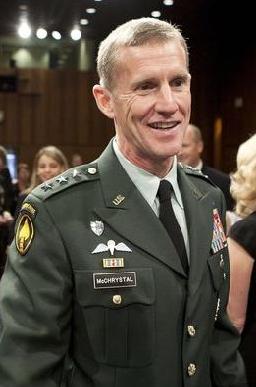
The Rolling Stone article on Gen. Stanley McChrystal has the blog and pundit world all atwitter, with calls for the general’s resignation, deep sighs of remorse, lofty comments about the sanctity of the commander in chief and the chain of command and lots more. The dude screwed up; you don’t let your aides dis the president like that. But that’s really off the point.


Frankly, if there were a way for the U.S. to be successful in Afghanistan, and McChrystal were the guy to do it, Obama shouldn’t care what the guy says. Whatever; you mean you never griped about your boss? It happens. Calling dinner with a French cabinet minister “fucking gay” is pretty fucking stupid, I admit. Overall, the interviews show astonishly bad judgment. (Oh, and General, sir: Don’t go out drinking and get shitfaced with a reporter if you don’t want to look bad in print.)


But the real point of the Rolling Stone story comes at the very end:


Whatever the nature of the new plan, the delay underscores the fundamental flaws of counterinsurgency. After nine years of war, the Taliban simply remains too strongly entrenched for the U.S. military to openly attack. The very people that COIN seeks to win over – the Afghan people – do not want us there. Our supposed ally, President Karzai, used his influence to delay the offensive, and the massive influx of aid championed by McChrystal is likely only to make things worse. “Throwing money at the problem exacerbates the problem,” says Andrew Wilder, an expert at Tufts University who has studied the effect of aid in southern Afghanistan. “A tsunami of cash fuels corruption, delegitimizes the government and creates an environment where we’re picking winners and losers” – a process that fuels resentment and hostility among the civilian population. So far, counterinsurgency has succeeded only in creating a never-ending demand for the primary product supplied by the military: perpetual war. There is a reason that President Obama studiously avoids using the word “victory” when he talks about Afghanistan. Winning, it would seem, is not really possible. Not even with Stanley McChrystal in charge.


In other words, who cares if the commanding general is a moron with a staff made up of armed frat boys? We can’t win anyway. And we don’t belong there. That’s the only thing that matters.


Hands Across the Sand says “No to offshore drilling, yes to clean energy”

0

I got an email today from Moveon.org advising me, “There’s a huge event happening this weekend at a beach near you.”
“In the wake of the giant BP oil spill in the Gulf, tens of thousands of people are getting together on beaches around the world for a massive event called “Hands Across The Sand,” the moveon.org folks said.
And so far, I’ve seen press advisories saying a Hands Across the Sand event is happening at Ocean Beach and China Beach In San Francisco, and at Crown Memorial Beach on Alameda Island, with folks gathering around 11 a.m. in preparation for non-violent hand-holding at 12 noon, on Saturday, June 26.
And the really cool and catchy part of this idea is that anyone on any beach anywhere in the world can join in, simply by grabbing the nearest person’s hand.

Dave Rauschkolb, who founded the first Hands Across the Sand event earlier this year, is a surfer and owner of three restaurants on the beach in Seaside, Florida, on the northern Gulf Coast between Pensacola and Panama City.
Rauschkolb spoke to me by phone today, shortly after US District Court Judge Martin Feldman ruled against  Obama’s deepwater drilling moratorium, claiming the Obama Admin “overreached”. and just the tar balls were starting to come up on the beach near Rauschkolb’s restaurants in Florida.

These incoming tar balls are an especially heartbreaking sight for Rauschkolb, given that he helped successfully organize the first Hands Across the Sand event on Feb. 13, 2010, when over 10,000 people joined hands on nearly 100 beaches along the coastline to stop the expansion of offshore oil drilling. But hopefully, terrible sights like this will be the impetus that finally gets U.S. citizens to break their addiction to oil.

“We gathered to stop the expansion of oil drilling in our coastal waters,” Rauschkolb said, referring to how folks protested efforts by the Florida Legislature and the U.S. Congress to lift the ban on offshore oil drilling.

“Now, just a few months later our entire Gulf of Mexico marine environment and
coastal economy is at risk from the very thing we tried to stop: offshore oil drilling off
our coast,” he continued. “The Deepwater Horizon disaster is a wake up call. Even as the Gulf disaster grows, British Petroleum and other oil companies continue to push for new offshore drilling anywhere oil might be found regardless of the risks they pose. The offshore drilling industry is a dirty, dangerous business and no one industry should be able to place entire coastal economies and marine environments at risk. Why is this allowed to happen?”

Rauschkolb said he blames BP to the extent that we should hold them accountable for what happened with the Deepwater Horizon disaster,
“However, I also hold the entire offshore oil industry accountable as well, because any company could have had this happen, “ he told me, pointing to a blow out off the Australian coast that took three months before a relief well could be drilled.

Concerned that the U.S. government and the oil industry will seek to make BP the scapegoat, in an effort to avoid imposing stricter regulations, Rauschkolb said such a response wouldn’t be a good outcome.

“America could be, should be one of the world’s leaders in expanding cleaner energy sources yet, our political process is paralyzed by oil money and influence. It is time for our leaders in all countries to take bold, courageous steps and open the door to clean energy and renewables and finally extend a hand to free our countries from our addiction to oil.”

“This is a critical turning point in finally changing our prehistoric energy policy towards the light of clean energy,” Rauschkolb concludes. “ Let us work together and share our passion and energies to protect our coastal economies, our oceans, our beaches, our waterfowl and our marine life. On behalf of those who have been and continue to be affected by this disaster of epic proportions in our Gulf of Mexico we extend our deepest appreciation to all of you for Joining Hands across America and the world on June 26.”

Rauschkolb invites folks to visit the Hands Across the Sand website and sign up to organize a beach or city.
Sounds like a great way to spend a Saturday. And if you do, you’ll be joining a movement that’s exciting interest around the world. According to Rauschkolb, as of today, 627 events are scheduled to take place on June 26 in 451 U.S. cities, with another 45 events scheduled outside the U.S. in 20 separate countries.

Think Global. Go clean energy.

Sunday Streets contrasts with SF’s bike injunction

1

A day after bicyclists and pedestrians took over the streets of the Mission for the popular, incident-free Sunday Streets, and a day before the court hearing on whether to end the four-year-old injunction against bike-related projects in San Francisco, Judge Peter Busch today (6/21) issued a noncommital tentative ruling in the case, indicating he needs a hearing on myriad technical details to reach a decision.

Most members of the city’s bicycling community see the injunction as surreal and are simply unable to understand how the California Environmental Quality Act could be used to hinder a transportation option that is clearly a boon for the environment. The answer, say critics, lawyers, and Judge Busch, is that the city should have done an expensive EIR first to probe the finest of details of exactly how more bike lanes would disrupt traffic.

Or as Busch put it in his temporary ruling, he wants to explore questions such as: “1) WHAT OTHER ALTERNATIVES OR MITIGATION MEASURES DOES PLAINTIFF CONTEND RESPONDENT SHOULD HAVE ANALYZED OR CONSIDERED? 2) WAS RESPONDENT REQUIRED TO INCLUDE DATA UNDERLYING TRAFFIC LOS AND, IF SO, DID IT SATISFY THE REQUIREMENT? 3) DID RESPONDENT ABUSE ITS DISCRETION BY USING A SIX-MINUTE THRESHOLD TO ANALYZE TRANSIT IMPACTS?”

It’s a level of detail that only lawyers and traffic engineers can appreciate, and to the casual observer, it’s a level of detail that could maddeningly extend this entirely unreasonable injunction. And Sunday Streets was a great example of why it’s so unreasonable. Here’s an event that disrupted far more cars and buses than the Bike Plan would over a month, and it was done with no EIR and with no major problems.

Why? Because CEQA has an exception for temporary events, which is certainly a good thing. But if CEQA is used to extend this injunction for another month, or a year, then it’s time to revisit this unreasonable law and whether this was ever a reasonable ruling.  Because the harm he’s doing by dragging this case out for a year after the city completed the EIR – to bicyclist safety and to the environment when people are afraid to bike and choose to drive — certainly outweighs any harm this plan will do.

The insanity of cutting pensions

15


The New York Times has picked up the pension-reform banner, promoting the issue to the lead story on the front page of the June 20th issue.


If, as the Times reports, some of the reformers want to cap pensions – that is, go for the folks at the very top of the pile – it’s worth discussing. But most of the “reform” ideas involve either cutting the take-home pay of existing employees, cutting the take-home pay of pensioners or making sure that future workers don’t get as much of a pension.
The problem with that is simple: We’re in a deep recession. And the last thing we need to do is cut paychecks and encourage people not to spend money.


Let me quote from a brilliant blog post on Calitics.com from the always insightful Robert Cruickshank:


Cutting pensions would be like taking a shotgun, aiming it at our feet, and pulling the trigger. It would cause a cascade of economic problems that would dramatically worsen our economic crisis…


And yet the solution being proposed – slashing benefits – will do absolutely nothing to make state government fiscally solvent. It will mean there’s less money available to spend, meaning less sales tax revenue. Less consumer activity means there’ll be less jobs available, meaning less income tax revenue. With fewer jobs available, and wage stagnation, and now the added financial burden of paying the costs of retired family members that used to be borne by the pensions and other state services that have been cut, younger folks won’t be able to sustain the economy. Retirees and baby boomers will have to sell their homes for the cash, and in a recessionary environment where the young aren’t able to afford the present market value, home values will spiral downward, causing further economic ripple effects as well as reducing property tax revenues.
 
… The notion that ‘everyone needs to give back’ just doesn’t make sense given our economic distress. We’ve already given back too much. We gave back our wages. We gave back our ability to afford health care and housing and transportation. We gave back the robust public sector services that created widespread prosperity in the 1950s and 1960s. We gave back affordable, quality education. And too many of us have given back our future.
No, it’s time for someone else to give back. It’s time for the wealthiest Californians, and the large corporations, to give back. For 30 years now they have benefited from economic policy designed to take money and benefits from the rest of us and give it to those who already have wealth and power.
We are now experiencing the predictable outcome of such policies – the worst recession in 60 years, an intractable downturn. The way out isn’t to worsen the crisis by slashing pensions. The way out is to return to the sensible tax rates of the 1950s and 1960s and make the rich pay.


That’s what I’m talking about.

Following Recology’s $$$ to Environment Commission and DCCC

7

If you’ve been looking for a financial connection between the city’s tentative decision to award the next landfill disposal contract to Recology, which plans to dispose of our trash in Yuba County, then you’ll be interested in this campaign finance item: Because records show that Recology contributed $5,000 last year to SF Forward, a San Francisco Chamber of Commerce political action committee, which also got Money  from Bechtel, Medjool, PG&E, Charles Schwab, and Shorenstein Realty.

Recology Vice President and Group Manager John Legnitto is Chamber’s Chair Elect.

In the last two years, the Chamber contributed $10,000 to Plan C, a political action committee that advocates for more condo conversions and less tenants’ rights.And Plan C gave Commission of the Environment President Matt Tuchow $3,300 for his failed 2010 Democratic CCC bid.

So, while the transactions were legal, with the money laundered twice in between, these dollar connections will probably have folks opposed to the city’s plan to dispose of its waste in Recology’s landfill in Yuba County asking if this explains why Tuchow decided to limit public comment to only one minute when folks wanted to voice concerns at a March 23 hearing at the Environment Commission about an alleged lack of fairness and transparency in the decision to award the contract to Recology.

Especially those folks who drove three hours from Yuba County, which is where Recology proposes to send our trash. And folks who helped negotiate the city’s current trash disposal contract and were shocked that the city would set a one-minute time limit on what they claim is a $1 billion contract, once you factor in the cost of transportation, new trash processing facilities and an as yet unbuilt rail spur that Recology needs inYuba County to transfer trash from the Union Pacific line to its landfill in Wheatland,

Tuchow, who works in the Global Compliance and Ethics Division of McKesson Corporation in San Francisco, had not returned calls as of blog post  time, but if and when he does, I’ll be sure to post an update here.

Meanwhile, it doesn’t look as if Recology’s bucks and/or Mayor Gavin Newsom’s powergrabbing antics, are going to be able to help shoehorn Tuchow onto the DCCC, even in light of Newsom’s newly hatched plan for dominion for the following reasons:

1. Results from the June 8 election show that Tuchow was fourth failed runner up in the DCCC 12th district. (Milton Marks, Sup. Eric Mar, Melanie Nutter, Arlo Smith, Connie O’Connor, Tom A. Hsieh, Jane Morrison, Mary Jung, Sandra Lee Fewer, Michael Bornstein, Sup. John Avalos and Bill Fazio were the top vote getters to win seats, beating out Larry Yee, Jake McGoldrick, Hene Kelly and then Tuchow, in that order.)

2.. It’s not clear if Newsom’s plan for the DCCC is even legal.

3. Even if Newsom’s plan survives a legal challenge, it’s not clear that the law would have the retroactive effect necessary to oust Mar and Avalos.

4. And even if it did, under state law,  DCCC Chair Aaron Peskin would get to appoint folks to fill those vacancies,
“This is about clean money and good government,” Newsom spokesman Tony Winnicker told reporters of Newsom’s DCCC plan.

So, let’s hope the Mayor’s Office applies the same standards when it comes to opening the landfill disposal contract bids this summer and shining light on the money that’s influencing the city’s garbage disposal contract. 

Meanwhile, Peskin, who was reached by cell phone somewhere near Moab, in Utah, where he’s taking his annual camping and hiking trip with his wife, told the Guardian that Newsom “is not thinking very far ahead” with his latest dominion scheme.


Can the ban

3

superego@sfbg.com

SUPER EGO Don’t blame it on the rave. You may have heard about the tragic deaths of two men, ages 23 and 25, who overdosed on ecstasy during the humongous Etd.POP 2010 party at the Cow Palace over Memorial Day weekend. (Eight other people were hospitalized.) Now state Sen. Leland Yee and San Mateo County Supervisor Adrienne Tissier are calling for a ban on raves at the Cow Palace. Must this tired anti-rave misguidedness pop up again?

Here are the facts. The Etd.POP thing is an annual affair, drawing up to 16,000 people, ages 16-plus. Two people died at a similar party in 2003. According to CBS 5, 73 people, mostly from out of town, were arrested this year on drug-related charges. The promoters, Skills DJs, enforced a strict no-drug policy and even, somewhat creepily but understandably, welcomed undercover cops into the venue. They immediately made a sympathetic statement after the hospitalizations and are cooperating fully with authorities.

There’s no evidence that the adults who died took tainted drugs. According to the Chronicle, a spokesperson for SF General, where the injured were treated, said those affected “were suffering injuries consistent with someone taking drugs, dancing, and not getting enough water and of being in a hot, closed environment.” I’ve been to the Cow Palace during megaraves, and it gets hot as blazes. This year several people complained about the heat online, and even headline trance DJ Armin Van Buuren tweeted that it was “really warm.” As for water, it needed to be much more available. Skills sent me the venue map they handed out at the entrance, and it gives directions to two water fountains and two beverage vendors, all outside the main arena. Not enough, folks. The three most important words when throwing parties of any size: Free. Water. Everywhere. Yes, there’s also a danger of overhydration, but even the non-Eing can collapse in a “hot, closed environment.” If you can’t afford to give out water, then why are you flying some DJ in from Amsterdam?

Look, as a matter of personal musical taste, I’m all in favor of banning raves at the Cow Palace. And please bust dealers who target kids. But beyond that, hysterical rave-banning is bullpucky. Newsflash from 1968: some people take drugs at (more likely before) parties. These adults are responsible for their own choice. Force the Cow Palace to get better ventilation. Require promoters to hand out free water on the dance floor. But don’t deny the thousands of drug-free young kids getting together to dance — rather than, say, ethnically cleanse Uzbekistan — their opportunity to have some electronically fueled, and by now old-fashioned, fun. You can blame rave for a lot of things, but it doesn’t kill people.


THE LEAK

Tired of disco? Unphased by wave? At last, the backlash against our dance-floor obsession with the past has begun. The LOWSF crew is dedicating this monthly to recently released bangers and jams only. Get fresh at the weekend.

Fri/18, 10 p.m., $3. Showdown, 10 Sixth St., SF. www.lowsf.com


1994

OK, but here’s more of the past — in an irresistibly goofy vein. The delirious 1994 party returns, with revisionist fashion shows, questionable tunes, and tipsy sing-alongs aimed at a new generation of beer-goggled nostalgists. Slap bracelets!

Sat/19, 9 p.m., $10. Paradise Lounge, 1501 Folsom, SF. www.club1994.com


MEGA-TETRIS

How can you resist? Multimedia artist Bryan Von Reuter is turning the Lab into a giant game of Tetris, projecting that old-school video game — the key to the world, really — onto the walls and letting you play, mega-style. Tunes by DJ Middle D stack the blocks.

Sat/19, 8 p.m., $5–$15. The Lab, 2948 16th Street, SF. www.thelab.org


LARRY HEARD

It’s been a long time since Larry Heard, a.k.a. Mr. Fingers, helped invent the quintessential Chicago house sound — heck, he’s even based in Tennessee these days — but the soul shivers still rain down when he lets his decks do the walking.

Sat/19, 9 p.m.-4 a.m., $25. SOM, 2925 16th St., SF. www.som-bar.com

Love streams

0

arts@sfbg.com

DANCE Dance Continuum SF’s artistic directors José Ivan Ibarra and Peter Litwinowicz danced and studied with Bay Area José Limón disciples Gary Masters and Cheryl Chaddick. Though they are their own men, the lineage shows. Limón’s weighted yet luminously airy style and his taking on of momentous topics without a whiff of irony is not much in fashion these days. So the old man would have approved when the four year-old company called its June 11-13 concert “Life, Love and Rituals.”

To a contemporary viewer, the ability to translate emotionally resonant material into movement language that communicates clearly and simply is refreshing. No wonder Continuum has attracted a group of beautifully trained dancers who seem to thrive in this capacious environment. They are, in addition to the choreographers: Blane Ashby, Kyla Farrow, Heather Glabe, Lindsay Shapiro, and Jennifer Wright.

The ambitious program featured five world premieres. Of the two choreographers, Ibarra has the more theatrical bent. Sometimes his movement language can look a little facile, but it doesn’t unduly undermine his expressive intent; Ibarra creates solid dramatic structures. With the dark Picasso Blue, he turns commedia dell’arte inside out. Starting out lightheartedly, he tightens the screws until Harlequin’s (Ibarra) heart is broken; Columbina has gone mad; and Pantalone (Ashby), the old fool, turns out to be a devilish manipulator. The puppetry’s mechanism is awkwardly conceived and the double duets looked unbalanced. Still, despite the oddly chosen Brahms quartet, my heart wound up in my throat.

In the trio Love Shirley, Ibarra’s lover/pimp character gets his comeuppance from Farrow and Glabe’s entertainers/hookers. The piece’s ambivalent relationships strike a note of disease. But even as you root for the women, it’s disconcerting to watch how Ibarra evokes the insidiousness of shifts in power. It makes you sit up.

Perhaps the lyrics in the finely crafted Café o Canela anchor its three sections too literally, but the piece plausibly portrays a disintegrating relationship. Listening to Ashby’s icy self involvement, after having watched Farrow’s plangently but strongly danced solo about marital loneliness, is chilling. The two call up the memory of a perfect love (Ibarra and Glabe in Mexican costumes) observed on their honeymoon. The lovey-dovey duet looks charming, but also like a saccharine projection of “native” life. In the climactic tango-inspired duet, Ashby and Farrow elastically drift and float until they finally cut the thread.

Litwinowicz’ two premieres, Rituals and Lonely, but not always alone make their own statements about what it means to be alive. In the simple but pristine Rituals (Farrow, Glabe, and Shapiro) different-colored scarves suggest the time passing of time and changed circumstances. Their fluid usage also evoke continuity within familiarity. Making excellent use of stage space, the dancers’ dissolving and reconfigured unisons, gentle canons and the periodic solos flow on top of a bed of constancy of, at the very least, purpose.

Lonely is one of the best dance/video works I can remember. The two media interlock tightly yet with flourish. Dancers on stage lusciously express — and sometimes shape — the thoughts and dreams of their video counterparts until Glabe reverses direction. Individually, in its distinct episodes and as an accumulation, Lonely convinces because it is smart, funny, and poignant.

Tale of two landfills

2

Sarah@sfbg.com

Everyone should make a pilgrimage to the landfill where their city’s garbage is buried. For San Francisco residents to really understand the current trash situation — and its related issues of transportation, environmental justice, greenhouse gas reduction, corporate contracting, and pursuing a zero waste goal — that means taking two trips.

The first is a relatively short trek to Waste Management’s Altamont landfill in the arid hills near Livermore, which is where San Francisco’s trash has been taken for three decades. The next is a far longer journey to the Ostrom Road landfill near Wheatland in Yuba County, a facility owned by Recology (formerly NorCal Waste Systems, San Francisco’s longtime trash collector) on the fertile eastern edge of the Sacramento Valley, where officials want to dispose of the city’s trash starting in 2015.

Both these facilities looked well managed, despite their different geographical settings, proving that engineers can place a landfill just about anywhere. But landfills are sobering reminders of the unintended consequences of our discarded stuff. Plastic bags are carried off by the wind before anyone can catch them. Gulls and crows circle above the massive piles of trash, searching for food scraps. And the air reeks of methane, a potent greenhouse gas that is second only to carbon dioxide as a manmade cause of global warming.

It’s also a reminder of a fact most San Franciscans don’t think much about: The city exports mountains of garage into somebody else’s backyard. While residents have gone a long way to reduce the waste stream as city officials pursue an ambitious strategy of zero waste by 2020, we’re still trucking 1,800 tons of garbage out of San Francisco every day. And now we’re preparing to triple the distance that trash travels, a prospect some Yuba County residents find troubling.

“The mayor of San Francisco is encouraging us to be a green city by growing veggies, raising wonderful urban gardens, composting green waste and food and restaurant scraps,” Irene Creps, a San Franciscan who owns a ranch in Wheatland, told us. “So why is he trying to dump San Francisco’s trash in a beautiful rural area?”

Behind that question is a complicated battle with two of the country’s largest private waste management companies bidding for a lucrative contract to pile San Francisco’s trash into big mountains of landfill far from where it was created. This is big and dirty business, one San Francisco has long chosen to contract out entirely, unlike most cities that at least collect their own trash.

So the impending fight over who gets to profit from San Francisco’s waste, a conflict that is already starting to get messy, could illuminate the darker side of our throwaway culture and how it is still falling short of our most wishful rhetoric.


TALKING TRASH

The recent recommendation by a city committee to leave the Altamont landfill and turn almost all the city’s waste functions — collection, sorting, recycling, and disposal — over to Recology (see “Trash talk,” 3/30) angered Waste Management as well as some environmentalists and Yuba County residents.

WM claimed the contract selection process had been marred by fraud and favoritism, and members of YUGAG( Yuba Group Against Garbage) charged that sending our trash on a train through seven counties will affect regional air quality and greenhouse gas emissions and target a poor rural community. Observers also want details such as whether San Francisco taxpayers will have to pay for a new rail spur and a processing facility for organic matter.

Mark Westlund of the Department of Environment told the Guardian that negotiations between the city and Recology are continuing and the contract bids remain under seal. “Hopefully they’ll be concluded in the near future,” Westlund said. “I can’t pinpoint an exact date because the deal is still being fleshed out, but some time this summer.”

Under the tentative plan, Recology’s trucks would haul San Francisco’s trash across the Bay Bridge to Oakland, where the garbage would be loaded onto trains three times a week and hauled to Wheatland. Recology claims its proposal is better for the environment and the economy because it takes trucks off the road and removes organic matter from the waste before it reaches the landfill and turns into methane gas.

But WM officials reject the claim, noting that both facilities will convert methane to electricity, energy now used to fuel the trucks going to Altamont. The landfill produces 8.5 MW of electricity annually, some of which is converted into 4.7 million gallons of liquid natural gas used by 300 trucks. The Ostrom Road facility would produce far less methane, using it to create 1.5 MW of electricity annually.

Recology officials say removing organic matter to produce less methane is an environmental plus because much of the methane from Altamont escapes into the atmosphere and adds to global warming, although WM claims to capture 90 percent of it. Yet David Assman, deputy director of the San Francisco Department of the Environment, doesn’t believe WM figures, telling us that they are “not realistic or feasible.”

State and federal environmental officials say about a quarter of the methane gas produced in landfills ends up in the atmosphere. “But they acknowledge that this is an average. Some landfills can be worse, others much better if they have a good design. And there is no company that has done as much work on this as Waste Management,” company spokesperson Chuck White told us, citing WM-sponsored studies indicating a methane capture rate as high as 92 percent. “The idea of 90 percent capture of methane is very credible if you are running a good operation.”

Ken Lewis, director of WM’s landfills, said the facility’s use of methane to cleanly power its trucks has been glossed over in the debate over this contract. “We’re just tapping into the natural carbon cycle,” Lewis told us.

But Recology spokesperson Adam Alberti (who works for Singer & Associates, San Francisco’s premier crisis communications firm) counters that it’s better to avoid producing methane in the first place because some of it escapes and adds to global warming, which Recology claims it will do by sorting the waste, in the process creating green jobs in the organics recycling and reducing the danger of the gases leaking or even exploding.

“But what has Recology done to show us that the capture rate at their Ostrom landfill is on the high side?” Lewis asks. “Folks in San Francisco say it’s not possible, but we’ve got published reports.”

Assman admits that San Francisco won’t be able to ensure that other municipalities that use Ostrom Road will be focusing on organics recycling. While questions remain about how that facility will ultimately handle a massive influx of garbage, Altamont has been housing the Bay Area’s trash for decades. And even though San Francisco’s current contract will expire by 2015, this sprawling facility nestled in remote hillsides can still handle more trash for decades to come.


ZERO SUM

Perhaps the most striking aspect of the Altamont landfill is the 30-foot-tall fence that sits on a ridge on the perimeter of the facility. It’s covered with plastic bags that have escaped the landfill and rolled like demonic tumbleweeds along what looks like a desolate moonscape.

Wind keeps the blades turning on the giant Florida Power-owned windmills that line the Altamont hills, but it also puffs plastic bags up like little balloons that take off before the bulldozers can compress them into the fill. Lewis said he bought a special machine to suck up the bags, and employs a team of workers to collect them from the buffer zone surroundinge site.

Although difficult to control or destroy, plastic bags are not a huge part of the waste volume. San Francisco has already banned most stores from using them, and the California Legislature is contemplating expanding the ban statewide in a effort to limit a waste product now adding to a giant trash heap in the middle of the Pacific Ocean.

“Plastic bags are a visual shocker,” said Marc Roberts, community development director for the city of Livermore. “In that sense, they are similar to Styrofoam. It’s pretty nasty stuff, can get loose, and doesn’t break down. But they’re not a major part of the volume.”

Yet Roberts said that these emotional triggers give us a peek into the massive operations that process the neverending stream of waste that humans produce and don’t really think about that often.

“Our world is so mechanized,” Roberts observed. “Stuff disappears in middle of night, and we don’t see where it goes.”

San Francisco officials confirm that the trend of disappearing stuff in the night will continue, no matter which landfill waste disposal option the city selects.

“No matter what option, it’s going to involve some transportation to wherever,” Assman said. Currently, Recology and WM share control over San Francisco’s waste stream. But that could change if the waste disposal contract goes to Recology.

A privately-held San Francisco firm, Recology has the monopoly over San Francisco’s waste stream from curbside collection to the point when it heads to the landfill. Waste Management, a publicly-traded company that is the nation’s largest waste management operation, owns 159 of the biggest landfills in the nation, including Altamont, the seventh-largest capacity landfill in the nation.

San Francisco started sending its trash to Altamont in 1987, when it entered into a contract with Waste Management for 65 years or 15 million tons of capacity, a level expected to be hit by 2015, triggering the current debate over whether it would be better to send San Francisco’s waste on a northbound train.


TRAIN TO WHEATLAND

Creps, 76, a retired school teacher, warns folks to watch out for rattlesnakes as she shows them around this flood-prone agricultural community.

“This is an ancient sea terrace, and now it’s fertile grazing ground between creeks,” Creps said as we walked around the ranchland that Creps’ grandfather settled when he came to California in 1850. Today he lies buried here in a pioneer cemetery, along with Creps’ adopted daughter, Sophie, who was killed at age 27 after she witnessed a friend’s murder in Oakland in 2006.

Creps’ cousin, Bill Middleton, who grows walnuts on a ranch adjacent to hers, worries about the landfill’s potential impact on the groundwater. “The water table is really high here, so you’ve go a whole pond of water sitting under this thing,” Middleton said.

Wheatland’s retired postmaster, Jim Rice, recalled that when the landfill opened on Ostrom Road in the 1980s, individual cities had veto power over any expansion plans. “But Chris Chandler, who was then the Assembly member for Sutter County and is now a judge, carried a bill in legislature to do away with veto power,” Rice said.

“So we lost out and ended up with a dump,” Middleton said.

Creps believes the landfill should be for the use of local residents only. “There’s a lot of development going on around here and the population is going to grow,” she said. “But at this rate, this landfill will be used up before Yuba and the surrounding counties can use it. And that’s not fair. They think they can get a foothold in places off the beaten path.”

Yet not everyone in Yuba County hates San Francisco’s Ostrom Road plan. On June 7, the Yuba-Sutter Economic Development Corporation backed Recology’s plan to build a rail spur to cover the 100 yards from the Union Pacific line to the landfill site.

EDC’s Brynda Stranix said the garbage deal is still subject to approval by San Francisco officials, but will bring needed money to the county. “The landfill is already permitted to take up to 3,000 tons of garbage a day and it’s taking in about 800 tons a day now,” Stranix said.

If the deal goes through, it would triple the current volume at the landfill, entitling Yuba County to $22 million in host fees over 10 years.

Recology’s Phil Graham clarified that Ostrom Road is considered a regional landfill, one that has already grown to 100 feet above sea level and is permitted to rise another 165 feet into the air. “So even with the waste stream from San Francisco,” he said, “we’ll still be operating well under the tonnage limits.”

“The world has changed. Federal regulations come in, and landfill operations change,” Recology’s Alberti said as we toured the site. “And there really are no longer any local landfills. This one is already operating, accepting regional waste.”

He claimed that Livermore residents had similar concerns to those now expressed in Yuba County when San Francisco’s waste started going to Altamont. Livermore and Sierra Club brought a lawsuit around plans to expand the dump, a suit that forced WM to create an $10 million open space fund.

Alberti said he understands that people like Creps are concerned. “But we are not seeking an expansion. The only thing we are asking for is a rail track.

“From our point of view it’s simple,” he continued. “We have the facility; Ostrom Road is close to rail; and it’s not open to the public. So it’s a tightly contained working area.”

Graham, the facility’s manager, also dismissed concerns that the landfill might harm the groundwater or the health of the local environment. “A lot of people don’t know how highly regulated we are,” he said. “That’s why we are having public meetings. Our compass is out in the community. These are people we work and live with.”

Alberti said YUGAG and other opponents of the landfill aren’t numerous. “If we draw the circle wider to the two-county area, how many people even know a landfill is operating here?”

Graham takes that as a testament to how well the facility is operated. “I consider that a compliment. Obviously, we weren’t causing any problems.”


TRASH MONOPOLY

Those who run both landfills say they recognize that their industry’s heyday is over, and that the future will bring a more complicated system that sends steadily less trash to the landfills.

“Eventually we will be all out of business,” Alberti predicted. “One reason we changed our name was knowing that landfills are not sustainable. And that’s a significant difference. Waste Management is the largest landfill owner in the world. Recology is a recycling company that owns a few landfills and, for that reason, does innovative things like the food scraps program.”

But the company with the new green name has traditionally been a powerhouse in San Francisco’s trash industry, becoming a well-entrenched monopoly after buying out two local competitors — Sunset Scavenger and Golden Gate Disposal and Recycling — a triad that has long held exclusive rights over the city’s waste.

The 1932 Refuse Collection and Disposal Ordinance gave the company now calling itself Recology a rare and enviably monopoly on curbside collection, one that had no expiration date and would be difficult to change. “So legally, it’s not an option,” Assman said.

Retired Judge Quentin Kopp, a former member of the Board of Supervisors and California Legislature, got involved in an unsuccessful effort to break Recology’s curbside monopoly in the 1990s when the company then known as NorCal Waste asked for another rate increase. But he found the contractual structure to be almost impossible to break.

“The DPW director examines all the allowable elements and makes recommendations to the Rate Board,” Kopp said. “And the Rate Board consists of three people: the chief administrative officer, the controller, and the general manager of the San Francisco Public Utilities Commission.”

SFPUC General Manager Ed Harrington says Recology’s curbside monopoly is unusual compared to other places, but it also makes the company a strong contender to the landfill contract. “It comes down to economies of scale. If you don’t have a contract with a facility that does recycling or waste disposal, you can collect the garbage, but where are you going to take it?”

Harrington said the situation was better before Recology purchased Sunset Scavenger, which mostly handled residential garbage, and Golden Gate, which mostly handled commercial garbage. Today, he said, the city has little control over commercial garbage rates or Recology’s overall finances. “That made it more difficult, and we only set the rate of residential garbage collection,” Harrington observed. “They have never come before the rate appeal board over commercial rates. I have asked who subsidizes whom, the commercial or the residential, and they say they think the commercial. But we have no ability to govern or manage those rates.”

WM’s Skolnick said a positive outcome of the current contract negotiations would be to break Recology’s monopoly on curbside collection. “We have to work to keep our business. That’s the competitive process. But we have a competitor that can encroach into our area even though we can’t encroach on San Francisco. And they claim to have one of the most competitive rates in the country — but try getting those numbers,” he said.

WM’s David Tucker added: “We’d like if San Francisco jumped into the 21st century and had a competitive bid process.”


DIRTY BUSINESS

The battle between WM’s local landfill option and Recology’s plan for a longer haul but with more diversion of organic materials is complicated, so much so that the local Sierra Club chapter has yet to take a position.

Glen Kirby of the Sierra Club’s Alameda County chapter told the Guardian that the Sierra Club’s East Bay, San Francisco, and Yuba chapters are taking a “wait and see what becomes public next” stance for now. But insiders say the club’s national position is against landfill gas conversion projects like that at Altamont, possibly favoring Recology’s bid.

Recology proponents claim the Sierra Club didn’t initially oppose landfill gas conversions because its members in the East Bay benefit from an open space fund that WM pays into as mitigation for a 1980 expansion at the Altamont. And Alberti claimed that WM’s analysis of greenhouse gas emissions from the competing waste transportation plans was flawed.

“Their calculation is a shell game. And it relies on Recology using diesel when we are using green biodiesel trains. This is not your grandfather’s train any more. One train equals 200 trucks,” Alberti said.

But WM’s Lewis defends the company’s analysis, which showed Recology’s bid to be worse for greenhouse gas emissions than WM’s.

“Landfill gas is a byproduct of an existing system,” Lewis said, noting that 43 percent of the trash buried at Altamont comes from San Francisco. The implication is that a large part of the methane in the landfill comes from — and benefits — San Francisco.

“We are delivering waste products that contain organics,” he said. “We realized that we could flare methane [to burn it up] or produce electricity. California has very aggressive landfill gas requirements, and the collection rates are relatively good at most sites. But once you’ve collected it, what to do? Historically, they flared the gas. Twenty years ago, there was not a lot of technology to allow anything else.”

Lewis says WM began producing electricity from the gas in 1987. “What we do in the future is decoupled from what was giving us the methane in the past,” he said. “Today we are managing what was brought here 15-20 years ago. It’s your hamburger, cardboard, and paper that has been sitting up there since 1998. We’re doing something good with something that we used to flare.”

“If Altamont was closed today, the gas yield coming off it would be enough to produce 10,000 gallons a day for the next 25 years,” WM’s Bay Area president Barry Skolnick interjected.

And Lewis observed that if you take organics out of the waste stream, as Recology proposes, that matter has value, whether in a digester to produce energy or a composting operation. That complicates the comparison of the two bids.

“We agree that if you can get that waste out in a clean form, that’s a good thing,” Lewis said. “But composting is a very highly polluting approach. In the process of degrading, it gives off a lot of volatiles and carbon dioxide. So air districts have not traditionally been very positive on sitting aerobic composting facilities.”


WHAT’S NEXT?

The contract that San Francisco has tentatively awarded to Recology is for 5 million tons or 10 years, whichever comes sooner. As such, it’s a much smaller contract than the city’s 1987 contract with WM, mostly because the future is uncertain.

But trucks will remain a part of the equation. Recology is proposing to continue driving 92 truckloads of garbage over the Bay Bridge per day, possibly to keep the Teamsters happy, frustrating transportation advocates who believe direct rail haul or barges across the bay would be greener options.

In December 2009, Mayor Gavin Newsom and Bob Morales, director of the Teamsters Union Waste Division, cowrote an op-ed in the Sunday Sacramento Bee, in which they argued the case for increased recycling and composting as a “zero waste” strategy for California and as a way to generate green jobs and reduce global warming.

“Equally important for the future of our green economy is that recycling and composting mean jobs,” Newsom and Morales wrote. “The Institute for Local Self-Reliance reports that every additional 10,000 tons recycled translates into 10 new frontline jobs and 25 new jobs in recycling-based manufacturing.”

Newsom and Morales clarified that they do not support waste-to-energy or landfilling as part of their zero waste vision.

“It makes no sense to burn materials or put them in a hole in the ground when these same materials can be turned into the products and jobs of the future,” they stated.

Yet WM’s Skolnick sees a certain hypocrisy in San Francisco turning its back on the methane gas that its garbage helped create at Altamont over the past three decades. “Here’s a very progressive city, and we want to take their waste from the last 30 years and use gas from it to fuel their trucks,” he said. “But they want to haul waste three times as far to Wheatland. What does that say about San Francisco’s mission to become the greenest city?”

David Pilpel, a political activist who has followed the contract, agreed that San Francisco officials can’t simply walk away from Altamont and call it a green move, but he would like to see the city use rail rather than trucks. “Instead of putting stuff on long-haul trucks, put it on a rail gondola and haul it around the peninsula to Livermore,” he said. “The Altamont expansion was for San Francisco’s purposes. So to say now, ‘We’ll go elsewhere,’ is lame.”

Sally Brown, a research associate professor at the University of Washington, acknowledges that landfills have done a great job of giving us places to dump our stuff and can be skillfully engineered to release less methane and capture more productive biogases.

“However, we are entering a new era where resources are limited and carbon is king,” Brown wrote in the May 2010 edition of Biocycle magazine. “In this new era, dumping stuff may cease to be an option because that stuff has value. and that value can be efficiently extracted for costs that are comparable to or lower than the costs — both environmental and monetary — associated with dumping.”

The San Francisco Board of Supervisors will vote on the contract later this year, deciding whether to validate the Department of the Environment’s choice of Recology or go with WM. Either way, lawsuits are likely to follow.

Voters are pissed

0

By Guardian News Staff

news@sfbg.com

After spending more than $70 million, two big corporations failed to convince Californians to vote their way. After spending nearly $70 million, the former head of a big corporation easily convinced Californians to vote her way. And that outcome is not as schizophrenic as it sounds.

On one level, the outcome of the June 8 election was a sign of the anti-corporate anger seething through the California electorate. “BP, Goldman Sachs, PG&E — anything that seems connected to a big corporation is in serious trouble right now,” one political insider, who asked not to be named, told us.

Yet two candidates who were very much corporate icons — Meg Whitman and Carly Fiorina — won handily in the Republican primaries and now have a real chance to become the state’s next governor and junior senator. What’s happening? It’s fascinating. The voters in the nation’s most populous state are pissed off — at big business, at government, at the oil spill, at 10 percent unemployment, at Washington, at Sacramento, at Wall Street. It’s an unsettled electorate, uncertain about its future and looking for something new, and definitely despising power.

There’s a populist fervor out there, and it’s going to define this fall’s expensive, dirty, and high-stakes battle for California’s future.


THE MAYOR GOES STATEWIDE

Addressing a crowd of supporters gathered at Yoshi’s San Francisco on election night, San Francisco Mayor Gavin Newsom — who easily beat opponent Janice Hahn to claim the Democratic nomination for lieutenant governor — said he was excited to be part of a crucial political year for the Golden State.

“We’re very proud to be in a position to be the Democratic nominee and to work with the other Democratic nominees,” Newsom told supporters. He lavished praise on the Democratic nominee for governor, Jerry Brown — the man who just last year he was trying to beat in a primary — telling stories about his father’s long relationship with the former governor and expressing his admiration. “I couldn’t be more proud to quasi- be on a ticket with Jerry Brown,” he said.

The race for lieutenant governor may prove one of the most interesting this election season — and not just because a victory for Newsom would transform San Francisco politics. Newsom’s opponent is Abel Maldonado, a moderate Republican who enjoys popularity among the growing, influential Latino community, and who Newsom’s team said will be a formidable challenge.

The campaign could revolve around an intriguing question. At a time when the Republican Party has been taken over by virulent anti-immigrant politicians — Whitman and Fiorina have both made harsh statements about illegal immigrants and vowed never to support “amnesty” (that is, immigration reform) — will Latino voters go for a white Democrat over a Latino Republican?

“You talk to them about all the same issues you talk to all voters about: jobs, education, and health care,” Newsom political strategist Dan Newman said when asked whether Newsom could win over Latino voters. “Latinos, like all voters, will appreciate someone with a proven record of success.”

Pollster Ben Tulchin also downplayed the trouble Newsom could encounter in winning the Latino vote. “With what’s going on in Arizona, they are very wary of Republicans,” Tulchin said, but then added: “We don’t want to underestimate the challenge we have. There’s never been a moderate Latino on the statewide ballot.”

Newsom sounded another alarm. If Whitman decides to help Maldonado, the race will get even tougher. “We’re running against Meg Whitman’s checkbook,” the mayor said.

“Expect to see Meg and Abel together a whole lot in the next few months,” one consultant predicted.

If Newsom wins, San Francisco will get a new mayor a year early — and the district-elected Board of Supervisors will choose the person to fill out the last year of Newsom’s term. Technically, the current board will still be in office then, but the task may well fall to the next board — which makes the local November elections even more important.

“Everyone is gaming this out and trying to figure out what happens,” political consultant Alex Clemens said during a post-election wrap-up at the San Francisco Planning and Urban Research Association office. “There will be a lot of dominoes to fall and deals to be cut.”

Meanwhile, Newsom’s nomination for lieutenant governor places many San Franciscans in an uncomfortable position, one that was illustrated well by Newsom’s victory speech, in which he proudly rejected taxes. Although most San Francisco progressives are disenchanted with their fiscally conservative mayor, few would rather vote for Maldonado.

Tim Paulson, the SF Labor Council president, was at the Newsom event gritting his teeth as he talked about the opportunity progressives now have to work with “a mayor of San Francisco we have issues with.” Now, he noted, “There is going to be a real campaign around this man. It could establish a narrative for what California is about.”


POWERFUL WOMEN

At Delancey Street on election night, San Francisco District Attorney Kamala Harris talked about getting “tough and smart on crime,” addressing gang-related criminal activity but also focusing on corporate criminals. She talked about cracking down on predatory lenders, supporting health care reform, and protecting California’s environment. And she made a point of dragging in BP.

“It must be the work of the next attorney general to ensure that the disaster and tragedy that happened in the Gulf of Mexico never happens in California,” she said, warning of attacks on AB 32, which set California’s 2020 greenhouse gas emissions reduction goal into law in 2006.

Of course, Harris now has to take on her southern counterpart, Los Angeles DA Steve Cooley, who is a moderate but comes in with much stronger law enforcement support. If Harris wins, it will go a long way to prove that opposition to the death penalty isn’t fatal in California politics, and that voters are finally ready for a women of color as the top law enforcement official — a first in state history.

But she and Newsom will both have to overcome likely attacks for the San Francisco’s crime lab scandal, one of many hits to be magnified by the size of Whitman’s war chest.

Whitman, who trounced opponent Steve Poizner in the primary, is riding the crest of a new wave of Republican-style “feminism,” starring her, Fiorina, and Fox news pundit Sarah Palin as female champions of the right-wing agenda. A few short months ago, it looked as if Brown was in serious trouble. But that was before Whitman and Insurance Commissioner Steve Poizner got into an $85 million bloodbath that left the winner of the GOP primary badly wounded. Whitman wants to play off the populist uprising by portraying herself as an outsider running against a career politician; Poizner gave her a huge scare by hammering her ties to Goldman Sachs.

That Wall Street narrative is one Democrats will push against Whitman and Fiorina. “I think it is stunningly politically tone deaf to nominate two Wall Street CEOs to the top of the ticket,” Newman said. Voters will decide whether they are fresh voices with new ideas or corporate hacks who laid off Californians and made fortunes with dubious stock market deals.

Brown leads in the polls — narrowly — but he’s vulnerable. He’s taken so many stands over so many years and Whitman’s fortune will hammer any openings they see. Brown is only slowly getting into campaign mode, but it’s no secret what he has to do. If the campaign is about Jerry Brown, unconventional politician, against Meg Whitman, Wall Street darling, then he wins.

But to take advantage of that, Brown has to offer some concrete solutions to the state’s problems — and he has to start acting like the progressive he once was. “If I were him, I’d run hard to the left,” a consultant who isn’t involved in any of the gubernatorial campaigns said.

The conventional wisdom had Barbara Boxer in trouble, too — but she’s a savvy campaigner who has beaten the odds before. And while the senator appears ripe for attack — almost 30 years in Washington, a voting record perhaps a bit more liberal than the state as a whole — her opponent, Fiorina, has baggage too.

For starters, Fiorina’s entire pitch is that she — like Whitman — would bring business-world savvy to politics. But as CEO of HP, “she was about perks and pink slips,” Newman said. “She laid off Californians and shipped those jobs overseas while enriching herself.”

Her own primary pushed her far to the right (at one point, in an embarrassing sop to the National Rifle Association, she actually argued that suspected terrorists on the federal no-fly list should be able to buy handguns). And speaking of feminist values, her anti-abortion positions won’t help her in a decidedly pro-choice state.


PROP. 16 GOES DOWN

The defeat of Proposition 16 will go down in history as one of the most remarkable campaigns ever. It was, Sup. Ross Mirkarimi noted, “a righteous win:” The No on 16 campaign spent less than $100,000 and still captured 52 percent of the vote. Another narrow corporate-interest measure, Mercury Insurance’s Prop. 17, faced a similar fate.

One reason: PG&E’s $50 million campaign backfired, making voters suspicious of the company’s propaganda. Another: it lost overwhelmingly in its own service area, the company rejected by those who know it best.

Now PG&E CEO Peter Darbee, who pushed to mount the expensive campaign, must return to his shareholders empty-handed — and that’s going to cause problems. “I assume the leadership of PG&E will be called to task,” Clemens said. “They truly rolled the dice.”

The day after the election, PG&E shares dropped 2.2 percent, a possible sign of shaken investor confidence. Mindy Spatt of the Utility Reform Network (TURN), a nonprofit that worked on the No on 16 effort, described the situation succinctly. “Peter Darbee’s got egg on his face,” she said. “Big-time.”

Mirkarimi has witnessed other battles with PG&E, and said this probably wouldn’t be the last. “PG&E, every time we want to have a seat at the table, tries to take us out, like assassins,” he said. “If they were smart, they would take us up on what we asked many years ago, and that is to abide by peaceful coexistence.”

On the statewide level, the bold and expensive deceptions pushed by PG&E and Mercury Insurance were countered by only a handful of super-committed activists and a broad cross-section of newspaper editorials, a reminder that newspapers — battered by the economy and technological changes — are neither dead nor irrelevant.

One of the wild cards of the election was Prop. 14, which will eliminate party primaries for state offices — and potentially shake up the state’s entire political structure. “This is a big deal even if we don’t know how it’s going to play out,” consultant David Latterman said at the SPUR event.

Interestingly, the only two counties that voted No on 14 were the most progressive — San Francisco — and the most conservative, Orange.

Progressives did well in San Francisco, expanding their majority on the Democratic County Central Committee. “In an environment where it was about hundreds of millions of dollars from PG&E and Meg Whitman and Chris Kelly outspending us, we showed that San Francisco is San Francisco and we support San Francisco values,” DCCC chair Aaron Peskin told us.

Money used to define the debates in San Francisco, but the dominant narratives are now being written by the coalition of tenants, environmentalists, workers, social justice advocates, and others who backed a progressive slate of DCCC candidates, which took 18 of the 24 seats on a body that makes policy and funding decisions for the local Democratic Party.

“This time it was the coalition that really made the difference,” DCCC winner Michael Bornstein said on election night. “Frankly, our people worked harder.”

Board of Supervisors President David Chiu agreed, telling us, “For the Central Committee, the message is people power wins.”

The lesson from this election is that people are starting to get wise to corporate deceptions. And they’re realizing that with hard work and smart coalition-building, the people can still prevail.

Steven T. Jones, Rebecca Bowe, Sarah Phelan, and Tim Redmond contributed to this report.


Psychic Dream Astrology

0

June 16-22

ARIES

March 21-April 19

Change for change’s sake just shakes things up instead of improving them for reals. Get serious about what you intend to create in your life before you get carried away. Assess your environment before you act out.

TAURUS

April 20-May 20

Resist all temptations to be a throwback and do what worked best in the past. The tried-and-true has its place, but now is the time for innovation. Be open to ways that are more in keeping with who and what you’ve become.

GEMINI

May 21-June 21

Rushing around with great ideas works wonders when you feel awesome, but when you’re energy wanes can just make you overwhelmed and burdened. Solid foundations trump brilliant theories this week.

CANCER

June 22-July 22

Anxiety and nervousness is a problem, but the problem is all in your head. Get clear about what you are tripping on so that you don’t make mountains out of molehills. Be brave enough to look at your worries this week.

LEO

July 23-Aug. 22

Living in the moment is fabulous, but it doesn’t absolve you of the need to come up with strategies for your future. Figure out what you require to flow with your circumstances — that’s how you can get what you want.

VIRGO

Aug. 23-Sept. 22

Get set to start something new! Whether you are beginning a new enterprise or quitting a habit, this is an excellent time to initiate new activity. Tie up loose ends and then turn your attention toward the future.

LIBRA

Sept. 23-Oct. 22

Strike while iron is moderately warm. Approach actions and people with passion, but not so much passion that you compromise your reason. Strive for that elusive balance your sign is known for.

SCORPIO

Oct. 23-Nov. 21

Getting healthy in an unhealthy situation produces all kinds of drama. Not all drama is bad, though! Be willing to be the most centered, genuine version of yourself that you can be, even if that upsets the folks around you.

SAGITTARIUS

Nov. 22-Dec. 21

Being a bossy boss is not the same thing as having healthy boundaries, Sag. If you aren’t honest and direct with yourself about your needs, how can you assert them in a way that gets them met? (FYI: ya can’t.)

CAPRICORN

Dec. 22-Jan. 19

If you can overcome your worrywartish tendencies, you’ll go far! The details aren’t half as important as you think they are, Cap. Pursue inner steadiness as you traverse rocky emo ground this week.

AQUARIUS

Jan. 20-Feb. 18

Change in the air, and it’s hard to know if it’s the kind you can trust. Being an easy rider is hot, but it’s not the best strategy right now. Gather your clarity and reflect on if you dig where you’re taking your life.

PISCES

Feb. 19-March 20

Don’t try to fix stuff from your worried place. Find a quiet corner and nurture your innards so you can see things with a more resilient perspective. Harried is as harried does!

Jessica Lanyadoo has been a psychic dreamer for 15 years. Check out her website at www.lovelanyadoo.com or contact her for an astrology or intuitive reading at (415) 336-8354 or dreamyastrology@gmail.com.

Newsom’s fiscal conservatism undermines his agenda

15

Gavin Newsom’s nomination for lieutenant governor places many San Franciscans in an uncomfortable position, one that was illustrated well by the victory speech that he gave last night just as our story our on his latest budget – in which he proudly rejected taxes in favor of deep spending cuts and future budget deficits — was coming off the presses.

Even though most San Francisco progressives don’t like our fiscally conservative mayor, few of us would rather vote for his Republican challenger, Abel Maldonado, despite the fact that this moderate Latino is actually fairly close to Newsom ideologically. “We don’t want to underestimate the challenge we have. There’s never been a moderate Latino on the statewide ballot,” Newsom pollster Ben Tulchin told me last night.

SF Labor Council President Tim Paulson was at the Newsom event gritting his teeth as he talked about the opportunity progressives now have to work with “a mayor of San Francisco we have issues with,” noting that, “What I find interesting in the easy win for Newsom is how there is going to be a real campaign around this man. It could establish a narrative for what California is about.”

And he’s right, but the danger is if Newsom sticks with his inflexible and longstanding “no new taxes” stance then the narrative could be that neither major political party’s top nominees are willing to tap millionaires, oil companies, and other entities that can afford it in order to fund education, health care, and the development of a green economy, which Newsom said are his top priorities. That and “jobs,” by which he means only private sector jobs, based on his past statements and actions and current failure to support new tax measures.

But Newsom doesn’t seem to see the glaring contradiction in his political philosophy, which he illustrated as he told a story about the potential to achieve strong economic growth while aggressively pursuing solutions to global warming and other environmental challenges, which he and progressives both seem to believe are not just possible, but “the opportunity of a lifetime.”

Newsom noted that the only four wealthy countries that signed the Kyoto Protocols and met their greenhouse gas reduction goals – Sweden, Denmark, United Kingdom, and Germany – have similar economic strategies. “All four of these countries had three things in common vis-a-vis the United States: Lower unemployment, higher growth, and lower income disparities,” he said.

Yet Newsom left out another key commonality that was even more central to their success, and big reason for two of Newsom’s three items: All have far higher tax rates than the U.S. and a more vibrant, respected, and well-funded public sector that was able to guide that economic transformation and ensure a smart, equitable distribution of the country’s wealth – something Newsom has been overtly hostile to as mayor and while campaigning for statewide office.

Nonetheless, he continued, “What’s interesting about these four countries is they dramatically shifted their framework in terms of economic growth and economic development towards a cleaner and greener energy future and they were rewarded with higher growth and lower unemployment. I think that’s suggestive, in the context of this debate.”

So do I, suggestive of the need for Newsom (and Jerry Brown) to finally realize it’s going to take money and a rejuvenated public sector to meet his stated goals for education, health care, and the environment. In San Francisco, his reluctance to challenge the Chamber of Commerce fallacy that taxes kill growth has left a legacy of dangerously diminished social services and increasing budget deficits running indefinitely into the future.

But the four countries that Newsom claims to admire don’t think that way. They don’t boast of cutting social services while proposing even more business tax cuts, and they don’t say things like, “It’ll take an entrepreneurial look at solving problems in this state.” He’s sounds like Meg Whitman and the Republicans.

What we need is the other Gavin Newsom, the one who last night also said, “Now is the time for serious problem solving in California….It is a time for California to fundamentally change.”

But first, Mr. Mayor, you’re going to need to embrace a few fundamental changes of your own.


Passionate progressive people prevail

3

At risk of being overly alliterative, this primary election was about the power of progressive principles pushed by passionate people, as several politicos told me last night. That was evident in the success of the progressive slate for the Democratic County Central Committee and in the defeat of Propositions 16 and 17 despite about $70 million in corporate spending.

Money used to define the debates in San Francisco and throughout California, but the dominant narratives are now being written by the coalition of tenants, environmentalists, workers, social justice advocates, and others who backed the Bay Guardian’s slate of DCCC candidates, which took 18 of the 24 seats on a body that makes policy and funding decisions for the local Democratic Party.

“This time, it was the coalition that really made the difference,” DCCC winner Michael Bornstein told me last night. “Frankly, our people worked harder.”

Board of Supervisor President David Chiu agreed, telling me, “For the Central Committee, the message is people power wins.”

Despite the post-election punditry by the Chron’s CW Nevius that “moderates” just didn’t rise up like he had hoped, the most obvious reality is this election demonstrated the power of progressives who embrace San Francisco values – from valuing diversity and the environment to believing in economic justice – and the potential for success when we really stand up for them. One reason why even our would-be exports, Gavin Newsom and Kamala Harris, prevailed last night could be that liberal San Francisco just isn’t widely viewed with the same scorn felt by Nevius and the so-called “moderates,” who want to “take back” the city from progressives.

“In an environment where it was about hundreds of millions of dollars from PG&E and Meg Whitman and Chris Kelly outspending us, we showed that San Francisco is San Francisco and we support San Francisco values,” DCCC chair Aaron Peskin told me last night.

On the statewide level, the bold and expensive deceptions pushed by PG&E and Mercury Insurance were countered only by a handful of super committed activists and a broad cross-section of newspaper editorials, yet because the basically progressive message was so consistent – don’t let powerful corporations fool you into giving up your rights and protections – the Proposition 16 and 17 campaigns turned into epic failures that will feed distrust of corporations.

“California voters proved once again that they can’t be fooled by tens of millions of dollars in deceptive advertising by insurance companies,” Harvey Rosenfield of Consumer Watchdog said today of Prop. 17.

And that failure could feed and empower an ascendant progressive movement. The local Sierra Club’s John Rizzo told me at the DCCC slate party last night that PG&E will be hurt by its overreaching: “The $50 million they spent on this is totally backfiring. Whatever environmental reputation they had has now been totally trashed.”

As it should be. The lesson from last night is that people are starting to get wise to corporate deceptions, and they’re realizing that with hard work and smart coalition-building, the people can still prevail.

Alerts

0

alert@sfbg.com

THURSDAY, JUNE 10


“This Bridge Called My Back”

Radical Women, an international socialist feminist organization, begins its summer Fiery Feminist Theory Series with selected readings from This Bridge Called My Back: Writings by Radical Women of Color. Home cooked dinner with vegetarian options available at 6:15 p.m. for $7.50.

7 p.m., free

New Valencia Hall

Suite 202

625 Larkin, SF

(415) 864-1278

FRIDAY, JUNE 11


ARCO/BP Boycott Party

Join this peaceful protest calling for the shut down of BP franchises. If you feel helpless as oil continues to kill wildlife and poison the Gulf of Mexico and its shores, make your voice heard with your dollars. Boycott BP and it’s franchises, including Amoco, Castrol, ARAL, ARCO, AM/PM, and Wild Bean Café.

5:30 p.m., free

ARCO Gas Station

1175 Fell, SF

Berkeley Critical Mass

Advocate for the creation of human speed transportation zones while having fun with other members of the bicycling community at this “bike prom” themed critical mass through the streets of Berkeley.

6 p.m., free

Gather at Berkeley BART

Center and Shattuck, Berk.

www.berkeleycriticalmass.org

SATURDAY, JUNE 12


Drone Warfare

Join this community forum on the moral, ethical, and legal implications of drone warfare. Use of drones by the U.S. military has increased and is responsible for the deaths of numerous civilians. The U.S. military argues that using drones in sensitive areas reduces the risks to American lives. Hear experts and activists against drone warfare weigh in on this debate.

1:30 p.m., free

Berkeley Public Library

Third Floor Community Room

2090 Kitteredge, Berk.

(510) 845-3815

www.gawba.org


Toxic Triangle Hearing

Speak out against the environmental racism and cumulative pollution affecting poor communities in San Francisco, Oakland, and Richmond. Demand action from the Environmental Protection Agency, Bay Area Air Quality Management District, State Department of Toxics, Health Department, Navy, and elected officials.

9 a.m., free

St. John’s Baptist Church

825 Newhall, SF

(415) 284-5600


World Naked Bike Ride

Help get the message out about America’s inadequate energy policy, which is harming our economy, the environment, and the planet by catering to oil cartels and increases dependency on oil imports. Go as bare as you dare and arrive early for body paint. Special attention will be paid to protesting BP. Simultaneous worldwide bike rides also scheduled.

Noon, free

Meet at Justin Herman Plaza

Market at Embarcadero, SF

wiki.worldnakedbikeride.org

TUESDAY, JUNE 15


Peace Pie Cookbook

CodePink tells the story of women “waging peace” in a new book, Peace Never Tasted so Sweet: Deliciously Sweet and Savory Pie Recipes from Women around the World. Attend this release party and pie-tasting featuring speakers Medea Benjamin, cofounder of CodePink and Global Exchange; recipe contributor Samina Faheem, founder of American Muslim Voice; and recipe contributor Lorene Zouzounis reading poetry.

6 p.m.; free, $5–$10 suggested donation pies

Mission Pie

2901 Mission, SF

www.codepinkalert.org

Mail items for Alerts to the Guardian Building, 135 Mississippi St., SF, CA 94107; fax to (415) 437-3658; or e-mail alert@sfbg.com. Please include a contact telephone number. Items must be received at least one week prior to the publication date.


Harris declares victory in AG Democratic primary

0

San Francisco District Attorney Kamala Harris declared victory in the Attorney General Democratic primary in an energized  speech around 11 p.m. at Mimi Silbert’s Delancey Street Foundation at 600 Embarcadero.

Harris’ speech came soon after the room buzzed with the news that Santa Clara voters had approved a $937 million stadium deal for the 49ers at a site near Great America, and immediately on the heels a rousing introduction by State Sen. Mark Leno.

“With her kind of leadership, we’ll be able to reinvest dollars in the best crime prevention programs,” Leno said.

Harris’s campaign raised $3 million in the Democratic primary, and Leno indicated that supporters would need to “triple or quadruple that in the general election.”

Leno promoted medical parole and praised Harris’ Back on Track program for reducing recidivism rates for young, first time offenders.

“With your help we will elect the first woman to be Attorney General for the state of California,” Leno promised.

 Then Harris took the podium, dazzling in a chic black outfit and pearls.

Acknowledging the work and efforts of her supporters, Harris broke into a big smile.

“I do humbly accept the Democratic nomination for Attorney General of California,” she  said.

She praised good ideas that her fellow Democrats raised during the primary around fighting gang crime, corporate greed and fraud, protecting kids and the environment.

‘It’s been an honor to work with you,” Harris said, promising to call her opponents, “to ask you to help us put those great ideas to work.”

Then she talked about getting “tough and smart on crime” by addressing gang crime, but also focusing on early intervention and truancy.

She talked about cracking down on predatory lenders, supporting health care reform, and protecting California’s environment.

“When the President passed healthcare reform, it was the right thing to do,” Harris said. “People deserve to have medical care when they need it. The Attorney General has got to stand up and support that. It must be the work of the next Attorney General to ensure that the disaster and tragedy that happened in the Gulf of Mexico never happens in California,” she said, warning of attacks on AB 32, which set California’s 2020 greenhouse gas emissions reduction goal into law in 2006. “

And she described her campaign touching down in Modesto, Bakersfield, Oakland and Palo Alto and stretching from “grassroots to net roots,” ,

“We may seemingly be different because of our zip codes, perhaps, but we are all the same in terms of what we want for children.. elders,” Harris said, promising, “to protect poor people, the vulnerable and people who are the targets of bias.”

“We have a lot of work to do before November…but we are clear of purpose, clear of mind,” Harris said. “We believe in hard work, but we also believe that if can be fun work. Let’s celebrate tonight!”

And then she was off the stage, shaking hands with fans .Asked about the possibility of becoming the first female California Attorney General, Harris flashed that dazzling smile.“I’m sure a man could do the job just as well,” she said. “Let’s leave it at that for now.”


Road rules

0

caitlin@sfbg.com

CULTURE Dear cars: I’m only doing my part to keep the air clean, and I promise you, I’m trying to stay in my lane when I have one. I’m looking as cute as I can astraddle my fly new ride, puffing up hills for health. Alas, your intermittent, unwarranted honk is a sorry companion to my bike high. “Get a car!” is a bummer too. Bicyclists sure enough have to put up with some shit.

Which is why we’re glad to have Eben Weiss, New York City’s outspoken Bike Snob. He’s won raves among the two-wheeled for his blog (www.bikesnobnyc.blogspot.com), which pointedly voices the frustrations of the biking masses. Sure, Weiss is opinionated — don’t get him started on brakeless bikes for civilian use — but in our recent phone interview, he articulated his ideas about transportation with an aplomb and wit I seldom hear elsewhere.

And by gosh, it’s only right he follow grand blogging tradition and put out a book. My chat with Weiss coincided with the start of his tour to promote Bike Snob: Systematically and Mercilessly Realigning the World of Cycling — he hits San Francisco Thursday, June 17 — a project that compelled him to shed the cloak of anonymity under which he had blogged for years. (Turns out he’s a looker.)

Right off the bat he told me, “There’s no such thing as ‘bike culture.'” Them’s fightin’ words in SF, which reveres the idea of a biking class that generates its own social mores, political convictions, and tasty microbrews. “As far as I’m concerned, I like to ride. So my ‘common cause’ is just to be happy. You have a lot of different kinds of cyclists. They do it for fitness, they’re into the environment … It’s like anything else: a lot of people doing a lot of things for a lot of reasons.”

Weiss is of the opinion that terms like “bike culture” have been used by the cycling industry to sell us things, a ploy that leads to the type of fashion victimology so snarkily snapped and captioned on his blog. “A decent bike and a good lock,” Weiss says. “And that’s really all you need. I think part of the reason the cycling media can drive you a little bit crazy is that there’s such an emphasis on equipment. You can spend hundreds or thousands on cycling-specific sneakers, on a bike that looks a certain way. I recommend that you get a bike, any bike. Spend as little money as possible — just you and the bike, that’s it.”

It’s refreshing advice, the kind you don’t usually hear from people who have been city-biking as long as Weiss has. I also asked him about traffic laws — he’s questioned their relevance to biking in the past. Do we obey the stop signs, Bike Snob?

“I think it’s important to remember that breaking a rule because it really doesn’t apply to you is different than breaking a rule because it’s exciting,” he tells me. “Anything that involves stopping is good. People who ride bikes think putting your foot down is an admission of defeat. I think they need to get over that. You have to be nice to pedestrians. You have to treat others with the same respect you want motorists to treat you with. Not riding on sidewalks is a good rule.”

Indeed. He’s also got words for nonbikers that they would do well to heed. Avoid referring to your cyclists friends as “Lance Armstrong,” groping on their top tubes without permission, and asking them whether they’re impotent.

And for God’s sake, quit asking if bike accident victims were wearing a helmet. Weiss, in the traffic safety chapter of his book entitled “Why is Everyone Trying to Kill Me?” has gone on record about his neutrality regarding society’s “all helmet, all the time” insistence, calling it something of a misguided fixation. This is not the politically correct line to walk for a bike activist. He’s caught flack for being seen at road races lacking the proper headgear.

But unlike other prominent figures in the bike world who rally fellow cyclists under one flag or another, Weiss doesn’t consider himself an activist so much as a curmudgeon. (Albeit a curmudgeon with a hot blog, a new book, and a heady slew of good ideas.) His popularity may be a result of his non-hectoring, yet still bitingly impish, attitude — an attitude that, whether he likes it or not, jibes well with the current bike culture. Ride on, Bike Snob, we’ll be reading.

BIKE SNOB BOOK SIGNING

Thurs/17 6:30–8 p.m., free

Sports Basement

1590 Bryant, SF

(415) 575-3000

www.chroniclebooks.com/bikesnob

Another bloody budget

6

rebeccab@sfbg.com

In the days since June 1, when Mayor Gavin Newsom unveiled his proposal for San Francisco’s $6.48 billion budget for the next fiscal year, public sector employees and community organizations have been poring over the hefty document to determine how their jobs, services, and programs survived cuts made to close a $483 million shortfall.

For police and firefighters, a key Newsom constituency, the news is good. There were no layoffs to San Francisco firefighters, and while members of the Police Officer’s Association gave up $9.3 million in wage concessions under the lucrative contract Newsom gave them a few years ago, police officers will still receive a 4 percent wage increase on July 1.

For others, the release of the mayor’s budget signified a tough fight looming before the Board of Supervisors, one with high stakes. Cuts to homeless services, mental health care, youth programs, and housing assistance, along with privatization proposals, have raised widespread concern among labor and liberal advocacy organizations. Public input on the budget will continue at the Board of Supervisors Budget and Finance Committee until July 15, when the amended document is considered by the full board.

At a June 1 announcement ceremony, Newsom asserted that the budget was balanced “without draconian cuts,” saying, “We were able to avoid the kind of cataclysmic devastation that some had argued was inevitable in this budget.”

Nearly a week later, Board President David Chiu told the Guardian that sort of cataclysm wouldn’t be staved off for long if the city continues on the course of repeatedly making deep budget cuts without proposing any significant new sources of revenue.

“Now that the smoke has cleared, it is clear that the mayor’s proposed budget is perfect for a mayor who is only going to be around for the short term, but it does not address the long-term fiscal crisis that our city is in,” Chiu said. “Next year, we’re looking at over a $700 million budget deficit. The year after that, we’re looking at almost an $800 million budget deficit. The budget proposal that Newsom put out balances the … deficit on many one-time tricks and assumptions of uncertain revenue.”

Meanwhile, advocates said even the cuts proposed this time would bring serious consequences, especially with unemployment on the rise, state programs being cut in Sacramento, and families feeling the pinch more than ever.

“Poor and working class families, and families of color in San Francisco, are facing kind of an assault on funding and on safety net services on multiple levels,” said Chelsea Boilard, family policy and communications associate for Coleman Advocates for Children and Youth. “I think a lot of it is that families are concerned about their ability to stay in the city and raise their kids here.”


“NO NEW TAXES”

During the budget announcement, Newsom emphasized the positive. He found $12 million in new revenue simply by closing a loophole that had allowed Internet-based companies to avoid paying that amount in hotel taxes. He said 350 currently occupied positions would be cut, but noted that it was less than a cap of 425 that public sector unions had agreed to. Cuts were inevitable since the ailing economy inflicted the city’s General Fund with significant losses, particularly from business and property tax revenues.

Nonetheless, Newsom’s budget is already coming under fire from progressive leaders. For one, there are no new revenue-generating measures in the form of general taxes, which could have averted the worst blows to critical safety-net services and might help remedy the city’s economic woes in the long-term.

“There are no new taxes in this budget,” Newsom declared. “I know some folks just prefer tax increases. I don’t.”

Yet Chiu said many of Newsom’s assumptions for revenue were on shaky ground, prompting City Controller Ben Rosenfield — Newsom’s former budget director — to place $142 million on reserve in case the projected revenues don’t pan out.

“These budget deficits continue as far as the eye can see,” Chiu noted. “Even if those amounts come in, something like 90 percent of them are one-time fixes. So even if the mayor is right, it doesn’t solve next year’s problem, or the year after. Which is why many of us at the board believe that we have to consider additional revenue proposals to think about the long-term fiscal health of the city.”

Sup. John Avalos, chair of the Budget and Finance Committee, described Newsom’s budget as “pretty much an all-cuts budget,” noting that he and Chiu planned to introduce revenue-generating measures. They were expected to introduce proposals — including an increase in the hotel tax and a change in the business tax — at the June 8 board meeting.

Because despite Newsom’s rosy assessment, many of his proposed cuts are deep and painful: the Recreation and Park Department would be cut by 42 percent (with its capital projects budget slashed by 90 percent), Economic and Workforce Development by 34 percent, Ethics Commission by 23 percent (basically eliminating public financing for candidates), Department of the Environment by 14 percent, Emergency Management by 10 percent, and the list goes on.


CUTS TO SOCIAL SERVICES

Progressives say Newsom’s budget reflects skewed priorities. While relatively little is asked of public safety departments, health and human services programs face major staffing and funding losses. “Poor people are being asked to shoulder the burden,” noted Jennifer Friedenbach, director of the Coalition on Homelessness.

Nearly $31 million would be slashed from the Department of Public Health, and more than $22 million would be cut from the Human Services Agency under Newsom’s proposed budget. While this reflects only 2–3 percent of the departmental budgets, there’s widespread concern that the cuts target programs designed to shield the most vulnerable residents.

Proposals that deal with housing are of special concern. “We have more and more families moving into SRO hotel rooms. We have families in garages. We have a really scary situation for many families,” Friedenbach said.

Affordable housing programs within the Mayor’s Office of Housing would get slashed from $16.8 million currently down to just $1.2 million, a 92 percent cut. Other cuts seem small, but will have big impacts of those affected. Newsom’s budget eliminates 42 housing subsidies, which boost rent payments for families on the brink of homelessness, for a savings of $264,000. Meanwhile, a locally funded program that subsidizes housing costs for people with AIDS would be cut, for a savings of $559,000.

Transitional housing would be affected, too, such as 59 beds at a homeless shelter on Otis Street, which Friedenbach says would be lost under Newsom’s budget proposal. “We’ve already lost more than 400 shelter beds since Newsom came to office, so that’d be a huge hit,” she said. Since the recession began, she added, the wait-list at shelters has tripled. The Ark House, a temporary housing facility that serves LGBT youth, would also be closed.

Overall, homeless services delivered by HSA would take a $12 million hit in Newsom’s budget, or about 13 percent, offset slightly by homeless services being increased by $2 million within the Mayor’s Office budget, a 71 percent increase.

Outpatient mental health services, such as Community Behavioral Health Services, would also be affected (See “Cutting from the bottom”), in violation of current city law. Several years ago, then-Sup. Tom Ammiano introduced legislation establishing a “single standard of care” to guarantee access to mental health services for indigent and uninsured residents.

“If timely, effective, and coordinated mental health treatment is not provided to indigent and uninsured residents who are not seriously mentally ill, those residents are at risk of becoming seriously mentally ill and hence requiring more expensive and comprehensive mental health care from San Francisco,” according to the ordinance, which was passed in June of 2005. Newsom’s budget proposes changing this legislation to enable cuts to those services, which would result in 1,600 people losing treatment, according to Friedenbach.

Unfortunately, advocates for the poor has gotten used to this ritual of trying to restore cuts made by Newsom. “There are some sacred cows that seem to survive year after year, and then we’re left fighting over what we can get,” said Randy Shaw, executive director of the Tenderloin Housing Clinic (THC).

The Central City SRO Collaborative, which supports tenants living in single-room occupancy hotels in the mid-Market Street area and is operated through THC, is slated to be cut by 40 percent along with three other similar programs — a replay from last year when the mayor proposed eliminating funding and the Board of Supervisors restored the cut.

“I think you’d see more fires, more people dying from overdoses. You’d see really bad conditions,” Jeff Buckley, director of the program, told us of the potential consequences of eliminating the inspections and resident training that is part of the program.

Funding was also eliminated for THC’s Ellis Eviction Defense Program, the city’s only free legal defense program with capacity to serve 55 low-income tenants facing eviction under the Ellis Act.


THREAT TO RENTERS

One of the most controversial proposals to emerge from Newsom’s budget is a way for property owners and real estate speculators to buy their way out of the city lottery that limits conversion of rental properties and tenants-in-common (TICs) to privately-owned condos if they pay between $4,000 and $20,000 (depending on how long they have waited for conversion), a proposal to raise about $8 million for the city.

“I went back and forth because I know the Board of Supervisors can’t stand this,” Newsom said as he broached the subject at the June 1 announcement. “I still don’t get this argument completely. Except it’s a big-time ideological discussion. It’s so darn ideological that I think it gets in the way of having a real discussion.”

Yet Ted Gullicksen, director of the San Francisco Tenants Union, said the argument is quite clear: making it easier to convert rental units into condos will accelerate the loss of rental housing in a city where two-thirds of residents are tenants, in the process encouraging real estate speculation and evictions.

“It will encourage TIC conversions and evictions because it makes the road to converting TICs to condos that much easier,” Gullicksen said. “It’s going to be a huge gift to real estate speculators.”

Newsom press secretary Tony Winnicker disputes that impact, saying that “these units were going to convert anyway, whether next year or six years. This merely accelerates that conversion without altering the lottery to protect jobs and services.”

But Gullicksen said the proposal obviously undermines the lottery system, which is the only tool tenant advocates have to preserve the finite supply of rent-controlled apartments, noting that even if the condos are later rented out, they will no longer to subject to rent control. That’s one reason why the Board of Supervisors has repeatedly rejected this idea, and why Newsom probably knows they will do so again.

Avalos said he and other progressive supervisors will oppose the proposal, despite the difficulties that will create in balancing the budget. “It’s kind of like putting a gun to our heads,” Avalos said of Newsom’s inclusion of that revenue in his budget.

To offset that revenue loss, Avalos has proposed a tax on alcohol sold in bars and Gullicksen is proposing the city legalize illegal housing units that are in habitable condition for property owners willing to pay an amnesty fee.

Some housing advocates were also struck by the timing of proposing condo conversion fees while also eliminating the Ellis Eviction Defense Program. “We’re really the only ones doing this,” Shaw noted. He said the program is crucial because it serves low-income tenants, many of whom are monolingual Chinese or Spanish speakers who lack the ability to pay for private attorneys to resist aggressive landlords.


PRIVATIZATION PROPOSALS RETURN

The Department of Children, Youth. and Families budget would be reduced by 20 percent under Newsom’s budget, with the greatest cuts affecting after school and youth leadership programs. Roughly a $3 million cut will result in the loss of around 300 subsidized slots for after school programs, said Boilard of Coleman Youth Advocates. Another $3 million is expected to come out of violence-prevention programs for troubled youth; an additional $1 million would affect youth jobs programs.

Patricia Davis, a Child Protective Services employee who lives in the Mission District with her two teenage sons, said she was concerned about the implications for losses to youth programs, particularly during the summer. “You can imagine what’s going to happen this summer,” she said. “I feel that a lot of kids are going to do a lot of things that they have no business doing.”

Davis, who says she’ll have to look for a new job come Sept. 30 because the federal stimulus package funding that supports her position will run out, said she was not happy to hear that police officers would be getting raises just as that summer school programs are being threatened with closure. “Couldn’t the 4 percent [raise] go somewhere else — like to the children?” she wondered.

Meanwhile, privatization proposals are causing anxiety for SEIU Local 1021 members, who recently gave millions in wage concessions and furloughs along with other public employees to help balance the budget. A proposal to contract out for jail health services cropped up last year and was shot down by the board, but it’s back again.

“When you make it a for-profit enterprise, the bottom line is the profit. It’s not about the health care,” SEIU Local 1021 organizer Gabriel Haaland told us. “It isn’t the same quality of care.”

Haaland said he believes the mayor’s assumption that the proposal could save $13 million should be closely examined. Other privatization schemes would contract out for security at city museums and hospitals.

Institutional police in the mental health ward at SF General Hospital and other sensitive facilities are well trained and experienced with difficult situations so, Haaland said, “the workers feel a lot safer” than they would with private contractors.

Regarding Newsom’s privatization proposal, Avalos said the board was “opposed last year and the year before, and we’ll oppose [them] this year.”

In the coming weeks, Avalos and other members of the Budget and Finance Committee will carefully go over Newsom’s proposed budget — which is now being sized up by Budget Analyst Harvey Rose’s office — and solicit input from the public. Chances are, they’ll get an earful.

“People are scared. They are scared to death right now,” Boilard said. “As it is, people’s hours are being reduced. And it’s getting harder and harder to find a job because so many people are out of work that the level of competition has gotten really fierce. This is the time that we need to invest in safety net services for young people and families more than ever — and all those services and programs and relationships that people depend on are disappearing.”

Steven T. Jones and Kaitlyn Paris contributed to this report.

In Mexico, turtles and oil privatization

0

MEXICO CITY (June 3rd) — The turtles of Caribbean Mexico are an ancient race. Their ancestors paddled with dinosaurs and prehistoric fish. Kemp’s Ridley turtles were burying their eggs in Gulf Coast sanctuaries countless millennia before the Olmecs, Mexico’s matrix civilization, installed their mysterious giant heads on the Veracruz plain. The presence of turtles in indigenous iconography is evidenced by artifacts displayed in anthropological museums in Mexico City and Jalapa Veracruz. The 20th Century naturalists recorded “arribos” (“arrivals”) of tens of thousands of Kemp’s Ridley females at Rancho Nuevo beach Tamaulipas; with few exceptions, Kemp’s Ridleys (named for an amateur turtle-ologist and the smallest and rarest of all sea turtles) nest only at Rancho Nuevo and Padre Island, Texas.


But for Gulf waters, turtles are like canaries in the coalmines. The 1979 blowout of Ixtoc 1, a Mexican National Petroleum Company (PEMEX) platform off the southern state of Tabasco, gushed uncontrollably for nine months. Some 3,000,000 barrels spewed into the Gulf of Mexico, fouling beaches and nesting grounds. The Rancho Nuevo arribos shrank below 4,000. Although Mexican Kemp’s Ridleys have staged a modest comeback (the population is now calculated at 8,000), the April 20th explosion of a British Petroleum deep-sea drilling rig on the Macondo Prospect (with apologies to Gabriel Garcia Marquez) 130 miles southeast of New Orleans could spell doomsday for these primordial creatures.


Across the Gulf, Mexican authorities are watching this travesty unfold with furrowed brows. The blow-out of the Deepwater Horizon platform that killed 11 and wounded 17 workers is now the largest oil spill in U.S. history, almost doubling the size of the Exxon Valdez fiasco in Alaskan waters (10,000,000 gallons) and threatening biblical devastation of Caribbean wildlife from Mexico to Cuba. Already, Gulf Coast fishing grounds have been shut down, shrimp and oyster beds contaminated, colonies of marine mammals such as dolphins and manatees are menaced, and bird life, particularly brown pelicans, is at extreme risk. In just the first 20 days of the catastrophe, 156 dead Kemp’s Ridley sea turtles were counted.


The good news — at least for Mexico — is that deep-water oil plumes have been caught up in loop currents that threaten environmental mayhem as far east as the Florida Keys and Communist Cuba, but will not touch home. The bad news is that, come August, when the hurricane season blows in (2010 is being touted as a record year for tropical hurricanes with 15 giant storms headed for the Caribbean and the Gulf of Mexico), those currents will shift dramatically south towards Mexico. Even now, deep water “cyclones” are sweeping gobs of oil towards Veracruz and Tamaulipas turtle breeding grounds, and Mexico’s environmental secretary, Rafael Elvira, is preparing to file suit against BP, whose $325 billion earnings in 2009 is larger than Mexico’s total annual budget.


BP efforts to plug the leak with everything from old tires to tons of mud, robot submarines and never-before-tested “domes” have met with serial failure. A slant drill to relieve pressure on the undersea gusher will not be in place until August, when the currents turn towards Mexico. Kemp’s Ridleys nest from April through August.


President Felipe Calderon’s brow is further corrugated by the prospect that the mammoth BP spill will torpedo his pledge to privatize (he calls it “modernize”) both Mexico’s oil industry and PEMEX, the national petroleum consortium. The explosion of the Deepwater Horizon, a joint venture between BP, Halliburton, and TransOcean (controlled by a Swiss holding company), has certainly slowed, if not slain, Calderon’s plans to contract similar transnationals for deep sea drilling in Mexico’s slice of the Gulf.


According to U.S. Department of Energy evaluations, Mexico has only nine years of proven reserves left before it becomes a net oil importer. Major offshore wells like Cantarell in the Sound of Campeche are played out, and no new land-based deposits have been located. Rummaging through the remains of the old Chicontepec field in Veracruz (Halliburton is an important subcontractor) has yielded meager results.


One joke making the rounds has Calderon delighted by the BP spill, because it will bring more oil to Mexican waters.


In the vision of Big Oil, Mexico’s only hope for economic survival lies in its “aguas profundas,” or deep waters, five miles down in the Gulf. Of course, only Big Oil has the technology to get at these riches. According to the transnationals, PEMEX must be reformed and partner up with them (“an association of capitals”) for a percentage of the take. So-called risk contracts are currently barred by the Mexican Constitution. 


Following orders from his backers (Halliburton, the number one PEMEX subcontractor, was a generous contributor to Calderon’s fraud-tarred 2006 election victory), the Mexican president submitted “energy reform” legislation to Congress in 2008 that laid out a “strategic alliance” with Big Oil and “flexibilization” of PEMEX opening the state company to private investment and risk contracts. The Calderon media machine cranked up an infomercial campaign depicting an azure Caribbean under which Mexico’s true wealth lay buried. “The Treasure of Mexico” was repeatedly shown at prime time on this distant neighbor nation’s two-headed television monopoly, Televisa and TV Azteca.


Mexico is fast running out of oil, the president warned to make his point. Deep sea drilling is the only option. “Energy reform” was put on congressional fast track.


By seeking to privatize Mexico’s petroleum industry, Felipe Calderon is swimming against global currents. World-class producers like Russia and Saudi Arabia are consolidating their state-run oil companies, Glasprom and Aramco, rather than selling them off to the private sector.


Petroleum is a volatile liquid in the Mexican mix. Oil and sovereignty have been joined at the hip ever since depression-era president Lazaro Cardenas expropriated and nationalized the industry in 1938 from Anglo and American owners — the so-called Seven Sisters — when they defied the Mexican Supreme Court during an oil workers’ strike. Those opposed to Calderon’s scheme went into hullabaloo mode to push back his privatization legislation.


Ex-left presidential candidate Andres Manuel Lopez Obrador, from whom many Mexicans believe Calderon stole the 2006 election, organized his social base and the “Adelitas,” women partisans dressed up as “soldaderas” or female fighters in the Mexican revolution, donned sombreros and long skirts, toy carbines and bandaleros of fake bullets crisscrossed across their breasts, and encircled the Mexican Senate. Inside both houses of congress, Lopez Obrador’s colleagues seized the podiums and paralyzed all legislative activity for ten days.


The stand-off resulted in a series of nationally televised debates over the next four months during which energy experts, academics, Big Oil reps, PEMEX honchos, lawyers, leftists, senators, deputies, impresarios, and even a poet or two argued about the privatization proposal. The debates were carried live on a big screen in the great Zocalo plaza, where hundreds of outraged citizens gathered every afternoon to cuss out the privatizers.


By autumn 2008, a compromise was struck between Calderon’s PAN party and the former ruling PRI, which still holds a majority in both houses. Anti-Lopez Obrador elements within the left-center PRD also signed off on the deal, which delineated hundreds of exploration tracts in Mexican deep sea waters, but put a hold on transnational participation and risk contracts. The compromise did not please the transnationals, but Calderon okayed it reluctantly and was preparing fresh legislation to assuage their concerns when the Deepwater Horizon blew out at the bottom of the Gulf, putting the kibosh on Big Oil’s pipedreams.


The struggle to stop the privatization of PEMEX is symbolic and illusory. Thirty one out of the company’s 41 divisions are, in effect, subcontracted out to the likes of BP and Halliburton;  most contracts are concentrated in the PEP or exploration and perforation sector. Ironically, players like BP, the biggest producer in the Gulf of Mexico today, and Shell are reincarnations of British interests that dominated petroleum production in Veracruz before expropriation — Royal Dutch Shell evolved from Lord Cowdry’s (Weetman Pierson) Aguila Oil. Moreover, Exxon is reported to be dickering for BP (which now incorporates Amoco and Atlantic-Richfield), a merger that would restore John D. Rockefeller’s Standard Oil taken down by trustbusters in 1911. Standard Oil’s James Doheny and Pierson ruled Mexican oilfields before 1938, and once threatened to secede and form their own “Republic of The Gulf of Mexico.” 


The U.S. and Mexico dispute a pair of potentially abundant fields in the deep waters of the Gulf. Designated “Donas,” the eastern polygon is triangulated between the Yucatan, New Orleans, and Cuba. The much-larger (16,000 square kilometers) western polygon sits between Tamaulipas and Texas. Mexico’s share of the western “Dona” (62%) purportedly holds up to 34,000,000,000 barrels, twice current reserves.


Preliminary delineation of the Donas was agreed upon by Washington and Mexico City in 2000, and deep-sea drilling is set to begin as early as next year. Chevron and Shell have reportedly already won contracts to work the U.S. sites. But Mexico does not have the technology to get at its “treasure” and Houston oil guru George Baker confirms that it will be another decade before PEMEX comes into possession of the tools to drill baby drill at such depths.


Advocates for continued state control of Mexico’s oil like Professor Fabio Barbosa of the National Autonomous University (UNAM) rebut the claim that PEMEX cannot drill deep, citing development of the Nab platform in mile-deep waters off Yucatan  (the Dona reserves are thought to be three to five miles down in the Gulf.)


In a recent El Universal op-ed, Barbosa recalled then-BP vice president Cris Sladen’s warning to a 2006 oil conference in Veracruz that Mexico would go belly-up if it didn’t dissolve PEMEX and let the latest version of the Seven Sisters handle the deep sea exploration and drilling.


Closer to the bottom of the food chain, the voices of the turtles are not heard in this debate between privatizers and nationalists. Deep sea drilling presages unprecedented carnage for their already exhausted species. BP itself has an unblemished record of species genocide — its Arctic projects threaten protected bowhead whales in the Beaufort Sea and a 900,000 gallon spill in Prudhoe Bay in 2000 plus its plans to trash the Alaska National Wildlife Refuge put dozens of species, from Polar bears and caribou to the Arctic tern, the longest-flying migratory bird on Planet Earth, on the brink of extinction.


In an exhibition of unbridled cynicism, BP greenwashes its tarnished image with full-page New York Times professions of its concern for the environment and by handing out conservation awards and grants. So far as is known, no Kemp’s Ridley sea turtle has ever won one.


The indigenous peoples of the Pacific Northwest liken the American continent to the back of a turtle — humans are allowed to live on it but must do so in harmony with the planet. “Turtle Island” is the translation of the name of the place where we live in several Indian languages, a designation that once lent its name to Gary Snyder’s Pulitzer Prize-winning poems imploring environmental respect and salvation.


But the poet’s metaphors do not carry much weight in the boardroom. BP and its cronies in corporate crime and capitalist greed have put Turtle Island at the top of their hit list.          


John Ross is back in “El Monstruo,” the title of his latest cult classic (“pulsating and gritty” the NY Post) and can be reached at johnross@igc.org