Energy

The Circus is back in SF

0

By Chhavi Nanda

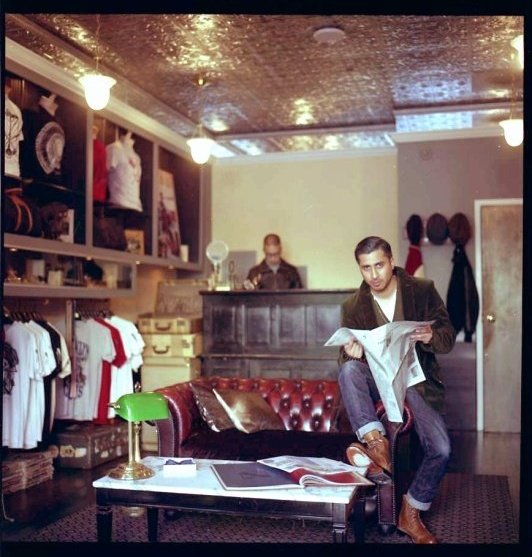
In the remains of what was left of Brooklyn Circus SF, I joined Gabe Garcia, BKC’s art director, for an intimate interview in the heart of San Francisco, the Fillmore.  Recently, the SF branch of the awesome men’s clothiers was forced to close for a few weeks due to a flood from the apartment building above. The damages caused the joint to pack up for a bit. The circus must go on, though, and Brooklyn Circus SF will be reopening this Fri/23, just like new. Thankfully Gabe, even in his frenzied panic to get the store back up and running,  talked to me about his career, the direction of fashion in San Francisco and New York City, and the industry in general. 


SFBG: Do you feel like your formal education at FIT in NYC helped prepare you for working in the industry?

Gabe Garcia: No, not at all.  FIT taught me the fundamentals of sewing, patternmaking, and things of that sort, but most of all what taught me the most was New York City itself. Living in NYC made me actually discipline myself. I didn’t even really know anyone in the city. I tried to get most out of school that I could, but NYC — being such a creative place — prepared me most for the industry.

SFBG: How do you compare fashion and the motivation behind designers in NYC in contrast to San Francisco? What would you like to see in fashion that is lacking in San Francisco, but prominent in NYC?

GG: San Francisco has a more laid-back attitude. Energy in the air is very infectious, so a majority of the people in San Francisco are very casual.  When people dress up to leave their house in the morning here, people are less motivated, which is cool, but peoples’ attitudes do transfer to their outfits. In NYC there is more pressure, desire and intrest. Life is about inspiration and how your surroundings inspire you. Each day I am in NYC I am inspired. Right now, what I am most inspired by is old cars. And all antiques in general, furniture, cars, etc.

SFBG: BKC is not only a fashion label, not it is also considered a lifestyle. Being a part of the BKC team means not only do you focus on the design aspect of the company, but also production, sales, finance, advertising, marketing, photography and blogging. Another than design, how else do you contribute to the BKC team?

GG: My position has evolved since I’ve been with the company. When we started I was standing right by Ouiji (the Brooklyn Circus owner) painting the walls of the store in Brooklyn. I started under Ouigi’s wing. Then I wanted to bring Brooklyn back to San Francisco. I found a way to do what I love while still living close to home. I built a bridge for my career and myself. The first thing we did was scout a perfect location. I am mostly involved with art direction, the creative concept and process, never avoiding the creative process.

SFBG: Can we anticipate any Brooklyn Circus collaborations anytime soon? What is your perspective on collaborations?
GG: Brand and image direction is really important to us right now. I have learned the things that you do wrong are just as impactful, if not more impactful, as the right decision. If you make a decision to go left instead of right, you could take the brand into the wrong direction. We want our brand to be here for the long run. We want to practice the fundaments of these big brands that have been here forever. If we do collaborate it just needs to make sense. It has to be a part of the big picture. Only if it a long term endeavor, we stay. The true importance is to stay with your brand vision. For example Porshe had approached Lacoste with a collaboration idea. Although Porshe is a huge company, Lacoste didn’t jump at that opportunity, because it just wasn’t in the DNA of the company. You see what I mean?  

SFBG: Would you ever consider starting your own label?
I have thought about it. Mostly small capsule collections though, like wallets, hats, neckwear, things like that. I really enjoy working in a team; I like people to bounce my creative ideas of. I like to think of myself as a visionary.

John Ross: Time travelling down the Mississippi

1

 Editors note: John Ross is wandering the country on a book tour, sharing his observations of Obamalandia, 2010. You can read his previous dispatches here and here  

I. Role models


When I finally made Chicago, they were all waiting for me down there two blocks south of the end of the Blue Line, through the wrought-iron gates of Forest Home Cemetery, past the ostentatious mausoleums of fabulous gypsies and clustered around the heroic monument to the Haymarket Martyrs: Red Emma, looking a little dingy these days; Elizabeth Gurley Flynn, the Rebel Girl; William Z. Foster, the CPUSA’s most rigid ideologue and the leaders of its black sector Henry Winston and William Patterson; the anarchist femme fatal Voltairine de Cleyres; hobo-ologist Ben Reitman; and, of course my personal role model, Lucy Parsons, who outlived her Albert (hung by the State for the Haymarket frame-up) by 50 years, traveling this poisoned landscape from sea to stinking sea speechifying to the masses and hawking her incendiary pamphlets to make ends meet. A single wilted rose adorned the soft granite pillow that bears her name and dates.


Scattered amidst the tombstones of the 70-plus anarchists and communists, radicals and rabble-rousers that Irving Abrams and the Pioneer Aid Society planted here are the DNAs of Joe Hill and Big Bill Haywood and Eddie Balchowsky, the one-winged barrelhouse piano player who gave up his arm to Franco’s fascists in the Spanish Civil War. Irving himself has a box seat at the foot of the Haymarket marker, now a National Historical Landmark managed by the government that these brave souls in residence once sought to overthrow.

Emma Goldman and her condescending epitaph (“a people must rise up to liberty”) was unquestionably Irving’s greatest steal, having won the bidding war for her cadaver after she croaked up in Toronto, to bring her home to the country from which she had been deported decades before for counseling young men not to sign up for the First Imperialist War. But despite the old-time luminaries in repose, I had journeyed down to Forest Home to visit with a recent implant, Franklin Rosemont, the anarchist writer and majordomo of Charles Kerr, the oldest radical publishing house in the U.S., now being sustained by his widow Penelope.  

“Surrealism Forever!” reads Franklin’s slab, in keeping with the celebratory tone of this section of the old boneyard. Franklin, who passed abruptly last year, is buried within the arc of the Haymarket monument.  The Cottons, Clara and Warren (not known to be subversives), keep him company.    

I doubt that our current president, whose adopted city Chicago is, has ever communed with these noble spirits, but it would be an educational experience if ever he should make his way down to Forest Home. Enveloped by deal-making devotees of Chicago’s backroom Democratic Party politics like Rahm Emmanuel, Valerie Jarrett, and Education Secretary Arne Duncan (now neck-deep in a hometown scandal for A-listing the scions of the influential in Chicago’s elite public schools), the examples set by Lucy Parsons and Emma Goldman might have stiffened Obama’s shaky backbone and taught him to stand up for the principles he has abandoned as the CEO of the planet’s longest-running criminal conspiracy.

Michael James rules the venerable Heartland Café in Rogers Park in the extreme northwest of this windy metropolis, a schmooze and booze venue for the left side of the local Democratic Party machine for the past three decades.  Both Obama and Bill Ayers have crossed its threshold occasionally at the same time, and Michael, the facilitator of “Rising Up Angry,” a militant Uptown youth group at the tail end of the turbulent ’60s, is now the chairperson of the local Demo ward committee. Although he will never concede that Baracko has squandered the faith that millions invested in him, I sense growing disappointment with Hope Man’s wishy-washy performance 15 months into his tainted term in office.  

As always, I bunked with the James Gang — Paige, the kids, and the estimable Che, a Labrador with a most dignified demeanor — and plunged into Chicago’s stimulating cultural mix. Also in residence: the foot-stomping Irish fiddler Paddy Jones, just in from Tralee — three years ago, Mike dragged Paddy and I off to the Korean baths where the local political class conspires. We sat buck naked in the sauna and Paddy insisted I regale him with the cautionary tale of El Che (the revolutionary martyr not the mutt).  

This time around, Michael escorted me to the late Nelson Algren’s birthday party in a church close by this quintessential Chicago scribbler’s beloved Division Street neighborhood, during which mash notes from his lover Simone de Beuvoir were read, lending credence to Frankie Lyman’s pointed inquiry “Why Do Fools Fall In Love?”

Yet another highpoint of my weeklong pilgrimage to the Hog Butcher of the World were a pair of meetings in Pilsen, an industrial enclave where the U.S. Communist Party first convened hard by Blue Island Avenue back in 1919 and now the most pertinent barrio in Mexico’s second U.S. city. More than a hundred Latino activists showed up to hear me rant and rave about the prospects for a new Mexican revolution and plot this year’s May 1st march in a city where immigrant workers first took to the streets 124 years ago to demand redress for crimes inflicted upon the working class by the bosses of industry and commerce. Four years ago, a half million immigrant workers marched here to demand recognition of their rights and despite the broken promises encapsulated in the Schumer-Graham proposed Immigration “Reform” bill, Chicago’s Mexican community is warming up for another red-hot May Day.  

II.  Resurrection

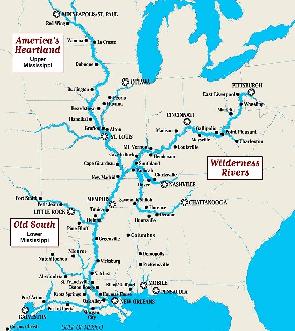
I followed the contours of the mighty Mississippi from Chicago to St. Louis through rich bottomland that is now the domain of Archer Daniels Midland. St. Louis is an urban hub that features wide, well-kept lawns and bushels of dirty money — Monsanto, Boeing, Peabody Energy, and Talx, which counsels greedy congloms on unemployment compensation, are all headquartered here.  

Yet, despite the capitalist connivance, the city has its own sui generis radical history. The 1877 railroad strike spread from the east to St. Louis and set the style for labor strife in the west, and the anarchist Flores Magon brothers published “Regeneracion,” the bible of the 100 year-old Mexican revolution, here before they were run out of town in the teens of the past century.

My days in St. Louis were well spent. I preached an Easter Sunday sermon at the Mid Rivers Ethical Society, sharing my vision of resurrection and insurrection in the aforementioned Forest Home boneyard, and offered up my palaver at a Black Green Party forum in a soul food parlor off Delmar, spreading the news of the Mexican government’s execrable persecution of  electrical workers pushed out of their workplaces last October at bayonet point by the military and police in a scheme to privatize electricity generation south of the border.  

I walked the St Louis Walk of Fame, stepping over the stars of the likes of William Burroughs, Chuck Berry, Walker Evans, and Fontella Bass, all of whom had to leave town to achieve a modicum of notoriety. I even encountered my very first St. Louie Cardinal, a crimson-hued bird perched in a sapling, spring zephyrs ruffling its crest, from which the Anheuser Busch dynasty drew the logo for the local nine in this beisbol-intoxicated town (they were previously dubbed the “Perfectos” after a popular cigar.)

III. Black & Brown

Further down river, the scrublands of Mississippi spread into the horizon beneath the cramped commuter flight in from Memphis. I had not touched down in the state since Freedom Summer 1964, when I arrived on the very day that the bodies of three civil rights workers (Michael Schwerner, Andrew Goodman, and James Chaney) were unearthed beneath a dam in Philadelphia, Miss.  

Although Black and White speak more cordially to each other these days and there are few black bodies swinging from the poplar trees, Mississippi God Damn (dixit Nina Simone) is still moldering down below. I could feel the heat at my hotel just off the Millsaps College campus in Jackson, where a statewide PTA meeting was in progress. In the conference rooms, black parents squared off against white school administrators over curriculums and the unequal quality of education. This is a commemoration year for black activism, the 40th anniversary of the killings at Jackson (and Kent) State and the 50th for SNCC — and old grievances burn long and deep.

The old civil rights movement achieved only token parity in this the poorest state in the union. Now a new civil rights movement is focusing on the flood of Mexican and Latino workers who poured into Mississippi in the wake of Katrina, and brown people are today’s niggers down at the bottom of the food chain.

Only 34,000 “Hispanics” were officially counted in the 2000 state census but Bill Chandler, a veteran of the Texas farm workers union and spokes for the Mississippi Immigrant Rights Alliance (MIRA), thinks that three times as many undocumented workers, lured to the state by casino construction, were overlooked back then. In 2010, Chandler calculates that the immigrant numbers have swelled to 200,000, nearly 10% of the state population, and taken together with close to a 40% Afro-American share, Mississippi now verges on becoming a majority People of Color entity. A similar equation is at work throughout the Deep South with Alabama and South Carolina and Georgia also hanging in the balance. Such changing demographics help to explain the vitriol the Teabaggers and White Citizen Council types shower upon the newcomers.

Back in August 2008, Immigration Control and Enforcement broke its own despicable workplace raid record by imprisoning (in Jena La., the site of other racist outrages) and deporting 595 Mexican and Latino workers who had been employed by Howard Industries down in Laurel. Chandler thinks the pogram was accomplished with the complicity of the company which was intent on cheating workers out of their wages. MIRA eventually won checks for most of those detained and deported.

An even more outrageous incidence of lingering Mississippi bigotry was the treatment of Cirila Balthazar Cruz, a mono-lingual Chatino indigena from Oaxaca who was picked up by police as she stumbled along the highway shoulder trying to get to a local hospital to give birth. Her baby daughter Ruby was subsequently stolen from her by child welfare authorities who deemed her an unfit mother because she couldn’t speak English and given to a well-appointed childless white couple. As might be anticipated, such blatant racism struck a tender nerve south of the border and a year later, Ruby was returned to her birth mother.  

Justice in Mississippi, as in much of Obamalandia, remains elusive but every once in a while the push of the people from down below captures such small prizes.

On their East Coast swing, John Ross & “El Monstruo” will visit Washington/Baltimore (Red Emma’s April 19th/ University of Maryland – Baltimore on the 20th/ Institute for Policy Studies the 21st); New York (NYU the 22nd/ Sixth Street Community Center the 23rd/Bluestockings the 25th); and Boston (Harvard Coop the 27th/David Rockefeller Center for Latin American Studies the 28th/Mass Global Action the 29th/IPS-Jamaica Plains the 30th/ topped of by a May 1st rally on the Boston Commons between Noon & Two.) All events are all free.


Pioneers! O Urban Pioneers!

0

By Robyn Johnson

culture@sfbg.com

People are returning to land like it’s the 1970s all over again, but they’re not packing up for Vermont, letting their hair go au naturel, and unplugging from the grid to do it. Urban agriculture is sprouting up like, well, sprouts. And while we all feel strongly about sustainability and pay a lot of lip service to higher ideals, the majority of us probably aren’t willing to adopt the radical homemaker lifestyle and sacrifice cell phone coverage, The Colbert Report, or regular social interactions. The following cursory guide highlights a few urban farms in SF and immediate environs where you can volunteer or access food, as well as resources for cultivating your space in the concrete tangle (even if you live in a third-story apartment) and options for the time-honored tradition of gleaning.


MANY FARMHANDS MAKE LIGHT WORK

Community farms offer support not always available for the individual plots of community gardens (which typically have astronomically long wait-lists anyway), or even your own cramped Bay Area backyard. And for 60-hour-work-weekers, it might be taxing to grow more than a bit of basil or mold on that cheese in the back of the fridge. If you don’t have the time, energy, space, or inclination to follow famed urban farmer Novella Carpenter’s fantastic example (ghosttownfarm.wordpress.com), consider volunteering at the following places to satisfy your green thumb’s bidding.

As Chris Burley, the director of Hayes Valley Farm (www.hayesvalleyfarm.com) told me, “People are looking for a tangible way to get their hands dirty and address the impacts of our ecologically destructive, industrialized food system while doing something meaningful and connecting with their community.” And that’s exactly the goal that the farm, located off Laguna and Fell steets, has been aiming to fulfill since its inception as a way to revitalize an unused lot, once a freeway onramp, into a shared space.

Although the farm is still taking root, so to speak, the plan is to eventually grow enough fresh and organic food to feed the neediest nearby members plus the volunteers working to cultivate the space. Education also plays a major part in the function of the project, with Thursday and Sunday “work parties” where people can get that hand-dirtying experience, as well as regular classes on urban gardening and permaculture.

Altho Quesada Gardens Initiative (www.quesadagardens.org) primarily operates as a community-directed organization that seeks to strengthen the social systems of Bayview-Hunters Point, local food production has become one of the top concerns of the neighborhood. The resident-led nonprofit connects and maintain backyard farms and free food-producing community gardens throughout the area. In one of the neater facets of its food justice work, the group also helps maintain the kitchen garden of roving supper club Old Skool Café (www.oldskoolcafe.org), which employs at-risk or previously incarcerated youth. With such kick-ass people, it’s no wonder that urban farm hero Will Allen adopted one of the satellite gardens on his visit to the Bayview. Community volunteer meetings and gardening days tend to be informal, so e-mail for specific opportunities.

Sometimes the best things in life really are free. Located at Gough and Eddy on land kindly lent by the Lutheran Church, The Free Farm (www.thefreefarm.org) intends to give away 100 percent of its produce. Still in its initial development stages, the fledgling project welcomes volunteers every Saturday and Wednesday from 10 a.m.-2 p.m. to help with the launch. Working in tandem with its sister organization, The Free Farm Stand in the Mission also offers fresh fruits and vegetables donated by other local urban farmers. Although places like Little City Gardens (www.littlecitygardens.com) and folks who glean from public land contribute, the bulk of the produce comes from the 18th Street and Rhode Island (www.18thandrhodeisland.org) farm maintained by the SF Permaculture Guild, which offers volunteer opportunities as well. With a goal to sextuple the farm’s output within the next five years, it could probably use a little bit more help. Work days are on Friday.

For West Oakland residents, two nonprofits have been power-housing to combat the food desert that plagues the area. City Slickers Farms (www.cityslickerfarms.org) operates several all volunteer-run farms throughout the neighborhood that could always use a few extra work hands. Collectively these six lots cultivate ducks and chickens, bee hives, veggies, fruit trees, and medicinal herbs, the produce of which are distributed through the Saturday Farm Stand on a sliding scale or work-trade basis — no one’s turned away. And if you still have a mighty urge for some composting, weeding, planting, and mulching, People’s Grocery (www.peoplesgrocery.org) runs three farms that constantly need tending. The 55st Street location tends fruit trees, culinary herbs, and vegetables; 59th Street is a slightly less cultivated space in collaboration with Berkeley’s Spiral Gardens Community Food Security Project (www.spiralgardens.org), which runs its own food garden off Oregon and Sacramento streets for you West Berkeleyites. People’s Grocery’s newest land acquisition, the plot behind the California Hotel off of 35th and Chestnut streets, hosts a greenhouse and a biointensive microfarm that replaced its 3.5 acre Sunol site last January.


HOME SWEET URBAN HOMESTEAD

If you have access to private land to cultivate, or even if you don’t, the following resources will set you on the path to food freedom. These classes, demonstration sites, and professional landscaping services will help you turn backyards, rooftops, and even windows into humming generators of small-scale urban agriculture.

Before you even think to take a shovel to your virgin backyard or start a worm bin, visit Garden for the Environment (www.gardenfortheenvironment.org). A one-acre demonstration garden in the heart of Golden Gate Heights that also teaches organic food production and sustainable landscaping with weekly workshops, you can see how it’s done before trial-and-erroring on that graywater irrigation system or chicken coop. The resource directory on its Web site also serves as an invaluable aid for at-home troubleshooting. Hotlines for gardening and composting issues, where to find recycled lumber, how to test your soil, manure suppliers, wasp removal companies — it’s all there.

DIY food production classes abound everywhere in the Bay Area but the one-stop shopper won’t find a better resource than the Institute of Urban Homesteading (www.iuhoakland.com) in Oakland. It offers a comprehensive curriculum ranging from beekeeping, butchery, goat farming, brewcraft, herbal medicine, bread making, fermentation, berry patches, and other topics of the same ilk. It’s a real crash course in manifesting your inner Laura Ingalls Wilder. With no central location, classes are taught in the teachers’ homes, which presents a neat opportunity to see real-time urban homesteading and the different ways people create sustainable places in an urban setting. Also consider Urban Kitchen SF (www.urbankitchensf.com) and BioFuel Oasis (www.biofueloasis.com) in Berkeley for supplementary courses.

If you’re feeling overwhelmed and green behind the ears, several services will landscape your yard into a cornucopia of organic delectables and even continue the maintenance if you just can’t do anything with that black thumb of death. Star Apple Edible Gardens (www.starappleediblegardens.com) provides a range of services throughout the Bay Area, the simplest being consultations and composting tutorials. You also can order ready-made kitchen gardens or go whole kit and caboodle and have customized “garden design and installation, pathway and hardscape installation, irrigation design and installation, planting, plant feeding and cultivation, regular harvesting of your garden crops, and design, installation, and maintenance of composting systems.” Other similar businesses include All Edibles (www.alledibles.com), which specifically works with East Bay dwellers, and Chris Sein of Wildheart Gardens (www.wildheartgardens.com), who also consults on backyard chickens and mushrooms.

For a lot of us in the Bay Area, the dream of having a backyard is about as likely as Glenn Beck admitting that Obama is not a herald of an impending Orwellian dictatorship. So what can the more dispossessed among us do to return to the soil? Popular in Europe and becoming more so here, rooftop gardens are a great solution to space issues. Graze the Roof (www.grazetheroof.blogspot.com), the community vegetable patch on top of Glide Memorial Church, hosts rooftop gardening workshops. You can also gain experience by volunteering on work days every Thursday or first Saturdays. For those feeling less than philanthropic or sociable, pop over to your local bookstore to pick up the Use Your Roof Guidebook by Bay Area Localize (www.baylocalize.org). Seven bucks and four easy chapters gets you on your way to a more edible roof.

For balcony-less apartment dwellers, and maybe those with vaulted ceilings, window farms have become the new rooftop gardens. An open-source project that’s evolved over the past year, Windowfarms (www.windowfarms.org) gives how-tos for its innovatively cheap and space-conscious hydroponics system — jerry-rigged from repurposed plastic water bottles, tubing, and fish tank pumps that hangs in vertical columns in the window — as free PDFs on its Web site. It also hosts community boards where members share improvements to the system, which is constantly being updated. Alas, window farms can only really successfully raise leafy greens, but having a homegrown salad in a studio apartment is still pretty darn amazing.

If you already have your urban farm bustling along — or even just a prolific citrus tree — then yard-sharing is a great way to spread the fruit of your labor throughout the community. Neighborhood Fruit (www.neighborhoodfruit.com), SF Glean (www.sfglean.org), and Produce to the People (www.producetothepeople.org) will gladly help you to unload the excess bounty and distribute it to the hungry.

Live on screen

0

johnny@sfbg.com

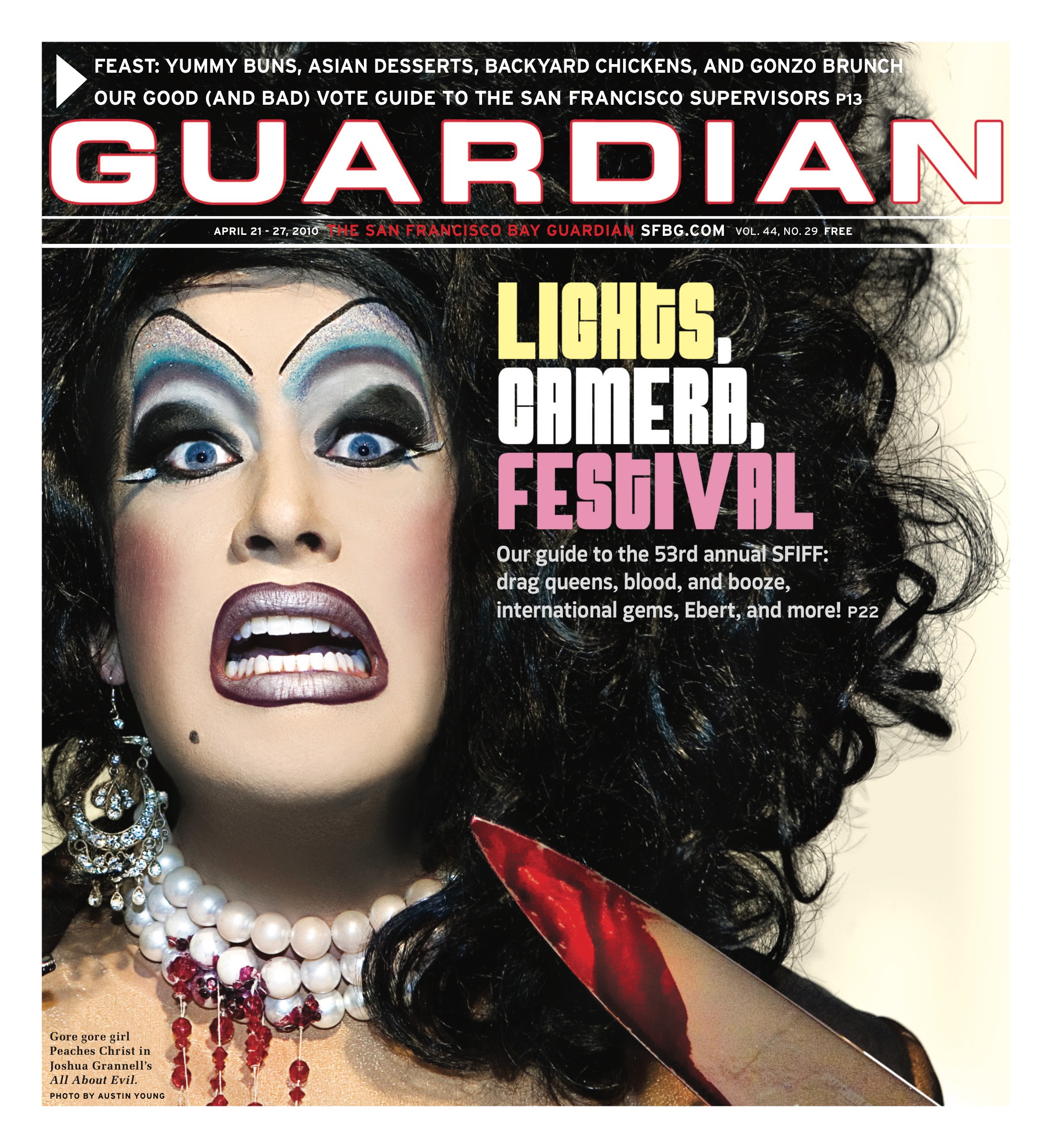
SFIFF All those with curious minds, step right up, we have live cinema waiting for you in this dark room. The idea of “live” or performance-generated movies has taken on a new vitality recently via the light-projecting likes of Bruce McClure, whose ear-splitting and eye-blasting appearances in San Francisco usually sell out. On a smaller local level, Konrad Steiner’s neo-benshi programs have united local writers and a wide variety of filmic subject matter in creative and sometimes entertaining ways. At the San Francisco Film Festival, live music by bands for silent works has become a reliable main attraction. But Sam Green’s and Dave Cerf’s new meta-documentary Utopia in Four Movements adds a new facet to the phenomenon: instead of utilizing an over-familiar voice-over, it unites live narration by Green with a musical performance overseen by Cerf, allowing for degrees of spontaneity and change.

Utopian, isn’t it? At the Mission bar the Phone Booth on an early Monday evening, Green can’t help but tease out his thoughts on the very word. “To me, utopia is almost a metaphor for hope, or hope in the imagination,” he says, shortly after we’ve been flirted with (and flashed) by one fierce female patron. “It’s about trying to be hopeful these days, which is hard. Utopia is almost a way to make up hope. In some ways it’s so preposterous. The word even has negative connotations these days — people are told not to be utopian.” Half an hour later, he returns for another analogy or two: “Utopia is a thing that never really exists. It’s like a flower — it always wilts. Even if there’s a moment of great utopian energy, it can’t last.”

Utopia may not exist in fully realized forms, but the quartet of mutations in Utopia in Four Movements (five if you count the movie) fascinate as real-life fables. The first segment explores Esperanto, which was invented in the late 19th century with the aim of its becoming a universal, international language. As Green puts it, Esperanto is “a wonderful idea that can’t be,” an idea that he illustrates with short direct portraits of contemporary Esperanto speakers that, uncannily, takes on a colors-of-Benneton feel.

Esperanto has also yielded some memorable black-and-white cinema, namely a 1965 Esperanto horror film shot in Big Sur by Conrad Hall, which stars a pre-Star Trek William Shatner. San Francisco movie maniacs may recognize Incubus through the efforts of Will The Thrill and Other Cinema’s Craig Baldwin. “William Shatner wrote a memoir in which he talks about it,” Green says, before adding some information that reflects Utopia‘s ever-changing nature –and utopia’s pitfalls. “I’m trying to do an interview with him because he’s practically the most famous person to have spoken Esperanto. But the world’s most famous Esperanto person is probably [financier] George Soros.”

The idea of utopia isn’t new to Green, whose best-known feature The Weather Underground (2002) digs deep into the multi-faceted realm of ’60s radicalism, riding out its actions and repercussions. The second part of Utopia, set in Cuba, adds a new chapter to Green’s explorations of thorny political contradiction. Like Assata Shakur, the segment’s subject lives in Cuba as a fugitive. In the present, she’s engaged with Cuban hip-hop, but she remains tied to her past as a radical in America. “It’s about the last embers of revolution,” says Green.

One of Utopia‘s movements examines the potential of forensice science in a manner quite different from pro-law enforcement US true crime television, showing how the smallest reinforcement can be regained from sites of mass tragedy. But the movie’s sojourn in China is in some ways its most vivid. There, Green takes an extended trip to the world’s largest shopping mall, in China. The subject matter is akin to dramas such as Jem Cohen’s Chain and Jia Zhangke’s The World (both from 2004), but this is a case of reality trumping fiction. “Almost every article I read about China and capitalism talked about how the world’s largest mall was there now,” says Green. “But nobody described it as a total failure. We were at the mall for ten days, and it was soul-killing. There’s something about a gigantic failed mall that is profoundly depressing.” Luckily, an encounter with a Teletubby who eventually removed its mask added some life to the experience.

The world’s largest shopping mall — at least for now: Green says it is slated to be bulldozed — may be grim, but it’s also richly symbolic when history is integrated to the picture. “Victor Gruen who essentially invented the [shopping] mall in the US in the 1950s was a socialist who came to America,” Green says, as “This Monkey’s Gone to Heaven” gives way to “I Feel Love” on the Phone Booth jukebox. “In turn the mall has gone to China, and the grounds of cultural revolution became the site of a government-funded bust of a mall. In a way, it’s the trajectory of the 20th century.

Today, we tiptoe into the 21st century, with a new president and old-new ways of seeing and making movies. “A year ago, when I was looking at [Utopia], people were saying ‘Aren’t you going to change everything because of Obama?’,” Green remarks. “It felt like cotton candy hope. When [U.S. presidents] are the limits of your possibility, it’s pretty lame.” Truth: Green may have used utopia in his title, but perhaps it’s time to come up with some fresh formulations of hope as well. *

UTOPIA IN FOUR MOVEMENTS

Sun/25, 9:30 p.m., Kabuki

Rolling forward

7

By Adrian Castañeda

news@sfbg.com

San Francisco’s Potrero del Sol Skatepark is often packed with skaterboarders, a testament to the sport’s popularity and to the dearth of places in the city where it’s legal to skate. But that will soon change with the city’s commitment to build two new skateparks: one in SoMa and the other in the Haight.

Both have been tentatively approved by the Board of Supervisors. But before any concrete is poured, the skaters will have to overcome budget crises, angry homeowners, and their own bad reputations, particularly in the Haight, where the proposed park has gotten caught up in the furor over vagrants and the proposed sit-lie ordinance.

San Francisco has long been a skateboarding hub, yet there’s always been friction with police, businesses, and everyday city life. Even though it’s legal, there just aren’t that many places to do it anymore, partially because the city and property owners routinely attach barriers to any surfaces that might be appealing to skaters.

Skateboarders, long accustomed to being ignored and disenfranchised, have responded in their usual DIY fashion, such as building a few obstacles in an empty parking lot under a freeway overpass. The city took notice of the demand and after three years of planning and meetings, the newest of San Francisco’s skate parks has finally been allotted the necessary funds to begin construction around the end of summer.

The Central Freeway Skate Park will be located in what is now a parking lot at the intersection of Duboce and Stevenson streets in the north Mission District area. With $2 million collected through the Central Freeway Corridor Housing and Transportation Improvement Act of 1999, which provides for the sale and lease of parcels of city land that were under the now-demolished freeway, officials plan to develop the park to eventually include basketball courts and a dog run.

Rich Hillis of the Mayor’s Office of Economic Development said the city is considering a variety of improvements, but confirmed that “we think the skate park is the priority.” He attributes the park’s relatively unopposed approval to the demands of the city’s skaters and to the community as a whole. “They embraced the idea of a skatepark early on,” Hillis said of the forward-thinking residents of the area. He jokingly adds that the park should be named “Hornbeck Park” after Bryan Hornbeck, director of the San Francisco Skateboard Association. Hornbeck and his associates started the SFSA to push the city to build new parks designed with skaters in mind.

“San Francisco has to have a world-class skatepark,” Hornbeck said at one of the many skate events his group organizes. Hornbeck said the city has been receptive, working with skaters on the design of the park, but left SFSA to organize skaters and raise the funds. “It’s bake sale; it’s lemonade stand; it’s the best we can do,” Hornbeck said. “We’re not trying to take anything, we’re trying to make our own thing.”

Plans for the park, drawn up by notable skatepark design firm New Line Skateparks, are currently under review by civil engineers. After the plans are finalized, the project will be bid out to find a contractor. Tentative 3-D renderings have been online for months, sparking heated debate on skateboarding Web sites.

When the acclaimed Potrero del Sol Skatepark opened in 2008, many skaters felt that while it was well-designed and enjoyable, it didn’t have enough terrain that mimicked street riding. New Line has designed a number of skating plazas, most recently in Los Angeles. Its involvement gives many skaters hope that the new park will incorporate obstacles that represent the city’s rich street skating history.

But things are not moving as swiftly for the city’s other planned skate park, just beyond where Waller dead-ends at Stanyan in the Haight, which doesn’t have the same guaranteed funding stream. While bids for a design have been submitted, the Recreation and Park Department needs to get approval for $1 million–$2 million in construction funds before moving forward. The city proposed the 120,000-square-foot cul-de-sac at the end of Waller and next to SFPD’s Park Station after the original site near the Golden Gate Park horseshoe pits was found to be too small and lacking the necessary sight-lines for safety. But according to some residents groups, the parking lot is less safe for youths.

Citing police incident reports, Lena Emmery, president of the Cole Valley Improvement Association, told us the Waller park would be in an area with a high number of reported assaults and drug arrests and would add to noise pollution. “This location puts a skateboard park too close to a dense residential area, as well as some businesses that would be negatively impacted by the noise from the skaters,” she wrote via e-mail.

While the lot is occasionally used for bicycle safety classes and overflow parking at Kezar Stadium, it sits empty most of the year, although a farmers market will hold its grand opening there April 28. Will Keating, a Waller Street resident and skateboarder who works on Haight Street, is excited about the proposed park. He disagrees with claims that the park would be a negative impact on his neighborhood. “I hear homeless mutants going crazy outside my window every night, I would much prefer skateboards,” Keating said of the current noise pollution.

The Haight Ashbury Improvement Association, which is leading the charge for a sit-lie ordinance, conducted a survey on its Web site and found that many of its visitors feel the skatepark would increase noise and safety problems in the Haight. Visitors to the site also said the lot would be better used as a farmers market. Yet city officials say the two are not mutually exclusive, and early designs for the project are said to include a large public plaza adjacent to the park intended for community events.

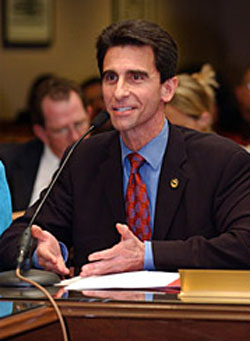
“We realize this is going to be a multiuse space,” said Nick Kinsey, property manager for the Recreation and Park Department. “Throughout San Francisco there are thousands and thousands of skateboarders but only two places where it is legal to skate.” Kinsey called the park is “a done deal,” citing a 2007 ordinance introduced by Sup. Ross Mirkarimi that mandates the department build a skatepark on the cul-de-sac.

Kent Uyehara, merchant chair for the HAIA and owner of FTC skateshop on Haight, said the community’s fears about pedestrian safety are understandable, but that fears of increased violence and drug use are irrational. “If you can’t have a skate park next to a police station, then basically you are saying you can’t have it.”

If the city enacts the sit-lie ordinance, which Uyehara supports, it would be easy to imagine that a skate park would be a magnet for homeless and others looking to escape police harassment. But Uyehara is adamant that the park would not become a haven for Haight Street refugees. “Skateboarders self-police their own areas,” he said. “We’re not trying to kick the homeless out,” he added. “We’re trying to make the neighborhood attractive for everyone, whether they’re buying something or not.”

Uyehara is no stranger to opposition. When his shop first moved to the Haight in 1994, he had to deal with threats from residents and a neighborhood organization, similar to the one he is now a part of, because of what skateboarding represented to them. Since then skateboarding and his business have prospered, and FTC now has four locations worldwide. “For a city that hosted the X-Games, it’s pathetic how skateboarding has been treated.”

Uyehara says the Waller park, along with the Central Freeway and Potrero del Sol parks, are part of a plan developed by the San Francisco Skate Task Force, created in 2002 by then-Sup. Gavin Newsom to address the growing friction between the city and its skateboard population. The task force envisioned “a series of five parks located in a star pattern, and one in the middle of the city, [that] would make it possible for users to easily get to a park within at least two miles of their home.”

All the meetings and fundraising will be in vain if the park is poorly designed and built, said Jake Phelps, editor-in-chief of Thrasher Magazine. He says locals should design the park “so we have no one to blame but ourselves,” and avoid another flawed park like Crocker Amazon in Sunnydale where, he says, “the fence costs more than the skatepark.” Unimpressed with preliminary designs for the park on Duboce, the notoriously blunt Phelps says, “They’re going to come to our town, drop a turd, and leave.”

The veteran skater is wary of “landscape designers” with grandiose ideas. “There are people who get too involved. They don’t skate. Who are they to tell anybody what it is?” Newer skateparks are too crowded with obstacles trying to please all different kinds of skaters, he said. Instead, he urges a simple design similar to the streets of downtown. “The whole idea of skating is being utilitarian with your environment.” Regardless of the design, he believes it won’t have a dramatic effect on the Haight community: “Homeless people are gonna sleep there,” he said. “People are gonna tag on it and think it’s theirs.”

“The whole city’s a park, but people need somewhere to go when they get kicked out of everywhere,” says pro skater Tony Trujillo, who is able to skate to the Potrero park from his house and thinks others should have the same proximity to hassle-free skating. Julien Stranger, another local pro, feels a park in the Haight would benefit youth in the area by giving them a healthy, creative outlet, something the Haight symbolizes to many. “I don’t think that the neighborhood should be complaining about the energy a skate park will bring,” he said. “Skate parks are pretty positive.”

Earlier this month, an informational meeting hosted by the Haight Ashbury Neighborhood Council, Kinsey, Hornbeck, and other residents raised concerns that noise pollution and property damage would increase because of the skate park. “There’s been no public outreach,” said Martha Hoffman, who lives across from where the park is slated to be built. “If we’d known about it sooner, we would have opposed earlier.”

Thuy Nguyen of the SF Skate Club, an after-school program that promotes skateboarding as a safe and positive activity, urged residents to look beyond their property values and consider the benefits for the city’s youth. “It’s important for kids who feel that traditional sports aren’t for them.” Her partner, Shawn Connolly, added that skateboarding has grown in popularity with children. “It’s right after baseball,” he said.

“If the city doesn’t have a skatepark, the city is the skatepark,” Hornbeck said of the Waller Street lot where he often hosts skate events with donated ramps to ease the community into the idea of skateboarders using the area. But until the city budget can provide for skateboarders, the debate over the park will rage — and the underused parking lot at the end of Waller will remain just that.

Driving up the cost of housing

0

By Jobert Poblette

news@sfbg.com

GREEN CITY If you think living in the Bay Area is expensive, think about what it would be like if you didn’t have access to public transportation. A new report by Chicago-based think tank Center for Neighborhood Technology (CNT) considers just that problem, offering a new way of understanding just what constitutes affordable housing.

The CNT report — dubbed the Housing and Transportation (H+T) Affordability Index (www.htaindex.cnt.org) — maps housing affordability for 337 metropolitan areas and provides before-and-after snapshots that show how affordability changes when transportation costs are taken into account.

Affordable housing is usually defined as consuming 30 percent or less of a household’s income, but CNT proposes a redefinition. Under CNT’s new definition, housing is only considered affordable if the sum of housing and transportation costs constitutes 45 percent or less of household income. That redefinition would have dramatic effects on the Bay Area’s affordability picture.

Many communities in the region that would have been considered affordable under the old definition — including large swaths of Hayward, Marin County, Sacramento, and Stockton — would be unaffordable under the new standard. And San Francisco, well served by public transit, would be deemed a lot more affordable.

The difference that smart planning and public transportation make can be huge, especially for households already feeling the pinch of a weak economy. According to CNT, transportation costs in “location efficient” neighborhoods — its term for “compact, mixed-use communities with a balance of housing, jobs, and stores, and easy access to transit” — can be as low as 12 percent of a household’s budget versus up to 32 percent for less efficient neighborhoods where residents must drive to jobs and services.

For example, CNT calculated an annual transportation cost difference of $2,780 between Oakland’s Rockridge neighborhood, which it calls “compact,” and the city of Antioch, which it considers “dispersed.”

CNT says “location efficiency” in development can translate to big savings. According to its report, if 50 percent of new growth in the Bay Area occurs in compact rather than dispersed neighborhoods, the region could collectively save more than $1.1 billion in transportation costs.

Besides reducing a community’s environmental impact and improving residents’ quality of life, the report argues that things like walkability, proximity to jobs and services, and efficient public transportation help make an area more livable and affordable. The report also raises questions about the wisdom of cutting public transportation, especially in a period when many households are being forced out of their homes.

CNT hopes that its analysis will lead to more awareness for policy makers and more transparency for consumers. “What we’re looking for is a new definition of affordability, transportation cost disclosures for consumers, and incentives to build more compact communities around transit,” CNT spokesperson Nicole Gotthelf told us.

Gotthelf said the Bay Area has been at the forefront of this issue, specifically mentioning the work of the Bay Area Metropolitan Transportation Commission (MTC), the agency that plans, coordinates, and finances transportation in the nine counties that make up the region. “They’ve been actively trying to understand the housing and transportation trade-offs for Bay Area households.”

In turn, MTC offered support for the principles behind the CNT study. “We agree that it is good policy to promote the development of affordable housing at or near transit hubs,” MTC spokesperson John Goodwin told the Guardian.

In its “Transportation 2035 Plan for the San Francisco Bay Area,” which outlines how the agency will spend $218 billion in transportation funds over the next 25 years, MTC even sets out a goal of “decreas[ing] by 10 percent the combined share of low-income and lower-middle-income residents’ household income consumed by transportation and housing.”

Goodwin told us the agency is committed to smart growth principles: “The Bay Area is not unique, but I think the Bay Area is part of a vanguard … We are among the leading metro areas in making this a policy priority, and I feel confident in saying that this priority will continue to be affirmed.”

Goodwin pointed to the agency’s Transportation for Livable Communities (TLC) program, which is designed to promote development that “revitalizes central cities and older suburbs, supports and enhances public transit, promotes walking and bicycling, and preserves open spaces and agricultural lands.” Now in its 12th year, the TLC program has helped fund scores of transportation-related and affordable housing projects.

The MTC also administers the Housing Incentive Program, which “rewards communities … when they successfully promote high-density housing and mixed-use developments at transit stops to support transit use.” The program provides up to $3 million in grants to local governments that partner with developers to build housing near transit hubs.

Conversely, the agency also won’t approve funding for new transit stops that aren’t in dense areas. The thresholds require a minimum number of housing units within a half-mile radius of new transit stops, from 750 units for new ferry terminals to 3,850 units for new BART stations.

But the MTC’s efforts represent only one part of the equation. Goodwin said that coordination is key. “What we have here in the Bay Area is that decisions about transportation funding — for the most part — are conducted at the regional level, while land-use decisions are made at the local level. So it requires coordination between regional agencies like MTC and local cities and counties.”

In spite of the MTC’s efforts, huge problems plague the region. Housing costs in the Bay Area are among the highest in the nation. A recent report conducted by the Urban Land Institute — based on research conducted by CNT — found that, on average, Bay Area households spent $41,420 a year on housing and transportation, a whopping 59 percent of median income.

With budget crises affecting many of the region’s public transit providers, service cuts and fare hikes make the picture bleaker. Recently, AC Transit and Muni services were cut by almost 10 percent, causing longer waits and crowded buses — and a huge budget deficit could mean deep cuts in Caltrain service this summer. If these cuts force more Bay Area households to turn to cars, the region’s affordability can be adversely affected, even as households deal with the pressures of a weak economy.

On the national stage, several developments offer signs that smart growth principles — including the link between housing affordability and transportation — may be gaining wider traction. These developments are presenting smart growth and public transportation advocates with opportunities to push for reform.

Last year, three federal agencies — the Department of Housing and Urban Development, the Department of Transportation, and the Environmental Protection Agency — announced a partnership that would have the agencies working together on housing and transportation initiatives. The partnership laid out six “livability principles,” including commitments to provide more transportation choices, “promote equitable, affordable housing,” support existing communities, and “value communities and neighborhoods.” The new partnership’s rhetoric includes references to location and energy efficiency, transit-oriented and mixed-use development, and walkable neighborhoods.

On Capitol Hill, Congress is working on a new omnibus transportation bill to replace a bill that expired in 2009. The bill would provide billions in federal funding for highways and other forms of surface transportation. Consideration of the new bill in both the House and Senate has stalled, but some proposals emphasize the creation of transportation choices and livable communities. Transportation for America (www.t4america.org), a coalition of housing, transportation, environmental, and other groups, is mobilizing to promote public transportation and sustainable development in the new transportation bill, seeking to make CNT’s way of looking at the world into official U.S. policy.

Music listings

0

Music listings are compiled by Paula Connelly and Cheryl Eddy. Since club life is unpredictable, it’s a good idea to call ahead to confirm bookings and hours. Prices are listed when provided to us. Submit items at listings@sfbg.com.

WEDNESDAY 21

ROCK/BLUES/HIP-HOP

*Bronx, Violent Soho, Mariachi El Bronx, Sean Wheeler and Zander Schloss Independent. 8pm, $20.

Camera Obscura, Best Coast Great American Music Hall. 8pm, $20.

"Eclectic Live" Harlot, 46 Minna, SF; www.harlotsf.com. 9pm, $5. With Shande and Kill Moi.

His Name is Alive, Orange Peels, Kitten Bottom of the Hill. 9pm, $10.

Norah Jones, Sasha Dobson Fillmore. 8pm, $60.

Jookio Duo, Phil Musra Trio, Cottom Museum Café du Nord. 8:30pm, $15.

Panthelion Madrone Art Bar. 9:30pm, $5.

Talvin Singh presents Tablatronica Live, Janaka Selekta Bimbo’s 365 Club. 8pm, $25.

Taargus Taargus, Cola-Cola, What Now? Hemlock Tavern. 9pm, $6.

DANCE CLUBS

Booty Call Q-Bar, 456 Castro, SF; www.bootycallwednesdays.com. 9pm. Juanita Moore hosts this dance party, featuring DJ Robot Hustle.

Machine Sloane, 1525 Mission, SF; (415) 621-7007. 10pm, free. Warm beats for happy feet with DJs Sergio, Conor, and André Lucero.

Mary-Go-Round Lookout, 3600 16th St, SF; (415) 431-0306. 10pm, $5. A weekly drag show with hosts Cookie Dough, Pollo Del Mar, and Suppositori Spelling.

RedWine Social Dalva. 9pm-2am, free. DJ TophOne and guests spin outernational funk and get drunk.

Respect Wednesdays End Up. 10pm, $5. Rotating DJs Daddy Rolo, Young Fyah, Irie Dole, I-Vier, Sake One, Serg, and more spinning reggae, dancehall, roots, lovers rock, and mash ups.

Synchronize Il Pirata, 2007 16th St, SF; (415) 626-2626. 10pm, free. Psychedelic dance music with DJs Helios, Gatto Matto, Psy Lotus, Intergalactoid, and guests.

Yoruba Dance Sessions Bacano! Som., 2925 16th St, SF; (415) 558-8521. 9pm, free. With resident DJ Carlos Mena and guests spinning afro-deep-global-soulful-broken-techhouse.

THURSDAY 22

ROCK/BLUES/HIP-HOP

B Foundation, Pigeon John, Cubik and Origami Bottom of the Hill. 9pm, $12.

*Bar Feeders, Los Dryheavers, Steeples Knockout. 10pm, $6.

Bloody Beetroots, Tenderloins, Nisus Independent. 9pm, $16.

*Cuban Cowboys, Chicha Libre Rickshaw Stop. 8pm, $12.

Jrod Indigo Coda. 9:30pm, $7.

Mofo Party Band Bimbo’s 365 Club. 8pm, $16.

Phantom Kicks, Spesus Christ, Soap Collectors Hotel Utah. 9pm, $6.

*"RockAria" Davies Symphony Hall, 201 Van Ness, SF; www.sfgmc.org. 8pm, $15. San Francisco Gay Men’s Chorus, with guest Mission High School Chorus, perform rock tunes.

Sonata Arctica, Mutiny Within, Powerglove Slim’s. 8pm, $23.

Yo La Tengo, Camera Obscura Fillmore. 8pm, $26.50.

DANCE CLUBS

Afrolicious Elbo Room. 9:30pm, $5-7. DJs Pleasuremaker and Señor Oz spin Afrobeat, Tropicália, electro, samba, and funk.

Blue Moon Revue DNA Lounge. 9pm, $20. Swing, cabaret, and more.

Caribbean Connection Little Baobab, 3388 19th St, SF; (415) 643-3558. 10pm, $3. DJ Stevie B and guests spin reggae, soca, zouk, reggaetón, and more.

Drop the Pressure Underground SF. 6-10pm, free. Electro, house, and datafunk highlight this weekly happy hour.

Good Foot Yoruba Dance Sessions Bacano! Som., 2925 16th St, SF; (415) 558-8521. 9pm, free. A James Brown tribute with resident DJs Haylow, A-Ron, and Prince Aries spinning R&B, Hip hop, funk, and soul.

Gymnasium Matador, 10 Sixth St, SF; (415) 863-4629. 9pm, free. With DJ Violent Vickie and guests spinning electro, hip hop, and disco.

Half-way to Mitchfest El Rio. 6pm, $10-20 sliding scale. With DJ Sarah Westlake spinning funk disco and live performances of music, poetry, and more.

Kelley Stoltz Jukebox Amnesia. 10pm, free.

Koko Puffs Koko Cocktails, 1060 Geary, SF; (415) 885-4788. 10pm, free. Dubby roots reggae and Jamaican funk from rotating DJs.

Mestiza Bollywood Café, 3376 19th St, SF; (415) 970-0362. 10pm, free. Showcasing progressive Latin and global beats with DJ Juan Data.

Peaches Skylark, 10pm, free. With an all female DJ line up featuring Deeandroid, Lady Fingaz, That Girl, and Umami spinning hip hop.

Popscene 330 Rich. 10pm, $10. Rotating DJs spinning indie, Britpop, electro, new wave, and post-punk.

Tropicana Madrone Art Bar. 9pm. Salsa, cumbia, reggaeton, and more with DJ Don Bustamante and Sr. Saenz.

FRIDAY 23

ROCK/BLUES/HIP-HOP

Casual, BPos, Chosen Few, Sound Earth El Rio. 9pm, $10.

*Children of the Damned, Hatchet, Witchaven, Invection, DJ Rob Metal Thee Parkside. 9:30pm, $8.

Dark Star Orchestra Regency Ballroom. 8pm, $33.

Dear Hunter, Kay Kay and His Weathered Underground, Pine and Battery, Kinzie Affair Bottom of the Hill. 7pm, $12.

*Early Graves, He Who Cannot Be Named, Bomber Hemlock Tavern. 9:30pm, $6.

Japandroids, Avi Buffalo Independent. 9pm, $15.

Shelby Lynne, Findlay Brown, Ann Atomic Great American Music Hall. 9pm, $22.

Lydia Pense and Cold Blood Biscuits and Blues. 8 and 10pm, $20.

John Richardson Socha Café, 3235 Mission, SF; (415) 643-6848. 8:30pm, free.

"Rock, Strip, N Roll" Blue Macaw, 2565 Mission, SF; www.liveevilrocks.com. 9pm, $10. With Live Evil, Wildside, and Cookie Mongoloid, plus burlesque by Clandestine, Twilight Vixen Revue, and Sparkly Devil.

Josh Rouse, Bart Davenport Bimbo’s 365 Club. 9pm, $22.50.

Slackers, Phenomenauts, TomorrowMen, DJ Big Dwayne Slim’s. 9pm, $16.

Stripmall Architecture, Geographer, Delle Vellum Café du Nord. 9:30pm, $12.

Yo La Tengo, Thee Ohsees Fillmore. 9pm, $26.50.

Zoo Station, Minks Red Devil Lounge. 9:30pm, $10.

JAZZ/NEW MUSIC

Audium 9 1616 Bush, SF; (415) 771-1616. 8:30pm, $15.

Black Market Jazz Orchestra Top of the Mark. 9pm, $10.

Booker T. Herbst Theatre, 401 Van Ness, SF; www.sfjazz.org. 8pm, $25-55.

Eric Kurtzrock Trio Ana Mandara, Ghirardelli Square, 891 Beach, SF; (415) 771-6800. 8pm, free.

Madeline Peyroux Yoshi’s San Francisco. 8 and 10pm, $26.

Tin Cup Serenade Revolution Café, 3248 22nd St, SF; (415) 642-0474. 8:45pm, free.

FOLK/WORLD/COUNTRY

Locura, Makru Elbo Room. 10pm, $10.

Lucky Road Amnesia. 9pm, $5.

Rob Reich and Craig Ventresco Amnesia. 7pm, free.

Toshio Hirano Mercury Café, 201 Octavia, SF; (415) 252-7855. 7:30pm, free.

DANCE CLUBS

Activate! Lookout, 3600 16th St, SF; (415) 431-0306. 9pm, $3. Face your demigods and demons at this Red Bull-fueled party.

Alcoholocaust Presents Riptide Tavern. 9pm, free. DJ What’s His Fuck spins punk rock and other gems.

Blow Up Rickshaw Stop. 10pm, $10. With rotating DJs.

Bonobo Mezzanine. 9pm, $22.50. With YPPAH.

Exhale, Fridays Project One Gallery, 251 Rhode Island, SF; (415) 465-2129. 5pm, $5. Happy hour with art, fine food, and music with Vin Sol, King Most, DJ Centipede, and Shane King.

Fagsweat Rickshaw Stop. 6pm, $3. DJ Kuze spins at this happy hour for gay athletes and friends.

Fat Stack Fridays Koko Cocktails, 1060 Geary, SF; (415) 885-4788. 10pm, free. With rotating DJs Romanowski, B-Love, Tomas, Toph One, and Vinnie Esparza.

Gay Asian Paradise Club Eight, 1151 Folsom, SF; www.eightsf.com. 9pm, $8. Featuring two dance floors playing dance and hip hop, smoking patio, and 2 for 1 drinks before 10pm.

Good Life Fridays Apartment 24, 440 Broadway, SF; (415) 989-3434. 10pm, $10. With DJ Brian spinning hip hop, mashups, and top 40.

Gymnasium Stud. 10pm, $5. With DJs Violent Vickie and guests spinning electro, disco, rap, and 90s dance and featuring performers, gymnastics, jump rope, drink specials, and more.

Hot Chocolate Milk. 9pm, $5. With DJs Big Fat Frog, Chardmo, DuseRock, and special guest Sunshine Jones spinning old and new school funk.

House of Voodoo Medici Lounge. 9pm, $5. With DJs voodoo and Purgatory spinning goth, industrial, glam rock, and more.

J. Rocc Mighty. 10pm, $10.

Kev Choice with DJ Anannda Coda. 10pm, $10. Hip-hop, soul, and funk.

Look Out Weekend Bambuddha Lounge. 4pm, free. Drink specials, food menu and resident DJs White Girl Lust, Swayzee, Philie Ocean, and more.

M4M Fridays Underground SF. 10pm-2am. Joshua J and Frankie Sharp host this man-tastic party.

Psychedelic Radio Club Six. 9pm, $7. With DJs Kial, Tom No Thing, Megalodon, and Zapruderpedro spinning dubstep, reggae, and electro.

Rockabilly Fridays Jay N Bee Club, 2736 20th St, SF; (415) 824-4190. 9pm, free. With DJs Rockin’ Raul, Oakie Oran, Sergio Iglesias, and Tanoa "Samoa Boy" spinning 50s and 60s Doo Wop, Rockabilly, Bop, Jive, and more.

Trannyshack DNA Lounge. 10pm, $12. Michael Jackson tribute with performances by Holy McGrail, Raya Light, Candi Gurl, Suppositori Spelling, and more.

SATURDAY 24

ROCK/BLUES/HIP-HOP

Angel Island, Sons of Doug, Manzanita Hotel Utah. 9:30pm, $6.

Seth Augustus Revolution Café, 3248 22nd St, SF; (415) 642-0474. 8:45pm, free.

Dark Star Orchestra Regency Ballroom. 8pm, $33.

Dr. Dog, Sean Bones, Pepi Ginsberg Great American Music Hall. 9pm, $20.

Rick Estrin and the Nightcats Biscuits and Blues. 8 and 10pm, $20.

*Finntroll, Moonsorrow, Swallow the Sun, DJ Rob Metal Thee Parkside. 9pm, $20-40.

Ruth Gerson Hotel Utah. 8pm, $10.

HIJK, Teen Challenge, Wendy Darling Hemlock Tavern. 9:30pm, $7.

Hotel Eden, Kevin Beadles, Bias Tape Brainwash Café, 1122 Folsom, SF; www.brainwash.com. 8pm, free.

Alee Karim, Dry Spells, Sarees, Lake Millions Amensia. 9pm, $7.

Luce, Brad Wolfe, Felsen Slim’s. 9pm, $15.

*Rykarda Parasol, Tiny Television, Chambers Café du Nord. 9:30pm, $12.

Picture Atlantic, Bird By Bird, Please Do Not Fight Bottom of the Hill. 9pm, $12.

Re-Volts, Compton SF, Started-Its El Rio. 10pm, $7.

Reefrider, Lloyds Garage, Suck It Thee Parkside. 3pm, free.

Sleepy Sun, Late Young Rickshaw Stop. 8:30pm, $12.

*Wedding Present, Mister Loveless, Surf Cinema Independent. 9pm, $15.

Yo La Tengo, Sic Alps Fillmore. 9pm, $26.50.

JAZZ/NEW MUSIC

Audium 9 1616 Bush, SF; (415) 771-1616. 8:30pm, $15.

Eric Kurtzrock Trio Ana Mandara, Ghirardelli Square, 891 Beach, SF; (415) 771-6800. 8pm, free.

Marlena Teich Quintet Savanna Jazz. 8pm.

Madeline Peyroux Yoshi’s San Francisco. 8 and 10pm, $26.

Ricardo Scales Top of the Mark. 9pm, $15.

FOLK/WORLD/COUNTRY

Bossa 5-0 Socha Café, 3235 Mission, SF; (415) 643-6848. 8:30pm, free.

Gamelan Sekar Jaya School of the Arts, Main Theater, 555 Portola, SF; (510) 655-1227. 7pm, $20.

Ghost The Music Store, 66 West Portal, SF; (415) 664-2044. 2pm, free.

Ana Moura Palace of Fine Arts, 3301 Lyon, SF; www.sfjazz.org. 8pm, $25-55.

Tito Y Son de Cuba Red Poppy Art House. 8pm, $15.

DANCE CLUBS

Bar on Church 9pm. Rotating DJs Foxxee, Joseph Lee, Zhaldee, Mark Andrus, and Niuxx.

Barracuda 111 Minna. 9pm, $5-10. Eclectic 80s music with Djs Damon, Phillie Ocean, and Javier, plus free 80s hair and make-up by professional stylists.

Bootie DNA Lounge. 9pm, $6-12. Mash-ups with Adrian and Mysterious D.

Ceremony Knockout. 9pm, $10. With David J, Vinsantos, and DJ Yule B Sorry.

Colombia y Panama Coda. 10pm, $5. Latin with DJs Beto, Vinnie Esparza, and Guillermo.

Dead After Dark Elbo Room. 6-9pm, free. With DJ Touchy Feely.

4OneFunktion Elbo Room. 10pm, $5-10. Hip-hop with Eric Bobo, Rhettmatic, and F.A.M.E.

Go Bang! Deco SF, 510 Larkin, SF; (415) 346-2025. 9pm, $5. Recreating the diversity and freedom of the 70’s/ 80’s disco nightlife with DJs Steve Fabus, Nicky B., and special guest Prince Klassen.

HYP Club Eight, 1151 Folsom, SF; www.eightsf.com. 10pm, free. Gay and lesbian hip hop party, featuring DJs spinning the newest in the top 40s hip hop and hyphy.

Junk Food Love Madrone Art Bar. 9pm, $5. Hip-hop, soul, and reggae with DJ A-Ron, Sneak-E Pete, and Chilipino and Chardmo.

Reggae Gold Club Six. 9pm, $15. With DJs Daddy Rolo, Polo Mo’qz, Tesfa, Serg, and Fuze spinning dancehall and reggae.

Social Club Lookout, 3600 16th St, SF; (415) 431-0306. 9pm. Shake your money maker with DJs Lee Decker and Luke Fry.

Spirit Fingers Sessions 330 Ritch. 9pm, free. With DJ Morse Code and live guest performances.

SUNDAY 25

ROCK/BLUES/HIP-HOP

Aqua Teen Hunger Force Regency Ballroom. 8pm, $25.

Blue Oyster Cult, Medieval Knievel Slim’s. 8pm, $30.

Dr. Dog, Sean Bones, Pepi Ginsberg Great American Music Hall. 9pm, $20.

Sue Foley and Peter Karp Biscuits and Blues. 7:30 and 9:15pm, $20.

Mallard, Le Switch, Whispering Pines Hemlock Tavern. 9pm, $6.

Shearwater, Wye Oak, Hospital Ships Bottom of the Hill. 9pm, $12.

Shotwell, Kreamy ‘Lectric Santa, Dakota Slim Thee Parkside. 8pm. Benefit for Haiti. Other artists include Welfare Waifs and the Exhibionette, Alabaster Choad, Aquitted, Lost Perros Locos, and Ben the Comedian.

Emily Wells, Gabriel Kahane and Rob Moose, Timmy Straw Café du Nord. 8pm, $10.

JAZZ/NEW MUSIC

Charles Lloyd New Quartet Palace of Fine Arts, 3301 Lyon, SF; www.sfjazz.org. 7pm, $30-70.

Jazz Mafia’s Brass Bows and Beats Yoshi’s San Francisco. 3 and 7pm, $10-75.

Noel Jewkes, Larry Vuckovich, and Marky Quayle Bliss Bar, 4026 24th St, SF; (415) 826-6200. 4:30pm, $10.

Quijerema Coda. 8pm, $10.

FOLK/WORLD/COUNTRY

Gen-11, Longliner Thee Parkside. 3pm, free.

Underskore Orkestra, Mad Maggies Amnesia. 9pm, $7-10.

DANCE CLUBS

DiscoFunk Mashups Cat Club. 10pm, free. House and 70’s music.

Dub Mission Elbo Room. 9pm, $6. Dub, roots, and classic dancehall with Ludachris and Vinnie Esparza.

45Club Knockout. 10pm, free. Funky soul with dX the Funky Gran Paw, Dirty Dishes, and English Steve.

Fresh Ruby Skye. 6pm, $25. With the Perry Twins.

Gloss Sundays Trigger, 2344 Market, SF; (415) 551-CLUB. 7pm. With DJ Hawthorne spinning house, funk, soul, retro, and disco.

Honey Soundsystem Paradise Lounge. 8pm-2am. "Dance floor for dancers – sound system for lovers." Got that?

Jock! Lookout, 3600 16th St, SF; (415) 431-0306. 3pm, $2. This high-energy party raises money for LGBT sports teams.

Kick It Bar on Church. 9pm. Hip-hop with DJ Zax.

Lowbrow Sunday Delirium. 1pm, free. DJ Roost Uno and guests spinning club hip hop, indie, and top 40s.

Religion Bar on Church. 3pm. With DJ Nikita.

Stag AsiaSF. 6pm, $5. Gay bachelor parties are the target demo of this weekly erotic tea dance.

MONDAY 26

ROCK/BLUES/HIP-HOP

Keith Emerson and Greg Lake Regency Ballroom. 8pm, $41-65.

"Felonious Presents Live City Revue" Coda. 9pm, $7.

Nanci Griffith Yoshi’s San Francisco. 8pm, $40.

Growing, Eric Copeland, Death Sentence: Panda! Bottom of the Hill. 9pm, $14.

Sam Flax Keener and Higher Color, Part Time, Cosmetics Knockout. 9pm, $7.

Leon Redbone Great American Music Hall. 8pm, $25.

DANCE CLUBS

Bacano! Som., 2925 16th St, SF; (415) 558-8521. 9pm, free. With resident DJs El Kool Kyle and Santero spinning Latin music.

Black Gold Koko Cocktails, 1060 Geary, SF; (415) 885-4788. 10pm-2am, free. Senator Soul spins Detroit soul, Motown, New Orleans R&B, and more — all on 45!

Death Guild DNA Lounge. 9:30pm, $3-5. Gothic, industrial, and synthpop with Decay, Joe Radio, and Melting Girl.

M.O.M. Madrone Art Bar. 6pm, free. With DJ Gordo Cabeza and guests playing all Motown every Monday.

Manic Mondays Bar on Church. 9pm. Drink 80-cent cosmos with Djs Mark Andrus and Dangerous Dan.

Monster Show Underground SF. 10pm, $5. Cookie Dough and DJ MC2 make Mondays worth dancing about, with a killer drag show at 11pm.

Moonshine Mondays Dalva. 6pm, free. With DJ Blaze Orange spinning vintage country.

Network Mondays Azul Lounge, One Tillman Pl, SF; www.inhousetalent.com. 9pm, $5. Hip-hop, R&B, and spoken word open mic, plus featured performers.

Skylarking Skylark. 10pm, free. With resident DJs I & I Vibration, Beatnok, and Mr. Lucky and weekly guest DJs.

TUESDAY 27

ROCK/BLUES/HIP-HOP

Aqualung, Krista Polvere Swedish American Hall (upstairs from Café du Nord). 8pm, $20.
Everybody Was in the French Resistance … Now, AB and the Sea, Carletta Sue Kay Bottom of the Hill. 9pm, $12.
Nanci Griffith Yoshi’s San Francisco. 8pm, $40.
Larry and His Flask, Kemo Sabe, T&A Knockout. 6pm, free.
Liars, Fol Chen Slim’s. 8:30pm, $15.
Mary Onettes, Magic Bullets, Here Come the Saviours Rickshaw Stop. 8pm, $12.
Tempo No Tempo, Dinowalrus, Ingot Rot Hemlock Tavern. 9pm, $6.
Le Vice, Audia Fauna, Wooster Elbo Room. 9pm, $6.
DANCE CLUBS
Alcoholocaust Presents Argus Lounge. 9pm, free. "Stump the Wizard" with DJ Wizard and DJ What’s His Fuck.
Eclectic Company Skylark, 9pm, free. DJs Tones and Jaybee spin old school hip hop, bass, dub, glitch, and electro.
La Escuelita Pisco Lounge, 1817 Market, SF; (415) 874-9951. 7pm, free. DJ Juan Data spinning gay-friendly, Latino sing-alongs but no salsa or reggaeton.
Share the Love Trigger, 2344 Market, SF; (415) 551-CLUB. 5pm, free. With DJ Pam Hubbuck spinning house.

Leno & TURN team up for a “ratepayers’ right to vote act”

California Sen. Mark Leno has introduced legislation that would give utility customers the right to have a say over how investor-owned utilities, like Pacific Gas & Electric Co., distribute their profits. Under the proposal, which is being heard today, April 20, by the California Senate Energy Committee, ratepayers would have an opportunity to vote before PG&E transferred millions in profits to its shareholder entity, parent company Pacific Gas & Electric Corp.

Sponsored by The Utility Reform Network (TURN), the leading advocacy group opposing Prop 16, the measure is a clear response to the PG&E-bankrolled “Taxpayer’s Right to Vote Act.” The utility giant is poised to spend up to $35 million on the campaign to pass Prop 16, a ballot initiative requiring a two-thirds majority vote for municipal electricity programs. The proposed change in the state constitution could serve to eliminate the utility’s competition and secure its monopoly.
 
“Ratepayers should definitely have a say,” Leno told the Guardian. “Some of these ratepayer-generated profits go to very expensive political campaigns.”

In a press release issued about the proposed legislation, titled Senate Bill 1441, Leno highlighted an array of service problems PG&E customers have had to contend with, including “small service outages, some resulting from underground explosions, due to the utility company’s failure to invest adequate resources in routine preventive maintenance and upgrades on its aging delivery system.”

Not surprisingly, PG&E sent a letter of opposition to the bill, charging that it would have “significant negative impacts on utility operations, reliability, and costs to customers,” the opposite argument that Sen. Leno has used to promote it. Supporters include TURN, the Agricultural Energy Consumers Association, and the South San Joaquin Irrigation District.

If the legislation passes, the earliest it could take effect would be the first of the year.

Live Shots: Passion Pit, The Warfield, 04/15/2010

0

Immediately as Passion Pit took the stage, I felt like I stepped into hipster church for the masses. The synths hummed as the band members took their places, the electronic buzz replacing a pipe organ’s call before mass. The over-produced stage lighting blinded my retinas like a messiah’s second coming and shone a halo of white above front-man Michael Angelakos (even his name sounds heavenly). The kids roared with excitement, shouting hallelujahs in the form of song titles, all hands in the air, praising the dance party to rain down the beats.

The set began with “Moth’s Wings”, followed by “The Reeling” and “Little Secrets.” With unwavering energy, the all-but-happy tracks sounded incredibly similar to the band’s recorded sound and people were eating up each note with shovel-sized spoons. Angelakos got the crowd extra pumped when he announced that they were filming the evening’s performance and needed everyone to dance extra hard. The congregation answered his prayer with more cheering, a whole lot more dancing and even a bit of crowd surfing. Prior to the encore, the crowd begged for “Sleepyhead” and when the band returned for their final two, request granted! Everyone may have came in a sinner, but we all left as sweaty saints. 

Ring ring

0

kimberly@sfbg.com

MUSIC Take a page from the Peaches lesson plan: there are a few similarities between whipping a mob of too-cool-for-school hipsters and jaded insiders into a silly, sweltering mess — and rocking a classroom of bored youngsters. Sweet-voiced and sweet-tempered, Sleigh Bells vocalist Alexis Krauss knows this all too well: as a Teach for America educator, she was once charged with motivating antsy 10-year-olds. “You have to be high energy — it’s hard work!” the 24-year-old exclaims merrily over a gas-and-go line as she and bandmate Derek Miller, 28, once of screamo-hardcore outfit Poison the Well, tool through rural Pennsylvania on tour with Major Lazer.

Sleigh Bells’ performances have been a precious few since late last year, when the Brooklyn twosome stumbled into a few shows as part of CMJ Music Marathon in New York City and ended up being declared breakout belles by sites like Pitchfork and Stereogum. “We weren’t really even ready to start playing till December 2009,” Krauss demurs. “But we got lucky and met the right people at the right time.”

The frontwoman has had her share of luck: at 13, she was tapped by producers to sing and play bass in teen-pop act RubyBlue. “Basically it was like all those stories that you hear about those bands: a factory,” she recalls. “It was great in that I learned a lot at a young age, but eye-opening in terms of the darker side of the music business — in the sense that you have no say in the decisions going on around you.”

Disillusionment with music followed, but Krauss met Miller in an almost mythic manner two years ago: at a Brazilian restaurant in NYC, he was waiting on her when her mother helpfully volunteered her daughter’s services as a singer. Since then it’s been a perfect storm of good fortune for the duo. On the strength of a few demos — part of a trove that Miller had been working on in his bedroom since leaving his old band in search of a womanly voice — the pair were embraced by MIA. Miller ended up doing production on MIA’s forthcoming full-length, and her NEET Recordings is coreleasing Sleigh Bells’ debut, Treats (Mom + Pop), on May 11.

MIA’s and Sleigh Bells’ simpatico approach comes through loud and clear in their mutual affection for hip-hop pastiche and post-punk dissonance. Tracks like “A/B Machines” call out to a makeshift dance floor with four-alarm urgency, perpetually revving Link Wray twang and gristly crunch. The janky-cool “Crown on the Ground” draws power from its bleeding, in-the-red meeting ground between hip-hop heads and noise generators. “Ring Ring” comes off as Sleigh Bells at its most soulful — rolling along on an acoustic guitar vamp, finger-click snap, and Krauss’ girlish rap about a sweet and sultry 16. If this is the sound of summer — an early contender for summer song of 2010 — it’s summer in the city, with guitars that sound like jackhammers and ambulance sirens. Even the playful “At the Beach” is driven by rave-ready horn blasts and the type of bass thump you’d ordinarily hear from a passing Jeep.

The pair went into the studio in January, re-recording some songs and assembling new ones. And while Miller still writes the majority of material, Krauss says the two are growing into their roles and becoming more collaborative. In any case, they didn’t clean things up too much. “We added just a few more tools at our disposal to create a better sound,” she explains. “So we hope that it will be everything people want it to be.” What do Sleigh Bells want? “We like people dancing, singing along, and losing their minds.”

SLEIGH BELLS

With Yeasayer

April 17, 9 p.m., $20

Fillmore

1805 Geary, SF

www.livenation.com

Emerald city

0

GREEN ISSUE Walk out your front door today and you won’t find a corner store that doesn’t sell “organic food,” a restaurant whose we-buy-sustainable addendum reads “whenever possible,” a trash can with a precious separate compartment for your all-natural soda cans. It’s hard to forget that it’s not all another secret plan from the government to make your life less fun. But it’s not! Below, please find assembled an all-star list of resources that are honest-to-goodness designed to help you help out our little ball, spinning all terrestrially out in space.

RECYCLING
They’ve tried to make it easy on you. Compost goes in green! Beer bottles in blue! Devil Styrofoam — where’d you get that? — in black! But still, you have questions. What about the bottle caps? Can I recycle the bag my Korean taco came in? Can I get a new green bin without a rat-hole in it? (Yes! No, that’s compost! Yes, but work on that vermin problem!) One quick stop at the Recology SF Web site has you sorted. You’ll also find info on the dump’s sculpture garden — the world’s only garbage company’s art park.

GROWING THAT GREEN
Because that window box in your bedroom hasn’t contributed anything to dinner in way too long, SF Garden Resource Organization maintains a database on everything you need to grow your own sustenance in the city. Find within its welcoming Internet embrace info on cheap local classes to turn that idle thumb green, all kinds of gardening pointers, and the lowdown on which community gardens are accepting new plot tenders.

PESTICIDES AND JUNK MAIL
They’re awful, aren’t they? And they’re all around us, which is why the Environmental Health Association of Nova Scotia’s toxicity guide for everyday lotions, cleaners, and pet products is so nice to have on hand. Thanks, Nova Scotia! For up close and personal commerce, the friendly worker-owners at Rainbow Grocery can steer you toward natural household products. An there are a bajillion lovely shops like Marie Veronique Organics (1790 Fifth St., Berk.) that’ll sell you the good local stuff. Kill your junk mail with the support of the helpful folks at Bay Area Recycling Outreach Coalition.

SHOPPING
Go organic or go secondhand. For natural fiber or recycled fabric gear, the Bay’s got lots of flash spots like Ladita (827 Cortland, SF. 415-648-4397 www.shopladita.com) or Eco Citizen (1488 Vallejo, SF. 415-614-0100. www.ecocitizenonline.com). Little Otsu (849 Valencia, SF. 415-255-7900 www.littleotsu.com) is all you need for gift shopping, with unique posters, books, and various assorted preciousness. But for the broke environmentalists, wait for the $2 per item of clothing sales at Goodwill (Various locations, www.goodwill.com), Mission Thrift (2330 Mission, SF. 415-821-9560), or even one of the several consignment stores along Fillmore like Repeat Performance (2436 Fillmore, SF. 415-563-3123) or Seconds to Go (2252 Fillmore, SF. 415-563-7806) to feel good about confounding consumerism. The big fish in our green pond, however, remains the invaluable Green Zebra coupon book, with hundreds of deals on earth-lovin’ spas, goods, and adventures.

OUT ON THE TOWN
There are oodles of spots to help you make a night of it without playing our environment for a fool. Terroir (1116 Folsom, SF. (415) 558-9546, www.terroirsf.com) serves elegant, chemical-free wines that taste even better if the wine-bar’s adorably scruffy owners pour them. Thirsty Bear Brewpub (661 Howard, SF. (415) 974-0905. www.thirstybear.com) has a stellar system of low-waste operation and serves only organic brews through its taps. For the club kids, the eco spot de rigueur is Temple (540 Howard, SF. (415) 978-8853 www.templesf.com), where owner Paul Hemming’s Zen Compound concept is expanding to include a roof garden, global art gallery, and dance floor that harnesses the energy expended on beats.

ACTIVISM
Of course, you could always do something outside your day’s normal scope. Hit up the following organizations to make change in your little corner of the world: Roots of Change for food sustainability issues, Livable City for hopes of a future outside our cars, and Planning and Conservation League for work on issues like global warming and water usage.

Believe it!

0

arts@sfbg.com

VISUAL ART What would you do if you had been born with a treasure chest? This is a real-life Pippi Longstocking-tale: Jaina Bee is a quirky lady who sports a pink glam crewtop, was raised with minimal parental interference, and is undeniably devoted to her friends. Like Pippi, she was given a suitcase full of gold coins and owns a home.

Thirteen years ago, when Jaina Bee was in her late 20s, she purchased her Potrero Hill property with a vague vision of creating a collaborative-art utopia.

Each chamber of Granny’s Empire of Art has been given a fitting nickname. Sitting in the trophy room, named for its collection of taxidermy, it’s hard to imagine it as just another blank slate with off-white walls. “There’s a difference between decorating and transforming,” Jaina Bee says. Now: antique sofas, stripes of plaid and French country wallpaper, a haunting brick-based collage of cigarettes and electrical plugs, a hanging chandelier, and portraits of Jaina Bee with chickens — and of the benefactors of her inheritance, her step-grandfather Fred Davis and his father Edwin — fill the living room.

“Seriously, the deepest and most inescapable influence was my mother, who was a total prankster, trickster, nonconformist type,” she says. “As soon as I got out of high school and went into college, she lived out her trippy communal fantasy in Santa Cruz.”

As an experiment based around her deep curiosity about people, Jaina Bee’s mother threw open her doors. Those who came in were mostly freeloading Dead Heads of the 1980s. It was a madhouse.

“I took what I learned from observing that and inevitably turned this into my own semi-open house,” says Jaina Bee. “There are lots of people who make this place their home when they’re in town. They’re all creative, and they all contribute in some way to the household, whether it’s designing lights or creating rooms. And when I’m out of town for months at a time, people come and go just as freely as if I were here. So the house has a kind of life of its own. It’s bigger than all of us.”

“You can’t try to control it,” responds Jenny B, who did the lighting for the house and is staying over.

While her mother was watching her lawless social study, Jaina Bee was attending San Francisco Art Institute, where she befriended many artists who would later be involved with Granny’s.

Her professor Tony Labat challenged her to test, trial-and-error-style, without knowing the results. “That gave me the courage to experiment with collaborating with people not necessarily knowing where it was going to go,” she explains. She took this mentality seriously when she began working on her home. “The whole reason things have turned out the way they have here is that I didn’t try and control it too much — just enough to keep it from going into complete chaos.”

Of course, this is not the first art-home assembled by an eccentric heiress. Granny’s Empire of Art follows a tradition extending from Isabella Stewart Gardner and Sarah Winchester to Peggy Guggenheim and Doris Duke. But none of these comparisons quite fit because of Granny’s particular emphasis on collaboration and experimentation.

“It’s an unusual circumstance with Jaina, because she really wants people to do what they’re good at doing. She’s not sitting there saying she wants it this way. She has a lot of trust with her vision,” explains Christine Shields, who met Jaina at SFAI and has done work on the home since the initial painting sessions when she chose red for what would later be known as the opium den.

“When the whole house started, I thought it was so disparate. It seemed very hodgepodge and very crazy-quilt style. But the more time that goes by, the more it becomes this big vision and it has this cohesion that I couldn’t really see in the beginning,” Shields says. “But I know Jaina saw it.”

Granny’s two homes — an old farmhouse in the back and a Victorian in the front — contain a Ripley’s-Believe-It-or-Not!-worthy staircase covered with pencils that leads to a vintage Circus Circus carpet, a Gaudi-meets-the-Yellow-Submarine bathroom with glow-in-the-dark-slices hidden in the tiles, a fur meditation room, a haunted parlor with multicolored drywall, found photographs compiled into a pseudo family albums, and an old-timey phonograph. All this — and more — comes together to form a fairytale dollhouse that expands with the bite of a cookie, just like Alice’s wonderland.

“This is beyond my wildest dreams of the perfect environment. I’m always discovering things I didn’t notice before,” says Jaina Bee. “I think sometimes my friends have actually stuck things in here without telling me.”

Unlike the Peggy Guggenheim Collection or the Isabella Stewart Gardner Museum, there’s an energy that emanates from the life within the home. Jaina Bee says she’s thought about the future of Granny’s Empire of Art and the possibility that it might become a place for an artists residency program, but says she’s made no official plans. Granny’s is alive and growing.

There are even lovely sister cats, Crackle and Quilty, who share the home. “They wrecked a lot,” Jaina Bee says matter-of-factly. “I think in one year these kittens did $1000 in damage — to masterpieces. But that’s art as life. I don’t want it to be so precious I can’t be comfortable.”

www.jainabee.com

Drowned out

0

rebeccab@sfbg.com

GREEN ISSUE The tiny, rigid-hull inflatable boats that researchers at Scripps Institution of Oceanography use for whale tagging are a mere fraction of the size of the blue whales they are deployed to search for. But Scripps PhD candidate Megan McKenna says there’s no reason to worry about the mammoth creatures — which can weigh as many tons as 27 elephants put together — bumping up against the boat when she reaches overboard with a pole to tag them.

“They’re just pretty mellow, I guess,” McKenna says. “There’s no flailing or anything. Some barely even notice that we’re there.” For two summers, she’s ventured out in pursuit of the endangered whales, popping short-term monitoring tags on them to learn how they behave when massive cargo shipping vessels motor past.

It’s an important question for a couple of reasons. Government funding was provided for the Scripps study after two blue whales were struck and killed by commercial shipping vessels in 2007, tragedies magnified by the fact that the marine mammals are still struggling for survival. If even two die in such collisions every few years, the entire species could be imperiled, McKenna says.

At the same time, a less-understood phenomenon has marine scientists worried that the deep-blue giants’ survival is being undermined by a subtler problem, that Jackie Dragon of San Francisco-based Pacific Environment likens to “death by a thousand cuts.” Noise generated by whirring ship propellers registers at the same frequency as the low tones whales use to communicate and forage for food, and researchers are concerned that the constant interruption is affecting their ability to engage in basic survival behavior.

Put together with an array of concerns including chemical pollution, marine debris, over-fishing, and ocean acidification, noise pollution is just coming onto the sonar of local marine sanctuary councils and federal environmental agencies, and proposed solutions are only in the fledgling stages.

Pacific Environment is one of several environmental organizations advocating for shipping vessels to travel at slower speeds, a quieter practice that also reduces the chances of hitting a whale. Despite growing evidence that noise pollution and ship strikes pose big problems for the planet’s largest mammals, it’s likely to be an uphill battle in an growing global industry where time is money, and on-time delivery is paramount.

Endangered whales favor the Gulf of the Farallones and Cordell Bank sanctuaries, not far from San Francisco, so Pacific Environment has chartered a catamaran to take ecologically-minded whale watchers out to what Dragon dubs the “Yosemites of the sea.” Using hydrophones, they capture the deep, rumbling whale calls. They also pick up noise generated by commercial ships, whose designated lanes cut directly through the protected areas.

Under just the right ocean conditions, the low, eerie mating call of a male blue whale off the coast of California can be heard by a female off the coast of Hawaii. “That just has to do with the physics of sound in the ocean,” McKenna explains. “They’re vocal animals. You can think of sound in the ocean as our vision. Sound travels so much better in water than light does, so it’s really an acoustic environment that they’re living in.”

McKenna is working with whale researchers John Calambokidis of the Cascadia Research Collective and John Hildebrand of Scripps Institution. While they’ve observed that some whales linger at the surface longer than usual after a ship has passed, leaving them vulnerable to a strike, there are no conclusive results as of yet.

To explain the noise impacts, Dragon uses an analogy of trying to communicate in a crowded bar where it’s difficult to hear. “In the ocean, sound is king,” she says. “This chronic, noisy, foggy environment … has a masking effect. It might mean whales will not be able to navigate correctly, or may not be able to communicate with mates or offspring.”

The Gulf of the Farallones National Marine Sanctuary supports a rare concentration of blue whales, partly because the water is rich in nutrients, biodiversity, and tiny, shrimp-like creatures called krill. Blue whales and endangered humpbacks forage there from April through November, the colossal blues consuming an astounding 4 tons of krill each day.

At an April 8 joint meeting between the Gulf of the Farallones and Cordell Bank marine sanctuary advisory councils, the groups discussed creating a working group — bringing together stakeholders from the U.S. Coast Guard, shipping industries, and others — to establish a set of recommendations for how to regulate noise pollution in the sanctuaries.

“The purpose is to better understand the issue from the standpoint of the sanctuary,” explains Lance Morgan, who chairs the Cordell Bank council. “Ideally, we’d produce a report that says, here’s what we think the issues are.”

Yet Morgan acknowledges that it won’t be easy to get the federal government to impose new sanctuary regulations since there are still so many outstanding questions. “We’re learning a lot about the acoustic environment,” he says. One concern is whether whales are actually able to perceive the sound of the giant shipping vessels, he notes, since the environment has become so noisy. If they can’t hear the ships, they’re at a much higher risk of collision. “We certainly know we can drown out whale calls in certain situations,” he says, “but what does that mean in the long term?”

There are around 14,000 blue whales left across the entire watery globe, according to the most optimistic estimates, just a sliver of the estimated 300,000 that lived before they were nearly harpooned to extinction during a ruthless whaling era. Scientists are encouraged that their numbers have climbed since the mid-1960s when they were listed as endangered.

Yet even with this mild success story as a backdrop, there is growing concern about potential long-term effects of underwater industrial noise. Navy sonar, military air guns, and blasts from seismic surveys all contribute to the problem at varying frequencies. The collective din of ocean noise has doubled every decade since the 1950s, and the shipping business is only expected to grow.

Maersk, the world’s largest shipping company, runs weekly container ships from Hong Kong to ports in Oakland and Long Beach, a journey lasting more than two weeks. Getting the goods there on time is “the most important thing to our customers,” says Lee Kindberg, the company’s environment director.

The container ships arrive crammed full of everything from electronics — which require special climate-controlled containers — to clothing, bath products, household items, and pharmaceuticals. Perishable items are transported in refrigerators, consuming a third more energy and powered by auxiliary engines. Up to 8,000 containers can be packed onto a single ship, and the average vessel size has expanded around 20 percent in the past five years. More than 90 percent of the world’s traded goods are transported by water, with shipments on container vessels increasingly rapidly.

If ever there was an icon for globalization, and all that the buy-local and sustainability movements rail against, it would be a diesel-powered container ship transporting heavily packaged stuff halfway across the globe.

“Clearly it’s not a good thing if we hit a whale,” Kindberg says. Undersea noise pollution “is certainly an issue that we’ve been made aware of. But there doesn’t seem to be any real clarity as to what the impacts are,” she notes. Maersk would support certain speed reductions to protect the whales, Kindberg says, but “if you slow down in one place, you need to speed up someplace else, and that can take more fuel.”

Regulations in certain waters off the eastern seaboard already require ships to move at slower speeds to minimize harm, and Kindberg says Maersk has voluntarily opted to operate at slower speeds to reduce greenhouse gas emissions (it saves on fuel costs too). But when going along at 10 knots (around 11 m.p.h.), the speed environmental organizations say is safest for marine mammals, it’s harder to maneuver the ship, Kindberg says. Sailing around the marine sanctuaries is not an option in California, she adds, since ships have to pass through them to get to the ports.

Other efforts to solve the shipping-noise problem focus on ship design. “We’re building larger and larger ships, and they’re getting noisier and noisier,” says marine ecologist Leila Hatch of the National Oceanic and Atmospheric Administration (NOAA), who studies the effects of underwater sound on marine mammals.

The International Maritime Organization accepted a plan in 2008 to form a working group and to pin down guidelines for making commercial ships quieter, according to Hatch. Although the guidelines aren’t enforceable and are unlikely to be implemented any time soon, she sees it as an opportunity for a win-win scenario. If new ships featured a design with more efficient propulsion, they could be quieter, cheaper to operate, and more energy-efficient — which would also improve the air-quality problems associated with giant commercial ships.

The California Air Resources Board, meanwhile, initiated an effort last year for a program to get commercial vessels to slow down near the coastline, a bid to reduce emissions of smog-causing chemicals and the greenhouse gas carbon dioxide. Not much is happening on that front to date, but such a program could have the positive side effect of quieting underwater noise.

Hatch has been trying to quantify the decline in hearing ranges for marine mammals as the seas grow increasingly crowded with larger, noisier ships. “Much of the space they used to have is taken up by shipping noise. What is that likely to mean in terms of their ability to communicate effectively and find food?” she asks.

To find answers, she’s engaged in a research project at the Stellwagen Bank National Marine Sanctuary off the coast of Massachusetts that blends GPS ship-tracking data with profiles from sound-monitoring devices planted on the sea floor. Results suggest that whales’ communication ranges have diminished by 80 percent in some places.

There are few easy answers, however, since scientists are still trying to piece it all together. One certainty is that “we’re changing the environment they’re trying to live in,” notes McKenna, who says she now finds herself wondering if she’ll end up purchasing something that’s packed onto a massive containership when she spies one out on the horizon. “To what degree is it impacting them?”

She can’t say exactly, and that’s part of the problem, because the global shipping industry wants to see some concrete facts before the battleship can be turned. In the meantime, Kindberg says the captains helming Maersk line are just trying to avoid hitting the whales.

In the company of bees

0

Sarah@sfbg.com

GREEN ISSUE On a rainy afternoon in April, I’m standing on an abandoned military base on Alameda Island counting bees on a wild rosemary bush. In the three minutes I’ve been standing here, I’ve spotted five large, furry bumblebees, flitting from flower to flower, performing the function that keeps the whole ecosystem buzzing.

But the honeybees I often see here are absent. I’m not surprised. As I learned from Bernd Heinrich’s Bumblebee Economics (Harvard University Press, 1979) bumblebees are tundra-adapted insects that are better able to forage at low temperatures than sun-loving Italian honeybees.

I’ve been obsessed with bees for years. My sister says it began when I got stung on the bum as a toddler. My daughter says it started the day we rescued a swarm of half-drowned honeybees that had gotten stranded in high winds on a beach in Santa Cruz. All I know is that my bee obsession really bloomed when we lived on a lavender farm on the north coast of California and I found bumblebees asleep on the lavender, at night.

A beekeeper on the farm explained that, unlike honeybees, bumblebees don’t form permanent colonies. Instead, they nest in empty mouse holes and form small social groups that die out each fall. The bees sleeping on the flowers were probably male, he added; they tend to be lazier, while the females do most of the work.

He told me that only the young pregnant bumblebee queens hibernate in the fall, emerging alone the next spring to start new colonies. There are more than 4,000 species of native bees in North America. Some are the size of ants; others are territorial and drive other bees off the flowers they guard. Most are solitary, nonaggressive loners, and some aren’t that busy at all.

Curious, I bought a book about beekeeping from a clerk who told me his father once kept bees in Oakland. “Urban honey is the best,” he said, explaining that urban gardens often contain unusual and diverse collections of plants. “City bees have far more exotic choices of nectar.”

Fast-forward to the present and it seems that the general public also has taken a much more active interest in bees, particularly since 2006 when colony collapse disorder decimated honeybee populations, triggering warnings of a coming agricultural crisis and potential devastation to the ecosystem.

Scientists estimate that bees pollinate nearly three-fourths of the world’s flowering plants. These plants provide food and shelter for many species of animals. A 2008 survey by the U.S. Department of Agriculture shows that 36 percent of the 2.4 million hives in the U.S. have been lost to colony collapse disorder, which translates into billions of honeybees.

Some species of bumblebees also are vanishing. Robbin Thorp, professor emeritus of entomology at UC Davis, blames their disappearance on commercially reared bumblebees that are imported to pollinate hothouse tomatoes and then escape into the wild, where they leave pathogens on flowers (see “Buzz Kill,” 01/27/10).

But amid such big news, I’m still keeping a diary of notes on bees and focusing on my own backyard on Alameda Island, wondering how I can attract more bees. Xerces Society for Invertebrate Conservation heeded Thorp’s thesis and petitioned to stop the cross-country movement of bumblebees, but the Portland, Ore.,-based group has also produced handy pocket guides to help people like me identify bumblebees in the field.

So far I haven’t spotted the missing Western bumblebee, Bombus occidentalis. But I did see a bumblebee queen spiraling through a Potrero Hill garden on a mild day in early January. Reached by phone, Heinrich, professor emeritus of the biology department of the University of Vermont, told me that the queen would retreat into her underground hole when the weather got cold and wet again, which it soon did.

When he was writing Bumblebee Economics, which explores biological energy costs and payoffs using bumblebees as the model, Heinrich studied Bombus terricola, the yellow-banded bumble bee that was plentiful around Maine bogs in the 1970s.

“I could see dozens all at once. But since then, for years I didn’t see any at all, and since then I’ve only seen a few,” Heinrich said “Nobody figured out what happened.”

Gordon Frankie, professor and research entomologist at UC Berkeley, told me he’s happy to see the increased interest in urban bees. “People have begun to recognize that bees have a major role to play in agriculture,” Frankie said, as he and Rollin Coville, who has a doctorate in entomology from UC Berkeley and a passion for photographing insects, showed me around the experimental urban bee garden they created in 2003 at the edge of a field in downtown Berkeley.

“Bees love blues, purples, pinks, and yellows,” Frankie said, explaining that bees can see ultraviolet hues but not red flowers as we observe bees busily foraging on a blue lilac bush.

He also said bees love hanging out in open meadows where the sun shines and where they can see the flowers. “In the forest is no damn good if you’re a bee,” he said.

In July 2009, Frankie, Coville, and Thorp published an article in California Agriculture that outlined the results of bee surveys in gardens in Berkeley, La Canada Flintridge, Sacramento, San Luis Obispo, Santa Barbara, Santa Cruz, and Ukiah.

“Evidence is mounting that pollinators of crop and wild land plants are declining worldwide,” they wrote. “Results indicate that many types of residential gardens provide floral and nesting resources for the reproduction and survival of bees, especially a diversity of native bees. Habitat gardening for bees — using targeted ornamental plants — can predictably increase bee diversity and abundance and provide clear pollinator benefits.”

Frankie and Coville also helped produce a 2010 native bee calendar that features Coville’s photographs of bumble, squash, mason, carpenter, leafcutter, mining, wool carder, cuckoo, and ultragreen sweat bees, plus tips on how to attract these pin-ups by planting a variety of bee-friendly plants, avoiding pesticides, and refraining from over-mulching.

Researchers have observed almost 50 species of native bees at UC Berkeley’s bee garden, out of 85 species recorded citywide. UC Berkeley’s urban bee gardens’ Web site, (www.nature.Berkeley.edu/urbanbeegardens) notes that bees have preferences for gardens as well as flowers.

“Gardens with 10 or more species of attractive plants attracted the largest number of bees,” the Web site states, cautioning people against hanging around plants too long. “If an observer spends too long in one place hovering over the same patch of flowers, the bees will gradually begin to move on to other flowers where they won’t be bothered. To facilitate counts, it is sometimes a good idea to create little paths through the garden so that all patches are accessible to the observer.”

Here in California, high real estate prices have led to the increased paving over of bee habitat. And bees have come under additional stress in the wake of a 2006 E. coli outbreak that sickened more than 200 individuals and resulted in at least three deaths on the Central Coast. Growers have since been pressured to eliminate hedgerows, wetlands, habitat, and wildlife around farms.

But as a February 2010 Nature Conservancy report on food safety and ecological health notes, “certain on-farm food safety requirements may do little to protect human health and might in fact damage the natural resources on which agriculture and all life depend.”

These concerns have a direct, if hidden, impact on Bay Area residents, whose food supply comes almost exclusively from outside urban limits. Take San Francisco, where crop production consists of $1 million worth of orchids, flower cuttings, and sprouts on two acres of land, according to a 2008 Department of Public Health report.

Missing from that equation is the honey that local bees produced. As San Francisco beekeeper Robert MacKimmie recently noted, mites hit his hives hard in 2009. “And the summer and fall were pretty brutal since we were in the third year of drought,” MacKimmie said.

He hopes El Nino-related rains will be good for this year’s bees: more water means more flowers for bees, which rely on nectar and pollen to sustain themselves and their developing brood.

MacKimmie doesn’t have a garden and uses other people’s yards to keep his bees. “The honey serves as rent,” he said, noting that he only places two hives in each yard to disperse the bees in more equitably and sustainably. He points to the work of Gretchen LeBuhn, a San Francisco State University professor who started the Great Sunflower Project in 2008, as a fairly easy way to gather information about bee populations.

Reached by e-mail, LeBuhn said her project has more than 80,000 people signed up to plant sunflowers this year. “Participants create habitat by planting sunflowers and then contribute data to our project by taking 15 minutes to count the number of bees visiting their sunflower,” she wrote.

“The Great Sunflower Project empowers people from preschoolers to scientists to do something about this global crisis by identifying at risk pollinator communities,” LeBuhn said. “By volunteering to collect data as a group, these citizen scientists provided huge leverage on a minimal investment in science and created the first detailed international survey of pollinator health and its implications for food production.

“Getting this kind of critical scientific data at thousands of locations using traditional scientific methods would cost so much money that it is untenable,” she added.

LeBuhn encourages people to submit their bee count data at www.greatsunflower.org, which recommends growing bee balm, cosmos, rosemary, tickseed, purple coneflowers, and sunflowers. Unfortunately her data shows that “at least 20 percent of the gardens are getting very poor pollinator service.”

The public is encouraged to visit the UC Berkeley bee garden in May when public tours begin. But you might want to brush up on your Latin, the language experts speak when they hang out with the bees.

Coville saw a mason bee land on a lavender-flowered sage and said, “I think I just saw an Osmia on a Salvia mellifera!”

Frankie smiled at me and said, “It’s bee talk.”

The dawn of Earth Day

2

tredmond@sfbg.com

GREEN ISSUE The heavens welcomed Earth Day to America. All over the country, April 22, 1970 dawned clear and sunny; mild weather made it even easier to bring people into the streets. The Capitol Mall was packed, and so many members of Congress were making speeches and appearing at events that both houses adjourned for the day.

Mayors, governors, aldermen, village trustees, elementary school kids, Boy Scout troops, labor unions, college radicals, and even business groups participated. In fact, the only organization in the nation that actively opposed Earth Day was the Daughters of the American Revolution, which warned ominously that "subversive elements plan to make American children live in an environment that is good for them."

By nightfall, more than 20 million people had participated in the First National Environmental Teach-In, as the event was formally known. It established the environmental movement in the United States and helped spur the passage of numerous laws and the creation of hundreds of activist groups.

It was, by almost all accounts, a phenomenal success, an event that dwarfed the largest single-day civil rights and antiwar demonstrations of the era — and the person who ran it, 25-year-old Denis Hayes, wasn’t happy.

His concern with the nascent movement back then says a lot about where environmentalism is 40 years later.

Gaylord Nelson, a mild-mannered U.S. senator from Wisconsin, came up with the idea of Earth Day on a flight from Santa Barbara to Oakland. Nelson was the kind of guy who doesn’t get elected to the Senate these days — a polite, friendly small-town guy who was anything but a firebrand.

A balding, 52-year-old World War II veteran who survived Okinawa, Nelson was a Democrat and generally a liberal vote, but he got along fine with the die-hard conservatives. He kept a fairly low profile, and did a lot of his work behind the scenes.

But long before it was popular, Nelson was an ardent environmentalist — and he was always looking for ways to bring the future of the planet into the popular consciousness.

In August 1969, Nelson was on a West Coast speaking tour — and one of his mandatory stops was the small coastal city that seven months earlier had become ground zero for the environmental movement. Indeed, a lot of historians say that Earth Day 1970 was the coming out party for modern environmentalism — but the spark that made it possible, the event that turned observers into activists, took place Jan. 28, 1969 in Santa Barbara.

About 3:30 on a Tuesday afternoon, a photographer from the Santa Barbara News Press got the word that something had gone wrong on one of the Union Oil drilling platforms in the channel just offshore. The platforms were fairly new — the federal government had sold drilling rights in the area in February 1968 for $603 million, and Union was in the process of drilling its fourth offshore well. The company had convinced the U.S. Geological Survey to relax the safety rules for underwater rigs, saying there was no threat of a spill.

But shortly after the drill bit struck oil 3,478 feet beneath the surface, the rig hit a snag — and when the workers got the equipment free, oil began exploding out. Within two weeks, more than 3 million gallons of California crude was on the surface of the Pacific Ocean, and a lot of it had washed ashore, fouling the pristine beaches of Santa Barbara and fueling an angry popular backlash nationwide.

Nelson received an overwhelming reception at his Santa Barbara talk — and horrified as he was by the spill, he was glad that an environmental concern was suddenly big news. But, as he told me in an interview years ago, he still wasn’t sure what the next steps ought to be — until, bored on an hour-long flight to his next speech in Berkeley, he picked up a copy of Ramparts magazine.

The radical left publication, once described as having "a bomb in every issue," wasn’t Nelson’s typical reading material. But this particular issue was devoted to a new trend on college campuses — day-long "teach-ins" on the Vietnam War.

Huh, Nelson thought. A teach-in. That’s an intriguing idea.

Hayes was a student in the prestigious joint program in law and public policy at Harvard. He’d been something of a campus activist, protesting against the war, but hadn’t paid much attention to environmental issues. He needed a public-interest job of some sort for a class project, though, so when he read a newspaper article about the senator who was planning a national environmental teach-in, he called and offered to organize the effort in Boston. Nelson invited him to Washington, was impressed by his Harvard education and enthusiasm, and hired him to run the whole show.

The senator was very clear from the start: the National Environmental Teach-In would not be a radical Vietnam-style protest. The event would be nonpartisan, polite, and entirely legal. Hayes and his staffers chafed a bit at the rules (and the two Senate staffers Nelson placed in the Earth Day office to keep an eye on things), and they ultimately set up a separate nonprofit called the Environmental Action Foundation to take more aggressive stands on issues.

Meanwhile, Hayes did the job he was hired to do — and did it well. Everywhere he turned, from small towns to big corporations, people wanted to plug in, to be a part of the first Earth Day. Many wanted to do nice, noncontroversial projects: In Knoxville, Tenn., students decided to scour rivers and streams for trash to see if they could each clean up the five pounds of garbage the average American threw away each day. In dozens of communities, people organized tree-plantings. In New York, Mayor John Lindsay led a parade down Fifth Avenue.

A few of the actions were more dramatic. A few protesters smashed a car to bits, and in Boston, 200 people carried coffins into Logan International Airport in a symbolic "die-in" against airport expansion. In Omaha, Neb., so many college students walked around in gas masks that the stores ran out. But it was, Hayes realized, an awful lot of talk and not a lot of action. The participants were also overwhelmingly white and middle-class.

Hayes wasn’t the only one feeling that way. In New York, author Kurt Vonnegut, speaking from a platform decorated with a giant paper sunflower, added a note of cynicism.

"Here we are again, the peaceful demonstrators," he said, "mostly young and mostly white. Good luck to us, for I don’t know what sporting event the president [Richard Nixon] may be watching at the moment. He should help us make a fit place for human beings to live. Will he do it? No. So the war will go on. Meanwhile, we go up and down Fifth Avenue, picking up trash."

Hayes finally broke with the politics of his mentor early on Earth Day morning when it was too late to fire him. The next day, the National Environmental Teach-In office would close and the organization would shut down. From that moment on, he could say what he liked and not worry who he offended.

"I suspect," he told a crowd gathered at the Capitol Mall, "that the politicians and businessmen who are jumping on the environmental bandwagon don’t have the slightest idea what they are getting into. They are talking about filters on smokestacks while we are challenging corporate irresponsibility. They are bursting with pride about plans for totally inadequate municipal sewage plants. We are challenging the ethics of a society that, with only 6 percent of the world’s population, accounts for more than half the world’s annual consumption of raw materials.

"We are building a movement," he continued, "a movement with a broad base, a movement that transcends traditional political boundaries. It is a movement that values people more than technology and political ideologies, people more than profit.

"It will be a difficult fight. Earth Day is the beginning."

I first met Hayes in 1990, near the office in Palo Alto where he was planning the 20th anniversary of Earth Day. He’d continued his environmental work inside and outside government, at one point running the National Energy Laboratory under President Jimmy Carter. Earth Day 20 was shaping up as a gigantic event, one that would ultimately involve 200 million people around the globe. Earth Day was becoming the largest secular holiday on the planet.

Hayes was excited about the event, which he was running this time without the moderating influence of a U.S. senator. And he was aiming for a much more activist message — in fact, at that point, he was pretty clear that the U.S. environmental movement was running out of time.

"Twenty years ago, Earth Day was a protest movement," he told a crowd of more than 300,000 in Washington, D.C. "We no longer have time to protest. The most important problems facing our generation will be won or lost in the next 10 years. We cannot protest our losses. We have to win."

And now another 20 years have passed — and by many accounts, we are not winning. Climate change continues, and even accelerates; an attempt at a global accord just failed; and Congress can’t even pass a mild, watered-down bill to limit carbon emissions.

And Hayes, now president of the Bullitt Foundation, a sustainability organization in Seattle, thinks the movement has a serious problem. "Earth Day has succeeded in being the ultimate big tent," he told me by phone recently. "To some rather great extent, is had some measure of success."

But he noted that "in American politics these days, it’s not the breadth of support, it’s the intensity that matters. Environmentalists tend to be broadly progressive people who care about war and the economy and health care. They aren’t single-issue voters. And somehow, the political intensity is missing."

Hayes isn’t advocating that environmentalists forget about everything else and ignore all the other issues — or that the movement lose its broad-based appeal — but he said it’s time to bring political leaders and policies under much, much sharper scrutiny and to "stop accepting a voting record of 80 percent."

It’s hard today to be bipartisan, and compromise is unacceptable, Hayes told me. "I was probably right [in 1990]," he said. "If what you’re aspiring to do is stop the greenhouse gases before they do significant damage to the environment, it’s too late." At this point, he said, it’s all about keeping the damage from turning into a widespread ecological disaster.

"I would like to see Earth Day 50 be a celebration," he said. "I would like to see by then a real price on carbon, nuclear power not proliferating, and a profound, stable investment in cost-effective, distributed renewable energy." But for that to happen, "we need to have a very intense core of environmental voters who realize that these threats to life on the planet are more important than a lot of other things."

Tim Redmond is the author, with Marc Mowrey, of Not In Our Back Yard: The People and Events that Shaped America’s Modern Environmental Movement (William Morrow, 1993) which can still be found in the remainder bins of a few used book stores.

Quick Lit: April 14-April 20

0

Literary readings, book tours, and talks this week — including Alice Walker, Men and Dogs, Marin Poetry Festival, “Adapting to Climate Change,” and more

Wednesday, April 14

Louann Brizendine

Hear Neuropsychiatrist, author, and media commentator Dr. Louann Brizendine discuss her theories on the relationship dynamics that result from the neurobiology of the male and female brains, as outlined by her bestselling books, The Male Brain, and The Female Brain.

8 p.m., $20

Herbst Theater

401 Van Ness, SF

www.cityboxoffice.com


“Let Our Words Be Heard”

Attend this queer writing workshop and open mic that will take on the empowering, interactive process of discovering the use of words for healing, sharing histories, and celebrating community. Part of CUAV’s Safetyfest.

6 p.m., free

Modern Times Bookstore

888 Valencia, SF

www.mtbs.com


The Long Man

Best known for his work on DC Comics’ Detective Comics series in the 1970’s that produced many memorable Batman stories, Steve Englehart discusses his writing career and his new novel, The Long Man, a follow up to his first novel, The Point Man.

7 p.m., $5 suggested donation

Cartoon Art Museum

655 Mission, SF

(415) CAR-TOON


Men and Dogs

Hear San Francisco resident and author Katie Crouch discuss her new book about a girl who’s father went missing on a fishing trip in Charleston and how the mystery of his disappearance tests the whole family’s concept of loyalty and faith years later.

7:30 p.m., free

The Booksmith

1644 Haight, SF

(415) 863-8688


The Montefeltro Conspiracy

Join a humanities forum to discuss Marcello Simonetta’s The Montefeltro Conspiracy, a Renaissance mystery uncovering a nefarious plot, a murder, and a coded letter. In conjuction with the upcoming Humanities West 25th anniversary program, The Florence of the Medici: Commerce, Power, and Art in Renaissance Italy, starting April 30.

5:30 p.m., free

Commonwealth Club

595 Market, 2nd floor, SF

www.humanitieswest.org  


Thursday, April 15

If You Can Read This: The philosophy of bumper stickers

At this reading of his new book, Jack Bowen explores the philosophical ideals reflected in the most popular bumper stickers and claims that every bumper sticker holds at least a kernel of truth.

7:30 p.m., free

The Booksmith

1644 Haight, SF

(415) 863-8688


Noe Valley Celebrates the Book

Celebrate the 25th anniversary of Phoenix Books, an independent bookstore in Noe Valley, at this reading by local authors Allison Hoover Bartlett, Tony DuShane, Clare Willis, Lisa Gluskin Stonestreet and with music by Ted Savarese.

6 p.m., free

Phoenix Books

3957 24th St., SF

(415) 821-3477


Friday, April 16

Offbeat Bride

Hear Ariel Meadow Stallings discuss her new book, Offbeat Bride: Creative Alternatives for Independent Brides, where she offers inspiration, encouragement, and advice for brides on a budget.

7:30 p.m., free

The Booksmith

1644 Haight, SF

(415) 863-8688


Saturday, April 17

Adapting to Climate Change”

Attend this daylong “BioForum” about the challenges of climate change and prospective actions California could take to make a difference. Experts from UC Davis, NOAA, PG&E, and the California Academy of Sciences will be on hand to talk about impacts on local agriculture, fisheries, and energy policies. You might want to ask the PG&E representative why their company is trying to kill progressive, local Community Choice Aggregation efforts for the sake of preserving profits. 

9 a.m.; $25, lunch and coffee included

Pacific Energy Center

851 Howard, SF

1-800-794-7576


Melissa Broder

Hear Broder read from her first collection of poems, When You Say One Thing But Mean Your Mother.

6 p.m., free

Elbo Room

647 Valencia, SF

(415) 552-7788


Poetry at Pegasus

Celebrate National Poetry Month at this reading with poets Stephen Ratcliffe, Erica Lewis, and Benjamin Perez.

7:30 p.m., free

Pegasus Books Downtown

2349 Shattuck, Berk.

(510) 649-1320


“The Revolution Starts at Home”

Attend this workshop on practicing community accountability in real life with Leah Lakshmi Piepzna-Samarasinha discussing partner abuse within queer, politicized communities. Part of CUAV’s Safetyfest.

2 p.m., free

Modern Times Bookstore

888 Valencia, SF

www.mtbs.com


2048: Humanity’s Agreement to Live Together

Hear about author Kirk Boyd’s plant to draft an enforceable international agreement that could allow the people of the world to create a social order based on human rights.

7:30 p.m., free

The Booksmith

1644 Haight, SF

(415) 863-8688


Sunday, April 18

Marin Poetry Festival

Enjoy a free afternoon of poetry and music featuring Avotcja and Pedro Rosales, Dancing Bear, C.J. Sage, Adam David Miller, Michelle Baynes, and more.

2 p.m., free

Old Mill Park Amphitheater

300 Throckmorton, Mill Valley

Later in the evening, attend readings featuring San Francisco Poet Laureate Diane di Prima, winner of the 2006 National Book Award in poetry Nathaniel Mackey, and award winning poet Branda Hillman.

7 p.m., $20

Dominican University Campus

Angelico Hall

50 Acacia, San Rafael

marinpoetryfestival.com


“Writing and Publishing the Novel”

Attend this adult writers’ seminar lead by author Jason Roberts with panelists Vendela Vida, Daniel Alarcón, Rabih Alameddine, Andrew Foster Altschul, and Danielle Svetcov discussing the writing process, and issues relating to publishing, agents, and publishing houses.

6:30 p.m., $75

826 Valencia, SF

www.826valencia.org


Monday, April 19

Get Lit!

Bring your own literary contributions or those of your favorite authors to share at this candle lit, wine bar literary salon.

7 p.m., free

1550 Hyde Café and Wine Bar

1550 Hyde, SF

(415) 775-1550


Poetry at Pegasus

Celebrate National Poetry Month at this reading with poets Cheryl Dumesnil, Judy Halebsky, and Tiffany Higgins.

7:30 p.m., free

Pegasus Books Downtown

2349 Shattuck, Berk.

(510) 649-1320


Tuesday, April 20

Diane di Prima

Hear San Francisco Poet Laureate Diane di Prima discuss her career as an activist in the 1960’s, a writer of the Beat movement, author of 43 books of poetry and prose, and many more accomplishments in conversation with Alan Kaufman.

6 p.m., $12

Mechanics Institute

57 Post, SF

(415) 393-0100


For you Mom, Finally

In her latest book, food magazine editor, restaurant critic, and memoirist Ruth Reichl examines her mother’s life, giving voice to the painful truth that many women of our mothers’ generation had to sacrifice their dreams.

11 a.m., $10-18

Jewish Community Center of San Francisco

Kanbar Hall

3200 California, SF

(415) 292-1233


Alice Walker

Essayist, poet, fiction writer, and ardent social activist Alice Walker will discuss her upcoming book, Overcoming Speechlessness: A Poet Encounters “the horror” in Rwanda, Eastern Congo, and Palestine/Israel, about her travels to each of those three regions, charting the aftermath of violent conflict and political upheaval. In conversation with Michael Krasny.

8 p.m., $20

Herbst Theater

401 Van Ness, SF

www.cityboxoffice.com


Music listings

0

Music listings are compiled by Paula Connelly and Cheryl Eddy. Since club life is unpredictable, it’s a good idea to call ahead to confirm bookings and hours. Prices are listed when provided to us. Submit items at listings@sfbg.com.

WEDNESDAY 14

ROCK/BLUES/HIP-HOP

*Beach House, Bachelorette Bimbo’s 365 Club. 8pm, $18.

Beatbeat Whisper, Todayokay, Vandella Café du Nord. 9:30pm, $10.

Little Dragon, VV Brown, Hottub Independent. 9pm, $20.

Pleasure Kills, Tranzmitors, Facts on File Hemlock Tavern. 9pm, $7.

Ash Reiter, Y La Bamba, Belly of the Whale Bottom of the Hill. 9pm, $8.

La Roux Fillmore. 8pm, $22.50.

Kevin Russell Biscuits and Blues. 8pm, $15.

Sia, Body Language Regency Ballroom. 8pm, $33.

Frank Turner, Franz Nicolay, Jonathan Devoto Rickshaw Stop. 8pm, $12.

Whitest Boy Alive Slim’s. 9pm, $18.

Yogoman Burning Band, Uncle Charlie, Buds Hotel Utah. 8pm, $8.

Yung Mars Project, Wooster Madrone Art Bar. 9pm, $5.

DANCE CLUBS

Booty Call Q-Bar, 456 Castro, SF; www.bootycallwednesdays.com. 9pm. Juanita Moore hosts this dance party, featuring DJ Robot Hustle.

Hands Down! Bar on Church. 9pm, free. With DJs Claksaarb, Mykill, and guests spinning indie, electro, house, and bangers.

Infatuation Vessel, 85 Campton, SF; (415) 433-8585. 10pm, $10. With DJs Erol Alkan, Sleazemore, Shane King, and White Girl Lust.

Jam Wednesday Infusion Lounge. 10pm, free. DJ Slick Dee.

Machine Sloane, 1525 Mission, SF; (415) 621-7007. 10pm, free. Warm beats for happy feet with DJs Sergio, Conor, and André Lucero.

Mary-Go-Round Lookout, 3600 16th St, SF; (415) 431-0306. 10pm, $5. A weekly drag show with hosts Cookie Dough, Pollo Del Mar, and Suppositori Spelling.

Nacht Musik Knockout. 10:30pm, $5. Dark and minimal with DJs Omar, Josh, and Justin.

Open Mic Night 330 Ritch. 9pm, $7.

RedWine Social Dalva. 9pm-2am, free. DJ TophOne and guests spin outernational funk and get drunk.

THURSDAY 15

ROCK/BLUES/HIP-HOP

Apache Thunderbolt, Outlier, Zodiac Death Valley, Damage the Dream, Greg Dale and Sotto Voice Paradise Lounge. 9pm, $7. Proceeds go to Haight-Ashbury Street Fair.

Cast of Clowns Boom Boom Room. 9:30pm, $10.

Bart Davenport, Kacey Johansing, JL Stiles Café du Nord. 9pm, $12.

*Dead Weather, Ettes Fillmore. 8pm, $35.

Foolproof Four, Caldecott, Riot Professor Grant and Green. 9pm, free.

*King Khan and the Shrines, Fresh and Onlys Bimbo’s 365 Club. 8pm, $17.

Laurie Morvan Band Biscuits and Blues. 8pm, $15.

Passion Pit, Mayer Hawthorne and the County Bear Hands Warfield. 8pm, $29.50.

Petunia and the Vipers, B-Stars, Hotsy Totsy Hillbilly Jazzbos Hotel Utah. 9pm, $8.

Pretty Lights, Eliot Lipp Mezzanine. 9pm, $20.

Psychedelic Horseshit, Dadfag, Murkins Hemlock Tavern. 9pm, $7.

Corinne Bailey Rae, Daniel Merriweather, Overtone Regency Ballroom. 8pm, $27.50-30.

Rubbersidedown Rickshaw Stop. 8pm, $10.

RX Bandits, Builders and the Butchers, Zechs Marquise Slim’s. 8pm, $16.

Soft Pack, Male Bonding, Nodzzz Bottom of the Hill. 9pm, $12.

Steve Taylor-Ramirez, Essence, Ziva, Dogman Joe, Valerie Orth 111 Minna. 9pm, $10-20. Benefit for the American Diabetes Association. Also with RYP, Kindness and Lies, Alice Tong, and more.

Yann Tiersen Great American Music Hall. 9pm, $20.

JAZZ/NEW MUSIC

Nick Rossi Revolution Café, 3248 22nd St, SF; (415) 642-0474. 8:30pm, free.

Christian Scott Borders, 233 Winston, SF; (415) 731-0665. 7pm, free.

Snake Plissken Quintet with Pocket Presidents Coda. 9pm, $7.

Terrence Blanchard Quintet Yoshi’s San Francisco. 8 and 10pm, $12-18.

DANCE CLUBS

Afrolicious Elbo Room. 9:30pm, $5-7. DJs Pleasuremaker and Señor Oz spin Afrobeat, Tropicália, electro, samba, and funk.

Caribbean Connection Little Baobab, 3388 19th St, SF; (415) 643-3558. 10pm, $3. DJ Stevie B and guests spin reggae, soca, zouk, reggaetón, and more.

Club Jammies Edinburgh Castle. 10pm, free. DJs EBERrad and White Mice spinning reggae, punk, dub, and post punk.

Drop the Pressure Underground SF. 6-10pm, free. Electro, house, and datafunk highlight this weekly happy hour.

Electric Feel Lookout, 3600 16th St, SF; (415) 431-0306. 9pm, $2. With DJs subOctave and Blondie K spinning indie music videos.

Good Foot Yoruba Dance Sessions Bacano! Som., 2925 16th St, SF; (415) 558-8521. 9pm, free. A James Brown tribute with resident DJs Haylow, A-Ron, and Prince Aries spinning R&B, Hip hop, funk, and soul.

Heat Icon Ultra Lounge. 10pm, free. Hip-hop, R&B, reggae, and soul.

Kick It Bar on Church. 9pm. Hip-hop with DJ Jorge Terez.

Koko Puffs Koko Cocktails, 1060 Geary, SF; (415) 885-4788. 10pm, free. Dubby roots reggae and Jamaican funk from rotating DJs.

Meat DNA Lounge. 9:30pm, $2-5. Industrial with BaconMonkey, Netik, Mr. Smith, and Holy Filament.

Mestiza Bollywood Café, 3376 19th St, SF; (415) 970-0362. 10pm, free. Showcasing progressive Latin and global beats with DJ Juan Data.

Nightvision Harlot, 46 Minna, SF; (415) 777-1077. 9:30pm, $10. DJs Danny Daze, Franky Boissy, and more spinning house, electro, hip hop, funk, and more.

Peaches Skylark, 10pm, free. With an all female DJ line up featuring Deeandroid, Lady Fingaz, That Girl, and Umami spinning hip hop.

Popscene 330 Rich. 10pm, $10. Rotating DJs spinning indie, Britpop, electro, new wave, and post-punk.

Represent Icon Lounge. 10pm, $5. With Resident DJ Ren the Vinyl Archaeologist and guest. Rock Candy Stud. 9pm-2am, $5. Luscious Lucy Lipps hosts this electro-punk-pop party with music by ReXick.

FRIDAY 16

ROCK/BLUES/HIP-HOP

Bad Lieutenant, Run Run Run Regency Ballroom. 9pm, $27.

Jeff Beck Nob Hill Masonic Center, 1111 California, SF; www.livenation.com. 8pm, $42.50-78.

City Center, Baths, Ben Bracken Hemlock Tavern. 9:30pm, $7.

Crime in Stereo, Robbers Thee Parkside. 9pm, $8.

*Dead Weather, Ettes Fillmore. 8pm, $35.

ii, Gomorran Social Aid and Pleasure Club, Karina Denike Bottom of the Hill. 10pm, $14.

Jonsi Palace of Fine Arts, 3301 Lyon, SF; www.livenation.com. 8pm, $36.50.

Love is All, Princeton, Butterfly Bones Rickshaw Stop. 8:30pm, $14.

*Red Meat, Dave Gleason, Golden Cadillacs Café du Nord. 9pm, $12.

Lavay Smith and Her Red Hot Skillet Lickers Biscuits and Blues. 8 and 10pm, $20.

Tea Leaf Green Great American Music Hall. 8:30pm, $25.

*Wolves in the Throne Room, Earth, Lori Goldston Slim’s. 9pm, $16.

*Z-Man, Kirby Dominant, Trunk Drank, Spank Pops, DJ E Da Boss, B-Cause, A-R0N Elbo Room. 10pm, $5-10.

JAZZ/NEW MUSIC

“Activating the Medium” Lab, 2948 16th St, SF; www.thelab.org. 8:30pm, $8-15. With G*Park, Joshua Churchill, Adam Sonderberg, and a panel-lecture hosted by Cheryl Leonard.

Audium 9 1616 Bush, SF; (415) 771-1616. 8:30pm, $15.

Bruno Pelletier Bacquart Socha Café, 3235 Mission, SF; (415) 643-6848. 8:30pm, free.

Black Market Jazz Orchestra Top of the Mark. 9pm, $10.

Emily Anne’s Delights Revolution Café, 3248 22nd St, SF; (415) 642-0474. 8:45pm, free.

Eric Kurtzrock Trio Ana Mandara, Ghirardelli Square, 891 Beach, SF; (415) 771-6800. 8pm, free.

Monterey Jazz All-Stars Yoshi’s San Francisco. 8 and 10pm, $26-32.

*Pharaoh Sanders Grace Cathedral, 1100 California, SF; www.sfjazz.org. 8pm, $25-50.

Terry Disley Experience Trio Vin Club, 515 Broadway, SF; (415) 277-7228. 7:30pm, free.

FOLK/WORLD/COUNTRY

Chicago Afrobeat Project Coda. 9pm, $15.

Earl Brothers, Devine’s Jug Band Plough and Stars. 9pm, $6-$10 sliding scale.

Rob Reich, Craig Ventresco Amnesia. 7pm, free.

Sila, DJ Jeremiah, Chicago Afrobeat Project Coda. 10pm, $10.

DANCE CLUBS

Activate! Lookout, 3600 16th St, SF; (415) 431-0306. 9pm, $3. Face your demigods and demons at this Red Bull-fueled party.

Bar on Church 9pm. Rotating DJs Zax, Zhaldee, and Nuxx.

Blow Up Rickshaw Stop. 10pm, $10. With rotating DJs.

Deep Fried Butter, 354 11th St, SF; (415) 863-5964. DJs jaybee, David Justin, and Dean Manning spinning indie, dance rock, electronica, funk, hip hop, and more.

Dirty Rotten Dance Party Madrone Art Bar. 9pm, $5. With DJs Morale, Kap10 Harris, and Shane King spinning electro, bootybass, crunk, swampy breaks, hyphy, rap, and party classics.

Exhale, Fridays Project One Gallery, 251 Rhode Island, SF; (415) 465-2129. 5pm, $5. Happy hour with art, fine food, and music with Vin Sol, King Most, DJ Centipede, and Shane King.

Fat Stack Fridays Koko Cocktails, 1060 Geary, SF; (415) 885-4788. 10pm, free. With rotating DJs Romanowski, B-Love, Tomas, Toph One, and Vinnie Esparza.

Gay Asian Paradise Club Eight, 1151 Folsom, SF; www.eightsf.com. 9pm, $8. Featuring two dance floors playing dance and hip hop, smoking patio, and 2 for 1 drinks before 10pm.

Good Life Fridays Apartment 24, 440 Broadway, SF; (415) 989-3434. 10pm, $10. With DJ Brian spinning hip hop, mashups, and top 40.

Hot Chocolate Milk. 9pm, $5. With DJs Big Fat Frog, Chardmo, DuseRock, and more spinning old and new school funk.

Hubba Hubba Revue DNA Lounge. 9pm, $10-15. Disco-themed burlesque.

Look Out Weekend Bambuddha Lounge. 4pm, free. Drink specials, food menu and resident DJs White Girl Lust, Swayzee, Philie Ocean, and more.

Loose Stud. 10pm-3am, $5. DJs Domino and Six spin electro and indie, with vintage porn visual projections to get you in the mood.

M4M Fridays Underground SF. 10pm-2am. Joshua J and Frankie Sharp host this man-tastic party.

Major Lazer Mezzanine. 9pm, $30. With Rusko, Mike Snow, and more.

Oldies Night Knockout. 9pm, $2-4. Doo-wop and one-hit wonders with DJs Primo, Daniel, and Lost Cat.

Radioactivity 222 Hyde, SF; (415) 440-0222. 6pm. Followed by Warm Leatherette at Space Gallery, 1141 Polk, SF; (415) 377-3325. 9pm. A back to back traveling Cold Wave night with DJs spinning danceable post-punk and psychedelic.

Rockabilly Fridays Jay N Bee Club, 2736 20th St, SF; (415) 824-4190. 9pm, free. With DJs Rockin’ Raul, Oakie Oran, Sergio Iglesias, and Tanoa “Samoa Boy” spinning 50s and 60s Doo Wop, Rockabilly, Bop, Jive, and more.

SATURDAY 17

ROCK/BLUES/HIP-HOP

Frankie Alpine, Group Rhoda Amnesia. 9pm, $5. Presented by O.K. Hole.

Bananas, Pins of Light, Lenguas Larvae, Underground Railroad to Candyland Knockout. 5pm, $6.

Collie Budz, Phife Dawg Independent. 9pm, $28.

Dust, Mariana Trench Thee Parkside. 3pm, free.

*Charlotte Gainsbourg, Jogger, AM Palace of Fine Arts, 3301 Lyon, SF; www.ticketmaster.com. 8pm, $37.50.

*Heavy Hindenberg, Inferno of Joy, Smokestacks El Rio. 9pm, $7.

Holly Golightly and the Brokeoffs, Ferocious Few, Hudson Bell Café du Nord. 9:30pm, $15.

Debora Iyall, Persephone’s Bees Slim’s. 9pm, $15.

Jonsi Amoeba, 1855 Haight, SF; www.amoeba.com. 2:30pm.

Judgement Day, Battle Hooch, 7 Orange ABC Bottom of the Hill. 9pm, $12.

Paranoids, Midnight Strangers, Pets Hemlock Tavern. 9:30pm, $6.

Public Image Ltd. Regency Ballroom. 9pm, $53.

Tea Leaf Green, Nicki Bluhm and the Gramblers Great American Music Hall. 8:30pm, $25.

Earl Thomas and the Blues Ambassadors Biscuits and Blues. 8 and 10pm, $22.

Wires in the Walls, Real Numbers, Procrastinators Hotel Utah. 9pm, $8.

Yeasayer, Sleigh Bells Fillmore. 9pm, $20.

JAZZ/NEW MUSIC

“Activating the Medium” Lab, 2948 16th St, SF; www.thelab.org. 8:30pm, $8-15. With Cheryl Leonard, Pedestrial Deposit, Jesse Burson, and Rale.

Audium 9 1616 Bush, SF; (415) 771-1616. 8:30pm, $15.

Eric Kurtzrock Trio Ana Mandara, Ghirardelli Square, 891 Beach, SF; (415) 771-6800. 8pm, free.

“Jazz Mafia Presents Remix: Live with Supertaster” Coda. 10pm, $10.

Megan Keely Socha Café, 3235 Mission, SF; (415) 643-6848. 8:30pm, free.

Ricardo Scales Top of the Mark. 9pm, $15.

Caetano Veloso Nob Hill Masonic Center, 1111 California, SF; www.sfjazz.org. 8pm, $30-90.

FOLK/WORLD/COUNTRY

Clerestory St. Gregory of Nyssa Church, 500 DeHaro, SF; clerestory.org. 8pm, $20.

Ya Elah Women’s Ensemble Seventh Avenue Performances, 7th Ave., SF; (415) 664-2543 ext. 3.

Zoyres Revolution Café, 3248 22nd St, SF; (415) 642-0474. 8:45pm, free.

DANCE CLUBS

Bar on Church 9pm. Rotating DJs Foxxee, Joseph Lee, Zhaldee, Mark Andrus, and Niuxx.

Bootie DNA Lounge. 9pm, $6-12. Mash-ups with special guest Moldover.

Booty Bassment Knockout. 10pm, $5. Hip-hop with DJs Ryan Poulsen and Dimitri Dickenson.

Cock Fight Underground SF. 9pm, $6. Locker room antics galore with electro-spinning DJ Earworm and hostess Felicia Fellatio.

Fire Corner Koko Cocktails, 1060 Geary, SF; (415) 885-4788. 9:30pm, free. Rare and outrageous ska, rocksteady, and reggae vinyl with Revival Sound System and guests.

Fringe Madrone Art Bar. 9pm, $5. With DJs Blondie K and subOctave spinning indie music videos.

Full House Gravity, 3505 Scott, SF; (415) 776-1928. 9pm, $10. With DJs Roost Uno and Pony P spinning dirty hip hop.

HYP Club Eight, 1151 Folsom, SF; www.eightsf.com. 10pm, free. Gay and lesbian hip hop party, featuring DJs spinning the newest in the top 40s hip hop and hyphy.

Non Stop Bhangra Rickshaw Stop. 9pm, $20. World beats.

Prince vs. Michael Madrone Art Bar. 8pm, $5. With DJs Dave Paul and Jeff Harris battling it out on the turntables with album cuts, remixes, rare tracks, and classics.

Saturday Night Live Fat City, 314 11th St; selfmade2c@yahoo.com. 10:30pm.

Saturday Night Soul Party Elbo Room. 10pm, $10. With DJs Lucky, Phengren Oswald, and Paul Paul spinning 60s soul on 45s.

Social Club Lookout, 3600 16th St, SF; (415) 431-0306. 9pm. Shake your money maker with DJs Lee Decker and Luke Fry.

Spirit Fingers Sessions 330 Ritch. 9pm, free. With DJ Morse Code and live guest performances.

SUNDAY 18

ROCK/BLUES/HIP-HOP

Bermuda Triangle Service, Canja Rave, Bouvier Girls Kimo’s. 9pm, $6.

Foxy Shazam, Young Veins, Bad Rabbits Bottom of the Hill. 9pm, $10.

Hungry Merch Band, Kally Price Amnesia. 9pm, $10.

*Overkill, Vader, God Dethroned, Warbringer, Evile, Woe of Tyrants Regency Ballroom. 6:30pm, $30.

Society of Rockets, Little Bridges, Panduh Hemlock Tavern. 9pm, $6.

Transatlantic Palace of Fine Arts, 3301 Lyon, SF; www.ticketmaster.com.8pm, $49.50-74.50.

Uriah Duffy Band, Jamie Wong and the Emergency Pants, Gentry Bronson Hotel Utah. 8pm, $8.

Yoshitake Expe, Barn Owl, Why Because Café du Nord. 8pm, $10.

JAZZ/NEW MUSIC

Celia Malheiros Bliss Bar, 4026 24th St, SF; (415) 826-6200. 4:30pm, $10.

Punch Brothers featuring Chris Thile Herbst Theatre, 401 Van Ness, SF; www.sfjazz.org. 7pm, $25-55.

“Resonant World: An Afternoon of Music by John Cage” Meridian Gallery, 535 Powell, SF; www.meridiangallery.org. 3pm, $10.

Anton Schwartz and Grant Levin Noe Valley Jazz at the Ministry, 1021 Sanchez, SF; www.noevalleyministry.org/jazzvespers. 5pm, free.

FOLK/WORLD/COUNTRY

Arborea Rite Spot, 2099 Folsom, SF; (415) 552-6066. 9pm, free. With Jeffery Luck Lucas and Lily Taylor.

Birdlips Amnesia. 7pm, free.

Blue Diamond Fill Ups, Ghost Writer Thee Parkside. 3pm, free.

*Ceu, Boca Do Rio, DJ Felina Independent. 8pm, $22.

Hungry March, Kally Price Band Amnesia. 9pm, $7-10.

International Sitar and Tabla Festival Red Poppy Art House. 6pm, 7pm; $10 per show, $40 full day pass.

“Te Gusto Musical … Chelle and Friends” Coda. 8pm, $10.

*Tribute to Buffy St. Marie Make Out Room. 7:30pm, $8. With Emily Jane White, Mariee Sioux, Michele Hannigan, Heidi Alexander, Conspiracy of Venus, and more.

DANCE CLUBS

All Fall Down Knockout. 9pm, free. With DJs Melanie Anne Berlin and Jessica Beard.

Call In Sick Skylark. 9pm, free. DJs Animal and I Will spin danceable hip-hop.

DiscoFunk Mashups Cat Club. 10pm, free. House and 70’s music.

Dub Mission Elbo Room. 9pm, $6. Dub, roots, and classic dancehall with Vinnie Esparza and Maneesh the Twister.

Gloss Sundays Trigger, 2344 Market, SF; (415) 551-CLUB. 7pm. With DJ Hawthorne spinning house, funk, soul, retro, and disco.

Honey Soundsystem Paradise Lounge. 8pm-2am. “Dance floor for dancers – sound system for lovers.” Got that?

Jock! Lookout, 3600 16th St, SF; (415) 431-0306. 3pm, $2. This high-energy party raises money for LGBT sports teams.

Kick It Bar on Church. 9pm. Hip-hop with DJ Zax.

Lowbrow Sunday Delirium. 1pm, free. DJ Roost Uno and guests spinning club hip hop, indie, and top 40s.

Religion Bar on Church. 3pm. With DJ Nikita.

Stag AsiaSF. 6pm, $5. Gay bachelor parties are the target demo of this weekly erotic tea dance.

MONDAY 19

ROCK/BLUES/HIP-HOP

As Tall As Lions, Bad Veins, Civil Twilight Slim’s. 8pm, $15.

Band of Skulls, 22-20s, Saint Motel Rickshaw Stop. 8pm, $14.

Bitch, Your Cannons Café du Nord. 8pm, $14.

Echo and the Bunnymen Fillmore. 8pm, $27.50.

“Felonious Presents: Live City Revue” Coda. 9pm, $7.

John Brown’s Body, Toubab Krewe Independent. 8pm, $22.

Mr. Gnome, Moonbell Elbo Room. 9pm, $7.

DANCE CLUBS

Bacano! Som., 2925 16th St, SF; (415) 558-8521. 9pm, free. With resident DJs El Kool Kyle and Santero spinning Latin music.

Black Gold Koko Cocktails, 1060 Geary, SF; (415) 885-4788. 10pm-2am, free. Senator Soul spins Detroit soul, Motown, New Orleans R&B, and more — all on 45!

Ceremony Knockout. 10pm, $10. DJs Deadbeat and Yule Be Sorry, plus live performances by Chameleons Vox, Veil Veil Vanish, and the Magic Bullets.

Death Guild DNA Lounge. 9:30pm, $3-5. Gothic, industrial, and synthpop with guest DJ Ronan Harris.

M.O.M. Madrone Art Bar. 6pm, free. With DJ Gordo Cabeza and guests playing all Motown every Monday.

Manic Mondays Bar on Church. 9pm. Drink 80-cent cosmos with Djs Mark Andrus and Dangerous Dan.

Monster Show Underground SF. 10pm, $5. Cookie Dough and DJ MC2 make Mondays worth dancing about, with a killer drag show at 11pm.

Network Mondays Azul Lounge, One Tillman Pl, SF; www.inhousetalent.com. 9pm, $5. Hip-hop, R&B, and spoken word open mic, plus featured performers.

Skylarking Skylark. 10pm, free. With resident DJs I & I Vibration, Beatnok, and Mr. Lucky and weekly guest Djs.

Spliff Sessions Tunnel Top. 10pm, free. DJs MAKossa, Kung Fu Chris, and C. Moore spin funk, soul, reggae, hip-hop, and psychedelia on vinyl.

TUESDAY 20

ROCK/BLUES/HIP-HOP

*Almighty Defenders Great American Music Hall. 8pm, $16.

Awesome Color, Hair Police, Glitter Wizard Hemlock Tavern. 9pm, $8.

Cypress Hill Warfield. 8pm, $45.

HIM, We Are the Fallen, Dommin, Drive A Regency Ballroom. 7pm, $33.

Killola, Sick of Sarah, Jonesin’ Thee Parkside. 8pm, $8.

*Lidtoker, Hazzard’s Cure, Nine Worlds, Burns Red Kimo’s. 8pm, $7.

Megafaun, Trampled By Turtles, Breathe Owl Breathe Independent. 8pm, $14.

Moonalice Slim’s. 7:20pm, $4.20. Gary Numan Fillmore. 8pm, $27.50.

Rademacher, Sporting Life, Last of the Steam Powered Trains Knockout. 9pm, $5.

Chantelle Tibbs, Tyler Stafford, Nathan Hughes Bottom of the Hill. 9pm, $8.

DANCE CLUBS

Alcoholocaust Presents Argus Lounge. 9pm, free. With DJ What’s His Fuck and Johnny Repo. Eclectic Company Skylark, 9pm, free. DJs Tones and Jaybee spin old school hip hop, bass, dub, glitch, and electro. La Escuelita Pisco Lounge, 1817 Market, SF; (415) 874-9951. 7pm, free. DJ Juan Data spinning gay-friendly, Latino sing-alongs but no salsa or reggaeton. Share the Love Trigger, 2344 Market, SF; (415) 551-CLUB. 5pm, free. With DJ Pam Hubbuck spinning house. Womanizer Bar on Church. 9pm. With DJ Nuxx. *


Marin County’s water grab

31

By Joan Bennett

OPINION In August 2009, the Marin Municipal Water District’s elected board of directors conducted a public hearing to hear and discuss comments on a proposed $432.8 million desalination plant that would be built near the Richmond-San Rafael Bridge. Despite overwhelming public opposition, the board unanimously approved the proposal. The stated reason: the dire need for a reliable water supply.

There is no truth to MMWD’s rationale.

This is not just a Marin County issue. The plant would have major impacts on the bay.

The Pacific Institute’s yearlong study, "Desalination, With a Grain of Salt," concluded that "most of the state’s seawater desalination proposals are premature … [such plants] fail to adequately address economic realities, environmental concerns, or potential social impacts."

James Fryer, the former head of MMWD’s water conservation from 1992 to 1999 and a water management and conservationist expert with 20 years of experience in the field, concluded in a separate report that desalination should be pursued only as a last resort.

In response, MMWD paraded before the public the inevitable hackneyed specter of a drought. But MMWD’s arguments are contradicted by the facts:

MMWD operates seven reservoirs with more than 79,000 acre feet of water. Annual ratepayer consumption is roughly 28,000 acre feet or less. Last year, consumers used 26,000 acre feet.

Two of those the reservoirs, Phoenix Lake and Soulajoule, have remained untapped for 17 to 20 years.

Since the 1976-77 drought, MMWD’s reservoirs were expanded by 26,000 acre feet, nearly a 50 percent increase.

Marin tree-ring studies demonstrate that a severe drought occurs once every 400 years.

As Paul Helliker, MMWD general manager, recently noted: "This year we won’t have any rationing because we are above our thresholds … there is no reason to because there is no problem with water supply."

If these facts alone are insufficient to convince even the most dubious, there are more.

The water source for desalination is the polluted San Francisco Bay. MMWD insists that expensive filters and reverse osmosis membranes will block dangerous contaminants such as pharmaceuticals, pesticides, chemicals, heavy metals, and Central Marin Sanitary Agency’s 11 million gallons of treated sewage (not to mention untreated spills) dumped daily into the bay near the intended desalination intake pipe.

A desalination plant is an energy glutton. MMWD is already the largest energy user in Marin. The plant would increase MMWD’s energy use from 40 percent to as high as 300 percent depending on the facility’s size and operation.

For decades the water district has urged its customers to conserve, and its customers have complied. As a reward, in February, to erase revenue shortfalls from conservation efforts, MMWD ordered a 10 percent rate hike and simultaneously halved its conservation budget on the disingenuous grounds that "conservation doesn’t work." This raises a conundrum: if rates were raised because of shrinking water use, then does MMWD even need a desalination plant? *

Joan Bennett is a lawyer in Marin. The Coalition for the Public’s Right to Vote About Desalination (CPR-VAD) is circulating an initiative for the November ballot to compel MMWD to obtain voter approval for the plant. For more information, see www.marinwatercoalition.com and www.foodandwaterwatch.org/water/california/marin.

Psychic Dream Astrology

0

April14-20

Watch out! Mercury goes retrograde on the 18th!

ARIES

March 21-April 19

Make a list of all your worries, then make a second list of what you can actually do about them. Instead of trembling in your booties, get motivated to take practical steps toward improving matters.

TAURUS

April 20-May 20

This is a great time to start something new. With Mercury going retrograde in your sign this week, you’ll need to double-dip on fact checks and make sure you’re very detail-oriented about whatever you do.

GEMINI

May 21-June 21

You are overdoing it on something, Gem. Look at your behaviors to find the roots of what’s wrong in your world. It’s time to make major changes, but don’t try to change others. Focus on yourself.

CANCER

June 22-July 22

This is just one of those times when you have to talk things out, Cancer. Air your grievances in an honest, nonconfrontational way. Don’t let fear or diplomacy stop you from uncovering truth in your relationships.

LEO

July 23-Aug. 22

When you grow and change, then everything that stayed the same becomes different. Be willing to make your life as April 2010 as you can by upgrading the whole lot! Just make sure you are improving things along the way.

VIRGO

Aug. 23-Sept. 22

The best way to work on your intimate relationships is by starting with yourself, Virgo. Misery may love company, but being free of jealousies and able to hold your own with others is tops. Focus on the positive this week.

LIBRA

Sept. 23-Oct. 22

You can get on a soapbox and tell your story, but it’s Mercury retrograde and the people may misunderstand you, Libra. Just because you say it right doesn’t mean others are listening. Check in with your audience before you go off.

SCORPIO

Oct. 23-Nov. 21

This is a perfect time to take stock of all the good in your life and sink some loving energy into the people and things that feed you. Gratitude will fill you up better than a Krispy Kreme — and its free.

SAGITTARIUS

Nov. 22-Dec. 21

Feeling crappy is totally legit, but taking your sad feelings and turning them into bad vibes with others is not. Don’t pick fights because you’re overwhelmed. Wait till the feelings pass before you make any bold moves.

CAPRICORN

Dec. 22-Jan. 19

Worrying over how things will turn out is nothing new for you, Cap, so why does it feel so fresh each time it comes up? Focus on getting hands-on in the face of your anxieties, and you can nip them in the bud.

AQUARIUS

Jan. 20-Feb. 18

Being open and free is a wonderful thing — as long as that doesn’t lead you to acting without discretion, pal. Think before you proceed; otherwise, you’ll end up asking yourself why you did what you did this week.

PISCES

Feb. 19-March 20

Things may not be turning out quite as you hoped or expected, but life’s not all bad, Pisces. Look at whether you need to change your perspective — brooding will only create more troubles this week. *

Jessica Lanyadoo has been a psychic dreamer for 15 years. Check out her Web site at www.lovelanyadoo.com or contact her for an astrology or intuitive reading at (415)336-8354 or dreamyastrology@gmail.com.

The Chamber of Commerce scorecard: You gotta be kidding

4

The San Francisco Chamber of Commerce has released a voting scorecard on the supervisors — and it’s a bad joke. The Chamber says the scorecard shows who are top opponents of business in the city, the ones who don’t support “job creation and government efficiency” — two poll-tested buzzwords the Chamber will try to use in supervisorial campaigns this fall.


But there are only ten votes on the scorecard — and they don’t even remotely represents the most important jobs, business or economic issues the board has addressed in the past year.


Seriously: Does anyone think that naming rights for Candlestick Park has had a huge impact on the ability of businesses to create jobs in the city? How about a resolution supporting a proposed Contemporary Art Museum?


And since small, locally owned independent businesses are the single largest private-sector job generators, how does the Recurrent Energy deal — a giveaway to a big power company — help create jobs?


Of course, that’s not what this is about. The scorecard issues were carefully chosen to make the progressives look bad. And, as always, the Chamber has completely ignored the fact that the largest employers in San Francisco are public-sector agencies, and that cutting government programs and blocking new sources of revenue are the real “job killers.”


We’re putting together our own scorecard, measuring a wider range of votes on key issues in the past year. What were the most important? What really mattered to San Franciscans? The comment lines are open.

Our stuff, our planet

1

Sarah@sfbg.com

Annie Leonard, author of The Story of Stuff (Free Press, 2010), sat in her office in Berkeley explaining why we must direct our energy toward making policy and reforming laws, not just individual green lifestyles, to avoid destroying the planet.

Leonard recalled how, at a recent reading to promote her book, she was presented with the claim that people in Berkeley are environmentally superior to other folks. “But people shouldn’t point the finger at other individuals unless those individuals are the heads of Chevron, Dow Chemical, Disney, Fox News, Halliburton, McDonald’s, Shell, or the World Bank,” Leonard warned.

Her point is that the planet’s biggest problems are systemic, not a result of personal choices. “Because our choices are limited to the forces outside the store. We have this big illusion of that ‘free market,’ but I can’t choose pajamas for my kid without them containing neurotoxins because of the law. And I cannot choose an electrical appliance that lasts for more than a year. The overall structure encourages people to use toxics. We have to start looking at these harder issues,” she said. “It’s so easy to think it’s an individual’s fault.”

Leonard’s quest to shine some cleansing light on the toxic effects of capitalism started with her short film, The Story of Stuff, which became an Internet sensation with more than 10 million viewings. It showed how our obsession with buying stuff is trashing our planet, communities, and health, thanks to the hidden costs in how we organize our economy.

Her book goes into the details of how these costs come at the expense of millions of people who live and work in dangerous, unhealthy circumstances. Leonard isn’t saying that people shouldn’t be responsible and smart in their individual and household actions. But she is critical of the idea that we can solve the problems caused by “our take-make-waste paradigm” entirely through green living.

“Unfortunately, there are no 10 easy things individuals can do to save the planet,” Leonard said. “We definitely should engage in these actions, as long as we don’t let them lull us into a false sense of accomplishment or let the effort of maintaining this constant, uptight, rigorous green screen on our life exhaust us. And as long as taking these actions doesn’t stand in the way of engaging in the broader political arena for real change.”

Leonard includes a list of “recommended individual actions” in her book, but it’s tucked behind examples of “promising policies, reforms, and laws” and ahead of a sample political letter warning that “PVC is the most hazardous plastic at all stages of its lifecycle.”

What worries Leonard is that the planet is already bumping up against ecological limits. “If we don’t change, we’ll have change forced upon us,” she said. “If change is by design, it’ll be much more compassionate and strategic. If it’s by default, it’ll be a lot uglier, a lot more violent, and a lot less fair.”

Leonard says our planetary problem stems from approaching product purchases as if we were exempt from the ecological system. “If you think as a consumer, you want the best product and the best price. But if you think as a citizen, you want what’s best for your community, your environment.

“We all know how to be good consumers, but our citizen muscle has atrophied,” she added. “That has limited our ability to know how to solve problems. And often environmental victories here become problems elsewhere, like e-waste that gets taken to third world countries.”

Fox News has labeled Leonard anticapitalist, describing her as “Karl Marx with a ponytail.” But Leonard stresses that she is not anti-stuff, just stuff that trashes the planet, poisons people, and that people confuse with personal self-worth.

“I’m pro stuff,” she said. “But I want us to have a reverence for it, to ask, ‘Who made this, and where did it come from?’ Because someone mixed those metals, felled that forest. And I’ve become fascinated by why folks in the U.S. can’t talk about capitalism. It’s the economic system that must not be named. It’s like we’re in an ice cream shop that serves only one flavor and we’re not allowed to look over the counter.”

Original synth

33

marke@sfbg.com

MUSIC “In a time when people are becoming more and more isolated every day by the Internet, alone at their computers and staring at the tiny, sad glowing screens in their cellular hands, it only makes sense to me that we are all feeling a slight sense of loneliness and (hopefully) the desire for connection with others … Whereas 1980s groups responded to implicit cold, colorless alienation of the repressive regimes of Reagan-Thatcher-era politics and culture, today’s groups I think express a similar frustration responding to what I call ‘the culture of isolation.'”

That’s Pieter Schoolwerth, founder of Wierd Records, a New York City label dedicated to releasing records by contemporary acts that eerily mimic the sounds of obscure electronic new wave, in a recent interview with Austrian music journal Skug. Oddly in the context of connection, he’s talking about some of the most deliberately cold, enigmatic, bleak yet beguiling music ever produced — “lost” underground European and American music that came out roughly between 1979 and 1986 (if it came out at all), was inspired by goth, industrial, and synthpop giants like Throbbing Gristle, Joy Division, Bauhaus, the Cure, and Depeche Mode, and is only being rediscovered now.

It’s igniting fierce interest, with musicological fanatics digging up spooky swaths of unknown angular gems and a slew of current bands channeling the sound. Originally made in decaying urban centers with then-newly-affordable analog synthesizers and drum machines by dozens of often untraceable musical mavericks — Ausgang Verboten, Esplendor Geometrico, Das Kabinette, Eleven Pond, Nine Circles, Zwischenfall, Gerry and the Holograms — these unearthed and unearthly tunes from decades ago are beginning to seep into the Bay Area scene via a handful of excellent compilations, club nights, and musical visionaries. Can something be retro if hardly anyone heard it the first time? That’s just one of the intriguing questions that springs to mind. Meanwhile, humans are dancing. Here’s a mix of some of the originals:

ANGULAR COLDWAVE LAUNCH MIX by Angular Recording Co

COLD CONNECTION, CHAIN REACTION

This bracingly unfamiliar music (or rather, slightly familiar — you think you’re hearing some bizarre 1981 B-side by Soft Cell or Visage but it turns out to be a crazy one-off from Columbus, Ohio from that same year) was usually grouped at the time into three fuzzy genres that overlapped at many points, sharing among them a DIY spirit, a dystopian view of the future, an urge to map the melodramatic onto the automatic, erotic astringency, and pretension without pretentiousness. Yes, much of it veers into “Sprockets” territory, but that’s actually part of the appeal.

Dark wave was an umbrella term for goth rock, early industrial, and darker synthpop. It grafted lamentation and cavernous basslines over post-punk’s angular angst and icebox oddity, and was popularized by groups like Fad Gadget, Front 242, and Chris and Cosey and at clubs like London’s seminal Batcave. Cold wave was the French version of dark wave that skewed toward more Pong-like synth figures, fizzling chords, studied malaise, and gnomic haiku. (“Business man/Yet you kill the boss/Computer programs/Shadows in the night,” Lyonnaise duo Deux disaffectedly intone on 1983’s unshakeable “Game and Performance.”) Synth wave, or minimal synth, was a kind of prickly disco: chromatic, sparsely produced, brooding and moody, yet often quite catchy and dance floor-oriented.

All three genres are now generally lumped together as “wave” (or sometimes “retrograde”), which can include a vast array of other period sounds, from John Zorn-like no-wave jazz explosions to Dead Can Dance spooky-tribal incantations. Basically, if it feels like you’re listening to a late-night college radio program somewhere in the Midwest in 1984, one possibly called “Flash Frequencies” or “Shadow Talk,” you’ve caught the uncanny wave gist. If you imagine yourself a fishnet-gloved extra in the movie Liquid Sky who pronounces “paradise” as “pah-rahd-eyes,” then you definitely have.

Dark wavers Brynna and Domini at Club Shutter. Photo by Sadie Mellerio

But just because the sound aimed for frigidity doesn’t mean it didn’t build community. Wave acts may have been what some would call “unbranded,” but they operated within close-knit networks: cassettes were passed hand-to-hand, recording studios were shared in warehouse-based artists’ communes, fans around the world braved dangerous parts of town to attend wave-centric club nights. The music itself attempted to humanize the arctic pitch of analog synths by infusing it with longing, restlessness, ennui, and gloom.

Vice Angular “This is Cold Wave” Mix

Today, that naive sincerity, refreshing lack of self-conscious irony, and marketplace virginity translate into authenticity, appealing to retro aficionados who vomit a tad at goth’s Hot Topicality, the macho posturing that torpedoed industrial, or the Polly Estherization of new wave. (Like techno, soul, and disco before it, new wave retro is finally purging itself of excess baggage and mainstream complications by going minimal and original.) Dusted-off waveforms and hyperactive web forums attract a network of virtual seekers and posters who salivate at each discovery. Schoolwerth may be right about wave’s cry against a culture of Internet isolation — and the turn toward analog is a specific rejection of the digital — but like an anxious clan gathered around a silicon-chip fire, its current fans watch anxiously online for freshly exhumed and re-chilled visions to appear. Then they go play them at clubs. Here is something old that seems truly new.

FOREVER EXHUMED, FOREVER ORANGE EYES

Wierd Records’ contemporary roster of disquieted simulators, including the almost paranormally attuned Xeno and Oaklander and Led er Est, has been gaining global club-play traction — something many of the original artists, who drifted off into other, often fascinatingly mundane lives, could only have hoped for. (One example: Lidia the Rose, one half of Dutch act Nine Circles, abandoned musicmaking in the early ’80s to raise “a half dozen” children in a commune-like setting. It was only after one of her sons Googled her name that she realized there were fans of her extremely limited, cassette-only output. She has since started making music again.) And wave affectations have garnered larger attention from the breakthrough of experimental synthpop band Cold Cave, which draws on the sound’s pallid idiosyncrasies. “Hear sounds about yesterday’s pain today,” the band’s MySpace deadpans.

Notable contemporary Bay Area wave acts include the excellently jerky Muscle Drum, founded by long-term wave-proponent Rob Spector of the group Bronze, fog-shrouded darkwave duo Sleeping Desiress, cinematic dirgers After Dark, and exquisitely anguished quintet Veil Veil Vanish. The East Bay’s Katabatik Sound System has been producing lurching experimental-industrial music and events for a while, and V. Vale’s Re/Search crew has been exhuming rare tunes forever. A particular favorite around the Bay Guardian office lately is the Soft Moon, a melancholic, pitch-perfectly crepuscular project of punk veteran and graphic designer Luis Vasquez.

The Soft Moon

“Honestly, being associated with the wave phenomenon was a little surprising to me at first,” Vasquez told me, balking, like many retro-contemporizers I talked to, at being associated with any kind of scene. “But I think I understand why. My instrumental formula is similar because of the use of drum machines, synthesizers, rhythmic bass lines, and somber melodies. It could also just be the overall feeling my music has. I’m still not quite sure.”

http://www.youtube.com/watch?v=Ufcfo9K1yfI

On the classic side of things, two just-released, high profile compilations — The Minimal Wave Tapes (Minimal Wave/Stones Throw) and Wierd-curated Cold Waves and Minimal Electronics Volume 1 (Angular) — along with recent German comp Genotypes (Genetic Records) have made underground synth rarities more accessible to potential wavers.

“I was exposed to new wave at a young age via my older brother’s small collection of cassettes,” NYC’s Veronica Vasicka of the Minimal Wave label wrote in an e-mail. “Later I’d sneak out of my parents’ apartment at night to go dancing in the East Village. I really associate those teenage days of first discovering record shops and old VHS tapes of bands like Throbbing Gristle with the inspiration that led me to launch the Minimal Wave label.”

Vasicka coined the term minimal wave to encompass her fascination with both cold wave and minimal synth sounds. Her long-running Sunday night East Village Radio show has served as a beacon for American synth fans, and the incredible response to her extensive Web site (www.minimal-wave.org) has established her as the point-person for the movement. She has her own theory about why the sound seems right:

“On one hand, I am surprised that minimal wave has been so easily welcomed in this day and age. But on the other, and when looking at things from an economic standpoint, there’s a distinct parallel between what was happening during the late 1970s and early ’80s and now. The weak economy that led to the recession peak in 1983 is similar to what has been happening during the past several years. And it seems that cultural and artistic output tend to be affected by economic and social struggle. So perhaps this context has provided the openness necessary to embrace minimal, DIY synthesizer music.”

PASSING FIRES, STRANGE DESIRES

I’ve just entered Sub Mission Gallery for underground queer punk party Sissy Fit. The energy is edgy. Clouds of smoke drift in from outside. Patrons in black sway on the dance floor and eye each other from the benches lining the bare walls. DJ Pickle Surprise, whose style ranges from hardcore blasts to camp classics, puts on a throbbing track by early ’80s Marseille synthers Martin Dupont and I’m instantly transported back to my shadowy youth, spent skulking around the checkerboard dance floors of downtown Detroit clubs Bookie’s, Todd’s, and Liedernacht. I whip an imaginary cigarette holder to my pursed lips, checking to make sure my phantom pillbox hat is properly tilted. He follows that up with a selection of wave tracks old and new, including Storüng, Oppenheimer Analysis, and 2VM, that transforms the joint into an electro-sepulchral time portal. The added twist to this nostalgia trip is mystery — the music ventures beyond the “‘remember the 80s party” canon and into some uncanny partial-recall state.

DJ Pickle Surprise

“I find I’m playing this sound more and more,” Pickle Surprise, a.k.a. Joe Krebs, told me. He got into wave after attending one of the parties Wierd has been throwing in Brooklyn since 2003. “It can call up visions of lasers and line-dancing robots, but after getting to know it more, there’s something less cold or android about it, more of a human touch. It’s analog. There’s something supernatural as well. Like Videodrome, where you’re up in the middle of the night and get pulled into something on television. Something haunting that recalibrates you.”

“Did the passions of the artists shape the way the technology was used, or did the technology shape the people using it? NERD!” DJ Nary Guman, a.k.a. Joe Polastri, teased over e-mail. Along with DJ Inquilab, a.k.a. Nihar Bhatt, he puts on the monthly wave-friendly Warm Leatherette. They started their own party early last year because they found their tastes didn’t quite fit in anywhere. “Once I started digging I found out just how vast the field was,” Bhatt added. “It’s exciting to have something that can be danceable, experimental, popular, and punk at the same time.”

Other San Francisco parties that have embraced the sound include the monthly Shutter (www.myspace.com/clubshutter) at Elbo Room, which packs in the kohled and the beautiful with hits from Sisters of Mercy and Fields of the Nephilim among rarer tracks. Local band Jonas Reinhardt’s Synth City, every last Thursday of the month at the Attic (www.jonasreinhardt.com) mixes a wave feel into atmospheric krautrock and new age rambles. And the Radioactivity happy hour at 222 Hyde (www.222hyde.com) celebrates “low-budget synths and Cold War dance parties.”

LE DECADENCE ELECTRONIQUE

The party most faithful to the retrograde spirit, however, is the energetically opaque Nachtmusik, put on by DJs Josh Cheon, Justin, and Omar. Chilly green lasers strobe live performers, wave-o-philes gather in corners to trade track knowledge, and open-minded dancers try out new-old moves to alien beats. (Surprisingly, this insular music sounds really good loud in a crowd.)

Josh Cheon of Dark Entries Records. Photo by Jon Rivera

If anyone’s the heart of the Bay wave scene, it’s Cheon. One of our most important amateur musicologists, he was integral to the disco revival of the ’00s, tracking down and conducting in-depth interviews with gay bathhouse-era survivors and then moving on to international wave. For him, the music summons youthful memories of dancing at NYC’s the Bank to Clan of Xymox, Q Lazzarus, Cetu Javu, Wolfshiem, Beborn Beton, and VNV Nation. “From the first notes of Ministry’s With Sympathy and Depeche Mode’s Speak and Spell, I’ve been a sucker for synths,” he told me, laughing.


Death Domain by darkentriesrecords

In 2009, Cheon started Dark Entries Records (www.darkentriesrecords.com) to release some of his finds, including Second Decay, Zwischenfall, Those Attractive Magnets, and upstate New York’s Eleven Pond, whose “Watching Trees” has become a wave anthem of sorts. (He found Eleven Pond through a comment one of the members posted on SF synth collector Goutroy’s A Viable Commercial blog, goutroy.blogspot.com.)

Staying true to the “DIY vinyl retrograde” spirit, Dark Entries releases come in hand-numbered batches of 500, and for the most part the digital rights are kept by the artists themselves. There are no CDs.

He shrugs off the possibility that there’s little left to discover. “It’s like gold mine after gold mine,” Cheon told me. “There’s just so much out there — even the artists themselves are surprised to be reminded of this time in their lives that they’d mostly forgotten. It’s actually really touching when they find out there’s an intense interest in what they did in their youth. They’re just amazed.”

Later this year he’ll be releasing a Bay Area Retrograde (BART) compilation, highlighting our own historical wave purveyors. “What many people forget is San Francisco’s rich synthpop and new wave history, with bands like Voice Farm, Tuxedomoon, the Units, and the Club Foot scene for starters. [Factrix, Minimal Man, and Los Microwaves are some others.] But that’s just scratching the surface. I mean, who knows what great tracks are waiting to be heard? And what amazing stories behind them.”

NACHTMUSIK

Wed/14 and second Wednesdays, 10 p.m., $3

The Knockout

3223 Mission, SF

www.theknockoutsf.com

WARM LEATHERETTE

Fri/16 and third Fridays, 9 p.m., free

Space Gallery

1141 Polk, SF

www.myspace.com/warmleatherettesf

THE SOFT MOON

Tue/20, 8 p.m., pay what you can

21 Grand

416 25th St., Oakl.

www.myspace.com/thesoftmoon


Music listings

0

Music listings are compiled by Paula Connelly and Cheryl Eddy. Since club life is unpredictable, it’s a good idea to call ahead to confirm bookings and hours. Prices are listed when provided to us. Submit items at listings@sfbg.com.

WEDNESDAY 7

ROCK/BLUES/HIP-HOP

Boy in the Bubble, Actors, Catholic Radio, DJ Dudehouse El Rio. 9pm, $6.

*Faith and the Muse, Jill Tracy, Tell Tale Heartbreakers, Sunshine Blind DNA Lounge. 9pm, $15.

Gram Rabbit, Spindrift, Foxtail Somersault Red Devil Lounge. 8pm, $8.

Adam Green, Dead Trees Café du Nord. 9:30pm, $15.

*Patty Griffin, Buddy Miller Fillmore. 8pm, $35.

Moira Scar, Attic Ted, Slow Poisoner Hemlock Tavern. 9pm, $5.

Moldover, Nonagon, Celeste Lear Hotel Utah. 8pm.

Curtis Salgado Biscuits and Blues. 8pm, $18.

Sherwood, Seabird, Black Gold, Reece Rickshaw Stop. 7pm, $15.

DANCE CLUBS

Afreaka! Attic, 3336 24th St, SF; souljazz45@gmail.com. 10pm, free. Psychedelic beats from Brazil, Turkey, India, Africa, and across the globe with MAKossa.

Booty Call Q-Bar, 456 Castro, SF; www.bootycallwednesdays.com. 9pm. Juanita Moore hosts this dance party, featuring DJ Robot Hustle.

Hands Down! Bar on Church. 9pm, free. With DJs Claksaarb, Mykill, and guests spinning indie, electro, house, and bangers.

Jam Wednesday Infusion Lounge. 10pm, free. DJ Slick Dee.

Machine Sloane, 1525 Mission, SF; (415) 621-7007. 10pm, free. Warm beats for happy feet with DJs Sergio, Conor, and André Lucero.

Mary-Go-Round Lookout, 3600 16th St, SF; (415) 431-0306. 10pm, $5. A weekly drag show with hosts Cookie Dough, Pollo Del Mar, and Suppositori Spelling.

RedWine Social Dalva. 9pm-2am, free. DJ TophOne and guests spin outernational funk and get drunk.

Respect Wednesdays End Up. 10pm, $5. Rotating DJs Daddy Rolo, Young Fyah, Irie Dole, I-Vier, Sake One, Serg, and more spinning reggae, dancehall, roots, lovers rock, and mash ups.

Synchronize Il Pirata, 2007 16th St, SF; (415) 626-2626. 10pm, free. Psychedelic dance music with DJs Helios, Gatto Matto, Psy Lotus, Intergalactoid, and guests.

Yoruba Dance Sessions Bacano! Som., 2925 16th St, SF; (415) 558-8521. 9pm, free. With resident DJ Carlos Mena and guests spinning afro-deep-global-soulful-broken-techhouse.

THURSDAY 8

ROCK/BLUES/HIP-HOP

Growlers, Sandwitches Rickshaw Stop. 8pm, $10.

Miles Kurosky, Pancho-san, Lia Rose Bottom of the Hill. 8:30pm, $12.

Late Young, Jaws Knockout. 9:30pm, $7.

Light This City, Comadre, Funeral Pyre, Early Graves Thee Parkside. 9:30pm, $12.

Montana 1948, DownDownDown, Beta State, Brooks Was Here Café du Nord. 8:30pm, $10.

Murder By Death, Ha Ha Tonka, Linfinity Slim’s. 9pm, $16.

*Ty Segall, Numerators, Bridez Hemlock Tavern. 9pm, $6.

"Stevie Ray Vaughn Tribute with Alan Iglesias" Biscuits and Blues. 8pm, $16.

White Buffalo, Joey Ryan Hotel Utah. 9pm, $12.

JAZZ/NEW MUSIC

Graham Connah Socha Café, 3235 Mission, SF; (415) 643-6848. 8:30pm, free.

FOLK/WORLD/COUNTRY

Valerie Orth Band Revolution Café, 3248 22nd St, SF; (415) 642-0474. 8:30pm, free.

DANCE CLUBS

Afrolicious Elbo Room. 9:30pm, $5-7. DJs Pleasuremaker and Señor Oz spin Afrobeat, Tropicália, electro, samba, and funk.

CakeMIX SF Wish, 1539 Folsom, SF; www.wishsf.com. 10pm, free. DJ Carey Kopp spinning funk, soul, and hip hop.

Caribbean Connection Little Baobab, 3388 19th St, SF; (415) 643-3558. 10pm, $3. DJ Stevie B and guests spin reggae, soca, zouk, reggaetón, and more.

Drop the Pressure Underground SF. 6-10pm, free. Electro, house, and datafunk highlight this weekly happy hour.

Funky Rewind Skylark. 9pm, free. DJ Kung Fu Chris, MAKossa, and rotating guest DJs spin heavy funk breaks, early hip-hop, boogie, and classic Jamaican riddims.

Good Foot Yoruba Dance Sessions Bacano! Som., 2925 16th St, SF; (415) 558-8521. 9pm, free. A James Brown tribute with resident DJs Haylow, A-Ron, and Prince Aries spinning R&B, Hip hop, funk, and soul.

Heat Icon Ultra Lounge. 10pm, free. Hip-hop, R&B, reggae, and soul.

Kick It Bar on Church. 9pm. Hip-hop with DJ Jorge Terez.

Kissing Booth Make-Out Room. 9pm, free. DJs Jory, Commodore 69, and more spinning indie dance, disco, 80’s, and electro.

Koko Puffs Koko Cocktails, 1060 Geary, SF; (415) 885-4788. 10pm, free. Dubby roots reggae and Jamaican funk from rotating DJs.

Mestiza Bollywood Café, 3376 19th St, SF; (415) 970-0362. 10pm, free. Showcasing progressive Latin and global beats with DJ Juan Data.

Motion Sickness Vertigo, 1160 Polk, SF; (415) 674-1278. 10pm, free. Genre-bending dance party with DJs Sneaky P, Public Frenemy, and D_Ro Cyclist.

Peaches Skylark, 10pm, free. With an all female DJ line up featuring Deeandroid, Lady Fingaz, That Girl, and Umami spinning hip hop.

Popscene 330 Rich. 10pm, $10. Rotating DJs spinning indie, Britpop, electro, new wave, and post-punk.

Represent Icon Lounge. 10pm, $5. With Resident DJ Ren the Vinyl Archaeologist and guest.

FRIDAY 9

ROCK/BLUES/HIP-HOP

Citizen Cope Fillmore. 8pm, $25.

*Fear Factory, Amon Amarth, Eluveitie, Dirge Within Regency Ballroom. 7pm, $27.

Roy Gaines Biscuits and Blues. 8 and 10pm, $22.

John n Jesse, Ziggy King and the Jokers Epicenter Café, 764 Harrison, SF; (415) 543-5436. 7pm.

Karl Denson’s Tiny Universe, DJ Logic Independent. 9pm, $25.

Love of Diagrams, Weekend, Fever Dream Hemlock Tavern. 9:30pm, $7.

Miko Marks, Andre Thierry Slim’s. 9pm, $16.

Noodles, All Ages, Golda and the Gunz, El Nino Red Devil Lounge. 8pm, $12.

Retribution Gospel Choir, Carta, Sarah June Hotel Utah. 9pm, $10.

7 Walkers featuring Bill Kreutzmann and Papi Mali with George Porter Jr. Great American Music Hall. 9pm, $25.

Rube Waddell, Sweet Bones, Cheetahs on the Moon, Unpopable Bottom of the Hill. 9:30pm, $9.

JAZZ/NEW MUSIC

Audium 9 1616 Bush, SF; (415) 771-1616. 8:30pm, $15.

Black Market Jazz Orchestra Top of the Mark. 9pm, $10.

Eric Kurtzrock Trio Ana Mandara, Ghirardelli Square, 891 Beach, SF; (415) 771-6800. 8pm, free.

Sounds of Blackness Yoshi’s San Francisco. 8 and 10pm, $24-34.

Thorny Brocky Red Poppy Art House. 8pm, $10-15.

FOLK/WORLD/COUNTRY

Jackie Rago and the Venezuelan Music Project El Rio. 4pm, $10-25 sliding scale. With DJ La Rumorosa.

Jonathan Shue Socha Café, 3235 Mission, SF; (415) 643-6848. 8:30pm, free.

"That Night in Rio" Café du Nord. 9pm, $15. Samba party with Grupo Samba Rio and Dj Fausto Sousa.

Matt Turk Revolution Café, 3248 22nd St, SF; (415) 642-0474. 8:45pm, free.

DANCE CLUBS

Activate! Lookout, 3600 16th St, SF; (415) 431-0306. 9pm, $3. Face your demigods and demons at this Red Bull-fueled party.

Bar on Church 9pm. Rotating DJs Zax, Zhaldee, and Nuxx.

Blow Up Rickshaw Stop. 10pm, $10. With rotating DJs.

Evil Breaks DNA Lounge. 9:30pm, $20. Breaks with Fine Cut Bodies, Left/Right, Aaron Jae, and more.

Exhale, Fridays Project One Gallery, 251 Rhode Island, SF; (415) 465-2129. 5pm, $5. Happy hour with art, fine food, and music with Vin Sol, King Most, DJ Centipede, and Shane King.

Fat Stack Fridays Koko Cocktails, 1060 Geary, SF; (415) 885-4788. 10pm, free. With rotating DJs Romanowski, B-Love, Tomas, Toph One, and Vinnie Esparza.

Fo’ Sho! Fridays Madrone Art Bar. 10pm, $5. DJs Kung Fu Chris, Makossa, and Quickie Mart spin rare grooves, soul, funk, and hip-hop classics.

Gay Asian Paradise Club Eight, 1151 Folsom, SF; www.eightsf.com. 9pm, $8. Featuring two dance floors playing dance and hip hop, smoking patio, and 2 for 1 drinks before 10pm.

Good Life Fridays Apartment 24, 440 Broadway, SF; (415) 989-3434. 10pm, $10. With DJ Brian spinning hip hop, mashups, and top 40.

Gui Boratto Mighty. 10pm, $15. With Nikola Baytala and more spinning techno.

Gymnasium Stud. 10pm, $5. With DJs Violent Vickie and guests spinning electro, disco, rap, and 90s dance and featuring performers, gymnastics, jump rope, drink specials, and more.

Hot Chocolate Milk. 9pm, $5. With DJs Big Fat Frog, Chardmo, DuseRock, and more spinning old and new school funk.

Look Out Weekend Bambuddha Lounge. 4pm, free. Drink specials, food menu and resident DJs White Girl Lust, Swayzee, Philie Ocean, and more.

M4M Fridays Underground SF. 10pm-2am. Joshua J and Frankie Sharp host this man-tastic party.

Menage a Birthday Party Rickshaw Stop. 9pm, $10. Benefit for Northern California Youth Leadership Seminar with DJs spinning music celebrating famous threesomes (like TLC!)

Rockabilly Fridays Jay N Bee Club, 2736 20th St, SF; (415) 824-4190. 9pm, free. With DJs Rockin’ Raul, Oakie Oran, Sergio Iglesias, and Tanoa "Samoa Boy" spinning 50s and 60s Doo Wop, Rockabilly, Bop, Jive, and more.

Sensitive Thug Club Six. 9pm, $7. With DJs Whooligan and J. Boogie spinning hip hop, soul, funk, dancehall, and breaks.

Strictly Video 111 Minna. 9pm, $10. With VDJs Shortkut, Swift Rock, GoldenChyld, and Satva spinning rap, 80s, R&B, and Dancehall.

Treat Em Right Elbo Room. 10pm, $5. Hip-hop, funk, and more with DJs Vinnie Esparza, B. Cause, and guest Joe Quixx.

SATURDAY 10

ROCK/BLUES/HIP-HOP

*Exene Cervenka Rasputin Music, 67 Powell, SF; www.rasputinmusic.com. 4pm.

Citizen Cope Fillmore. 8pm, $25.

"Fifth Annual Funk Out with R.O.C.K." Café du Nord. 9pm, $15-25. With Stymie and the Pimp Jones Luv Orchestra.

*Grannies, Fast Takers, Blank Stares El Rio. 10pm, $7.

Karl Denson’s Tiny Universe, DJ Logic Independent. 9pm, $25.

*Kowloon Walled City, Hollow Mirrors, Across Tundras, Lost Machine Thee Parkside. 9pm, $7.

*McCabe and Mrs. Miller, Orange Peels, Ralph Carney’s Serious Jass Project Hemlock Tavern. 9:30pm, $7.

Society Dog, Hot Farm, Empireslum Thee Parkside. 3pm, free.

Tender Mercies, Naked Barbies, Yard Sale Hotel Utah. 9pm, $8.

Tornado Rider, Stomacher, 3rd Rail, I the Mighty Great American Music Hall. 8pm, $14.

Phillip Walker Biscuits and Blues. 8pm, $20.

We Are Wolves, Parlovr, Off Campus Bottom of the Hill. 9pm, $10.

JAZZ/NEW MUSIC

Audium 9 1616 Bush, SF; (415) 771-1616. 8:30pm, $15.

Bobby McFerrin’s VOCAbuLarieS Nob Hill Masonic Center, 1111 California, SF; www.sfjazz.org. 8pm, $25-85.

Eric Kurtzrock Trio Ana Mandara, Ghirardelli Square, 891 Beach, SF; (415) 771-6800. 8pm, free.

Ricardo Scales Top of the Mark. 9pm, $15.

Sounds of Blackness Yoshi’s San Francisco. 8 and 10pm, $34.

FOLK/WORLD/COUNTRY

Bryan Byrnes Socha Café, 3235 Mission, SF; (415) 643-6848. 8:30pm, free.

Derek Lassiter Red Poppy Art House. 8pm, $15.

DANCE CLUBS

Audio Alchemy Yoshi’s San Francisco. 10:30pm, $15-25. With Mix Master Mike, DJ Shortkut, and Jazz Mafia All-Stars.

Bar on Church 9pm. Rotating DJs Foxxee, Joseph Lee, Zhaldee, Mark Andrus, and Niuxx.

Blowoff Slim’s. 10pm, $15. With DJs Bob Mould and Rich Morel.

Bootie DNA Lounge. 9pm, $6-12. DJ Earworm headlines this mash-up party.

Cockblock Rickshaw Stop. 10pm, $7. DJ Nuxx and guests spin at this queer-friendly dance party.

Dead After Dark Knockout. 6pm, free. With DJ Touchy Feely.

Electricity Knockout. 10pm, $4. A decade of 80s with DJs Omar, Deadbeat, and Yule Be Sorry.

Frolic Stud. 9pm, $3-7. DJs Dragn’Fly, NeonBunny, and Ikkuma spin at this celebration of anthropomorphic costume and dance. Animal outfits encouraged.

HYP Club Eight, 1151 Folsom, SF; www.eightsf.com. 10pm, free. Gay and lesbian hip hop party, featuring DJs spinning the newest in the top 40s hip hop and hyphy.

Mini Non-Stop Bhangra Rickshaw Stop. Noon-3pm, $5-10. Family-friendly Bollywood dance party.

No Way Back 222 Hyde, 222 Hyde, SF; (415) 345-8222. 10pm, $10. With DJs Trevor Jackson, Solar, and Conor.

Same Sex Salsa and Swing Magnet, 4122 18th St, SF; (415) 305-8242. 7pm, free.

Social Club Lookout, 3600 16th St, SF; (415) 431-0306. 9pm. Shake your money maker with DJs Lee Decker and Luke Fry.

Spirit Fingers Sessions 330 Ritch. 9pm, free. With DJ Morse Code and live guest performances.

Spotlight Siberia, 314 11th St, SF; (415) 552-2100. 10pm. With DJs Slowpoke, Double Impact, and Moe1.

Tormenta Tropical Elbo Room. 10pm, $5-10. Electro cumbia with Ghosts on Tape, Disco Shawn, Oro11, and more.

SUNDAY 11

ROCK/BLUES/HIP-HOP

"Battle of the Bands" DNA Lounge. 5:30pm, $12. With Amalgrama, Ten Days New, Wheels Have Eyes, and more.

Edie Sedgwick, Pozor, Leslie Q Hemlock Tavern. 9pm, $6.

Ordstro, Tigon, Former Thieves, Benoit, Caulfield, Deadman, Versions Submission Art Space, 2183 Mission, SF; (415) 503-1425. 7pm, $6.

P.K. 14, Carsick Cars, AV Okubo Bottom of the Hill. 9pm, $10.

Michael Rose, R2D2, Reggae City Slim’s. 9pm, $30.

Serena Ryder, Ryan Star Café du Nord. 8pm, $12.

*Slough Feg, Bible of the Devil, Orchid Thee Parkside. 8pm, $10.

JAZZ/NEW MUSIC

Lua Hadar, Jason Martineau Bliss Bar, 4026 24th St, SF; (415) 826-6200. 4:30pm, $10.

Noertker’s Moxie Musicians Union Hall, 116 Ninth St, SF; www.noertker.com. 7:30pm, $10.

Sounds of Blackness Yoshi’s San Francisco. 2 and 7pm, $5-34.

Tomasz Stanko Quintet Florence Gould Theatre, Legion of Honor, 100 Legion of Honor Dr, SF; www.sfjazz.org. 2pm, $25-40.

FOLK/WORLD/COUNTRY

Country Casanovas Thee Parkside. 3pm, free.

DANCE CLUBS

DiscoFunk Mashups Cat Club. 10pm, free. House and 70’s music.

Dub Mission Elbo Room. 9pm, $6. Dub, roots, and classic dancehall with J Boogie and Vinnie Esparza.

Gloss Sundays Trigger, 2344 Market, SF; (415) 551-CLUB. 7pm. With DJ Hawthorne spinning house, funk, soul, retro, and disco.

Honey Soundsystem Paradise Lounge. 8pm-2am. "Dance floor for dancers – sound system for lovers." Got that?

Jock! Lookout, 3600 16th St, SF; (415) 431-0306. 3pm, $2. This high-energy party raises money for LGBT sports teams.

Kick It Bar on Church. 9pm. Hip-hop with DJ Zax.

Lonely Teardrops Rock n’ Roll Night Knockout. 9pm, $4. With DJs dX the Funky Granpaw and Sergio Iglesias.

Lowbrow Sunday Delirium. 1pm, free. DJ Roost Uno and guests spinning club hip hop, indie, and top 40s.

Movement Temple. 9pm, $15. A benefit for CommuniTree and after party for the Green Festival featuring a live performance by Abstract Rude with DJ Drez, and DJs Ana Sia, David Satori, Aima the Dreamer, Sake One, and Abai.

Religion Bar on Church. 3pm. With DJ Nikita.

Stag AsiaSF. 6pm, $5. Gay bachelor parties are the target demo of this weekly erotic tea dance.

MONDAY 12

ROCK/BLUES/HIP-HOP

Buxter Hoot’n, Mark Matos and Os Beaches, Nick Jaina Elbo Room. 8:30pm, $5.

MGMT Fillmore. 7pm, $30.

Ruby Suns, Toro y Moi, Dreamdate Bottom of the Hill. 9pm, $10.

DANCE CLUBS

Bacano! Som., 2925 16th St, SF; (415) 558-8521. 9pm, free. With resident DJs El Kool Kyle and Santero spinning Latin music.

Black Gold Koko Cocktails, 1060 Geary, SF; (415) 885-4788. 10pm-2am, free. Senator Soul spins Detroit soul, Motown, New Orleans R&B, and more — all on 45!

Death Guild DNA Lounge. 9:30pm, $3-5. Gothic, industrial, and synthpop with Decay, Joe Radio, and Melting Girl.

M.O.M. Madrone Art Bar. 6pm, free. With DJ Gordo Cabeza and guests playing all Motown every Monday.

Manic Mondays Bar on Church. 9pm. Drink 80-cent cosmos with Djs Mark Andrus and Dangerous Dan.

Monster Show Underground SF. 10pm, $5. Cookie Dough and DJ MC2 make Mondays worth dancing about, with a killer drag show at 11pm.

Network Mondays Azul Lounge, One Tillman Pl, SF; www.inhousetalent.com. 9pm, $5. Hip-hop, R&B, and spoken word open mic, plus featured performers.
Skylarking Skylark. 10pm, free. With resident DJs I & I Vibration, Beatnok, and Mr. Lucky and weekly guest Djs.
Spliff Sessions Tunnel Top. 10pm, free. DJs MAKossa, Kung Fu Chris, and C. Moore spin funk, soul, reggae, hip-hop, and psychedelia on vinyl.
TUESDAY 13
ROCK/BLUES/HIP-HOP
Taina Asili y la Banda Rebelde, Lila Rose, Genie Café du Nord. 9:30pm, $10.
Blue Scholars, Bambu Slim’s. 9pm, $13.
Fat Tuesday Band Biscuits and Blues. 8pm, $15.
Jen Grady, Kevin Florence, Ploughman Club Waziema, 543 Divisadero, SF; (415) 346-6641. 8pm, free.
Jel, Serengeti, Odd Nosdam Bottom of the Hill. 9pm, $20. Benefit for Haitian relief by Sustainable Organic Integrated Livelihoods (SOIL).
Little Dragon, VV Brown, Hottub Independent. 9pm, $20.
MGMT Fillmore. 7pm, $30.
Neighbors, Lazer Zeppelin, Ghost to Falco Hemlock Tavern. 9pm, $6.
Robot Bombshelter, Marrow, Girls N Boomboxes Elbo Room. 9pm.
DANCE CLUBS
Alcoholocaust Presents Argus Lounge. 9pm, free. With DJ What’s His Fuck and DJ Crystal Meth.
Eclectic Company Skylark, 9pm, free. DJs Tones and Jaybee spin old school hip hop, bass, dub, glitch, and electro.
La Escuelita Pisco Lounge, 1817 Market, SF; (415) 874-9951. 7pm, free. DJ Juan Data spinning gay-friendly, Latino sing-alongs but no salsa or reggaeton.
Rock Out Karaoke! Amnesia. 7:30pm. With Glenny Kravitz.
Share the Love Trigger, 2344 Market, SF; (415) 551-CLUB. 5pm, free. With DJ Pam Hubbuck spinning house.
Womanizer Bar on Church. 9pm. With DJ Nuxx.

Roundup of depressing environmental news

At the Guardian, we’re busy putting together our annual Green Issue to commemorate Earth Day. It’s great that recycling and general concern for the planet have been on the rise over the past 40 years, but I can’t help but notice a few Prozac-worthy reports on the environmental front recently.

First there was the bomb President Barack Obama dropped on environmentalists last week with plans to open up vast areas off the coast of the eastern seaboard and Alaska for offshore oil drilling.

Then there was the news that a host of Texas oil companies, in league with the Tea Party (Teabaggers?) and a group named for the guy who dreamed up Prop 13, are bankrolling an effort to suspend California’s landmark global warming legislation, AB 32, with a ballot initiative. (A few brave souls have launched a Boycott Valero campaign against Valero Oil Co., a major source of funding for the initiative to suspend AB 32.)

And finally, another tragic reminder that extracting and burning coal is a perilous way to keep the lights on: An explosion at a West Virginia coal mine owned by Massey Energy has killed six mine workers and trapped 21. This is why some communities in the coal-mining regions of Southern Appalachia think of themselves as residents of a national “sacrifice zone” for U.S. energy demand.

Let’s all hope the upcoming Green Festival in San Francisco this weekend is more inspiring than these headlines.