Election

The Crisis Down Under

3

Joseph E. Stiglitz is University Professor at Columbia University and a Nobel laureate in Economics.

CANBERRA – The Great Recession of 2008 reached the farthest corners of the earth. Here in Australia, they refer to it as the GFC – the global financial crisis.

Kevin Rudd, who was prime minister when the crisis struck, put in place one of the best-designed Keynesian stimulus packages of any country in the world. He realized that it was important to act early, with money that would be spent quickly, but that there was a risk that the crisis would not be over soon. So the first part of the stimulus was cash grants, followed by investments, which would take longer to put into place.

Rudd’s stimulus worked: Australia had the shortest and shallowest of recessions of the advanced industrial countries. But, ironically, attention has focused on the fact that some of the investment money was not spent as well as it might have been, and on the fiscal deficit that the downturn and the government’s response created.

Of course, we should strive to ensure that money is spent as productively as possible, but humans, and human institutions, are fallible, and there are costs to ensuring that money is well spent. To put it in economics jargon, efficiency requires equating the marginal cost associated with allocation (both in acquiring information about the relative benefits of different projects and in monitoring investments) with the marginal benefits. In a nutshell: it is wasteful to spend too much money preventing waste. 

While the focus for the moment is on public-sector waste, that waste pales in comparison to the waste of resources resulting from a malfunctioning private financial sector, which in America already amounts to trillions of dollars. Likewise, the waste from not fully utilizing society’s resources – the inevitable consequence of not having had such a quick and strong stimulus – exceeds that of the public sector by an order of magnitude.

For an American, there is a certain amusement in Australian worries about the deficit and debt: their deficit as a percentage of GDP is less than half that of the US; their gross national debt is less than a third.

Deficit fetishism never makes sense – the national debt is only one side of a country’s balance sheet. Cutting back on high-return investments (like education, infrastructure, and technology) just to reduce the deficit is truly foolish, but especially so in the case of a country like Australia, whose debt is so low. Indeed, if one is concerned with a country’s long-run debt, as one should be, such deficit fetishism is particularly silly, since the higher growth resulting from these public investments will generate more tax revenues.

There is another irony: some of the same Australians who have criticized the deficits have also criticized proposals to increase taxes on mines. Australia is lucky to have a rich endowment of natural resources, including iron ore. These resources are part of the country’s patrimony. They belong to all the people. Yet in all countries, mining companies try to get these resources for free – or for as little as possible.

Of course, mining companies need to get a fair return on their investments. But the iron-ore companies have gotten a windfall gain as iron-ore prices have soared (nearly doubling since 2007). The increased profits are not a result of their mining prowess, but of China’s huge demand for steel.

There is no reason that mining companies should reap this reward for themselves. They should share the bonanza of higher prices with Australia’s citizens, and an appropriately designed mining tax is one way of ensuring that outcome.

This money should be set aside in a special fund, to be used for investment. The country will inevitably become poorer as it depletes its natural resources, unless the value of its human and physical capital increases.

Another issue playing out down under is global warming. If not a climate-change denier, the previous Australian government led by John Howard joined President George W. Bush in being a climate-change free rider: others would have to take responsibility for ensuring the planet’s survival.

This was especially strange, given that Australia has been one of the big beneficiaries of the Montreal convention, which banned ozone-destroying gases. Holes in the ozone layer exposed Australians to cancer-causing radiation. The international community banded together, banned the substances, and the holes are now closing. Nevertheless, the Howard government, like the Bush administration, was willing to expose the entire planet to the risks of global warming, which threaten the very existence of many island states.

Rudd campaigned on a promise to reverse that stance, but the failure of the climate-change talks in Copenhagen last December, when President Barack Obama refused to make the kind of commitment on behalf of the United States that was required, left Rudd’s government in an awkward position. The failure of US leadership has global consequences.

Citizens should consider the legacy they leave to their children, part of which is the financial debts they will pass down. But another part of our legacy is environmental. It is two-faced to claim to care about the future and then fail to ensure that the country is adequately compensated for the depletion of its resources, or ignore the degradation of the environment. It is even worse to leave our children without adequate infrastructure and the other public investments needed to be competitive in the twenty-first century.

Every country faces these issues. Sometimes, one can see them with greater clarity by observing how others are confronting them. How Australians vote in their coming election may be a harbinger of things to come. Let’s hope – for their sake and for the world’s – that they see through the rhetorical flourishes and personal foibles to the larger issues at stake.

Joseph E. Stiglitz is University Professor at Columbia University and a Nobel laureate in Economics. His latest book, Freefall: Free Markets and the Sinking of the Global Economy, is now available in French, German, Japanese, and Spanish.

Copyright: Project Syndicate, 2010.
www.project-syndicate.org

Alerts

0

alert@sfbg.com

THURSDAY, AUG. 5

Power on


Gather with the public power supporters and advocates who brought us the No on 16 campaign, which blocked PG&E’s attempt to solidify its monopoly. Attend a workshop that will analyze the campaign and election victory, discuss current challenges to public power, and find common ground for the future push for true power to the people. The workshop is followed by a festive buffet, awards ceremony, music, and more.

1 p.m. workshop, 5:30 p.m. party; free

The Merchants Exchange Building

465 California, SF

www.celebrateno16.org

Zero waste lunches


Learn about the impact that your daily lunches have on the environment and become more informed about the amount of waste created by takeout food and prepackaged lunches. Find out how you can change your habits, including what to buy at farmers markets and how to pack your food to create zero- waste lunches.

Noon, free

Green Zebra Environmental Action Center

Suite 9, 50 Post, SF

www.thegreenzebra.org

FRIDAY, AUG. 6

Worker Cooperative Conference


The public is invited to attend this national conference on the increasingly celebrated concept of worker cooperatives (think Cheeseboard and Arizmendi). Workshops and speakers will look at worker cooperatives as a remedy for larger social and economic problems such as job loss and environmental damage and will present innovative approaches to common challenges cooperative businesses face in accountability and management, financing, governance, vision, and growth.

Fri. 9 a.m.–midnight, Sat. 9 a.m.–11 p.m.;

Sun. 9 a.m.–5 p.m.; $90–$300

Clark Kerr Conference Center

UC Berkeley

2601 Warring, Berk.

www.usworker.coop

SATURDAY, AUG. 7

"Choking on Oil"


Get together with others who are frustrated by the BP oil spill catastrophe and learn about the surrounding issues at this networking performance featuring poets, artists, special guest speakers, and a silent auction to help raise funds for charities. Hosted by Out of Our poetry magazine.

7 p.m., free

Viracocha

998 Valencia, SF

www.outofour.com

Lantern ceremony


Commemorate the 65th anniversary of the atomic bombing of Hiroshima at this Japanese-style peace event. Participants are invited to decorate candlelight peace lanterns that will be floated at sunset during a ceremony that includes reading a message sent by the mayor of Hiroshima and Japanese bamboo flute music. Materials provided.

6:30 p.m., free

Berkeley Aquatic Park

Addison at Bolivar, Berk.

(510) 595-4626

TUESDAY, AUG. 10

Chew on this

Examine the journey our food takes before it reaches our plates, in what ways the supply chains are broken, and what we can do to fix it. Hear about food justice best practices from local professionals, experts, and activists using a labor perspective. Presented by Pursue: Action for a Just World.

6:30 p.m., $10

Local Mission Eatery

3111 24th St., SF

www.fruitsofourlabor.eventbrite.com

Mail items for Alerts to the Guardian Building, 135 Mississippi St., SF, CA 94107; fax to (415) 437-3658; or e-mail alert@sfbg.com. Please include a contact telephone number. Items must be received at least one week prior to the publication date.

Legal Brahmins organize against Nava

19

Some of the most prominent lawyers in San Francisco, including two high-ranking judges, have launched a full-scale political campaign to protect Judge Richard Ulmer, a straight white former Republican and Schwarzenegger appointee, against a challenge by a gay Latino Democrat.


Among the Ulmer supporters, who have vowed to raise a substantial amount of money for the fall judicial election, are J. Anthony Kline, presiding justice of the state Court of Appeal in San Francisco and James McBride, presiding judge of the San Francisco Superior Court. They’re joined by a surprising number of leading liberal lawyers, including James Brosnahan, senior partner at Morrison and Foerster, Joe Cotchett, the widely known trial lawyer, and Sid Wolinsky, a founder of Disability Rights Advocates and a lifelong public interest attorney.


And John Burton, the chair of the California Democratic Party, is contacting members of the San Francisco County Central Committee to try to get that panel to rescind its endorsement of Ulmer’s opponent, Michael Nava.


It is, by any standard, an astonishing amount of political firepower for a local judicial race – and it’s all being done in the name of avoiding politicizing the judiciary.


Nava, a former prosecutor who now works as a staff attorney for state Supreme Court Justice Carlos Moreno, finished first among three candidates in the June primary election, and will face Ulmer in a November runoff. Nava finished with 45 percent of the vote, Ulmer with 42. Dan Deal, also a gay man, won 11 percent of the vote, and most observers agree that if he hadn’t been in the race, Nava would have exceeded 50 percent of the vote and won the seat outright.


So Ulmer heads into the fall with a significant disadvantage — Nava needs only another five percent to put him over the top, and has the endorsement of the local Democratic Party, a major factor in a race that typically doesn’t attract much public attention.


That, by all accounts, has given the local judiciary a bit of a scare. Judges by law serve six-year terms, and can face a challenge when they come up for election, but it doesn’t happen often. And there aren’t many elections for open seats. That’s because the vast majority of Superior Court judges retire or step down in mid-term, giving the governor the opportunity to appoint somenone to the post.


And judges typically don’t like running for re-election; it forces them to raise money from people who might appear in their courtroom and makes them get out and about and glad hand in the community — something that isn’t a normal part of a judge’s life.


Ulmer’s only been on the bench a little more than a year, and hasn’t done anything unprofessional or inappropriate; most attorneys who’ve appeared before him consider him an honest, competent judge. But he was appointed by a Republican governor to a bench that critics say is not reflective of the diversity of San Francisco, and if a local Democrat can unseat him, a lot of other judges could be vulnerable.


That’s what drove McBride, who told me he normally avoids politics, into the fray. Early in July, McBride sent an email to every past president of the Bar Association of San Francisco, inviting (some would say summoning) them to a July 7th meeting at the law office of Pillsbury, Madison and Sutro. The tagline talked about the “independence of the judiciary,” but the event turned out to be something of a pep talk and rally for Ulmer.


According to several accounts, Kline made the main pitch: He called this a “game-changing judicial election,” and made the arguments he would publish two days later in an opinion piece in the Recorder, a legal newspaper.


“The unseating of Judge Ulmer, widely considered an outstanding judge, would have a far greater politicizing effect than many realize,” his piece stated.


He added:


“If challenges to sitting judges without regard to their competence and character become acceptable in California, the consequences for our judiciary will be transformative. Exceptionally able but politically inexperienced lawyers will be less likely to seek judicial appointment. Lawyers who do seek appointment might feel it necessary to seek and obtain the political support of well-financed or influential groups, which may want to know where they stand on issues courts decide. Governors will favor judicial candidates possessing the political skills and financial resources necessary to defend themselves. Some judges may think twice about ruling against politically influential parties, lawyers, or interest groups. Judges may establish campaign funds to discourage potential challengers, and lawyers who appear before such judges may feel compelled to contribute.”


And in a move that disturbed some of those present, Kline argued, in essence, that the local court already has considerable diversity, and that the fact that Ulmer is a straight white male shouldn’t be an overriding factor in the race.


“With the election of Linda Colfax,” his Recorder article states, “25 of the court’s 51 members will be women, 10 gay men or lesbians, 9 Asian-Americans; 3 Latinos; and 3 African-Americans. The court must already be the most diverse in the United States.”


McBride told the group that Ulmer would need money — substantial sums of money — to compete against Nava, and made it clear that he needed help raising it. According to some accounts, there was discussion of seeking a war chest of $350,000. The presiding judge also asked the former bar presidents to sign a letter asserting that the election of Nava would be an attack on the judiciary.


Peter Keane, dean emeritus of the Golden Gate University Law School, was among those invited, and the meeting left him deeply disturbed. “It was something disgraceful, the tone of opposition from people like Kline,” he told me. “It felt like a Dick Cheney weapons of mass destruction speech, this fear about the independence of the judiciary. I raised my hand and said I disagree.”


Keane said that “to frame this as an independence of the judicary question cheapens that argument.” Nava, he said, has every legal right to run and make the case that he’d be a better judge than Ulmer. “Ulmer’s been endorsed by the Republicans,” Keane said. “So what’s wrong if Nava is endorsed by the Democrats?”


Keane said he’d voted for Ulmer in June, but was switching to supporting Nava this fall, in part because he sees a powerful attack coming down against the challenger. “A lot of Brahmins in the legal society have gotten stampeded into the lynch mob against Michael,” he said.


In the end, the bar presidents agreed to what Keane called a mild statement saying that party affiliation shouldn’t be the sole basis for making judicial election decisions.


Kline, a former judicial appointments secretary for Gov. Jerry Brown who is widely considered one of the most liberal judges in the state, told me that he barely knows Ulmer, but knows of his pro bono work cleaning up the California Youth Authority. But he said he will continue to speak out for the incumbent because he fears the election of Nava would open the floodgates to challenges against judges on purely political grounds.


McBride confirmed that he called the July 7th meeting and was happy to discuss what happened and his perspective. He told me that it’s difficult and often inappropriate for judges to raise money for campaigns, since the people most likely to be interested in those races — lawyers — often have business before the courts. And he argued that the fear of a challenge could make judges hesitant to rule against powerful interest groups.


“One of the things that came up at the meeting,” he said, “is that judges are the only public officials who are required by the Constitution and their oath of office to act against their constituents.”


But Nava points out that state law provides for judges to face the voters — and potential opponents — once every six years. “This is simply the judges trying to establish standards for the voters to decide when and under what circumstances a judge can be challenged,” he told me. “They want to decide what qualifies someone to be a judge and what doesn’t.”


He said that the argument that the court is already diverse is “offensive.” The court’s own statistics, he noted, show that 70 percent of the judges are white and “most have been appointed by governors of a particular partisan and ideological bent.”


That, of course, is one reason Nava is running against an incumbent: He thinks (probably correctly) that Gov. Schwarzenegger would never appoint him to the bench, and unless Jerry Brown wins this fall, he’ll be essentially unable to become a local judge for years. Of course, if more judges retired at the end of their terms, and create more openings, there’d be less of a problem; lawyers who want to ascend to the bench would have a fair shot at running without taking on any incumbents.


Nava agreed that it was unpleasant and unseemly for judges, or judicial candidates, to go around raising money — but he thinks there’s another solution. “Why don’t they work to make all judicial campaigns fully publicly financed?” he asked. “If Justice Kline wants to do that, I’ll be happy to join him.”


Although McBride said he hopes the Ulmer campaign will be able to raise enough money to reach the voters directly this fall, the focus right now is on the DCCC. “Since the Democratic Party is so dominant in this town, having the endorsement of the party shifts the balance way towards Nava,” McBride told me. Everybody knows the party won’t endorse Ulmer, who was a Republican until he was appointed to the bench, at which point he switched his registration to decline to state. But McBride hopes enough DCCC members will agree to reverse the Nava endorsement to leave the local party neutral in the race.


That’s going to be difficult – it takes a two-thirds vote to change an endorsement. But Ulmer supporters are pulling out all the stops – Burton has written a letter, prominent local lawyers who support Ulmer are calling DCCC members,  and in some cases, cornering them in person.


“I was at an event the other day, and Joe Cotchett comes up and tells me he needs to talk to me,” DCCC member Alix Rosenthal told me. “He corners me and starts talking about how I need to reverse the endorsement of Nava.”


And the power of the Brahmins seems to be having at least some impact – a few of the members who supported Nava in the spring appear to be wavering, and some newly elected progressives are still undecided.


Reversing an endorsement would be highly unusual. “I’ve never seen anything like this done in my eight years on the committee,” member Gabriel Haaland told me.


But no matter what happens at the DCCC in August, when the issue will come up, the relatively low-profile race for Superior Court judge is going to get heated this fall – and Nava will be in the crosshairs.

DCCC seats are fine for Newsom, just not supervisors

3

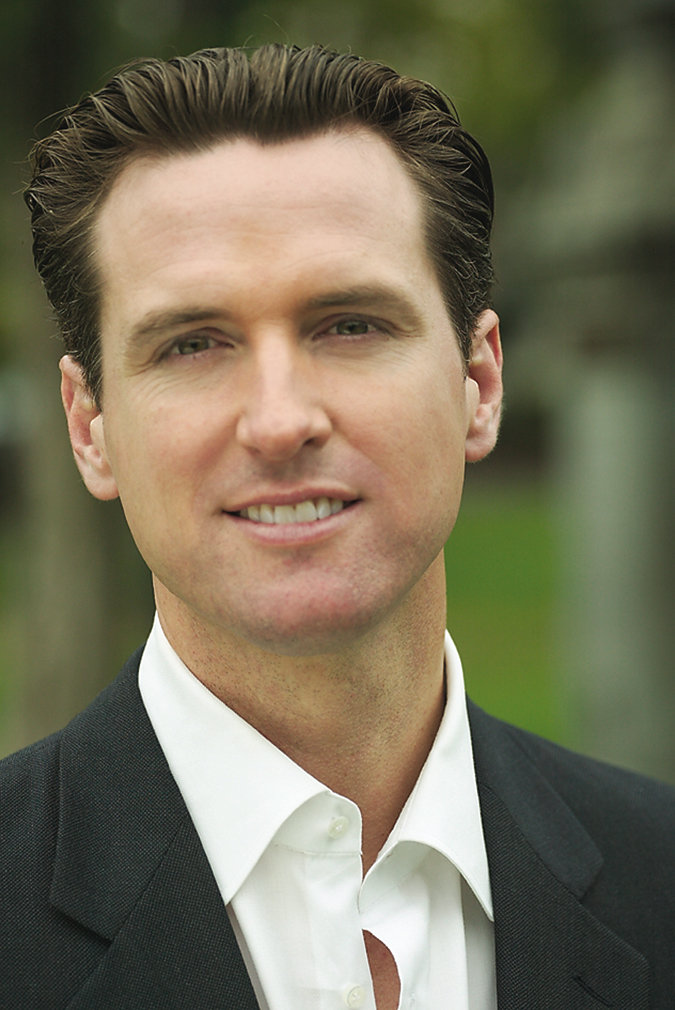
Mayor Gavin Newsom is seeking to be seated on the San Francisco Democratic County Central Committee when it swears in newly elected members tonight, even though the body’s legal counsel says he’s not entitled to a seat and Newsom has put a measure of the November ballot that would prohibit local officials from serving on that body.

Newsom and his supporters, most prominently DCCC member and District 8 supervisorial candidate Scott Wiener – who fears the progressive-dominated body will endorse and support his more progressive opponent, Rafael Mandelman – argue that being the Democratic nominee for lieutenant governor should give him a seat on the DCCC.

But the longtime legal counsel for DCCC, Lance Olson, doesn’t agree, citing bylaws that indicate that only nominees for statewide offices currently held by Democrats get seats on the body. So District Attorney Kamala Harris, the Democratic nominee to succeed Attorney General Jerry Brown, gets an ex officio seat (those held by state and federal elected officials and regional party leaders) but Newsom doesn’t because he’s running against incumbent Lieutenant Governor Abel Maldonado, a Republican.

DCCC chair Aaron Peskin, a political opponent of Newsom, told us the rules are the rules and that if Newsom thinks that it’s in the interests of the Democratic Party for him to have a seat, “He’s going to need to make an argument why we should amend the rules.” Peskin even offered to introduce a rule change for discussion if Newsom does so.

While Wiener wrote (in a letter quoted by the Chronicle) that seating Newsom would be about party unity, Peskin notes that Newsom has actually been a practitioner of the “politics of spite and division,” particularly after he responded to the success of the progressive DCCC slate in the June election by trying to ban local officeholders from the body (several progressive members of the Board of Supervisors successfully ran for the DCCC), claiming the body should be like a farm team for building the party.

“It really begs the question: why is he seeking to do himself what he doesn’t want others to do?” Peskin asked.

Newsom’s office didn’t respond to our inquires about the matter. BTW, in his letter to Peskin, Newsom proposed that attorney John Shanley be his proxy and journalist and political gadfly Warren Hinckle be his alternate. The meeting begins at 7 p.m. in the state building at 455 Golden Gate.

Board progressives ditch their own tax measures

5

After failing to win support from the small business community for a measure that would have helped it and fearing a well-funded attack from large corporations, Board of Supervisors President David Chiu today made the motion to reject his business tax reform ballot measure.
Labor leaders have also raised concerns about not having enough resources to fight for several revenue measures on the November ballot, mostly because they are focused on approving a hotel tax increase, supporting progressive supervisorial candidates, and defeating Jeff Adachi’s measure to increase how much city employees pay for health care and into their pensions.
“There is still not consensus about whether this should move forward,” Chiu said of his measure, which also suffered from being complicated and not easy to explain in an election campaign. It would have created a more progressive payroll tax structure – increasing taxes on large corporations and lowering them on small businesses – and a commercial rent tax that also would have exempted small businesses, raising about $25 million for the city and creating hundreds of private sector jobs, according to the city’s Office of Economic Analysis.
But the fear among some progressives is that too many revenue proposals would hurt their individual chances, given that the ballot will now include a hotel tax increase, a real estate transfer tax on properties worth more than $5 million (which the board approved today on an 8-3 vote), a $10 local surcharge on vehicle license fees, and a parcel tax from the Community College District.
So Sup. Ross Mirkarimi today also abandoned his proposal to increase the city’s parking tax from 25 percent to 35 percent, which would have raised about $25 million per year. Both Chiu and Mirkarimi said their measures were good policy and would have raised desperately needed revenue, but they were bowing to political reality.
“We’re challenged by the practicality of mounting a fall campaign around these revenue measures,” Mirkarimi said at the meeting.
The board voted 10-1 to table both measures, with a dissenting vote by Sup. Chris Daly, who said, “I just disagree with that political analysis.” He said voters would consider the measures individually and “I don’t think disappearing a progressive payroll tax and progressive parking tax are going to help the real estate transfer tax.”

City Hall standoff

0

steve@sfbg.com

Backroom politics, vote-trading, threats, and tricky legislative maneuvering marked — some would say marred — the approval of the city’s 2010-11 budget and a package of fall ballot measures.

For weeks, Mayor Gavin Newsom had been threatening to simply not spend the roughly $42 million in budgetary add-backs the supervisors had approved July 1, mostly for public health and social services, unless they agreed to withdraw unrelated November ballot measures that Newsom opposes (see "Bad faith," July 14).

The board’s July 20 meeting included a flurry of last-minute maneuvers interrupted by an hours-long recess during which Newsom, Board President David Chiu, and their representatives negotiated a deal that was bristled at by progressive supervisors and fiscal conservative Sup. Sean Elsbernd.

Ideological opposites Elsbernd and Sup. Chris Daly voted against motions to delay consideration of several measures — including splitting appointments to the Rent, Recreation and Park, and Municipal Transportation Authority boards; revenue measures; and requiring police foot patrols — until after approval of the city budget.

"What is the connection between [seismic retrofit] bonds and the budget?" Elsbernd asked as Budget Committee chair John Avalos made the motion to delay consideration of the $46 million general obligation bond Newsom proposed for the November ballot.

Avalos made an oblique reference to "other meetings" that were happening down the hall. Daly then criticized the maneuver, noting that "vote trading is illegal," later citing a 2006 City Attorney’s Office memo stating that supervisors may not condition their votes on unrelated items.

But that didn’t stop supervisors from engaging in a complex, private dance with the Mayor’s Office and other constituencies that day. In the end, the board approved the budget on a 10-1 vote, with Daly in dissent. Then Chiu provided the swing vote to kill the progressive proposal to split with the mayor appointments to the Recreation and Park Commission, with Sups. Daly, Avalos, Ross Mirkarimi, David Campos, and Eric Mar on the losing end of a 5-6 vote to place the measure on the fall ballot.

A measure to split appointments to the Rent Board was defeated on a 10-1 vote, with Daly dissenting, although that seems to be tactical concession by progressives. Campos, who sponsored the measure, said landlord groups were threatening an aggressive campaign against the measure that would also seek to tarnish progressive supervisorial candidates.

Removal of an MTA reform measure from the ballot, another mayoral demand, was also likely at the July 27 meeting (held after Guardian press time). Chiu told his colleagues July 20 that he was still negotiating with the mayor on implementing some of its provisions without going to the ballot this year.

Chiu rejected the notion that he cut an inappropriate budget deal, saying he was concerned the split appointment measures would be portrayed as a board power grab, noting that community groups need the funding that Newsom was threatening to withhold, and saying the board’s threats not to fund Newsom’s Project Homeless Connect facility and Kids2College Savings program were also factors in the deal.

"We were engaged with a number of conversations, they all took time, and we didn’t finish until very late," Chiu told us.

Even Daly acknowledged supervisors had few options to counter Newsom’s threats, but told us, "It’s just not the way we should be doing things."

The decision on three revenue measures (a parking tax increase, property transfer tax, and business tax reform) was set for July 27, with sources telling the Guardian that only one or perhaps two would make it onto the ballot. Newsom opposes all of them. Also hanging in the balance was Mirkarimi’s ballot measure requiring police to do more foot patrols, as well as another version in which Chiu added a provision that would invalidate the Newsom-backed ordinance banning sitting or lying on sidewalks, a retaliation for Newsom inserting a similar poison pill in his hotel tax loophole measure that would invalidate the hotel tax increase that labor put on the ballot if it gets more votes.

But most of the action was on July 20. The Transportation Authority (comprised of all 11 supervisors) voted 8-3 (with Chiu, Avalos, and Mar opposed) to place a $10 local vehicle license fee surcharge on the ballot, which would raise about $5 million a year for Muni. A Daly-proposed ballot measure to create an affordable housing fund and plan failed on 4-7 vote, with only Campos, Mar, and Chiu joining Daly.

There were some progressive victories as well. A charter amendment by Mirkarimi to allow voters to register on election day was approved 9-2, with Elsbernd and Alioto-Pier in dissent. A Chiu-proposed measure to allow non-citizens to vote in school board elections was approved 9-2, with Elsbernd and Carmen Chu voting no. And a Daly-proposed charter amendment to require the mayor to engage in public policy discussions with the board once a month was approved 6-5, opposed by Dufty, Alioto-Pier, Elsbernd, Maxwell, and Chu.

But the busy day left some progressives feeling unsettled. "How do you do this and not be trading votes?" Campos told us. "In the end, we’re saving programs, but what does it say about the institution of the board?"

Newsom spokesperson Tony Winnicker denied that the mayor made inappropriate threats, but confirmed that a deal was cut and told us, "Yes, the Mayor made his concerns about the budget clear. Yes, the mayor made his concerns about the charter amendments clear."

Quezada says don’t let “perfect” stand in way of immigration reform

9

The SF Bay Area Coalition for Immigration Reform is organizing a rally, Wednesday July 28 at 4 p.m., at the new federal building in San Francisco, at 90 7th Street at Mission to ask Speaker of the House Nancy Pelosi to help fix the nation’s broken immigration system.

The rally occurs hours before Arizona’s harsh new law, SB 1070, is set to go into effect. Members of the local clergy will be on hand to bless local immigrant families that are facing deportation. The protest kicks off an action-packed 24 hours, with activities planned in San Francisco, Oakland, and beyond.

“Arizona’s unworkable law threatens both our safety and our ideals. And it’s a symptom of a tragically broken immigration system at the national level,” said Eric Quezada of Dolores Street Community Services in a press release that notes that thanks to federal inaction on reform, “1,100 deportations happen every day.”

“Wednesday’s rally is not a protest of Speaker Pelosi, but we want to make sure she hears from her constituents who are suffering as a result of this broken system,” Quezada said. “And we’re calling on her to exercise leadership so we can work towards real solutions that reflect our values of fairness and community.”
 
With confirmed speakers including Board President David Chiu, I asked Quezada, who heads Dolores Street Community Services, how ICE’s new Secure Communities, or SecureComm, program is impacting deportation rates locally and what he hopes will happen on the immigration front this year.

“There has definitely been an increase,” Quezada said, referring to a recent SecureComm audit that was presented to the San Francisco Police Commission a month after the federal-state-local database hook-up got switched on, linking previously separate records.
“Part of our ask with this action is that Pelosi take a more active role,” Quezada continued, noting that Congressmember Zoe Lofgren has done much of the research.

Arizona’s SB 1070 is set to go into effect on Thursday, July 29. But it faces seven lawsuits, including a challenge from the US Department of Justice (DOJ). Several of the suits call for an injunction against the law. A federal judge in Phoenix heard arguments last week, but has not released any decision to date.

“We welcome the lawsuit that DOJ put in,” Quezada said. “At the same time, the Obama administration is rolling out SecureComm across the nation and we still have 287(g) programs in place. So, if the Arizona law gets implemented, it will be a really tragic day in U.S. history.”

To fix the current immigration system, rally organizers are advocating measures that would halt dangerous police-ICE collaboration programs, and would serve as a first step toward comprehensive reform. These include the DREAM Act, which offers a pathway to legal status for immigrant students, and a just and humane immigration reform that brings immigrant community members out of the shadows.

Quezada feels that Obama currently appears to be resisting bringing administrative relief forward, but he’s not exactly sure why the President is holding his cards back, or when he plans to lay them out on the table.
“But we know that pressure is building on a couple of fronts, prior to the November elections,” Quezada added. “Folks are going to see a lot of immigrant rights groups calling on members to register to vote. And we are going to support those who support us, oppose those who oppose us, and those sitting on the fence will get nothing. That’s a message that a lot of swing Democrats need to hear.”

With the 2012 presidential election approaching (in terms of campaigning and fund raising), Quezada observes that the Latino vote played a significant role in electing Obama in 2008.
“So, every day that there is no movement on this front in D.C., Obama loses strong support from the immigrant community. But we also know that pressure from the right sometimes holds more sway than ours.”

Quezada says the immigrant community is frustrated because it’s almost two years since Obama got elected, in part because of his promise to bring millions of undocumented immigrants out of the shadows. But to date, the Obama administration has not created a mechanism to even allow people to start getting in line to legalize their status.

‘There is no line to wait in,” Quezada said. “All these folks would be willing to wait in line, but there isn’t one for these 11 million people. We need legislative fixes.”

Quezada acknowledges that many Republicans will try to stop or amend any such fixes in unacceptable ways.

“We are worried that if the Dream Act goes ahead as a stand-alone bill, the right will try and put harsh enforcement measures into the bill,” Quezada said. “So, we have to ask, are we willing to live with that, if it helps 11 million people? How about, if it only helps 2 million? These are the questions the Hispanic Caucus is conflicted about. But what if we end up with amendments that would really hurt and the bill only helps 2 million people?”

With immigrant advocates arguing that comprehensive immigration reform would translate into $1.5 trillion in cumulative U.S. gross domestic product, the fireworks over the Arizona law and similar efforts in other states, aren’t about to stop soon.

But Quezada warns folks against insisting on an ideologically pure approach if they want to win this particular war.

‘If our position is open borders and legalization for everyone, then it won’t be obtainable, and we’d be leaving a lot of people in the lurch,” Quezada said We need 270 votes in the Senate and Congress, and we want relief for our people. We can no longer count on our sanctuary city to protect us. And the second we stop paying attention to this issue, they’ll eliminate some other piece of [existing protections and services for immigrants]. A lot of groups don’t want to engage in legislation that isn’t perfect. But only from a unified front will anything get done.”

With that aim in mind, Quezada says that immigrant advocates must work with evangelical churches and Republicans who are willing to support a reform package.
“Evangelical churches may sound like an unlikely ally, but we have to work with them, it’s the responsible thing to do. And we need to win and gain some Republican support, at least enough votes to get to the 60-vote threshold.”


                                                                              .
 

Rumors fly that Board can’t amend Lennar deal, after all

14

For the past month, fireworks and deals have been going on at City Hall as the Board prepares to vote on Lennar’s massive redevelopment plan for Candlestick Point-Hunters Point Shipyard. And recently, the Board vowed to make a slew of amendments to the plan, even as they approved the project’s environmental impact report.

But now it’s beginning to look like the only winners could be the developer—and perhaps those folks at city hall who are staking their political careers on jamming this deal over the finish line, come hell or high water, before the November election comes around and they go into the private sector as real estate developers.

I say this because two weeks ago, the progressives on the Board were saying that they had been told that they couldn’t amend the EIR July 14, but that they could amend the actual redevelopment plan when it comes before them on July 27. It was for this reason, they said, that they decided to vote to accept the EIR in an 8-3 vote, with only Sups. John Avalos, Chris Daly and Eric Mar, voting to reject the project’s key environmental document.

But today, with less than two working days before the Board’s July 27 meeting, I’m hearing rumors that the Board will only be able to take an up and down vote, when they consider Lennar’s actual redevelopment plan.

In other words, the only way the Board would be able to change anything would be to reject the plan in its entirety.But everyone knows that this is a pigs-may-fly scenario, given the massive pressure the Mayor’s Office, labor and Lennar have been exerting on the Board.

So, if these “up-and-down-vote only” rumors turn out to be true, folks who care about environmental and economic justice better start sounding the alarm. Because there is a plethora of unresolved issues that Sups. John Avalos, David Campos, Chris Daly, Eric Mar, and Ross Mirkarimi identified July 13 as needing shoring up, before the actual redevelopment plan would ever pass their sniff test.

These concerns included fears that the project’s financing plan amounts to daylight bank robbery, that the proposed bridge across the Yosemite Slough is unnecessary, and that the amount of projected air pollution related to the development is unacceptable.

And then there’s the fact that the Controller’s “economic benefits” report only used averaged figures, and therefore did not give any details about how many jobs and benefits the project would create in this economically depressed community in the next few years.

And did I mention the part about liquidated damages and watershed concerns? Or the fact that there are no maritime uses in the current plan, even though these uses could translate directly into relatively unskilled jobs, if old ships were broken up at the shipyard.

But despite the hours of discussion on July 13 that the Board sat through last week, I do not recall anyone from the Mayor’s or City Attorney’s Office advising the supervisors that they would not be able to amend the actual plan when it comes before them July 27.

Right now, a lot of confusion is swirling as folks point to the fact that Board President David Chiu introduced five amendments at a July 12 Land Use Committee hearing that eight supervisors subsequently voted to accept. This move led the rest of the Board to believe that they too could make amendments to the final plan.

But a review of Chiu’s amendments and the project’s EIR suggests that these changes are in fact repackaged pieces of the EIR, and that the move misled other supervisors into believing that that they would have a chance to amend the actual redevelopment plan.

So far, no one from the Mayor’s Office has returned my calls seeking clarification on this process. But if it turns out that the only way the Board can have input is to kick the plan to the curb, or ask the Planning Commission to make new findings, then democracy in San Francisco has been replaced with an empty charade.

“The Board can make changes along the line that David made in the Land Use Committee, “ Chiu’s legislative aide Judson True told me today. But he wasn’t clear on the process next week, and suggested that I call Cohen’s office, which I did (only to find myself shunted to Cohen’s voice mail.)

So, what gives? And why would the Board allow an out-of-town developer in partnership with the Mayor’s Office to sidestep its responsibility in this way?

“We were told we could not make amendments to the EIR, but could make amendments to the plan that we will be voting on this Tuesday,” Campos told me today, noting that he and Mirkarimi were prepared to make changes July 13, but were then told they could not do that.

“The biggest fear I have with this project, and any project this size in this economy, is that a lot is promised, but will anything get developed, or will we be stuck holding the bag,” Campos added.

Similar questions led the Alameda city council to kick developer SunCal to the curb last week. Ironically, the move could open the door to a developer like Lennar to try and swoop in and pick up the pieces in the island city across the Bay from San Francisco.

But folks in Alameda are pointing to San Francisco as an example of how difficult it is to nail down developers, noting that Michael Cohen, Mayor Gavin Newsom’s top financial advisor, recently admitted that investment money is scarce, even though the city’s EIR for the project has been approved.

Actually, Cohen went a step further by intimating that all the benefits that the community wants out of the plan would deter investors even more—comments that were perhaps just a precursor to this potential bombshell that the Board won’t actually be able to amend the deal, after all? Stay tuned.

San Francisco Jewish Film Festival: “Protektor” and “A Small Act”

0

(For more on the San Francisco Jewish Film Festival, check out the two articles in this week’s Guardian.)

Protektor (Marek Najbrt, Czech Republic, 2009) Marek Najbrt’s pomo period piece — spiced by switches from color to monochrome, soundtracked DJ mashups, and other bendy tropes — provides an elegant yet energetic reprise of some familiar themes. Rising Czech film actress Hana (Jana Plodkova) refuses to leave Prague despite the considerable danger posed by her (secret) Jewish identity. Husband Emil (Marek Daniel) is a popular radio host who struggles to protect her as he nonetheless rises in favor under the wartime Nazi “protectorate.” But Hana proves uncontrollable as wife and (eventually boycotted) thespian, unable to keep her libido or boredom safely wrapped. And Emil’s bosses soon enforce a cruel choice. Protektor is self-conscious, but also surprising — the highly stylized presentation lends what could have played as an ordinary, earnest victim scenario an edge more seductive than distracting. Mon/26, Castro, 4:30 p.m.; Sat/31, 9:45 p.m., Roda. (Dennis Harvey)

http://www.youtube.com/watch?v=mk_5Oi5PFzs

A Small Act (Jennifer Arnold, United States, 2009) Ain’t gonna lie — I settled in to watch A Small Act thinking I’d be bored by a well-intentioned but manipulatively “uplifting” story. Boy, was I wrong. This is a complex, layered tale that features all the elements a compelling documentary requires, starting with its fascinating subjects. Born into poverty, Kenyan youth Chris Mburu was able to pursue his education thanks to Hilde Back, a Swedish woman who donated a few dollars a month to sponsor his education. Though they’d never met, he could not forgot the stranger who’d enabled him to finish high school (he ended up going to college, then Harvard Law School, and now has a prestigious job at the United Nations). Years later, Mburu named a foundation after Beck to give scholarships — and hope for a future beyond teenage pregnancy and a life of back-breaking labor — to Kenyan kids from his home village. Now, the joyful moment where Mburu and Beck meet for the first time comes pretty early in the film, which is when I realized that filmmaker Jennifer Arnold was going to dig way deeper with her doc than I originally suspected. First, there’s a whole plot thread about three bright kids who are frantically studying to take Kenya’s national exam (high marks would qualify them for one of Mburu’s scholarships), plus one about Beck’s life in Sweden (and her past as a Holocaust survivor), plus yet another about post-election unrest in Kenya that threatens not just the children we’ve met in the movie, but Mburu’s own family. It all unfolds with the urgency of real life, and the message that emerges is summed up best by Mburu: “Education is a life and death issue.” Sat/24, Castro, 11 a.m.; Sat/31, CineArts, noon; Aug 5, Roda, 4:30 p.m.; Aug 8, Rafael, noon. (Cheryl Eddy)

The 30th San Francisco Jewish Film Festival runs July 24-Aug 9 at the Castro, 429 Castro, SF; Roda Theatre, 2025 Addison, Berk; CineArts@Palo Alto Square, 3000 El Camino Real Bldg Six, Palo Alto; and Christopher B. Smith Rafael Film Center, 118 Fourth St, San Rafael. Tickets (most shows $11) are available by calling (415) 256-TIXX or visiting www.sfjff.org.

The martyrdom of Mooney and Billings

0

Dick Meister , former labor editor of the SF Chronicle and KQED-TV Newsroom, has covered labor and politics for a half-century. Contact him through his website, www.dickmeister.com, which includes more than 250 of his recent columns.

It was an unusually hot July day in San Francisco.   There was a parade on that day in 1916 – a “Preparedness Day” parade organized by local Republican businessmen. It was intended to drum up support for U.S. entry into World War I and embarrass Democratic President Woodrow Wilson, who was running for re-election on a platform that stressed,  “He kept us out of war!”

A lot of people supported neither the war nor the parade, however. The opponents particularly included the union organizers who were the radicals of that period – “reds” who were trying to establish the right of unionization in the face of often violent opposition from the business interests who controlled the city and who most assuredly supported the war.

Many thousands of spectators, as many as 100,000 by some accounts, lined the parade route down Market Street, cheering and enthusiastically waving American flags. At precisely 2:06, less than a half-hour after the parade of more than 25,000 marchers had begun, just as contingents from the Grand Army of the Republic and Sons of the American Revolution were passing the crowded corner of Steuart and Market  streets. . . Boom!

It was the thunderous blast of a bomb that had either been thrown into the crowd or planted there.  The horrific explosion killed 10 bystanders and seriously wounded 40 others.

Within a few hours, the authorities had their culprits. Not surprisingly, all of those arrested as suspects were union organizers. Among them were two men who were especially despised by the city’s virulently anti-labor business establishment — Tom Mooney, 34, a burly Irish-American organizer for the International Molders Union who was one of San Francisco’s most prominent labor activists, and his close friend, slim, short, boyish Warren Billings, a 23-year-old shoe factory worker.

Mooney and Billings were San Francisco’s “most notorious reds,” declared the SF Chamber of Commerce in one of its typically frenzied assessments of those who dared challenge the status quo in which workers were treated as mere chattel.

The others who were arrested were soon freed, but Mooney and Billings were put on trial and eventually found guilty. Mooney was sentenced to death by hanging, Billings to life imprisonment.

There’s absolutely no doubt Mooney and Billings were framed. Federal investigators, investigative newspaper reporters and others proved that beyond any doubt.  The city’s famously corrupt district attorney, Charles Frickert, was found to have suppressed evidence that proved the pair’s innocence, joining with corrupt policemen to fabricate evidence that supposedly proved their guilt, and failing to call witnesses who, as he knew, had solid evidence that they were not guilty. Frickert hired other witnesses and coached them to give perjured testimony implicating Mooney and Billings.

Eventually, every major witness confessed to lying to the juries at both the Mooney and Billings trials. Some of them claimed to have seen the men plant the bomb on the day of the explosion, although it turned out the supposed eye-witnesses hadn’t even been in the city at the time.

Some gave their perjured testimony in exchange for such favors as the parole of relatives who were serving prison sentences, others for the pay District Attorney Frickert offered them. All were after the $17,500 reward posted for evidence leading to the conviction of Mooney and Billings.

 The judge who presided over Mooney’s trial told California’s governor he had determined through personal investigation that “every single witness who testified against Mooney had lied.” Mooney’s lawyer declared them “the weirdest collection of God-damned liars” he’d ever seen.

 A federal fact-finding commission concluded that “there was never any scientific attempt made by either the police or the prosecution to discover the perpetrators of the crime. The investigation was in reality turned over to a private detective, who used his position to cause the arrest of the defendants.” 

Fremont Older, the crusading editor of the San Francisco Bulletin, concluded that the authorities “conspired to murder a man with the instruments that the people have provided for bringing about justice. There isn’t a scrap of testimony that wasn’t perjured.”

The cases quickly drew widespread national attention, right up to the White House. President Wilson argued against Mooney’s hanging on grounds that there wasn’t a shred of evidence to support his guilt.

It was obvious that the Chamber of Commerce’s so-called Law and Order Committee had played a major role in framing Mooney and Billings as part of the chamber’s drive to change San Francisco’s status as one of the country’s most heavily unionized cities. 

Mooney and Billings, of course, had been attempting to enhance that status, in part by helping wage major organizing drives among the city’s vital transit workers and the equally vital employees of the company that supplied the city’s gas and electricity. Which was a very good reason the utility company – Pacific Gas & Electric – hired the private detective cited by federal fact-finders to help District Attorney Frickert and the police fabricate evidence against Mooney and Billings.  Not incidentally, Frickert was backed financially by Pacific Gas & Electric in his election campaigns for district attorney.

 The convictions prompted protests across the United States and worldwide, much like those raised five years later in behalf of two other union radicals, Nicola Sacco and Bartolomeo Vinzetti, who were executed in Massachusetts for a murder they clearly did not commit.

The Mooney and Billings case was dubbed internationally as “America’s Dreyfus Case,” a comparison to the famous French case that also drew worldwide protests. The protests stemmed from the rigged conviction of Jewish French Army Captain Alfred Dreyfus in 1894 for allegedly attempting to turn over secret military documents to the German government. Although the “Dreyfus Affair,” as it was called, was based on another issue – anti-Semitism – it similarly involved the use of false evidence against an innocent man by powerful authorities.

 Protestors in the United States and abroad quickly formed a network of defense committees in behalf of Mooney and Billings, and mounted rallies and other noisy and highly visible public demonstrations. 

 Freeing the two men became labor’s cause célèbre. Unions everywhere voiced loud and frequent protests, as did all other segments of the left, ranging from liberal to Communist. Eventually, they helped force California authorities to reduce Mooney’s death sentence to life imprisonment, ironically on the basis of evidence that should have freed him.

 President Wilson’s request that Mooney be spared was probably the main reason his sentence was commutated, but the heavy pressures of the Mooney-Billings defense committees and the American Federation of Labor, which Wilson most certainly felt, also had much to do with it.
   
Mooney finally was freed in 1939, twenty-one years later. Culbert Olson, California’s first Democratic governor in 44 years, granted him a full and unconditional pardon. Mooney, said Gov. Olson, was “wholly innocent,” and his conviction  “wholly based on perjured testimony.” 

Mooney’s release sparked great celebration among his supporters, who had fought so long for his freedom. Thousands paraded up Market Street behind Mooney shortly after his release, the street cleared for them by police, past the site of the explosion 23 years earlier that had sent Mooney to prison.

The next day, Mooney joined a picket line of striking department store employees on Market Street and donated to their cause half of the $10 the state had given him on his release from San Quentin Prison. Mooney sent the other half to Newspaper Guild members who were waging a major strike in Chicago.

Tom Mooney hadn’t much time to enjoy his freedom. His health had been broken in prison and he soon was hospitalized with a serious stomach ailment. He remained in a hospital bed until his death at age 60, less than two years later.

Billings got his freedom a few months after Mooney left San Quentin. Gov. Olson commutated his life sentence to time served – 23 years for a crime that no one really believed he or Mooney had committed.  Finally, in 1961, Gov. Edmund G. Brown granted Billings a full pardon. But, as Billings complained, it was granted on grounds that he had been “rehabilitated” rather than because he was innocent.

After leaving prison, Billings married and settled down in San Mateo, working in  San Francisco as a watch repairman, a trade he had learned in prison, and later set up his own repair business at home.  Billings quickly resumed his labor activism, as a member of the Watchmakers Union executive board and delegate to the San Mateo Labor Council. He was active as well in the anti-Vietnam War movement and various other political, economic and social causes. 

I interviewed Billings just before his death in 1972 at age 79. I expected to encounter a bitter, angry old man. Yes, he was old, but his spritely manner belied that basic fact of his life, and he showed absolutely no bitterness over the great injustice that had been done him – none! He talked instead of injustices that were being done to others, and of joining in efforts to help overcome them.

“I don’t have anything against anybody about anything,” Billings told me. “The people who testified against me were after that reward, but it all went to the police who arrested me. I’ve never felt any bitterness, but the fact that the witnesses against me didn’t get any of the reward money should make them bitter.”

Warren K. Billings was a great inspiration to me and others who knew him, and to many who just knew of him. He was a man possessing a spirit that could not be broken by circumstances far more severe than most of us have ever had to endure.  A man who would not even raise his voice in anger or bitterness against the terrible injustice that was done him. A man who maintained his convictions through it all. A strong and courageous man, but kind and gentle, and possessed of an incredible measure of tolerance and understanding.

The Preparedness Day bombing has never been solved.

NOTE: For more on the Mooney-Billings case, See “Frame-up” by Curt Gentry, an extraordinary work of investigative journalism book covering all aspects
of the case.

Dick Meister , former labor editor of the SF Chronicle and KQED-TV Newsroom, has covered labor and politics for a half-century. Contact him through his website, www.dickmeister.com, which includes more than 250 of his recent columns.

Board accepts EIR, but vows to amend Candlestick-Shipyard plan

14

Text by Sarah Phelan, images by Luke Thomas


At the end of a ten-hour hearing to appeal the final environmental impact report  for the city and Lennar’s massive Candlestick-Shipyard redevelopment project, the Board voted 8-3 to accept the FEIR, with only Sups. John Avalos, Chris Daly and Eric Mar voting to reverse certification of what they said was a flawed document.


But the vote does not mean the Board has voted to accept the city and the developer’s final redevelopment plan. That plan will come before the Board on July 27, and the supervisors are expected to introduce a slew of amendments, in addition to  five amendments that Board President David Chiu introduced earlier this week.


These amendments are intended to address longstanding concerns about toxins at the shipyard, limited liability on the part of the developer, the questionable need for a bridge over Yosemite Slough, the reality that Bayview residents may be cut out of any upcoming jobs, and the desire to nail down efforts to use public power at the site


“We can’t do the amendments here, we are frozen out, all we can do is an up and down vote on the EIR for now,” Sup. Ross Mirkarimi told the Guardian last night. 
Mirkarimi anticipates that the Board will seek additional mitigations, such as requiring liquidated damages to shore up a community benefits agreement that Labor entered into with Lennar in May 2008.


Mirkarimi said the Board would also seek to increase workforce development benefits.
“Thirty percent of the target workforce population are ex-offenders, so while they might get training, currently they won’t get jobs other than construction,” Mirkarimi observed.


Mirkarimi was proud of the Public Power amendment that Chiu has already lintroduced, pointing to an ordinance that he and then Sup. Gerardo Sandoval introduced and Mayor Gavin Newsom signed into law, in March 2006. This public power ordinance established that “where feasible, the City shall be the electricity provider for new City developments, including military bases and development projects.”


“PG& E was ripped when we pushed that through,” Mirkarimi said.


During yesterday’s marathon hearing, the supervisors grilled city staff on issues that have proved to be key sticking points, as the city seeks to win final project approvals, even though they cannot address these issues with amendments until the July 27 meeting.


The Board questioned the wisdom of moving forward with development on the Shipyard, as the Navy continues to clean up radiological contamination and other toxins at the site, including Parcel E-2, which contains some of the nastiest pollution at the yard.


“Why not just wait until the CERCLA process is completed?” Sup. Campos asked, referring to the fact that the Navy is responsible for shipyard clean up, under CERCLA, which is also known as the Superfund Act.


Campos question came after acclaimed environmental scientist Wilma Subra and national environmental human rights lawyer Monique Harden, challenged the sanity of having the Navy digging out toxins while a developer simultaneously installs infrastructure at the same site.


Subra, who works in Superfund sites throughout the U.S, warned the Board that it’s very common to find contamination at these sites after they have been declared clean.


“So, the number of samples isn’t the magic answer,” Subra said, referring to the city’s constant refrain that the Navy has taken thousands of samples at the site. Subra also warned that it is not uncommon for a contractor to dig into an area that has been capped, thereby potentially exposing workers and the community to contamination and resulting in legal stand-offs, as various parties argue as to who has responsibility to fix the resulting mess.


Harden, who is based in New Orleans but also has an office in D.C., expressed concern over the plan to begin construction on some shipyard parcels, even as the Navy continues to remove radiologically contaminated sewers and other deep infrastructure at the site.
“That’s like a person jumping up and down on a bed that another person is trying to make up,” Harden said


But Michael Cohen, Mayor Gavin Newsom’s chief economic advisor countered that there was no scientific evidence to support Subra or Harden’s concerns.


“It’s a very common situation, especially on brownfields,” Cohen said, (though the Shipyard is a Superfund site that’s been contaminated with radiological waste that was sandblasted off ships returning from a Bikini Atoll atomic testing experiment gone awry.)


“It’s the basis for shipyard artists and the police being on the site for many years,” Cohen continued. “It’s safe based on an extraordinary amount of data.”


But Cohen did agree that language in Chiu’s Parcel E-2 amendment should be changed from “should” to “shall” to indicate that city oversight is a requirement, not a request, when it comes to final decisions over the transfer of this particular parcel.


Mark Ripperda of U.S. EPA assured the Board that his agency is not going to permit transfer of parcels for development until cleanup is completed.
“We are not going to allow any transfer until we are convinced it’s safe,” Ripperda said.


Sup. Eric Mar chastised the EIR for its apparent failure to adequately discuss the impacts of the proposed development on schools in the surrounding area.


“There is less discussion of the impacts on schools than there is of the A-Bomb, which was held at the Shipyard for 1 to 2 days,” Mar said. “The analysis seems very weak.”


And Daly expressed frustration that the Board was being asked to take a decision when it lacked sufficient information about and understanding of the project.


“How do we know it’s safe? ” Daly asked, noting that, “Money talks, bullshit walks.”
(His point resonated as City staff scrambled to find key information within the 7,000 pages of comments and responses in the massive FEIR documents, and Amy Brownell of the city’s Public Health Department rattled off a series of measurements and schedules that few on the Board seemed to understand.)


“The risks are acceptable,” Brownell said. “And the only people allowed on the property [during the development] will be the ones doing the work.”


The Board also challenged the need for a bridge over the environmentally sensitive Yosemite Slough, especially in the wake of the June 2010 election in which Santa Clara voters approved building a new stadium for the 49ers near Great America.


“One reason I’ve been given for [the need for the bridge] is the financial viability of this project,” Campos said.


Cohen replied that if the city does not to build the bridge, “it elevates the financial risk.”


“Parcel C [on the shipyard] has been zoned for green tech, and for major employers, having that direct connectedness to BART and the T-Third is very important.”


Cohen also indicated that, thanks to the project’s huge reliance on tax increment financing, the loss of the bridge would translate into lost property tax revenues.


“Some of the repayment comes from generation of tax increment financing, so the failure to have a bridge here, degrades the potential of property tax revenues, and so you get much less tax increment,” Cohen stated.


The Board also expressed concerned that under the current terms of the deal they are now set to consider July 27, the developer has limited liability—an arrangement that has got supervisors worried that the city, and Bayview residents whose increased property taxes will help pay for the development, could end up on the wrong end of the financial hook.


Campos pointed to the disposition and development agreement (DDA) that the city drew up with Lennar.
“I’m specifically worried about a provision that on the face of it limits the developer’s liability,” Campos said, pointing to language that seems to say that “monetary damages are inappropriate”—conditions that Campos deemed, “Very unusual.


Cohen responded that the deal reflects the reality that, “the Navy, not Lennar is responsible for the cleanup.”
He added that the city retains the legal ability to sue, various remedies and, ultimately, “the right of reverter” (which folks call the “nuclear option” since it involves kicking out the developer, but losing everything in the process.)


“This is an incredibly frontloaded project,  in which we have the ability to terminate the developer at the cost of millions of dollars,” Cohen said.


But while the city and the developer ultimately affirm EIR certification, the decision left the Bayview community deeply divided, with many concerned that the FEIR failed to address their concerns, while others rejoiced, believing that they will benefit from jobs that will be created during the development’s 10-15 year build out and beyond. Only time will tell how it all plays out, but stay tuned as the Board prepares to try and make the plan the best it can in face of all these competing concerns.


Beyond the rage

46

rebeccab@sfbg.com

Downtown Oakland became supercharged with emotion in the hours following the July 8 announcement of the verdict in the trial of former BART police officer Johannes Mehserle. And in the days that followed, the city remained electrified as residents struggled to make sense of the verdict, the rioting that occurred in its wake, and the historic significance of these developments.

But as the emotions dissipate, the issues behind the verdict and its aftermath remain — along with a series of questions that could determine whether this intensely scrutinized shooting of an unarmed man will lead to any changes in police practices or the justice system, as well as how the community will react if the judge imposes a light sentence.

After being moved out of the Bay Area because the publicity surrounding the case, a Los Angeles jury found Mehserle, a white officer, guilty of involuntary manslaughter for fatally shooting Oscar Grant, a 22-year-old unarmed black man who was detained on a BART train platform in Oakland on Jan. 1, 2009 following reports of a fight.

The verdict stood out as an almost unprecedented conviction of an officer in a case involving deadly use of force, and a departure from an all-too-familiar narrative in which tragedies resulting from police shootings bring no consequences for those responsible for pulling the trigger. However, in the wake of the verdict, Grant’s family members made it clear that they did not believe that justice had been served.

“This involuntary manslaughter verdict is not what we wanted, nor do we accept it,” Oscar Grant’s uncle, Cephus “Bobby” Johnson, said at a July 10 press conference at True Vine Ministries, a West Oakland church. “It’s been a long, hard road, but there are chapters in this war. The battle’s just getting started.”

To Grant’s relatives and a coalition of supporters who came together in response to the shooting, the trial is intrinsically linked to a long history of police brutality that occurs with impunity in cases involving youth of color. Meetings organized by clergy and community members have been held weekly in West Oakland over the past 19 months with the ultimate goal of bringing about greater oversight of the BART police and effective police reform on a broader scale.

On July 9, the U.S. Department of Justice announced that its Civil Rights Division, the U.S. Attorney’s Office, and the FBI have opened an investigation into the shooting and would determine whether prosecution at the federal level is warranted. Defense Attorney Michael Rains also made a motion to move Mehserle’s sentencing to a date later than Aug. 6, the date it was originally expected.

As the events of July 8 solidify into the Bay Area’s collective memory, attention is now shifting toward the next steps, and to lingering questions. Mehserle’s sentencing is key: will his sentence be light, reflecting the jury’s conclusion that he simply made a mistake — or will it include substantial prison time, reflecting the fact that he shot and killed an unarmed man without justification? Will he receive a lighter sentence than someone else without a criminal record found guilty of involuntary manslaughter simply because of his identity as a former officer with law enforcement organizations still in his corner? If Mehserle receives a long sentence, will it signify a shift in a justice system that many perceive as biased — or a stand-alone result of intense public scrutiny?

And as a result of all this, will the BART police finally get the type of training and serious civilian oversight they so badly need?


RAW REACTION

On the day the verdict was announced, thousands turned out for a peaceful rally near Oakland’s 12th Street BART Station and City Hall to hear speakers sound off about how their lives had been affected by police brutality.

As night fell, looting and rioting began to break out as the media covered scenes of rage set against small trash fires, causing anger and frustration for many Oakland residents who were dismayed and frightened by the chaos and disorder. More than 80 arrests were made, and dozens of stores including Sears, Whole Foods, Subway, Foot Locker, and numerous banks were damaged or looted. Police efforts to respond to the situation gave downtown city blocks the feeling of a war zone for several hours.

Reactions to the verdict, and the chaotic aftermath that followed, varied in the following days.

“The truth is that in American history, this is both a high point and a low point,” Olis Simmons, executive director of Youth UpRising — an Oakland nonprofit that works with youth of color — told the Guardian the following day. Speaking to the fact that an officer had been convicted in a case involving a wrongful death, she said: “I think it really is a signal that America is changing. This is the farthest we’ve ever gone.”

She said she hoped that people who were infuriated enough to react violently on the evening of July 8 would channel that energy toward constructive goals of pushing for a more satisfactory outcome. Before rallies and later rioting began that night, Youth UpRising sent people into the crowd to hand out glossy flyers proclaiming “violence isn’t justice.”

Davey D Cook, an independent radio journalist who extensively covered activity surrounding Grant’s death on a news site called Davey D’s Hip Hop Corner, said he thought the mainstream media was ready to have “a field day” with the riots, pointing out that they ran special coverage in the days leading up to verdict, building up anticipation of violent outbreaks. He also said that the scope of the rioting should be kept in perspective.

On his July 9 KPFA radio show, Hard Knock Radio, Cook added a salient point: “Broken windows can be replaced, and in two weeks, they will be. Stolen merchandise can be replaced, and it will be. But who’s going to replace this justice system that got looted? What insurance policy takes care of that?”

Just before the July 10 press conference, a town hall meeting was held inside True Vine Ministries. It was crammed full of supporters from Oakland, San Francisco, and beyond who listened as Minister Keith Muhammad — a representative of the Nation of Islam who has worked closely with the Grant family and traveled to Los Angeles to watch the trial — spoke at length. Muhammad was dressed immaculately in a suit and tie, and spoke with an air of fiery conviction.

“In the outcome of this case, there is surely more to be resolved that has yet to be addressed,” Muhammad said. He emphasized that “we’re not satisfied,” but added: “You should know that dissatisfaction is the foundation of all change.”

He raised a number of questions about the proceedings, asking why there was an absence of African Americans on the jury, and why the judge called an early recess when Grant’s teenage friend, Jamil Dewar, sobbed uncontrollably on the witness stand — but not when Mehserle sobbed on the stand. He noted that Grant’s friends were kept in handcuffs for six hours after witnessing Grant’s death.

In the days following July 8, much was also said about mainstream media coverage of the events, in particular the notion that “outside agitators” would come in and start trouble. “I do not like this divisive campaign to divide our community and protestors by calling people outsiders,” Oakland defense attorney Walter Riley wrote in a statement posted on Indybay.org. “This is a great metropolitan area … we expect people from all over the map to participate in Oakland. Calling people outsiders in this instance is a political attack on the movement. The subtext is that the outsiders are white and not connected to Oakland. From the days of the civil rights movement to now, the outsider labeling failed to address the underlying problems for which people came together. We must engage in respectful political struggle. I understand the frustration. I do not support destruction and looting as political protest.”


LOOKING FORWARD

Mehserle’s conviction suggests the jurors believed his defense that he meant to draw and fire his Taser instead of his gun. In legal terms, settling on involuntary manslaughter, rather than second-degree murder or voluntary manslaughter, means the jury was not convinced beyond a reasonable doubt that Mehserle had malice toward Grant. But the jury found that he was criminally negligent when he failed to notice that he had his gun instead of his Taser in the moments before he pulled the trigger.

“In California, and really in any state, it is extremely difficult for jurors to convict a police officer. There’s an extreme reluctance to do that,” Whitney Leigh, an attorney who formerly worked in the San Francisco Public Defender’s Office, told us.

“There are undoubtedly instances where things like this have happened at some time in the past in California, that weren’t videotaped,” Leigh continued. “But for the videotape, if you walked 10 witnesses in who said that what happened, happened, no one would believe them if the officer took the stand and said that’s not what happened. The only reason there’s a case at all is that there’s a videotape.”

Leigh said he thought that unless the public develops a better awareness that police misconduct regularly occurs, “individuals are going to continue to be victimized by a system that effectively encourages officers to believe that they can act with significant impunity.”

Asked whether he thought it was likely that the federal government would decide to step in after concluding its investigation, he said it was a tough call. “The Justice Department is highly selective in the cases it chooses to prosecute for these crimes,” he cautioned. “That said, the kinds of cases they choose are ones that tend to have a lot of public attention and concern, so this fits within that category. Since it’s such a public case, it can have more of a widespread impact.”

If Mehserle was prosecuted at the federal level, the case would invoke Criminal Code 18 U.S.C. Sec. 242, used when a government agent or an individual acting under the color of authority denies someone their civil rights through force, threats, or intimidation, based on their race, gender, or another protected category.

Then again, the federal government’s decision over whether or not to step in may be linked to the degree of severity of Mehserle’s sentence.

California Penal Code Section 193 specifies the mitigated, midterm, and aggravated sentences for involuntary manslaughter: two, three, or four years in state prison, respectively. Because Mehserle’s case involves his personal use of a firearm, a sentence enhancement of three, four, or 10 years can be added to his prison time under California Penal Code Section 12022.5.

The judge will weigh circumstances to determine Mehserle’s sentence, possibly including his record as a police officer, his criminal record, age, remorse, and other factors, explained Jim Hammer, a former prosecutor and current San Francisco Police Commission member. The judge could toss out the sentence enhancement for personal use of a gun — and there’s a possibility he would deem extreme circumstances, such as his police record, to warrant probation rather than prison time. But Hammer said he thought both of those outcomes are unlikely.

“The judge will want to appear more than fair, not giving special treatment,” Hammer said. “Judges have to stand [for] election too, and in the light of the fact that somebody’s dead, I think the chance of probation is incredibly slim.”

Even if Mehserle receives a light sentence and then faces prosecution at the federal level, there is a chance that information about his past record as an officer — which was not admitted as evidence, thanks to laws that afford protections for police officers in these kinds of cases — would continue to be shielded. The protection applies even though Mehserle resigned.

“The average person just wants courts to be fair,” Leigh said. “And there’s an inherent unfairness in a system that allows a government or a police department that has all the resources and records to … use against you while shielding what might be much more serious and relevant acts by police officers. That’s one change that would be great if that did happen.”

A key legal issue in the case and any possible federal case is reasonable doubt, Hammer said. “Reasonable doubt is everything, and no one talks about it. They just say, ‘Oh, he didn’t have intent.’ That’s not the issue. Can anybody really, honestly say that they don’t have some doubts about his intent?”

At the same time, Hammer tempered his legal analysis with some understanding of Grant’s mother’s pain in light of what happened to her son and as the verdict was reached.

“If the dictionary had three pictures of murder for a picture image, one would be shooting somebody in the back who is unarmed,” he told the Guardian. “What she’s saying is not outrageous. If it were my relative I would probably call it murder too. She’s not crazy.”

As things continue to unfold with Mehserle’s sentencing and the federal civil rights investigation, civil litigation is in the works too. Wrongful death civil lawsuits will likely be filed against BART by Oakland civil rights attorney John Burris on behalf of Grant’s mother, as well as another suit by five friends who were with Grant the night he was killed. BART settled a suit filed on behalf of Tatiana Grant, the slain man’s five-year-old daughter, in January. That total settlement should amount to more than $5.1 million, according to a media release on Burris’ website.

During an interview after the July 10 press conference, Johnson was asked how Grant’s young daughter was doing. He responded: “Tatiana is still struggling with the issue of when her daddy’s coming home. So it’s going to take time for her, when she does understand that he is not coming back home.”

Outside Grant’s family, many observers hope to see systemic change come out of this tragedy. Assembly Member Tom Ammiano introduced legislation to create civilian oversight of BART police after the shooting, but was unhappy to see how it was watered down during the legislative process. Now he wants to see stronger reforms.

“I think Oscar Grant’s death was inevitable based on the lack of caring about how those police were trained,” he told us. “If you’re going to have the kind of independent civilian oversight that’s going to prevent a repeat of what happened to Oscar Grant, you can’t have this namby-pamby law. The mantra has been, well, this is better than nothing. Unless they’re made to do it … it’s not going to happen the way we want.”

RENE CAZENAVE, 1941-2010

5

Rene M. Cazenave died at home June 27 in the company of his wife, Sylvie, and sister, Denise. He is also survived by his son, Lucien, and two-week-old granddaughter, Drew. He was 69.

A native San Franciscan, Rene was instrumental in the creation of the community empowerment movement in the city from its modern inception in the 1970s. He was at the center of community politics for nearly 40 years. He was a key member of Citizens for Representative Government, the community-based coalition that devised and successfully campaigned for district election of supervisors in 1977, a move that led to the election of the first directly elected African American, Chinese American, and gay supervisors. He helped organize and found the Council of Community Housing Organizations, a coalition of faith- and community-based nonprofits that produce permanently affordable housing. Over the past 30 years, members of the group have developed or acquired and rehabilitated some 25,000 affordable homes and apartments in one of the most expensive housing markets in the U.S. He helped create and then save KPOO community radio. He loved his family, jazz, old San Franciscans (indeed, he became one himself), dogs and cats, and reading and debating history.

His dad, also Rene and also a native, spent his working life in newspapers, retiring as a Hearst Examiner editor. Rene learned from his dad — and mom, who was also a native — every parish, every street, every neighborhood, and every bar in San Francisco. He was invaluable to a movement centered on community organizing, but made up of folks who hailed from everywhere but San Francisco. He shared his knowledge of the city — and his love for the people of the city as well.

Rene’s special genius was in raising funds for the creation of a community controlled infrastructure, empowering residents of low-income neighborhoods in San Francisco. He was the master in the use of the federal Community Development Block Grants program (CDBG), and was an important part of a community effort to restructure the Redevelopment Agency, leading to the use of the agency’s tax-increment financing mechanism. At a conservative estimate, these two public sources — CDBG and tax increment financing — have poured more than $1 billion into low-income San Francisco communities since 1975. Thousands of lower- and fixed-income San Franciscans who didn’t even know Rene’s name found a home, got critical job training, played in a gym, ate a hot meal at a senior center, got treatment for an illness at a community clinic, and had an opportunity to vote for a supervisor who represented their interests as a result of his skillful and tireless advocacy.

Rene was a fully integrated political being. To an astounding degree, his moods were set by the politics of his city. He held a deep and unshakable belief in socialism and humanism. He was heartsick at the decline of working class San Francisco. But his depression and disappointment over political events never caused him to give up or give in. He loved the fight, he loved the action, and he worked harder than most to the very end.

We all know that we stand on the shoulders of giants. But every now and then we are lucky enough to actually stand shoulder-to-shoulder with them. Those of us who knew Rene Cazenave were that lucky. Services are pending.

Calvin Welch worked with Rene Cazenave for 39 years doing community organizing, advocacy, and politics together. He, along with hundreds of others, misses the hell out of him already.

SFBG Radio: The guv’s minimum wage scam

0

In today’s installment, Johnny and Tim talk about the governor’s attempts to cut state employee pay to the federal minimum wage level — and how that will affect the fall election. You can listen after the jump.

sfbgradio 7/7/2010 by jangel

Sorting out the Adachi initiative

37

Lots of press on the Adachi pension-reform measure, a proposal that would amount to cutting the pay of city workers during a recession. It turns out even Gavin Newsom doesn’t like the plan:


The mayor also attacked Adachi’s pension plan, arguing that the public defender never discussed it with the employee unions, city officials or others affected by the measure and that it could have “unintended consequences” for the city.


And while I think it’s a bit of a stretch to say that the Adachi measure “could reshape national politics,” Randy Shaw makes a good point:


Adachi’s measure would join with Sean Elsbernd MUNI charter amendment to create a one-two punch against public employees on San Francisco’s November ballot. The national media will have a field day with the prospect of “liberal” San Francisco, and Nancy Pelosi’s home turf, voting to cut public employee compensation.

While this is not the message Adachi wants to send, it will likely be the one that is heard. It emerges at a time when the entire Republican Party and corporate Democrats are in a full-fledged media campaign to redirect public anger over the fiscal crisis toward excessively compensated public employees, and away from banks, oil companies, hedge fund managers, and an under taxed and poorly regulated private sector.


Shaw also says that the campaign will “bitterly divide progressives,” and I’m not sure it has to turn out that way. There’s always the danger that liberal voters who work in the private sector, and are struggling to keep their jobs and health insurance, will be seduced by the notion that public-sector employees are too well paid already. And the donwtown folks, who will soon be fully on board with the Adachi measure, will seek to divide the nonprofit sector and labor by arguing that nonprofit workers don’t get the same benefits as city employees — and city funding for nonprofits is threatened by the budget deficit. Both those things are true, but it’s also true that there’s a growing movement to challenge that approach. This battle will be a test for the city’s progressive movement, but I think the overwhleming majority of progressive leaders, activists and nonprofits will stick together and oppose Adachi.


The more important political impact will be felt in the tightly contested district-election contests, where city-employee pensions could join the sit-lie measure as wedge issues that the moderates will use against progressives. When Adachi came down to see us, I asked him if he was worried about that; he didn’t really seem to think it was important.


But there’s a reason we talk about a “progressive movement” (and don’t start on the “machine” stuff again, we had that debate over here). We all ought to be concerned about how one campaign affects the larger goal of building a better and more sustainable city. And while I hate to say it, I have to agree with Gavin Newsom: This thing could have “unintended consequences.”


A new New Deal for San Francisco

15

OPINION On Thursday and Friday, July 8 and 9, San Franciscans concerned about the future of their city will have a unique opportunity to devise practical, locally actionable proposals to shape and direct future policy affecting the local economy and the provision of critical human services.

On July 8, starting at 3:30 p.m. at SF Lighthouse Church (1337 Sutter at Van Ness), a New Deal for the City economic development summit will be held to address set of issues ranging from municipal reform to community-based economic development proposals. A copy of the draft positions can be found at www.sfcommunitycongress.wordpress.com.

The next day, the San Francisco Human Services Network, a 110-member organization of human and health service nonprofits, will host its New Realities summit starting at 9 a.m. at the McClaren Center at the University of San Francisco. More details about topics at the summit can be found at www.sfhsn.org/index.

The results of these two summits, along with proposals on Muni reform and affordable housing, will form the basis for a citywide meeting of “The New, New Deal for San Francisco” Congress, scheduled for Aug. 14 and 15 at USF.

The summits and congress offer a chance to discuss, adopt, and plan the implementation of a comprehensive response to the assault on the provision of critical public services and the clear failure of the local economy to respond to the current and future needs of San Franciscans. Over the past decade, San Francisco has lost, and never replaced, more than 70,000 permanent jobs as first the dot-com bust and now the implosion of the financial sector have shredded the city’s “new” economy. In a total reversal of its historic role, San Francisco is no longer the employment center of the Bay Area, but simply the high-end bedroom of a commuting workforce based outside the city.

This historic shift has meant that the primary form of development in San Francisco has gone from commercial, employment-based enterprises to high-end residential development — development that, because of Proposition 13 limits on local property taxes, simply fails to pay for the city services needed to support the existing and new residential population.

San Franciscans built a system of local governance that was unique in the state, and not often matched in the nation, in providing a level of municipal services based on the premise that we share a special place and a common future. These services were provided by a robust mixture of traditional public sector departments and innovative, community-based nonprofits. That system was itself based on an economy that mainly employed San Francisco residents in a diverse mix of economic activities with opportunities open to a wide array of people.

That economic base has been reduced to a mere shell of its former diversity, with few opportunities for even fewer people. Our current mayor has no desire to address this historic shift; instead, he is content to endlessly campaign for other offices, issue press releases on mythical achievements, and pit one portion of San Francisco against another in hopes that all forget the decline of the city under his leadership.

Progressive forces cannot again allow needed changes to be held hostage to the election of a particular candidate. We must put on the table a comprehensive, integrated set of locally actionable policies that make sense in the realities we face in the second decade of the 21st century — no matter who wins. After all, it’s our city.

Karl Bietel is a worker advocate; Fernando Marti is a community planner; and Calvin Welch is a balanced growth and affordable housing advocate.


Sparks reveals her conservativism in exchange with Walker

26

During the District 6 supervisorial candidate debate that San Francisco Young Democrats held last week, a two-question exchange between two of the leading candidates – progressive Debra Walker and downtown-backed Theresa Sparks – offered a revealing look at their starkly different worldviews and priorities, which is more important in this race than people’s machine politics conspiracy theories.

During the second portion of the event, candidates were allowed to ask a question of another candidate, and Walker and Sparks focused on one another with pointed questions (this occurred at around the 30-minute mark, although the video doesn’t seem to allow users to forward to that point, forcing you to endure the often insipid commentary).

Walker went first, asking Sparks why, during her more than four-year tenure on the Police Commission – a body in charge of disciplining police officers accused of serious misconduct after citizen complaints are investigated and found valid by the Office of Citizen Complaints, with each case assigned to a particular commissioner – Sparks didn’t hold any hearings or act to punish any officers.

Sparks said the accusation wasn’t true, and that she did hold one hearing during that time, and then said that the Police Commission is prohibited by the city charter from intervening in the internal workings of the Police Department, implying that the body isn’t actually in charge of disciplining officers. Walker said Sparks was wrong and tried to ask a follow-up question and was cut off by moderator Melissa Griffin.

So this week, I called both candidates to try to get to the bottom of the dispute. “She indicated it’s not the commission’s job to focus on these things, and that’s absolutely not the case,” Walker said. “She was incorrect saying it wasn’t the job of commissioners to do this.”

And when I talked to Sparks, she didn’t dispute that fact, but conveyed how complicated the process was when officers are accused of serious misconduct (minor misconduct just goes to the chief), with lawyers seeking stipulated settlements and whatnot, and repeatedly emphasizing “it’s a bad system.” One reason it’s so bad is her own lack of qualifications: “You can’t have people like me, whose only legal background is watching Law and Order, trying to handle these cases.”

Sparks was appointed by Mayor Gavin Newsom, who is backing her supervisorial bid, which is also expected to have strong support from the San Francisco Police Officers Association. She wouldn’t say how many cases she was assigned during her tenure, but OCC records show more than 300 cases assigned to the commission during her tenure and the long backlog left in her wake has been the subject of criticism by everyone from Police Chief George Gascon to new Police Commission Jim Hammer.

Rather than supporting this civilian oversight of problem officers, Sparks wants to turn those duties over to Gascon’s office, telling us, “We need to give this chief more authority to fire officers rather than going through this ridiculous process.”

At the debate, after seeming stung by a question she jokingly called a “softball,” Sparks fired back by asking Walker whether she supported the proposed tax measures now being considered by the Board of Supervisors to help close the city’s large budget deficit, framing the question by saying they would hurt small business.

Walker answered by voicing her support for small business, but noting how essential city services such as public health programs were being deeply cut and that the city needed new revenue to deal with its structural budget deficit, although she said that she had yet to decide which of the tax measures she supported considering none have been approved for the ballot yet.

This week, Moody’s Investor Services lowered the citys’ credit rating precisely because Newsom’s budgets have not addressed that structural budget deficit, and even the Controller’s Office has ordered more than a $100 million placed on reserve because of doubts about the mayor’s revenue assumptions.

So for Sparks to characterize the need for new revenue as an unfair attack on small business indicates a short-sighted, right-wing approach to municipal finances, an approach Walker rejects, telling us, “I think we need to be responsible and do the right thing in dealing with the city’s needs…It’s going to cost us and the people who come after us more and more because of these cuts.”

When I spoke with Sparks, noting the Moody’s report, she seemed to back away from how she was trying the characterize the revenue measures at the debate. “I do think the city needs new revenue, but I don’t think that taxing small business is the way to go,” she said, referring to a proposal by Sup. David Chiu to tax commercial rents, which would be paid by the landlords.

So I asked Sparks whether she supported any of the proposals or if she was advocating any other revenues measures, and she said, “Quite honestly, I need to think about that because I do think we need more revenue.”

Which is pretty much the same answer Walker gave in a far more honest and direct way in that debate, without trying to pander to the fears of small businesspeople. The bottom line is that the downtown corporations who are backing Sparks have done nothing to help the city during this prolonged recession, while demanding even greater police responses to deal with poor people sitting on sidewalks and other perceived problems, and that hypocrisy should be front and center in this election.

Powder keg

5

news@sfbg.com

Ask any pollster, political consultant, or academic who studies the American electorate about the mood of the voters this year and you’ll get the same one-word answer: Angry.

Everyone’s pissed — the liberals, the conservatives, the moderates, the people who don’t even know where they fit in. It’s an unsettled time and, potentially, very bad news for a progressive agenda that seeks to address issues ranging from poverty and war to the long-term health of the public and the planet.

The Democrats, who swept into power with an enormously popular president just 18 months ago, may lose control of Congress. The tea partiers have driven the Republicans so far to the right that some candidates for Senate are openly talking about eliminating Social Security. The unemployment rate — the single most important factor in the politics of the economy — remains high and doesn’t show any signs of improving.

And the progressive left seems frustrated and demoralized, particularly in California. The Golden State, which once led the nation in innovation and enlightened social policy, now seems to be leading the politically dysfunctional race to the bottom.

The nation could be headed for a dangerous era, rife with the potential for right-wing demagoguery and other nasty political schisms. The state of the economy could easily fuel a more powerful movement to shrink the scope of government and a continuing backlash against the public sector — and the financial backers of the antitax and antiregulation movement are drooling at the prospect.

But there’s also a chance for progressives to seize a populist narrative and shift the discussion away from traditional disagreements and toward those areas, particularly the destructive influence on government by powerful corporations, where the grassroots right and grassroots left might actually agree.

The anger that voters feel toward a government that isn’t meeting their needs is starting to find other outlets. People are as mad about the abuses of big business — the Wall Street meltdown, the bailouts, the BP oil spill, the political manipulation — as they are about the failures of Congress and the president. If you ask Americans of every political stripe who they least trust — big government or big business — even conservatives aren’t so sure anymore.

For 30 years, the central narrative of American politics has revolved around the size and effectiveness of government. Now there’s a chance to shift that entire debate in American politics toward the largely unchecked power of corporations. It is, populist writer Jim Hightower told us, “an enormous opportunity handed to us by the bastards.”

But so far, none of the Democratic leaders in California are taking advantage of it to start dispelling damaging myths and crafting political narratives that might begin to create some popular consensus around how to deal with society’s most pressing problems.


THE PEOPLE WANT TAXES

There have been many polls gauging voter anger, but one of the most comprehensive and interesting recent ones was “Californians and Their Government,” a collaborative study by the Public Policy Institute of California and the James Irvine Foundation that was released in May.

It shows that Californians are mad about the state’s fiscal problems, disgusted with their political leaders, divided by ideology, and deeply conflicted over the best way forward. An astounding 77 percent of respondents say California is headed in the wrong direction and 81 percent say the state budget situation is a “a big problem.”

But the anti-incumbent message isn’t necessarily an anti-government message. Most Californians are willing to put more of their cash into public-sector programs, even during this deep recession. When asked to name the most important issues facing the state, 53 percent mentioned jobs and the economy . The state budget, deficit, and taxes only got the top billing of 15 percent.

And contrary to the conventional wisdom espoused by moderate politicians and political consultants, most voters say they are willing to pay higher taxes to save vital services. “Californians tell us they continue to place a high value on education and want education to be protected from cuts. And they’re willing to commit their money to help fund that,” PPIC director Mark Baldassare told the Guardian.

The survey found that 69 percent of respondents say they would pay higher taxes to protect K-12 education from future cuts, while 54 percent each say they would pay higher taxes to prevent cuts to higher education and to health and human services programs. In other words, voters seem to recognize where we’ve cut too deeply — and where we haven’t cut enough: only 18 percent of respondents would be willing to pay higher taxes to prevent cuts to prisons and corrections.

Baldassare said the June primary results also showed that people are willing to pay more in taxes for the services they value. “Around the state, there was a lot of evidence that people responded favorably to requests by their local governments for money, particularly for schools,” he said.

Both the California Legislature and Gov. Arnold Schwarzenegger are held in very low esteem with voters, according to the PPIC study, and Schwarzenegger’s 23 percent rating is the lowest in the poll’s history.

Barbara O’Connor, political communications professor who heads the Institute for the Study of Politics and the Media at Sacramento State University, told us that voter unhappiness with elected leaders is no surprise. Right now, most people are afraid that their basic needs won’t be met over the long run.

“The common narrative is fear, and fear channels into anger,” O’Conner said.

And that fear is being tapped into strongly this year by the Republican candidates, who are trying to scare voters into embracing their promises to gut government and keep taxes as low as possible.

“If there’s any lesson to be learned from Meg and Carly’s early ads, it’s fear-mongering, fear-mongering all the time — and that doesn’t create a very positive narrative,” O’Connor said of gubernatorial candidate Meg Whitman and U.S. Senate candidate Carly Fiorina.

O’Connor noted that Barack Obama’s campaign had great success in using a positive, hopeful message and said she believes the right leader can also do so in California. “I talked to Jerry [Brown]’s people about it and said you can’t just run a negative campaign because that’s what Meg is doing.”

Despite the tenor of the times, O’Connor said she’s feeling hopeful about hope. She also believes Californians would respond well to a leader like Obama who tried to give them that hope — if only someone like Brown can pick up that mantle. “I think the environment is right for a positive message. But the question is: do we have people capable of delivering it?”

She said the no-new-taxes, dismantle-government rhetoric has started to wear thin with voters. “The real fiscal conservatives are badly outnumbered in Californian,” O’Connor said. As for the corporate sales jobs, O’Connor said voters have really started to wise up. “They aren’t going to be scammed.”

The results of the June primary election showed that voters across the spectrum were also disturbed by big special-interest money. Proposition 16, backed by $46 million from Pacific Gas and Electric Co., went down to defeat — even in counties that tend to vote Republican.

And this fall, with two rich former CEOs spending their personal wealth to win two of California’s top elected offices and energy companies pushing a measure to roll back California’s efforts to combat global warming, there could be great opportunity in a narrative targeting those at the top of our economic system.


THE TOP AND THE BOTTOM

Some observers say that whatever their shared feelings about corporate scams, conservatives and liberals in the state are just too far apart, and that there’s little hope for any substantive agreement. “People are becoming more polarized,” said consultant David Latterman, who often works for downtown candidates and interests. “I think we’re beyond compromise.”

Allen Hoffenblum, a Los Angeles-based Republican strategist, agreed. “The voter are all mad, but they’re mad at different things. I just don’t see where they come together.”

But Hightower, who has spent a lifetime in politics as a journalist, elected official, author, and commentator, has a different analysis.

“As I’ve rambled through life,” he wrote in a recent essay, “I’ve observed that the true political spectrum in our society does not range from right to left, but from top to bottom. This is how America’s economic and political systems really shake out, with each of us located somewhere up or down that spectrum, mostly down.

“Right to left is political theory; top to bottom is the reality we actually experience in our lives every day — and the vast majority of Americans know that they’re not even within shouting distance of the moneyed powers that rule from the top of both systems, whether those elites call themselves conservatives or liberals.”

In an interview, he told us he sees a lot of hope in the fractured and potentially explosive political ethos. “There’s all this anger,” he said. “People don’t know what to do. And I think the one focus that makes sense is the arrogance and abuse of corporate executives.”

In fact, Hightower pointed out, the teabaggers didn’t start out as part of the Republican machinery. “Wall Street and the bailouts sparked the tea bag explosion,” he said. It wasn’t until big right-wing outfits like the Koch brothers, who own oil and timber interests and fund conservative think tanks, started quietly funding tea party rallies that the anti-corporate, anti-imperial edge came off that particular populist uprising.

“At first, the teabaggers didn’t even know where the money was coming from,” Hightower said. “You can’t be mad at the teabaggers; we should have been out there organizing them first.”

There’s plenty of evidence that anger at big business is growing rapidly — and rivals the distrust of big government that has defined so much of American politics in the past 30 years. The bailouts were “the first time in a long time that people have been slapped in the face by collusion between big business and its Washington puppets,” Hightower noted.

Then there’s the Supreme Court decision in Citizens United v. Federal Elections Commission. In January, a sharply divided court ruled 5-4 that corporations had the right to spend unlimited amounts of money supporting or opposing political candidates. Progressives were, of course, outraged — but conservatives were, too.

Polls show that more than 80 percent of Democrats think the decision should be overturned. So do 76 percent of Republicans. “This is a winner for our side,” Hightower noted. “But our side’s not doing anything about it.”

Sure, President Obama denounced the ruling in his State of the Union speech and promised reform. But the bill the Democrats have offered in response does nothing to stop the flow of money; it would only increase disclosure requirements. And in response to furor from the National Rifle Association, it’s been amended and is now so full of holes that it doesn’t do much of anything.

Political consultants advising Whitman are clearly looking for ways to direct the voter unhappiness into a demand for lower taxes and smaller budgets. She’s already vowed to fire 40,000 state workers, and her most recent campaign ad attacks Brown for expanding public programs and raising the state deficit.

So far Brown hasn’t challenged that narrative — and some Democrats say he shouldn’t. It would be safer, they say, for Brown to get out front and demand his own cuts in Sacramento. “Going after public-sector pensions is a winner,” one Democratic campaign consultant, who asked not to be named, told us. “If Whitman beats Brown on those issues, she wins.”

But that approach is never going to be effective for Democrats. If the argument is over who can better cut government spending, the GOP candidates will always win. The better approach is to see if progressives can’t shift the debate — and the anger — toward the private sector.

As Hightower put it: “You can yell yourself red-faced at Congress critters you don’t like and demand a government so small that it’d fit in the backroom of Billy Bob’s Bait Shop and Sushi Stand, but you won’t be touching the corporate and financial powers behind the throne.”

That’s where the discussion has to start. And there’s no better place than California.

The Golden State is a great example of what happens when the tax- cutters win. In 1978, the liberals in Sacramento, operating with a huge state budget surplus, couldn’t figure out how to derail the populist anger of property tax hikes. So Proposition 13, the beginning of the great tax revolt, passed overwhelmingly. Over the next decade, more antitax initiatives went before the voters, and all were approved.

Now the state is heading toward fiscal disaster. The schools are among the worst-funded in the nation. The world-famous University of California system is on the brink of collapse. Community colleges are turning away students. The credit rating on California bonds have fallen so far that it’s hard for the state to borrow money. And there’s still a huge budget gap.

The tax-cut mentality that led to the so-called Reagan revolution started in California; a political movement that shifts the blame for many of the state’s problems away from government and onto big business ought to be able to start here as well. And it’s potentially a movement that could bring together people who normally find themselves on opposite sides of the fence.

A case in point: the measure the oil companies have put on the November ballot to repeal the state’s greenhouse gas limits. The corporations backing the initiative, led by Valero, argue that California’s attempts to slow climate change will cost jobs. That’s a line we’ve heard for decades. Every tax cut, every move toward deregulation, is defended as helping spur job growth.

But the past four presidents have done nothing but cut taxes and reduce regulations — and the result is facing Americans on the streets every day. There is also growing evidence that even Republican voters don’t believe everything big businesses tell them anymore. And they’re starting to grasp that sometimes deregulation leads to outcomes like larcenous CEOs and unstoppable oil leaks.

So the potential for a successful progressive populist movement is out there. But it’s not going to happen by spontaneous combustion.


SF SHOWS THE WAY

On the national level, one of the factors creating this gloomy electorate is the failure of President Obama to keep the coalition that elected him active and engaged. The intense partisanship in Washinton has turned off many independent Obama voters, while his progressive supporters have been disappointed by issues ranging from his escalation in Afghanistan to tepid reforms on health care and Wall Street.

“One of the narratives now is where are the Obama voters and will they participate?” Jim Stearns, a San Francisco political consultant who works mostly on progressive campaigns, told us. “They still love Obama but they’re not moved by him anymore.”

Perhaps more important, they have lost the sense of hope that he once instilled. The Republican Party’s descent into right-wing extremism and the strong anticorporate narratives that have emerged in the last year — from BP’s oil spill to PG&E’s political manipulation to Goldman Sachs’ self-dealing to the prospect of unrestricted corporate campaign propaganda unleashed by the Citizens United ruling — have created the possibility that the negative narratives by the left may crowd out the positive ones.

“Meg Whitman is someone you can hate. She’s the rich Republican CEO trying to buy her way into office,” Stearns said. “But it’s a depressing message.”

But Stearns said there is another, most hopeful political narrative that is emerging in San Francisco, one that might eventually grow into a model that could be used at the state and federal levels. “We’re lucky in San Francisco. Progressive voters are engaged.”

He noted that San Francisco’s voter turnout was higher than expected in the June primary, and far higher than the record low state number, even though there really weren’t any exciting propositions or closely contested races on the local ballot — except for the Democratic County Central Committee, where progressives maintained their newfound control. And it’s because of the organizing and coalition-building that the left has done.

“What you’ve seen over the last few years is a coalition of labor, neighborhood groups, environmentalists, and the progressives now operating through the Democratic Party. That’s a great coalition with a lot for people to trust,” Stearns said.

Meanwhile, downtown has all but collapsed as a unified political force. “They don’t really have a political infrastructure,” Stearns said of downtown. “Normally it would be the mayor who gets everyone in line and working together.”

Even Latterman, the downtown-oriented consultant, agrees that the business community is no longer setting San Francisco’s agenda because it’s become fractured and unable to push a consistent political narrative: “There’s certainly been a lack of coordination.”

He also agrees that progressives have become more organized and effective. “Clearly, the Democratic Party of San Francisco has become a conduit for progressive politics and politicians, but not issues,” Latterman said. “What a lot of people get wrong in the city is the difference between politics and policy.”

Part of the reason is economic. With scarce resources, a high threshold for approving new revenue sources, and a fiscally conservative mayor unwilling to talk taxes, it’s been difficult to move a progressive agenda for San Francisco. And in Sacramento, it’s barely part of the discussions.

“The people of California have been held hostage by a handful of Republicans who are making us cut everything we care about,” while in San Francisco “Newsom is taking an entirely Republican approach to the budget,” Stearns said.

Looking toward the fall races, Stearns said the progressive coalition and majority on the Board of Supervisors will be tested on issues such as Muni reform, and the question will be whether fiscal conservatives like Sup. Sean Elsbernd can blame Muni’s problems on drivers, or whether progressives can create and sell a broader package that includes new revenue and governance reforms.

“The drivers are going to get their guarantee taken out of the charter, that’s going to happen. But people know that isn’t all that’s wrong with Muni,” Stearns said.

But to craft a more comprehensive solution, he said the progressives are going to need to use their growing coalition to connect the dots for voters. “We need to run a citywide campaign around a whole constellation of issues,” Stearns said, citing Muni, schools, taxes, resistance to mean-spirited measures like sit-lie, and the larger issues raised by the Brown and Barbara Boxer campaigns. “We need to figure out a way to put all that in the same coalition and run one campaign around it. And we can do that because progressives retained control of the DCCC.”


THE STRUGGLE AHEAD

Although they’ve made great strides, San Francisco progressives are still struggling with a mayor who sees the solution to every budget crisis as cuts — and with a growing number of efforts to blame public employees for the city’s fiscal problems. Even Jeff Adachi, the public defender once considered a standard-bearer for progressive causes, is pushing a ballot measure that would require city workers to pay more for their pensions.

Gabriel Haaland, who works with Service Employees International Union Local 1021, made the right point in the pension debate. “Big financial institutions crashed the stock market,” he said recently, “and now they want to blame city workers.”

In a blog post on the political website Calitics, Robert Cruickshank put it clearly: “The notion that ‘everyone needs to give back’ just doesn’t make sense given our economic distress. We’ve already given back too much. We gave back our wages. We gave back our ability to afford health care and housing and transportation. We gave back the robust public- sector services that created widespread prosperity in the 1950s and 1960s. We gave back affordable, quality education. And too many of us have given back our future.

“No, it’s time for someone else to give back. It’s time for the wealthiest Californians and the large corporations to give back. For 30 years now they have benefited from economic policy designed to take money and benefits from the rest of us and give it to those who already have wealth and power.”

That’s a message that ought to appeal to anyone who’s hurting from this recession. It ought to cross red and blue lines. It ought to be the mantra of a new progressive populism that can channel voter anger toward the proper target: the big corporations that created the problems that are making us all miserable.

If Jerry Brown could adopt that narrative, he could change the state of California — and the state of the nation.

Kaiser workers seek election between rival unions

34

Thousands of Kaiser Permanente workers have filed petitions to change unions in what could be the biggest battle yet between Service Employees International Union and its upstart rival National Union of Healthcare Workers. If called by federal regulators, the election would involve more than 45,000 workers, the biggest private sector organization since Ford Motors employees joined United Auto Workers in 1941.

“This is the election everyone has been anticipating for the last year and a half,” NUHW spokesperson Sadie Crabtree told us.

That was when Sal Rosselli and other former leaders of the Oakland-based United Healthcare Workers were ousted by former SEIU President Andy Stern and other leaders of their parent union, SEIU, and formed NUHW. Since then, the two unions have clashed bitterly and regularly, in various workplaces, through the media, in leadership battles, and in a San Francisco court case that ended in April.

“The NUHW petition, if the National Labor Relations Board agrees it was filed appropriately, could force an election between SEIU-UHW and NUHW at Kaiser. Voting for NUHW would risk all the gains SEIU-UHW members made in a hard-fought four-month contract campaign against takeaways by Kaiser,” was how an SEIU-UHW press release cast today’s action.

NUHW opted for a nod to the Fourth of July in its release: “Thousands of Kaiser healthcare workers fired the first shot today in a long-anticipated battle for independence that will determine the future of California’s largest union, SEIU. They filed a petition that will trigger elections for 45,000 SEIU members to choose between the troubled incumbent and the state’s fastest-growing union, the new National Union of Healthcare Workers.”

About 2300 Kaiser workers – representing three of the seven bargaining units – already voted in January to join NUHW, but the petitions now being turned in by the remaining four unions represent the most significant segment of Kaisier workers, including the 44,000-member service, technical, and clerical unit.

Federal law calls for elections when at least 30 percent of a union’s members ask for one, and Crabtree told us, “We have more than we need.” Now, the NLRB must verify the petitions and schedule the election.

Benefits: June 23-June 29

0

Ways to have fun while giving back this week


Wednesday, June 23

Water Bond Happy Hour
Join the Food and Water Watch team in helping to get people to vote NO on the California Water Bond, which will appear on the November ballot. Meet other people who care about the issues and discuss a sustainable water future for California and how water issues effect us all. Featuring stainless steel water bottle raffles to benefit Food and Water Watch, a local non-profit corporate accountability organization.
6 p.m., free
Elixer Bar
3200 16th St., SF
www.foodandwaterwatch.org

Thursday, June 24

Ecocity Builders Art Auction
Ecocity Builders is a non-profit dedicated to reshaping cities, towns, and villages for the long-term health of human and natural systems. Attend this slient art auction to help raise funds for Ecocity featuring hors d’oeuveres and an artist talk with Richard Register.
6 p.m.; $50 donation, fee goes towards bidding
SPUR Urban Center
654 Mission, SF
(510) 452-9522
www.ecocitybuilders.org

Saturday, June 26

Like Water for Chocolate
Inspired by chapter three of Laura Esquivel’s acclaimed novel, Like Water for Chocolate, this fundraiser will feature the spice of Mexico and the heat of love simmering in this fusion of food and performance. Proceeds to benefit Word for Word and Z Space. There is no parking at the performance site. Guests should park at the Mill Valley Middle School parking lot, where they will be shuttled to Hillside Gardens starting at 4:15 p.m. The event will be held outdoors, so dress warmly and comfortably.
5 p.m., $250
Hillside Gardens, Mill Valley
via Mill Valley Middle School
425 Sycamore, Mill Valley
(415) 626-0453


Walk in the Wild
Attend the Oakland Zoo’s annual fundraiser featuing vendors from over 90 restauants, caterers, bakeries, wineries, and breweries offering beverages and cuisine to be enjoyed while walking around the zoo and live music and dancing. Proceeds support the Oakland Zoo’s conservation, education, and animal enrichment programs. This event is 21 and over.
5 p.m., $150
Oakland Zoo
9777 Golf Links Road, Oakl.
www.oaklandzoo.org
(510) 632-9525

Sunday, June 27

Fundraiser for Alan
Alan, who has worked as a waiter at the historic Old Clamhouse in Bayview for 12 years, was one of the four cyclist who were purposely run down by a driver on June 2nd in the Mission and Potrero Hill neighborhoods. Alan has severe injuries to his head and face and has had to undergo 14 hours of surgery. Help raise money for his medical bills at this fundraiser where a door donation of $20 gets you a plate of food from the buffet, one free drink, and two raffle tickets. Featuring live music and a DJ.
3 p.m., $20 donation
The Old Clamhouse
299 Bayshore, SF
(415) 826-4880


Monday, June 28

Honduras Resiste
Watch three videos presented by the Bay Area Latin America Solidarity Coalition (BALASC) on the one year military coup that happened in Honduras in 2009,starting with The Coup and the Popular Resistance, followed by Exposing a Fraudulent Election, and ending with False Democracy in Honduras, and the U.S. Complicity.  Proceeds to benefit the Popular Resistance in Honduras.
8 p.m., $6
Artists’ Television Access
992 Valencia, SF
http://balasc.org

What the “Defund ACORN Act” is really about

13

Last September, the US Congress approved the Defund ACORN Act without investigating the charges leveled against ACORN.

Bertha Lewis, ACORN’s CEO, claims that these charges were nothing more than a massive “propaganda campaign” and that ACORN was targeted because it was successful at organizing low-income communities–the very folks that rich corporate interests don’t want to see voting and otherwise standing up for their rights.

Now with a hearing scheduled for June 24, Lewis is asking folks to stand up and fight what she describes as an assault on the Constitution itself.

“Congress’ move, singling out one organization for sanctions without investigation, is called a “bill of attainder” and it is expressly prohibited by the Constitution of the United States,” Lewis stated in a press release issued today.

” If this attack is allowed to stand, then any other organization that displeases those with power in the United States can be similarly attacked and, potentially, destroyed,” Lewis said.

As she notes, ACORN has been investigated by four separate and independent, sources – former Massachusetts Attorney General Scott Harshbarger; the Brooklyn District Attorney’s office; the California Attorney General; and the Government Accountability Office (GAO).

“Each of them has cleared ACORN of any wrongdoing,” Lewis observed. “ Three investigations reviewing the videos used to attack ACORN determined that they were “splice jobs” in which “the truth is on the cutting room floor”. The fourth, from the GAO, concluded that ACORN had not misused any of the Federal funds it had received. In other words, the entire set of attacks was a witch hunt driven using modern propaganda techniques and with millions of dollars in dedicated air time on a “news” channel and talk radio.”

Lewis thinks she knows why these attacks happened.

” We were simply too good at what we did – engaging low- and moderate-income families and families of color in America’s democratic system,” she said. “ If we hadn’t helped 860,000 new voters get on the voter rolls since 2004 (we believe this is the largest non-partisan voter registration effort ever carried out by a single non-profit organization), if we hadn’t helped raise the minimum wage in seven states, if we hadn’t blown the whistle about predatory lending in the sub-prime market back in 1999, and if we hadn’t brought in over $15 billion in direct benefits to America’s low- and moderate-income neighborhoods from 1994 – 2004, then we wouldn’t have been the targets of smears and attacks going back to the 2004 election. Smears that were exposed during the height of the scandal surrounding the firing of US Attorneys like David Iglesias in New Mexico, who refused to trump up phony voter fraud charges against ACORN.”

Lewis comments that if the attacks leveled against ACORN had really been about misusing taxpayer dollars, then defense contractors like Xe (formerly Blackwater), Halliburton, and Kaman Dayron, all of whom have been found guilty of either committing actual crimes or of collectively defrauding the American people of hundreds of millions of dollars, would have been the subject of their own Defund Corporate Criminals Act.

”But, of course, they aren’t,” Lewis concluded.  Because, unlike ACORN’s low- and moderate-income membership, these corporations can buy influence in the highest levels of political power in the United States. So, our lawsuit against the unconstitutional Defund ACORN Act is not about ACORN and its past federal funding. It is about justice for all organizations that fight for the interests of regular folks against the most powerful interests in America.”

Stage listings

0

Stage listings are compiled by Guardian staff. Performance times may change; call venues to confirm. Reviewers are Robert Avila, Rita Felciano, and Nicole Gluckstern. Submit items for the listings at listings@sfbg.com.

THEATER

OPENING

*Blackbird: Honoring a Century of Pansy Divas Mama Calizo’s Voice Factory, 1519 Mission; 786-9325, www.evezen.org. Opens Thurs/24, 8pm. Runs Thurs-Sat, 8pm (also Sun/17, 8pm). Through July 10. The intimate Blackbird Funeral Parlour Speakeasy is somber-toned and deceptively hushed, complete with period furnishings, a see-through dressing room, softly flickering altar, and obligatory piano. Only a few moments into Seth Eisen’s exceptional one-man cabaret, however, and the place is alive and kicking: doleful aspects of the décor making ample room for a sly, vigorous, soulful performer and a completely unexpected journey through some vibrant underground queer history (backed by fellow Circo Zero alum Sean Feit’s sharp musical direction and breezy accompaniment, and Alanna Simone’s gently humorous and haunting video pieces). Your guide is 100-year-old Jean Marlin, author of the notorious 1930s Pansy Craze, 75 years dead and looking fabulous in tails, bold green cravat, dapper purple hankie and a topping of regal black plumage (costumer Jack Davis demonstrates a genius throughout for turning a shoestring budget into a G-string–supported extravaganza). A multifaceted performer with quick tongue, nimble steps, and hearty voice (giving life to an assortment of extraordinary songs), Eisen uses drag, dance, puppetry, and performance art techniques to give flight to worthy exotic blackbirds known and forgotten—drag queen Zen priest Tommy Issan Dorsey; sexually ambiguous Danny Kaye; Brazil’s inimitable Ney Matogrosso; the definitely outré Klaus Nomi; and disco treasure Sylvester, whose live rendition of the Beatles’ "Blackbird" at SF’s War Memorial Opera House is one of several standout moments in this rollicking and poignant act of resurrection, insurrection, and homage. (Avila)

Much Ado About Lebowski Cell Space, 2050 Bryant; www.primitivescrewheads.com. $20. Opens Thurs/24, 8 p.m. Runs Fri/25-Sun/27, July 24, 7pm (also July 9, 10, 16, 17 at Off Market Theater). Through July 24. SF IndieFest and the Primitive Screwheads present a live staged parody fusion of Shakespearean and Coen Brothers comedy, with White Russians served an hour before showtime.

Reading My Dad’s Porn and French Kissing the Dog The Marsh Studio Theater, 1074 Valencia; (800) 838-3006, www.themarsh.org. Opens Thurs/24, 8pm. Runs Thurs-Sat, 8pm. Through July 17. The Marsh presents Cherry Zonkowski’s tour of suburban living rooms, crowded dungeons, and sex and artist party scenes.

BAY AREA

Shaker Chair Pear Avenue Theatre, 1220 Pear Avenue, Mtn View; (800) 838-3006, www.brownpapertickets.com. $15-30. Opens Fri/25, 8pm. Runs Thurs-Sat, 8pm; Sun, 2pm (also July 10, 2pm; no perfomance July 4). Through July 11. Pear Avenue Theatre presents Adam Bock’s play about a middle-aged widow who applies Shaker philosophy to her lifestyle.

ONGOING

Abigail: The Salem Witch Trials Temple SF, 540 Howard; www.templesf.com. $10. July 8, 29, Aug 5, 12, 19, 26, 9pm. Through Aug 26. Buzz Productions, with Skycastle Music and Lunar Eclipse Records, presents an original rock opera based on the Salem witch trials.

All My Sons Actors Theatre of San Francisco, 855 Bush; 345-1287, www.ticketweb.com. $26-38. Wed-Sat, 8pm. Through Sat/26. Actors Theatre performs Arthur Miller’s masterwork.

Boys Will Be Boys New Conservatory Theatre Center, 25 Van Ness; 861-8972, www.nctcsf.org. $22-40. Wed-Sat, 8pm. Through Sat/26. What happens when you realize you have Gay Attention Deficit Disorder? This comedic musical aims to find out.

Die Walküre War Memorial Opera House, 301 Van Ness, SF; www.sfopera.com. $15-360. Fri/25, June 30, 7pm. Through June 30. San Francisco Opera presents the second installment of Wagner’s Ring cycle, directed by Francesca Zambello.

"Durang Me!" Next Stage, 1620 Gough; 1-800-838-3006, www.custommade.org. $10-28. Thurs-Sat, 8pm; Sun, 7pm (no show July 4). Through July 10. Christopher Durang’s The Actor’s Nightmare could just as easily be called The Accountant’s Nightmare, as befuddled Everyman and presumed non-actor George Spelvin (Eric O’ Kelly) attempts to navigate his way out of a confused rendition of Noel Coward’s "Private Lives" dressed as Prince Hamlet and menaced by a trashcan-bearing Beckett-arian (AJ Davenport). This traditional companion piece to Durang’s Catholic School send-up Sister Mary Ignatius Explains It All for You references a Catholic boyhood several times, but it is the anxiety of the present moment that prevails, as the stage clears, and Spelvin is chased into a corner by an unforgiving spotlight to deliver his frantic last-ditch attempt at a soliloquy: his ABC’s. The titular Sister Mary Ignatius (AJ Davenport), by turns arctic and expansive, attempts to explain all, while periodically trotting out her star pupil Thomas (Cole Cloud) to recite catechism and spell eck-u-men-ickle for cookies. Davenport plays the pedantic side of Sister Mary with humorous vigor, but when a group of her former students drop by "to embarrass her" she doesn’t quite pull off embodying the ogress of their now-adult nightmares. Of her former students, it is probably Aloysius Benheim (Eric O’Kelly) who comes across as the most damaged by her tyranny, and not coincidentally, suffers the piece’s greatest humiliation. (Nicole Gluckstern)

La Fanciulla Del West War Memorial Opera House, 301 Van Ness, SF; www.sfopera.com. $15-360. Thurs/24, Tues/29, 7:30pm; Sun/27, 2pm; July 2, 8pm. Through July 2. San Francisco Opera presents Puccini’s opera, with Deborah Voigt as Minnie.

Forever Never Comes Boxcar Playhouse, 505 Natoma; www.crowdedfire.org. $10-25. Wed-Sat, 8pm. Through Sat/26. Crowded Fire performs Enrique Urueta’s world premiere "psycho-Southern queer country dance tragedy."

Gutenberg! The Musical! Exit Stage Left, 156 Eddy, SF; www.beardsbeardsbeards.com. $20. Thurs-Sat, 8pm. Through Sat/26. Beards Beards Beards: A Theatre Company presents a musical about two writers who scheme to create a Broadway musical about Johann Gutenberg.

*Hot Greeks Hypnodrome Theatre, 575 Tenth St; 1-800-838-3006, www.thrillpeddlers.com. $30-69. Thurs, 8pm; Sun, 7pm. Through Sun/27. On the principle that when you’ve got it you should really flaunt it, San Francisco’s Thrillpeddlers essay their second revival of a musical by the storied Cockettes. Hot Greeks, which premiered in midnight performances at the old Palace Theater in 1972, was the gleefully crazed cross-dressing troupe’s only other fully scripted musical besides, of course, Pearls Over Shanghai.

While not the Oresteia or anything, Hot Greeks is more than an excuse for a lot of louche, libidinous hilarity. Okay, not much more. But it is a knowing little romp — supported by some infectious songs courtesy of Martin Worman and Richard "Scrumbly" Koldewyn — wedding trashy high school romance with the trashy ancient Greece of Aristophanes and the Peloponnesian War. (Avila)

*How I Learned to Stop Worrying and Lost My Virginity SF Playhouse, 533 Sutter; www.sfplayhouse.org. $20. Sun, 7pm. Through Sun/27. A natural born charmer and a comedic actor with hard-won training behind her, Aileen Clark wins over an audience within about ten seconds. But her stories (co-scripted by John Caldon and ably directed by Claire Rice) turn out to be just as solid: all of them loving, irreverent, and unfailingly hilarious autobiographical accounts of coming of age across three cultures. Born to a Nicaraguan mother and a Scottish father and raised principally in Brazil, Managua and San Francisco, Clark’s perfectly-pitched monologue comes liberally spiced with Spanish and Portuguese, sweetened by an affecting but never maudlin honesty, and stirred with a feisty humor clearly a lifetime in the making. As well paced and energetic as this Guerilla Rep and Ann Marie co-production is, it could probably be tightened further by shaving some 10 minutes off the 90-minute run time. Nonetheless, you are not likely to regret a minute of this frank and funny, wise and sassy visit to Aileen’s world. (Avila)

KML Goes Undercover Zeum Theater, 221 4th St, SF; www.killingmylobster.com. $10-20. Thurs-Fri, 8pm; Sat, 7pm, 10pm; Sun, 7pm. Through Sun/27. Killing My Lobster returns with a series of comedic vignettes based on the theme of espionage.

Krapp’s Last Tape Exit on Taylor, 277 Taylor; 1-800-838-3006, www.cuttingball.com. $15-30. Thurs-Sat, 8pm; Sun, 5pm. Through July 3. Cutting Ball Theater remounts its strong recent production of Samuel Beckett’s hour-long solo play, featuring a full-fledged and satisfying turn by a hearty, slyly comic Paul Gerrior as the titular Krapp, reflecting on the fleeting sense of self recorded on reel-to-reel tapes over the course of a long life. Artistic director Rob Melrose approaches the material with supreme assurance and passionate but never stifling fidelity. David Sinaiko provides the recorded voice of the younger Krapp, expertly balancing a passion and unselfconscious pomposity that has Gerrior’s Krapp alternately bemused, euphoric, and wincing through one of Beckett’s most autobiographical and surprisingly affirming pieces. Melrose’s choice use of scenic elements, meanwhile, including the palpably solid 1950s-era tape machine, places Gerrior (suitably odd and natty in costumer Maggie Whitaker’s dapper vest, high-water trousers and white shoes) in a kind of communion with the reel and the real—an affecting and quietly unsettling relationship, pitched against an infinite blackness all around, that has Krapp at one point resting his head gently on the machine as he and the insubstantial voice of his younger self relive a moment of intimacy with a long-gone lover. (Avila)

Marga Gomez is Proud and Bothered New Conservatory Theater Center, 25 Van Ness; 861-8972, www.nctcsf.org. $18-40. Thurs-Sat, 8pm (no show Fri/25); Sun, 2pm. Through Sat/26. Gomez performs her GLAAD Media award-winning comedy.

The New Century New Conservatory Theatre Center, 25 Van Ness, SF; 861-8972, www.nctcsf.org. $22-40. Wed-Sat, 8pm; July 11, 2pm. Through July 11. New Conservatory Theatre Center performs Paul Rudnick’s bill of short comedies.

*Pearls Over Shanghai Hypnodrome, 575 Tenth St.; 1-800-838-3006, www.thrillpeddlers.com. $30-69. Fri-Sat, 8pm. Through Sat/26. Starting July 10, runs Sat, 8pm and Sun, 7pm. Through August 1. Thrillpeddlers presents this revival of the legendary Cockettes’ 1970 musical extravaganza.

Peter Pan Threesixty Theater, Ferry Park (on Embarcadero across from the Ferry Bldg); www.peterpantheshow.com. $30-125. Tues and Thurs, 7pm; Fri-Sat, 7:30pm (also Sat, 2pm); Wed, 2pm; Sun, 1 and 5pm. Through August 29. JM Barrie’s tale is performed in a specially-built 360-degree CGI theater.

Sandy Hackett’s Rat Pack Show Marines’ Memorial Theater, 609 Sutter; 771-6900. $30-89. Fri-Sat, 8pm (also Sat, 2pm); Sun, 2pm. Through Sun/27. From somewhere before the Beatles and after Broadway "Beatlemania" comes this big band cigarettes-and-high-ball nightclub act, recreating the storied Vegas stage shenanigans of iconic actor-crooners Frank Sinatra (David DeCosta), Dean Martin (Tony Basile), and Sammy Davis Jr. (Doug Starks), and sidekick comedian Joey Bishop (Sandy Hackett). The band is all-pro and the songs sound great — DeCosta’s singing as Sinatra is uncanny, but all do very presentable renditions of signature songs and standards. Meanwhile, a lot of mincing about the stage and the drink cart meets with more mixed success, and I don’t just mean scotch and soda. The Rat Pack is pre-PC, of course, but the off-color humor, while no doubt historically sound, can be dully moronic. (Avila)

"Something C.O.O.L.: The Summer Cabaret Festival" Eureka Theatre, 215 Jackson; www.brownpapertickets.com. Free-$10. Mon-Tues, 7:30pm; Wed, 8pm. Through Sat/27. Cabaret singer Carly Ozard presents six diverse showcases (Mon-Tues nights) and hosts open mics (Wed nights) with professional performers.

*The Tosca Project American Conservatory Theater, 415 Geary; 749-2ACT, www.act-sf.org. $15-87. Wed-Sat, 8pm; Wed, Sun, 2pm. Through Sat/27. Four years in the making, this ACT–SF Ballet collaboration unfurls a lushly romantic, whimsical pageant of San Francisco history through movement, character, mise en scène, and an irresistible cultural lens: the famed North Beach bar lending the project its setting and name. Co-created by ACT’s Carey Perloff and SFB choreographer Val Caniparoli, the storyline traipses over every iconic period since Prohibition—sometimes too cursorily but generally with vigor and a quietly gathering intoxication—meanwhile centering on three characters: the tragically lovelorn Italian bartender-owner (Jack Willis); a Russian émigrée and regular (Rachel Ticotin) who eventually inherits the establishment; and an African American musician (Gregory Wallace) arriving on the lamb, who becomes another permanent fixture of the place. Never far away either is the incarnation of the Bartender’s lost love, played by SFB’s enchanting Lorena Feijoo. Although the story is conveyed without dialogue, there are moments when words take the stage too—how could they not in Beat-era SF, especially with a neighbor in poet-publisher Lawrence Ferlinghetti (played here by the consistently winning Peter Anderson). The truly rare treat, of course, is watching the dancers of SF Ballet—not least the radiant and commanding Sabina Allemann (who retired from SFB in 1999), with added power and charisma in key scenes from Pascal Molat—relatively up-close and personal, mingling persuasively with their formidable actor colleagues, enveloped in an exquisite stage design (courtesy of Douglas W. Schmidt, gorgeously lit by Robert Wierzel) and a moody soundscape (by Darron L West) featuring choice period songs. (Avila)

What Mama Said About Down There Our Little Theater, 287 Ellis; 820-3250, www.theatrebayarea.org. $15-25. Thurs-Sun, 8pm. Through August 28. Writer-performer-activist Sia Amma presents this largely political, a bit clinical, inherently sexual, and utterly unforgettable performance piece.

BAY AREA

The Drawer Boy Marion E. Greene Black Box Theatre, 531 19th St, Oakl. www.brownpapertickets.com. $10. Thurs-Sat, 8pm; Sun, 2pm. Through July 4. TheatreFIRST presents Michael Healey’s comedy about two aging farmers with a family secret.

*East 14th: True Tales of a Reluctant Player Marsh Berkeley, 2120 Allston, Berk; www.themarsh.org. $20-50. Sat/26, July 3, 24, 31, 8pm; Sun/27, July 18, 25, Aug 1, 7pm; July 2, 9, 16, 9pm. Through August 1. Don Reed’s solo play, making its Oakland debut after an acclaimed New York run, is truly a welcome homecoming twice over. (Avila)

"Fireworks Festival" Berkeley Repertory Theatre, Thrust Stage, 2025 Addison, Berk; (510) 647-2949, www.berkeleyrep.org. $25-35. Through July 3, showtimes vary. This performance festival includes work by John Leguizamo, David Sedaris (whose show is already sold out), Dan Hoyle, and Wes "Scoop" Nisker.

*In the Wake Berkeley Repertory Theatre, Roda Theatre, 2015 Addison, Berk; (510) 647-2949, www.berkeleyrep.org. $13.50-71. Tues and Thurs-Sat, 8pm (also Thurs and Sat, 2pm; no show Fri/25); Wed and Sun, 7pm (also Sun, 2pm). Through Sun/27. Brilliantly weaving the political and the personal, New York playwright Lisa Kron takes on the myth and mayhem of American exceptionalism through the prism of a compelling lefty smarty-pants named Ellen (Heidi Schreck) and her "alternative" family circle, as it slowly unravels during the first decade of the 21st century. From her modest Manhattan perch — shared with adoring, wise-cracking longtime boyfriend Danny (Carson Elrod) — Ellen rails against the ineptitude of the Democrats in the face of the rising Right and its season of havoc. But she’s already told the audience she has a problem with "blind spots," much like the country. Projections of headlines and sound bites, intermittently splayed across the fortified proscenium arch, locate the action at precise moments in the dreary political timeline of the last decade, beginning with the 2000 election coup that has put a damper on Thanksgiving festivities (despite inclusion of Pilgrim smocks). Her sister (Andrea Frankle) and sister’s wife (Danielle Skraastad) are there too, along with Ellen’s older friend Judy (Deidre O’Connell), a cranky, deceptively oblivious relief worker just back from a refugee camp in Africa. As time goes by, and Ellen turns to an open relationship with a woman filmmaker (Emily Donahoe), our protagonist’s bedrock assumptions about the natural order of things get sorely tested. Leigh Silverman directs a top-notch cast in a remarkably engaging mix of political dialogue and personal entanglements, written for the most part with stirring intelligence and incisive humor. If the play loses focus and momentum by the second act — despite a wonderfully charged scene between Ellen and Judy that is the play’s most memorable — its wit, real anger and constructive irreverence still make it too good to miss. (Avila)

Les Liasons Dangereuses Redwood Ampitheatre, 30 Sir Francis Drake, Ross; (415) 251-1027, www.porchlight.net. $15-30. Thurs-Sun, 7:30pm; also Mon/28, July 7, 7:30pm. Through July 10. Porchlight Theatre Company presents a production of Christopher Hampton’s adaptation of the 1782 novel.

John Steinbeck’s The Pastures of Heaven Bruns Amphitheater, 100 California Shakespeare Theater Wy, Orinda; (510) 548-9666, www.calshakes.org. $34-70. Tues-Thurs, 7:30pm; Fri-Sat, 8pm (also Sat/26, 2pm); Sun, 4pm. Through Sun/27. Cal Shakes leads off its season with an original staging of John Steinbeck’s early story cycle, a collaboration with Word for Word theater company gracefully adapted by acclaimed San Francisco playwright Octavio Solis (Lydia, Ghosts of the River). Artistic director Jonathan Moscone directs a fine 11-actor cast in lively performances across a smoothly intertwining set of ten tales, all revolving around two specific households—one, the Munroe family, settled upon a notoriously "cursed" patch of land—in the central California valley that a Spanish explorer once dubbed "the pastures of heaven." Irony anyone? Steinbeck went for broke in the themes and taboos he touches upon here, from incest, madness, infanticide—he misses one or two, but not many. It’s sometimes somber yet rarely heavy going, however, with many lighter stories and situations in the mix, and director Moscone’s staging missing few opportunities for added humor along the way. At the same time, the stories are not equally compelling—the overly crowd-pleasing "song" story of two Mexican American sisters (Catherine Castellanos and Joanne Winter) who segue almost unconsciously from a failed restaurant venture into prostitution, for instance, is cute but surprisingly ho-hum. But if you lie back and let the play’s frontier landscape unfurl (as you do literally anyway in the hill-saddled Bruns Amphitheater), the evening has a dependable charm and several dramatic highlights—not the least of which features the powerful Rod Gnapp in the role of a man desperate to appear prosperous before his family and neighbors. (Avila)

Loveland The Marsh Berkeley, 2120 Allston, Berk; (800) 838-3006, www.themarsh.org. $25-50. Fri/25, July 2, 9, 7pm; July 3, 5pm; July 11, 2pm. Through July 11. Ann Randolph’s comic solo show about an irreverent woman’s trip back to her childhood home in Ohio.

Opus Mountain View Center for the Performing Arts, 500 Castro, Mtn View; (650) 463-1960, www.theatreworks.org. $27-62. Tues-Wed, 7:30pm; Thurs-Sat, 8pm (also Sat, 2pm); Sun, 2 and 7pm. Through Sun/27. TheatreWorks performs Michael Hollinger’s drama, set in the world of chamber music.

Speech & Debate Aurora Theatre, 2081 Addison, Berk; www.auroratheatre.org. $34-55. Wed-Sat, 8pm; Sun, 2pm, 7pm; Tues, 7pm. Through July 18. Aurora Theatre closes its 18th season with Stephen Karam’s comedy about three teen misfits connected to a small town sex scandal.

*Woody Guthrie’s American Song Marin Theatre Company, 397 Miller, Mill Valley; (415) 388-5208, www.marintheatre.org. $34-54. Tues, Thurs-Sat, 8pm; Wed, 7:30pm; Sun, 2 and 7pm. Through Sun/27. Marin Theater Company presents director-adapter Peter Glazer’s graceful, dynamic staging of the life and times of Woody Guthrie using the famed folk singer’s own enduring words and music (impressively, rousingly orchestrated and arranged by Jeff Waxman). Traveling alternately hard, light, and stirringly through the 1930s and 1940s before leaping ahead to alight briefly on the present (which is never far, in fact, from any of the concerns of the much abused but resilient working people channeled so brilliantly in Guthrie’s social poetry), five charismatic cast members (Lisa Asher, Berwick Haynes, Sam Misner, Matt Mueller, Megan Pearl Smith) sing, act, and play their own instruments beautifully, backed by a smooth and irresistible band under multi-instrumentalist and musical director Tony Marcus. You don’t have to know a lick of Guthrie’s material to immediately understand its relevance and beauty in these cleverly staged set pieces, which are as humorous and crowd-pleasing as they are unapologetically damning and defiant of the rule of capital. For Guthrie fans, of course, this is a must. (Avila)

The World’s Funniest Bubble Show Marsh Berkeley, 2120 Allston, Berk; (415) 826-5750, www.themarsh.org. $10-50. Sun, 11am. Through June 27. The Amazing Bubble Man, a.k.a. Louis Pearl, performs his family-friendly show.

PERFORMANCE/DANCE

"Bathala Na! Stories of Mothers Moving Forward From the Philippines to Africa" Stage Werx Theater, 533 Sutter; 734-7903, www.brownpapertickets.com. Fri/25-Sat/26, 8pm. $10-15. Meldy Hernandez performs a one-woman show about the body, cancer, grief, and the life-giving beat of ancestral drums.

"Dark Horse Cabaret" Cafe Du Nord, 2170 Market; 861-5016, www.cafedunord.com. Sun/24, 8pm. A homoerotic and homoneurotic cabaret show, with Planet Booty, the Ethel Merman Experience, Erika Von Volkyrie, DJ Steve Fabus and others..

"The Dresses/Objects Project" Z Space at Theater Artaud, 450 Florida; 626-0453, www.zspace.org. Fri/25-Sat/26, 7:30pm. Free (donations accepted) Erin Mei-Ling Stuart and EmSpace Dance perform in conjunction with an interdisciplinary art installation by Katrina Rodabaugh.

Will Franken Purple Onion, 140 Columbus; 956-1563, www.caffemacaroni.com. Thurs/24, 8pm. $10. The comedian performs at the famous comic’s venue.

Happy Forever: Life and Death of an Italian Cat Dark Room Theater, 2263 Mission; 401-7987, www.spygirlfriday.com. Sat/26, 7, 8, and 9pm. $6 Spy Emerson presents a dark comedy about human exploration.

Oni Dance CounterPULSE, 1310 Mission; 626-6060, www.onidance.org. Fri/25-Sat/26, 8pm. $16-20. The ten-member Los Angeles dance company led by Maria Gillespie presents Exquisite.Corpse and Wasteland (arrival).

"Sound of Fabulous" Mission High School, 3750 18th St; (800) 838-3006, www.sfprideconcert.org. Thurs/24-Fri/25, 8pm. $15-30. A performance by the Lesbian/Gay Chorus of San Francisco and the San Francisco Lesbian/Gay Freedom Band.

Thai Rivera and Marga Gomez LGBT Center, Rainbow Room, 1800 Market; (800) 838-3006, www.brownpapertickets.com. Fri/25, 8pm. $15. The comedians perform with special guests Casey Lee and Ricky Luna.

"San Francisco Ethnic Dance Festival" Palace of Fine Arts, 3301 Lyon; 474-3914, www.worldartswest.org. Sat-Sun, 2pm (also Sat, 8pm). Through June 27. $22-44. Nearly 600 Bay Area performers representing 20 cultures participate in this 32nd annual festival.

"WHORE! Magazine Launches at the Cat’s Pajamas" Make-Out Room, 3225 22nd St; 647-2888, www.whoremagazine.com. Mon/28, 8pm. Free. The first issue of the women’s quarterly publication is celelbrated with performances by Le Cancan Bijou, Monique Jenkinson, Cameron McHenry, kamp Camille, Dusty Horn, Mick Mize, Gabrielle Ekedal and Agnes Martin, and Baruch Porras-Hernandez.

BAY AREA

"An Evening with the Groundlings" The Marsh Berkeley, 2120 Alston Way, Berk; (800) 838-3006, www.themarsh.org. Wed/23, 7:30pm. $15-35. The Marsh presents four short performance pieces addressing some pressing social issues, including work by Rebecca Fisher, Wayne Harris, Mark McGoldrick and Paul Sussman.


SF mayoral analysis in the NY Times misses the mark

4

I have praised Bay Citizen’s early work and I think Gerry Shih is a smart young reporter, but I think their analysis of who will be San Francisco’s next mayor – which ran in today’s New York Times – was off the mark and shows they don’t yet have a good grasp of this city’s political dynamics. And a big reason for that is – just like the Examiner and the Chronicle – they relied too much on downtown players who consistently misread those dynamics, at least in recent years.

The one thing it got right was naming Aaron Peskin as one of the frontrunners to succeed Newsom if he is elected lieutenant governor. Peskin is really the only politico in town he has been putting big plays together these days, whether it be keeping Democratic Party leadership in progressive hands or defeating the 555 Washington project. So he might be the only one who can count to six with this current progressive-dominated board.

But nobody really thinks David Chiu is a frontrunner, despite Shih’s claim. Chiu has been a pretty good board president, but remember that he was elected as a compromise candidate (with lots of help from Peskin) after the then-frontrunners, Ross Mirkarimi and Bevan Dufty, couldn’t put the votes together. And since then, he has disappointed his progressive colleagues on several votes, making them unlikely to support him for mayor.

Besides, it will be difficult for any supervisor to get six votes when they can’t vote for themselves, which also makes me scoff at Shih’s contention that John Avalos and David Campos are running for mayor (two supervisors who are close to the Guardian and have never indicated to us that they’re running, even when we’ve asked, although they might each eventually become mayors). Ross Mirkarimi is more likely and wants the job, but would have a tough time getting a board majority to give is to him.

Shih told the Guardian that he’s been getting lots of critical feedback on his article today, and while he said Chiu and Peskin are names that kept coming up in his interviews, Shih admits that the attractive narrative of the protege challenging his mentor perhaps skewed the final analysis: “The relationship between those two guys ended up getting played up in the story.”

The article makes several other mistakes as well (and not just the obvious factual errors, like getting the mayoral election year wrong, as well as the year Feinstein left office, both of which have since been corrected online). It left City Attorney Dennis Herrera’s name out entirely, despite the fact that he’s already declared his intention to run for mayor and could certainly be a compromise candidate. Public Defender Jeff Adachi also wasn’t mentioned, even though he has a better chance than half the people on Shiu’s list, such as Willie Brown or Ed Harrington, who downtown may like but progressives really don’t.

Two strong possibilities for mayor – Mark Leno and Leland Yee – were given only passing mention in the article even though they are far more likely choices than Chiu. Both Leno and Yee have aggressively worked both the centrist and progressive sides of the aisle and are in great positions to run for mayor or be appointed by the board.

The hopes for a Chinese-American mayor that Shih placed with Chiu are probably better placed with Yee, who has worked with Rose Pak and other business interests while also having a history of endorsing progressive candidates, which he’ll be able to call in when he runs (and yes, unlike other candidates on Shih’s list, Yee has actually declared his intention to run).

Similarly, Leno has good relations with progressives on the board, which will be tested a bit this fall as he campaigns for moderate supervisorial candidate Scott Wiener and navigates the wedge issue minefield, but it’s easy to see how with the right outcomes this fall and key deals cut, Leno could emerge as the frontrunner.

The dynamics of this thing are incredibly complicated, but if I was in Shih’s shoes and was asked to name the two frontrunners, I’d probably say Peskin and Leno, with Yee a close third and Herrera as an outside possibility. Or it could be none of them if nobody can count to six and the option of a caretaker mayor who agrees not to run later (such as an Art Agnos) seems like the only way forward.

As politicos Alex Clemens and David Latterman said in their post-election analysis on June 10, this is very complicated and will be the subject of many deals by experienced insiders (of which Chiu really isn’t one just yet). “Everyone is gaming this thing out and trying to figure out what happens,” Clemens said.

But there is one scenario in which I could see Chiu figuring prominently, and that’s in what happens if both Newsom and Kamala Harris win their respective state races. Chiu has expressed a desire to be District Attorney, a chance that he might get if he can help play kingmaker with whoever becomes our next mayor.

So perhaps that qualifies him as a frontrunner of sorts after all.