Election

Steve Moss responds

55

Editor’s note: On Sept. 10, we posted a story called “Steve Moss, carpetbagger,” explaining how a leading candidate for District 10 had had filed his intent to run for office while he still lived in another district. Moss sent us a response, which we’re posting below (and our response to him follows that).


 There are many things you could say about me.  You could say that you hope
someone else wins the race for Supervisor in District 10.  You could say that
you don’t like my politics.  You could say you think that if I were Supervisor,
the city would fall into the ocean (although that seems a bit extreme).
But to suggest that I’m not really in the district, as your reporter did in a
story on 9/10 – what’s up with that?


 If you really wonder whether I live in District 10, you could send a reporter
over to my house on Potrero Hill.  You’ll see a home lived in by a family (and a
very large mutt), my family…not a Potemkin village.  Or come by my office at the
Potrero View.  Or talk to the folks at Farley’s or Goat Hill Pizza or The Good
Life Grocery.  I’m not saying that I’m known to everyone, but I’m hardly a
stranger.


 Three years ago, after living in the district for years, I moved to Mission
Dolores so we could walk our daughter to her new school (Alvarado).  When she
switched schools, and I decided to run for Supervisor, we moved back.  That was
last winter.


 That’s not a secret.  There’s no secret life, no secret pied a’ terre, no
secret, period.   I completed all the paper work the city and state asks of a
candidate, using my office address for mailing purposes and my home address on
the appropriate forms.  I’m a resident of District 10.  My daughter was born in
District 10.  I work in District 10.  I have history in District 10.
If you want to say that you don’t like what I think about development in the
district, schools, or post-modern theater – by all means, let’s have that
debate.  But surely, even in San Francisco, we can find a way to disagree with
one another politically without resorting to something like this.


 P.S.  Regarding Form 501 referenced in your article, see the official FPPC
instructions on page 38 in this link, which states that using a
business address is fine.


 Tim Redmond responds:


 For the record, we never stated that Moss is “not really in the district.” He says he lives in D-10 now, and we have no reason to doubt him. What we said was that he didn’t live in the district when he launched his campaign by filing his statement of intent to run for supervisor. We reported that he had moved out of the district, and apparently — according to an email from his wife — moved back specifically to enter this race. I quote the July 8, 2009 email Debbie Findling, Moss’s wife, sent to friends:


 “Steven has decided to run for City Supervisor in District 10!!! (Sophie Maxwell’s term ends in November 2010) so we’ll be moving back to the Hill in early spring! If you hear of any lovely rentals let us know. Or—I know it’s a crazy idea—but if you’re interested in swapping houses with us for a year as an even trade—you can move into our place on Dolores Park! (We’re hedging our bets in case he doesn’t win we’d be moving back to Dolores Park after the elections- If he does win, we’ll find a long-term place to live…).”


 Here’s the key: “We’re hedging our bets in case he doesn’t win we’d be moving back to Dolores Park after the elections.” And, from his comment above: “When … I decided to run for supervisor, we moved back.”


 That sounds like someone moving into a district just to run for office.


 Now, Moss is singing a slightly different tune today. When I asked him if he intended to stay past the election, he said:


 “We love our home on 18th and vermont street, and very much hope to stay here (its a rental). If I don’t win I’m thinking of launching a southside newspaper, to serve the neighborhoods of district 10.”


 Good for him; we need more neighborhood newspapers.


 Still, our point remains: Moss wasn’t living in the district when he started his campaign for D-10 supervisor.


 It’s not illegal to move into a district to run for supervisor. You just have to live there 30 days prior to filing. But I still think it’s wrong. The law ought to mandate at least a year’s residency prior to filing an intent to run. And since Moss’s residency in D-10 seems based at least in part on his desire for a job at City Hall, that’s something the voters ought to know.  

PG&E’s history of blowups

4

By Noah Arroyo

We don’t yet know if the San Bruno fire is a horrific accident or an equally horrific mistake. But Pacific Gas and Electric Company, which owns and operates the gas line that ruptured, has a history of incidents that look a lot like this one. Some of these incidents have caused power outages. Others have blown things up, or injured people.

The company also has a history taking money that ought to go to maintenance and diverting it into fat corporate profits.

In December of 2003, a cable fire at the Mission Substation of the Golden Gate Control Center caused a more than 100,000 people to lose power. The California Public Utilities Commission inspected the incident and found that PG&E suffered from general procedural laziness, and that “PG&E failed to follow three recommendations made in its 1996 Root Cause Analysis Report following [a] 1996 fire.”


At the time, San Francisco City Attorney Dennis Herrera noted: “The evidence is clear that PG&E knew about problems that endangered public safety and threatened to cost San Francisco businesses millions—and yet did nothing to fix them.”

Then, in August 2005, something exploded underground the intersection of Kearny and Post. A manhole cover shot into the air and the escaping fire severely burned a passer by. The event’s catalyst was a failed transformer, owned and operated by PG&E.

In June last year, a fire peeked and then roared from a manhole with enough force to resemble an explosion to onlookers. The electrical fire, at O’Farrell and Polk, was coming from a PG&E vault. The impact? 8,600 customers lost power. This, like Thursday’s fire at San Bruno, was a fire bigger and more resilient than what emergency responders at first assumed. At least in 2009, nobody died.

Another difference: In 2009, leading up to the explosion, PG&E didn’t know about the problem beforehand.

Why hadn’t PG&E replaced this natural gas pipe (the San Bruno fire’s origin) since its installation in 1948? Was the problem one of cost? If so, would replacing such a pipe cost more than the $46 million the company spent trying to push Proposition 16 in June’s election?

Or could this be a replay of the Rough and Ready fire of 1994?

That year, an inferno raged through the small Nevada County town, destroying a dozen homes and causing $2 million in damage. The cause of the fire? Tree limbs that PG&E was supposed to trim brushing against the company’s power lines.

The local district attorney sued, and during the trial, evidence came to light that PG&E had taken $80 million from ratepayers — money that was supposed to be used for tree trimming — and diverted it to executive salaries and to pad the bottom line.

The company was found guilty of criminal negligence and fined $2 million.

So if PG&E in fact failed to maintain its facilities, at great cost to the public, it wouldn’t be the first time.


The Guardian 2010 election Endorsement Interviews

13

The Guardian is interviewing candidates for the fall elections, and to give everyone the broadest possible understanding of the issues and our endorsement process, we’re posting the sound files of all the interviews on the Politics blog. Our endorsements will be coming out Oct. 6th. Click here to listen — page will be updated as we publish more interviews.

The case for SEIU at Kaiser

6

Editors note: In last week’s issue, we ran an op-ed piece by two hospital workers who are members of Service Employees International Union and want to change their affiliation to the new National Union of Healthcare Workers. SEIU asked for the right to respond, so we’re presenting the arguments of an SEIU worker who opposes the change.

OPINION I’m a licensed vocational nurse (LVN) at Kaiser Permanente Oakland, where I’ve worked for 26 years. As an LVN and a union shop steward, I have two passions: patients and workers.

I do home health visits. My patients are sick and sometimes feel anxious and upset. Those feelings can be overwhelming. When I walk into a patient’s house, that person has my full attention. Little things like that make people feel better and heal more quickly. That’s what’s important.

I also know that healthcare givers can’t provide good care if we don’t have the basic things we need. I worked for another hospital before, but I came to Kaiser because the benefits, wages, and working conditions were better — and the union was better.

Service Employees International Union-United Healthcare Workers West (SEIU-UHW), my union, is the largest at Kaiser and has represented workers here since the 1930s. It’s through our union that we’ve been able to make our jobs some of the best in California at one of the state’s largest employers. Kaiser workers are not just providing quality healthcare throughout the state, we’re also contributing to local our economies and getting our communities through these tough times.

I was one of 121 workers to be elected to the national bargaining team that negotiated our union contract, the largest committee ever in the history of our union. Members filled out surveys to set our priorities and we were able to win 9 percent raises over three years, no change in the cost of our fully-paid family healthcare, and some of the best job protection in the industry. I’m very proud that everyone’s voice was heard and that we had the largest ever rank-and-file member vote to approve our contract. But now all that could be lost.

On the heels of winning the contract, another union — the National Union of Healthcare Workers (NUHW) — filed a petition for an election to represent Kaiser workers. Now Kaiser workers will vote on which union they want: SEIU-UHW, the union we won this contact with, or NUHW, which hasn’t bargained a contract for anyone.

People want to know the truth, even if it’s a hard truth. Here’s the truth about NUHW: it was formed by former leaders of our union who were removed from office and have been found in federal court to have misused members’ money. NUHW was ordered by a federal judge to repay $1.57 million in damages to SEIU-UHW members. They then filed a motion to delay payment, saying it would potentially bankrupt the new union. But their motion was denied. Let’s face it — NUHW needs us more than we need them.

What’s going on right now with this union election is a shame. I see some of my coworkers getting afraid and angry — afraid that we could lose the wage increases and healthcare benefits we fought so hard for and angry that NUHW is coming after us like this and creating these distractions. I tell them what I tell my patients: just focus on healing and moving forward.

We have a long history at Kaiser of supporting each other as coworkers, which is why it’s so important that we resolve our differences and keep going. We’ve walked picket lines together, even when it’s to support workers in other hospitals, and have fought to improve the quality of care we deliver to patients. We’ve worked hard to create good jobs in this community while people around us are losing everything. All this has been possible because workers are united in our union SEIU-UHW. *

Earlene Person is a home health licensed vocational nurse at Kaiser Permanente Oakland and a member of the national bargaining committee for SEIU-UHW.


Lynette Sweet and the IRS: The strange story

3

Lots of people have trouble with the IRS. Almost everyone I know has run afoul of the tax man at some point in time, and the fact that BART Board member and District 10 candidate Lynette Sweet at one point owed the feds $14,500 isn’t exactly a major crime.


But there’s a part of her story, at least at Matier and Ross present it, that strikes me as odd:


Sweet says she thought the tax lien was cleared up years ago.


She said she cut a deal with the IRS in 2007 to pay $14,500 in back taxes plus interest, in return for additional fines being dropped.


Sweet said she sent the feds a cashier’s check and pretty much forgot about it.


The thing is, the IRS never cashed the cashier’s check – which, it turns out, was made out to Sweet herself, according to a copy of a 2007 check she provided to us.


IRS spokesman Jesse Weller declined to discuss details of the case, but said: “The IRS does not accept checks – personal or cashier – or money orders made out to individuals. We ask that the payment be made out to the United States Treasury.”


Sweet “sent a cashier’s check and pretty much forgot about it” — although the check was never cashed? And she didn’t notice? Here’s where it gets strange.


Sweet told me that she bought the cashier’s check from Wells Fargo, mistakenly made it out to herself and mailed it off to the IRS in 2007. At that point, the money had already come out of her account, so she assumed the debt was paid. But the IRS never cashed the check, since it wasn’t made out to the United States Treasury and, of course, the agency couldn’t cash a check made out to someone else.


And Wells, she said, never told her that the check hadn’t been cashed. (That makes sense, in an odd way; I just talked to a banker who couldn’t comment for the record but who comfirmed that cashier’s checks are like cash; once the bank issues one it doesn’t have any responsibility to call the buyer if the check is never cashed.)


“That’s why I don’t recommend the use of cashier’s checks for tax payments,” the banker said. “You want your own hard copy of your payment when it’s cashed.”


So how come the IRS didn’t contact Sweet for three years to tell her the check she sent was invalid? That’s not like the IRS I know. Sweet’s response: She was using a tax firm to help her with the account, and the notices must have gone there, and those people must never have told her.


And she never knew that she had an IRS lien on her house that had grown to $20,000.


Could be. But what a bizarre story. 


(By the way, I also invited Sweet to come down to the Guardian for an endorsement interview, and she had her campaign manager call to say she’d declined to talk to us. That’s pretty unusual behavior, esp. for an elected official. Even Gavin Newsom came to talk to us when he was running for re-election for mayor and we’d been blasting him for four years. Pretty weak.)


Alioto-Pier’s campaign ends

0

District 2 candidates Janet Reilly, Mark Farrell, Kat Anderson, Vilma Guinto Peoro, Barbara Berwick and Abraham Simmons may be breaking out the champagne, right about now. That’s because incumbent D. 2 Sup. Michela Alioto-Pier just saw her bid to run for re-election squashed.

But bubbly likely won’t be flowing chez Michela.

As Fog City Journal reports, Alioto-Pier put out a statement expressing her disappointment in the outcome, but her respect for the judicial process.

“I believed and continued to believe that the intent of the voters as reflected in the plain language of our city charter allows me to run for second four year term,” Alioto-Pier said, as she pledged to keep working for her district until her terms ends in January.

Steve Moss’ misleading ad

16

If you live in Potrero Hill, chances are you read the Potrero View, a neighborhood paper that’s been in existence for 40 years. Five years ago, Steve Moss took over as the View’s publisher and editor. And last year, when Moss filed papers in the D. 10 supervisor race, he stated in an editorial that “running for office and running a paper aren’t necessarily incompatible, but the two activities, undertaken simultaneously, prompts the need to adhere to ethical and legal standards.”

In that same editorial, Moss noted that, according to the Fair Political Practices Commission, a newspaper columnist seeking political office can continue to write columns.
“What they can’t do is advocate for their election, denigrate other candidates, or engage in direct politicking,” Moss wrote.

He also promised that, “The paper will not endorse any of the contenders. And we’ll offer all who’ve filed for the race a 50 percent discount on print and online advertisements—a fee my campaign committee will similarly have to pay.”

So, imagine this reporter’s surprise when I opened up the August 2010 special 40th anniversary issue of the View—and found an almost full-page advertisement, paid for the Steve Moss for D. 10 campaign, that claimed Moss got the View’s endorsement.

Titled ‘Five Things You Should Know About Steve Moss,” the advertisement features a photo of Moss and family. And the first thing that View readers should know, according to his ad, is that Moss “edits and publishes this very paper (but got its endorsement on his own merits).”

Reached by phone, Moss claimed that his ad was intended as a joke.
“It was meant tongue-in-cheek,” Moss said. “It was meant to be a joke.”

But nowhere in Moss’ ad is there any disclaimer that says that the View endorsement is a joke.

” Well, maybe it wasn’t funny,” Moss replied. “But you’re British. You should understand.”

Moss said so far the only call/complaint about his ad has come from me. But he added that perhaps in a future issue, he’d clarify that the View will not make any endorsements.

Moss followed up on my call with an email:

“I talked to my wife, Debbie, about the View advertisement, and she reminded me that she had warned me that some folks wouldn’t understand that the endorsement was a joke,” Moss wrote. “So, at minimum, you have made my wife correct.  Again. I think she’s still going to vote for me, though.”

While I appreciate Moss’ willingness to answer difficult questions from reporters, including those hailing from the British Isles, it seems that Moss is trying to argue that black is white. So, in the spirit of British humor, may I humbly suggest that Moss watch Monty Python’s “The Argument” skit. And then call me for a five-minute argument about his misleading ad.

http://www.youtube.com/watch?v=kQFKtI6gn9Y

SEIU and the new McCarthyism

2

OPINION More than 43,000 California health care employees are currently involved in the largest union election in private industry since the 1940s, a contentious campaign that pits officials of the Service Employees International Union (SEIU) against the National Union of Health Care Workers (NUHW). The outcome of the election may well determine the future of the labor movement for years to come.

The leaders of NUHW (the interim president is Sal Rosselli) are the same organizers who inspired and united us in achieving a historic victory: the five-year Kaiser Permanente contract of 2005-10. Health care workers all over the state depend on the benefits enumerated in that contract, including employment and income seniority, paid retirement, paid family health care, and employee participation in staffing and health care issues. The contract is still considered the national gold standard for hospitals.

A few years ago, our union, part of SEIU, was united and strong. The nurses, lab technicians, secretaries, operators, environmental service personnel, x-ray technologists — we were all proud to work together in a noble enterprise, fostering and saving human life. Today, SEIU is in disarray.

The decline began when Andy Stern took power in Washington. He established absentee rule of California. After he withdrew SEIU from the AFL-CIO (which prohibits union raids of other unions), Stern launched a series of raids on two sister unions, UNITE HERE and the Puerto Rican Teachers’ Union. The San Francisco Labor Council (along with the AFL-CIO) formally denounced the Stern raid on UNITE HERE. The raid cost our members millions of dollars. Stern then moved against our California locals, particularly United Healthcare Workers-West, led by Rosselli. Rosselli was the leading champion of democratic unionism in the state. In defiance of the wishes of our membership, Stern fired Rosselli.

The bitterness and hostility within our union today are a direct result of Stern’s mass purges. One hundred elected members of the executive board were removed by fiat. Hundreds of elected shop stewards were dismissed. Subsequently, 48 other stewards resigned in protest of the autocratic policies of the national office. The standard joke at California Kaiser worksites is, “Got a grievance? Call Washington!” Juan Gonzalez, the widely read columnist for the New York Daily News, called the Stern blitz “a stunning assault on democracy within his own union.”

SEIU represents a new kind of McCarthyism in the labor movement, a trend that threatens the unity of labor as a whole.

SEIU bully tactics to prevent workers from joining NUHW are so widespread, so well-documented, that Dolores Huerta, cofounder of the United Farm Workers, sent an open letter to SEIU President Mary Kay Henry, who succeeded Stern after he retired. Huerta complained that “every time workers met to talk about NUHW, SEIU staff surrounded them and began chanting and yelling insults, refusing to let workers talk.”

Even the homes of workers are not off limits. In Fresno, local TV stations (just Google “TV Coverage of SEIU Threats”) documented SEIU pressure tactics during house visits, after workers received their ballots in the mail.

The demise of our once great union has implications far beyond our locals in California. If California’s most successful, democratic labor organizers can be overthrown, If elected shop steward networks (shop stewards are the backbone of union democracy) can be dismantled by fiat, if Washington can establish absentee rule of locals from 3,000 miles away, no union is safe, and American democracy itself is diminished.

Jessica Garcia and Elaine Monney are rank-and-file members of SEIU.

Endorsement Interviews: Kim-Shree Maufas

8

Editors note: The Guardian is interviewing candidates for the fall elections, and to give everyone the broadest possible understanding of the issues and our endorsement process, we’re posting the sound files of all the interviews on the politics blog. Our endorsements will be coming out Oct. 6th.

Equitable access, restorative justice, parental participation and the achievement gap. Those are the main issues that Kim-Shree Maufas brought up when she sat down with the Guardian to talk about why she is running for re-election to the School Board.

“It’s about education,” Maufas said, as she talked about the need for equitable access and opportunities throughout the San Francisco Unified School District.

In October 2009, the Board voted unanimously to develop a plan to replace some student suspensions with a restorative justice approach. Since then $1 million has come into the district to fund this initiative and those monies are being used to focus on the relationships between teachers and students, Maufas says.
‘The teacher is no longer the person at the chalkboard, handing out assignments,” Maufas said.

Now, Maufas wants to lessen the amount of time that some students—particularly African American, Latino and Samoan students— spend outside class because they have been sent to the principal’s office.
“The most important daytime relationship for these kids is the ones they have at school,” Maufas said.

Listen to Maufas talk about why she supports the new assignment process and open AP and honors classes for all, why she is in favor of a bond to raise more money for local schools, and the untold story of how she came to use a SFUSD credit card to pay for some personal expenses.
“The thing is that the Chronicle did not have all the information,” Maufas said.  “They just had the part where I had used the credit card.”


maufas by endorsements2010

Girlschool 2010

17

arts@sfbg.com

FALL ARTS/MUSIC When I last looked at the state of all-female bands in 2006, Sleater-Kinney, Destiny’s Child, and Le Tigre had hung up their guitars, mics, and samplers. Since then, the Bay Area has produced a motherlode of female-dominated rock outfits — including Grass Widow, the Splinters, Brilliant Colors, the Twinks, the Sandwitches, the Sarees, the Glassines, and Shannon and the Clams — while frontperson Dee Dee (née Kristin Gundred) of the Dum Dum Girls has moved back to SF, where she grew up.

Is there a girl band revolution on the horizon? Mainstream charts don’t reflect a change, despite the rising national profiles of the Dum Dum Girls, Vivian Girls, Frankie Rose and the Outs, and the all-female band backing Beyonce during her last tour. Yet since 2007, waves of all-female bands have been breaking locally — outfits often informed by girl groups, as well as garage rock and generations of punk. Jess Scott of Brilliant Colors told me she recently broached this subject with riot grrrl vet Layla Gibbon, editor of Maximum Rocknroll: “I think people are writing about the music itself, which is exciting. I’m always for new music, and I’m doubly for girls in music.”

But just because girl bands are becoming more of a norm doesn’t mean that sexism has evaporated, much like the election of Barack Obama hasn’t dispelled racism. “When we go on tour in the South or Midwest or anywhere else, you realize how different it is,” says Lillian Maring of Grass Widow. “You’re loading into the venue and hearing, ‘Where’s the band?’ ‘Heh-heh, it’s us — we’re the band.’ ‘You’re traveling by yourselves?'” She looks flabbergasted. “Are you fucking kidding me?”

Intriguingly, the very idea of foregrounding gender, above music, chafes against some musicians. “There’s definitely a history of women being objectified in all kinds of visual culture,” says Grass Widow’s Hannah Lew. “We’re thoughtful people who work hard at writing songs and are trying to challenge that whole system of objectification, so it would kind of be an oxymoron if we were to capitalize on the idea of being a girl group. Our gender is an element of what we do, but the first thing is our thoughts and our music.”

Still, others see gender as an inextricable part of writing music, often collaboratively, about their own experiences. “I think it’s a powerful thing to be a troupe of women together writing music,” says the Splinters’ Lauren Stern. “The lyrics are totally different, and there are certain things that a woman writer conveys differently.” Her bandmate Caroline Partamian believes the popularity of all-female combos like the Vivian Girls may be “subconsciously giving girl bands more power to keep writing songs and keep playing shows.”

The Girlschool class of 2010, would probably agree that a new paradigm is in order. Scott, for instance, confesses she’d rather align herself with politically like-minded labels like Make a Mess than simply other all-female bands that “want the same old things tons of guy bands have wanted.” The same old won’t get you a passing grade.


MEAT THE BAND: GRASS WIDOW

The dilemma of so many women’s bands — to be on the CD or LP cover, or not to be — is beside the point when it comes to SF’s Grass Widow, hunkering down over burgers and shakes in the belly of a former meatpacking building at 16th and Mission streets, in a onetime-meat locker-now-practice space jammed with drum kits, amps, and gear.

“I think it’s annoying to try and sensationalize girl groups, but at the same token maybe it’s cool because it might normalize, a bit, the idea of gender,” says bassist-vocalist Hannah Lew. “But it’s definitely the thing we don’t like to talk about first. I almost don’t want to use our image in anything. People are automatically, ‘They’re hot! Omigod, that one is hot!'”

The cover of Grass Widow’s second, newly released album, Past Time (Kill Rock Stars), appears to sidestep the issue, until you look closely and notice Lew, guitarist-vocalist Raven Mahon, and drummer-vocalist Lillian Maring poking their heads out a car window in the background. “We’re very blurry, but we could be really hot!” Lew jokes. “We probably are really hot!”

Some consider Grass Widow hot for altogether different reasons: the band is often brought up by other all-female local bands as a favorite, and Past Time stands to find a place beside such influential groups as the Raincoats for its blend of sweetness and dissonance, spare instrumentation and sing-out confidence, and interwoven vocals. In some ways, Grass Widow sounds as if it’s starting from scratch in a post-punk universe and going forward from there, violating rockist convention.

Are they, as their name might suggest, mourning an indie rock that might or might not be dead? Well, when Lew, Mahon, and Maring started playing together in 2007 under the moniker Shit Storm (“It was a self-fulfilling prophecy, like the facial tattoo of band names!” says Lew), they probably couldn’t predict how sadly apropos Grass Widow — a centuries-old phrase referring to a woman whose husband is away at sea or war or on duty — would become. Last year, among other events, Lew’s father, noted SF Rabbi Alan Lew, passed away. “We took a six-month break during this intense grieving period, and it was strange to come out of it and think, we’re in a band called Grass Widow,” Lew says now. “And we were grass widows to each other! Then playing again, it felt right to be in a band like that — it took on this other meaning.”

In a similar way, the group regularly works together to transform their experiences, thoughts, and dreams through allegory into song lyrics — and for its release party, it plans to incorporate a string section and a 35-lady choir. “We’re not a girl group mourning the loss of our boyfriends and waiting for them to return,” muses Mahon. “It’s more like we’re working together to create and we’re functioning just fine that way.”

BRIGHT STARS: BRILLIANT COLORS

“We’re associated with a lot of bands that came along a few years later, but when I started writing songs three or four years ago, it was a wasteland,” says Jess Scott, Brilliant Colors’ vocalist, guitarist, and songwriter. “It was really hard to find people who wanted to play pop, not hardcore. It seems like a given now, but it was hard to find people who were into Aislers Set.”

Scott’s tenacity and focus comes through — loud, clear, and as vivid as the brightest hues in your paint set, and the most resonant melodies of Aislers Set — on Brilliant Colors’ 2009 debut, Introducing (Slumberland). Her breathy vocals and rhythm guitar — a crisp combination of post-punk spunk and drone — bound off drummer Diane Anastacio’s frisky, skipping beats and bassist Michelle Hill’s simple, straight-to-the-gut bass lines like the most natural thing in the world, recalling punk classics by early Buzzcocks and Wire as well as later successors Delta 5 and LiliPUT and riot grrrl-era kin Heavens to Betsy and Huggy Bear.

Scott has been writing songs since she was 15, which, full disclosure, was around the time I first met her, the daughter of two moms, one of whom I worked with. At the time, her sound was softer, more melodic, and at times weirder than the punk outfits that frequented 924 Gilman Street Project, her pals’ preferred hangout. Nevertheless, Brilliant Colors has gone on to somehow fuse Gilman’s political-punk commitment with Scott’s obsession with perfecting pop songcraft.

“We get offers to do cheesy things and we don’t do it. We’re extremely liberal punk kids, y’know,” explains Scott, who sees all of her band’s numbers as love songs, with a few intriguing angles: “Motherland,” say, is “an overtly feminist song about solidarity between women,” while “Absolutely Anything” concerns vaginal imagery in art.

Call Brilliant Colors’ inspired tunes a true reflection of its music-obsessed maker: Scott studied political science and economics as an undergraduate at Mills College, and arts journalism as a fellow at University of Southern California, and she regularly writes for Maximum Rocknroll. She also runs a cassette label, Tape It to the Limit.

“You could say we’re conscious of who we play with and where we play and what we say,” says. That means saying “no way” to playing at chain clothing stores such as Top Shop, though she humbly adds, “I don’t want to seem ungrateful or rude about it, but we want to stick to shows that are all ages and cheap.”

Snackable: The Sandwitches

Give naivete a good, hard twist and you get something close to the rock ‘n’ roll-primitive originality of the Sandwitches. Little wonder that two of the winsome ‘Witches, vocalist-guitarists Grace Cooper and Heidi Alexander, were once backup vocalists for the Fresh and Onlys — the Sandwitches’ music rings out with the ear-cleansing clarity of smart girls who understand the importance of preserving the best, raw parts of their innocence, even amid the pleasures and perils of age, wisdom, snarking hipsters, and intimidating record collections.

One of the SF trio’s recent tunes, “Beatle Screams,” embodies that fresh, crunchy, approach: its lo-fi echo; lumbering, click-clack drums; and sad carnival-organ sounds are topped off with the comic pathos of girlish, ghoulish shrieks from the depths of groupie hell.

Live, the Sandwitches come across as offhand, upbeat, and surprisingly passionate, playing music that harks to lonely teardrops, mom ‘n’ pop low-watt radio stations, the Everlys and Gene Pitney, with a twinge of country and a dose of dissonance. The trio’s recordings have a nuanced view of love and lust. They assume the perspective of infatuated naifs on “Idiot Savant,” and warble “Fire … I fill the room, I fill the womb,” on “Fire” from the 2009 debut album, How to Make Ambient Sad Cake (Turn Up). Produced by the Fresh and Onlys’ Wymond Miles, the new Sandwitches EP, Duck, Duck, Goose! (Empty Cellar/Secret Seven) plunges even deeper into the shadows, tackling “Baby Mine,” Fresh and Onlys’ honcho Tim Cohen’s “Rock of Gibraltar,” and other eerie lullabies with confidence and tangible vision.

The Sandwitches materialized two years ago when Alexander and drummer Roxy Brodeur began playing together. “She said she really liked the way I drummed and we should play music sometime,” recalls Brodeur, who has also drummed in Brilliant Colors and Pillars of Silence. Alexander had also been playing with Cooper, and it seemed only natural for the three to join forces.

Brodeur was adept at following along: “I play to the vocals a lot, and it depends on the song because Grace and Heidi write in pretty different styles — with Grace it’s lighter and jazzier and with Heidi it’s a little heavier and thumpy.”

GRASS WIDOW

Sept. 10, 7 p.m., all ages

Cyclone Warehouse

Illinois and Cesar Chavez, SF

www.myspace.com/grasswidowmusic

POSITIVELY TEMESCAL: THE SPLINTERS

What do Canadian tuxes, temporary tats, TLC, and touring by pickup truck have in common? They’re all pleasures, guilty or not, for the Splinters. The soon-to-be-bicoastal Bay Area all-girl combo is all about fun and friendship, gauging the laughter levels as guitarist Caroline Partamian and vocalist-tambourine player Lauren Stern sip PBRs by the hideaway fireplace in the back of Oakland’s Avenue Bar. Some other choice subjects: seedy green rooms, messy Texas shows, honey-dripping Southern accents, and bandmates that make their own thongs.

“Sometimes being girls has gotten us out of trouble,” says Stern, chuckling. Like that time at an Austin house party when the Splinters got grossed out by the bathroom and decided to go pee next to their truck instead. “We had baby wipes,” Partamian explains. “And we had the truck doors open.”

“So we’re all squatting in a row, and this guy walks out with his dog and his friend,” continues Stern, “and he’s like, ‘You guys are peeing in front of our house!'” Girlish oohing and aahing over his pooch saved the day, and the aggrieved dog walker ended up replacing the truck’s brake pads at a drastic discount.

Likewise, positivity and camaraderie infuse the Splinters’ all-fun debut, Kick (Double Negative), though “Sea Salt Skin” injects melancholy into the garage-rocking shenanigans and “Oranges” levels its gaze at girl-on-girl violence with a withering Black Sabbath-style riff. “Cool” and “Dark Shades” flip the dance-party ethos on its side, playfully critiquing the hip crowd like wiseacre modern-day Shangri-Las. No surprise, then, that these women were friends and fellow students at UC Berkeley before they started playing together in late 2007, inspired by Partamian’s four-track birthday gift. The first show was an Obama house-party fundraiser. “It was $5 for a 40 and a corn dog,” Stern remembers.

The ensemble has turned out to be much more than an end-of-school lark. A New York City move is next for Stern and Partamian — the latter will be starting the museum studies graduate program at NYU. But the Splinters will stay together, in part for four female superfans who sing along to all the Splinters’ songs, and for a Bristol, U.K. father and son who have bonded over their affection for the group.

“I don’t know, we just love playing music together,” says Partamian.

“It’s so much fun,” Stern adds. “Almost in an addictive way.”


YOUNG AND FUN: THE TWINKS

Whether you see the term as sweet talk or a slam, the Twinks’ name couldn’t be more appropriate. After all, as drummer Erica Eller says with a laugh, “We’re cute and we like boys!”

True to form, they’re young — the foursome’s first show took place last month — and fun. The Twinks are all-girl, rather than a band of adorable and hairless young gay men. Their sugar-sweet, hip-shaking rockin’ pop unabashedly finds inspiration in the first wave of girl groups — vessels of femininity and Tin Pan Alley aspiration such as the Crystals, the Shirelles, the Dixie Cups, and the Shangri-Las. But in the Twinks’ case, girls, not the producers, are calling the shots. Tunes like “Let’s Go” and “There He Was” are tracked by the group on a portable recorder and overdubbed with Garage Band. It’s a rough but effective setup, capturing keyboardist and primary songwriter Kelly Gabaldon, guitarist Melissa Wolfe, and bassist Rita Sapunor as they take turns on lead vocals and harmonize with abandon.

The band came to life amid an explosion of creativity, when Gabaldon, who also plays in the all-girl Glassines with Eller, wrote a slew of songs last winter. “All of a sudden I had a burst of inspiration,” Gabaldon marvels. “I’d email them a new song every day.” The numbers seemed less suited to the “moodier, singer-songwriter” Glassines, so Gabaldon got her friend Wolfe and finally Sapunor into the act.

Says Gabaldon: “I started listening to a lot more oldies music than I had been before.”

“We also went to a bunch of shows in the past year,” adds Eller as the group sits around the kitchen table at her Mission District warehouse space. “Shannon and the Clams, Hunx and His Punx, a lot of local bands, for sure.”

“I got influenced by Girls,” interjects Gabaldon.

Eller: “All these concerts going on — Nobunny — “

“We went to a lot of shows in the past year!” says Gabaldon. “It was like, ‘We want to do that!'<0x2009>”

Now the Twinks are just trying to play out as much as they can and record their songs. They work ties and other menswear delights into their stage getups, and drink shots of Chartreuse before each show. “I think we all have similar ambitions,” says Sapunor, “but there’s a sense of lightness and playfulness and fun, so it doesn’t seem like work. I think that’s how female culture plays into the overall experience for us, and hopefully for audience members, too.”

BRILLIANT COLORS

With Milk Music and White Boss

Sept. 9, 9 p.m., $7

Hemlock Tavern

1131 Polk, SF

(415) 923-0923

www.hemlocktavern.com

GRASS WIDOW

Sept. 10, 7 p.m., all ages

Cyclone Warehouse Illinois and Cesar Chavez, SF www.myspace.com/grasswidowmusic

Alioto-Pier vows to take D. 2 re-election bid to California Supreme Court

4

Sup. Michela Alioto-Pier announced today that she will file an appeal with the California Supreme Court by the end of tomorrow (August 25), following today’s California Court of Appeal ruling that found she was ineligible to seek another term.

Alioto-Pier’s announcement came shortly after City Attorney Dennis Herrera issued a press release, announcing that today’s California Court of Appeals’ decision “strongly vindicates” his office.

Herrera’s office advised Alioto-Pier in a February 2008 legal opinion that she was ineligible to seek another term on the Board due to the city charter’s term limits provisions.

“More than two years later, Alioto-Pier sued to force Elections Department officials to place her name on the ballot,” Herrera’s office stated, noting that a San Francisco Superior Court judge granted Alioto-Pier’s petition on July 22, holding that voters had implicitly rendered the 20-year-old term limits rule “ineffective” with subsequent charter amendments. 

“Today’s appellate court ruling restores the legal effect of the voter-approved ‘rounding-up rule,’ which provides that if an appointed incumbent serves more than two years of a term, it counts as a full four-year term for purposes of term limits,” Herrera’s office said.  “In so doing, the decision affirms Herrera’s original conclusion that Alioto-Pier is ineligible to seek another term on the Board.”

Herrera included a personal statement in his office’s press release, indicating that he does not want this decision to be seen as a personal attack on Alioto-Pier.

“I am grateful to the Court of Appeal for recognizing the obvious intent of San Francisco voters, and for affirming the clear meaning of the law,” Herrera stated. “This case has always been about the principle of upholding voters’ will, and I regret that some political pundits focused instead on personalities.  I’ve consistently defended Sup. Alioto-Pier’s right to pursue this dispute in the courts, and I wish her and her family every success in their future endeavors.  I know I join the vast majority of San Franciscans in expressing gratitude for her record of public service to the City we share.”

But Alioto-Pier isn’t about to give up on her bid just because of an appeal court ruling.

“Clearly, we disagree with that ruling,” Tom Pier, Alioto-Pier’s husband, told me. “We feel that the panel failed to look at the clear language of the charter in which voters expressed their clear intent that no supervisor should serve no more than two consecutive four-year terms.”

Pier noted that the City Attorney’s Office applied this same argument when it allowed now Assembly member Tom Ammiano to serve on the Board for 14 years, a decision Pier believes was rendered in 1998.

One difference between these two cases is that Ammiano was elected to serve all those years, while Alioto-Pier was initially appointed by Gavin Newsom to fill his D. 2 seat in January 2004, when he became  mayor. Alioto-Pier was then elected to the Board in November 2004. As a result, Alioto-Pier will have served on the Board for seven years, when her term expires in January 2011.

Rumor has it that Elections has had to print two versions of the ballot, one with Alioto-Pier’s name on it, and one without, in face of uncertainty about her appeal.
And now the question becomes if and when the California Supreme Court will agree to hear her appeal in time, given that the election is less than 10 weeks away.

 “The exact date by which they need to render an opinion is yet to be determined,” Pier said.

Historic election for labor

0

Labor and Democratic Party leaders are concerned – and rightly so – that labor’s rank-and-file may not turn out in November to support labor-friendly Democrats in the massive numbers that played a major role in the election of President Obama and Democratic congressional majorities in 2008.

AFL-CIO officials are hoping to turn the anger and frustration that so many working people feel into votes, financial support and campaigning in behalf of pro-labor Democrats.  But the officials worry about an “enthusiasm gap” among unionists and their supporters stemming from the relatively slow pace of the progressive economic and political changes that they had very much expected from Obama and the congressional Democrats.

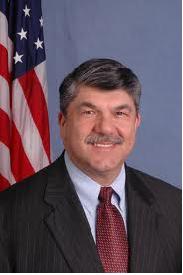
Many unionists are frustrated as usual by the lack of a viable progressive alternative to the Democratic Party. But they’d best beware, as AFL-CIO President Richard Trumka says, of the serious consequences of   being less than enthusiastic supporters of Democratic candidates in November’s elections.

“The Republican Party of NO doesn’t want our vote,” says Trumka. “All they want is for us to stay home. They want us to feel hopeless and disgusted so they can come back by default.”

 Trumka acknowledges that many union members, and many of their supporters and other progressives, are frustrated with the slow pace of economic change, the continuing high unemployment rate, continuing wars and other serious, unsettled problems.

But Trumka points out that in just a year and a half, Obama has had to dig out of a huge economic hole and “face extremist opposition on every point.” Yet, Trumka notes, “We’ve halted taxpayer bailouts … no longer are losing 700,000 jobs a month but are gaining a few… And by the end of this year we will have created or saved 3 1/2 million jobs and have fulfilled the dream of every president since Harry Truman and started to move down the road to health care for all. “

Organized labor has particularly good reason to be pleased with the performance of Obama and the congressional Democrats – particularly good reason to once again deploy millions of campaign dollars and millions of campaign workers in their behalf as labor did in the 2008 elections.

The Labor Department and National Labor Relations Board, virtually tools of the anti-labor right wing under President Bush, are under Obama returning to their job of enforcing the laws that guarantee workers the right to unionize without employer interference.

 And federal agencies are once again strictly enforcing the minimum wage and hour laws and other vital pro-worker laws that had been seriously neglected under Bush’s distinctly anti-labor administration. What’s more, the Occupational Safety and Health Administration is actually attempting to clamp down on the widespread violation of the job safety laws that has led to the needless deaths and serious injury of millions of American workers.

“We know you are angry,” Trumka told a recent gathering of labor leaders, “but we have made progress. No one said this was going to be easy. Ask African Americans how long they have fought and continue to fight. If they had given up after a year and a half they would still be in chains.”

 November’s election, says Richard Trumka, is  “the most crucial election in 75 years.” It will in any case be of unusually high importance to America’s working people and their unions and of exceptional importance to the rest of us as well.

Dick Meister, former labor editor of the SF Chronicle and KQED-TV Newsroom, has covered labor and politics for a half-century. Contact him through his website, www. dickmeister.com, which includes more than 250 of his recent columns.

The more Whitman spends, the more people hate her

7

Johnny Angel and I have been talking about this trend for months, and now there’s evidence to support our conclusion: Meg Whitman’s massive blitz of campaign ads is doing her more harm than good.


From Calitics:


Jerry Brown’s campaign manager, Steve Glazer, took to the campaign’s blog today to offer his thoughts on the state of the race. In that post, Glazer offered this fascinating nugget of information:


    A survey we completed three days ago found most people who have seen a Whitman ad don’t believe her claims are true. When we asked whether these ads have improved or worsened their opinions of the candidates for Governor, the results were as follows:


    Attorney General Jerry Brown: 6% improved; 4% worsened; 58% unchanged


    Meg Whitman: 8% improved; 27% worsened; 31% unchanged


    In more than 30 years of working on campaigns, I have never seen a candidate’s ads have such a negative effect on that same candidate.


Amazing, but it makes sense. The ads are becoming annoying — you can’t turn on the radio or TV in California without being assaulted by Meg, Meg, Meg — and her mesage is so flat and lacking in credibility that the voters can apparently see through it.


There’s an interesting possibility that Whitman will lose and Prop. 23 will lose, and combined with PG&E losing on Prop. 16 this spring, the notion that money alone can buy a California election may be changing. A little.

Eating humble pie with Glendon “Anna Conda” Hyde

22

It was with a sinking feeling that I read the comments that Glendon “Anna Conda” Hyde’s supporters left on the Guardian’s website last week, after I wrote about the DCCC questionnaires last week—and managed to screw up by omitting Conda/Hyde from my hasty round up.

“How is it that you’ve omitted Anna/Glendon from your election roundup?” was one of many similar comments made by Conda/Hyde’s outraged supporters. “This looks awfully like PREJUDICE, darlings. You should be ashamed of yourselves. Anna/Glendon’s candidacy is not a joke. S/he is one of the most promising progressive voices in SF. Wake up.”

So, I picked up the phone, and called Conda/Hyde to offer my humble apologies.

And today we sat down and talked about the role of the media and political endorsement clubs in propping up the marginalization of marginalized candidates and communities—and the role of radical queers in pushing back against the status quo and the political machines.

Conda/Hyde kicked off by recalling how the DCCC offered congratulations on the campaign’s artwork.

“But then they said you are not a viable candidate, and have you thought about taking the spotlight off yourself,” Conda/Hyde claimed.

(After our interview, I put in a call to DCCC chair Aaron Peskin. He had no recollection of the conversation going down quite like that. But Peskin also noted that the DCCC had done a ton of interviews recently.

“I like Glendon and I remember him appearing,” Peskin said. “But I don’t remember anyone telling him he was not viable.”

But with 26 candidates in the D. 6 race, and 27 candidates in the D. 10 race, it’s likely that some similar-minded candidates in those contests may decide, or be advised, to rally together between now and the election to increase the chances that  “the bad guys” don’t win, right?

“You’d think,” Peskin said. “That’s why I dropped out of the Board of President’s race when Willie Brown’s guy looked like he was going to win, and as a result, Matt Gonzalez won the race.”)

Anyways, back to my interview with Conda/Hyde, who also claimed that D. 6 candidate h.brown recently got barred from a small business debate in SoMa.

I wasn’t at that particular forum, or the D. 10 debate that the SF Young Dems recently hosted in the Bayview.

But I have watched videos of the outrage that was triggered at the Young Dems forum, when D. 10 candidates Dianne Wesley Smith, Nyese Joshua, Ed Donaldson, Marie Harrison and Espanola Jackson were excluded from the debate, even though the Bayview is where they are based.

And it’s similar to the outrage that Conda/Hyde supporters understandably felt when their candidate’s positions on issues like Mayor Gavin Newsom’s sit-lie legislation weren’t included in my original summary of the DCCC questionnaire. Especially since Conda/Hyde led the pushback against Newsom’s sit-lie measure.

“Marginalized districts, marginalized candidate voices,” Conda/Hyde observed.

The point Conda/Hyde is making here is that all candidates bring unique voices and perspectives to a race, and they provide marginalized communities with a rare opportunity to push back against powerful interests and ill-advised measures before this or that political machine can shoe horn its preferred slate into office.

“I was the first candidate to come out against sit-lie aggressively,” Conda/Hyde noted, by way of example.

At this point in our conversation, Labor leader and DCCC member Gabriel Haaland, who sat in on today’s meeting and voiced sharp criticism of my Conda/Hyde omission last week, chimed in.

“So many candidates were ducking sit-lie, so when I introduced a resolution opposing sit-lie at the DCCC, so many people were pissed off,” Haaland said. “And it was refreshing to see Anna Conda vocally opposing sit-lie in drag on Polk Street.”

Haaland added that he’d be working for Conda/Hyde’s campaign, “if not for a 15 year friendship with Debra Walker.”

And then he pointed to the central role that radical queers have played in pushing for political change.

“The first queer to run for elected office was a drag queen,” Haaland observed. “Radical queers have always been leading the movement, busting a move and changing the world. And Anna Conda is more the Harvey Milk of the race, in my opinion.”

“You reflect my radical queer positions more,” Haaland continued, addressing Conda/Hyde direct.  “And you have a real base in the district in a way that Theresa Sparks does not. But people are moving into the district and having bases created for them.”

Conda/Hyde then observed that plans are afoot for an inclusionary District 6 forum.

“Jane Kim and I are getting together to do a forum that includes all the D. 6 candidates,” Conda/Hyde said, “We’ll be including James Keys, Dean Clark and Fortunate ‘Nate’ Payne, who are all out there working hard on their campaigns, as well.”

The ability to raise funds is often an indicator of whether a candidate is viable. Campaign finance records show that Conda/Hyde has applied for public funds, the application is under review, and that Jane Kim, Jim Meko, Theresa Sparks, Debra Walker and Elaine Zamora have qualified for public financing in the D. 6 race.

That level of public fund raising is only bested by D. 10 where Malia Cohen, Kristine Enea, Chris Jackson, Tony Kelly, DeWitt Lacy, Steven Moss, Eric Smith and Lynette Sweet have already qualified for public financing, and Diane Wesley Smith, has her application under review.

(In D. 2, Kat Anderson and Abraham Simmons have already qualified for public funding. In D. 8, Rafael Mandelman, Rebecca Prozan and Scott Wiener have already qualified, and Bill Hemenger’s application is under review.)

At the end of our meeting, Conda/Hyde talked about name recognition problems.
“I have a lot of name recognition as Anna Conda, and not as much as Glendon Hyde,” Conda/Hyde noted, choosing to pose as Glendon Hyde next to his D. 6 campaign sign.
“I think I’ve already proven that I’m a drag queen,” Hyde explained.

“And not just a pretty face,” Haaland concluded.


SF Chamber attacks — lamely

0

The right-wing San Francisco Chamber of Commerce has had a pretty bad track record in local electoral politics in recent years, and its latest attack ads on progressive members of the Board of Supervisors demonstrates why: the group’s muddled and hypocritical messaging is barely comprehensible to the average San Franciscan.

The San Francisco Chronicle this morning announced the new ad campaign, the first salvo resulting from strategy sessions with Mayor Gavin Newsom and other downtown players, and the article included a funny conflict about whether or not the Chronicle is giving free advertising space to the effort.

But the ads themselves are even funnier – although inadvertently so – asking voters whether “your city supervisor” prefers “buses or benefits,” “parks or pensions,” or “paychecks or pinkslips.” Apparently, the Chamber is trying to capitalize on this political season’s fashionable attacks on public employee pensions and benefits, but the false choices that the Chamber sets up actually say more about its own promotion of this sort of zero-sum game within the public sector.

Hundreds of city employees have gotten pink slips in the last couple years directly because Newsom and the Chamber have sabotaged proposed revenue measures, even those that would help small businesses. They’ve played cynical political games that have cut Muni service and caused fares to double since Newsom became mayor, with Muni money diverted to help fund the paychecks, benefits, and pensions of police and firefighters – core Newsom constituencies to whom he gave overly generous deals to secure their early support for his 2007 re-election – while recently negotiating a deal that would exempt them from being affected by Jeff Adachi’s pension reform measure for another two years.

But targets of the ads don’t even need to know this whole backstory to see that the ads are simply false choices, lamely presented. Another swing and a miss from the once-mighty Chamber.

High time

34

steve@sfbg.com

DRUGS With polls showing that California voters are probably poised to approve Proposition 19 in November and finally fully legalize marijuana, this should be a historic moment for jubilant celebration among those who have long argued for an end to the government’s costly war on the state’s biggest cash crop. But instead, many longtime cannabis advocates — particularly those in the medical marijuana business — are voicing only cautious optimism mixed with fear of an uncertain future.

Part of the problem is that things have been going really well for the medical marijuana movement in the Bay Area, particularly since President Barack Obama took office and had the Justice Department stop raiding growing operations in states that legalized cannabis for medical uses, as California did through Proposition 215 in 1996.

In San Francisco, for example, more than two dozen clubs form a well-run, regulated, taxed, and legitimate sector of the business community that has been thriving even through the recession (see “Marijuana goes mainstream,” Jan. 27). The latest addition to that community, San Francisco Patient and Resource Center (SPARC), opened for business on Mission Street on Aug. 13, an architecturally beautiful center that sets a new standard for quality control and customer service.

“This is the culmination of a 10-year dream. We’re going to have a real community center for patients with a great variety of services,” longtime cannabis advocate Michael Aldrich, who cofounded SPARC along with Erich Pearson, told us at the club, which includes certified laboratory testing of all its cannabis and free services through Quan Yin Healing Arts Center and other providers.

Yet cash-strapped government agencies have been hastily seeking more taxes and permitting fees from the booming industry, particularly since the ballot qualification of Prop. 19, an initiative that was written and initially financed by Oaksterdam University founder Richard Lee that would let counties legalize and regulate even recreational uses of marijuana.

Oakland, Berkeley, Richmond, and other California cities have placed measures on the November ballot to tax marijuana sales, and the Oakland City Council last month approved a controversial plan to permit large-scale cannabis-growing operations on industrial land (see “Growing pains,” July 20).

In an increasingly competitive industry, many small growers fear they’ll be put out of business and patient rights will suffer once Prop. 19 passes and counties are free to set varying regulatory and tax systems, concerns that have been aired publicly by advocates ranging from Prop. 15 author Dennis Peron to Kevin Reed, founder of the Green Cross medical marijuana delivery service.

“It’s tearing the medical marijuana movement apart,” Reed told the Guardian. “It’s a little scary that we’re going to go down an uncertain road that may well scare the hell out of mainstream America.” Indeed, U.S. Attorney General Eric Holder — who ended the raids on medical marijuana growers — has said the feds may reengage with California if voters legalize recreational weed.

Yet Lee said people shouldn’t get distracted from the measure’s core goal: “The most important thing is to stop the insanity of prohibition.” He expects the same jurisdictions that set up workable systems to deal with medical marijuana to also take the lead in setting rules for other uses of marijuana.

“It will be just like medical marijuana was after [Prop.] 215, when a few cities were doing it, like San Francisco, Oakland, and Berkeley,” Lee told us. “And for cities just coming to grips with medical marijuana, it will be clean-up language that clarifies how they can regulate and tax it.”

Indeed, the tax revenue — estimated to be around $2 billion for the state annually, according to the California Legislative Analyst’s Office — has been the main selling point for the Yes on 19 campaign (whose website is www.taxcannabis.org) and Assembly Member Tom Ammiano, who authored bills to legalize marijuana and has current legislation to set up a state regulatory framework if Prop. 19 passes.

“It makes it more seductive,” Ammiano said of revenue potential from legalized marijuana. “I’ve been working with Betty Yee [who chairs the California Board of Equalization, the state’s main taxing authority] on a template and structure for taxing it.”

Reed and others say they fear taxes at the state and local levels will drive up the price of marijuana, as governments have done with tobacco and alcohol, and hinder access by low-income patients. But Ammiano scoffed at that concern: “Even with the tax structure on booze, there was no diminishing of access to booze.”

Pearson said he believes Prop. 19 will actually help the medical marijuana industry. “Anything that takes the next step toward legalizing recreational use only helps medical cannabis,” he said. Pearson moved to California to grow medical marijuana more than 10 years ago, at a time when the federal government was aggressively trying to crush the nascent industry.

“When you’re packing up and running from the DEA all the time, you’re not thinking about the quality of the medicine. You’re trying to stay out of jail,” Pearson said. “Now, we can be transparent, which is huge.”

Like most dispensaries, SPARC is run as a nonprofit cooperative where most of the growing is done by member-patients. Speaking from his office, with its clear glass walls in SPARC’s back room, Pearson said the Obama election ushered in a new openness in the industry.

“Everything is on the books now, whereas before nothing was on the books because it would be evidence if we got busted … We are allowed to have banks accounts; we’re allowed to use accountants; I can write checks; we can talk to government officials,” Pearson said. “It helps with the public and governments, where they see the transparency, to normalize things.”

He also said Prop. 19 will only further that normalizing of the industry, which ultimately helps patients and growers of medical marijuana. SPARC, for example, gives free marijuana to 40 low-income patients and offers cheap specials for others (opening day, it was an eighth of Big Buddha Cheese for $28) because others are willing to pay $55 for a stinky eighth of OG Kush.

“Our objective here is to bring the cost of cannabis down. We can subsidize the medicine for people who can’t afford it with sales to people who can,” Pearson said, noting that dynamic will get extended further if the legal marketplace is expanded by Prop. 19.

While Pearson strongly supports the measure, he does have some minor concerns about it. “The biggest concern is if local governments muddy the line between medical and nonmedical,” Pearson said, noting that he plans to remain exclusively in medical marijuana and develop better strains, including those with greater CBD content, which doesn’t get users high but helps with neuromuscular diseases and other disorders.

Reed also said he’s concerned that patients who now grow their own and sell their excess to the clubs to support themselves will be hurt if big commercial interests enter the industry. Yet for all his concerns, Reed said he plans to reluctantly vote for Prop. 19 (which he doesn’t believe will pass).

“They’ll get my vote because not having enough yes votes will send the wrong message to law enforcement and politicians [that Californians don’t support legalizing marijuana],” Reed said, noting that would rather see marijuana uniformly legalized nationwide, or at least statewide.

Attorney David Owen, who works with SPARC, said the momentum is now there for the federal government to revisit its approach to marijuana. But in the meantime, he said Prop. 19 has come along at a good time, given the need for more revenue and more legal clarity following the federal stand-down.

And even if the measure isn’t perfect, he said those who have devoted their lives to legalizing marijuana will still vote for it: “A lot of these folks, intellectually and emotionally, will have a hard time voting against Prop. 19.”

Democrats divided

25

Update:This online article contains a correction concerning the DCCC’s vote on Sup. Sean Elsbernd’s Muni pay guarantees (Prop. G). In the print version of this article, the Guardian reported that the DCCC had voted “to recommend a no vote” on Prop. G. This is incorrect. The DCCC voted “not to endorse” Prop. G. As Elsbernd points out, “This is a key distinction.”

Sarah@sfbg.com

With fewer than 10 weeks to go until a pivotal November election, the San Francisco Democratic County Central Committee (DCCC) approved a package of endorsements at its Aug. 11 meeting, giving the nod to mostly progressive candidates and rejecting Mayor Gavin Newsom’s most divisive ballot measures.

This crucial election could alter the balance of power on a Board of Supervisors that is currently dominated by progressives, and that new board would be seated just as it potentially gets the chance to appoint an interim mayor.

That’s what will happen if Newsom wins his race for lieutenant governor. The latest campaign finance reports show that Newsom has raised twice as much money as the Republican incumbent, former state Sen. Abel Maldonado. But the two candidates are still neck-and-neck in the polls.

Although the DCCC supports Newsom in the race, it is resisting his agenda for San Francisco, voting to oppose his polarizing sit-lie legislation (Prop. L), a hotel tax loophole closure (Prop. K) that would invalidate the hotel tax increase that labor unions placed on the ballot, and his hypocritical ban on local elected officials serving on the DCCC (Prop. H).

Shortly after the vote, the San Francisco Chronicle reported that Newsom called an emergency closed-door meeting with some of his downtown allies to discuss the upcoming election. “We just wanted to get on the same page on what’s going on locally, what’s going with the ballot initiatives, where people are on the candidates for supervisor,” Newsom told the newspaper.

DCCC Chair Aaron Peskin, who regularly battled with Newsom during his tenure as president of the Board of Supervisors, voted with the progressive bloc against Newsom’s three controversial measures. But he told us that he was glad to see the mayor finally engage in the local political process.

Sup. David Campos kicked off the DCCC meeting by rebuffing newly elected DCCC member Carole Migden’s unsuccessful attempt to rescind the body’s endorsement of Michael Nava for Superior Court Judge, part of a push by the legal community to rally behind Richard Ulmer and other sitting judges.

Things got even messier when the DCCC endorsed the candidates for supervisor. In District 2, the DCCC gave the nod to Janet Reilly, snubbing incumbent Sup. Michela Alioto-Pier, who is running now that Superior Court Judge Peter Busch has ruled that she is not termed out (a ruling on City Attorney Dennis Herrera’s appeal of Busch’s ruling is expected soon).

In District 6, where candidates include DCCC member Debra Walker, School Board President Jane Kim, Human Rights Commission Executive Director Theresa Sparks, neighborhood activist Jim Meko, and drag queen Glendon Hyde (a.k.a. Anna Conda), the club endorsed only Walker, denying Kim the second-place endorsement she was lobbying for.

But in District 8, where candidates include progressive DCCC member Rafael Mandelman, moderate DCCC member Scott Wiener, and moderate Rebecca Prozan, the politics got really squirrelly. As expected, Mandelman got the first-place nod with 18 votes: the progressive’s bare 17-vote majority on the 33-member body plus Assembly Member Leland Yee.

Yet because Yee supports Prozan and David Chiu, the Board of Supervisors president who was also part of the DCCC progressive slate, had offered less than his full support for Mandelman, a deal was cut to give Prozan a second-place endorsement.

That move caused some public and private grumbling from Jane Kim’s supporters, who noted that Kim is way more progressive than Prozan and said she should have been given the second-place slot in D6.

A proxy for John Avalos even tried to get the DCCC to give Walker and Kim a dual first-place endorsement, but Peskin ruled that such a move was not permitted by the group’s bylaws. Then DCCC members Eric Mar and Eric Quezada argued that Kim should get the club’s second-choice endorsement.

But Walker’s supporters argued that Kim only recently moved into the district and changed her party affiliation from the Green Party to the Democratic Party, and Kim’s supporters failed to find the 17 votes they needed.

“District 6 has an amazing wealth of candidates and I look forward to supporting many of them in future races,” Gabriel Haaland told his DCCC colleagues. “I will just not be supporting them tonight.”

Wiener told the group he would not seek its endorsement for anything below the top slot. “I’m running for first place and I intend to win,” Wiener said, shortly before Prozan secured the club’s second-choice endorsement.

In District 4, the DCCC endorsed incumbent Carmen Chu, who is running virtually unopposed. The DCCC also endorsed Bert Hill’s run for the BART Board of Directors, where he hopes to unseat James Fang, San Francisco’s only elected Republican.

The body had already decided to delay its school board endorsements until September and ended up pushing its District 10 supervisorial endorsement back until then as well because nobody had secured majority support.

“I think it’s because they want to give members of the DCCC a chance to learn more about some of the candidates,” District 10 candidate Dewitt Lacy told the Guardian. “I don’t think folks have spent enough time to make an informed decision.”

D10 candidate Chris Jackson agreed, adding, “The progressives in this race have brought our issues to the forefront.”

“I think it’s appropriate,” concurred D10 candidate Isaac Bowers. “D10 is a complicated district. It’s wise to wait and see how it settles out.”

The main thing that needs to be resolved is which candidate in the crowded field will emerge as the progressive alternative to Lynette Sweet, who has the support of downtown groups and mega-developer Lennar Corp.

After the meeting, Walker said different races require different political strategies. “I think it’s hard in the progressive community, where so many of us know each other and even our supporters know the other candidates and are their supporters in other scenarios,” Walker said.

“But the Democratic Party makes decisions not just based on politics,” she continued. “So the endorsement is about being viable and successfully involved in Democratic issues. And even though I want to encourage everyone to run, and we have that ability with ranked choice voting and public financing, when it comes to straight-on politics, the goal is winning.”

Walker said the vote on D8 reflected the reality that Mandelman was having trouble getting the necessary number of votes. “I know Rebecca and I know Rafael, and Rafael was my clear first choice,” Walker said.” Rafael asked me to consider voting for Rebecca—and I voted for her as my second choice.”

Walker predicts she’ll have union support behind her campaign, while Kim, who leads in fundraising, will have independent expenditure committees that will support her campaign.

“My consultant says it’s a $250,000 race, and unfortunately the viability is based on that reality, the funds, the money,” Walker observed.

On the fall ballot measures, the DCCC voted to recommend a no vote on Public Defender Jeff Adachi’s measure to make city employees pay more for the pension and healthcare costs (Prop. B), Sup. Sean Elsbernd’s Health Service Board Elections (Prop. F,) and Newsom’s three controversial measures. And they voted “no endorsement” on Elsbernd’s measure to remove from the charter Muni pay guarantees (Prop. G). 

But the DCCC did vote to endorse a local vehicle registration fee surcharge (Prop. AA), Newsom’s earthquake retrofit bond (Prop. A), Sup. Chris Daly’s proposed legislation to require mayoral appearances at board meetings (Prop. C), Chiu’s measure to allow noncitizen voting in school board elections (Prop. D), Sup. Ross Mirkarimi’s Election Day voter registration (Prop. E), former Newsom campaign manager Alex Tourk’s Saturday voting proposal (Prop. I) Labor’s hotel tax (Prop. J ), Mirkarimi’s foot patrols measure (Prop. M) and Avalos’ real estate transfer tax (Prop. N).

With just about everybody opposed to Adachi’s measure going after public employee unions, Walker observed that Adachi probably wishes he had done it differently now. But looking into the future, Walker sees opportunities for the party to come back together.

“There’s an opportunity to start a dialogue because everyone is hurting,” Walker said. “The more we don’t have a proactive solution, the more we get caught at the bottom.”

And in a feel-good vote for the frequently divided body, the DCCC also voted overwhelmingly to endorse the statewide initiative to legalize and tax marijuana (Prop. 19). Normally local party committees don’t take a position on state initiatives, but because the California Democratic Party took no position on Prop. 19, the DCCC had permission to weigh in.

As Peskin put it before the enthusiastic marijuana vote, “Raise your hands — high.”

Community Congress convened

1

news@sfbg.com

About 60 San Francisco citizens voted just before 1 p.m. on Aug. 15 to adopt a progressive platform of approximately 100 policy recommendations they hope will define the agenda of candidates and elected officials in coming years and offer a contrasting vision for the city to that of downtown corporate interests.

Sunday’s culmination of the 2010 Community Congress represented almost a year’s work by some 400 San Franciscans and dozens of community-based organizations, according to the Congress’ draft recommendations. The congress convened all day Aug. 14, at the University of San Francisco’s Fromm Hall, where participants engaged in breakout groups aimed at addressing four distinct local policy categories: health and human services; Muni and public transportation; affordable housing and tenant rights; and community-based economic development.

Recommendations in the four areas were drafted prior to the congress and published by the Guardian (see “Reinvention of San Francisco,” Aug. 4 and “Ideas that work: a plan for a new San Francisco,” Aug. 11), but planning group coordinator Calvin Welch said between a one-quarter and one-third were rewritten and amended during the breakout sessions on Saturday and by the congress as a whole on Sunday. Representatives from the breakout groups are working to finalize all the last-minute amendments and hope to post a final document by on the congress’ website (www.sfcommunitycongress.wordpress.com) by Aug. 20.

“This is a group of left-progressive people trying to articulate a left-progressive view for the city that is distinct from the cynicism of the [San Francisco] Chronicle and [Mayor] Gavin Newsom’s message,” Welch told the Guardian after the vote.

Gail Gilman facilitated the final adoption session on Aug. 15, passing a microphone to those who wished to speak or propose amendments while pushing the group to stick to the schedule. “I think we produced a solid progressive platform that will gain traction in the upcoming supervisors race,” Gilman told the Guardian outside the congress. “We’re hoping to have actionable items implemented over the next five years.”

Some of the congress’ ambitious agenda had to be put on hold, either because consensus couldn’t be reached or groups simply ran out of time. The Muni group’s recommendation to delay the Central Subway Project and use those funds to address “Muni’s backlog of operating, maintenance, and capital improvement needs” was tabled, as was decentralizing control of expenditures in health and human services out of the mayor’s hands. However, several agencies that the congress hopes to create, including a “canopy” entity to manage San Francisco’s public health system, would have direct budgetary control over city departments.

Health and human services group coleader and Bayview-Hunters Point Foundation Executive Director Jacob Moody told the crowd about a question posed early in the congress that informed his group’s recommendations: How do we create a city where people can live, work, and prosper together?

Welch admitted that some of policy recommendations would be difficult to realize and would draw the ire of powerful political groups in San Francisco, but he insisted that creating a municipal bank, an economic redevelopment agency, and a health and human services planning agency, and implementing several of the Muni group’s recommendations, were actionable in the short term.

“Some others would need to wait until the election of a new mayor,” Welch said. “I hope we can get some mayoral candidates to endorse some of these proposals.”

Sunnydale/southeast neighborhood community organizer Sharen Hewitt said that although there were often disagreements at the congress, the most important aspect of the event to her was that everyone learned from the perspectives of others.

“Tension is not always bad,” Hewitt told the Guardian at the event. “Everybody came here with biases and interests. Everybody needs to leave here with more. I’m damn near 60 years old and I grew half an inch today.”

Sunday’s congress and policy platform were modeled after San Francisco’s first Community Congress, which took place in 1975. But Welch told us this congress was entirely new. “To the extent that there is a historical aspect, 35 years ago we tried to figure out a way to bring people together. And 35 years later, young people want to do the same thing.”

“Diamond” Dave Whittaker, a modern Emperor Norton-esque San Francisco personality, closed the congress with a poem. “The basis of real social change is happening here,” he said. “And we need to continue casting a wider net, finding the thread, and letting it flourish.”

The real reason GOP is obssessing on the Ground Zero mosque

4

Daily Kos contributing editor Jed Lewison suggests that it’s because the Republican Party has nothing else to contribute to the conversation, as the election nears.

It’s an interesting theory.

As Lewison writes, “Despite polling that shows most Americans — including Democrats and even many liberals — oppose building a mosque two blocks from Ground Zero, Republicans are making a big mistake in building their fall campaign around the issue, in the process handing Democrats a big opportunity.

“GOPers obviously believe that the symbolism of the mosque issue makes it ripe of exploitation,” Lewison continues. “And it might be true that the mosque is the best issue they’ve got going for them, even if the public debate about it has been fueled by bigotry and false characterizations of the proposal. Nonetheless, their decision to exploit it says more about the fundamental weakness of GOP than it does about their political prowess.”

“Here’s why: the mosque issue is far less important than the economy, and every moment that the GOP spends focusing its message on the mosque provides Democrats with the chance to point out that Republicans are fundamentally unserious about doing what it takes to get the economy going again,” Lewison concludes. “Every poll shows the economy is priority #1, #2, and #3, yet Republicans haven’t offered a single economic plan other than to do nothing.”

Daly endorses James Keys in D.6.

7

Termed out D. 6 Sup. Chris Daly announced last night via Fog City Journal that he has endorsed community organizer James Keys. Keys was Daly’s re-election campaign manager in 2006.

“James was by my side through my toughest battles,” Daly told FCJ. “While there are many good candidates in this race, James Keys best represents what I’m about – social and economic justice for our City’s most vulnerable. His campaign may not have the most money or endorsements, but he does have a special connection with the constituents that I love and the will to overcome great odds.”

Daly’s endorsement vaults Keys into the front line of candidates vying to replace Daly. 

“I am humbled to be receiving the endorsement of Supervisor Chris Daly, who has done so much for our District,” Keys told FCJ. ” It’s going to be helpful to have him with me as I work to continue his legacy.”

Daly said he will formally endorse Keys during a campaign barbecue this  Saturday at 11am in Boeddeker Park. And as FCJ founder, editor and photographer extraordinaire Luke Thomas put it, in an email about his scoop, “An interesting development, n’est ce pas?”.


What DCCC questionnaires reveal about Adachi reform, sit-lie and marijuana

20

The DCCC makes its endorsements for the November election on August 11. And in preparation for that crucial endorsement, candidates filled out questionnaires that are posted online, providing fodder for those interested in Jeff Adachi’s pension reform, Mayor Gavin Newsom’s sit-lie ordinance, and the legalization of marijuana, amongst other measures.

But before we get to those issues, I have to admit I was a bit surprised to see that D. 10 candidate Malia Cohen, who has already secured the endorsements of Sally Lieber, Fiona Ma and Aaron Peskin, says on her DCCC questionnaire that she supports the death penalty.

Now, to be fair, advocating for or against the death penalty isn’t the duty of the Board of Supervisors. And I haven’t yet caught up with Cohen yet to clarify why she holds this stance, (or whether it was one big typo, though I somehow doubt it). So, I’ll be sure to update this post, once I have a chance to talk to Cohen, who was busy at yet another candidate forum, when I was writing this entry. UPDATE: Cohen says she does not support the death penalty, and that she inadvertently misanswered the question. (Thanks for clearing up the mystery, Malia, and being gracious about it in the process.)

I should mention that Peskin also endorsed D. 10 candidate Tony Kelly.

And I should also note that while D. 10 candidate Lynette Sweet’s questionnaire says she supports Jeff Adachi’s pension and healthcare reform, Sweet’s campaign says that’s not the case, pointing to how Sweet said at the Potrero Hill Democratic Club’s August 2 D. 10 forum that what Adachi did wasn’t a bad thing, but the way he went about it was.

I quoted Sweet saying those very words in a previous post, and Sweet’s campaign manager Shane Mayer told me that he forwarded what I wrote about that meeting to the DCCC to clarify Sweet’s position. But Mayer got testy when I asked him about the rent, or rather the lack of rent, that Sweet, who Mayor Gavin Newsom has already endorsed, appears to be paying for her campaign headquarters at 25 Division Street (at Rhode Island).

As Beyond Chron tells it, the deal looks more than a bit fishy, and appears to be bankrolled by the Visovichs, a family with Republican leanings that supported Mayors Willie Brown and Newsom in past election campaigns.

 Mayer tried to dismiss the Beyond Chron article as a “hit piece”.

“The article focuses on only one candidate,” Mayer said. “We’re paying fair market rate, and using only a small portion of a warehouse. When we moved in, we didn’t have lights.”

But Sweet isn’t the only D. 10 candidate to come under Beyond Chron’s fire in recent days: fellow D. 10 candidate Steve Moss also took flak for receiving $500 from Andrew Zacks, the landlord attorney famous for doing Ellis Act evictions.

While on the phone with Moss recently, I asked what he thought about Newsom’s sit-lie ordinance, Moss said he hadn’t made up his mind yet.

And in his DCCC questionnaire, Moss also waxes ambiguous on sit-lie. “There’s clearly a lack of civility in certain areas of the city,” Moss wrote. “And in Bayview-Hunters Point, youth loitering can create conditions that create violence. However, it’s not clear to me that sit-lie is an appropriate response to this issue, and that it won’t result in unintended consequences. For example, sidewalks in Bayview-Hunters Point are also often used for peaceful gathering of neighbors, which is community-building and non-threatening.”

Makes me wonder what Moss and the rest of the candidates think about City Attorney Dennis Herrera’s recent gang injunction in Viz Valley…

UPDATE: I should add here that termed-out D.6 Sup. Chris Daly has just endorsed legislative aide and D.6 candidate James Keys, whose DCCC answers I’ve included in my round up of some of the candidate responses to this year’s DCCC questionnaire. UPDATE: And for all the Glen “Anna Conda” Hyde supporters, my humble apologies for omitting your candidate’s positions in my first post on this issue:

Chiu’s non-citizen voting in School Board elections
Supportive of non-citizen voting:  Adachi, Sup. Michela Alioto-Pier and D. 2 challenger Janet Reilly, D. 6 candidates Glen “Anna Conda” Hyde, James Keys, Jane Kim, Jim Meko, Debra Walker and Theresa Sparks. D. 8 candidates Rafael Mandelman, Rebecca Prozan and Scott Wiener. D. 10 candidates Isaac Bowers, Cohen, Chris Jackson, Tony Kelly, Dewitt Lacy and Eric Smith.
Opposed: D.2 candidates Farrell and Berwick, D. 4 incumbent Carmen Chu, and D. 10 candidates Kristine Enea and Lynette Sweet.

Newsom’s ban on dual office holding

Supportive: Berwick, Farrell, Glen “Anna Conda” Hyde, Meko, Enea.

“Yes. Better distribution of power,” Anna Conda said.

Opposed: Adachi, Alioto-Pier, Reilly, Keys, Kim, Walker, Sparks, Mandelman, Sweet, Lacy, Kelly, Cohen, Wiener, Jackson, Smith and Prozan.
“This measure is the result of petty politics between the mayor and the Board,” Prozan, who contributed S100 to Newsom’s Lt. Governor campaign, famously wrote on her DCCC questionnaire.

Newsom’s Sit-Lie Ordinance
Supportive: Farrell, Alioto-Pier, Reilly, Chu, Sparks, Wiener and Sweet.
Opposed: Adachi, Berwick, Glen “Anna Conda” Hyde, Keys, Kim, and Walker. Mandelman and Prozan. Cohen, Jackson, Kelly, Lacy and Smith.

Adachi’s Pension Reform
Supportive: Adachi, Berwick, Meko, and Sweet
Opposed: Chu, Farrell and Reilly. Glen “Anna Conda” Hyde, Keys, Kim, Walker and Sparks. Mandelman, Prozan and Wiener. Cohen, Jackson, Kelly, Lacy and Smith.
No position, yet: Alioto-Pier.

Legalization of pot (Prop. 19)
Supportive: Adachi, Berwick. Glen “Anna Conda” Hyde, Keys, Kim, Meko, Sparks, and Walker. Mandelman, Prozan and Wiener. Cohen, Jackson, Kelly, Lacy, Smith and Sweet.
Opposed: Chu and Farrell

No position, yet: Alioto-Pier, Janet Reilly.

Hard to tell: Moss.

“I philosophically support this measure but am concerned that its economic and social implications haven’t been carefully considered, nor its interaction with federal law,” Moss wrote on his DCCC questionnaire.

Sparks for her part just clarified that she mistakenly answered “No” on two DCCC questionnaire items: “Do you opposeprivatization of essential government services,” and “Will you oppose anti-worker initiatives that seek to undermine the ability of union leaders to carry out will of members and engage in political activities.”

“I meant to answer yes, as I explained at my DCCC interview,” Sparks said. “I was confused by the double negatives.”

While she was on the phone, Sparks also admitted that the pace on the campaign trail is getting intense with forums and meetings every night.

“David Campos, who has been a good friend since we were both on the Police Commission, recently told me, ‘win or lose, you need to schedule a few weeks off in November when the election is over,’” Sparks said.

Campos is right. To all the candidates on the campaign trial, here’s wishing you lots of energy and calm in the weeks to come. And see you at the DCCC forum.

<!–[endif]–>

DCCC endorsements will test progressive unity

2

When the San Francisco Democratic County Central Committee convenes tomorrow (Aug. 11) evening to vote on its endorsements for the November races and ballot measures, the clout and unity of its slim progressive majority will be tested in a few high profile contests where the outcome isn’t entirely clear.

As I reported last week, progressives occupy only about 17 of the 33 seats, so any defectors from the slate that won in June could create some squirrely politics or backroom deals. Progressive supervisorial candidates Rafael Mandelman from District 8 and Debra Walker from District 6 are widely expected to get the top endorsements in their races, but Rebecca Prozan in D8 and Jane Kim (and possibly Jim Meko) in D6 each have some progressive supporters on the committee and could make a play for the second slot in the ranked-choice voting election. D8 candidate Scott Wiener, the former DCCC chair, will probably also try to get some kind of spot on the slate but is likely to be met with fairly unified progressive opposition.

The District 10 endorsement will be a free-for-all with no clear progressive consensus alternative to downtown-backed candidate Lynette Sweet yet emerging from the crowded field. Party chair Aaron Peskin has endorsed Malia Cohen and Tony Kelly in that race, but Chris Jackson, Dewitt Lacy, Kristine Enea, and other candidates also have progressive backing, so it could be tough for any of them to get to 17 votes at this point. But in District 2, Janet Reilly appears to have the endorsement locked down, despite a judge allowing incumbent Sup. Michela Alioto-Pier to run for a third term.

On the local ballot measures, the progressive majority is likely to endorse the revenue measures (a hotel tax increase pushed by labor, a transfer tax on properties worth over $5 million, and a small local vehicle license fee surcharge) and reject Public Defender Jeff Adachi’s measure to increase how much city employees pay for health care and into their pensions and Sup. Sean Elsbernd’s measure to end pay guarantees for Muni drivers (although not even progressives are feeling much love for the recalcitrant Transportation Workers Union these days).

The aggressive effort by the legal community to overturn the DCCC endorsement of Michael Nava for judge – waged on behalf of Judge Richard Ulmer, a recent appointee of Gov. Arnold Schwarzenegger, ostensibly over judicial independence but also as a way of sucking up to judges that lawyers want to curry favor with – is expected to fail, mostly because it requires a two-thirds vote. An ordinance to ban sitting or lying on sidewalks that is being pushed by Mayor Gavin Newsom, Police Chief George Gascon, and San Francisco Chronicle columnist CW Nevius is also likely to be soundly rejected by the party.

DCCC endorsements usually carry quite a bit of weight in heavily Democratic San Francisco, getting the candidates on party slate cards and entitling them to other party resources. Any races that don’t yield a majority endorsement this week would get pushed back to the September meeting, when the DCCC will consider school board endorsements.

The fun starts at 6 p.m. at the Unite-Here Local 2 office at 209 Golden Gate Avenue.

Film listings

0

Film listings are edited by Cheryl Eddy. Reviewers are Kimberly Chun, Michelle Devereaux, Max Goldberg, Dennis Harvey, Johnny Ray Huston, Louis Peitzman, Lynn Rapoport, Ben Richardson, and Matt Sussman. For rep house showtimes, see Rep Clock. For first-run showtimes, see Movie Guide.

OPENING

Eat Pray Love Julia Roberts has a midlife crisis. (2:30) Cerrito, Elmwood, Marina.

The Expendables Sylvester Stallone directs and stars (along with just about every other action hero, ever) in this mercenaries-in-the-jungle-with-big-guns adventure. (1:43)

The Extra Man The polar opposite of buddy cop action flicks and spoofs a la The Other Guys, with only a faint resemblance to the bromances of Judd Apatow, Adam McKay, Will Ferrell, Seth Rogen, and so on, The Extra Man is a gently weird throwback to another era, much like its title character, Henry Harrison (Kevin Kline). Sweet, cross-dressing-curious teacher and would-be writer Louis Ives (Paul Dano) is drifting though life passively when he stumbles on eccentric playwright Harrison’s room-for-let and his oddball realm of hangers-on. A blustery, prickly, proudly misogynistic collector of Christmas balls, given to spasms of improvisational dancing, Harrison relishes his role as an escort to aged socialites, crankily shucking and jiving to score invites to fancy dinner parties and vacation homes in Florida. When Ives isn’t courting environmental magazine editor Mary (Katie Holmes) or hiding from the fearsome-looking wooly recluse Gershon (John C. Reilly), the mentor-able young man turns out to be more adept at the role than Harrison ever imagined. And like fossilized grande dames in Chanel, literate audiences also might be charmed by director-writer Shari Springer Berman’s unassuming, crushed-out bon mot, based on the novel by Jonathan Ames, to a few mannered, less-than-examined, happily twisted New York City subcultures. (1:45) Elmwood, Embarcadero. (Chun)

Harimaya Bridge The Harimaya Bridge might be the first film I’ve seen that portrays the American-Japanese culture clash so beloved by stateside filmmakers (see: 2003’s Lost in Translation) from the viewpoint of an African American man in Japan. The debut feature for short-film director Aaron Woolfolk, Bridge follows a retired man who travels to Japan after the death of his estranged son, with intentions to retrieve his son’s paintings for an art show. Likely based on Woolfolk’s personal experiences living in Japan, The Harimaya Bridge has both the look and feel of a short, an attribute that makes the otherwise agreeable film seem much too long and drawn-out. Or maybe, all along Woolfolk intended to replicate the dour melodrama and often glacial pacing of popular Japanese film. Meta-filmmaking? (2:00) Presidio. (Peter Galvin)

Lourdes Jessica Hausner’s Lourdes is a film about the people who things happen to rather than the things that happen to people. This is one of its merits yet also its greatest handicap because, really, not much does happen. Wheelchair-bound Christine (Sylvie Testud) makes the pilgrimage to the titular site of Catholic healing in the Pyrenees. When a miracle occurs and Christine walks, the other, less-enlightened denizens of Lourdes lampoon her, and God, for her inexplicable recovery. Hausner limns every scene with exaggerated blues, reds, and whites while relying on long takes and a certain clinical distance from the characters. The film’s atmosphere recalls Julian Schnabel’s The Diving Bell and the Butterfly (2007) but since Christine, unlike Jean-Dominique in that film, can speak and move, she doesn’t need to rely on her imagination to make sense of the world, and that would’ve been nice. Testud is subtle and sweet, but personality falls short here. Maybe it went out with her character’s legs. (1:39) Roxie. (Ryan Lattanzio)

Patrik Age 1.5 Freshly settled in suburbia, gay couple Goran (Gustaf Skarsgard) and Sven (Torkel Petersson) are eager to adopt a child — or at least Goran is, with Sven reluctantly caving in. But when against the odds they’re informed a native-born boy is available, a misplaced bit of bureaucratic punctuation means they get not the 18-month-old toddler expected but 15-year-old Patrik (Tom Ljungman). He’s a foul-tempered foster home veteran who makes it clear he’s no happier cohabiting with two “homos” than they are with him. Nevertheless, they’re stuck with each other at least through the weekend, allowing a predictable mutual warming trend to course through Ella Lemhagen’s agreeable seriocomedy. While formulaic in concept, the film’s low-key charm and conviction earn emotions that might easily have felt sitcomishly pre-programmed. (1:38) Lumiere, Shattuck. (Harvey)

Peepli Live Bollywood superstar Aamir Khan uses his powers for good in producing Peepli Live, Anusha Rizvi’s occasionally funny but also sobering satire. Poor and possibly a bit simple-minded, farmer Natha (Omkar Das Manikpuri) declares he’ll commit suicide after learning his family will receive enough benefits to save their land if he offs himself. He’s encouraged by his unmarried brother, received with skepticism by his exasperated wife, and harangued (as he clearly has been his entire life) by his sharp-tongued, bedridden mother. Once the media gets wind of Natha’s decision, he becomes a cause célèbre; ambitious reporters descend on Peepli, his tiny village, hoping to launch or further their careers with exclusive scoops (including one camera crew who proudly shares an exclusive close-up of Natha’s bowel movements). The bewildered man also becomes a political pawn among government muckety-mucks, who eagerly use him as leverage in a fast-approaching election. Though obviously an exaggeration, Peepli Live is grounded by the fact that India has had a real-life epidemic of farmer suicides. Stirring original music (though the film is not a musical) and an unpretentious filming style help Peelpli Live convey pressing themes of class and economics without slipping into preachiness. (1:46) Balboa. (Eddy)

The Oxford Murders One doesn’t need the deductive skills of Sherlock Holmes to see that things don’t quite add up in The Oxford Murders, cult Spanish director Álex de la Iglesia’s surprisingly stuffy adaptation of Guillermo Martinez’s 2003 murder mystery of the same name. Martin (Elijah Wood), an American graduate student, arrives at Oxford with the hopes of studying with the famous and prickly Wittgenstein scholar Arthur Seldom (John Hurt). After Seldom drubs Martin in a post-lecture Q&A, both men simultaneously come upon the corpse of Martin’s elderly landlady, a discovery appended by a cryptic note that reads, “the first of the series.” What follows is both a philosophical and criminal investigation as professor and student seek to prevent the next murders by determining whether the killer is a master domino layer or just a bookish nut-job. Iglesia has built his following on flash, and aside from one impressive tracking shot cribbed from 1958’s Touch of Evil and a few grisly air kisses to 1995’s Se7en, he yields far too much screen time to Seldom and Martin’s tendentious Philosophy 101 sparring matches. Although certainly more clever than your average Dan Brown whodunit, The Oxford Murders is no less ludicrous (or entertaining for that matter) for kitting out the bones of a CSI episode in the upper-crust finery of a university don. (1:50) Opera Plaza. (Sussman)

*Scott Pilgrim vs. The World See “Geek Love.” (1:52) California, Four Star, Presidio.

Tales from Earthsea Goro Miyazaki (son of Hayao) directs this animated, environmentally-themed fantasy. (1:55)

Vengeance See “Triad Quartet.” (1:48) Sundance Kabuki.

ONGOING

Agora There’s a good movie somewhere in Agora, but finding it would require severe editing. It’s not that the film is too long, though it does drag in stretches. The problem is that there are too many stories being told: Hypatia of Alexandria, the central figure, only emerges as the focus well into the film. Meanwhile, there’s Davus (Max Minghella), the slave boy in love with her; Orestes (Oscar Isaac), the student who tries to win her affection; Synesius (Rupert Evans), the devout Christian. We jump from character to character and plot to plot — the conflict between the pagans and the Christians, the conflict between the Christians and the Jews, and Hypatia’s studies in astronomy. Agora is so scattered that by the time it reaches its tragic conclusion — only a spoiler if you haven’t already Googled Hypatia — there’s little room to breathe, let alone grieve. While Hypatia herself is a fascinating subject, Agora is weighed down by all the stories it’s intent on cramming in. (2:06) Opera Plaza, Shattuck. (Peitzman)

*Alamar Pedro González-Rubio’s gorgeous Alamar (“to the sea”) is set between landscapes (land and sea) and ways of telling (fiction and documentary). The bare frame of a plot places a young boy with his father and grandfather, Mayan fishermen working the Mexican Caribbean. The sweetness of this idyll is tempered by its provisional bounds: the boy will return to his mother in Rome at the end of his compressed experience of a father’s love. Every shot is earned: there are several in which the camera bucks with the boat, physically linked to the actors’ experience. The child is at an age of discovery, and González-Rubio channels this openness by fixing on the details of the fisher’s elegant way of life and the environmental contingencies of their home at sea. (1:13) Sundance Kabuki. (Goldberg)

*Anton Chekhov’s The Duel Conformity vs. freedom, small-town whispers vs. the heavy hand of the law — Georgian director Dover Kosashvili successfully teases out some of the tensions in the Anton Chekhov novella, encapsulating the provincial pressures brought to bear on deviants and nonconformists during a steamy summer in a seaside resort town in the Caucasus. Dissolute civil servant and would-be intellectual Laevsky (Andrew Scott) is in the bind, as he gripes to the town doctor Samoylenko (Niall Buggy). Laevsky has everything he wants: he’s coaxed the creamy, married Nadya (Fiona Glascott) into living with him openly, yet now that her husband has died, he desires nothing more than to be free of her. In the meantime upstanding zoologist Von Koren (Tobias Menzies) simmers in the background, gaging Laevsky’s social mores and practically oozing contempt. Matters come to a head as Laevsky begs a loan from Samoylenko to escape his ripening paramour, who is also beginning to feel the gracious perimeters of the town closing in around her. From the buttons-and-bows millinery details to the oppressive dark wood furnishings, Kosashvili even-handedly builds a compelling Victorian-era mise en scene that seems to perfectly evoke the Chekhov’s milieu — it’s only when the title entanglement comes to pass that we finally see which side he’s on. (1:35) Smith Rafael. (Chun)

Cats and Dogs: The Revenge of Kitty Galore (1:40) 1000 Van Ness, SF Center.

Charlie St. Cloud The best thing one can say about Charlie St. Cloud is that it isn’t quite as terrible as the trailers would have you believe. Yes, the story is Nicholas Sparks-level silly: the eponymous Charlie (Zac Efron) loses his brother Sam (Charlie Tahan) in a tragic drunk driving accident, then spends the rest of the film playing baseball with his ghost. Add to that a romantic subplot involving fellow sailor Tess (Amanda Crew). There’s nothing you don’t already know about Charlie St. Cloud: each scene is laid out far in advance. So while the film itself is reasonably competent, it never surprises or unnerves an audience well-versed in its tropes. Efron, star of Disney’s delightful High School Musical series, is predictably charming, but even a few wet t-shirt scenes — yes, really — don’t distract from the story. Not to mention the fact that Tahan’s Sam is seriously grating. You’re dead, it sucks: no need to whine about it. (1:40) 1000 Van Ness. (Peitzman)

The Concert (1:47) Embarcadero.

Cyrus It’s tempting to label Mark and Jay Duplass’ Cyrus as “mumblecore goes mainstream.” Yes, the mumblecore elements are all there: plentiful moments of awkward humiliation, characters fumbling verbally and sometimes physically in desperate attempts to establish emotional connections, and a meandering, character-driven plot, in the sense that the characters themselves possess precious little drive. The addition of bona fide indie movie stars John C. Reilly, Catherine Keener, and Marisa Tomei — not to mention Hollywood’s chubby-funny guy du jour, Jonah Hill — could lead some to believe that the DIY-loving Duplass brothers (2005’s The Puffy Chair, 2008’s Baghead) have gone from slacker disciples of John Cassavetes (informally known as “Slackavetes”) to worshippers at the slickly profane (with a heart) altar of Judd Apatow. But despite the presence of Apatow protégé Hill (2007’s Superbad) in the title role, Cyrus steers clear of crowd-pleasing bombast, instead favoring small, relatively naturalistic moments. That is to say, not much actually happens. Mumblecore? More or less. Mainstream? Not exactly. Despite playing a character with some serious psychological issues, Hill comes off as likeable. Unfortunately the movie is neither as broadly comic nor as emotionally poignant as it needs to be — the two opposing forces seem to cancel each other out like acids and bases. (1:32) Shattuck, Sundance Kabuki. (Devereaux)

Despicable Me Judging from the adorable, booty-shaking, highly merchandisable charm of its sunny-yellow Percocet-like minions, Despicable Me‘s makers have more than a few fond memories of the California Raisins. That gives you an idea of the 30-second attention-span level at work here. Thanks to Pixar and company, our expectations for animated features are high, but despite the single lob at Lehman Brothers aimed toward the grown-ups, the humor here is pitched straight at the eight and younger crowd: from the mugging, child-like minions to the all-in-good-fun, slightly quease-inducing 3-D roller-coaster ride. Gru (Steve Carell) is Despicable‘s also-ran supervillain — a bit too old and too unoriginal for a game that’s been rigged in the favor of the youthful, annoyingly perky Vector (Jason Segel), who’s managed to swipe the Giza Pyramids and become the world’s number one bad dude. When Vector steals away the crucial shrink ray needed for Gru’s plot to thieve the moon, the latter pulls out the big guns: three adorable orphans who have managed to penetrate Vector’s defenses with their fund-raising cookie sales. It turns out kids have their own insidiously heart-warming way of wrecking havoc on one’s well-laid plans. Filmmakers Pierre Coffin and Chris Renaud do their best to exploit the 3-D medium, but Avatar (2009) this is not. Nor will many adults be able to withstand the onslaught of cute undertaken by all those raisins, I mean, minions. (1:35) 1000 Van Ness, SF Center. (Chun)

Dinner for Schmucks When he attracts favorable notice and a possible promotion from his corporate boss, Tim (Paul Rudd) is invited to an annual affair in which executives compete to see who can dig up the freakiest loser dweeb for everyone to snicker at. He literally runs into the perfect candidate: Barry (Steve Carrell), an IRS employee whose hobby is making elaborate tableaux with stuffed dead nice in tiny human clothes. He’s also the sort of person who, in trying to be helpful, inevitably wreaks havoc on the unlucky person being helped. Which means the 24 hours or so before the “Biggest Idiot” contest provide plenty of time for well-intentioned Barry to nearly destroy Tim’s relationship with a girlfriend (Stephanie Szostak), reunite him with Crazy Stalker Chick (Lucy Punch), and imperil his wooing of a multimillion-dollar account. Director Jay Roach (of the Austin Powers and Meet the Fockers series) has a full load of comedy talent on board here. So why are the results so tepid? This remake softens the bite of Francis Veber’s 1998 original French The Dinner Game by making Tim not a yuppie scumbag but a nice guy who just happens to have a jerk’s job (his company seizes ailing firms and liquidates them), and who doesn’t really want to expose hapless Barry to humiliation. But even with that satirical angle removed and a wider streak of sentimentality, it should cough up more laughs than it does. (1:50) Four Star, 1000 Van Ness, Presidio, SF Center. (Harvey)

*The Disappearance of Alice Creed The reliably alarming Eddie Marsen (concurrently Life During Wartime‘s pederast) plays bullying Vic, one-half of a criminal duo — with puppyish Danny (Martin Compston) his younger subordinate — who abduct grown child of wealth Alice (Gemma Arterton) for ransom in a carefully-thought-out kidnapping. This simple setup, for the most part very simply set in the two abandoned-apartment-complex rooms where Alice is held captive, allows talented British writer-director J. Blakeson to spring a number of escalating narrative surprises. The whole endeavor is almost too chamber-scaled to justify being seen on the big screen (let alone being shot in widescreen format). But it does have some mighty satisfying tricks up its sleeve. (1:40) Sundance Kabuki. (Harvey)

Farewell (1:53) Lumiere, Shattuck.

Get Low Born from the true story of Felix Bush, an eccentric Tennessee hermit who invited the world to celebrate his funeral in advance of his own death, Get Low is a loose take on what might inspire a man to do a thing like that. It’s a small story, and unlikely to attract the attention of popcorn-addled viewers in the midst of the summer blockbuster season, but Get Low has a whopper of a character in Felix Bush. Robert Duvall becomes Bush, constructing a quiet man who sees it all and speaks only when he has something to say, and supporting roles from Sissy Spacek and Bill Murray are expectedly solid, but the real surprise is what a strong eye director Aaron Schnieder has. In allowing scenes to unfold on their own terms and in their own time, Schneider gives a real humanity to what could have been a Hallmark movie. (1:42) Albany, Embarcadero, Piedmont. (Galvin)

*The Girl Who Played With Fire Lisbeth Salander is cooler than you are. The heroine of Stieg Larsson’s bestselling book series is fierce, mysterious, and utterly captivating: in the movie adaptations, she’s perfectly realized by Noomi Rapace, who has the power to transform Lisbeth from literary hero to film icon. Rapace first impressed audiences in The Girl With the Dragon Tattoo (2009), a faithful adaptation of Larsson’s premiere novel, and she returns as Lisbeth in The Girl Who Played With Fire. The sequel, as is often the case, isn’t quite on par with the original, but it’s still a page-to-screen success. And while the first film spent equal time on journalist Mikael Blomkvist (Michael Nyqvist), The Girl Who Played With Fire is almost entirely Lisbeth’s story. Sure, there’s more to the movie than the hacker-turned-sleuth — and the actor who plays her — but she carries the film. Rapace is Lisbeth; Lisbeth is Rapace. I’d watch both in anything. (2:09) Albany, Embarcadero, Piedmont, Smith Rafael. (Peitzman)

*The Girl With the Dragon Tattoo By the time the first of Stieg Larsson’s so-called “Millennium” books had been published anywhere, the series already had an unhappy ending: he died (in 2004). The following year, The Girl With the Dragon Tattoo became a Swedish, then eventually international sensation, its sequels following suit. The books are addicting, to say the least; despite their essential crime-mystery-thriller nature, they don’t require putting your ear for writing of some literary value on sleep mode. Now the first of three adaptive features shot back-to-back has reached U.S. screens. (Sorry to say, yes, a Hollywood remake is already in the works — but let’s hope that’s years away.) Even at two-and-a-half hours, this Girl With the Dragon Tattoo by necessity must do some major truncating to pack in the essentials of a very long, very plotty novel. Still, all but the nitpickingest fans will be fairly satisfied, while virgins will have the benefit of not knowing what’s going to happen and getting scared accordingly. Soon facing jail after losing a libel suit brought against him by a shady corporate tycoon, leftie journalist Mikael Blomkvist (Michael Nyqvist) gets a curious private offer to probe the disappearance 40 years earlier of a teenage girl. This entangles him with an eccentric wealthy family and their many closet skeletons (including Nazi sympathies) — as well as dragon-tattooed Lisbeth Salander (Noomi Rapace), androgynous loner, 24-year-old court ward, investigative researcher, and skillful hacker. Director Niels Arden Oplev and his scenarists do a workmanlike job — one more organizational than interpretive, a faithful transcription without much style or personality all its own. Nonetheless, Larsson’s narrative engine kicks in early and hauls you right along to the depot. (2:32) Shattuck, Smith Rafael. (Harvey)

*I Am Love I Am Love opens in a chilly, Christmastime Milan and deliberately warms in tandem with its characters. Members of the blue-blood Recchi family are content hosting lavish parties and gossiping about one another, none more than the matriarch Emma (Tilda Swinton). But when prodigal son Edoardo befriends a local chef, Emma finds herself taken by both the chef’s food and his everyman personality, and is reminded of her poor Soviet upbringing. The courtship that follows is familiar on paper, but director Luca Guadagnino lenses with a strong style and small scenes acquire a distinct energy through careful editing and John Adams’ unpredictable score. Swinton portrays Emma’s unraveling with the same gritty gusto she brought to Julia (2008), and her commitment to the role recognizes few boundaries. You’ve probably seen this story before, but it has rarely been this powerful. (2:00) Opera Plaza, Shattuck. (Galvin)

Inception As my movie going companion pointed out, “Christopher Nolan must’ve shit a brick when he saw Shutter Island.” In Nolan’s Inception, as in Shutter Island, Leonardo DiCaprio is a troubled soul trapped in a world of mind-fuckery, with a tragic-vengeful wife (here, Marion Cotillard) and even some long-lost kids looming in his thoughts at all times. But Inception, about a team of corporate spies who infiltrate dreams to steal information and implant ideas, owes just as much to The Matrix (1999), Eternal Sunshine of the Spotless Mind (2004), and probably a James Bond flick or two. Familiar though it may feel, at least Inception is based on a creative idea — how many movies, much less summer blockbusters, actually require viewer brain power? If its complex house-of-cards plot (dreams within dreams within dreams) can’t quite withstand nit-picking, its action sequences are confidently staged and expertly directed, including a standout sequence involving a zero-gravity fist fight and elevator ride. Though it’s hardly genius — and Leo-recycle aside — Inception is worth it, if you don’t mind your puzzle missing a few pieces. (2:30) Empire, Marina, 1000 Van Ness, Sundance Kabuki. (Eddy)

*Joan Rivers: A Piece of Work Whether you’re a fan of its subject or not, Ricki Stern and Annie Sundberg’s documentary is an absorbing look at the business of entertainment, a demanding treadmill that fame doesn’t really make any easier. At 75, comedian Rivers has four decades in the spotlight behind her. Yet despite a high Q rating she finds it difficult to get the top-ranked gigs, no matter that as a workaholic who’ll take anything she could scarcely be more available. Funny onstage (and a lot ruder than on TV), she’s very, very focused off-, dismissive of being called a “trailblazer” when she’s still actively competing with those whose women comics trail she blazed for today’s hot TV guest spot or whatever. Anyone seeking a thorough career overview will have to look elsewhere; this vérité year-in-the-life portrait is, like the lady herself, entertainingly and quite fiercely focused on the here-and-now. (1:24) Empire, Opera Plaza, Smith Rafael. (Harvey)

*The Kids Are All Right In many ways, The Kids Are All Right is a straightforward family dramedy: it’s about parents trying to do what’s best for their children and struggling to keep their relationship together. But it’s also a film in which Jules (Julianne Moore) goes down on Nic (Annette Bening) while they’re watching gay porn. Director Lisa Cholodenko (1998’s High Art) co-wrote the script (with Stuart Blumberg), and the film’s blend between mainstream and queer is part of what makes Kids such an important — not to mention enjoyable — film. Despite presenting issues that might be contentious to large portions of the country, the movie maintains an approachability that’s often lacking in queer cinema. Of course, being in the gay mecca of the Bay Area skews things significantly — most locals wouldn’t bat an eye at Kids, which has Nic and Jules’ children inviting their biological father (“the sperm donor,” played by Mark Ruffalo) into their lives. But for those outside the liberal bubble, the idea of a nontraditional family might be more eye-opening. It’s not a message movie, but Kids may still change minds. And even if it doesn’t, the film is a success that works chiefly because it isn’t heavy-handed. It refuses to take itself too seriously. At its best, Kids is laugh-out-loud funny, handling the heaviest of issues with grace and humor. (1:47) Bridge, California, Cerrito, 1000 Van Ness, Piedmont, SF Center. (Peitzman)

*Let It Rain Well-known feminist author Agathe Villanova (writer-director Agnès Jaoui) is taking a rare break from her busy Paris life, visiting her hometown to see family, vacation with boyfriend Antoine (Frédéric Pierrot), and do a little stumping for her nascent political career. But despite the ever-picturesque French countryside as background, all is not harmonious. Antoine complains Agathe’s workaholism (among other things) is killing their relationship, particularly once she agrees to be time-consumingly interviewed for film about “successful women” by shambling documentarian Michel (coscenarist Jean-Pierre Bacri) and local Karim (Jamel Debbouze). Her married-with-children sister Florence (Pascale Arbillot) is having a secret affair with Michel, but seems more focused on old resentments springing from Agathe being their late mother’s favorite. Karim — son of the family’s longtime housekeeper (Mimouna Hadji) — bears his own grudge against the clan and brusque, officious Agathe in particular. Being happily wed, he’s further bothered at his hotel day job by his attraction to co-worker Aurélie (Florence Loiret-Caille). These various conflicts simmer, then boil over as the documentary shooting goes from bumbling to disastrous. In 2004, Jaoui delivered a pretty near perfect Gallic ensemble seriocomedy in Look at Me. This isn’t quite that good. Still, her seemingly effortless skill at managing complex character dynamics, eliciting expert performances (including her own), and weaving it all together with insouciant panache makes this a real pleasure. The problem with Agnès Jaoui: she’s so good it chafes that (acting-only gigs aside) she’s made just three films in ten years. Pick it up, girl! (1:39) Elmwood, Smith Rafael. (Harvey)

*Life During Wartime The Kids Are Alright isn’t the only film this summer that subtly skewers the suburban upper-middle class by following a seemingly well-adjusted family as they’re thrown into crisis when a shadowy father figure attempts to enter their orbit. Only in the case of Todd Solondz’s Life During Wartime, instead of a sperm donor, Dad is a convicted child molester. A quasi-sequel to 1998’s Happiness, Life picks up 10 years later to survey the still-damaged Jordan sisters. After discovering that her husband Allen (Michael Kenneth Williams) is still making sexually harassing phone calls, mousy Joy (squeaky-voiced British actress Shirley Henderson) flees to Florida, where her older sister Trish (Allison Janney) has attempted to start a new life for herself and her children. Oldest Billy (Chris Marquette) is now a bitter college student, and youngest son Timmy (Dylan Riley Snyder) still doesn’t know the horrible truth about his father Bill (Ciarán Hinds), who has just been released from prison. Third sister Helen (Ally Sheedy), has had success in Hollywood, but still feels victimized by her family. Despite the entirely new cast, happiness remains just as elusive as before. Pleasure, when it can be found, is fleeting. Characters’ awkward conversations with each other inevitably sputter and stall, and even the best intentions are no measure against disaster. Solondz may be a scathing observer, but he is not above being sympathetic when its called for. Neither does he gloss over the serious questions — what are the limits of forgiveness? When is forgetting necessary? (1:37) Clay, Shattuck. (Sussman)

Making Plans for Lena Christophe Honoré’s latest presents an ensemble of difficult characters related to or entangled with a recently divorced mother of two. The titular Lena (Chiara Mastroianni) feels somewhat like a Noah Baumbach protagonist, a failing human being who is nonetheless pitiable and even relatable. At the core of this tense family drama are Lena’s relationships with her young son Anton (Donatien Suner), who is in many ways more mature than she is, and with her ex-husband Nigel (Jean-Marc Barr), whose name inspired the pun of the title, which refers to the XTC track “Making Plans for Nigel.” In the film’s most intriguing sequence, bookworm Anton reads his mother a story, which is in turn reproduced onscreen, of a woman who kills many suitors by dancing them to death. Besides that fantastical interlude, which hardly lightens the movie’s fundamental sadness, the film’s naturalistic depiction of family life rings true if also worryingly dissonant. (1:47) Sundance Kabuki. (Sam Stander)

Middle Men George Gallo’s Middle Men, though far beyond the salvage of so-bad-it’s-good, makes for the ultimate airplane movie (re: mind-numbing). Nothing audible is ever interesting, there are visual gimmicks galore, and you can more or less doze off and avoid missing much. Purportedly the events that unfold, from the 80s onward, are based on actual ones — but that’s like the Coen Brothers claiming Fargo (1996) was a true story. Pish posh. Jack (Luke Wilson) is a Texan who cleans up people’s messes. He gets entangled with the biggest idiots of all time, played by Giovanni Ribisi and Gabriel Macht, and soon they launch what will become the bastion of Americana: Internet porn. Everything is tits-and-giggles until the Russian mob wants a cut. It’s downright apoplexing how shallow, flashy, and lazy this movie is. If you must go, bring a friend and play I Spy A Desperate Has-Been (James Caan, Kelsey Grammer, Kevin Pollak). And Luke Wilson, formerly known as Fire of My Loins? Definitely not cute anymore. (1:45) 1000 Van Ness, Shattuck, Sundance Kabuki. (Lattanzio)

The Other Guys Will Ferrell and Adam McKay can do no wrong in some bro-medy aficionados’ eyes, but The Other Guys is no Talladega Nights: The Ballad of Ricky Bobby (2006) or Anchorman: The Legend of Ron Burgundy (2004). The other two Ferrell-McKay team-ups made short work of men’s jobs, in addition to genre filmmaking tropes, with crisper, cut-to-the-gag punchiness. And despite its laugh-out-loud first quarter — and some surprising TLC references by Michael Keaton, of all people, The Other Guys is about half a genuinely hilarious film that pokes fun at masculinity, as well as, interestingly, whiteness and beyond-the-pale, big-bucks white-collar crime. This lampoon of action buddy-cop flicks is dealt a semi-fatal blow when excess-loving, damage-dealing supercops Samuel Jackson and Dwayne Johnson exit, manically chewing scenery as they go. Two forgotten desktop jocks, forensic accounting investigator-with-a-past Allen (Ferrell) and ragaholic screwup Terry (Mark Wahlberg), must step it up when the dynamic duo dissipates, and go after crooked financier David Ershon (Steve Coogan). The second half of The Other Guys could have used some of the dramatic tension budding between buddy team Jackson-Johnson and reluctant cohorts Ferrell-Wahlberg, especially when Wahlberg begins to get bogged down in single-gear disbelief. But perhaps we should just be grateful for what few yuks we can glean from the atrocities of Great Recession-era robber barons. (1:47) California, 1000 Van Ness, Presidio. (Chun)

Salt Angelina Jolie channels the existential crisis of Jason Bourne and the DIY spirit of MacGyver in a film positing that America’s most pressing concern is extant Russian cold warriors, who are plotting to reestablish their country’s pre-glasnost glory via nuclear holocaust and a Dark Angel–style army of spy kids. Jolie plays CIA agent Evelyn Salt, a woman who can stymie the top-shelf surveillance system at work using her undergarments and fashion a shoulder-mounted rocket out of interrogation-room furniture and cleaning supplies. These talents surface after Salt is accused of being a Russian operative in league with the aforementioned disturbers of the new world order and takes flight, with her agency coworkers (Liev Schreiber and Chiwetel Ejiofor) in hot pursuit. What ensues is a vicious and confounding assault on the highest levels of the U.S. government, most known rules of logic, and the viewer’s patience and powers of suspending disbelief. Salt’s off-the-ranch maneuverings are moderately engaging, particularly in the first leg of the chase, but clunky expository flashbacks, B-movie-grade dialogue, and an absurd plotline slow the momentum considerably. (1:31) Empire, Sundance Kabuki. (Rapoport)

The Sorcerer’s Apprentice Socially awkward science nerd Dave (Jay Baruchel) toils away on his suspiciously elaborate NYU physics project, unaware that he’s about to have a Harry Potter-style moment of awakening. Enter Balthazar (Nicolas Cage), a centuries-old, steampunky sorcerer who believes Dave to be “the Prime Merlinian” — i.e., the greatest conjurer since Merlin himself. (Literally) rising from ashes to provide conflict are fellow sorcerers Horvath (Alfred Molina) and Morgana (Alice Krige); signing on for romantic-interest purposes are Monica Bellucci and newcomer Teresa Palmer. The Sorcerer’s Apprentice spins off Disney classic Fantasia (1940) in only the loosest sense, though there is a scene of dancing brooms. The bland Baruchel’s rise to fame continues to mystify, but at least Cage and Molina seem to be having a blast exchanging insults and zapping each other around. (1:43) SF Center. (Eddy)

Step Up 3D The third installment of the Step Up enterprise graduates performing arts high school and moves to the sidewalks, rooftops, and warehouses of New York City, as well as the occasional venue — part underground club, part ad-plastered sports arena — where packs of street dancers battle and mop up the floor with their rivals, employing only the weaponry of a fierce routine. That, and the fast-forward button in the editing suite — beyond drop kicks and droplets of water coming out of the screen at your face, Step Up 3D unabashedly adopts the choreographed F/X of contemporary action films, manipulating footage to make the dancers look like nimble, ferocious, supernatural creatures with a youthful disdain for gravity and the space-time continuum. There is a plot of sorts, involving a crew called the Pirates; their fearless leader Luke (Rick Malambri); his mysterious lady friend Natalie (Sharni Vinson); an NYU freshman named Moose (Adam Sevani of 2008’s Step Up 2: The Streets), who was, in Luke’s oft-repeated words, “born from a boombox” (or BFAB); and the warehouse wonderland where the Pirates live and train, amid a decor of tape-deck-womb walls and galleries of limited-edition sneakers. It’s best, though, not to follow along too closely on the rare occasions when director Jon Chu (Step Up 2) mistakenly lets more than four lines of earnest dialogue stack up without a dance-scene intervention. The near-continuous wave of choreographed outbursts is like eye candy injected with multiple shots of 5-Hour Energy drink, but those who flinch at the idea of Auto-Tuning dance performance may want to stay home and rent 2000’s Center Stage. (1:46) 1000 Van Ness, SF Center. (Rapoport)

*Toy Story 3 You’ve got a friend in Pixar. We all do. The animation studio just can’t seem to make a bad movie — even at its relative worst, a Pixar film is still worlds better than most of what Hollywood churns out. Luckily, Toy Story 3 is far from the worst: it’s actually one of Pixar’s most enjoyable and poignant films yet. Waiting 11 years after the release of Toy Story 2 was, in fact, a stroke of genius, in that it amplifies the nostalgia that runs through so many of the studio’s releases. The kids who were raised on Toy Story and its first sequel have now grown up, gone to college, and, presumably, abandoned their toys. For these twentysomethings, myself included, Toy Story 3 is a uniquely satisfying and heartbreaking experience. While the film itself may not be the instant classic that WALL-E (2008) was, it’s near flawless regardless of a viewer’s age. Warm, funny, and emotionally devastating—it’s Pixar as it should be. (1:49) 1000 Van Ness, Shattuck, Sundance Kabuki. (Peitzman)

The Wildest Dream: Conquest of Everest The Everest documentary has, by now, become a genre unto itself. It’s got its own tropes (sweeping shots of the mountain’s face, somber voice-over philosophizing about the human struggle with nature) and its own canon (topped, perhaps, by the harrowing 1998 IMAX hit Everest). The latest entry into this field is National Geographic Entertainment’s The Wildest Dream, which chronicles early-20th century explorer George Mallory’s lifelong — and ultimately life-ending — quest to reach Everest’s summit, and modern mountaineer Conrad Anker’s attempt to recreate his predecessor’s final climb. Director Anthony Geffen unfolds his tale in standard adventure-doc fashion. We get a lot of scratchy footage from Mallory’s climbs, a few risibly awkward dramatic re-creations, and quite a lot of portentous voiceover work. These are worn techniques, to be sure, but that doesn’t make the story told any less compelling. Mallory himself emerges as a particularly fascinating figure — a talented and charming scholar, a devoted husband, and an irresponsible, borderline suicidal obsessive. It’s a shame that we’re only able to observe him at a century’s distance. (1:33) Embarcadero. (Zach Ritter)

*Winter’s Bone Winter’s Bone has already won awards at the Berlin International Film Festival and the Sundance Film Festival, but it’s the kind of downbeat, low-key, quiet film that may elude larger audiences (and, as these things go, Oscar voters). Like Andrea Arnold’s recent Fish Tank, it tells the story of a teenage girl who draws on unlikely reserves of toughness to navigate an unstable family life amid less-than-ideal economic circumstances. And it’s also directed by a woman: Debra Granik, whose previous feature, 2004’s Down to the Bone, starred Vera Farmiga (2009’s Up in the Air) as a checkout clerk trying to balance two kids and a secret coke habit. Drugs also figure into the plot of the harrowing Winter’s Bone, though its protagonist, Ree Dolly (Jennifer Lawrence), is faced with a different set of circumstances: her meth head father has jumped bail, leaving the family’s humble mountain home as collateral; the two kids at stake are her younger siblings. With no resources other than her own tenacity, Ree strikes out into her rural Missouri community, seeking information from relatives who clearly know where her father is — but ain’t sayin’ a word. It’s a journey fraught with menace, shot with an eye for near-documentary realism and an appreciation for slow-burn suspense; Lawrence anchors a solid cast with her own powerful performance. Who says American independent film is dead? (1:40) Empire, Lumiere, Shattuck. (Eddy)