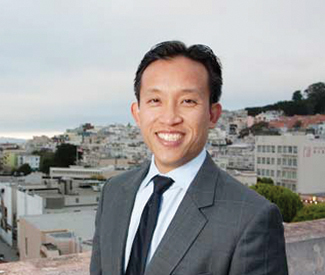
Ed Lee

Protect local power and control

30

EDITORIAL There’s a growing stench of political corruption — or, at the very least, hidden agendas aimed at subverting popular will in favor of entrenched corporate interests — emanating from the Mayor’s Office these days. And it’s undermining projects and institutions that are vital to the future of San Francisco.

In the last week, a pair of important developments illuminated the shady way business gets done in San Francisco. The first instance concerned City College of San Francisco, which had its accreditation rashly revoked last month, prompting Mayor Ed Lee to enthusiastically support the disbanding of the locally elected Board of Trustees and the takeover of City College by state-appointed outsiders bent on shutting down community-based facilities and classes.

While Lee and the San Francisco Chronicle have been cheerleading this loss of local control and the corporatist agenda behind it — CCSF was criticized for resisting the narrowing of its mission to focus on job training and college prep — we at the Guardian have questioned this process and the motives behind it.

In a cover story (“Who killed City College?” July 9), editorial (“Why democracy matters,” July 23), and other coverage, we’ve highlighted how the attack on CCSF is part of national movement to focus schools on job training rather than broad-based education, and questioned the haste with which CCSF’s local leadership was usurped.

Critics mocked these concerns, as they did those of the California Federation of Teachers, which formally challenged the actions by the Accrediting Commission of Community and Junior Colleges, with Lee and others saying that we need to just accept the death threats against CCSF and do whatever these outsiders are asking.

So on Aug. 13, when the US Department of Education sustained the CFT appeal and found the ACCJC in violation of federal regulations and its own internal standards in its approach to City College, it validated our concerns and called into question Lee’s hair-trigger abandonment of City College’s local leaders.

Frankly, we’re puzzled by Lee’s approach to City College — from his appointment of right-wing ideologue Rodrigo Santos as a trustee last year (who subsequently got trounced in the election) to his resistance to helping the college before the state takeover — but we suspect it’s connected to Lee’s focus on “jobs, jobs, jobs” to the exclusion of other issues and values.

But Lee only counts private sector jobs, not those created to serve the public interest like the thousands of jobs that would be created by CleanPowerSF, a program that Lee opposes and that his appointees to the SF Public Utilities Commission are actively subverting.

As we report in this issue, CleanPowerSF is a renewable energy program approved last year by a veto-proof majority on the Board of Supervisors, but it’s being blocked by the SFPUC’s refusal to approve the rates and sign the contracts, with commissioners raising concerns that go well beyond their purview at this point.

It’s time for Mayor Lee to start serving the people of San Francisco instead of the corporate titans and political benefactors who elevated this loyal career bureaucrat into the big chair in Room 200.


“Greyhound therapy” is wrong for Nevada, and San Francisco

22

It’s horribly inhumane and indefensible for Nevada to ship its mentally ill homeless to San Francisco, and City Attorney Dennis Herrera is right to go after that state with a lawsuit aimed at changing that policy and recovering the city’s costs, which he discussed today in a press release and San Francisco Chronicle article.

But San Francisco should have greater moral authority to make this stand than it does, thanks to the Homeward Bound program started by then-Mayor Gavin Newsom and continued by Mayor Ed Lee, a program that gives local homeless individuals a one-way bus ticket out of town.

The Chronicle took pains to say how different San Francisco’s exportation of its homeless is from Nevada’s, noting that we make sure our homeless are stable enough to travel alone and that there’s someone waiting for them on the other side before we send them to the bus station.

Sure, that’s better, but the basic concept is the same and it’s consistent with San Francisco basic approach toward much of its homeless population, for whom the city intentionally limits shelter beds and makes it difficult to get one and treats the resulting street population as a law enforcement issue.

Newsom was elected on his Care Not Cash promise to provide shelter and social services to the homeless, and it certainly did get many people who needed it into supportive housing. But the actual homeless problem is far worse and more systemic than that program (or feel-good gimmicks like Project Homeless Connect) can really address.

San Francisco should be leading the way in calling for this country to address the root causes of homelessness, as well as the related problems of poverty, exploitation of workers and natural resources, and a wasteful economic system that is cooking the planet and its biodiversity.

Instead, we’re leading the way in pushing unsustainable, technology-fueled economic growth with no regard for the byproducts of wealth generation by the privileged few, whether it be giving our homeless one-way bus tickets out of town, forcing our workers and nonprofits to seek reasonable rents elsewhere, undermining hard-won social compromises, or missing our own greenhouse gas reduction goals (today’s Examiner cover story).

We can — and we should — take greater responsibility for our city’s policies and prejudices and work to regain  the moral authority that we need to be an example for other cities and begin to advocate for needed reforms on the national and international levels.  

America’s Cup organizers sell small-scale naming rights at Pier 27 to pay their debt to the city

0

The Port Commission has approved a proposal by the America’s Cup Organizing Committee (ACOC) to sell bricks, benches, and other assets at Pier 27 to offset budget shortfalls, but community activists fear that corporate naming rights are undermining plans for a public recreation space.

A presentation at the Tuesday meeting by Kyri McClellan, the former city staffer who now serves as CEO of the ACOC, and Mike Martin of the Office of Economic and Workforce Development outlined the sale of up to 1,000 bricks to be set in pathways and 72 benches to dot the Northeast Wharf Plaza, which will bear the names of donors. Benches will be priced at $25,000, which McClellan cited as the going rate at other high-profile locations throughout the city.

McClellan emphasized that “none of what we’re proposing today as a pilot program includes what may previously have been alluded to as naming rights for this particular park, the piers, or the buildings.”

Milo Hanke and Alex Walker of San Francisco Beautiful, a local advocacy organization, didn’t have a problem with the smaller scale elements of the ACOC proposal. “The tiles and the bricks that are being offered here for $150, $300, for instance,” Hanke told the crowd, “that’s a gratifying opportunity for ordinary citizens who have already invested in our port to volunteer to express additional support for this proud port.”

But Hanke and Walker expressed concern about bigger ticket items that McClellan addressed with less specificity. “We want to make sure that this is a thing that’s going to be place-making and not place-taking,” commented Walker.

In addition to bricks and benches, the wharf’s lawn and adjacent walkway, an open plaza area, and a point at the pier’s end are earmarked for recognition of donors. So too are an event space and an exterior concourse on the second floor of the James R. Herman Passenger Cruise Terminal, slated to open at Pier 27 next spring.

“Corporate naming rights,” explained Hanke, “come with an intangible cost and I think that, given San Franciscans’ historic aversion to excess commercialization of our public realm, corporate naming rights are well worth taking a bypass on.”

Diagrams presented by ACOC did not include detailed renderings of larger donor fulfillments or clarification as to whether recognition would be restricted to individual and foundational donors and off limits to more commercial interests. “There is concern,” said Hanke, “of a creeping naming rights program if large areas are named for corporations.”

Pulling in $500,000 to $2.5 million a piece, however, bigger structures may be the revenue drivers ACOC is desperately seeking. As part of its host agreement with San Francisco, the organization is obligated to help offset the city’s expenses incurred in event preparations and operations.

Luckily, the race’s outsized budget is expected to be less than the $32 million originally projected, due to the paltry number of teams competing (four at last count) and the resulting decrease in spectatorship. Still, the ACOC needs to come up with as much as $20 million – a debt burden that’s got Mayor Ed Lee personally stumping in the fundraising effort. The fundraising flop belies early promises that the city would make money hosting the event.

San Francisco voters approved Proposition B last November, authorizing the city to apply public funds towards repairs and redevelopment of recreational spaces. The fact that the Northeast Wharf Plaza was a named site in that bond measure isn’t the only reason community activists are demanding to know what assets on its piers are being auctioned off and who’s buying them.

According to Jon Golinger, a spokesman for the Northeast Waterfront Advisory Group, the San Francisco Waterfront Special Area Plan limited development on the Pier 27 plaza until a 2000 amendment lifted port restrictions in exchange for guarantees of public recreation areas.

Since then, “we’ve been paying close attention to this park. It’s particularly needed and a long time coming,” explained Golinger, who said there’s been no citizen review of the ACOC’s donor recognition program proposal.

Neighborhood organizations hope ACOC’s tag sale of infrastructure doesn’t torpedo use plans for land long ago promised as a public recreation area. Golinger would like to see features like a kids’ play area, a dog run, and exercise equipment for seniors included in the final design – whether or not they are lucrative to race organizers now.

“After the Cup is done in October, it should look, feel, and be used like a true public park,” Golinger said of the plaza. “This corner of town is the most densely packed part of San Francisco with the fewest recreation areas per capita…. [the plaza] should be part of the neighborhood as opposed to a corporate event venue.”

The promise of infrastructure improvements was one reason the city of San Francisco agreed to host the America’s Cup race in the first place. Residents are now left to hope that ACOC won’t forgo investments of lasting civic value for single-use vanity projects intended to float its budget deficit.

Concluding the discussion of the ACOC’s proposal on Tuesday, Port Commissioner Leslie Katz offered assurances that, “we’ll definitely oversee and be mindful of the aesthetics of anything going forward… This is not a selling off of the port, but really an opportunity to thank and acknowledge those that have allowed us to move forward.”

This opportunity, of course, assumes that donors actually surface. Mayoral spokesperson Christine Falvey said, “We will learn from [this] effort about how we can raise private dollars to improve our waterfront and engage city residents in the effort.”

If ACOC’s efforts to court private dollars from city residents aren’t fruitful, however, taxpayers-turned-debt-collectors may have no option but to sign former District 3 Supervisor Aaron Peskin’s online petition and to demand that America’s Cup billionaire defending champion Larry Ellison pick up the tab for his boat race all by himself.

Backward on climate

After a hearing lasting several hours on Tue/13, members of the San Francisco Public Utilities Commission voted down a motion to approve electricity rates for CleanPowerSF, a municipal energy program designed to offer a 100 percent green energy mix to San Francisco customers.

The approval of that “not-to-exceed” rate, set at 11.5 cents per kilowatt-hour, would have cleared the path to set CleanPowerSF in motion after almost a decade of politically charged debates and setbacks.

“I feel like today is a historic moment for the SFPUC as well as the city of San Francisco,” commissioner Francesca Vietor said as she introduced her motion to approve the rate. “Even though I understand this is only a vote to approve the not-to-exceed rate,” she added, it was a critical first step toward a long-term vision in which “we will also be able to create a new generation of green collar workers and build our own renewable power system.”

In the end, Vietor and Commissioner Anson Moran were the only ones to favor the rate approval, while Ann Moller Caen, Vince Courtney and President Art Torres shot it down. So once again, CleanPowerSF has been kicked back in limbo.

“This is not just about rates today,” Torres said. “If we approve these rates, that would authorize the General Manager [of the SFPUC] to authorize a contract with Shell.”  

Oil giant Shell Energy North America was tapped by the SFPUC to purchase green energy on the open market during the first phase of the program. Although Shell is a fossil fuel company with a disgraceful human rights track record, progressives and environmentalists stand behind a speedy approval of that contract, because they say it is a crucial first step toward realizing the ultimate project vision of constructing city-owned and operated renewable energy facilities while creating local green jobs.

“The deal is that you cannot do that until you move forward, and launch the program,” said Shawn Marshall, executive director of LEAN – a group that assists with clean-energy municipal power programs – speaking at a rally just before the hearing. “You have to live to go local. We call on the mayor’s office to stop impeding progress with heavy-handed politics and we ask the San Francisco Public Utilities Commission to stay focused on its job of implementing a program that was approved by the San Francisco Board of Supervisors last September.”

Rather than focusing on the question of whether or not to approve the rate, Torres and Caen voiced generally negative sentiments about the CleanPowerSF endeavor before casting “no” votes on the rate approval. Caen said she’d “always had problems with the opt-out situation,” referring to a system of automatic enrollment in the program, and Torres criticized the project for having changed shape, saying, “at the end of the day, this is not what San Franciscans had anticipated.”

The bid to establish CleanPowerSF is mired in charged politics. Because the program threatens Pacific Gas & Electric Co.’s monopoly in San Francisco, the utility giant is prepared to shell out whatever it takes to stop the forward momentum. PG&E is deeply influential in San Francisco City Hall, having richly rewarded former San Francisco Mayor Willie Brown, known to be a frequent dining companion of Mayor Ed Lee, for his consulting services, for instance. Lee opposes the program, and the mayor appoints the SFPUC commissioners.

Torres, the commission president, bristled at suggestions from the public that he was merely carrying the mayor’s water, saying, “I do my own homework, and I make up my own mind.”

But Sup. John Avalos has made up his own mind too, and he sent legislative aide Jeremy Pollock to convey the message to the SFPUC that enough is enough. Avalos plans to go to the City Attorney to find out what can be done about the relentless foot-dragging of a commission that just won’t approve a fair rate for a program that was approved by the Board of Supervisors last fall.

During the public comment session of the hearing, Pollock read Avalos’ statement, which characterized the commission’s refusal to approve the rate as a “constitutional crisis” with regard to the body’s responsibilities.

“Any further delay will essentially show that we are in a constitutional crisis caused by a city department failing to carry out a policy approved by a veto-proof supermajority of the Board of Supervisors,” Avalos’ statement noted. “The Board stands ready to approve these rates, but nothing more can happen until you take action. The City Charter is silent on the possibility of the Public Utilities Commission failing to act on a proposed utility rate. Therefore if there is further delay, I feel I have no choice but to request that the City Attorney explore our options to resolve this type of stalemate—including the possibility of drafting a Charter Amendment. CleanPowerSF is too important and the threat of climate change is too significant to allow this program to die on the vine. It is time for leadership. And this vote will be long remembered for the action you take today.”

But instead of just approving that rate – which is lower, by the way, than originally proposed – the commissioners just seized the opportunity to halt the program from moving forward, since CleanPowerSF cannot advance without a contract, and the contract cannot be signed until a rate has been formally approved.

“It seems as if they are essentially refusing to establish a fair rate, so we’re going to ask the city attorney, you know, what’s the recourse if the PUC is failing to carry out their duties?” Pollock noted.

Just before the votes were cast, Vietor, who had urged her colleagues to go forward and approve the rate at the outset of the meeting, was asked to re-state her motion. She returned to the bright and optimistic prepared statement she’d read at the beginning, only this time with a note of frustration because it was clear that the votes weren’t there. “Today is a historic moment for the San Francisco public utility commission,” she read out loud, “to become a leader in combating climate change.”

Note: This post has been updated from an earlier version.

Shareable, smearable

25

After writing critically about problems in the business models of so-called “shareable economy” companies in last week’s issue — including our cover story on Airbnb and other companies that facilitate short-term home rentals (“Into thin air“) and a story on the rideshare company Lyft (“Driven to take risks“) — the topic continued to dominate the sfbg.com Politics blog, with fresh posts and lots of reader comments:

AIRBNB PILE-ON

The excellent bilingual newspaper El Tecolote covered some of the same ground we did in its Aug. 1 cover story, “Unregulated Rental Business Takes Over Housing,” focused on how Airbnb is contributing to gentrification and displacement in the Mission District.

Reporter Jackson Ly found a couple that turned a rent-controlled apartment on 24th St. into a $249 per month de facto hotel room, booking it for 24 nights in August and making $5,976 in just one month, on top of the $3,069 they’re making in August renting out the guest room in the apartment where they actually live for $99 per night.

“It’s cheating the people that pay taxes,” Maria, who lives in the unit below this couple’s investment apartment and is tired of the rotating stream of tourists in her building, told the newspaper.

I got ahold of El Tecolote Managing Editor Iñaki Fdez. de Retana, who said that housing issues like this one are extremely important to the Latino community that lives in the Mission, and he’s been surprised that Mayor Ed Lee has been unwilling to address the impacts of Airbnb and other tech community contributors to the problem.

“It is very important,” he told us, noting that visiting European tourists are changing the character of the neighborhood. “In particular on 24th Street, which was once seen as the heart of the Mission, it’s changing overnight and [Airbnb and other housing rental websites] is a big part of that.” (Steven T. Jones)


UBER UGLY CRASH

Uber’s policy on insuring its drivers will soon be taken for a test drive, as the company that runs the mobile app-based ride requesting service and a driver were served with a court summons last week from a woman severely injured after a crash near a San Francisco intersection.

Those insurance policies were said to meet brand new regulatory requirements on rideshare services introduced by the California Public Utilities Commission on July 30, which was meant to solve the longtime regulatory battle between rideshare services and local governments.

The plaintiff in the suit, Claire Farhbach, was a bystander, not a customer, and that unique twist in the injury suit has experts from the taxi industry waiting to see if Uber will step up to the plate to pay for Farhbach’s injuries, or if Uber will leave driver Djamol Gafurov on the hook for the bill.

Fahrbach was walking up Divisadero street near Hayes at quarter of midnight March 12 when Gafurov’s black town car, operating as a private taxi, collided with another car on Divisadero while turning left. One of the cars then collided with a fire hydrant, and in the words of the civil suit, “this impact caused the fire hydrant to be violently sheared from its base and propelled through the air a number of feet northbound…when the fire hydrant struck (Farhbach) with a tremendous amount of force.”

Gafurov’s private taxi was operating as a “partner” of Uber, which is how the company defines its relationship to the network of drivers on its website. No private taxis or drivers are considered to be employees of Uber, as the company has repeatedly maintained, claiming that the drivers, and their actions, are not its responsibility.

Uber spokesperson Andrew Noyes told us repeatedly that drivers are not employees of the rideshare company: “Our legal team took a look at the files you sent. This is not an ‘Uber’ driver, they’re not employed by us. They’re employed by their licensed and insured limousine company.” (Joe Fitzgerald)


MAKING CABS BETTER

For all the (justified) grumbling about the business models of ridesharing services like Lyft and Uber, the so-called ridesharing revolution may prove to be a catalyst for a taxi industry overhaul.

“We’re adding hundreds more taxis, and our board has approved regulations for each vehicle to provide real-time locational information,” San Francisco Municipal Transportation Agency spokesperson Paul Rose told us.

“One of our goals is to move forward with making the data available to our customers to hail a cab with an app,” Rose added, referencing a plan unveiled by the transit agency several weeks ago. Faced with stiff competition from random vehicles adorned with garish pink mustaches, the taxi industry is taking a stab at evolution, or at least imitation.

To be a cab driver right now, paying off the pricey medallion they must purchase in order to operate while oblivious new transplants rake in the cash without following the same set of rules, must be infuriating.

At the same time, let’s be honest here: There’s a reason people are ditching conventional cabs and climbing into cars with random strangers who may be beckoned with the tap of a smartphone. And it has nothing to do with passengers’ sentiments about government regulation or newly minted tech millionaires.

The taxi industry lags far behind the lightning-speed reality many Bay Area residents have come to inhabit, but if it weren’t for the competition, they might not have any incentive to change.

Rideshare services might be your quintessential rogue tech companies backed by nauseating sums of venture capital, but at the end of the day, people also want taxi service that does not suck. (Rebecca Bowe)

Dream deferred

3

news@sfbg.com

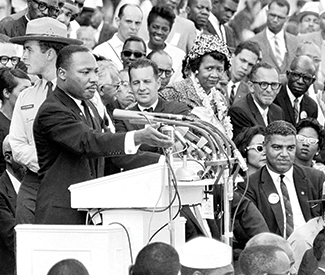
Nearly 50 years ago, hundreds of thousands of people marched at our nation’s capital to demand racial equality and respect. And half a century later, people are still fighting for that same cause.

In July, when George Zimmerman was found not guilty of any crimes for fatally shooting 17-year-old Trayvon Martin, racial tensions flared in the Bay Area and abroad. Martin’s death brought the issue of racial profiling to the surface, energizing a new generation of activists just in time for Aug. 28, the 50th anniversary of the Great March on Washington and Martin Luther King Jr.’s “I Have a Dream” speech.

Rev. Arnold Townsend, vice president of San Francisco’s chapter of the National Association for the Advancement of Colored People, is a veteran of the Civil Rights Movement. Townsend told the Guardian that Martin’s death triggered memories of Emmett Till, a 14-year-old African-American who was lynched in 1955 for flirting with a white woman.

Townsend was 12 when Till was murdered, and he says seeing the pictures of Till’s disfigured body in a casket posted in Jet magazine was what inspired him to be actively involved in the movement for racial justice.

“What happens in the world finds ways of bringing people together. What happened to Trayvon Martin isn’t so different from what happened to Emmett Till,” Townsend told us. “I knew that people could come for my father, my uncle, but from this I learned that they could come for me.”

The Zimmerman verdict resulted in large demonstrations of anger and outrage all across the country, including Oakland and San Francisco. The verdict inspired Zack Aslanian-Williams, a 24-year-old San Francisco resident, and others to join the NAACP and become activists.

“There is something about the Trayvon Martin case that definitely impacted my willingness to get involved,” Aslanian-Williams told us. “The case caught fire, and I have a sense of urgency to get involved in any way I can.”

In the wake of the verdict, many new and veteran activists targeted National Night Out, a neighborhood watch program event that African American activists fear fosters the kind of racist vigilantism they say motivated Zimmerman to kill Martin.

Jesse Strauss and more than a dozen other Oakland residents fanned out all over Oakland during the Aug. 6 event, visiting dozens block parties in an attempt to educate people as to why they should be wary of police and wannabe cops.

“We’re doing this to build community and talk to people about real safety,” Strauss said. “I think that the way that police function has been steady, and from that we have so many black and brown people locked up. This is a reflection of the struggles that have been going on and this shows that racism has not stopped at all.”

Rev. Amos Brown, president of the San Francisco NAACP chapter, said he wants to see people come together around racial equality and he fears the targeting of neighborhood watch programs may hinder that goal.

“We don’t need extreme provocateurs,” Brown said of anti-police activists. “The movement is like an airplane, and if one wing is too heavy, the whole thing goes down”

But Brown is just as critical of police, saying the 52 hours of sensitivity training that all personnel at San Francisco Police Department have to undergo isn’t enough.

“If relations were good between them, we would not have numerous calls coming in from people who were profiled by police, immediately being asked if they were on parole when they were approached,” Brown said.

Many San Franciscans are sensitive to the racial profiling issue. Last year, when Mayor Ed Lee proposed a stop-and-frisk policy to combat the proliferation of guns — despite studies showing a similar policy in New York City disproportionately targets African Americans — the community rose up and forced Lee to abandon the idea.

“Being a person of color who has been racially profiled, I couldn’t stand back and let this happen,” says Theo Ellington, president of Black Young Democrats of San Francisco, which organized people against the idea.

But activists say it’s not enough to play good defense. Fifty years after the strong show of support for racial justice, there is still much progress to be made.

“We need to keep pushing forward,” Townsend said. “Success is not measured by what you have done, it’s measured by what you’re going to do next.”

On Aug. 24, the San Francisco chapter of the NAACP plans to head over to Mosswood Park in Oakland for a rally commemorating the march put on by the Coalition of Black Trade Unionists.

The University of San Francisco will also be hosting an event on Aug. 20 to discuss the progress and setbacks in the march toward racial equality since the 1960s. Speakers at the event will include Clarence B. Jones, Martin Luther King Jr.’s former lawyer and adviser, and Mayor Ed Lee.

“It’s important to pause and see what’s happened in the past 50 years. It is the 50th anniversary of the dream and it is important to recognize that there’s been some unraveling of the dream,” USF Vice Provost Mary Wardell-Ghiraduzzi said.

Ellington said he’s still waiting for his own generation’s Great March on Washington. “The death of Trayvon Martin was a wakeup call. It proved that my life, as a person of color, is not as valuable as my counterparts,” Ellington said. “We have to be the ones to turn the tide. There’s still a lot more work to do to fulfill Martin Luther King Jr.’s dream. We are still fighting the same social ills we faced 50 years ago.”

PG&E union spreads lies about CleanPowerSF

San Francisco’s municipal power agency is gearing up to launch one of the most climate-friendly alternative energy programs in the country, but the forces behind a misleading opposition campaign seek to torpedo that effort.

This past weekend, glossy ads depicting seashells and spilled oil blanketed the doorknobs of Noe Valley residences. Paid for by IBEW 1245, the union that represents employees of Pacific Gas & Electric Co., the door hangers conveyed the fear-mongering message that CleanPowerSF “isn’t clean. It’s dirtier than our current power.”

To put it bluntly, that’s bullshit.

Taking them at face value, you might conclude that Shell was about to begin drilling offshore in the San Francisco Bay and that city officials were planning to meet the city’s energy needs with a polluting power plant run solely off tar sands oil. They might even club some baby seals while they were at it.

What’s really happening is that the San Francisco Public Utilities Commission is gearing up for a hearing on Tue/13 to discuss rate setting for CleanPowerSF, a municipal green energy program that’s been in the works for years. As the power agency inches closer to a full program launch, PG&E and its employees are worried they’ll lose business when San Francisco customers are automatically enrolled in the CleanPowerSF program.

The new power program will continue to use PG&E infrastructure and its existing billing system, but customers’ homes will be powered with a greener electricity mix procured through the city-run program, which is contracting with Shell Energy North America to purchase electricity on the open market from a variety of green power sources.

Naturally, San Francisco is teeming with savvy environmentalists who aren’t buying the slick oppositional blitzkrieg. On Aug. 13, some will band together to set the record straight when a host of representatives from the Sierra Club and others rally at City Hall at noon to express support for immediate implementation of CleanPowerSF.

“Clean energy aggregation is on the rise across the country, making an immediate and direct impact on climate emissions,” said Shawn Marshall, Director of LEAN Energy US. LEAN works with organizations that use the municipal power-purchasing model that CleanPower SF is based on. “The only thing blocking progress in San Francisco is corporate politics, and we encourage the city to deliver on its environmental promises by pressing ahead with CleanPowerSF.”

In a letter to San Francisco Mayor Ed Lee, former EPA administrator and World Wildlife Fund Chairman Emeritus William K. Reilly emphasized that CleanPowerSF “is a crucial step for achieving California’s 2020 greenhouse gas goals. It’s also an essential model for California and the rest of the country as cities and communities are compelled to address the problems fueled by climate change.”

Back to those misleading ads. While it is true that Shell is an oil company with a shoddy track record of human rights abuses, it is not true that the energy supplied by CleanPowerSF will be dirtier than electricity provided by PG&E.

To the contrary, only 20 percent of PG&E’s energy mix is derived from green power sources, while the majority of its electricity is generated by nuclear facilities or natural gas power plants. PG&E is also the company responsible for the hexavalent chromium groundwater contamination in the California town of Hinkley, in the Mojave Desert, which provided the basis for the movie Erin Brockovich.

And more recently, PG&E was responsible for the deadly pipeline explosion in San Bruno, which leveled an entire neighborhood. In comparison, CleanPower SF will offer a 100 percent renewable energy mix out of the starting gate.

Some of that mix will initially be derived from renewable energy credits. Called RECs, they’re cheaper because they are “credits” accounting for green power generated somewhere, as opposed to actual green power coming straight over the power lines.

But it’s important to note that the initial use of RECs is a pricing strategy designed to put the agency in a financial position to support green power projects here in San Francisco a little further down the road.

The long-term plan of constructing green power facilities locally would create permanent, decent-paying jobs. It would also supply San Franciscans with electricity generated with technology that can harness the unlimited power potential of the California sun, or the wind that blows in off the Pacific Ocean. This is the outcome that PG&E affiliates seek to thwart, because they fear profit loss.

A few months ago, in an interview with the Guardian, SFPUC spokesperson Charles Sheehan emphasized that it had taken many conversations to get to the point that the agency has finally reached.

“We’ve lowered the rate, we’re now more competitive with PG&E’s baseline offering, and we’re on parity with their potential green tariff program,” he explained. Speaking of a dedicated revenue stream that would go toward funding local clean-power projects, he said, “That line item is really critical to get us to the build-out that we’ve all collectively envisioned as a staff, and as a community.”

Community-based journalists also raising Airbnb’s issues in SF

111

Mainstream media outlets in San Francisco may be slow to pick up on how Airbnb and other online home rental companies are violating local laws and dodging local taxes — the subject of our cover story this week — but both international and community-based journalists are paying attention to this growing problem.

The excellent bilingual newspaper El Tecolote covered some of the same ground we did in its cover story this week, “Unregulated Rental Business Takes Over Housing,” focused on how Airbnb is contributing to gentrification and displacement in the Mission District.

Reporter Jackson Ly found a couple that turned a rent-controlled apartment on 24th St. into a $249 per month de facto hotel room, booking it for 24 nights in August and making $5,976 in just one month, on top of the $3,069 they’re making in August renting out the guest room in the apartment where they actually live for $99 per night.

“It’s cheating the people that pay taxes,” Maria, who lives in the unit below this couple’s investment apartment and is tired of the rotating stream of tourists in her building, told the newspaper.

I got ahold of El Tecolote Managing Editor Iñaki Fdez. de Retana, who told me, “it seems like we’re on the same page,” noting the Guardian has also recently written about the prison hunger strike and some other issues that his paper has covered.

He said that housing issues like this one are extremely important to the Latino community that lives in the Mission, and he’s been surprised that Mayor Ed Lee has been unwilling to address the impacts of Airbnb and other tech community contributors to the problem.

“It is very important,” he told us, noting that visiting European tourists are changing the character of the neighborhood. “In particular on 24th Street, which was once seen as the heart of the Mission, it’s changing overnight and [Airbnb and other housing rental websites] is a big part of that.

Meanwhile, we’re still waiting for a substantive response from Airbnb to the issues that we and a handful of other journalists are raising. CEO Brian Chesky, who was an amateur competitive bodybuilder before founding Airbnb in 2008, would apparently rather flex his muscles than deal directly with the community where his company is based.

Get tough with defiant disrupters

8

EDITORIAL It may sometimes seem like we at the Bay Guardian don’t like the technology industry, but nothing could be further from the truth. We tweet, click, post, and share, playing with all the hot new tech toys that spring from the innovative minds of Bay Area residents. This is an important sector of the local economy, one that often empowers people who were just getting by to remain in expensive San Francisco.

Yes, we do regularly criticize tech (and some of its biggest neoliberal cheerleaders in City Hall), as we do to Airbnb, Lyft, and other so-called “shareable economy” companies in this issue. But that’s only because we strongly believe in open and transparent discussions about public policy and the needs of city residents.

And frankly, that’s not happening these days.

Instead of engaging directly and honestly with the people and our elected representatives, Airbnb has chosen to duck its obligations to the city of its birth and dodge attempts to create a public dialogue about its dangerously flawed business model. Same thing with Lyft, another company that acts as if it’s entitled to undermine civic institutions without so much as a public conversation first.

Yes, these companies have come up with cool ideas that have become popular with Bay Area residents. In a city where it was tough to find a cab on Saturday nights, Lyft made it easier to find rides and allowed people to make some extra cash off their cars. Airbnb was also a great idea that makes travel cheaper and more personal.

The beauty of these ideas is their simplicity — but that is also their main flaw, because San Francisco isn’t a simple city. It’s a complex, dynamic city with difficult landlord-tenant dynamics, and a congested city that tries to achieve the right balance of cabs on the roadways, both systems that are the products of decades-long struggles that have spawned reams of regulations.

These tech-savvy fortune hunters, who don’t understand or appreciate that history, think it’s enough to have a good idea and some rich venture capitalists willing to back it. They espouse vaguely libertarian ideas about “disruptive” technologies empowering people, but then they wait for government officials to solve the problems with their business models, raking in millions of dollars in profits in the meantime and delaying their day of public reckoning as long as possible.

For example, in a May interview on KQED’s Forum, Airbnb’s David Hantman was asked why the company was defying a city ruling that it must pay the transient occupancy tax, he said they were waiting for the city to adopt a new regulatory structure first.

That’s not an acceptable or defensible position, and it is only continuing because Mayor Ed Lee has publicly supported the company’s defiance of city law and rulings. Mr. Mayor, if these are the types of “jobs” you’re creating — part time jobs with no benefits in an underground economy that cannibalizes other industries, breaks city laws, and won’t pay local taxes — then this city is in real trouble.

We’re happy to see Board President David Chiu trying to solve Airbnb’s problems, but he needs the support of other top city officials who are willing to put pressure on the company to bargain in good faith. And yes, we’re talking to Mayor Lee, Tax Collector Jose Cisneros, and City Attorney Dennis Herrera, among others.

If you make the city appear impotent to enforce its own laws or too willing to go easy on wealthy corporations, it will only embolden more young opportunists to disrupt the city’s regulatory authority and its social fabric. You work for us, not the venture capitalists, and it’s time to show some spine.


Chiu: centrist compromiser, effective legislator, or both

0

At the start of this year, when I wrote a Guardian cover story profile of Sup. Scott Wiener (which SF Weekly and San Francisco Magazine followed shortly thereafter with their own long Wiener profiles), he seemed like the one to watch on the Board of Supervisors, even though I noted at the time that Board President David Chiu was actually the more prolific legislator.

Now, it’s starting to seem like maybe we all focused on the wrong guy, because it is Chiu and his bustling office of top aides that have done most of the heavy legislative lifting this year, finding compromise solutions to some of the most vexing issues facing the city (ironically, even cleaning up some of Wiener’s messes).

The latest example is Wiener’s CEQA reform legislation, which the board unanimously approved on July 23, a kumbaya moment that belies the opposition and acrimony that accompanied its introduction.

That effort comes on the heels of Chiu’s office solving another big, ugly, seemingly intractable fight: the condominium lottery bypass legislation sponsored by Wiener and Sup. Mark Farrell. To solve that one in the face of real estate industry intransigence, Chiu showed a willingness to play hardball, winning over swing vote Sup. Norman Yee to get six votes using some hostile amendments.

In the end, Chiu won enough support to override a possible veto by the waffling Mayor Ed Lee, who has always echoed Chiu’s rhetoric on seeking compromise and consensus and “getting things done,” but who lacks the political skills and willingness to really engage with all sides. For example, it was Chiu — along with Sups. Farrell and David Campos — who spent months forging a true compromise on the hospital projects proposed by California Pacific Medical Center, replacing the truly awful CPMC proposal that Lee readily accepted.

“It’s been a very long year,” Chiu told the Guardian. “It’s been important for me to not just to seek common ground, but legislative solutions that reflect our shared San Francisco values.”

Next, Chiu will wade into another thorny legislative thicket by introducing legislation that will regulate the operations of Airbnb, the online housing rental corporation with a problematic business model.

After posting the preceding analysis of Chiu on the SFBG.com Politics blog on July 23, we heard lots of back channel concerns and complaints from progressive San Franciscans (and even some from moderates and conservatives who consider Chiu a raving socialist for helping suspend the condo lottery).

Nobody really wanted to speak on the record against Chiu, which is understandable given the powerful and pivotal position that he’s carved out for himself as a swing vote between the two ideological poles and on the Land Use Committee, whose makeup he personally created to enhance that role.

The main issue seems to be that Chiu allows both progressive and anti-progressive legislation to be watered down until it is palatable to both sides, empowering the moderates over the progressives. That’s a legitimate point. It’s certainly true that Chiu’s worldview is generally more centrist than that of the Guardian and its progressive community, and we’ve leveled that criticism at Chiu many times over the years.

The fact that he ends up in a deciding role on controversial legislation is clearly a role that Chiu has carved out from himself, no doubt about it. And that’s certainly why he played the pivotal role that he has this year. But when he uses that role to empower and support tenant groups, as he did on the condo lottery bypass measure, I think that’s something worth noting and praising.

On the CEQA reform legislation, it’s also a valid criticism of Chiu to note that Sup. Jane Kim had five votes for her legislation and that it was only Chiu who stood in the way of its passage (whether Mayor Ed Lee would have vetoed it, necessitating the need for two more votes, is another question).

In the end, Chiu can be seen as an effective legislator, a centrist compromiser, or both. Perspective is everything in politics.

Under fire again

0

rebecca@sfbg.com

At a recent hearing on San Francisco’s Health Care Security Ordinance — once-controversial legislation that is now in the business community’s crosshairs once again — a nursing student stood at the podium to address members of the Board of Supervisors Neighborhood Services & Safety Committee.

She told them about her mother, who battled illness but did not have access to healthcare for 14 years due to her immigration status, recalling a day when her mother explained why she wasn’t seeking medical attention: “If I go to the hospital, I’ll bury you in debt.”

For the uninsured and undocumented, going without medical care or going into insurmountable debt could be the only options if it weren’t for Healthy San Francisco, a medical services safety net that was created by the HSCO in 2006. The program is expected to continue to provide care for undocumented enrollees who won’t be eligible for federal assistance once the Affordable Care Act, also called Obamacare, takes effect early next year.

The HCSO’s mandate that businesses provide some healthcare coverage for their employees was fiercely opposed by the business community, which challenged it all the way to the US Supreme Court. Now, those same powerful forces are gearing up for a fresh challenge that could jeopardize HCSO’s potential to fill coverage gaps that will be created under Obamacare.

Under federal health care reform, two-thirds of the enrollees in Healthy San Francisco will become ineligible to continue receiving coverage because they will automatically gain eligibility for some form of federal assistance. Those earning up to 138 percent of the federal poverty level will be guaranteed coverage under Medi-Cal. But for low-income earners whose wages hover around $14 an hour, things are far less certain because they will be eligible to enroll in the federally created health benefit exchange, Covered California, although they won’t necessarily be able to afford it. For someone earning around $30,000 per year before taxes, the estimated monthly cost for a health insurance plan under Covered California hovers at more than $200 per month, in many cases making it too much of a stretch.

As things stand, uninsured San Francisco employees who earn too much to qualify for Medi-Cal, but not enough to afford enrollment in Covered California — despite being eligible — can still access funds set aside for them in medical reimbursement accounts under the HCSO. This option may provide enough of a financial boost for low-wage earners to take advantage of federally subsidized health insurance after all.

“For working people, the implementation of the Affordable Care Act actually makes the Health Care Security Ordinance more important,” explains Ian Lewis, research director at UNITE-HERE Local 2. “There are many consequences of the ACA … and the Health Care Security Ordinance is a buffer against them.”

As it stands, the local law “makes Covered California actually work in a high-cost city like ours,” Lewis added.

Under HCSO, San Francisco employers are required to contribute toward employees’ health care on a per-hour basis for each employee working more than eight hours per week, regardless of immigration status or city of residence, amounting to an estimated $255 per participant per month.

This mandate, known as the Employer Spending Requirement, has been the target of multiple lawsuits brought against the city by the Golden Gate Restaurant Association since the landmark health care ordinance, authored by then-Sup. Tom Ammiano, was first enacted in 2006.

That same requirement also makes the local ordinance stronger than the federal law when it comes to worker protections, because the federal mandate only requires employers to offer coverage for workers who put in 30 hours a week or more. That has prompted businesses nationwide to reschedule their workers down to 29 hours per week in a gesture of opposition to health care reform, but no such incentive exists in San Francisco because of the hourly contribution requirement.

Now that federal health care reform is poised for implementation, with enrollment set to begin in October and a transition to the new system slated for early next year, GGRA and the San Francisco Chamber of Commerce are urging the city to open up a new policy dialogue about employer requirements under the local health care law — and Mayor Ed Lee has been receptive.

“We question whether Healthy San Francisco should continue in its current form with the ACA coming in,” Small Business California President Scott Hauge told the San Francisco Business Times (“Healthy San Francisco, related program to shrink dramatically, but not price tag,” July 16). Hauge has met with Jim Lazarus, the Chamber’s senior vice president for public policy, and GGRA Director Rob Black on the issue, the article noted.

Reached by phone, Black emphasized to the Guardian that GGRA employers are merely seeking guidance on how businesses should comply with the local and federal mandates. “It’s important that we really focus on getting together, and getting together quickly,” Black said, to ensure “San Franciscans have access to the full benefits and subsidies of the Affordable Care Act.”

Longtime advocates of Healthy San Francisco and progressive policymakers are watching closely. “They’ve been trying to get out of their responsibility to provide worker’s health care since the law was passed,” Hillary Ronen, a legislative aide for Sup. David Campos, said of business interests who are airing complaints about employer requirements.

Once the federal law takes effect, San Francisco employers will have the option of either providing coverage, or contributing to a city program that establishes medical reimbursement accounts for employees administered by city government, Ronen explained. A third option, “standalone health reimbursement accounts,” under which employers manage reimbursement funds for employees, will be rendered illegal under Obamacare. That system generated controversy in recent years because employers were placing undue restrictions on the use of those funds, and in some cases even pocketing the money after neglecting to inform their workers that it was available (see “Check, please,” 4/23/13).

On July 25, Lee announced that the city’s Universal Health Care Council, a body previously tasked with guiding local health care policy, would be reconvened to “examine San Francisco’s implementation of the Federal Affordable Care Act (ACA) and engage stakeholders in identifying necessary local policies” to support the transition.

In response to signals that the business community is gearing up for a fresh challenge to the city’s health care law using the ACA as ammunition, Campos convened a hearing July 25 to discuss the importance of the HCSO in relation to the federal law.

For several hours, advocates of Healthy San Francisco — many of them members of the immigrant community who would have no other options if it weren’t for the program — delivered passionate defenses of the current program. Campos emphasized that federal health care reform stood to be a great success in combination with the local health care ordinance, which would serve to fill in any gaps in coverage.

Deputy Director of the Department of Public Health Colleen Chawla explained during the hearing that of the 60,000 San Franciscans currently enrolled either in Healthy San Francisco or SF Path, a second medical assistance program, roughly 40,500 will automatically become eligible to enroll either in Medi-Cal or Covered California under federal health care reform come January. The remaining 19,500 won’t be eligible, however, mostly due to immigration status. Healthy San Francisco is expected to continue providing a safety net for those who would otherwise fall through the cracks. But when it comes to the two-thirds who are eligible for federal assistance, but may not be able to actually afford it, things would be thrown into uncertainty if the Employer Spending Requirement were altered or eliminated. “Folks in the business community would be happy to say, the Affordable Care Act is enough, and businesses shouldn’t be complicated with an additional burden,” notes Le Ly, program director at the Chinese Progressive Association. But the HCSO “is an important pillar of the total continuum of care,” he said. “We see it as continuing to complement and strengthen health care coverage.”

Yahoo and other tech companies are squeezing the Chronicle’s newsroom

17

With high demand for office space in San Francisco these days — thanks largely to the latest technology bubble, Mayor Ed Lee’s economic development focus, and its amplification by the San Francisco Chronicle — Hearst Corp., which owns both the paper and the Chronicle Building, seems to be more focused on property management than journalism these days.

Following up on blogs that broke the story, Chronicle Technology Columnist James Temple today reported that Yahoo is negotiating with Hearst to move its headquarters into the Chronicle Building at 5th and Mission streets. What Temple didn’t say — and what sources at the Chronicle confirmed to the Guardian, despite the fact that it hasn’t yet been announced to Chronicle staff — is that the third floor newsroom will soon be relocated while the space undergoes a renovation.

It’s not clear whether the two pieces of news are related, and we’re still waiting for a response to our questions on the subject from Chronicle Editor Ward Bushee. But it certainly seems true that Hearst and the Chronicle are doing everything they can to profit from the commercial real estate market that they have helped to heat up while operating a newspaper that has struggled to become profitable in recent years.

Valued at more than $30 million and covering nearly a full city block in the heart of the city, the Chronicle Building has been steadily taken over by outside companies in recent years, many of them technology corporations such as Square, the online payment company. The newsroom that used to occupy the second and third floors has already been squeezed onto the third, and now even that space is getting an overhaul.

Meanwhile, Hearst has been working with Forest City and Strada Investment Group on a plan to redevelop the property, reportedly replacing the old Hearst headquarters and other buildings that share the block with an office and residential tower and trying to win historic landmark status for the Chronicle Building itself.

Chronicle staffers tell the Guardian that they were surprised to hear about the newsroom relocation last week and they don’t have many details, except that they will remain in the building. And given how valuable it has become, they say they’re just happy to not be totally squeezed out by the tech boom.

Is the Guardian empowering Chiu or just recognizing his power?

67

I’ve been hearing lots of back channel complaints and concerns from progressive San Franciscans since last week’s blog post on Board of Supervisors President David Chiu and the role he’s played forging compromises on controversial pieces of legislation this year.

Some have even suggested that the Guardian has gone centrist under my freshly minted editorship, which I actually find kinda funny given my history, perspective, and the righteously anti-corporate and progressive perspective stories that I’ve written and edited in recent weeks. I can honestly tell you that I call ‘em like I see ‘em, now as always, even if that doesn’t always hew to the progressive orthodoxy of some.

Nobody really wants to speak on the record against Chiu, which is understandable given the powerful and pivotal position that he’s carved out for himself as a swing vote between the two ideological poles and on the Land Use Committee, whose makeup he personally created to enhance that role.

So for now, let me just air some of the criticisms and offer some responses and perspective. The main issue seems to be that Chiu allows both progressive and anti-progressive legislation to be watered down until it is palatable to both sides, empowering the moderates over the progressives.

That’s a legitimate point, it’s certainly true that Chiu’s worldview is generally more centrist than that of the Guardian and its progressive community, and we’ve leveled that criticism at Chiu many times over the years. The fact that he ends up in a deciding role on controversial legislation is clearly a role that Chiu has carved out from himself, no doubt about it. And that’s certainly why he played the pivotal role that he has this year.

But when he uses that role to empower and support tenant groups, as he did on the condo lottery bypass measure, I think that’s something worth noting and praising, particularly in my quick little blog post that seems to have grown in perceived significance beyond what I may have intended.   

Many of the criticisms involved the CEQA reform legislation that was unanimously approved by the board last week after progressives opposed its initial iteration by Sup. Scott Wiener.

As some have suggested, Sup. Jane Kim does deserve tremendous credit for resisting the initial legislation and working with activists on an alternative, and I included that recognition in my initial story on the legislation. And it’s valid criticism of Chiu to note that Kim had five votes for her legislation and that it was only Chiu who stood in the way of its passage (whether Mayor Ed Lee would have vetoed it, necessitating the need for two more votes, is another question).

But I quoted Eric Brooks, an activist who spent months working on the compromise, as saying the CEQA legislation ultimately does make it easier to oppose bad projects. And when it was approved unanimously by the board, I figured it was safe to place that piece of legislation on the list of Chiu legislative accomplishments for the year.

We at the Guardian will make mistakes, as we always have from time to time. But I’m going to try to err on the side of open, transparent public debates — while supporting a rejuvenation of the city’s progressive movement, so that it is able to start playing offense and protecting this city’s diversity, vitality, and progressive values.

And if you have any criticisms or advice for the Guardian, please come to our forum on Wednesday or offer them to me directly. Thanks for reading.

New director triggers a brain drain at SFDPH

1

The San Francisco Department of Public Health has seen an exodus of top officials over the 18 months since Barbara Garcia took the reins from longtime chief Mitch Katz, the most recent being Environmental Health Director Dr. Rajiv Bhatia, who was placed on administrative leave last month pending an investigation into unspecified concerns.

Bhatia has been a hero to many progressive San Franciscans and public health professionals for his innovative work supporting expanded worker protections, regulation of cannabis dispensaries and restaurants, environmental justice initiatives, and other work that has landed him in the pages of the Guardian many, many times.

“The poorest Americans are about two times as likely to die. People in low-wage jobs have less access to health care … food, shelter, clothing, and transit,” Bhatia testified during the 2002 Board of Supervisors hearing that led to the creation of a city minimum wage.

Neither Bhatia nor the department would comment on his leave, although sources tell us that he has not been informed of the charges against him (which an item in the Chronicle last month suggested was a possible conflict of interest issue relating to his regulation of restaurants) and that Garcia has clashed with many top officials in the department since taking over.

Among those who have left the department are Dr. Susan Fernyak, Director of Communicable Disease Prevention and Control; Dr. Masae Kawamura, Director of TB Control; Dr. Grant Colfax, Director of HIV Prevention; Elizabeth Jacobi, Director of Human Resources; Tangerine Brigham, Director of Healthy San Francisco; Mark Trotz, Director of Housing and Urban Health; and Dr. Erica Pan, Director of Emergency Preparedness.

“SFDPH has a national and worldwide reputation for innovative solutions to traditional public health problems. As a citizen of this city, I’m concerned that the current leadership is fostering an environment that is driving out and stifling that innovation to the detriment of all of us. A number of staff people have told me they have been instructed not to stretch themselves to innovate, to do only what their job description says and no more,” said the source, who works for a nonprofit that partners with the department.

Asked to comment on the exodus and her role in it, Garcia issued the following statement in response to questions from the Guardian: “Three staff that reported to me directly were recruited and provided promotions in the Los Angeles Department of Health Services. I’m very proud of these staff who are now involved with Health Care Reform efforts for the Los Angeles area. Several other staff that reported to our Public Health Division left for positions that were closer to home and the majority of these departures were promotions. All staff left in good standing with the San Francisco Department of Public Health.”

Meanwhile, 93 “members of the public health, social and environmental justice, foundation and education communities” wrote a signed letter to Mayor Ed Lee on July 10 on behalf of Dr. Bhatia, highlighting his work and appealing for a just resolution to the situation.

“Many across the nation have been grappling with how to improve the social and environmental conditions that are the cause of poor health and health inequities. Under Dr. Bhatia’s leadership, the San Francisco Department of Public Health Environmental Health Section has found practical ways — using research, policy, regulation, and cross-sector collaboration — to produce measurable improvements to environmental and social conditions throughout San Francisco’s diverse communities,” they wrote.

While writing that they “have no knowledge or commentary on the details of the leave or investigations, they went on to note the initiative that Bhatia has shown in going beyond his prescribed duties to work with various San Francisco constituencies to support equitable solutions to this city’s problems: “He takes his responsibilities as a public servant seriously, working well beyond required hours, and he is committed to improving the life-chances of socially, economically, and politically marginalized communities.”

After Oscar, after Trayvon…

49

rebecca@sfbg.com

Even before Cephus “Uncle Bobby” Johnson picked up the phone on Feb. 27, 2012, he wasn’t having an easy day. His nephew, Oscar Grant, would have celebrated his 26th birthday on that date if he had not been killed by a gunshot wound on Jan. 1, 2009.

Grant was shot by BART police officer Johannes Mehserle while lying face down on a train platform, an incident that was caught on film, prompted riots in Oakland, drew international scrutiny, and became the subject of the award-winning film Fruitvale Station by Oakland filmmaker Ryan Coogler.

In the years since Grant’s death, Johnson and his wife, Beatrice X, founded the Oscar Grant Foundation to develop a support network for families who’ve lost loved ones due to police violence. It was his involvement in this work that led Johnson to be contacted that day, and informed that a 17-year-old boy named Trayvon Martin had been gunned down in Florida one day earlier.

It wasn’t a police shooting but nevertheless, “We knew at this point that we had to go to Florida,” Johnson recalled. “What we’ve decided is that whenever a family experienced that, we would definitely try and get to them.”

Fast forward to July 13, almost exactly three years after violent protests erupted in Oakland following the news that Mehserle, who was charged with second degree murder, had been convicted of involuntary manslaughter instead. A new wave of demonstrations flared up as word spread that George Zimmerman, the neighborhood watch volunteer who killed Martin, had been acquitted.

“We weren’t surprised,” Johnson, who returned to Florida last month to observe the jury selection process for Zimmerman’s trial, told the Guardian. “But it was still painful.”

The verdict in this high-profile case has brought discussions about racial profiling and unequal treatment in the criminal justice system to the forefront. Even President Barack Obama touched on the theme in comments to White House reporters on July 19, saying, “Trayvon Martin could have been me 35 years ago.”

At the national level, new findings on “implicit bias” — unconscious prejudices that research in psychology has shown can persist in individuals (including poorly trained police officers), even if they consciously reject racial stereotypes — has started to inform policy debates around racial profiling.

“Policy needs to recognize that implicit bias exists,” Maya Wiley, founder and president of the New York City-based Center for Social Inclusion, told us. “Rep. John Conyers introduced a bill last year to prohibit racial profiling in law enforcement. That bill, if made law, would collect data on stops by race, as well as provide resources for training. That is a step in the right direction.”

But things get complicated, Wiley says, because “research shows that people of color, women, the elderly, may all experience discrimination as a result of implicit bias. There is no remedy in the law for this. … I think what is important now is to fight Stand Your Ground Laws which empower people to act on their implicit biases.”

At a July 16 rally held on the steps of San Francisco City Hall, Rev. Malcolm Byrd, pastor of San Francisco’s First A.M.E. Zion Church, illustrated his point about racial profiling by donning a hoodie and sneakers at the rally.

“I wanted to come looking suspicious,” he explained. “I wanted to give you an image that America has of young black men. I look suspicious. This is my country. I love my country. Yet, I look suspicious.”

Last year, Mayor Ed Lee’s proposal to introduce a stop-and-frisk policy, which would have allowed police officers to randomly stop individuals who appeared to be suspicious in an effort to get weapons off the streets, was abandoned in the face of widespread community concern.

Officers who undergo training at the San Francisco Police Department Academy must complete 52 hours of “cultural diversity” training, according to SFPD spokesperson Sgt. Dennis Toomer, which includes a mandatory four-hour intensive geared toward preventing racial profiling. State law mandates just 16 hours for such training for law enforcement agencies, Toomer told us.

But despite supplemental police training and the efforts of grassroots organizations that carefully monitor police activity, the Bay Area has witnessed a number of fatal shootings at the hands of police since Grant’s death, and many draw a link between these cases and the broader issue of racial profiling.

When asked about the outreach efforts of the Oscar Grant Foundation, Johnson began to rattle off a long list of names — mostly young black men, from places ranging from Oakland to Vallejo to Stockton to San Leandro — who were killed by police, and whose families his organization has reached out to.

They have also been in touch with several families in New York City who lost loved ones in similar situations, Johnson said. In many cases, the individuals were killed despite being unarmed, and officers later explained their actions by saying they’d mistakenly believed the shooting victims had firearms.

After several years of taking an up-close look at the investigative and legal proceedings that unfold in the aftermath of officer-involved shootings, Johnson has reached the conclusion that from case to case, “The playbook is pretty much the same. The officer first alleges he felt threatened — it’s all about the thought process of the officer. It’s always found to be justifiable because the officer feared for his life.”

One long-term goal of the Oscar Grant Foundation is to build up a coalition that can mount a meaningful challenge to the California Peace Officers Bill of Rights, a law enacted some 30 years ago that affords special protections for law enforcement officers facing misconduct charges. Johnson and others are critical of provisions such as officers’ rights to keep confidential information out of their personnel files, which can prevent significant information from being disclosed during a criminal trial. Meanwhile, others throughout the Bay Area seem primed to push for change in the wake of the Zimmerman verdict. “On Sunday, every black church in the nation was talking about what? Trayvon Martin, and what we need to do,” Andrea Shorter, a member of the San Francisco Commission on the Status of Women, said during the July 16 rally. “Two weeks ago, and we were all standing here as San Franciscans to rejoice … because we knew that LGBT people could be treated as first class citizens. The job is not done.” San Francisco NAACP President Rev. Amos Brown, who organized the rally, vowed that his organization “will push for a civil suit to bring this Zimmerman gentlemen to justice.” The national NAACP is petitioning U.S. Attorney General Eric Holder to open a civil rights case against Zimmerman. Sups. London Breed, Malia Cohen, Jane Kim, and David Campos also delivered speeches at the rally. “For the first time in my life, after growing up and going to funeral after funeral after funeral after funeral, of all boys and black men throughout my life, I see people in this audience who are not African American, who are just as hurt as I am, who are just as sick of this as I am,” Breed said. “And we are all in this together. We have got to work together if we want to change it.”

Striking Out

21

news@sfbg.com

Today marks 1,575 days since concession workers at AT&T Park have had a raise, during which time the San Francisco Giants have been fabulously successful, both on and off the playing field.

The 750 workers represented by UNITE-HERE Local 2 are currently involved in frustrating and fruitless negotiations with their employer, Centerplate, a South Carolina-based food service company contracted by the Giants to sell beer, garlic fries, and other overpriced consumables at games.

The Giants and its front office seem fairly unconcerned about the plight of workers who proudly don the team’s logo and pad its revenues. Not a single concession worker that we interviewed for this article said that they work for Centerplate — each of them said that they work for the Giants.

Since the last contract expired in March 2010, the Giants have won two World Series championships, raised the average ticket price by 20 percent, and have seen the value of the team shoot up by $223 million. The only thing that hasn’t improved are the wages of the concession workers.

Cashiers currently make $16.40 per hour, in-seat runners make $13.40, and some entry-level workers make just $10.45, which is actually less the city’s minimum wage. That’s only legal because those workers were under contract for $10.45 per hour when the wage increased to $10.55 at the beginning of this year. And Centerplate won’t even let Giants workers have a tip jar to augment their substandard wages.

Local 2 reports that revenue from concessions is divided up in a 55-45 split between the team and Centerplate (the Giants PR office disputes this number, but it won’t divulge the actual split). So when a fan spends $17 for a hot dog and 16oz beer, Centerplate and its workers get $7.65 and the Giants get $9.35, all of it pure profit. And the Giants executives even set the concession prices, not Centerplate.

But the team says the plight of these workers isn’t its problem. “We continue to urge both parties to get back to the bargaining table and to have productive discussions so the matter can be resolved as quickly as possible. This dispute is between Centerplate and Local 2, not the Giants,” is the team’s public position on the issue.

The Giants communications office responded with this stance to every question the Guardian asked about the issues involved: What have you done to “urge” Centerplate to settle the contract? Couldn’t the Giants force a settlement if it really wanted to? Why haven’t concessions workers shared in the team’s success and rising revenues? How can you claim to support the community if you can’t even ensure the people who work in your stadium are paid minimum wage?

The Giants had nothing to say about a petition signed by 600 of the workers urging the team and Centerplate to agree to a deal, instituting a company-wide no-comment policy on the standoff with concession workers.

“It would be nice if they would come in and talk—not be a mediator, but to know what we’re asking for and say why they’re not providing it or why they feel they shouldn’t provide certain information,” Billie Feliciano, who has worked as a Giants cashier for more than 30 years, told us. “They could talk to the president of the union on that if they wanted to. You know, we’re not asking you to tell us how you spend your money. We just want to know how much control you have of this situation.”

Feliciano and her fellow workers just want the Giants to be team players.


WHO’S IN CONTROL?

Contrary to what the Giants may say, there is one pressing issue—job security for the workers—that is nearly impossible for the workers and Centerplate to resolve. Every worker interviewed for this story has explicitly said that job security is their most important goal.

Even Centerplate says only the Giants can offer job security to concession workers. If Centerplate goes out of business or loses its contract, the concession workers will likely lose their jobs, which is why they’re advocating for a succesorship clause that would guarantee their employment in that scenario.

When The Guardian inquired with the Giants office about the issue, its spokesperson once again responded, “This is an issue between the workers and Centerplate, not the Giants.”

But with the Giants controlling who runs its concession and how much they charge the fans, is Centerplate just an easy scapegoat for squeezing more profits from workers? Because on the subject of health benefits and wages, the two camps are separated by a wide chasm.

In order to qualify for healthcare, the workers need to work at least 10 games in a month (they’re eligible for health insurance only from June 1 through December 1) to have coverage a month later, which means that the health and well-being of the 750 workers hinges on Major League Baseball’s scheduler.

Workers almost got denied coverage for August because June only had nine games, but they ended up qualifying because they worked a private event at AT&T Park for the biotechnology firm Genentech.

Yet Centerplate wants to raise the number of qualifying games to 12, while Local 2 wants to keep it at 10 and grant healthcare coverage to workers who work every game in months with less than 10 games.

On wages, Centerplate has offered 25-cent increase in hourly pay, no retro raises for the years worked under the expired contract, and a $500 bonus. Though Local 2 has not put out an exact number on their wage demands, its spokesperson says Centerplate’s wage offers are beyond unacceptable; they’re insulting.

Centerplate’s main message in this quarrel is its insistence that the concessions workers are among the highest paid in the nation and that they accrue more benefits than most part-time workers. But the workers say that claim is misleading given the high cost of living in the Bay Area.

“If we were living in Dallas, Texas, I’d say yeah, we’re probably overpaid. But we’re not,” Anthony Wendelburger, who has been a cook for three years, told us.

The Bay Area is among the most expensive metropolitan areas in the nation. Last month, the business consultant Kiplinger published a list of the top 10 most expensive cities in the U.S. San Francisco was third behind Honolulu and New York, with nearby San Jose in fourth and Oakland eighth.

The average concessions worker makes around $11,000 in a year while some make upwards of $13,000 during the regular season. Based on differences in the cost of living, we calculate (using www.bankrate.com) that $11,000 translates to $7,760 if they served food and drinks for the Seattle Mariners, $7,880 for the Chicago Cubs or White Sox, and $6,530 for the Atlanta Braves.


THE OLD BALLGAME

At the Giants-Padres game on June 18, a Tuesday, several hundred protesters gathered at a rally to show support for the Giants concession workers. Most were affiliated with Local 2, but a few off-duty concession workers came to join the demonstration.

They implored the fans—most whom seemed to be just learning about the dispute—to abstain from purchasing any concession stand products. The rally started an hour before game time engulfed fans waiting in line with chants of “No justice, no garlic fries!” and “Ain’t no protest like an union protest because an union protest don’t stop!”

Inside the stadium, 44 protesters (all of whom had purchased tickets) staged a sit-in in front the garlic fries stand situated behind sections 122 and 123. Their numbers withered as the game progressed and by the fourth inning, the area in front of the stand was cleared and business resumed, with 10 protesters arrested for refusing to disperse.

That protest followed a more significant action on May 25, when all of the 750 workers staged an one day strike, authorized by a 500-16 vote by workers. For that game, Centerplate employed volunteer workers who only got paid in tips. Yes, the scabs got the tips that the regular workers are being denied.

Food and drink service during that game was significantly slower than normal, as even the Giants acknowledged. There were reports of fans standing up to 40 minutes in line for a beer, which is usually more than two innings, an amount of playing time that few true baseball fan would ever give up for a beer run.

Critics—including several passerby fans who were loudly expressing their disdain for the demonstrators at the Giants-Padres game—say the workers should be content with what they have, perhaps assuming the workers were getting more from that $10 beer than they really are.

When Pearlie Jones started working concessions at Giants games 22 years ago, hot dogs were $3. Today they sell for twice that amount at the stand that Jones now manages.

We met Jones at the Local 2 building in the Tenderloin. She lives in Daly City, survives on unemployment during the off-season, and has no other source for health insurance. With nervous laughter, Jones told us she “prays to God during [the off season] that I don’t get sick.”

Wendelburger, who has to commute almost two hours each way to the ball park, works as a bartender during the off-season, although he can only get three days a week. When asked about health insurance during the off-season, this husband and father of two says, “Unless I’m going to die, I’m not going to see a doctor.”

But Jones says that as important as improved wages and healthcare benefits are to her and other employees, they really fear losing their jobs: “Our job security is the main issue that we’re pushing for right now.”

One issue that seems telling of the way Centerplate and the Giants are treating concession workers is on the issue of tips. The workers are currently not allowed a tip jar or a tip line on credit card receipts, a standard feature of food service, particularly here in the Bay Area, where even butchers and bakers have tip jars.

Ramirez says she’s utterly baffled by Centerplate’s stubbornness on the issue. “A tip line is something that doesn’t cost management anything and requires a small change in the computer system and is something the customers are actually demanding. We have a great experience with our fans and customers and they want to share their gratitude and they can’t,” she told us.

Another seemingly minor yet deadlocked issue is the request for benches for in-seat food runners. These workers currently have nowhere to sit for breaks or in between food runs, yet Centerplate has refused to budge on that issue.

When asked about these minor demands, a Centerplate spokesperson said that they have not seen any list of demands from Local 2, a statement disputed by workers and Local 2.

Centerplate has cast workers as greedy, even filing a lawsuit against Local 2 claiming that the union and the workers are trying to exploit the Giants’ World Series championships, an action that the union and its workers heard about from reporters, adding to the aura of mistrust hanging over these negotiations.


LONG STANDOFF

Both sides have accused the other of not operating in good faith, something they both hope will change when negotiations resume on July 29.

Centerplate says it wants to give the workers a contract, but blames the deadlocked negotiations on Local 2 head Mike Casey, who also serves as the elected president of the San Francisco Labor Council.

“Unfortunately, Local 2 and its leader Mike Casey have not responded to our economic proposal. Our employees, and Local 2 members, remain without a contract, raise, bonus, and health security all because of Casey’s failures,” Centerplate spokesperson Gina Antonini told us.

But the concession workers seem to strongly support Casey, who was on vacation and unavailable for comment. “I have tremendous faith in our Local 2 union leadership. Mike Casey is brilliant,” Patricia Ramirez, a line cook of 14 years, told us. “I think Casey and [Local 2 organizer] Alphonso Pines are leading us in the right way and I think we’re going to win because of their guidance.”

Centerplate seemed unaware of Casey’s local reputation and community support. “The entire labor community is supporting Local 2 and our message is clear: If you have to go to the games, don’t buy the food” San Francisco Labor Council Executive Director Tim Paulson told us.

Local 2’s tough, deliberate, long-term strategy is one that has paid big dividends numerous times in its history, even if it has resulted in long standoffs with management, as was been the case with hotel workers in San Francisco.

“We have seen plenty of times that they have deadlocked for a period of time, they hold out, they tend to fight as long as it takes, and they tend to win” said Ken Jacobs, chair of the UC Berkeley Labor Center.

For their part, concession workers involved in the negotiations blame Centerplate lawyer and lead negotiator George Aude and his abrasive style for the impasse and the tense relations. Several workers we talked to cited Aude’s disrespectful demeanor, with one worker calling him a “giant hothead”.

In one of the negotiations, Aude made several irate comments, which Local 2 took as a threat. They say Aude demanded of the Local 2, “If you don’t stop all these actions you’ve been doing, we’ll offer you less money.”

We reached Aude to comment on the contract talks, he said simply “unsatisfied,” and when we asked for further details, Aude hung up and refused to answer our calls.


SUPPORTING THE TEAM

Mayor Ed Lee says he’s urging the two sides to settle the standoff and that he has offered to help, although he’s leaving it to the mediators involved. So for those keeping score, City Hall has offered help but the Giants organization has not.

Yet Lee’s half-hearted offer to help Giants workers belies his zealous efforts to promote the Giants and its brand. In February, Lee and the Giants launched a citywide anti-litter program called “The Giant Sweep,” named in honor of the Giants’ sweep of the Detroit Tigers in the 2012 World Series.

“Last year the Giants showed us that winning the World Series took a team effort that went far beyond individual heroics. It required the effort of every player, coach, manager, and support staff — not to mention the fans — to build a championship team. The same approach is needed to attack San Francisco’s litter problem. The Giant Sweep will help San Francisco remain a place where people want to live, work and visit,” the Mayor’s Office said in announcing the program.

Mayor Lee and Gavin Newsom awarded the Giants a “Key to the City” for their World Series wins. Pitcher Matt Cain was awarded a “Key” last year for his perfect game against the Houston Astros. Even disgraced slugger Barry Bonds was given a “Key” after passing Hank Aaron on the all time home run list in August 2007.

“You know, we usually give keys to individual dignitaries who have accomplished great things, whether it was the president of Ireland, or Tony Bennett, or even a Matt Cain on his wonderful perfect game in San Francisco,” Lee said during last year’s celebration. “We normally celebrate those individual accomplishments, but today, we’re gonna break with that tradition and present this key to the entire team and coaching staff, everybody involved in the Giants, the investors, their front office. Congratulations to a team that doesn’t know how to quit, never gives up, and defied the odds at every opportunity.”

Then the city spent nearly a reported quarter-million-dollars to throw its team a massive victory parade and San Franciscans went wild in celebrating the Giants, once again, as the concession workers waited to feel like part of the team.

Could Lee or other City Hall figures help solve the standoff? Other mayors have successfully intervened in situations like this before. In 2004, then-Mayor Newsom sided with the 4,300 picketing hotel workers after the hotels refused his request to end a lockout.

Less than a year before that, Newsom ran for mayor as a “business friendly centrist” who raised millions of dollars from the hotel industry and other downtown business interests. But when he saw that hotel management wasn’t being reasonable, he used the power of his office to help broker an agreement.

It would seem Lee could do the same thing if he wanted, particularly given that the Giants are currently asking the city for land and support to help grow its business.

STADIUM SPRAWL

The Giants organization is currently working on a $1.6 billion, 27-acre development project at Pier 48, located on the opposite side of Mission Creek from AT&T Park. The gargantuan project will include 1,000 housing units, 125,000 square feet of retail, 1.7 million square feet of office space, 2,690 garage parking spaces, and more than eight acres of public space. The project is on public land and will be subject to numerous approval processes, by both the city and the Port of San Francisco. Pier 48 and Seawall Lot 337 are some of the last valuable, easily developable sections of waterfront in San Francisco, so one might say the team is asking a lot from the community. And of course, Mayor Lee offered unqualified, enthusiastic support for the project, telling the Chronicle, “Among my highest priorities is to make sure our homegrown companies can stay, grow, and hire right here in San Francisco, driving job growth, improving our neighborhoods, and in this case our world-class waterfront.” But Lee, Centerplate, and the Giants seem to think that just creating jobs is enough, regardless of pay, benefits, and job security. “The success of a Major League Baseball club is measured by more than game-winning rallies and pennant drives. Beyond the box scores, a ballclub has a unique opportunity to create partnerships to improve the quality of life in its community,” the Giants proclaim on its community page. But for Giants workers, such sentiments have done little to improve their quality of life.

Why democracy matters

21

EDITORIAL There’s a troubling anti-democratic trend taking place in this country, one that’s been recently reflected everywhere from the US Supreme Court’s decision to strike down key provisions of the landmark Voting Rights Act to City College of San Francisco losing its accreditation and being placed under state control.

Maybe you’ve only been passively following the City College story, either because it doesn’t seem to directly affect you or simply because of mid-summer distractions, but here’s why you should care: power has been unilaterally stripped from the Board of Trustees, the people we elect to carry out our will, spend our money (including the parcel tax for CCSF that local voters overwhelmingly approved just last year), and strike the right balance between training students for jobs and universities and offering more community-based programming.

That can be a difficult balance to strike in San Francisco, with its multitude of interests and needs, and we can legitimately criticize how decisions are made or not made by this often dysfunctional board (as we’ve repeatedly done in these pages over the years). Democracy isn’t always the cleanest or most effective way to govern, but we as a country long ago decided that it’s an important experiment worth trying, and that it beats more autocratic alternatives.

But Mayor Ed Lee has been all too eager to give up on that experiment when it comes to City College, as he’s made clear in repeated public statements since the decision. Asked about the issue during the July 9 Board of Supervisors meeting, including the loss of local control over vital public assets and meeting halls, Lee once again praised the move “to save City College through a state intervention.”

Maybe that’s not a surprising position coming from a career bureaucrat who was appointed mayor with the support of powerful economic interests, but it should trouble those of us who haven’t yet given up on democracy, which is the stuff that happens between elections even more than casting ballots every couple years.

It’s about process and protests, coalitions and consensus-building, trial and error. As strange as it may seem to some, the Egyptian military’s recent removal of President Mohamed Morsi, whose unilateral dismantling of democratic mechanisms prompted widespread protests, was essentially a democratic act (albeit an imperfect choice between untenable options). That’s because that unilateral action was driven by popular will and accompanied by strong assurances to rapidly restore democratic institutions and leadership — something that has not yet happened in relation to City College.

Detroit has long been one of the most troubled big cities in the US, thanks to this country’s evaporating industrial sector and other factors. But when Michigan Gov. Rick Snyder implemented a state takeover of the city in March, fully half of the state’s African-American population was denied democratic representation. And since then, Snyder and other Republican leaders have magically found the funds that could and should have been offered in the first place to bail this city out. Instead, they’ve begun packaging up Detroit for the capitalist speculators.

If we aren’t vigilant, financially troubled California cities such as Vallejo and Stockton could be next on the urban auction block, and that list could grow from there given the ability of coordinated capitalists to withdraw investments and cripple any jurisdiction that opposes their interests (as writer Naomi Klein compellingly showed in her 2007 book The Shock Doctrine: The Rise of Disaster Capitalism).

Are we being a little alarmist about the state takeover of one, small democratic institution? Maybe, but there is good reason to draw bright, clear lines in defense of our experiment in democracy. The conservative-dominated US Supreme Court has already signaled its willingness to grease this slippery slope, led by Chief Justice John Roberts, who clearly is playing the long game and will likely be quarterbacking this effort for decades to come.

As the New York Times and other legal analysts noted after the court’s latest session ended, Roberts has been carefully laying the groundwork for an undermining of democracy, even when issuing rulings that ostensibly side with the liberals, as he did in helping strike down Prop. 8.

While we in San Francisco cheered the resulting legalization of same-sex marriage, what the ruling actually did was limit the power of the people to defend decisions made through the initiative process. And earlier that week, Roberts also wrote the ruling that the racial discrimination guarded against in the Voting Rights Act no longer existed, despite aggressive current efforts by Republicans to disenfranchise African American, Hispanic, and poor voters through disingenuous voter fraud laws, scrubbing voter rolls, and other mechanisms.

It was Thomas Jefferson, the greatest advocate for democracy among our founding fathers, who said, “The price of liberty is eternal vigilance.” In other words, we lose our liberty a chunk at a time if we don’t resist those who would trade democracy for efficiency (or in the parlance of Mayor Lee, “getting things done.”).

So the loss of local control over City College is something that should not stand, and we should all put be putting pressure on Lee and other locally elected representatives to demand a clear plan for when and how this important institution will be returned to local democratic control. If the Egyptian military can do it, clearly state education officials can as well.

Chiu becomes City Hall’s go-to guy for solving tough problems

60

At the start of this year, when I wrote a Guardian cover story profile of Sup. Scott Wiener (which SF Weekly and San Francisco Magazine followed shortly thereafter with their own long Wiener profiles), he seemed like the one to watch on the Board of Supervisors, even though I noted at the time that Board President David Chiu was actually the more prolific legislator.

Now, it’s starting to seem like maybe we all focused on the wrong guy, because it is Chiu and his bustling office of top aides that have done most of the heavy legislative lifting this year, finding compromise solutions to some of the most vexing issues facing the city (ironically, even cleaning up some of Wiener’s messes).

The latest example is Wiener’s CEQA reform legislation, which the board is poised to unanimously approve at today’s meeting, a kumbaya moment that belies the opposition and acrimony that accompanied its introduction. Rather than a battle between developers and the coalition of progressives, environmentalists, neighborhood activists, and historic preservationists, Chiu and board aide Judson True transformed the legislation into something that benefited both sides.

[UPDATE: For reactions to this post and another perspective on Chiu, read this.]

That effort comes on the heels of Chiu’s office solving another big, ugly, seemingly intractable fight: the condominium lottery bypass legislation sponsored by Wiener and Sup. Mark Farrell. To solve that one in the face of real estate industry intransigence, Chiu showed a willingness to play hardball and practice a bit of gamesmanship, winning over swing vote Sup. Norman Yee to get six votes using some hostile amendments to the legislation.

In the end, Chiu won enough support to override a possible veto by the waffling Mayor Ed Lee, who has always echoed Chiu’s rhetoric on seeking compromise and consensus and “getting things done,” but who lacks the political skills and willingness to really engage with all sides. For example, it was Chiu — along with Sups. Farrell and David Campos — who spent months forging a true compromise on the hospital projects proposed by California Pacific Medical Center, replacing the truly awful CPMC proposal that Lee readily accepted.

“It’s been a very long year,” Chiu told the Guardian. “It’s been important for me to not just to seek common ground, but legislative solutions that reflect our shared San Francisco values.”

Next, Chiu will wade into another thorny legislative thicket by introducing legislation that will regulate the operations of Airbnb, the online shared housing share corporation whose basic business model often violates local landlord-tenant laws, zoning codes, and lease conditions, in addition to openly defying rulings that it should be paying the city’s transient occupancy tax.      

“This challenge has been particularly difficult,” Chiu told us, referring the many hard-to-solve issues raised by companies such as Airbnb, who Chiu and board aide Amy Chan have been working with for several months. In fact, after originally predicting the legislation would be introduced before the board takes its August recess, Chiu now tells us it may need a bit more time to hammer out the details.

We’ll be watching to see how he sorts through the many tough issues raised by Airbnb’s approach, here and in other big cities with complicated landlord-tenant relations, which I will be exploring in-depth in an upcoming Guardian cover story. But if there’s anyone at City Hall capable of solving this one, it’s probably Chiu.

Change in leadership at DPH triggers brain (and heart) drain

26

The San Francisco Department of Public Health has seen an exodus of top officials over the 18 months since Barbara Garcia took the reins from longtime chief Mitch Katz, the most recent being Environmental Health Director Dr. Rajiv Bhatia, who was placed on administrative leave last month pending an investigation into unspecified concerns.

Bhatia has been a hero to many progressive San Franciscans and public health professionals for his innovative work supporting expanded worker protections, regulation of cannabis dispensaries and restaurants, environmental justice initiatives, and other work that has landed him in the pages of the Guardian many, many times.

“The poorest Americans are about two times as likely to die. People in low-wage jobs have less access to health care … food, shelter, clothing, and transit,” Bhatia testified during the 2002 Board of Supervisors hearing that led to the creation of a city minimum wage.

Neither Bhatia nor the department would comment on his leave, although sources tell us that he has not been informed of the charges against him (which an item in the Chronicle last month suggested was a possible conflict of interest issue relating to his regulation of restaurants) and that Garcia has clashed with many of top officials in the department since taking over.

Among those who have left the department, said one knowledgeable source, are Dr. Susan Fernyak, Director of Communicable Disease Prevention and Control; Dr. Masae Kawamura, Director of TB Control; Dr. Grant Colfax, Director of HIV Prevention; Elizabeth Jacobi, Director of Human Resources; Tangerine Brigham, Director of Healthy San Francisco; Mark Trotz, Director of Housing and Urban Health; and Dr. Erica Pan, Director of Emergency Preparedness.

“SFDPH has a national and worldwide reputation for innovative solutions to traditional public health problems. As a citizen of this city, I’m concerned that the current leadership is fostering an environment that is driving out and stifling that innovation to the detriment of all of us. A number of staff people have told me they have been instructed not to stretch themselves to innovate, to do only what their job description says and no more,” said the source, who works for nonprofit that deals with the department.

Asked to comment on the exodus and her role in it, Garcia issued the following statement in response to questions from the Guardian: “Three staff that reported to me directly were recruited and provided promotions in the Los Angeles Department of Health Services.   I’m very proud of these staff  who are now involved with Health Care Reform efforts for the Los Angeles area.  Several other staff that reported to our Public Health Division left for positions that were closer to home and the majority of these departures were promotions. All staff left  in good standing with the San Francisco Department of Public Health.”

Meanwhile, 93 “members of the public health, social and environmental justice, foundation and education communities” wrote a signed letter to Mayor Ed Lee on July 10 on behalf of Dr. Bhatia, highlighting his work and appealing for a just resolution to the situation.

“Many across the nation have been grappling with how to improve the social and environmental conditions that are the cause of poor health and health inequities. Under Dr. Bhatia’s leadership, the San Francisco Department of Public Health Environmental Health Section has found practical ways — using research, policy, regulation, and cross-sector collaboration — to produce measurable improvements to environmental and social conditions throughout San Francisco’s diverse communities,” they wrote.

While writing that they “have no knowledge or commentary on the details of the leave or investigations, they went on to note the initiative that Bhatia has shown in going beyond his prescribed duties to work with various San Francisco constituencies to support equitable solutions to this city’s problems: “He takes his responsibilities as a public servant seriously, working well beyond required hours, and he is committed to improving the life-chances of socially, economically, and politically marginalized communities.”

Beginning on broke

1

news@sfbg.com

Despite signs of economic recovery, many young people still face hard times due to high unemployment, low wages, and a lack of job opportunities. San Francisco Mayor Ed Lee recently sought to tackle this issue locally with the rollout of Summer Jobs + 2013, a public-private partnership with an ambitious goal of providing 6,000 jobs and paid internships for San Francisco’s young adults. It was the most ambitious goal ever pursued in a city jobs initiative, with particular emphasis on low-income youth.

“I’m calling on all San Francisco companies to take on this challenge to support the youth of San Francisco,” Mayor Lee said at a press conference in April, when he joined House Democratic Leader Nancy Pelosi in unveiling the program, the local manifestation of an Obama Administration jobs initiative. “Creating meaningful employment opportunities for our young people today will set them up for success now and in the future.”

But Summer Jobs + is falling far short of its goal, resulting in the creation of only 3,200 summer jobs. The Mayor’s Office is still holding out for a possible influx of hires next month that could bring it closer to the goal before summer’s end, Gloria Chan with the San Francisco Office of Economic and Workforce Development told us.

Last summer, the Mayor’s Office launched a similar initiative aimed at providing 5,000 youth jobs and internships, and ultimately exceeded the goal by 200 positions. Roughly 32 percent of those jobs were in the private sector, predominantly tech. At the end of the day, only about 14 percent of the program’s participants locked down private-sector jobs, with employers ranging from Starbucks to Bank of America to Twilio.

Despite some success in helping young San Franciscans find work, the efforts so far amount to a kind of Band-Aid solution to a problem that goes much deeper and cannot be solved by simply teaching young people to draft polished resumes. Youth unemployment, particularly among low-income and marginalized groups, has worsened over time and is linked to a broader trend of economic inequality.

The Urban Institute, a nonpartisan think tank, recently turned an eye toward economic pressures facing young people with the release of a study titled, “Lost Generations? Wealth Building among Young Americans.” (see “Wealth vs. work,” May 1).

The institute found that among young people, “Average wealth in 2010 was 7 percent below that of those in their 20s and 30s in 1983. Even before the Great Recession, young Americans were on a strikingly different trajectory. Now, stagnant wages, diminishing job opportunities, and lost home values may be merging to paint a vastly different future for Gen X and Gen Y. Despite their relative youth, they may not be able to make up the lost ground.”

In the aftermath of the Great Recession triggered by the economic crash of 2009, millennials ages 16 to 24 have faced dramatically lower employment and income rates in comparison with their elders, according to Bureau of Labor Statistics data.

In California, where unemployment stands at 10.5 percent, the millennial unemployment rate is 20.2 percent. Additionally, the median income of employed young adults in California fell from about $35,000 to $32,000 from 2005 to 2011, while other age groups recovered on average. In San Francisco, the unemployment rate for young people aged 16 to 24 was just shy of 14 percent in 2011, double that of individuals spanning ages 18 to 34.

“We know that there’s been a lot of reporting out there that the recession was particularly hard for young adults, but it’s also important to note that they are in a much bigger hole than everyone else,” Rory O’Sullivan, a policy director for Young Invincibles, told the Guardian.

Young Invincibles is a national organization that works to expand opportunities for young adults in education and employment, and to bring attention to the oft-ignored economic plight of young adults seeking a foothold in the job market.

Young Invincibles found the Great Recession hit young adults harder than any previous recession in recent history. A quarter of job loss experienced by millennials occurred after the recession ended, while the unemployment rate for 18 to 34 year olds has consistently been double that of those 35 and up.

“Young people usually take a big hit in a recession,” said O’Sullivan. “Since they’re often the first fired, last hired in a seniority system. You’re going to let go of recent hires and not the more experienced folks.”

It’s a problem that can potentially have broader effects in the long run. “There are huge consequences for the economy down the road if we have a whole generation out of work,” explained O’Sullivan. “Lack of internships and first jobs can really hurt a young person’s wages. If a young person graduates in a recession, their wages will take a hit for decades afterwards — and that could have huge consequences. We’re still a long way behind.”

There’s no easy fix for the myriad economic pressures surrounding young adults, but O’Sullivan points to public-private partnerships as a way to get young people back in the market, even though that doesn’t seem to be working in San Francisco. O’Sullivan said Young Invincibles would like to see more public service jobs created for young people. “There’s a huge demand,” O’Sullivan said. “Rebuilding after national disasters, building houses, tutoring. We have to do a better job of connecting young people to this workforce.”

City College supporters protest state takeover and the agenda behind it

9

By Dalton Amador

Around 350 students, faculty members and other San Franciscans marched from City College’s downtown campus to the U.S. Department of Education Tuesday afternoon to protest the Accrediting Commission for Community and Junior College’s (ACCJC) decision to terminate City College’s accreditation effective July 31, 2014.

The Save CCSF Coalition sponsored the event. “We are not here to mourn, we are here to fight,” Shanell Williams, City College’s newly elected student trustee and one of the leaders of the coalition, told a cheering crowd. “ACCJC is a private, rogue group.”

The coalition sought to convince the Department of Education, which oversees the ACCJC, to immediately reverse the commission’s decision.

Behind Aztec dancers dressed in feathers and loincloths, protesters chanted “No more deception, no more lies, we don’t want to privatize” and held picket signs that read “Stop the corporate overthrow of public education at CCSF” as they marched down Market Street.

The coalition said that revoking City College’s accreditation is part of a systematic effort to undermine affordable education. Eric Blanc, one of the coalition’s leaders and a current City College student, said that the ACCJC’s decision to terminate City College’s accreditation was motivated in part by forcing would-be transfer students to take out student loans for private or for-profit universities.

“It’s clear that from the arbitrary norms the commission is using as its excuse to shut down City College that there is something much bigger going on,” he said. “(Students) are going to go to the University of Phoenix or prison.”

Williams agreed. “Where would I go?” she said, referring to a hypothetical City College student’s hope to transfer to a California State University or University of California campus without first going to a private university.  

City College Board of Trustees members Chris Jackson, Vice President Anita Grier and Rafael Mandelman addressed the crowd in front of the Department of Education.

Grier said that the “democratic process” that elected the Board of Trustees was “replaced by a feudal lord dictator,” referring to the ACCJC-appointed Special Trustee Robert Agrella, who now holds unilateral power over the board following the ACCJC’s decision. He had canceled a meeting scheduled for that day by President John Rizzo.

Supervisors Scott Wiener and David Campos also spoke, both saying that many of their constituents depend on City College. “Where is Ed Lee?” the crowd chanted spontaneously during different speakers’ addresses.

Lee did address the City College situation earlier in the day when he asked about it at the Board of Supervisors meeting, reiterating his previous statements supporting a state takeover. “It’s been a difficult decision and we had been hoping the decision of the accrediting commission would be different,” Lee said, going on to praise California Community College Chancellor Brice Harris, who Lee said, “has agreed to save City College through a state intervention.”

But on the streets, protesters rued the loss of local control and the agenda behind it.

Some independent organizations, not part of the Save CCSF Coalition, participated to show their support. Adam Wood, a firefighter of 18 years, held a sign that said, “San Francisco Firefighters support City College.”

“A lot of aspiring firefighters go through fire academy at City College,” he said. “It would be a real loss if it closed.”

City College will remain open for the following fall and spring semesters. It can ask for a review of the decision to the ACCJC. Should the ACCJC affirm its decisions, the college can appeal. The college would remain open during the appeal process.

Who killed City College?

news@sfbg.com

The day City College of San Francisco heard it would close was the same day, July 3, that 19-year-old Dennis Garcia signed up for his fall classes.

With a manila folder tucked under his arm, he turned the corner away from the registration counter and strode by a wall festooned with black and white sketches of every City College chancellor since 1935, including a portrait of bespectacled founder Archibald Cloud. In a meeting room on the other side of that wall, the college’s current administrators were receiving the verdict from the Accrediting Commission for Community and Junior Colleges.

It was their worst fears of the past year realized: City College’s accreditation was being revoked. Accreditation is necessary for the college to receive state funding, for students to get federal loans, and for the degree to be worth more than the paper it’s printed on.

Unbeknownst to Garcia, he walked out of the building just as the college received its death sentence, which is scheduled to be carried out next July unless appeals now underway offer a reprieve. In the interim, CCSF will essentially be a ward of the state, stripped of the local control it has enjoyed since Cloud’s days.

Just a few blocks down Ocean Avenue is the nerve center of City College’s teachers union. Housed in a flat above a Laundromat, the scent of freshly washed clothes wafted up the staircase to an office that instantly became a flurry of ringing phones and rushed voices.

Only an hour later, 10 or so union volunteers were calling their members, contacting nearly 1,600 City College faculty whose responses ranged from sad to furious. The volunteers read them bulleted factoids about accreditation and a call to join an upcoming protest march.

But the woes of City College reach deeper than a three line script could ever cover, and can be traced back to the oval office itself, leading to a really odd question: Did President Obama kill City College?


PRESSURE FROM THE TOP

When the president trumpeted education in his 2012 State of the Union speech, he sounded an understandable sentiment. “States also need to do their part, by making higher education a higher priority in their budgets,” Obama told the nation. “And colleges and universities have to do their part by working to keep costs down.”

But the specifics of how to cut costs were outlined by years of policymaking and a State of the Union supplement sheet given to the press.

The president’s statement said that they will determine which colleges receive aid, “either by incorporating measures of value and affordability into the existing accreditation system; or by establishing a new, alternative system of accreditation that would provide pathways for higher education models and colleges to receive federal student aid based on performance and results.”

The emphasis is ours, but the translation is very simple: College accreditation agencies can either enforce the administration’s numbers-based plan or be replaced. The president’s college reform is widely known and hotly debated in education circles. Commonly known as the “completion agenda,” with an emphasis on measurable outcomes in job placement, it had its start under President George W. Bush, but Obama carried the torch.

The idea is that colleges divest from community-based programs not directly related to job creation or university degrees, and use a data measurement approach to ensure two-year schools transfer and graduate students in greater numbers. “Community colleges” would quickly become “junior colleges,” accelerating a slow transition that began many years ago.

But its critics say completion numbers are screwy: They discount students who are at affordable community colleges just to learn a single skill and students who switch schools, administrator Sanford Shugart of Valencia College in Florida wrote in an essay titled “Moving the Needle on College Completion Thoughtfully.”

Funding decisions made from completion numbers affect millions of students nationwide — and CCSF has now become the biggest laboratory rat in this experiment in finding new ways to feed the modern economy.

“I think there was a general consensus that the country is in a position that, coming out of the recession, we have diminished resources,” Paul Feist, spokesperson for the California Community College Chancellor’s Office, told us. “Completion is important to the nation — if you talk to economic forecasters, there’s a huge demand for educated workers. Completion is not a bad thing.”

Like dominoes, the federal agenda and Obama’s controversial Secretary of Education Arne Duncan tipped the Department of Education, followed by the ACCJC, and now City College — an activist school in an activist city and an institution that openly defied the new austerity regime.


WINNING THE BATTLE

In the ACCJC’s Summer 2006 newsletter, Brice Harris — then an accreditation commissioner, now chancellor of the state community college system — described the conflict that arose when colleges rallied against completion measurements established by the federal government.

“In the current climate of increased accountability, our regional accrediting associations find that tight spot to be more like a vice,” Harris wrote.

Many of the 14 demands the ACCJC made of City College trace back to the early days of Obama’s administration, when local trustees resisted slashing the curriculum during the Great Recession.

“There’s a logic to saying ‘We don’t want to put students on the street in the middle of a recession,'” said Karen Saginor, former City College academic senate president. “If you throw out the students, you can’t put them in the closet for two years and bring them back when you have the money.”

And they have a lot of students — more than 85,000. Like all community colleges in California, the price of entry is cheap, at $46 a unit and all welcome to attend. But since 2008, the system was hammered with budget cuts of more than $809 million, or 12 percent of its budget.

So programs were cut, including those for seniors, ex-inmates re-entering society, or young people enrolling to learn Photoshop or some other skill without committing to a four-year degree.

“As the recession hit, the Legislature instructed the community college system [to] prioritize basic skills, career technical, and transfer,” Feist said. “That’s to a large extent what we did. That was the reshaping of the mission of that whole system.”

It’s easy to cast the completion agenda as a shadowy villain in a grand dilemma, but as Feist or anyone on the federal level would note, people were already being pushed out of the system, to the tune of more than 500,000 students since the 2008-09 academic year due to the budget crisis. Course offerings have been slashed by 24 percent, according to the state chancellor’s office.

But City College would only go so far. Then-Chancellor Don Q. Griffin raised the battle cry against austerity and the completion agenda at an October 2011 board meeting, his baritone voice sounding one of his fullest furies.

“It was obvious to me when I heard Bush … and then Obama talking about the value of community colleges … they’re going to push out poor people, people of color, people who cannot afford to go anywhere else except the community college,” he said.

But when it came to paying for that pushback, things got tricky.

“No more of this bullshit, that we turn the other way and say it’s fine. We’re going to concentrate the money on the students,” Griffin said at a December 2011 board meeting. “You guys are talking about cutting classes, we don’t believe in that. Cut the other stuff first, cut it until it hurts, and then talk about cutting classes.”

So he slashed his own salary and lost staff through attrition and other means. The college had more than 70 administrators before 2008, and it now has fewer than 40.

“Since the recession in 2009, we’ve been seen as the rebels,” said Jeffrey Fang, a former student trustee on City College’s board. “When most of the colleges went and made cuts in light of the recession, we decided to find ways to keep everything open while doing what we could to eliminate spending.”

But those successes in saving classes put City College on a collision course with its accreditor.


LOSING THE WAR

Seven years ago, the ACCJC found six deficiencies that it asked City College to fix, finding it had too many campuses serving too many students, fiscal troubles, and hadn’t enforced measurement standards. Last year, it faulted City College for resisting those changes and tacked on eight additional demands, threatening to revoke its accreditation.

Speaking on condition of anonymity, an official who worked closely with ACCJC as a member of one of the visiting accreditation teams told us there was pressure to crack down on all the Western colleges.

“The message they’re hearing from (ACCJC President) Barbara Beno is that Washington is demanding, ‘Why are you not being more strict with institutions with deficiencies that have lasted more than two years [and taking action] to revoke their accreditation?'” the source said.

This official said this may soon ripple to other accreditation agencies. “What’s anomalous about California is we’re getting to where everyone will be in a few years.”

The ACCJC’s next evaluation is this December, where it will be reviewed by the Department of Education. It wants to be ready, says Paul Fain, a reporter for Inside Higher Ed, a national trade publication.

“Washington writ large … is pushing very hard on accreditors to drive a harder line,” Fain told us. “There’s a criticism out there that accreditation is weak and toothless.”

The U.S. Department of Education declined to comment on the issue, saying only that it will formally respond to all officially filed complaints about ACCJC.

But the numbers speak volumes. As an ACCJC newsletter first described federal pressure back in 2006, seven community colleges in California were on probation or warning by the ACCJC. By 2012 that number leapt to 28.

But the California Federation of Teachers is fighting back, and recently filed a 280-page complaint about the ACCJC with the Department of Education.

The allegations were many: Business conflict of interest from a commission member, failure to adhere to its own policies and bylaws, and even the commission President Beno’s husband having served on City College’s visiting team, which the unions said is a clear conflict of interest.

Some people think it’s a waste of time, that City College has already lost.

“That process of fighting accreditation won’t succeed, it just forestalls the problem,” said Bill McGinnis, a trustee on Butte College’s board for over 20 years. He’s also served on many ACCJC visiting teams.

But the unions are making some headway. The Department of Education wrote a letter to the ACCJC telling them to respond in full to the complaints by July 8, as this article goes to press. The accreditor will soon be the one evaluated.


WHAT’S NEXT?

In the meantime, City College has exactly one year to reverse its fortunes: The loss of accreditation doesn’t actually kick in until July, 2014. A special trustee appointed by the state will be granted all the powers of the locally elected City College Board of Trustees to get with the federal program. Without voting power, the elected body is effectively castrated.

No one knows what that will mean for the college board, not even Mayor Ed Lee, who issued a statement supporting the state takeover and criticizing local trustees for not cutting enough. “The ACCJC is fundamentally hostile to elected boards and they’ve made that clear,” City College Trustee Rafael Mandelman told us. “The Board of Trustees should and may look at all possible legal options around this.”

Although officials say classes will proceed as normal for the next year, some aren’t waiting around to see if City College will survive.

At its last board meeting, the CCSF Board of Trustees grappled with how to address dwindling enrollment. As news of its accreditation troubles spread, City College has been under-enrolled by thousands of students, exacerbating its problems. Since the state funds colleges based on numbers of students, City College’s funding is plummeting by the millions.

A frightening statistic: When Compton College lost its accreditation in 2005 and was subsequently absorbed by a neighboring district, it lost half its student population, according to state records.

Even the faculty is having a hard time hanging on, said Alisa Messer, the college’s faculty union president.

“People are looking for jobs elsewhere already. Despite everyone’s dedication to see the college through, it has tried everyone and stretched them to the limit,” she told us.

The college has two hopes — that the CFT wins its lawsuit and can reverse the ACCJC decision, or that the new special trustee can somehow turn the college around by next July. But either way, something will be lost. “City College is definitely changing,” Saginor said. “What it will change into, and if those changes will be permanent, that I don’t know.”