Economy

SF needs a local hire law

2

EDITORIAL A billion-dollar hospital project, built by a public agency using taxpayer dollars, just broke ground on the edge of District 10, the corner of the San Francisco with the highest unemployment rate and some of the city’s worst economic problems. That’s something job-hungry residents ought to be celebrating — more than 1,000 construction workers will be earning steady paychecks over the next few years.

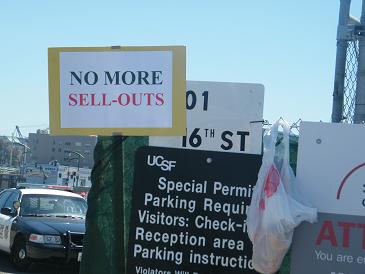
And yet, when dignitaries including Rep. Nancy Pelosi showed up for the groundbreaking ceremony, they were met with protests. Bayview residents showed up to complain that very few of those jobs are going to the people who live in the project’s neighborhood. In fact, not that many jobs are likely to go to San Francisco residents. That’s because the University of California, San Francisco, which is building the hospital at Mission Bay, has no policy whatsoever requiring its contractors to hire local residents. As Sarah Phelan reports on page 11, San Francisco residents may turn out to make up fewer than 20 percent of the people who work on the project.

That’s a problem for a significant number of local construction projects financed and managed by government agencies. A recent study released by the San Francisco Redevelopment Agency Office of Economic and Workforce Development found that only 20 percent of the workers on public works job sites in the city were San Francisco residents.

Obviously, private construction companies can hire anyone they want — but when San Francisco tax dollars and San Francisco public land are involved, local residents ought to get a fair share of the work. That’s not just a political argument; it’s solid economics. Just as money spent at a locally owned independent business stays in town and does more for the local economy than money sent at big chains, local workers are more likely to spend their paychecks here in town.

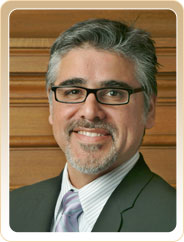
Sup. John Avalos has introduced a bill that would set a 50 percent requirement for local hiring on projects paid for by the city. It’s a great idea, and needs strong support. There’s resistance from the building trade unions, which is no surprise — the unions want to keep the seniority system in place and give jobs to the members who have been unemployed the longest, no matter where they live. And a significant percentage of the membership of the building trade unions live out of town.

May of the residents of low-income areas like Bayview lack the specific skills for unionized trade jobs. But with so many longtime members out of work, the unions don’t want to add apprenticeship programs to train new workers for jobs that don’t exist.

But there has to be room for compromise here. The building trades leaders need to understand that San Francisco taxpayers have every right to demand that when they finance public works projects, some of that money will stay in town. And Avalos isn’t pushing for 100 percent local hire — nor is he trying to undermine the time-honored tradition of the union hiring hall.

The UC project is trickier. As a state agency, UC is exempt from local laws — and has a long history of defying San Francisco’s efforts to hold it accountable. The Bayview activists aren’t asking for 50 percent local hire — but they are demanding that the university adopt some sort of enforceable rules to ensure that some percentage of the jobs at the new hospital go to city residents. That’s more than reasonable.

San Francisco’s state legislative delegation ought to be in touch with the UCSF chancellor and send a clear message: This is a problem that needs to be resolved, now — and if it’s not, legislation setting local hire goals for all UC projects ought to be on next year’s agenda.

Avalos: I have not buckled to anyone’s pressure over local hiring

1

Last week, Sup. John Avalos introduced Local SF legislation to require contractors to meet a local hiring goal of 50 percent. And as the Guardian reported at the time, Avalos’ legislation represents a major departure from the city’s First Source Program, which only requires contractors on publicly subsidized projects to show “good faith” efforts to meet 50 percent goal.  Avalos’ legislation came on the heels of a report from the city’s Office of Economic and Workforce Development that showed only a 20 percent local hire rate in 29 publicly funded projects, despite the existence of First Source.

“My legislation will ensure that San Franciscans have a guaranteed shot to work on the City’s public works projects and that the local dollars invested in public infrastructure be recycled back into San Francisco’s economy and local communities,” Avalos said last week, noting that his legislation was developed over a series of stakeholders meetings with reps from city agencies, the Mayor’s Office, labor and building trades, the environmental community, neighborhood advocates, contractors, local hiring advocates and unemployed workers. And he vowed to keep this roundtable approach going as his legislation moves forward.

So we were surprised to read a Weekly blog post today that claimed that Avalos had allegedly buckled to union pressure and watered down his local hire requirements. Especially since his legislation hasn’t even had its Nov. 8 hearing before the Board’s Land Use and Economic Development Committee…

Reached by phone Avalos clarified that he has not buckled to anyone’s pressure.
“I haven’t backed down on anything,” Avalos said. “And I have not made any amendments to my legislation. I did say when I introduced my legislation that this is a starting point and we’ll see where it ends up. We could pass legislation that wants 50 percent local hiring next year, and it would probably get vetoed and it wouldn’t be realistic. So, we have to phase it in and make sure we are creating a system that is going to push the trades to be more inclusive of local residents.”

Avalos noted that some trades and unions are already doing a good job of hiring San Francisco residents on public works projects, but reiterated that the city’s current policy only requires contractors to present paperwork to show they made a “good faith” effort—and that this approach has fallen far short of the city’s 50 percent local hire goal.

Avalos’ legislation–and his claims about First Source’s shortcomings–are  backed up by two recent studies.

The first report, released by Chinese for Affirmative Action and Brightline Defense Project this August, was titled “The Failure of Good Faith.” It showed that the city’s current policy only “yielded roughly 24 percent on employment opportunities” on public construction projects in San Francisco.

The second report, released by L. Luster & Associates on October 18, was titled “Labor Market Analysis San Francisco Construction Industry.” It confirmed that the construction workforce statewide has been in a “free-fall of job losses for the past four years.”

Noting that the Bay Area has not been as hard hit as other regions in California, the Luster report observed that the tri-county district of San Francisco, San Mateo and Marin counties, which had 45,100 construction jobs in August 2006, “lost nearly one-third of these jobs falling to 31,200 construction jobs by May 2010.”

“In San Francisco, unemployment in the construction sector has had a particularly negative impact on the city’s less educated residents,” the report stated. “For them, construction has provided access to higher paying jobs in a labor market that otherwise might provide them access mainly to positions paying lower end wages. Any local hire effort will be undertaken against the backdrop of this unprecedented construction job loss, and resulting unemployment among the existing San Francisco construction workers.”

One such group of unemployed workers—some of them in a union, others not—could be seen protesting yesterday outside the gates of the construction site on 16th Street in Mission Bay where UCSF has been celebrating the groundbreaking of its new Medical Center, a $1.5 billion project to be funded “through a combination of debt financing, philanthropic gifts and hospital reserves,” according to UC press releases.

But in an email to Joshua Arce of Brightline Defense, UCSF’s Barbara French noted that though UC is “actively working now to evaluate the workforce needs for every trade, for every phase of the project, and intend to make those public in December”, UC has not started construction on the project and won’t until December.
“ We haven’t signed the contract with the general contractor and we don’t yet have our permits,’ French wrote. “ The community may have believed that the celebrations this week truly marked the start of active construction. Not so. These were community celebrations held now in the hopes of getting good weather. “

Meanwhile, Avalos acknowledges that UC is not under the jurisdiction of San Francisco.
“But I know that they are doing a critical amount of building, and investing tax payer dollars there, so therefore the community should have some benefit from that, even though it’s complicated by this being the state’s money, so you could make the argument that all of California’s workers should have access,” Avalos told the Guardian. “But this land use impacts the surrounding community, so it makes sense that we have local hire legislation and access to serious end-use jobs at the hospital, which will include medical and support staff, building and janitorial maintenance and cafeteria related work.”

Avalos noted that the city is building infrastructure all around that project, including parks, Muni and light rail spruce-ups.
“There are huge surrounding investments,” Avalos said.

Either way, here’s hoping that by December, when folks begin to stress about providing for their families over the holiday season, all the workers in the following video clip will be able to put down their bullhorns and pick up decent-paying work, instead. And that this work will last for more than a couple of days.

Sfbg Radio: Sex, drugs and rock ‘n’ roll

4

You want to save the American economy? Try legalizing sex, drugs and roc ‘n’ roll. That’s Johnny’s proposal. listen up after the jump.

sfbgradio10272010 by endorsements2010

Stage

0


Stage listings are compiled by Guardian staff. Performance times may change; call venues to confirm. Reviewers are Robert Avila, Rita Felciano, and Nicole Gluckstern. Submit items for the listings at listings@sfbg.com. For further information on how to submit items for the listings, see Picks. For complete listings, see www.sfbg.com.


OPENING

Equus Boxcar Theatre Playhouse, 505 Natoma; 776-1747, www.boxcartheatre.org. $10-25. Opens Wed/27, 8pm. Runs Wed-Sat, 8pm. Through Nov 20. Boxcar Theatre kicks off its fifth season with Peter Shaffer’s drama, directed by Erin Gilley.

Failure to Communicate The Garage, 975 Howard; (800) 838-3006, www.brownpapertickets.com. Call for prices. Opens Fri/29, 8pm. Runs Fri-Sat 8pm; Sun, 2pm. Through Nov 14. Perfomers Under Stress opens its sixth season with the world premiere of a physical theater piece by Valerie Fachman.

The Unexpected Man EXIT Theatre, 156 Eddy; (800) 838-3006, www.brownpapertickets.com. $18-25. Opens Fri/29. Runs Fri-Sat, 8pm; Sun, 3pm. Through Nov 14. Spare Stage revives Yasmina Reza’s ironic comedy, starring Ken Ruta.

BAY AREA

Becoming Britney Center REPortory Company, Knight Stage 3 Theatre, 1601 Civic Drive, Walnut Creek; (925) 943-SHOW, www.centerREP.org. $25. Previews Thurs/28-Fri/29, 8:15pm. Opens Sat/30, 8:15pm. Runs Thurs-Sat, 8:15pm; Sun, 2:15pm. Through Nov 14.Center REPortory Company presents an original musical about a naïve pop star, written by Molly Bell and Daya Curley.

Palomino Aurora Theatre, 2081 Addison, Berk; (510) 843-4822, www.auroratheatre.org. $10-55. Previews Fri/29-Sat/30 and Nov 3, 8pm; Sun/31, 2pm; Tues/2, 7pm. Opens Nov 4, 8pm. Runs Wed-Sat, 8pm; Sun, 2 and 7pm; Tues, 7pm. Through Dec 5. David Cale brings his new solo play about a gigolo to Aurora Theatre for its Bay Area premiere.

Pirates of Penzance Novato Theatre Company Playhouse, 484 Ignacio, Novato; 883-4498, www.novatotheatercompany.org. $12-22. Opens Thurs/28, 8pm. Runs Thurs-Sat, 8pm; Sun, 3pm. Through Nov 21. Novato Theatre Company revives the popular Gilbert and Sullivan swashbuckling tale.

ONGOING

Christian Cagigal’s Obscura: A Magic Show EXIT Cafe, 156 Eddy; (800) 838-3006, www.brownpapertickets.com. $15-25. Thurs-Sat, 8pm. Through Dec 18. Magician Christian Cagigal presents a mix of magic, fairy tales, and dark fables.

Dracula’s School for Vampires Young Performers Theatre, Fort Mason Center, Bldg C, Third Floor, Room 300; 346-5550, www.ypt.org. $7-10. Sat, 1 pm; Sun, 1 and 3:30pm. Through Nov 14. Young Performers Theatre presents a Dracula comedy by Dr. Leonard Wolf.

Equus Boxcar Theatre Playhouse, 505 Natoma; 776-1747, www.boxcartheatre.org. $10-25. Opens Wed/27, 8pm. Runs Wed-Sat, 8pm. Through Nov 20. Boxcar Theatre kicks off its fifth season with Peter Shaffer’s drama, directed by Erin Gilley.

Futurestyle ’79 Off-Market Theater, Studio 250, 965 Mission; (800) 838-3006, www.brownpapertickets.com. $15-20. Wed, 8pm. Through Wed/27. A fully improvised episodic comedy played against the backdrop of SF in 1979.

Glory Days Boxcar Studios, 125 Hyde; www.jericaproductions.com. $30. Fri-Sat, 8pm; Sun, 2pm (no performance Sun/31). Through Nov 7. Jerica Prodcutions and the Royal Underground Theatre company present Nick Blaemire’s and James Gardiner’s one-act musical.

Habibi Intersection for the Arts, 446 Valencia; 626-2787, www.theintersection.org. $15-25. Thurs-Sun, 8pm. Through Nov 7. Intersection for the Arts and Campo Santo present the world premiere of a play by Sharif Abu-Hamdeh.

*Hamlet Alcatraz Island; 547-0189, www.weplayers.org. By donation. Sat-Sun, times vary. Through Nov 21. Outside of an actual castle, it would hard to say what could serve as a more appropriate stand-in for Kronborg castle of Helsingør—also known as Elsinore—than the isolated fortress of Alcatraz Island, where WE Players are presenting Hamlet in all its tragic majesty. As audience members tramp along

stony paths and through prison corridors from one scene to the next, the brooding tension the site alone creates is palpable, and the very walls impart a sense of character, as opposed to window-dressing. Deftly leaping around rubble and rock, a hardy troupe of thespians and musicians execute the three-hour

production with neat precision, guiding the audience to parts of the island and prison edifice that aren’t usually part of the standard Alcatraz tour package. Incorporating movement, mime, live music, and carefully-engineered use of space, the Players turn Alcatraz into Denmark, as their physical bodies meld into Alcatraz. Casting actress Andrus Nichols as the discontent prince of Denmark is an incongruity that works, her passions’ sharp as her swordplay, the close-knit family unit of Laertes, Ophelia, and Polonius are emphatically human (Benjamin Stowe, Misti Boettiger, Jack Halton), and Scott D. Phillips plays the

appropriately militaristic and ego-driven Claudius with a cold steel edge. (Gluckstern)

Hedda Gabler Phoenix Theatre, suite 601, 414 Mason; (800) 838-3006, www.offbroadwaywest.org. $35.

The action unfolds in the parlor of the newly married Tesmans, young mediocre academic George (Adam Simpson) and town beauty Hedda, née Gabler (a crisp, tightly wound and nicely understated Cecilia Palmtag), a woman of exceptional intelligence, ambition and pride—to call her fiery wouldn’t be bad either, especially since she’s so fond of shooting off her late father’s pistols. Frustrated by her paltry new life, Hedda seeks news of an old flame, Eilert Lovborg (Paul Baird), via the admiring and vaguely lecherous Judge Brack (Peter Abraham) and a timid acquaintance from school days, Thea (Joceyln Stringer). The semi-wild but brilliant Lovborg has published a new book that imperils George’s chances for a professorship. Less interested in securing George’s career than controlling Lovborg’s destiny, Hedda soon manipulates events around her with bold determination and tragic consequences. Passionate, violent and psychologically complex, Henrik Ibsen’s titular heroine is at turns sympathetic and disturbing, an independent soul trapped in and warped by a society that allows her too little scope—a modern predicament that has inspired many modern and postmodern adaptations. Off Broadway West’s straight-ahead production of the late-19th-century drama, helmed by artistic director Richard Harder, remains faithful to the period setting. This includes Bert van Aalsburg’s respectable scenic design and Sylvia Kratins impressive costumes, as well as the old if fine translation by William Archer, who first introduced Ibsen to the English-speaking world. Unfortunately, the quaint diction is not handled with equal grace across an uneven cast. Palmtag’s solid, at times admirable performance in the lead, however, goes a good way toward grounding an otherwise patchy production. (Avila)

Last Days of Judas Iscariot Gough Street Playhouse, 1620 Gough; (510) 207-5774, www.CustomMade.org. $10-30. Thurs-Sat, 8pm. Through Sat/30. Custom Made Theatre Company presents the 2005 play by New York’s Stephen Adly Guirgis (Our Lady of 121st StreetJesus Hopped the A Train), which places purgatorial Judas (Kristoffer Alberto Barrera) on trial to determine his deserved fate for dropping a dime on Jesus and all that jazz. Flamboyant, sycophantic and horny prosecutor El-Fayoumy (Ben Ortega) and defense attorney Loretta (Amelia Avila) call between them a series of brow-raising witnesses—including Mother Teresa (Brandy Leggett), Sigmund Freud (Catz Forsman), and Satan (Richard Wenzel)—as Judas (seated on the upper tier of Sarah Phykitt’s suitably imposing split-level set) stares stoically in relative silence or appears in a series of childhood flashbacks. Characteristically funny and streetwise, as well as versed in the Catholic rigmarole as filtered through a NYC-boroughs sensibility, Guirgis’s play is also unusually tedious in its jokey, poky unfolding since—offering not much more than a cipher in the largely mute Iscariot—the proceedings lack a strong sense of dramatic stakes. It feels more like a revue than a play, or like an unnecessarily long-winded excuse for the final, well-turned concluding monologue by a heretofore marginal character (a speech delivered with admirable understatement by director Brian Katz). (Avila)

Law and Order: San Francisco Unit: The Musical! EXIT Theater, 156 Eddy; (800) 838-3006, www.brownpapertickets.com. $10. Mon, 8pm. Through Nov 15. Funny But Mean comedy troupe extends its newest show at a new venue.

Mary Stuart The Ashby Stage, 1901 Ashby, Berk; (510) 841-6500, www.shotgunplayers.org. $15-30. Thurs-Sat, 8pm; Sun, 5pm. (also Wed/27, Nov 3; 7pm). Through Nov 7. Shotgun Players presents Friedrich Schiller’s historical drama, directed by Mark Jackson.

*Pearls Over Shanghai Thrillpeddlers’ Hypnodrome, 575 10th St; (8008) 838-3006, www.brownpapertickets.com. $30-69. Sat, 8pm. Through Dec 19. Thrillpeddlers’ acclaimed production of the Cockettes musical continues its successful run.

Proof Exit Stage Left Theatre, 156 Eddy; www.belljartheatre.com. $20. Fri-Sat, 8pm. Through Sat/30. Bell Jar Theatre presents David Auburn’s award-winning play.

*The Real Americans The Marsh MainStage, 1062 Valencia; (800) 838-3006; www.themarsh.org. $20-50. Wed-Fri, 8pm; Sun, 5pm. Through Nov 6. The fifth extension of Dan Hoyle’s acclaimed show, directed by Charlie Varon.

*SHIToberfest Off-Market Theaters, 965 Mission; (800) 838-3006, www.brownpapertickets.com. $20. Fri-Sat, 8pm. Through Sat/30. This special October run of PianoFight’s bowel-loosening comedy series, the S.H.I.T. Show (for acronym fans, that’s the Stop Hating Imagination Time Show), revolves dizzyingly around the subject of beer, Germans and, perhaps less explicably, flatulent dolphins, among much else in the wide open seas of poor taste. Is it hilarious? It is. And you don’t even need to smuggle in a forty to make it so, though it certainly doesn’t hurt. Fine comic acting throughout a charismatic cast (including writer-director-producers Alex Boyd, Zach Cahn, Jed Goldstein, Ray Hobbs, Devin McNulty, Evan Winchester and Duncan Wold, with help from Nicole Hammersla, Gabrielle Patacsil, Rob Ready, Derricka Smith, Andy Strong, Jacque Vavroch and Dan Williams) combines here with generally solid to exceptional sketch work, video and song. Add in a permeating spirit of revelry, debauchery and irreverence and the evening becomes a diversion of the first order, culminating in an utterly sacrilicious sketch about a bunch of toasted beer-brewing monks treated to a papal visit—one of the best venial sins for your buck. When it comes to Octoberfesting this year, “Bavaria” is just S.H.I.T.–faced for Bay Area. (Avila)

Shocktoberfest!! 2010: Kiss of Blood Hypnodrome Theatre, 575 10th; (800) 838-3006, www.brownpapertickets.com. $25-35. Thurs-Fri, 8pm (Thurs/28-Sun/31 include performances of The Forsaken Laboratory by the Brazilian Grand Guignol group Vigor Mortis). Through Nov 19. Thrillpeddlers’ seasonal slice of eyeball is comprised of three playlets variously splattered with platelets, all directed by Russell Blackwood and bridged by a rousing burst of bawdy song from the full cast. Rob Keefe’s Lips of the Damned (after La Veuve by Eugene Heros and Leon Abric) takes place in a rat-infested museum of atrocities just before the fumigating starts, as an adulterous couple—comprised of a kinky married lady (a vivacious Kara Emry) and a naïve hunk from the loading dock (Daniel Bakken)—get their kicks around the guillotine display, and their comeuppance from the jilted proprietor (Flynn DeMarco). Keefe’s delightfully off-the-wall if also somewhat off-kilter Empress of Colma posits three druggy queens in grandma’s basement, where they practice and primp for their chance at drag greatness, and where newly crowned Crystal (a gloriously beaming Blackwood) lords it over resentful and suspicious first-runner-up Patty Himst (Eric Tyson Wertz) and obliviously cheerful, non-sequiturial Sunny (Birdie-Bob Watt). When fag hag Marcie (Emry) arrives with a little sodium pentothal snatched from dental school, the truth will out every tiny closeted secret, and at least one big hairy one. Kiss of Blood, the 1929 Grand Guignol classic, wraps things up with botched brain surgery and a nicely mysterious tale of a haunted and agonized man (Wertz) desperate to have Paris’s preeminent surgeon (DeMarco) cut off the seemingly normal finger driving him into paroxysms of pain and panic. Well-acted in the preposterously melodramatic style of the gory genre, the play (among one or two other things) comes off in a most satisfying fashion. (Avila)

Sunset Limited SF Playhouse, 533 Sutter; 677-9596, www.sfplayhouse.org. $40-50. Tues-Wed, 7pm; Thurs-Fri, 8pm; Sat, 3 and 8pm. Through Nov 6. This 2006 play by Cormac McCarthy exhibits some of the best and worst of the celebrated author, but significantly more of the latter. It sets an aging white academic and failed suicide (Charles Dean) in a room with his rescuer and would-be savior, a poor black social worker (Carl Lumbly), who has just snatched him from a railway platform ahead of a tête-à-tête with a train called the Sunset Limited. Both characters remain nameless, emphasizing the abstract pseudo-Socratic dimensions attendant on the dialogue-driven realism here (staged with a knowing wink in director Bill English’s scenic design, a partially walled wood-framed shack with see-through slits between the thin horizontal planking). The black man is a born-again Christian and ex-con convinced Jesus has just given him a major assignment. His dogmatic certainty is matched by the white man’s nihilism and despair. “I believe in the primacy of the intellect,” the miserable prof tells his host, who’s locked the door on his self-destructive guest in an effort to buy time to change his mind. Leaving aside the historically clichéd, problematic and baggage-heavy dynamic of a poor black American devoted to the welfare of a rich white one, neither man moves from his respective position one inch (at least until perhaps and partially at the very end), which constrains the dramatic development. Moreover, both sides argue feebly, mainly by gainsaying whatever it is the other one says, making this not a great intellectual debate either. SF Playhouse’s production sets two fine actors at this heavy-handed twofer, but little can be done to redeem so static and arid an exercise. (Avila)

Susie Butler Sings the Sarah Vaughan Songbook Exit Theater Cafe, 156 Eddy; (510) 860-0997, www.brownpapertickets.com. $15-20. Sat, 8:30pm. Through Nov 20. Local actress and singer Susie Butler takes on the Sassy songbook.

Zombie Town Stage Werx Theatre, 533 Sutter; www.stagewerx.org. (800) 838-3006, www.brownpapertickets.com. $24. Thurs-Sat, 8pm (also Sun/31, 5pm). Through Sun/31. Catharsis Theatre Collective presents a documentary play about zombie attacks in Texas.

BAY AREA

*Compulsion Berkeley Repertory Theatre, Thrust Stage, 2025 Addison; (510) 647-2949, www.berkeleyrep.org. $29-85. Dates and times vary. Through Sun/31. Director Oscar Eustis of New York’s Public Theater marks a Bay Area return with an imaginatively layered staging of Rinne Groff’s stimulating new play. Compulsion locates the momentous yet dauntingly complex cultural-political outcomes of the Holocaust in the career of a provocative Jewish American character, Sid Silver, driven by real horror, sometimes-specious paranoia, and unbounded ego in his battle for control over the staging of Anne Frank’s Diary. A commandingly intense and fascinatingly nuanced Mandy Patinkin plays the brash, litigious Silver, based on real-life writer Meyer Levin, a best-selling author who obsessively pursued rights to stage his own version of Anne Frank’s story. The forces competing for ownership of, and identification with, Anne Frank and her hugely influential diary extend far beyond her father Otto, Silver, or the diary’s publishers at Doubleday (represented here by a smooth Matte Osian in a variety of parts; and a vital Hannah Cabell, who doubles as Silver’s increasingly alarmed and alienated French wife). But the power of Groff’s play lies in grounding the deeply convoluted and compromised history of that text and, by extension, the memory and meanings of the Holocaust itself, in a small set of forceful characters—augmented by astute use of marionettes (designed by Matt Acheson) and the words of Anne Frank herself (partially projected in Jeff Sugg’s impressive video design). The productive dramatic tension doesn’t let up, even after the seeming grace of the last-line, which relieves Silver of worldly burdens but leaves us brooding on their shifting meanings and ends. (Avila)

Dracula Center REPertory Company, 1601 Civic, Walnut Creek; (925) 943-SHOW, www.centerrep.org. $36-42. Wed, 7:30pm; Thurs-Sat, 8pm; Sun, 2:30pm (also Nov 20, 8pm). Through Nov 20. Eugene Brancoveanu stars as the Count in a production directed by Michael Butler.

*East 14th: True Tales of a Reluctant Player Marsh Berkeley, 2120 Allston, Berk; www.themarsh.org. $20-50. Dates and times vary. Through Nov 21. Don Reed’s solo play, making its Oakland debut after an acclaimed New York run, is truly a welcome homecoming twice over. (Avila)

*The Great Game: Afghanistan Roda Theatre, 201 Addison, Berk; (510) 647-2949, www.berkeleyrep.org. $17-73. Call for times. Through Nov 7. Berkeley Rep presents the West Coast premiere of a three-part show about Afghanistan.

*Loveland The Marsh Berkeley, 2120 Allston Way; (800) 838-3006, www.brownpapertickets.com. $20-50. Fri, 7pm; Sat, 5pm. Through Nov 13. Ann Randolph’s acclaimed one-woman comic show about grief returns for its sixth sold-out extension.

Superior Donuts TheatreWorks at the Mountain View Center for the Performing Arts, 500 Castro; (650) 463-1960, www.theatreworks.org. $19-67. Tues-Wed, 7:30pm; Thurs-Fri, 8pm; Sat, 2 and 8pm; Sun, 2 and 7pm. Through Sun/31. This latest from Tracy Letts (August: Osage CountyKiller Joe) starts out as a delicious treat but a hollowness in the center of it all leaves one less than fully unsatisfied. Director Leslie Martinson’s cast shines, however, as the action unfolds in crisp, engaging scenes set in the titular run-down donut shop in Chicago’s slowly gentrifying Uptown neighborhood. Owner-operator Arthur Przybyszewski (Howard Swain) is an aging baby boomer and second-generation Polish immigrant who fled to Canada to avoid the Vietnam draft and returned years later to take over his parents shop, alienated and hesitant, though well liked by his regulars. At least most: As the play opens his shop has been vandalized. Two beat cops are on the scene, James (Michael J. Asberry) and Randy (Julia Brothers), the latter eventually displaying a visible crush on an oblivious, then discombobulated Arthur. When an impressive young African American man named Franco (Lance Gardner) comes in and charms his way into a job, Arthur gradually finds himself drawn out of his shell and faced with the challenge of valuing another human being more than his own hide—a challenge underscored by Arthur’s several monologues, in which his personal history comes to the fore. The play feels pat and a little lazy-sentimental in the end, but there’s no denying the entertainment afforded here, especially by the magnetic pairing of leads Swain and Gardner. (Avila)

Winter’s Tale Live Oak Theatre, 1301 Shattuck, Berk; (510) 649-5999, www.aeofberkeley.org. $12-15. Fri-Sat, 8pm (also Sun/31, Nov 7, and Nov 14, 2pm; Nov 18, 8pm). Through Nov 20. Actor’s Ensemble of Berkeley presents the rarely-performed Shakespeare play.

PERFORMANCE/DANCE

“Beloved: A Requiem for Our Dead” CELLspace, 2050 Bryant; (510) 207-6101. $10-20. Fri/29, 8pm. Mangos With Chili presents a night of conjuring, memory, mourning and celebration.

“The ChatRoulette Halloween Show” Makeout Room, 3225 22nd St; www.chatrouletteshow.com. $12-15. Sat/30, 7:30pm. The Illuminated Theater presents a special Halloween edition of its show.

Alicia Dattner Off-Market Theater, 965 Mission; (917) 363-9646, www.aliciadattner.com. $20. Fri/29, 8pm.

“Fright Nights at the Wharf” Castagnola’s, 286 Jefferson; (800) 838-3006, www.brownpapertickets.com. $10. Fri/29-Sat/30, 8pm. An evening of stand-up comedy by the water.

“Ghost Stories and other Horrors!” Jellyfish Gallery, 1286 Folsom; www.firesidestorytelling.com. $5. Wed/27, 8pm. Fireside Storytelling presents an evening of ghoulish tales.

“Kaleidoscope Cabaret” Brava Theater, 2781 24th St; (800) 838-3006, www.brownpapertickets.com. $20-25. Sat/30, 8pm. An evening of drag, burlesque, song, and aerial art by performers of color.

“Karaghiozis Saves the Economy” Hallidie Plaza, Market and 5th; 648-446, www.shadowlight.org. Free. Sun/31, 7pm. A Greek shadow theatre performance by Leonidas Kassapides.

“Make Drag, Not War!” Dance Mission Theater, 3316 24th St; www.dancemission.com. $15-20. Sun/31, 8pm. A drag show and dance party hosted by Artist Malcolm Drake.

“MUNI Diaries Live!” Makeout Room, 3225 22nd St; 647-2888, www.munidiaries.com. $5. Fri/29, 7:30pm. An evening of MUNI stories.

“Road trip to Pluto” 4 Star Theatre, 2200 Clement; (800) 838-3006, www.brownpapertickets.com. $9.99-12. Thurs/28, 8:30pm. Bitter Show reprises its contribution to the SF Fringe Fest.

“Romane Event Comedy Show: Super Special Election and Halloween Edition” Makeout Room, 3225 22nd St; 647-2888, www.pacoromane.com. Wed/27, 7:30pm. Paco Romane’s guests include Will Durst, Casey Ley, Grant Lyon, and Pamela Ames.

Devendra Sharma CounterPULSE, 1310 Mission; www.counterpulse.org. $14-24. Thurs/28-Sat/30, 8pm; Sun/31, 2pm. CounterPULSe’s “Performing Diaspora” program presents a contemporary take on Nautanki theater by Sharma.

“Stories From a Haunted Forest” Presidio’s Log Cabin, 1299 Story; www.bindlestiffstudio.org. Free. Sat/30, 7pm. Bindlestiff Studio presents a one-night-only phantasmic experience.

“Teatro Zinzombie!” Pier 29 at Battery; 438-2668, www.love.zinzanni.org. 117-167. Sun/31, 5:15pm. TeatroZinzanni is haunted for one night.

Trailer Park Boys Palace Fine Arts Theatre, 3601 Lyon; 567-6642, www.ticketmaster.com. $45-58. Thurs/28, 7:30pm. The fabled boys appear live in concert.

“Twilight Vixen Revue” SOMArts, 934 Brannan; (800) 838-3006, www.brownpapertickets.com. $12. A special Halloween edition.

“Upper Cut” The Dark Room, 2263 Mission; www.darkroomsf.com. $10. Thurs/28, 8pm. A weekly improve and sketch comedy open mic.

BAY AREA

Hubbard Street Dance Chicago Zellerbach Hall, UC Berkeley campus, Berk; (510) 642-9988, www.calperformances.org. $31-68. Fri/29-Sat/30, 8pm. The acclaimed dance company performs some West Coast premieres.

“Persephone’s Boots” Codornices Park, Berk; www.raggedwing.org. Free. Wed/27-Sun/31, 5:30pm. Ragged Wing Ensemble presents the world premiere of a performance created by Anna Schneiderman and the ensemble.




Right back atcha, Big Brother

1

I’ve been dabbling in dystopia of late. A little Year of the Flood by Margaret Atwood, a little Brazil (1985) and bam! I’m up to my ears in fears of bureaucracy and government subterfuge and omnipresence – as if that’s a new thing. 

But on the real, it is a bit discomfiting, the similarities between our culture’s visions of the fall. This discomfort sharpens with “black sites” researcher Trevor Paglen‘s monograph Invisible: Covert Operations and Classified Landscapes (Aperture), an eerie book of photos and artifacts that acts like a show-and-tell of why we can’t trust The Man to level with us. Paglen will be presenting it at City Lights – those anarchos, of course! – Thurs/21.

“There are many kinds of invisibility. There is the invisibility of what is so taken for granted that few see it, the custom of the country, the water in which the fish swim. Thus to perceive that the U.S. is an empire on a permanent wartime basis is to be alien to, or become alienated from, the mainstream.”

So says writer Rebecca Solnit in her introduction to Invisible, which happens to be an excellent sourcebook for those wishing to be party to this alienation themselves. The book is a product of years of research on the part of Paglen, and is mainly comprised of photos he managed to take of things we are not supposed to see, like massive bunkers in the desert and streaking surveillance objects in the night sky. Though the photos – some taken from miles away, using high grade camera surveillance equipment – that Paglen has assembled of classified military compounds in the deserts of Southwestern United States are disturbing, what really got to me in his monograph were the badges. 

What in the god damn god damn? From left, military patches from an unknown mission, the Desert Prowler program, and the 1990s launch of an intelligent spacecraft. From Trevor Paglen’s Invisible: Covert Operations and Classified Landscapes

A freaky-weird Illuminati eye shooting lightning bolts. A dragon wrapping its scaly body around a globe. Inexplicable star patterns. These are the images created for the insignia patches worn by personnel of our government’s top secret missions. Sure, we know a little bit about them – a woman’s golden umbrella is explained by Paglen to be a symbol for the gold plate satellite systems that a particular mission helped to install – but for the main part they seem to use American English to speak a language that the rest of us aren’t aware of. 

A world supported by taxpayers, yet not seen by them. It’s for our safety, right? Again, Solnit: “If war is an act of violence to compel others to do our will, you can speculate on how the American people have been essentially subjugated by the war economy to keep paying for it.”

Seen in this way, the research that Paglen does seems to be a form of liberation. Hours spent in libraries (some with SFBG contributor A.C. Thompson at his side) have yielded passports that show people that are not people – CIA operatives, in fact, charged with the disappearance of terror suspects. 

There are long exposure photos of classified satellites tearing through the sky. Some of these are quite lovely, a craggy, water-surrounded peak in one under a phalanx of light diagonal streaks in the sky above. There’s nothing lovely though, about the fact that amateur astronomer network The Other Night Sky (of which Paglen is a part) has identified almost two hundred secretly-purposed objects in our atmosphere, placed there by our government for reasons that surely have to do with eminent safety matters. Right?

This was the dillemma presented by Invisible. Meaning: if these things are indeed so ubiquitous and codified – water and war, in Solnit’s example — are they normal? Should we be worried? Should we all take to the hills of Nevada with a backpack full of digital cameras and squint mightily past lines of no-entry?

Maybe we’ll depend on Paglen to do it for the moment. And, of course, look at his photo books. 

Trevor Paglen: Invisible: Covert Operations and Classified Landscapes

Thur/21 7 p.m., free

City Lights Bookstore

261 Columbus, SF

(415) 362-8193

www.citylights.com


The soul of the city

23

tredmond@sfbg.com

44th ANNIVERSARY SPECIAL We all arrived in San Francisco broke: Paulo and me in the ’73 Capri, crawling over Donner Pass with a blown valve and three cylinders firing; Tracy and Craig in the back of a VW van, behind in the payments and on the run from the repo men; Tom and Sharon hitching across the Southwest after Tom, who could bullshit with the best, talked himself out a jail cell in New Orleans. Moak showed up in a rusty Datsun with the wheels falling off. Jane and Danny came on the old hippie bus, the Green Tortoise, $69 across the country.

But we all had a friend who knew a friend where you could crash for a little while. And in the early 1980s you got food stamps the first day and it only took a couple of weeks to get a job waiting tables or canvassing or selling trinkets on the Wharf. And once you’d scraped together a couple hundred dollars — maybe two weeks’ work — you could get a place to live. My first room in a flat in the Western Addition was $120 a month.

We did art and politics and writing and music. After a while, some of us went to law school, some of us became journalists, some of us went into government and education. A few of us fled, and Paulo died in the plague (dammit). But in the end, a lot of us were — and are — San Franciscans, part of a city that welcomed us and gave us a chance.

It was a very different time to be young in San Francisco.

I’m not here to get all nostalgic, really I’m not. There were serious problems in 1982 — raging gentrification was creating clashes in the Mission and the Haight and south of Market that were more violent than anything going on today. And frankly, broke as we were, most of my friends were from middle class homes and were college educated and had a leg up. We weren’t going to starve; we didn’t have to make really ugly choices to eat.

Most of the stories in this special anniversary issue are about marginalized youth — young people trying to survive and make their way against all odds in an increasingly hostile city and a bitter, harsh economy.

But there’s an important difference about San Francisco today, something earlier generations of immigrants didn’t face. The cost of housing, always high, has so outstripped the entry-level and nonprofit wage scale that it’s almost impossible for young people to survive in this town — much less have the time to add to its artistic and creative culture.

I met the 21-year-old daughter of a college friend the other day. She’s as idealistic as we all were. She wants to move to San Francisco for the same reasons we did and you did — except maybe she won’t. Because she felt as if she had to come visit first, to use her dad’s network, see if she could line up a job and figure out if her likely earnings would cover the cost of living. When I mentioned that I’d just up and left the East Coast and headed west, planning to figure it out when I got here, she gave me a look that was part amazement and part sadness. You just can’t do that anymore.

The odds are pretty good that San Francisco won’t get her — her talent and energy will go somewhere else, somewhere that’s not so harsh on young people. I wondered, as I do every once in a while when I’m feeling halfway between an angry political writer and an old curmudgeon: would I come to San Francisco today?

Would Harvey Milk? Would Jello Biafra? Would Dave Eggers? Would you?

If you were born here, would you stay?

Are we squandering this city’s greatest resource — its ability to attract and retain creative people?

The two people who started the Bay Guardian 44 years ago were young arrivals from the Midwest. Bruce Brugmann looked around the city room at the Milwaukee Journal, where he worked as a reporter, and realized there wasn’t any job he wanted there in 10 years. With two young kids and a dream of starting a weekly newspaper in one of the world’s most exciting cities, Bruce and his wife, Jean Dibble, settled in a $130-a-month flat. The Guardian’s first office was a desk in the printers shop. When they paper could finally afford its own space, Bruce and Jean moved the staff into a $60-a-month four-room place on Ninth and Bryant streets.

From the start, the paper was a “preservationist” publication — both in terms of environmental issues like saving the bay and in the larger political sense. The San Francisco Bay Guardian was out to save San Francisco.

The city was under assault — by the developers who were making fast money tossing high-rises into downtown; the speculators making fast money flipping property, ducking taxes, and driving up rents; the unscrupulous landlords who were letting their buildings fall apart while they charged ever higher rent. For the Guardian, fighting this urbicide meant protecting San Francisco values, preserving the best of the city from what Bruce liked to call “the radicals at the Chamber of Commerce.”

For the Guardian, progress wasn’t measured in the number of new buildings constructed, but in the ability of the city to remain a place where artists and writers and community organizers and hell-raisers — and the young people who were always bringing new life to the city — could survive. We supported rent control, and growth limits, and affordable housing policies, and limits on condo conversions, and minimum-wage and sanctuary city laws — and a long list of other things that together amounted to a progressive agenda.

And in 2010, the assault on the young, the poor, the nonconformists, the immigrants, is still on, at full force. The mayor and his allies are pushing a ballot measure that would make it illegal just to sit on the sidewalk. He’s also turning the local juvenile authorities into immigration cops, breaking up families in the process. He’s cut funding for youth services, and wants to make it easier for speculators to evict tenants, take affordable rental housing (especially the flats that young people share to save money) off the market, and create high-priced condos. Virtually all of the new housing he’s pushing is for rich people. He’s shutting down parties and arresting DJs and, in effect, declaring a War on Fun.

What he’s doing — and what the downtown forces want — is the transformation of San Francisco from a welcoming city where the weird is the normal, where the young and the crazy and the brilliant and the broke can be part of (or even drivers of) the culture, to one where profit and property values are all that matter. And that’s a recipe for urban doom.

Richard Florida’s 2004 bestseller The Rise of the Creative Class shook up political thinking by pointing out that cities thrive with iconoclasts, not organization people. Everyone likes to talk about that now, even Mayor Gavin Newsom. But the missing piece, from a policy perspective, is that the creative class — particularly the young people who are going to be the next generation of the creative class — needs space to grow. And that means the most important thing a creative city can do is nurture the very people Newsom and his allies want to drive away.

If Prop. L, the “sit-lie” law, passes, if the rental flats in the Mission that have been home to several generations of young artists, writers, musicians and future civic leaders vanish in the name of condo conversions, if 85 percent of all the new housing in San Francisco is affordable only to millionaires, if the money that helps foster kids and runaways and at-risk youth dries up because this rich city won’t raise taxes, if nightlife becomes an annoyance to be stifled…then we’re in danger of losing San Francisco.

Our 44th Anniversary Issue also includes stories by Sarah Phelan on SF’s disadvantaged youth, Caitlin Donohue’s account of the Haight street kids, and Rebecca Bowe’s look at ageing out of the foster care system

The myth of the overpaid public employee

31

Lots of press — as there should be  — on the new UC Berkeley study that debunks the myth of the overpaid public employee. The Chron had a decent story this morning, The Bay Citizen, which has been reporting pretty heavily on high wages and pensions in the public sector, acknowledged the study today. It’s a pretty big deal: Since much of the poltics of 2010 seems to be about bashing public employees and complaining about bloated pensions, some hard reality — backed up with a sophisticated regression analysis — was badly needed.

And the study is prettty clear: public employee salaries and pensions are not the cause of California’s (or San Francisco’s) budget problems:

The Great Recession continues to leave a great deal of economic pain and scarring in its wake. But, the
vilification of government workers is sorely misplaced and has left the real culprits of this devastating
downturn off the hook. Compensation received by public sector employees is neither the cause—nor can
it be the solution—to the state’s financial problems. Only an economic recovery can begin to plug the hole
in the state’s budget. Unfortunately, the current budget balancing efforts in California are anti-simulative
and further act to depress demand in an economy already operating way below capacity. Budget cuts have
helped to keep California’s unemployment rate well into the double-digits for over a year and a half—and
there is no end in sight. Thousands of California public employees have lost their jobs and many more
have forgone pay through forced furloughs and their families have experience considerable pain and disruption.
All the workers who have lost their jobs or took cuts in pay or benefits were made to do so not
because of their work performance, or because their services were no longer needed, nor because they were
overpaid. They were simply causalities among a list of millions of hard working innocent victims of a financial
system run amuck. Public sector workers help our communities to thrive and provide services that
make it worthwhile to live in them—it is wrong to blame them for the fallout from the greatest economic
downturn since the Great Depression. 

The study’s out in enough time to make a potential difference in the election — on both the state and the local level, attacks on public employees are driving major campaigns. Meg Whitman is all about tying Jerry Brown to those evil unions, and Prop.B, the measure to cut health care and pensions for city employees, is a wedge issue. A little logic shows that it’s not only misleading but factually wrong to blame the public-sector workers for the recession.

Avalos initiates LOCAL SF

5

Sups. John Avalos, Sophie Maxwell, David Campos and Board President David Chiu, plus community advocates, construction contractors, neighborhood leaders and union members rallied outside City Hall today to announce the launch of LOCAL SF, a campaign for local opportunities and hiring for San Francisco residents. 

And this afternoon, Avalos introduces the first measure of this campaign–legislation mandating local hiring on publicly funded construction projects.

Avalos’ local hiring legislation is a major departure from the city’s current First Source Program. In place for the past decade,First Source only requires contractors on publicly subsidized projects to show “good faith” efforts to meet a local hiring goal of 50 percent. 

By contrast, Avalos’ proposed legislation will require contractors to meet local hiring goals that will be phased in over the next few years.

“My legislation will ensure that San Franciscans have a guaranteed shot to work on the City’s public works projects and that the local dollars invested in public infrastructure be recycled back into San Francisco’s economy and local communities,” Avalos said in a press release,

Avalos’ introduction of this mandated local hiring legislation comes on the heels of a report from the the Mayor’s Office of Economic and Workforce Development that shows only a 20 percent local hire rate in 29 publicly-funded projects, despite the 50 percent local hiring goal and good faith efforts of the city’s First Source program.

Avalos says his local hiring legislation was developed over a series of stakeholders meetings with representatives from city agencies, the Mayor’s Office, labor and building trades, the environmental community, neighborhood advocates, contractors, local hiring advocates and unemployed workers, And he vows to keep this roundtable approach going, as his legislation moves forward.

“Over the next few weeks, I intend to keep a dialogue going with all of these stakeholders to strengthen the legislation as it moves through the legislative process,” Avalos said.
  
His legislation is scheduled to be heard in the Board’s Land Use and EconomicDevelopment Committee in November. And it comes not a moment too soon: with unemployment rates remaining high and major construction projects in the pipeline, it’s critical that city leaders ensure that any related work really benefits the local community.

SFBG Radio: a WPA for musicians

5

Today we talk about jobs, the economy — and why Obama should create a WPA for musicians. Listen after the break.

sfbgradio10152010 by endorsements2010

Get angry and make ’em do it!

9

After crashing the country’s economy and turning the world against us, Republicans are clawing their way back into power by stoking voter anger at political and economic systems that are stacked against the common citizen, a tactic that progressives need to adopt if we ever hope to move our agenda forward.

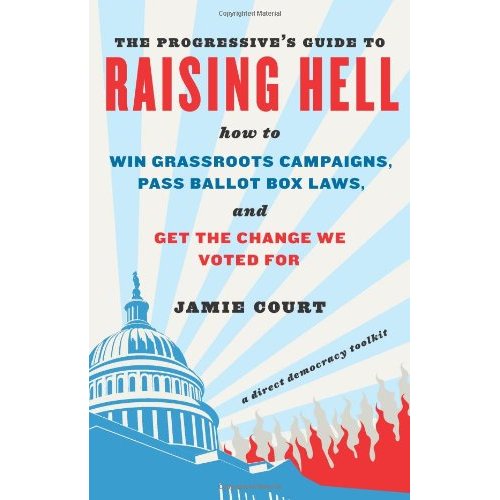
“Anger, not hope, is the fuel of political and economic change,” Jamie Court, head of Consumer Watchdog, writes in his new book, The Progressive’s Guide to Raising Hell: How to win grassroots campaigns, pass ballot box laws, and get the change we voted for (Chelsea Green Publishing, 2010).

Court writes that progressives are rightfully disappointed and disillusioned that after helping to elect President Barack Obama, he and Congressional Democrats turned around and gave Wall Street, the military-industrial complex, and the health insurance companies everything they wanted, with Obama even caving in on requiring all Americans to purchase health insurance, something he opposed as a candidate.


Yet Court said politicians never do the right thing and push progressive political change unless they’re forced to do so. He opened the book with a scene in which President Franklin Delano Roosevelt met with progressive political leaders, listened to their proposals, and then told them, “I agree. I am all for your plan. Now make me do it.”

It’s a concept that the conservative Tea Party movement understands well, and even though they may be crazy and wrongheaded in their utterly unsustainable and destabilizing policy agenda, they have effectively used anger as a political tool, and as a result, the NY Times reports they are poised to wield a disproportionate amount of political power after this election.

It’s the same story on the local level, where the only real anger in this election cycle is coming from those mad at public employee unions and their pension deals, and vagrants who sit uncivilly on sidewalks. These people will keep pushing for what they expect, but many progressives act as if it’s enough to prevent truly heinous Republicans like Meg Whitman from taking power, rather than trying to push Jerry Brown or Board of Supervisors’ progressives from day one to start empowering people over corporations.

“After the vote, power vacuums fill with familiar values, if not faces. Promises give way to fiscal realities, hope succumbs to pragmatism, and ambition concedes to inertia. The old tricks of interest group – confuse, diffuse, scare – prevail over the better angels of American nature,” Court writes, relaying a familiar electoral pattern.

Yet in this election, when the best outcome seems to be simply dodging a bullet, is there any hope for progressive political change? Isn’t the system just too broken? I asked Court these questions when he stopped by the Guardian office for a chat recently, and he retains a belief that with the right kind of tactics and agenda, progressives can still seize the political initiative and power.

http://www.youtube.com/watch?v=J3RD0YObHok

“I wrote it to reengage progressives because they are so despondent,” Court told me. “It’s about how to use anger and focus anger…Politicians don’t answer polite mobs, they only answer angry mobs and the Tea Party is the only angry mob in the room.”

Progressive have understandable doubts about the responsiveness of the current political system, but Court said, “I know if we don’t try to make it work, we’re never going to get there.”

And his book lays out the path to get there, step by step, based on some of the legislative and political successes that Consumer Watchdog and other progressives have had in recent years, such as rejecting the well-funded corporate con jobs in Propositions 16 and 17 earlier this year. Yet it involves an approach based on principle and not parties, and with being relentless in pursuing the kind of world we need.

“If you want to fight corporate power, you have to fight Democrats and Republicans,” Court said.

Specifically, Court is calling for progressives to push a California ballot measure that would establish a public health care option here, the very thing that Obama and the Democrats failed to include in their health reform package, and which will dash any hopes of it working if the people are forced to rely on unregulated insurance company products.

“The biggest thing is mandatory health insurance, which is a ticking time bomb,” Court said, one set to go off in 2014 when that aspect of Obama’s health care reform kicks in.

Corporate and political power working together seem to be a force too strong to overcome, but as Court writes, “Public opinion is the most powerful force in the world. While it can be muted, distracted, and co-opted, it cannot be controlled, except by the public.”

Big Oil’s false choice

0

rebeccab@sfbg.com

Tapping into voters’ economic insecurities at a time of record high unemployment rates, out-of-state oil interests say addressing global warming will cost California more jobs. But a broad coalition that includes environmentalists and top business groups argue that just the opposite is true, saying the economy will suffer if we suddenly kill the incentives now driving the clean energy industry, one business sector that actually grew during the recession.

Proposition 23 would indefinitely suspend Assembly Bill 32, California’s Global Warming Solutions Act. Texas oil companies are bankrolling the initiative, spending millions of dollars to convince voters that they must choose between saving jobs and saving the environment. Since jobs are more important right now, they argue, the environment will have to wait.

But the other side — which includes groups such as the Chamber of Commerce, whose top priority is always job creation — is promoting the compelling idea that the path to economic recovery lies in rising to the challenge of climate change. They argue that addressing global warming now isn’t just about avoiding more out-of-control wildfires, diminishing crop yields, prolonged intense droughts, coastal flooding, and other calamities that climate scientists say global warming will bring to California. It’s also about creating jobs now and trying to lower California’s 12.4 percent unemployment rate, the third highest nationwide.

The push to defeat Prop. 23 has brought together prominent business people, public-health advocates like the American Lung Association, big green organizations such as the Sierra Club, and environmental-justice advocates who are pushing for green jobs as a way to fend off poverty and tackle air quality problems in disadvantaged neighborhoods. If the coalition of unlikely allies is successful, Big Oil’s comfortable lock on the energy market could be thrown off balance by California’s emerging green economy.

“Ultimately, we think it’s going to be a David vs. Goliath battle, because they have very deep pockets,” said No on 23 campaign spokesperson Steve Maviglio. “The proponents are playing to the fears of those most affected by the economy.”

When voters decide on this one, it will signify a choice to proceed down one of two paths at an important crossroads. A global climate summit in Copenhagen late last year failed to produce an effective response to climate change. A push for a federal cap-and-trade system to combat global warming yielded similarly disappointing results. AB32 presents a third chance to set a new standard, and a precedent, for curbing greenhouse gas emissions. But if Prop. 23 passes, environmentalists will have struck out.

A report issued in July by the National Academy of Sciences lays bare the far-reaching implications of policy decisions around climate change. “Emissions reductions choices made today matter in determining impacts experienced not just over the next few decades,” the report notes, “but in coming centuries and millennia.”


CLOSE RACE

In 2006, Gov. Arnold Schwarzenegger signed AB32, mandating a statewide reduction of greenhouse gases to 1990 levels by the year 2020. The law is slated to go into full effect in January 2012, when a cap-and-trade system will make it more costly and burdensome for major polluters to continue burning high quantities of fossil fuels, among other strategies.

The law helps alternative energy companies and creates incentives for large and small businesses to green their operations. Prop. 23, deceptively titled the “California Jobs Initiative,” would suspend AB32 until the state’s unemployment rate drops to 5.5 percent for four consecutive quarters. A decade could pass before such a market condition is in place — in the past 40 years, it’s occurred just three times.

Speaking at the Commonwealth Club in Santa Clara in September, Schwarzenegger blasted Texas-based oil companies Tesoro Corporation and Valero Energy Corporation, which have contributed a combined $5.6 million to the Prop. 23 campaign, for trying to deceive California voters. “They are creating a shell argument that this is about saving jobs,” Schwarzenegger said. “Does anybody really believe that these companies, out of the goodness of their black oil hearts, are spending millions and millions of dollars to protect jobs? It’s not about jobs at all, ladies and gentlemen. It is about their ability to pollute and thus protect their profits.”

Prop. 23 has been unpopular even among many traditional right-wing and business interests. Oil giants Chevron and BP have remained neutral on it. Republican gubernatorial candidate Meg Whitman also renounced it, but straddled the fence by vowing to suspend AB32 for a year anyway.

According to a breakdown of campaign spending issued by opponents, oil interests contributed 97 percent of the funding for Prop. 23, while out-of-state interests were responsible for 89 percent. Kansas-based Koch Industries, run by billionaire siblings David and Charles Koch, dropped $1 million into the effort. The Koch brothers have been singled out as the financial backbone of the Tea Party.

Yet despite bipartisan opposition in Sacramento, polls suggest Prop. 23 could be a close race. A recent Los Angeles Times poll showed a dead heat among California voters, with 40 percent in favor, 38 percent opposed, and about one-fifth of likely voters undecided. The television commercials advocating Yes on 23 drive home a simple yet misleading message: “Save jobs. Stop the energy tax.” A spokesperson from the Yes on 23 campaign did not return the Guardian’s calls seeking comment.

Ironically, jobs are also the cornerstone of the No on 23 campaign’s arguments. “We have very heavy hitters who see this as a job killer,” Maviglio said. The campaign is highlighting the fact that the only economic area that has experienced growth amid the recession is green tech.

Democratic gubernatorial candidate Jerry Brown referenced green jobs as a bright hope for economic recovery in a televised debate against Whitman, and the prospect of green job creation as a way to alleviate poverty is clearly articulated in The Green Collar Economy, a widely influential book by Green for All founder Van Jones. Green for All has joined the Greenlining Institute and a host of 80 organizations statewide in a united front against Prop. 23, called Communities United Against Prop. 23, which is part of the larger opposition campaign dubbed Communities United Against the Dirty Energy Prop.

Low-income communities and communities of color will be disproportionately affected if Prop. 23 wins, said Orson Aguilar, executive director of the Greenlining Institute. “The communities we represent are feeling a double impact,” Aguilar noted. “They’re suffering from pollution,” since power plants and polluting industries tend to be sited in low-income communities, “and they’re suffering from unemployment and the economic crisis. There definitely is a double-whammy.”


LOCAL MOMENTUM

At a recent green business symposium hosted by Urban Solutions, a nonprofit that aids small businesses and seeks to create job opportunities in low-income communities, a Castro District merchant explained her decision to enter green-business certification process. “I’m dedicated to going green because, No. 1, it’s the right thing to do,” said Elaine Jennings, who runs Small Potatoes Catering & Events. “No. 2, it’s the right thing to do. And No. 3, it’s the right thing to do.”

But the moderator of the panel, a business reporter, wasn’t as interested in the moral rationale — instead, she followed up by asking whether going green was a wise financial move. Anthony Tsai, green business program manager at Urban Solutions, made the case that it is. Water bills have gone up 40 percent since 2000, Tsai said. Electricity costs have gone up 60 percent and waste disposal fees have increased 250 percent. By conserving energy and water and reducing waste, small businesses can save money during tough economic times.

Aguilar sees energy-efficiency building retrofits as an opportunity to create jobs for disadvantaged populations. In order to comply with the climate regulations under AB32, energy-efficiency retrofits would have to be completed to hit conservation targets. “We have thousands, if not millions, of buildings in California that need to be retrofitted,” he said. “A lot of people who are out of work are in the construction industry. Latinos and African Americans were hit hard when construction fell.” With energy retrofits and solar-panel installations on the agenda, AB32 could be good news for electricians, too, Aguilar said.

There are signs that AB32 is already giving green business a lift. A manufacturer of electric delivery trucks, for example, relocated from Mexico to California’s Central Valley late last year. A wind-energy company recently relocated to San Diego from Spain. The solar industry is growing faster in California, particularly in the Bay Area, than anywhere else nationwide. And in the past five years, roughly $9 billion in venture capital investment has gone into clean tech industries, with more going to California than any other state.

“Prop. 23 would essentially pull the rug out from under this explosive growth, which we’re experiencing during a recession,” Maviglio noted.

Jeanine Cotter, CEO of Luminalt, an independently owned San Francisco solar and installation company, is active in the campaign to defeat Prop. 23. “There is an entire ecosystem that feeds off of good policy,” Cotter said. If Prop. 23 passes, “we will lose the spark that we have and we will go backward.”

Despite the economic downturn, Luminalt experienced its best year in 2009 in the six-year history of the company, and if AB32 goes into effect in 2012 as planned, the demand for new solar installations will only grow. But with less than a month to go before the election, Cotter said she was alarmed by the lack of awareness about Prop. 23, even among environmentalists.

“We were at West Coast Green with No on 23 literature,” she said, referencing a widely attended green-business conference, “and I was shocked at how many people didn’t know what it is.”


RISKING IT

Small business owners and conscience-driven activists aren’t the only ones touting this theory of a new energy economy. The San Francisco Chamber of Commerce, a fiscally conservative business association that is often at odds with environmentalists and progressives, is actively campaigning against Prop. 23 — and it’s not out of any sense of moral duty.

If Prop. 23 succeeds, explained Chamber spokesperson Rob Black, it will scare off the venture capitalists. “For them, water’s like money,” he explained. “It will flow to the easiest place to invest.” Regulation like AB32 guarantees a return on investment for climate-friendly technology, he added. But if that regulatory structure is thrown into question, investors may flee overseas because investing would be too risky. “If we walk away from clean tech, the next Microsoft will be a Chinese company,” Black said.

Donnie Fowler, a political consultant who has worked for Al Gore and other top Democrats, is a senior adviser to the Clean Economy Network and a leader in the effort to defeat Prop. 23. Oil companies “went to Washington and spent hundreds of millions” lobbying against climate change regulations, Fowler pointed out. “Now they’ve opened up a second front. If California goes backward, all of those senators and Congressional representatives will say, ‘No way … I’m surely not taking a political risk. If they went backward, there’s no reason we should go forward.'”

Fowler said that for environmentalists, voting No on 23 could be seen as an affirmation of statewide efforts to address climate change in a meaningful way. “This is a real opportunity,” he said, “for Californians to stand up and say we’ve had enough. We are going to take a stand — right now.”

www.stopdirtyenergyprop.com

www.communitiesagainstprop23.com

OFA opens SF office, hosts debate watch party

12


President Obama’s political operation, Organizing For America, is opening its first San Francisco office today (Tues/12), just in time to hold a watch party for this evening’s final California gubernatorial debate between Jerry Brown and Meg Whitman. So stop by 1406 Valencia at 6:30 for the debate, or stop by at 4 pm to watch Obama greet the crowd via video hookup.

Emily Dulcan, OFA’s California communications director, said the office will be focused on get-out-the-vote efforts for the Nov. 2 election, including phone banking and precinct walking for races that include Brown for Governor, U.S. Sen. Barbara Boxer’s reelection effort, Congressional races, and even some local measures.

“A lot of our volunteers hover between local races and the big races,” said Dulcan, who said she was starting to feel good about the chances of Democrats doing well at the polls. “People are really starting to see what’s at stake in this election. We can go back to the failed policies of the Republicans and President George W. Bush, or we can move forward under President Obama.”

While history and many pundits predict the Democrats will lose seats in Congress this fall – mostly because of the stubbornly bad economy and the fact that the party in power usually loses ground in the midterm elections – recent computer modeling by the New York Times showed there’s an almost unprecedented amount of uncertainty in forecasting how this election will really go. And that it could largely depend on which party can get out the vote in a fairly lackluster election season.

Whitman’s global warming positions leave her stand unclear

2

Gubernatorial candidate Meg Whitman is playing both sides of the fence on the issue of global warming, belatedly opposing Prop. 23 – the measure that would suspend AB 32, California’s long-term plan for reducing greenhouse gas emissions and promoting clean technology – but promising to delay implementation of AB 32 for a year anyway.

Yet the California Air Resources Board, the department tasked with drafting the regulations for the bill, isn’t even scheduled to finish drafting all the rules for the measure until Jan 1, 2011, and those rules wouldn’t go into effect for another year anyway. So it appears that Whitman’s stand is simply pandering to those who don’t see global warming as a pressing problem, in the process leaving uncertainty about how she would handle the issue if elected.

Still, her stance worries a swath of businesses that were hoping to cash in on a renewable-friendly economy. “There are already 500,000 Clifornian’s working in the clean energy sector and around 160,000 of them are in construction and manufacturing,” Donnie Fowler, senior advisor at the Clean Economy Network, told us.

Fowler is part of a campaign to promote the growth of the renewable economy. However, their pressing task is raising awareness of the potentially damaging effects if Prop 23 is passed. The measure would suspend the regulations within AB32 indefinitely and require, potentially, a citizen’s initiative to overturn it. The other option would be to wait until the unemployment rate drops below 5.5 percent for four consecutive quarters – a rare occurrence – at which point the suspension would automatically be lifted.

The LA Times released a poll last week that has Prop 23 winning by a slight margin, with 40 percent in favor of the initiative and 38 percent opposed. The proposition’s current success is largely a result of large donations from Texas based oil companies Tesoro Corp and Valero Energy Corp. and multibillionaire libertarian brothers David and Charles Koch.

Much of the opposition to AB32, however, has arisen from the anti-tax fervor sweeping the country – which Whitman has played on. Before she started making her rhetorical sojourn to the middle, coming out against Prop. 23 just last month, she told the San Jose Mercury that I probably would today, I need to think about that,” when asked whether she would veto AB32. Well, she thought about it and has since maintained that she would only suspend the bill long enough to assess what impact it would have on California jobs. Yet, the phrase job killer remains on her website.

Derek Walker, Director of the California Climate Initiative, thinks she is probably smart enough to understand what kind of impact suspending AB32 would have on renewable energy businesses currently operating in California.

But, if she is elected, will she have the political will to renege on her promised moratorium? And what would her position be if Prop 23 is passed?  Would renewable energy companies be left high and dry? Would she come to their aid?

“It would be very uncertain in the absence of AB32. However, the overwhelming support would almost require a plan to keep California’s clean energy economy growing,” Walker said.

Endorsements 2010: San Francisco ballot measures

26

PROP. AA

VEHICLE REGISTRATION FEE

YES

Proposition AA would add $10 to the existing annual fee for vehicles registered in San Francisco, which would bring in about $5 million a year in desperately needed funds for public transit and other environmentally friendly modes of transportation. Proceeds would help to fund new bike infrastructure, pedestrian crosswalks, and transit reliability projects. Some would also be spent on street repairs — with top priority given to streets with bikeways and public transit routes. Unless Muni and bike infrastructure improves, it’s hard to persuade drivers to leave their cars at home and choose greener ways of getting around. Prop. AA is in line with the city’s transit-first goals, and it will be a step toward reducing traffic congestion and helping public transit. Vote yes.


PROP. A

EARTHQUAKE RETROFIT BOND

YES

This $46.15 million general obligation bond to support seismic upgrades for wood-framed buildings is an important means of protecting San Franciscans in an earthquake and preserving affordable housing. A 2009 report by the Department of Building Inspection found that 151 buildings that received government affordable housing support — 8,247 units in all — could be destroyed in the next big earthquake.

Unfortunately, most of these buildings are break-even ventures for their owners, who have no incentive to put the money into needed seismic upgrades. This measure would fund those improvements with grants and deferred loans, which would accrue interest but would only need to be paid back if the owner makes a profit or tries to convert the building to another use, providing further guarantees that the housing will remain affordable even after an owner’s obligation to the state or federal governments ends. Vote yes on Prop. A.


PROP. B

CITY RETIREMENT AND HEALTH PLANS

NO, NO, NO

Back when the great national health care reform debate was raging, the Guardian advocated for a single-payer system, which would have cut out health insurance companies altogether. What we got instead was a bill that requires everyone to buy health insurance. Now endlessly rising health insurance costs pose a problem for the city — in years of financial stress, it must make ever-larger payments to cover public employees’ health benefits. The blame for this dysfunctional system should be pinned on health insurance companies, not public employees. After all, the industry spent millions lobbying federal lawmakers to preserve a system in which they are solidly guaranteed to make millions off the backs of taxpayers.

But Prop. B, introduced by Public Defender Jeff Adachi, asks public employees to bear the brunt of these ballooning costs. It would also require them to contribute up to 10 percent of their pay to fund retirement benefits. One of the most compelling arguments against Prop. B was articulated by Assemblymember Tom Ammiano in a recent Guardian editorial: “A single mother will be forced to pay up to $5,600 per year for her child’s health care — in addition to the $8,154 she already pays.” That cost would be the same whether the employee earns $40,000 or $100,000 annually — and that’s just unfair. Prop. B would deal the greatest blow to the people who have the least. But there’s a broader consequence, too — take this kind of money out of the pockets of working people and you’ve done just the opposite of stimulating the economy.

Adachi wrote and circulated his measure without negotiating with city employee unions or seeking a solution that would be less harsh and regressive. We’re all for reviewing the city’s pension and health care costs. But making the lowest-paid city workers take the same hit as the overpaid managers is no answer. Vote no on B.


PROP. C

MAYOR APPEARANCES AT BOARD

YES

If you feel like you’ve seen this measure before, that’s because you have — an advisory measure asking the mayor to show up once a month and answer questions at the Board of Supervisors passed overwhelmingly in 2006. But Mayor Gavin Newsom ignored it, and a tougher measure failed the next year after Newsom raised $250,000 to defeat it.

Now the problem is worse than ever. In a year in which back room negotiations and underhanded political tactics marred the city budget approval process and other legislative initiatives, progressive supervisors are again trying to get Newsom and future mayors to engage in a political dialogue, in public, to determine what’s best for the city. This is precisely how the people’s business should be done, in an open and transparent way that respects the role that these two branches of government are supposed to play in running the city. Besides, won’t it be fun to watch? Vote yes.


PROP. D

NONCITIZEN VOTING IN SCHOOL BOARD ELECTIONS

YES

Sponsored by Board President David Chiu and Sups. David Campos, Eric Mar, John Avalos, Ross Mirkarimi, Sophie Maxwell, Chris Daly, and Bevan Dufty, this charter amendment would extend the right to vote in local school board elections to San Francisco residents who are parents, guardians, and caregivers of children who attend school in San Francisco, regardless of whether these residents are U.S. citizens.

One-third of San Francisco residents are foreign-born. Parental involvement has been determined as a critical factor in children’s education — and this measure only applies to elections for the Board of Education. Vote yes.


PROP. E

ELECTION DAY VOTER REGISTRATION

YES

In an era of growing political apathy and cynicism, anything that draws more people into the electoral process is a good thing. So this common sense measure by Sup. Ross Mirkarimi to remove one more barrier to participation in elections is a positive step.

Current state law requires eligible voters to register at least 15 days before an election. Prop. E would allow any city resident to simply show up at a polling place on Election Day, register to vote, and participate in a municipal election. Eight other states currently offer same-day voter registration. Vote yes.


PROP. F

HEALTH SERVICE BOARD ELECTIONS

NO

Sup. Sean Elsbernd, who sponsored this measure, says it will save the city money be consolidating elections for the board that oversees the city employee health care fund. But it won’t save much — $30,000 a year, at most — and the unions that represent the people who are served by this board say risks turning board elections into more expensive and complex political contests. Vote no.


PROP. G

TRANSIT OPERATOR WAGES

NO

We understand the motivations behind this measure — Muni drivers are the only city employees who don’t have to engage in collective bargaining for wages and work rules. Instead, the City Charter guarantees them the second-highest salary level of all comparable transit systems in the nation. Although that’s not an unreasonable salary level given that Muni is perhaps the country’s most challenging transit system and San Francisco has one of the highest cost of living price tags in the country, no city workers should have their salaries set this way.

We also agree that many of Muni’s work rules need to be changed and that removal of the salary guarantees would give the city more leverage to make those changes. We even agree that Transport Workers Union Local 250 hasn’t done itself any favors and should have been a better partner in this year’s difficult city budget process.

But we oppose Prop. G, which inappropriately seeks to blame Muni’s problems on its drivers and would set a new standard for collective bargaining that could hurt workers and perhaps make Muni more dangerous to pedestrians and others.

Like all city employees, Muni drivers are banned from going on strike. In exchange, the city agrees to binding arbitration if contract talks reach an impasse. But this measure adds a factor that exists in no other city union contract: the arbitrator would have to consider whether a proposed contract could negatively affect service.

While that might seem benign or even appropriate, the reality is that everything from driver rest breaks to assisting those with disabilities to the expectations of how fast drivers can complete a route all potentially affect service, forcing the arbitrator into positions of agreeing with city officials who have been choosing the politically expedient path of trying to squeeze more out of Muni without trying to give it the resources it needs to operate safely, efficiently, and reliably.

Earlier this year, progressive supervisors tried to craft an omnibus Muni reform measure that removed driver pay guarantees from the charter while also trying to get it more money and make critical changes in how the system is governed, an effort the TWU supported but that the supervisors ultimately abandoned. That’s the kind of balanced approach the system needs and it ought to be revived. In the meantime, vote no on G.


PROP. H

LOCAL ELECTED OFFICIALS ON POLITICAL PARTY COMMITTEES

NO

This one’s a pure political vengeance act by Mayor Newsom, who is unhappy that the local Democratic Party is controlled by progressives who oppose his initiatives. The measure would bar elected officials in San Francisco from serving on the Democratic or Republican County Central Committee. It’s almost certainly unconstitutional — the parties get to decide their own membership rules — and has no rationale at all except the mayor’s personal sour grapes. Vote no.


PROP. I

SATURDAY VOTING

YES

Okay, we’re suspicious of Prop I. The sponsor is Alex Tourke, a political consultant whose client list isn’t exactly a roster of progressive San Francisco. And it’s a little funky — it calls for an experiment in opening the polls the Saturday before the next mayoral election, with the costs covered by private donations. And the idea of private interests paying for an election strikes us as bad policy.

But at its base, the idea is sound. Tuesday voting is a very old idea that makes no sense in the modern age. We’d much rather see Election Day held at a time when most people aren’t working. In fact, we’d rather see the polls open for a week, not just one day. And this is a one-time test to see if weekend voting might increase turnout. Vote yes.

PROP. J

HOTEL TAX CLARIFICATION AND TEMPORARY INCREASE

YES

There are two competing hotel taxes on the November ballot: Prop. J and Prop K. Prop. K contains a poison pill: if both measures pass, whichever gets the most votes take effect. Both J and K try to address legal insufficiencies in San Francisco’s existing hotel tax, but Prop. J also asks visitors to pay a slightly higher tax — about $3 a night (the cost of a latte) — for the next three years.

Currently the way hotel taxes are assessed allows some online customers to avoid part of the tax. When a customer books a hotel room through an online booking service like Expedia or Orbitz, the hotel tax is only assessed on the amount that a hotel receives, not the amount that the website charges the customer. In other words, if a website sells a room to an online customer for $150 a night, but only $120 of that goes to the hotel, the customer is charged hotel tax on the lower amount. If Prop. J passes, the customer will have to pay a hotel tax on the full amount paid to the online booking service. The measure would also eliminate a loophole that allows airlines to book rooms for flight crews without paying any tax. Those changes are expected to generate at least $12 million a year. The $3 increase in the hotel tax will generate another $26 million.

The Chamber of Commerce and Convention and Visitors Bureau say the measure could hurt tourism — but it’s hard to imagine how somebody will decide not to visit San Francisco because of a $3 a night fee. Vote yes.


PROP. K

HOTEL TAX CLARIFICATION

NO

Put on the ballot by Mayor Newson at the behest of large hotel corporations, Prop. K also seeks to close loopholes in the hotel tax. But Prop. K doesn’t include a tax increase, meaning that it will contribute millions less to the city’s General Fund at a time when San Francisco is having trouble balancing its budget, leading to ongoing cuts in city staff and services.

Prop. K’s a direct attempt to undermine Prop. J. Vote no.


PROP. L

SITTING OR LYING ON SIDEWALKS

NO, NO, NO

What kind of a city is San Francisco? If proponents of Prop. L, the Civil Sidewalks Ordinance, were to be believed, it’s a city where nothing is done when uncivil people harass pedestrians, drink on the sidewalk, or pee in public. Even though Prop. L purports to address this kind of behavior, all it really does is outlaw sitting or lying on public sidewalks.

We think San Francisco is the kind of city that is smart enough to reject this dumb idea. The Prop. L proponents like to say it’s about public safety, but there is nothing inherently unsafe about sitting or lying down on the sidewalk. Street poets sit at their typewriters to sell sonnets to tourists. The tamale lady sometimes sits while selling her tasty Mexican treats. Day laborers sit when they get tired of standing around waiting for work. Many people who live on the streets lie down to sleep beside their shopping carts. If Prop. L passes, there is nothing to guarantee that buskers, day laborers, homeless people, partygoers, people with bad knees, or anyone else would not be harassed by police for the simple act of sitting.

But even if there are people squatting on the sidewalk harassing passersby, how is this law going to change that? All they have to do is stand up — which would still be legal. If they persist, and the police arrest them, the city will be on the hook for millions of dollars in costs for prosecution, defense, and incarceration.

The notion that the ordinance would only be used against troublemakers is problematic too, since a law that is selectively enforced could open the door to legal headaches. Prop. L is misguided, draconian, unnecessary, and the wrong direction for San Francisco. Vote no.


PROP. M

COMMUNITY POLICING AND FOOT PATROLS

YES

Prop. M offers an enlightened alternative to Prop. L. Introduced by Sup. Ross Mirkarimi, it would require the chief of police to establish a comprehensive beat patrol program, with cops on the beat, to deal with the safety and civility issues Prop. L seeks to address. It would also direct the Police Commission to adopt a written community policing policy, involving police interactions with the community, focusing police resources on high crime areas, and encouraging citizen involvement in combating crime. Prop. M also has a poison pill: if the voters adopt both M and L and M gets more votes, then the law against sitting or lying down on the sidewalk would not take effect. So a yes vote for Prop. M is kind of like another no vote against Prop. L. Vote yes.


PROP. N

REAL PROPERTY TRANSFER TAX

YES

With the city facing a massive structural budget deficit, it’s hard to argue against a measure that would bring in an average of $36 million without hurting anyone except the buyers and sellers of very high-end property — that is, big corporations and exceptionally wealthy individuals. Prop. N would slightly increase the tax charged by the city on the sale of property worth more than $5 million. Vote yes.


>>BACK TO ENDORSEMENTS 2010

Endorsements 2010: State races

24

GOVERNOR

EDMUND G. BROWN

We have issues with Jerry Brown. The one-time environmental leader who left an admirable progressive legacy his first time in the governor’s office (including the Agricultural Labor Relations Board, the California Conservation Corps, and the liberal Rose Bird Supreme Court) and who is willing to stand up and oppose the Diablo Canyon nuclear power plant has become a centrist, tough-on-crime, no-new-taxes candidate. And his only solution to the state budget problems is to bring all the players together early and start talking.

But at least since he’s started to debate Republican Meg Whitman face to face, he’s showing some signs of life — and flashes of the old Jerry. He’s strongly denouncing Whitman’s proposal to wipe out capital gains taxes, reminding voters of the huge hole that would blow in the state budget — and the $5 billion windfall it would give to the rich. He’s talking about suing Wall Street financial firms that cheated Californians. He’s promoting green jobs and standing firm in support of the state’s greenhouse-gas emissions limits.

For all his drawbacks (his insistence, for example, that the Legislature shouldn’t raise any taxes without a statewide vote of the people), Brown is at least part of the reality-based community. He understands that further tax cuts for the rich won’t solve California’s problems. He knows that climate change is real. He’s not great on immigration issues, but at least he’s cognizant that 2 million undocumented immigrants live in California — and the state can’t just arrest and deport them all.

Whitman is more than a conservative Republican. She’s scary. The centerpiece of her economic platform calls for laying off 40,000 state employees — thereby greatly increasing the state’s unemployment rate. Her tax plan would increase the state’s deficit by another $5 billion just so that a tiny number of the richest taxpayers (including her) can keep more of their money. She’s part of the nativist movement that wants to close the borders.

She’s also one of the growing number of candidates who think personal wealth and private-sector business success translate to an ability to run a complex state government. That’s a dangerous trend — Whitman has no political experience or background (until recently she didn’t even vote) and will be overcome by the lobbyists in Sacramento.

This is a critically important election for California. Vote for Jerry Brown.


LIEUTENANT GOVERNOR


GAVIN NEWSOM

Why is the mayor of San Francisco running for a job he once dismissed as worthless? Simple: he couldn’t get elected governor, and he wants a place to perch for a while until he figures out what higher office he can seek. It’s almost embarrassing in its cold political calculus, but that’s something we’ve come to expect from Newsom.

We endorsed Newsom’s opponent, Janice Hahn, in the Democratic primary. It was hard to make a case for advancing the political career of someone who has taken what amounts to a Republican approach to running the city’s finances — he’s addressed every budget problem entirely with cuts, pushed a “no-new-taxes” line, and given the wealthy everything they wanted. His immigration policies have broken up families and promoted deporting kids. He’s done Pacific Gas and Electric Co. a nice favor by doing nothing to help the community choice aggregation program move forward.

Nevertheless, we’re endorsing Newsom over his Republican opponent, Abel Maldonado, because there really isn’t any choice. Maldonado is a big supporter of the death penalty (which Newsom opposes). He’s pledged never to raise taxes (and Newsom is at least open to discussion on the issue). He used budget blackmail to force the awful open-primaries law onto the ballot. He’s a supporter of big water projects like the peripheral canal. In the Legislature, he earned a 100 percent rating from the California Chamber of Commerce.

Newsom’s a supporter of more funding for higher education (and the lieutenant governor sits on the University of California Board of Regents). He’d be at least a moderate environmentalist on the state Lands Commission. And he, like Brown, is devoting a lot of attention to improving the state’s economy with green jobs.

We could do much worse than Newsom in the lieutenant governor’s office. We could have Maldonado. Vote for Newsom.


SECRETARY OF STATE


DEBRA BOWEN

California has had some problems with the office that runs elections and keeps corporate filings. Kevin Shelley had to resign from the job in 2005 in the face of allegations that a state grant of $125,000 was illegally diverted into his campaign account. But Bowen, by all accounts, has run a clean office. Her Republican opponent, Damon Dunn, a former professional football player and real estate agent, doesn’t even have much support within his own party and is calling for mandatory ID checks at the ballot. This one’s easy; vote for Bowen.


CONTROLLER


JOHN CHIANG

Chiang’s been a perfectly decent controller, and at times has shown some political courage: When Gov. Arnold Schwarzenegger tried to cut the pay of state employees to minimum-wage level, Chiang refused to go along — and forced the governor to back down. His opponent, state Sen. Tony Strickland (R-Los Angeles), wants to use to office to promote cuts in government spending. Vote for Chiang.


TREASURER


BILL LOCKYER

Lockyer’s almost certain to win reelection as treasurer against a weak Republican, Mimi Walters. He’s done an adequate job and pushed a few progressive things like using state bonds to promote alternative energy. Mostly, though, he seems to be waiting for his chance to run for governor — and if Jerry Brown loses, or wins and decides not to seek a second term, look for Lockyer to step up.


ATTORNEY GENERAL


KAMALA HARRIS

This is going to be close, and it’s another clear choice. We’ve had our differences with Harris — she’s trying too hard to be a tough-on-crime type, pushing some really dumb bills in Sacramento (like a measure that would bar sex offenders from ever using social networking sites on the Internet). And while she shouldn’t take all the blame for the problems in the San Francisco crime lab, she should have known about the situation earlier and made more of a fuss. She’s also been slow to respond to serious problem of prosecutors and the cops hiding information about police misconduct from defense lawyers that could be relevant to a case.

But her opponent, Los Angeles D.A. Steve Cooley, is bad news. He’s a big proponent of the death penalty, and the ACLU last year described L.A. as the leading “killer county in the country.” Cooley has proudly sent 50 people to death row since he became district attorney in 2001, and he vows to make it easier and more efficient for the state to kill people.

He’s also a friend of big business who has vowed, even as attorney general, to make the state more friendly to employers — presumably by slowing prosecutions of corporate wrongdoing.

Harris, to her credit, has refused to seek the death penalty in San Francisco, and would bring the perspective of a woman of color to the AG’s office. For all her flaws, she would be far better in the AG’s office than Cooley. Vote for Harris.


INSURANCE COMMISSIONER


DAVE JONES

Jones, currently a state Assemblymember from Sacramento, won a contested primary against his Los Angeles colleague Hector de la Torre and is now fighting Republican Mike Villines of Fresno, also a member of the Assembly. Jones is widely known as a consumer advocate and was a foe of Prop. 17, the insurance industry scam on the June ballot. A former Legal Aid lawyer, he has extensive experience in health-care reform, supports single-payer health coverage, and would make an excellent insurance commissioner.

Villines pretty much follows right-wing orthodoxy down the line. He wants to replace employer-based insurance with health savings accounts. He argues that the solution to the cost of health insurance is to limit malpractice lawsuits. He wants to limit workers compensation claims. And he supports “alternatives to litigation,” which means eliminating the rights of consumers to sue insurance companies.

Not much question here. Vote for Jones.


BOARD OF EQUALIZATION, DISTRICT 1


BETTY YEE

The Board of Equalization isn’t well known, but it plays a sizable role in setting and enforcing California tax policy. Yee’s a strong progressive who has done well in the office, supporting progressive financial measures. She’s spoken out — as a top tax official — in favor of legalizing and taxing marijuana. We’re happy to endorse her for another term.


SUPERINTENDENT OF PUBLIC INSTRUCTION


TOM TORLAKSON

We fully expected a November runoff between Torlakson and state Sen. Gloria Romero. Both Democrats had strong fundraising and political bases — and very different philosophies. Romero’s a big charter school and privatization fan; Torlakson has the support of the teachers unions. But to the surprise of nearly everyone, a wild-card candidate, retired Los Angeles educator Larry Aceves, came in first, with Torlakson second and Romero third. Now Aceves and Torlakson are in the runoff for this nonpartisan post.

Aceves is an interesting candidate, a former principal and school superintendent who has the endorsement of the San Francisco Chronicle and the San Francisco Green Party. But he’s too quick to take the easy line that the teachers’ unions are the biggest problem in public education, and he wants the unilateral right to suspend labor contracts.

Torlakson wants more charter-school accountability and more funding for primary education. He’s the far better candidate.


STATE SENATE


DISTRICT 8

Leland Yee

Yee’s got no opposition to speak of, and will easily be re-elected. So why is he spending money on a series of slick television ads that have been airing all over San Francisco, talking about education and sending people to his website? It’s pretty obvious: The Yee for state Senate campaign is the opening act of the Yee for San Francisco mayor campaign, which should kick into high gear sometime next spring. In other words, if Yee has his way, he’ll serve only a year of his next four-year term.

Yee infuriates his colleagues at times, particularly when he refuses to vote for a budget that nobody likes but everyone knows is necessary to keep the state afloat. He’s done some ridiculous things, like pushing to sell the Cow Palace as surplus state property and turn the land over to private real estate developers. But he’s always good on open-government issues, is pushing for greater accountability for companies that take tax breaks and then send jobs out of state, has pushed for accountability at the University of California, and made great progress in opening the records at semiprivate university foundations when he busted Stanislaus State University for its secret speaking-fees deal with Sarah Palin.

With a few strong reservations, we’ll endorse Yee for another term.


STATE ASSEMBLY, DISTRICT 12


FIONA MA

A clear hold-your-nose endorsement. Ma has done some truly bad things in Sacramento, like pushing a bill that would force the San Francisco Unified School District to allow military recruiters in the high schools and fronting for landlords on a bill to limit rent control in trailer parks. But she’s good on public power and highly critical of PG&E, and she has no opposition to speak of.


STATE ASSEMBLY, DISTRICT 13


TOM AMMIANO

Ammiano’s a part of San Francisco history, and without his leadership as a supervisor, we might not have a progressive majority on the Board of Supervisors. Ammiano was one of the architects of the return to district elections, and his 1999 mayoral campaign (against Willie Brown) marked a turning point in the organization, sophistication, and ultimate success of the city’s left. He was the author of the rainy day fund (which has kept the public schools from massive layoffs over the past couple of years) and the Healthy San Francisco plan.

In Sacramento, he’s been a leader in the effort to legalize (and tax) marijuana and to demand accountability for the BART Police. He’s taken on the unpleasant but critical task of chairing the Public Safety Committee and killing the worst of the right-wing crime bills before they get to the floor. He has four more years in Sacramento, and we expect to see a lot more solid progressive legislation coming out of his office. We enthusiastically endorse him for reelection.


STATE ASSEMBLY, DISTRICT 14


NANCY SKINNER

Skinner’s a good progressive, a good ally for Ammiano on the Public Safety Committee, and a friend of small business and fair taxation. Her efforts to make out-of-state companies that sell products in California pay state sales tax would not only bring millions into the state coffers but protect local merchants from the likes of Amazon. We don’t get why she’s joined with Berkeley Mayor Tom Bates to try to get rid of Kriss Worthington, the most progressive member of the Berkeley City Council, but we’ll endorse her for re-election.


STATE ASSEMBLY, DISTRICT 16


SANDRE SWANSON

Swanson’s a good vote most of the time in Sacramento, but he’s not yet the leader he could be — particularly on police accountability. The BART Police murdered Oscar Grant in Swanson’s district, yet it fell to a San Franciscan, Tom Ammiano, to introduce strong state legislation to force BART to have civilian oversight of the transit cops. Still, he’s done some positive things (like protecting state workers who blow the whistle on fraud) and deserves another term.


>>BACK TO ENDORSEMENTS 2010

Who wants cheap beer?

5

culture@sfbg.com

Whether you’re unemployed, underemployed, or squirreling away your, ahem, nuts in terror of the post–American Empire Mad Max economapocalypse to come, these are hard times for beer lovers who like their pints out in public. You need cheap suds. Here’s a guide to staying within your meager budget while enjoying an oat soda or 10 to help you swallow the bitter pill that is the Bay Area economy. And cheer up, you ol’ bugger: it’s beer o’ clock!


THE HAPPIEST HOURS

Most bars have a happy hour, but when you’re looking out for numero uno, you notice that some are happier than others. Even among budget-friendly Mission bars (like, I don’t know, say, Mission Bar 2695 Mission, SF. 415-647-2300), the happy hour at Elbo Room (647 Valencia, SF. 415-552-7788, www.elbo.com) is generous, as far as duration goes. From 5 p.m. to 9 p.m., you’ll have plenty of opportunity to hit on a hipster hottie while sipping a Lost Coast Tangerine Wheat near the Ms. Pac-Man table top.

My blogger friend Jeff Diehl (spotsunknown.com) and I recently dove into North Beach, where we stumbled, literally, upon a real, cheap gem: International Sports Club (1000 Columbus, SF. 415-775-6036). Don’t let the name scare you. This place is as divey as a clean, well-lit place gets, with an interesting mix of tourists and scruffy locals. Bartender-cousins Mi and Emily serve up the ultimate poor man’s pour: tap drafts for $2.50, from 4 p.m. to 8 p.m. on weekdays — decent drafts like Stella and Widmer.

But possibly the happiest hour(s) for the frugal sud-guzzler can be found at Bean Bag Café (601 Divisadero, SF. 414-563-3634), near the Panhandle. There are no beanbags, but there’d be room for none, as the clarion call of $1.92 pints of hefeweizen brings the thirsty hordes. If you’re a bit work-shy at the moment, get there early and beat some of these beasts to the tap.


PBR NATION

Obviously, nothing beats a deal with no strings attached. If you’re a San Francisco beer lover and you don’t know about Toronado (547 Haight, SF. 415-863-2276, www.toronado.com), you’re just doing it wrong. For a place so renowned, the big T’s tap selection is diverse enough to accommodate the not-so-rich while avoiding the option of Pabst Blue Ribbon.

I say that with the full knowledge that PBR has become something of a cultural touchstone in the city. Why PBR and not Hamm’s or Oly? Who knows? I blame Blue Velvet. In any event, there’s no shortage of hipster dives that will crack a can for you. (I see no real point of PBR on tap.) For my money, the best is Bender’s (806 S. Van Ness, SF. 415-824-1800, www.bendersbar.com). Not only will you find the obligatory $2 can of Frank Booth’s favorite bev, but you’ll also find my personal favorite canned option, local brewery 21st Amendment’s Hell or High Watermelon Wheat, for a mere $2.50. Can’t beat that with a stick, not to mention Bender’s other assets, such as a tasty grill and a smoky patio.


CHEAP? HOW ABOUT FREE?

I talk to beer freaks who have never taken a tour of the amazing Anchor Brewery (1705 Mariposa, SF. 415-863-8350, www.anchorbrewing.com), in Potrero Hill, and all of a sudden it’s like they’re speaking another language. I just don’t understand. I’ve been taking this tour since my first visit to the city back in 1992, and I still go at least once or twice a year. When I got laid off, my second act, after filing for unemployment benefits, was to book a tour at Anchor.

The good folks there recommend that you call two to three weeks in advance. But this is a small price to pay, and the only price. The tour is free, and if you love beer, it’s like a guided tour of how God runs heaven (if heaven smells like Grape-Nuts). The coup de grâce is the unlimited tasting that ends your journey of discovery and sends you off in the middle of the day with a belly full of top-notch brew — and hopefully a fresh perspective on the simple pleasures of living in a beautiful city for drinking beer.

OTHER CHEAP BEER FAVES

The Bitter End 441 Clement, SF. (415) 221-9538.

Broken Record 1166 Geneva, SF. (415) 963-1713, www.brokenrecordsf.com.

Delirium 3139 16th St., SF. (415) 552-5525.

500 Club 500 Guerrero, SF. (415) 861-2500.

Greens Sports Bar 2239 Polk, SF. (415) 775-4287.

Horseshoe Tavern 2024 Chestnut, SF. (415) 346-1430, www.horseshoetavernsf.com.

The Page 298 Divisadero, SF. (415) 255-6101, www.thepagebar.com.

Thee Parkside 1600 17th St., SF. (415) 252-1330, www.theeparkside.com.

El Rio 3158 Mission, SF. (415) 282-3325, www.elriosf.com.


Dollars or sense?

28

rebeccab@sfbg.com

It’s no secret that San Francisco is a particularly costly place to live. It consistently ranks in the top 10 most expensive cities nationwide, and it isn’t uncommon to see people renting out their walk-in closets as makeshift bedrooms to make ends meet.

There’s ample evidence that the city’s market-rate housing is out of reach for many families, middle-class workers, and low-income populations, particularly during the recession. Yet the shortage of affordable housing is a problem that is going largely unaddressed at City Hall.

The city’s General Plan estimates that a full 61 percent of new housing would have to be affordable to satisfy the housing needs of city residents, but even the most demanding development standards fall far short, producing only about half that amount. And while most new affordable housing is built for low-income people, a sizable portion is intended for first-time homebuyers with salaries at the highest threshold of affordability. In recent years, about one-third of new “affordable housing” was built to sell to people with “moderate” incomes.

So as big plans are mapped out for new residential developments composed of mostly market-rate units, what’s the strategy for addressing the underlying affordability gap? And will it ever be enough to keep from further turning San Francisco into a city of rich people while its workers are forced to live elsewhere?

This map, which appears in San Francisco’s Five-Year Consolidated Plan, charts concentrations of low- and moderate-income households in the city using HUD 2000 income data. Under federal guidelines, people with low and moderate income could be eligible for affordable housing.

A San Francisco Unified School District proposal to create new housing for San Francisco teachers underscores just how mismatched housing prices are to income. The National Low Income Housing Coalition (NLIHC) estimates that San Francisco renters paying market rate in 2010 would have to earn $56,240 to afford rent a one-bedroom apartment, $70,400 for a two-bedroom unit, and $94,000 for a three-bedroom unit, assuming they spend no more than about one-third of their income on housing.

A starting teacher’s salary in San Francisco is $50,000, so early-career educators may feel the squeeze. A survey of teachers conducted for the proposal found that 81 percent of respondents were renters, most living with unrelated roommates. More than half had plans to relocate in five years to a city where they could afford to be homeowners.

Housing was a hot-button issue at the Sept. 16 Planning Commission hearing on the environmental impact review for a hospital and housing complex that California Pacific Medical Center wants to build near Van Ness Avenue.

“The CPMC EIR fails miserably to analyze the income of the CPMC work force, and where it’s supposed to be housed,” affordable housing advocate Calvin Welch told the Guardian. “It’s a profoundly important question. If they are [providing] jobs that produce incomes that are insufficient to pay for average market-rate housing in San Francisco, who’s responsibility is it going to be to build housing for that workforce?”


WHO CAN AFFORD IT?

San Francisco has a reputation as a diverse, politically engaged hub that supports emerging artists, independent thinkers, and advocates for youth, workers’ rights, healthy ecosystems, protections for the most vulnerable segments of society, and hundreds of other causes. Without economic diversity — which is only possible when housing is available to people with a range of incomes — it might be a different place.

NLIHC estimates that 65 percent of San Francisco households are renters, and a significant number are what the Mayor’s Office of Housing (MOH) calls “cost-burdened,” shelling out more than a third of their incomes on rent. To get by, tenants have been known to cram roommates in like sardines, or cling tenaciously to a rent-controlled unit.

In a thick report outlining affordable housing goals for 2010–14, MOH and two other city agencies clearly articulate the housing challenges facing low-income renters. For one thing, the report says rents are going up despite the economic recession and declining home prices. And most people’s salaries don’t stretch far enough to cover those high prices. Even though there are 16 billionaires and some fabulously wealthy CEOs residing in San Francisco, the majority of people work in more mundane occupations like waiting tables, retail, office work, nonprofit jobs, teaching, health care, or public service.

The MOH report notes that despite the city’s relatively high median income, there’s a widening gap between top earners and people on the lower end of the spectrum, so few households actually wind up in that middle zone. “In fact, over a quarter of San Francisco’s population earns under 50 percent of [area median income],” the report states. For individuals in 2010, this translates to one in four people earning $34,800 or less. Compounding that problem are recent unemployment figures indicating that nearly one in 10 is jobless.

About one half of San Francisco’s population is considered low- or moderate-income, the housing report notes, using the standards used to formulate affordable housing prices. MOH uses a tiered income matrix, calculated using federal guidelines, to determine who could qualify for housing below the market rate. If you make $20,900 or less, you’re counted as “extremely low income.” You’re “very low income” if you make between $21,000 and $34,800, “low income” if you earn between $35,496 and $55,700, and if you make between $56,376 and $83,500, you count as “moderate income.” Even these figures are skewed higher because they include data from wealthy Marin County. As a point of comparison, U.S. Census data estimates that the median income for American workers was $29,530 over the last several years.

Most of the new affordable housing constructed in San Francisco is aimed toward people in the lowest ranges, but in recent years one-third was built for those with moderate incomes, which could gentrify some parts of the city. “Supervisorial Districts 3, 6 and 10 had rates of more than 40 percent extremely low and low-income,” the MOH report notes. “These three districts make up the entire eastern part of the city.”

A Guardian analysis of Bureau of Labor Statistics occupational and wage estimates for 2009 suggests that about 71 percent of people who work in San Francisco (many commute from less expensive places) earned less than that highest “moderate” salary limit of $83,500. It suggests that the vast majority of the workforce could not afford market-rate housing unless they sought it in pairs or groups.

“A big issue is the inability of San Francisco’s employment market to produce jobs that pay people enough to afford housing,” Welch says. “There’s a mismatch between market-rate income and market-rate housing costs. We’re housing somebody else’s workforce.”

Another stab at assessing the affordable housing need gazes into the future. The Housing Element of the San Francisco General Plan includes an estimate for the city’s future housing needs for the better part of the decade. The city should build 31,200 new housing units to meet its need, the General Plan says, and “at least 39 percent of these new units must be affordable to very low and low-income households. Another 22 percent should be affordable to households with moderate incomes.”

What this adds up to is a full 61 percent of new residential development in San Francisco ought to be dedicated to some form of affordable housing. The calculation reveals a lot about the condition San Francisco is in, but it might as well be chalked up as a hollow academic exercise. Indeed, the report deems this goal “unrealistic.” The reality of the market and chronic government deficits ensures that there will not even be an attempt to meet it.


IF YOU BUILD IT

The trouble with affordable housing is that developers won’t build it unless there is a financial incentive. “The only way it works is not in the marketplace,” Welch said. “There’s no such thing as affordable land, affordable sheetrock, affordable architects, or affordable engineers. The profound condition … is that the market cannot produce affordable housing.” As long as developers can make higher profits building market-rate, they will.

That’s why government steps in to subsidize or mandate new affordable housing construction or preserve existing stock. Under the Inclusionary Housing Ordinance, if developers decide not to build the required 15 percent of affordable units, they must pay an in-lieu fee that gets funneled into an affordable housing fund.

In a good year, MOH Executive Director Douglas Shoemaker told the Guardian, the city receives $10 to $15 million from these fees, which is used in partnership with developers to build affordable projects. That system hasn’t worked so well lately. Last year funds for affordable housing were depleted instead of bolstered. Developers who paid their fees in anticipation of building new projects requested refunds after their projects were stalled, Shoemaker told the Guardian, so MOH gave back up to $12 million to developers instead of using that money to build new affordable housing.

This year, Mayor Gavin Newsom introduced what he called an “economic stimulus” program that allowed developers to defer payment of in-lieu fees. This guarantees that it will be a long, long time before new affordable housing can be built using those funds. So as it stands, the inclusionary housing law isn’t so effective at producing new affordable housing.

Projects done in conjunction with the San Francisco Redevelopment Agency, meanwhile, do include higher portions of affordable housing. With all of the planned Redevelopment projects combined — Treasure Island, the Hunter’s Point shipyard, and others — the city can expect to see perhaps 7,000 new affordable housing units in coming years, a portion of which will be condos meant for people in the “moderate” income range. It may well be better than other cities have offered, but it doesn’t begin to address the true need for more than 19,000 units outlined in the General Plan.

Shoemaker noted that San Francisco is a cut above the rest when it comes to affordable-housing requirements. “I just don’t think you could find a city that has more aggressive goals,” he said, noting that in major redevelopment areas, “We’re getting like 30 percent of homes to be affordable on some level.” Yet Shoemaker acknowledged, “the need is intense,” and “there’s more people we would like to serve.”

Olson Lee, deputy executive director of the San Francisco Redevelopment Agency, also described San Francisco as taking a very aggressive stance on affordable housing. Redevelopment devotes 50 percent of its tax-increment financing to affordable housing, where the state requires just 20 percent, Lee said. And some Redevelopment project areas include twice as much affordable housing as is required by state law, he added. “The city has done a tremendous amount of affordable housing,” he said. However, “the fact of the matter is, there’s a greater demand for affordable housing than the number of units.”

From 2005 to 2009, there were 3,607 new affordable housing units constructed, mostly for people at the lowest end of the pay scale, MOH reports. But in that same time frame, 3,465 rental units were converted to condominiums. One could argue that the city essentially broke even with its affordable housing stock in a decade where housing prices almost doubled. As San Francisco housing prices skyrocketed, the city’s 170,000 rent-controlled units served as the saving grace for the majority who couldn’t afford market-rate, and condo conversions continue to threaten the erosion of that very significant housing stock.

Debra Walker, a candidate for District 6 and a tenant representative on the Building Inspection Commission, told the Guardian that she believes a new financing system is needed for affordable housing. “The argument for development is that we get affordable housing money out of it,” she said, but “the inclusionary doesn’t get us enough housing. We cannot include affordable in those high-rises, because they’re so expensive to build.”

She has talked up the idea of a real estate transfer tax that would create a dedicated fund that could then be used in partnerships with affordable-housing developers. Shoemaker, for his part, noted that having a dedicated revenue stream for affordable housing would be very helpful. A committee comprised of the San Francisco Planning and Urban Research Association, Welch, developer Oz Erickson, and Shoemaker was formed earlier this year and actually arrived at a deal, but Newsom ultimately rejected it. Other creative solutions, Walker says, might include reusing shuttered commercial properties or building cheaper by design using different building materials. “It’s about looking at what it is we need,” she said, “and realizing people are in a pinch.”

The greatest complicating factor of the current system, in which the city relies on market-rate development to get new affordable housing, is that even though there a some 40,000 new residential units in the pipeline, developers can’t secure financing to start building them. For now, in the down economy, they only exist on paper.

“They’ll never get built,” Welch predicts, and as long as Newsom continues to extend entitlements for those planned projects in hopes that the market will get a jump, “it’s freezing September 2008 conditions, evidently forever,” limiting opportunities to build something more reasonable.

“They’re zombies,” Welch added. “Who the fuck is going to pay $2 million for a new condo when they can buy a $4 million building for $1 million in foreclosure?” But if the need for affordable housing began to be addressed, he said, something might start to happen. “If you converted half the pipeline units to rental,” he theorized, “they might get built.”

Endorsement interviews: Janet Reilly

3

District 2 supervisorial candidate Janet Reilly is running to represent San Francisco’s most conservative political district, and even though she has the support of many progressive groups and the local Democratic Party, she’s running on a platform of mostly conservative positions. She opposes all the revenue measures on the November ballot and argues that closing the big budget deficits the city faces in coming years should involve “more fiscal discipline” and making cuts to wasteful city programs and the city money going to nonprofit groups.

But when asked how she’d be an improvement on incumbent Sup. Michela Alioto-Pier, an uncompromising conservative who consistently votes against the board’s progressive majority, Reilly says that she has good relationships with local leaders off all political stripes and will therefore be able to play a key role in facilitating good policy discussions and compromises.

Reilly, who ran for the California Assembly on a platform of health care reform a couple years ago, also touted her recent efforts working with the Volunteers in Medicine Institute to open a free health clinic in the Excelsior District, which will open soon and offer no-cost health services to residents of that district and Daly City, two local region’s with the greatest need.

“It activates a potentially powerful group of volunteers in the city,” she said of the program’s volunteer doctors and nurses, many of whom have retired.

Reilly also emphasized the need to stimulate the local economy with business tax breaks and other mechanisms. You can listen to our full interview here:


WS reilly by endorsements2010

Lembi’s legacy

5

steve@sfb.com

Two of the most outrageous and intransigent political narratives in progressive San Francisco converge at the Hotel Frank near Union Square.

The first involves the relatively new namesake of a boutique hotel formerly known as the Maxwell Hotel San Francisco, Frank Lembi, the nonagenarian who was once one of the city’s largest and most notorious landlords, running CitiApartments, Skyline Realty, Lembi Group, and other related corporations with his recently deceased son, Walter, and others.

Since the Guardian first reported on allegations of illegal and unethical tactics intended to force protected renters from their homes in an award-winning three-part series (“The Scumlords,” March 2006), Lembi’s empire was sued by the City Attorney’s Office and its former tenants (“SF vs. Frank Lembi,” 10/6/09), followed by a financial crash that involved banks foreclosing on dozens of the group’s properties (“Triumph of tenacity,” 6/1/10).

That downfall has now dovetailed into a second prominent San Francisco story: the ongoing contractual impasse and labor unrest between the city’s corporate-owned hotels and workers represented by Unite-Here Local 2, whose list of boycotted local hotels grew to 10 with the addition of the Hotel Frank earlier this month.

After the Hotel Frank and Hotel Metropolis were foreclosed on by Wells Fargo Bank earlier this year, longtime union workers at the two hotels say their rights have been violated, their benefits slashed, and their workloads increased unilaterally by the bank’s management company, Provenance Hotels, whose representatives refused to comment for this story.

“These are troubling signs of the kind of relations they want to have with Local 2,” Anand Singh, a lead organizer with the union, told the Guardian.

Together, the stories that converge at the Hotel Frank are about the plight of renters and workers in San Francisco, and whether they can maintain their economic standing against attacks from powerful corporate interests.

Corporations run by members of the Lembi family once controlled more apartments in San Francisco than any other landlord, growing rapidly in the 1990s and early 2000s using highly leveraged real estate purchases and renting units under CitiApartments and other names.

Tenants in rent-controlled apartments are protected under various San Francisco laws, but as the Guardian has reported and the city’s ongoing lawsuit against the Lembi empire alleges, the group’s business model was based on trying to force, intimidate, and cajole tenants into vacating those units in order to increase rents. Those complaints were also the subject of well-attended City Hall hearings in 2006 and a campaign called CitiStop organized by the San Francisco Tenants Union.

A separate class action lawsuit by former Lembi tenants brought by the San Francisco law firm Seegar Salvas LLP in 2009 alleges that the Lembi corporations also routinely refused to return the security deposits of former tenants. Both lawsuits are ongoing, with plaintiffs’ attorneys noting that the courts have fined the Lembi corporations for not cooperating with the discovery process.

Yet while the name Frank Lembi had been tarnished in progressive political circles, it was until only recently celebrated in the business press and by downtown organizations such as the San Francisco Apartment Association, which lauded Lembi as a tough-minded visionary. And it was a name that Frank Lembi’s daughter sought to memorialize in 2007 when the company she ran, Personality Hotels, added the York and Maxwell hotels to its string of four boutique hotels near Union Square.

Yvonne Lembi-Detert changed the name of the Maxwell to the Frank Hotel and rechristened the York as Hotel Vertigo after the Alfred Hitchcock movie set in San Francisco. Those familiar with the deal say she paid top dollar for the hotels — $35 million for the Maxwell, which had sold a few years earlier for $18 million. She then borrowed another $10 million to renovate the hotel she had renamed for her father, putting up the Hotel Metropolis in the Tenderloin as collateral.

“This was a vanity project, nothing more and nothing less, Yvonne’s legacy to father Frank,” one worker at the hotels told the Guardian.

Officials at Personality said Lembi-Detert was on vacation and unavailable for comment, but Director of Operations David Chin told us, “The purchase price was what the market bore at the time” and that the renovations were prudent. “The factor that drove the hotel to foreclosure was really the economy.”

Although the loans for the hotels came from a Japanese-based corporation called Nomura, they were packaged along with other troubled loans into collateralized debt obligations (CDOs) — those toxic financial instruments that played such a key role in the crash of the banking system in 2008 — eventually coming to be controlled by Well Fargo.

As the Hotel Frank was put through extensive and expensive renovations that were never completed, the economy turned sour and the Lembis fell far behind in their loan payments. Wells Fargo finally took ownership of both the Frank and the Metropolis in May, contracting the management out to Provenance, which moved quickly to try to turn the financially troubled hotels around.

Workers at the two hotels, most of whom had been there for decades, say the new management team took an aggressive posture from day one, announcing increased workloads, longer work days, suspended vacation pay, and new medical plans with steeply higher costs to workers.

But they arrived in a town with a hotel union energized by clashes with management at hotels all over the city, so the workers at the hotels resisted the changes and their Local 2 colleagues have rallied to their defense. When thousands of workers and their progressive supporters marched through the streets of San Francisco to the Grand Hyatt in July, they stopped at the Hotel Frank along the way and unfurled a banner that read “Frank and Metropolis Hotel Workers United to Fight Provenance and Wells Fargo.” And on Sept. 8, both hotels were added to Local 2’s boycott list.

Singh said Provenance is unfairly trying to hold workers at the hotel responsible for the bad financial decisions that the Lembis made, and he called on Wells Fargo to absorb those financial losses without having its agents attack the union.

“It was not based on anything the workers have done,” Singh said of the financial situation at the hotels. “This huge bank is asking the workers to bear the brunt of this financial strategy even after being bailed out by taxpayers.”

The news that didn’t make the news in SF

0

Every year, the Guardian features the Top 10 Project Censored stories presented by the Sonoma State University project that spends all year analyzing which stories the mainstream media missed. But which stories did not find their way into the mainstream press here in the San Francisco Bay Area?

News outlets other than the Guardian typically ignore Project Censored (unless you count SF Weekly’s snark), so you might say that even Censored tends to be censored. Other than that, we note that issues not hand-delivered via press release or PR campaign might receive less attention than those obvious stories. Using a rather unscientific process of surfing alternative news sites online to find out which stories didn’t get a lot of play in the mainstream, we’ve come up with an assortment of Local Censored stories – though this is by no means a comprehensive list. What other news didn’t make the news?

Local Censored stories:

* What we didn’t hear about when PG&E was pushing Prop 16

Speaking at an informational hearing in Sacramento in February 2010 about Pacific Gas & Electric Co.’s ballot initiative, Proposition 16, former California Energy Commissioner John Geesman noted that the state’s most powerful utility company was using customer money to finance a bid to change the state constitution for its own purposes. Prop 16, which earned a thumbs-down from voters in the June election, would have created a two-thirds majority vote requirement before municipalities could set up electricity services separate from PG&E. While there was no shortage of reporting about the astounding sums of cash that PG&E sank into Prop. 16, hardly anyone aside from Geesman picked up on the more salient point of what PG&E was not spending its money on.

“California’s investor-owned utilities face a Himalayan task in modernizing our electricity system and building the infrastructure necessary to serve a growing economy,” Geesman wrote on his blog, titled PG&E Ballot Initiative Fact Sheet. “They ought to focus on that, rather than manipulating the electorate to kneecap their few competitors.” It is now abundantly clear that PG&E’s aging gas pipelines in San Bruno were badly in need of replacement – and the utility’s neglect opened the door the catastrophic explosion that occurred Sept. 9, resulting in tragic loss of life and destroying homes. “The current leadership at PG&E has lost its way. Nobody is minding the ship,” senator Mark Leno told the Guardian shortly after the blast. “Enough with the self-initiated, self-serving political campaigns. … How about focusing on the current mission — to provide gas and electricity safely, without death and destruction?”

PG&E Ballot Initiative Fact Sheet: http://pgandeballotinitiativefactsheet.blogspot.com/
Huffington Post: http://www.huffingtonpost.com/christine-pelosi/deadly-priorities-why-did_b_713800.html

* What you might not have read about Johannes Mehserle’s murder trial
 
If you looked to Colorlines.com, Blockreportradio.com, the San Francisco Bay View, or Indybay.org for coverage of Johannes Meherle’s murder trial for the fatal shooting of Oscar Grant, then you got a different picture from the one offered by mainstream Bay Area news outlets. There may well be plenty of details about the trial that didn’t make the cut for mainstream news, but one particular point caught our eye as something that should’ve warranted more prominent coverage, or at very least sparked deeper questions from mainstream press. According to the witness testimony of Jackie Bryson, who was with Grant on the train platform the night of the shooting, Grant’s friends immediately urged BART police to call an ambulance after Grant had been shot, but police didn’t do it right away.

Here’s the report from Block Report Radio: “Jack Bryson said he yelled at Oscar after he was shot to stay awake and to the police to call the ambulance. The unidentified officer who was on Bryson declared, ‘We’ll call the ambulance when you shut the fuck up!’ Bryson went on to say that he was never searched on the Fruitvale platform or at the Lake Merritt BART police station, which seems ridiculous if you consider the earlier testimony of former BART police officers Dominici and Pirone, who were involved in the murder and who testified last week that they had felt threatened by Oscar Grant and his friends.” So, if it’s true that Grant’s friends were told to “shut the fuck up” when they were urging BART cops to call an ambulance, and that the supposedly threatening parties weren’t ever searched, why didn’t these points receive as much attention in the media as, say, the claim that years earlier, Grant may have resisted arrest? After witnessing the death of his friend, Bryson said in his testimony, he was detained for hours while wearing handcuffs pulled so tight that his wrists hurt, only to be told afterward that since he had not been read his Miranda rights, he was not under arrest. To be fair, the detail about calling the ambulance did make it into the Chronicle, near the bottom of a blog post, under the subhead, “Friend’s claim.”

Block Report Radio: http://www.blockreportradio.com/news-mainmenu-26/894-jack-bryson-hits-the-stand.html
Colorlines: http://colorlines.com/archives/2010/06/defense_opens_with_gripping_testimony.html

* Homelessness on the rise in San Francisco

The controversy surrounding Prop L, a proposed ordinance to ban sitting and lying down on the sidewalk, has been widely reported on — but there’s a more pressing issue related to homelessness that hasn’t gotten nearly as much ink. An article in New America Media, “Shelters predict homeless count to skyrocket,” highlighted a perceived surge in San Francisco’s homeless population, evidenced by overwhelmed service providers who can hardly keep up with demand. “We’re serving 200,000 more meals per year than two years ago, but we haven’t had the capacity to add staff,” the chief executive officer of the Glide Foundation noted in the article. The drop-in center, she added, no longer had enough seats to accommodate those in need. According to a fact sheet issued by the Coalition on Homelessness in July of 2009, 45 percent of respondents to a COH survey were experiencing homelessness for the first time. The overwhelming majority of respondents, 78 percent, became homeless while living in San Francisco.

New America Media: http://newamericamedia.org/2010/04/shelters-predict-homeless-count-to-skyrocket.php
Coalition on Homelessness: http://www.cohsf.org/en/

* The long wait for Section 8

It isn’t easy for a tenant with a Section 8 voucher to find housing in the San Francisco Bay Area. In San Francisco, there’s a barrier to getting the voucher in the first place, since the waitlist is currently closed. Those who have vouchers are often passed over by landlords, and the string of denials can drive people to unstable housing situations such as extended hotel stays. An article in POOR Magazine features the story of Linda William, a woman who left a San Francisco public housing project with a Section 8 voucher in hand only to embark on a wild goose chase, ultimately winding up in a low-end motel outside Vallejo. “Well whaddya know,” William told the POOR magazine reporter, “I found closed wait lists on almost all the low-income housing units in all of those places and all the rest of the landlords wouldn’t even return my calls when I told them I had section 8.” An article by Dean Preston of Tenants Together that appeared in BeyondChron, meanwhile, spotlights the issue of landlord discrimination against Section 8 tenants.  “In the Section 8 voucher program, participating tenants pay 30 percent of their rent and the Housing Authority pays the balance to the landlord,” Preston writes. “It takes years for eligible tenants to be able to participate in the program. Once tenants get off the wait list, the landlord must sign a payment contract with the housing authority in order to receive the portion of the rent paid by the government. By refusing to sign onto the program, some landlords seek to force rent controlled tenants into situations where they cannot pay their rent.”
POOR Magazine: http://www.poormagazine.org/node/3277
BeyondChron: http://www.beyondchron.org/news/index.php?itemid=8012

* San Francisco’s trashy secret

Despite being thought of as a beacon of sustainability, San Francisco’s not-so-green waste stream is something that didn’t make the front page of many papers – except, of course, this one. Sarah Phelan’s “Tale of Two Landfills,” a Guardian cover story this past June, examined San Francisco’s decidedly unenlightened policy of transporting waste far outside of the city despite a goal of reducing waste to zero in the next 10 years. Here’s an excerpt: “It’s a reminder of a fact most San Franciscans don’t think much about: The city exports mountains of garbage into somebody else’s backyard. While residents have gone a long way to reduce the waste stream as city officials pursue an ambitious strategy of zero waste by 2020, we’re still trucking 1,800 tons of garbage out of San Francisco every day. And now we’re preparing to triple the distance that trash travels. ‘The mayor of San Francisco is encouraging us to be a green city by growing veggies, raising wonderful urban gardens, composting green waste and food and restaurant scraps,’ Irene Creps, a San Franciscan who owns a ranch in Wheatland, told us. ‘So why is he trying to dump San Francisco’s trash in a beautiful rural area?’”

SFBG: http://www.sfbg.com/2010/06/15/tale-two-landfills

* The real unemployment rate

The Bureau of Labor Statistics makes a distinction between so-called “discouraged workers” who have stopped looking for jobs, and the jobless who are actively seeking employment, so the official unemployment rate (9.7 percent in San Francisco, according to the most recent data) may be much lower than the actual unemployment rate.

We haven’t seen any brilliant local reporting on this issue, but the problem is summed up nicely in this YouTube video produced by a personal finance software firm.

http://www.youtube.com/watch?v=Ulu3SCAmeBA&feature=player_embedded

Chron endorsement dishonestly attacks marijuana measure

5

Once again proving itself to be an corporate-run embarrassment to a city that has been at the forefront of progressive reform – including the movement to legalize medical marijuana – the San Francisco Chronicle this morning recommended that voters reject Prop. 19, which would allow cities and counties to legalize marijuana use by adults. And it did so with tortured logic and a cowardly, disingenuous claim to support legalizing marijuana.

As a journalist who has covered the medical marijuana industry in the Bay Area, I didn’t recognize the chaos that Chron editorial writers say resulted from the landmark 1996 measure Prop. 215, the medical marijuana measure written right here in San Francisco, home to a well-regulated, professional network of cannabis dispensaries, thanks to the city proactively setting guidelines. The cities cited in the Chron all did nothing to set standards for medical marijuana dispensaries, whereas in cities like San Francisco that did, an increasingly important sector of the local economy flourished with few problems.

Prop. 19 would similarly allow cities and counties to create systems for regulating marijuana for recreational use – or to not allow it if they so chooses. Yet the Chron takes issue with this localized approach, writing, “The measure establishes no state controls over distribution and product standards; it does nothing to help cure the state’s budget deficit.”

Both statements simply aren’t true. The measure explicitly gives the state authority to tax and regulate marijuana, Assembly member Tom Ammiano already has proposed legislation to do so if the Prop. 19 passes, and the California Legislative Analyst’s Office has estimated it could bring in more than $1.5 billion annually into state coffers.

Although the Chron claims “that the ‘war on drugs’ – especially as it applies to marijuana – has been an abject failure,” it bemoans a provision in the measure that prevent employers from firing employees simply for having marijuana in their systems, as it would be if someone smoked a joint three weeks ago, despite having no impact on job performance. “Pre-employment testing would be banned,” the Chron writes, as if that were a bad thing. The editorial also complains that people would be allowed to grow small plots of marijuana in their backyards. Again, and the problem with that is what exactly?

Bottom line: Chron editorial writers fall into the same old tired reefer madness stereotypes that have driven the drug war’s “abject failure,” but they just aren’t honest enough to admit the contradiction with their stated claim that “if this were simple a referendum on the status quo, and the ability of a 21-or-older Californian to possess an ounce or less for personal use, it might be an easy ‘yes’ vote.”

Because the reality is that’s what this measure does, simply lift the prohibition on pot, while also including language supporting local control and basic civil rights. There are some valid arguments against Prop. 19 – such as it lets jurisdictions tax or regulate pot too much – but those honest disagreements weren’t raised by the newspaper.

Instead, the paper made it sound like measure would fill the roads with stoned drivers and every neighborhood with the stench of marijuana, which is laughably alarmist. San Francisco’s experience with medical marijuana should serve as an indicator. This city has been the most accepting and legitimizing of marijuana for decades. It’s part of our culture. But drug surveys from our school district and others show that the rate of marijuana use among young people here is lower than the state average, and we have been at the forefront of world-renowned technological innovation and academic research, so clearly the normalization of marijuana hasn’t corrupted our youth or turned us all into menacing zombies.

The Chronicle’s presentation of the issue, and its recommendation on this measure, are anachronistic throwbacks to another era and should be tossed into the dustbin of history where they belong.

On the Cheap listings

0

On the Cheap listings are compiled by Paula Connelly. Submit items for the listings at listings@sfbg.com.

WEDNESDAY 8

California Nights California Historical Society Museum, 678 Mission, SF; (415) 357-1848. 5pm, free. Explore the history of California through the Historical Society’s collection of artwork and artifacts pertaining to the Gold Rush, California’s car culture, entertainment, nature, natural disasters, and agriculture. Open house to feature music and refreshments.

THURSDAY 9

Isabel Allende Fromm Hall, USF Main Campus, 330 Parker, SF; (415) 422-6828, reservations recommended. 5:45pm, free. Attend this book signing and interview with Chilean-American author Isabel Allende, one of the best known authors in Latin America whose books have been translated into 27 languages. Allende’s new book, Island Beneath the Sea, marks her return to historical fiction, with a nine year old heroine who is sold into slavery in eighteenth century Santo Domingo.

BAY AREA

Dreamgirls Jack London Square, 2 Webster, Oakl.; www.jacklondonsquare.com. 7:30pm, free. Channel your inner diva at this outdoor showing of Dreamgirls, the award winning musical about the history of Motown Records and The Supremes. There will also be a Motown karaoke contest with prizes.

FRIDAY 10

Ceramics Annual Herbst Pavilion, Fort Mason, Laguna at Beach, SF; www.ceramicsannual.org. Fri. and Sat. 10am-8pm, Sun. 10am-6pm; $10. Enjoy a comprehensive, current survey of ceramic art at this three day exhibition and fair featuring lectures, educational panels, tours, featured artwork by well-known artists, artistic childcare, and more. Kids under 18 get in for free.

Live Roleplaying Games Southern Exposure, 3030 20th St., SF; (415) 863-2141. 7:30pm, free. Since the birth of New Age sensibilities, people have sworn by the use of live role playing games to free oneself from the confines of social identity. Artist Brody Condon and Nordic live roleplaying game designers Bjarke Pedersen and Tobias Wrigstad will discuss the upcoming participatory performance on Sept. 16-18 called "LevelFive," talk about general character creation and preparation, and show examples of other live games from the past 10 years.

SATURDAY 11

Celebrate Larry Eigner Unitarian Center, 1187 Franklin, SF; www.sfsu.edu/~poetry. 7:30pm, $10. Attend this tribute to the life and work of Larry Eigner, a poet who overcame Cerebral palsy to become an influential figure in the Black Mountain school of poetry and also a major influence in the Language School of poetry, featuring readings by Richard Eigner, Robert Grenier, Norma Cole, Steve Dickison, Stephen Farmer, Jack and Adelle Foley, Kathleen Frumkin, and more.

Cooking Tomatoes and Peppers Ferry Plaza, 1 Ferry Building, Market at Embarcadero, SF; (415) 291-3276. 11am, free. Watch two seasonal cooking demonstrations using tomatoes and peppers, starting with Joyce Goldstein, author of Mediterranean Fresh, and followed by Sandra Keros, of Sandra Keros Inc. Pick up some tomatoes and peppers at the farmer’s market so you can go home and try out some of your new tricks.

Gesneriads San Francisco County Fair Building, 9th Ave. at Lincoln, SF; www.sfgesneriads.org. 10am, free. Start a collection or expand an existing one of these exotic and rare indoor plants which include African Violets, Flame Violets, Cape Primrose, Goldfish Plants, and many other varieties. Prices of cuttings range from $1-$3 and plants from $3-$8 or more for rare specimens. Experts will be on hand with tips and advice.

Power to the Peaceful Speedway Meadow, Golden Gate Park, SF; www.powertothepeacful.org. 9am-5pm, $5 suggested donation. Attend this unique music, arts, action, and yoga festival that aims to educate attendees on issues of social justice, non-violence, cultural coexistence, and environmental sustainability. The day starts with 1,000 yogis for peace, followed by an all-star line up of musical acts starting at 11am including Michael Franti and Spearhead, Rebelution, Rupa and the April Fishes, Sellassie, and more. Also featuring speakers, a DJ tent, exhibitors, food vendors, and more.

Solar Quest Meet at Koshland Park, Page at Buchanan, SF; www.sfbike.org. 9:45am, $5 donation. Take a tour of residential and commercial solar systems in San Francisco and learn how local efforts can help create a sustainable environment and economy, like how one San Franciscan organized her block to all go solar together. The two hour ride has an optional one and a half hour extension.

Writers with Drinks Make Out Room, 3225 22nd St., SF; www.writerswithdrinks.com. 7:30pm, $5-$10 sliding scale. This installment of the spoken word variety show featuring writers from different genres including novelist Brandon Sanderson, poet Shalija Patel, blogger Bonnie Burton, comedian Brian Malow, and fantasy writer Kristen Imani Kasai. Proceeds from the door to benefit StrangeHorizons, a science fiction webzine.

SUNDAY 12

Night Time Photowalk Meet at Fog City Diner, 1300 Batter, SF; www.trevorcarpenter.com. 7pm, free. Bring you camera and tripod for a night time photowalk along the Embarcadero, up past Coit Tower, to Fisherman’s Wharf, and ending in Fort Mason with experienced photowalker Trevor Carpenter. Photographers of all skill levels are welcome, even those with point-and-shoot cameras.

BAY AREA

Solano Stroll Solano between San Pablo and Alameda, SF; (510)527-5358. 10am-6pm, free. Catch the kickoff parade at 10am or a performance by one of 75 entertainers, or just enjoy the food booths, arts and crafts booths, games, art cars, and community non-profit and government organization booths. Bike parking, and free shuttle service from the North Berkeley BART station available.

SFBG Radio: Johnny’s had it with Obama

5

The economy’s not getting any better, we still have 50,000 troops in Iraq, and the Democrats are in serious trouble this fall — because they refuse to act like Democrats. That’s why Johnny’s had it with Barack Obama (though Tim says the Dems are still better than the alternative ….) Listen to the ranting and raving after the jump.


sfbgradio932010 by endorsements2010