Development

Guardian editorial: The one per cent on the waterfront

27

EDITORIAL While Mayor Ed Lee struggles with the OccupySF encampment, another, very different group has its eyes on the city’s waterfront. On the edges of the ground where protesters are talking about the one percent of Americans that control the vast majority of the nation’s wealth, two major development projects aimed entirely at that very wealthy sliver are starting to move forward.

At 8 Washington and 75 Howard, developers want to build a total of 365 condominiums aimed at people with incomes that place them in the top sliver of the richest Americans. It will be a key test for the Ed Lee administration: Will he evict the Occupy protesters and allow the One Percent to claim choice property on the waterfront?

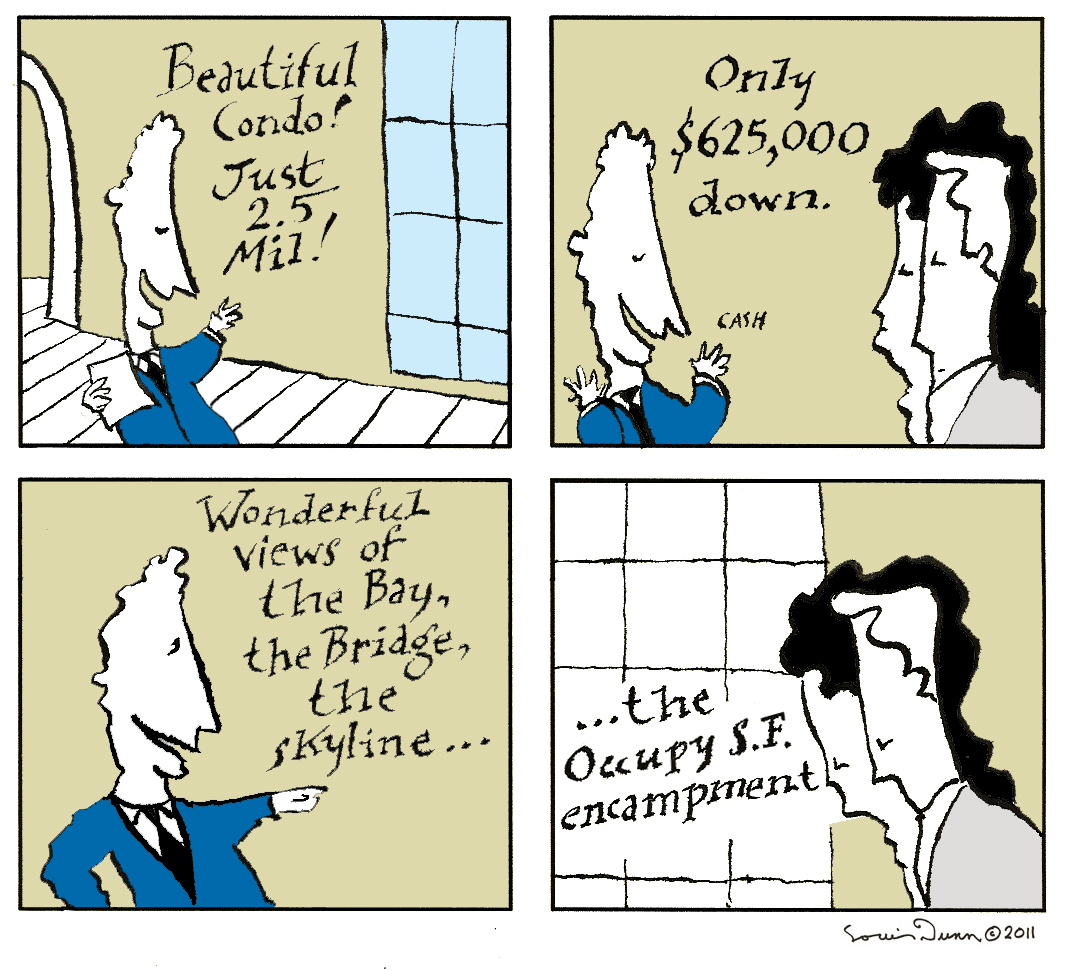
The 8 Washington project calls for 165 of what developer Simon Snellgrove says will be the most expensive condos ever built in San Francisco. The 12-story building, sitting on the edge of the Embarcadero, would include units selling for as much as $10 million, and even the low-end places would go for $2.5 million or more.

At 75 Howard, the Paramount Group and Morgan Stanley want to demolish a parking garage and erect a 284-foot tower with units that the San Francisco Business Times predicts would sell for at least $1,000 a square foot.

Just to be clear what we’re talking about here, a $2.5 million condo, according to real estate experts, would require that a buyer have $625,000 cash to put down and an income of more than $450,000 a year. Either that or millions in spare cash to plunk down.

That, needless to say, is not the majority of the working people in San Francisco.

There’s no conceivable planning or housing-policy rationale for either of these projects. They offer nothing that the city needs; there is absolutely no shortage of housing for people with that kind of income. In fact, allowing these two projects to proceed would directly violate the city’s own General Plan and every regional planning proposal for San Francisco’s housing mix. The General Plan states that some 60 percent of all the new housing built in San Francisco should be below market rate. Environmental sanity suggests that the city ought to be building housing for people who work here — high housing costs have driven thousands of local workers to live in the East Bay or further out, leading to long, energy-intensive commutes. And the more of this ultra-luxury housing the city builds, the more the housing balance gets disrupted — and the more rapidly San Francisco becomes a city of, by and for the One Percent.

The two projects have powerful support — among other things, Lee’s friend and ally Rose Pak is promoting 8 Washington, as is lobbyist Marcia Smolens. If Lee has any scrap of independence,  he’ll make it clear that both of these projects are dead on arrival.


One percent assault the waterfront

106

While the 99 percent are fighting to hold onto a crowded encampment at Justin Herman Plaza, two new condo projects are moving along in San Francisco that would give the one percent specatular views from their mulitmillion-dollar homes on the waterfront.

And as much as OccupySF has been a challenge for Mayor Ed Lee, his administration’s response to giving choice parcels to some of the wealthiest people in the country will test his housing policy and his political independence.

The Port Commission is holding preliminary meetings on the 8 Washington project, which is about as direct a conflict with the city’s General Plan and housing needs as anyone could ever imagine. The developer wants to build 165 of the most expensive condos in the city’s history, aimed entirely at the very, very rich. Many will no doubt be used as pieds a terre for people who will live in San Francisco only a few weeks of the year. The project will do nothing to address the desperate need for affordable housing and housing for the middle class.

Rose Pak, the Chinatown business consultant who was central to Lee’s campaign, told me a few months ago that she supports the project. Marcia Smolens, one of the city’s top lobbyists, is working on it. There will be big money and clout pushing this — even though there is no rational reason why San Francisco should ever approve it.

And while BeyondChron claims that gentrifcation and overdevelopment isn’t so much of a problem these days because “financing … development is more difficult than ever,” the developers don’t seem to have noticed. A Nov. 11 story in the San Francisco Business Times (you can only get a few paragraphs if you don’t subscribe) explains that “developers are starting to plan new projects again after more than three years of inactivity” –and one of the biggest is a 284-foot, 160 unit residental highrise at 75 Howard Street. There’s a parking garage now on the site, which would be demolished to build condos that one expert told the BizTimes would sell for 1,000 a square foot.

You got that? A 1,000 square-foot one-bedroom unit would go for $1 million.

So we have two major waterfront projects — both of them high-end luxury condos, both of which would have just lovely views of the OccupySF encampment — moving forward while the barricades go up and the mayor decides when to evict the protesters. A classic battle for the soul of the city. Who’s side will Ed Lee be on?

The next D5 supervisor

21

Now that it appears Sup. Ross Mirkarimi will be the next sheriff — and Ed Lee will be mayor for the next four years — the speculation is starting over who Lee will name to replace Mirkarimi as District Five supervisor. There are an abundance of qualified candidates, but my sources tell me the Mayor’s Office is looking right now primarily at two people — London Breed, director of the African American Art and Culture Complex and a former redevelopment commissioner, and Malcolm Yeung, an attorney who is president of the Asian American Bar Association and longtime policy person at the Chinatown Comminity Development Center.

Both, of course, were Lee supporters.They have a history of working on progressive causes (Yeung, at CCDC) and strong ties to the community (Breed at AAACC). Breed has spent more time as an activist in D5 (and was appointed to her job by former mayor Willie Brown), but Yeung is reportedly popular with Rose Pak, who clearly has the mayor’s ear.

I don’t know who Lee will be taking to about the appointment, but you can be sure both Brown and Pak will be giving their advice. And so far — although it’s still early — nobody has been talking to the current supervisor.

I called Mirkarimi and asked him who he would suggest, and he told me there were plenty of people — although neither Breed nor Yeung would be on his short list. He didn’t want to name names, but I can: queer/labor activist Gabriel Halland and Community College Board Member John Rizzo are both eminently qualified for the job, and Julian Davis would also be on a lot of short lists. So would Christina Olague, a planning commissioner (and Lee supporter) — but one City Hall insider told me that “Willie would never let that happen.”

Mirkarimi did suggest that he ought to be consulted. “I would think after all the work I’ve done in the district over seven years and two administration that  Mayor Lee would at least want my input,” he said. We’ll see.

San Francisco’s political spectrum: a primer

120

During yesterday’s post-election wrap-up at the San Francisco Planning and Urban Research Association, political consultant and analyst David Latterman cited the ideological breakdown of San Francisco voters: 19 percent are progressive, 36 percent are liberal, 39 percent are “moderate,” and 6 percent are conservative. I cited those figures in a post I wrote yesterday on the latest election results, and some people responded by asking me to explain those terms, so let me take a crack at that because I think it’s important to understanding the city’s political dynamics.

I even discussed the matter with Latterman – who self-identifies as moderate, whereas I and the Guardian have a progressive worldview. “That’s a fantastic question and I don’t think any of us can give suitable answers,” Latterman said. “These aren’t hard lines. It’s like: I don’t know how to define pornography, but I know it when I see it.” Nonetheless, we agreed on the basic outlines and borders between the labels, even though we might frame them and value them a little differently.

In San Francisco, there is general agreement on most social issues among the moderates, liberals, and progressives, although we may disagree on political tactics. We all basically support gay rights, reproductive freedom, the value of diversity, environmentalism, and freedom of expression. That’s why most people consider San Francisco to be a famously liberal city, because of our tolerance on social issues, which only that 6 percent who are conservatives don’t share.

Yet San Francisco is still a deeply divided city on economic issues, including land use and the role of government. This is where most of the political conflicts and divisions occur, and it is here where our political spectrum is as wide as anywhere – perhaps even wider given the extreme wealth and poverty here, as well as the long history of political activism and the setting of national political trends. And it is in this realm that our labels come from.

A “moderate” in San Francisco – which is a real misnomer despite its widespread usage – is a fiscal conservative: anti-tax, anti-regulation, an almost religious faith in the free market, and a resentment of the poor (particularly the homeless and the jobless) and those who advocate for them. They want bare minimal government and see the role of government as primarily to facilitate economic activity in the private sector and to provide the basic infrastructure that the private sector needs to operate efficiently. They even believe social services should be provided by the private sector, such as nonprofits, rather than by government. On economic issues, they’re almost indistinguishable from conservatives, with whom they disagree on social issues.

On the other end of the spectrum are the progressives, who don’t trust capitalists and large corporations and believe they need to be heavily regulated and taxed to provide for the common good. We believe in progressive taxation and a redistribution of wealth, particularly from the richest 1 percent, and that government has an important role to play in leveling the economic playing field and playing referee. Progressives generally believe this country has been drifting to the right for at least the last 31 years and that this is a dangerous trend that needs to be addressed with fundamental, systemic reforms. And at this point, we’re willing to adopt radical strategies for triggering that change, such as Occupy Wall Street or other forms of civil disobedience.

The liberals of San Francisco are somewhere in the middle. They’re Democrats (or DTS) who don’t believe in radical change or anything that might disrupt the existing order, preferring incremental reforms over long period of time. They accept the legitimacy of the two-party political system and an economic system governed by Wall Street and powerful corporations, and they believe we need to do what we can within that framework. They use neoliberal economic policies like business tax cuts and incentives to encourage private sector job creation and housing development, and they accept a shrinking public sector, which they expect to operate more like the private sector, and a waning labor movement.

The reactions to the OccupySF movement is an interesting illustration of the dividing lines. Moderates have voiced tepid support for the movement’s critique of the growing gap between rich and poor, but they’re appalled at the tactic of occupation, believing curfew and anti-camping laws are more important. Progressives have been the most enthusiastic supporters of a movement that echoes their core values and physically challenges the status quo. Liberals basically support the movement, but they’ve been very uneasy with the tactic of occupation and have been vacillating on how to deal with it.

Latterman and the moderates – as well as many liberals – see ideology as a dirty word, and he was happy that in this election “it was the least ideological race we’ve seen in a long time.” Mayor Ed Lee and Board President David Chiu – both of whom hover in the liberal to moderate range, depending on the issue – also treat the notion of ideology with disdain, claiming to support practical, pragmatic, or common sense solutions to problems.

But progressives see ideology as the essence of politics. They understand the world in terms of class struggle, and believe that the very rich have been aggressively exploiting the people and the planet for too long, and that the only real way to make progress is to fight them and win. They believe in the Occupy paradigm that the 1 percent – the greedy rich who have corrupted our political and economic systems – are actively hostile to the interests of the 99 percent. We know that’s an unsustainable system and we’re hopeful that this is the moment when progress – the core of our belief system, that it’s possible to devise better economic and political systems than the ones we’ve inherited – could finally be attainable if we continue to organize and challenge the system.

That’s my general analysis of San Francisco’s political dynamics. What’s yours?

The odd evictions at Parkmerced

8

rebeccab@sfbg.com

The San Francisco City Attorney’s Office has started investigating conditions at Parkmerced in the wake of housing advocates’ concerns that tenants have been issued a high volume of notices warning that they could face eviction due to unpaid utility fees.

The questions surrounding back payments and pending evictions, many of which impact low-income renters, have emerged only a few months after the Board of Supervisors narrowly approved a controversial redevelopment project at the neighborhood-scale housing complex. When it was under consideration, project opponents voiced concerns that housing for low-income residents could be jeopardized under the plan if tenant protections guaranteed by the developers did not stand up in court.

“The timing of it is a little suspicious,” said Tyler McMillan, executive director of the San Francisco-based Eviction Defense Collaborative. “A lot of folks suddenly are moving toward the eviction process … right after they got approved for this big development. It all just smells really bad.”

Parkmerced spokesperson PJ Johnston told the Guardian the notices had nothing to do with the development approval, and were simply a consequence of unpaid bills. “I don’t think the city attorney is going to find anything of particular interest,” he said. “This is an issue of a property owner telling people who owe bills that they have to pay their bills.”

Stellar Management, Parkmerced’s property management company, issued 196 notices this past summer and in September warning tenants that they could face eviction if they did not take steps to bring their accounts current within three days.

In some cases, back payments had piled up for more than a year, and the bills ranged from around $400 to $1,200 — a burdensome dilemma for very low income residents getting by on fixed incomes.

The issue wasn’t payment of rent; most of the charges stemmed from water, sewer, and trash pick-up fees administered by a third-party billing company called American Utility Management (AUM). Parkmerced cited breach of the lease agreement as grounds for eviction.

Some tenants dispute the charges, and have told the San Francisco Rent Board and other agencies that they were surprised to receive the bills and didn’t know they had past-due amounts until they were presented with the high bills.

In any case, it’s an unusual situation — San Francisco tenants rarely face eviction over water or garbage bills.


A HUGE GROUNDSWELL

Many tenants have since been given a chance to set up payment plans and were granted a 45-day timeline to work out a payback system, noted San Francisco Rent Board director Delene Wolf. But not everyone was lucky enough to dodge the bullet. Since the notices went out, the Eviction Defense Collaborative has taken on cases for 14 separate eviction proceedings at Parkmerced, McMillan said.

“They are evicting a lot more people in the last couple months than they were at this time last year,” McMillan noted. Wolf confirmed this, saying, “We saw a huge groundswell.”

The city attorney has been responsive to advocates’ concerns. “We met with the City Attorney’s office, and they’re collecting cases,” explained Sara Shortt, executive director of the Housing Rights Committee. “A key question is, why are these low-income renters behind?”

So far, the answer remains unclear. Tenant advocates remain skeptical that the charges are legitimate, in part because they have questions about how fees were assessed. There have also reports of monthly parking fees charged to tenants who don’t own vehicles. “They’re really questionable amounts … that are years and years old,” McMillan noted. “There’s so much doubt about whether they owe this money.”

Some of the 196 tenants who received warning notices claimed they didn’t know they were responsible for the fees. John Martinek tried to help his friend, a 55-year-old Parkmerced resident and veteran, after he was hit with a bill totaling more than $600.

“He might’ve owed it, but here’s the thing: They never told him anything about paying water and garbage,” Martinek said. “They never once asked him, they never once said a word. They were trying to scare him, there’s no question about it. They were trying shake him out of there.” He said his friend had been spared from eviction thanks to legal assistance.

Johnston, meanwhile, dismissed the idea that tenants were in the dark on how much they owed. “It’s patently ridiculous to suggest that residents who have signed a lease weren’t aware that they had to pay their bills,” he said.

In most cases, garbage charges in San Francisco are either included in the rent or are completely separate from rent, collected by a private company and can’t be grounds for eviction. Water bills are typically included in monthly rent or collected by the city — and thus aren’t grounds for eviction either.


WHERE IS DAVID CHIU?

Of the 14 eviction proceedings that are going forward, McMillan said, 10 involve tenants who receive Section 8 housing assistance, a federal program administered by the San Francisco Housing Authority. Of those 10, eight concerned disputed fees, he said.

There are a total of 170 Section 8 tenants at Parkmerced, according to figures cited by Megan Baker of Catholic Charities CYO, and 82 of them were among the 196 tenants who received three-day notices.

While Parkmerced previously attracted renters enrolled in the Section 8 program, Stellar stopped accepting those housing applications about a year ago, Baker said. Her organization provides emergency financial assistance for families at risk of homelessness and has been working with Parkmerced tenants since October 2009.

Baker added that she’d met with some tenants who were charged attorney’s fees on top of the back-payments. “They don’t have the means to pay legal costs,” she said. “These very large charges are not going hand-in-hand with their monthly statements. It’s all of a sudden. It leads us to think that in the process of changing management and gearing up for redevelopment, they really don’t want low-income tenants.”

In the wake of recent coverage about the trend of eviction notices in the Guardian and other publications (See “Low Income Tenants Face Possible Eviction at Parkmerced,” Politics Blog, Oct. 7, 2011), the three-day notices have slowed, reports Wolf, of the Rent Board. “There were no notices this month,” she said, referring to October, which could be a sign that management had taken a different tack under pressure from housing advocates and media scrutiny.

Shortt, of the Housing Rights Committee, noted that she had sought assistance from Board President David Chiu after her organization began working with impacted tenants. Chiu cast the swing vote on Parkmerced, sparking the ire of tenant advocates, but professed to be looking out for tenant interests.

Chiu introduced 14 pages of amendments to the Parkmerced development agreement intended to strengthen tenant protections, and used those changes to justify his support for the project. However, the Sunshine Ordinance Task Force determined Nov. 1 that members of the Land Use and Economic Development Committee violated the San Francisco Sunshine Ordinance when it considered Chiu’s amendments, because the public wasn’t provided with full documentation of the proposed changes.

Chiu’s office contacted Parkmerced with questions about the eviction notices, but Shortt said she came away with the impression that the board president was not about to exert pressure on Stellar Management or Parkmerced developers over this issue. Chiu’s office indicated to Shortt that they planned to collaborate with Sup. Sean Elsbernd, whose District 11 includes Parkmerced, to decide how to proceed.

“We haven’t seen any evidence that this is connected to the development in any way,” Judson True, Chiu’s legislative aide, told the Guardian. “We’re committed to working with Parkmerced, Sup. Elsbernd’s office, and the residents to keep as many people in their homes as possible.”

The San Francisco City Attorney’s office is urging any Parkmerced tenants experiencing questionable late-payment charges to contact the Code Enforcement Hotline at 415-554-3977.

On Guard!

4

news@sfbg.com


VICTORY’S MUDSLINGING

Hit pieces are common in San Francisco politics. So, sadly, are negative mailers funded by outside independent expenditure committees that can raise unlimited money.

But it’s highly unusual for an organization devoted to electing queer candidates to fund an attack on a candidate who is endorsed by both leading LGBT organizations and is, by all accounts, an ally of the community.

That’s what happened last week when the Washington-based Victory Fund — the leading national organization for LGBT political candidates — sent out a bizarre mailer blasting City Attorney Dennis Herrera for taking money from law firms that do business with the city.

The Victory Fund has endorsed former Sup. Bevan Dufty, who is the most prominent LGBT candidate in the mayor’s race. That’s to be expected; it’s what the Victory Fund does.

But why, in a race with 16 candidates, would the fund go after Herrera, who has spent much of the past seven years fighting in court for marriage equality? Why try to knock down a candidate who has the support of both the Harvey Milk Club and the Alice B. Toklas Club?

It’s baffled — and infuriated — longtime queer activist Cleve Jones, who is a Herrera supporter. “I have long respected the Victory Fund,” Jones told us. “But I’ve never seen them do what they did here. And it’s going to undermine the fund’s credibility.”

Jones dashed off an angry letter to the fund’s president, Chuck Wolfe, saying he was “appalled that this scurrilous attack, in the waning days of a mayoral campaign, would go out to the San Francisco electorate under the name of the Victory Fund.

“You really screwed up, Chuck, and I am not alone in my anger.”

We couldn’t get Wolfe on the phone, but the fund’s vice president for communications, Denis Dison, told us that the mailer “is all about fighting for our endorsed candidates.”

So how does it help Dufty, in a ranked-choice election, to attack Herrera? (In fact, given the dynamics of this election, the person it helps most is probably Mayor Ed Lee). Dison couldn’t explain. Nor would he say who at the fund decided to do the attack mailer.

But there are a couple of interesting connections that might help explain what’s going on. For starters, Joyce Newstat, a political consultant who is working for the Dufty campaign, is active in the Victory Fund, sits on the board of the fund’s Leadership Institute, and, according to a March 24 article in the Bay Area Reporter, was among those active in helping Dufty win the Victory Fund endorsement.

But again: Supporting Dufty is one thing. Attacking Herrera is another. Who would want to do that?

Well, if there’s one single constituency in the city that would like to sink Herrera, it’s Pacific Gas and Electric Co. And guess what? PG&E Governmental Affairs Manager Brandon Hernandez chairs the Victory Fund’s Leadership Institute. PG&E’s corporate logo appears on the front page of the fund’s website, and the company gave the Victory Fund more than $50,000 in 2010, according to the fund’s annual report.

Dison insisted that neither Hernadez nor anyone else from PG&E was involved in making the decision to hit Herrera and said the money went to the Leadership Institute, which trains LGBT candidates, not directly to the campaign fund.

Maybe so –- but the folks at the private utility, who are among the top three corporate donors to the Victory Fund, have to be happy. (Tim Redmond)


HERRERA HIT BACKFIRES

Herrera was also the target of another attack on his LGBT credentials last week, this one by the San Francisco Chronicle, which ran a front page story on Oct. 26 in which anonymous sources said he raised doubts in private City Hall meetings about San Francisco’s decision to issue same-sex marriage licenses in 2004. It was entitled, “Fight turns ugly to win gay votes in mayor’s race.”

Despite trying to couch the hit in passive language, writing that ” a surprise issue has emerged” based on accusations “leveled by several members of former Mayor Gavin Newsom’s administration,” it was clear that it was the Chron that made it an issue, for which the newspaper was denounced by leaders of the LGBT community from across the political spectrum at a rally the next day.

“Those who are saying this now anonymously are as cowardly as Dennis and Gavin were courageous back then,” said Deputy City Attorney Theresa Stewart, the lead attorney who defended San Francisco’s decision in 2004 to unilaterally issue marriage licenses to same-sax couples, in defiance of state and federal law, which eventually led to the legalizing of such unions. “We can’t have our community turn on us for petty political gain.”

“WTF, Chronicle?” was how Assemblymember Tom Ammiano began his speech, going on to lay blame for the attack on surrogates for Mayor Ed Lee. Ammiano also called out the mayor for campaign finance violations by his supporters, for undermining the Healthy San Francisco program that was created by Ammiano’s legislation, and for repeatedly ordering police raids on the OccupySF encampment.

“How about some fucking leadership?!” Ammiano said.

Cleve Jones, an early gay rights leader who marched with Harvey Milk, also denounced Lee and his supporters for cronyism, vote tampering, money laundering, and the “fake grassroots” efforts of the various well-funded independent expenditure campaigns, which he said have fooled the Chronicle.

“To the Chronicle and that reporter — really? — this is what you do two weeks before the election? You should be ashamed of yourself,” Jones said. “How stupid do you think we are?”

Yet Chronicle City Editor Audrey Cooper defended the article. “Clearly, I disagree [with the criticisms],” she told the Guardian. “I personally vetted every one of the sources and I’m confident everything we printed is true.” She also tried to cast the article as something other than a political attack, saying it was about an issue of interest to the LGBT community, but no LGBT leaders have stepped up to defend the paper.

Beyond criticizing the obvious political motivations behind the attack, speakers at the rally called the article bad journalism and said it was simply untrue to suggest that Herrera didn’t strongly support the effort to legalize same-sex marriage from the beginning.

“I can tell you that Dennis never once shrank from this fight. I was there, I know,” Stewart said, calling Herrera “a straight ally who’s devoted his heart and soul to this community.”

Sen. Mark Leno, who introduced the first bill legalizing same-sex marriage to clear the Legislature, emphasized that he isn’t endorsing any candidates for mayor and that he didn’t want to comment on the details of the article’s allegations. But he noted that even within the LGBT community, there were differences of opinion over the right timing and tactics for pushing the issue, and that Herrera has been a leader of the fight for marriage equality since the beginning.

“I am here to speak in defense of the character and integrity of our city attorney, Dennis Herrera,” Leno said, later adding, “I do not appreciate when the battle for our civil rights is used as a political football in the waning days of an election.”

Molly McKay, one of the original plaintiffs in the civil lawsuit that followed San Francisco’s actions, teared up as she described the ups and downs that the case took, working closely with Herrera throughout. “But this is one of the strangest twists I can imagine,” she said of the attack by the Chronicle and its anonymous sources. “It’s ridiculous and despicable.”

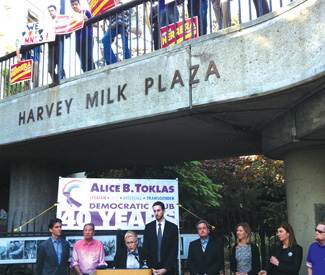
Representatives for both the progressive Harvey Milk LGBT Democratic Club and fiscally conservative Alice B. Toklas LGBT Democratic Club also took to the microphone together, both saying they often disagree on issues, but they were each denouncing the attack and have both endorsed Herrera, largely because of his strong advocacy for the LGBT community.

Sup. Scott Wiener called Herrera, “One of the greatest straight allies we’ve every had as a community.”

When Herrera finally took the microphone, he thanked mayoral opponents Joanne Rees and Jeff Adachi for showing up at the event to help denounce the attack and said, “This is bigger than the mayor’s race. It’s bigger than me.”

He criticized those who would trivialize this issue for petty political gain and said, “It was my pleasure and honor to have been a part of this battle from the beginning — from the beginning — and I’ll be there in the end.” (Steven T. Jones)


BUYING REFORM

UPDATE: THIS ITEM HAS BEEN CHANGED FROM THE PRINT VERSION TO CORRECT INACCURATE INFORMATION DEALING WITH WHETHER PAST INIATIVES CAN BE CHANGED

October yielded tremendous financial contributions from real estate investors and interest groups for Yes on E, feeding fears that the measure will be used to target rent control and development standards in San Francisco.

Sup. Scott Wiener has been the biggest proponent for Prop E since May 2011. He argues that the Board of Supervisors should be able to change or repeal voter-approved ballot measures years after they become law, saying that voters are hampered with too many issues on the ballot. Leaving the complex issues to city officials rather than the voters, makes the most sense of this “common sense measure”, Wiener calls it.

But how democratic is a board that can change laws approved by voters? Calvin Welch, a longtime progressive and housing activist, has his own theory: Wiener is targeting certain landlord and tenant issues that build on the body of laws that began in 1978, when San Francisco voters first started adopting rent control and tenants protection measures. Yet the measure will only allow the board to change initiatives approved after January 2012.

“That is what the agenda is all about — roughly 30 measures that deal with rent control and growth control,” he said. Critics say  the measure will leave progressive reforms vulnerable to a board heavily influence by big-money interests. Although Wiener denies Prop E is an attack on tenants, who make up about two-thirds of San Franciscans, the late financial support for the measure is coming from the same downtown villains that tenant and progressive groups fight just about every election cycle. High-roller donations are coming straight from the housing sector, which would love a second chance after losing at the ballot box.

Contributions to Yes on E include $15,000 from Committee on Jobs Government Reform Fund, $10,000 from Building Owners and Managers Association of SF PAC, another $10,000 from high-tech billionaire Ron Conway, and $2,500 from Shorenstein Realty Services LP. Then — on Oct. 28, after the deadline for final pre-election campaign reporting — the San Francisco Association of Realtors made a late contribution of another $18,772, given through the front group Coalition for Sensible Government.

Prop. E is organized so that the first three years, an initiative cannot be subject to review. However after four years, a two-thirds majority vote by the board could make changes, and after sevens years, a simple majority could do so.

 (Christine Deakers)

Deep south

0

cheryl@sfbg.com

FILM It’s a sunny day in Los Angeles, and Omi Vaidya is puttering around, looking for a neighbor who’ll loan him a lawnmower. Vaidya is an actor of the “working” (as opposed to “unemployed” or “superstar”) variety, with bit parts on shows like Arrested Development and The Office dotting his resume. Finding work as an Indian American actor can be frustrating — “a lot of it is typecasting,” he notes. Computer nerds and such.

But thousands of miles away in Mumbai, Vaidya’s star is about to explode. Accompanied by a film crew comprised of pals from UC Santa Cruz, he makes the trek to India to attend the premiere of 3 Idiots — a massive movie even by Bollywood standards — in which he has a small but showy part. Big in Bollywood tracks Vaidya’s journey from unknown to chased-down-the-street famous, a process that begins happening literally halfway through the film’s very first screening. (This being Bollywood, the movie is so long there’s an intermission.) Vaidya doesn’t speak much Hindi, but neither does the buffoonish character he plays; the film’s breakout joke, on the scale of “Show me the money” or “I drink your milkshake,” hinges on his confusing the word for “miracle” with the word for “rape.” (Indian audiences find this hilarious, and Vaidya is so endearing it’s almost easy to let that ickiness go.)

Working in a totally unfamiliar environment, directors Bill Bowles and Kenny Mehan, both of whom are slated to appear in person at Big in Bollywood‘s screening at the 3rd I International South Asian Film Festival, are forced to go gonzo at times. Amazingly, fake press passes identifying them as “Hollywood Kitchen” correspondents are all it takes to get their camera onto 3 Idiots‘ red carpet, and later, backstage at a glitzy awards show, where new sensation Vaidya is both co-host and nominee.

As Vaidya enjoys his success, Bowles and Mehan capture an insider’s view of how different the Bollywood and Hollywood industries are. Massive fame, however, evokes the same reaction in any language: “It feels like a zombie movie!” Vaidya exclaims, breathless after dodging an enthusiastic hoard of fans. Despite the adulation, he remains humble — thanks in part to his supportive mother, once an aspiring actress herself, and understanding wife, a PhD student who’s due back for class in SoCal just as Omi-mania starts to overtake India. Having his buddies film his every move probably also helped keep his ego in check, though he doesn’t seem prone to diva-ish behavior anyway: soon after he goes home to L.A., Vaidya — whose imdb.com profile suggests he’s not hurting for gigs — is back tending to his lawn, apparently unruffled about his return to anonymity.

While the 3rd I festival isn’t, alas, screening 3 Idiots, you can get your Bollywood fix with Delhi Belly, which looks to be in the same song-and-dance-infused screwball vein (with a poop-joke title). In a tidy illustration of how insular the industry is, Imran Khan, nephew of 3 Idiots star Aamir Khan (producer of Delhi Belly), plays the lead.

Other fest selections worth noting include Sanjeewa Pushpakumara’s grim (if overly long and rambling) Flying Fish, one of several films from Sri Lanka in this year’s program; its multiple stories are united not by overlapping characters but by a sense of despair in a country ravaged by war. In a program of short films about gender and sexuality, The Boxing Ladies, a doc about a trio of rebellious Kolkata sisters who shock their Muslim family with their shared passion for pugilism, is a standout.

3RD I SAN FRANCISCO INTERNATIONAL SOUTH ASIAN FILM FESTIVAL

Nov. 9-13, $12

Roxie Theater

3117 16th St., SF

Castro Theater

429 Castro, SF

www.thirdi.org/festival

Dick Meister: Unions can help bridge the income gap

2

By Dick Meister

Dick Meister, former labor editor of the SF Chronicle and KQED-TV Newsroom, has covered labor and politics for more than a half-century. Contact him through his website, www.dickmeister.com, which includes more than 350 of his columns.

There’s obviously no easy way to bridge the income gap between the rich and the rest of us or to combat the other serious economic problems raised by the Occupy Wall Street movement. But keep in mind the crucial – if not decisive – role that labor unions can play in righting our economic wrongs.

Union members earn a lot more than non-union workers overall and within particular occupations, and in age, gender and racial groups, and so spend more. They have more and greater fringe benefits, a greater voice in community and political affairs and otherwise are in a good position to span the income gap as well as contribute to the growth of the economy that’s so badly needed.


Unionized workers are paid nearly 30 percent more than non-union workers generally, a median of about $900 a week to about $700 a week. That’s an advantage of $4.95 an hour, or more than $10,000 a year, that can be spent to help boost the sagging economy.

The unionized workers’ much greater access to employer-financed health care helps, too, as does their invariably longer paid vacations, their sick pay and, among other key benefits, the pensions that go to more than three-fourths of unionized workers but to only about 20 percent of other workers.

Unions clearly provide the purchasing power needed to drive the economy and narrow the income gap between hugely paid corporate executives and the people who do the actual work of the country. Unions could very well do that, in part by helping improve working conditions that would attract more workers to particular employers and help the employers retain workers and compensate them well.

Although unions have been declining in numbers to the point that only about 13 percent of today’s workers are in unions, indications are that their numbers will be growing, thanks in part as a reaction to the current economic troubles.

The past practices of unions, in any case, indicate they’ll undoubtedly provide lots of help to ease the current crisis. They played a major role, for instance, in passage of the laws that set a minimum wage and a standard workweek, regulate on-the-job safety and provide workers’ compensation for on-the-job injuries.

What’s more, union members usually have more training and thus greater productivity. Their unions commonly work on local economic development in partnership with employers, community groups and local governments and commonly invest union pension funds to help rebuild declining communities and, among other local projects, help finance moderate–income housing.

Don’t forget, either, that non-union employers sometimes offer pay and benefits equal to union pay and benefits in their areas, in hopes of avoiding unionization.

Unions, which had much to do with pulling the nation out of the Great Depression and helping establish a true middle class, are in position to provide help that’s as necessary in 2011 as it was in the 1930s.

Dick Meister, former labor editor of the SF Chronicle and KQED-TV Newsroom, has covered labor and politics for more than a half-century. Contact him through his website, www.dickmeister.com, which includes more than 350 of his columns.

The selling of Ed Lee

0

steve@sfbg.com

Ed Lee has gone through a remarkable makeover in the last year, transformed from the mild-mannered city bureaucrat who reluctantly became interim mayor to a political powerhouse backed by wealthy special interests waging one of the best-funded and least transparent mayoral campaigns in modern San Francisco history.

The affable anti-politician who opened Room 200 up to a variety of groups and individuals that his predecessor had shut out — a trait that won Lee some progressive accolades, particularly during the budget season — has become an elusive mayoral candidate who skipped most of the debates, ducked his Guardian endorsement interview, and speaks mostly through prepared public statements peppered with contradictions that he won’t address.

The old Ed Lee is still in there somewhere, with his folksy charm and unshakable belief that there’s compromise and consensus possible on even the most divisive issues. But the Ed Lee that is running for mayor is largely a creation of the political operatives who pushed him to break his word and run, from brazen power brokers Willie Brown and Rose Pak to political consultants David Ho and Enrique Pearce to the wealthy backers who seek to maintain their control over the city.

So we thought it might be educational to retrace the steps that brought us to this moment, as they were covered at the time by the Guardian and other local media outlets.

Caretaker mayor

The story begins quite suddenly on Jan. 4, when the Board of Supervisors convened to consider a replacement for Gavin Newsom, who had been elected lieutenant governor but delayed his swearing-in to prevent the board from choosing a progressive interim mayor who might then have an advantage in the fall elections. Newsom and other political centrists insisted on a “caretaker mayor” who pledged to vacate the office after serving the final year of the current term.

It was the final regular meeting of the old board, four days before the four newly elected supervisors would take office. What had been a bare majority of progressive supervisors openly talked about naming former mayor Art Agnos, or Sheriff Michael Hennessey, or maybe Democratic Party Chair Aaron Peskin as a caretaker mayor.

When then-Sup. Bevan Dufty said he would support Hennessey, someone Newsom had already said was acceptable, the progressive supervisors decided to coalesce around Hennessey. That was mostly because the moderates on the board had suddenly united behind a rival candidate who had consistently said didn’t want the job: City Administrator Ed Lee.

Board President David Chiu was the first in the progressive bloc to breaks ranks and back Lee, saying that had long been his first choice. Dufty became the swing vote, and he abstained from voting as the marathon meeting passed the 10 p.m. mark, at which point he asked for a recess and walked down to Room 200 to consult with Newsom.

At the time, Dufty said no deals had been cut and that he was just looking for assurances that Lee wouldn’t run for a full term (Dufty was already running for mayor) and that he would defend the sanctuary city law. But during his endorsement interview with the Guardian last month, he confessed to another reason: Newsom told him that Hennessey had pledged to get rid of Chief-of-Staff Steve Kawa, a pro-downtown political fixer from the Brown era who was despised by progressive groups but liked by Dufty.

Chiu and others stressed Lee’s roots as a progressive tenants rights attorney, the importance of having a non-political technocrat close the ideological gap at City Hall and get things done, particularly on the budget. So everyone just hoped for the best.

“Run, Ed, Run”

The drumbeat began within just a couple months, with downtown-oriented politicos and Lee supporters urging him to run for mayor in the wake of a successful if controversial legislative push by Lee, Chiu, and Sup. Jane Kim to give million of dollars in tax breaks to Twitter and other businesses in the mid-Market and Tenderloin areas.

In mid-May, Pak and her allies created Progress for All, registering it as a “general civic education and public affairs” committee even though its sole purpose was to use large donations from corporations with city contracts or who had worked with Pak before to fund a high-profile “Run, Ed, Run” campaign, which plastered the city with posters featuring a likeness of Lee.

Initially, that campaign and its promotional materials were created by Pak (who refuses to speak to the Guardian) and political consultant Enrique Pearce (who did not return calls for this article) of Left Coast Communications, which had just run Kim’s successful D6 victory over progressive opponent Debra Walker, along with Pak protégé David Ho.

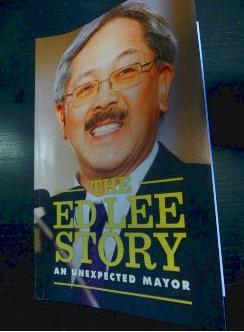
During that campaign, the Guardian and Bay Citizen discovered Pearce running an independent expenditure campaign called New Day for SF, funded mostly by Willie Brown, out of his office, despite bans of IEs coordinating with official campaigns. That tactic would repeat itself over the coming months, drawing criticism but never any sanctions from the toothless Ethics Commission. Pearce was hired by two more pro-Lee IEs: Committee for Effective City Management and SF Neighbor Alliance, for which he wrote the book The Ed Lee Story, a supposedly “unauthorized biography” filled with photos and personal details about Lee.

Publicly, the campaign was fronted by noted Brown allies such as his former planning commissioner Shelly Bradford-Bell, Pak allies including Chinatown Community Development Center director Gordon Chin, and a more surprising political figure, Christina Olague, a progressive board appointee to the Planning Commission. She had already surprised and disappointed some of her progressive allies on Feb. 28 when she endorsed Chiu for mayor during his campaign kickoff, and even more when she got behind Lee.

Olague recently told us the moves did indeed elicit scorn from some longtime allies, but she defends the latter decision as being based on Lee’s experience and willingness to dialogue with progressives who had been shut out by Newsom, noting that she had been asked to join the campaign by Chin. Olague also said the decision was partially strategic: “If we get progressives to support him early on, maybe we’ll have a seat at the table.”

Right up until the end, Lee told reporters that he planned to honor his word and not run. During a Guardian interview in July when we pressed him on the point, Lee said he would only run if every member of the Board of Supervisors asked him to, although about half the board publicly said that he shouldn’t, including Sup. Sean Elsbernd, who nominated him for interim mayor.

And then, just before the filing deadline in early August, Lee announced that he had changed his mind and was running for mayor, the powers of incumbency instant catapulting him into the frontrunner position where he remains today, according to the most recent poll by the Bay Citizen and University of San Francisco.

Lee the politician

With his late entry into the race and decision to forgo public financing and its attendant spending limits, one might think that Lee would have to campaign aggressively to keep his job. But most of the heavy lifting has so far been done by his taxpayer-financed Office of Communications (which issues press releases at least daily) and by corporate-funded surrogates in a series of coordinated “independent” groups (see Rebecca Bowe’s story, “The billionaires’ mayor”).

That has left Lee to simply act as mayor, where he’s made a series of decisions that favor the business community and complement the “jobs” mantra cited relentlessly by centrist politicians playing on people’s economic insecurities.

Yet Lee has been elusive on the campaign trail and to reporters who seek more detailed explanations about his stands on issue or contradictions in his positions, and his spokespersons sometimes offer only misleading doublespeak.

For example, Lee’s office announced plans to veto legislation by Sup. David Campos that would prevent businesses from meeting their city obligation to provide a minimum level of employee health benefits through health savings accounts that these businesses would then pocket at the end of the year, taking $50 million last year even though some of that money had been put in by restaurant customer’s paying 5 percent surcharges on their bills.

Although Campos, the five other supervisors who voted for the measure, four other mayoral candidates, and its many supporters in the labor and consumer rights movements maintained the money belonged to workers who desperately needed it to afford expensive health care, the San Francisco Chamber of Commerce said it was about “jobs” that would be protected only if businesses could keep that money.

Lee parroted the position but tried to push the political damage until after the election, issuing a statement entitled “Mayor Lee Convenes Group to Improve Health Care Access & Protect Jobs,” saying that he would seek to “develop a consensus strategy” on the divisive issue — one in which Campos said “we have a fundamental disagreement” — that would take weeks to play out.

After a frustrating back-and-forth with Lee Press Secretary Christine Falvey by email, it’s still unclear how to resolve the contradiction between whether businesses could seize these funds or whether they belonged to employees, with her latest statement being, “The Mayor absolutely wants these funds spent on providing access to quality primary and preventative health care because this is the business’s obligation under HCSO. Making sure that these funds go to pay for health care is the most important objective.”

Similarly, when police raided the OccupySF encampment on Oct. 5, Lee’s office issued a statement that was a classic case of politicians trying to have it both ways, expressing support for the movement and its goal to “occupy” public space, but also supporting the need to police to clear the encampment of those same occupiers.

But now, in the wake of a repeat raid on Oct. 16 that has inflamed passions on the issue, the question is whether Lee can run out the clock and retain the office he gained on the promise of being someone more than a typical politician.

The bad old days

0

tredmond@sfbg.com

Willie L. Brown, according to the Chronicle’s John Cote, is “a tremendously popular figure in the city, viewed by many as an avuncular man-about-town, elder statesman and a uniquely San Franciscan character.” The Ed Lee Story, a hagiographic campaign book, refers to Brown’s “characteristic showmanship and hypnotic charm.” Even Randy Shaw, the housing activist who clashed with Brown over gentrification once upon a time, now says in BeyondChron that Brown’s first term “was the most progressive of any mayor in modern San Francisco history.”

I feel as if I’m living in some sort of strange parallel universe, something out of Orwell or North Korea or the Soviet Union of the 1950s. It’s as if history never happened, as if the years between 1996 and 2004 have just vanished, have been deleted from San Francisco’s collective memory. It’s crazy.

I wonder:

What about the thousands and thousands of people who lost their homes and were tossed out of the city like refugees from a war? What about the rampant corruption at City Hall? What about the legions of unqualified political cronies who got good jobs and commission posts? What about the iron-fisted machine rule that kept local politics closed to all but the loyal insiders? Doesn’t any of that count?

Here are some things that absolutely, undeniable, demonstrably happened while Willie Brown was mayor:

Rents on the East Side of town, particularly in the Mission, tripled and sometimes quadrupled between 1996, when Brown took office, and 2004, when he left. Evictions more than tripled, too, and at one point more than 100 people a month were losing their homes. Most of those people were low-income, long-term tenants. They were forced out because richer people were moving into town during the dot-com boom and could pay more for those apartments. We called it the “Economic Cleansing of San Francisco.”

Every day, it seemed, we’d be out at another rally as the Tenants Union and the Mission Antidisplacement Coalition tried to save another family from the forces of gentrification. Every week, it seemed, another group house full of artists would be served an eviction notice. Everywhere you looked, nonprofits and small businesses were losing space to high-tech companies with plenty of money.

I watched the wrecking crew tear down a studio complex on Bryant Street, forcing more than 100 painters and photographers to leave, to make way for a high-tech office project that was approved even though it violated the local zoning laws — and then was never built. For two years, I walked to get my lunch past the empty hole in the ground that had once been a thriving community.

That was typical. Every developer who waved money in front of the mayor got a building permit, no matter how crazy, illogical or illegal the project was. The Planning Department and the Bureau of Building Inspection were little more than fronts for the lobbyists and Brown cronies who determined development policy in the city.

In October, 1999, the author Paulina Borsook wrote a famous piece in Salon called “How the Internet Ruined San Francisco.” I agreed with the sentiment; the influx of the dot-commers was wrecking all that was cool and weird about the city. But she got one point wrong: The Internet didn’t ruin anything. The Internet was, and is, a technology, a tool, something that, like most technological advances, can be used for good or evil.

Mayor Brown didn’t create the dot-com boom. Although he took credit for an awful lot of things, even Willie didn’t claim to have invented the Internet.

But what he did — and what ruined many San Francisco neighborhoods, and ruined the lives of many San Franciscans — was to let the economic cleansing of the city happen, without raising a finger to slow it down or prevent the evictions or protect the most vulnerable people in the city. Over and over, he encouraged it — by appointing commissioners and supervisors and department heads who allowed evictions and development and displacement in the name of growth and prosperity.

In fact, when reporters from the zine Maximum Rock ‘n’ Roll asked Brown about the problems facing poor people, he told them that the city had become so expensive that poor people would be better off living somewhere else.

Because he didn’t care about poor people, or tenants, or artists, or anyone who lacked money and flash and dazzle and clout. He was the worst kind of imperial mayor.

Here’s how we put in it in our 33rd anniversary issue in 1998:

“Let’s say the next major earthquake that hits San Francisco is of roughly the same magnitude of the Loma Prieta quake of 1989, or maybe just a bit stronger. Let’s say it wipes out right 1,000 houses and leave some 5,000 people homeless … and lets say a few unscrupulous profiteers take advantage of the shortages of critical supplies and charge desperate residents triple the normal rate for food, blankets and drinking water….

“The profiteers, speculators and charlatans would be exposed in the press and roundly, loudly denounced by every political and community leader in the city. The ones who didn’t wind up in jail would be forced to leave town in disgrace.”

Or else they wouldn’t. Because when an economic earthquake ravaged San Francisco during his term, Brown — the most powerful mayor in modern history, a guy who could have had an immense impact on what was happening — went to meet the speculators and profiteers with outstretched arms, welcomed them to the city and partied with them at night.

And when he ran for re-election, they thanked him by funding an astonishing $5 million campaign.

Then there was the corruption. Not only did Brown raise pay-to-play to a new art form, he filled the city payroll and key commissions with campaign workers, former political allies, and cronies, subverting the civil service system and undermining both the function of city agencies and public respect for local government. At least seven Brown appointees were indicted or investigated for criminal misconduct. While sentencing a Housing Authority official to five years in prison, U.S. District Judge Charles Legge decried what he called Third World-style corruption at San Francisco City Hall.

When Mayor Ed Lee, who is now seeking a full four-year term, was asked to give Brown a grade for his eight years in Room 200, Lee said: A-Plus.

Which makes us a little nervous. To say the least.

I’ve been going back through the Guardian archives over the past couple of weeks, picking out some great covers to reproduce (see page 18) and looking at four and a half decades of alternative news coverage of San Francisco. And if there’s one theme that emerges from the stacks and stacks and stacks of papers, it’s that local government matters.

In the 1960s, when the underground press was talking about sex, drugs and dropping out, the Guardian was talking about the ways big corporations were stealing the taxpayers’ money at City Hall. (Okay, the Guardian wrote about sex and drugs too. But sex and drugs and political scandals.)

The difference between the independent alternative press and the underground papers of the era was more than just thematic. The underground publishers were having a great time and celebrating culture, but none of those publications was built to last. From the day they published their first issue in October, 1966, Guardian founders Bruce Brugmann and Jean Dibble intended their paper to become a permanent part of San Francisco.

The Guardian quickly demonstrated that it had a different approach than a lot of the “New Left” — particularly when it came to electoral politics. At a time when some were saying that it made no difference whether Ronald Reagan or Pat Brown won the 1966 governor’s race, the Guardian made the key point about Reagan.

“California cannot afford the luxury of this kind of conservatism,” a Nov. 7, 1966 editorial stated. “Because of the millions of people coming to California, because San Francisco and Los Angeles soon will have the greatest concentration of urban power in history, because farm land and open space is vanishing at a suicidal rate, because technology is putting vast populations out of work, because of the social neglect of our cities and the uglification of our countryside, because we now have the knowledge to bridge the gap between the rich and the poor.”

And while the paper devoted considerable space to reporting on and opposing the war in Vietnam, it was also developing a reputation for local investigative reporting. One June 7, 1971 story showed how the city had all of its short-term deposits in local banks that paid no interest at all. The story parked an investigation by the city’s budget analyst, the resignation of the city treasurer — and a new investment policy that brought the city at least $1 million more revenue a year. (Adjusted for inflation, that’s about $5 million a year, times 40 years is a lot of money that the Guardian brought into the city coffers).

And from the start, the Guardian was a nonpartisan, independent foe of corruption, secrecy and undue influence at City Hall. So while the paper eagerly endorsed Phil Burton (and later his brother, John) for Congress and lauded their antiwar and environmental policies, the Guardian also blasted the Burtons for exercising undue influence back home. The paper strongly endorsed George Moscone for mayor — then denounced him when he fired Harvey Milk from a commission post after Milk had the gall to challenge the Moscone/Burton candidate for state Assembly.

The 1999 Sunshine Ordinance, which dramatically opened up City Hall records, was sponsored and promoted by the Guardian. Willie Brown and his cronies hated it.

It’s probably a misnomer to say that the Burtons, who were a dominant force in local politics in the 1970s and 1980s, ran an old-fashioned machine. They didn’t have the iron control over local politics and the patronage jobs system that the word “machine” implies.

But when Brown became mayor of San Francisco, he had all of that. Brown controlled eight solid votes on the Board of Supervisors (and through various political machinations, had managed to appoint most of them). “He ruled the building,” Assemblymember Tom Ammiano, who was a supervisor during those years, recalled. “If you defied him, you were radioactive.”

And one of the people who rose through the ranks as a loyal Brown appointee was Ed Lee. Who to this day thinks things in that administration were just dandy.


The Lee campaign complains about “guilt by association,” and that’s a legitimate point. Ed Lee isn’t Willie Brown. He’s a lot more open, a lot (a lot) more humble, and as numerous progressives have pointed out to us, his door is open. He doesn’t have the history of sleaze that pretty much defined Brown’s political career.

There will be no “Ed Lee Machine.” In fact, with district elections of supervisors pretty much guaranteeing more diffuse political power in the city, there will never be another mayor able to rule the way Brown did.

And these days, Brown’s clout could easily be overstated. Until he engineered the selection of Ed Lee as mayor, his power seemed to be waning. And even Mayor Lee hasn’t done everything that Brown wanted.

Of course, the Chronicle, which he helped immensely when Hearst Corp. bought the paper and had trouble with federal regulators, has helped Brown by giving him a column that created a new, sanitized persona.

But the important thing about the Brown administration was not so much who was in charge but who benefited. The landlords, the developers, the big corporations got pretty much what they wanted from City Hall. The rest of us got screwed.

And now those same interests — in some cases, the exact same people — who supported, promoted and worked with Willie Brown are backing Lee for mayor. If they thought he was going to be an independent progressive, that money and support wouldn’t be coming in. There are people who miss the machine days — and if they think Ed Lee is their guy, it’s reason to worry.

Corruption matters. When people lose faith in local government because they see the kind of sleaze that was daily business under Brown, then they stop wanting to pay taxes for public services. After all, the mayor is wasting our money already. Lee may be a decent guy — but some of the people he hangs out with, some of the people who are supporting him, have a long and very unpleasant history in this town. And all the time he was sitting there at City Hall, while Brown was running a corrupt operation that did lasting damage, Lee never raised a public finger in protest. I hate to see all the history forgotten when people decide who to support for mayor in November, 2011.

OccupySF appeals to City Hall, but the standoff continues

40

Frustrated by repeated late-night police raids on their encampments and empty statements of support by top city officials, hundreds of protesters with OccupySF entered City Hall today – under the watchful eyes of a large police presence with riot gear at the ready – to testify at today’s Board of Supervisors meeting.

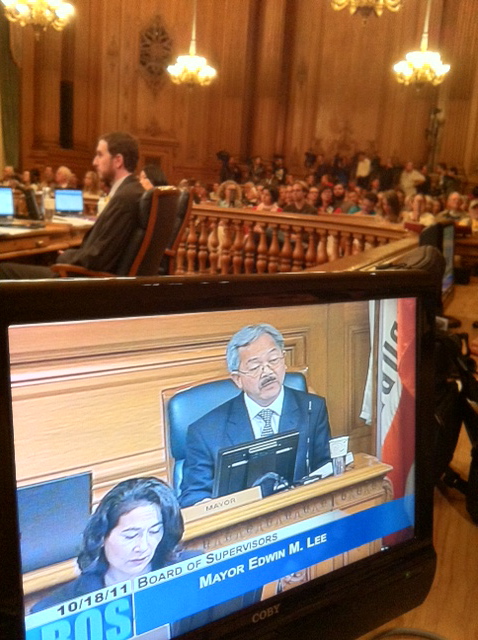
The meeting began with the scripted monthly question time session with Mayor Ed Lee, who was asked by Sup. Jane Kim – whose District 6 includes the OccupySF encampment, which she visited for a couple hours last night – to “describe the plan that our offices have been developing” to facilitate the OccupySF movement.

But in Lee’s response and in exchanges with journalists after the meeting, as well as Guardian interviews with people in both offices, it doesn’t seem city officials have a coherent plan for carrying out Lee’s contradictory goals of supporting the Occupy movement and keeping sidewalks and parks clear of encampments.

Kim seemed to acknowledge as much later in the meeting when she said voiced support for OccupySF and for city officials who object to tents, kitchens, and other basic infrastructure that the month-old movement needs to continue. “We’re all struggling to figure out the best way to accommodate it,” she said.

Lee’s message was even more muddled, saying he supported the movement and agreed with its economic justice message. “From the very beginning, I have fully supported the spirit of the OccupySF movement,” Lee told the crowd, transitioning into reciting a litany of economic development efforts with little relevance to the demands of the movement.

“Then don’t send the police in to destroy it,” a protester shouted from the audience, which was filled to capacity and had a line out front and an overflow room. “We are working with you,” Lee responded, but then went on to complain about the lack of consistent contacts in the leaderless movement and emphasizing his bottom line that any kind of encampment with infrastructure is an impermissible violation of city codes.

“I need to make sure our public spaces are open to be used by anyone,” he said. Later, his Press Secretary Christine Falvey clarified the mayor’s stance by saying he supports the message but not the movement: “The tactic of camping overnight, he does not support.”  

Afterward, talking to reporters, Lee couldn’t really explain why the police needed to do their raids in the middle of the night, why San Francisco is cracking down on conditions that are being allowed in many other Occupy cities, or how the movement might be able to avoid future crackdowns if it continues, ignoring questions about where OccupySF might be able to go to avoid police raids.

Sup. John Avalos, who has been working to try to mediate the dispute between OccupySF and the city, responded to Lee’s speech by calling it “very frustrating. I’m alarmed that he is moving toward nightly standoffs with the Occupy movement.” Avalos says he supports protesters’ right to peacefully occupy public spaces and acknowledges their need for basic supplies to do so, calling the current standoff, “unsafe for both sides.”

“I’m proud to say that we are the 99 percent,” Sup. Eric Mar said, echoing the movement’s mantra and saying he would defer to Avalos’ leadership to create a “resolution strongly holding the police accountable for the crackdowns.”

Avalos had invited OccupySF participants to raise their concerns during the public comment portion of the meeting, and he said that he plans to use their input to form a resolution or plan for how the city should accommodate a movement that six of the 11 supervisors professed to support at the meeting.

When the long line of OccupySF protesters finally took to the microphone for public comment, they made it clear that the issue wasn’t as complicated as some city officials were trying to make it.
“It is outrageous and inhumane to see our camp raided in the middle of the night by San Francisco Police,” Magic, a middle-aged woman and lifelong activist, told the supervisors, closing with, “This can be a celebration or a battle, but we will not back down.”

Several speakers were dismissive of city claims to be protecting public health and safety, noting how dangerous the midnight confrontations have been, saying food and shelter are basic human needs, and noting how peaceful and cooperative OccupySF has been with the escalating series of city demands as the protest’s numbers have grown.

Michael Goldman said police have asked them to return to the sidewalk in front of the Federal Reserve, where they are densely packed in what he called unsafe conditions. “We have too many people to fit in front of 101 Market,” he said.

That was what prompted the move to nearby Justin Herman Plaza, where police cracked down Sunday night, citing a violation of the park’s 10 pm curfew. Another protester who works at the Ferry Building angrily noted that even before OccupySF began, he regularly watched city crews chase the homeless away from the site at 3 am with water trucks.

“We are a peaceful and nonviolent people and we do not deserve to be treated this way by our city and our country,” he said.  

“They were waiting to be talked to and not just run over by the police,” said iconic San Francisco activist Father Louie Vitale, who gestured to the waiting protesters and said, “We’re very proud of these people, very proud.”

It was a point echoed by others like local resident Andy Blue, who said, “They are doing a great service to this city and the world.”

Homeless families in SF hits record high

10

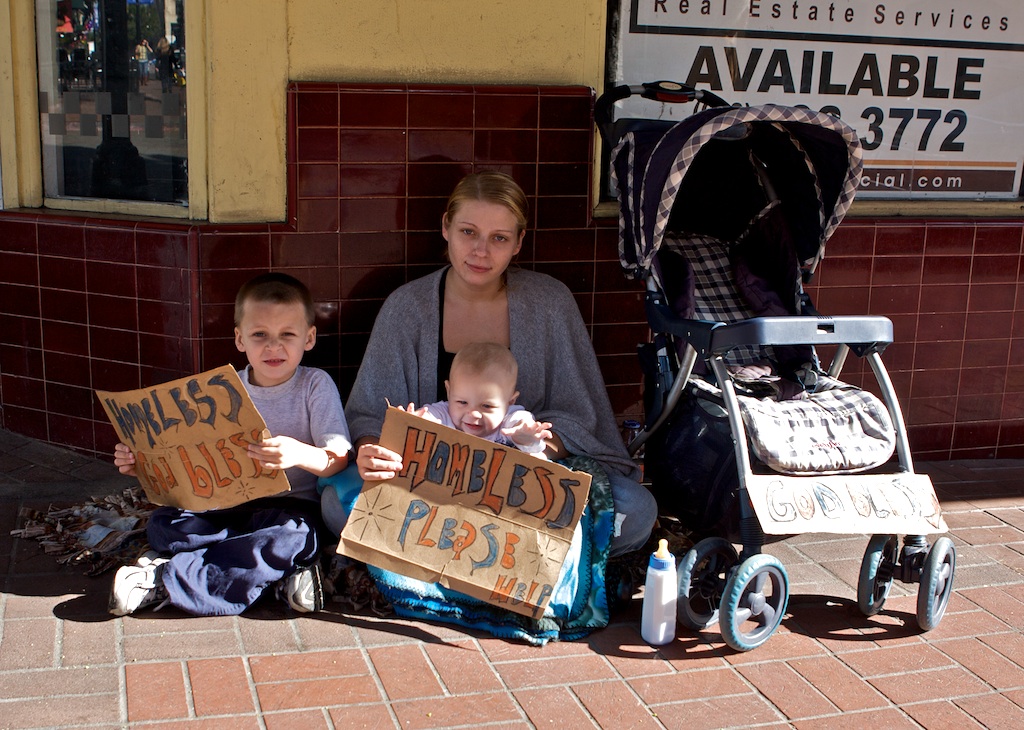
The number of homeless families awaiting shelter space in San Francisco has reached an all-time high, and homeless advocates say city officials are ignoring the problem, which can have disastrous consequences when parents are forced to choose among bad options out of desperation.

Compass Connecting Point, a nonprofit agency with a city contract to provide homeless services and outreach, reports that 227 families – including 342 children – are now on a waiting list for temporary housing, with waits of at least six months. That’s 13 more families than the previous peak during the height of the recession in 2009.

“We’re seeing an increase in families coming in for the first time,” Elizabeth Ancker, an assistant program manager for the agency, told us. “There is definitely not enough shelter space.”

That’s been a complaint from a variety of homeless individuals and advocates who note that the city has reduced the number of shelter beds due to budget cuts at a time when they are needed more than ever. And a fall ballot measure that would have freed up shelter beds that have been set aside for Care Not Cash recipients and other mayoral pet projects was removed from the November ballot under pressure from Mayor Ed Lee.

“A couple weeks ago, it was the largest number [of homeless families on shelter waiting lists] since the recession first hit, and now it’s just the largest number overall,” Jennifer Friedenbach, executive director of the Coalition on Homelessness, told us. “We’re really concerned and we’re particularly concerned that there has not been any kind of response from the city…The most eerie part is the absolute silence from Room 200.”

Indeed, even the Guardian’s repeated requests for comment from the office of Mayor Ed Lee (aka Room 200) have not yielded any answers or explanations. Friedenbach said Lee’s promise to release more shelter beds from mayoral programs like CNC and the Community Justice Court – where they often go unused despite long shelter waiting lists – have only freed up a few beds, nowhere near the actual demand.

“They’re ignoring the problem,” she said. “What’s happening in San Francisco is a mirror of what’s happening nationally to poor families.”

Some studies place the number of homeless children in the U.S. at 1.5 million, although most advocates believe that number has actually risen in the last two years. Meanwhile, the budgets of nonprofits and government agencies who provide homeless services have been shrinking.

Ancker said her agency – which provides a variety of homeless services and gets partial funding from the city and the U.S. Department of Housing and Urban Development – has actually avoided deep budget cuts in the last two years. “But we have the budget we had when we had 79 families on the waiting list,” she said.

Both she and Friedenbach say homeless families present particular challenges for social service agencies. “What happens with families is they end up being in really unsafe situations,” Friedenbach said. “They’ve forced to stay with people they otherwise wouldn’t, or they end up in their cars, or with children being separated from their parents.”

Ancker agreed: “Right now, the wait for a shelter is six months and increasing, and people can’t wait for six months.”

The odd twist to the Chron’s Chiu endorsement

18

The most obvious interpretation of the San Francisco Chronicle’s endorsement of David Chiu is that the Chron thinks Chiu has completely left the progressive camp and is now aligned with the political wing the daily paper calls “moderates:”

What is impressive about Chiu is that “change” and “jobs” are not just campaign slogans for him. He can go into detail about the redundancies and red tape at City Hall that are holding back economic development: the 15 departments that regulate the private sector, the hundreds of fees that burden businesses big and small, a payroll tax that is a disincentive to hire … If elected, he would have a mandate to make city government more efficient and effective.

(I don’t know how many times I have to say this, but the payroll tax is NOT a disincentive to hire.)

The Chron — which, on economic issues like taxes and development, is a very conservative paper — clearly thinks Chiu can be trusted, which ought to make progressives nervous.

But here’s the other interesting twist.

Hearst Corporation bought the San Francisco Chronicle in 2000, at the top of the market, for more than $500 million. I guarantee the paper isn’t worth more than a tiny fraction of that today. It’s still losing money, and has been for years, and nobody’s buying daily newspapers any more, and if Hearst wanted to unload the Chron, the New York publishing chain would be lucky to get $50 million. Hell, they’d be lucky to get $25 million.

So the bean counters in New York have this nonperforming half-billion-dollar asset on their balance sheets, and there’s no way to recover that money — except for one thing: The Chron owns a bunch of land around Fifth and Mission, including its own historic building. And that property is potentially worth a whole lot of money. When the economy picks up, Hearst can develop the parking lots, old press facilities and even its HQ; turn it all into condos and office space, and suddenly there’s a real chance of recouping some of those deep losses.

The process is already underway — the Chron’s been moving tech firms into vacant space in its building, and is working with developers on the shape of what could be a major project still to come.

And guess what? In June, William Randolph Hearst III — heir to part of the Hearst fortune and a member of the Hearst Corp. board — made a rare campaign contribution to a San Francisco political candidate. He gave the maximum allowable $500 to … David Chiu. Around the same time, Michael Cohen and Jesse Blout, the partners in a firm called Strada that’s working on the redevelopment of the Chron’s property, also gave Chiu the maxiumum $500.

I figured the top people at the Chron would back Ed Lee because they figured he’d be down with whatever they wanted to do with that land — particularly since Lee’s good buddy Willie Brown is now a San Francisco Chronicle columnist. But it appears they’ve cast their lot with Chiu. As Mr. Spock would say, fascinating.

Low-income tenants face possible eviction at Parkmerced

At least nine eviction proceedings have started at the Parkmerced housing complex, the site of a controversial new housing development, in response to an effort by the property management company to collect back payments on rent and utility bills, the Guardian has learned.

In recent months, nearly 200 residents received official notices warning that they would face eviction if they did not take steps to bring their accounts current within three days, according to Sara Shortt, executive director of the Housing Rights Committee of San Francisco. About 80 three-day notices were issued to tenants who are on Section 8, a federal low-income housing assistance program that subsidizes rental payments using public funds provided by the local housing authority.

“They’re extremely low-income renters, and they’re suddenly being asked to pay large balances,” Shortt explained. “It’s blood from a turnip.” Most of the amounts owed ranged between $600 and $800, she added.

Shortt said that while some tenants were being allowed to set up payment plans, this measure wasn’t guaranteed for every tenant attempting to address the problem within the three-day timeframe. And she was skeptical that the payment-plan arrangements being presented by management were realistic in every case.

“I don’t know if Parkmerced is doing anything illegal,” Shortt said, acknowledging that she was receiving conflicting accounts of the situation. “But they’re executing something about legitimate recovery of money in an unfair manner. To allow people to slide for years and suddenly come at them for back bills is a one-way ticket for eviction.”

The Guardian was unable to reach Stellar Management, the real-estate management company at Parkmerced, but Shortt said she had spoken with Stellar representatives on behalf of tenants who were contacting the Housing Rights Committee in a panic.

Stellar representative Bryce Boddie explained the situation to her by saying a previous property management company had left billing records in disarray, and the company was finally getting around to straightening out its books by demanding payments that had long since been owed. “Their contention was that they basically decided it was time to clean house and recoup payments,” she said. Shortt said she’d also been told that Stellar had come under pressure from Fortress Investment Group, a firm that took ownership of the property last year, to get payments in order.

But P.J. Johnston, a public relations representative for Parkmerced, rejected that account, saying, “We absolutely follow up with residents who are not paying their bills.” Johnston said the number of three-day notices served this year were in keeping with last year, indicating that there had been no drastic changes in policy since the approval of the new housing project. He did not know how many Section 8 tenants received the warning notices in 2010. “Whether someone is a Section 8 certificate holder or just a regular resident, everybody’s got to pay their rent,” he said.

Johnston bristled at the criticism that renters were being asked to fork over unrealistically high sums on the spot for payments that had lapsed for long periods, saying, “If we had moved swiftly to evict residents sooner, we’d be hearing that we didn’t give them a chance.”

The issue comes on the heels of Board of Supervisors approval for a controversial housing development project at Parkmerced that tenant groups opposed because they felt it didn’t go far enough to protect renters. A development agreement negotiated between Parkmerced Investors and the city guarantees that rent-controlled tenants will be able to move into brand-new units at the same rent-controlled rate once the old units are demolished. Some residents are suspicious that management’s decision to issue three-day notices and take steps to evict tenants who cannot pay is a strategy for skirting these requirements.

Shortt said she couldn’t be sure that this was the case, but worried nevertheless that low-income tenants could wind up being tossed out of Parkmerced, which is just the scenario that tenant advocates had feared. “The end result really is in clear conflict with the spirit of negotiations and tenant protections,” she said.

Stage Listings

0

THEATER

OPENING

Almost Nothing, Day of Absence Lorraine Hansberry Theatre, 450 Post, SF; (415) 474-8800, www.lhtsf.org. $43-53. Previews Oct 11-13, 8pm. Opens Oct 14, 8pm. Runs Wed-Sat, 8pm (also Sat, 2pm); Sun, 2pm. Through Nov 20. Lorraine Hansberry Theatre performs one-act plays by Marcos Barbosa and Douglas Turner Ward.

Making Porn Box Car Theatre Studios, 125A Hyde, SF; www.brownpapertickets.com. $25-50. Opens Fri/7, 8pm. Runs Thurs, 8pm; Fri-Sun, 7pm (also Fri-Sat, 10pm). Through Oct 29. Ronnie Larsen brings back his crowd-pleasing comedy about the gay porn industry.

Nymph Errant Eureka Theater, 215 Jackson, SF; (415) 255-8207, www.42ndstmoon.org. $20-50. Previews Wed/5, 7pm; Thurs/6-Fri/7, 8pm. Opens Sat/8, 6pm. Runs Wed, 7pm; Thurs-Fri, 8pm; Sat, 6pm; Sun, 3pm. Through Oct 23. 42nd Street Moon performs Cole Poerter’s madcap 1933 musical.

“San Francisco Olympians Festival” Exit Theater, 156 Eddy, SF; www.sfolympians.com. Opens Thurs/6, 8pm. Runs Thurs-Sat, 8pm. Through Oct 28. No Nude Men Productions presents a festival of 12 new full-length plays written by 14 local writers. Each play focuses on one of the Olympian characters from ancient Greece.

Tutor: Enter the Enclave Exit Studio, 156 Eddy, SF; (415) 673-3847, www.darkporchtheatre.com. $15-25. Opens Thurs/6, 8pm. Runs Thurs-Sat, 8pm. Through Oct 22. Dark Porch Theatre performs Martin Schwartz’s play, inspired by an 18th century German drama, about a tutor who realizes the creepy family he works for is not quite what they seem.

BAY AREA

Bellwether Marin Theatre Company, 397 Miller, Mill Valley; (415) 388-5208, www.marintheatre.org. $34-55. Previews Thurs/6-Sat/8, 8pm; Sun/9, 2 and 7pm. Opens Tues/11, 8pm. Runs Tues, Thurs-Sat, 8pm (also Oct 20, 1pm; Oct 15 and 29, 2pm); Wed, 7:30pm; Sun, 2 and 7pm. Through Oct 30. Marin Theatre Company performs Steve Yockey’s spooky fairy tale for adults.

Clementine in the Lower 9 TheatreWorks at the Mountain View Center for the Performing Arts, 500 Castro, Mtn View; (650) 463-1960, www.theatreworks.org. $19-69. Previews Wed/5-Fri/7, 8pm. Opens Sat/8, 8pm. Runs Tues-Wed, 7:30pm; Thurs-Sat, 8pm (also Sat, 2pm); Sun, 2 and 7pm. Through Oct 30. TheatreWorks presents the world premiere of Dan Dietz’s post-Katrina New Orleans drama.

ONGOING

“AfroSolo Arts Festival” Various venues, SF; www.afrosolo.org. Free-$100. Through Oct 20. The AfroSolo Theatre Company presents its 18th annual festival celebrating African American artists, musicians, and performers.

Alice Down the Rwong Wrabbit Whole Emerald Tablet, 80 Fresno, SF; (415) 500-2323, www.brownpapertickets.com. $15. Fri-Sat, 9pm. Through Oct 15. Karen Light and Edna Barrón perform their new comedy based on Alice in Wonderland.

American Buffalo Actors Theatre of San Francisco, 855 Bush, SF; (415) 345-1287, www.actorstheatresf.org. $26-38. Wed-Sat, 8pm. Extended through Oct 8. Actors Theatre of San Francisco performs the David Mamet crime classic.

Desdemona: A Play About a Handkerchief Boxcar Theatre Playhouse, 505 Natoma, SF; www.boxcartheatre.org. $15-35. Wed-Sat, 8pm; Sun, 3pm. Through Nov 5. Boxcar Theatre performs Pauls Vogel’s dark comedy, inspired by the three female characters from Shakespeare’s Othello.

Honey Brown Eyes SF Playhouse, 533 Sutter, SF; (415) 677-9596, www.sfplayhouse.org. $20-50. Tues-Thurs, 7pm; Fri-Sat, 8pm (also Sat, 3pm). Through Nov 5. Bosnia in 1992 is divided in a horrifying civil war, some characteristics of which play out in parallel circumstances for two members of a single rock band in SF Playhouse’s west coast premiere of Stefanie Zadravec’s new play. In the first act, set in Visegrad, a young Bosnian Muslim woman (Jennifer Stuckert) is held at gunpoint in her kitchen by a jumpy soldier (Nic Grelli) engaged in a mission of murder and dispossession known as ethnic cleansing. Her husband has already been killed, and she insists she has no daughter (Madeleine Pauker) hiding somewhere, despite the soldier’s information. When she recognizes him from her brother’s band in the days before the war, he realizes she’s the girl he long ago had a crush on, beginning a tentative truce in an untenable situation. The second act moves to Sarajevo and the apartment of an elderly woman (Wanda McCaddon) who gives shelter and a rare meal to an army fugitive (Chad Deverman). He in turn keeps the bereaved if indomitable woman company. This is the brother of the young woman in act one, the band’s leader who called it quits and dissolved the group in a harmless but foreshadowing analogy to the disbanding of an entire country. Director Susi Damilano and cast are clearly committed to Zadravec’s ambitious if hobbled play, but the action can be too contrived and unrealistic (especially in act one) to be credible while the tone — zigzagging between the horror of atrocity and the offbeat gestures of romantic comedy — comes over as confused indecision rather than a deliberate concoction. (Avila)

Joy With Wings: A Daughter’s Tale Alcove Theater, 415 Mason, Fifth Flr, SF; www.brownpapertickets.com. $32-50. Wed/5-Thurs/6, 8pm. Chaucer Theater performs Becky Parker’s drama about a mother’s love.

Killing My Lobster Conquers the Galaxy The Jewish Theatre, 470 Florida, SF; www.killingmylobster.com. $10-20. Thurs/6-Fri/7, 8pm; Sat/8-Sun/9, 7pm (also Sat/8, 10pm). Through Sun/9. The sketch comedy troupe returns with a sci-fi show.

The Kipling Hotel: True Misadventures of the Electric Pink ’80s Marsh San Francisco, 1062 Valencia, SF; (415) 282-3055, www.themarsh.org. $15-50. Sat, 8:30pm; Sun, 7pm. Through Nov 13. Acclaimed solo performer Don Reed (East 14th) premieres his new show, based on his post-Oakland years living in Los Angeles.

Lucrezia Borgia War Memorial Opera House, 201 Van Ness, SF; (415) 864-3330, www.sfopera.com. $30-389. Wed/5, 7:30pm; Sat/8 and Tues/11, 8pm. Famed soprano Renée Fleming stars in San Francisco Opera’s presentation of Gaetano Donizetti’s classic.

Night Over Erzinga South Side Theatre, Magic Theatre, Fort Mason Center, Marina at Laguna, SF; (415) 345-7575, www.goldenthread.org. $20-100. Thurs/6, 8:30pm; Fri/7-Sat/8, 8pm; Sun/9, 2pm. Golden Thread Productions’ season opener is the result of its first-ever Middle East America new play initiative (co-presented with Chicago’s Silk Road Theatre Project and New York’s Lark Play Development Center): playwright Adriana Sevahn Nichols’ story of three generations in an Armenian American family struggling with a history of violence, dispossession, and the tensions between individual and collective destiny in the modern world. The play begins at an overly dramatic pitch as a young woman (Sarita Ocón) summons the spirits of her grandparents. Director Hafiz Karmali’s staging is deliberately spare and sensible throughout, though this initial action feels alternately stiff and shuffling, and the recorded music can be overbearing, as the roots of a family saga are laid immediately before and after the 1915 genocide. But the second act settles into a surer and more engaging mode and tempo, as Ava (a sharp Juliet Tanner in a nicely shaded performance), rebellious American daughter of two Armenian exiles (Terry Lamb and Neva Marie Hutchinson), pursues a career as a popular dancer and singer and ends up estranged from her father for years (her mother, sole survivor of a massacred Armenian family, spends her latter years in a mental institution). Wooed by a charming Dominican crooner (an adept, appealing Brian Trybom), Ava starts a family of her own. While pregnant with daughter Estrella (the young, spirited Natalie Amanian), she re-establishes a shaky relationship with her repentant father. Old wounds and buried histories insure reconciliation won’t be easy, but the truth alone shows the way back to a sense of connection and communion for a family severed by injustice and unmoored in the drift of immigrant America. (Avila)

Not Getting Any Younger Marsh San Francisco, Studio Theater, 1062 Valencia, SF; (415) 826-5750, www.themarsh.org. $15-50. Thurs-Fri, 8pm; Sat, 8:30pm; Sun, 3pm. Through Oct 23. Marga Gomez is back at the Marsh, a couple of too-brief decades after inaugurating the theater’s new stage with her first solo show — an apt setting, in other words, for the writer-performer’s latest monologue, a reflection on the inevitable process of aging for a Latina lesbian comedian and artist who still hangs at Starbucks and can’t be trusted with the details of her own Wikipedia entry. If the thought of someone as perennially irreverent, insouciant, and appealingly immature as Gomez makes you depressed, the show is, strangely enough, the best antidote. Her narrative careens wildly from character-filled childhood memories (the earliest traumas on down) and stand-up-like shtick that turns over well-worn subject matter like babies with freshly piquant musings (idea for an “it get better” campaign for infants: you’ll be able to wipe yourself and chew your own food). There’s even something like wisdom, or anyway historical curiosity, in her skewed nostalgia for such childhood ephemera as Freedomland, a doomed Bronx-based Disneyland alternative Gomez is old enough to remember visiting. Needless to say, she looks and acts very good for her age, whatever it is exactly (there are, typically, no straight answers here).

The Odyssey Aboard Alma, Hyde Street Pier, San Francisco Maritime National Historic Park, SF; www.weplayers.org. $160. Oct 28-29, Nov 4-6, 11-12, and 18, 12:30pm. This “full afternoon adventure” (12:30-5pm) includes a sailing performance of tales from Homer by We Players (aboard an 1891 scow schooner), plus a light meal.

Once in a Lifetime American Conservatory Theater, 415 Geary, SF; (415) 749-2228, www.act-sf.org. $10-85. Tues-Sat, 8pm (Fri/7 performance at 7pm); Wed and Sat-Sun, 2pm. Through Oct 16. ACT performs a revival of Moss Hart and George S. Kaufman’s 1939 Hollywood satire.

ShEvil Dead Cellspace, 2050 Bryant, SF; www.brownpapertickets.com. $25. Fri/7-Sat/8, Oct 15, 21, and 28-29, 8pm. Primitive Screwheads return with a horror play (in which the audience is literally sprayed with blood, so leave the fancy suit at home!) based on the Evil Dead movies.

“Shocktoberfest 12: Fear Over Frisco” Hypnodrome Theatre, 575 10th St, SF; (415) 377-4202, www.thrillpeddlers.com. $25-35. Thurs-Sat, 8pm. Through Nov 19. In its annual season-scented horror bid, Thrillpeddlers joins forces with SF’s Czar of Noir, writer-director Eddie Muller, for a sharply penned triplet of plays that resurrect lurid San Francisco lore as flesh-and-blood action. In the slightly sluggish but intriguing Grand Inquisitor, a solitary young woman modeling herself on Louise Brooks in Lulu (an alluringly Lulu-like Bonni Suval) believes she has located the Zodiac killer’s widow (a sweet but cagey Mary Gibboney) — a scenario that just can’t end well for somebody, yet manages to defy expectations. An Obvious Explanation turns on an amnesiac (Daniel Bakken) whose brother (Flynn de Marco) explains the female corpse in the rollaway (Zelda Koznofski) before asking bro where he hid a certain pile of money. Enter a brash doctor (Suval) with a new drug and ambitions of her own vis-à-vis the hapless head case. Russell Blackwood directs The Drug, which adapts a Grand Guignol classic to the hoity-toity milieu of the Van Nesses and seedy Chinatown opium dens, where a rough-playing attorney (an ever persuasive Eric Tyson Wertz) determines to turn a gruesome case involving the duplicitous Mrs. Van Ness (an equally sure, sultry Kära Emry) to his own advantage. The evening also offers a blackout spook show and some smoothly atmospheric musical numbers, including Muller’s rousing “Fear Over Frisco” (music composed by Scrumbly Koldewyn; accompaniment by Steve Bolinger and Birdie-Bob Watt) and an aptly low-down Irving Berlin number — both winningly performed by the entire company. (Avila)

Show Ho New Conservatory Theatre Center, 25 Van Ness, SF; (415) 861-8972, www.nctcsf.org. $20-32. Thurs/6-Sat/8, 8pm; Sun/9, 2pm. Sara Moore performs her multi-character story about a clown in a low-rent circus.

Sorya! A Minor Miracle (Part One) NOHSpace, Project Artaud, 2840 Mariposa, SF; www.brownpapertickets.com. $12-18. Sun-Mon, 7pm. Through Oct 24. Theatre of Yugen presents a selection of new and traditional Kyogen comedies.

BAY AREA

*A Delicate Balance Aurora Theatre, 2081 Addison, Berk; (510) 843-4822, www.auroratheatre.org. $10-48. Tues, 7pm; Wed-Sat, 8pm; Sun, 2 and 7pm. Extended through Oct 23. Aurora Theatre performs Edward Albee’s comedy of manners.

Madhouse Rhythm Cabaret at Marsh Berkeley, 2120 Allston, Berk; (415) 282-3055, www.themarsh.org. $15-35. Thurs/6, 7:30pm. Joshua Walters performs his hip-hop-infused autobiographical show about his experiences with bipolar disorder.

*Phaedra Ashby Stage, 1901 Ashby, Berk; (510) 841-6500, www.shotgunplayers.org. $17-26. Wed-Thurs, 7pm; Fri-Sat, 8pm; Sun, 5pm. Through Oct 23. Catherine (Catherine Castellanos) is the loveless matron in the impeccably tidy, upper-class home of middle-aged right-wing judge Antonio (Keith Burkland), secretly infatuated with her stepson (Patrick Alparone), the prodigal returning home from jail and rehab for a new start. Catherine’s cold, obsessively ordered run of the household — with heavy-lifting by her cheerful, steadfast housekeeper (a wonderfully genuine Trish Mulholland) — masks a desolation and chaos inside her, a churning emptiness evoked in the deliberately listless pace of act one and the skudding clouds we can see reflected in the walls of designer Nina Ball’s impressively stolid, icily tasteful living room. Portland Center Stage’s Rose Riordan directs a strong cast (which includes Cindy Im, as the stepson’s rehab partner and sexual interest) in a modern-day adaptation of the Greek myth by Adam Bock (The Shaker Chair, Swimming in the Shallows), in a worthy premiere for Shotgun Players. The drama comes leavened by Bock’s well-developed humor and the dialogue, while inconsistent, can be eloquent. The storm that breaks in the second act, however, feels a bit compressed and, especially after the languid first act, contributes to a somewhat pinched narrative. But whatever its limitations, Catherine’s predicament is palpably dramatic, especially in Castellanos’s deeply moving performance — among her best work to date and alone worth giving Phaedra a chance. (Avila)

*Rita Moreno: Life Without Makeup Berkeley Repertory Theatre, Roda Theatre, 2015 Addison, Berk; (510) 647-2949, www.berkeleyrep.org. $14.50-73. Tues-Sun, showtimes vary. Through Oct 30. The life of stage and screen legend Rita Moreno is a subject that has no trouble filling two swift and varied acts, especially as related in anecdote, song, comedy, and dance by the serene multiple–award-winning performer and Berkeley resident herself. Indeed, that so much material gets covered so succinctly but rarely abruptly is a real achievement of this attractively adorned autobiographical solo show crafted with playwright and Berkeley Rep artistic director Tony Taccone. (Avila)

The Taming of the Shrew Bruns Amphitheater, 100 California Shakespeare Wy, Orinda; (510) 809-3290, www.calshakes.org. $35-66. Tues-Thurs, 7:30pm; Fri-Sat, 8pm; Sun, 4pm. Through Oct 16. California Shakespeare Theatre’s last show of the season is a high-fashion, pop-art take on Shakespeare’s battle of the sexes.

The World’s Funniest Bubble Show Marsh Berkeley, TheaterStage, 2120 Allston, Berk; (415) 826-5750, www.themarsh.org. $8-50. Sun, 11am. Through Nov 20. Louis “The Amazing Bubble Man” Pearl returns with this kid-friendly, bubble-tastic comedy.


Stage listings are compiled by Guardian staff. Performance times may change; call venues to confirm. Reviewers are Robert Avila, Rita Felciano, and Nicole Gluckstern. Submit items for the listings at listings@sfbg.com. For further information on how to submit items for the listings, see Picks.

The price of civilization: high taxes to support a high level of government services

8

Jeffrey D. Sachs
Jeffrey D. Sachs is Professor of Economics and Director of the Earth Institute at Columbia University. He is also Special Adviser to United Nations Secretary-General on the Millennium Development Goals.

NEW YORK – We live in an era in which the most important forces affecting every economy are global, not local. What happens “abroad” – in China, India, and elsewhere – powerfully affects even an economy as large as the United States. 

Economic globalization has, of course, produced some large benefits for the world, including the rapid spread of advanced technologies such as the Internet and mobile telephony. It has also reduced poverty sharply in many emerging economies – indeed, for this reason alone, the world economy needs to remain open and interconnected.

Yet globalization has also created major problems that need to be addressed. First, it has increased the scope for tax evasion, owing to a rapid proliferation of tax havens around the world. Multinational companies have many more opportunities than before to dodge their fair and efficient share of taxation.

Moreover, globalization has created losers as well as winners. In high-income countries, notably the US, Europe, and Japan, the biggest losers are workers who lack the education to compete effectively with low-paid workers in developing countries. Hardest hit are workers in rich countries who lack a college education. Such workers have lost jobs by the millions. Those who have kept their jobs have seen their wages stagnate or decline.

Globalization has also fueled contagion. The 2008 financial crisis started on Wall Street, but quickly spread to the entire world, pointing to the need for global cooperation on banking and finance. Climate change, infectious diseases, terrorism, and other ills that can easily cross borders demand a similar global response. 

What globalization requires, therefore, are smart government policies. Governments should promote high-quality education, to ensure that young people are prepared to face global competition. They should raise productivity by building modern infrastructure and promoting science and technology. And governments should cooperate globally to regulate those parts of the economy – notably finance and the environment – in which problems in one country can spill over to other parts of the world.

The need for highly effective government in the era of globalization is the key message of my new book, The Price of Civilization. Simply put, we need more government nowadays, not less. Yet the role of government also needs to be modernized, in line with the specific challenges posed by an interconnected world economy.

I wrote The Price of Civilization out of the conviction that the US government has failed to understand and respond to the challenges of globalization ever since it began to impact America’s economy in the 1970’s. Rather than respond to globalization with more government spending on education, infrastructure, and technology, Ronald Reagan won the presidency in 1980 by pledging to slash government spending and cut taxes.

For 30 years, the US has been going in the wrong direction, cutting the role of government in the domestic economy rather than promoting the investments needed to modernize the economy and workforce. The rich have benefited in the short run, by getting massive tax breaks. The poor have suffered from job losses and cuts in government services. Economic inequality has reached a high not seen since the Great Depression.

These adverse trends have been exacerbated by domestic politics. The rich have used their wealth to strengthen their grip on power. They pay for the expensive campaigns of presidents and congressmen, so presidents and congressmen help the rich – often at the expense of the rest of society.  The same syndrome – in which the rich have gained control of the political system (or strengthened their control of it) – now afflicts many other countries.

Yet there are some important signs around the world that people are fed up with governments that cater to the rich while ignoring everyone else. Start with the growing calls for greater social justice. The upheavals in Tunis and Cairo were first called the Arab Spring, because they seemed to be contained to the Arab world. But then we saw protests in Tel Aviv, Santiago, London, and now even in the US. These protests have called first and foremost for more inclusive politics, rather than the corrupt politics of oligarchy.

Moreover, US President Barack Obama is gradually shifting toward the left. After three years in which his administration coddled corporate lobbyists, he has finally begun to emphasize the need for the rich to pay more taxes. This has come late in his term, and he might well continue to favor the rich and Wall Street in exchange for campaign contributions in 2012, but there is a glimmer of hope that Obama will defend a fairer budget policy.

Several European governments, including Spain, Denmark, and Greece, also seem to be moving in the same direction. Spain recently imposed a new wealth tax on high-net-worth taxpayers. Denmark elected a center-left government committed to higher government spending financed by new taxes on the rich. And Greece has just voted for a new property tax to help close its yawning fiscal deficit.

The European Commission has also called for a new Financial Transactions Tax (FTT) to raise around $75 billion per year. The Commission has finally agreed that Europe’s financial sector has been under-taxed. The new FTT might still face political opposition in Europe, especially in the United Kingdom, with its large and influential banking sector, but at least the principle of greater tax fairness is high on the European agenda.

The world’s most successful economies today are not in Asia, but in Scandinavia. By using high taxes to finance a high level of government services, these countries have balanced high prosperity with social justice and environmental sustainability. This is the key to well-being in today’s globalized economy. Perhaps more parts of the world – and especially the world’s young people – are beginning to recognize this new reality.


Jeffrey D. Sachs is Professor of Economics and Director of the Earth Institute at Columbia University. He is also Special Adviser to United Nations Secretary-General on the Millennium Development Goals.

Copyright: Project Syndicate, 2011.
www.project-syndicate.org

Period Piece: Mission Creek houseboat community rocks with the tides

3

Period Piece is Lucy Schiller’s recurring feature on the hidden histories of San Francisco. Give her a shout at culture@sfbg.com if you know of some hot dirt on olden times in the city

Few wander into Mission Creek’s small houseboat community. It’s hard to find, unless you live in the luxury condos across the channel or are tailgating in a nearby parking lot for a Giants game. But tucked under the I-280 ramp floats a tiny neighborhood, an undiscovered fixture of San Francisco.

On a recent visit, I am shown a residence festooned with skulls and racks of antlers, another with windowboxes full of carnivorous plants, and another with a ghoulishly grinning blowfish decorating the front door. Neighbors here include stingrays, anchovies, pelicans, seals, and – according to one resident – an on-again-off-again sea lion visitor of rather large proportions.  During the small-scale tsunami in March, the floating community felt their homes rise up by about three feet. When asked if any families lived in the boats, one resident responded sharply, “Yes. We’re all a family.” It couldn’t get any quainter, really. 

The short waterway has a long history. Before the white settlement of San Francisco, Ohlone Indians lived and boated along Mission Creek’s course, which was then much wider and longer, stretching almost from Twin Peaks to the Bay. Fast-forward some years and butchers were sending unwanted guts downstream, railroad companies were slowly paving it over to make way for new transportation networks, and Del Monte was setting up shop, using cheap labor to offload and can fruit in massive volume.

Today, a few of the creek’s residents are descendents of the dockworkers who worked to unload shipment after shipment of bananas. The houseboat community first began taking form in the early 1960s, with many of the original members moving from neighborhoods only a stone’s throw away. 

Now, the small settlement seems comprised of individuals filling strangely specific roles – I met and heard of the caretaker, the doctor, the weaver, the ex-taxi driver-current waterway historian. A small but productive community garden grows on a nearby bank. Needless to say, all who live here hold their patch of water very dear.

And it has changed considerably. In the still-recent past, San Francisco’s skyline gleamed through the boats’ kitchen windows; façades of the Berry Street condos have replaced that view. Mission Creek Park, a winding green space running parallel to the creek, is also a recent development. The inherent charm of living on a houseboat in the middle of the city is pretty obvious to outsiders, and residents worry about being slowly bought out by folks less devoted to the existing community. After recently renewing a lease with the Port Authority, however, the boaters should be sitting pretty till at least 2043, to the nightly sounds of shrieking egrets and Giants fans alike.


CCDC, the Central Subway, and media manipulation (?)

21

I talked for some time yesterday with Gen Fujioka, an attorney at the Chinatown Community Development Center (CCDC), about an editorial he wrote criticizing a San Francisco Chronicle story revealing stunningly high payments to CCDC for subcontracting work on the Central Subway. (A better read, we must say, than Randy Shaw’s whining about how he’s a real journalist, he really really is, and it’s a grave injustice that someone denied him a press release.)

Fujioka claimed that the Chronicle had used fuzzy math, saying the per-hour breakdown of payments to the affordable housing nonprofit were lower in reality than the apalling $750 fee reported in the Chron. He said the management meetings listed in the purchase order actually took eight or nine hours per week to prepare for, which would bring the hourly payment closer to $102 an hour, which still strikes us as kind of steep.

Fujioka also took issue with the Chron’s report that CCDC received $25,000 for holding a single meeting.

We asked the city to send us the documents so we could have a look for ourselves. The $25,000 piece refers to two payments listed under “community relations / public outreach management” on the purchase order for CCDC’s subcontracting work with the Central Subway Partnership. CCDC, which is engaged in affordable housing work, will work with low-income tenants who will be uprooted and relocated as a result of Central Subway construction.

Essentially, the city paid CCDC $15,000 to “plan, coordinate, and implement Chinatown community briefings in cooperation with the San Francisco Municipal Transportation Agency (SFMTA),” plus another $10,000 to “collect and analyze input from community briefings, provide written report of recommendations, implement and support staff and social media at 821 Howard.” Next to each of those items is listed “Quantity: 1.” This seems to explain why the Chron reported that the combined payments were $25,000 for one meeting — the first payment was apparently to plan and host the meeting, while the second seemed to be for processing information gleaned from it.

Fujioka stressed that the description referred to briefings, plural, and that the item “is not one meeting — it’s one of that set of activities. The quantity is not ‘1.’ It’s the category of work.”

Other items on the purchase order, which totaled $410,500, show that the affordable housing nonprofit received $8,000 per month to develop and staff a Central Subway Development liason to publicize the transit project and create informational workshops, $35,000 to develop and implement an outreach plan for Chinese-language media, $95,000 to work with the SFMTA to create a public process for coordinating the design of the Chinatown station and transit-oriented development, and $10,000 to “attend meetings for and provide support services to Chinatown Public Art Plan.”

Fujioka claimed the article was an example of the media being used by one mayoral campaign to attack another, and hinted in his editorial that there was some kind of coordinated media campaign against his nonprofit.

The Chron story spurred a press conference by mayoral candidate and Sen. Leland Yee on Monday, who said he was submitting a request for all correspondence between CCDC, Chinatown power broker Rose Pak, and the mayor’s office in light of this information to pin down all instances of waste and abuse relating to the Central Subway. (Of course, he might want to look beyond CCDC — while the nonprofit may have ties with Lee and Pak, you can be sure that Aecom, the general contractor which has already secured multiple city contracts worth millions of dollars, is doing alright for itself in the Central Subway deal too.) Sources from Yee’s campaign told the Guardian that the senator might hold another press conference if he doesn’t get all the information he asked for, but Lee spokesperson Tony Winnicker told me on Monday that the information would be released “within hours.”

Meanwhile, there’s another interesting tidbit buried in this whole flap. The Chron ran a photograph with its article showing a chalkboard at CCDC offices depicting a power map of the city, with Mayor Ed Lee’s name appearing at the top as interim mayor. The caption said the snapshot was taken before Lee was appointed — which would suggest that CCDC had prior knowledge that Lee would be tapped to serve as caretaker mayor. Yet Fujioka claimed the photo was really taken after Lee had already been installed, and said the drawing was simply “a power map of the city, with the new mayor.” There was no timestamp on the grainy photo, so it’s impossible to verify.

So who’s the mystery photographer? The Chron lists it as an anonymous source.

Someone from Herrera’s camp told me that she’d heard rumors the photo was submitted by a “mole from Leland’s camp.” However, a source in Yee’s camp blatantly rejected that idea, telling me he was certain that it didn’t come from anyone working on Yee’s campaign — and had confirmation from campaign manager Jim Stearns to that effect.

Fujioka didn’t name the source, but said he was pretty sure he knew who it was. “We have a pretty strong suspicion it was a visitor to our office who happened to be there on behalf of a developer who was trying to promote a project,” he said. “He actually is a supporter of one of the other candidates.”

Counting calories

2

caitlin@sfbg.com

HERBWISE An old factory sits in the outskirts of Oakland. In decades past, this building produced name brand snacks, but the smell of baking still permeates the factory air.

And weed. It smells like weed too. Bhang Chocolate churns out medicinal marijuana sweets here, bars that are smartly packaged in Bhang’s sleek black, orange, and green boxes that are a far cry from the plain wax envelopes and saran wrap that most marijuana edibles used to be sold in. The company is part of the current expansion in edible products — these days, patients can buy medicated cheesecakes, and even savory trail mix.

Adjacent to Bhang’s factory floor, about ten marijuana edibles producers are listening to a man talk about quality control for weed food. Robert Martin, Ph.D., worked for years in corporate food product development and quality assurance. He tells the class his specialty was frozen foods.

Martin is the co-founder of C.W. Analytical, a business that consults marijuana producers and has cannabis testing facilities. A patient himself, he says that marijuana-medicated foods are technically subject to all the same guidelines for commercially-produced non-pot products, although actual enforcement is sparse. C.W. offers these classes for free to interested entrepreneurs. They teach professional skills and serve as an introduction to the for-sale services the business provides.

The students are being treated to quality assurance fail stories from Martin’s career in the corporate world. A sherbet producer he once knew bought a wildly expensive machine to make fudge bars, but when he failed to make the proper tests on his treats, they caused a nasty spate of diarrhea in consumers and he ended up losing his shirt.

“That’s the kind of crap that can happen to you guys,” cautions Martin, and starts reading from a tongue-in-cheek guide to how you can tell food has gone bad. “Flour is spoiled when it wiggles,” he reads. This is quality assurance humor. “I love this stuff!”

One of the day’s students Lacey (not her real name) says she learned a lot from the class that she’ll be able to implement in her own business, Laced Cakes Bakery. She’s been making prettily iced cannabis cookies and brownies since 2007 and has seen the industry requirements shift dramatically.

“Years ago, you could just bring down a tray [to a dispensary] and drop it off,” she says. Nowadays, to sell in San Francisco she has to package the sweets in opaque material and make sure that the design can’t be interpreted as too appealing to kids. “The laws keep changing.”

She had heard about C.W. Analytical at some of the cannabis expos she’s been a vendor at — the firm will have a booth at next weekend’s West Coast Cannabis Expo as well — and was happy that the class was offered for free. She hadn’t finalized her opinion, however, on Martin’s suggestion that producers get their foods analyzed by the company so that they can put nutrition labels on their packaging. “It seems like they might just be trying to make money off of us,” she mused. 

WEST COAST CANNABIS EXPO

Oct. 7-9. Fri/7, 3-9 p.m.; Sat/8, 11 a.m.-9 p.m.; Sun/9 11 a.m.-7 p.m., $18 one day/$45 weekend pass

Cow Palace

Geneva and Santos, Daly City

(650) 591-0420

www.westcoastcannabisexpo.com


Stage Listings

0

THEATER

OPENING

The Kipling Hotel: True Misadventures of the Electric Pink ’80s Marsh San Francisco, 1062 Valencia, SF; (415) 282-3055, www.themarsh.org. $15-50. Opens Sat/1, 8:30pm. Runs Sat, 8:30pm; Sun, 7pm. Through Nov 13. Acclaimed solo performer Don Reed (East 14th) premieres his new show, based on his post-Oakland years living in Los Angeles.

Sorya! A Minor Miracle (Part One) NOHSpace, Project Artaud, 2840 Mariposa, SF; www.brownpapertickets.com. $12-18. Opens Sun/2, 7pm. Runs Sun-Mon, 7pm. Through Oct 24. Theatre of Yugen presents a selection of new and traditional Kyogen comedies.

BAY AREA

The World’s Funniest Bubble Show Marsh Berkeley, TheaterStage, 2120 Allston, Berk; (415) 826-5750, www.themarsh.org. $8-50. Opens Sun/2, 11am. Runs Sun, 11am. Through Nov 20. Louis "The Amazing Bubble Man" Pearl returns with this kid-friendly, bubble-tastic comedy.

ONGOING

"AfroSolo Arts Festival" Various venues, SF; www.afrosolo.org. Free-$100. Through Oct 20. The AfroSolo Theatre Company presents its 18th annual festival celebrating African American artists, musicians, and performers.

Alice Down the Rwong Wrabbit Whole Emerald Tablet, 80 Fresno, SF; (415) 500-2323, www.brownpapertickets.com. $15. Fri-Sat, 9pm. Through Oct 15. Karen Light and Edna Barrón perform their new comedy based on Alice in Wonderland.

All Atheists Are Muslim Stage Werx Theatre, 533 Sutter, SF; (415) 517-3581, www.brownpapertickets.com. $20. Thurs/29-Sat/1, 8pm. On the TV, CNN carries the dismal thumping of the Bush gang for more war. In the living room, a father and daughter are in a standoff over a proposed live-in boyfriend. It’s 2005, and a clash of generations, as Zahra tries to convince her immigrant Iranian American Muslim father that her white infidel boyfriend Duncan would make an ideal roommate. For her Muslim father, "the Duncan" has plenty of acceptable virtues — even his professed atheism is hardly an insurmountable obstacle to dad, who doesn’t seem to recognize the word but is sure it translates into a wishy-washy approach to the divine through an enthusiastic appreciation for gravity. But moving in together is a different story. How it plays out is the heart of comedian and solo performer Zahra Noorbakhsh’s uneven but charming and funny take on a familiar American family dynamic whose particular ethnic flavor includes a mild but timely geopolitical aroma. Playing herself as well as her loving mother, her bounding and big-hearted father (with his priceless Persian accent), and her good-natured but recalcitrant boyfriend, Noorbakhsh celebrates the immigrant experience while beating back the age’s pernicious appeal to stereotype and xenophobia with the far more realistic metaphor of a nice, crazy family dinner. (Avila)

American Buffalo Actors Theatre of San Francisco, 855 Bush, SF; (415) 345-1287, www.actorstheatresf.org. $26-38. Wed-Sat, 8pm. Extended through Oct 8. Actors Theatre of San Francisco performs the David Mamet crime classic.

Desdemona: A Play About a Handkerchief Boxcar Theatre Playhouse, 505 Natoma, SF; www.boxcartheatre.org. $15-35. Previews Thurs/29, 8pm. Opens Fri/30, 8pm. Runs Wed-Sat, 8pm; Sun, 3pm. Through Nov 5. Boxcar Theatre performs Pauls Vogel’s dark comedy, inspired by the three female characters from Shakespeare’s Othello.

Hunter’s Point St. Boniface Church Theater, 175 Golden Gate, SF; www.strangeangelstheater.org. $15-25 (no one turned away for lack of funds). Wed/28-Sat/1, 7pm. Strange Angels Theater in collaboration with Jump! Theatre performs Elizabeth Gjelten’s musical drama about homelessness.

Joy With Wings: A Daughter’s Tale Alcove Theater, 415 Mason, Fifth Flr, SF; www.brownpapertickets.com. $32-50. Wed-Thurs, 8pm. Through Oct 6. Chaucer Theater performs Becky Parker’s drama about a mother’s love.

Killing My Lobster Conquers the Galaxy The Jewish Theatre, 470 Florida, SF; www.killingmylobster.com. $10-20. Thurs-Fri, 8pm; Sat-Sun, 7pm (also Sat, 10pm). Through Oct 9. The sketch comedy troupe returns with a sci-fi show.

Lucrezia Borgia War Memorial Opera House, 201 Van Ness, SF; (415) 864-3330, www.sfopera.com. $30-389. Thurs/29 and Oct 5, 7:30pm; Sun/2, 2pm; Oct 8 and 11, 8pm. Famed soprano Renée Fleming stars in San Francisco Opera’s presentation of Gaetano Donizetti’s classic.

Night Over Erzinga South Side Theatre, Magic Theatre, Fort Mason Center, Marina at Laguna, SF; (415) 345-7575, www.goldenthread.org. $20-100. Thurs, 8:30pm; Fri-Sat, 8pm; Sun, 2pm. Through Oct 9. Golden Thread Productions’ season opener is the result of its first-ever Middle East America new play initiative (co-presented with Chicago’s Silk Road Theatre Project and New York’s Lark Play Development Center): playwright Adriana Sevahn Nichols’ story of three generations in an Armenian American family struggling with a history of violence, dispossession, and the tensions between individual and collective destiny in the modern world. The play begins at an overly dramatic pitch as a young woman (Sarita Ocón) summons the spirits of her grandparents. Director Hafiz Karmali’s staging is deliberately spare and sensible throughout, though this initial action feels alternately stiff and shuffling, and the recorded music can be overbearing, as the roots of a family saga are laid immediately before and after the 1915 genocide. But the second act settles into a surer and more engaging mode and tempo, as Ava (a sharp Juliet Tanner in a nicely shaded performance), rebellious American daughter of two Armenian exiles (Terry Lamb and Neva Marie Hutchinson), pursues a career as a popular dancer and singer and ends up estranged from her father for years (her mother, sole survivor of a massacred Armenian family, spends her latter years in a mental institution). Wooed by a charming Dominican crooner (an adept, appealing Brian Trybom), Ava starts a family of her own. While pregnant with daughter Estrella (the young, spirited Natalie Amanian), she re-establishes a shaky relationship with her repentant father. Old wounds and buried histories insure reconciliation won’t be easy, but the truth alone shows the way back to a sense of connection and communion for a family severed by injustice and unmoored in the drift of immigrant America. (Avila)

Not Getting Any Younger Marsh San Francisco, Studio Theater, 1062 Valencia, SF; (415) 826-5750, www.themarsh.org. $15-50. Thurs-Fri, 8pm; Sat, 8:30pm; Sun, 3pm. Through Oct 23. Marga Gomez is back at the Marsh, a couple of too-brief decades after inaugurating the theater’s new stage with her first solo show — an apt setting, in other words, for the writer-performer’s latest monologue, a reflection on the inevitable process of aging for a Latina lesbian comedian and artist who still hangs at Starbucks and can’t be trusted with the details of her own Wikipedia entry. If the thought of someone as perennially irreverent, insouciant, and appealingly immature as Gomez makes you depressed, the show is, strangely enough, the best antidote. Her narrative careens wildly from character-filled childhood memories (the earliest traumas on down) and stand-up-like shtick that turns over well-worn subject matter like babies with freshly piquant musings (idea for an "it get better" campaign for infants: you’ll be able to wipe yourself and chew your own food). There’s even something like wisdom, or anyway historical curiosity, in her skewed nostalgia for such childhood ephemera as Freedomland, a doomed Bronx-based Disneyland alternative Gomez is old enough to remember visiting. Needless to say, she looks and acts very good for her age, whatever it is exactly (there are, typically, no straight answers here).

The Odyssey Aboard Alma, Hyde Street Pier, San Francisco Maritime National Historic Park, SF; www.weplayers.org. $160. Sat/1, Oct 28-29, Nov 4-6, 11-12, and 18, 12:30pm. This "full afternoon adventure" (12:30-5pm) includes a sailing performance of tales from Homer by We Players (aboard an 1891 scow schooner), plus a light meal.

Once in a Lifetime American Conservatory Theater, 415 Geary, SF; (415) 749-2228, www.act-sf.org. $10-85. Opens Wed/28, 8pm. Runs Tues-Sat, 8pm (Oct 7 performance at 7pm); Wed and Sat-Sun, 2pm (no matinees Sun/25 or Sept 28; additional performance Sun/2 at 7pm). Through Oct 16. ACT performs a revival of Moss Hart and George S. Kaufman’s 1939 Hollywood satire.

*Patience Worth Thick House, 1695 18th St, SF; (415) 456-8892, www.symmetrytheatre.com. $20-30. Thurs/29-Sat/1, 8pm; Sun/2, 2pm. In the second decade of the 20th century, a young new St. Louis bride named Pearl Curran (Megan Trout), looking to rise above her humble Ozarks upbringing yet with hopeless aspirations to be a singer, suddenly began channeling the spirit of a 16th-century woman named Patience Worth. The rest was literary history, here uncovered and subtly examined by playwright Michelle Carter in Symmetry Theatre Company’s thoughtful, gradually stirring world premiere, its second production after last year’s strong debut (with Anthony Clarvoe’s Show and Tell). Introduced to Patience by Emily Hutchings (Elena Wright) and her Ouija board, Pearl soon displaces the chagrined Hutchings — who has literary aspirations of her own she pedals doggedly to the leading publisher of the day (Warren David Keith) — and inverts the patriarchal order as her much older husband (Keith) plays stenographer to the virtuosic verbosity of the spirit. When she adopts a child for Patience whome she names Patience Wee (Alona Bach), she drives the desperately lonely young girl into the arms of her equally isolated mother (Jessica Powell) toward an unexpected and terrible inspiration. Director Erika Chong Shuch sets her able cast (headed by Trout’s sure take on a complex figure) atop an area rug backed by a line of trees and strewn over the bare earth, like a floating island of bourgeois respectability amid a wild and mysterious sea of natural and supernatural impulses, in a complex tale of female liberation that intersects with questions of fame, status, self-invention, ventriloquism, and a dark bargain with destiny that has something quintessentially American about it. (Avila)

"Shocktoberfest 12: Fear Over Frisco" Hypnodrome Theatre, 575 10th St, SF; (415) 377-4202, www.thrillpeddlers.com. $25-35. Thurs-Sat, 8pm. Through Nov 19. The Thrillpeddlers’ 12th annual Grand Guignol fest features three "noir-horror" plays by noted noir expert Eddie Muller.

Show Ho New Conservatory Theatre Center, 25 Van Ness, SF; (415) 861-8972, www.nctcsf.org. $20-32. Thurs-Sat, 8pm; Oct 9, 2pm. Through Oct 9. Sara Moore performs her multi-character story about a clown in a low-rent circus.

Turandot War Memorial Opera House, 201 Van Ness, SF; (415) 864-3330, www.sfopera.com. $21-389. Sat/1, 8pm; Tues/4, 7:30pm. The San Francisco Opera performs Puccini’s classic in conjunction with the Lyric Opera of Chicago.

Why We Have a Body Magic Theatre, Fort Mason Center, Bldg D, SF; (415) 441-8822, www.magictheatre.org. $20-60. Wed/28-Sat/1, 8pm (also Sat/1, 2:30pm); Sun/2, 2:30pm. Magic Theater opens its new season with a "legacy revival" of playwright Claire Chafee’s comedy, a major hit for the Magic in 1993. Despite fleet staging by director Katie Pearl, the play feels dated, long-winded, and a bit too pleased with itself. Lili (Lauren English) is a private investigator who falls hard for a recently divorced paleontologist (Rebecca Dines) whose lesbian tendencies Lili awakens when they meet on a commercial flight. Lili’s sister, Mary (Maggie Mason), is a manic loner who holds up convenience stores and obsesses about Joan of Arc. Their mother (Lorri Holt), meanwhile, a Betty Friedan–era feminist and a specialist in the female brain (a brief and corny lecture on same is proffered early on), is up a tropical river on a solitary expedition. All four women are embarked on journeys of self-discovery as much as anything else, although Lili the P.I. emphasizes her desire to be someone else’s mystery for a change. The characters speak mainly in tedious monologues, however, with humor that is frequently strained and insights that are slim or false sounding, making the wandering narrative difficult to countenance pretty much from the get-go. (Avila)

BAY AREA

*A Delicate Balance Aurora Theatre, 2081 Addison, Berk; (510) 843-4822, www.auroratheatre.org. $10-48. Tues, 7pm; Wed-Sat, 8pm; Sun, 2 and 7pm. Extended through Oct 16. Aurora Theatre performs Edward Albee’s comedy of manners.

Madhouse Rhythm Cabaret at Marsh Berkeley, 2120 Allston, Berk; (415) 282-3055, www.themarsh.org. $15-35. Thurs, 7:30pm. Extended through Oct 6. Joshua Walters performs his hip-hop-infused autobiographical show about his experiences with bipolar disorder.

Of Dice and Men La Val’s Subterranean, 1834 Euclid, Berk; www.impacttheatre.com. $10-20. Thurs/28-Sat/1, 8pm. Impact Theatre performs Cameron McNary’s comedy about a group of adult Dungeons and Dragons players.

Phaedra Ashby Stage, 1901 Ashby, Berk; (510) 841-6500, www.shotgunplayers.org. $17-26. Thurs, 7pm; Fri-Sat, 8pm; Sun, 5pm (starting Oct 5, also runs Wed, 7pm). Through Oct 23. Shotgun Players perform Adam Bock’s modern adaptation of the Racine classic.

*Rita Moreno: Life Without Makeup Berkeley Repertory Theatre, Roda Theatre, 2015 Addison, Berk; (510) 647-2949, www.berkeleyrep.org. $14.50-73. Tues-Sun, showtimes vary. Through Oct 30. The life of stage and screen legend Rita Moreno is a subject that has no trouble filling two swift and varied acts, especially as related in anecdote, song, comedy, and dance by the serene multiple–award-winning performer and Berkeley resident herself. Indeed, that so much material gets covered so succinctly but rarely abruptly is a real achievement of this attractively adorned autobiographical solo show crafted with playwright and Berkeley Rep artistic director Tony Taccone. (Avila)

The Taming of the Shrew Bruns Amphitheater, 100 California Shakespeare Wy, Orinda; (510) 809-3290, www.calshakes.org. $35-66. Tues-Thurs, 7:30pm; Fri-Sat, 8pm (also Sat/1, 2pm); Sun, 4pm. Through Oct 16. California Shakespeare Theatre’s last show of the season is a high-fashion, pop-art take on Shakespeare’s battle of the sexes.

DANCE

"Falling Flags" Shotwell Studios, 3252-A 19th St, SF; www.brownpapertickets.com. Fri-Sat, 8pm; Sun, 7pm. $10-15. Footloose presents a dance and spoken word performance featuring poet Genny Lim and dancers Judith Kajiwara, Frances Cachapero, and Sharon Sato.

Faustin Linyekula/Studios Kabako Novellus Theater, Yerba Buena Center for the Arts, 700 Howard, SF; (415) 978-2787, www.ybca.org. Thurs-Sat, 8pm. $15-25. The Congolese choreographer and his company perform more more more…future.

"Imitations of Intimacy" Garage, 975 Howard, SF; (415) 518-1517, www.975howard.com. Fri-Sat, 8pm. $10-20. Detour Dance performs a new dance-theater work about "acting upon those irrational and rhetorical things we normally keep to ourselves."

"Lanyee: A Ballet from Guinea, West Africa" Dance Mission Theater, 3316 24th St, SF; www.duniyadance.com. Fri-Sat, 8pm; Sun, 6pm. $20. Duniya Dance and Drum Company presents this

traditional Guinean West African ballet directed by Bongo Sidibe.

"We Don’t Belong Here" Union Square, Powell at Geary, SF; www.dancersgroup.com. Thurs-Fri and Sun, 8pm. Also Oct 6-9, 8pm, Yerba Buena Lane (between Market and Mission and Third and Fourth Streets), SF. Free. Katie Faulkner’s little seismic dance company and multimedia artist Michael Trigilio present a new public performance project.

Stage listings are compiled by Guardian staff. Performance times may change; call venues to confirm. Reviewers are Robert Avila, Rita Felciano, and Nicole Gluckstern. Submit items for the listings at listings@sfbg.com. For further information on how to submit items for the listings, see Picks.