Democrats

Guardian endorsements for June 5 election

34

>>OUR ONE-PAGE “CLEAN SLATE” PRINTOUT GUIDE IS HERE. 

As usual, California is irrelevant to the presidential primaries, except as a cash machine. The Republican Party has long since chosen its nominee; the Democratic outcome was never in doubt. So the state holds a June 5 primary that, on a national level, matters to nobody.

It’s no surprise that pundits expect turnout will be abysmally low. Except in the few Congressional districts where a high-profile primary is underway, there’s almost no news media coverage of the election.

But that doesn’t mean there aren’t some important races and issues (including the future of San Francisco’s Democratic Party) — and the lower the turnout, the more likely the outcome will lean conservative. The ballot isn’t long; it only takes a few minutes to vote. Don’t stay home June 5.

Our recommendations follow.

PRESIDENT

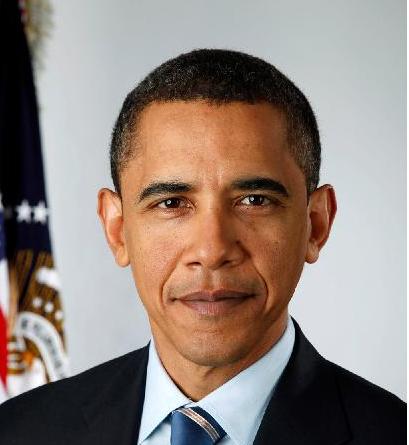
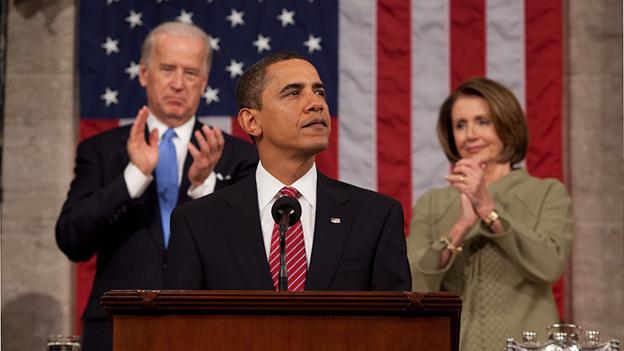
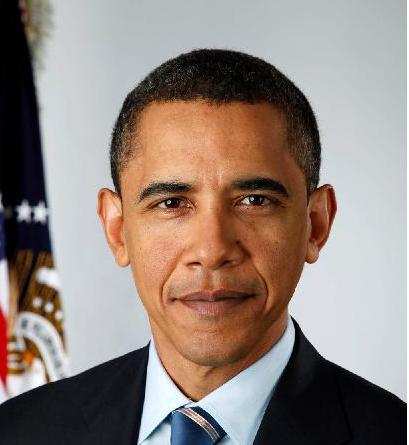
BARACK OBAMA

Sigh. Remember the hope? Remember the joy? Remember the dancing in the streets of the Mission as a happy city realized that the era of George Bush and The Gang was over? Remember the end of the war, and health-care reform, and fair economic policies?

Yeah, we remember, too. And we remember coming back to our senses when we realized that the first people at the table for the health-policy talks were the insurance industry lobbyists. And when more and more drones killed more and more civilian in Afghanistan, and the wars didn’t end and the country got deeper and deeper into debt.

Oh, and when Obama bailed out Wall Street — and refused to spend enough money to help the rest of us. And when his U.S. attorney decided to crack down on medical marijuana.

We could go on.

There’s no question: The first term of President Barack Obama has been a deep disappointment. And while we wish that his new pledge to tax the millionaires represented a change in outlook, the reality is that it’s most likely an election-year response to the popularity of the Occupy movement.

Last fall, when a few of the most progressive Democrats began talking about the need to challenge Obama in a primary, we had the same quick emotional reaction as many San Franciscans: Time to hold the guy accountable. Some prominent left types have vowed not to give money to the Obama campaign.

But let’s get back to reality. The last time a liberal group challenged an incumbent in a Democratic presidential primary, Senator Ted Kennedy wounded President Jimmy Carter enough to ensure the election of Ronald Reagan — and the begin of the horrible decline in the economy of the United States. We’re mad at Obama, too — but we’re realists enough to know that there is a difference between moderate and terrible, and that’s the choice we’re facing today.

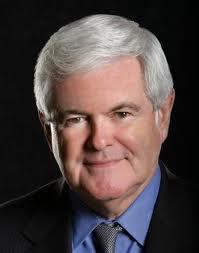
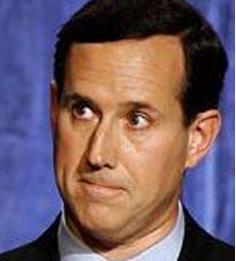
The Republican Party is now entirely the party of the far right, so out of touch with reality that even Reagan would be shunned as too liberal. Mitt Romney, once the relatively centrist governor of Massachusetts, has been driven by Newt Gingrich and Rick Santorum so deeply into crazyland that he’s never coming back. We appreciate Ron Paul’s attacks on military spending and the war on drugs, but he also opposes Medicare and Social Security and says that people who don’t have private health insurance should be allowed to die for lack of medical care.

No, this one’s easy. Obama has no opposition in the Democratic Primary, but for all our concerns about his policies, we have to start supporting his re-election now.

U.S. SENATE

DIANNE FEINSTEIN

The Republicans in Washington didn’t even bother to field a serious candidate against the immensely well-funded Feinstein, who is seeking a fourth term. She’s a moderate Democrat, at best, was weak-to-terrible on the war, is hawkish on Pentagon spending (particularly Star Wars and the B-1 bomber), has supported more North Coast logging, and attempts to meddle in local politics with ridiculous ideas like promoting unknown Michael Breyer for District Five supervisor. She supported the Obama health-care bill but isn’t a fan of single-payer, referring to supporters of Medicare for all as “the far left.”

But she’s strong on choice and is embarrassing the GOP with her push for reauthorization of an expanded Violence Against Women Act. She’ll win handily against two token Republicans.

U.S. CONGRESS, DISTRICT 2

NORMAN SOLOMON

The Second District is a sprawling region stretching from the Oregon border to the Golden Gate Bridge, from the coast in as far as Trinity County. It’s home to the Marin suburbs, Sonoma and Mendocino wine country, the rough and rural Del Norte and the emerald triangle. There’s little doubt that a Democrat will represent the overwhelmingly liberal area that was for almost three decades the province of Lynn Woolsey, one of the most progressive members in Congress. The top two contenders are Norman Solomon, an author, columnist and media advocate, and Jared Huffman, a moderate member of the state Assembly from Marin.

Solomon’s not just a decent candidate — he represents a new approach to politics. He’s an antiwar crusader, journalist, and outsider who has never held elective office — but knows more about the (often corrupt) workings of Washington and the policy issues facing the nation than many Beltway experts. He’s talking about taxing Wall Street to create jobs on Main Street, about downsizing the Pentagon and promoting universal health care. He’s a worthy successor to Woolsey, and he deserves the support of every independent and progressive voter in the district.

U.S. CONGRESS, DISTRICT 12

NANCY PELOSI

Nancy Pelosi long ago stopped representing San Francisco (see: same-sex marriage) and began representing the national Democratic party and her colleagues in the House. She will never live down the privatization of the Presidio or her early support for the Iraq war, but she’s become a decent ally for Obama and if the Democrats retake the House, she’ll be setting the agenda for his second term. If the GOP stays in control, this may well be her last term.

Green Party member Barry Hermanson is challenging her, and in the old system, he’d be on the November ballot as the Green candidate. With open primaries (which are a bad idea for a lot of reasons) Hermanson needs support to finish second and keep Pelosi on her toes as we head into the fall.

U.S. CONGRESS, DISTRICT 12

BARBARA LEE

This Berkeley and Oakland district is among the most left-leaning in the country, and its representative, Barbara Lee, is well suited to the job. Unlike Pelosi, Lee speaks for the voters of her district; she was the lone voice against the Middle East wars in the early days, and remains a staunch critic of these costly, bloody, open-ended foreign military entanglements. We’re happy to endorse her for another term.

U.S. CONGRESS, DISTRICT 13

JACKIE SPEIER

Speier’s more of a Peninsula moderate than a San Francisco progressive, but she’s been strong on consumer privacy and veterans issues and has taken the lead on tightening federal rules on gas pipelines after Pacific Gas and Electric Company killed eight of her constituents. She has no credible opposition.

STATE SENATE, DISTRICT 11

MARK LENO

Mark Leno started his political career as a moderate member of the Board of Supervisors from 1998 to 2002. His high-profile legislative races — against Harry Britt for the Assembly in 2002 and against Carole Migden for the Senate in 2008 — were some of the most bitterly contested in recent history. And we often disagree with his election time endorsements, which tend toward more downtown-friendly candidates.

But Leno has won us over, time and again, with his bold progressive leadership in Sacramento and with his trailblazing approach to public policy. He is an inspiring leader who has consistently made us proud during his time in the Legislature. Leno was an early leader on the same-sex marriage issue, twice getting the Legislature to legalize same-sex unions (vetoed both times by former Gov. Arnold Schwarzenegger). He has consistently supported a single-payer health care system and laid important groundwork that could eventually break the grip that insurance companies have on our health care system. And he has been a staunch defender of the medical marijuana patients and has repeatedly pushed to overturn the ban on industrial hemp production, work that could lead to an important new industry and further relaxation of this country wasteful war on drugs. We’re happy to endorse him for another term.

STATE ASSEMBLY, DISTRICT 17

TOM AMMIANO

Ammiano is a legendary San Francisco politician with solid progressive values, unmatched courage and integrity, and a history of diligently and diplomatically working through tough issues to create ground-breaking legislation. We not only offer him our most enthusiastic endorsement — we wish that we could clone him and run him for a variety of public offices. Since his early days as an ally of Harvey Milk on gay rights issues to his creation of San Francisco’s universal health care system as a supervisor to his latest efforts to defend the rights of medical marijuana users, prison inmates, and undocumented immigrants, Ammiano has been a tireless advocate for those who lack political and economic power. As chair of Assembly Public Safety Committee, Ammiano has blocked many of the most reactionary tough-on-crime measures that have pushed our prison system to the breaking point, creating a more enlightened approach to criminal justice issues. We’re happy to have Ammiano expressing San Francisco’s values in the Capitol.

STATE ASSEMBLY, DISTRICT 19

PHIL TING

Once it became abundantly clear that Assessor-Recorder Phil Ting wasn’t going to get elected mayor, he started to set his eyes on the state Assembly. It’s an unusual choice in some ways — Ting makes a nice salary in a job that he’s doing well and that’s essentially his for life. Why would he want to make half as much money up in Sacramento in a job that he’ll be forced by term limits to leave after six years?

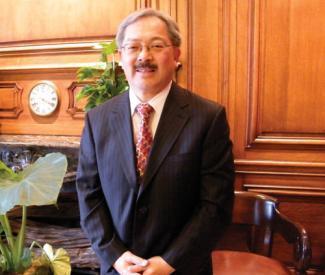
Ting’s answer: he’s ready for something new. We fear that a vacancy in his office would allow Mayor Ed Lee to appoint someone with less interest in tax equity (prior to Ting, the city suffered mightily under a string of political appointees in the Assessor’s Office), but we’re pleased to endorse him for the District 19 slot.

Ting has gone beyond the traditional bureaucratic, make-no-waves approach of some of his predecessors. He’s aggressively sought to collect property taxes from big institutions that are trying to escape paying (the Catholic Church, for example) and has taken a lead role in fighting foreclosures. He commissioned, on his own initiative, a report showing that a large percentage of the foreclosures in San Francisco involved some degree of fraud or improper paperwork, and while the district attorney is so far sitting on his hands, other city officials are moving to address the issue.

His big issue is tax reform, and he’s been one the very few assessors in the state to talk openly about the need to replace Prop. 13 with a split-role system that prevents the owners of commercial property from paying an ever-declining share of the tax burden. He wants to change the way the Legislature interprets Prop. 13 to close some of the egregious loopholes. It’s one of the most important issues facing the state, and Ting will arrive in Sacramento already an expert.

Ting’s only (mildly) serious opponent is Michael Breyer, son of Supreme Court Justice Breyer and a newcomer to local politics. Breyer’s only visible support is from the Building Owners and Managers Association, which dislikes Ting’s position on Prop. 13. Vote for Ting.

DEMOCRATIC COUNTY CENTRAL COMMITTEE

You can say a lot of things about Aaron Peskin, the former supervisor and retiring chair of the city’s Democratic Party, but the guy was an organizer. Four years ago, he put together a slate of candidates that wrenched control of the local party from the folks who call themselves “moderates” but who, on critical economic issues, are really better defined as conservative. Since then, the County Central Committee, which sets policy for the local party, has given its powerful endorsement mostly to progressive candidates and has taken progressive stands on almost all the ballot issues.

But the conservatives are fighting back — and with Peskin not seeking another term and a strong slate put together by the mayor’s allies seeking revenge, it’s entirely possible that the left will lose the party this year.

But there’s hope — in part because, as his parting gift, Peskin helped change state law to make the committee better reflect the Democratic voting population of the city. This year, 14 candidates will be elected from the East side of town, and 10 from the West.

We’ve chosen to endorse a full slate in each Assembly district. Although there are some candidates on the slate who aren’t as reliable as we might like, 24 will be elected, and we’re picking the 24 best.

DISTRICT 17 (EAST SIDE)

John Avalos

David Campos

David Chiu

Petra DeJesus

Matt Dorsey

Chris Gembinsky

Gabriel Robert Haaland

Leslie Katz

Rafael Mandelman

Carole Migden

Justin Morgan

Leah Pimentel

Alix Rosenthal

Jamie Rafaela Wolfe


DISTRICT 19 (WEST SIDE)

Mike Alonso

Wendy Aragon

Kevin Bard

Chuck Chan

Kelly Dwyer

Peter Lauterborn

Hene Kelly

Eric Mar

Trevor McNeil

Arlo Hale Smith

State ballot measures

PROPOSITION 28

YES

LEGISLATIVE TERM LIMITS

Let us begin with a stipulation: We have always opposed legislative term limits, at every level of government. Term limits shift power to the executive branch, and, more insidiously, the lobbyists, who know the issues and the processes better than inexperienced legislators. The current system of term limits is a joke — a member of the state Assembly can serve only six years, which is barely enough time to learn the job, much less to handle the immense complexity of the state budget. Short-termers are more likely to seek quick fixes than structural reform. It’s one reason the state Legislatures is such a mess.

Prop. 28 won’t solve the problem entirely, but it’s a reasonable step. The measure would allow a legislator to serve a total of 12 years in office — in either the Assembly, the Senate, or a combination. So an Assembly member could serve six terms, a state Senator three terms. No more serving a stint in one house and then jumping to the other, since the term limits are cumulative, which is imperfect: A lot of members of the Assembly have gone on to notable Senate careers, and that shouldn’t be cut off.

Still, 12 years in the Assembly is enough time to become a professional at the job — and that’s a good thing. We don’t seek part-time brain surgeons and inexperienced airline pilots. Running California is complicated, and there’s nothing wrong with having people around who aren’t constantly learning on the job. Besides, these legislators still have to face elections; the voters can impose their own term limits, at any time.

Most of the good-government groups are supporting Prop. 28. Vote yes.

PROPOSITION 29

YES

CIGARETTE TAX FOR CANCER RESEARCH

Seriously: Can you walk into the ballot box and oppose higher taxes on cigarettes to fund cancer research? Of course not. All of the leading medical groups, cancer-research groups, cancer-treatment groups and smoking-cessation groups in the state support Prop. 29, which was written by the American Cancer Society and the American Heart Association.

We support it, too.

Yes, it’s a regressive tax — most smokers are in the lower-income brackets. Yes, it’s going to create a huge state fund making grants for research, and it will be hard to administer without some issues. But the barrage of ads opposing this are entirely funded by tobacco companies, which are worried about losing customers, particularly kids. A buck a pack may not dissuade adults who really want to smoke, but it’s enough to price a few more teens out of the market — and that’s only good news.

Don’t believe the big-tobacco hype. Vote yes on 29.

San Francisco ballot measures

PROPOSITION A

YES

GARBAGE CONTRACT

A tough one: Recology’s monopoly control over all aspects of San Francisco’s waste disposal system should have been put out to competitive bid a long time ago. That’s the only way for the city to ensure customers are getting the best possible rates and that the company is paying a fair franchise fee to the city. But the solution before us, Proposition A, is badly flawed public policy.

The measure would amend the 1932 ordinance that gave Recology’s predecessor companies — which were bought up and consolidated into a single behemoth corporation — indefinite control over the city’s $220 million waste stream. Residential rates are set by a Rate Board controlled mostly by the mayor, commercial rates are unregulated, and the company doesn’t even have a contract with the city.

Last year, when Recology won the city’s landfill contract — which was put out to bid as the current contract with Waste Management Inc. and its Altamont landfill was expiring — Recology completed its local monopoly. At the time, Budget Analyst Harvey Rose, Sup. David Campos, and other officials and activists called for updating the ordinance and putting the various contracts out to competitive bid.

That effort was stalled and nearly scuttled, at least in part because of the teams of lobbyists Recology hired to put pressure on City Hall, leading activists Tony Kelley and retired Judge Quentin Kopp to write this measure. They deserve credit for taking on the issue when nobody else would and for forcing everyone in the city to wake up and take notice of a scandalous 70-year-old deal.

We freely admit that the measure has some significant flaws that could hurt the city’s trash collection and recycling efforts. It would split waste collection up into five contracts, an inefficient approach that could put more garbage trucks on the roads. No single company could control all five contracts. Each of those contracts would be for just five years, which makes the complicated bidding process far too frequent, costing city resources and hindering the companies’ ability to make long-term infrastructure investments.

It would require Recology to sell its transfer station, potentially moving the waste-sorting facility to Port property along the Bay. Putting the transfer station in public hands makes sense; moving it to the waterfront might not.

On the scale of corrupt monopolies, Recology isn’t Pacific Gas and Electric Co. It’s a worker-owned company and has been willing to work in partnership with the city to create one of the best recycling and waste diversion programs in the country. For better or worse, Recology controls a well-developed waste management infrastructure that this city relies on, functioning almost like a city department.

Still, it’s unacceptable to have a single outfit, however laudatory, control such a massive part of the city’s infrastructure without a competitive bid, a franchise fee, or so much as a contract. In theory, the company could simply stop collecting trash in some parts of the city, and San Francisco could do nothing about it.

As a matter of public policy, Prop. A could have been better written and certainly could, and should, have been discussed with a much-wider group, including labor. As a matter of real politics, it’s a messy proposal that at least raises the critical question: Should Recology have a no-bid, no contract monopoly? The answer to that is no.

Prop. A will almost certainly go down to defeat; Kopp and Kelly are all alone, have no real campaign or committee and just about everyone else in town opposes it. Our endorsement is a matter of principle, a signal that this longtime garbage deal has to end. If Recology will work with the city to come up with a contract and a bid process, then Prop. A will have done its job. If not, something better will be on the ballot in the future.

For now, vote yes on A.

PROPOSITION B

YES

COIT TOWER POLICY

In theory, city department heads ought to be given fair leeway to allocate resources and run their operations. In practice, San Francisco’s Department of Recreation and Parks has been on a privatization spree, looking for ways to sell or rent public open space and facilities as a way to balance an admittedly tight budget. Prop. B seeks to slow that down a bit, by establishing as city policy the premise that Coit Tower shouldn’t be used as a cash cow to host private parties.

The tower is one of the city’s most important landmarks and a link to its radical history — murals painted during the Depression, under the Works Progress Administration, depict local labor struggles. They’re in a bit of disrepair –but that hasn’t stopped Rec-Park from trying to bring in money by renting out the place for high-end events. In fact, the tower has been closed down to the public in the past year to allow wealthy patrons to host private parties. And the city has more of that in mind.

If the mayor and his department heads were acting in good faith to preserve the city’s public spaces — by raising taxes on big business and wealthy individuals to pay for the commons, instead of raising fees on the rest of us to use what our tax dollars have already paid for — this sort of ballot measure wouldn’t be necessary.

As it is, Prop. B is a policy statement, not an ordinance or Charter amendment. It’s written fairly broadly and won’t prevent the occasional private party at Coit Tower or prevent Rec-Park from managing its budget. Vote yes.
 

Meister: The obvious solution to our social security problem

3

By Dick Meister

Dick Meister, former labor editor of the SF Chronicle and KQED-TV Newsroom, has covered labor and politics for more than a half-century. Contact him through his website, dickmeister.com, which includes more than 350 of his columns.

Guaranteeing America’s working people a decent retirement has become increasingly difficult with the decline of traditional pension plans and the glaring inadequacy of the 401 (k) savings accounts that have replaced them.

So what to do? The answer is obvious to the AFL-CIO, and should be to everyone else: Increase Social Security benefits.

As AFL-CIO President Richard Trumka notes, “Social Security is a phenomenally successful program that represents the very best in American values and has virtually no waste, no corruption and almost no overhead.”

The program does have one serious problem, however – “its benefits are too low.”

Trumka certainly has that right. The average Social Security payout for men is only about $16,000 a year, barely above the minimum wage. Payouts for women average only about $12,000 a year, barely above the poverty line.

Most of those drawing benefits earned much more during their working days. The retirement programs in most other industrialized countries pay retirees benefits in amounts far closer to what they made while working.

It’s for very good reason that the AFL-CIO has taken an official position calling for “an across the board increase in Social Security benefits,” including adjustments to account for retirees’ steadily escalating health care costs and, among other economic setbacks, “the loss of home equity experienced by millions of Americans in the Great Recession.”

Remedial action is clearly needed. As the AFL-CIO says, “Our retirement system is falling apart at the seams. Millions of Americans are afraid to retire because they know they can’t maintain their standard of living in retirement, and more and more seniors have to keep working well past the age when they should be retiring.”

Democratic Senator Tom Harkin of Iowa, who calls Social Security “the most successful program in history,” has introduced a bill – the Rebuild America Act – that includes changes in the program such as the AFL-CIO is advocating.

Harkin’s bill would increase benefits by about $60-$70 a month and guarantee that the trust fund from which benefits are drawn would remain solvent and able to pay out full benefits for at least another 40 years, in large part by removing the $110,100 cap on income subject to Social Security deductions.

Quite a contrast to what’s been discussed in Washington, where most of the talk about Social Security has been about Republican proposals to cut benefits. That has especially included increasing the retirement age and cutting back cost-of-living adjustments.

Harkin’s measure would not only revitalize the Social Security system. It also calls for modernizing transportation and energy infrastructures and education systems, increasing access to quality child care, expanding time-and-a-half overtime pay, raising the minimum wage, increasing the availability of paid sick leave, expanding union rights and increasing opportunities for disabled workers. The bill also would end tax breaks for companies that ship jobs overseas.

Increasing Social Security benefits remains a top priority with Harkin and other Democrats. As the AFL-CIO sees it, “the overwhelming majority of working Americans of every political persuasion in every part of the country ‘get’ the absolutely critical importance of adequate Social Security benefits, but our elites don’t seem to get it. Social security is the solution, not the problem.”

Dick Meister, former labor editor of the SF Chronicle and KQED-TV Newsroom, has covered labor and politics for more than a half-century. Contact him through his website, dickmeister.com, which includes more than 350 of his columns.

The slate controversy at the DCCC

30

There’s nothing like a combination of insider politics, a struggle for control of the local Democratic Party and the ongoing discussion about the need for progressives and moderates to get along better to make for a complicated political story.

Which is exactly what’s going on with Alix Rosenthal’s effort to put together a Women’s Slate for the Democratic County Central Committee.

I’ve spend way too much time trying to figure it all out, but it raises enough interesting issues to make it worth discussion in the progressive community.

The background: For four years, the progressives have controlled the DCCC – and thus the powerful local endorsements for the local Democratic Party. That’s taken considerable organizing – and it’s worked to a great extent because of a remarkable degree of unity among a famously fractious bunch.
In the past two elections, every progressive group, the Harvey Milk Club, the Tenants Union, the teacher’s union, the nurses, the Sierra Club — and the Bay Guardian – has endorsed essentially the slate of candidates. There are problems with that approach – it’s easy for some people or some groups to get excluded, and you get complaints of machine politics – but in reality, there weren’t a lot of people who identified as progressive getting left out. Quite the opposite – the slate organizers were working hard to recruit people to run. Serving on the DCCC isn’t glamorous and it’s a lot of work. (It’s also at times unpleasant — the arguments are harsh, sometimes more so than necessary.)

In 2012, we have a different problem: The people who are called moderates have convinced a lot of high-profile canidates (former Sup. Bevan Dufty, Sup. Malia Cohen, School Board member Hydra Mendoza) – people who will win on name-recognition alone – to run. Combined with the retirement of Aaron Peskin, and the all-but certain re-election of incumbents like Scott Wiener and Leslie Katz (who remains to this day the only member of the DCCC who refuses ever to take my phone calls) and you have the makings of a conservative victory.

Let me take a second on this “moderate” tag. Moderates in San Francisco are people who are liberal on social issues – like, frankly, 80 or 90 percent of the city – but conservative on economic issues. Conservative is the right word here: The moderates don’t typically support higher taxes on the rich and big business, don’t support development controls, are weak on tenant issues, don’t think that housing should be a right of all people and pretty much buy into what in the Clinton era we called neo-liberalism.

The progressives (who have economic policies more like the Democratic Party of FDR and Lyndon Johnson) and the moderates (who have economic policies more like the Democratic Party of  Walter Shorenstein, Dianne Feinstein and Bill Clinton) have been fighting for decades over the future of a city where there aren’t a whole lot of Republicans.

So when I say conservative I’m not talking about Reagan or Santorum — but I’m talking about a very different economic vision than mine.

And while I’m all in favor of being civil and polite to everyone and respecting friends and colleagues who disagree with you, I guess I’m enough of an old commie (with a lower case “c”) to believe deeply in class struggle and the idea that the rich and powerful don’t give up without a fight.

And having a good working relationship with the conservative Democrats (hey, I’m on great terms with Scott Wiener – we talk all the time and I respect him and like him personally) doesn’t mean I’m ready to give up the notion that in the United States and California and San Francisco, 2012, there’s a class war going on. We didn’t start the war, but we have to fight it to survive — and to keep the city from becoming an ossified playground of the very wealthy.

Okay, enough background and rhetoric. On March 29, Rosenthal – who is also my friend and I respect and often support – sent out an email that announced that all of the women running for DCCC were going to work together on a slate:

“The female candidates for the San Francisco Democratic County Central Committee (DCCC) have banded together to form a slate of our own. It’s called Elect Women 2012, and it includes all women running this June in both Assembly districts in San Francisco, moderates and progressives alike. The slate is intended to provide a support network for both new and seasoned candidates, to develop an amicable working relationship between moderate and progressive candidates, and above all to get more women elected to public office.”

 
That’s all good. More women in politics is good. Supporting new candidates is good. A working relationship between progressives and moderates is good.
But here’s the question, and it’s not a new one in San Francisco: Is it a good idea, both politically and as a matter of strategy, to promote the interests of people who largely disagree with you on issues? If a slate of women helps knock off a progressive man in favor of a conservative woman, is that a positive change?

Rosenthal doesn’t think that’s going to happen. We’ve had a couple of long discussions about this, and she’s looked at the math and the current list of candidates, and she thinks her slate is more likely to help a couple of progressive women (Petra DeJesus, for example) who might not otherwise win.
“You need to touch the voters three or four times before they know who you are,” she told me. “The winners will be people who are on several slates, and the progressives have more slates than the moderates.”

The guys who she agrees should really be on the DCCC and might have a close call (Matt Dorsey, for example, a gay man, or Dr. Justin Morgan, an African American man) won’t win or lose on the basis of a competing women’s slate.

Rosenthal ran for office on a pledge to bring more women into the DCCC and into public office, and that’s an important goal – right now, there’s not a single woman among the citywide elected officials in San Francisco. (That hasn’t always been the case — the mayor for 10 (awful) years was Dianne Feinstein, and in the past decade or so we’ve had a female treasurer, assessor, district attorney, city attorney and public defender. But right now: All guys.

The Board of Supes is a bit lopsided, too – seven men, four women.

And for the same reason that putting people of color into office almost by definition changes the perspective of politics, electing women is a progressive value. No matter how sympathetic the straight white men are, there are things we never had to experience and will never really understand.

That said, I would much rather have (mostly progressive) white guy Aaron Peskin run the Democratic Party than (mostly conservative) Asian woman Mary Jung – and so would Rosenthal. “No question, no doubt about it,” she told me.

Now that Jung has all but announced that she wants to be the next party chair, and since a number of the women on the slate will support her over a progressive (and would support her over Rosenthal) – is this doing the movement any good?

Gabriel Haaland, a transgender man and former president of the Harvey Milk Club, points out that “the Milk Club could simply endorse all LGBT candidates for our slate, and there are some who have argued for that over the years. But we don’t — because we work in coalitions, and that kind of slate undermines the whole concept of coalition politics.”

Hene Kelly, who is on the women’s slate but has insisted that the mailings make it clear she isn’t supporting some of the other candidates who will be connected with her, thinks the Rosenthal plan is a bad idea.

“There are people on this slate I could not and would not support because they don’t share my beliefs,” Kelly told me. “These are nice people, but they don’t see San Francisco the way that I do. Mary Jung and I don’t believe in the same things.”

Rosenthal says that the very fact that so many people who disagree on issues can work together on a slate shows that women can get along and end some of the divisiveness on the DCCC. Kelly – who is a passionate and often fierce fighter – disagrees: “I’m not that easy to get along with.”

Kelly is part of what will be a progressive coalition slate – including women and yes, men – and Latinos, African Americans, LGBT people, young people, older people … a mix. An imperfect but generally San Francisco mix. And all of them share the same political values.

Some of the people who don’t like the women’s slate are, indeed, men – and Rosenthal is at least a little proud of that. In another email talking about a Chronicle story, she notes:

“I have already received panicked calls from some male candidates and leaders, it seems there is quite a buzz about us and about Heather’s article. Which is great.  I hear that Malia said some good things, as did Supervisor Wiener.”

Wait — Scott Wiener and Malia Cohen are happy about the slate? This is supposed to be good news? I like Scott and we’ve worked together on issues we agree on, but I didn’t endorse him for office; on the most critical things, we don’t agree at all. And interestingly, there is not one progressive woman quoted as opposing the idea in the Heather Knight piece in the Chron.

I think the panic is not, alas, about men fearing the power of women. There isn’t a progressive man I know who would be unhappy with Hene Kelly running the party.

The question is about whether this effort might help shift the balance of  power away from the progressives – and, frankly, whether all this talk about getting along together is an excuse for watering down what we want to do and what we believe in.

Maybe Alix Rosenthal is right, and her slate — which will spend about $25,000 in what amounts to co-op advertising — will help bump a couple of progressive women to the top and help the left hold on (narrowly, because it will be close) to the DCCC. Maybe the moderate/conservative crew will win a majority, and some of the moderate women will be impressed by the help Rosenthal gave them and elect her chair (which would be a lot better than some of the alternatives).

Maybe politics should be less rancorous and we should all get along better – except that, in my 30 years of experience, getting along with the moderates has always, always, always, led to a watering down of the progressive program and agenda. 

Maybe I’m just a straight white guy who doesn’t get it – and I’m happy to cop to that possibility.

I agree that there aren’t enough women in local political office, that we need to encourage and promote progressive women candidates, that much of the leadership (such as it is) on the left is male — and that needs to change.

But I’m not sure that working to help elect people who disagree with you on the key economic and political issues is good for the values that I think Alix Rosenthal and I share.

It’s tricky, but at least we should be thinking and talking about it. Nicely. I promise.

Dick Meister: Labor’s David vs. GOP’s Goliath

0

By Dick Meister

 Dick Meister, former labor editor of the SF Chronicle and KQED-TV Newsroom, has covered labor and politics for more than a half-century. Contact him through his website, www.dickmeister,com, which includes more than 350 of his columns.

Organized labor is doing exactly what it must do to combat the onslaught against unions being waged by Republican politicians nationwide, throwing lots of money and lots of ground troops into the election campaigns of Democrats – most especially President Obama’s campaign for re-election.

The AFL-CIO made it official with a ringing endorsement of Obama. Federation President Rich Trumka declared that “as president, Barack Obama has placed his faith in America’s working men and women to lead our country to economic recovery and our full potential. So we’re putting our faith in him.”

Trumka acknowledged that the AFL-CIO has sometimes disagreed with Obama and “often pushed his administration to do more – and do it faster.” But he said there never has been any doubt about Obama’s commitment to working families.

On the other hand, Trumka noted, the Republicans seeking their party’s presidential nomination have all “pledged to uphold the special privileges of Wall Street and the 1% that have produced historic economic inequality and drowned out the voices of working people.”

Trumka characterized working people as “the Davids standing up to Goliath in today’s politics. Our strength is in our numbers, our values and plain hard work. When we come together, we are formidable.”

Labor’s political forces have indeed been formidable in past elections, putting millions of dollars and millions of union members into the campaigns of labor-friendly Democrats such as Obama. The AFL-CIO pledges to do even more for Obama’s re-election bid, aided in part by a 2010 Supreme Court ruling that allows unions to go door-to-door to solicit support from non-union voters as well as union members.

Unions expect to spend $400 million this year on national, state and local elections, fully one-fourth of it coming from a key AFL-CIO affiliate, the American Federation of State, County and Municipal Employees. The Service Employees International Union expects to mobilize 100,000 of its members, many of them public employees. The AFL-CIO itself anticipates spending nearly $7 million it has collected primarily for campaigning among non-union voters.

The federation aims to outdo its extraordinary campaign for Obama’s election in 2008. A quarter-million union volunteers took part in that effort, knocking on 14 million doors, making 76 million phone call, sending out 57 million pieces of mail and distributing 29 million leaflets at work sites.

It’s certainly true that Obama has generally been a good friend to organized labor. But what, specifically, has he done for working people and their unions? Why do unionists feel he’s deserving of so much union money and so much union effort?

Why? The AFL-CIO’s Trumka cites, for example, Obama’s American Recovery and Reinvestment Act which “saved or created 3.6 million jobs” and averted a second Great Depression. There’s also Obama’s championing of comprehensive health insurance reform which “set the nation on a path toward health security,” and Wall Street reform that will eventually lead to reversal of the financial deregulation “that put our entire economy at risk.”

Re-electing a labor-friendly president will be only a part of labor’s election-day mission. Unions will be campaigning at least as hard to defeat the many anti-union Republicans who are running at the local, state and national level and threatening the very existence of unions.

As AFL-CIO Political Director Michael Podhorzer notes, “they’ve clearly tried to weaken unions and drain our treasuries. But the consequence has been more like kicking a hornets’ nest than draining our resources.”

Unions hope to repeat their success of last November in Ohio, where they waged a major campaign that repealed a Republican-sponsored law that greatly weakened the collective bargaining rights of the state’s public employees. It was an overwhelming victory with 62 percent voting for repeal, only 38 percent for retaining the law, which was similar to those proposed elsewhere, along with other anti-union measures.

The AFL-CIO is confident that it can rally millions of voters for Obama in Ohio and other battleground states, including Michigan, Pennsylvania and Wisconsin. Unions have already had a major impact in Wisconsin, where voters have approved the holding of recall elections for Gov. Scott Walker, his lieutenant governor and four Republican state senators because of their support for legislation that stripped public employees of their collective bargaining rights. Previous labor campaigns led to the recall of two other Republican state senators.

Obama would seem to need unions as much as they need him. The latest polls indicate that only about half the citizenry approves of the job he’s doing. He’s going to have to work hard to win over the large body of Americans who apparently don’t share labor’s view of him, but who could be convinced to at least give him another four years to meet their expectations.

Labor’s election–year role, in short, will be to do much of the convincing needed to help rally millions of voters behind their friend in the White House. That would be highly rewarding to labor and to millions of Americans, union and non-union alike.

Dick Meister, former labor editor of the SF Chronicle and KQED-TV Newsroom, has covered labor and politics for more than a half-century. Contact him through his website, www.dickmeister,com, which includes more than 350 of his columns.

The future of the DCCC

26

Now that Aaron Peskin is retiring as chair of the Democratic County Central Committee, and is not even seeking re-election, the future of a realtively obscure but political important agency is very much up in the air.

Peskin had his share of critics, and he would be the fist to say it was time for him to move on, but he orchestrated the progressive takeover of the DCCC four years ago and turned it into an operation that helped get progressives elected to local office. He raised money for the party and kept the often (ahem) fractious progressive committee members going in the same direction. He was a leader — and without him, the left wing of the local Democratic Party is struggling.

Nobody has been able at this point to take Peskin’s place — and in the meantime, the moderate-to-conservative folks are moving agressively to take the DCCC back.

It’s going to be a fascinating race — Gov. Jerry Brown just signed a bill that changes the makeup of the committee, giving the east side of town more members. That’s because more than 60 percent of the Democrats in the city live in what is now Tom Ammiano’s Assembly district. (The east side district of Fiona Ma now includes more of the Peninsula.)

So 14 of the members will be elected from Ammiano’s district, and only 10 from Ma’s (more conservative) district.

But Peskin won’t be on the ballot, and incumbent Debra Walker has stepped down and won’t run (she’s been replaced by Police Commission member Petra DeJesus).

Meanwhile, among the more centrist people who have filed to run: Former Supervisor Bevan Dufty. Sup. Malia Cohen, School Board Member Hydra Mendoza, and former Redevelopment Commission member London Breed. Sup. Scott Wiener, a longtime incumbent, is running for re-election.

The left starts with a vote deficit, since all of the statewide and federal elected officials who are Democrats and live in or represent part of SF are automatically members. That means Sen. Dianne Feinstein, Rep. Nancy Pelosi, Rep. Jackie Speier, Attorney General Kamala Harris, state Sen. Leland Yee, State Sen. Mark Leno, Ma and Ammiano all have votes — and while they never show up, the elected officials send proxies, and other than Ammiano and sometimes Yee and Leno, they can’t be counted on to support progressive candidates and causes.

So progressives need to win more than a simple majority of the contested 24 seats, and while that’s entirely possible, it’s hard to see a full slate in both districts. At best, most progressive groups will probably endorse 12 candidates on the east side and eight on the west — and since the most conservative incumbents will likely win, as will Dufty, probably Cohen and quite possibly Breed, it’s entirely possible that the moderate wing will regain control.

There’s been some tension among progressives in the past few weeks, some arguments about who would best replace Peskin as chair. Animosity over those discussions was one reason Walker resiged. And while there are legit questions about which of the progressives would best run the committee, I fear the candidates were getting ahead of themselves. Because you can’t fight over leadership until you have a majority. And that’s going to be a bigger struggle than it’s been in quite a while.

Missed the state Dem party convention? No worries

3

I missed the state Democratic Party convention, too — had the kids all weekend while the partner was partying in Vegas. But that’s OK — lots of other people were there, and while the MSM mostly missed what was going on, the bloggers had it covered.

If you want the live blow-byblow and some excellent post-prandial analysis, CalBuzz had the scoop. Mostly: Jerry Brown was acting like, well, Jerry, and ducking the major issue of the competing tax measures. John Burton said fuck a lot. Kamala Harris had the best speech (and is already positioning herself to run for guv or maybe senate, maybe against Gavin Newsom, who was working every room).

If you want all the drama around the Howard Berman v. Brad Sherman battle, John Meyers of KQED has the story and the audio.

If you want to know — suprise, surprise — how the Old Guard in the party (once again) screwed the grassroots activists and kept an iron fist of control over the outcome of some of the key votes, Paul Hogart tells the sad, predictable tale here and Brian Leubitz at Calitics has an overview here.

And if you’ve read all of that and still need to know more about the insides of the San Diego Convention Center, then you’re a sicker soul than I.

Occupy and the State of the Union

2

Have all of the Occupy actions made any difference? Gee — I wonder.


I wonder if a president who acted a year ago as if economic justice wasn’t even an issue in this country would have devoted a substantial part of his State of the Union speech to fairness in tax policy. I wonder if he would have said this:


Right now, we’re poised to spend nearly $1 trillion more on what was supposed to be a temporary tax break for the wealthiest 2 percent of Americans. Right now, because of loopholes and shelters in the tax code, a quarter of all millionaires pay lower tax rates than millions of middle-class households. Right now, Warren Buffett pays a lower tax rate than his secretary.


Do we want to keep these tax cuts for the wealthiest Americans? Or do we want to keep our investments in everything else –- like education and medical research; a strong military and care for our veterans?


Or this:


Tax reform should follow the Buffett Rule. If you make more than $1 million a year, you should not pay less than 30 percent in taxes. And my Republican friend Tom Coburn is right: Washington should stop subsidizing millionaires. In fact, if you’re earning a million dollars a year, you shouldn’t get special tax subsidies or deductions. On the other hand, if you make under $250,000 a year, like 98 percent of American families, your taxes shouldn’t go up. You’re the ones struggling with rising costs and stagnant wages. You’re the ones who need relief.


Now, you can call this class warfare all you want. But asking a billionaire to pay at least as much as his secretary in taxes? Most Americans would call that common sense.


or this:


No American company should be able to avoid paying its fair share of taxes by moving jobs and profits overseas. From now on, every multinational company should have to pay a basic minimum tax.


Now: Not saying any of that is going to happen right away, or even that Obama will put tax reform at the top of the agenda. And changing the tax code to charge people like Mitt Romney 30 percent is nowhere near enough; in the 1960s, those people paid 80 percent of their marginal dollars in federal taxes. The Repubs in Congress won’t let any of this happen anyway.


But all of the major newspapers (which a year ago didn’t even know how to spell economic injustice) made his pitch for greater fairness in the economy the lead of their reports and all of the headlines talked about it. And when pollster Stan Greenberg tracked the responses of Democrats, Republicans and independents to the speech, the vast majority were pleased by and agreed with the commments that I cited above. That’s not just 80 percent of the Dems but 70 percent of the GOP voters.


The other thing Obama said — in indirectly — is that government is important. Beyond the flag-waving salute to the troops and the talk about the Navy Seals (Yay! We killed a guy! No arrest, no trial, just summary execution!), Obama was setting the tone for a debate over the role of the public sector in America. He talked about building the Hoover Dam, the Golden Gate Bridge and the interstate highway system. He talked about the importance of public support for research. That’s a direct contradiction to what the Republicans are saying about making government much smaller and less significant in people’s lives. I wonder what happens if the Republican candidate and Obama get out of the platitudes are actually have that discussion this fall.


Of course, he also said the solution to most business problems was tax cuts and incentives, which is not only GOP dogma but silly, since tax cuts for business almost never have the intendent effect. Tax penalties won’t keep companies from moving offshore (although I still support the idea), and tax cuts won’t bring them back.


It’s notable that Obama didn’t mention corporate personhood, which is going to be a huge part of the Occupy agenda this year. And that’s something that could actually change business behavior. Corporate charters are granted by the government — and with a few changes in law, could be revoked by the government, too. Screw your workers, cheat on taxes and move jobs to low-wage non-union areas where children work 14 hours a day making your products? Guess we’ll have to revoke your corporate charter. No more protection for personal liability for the owners and shareholders. Too bad.


And while his populist stuff struck a chord, the energy and environmental policy suggestions were just horrible. Yeah, I’m for ending tax breaks for oil companies — but opening up 75 percent of the potential offshore areas to drilling? Encouraging more natural gas drilling? Not much in the way of serious talk about investing a fraction of that money in renewables?


Oh, and I love this: Obama’s going to force natural gas drillers to “disclose the chemicals they use.” That’s going to keep us safe, yesiree. Thank you, mister driller, for telling me how your poisoning my water. Not that I can do anything about it, of course; you can keep right on going. But now, thanks to our bold president, I know about it.


Occupy the natural gas wells. I’m ready to go.


Big changes to the DCCC?

14

Half the city probably doesn’t realize there is such a thing as the Democratic County Central Committee, and most of the other half doesn’t realize how powerful it is. The daily papers never cover the DCCC meetings and rarely write about the elections that choose the members of an organization that runs the local Democratic Party — and controls local party endorsements. But it’s a serious factor in local politics — the party slate in a Democratic town is one of the most influential endorsements around. And a lot of the city’s current elected leaders started off as members of the DCCC.


For the past few years, progressives have held a majority on the DCCC, but it’s always up in the air, particularly since every elected state and federal Democrat who lives in SF is automatically an ex-officio voting member. So Senator Dianne Feinstein, Rep. Nancy Pelosi both get to vote (actually, the never show up; they send proxies). Gavin Newsom had a vote until he moved to Marin. You get the picture.


And now, with reapportionment, the part has to change its rules. Under the current system, 12 members are elected from each of the city’s two Assembly districts — but under the new lines, Tom Ammiano’s Assembly district will expand beyond the eastern side of town and he’ll now represent 61 percent of the Democratic voters in the city. Fiona Ma’s district moves south into San Mateo, and she’ll only represent 39 percent of the Democrats.


So now the state has to reapportion the DCCC. Three LGBT members describe the process in a B.A.R. piece here. It seems to me that the easiest thing to do is to add five more members on the east side of town. Good for getting more San Franciscans involved in local politics. Good for the diversity of the DCCC. And good because the more directly elected members you have, the less the ex officios influence the committee.


Seems like a fair easy fix. 

Will Obama bring the populist fire in tonight’s speech?

13

President Barack Obama has a choice for how he uses his State of the Union speech this evening. He could follow the advice of Blue Dog Democrats like Mark Penn, who wrote in The Hill today that Obama should avoid “rhetoric that could be interpreted as class warfare.” Or he can find his inner populist and give the speech that the 99 percent needs to hear by announcing that the rich and the Right have already declared that war, and now he intends to win it on behalf of the people.

I’m rooting for the latter, but fearful that Obama is no William Jennings Bryant – or either of the Presidents Roosevelt – and that he is just not up for seizing this moment and going to war with the powerful plutocrats who are ruining this country.

But there are signs that Obama is at least prepared to “double down on taxing the rich,” as the Christian Science Monitor put it today. Certainly, all signs indicate that he will at least raise the economic inequity issue again tonight, and it’s a positive sign that the invited audience will include Debbie Bosanek, the secretary to billionaire investor Warren Buffet that he famously complained shouldn’t be paying his same tax rate. Certainly, Obama intends to push for his “Buffet rule” that would tax investment returns as income rather than at lower capital gains rates.

But those sorts of reasonable arguments aren’t enough. Obama has been calling for higher taxes on the rich throughout his presidency, albeit never as forcefully as he did on the presidential campaign trail in 2008. And since then, he’s repeatedly betrayed that pledge in cutting deals with Republicans in Congress, exacerbating historically high concentrations of wealth and betraying his own stated principles.

The Occupy movement and most of the left – and even segments of the Tea Party right that complain about the economic elites – no longer trust Obama and the Democrats to fight for the interests of the commoner. We’ve become cynical about putting any hopes in a president poised to shatter campaign fundraising records this year.

Yet as Obama prepares to run for reelection against either a vulture capitalist or hypocritical moralist – both of whom will be openly shilling for the 1 percent – he should realize that it’s both good policy and good politics to capitalize on the opportunity that the Occupy movement has opened up, join the class war, and help us finally win it and seize the resources we need to deal with this country’s myriad problems.

Today’s Chronicle includes a front page story about Rep. Nancy Pelosi’s hopes that Democrats will pick up the 25 seats needed to retake the House of Representatives this year – along with analysts poo-pooing that possibility. The only hope they offered for Pelosi’s plan is a meltdown by the Republican presidential nominee.

But that sort of clear contrast between Democrats and Republicans won’t simply happen on its own, it is something that Obama and the Democrats will need to force by finally relying more on populist ire than using campaign contributions from the wealthy to tarnish their opponents. Simply winning the presidential election won’t help Obama break this country’s political gridlock, he needs to make this race about the undue power of the rich and the Right and win it on those terms.

Pelosi acknowledged that her best hopes for gaining a substantial number of Congressional seats are in California, but they don’t seem to realize that the real potential here is with changing the political dialogue and tapping the 58 percent of California voters who said in a November Field Poll that they agree with the economic critiques that sparked the Occupy movement (and even higher percentages have supported taxing millionaires). Even those who didn’t join the Occupy movement agree with its basic analysis that the few are exploiting the many.

There is a simmering populist discontent that will play out in unpredictable ways this year. And it’s possible that many of the left will never trust Obama until his deeds finally match his words. But there is no larger mainstream political podium in this country than the State of the Union speech, and if Obama misses this opportunity to declare his allegiance with the 99 percent – and his willingness to fight for us – then we may all just be in for the nastiest yet most meaningless presidential election in modern history.

Democracy in distress, but it’s the best of the alternatives

0


By Dominique Moisi

Dominique Moisi is the author of The Geopolitics of Emotion.

PARIS – Is democratic time too slow to respond to crises, and too short to plan for the long term?

At a time of deepening economic and social crisis in many of the world’s rich democracies, that question is highly relevant. In Italy, for example, Prime Minister Mario Monti has the necessary and legitimate ambition to carry out comprehensive reform. He is both competent and honest, but faces a quasi-structural impediment: whereas leaders once had three years to convince voters of their policies’ benefits, they now have three hours to convince global financial markets to back their approach.

Caught between Italian legislators who, deep down, do not understand that change and markets in quest of near-immediate certainties, can Monti transcend his natural prudence and act with sufficient clarity and decisiveness?

In the United States, too, the political system is becoming increasingly dysfunctional. The political philosopher Francis Fukuyama goes so far as to say that “vetocracy” could triumph over democracy, regardless of who wins the 2012 presidential election. The separation of powers, a principle established by the US founders under the influence of philosophers such as Montesquieu, is leading today to near-paralysis.

Democracies suffer not only from their slow reaction time at moments of crisis, but also from the difficulty that they face in projecting themselves into the future and planning for the long term. On both sides of the Atlantic, political leaders know what they must do for their countries, but don’t know how to get re-elected if they actually do it. They seem to be structurally condemned to short-termism.

But it is not because democracies have a “time problem” that their era seems to some to be over. China is rightly proud to be able to project itself into the twenty-second century. But China owes that quality of long-term thinking much more to its culture than to the nature of its political system. Chinese think long term because they are Chinese, not because they are not democrats.

China’s leaders can, of course, react to events without much regard for Chinese public opinion. After all, the great majority of Chinese do not dream of democracy, even if something like a civil society is emerging, generating new interests and demands that can no longer be totally controlled or manipulated, as in the past.

But that is precisely the weakness of non-democratic regimes in a global age dominated by transparency: Who dreams of becoming a Chinese citizen, or even a citizen of Singapore? In the aftermath of North Korea’s hereditary succession, strategic thinkers rightly emphasize China’s key role in shaping the peninsula’s future. But, despite the scenes of hysteria that followed the death of the “Great Leader” Kim Jong-il, most North Koreans probably dream of joining democratic South Korea (even if many South Koreans fear that prospect).

The majority of Chinese may not want to be governed like Westerners, but it would be wrong to assume that their only ambition is to spend like Westerners. The more successful they are, the more individualistic they will become and the more they will expect the respect and consideration of those who govern them.

By contrast, if China’s economic growth slows, which is likely in the coming years, protest against corruption – a source of fragility for any regime – will escalate. Indeed, it is important to bear in mind that, ahead of the upcoming Chinese leadership transition, new occupants for only the top two posts have been chosen, and that through a process of gradual anointment by roughly a hundred people at most.

The current crisis in the advanced countries, which may very well lead to a global recession (if it is not already doing so), not only reveals the many maladies of democratic regimes, but also acts as their incubator and accelerator. And yet the crisis may turn out to have an even greater impact on non-democratic systems that seem to be more efficient, but are in reality much more fragile. We see this in mounting unrest in both Russia and China.

Contrary to what one might think, democracy is more resilient than the alternatives in the long run. This will remain true as long as democrats remain convinced of it. Non-democratic models cannot truly challenge democracy. Only the misbehavior of democrats can do that.

Dominique Moisi is the author of The Geopolitics of Emotion.

Copyright: Project Syndicate, 2012.
www.project-syndicate.o

Newt Gingrich, commie radical

11

Actually, more likely Newt Gingrich, Scorched Earth Opportunist, but whatever, we’ll take it: Newt — he the friend of plutocrats and one-time lobbyist for predatory lenders — is launching an assault on Mitt Romney, calling him, in essence, a capitalist pig who exploits the workers.

The fact that it’s true makes the story even more fun. As does the fact that Romney has run so far to the right in the primaries that Obama — by any standard in serious trouble — now has a natural line of attack against the candidate most likely to offer him a credible challenge.

Here’s CalBuzz:

The Occupy Wall Street movement has succeeded in pushing the issue of the nation’s vast wage and wealth disparity onto the agenda of the 2012 campaign. While Republicans in the past have been successful in dismissing discussion and debate about the Third World levels of wealth concentration in the U.S. as unpatriotic “class warfare,” the inarguable facts about the massive gap between the wealthiest Americans and everyone else are now well-known by many mainstream voters, at a time when Romney stands as a central casting character representing the 1%.

Paul Hogarth at BeyondChron says that ” many of us wish that Democrats had the chutzpah to be this scathing and direct,” and I can’t argue with that. The good news is that the Newtclear Bombs in South Carolina will probably work: Romney’s going to win the nomination, and everybody knows it, but the blitz of revenge ads may wound Romney enough to convince the Obama folks that this is the line of attack to use during the general election.

In other words, Newt is pushing the Democratic party to the left, legitimizing the class warfare that the Republicans so love to denounce as unAmerican.

How much do we love this?

The GOP and class warfare

42

Every political consultant knows that words like “together” and “unite” play well with voters. That’s why you hear them so much on the campaign trail, from races for local office to presidential campaigns. Remember Obama’s signature speech, with his signature line?

Now even as we speak, there are those who are preparing to divide us, the spin masters, the negative ad peddlers who embrace the politics of anything goes. Well, I say to them tonight, there is not a liberal America and a conservative America – there is the United States of America. There is not a Black America and a White America and Latino America and Asian America – there’s the United States of America.

Now the Republicans are claiming that it’s the Obama administration that’s dividing America:

Democrats will “poison the American spirit by pitting one American against another and engaging in class warfare,” Romney said. “I believe in an America that is one nation under God, and I will keep it that way.”

But here’s the thing: Obama actually tried to work with both sides. I wish he hadn’t tried so hard, since the Republicans have no interest in helping him govern, but you can’t say he was a divider. The GOP candidates, on the other hand, can’t possibly succeed without being divisive; as Kos points, that’s all they have:

Their entire schtick is predicated on pitting Americans against Americans. Without such demonization, they would be unable to function as an ongoing concern.

I don’t have to run for office, so I can get away with saying this: I am not a uniter, not in the sense that the politicians are using the word. I want us all to get along and I’m not a fan of violence, but there’s already a war on in this country. There’s a class war — and our side didn’t start it. Americans have already been pitted against each other — not by Obama but by a small group of the very rich and the political toadies who support them, who have systematically dismantled the tax, education and service system that once made at least an attempt at creating a country with a level playing field, a stable middle class and an income and wealth distribution curve that wasn’t grossly distorted.

The one percent has declared war on the rest of us. And we’re supposed to sit here and take it and not fight back?

Or should we attempt to drown corporatocracy in the bathtub?

How scary is Iowa?

40

I know, I know: It doesn’t deserve the hype. And Mitt Romney’s going to be the Republican nominee anyway; the rest is all theater. And I was just joking about how it might help Obama if one of the true wingnuts won the Iowa Caucuses.

But in the cold light of a Jan. 4 morning, I have to say:

It’s pretty fucking scary that the voters in Iowa not only took seriously but gave a fair amount of support to someone who has made much of his career out of being a homophobe and a racist. Oh, and really, really stupid:

“There are people who were gay and lived the gay lifestyle and aren’t anymore. I don’t know if that’s the similar situation or that’s the case for anyone that’s black. It’s a behavioral issue as opposed to a color of the skin issue, and that’s the diff for serving in the military.”

Seriously: I know that he only got 30,000 votes, and there are a lot of evangelical Christians in Iowa, and I suppose not all of them hate queer people. Al Sharpton — and whatever you say, Sharpton’s no political fool — says that Santorum helps the Democrats by forcing Romney to continue to pander to the right. And I don’t believe that even 25 percent of the Republican voters in the nation as a whole would support someone with Santorum’s views.

But still: It’s 2012. And the most virulently antigay candidate in a right-wing field is right up near the top in the first real contest.

Isn’t that a little bit alarming?

The redistricting furor

55

I opposed the measure that created California’s new Redistricting Commission. As we noted in our endorsements at the time:

The commission is hardly a fair body — it has the same number of Republicans as Democrats in a state where there are far more Democrats than Republicans. And most states still draw lines the old-fashioned way, so Prop. 20 could give the GOP an advantage in a Democratic state. States like Texas and Florida, notorious for pro-Republican gerrymandering, aren’t planning to change how they do their districts.

But Prop. 20 passed anyway, and control of the critically important task of drawing lines for state Legislature and Congressional districts fell to an unbalanced group of people with no political experience. They commission held hearings up and down the state, took reams of testimony — and wound up with a map that will probably add six or seven Democratic seats to the Congressional delegation.

That’s not a big surprise: Democratic Party registration is stable in a very blue state, and Republican registration is declining. Any fair redistricting would likely lead to more Democratic seats. And it’s clear that the likes of Phil Burton were not involved: In Los Angeles, two powerful veteran members of the House, Brad Sherman and Howard Berman, wound up in the same district. No matter what happens, the Democratic Party will lose one of its heaviest hitters.

But ProPublica, the national (and generally very solid) investigative reporting group, took on the process and concluded that the Democratic Party managed to wire the deal:

As part of a national look at redistricting, ProPublica reconstructed the Democrats’ stealth success in California, drawing on internal memos, emails, interviews with participants and map analysis. What emerges is a portrait of skilled political professionals armed with modern mapping software and detailed voter information who managed to replicate the results of the smoked-filled rooms of old.

(Memo to the folks at PP: There haven’t been “smoked filled rooms” in this state in quite a while. By the time the 1990 census was done, most of the state (including most public facilities) had strict limits on indoor smoking, and in 2000, nobody smoked in any rooms controlled by any governmental agency. But we get the point.)

The story has set off a furor. Robert Cruikshank, one of my favorite political bloggers, did a fairly brutal takedown on the report:

Of course, the core assumption that California Republicans deserved any new seats is challenged by their collapse in the November 2010 elections. While Republicans across the country were having a banner night, California Republicans lost every single statewide election (including losing the governor’s race by 13 points despite outspending the Democrats nearly 10 to 1). They also failed to pick up a single seat in either the legislature or Congress, losing one Assembly seat. California voters made explicitly clear in November 2010 that they do not like Republicans. That doesn’t appear to have actually influenced the commission’s deliberations, but it does mean the claim that Republicans had any reasonable expectation of gains is ridiculous.

Then Jerry Roberts and Phil Trounstine, two poltical reporters with at least 50 years of experience between them, did their own examination at CalBuzz, and asked PP’s Jeff Larson to explain himself. The result is scathing:

  Plainly put, their piece is the worst kind of ersatz “investigative” reporting: lots of heavy breathing and over-reaching conclusions drawn from selectively using, twisting or ignoring facts, relying on innuendo and suggestion, and mischaracterizing crucial elements of the story to inferentially allege an impropriety where none exists. Wink, wink, nudge, nudge, say no more. Moreover, ProPublica never even called the commission for a comment on its much-ballyhooed “findings.”

In failing the smell test, this clunker promises plenty, but simply doesn’t deliver the goods.

Wow. Harsh.

But the Roberts/Trounstine takedown holds up pretty well. The point they make is that everyone — the GOP, the Dems, city and state officials, groups like the Mexican American Legal Defense and Education Fund and more — tried to influence the process. In Northern California, the Dems were apparently a little better at it (and managed to create at least one fake front group to promote the interests of Rep. Jerry McNerney); in the southland, the big Democratic operation of Howard Berman and his brother, Michael, which, as CalBuzz points out, have played a key role in past redistricing efforts (those “smoke-filled rooms”), got totally fucked and Howard may lose his seat after 28 years.

I will say that PP dug up some new info and exposed how the Dems managed to create “communities of interest,” some of them bogus, to try to influence the final lines. But I’ve been watching this stuff for a long time, and I can tell you: Reapportionment is political. Always has been, always will be. There are better lines and worse lines, there are scandalous cases of gerrymandering and political payback and there are (relatively) honest attempts to create districts that are fairly compact and also comply with federal law and don’t dilute minority representation. But there’s no such thing as “clean” reapportionment — and if the Dems and Republicans weren’t trying their best to influence the outcome, they’d be guilty of partisan misconduct.

The CalBuz conclu:

The plain fact is that while Democratic registration has been essentially flat in recent years, Republican registration has fallen into the toilet, and the GOP now represents less than one-third of state voters.

This means that Democrats represent an increasing proportion of the electorate; add to that the fact that decline-to-state independents, the fastest growing bloc of registered voters, also tend to vote Democratic, as we’ve shown previously.

This makes Johnson’s claim that Republicans are entitled to at least their current number of seats, which is the money quote of the Pierce-Larson opus, not only laughable but also intellectually dishonest. Sort of like the whole piece.


Ed Lee and “job killers”

15

Every time I hear the word “job killer” I think of the California Chamber of Commerce, which loves to affix the label to anything that might hurt corporate profits. Most environmental legislation, most pro-labor legislation, most financial regulations, anything that improves employer requriements for health insurance — the Chamber dubs it “job killers.”

And now Ed Lee is using that word to slow down progressive taxes, regulations or business mandates. He’s proposing a Charter Amendment to send any bills that might cause job losses to the Small Business Commission for a “jobs impact” public hearing.

That would give another weapon to downtown interests who want to kill, say, improvements to the Healthy San Francisco law, or any changes in the business tax.

Here’s what kills me: How many jobs were destroyed by the LACK of regulations over the U.S. financial industry? How many jobs were destroyed by a tax system that keeps most of the wealth concentrated in the top one percent? How many jobs were destroyed by cutbacks and layoffs in the public sector (which were a direct result of a failure to seek new revenues that business leaders would have called “job killers”?)

But we don’t have a special commission weighing in on tax cuts and tax breaks that cost the city money and kill city jobs.

Assemblymember Tom Ammiano, who has to deal with the California Chamber and its lackeys, told me that Lee “is talking like a Republican, or like the moderate Democrats in Sacramento.” That’s not where the mayor of San Francisco ought to be.


That high-priced high-speed rail

20

Even Democrats in the state Legislature are starting to get nervous about continuing the high-speed rail program. After all, the price has gone up to close to $100 billion. That’s such a vast sum of money; the state can’t possibly afford that, right?

Well, let’s think about that and put it in a little historical perspective.

The Golden Gate Bridge was constructed during the worst years of the Great Depression. Cost in today’s dollars: $1.2 billion. That’s for one bridge.

BART was built in the 1960s. Cost in today’s dollars: $6.4 billion. For a transit system serving (at the time) three counties.

The California Aqueduct was also built in the 1960s. Cost in today’s dollars: $31 billion.

I can’t find good figures on the historical cost of building the California freeway system, but in 2006 dollars, highway construction runs between $3 million and $19.5 million per lane-mile. That is, a four-line highway costs between $12 million and almost $80 million a mile. If you take just the ten biggest highways in the state (a total of 3,547 miles) and figure a middle-of-the-road average of $40 million a mile, building the backbone of the state’s freeway system would cost $141 billion today.

High-speed rail, of course, gets cars off the road, reduces pollution and fossil-fuel dependence, and offers a much better transportation experience for people moving around California.

Sounds like a bargain to me.

The problem with the tax initiative

3

EDITORIAL The Occupy movement — despite police abuse, official hostility and dismissive media — is changing the mainstream of discussion in American politics. For the first time in years, it’s actually possible to talk about raising taxes on the very wealthy. All the polls show strong, and growing, public sentiment in favor of economic equality. It’s a great opportunity to reform California’s tax system — but Gov. Jerry Brown seems unwilling to take advantage of what could be the most important moment in his political career.

At least five groups are preparing tax-reform measures for the November, 2012 ballot. One of them — the so-called Think Long proposal supported by billionaire Nicolas Berggruen and Google executive Eric Schmidt — is largely regressive. Much of the $10 billion it would raise would come from sales taxes on services, which amounts to a whopping new tax on the middle class. Another, known as the Clean Energy Jobs Act (also backed by a billionaire, hedge fund manager Tom Steyer) would force corporations to pay taxes based on sales in the state, which in and of itself isn’t a terrible idea. But that’s the beginning and end of the measure, and half of the $1 billion it would raise would be earmarked for (private sector) clean energy projects.

Then there are the income tax proposals. One, sponsored by a Los Angeles attorney named Molly Munger (whose father happens to be a billionaire investor) would raise almost everyone’s income taxes, although the wealthy would pay more; every penny of the $10 billion in new revenue would be earmarked for education. The Courage Campaign and the California Federation of Teachers want to raise taxes on incomes of more than $1 million, with the money also dedicated to education.

Then there’s the governor’s plan. Brown’s offering a mix of a half-cent sales-tax hike and higher income taxes to raise about $7.5 billion. Some major labor groups are already on board — as are some business groups, which would rather see a tax on consumers than higher taxes on big corporations and the wealthy. His plan may seem pragmatic — but it’s hardly progressive and won’t solve the state’s $13 billion budget shortfall for this year, much less restore funding to the services that have been cut in past budget battles.

All of the plans have problems. While we’re much more aligned with the Courage Campaign’s goal of taxing the rich, and we agree that education is a critical need, there are other critical needs in the state, too (affordable housing, health and social services, for example) and we’re not sure the education earmark makes sense. And most of them don’t go beyond personal income taxes, when taxes on big businesses are often scandalously low.

Brown ought to be taking the best of the various proposals, adding other ideas that have been put forward by Democrats in the Legislature, and producing a final product that would shift the state’s tax burden onto those who can most afford it. That means scrapping the sales tax and replacing it with steeper income tax increases on the highest earners and an oil-severance tax (which could alone bring in as much as $8 billion a year). Higher taxes on financial institutions ought to be part of the deal, too.

With the presidential election driving a high turnout in California, and public anger at the greed of the top one percent defining the electoral debate, it’s foolish to put forward a half-assed measure that doesn’t amount to real reform. Brown and his team need to make some major changes before a tax measure heads to the Nov. 2012 ballot.

Guardian editorial: The problem with the tax initiatives

1

 The Occupy movement — despite police abuse, official hostility and dismissive media — is changing the mainstream of discussion in American politics. For the first time in years, it’s actually possible to talk about raising taxes on the very wealthy. All the polls show strong, and growing, public sentiment in favor of economic equality. It’s a great opportunity to reform California’s tax system — but Gov. Jerry Brown seems unwilling to take advantage of what could be the most important moment in his political career.

At least five groups are preparing tax-reform measures for the November, 2012 ballot. One of them — the so-called Think Long proposal supported by billionaire Nicolas Berggruen and Google executive Eric Schmidt — is largely regressive. Much of the $10 billion it would raise would come from sales taxes on services, which amounts to a whopping new tax on the middle class. Another, known as the Clean Energy Jobs Act (also backed by a billionaire, hedge fund manager Tom Steyer) would force corporations to pay taxes based on sales in the state, which in and of itself isn’t a terrible idea. But that’s the beginning and end of the measure, and half of the $1 billion it would raise would be earmarked for (private sector) clean energy projects.

Then there are the income tax proposals. One, sponsored by a Los Angeles attorney named Molly Munger (whose father happens to be a billionaire investor) would raise almost everyone’s income taxes, although the wealthy would pay more; every penny of the $10 billion in new revenue would be earmarked for education. The Courage Campaign and the California Federation of Teachers want to raise taxes on incomes of more than $1 million, with the money also dedicated to education.

Then there’s the governor’s plan. Brown’s offering a mix of a half-cent sales-tax hike and higher income taxes to raise about $7.5 billion. Some major labor groups are already on board — as are some business groups, which would rather see a tax on consumers than higher taxes on big corporations and the wealthy. His plan may seem pragmatic — but it’s hardly progressive and won’t solve the state’s $13 billion budget shortfall for this year, much less restore funding to the services that have been cut in past budget battles.

All of the plans have problems. While we’re much more aligned with the Courage Campaign’s goal of taxing the rich, and we agree that education is a critical need, there are other critical needs in the state, too (affordable housing, health and social services, for example) and we’re not sure the education earmark makes sense. And most of them don’t go beyond personal income taxes, when taxes on big businesses are often scandalously low.

Brown ought to be taking the best of the various proposals, adding other ideas that have been put forward by Democrats in the Legislature, and producing a final product that would shift the state’s tax burden onto those who can most afford it. That means scrapping he sales tax and replacing it with steeper income tax increases on the highest earners and an oil-severance tax (which could alone bring in as much as $8 billion a year). Higher taxes on financial institutions ought to be part of the deal, too.

With the presidential election driving a high turnout in California, and public anger at the greed of the top one percent defining the electoral debate, it’s foolish to put forward a half-assed measure that doesn’t amount to real reform. Brown and his team need to make some major changes before a tax measure heads to the Nov. 2012 ballot.


The impact of Occupy

8

With the city getting ready to crack down on OccupySF, and Occupy encampments around the country under attack, it’s easy to get discouraged. And I know that a lot of the Occupiers aren’t thinking about specific legislation or how the movement translates into action in Washington.

But it does — it does:

In the world where Occupy had never happened, Republicans would’ve held these tax cuts hostage without suffering any ill repercussions. Why would they? The chattering class and Beltway media would be droning on endlessly about deficits and other things that didn’t matter.

In this world, Occupy has thrust income inequality to the forefront of the political debate — so much so that typically immovable Republicans are afraid to feed that narrative.

In other words, a ragtag bunch of hippies with supposedly no demands have done what Democrats have never been able to do — get Republicans to cry “uncle”

And this is just the beginning.

About that “acrimonious fall”

Catch this. Mayor Ed Lee’s mayoral victory had nothing to do with millions of dollars in campaign contributions from private interests, a sophisticated get-out-the vote effort targeting Lee supporters, the advantage of incumbency, some funny business, or a calculated campaign strategy concentrating efforts on absentee ballots.

Instead, the fact that Lee triumphed over voters’ second pick, the significantly less well-funded progressive candidate Sup. John Avalos, is proof that the left in San Francisco has plummeted into a dark abyss. In fact, the progressive movement has descended so far into disarray and become so irrelevant that its condition warrants front page news.

That’s essentially the narrative that Benjamin Wachs and Joe Eskenazi of the San Francisco Weekly offer in their cover article, “Progressively Worse: The Tumultuous Rise and Acrimonious Fall of the City’s Left,” in which they refer to the Guardian as “the movement’s cajoling ward boss, kingmaker, and sounding board.” Gosh, I feel so goddamn important right now.

Once the blood pressure returned to normal, my initial reaction to this piece was that Wachs and Eskenazi seem to misunderstand who and what progressives actually are. They portray the city’s left as a caricature, a brash bunch of power mongers now on the losing end that can be easily summed up with pithy video game references, Happy Meal toy bans, and bikes.

Witness the contrast between the Weekly’s portrayal of progressives (helped along by former Newsomite Eric Jaye), and the portrait of the left the Guardian offers this week with an Op-Ed written by NTanya Lee — an actual progressive who volunteered for the Avalos for Mayor campaign.

Here’s the Weekly on the left:

“This is an eclectic group, one often bound not by mutual interests as much as mutual enmity — toward Brown, his successors, and the corporate interests of ‘downtown.’ As a result, progressive principles are often wildly inconsistent. Progressives favor more government control over people’s lives for their own good, as when they effectively banned McDonald’s Happy Meals. But sometimes progressives say the government needs to let people make their own choices … Progressives believe government should subsidize homeless people who choose to drink themselves to death, while forbidding parents from buying McNuggets because fast food is bad for us. … Without consistent principles, it’s easy to associate progressives with the craziest ideas to come out of City Hall, and the movement’s bad ideas are memorable. … Daly’s pledge to say ‘Fuck’ at every public meeting makes a killer Internet meme. Hey, let’s legalize prostitution and outlaw plastic bags!”

Here’s Lee on the left:

“The Avalos coalition was largely community forces: SF Rising’s base in working class Black, Latino, Filipino and Chinese communities; the Bike Coalition’s growing base of mostly white bike riders; affinity groups like Filipinos, Queers, Latinos and Arabs for Avalos; progressive Democrats; social networks of creative, young progressive activists affiliated with the League of Young Voters; and loyal families and neighborhood leaders from John’s own District 11. The campaign prioritized communicating to voters in four languages, and according to the Chinese press, John Avalos was the only non-Chinese candidate with a significant Chinese outreach program. There were stalwarts from progressive labor unions (most notably SEIU 1021 and USWW) who threw down — but overall, labor played it safe and invested resources in other guys. And then, in the great surprise development of the race, supporters of the new national occupy movement came to be a strong part of the Team Avalos base because the campaign was so well positioned to resonate with the call to take on the one percent.”

When it comes to takeaways from the November election, the Weekly’s conclusion is essentially opposite that of progressives. While many on the left see themselves as regaining momentum and building the power to rise even in the face of defeat by the established powers-that-be, the Weekly casts San Francisco’s left as deflated and out-of-touch.

Speaking of out-of-touch, the SF Weekly refers to San Francisco’s “increasingly imaginary working class.”  But in reality, 61 percent of students attending public schools in S.F. Unified School District qualify for free or reduced lunch, and a majority of San Franciscans cannot afford market-rate housing.

However, the Weekly is correct in pointing out that shifting demographics have dealt a blow to the progressive base.

“Between 2000 and 2010, the city grew older (every age group over 50 increased), wealthier (there are now 58 percent more households earning $125,000 or more), and more heavily Asian (up from around 30 to nearly 35 percent of the city’s population): exactly the groups progressives don’t win with. These voters don’t respond well to campaigns against developments or for city services, because they’re often living in those developments and don’t need city services.”

I take issue with the Asian part of that statement as a sweeping generalization, however, having witnessed the solid organizing work of the Chinese Progressive Association, for example.

The Weekly also says progressives and the Guardian never called out former Mayor Gavin Newsom for ripping off their best ideas. Oh, they didn’t?  That’s news to me.

The Weekly article implies that progressives got trounced by moderates because jobs are priority No. 1 for voters, and the left has no feasible economic plan — but at the same time, the article completely dismisses ideas that the Guardian has put forth, like creating a municipal bank, implementing Avalos’ Local Hire legislation, or taxing the rich.

Taxing the rich is precisely the kind of economic solution the international Occupy movement is clamoring for, and the concept has even attracted a few unlikely supporters, like billionaires Warren Buffet and Sean Parker, who is not some conservative a*hole by the way.

“The Guardian … stays on the progressive agenda because they put it there, along with taxing the rich, tapping downtown to subsidize Muni, and other measures … Proposing the same old solutions to every new problem turns policies into punch lines.”

Speaking of predictable, no profile authored by the Weekly mentioning the Guardian would be complete without some dig about public power. “The Guardian has been flogging public power since Tesla invented the alternating-current generator,” the S.F. Weekly squawks. Those clever reporters, turning policies into punch lines.

But wait, I thought the problem was that progressives couldn’t get it together on the job creation thing. Consider the CleanPower SF program, which has been strongly advocated for by progressive Sup. and Sheriff-elect Ross Mirkarimi (who it turns out is “not toxic,” according to the Weekly, since he was elected citywide and all). According to an analysis by the Local Clean Energy Alliance, CleanPowerSF will create 983 jobs — 4,357 jobs when indirect job creation is factored in — over the course of three years, assuming the 51 percent renewable energy target is met. Presented with this kind of information, the Weekly will only yawn and say, “Are we on that again?”

That being said, our friends’ article might actually have a pearl of wisdom or two buried somewhere in that nauseating sea of sarcasm. Everyone needs to engage in self-reflection. So right after you’re done throwing up, think about how to take advantage of the opportunity this article presents for a citywide dialogue about progressivism in San Francisco.

Lessons of the Avalos campaign

157

By N’Tanya Lee

It’s the middle of the night. His two kids and wife are home in bed. Supervisor John Avalos, candidate for mayor, heads downtown in his beat-up family car. He parks and walks over to 101 Market Street, and casually starts talking to members of OccupySF. He’s a city official, but folks camped out are appreciative when they see he’s there to stand with them, to try to stop the cops from harassing them, even though its 1 a.m. and he should be in bed.

John Avalos was the first elected official to personally visit Occupy SF. It wasn’t a publicity stunt — his campaign staff didn’t even know he was going until it was over. He arrived and left without an entourage or TV cameras. This kind of moment — defined by John’s personal integrity and the strength of his personal convictions — was repeated week after week, and provides a much-needed model of progressive political leadership in the city.

John Avalos is more than “a progressive standard bearer,” as the Chronicle likes to call him. He’s also a Spanish-speaking progressive Latino, rooted in community and labor organizing, with a racial justice analysis and real relationships with hundreds of organizers and everyday people outside of City Hall. He’s demonstrated an authentic accountability to the disenfranchised of the city, to communities of color and working people, and he knows that ultimately the future of the city is in our hands.

Some accomplishments of John’s campaign for mayor are already clear: He consolidated the progressive-left with 19%, or nearly 40,000, first-place votes, despite the confusion of a crowded field; he came in a strong second to incumbent Ed Lee despite being considered a long shot even weeks before the election; after RCV tallies, he finished with an incredible 40% of the vote, demonstrating a much wider base of support across the city than he began with, and much broader than former frontrunners Leland Yee and David Chiu, who outspent him 3-1. He won the Castro, placed third in Chinatown (ahead of Yee), and actually won the election-day citywide vote. Not bad. In fact, remarkable, for a progressive Latino from a working class district in the southern part of town, running in his first citywide race.

I believe John Avalos demonstrated what can be accomplished with a new kind of progressive leadership — and suggests the elements of a new progressive coalition that can be created to win races in 2012, and again, in 2015.

It’s Monday afternoon, 1:35pm, time for our weekly Campaign Board meeting. John rushes in, after a dozen appointments already that day. The rest of us file into the ‘cave’ — the one private room in Campaign headquarters, with no windows, a makeshift wall and furniture that looks to be third-hand. The board makes the key strategy, message, and financial decisions. There are no high paid political consultants here. Most of us are, or have been, organizers. Today, we need to approve the campaign platform. Finally. We’ve decided to get people excited about our ideas, an agenda for change. We leave the meeting excited and nervous, wondering if anyone will get excited about the city creating its own Municipal Bank.

We were an unlikely crew to lead a candidate campaign — even a progressive one in San Francisco. We come from membership based community and labor organizations, and share a critique of white progressive political players and electeds who spend too few resources on building power through organizing and operate without accountability to any base. We are policy and politics nerds, but we hate traditional politics. Seventy percent of us are people of color — Black, Filipina, Latino, and Chinese. We are all women except John, the candidate, and nearly half of us are balancing politics with parenting.

The campaign board — including John himself—shared a vision for building progressive power. The campaign plan was explicit and specific about achieving outcomes that included winning room 200 but went beyond that central goal. We set out to strengthen progressive forces, to build towards the 2012 Supervisor races, and increase the capacity of the community-based progressive electoral infrastructure so we can keep building our collective power year-round, for the long-term.

We hope these victories will shape progressive strategy moving forward:

1. In just a few months, Team Avalos consolidated a new and unique progressive bloc. We brought together people and organizations who’d never worked together before — white bike riders and Latino anti-gentrification organizers, queer activists and African American advocates for Local Hire. The Avalos coalition was largely community forces: SF Rising’s base in working class Black, Latino, Filipino and Chinese communities; the Bike Coalition’s growing base of mostly white bike riders; affinity groups like Filipinos, Queers, Latinos and Arabs for Avalos; progressive Democrats; social networks of creative, young progressive activists affiliated with the League of Young Voters; and loyal families and neighborhood leaders from John’s own District 11. The campaign prioritized communicating to voters in four languages, and according to the Chinese press, John Avalos was the only non-Chinese candidate with a significant Chinese outreach program. There were stalwarts from progressive labor unions (most notably SEIU 1021 and USWW) who threw down — but overall, labor played it safe and invested resources in other guys. And then, in the great surprise development of the race, supporters of the new national occupy movement came to be a strong part of the Team Avalos base because the campaign was so well positioned to resonate with the call to take on the one percent.

2) Team Avalos built popular support for key progressive ideas. We used the campaign to build popular support for a citywide progressive agenda. Instead of leading with our candidate we led with bold, distinctive issues that provided a positive alternative vision to the economic crisis: Progressive taxation, municipal banking, and corporate accountability for living wage jobs instead of corporate tax breaks. By the end of the campaign, at least three other candidates came to support the creation of a city-owned bank, and the idea had enough traction that even the San Francisco Business Times was forced to take a position against it.

3) Team Avalos built the electoral capacity of grassroots organizations whose members have the most at stake if progressives gain or lose power in SF: poor and working-class communities of color. We developed the electoral organizing skills of a large new cohort of grassroots leaders and organizers of color with no previous leadership experience in a candidate campaign. They are ready for the next election.

For the last few months, I had the privilege of working with an unusual but extraordinary Avalos campaign team, who were exactly the right people for the right moment in history, to lead a long shot campaign to an unlikely, remarkable and inspiring outcome. Let’s build on these gains. In the coming weeks and months, we must be thorough in our analysis of this election, engage and expand the Avalos coalition base, and build unity around one or more collective demands of Mayor Lee from the left. And in time, we will have a progressive voting majority and a governing bloc in City Hall. We will win, with the mass base necessary to defend gains, hold our own electeds accountable, and truly take on the city’s one percent.

NTanya Lee was the Executive Director of Coleman Advocates for Children & Youth, and served as a volunteer chair of the Avalos for Mayor campaign board. You can find her now at USF or working on her new project about a long-term vision for left governance called Project 2040.


Dick Meister: The lessons of Ohio

0

By Dick Meister

Dick Meister, former labor editor of the SF Chronicle and KQED-TV Newsroom, has covered labor and politics for more than a half-century. Contact him through his website, www.dickmeister.com, which includes more than 350 of his columns.

AFL-CIO President Richard Trumka has drawn some important lessons from last week’s election in Ohio that repealed a state law severely limiting the collective bargaining rights of public employees. Worse, it threatened to inspire passage of similar anti-bargaining laws elsewhere.

Listen to Trumka, a man who obviously knows what he’s talking about. In an article he wrote for Reader Supported News, he cites post-election polls showing that more than half of Ohio’s voters correctly “perceived the law as a political maneuver by Gov. John Kasich and state Republicans to weaken labor unions, rather than a genuine effort to make state government more efficient.”

Another poll, done for the AFL-CIO, showed that more than half the voters also found that Kasich and his allies “are putting the interests of big corporations ahead of average working people.”<–break->

Voters everywhere in the mid-term elections clearly wanted change. But, as Trumpka says, they did not want “political maneuvers and overreach” like those of Kasich and Republican legislators. They want effective action to curb unemployment, create jobs and deal with the other severe economic problems facing the country.

As Trumka notes, public employees, union members, Democrats and liberals voted overwhelmingly to repeal the Ohio law, but so did a majority of voters “from households with no public employee, workers without union representation and independents – as well as 30 percent of Republicans and 36 percent of conservatives.”

One of the key lessons Trumka draws from Ohio’s election is that “the myth of the pampered public employee has been busted. Public employees didn’t cause the economic crisis and they’re not the enemy. Demonization of public employees is neither a strategy nor a solution and the heartland Americans who voted to restore rights for public employees understood that.”

The election also reinforced the continued need for working people, public and private employees alike, to join closely together. That’s what happened in Ohio. There, as Trumka notes, “firefighters, teachers and other public employees were joined by plumbers, pilots and all kinds of private sector employees to win. Worker to worker, neighbor to neighbor, the message spread, and what began as an attempt to divide workers flopped famously. In the end, working people’s solidarity was the message.”

Politicians could also learn important lessons – if they will. For the Ohio voters “showed that when fundamental rights and livelihoods are targeted, working people will not only defend themselves, but come back stronger.”

The outcome of the Ohio vote should show politicians seeking office that it would be wise for them to pay much more attention to the wishes of working and middle class voters than to those of the wealthy and privileged. Says Trumka:

“Cutting taxes for millionaires and billionaires, scapegoating working Americans and their unions and downsizing Social Security and Medicare may get you a standing ovation from the 1%, but the voters who decide elections will not be fooled – and you may just get more than you bargained for.”

Trumka’s correct. But despite the results in Ohio and the lessons they hold for the anti-labor political right, many undoubtedly will continue what the AFL-CIO sees as “part of Wall Street’s strategy to chip away at collective bargaining rights, piece by piece, law by law, until unions and collective bargaining rights are destroyed.”

Working people and their unions can be reasonably certain, at least, that they’ll have strong support in trying to withstand the attack – including support from the Occupy Wall Street movement, which Trumka credits with “redefining the political narrative.”

The next major test will come in the presidential and congressional elections in 2012. They’re especially looking for support from the swing voters who supported President Obama in the 2008 election and generally have the same political views as the majority of Ohio voters.

Trumka describes the swing voters as “working Americans with modest incomes, moderate views and little patience for polices that aren’t fair and don’t work.”

He says politicians seeking election or re-election next year must heed them and “support public policies for the 99 percent – policies that create jobs, invest in America’s future, safeguard Social Security, Medicare and Medicaid, and promote fiscal sanity by requiring millionaires and billionaires to pay their fair share.”

OK, that’s asking for much more than we’ve been getting. But the Ohio vote demonstrated that it is possible to garner the votes necessary to overcome the forces that would deny us vital economic and political rights.

Dick Meister, former labor editor of the SF Chronicle and KQED-TV Newsroom, has covered labor and politics for more than a half-century. Contact him through his website, www.dickmeister.com, which includes more than 350 of his columns.

Will Occupy message reach Sacramento?

26

One of the early tests of the political impact of the Occupy movement will come in the next two months, as California prepares to make drastic further cuts in education and social services for the poor and the Democratic governor begins — cautiously and hesitantly — to talk about new revenues.

The numbers from the Legislative Analysts Office are fairly bleak — the state budget relied on $4 billion in revenue that hasn’t been collected. That’s because Gov. Brown and the Democrats in the Legislature assumed that the economy would pick up more than it has. We don’t know what the final shortfall will be — but because the budget deal included automatic trigger cuts, it’s clear that K-12 education, CSU and UC are going to get hit again, as will, for example, medical assistance for the disabled.

So just as students and faculty all over the state are protesting existing cuts and tuition hikes, more are on the way. I expect this will go over extremely well on the campuses.

The cops may be poised to shut down OccupySF, but this is a movement that isn’t about to go away. And if the governor and the Democrats in the Legislature (who are going to be running from new districts next fall) start to feel the heat and realize that the Occupy movement is already influencing the political debate and will, directly or indirectly, be playing a major role in state and national politics, they’re going to have to respond.

How? Well, the Legislature can always decide to scrap the cuts and raise taxes now. Unlikely, since that would require a two-thrids vote and the Republicans still care more about their no-taxes pledge than they do about the tens of thousands of people (including in their own districts) who are taking to the streets to protest economic inequality.

More likely the talk will be about November, 2012, and what sort of revenue measures Jerry Brown wants to put on the ballot. And that’s where the politics of Occupy can have a significant impact.

There are so many ways to go with tax measures; the easiest, in some ways, is to talk about the state sales tax, which bothers the GOP hardliners (like any tax) but bothers the big-business world a lot less. Most of any sales tax hike would be paid by consumers and the poor would pay more than the rich; typically, big business groups are willing to accept a sales tax hike before they’ll go for anything more progressive.

Obviously, the best option is to do exactly what Occupy is talking about, and raise the income tax on the top brackets (and cut corporate loopholes, and pass an oil severance tax). And that’s what will drive the California Chamber of Commerce types absolutely mad.

But I think a there’s a way to make this a winner at the polls, and a winner for the legislators who push it — and maybe even a winner for a Dem or a moderate Republican in some of the potential swing districts. Just call it a One Percent Tax — that is, a tax on the One Percent. Could be a combination of income taxes and corporate taxes, as long as it’s a package carefully written to target largely the wealthiest in the state.

Hard for anyone these days to oppose something that is totally defined and promoted that way. Gives the Occupy movement something to vote for. Could save jobs, keep classrooms open, keep sick people alive … I see no downside at all.


Will Obama win in 2012?

43

Right now, all the signs say no — the economy isn’t improving, he’s pissing off his base, the GOP kicked his ass in the 2010 midterms, and a vast majority of Americans think the country is headed in the wrong direction. But then, at this time in 1991, all the signs said that George Bush I was unbeatable.

And then, of course, you have the Republican candidates.

That’s why the political consultant brain trust at CalBuzz predicts by a 2-1 margin that Obama will be relected. We’re talking Democrats and Republicans, from across the ideological spectrum (although mostly centrist; there aren’t many radical political consultants, since they have to make a living working with all sorts of candidates).

I always get these things wrong — a good way to win an election-day bet is to listen to my predictions then go the other way — and I’m not the Obama supporter I once was. But I think these folks have a point — is there a single Republican now in the field who won’t self-destruct by the end of next year, in the heat of battle? You can say all you want about his namby-pamby positions and the bimbo eruptions, but Bill Clinton was a hell of a campaigner — and it takes a hell of a campaigner to unseat an incumbent president, no matter how bad he looks in the polls.

Some of their comments:

As much as history points to no president being re-elected with unemployment numbers this high, there is no sign that the GOP can get its act together and nominate anyone capable of defeating Obama. As amazing as it may be the GOP is poised to grasp defeat from the jaws of victory — what a party!

Romney, the probable GOP nominee, combines most of the worst features of Walter Mondale, Michael Dukakis, Al Gore and John Kerry. That’s some feat — and it won’t get him to the White House.

Obama will win . . . more because the Republican field is pathetic.  “Mittens” is the likely winner, but has flip-flopped more than a tuna on the deck of a boat.

Harsh — but possibly true. Thoughts?