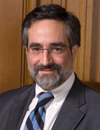
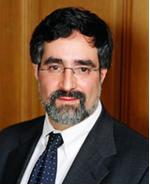
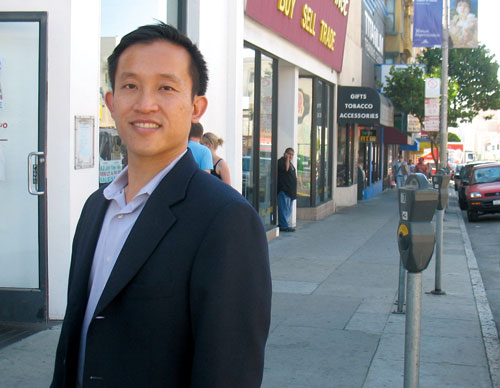
David Chiu

Sparks reveals her conservativism in exchange with Walker

26

During the District 6 supervisorial candidate debate that San Francisco Young Democrats held last week, a two-question exchange between two of the leading candidates – progressive Debra Walker and downtown-backed Theresa Sparks – offered a revealing look at their starkly different worldviews and priorities, which is more important in this race than people’s machine politics conspiracy theories.

During the second portion of the event, candidates were allowed to ask a question of another candidate, and Walker and Sparks focused on one another with pointed questions (this occurred at around the 30-minute mark, although the video doesn’t seem to allow users to forward to that point, forcing you to endure the often insipid commentary).

Walker went first, asking Sparks why, during her more than four-year tenure on the Police Commission – a body in charge of disciplining police officers accused of serious misconduct after citizen complaints are investigated and found valid by the Office of Citizen Complaints, with each case assigned to a particular commissioner – Sparks didn’t hold any hearings or act to punish any officers.

Sparks said the accusation wasn’t true, and that she did hold one hearing during that time, and then said that the Police Commission is prohibited by the city charter from intervening in the internal workings of the Police Department, implying that the body isn’t actually in charge of disciplining officers. Walker said Sparks was wrong and tried to ask a follow-up question and was cut off by moderator Melissa Griffin.

So this week, I called both candidates to try to get to the bottom of the dispute. “She indicated it’s not the commission’s job to focus on these things, and that’s absolutely not the case,” Walker said. “She was incorrect saying it wasn’t the job of commissioners to do this.”

And when I talked to Sparks, she didn’t dispute that fact, but conveyed how complicated the process was when officers are accused of serious misconduct (minor misconduct just goes to the chief), with lawyers seeking stipulated settlements and whatnot, and repeatedly emphasizing “it’s a bad system.” One reason it’s so bad is her own lack of qualifications: “You can’t have people like me, whose only legal background is watching Law and Order, trying to handle these cases.”

Sparks was appointed by Mayor Gavin Newsom, who is backing her supervisorial bid, which is also expected to have strong support from the San Francisco Police Officers Association. She wouldn’t say how many cases she was assigned during her tenure, but OCC records show more than 300 cases assigned to the commission during her tenure and the long backlog left in her wake has been the subject of criticism by everyone from Police Chief George Gascon to new Police Commission Jim Hammer.

Rather than supporting this civilian oversight of problem officers, Sparks wants to turn those duties over to Gascon’s office, telling us, “We need to give this chief more authority to fire officers rather than going through this ridiculous process.”

At the debate, after seeming stung by a question she jokingly called a “softball,” Sparks fired back by asking Walker whether she supported the proposed tax measures now being considered by the Board of Supervisors to help close the city’s large budget deficit, framing the question by saying they would hurt small business.

Walker answered by voicing her support for small business, but noting how essential city services such as public health programs were being deeply cut and that the city needed new revenue to deal with its structural budget deficit, although she said that she had yet to decide which of the tax measures she supported considering none have been approved for the ballot yet.

This week, Moody’s Investor Services lowered the citys’ credit rating precisely because Newsom’s budgets have not addressed that structural budget deficit, and even the Controller’s Office has ordered more than a $100 million placed on reserve because of doubts about the mayor’s revenue assumptions.

So for Sparks to characterize the need for new revenue as an unfair attack on small business indicates a short-sighted, right-wing approach to municipal finances, an approach Walker rejects, telling us, “I think we need to be responsible and do the right thing in dealing with the city’s needs…It’s going to cost us and the people who come after us more and more because of these cuts.”

When I spoke with Sparks, noting the Moody’s report, she seemed to back away from how she was trying the characterize the revenue measures at the debate. “I do think the city needs new revenue, but I don’t think that taxing small business is the way to go,” she said, referring to a proposal by Sup. David Chiu to tax commercial rents, which would be paid by the landlords.

So I asked Sparks whether she supported any of the proposals or if she was advocating any other revenues measures, and she said, “Quite honestly, I need to think about that because I do think we need more revenue.”

Which is pretty much the same answer Walker gave in a far more honest and direct way in that debate, without trying to pander to the fears of small businesspeople. The bottom line is that the downtown corporations who are backing Sparks have done nothing to help the city during this prolonged recession, while demanding even greater police responses to deal with poor people sitting on sidewalks and other perceived problems, and that hypocrisy should be front and center in this election.

Lennar’s litmus test

3

sarah@sfbg.com

None of the many stakeholders tracking the progress of Lennar Corp.’s massive Candlestick Point-Hunters Point Shipyard redevelopment plan registered surprise when the Board of Supervisors received three appeals to the Planning Commission’s June 3 certification of the project’s final environmental impact report (FEIR).

Instead, everybody who has been watching the political juggernaut that has been pushing for quick approval of the project over the past month said they anticipated that the FEIR would be appealed, and perhaps litigated. But the real question is whether the project will be substantially changed.

In the seven months since the project’s draft EIR was released, the Planning and Redevelopment Commissions have repeatedly rejected all arguments and recommendations made by its critics to improve or delay the plan, rushing the approval along on a tight schedule (“The Candlestick Farce,” 12/21/09).

The rush job occurred even as numerous groups and individuals warned that the DEIR comment period was too short, (“DEIR in the headlights,” 02/03/10) and complained that the city and the developer had dismissed crucial data and testimony while exploiting fears the San Francisco 49ers would leave town if the city didn’t act quickly (“Political juggernaut,” 06/02/10).

What’s less clear is whether the Board of Supervisors has the political will to heed these appeals and correct what opponents say are serious flaws in the city’s FEIR. The appeal that the Sierra Club, Golden Gate Audubon Society, California Native Plant Society, and San Francisco Tomorrow filed June 21 lists nine deficiencies.

These included the FEIR’s failure to look into an alternate Bus Rapid Transit (BRT) route around Yosemite Slough or adequately assess impacts resulting from the landfill cap on Parcel E2 and the transfer of 20 acres of public shoreline land in Candlestick Point State Recreation Area (CPSRA) to build high-end housing.

“The FEIR failed to analyze those elements of the project’s sustainability plan that could have significant environmental impacts, including two proposed heating and cooling plants (which appear to be power plants) to serve 10,500 housing units and a projectwide recycling collection system,” the coalition further charged.

The appeal also voiced concern that the FEIR failed to adequately assess impacts resulting from the construction and maintenance of the development’s underground utility matrix, impacts to the bird-nesting in the proposed 34-acre wetland restoration project at the state park, and delays to eight Muni lines.

But the Sierra Club-led coalition also indicated that by removing provisions for a bridge over Yosemite Slough, transfer of land in the state park, and compromised clean-up efforts at Parcel E2, resolution of many of these disputed issues could be expedited.

“If the Board of Supervisors acts promptly, revisions to the EIR may be made quickly and result in a minimal delay in the progress of the project,” the coalition stated.

The Sierra Club’s Arthur Feinstein told the Guardian that the coalition’s top three concerns are “very important, but the six other issues are also very real.”

“Here we have a city cutting 10 percent of its bus service while saying that eight bus routes will need to be improved because of the project, and admitting that the development will increase air pollution in a district that has the highest rates of asthma and cancer without identifying mitigations such as reducing parking spaces in the proposal,” Feinstein said.

POWER (People Organized to Win Employment Rights) also filed an FEIR appeal June 21 listing a broader range of environmental and economic justice-related concerns.

These included the FEIR’s failure to analyze and mitigate for displacement that would be triggered in the surrounding neighborhood by developing 10,500 mostly market-rate housing units in the area and “failure to provide for adequate oversight and enforcement of the terms of the early transfer” of the shipyard from the Navy.

POWER also cited the FEIR’s failure to adequately mitigate against the impact of sea level rise, the risks associated with potential liquefaction of contaminated landfill at the shipyard in the event of an earthquake, and health risks related to chemicals of concern at the shipyard. The group also faulted the city’s failure to get the Navy to prepare an environmental impact statement on its clean-up plan before the FEIR was completed.

Finally, Californians for Renewable Energy (CARE) filed a five-point appeal June 23 charging that the project contravened the intent of Proposition P (which voters approved in 2000, urging the Navy to remediate shipyard pollution to the maximum extent possible), that the project’s FEIR is incomplete because the Navy (which still retains jurisdiction over the project lands) has not yet completed its EIS, and that the FEIR approval process was tainted by 49ers-related political pressure.

“The pre-set goal of maintaining the 49ers in San Francisco has colored the environmental analysis of this decision,” CARE noted, referring to the city’s rush to get the project’s FEIR certified on June 3 — five days before Santa Clara County voters approved a new stadium for the 49ers near Great America .

The appeal filings mean the Board of Supervisors is required to hold a hearing within 30 days, a move that places a roadblock, at least temporarily, in the way of the city’s tight schedule to secure final approvals for Lennar’s megaproject before summer’s end.

Board President David Chiu told the Guardian that the Board’s Land Use Committee will move forward with a July 13 meeting to hear a list of proposed amendments related to the underlying plan along with the FEIR appeals.

“We are back at the board Land Use Committee July 12 with 10 items related to the project,” said Chiu, who is a member of the Land Use Committee. The three-member committee is chaired by Sup. Sophie Maxwell, who represents the project’s District 10; Sup. Eric Mar is vice-chair.

“The next day, July 13, has been tentatively set for a full meeting of the full board,” Chiu continued. He acknowledged that the FEIR related materials are dense and complex, telling us that “they form the largest pile on my desk, and it’s about five inches high.”

But he wasn’t about to prejudge the outcome. “We do need to clean up the area and rebuild it in such a way that it will dramatically increase affordable housing and jobs and support a livable diverse community,” Chiu said. “Obviously there are still a lot of questions and concerns about the proposed project and the board will push to make sure all these issues are adequately addressed.”

CARE president Michael Boyd said he hoped the board would take his group’s appeal seriously and fix the plan’s fundamental shortcomings. “That means going back to square one,” he said.

But others were less sure that the board would seek to overturn the entire plan. “Everyone in the community would like the best level of clean-up,” said Saul Bloom, whose nonprofit Arc Ecology has tracked the proposed shipyard clean-up for three decades. “But what’s possible and practical? And will the city be supportive of that or the most expeditious solution?”

Bloom reserved gravest concern for plans to cap, not remove, the contaminants from the shipyard’s Parcel E2. “The concern is that if you put a cap on E2 without a liner then contaminants could scootch out during a seismic event, or over time, and cause problems because of the parcel’s close proximity to surrounding groundwater and the San Francisco Bay,” he said. “But to place a liner in there is very expensive because you’d have to excavate E2, at which point you might as well replace it with clean soil.”

Bloom acknowledged that the Navy has argued that excavation would cause a nasty smell and nobody knows what is going to be released in the process.

“But long-term Bayview residents like Espanola Jackson have made the point that the community already lives within nose-shot of the southeast sewage treatment plant and would rather put up with a few years of nasty smells, given the relative benefits of cleaning the yard up,” he said. “And how do we know a cap will be protective given the Navy’s argument that we don’t know what’s down there?

“The thing that makes the most sense here is to clean up the shipyard to the best possible extent, but the city isn’t planning to do that,” Bloom added. “And the environmental community’s bottom line has always been the bridge [over Yosemite Slough, which the Sierra Club opposes]. So the sense is that if the bridge goes away, so does their problem.”

Editor’s Notes

23

Tredmond@sfbg.com

Jane Kim, the San Francisco school board president running for supervisor in District 6, has a tough question to answer. When there’s already a solid progressive in the race, Debra Walker, someone who has lived in the district for years and agrees with Kim on almost all the key issues, why is Kim running?

She gave a hint at her campaign kickoff June 24 on how she’s going to portray herself: "I’m not part of anyone’s machine, and I’m certainly not part of anyone’s master plan." It’s an attractive statement — nobody likes machine politics — and the idea that she’s an independent candidate makes her all the more appealing.

Except that it also says something about the progressive movement in San Francisco — and that’s a little disturbing. Because no matter how you try to spin it, when you say you aren’t part of anyone’s machine, you’re implying that maybe your opponents are.

Let me take a step back here, because this is important stuff. There’s a fine line between an effective, organized political coalition that can actually win elections and a political machine, which stifles political innovation and grassroots candidates. And in part it’s about motivation.

When Willie Brown ran San Francisco, it was all about Willie Brown. I’ve never believed the guy had much of an ideology or that any political cause really mattered to him; he loved power, he knew how to use it and he didn’t want to give it up. That was the bottom line.

Now that he’s pretty much out of the picture — although he was at Kim’s party, he’s not a factor anymore — there’s a very different power balance in this city. There’s nobody at City Hall (or in Sacramento, or Washington, or downtown, or anywhere else) who has machine-style control of local politics.

There are people who can build coalitions that work — Aaron Peskin, for example, did exceptionally well with putting together a campaign to elect progressive Democratic County Central Committee elections. And there are people who would love to be power brokers.

But I’ve been around politics here a long time, and I can tell you: Aaron Peskin doesn’t have a machine. Neither does Mark Leno, or Gavin Newsom, or Tom Ammiano, or David Chiu, or anyone else. Thanks in part to district elections, there aren’t many call-up votes on the Board of Supervisors these days. In fact, the left in San Francisco is famously unable to agree on much of anything half the time. Note, for example, the fact that Chiu — often called a Peskin ally — is not supporting Peskin’s candidate in D-6. He’s with Jane Kim.

The thing is, unlike the players in a typical political machine, most of the progressives care about issues. It’s about a shared ideology more than it’s about power. That’s a hugely important difference.

The way the mainstream media has it, the San Francisco left is either fatally fractured and can’t do anything — or it’s becoming a machine. For the moment — a great moment — neither is true. Let’s all keep that in mind. Because when we beat each other up with words like "machine," we undermine the whole progressive movement.

Bad way to start a campaign.

Kim launches D6 campaign, stressing independence from “machine” politics

45

Jane Kim launched her campaign for the District 6 seat on the Board of Supervisors last night during a spirited event at 111 Minna, showcasing some high-profile supporters and giving a speech that began with touting her early work on immigrant rights and homeless issues and ended with the declaration, “I’m not part of anyone’s machine and I’m certainly not a part of anyone’s master plan.”

That emphasis on her independence could be seen as a subtle dig at Debra Walker, another progressive who has been running for the seat for the last two years, who locked down early support from many progressive groups and officials, and whose supporters were unhappy with Kim’s late decision to enter the race, concerned it might split the vote and allow downtown-backed Theresa Sparks — who could be viewed as a “machine” candidate on the other end of the political spectrum — to steal the seat for the moderates.

When I asked what “machine” she meant and whether the comment was a reference to Walker’s supporters, Kim wouldn’t clarify the comment, refusing to criticize the Walker campaign and saying only, “I want to be a part of a new political process.”

And that new process seems to rely heavily on the energy of young people, including many of color, who dominated the crowd last night. Kim also signaled that she will be pushing a fairly bold progressive agenda that includes more city support for schools, Muni, immigrants, and low-income families, and making the streets more vibrant and democratic.

“The mantra of our campaign is to make our neighborhoods complete,” Kim said.

She proposed making substantial pedestian and bicycle improvements on several streets in her district, including 2nd, Folsom, Taylor, and Turk streets, creating more bikes lanes that are separated from car traffic, and turning many of the alleys in her district into more active public spaces. She called for the city to help fund youth programs and a longer school year and to offer more support to small businesses, which she called the city’s most important job generator.

Kim, a civil rights attorney and president of the school board, also emphasized the need to improve the tone of political debate in the city, which she helped accomplish on the school board (whose vice president, Hydra Mendoza, an employee of Mayor Gavin Newsom, was there in support). “People are disillusioned and disappointed with the process and the bickering,” Kim said.

Among Kim’s supporters at the event were Board of Supervisors President David Chiu, former Mayor Art Agnos, filmmaker Kevin Epps, Police Commissioner and immigrant rights activist Angela Chan, transportation activist Dave Synder, and representatives from a wide variety of community groups.

“She has epitomized the progressive values that I think all of San Francisco shares,” Chiu told the crowd, later adding, “She will be a part of the next generation of political leaders of San Francisco.”

“I’m really proud that Jane has put herself out there as a future leader and our supervisor,” said Epps, later adding, “I think Jane really has her ear to the streets.”

Kim pledged to run a clean campaign focused on her issues, and her only supporter to voice overt criticism of Walker was Agnos, who said he was impressed with Kim’s work with him last year in fighting Prop. D, which would have removed mid-Market from the city ban on new billboards, a measure that Walker supported.

“Prop. D for me was a tipping point, and Debra went with the commercial interests,” Agnos told the Guardian.

But Kim, 32, says her reason for running is to help push a progressive vision for the city and bring new blood into the political process.

“I have to tell you, I never wanted to go into politics,” she told the crowd. “But I had the desire to see some real change.”

SF mayoral analysis in the NY Times misses the mark

4

I have praised Bay Citizen’s early work and I think Gerry Shih is a smart young reporter, but I think their analysis of who will be San Francisco’s next mayor – which ran in today’s New York Times – was off the mark and shows they don’t yet have a good grasp of this city’s political dynamics. And a big reason for that is – just like the Examiner and the Chronicle – they relied too much on downtown players who consistently misread those dynamics, at least in recent years.

The one thing it got right was naming Aaron Peskin as one of the frontrunners to succeed Newsom if he is elected lieutenant governor. Peskin is really the only politico in town he has been putting big plays together these days, whether it be keeping Democratic Party leadership in progressive hands or defeating the 555 Washington project. So he might be the only one who can count to six with this current progressive-dominated board.

But nobody really thinks David Chiu is a frontrunner, despite Shih’s claim. Chiu has been a pretty good board president, but remember that he was elected as a compromise candidate (with lots of help from Peskin) after the then-frontrunners, Ross Mirkarimi and Bevan Dufty, couldn’t put the votes together. And since then, he has disappointed his progressive colleagues on several votes, making them unlikely to support him for mayor.

Besides, it will be difficult for any supervisor to get six votes when they can’t vote for themselves, which also makes me scoff at Shih’s contention that John Avalos and David Campos are running for mayor (two supervisors who are close to the Guardian and have never indicated to us that they’re running, even when we’ve asked, although they might each eventually become mayors). Ross Mirkarimi is more likely and wants the job, but would have a tough time getting a board majority to give is to him.

Shih told the Guardian that he’s been getting lots of critical feedback on his article today, and while he said Chiu and Peskin are names that kept coming up in his interviews, Shih admits that the attractive narrative of the protege challenging his mentor perhaps skewed the final analysis: “The relationship between those two guys ended up getting played up in the story.”

The article makes several other mistakes as well (and not just the obvious factual errors, like getting the mayoral election year wrong, as well as the year Feinstein left office, both of which have since been corrected online). It left City Attorney Dennis Herrera’s name out entirely, despite the fact that he’s already declared his intention to run for mayor and could certainly be a compromise candidate. Public Defender Jeff Adachi also wasn’t mentioned, even though he has a better chance than half the people on Shiu’s list, such as Willie Brown or Ed Harrington, who downtown may like but progressives really don’t.

Two strong possibilities for mayor – Mark Leno and Leland Yee – were given only passing mention in the article even though they are far more likely choices than Chiu. Both Leno and Yee have aggressively worked both the centrist and progressive sides of the aisle and are in great positions to run for mayor or be appointed by the board.

The hopes for a Chinese-American mayor that Shih placed with Chiu are probably better placed with Yee, who has worked with Rose Pak and other business interests while also having a history of endorsing progressive candidates, which he’ll be able to call in when he runs (and yes, unlike other candidates on Shih’s list, Yee has actually declared his intention to run).

Similarly, Leno has good relations with progressives on the board, which will be tested a bit this fall as he campaigns for moderate supervisorial candidate Scott Wiener and navigates the wedge issue minefield, but it’s easy to see how with the right outcomes this fall and key deals cut, Leno could emerge as the frontrunner.

The dynamics of this thing are incredibly complicated, but if I was in Shih’s shoes and was asked to name the two frontrunners, I’d probably say Peskin and Leno, with Yee a close third and Herrera as an outside possibility. Or it could be none of them if nobody can count to six and the option of a caretaker mayor who agrees not to run later (such as an Art Agnos) seems like the only way forward.

As politicos Alex Clemens and David Latterman said in their post-election analysis on June 10, this is very complicated and will be the subject of many deals by experienced insiders (of which Chiu really isn’t one just yet). “Everyone is gaming this thing out and trying to figure out what happens,” Clemens said.

But there is one scenario in which I could see Chiu figuring prominently, and that’s in what happens if both Newsom and Kamala Harris win their respective state races. Chiu has expressed a desire to be District Attorney, a chance that he might get if he can help play kingmaker with whoever becomes our next mayor.

So perhaps that qualifies him as a frontrunner of sorts after all.

Newsom’s plan for DCCC domination

4

Gavin’s not quite ready to take over the world, or even California, but he’s not leaving office without trying to mess up the progressive majority on the Democratic County Central Committee. The plan he hatched June 15: Ban elected city officials from sitting on the DCCC. The idea: Get rid of Supervisors David Campos, David Chiu, John Avalos and Eric Mar. The overall plan: With the progressive supervisors — who have high name recognition and thus get easily elected — gone, the Newsom allies can take back control of the local Democratic Party.


It’s a pretty blatant move — far beyond Aaron Peskin’s so-called coup. And I must say, it’s a bit hypocritical.


See, the DCCC isn’t just made up of 24 elected members. Every San Francisco Democrat who holds state or national office — or who is a candidate for state or national office — is also an automatic member. So Senator Diane Feinstein is a DCCC member; so is House Speaker Nancy Pelosi, Assemblymember Tom Ammiano and Sen. Mark Leno. And guess who gets a seat this fall? Lt. governor candidate Gavin Newsom. People like Feinstein and Pelosi never show up; at best, they send a proxy. They rarely pay much attention to the local party, don’t help out much with party fundraising, don’t even come to the party’s annual dinner (Newsom didn’t show this year, even though he’s the mayor of a Democratic city.)


There have been members of the Board of Supervisors on the DCCC for years. The late Sue Bierman was always a member, and actually cared about and paid attention to the local Democratic Party. Leslie Katz was a member as a supe, and still is. It’s never been that big a deal to anyone — until the progressives starting winning seats. Then suddenly it’s a horrible conflict.


The real conflict has nothing to do with city officials sitting on the committee; it’s the fundraising issue. The city’s campaign finance rules don’t apply to DCCC races, so candidates for DCCC who are also running for supervisor — Scott Wiener, Rafael Mandelman, Debra Walker — can raise unlimited money for their DCCC races and use that additional name recognition for the fall elections. The thing is, I think most of the candidates who benefit from this loophole agree that it needs to be fixed; Mandelman certainly does, and he’s told me that several times. I couldn’t reach Walker or Wiener this morning, but I’d be very surprised if both of them wouldn’t endorse some kind of contribution limits for DCCC races.


I asked Newsom’s press spokesperson, Tony Winnicker, if the mayor would support fundraising limits. Apparently he doesn’t (or at least, he doesn’t want to push the issue):


“For this November’s local ballot, which the Mayor can place an initiative on, we propose eliminating the potential conflict that exists between City officeholders also holding office as elected County Party Committee members.”


How about getting rid of all the elected officials, and creating a real grassroots county committee? No, that won’t fly with Newsom either. Winnicker:


It’s appropriate for state and federal Democratic elected officials from San Francisco to serve on the Democratic County Central Committee.


The city/local offices — Mayor, Board, Treasurer, Assessor, City Atty, Sheriff, District Atty, Public Defender — are nonpartisan offices who have direct oversight over City business. That’s the difference and conflict. This is a local initiative, so our focus and concern is local good government and local conflicts or appearance of conflicts.


From everything I can figure, Newsom doesn’t want campaign-finance reform and doesn’t want to put the party in the hands of local activists; he just wants to get rid of the supervisors who take positions he doesn’t like. That seems like a pretty bad way to make public policy. 


UPDATE: Just talked to Scott Wiener, who told me he agrees that the whole issue of DCCC campaign spending ought to be on the table. And he said he is not at this point prepared to support Newsom’s initiative. “I have concerns with the number of elected officials on the DCCC,” he said, “but there are times when it’s entirely appropriate to have people who have a demonstrated commitment to the DCCC and then get elected supervisor to stay on it.”

Elsbernd blocks state budget resolution

1

The Democratic leadership in the state Assembly has a budget plan that challenges the entire approach Gov. Schwarzenegger is taking on the state budget. It’s not perfect; it relies on borrowing (although it’s borrowing against the revenues from a new oil severance tax). But it will, Speaker John Perez says, save more than 400,000 jobs. And it’s way, way better than what the governor wants to do. “It’s good,” Assembly member Tom Ammiano, who has always been willing to challenge party leadership and take progressive stands. “It’s something we can support.”

Among other things, it would bring San Francisco another $40 million next year as part of a plan to end the raids on city and county treasuries.

So the Dems in the Assembly are trying to get cities, counties and school boards to endorse their plan. Sup. David Chiu did the honors in San Francisco, asking the supes to approve, on consent calendar, a fairly innocuous resolution endorsing the so-called “Jobs Budget.” Nobody objected — except Sup. Sean Elsbernd, who demanded that the measure be sent to committee for further review.

I don’t get that; San Francisco’s support won’t determine the future of this budget, and it’s not a huge deal — but Elsbernd’s a Democrat, he doesn’t like what the governor is doing, and if this could help even a little bit with the forces pushing for an alternative, what’s the big deal?

Well, I talked to Elsbernd about it (one of the things I respect about Elsbernd is that he never ducks questions; unlike some politicians I know, he always returns my calls, always responds, is willing to have an intelligent discussion and doesn’t try to hide). His argument: “I’m not following the details of the state budget yet. I would love to hear a little more about it.” His concern is with the borrowing; “I’m sure,” he said (perhaps a bit sarcastically) “that President Chiu will be able to explain to me why this isn’t just kicking the can down the road.”

He went further: “If the mayor tried to balance the budget by borrowing money with general obligation bonds, you guys would blast him, right?” Well, not necessarily, I told him. Sometimes, governments ought to borrow money, to save and create jobs during an economic downtown. In fact, that’s exactly what President Obama did, borrowing heavily and adding to the already massive federal debt with a stimulus plan that probably prevented the recession from becoming another depression.

I mean, didn’t Sup. Elsbernd support the Obama stimulus package?

“Frankly, Tim,” he said, “I’ve been too busy trying to do my job in San Francisco to be taking a stand on state and federal issues.”

Okay, Sean — it’s a good line. But every elected official in every city in America was paying attention to the Obama economic plans. And SF supervisors have to be paying attention to the state budget. Counties are, in part, the local arms of the state; making sure there’s money to do what the state tells us is part of the job.

And now, the race to replace Kamala Harris

2

David Onek, who has strong political connections and little courtroom experience, sent out a email today announcing that he wants to be San Francisco’s next district attorney:


As many of you know, District Attorney Kamala Harris is very likely to become California’s next Attorney General. DA Harris is a friend and I would never run against her, but her victory in November will open up the office as early as the end of this year. This means the time to get organized is right now.


He adds his name to the list of people, including former chief homicide prosecutor Jim Hammer, who want the job. But it’s going to be an unconventional campaign, to say the least. Because if Harris wins, her successor won’t be chosen by the voters of San Francisco.


There are three relevant scenarios here.


1. Harris loses the AG race. Entirely possible; she’s got a tough campaign ahead of her. Then all of this talk is moot; Onek clearly isn’t going to run against her, although Hammer might.


2. Harris wins the AG race, and Newsom loses his race for lieutenant governor. In that case, Newsom will be mayor of San Francisco when Harris resigns to move up to Sacramento — and under the City Charter, he will appoint someone to serve out the rest of Harris’s term.


3. Harris and Newsom both win — in which case there’s a fascinating legal issue. Do Harris and Newsom leave at the same moment — in which case the Board of Supervisors appoint the next mayor, who appoints the next DA? Or does Newsom try to fill Harris’s job before he resigns himself? In the end, Matt Dorsey, spokesperson for City Attorney Dennis Herrera told me, “that’s a question that will be answered by the attorney general. Theoretically, it could get very complicated.”


Under the state Constitution, the governor, lt. governor and attorney general all take office the same day, the first monday after Jan. 1st, which in this case is Jan. 3. The constitution doesn’t say what time of day that happens. In theory, then, Harris could take the oath of office at 9 am, Newsom could wait until 10 am, and appoint a new DA in between. Then somebody who didn’t get appointed (or, frankly, any angry citizen of San Francisco) could sue — because if Newsom’s term technically starts at 12:01 am Jan. 3d, then at that moment, by city law, the president of the Board of Supervisors instantly becomes mayor, meaning David Chiu should be the one making the DA appointment.


Or Harris and Newsom (and whatever other parties wanted to play ball) could cut a deal. Harris could resign a day early, and Newsom could appoint her replacement with no legal consequences at all. That would look sleazy as hell and be a rotten way for the mayor to start his term as lieutentant governor, but he could do it.


Of course, that will all depend on an interpretation from the attorney general on when the AG and lt. gov. terms actually begin — and the AG at that point will be Jerry Brown, who may have just been elected governor on a ticket with Newsom and Harris.


What a clusterfuck.


At any rate, David Onek now has to build a campaign aimed not really at winning an election, but at convincing either Newsom or Chiu (or, potentially, the next mayor, who would be named by the supervisors) that he ought to be district attorney. Part of that calculation will hinge on whether he can hold onto the job when it comes up for a real election in November.


If it’s a simple deal with Newsom, Onek will be relying on his political allies. He notes:


A broad range of leaders in government, in law enforcement and in the broader criminal justice community have already pledged their support – including former San Francisco City Attorney and Police Commission President Louise Renne, former state Treasurer Phil Angelides, Supervisor Carmen Chu, School Board Commissioner Hydra Mendoza, former Mayor Art Agnos, former Police Chief Heather Fong, Berkeley Law School Dean Christopher Edley, Jr., Police Commission President Joe Marshall and former Chief Probation Officer Jeanne Woodford. 


Although I’m not sure that Newsom cares much these days what Louise Renne, Art Agnos or Phil Angelides think.


So what Onek — and anyone else who wants to be the next DA — needs to do is convince the next mayor that he’s not only going to be a good chief prosecutor (already a hurdle for someone with no background as a prosecutor) but that he has the political ability to convince the actual voters that he’s qualified. Otherwise he’s just another Kim Burton waiting to happen.


I haven’t been able to reach Onek yet to discuss all of this, but the minute he calls me I’ll post an update.

Voters are pissed

0

By Guardian News Staff

news@sfbg.com

After spending more than $70 million, two big corporations failed to convince Californians to vote their way. After spending nearly $70 million, the former head of a big corporation easily convinced Californians to vote her way. And that outcome is not as schizophrenic as it sounds.

On one level, the outcome of the June 8 election was a sign of the anti-corporate anger seething through the California electorate. “BP, Goldman Sachs, PG&E — anything that seems connected to a big corporation is in serious trouble right now,” one political insider, who asked not to be named, told us.

Yet two candidates who were very much corporate icons — Meg Whitman and Carly Fiorina — won handily in the Republican primaries and now have a real chance to become the state’s next governor and junior senator. What’s happening? It’s fascinating. The voters in the nation’s most populous state are pissed off — at big business, at government, at the oil spill, at 10 percent unemployment, at Washington, at Sacramento, at Wall Street. It’s an unsettled electorate, uncertain about its future and looking for something new, and definitely despising power.

There’s a populist fervor out there, and it’s going to define this fall’s expensive, dirty, and high-stakes battle for California’s future.


THE MAYOR GOES STATEWIDE

Addressing a crowd of supporters gathered at Yoshi’s San Francisco on election night, San Francisco Mayor Gavin Newsom — who easily beat opponent Janice Hahn to claim the Democratic nomination for lieutenant governor — said he was excited to be part of a crucial political year for the Golden State.

“We’re very proud to be in a position to be the Democratic nominee and to work with the other Democratic nominees,” Newsom told supporters. He lavished praise on the Democratic nominee for governor, Jerry Brown — the man who just last year he was trying to beat in a primary — telling stories about his father’s long relationship with the former governor and expressing his admiration. “I couldn’t be more proud to quasi- be on a ticket with Jerry Brown,” he said.

The race for lieutenant governor may prove one of the most interesting this election season — and not just because a victory for Newsom would transform San Francisco politics. Newsom’s opponent is Abel Maldonado, a moderate Republican who enjoys popularity among the growing, influential Latino community, and who Newsom’s team said will be a formidable challenge.

The campaign could revolve around an intriguing question. At a time when the Republican Party has been taken over by virulent anti-immigrant politicians — Whitman and Fiorina have both made harsh statements about illegal immigrants and vowed never to support “amnesty” (that is, immigration reform) — will Latino voters go for a white Democrat over a Latino Republican?

“You talk to them about all the same issues you talk to all voters about: jobs, education, and health care,” Newsom political strategist Dan Newman said when asked whether Newsom could win over Latino voters. “Latinos, like all voters, will appreciate someone with a proven record of success.”

Pollster Ben Tulchin also downplayed the trouble Newsom could encounter in winning the Latino vote. “With what’s going on in Arizona, they are very wary of Republicans,” Tulchin said, but then added: “We don’t want to underestimate the challenge we have. There’s never been a moderate Latino on the statewide ballot.”

Newsom sounded another alarm. If Whitman decides to help Maldonado, the race will get even tougher. “We’re running against Meg Whitman’s checkbook,” the mayor said.

“Expect to see Meg and Abel together a whole lot in the next few months,” one consultant predicted.

If Newsom wins, San Francisco will get a new mayor a year early — and the district-elected Board of Supervisors will choose the person to fill out the last year of Newsom’s term. Technically, the current board will still be in office then, but the task may well fall to the next board — which makes the local November elections even more important.

“Everyone is gaming this out and trying to figure out what happens,” political consultant Alex Clemens said during a post-election wrap-up at the San Francisco Planning and Urban Research Association office. “There will be a lot of dominoes to fall and deals to be cut.”

Meanwhile, Newsom’s nomination for lieutenant governor places many San Franciscans in an uncomfortable position, one that was illustrated well by Newsom’s victory speech, in which he proudly rejected taxes. Although most San Francisco progressives are disenchanted with their fiscally conservative mayor, few would rather vote for Maldonado.

Tim Paulson, the SF Labor Council president, was at the Newsom event gritting his teeth as he talked about the opportunity progressives now have to work with “a mayor of San Francisco we have issues with.” Now, he noted, “There is going to be a real campaign around this man. It could establish a narrative for what California is about.”


POWERFUL WOMEN

At Delancey Street on election night, San Francisco District Attorney Kamala Harris talked about getting “tough and smart on crime,” addressing gang-related criminal activity but also focusing on corporate criminals. She talked about cracking down on predatory lenders, supporting health care reform, and protecting California’s environment. And she made a point of dragging in BP.

“It must be the work of the next attorney general to ensure that the disaster and tragedy that happened in the Gulf of Mexico never happens in California,” she said, warning of attacks on AB 32, which set California’s 2020 greenhouse gas emissions reduction goal into law in 2006.

Of course, Harris now has to take on her southern counterpart, Los Angeles DA Steve Cooley, who is a moderate but comes in with much stronger law enforcement support. If Harris wins, it will go a long way to prove that opposition to the death penalty isn’t fatal in California politics, and that voters are finally ready for a women of color as the top law enforcement official — a first in state history.

But she and Newsom will both have to overcome likely attacks for the San Francisco’s crime lab scandal, one of many hits to be magnified by the size of Whitman’s war chest.

Whitman, who trounced opponent Steve Poizner in the primary, is riding the crest of a new wave of Republican-style “feminism,” starring her, Fiorina, and Fox news pundit Sarah Palin as female champions of the right-wing agenda. A few short months ago, it looked as if Brown was in serious trouble. But that was before Whitman and Insurance Commissioner Steve Poizner got into an $85 million bloodbath that left the winner of the GOP primary badly wounded. Whitman wants to play off the populist uprising by portraying herself as an outsider running against a career politician; Poizner gave her a huge scare by hammering her ties to Goldman Sachs.

That Wall Street narrative is one Democrats will push against Whitman and Fiorina. “I think it is stunningly politically tone deaf to nominate two Wall Street CEOs to the top of the ticket,” Newman said. Voters will decide whether they are fresh voices with new ideas or corporate hacks who laid off Californians and made fortunes with dubious stock market deals.

Brown leads in the polls — narrowly — but he’s vulnerable. He’s taken so many stands over so many years and Whitman’s fortune will hammer any openings they see. Brown is only slowly getting into campaign mode, but it’s no secret what he has to do. If the campaign is about Jerry Brown, unconventional politician, against Meg Whitman, Wall Street darling, then he wins.

But to take advantage of that, Brown has to offer some concrete solutions to the state’s problems — and he has to start acting like the progressive he once was. “If I were him, I’d run hard to the left,” a consultant who isn’t involved in any of the gubernatorial campaigns said.

The conventional wisdom had Barbara Boxer in trouble, too — but she’s a savvy campaigner who has beaten the odds before. And while the senator appears ripe for attack — almost 30 years in Washington, a voting record perhaps a bit more liberal than the state as a whole — her opponent, Fiorina, has baggage too.

For starters, Fiorina’s entire pitch is that she — like Whitman — would bring business-world savvy to politics. But as CEO of HP, “she was about perks and pink slips,” Newman said. “She laid off Californians and shipped those jobs overseas while enriching herself.”

Her own primary pushed her far to the right (at one point, in an embarrassing sop to the National Rifle Association, she actually argued that suspected terrorists on the federal no-fly list should be able to buy handguns). And speaking of feminist values, her anti-abortion positions won’t help her in a decidedly pro-choice state.


PROP. 16 GOES DOWN

The defeat of Proposition 16 will go down in history as one of the most remarkable campaigns ever. It was, Sup. Ross Mirkarimi noted, “a righteous win:” The No on 16 campaign spent less than $100,000 and still captured 52 percent of the vote. Another narrow corporate-interest measure, Mercury Insurance’s Prop. 17, faced a similar fate.

One reason: PG&E’s $50 million campaign backfired, making voters suspicious of the company’s propaganda. Another: it lost overwhelmingly in its own service area, the company rejected by those who know it best.

Now PG&E CEO Peter Darbee, who pushed to mount the expensive campaign, must return to his shareholders empty-handed — and that’s going to cause problems. “I assume the leadership of PG&E will be called to task,” Clemens said. “They truly rolled the dice.”

The day after the election, PG&E shares dropped 2.2 percent, a possible sign of shaken investor confidence. Mindy Spatt of the Utility Reform Network (TURN), a nonprofit that worked on the No on 16 effort, described the situation succinctly. “Peter Darbee’s got egg on his face,” she said. “Big-time.”

Mirkarimi has witnessed other battles with PG&E, and said this probably wouldn’t be the last. “PG&E, every time we want to have a seat at the table, tries to take us out, like assassins,” he said. “If they were smart, they would take us up on what we asked many years ago, and that is to abide by peaceful coexistence.”

On the statewide level, the bold and expensive deceptions pushed by PG&E and Mercury Insurance were countered by only a handful of super-committed activists and a broad cross-section of newspaper editorials, a reminder that newspapers — battered by the economy and technological changes — are neither dead nor irrelevant.

One of the wild cards of the election was Prop. 14, which will eliminate party primaries for state offices — and potentially shake up the state’s entire political structure. “This is a big deal even if we don’t know how it’s going to play out,” consultant David Latterman said at the SPUR event.

Interestingly, the only two counties that voted No on 14 were the most progressive — San Francisco — and the most conservative, Orange.

Progressives did well in San Francisco, expanding their majority on the Democratic County Central Committee. “In an environment where it was about hundreds of millions of dollars from PG&E and Meg Whitman and Chris Kelly outspending us, we showed that San Francisco is San Francisco and we support San Francisco values,” DCCC chair Aaron Peskin told us.

Money used to define the debates in San Francisco, but the dominant narratives are now being written by the coalition of tenants, environmentalists, workers, social justice advocates, and others who backed a progressive slate of DCCC candidates, which took 18 of the 24 seats on a body that makes policy and funding decisions for the local Democratic Party.

“This time it was the coalition that really made the difference,” DCCC winner Michael Bornstein said on election night. “Frankly, our people worked harder.”

Board of Supervisors President David Chiu agreed, telling us, “For the Central Committee, the message is people power wins.”

The lesson from this election is that people are starting to get wise to corporate deceptions. And they’re realizing that with hard work and smart coalition-building, the people can still prevail.

Steven T. Jones, Rebecca Bowe, Sarah Phelan, and Tim Redmond contributed to this report.


Passionate progressive people prevail

3

At risk of being overly alliterative, this primary election was about the power of progressive principles pushed by passionate people, as several politicos told me last night. That was evident in the success of the progressive slate for the Democratic County Central Committee and in the defeat of Propositions 16 and 17 despite about $70 million in corporate spending.

Money used to define the debates in San Francisco and throughout California, but the dominant narratives are now being written by the coalition of tenants, environmentalists, workers, social justice advocates, and others who backed the Bay Guardian’s slate of DCCC candidates, which took 18 of the 24 seats on a body that makes policy and funding decisions for the local Democratic Party.

“This time, it was the coalition that really made the difference,” DCCC winner Michael Bornstein told me last night. “Frankly, our people worked harder.”

Board of Supervisor President David Chiu agreed, telling me, “For the Central Committee, the message is people power wins.”

Despite the post-election punditry by the Chron’s CW Nevius that “moderates” just didn’t rise up like he had hoped, the most obvious reality is this election demonstrated the power of progressives who embrace San Francisco values – from valuing diversity and the environment to believing in economic justice – and the potential for success when we really stand up for them. One reason why even our would-be exports, Gavin Newsom and Kamala Harris, prevailed last night could be that liberal San Francisco just isn’t widely viewed with the same scorn felt by Nevius and the so-called “moderates,” who want to “take back” the city from progressives.

“In an environment where it was about hundreds of millions of dollars from PG&E and Meg Whitman and Chris Kelly outspending us, we showed that San Francisco is San Francisco and we support San Francisco values,” DCCC chair Aaron Peskin told me last night.

On the statewide level, the bold and expensive deceptions pushed by PG&E and Mercury Insurance were countered only by a handful of super committed activists and a broad cross-section of newspaper editorials, yet because the basically progressive message was so consistent – don’t let powerful corporations fool you into giving up your rights and protections – the Proposition 16 and 17 campaigns turned into epic failures that will feed distrust of corporations.

“California voters proved once again that they can’t be fooled by tens of millions of dollars in deceptive advertising by insurance companies,” Harvey Rosenfield of Consumer Watchdog said today of Prop. 17.

And that failure could feed and empower an ascendant progressive movement. The local Sierra Club’s John Rizzo told me at the DCCC slate party last night that PG&E will be hurt by its overreaching: “The $50 million they spent on this is totally backfiring. Whatever environmental reputation they had has now been totally trashed.”

As it should be. The lesson from last night is that people are starting to get wise to corporate deceptions, and they’re realizing that with hard work and smart coalition-building, the people can still prevail.

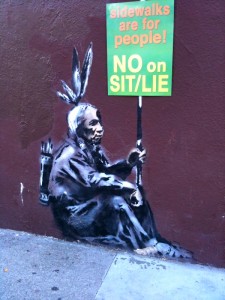
Sit /lie goes down at the Board of Supervisors

At the June 8 Board of Supervisors meeting, a controversial ordinance that sought to ban sitting or lying down on the sidewalk was voted down 8 to 3, with Sups. Michela Alito-Pier, Sean Elsbernd, and Carmen Chu voting in favor.

Proponents of the law, which was backed by Mayor Gavin Newsom and Police Chief George Gascon, framed it as a measure to promote “civil sidewalks.” Yet opponents believed that the law would be used as a tool against the homeless.

Alioto-Pier said the law was needed to give police a new tool for dealing with people who congregate on the streets and intimidate passersby, saying residents and businesses were bothered by “the presence of dogs or shouting.”

Yet a number of supervisors spoke forcefully against the ordinance, saying it was not an appropriate solution to the problems that Alioto-Pier and other sit/lie backers had raised concerns about.

“I don’t believe that this is the San Francisco way to to approach the challenges that we face,” said District 8 Sup. Bevan Dufty, who goes along with Newsom’s proposals more often than his progressive colleagues and is typically a swing vote on the board. Dufty referenced a former, similar San Francisco law that was ultimately repealed. “That was a law that didn’t want to see gay men congregating at 1 a.m. outside a bar,” he said. He called for a more substantive approach, saying, “We can do better.”

Sup. David Campos also spoke against it. “It doesn’t actually address the issue of civility,” he said. “The case for this legislation simply has not been made.” He noted that day laborers who wait for hours on the sidewalk in hopes of finding work could be targeted when they sit down to take a rest.

Sup. Ross Mirkarimi said he thought greater enforcement of existing laws and community policing would be more effective than the proposed ordinance. Later in the meeting, he proposed a measure to be placed on the November ballot that would require police to adopt a foot beat patrol program and a community policing policy.

The board also voted unanimously in favor of a proposal by Board President David Chiu to create a neighborhood community justice task force “to make recommendations to the Board of Supervisors regarding the creation of restorative and community justice programs.” Chiu pitched the idea as a more meaningful response to hostile behavior on the streets in neighborhoods such as the Haight, where calls for a sit /lie ordinance originated.

“We’re very pleased about what happened today,” said Andy Blue, an activist who organized a citywide campaign opposing sit / lie. But he said it wasn’t over yet, since Newsom has already moved to place the proposal on the ballot. “We know we’re going to face an uphill battle,” he said, “because we’re going to be in a campaign with some very well-funded opponents.” But Blue said he felt confident that once the information got out to San Franciscans, “they’ll vote against it in November.”


From the Kamala Harris party

1

City Attorney Dennis Herrera, and Board President David Chiu, Criminal Justice Podcaster David Onek and other local luminaries floated around the Delancy Street Foundation where, oddly, the booze was free flowing, allegedly thanks to the largesse of Vanessa Getty.


The walls here are adorned with photos of Delancy Street Foundation founder Mimi Silbert, including an unusually unflattering photo of San Francisco’s mayor Gavin Newsom (with his name mispelled to include a final e). Among the crowd of supporters was Lateefah Simon, who works for the Lawyers Comittee for Civil Rights. She told me she was supporting Kamala Harris for AG based on her experience working for her for four years.


“I’ve never had a more difficult boss,” Simon said. “We would all shake before meetings because she demanded such a level of detail and excellence.


As of this time, Harriss has not put in an appearance, although she is rumored to be lurking in a back room in a building.

Another bloody budget

6

rebeccab@sfbg.com

In the days since June 1, when Mayor Gavin Newsom unveiled his proposal for San Francisco’s $6.48 billion budget for the next fiscal year, public sector employees and community organizations have been poring over the hefty document to determine how their jobs, services, and programs survived cuts made to close a $483 million shortfall.

For police and firefighters, a key Newsom constituency, the news is good. There were no layoffs to San Francisco firefighters, and while members of the Police Officer’s Association gave up $9.3 million in wage concessions under the lucrative contract Newsom gave them a few years ago, police officers will still receive a 4 percent wage increase on July 1.

For others, the release of the mayor’s budget signified a tough fight looming before the Board of Supervisors, one with high stakes. Cuts to homeless services, mental health care, youth programs, and housing assistance, along with privatization proposals, have raised widespread concern among labor and liberal advocacy organizations. Public input on the budget will continue at the Board of Supervisors Budget and Finance Committee until July 15, when the amended document is considered by the full board.

At a June 1 announcement ceremony, Newsom asserted that the budget was balanced “without draconian cuts,” saying, “We were able to avoid the kind of cataclysmic devastation that some had argued was inevitable in this budget.”

Nearly a week later, Board President David Chiu told the Guardian that sort of cataclysm wouldn’t be staved off for long if the city continues on the course of repeatedly making deep budget cuts without proposing any significant new sources of revenue.

“Now that the smoke has cleared, it is clear that the mayor’s proposed budget is perfect for a mayor who is only going to be around for the short term, but it does not address the long-term fiscal crisis that our city is in,” Chiu said. “Next year, we’re looking at over a $700 million budget deficit. The year after that, we’re looking at almost an $800 million budget deficit. The budget proposal that Newsom put out balances the … deficit on many one-time tricks and assumptions of uncertain revenue.”

Meanwhile, advocates said even the cuts proposed this time would bring serious consequences, especially with unemployment on the rise, state programs being cut in Sacramento, and families feeling the pinch more than ever.

“Poor and working class families, and families of color in San Francisco, are facing kind of an assault on funding and on safety net services on multiple levels,” said Chelsea Boilard, family policy and communications associate for Coleman Advocates for Children and Youth. “I think a lot of it is that families are concerned about their ability to stay in the city and raise their kids here.”


“NO NEW TAXES”

During the budget announcement, Newsom emphasized the positive. He found $12 million in new revenue simply by closing a loophole that had allowed Internet-based companies to avoid paying that amount in hotel taxes. He said 350 currently occupied positions would be cut, but noted that it was less than a cap of 425 that public sector unions had agreed to. Cuts were inevitable since the ailing economy inflicted the city’s General Fund with significant losses, particularly from business and property tax revenues.

Nonetheless, Newsom’s budget is already coming under fire from progressive leaders. For one, there are no new revenue-generating measures in the form of general taxes, which could have averted the worst blows to critical safety-net services and might help remedy the city’s economic woes in the long-term.

“There are no new taxes in this budget,” Newsom declared. “I know some folks just prefer tax increases. I don’t.”

Yet Chiu said many of Newsom’s assumptions for revenue were on shaky ground, prompting City Controller Ben Rosenfield — Newsom’s former budget director — to place $142 million on reserve in case the projected revenues don’t pan out.

“These budget deficits continue as far as the eye can see,” Chiu noted. “Even if those amounts come in, something like 90 percent of them are one-time fixes. So even if the mayor is right, it doesn’t solve next year’s problem, or the year after. Which is why many of us at the board believe that we have to consider additional revenue proposals to think about the long-term fiscal health of the city.”

Sup. John Avalos, chair of the Budget and Finance Committee, described Newsom’s budget as “pretty much an all-cuts budget,” noting that he and Chiu planned to introduce revenue-generating measures. They were expected to introduce proposals — including an increase in the hotel tax and a change in the business tax — at the June 8 board meeting.

Because despite Newsom’s rosy assessment, many of his proposed cuts are deep and painful: the Recreation and Park Department would be cut by 42 percent (with its capital projects budget slashed by 90 percent), Economic and Workforce Development by 34 percent, Ethics Commission by 23 percent (basically eliminating public financing for candidates), Department of the Environment by 14 percent, Emergency Management by 10 percent, and the list goes on.


CUTS TO SOCIAL SERVICES

Progressives say Newsom’s budget reflects skewed priorities. While relatively little is asked of public safety departments, health and human services programs face major staffing and funding losses. “Poor people are being asked to shoulder the burden,” noted Jennifer Friedenbach, director of the Coalition on Homelessness.

Nearly $31 million would be slashed from the Department of Public Health, and more than $22 million would be cut from the Human Services Agency under Newsom’s proposed budget. While this reflects only 2–3 percent of the departmental budgets, there’s widespread concern that the cuts target programs designed to shield the most vulnerable residents.

Proposals that deal with housing are of special concern. “We have more and more families moving into SRO hotel rooms. We have families in garages. We have a really scary situation for many families,” Friedenbach said.

Affordable housing programs within the Mayor’s Office of Housing would get slashed from $16.8 million currently down to just $1.2 million, a 92 percent cut. Other cuts seem small, but will have big impacts of those affected. Newsom’s budget eliminates 42 housing subsidies, which boost rent payments for families on the brink of homelessness, for a savings of $264,000. Meanwhile, a locally funded program that subsidizes housing costs for people with AIDS would be cut, for a savings of $559,000.

Transitional housing would be affected, too, such as 59 beds at a homeless shelter on Otis Street, which Friedenbach says would be lost under Newsom’s budget proposal. “We’ve already lost more than 400 shelter beds since Newsom came to office, so that’d be a huge hit,” she said. Since the recession began, she added, the wait-list at shelters has tripled. The Ark House, a temporary housing facility that serves LGBT youth, would also be closed.

Overall, homeless services delivered by HSA would take a $12 million hit in Newsom’s budget, or about 13 percent, offset slightly by homeless services being increased by $2 million within the Mayor’s Office budget, a 71 percent increase.

Outpatient mental health services, such as Community Behavioral Health Services, would also be affected (See “Cutting from the bottom”), in violation of current city law. Several years ago, then-Sup. Tom Ammiano introduced legislation establishing a “single standard of care” to guarantee access to mental health services for indigent and uninsured residents.

“If timely, effective, and coordinated mental health treatment is not provided to indigent and uninsured residents who are not seriously mentally ill, those residents are at risk of becoming seriously mentally ill and hence requiring more expensive and comprehensive mental health care from San Francisco,” according to the ordinance, which was passed in June of 2005. Newsom’s budget proposes changing this legislation to enable cuts to those services, which would result in 1,600 people losing treatment, according to Friedenbach.

Unfortunately, advocates for the poor has gotten used to this ritual of trying to restore cuts made by Newsom. “There are some sacred cows that seem to survive year after year, and then we’re left fighting over what we can get,” said Randy Shaw, executive director of the Tenderloin Housing Clinic (THC).

The Central City SRO Collaborative, which supports tenants living in single-room occupancy hotels in the mid-Market Street area and is operated through THC, is slated to be cut by 40 percent along with three other similar programs — a replay from last year when the mayor proposed eliminating funding and the Board of Supervisors restored the cut.

“I think you’d see more fires, more people dying from overdoses. You’d see really bad conditions,” Jeff Buckley, director of the program, told us of the potential consequences of eliminating the inspections and resident training that is part of the program.

Funding was also eliminated for THC’s Ellis Eviction Defense Program, the city’s only free legal defense program with capacity to serve 55 low-income tenants facing eviction under the Ellis Act.


THREAT TO RENTERS

One of the most controversial proposals to emerge from Newsom’s budget is a way for property owners and real estate speculators to buy their way out of the city lottery that limits conversion of rental properties and tenants-in-common (TICs) to privately-owned condos if they pay between $4,000 and $20,000 (depending on how long they have waited for conversion), a proposal to raise about $8 million for the city.

“I went back and forth because I know the Board of Supervisors can’t stand this,” Newsom said as he broached the subject at the June 1 announcement. “I still don’t get this argument completely. Except it’s a big-time ideological discussion. It’s so darn ideological that I think it gets in the way of having a real discussion.”

Yet Ted Gullicksen, director of the San Francisco Tenants Union, said the argument is quite clear: making it easier to convert rental units into condos will accelerate the loss of rental housing in a city where two-thirds of residents are tenants, in the process encouraging real estate speculation and evictions.

“It will encourage TIC conversions and evictions because it makes the road to converting TICs to condos that much easier,” Gullicksen said. “It’s going to be a huge gift to real estate speculators.”

Newsom press secretary Tony Winnicker disputes that impact, saying that “these units were going to convert anyway, whether next year or six years. This merely accelerates that conversion without altering the lottery to protect jobs and services.”

But Gullicksen said the proposal obviously undermines the lottery system, which is the only tool tenant advocates have to preserve the finite supply of rent-controlled apartments, noting that even if the condos are later rented out, they will no longer to subject to rent control. That’s one reason why the Board of Supervisors has repeatedly rejected this idea, and why Newsom probably knows they will do so again.

Avalos said he and other progressive supervisors will oppose the proposal, despite the difficulties that will create in balancing the budget. “It’s kind of like putting a gun to our heads,” Avalos said of Newsom’s inclusion of that revenue in his budget.

To offset that revenue loss, Avalos has proposed a tax on alcohol sold in bars and Gullicksen is proposing the city legalize illegal housing units that are in habitable condition for property owners willing to pay an amnesty fee.

Some housing advocates were also struck by the timing of proposing condo conversion fees while also eliminating the Ellis Eviction Defense Program. “We’re really the only ones doing this,” Shaw noted. He said the program is crucial because it serves low-income tenants, many of whom are monolingual Chinese or Spanish speakers who lack the ability to pay for private attorneys to resist aggressive landlords.


PRIVATIZATION PROPOSALS RETURN

The Department of Children, Youth. and Families budget would be reduced by 20 percent under Newsom’s budget, with the greatest cuts affecting after school and youth leadership programs. Roughly a $3 million cut will result in the loss of around 300 subsidized slots for after school programs, said Boilard of Coleman Youth Advocates. Another $3 million is expected to come out of violence-prevention programs for troubled youth; an additional $1 million would affect youth jobs programs.

Patricia Davis, a Child Protective Services employee who lives in the Mission District with her two teenage sons, said she was concerned about the implications for losses to youth programs, particularly during the summer. “You can imagine what’s going to happen this summer,” she said. “I feel that a lot of kids are going to do a lot of things that they have no business doing.”

Davis, who says she’ll have to look for a new job come Sept. 30 because the federal stimulus package funding that supports her position will run out, said she was not happy to hear that police officers would be getting raises just as that summer school programs are being threatened with closure. “Couldn’t the 4 percent [raise] go somewhere else — like to the children?” she wondered.

Meanwhile, privatization proposals are causing anxiety for SEIU Local 1021 members, who recently gave millions in wage concessions and furloughs along with other public employees to help balance the budget. A proposal to contract out for jail health services cropped up last year and was shot down by the board, but it’s back again.

“When you make it a for-profit enterprise, the bottom line is the profit. It’s not about the health care,” SEIU Local 1021 organizer Gabriel Haaland told us. “It isn’t the same quality of care.”

Haaland said he believes the mayor’s assumption that the proposal could save $13 million should be closely examined. Other privatization schemes would contract out for security at city museums and hospitals.

Institutional police in the mental health ward at SF General Hospital and other sensitive facilities are well trained and experienced with difficult situations so, Haaland said, “the workers feel a lot safer” than they would with private contractors.

Regarding Newsom’s privatization proposal, Avalos said the board was “opposed last year and the year before, and we’ll oppose [them] this year.”

In the coming weeks, Avalos and other members of the Budget and Finance Committee will carefully go over Newsom’s proposed budget — which is now being sized up by Budget Analyst Harvey Rose’s office — and solicit input from the public. Chances are, they’ll get an earful.

“People are scared. They are scared to death right now,” Boilard said. “As it is, people’s hours are being reduced. And it’s getting harder and harder to find a job because so many people are out of work that the level of competition has gotten really fierce. This is the time that we need to invest in safety net services for young people and families more than ever — and all those services and programs and relationships that people depend on are disappearing.”

Steven T. Jones and Kaitlyn Paris contributed to this report.

About Peskin’s “coup”

45

It’s interesting that the Examiner and Chron both seem to be pushing the same slate of 24 candidates for the Democratic County Central Committee — and most of the folks on the list are not incumbents. Electing the so-called “moderate” slates would, in fact, mark a dramatic change in the politics of the DCCC — and yet, the Ex’s Ken Garcia still talks about a “progressive coup.” As if somehow the left is trying to take over a committee that hasn’t really changed all that much in years.


Garcia:


A few years back, the local Democratic party organization was the object of a coup engineered by former Supervisor Aaron Peskin and the aforementioned Daly that rid the group of many of its moderate members and replaced them with like-minded ultra-liberals, several of which were elected to the Board of Supervisors in large part because of the support of the DCCC, which controls slate mailers, raises money and otherwise does everything in its power to increase its power.


In fact, in 2008 Peskin was elected to the DCCC and became chair. But it was hardly a dramatic change in the commitee’s politics. Let’s look at the numbers.


You can read the list of candidates who won slots on the committee in 2006, before the supposed “takeover,” here. And you can see the list of candidates who won in 2008, the “coup” year, here. Guess what? They’re remarkably similar. In the 12th Assembly District, only three of 12 seats changed hands. Susan Hall, a progressive, retired. Dan Dunnigan and Jason Wong, both part of the more moderate wing, lost. Jake McGoldrick, Eric Mar and Michael Bornstein, all progressives, were elected. Net political change: exactly two sets for the progressives.


In District 13, Sue Bierman, an incumbent in 2006, died and was replaced by David Chiu, who was re-elected in 2008. Gerry Crowley retired, and exactly two other incumbents — Holli Thier and Bill Barnes — were unseated, replaced by Peskin and Chris Daly.


“Many of the moderate members,” Ken? Try four. Out of 24 elected seats. That’s a turnover rate of about 16 percent. Some coup.


As it turns out, the balance of power in the committee shifted just enough for Peskin to get elected chair, in a very close vote. But most of the votes on the committee, on most of the key issues, are fairly lopsided; a motion to oppose the sit-lie law, for example, passed overwhelmingly.


So the real coup attempt here is a well-funded move by downtown to oust the current incumbents and move the Democratic Party to the right. That’s what this election is about. 

Nevius family values

6

The Chron’s C.W. Nevius has made a big deal of moving back into town from the suburbs — and the offhand comment by Steve Jones in an email to Nevius has almost become a sticky nickname. In fact, his own newspaper’s website, sfgate, headlined his column “Suburban twit moves to city.”

But Chuck’s got some work to do before he starts to understand San Francisco values.

Take his latest column, about the Democratic County Central Commitee. Now, any Chron columnist (or anyone else) has the right to endorse and advocate for any candidates he or she wants. And Nevius is absolutely right to point out that the DCCC race is crucial, that control of the committee will have a significant impact on the fall supervisorial elections.

Here’s what made me want to scream:

“So, if you’re happy with the far-left agenda, check out the Bay Guardian. (Progs with name recognition like Peskin, David Campos, David Chiu, and John Avalos are probably shoo-ins. Daly is not running.) For those who’d like to see a swing to families, kids, and civility on the streets, here are some suggestions.”

 A swing to families and kids? You must be kidding.

The single greatest issue facing families and children in this city is the cost of housing. That’s why Coleman Advocates for Children and Youth, which almost everyone agrees is the premier family-advocate group in the city, has made affordable housing a huge priority.

Some of what a recent Coleman report says:

 “Two-thirds of all children in the city do not have a secure future in San Francisco

More families in San Francisco are low-income (43%) than middle-income (23%), and face economic hardship even when working full-time jobs.

Extreme racial disparities in family income and access to opportunity mean that the majority of children who do not have a secure future in SF are children  of color, and the majority of children who do have a secure future are white.”

Coleman’s recommendations: Build and preserve affordable housing for families — not market-rate condos, not condo conversions, but below-market-rate housing.

From the report:

“1. Prioritize the needs of 45,000 children growing up in 20,000 extremely-poor and low-wage working families.  trategies must combine investing in a stronger social safety-net for families now, and investing in anti-poverty strategies that will prepare today’s poor children to become economically secure San Franciscans of the future. The city’s housing and educational policies must focus on the children and families with the greatest need, and not get sidetracked by the demands of middle-income or upper-income families whose needs are legitimate but not as urgent.

 2. Invest in affordable homeownership programs for middle-income families, but focus the vast majority of limited housing resources on building permanently affordable family rental housing.”

That is exactly what the progressives — the “far left” folks that Nevius decries — have been talking about all these years. The candidates Nevius endorses are of the political camp that advocates more market-rate housing, more condo conversions, fewer tenant protections — more of the kind of things that drive lower-income families out of the city.

The next priority is education. Families that don’t have a lot of money have no option other than the public schools, and a lot of us who might be able to afford private schools still think public education is the way to go. What the schools need in San Francisco is pretty simple: They need more money. The “moderates: Nevius endorses — who actually count as fiscal conservatives, by San Francisco standards — are generally against raising taxes, as is our mayor. The San Francisco city government doesn’t oversee the schools, and most of the education money in California comes from the state — but San Francisco’s Rainy Day Fund, and the willingness of the supervisors to put money into the local schools, has saved hundreds of teacher layoffs and helped the quality of the local public schools.

 Where did that idea come from? Progressive leader Tom Ammiano.

I’m a San Francisco parent with two kids, and I have a lot of friends who are San Francisco families, and none of us see the Nevius agenda as family-friendly. That’s why we’re supporting the progressives.

Insecure Sanctuary

9

Sarah@sfbg.com

The Board of Supervisors is urging San Francisco officials not to participate in Secure Communities, a controversial federal-local fingerprinting collaboration set to be activated June 1. But opting out of a program that threatens to make debates over “sanctuary city” protections of immigrants irrelevant may not be easy.

Speaking at a May 18 rally, Sup. Eric Mar warned that the use of Secure Communities by U.S. Immigration and Customs Enforcement (ICE) could cause the deportation of innocent residents and destroy local community policing efforts. “The police-ICE entanglement will hurt our communities and many people accused of minor crimes will see families torn apart,” Mar warned, as he urged the city to opt out of the Department of Homeland Security initiative, which identifies immigrants who are sitting in U.S. jails and may be deportable under federal immigration laws.

Cosponsored by Sups. John Avalos, David Campos, David Chiu, Chris Daly, Bevan Dufty, Sophie Maxwell, and Ross Mirkarimi, Mar’s resolution was scheduled for a May 25 vote that would make San Francisco the first jurisdiction in the nation to pursue withdrawing from the system.

“The shadow of Arizona is starting to cover other cities,” Mar said, referring to Arizona’s anti-immigrant legislation, SB 1070. “We can’t let Arizona come to San Francisco.”

ICE spokesperson Virginia Kice said the program’s focus is on criminal aliens. “These are folks who have been charged with or found guilty of felonies and have ignored deportation orders,” Kice said.

But ICE statistics show that the program mostly deports those with minor offenses. Between October 2008 and March 2010, Secure Communities submitted 1.9 million sets of digital fingerprints and deported 33,326 people nationwide. Fifteen percent of those deported (4,903 people) had criminal histories that included major drug and violent offenses such as murder, manslaughter, rape, robbery, and kidnapping (Level 1 crimes). The other 85 percent (28,423 people) were deported for less serious drug and property offenses (Level 2 crimes) and other minor charges (Level 3 crimes).

Kice admits that Level 2 and 3 offenders constitute the largest percentage of SC cases. “That’s because representatively more people are arrested for Level 2 and 3 offenses than Level 1,” she said. “That’s probably fortunate, because Level 1 crimes are very serious.”

But American Civil Liberties Union legislative counsel Joanne Lin warns that Secure Communities allows the federal government to circumvent local sanctuary policies and fast-track deportation. “It allows the Department of Homeland Security to identifty everyone who is booked, whether they are here lawfully or their charges are subsequently dropped or dismissed,” Lin said.

Mayor Gavin Newsom said he has no reservations about the program, which the Bush administration first announced in March 2008. “Sanctuary city policies were never meant to protect criminal behavior,” mayoral spokesperson Tony Winnicker said May 7, when San Francisco Sheriff Mike Hennessey blew the whistle on the federal-local fingerprinting collaboration. “At the end of the day, federal officials should enforce immigration laws. We report — we don’t deport.”

The program links local law enforcement databases to the Department of Homeland Security’s biometric system through interoperability agreements with states, allowing instantaneous information-sharing among local jails, ICE, and the FBI.

ICE implemented the program in North Carolina and Texas in October 2008. Under President Obama, the program has been activated in 169 jurisdictions in 20 states. ICE plans to have a Secure Communities presence in each state by 2011, and in each of the 3,100 state and local jails nationwide by 2013, according to its Web site.

Under the program, participating jails submit fingerprints of arrestees to immigration and criminal databases, thereby giving ICE a technological presence in prisons and jails. An overview conducted by the Washington, D.C.-based nonpartisan National Immigration Law Center observes that “the critical element” of the program is that, during booking in jail, arrestees’ fingerprints will be checked against DHS databases, rather than just against FBI criminal databases.

“ICE asserts that the purpose of the Secure Communities program is to target violent criminals for removal,” NILC observed. “Advocates had criticized the program’s operation because it took place at the beginning of the criminal process and therefore indiscriminately targeted persons arrested for crimes of all magnitudes, rather than persons convicted of serious crimes.”

“The underlying purpose may be to lay the groundwork for real immigration reform,” NILC concludes. “But the mechanisms put in place will be difficult to dismantle, and the civil rights violations they produce cannot be undone.”

Scott Lorigan of the California Department of Justice’s Bureau of Criminal Identification and Information signed an interoperability agreement with ICE’s John P. Torres in April 2009. Since then, the system has been activated in Alameda, Contra Costa, Fresno, Imperial, Los Angeles, Monterey, Orange, Sacramento, San Bernardino, San Diego, San Joaquin, San Luis Obispo, Santa Barbara, Solano, Sonoma, Stanislaus, and Ventura counties. Now it’s set to get switched on in San Francisco.

Campos thanks Hennessey for blowing the whistle, and lays the blame at Obama’s door. “None of us would have known this was happening,” Campos said. “This is the time for all San Francisco’s elected officials to stand up in support of the principles that led us to establish a sanctuary city. It’s not just the board, but also the mayor who needs to step up and say what just happened is not acceptable. This program eviscerates sanctuary city.”

Hennessey has written to California Attorney General Jerry Brown asking for assistance in opting out of the ICE program. Brown’s office is reviewing his request. “The California Department of Justice manages the statewide database of fingerprints that are essential to solving crimes, but we have no direct role in enforcing federal immigration laws,” Brown’s press secretary Christine Gasparac clarified. “We were informed by ICE that they will work with counties to opt out of their program. Because that is a process directly between the county and ICE, we’re advising local authorities who want to opt out to contact ICE directly.”

But it’s not clear what opting out will achieve. ICE’s Kice said jurisdictions can choose not to receive the immigration-related information on individuals who are fingerprinted, but that information will still be provided to ICE, which can act on it. Kice said that after an arrestee’s biometrics are forwarded to the feds, the information is bounced off FBI and DHS databases, and the information that comes back says if they have a record.

“What comes out is a recap of whatever relevant information is in the database,” she said. “For example, whether there has been a prior formal deportation or a prior arrest. It also shows if they have an adjusted status — whether they have legal permanent status. It will indicate if they are naturalized, in which case they are not subject to removal. That’s the information the community could cut off.”

“ICE always did these checks, but it was only available to local law enforcement agencies if they queried the system themselves, which required them to take a couple of extra steps,” Kice continued. “And it was name based. And that could be problematic, given duplicate names in system. That’s what fingerprints eliminate. Our concern is that municipalities are dependent to a large extent on information provided by the individual at the moment of arrest. We think the use of biometrics will ensure that folks who provide false information to local law enforcement officials don’t escape detection.”

Kice acknowledged that not everyone in the database is a violator. “The fact of having a record does not mean that you are a deportable alien,” she said. “And we understand that someone may get arrested and may not get convicted on their current charges. But what about a prior history? We know that folks have eluded detection, escaped, or been released from custody. So the individual may be someone who has other prior convictions. It’s the totality of their record that we are talking about here.”

At present, the San Francisco County Sheriff’s Department only reports noncitizens who are booked on felony charges. Hennessey expressed concerns about the unintended consequences of ICE technology interfacing with that of the Department of Justice’s fingerprint database.

He also warned that the 2,000 or so ICE referrals his office makes annually could explode. “We’ll be fingerprinting 35,000-40,000 persons annually,” Hennessey claimed. “And ICE has a record of secrecy. They won’t tell me what happened to folks they pick up. They won’t say if they are still in custody, been released or deported. The basis of sanctuary city is to protect immigrants who are not doing anything wrong or serious. When ICE grabs someone who failed to pay a traffic ticket and that person is supporting a family, I don’t think those crimes should rise to the level of deportation.”

ENDORSEMENTS

Our endorsements  for the upcoming election were originally published on April 27. We’re republishing them here for the benefit of absentee voters. Our clip-out guide to take to the polls will appear in our June 2 issue and online.

On the eve of the June 8 election, we’ll be publishing our handy clip-out guide for you to take to the polls. Before then, however, take a minute to read about our decisions — and why they’re important for the future of the country, the state, and San Francisco.

ENDORSEMENTS:

>>NATIONAL AND STATE RACES

>>STATE BALLOT MEASURES

>>SAN FRANCISCO BALLOT MEASURES

>>JUDICIAL RACES


Pictured above: 

OUR CHOICES FOR DCCC

We’ve already endorsed candidates for the Democratic County Central Committee (see “Our endorsements for DCCC,” 3/30). We’re listing them again here for easy reference — in the order they will appear on the ballot. (Since it’s unfair to present candidates in a crowded field in alphabetical order, the state every year does a random alphabetical drawing to set the order in these races.)

The election is crucial — DCCC controls the local Democratic Party endorsements, which can make a huge difference in district supervisorial contests.


ASSEMBLY DISTRICT 13

Debra Walker

Aaron Peskin

Eric Quezada

Joe Julian

Alix Rosenthal

Michael Goldstein

David Campos

David Chiu

Rafael Mandelman

Kim-Shree Maufas

Carole Migden

Robert Haaland


ASSEMBLY DISTRICT 12

Chris Gembinski

Connie O’Connor

Michael Bornstein

John Avalos

Hene Kelly

Melanie Nutter

Sandra Lee Fewer

Eric Mar

Milton Marks

Jane Morrison

Jake McGoldrick

Larry Yee


Democratizing the streets

steve@sbg.com

It’s hard to keep up with all the changes occurring on the streets of San Francisco, where an evolving view of who and what roadways are for cuts across ideological lines. The car is no longer king, dethroned by buses, bikes, pedestrians, and a movement to reclaim the streets as essential public spaces.

Sure, there are still divisive battles now underway over street space and funding, many centered around the San Francisco Municipal Transportation Agency, which has more control over the streets than any other local agency, particularly after the passage of Proposition A in 2007 placed all transportation modes under its purview.

Transit riders, environmentalists, and progressive members of the Board of Supervisors are frustrated that Mayor Gavin Newsom and his appointed SFMTA board members have raised Muni fares and slashed service rather than tapping downtown corporations, property owners, and/or car drivers for more revenue.

Board President David Chiu is leading the effort to reject the latest SFMTA budget and its 10 percent Muni service cut, and he and fellow progressive Sups. David Campos, Eric Mar, and Ross Mirkarimi have been working on SFMTA reform measures for the fall ballot, which need to be introduced by May 18.

But as nasty as those fights might get in the coming weeks, they mask a surprising amount of consensus around a new view of streets. “The mayor has made democratizing the streets one of his major initiatives,” Newsom Press Secretary Tony Winnicker told the Guardian.

And it’s true. Newsom has promoted removing cars from the streets for a few hours at a time through Sunday Streets and his “parklets” in parking spaces, for a few weeks or months at a time through Pavement to Parks, and permanently through Market Street traffic diversions and many projects in the city’s Bicycle Plan, which could finally be removed from a four-year court injunction after a hearing next month.

Even after this long ban on new bike projects, San Francisco has seen the number of regular bicycle commuters double in recent years. Bike to Work Day, this year held on May 13, has become like a civic holiday as almost every elected official pedals to work and traffic surveys from the last two years show bikes outnumbering cars on Market Street during the morning commute.

If it wasn’t for the fiscal crisis gripping this and other California cities, this could be a real kumbaya moment for the streets of San Francisco. Instead, it’s something closer to a moment of truth — when we’ll have to decide whether to put our money and political will into “democratizing the streets.”


RECONSIDERING ROADWAYS

After some early clashes between Newsom and progressives on the Board of Supervisors and in the alternative transportation community over a proposal to ban cars from a portion of John F. Kennedy Drive in Golden Gate Park — a polarizing debate that ended in compromise after almost two acrimonious years — there’s been a remarkable harmony over once-controversial changes to the streets.

In fact, the changes have come so fast and furious in the last couple of years that it’s tough to keep track of all the parking spaces turned into miniparks or extended sidewalks, replacement of once-banished benches on Market and other streets, car-free street closures and festivals, and healthy competition with other U.S. cities to offer bike-sharing or other green innovations.

So much is happening in the streets that SF Streetsblog has quickly become a popular, go-to clearinghouse for stories about and discussions of our evolving streets, a role that the San Francisco Bicycle Coalition — itself the largest grassroots group in the city, with more than 11,000 paid members — recently recognized with its Golden Wheel award.

“I think we are at a tipping point. All these little things have been percolating,” said San Francisco Planning Urban Research Association director Gabriel Metcalf, listing examples such as the creative reuse of San Francisco street space by Rebar and other groups (see “Seizing space,” 11/18/09), experiments in New York and other cities to convert traffic lanes to bicycle and pedestrian spaces, a new generation of more forward-thinking traffic engineers and planning professionals working in government, and more aggressive advocacy work by the SFBC, SPUR, and other groups.

“I think it’s all starting to coalesce,” Metcalf said. “Go to 17th and Valencia [streets] and feel what it’s like to have a sidewalk that’s wide enough to be comfortable. Or go ride in the physically separated bike lane on Market Street. Or take your kids to the playground at Hayes Green that used to be a freeway ramp.”

Politically, this is a rare area of almost universal agreement. “This is an issue where this mayor and this board have been very aligned,” Metcalf said. Winnicker, Newsom’s spokesperson, agreed: “The mayor and the board do see this issue very similarly.”

Mirkarimi, a progressive who chairs the Transportation Authority, also agreed that this new way of looking at the streets has been a bright spot in board-mayoral relations. “It is evolving and developing, and that’s a very good thing,” Mirkarimi said.

Both Winnicker and Mirkarimi separately singled out the improvements on Divisidero Street — where the median and sidewalks have been planted with trees and vegetation and some street parking spaces have been turned into designated bicycle parking and outdoor seating — as an example of the new approach.

“It really is a microcosm of an evolving consciousness,” Mirkarimi said of the strip.

Sunday Streets, a series of events when the streets are closed to cars and blossom with life, is an initiative proposed by SFBC and Livable City that has been championed by Newsom and supported by the board as it overcame initial opposition from the business community and some car drivers.

“There is a growing synergy toward connecting the movements that deal with repurposing space that has been used primarily for automobiles,” Sunday Streets coordinator Susan King told us.

Newsom has cast the greening initiatives as simply common sense uses of space and low-cost ways of improving the city. “A lot of what the mayor and the board have disagreements on, some of that is ideological,” Winnicker said. “But streets, parks, medians, and green spaces, they are not ideological.”

Maybe not, but where the rubber is starting to meet the road is on how to fund this shift, particularly when it comes to transit services that aren’t cheap — and to Newsom’s seemingly ideological aversion to new taxes or charges on motorists.

“We’re completely aligned when it comes to the Bike Plan and testing different things as far as our streets, but that all changes with the MTA budget,” said board President David Chiu, who is leading the charge to reject the budget because of its deep Muni service cuts. “Progressives are focused on the plight of everyday people who can’t afford to drive and park a car and have to rely on Muni. So it’s a question of on whose back will you balance the MTA budget.”


WHOSE STREETS?

The MTA governs San Francisco’s streets, from deciding how their space is allocated to who pays for their upkeep. The agency runs Muni, sets and administers parking policies, regulates taxis, approves bicycle-related improvements, and tries to protect pedestrians.

So when the mayoral-appointed MTA Board of Directors last month approved a budget that cuts Muni service by 10 percent without sharing the pain with motorists or pursuing significant new revenue sources — in defiance of pleas by the public and progressive supervisors over the last 18 months — it triggered a real street fight.

The Budget and Finance Committee will begin taking up the MTA budget May 12. And progressive supervisors, frustrated at having to replay this fight for a second year in a row, are pursuing a variety of MTA reforms for the November ballot, which must be submitted by May 18.

“We’re going to have a very serious discussion about MTA reform,” Chiu said, adding, “I expect there to be a very robust discussion about the MTA and balancing that budget on the backs of transit riders.”

Among the reforms being discussed are shared appointments between the mayor and board, greater ability for the board to reject individual initiatives rather than just the whole budget, changes to Muni work rules and compensation, and revenue measures like a local surcharge on vehicle license fees or a downtown transit assessment district.

Last week Chiu met with Newsom on the MTA budget issue and didn’t come away hopeful that there will be a collaborative solution such as last year’s compromise. But Chiu said he and other supervisors were committed to holding the line on Muni service cuts.

“I think the MTA needs to get more creative. We have to make sure the MTA isn’t being used as an ATM with these work orders,” Chiu said, referring to the $65 million the MTA pays to the Police Department and other agencies every year, a figure that steeply increased after 2007. “My hope is that the MTA board does the right thing and rolls back some of these service reductions.”

Transit riders have been universal in condemning the MTA budget. “The budget is irresponsible and dishonest,” said San Francisco Transit Riders Union project director Dave Snyder. “It reveals the hypocrisy in the mayor’s stated environmental commitments. This action will cut public transit permanently and that’s irresponsible.”

But the Mayor’s Office blames declining state funding and says the MTA had no choice. “It’s an economic reality. None of us want service reductions, but show us the money,” Winnicker said.

That’s precisely what the progressive supervisors are trying to do by exploring several revenue measures for the November ballot. But they say Newsom’s lack of leadership on the issue has made that difficult, particularly given the two-third vote requirement.

“There’s been a real failure of leadership by Gavin Newsom,” Mirkarimi said.

Newsom addressed the issue in December as he, Mirkarimi, and other city officials and bicycle advocates helped create the city’s first green “bike box” and honor the partial lifting of the bike injunction, sounding a message of unity on the issue.

“I can say this is the best relationship we’ve had for years with the advocacy community, with the Bicycle Coalition. We’ve begun to strike a nice balance where this is not about cars versus bikes. This is about cars and bikes and pedestrians cohabitating in a different mindset,” Newsom said.

Yet afterward, during an impromptu press conference, Newsom spoke with disdain about those who argued that improving the streets and maintaining Muni service during hard economic times requires money, and Newsom has been the biggest impediment to finding new revenue sources.

“Everyone is just so aggressive on trying to raise revenue. We’ve been increasing the cost of going on Muni the last few years. I think people need to consider that,” Newsom said. “We’ve increased the cost of parking tickets, increased the cost of using a parking meter, and we’ve raised the fares. It’s important to remind people of that. The first answer to every question shouldn’t be, OK, we’re going to tax people more or increase their costs.

“You have to be careful about that,” he continued. “So my answer to your question is two-fold. We’re going to look at revenue, but not necessarily tax increases. We’re going to look at revenue, but not necessarily fine increases. We’re going to look at revenue, but not necessarily parking meter increases. We’re going to look at new strategies.”

Yet that was six months ago, and with the exception of grudgingly agreeing to allow a small pilot program in a few commercial corridors to eliminate free parking in metered spots on Sunday, Newsom still hasn’t proposed any new revenue options.

“The voters aren’t receptive to new taxes now,” Winnicker said last week. Mirkarimi doesn’t necessarily agree, citing polling data showing that voters in San Francisco may be open to the VLF surcharge, if we can muster the same kind of political will we’re applying to other street questions.

“It polls well, even in a climate when taxation scares people,” Mirkarimi said.


BIKING IS BACK

It was almost four years ago that a judge stuck down the San Francisco Bicycle Plan, ruling that it should have been subjected to a full-blown environmental impact report (EIR) and ordering an injunction against any projects in the plan.

That EIR was completed and certified by the city last year, but the same anti-bike duo who originally sued to stop the plan again challenged it as inadequate. The case will finally be heard June 22, with a ruling on lifting the injunction expected within a month.

“The San Francisco Bicycle Plan project eliminates 56 traffic lanes and more than 2,000 parking spaces on city streets,” attorney Mary Miles wrote in her April 23 brief challenging the plan. “According to City’s EIR, the project will cause ‘significant unavoidable impacts’ on traffic, transit, and loading; degrade level of service to unacceptable levels at many major intersections; and cause delays of more than six minutes per street segment to many bus lines. The EIR admits that the “near-term” parts of the project alone will have 89 significant impacts of traffic, transit, and loading but fails to mitigate or offer feasible alternatives to each of these impacts.”

Yet for all that, elected officials in San Francisco are nearly unanimous in their support for the plan, signaling how far San Francisco has come in viewing the streets as more than just conduits for cars.

City officials deny that the bike plan is legally inadequate and they may quibble with a few of the details Miles cites, but they basically agree with her main point. The plan will take away parking spaces and it will slow traffic in some areas. But they also say those are acceptable trade-offs for facilitating safe urban bicycling.

The city’s main overriding consideration is that we must do more to get people out of their cars, for reasons ranging from traffic congestion to global warming. City Attorney’s Office spokesperson Matt Dorsey said that it’s absurd that the state’s main environmental law has been used to hinder progress toward the most environmentally beneficial and efficient transportation option.

“We have to stop solving for cars, and that’s an objective shared by the Board of Supervisors, and other cities, and the mayor as well,” Dorsey said.

Even anti-bike activist Rob Anderson, who brought the lawsuit challenging the bike plan, admits the City Hall has united around this plan to facilitate bicycling even if it means taking space from automobiles, although he believes that it’s a misguided effort.

“It’s a leap of faith they’re making here that this will be good for the city,” Anderson told us. “This is a complicated legal argument, and I don’t think the city has made the case.”

A judge will decide that question following the June 22 hearing. But whatever way that legal case is decided, it’s clear that San Francisco has already changed its view of its streets and other once-marginalized transportation choices like the bicycle.

Even the local business community has benefited from this new sensibility, with bicycle shops thriving around San Francisco and local bike messenger bag companies Timbuk2 and Rickshaw Bags experiencing rapid growth thanks to a doubling of the number of regular bicyclists in recent years.

“That’s who we’re aiming at, people who bike every day and make bikes a central part of their lives,” said Mike Waffenfels, CEO of Timbuk2, which in February moved into a larger location to handle it’s growth. “It’s about a lifestyle.”

For urban planners and advocates, it’s about making the streets of San Francisco work for everyone. As Metcalf said, “People need to be able to get where they’re going without a car.”


Muni reform that might actually work

0

EDITORIAL The 2007 ballot measure that was supposed to give Muni more political independence and more money has failed to provide either. It’s time to say that Proposition A, which we supported, hasn’t worked — in significant part because the administration of Mayor Gavin Newsom hasn’t allowed it to work. It’s time for a new reform effort, one that looks at Muni’s governance structure, funding, and the way it spends money.

There are several proposals in the works. Sup. David Campos has asked for a management audit of the Municipal Transportation Agency, which runs Muni, and that’s likely to show some shoddy oversight practices and hugely wasteful overtime spending. Sup. Sean Elsbernd wants to change the way Muni workers get paid, and Sups. Ross Mirkarimi and David Chiu are talking about changing the way the MTA board is appointed. There are merits to all the reform plans, but in the end, none of them will work if they don’t address the fundamental fact that Muni doesn’t have enough money to provide the level of transit service San Francisco needs.

The basic outlines of what a progressive Muni reform measure would look like are pretty obvious. It ought to include three basic principles: work-rule and overtime reform; a change in the way other departments, particularly the police, charge Muni for work orders — and a sizable new source of revenue.

The work orders are, in many ways, the easiest issue. Last year, the San Francisco Police Department charged Muni more than $12 million in work orders. For what? Well, for doing what the Police Department gets paid to do anyway: patrolling Muni garages, putting cops on the buses, and dealing with Muni-related traffic issues. And a lot of that $12 million is police overtime.

The labor and revenue issues are trickier — mostly because they’re being addressed separately. Elsbernd, for example, wants to Muni workers to engage in the same collective bargaining that other city unions do, which makes a certain amount of sense. But he’s wrong to make it appear that the union and the workers are the major source of Muni’s financial problems — and that approach won’t get far. The bus drivers and mechanics didn’t make millions on large commercial developments that put a huge strain on the transit system — and the developers who profit from having bus service for the occupants of their buildings have never paid their fair share. Nor is it the fault of the union that car traffic downtown clogs the streets and makes it hard for buses to run on time.

We agree that the transit union needs to come to the table and talk, seriously, about work-rule changes. Every other city union, particularly SEIU Local 1021, whose members are among the lowest-paid workers in the city, has given something up to help the city’s budget problems.

But any attempt to change Muni’s labor contract needs to be paired with a serious new revenue program aimed at putting the transit system on a stronger financial footing — and traffic management plans that give buses an advantage over cars. The city can add a modest fee on car owners now, and if a Democratic governor wins in November, it’s likely that state Sen. Mark Leno’s bill to allow a local car tax will become law. That’s part of the solution, as is expanded parking meter hours. (And someone needs to talk about charging churchgoers for parking in the middle of the streets on Sundays.) But Muni also needs a regular stream of income from fees on developers.

And a seven-member MTA appointed entirely by the mayor does nothing for political independence; at the very least, the supervisors should get three of the appointments.

The city badly needs Muni reform — and the elements are all in place. But it can’t be a piecemeal approach.

Muni reform that might actually work

7

EDITORIAL The 2007 ballot measure that was supposed to give Muni more political independence and more money has failed to provide either. It’s time to say that Proposition A, which we supported, hasn’t worked — in significant part because the administration of Mayor Gavin Newsom hasn’t allowed it to work. It’s time for a new reform effort, one that looks at Muni’s governance structure, funding, and the way it spends money.

There are several proposals in the works. Sup. David Campos has asked for a management audit of the Municipal Transportation Agency, which runs Muni, and that’s likely to show some shoddy oversight practices and hugely wasteful overtime spending. Sup. Sean Elsbernd wants to change the way Muni workers get paid, and Sups. Ross Mirkarimi and David Chiu are talking about changing the way the MTA board is appointed. There are merits to all the reform plans, but in the end, none of them will work if they don’t address the fundamental fact that Muni doesn’t have enough money to provide the level of transit service San Francisco needs.

The basic outlines of what a progressive Muni reform measure would look like are pretty obvious. It ought to include three basic principles: work-rule and overtime reform; a change in the way other departments, particularly the police, charge Muni for work orders — and a sizable new source of revenue.

The work orders are, in many ways, the easiest issue. Last year, the San Francisco Police Department charged Muni more than $12 million in work orders. For what? Well, for doing what the Police Department gets paid to do anyway: patrolling Muni garages, putting cops on the buses, and dealing with Muni-related traffic issues. And a lot of that $12 million is police overtime.

The labor and revenue issues are trickier — mostly because they’re being addressed separately. Elsbernd, for example, wants to Muni workers to engage in the same collective bargaining that other city unions do, which makes a certain amount of sense. But he’s wrong to make it appear that the union and the workers are the major source of Muni’s financial problems — and that approach won’t get far. The bus drivers and mechanics didn’t make millions on large commercial developments that put a huge strain on the transit system — and the developers who profit from having bus service for the occupants of their buildings have never paid their fair share. Nor is it the fault of the union that car traffic downtown clogs the streets and makes it hard for buses to run on time.

We agree that the transit union needs to come to the table and talk, seriously, about work-rule changes. Every other city union, particularly SEIU Local 1021, whose members are among the lowest-paid workers in the city, has given something up to help the city’s budget problems.

But any attempt to change Muni’s labor contract needs to be paired with a serious new revenue program aimed at putting the transit system on a stronger financial footing — and traffic management plans that give buses an advantage over cars. The city can add a modest fee on car owners now, and if a Democratic governor wins in November, it’s likely that state Sen. Mark Leno’s bill to allow a local car tax will become law. That’s part of the solution, as is expanded parking meter hours. (And someone needs to talk about charging churchgoers for parking in the middle of the streets on Sundays.) But Muni also needs a regular stream of income from fees on developers.

And a seven-member MTA appointed entirely by the mayor does nothing for political independence; at the very least, the supervisors should get three of the appointments.

The city badly needs Muni reform — and the elements are all in place. But it can’t be a piecemeal approach.

Sit-lie proponents criticize their allies

37

It’s really amusing to read the recriminations and second-guessing from the most vociferous proponents of criminalizing sitting or lying on San Francisco sidewalks after yesterday’s Public Safety Committee hearing on the matter. And the funniest part is their failure to understand that this punitive, overreaching law just isn’t needed to deal with aspects of street life that scare them most, as the police reluctantly testified.

Chronicle columnist C.W. Nevius and Haight Street resident Arthur Evans have been the two most vocal promoters of the sit-lie ordinance, and both sounded similar criticisms of the Police Department and the Mayor’s Office (as well as progressives, their usual target), Nevius in the paper and Evans on the Guardian’s Politics blog (last comment on this item). They call on the so-called “moderates” step up their games or be defeated.

But they miss the point, and falsely believe that “common sense” is on their side. Certainly police officers have the ability to deal with rowdy groups of vagrants who are blocking the sidewalks and intimidating people. They do it all the time, and simply walking a beat usually prevents such behavior. To argue that tough police officers are powerless to deal with thugs defies common sense. And Assistant Chief Kevin Cashman even testified that police don’t need an official citizen complaint to deal with people who are blocking the sidewalk, debunking a fallacy that is oft-cited by Evans and others.

But the efforts by Evans and the Chamber of Commerce to rebrand the sit-lie ordinance as the Civil Sidewalks Law – and to threaten to use it as a wedge issue on the November ballot – reveals their true intentions. The bottom line is they don’t like the more unruly aspects of urban life, and they believe that they can legislate “civility” and have the cops enforce it.

That’s a scary notion, and it’s part of larger campaign to, as Nevius writes, “demonstrate to the far-left supervisors that they were seriously out of step with the residents of the city.” Nevius, who is not a resident of this city, wants San Francisco to be a bit more like his hometown of Walnut Creek. But San Franciscans shouldn’t fall prey to their divisive fear-mongering, and supervisors like Sup. David Chiu – who has publicly toyed with the idea of compromising on sit-lie with some kind of restorative justice program – should heed the message of this hearing and resist creating an unnecessary new law that the community opposes.

Unfortunately, that didn’t happen yesterday as the committee voted to continue the matter for two weeks. And you better believe that next time, the Evan-Nevius crowd will come back strong, with more fearful anecdotes than ever. But the opposition campaign to sit-lie has been strong, creative, and effective — the true voice of San Francisco — and it seems up to the fight.

Chiu moves to reject Muni budget

At the May 4 Board of Supervisors meeting, Board President David Chiu introduced a motion to reject the Municipal Transportation Agency budget, approved by the MTA Board on April 20.

Noting the deep service cuts that are scheduled to inflict the city’s public transportation system on Saturday, May 8, Chiu said riders could expect “longer wait times, more crowding, and people being passed up by full trains.”

Chiu has signaled his frustration with the MTA before and called for reform. “We will be having many conversations with the MTA and with the Mayor’s Office, but I do think at this time we can do better than the budget that we have in front of us,” he said.

Chiu also referenced a recently issued City Controller’s review of SFMTA work orders, conducted to find out if various city departments contracted to provide services for Muni are fairly and accurately billing the agency. The report indicated that MTA work order expenditures have been on the rise, while various city departments “did not often provide sufficient reporting documentation in their billings, and we don’t have a strong sense of whether these bills were paid appropriately for services rendered,” Chiu noted.

Accordingly, he introduced accompanying legislation requesting that the City Attorney draft legislation to implement key recommendations in the controllers’ review.

“It’s just not responsible,” said Tony Winnicker, press secretary to Mayor Gavin Newsom, when asked for a comment on the proposal to reject the Muni budget. “If they’ve got specific solutions … then that’s different. But for now it’s just political grandstanding of the worst kind, and it’s really irresponsible.”

According to section of the City Charter that deals with the public-transit system, however, the board doesn’t have the power to modify the MTA’s budget — it can only accept it or give it a thumbs down. According to Section VIII A 106 (c): “the Board of Supervisors may allow the Agency’s budget to take effect without any action on its part or it may reject but not modify the Agency’s budget by a seven-elevenths’ vote.”

Supes try applying pressure to urge CCA contract

At the April 27 Board of Supervisors meeting, Sup. David Campos made a motion to push back board approval for San Francisco Public Utilities Commission infrastructure improvement projects until a contract was in hand for the city’s Community Choice Aggregation program. If a contract isn’t signed by June 8, when voters will decide on Pacific Gas & Electric Co.’s Prop 16 in the June election, the city could be vulnerable to a legal strike against its green municipal power program from PG&E.

“Having watched the very slow process” of negotiating a contract, “I believe CCA should be the top priority,” Campos said.

Sup. Ross Mirkarimi, who chairs the Local Agency Formation Commission (LAFCo) and has been the primary driver behind CCA on the board, acknowledged that asking the board to withhold funding for city infrastructure projects was “an extraordinary act,” but warned that the imminent threat of Prop 16 called for drastic measures. “Given this external threat from a corporation that is doing everything in its power to subvert and deny San Francisco’s right to move forward, it alarms me, like I know some of you, that we do not have a contract in hand … knowing very well the kind of resources and fervor that have been demonstrated or exemplified in the past by the PUC or by the administration or by whatever other combinations of political forces who insist on something getting done by certain timelines and deadlines,” Mirkarimi said.

But while Campos and Mirkarimi won the support of Sups. Chris Daly and Eric Mar, they failed to bring the others around. The tactic of withholding approval on an ordinance in order to send a clear message to a city department about a separate issue “sets a real, real bad precedent for how we’re going to be doing our work here,” Avalos said, though he did voice his support for CCA.

Sup. Sean Elsbernd came out strongly against the move, and made a motion to table Campos’ initial motion to push the vote back for two weeks until a CCA contract was finalized. Then, in one of those dizzying contests the Supes sometimes get into, Daly made a motion to table Elsbernd’s motion to table Campos’ motion to table the vote.

To put it simply, six supervisors voted to move forward with the vote as scheduled, while four voted to hold back on approving funding for SFPUC projects until a finalized CCA contract was in hand. Sups. Mirkarimi, Chris Daly, and Eric Mar voted with Campos to hold off; Sups. Bevan Dufty, John Avalos, David Chiu, Michela Alioto-Pier, and Carmen Chu voted with Elsbernd to proceed. (Sup. Sophie Maxwell was absent.) After that skirmish went down, all ten voted to approve the funding for the SFPUC infrastructure projects.

When reached later by phone, Board President David Chiu said, “We are fully committed to seeing a CCA contract happen before the June election,” and noted that he brought up the urgency of the matter in a meeting with the mayor, who in turn voiced his own commitment.

Chiu talks MTA reform as agency fails to support Muni

3

With the San Francisco Municipal Transportation Agency Board of Directors poised to approve a truly terrible two-year budget today (4/20) – one that locks in Muni service cuts, subsidizes the police and other city departments, and fails to seek new revenue sources – there is talk about reforming an agency run exclusively by appointees of Mayor Gavin Newsom.

The most significant figure sounding that call is Board of Supervisors President David Chiu, who told the Guardian that he plans to hold hearings this year on the MTA board failures to support transit service, with the goal of placing reform measures on the November ballot. Helping that effort will be his newest board aide, Judson True, who comes from a fire-tested stint as the MTA’s spokesperson and before that was a board aide to then-Sup. Gerardo Sandoval.

“We’re going to have a very serious discussion about MTA reform,” Chiu told the Guardian. “I’ve got some real questions and for the next six months, that will be front and center…I expect there to be a very robust discussion about the MTA and balancing that budget on the backs of transit riders.”

Those discussions will be wrapped into city budget season, a realm in which Chiu is also adding firepower right now by hiring Cat Rauschuber as his other new board aide. Rauschuber has her masters in public policy from Harvard’s Kennedy School of Government, most recently worked for city Budget Analyst Harvey Rose, and earlier worked in the city’s Legislative Analyst’s Office.

“It’s important that we hire folks who have experience in city government, particularly solid policy experience,” Chiu said, adding that his third board aide, Victor Lim, came from the Asian Law Caucus and has experience in immigration reform, another valuable asset given the ongoing standoff between the board and Newsom over sanctuary city policies. 

True and Rauschuber are also master networkers with strong and extensive connections in the progressive community, as well as more mainstream arts, culture, and political communities (Full disclosure: They’re also friends of mine). Those connections and social skills could help unite the varied critics of the current MTA budget, which range from the downtown-oriented SPUR to the new San Francisco Transit Riders Union (SFTRU) to the radical ANSWER Coalition, all of whom have areas of policy disagreement over the best way forward.

All are expected to weigh in today (4/20) at 2 p.m. when the SFMTA convenes in City Hall Room 400 to discuss and vote on the agency’s two-year budget. And while the groups may differ over partial solutions like extended parking meter hours, they all agree this a truly terrible budget that disproportionately punishes low-income people who rely on Muni.

“The budget is irresponsible and dishonest,” SFTRU project director Dave Snyder. “It reveals the hypocrisy in the mayor’s stated environmental commitments. This action will cut public transit permanently and that’s irresponsible.”

Mayoral press secretary Tony Winnicker has not yet responded to the accusations or to Chiu’s calls for MTA reform, but I’ll post his response in the comments section if I hear back.