David Chiu

Where’s the “tax the rich” move in SF?

20

Warren Buffett may have actually set off a movement with his NY Times oped calling for higher taxes on the rich. That’s what Carla Marinucci, who is not known as a socialist radical, reports today in the Chronicle. 


Billionaire Warren Buffett may not seem to have much in common with angry laborers at town hall meetings or armies of California nurses protesting in the streets.


But these days, the executive celebrity in his boardroom and working folks on the front lines have found a common mantra as the economy continues to sputter and the 2012 election approaches: “Tax the rich.”


It’s a great time to be talking about this — The Institute for Policy Studies just released a report showing that a lot of major corporations paid their CEOs more money last year than they paid in federal taxes. And as the economy continues to sputter, voters are going to keep asking why the rich are doing so well and the rest of us are doing worse and worse.


So let’s make this the center of the mayor’s race in San Francisco.


The nurse’s union is taking on the tax issue directly. The nurses’ candidate for mayor of San Francisco, Leland Yee, doesn’t even mention “taxes” on his list of issues in the race.


Progressive leader John Avalos talks about bringing in $40 million in new revenue, and he has told me many times that he supports taxing the rich. But those words aren’t on his issues page, either. Phil Ting supports repealing part of Prop. 13, but his website talks only of bringing in new revenue without raising taxes. David Chiu wants to reform the business tax, which is a good idea — but again, the word “tax” isn’t on his issue list, and there’s nothing about the rich at all. Bevan Dufty? Nothing about taxes at all. Ed Lee? Zero.


The only leading candidate whose website actually mentions tax reform as a leading issue is Dennis Herrera, who mentions repealing the payroll tax and holding a “tax summit.” His analysis of the payroll tax is dubious, but at least he uses the word “fair.” He doesn’t, however, use the word “rich.”


So here was have the mainstream of the Democratic Party and even ol’ Nancy Pelosi talking about making the wealthy pay their fair share, and in San Francisco, which is supposed to be the most liberal big city in America, it’s not even on the agenda.


Am I the only one who thinks this is a problem?


P

The super-wealthy want our waterfront

13

We are at the Guardian have been raising questions about the deal that the city cut to bring the America’s Cup here – which involves turning prime waterfront property over to wealthy developers with long-term leases – since it was first proposed. But our valid concerns have been largely drowned out by economic development boosterism and the view that we need to simply accept whatever billionaire CEO/sailor Larry Ellison and his partners say they want.

So we were as cheered as we were dismayed to read writer John King’s article in this week’s San Francisco Chronicle about how race organizers are trying to build a harbor for the super-rich to park their yachts so they can watch the races right in the middle of the Embarcadero’s longest stretch of open water and unobstructed bay views, a harbor that would likely be permanent.

King supports the race and its economic benefits. “But we also need to remember that it never hurts to look a gift horse in the mouth. And the open water along Rincon Park is not a cavity that needs to be filled,” he writes. This proposal is so appalling that even Chronicle readers and blog commenters – usually a conservative and curmudgeonly lot that bristles at the idea of asking anything of capital – have overwhelmingly criticized the idea, filling most of today’s Letters the Editor section.

Hopefully, that’s a sign that this idea – which the EIR on the America’s Cup incomprehensibly concluded was not a “significant impact” – is dead in the water. But given how far city leaders like Mayor Ed Lee and Board President David Chiu have been willing to bend over backward to give race organizers what they want, I wouldn’t be so sure.

At its best, the America’s Cup could be a great opportunity to showcase San Francisco and bring in much-needed tax revenues. But if journalists, citizens, and city leaders don’t remain vigilant and skeptical, this race might be remembered most as the ruse that the greedy rich used to sully and exploit one of San Francisco’s most valuable public resources.

Central Subway gravy train shows how City Hall works

69

Despite its skyrocketing cost, inefficient design, and a growing chorus of criticism – ranging from a Wall Street Journal editorial today to an op-ed in the SF Chronicle last week – the Central Subway project continues to move forward for one simple reason: rich and powerful people want it to happen, whether it makes sense or not, because it benefits them directly.

“The subway is a case study in government incompetence and wasted taxpayer money,” the Wall Street Journal wrote in a “Review & Outlook” piece today (full text below), but it was only partially correct. The Central Subway is actually a case study in how things get done at City Hall, and how connected contractors and their political patrons make off with that taxpayer money.

“San Francisco is embarking on a Big Dig of the West, and unless our local leadership applies the brakes soon, the damage to our transit systems will be all but guaranteed. I urge local and national leaders to recognize what is obvious and stop this train to nowhere,” former San Francisco Transportation Agency Chair Jake McGoldrick wrote in his Aug. 18 op-ed.

But that isn’t likely to happen, given the political dynamics that have taken root at City Hall this year. Remember, this project was the result of a mutually beneficial deal that then-Mayor Willie Brown cut with Chinatown power broker Rose Pak back in 2003 (when the project was estimated at $648 million, before it ballooned to its current price tag of $1.6 billion).

This was the same duo that engineered the appointment of Ed Lee as interim mayor earlier this year and then pushed him to break his word and run to retain control of Room 200, as well as pressuring David Chiu into being the swing vote to give Lee that job and secretly backing Jane Kim’s run for the Board of Supervisors. All are big supporters of the Central Subway project, despite all the experts calling it an wasteful boondoggle that will be the most expensive 1.7-mile piece of track ever built in this country.

But the opinion of fiscal and transportation policy experts matters little in a town that is once again being governed by shameless power brokers. Hell, Brown even uses his weekly column in the Chronicle to confirm his weekly breakfast date (every Monday at the St. Regis Hotel) with his “friend” and client Jack Baylis, a top executive at AECOM, the main contractor for the Central Subway, as well as the America’s Cup, Transbay Terminal, the rebuild of the city’s sewer system, and all the other most lucrative city contracts.

In turn, AECOM kicks down contracts and payouts to a network of political supporters that will ensure that the project gets built, such as Chinatown Community Development Center, which signed an $810,000 contract in December to support the Central Subway in unspecified ways right before CCDC and its director Gordon Chin provided crucial support for getting Lee into the Mayor’s Office, where he can ensure the Central Subway project remains on track.

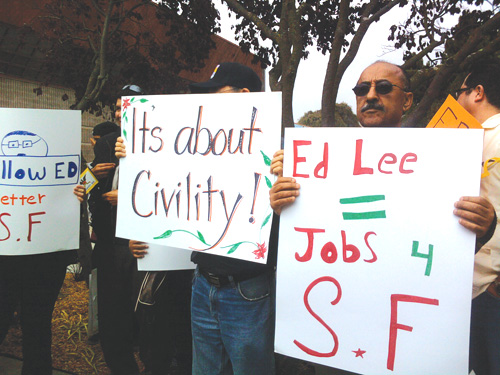
Yes, it’s just that crass and obvious. And it isn’t even about politics. Hell, Baylis is a Republican from Los Angeles, despite his meddling in San Francisco’s political affairs by sponsoring the Alliance for Jobs and Sustainable Growth and other groups that will be doing independent expenditures on behalf of Lee this fall, trying to tell us that “it’s all about civility.”

No, it’s about money and it’s about power, straight up. The Central Subway is really more of a gravy train than a sensible transit project, but that’s just how business is being done at City Hall these days.

One of the people who has long criticized the project – noting how Chinatown would be served far better with surface transit options, at a fraction of the cost – is Tom Radulovich, executive director of Livable City and an elected BART board member. He was heartened to see so many more voices – from the editorials to a recent Civil Grand Jury report to internal audits in the San Francisco Municipal Transportation Agency, which will lose money operating the new system – echoing his concerns.

“There are more people who seem to be sharing my thoughts,” Radulovich said. “It would be good to have a civic debate on this.”

But he’s not confident that will happen, despite the fresh wave of concerns. “There’s a lot of stuff that looks like planning that has gone into justifying this,” he said. “When the political culture of City Hall and the planning culture come together, this is what you get.”


Full text of WSJ article:

Off the San Francisco Rails

Tony Bennett may have left his heart in San Francisco, but the politicians who contrived the city’s Chinatown subway project must have left their brains somewhere else. The subway is a case study in government incompetence and wasted taxpayer money.

P.S. The Obama Administration is all for it.

Former Mayor Willie Brown sold a half-cent sales tax hike to voters in 2003 to pay for the 1.7-mile line on the pretext that the subway would ease congestion on Chinatown’s crowded buses, but he was more interested in obtaining the political support of Chinatown’s power brokers. In 2003, the city estimated the line would cost $647 million, but the latest prediction is $1.6 billion, or nearly $100 million for each tenth of a mile.

Transportation experts say the subway’s design is seriously flawed and that improving the existing bus and light-rail service would make more sense. The subway misses connections with 25 of the 30 light-rail and bus lines that it crosses, and there’s no direct connection to the 104-mile Bay Area Rapid Transit line or to the ferry.

Commuters will have to travel eight stories underground to catch the train and walk nearly a quarter of a mile to connect to the Market Street light-rail lines—after riding the subway for only a half mile. Tom Rubin, the former treasurer-controller of Southern California Rapid Transit District, calculates that taking the bus would be five to 10 minutes faster along every segment.

The city’s metro system, which is already running $150 million operating deficits, isn’t likely to have the money to keep the subway running in any case. Last month the San Francisco Civil Grand Jury, a watchdog group, warned that the subway’s costs “could stretch the existing maintenance environment [of the metro system] to the breaking point” and will defer the purchase of a new communications system.

Alas, San Francisco will likely drag national taxpayer money into the bay too. The city has applied for a multiyear $942 million “full funding grant agreement” from the Federal Transit Administration (FTA) to cover 60% of its capital costs. In 1964 Congress created a back-door earmark program called “New Starts” to subsidize local transportation projects. The FTA rates and recommends projects for grants, and Congress usually rubber-stamps its recommendations.

In January 2010, Transportation Secretary Ray LaHood modified the grant criteria by adding environmental and communal benefits and minimizing cost-effectiveness. The change effectively means that any project can get federal funding as long as its sponsors claim they’re moving cars off the road.

“Measuring only cost and how fast a project can move the most people the greatest distance simply misses the boat,” Mr. LaHood wrote in January 2010 on his Fast Lane blog. “Look, everywhere I go, people tell me they want better transportation in their communities. They want the opportunity to leave their cars behind . . . And to enjoy clean, green neighborhoods. The old way of doing things just doesn’t value what people want.” We’re told Mr. LaHood is smarter than he sounds.

The FTA has given the Chinatown subway one of its highest project ratings, which virtually assures a full funding grant agreement. Once the city receives such an agreement, the feds are obligated to provide whatever funds they promise. The FTA won’t approve the agreements until the fall, so there’s still hope that someone wises up and nixes the project. Oh, and if Congress is looking for discretionary programs to cut, New Starts would be a good start.

Chiu and Kim are making a quick trip to Burning Man

18

Board of Supervisors President David Chiu will take a day off from his busy mayoral campaign next week to attend Burning Man, which he’ll fly into on a small private airplane along with Sup. Jane Kim and spend less than 24 hours on the ground.

“For several years, I’ve wanted to visit the Black Rock Desert to learn about how Burning Man is building 21st Century community, creating art, and fostering sustainability,” Chiu told the Guardian after we learned about the trip from several sources.

Black Rock City LLC, the company that stages Burning Man – an arts and cultural extravaganza that began in 1986 on San Francisco’s Baker Beach and now takes place in Nevada’s Black Rock Desert – has long sought to woo influential city officials to the event, offering free tickets to elected officials and some board aides. With this year’s move into a new Mid-Market headquarters space and creation of the new Burning Man Project nonprofit, both the LLC and City Hall have more reason than ever to seek stronger ties.

Sup. Eric Mar, who attended his first Burning Man last year, will be returning this year on his own to spent most of the week on the playa. By contrast, Chiu and Kim will fly into an airport set up at the event on the morning of Sept. 1 – accompanied by activists Sunny Angulo and Dan Nguyen-Tan, who will essentially staff them during their visit – stay in accommodations set up by supporters and the LLC, and fly out the next morning.

“It’ll be a super quick trip,” Chiu said, but he says that he’s excited to experience the event because, “Burning Man is an extension of our San Francisco community.”

Neither Kim nor Angulo returned calls for comment. Sources who helped set up the trip say they are trying to keep the value of the contributions to each supervisor under California’s $420 limit on gifts to public officials, and that if the value of the tickets, flight, and accommodations exceed that, Kim and Chiu will pay for the difference.

Organizers of the trip were also trying to woo another mayoral candidate, Sup. John Avalos, who considered it but ultimately decided against it. “Can’t pull away, what with being from a working family and with the kids and campaign and all,” he told us.

Tickets to Burning Man, which runs from Aug. 29-Sept. 5, sold out for the first time in its history this year, setting off a mad scramble for tickets that belied the event’s focus on a decommodified gift economy. To deal with that escalating demand, the event is expected to grow from a population of around 52,000 this year up to 70,000 within five years.

To learn more about the event and the culture is has spawned, check out our recent guide; read my book, The Tribes of Burning Man: How an Experimental City in the Desert is Shaping the New American Counterculture; or listen to the podcast of KQED’s Forum that I was on last week with event founder Larry Harvey and celebrated artist Karen Cusolito.

Who doesn’t support Ed Lee?

37

One of the more interesting things about the Democratic County Central Committee’s mayoral endorsements was the lack of support for Mayor Ed Lee among the eight state and federal office holders who sit on the panel.


Under the party charter, any Democrat who lives in the city and represents San Francisco in Sacramento or Washington gets to vote at the DCCC. So U.S. Senator Dianne Feinstein, U.S. Reps. Nancy Pelosi and Jackie Speier, state Senators Mark Leno and Leland Yee, State Assembly Members Tom Ammiano and Fiona Ma and Attorney General Kamala Harris all had a say in who the party would support for mayor. None of those people ever show up at the meetings, but they’re allowed to appoint an alternate to represent their views.


And only Feinstein voted to endorse Lee.


Pelosi’s alternate didn’t show up for the endorsement meeting. Speier abstained. Yee voted for himself. Leno voted No Endorsement. Ammiano suported Avalos. Harris abstained. Fiona Ma voted for Bevan Dufty.


Not a rousing show of support for the incumbent.


(It would have been interesting if Lt. Governor Gavin Newsom were still on the DCCC, but Gav has moved to Marin, and he will now have the distinct honor of serving on that county’s committee.)


Meanwhile: I almost want to ignore Randy Shaw’s attempt to portray the DCCC (and some white progressives in general) as racist for not supporting any of the Asian candidates, since I think it’s too easy to throw that word around in this city, and journalists ought to be pretty careful when they do it. White people (like me and Randy Shaw) need to be particularly sensitive to race issues in the media — and I do think there are real tensions between some old-line progressives and emerging Asian political leaders who don’t always agree with progressives on issues. But that sensitivity should include not sensationalizing race or using race to score political points.


That said, it’s worth noting that of the four Asians on the Board of Supervisors, the DCCC endorsed three (Eric Mar, David Chiu, and Carmen Chu). The only one who didn’t get the DCCC nod for supervisor was Shaw’s candidate in District 6, Jane Kim.


Oh, and the Number 1 candidate endorsed by the Democratic Party is Latino. And the two fastest-growing non-white political populations in the city are Asians and Latinos.


You can fight forever about the politics of the DCCC endorsement and why the panel only chose two candidates. The Guardian will almost certainly support three, since that’s how RCV works. Why Yee, who has the support of both SEIU Local 1021 and the Sierra Club, got only two votes at the DCCC is a fair question. Why Chiu, who is a member of the DCCC, didn’t win the third slot is also an interesting political question. But I honestly don’t think race was a factor. Maybe I’m wrong.    


And as for the whole flap about Aaron Peskin, Rose Pak and the People’s Republic of China (based, by the way, on Peskin’s comments in a Falun Gong newspaper): I met with Rose Pak a few weeks ago, and in the course of talking about Leland Yee (who I will be profiling in the Aug. 31 Guardian) she told me that some progressives were accusing her of being a Communist — a reference to comments by Peskin and Chris Daly linking her to the PRC. She called it “red baiting.”


Just for the record: I’d by happy if Pak WAS a communist — maybe she’d be more interested in income redistribution, progressive taxation and land reform in San Francisco. I like communists. I even got me a picture of ol’ Leon Trostky hangin’ in my office (along with a picture of John Ross, another noted pinko). And years ago, when I had a garage, I really did have a commie flag tacked up on the wall. A friend bought it for me in the Soviet Union back in the day, and one of the reasons I loved it was that it was so poorly made that it started to unravel the minute I stuck the tacks in it, and the colors weren’t quite right, and the silkscreened hammer and sickle was way off center. Go team.


Seriously, I think the era when the label “Communist” was a serious smear is long over. Nobody cares any more. Besides, China isn’t really a Communist country these days, is it? I’m not an expert on the Chinese economy, but it seems much more hyper-capitalist to me. And it’s safe to say that there’s no Cuba-style forced economic equality in China, a country that has a handful of billionaires and a lot of very poor people and may have even worse income distribution than the United States.


Maybe we could talk about the issues?

Inside the V.I.P. cocktail party with Willie Brown

The Alliance for Jobs and Sustainable Growth hosted a V.I.P. reception just before a mayoral candidate forum held at UCSF Aug. 16, and former Mayor Willie Brown appeared to be the guest of honor. Although the theme of the event was technically “honoring San Francisco’s mayors” — former Mayor Frank Jordan was there, someone indicated that former Mayor Art Agnos was in the room, former Mayor Gavin Newsom was invited but didn’t show, and Mayor Ed Lee was of course in attendence — Brown seemed to be given more prominent recognition than any of the others.

The moment he strolled in, Sup. Mark Farrell, who was doing introductions for the the affair, scrambled onstage to announce Brown’s presence and deliver a warm welcome, and everyone applauded. Within minutes, the former mayor was seen chatting with a crowd that included Mayor Lee and several others. Soon after, Brown and former Mayor Frank Jordan were summoned to the stage to say a few words.

Once in the limelight, Brown cracked a few jokes. He said he felt for the 36 mayoral candidates, who are forced to campaign in an era when the Internet threatens to reveal videos and photos of them at any time to thousands of online viewers. “I’m glad they didn’t have that kind of communication system when I was running,” he said. “I can’t imagine the photographs you’d have of me floating around doing things I shouldn’t have been doing.”

As for his own time in Room 200, “I enjoyed every single solitary minute of it, and if I really thought I had great skills, I would be number 37,” he said, drawing more applause.

Then again, common wisdom says it isn’t necessary for Brown to bother campaigning in order to gain access to Room 200 these days. Later that same evening, during his own turn in the spotlight at the mayoral debate, Mayor Lee came under fire from Board President David Chiu, who revealed that Lee had privately confided to him about a week before he announced his candidacy that he was having a difficult time saying no to Brown and influential Chinatown business consultant Rose Pak when it came to launching a campaign for a full term.

Chiu’s pointed question for the mayor was what had changed in his mind since that conversation, but Lee referenced neither Brown nor Pak in his answer. Instead, he said he’d changed his mind after witnessing his success in changing the tone of government and getting things done in City Hall.

Back at the V.I.P. reception, Brown and Jordan were invited onstage again, this time to receive awards presented by the Alliance for Jobs and Sustainable Growth. But first Steve Falk, president and CEO of the San Francisco Chamber of Commerce, reminded the crowd that there was still time to buy a drink before the debate got underway. He said, “Debates are much more interesting after three drinks.”

Before Falk presented Brown with a commemorative plaque, he said, “It’s tough to put in a few sentences the life and times of Willie Brown,” and proceeded to note that, with his term in the California Assembly and time serving as mayor of San Francisco behind him, Brown “has now followed his friend Herb Caen into an honest line of work as a columnist for the San Francisco Chronicle.”

Being a newspaper columnist doesn’t mean Brown is always kind to members of the local media. While mixing through the crowd minutes after receiving his award, he fired some harsh words at a well-known City Hall reporter who had recently published some unflattering articles about the “Run, Ed, Run” effort to encourage Lee to seek a full term.

In recent months, Brown’s columns have provided the public at large with a rare glimpse into Mayor Lee’s dining experiences in San Francisco. In February, Brown wrote in one of his columns that he went out to North Beach Restaurant at sat at the window table with Lee, Brown’s “friend” Sonya Molodetskaya, and Jack Baylis, who serves as the US Group Executive of Strategic Development for AECOM, one of the city’s largest contractors and a sponsor of the Alliance for Jobs and Sustainable Growth Event. (Baylis was on the invite list for the V.I.P reception, too.)

Apparently, AECOM had something to celebrate that same day — according to an Aug. 16 press release, an AECOM joint venture was just awarded a $150 million contract for program management services for the San Francisco Public Utilities Commission’s wastewater improvement program.

The V.I.P. reception had representation from many key players in the downtown business community, with sponsorship from AT&T, AECOM, Pacific Gas & Electric Co., Wells Fargo, Motorola, California Pacific Medical Center, the San Francsico Chamber of Commerce, the Building Owners and Managers Association, the San Francisco Police Officer’s Association, Shorenstein Properties, and others. Several labor unions, including the United Association of Plumbers & Pipefitters Union Local 38, United Brotherhood of Carpenters and Joiners of America Local Union No. 22, and United Food and Commercial Workers Union Local 5 were also listed as sponsors. Guests included district supervisors, developers, lobbyists, business owners, mayoral candidates, media spokespeople, executives from the health care industry, and other political insiders.

Clearly, there were many people in the room who wanted to get on Brown’s good side.

So much for civility

0

rebeccab@sfbg.com

The San Francisco mayor’s race went from a lackluster affair to a dynamic match as the Aug. 12 filing deadline drew near and two prominent city officials who had previously said they wouldn’t run tossed their hats into the ring.

Mayor Ed Lee’s Aug. 8 announcement that he’d seek a full term prompted several of his opponents to use their time onstage at candidate forums to decry his reversal and question his ties to the moneyed, influential backers who openly urged him to run. Several days later, Public Defender Jeff Adachi’s last-minute decision to run for mayor signaled more tension yet to come in the debates.

At this point, eight current city officials are running campaigns for higher office, and the dialogue is beginning to take on a tone that is distinctly more biting than civil. Adachi, who had not yet debated onstage with his opponents by press time, told reporters he was running because he wanted “to make sure there’s a voice in there that’s talking about the fiscal realities of the city.”

Adachi authored a pension reform ballot measure that rivals the package crafted by Lee, labor unions, and business interests (see “Awaiting consensus,” May 31, 2011). At an Aug. 11 candidate forum hosted by the Alice B. Toklas Democratic Club, the San Francisco Young Democrats, and the City Democratic Club, all of the top-tier candidates who were present indicated that they would support Lee’s pension reform measure and not Adachi’s.

“The reforms that I have championed are reforms that are absolutely needed, along with action,” Adachi told reporters moments after making his candidacy official. He added that after watching the mayoral debates, “I became convinced that either the candidates don’t get it, or they don’t want to get it.”

Those fighting words will likely spur heated exchanges in the months to come, but until Adachi’s entrance into the race, it was Lee who took the most lumps from opponents. Even Board President David Chiu, a mayoral candidate whose campaign platform is centered on the idea that he’s helped restore civility to local government, had some harsh words for Lee during an Aug. 11 mayoral debate.

“I do regret my decision to take Ed Lee at his word when he said he would not run,” Chiu said in response to a question about whether he regretted any of his votes. He also said his first interaction with Lee after the mayor had announced his candidacy was “a little like meeting an ex-girlfriend after a breakup.”

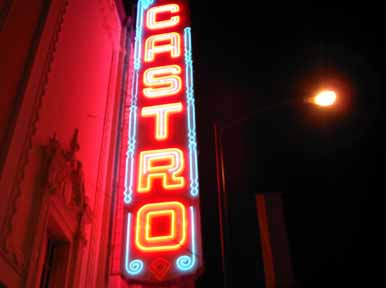
Lee, whose pitch on the campaign trail features a remarkably similar narrative about transcending political squabbling in City Hall, became the target of boos, hisses, and noisemaker blasts when a boisterous crowd packed the Castro Theater for an Aug. 8 candidate forum. He received one of the most forceful rebukes from Sen. Leland Yee, an opponent whom Lee supporters are especially focused on defeating.

“Had the mayor said that he would in fact run, he may not have gotten the votes for interim mayor,” Yee said. “Will you resign from your post,” he asked, challenging Lee, “in order to then run for mayor?” Days later, Yee had developed a new mantra about throwing power brokers out of City Hall instead of “wining and dining with them.”

Yet Lee said his decision to enter the race wasn’t because of the push from his backers, but because of how well things have gone during his brief tenure in Room 200. “Things have changed at City Hall, particularly in the last seven months,” he told reporters Aug. 8. “And because of that change, I changed my mind.”

In yet another twist, former Mayor Art Agnos — whom progressives had looked to as a potential appointee to the vacant mayor’s seat back in December, before Lee was voted in to replace former mayor and Lieutenant Governor Gavin Newsom — delivered a surprise endorsement of City Attorney Dennis Herrera shortly after Lee declared. The decision was particularly significant since Agnos first hired Lee to serve in city government, and has a long history of working with him.

“[Herrera] is an independent person who will empower neighborhoods … and won’t be beholden to power brokers,” Agnos said. He also told the Guardian he wasn’t surprised that Lee had opted to run, given the role former Mayor Willie Brown and influential business consultant Rose Pak had played in orchestrating Lee’s appointment.

“Anybody who is an astute political observer saw the signs from the very beginning,” Agnos said. In response to a comment about his unique vantage point as a would-be caretaker mayor, he said, “I would’ve kept my word and not run for reelection.”

Intense focus on Lee’s flip-flop, and on the Progress for All-backed “Run, Ed, Run” effort that was the subject of an Ethics Commission discussion that same week, stemmed at least in part from the threat the incumbent mayor represents to other candidates. A CBS 5-SurveyUSA poll suggested he became an instant front-runner.

Yet questions about “Run, Ed, Run” — some raised by observers unaffiliated with any campaigns — also served to spotlight the candidate’s longstanding ties with backers closely connected to powerful business interests that stand to lose big if their links to city government aren’t preserved.

Retired Judge Quentin Kopp issued an open letter to District Attorney George Gascón Aug. 1 urging him to convene a criminal grand jury to investigate whether illegal and corrupt influencing had occurred when Pak — a close friend of Lee’s and a key driver behind the “Run, Ed, Run” effort — reportedly recruited executives of Recology to gather signatures urging Lee to run.

Recology, which handles the city’s waste, was recently awarded a $112 million city contract, and Lee’s scoring of the company and recommendation to raise rates in his previous capacity as city administrator benefited the company. Brown received substantial campaign donations from Recology in previous bids for mayor. Kopp is the coauthor of a ballot initiative asking San Francisco voters if the company’s monopoly on city garbage contracts should be put out to bid.

“A criminal grand jury is vital in order to put people under oath and interrogate them,” Kopp said. “They would put Willie Brown under oath, put Pak under oath, put [Recology President Mike Sangiacomo] under oath, put [Recology spokesperson Sam Singer] under oath … That’s the course of action that should be pursued by this.”

Although Kopp told the Guardian that he hadn’t yet received a response from Gascón, DA candidates Sharmin Bock, Bill Fazio, and David Onek nevertheless seized the opportunity to publicly and jointly call for Gascón to recuse himself from any investigation into Progress for All. Gascón has a conflict of interest, they argued, since he reportedly sought Pak’s advice when deciding whether to accept Newsom’s offer to switch from his previous post as police chief to his current job as top prosecutor.

The Ethics Commission determined unanimously Aug. 8 that the activities of Progress for All, the committee that was formed to encourage Lee to run, had not run afoul of election laws despite director John St. Croix’s opinion that it had filed improperly as a general purpose committee when it ought to have been a candidate committee, which would have placed caps on contribution limits.

“The Ethics Commission has spoken, and they’ve supported our position,” Progress for All consultant Enrique Pearce of Left Coast Communications told the Guardian.

St. Croix did not return Guardian calls seeking comment, but an Ethics Commission press release included a caveat: “Should facts surface that coordination occurred between Mayor Lee and [Progress for All], such allegations will be investigated under the Commission’s enforcement regulations.”

At a Lee support rally organized by his official campaign team on Aug. 11, volunteers who arrived with “Run, Ed, Run” materials produced by Progress for All were told they could not display those signs and T-shirts; the same people were on a first-name basis with one of Lee’s campaign team members.

Pressed on the question of whether there was any coordination between agents of Progress for All and Lee, Pearce said the Ethics Commission discussion had focused on whether Lee had been a candidate. “Whether or not he’s a candidate has nothing to do with whether or not he has dinner with Rose [Pak],” Pearce noted. He insisted that there had not been coordination, and that the efforts to encourage Lee to run and to support Lee as a candidate were totally separate.

Sup. John Avalos, who is running for mayor on a progressive platform, recalled at an Aug. 8 candidate forum how things unfolded when Lee’s name first came up as an appointee for interim mayor.

Avalos reminded people that he had called for postponing the vote back in December because he hadn’t even had a chance to sit down and meet with Lee, who was in Hong Kong at the time. With behind-the-scenes deals orchestrating his appointment, Avalos said, “We saw City Hall turning into one big back room.”

It’s official: Adachi’s in the race (VIDEO)

Public Defender Jeff Adachi filed to run for mayor of San Francisco on Aug. 12, the last possible day to enter the race.  Adachi said he’d decided to run in order to “make sure there’s a voice in there that’s talking about the fiscal realities of our city.”

At a mayoral candidate forum Aug. 11, every single contender — Mayor Ed Lee, Sup. John Avalos, venture capitalist Joanna Rees, Assessor Recorder Phil Ting, Board President David Chiu, City Attorney Dennis Herrera, former Sup. Michela Alioto-Pier, former Sup. Bevan Dufty, and Sen. Leland Yee — said they would support the pension reform package that was placed on the ballot after discussion with labor unions, the mayor’s office, and business interests, and not the pension reform measure authored by Adachi.

Here’s a video of Adachi explaining his decision to members of the press moments after filling out the paperwork.

Video by Rebecca Bowe

Obama, Lee, Avalos, and the arc of history

84

People need to hear compelling stories, particularly from those who aspire to lead them, a point that author and psychologist Drew Westen nailed in his incisive think-piece in Sunday’s New York Times, “What Happened to Obama?” His conclusions also apply in San Francisco, where progressives have lost control of the narrative to the tax-cutting centrists, who are telling stories that serve mainly to enfeeble the people and prop up powerful interests.

“The stories our leaders tell us matter, probably almost as much as the stories our parents tell us as children, because they orient us to what is, what could be, and what should be; to the worldviews they hold and to the values they hold sacred. Our brains evolved to ‘expect’ stories with a particular structure, with protagonists and villains, a hill to be climbed or a battle to be fought,” Westen writes.

Contrast that with the guiding narrative in San Francisco politics right now, put forth by Mayor Ed Lee, his supporters, and the crew of mostly bland centrists who aspire to replace him, all of whom cast conflict itself as the villain. Much like Obama, they all style themselves as the administrators-in-chief, conflict-averse protagonists content to compromise away what little wealth and power the average citizen still possesses. Not only does that narrative guarantee that Lee will be elected, but it’s a false and short-sighted narrative that does a profound disservice to this city.

The one candidate in the mayor’s race who understands that class matters, that conflict is a necessary part of politics, and that we’re all getting screwed over by the rich and powerful is John Avalos. But despite some flashes of progressive populism on the stump, he hasn’t really been consistently and boldly telling San Francisco the story of itself that it really needs to hear right now, which is the same story that Obama should be telling the American people.

“I know you’re scared and angry. Many of you have lost your jobs, your homes, your hope. This was a disaster, but it was not a natural disaster. It was made by Wall Street gamblers who speculated with your lives and futures. It was made by conservative extremists who told us that if we just eliminated regulations and rewarded greed and recklessness, it would all work out. But it didn’t work out,” begins the story that Westen said Obama should have told during his inaugural address.

And that’s the story that Avalos should be telling right now, combating the myths that have been put out there by Lee, David Chiu, Bevan Dufty, Dennis Herrera, and the other centrists in the race, that if we just give Twitter, Zynga, Oracle, Sutter Health, Willie Brown’s clients, and every other corporation and developer who promises to create jobs everything they want, then we’ll all be okay.

But on some level, we all know that just isn’t true, and it hasn’t been true for a long time. Only a fool would trust them to take care of us at this point. The greed and self-interest of rich individuals and corporations – which has gone unchecked for far too long, at least partly because of the political corruption they’ve sponsored – is reaching epidemic proportions. It is the villain that needs to be fought, it is the hill that needs to be climbed.

“When faced with the greatest economic crisis, the greatest levels of economic inequality, and the greatest levels of corporate influence on politics since the Depression, Barack Obama stared into the eyes of history and chose to avert his gaze. Instead of indicting the people whose recklessness wrecked the economy, he put them in charge of it. He never explained that decision to the public — a failure in storytelling as extraordinary as the failure in judgment behind it. Had the president chosen to bend the arc of history, he would have told the public the story of the destruction wrought by the dismantling of the New Deal regulations that had protected them for more than half a century. He would have offered them a counternarrative of how to fix the problem other than the politics of appeasement, one that emphasized creating economic demand and consumer confidence by putting consumers back to work. He would have had to stare down those who had wrecked the economy, and he would have had to tolerate their hatred if not welcome it. But the arc of his temperament just didn’t bend that far,” Westen wrote.

He was riffing off Obama’s penchant for quoting the MLK line, “The arc of the moral universe is long, but it bends toward justice,” which he returned to again with his devastating conclusion: “But the arc of history does not bend toward justice through capitulation cast as compromise. It does not bend when 400 people control more of the wealth than 150 million of their fellow Americans. It does not bend when the average middle-class family has seen its income stagnate over the last 30 years while the richest 1 percent has seen its income rise astronomically. It does not bend when we cut the fixed incomes of our parents and grandparents so hedge fund managers can keep their 15 percent tax rates. It does not bend when only one side in negotiations between workers and their bosses is allowed representation. And it does not bend when, as political scientists have shown, it is not public opinion but the opinions of the wealthy that predict the votes of the Senate. The arc of history can bend only so far before it breaks.”

That is the moment we find ourselves in, both as a country and as a city. And it is a story that we’re still waiting for a future leader to tell us with enough power and passion that we all begin to believe it.

Shelter from the storm

0

rebeccab@sfbg.com

Ms. Li has a petite build, but she’s physically strong. Hauling around dish bins and boxes of produce weighing 50 pounds was part of her daily routine when she worked shifts lasting 12 hours a day, six days a week, at a San Francisco Chinatown eatery that later made headlines for its poor labor standards.

Li, who did not share her full name for fear of retaliation, says things have improved slightly since the days she worked at King Tin Restaurant, which closed its doors abruptly in 2004 after workers who hadn’t seen paychecks in months filed an onslaught of complaints. At the time, her husband was unemployed and she was struggling to support her two teenagers on a single paycheck totaling $950 a month.

It took about five years before the San Francisco Office of Labor Standards Enforcement (OLSE), the City Attorney’s Office, and grassroots advocates with the Chinese Progressive Association (CPA) finally succeeded in forcing the restaurant’s previous owner to grant Li and other workers the back wages they were owed.

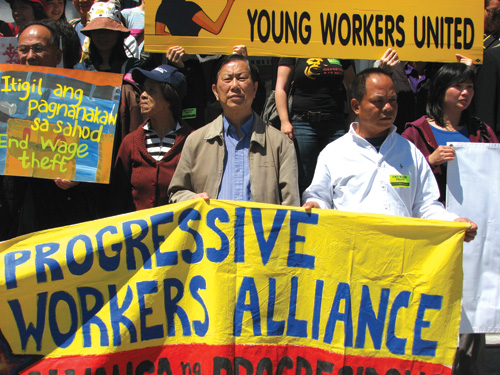
Now, she’s working 12 hour shifts, five days a week at a different restaurant, but says she still isn’t receiving minimum wage or overtime pay. Li aided in the efforts of the Progressive Workers Alliance (PWA) to urge members of the Board of Supervisors to pass the Wage Theft Prevention Ordinance, which aims to strengthen enforcement of local labor standards by empowering OLSE to take a more proactive role against employers who don’t pay workers what they’re owed.

As a kitchen worker at a high-end restaurant in downtown San Francisco, Li receives a monthly paycheck totaling a little more than $1,400 before taxes. Take-home pay is less, because the employer deducts for meals, a requirement that cannot be dodged even if employees bring their own food.

Li told the Guardian her coworkers are angry about the working conditions, but fear of job loss keeps them silent. “Some of my coworkers work so hard that they cry,” she said, speaking through a translator. “One worker was burned badly in the kitchen, and didn’t receive worker’s compensation or paid sick leave.” That person uses their own ointment to treat the burns, she added.

As she described her predicament at the CPA office in Chinatown, student volunteers were creating a banner to be displayed during a press event at City Hall. They arranged folded red and yellow petitions signed by workers in similar situations to spell out PWA, for Progressive Worker’s Alliance, to urge city officials to crack down on employers who violate local labor laws.

PWA has been meeting regularly since last year, but the organizations that are part of the advocacy group have been engaged in organizing low-wage workers for much longer. Over the course of more than three years, CPA interviewed hundreds of restaurant workers in Chinatown, and their surveys revealed that about half were not receiving San Francisco’s minimum wage, while about 75 percent weren’t being paid overtime when they worked more than 40 hours a week. Yet the problem of wage theft in San Francisco extends well beyond Chinatown.

PWA includes representatives from CPA, the Filipino Community Center, Young Workers United, People Organized to Win Employment Rights (POWER), the San Francisco Day Labor Program, and Pride at Work, among others. On August 2, workers and organizers with PWA burst into thunderous applause after the Board of Supervisors voted unanimously to pass the Wage Theft Prevention Ordinance on first reading. This represented a major victory.

“With the economic crisis, and the backlash against workers, we felt that as a small grassroots organization, we needed to have a more powerful voice and a specific space for worker issues to be brought to light,” CPA lead organizer Shaw San Liu said of the impetus behind PWA.

“You’re talking about workers who are pretty vulnerable — not knowing the laws, not speaking the language. People who need a job and cannot afford to lose it are vulnerable to exploitation,” Liu said.

While labor laws in San Francisco are uniquely strong, with mandatory paid sick leave and local minimum wage established at $9.92 per hour, “When it comes to implementation and enforcement, there’s still a lot left to be desired,” Liu said. As things stand, investigation of employer violations are predicated on worker complaints, and it can take years for a worker to get a hearing if they’re owed back wages.

The Wage Theft Prevention Ordinance doubles the fines for employers who retaliate against workers who file complaints. It allows OLSE investigators to issue immediate citations if they detect a problem in a workplace. When an employer comes under investigation, it requires them to post a notice informing workers that they have a right to cooperate with investigators — and imposes a fine for failing to post the notice. It also establishes a one-year timeline in which cases brought to OSLE’s attention must be resolved.

Under the new law, employers would also be required to provide contact information to their workers, an important change for day laborers who are sometimes taken to job sites where they perform manual labor, only to be dropped off later without payment and no way to get in touch with their temporary bosses.

“You have raised awareness about the crisis of wage theft,” OLSE director Donna Levitt told workers at an Aug. 2 rally outside City Hall. “And we have made it clear that wage theft will not be tolerated in our city.”

The ordinance was spearheaded by Sups. David Campos and Eric Mar, with Sups. Jane Kim, John Avalos, Ross Mirkarimi, and Board President David Chiu signing on as co-sponsors. Members of PWA met with supervisors to win their support, and even succeeded in bringing on board the influential Golden Gate Restaurant Association.

“The fact is that even though we have minimum wage laws in place, those laws are still being violated not only throughout the country, but here in San Francisco,” Campos told the Guardian. “Wage theft is a crime, and we need to make sure that there is adequate enforcement — and that requires a change in the law so that we provide [OLSE] more tools and more power to make sure that the rights of workers are protected.”

Victoria Aquino, 66, spent several years working 16-hour hours without minimum wage or overtime pay as the sole live-in caregiver for six disabled patients at a San Francisco care center. Her duties included feeding patients, bathing them, changing diapers, and cleaning.

“The patients would knock to wake me up and ask me for cigarettes or food in the middle of the night,” she recounted, “and I wasn’t paid for that.” She first complained to OLSE after one of the patients physically attacked her, leaving her black and blue with a permanently injured finger, and later sought the help of the Filipino Community Center to file a claim demanding back wages. It took months, but her employer eventually settled, agreeing to pay $60,000 in back wages and reduce her shifts to eight hours a day.

Aquino said she became involved with the Filipino Community Center because “there are a lot of caregivers still suffering, and more than I suffered — especially those who don’t know the laws. I sympathize for them. It hurts me when I hear some caregivers who are no longer supposed to work. They’re past their 70s, and they’re still working.”

Ecological rewind

25

rebeccab@sfbg.com

Follow the trail from Yosemite National Park’s Rancheria Falls up along dusty switchbacks and down through a canopy of pines and madrones for roughly three miles, and you will reach Tiltill Valley.

Accessible only to hikers and horseback riders, the backwoods meadow hums with the chatter of birds, bees, and the distant rush of water spilling over rocks. Butterflies dart among wild orchids, lilies, yarrow, and other kinds of flowering plants that thrive there, and a lone sequoia stands along the perimeter. The valley floor is lush and boggy, with the forested hills of the High Sierra as its backdrop.

Tiltill Valley is a real-life example of what Yosemite’s Hetch Hetchy Valley might look like if the reservoir that holds San Francisco’s water supply were drained and the terrain allowed to return to its natural state, according to Mike Marshall, executive director of Restore Hetch Hetchy.

His nonprofit group has a singular mission, as the title suggests. The upbeat, 50-year-old former political consultant wants to place a charter amendment on the November 2012 ballot to ask San Francisco voters if Hetch Hetchy Reservoir should be drained so that the valley, which has been underwater since 1923, can be ecologically restored and turned into an attraction for park visitors.

Yet that simply stated goal belies an extraordinarily difficult and expensive task, one that would fundamentally alter San Francisco’s water delivery system and diminish a city-owned source of inexpensive, green energy.

“The destruction of Hetch Hetchy Valley in the 1920s was the worst environmental disaster to ever besiege the national park system,” Marshall says. “And today, it is completely out of whack with the values of the vast majority of people who live here.”

But most city officials think this idea is just plain crazy. Whether or not it was a good idea to build the dam originally, they say it’s unwise and unrealistic to spend scarce resources to destroy one of city’s most valuable assets.

“While it is an interesting idea, I don’t think that there is yet a credible plan to move forward and actually restore Hetch Hetchy that will ensure that within our budget, we’ll be able to get the water that 2.5 million Bay Area customers need, as well as do everything else that the current Hetch Hetchy system does,” Board President David Chiu told the Guardian.

Based in San Francisco, Restore Hetch Hetchy worked in tandem with the Environmental Defense Fund and a consulting firm to craft a technical analysis describing how the city could continue receiving reliable freshwater deliveries without the reservoir, although it would require filtration because of its lower quality and be less abundant in drought years.

While restoring the valley would be an ecological win in a perfect world, cost estimates range in the billions of dollars at a time when budgets are shrinking and economic turbulence rocks the public and private sectors.

Draining Hetch Hetchy Reservoir and replacing it with other water and power projects would punch holes in an already cash-strapped city budget, first with the high capital costs and then with higher long-term annual costs. The hydro-electric system provides carbon-free electricity to city agencies at basement rates and helps fund local renewable-energy projects, so relinquishing some of that generation capacity would be a step backward when it comes to addressing climate change.

“The loss of Hetch Hetchy Reservoir would fly in the face of every effort San Francisco has made to replace fossil-fuel power generation with renewable energy sources,” City Attorney Dennis Herrera wrote in a 2004 editorial in the Guardian. Losing hydropower from the dam, he wrote, “would force greater dependence on fossil-fuel electricity and impair low-cost hydropower with higher-cost renewables, making San Francisco’s efforts to create a sustainable energy future virtually impractical. And it would devastate our efforts to enact a public power system in San Francisco. Hetch Hetchy was built by people who envisioned a public power system to serve all of San Francisco. We should finish that system before we start tearing it down.”

But when a round of invitations went out to Bay Area journalists to join a three-day backpacking trip in Yosemite and learn about Restore Hetch Hetchy’s vision, I signed up to attend. After all, here was a chance to go backpacking in beautiful terrain and assess one of the most controversial and impactful proposals facing San Francisco.


WATER

Our first stop within park boundaries was a chocolate-colored chalet with a spacious deck overlooking the waterfront. Owned by the San Francisco Public Utilities Commission (SFPUC), it’s notorious in San Francisco politics as a weekend getaway for local elected officials, city commissioners, and favored staffers. Stories of the chalet abound, as it’s rumored to have been the site of private soirees for powerful players and a rendezvous for lovers in extramarital affairs.

The eight-mile long, 300-foot deep Hetch Hetchy Reservoir holds 360,000 acre-feet of water, and the dam itself is an impressive structure, although Marshall scoffs at the popular wisdom casting it as “a marvel of engineering,” and dryly quips, “so was the Titanic.”

Native American remains were buried underwater when it was built, Marshall told us as we peered out over the towering dam wall, and 67 lives were lost during construction. As we rounded the perimeter of the man-made water body, sweating in the summer heat and saddled with gear, he asked us to imagine peering down into a dramatic sloping valley instead of what it looks like in its current state, which is a lake.

“Don’t call it a lake,” he insisted. Restore Hetch Hetchy regards the reservoir as an unnatural blemish that should never have been imposed upon a scenic and biodiverse environment in a national park. According to Mark Cedorborg, an ecological restoration expert with Hanford ARC and a Restore Hetch Hetchy board member who joined the trip, it wouldn’t take long for the natural ecosystem to bounce back if the water were removed, recreating a rare wildlife habitat that would mirror Yosemite Valley.

Sierra Club founding president John Muir would have sided with them, of course. The famous ecologist wrote passionately about the valley and vehemently fought the effort to submerge it. At the time, a chorus of opposition arose against flooding Hetch Hetchy — and that was before modern science documenting the impacts dams have wrought on the environment.

A black-and-white image of Michael O’Shaughnessy, the civil engineer behind the project, is posted on an info kiosk beside the dam, his eyebrows arched in a wizard-like, calculating gaze as he uses a pointer to mark the spot on a map of San Francisco’s watershed.

As things stand today, Hetch Hetchy Reservoir is a crucial storage facility for drinking water. Freshwater flowing from the Tuolumne River through the glacial formation accounts for 85 percent of SFPUC deliveries to about 2.5 million customers in the city and on the peninsula.

Hetch Hetchy is unique in that it’s just one of a handful of water systems nationwide that uses chemical treatment and ultraviolet disinfection, but no filtration, to purify fresh water that is transported along a gravity-fed system down to the city.

SFPUC spokesperson Tyrone Jue said Hetch Hetchy water does not require filtration “because basically, it’s a giant granite basin there in the reservoir, so there’s no sedimentation.” He added that the water quality is exceptionally high. “It’s high up in the watershed. The higher up in the watershed, the better it is.”

Restore Hetch Hetchy has submitted a number of proposals to ensure that San Francisco could still receive adequate supplies without the reservoir, including constructing a new intertie at Don Pedro Reservoir, which lies downstream from Hetch Hetchy, to get drinking water supplies from there instead.

Under this scenario, the SFPUC would continue to get its water from the Tuolumne River — but it would have to build a new filtration system to treat it because the water quality would be worse and the city would lose its federal waiver.

That’s an expensive consideration, particularly at a time when city coffers are depleted, critical services for vulnerable populations have been gutted, and taxpayers are wary of authorizing costly new endeavors.

Marshall defends the cost by asserting that the current system is flawed; the lack of filtration makes San Francisco’s water more susceptible to contamination from nasty microorganisms like cryptosporidium and giardia, he says.

“San Francisco has a unique health demographic in that over 5 percent of the people that live in the city have compromised immune systems, if you just look at people who are HIV positive,” he said. “Ultimately, San Francisco is going to be forced to filter its water, so why are we kicking this can down the road?”

But filtering water at the residential level would be far cheaper than tearing down the dam. Jue pegs the cost of a new filtration system at somewhere between $3 billion and $10 billion, but Marshall rejects that estimate as “just crazy.”

So we called Xavier Irias, director of engineering at the East Bay Municipal Utility District. “Ten looks a little high, but the three sounds very credible,” Irias said, acknowledging that there were many complicating factors that could affect cost. Ultimately, he said, the cost range could be anywhere from half a billion to the single-digit billions of dollars.

“With the filtration costs, not only are you talking about building a facility to filter the water, you’re now talking about increased power consumption to basically power those filtration plants,” Jue noted. “You’d have to start pumping water, which would require additional energy. And then on top of that, there’s the long-term operation.”

What’s more is that the quantity of water that San Francisco now depends on wouldn’t be guaranteed every year. According to an analysis done in partnership with the Environmental Defense Fund, reconfiguring the system to tap Don Pedro would result in 19 percent less water delivered from the Tuolumne in critically dry years, and similar losses would result from alternative proposals like tapping Cherry Reservoir, another storage facility in the SFPUC system.

Restore Hetch Hetchy has suggested that the shortfall could be made up in part with new water-conservation measures, something that cities arguably ought to be practicing anyhow since climate change threatens to bring about drier conditions in California’s watershed. It could also place the city in the position of having to go to the open market to purchase water for customers — just as dwindling water supplies raise the temperature between cities and counties scrambling to secure reliable deliveries.

“The Hetch Hetchy water system is a fully owned public asset,” Jue notes. “At a time when state and federal governments are struggling with even being able to close our budget deficits, to even look at dismantling an environmentally sound, cost-efficient water system that delivers water to 2.5 million people is sort of outrageous.”


POWER

In addition to capturing the flow of pristine Tuolumne River water that eventually makes its way into the city’s plumbing network, O’Shaughnessy Dam is a key component of the SFPUC-owned hydro-electric system, which produced 1.7 billion kilowatt hours of power last year with no greenhouse gas emissions.

If efforts to advance the cause of a public power system resurfaced in San Francisco, having the full capacity of the Hetch Hetchy hydro-electric generation in place would be vital. Juice for city streetlights, Muni’s light rail cars, the chandeliers adorning the Board Chambers in City Hall, and countless other municipal uses are derived from this gravity-fed system, which provides roughly one-fifth of San Francisco’s overall energy needs.

City departments pay three or four cents per kilowatt-hour, less than what it costs to generate the power. If all the hydro-electric power were eliminated and substituted with PG&E power, the city would get pinned with $32 million in additional costs annually, and its carbon footprint would expand by more than 900 million pounds of greenhouse-gas emissions, according to the SFPUC. However, a technical report produced by the Environmental Defense Fund suggests the city would only suffer a 20 percent decline in the hydro-electric output, since operations at other SFPUC reservoirs would continue.

The hydro-electric system also generates revenue through the sale of excess power to Turlock and Modesto irrigation districts, but that would come to an end if the generation capacity fell by 20 percent. Restore Hetch Hetchy estimates this loss to be around $10 million annually.

“Whenever we sell the power to Modesto and Turlock, that revenue then goes to fund programs like GoSolarSF, and all of our energy-efficiency retrofits of municipal facilities,” Jue explains. If the city lost its ability to sell off this excess supply, “We would no longer be getting power revenue at all, which we’re using to help fund community choice aggregation.”

Fraught with problems as it is, the city’s effort to launch a community choice aggregation program offering residential customers an alternative to PG&E nevertheless holds promise as a powerful green shift for a major metropolitan hub. For all the ecological benefits to Yosemite, restoring Hetch Hetchy could wind up undercutting the fledgling green power initiative, and the upshot would be a boon for PG&E. Coupled with the fact that ceding control of the valley back to the National Park Service could strip the city of its mandate for public power, the utility giant would benefit tremendously from this plan.

All of this makes it somewhat surprising that District 5 Sup. Ross Mirkarimi, a longtime champion of the cause of public power, appointed Marshall to serve on the SFPUC Citizens Advisory Committee, a move that rankled SFPUC staff.

“I’ve known Mike many years and have found him to be whip smart when it comes to complicated policy issues,” Mirkarimi told the Guardian when asked about this. “He knows that I am an unwavering supporter for public power and that I’d hope his advocacy on the SFPUC continues to advance and innovate our locally-driven clean energy objectives.”


POLITICS

The concept of bringing back Hetch Hetchy Valley originated with the Sierra Club in 1999, and several mainstream environmental organizations have lent support for the cause although few have made it a high priority. Nevertheless, there’s plenty of financial backing and support from key political players to keep the vision alive.

Democratic County Central Committee Chair Aaron Peskin, a member of Restore Hetch Hetchy’s national advisory board, told me he’s been active with the group for at least a decade, making him a rare exception among the city’s political leaders.

“San Francisco is a remarkably sophisticated town that is technologically advanced and environmentally advanced, and this is an opportunity to right one of the most destructive environmental wrongs,” he said. “It’s time to start a local and national conversation.”

He acknowledged that there were a lot of technical issues to contend with, saying, “It should only be done in a way that makes sure San Francisco and communities that rely on the system are taken care of.”

Major funders backing Restore Hetch Hetchy include retired businesspeople from the financial sector, Patagonia founder Yvon Chouinard, council members of the Yosemite Conservancy, and Lance Olson, a Restore Hetch Hetchy board member and partner in Olson Hagel & Fishburn, LLP, a prominent Sacramento legal firm that represents the California Democratic Party and elected officials.

Other influential and politically connected individuals have joined the effort as well. Marshall assured me that “no one from PG&E has given us a dime.” Yet the project still faces some powerful opponents. “I have opposed removing the O’Shaughnessy Dam in Hetch Hetchy Valley for decades and I remain opposed,” U.S. Sen. Dianne Feinstein told the Guardian. “Draining the reservoir would endanger San Francisco’s water supply, further jeopardize California’s water infrastructure and impose a huge financial burden on the state.”


Ed Lee does some ‘splainin

Ed Lee, appointed San Francisco’s interim mayor early this year after giving the San Francisco Board of Supervisors his word that he would not seek a full term, filed papers to enter the race as a mayoral candidate on Aug. 8.

“I haven’t changed at all,” Lee said when reporters questioned his 180-degree turnaround. “I’ve just made a change of mind in terms of running for this office.”

Standing beside his wife, Anita, the mayor delivered a five-minute speech about what has transpired in his seven months as interim mayor, saying he was motivated to run by his accomplishments in office so far.

http://www.youtube.com/watch?v=7u4DudZPY80

Lee said he had met with members of the Board of Supervisors and understood that some would be looking for an explanation on his change of heart.

Former District 6 Sup. Chris Daly has said he believes Lee’s run for mayor was scripted from the start. Whatever the case, an outburst that occurred as Lee was filling out paperwork certainly was not part of any script. Surrounded by news cameras, Charles Khalish heckled Lee, asking, “Sir, are you going to step down? You’re in the office under false pretenses, Mr. Lee.” When security surrounded him, he loudly protested, and a group of sheriff deputies and mayoral security officers with the San Francisco Police Department closed in and grabbed him.

http://www.youtube.com/watch?v=Gs0tFvWCNzo

While it was impossible for this reporter to see exactly what took place seconds before Khalish was forcibly removed, Tony Winnicker, a former press secretary to Mayor Gavin Newsom who is now issuing media advisories for Lee’s mayoral campaign, later claimed he wouldn’t have been removed if he hadn’t gotten pushy. The officers hauled Khalish down the corridor as he shrieked, “Heeeeeeelp!!” They restrained his arms behind his back and placed his head in a lock while they told him to stop resisting.

“He was cited for obstructing public business,” sheriff spokesperson Eileen Hirst later told the Guardian. “It is likely that he will be released as soon as the paperwork is finished.” She added that she had not yet seen an incident report.

The interim mayor said he made the decision to run over the weekend with the help of his family members. Chinatown power broker Rose Pak is not part of his family, but Lee’s daughter Brianna wrote in a January editorial called “Fear the ‘ Stache” that she had always known Pak as “Auntie Rose.”

Pak was a key driver behind “Run, Ed, Run,” the campaign backed by Progress for All that plastered cartoon drawings of Lee all over San Francisco. Progress for All will be the subject of discussion at the Aug. 8 Ethics Commission meeting, since Ethics director John St. Croix has stated he believes the political organization filed improperly as a general purpose committee. In late July, five mayoral candidates — including Board President David Chiu — joined Democratic County Central Committee chair Aaron Peskin in asking for an investigation into whether Progress for All had violated local campaign laws. Campaign finance reports, meanwhile, show that the effort was backed by a small group of inflential business insiders. Asked about the role of “Run, Ed, Run,” on his campaign for mayor, here’s how Lee responded:

http://www.youtube.com/watch?v=CBI5SSmVr4E

This evening, Lee the will participate in a mayoral candidate forum hosted by the Duboce Triangle/Castro/Eureka Valley Neighborhood Association at the Castro Theater at 7 p.m.

Shady financial dealings mar the “Run, Ed, Run” campaign

68

Not only do the groups behind the campaign urging Mayor Ed Lee to run for mayor get lucrative city contracts, sometimes with Lee’s help, but at least one of the companies has also made direct payouts to Chinatown power broker Rose Pak, who arranged to place Lee in the Mayor’s Office and has been coordinating the campaign to keep him there.

This latest revelation, from documents uncovered by the Guardian, comes as other local media outlets have been exposing the financial self-interest that Pak, former Mayor Willie Brown, and their allies have in urging Lee to break his word and run for a full mayoral term, including a devastating front page article in today’s Chronicle.

Reporter John Cote writes that Progress for All, the group behind the “Run, Ed, Run” campaign, “has been bankrolled almost entirely by a small group of politically connected individuals, some of whom have received millions of dollars in city contracts in recent years.” Among them is Robert Chiang, owner of Chiang CM Construction, which has received millions of dollars in city contracts despite lawsuits and rulings by regulators alleging that the company violated a variety of wage laws.

Chiang CM has also paid Pak personally at least $10,000, according to her tax return form that she filed with the city back in 2002 when she bought a Rincon Hill condominium for half-price through a city affordable housing program. The tax form listed that payment under “miscellaneous income,” along with $12,000 from Emerald Fund, the politically connected developer of the project, “an apparent violation of regulations governing the distribution of the discount housing,” according to an Examiner article at the time (“Affordable-housing flap,” 2/24/03). But the Brown Administration, which approved Pak’s purchase of the condo, refused to take any action against Pak, a close ally of both Brown and Lee.

We reached Pak on her cell phone to discuss her financial ties to Chiang CM and what they paid her for, and after we explained our findings three times, she said, “I don’t remember,” and hung up the phone. When we called the company for comment, we were told “nobody is available to speak on that right now.”

More recently, the Examiner has reported on the millions of dollars in city contracts that Lee has helped steer to other key Progress for All leaders, including the Chinatown Community Development Center, whose executive director, Gordon Chin, also leads Progress for All. In addition to its city contracts, documents obtained by the Guardian also show that on Dec. 10, 2010, CCDC entered into a contract with Central Subway Partners – which is building the Central Subway project long pushed by Pak and Lee, but criticized as an overly expensive boondoggle by many transit activists – to be paid up to $810,000 for unspecified services that “will be issued on an Annual Task Order basis.” Chin hasn’t yet returned a Guardian call for comment.

The Chronicle also broke the story about Pak urging Recology – which just last month was awarded a lucrative city contract (with Lee’s support) giving it a monopoly over all aspects of waste management in the city – to improperly have its employees work for the “Run, Ed, Run” campaign. And the Bay Citizen has also exposed the financial self-interest of Progress for All backers, which Judge Quentin Kopp and local Democratic Party chair Aaron Peskin have separately called for prosecutors and regulators to investigate.

“Unlike all other candidates who must abide by the strict $500 contribution limit and source restriction (no corporate, union or City contractor money), Progress for All has been able to raise unlimited amounts from any source, making it easy to amass large sums of money for its efforts,” Peskin wrote in a July 28 letter to Ethics Commission director John St. Croix, requesting an investigation. The Ethics Commission is scheduled to discuss Progress for All at its Aug. 8 meeting.

Despite her considerable power and influence – including arranging regular trips to China for public officials, including Lee and Board President David Chiu – Pak’s 1999 tax return indicated she had an adjusted gross income of just $31,084. On her application, Pak reported a $60,000 income in 2002 as a “self employed consultant,” yet a whopping $73,414 in her checking account.

Although Maggie LaRue, the inclusionary program manager, wrote Pak a letter on June 17, 2002 challenging the “inadequate documentation” of her income in the application, the Mayor’s Office ultimately approved her purchase of a swanky two-bedroom apartment at 400 Beale Street for just $300,000, although it was valued at $580,000.

Although Pak seems to have fairly steady income from the vague consulting work that she does, a request for information from the Office of the Treasurer and Tax Collector indicates that she doesn’t have a business license and hasn’t paid any local taxes, even though city laws require a license from any “entity engaging or about to engage in business for seven or more days a year in San Francisco.”

Lee’s office has consistently denied knowledge of or connections to the Progress for All campaign, although the Chronicle has reported that Lee does plan to get into the mayor’s race, probably next week. The deadline to file for a run is Aug. 12.

Fall ballot gets stripped of progressive measures

25

The San Francisco Tenants Union suffered a pair of disappointing setbacks in the last week – first when a referendum on the Parkmerced project narrowly failed to qualify for the fall ballot, then when progressive supervisors withdrew a proposed ballot measure to prevent demolition of existing rental housing – leaving the fall ballot without any progressive measures (unless one counts the sales tax measure that was unanimously approved this week by the Board of Supervisors).

Also dropped from the ballot this week was another progressive measure that would have prevented the Recreation and Park Department from entering into new commercial leases of parks and recreation centers, a measure written by the citizens group Take Back Our Parks to reverse RPD’s recent push to monetize more of its assets.

Yet unlike last week’s removal of a third measure placed on the ballot by at least four progressive supervisors – the Fair Shelter Initiative, written by the Coalition on Homelessness, which was unhappy that Sup. Jane Kim dropped her support under pressure from the Mayor’s Office – it was the sponsoring groups that asked the supervisors to remove the two measures this week.

Sponsors of the parks measure say it had some legal problems that would have complicated the campaign, particularly after an analysis by the City Attorney’s Office concluded that it could affect things like private party reservations and leases associated with the America’s Cup.

Ted Gullicksen of the San Francisco Tenants Union said his group concluded there were legal problems with the anti-demolition measure as well and that it wouldn’t affect the demolition of 1,500 housing units associated with the Board of Supervisors’ 6-5 vote to approve the massive Parkmerced project, which was the catalyst for the measure.

SFTU sponsored the signature-gathering campaign to do a referendum on that vote, but the Elections Department concluded on July 29 that of the 18,487 signatures that were turned in, just 12,917 were valid, falling short of the 14,336 they needed. Gullicksen said delays in qualifying the 56-page petition gave them just three weeks to gather signatures, and a freak mid-June rainstorm hurt that effort as well.

“We knew from the get-go that it was going to be a challenge,” he said. “It was very disappointing that we fell just short.”

But he said there was a silver lining: “It sent a message to the supervisors. David Chiu [the swing vote on the Parkmerced approval] called me the next day to say he’d make sure demolitions don’t become an epidemic.”

Sup. David Campos – who helped sponsor all three measures and even kept his name on the shelter measure after Sups. Eric Mar and Kim had removed theirs – told us, “I think it’s disappointing that there isn’t a measure on the ballot to excite the progressive base, but at the end of the day, we do have an exciting mayor’s race and races for sheriff and district attorney.”

Campos has endorsed John Avalos of mayor and Ross Mirkarimi for sheriff, but has not yet made an endorsement for DA.

A song and dance at City Hall

It was a lively scene on the steps of City Hall Aug. 2, as back-to-back press events featured live performances, lots of cheering, and support for new legislation that supporters hope will benefit low-wage workers, small businesses, and musicians.

Spirits were high at the Progressive Workers’ Alliance (PWA) rally, as organizers anticipated strong support for an ordinance they helped craft which aims to prevent wage theft by strengthening the powers of the city’s Office of Labor Standards & Enforcement (OLSE).

The Wage Theft Prevention Ordinance would double fees for employers who retaliate against employees seeking to have labor laws enforced, impose a timeline in which employee complaints must be addressed, and create new penalties for employers who fail to adhere to local labor standards. During the rally, workers speaking in various languages described their experiences of working long hours without receiving minimum wage or overtime pay.

Organized under PWA as part of a number of organizations including the Chinese Progressive Association, Young Workers United, the Filipino Community Center, the San Francisco Day Laborer’s Program, and others, the crowd of PWA members crammed into the Board Chambers and exploded into applause when the board voted unanimously to pass the ordinance on first reading.

Following a noon rally, youth with the Chinese Progressive Association’s high school program treated supporters and members of the press to a dance performance.

http://www.youtube.com/watch?v=X7CVb4K3tcw

Directly afterward, District 5 Supervisor Ross Mirkarimi appeared at the podium to drum up support for legislation he’d proposed to create a more affordable permit for cafes and restaurants wishing to host live performances in their establishments. He described it as a business-friendly idea that could “put musicians to work,” adding that more music in smaller venues could help dispel the notion that San Francsico isn’t as supportive of the arts as Chicago, Boston, New York, or even Paris. A preliminary survey found that some 700 restaurants could benefit from having access to less expensive live performance permits, he said.

Supervisors showed unanimous support for Mirkarimi’s idea, but Sups. David Chiu and Mark Farrell each added amendments to ensure that live performances couldn’t go past 10 p.m. in certain neighborhoods in their districts.

Mirkarimi invited Jazz Mafia to play a tune before the board meeting started. Here’s what they sounded like.

http://www.youtube.com/watch?v=WjRbGBTEdMk

Videos by Rebecca Bowe

Mayor’s race a tight pack, but Gascón lags in DA’s contest

25

Despite the hype and spin from various mayoral campaigns and newspapers, the big story in yesterday’s release of semi-annual campaign finance reports is that there isn’t much of a story: It’s pretty much what everyone has been expecting, a tight field of qualified mayoral candidates with comparable financial resources.

It was also no surprise that Progress for All, the deceptive committee behind the effort to draft Mayor Ed Lee into breaking his word and running to keep his job, was funded mostly by a narrow group of business interests connected to longtime power brokers Rose Pak and Willie Brown, mostly with $5,000 contributions, or 10 times the contribution limit for legitimate mayoral campaigns.

The real story in yesterday’s numbers was in the district attorney’s race where the conventional wisdom that incumbent George Gascón is the clear frontrunner (“wisdom” that we’ve always questioned given his lack of local roots) was cast into doubt by his lackluster fundraising, big spending for small results, and the fact that each of his two major challengers have twice as much money in the bank.

Alameda County prosecutor Sharmin Bock led the fundraising race this year with $240,337, about $6,000 more than Gascón. And after spending $156,916 in just six months, Gascón has just $77,570 in the bank. David Onek, who has been getting progressive support and retail campaigning up a storm, raised $126,386 this year, but his early start and frugal spending leaves him with $153,474 in the bank.

In the mayor’s race, while both the Chronicle and Examiner led with David Chiu’s impressive fundraising this year, leading the pack with almost $400,000, all that really did was put him into financial contention with the top-tier candidates who have been raising money since last year: Leland Yee, Dennis Herrera, Bevan Dufty, Joanna Rees, and Michela Alioto-Pier.

As of last month, their campaigns’ cash-on-hand was Herrera at $586,294, Dufty at $493,372, Yee at $444,820, Ress at $441,168, Alioto-Pier at $406,574, and Chiu at $396,754. On the next tier down, Phil Ting appears dead in the water, raising just $67,526 and having more debt than money in the bank, although his campaign consultant Eric Jaye said public funds are just starting to come in and the campaign is on track to meet its $300,000 fundraising goal.

Two other major candidates were also well behind the pack, but both are running with an outsiders’ appeal that should keep them in the running throughout the race. Tony Hall, a conservative with a strong independent appeal, raised $102,612, has $173,368, and will likely continue nipping at the heels of the mainstream pack.

And then there’s progressive favorite John Avalos, who has been running a visible, enthusiastic campaign with lots of volunteer support, although he raised just $86,882 this period and has about $100,000 in the bank (contrary the erroneous report in today’s Chronicle that he only had $500, apparently because the reporter looked at his supervisorial campaign report instead of his mayoral – whoops).

But Avalos supporter Chris Daly said the campaign has recently raised another $32,000 and is due to soon receive about $120,000 in matching funds, bringing them up to around $250,000. “That’s what [then-mayoral candidate Tom] Ammiano had in his entirety in ’99,” Daly said, noting that progressive mayoral favorites always get outspent and usually by margins greater than what Avalos now faces. “Our people don’t have as much money or city contracts.”

By contrast, Chiu has been raking in the dough this year, with lots of $500 contributions mostly from lawyers, bankers, developers, people with Chinese surnames, and employees of Google and other tech firms, with almost half of the contributions from out of town.

“We raised almost a hundred grand more than the closest competitor,” said Chiu campaign manager Nicole Derse. “We’re in a super strong position.”

In addition to the big money sources that usually gravitate to strong moderate candidates, Chiu also had some notable financial support from some progressive constituencies, including bicyclist activists (such as Gary Fisher, Dan Nguyen-Tan, Jason Henderson, architect David Baker, and MTA member Cheryl Brinkman), progressive activists Susan King and Amy Laitenen (Matt Gonzalez’s former board aide), and medical marijuana advocate Kevin Reed from Green Cross.

Jim Stearns, who is running the Yee and Bock campaigns, said the funding picture is about what he and others predicted would be the case given public financing (and its $1.475 million spending cap) and the large field of qualified candidates. “That’s the interesting thing about this race, it’s like the World Series of Poker with everyone getting the same stake,” he said. “This is unlike every other mayor’s race where there have been huge disparities in funding.”

Many political analysts privately fear that this dynamic, with nobody really pulling away from the pack of candidates, could encourage Lee to get into the race. But Stearns notes that Lee, despite the power of incumbency, will have a hard time catching up in fundraising and a huge target on his back because of breaking his word, the sleazy “Run Ed Run” campaign tactics, and just the fact that he would become the instant frontrunner.

“In the ranked choice voting scenario, if there’s someone who looks like he’s going to come in first, you don’t lose anything by attacking him because his second place votes aren’t going anywhere,” said Stearns, who said the current mayor’s race appears to be a game of inches. “It’s an infantry game rather than an air game, where the gains are slow and people are proceeding carefully.”


Ethics Commission to discuss Progress for All

San Francisco Chronicle reporter John Cote’s scoop highlighting how Recology executives were working behind the scenes under pressure from Chinatown power broker Rose Pak to encourage Mayor Ed Lee to seek a full term is just the latest development for a committee that’s raised eyebrows already, and it may be just the beginning.

Five mayoral candidates — board President David Chiu, City Attorney Dennis Herrera, state Sen. Leland Yee, former Supervisor Michela Alioto-Pier, and businesswoman Joanna Rees — have teamed up to encourage the San Francisco Ethics Commission to investigate whether Progress for All has run afoul of local election laws, rallying behind an effort spearheaded by Democratic County Central Committee Chair Aaron Peskin in a July 28 letter to commissioners.

At the heart of the issue is whether Lee or any of his representatives have been coordinating with agents of Progress for All. If they are, Progress for All would have to be considered Lee’s own, candidate-controlled committee, Peskin asserts in the letter.

“Given the close relationship between Ms. Pak, the Mayor, and Progress for All, it is very possible that the committee has ‘consulted’ or ‘coordinated’ with the Mayor, and therefore its expenditures should be deemed to be made ‘at his behest,'” Peskin’s letter to the Ethics Commission argues. A City Hall insider told the Guardian that Pak — a primary driver behind the Run, Ed, Run campaign — is regularly observed going to and from the mayor’s office.

“If Progress for All or any of these other committees has been acting on Mayor Lee’s behalf, those committees may have violated the $500 contribution limit and prohibitions against accepting corporate, union or city contractor money, restrictions that apply to all candidate committees,” the letter states.

Financial disclosure filings for committees fundraising for the Nov. 8 election are due Monday.

Aside from the question of whether there is coordination between Lee, who has not yet announced that he will run for mayor, and Progress for All, concerns have been raised about city contractors aiding in the efforts of the campaign. Under the city’s Campaign Finance Reform Ordinance, contractors doing business with the city are not allowed to make political contributions.

(Given the revelations that Recology executives’ signature gathering efforts were done in violation of company policy, it’s no wonder Recology executives become bashful when approached by reporters who ask tough questions.)

Meanwhile, Recology might not be the only city contractor that Pak has encouraged to support Run, Ed, Run. A column that former Mayor Willie Brown published recently in the San Francisco Chronicle suggests that this isn’t the first conversation of this kind.

“One thing you can say about Chinatown powerhouse Rose Pak, she is not shy,” Brown’s column begins. “Holding court at the party for the opening of the new airport terminal, Rose was seated at the table with interim Mayor Ed Lee and his wife, Anita, and a host of other local officials. ‘I want every one of you to call his office and tell him he should run for mayor,’ Rose told the table. ‘And do it right away so that there’s no misunderstanding.’ Then she turned to the architect David Gensler. ‘Didn’t you do this terminal?’ she asked. ‘Yes,’ he said. ‘Didn’t you remodel this terminal before?’ ‘Yes,’ he said. ‘Then your firm should raise a million dollars for his election campaign.'”

While Brown may not be a visible player in the Run, Ed, Run campaign, he’s certainly been at the table with a key driver behind it and Lee himself — and he’s using his platform in the Chronicle to get the word out about Lee’s potential mayoral campaign.

“The specific revelations of unethical and possibly illegal activity are very troubling and need to be fully investigated by the Ethics Commission as soon as possible,” Chiu told the Guardian.

Political consultant Jim Stearns, whose firm is managing Sen. Yee’s mayoral campaign, joined the chorus in calling for an investigation. “If you think about the fact that these guys still, according to press reports, are eating together once a week, and there’s not supposed to be any coordination … You have this committee that is essentially operating in complete disregard of the campaign law,” he said. “It’s sort of like there’s a crime being committed, and where’s the police?”

The San Francisco Ethics Commission will hold a policy discussion about how to treat Progress for All at its Aug. 8 meeting, Ethics director John St. Croix told the Guardian.

“We’ve told the committee that we believe they’re a primarily form committee, which is an independent expenditure committee on behalf of a candidate for office or a ballot measure,” St. Croix explained. “They’re claiming that there’s no candidate, so they can’t be that committee, even though they’re acting pretty much exactly like one would.”

As things stand, Progress for All has filed as a general purpose committee, he added. “A general purpose committee is what you would think of as a [political action committee]. They usually represent an organization or elected group of individuals, they tend to exist for a long period of time, and they contribute to multiple campaigns, whereas a primarily formed committee is created to support or oppose a single candidate or a single ballot measure in a single election,” he explained. Another key distinction: “Independent expenditure committees don’t have contribution limits the way that candidate committees do. Candidate committees have a $500-per-contributor contribution limit.”

Peskin, meanwhile, hinted that there may be more to come. “There’s a lot of it,” he said, “and I think there are many people who have stories to tell.”

Mayoral candidates scurry for signatures

33

San Francisco mayoral candidates and their volunteers have been scrambling to gather the signatures of registered voters needed to reduce their filing fees and demonstrate popular support, over the weekend hitting popular gathering spots such as Dolores Park with a combination of earnest appeals and election-year gimmicks.

Volunteers for candidate John Avalos were the first to hit a crowded Dolores Park on Saturday, canvassing throughout the day, but they may have been upstaged by the campaign of David Chiu, which featured both the candidate himself and his Star Wars-inspired alter ego Chiu-bacca – a campaign volunteer dressed up as Chewbacca. The campaign even carried the motif through at the table it set up, which was staffed by someone in a space helmet that was reminiscent of a stormtrooper. No other mayoral or district attorney candidates seemed to have a visible presence there.

A Clonetrooper for David Chiu

Candidates have until this Thursday, July 28, to turn in the signatures of registered voters, each of which reduces that candidate’s filing fees by 50 cents. So mayoral candidates can eliminate their $5,048 filing fee (which represents 2 percent of the mayor’s $252,397 annual salary) by turning in 10,096 signatures. For district attorney candidates, the goal is 8,704 sigs, while sheriff candidates need 7,990 to get the freebie.

An Avalos volunteer gathers signatures (and possibly PBRs)

The other important upcoming election-related dates are Aug. 1, when the semi-annual campaign finance statements are due and we find out who’s been raising the most money, and Aug. 12, the deadline for candidates to file their intent to run for office. That’s when we find out whether Mayor Ed Lee breaks his pledge not to run, and whether there are any other surprise late entrants into the race, which is always a possibility.