David Chiu

Mixed messages

0

steve@sfbg.com

In San Francisco — the first major city to launch a midnight police raid to break up an Occupy encampment, which it repeated Oct. 16 — city officials are struggling with contradictions between claims of supporting the movement but opposing its tactic of occupation. Protesters have reacted to those mixed messages by erecting a growing tent city in defiance of Mayor Ed Lee’s public statements on the issue.

The situation remained fluid at Guardian press time, with OccupySF members unsure when and whether to expect another raid. That sort of standoff has repeated itself in cities around the country. But it seems particularly fraught here in the final weeks of a closely contested mayor’s race as Lee’s stated belief that “a balance is possible” is put to the test.

On Oct. 18, when hundreds of OccupySF protesters and their supporters entered City Hall to testify at the Board of Supervisors hearing — where Lee appeared for the monthly question time and was asked by Sup. Jane Kim to “describe the plan that our offices have been developing” to facilitate the OccupySF movement — it became clear there was no plan and that Lee was standing by the city’s ban on overnight camping.

“From the very beginning, I have fully supported the spirit of the Occupy movement…To those who have come today and who come day after day as part of this movement, let me say now that we stand with you in expressing anger and frustration at the so-called too big to fail and the big financial institutions,” Lee said at the hearing.

“Then don’t send the police in to destroy it,” yelled a woman from the crowd.

“Well, we are working with you,” Lee responded as Board President David Chiu banged his gavel at the interruption and said, “excuse me, you are out of order” and the packed hearing room erupted in shouts and applause at calling out the contradiction in the mayor’s position.

“Well, we are working with you. We are working with you to help raise your voice peacefully and will protect and defend your right to protest and your freedom of speech,” Lee continued, eliciting scattered groans from the crowd. “But that’s not the same thing as pitching tents and lighting fires in public places and parks that are meant for use by everyone in our city. But we can make accommodations and we have, and we can do this while not endangering public safety in any way.”

Afterward, as Lee was surrounded by a scrum of journalists asking about the issue, he made his stand even more clear. “We’re going to draw the line with overnight camping and especially structures,” Lee told reporters. Asked why the police raids have taken place in the middle of the night and why San Francisco is banning practices being allowed in other occupied cities, such as tents and kitchens, he offered only nonresponsive answers before being whisked away by his security detail.

Back inside the hearing room, Sup. John Avalos — who has led efforts to mediate the conflict and prevent police raids — called Lee’s comments “very frustrating. I’m alarmed that he is moving toward nightly standoffs with the Occupy movement.” After watching video of the chaotic Oct. 16 raid, at which several protesters were injured by police officers, Avalos called the situation “unsafe for both sides.”

Six of the 11 supervisors voiced support for OccupySF during the meeting, although Kim — who supports OccupySF and Lee’s mayoral campaign and whose District 6 includes the two protest encampments, in Justin Herman Plaza and outside the Federal Reserve — said at the hearing, “We’re all struggling to figure out the best way to accommodate it.”

Indeed, when the Guardian sought details on “the plan” Kim said she was developing with Lee, her staffers told us there was nothing in writing or major tenets they would convey. And mayoral Press Secretary Christine Falvey told us, “There’s not really a plan, per se, because the movement is so fluid,” although she confirmed that the city would not allow tents or other structures: “The tactic of camping overnight, he does not support.”

But OccupySF protesters were defiant as they streamed to the microphone by the dozens during public comment, decrying the city’s crackdown and claiming the right to occupy public spaces and to have the basic infrastructure to do so. As a woman named Magic proclaimed, “This can be a celebration or a battle, but we will not back down.”

The next afternoon, a large group of OccupySF protesters took their complaints about mistreatment by officers to the Police Commission meeting. Previously, Police Chief Greg Suhr had taken the same stance as Lee, with whom he had consulted before ordering the raid, claiming to support OccupySF but oppose overnight camping (see “Crackdown came from the top,” Oct. 11).

“We will surgically and as best as possible and with as much restraint as possible try to deal with the hazards while protecting people’s First Amendment rights,” Suhr had said, reiterating a ban on tents and infrastructure.

But by the end of the long Police Commission hearing — which was peppered by angry denunciations and chants of “SFPD where is your humanity?” — Suhr seemed to soften his position: “We have no future plans to go into the demonstration. We know that it’s for the long haul.”

OccupySF members interpreted Suhr’s remarks, which went on to raise concerns over potential future public health hazards that a growing encampment might present, as a change in the policy Lee had outlined a day earlier, erupting in the cheer, “Now that’s what I’m talking about!”

In the wake of that meeting, more than 40 tents — including a working kitchen and fully stocked medical tent — have been erected in Justin Herman Plaza, although neither the Police Department nor Mayor’s Office have answered Guardian inquiries seeking to clarify what current city policy is regarding OccupySF. But for now, protesters have declared victory over the city and are happy to be turning their full attention back toward powerful banks, corrupt corporations, and the rest of “the 1 percent.”

“I’m really proud of the OccupySF participants who went to the meeting today,” Zoe D’Hauthuille, a 19-year-old protester, told the Guardian after the Oct. 18 meeting. “I feel like they were really honest and super effective at getting people to realize that we need certain things, and that the city is violating our rights.”

Editorial: Mayor Lee is tough as hell on Occupy SF protestors, but keeps City Hall safe for PG@E and the downtown gang

70

And so Mayor Ed Lee once again shows his true colors:  he is tough as hell on Occupy SF protestors and, unlike every other mayor in every other U.S. city,  sends in the cops to roust them out in  two midnight raids and trumpets the word  by bullhorn from the mayor’s office that he will harass them until the end of time. Meanwhile, he is is quietly sending  sending out the message that under his stewardship that City Hall will be safe for PG@E, the downtown gang, the big developers, the bailed banks, and the feds who are going after the dispensers of medical marijuana and the newspapers who run their ads.  (Full disclosure: that’s us at the Guardian.)  B3

EDITORIAL This is what civility and compromise looks like:

At a little after 10 P.m. Oct 16, a squadron of San Francisco police equipped with riot gear raided and attempted to shut down the OccupySF protest. It was the second time San Francisco has embarrassed itself, becoming the only major U.S. city to attempt to evict members of the growing Occupation movement — and this time, the cops used a lot more force.

The first crackdown, on Oct. 5, was supposedly driven by concerns that the activists were using an open flame for their communal kitchen without the proper permits. This time around, the alleged lawbreaking was confined to a Park Code section that bans sleeping in city parkland after 10 p.m. And since Justin Herman Plaza, where OccupySF is camped, is technically under the jurisdiction of the Recreation and Park Department, that ordinance could be enforced.

But let’s be serious: The encampment endangered nobody, and if any Rec-Park officials had actually complained, the police couldn’t provide their names. This was all about rousting a protest against corporate greed and economic injustice. It came with police batons, several beatings and five arrests.

And the mayor of what many call the most liberal city in America hasn’t said a word. Mayor Ed Lee was clearly consulted on the raid, clearly approved it — and now becomes unique among the chief executives of big cities across the country, most of whom have worked to find ways to avoid police confrontations.

David Chiu, the president of the Board of Supervisors, issued a ridiculous statement saying that “Both the Occupy SF protesters and the San Francisco Police Department need to redouble their efforts to avoid confrontations like the ones we saw last night.” No: The protesters didn’t start it, didn’t provoke it, didn’t want it — and frankly, did their best to avoid it. The crackdown is all about the folks at City Hall trying to get rid of one of the most important political actions in at least a decade — and doing it with riot police.

This is what the civility and compromise so touted by Mayor Lee and Board President Chiu looks like. And it’s a disgrace.

In Oakland, where the encampment at Frank Ogawa Plaza, renamed Oscar Grant Plaza for the event, has far more people than Occupy SF, city officials approached the activists and offered to issue whatever permits were needed. Mayor Jean Quan visited the general assembly, waited her turn to speak, and then politely asked the group not to damage the somewhat fragile old oak tree on the site. In deference to her wishes, the group surrounded the tree with a fence.

In New York, the private owner of the park where Occupy Wall Street is camped agreed not to evict the demonstrators — or even move some of them to all for a regular park cleaning.

Why is San Francisco acting so hostile? Is this not a city with a reputation for political activism and tolerance? Is it really that big a problem to allow activists to peacefully occupy public space to denounce the greatest corporate thievery in a generation?

San Francisco ought to be supporting the OccupySF movement, not harassing it. Lee should immediately call off the police raids. The Board of Supervisors should have a hearing on this, bring Police Chief Greg Suhr, Mayor Lee and representatives of Rec-Park and the Department of Public Health and work out a solution that doesn’t involve repeatedly rousting the protesters in the middle of the night. And if this continues, perhaps OccupySF should move to the plaza in front of City Hall.

Sup. John Avalos is the only person at City Hall who is making an outspoken effort to protect the protest; he needs some support.


The selling of Ed Lee

0

steve@sfbg.com

Ed Lee has gone through a remarkable makeover in the last year, transformed from the mild-mannered city bureaucrat who reluctantly became interim mayor to a political powerhouse backed by wealthy special interests waging one of the best-funded and least transparent mayoral campaigns in modern San Francisco history.

The affable anti-politician who opened Room 200 up to a variety of groups and individuals that his predecessor had shut out — a trait that won Lee some progressive accolades, particularly during the budget season — has become an elusive mayoral candidate who skipped most of the debates, ducked his Guardian endorsement interview, and speaks mostly through prepared public statements peppered with contradictions that he won’t address.

The old Ed Lee is still in there somewhere, with his folksy charm and unshakable belief that there’s compromise and consensus possible on even the most divisive issues. But the Ed Lee that is running for mayor is largely a creation of the political operatives who pushed him to break his word and run, from brazen power brokers Willie Brown and Rose Pak to political consultants David Ho and Enrique Pearce to the wealthy backers who seek to maintain their control over the city.

So we thought it might be educational to retrace the steps that brought us to this moment, as they were covered at the time by the Guardian and other local media outlets.

Caretaker mayor

The story begins quite suddenly on Jan. 4, when the Board of Supervisors convened to consider a replacement for Gavin Newsom, who had been elected lieutenant governor but delayed his swearing-in to prevent the board from choosing a progressive interim mayor who might then have an advantage in the fall elections. Newsom and other political centrists insisted on a “caretaker mayor” who pledged to vacate the office after serving the final year of the current term.

It was the final regular meeting of the old board, four days before the four newly elected supervisors would take office. What had been a bare majority of progressive supervisors openly talked about naming former mayor Art Agnos, or Sheriff Michael Hennessey, or maybe Democratic Party Chair Aaron Peskin as a caretaker mayor.

When then-Sup. Bevan Dufty said he would support Hennessey, someone Newsom had already said was acceptable, the progressive supervisors decided to coalesce around Hennessey. That was mostly because the moderates on the board had suddenly united behind a rival candidate who had consistently said didn’t want the job: City Administrator Ed Lee.

Board President David Chiu was the first in the progressive bloc to breaks ranks and back Lee, saying that had long been his first choice. Dufty became the swing vote, and he abstained from voting as the marathon meeting passed the 10 p.m. mark, at which point he asked for a recess and walked down to Room 200 to consult with Newsom.

At the time, Dufty said no deals had been cut and that he was just looking for assurances that Lee wouldn’t run for a full term (Dufty was already running for mayor) and that he would defend the sanctuary city law. But during his endorsement interview with the Guardian last month, he confessed to another reason: Newsom told him that Hennessey had pledged to get rid of Chief-of-Staff Steve Kawa, a pro-downtown political fixer from the Brown era who was despised by progressive groups but liked by Dufty.

Chiu and others stressed Lee’s roots as a progressive tenants rights attorney, the importance of having a non-political technocrat close the ideological gap at City Hall and get things done, particularly on the budget. So everyone just hoped for the best.

“Run, Ed, Run”

The drumbeat began within just a couple months, with downtown-oriented politicos and Lee supporters urging him to run for mayor in the wake of a successful if controversial legislative push by Lee, Chiu, and Sup. Jane Kim to give million of dollars in tax breaks to Twitter and other businesses in the mid-Market and Tenderloin areas.

In mid-May, Pak and her allies created Progress for All, registering it as a “general civic education and public affairs” committee even though its sole purpose was to use large donations from corporations with city contracts or who had worked with Pak before to fund a high-profile “Run, Ed, Run” campaign, which plastered the city with posters featuring a likeness of Lee.

Initially, that campaign and its promotional materials were created by Pak (who refuses to speak to the Guardian) and political consultant Enrique Pearce (who did not return calls for this article) of Left Coast Communications, which had just run Kim’s successful D6 victory over progressive opponent Debra Walker, along with Pak protégé David Ho.

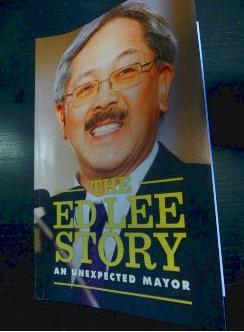
During that campaign, the Guardian and Bay Citizen discovered Pearce running an independent expenditure campaign called New Day for SF, funded mostly by Willie Brown, out of his office, despite bans of IEs coordinating with official campaigns. That tactic would repeat itself over the coming months, drawing criticism but never any sanctions from the toothless Ethics Commission. Pearce was hired by two more pro-Lee IEs: Committee for Effective City Management and SF Neighbor Alliance, for which he wrote the book The Ed Lee Story, a supposedly “unauthorized biography” filled with photos and personal details about Lee.

Publicly, the campaign was fronted by noted Brown allies such as his former planning commissioner Shelly Bradford-Bell, Pak allies including Chinatown Community Development Center director Gordon Chin, and a more surprising political figure, Christina Olague, a progressive board appointee to the Planning Commission. She had already surprised and disappointed some of her progressive allies on Feb. 28 when she endorsed Chiu for mayor during his campaign kickoff, and even more when she got behind Lee.

Olague recently told us the moves did indeed elicit scorn from some longtime allies, but she defends the latter decision as being based on Lee’s experience and willingness to dialogue with progressives who had been shut out by Newsom, noting that she had been asked to join the campaign by Chin. Olague also said the decision was partially strategic: “If we get progressives to support him early on, maybe we’ll have a seat at the table.”

Right up until the end, Lee told reporters that he planned to honor his word and not run. During a Guardian interview in July when we pressed him on the point, Lee said he would only run if every member of the Board of Supervisors asked him to, although about half the board publicly said that he shouldn’t, including Sup. Sean Elsbernd, who nominated him for interim mayor.

And then, just before the filing deadline in early August, Lee announced that he had changed his mind and was running for mayor, the powers of incumbency instant catapulting him into the frontrunner position where he remains today, according to the most recent poll by the Bay Citizen and University of San Francisco.

Lee the politician

With his late entry into the race and decision to forgo public financing and its attendant spending limits, one might think that Lee would have to campaign aggressively to keep his job. But most of the heavy lifting has so far been done by his taxpayer-financed Office of Communications (which issues press releases at least daily) and by corporate-funded surrogates in a series of coordinated “independent” groups (see Rebecca Bowe’s story, “The billionaires’ mayor”).

That has left Lee to simply act as mayor, where he’s made a series of decisions that favor the business community and complement the “jobs” mantra cited relentlessly by centrist politicians playing on people’s economic insecurities.

Yet Lee has been elusive on the campaign trail and to reporters who seek more detailed explanations about his stands on issue or contradictions in his positions, and his spokespersons sometimes offer only misleading doublespeak.

For example, Lee’s office announced plans to veto legislation by Sup. David Campos that would prevent businesses from meeting their city obligation to provide a minimum level of employee health benefits through health savings accounts that these businesses would then pocket at the end of the year, taking $50 million last year even though some of that money had been put in by restaurant customer’s paying 5 percent surcharges on their bills.

Although Campos, the five other supervisors who voted for the measure, four other mayoral candidates, and its many supporters in the labor and consumer rights movements maintained the money belonged to workers who desperately needed it to afford expensive health care, the San Francisco Chamber of Commerce said it was about “jobs” that would be protected only if businesses could keep that money.

Lee parroted the position but tried to push the political damage until after the election, issuing a statement entitled “Mayor Lee Convenes Group to Improve Health Care Access & Protect Jobs,” saying that he would seek to “develop a consensus strategy” on the divisive issue — one in which Campos said “we have a fundamental disagreement” — that would take weeks to play out.

After a frustrating back-and-forth with Lee Press Secretary Christine Falvey by email, it’s still unclear how to resolve the contradiction between whether businesses could seize these funds or whether they belonged to employees, with her latest statement being, “The Mayor absolutely wants these funds spent on providing access to quality primary and preventative health care because this is the business’s obligation under HCSO. Making sure that these funds go to pay for health care is the most important objective.”

Similarly, when police raided the OccupySF encampment on Oct. 5, Lee’s office issued a statement that was a classic case of politicians trying to have it both ways, expressing support for the movement and its goal to “occupy” public space, but also supporting the need to police to clear the encampment of those same occupiers.

But now, in the wake of a repeat raid on Oct. 16 that has inflamed passions on the issue, the question is whether Lee can run out the clock and retain the office he gained on the promise of being someone more than a typical politician.

SF values and OccupySF

5

EDITORIAL This is what civility and compromise looks like:

At a little after 10 P.m. Oct 16, a squadron of San Francisco police equipped with riot gear raided and attempted to shut down the OccupySF protest. It was the second time San Francisco has embarrassed itself, becoming the only major U.S. city to attempt to evict members of the growing Occupation movement — and this time, the cops used a lot more force.

The first crackdown, on Oct. 5, was supposedly driven by concerns that the activists were using an open flame for their communal kitchen without the proper permits. This time around, the alleged lawbreaking was confined to a Park Code section that bans sleeping in city parkland after 10 p.m. And since Justin Herman Plaza, where OccupySF is camped, is technically under the jurisdiction of the Recreation and Park Department, that ordinance could be enforced.

But let’s be serious: The encampment endangered nobody, and if any Rec-Park officials had actually complained, the police couldn’t provide their names. This was all about rousting a protest against corporate greed and economic injustice. It came with police batons, several beatings and five arrests.

And the mayor of what many call the most liberal city in America hasn’t said a word. Mayor Ed Lee was clearly consulted on the raid, clearly approved it — and now becomes unique among the chief executives of big cities across the country, most of whom have worked to find ways to avoid police confrontations.

David Chiu, the president of the Board of Supervisors, issued a ridiculous statement saying that “Both the Occupy SF protesters and the San Francisco Police Department need to redouble their efforts to avoid confrontations like the ones we saw last night.” No: The protesters didn’t start it, didn’t provoke it, didn’t want it — and frankly, did their best to avoid it. The crackdown is all about the folks at City Hall trying to get rid of one of the most important political actions in at least a decade — and doing it with riot police.

This is what the civility and compromise so touted by Mayor Lee and Board President Chiu looks like. And it’s a disgrace.

In Oakland, where the encampment at Frank Ogawa Plaza, renamed Oscar Grant Plaza for the event, has far more people than Occupy SF, city officials approached the activists and offered to issue whatever permits were needed. Mayor Jean Quan visited the general assembly, waited her turn to speak, and then politely asked the group not to damage the somewhat fragile old oak tree on the site. In deference to her wishes, the group surrounded the tree with a fence.

In New York, the private owner of the park where Occupy Wall Street is camped agreed not to evict the demonstrators — or even move some of them to all for a regular park cleaning.

Why is San Francisco acting so hostile? Is this not a city with a reputation for political activism and tolerance? Is it really that big a problem to allow activists to peacefully occupy public space to denounce the greatest corporate thievery in a generation?

San Francisco ought to be supporting the OccupySF movement, not harassing it. Lee should immediately call off the police raids. The Board of Supervisors should have a hearing on this, bring Police Chief Greg Suhr, Mayor Lee and representatives of Rec-Park and the Department of Public Health and work out a solution that doesn’t involve repeatedly rousting the protesters in the middle of the night. And if this continues, perhaps OccupySF should move to the plaza in front of City Hall.

Sup. John Avalos is the only person at City Hall who is making an outspoken effort to protect the protest; he needs some support.

Why are Harris, Newsom, and other pols silent on the federal pot crackdown?

24

UPDATED BELOW As I worked on this week’s story about the federal crackdown on California’s marijuana industry, I tried to get a statement from California Attorney General Kamala Harris. After all, it’s her job to defend California’s medical marijuana laws, which she was fairly supportive of as our district attorney. And she was an early Barack Obama backer who could probably get him or U.S. Attorney General Eric Holder on the phone to say, “What the hell are you guys doing? Please, for your own sake and California’s, just back off.”

After all, as I reported, this multi-agency federal crackdown could destroy a thriving industry that is pumping billions of dollars into California’s economy and employing tens of thousands of people – at a cost of many millions of dollars in enforcement costs to simply destroy the state’s top cash crop, ruin the lives of people working in the industry, and strain our already overtaxed court and prison systems.

“It’s a policy with no upsides and all downsides,” Steve DeAngelo of Harborside Health Center correctly told me.

But when I finally got Harris’ Press Secretary Lynda Gledhill on the phone, she said Harris had nothing to say on the issue. “Nothing?” I asked, “Really?” What about off-the-record, I asked, how does she feel about it and might she make some statement in the future. Again, nothing to say, no comment.

So I tried Lieutenant Governor Gavin Newsom, another San Franciscan who as mayor helped oversee the creation of the city’s widely lauded system for regulating the dispensaries, which by all accounts has made it a legitimate and thriving member of the business community. Given Newsom’s current obession with job creation and how hungry he’s been for attention, surely he’d have something to say in defense of the good jobs that this sustainable industry has created in California. Again, nothing. I haven’t even gotten a call back yet from his press secretary, Francisco Castillo.

Also, no public statements have been issued by Mayor Ed Lee, David Chiu, or most other mayoral candidates who have put “jobs” at the center of their agendas – or from the SF Chamber of Commerce or other business groups that regularly deride bad government actions as “job killers – despite this move by the Obama Administration to destroy an important industry in California.

The only major politician from San Francisco (SEE UPDATE BELOW) to come out strongly against the federal crackdown was Assemblymember Tom Ammiano, author of measures to legalize and tax marijuana, who put out the following statement: “I am bitterly disappointed in the Obama Administration for this unwarranted and destructive attack on medical marijuana and patients’ rights to medicine.  Today’s announcement by the Department of Justice means that Obama’s medical marijuana policies are worse than Bush and Clinton.  It’s a tragic return to failed policies that will cost the state millions in tax revenue and harm countless lives. 16 states along with the District of Columbia have passed medical marijuana laws – whatever happened to the promises he made on the campaign trail to not prosecute medical marijuana or the 2009 DOJ memo saying that states with medical marijuana laws would not be prosecuted?  Change we can believe in?  Instead we get more of the same.”

But from most of the politicians who claim to support both jobs and the right of patients to access medical marijuana, we also get more of the same. They pander to people’s economic insecurities in order to give corporations and wealthy what they want – tax cuts, deregulation, union-busting, corporate welfare — but aren’t willing to risk any political capital defending the rest of us.

UPDATE (11/13): San Francisco’s other two representatives in the Legislature have also criticized the crackdown.


Sen. Leland Yee put out a statement saying: “Medical marijuana dispensaries are helping our economy, creating jobs, and most importantly, providing a necessary service for suffering patients. There are real issues and real problems that the US Attorney’s Office should be focused on rather than using their limited resources to prosecute legitimate businesses or newspapers. Like S-Comm, our law enforcement agencies – both state and local – should not assist in this unnecessary action. Shutting down state-authorized dispensaries will cost California billions of dollars and unfairly harm thousands of lives.”

Sen. Mark Leno, another medical marijuana support, also criticized the move. He told the Los Angeles Times, “”The concern here is that the intimidation factor will directly impact safe and affordable access for patients.” And he told Associated Press, “”I don’t understand the politics of it, and certainly if we haven’t learned anything over the past century, it’s that Prohibition does not work.”

The odd twist to the Chron’s Chiu endorsement

18

The most obvious interpretation of the San Francisco Chronicle’s endorsement of David Chiu is that the Chron thinks Chiu has completely left the progressive camp and is now aligned with the political wing the daily paper calls “moderates:”

What is impressive about Chiu is that “change” and “jobs” are not just campaign slogans for him. He can go into detail about the redundancies and red tape at City Hall that are holding back economic development: the 15 departments that regulate the private sector, the hundreds of fees that burden businesses big and small, a payroll tax that is a disincentive to hire … If elected, he would have a mandate to make city government more efficient and effective.

(I don’t know how many times I have to say this, but the payroll tax is NOT a disincentive to hire.)

The Chron — which, on economic issues like taxes and development, is a very conservative paper — clearly thinks Chiu can be trusted, which ought to make progressives nervous.

But here’s the other interesting twist.

Hearst Corporation bought the San Francisco Chronicle in 2000, at the top of the market, for more than $500 million. I guarantee the paper isn’t worth more than a tiny fraction of that today. It’s still losing money, and has been for years, and nobody’s buying daily newspapers any more, and if Hearst wanted to unload the Chron, the New York publishing chain would be lucky to get $50 million. Hell, they’d be lucky to get $25 million.

So the bean counters in New York have this nonperforming half-billion-dollar asset on their balance sheets, and there’s no way to recover that money — except for one thing: The Chron owns a bunch of land around Fifth and Mission, including its own historic building. And that property is potentially worth a whole lot of money. When the economy picks up, Hearst can develop the parking lots, old press facilities and even its HQ; turn it all into condos and office space, and suddenly there’s a real chance of recouping some of those deep losses.

The process is already underway — the Chron’s been moving tech firms into vacant space in its building, and is working with developers on the shape of what could be a major project still to come.

And guess what? In June, William Randolph Hearst III — heir to part of the Hearst fortune and a member of the Hearst Corp. board — made a rare campaign contribution to a San Francisco political candidate. He gave the maximum allowable $500 to … David Chiu. Around the same time, Michael Cohen and Jesse Blout, the partners in a firm called Strada that’s working on the redevelopment of the Chron’s property, also gave Chiu the maxiumum $500.

I figured the top people at the Chron would back Ed Lee because they figured he’d be down with whatever they wanted to do with that land — particularly since Lee’s good buddy Willie Brown is now a San Francisco Chronicle columnist. But it appears they’ve cast their lot with Chiu. As Mr. Spock would say, fascinating.

On Guard!

1

news@sfbg.com

ORACLE’S DIRTY SECRET

If wealth trickled down from Oracle’s OpenWorld conference in San Francisco last week, very little of it reached a small group of low-wage laborers hired from out of state to set up for a concert hosted as an event highlight on Treasure Island.

Oracle is a prominent Bay Area tech company helmed by Larry Ellison, the billionaire CEO who worked closely with top city officials to bring the America’s Cup sailing regatta to San Francisco.

The Oct. 5 Oracle OpenWorld concert on Treasure Island featured Sting and Tom Petty as headliners. Registration packages for the weeklong tech conference, which drew some 45,000 attendees to San Francisco, ranged from $1,395 to $2,595.

A member of the carpenters union contacted the San Francisco Office of Labor Standards & Enforcement (OLSE) Sept. 16 to formally complain that a construction crew assembling a large seating structure for the event was being paid less than the city-mandated minimum wage of $9.92 per hour, city documents show.

Josh Pastreich, an OLSE official, went to the worksite to interview crew members. Their names were redacted from public records, but Pastreich described them as monolingual Spanish speakers who travel from city to city building seating arrangements for major events.

“Everyone is being paid $8 an hour (except for the supervisors),” he reported in a city document. “Workers generally started at 6:30 am but there was a little confusion about quitting times.” At least one work day lasted 11 and a half hours, according to a timesheet. The workers were hired by subcontractors brought in by Hartmann Studios, an events management outfit working directly for Oracle.

“We made a phone call, and sent them some emails,” OLSE director Donna Levitt explained. “Nobody said, ‘we intended to pay them the [legal] rate,'” but the subcontractors increased workers’ hourly wages to comply with San Francisco minimum wage ordinance requirements, Levitt said. Since the company adjusted the rate immediately, no fines were issued. There were fewer than 20 workers on the project.

OLSE did not correspond with Oracle directly, but spoke to the subcontractors. One was T & B Equipment, a Virginia-based company. “We were not aware of the minimum wage there, but we fixed it before the payroll was done,” a T & B representative identified only as Mr. Waller told the Guardian. Lewmar, a Florida-based subcontractor, assisted with staffing for the job. Oracle, Hartmann Studios, and Lewmar did not respond to Guardian requests for comment.

Since the enforcement agency intervened, the laborers earned $9.92 per hour instead of $8 — still well below the average Bay Area payscale for similar work. Building bleachers is comparable to raising scaffolding for major construction projects, and the prevailing wage for unionized scaffolding erectors in California is $37.65 per hour, or $62.63 when benefits are factored in.

None of the workers were from San Francisco, which likely spurred the carpenters union complaint — Carpenters Local 22 has faced significant losses in membership since the economic downturn due to high levels of unemployment disproportionately impacting the construction sector. Represenatives from Local 22 did not return calls seeking comment.

Boosters of the America’s Cup have hailed the upcoming sailing event as an engine for local job creation, but Oracle’s use of low-wage, out-of-state laborers at its pricey, high-profile OpenWorld event raises questions. While the tech company is a separate outfit from the America’s Cup organizing team, Ellison holds leadership positions at both.

Ellison was named the world’s sixth wealthiest individual in a Forbes profile in 2010, with a net worth of $28 billion. His total compensation last year was listed as $70,143,075. That’s 3,399 times the amount a person earning $9.92 an hour would make in a year working 40 hours every week — before taxes, of course. (Rebecca Bowe)


LEE’S TELLING VETO

The Board of Supervisors approved legislation to close a gaping loophole in the city’s landmark Health Security Ordinance on Oct. 4, in the process forcing Mayor Ed Lee to promise his first veto and reveal his allegiance to business interests over labor and consumer groups.

Sup. David Campos sponsored legislation that would prevent SF businesses from pocketing money they are required to set aside for employee health care, seizures that totaled about $50 million last year. These health savings accounts are often used by restaurants who charge their customers a 3-5 percent surcharge, ostensibly for employee health care, instead simply keeping most of the money.

Despite aggressive lobbying against the measure by the San Francisco Chamber of Commerce — which went so far as to threaten to withdraw support for Prop. C, the pension reform measure it helped craft with Lee and labor unions — the Board of Supervisors approved the measure on a 6-5 vote on first reading (final approval was expected Oct. 11 after press time).

But then Lee announced that he would veto the measure, claiming it was about “protecting jobs,” a stand that was criticized in an Oct. 5 rally on the steps of City Hall featuring labor unions, consumer advocates, and mayoral candidates John Avalos, Leland Yee, Dennis Herrera, and Phil Ting.

Lee and Board President David Chiu — who voted against the Campos legislation, along with Sups. Sean Elsbernd, Mark Farrell, Carmen Chu, and Scott Wiener — have each offered alternative legislation that lets businesses keep the money but make some minor reforms, such as requiring businesses to notify employees that these funds exist.

Both Lee and Chiu talk about seeking “compromise” and “consensus” on the issue, but Campos and his allies say it’s simply wrong for businesses to take money that belongs to the employees, to gain a competitive advantage over rivals who actually offer health insurance or pay into the city’s Healthy San Francisco program, and to essentially commit fraud against restaurant customers.

“This money belongs to the workers and it’s something that consumers are paying for,” Campos said. “We have a fundamental disagreement.” (Steven T. Jones)


ET TU, DAVID CHIU?

In a press release on Oct. 6, mayoral candidate David Chiu stated his concerns over Mayor Ed Lee’s potentially illegal campaign contributions from employees of the GO Lorrie airport shuttle service. That company benefited from a decision by airport officials in September and then offered to reimburse employees for making $500 contributions to Lee, according to a Bay Citizen report.

“These revelations raise deeply troubling questions that merit a full investigation by state authorities. City Hall cannot be for sale. Pay-to-play politics has no place in San Francisco, and will have no place in a Chiu administration — you can count on that,” he said in the release.

But has Chiu — one of the top fundraisers in the mayoral field — been engaging in a little pay-to-play of his own? That was the question we had after we saw that he had received lots of donations from restaurant owners, whose side he took last week in opposing Sup. David Campos’ legislation to keep them from raiding their employee health care funds.

The Golden Gate Restaurant Association (GGRA) waged unsuccessful legal battles against the Health Care Security Ordinance and lobbied against Campos’ recent reforms of its loophole. And in the latest donation cycle, the GGRA donated the maximum $500 to the Chiu campaign. Other Bay Area food services contributed up to $5,950.

So the question remains, despite Chiu’s posturing against “pay-to play politics”— are these food service companies contributing to Chiu’s campaign because he’s doing their bidding in opposing the Campos measure and sponsoring an alternative that lets them keep most of the money?

When Liane Quan, co-owner of SF’s Lee’s Deli, was asked if the health care legislation was a reason she donated, she said, “Yes, that’s one reason.” She then hesitated to elaborate why. Members of the Quan family associated with Lee’s Deli contributed a total of $1,000 to the campaign.

Maurizio Florese, an Italian-speaking co-owner of Mona Lisa’s Restaurant who contributed $100, didn’t want to talk about his contribution or employee health care. Neither did his wife and co-owner, Filomena Florese, who is also President of Mona Lisa Inc., which manufactures chocolate and pastry products.

In fact, despite leaving messages at seven local restaurants who donated to Chiu, none wanted to talk. But we did finally get ahold of Chiu campaign manager Nicole Derse, who said Chiu has a broad array of supporters and his donations from restaurants had nothing to do with his stance on the Campos legislation.

“There definitely is no correlation at all,” she told us. “Any suggestion to the contrary is ludicrous.” (Christine Deakers)

Chronicle taps Chiu, opening up the mayoral field

112

David Chiu has snagged the mayoral endorsement of the San Francisco Chronicle, beefing up his fairly paltry list of endorsers and giving his campaign something to trumpet with its hefty cash reserves in the final weeks. Most importantly, the endorsement opens up the race and probably hurts perceived frontrunner Ed Lee.

After the Examiner endorsed Lee as its top pick, it would have solidified the appointed incumbent mayor’s standing as the consensus pick of pro-business centrists – who always have a strong influence in the mayor’s race – if the Chron had also gone that way. But now, both that vote and the Chinese-American vote will be divided, with some of the latter also picked up by Leland Yee, who got the top endorsements of the Labor Council, Sierra Club, and other influential groups.

The Chronicle endorsement probably gives the biggest advantage to Dennis Herrera, who has placed second in most public opinion polls as well as many endorsements, including getting the second place nod in the Guardian, Examiner, Labor Council, Milk Club, San Francisco Democratic Party, and others – an impressive array that covers the full spectrum of San Francisco politics.

Lee, Herrera, and Jeff Adachi also got praised by the Chronicle in a companion editorial entitled “Three other candidates to consider,” and that will also help Adachi with his left-right punch and outsider appeal, making him another candidate who can’t be counted out just yet.

By opening up the mayor’s race and creating a more complicated calculus in the city’s ranked choice voting system, the varied list of endorsements and the dethroning of Lee as a done-deal could also be a boon to John Avalos, the consensus pick of the city’s left who has a long list of first place endorsements (including those of the Guardian, Milk Club, SF Democratic Party, and many others). Avalos could capitalize on the rising frustration with corporate America that is embodied to the Occupy movement, which he has been nearly alone among the mayoral field in actively supporting.

(You can read an Excel file of the endorsements of various San Francisco organizations, which we’ll periodically update, here.)

While the Lee campaign and the many independent expenditure groups that back him are expected to vastly outspend the rest of the field, obscene displays of corporate cash could end up backfiring this year, particularly against the backdrop of OccupySF and the business community’s raid on employee health care funds and deceptive surcharges on restaurant bills, which Chiu and Lee have been supporting.

Bottom line: with four weeks left until Election Day, the mayor’s race is still up for grabs.

Lee’s talking points sound familiar

Interim Mayor Ed Lee released a 17-point jobs plan last week as part of his bid for mayor, prompting City Attorney Dennis Herrera to accuse the interim mayor of “plagiarism” since Herrera, also a contender for mayor, issued a 17-point jobs plan himself earlier this year.

Herrera’s campaign also criticized Lee for ending his plan with Herrera’s signature slogan, “a city that works.”

But Herrera isn’t the only mayoral candidate for whom Lee’s campaign rhetoric rings a bell. Board President David Chiu, who attracted a great deal of attention earlier this year for his statement that supervisors are elected not to take positions but to “get things done,” seems to have served as a muse to the campaign consultants who thought up Lee’s campaign slogan: “Ed Lee Gets it Done.”

(Which — is it just me? — or does having that phrase plastered everywhere bring to mind something more like this?):

http://www.youtube.com/watch?v=OnDO5VTge6w

Lee’s “new era of civility in City Hall,” meanwhile, closely echoes language Chiu has used on the campaign trail. At a campaign stop in June, Chiu told a room of supporters that before civility was restored this year, “City government was frankly pretty dysfunctional.” Politicians from different political factions bickered with one another, he said, and “they literally couldn’t even sit in the same room.”

At an Aug. 11 rally, Lee told supporters, “We have changed the tone in which we run government,” and added, “I still have in my mind the screaming and the yelling” that the city family used to engage in. 

A few more striking similarities, taken from the candidates’ respective campaign websites:

*  David Chiu says he’ll “Prioritize hiring of local residents.”
*  Ed Lee says he’ll “Hire San Franciscans.”

*  David Chiu says he’ll “Invest in community institutions and infrastructure.”
*  Ed Lee says he’ll “Invest in infrastructure jobs.”

*  David Chiu says he’ll “Support the continued growth of the technology sector.”
*  Ed Lee says he’ll “Attract & grow the jobs of the future.”

*  David Chiu says he’ll “[Expand] the impact of SFMade.”
*  Ed Lee says he’ll “Revive local manufacturing – ‘Made in San Francisco.’”

*  David Chiu says he’ll “Fill vacant storefronts.”
*  Ed Lee says he’ll “Improve blighted areas.”

*  David Chiu says he’ll “Reform our broken business tax. San Francisco is the only city in California that levies a tax on businesses exclusively on payroll.”
*  Ed Lee says he’ll “Reform the Payroll tax  … Mayor Lee knows that San Francisco’s current business tax structure punishes job creation when it should reward it.”

Asked to comment on the remarkable similarities in campaign materials, Lee spokesperson Tony Winnicker told the Guardian, “It’s just another baseless attack from Dennis Herrera’s campaign, only this one sounds like he’s in the third grade.

“Mayor Lee has been giving small business loans and recruiting new jobs to San Francisco from his first days as Mayor,” Winnicker continued. “His economic plan builds on the good work and projects underway and includes many genuinely new ideas to create even more jobs for the future.”

Winnicker added, “As for President Chiu, it’s no surprise that he and Mayor Lee would share many views on how to create jobs for our City as they’ve worked together closely on many issues throughout the year. He thinks President Chiu has many good ideas in addition to Mayor Lee’s own new proposals in our 17-point economic plan. Mayor Lee looks forward to continuing to work with Board President Chiu to create jobs for every neighborhood of our City.”

Ed Lee’s funny money

33

The break on the big campaign news of the week goes to the Bay Citizen’s Gerry Shih, who tracked down a couple of employees of GO Lorrie’s and got them to admit that they had no idea who Ed Lee was and had given him $500 because their boss had agreed to reimburse them in cash. Now the other candidates are making an issue of it — Dennis Herrera has called for a criminal investigation, David Chiu has issued a somewhat weaker statement and Jeff Adachi’s campaign is calling the whole thing sleazy.

What makes this so interesting is not just that someone at GO Lorrie’s may have been laundering contributions — the airport shuttle company has been lobbying the city to try to change the rules around where the shuttle vans get to park. So it’s not just a funky operation to push money to the mayor — it’s money from a company that has a big financial stake in a decision made by city officials (and by the way, the airport commissioners are appointed by the mayor).

Matt Dorsey, a spokesperon for Herrera’s campaign, told us that “there’s a point where campaign activities stop being cute and questionable and become illegal.” He noted that Mayor Lee, while vowing to return the tainted money, hasn’t called for a further inquiry.

“If laundered campaign contributions came to the attention of the Herrera campaign, the first person to call for an investigation would be Dennis Herrera,” Dorsey said.

Chiu’s statement: “These revelations raise deeply troubling questions that merit a full investigation by state authorities.  City Hall cannot be for sale.  Pay-to-play politics has no place in San Francisco, and will have no place in a Chiu administration – you can count on that.”

More: “Incidents like these are a reminder of the backroom deals and crony politics that San Franciscans are sick of,” said Colin Dyer, field director for Jeff Adachi. “This is just another in a long line of questionable activities surrounding Ed Lee and his powerful special interest backers. He promised to be a different sort of mayor, Ed Lee is just more of the same.

The big question, of course, is whether this will finally start to take the edge off the Ed Lee Teflon. And that depends in part on the San Francisco Chronicle — which put a far less relevant story about Dennis Herrera (one that didn’t involve illegal money laundering) right on the front page in the lead space above the fold.

The Chron, weakened as it is, still helps define the daily news cycle in this town. But guess what? The Chron didn’t break this story. The Bay Citizen did. And it there’s one thing I’ve found to be consistent about the ol’ Chron over the years is that the paper tends to ignore stories broken by the competition.

But this ought to be front-page news everywhere, not just because it’s a potential felony but because it represents the side of Ed Lee that we’re all worried about. In the Bad Old Days, Willie Brown’s operation did stuff like this all the time. Money went in and out of shadow committees and independent expenditure groups and it was almost impossible to keep track of who was giving how much to Brown — except that anyone who wanted to do business with the city had to pay up.

If Ed Lee’s folks are starting to play those same games, then it’s a very bad sign.

Lee seeks to lessen political damage from his promised veto

3

Mayor Ed Lee says he will veto legislation that the Board of Supervisors approved yesterday that would have banned San Francisco businesses from keeping money they’re required to set aside for employee health care costs. But he seems to be worried about how that move will be seen by voters, touting his support for a “consensus strategy” that doesn’t yet exist and might not be possible given the fundamentally different way both sides see the issue.

The legislation by Sup. David Campos addresses the $50 million per year that businesses have been taking from their employees’ health savings accounts, which they set up to comply with city law requiring them to cover employee health care costs and which many restaurants subsidize by placing a 3-5 percent surcharge on their customers’ bills.

The San Francisco Chamber of Commerce and opponents of the Campos legislation defend the practice and cast efforts to reserve that money for employee health care as a job-killing loss to the business community, although some have finally come around to calling the practice a “loophole” that should be addressed with minor reforms. Yet labor groups and consumer advocates say businesses have no valid claim to that money, making it difficult to see where this elusive common ground might lie.

Supporters of the legislation – including mayoral candidates Leland Yee, Dennis Herrera, John Avalos, and Phil Ting, as well as Assemblymember Tom Ammiano, who authored the Health Care Security Ordinance as a supervisor – rallied on the steps of the City Hall today, calling for Lee to sign the legislation.

Shortly thereafter, the Mayor’s Office issued a press release with the headline “Mayor Lee Convenes Group to Improve Health Care Access & Protect Job,” announcing a “consensus building effort” that includes business groups and Campos and other supporters of the measure. Campos tells the Guardian that he did get a call from the Mayor’s Office today and he agreed to take part in the effort – just as he did in fruitless negotiations with Chamber officials – but he still has a fundamental disagreement with Lee and other Chamber allies over the issue.

“I talked to the Mayor’s Office about their proposal and I have indicated my concerns,” Campos said. He noted that both Lee’s proposal and another alternative by Board President David Chiu – who was quoted in Lee’s press release saying “I am committed to continuing the collaborative effort to ensure health care access to workers while protecting jobs.” – let businesses profit from money that’s supposed to be dedicated to employee health care

“So far, none of the proposals except for mine ensure that whatever consumers pay goes to health care,” Campos said, expressing confidence that public opinion is on his side. “It’s one of those issues that the more everyday San Franciscans hear what’s happening, the more outraged they are.”

But while Lee and Chiu each use the language of seeking compromise and trying to “close the loophole,” both rely on the basic Chamber paradigm that this money belongs to the businesses and setting it aside for employee health care as city law calls for would hurt “jobs.”

When Lee was asked about the issue by a group of reporters today, he said: “Next week, we’re forging a labor and management entities’ meeting with the Mayor’s Office and supervisors to try to forge changes to the Campos legislation. I cannot sign it the way it is now, because of two reasons. One, it does not focus on the healthcare needs of the employees; and two, it will force the employers to just keep millions of dollars lying around without any use and that will decrease the efforts to create more jobs. So both objectives have to be reflected in the ordinance, and I want to make the changes appropriate for that.”

The first reason seems to ignore the fact that the city is barred by federal ERISA law from telling businesses how to provide health coverage, which is why so many of them opted to create these health savings accounts – which are almost useless for people facing serious medical costs – rather than providing health insurance or paying into the city’s Healthy San Francisco program. And supporters of the legislation simply reject the validity of Lee’s second reason.

“That position is based on a false premise. This money belongs to the workers and it’s something that consumers are paying for,” Campos said. “We have a fundamental disagreement.”

Will Mayor Lee veto legislation that helps workers and protects consumers?

10

After the Board of Supervisors today voted 6-5 to bar San Francisco businesses from pocketing money they and their patrons set aside for employee health care, Mayor Ed Lee faces a tough but telling choice: Whether to heed business community demands that he veto legislation that has wide labor and consumer support.
A veto is widely expected, but complicating that decision is the position that was staked out today by one of his main rivals as a mayoral candidate, Leland Yee, who issued a statement echoing supporters claims that this is an issue of workers’ rights and consumer protection versus corporate greed: “This is a defining issue of who we are as a city. If Ed Lee vetoes this legislation, one of my first acts as Mayor will be to reverse his veto and sign this legislation into law.”
Neither Lee’s mayoral nor campaign spokespersons answered a Guardian email about whether he will veto the measure, which would kill it unless two supervisors who opposed the measure (David Chiu, Sean Elsbernd, Mark Farrell, Carmen Chu, and Scott Wiener) break ranks, which is unlikely given the polarization on this measure. San Francisco Chamber of Commerce officials have made a top priority of killing the measure, even threatening to withdraw support from Prop. C, the pension reform measure that they helped create with Lee.
At issue is the roughly $50 million per year that San Francisco businesses have been taking from health savings accounts they create for employee health care – funds that are often subsidized by 3-5 percent surcharges that many restaurants have chosen to tack onto their customers bills – under legislation that then-Sup. Tom Ammiano created to require employers to provide health care coverage for their employees.
The position of the Chamber – which fought Ammiano’s legislation and supported years of unsuccessful lawsuits challenging it – is that this $50 million “loss” to city businesses would be a “job killer.” Chiu has also accepted that paradigm and introduced legislation that would let businesses use that money, but require them to let employees know they can tap into it and other reforms. But supporters of the legislation say these businesses are deceiving their customers, defying city law, and stealing from their employees.
“People have tried to complicate this issue, but it is a simple issue. It’s about the right of workers to have health care,” Sup. David Campos, the author of the legislation, said at today’s hearing.
Campos said he would limit his comments, given how widely the issue has already been discussed, and he announced a limitation on how long employees could tap the fund after their termination “in the spirit of compromise.” But then opposing supervisors attacked the measure, its timing, and supporters’ refusal to “compromise,” with Elsbernd chiding Campos that his legislation is “not the best way to encourage jobs.”
So Campos went into more detail about why his measure was needed, noting that Chiu’s alternative would cap an employee’s access to health care at just $4,300, far less than the cost of a night’s hospital stay and a small fraction of the cost of a serious ailment. “You’re looking at a situation where very little could be provided for them,” Campos said.
He also said how important it is to ban the fraudulent practice of restaurants charging customers for employee health care costs and then simply keeping the money, a practice that a recent Wall Street Journal investigation discovered was widespread. Campos said 80 percent of the money collected on diners’ bills is pocketed by the restaurants.
“When consumers are paying for this, the expectation is that workers will have basic coverage,” Campos said, noting that his legislation would guarantee that “every cent that that consumer pays is actually spent on health care…This is not just about workers, it’s about consumer protection.”
Even worse, Campos noted that these consumers are actually paying twice for restaurant employees’ health coverage, first on their dinner bills, and then again as taxpayers when those uninsured employees end up in General Hospital with their expenses paid for by the city.
Under the federal ERISA law – which was the basis for the failed lawsuit challenging the city program, brought primarily by the Golden Gate Restaurant Association – the city cannot tell employers how to provide health coverage, and so they have the option of providing health insurance, paying into the city’s Healthy San Francisco plan, or providing the medical savings accounts that this legislation addresses.
Sup. Jane Kim said she supported the legislation largely because of the horror stories she’s heard from employees who not only weren’t told of the existence of these accounts, but who were denied payment for medical procedures even after they learned about them. She also said the city could be vulnerable to another ERISA lawsuit if it took Chiu’s approach of directing how businesses used their funds, citing an earlier discussion of the board’s role in protecting the city from litigation.
On that issue, Kim today introduced an alternative to legislation by Farrell and Elsbernd that would end the city’s program of providing matching funds to publicly financed mayoral and supervisorial candidates once their privately financed competitors break the spending cap. The US Supreme Court recently ruled a similar program in Arizona to be unconstitutional.
The Chamber and other downtown groups – mostly supporters of Mayor Lee, who are close to breaking the spending limits – had signaled their intent to sue the city over the issue. The Farrell/Elsbernd legislation, which needed eight votes to change the voter-approved program, today failed on a 6-5 vote, with Sups. Campos, Kim, John Avalos, Eric Mar, and Ross Mirkarimi opposed.

Progressives battle downtown over economic and political reforms

63

Battles between progressive members of the Board of Supervisors and downtown power brokers such as the San Francisco Chamber of Commerce defined City Hall politics for much of the last decade, until the new politics of “civility” and compromise took hold this year, a dynamic that has favored downtown interests. But now, a pair of important, high-profile issues headed to the full board on Tuesday has revived the old dynamic. And in both cases, wealthy interests are putting enormous pressure on the board.

The first involves a proposal – put forward by Sups. Sean Elsbernd and Mark Farrell, the two most conservative supervisors – to gut the city’s system for publicly financing campaigns because downtown is threatening a lawsuit. They propose to end San Francisco’s program of giving publicly financed candidates more money when a privately funded candidate exceeds the spending cap because the Supreme Court recently struck down similar provisions in Arizona.

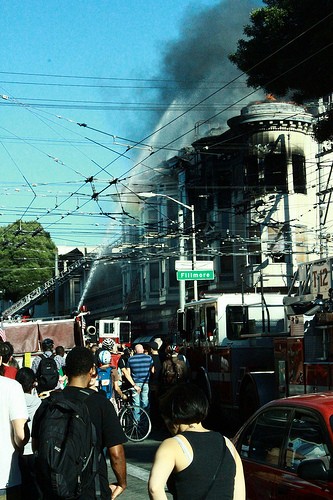
This week, after convening in closed session to discuss the threat of litigation by downtown groups, the board voted 7-3 – with Sups. David Campos, Jane Kim, and Eric Mar opposed, and Sup. Ross Mirkarimi absent because he rushed out to large structure fire in his district – for the Elsbernd/Farrell measure, one vote short of the supermajority needed to amend the current city law.

Campaign finance reform advocates such as Steven Hill argue that it’s unfair to modify the city program right in the middle of an election season in which Mayor Ed Lee and the wealthy independent expenditure groups supporting him are poised to spend millions of dollars to defeat a large field of mostly publicly funded mayoral candidates.

Hill and his allies are appealing to Mirkarimi – who told the Chronicle that he is leaning toward supporting the amendment when the measure returns to the board on Tuesday – not to support what they consider an overly broad capitulation to downtown’s threats. They’re also lobbying Sup. John Avalos to switch his vote, while downtown players are putting the screws to supervisors as well.

In an interview with the Guardian, Mirkarimi clarified his stance, noting that he was the sponsor of the original public financing law and his goal is to protect it, even if it needs to be modified to withstand a legal challenge. “I’m looking for alternatives to fortify San Francisco’s program,” he told us, noting that he missed some of this week’s discussion and he’s hoping something can be done to retain provisions that level the financial playing field with wealthy candidates.

Meanwhile, downtown forces are pulling out the stops to kill Sup. David Campos’ legislation that would prevent San Francisco businesses from pocketing money they set aside for their employees’ health care under a city mandate that they provide health coverage – totaling about $50 million last year – legislation that gets its first hearing tomorrow (Friday/30) at 10 am.

Board President David Chiu has put forward competing legislation that is more to the Chamber’s liking, letting businesses (mostly restaurants that are even placing surcharges of customers’ bills, ostensibly to subsidize their legal obligations) keep the money. But Campos and his labor allies believe they have the six votes they need to pass the legislation, thanks largely to moderate Sup. Malia Cohen’s pledge to support the measure.

While even some supporters have quibbled with the timing of this measure, Campos notes the urgency of keeping money intended for workers in their hands. “It’s an outrage and the longer we wait, the worse it gets,” Campos tells us, noting that the practice, “is what many of us consider fraud.”

Unfortunately, even if the board approves the measure this Tuesday, it will still need the signature of Mayor Lee to become law. While he hasn’t formally taken a position, given that his political base is the downtown crowd, he’s expected to veto the measure. But we’ll ask him about it tomorrow when he’s scheduled to meet with the Guardian for an endorsement interview at 2 pm.

On Guard!

1

news@sfbg.com


CENTRAL SUBTERFUGE

While supporters of the controversial Central Subway project — from Mayor Ed Lee and his allies in Chinatown to almost the entire Board of Supervisors — dismiss the growing chorus of critics as everything from ill-informed to racist, they refuse to address the biggest concerns about the project.

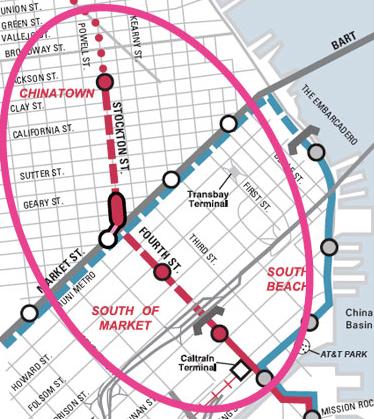
In a nutshell, the main concerns center on serious design flaws (such as the lack of direct connections to either Muni or BART), the city’s responsibility for any cost overruns on this complex $1.6 billion project, its estimated $15.2 million increase to Muni’s already strained annual operating budget (a figure used by the Federal Transportation Administration, well over the local estimate of $1.7 million), and the city’s unwillingness to implement its own plans for improving north-south transit service on congested Stockton Street rather than relying solely on such an expensive option for serving Chinatown that doesn’t start until 2019.

Judge Quentin Kopp, a longtime former legislator, called this summer’s grand jury report, “Central Subway: Too Much Money for Too Little Benefit,” the best he’s ever read and one that should be heeded. He recently wrote a letter to top state officials urging them to reconsider the $488 million in state funding pledged to the project. As we reported last week, mayoral candidate Dennis Herrera is also challenging a project that he supported before its most recent cost overruns and design changes.

But supporters of the project pushed back hard on Sept. 14, using taunts and emotional rhetoric that avoided addressing the core criticisms. “Beneath the unfounded criticism about costs is actually a disagreement over values. The grand jury report relied upon by critics makes a only brief and superficial criticism about costs,” Norman Fong and Mike Casey wrote in an op-ed in last week’s Guardian.

Actually, the 56-page grand jury report goes into great detail about why it believes cost overruns are likely, citing the myriad risks from tunneling and SFMTA’s administrative shortcomings and history of mismanagement, including on this project’s less-complicated first phase, the T-Third line, which was 22 percent over budget and a year and half late in completion. Even with the contingencies built into the Central Subway budget, the report notes that a similar overrun would increase the local share of this project from $124 million to more than $150 million.

Mayor Lee purportedly addressed criticism of the project during the Question Time session in the Sept. 14 Board of Supervisors meeting, prompted by a loaded question from Sup. Sean Elsbernd offering Lee the “opportunity to move beyond the clichés and one-liners of political campaigns.”

But Lee’s answer was classically political, touting the estimated 30,000 jobs it would create, praising those who have pushed this project since the 1980s, offering optimistic ridership estimates (that exceed current FTA figures by about 9,000 daily riders), and ignoring concerns about whether the city can cover the ever-increasing capital and operating costs.

“Now is the time to support the Central Subway,” Lee said, flashing his trademark mustachioed grin.

We called the normally responsive Elsbernd, who prides himself on his fiscal responsibility, twice, to ask about financial concerns surrounding the project and he didn’t call back. During their mayoral endorsement interviews with the Guardian last week, we also asked Sups. John Avalos and David Chiu to address how they think the city will be able to afford this project, and neither had good answers about the most substantive issues (listen for yourself to the audio recordings on our Politics blog).

Once Congress gives final approval to $966 million in federal funding for this project sometime in the next couple months, the city will be formally committed to the Central Subway and all its costs. It’s too bad that, even during election season, all its supporters have to offer to address valid concerns are “clichés and one-liners.”(Steven T. Jones)


BLACK AGENDA

Mayoral candidates faced tougher questions than usual at a Sept. 15 forum hosted by the Harvey Matthews Bayview Hunters Point Democratic Club. Whereas debates hosted in the Castro and Mission Bay, for instance, featured questions on how candidates planned to clean up city streets, what they thought about AT&T’s plan to place utility boxes on city sidewalks, or how they’d promote a more business-friendly environment, residents brought a thornier set of concerns to the Bayview Opera House.

One question pointed to an alarming statistic based on U.S. Census data and cited by racial justice advocates, showing that residents of the predominantly African American Bayview Hunters Point have a life expectancy that’s 14 years lower, on average, than that of residents of the more well-to-do Russian Hill.

Someone else asked about improving mental health services for lower-income community members struggling with post-traumatic stress syndrome (PTSD). High unemployment figured in as a key concern. And one member of the audience wanted to know how candidates planned to “improve the behavior of the police,” alluding to the mid-July officer-involved shooting that left 19-year-old Seattle resident Kenneth Harding dead, triggering community outrage.

Mayor Ed Lee attended the beginning of the forum but left early to attend an anniversary celebration for the Bayview Hunters Point Foundation; other participants included Terry Joan Baum, Jeff Adachi, Bevan Dufty, Dennis Herrera, David Chiu, Michela Alioto-Pier, and Joanna Rees.

Answers to Bayview residents’ sweeping concerns varied, yet many acknowledged that the southeastern neighborhood had been neglected and ill-served by city government for years.

“There is no economic justice here in Bayview Hunters Point,” Adachi said. “There never has been. That’s the reality.” He pointed to his record in the Pubic Defender’s Office on aggressively targeting police misconduct, and played up his pension reform measure, Prop. D, as a vehicle for freeing up public resources for critical services.

Dufty, who has repeatedly challenged mayoral contenders to incorporate a “black agenda” into their platforms, spoke of his vision for a mayor’s office with greater African American representation, and emphasized his commitment to improving contracting opportunities for minority-owned businesses.

Herrera, meanwhile, was singled out and asked to explain his support for gang injunctions, an issue that has drawn the ire of civil liberties groups. “I only support gang injunctions as a last resort,” he responded. “We shouldn’t have to use them. But … people should be able to walk around without being caught in a web of gang violence. I put additional restrictions on myself to go above and beyond what the law requires, to make sure that I am balancing safe streets with protecting civil liberties.”

Herrera asserted that gang violence had been reduced by 60 percent in areas where he’d imposed the controversial bans on contact between targeted individuals, and noted that the majority of those he’d sought injunctions against in Oakdale weren’t San Francisco residents.

Baum brought questions about a lack of services back to the overarching issue of the widening income and wealth gaps. “Right now, the money is being sucked upward as we speak,” she said. “We have to bring that money back down.”

She closed with her signature phrase: “Tax the rich. Duuuuh.” (Rebecca Bowe)


DUFTY REMEMBERS

The selection of Ed Lee as interim (or not-so-interim) mayor of San Francisco was one of those moments that left just about everyone dazed — how did a guy who wasn’t even in town, who had shown no interest in the job, who had never held elective office, suddenly wind up in Room 200?

Well, former Sup. Bevan Dufty, who was going to nominate Sheriff Mike Hennessey and switched to providing the crucial sixth vote for Lee at the last minute, told us the story during his mayoral endorsement interview last week.

Remember: Lee, as recently as a few days earlier, had told people he didn’t want to be mayor. “An hour before the meeting, Gavin (Newsom) called Michela (Alioto-Pier) and me into his office and said Ed Lee had changed his mind,” Dufty told us. He walked out of the Mayor’s Office uncommitted, he said, and even Newsom wasn’t sure where Dufty would go.

After two rounds of voting, with Dufty abstaining, there were five votes for Lee. So Dufty asked for a recess and went back to talk to Newsom — where he was told that the mayor thought the reason the progressives were supporting Hennessey was that the sheriff had agreed to get rid of about 20 mayoral staffers — including Chief of Staff Steve Kawa, “who had engineered Ed Lee running.”

So Kawa, with Newsom’s help, preserved his job and power base. “It’s all turnabout,” Dufty said. “I figure Mike Hennessey’s had a couple of beers and a couple of good times thinking about my vote. But that’s politics.” (Tim Redmond)


ALMOST FREE?

Friends and supporters of Shane Bauer and Josh Fattal were kept in a state of agonizing suspense over whether the two men, both 29, would be released from the Iranian prison where they’ve been held for more than two years following an ill-fated hiking trip in Iraqi Kurdistan.

On Sept. 13, Iranian President Mahmoud Ahmadinejad stated publicly that Bauer and Fattal could be freed “in a couple of days.” The announcement brought hope for family and friends who, just weeks earlier, had absorbed the news that the men were sentenced to eight years in prison after an Iranian court found them guilty of committing espionage, a charge that the hikers, the United States government, religious leaders, and human rights advocates have characterized as completely baseless.

Reports followed that the Iranian judiciary would commute the hikers’ sentences and release them in exchange for bail payments totaling $1 million. But by Sept. 16, when supporters gathered in San Francisco in hopes that of an imminent announcement, they were instead greeted with new delays.

The constantly shifting accounts hinted at internal strife within the Iranian government, and contributed to the sense that Bauer and Fattal were trapped as pawns in a power struggle. By Sept. 19, their Iranian lawyer remained in limbo, awaiting the signature of a judge who was scheduled to return from vacation Sept. 20.

“Shane and Josh’s freedom means more to us than anything and it’s a huge relief to read that they are going to be released,” the hikers’ families said in a statement Sept. 13. “We’re grateful to everyone who has supported us and looking forward to our reunion with Shane and Josh. We hope to say more when they are finally back in our arms.” (Rebecca Bowe)

Endorsement Interviews: David Chiu

131

Board President and mayoral candidate David Chiu could well be the person most directly hurt by Mayor Ed Lee’s decision to run for a full term. It’s ironic, since Chiu supported Lee — on the basis that the former city administrator would not be a candidate in November. And he has the inside story on why Lee is in the race: According to Chiu, Lee told him that he didn’t really want to run, but “was having trouble saying no to Willie Brown and Rose Pak.”

Chiu has been in the center of the current board, moving away from progressives on some key issues — but he’s talking very much a progressive line in his campaign. He’s promising business tax reforms, transit justice, affordable housing and new revenue. Audio and video after the jump.

Chiu by endorsements2011

Bike Coalition gives Avalos its top endorsement

13

Back in May, I noted how mayoral candidates John Avalos and David Chiu seemed to be the only candidates courting the votes of San Francisco bicyclists, noting that the 13,000-plus-member San Francisco Bicycle Coalition was one of the city’s largest grassroots political organizations. Since then, Ed Lee jumped into the race and also made a point of supporting and seeking support from the city’s bicycling community.

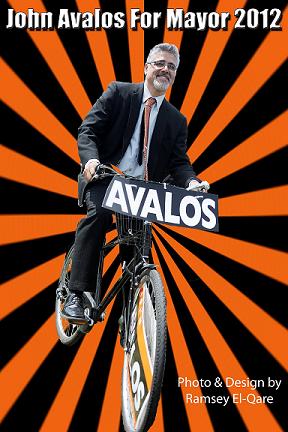
After weeks of online voting, the SFBC today announced its endorsements, and they seem to reflect both the efforts of these three politicians and SFBC members’ recognition of who’s been working in City Hall on their behalf. They endorsed Avalos as number one, Chiu in the second slot, and Lee number three.

“By endorsing three candidates, in ranked-choice format, we are recognizing the leaders who are most actively supporting a better city through bicycling,” SFBC Executive Director Leah Shahum wrote in a message to members announcing the endorsements, also noting that there is an “unprecedented number of bicycling-friendly candidates” in this year’s mayoral field.

Avalos and Chiu are both regular cyclists who have actively supported expanding the city’s bicycle network and increasing ridership, while Lee has shepherded several key bike projects through this year and even called for improvements to dangerous conditions on Fell and Oak streets during this year’s Bike-to-Work Day.

Is Peskin plotting a comeback/payback?

36

Many progressives have been disappointed in Board President David Chiu, particularly after his pivotal role in putting Ed Lee into the Mayor’s Office and stacking key board committees with moderates, as well as his controversial swing votes on Parkmerced and other projects. But nobody has been more disappointed than Chiu’s predecessor and one-time mentor, Aaron Peskin (as we detailed in a cover story earlier this year).

Now, knowledgable sources tell the Guardian that Peskin is seriously considering running against Chiu next year for his old District 3 seat on the Board of Supervisors — and that Peskin recently told Chiu that directly — although neither of them is commenting on the record.

So far, Chiu’s run for mayor doesn’t really appear to be catching fire, with Lee leading and only Dennis Herrera, Leland Yee, or Jeff Adachi exhibiting a credible chance of catching him. With many progressive activists actively searching for someone to run against Chiu next year (as Peskin said about another matter, “payback is a bitch”), Chiu is rumored to be eyeing a run for Tom Ammiano’s Assembly seat (which fellow Sup. David Campos is also said to be looking at, probably with Ammiano’s blessing if it happens), either next year or when Ammiano is termed out in 2014.

But Chiu campaign manager Nicole Derse dismisses such speculation, telling us, “The only thing David Chiu is running for is Mayor of San Francisco.  He is not thinking about the 2012 re-election for Supervisor and he is certainly not thinking for a minute about the Assembly race.  If Aaron Peskin decides to run in District 3 next year, it is a free country.”

Burning Man enters a deliberative new phase

6

I didn’t see SF Sups. David Chiu and Jane Kim on their brief tour of Black Rock City last week, but I did get the chance to participate in a more authentic political awakening at Burning Man this year, one marked by an increasing number of well-attended public discussions about where this strange and vibrant culture is headed.

And they are discussions that will continue back here in the default world, at events ranging from those sponsored by the new Burning Man Project to the readings that I’m doing for my book, The Tribes of Burning Man, including tomorrow evening (Fri/9) at True Stories Lounge in the Makeout Room, where I’ll appear with writers Joyce Maynard, Adam Hochschild, Gary Kamiya, Alicia Erian, Tyche Hendricks, and moderator Evelyn Nieves.

I was invited onto four different stages (although I regretfully missed one gig due to a miscommunication) at Burning Man this year, and most had capacity crowds of engaged burners who were eager to discuss what’s next and offer their ideas, many of them very insightful and well-developed.

Frankly, I wasn’t sure whether people would want to take time out of their vacations in this fun-filled city to attend lectures and discussions, and the fact that so many did – in venues and stages that popped up all over the playa – shows just how much widespread interest there is in transforming Burning Man into more than just an annual party.

“We were overflowing and people would come back days later and say it was the best discussion we ever had out there,” says D’Andre of Revolution Camp, which hosted talks all week (including the one I missed, for which he said a crowd of about 50 people showed up, about the same size crowd that showed up for my talk on Sunday at Center Camp Stage – which I mistakenly had conflated with my Revolution Camp booking…again, my apologies).

Burning Man board member Marian Goodell said they had similarly great turnouts for the daily public availabilities of the 17 board members of the new Burning Man Project, the nonprofit that will shepherd this culture into its next phase. “There was quite a lively discussion and usually people waiting to talk to the board members,” she said. “It was super successful.”

I had my own private session with new board member Chris Weitz (a longtime burner and film producer and director) in between the presentations that we each gave at the GER Talks, a speaker series hosted by the venerable theme camp Ashram Galactica, where he is the former head concierge.

I urged him to use this opportunity to create a more inclusive and representative governance structure for the 25-year-old Burning Man event, which has always been run by a handful of key players with little by way of checks-and-balances, belying the hyper-collaborative nature of this culture. It was the same message that I had for each of my crowds out there, there this is our culture and it’s up to us to determine its future direction and initiatives.

And if the interest and engagement levels that I saw on the playa this year are any indication, burners are finally ready, willing, and able to start taking this thing to the next level. Or as founder Larry Harvey said in my book, a quote from 2008 that I cited in each of my talks, “That city is connecting to itself faster than anyone knows. And if they can do that, they can connect to the world. That’s why for the last three years I’ve done these sociopolitical themes, so they know they can apply it. Because if it’s just a vacation, well, we’ve been on vacation long enough.”

Team Avalos

63

When Supervisor John Avalos chaired the Budget & Finance Committee in 2009 and 2010, his office became a bustling place in the thick of the budget process. To gain insight on the real-life effects of the mayor’s proposed spending cuts, Avalos and his City Hall staff played host to neighborhood service providers, youth workers, homeless advocates, labor leaders, and other San Franciscans who stood to be directly impacted by the axe that would fall when the final budget was approved. They camped out in City Hall together for hours, puzzling over which items they could live without, and which required a steadfast demand for funding restoration.

“One year, we even brought them into the mayor’s office,” for an eleventh-hour negotiating session held in the wee morning hours, recounted Avalos’ legislative aide, Raquel Redondiez. That move came much to the dismay of Steve Kawa, mayoral chief of staff.

Avalos, the 47-year-old District 11 supervisor, exudes a down-to-earth vibe that’s rare in politicians, and tends to display a balanced temperament even in the heat of high-stakes political clashes. He travels to and from mayoral debates by bicycle. He quotes classic song lyrics during full board meetings, keeps a record player and vinyl collection in his office, and recently showed up at the Mission dive bar El Rio to judge a dance competition for the wildly popular Hard French dance party.

Yet casual observers may not be as familiar with the style Avalos brings to conducting day-to-day business at City Hall, an approach exemplified that summer night in 2010 when he showed up to the mayor’s office flanked by grassroots advocates bent on preserving key programs.

“My role is, I’m an insider, … but it’s really been about bringing in the outside to have a voice on the inside,” Avalos said in a recent interview. “People have always been camped out in my office. These are people who represent constituencies — seniors, recipients of mental health care, unions, people concerned about violence. It’s how we change things in City Hall. It’s making government more effective at promoting opportunities, justice, and greater livelihood.” Part of the thrust behind his candidacy, he added, is this: “We want to be able to have a campaign that’s about a movement.”

That makes Avalos different from the other candidates — but it also raises a crucial question. Some of the most important advances in progressive politics in San Francisco have come not just from electoral victories, but from losing campaigns that galvanized the left. Tom Ammiano in 1999 and Matt Gonzalez in 2003 played that role. Can Avalos mount both a winning campaign — and one that, win or lose, will have a lasting impact on the city?

Workers and families

No budget with such deep spending cuts could have left all stakeholders happy once the dust settled, but Avalos and other progressive supervisors did manage to siphon some funding away from the city’s robust police and fire departments in order to restore key programs in a highly controversial move.

“There’s a Johnny Cash song I really like, written by Tom Petty, called ‘I Won’t Back Down.’ I sang it during that time, because I didn’t back down,” Avalos said at an Aug. 30 mayoral forum hosted by the Potrero Hill Democratic Club. “We made … a symbolic cut, showing that there was a real inequity about how we were doing our budgets. Without impacting public safety services, we were able to get $6 million from the Fire Department. A lot of that went into Rec & Park, and health care programs, and to education programs, and we were able to … find more fat in the Police Department budget than anybody had ever found before, about $3 million.”

Last November, Avalos placed a successful measure on the ballot to increase the city’s real-estate transfer tax, which so far has amassed around $45 million in new revenue for city coffers, softening the blow to critical programs in the latest round of budget negotiations. “Without these measures that community groups, residents, and labor organizations worked for, Mayor Ed Lee would not have been able to balance the budget,” Avalos said.

More recently, he emerged as a champion of the city’s Local Hire Ordinance, designed as a tool for job creation that requires employers at new construction projects to select San Francisco residents for half their work crews, to be phased in over the next several years. That landmark legislation was a year in the making, Redondiez said, describing how union representatives, workers, contractors, unemployed residents of Chinatown and the Bayview, and others cycled through Avalos’ City Hall office to provide input.

His collaborative style stems in part from his background. Avalos formerly worked for Service Employees International Union Local 1877, where he organized janitors, and served as political director for Coleman Advocates for Children & Youth. He was also a legislative aide to former District 6 Sup. Chris Daly, who remains a lightning rod in the San Francisco political landscape.

Before wading into the fray of San Francisco politics, Avalos earned a masters degree in social work from San Francisco State University. But when he first arrived in the city in 1989, with few connections and barely any money to his name, he took a gig at a coffee cart. He was a Latino kid originally from Wilmington, Calif. whose dad was a longshoreman and whose mom was an office worker, and he’d endured a climate of discrimination throughout his teenage years at Andover High in Andover, Mass.

Roughly a decade ago, Avalos and a group of youth advocates were arrested in Oakland following a protest against Proposition 21, which increased criminal penalties for crimes committed by youth. Booked into custody along with him was his wife, Karen Zapata, whom he married around the same time. She is now a public school teacher in San Francisco and the mother of their two children, ages 6 and 9, both enrolled in public schools.

“John has consistently been a voice for disenfranchised populations in this city,” said Sharen Hewitt, who’s known Avalos for more than a decade and serves as executive director of The Community Leadership Academy & Emergency Response Project (CLAER), an organization formed to respond to a rash of homicides and alleviate violence. “He understands that San Francisco is at a major turning point in terms of its ability to keep families and low-income communities housed. With the local hiring ordinance, most of us who have been working around violence prevention agree — at the core of this horrible set of symptoms are root causes, stemming from economic disparity.”

Asked about his top priorities, Avalos will invariably express his desire to keep working families rooted in San Francisco. District 11, which spans the Excelsior, Ingleside, and other southeastern neighborhoods, encompasses multiracial neighborhoods made up of single-family homes — and many have been blunted with foreclosure since the onset of the economic crisis.

“Our motto for building housing in San Francisco is we build all this luxury housing — it’s a form of voodoo economics,” Avalos told a small group of supporters at a recent campaign stop in Bernal Heights. “I want to have a new model for how we build housing in San Francisco. How can we help [working-class homeowners] modify their loans to make if more flexible, so they can stay here?” He’s floated the idea of creating an affordable housing bond to aid in the construction of new affordable housing units as well as loan modifications to prevent foreclosures.

“That’s what is the biggest threat to San Francisco, is losing the working-class,” said community activist Giuliana Milanese, who previously worked with Avalos at Coleman Advocates for Youth and has volunteered for his campaign. “And he’s the best fighter. Basically, economic justice is his bottom line.”

Tenants Union director Ted Gullicksen gave Avalos his seal of approval when contacted by the Guardian, saying he has “a 100 percent voting record for tenants,” despite having fewer tenants in his district than some of his colleagues. “David Chiu, had he not voted for Parkmerced, could have been competitive with John,” Gullicksen said. “But the Parkmerced thing was huge, so now it’s very difficult to even have David in same ballpark. Dennis [Herrera] has always taken the right positions — but he’s never had to vote on anything,” he said. “After that, nobody comes close.”

Cash poor, community rich

There’s no question: The Avalos for Mayor campaign faces an uphill climb. Recent poll figures offering an early snapshot of the crowded field peg him at roughly 4 percent, trailing behind candidates with stronger citywide name recognition like City Attorney Dennis Herrera or the incumbent, Mayor Ed Lee, who hasn’t accepted public financing and stands to benefit from deep-pocketed backers with ties to big business.

Yet as Assembly Member Tom Ammiano phrased it, “he’s actually given progressives a place to roost. He doesn’t pussy-foot around on the issues that are important,” making him a natural choice for San Francisco voters who care more about stemming the tides of privatization and gentrification than, say, rolling out the red carpet for hi-tech companies.

One of Avalos’ greatest challenges is that he lacks a pile of campaign cash, having received less than $90,000 in contributions as of June 30, according to an Ethics Commission filing. “He can’t call in the big checks,” said Julian Davis, board president of Booker T. Washington Community Service Center, “because he hasn’t been doing the bidding of big business interests.” A roster of financial contributions filed with the Ethics Commission shows that his donor base is comprised mainly of teachers, nonprofit employees, health-care workers, tenant advocates, and other similar groups, with almost no representatives of real-estate development interests or major corporations.

Despite being strapped for cash, he’s collected endorsements ranging from the Democratic County Central Committee, to the Harvey Milk Democratic Club, to the city’s largest labor union, SEIU 1021; he’s also won the backing of quintessential San Francisco characters such as renowned author Rebecca Solnit; San Francisco’s radical bohemian poet laureate, Diane di Prima; and countercultural icon Diamond Dave.

While some of Avalos’ core supporters describe his campaign as “historic,” other longtime political observers have voiced a sort of disenchantment with his candidacy, saying it doesn’t measure up to the sweeping mobilizations that galvanized around Gonzalez or Ammiano. Ammiano has strongly endorsed Avalos, but Gonzalez — who now works for Public Defender (and mayoral candidate) Jeff Adachi — has remained tepid about his candidacy, stating publicly in an interview on Fog City Journal, “I like [Green Party candidate Terrie Baum] and John fine. I just don’t believe in them.”

Ironically, Sup. Sean Elsbernd, often Avalos’ political opposite on board votes, had kinder words for him. “John is intelligent, John is honest, and John has integrity,” Elsbernd told the Guardian. “I don’t think he knows the city well enough to serve as chief executive … but I’ve seen the good work he’s done in his district.”

Meanwhile, Avalos is still grappling with the fallout from the spending cut he initiated against the police and fire departments in 2009. Whereas those unions sent sound trucks rolling through his neighborhood clamoring for his recall from office during that budget fight, the San Francisco Police Officers Association (SFPOA), the San Francisco Fire Fighters union, and the plumbers’ union, Local 38, have teamed up now that Avalos is running for mayor to form an independent expenditure committee targeting him and Public Defender Jeff Adachi, a latecomer to the race.

“We’ll make sure we do everything we can to make sure he never sees Room 200,” SFPOA President Gary Delagnes told the Guardian. “I would spend as much money as I could possibly summon to make sure neither ever takes office.” Delagnes added that he believes the political makeup of San Francisco is shifting in a more moderate direction, to Avalos’ disadvantage. “People spend a lot of money to live here,” he said, “and they don’t want to be walking over 15 homeless people, or having people ask them for money.”

If it’s true that the flanks of the left in San Francisco have already been supplanted with wealthy residents whose primary concern is that they are annoyed by the sight of destitute people, then more has already been lost for the progressive movement than it stands to lose under the scenario of an Avalos defeat.

The great progressive hope?

Despite these looming challenges, the Avalos campaign has amassed a volunteer base that’s more than 1,000 strong, in many cases drawing from grassroots networks already engaged in efforts to defend tenant rights, advance workplace protections for non-union employees, create youth programs that aim to prevent violence in low-income communities, and advance opportunities for immigrants. According to some volunteers, linking these myriad grassroots efforts is part of the point. Aside from the obvious goal of electing Avalos for mayor, his supporters say they hope his campaign will be a force to re-energize and redefine progressive politics in San Francisco.

“All the candidates that are running are trying to appeal to the progressive base,” Avalos said. But what does it really mean? To him, being progressive “is a commitment to a cause that’s greater,” he offered. “It’s about how to alter the relationship of power in San Francisco. My vision of progressivism is more inclusive, and more accountable to real concerns.”

N’Tanya Lee, former executive director of Coleman Advocates, was among the people Avalos consulted when he was considering a run for mayor. “The real progressives in San Francisco are the folks on the ground every day, like the moms working for public schools … everyday families, individual people, often people of color, who are doing the work without fanfare. They are the unsung heroes … and the rising progressive leaders of our city,” she said. “John represents the best of what’s to come. It’s not just about race or class. It’s about people standing for solutions.”

When deciding whether to run, Avalos also turned to his wife, Zapata, who has held leadership positions in the San Francisco teacher’s union in the past. She suggested rounding up community leaders and talking it through. “The campaign needed to be a movement campaign,” Zapata told the Guardian. “John Avalos was not running because he thought John Avalos was the most important person in the world to do this job. Our question was, if John were to do this, how would it help people most affected by economic injustice?”

Hewitt, the executive director of CLAER, also weighed in. “My concern is that he has been painted as a leftist, rooted in some outdated ideology,” she said. “I think [that characterization] is one-dimensional, and I think he’s broader than that. My perception of John is that he’s a pragmatist — rooted in listening, and attempting to respond.”

Others echoed this characterization. “He doesn’t need to be the great progressive hope,” said Rafael Mandelman, an attorney who ran as a progressive in District 8 last year. “If people are looking for the next Matt Gonzalez, I’m not sure that’s what John is about. He’s about the communities he’s representing.”

As to whether or not he has a shot at victory, Mandelman said, “It’s a very wide field, and I think John is going to have a very strong base. I think he will get enough first-choice votes to be one of the top contenders. And with ranked choice voting, anything can happen.”


Central subway becomes issue in mayor’s race

19

The central subway — for years, one of those San Francisco projects that almost everyone in local politics supported — has suddenly become a major issue in the mayor’s race.


After a blistering civil grand jury report (PDF) saying that the project has become too expensive and will take cash away from Muni’s other priorities, some city officials and transit activists, including those who once were backers of the subway, are now saying it’s time to call the whole thing off.


City Attorney Dennis Herrera was the first major candidate out of the box to denounce the project, telling the Chronicle that the subway has “ceased to be a prudent investment” and that it’s time to pull the plug. It’s likely that Herrera will continue to push Mayor Ed Lee on the cost of the project and its transit value, and the other candidates will have to figure out where to go.


There’s no question — this is an expensive proposition, $1.6 billion for a 1.7-mile line. Most of the financing is also federal and state money, meaning San Francisco’s only on the hook for a little more than $100 million — as long as the construction comes in at or under budget.


And powerful players like AECOM stand to make huge amounts of money off the deal.


At the same time, almost all of Chinatown is united behind it. “The community has been working on this for a long time. It’s the first thing we’ve all worked on together,” Rev. Norman Fong, who is about to take over as director of the Chinatown Community Development Center, told me. Supporters of the subway started some 20 years ago, and collected 20,000 signatures supporting a new transit option in a community where the vast majority of residents are transit-reliant. A delegation of seniors and tenant leaders went to Washington, D.C. to lobby for it. “And everyone in town signed off on it in 2008, when the cost was $1.2 billion,” Fong said.


It makes for strange politics — most of the same people who are really pushing the central subway are trying to stop state Sen. Leland Yee from becoming mayor — but Yee is also a strong proponent of the subway. David Chiu is, also, telling me that the grand jury just “rehashed arguments that we’ve heard before” and that there’s “enormous funding from the federal government.”


I have yet to hear from John Avalos, but this one is not going away.