condos

Endorsement interviews: Eric Smith

10

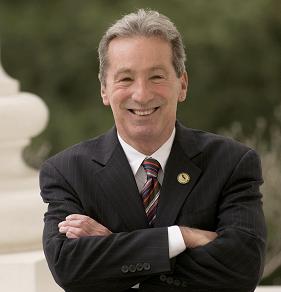
Eric Smith’s passion is environmental justice. He’s the director of Green Depot, a coalition of biodiesel organizations, and has helped lead the city to switch its buses and official vehicles to the cleaner fuel. He’s working on ways to get the city to move its waste by train. And he talks about the important of green jobs (and not just green jobs for the top college graduates.)


Smith told us he’s not fond of the Lennar project, but he supports the Communit Benefits Agreement and would have voted for the project EIR. He’s concerned about the city’s plans to bring 40,000 more housing units, mostly high-end condos, to the neighborhood, particularly the threat to light-industrial jobs. He complains about the lack of centralization in city services and the sometimes overlapping jobs of nonprofits and public agencies. He’s an opponent of the gang injunctions and Sit-Lie.


You can listen to our interview here:


esmith by endorsements2010


Ideas that work: a plan for a new San Francisco

6

OPINION San Francisco is a city of tremendous riches and problems — a locus of wealth, inequality, innovation, creativity, and sometimes stifling resistance by political and economic power brokers. It’s time to break through. We have the ability, and opportunity, to create a whole new set of economic, social, and political relationships between people and government. On everything from municipal banking, to Muni reform, to public-controlled sustainable energy production and community-driven budgeting, we have a flood of ideas from thinkers and activists across the city.

The Aug. 14-15 Community Congress at the University of San Francisco will focus on turning those ideas into a political platform the city can implement. Last week, we described the vision; this week, we offer some proposals that will be discussed at the event; following the event, others will be posted at sfbg.com.

The event runs Aug. 14 from 9 a.m.–5 p.m. and Aug. 15 from 9 a.m.–1 p.m. at USF’s McLaren Conference Center. For information, go to www.sfsummitcongress.wordpress.com. (Karl Beitel and Christopher Cook)

1. A MUNICIPAL BANK


San Francisco is rich — it has $16.1 billion in assets, with a net worth of $6.5 billion, according to the city treasurer. With a little maneuvering and political will, roughly a half-billion of that money could be devoted to creating a municipal bank: a fiscally solvent, federally insured economic engine that would invest in community development projects serving underfunded activities and endeavors, providing significant economic and social benefits to the residents of San Francisco.

With its own public bank, San Francisco could begin to fund and promote more community-centered forms of economic development. Worker co-ops, for instance, could get loans for projects that are socially beneficial and economically viable. The bank could also help generate new homegrown industries that produce both revenue and social value to the city. This would help democratize the city economy, giving financial muscle to community-based projects and neighborhood-serving businesses.

Over a period of three to five years, a modest portion of the city’s liquid investments can be transferred to create to the new bank. The bank could use this pool of capital to extend low-interest, long-term loans for projects located in San Francisco. The bank would offer a full spectrum of retail banking services, such as money market accounts, to attract additional deposits to supplement funds from the city.

A municipal bank has potential to grow into a major economic force in the city for financing community-centered development. With the right up-front commitment from the city, the total asset portfolio of loans and other investments would grow far beyond this initial public investment — representing a significant infusion of loan capital into currently underserved segments of the credit market in San Francisco.

The municipal bank would be a member-owned, federally chartered, and federally insured credit union. It would engage in rigorous vetting of loan applicants. But because the bank would not run as a profit-maximizing enterprise, loan officers would explicitly consider projects in light of their economic viability and potential contribution to the economic, social, and cultural well being of San Francisco.

Priority could, for instance, be given to loans for affordable housing development and community economic development. In particular, the bank could prioritize businesses and enterprises that represent alternative models of ownership such as worker co-ops and worker collectives, and smaller, community-serving, locally-based, social enterprise-type businesses.

To ensure that the bank’s lending activities reflect the need for more democratic modes of credit and finance, governance and oversight could include representation from social groups and constituents normally excluded from corporate governance. The bank’s member-owners would elect the board of directors.

Municipal bank funds would be completely separate from the city’s general fund, with strict firewalls imposed to assure that lending activities do not become intermingled in any way with the annual appropriations process.

By creating its own bank, San Francisco would be a national model for community-based development and economic democracy. It would be a national first, and has the potential to transform how cities think about local economic development. (Beitel)

2. HOUSING SAN FRANCISCO


Since the beginning of the dot-com boom, San Francisco has seen displacement of low-income families from rent-controlled housing in alarming numbers. Much of this displacement has been happening through conversion of small residential apartment buildings (between four and 12 units) into tenancy in common units. Small-site displacement tends to target seniors, disabled people, and working class families — and many of the units that were converted were, under rent control, de facto affordable housing.

In addition, over the past 15 years the city has lost 4,370 units due to Ellis Act evictions. At the same time, the city’s housing production model favors larger projects because of the economies of scale possible for new construction of big projects, with 70 or more units. While these projects are important in adding to the city’s affordable housing stock, sites to accommodate giant developments are in short supply.

So how do we address San Francisco’s chronic affordable housing crisis. First, stabilize low-income communities and preserve diverse neighborhoods by encouraging the city to invest in developing a small sites acquisition and rehabilitation program that could help nonprofits take over and operate affordable rental housing for low-income tenants. That property could also be converted to limited equity housing cooperatives and community land trust properties.

Next, the city should ban all TICs from becoming condos. The city can give landlords and speculators a choice: If you want your property to be eligible for condo conversion, with all the economic benefits that come with that designation, then you need to follow the process and abide by tenant protections in the condo law. If you want to ignore the condo law, then you’re stuck with a TIC.

To further protect renters, prior to sale of a renter-occupied unit, the city could require the owner to offer tenants the right to buy the unit, at a price based on the last best offer from a bona fide purchaser.

The Rent Board also needs reform. The panel, which oversees rent increases, consists of five members: two landlords, two tenants, and one homeowner. All are appointed by the mayor. We suggest three tenants, two landlords, and two homeowners — with the appointments split between the mayor and the supervisors.

There also must be a permanent, local source of funding for affordable housing development. A progressive increase in the real estate transfer tax could generate $45 million annually.

We further support Sup. Ross Mirkarimi’s proposed legislation that would protect resident’s rights during relocation and ensure their right to return to buildings that have been redeveloped. (Amy Beinart and the Council of Community Housing Organizations)

3. THE CRISIS IN CARE


More than any other American city, San Francisco relies on a network of faith- and community-based nonprofits to deliver critical health and human services to its poorest and sickest residents. More than 15,000 people are employed in this sector, which had a total budget of almost $800 million in 2000.

Health and human service nonprofits play a significant role in providing a substantial portion of the city’s services for seniors, people with AIDS, the homeless, children and youth, people with special physical and mental needs, and those who suffer from substance abuse.

Yet this critical sector finds itself bearing the brunt of cuts and reduction in services caused by the fiscal crisis facing San Francisco.

So what can we do? Here are seven suggestions.

First, conduct a coordinated citywide health and human services needs assessment driven by neighborhoods and communities.

Second, working with service users, service providers, and city employees, create a 10-year plan for health and human services that can guide yearly budget considerations.

Third, as the city implements the 2009 ballot measure that calls for a two-year budget cycle informed by five-year financial plans, require department heads and commissions to include the perspective of professional service providers and service users, including a standards analysis plan and a narrative about the impact on services.

Fourth, open a dialogue with the foundation community on addressing the changing needs of the nonprofit human services community, including community needs, accountability, and funding cycles.

Fifth, depoliticize the request-for-proposals (RFP) process by moving it out of city departments and into the Controller’s Office.

Sixth, require city departments that contract with nonprofit health and human service providers to complete their implementation of the recommendations to streamline the city’s contracting and monitoring processes approved by the 2003 City Nonprofit Contracting Task Force, and ensure that current procedures and processes are consistent with those recommendations.

And seventh, preserve services for the most vulnerable San Franciscans by focusing on revenue solutions to the city’s ongoing structural budget deficit, including November 2010 campaigns to increase the hotel tax and the real property transfer tax. (Debbi Lerman, Human Services Network)

4. BUILDING WORKER COOPERATIVES


Although these are hard times, there’s an opportunity for San Francisco to realize a new model of economic sustainability — by supporting worker cooperatives.

The worker cooperative model is a business form well-suited to the diverse needs of urban areas and is already viable in a broad variety of sectors including manufacturing, service, and retail. A key aspect of worker cooperative development is that its goal is not just the creation of jobs; it’s also about making business ownership accessible.

An inspiring new model of economic development is currently taking place with the Evergreen Cooperatives in Cleveland. In an ambitious effort, anchor institutions such as the local universities, hospitals, and the City of Cleveland have established procurement agreements with developing worker cooperatives rooted in the struggling urban communities of Cleveland (where unemployment rates are as high as 25 percent). The goal is to redirect the estimated $3 billion that these anchor institutions spend on goods and services toward worker cooperatives in the communities where these institutions are located. The first two business models underway are a commercial laundry service and a solar installation company.

There’s also a lot of inspiring work already being done by the worker cooperative community in the Bay Area. The Arizmendi Association continues to develop new worker-owned bakeries despite the economic recession. This fall, Arizmendi will launch its second SF location in the Mission District, creating new jobs and opportunities for local residents to have ownership over their work. Rainbow Grocery and Other Avenues are two extremely successful, long-lasting worker-owned grocery stores in San Francisco.

The city ought to officially recognize the worker cooperative model as both viable and preferable, and include it in the city’s various efforts of economic development. And city officials should take a leadership role in reimagining what a vibrant economy could look like and begin to promote worker cooperatives as central to that vision. (Poonam Whabi, Rick Simon, Steve Rice, Inno Nagara, and Nadia Khastagir)

The deal is done

1

Mayor Gavin Newsom was quick to frame the Board of Supervisors’ 10-1 vote for Lennar Corp.’s massive redevelopment proposal for Candlestick Point-Hunters Point Shipyard on July 27 as a sign that plans to revitalize the Bayview are about to begin.

“Now we can truly begin the work of transforming an environmental blight into a new center of thousands of permanent and construction jobs, green technology investment, affordable housing, and parks for our city,” Newsom claimed in a prepared statement after the board (with Sup. Chris Daly as the lone dissenter) approved Lennar’s 700-acre project.

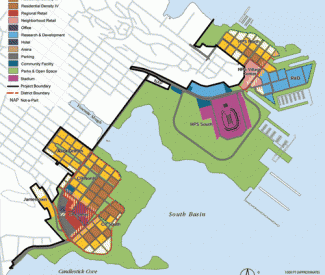
The proposal calls for 10,500 residential units; 320 acres of parks, retail and entertainment facilities, green-tech office space; and a San Francisco 49ers stadium if the team decides not to move to Santa Clara.

But Kofi Bonner, who worked for Mayor Willie Brown before becoming Lennar’s top Bay Area executive in 2006, said the vote means he can start shopping the plan around. “Now we have to find some money to move forward with the project,” Bonner told the San Francisco Chronicle.

Given the stubbornness of the recession, Bonner’s revelation that Lennar has yet to find all the necessary investors means local workers and public housing residents could be waiting a long time for jobs and housing in Bayview. If and when the project finally breaks ground, it will involve building condos in the Bayview’s only major park.

These realities undermine the claims of Lennar, which used the mantra of “jobs, housing, and parks” in 2008 to sell Proposition G but made no mention of a bridge over environmentally sensitive Yosemite Slough or selling state parkland for condos.

Also disturbing, says Sierra Club local representative Arthur Feinstein, is the lack of any economic analysis to support Lennar’s claims that the bridge is needed.

Indeed, the only thing clear to longtime observers of the plan is that the much vaunted jobs won’t happen soon, most of the housing will be unaffordable to current Bayview residents, and Candlestick Point State Recreation Area, the only major open space in the Bayview, will be carved up so Lennar can build luxury condos on waterfront land.

These concerns have led the Sierra Club to threaten a lawsuit over issues on which Board President David Chiu was the swing vote in favor of the Lennar and Redevelopment Agency plan. Yet Chiu told the Guardian that the process got him thinking that it might be time to reform the redevelopment process.

“Now might be a good time to address concerns about the potential for inconsistency between Redevelopment and the city when it comes to land use and planning visions,” Chiu said. “And I have concerns about the tax increment financing process.” Tax increment financing allows the Redevelopment Agency to keep all property tax increases from the project, up to $4 billion, to use in redevelopment projects rather than into city coffers.

Chiu says the amendment he offered July 12, which narrows Lennar’s proposed bridge over Yosemite Slough by half, was based “on the belief that having a connection between jobs and housing is important. And I had understood that it would cost the developer an additional $100 million if the bridge was removed.”

But Feinstein counters that it’s hard to imagine that building a bridge over an environmentally sensitive slough will attract investors that support green technology. He is concerned that the development is expected to attract 24,465 new residents but that the Lennar plan fails to mitigate for transit-related impacts on air quality. “The Bayview already has the highest rates of asthma and cancer in the city,” Feinstein said.

Chiu says the supervisors can introduce separate legislation to address this concern. “It’s my understanding that an air quality analysis could be implemented by the board,” he said.

Although the board’s July 27 vote was a relief for termed-out Sup. Sophie Maxwell, its failure to support the no-bridge alternative, increased affordability standards, and an air quality analysis could result in expensive and time-consuming litigation, Feinstein warns.

And although Sups. Chris Daly, Ross Mirkarimi, David Campos, John Avalos, and Eric Mar supported all three of these amendments, they were ultimately thwarted by a redevelopment law that limits the city’s control of such projects.

During the meeting, Daly acknowledged that it would be impossible for Lennar to meet his 50 percent affordability amendment. But he noted that if the project becomes too expensive “there’s going to be a pretty new neighborhood with lots of white folks living in the Bayview.”

But after Michael Cohen, Newsom’s top economic advisor, said the project would not be financially viable with 50 percent affordability, Sups. Chiu, Maxwell, Bevan Dufty, Michela Alioto-Pier, Carmen Chu, and Sean Elsbernd voted against Daly’s amendment.

These same six supervisors voted against Mirkarimi’s proposal to eliminate plans for a bridge across Yosemite Slough, even though Cohen was unable to point to any economic analysis to support Lennar’s claims that the bridge is necessary.

Arc Ecology owner Saul Bloom, whose nonprofit did studies indicating that an alternative route wrapping around the slough is feasible, says Lennar’s plan illustrates the problem that San Francisco has with development. “Elected officials couldn’t do anything,” he said, except give the nod to a plan he describes as “developed by a mayoral administration and approved by that mayor’s political appointees [on the Redevelopment Agency board],” Bloom said.

“The message that the environmental community takes away from all this is that it doesn’t pay to play well,” Bloom continued. “No matter how much you spend to try and ensure that litigation is not the only way to obtain the desired outcome, ultimately the message that comes back from the city and the developer is ‘sue us!’ That brings out the worst political conduct, not the most appropriate.”

Feinstein wouldn’t confirm that a Sierra Club lawsuit is imminent, but predicted that if the coalition — which includes Golden Gate Audubon, the California Native Plant Society, and SF Tomorrow — goes to court, it’s likely to win. “If we do litigate, we’ll probably do it on a wide range of issues,” Feinstein said. “They approved a fatally flawed document, and they could provide no documented evidence of the need for a bridge — and admitted that publicly.”

Feinstein contends that Lennar’s plan has been a runaway project from the get-go. “The idea was to march it through before the mayor is gone with little regard for process. And despite all the much vaunted public meetings, little in the plan has changed,” he said.

Feinstein added that he was disappointed in Chiu’s stance on the bridge. “There were five supervisors in the Newsom camp, but as board President, Chiu had a responsibility to be more vigilant,” he said. “We told him what’s wrong with the bridge plan, but he didn’t share our view.”

“This is a rare opportunity,” Maxwell said before the board’s final vote. “It focuses public and private investment into an area that has lacked it in the past. It’s unmatched by any development project in San Francisco. This project is large and complicated, no doubt. But let us not be fearful of this project because of its scale, because how else can we transform a neglected landscape?”

But project opponents say everyone should fear a deal that required the board to ask Lennar’s approval to amend a plan that was pitched by the Newsom administration and approved by a bunch of mayoral appointees on the Redevelopment Commission with little chance for elected officials to make changes.

Mirkarimi said the problem with a process in which redevelopment law trumps municipal law is that it creates a shadow government in those few municipalities in California where the Board of Supervisors or City Council is not the same entity as the Redevelopment Commission.

“This is not the first time Redevelopment’s plans have trumped the concerns of local residents,” Mirkarimi said, referring to the agency’s botched handling of the Fillmore District in the 1960s, which led to massive displacement of African and Japanese Americans.

“I’ve been told, ‘Don’t worry, Ross, this is not going to happen, we’re not going to use eminent domain.’ Well, jeez, that’s a consolation, because even when we’ve exercised our legislative influence and given our blessing, [Redevelopment] unilaterally changed the plan after it left the board,” Mirkarimi said, referring to Lennar’s decision to replace rental units with for-sale condos when it first began work on the shipyard in 2006. “That suggests a condescending role in which the developer is able to go to the Redevelopment Commission and make a unilateral change.”

Mirkarimi’s concerns seemed justified after Cohen, Bonner, and Redevelopment Director Fred Blackwell huddled in a corner of City Hall during the board’s July 27 meeting to decide which of the supervisors’ slew of amendments they would accept. When Cohen returned with the amendments organized into three categories (acceptable as written, to be modified, and completely unacceptable), Mirkarimi’s no-bridge amendment had been sorted into the “unacceptable” pile.

“With regard to your insistence on the economic reasons [for the bridge], please point to which document says that,” Mirkarimi said, leafing in vain through the project materials.

Cohen mentioned “a lessening of attractiveness,” “a lower-density product,” and a reduction of revenue available through tax increment financing to pay for the bridge.

“Yes, but I’m still trying to look for the information and all I’m hearing is this pitch,” Mirkarimi said. “The economic study is absent. There are no supporting documents here. This is why I feel it’s justified for us to have a review of this.”

Cohen rambled on about “rigorous public discussion over a number of years” and claimed that a “huge amount of studies had been done.”

“But there is no economic study,” Mirkarimi repeated.

The board then voted 6-5 against Mirkarimi’s amendment after deputy City Attorney Charles Sullivan said that the only way to remove the bridge — since the project’s environmental impact report had rejected that option — would be to reject the entire plan. “I wish we had been able to eliminate the bridge,” Campos told the Guardian after the vote. “Part of the challenge we have is to reexamine how Redevelopment works and explore the potential for taking it over.”

Daly believes the bridge has nothing to do with connecting the neighborhood to the city. “The idea is to allow white people to get the fuck out of the neighborhood,” he said. “And it connects a different class of people to a new job without having to go through a low-income community of color. That’s why the bridge is needed.”

Mirkarimi said he was satisfied that he had dissected the arguments against the no-bridge alternative but fears that institutional memory is lacking on the current board. “A lot of my colleagues have not been involved in the debacle,” he said, referring to decades of problems with redevelopment in San Francisco. But Maxwell was all smiles. “I did my homework a long time ago — that’s why they couldn’t touch the core of the project,” she said. “They just added to and augmented it.”

(A rhythmic series of) slaps on the back for the Body Music Festival artists

0

Slap a belly, claps them hands, shake your head side to side and buzz through your lips like a motorboat. It’s called body music, mon cheri – and since 2008 the Bay Area’s been the yearly gathering spot for all manner of the diverse artistes that call this noise home at the International Body Music Festival. This year, the festie’s moving down south to Sao Paolo, Brazil – but before it does, festival founder and primo tap dancer Keith Terry has organized a benefit show (Sat/7 La Peña Cultural Center) that features his group, Slammin, along with sometimes-clown and presently hambone performer Derique McGee. The show will fund Bay performers trips down south – and more presently, out to NYC where they will perform at the Lincoln Center (Thurs/12). We spoke with the mastermind behind this convergence of natural noisemakers over the phone, and found him to be more than happy to explain his unusual passion for playing with one’s self. Keith, what’s all this noise about?


Keith Terry on the ones and two-legs 


San Francisco Bay Guardian: Now then. Body music. I must admit, I wasn’t previously familiar with the art from. How’d you get turned on to it?

Keith Terry: I came to it 30 years ago – I’m a drummer, and I was in a rehearsal with tap dancers, and I had this thought that I could displace everything I was playing on my drums onto my body. And it became a career.


SFBG: Did you start out by researching the background of body music? It’s been around for quite some time, hasn’t it?

KT: I was really into tap dancers, people like Charles “Honi” Coles, Eddie Brown, Steve Condos. I’m really drawn to dance that has its own inherent soundtrack, or music that has a visual component. I’ve been fascinated by that for a long time. I was aware of hambone for a long time, that it grew out of slavery, of drums being taken away from slaves to suppress rebellion. There are a lot of traditional styles of body music. I’m a student of world music. But the style that I do is a contemporary style. 


SFBG: Tell me about it?

KT: I do solo and group shows, but for the festival my group is called Slammin’; 3 singers: beatboxer, and body music – eight in the ensemble. It’s very urban music: we draw from jazz, hip hop, R&B. There’s usually five of us, but for the Lincoln Center show we’re adding three additional body musicians, so this is the enhanced Slammin’.


SFBG: The Body Music Festival has been doing great the past few years in SF. Why are you moving the event to Sao Paolo?

KT: We’ve always had performers come to the festival from all over – we’ve had people from Indonesia, Turkey, Polynesia, France, Brazil, Spain. One thought I had in 2008 when I started the festival was that it would be great if the festival itself became international. I had asked Barbatuques, a group from Sao Paolo of 12 performers, I asked if they would host, and they accepted. Next year the full festival will be back in the Bay Area, then the next year in Istanbul. 


SFBG: Do audience members ever call foul on you and say that what you do is actually dance, not music?

KT: It’s hard to categorize and put it in a box. But people find it really accessible.


Body Music Festival Benefit Send-off Concert

Sat/7 8 p.m., $20-100

La Peña Cultural Center

3105 Shattuck, Berk.

(510) 849-2568

www.lapena.org

www.internationalbodymusicfestival.com


Board had to ask for Lennar’s approval…

0

Images by Luke Thomas

The Board of Supervisors found itself in the humiliating position July 27 of having to ask for the approval of Lennar and the city’s Redevelopment Agency before it could amend Lennar’s massive redevelopment plan for Candlestick Point-Hunters Point Shipyard.

If that’s not an argument for reforming how this city approaches redevelopment, I don’t know what is. Especially since the Board’s meeting illustrated only too well how thoroughly Lennar’s local executives, who used to work for the city under Mayor Willie Brown,  understand this game and how to outfoxed any resistance to their ongoing effort to eat San Francisco whole.

“This is a rare opportunity,” Sup. Sophie Maxwell said ahead of the Board’s 10-1 vote (Sup. Chris Daly was the lone dissenting voice) to approve Lennar’s entire plan. “It focuses public and private investment into an area that has lacked it in the past,”continued Maxwell, who represents the district that encompasses the shipyard and Candlestick Point. ” It’s unmatched by any development project in San Francisco. This project is large and complicated, no doubt. But let us not be fearful of this project because of its scale, because how else can we transform a neglected landscape?”

But who wouldn’t be afraid of a deal that found Maxwell, Board President Chiu and Sups. Michela Alioto-Pier, Carmen Chu, Bevan Dufty and Sean Elsbernd joining forces to vote against Sup. Ross Mirkarimi’s proposal that Lennar be required to include a non-bridge alternative?

And who wouldn’t be doubly afraid, given that these six supervisors took that vote after Michael Cohen, Mayor Gavin Newsom’s top economic advisor, was unable to point to a single document to support his claims that Lennar’s $100 million bridge over an environmentally sensitive slough is actually needed?

Talk about scary.

To his credit, Mirkarimi did a good job of illustrating what’s wrong with a process that allows a private developer like Lennar to pitch plans and get mayoral appointees to approve them, but doesn’t allow San Francisco’s elected officials to make any amendments unless the developer and Redevelopment agree.

At the root of this travesty is the fact that redevelopment law trumps municipal law, a power imbalance that creates a shadow government in those few municipalities in California where the city council or board of supervisors is not the same entity as the Redevelopment Commission.

San Francisco is one such municipality, and, as Mirkarimi explained, this is not the first time that Redevelopment’s plans have trumped the concerns of local residents.

“I’m the supervisor for the Fillmore, the first urban renewal laboratory took place in my district, and I vowed to never let it happen again, ”Mirkarimi said, referring to the massive displacement of African Americans and Japanese Americans that took place when Redevelopment decided to makeover the Fillmore in the 1960s.

“I’ve been told, “Don’t worry, Ross, this is not going to happen. We’re not going to use eminent domain,’” Mirkarimi continued. “Well, Jeez, that’s a consolation! Because even when we’ve exercised our legislative influence and given our blessing, [Redevelopment] unilaterally changed the plan after it left the Board. That suggests a condescending role in which the developer is able to go to the Redevelopment Commission and have a unilateral change.”

Mirkarimi was referring to how proposed rental units on Parcel A, the first parcel of shipyard land released for redevelopment, became for-sale condos at Lennar’s request, without the Board having any recourse, even though the area surrounding the redevelopment is ground zero for the city’s last remaining African American community and home to other low-income communities of color.

Deputy City Attorney Charles Sullivan explained that the s supervisors would require the approval of the developer and Redevelopment to amend Lennar’s latest plan, under Redevelopment law. Failing that, their only recourse would be to reject Lennar’s plan in its entirety–a nuclear option that only Daly seemed prepared to carry through.

Sup. David Campos noted that the city’s legal advice had been “somewhat of a moving target.” His comment suggested the Board had  been misled in the critical weeks before this final vote, including ahead of the Board’s July 14 vote to accept certification of the project’s final environmental impact report.

“When a number of us raised questions about the EIR, we were told we couldn’t, but that we would probably be able to make changes to the substantive plan,” Campos recalled. “But now we are getting a more complicated answer.”

Deputy City Attorney Sullivan said the situation was complicated, because some of the proposed amendments “don’t involve a simple stroke of the pen.”

But Campos pointed to the fact that Board President Chiu had introduced an amendment that only allows for a 41 ft. bridge across Yosemite Slough, thereby halving the width of the 82 ft. bridge that Lennar is proposing to build.

That amendment, which Chiu introduced July 12,  leaves the door open for the 82 ft. version of the bridge, if the 49ers indicate interest in a new stadium on Hunters Point Shipyard, a possibility the city claims is still alive, even though Santa Clara voters approved a new stadium for the 49ers this June.

“So, why can you amend the plan to include a scaled-down version of the bridge but not eliminate it altogether?” Campos asked.

“You can make that motion by voting not to approve the project,” Sullivan said.

“So, the change has to point to something already embedded in the project?” Campos asked.

“Or not be a rejection of everything that’s already been brought forward,” Sullivan replied.

After Mirkarimi proposed his no-bridge alternative, along with a slew of other amendments that Daly, Campos, and Sups. Eric Mar and John Avalos had been working on to strengthen the proposed development, Cohen, Mayor Gavin Newsom’s top economic advisor, huddled somewhere in City Hall along with Kofi Bonner,  Lennar’s top local executive and Fred Blackwell, the head of SF’s Redevelopment Agency to decide which of the Board’s amendments they would accept.

Cohen returned with the amendments organized into three categories: acceptable as written, modified, and completely unacceptable.

And predictably enough (to anyone  tracking Lennar’s insistence on a bridge) Mirkarimi’s no-bridge amendment had been tossed into the “unacceptable” pile.

“With regards to your insistence on the economic reasons for the bridge, please point to which document says that,” Mirkarimi said, leafing through the project materials that were piled on his desk.

Cohen mentioned a number of factors, including an alleged “lessening of attractiveness,” “a lower density product” and a reduction of property tax revenue that would be available through tax increment financing to pay for Lennar’s proposed bridge.

“Yes, but I’m still trying to look for the information, and all I’m hearing is this pitch,” Mirkarimi replied. “The economic study is absent. There are no supporting documents here. This is why I feel it’s justified for use to have a review of this.”

Cohen talked some more about “rigorous public discussion over a number of years.”

“But there is no economic study,” Mirkarimi repeated. At which point a deafening silence pervaded the Board’s venerable chambers, much as if the emperor had shown up without his proverbial clothes.

Deputy City Attorney Sullivan broke the silence by indicating that the only way for the Board to move a no-bridge alternative forward would be to stop all project approvals and send the plan back to Redevelopment.

And Mirkarimi reminded the supervisors that at the Board’s July 13 hearing, Cohen had said that there was no conclusive evidence around the need for the bridge.

But then the Board voted 6-5 against Mirkarimi’s proposal, a move insiders said was more about not pissing off Labor, which hopes to create jobs for iron workers, and not pissing off Lennar, whose control runs deep and wide, and less about being convinced of the actual need to build over the last unbridged waterway in the city’s southeast sector.

And a couple of amendments later, the Board gave its blessing and it was all kisses and hugs and applause in the Board Chambers, even though the folks from Dwayne Jones Communities of Opportunities (COO) program, who usually show up to support the plan, strangely weren’t in attendance, rumoredly because their program has been cut off at the knees in the last few weeks, following Jones resignation as COO’s director.

“I wish we had been able to eliminate the bridge,” Campos told me after the Board’s final vote. “I think part of the challenge we have is to reexamine how Redevelopment works and explore the potential for taking it over.”

Mirkarimi was satisfied that he had dissected the arguments against the no-bridge alternative, but feared that institutional memory is lacking on the Board, and that without fundamental Redevelopment reform, the city is in danger of seeing this kind of travesty repeated, over and over.

“A lot of my colleagues have not been involved in the debacle,” Mirkarimo said, referring to how Redevelopment’s infamous role dates back five decades, and how Lennar has been working the local political scene for longer than most of the Board’s current members.

But Maxwell was all smiles.
“I did my homework a long time ago, that’s why they couldn’t touch the core of the project,” she said. “They just added to and augmented it.”

With Maxwell’s days on the Board drawing to a close, I asked what she’s contemplating doing next.

“Sophie is looking into water policies and conservation,” Maxwell said. “Without blue there is no green.

It was about then that Mayor Gavin Newsom released a press statement that blabbed on in vaguely frothing terms about what would happen next.

“Now we can truly begin the work of transforming an environmental blight into a new center of thousands of permanent and construction jobs, green technology investment, affordable housing and parks for our City,” Newsom said

His words came shortly before Bonner said that Lennar would now start looking for investors, and shortly after Cohen admitted that it could be years before anything in Lennar’s plan actually gets built. But none of them mentioned that the Sierra Club and other environmental groups are planning to sue the City over the bridge, an outcome that could have been averted, Sierra Club officials warned, if the No-bridge alternative had been  included in the final redevelopment plan.

Stay tuned….


The bridge isn’t the only problem with Lennar’s plan

0

I’m glad to see the New York Times circle back to the Candlestick-Shipyard development with an article that was a tad more critical than their previous piece.

But while I enjoyed NYT’s joke about how the proposed bridge over the Yosemite Slough “has become a 950-foot-long chicken bone that keeps getting stuck in San Francisco politicians’ throats,”  I’m afraid the Board is in greater danger of choking on the bones of red herrings that they have been fed about this project,  along with last week’s bombshell that the Board won’t be able to amend Lennar’s plan, after all, when it votes July 27 on this massive proposal..

D. 10 candidate Tony Kelly says if that bombshell turns out to be true, it’ll be another example of what he calls, “The bait and switch and switch,” on the deal.

“I’m worried that the Board is getting advice that is less about a case of not being able to vote, and more a case of, if you vote, you could open up the city to liability,” Kelly said.

“Back in 2008, folks were told, just vote for Prop. G because it’s just a concept and we’ll have a robust conversation about the plan itself, but they’ve been running away from that promise ever since,” Kelly explained. “And during the EIR hearings, we were told that folks were simply approving the environmental impact report, not the plan itself.”

Kelly’s critiques of Lennar’s plan and the process by which it has been winning final approvals helped him win former Board President Matt Gonzalez’s endorsement last week in the pivotal race to replace termed-out D. 10 Sup. Sophie Maxwell.

But Kelly worries about the fallout that the next D. 10 supervisor will be left to mop up, if the Board goes ahead and approves Lennar’s plan, as is.
 
“What I’d dread to see happen is that this plan get bullied through on an up and down vote, and then a fifth, or even a tenth of people’s concerns prove to be true, and the next D. 10 supervisor spends the next 4-8 years apologizing to the people of the Bayview, because they won’t be able to do anything else for the area, and this plan keeps lumbering along and doesn’t even work,” Kelly explained.

He says he wants to know who can amend the plan, if it’s not the Board and when.

“ My concern is that after the July 27 vote, the city and Lennar will never have to come before the Board again,” Kelly said, pointing to the uncritical endorsement of the project EIR that the Planning and Redevelopment Commissions, the lead agencies on the plan, made June 3, and who would likely be tasked with any additional studies and findings.

Sup. Ross Mirkarimi confirmed today that the Board has been told that it has limited reach because of Redevelopment law, which supercedes municipal law.”
“But, nonetheless, I’m going to try to make some amendments,” Mirkarimi said.

He noted that the five amendments that Board President David Chiu introduced July 12 during a Land Use Committee hearing were “very benign.”

‘They mostly restated what was already in the project agreement or project EIR,” Mirkarimi said. “So, they don’t amend much, because they are statements of what has already been evaluated or pre-agreed to by Lennar and the city. And they are very benign because they do not require any changes to the plan.”

Mirkarimi observes that the current process by which the city is trying to push this deal through is designed to lock the Board out.

“There are larger questions in play here about our relationship with the Redevelopment Agency and redevelopment law,” Mirkarimi continued. He notes that San Francisco is one of only a few counties in California where the Board is not the same entity as the Redevelopment Agency.

“It’s long overdue that we return to the idea of having the Board have authority over the Redevelopment Agency, it’s been a problem for 40 years,” Mirkarimi said,  referring to Redevelopment’s disastrous handling of the Fillmore, which resulted in the massive and mostly permanent displacement of the Western Addition’s African American community—a negative consequence that many fear will be repeated by the plan for Candlestick-Hunters Point.

“There is a real capitalization on a starving population which is desirous of and at times desperate for positive changes and for jobs and housing, which is understandable,” Mirkarimi continued. “But absent of any alternative, it’s logical that this plan would move forward.”

In an effort to improve the plan, Mirkarimi says he will try to introduce a range of amendments at the Board’s July 27 meeting.

‘These include an attempt to make sure that whatever changes the Board makes are indeed enforceable,” he said. “And I am not satisfied with the discussion on the bridge, and how the gate has been left open on a bridge of any kind.”

Mirkarimi notes that there has been a lot of fanfare surrounding a community benefits agreement that various community-based organizations, labor and the project proponents entered into, in spring 2008.

“But I think they can do better, especially in reaching out to a community that has a high ex-offender population, and connecting to other disadvantaged communities throughout the city,” Mirkarimi said.

He also wants to ensure that if public power is not implemented, or fails, then Community Choice Aggregation program would automaticcally take over.

Mirkarimi is further concerned that there is nothing in the current plan that defines the percentages of housing units offered for rental and for home ownership.

“We are proposing to build 10,500 units but we have no idea what percentage is rental,” he said, noting that he also has concerns about air quality, air monitoring and parcels of land that have not yet been cleaned up to residential standards.

“Parcel E-2 is the most famous, but it’s not the only one,” he said. “The bridge and Parcel  E-2 have become major distractions in that they have sucked the oxygen out of other areas of these gargantuan project.”

So, is it true that elected officials on the Board can’t amend a plan sent to them by the Redevelopment Agency, whose commissioners are all political appointees of the mayor?

“It’s a yes or no vote, if you will,” a deputy City Attorney told the Guardian, on background, noting that the Board could tell Redevelopment that it doesn’t like the plan and wants the Agency to make some changes and bring it some amendments.

“Ultimately, the Board has the final say, but it has to have gone through the Redevelopment process and its PAC (project area committee) and have seen a plan that has been referred to it by the Planning Commission,” the deputy city attorney continued.“So, they could communicate their dissatisfaction and the agency would have to take their view into account. It’s not that the Board has no authority, but it can’t decide unilaterally.”

The City Attorney’s Office also confirmed that under Redevelopment Law, local jurisdictions can decide how to implement redevelopment plans.

“In a number of jurisdictions, the city council has made itself a Redevelopment entity, just as our Board is also the Transportation Authority in San Francisco,” the deputy said.“And if the same body proposes the plan, it probably will be satisfied.”

The City Attorney’s office noted that if agencies that regulate permits to fill the Bay, as is  required to build a bridge over Yosemite Slough, deny the city those permits, then the city would require amendments to its planning documents, but no further environmental impact review would be required, if the bridge was gone.

With the Board’s July 27 vote around the corner, D. 10 candidate Tony Kelly says he has a bunch of concerns that include, but are not limited to the bridge, starting with the projects financing mechanisms.

Kelly points to the fact that city staff recommended and the Board approved July 13 that “significant blight in the project area cannot be eliminated without the increase in the amount of bonded indebtedness from $221 million to $900 million and the increase in the limitation on the number of dollars to be allocated to the Agency from $881 million to $4.2 billion.”
 

Kelly wants the city to explain to the Board how much tax increment financing money will be left for the Bayview, now that the area’s debt ceiling has been tripled.

“Does this mean that all BVHP property tax revenues for the next 30 years will go towards paying down this debt and nothing else?” Kelly asked. “And what will that mean for the rest of BVHP in terms of service and programs it won’t be able to afford?

Kelly would also like to see the Board request an audit of Lennar’s record on Parcel A. As Kelly points out, the Navy conveyed Parcel to the city in 2004, and the city gave Lennar the green light to develop 1,600 mostly luxury condos on that parcel, in 2006.

“But no one has ever done an audit of Parcel A,” Kelly said. “Given the scrutiny that the Board usually brings to five figure numbers, the supervisors should be demanding this information, since we are dealing with a ten-figure number ($4,220,000,000) in future.”

It would be helpful if the City would also brief the Board as to who it believes will be investing in the project,  including the investment companies’ names,  their board of directors, and whether these companies are based in the US. Rumors are swirling that some project proponents have entered into side-deals that involve limited liability companies that are selling Lennar’s proposed condos to folks in China, and that a $1 million investment in a condo could translate into a work permit for the condo owner or occupant.

Kelly worries that the city and Lennar’s joint redevelopment plan is being allowed to squeak past the Board’s financial review simply on the basis of vague estimates.
“They rely once again on promises that won’t show up,” Kelly said, pointing to a recent report that emerged from the Controller’s Office.

Arc Ecology’s Saul Bloom notes that the Controller used averaged figures in that report, an approach that neatly obscures the fact that many of the project’s alleged and benefits– will not be created or felt for years. Bloom for his part is hoping the Board can introduce a maritime uses amendment. This would allow relatively unskilled jobs to be created at the shipyard in short order, compared to vague promises of  building a green tech office park there, some day.

Last week, Mayor Gavin Newsom’s top economic advisor Michael Cohen suggested that plan amendments would delay project construction.

But Cohen was quick to add that, “702 acres of waterfront land in San Francisco is an irreplaceable asset. It’s not a question of if—but when—it gets developed.”

Others are less sure that Cohen’s much promoted vision will ever translate into reality.

So, here’s hoping the Board will grill Cohen and city staff over the financial details, including the internal rate of return (IRR) that Lennar is demanding, and what will happen to promised community benefits, if the IRR doesn’t pencil out. D. 10 candidates DeWitt Lacy, Chris Jackson and Tony Kelly have suggested that some form of liquidated damages  are needed, but if the City believes these are unnecessary, it should explain why.

And then there are questions about the impact on air quality of the traffic related to an additional 24,500 residents and 10,000 workers into the city’s southeast.

Personally, I was fascinated by an April 2010 report from the Redevelopment Agency in which the agency discussed the challenges of driving piles through contaminated soil, which is what could happen if a bridge is built over the Yosemite Slough. In the past, the city made the argument that the NFL and the 49ers were requiring this bridge.

But last week, in the wake of Santa Clara’s vote in favor of a new stadium for the 49ers near Great America, the city began arguing that the bridge would make the project more attractive to financers, because employers want to get their employees quickly in and out.

This was the first time I ever heard city staff make that particular argument and they made it when it’s still not clear who these employers even are.

 So, let’s flesh out the list of potential employers, so the Board can determine if design decisions are being made in the interest of the local community or out-of-state businesses.

And then there’s the fact that it appears that this proposed $100 million bridge would only save commuters a few minutes, while permanently filling the San Francisco Bay.

Today, the Sierra Club, the Golden Gate Audobon Society, the California Native Plant Society and San Francisco Tomorrow released a report that asserts that the Candlestick Point-Hunters Point Shipyard EIR “misrepresents the need for a bridge.”

“A statistical review demonstrates that a route around Yosemite Slough could be as efficient as a bridge route while being better for the environment,” stated a letter that the Sierra Club-led environmental coalition released today. “It’s time for the Board of Supervisors to reject the bridge alternative and insist that the feasible upland route around Yosemite Slough be seriously considered.”

The letter argues that a regression model result found in the Transportation Study Appendix F of the Candlestick Point-Hunters Point Phase 11 EIR provides “no statistically significant evidence to support the claim that a 5 minute increase in transit travel time would lead to a 15 percent decrease in transit ridership, or, indeed, to any decrease in ridership.”

“Therefore, routing the BRT around Yosemite Slough is as consistent with a transit-first redevelopment goal as a bridge alternative, but without the environmental damage wrought by the bridge,” the Sierra Club-led report states in summary. “The results of the regression analysis used in the EIR and relied upon to support the bridge alternative have been misinterpreted in such a way that even if they were statistically significant they are off by a factor of ten: the decrease in transit ridership associated with 5 extra minutes of transit time would be predicted to be approximately 1.5 percent, not 15 percent,” it concludes.

“When the analysis [presented in the Sierra Club’s letter] is combined with previous analyses by LSA Associates (which estimate the increase in travel time would be approximately 2 minutes, rather than the 5 minutes in the final EIR) and other available information, one must reach the conclusion that the FEIR misrepresents the effect on travel time and ridership that would result from a route around Yosemite Slough. Overall, it poses further questions about the need for a bridge over San Francisco’s largest wetland restoration project.”

The Sierra Club-led report lands two weeks after Board President David Chiu introduced his July 12 package of amendments which seeks to narrow the bridge, not eliminate it, and require the Board to hold hearings before the Navy transfers Parcel E-2 to the city.

It’s a good idea for the Board to require hearings before E-2 is transferred to the city. But does this mean the Board will be able to direct the Navy, when it’s time to decide whether to cap or excavate the contamination in that parcel? The answer appears to be no. All the Board can do is to reject the Navy’s proposed solution.

But how would this work? What would happen then? And Parcel E-2 isn’t the only parcel on the shipyard where seriously nasty stuff has been found and is still be cleaned up.

The good news is that at this point, the project still doesn’t belong to the Board.

The bad news is that, as of tomorrow, it could belong to them, if the supervisors opt to approve Lennar’s plan with a simple up-down vote. And given the rush and the political pressure that the process has been subjected to since 2006, it’s almost certain that some scandal will engulf the project, some time in the future. And this Board of Supervisors’ names will be on it. Even if nothing ever gets built at the shipyard.

“How can the city say nothing will be built for years, because we have promised so much, when they say out of the other side of their mouth, that the only way that we can make these promises to the community, is if the community supports the plan?” Kelly asks. “On what planet do we think this makes sense? I think we are moving out of the solar system with every passing week.”

There’s no crime in members of the Board admitting tomorrow that they have not read the entire plan and don’t understand all the details. As the folks in Alameda humbly admitted last week, when they kicked out developer SunCal, it took them years to understand what was being proposed—including the fact that the project might leave their city in the hole, financially.

But it would be a crime for the San Francisco Board of Supervisors to vote yes on this massive proposal without first having done that homework. Yes, I’ve heard supervisors say in the past they are deferring to Sup. Maxwell, since the project lies in her district. But Maxwell is termed out, and the project will impact all of the city, especially in terms of its ethnic and economic diversity, in future. So, as we’ve said, buyer beware!


Redevelopment requires “duty of loyalty” from Arc Ecology

0

As a longtime member of the Mayor’s Hunters Point Shipyard Citizens Advisory Committee (CAC), Scott Madison took exception to a “duty of loyalty” clause in Arc Ecology’s most recent contract with the Redevelopment Agency.

This new requirement in Arc’s contract came up for discussion during the CAC’s July 12 meeting, Madison said.The rest of CAC did not rise up in support of his concerns, Madison adds. But he is convinced the requirement will harm the community that surrounds the 770-acre area that the city and Lennar want to develop with their massive Candlestick-Shipyard redevelopment plan.

The Board of Supervisors will consider that plan at their July 27 meeting, along with suggestions that Arc and the Sierra Club have been making for years. These suggestions include strengthening the terms governing the transfer of Parcel E-2, the most polluted shipyard site, and removing what Arc and the Sierra Club believe is an unnecessary bridge over the environmentally sensitive Yosemite Slough.

Arc has been monitoring the environmental impacts of the shipyard since 1984, and has provided neighborhood groups with information and technical support related to cleanup and redevelopment since 1986. And more recently, Arc Ecology opened a “community window on the shipyard cleanup” on Third Street, which is also accessible online, to provide information and resources for more meaningful community involvement in the cleanup.

Arc hosts environmental education discussions and community workshops and submits written comments to the Navy about the cleanup and to appropriate agencies on related shipyard redevelopment and reuse plans.

“We are working with the BVHP community to ensure that the transfer, redevelopment, and reuse are to the maximum benefit of the neighboring community,” Arc’s website states.

But in the past few years, as Lennar’s political Candlestick-Shipyard juggernaut has been gathering speed, Arc has ruffled feathers in the Mayor’s Office by developing Alternatives For Study, a document that explores detailed alternativesto the current Candlestick-Shipyard plan.

None of ARC’s alternatives are opposed to the development, but they all suggest ways to improve it, including an option that would not involve building a bridge over the slough, or a stadium on the shipyard, and would prevent the taking of 23 acres of state park land which Lennar wants so it can build luxury waterfront condos in the middle of the current Candlestick Point State Recreation Area, a plan that would be unthinkable if it was proposed for Crissy Field.

But the city, and in particular Michael Cohen, Mayor Gavin Newsom’s top economic advisor, view these alternatives, as signs of disloyalty, as they seek to rush Lennar’s massive 770-acre redevelopment plan over the finishing line, while arguing that any further amendments will make the plan more difficult for Lennar to shop around to investors, especially in light of the depressed economy.

The growing coziness between the city and the developer was put on full public display last week, when Sup. David Campos asked the project’s proponents to step forward at the Board’s July 13 hearing on the project’s EIR.

As Lennar Urban’s Kofi Bonner began to rise from his seat in the public seating area, Cohen, who had just finished answering Campos’ questions about the bridge and the project’s financing liabilities from the city’s bullpen in the Board’s chambers, raced over to the podium before Bonner had a chance to speak.

This uneasy closeness between city and developer, along with Arc’s extensive background in shipyard related matters, are why Madison believes the city’s residents are best served when Arc can express its opinions freely, even if that involves critiquing plans that the city seems to have grown increasingly defensive about, ever since it entered into a partnership with the Florida-based Lennar.

“Yes, it’s true that the city is paying for this contract with Arc, but it seems to me that this particular contractor’s responsibility should be primarily to the Citizen’s Advisory Committee, and not the city,” Madison said. “What if Arc reaches a conclusion that is odd with the developer, city agencies and other consultants? Would Arc be prohibited from making it public?”

Madison says the city has claimed that Arc would not be prohibited from such activities, and that the contract contains standard language. But he also adds that certain parties who are boosters for the city’s redevelopment plan object to what Arc and Bloom are doing in terms of raising valid science-based concerns.

“At the meeting, Al Norman said he hopes the Redevelopment Agency handcuffs Saul, not just by the hands but by the ankles,” Madison claimed.

And Bloom said that after his group made a video of him walking around wearing a “Can I buy your park?” billboard to illustrate what Lennar’s plan will do to the only state park in San Francisco, he was told that if Willie Brown was still mayor, Arc would have lost its contract, and all department heads who had been supportive of awarding it to Arc, would have been fired, too

Bloom notes that under Mayor Brown, he was awarded several contracts and helped author Prop. P, the measure that voters approved in 2000, which called upon the Navy to clean up the shipyard to the highest levels practical.

“Even Willie understood the need for balance,” Bloom said.
 
Bloom protested the city’s “duty of loyalty” requirement at the CAC’s July 12 meeting, but has apparently decided that the clause isn’t an insurmountable obstacle, because he has apparently since signed the contract. UPDATE: I just spoke to Bloom who told me that he has not yet signed the contract and is still working to get Redevelopment to see the problem with this requirement.

“At the CAC meeting, the committee endorsed the proposal to give us the contract,” Bloom explained. “But it’s up to the Redevelopment Commission to approve the contract, something they are set to consider at their September 7 meeting. We are making the argument that they need to think about the contract in broader terms.”

And Madison notes that it’s common sense that if you want a truly independent voice advising Redevelopment on the shipyard cleanup plan, then that voice should be allowed to be genuinely independent.

“The fact that the city is paying the bill for the contract shouldn’t require an organization to sign an extraordinary Duty of Loyalty, which conflicts with its true loyalty to the surrounding community,” Madison said.

The Guardian’s recent immediate disclosure request to Redevelopment should reveal the exact terms of Arc’s Duty of Loyalty requirement. And Matt Dorsey, spokesperson for the City Attorney’s Office says such clauses are rare.

“We are unaware of any confidentiality requirements being made, except in very rare circumstances, such as contracts related to the airport where there may be terrorist concerns,” Dorsey said. Stay tuned.

Board votes on Candlestick-Shipyard project EIR appeal today

3

All images by Luke Thomas

The Chronicle’s suggestion that the city’s massive Candlestick-shipyard project may be facing smoother sailing seems like wishful thinking to those who attended a July 12 noontime rally that was organized by POWER (People Organized to Win Employment Rights) and featured two Louisiana-based advocates who protested the project’s EIR and shared many of the longstanding concerns about project cleanup, infrastructure and financing.

The Chronicle was of course referring to five amendments to the city’s massive redevelopment proposal that Board President David Chiu introduced during yesterday’s July 12 meeting of the Board’s Land Use committee. The Chron interpreted these amendments as a sign that Chiu plans to approve the project’s environmental impact report, which comes before the Board today, after several groups appealed the final EIR that the Planning Commission approved last month.

But while city officials fear the developer will walk, if the Board does not approve the final EIR, some environmental advocates hope a better plan could be reached.

At POWER’s July 12 rally, nationally acclaimed environmental scientist Wilma Subra called on the District Attorney’s environmental justice department to “step up.” Subra claimed that the project’s final EIR “failed to evaluate and assess the cumulative impacts of exposure to children, adults and the environment as a result of exposure to all of the chemicals at the site.”

Monique Harden, co-director and attorney for Advocates for Environmental Health Rights (AEHR) of New Orleans, Louisiana, pointed to “deep flaws in the environmental regulation system,” as a reason why low-income communities of color should be concerned about the proposed plan.
“Why in the middle of an environmental crisis caused by BP in the Gulf am I coming to San Francisco?” Harden asked. “Because San Francisco is providing unequal environmental protection to its residents. As a resident of New Orleans, I’m concerned that San Francisco is careening towards making a decision that can crush the future of Bayview Hunters Point,”

But as local Bayview resident Jose Luis Pavon began talking about seeing gentrification occur in his lifetime within San Francisco, he and others got shouted down by a group of yellow and green-shirted project supporters, who were led by a guy calling himself Bradley Bradley and Alice Griffith public housing resident Stormy Henry.
“This is the devil’s trick in the last hour,” Henry said of the POWER rally.

Henry shared her heartfelt belief that if the Board approves the project’s final EIR, she and other Alice Griffith residents will get desperately needed new housing units. even if it takes some years to build them. Others in her group were unable to answer media questions: they had difficulty speaking in English, but were clutching neatly written statements in support of the project that they later read aloud at the Board’s Land Use Committee hearing.

As these project supporters prepared to move inside to attend the Land Use Committee meeting and lobby supervisors for their suppor, D. 10 candidate Tony Kelly shared his concerns that the Navy has a demonstrated history of finding nasty things at the shipyard years after they say everything’s clean, and that this pattern could jeopardize the plan.

“This happened at Parcel A,” Kelly said, referring to the first and only parcel of land that the Navy transferred to the city for development in 2004. “Since then, Parcel A has gotten smaller and as they found stuff on sites they then renamed as new parcels, like UC-3, which has radiological contamination in a sewer line that goes into the Bayview. So, that means the contamination is now in the Bayview.”

Kelly is concerned that the city is trying push through EIR certification before the Navy completes an environmental impact statement (EIS) related to shipyard cleanup activities. “The EIS is supposed to go before the EIR, as far as I know,” Kelly said

At the Land Use Committee meeting, Sup. Sophie Maxwell, whose district includes Candlestick and the Shipyard,said, the project was about “revitalization and opportunity.”

She noted that the certification of the project’s final EIR has been appealed to full Board’s July 13 meeting. She further noted that she intends to introduce legislation next week to address concerns that Ohlone groups have expressed.

The next two hours were full of testimony from a bevy of city officials, beginning with Michael Cohen, Mayor Gavin Newsom’s top economic advisor in the Office of Workforce and Economic Development.

“Every single element [of this project] has been discussed and debated at countless meetings,” Cohen claimed, as he sought to quell fears that the community had not been properly consulted with over the plan. “As we get closer to a vote, all of a sudden pieces of paper start circulating, criticizing project and suggesting that community involvement just began,” he continued. ” That’s factually untrue.”

He also sought to reassure the supervisors that the Board will have a say-so as to whether the city accepts early transfer of shipyard parcels from the Navy.
“Neither the city nor the developer have any specific authority over the cleanup,” Cohen said, noting that the cleanup is governed by specific rules set out in CERCLA [Comprehensice Environmental Response, Compensation and Liability Act, aka Superfund].

“Regardless of what we do, CERCLA will continue to be the regulatory tool,” Cohen said. ” I urge you not to be confused by CEQA and CERCLA.”

So, how can the city implement Prop. P, which voters overwhelmingly supported in 2000, urging the Navy to clean up the shipyard to highest attainable standards.
“Prior to any transfer, US EPA and DTSR have to concur in writing that the shipyard is safe,” Cohen explained, noting that, thanks to Speaker of the House Nancy Pelosi, the Navy has already spent over $700 million on shipyard cleanup efforts.

“We have 250 artists at the shipyard….but not a shred of scientific evidence to say that the shipyard is not safe,” Cohen claimed. “It’s safe to develop the shipyard in precisely the manner we are proposing.”

When Sup. Eric Mar raised the question of radiological contamination on Parcel UC-3, Cohen downplayed Mar’s concerns.
“The exposure levels are lower than watching TV,” Cohen claimed. “The primary source is very low level radiation from glow-in-the-dark dials.”
Indicating a map that showed a network of old sewers (in blue) and old fuel lines (in red) under the entire development area, Cohen said, “The radiological contamination that has and will be addressed at the shipyard is quite low level. You have radiation, you get nervous. We asked EPA to come out and do a scan to deal with the issue.”

IBI Group’s David Thom, the lead architect and planner for the project said the plan is designed “to connect new development back into the Bayview.”
“And this plan connects the Bayview through to the water.”

Tiffany Bohee, Cohen’s deputy in the Mayor’s Office of Economic and Workforce Development, insisted that project’s proposed bridge is better than Arc Ecology’s proposed alternative route, which would not involve constructing a bridge over an environmentally sensitive slough.
“The non-bridge route increases the number of intersections,” Bohee said, seeking to turn an environmental question (the impact of bridge on wildlife and nature experience) into a public safety issue.”
She claimed the BRT route over bridge was 5-10 minutes faster than Arc’s proposed alternative, “because there are fewer turns, it can go at higher speeds.” But Arc’s studies suggest the BRT route over the bridge is only a minute faster, and would cost over $100 million.

Bohee noted that $50 million from the sale of 23 acres of parkland for condos at the Candlestick Point State Recreation Area (CPSRA) will be “set aside for the state, and won’t be able to be raided by the city,” with $40 million going to improvements, and $10 million to ongoing operation and maintenance costs.

She also cited additional benefits that the project would bring to the community, including thousands of construction job opportunities.

“We are working with City Build to make sure they are for local residents,” Bohee said.“And there is absolutely no displacement for the rebuild,” Bohee continued referring to proposal to place current Alice Griffith public housing iresidents n new units, on a 1-1 basis

Eric Mar said he was impressed by many elements of the plan, but continued to express reservations.
“I’m still concerned that is seems to serve newcomers as proposed to existing residents,” he said. “And I’m still not convinced that the bridge is the best for existing residents.”

Rhonda Simmons, who works in Cohen’s Office of Economic and Workforce Development,  tried to flesh out details of the project’s job creation promises.
“The most immediate workforce is related to the construction site, and as you know, this project goes over a 15-20 year span,” Simmons said, pointing to green tech and retail as job opportunities that will exist once the project is built.

Mar expressed concern that the jobs may not be at the level of D.10 residents
“How is this gonna bring their skill level up?” he asked.
“The idea is that training gives first level entry at a variety of building trades,” Simmons said, pointing to the project’s large solar component.

“What about women?” Sup. Maxwell asked
Simmons pointed to retail opportunities,
“The idea of the training is to give folks job readiness skills, like getting there and showing up on time,” she said

Mar wanted to know who would have oversight of monitoring and compliance.
“In the city we have a tapestry of folks who do contract compliance,” she said. “The oversight will come from a variety of places.”

After Kurt Fuchs of the Controller’s Office listed the estimated economic benefits of the project, Board President David Chiu observed that the city is “at a crossroads.”

“I do not plan to prejudge,” Chiu continued, as he introduced his five amendments to regulate the Parcel E-2 cleanup, the size of a proposed bridge over the Yosemite Slough, expand healthcare access in the Bayview, create a workforce development fund and lay the groundwork for bringing public power to the project.

During public comment, Bayview resident Fred Naranjo pleaded for project support.  

“Please don’t let the train leave the station,” Naranjo said. “If Lennar leaves, the Bayview will never be developed.”

And Tim Paulson, executive director of the San Francisco Labor Council expressed hope that an agreement was getting closer.
“There really is a path to getting this done,” Paulson said. “This really is a model project in many ways for the rest of the United States.”
But D. 10 resident Linda Shaffer with the Yerba Buena chapter of the California Native Plant society indicated the huge pressure exerted on folks to support the project
“I do not want to be classified as an opponent, but we have concerns,” Shaffer said, noting that her group has filed an appeal of the project’s final EIR.

And while the Sierra Club’s Arthur Feinstein thanked Chiu for proposing to reduce the size of the bridge, he pointed out that Chiu’s amendment wasn’t really a compromise.
“That’s because it’s still a bridge,” Feinstein said, as he explained how noisy the area surrounding the slough will become as traffic whizzes by.

Connie Ford of the Labor Council accused some project critics of being “disrespectful.”
Ford took particular issue with claims that the project will gentrify the area
“The neighborhood is changing,” she said. “Since 1990, African American families have been leaving the Bayview in huge numbers. I encourage you to see this project as a good plan.”

Gabe Metcalfe of SPUR expressed his unconditional support for the plan,
“This plan is being asked to fix a huge number of problems,” he said.
Noting that the bridge continues to be a sticking point, Metcalfe said he sees opposition to every transportation project these days.
“We seem to be in a moment when you can’t build anything without it being opposed.”

But other speakers from the Sierra Club reiterated their stance that there are better and viable options to the bridge, noting that it is too costly, and that the surrounding community and wildlife would be better off without it.”

All these competing viewpoints suggest that whatever decision the Board makes today, it will take some time and create plenty of uproar. So, here’s hoping the Board votes in a way that will truly benefit the D. 10 community, not career politicians, city officials and out-of-state developers. It’s about time.

Naked fun in the sun!

9

Entertainer Wavy Gravy and Pentagon Papers leaker Daniel Ellsberg like Red Rock Beach; Marin Superior Court Commissioner Roy Chernus favors Bass Lake, and Marin County Sup. Steve Kinsey says he’s been naked at Red Rock, Bolinas, Hagmier Pond, and Mount Vision Pond.

“I’ve probably hit every nude beach in Marin,” says Kinsey, who has described his visits as “exhilarating and normal.” “My last dip was at Bass Lake last fall. It has beautiful, fresh water, and the swimming environment is wonderful. I look forward to the next opportunity.”

But on their next trips to the nude section of beautiful Muir Beach, visitors may notice something new: a warning sign is being erected by the county this summer to urge users to be “respectful” of each other and to notify authorities if there’s trouble.

The sign is the result of a compromise worked out by nudists, law enforcers, county officials, and local homeowners, some of whom wanted nudity stopped. Under the agreement, cops are making a few more visits than before. But through July 1, 2010, only four complaints about nudity and one citation for improper sexual conduct have occurred since January 1, 2009, and none since August 13, 2009, according to marin county sheriff’s office crime analyst Susan Medina. “We keep responding to complaints, but I can’t recall any recent citations,” says Lt. Cheryl Fisher, commander of the Marin County Sheriff’s Office’s West Marin Station. Fisher says the subjects are usually suited up by the time deputies arrive. “A deputy showed up on a very hot Sunday,” says regular visitor Michael Velkoff of Scotts Valley. “As soon as he left, everybody was naked again.”

“Of course, guys in spiked penis rings not parading themselves around also have helped,” says Sup. Kinsey, who, for now, has spiked his previous threat to fight back by starting an effort to make Muir and other beaches clothing-optional under a 1975 law giving Marin County the power to exempt areas from its anti-nudity provisions. “Sometimes the best thing we can do in government is to stay out of the way.”

Homeowners remain wary. One, who wants to remain anonymous, tells the Guardian: “We are optimistic” about being able to “coexist” with the naturists, “but we also remain very clear about what is legal and what will and won’t be tolerated.” And a former advocate of the ban told me that instead of not going to Muir Beach “a person wanting to use the beach nude might do it in a manner that doesn’t draw a lot of attention.”

As if the Marin mashup wasn’t enough, nervous naturists also got ready to do battle with state authorities, who they feared would eventually ban nudity at Devil’s Slide in San Mateo County and at Bonny Doon Beach near Santa Cruz, both of which are state beaches.

The jitters came in the wake of an October 2009 California high court ruling allowing a crackdown on nude sunbathing on state beaches, even in areas traditionally used for such activity. “All it takes now is an individual ranger with the desire to issue a citation,” warns R. Allen Baylis, a Huntington Beach attorney representing the Naturist Action Committee, the country’s biggest nudist lobbying group. “It could have a chilling effect [on nudity] on any state beach.”

“Our thin line of security has been overturned,” says Rich Pasco, head of the Bay Area Naturists, based in San Jose. “So let’s hope that in today’s economy, the thin level of state park staff has better things to do with their time than dealing with naturists.”

At press time, the NAC, along with BAN and 14 other nudist groups, were preparing, for the first time, to officially petition California to “designate clothing-optional areas” on one or more state beaches. Other efforts have, says Baylis, been “less formal.” “Do they really expect us to pack up and leave?” Baylis asks. “We’re going to fight back. This is our freedom they’re messing with!”

What’s the good news? Just like at Muir Beach, it doesn’t look like naturists have anything to worry about for now in Northern California. “In the short term, things at Bonny Doon are destined to continue the way they are,” says Kirk Lingenfelter, sector superintendent for Bonny Doon. He wants a better trail, stairs, and parking, but says the cash-starved state doesn’t have the budget to make even a preliminary plan or increase ranger visits. He said his staff have not issued any citations or warnings at the nude cove, which he calls one of the spots that “really give you the feeling of rugged, untouched majesty. It’s a very important feeling. Going to places like Bonny Doon helps you get recharged.”

And the Devil’s Slide police source, who wants to remain anonymous, told us: “Rangers aren’t going to be pursuing enforcement against nudity per se. Nothing’s changed.” Rangers will continue responding to complaints, he explained, but it usually means they arrive too late to do anything about them because cell phones don’t work on the beach. “We hear about it after the fact,” says another Devil’s Slide enforcer, Supervising State Park Ranger Michael Grant.

Want to contribute to the glad tidings? There’s still time for plenty of fun in the sun. You can donate your body to the record books, at least temporarily, by showing up Saturday, July 10 at the Sequoians Clothes Free Club (www.sequoians.com) in Castro Valley, when its annual attempt at setting a world skinny-dipping record, with 138 other nude locations, will be held. And if you’ve ever been dying to do a little light cleaning in the nude (no window-washing needed), here’s your chance: Your butt can be bare if you stop by Bonny Doon Sept. 18 to help fans pick up cigarette butts and other litter on the beach.

Speaking of good things, would you like to help improve our report? Please send brainstorms, your new beach “finds,” improved directions (especially road milepost numbers), and trip reports to garhan@aol.com or by snail mail to Gary Hanauer, c/o San Francisco Guardian, 135 Mississippi St., San Francisco CA 94107. Please include your phone number so we can verify that you’re not just another mirage in the nude beach sand.

>>BELOW ARE CAPSULE GUIDES TO POPULAR NUDE BEACHES. CLICK HERE FOR OUR COMPLETE GUIDE, INCLUDING MANY MORE

NORTH BAKER BEACH, SAN FRANCISCO

Things are really cooking at San Francisco’s long, narrow North Baker, which is in good shape this year, with plenty of sand and an influx of young people and more women than five years ago, even though the beach is still heavily male. “If you want to see naked chicks and guys, it’s the place to go,” says aficionado Paul Jung. Although beach regulars like himself welcome all the new nude volleyball players, “some of them seem to make up rules as they go along,” he laughs. Fun activities: Look for dolphins that occasionally surface in the water off shore. And in low tide only, walk around the big rocks at the north end of the beach to check out Baker’s “secret” tide pools.

Directions: Take the 29 Sunset bus or go north on 25th Avenue to Lincoln Boulevard. Turn right and take the second left onto Bowley Street. Follow Bowley to Gibson Road, turn right, and follow Gibson to the east parking lot. Head right on the beach to the nude area, which starts at the brown and yellow “Hazardous surf, undertow, swim at your own risk” sign. Some motorcycles in the lot have been vandalized, possibly by car owners angered by bikers parking in car spaces; to avoid trouble, motorcyclists should park in the motorcycle area near the cyclone fence.


LAND’S END BEACH, SAN FRANCISCO

Land’s End is just the beginning: it’s not just the ground that seems to “disappear” into the sunset at this little slice of paradise off Geary Boulevard. So do your clothes, if you want to be magically transported to another dimension, away from the cares of everyday constraints. Shorts, swimsuit, even work clothes during a quick lunch break — they all can be removed at this delightful cove, which features a mix of sand and rocks plus some of San Francisco’s best views. Better still, only a handful of people are usually present. Bring a windbreak for protection in case the weather changes.

Directions: Follow Geary Boulevard to the end, then park in the dirt lot up the road from the Cliff House. Take the trail at the far end of the lot. About 100 yards past a bench and some trash cans, the path narrows and bends, then rises and falls, eventually becoming the width of a road. Don’t take the road to the right, which leads to a golf course. Just past another bench, as the trail turns right, go left toward a group of dead trees where you will see a stairway and a “Dogs must be leashed” sign. Descend and head left to another stairway, which leads to a 100-foot walk to the cove. Or, instead, take the service road below the El Camino del Mar parking lot 1/4 mile until you reach a bench, then follow the trail there.

GOLDEN GATE BRIDGE BEACH, SAN FRANCISCO

Don’t come to Golden Gate Bridge Beach, also called Nasty Boy Beach, if you want privacy: dozens to hundreds of visitors show up on the hottest days at the site that some have likened to a “gay meat market.” Along with the guys, a smattering of women, straight couples, children and fishermen are spread out on the three adjoining rocky coves that make up the beach, whose stunning views of the Bridge will make you feel like you’re the star of your own postcard. “It’s really nice to walk in the water,” says a woman. “In low tide, you can sometimes go out 150 feet.”

Directions: Directions: from the toll booth area of Highway 101/1, take Lincoln Boulevard west about a half mile to Langdon Court. Turn right (west) on Langdon and look for space in the parking lots, across Lincoln from Fort Winfield Scott. Park and then take the new, improved beach trail, starting just west of the end of Langdon, down its more than 200 steps to Golden Gate Bridge Beach, also known as Marshall’s Beach.


FORT FUNSTON BEACH, SAN FRANCISCO

If you try to be naked here on weekends, you’ll be barking up the wrong tree. The main creatures who go nude at Fort Funston, south of Ocean Beach, are dogs, but that hasn’t stopped a small band of stark naked sunbathers from hiding away in some sand dunes when rangers aren’t in the area. Authorities usually issue several citations a year here. But if you don’t make a fuss and visit on a weekday, you probably won’t be busted. If anyone complains, put on your beach gear right away. Two more fun activities at “Fort Fun”: watching hang-gliders take off from the cliffs and checking out a seemingly endless passing parade of people and their pets.

Directions: From San Francisco, head west to Ocean Beach, then go south on the Great Highway. After Sloat Boulevard, the road goes uphill. From there, curve right onto Skyline Boulevard, go past one stoplight, and look for signs for Funston on the right. Turn into the public lot and find a space near the west side. At the southwest end, take the sandy steps to the beach, turn right, and walk to the dunes. Find a spot as far as possible from the parking lot. Do not go nude here on the weekends. And if you don’t like dogs, go elsewhere.


LAS TRAMPAS REGIONAL WILDERNESS, CASTRO VALLEY

Nudity’s banned in the East Bay Regional Park District, but if you tell that to the nude hikers who will be once again walking across park land July 23 and Aug. 22 — at night — they may moon you en masse. On America’s only naked “Full Moon Hikes,” participants leave the grounds of the Sequoians Naturist Club in Castro Valley fully clothed at dusk and walk through meadows and up hills until the moon rises, before heading back down the slopes with their clothes folded neatly into their backpacks. Says Dave Smith, of San Leandro: “It’s truly wonderful. Except for deer, we’re usually the only ones on the path.” Agrees James, of Fremont: “It’s one of the best experiences I’ve ever had. You’re walking in this silvery light. The moonlight is flooding everything. You feel like you’re in the middle of a beautiful dream.”

Directions: Contact the Sequoians Naturist Club (www.sequoians.com) or the Bay Area Naturists (www.bayareanaturists.org) for details on how to join a walk. Participants usually meet at and return to the Sequoians Club. To get there, take Highway 580 east to the Crow Canyon Road exit. Or follow 580 west to the first Castro Valley off-ramp. Take Crow Canyon Road toward San Ramon 0.75 mile to Cull Canyon Road. Then follow Cull Canyon Road around 6.5 miles to the end of the paved road. Take the dirt road on the right until the “Y” in the road and keep left. Shortly after, you’ll see the Sequoians sign. Proceed ahead for about another 0.75 mile to the Sequoians front gate.


DEVIL’S SLIDE, MONTARA

Will they be having a devil of a time in paradise? For the first time, rangers say they’ll begin enforcing state anti-nudity regulations if offended beachgoers complain about the nudists who visit Gray Whale Cove, which is commonly called Devil’s Slide. The good news: It’s a nonissue because cell phones (used to summon rangers) don’t work on the beach, so by the time cops arrive, the offenders have long since suited up or left. And the beach’s top enforcer told us he won’t be telling rangers to bust nudists they see. Most visitors love the long sandy shore, where nudies, about 20 percent of visitors, hang out on the north end.

Directions: Driving from San Francisco, take Highway 1 south through Pacifica. Three miles south of the Denny’s restaurant in Linda Mar, turn left (inland or east) on an unmarked road, which takes you to the beach’s parking lot and to a 146-step staircase leads to the sand. “The steps are in good shape,” Ron says. Coming from the south on Highway 1, look for a road on the right (east), 1.2 miles north of the Chart House restaurant in Montara.


SAN GREGORIO NUDE BEACH, SAN GREGORIO

America’s oldest nude beach, near Half Moon Bay, offers two miles of soft sand and tide pools to explore, as well as a lagoon, lava tube, and, if you look closely enough on the cliffs, the remains of an old railroad line. Pets are allowed on weekdays. Up to 200 visitors may be present, but they’re usually so spread out, you may not even notice them. Gay men tend to hang out on the north side and in “sex condos” made of driftwood by visitors — a major annoyance to those who are easily offended. On the south end of the beach, there are sometimes dozens of straight couples and families, naked and clothed. For weather information, call (415) 765-7697.

Directions: Head south on Highway 1 past Half Moon Bay. Between mileposts 18 and 19, look on the right side of the road for telephone call box number SM 001 0195, at the intersection of Highway 1 and Stage Road and near an iron gate with trees on either side. From there, expect a drive of 1.1 miles to the entrance. At the Junction 84 highway sign, the beach’s driveway is just 0.1 mile away. Turn into a gravel driveway, passing through the iron gate mentioned above, which says 119429 on the gatepost. Drive past a grassy field to the parking lot, where you’ll be asked to pay an entrance fee. Take the long path from the lot to the sand; everything north of the trail’s end is clothing-optional.


BONNY DOON NUDE BEACH, BONNY DOON

Bonny Doon isn’t doomed. To the contrary, because the state has no plans to develop it or send rangers out to make anti-nudity patrols, it looks like it will remain Santa Cruz County’s prettiest nude beach, which should please the nudists who were on the edge of their towels wondering what would happen. Says Kirk Lingenfelter, sector superintendent for Bonny Doon and nearby state beaches: “Going to places like Bonny Doon helps you get recharged.” Naturists usually use the cove on the north end of the beach, which attracts more women and couples than most clothing-optional enclaves.

Directions: Head south on Highway 1 to the Bonny Doon parking lot at milepost 27.6 on the west side of the road, 2.4 miles north of Red, White, and Blue Beach, and some 11 miles north of Santa Cruz. From Santa Cruz, head north on Highway 1 until you see Bonny Doon Road, which veers sharply to the right just south of Davenport. The beach is right off the intersection. Park in the paved lot to the west of Highway 1; don’t park on Bonny Doon Road or the shoulder of Highway 1. If the lot is full, drive north on Highway 1, park at the next beach lot and walk back to the first lot. To get to the beach, climb the berm next to the railroad tracks adjacent to the Bonny Doon lot, cross the tracks, descend, and take the trail to the sand. Walk north past most of the beach to the cove on the north end.


2222, SANTA CRUZ

Size matters at 2222, which is the smallest nude beach in the U.S. — and probably smaller than your backyard. Not many people can fit into it and not many have heard about it, so not many are there, which is just fine with its mostly young crowd of local college students. Located across from 2222 West Cliff Drive, it’s a great place to sunbathe, read, relax, or even watch Neal the Juggler practice tossing balls, pins, and beanbags on the sand. But don’t attempt the very steep climb up and down the cliff unless you’re in good shape.

Directions: The beach is a few blocks west of Natural Bridges State Beach and about 2.5 miles north of the Santa Cruz Boardwalk. From either north or south of Santa Cruz, take Highway 1 to Swift Street. Drive 0.8 miles to the sea, then turn right on West Cliff Drive. 2222 is five blocks away. Past Auburn Avenue, look for 2222 West Cliff on the inland side of the street. Park in the nine-car lot next to the cliff. If it’s full, continue straight and park along Chico Avenue. Bay Area Naturists leader Rich Pasco suggests visitors use care and then follow the path on the side of the beach closest to downtown Santa Cruz and the Municipal Wharf.


PRIVATES BEACH, SANTA CRUZ

Privates Beach, at 4524 Opal Cliff Drive, north of the Capitola Pier, is so private that it has a locked gate, security guards, and, unless you’re too cheap to pay and want to try another option, a $100 per year fee (cash only). The two coves are exceptionally clean and you’re likely to see families, kids, and dogs on the shore.

Directions: 1) Some visitors walk north from Capitola Pier in low tide (not a good idea since at least four people have needed to be rescued after being trapped by rising water). 2) Others reach it in low tide via the stairs at the end of 41st Avenue, which lead to a surf spot called the Hook at the south end of a rocky shoreline known as Pleasure Point. 3) Surfers paddle on boards for a few minutes to Privates from Capitola or the Hook. 4) Most visitors buy a key to the beach gate at Freeline Design Surfboards (821 41st Ave., Santa Cruz, 831-476-2950) 1.5 blocks west of the beach. Others go with someone with a key or wait outside the gate until someone with a key goes in. “Most people will gladly hold the gate open for someone behind them whose hands are full,” says Bay Area Naturists leader Rich Pasco. The nude area is to the left of the bottom of the stairs.


MUIR NUDE BEACH, MUIR BEACH

The mellowness of marvelous Muir Beach was marred last year when some homeowners verbally clashed with nudists over use of the sand. After a few meetings, it was decided that while bare buns on the beach wouldn’t be banned, a warning sign stressing “respect” for everyone and listing a phone number for complaints will be erected, most likely in July, near the border of the nude and clothed sections of the shore. The nude spot is pretty and curved and usually has excellent swimming conditions and access. Instead of a trail, you just walk along the water from the public beach and go around and over some easy-to-cross rocks.

Directions: From San Francisco, take Highway 1 north to Muir Beach, to milepost 5.7. Turn left on Pacific Way and park in the Muir lot (to avoid tickets, don’t park on Pacific). Or park on the long street off Highway 1 across from Pacific and about 100 yards north. From the Muir lot, follow a path and boardwalk to the sand, and then walk north to a pile of rocks between the cliffs and the sea. You’ll need good hiking or walking shoes to cross; in very low tide, try to cross closer to the water. The nude area starts north of it.


RED ROCK BEACH, STINSON BEACH

Bay Area fan favorite Red Rock is still rocking with an improved trail, more sand than last summer, Ultimate Frisbee games that last as long as three hours, a shower where you can cool down on a hot day, and up to 75 people a day. “More rock climbers than ever are coming to the beach,” says the Rock’s “ambassador,” Fred Jaggi. “You can get more privacy there.” Three nude women who were perched on a terrace overlooking the cove in June were recently anointed as the Cheerleaders by members of the fun, highly social crowd below.

Directions: The easiest way to find the beach is to go north on Highway 1 from Mill Valley, following the signs to Stinson Beach. At the long line of mailboxes next to the Muir Beach cutoff point, start checking your odometer. Look for a dirt lot full of cars to the left (west) of the highway exactly 5.6 miles north of Muir and a smaller one on the right (east) side of the road. The lots are at milepost 11.3, one mile south of Stinson Beach. Limited parking is also available 150 yards to the south on the west side of Highway 1. Take the path to the beach that starts near the Dumpster next to the main parking lot. The trail’s doable but moderately long, steep, and slippery, so don’t wear flip-flops.


BASS LAKE, BOLINAS

If you’re sleepless in San Anselmo, a cure might be to bare your bottom at Bass in Bolinas. “If you want to visit an enchanted lake, Bass is it,” says Ryan, of the East Bay. “Tree branches reach over the water, forming a magical canopy, and huge bunches of calla lilies bloom on the shore.” Even walking to Bass, 45-60 minutes from the lot over 2.8 relatively easy miles, can be an adventure like none other. You may see people with backpacks but no pants on the trail. Rangers once stopped and cited a clad man who had an unleashed dog but let the nudists continue. Says Dave Smith, of San Leandro, who unusually walks naked: “I came around a corner and there was a mountain lion sitting like Egypt’s Great Sphinx of Giza 50 yards down the path.” Bring a heavy towel or tarp for sitting on a somewhat prickly meadow near the water.

Directions: From Stinson Beach, go north on Highway 1. Just north of Bolinas Lagoon, turn left on the often-unmarked exit to Bolinas. Follow the road as it curves along the lagoon and eventually ends at Olema-Bolinas Road; continue along Olema-Bolinas Road to the stop sign at Mesa Road. Turn right on Mesa and drive four miles until it becomes a dirt road and ends at a parking lot. On hot days the lot fills quickly. A sign at the trailhead next to the lot will guide you down scenic Palomarin Trail to the lake.


RCA BEACH, BOLINAS

Couples love RCA Beach near Bolinas, and so do singles who long for a ruggedly isolated shoreline that doesn’t take long to reach. This summer, there’s even more to enjoy: the beach is reported to be about four to six feet wider than last year. But it has more gravel this season. “A downside is that it’s very exposed to the wind,” says regular visitor Michael Velkoff. “There’s so much driftwood on the sand that many people build windbreaks or even whole forts. The last time I went, somebody built a 30-foot-tall dragon.” The breathtakingly beautiful beach seems even bigger than its one mile length because, Velkoff says, “you might only see eight people spread out on the sand. Everybody’s like 100 feet apart. It’s great.”

Directions: From Stinson Beach, take Highway 1 (Shoreline Highway) north toward Calle Del Mar for 4.5 miles. Turn left onto Olema Bolinas Road and follow it 1.8 miles to Mesa Road in Bolinas. Turn right and stay on Mesa until you see cars parked past some old transmission towers. Park and walk a 0.25 to the end of the pavement. Go left through the gap in the fence. The trail leads to a gravel road. Follow it until you see a path on your right, leading through a gate. Take it along the cliff top until it veers down to the beach. Or continue along Mesa until you come to a grove of eucalyptus trees. Enter through the gate here, then hike a 0.5 mile through a cow pasture on a path that will also bring you through thick brush. The second route is slippery and eroding, but less steep.


LIMANTOUR BEACH, OLEMA

You can tour long, lovely Limantour in Point Reyes National Seashore while wearing only your smile and some suntan lotion. Few visitors realize the narrow spit of sand is clothing-optional. But unless there are complaints or if you beach your bare body too close to a parking lot or the main entrance, you shouldn’t be hassled. The site is so big — about 2.5 miles long — you can wander for hours, checking out ducks and other waterfowl, shorebirds such as endangered snowy plovers, gray whales in the spring, and playful harbor seals (offshore and on the north side). Dogs are allowed on six-foot leashes on the south end. Directions: Follow Highway 101 north to the Sir Francis Drake Boulevard exit, then follow Sir Francis through San Anselmo and Lagunitas to Olema. At the intersection with Highway 1, turn right onto the highway. Just north of Olema, go left on Bear Valley Road. A mile after the turnoff for the Bear Valley Visitor Center, turn left (at the Limantour Beach sign) on Limantour Road and follow it 11 miles to the parking lot at the end. Walk north a 0.5 mile until you see some dunes about 50 yards east of the shore. Nudists usually prefer the valleys between the dunes for sunbathing. “One Sunday we had 200 yards to ourselves,” says a nudist. But lately, the dunes have been more crowded.


D. 10 candidates DeWitt Lacy, Tony Kelly and progressive planners blast Lennar’s plan

8

Recently, I spent some time talking with D. 10 candidates DeWitt Lacy and Tony Kelly about Lennar’s redevelopment plan for the shipyard and Candlestick Point. I also attended a Progressive Planners forum that addressed the massive development proposal. Those conversations and the issues they raised seem timely in light of the city’s crazily tight schedule for trying to ram final approvals for the project past government agencies this summer. And in light of three appeals that have been filed against the city’s recently certified final environmental impact report for the plan, raising concerns that the city will get bogged down in expensive and time-consuming litigation if it doesn’t get the plan right, while it still can.

(Lest other D. 10 candidates complain that they weren’t interviewed, too, I’d like to clarify that I’ll be covering the race between now and November, and I look forward to hearing what they all think at the Board’s July 13 meeting to hear appeals of the city’s final environmental impact report (FEIR) for the project. )

Both Lacy and Kelly are critics of Lennar’s plan, but not in a knee-jerk obstructionist way. Instead, they bring considered and informed critiques to the table at a time when the community desperately needs good advice and a workable strategy, if residents are to get needed amendments and concessions, before the developer get the green light, or before the Board puts  a moratorium on the project until the city’s FEIR flaws are ironed out.

Lacy is a bright and earnest candidate who learned lessons from the school of life, while growing up in San Jose in a working class family. Lacy says his father worked in an Adidas warehouse until he was injured on the job, and his mother worked as a secretary in Atari’s corporate office, but was laid off after two years.

Lacy recalls how his parents opened their own janitorial business, in the hope of making a better life for their six children.  He says that it was while cleaning homes alongside his mother, that he began to recognize the need for working class improvement and growth.

 In 1995, Lacy moved to San Francisco, where he has worked in the District Attorney’s office and formed his own law practice—experience that could serve District 10 well, since it’s home to many working-class residents and will be ground zero in the battle for construction-related contracts and environmental and economic justice, if Lennar’s massive redevelopment plan goes ahead,

“I know how to craft legislation for social justice,” Lacy said.

Lacy observes how Michael Cohen, Gavin Newsom’s top economic advisor in the Mayor’s Office of Economic and Workforce Development, has repeatedly told folks that land transferred to Lennar will be subject to a “right of reverter.”
This means the Redevelopment Agency may re-take ownership of the land, if the developer fails to substantially complete the infrastructure in the time frame set forth in the city’s development and disposition agreement (the DDA)

But Lacy observes that this “nuclear option” isn’t likely to happen with so much riding on the Lennar deal, and he stresses that additional controls are needed, if the city is to ensure that the deal remains in the best interest of San Francisco, not just the developer.

Lacy’s probably right about that. (Remember how hard the community had to fight to just get an extra 15 days to read and comment on the project’s six volume draft EIR over the winter holidays?)

And how much political pressure was exerted to ram the city’s EIR for this project across the certification line on June 3, five days before Santa Clara voters decided to support a stadium for the 49ers near Great America.

“What’s needed is an impartial arbiter,” Lacy said. “The city needs regulatory controls and the capacity to fine Lennar if it breaks promises to build affordable housing, create jobs and hire locals. You’re not going to be able to hold their feet to the fire without that.”

“I’m not saying that we should be obstructionists, critics who are trying to prevent stuff for the sake of a political battle,” Lacy added. “But we need new blood. The benefit of my campaign is that I’m not downtown’s candidate. I’m a civil rights attorney, who can help the district by figuring out what battles we need to be fighting and which battles are winnable. And I want to make sure there are jobs and business opportunities for working-class folks in San Francisco. You shouldn’t have to be a doctor or lawyer to afford to live here.”

Lacy believes the Navy should remove the radiologically impacted landfill on the shipyard’s Parcel E2.
“That ground has to be taken out of there,” Lacy said. “I would hope the City Attorney’s Office would get involved and advocate for the people. But leadership is about taking a stance when no one else is.”

With the city suggesting that it can still win back the 49ers, Lacy said that he too, would love it if the 49ers decided to stay.
 
“But not at the cost of our health and safety,” Lacy said, referring to the city’s repeated claim that it needed to rush certification of the final EIR for Lennar’s project, if there was to be any hope of winning back the team.

“ I don’t think the solution is the rush,” Lacy said. “I say, let’s make sure we clean up the shipyard properly—and bring back the Warriors [a professional basketball team that relocated to San Francisco in 1962, until 1971, when it moved to Oakland].”

I also hung out with D. 10 candidate Tony Kelly, at an event that POWER hosted as part of a Progressive Planners Forum, the day after Lacy and I unsuccessfully tried to access the shipyard, and the same day that POWER was also blocked from the yard.

Kelly has been tracking issues in and around District 10 for years, and, much like Lacy,  he’s not afraid to speak his mind on the issues.

For instance, Kelly is incensed by the city’s attempt to ram through approval of the final EIR for Lennar’s development, when the Navy has yet to complete an environmental impact statement related to its proposed clean up activities at the shipyard..
“Is the EIS ever a trailer to the EIR?” Kelly asked. “It’s like planning on Mars.”

Kelly has also expressed concern over the developer’s plan to build two peaker plants in the community.

And he is worried about the consequences of the city’s plan to turn the entire Bayview into a project survey area for Lennar’s Candlestick/Shipyard plan.

“How do you pay for any other improvements in the Bayview, when the shipyard redevelopment plan sucks all the air out of the room?” Kelly said

But Kelly’s biggest concern right now is that once Lennar gets its final approvals this summer, “the developer will never talk directly to the community again.”

At the Progressive Planners Forum that Kelly attended, speakers also voiced measured criticisms of Lennar’s plan.

“The plan has some important elements, especially in the job areas, but I think it adds up to gentrification, which is disruptive to the surrounding community, families and the last bastion of the black community in San Francisco,” said Chester Hartman, who has authored over 18 books on race and urban planning, including the acclaimed City For Sale: The Transformation of San Francisco.

“There is a need for a response in terms of an alternative approach,” Hartman advised.
“It doesn’t have to be a detailed, but it should include a basic philosophy and goals, and retain good parts of the original plan.”

Peter Marcuse, Professor of Urban Planning at Colombia University, said the situation at the shipyard reminded him of the ongoing oil disaster in the Gulf.

“Cap the land sounds like cap the spill,” Marcuse said, noting that in both cases the community is fighting to get folks who dumped toxins to clean them up.

Marcuse criticized the privatization of the planning process, as illustrated by the City’s claim that it has entered into a “public-private” partnership with Lennar,  and the community’s experience that the city and the developer keep ignoring or dismissing the public’s feedback and opinions.

 “There should have been a range of alternatives open for discussion,” Marcuse said. “Instead, there is a sense, of this mega project’s inevitability. And once the developer has title to the land, the city has to negotiate what should be a public matter.”

Marcuse critiqued the use of tax increment financing, which will use increased taxes on property throughout the Bayview to finance improvements in one relatively small area, the 770 acres of land that, as Marcuse put it, “got sold to Lennar for $1.”

“This is a form of government subsidy,” Marcuse warned.

“There have been some negotiations,” Marcuse continued. He pointed to the community-led Prop. F, which in the spring of 2008 sought to establish 50 percent affordable housing in the development. And the community benefits agreement (CBA) that the San Francisco Labor Council hammered out at in May 2008, in an attempt to nail down benefits for the community in exchange for the Council’s support for the Lennar-financed Prop. G in June 2008.

“But these negotiations with Lennar start on basis that Lennar’s interests have to be protected equally with those of the City and its residents,” Marcuse commented. “It ought to be a public responsibility to show the community what the alternates to Lennar’s vision are.”

Marcuse concluded by suggesting a moratorium on Lennar’s plan to allow for a community-based visioning process, in which residents could express their desire for housing, diversity, open space and protection against environmental hazards

‘The City should then come up with an alternative to Lennar’s plan—and listen to Lennar,” he said. “But this is a public responsibility, rather than a private negotiation with a corporation that has been a beneficiary of a huge subsidy and starts to make a huge profit, the minute its housing units begin to sell.”

Miriam Chion, who works for the Association of Bay Area Governments (ABAG), also expressed concerns with Lennar’s massive plan, which proposes to build thousands of mostly luxury condos at Candlestick Point, with a smaller number on the shipyard.

“We are in the 21st century, how can we continue to use same mechanisms of displacement?” Chion said. “And how can we do that to the African American community, which we have displaced over and over, and which has managed to build a community here, in spite of everything?”

According to Lennar’s plan, 68 percent of its proposed 10,000 units will be built at market rate. Of the remaining 32 percent of units, only 15 percent will be built at truly affordable rates, with an additional 15 percent geared towards the working middle-class income levels, such as those enjoyed by police, fire fighters, nurses and teachers.

But two Bayview residents who attended POWER’s progressive planners’ forum expressed frustration at what they perceived as outsiders trying to tell locals what’s best.

“If you haven’t lived here, you don’t know about the Bayview,” one resident said. “If they are going to do what they are going to do, they should do it all the way, and change things for the better. I’m tired of seeing kids under 12, playing outside at 11 p.m. So, if you are not from here, you can’t come on my ground and pass judgment. If you’d been and lived here, I don’t think you’d see this negatively.”

“$700 million has been spent on cleaning up shipyard, and producing highly technical reports on it,”  another local resident said. “Highly intellectual discussions are not helping, we need some action today.”

“No one here is against development,” countered long-term Bayview resident Espanola Jackson, while a Bayview resident named Nyese resurrected longstanding concerns that the developer fatally broke community trust when it failed to control asbestos dust at the site, when it began grading the shipyard’s Parcel A .

“Four years ago, I found out that they were sending home workers at the shipyard, without informing the surrounding community,” Nyese recalled. “My son was having excessive nosebleeds, so it was phenomenally insulting that they didn’t not notify us.”
“Lennar is just a name, a conglomeration of shareholders,” Nyese further noted. “We need development. But we don’t need it on chemically toxic land.”

These competing concerns indicate that all the candidates in the D. 10 race are going to have to be asking critical questions as they track the progress of Lennar, the city and the Navy’s plans this summer. Failure to do so will cost them credibility within the community—and possibly the supervisor’s race this fall, though downtown money will pour in to support whichever candidate is deemed most likely to rubberstamp present and future development and contracting plans. Stay tuned. It’s going to be a (politically) hot July.


Political litmus test for Hunters Point Shipyard access?

4

Even though the U.S. Navy abandoned the Hunters Point Shipyard in 1974, the military has continued to control access to the shipyard that helped launch the A-Bomb. That’s because the Navy still owns most parcels of land on the shipyard and remains on the hook for cleaning up pollutants on these sites, including a radiologically impacted dump on Parcel E2, which has been deemed to be the dirtiest land on the site.

Currently, the Navy is proposing to cap, not excavate this landfill, despite repeated requests from the local community, and a citywide vote in support of Proposition P in 2000, which urged the Navy to clean up the land to the best extent possible, which would mean excavating the Parcel E2 landfill and replacing it with clean uncontaminated soil. And oddly, the City appears to want government agencies and officials to sign off on its final EIR for Lennar’s massive 770-acre redevelopment plan for the shipyard and Candlestick Point, even though the Navy has not yet completed an environmental impact statement (EIS) related to its proposed shipyard cleanup activities.

Currently, the Navy controls access to the facility beyond a couple of trailers that the city’s Redevelopment Agency has set up just within the yard’s main gate. And to gain access to the shipyard these days, you need to call or visit Redevelopment’s trailer and get a pass. Or, alternatively, if you know any of the artists who continue to rent studios at shipyard, you can call them to try and get the city to give you a pass.

Underlying these limits to accessing the shipyard are some legitimate safety concerns related to equipment and excavations on what is now an active clean up and construction site, along with fears that untoward characters could break into the abandoned buildings or bother the artists who still have studios in operation at the shipyard. But has an additional political litmus test been put in place when it comes to critics of Lennar’s redevelopment plan, who want to access to the yard? If so, does it mirror the tap dancing that the local community has had to undergo to get its voices heard as Lennar pushes to get final approval for its shipyard/ Candlestick Point redevelopment plan.

Those questions resurfaced last week when a private security guard manning the shipyard’s front gate denied access to D. 10 supervisor candidate DeWitt Lacy, who had dropped by hoping to take this reporter around the yard as part of an ongoing conversation about Parcel E2, which Lacy believes needs to be excavated completely, and how best to hold the Navy accountable for cleaning up a mess it created decades ago. The security guard told Lacy that folks who want to visit must get a pass at the Redevelopment Agency trailer.

At the Redevelopment trailer, Micah Fobbs, administrative assistant for W.B. Kennedy and Associates, which has a contract with Redevelopment’s Citizen’s Advisory Committee. told Lacy that without a preauthorized pass, he couldn’t let us onto the site. Fobbs added that he would be happy to take us on a tour himself, but he could not leave the trailer unmanned, since he was the only staff member there at the time. Fair enough. Though the rebuff gave us the feel that the City doesn’t want pesky investigative reporters that have been critical of the development running around the site. “And if they found out I was a civil rights attorney, they probably wouldn’t want me out here, either,” Lacy joked.

But the next day, I encountered what sounded like overt hostility to other critics of Lennar’s plan, when I tried to ride along on what had been billed as a “Toxic Tour of the Navy Shipyard” by POWER (People Organizing to Win Employment Rights). POWER had advertised its tour in an email which said it would involve 23 expert urban planners, who happened to be in the Bay Area for a Progressive Planning Forum. The tour was billed as happening on the morning of June 17, before an afternoon discussion at POWER’s Third Street office in the Bayview, which was to focus “on alternative approaches to the city’s current plan for development at the Shipyard/ Candlestick Point.”

Caught in traffic, I didn’t arrive at the Boys and Girls Club on Kiska Road in Bayview Hunters Point in time to join POWER’s kick-off get together. So, I headed direct to the shipyard, a move that meant I arrived alone and ahead of the school bus that POWER had rented for the occasion. At the gate, I was told by the security guard that I couldn’t get in, that another guard lost his job for letting unauthorized individuals onto the site, that POWER didn’t have a pass and that they’d been warned to watch for POWER “because they want to stop the development.”

“If you are not authorized with badges, you are not let through,” the guard said, giving me the telephone number of the Hunters Point Duty police officer, who in turn said I needed to call the San Francisco Redevelopment Agency, which in turn told me to call the folks at the Redevelopment Agency’s shipyard trailer. And so I called Fobbs again, who confirmed that the Navy still controls all the property, except Parcel A which has already been conveyed to the City which in turn has granted developer Lennar the right to develop thousands of condos on that particular parcel.

“As far as viewing the rest of the property, you have to put in a request, and no photography or videography is allowed,” Fobbs said. This stated ban on photography came as a surprise, given recent photos of the shipyard that ran in a New York Times article about Lennar and the city’s vision for the 770-acre property.

And the sudden difficulties in gaining media access seemed odd, given that Lennar’s PR firm, Sitrick and Company, offered to take the media on a tour on the morning of June 3—the day the Redevelopment and Planning Commissions subsequently approved the final EIR for Lennar’s plan to redevelop the rest of the shipyard, plus Candlestick Point, a FEIR that has now been appealed to the Board, on the grounds that it was rushed for political reasons, leading to fatal flaws in the final document.

“Well, if folks come here through Redevelopment or the Mayor’s Office, then they have been able to take photographs,” Fobbs said. “But we have had people trying to climb fences and get through doors of some of the buildings.” (Fobbs last comment was a reference to a recent climbing of the fence that the Nation of Islam’s Leon Muhammad engaged in, in an effort to determine if air quality monitoring devices near the Nation’s school and Oakdale public housing site were operating. (After Muhammad scaled the fence and reported that he’d found an empty bin where monitoring equipment was supposed to be, a kafuffle ensued, with the US EPA saying Muhammad was looking in the wrong place for the monitors which, it claimed, were in operation.)

Ultimately, Fobbs told me to call Redevelopment’s Audrey Kay if I wanted a tour, and several shipyard artists told me they would be happy to arrange a day pass so I can visit their studios and hear concerns that they will be required to move from a couple of shipyard buildings before replacement studios have been completed–an arrangement that would amount to a breach of promise that Lennar and the city previously made to the shipyard artists.

Shortly after I was turned away for a second time, POWER’s bus arrived at the gate, only to be blocked–a denial of access that meant 23 progressive planners were forced to view the shipyard from various remote viewing spots atop the hills that surround the site.

Together these episodes left me wondering what kind of political litmus test could end up being enforced at the site, if Lennar’s mega project gets the green light this summer, and what will happen if the Board decides to kick the plan back to the drawing board until the Navy completes a environmental impact statement and all of the community’s ongoing environmental and economic justice concerns are addressed.

So stay tuned, and don’t forget to mark July 13 on your calendar when the full Board of Supervisors is tentatively to hear appeals of the project’s final EIR, which the Planning and Redevelopment Commissions rubberstamped June 3. And, as always, it will be revealing to see which candidates in the hotly contested race for D. 10 supervisor, show up and speak truth to power.


Raising revenues on the backs of the East Bay/working class

32

If you are one of the many thousands of people who commute the Bay Bridge each day, then you already know that the  toll is going to increase on Thursday, July 1 to $6 during commute hours, and that the car pool is going to stop being free and start costing $2:50 (and you’ll need a Fastrak pass to use it). Tolls will also rise to $5 on Antioch, Benicia-Martinez, Carquinez, Dumbarton, Richmond-San Rafael and San Mateo-Hayward bridges. What you may not know is that San Francisco is also planning to start charging fees this summer to  “out-of-towners” to access certain facilities.

http://www.youtube.com/watch?v=pCivf4OMuqY

As an East Bay resident and a member of San Francisco’s workforce, I understand the logic behind all these toll and fee increases: raise tolls to get cars off roads, people onto public transit, and spare the air in the process. And raise entrance fees for tourists, so as to generate revenue for cash-strapped city departments.

And yet, it feels like working-class folks who can’t afford to raise their families in San Francisco keep getting stuck with the bill for the excesses of the city’s real estate market, while the folks who made money gaming the real estate market in the ’90s and the Noughties keep leading the “no new taxes, lots of new fees” mantra.

That extra $2 a day to get to work is going to cost working folks about $500 more a year, at a time when wages are either stagnant or being cut. So, don’t be surprised if we stop spending any money on buying food in the city, to make ends meet. But should we also plan to stop visiting fee-charging city facilities?

I ask because a recent article in the Chronicle pointed out that “Out-of-town visitors will have to start paying an admission fee to San Francisco’s tranquil and well-tended Botanical Garden in Golden Gate Park, now that the Board of Supervisors signed off on the proposal after months of heated public debate.”

San Francisco residents will continue to get free entry, the article reported, but other adults will have to pay $7 to get into the Botanical Garden, starting in late July or early August. (Discounts will be offered to seniors and youth.)

“The total price for a family will be capped at $15,” the Chron reported, ” and the money-making initiative is expected to generate $250,000 a year for the city’s strapped Recreation and Park Department, officials say.”

It’s not clear from that report whether the city’s commuters who now account for more than 50 percent of the city’s workforce) are classified as “out-of-towners?” And if it turns out that we are not, I’ll post an update here in short order. But I suspect we are, since we don’t actually live here, (even if we do spend half our lives working in a building within city limits).

Update: Lisa Van Cleef, public spokesperson for the Botanical Gardens (a former SFBG worker, when the Guardian was still on York Street) confirmed that Mayor Gavin Newsom is expected to sign the Botanical Gardens fee hike legislation by the end of this week.

“All San Francisco residents have free admission,” Van Cleef emailed. “Non-residents including those who work in SF, will pay the $7.00.”

In her email, Van Cleef made a great case for visiting the Botanical Gardens.

“It is very different than a park,” she wrote. “With 26 distinct gardens and collections, our visitors can experience incredible rarities from  Asia, Australia, New Zealand, Central and South America, and South Africa, plus our award-winning California Native Plant Garden 
complete with a century-old redwood forest. Hundreds of our plants are rare and/or endangered in the wild.Right now, the Passionflowers, Chilean, Australian and Perennial gardens are looking exceptionally great with lots in bloom.”

So, I guess I’ll be tempted to visit, fee or no, even as I wish for a more equitable way to generate new city revenues, in future.

Now, it’s easy to demonize folks who drive to work from the East Bay, as being irresponsible climate change inducing air polluters. But I can’t help noticing that many folks on the road alongside me each morning are driving beat-up pick-ups full of work tools and cars full of infant seats and toys. These are working class family-oriented folks who definitely pay their “entrance fee” into the city each day. (And then there’s the fact that we are paying to cross a bridge that no longer feels entirely safe to drive across, but that’s a whole other story.)

But when out-of-town commuters use public transit, it can take several hours each way–between bad connections and cut services–unless we live and work close to BART. And those hours spent waiting for the T-Third or changing buses adds up to precious time we don’t spend with our families, and costs a lot in child care.

That’s why I’m getting sick of the  “cyclists v drivers” debate in San Francisco. Because it’s a divisive, misleading debate. There are saints and sinners on both sides of that debate’s equation, but when it comes to actually getting folks off the road and onto public transit, the real issue continues to be the cost of housing and the lack of a truly comprehensive public transit system in San Francisco. And I’m not seeing the kind of planning in the pipeline that would allow working-class families to move back into town and/or make traveling to and from the East Bay less of a nightmare.

Instead, there are plans to build thousands and thousands of condos where a couple could possibly raise one child–until the crying and the constant bits of Lego underfoot in the condo’s swag carpetting get them fleeing to the Oakland hills, and beyond.

So, go ahead and bite me and the rest of the working class commuters with more fees, both at the toll booths and at the entrance gate to  the Botanical Gardens. We don’t have much choice but to pay them, if we want to keep our jobs in the city, and enjoy ourselves in our downtime before making the return commute. But milking us is not going to solve the underlying problem in a city that sold out to the highest bidder a long time ago. Yes, this is a bit of a “whine” piece, and it’s coming from someone who enjoys navigating her “London Taxi” as I like to call my anonomobile, through the roughest of city streets. But seriously folks, when is someone going to have the balls to raise taxes on the rich in this richest of cities and stop sticking it to the poor?

Environmental groups appeal final EIR on Lennar’s Candlestick/Shipyard plan

0

The Sierra Club, the Golden Gate Audubon Society, the California Native Plant Society’ and San Francisco Tomorrow have filed an appeal with the Board of Supervisor’s and the city’s Planning Department over the Planning Commission’s June 3 certification of the city’s controversial final environment report (FEIR) for Lennar’s Candlestick Point/ Hunters Point Shipyard redevelopment project.

The move means that the FEIR, which otherwise would not have come before the Board for review, now heads to the Board for a hearing within 30 days of the group’s June 21 appeal filing. The move also means that the City, which laid out an aggressive schedule for seeking approvals from a myriad of government agencies and departments, cannot seek further approval actions on the project until the Board holds a hearing, which will likely occur on or before July 20.

The San Francisco Bay chapter of the Sierra Club, the Golden Gate Audubon Society, the California Native Plant Society’s Yerba Buena Chapter and San Francisco Tomorrow cited nine major deficiencies in their appeal , but noted that by removing plans to a) build a bridge over Yosemite Slough, b)erect luxury condos on state parkland and b) compromise clean-up efforts at Parcel E2, which is the most polluted land at the shipyard, resolution of many of these disputed issues could be expedited.

“If the Board of Supervisors acts promptly, revisions to the EIR may be made quickly and result in a minimal delay in the progress of the project,” the appeal warns. “Alternately, resolution of many of these disputed issues may be expedited by a decision to remove from the FEIR and Project Plan the provisions for the bridge over the Yosemite Slough, the transfer of land in Candlestick Point State Recreation Area, and compromised clean-up efforts at Parcel E2.”

In their appeal, the four groups noted that they each group and its members represent “a sizeable constituency that has been actively participating in the development of the EIR” for almost a decade and that has conducted or funded studies to inform the Draft EIR and has filed comments to the DEIR and other planning documents.

“Unfortunately, the data, comments and testimony provided by the Appellants and their members have been dismissed or outright ignored by the Planning Department and the developer in this process, resulting in fatal flaws in the FEIR and necessitating this appeal,” the four groups state.

‘Because many portions of the FEIR are inaccurate and incomplete, the Planning Commission erred in adopting several findings and certifying the FEIR,” the appeal concludes. ‘Therefore, we are appealing the FEIR because:
1.    The FEIR failed to adequately analyze an alternate Bus Rapid Transit (BRT) router around Yosemite Slough;
2.    The FEIR failed to adequately assess impacts resulting form the landfill cap on Parcel E2, which is a lower standard for the clean-up than required by San Francisco voters as expressed in Proposition P;
3.    The FEIR inaccurately and incompletely assessed the impacts from transferring approximately 20 acres of public shoreline land in Candlestick Point State Recreation Area to the developer for construction of high-end housing;
4.    The FEIR failed to analyze those elements of the project’s Sustainability Plan that could have significant environmental impacts, including two proposed heating and cooling plants (which appear to be power plants) to serve at least 10,500 units in the Project and a Project-wide recycling collection system;
5.    The FEIR failed to adequately consider impacts to the bird-nesting island component of the Candlestick Point State Recreation Area’s proposed 34-acre Wetland Restoration Project, which is already permitted and planned for construction this year;
6.    The FEIR failed to adequately address impacts to eight MUNI lines, which would significantly increase transit times, increase delays during peak hours, potentially dissuade ridership, and/or require increased service, busses, or drivers;
7.    The FEIR failed to adequately assess impacts resulting from the construction and maintenance of the Project’s underground utility matrix;
8.    The FEIR failed to adequately address the fact that the Project will result in increases in air pollution that will exceed existing air quality standards—indeed even though the FEIR admits exceedences of air quality levels will occur, those statements are underestimates because the FEIR failed to consider that the development in combination with other development plans will result in significant traffic congestion on Highway 101 and Interstate 280 and fore more traffic onto surface streets; and
9.    The FEIR included conclusions based on false, inaccurate and/or biased statements as “evidence,” including (but not limited to) that one cannot have an ‘undisturbed nature experience” in an urban area as a rationale for dismissing impacts that will inevitably result from construction of the bridge over Yosemite Slough and/or the reduction of public land in the Candlestick Point State Recreation Area.

In their appeal, Mike Lynes, Conservation Director Golden Gate Audubon Society, Linda J.Shaffer, Vice President, California Native Plant Society, Yerba Buena Chapter, Jennifer Clary of San Francisco Tomorrow, and Arthur Feinstein, Sierra Club, San Francisco Bay Chapter, promised that each of the abovementioned deficiencies will be further documented by additional submissions to the record prior to a hearing on this appeal by the Board. So, stay tuned.

Another bloody budget

6

rebeccab@sfbg.com

In the days since June 1, when Mayor Gavin Newsom unveiled his proposal for San Francisco’s $6.48 billion budget for the next fiscal year, public sector employees and community organizations have been poring over the hefty document to determine how their jobs, services, and programs survived cuts made to close a $483 million shortfall.

For police and firefighters, a key Newsom constituency, the news is good. There were no layoffs to San Francisco firefighters, and while members of the Police Officer’s Association gave up $9.3 million in wage concessions under the lucrative contract Newsom gave them a few years ago, police officers will still receive a 4 percent wage increase on July 1.

For others, the release of the mayor’s budget signified a tough fight looming before the Board of Supervisors, one with high stakes. Cuts to homeless services, mental health care, youth programs, and housing assistance, along with privatization proposals, have raised widespread concern among labor and liberal advocacy organizations. Public input on the budget will continue at the Board of Supervisors Budget and Finance Committee until July 15, when the amended document is considered by the full board.

At a June 1 announcement ceremony, Newsom asserted that the budget was balanced “without draconian cuts,” saying, “We were able to avoid the kind of cataclysmic devastation that some had argued was inevitable in this budget.”

Nearly a week later, Board President David Chiu told the Guardian that sort of cataclysm wouldn’t be staved off for long if the city continues on the course of repeatedly making deep budget cuts without proposing any significant new sources of revenue.

“Now that the smoke has cleared, it is clear that the mayor’s proposed budget is perfect for a mayor who is only going to be around for the short term, but it does not address the long-term fiscal crisis that our city is in,” Chiu said. “Next year, we’re looking at over a $700 million budget deficit. The year after that, we’re looking at almost an $800 million budget deficit. The budget proposal that Newsom put out balances the … deficit on many one-time tricks and assumptions of uncertain revenue.”

Meanwhile, advocates said even the cuts proposed this time would bring serious consequences, especially with unemployment on the rise, state programs being cut in Sacramento, and families feeling the pinch more than ever.

“Poor and working class families, and families of color in San Francisco, are facing kind of an assault on funding and on safety net services on multiple levels,” said Chelsea Boilard, family policy and communications associate for Coleman Advocates for Children and Youth. “I think a lot of it is that families are concerned about their ability to stay in the city and raise their kids here.”


“NO NEW TAXES”

During the budget announcement, Newsom emphasized the positive. He found $12 million in new revenue simply by closing a loophole that had allowed Internet-based companies to avoid paying that amount in hotel taxes. He said 350 currently occupied positions would be cut, but noted that it was less than a cap of 425 that public sector unions had agreed to. Cuts were inevitable since the ailing economy inflicted the city’s General Fund with significant losses, particularly from business and property tax revenues.

Nonetheless, Newsom’s budget is already coming under fire from progressive leaders. For one, there are no new revenue-generating measures in the form of general taxes, which could have averted the worst blows to critical safety-net services and might help remedy the city’s economic woes in the long-term.

“There are no new taxes in this budget,” Newsom declared. “I know some folks just prefer tax increases. I don’t.”

Yet Chiu said many of Newsom’s assumptions for revenue were on shaky ground, prompting City Controller Ben Rosenfield — Newsom’s former budget director — to place $142 million on reserve in case the projected revenues don’t pan out.

“These budget deficits continue as far as the eye can see,” Chiu noted. “Even if those amounts come in, something like 90 percent of them are one-time fixes. So even if the mayor is right, it doesn’t solve next year’s problem, or the year after. Which is why many of us at the board believe that we have to consider additional revenue proposals to think about the long-term fiscal health of the city.”

Sup. John Avalos, chair of the Budget and Finance Committee, described Newsom’s budget as “pretty much an all-cuts budget,” noting that he and Chiu planned to introduce revenue-generating measures. They were expected to introduce proposals — including an increase in the hotel tax and a change in the business tax — at the June 8 board meeting.

Because despite Newsom’s rosy assessment, many of his proposed cuts are deep and painful: the Recreation and Park Department would be cut by 42 percent (with its capital projects budget slashed by 90 percent), Economic and Workforce Development by 34 percent, Ethics Commission by 23 percent (basically eliminating public financing for candidates), Department of the Environment by 14 percent, Emergency Management by 10 percent, and the list goes on.


CUTS TO SOCIAL SERVICES

Progressives say Newsom’s budget reflects skewed priorities. While relatively little is asked of public safety departments, health and human services programs face major staffing and funding losses. “Poor people are being asked to shoulder the burden,” noted Jennifer Friedenbach, director of the Coalition on Homelessness.

Nearly $31 million would be slashed from the Department of Public Health, and more than $22 million would be cut from the Human Services Agency under Newsom’s proposed budget. While this reflects only 2–3 percent of the departmental budgets, there’s widespread concern that the cuts target programs designed to shield the most vulnerable residents.

Proposals that deal with housing are of special concern. “We have more and more families moving into SRO hotel rooms. We have families in garages. We have a really scary situation for many families,” Friedenbach said.

Affordable housing programs within the Mayor’s Office of Housing would get slashed from $16.8 million currently down to just $1.2 million, a 92 percent cut. Other cuts seem small, but will have big impacts of those affected. Newsom’s budget eliminates 42 housing subsidies, which boost rent payments for families on the brink of homelessness, for a savings of $264,000. Meanwhile, a locally funded program that subsidizes housing costs for people with AIDS would be cut, for a savings of $559,000.

Transitional housing would be affected, too, such as 59 beds at a homeless shelter on Otis Street, which Friedenbach says would be lost under Newsom’s budget proposal. “We’ve already lost more than 400 shelter beds since Newsom came to office, so that’d be a huge hit,” she said. Since the recession began, she added, the wait-list at shelters has tripled. The Ark House, a temporary housing facility that serves LGBT youth, would also be closed.

Overall, homeless services delivered by HSA would take a $12 million hit in Newsom’s budget, or about 13 percent, offset slightly by homeless services being increased by $2 million within the Mayor’s Office budget, a 71 percent increase.

Outpatient mental health services, such as Community Behavioral Health Services, would also be affected (See “Cutting from the bottom”), in violation of current city law. Several years ago, then-Sup. Tom Ammiano introduced legislation establishing a “single standard of care” to guarantee access to mental health services for indigent and uninsured residents.

“If timely, effective, and coordinated mental health treatment is not provided to indigent and uninsured residents who are not seriously mentally ill, those residents are at risk of becoming seriously mentally ill and hence requiring more expensive and comprehensive mental health care from San Francisco,” according to the ordinance, which was passed in June of 2005. Newsom’s budget proposes changing this legislation to enable cuts to those services, which would result in 1,600 people losing treatment, according to Friedenbach.

Unfortunately, advocates for the poor has gotten used to this ritual of trying to restore cuts made by Newsom. “There are some sacred cows that seem to survive year after year, and then we’re left fighting over what we can get,” said Randy Shaw, executive director of the Tenderloin Housing Clinic (THC).

The Central City SRO Collaborative, which supports tenants living in single-room occupancy hotels in the mid-Market Street area and is operated through THC, is slated to be cut by 40 percent along with three other similar programs — a replay from last year when the mayor proposed eliminating funding and the Board of Supervisors restored the cut.

“I think you’d see more fires, more people dying from overdoses. You’d see really bad conditions,” Jeff Buckley, director of the program, told us of the potential consequences of eliminating the inspections and resident training that is part of the program.

Funding was also eliminated for THC’s Ellis Eviction Defense Program, the city’s only free legal defense program with capacity to serve 55 low-income tenants facing eviction under the Ellis Act.


THREAT TO RENTERS

One of the most controversial proposals to emerge from Newsom’s budget is a way for property owners and real estate speculators to buy their way out of the city lottery that limits conversion of rental properties and tenants-in-common (TICs) to privately-owned condos if they pay between $4,000 and $20,000 (depending on how long they have waited for conversion), a proposal to raise about $8 million for the city.

“I went back and forth because I know the Board of Supervisors can’t stand this,” Newsom said as he broached the subject at the June 1 announcement. “I still don’t get this argument completely. Except it’s a big-time ideological discussion. It’s so darn ideological that I think it gets in the way of having a real discussion.”

Yet Ted Gullicksen, director of the San Francisco Tenants Union, said the argument is quite clear: making it easier to convert rental units into condos will accelerate the loss of rental housing in a city where two-thirds of residents are tenants, in the process encouraging real estate speculation and evictions.

“It will encourage TIC conversions and evictions because it makes the road to converting TICs to condos that much easier,” Gullicksen said. “It’s going to be a huge gift to real estate speculators.”

Newsom press secretary Tony Winnicker disputes that impact, saying that “these units were going to convert anyway, whether next year or six years. This merely accelerates that conversion without altering the lottery to protect jobs and services.”

But Gullicksen said the proposal obviously undermines the lottery system, which is the only tool tenant advocates have to preserve the finite supply of rent-controlled apartments, noting that even if the condos are later rented out, they will no longer to subject to rent control. That’s one reason why the Board of Supervisors has repeatedly rejected this idea, and why Newsom probably knows they will do so again.

Avalos said he and other progressive supervisors will oppose the proposal, despite the difficulties that will create in balancing the budget. “It’s kind of like putting a gun to our heads,” Avalos said of Newsom’s inclusion of that revenue in his budget.

To offset that revenue loss, Avalos has proposed a tax on alcohol sold in bars and Gullicksen is proposing the city legalize illegal housing units that are in habitable condition for property owners willing to pay an amnesty fee.

Some housing advocates were also struck by the timing of proposing condo conversion fees while also eliminating the Ellis Eviction Defense Program. “We’re really the only ones doing this,” Shaw noted. He said the program is crucial because it serves low-income tenants, many of whom are monolingual Chinese or Spanish speakers who lack the ability to pay for private attorneys to resist aggressive landlords.


PRIVATIZATION PROPOSALS RETURN

The Department of Children, Youth. and Families budget would be reduced by 20 percent under Newsom’s budget, with the greatest cuts affecting after school and youth leadership programs. Roughly a $3 million cut will result in the loss of around 300 subsidized slots for after school programs, said Boilard of Coleman Youth Advocates. Another $3 million is expected to come out of violence-prevention programs for troubled youth; an additional $1 million would affect youth jobs programs.

Patricia Davis, a Child Protective Services employee who lives in the Mission District with her two teenage sons, said she was concerned about the implications for losses to youth programs, particularly during the summer. “You can imagine what’s going to happen this summer,” she said. “I feel that a lot of kids are going to do a lot of things that they have no business doing.”

Davis, who says she’ll have to look for a new job come Sept. 30 because the federal stimulus package funding that supports her position will run out, said she was not happy to hear that police officers would be getting raises just as that summer school programs are being threatened with closure. “Couldn’t the 4 percent [raise] go somewhere else — like to the children?” she wondered.

Meanwhile, privatization proposals are causing anxiety for SEIU Local 1021 members, who recently gave millions in wage concessions and furloughs along with other public employees to help balance the budget. A proposal to contract out for jail health services cropped up last year and was shot down by the board, but it’s back again.

“When you make it a for-profit enterprise, the bottom line is the profit. It’s not about the health care,” SEIU Local 1021 organizer Gabriel Haaland told us. “It isn’t the same quality of care.”

Haaland said he believes the mayor’s assumption that the proposal could save $13 million should be closely examined. Other privatization schemes would contract out for security at city museums and hospitals.

Institutional police in the mental health ward at SF General Hospital and other sensitive facilities are well trained and experienced with difficult situations so, Haaland said, “the workers feel a lot safer” than they would with private contractors.

Regarding Newsom’s privatization proposal, Avalos said the board was “opposed last year and the year before, and we’ll oppose [them] this year.”

In the coming weeks, Avalos and other members of the Budget and Finance Committee will carefully go over Newsom’s proposed budget — which is now being sized up by Budget Analyst Harvey Rose’s office — and solicit input from the public. Chances are, they’ll get an earful.

“People are scared. They are scared to death right now,” Boilard said. “As it is, people’s hours are being reduced. And it’s getting harder and harder to find a job because so many people are out of work that the level of competition has gotten really fierce. This is the time that we need to invest in safety net services for young people and families more than ever — and all those services and programs and relationships that people depend on are disappearing.”

Steven T. Jones and Kaitlyn Paris contributed to this report.

Newsom and his commissioners just love Candlestick/Shipyard report

4

 Text by Sarah Phelan, photos by Luke Thomas

Today, I’m dedicating Michael Franti’s  “Say hey, (I love you)” to the entire Redevelopment Commission and the four Planning Commissioners who approved the City’s final Environmental Impact Report plan for Lennar’s Candlestick/ shipyard development. I’m doing so, not because I love these commissioners, who are  all mayoral appointees, but because they all seem to love everything about the final report, despite ongoing concerns about building a bridge over an environmentally sensitive slough, taking park land for luxury condos and unresolved questions about the Navy’s cleanup of the shipyard.(Yes, the EIR doesn’t address the toxic cleanup, but does it make sense to approve it before the Navy has completed its cleanup assessment plan?)

I’m also dedicating Franti’s bubbly soul-lifting song to Planning Commissioners Christina Olague. Kathrin Moore and Hisashi Sugaya for refusing to rubberstamp the final EIR or the related CEQA findings. Thanks guys for having some moral backbone!

Mayor Gavin Newsom, presumably tweeting while leaving town again on the Lt. Governor campaign trail, hailed yesterday’s rubberstamping process as a critical milestone.
“This is a major milestone for our efforts to transform the shipyard from an environmental blight to a showcase of jobs, affordable housing, parks and green-technology investment for the Bayview and our entire City,” Newsom said in a press release. “The approvals of the EIR and Redevelopment Plan reflect the years of hard work, rigorous study and extensive community involvement invested in revitalizing our City’s Southeastern Waterfront…our progress today is a testament to their leadership and commitment to thoroughly cleaning up the Shipyard so we can forge ahead towards a new vision for Hunters Point.”

One of the key points to emerge from last night’s hearing is the bifurcated nature of the process, which yesterday let the city push the EIR certification through, before the Navy completes a related EIS (environmental impact statement) about the cleanup on the shipyard—including areas of land where Lennar hopes to develop homes if the 49ers leave.

Fog City Journal’s Luke Thomas told me today that during public comment, the Nation of Islam’s Minister Christopher Muhammad called the commissioners “paid prostitutes” and “political whores” and said there would be a “political earthquake” if the commissioners go forward with EIR. 

“However, I don’t think he understood that the EIR and the EIS (which deals with the toxic cleanup) are two separate documents,” Thomas said, accurately noting that the joint commission was only voting on the EIR yesterday.

(According to Thomas, the Minister also promised that coalition of activists that would dog Newsom up and down the State during his campaign for Lt. Governor to expose Newsom’s record, so expect more fireworks along the campaign trial this summer.)

Another key fact to emerge from yesterday’s hearing was the lack of public comment on the part of almost all the candidates running to replace D. 10 Sup. Sophie Maxwell, whose district includes this massive development. Only Kristine Enea, Tony Kelly and Espanola Jackson spoke on the record—with Enea in favor of the plan with amendments, and Kelly and Jackson opposed as things currently stand.

Now, you’d think that everyone running in this race would be eager to show D. 10 constituents (and beyond) that they were at the meeting, not only silently tracking, but also publicly expressing their opinions. And while it’s true that Marlene Tran and DeWitt Lacy filled in speaker cards, Chris Jackson showed up during the proceedings, and Lynette Sweet got ushered into the press box by Sup. Bevan Dufty, none of these D. 10 candidates got their thoughts in the public record. Now, no doubt Cedric Akbar, Bill Barnes, Isaac Bowers, James Calloway, Malia Cohen, Ed Donaldson, Marie Franklin, Rodney Hampton Jr., La Vaughan Moore, Geoffrea Morris, Steve Moss, Jacqueline Norman, Nina Pickerrell, Dwayne Robinson, Diane Wesley Smith, Eric Smith, (and the many others rumored to be running) had their reasons for not being there, and I’d be happy to hear all about it from all of them between now and the November election.

But it doesn’t instill confidence in candidates when they won’t say in public what they are only too willing to say off the record. So, kudos to Enea, Kelly and Jackson for taking that leap and refusing to act like politicians before they have even been elected.

“So much of it was shocking but not surprising,” Tony Kelly told me today, after he recovered from last night’s meeting which lasted until 2 a.m. ‘Everyone knew there would be a snappy 4-3 decision by the Planning Commission on the stuff that mattered. And in a way, I can see why the mayoral appointees on the Commission would decide that they would leave it to the elected officials on the Board to stop this plan. But there was zero excuse for the lameness of the Redevelopment Commission [who are all mayoral appointees]. Still, it showed what the Planning Commission [which today consists of four mayoral appointees, and three Board appointees] must have been like  before it was reformed [and still consisted solely of mayoral appointees].”

“It was heartbreaking to see the endless parade of Bayview Hunters Point residents saying, ‘I need a job,’ or ‘ I need to live in a new house,’ as they argued in favor of certifying the project’s final EIR, despite all the flaws,” Kelly acknowledged.

Still, as Kelly points out, the city could have pushed to acquire foreclosed housing in D. 10 so residents in substandard public housing could be relocated into decent units now, instead of having to stay at least another five years, or longer, in rat, cockroach and sewage inundated units, under Lennar’s plan.

Kelly also notes that the city could have used the Redevelopment Agency’s “massive power” to do stuff up and down Third St, where unemployment is especially visible.

“Having done planning elsewhere, this plan [for Candlestick and the shipyard] is like planning on Mars,” Kelly said. ‘This is a bigger badder version of 555 Washington.”

Last but not least, Kelly voiced concern that a couple of peaker plants will be built within Lennar’s project area.
.“There are going to be two combustion turbines generating steam heat, but not electricity within the project boundaries,” Kelly clarified. “That means they don’t have to register as a power plant, but they will be generating greenhouse gases. The only difference is they won’t be generating electricity.”

So, now the charade of approvals heads to the Port Commission, which has got some folks asking whether Port Commissioner Stephanie Shakofsky, another Newsom appointee should recuse herself , given that her non-profit is clearly such a fan of the project.


Nevius family values

6

The Chron’s C.W. Nevius has made a big deal of moving back into town from the suburbs — and the offhand comment by Steve Jones in an email to Nevius has almost become a sticky nickname. In fact, his own newspaper’s website, sfgate, headlined his column “Suburban twit moves to city.”

But Chuck’s got some work to do before he starts to understand San Francisco values.

Take his latest column, about the Democratic County Central Commitee. Now, any Chron columnist (or anyone else) has the right to endorse and advocate for any candidates he or she wants. And Nevius is absolutely right to point out that the DCCC race is crucial, that control of the committee will have a significant impact on the fall supervisorial elections.

Here’s what made me want to scream:

“So, if you’re happy with the far-left agenda, check out the Bay Guardian. (Progs with name recognition like Peskin, David Campos, David Chiu, and John Avalos are probably shoo-ins. Daly is not running.) For those who’d like to see a swing to families, kids, and civility on the streets, here are some suggestions.”

 A swing to families and kids? You must be kidding.

The single greatest issue facing families and children in this city is the cost of housing. That’s why Coleman Advocates for Children and Youth, which almost everyone agrees is the premier family-advocate group in the city, has made affordable housing a huge priority.

Some of what a recent Coleman report says:

 “Two-thirds of all children in the city do not have a secure future in San Francisco

More families in San Francisco are low-income (43%) than middle-income (23%), and face economic hardship even when working full-time jobs.

Extreme racial disparities in family income and access to opportunity mean that the majority of children who do not have a secure future in SF are children  of color, and the majority of children who do have a secure future are white.”

Coleman’s recommendations: Build and preserve affordable housing for families — not market-rate condos, not condo conversions, but below-market-rate housing.

From the report:

“1. Prioritize the needs of 45,000 children growing up in 20,000 extremely-poor and low-wage working families.  trategies must combine investing in a stronger social safety-net for families now, and investing in anti-poverty strategies that will prepare today’s poor children to become economically secure San Franciscans of the future. The city’s housing and educational policies must focus on the children and families with the greatest need, and not get sidetracked by the demands of middle-income or upper-income families whose needs are legitimate but not as urgent.

 2. Invest in affordable homeownership programs for middle-income families, but focus the vast majority of limited housing resources on building permanently affordable family rental housing.”

That is exactly what the progressives — the “far left” folks that Nevius decries — have been talking about all these years. The candidates Nevius endorses are of the political camp that advocates more market-rate housing, more condo conversions, fewer tenant protections — more of the kind of things that drive lower-income families out of the city.

The next priority is education. Families that don’t have a lot of money have no option other than the public schools, and a lot of us who might be able to afford private schools still think public education is the way to go. What the schools need in San Francisco is pretty simple: They need more money. The “moderates: Nevius endorses — who actually count as fiscal conservatives, by San Francisco standards — are generally against raising taxes, as is our mayor. The San Francisco city government doesn’t oversee the schools, and most of the education money in California comes from the state — but San Francisco’s Rainy Day Fund, and the willingness of the supervisors to put money into the local schools, has saved hundreds of teacher layoffs and helped the quality of the local public schools.

 Where did that idea come from? Progressive leader Tom Ammiano.

I’m a San Francisco parent with two kids, and I have a lot of friends who are San Francisco families, and none of us see the Nevius agenda as family-friendly. That’s why we’re supporting the progressives.

Political juggernaut

3

sarah@sfbg.com

City officials are scrambling to secure final approvals to allow Lennar Corp. to move forward with its 770-acre Candlestick/Hunters Point Shipyard redevelopment of San Francisco’s impoverished and polluted southeast sector. But the community remains divided on the project, raising concerns that wary residents will end up being steamrolled by this politically powerful juggernaut.

Some groups say the project needs major amendments, but fear it will be rushed to the finish for political reasons. Others say they are hungry to work and desperate to move into better housing units, so they don’t want all the myriad project details to slow that progress. And Mayor Gavin Newsom’s administration is arguing that approving the project’s final environmental impact report by June 3 is crucial if San Francisco wants to keep the San Francisco 49ers in town.

But many observers fear Lennar wants its entitlements now before its project can be subjected to greater scrutiny that could come with the November elections. Newsom, who made Lennar’s project the centerpiece of his housing policy, will be replaced as mayor if he wins the lieutenant governor’s race. And a crowded field of candidates, many of them progressives concerned about the project’s impacts on the poor and the environment, are vying to replace termed-out Sup. Sophie Maxwell, whose district includes Lennar’s massive territory.

“It’s 180 percent about the 49ers,” land use attorney Sue Hestor told the Guardian, referring to the city’s proposed rush job, as evidenced by a rapid entitlement schedule that the Newsom’s administration wants city commissions and the board to follow.

Under that schedule, which Hestor procured from the Mayor’s Office, Planning and Redevelopment commissioners are expected to certify the project’s final 6,000-page EIR, adopt California Environmental Quality Act findings, approve amendments to the project’s original disposition and development agreement, and authorize land trust and open space reconfigurations — all during a June 3 meeting where public comment will likely last for many hours.

Saul Bloom, executive director of Arc Ecology, a community-based nonprofit that tracks the development, says this schedule stretches the credulity that this is a deliberative process. “There’s no way anyone could make a functional reasoned assessment,” Bloom told us. “How do you have any meaningful public conversation under those circumstances?”

Michael Cohen, Newsom’s chief economic advisor, asserted in an April 29 article in The New York Times that Lennar’s plan is a “really, really good project,” echoing the glowing praise he’s heaped on the project since its conception.

“But there’s nothing new in their proposal,” Bloom told us. “That’s because they haven’t been listening to the public’s concerns. [Cohen] says, ‘Haven’t we talked enough? The community’s been waiting all these years!’ But waiting to get what done?”

Lennar’s project — which had early backing from Newsom, U.S. Sen. Dianne Feinstein, and other political power brokers — was sold as creating “jobs, housing, and parks” and “revitalizing the abandoned shipyard” when voters approved the Lennar-financed Proposition G in 2008.

“Proposition G is from the community and for the community,” Lennar’s campaign promised. “You can turn the abandoned Hunters Point Shipyard into a clean, healthy, sustainable, livable neighborhood — a place where people can raise their children.”

The shipyard once employed thousands of workers, including African Americans who were recruited from the South in the 1940s and ’50s. But the district’s economic engine fell into disrepair when the military left in 1974. Today the neighboring Hunters Point and Bayview neighborhoods have the highest unemployment and crime rates and the largest concentration of African American families in the city.

But the city’s final EIR for the project, which the Planning Department released mid-May, shows that 68 percent of the developer’s proposed 10,500 new housing units will be sold at market rates unaffordable to area residents, and that many of these units will be built on state park land at Candlestick Point.

Lennar is also proposing to build a bridge across the environmentally sensitive Yosemite Slough, significantly changing the southeast waterfront. Lennar says it plans to develop the project’s remaining 3,000 units at below market prices, including one-for-one replacement of rundown Alice Griffith public housing units. Its proposal includes a dozen high-rise towers, 2.7 million square feet of commercial space, 1 million square feet of retail space, a performing arts theater, and an artists colony.

Lennar claims its proposal will create 1,500 construction jobs annually during the project’s 20-year build-out, along with 10,000 permanent jobs, thanks to a United Nations Global Compact Sustainability Center and a vaguely defined green technology office park.

The project and its impacts are already an issue in this year’s District 10 supervisor’s race (see “The battle for the forgotten district,” Feb. 23). Candidate Chris Jackson says Lennar’s proposal is weak when it comes to creating well-paying, low-skilled green collar jobs. He supports Arc’s proposal to including green maritime industrial use at the shipyard.

Arc recommends that the city’s final EIR allow recycling and repairing of ships, including the Suisun Bay Ghost fleet — decommissioned U.S. Navy, cruise, and ferry ships — arguing that “ship recycling and repair are resurgent strategic industrial activities yielding employment opportunities for our existing pool of skilled and unskilled workers.”

Jackson, who was elected to the Community College Board in 2008 and recently jumped into the District 10 race, wants the city to assert that the project is not a regional housing plan.

“It’s a local housing plan for local residents,” Jackson asserts. “It’s not here to provide housing for Silicon Valley. It’s for Bayview-Hunters Point and District 10 residents.”

Jackson understands why some local residents want no delays on final EIR approval: “I can never blame folks in Alice Griffith public housing for coming out and saying ‘no delays.’ They really want something real, housing that is not rat and cockroach infested.”

As a policy analyst (a position he’s quitting to focus on the District 10 race) for the San Francisco Labor Council — which gave key backing to the project in the 2008 election — Jackson knows labor is frustrated by all the project meetings. “I try to tell them it’s better to get this project right than rush it through and find out later that it goes against the interests of labor,” Jackson said.

In May 2008, the Labor Council signed a community benefits agreement (CBA) with Lennar. Since then labor leaders have urged no delays on the project’s draft EIR review. But Jackson believes the city must demand that financial consequences, such as liquidated damages, be a project approval condition if the developer reneges on the CBA.

“Right now the only push-back the city has is to threaten to kill the whole project if Lennar doesn’t meet its timeline,” Jackson said. “But people are really invested in this project, and I don’t believe anyone would pull the trigger and end the entire development. We don’t need to throw everything out; we just need to change them.”

Jackson wants to see the inclusion of a special-use district that would create a cooperative land trust to ensure affordability and home ownership opportunities for local residents. “I love open space and sustainability, but I also want affordable housing and real light-industrial opportunities that can employ people living in the district now.”

Special-use districts, Jackson argues, give city commissioners a way to amend this project to make it more acceptable.

Jackson wants to see strong tenant protections for public housing residents. “The vast majority of those residents are African American. At the end of the day, I want to see economic and environmental justice, so we can say we brought the right change to our community.”

Jackson also would like to see a more independent Mayor’s Office. “Don’t you feel like its 2002/2003, and that if you speak out against the project, it’s like you are speaking out against the Iraq war, and all of a sudden you are not patriotic?”

Fellow District 10 candidate Eric Smith concurred. “The powers that be are definitely moving this thing forward,” he said. “And this is a monster train, a juggernaut that is gathering steam. But how it shakes out down the road remains to be seen. My whole mantra is that there needs to be greater transparency down the line. If I become the sheriff, I’ll be shining a light on all this stuff.”

Smith warned that the community needs to work together or it won’t win a better deal. “It’s clear that folks in the city are hoping against all odds that Lennar can pull this stuff off so they can prove all the naysayers wrong and these community benefits can be realized, and that scrutiny of the projects can go on while all this happens,” he said.

But Arthur Feinstein, the Sierra Club’s political chair, worries that the city’s rush job is resulting in seriously flawed documents and decision-making. “It’s difficult for folks to digest 6,000 pages of comments and responses on the draft EIR in the three weeks since planning posted them online,” Feinstein said. “And nothing has changed despite all the comments, which is why it continues to be a nonsense process.”

Feinstein says the Sierra Club’s top concerns are the Parcel E-2 cleanup on the shipyard, a deal to transfer 23 acres at Candlestick Park for development, and the bridge over Yosemite Slough.

“You can cover most of the site,” he said. “But when it comes to Parcel E-2, where the dump burned for six months in 2002, that’s only 20 acres, it could and should be removed. This is the environmental justice issue that has the community up in arms.”

Feinstein worries about the precedent that selling a state park for condos sets. “This is our park, and they are shrinking it.” He is also concerned that the developer wants to bridge Yosemite Slough for cars.

How many of these concerns will be addressed at the June 3 hearing, which is just days before Santa Clara County voters decide whether to try to lure away the 49ers with a new publicly financed stadium? We’ll see.

Hayes Valley Farm grows an urban farming community

3

Don Wiepert hasn’t always enjoyed the view out his bedroom window as much as he does now. An eight year resident of Oak Street, the senior citizen has a wonderful vantage point of the highway on-ramp covered in potted fruit trees and fava beans by Hayes Valley Farm, where he volunteers on a weekly basis. Before the community farming effort, he says, the parcel of land’s only crops were slightly less savory.

“This was a place for homeless living,” he tells me on my recent trip to see the fruits of the exciting new neighborhood project. “It was fenced off, ugly, inaccessible. Now it’s wonderful.”

His enthusiasm seems to be shared by everyone who enters into the Hayes Valley lot. On this windy Thursday afternoon, volunteers are collaborating on the various steps needed to make this exercise in urban farming a success. In one corner, a greenhouse is being erected. Over there, fellow volunteers plant the seedlings nutured in Wiepert’s own living room. Small hills that were once home to nothing but trees languishing under ivy covered, and oil soaked ground support rows of fava beans, and young lettuce.

Organizer Jay Rosenberg explains the process to me as we tour the fields he helped to envision. Back in 1964, neighborhood activists, including the Hayes Valley Neighborhood Association organized to stop the progress of the central freeway that would connect US-101 to the Golden Gate. The show of community force was impressive, but it stranded the planned highway on and off-ramps on a block of land between Octavia and Laguna Streets. “They left them here standing like ruins,” Rosenberg tells me. “This was a 2.2 acre forgotten space.”

The blocks, designated parcels “P” and “O” by the city, devolved into a gothic, ivy covered problem for the neighborhood. They were claimed by drug users and homeless tent communities — until Rosenberg, Christopher Burley, and David Cody, three young men with experience in sustainable entrepreneurship and permaculture, identified the land as yhe ideal spot to bring a self-sustaining food system into the neighborhood.

At first meeting weekly with community members at nearby Suppenkuche, the three formulated a plan to start an urban farming education and research center. On January 22nd, 2010, after months of permit-wrangling with the city and work with the Office of Economic and Workforce Development, they had the keys to the cyclone fences that surround the property.

Which really, was just the beginning. The trees on the lot were slowly being choked by the insidious ivy that had infiltrated the area, and the soil itself was highly toxic from years of brake dust, lead-based oils, and carbon monoxide emissions from cars. Even what crops to plant was at issue. Due to it’s heavy winds, chilly summer nights and minimal rainfall “San Francisco is a cool, Mediterranean-like, foggy desert,” says Rosenberg, making for unique agricultural conditions.

All sizable challenges, but they’re no match for the combined brain power of the Hayes Valley Farm team. The three, and an ever-growing army of neighborhood volunteers, got to work planting fava beans; natural nitrogen producers whose very shoots enrich the soil around them, as well as producing food. They’re adding the chopped down ivy to 80,000 pounds of donated cardboard, and mulch from the city’s regular landscaping program to turbo-fertilize their new farm.

They’ve also found ways to kickstart the harvest while the soil repairs itself. Rosenberg proudly walks me down the rows of what volunteers like to call “San Francisco’s largest patio garden,” over 150 sapling fruit trees and 1,500 plants that sit happily on Parcel P’s old freeway on-ramp. The “freeway food forest,” as Rosenberg calls it, is already helping to feed the 1,000 community members who have already put in 4,000 hours of volunteer time on the farm since January.

It’s merely the beginning for the farm. Although organizers have heard rumors that the city intends on building condos on their land in the next three to five years, Rosenberg says “We championed to be here in a temporary fashion.” An interactive classroom is in the works, one wall to be formed by a mural painted by students at the Chrissy Field Center. Although someday Rosenberg envisions produce and fruit tree sales, he hopes to continue offering the volunteers that help the farm flourish fruits and veggies to take home with them.

For Wiepert, though, the farm is more than just an outdoor larder. “I appreciate the opportunity to hang out with the younger people and their energy here,” the man tells me, moments before flinging a stick for one of the farm’s part-time dogs to chase after. “I think this place facilitates a feeling for a lot of people that they’re doing something meaningful,”

To welcome the farm into the neighborhood, organizers are planning a series of outdoor screenings of films that educate on soil depletion and other environmental topics. Popcorn and live entertainment included.

Hayes Valley Farm Film Night feat. Dirt! The Movie
Tues/18 Gates open at 7:30 p.m., films start at 8:15, $5-18
Hayes Valley Farm
450 Laguna, SF
www.hayesvalleyfarm.com

Benefits: May 12-May 18

0

Ways to have fun while giving back this week

Wednesday, May 12

Eat Drink Change
Enjoy some of the best Peruvian food in the Bay Area while helping to raise money for Small Schools for Equity (SSE), an organizing project that implements innovative education reform policies and programs to help diverse urban youth achieve their full scholastic potential and develop socially just communities. The June Jordan School for Equity, the pilot school for this project, boasts a 75% college acceptance rate for it’s graduates, ninety-nine percent of which are minorities. So raise a glass of sangria for social justice and 25% of the proceeds will benefit SSE and the leaders of tomorrow.
5:30 p.m., free admission
Mochica
937 Harrison, SF
(415) 278-0480
Piqueos
830 Cortland, SF
(415) 282-8812

www.jjse.org
www.smallschoolsforequity.org

Thursday, May 13

The Arc of San Francisco
Celebrate disability, diversity, and pride at this LGBTQQ community fundraiser for the Arc of San Francisco, a non-profit that serves adults with developmental disabilities. Featuring circus performers, cocktails, a drag show, and a special guest San Francisco Supervisor Bevan Dufty.
7 p.m., $100
Cirque de l’Arc
1500 Howard, SF
www.thearcsf.org/cirque

Bubbles and Bivalves
Learn more about native oysters while helping to support the Oysters on the Half Shell program and efforts to restore the critical underwater ecosystem of the San Francisco Bay. Featuring emcee Wendy Tokuda, CBS 5 news anchor, oysters, hors d’oeuvres, champagne, and libations from regional sustainable restaurants.
7 p.m., $50
The Aquarium of the Bay
Pier 39, SF
www.thewatershedproject.org

Rendezvous of Victory
Attend this benefit for the Middle East Children’s alliance featuring historian Norman Finkelstein, author of This Time We Went Too Far: Truth and Consequences of the Gaza Invasion, and a performance by Iraqi/UK hip hop artist Lowkey.
7:30 p.m., $15
Martin Luther King Jr. Middle School
1781 Rose, Berk.
(510) 548-0542
www.mecaforpeace.org

Friday, May 14

Inside/Out #20
Attend this issue release party and fundraiser for Hyphen, a volunteer-run non-profit magazine that focuses on the Asian American community, including cultural trends, art, and politics. Featuring DJs Franchise, Esquire, and Citizen Ten, a food cart appearance by Adobo Hobo, live art, and more.
9 p.m.; $10, $20 with subscription
Som. Bar
2925 16th St., SF
www.hyphenmagazine.com

Marin Services for Women Benefit Dinner
Attend this dinner themed “Celebrating Strong Women,” featuring Emmy Award winning actor Mariette Hartley, Jan Wahl, live music, a delicious meal, live and silent auctions, and more. Marin Services for Women is a non-profit that provides a full continuum of alcohol and drug treatment programs specifically designed for women, their children, and their families.
6:30 p.m., $150
Mill Valley Community Center
180 Camino Alto, Mill Valley
(415) 924-5995, ext. 128
www.marinservicesforwomen.org

Saturday, May 15

Beautiful Dreamers
Help keep art alive in Alameda at this benefit for Autobody Fine Art Inc., a non-profit that helps emerging and mid-career artists from the East Bay and surrounding areas, featuring a silent auction, a raffle of art related gifts, services, and local restaurants, cocktails and hors d’oeuvres, and live music.
5 p.m., $15
Autobody Fine Art
1517 Park Street, Alameda
(510) 865-2608
www.autobodyfineart.com

Paul “The Lobster” Wells’ Birthday Bash
Enjoy readings, a silent auction, rare rock n’ roll memorabilia, and live entertainment with David Denny, Barry “the Fish” Melton, Joli Valenti, Mitchell Holman, Carlos Reyes, Mindy Canter, Thrasher, Jamie Clark and the Players, and more. Proceeds to benefit the Leukemia and Lymphoma Society.
8:30 p.m., $30-$50
Broadway Studios
435 Broadway, SF
(415) 291-0333‎

Petchitecture 15
Attend this auction of dog houses and cat condos, created by San Francisco architects and designers, to benefit Pets Are Wonderful Support (PAWS), a non-profit that helps people with illnesses keep their pets. Featuring food, drinks, pups, and live and silent auctions of unique pet habitats. Fully licensed and vaccinated pups on leash are welcome.
6:30 p.m., $150
Palace Hotel
2 New Montgomery, SF
www.pawssf.org

Sunday, May 16

Lagunitas Beer Circus
Attend this fundraiser for the Petaluma Music Festival featuring carnival games, aerialists, contortionists, sideshow freaks, great food, beer from ten local breweries, live music, and more.
1 p.m., $35
Lagunitas Brewery
Parking lot and beer sanctuary
1280 N. McDowell, Petaluma
(707) 769-4495

Monday, May 17

Spelling “Bee-In”
Attend this spelling bee to benefit Small Press Distribution (SPD), a non-profit distributor of small press books, featuring local literati attempting to show off their spelling acumen.
7:30 p.m., $75
Crown Point Gallery
20 Hawthorne, SF
www.spdbooks.org/bee

Chris Jackson leaps into the District 10 race

9

Community College Board Trustee Chris Jackson has thrown his hat into the District 10 Supervisor race. The move is guaranteed to upset the already crowded field of candidates in the district. District 10 lies in the city’s southeast sector and is home to San Francisco’s largest remaining African American community, and some of its most economically disadvanted communities and environmentally polluted lands.

Jackson was elected to the Community College Board in 2008, winning more than 8,000 votes in District 10, as part of that citywide election. And he has done a good job on the Board ever since.

The only African-American male currently holding elected  public office in San Francisco, Jackson works as a policy analyst for the San Francisco Labor Council. That position is sure to raise questions about Jackson’s ties to Lennar’s redevelopment proposal at Candlestick Point and the former Hunters Point Naval Shipyard. The Labor Council entered a community benefits agreement with the developer shortly before the June 2008 election on Prop. G. and Labor Council representatives appear to be proponents of Lennar’s draft environmental impact report (DEIR). A final version of that report is expected to come before  the Board of Supervisors for approval in June.

But Jackson told us that he will fight to keep District 10 a middle-class district and not a neighborhood dominated by millionaire’s condos.


Our Weekly Picks

0

WEDNESDAY 12

MUSIC

Fishtank Ensemble

It takes more than a swift set of strings or a Balkan backbeat to be able to stake a claim on the Gypsy music bandwagon, but the Bay Area’s Fishtank Ensemble slides smartly into what basically amounts to an ephemeral category by embracing its wider implications. From sinuous, sepia-toned swing to muscular gitano Flamenco to Serbian drinking standards, Fishtank Ensemble’s new CD Woman in Sin highlights their flexible musicality. Its tightly-knit collaborative compositions evoke both the roving influences of the Roma, and their far-flung connectivity. Skillfully balancing the talents of an operatic saw-playing chanteuse, Romani-trained violinist, slap-happy Serbian bassist, and Andalusian-inspired ax man, their endless variety leads to sublime cohesion. (Nicole Gluckstern)

8 p.m., $18.50–$19.50

Freight and Salvage Coffeehouse

2020 Addison, Berk.

(510) 548-1761

www.thefreight.org

THURSDAY 13

EVENT

A Fundraiser for the Haight-Ashbury Street Fair

Bands will battle, cars will crash, people will rage — tonight is not for the faint of heart. Join five Bay Area bands as they duke it out on stage to win the headlining slot at the 33rd annual Haight-Ashbury Street Fair. The contestants are the Jugtown Pirates, the Tell-Tale Heartbreakers, Project Pimento, Franco Nero, and the Swamees. All proceeds benefit the street fair, a cultural celebration for San Francisco that spotlights emerging and established bands and artists. The night concludes with a crash-up derby contest. (Lilan Kane)

9 p.m. (doors at 8 p.m.), $7

Paradise Lounge

1501 Folsom, SF

(415) 252-5017

www.paradisesf.com

FRIDAY 14

FILM

The Big Surf Weekend

Despite the fact that the ocean in these parts scares the shit out of me, I harbor a dreamy fondness for surfing. Tan boys with nice upper backs, VW vans — oh, and the zen of riding the waves, obviously. Viz Cinema’s surfing film festival provides an excellent reason to paddle out to Japantown — they’ll be showing a double header of the first two Endless Summers, and a unique triple feature of Japanese shorts. It includes the daredevil beach bums of Monster Wave in Cape Ashizuri, and Glacier Diary, which is not about surfing, but as the Viz Cinema website assures us, employs “similar filming techniques used to capture waves.” Pretty sure they mean the film crew pulled a wake and bake, and used “brah” as endearment while filming. (Caitlin Donohue)

Various show times (through Sat/15), $10

Viz Cinema @ New People

1746 Post, SF

(415) 525-8000

www.newpeopleworld.com

SATURDAY 15

EVENT

Tejiendo Justicia en Chiapas

Chiapas, Mexico is home to some of the most badass populist activists the world has ever seen. Merely witness the Zapatistas 1994 takeover of San Cristobol de las Casas City Hall when NAFTA took effect (you can, too — the Zapatistas’ skilled use of media marked them as early freedom fighters of the information age). But resistance takes less combative forms in the state, also. This free bilingual presentation highlights the efforts of Tzotzil and Tseltal indigenous women who have formed an artisan co-operative in their villages to autonomously improve their economic circumstances, preserve artistic heritage, and remain independent from domestic servitude and forced matrimony. Co-founder Celia Santiz-Ruiz is ready to teach. ¡Viva la lucha! (Donohue)

2 p.m. and 4 p.m., free

Mission Cultural Center for Latino Arts

2868 Mission, SF

(415) 821-1155

www.missionculturalcenter.org

PERFORMANCE

Kevin Simmonds’ MASS (Making All St. Sebastian)

Next to a crucified Christ, the most prolific image of Christian martyrdom is St. Sebastian. Sebastian was led by soldiers to a stake in a field, whereupon they “shot at [him] till he was as full of arrows as an urchin.” For artist Kevin Simmonds, Sebastian’s arrow-laden body — which healed completely, hence the saintliness — is a sex symbol and a reason for “celebrating and recasting male sexuality.” Simmonds has gathered over 25 men and had them pose as the hapless holy and hole-y figure in MASS (Making All St. Sebastian), a multimedia work that updates the martyr and culminates with a quasi Catholic mass. That’s good blasphemy right there. (Miller)

7–8:30 p.m., free

Good Vibrations

1620 Polk, SF

(415) 345-0500

www.goodvibes.com

LIT

Naked Girls Reading: The Wild Party

The Wild Party by Joseph M. March is a narrative poem that has to be read to be believed. Banned in 1928, the story captured the decadent age of prohibition and has called forth the wild and wicked natures of readers for nearly 100 years. William Burroughs claimed it as “the book that made me want to be a writer.” Could there be anything more alluring than an all-female cast reading this smoky, gin-soaked homage to lust, kink, and betrayal? How about if they’re naked? Founded one year ago in Chicago by burlesque queen Michelle L’Amour, Naked Girls Reading has inspired franchises all over the world, including this inaugural event in San Francisco organized by “Queen of the Fire Tassels,” Lady Monster. The regular readers on board tonight are Dottie Lux, Isis Starr, Kimberlee Cline, Lady Monster, Ruby Vixen and special guest Carol Queen. See you there. (Paula Connelly and D. Scot Miller)

7 p.m., $15 ($20 for the front row)

Center for Sex and Culture

1519 Mission, SF

www.nakedgirlsreading.net

EVENT

SF Vintage Paper Fair

Encompassing a vast array of what was at one time considered disposable paper products — now beloved as archival gems by those in the know — the ever-growing ephemera market places great value on artifacts. Revealing a sizable portion of our culture’s history, a treasure trove of these goods will be available at this weekend’s annual Vintage Paper Fair, be they original pin-up calendars by artists such as Alberto Vargas, historic post cards of places long gone, timetables of discontinued railways, or posters for classic films. Discerning collectors and amateur hobbyists alike are bound to find a priceless paper gem. (Sean McCourt)

10–6 p.m. (also Sun./16), free

Hall of Flowers, SF County Fair Building

Ninth Ave. and Lincoln, SF

(415) 668-1636

www.vintagepaperfair.com

DANCE/EVENT

Hip-Hop 4 Hope Dance Competition

If you like America’s Next Best Dance Crew, then tune in to this event. The Asian American Donor Program (AADP) is presenting the first Hip-Hop 4 Hope Dance Competition, a showcase for Bay Area dance crews with special guest judges. The crews include Soulidified Project, For the Cause, FUSION, FMC, VIP Vallejo, Alliance Streetdance, Eight Count, and Hydef. They’ll compete for a chance to win a $1,000 grand prize, while the rest of the proceeds will benefit AADP. You can purchase combo tickets for the after party at Suite 181 online. (Lilan Kane)

7 p.m., $15

Palace of Fine Arts

3301 Lyon , SF

(415) 567-6642

www.palaceoffinearts.org

FOOD/EVENT

SF Oysterfest

Oysters have long been associated with stout — when the dark beer was first emerging in the 1700s, the tasty bivalves were common food in pubs. Presented by O’Reilly’s, one of the city’s favorite Irish pubs, the 11th annual Oysterfest brings great food — there are plenty of other options besides the briny treats of the sea — and voluminous drink together, once again. Along for the ride is this year’s impressive live music lineup, including Cake and the Raveonettes. There will be cooking demos. (McCourt)

11 a.m., $30 (14 and under free)

Great Meadow at Fort Mason Center

Laguna and Bay, SF

www.oreillysoysterfestival.com

SUNDAY 16

EVENT

Forbidden Island’s Luau

If you can’t make it to Hawaii this year, you can still get leied by a native on the exotic island of Alameda, during Forbidden Island’s third annual Luau. Tiki lovers have suffered some setbacks lately with the closing of the San Francisco Trader Vic’s, and the rumored closing of the Tonga Room in the Fairmont Hotel to make way for some (gag) condos. But local tiki culture is far from dead: there’s a hot new tiki bar in Hayes Valley called Smuggler’s Cove, and Forbidden Island continues to celebrate the tiki spirit, with a straw thatched interior, giant statues, and a long cocktail menu of scorpion bowls, flaming drinks, and other rum-based, fresh-squeezed fruity surprises. So don your best Hawaiian shirt and haole smile and head to the, um, island for some live hula and fire dancing, Hawaiian BBQ, and live surf music by the Faux Hawaiians and Drifting Sand. (Connelly)

2 p.m.–10 p.m., free

Forbidden Island Tiki Lounge

1304 Lincoln, Alameda

(510) 749-0332

www.forbiddenislandalameda.com

FOOD/EVENT

SF Food Wars: Amuse Brunch (Brunch in a Bite)

Food culture in San Francisco is always changing. Whether it involves downing tasty treats from the Crème Brulée Cart, eating $50 truffle hamburgers, or spending $11 on a cocktail from Bourbon and Branch, foodies are on the scene. So whenever SF Food Wars has a new event around the corner, tickets sell out — fast. With past installments revolving around mini cupcakes, gourmet macaron and cheese, and chocolate cookies, the savory food competition has built a reputation. This time, competitors are crafting up unique brunch dishes capable of bringing your grandma’s frittata recipe to its knees. Warning: this event is not for tiny appetites. (Elise-Marie Brown)

12 p.m., $15

Thirsty Bear Brewery

661 Howard

(415) 974-0905

www.sffoodwars.com

EVENT

Bay to Breakers 2010

It’s been a long time since 1912, the year the first Bay to Breakers took place, raising the city’s morale after the big quake in 1906. Ninety-eight years later, the tradition lives on, as drunken debauchery specialists, nudists, and people in eccentric costumes all strive forward with one goal in mind — making it from one end of the peninsula to the other without passing out. So pull up that gorilla suit, pump the keg, and lace up those Asics, because running outside with your San Francisco brothers

and sisters beats a boring day inside watching reruns of Entourage. (Brown)

8:00 a.m., $39–$50

Steuart and Howard, SF

(415) 359-2800

www.ingbaytobreakers.com

TUESDAY 18

MUSIC

Shout Out Louds

In 2005, the world was introduced to Stockholm quintet the Shout Out Louds, thanks to their upbeat debut album Howl Howl Gaff Gaff. After worldwide success, tours and two successful records, these indie darlings decided to hide away and record their third album Work in a barn on the outskirts of Seattle. The results, as ever, are melodious and danceable and worthy of praise. (Brown)

8 p.m., $17

Great American Music Hall

859 O’Farrell, SF

(415) 885-0750

www.gamh.com

The Guardian listings deadline is two weeks prior to our Wednesday publication date. To submit an item for consideration, please include the title of the event, a brief description of the event, date and time, venue name, street address (listing cross streets only isn’t sufficient), city, telephone number readers can call for more information, telephone number for media, and admission costs. Send information to Listings, the Guardian Building, 135 Mississippi St., SF, CA 94107; fax to (415) 487-2506; or e-mail (paste press release into e-mail body — no text attachments, please) to listings@sfbg.com. We cannot guarantee the return of photos, but enclosing an SASE helps. Digital photos may be submitted in jpeg format; the image must be at least 240 dpi and four inches by six inches in size. We regret we cannot accept listings over the phone.


Ammiano property tax bill passes key committee

12

A bill by Assemblymember Tom Ammiano that would have a huge impact on the state’s budget and close a serious loophole in Prop. 13 cleared the Revenue and Taxation Committee today. AB 2492 won approval on a strict party-line 6-3 vote, with every Democrat in favor and every Republican opposed.


The measure is brilliant: It doesn’t undo Prop. 13 (which a lot of us would love to see, but is politically almost impossible). Instead, it simply defines property transfer in a way that forces commercial property owners to play by the same rules as everyone else.


It would bring in billions for the state — and has a great political twist. Homeowners, for better or for worse, are a powerful voting bloc — and although there hasn’t been much talk about it, over the years, residential property has had to shoulder more and more of the total tax burden. So if Ammiano can keep this debate alive, those more conservative homeowners who would never accept a change in Prop. 13 that might undermine their precious tax break might slowly come to realize that the law, as it’s written, is screwing them. (It’s particularly screwing people who brought property at the height of the boom, and are paying taxes far higher than their neighbors who bought a few years earlier.)


Ammiano told me he was encourged by the vote. The bill now goes to Appropriations, which shouldn’t be a problem since it won’t cost the state anything. And in a few weeks, it will be on the Assembly floor.


I don’t expect this governor to sign it, but if he vetos, it could be a great campaign issue — the Republicans are on the side of big landlords — and against homeowners.


By the way, our old pal Matt Smith at SF Weekly decided to take a swipe at me and the Guardian for our support for AB 2492, arguing that somehow it would benefit those of us who own homes. It’s a refrain I’ve heard from Smith before, and in the caption on his blog picture he talks about “getting in the game early and pulling up the ladder behind you.” I guess that’s about my opposition to more condos for millionaires, which has nothing to do with anything and no basis in reality. Building market-rate housing isn’t going to do anything to help middle-class people (and I assume Matt Smith falls in that category) buy homes in San Francisco.


The point of his blog is that we’re somehow pushing to protect our privileged position under Prop. 13. But anyone who knows me (and reads the Guardian) knows that’s nuts: I have long advocated the complete repeal of Prop. 13, and I’m one of the few people in town who wants higher taxes on myself. Besides, the Guardian’s owners, Bruce Brugmann and Jean Dibble, also own the commerical office building where we do business. So anything that could raise taxes on commerical landlords would directly affect the paper –and we still support it.


I called Smith today to give him a hard time about his item; you can accuse me of a lot of things, and attack my political positions (that’s easy; there are a lot of them, and some are pretty far out there). But don’t say I want to preserve my own (relatively) low property taxes, because that’s demonstrably wrong.


I’ll give Smith credit — he listened to me and reported my comments. But we could have avoided all of this if he’d just called me first.

Reupholstering “Defenestration”

0

 all photos by Erik Anderson

“Can you wait about fifteen minutes?” Brian Goggin asks as he climbs into the harness that will lift him up to the fourth floor of the abandoned building on Sixth and Howard. Out of respect for this remarkable artist (and rapt awe his elevation has on the observer), we wait, standing to the side on the pavement below. Goggin’s restoration of his iconic piece of public art, “Defenestration,” bears witnessing.
Since its installation in 1997, the piece has become a Fellini-esque addition to its rough SOMA street corner. Its canvas is large, rundown building, its doors and windows boarded up since the owner’s renovations stalled in the ‘80s from permit violations. Pieces of furniture — chairs, lamps, coffee tables with their telephones still clinging to them — fling themselves from the roof and windows, causing passer-bys to gaze upward, wary of falling sofas. It’s like a free for all from a sinking ship.

But the wooden legs are beginning to rot, the upholstery fraying and tearing from 13 years of exposure to the elements. The area’s been targeted in a beautification campaign, and the city recently seized the property, citing eminent domain. There are vague plans to tear it down to make way for more low income housing, along the lines of the flashy edifice that stands kitty corner to “Defenestration.” Goggin is determined to give the piece a last hurrah. “If the wrecking ball does come, at least it will be dressed up for the occasion,” he says, looking up at his masterpiece.

It’s a labor of love. Goggin had done other public art before, and since “Defenestration” (the flying books on Columbus and Broadway, “The Language of the Birds,” is another one of his works), but few pieces have captured the city’s imagination like the building on Sixth and Howard. He estimated it would take $75,000 to fully restore the work.

“I had done similar pieces before “Defenestration.” my piece “Herd Mentality” in the Yerba Buena Gardens is a bunch of Queen Anne tables climbing up a wall, jumping over, and running across the lawn — like a herd of wild buffalo roaming through the plains,” says Goggin of the providence of the leaping living room sets at Sixth and Howard. “This one I wanted to do in a neighborhood where people were finding creative ways to uplift their life.”

He originally envisioned the work on an occupied building, explaining to property owners in the area “all I wanted to do was drill big holes in their walls and stick furniture to them. None of them were interested.” Eventually, walking down Sixth Street he saw a sign with a number to call regarding interest in an abandoned building there. He called. The owner was away on a trip to Gujurat, but his daughter was intrigued by Goggin’s preliminary sketches of the project. “She told me I could install the piece if I could do it by the time her dad got back,” the artist remembers.

Eight months later, with the help of somewhere between 30 to 70 volunteers, “Defenestration” was up, making an impression on Sixth Street residents in the process.

One neighbor put a sign in their window that said “get out of the neighborhood art fags,” but for the most part, people were curious about Goggin’s leaping tables. “Everyone seemed to understand [“Defenestration”] without question,” says the artist. “They even started bringing me furniture. I appreciated their eccentricities, and they appreciated mine.”

We chat on the sidewalk while Goggin and his assistant, Valerie Levy, mix epoxy with rubber gloved hands. We are interrupted sporadically by people walking by with questions about all the pulleys and caution tape surrounding us.

“What, you’re tearing this down?” one man asks us in disbelief. “It’s been here for 35 years! It’s a landmark!” “102 years! We‘re putting up condos!” Goggin calls after him with a grin. It must be rewarding to see one’s work become such an accpeted feature in it’s environment.

Though he was working on the site nearly every day when he started in December, Levy and Goggin have cut back to two days a week after a beautiful exhibit of photos taken of the site that was held across the street at 1AM Gallery failed to raise sufficient funds. He’s collected $20,000 now, with an adjusted goal of $10,000 more. “The dream is to rent a boom lift,” Levy confides as she shows us around the interior of the building.

Entering into the gloom inside the metal door, the magic of the site is easy to absorb. Save for the original hotel lobby on the ground floor, it’s an absolute mess. Orange spray paint marks the rotten spots in the floorboards, walls have been knocked down, debris is everywhere. But the filth creates a certain, raw magic.

Large porcelain tubs remain from the SRO’s original residents. A natural camera obscura from holes in a boarded up window projects an image of the sky and buildings across the street, upside-down, on the wall. Pigeons have laid claim to entire floors, particularly the room with the dining room set one of Goggin’s friends arranged for a formal dinner party as a surprise birthday present for his girlfriend. The vast, “over engineered,” steel frames that secure the hanging furniture seem to be the only solid parts of the structure (“they had to do that,” explains Levy. “otherwise, you can’t really have sofas hanging over peoples’ heads”). The squatters that occupied the building before Goggin returned for restoration have cleared out, ingratiating his project to the managers of the property.

The whole thing has an air of the absurd.

Goggin has nurtured, and embraced the oddness of it all. Sideshow freak panels from the “Urban Circus” he threw in 1997 for the piece’s debut still cling to the walls outside and sit in stacks within the workshop.

“The question of restoration was one I pondered for a number of years,” he tells us, a bit tired from another trip up the wall to fix a coffee table. “I liked the idea of revisiting it, of going back to the community to see whether this was something they wanted, if it was important to them.”

But it’s clear, from the smile on his face, and they way he lights up to discuss the job, that “Defenestration” is important to Goggin, as well — a feeling that is contagious to those around him. “I’m interested in perpetuating the joy, fun, and absurdity of it all,” he concludes, and we leave him to his work.

To donate to the “Defenestration” restoration project, go here.

Newsom’s puppet show

0

Mayor Gavin Newsom, who has been doing exactly what Pacific Gas and Electric Co. wants at City Hall, is complaining that some of the supervisors are Bay Guardian puppets.