condos

Editorial: No free ride for developers

0

Under Newsom’s approach, the current residents and businesses of San Francisco will have to put up millions of dollars to cover the costs created by market-rate housing developers

The dumbest plan the Newsom administration has cooked up in a long time continues to make its way through City Hall. The mayor wants to defer fees for housing developers as a way to “stimulate” the economy — despite the fact that the city’s own economist concluded the plan would lead to the creation of a relatively tiny number of jobs and perhaps 40 or 50 new market-rate condos over the next two years.

And the cost would be staggering. Over the next 15 to 20 years, depending on how much the housing market picks up, $43 million worth of fees developers typically pay before they break ground could be deferred, an analysis by Fernando Marti, a member of the Eastern Neighborhoods Citizens Advisory Committee, shows. The city would get the money eventually — but buildings would go up before the cash to provide water and sewer service, public transportation, schools, parks, and other amenities is in the city’s accounts.

At the same time, information released by the city last week shows that the gap between the cost of the infrastructure needed for the Eastern Neighborhoods plan and the fees developers will pay is at least $100 million, and perhaps as much as $234 million.

The message is clear. Under Newsom’s approach, the current residents and businesses of San Francisco will have to put up millions of dollars to cover the costs created by market-rate housing developers. In fact, Newsom’s administration is already suggesting special levies on property in the impacted areas to make up the difference.

In underserved areas like the Eastern Neighborhoods, where transit and open space are already inadequate to meet current needs, the situation is particularly harsh. “They want to have the Eastern Neighborhoods pay higher taxes than anyone else to mitigate the impacts of new stuff that was supposed to pay for itself,” planning activist Tony Kelly, who is running for District 10 supervisor, told us. “This is a non-starter.”

The problem is nothing new — although a lot of pro-development activists have been denying it for years: new high-end housing development doesn’t pay its own way. If more than 40,000 new residents are going to live in the southeast part of town, San Francisco will have to build schools, police stations, firehouses, bus and rail lines, parks, and in some cases new roads. Then the city will have to hire (and train) cops, bus drivers, firefighters, gardeners, and teachers. None of that is cheap — in fact, the Eastern Neighborhoods Infrastructure Finance Working Group estimates that the actual cost of providing basic infrastructure would be about $22 for every square foot of new development.

The developers howl at that sort of number and insist they can’t afford it, so the city is prepared to charge closer to $10 a square foot. To make up the difference in the Eastern Neighborhoods, the working group suggested some form of tax-increment financing — that is, the city would borrow against the expected new property tax revenues from the new development and use that to build infrastructure. The mayor took that off the table, wanting any new revenue to go right to the General Fund.

And, of course, under the mayor’s current plan, the modest fees developers actually have to pay will be deferred for several years, making the problem even worse. So the only way to pay for the costs of new housing development is some sort of special property-tax district in the affected neighborhoods.

Add to this the fact that the mayor’s proposal would mean the immediate loss of at least 400 affordable housing units, and the whole thing becomes untenable.

The supervisors have amended the fee-deferral plan to make it a bit less awful, but the whole approach is still completely backward. City fees aren’t holding up housing construction; the weak market and tight credit are to blame for that. And when those conditions change, developers will be poised — as always — to make a vast amount of money selling overpriced condos for millionaires in San Francisco. And if they can’t pay their own way, the city shouldn’t allow them to break ground.


No free ride for developers

2

EDITORIAL The dumbest plan the Newsom administration has cooked up in a long time continues to make its way through City Hall. The mayor wants to defer fees for housing developers as a way to "stimulate" the economy — despite the fact that the city’s own economist concluded the plan would lead to the creation of a relatively tiny number of jobs and perhaps 40 or 50 new market-rate condos over the next two years.

And the cost would be staggering. Over the next 15 to 20 years, depending on how much the housing market picks up, $43 million worth of fees developers typically pay before they break ground could be deferred, an analysis by Fernando Marti, a member of the Eastern Neighborhoods Citizens Advisory Committee, shows. The city would get the money eventually — but buildings would go up before the cash to provide water and sewer service, public transportation, schools, parks, and other amenities is in the city’s accounts.

At the same time, information released by the city last week shows that the gap between the cost of the infrastructure needed for the Eastern Neighborhoods plan and the fees developers will pay is at least $100 million, and perhaps as much as $234 million.

The message is clear. Under Newsom’s approach, the current residents and businesses of San Francisco will have to put up millions of dollars to cover the costs created by market-rate housing developers. In fact, Newsom’s administration is already suggesting special levies on property in the impacted areas to make up the difference.

In underserved areas like the Eastern Neighborhoods, where transit and open space are already inadequate to meet current needs, the situation is particularly harsh. "They want to have the Eastern Neighborhoods pay higher taxes than anyone else to mitigate the impacts of new stuff that was supposed to pay for itself," planning activist Tony Kelly, who is running for District 10 supervisor, told us. "This is a non-starter."

The problem is nothing new — although a lot of pro-development activists have been denying it for years: new high-end housing development doesn’t pay its own way. If more than 40,000 new residents are going to live in the southeast part of town, San Francisco will have to build schools, police stations, firehouses, bus and rail lines, parks, and in some cases new roads. Then the city will have to hire (and train) cops, bus drivers, firefighters, gardeners, and teachers. None of that is cheap — in fact, the Eastern Neighborhoods Infrastructure Finance Working Group estimates that the actual cost of providing basic infrastructure would be about $22 for every square foot of new development.

The developers howl at that sort of number and insist they can’t afford it, so the city is prepared to charge closer to $10 a square foot. To make up the difference in the Eastern Neighborhoods, the working group suggested some form of tax-increment financing — that is, the city would borrow against the expected new property tax revenues from the new development and use that to build infrastructure. The mayor took that off the table, wanting any new revenue to go right to the General Fund.

And, of course, under the mayor’s current plan, the modest fees developers actually have to pay will be deferred for several years, making the problem even worse. So the only way to pay for the costs of new housing development is some sort of special property-tax district in the affected neighborhoods.

Add to this the fact that the mayor’s proposal would mean the immediate loss of at least 400 affordable housing units, and the whole thing becomes untenable.

The supervisors have amended the fee-deferral plan to make it a bit less awful, but the whole approach is still completely backward. City fees aren’t holding up housing construction; the weak market and tight credit are to blame for that. And when those conditions change, developers will be poised — as always — to make a vast amount of money selling overpriced condos for millionaires in San Francisco. And if they can’t pay their own way, the city shouldn’t allow them to break ground.

Zion I is home and grown

1

Marriage, jobs, cars— ten years can be a stretch for a lot of things in our world, but the hip-hop created by Zion I is still fresh after a decade, the signs of wear and tear only showing on the albums themselves. Producer AmpLive and emcee Zumbi make up the Bay Area duo—playing Thurs/1 at the Rickshaw Stop and Fri/2 at the Independent— who have just returned from a 35-city tour around the country. Zumbi says they’re officially “ready to vibe with the hometown crowd.”

“The tour was great, but I need to get my life and routine back together,” Zumbi said over the phone while prepping for his regular show on Oakland’s Youth Radio. Sharing the bill with Cali-raggae stars Rebelution and Soja, the laid-back hippy crowd proved to be quite different than the fans Zion I usually sees when they share the stage with other hip-hop artists. 


“A lot less ego and a lot more energy,” he said, noting that the tour consistently had an average of one to three thousand people in the audience. “Usually on a tour, it fluctuates. Some nights are big and others just have 50 people. The consistency brought out a lot of energy. Every night was so exciting— never a drag.”


His favorite stop on the tour was definitely New Orleans. The massive amounts of reconstruction throughout the city reminded him a lot of where he calls home— West Oakland. 


“The old Victorian houses, next to the new condos and all the construction. New Orleans was like my neighborhood three times over. It was nuts.”


Zion I


Back on his home turf, Zion I is the same cat you met back in the late ‘90s: prominently loaded with thick, luscious beats from AmpLive’s unpredictable bag of tricks and smooth, conscious lyrics from the mouth of Zumbi. Funk, soul, D&B, and space vibes remain as they have throughout Zion I’s career, but their sixth and most recent release, The Takeover (Gold Dust Media, 2009), really hits home by honing in on these qualities. Sharp hooks, anchored melodies and beats that bump make this album congruent with Kanye-style hits. 


“We switched up our process and did lots of revisions on this album. We’d change up one song like two, three or four times. I’d write three or four raps for each beat,” he said, which is quite a contrast to the previously process: Amp would make the beat, Zumbi would write the rhyme and they’d record. 


Such a drastic change in work ethic doesn’t just come out of nowhere. 


“Well, we’ve been in this for ten years…” he starts out. “And Amp just got married and had baby. And we both just bought houses.” The truth comes out: they’ve grown up. And so has their music. “We’re ready to take on more responsibilities. This is where we are. We are grown men with something to say.”


Zumbi considers each song like a journal entry, a story in each song that reflects where these two men have been, what they’ve seen and the thoughts the journey has inspired. 


And he wraps it up in one perfect statement: “One of the most beautiful things in life is to watch an artist evolve.”


Zion I


Thurs/April 1

Rickshaw Stop 

155 Fell St, SF

9pm, $18/20

www.rickshawstop.com


Fri/April 2

Independent

628 Divisadero Street, SF

9pm, $18/20

www.theindependentsf.com


If we’re going to be whores, let’s at least get paid

2

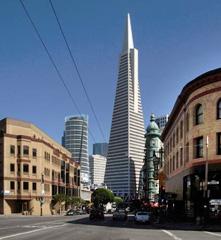
The San Francisco City Planning Commission will be voting March 18th on a proposal to build luxury condos next to the Transamerica building. The developers are two out-of-town outfits that support Republican candidates. And therein lies an interesting tale.


Back in 1984, when dinosaurs roamed the Earth and newspapers made a lot of money and Dianne Feinstein was mayor, San Francisco was host to the Democratic National Convention, which nominated a guy named Walter Mondale (talk about dinosaurs) to run against Ronald Reagan for president. Running the convention, and all the parties and galas, cost a fair amount of cash, and Feinstein hit up all the big civic donor types to chip in.


One of the people atop her list was Walter Shorenstein, the local real-estate tycoon who was a huge donor to Democratic Party candidates (Bill Clinton used to stay at Shorenstein’s house when he was in town). Shorenstein was also trying to get permits to build some new highrises — and some of his buildings were so grossly out of proportion that even Feinstein’s Planning Commission, which loved all things big and highrise, was balking a little.


So Walter calls the mayor and says this: Don’t you dare ask me to donate to your Democratic Convention if your planners are going to jerk me around on my permits. And Feinstein, of course, made sure the Planning Commission backed down and Shorenstein got exactly what he wanted.


We did a big story, and even the Chronicle, which wasn’t big on criticizing Feinstein or Shorenstein, wrote about it, and there was all manner of outrage — as there should have been. It was terribly unseemly, and made the city look bad, and made Feinstein look like she could be pushed around by developers ….


And for all that, at least the special favors were going to a local guy who was donating money to Democrats and to the city’s convention efforts. Hideous as it was, as least San Francisco (and Feinstein, and Mondale) were getting something out of it.


Fast forward to today — when Gavin Newsom’s Planning Commission is considering an awful, out-of-scale project that even architecture magazines don’t like. And who benefits from the special favors? Not a local guy helping out with a local project, but an offshore corporation and a developer from L.A. who is on Meg Whitman’s Finance Committee.


I mean, if we’re going to be whores here in Democratic San Francisco, shouldn’t we at least get paid for it? 


Editorial: Who wins with the Transamerica condos?

4

The developers aren’t offering to build something that will create permanent jobs for local residents. They want a huge favor from San Francisco: they want the city to ignore its own planning rules, ignore its park-shadow ordinance, and hand over a piece of city street, just to make their project more profitable.

EDITORIAL  As the Planning Commission prepares to vote March 18 on a pointless and overly large condominium complex next to the Transamerica Pyramid, let us take a moment to look at who would benefit from the project’s approval.

The project sponsors, Aegon USA and Lowe Enterprises, would get the right to shadow public parkland, turn a city street into a private parking garage, and construct a project far beyond the allowable height for the location. They’d construct 248 luxury condos, which the city doesn’t need and will do nothing for the housing crisis. The developers would also make a lot of money on the deal; that’s why they want spot zoning to double the allowable height. When it comes to these sorts of projects, taller is more profitable.

And the two companies asking for these civic favors aren’t exactly San Francisco outfits that share the city’s values.

Aegon is a giant insurance and finance company based in the Netherlands that bought out the local Transamerica Company in 1999. The money Aegon makes on the deal won’t stay in San Francisco; even Aegon’s American subsidiary doesn’t have a home office here.

The company’s PAC is a major contributor to Republican causes and candidates (although some Democrats get money, too, particularly the likes of Sen. Blanche Lincoln of Arkansas, one of Aegon’s top-dollar friends, who is among the main reasons the Senate won’t pass a public option for health insurance). And over the past 10 years, Aegon PAC has contributed $39,500 to Lifepac, a Columbus, Ohio-based anti-abortion group.

Then there’s Lowe Enterprises, based in Los Angeles. The company’s chairman, Robert Lowe, and his employees were among Arnold Schwarzenegger’s top donors, with a whopping $159,500 in contributions to the Republican governor. Lowe is also a big supporter of Meg Whitman’s campaign for governor, and is on her finance committee.

So here we are in Democratic San Francisco, with a mayor who will be running on a Democratic ticket for statewide office (and a mayor, by the way, who loves to talk about supporting small local business and keeping money in the local economy) preparing to give a huge financial gift to a pair out out-of-town companies that share their wealth with right-wing Republicans.

Of course, it’s no surprise that a real estate developer would support Republican candidates — and it’s no surprise an insurance company would be working against health care reform. And if the city granted or denied building permits based on the politics of the applicant, there’d be serious legal consequences (and there should be). These things ought to be decided on the merits; developers who contribute to Democrats (like the Shorenstein Company) deserve the same scrutiny as the ones who give to Republicans.

But this isn’t a typical development deal. Aegon and Lowe aren’t asking for a permit for a project that meets the current zoning laws. They aren’t offering to build something that will create permanent jobs for local residents. They want a huge favor from San Francisco: they want the city to ignore its own planning rules, ignore its park-shadow ordinance, and hand over a piece of city street, just to make their project more profitable — and to give them more money that can go to opposing health-care reform and opposing abortion rights and electing right-wing Republicans. And they’re offering the city nothing in return.

On the merits, the project richly deserves to be rejected. The only reason to approve it is to grant a civic boon to a bunch of out-of-town corporations that ought to be embarrassed to be asking a favor from San Francisco. And the Planning Commission should be embarrassed to consider granting it.

Who wins with the Transamerica condos?

0

EDITORIAL As the Planning Commission prepares to vote March 18 on a pointless and overly large condominium complex next to the Transamerica Pyramid, let us take a moment to look at who would benefit from the project’s approval.

The project sponsors, Aegon USA and Lowe Enterprises, would get the right to shadow public parkland, turn a city street into a private parking garage, and construct a project far beyond the allowable height for the location. They’d construct 248 luxury condos, which the city doesn’t need and will do nothing for the housing crisis. The developers would also make a lot of money on the deal; that’s why they want spot zoning to double the allowable height. When it comes to these sorts of projects, taller is more profitable.

And the two companies asking for these civic favors aren’t exactly San Francisco outfits that share the city’s values.

Aegon is a giant insurance and finance company based in the Netherlands that bought out the local Transamerica Company in 1999. The money Aegon makes on the deal won’t stay in San Francisco; even Aegon’s American subsidiary doesn’t have a home office here.

The company’s PAC is a major contributor to Republican causes and candidates (although some Democrats get money, too, particularly the likes of Sen. Blanche Lincoln of Arkansas, one of Aegon’s top-dollar friends, who is among the main reasons the Senate won’t pass a public option for health insurance). And over the past 10 years, Aegon PAC has contributed $39,500 to Lifepac, a Columbus, Ohio-based anti-abortion group.

Then there’s Lowe Enterprises, based in Los Angeles. The company’s chairman, Robert Lowe, and his employees were among Arnold Schwarzenegger’s top donors, with a whopping $159,500 in contributions to the Republican governor. Lowe is also a big supporter of Meg Whitman’s campaign for governor, and is on her finance committee.

So here we are in Democratic San Francisco, with a mayor who will be running on a Democratic ticket for statewide office (and a mayor, by the way, who loves to talk about supporting small local business and keeping money in the local economy) preparing to give a huge financial gift to a pair out out-of-town companies that share their wealth with right-wing Republicans.

Of course, it’s no surprise that a real estate developer would support Republican candidates — and it’s no surprise an insurance company would be working against health care reform. And if the city granted or denied building permits based on the politics of the applicant, there’d be serious legal consequences (and there should be). These things ought to be decided on the merits; developers who contribute to Democrats (like the Shorenstein Company) deserve the same scrutiny as the ones who give to Republicans.

But this isn’t a typical development deal. Aegon and Lowe aren’t asking for a permit for a project that meets the current zoning laws. They aren’t offering to build something that will create permanent jobs for local residents. They want a huge favor from San Francisco: they want the city to ignore its own planning rules, ignore its park-shadow ordinance, and hand over a piece of city street, just to make their project more profitable — and to give them more money that can go to opposing health-care reform and opposing abortion rights and electing right-wing Republicans. And they’re offering the city nothing in return.

On the merits, the project richly deserves to be rejected. The only reason to approve it is to grant a civic boon to a bunch of out-of-town corporations that ought to be embarrassed to be asking a favor from San Francisco. And the Planning Commission should be embarrassed to consider granting it.

The battle for the forgotten district

24

sarah@sfbg.com

This November, when voters in District 10 — the largest, sunniest, and most diverse of the city’s 11 supervisorial districts — replace termed out Sup. Sophie Maxwell, they’ll be making a selection that could have pivotal implications for the entire city.

That’s because the next supervisor from southeast San Francisco inherits a district that is home to some of the city’s biggest environmental and public health challenges, as well as the most potential for development that will determine what kind of city San Francisco becomes.

District 10 is where you’ll find the most polluted and most underdeveloped lands in San Francisco, areas that could either be transformed into models of a sustainability or, in the words of Tony Kelly, the president of Potrero Boosters Neighborhood Association, “be turned into a toxic Foster City.”

District 10 is where the slaughterhouses, tanneries, and glue factories set up shop and used the bay as a dumping ground. It’s where the smokestacks of coal and oil fired power plants polluted the air. It’s where the Navy filled the Bay, built a shipyard at Hunters Point and loaded parts of the first atomic bomb onto the USS Indianapolis in 1945.

District 10 is where the bottom fell out of this industrial economy in 1974, when the Navy left, taking with it people’s jobs, pay, and hopes for a home of their own and a better future, particularly for what was then a predominantly African American population.

And District 10 is ground zero for plans that will triple the population and double the number of homes — homes that likely will only be “affordable” to Google executives and retirees from Marin, forever changing the face of San Francisco’s southeast sector. Critics fear that will accelerate what has been a steady exodus of black residents, replaced by megadeveloper Lennar’s vision for a new D10.

It’s against this dark history and difficult present that a wide open field of more than a dozen candidates are vying to replace Maxwell, who came to power in 2000 and has had a mixed voting record in her decade on the board. Sometimes, Maxwell was the eighth vote that let the progressive majority on the Board override Mayor Gavin Newsom’s veto and pass trailblazing legislation. Other times, she was the swing vote that allowed the moderate minority to carry Newsom’s water.

So, in addition to D10’s many internal challenges, this seat could determine the political balance of power on the Board of Supervisors, placing all the more importance on voters in this long-marginalized part of town.


DISTRICT OF DISCONTENT

Eric Smith, a biodiesel activist who has thrown his hat in the D10 ring, says that there is a lot of frustration in the air, and looking at the problems the district is facing, it’s hardly surprising that it has what nearly every candidate agrees is a fractured political culture.

“The Bayview, the Hunters Point Shipyard’s toxic Superfund site, the homicide rate, unemployment, poor public transportation, dwindling services and community resources have made D10 one of the city’s largest melting pots of discontent,” Smith said.

Smith’s words were spoken while the Elections Department was verifying signatures earlier this month on a second failed effort to qualify a petition to recall Maxwell.

Bayview resident and D10 candidate Marie Franklin didn’t support the attempt to recall Maxwell, but she understood it as “a frustration movement.”

“People are sinking in the sand, we’ve already lost so many of them, and they felt Sophie wasn’t doing anything for them,” said Franklin, who praised Maxwell for helping get Franklin’s apartment building complex renovated — a job that was completed 18 months ago, at a cost of $65 million, creating 500 local jobs.

“There are 654 units here, and they were uninhabitable,” Franklin said. “There was black mold, rain falling inside. We had people living worse than Haiti.”

Franklin, who said she is running because she “knows the history,” came here in 1978, when she and her son were living in a car after a fire left them homeless. She said the Bayview was a totally isolated area, barely part of mainstream San Francisco.

“There were no taxis, no services,” she recalled. “Nobody would come here, it was the stigmatized area where no one was accountable to provide services.”

The Bayview — which in some ways is the heart of D-!0 — wasn’t always a black community. But African Americans have been living here for 70 years, dealing with all the racism, denial of services, poverty, and pollution. And it bothers Franklin that 85 percent of the 10,500 homes that Lennar plans to develop won’t be affordable to the elderly, disabled, unemployed and low-income people who currently live in the Bayview.

“We need to preserve the diversity of the community and make sure their issues and information will flow to City Hall,” she said. “You must give the people a handle. If you don’t reach out, they’ll slip. That’s why folks out migrated.

Whoever succeeds Maxwell will be a central player in addressing some very big and dirty issues: the future of the Navy’s radiologically impacted shipyard at Hunters Point, Lennar’s massive redevelopment plan for the Shipyard and Candlestick Point, the polluting power plants, replacement of stinky digesters at the sewage plant, and the SF Hope public lousing rebuild.

There’s also the chance to address violence and crime. James Calloway, a candidate who has long worked in Bay Area schools, told us he believes that education and jobs are part of the keys to rejuvenating the district.

“Job opportunities are not as plentiful in the district,” Calloway said. “When I was a kid, you could walk down Third Street at 2 a.m. Now I wouldn’t walk down it at 9 p.m., and I know the area.”

Calloway is hopeful that the massive redevelopment plan, if done correctly, could start the district’s comeback. “Not a lot of black folks stay here when they have extensive education,” he said. “But it’s not only them. Many were displaced by redevelopment and had no way to go back.”


ELECTION UP FOR GRABS

The largest of the city’s 11 electoral districts, D10 is a huge triangular piece of land in the city’s southeast sector that was used as an industrial dumping zone for decades. Today, the district runs from the Giants stadium at AT&T Park to the 49ers stadium at Candlestick Point and encompasses Mission Bay, Potrero Hill, Dogpatch, India Basin, Portola, Little Hollywood, and Visitacion Valley. It’s also crossed by two freeways that isolate it from the rest of the city, and is home to a large number of crumbling housing projects that are in the process of being rebuilt.

Candidate Ed Donaldson grew up in the projects until he was 10 years old, when the Redevelopment Agency kicked his family out in the 1970s. “We landed on our feet, but others weren’t so lucky,” said Donaldson, who works as a housing counseling director at the San Francisco Housing Development Corporation.

“There is a sense that the Bayview and Visitacion Valley have not been included within the San Francisco family,” Donaldson said. “There is a sense of being forgotten.”

In 2007, Donaldson co-founded the Osiris Coalition to tackle the city’s dormant Certificate of Preference program, in which the Redevelopment Agency issued a document to displaced residents and businesses in the 1960s promising that they could return.

He also tried to rescue some 700 foreclosed properties and recycle them as affordable housing stock. And now he is trying to prevent the city from bulldozing seven SF Hope projects without guaranteeing residents that they have right to remain.

In 2007, Mayor Gavin Newsom and Maxwell convened an African American Outmigration Task Force that didn’t get a public hearing about its findings until August 2008. The timing angered some, who questioned why the report’s findings and implications for urban planning weren’t released before June 2008, when the residents of San Francisco voted for the Lennar-led Proposition G, a proposal to build 10,000 market rate homes at one of San Francisco’s last remaining black communities, which Newsom and Maxwell endorsed.

The taskforce didn’t publish its recommendations until the end of 2009, allegedly because of insider squabbling. Meanwhile, gentrification was going on actively, and many blamed Newsom, and by extension Maxwell, for failing to do anything with the group’s findings as D10 residents continued to suffer from high rates of asthma, cancer, unemployment and an ongoing black exodus.

It wasn’t always this way. In the 1940s, the district’s black population exploded when migrants from the south and World War II veterans came to work at the Hunters Point Naval Shipyard. Some moved to Alice Griffith Public Housing complex, or Double Rock, which was built as military housing in 1962. Others relocated to the Bayview when the Redevelopment Agency took over the Fillmore/Western Addition in the ’60s and ’70s as part of a controversial urban renewal effort.

But when the Navy abandoned the shipyard in 1974, unemployment hit the black community hard. Today, hundreds of the city’s lowest income residents live in Alice Griffith’s crumbling units and endure sewage backups, no heat, cloudy drinking water and leaking ceilings, as they wait for the projects to be rebuilt.

“Generations have been trapped in the silo of public housing and cannot get out, because of lack of opportunity and education, so when we legislate, we need to take that into consideration,” said candidate Malia Cohen, whose grandfather came from Texas to work at the shipyard where he met her grandmother, whose family came from New Orleans.

“My grandfather’s father was a longshoreman. He worked with the infamous Leroy King [a commissioner at the city’s Redevelopment Agency] and he has fantastically vivid stories of racism,” said Cohen, who works for the Federal Reserve Bank of San Francisco, previously served on the executive staff of Mayor Gavin Newsom, and has already raised over $18,000 in the D10 race and qualified for public matching funds.

“My family came here to work hard, they lived on Navy road in the projects, and then they bought a house here. My parents were born here, and we were all public schooled,” Cohen recalled as she took me on a tour of D10 that ended up in Visitacion Valley, an increasingly Chinese-American neighborhood that reflects a district-wide trend.

Census data show that by 2000, Asians were the largest racial group in the district (30 percent), followed by blacks (29 percent), whites (26 percent), and Latinos (19 percent). By 2003, according to the California Urban Issues project, the trend continued. Asians were the largest racial group (32 percent), followed by blacks (27 percent), whites (21 percent) and Latinos (17 percent) of the population.

This means that D10 candidates will have to garner support from more than one ethnic group to win. Over a dozen candidates have already filed papers in the race, but so far there is no clear front-runner.

Also frustrating the prognosticators is that fact that D10 has had the lowest voter turnout in the city, so the winner will also depend on who goes to the polls.

D10 candidate Geoffrea Morris, who is the grand daughter of longtime Bayview activist Charlie Walker, has been knocking on doors and participating in voter registration drives.

“We need new blood,” Morris said

Getting elected will be a complicated equation. Although Bayview’s population was 50 percent African American at the time of the 2000 census, it didn’t turn out the vote. In the 2006 election, only 14,000 of the district’s 37,000 registered voters went to the ballot, and 50 percent were from whiter, richer, and more Asian neighborhoods.

“It’s very important to the future of the city that the ethnicity diversity of the board be maintained and that the African American community have representation,” former Board President and current Democratic Party chair Aaron Peskin told the Guardian.

Maxwell recently told the Guardian that she’s not ready to endorse any D10 candidates yet. “I’m waiting for people to have a better understanding of what this community is, what the common thread running through it is, and how to use rank choice voting,” she told us.

The only candidate who currently holds elected office is BART director Lynette Sweet, who had her answers down pat when we reached her by phone, and even used wording that was eerily similar to Maxwell’s words.

“D10 is a pretty diverse district, but there is only one common thread: the need for economic development,” Sweet told me. “That’s true in Potrero Hill, Portola, Dog Patch and the Bayview. It’s the same mantra: a lot of small businesses need help, and the only way to help them is through economic development. In Potrero Hill it’s about land use. In the Bayview, it’s about the shipyard and better transportation and truancies.”


THE COMMON THREAD

District 10 is ground zero for the Lennar’s $2.2 billion plan to develop 10,500 market rate condos at the Shipyard and Candlestick Point. The plan will allegedly create thousands of jobs and new parks, deliver on an historic community benefits agreement that labor groups claim is so “lawyered up” that the developer can’t renege on its promises.

The package is framed as the one and only way to revitalize the southeast’s formerly vibrant economic engine. Indeed, any time anyone tries to slow down the process—to take time to thoroughly read the draft EIR and see if it adequately addresses the impacts of this massive urban reengineering project — a chorus of “no delays” starts up, either from residents of the housing projects desperate to see their homes rebuilt, or the labor contractors who hope to get jobs.

“It’s as if the city is playing checkers, while Lennar is playing three-dimensional chess,” Eric Smith observed.

Lennar has stated that it will contribute $711 million to finance this massive project. The remainder will be leveraged by Mello-Roos bonds, state taxes based on the use and size of a property and intended to raise money for needed services, and tax increment financing, which creates funding for projects by borrowing against future property tax revenues.

The conceptual plan won Maxwell’s backing but environmental groups are critical of the draft EIR.

During DEIR hearing, environmentalists questioned the wisdom and the cost of filling the Bay to build a bridge over Yosemite Slough, and building condos on Candlestick Point state recreation area, the only open major open space in the district.

But the city’s Planning Department also has 20,000-30,000 units of housing in its pipeline. This means that if all these plans get approved in the next decade, they’d account for 80 percent of residential development citywide. And D10’s population could triple, further skewing the district’s already shifting demographics.

In other words, D10 as we know it could become nothing more than a historic relic in a few years, and the next supervisor will play a key role in deciding whether that happens. SFHDC’s Ed Donaldson warns that any supervisor who does not understand the complexity of the city’s largest district can expect a similar recall backlash in future.

“There is no one homogenous voice in the community,” Donaldson said. “The grass-roots organizing that brought about the recall effort was a result of a changing political structure in the area, but is not yet on par with other districts in town. We still allow our politics to be controlled from downtown.”

Fellow candidate Eric Smith warns that the issues—and politics—are complex.

“People were emotional, angry, and desperate because they feel no one listens to them,” Smith said. “That’s part of the problem here; they would rather have a supervisor go down swinging for them, rather than watch one seemingly side with Lennar, PG&E and the mayor on issues contrary to their interests. That’s the terrible irony and one of the biggest problems in District 10. Folks are so mad, they’re willing to do whatever it takes to make them feel they have a voice in the outcome, even if it’s potentially worse.”

Smith cited the sequence of events that culminated last year in the Navy dissolving the community-based shipyard Restoration Advisory Board (RAB), which for years has reviewed technical documents and commented on the Navy’s clean-up proposals. But in December, the Navy made its official decision to disband the RAB, citing dysfunctional behavior and off-topic discussions that got in the way.

“Some of the same folks who were frustrated by the process, tried to send a signal to the Navy that they weren’t being heard and for all their well-intentioned efforts got the RAB dissolved,” Smith said. “I truly feel for them, it’s absolutely heartbreaking, but at times, they can be their own worst enemy.”

One of the looming issues about the shipyard is that the land has been polluted and needs to be cleaned. The shipyard contains radioactive debris from ships towed to the shipyard, after a 90-foot wave washed over them during an atomic test gone awry. The Navy burned 610,000 gallons of radioactively contaminated ship fuel at the shipyard, and workers showered on the shipyard, raising concerns that radioactive materials got into the drains and sewers. And questions have been raised about radiological tests on animals at the yard.


LEAKS AND FLOODS

It’s not just the shipyard that’s toxic. Even the buildings that were constructed to house workers 50 years ago are a serious mess.

Realtor Diane Wesley Smith, who grew up in public housing projects, took me on a walking tour of Alice Griffith last week to see conditions that tenants will likely have to endure until at least 2014, if the city sticks to its plan to relocate people into a new replacement unit in the same geographical area, if not the exact same site.

What we found was pretty messed up.

“The water sometimes comes out brown and feels like sand. It’s been like that for a year,” one resident said.

“The water is cloudy, the bath tub isn’t working and the sink keeps stopping up,” said another.

A woman named Silvia showed us how the water from the tap in her elderly mother’s kitchen flows out cloudy and then doesn’t settle properly, like foamy beer.

“The roof’s been leaking for years, the sewage backs up, but they just fixed the lights,” Silvia said. A neighbor named Linda was using her oven as a heater.

“The toilet backs up a lot, and my grandson’s been coughing a lot from asthma,” Linda said.

“Roaches is always a problem,” said a woman named Stormi, dressed in black sweats and a black T-shirt that read, “Can’t knock the hustle.”

“They’re trying,” said Stormi, a member of the Alice Griffith Residents Association, as a couple of Housing Authority trucks pulled up to do repairs.

“They promise that you will not have to leave your unit, but if they try to move us down to the waterfront, well, there’s a reason there’s no housing there, and it’s because the land will flood,” Stormi said.

“If we don’t end up at the table, we’ll end up on the menu,” Wesley Smith warned, as she stopped to chat with a group of young men, who were worried they would pushed out of the Alice Griffith rebuild through the criteria being established.

“Fred Blackwell, the executive director of the Redevelopment Agency, assures me that’s not the case, but Alice Griffith is a Housing Authority property, and empty promises have the potential to be great promises provided they are made in writing,” Wesley Smith said as we walked out of the projects and onto the road where a yellow and black sign announced “flooded” next to Candlestick Point park, where Lennar wants to build.

Malia Cohen expressed concern about Hope SF residents, as we drove through the Sunnydale housing project.

“We have to be diligent and mindful that people are not pushed out,” Cohen said, noting the sweeping views at Gleneagles golf course above Sunnydale, and the value of housing for a golf course community. “When public housing gets taken offline, we must work with Redevelopment and the Housing Authority to make sure no one is changing the rules halfway. We have to make sure the talks and walks line up. We need to be equal partners. We cannot be bulldozed by City Hall.”

Geoffrea Morris is a Calworks employee, at the Southeast Community College facility on Oakdale, which was built to mitigate the city’s expansion of the sewage plant in 1987. She cited concerns about the literacy levels of people who live in the 2200 public housing units that cluster D10. “A lot of people in Alice Griffith don’t even know the dates or when it’s going to be reconstructed,” Morris said. “Folks like to be told stuff like that, but the city gives you a stack of papers. Some will read them, but others rely on folks they think are trustworthy. They need stuff in layman’s terms written on one sheet of paper.”

Morris is a fan of the Internet who posted a community survey online, and made sure every housing project got some literature telling people to get informed. She worries about the digital divide in D10:

“A lot of folks don’t have computers and access to important information,” Morris said. “And let’s talk about the way ‘affordable’ is used to trick people.”

Michael Cohen, Newsom’s top economic adviser, recently stated in a memo that over the expected 15-20 year phased build out, Lennar’s Candlestick-Shipyard development would include, “up to 10,500 residential units, about 32 percent of which (3,345) will be offered at below market rates.”

“But 892 units of this ‘affordable category’ will be sold to folks earning $100,000,” Morris said. “So if you subtract 892 units from affordable unit category, you’re back to 25 percent affordable.”

Candidate Kristine Enea, an attorney and a former RAB member, chairs the India Basin Neighborhood Association, which administers a US EPA grant to hire experts to translate the Navy’s cleanup documents into plain English and comment on them She was frustrated by the Navy’s decision to dissolve the RAB.

“The lack of a forum does nothing to bolster the community’s trust in the cleanup or the redevelopment process,” Enea said.

Enea generally supports the Lennar project, but has concerns about whether it will adequately mitigate increased car traffic, or result in commercial development that benefits her neighborhood.

“India basin is a pocket of Hunters Point right along the shoreline,” Enea said. “Right now, we have no shops or restaurants, no ATM, no groceries, nothing beyond one liquor store and a few industrial businesses.

Potrero Boosters president Tony Kelly told us that District 10 residents can think for themselves. “D10 residents don’t need to rely on corporations to solve their problems,” he said.

“Folks in the eastern neighborhoods came up with a better revitalization plan than what the city proposed and community activists managed to close the power plant, after the city said it was impossible,” Kelly recalled.

And there’s no shortage of good ideas.

Kelly suggested that an urban agriculture center could immediately put low-skilled folks to work by erecting greenhouses on unused land. Smith said the industrial zone could be “incredible eco-park made from sustainable sources.

‘D 10 is the dumping ground for everything, including all the city’s waste,” he said. “We could be a shining example, not just for D 10, but the rest of the state.”

The D 10 candidate line up includes Calloway, Cohen, Donaldson, Smith, Enea: civil rights attorney Dewitt Lacy, Morris, Potrero View publisher Steve Moss; District 7 BART director Lynette Sweet, Wesley-Smith. Bill Barnes, who works for Sup. Michela Alioto-Pier, and Linda Richardson, who was appointed to the Human Rights Commission in 2007 by Mayor Newsom, have also expressed interest in the race.

In such a huge field, name identification will play a major role. Sweet is in office, but BART Board is not a high-profile job and won’t give her a huge advantage.

Cohen has a slight edge right now in that she’s raised $18,505, including $500 from former Newsom flak Peter Ragone, making her the first D. 10 candidate to qualify for campaign financing. The oldest of five girls, Cohen recalls how her mother got laid off from her city job as a school-based mental health worker and then rehired, as part of the city’s budget cuts.

“We felt that pinch and the frustrating games that are played out between the leadership and the rank and file,” she said.

Cohen who worked for Newsom in his first term as mayor, but has since left his administration , said she is uncomfortable at being framed as Newsom’s candidate.

“Because I’m not, but I am one of the few candidates who has seen how the mayor and the Board work—and don’t work—together,” she said.

Moss sees the city’s southeast as a “district in transition.” Over coffee at Farley’s in Potrero Hill, he told me that the southeastern neighborhoods could be “launching pads for environmentally sustainable growth.”

“The district’s been in a frozen period for 30 years, But despite the problems, people are deeply committed to and in love with their community.

“This district is the future of San Francisco and its social fabric—the diversity, income –and its problems are leftovers from the city’s industrial age.”


DISTRICT 10, BY THE NUMBERS

Total Acres: 5,650

Average household income: $85,000

Population: 73,000

Registered voters: 37,700

Average housing price: $335,000

Ethnicity (2003 figures): Asian 32%, African American, 27%, white 21%, Hispanic 17%

Development status of land: 18% residential, 38% is commercial, 38% undevelopable

All figures the latest available. Sources: SFGIS, Association of Bay Area Governments, U.S. Census, California Urban Issues Project. Ethnicity and income data is from 2003 and almost certainly has changed.


Transamerica condos: the mystery continues

5


I’m not going to actually suggest that anyone watch all four hours-plus of the Planning Commission hearing last week on the highrise condo tower at 555 Washington. But if you’ve got the time, it’s a fascinating video.


And here’s what’s most interesting: A lot of the discussion revolved around what Commissioner Michael Antonini said was a need to continue the item to a later date. That’s because three of the commissioners — the ones appointed by the Board of Supervisors — were dubious about the project’s environmental impact report, so it would take all four of the mayoral appointees to let the project go forward. But Commissioner Gwyneth Borden couldn’t make the meeting. Antonini went ballistic at one point, and stormed out of the room, saying that it was disrespectful to Borden not to grant a continuance.
 
That struck Commission Vice-President Christina Olague as kind of odd. “I was taken aback by the accusations that we were somehow being insensitive,” she told me. “To my knowledge, Commissioner Borden never made any request for a continuance. There was nothing in writing and she never communicated it to me.”


But then the strangeness started to happen. Commissioner Hisashi Sugaya moved not to certify the environmental impact report on the project. That motion was defeated, 3-2, with Antonini off in a huff somewhere and Borden absent.


Now, normally, in these situations, the president looks for a substitute motion. In this case, a motion to approve the DEIR could have been made, and that, too, would have been defeated. Once the motion to approve went down, the DEIR would be scuttled and the developer would have to start again.


But instead, the commission secretary simply announced that the matter would be continued to March 18. And a week later, I’m still trying to figure out how that was possible.


After all, the commission had decided — openly, in public — NOT to accept a continuance. Then all of a sudden, without a vote of the body, Antonini got his way. The DEIR will be heard again, presumably with the mayor’s fourth vote present.


This is a major project, and I’m not going to argue that it’s fate should hang on an issue of procedure. But nobody has been able to explain to me how a matter gets continued without a vote to continue. The best I can figure is that without any motion on the floor, and no action pending, the secretary had no choice but to continue the matter.


“It all happened so fast,” Olague said. “I want to go back and review everything to see exactly what ocurred.”


Attorney Sue Hestor, who opposes the project, told me that after the lengthy list of serious flaws with the DEIR, which were presented in great detail at the hearing, it will be hard for the commissioners to certify the document. But the pressure from the Mayor’s Office is intense — Michael Yarne, the mayor’s Economic and Workforce Development advisor, was at the meeting, cornering commissioners outside. And four of the members serve at the mayor’s pleasure.


Newsom’s war on the public sector

2


By Calvin Welch

OPINION With the Feb. 10 release of the Controller’s Office economic analysis of Mayor Gavin Newsom’s proposed tax cuts to businesses, combined with its December 2009 analysis of the Newsom administration’s proposed fee cuts to market-rate condo developers, we now have a clear and objective measurement of this administration’s response to the biggest economic collapse in San Francisco since the Great Depression: the mayor hopes to create 4,400 jobs (of the 39,000 jobs lost in San Francisco since the start of the downturn) and 40 to 50 new market-rate condos over the next two years at the cost of $72 million in lost tax revenues.

The plan includes no affordable housing — zero, zip, nada — below-market rate housing for moderate-income San Franciscans. Instead, the developer fees that fund parks, transit, and other critical neighborhood infrastructure projects promised for the Market Street, Octavia Street, and eastern neighborhoods plan areas will be postponed indefinitely.

Those impacts don’t include the loss of public sector jobs and services. The report rather coyly notes that “the potential impacts of the city revenue decline on public services, and indirectly on the economy, is not considered because the city could adjust to that impact in many ways.” The analysis warns: “However, if the stimulus does not directly incentivize job creation, it may not overcome the loss of public sector employment that the subsidy’s revenue would pay for.”

That last point that needs some attention.

Newsom’s “stimulus” is targeted solely at the private sector, with no requirement that the companies slated to get tax breaks and fee reductions actually perform — either through job growth or housing development. It cuts public sector employment and public sector-led infrastructure development — affordable housing, transit lines, parks and playgrounds — when it’s clear that both public employment and infrastructure development would be a direct stimulus to the local economy.

Quick, name the biggest employer in San Francisco. How about the second biggest — or fourth, sixth, or seventh? Well, they’re all in the public sector: the City and County of San Francisco, the University of California, San Francisco, the State of California, the San Francisco Unified School District, and the U.S. Postal Service top the list. As of 2008, some 85,000 jobs in San Francisco — 15 percent of all jobs in the city — were in the public sector. More than half were in education, and the bulk of the rest were in health and human services.

The Newsom administration’s war, and it is a war, on the public sector is economic suicide. We should look at stimulus as saving as many public sector jobs — especially in education and health and human services — as we can and finance as much local infrastructure development as we can afford. That’s real economic stimulus. What Newsom is proposing is the same old, inside-the-box, tried and failed trickle-down that got us in this ditch in the first place.

Calvin Welch has spent the last four decades working for sane economic development policies in San Francisco.

Showdown over a downtown highrise

19

The battle over 555 Washington — the too-big highrise that will house 248 luxury condos that San Francisco doesn’t need — is going on right now, and you can watch it on sfgtv. 

Supporters and opponents have been testifying for more than two hours. Sue Hestor mae one of the key points toward the end of the testimony: Does “new urbanism” say that we have to fight suburban sprawl by putting 400-foot buildings everywhere in San Francisco?

She also pointed out that the building has so much parking that the lines to get in and out of the underground garage will impact the only downtown fire station, a block away.

Already, Planning Commissioner Hisashi Sugaya is arguing that the EIR on the project is completely bogus and invalid (although he carefully avoiding saying he will vote against the project).

This is one of the major development battles of the year, and will demonstrate whether the Planning Commission and Recreation and Park Commission have the independence and integrity to reject a project the mayor and the Chamber of Commerce support.


UPDATE: The hearing ended in the strangest way. After more than two hours of testimony — most of which showed the inadequacy of the EIR, which has to be certified as complete before a final vote on the project itself — Sugaya moved NOT to certify the document. That motion failed, 3-2. At that point, the commission secretary said that the matter would be put off until March 18th.

The strange thing is that if the motion had been in reverse – a motion TO certify — that also would have failed (either way, four yes votes were needed, and two commissioners weren’t there). And then the matter would be over; the EIR would not be certified, and the developer and city planning dept. would have to go back and redo it. In this case, since a motion to reject failed, and there was no motion to accept, it’s not clear where the EIR is.

Aaron Peskin, a foe of the project, told me just now that he doesn’t see how the commission can legally continue the hearing. “There’s nothing to continue,” he said. “There’s no certified EIR.” That, in the end, will be up to the city attorney. I’ll keep you posted. 

The “jobs” shell game

0

Written with Nima Maghame

news@sfbg.com

While many San Francisco city officials have been trying to figure out how to close a projected budget deficit of more than $520 million, Mayor Gavin Newsom has spent the last month trying to make that spending gap even larger by aggressively pushing a variety of business tax cuts that economists say will do little to improve the local economy and could actually make it worse.

Newsom first proposed his so-called “local economic stimulus package” a year ago during his ill-fated run for governor, just as President Barack Obama was pushing his own economic stimulus plan. But unlike the federal government’s $787 billion plan, about a third of which involved tax cuts demanded by conservatives, Newsom proposed to cut local business taxes while also deeply slashing local government spending and laying off hundreds of city workers.

Most economists say that’s a terrible idea. In fact, a report issued at the time by Moody’s Investor Services made it clear that every dollar of direct government spending adds about $1.60 into the economy (or $1.73 if it’s on food stamps, the most stimulative spending government can make), whereas business tax cuts add only about $1 to the economy for every dollar spent.

We clashed with the Mayor’s Office at the time on our Politics blog (see “Mayor Newsom doesn’t understand economics,” 2/13/09), with Newsom’s spokesperson telling us the mayor was relying on the input of City Economist Ted Egan. But when we interviewed Egan about the issue, he agreed that it’s a bad idea to slash government spending to pay for tax cuts.

“We were in no way saying you should cut taxes to stimulate the economy, particularly if it means reducing government spending,” Egan told us then. And when we asked directly whether it’s better for San Francisco’s economy for the city to directly spend a dollar on payroll or to give that dollar away in a private sector tax break, he told us, “The consensus among economists is that most of the time government spending stimulates the economy more.”

The Board of Supervisors basically ignored Newsom’s proposal. But he revived it last month, expanding the proposals with even more private sector subsidies and making them the centerpiece of his Jan. 13 State of the City speech, publicly pushing it since then with a series of public events at businesses located in the city.

And this time — with the local economy still slow, projected city budget deficits bigger than ever, and little serious talk about how the city can bring in more money — it appears the proposals will be the subject of a series of hearings before Board of Supervisors’ committees in the coming weeks.

Newsom’s tax cut proposals include a proposal to waive the 1.5 percent payroll tax (the city’s main business tax) for all new hires; extend and expand the payroll tax exemption for biotech companies (see “Biotech’s bonanza,” p. 12); give small businesses tax credits for their spending on health plans; and allow developers to pass one-third of their affordable housing in-lieu fees onto future homeowners.

Newsom and his Press Secretary Tony Winnicker have spoken euphorically about the proposals, saying they’re desperately needed to spur the local economy. “We believe that enacting these tax incentives, particularly the payroll tax credit for new hires, is one of the single biggest things we can do for economic growth,” Winnicker said.

Despite repeated questions about the economists’ concerns over financing tax cuts with government spending cuts, we couldn’t get them to address the tradeoff directly. “The mayor will support critical public services,” was all Winnicker would say about the deep cuts that Newsom is expected to announce in his June 1 budget.

Sup. John Avalos, who chairs the Board of Supervisors Budget and Finance Committee, expressed more skepticism about the mayor’s proposals. “Do tax breaks have the intended effect of stimulating the economy? As we underfund government services, are we getting a net gain or are we getting something taken away? For the very small businesses in my district, it’s going to be trickle-down economics. It’s very unrelated and unmeasurable in benefit,” he told us.

David Noyola, board aide to President David Chiu, said his boss is supporting the biotech tax credit but reserving judgment on the rest. “It’s going to be a cost-benefit analysis,” Noyola said. “When we’re talking about jobs, we’re talking about public and private sector jobs, always.”

While Egan’s economic analysis predicts tax cuts will encourage some economic growth, even he is circumspect about the good it will do, particularly without finding a way to avoid deep cuts in city spending. “The truth of the matter is that our stimulus efforts are small because the city has relatively small power to affect the local economy,” Egan told us.

That’s the consensus economic opinion. Huge federal spending can help a national economy a little bit, but local economies are just different animals that local governments are largely powerless to really alter, particularly through tax cuts.

“I agree with Egan: city government has little power over the local economy,” Mike Potepan, an urban development economist at San Francisco State University, told the Guardian.

Both economists agree that tying tax cuts to job creation or development stimulus is better than general tax cuts, but that neither is good if it means laying off more city workers.

“Research shows that by cutting taxes you have more business activity where studies show it is likely to effect employment,” Potepan said. “On the other side, you have to think about revenue. Cities are going to have to balance their budgets, which could mean a cut in services.”

Author Greg LeRoy expresses a more critical perspective in his book The Great American Jobs Scam: Corporate Tax Dodging and the Myth of Job Creation (1995, Berrett-Koehler), amassing evidence from economic studies and CEO surveys that corporate tax breaks, even those tied to new job creation, have almost no effect on private companies’ decisions about where to locate and whether to hire.

“How can companies get away with this? Because the system is rigged. Corporations have it down to a science. They have learned how to chant ‘jobs, jobs, jobs’ to win huge corporate tax breaks — and still do whatever they wanted all along,” LeRoy writes. “That’s the Great American Jobs Scam: an intentionally constructed system that enables corporations to exact huge taxpayer subsidies by promising quality jobs — and lets them fail to deliver. The other benefit often promised — higher tax revenues — often proves false as well.”

While proposing to forgo collecting millions of dollars in payroll taxes (the Controller’s Office is still working on a projected total for the tax cut package), the Mayor’s Office also wants to spur development of new housing with a proposal that would delay collection of needed affordable housing money by more than a decade.

After hearing mostly from a large crowd of desperate developers and construction workers during a Jan. 21 hearing on the proposal, the Planning Commission approved the package on a 4-3 vote, with the mayor’s appointees in agreement and the board’s appointees in dissent. It will be considered by the Board of Supervisors Land Use Committee sometime after Feb. 12.

The most controversial part of the fee reform package involves reducing the fee developers pay to support affordable housing by 33 percent, then charging a 1 percent transfer tax to subsequent buyers of those homes. Egan estimates developers would save almost $20,000 per housing unit, and that it would take an average of 16 years for the city to recover that money. But for high-rise luxury condos, the city would eventually recover about $27,000 per unit.

“It’s a classic make-an-investment-now-to-get-more-later strategy,” Michael Yarne, who crafted the policy for the Mayor’s Office of Economic and Workforce Development at Newsom’s direction, told the Guardian.

“If it makes it feasible for projects to be started, then it is worth passing,” Tim Colen, a representative of San Francisco Housing Action, said at the Planning Commission hearing, expressing hope that it will help create desperately needed construction jobs and new market rate housing.

But affordable housing advocates and some progressives criticize the policy as completely backward, saying that affordable housing development is desperately needed now, during these tough economic times, rather than a policy that encourages more market rate housing and bails out bad investments made at the height of the real estate bubble.

“What the city needs to do is directly build affordable housing, for which there is a demand,” affordable housing activist Calvin Welch told us. “The problem is that the banks don’t want to lend these guys money because they know nobody can afford to buy houses at the prices that these guys are demanding.”

Debra Walker, who is running for supervisor from District 6 and voted against the proposal when it came before the Building Inspection Commission (the sole vote on a commission dominated by mayoral appointees), agrees.

“The whole argument is that it stimulates development, but it doesn’t,” Walker said, arguing that the incremental gains (about 25 housing units per year, Egan estimates) will be offset by delayed affordable housing construction. “There would be more economic stimulus by using the fee to build more affordable housing.”

Instead, it simply shifts resources to favored entities: from home owners to developers, in the case of the affordable housing fees, or in the case of the tax credits, from the public to the private sector. But Newsom’s office just doesn’t see it that way.

“The Guardian believes in protecting public sector employees over private sector employees,” was how Winnicker formulated our understanding of what the economists are saying. “Most people don’t work for the city, and if we can support private sector jobs, that adds to sales tax revenues and benefits the economy. Despite a short-term impact of the tax credit, that’s a benefit.”

Adam Lesser contributed to this report


Why Newsom drives me nuts

2

This is the kind of thing that drive me nuts about the Newsom administration.


A few days ago, SF Appeal ran an item on a speech Newsom gave about condo conversions. The mayor wants to let more people turn rental units and tenancy-in-common units into condominiums; that, Newsom argues, will bring more revenue into the city treasury (those conversion permits are expensive).


But there’s a reason why the city limits to 200 the number of units that can be converted in any one year. Turning a rental unit into a condo reduces the number of rentals available, and turning a rent-controlled unit into a condo (or into a TIC and then a condo) cuts into the affordable housing stock.


And a majority of the supervisors, who recognize the impact the mayor’s plan would have on tenants (by making it easier to take rental units off the market), are dubious.


Okay, that’s a difference of opinion. You don’t have to make it personal. And yet, at his press conference, the mayor insisted that


“Half of the members of the board have been beneficiaries of condo conversions, and yet they deny it to other people.”


As the Appeal pointed out, that’s simply untrue.


A majority of Board members own their homes, according to a check of property records: mayoral allies Michela Alioto-Pier, Sean Elsbernd and Carmen Chu all enjoy the benefits of owning and equity, as do Sophie Maxwell and progressive Budget chairman John Avalos.


Eric Mar and David Chiu rent, according to a City Hall source. Chris Daly lives in a condo, but “my condo has always been a condo,” according to the supervisor (and according to the Assessor-Recorder’s Office, Daly at least bought his condo as a condo and not a tenancy-in-common or conversion).


By all accounts, progressive Ross Mirkarimi is on the condominium-conversion waitlist (an older news report says Ross owns a TIC and is on the conversion list; we’ll check in with him to confirm, he is at this moment still in committee). Mirkarimi and Bevan Dufty would be the two Board members conflicted-out of any votes on condo-conversions; Dufty went from a condo to a TIC after his daughter was born.


“And nobody was evicted,” the Bev told us today.


Okay, as I see it only one supervisor is even in a position to benefit from the condo conversion law. So I asked Tony Winnicker, the mayor’s press secretary, whether Newsom had been misquoted. Apparently not. So why did ne make an innacurate statement that insulted half the members of the board?


Winnicker:


His comments came in the context of the polarized politics of San Francisco which pit tenants vs homeowners to the benefit of no one. He was speaking that many Boardmembers enjoy the benefits of homeownership and that opposing the condo conversion proposal denies those benefits to others who are already living in TICs and displacing no one through condo conversion.


But there’s a big distinction between what Winnicker is talking about and what Newsom actually said. It’s entirely possible to be a homeowner in this city without evicting anyone and without taking a rental unit off the market. That’s what most of the homeowning board members have done.


As for TICs “displacing no one,” that’s wrong, too. The number one cause of no-fault evictions in this city is the use of the Ellis Act to clear the tenants out of a building to create a TIC. The only thing holding the TIC epidemic in check is the fact that the TIC ownership model is complex and a bit tricky. The minute you can convert those TICs into condos, you open the floodgates for a lot more of them — and that means a lot more evictions.


Newsom can make the case for condo conversions just fine without making factually inaccurate statements that insult the supervisors. Instead he pulls this shit. And then he complains about the supervisors not wanting to work with him


Drives me nuts.


Stop the Transamerica condo high-rise!

0

The San Francisco Planning Commission and Recreation and Park Commission will hold a special joint meeting Jan. 21 to decide whether to allow the owner of the Transamerica Building to construct a 400-foot condo tower next door that would violate so many elements of the city’s Planning Code and rational planning policy that it’s almost impossible to list them all.

The building, which would contain 248 luxury housing units — something the city doesn’t need — would cast shadows on two city parks, make downtown traffic and air quality much worse (thanks to a four-level underground parking garage), and require special spot zoning to double the allowable height from 200 feet to 400 feet.

There is no conceivable policy reason to approve this abomination. Even so, Mayor Newsom’s Planning Department is pushing it, and four of the seven planning commissioners are Newsom appointees. If the mayor’s staff and appointees allow this project to go forward, it will be a lasting legacy of shame for his administration.

Aegon Corp. wants to build housing next to its landmark property, and nothing in the Planning Code discourages that. In fact, city planners are pushing for more housing downtown, close to workplaces. In theory, that should cut down on transportation needs and car use. And of course, just about everyone in town believes that San Francisco needs more housing.

In practice, the program hasn’t worked out. The new housing units built in downtown San Francisco have been purchased to a large extent by commuters who travel to Silicon Valley, by retirees who aren’t working anyway, by wealthy people who want a pied-à-terre in San Francisco and by real-estate speculators looking for a quick buck.

The high-end condos haven’t done anything to relieve pressure on the housing market and don’t meet the city’s urgent need for more housing for middle-class and low-income families. If anything, the luxury condo market downtown is overbuilt right now.

Still, if Aegon wanted to build a 200-foot tower within existing zoning parameters, the company could probably get away with it.

But that’s now what’s on the table. The 555 Washington St. building would be double the allowable height — and would violate Proposition K, the 1984 law that bars the construction of towers casting shadows on public parks. City planners acknowledge that both Sue Bierman Plaza and Maritime Park would lose sunshine if the high-rise is built.

In exchange, the developer has offered to give the city a new park. But that proposal is a scam, too. There’s already open space on the site — Redwood Park. That’s considered private property, to be used by Transamerica Building residents — but it exists only because the city mandated it in 1971 as part of the trade-off for constructing the Pyramid, which violated city height and bulk rules at the time.

The new park would include an additional 4,000 square feet, but also requires that the city sell Aegon part of a city street, Mark Twain Alley. Aegon will then use the air rights above that street to increase the bulk of the building, and construct a parking garage below.

So the city gives up public property to gain a slight addition to a park that the city forced the developer to construct in the first place — and in exchange lets the developer block the sun on two existing parks. This is considered a fair tradeoff?

In the wake of the construction of the Pyramid, the city adopted zoning rules that drove high-rises south of Market Street and imposed straight height limits on the edge of Chinatown and North Beach. The 555 Washington project would be a major, precedent-setting step backward.

And what’s the endgame here? What does the city get for bestowing a developer with a huge basket of favors? An unattractive building that will offer housing for a small number of very rich people.

The Planning Commission and Rec-Park Commission must both sign off on any proposal that casts shadows on a park. And while planning staffers have come up with some remarkably convoluted arguments (there weren’t good computer programs in 1984, and now we can track the sun better so it’s okay to rewrite the rules to allow more shade), the sunlight issue alone ought to derail this building. But there’s so much wrong with the proposal that any one of half-dozen issues should be enough to ensure that it never gets beyond the drawing board.

Thursday’s vote will be a test for Newsom and his commissioners. If they allow 555 Washington to proceed, it will be a sign that city planning is entirely in the hands of private developers and that any sense of reason has been lost in the process.

Clouds and mirrors

1

Carl Fisher turned a mosquito-plagued, malarial sandbar into Miami Beach, “The Sun and Fun Capital of The World,” in less than a decade — dredging up sea bottom to build the island paradise, an all-American Las Vegas-by-the- Sea, where Frank Sinatra and Jackie Gleason partied and Richard Nixon received two Republican nominations for president. Art Deco hotels lined the beach, bold as Cadillacs, defiant in the path of hurricanes, their confident Modern lines projecting postwar American power. Morris Lapidus, the architect of the Fontainebleau Hotel, understood that the skin-deep city Fisher conjured out of neon and sunshine was a stage for the leisure fantasies of the ruling class. When his iconic Collins Avenue hotel opened in 1954, Lapidus said he wanted to design a place “where when (people) walk in, they do feel ‘This is what I’ve dreamed of, this is what we saw in the movies.'”

For many years in Miami, that movie was Scarface, as Colombian drug lords shot it out in mall parking lots. A shiny new downtown skyline of banks and condos emerged during a recession economy from the laundered proceeds of drug smuggling. Today the cocaine cowboys have all died, or done their time and moved on. Their descendents are selling art.

Art Basel came to Miami Beach in 2002, and the rise of Miami as an international art world capital neatly coincided with the glory days of the housing bubble. According to Peter Zalewski of Condovulture.com, around 23,000 new condo units were built in and around downtown Miami during the Art Basel era — twice the amount built in the 40 previous years. The success of the international art exhibition has inspired a fever dream among city leaders, in which Miami’s skyline and neighborhoods are radically transformed by art world-related real estate development.

Cesar Pelli’s $461 million, 570,000-square-foot Carnival Center for the Performing Arts opened in 2006 in a moribund section of downtown known for its proximity to the faded 1970s-era mall, the Omni. That same year, the Miami Art Museum (MAM) hired as its new director Terence Riley, the former curator for architecture and design at the New York Museum of Modern Art. Heralded in his new city as “the Robert Moses of the new Miami millennium,” Riley initiated the development of Museum Park. This 29-acre complex would be home to new buildings for the Miami Art Museum and the Miami Museum of Science and Planetarium. It was to be built on the site of Miami’s last public waterfront park, Bicentennial Park, long a sort-of autonomous zone for Miami’s homeless residents. While the new MAM is not scheduled for completion until 2013, by 2007, a 50-floor, 200-unit luxury condo development, 10 Museum Park, had already been finished across the street.

Art Basel Miami Beach brings an estimated 40,000 people to Miami each year to look at art, party, and more important, look at celebrities as they look at art and party. The art fair, once dubbed “the planet’s highest concentration of wealth and talent,” generates an estimated $500 million in art sales each year. Yet while Miami leaders seek to present to the world Basel’s image of wealth and glamour, the iconic image of South Florida today has abruptly become the newly built and entirely empty condo development. Zalewski estimates that 40% of the condo units built since 2003 remain unsold. Florida’s foreclosure rate is the second-highest in the nation, and for the first time since World War II, people are leaving Florida faster than they are arriving. Just months before this year’s Art Basel Miami Beach, a New York Times cover story told of the lone occupant in a towering Broward County condo that had gone entirely into foreclosure. As the fair approached, I wondered: can art really save a city like Miami? Or is its reliance on art world money part of the city’s collapse?

ATLANTIS CITY

At this year’s Art Basel, the glitz was, of course, played down, what with the global economic collapse and Art Basel’s main corporate sponsor, top Swiss bank UBS, now the subject of an FBI probe on charges of helping billionaire clients evade taxes. In the weeks before the opening of the fair, it was announced that the legendary UBS free caviar tent would not be open this year. One could not help but notice that the ice sculptures on the beach itself, hallmarks of the recent boom, were gone, already as fabled as the lost city of Atlantis.

Still, the epic “Arts and Power” issue of Miami magazine hit the stands on time, luxurious full-color spreads on oversize glossy pages. Press from all over the world wrote a month’s worth of previews leading up to the event, and on the day of the VIP vernissage, TV news reporters from all continents were there to dutifully record the arrivals of billionaires, celebrities, and fashion models at the Miami Beach Convention Center. As Art Basel Miami Beach 2009 opened, the floor of the convention center was eerily quiet, with hardly a sound except a hushed, determined whisper a bit like paper money being rubbed together. It seemed to me like everyone was doing her or his part, as if the whole art fair was a sort of performance art piece demonstrating the vigor of the free market in dark times.

This murmur ceased completely, and the air filled with the muted clicking of camera shutters, as Sylvester Stallone passed me on the convention floor. Stallone, too, was stoic, his expression hidden by dark sunglasses at mid-day. He stopped next to me and began to talk to TV news cameras about his own paintings on display, presented by the gallery Gmurzynska. Close-up and in person, clumps of the actor’s face, now just inches from mine, seemed to lay inert and dead like the unfortunate globs of oil paint he had arranged on his own canvasses. Pieces of puffy cheek hung limp and jowly under taut eyebrow skin, Botox and facelifts fighting age for control. For a paparazzi flashbulb moment, I thought I saw in Rambo’s sagging face a metaphor for the doomed efforts to prop up a whole failing way of life.

The Miami Beach Convention Center’s 500,000 square feet had been blocked out into booths and concourses that comprised a pseudo-city of art. As a city, it most resembled some parts of the new Manhattan — crowded yet curiously hollowed out and lifeless, under relentless surveillance, full of nostalgia for its former, more vital self. Groundbreaking art that once had the power to shock, move, or startle — Rauschenberg’s collages, Richard Prince’s Marlboro men, Barbara Krueger’s text block barrages — were presented here as high-priced real estate. In the city of art, time stood still; Matisse, de Kooning, and Duchamp had all retired to the same street. A sailor portrayed in a 2009 life-size portrait by David Hockney seemed to gaze wistfully across the hall toward a 1981 silk-screened print of a dollar sign by Andy Warhol. The life-size portraits by Kehinde Wiley felt just like the city in summer, how the radio of every passing car seems to be blasting the same song. A print of a photo of Warhol and Basquiat together in SoHo stood catty-corner to a 1985 Warhol paining of the text, “Someone Wants To Buy Your Apartment Building.”

I wondered if this city of art offered clues as to the kind of city that developers imagined Miami might become.

ART MAUL

Across Biscayne Bay, away from Miami Beach in the city of Miami, the fever dream of art was turning a down-and-out neighborhood in the poorest city in America into an outdoor art mall. Fifteen satellite art fairs and 60 galleries staged simultaneous exhibitions in Miami during the week of Art Basel Miami Beach. Virtually all this art was crammed into about 80 square blocks north of downtown Miami, bisected by North Miami Avenue. The area included Miami’s African American ghetto, Overtown, the warehouse district of the low rent Puerto Rican neighborhood, Wynwood, and the resurgent Miami Design District up to its shifting borders with Little Haiti.

Walking up North Miami Avenue and Northwest Second Avenue the night before the exhibitions began, I could see the usually moribund main drags transforming before my eyes. Warehouses vacant the other 50 weeks of the year were hastily being turned into galleries or party spaces. Solely for Art Basel week, the Lower East Side hipster bar Max Fish had built an exact replica of its Ludlow Street digs in an Overtown storefront. In Wynwood, the paint still appeared wet on a fresh layer of murals and graffiti running up and down the streets.

The modern-day Carl Fisher most perhaps most responsible for dredging this new art world Miami up from the bottom of the sea is Craig Robins. “I transformed the image of my city from Scarface into Art Deco,” is how Robins put it when I talked to him in the Design District offices of his development firm, Dacra. Widely considered to be the person who brought Art Basel to Miami Beach, Robins is, at a youthful 46, the man who perhaps more than anyone embodies the values and tastes of a new Miami where art and real estate have become as inseparable as fun and sun. Robins takes art seriously — he is a major collector of artists like John Baldessari, Elizabeth Peyton, Rirkrit Tiravanija, and Richard Tuttle — and he made his name and fortune by restoring the derelict Art Deco motels on his native Miami Beach during the early 1990s into the international high-end tourist destination now known as South Beach. Today Robins is one of the principal owners of the warehouses in the Miami Design District and Wynwood.

With his casual dress, shaved head, and stylish Euro glasses, Robins could easily fit in as one of the German tourists who flock to the discos on the South Beach that he developed. His offices offer a rotating display of the works of art in his collection. Around the time of Art Basel, his staff had installed many works by the SoCal conceptual artist John Baldessari, in honor of Baldessari’s upcoming career retrospective at the Tate Gallery in London. Robins was friendly and projected a relaxed cool; when I’d met him on the convention center floor and asked for an interview, he gave me an affectionate shoulder squeeze and said, “Call my assistant and we’ll hang, OK?” A few days later, he grinned somewhat impishly when I sat down said, “I notice you sat in the Martin Bas chair,” as if it was a Rorschach test. Honestly, it was the only piece of furniture in the design collector’s office that looked dependably functional.

Not surprisingly, Robins was adept at explaining the art theory behind his development projects, and the ways Dacra is bringing art, design, and real estate together “to make Miami a brand name.” He said he learned from the successful preservation of historic buildings in his South Beach projects that consumers were starting to reject the cookie-cutter commodities of the mall and “starting to value unique experiences” made from “a combination of permanent and temporary things.” On the streets of the Design District and Wynwood, Robins sought to bring together restaurants, fashion showrooms, and high-end retail stores, surrounded by parties, international art shows, and public art. “This gives a richness to the experience of Miami,” Robins said. “That is the content that Miami is evolving toward right now.” I thought of Lapidus, the Godfather of Art Deco, and his quote about the Fontainebleau: In Wynwood, Robins wanted to turn not just a hotel lobby but an entire neighborhood into a place where visitors feel they have entered a movie.

Robins grew more excited as he discussed his vision. “With my work at Dacra, I build communities,” he told me. “When we brought Art Basel here, Miami immediately became recognized as a world-class city.”

Others are skeptical. “Miami will always be an attractive place for people to visit in December, but you can’t graft culture onto a city,” says Alan Farago of the widely read blog Eye On Miami. “It’s a mistaken belief that art can be a totem or a symbol of a great city without there being any substance. Miami will continue to be a pretender because there is no investment in local culture beyond building massive edifices like the Performing Arts Center.”

Indeed, the center — now renamed the Adrienne Arsht Performing Arts Center, in honor of a wealthy benefactor — has become perhaps another in a long line of tragicomic failed improvements for the area. Bunker-like, it has been likened by some architecture critics to an upside-down Jacuzzi. Though 20 years in the making and long heralded by boosters as a building that would instantly make Miami a “world-class city,” the center has operated at a deficit and suffered from poor attendance since its opening. The future of Museum Park suddenly turned cloudy a month before the opening of this year’s Art Basel, when Miami Art Museum director Terrence Riley unexpectedly resigned days after unveiling the architects Herzog and de Meuron’s final model for the new buildings. Riley sited a desire to return to private practice as an architect, but online speculation had it that he already knew cash-strapped Miami would ultimately be unable to raise the money to build the museum.

Farago wonders what would change if the city did have the money. “In Miami on one hand, we have public school teachers using their own salaries to buy art supplies for their students,” he says. “Then we have these one-off art events and a performing arts center that brings us road shows of Rent, Annie, and 101 Dalmatians.”

When I asked Robins what lasting benefits Art Basel provided to the community, he cited a roster of new restaurants opened by star chefs and fashion showrooms. “It encourages people to come down here year-round,” he said. It was clear that Robins was discussing amenities designed for tourists, or for a speculative community of future residents who might be enticed to come to Miami.

I suggested that there were actually two different communities in Wynwood with potentially opposing interests. I told Robins I’d attended a community meeting held by the activist groups Power University and the Miami Workers Center. There, Wynwood residents discussed how their rents had doubled, how the city continued to neglect the facilities at Roberto Clemente Park, and how the increased presence of police escorting the art patrons to the new galleries had made them feel like they didn’t belong in their own neighborhood.

Robins, who had been very loose and calm during the first 45 minutes of our talk, became visibly upset. He launched into a sustained rant. “Well, look, active communities are a good thing,” he said, shaking his head. “But just because a community is active doesn’t mean it is rational. You go and sit in these meetings and half the people are nuts. Half are just there because they are miserable people and they have some soapbox to go and rant about all these things that they think they have some entitlement to attack government about when they never do anything themselves for anyone. I find that 20 percent of these people are totally irrational, mean-spirited people who would never agree with anyone about anything good.”

“What kind of people do you mean?” I asked.

“People who feel disenfranchised! They’re very angry. They have psychological problems and they want a forum to vent. I’m not implying we should stifle democracy — I’m a big believer in it! I’m saying these people should not be taken seriously by enlightened people!”

Robins rose to look at a clock on his desk. Not surprisingly, our time was up. I politely excused myself to the restroom. When I returned it was like no tantrum had ever happened. Robins’ impish grin even returned as I asked him to pose for a photo in front of one of his Baldessari prints. I had him stand in front of Cigar Smoke to Match Clouds That are Different (By Sight/ First Version), a 1972-3 triptych of photos. As the artist looks into a mirror at clouds over his shoulder in the sky, he blows out a mouthful of twisting cigar smoke, trying to match their elusive shape in the air.

GIMME DANGER

Out on the streets of Wynwood, it was still mostly quiet, expectant, but the scene at David Lynch’s art opening gave one a sense of what the coming weekend would be like. Lynch was presenting photos from a book of staged stills he is releasing with a CD of music by Danger Mouse. Hundreds of hipsters, mostly locals, guzzled free booze and gawked when new Miami resident Iggy Pop showed up, shirtless as usual, in a Miami Vice-style blue blazer. As I watched the Godfather of Punk pose for pictures with his arm around Danger Mouse, I thought of the city of art, the Jackson Pollacks and Donald Judds together at last, on the convention center floor. I had the eerie feeling that the Internet had come to life.

I left the opening and walked at random through the streets of Wynwood at 2:00 a.m. While looking at murals and thinking about the changes Art Basel had wrought, I unexpectedly came upon a small street party of people I knew. The side street intersection was lit up like a stage with an enormous floodlight. Street artist SWOON stood high on a scissor lift, painting a mural on a warehouse wall, while below a couple of kids dressed like old tramps wrestled with a big, brown stuffed bear.

The bear split open, and thousands of tiny white particles of stuffing poured out into a warm Miami breeze, swirling high into the air and reflecting the glow from the floodlight. I ran to join the kids, who were now playing and laughing in the sudden snowstorm. A guy I recognized from Brooklyn rode by on a tall bike. Bay Area artist Monica Canilao went careening by on a scooter with no helmet. A cop drove by and smiled and waved. Guys from Overtown with cornrows and gold teeth were laying out a spread of huge chicken legs on a flaming grill. Some punk kids from Brooklyn sat on the curb, drinking beer. A girl in the group laid her head on a boy’s shoulder as they all watched SWOON work.

For a second, I flashed back to the Stallone scene earlier in the day, back on the convention floor. Here, in this intersection, I had found something living and breathing. This could be the real city of art. But I also knew the SWOON mural was commissioned by Jeffrey Deitch. I stood and watched the painting and the dancing and laughing and eating in the fake December snowstorm and contemplated what the city would be like if we all had the free time, resources, and permission to take to the streets and transform the city any way we pleased. Was this a window to a different world where anything might be possible?

Or was it just art?

The second half of this essay will run in the Jan. 27 Guardian. *


Zmudowski Beach State Park

0

Rating:C

Rimmed by farm fields, marshy roads with potholes, and some homes, Zmudowski State Beach was slated for closure as early as this month, as part of the state’s austerity moves. Now, though, state officials expect a supporting organization, such as a nonprofit or foundation, will be found to help pay for maintenance and other costs.Why was the site on the list of parks to be padlocked?Speculates March visitor Lucy D’Mot on her blog:”I have to guess that Zmudowski State Beach is not well attended.No doubt the poor roads contribute to its lack of tourists.” An official told me, though, that even if it closes, die-hard users will probably be able to sneak in and keep sunbathing on the sand.

Occasional nudist activity is still reported at the beach, in the north end of the county, south of the Pajaro River, where ranger patrols and development of homes around the site have combined to make sans suit sunbathing mostly a thing of the past.Because of its remote location, the area is still sometimes called Hidden Beach.

Legal status:

State beach property.

How to find it:

Follow Struve Road from Highway 1, just north of Moss Landing, to its intersection with Giberson Road. Then take Giberson to its end, at the state beach parking lot. Hike to the north tip of the beach via the dirt access road that starts at the small lot. The beach path runs parallel to the shore, but nude sunbathers usually gather behind the sand dunes.

The beach:

No longer “hidden” (see above), the site is now ringed by houses and condos.

The crowd:

Mostly a family beach.

Problems:

Pending possible state park closure and/or reduced maintenance; rangers (keep your swimsuit on when rangers or clothed beachgoers are in the area); cold water; wind; fog; riptides.

Rio Del Mar Beach

0

Rating: C

While nudity isn’t officially permitted at a string of four beaches that begin at Rio Del Mar, near Aptos, and continue through southern Santa Cruz County and northern Monterey County, it occurs anyway, usually in the sand dunes, when both families and rangers are not present. If you see a ranger or lifeguard approaching, put on your suit right away. “Most of the nudists are gay men, though straight folks also sunbathe without swimsuits at Rio Del Mar,” says a reader. “The state police who patrol Manresa do drive beyond their assigned borders and down to this beach, but they’ve never bothered me.” 

Legal status: Unknown.

How to find it:

Look for the beach .8 of a mile north of Manresa State Beach and 2.1 miles south of Aptos Beach State Park, just south of Aptos. Take Highway 1 to the Rio del Mar exit. Go all the way to the coast (about a mile or two), then turn left (south) on Sumner Avenue. Follow Sumner, continuing past Seascape Boulevard, for about two miles until it ends. The nude beach is just south of the Seascape condominiums and inn. Park near the end of the road, walk toward the condos, cross over the train tracks, and follow a nearby wooden staircase down to a path leading through greenery to the sand. Or, at the end of the road, look for a security fence over a gully and take either of the well-worn trails on each side of the fence to the dunes near the gully. The nude area is about 800 feet south of where you’ll enter the beach.

The beach:

Sand, dunes, and grassy knolls. Nudists usually stick to the dune areas.

The crowd:

“I feel very safe here because of the family beaches on both sides and also because of the people walking by regularly,” says a visitor.

Problems:

Unknown legal status; rangers; proximity to condos.

San Gregorio

1

Rating: A

Still the USA’s longest continually used nude beach, San Gregorio even has its own website and live web cam. The privately run operation, which is located next to San Gregorio State Beach, recently began its 46th year of serving the clothing-optional community.

The beach often draws a large gay crowd, along with some nude and suited straight couples, singles, and families.

Nude use of San Gregorio began before 1966. Air Force veteran and San Francisco State College senior Darrell Tarver, 28, formed, with a “Committee For Free Beaches” with some of his friends to leaflet college campuses in San Francisco and Berkeley about the “free beach” in San Gregorio. Word spread rapidly. Soon, there were 500 nudists swarming onto the shore nearly every Sunday. “This is the best incentive I have to stay slim,” a UC Berkeley coed told a Time magazine reporter.

But problems soon cropped up. Gawkers began taking up positions, while small planes buzzed the beach. A father of a 14 year old girl tried to press charges after claiming that his daughter had been pressured into disrobing in public at the beach. The county district attorney’s office dropped the case after deciding that nothing lewd or obscene had taken place. But instead of dissuading visitors from disrobing, the news sent even more nudists onto the sand. Attempts to keep the hordes of naked people away by closing the access roads proved futile because they walked around the south end of the beach at low tide or even formed human chains down some dangerous cliff trails.

Today, the human chains are long gone and have been replaced by a privately managed attraction. “It’s a really romantic spot,” says a single woman. But make no mistake, the college coeds have mostly left. In fact, San Gregorio has, over the years, become mostly a gay hangout and pickup spot. Want to give it a try? First-timers are sometimes annoyed (as I was, years ago) by the driftwood structures on the sandy slope leading down to the beach, which are used by some visitors as “sex condos.” However, fans of the beach savor San Gregorio’s stunning scenery. It has “awesome natural beauty,” says regular visitor Bob Wood. Attractions of the 120 acre site include two miles of soft sand and tide pools to explore, as well as a lagoon, lava tube, and, if you look closely enough on the cliffs, the remains of an old railroad line.

Some 49 percent of over 1,000 persons surveyed at about.com advised “don’t go there,” 38% called it excellent, and 10% rated it “good, but with a few flaws.”

The beach is open weekends 9 a.m. until sunset on weekends and weekdays from 10 a.m.-7 p.m., with the last users admitted at 5 p.m. Weather report hotline: 415-765-7697.

Legal status:

Private property, leased land.

How to find it:

From San Francisco, drive south on Highway 1, past Half Moon Bay, and, between mileposts 18 and 19, look on the right side of the road for telephone call box number SM 001 0195, at the intersection of Highway 1 and Stage Road, and near an iron gate with trees on either side. From there, expect a drive of 1.1 miles to the entrance. At the Junction 84 highway sign, the beach’s driveway is just .1 mile away. Turn into a gravel driveway, passing through the iron gate mentioned above, which says 119429 on the gatepost. Drive past a grassy field to the parking lot, where you’ll be asked to pay an entrance fee. Take the long path from the lot to the sand; everything north of the trail’s end is clothing-optional. The beach is also accessible from the San Gregorio State Beach parking area to the south; from there, hike about a half-mile north. Take the dirt road past the big white gate with the Toll Road sign to the parking lot.

The beach:

You’ll find caves, cliffs, driftwood structures (common practice is to hang a t-shirt over a pole to indicate a structure is occupied), and a beach full of clean, rolling sand. Pets are OK (though dogs are not allowed on weekends or holidays); fires, cameras, and overnight camping are banned. Swimming is not recommended. There are chemical toilets in the parking lot.

The crowd:

On the warmest days 50 to 200 visitors may be spread thinly along the sprawling beach, which is so large it never feels crowded. “The wide open spaces give one the feeling of being very alone,” a reader named Paul says. “I was surprised, though, that even on warm weekends there were almost no heterosexuals in sight.” On the south end of the beach, there are sometimes dozens of straight couples and families, both naked and clothed. Gay men tend to hang out on the north side.

Problems:

Entrance fee, wind, riptides, cold water, summer fog, sex on the beach or in driftwood “condos,” not much of a social atmosphere.

Editorial: The mayor’s race starts now

2

Ross and Jeff and any other progressive candidates need to decide soon if they are serious about running for mayor and either announce that they are running or step out of the way so someone else can step forward

EDITORIAL Back in 2007, when no leading progressive stepped in to run against Gavin Newsom, Sup. Chris Daly called a convention in the hope that someone would come forward and take up the challenge. All the major potential candidates showed up and spoke, but none announced a campaign.

Let’s not go there again.

We’re two years into Newsom’s second term, and the city’s a mess. After absorbing a round of brutal cuts last year, the budget’s still half a billion dollars out of whack. The mayor’s only answer at this point is to cut more (then raffle off to landlords the right to get rich by evicting tenants and turning apartments into condos). The Newsom agenda hasn’t created jobs or addressed the housing crisis or resolved the unfairness of the tax code or taken even the first steps toward energy self-sufficiency. Over the past year, he’s been largely inaccessible and hostile to the press, a mayor who won’t even tell the public where he is and what he does all day.

A candidate who wants to change the direction at City Hall should have no problem getting political traction in 2011. But the progressives are still floundering. And while the race is two years away, the more centrist candidates are already out the door. Sup. Bevan Dufty has announced he’s in the race, and state Sen. Leland Yee might as well have announced since everyone knows he’s running. Same for City Attorney Dennis Herrera. And at a certain point — in the not-too-distant future — those candidates will be starting to line up endorsers and making promises to major financial backers and constituency groups, which aren’t going to wait around forever for the progressives to settle on someone willing to make the immense effort to mount a serious campaign for mayor.

So the potential candidates — starting with Sup. Ross Mirkarimi and Public Defender Jeff Adachi — need to decide, soon, whether they’re serious about this or not, and either announce that they’re running or step out of the way so someone else can step forward.

With public financing, a candidate in San Francisco doesn’t have to be as well-heeled as Newsom was his first time around. It won’t take $6 million in contributions to win. But a progressive who wants to be the next mayor needs to demonstrate he or she can do a few key things, including:

<\!s>Motivate and unite the base. Labor (or at least the progressive unions), the tenants, the left wing of the queer community (represented to a great extent by the Harvey Milk LGBT club), the environmentalists, and the progressive elected officials have to be fairly consistent in backing a candidate or downtown’s money will carry the day. So Mirkarimi and Adachi (and anyone else who’s interested) ought to be making the rounds, now. If that critical mass isn’t there, the campaign isn’t going to work.

<\!s>Develop and promote a signature issue. Newsom won in part because he came up with the catchy “care not cash” initiative. Voters frustrated with years of failed homeless policies (and an incumbent, Willie Brown, who said the problem could never be solved) were willing to try something new (however bogus it turned out to be). Nobody’s developed a populist way to approach city finance. Nobody’s got a workable housing or jobs plan. What’s the central issue, or set of issues, that’s going to define the next progressive mayoral campaign?

<\!s>Put together a central brain trust. This city’s full of smart progressives who have experience and ideas and can help put together a winning platform and campaign strategy. A good candidate will have them on board, early.

<\!s>Herrera, Yee, Dufty, and others who might run (including Assessor-Recorder Phil Ting) are already out there looking for progressive supporters and allies, but none has yet offered an agenda the city’s left can support. Dufty pissed off the tenants by refusing to back stronger eviction protections. Herrera pissed off immigrant advocates by refusing to be as aggressive in supporting the city’s sanctuary law as he was in defending same-sex marriage (and because he hasn’t officially announced yet, he’s still not taking stands on political issues). Yee tried to sell off the Cow Palace. Ting has taken some great initiatives (forcing the Catholic Church to pay its fair share of property transfer taxes), but hasn’t developed or spoken out on the broader issues of city revenue. More of those candidates have been leaders in the public power movement.

It would be inexcusable if the progressives, who control the Board of Supervisors, are forced to pick a mayoral candidate by default. It’s time to end the speculation and dancing and find a candidate who can carry the progressive standard in 2011.

Tenant Torment

0

Mayor Gavin Newsom’s mid-December decision to announce — on YouTube — that he planned to introduce legislation to protect San Francisco renters from foreclosure-related evictions has outraged tenants rights organizations.

They say Newsom is trying to undermine a much stronger bill by Sup. John Avalos that would give thousands of tenants in newer buildings the same protections as tenants in buildings constructed before 1979.

The mayor’s bill is a classic piece of politics — stealing some of the limelight and giving political cover to mayoral candidate Sup. Bevan Dufty, who voted against Avalos’ package but doesn’t want to be seen as anti-tenant.

This way Newsom and Dufty can enthusiastically support a bill that won’t offend as many landlords — while the mayor vetoes a more robust tenant-protection measure.

Dufty’s decision to side with Sups. Michela Alioto-Pier, Carmen Chu, and Sean Elsbernd in voting Dec. 8 against Avalos’ just-cause legislation gave Newsom veto power over a package that would have empowered thousands of renters.

The Avalos legislation seeks to extend just-cause eviction requirements and protections to tenants in units that are not now subject to eviction controls, which includes most residential rental units built after June 13, 1979. That’s when the city’s current rent control law took effect — and as part of a compromise needed to get the votes for that law, its framers agreed to exempt all “newly constructed” housing.

Newsom’s proposal would only protect those tenants from one category of evictions.

While Newsom promised to introduce his counter-proposal Dec. 15, nothing has come from the Mayor’s Office of Housing so far, fuelling suspicions that the legislation is in fact being drafted by Michael Yarne, a former developer who now works for the Mayor’s Office of Economic and Workforce Development.

Asked Dec. 16 if the Mayor’s Office has submitted any tenant protection legislation, mayoral spokesperson Joe Arellano e-mailed the Guardian, “Not yet. Still ironing out a few details.”

‘OUTRAGEOUS’

In his YouTube address, Newsom said he was committed to vetoing the Avalos legislation, which he claimed was “well-intended” but “went too far.”

His alternative, Newsom said, would protect tenants from the “predatory nature of banks” and “other circumstances” related to “macroeconomic challenges.”

Sara Shortt, executive director of the Housing Rights Committee of San Francisco, described Newsom’s play as “outrageous.”

“The mayor is essentially stealing a bill that came out of the community, watering it down and taking credit for other people’s work,” she said.

“Probably the most frustrating part of this is that there was no attempt to work with any of us,” Shortt added.

As Shortt notes, if Avalos’ legislation doesn’t pass, tenants in at least 10,000 rental units that have come onto the market since 1979 will be left without just-cause eviction protection. That means they can be tossed out for almost any reason.

Shortt’s estimate includes 1,900 units at Trinity Place, 113 units at 430 Main St., 308 units at 333 Harrison St., 113 units built by the Emerald Fund in the Castro District, 192 recently completed units at Strata in Mission Bay, 179 units at 1 Polk St., 720 units at 1401 Market St., 52 units at 818 Van Ness Ave., 5,679 units at Park Merced, and 720 units at Archstone, 350 Eighth St.

But her estimate doesn’t factor in the thousands of potential rentals in the pipeline for Treasure Island, the Candlestick Point shipyard development and the old Schlage Lock site.

Facing a mayoral veto and unwilling to leave tenants without any hope, Avalos introduced an amended version of his just-cause evictions package that addressed Dufty’s concerns about unintended consequences during the board’s Dec. 15 meeting.

“Dufty said he was worried that if someone was in the military and was sent to Afghanistan or decided to go to Harvard to finish their master’s and then wanted to return to their apartment, they’d have to pay a relocation benefit,” Avalos legislative aide Raquel Redondiez explained.

So Avalos amended his legislative package to provide an owner the option of giving additional notice in lieu of making relocation payments for owner move-in eviction of a newly converted single-family home or individually-owned condominium, provided the tenant was initially given specified notice of this status.

The amended bill would also allow eviction from a condominium unit with separable title that had been rented by the developer for a limited time prior to sale of the unit, when the developer has given specified advance notice to the renters.

But Dufty still voted against the amended legislation.

Dufty’s legislative aide Boe Hayward claimed the office didn’t cut a deal with Newsom. “We heard Newsom was interested in introducing legislation but we haven’t seen a draft,” Hayward said. “Michael Yarne mentioned it.”

NO DATA

Hayward told the Guardian that part of Dufty’s problem was an absence of data to support advocates’ claims that people in non-rent-controlled units are being evicted without cause.

“I’ve heard anecdotally that this has happened, but I’ve never seen anyone testify that this has happened,” Hayward said.

He also said Dufty wants Avalos to sit down with small property owners and the San Francisco Apartment Association to hear their concerns.

Shortt acknowledged that such data is hard to come by, but noted that this data gap occurs precisely because there is currently no reporting requirement for evictions that occur in buildings built after June 1979.

“For folks in non-rent-controlled units, it’s like the Wild West,” she said. “Landlords can say ‘I want you out’ and they don’t have to give a reason.

“Right now, such evictions are perfectly legal,” Shortt added, noting that part of the benefit of Avalos’ proposed legislation is that these evictions would be tracked and monitored in future.

She said the mayor’s alternative doesn’t address the larger problem. “While foreclosures are a huge piece of the problem, they are not all of it. There is all this new construction going on. And now that the housing market has turned, units that are either being built or temporarily marketed as rentals, not condos. We’re gaining more units without protections. We can’t just turn a blind eye and say there is no problem and wait for a crisis.”

Dufty told the Guardian that he voted Dec. 15 against Avalos’ amended proposal because “small property owners weren’t invited to the table to dialogue. There needs to be more dialogue between tenant advocates and property owners to come to common ground.”

He said owners are already keeping thousands of rent-controlled units off the market and fears they’ll do the same with post-1979 units. “I don’t want to legislate to the extremes and create a ripple effect where post-1979 units are kept off the market. I’m trying to find ways for folks to rent out their units.” Dufty also said he hadn’t seen the mayor’s proposed legislation.

Shortt said she doesn’t understand what Dufty hopes to achieve by convening landlords and tenant groups. “I feel like we’ve made it clear where we’re willing to go on this, and I can’t imagine anything the San Francisco Apartment Association or others might say that would convince us otherwise. Maybe it’s just a torture technique.”

————–

PROTECTING FAMILIES FROM EVICTIONS

Another major tenant protection bill — Sup. Eric Mar’s legislation to protect families from owner move-in evictions — is headed to the full Board of Supervisors in January. The legislation follows what Mar calls “a couple of minor tweaks” during a Dec. 14 Land Use Committee hearing that took place after months of vetting his bill with the public and family, tenant, and landlord advocacy groups.

The bill seeks to protect families with children from eviction through the OMI process, but would preserve the right of a landlord’s family to evict a tenant’s family, Mar explained.

“During these challenging economic times, our city needs to do whatever it can to ensure that our families are able to live and work here,” Mar said. “This legislation will help our city protect one of our most vulnerable populations: families with children.”

During the hearing, Mar observed that San Francisco is the third most expensive county in the nation for renters and that rent-controlled housing, which encompasses about 70 percent of the city’s rental housing stock, contributes to maintaining a balanced city.

“When a rent-controlled unit is vacated voluntarily or through eviction, the landlord can bring the rental property up to current market rate, making these units unaffordable for our working class and low-income families,” Mar said.

Ted Gullicksen, executive director of the San Francisco Tenants Union, said children need to be protected from no-fault evictions.

“San Francisco protects seniors and other vulnerable tenants from no-fault evictions like the so-called owner move-in eviction,” Gullicksen observed. “We see many families with children being evicted in San Francisco, too often resulting in the family being forced to leave the city where their children were born.”

Advocates say the problem is serious. “We see families flee San Francisco every year due to evictions such as owner move-ins,” said Chelsea Boilard, family policy and communications associate at Coleman Advocates for Children.

Representatives for the San Francisco Apartment Association and other landlord groups spoke out against Mar’s proposal, arguing that anyone with children would have a permanent protection and raising similar objections to ones raised in hearings on Sup. John Avalos’ just-cause legislation.

By the meeting’s end, Mar had amended his legislation to address concerns around the definition of “custodial parent,” including the worry that a 19-year-old could sublease a room to a 16-year-old pretending to be the “custodial parent.”

But Sup. Sophie Maxwell came out against Mar’s amended proposal, which is headed to the full board in January at the recommendation of Mar and Board President David Chiu. All three supervisors sit on the Land Use committee.

“I’m not comfortable with a yes on this legislation,” Maxwell said. “I think we need a comprehensive look at our rental laws and what we need to do. Otherwise, we’ll end up with a hodgepodge.” (Sarah Phelan)

The DEIR that ate Christmas!

0

Text by Sarah Phelan. Photo by Ben Hopfer.

Grinch.jpg

I don’t know if Mayor Newsom took a copy of the city’s 4,400 page draft environmental impact report (DEIR) for Lennar’s proposed massive Candlestick/Hunters Point Shipyard redevelopment on vacation at the swanky Mauna Kea Beach Hotel in Hawaii.

New-Room.jpg
This is what a room at the Newsoms’ get away (from the folks wanting more time to read the DEIR) hotel in Hawaii looks like.

But if he did, he’d need an extra suitcase just to carry the darn thing, not to mention an ante chamber to store it, when he goes swimming, or whatever, in between readings.

EIR_report.jpg
As our illustration shows, a volume of this massive six-volume report is the size of a phone book. And way denser.
That’s because it’s packed with all kinds of interesting information. Which is why folks have been asking Newsom to extend the public comment period on this document, which was released in mid-November, to mid-February.

This requested extension would give folks three months to read, digest and comment on one of the most important and legally binding documents to land on Newsom’s desk since he became mayor. And the last month of this requested extension wouldn’t be unencumbered by Thanksgiving, Christmas and New Years.

But to hear Newsom’s appointees on the Redevelopment and Planning Commissions, those folks asking for a mid-February extension are just whining, or don’t plan on reading the documents at all. And anyways, who cares if the public doesn’t get their comments in time. Because there’ll be plenty of opportunity to comment later on, right?

Wrong. The DEIR public comment period represents one of the few moments when comments have to be put into the public record—and replied to. That was not the case during all those hundreds of meetings that city staff and project boosters like to quote as alleged evidence that there has been plenty of public input into this process.

In fact, when folks were worried about the prospect of selling off a slice of Candlestick Park so that Lennar could build luxury condos on prime waterfront land, they were told, don’t worry, they’ll be plenty of opportunity to review this plan when the environmental impact report comes out. But now it’s all, hurry up and finish, already.

But now that a draft version has been released, and is available online—or in the offices of the Redevelopment Agency and the Planning Department, it’s critical that folks read all of it, and not just the executive summary. It’s also important that folks not versed in “DEIR speak” find professionals that are to give them independent feedback, and that they then submit written comments to Redevelopment and Planning, the city’s two lead agencies on this project, by the deadline that the city has set.

The city’s original deadline was Dec. 28–the minimum 45-day public review period that’s required under the California Environmental Quality Act (CEQA), when a project has to be reviewed by state agencies. That’s why a lot of folks showed up at the city’s two DEIR hearings on Dec. 15 and Dec. 17 to voice their concerns. And while I sympathize with the plight of Alice Griffith residents, who continue to live with cockroaches and backed-up sewers and leaking roofs and broken windows, and unemployed workers in this town, rushing DEIR review won’t get housing built or jobs created any sooner. What it will do is increase the chances that the city will get sued.

Which is why folks who seriously want to read and comment on the DEIR asked the city for the Feb. 12 extension. Instead, they got a patronizing rebuff from Newsom’s commissioners, who gave them a 15-day extension, which ends Jan. 12. Along with the opportunity to voice their concerns one more time before Redevelopment on Jan. 5.

That’s why some folks are planning to ask Newsom not to be a Grinch, by faxing copies of a poster that features a cool looking Grinch to City Hall. So, while it won’t be snowing in Hawaii, it could be snowing faxes in the Mayor’s Office. As the poster notes,

“Don’t be a Grinch! Mister Mayor. Don’t steal Christmas and New Years. Your staff released the draft environmental impact report a week and a half before Thanksgiving.”

“Your staff had two years to work on it, but your commissioners just gave the public two months to read 4,400 pages. It’s unfair to steal the public’s Christmas and New Years’ to meet an arbitrary deadline.”

“Extend public comment on the Candlestick Point Hunters Point Shipyard draft environmental impact report (DEIR) to Feb. 12, 2010.”

This follows on the heels of a letter that a broad coalition of environmental and community groups, along with concerned Bayview Hunters Point residents, sent to Newsom before the Dec. 15 and 17 hearings, asking for the Feb. 12 extension, a copy of which follows:

The Candlestick farce

0

No one was really surprised when commissioners for the Redevelopment Agency and Planning Department voted last week to only give the public a Scrooge-like 15 days to review a six-volume, 4,400-page draft environmental impact report for Lennar Corp.’s massive 700-acre Candlestick Point redevelopment project.

Everybody knew that Michael Cohen, Mayor Gavin Newsom’s top economic advisor, wanted to jam this proposal through the certification process by early June in a last-ditch effort to win back the 49ers, even though the team has said it wants to go to Oakland if the City of Santa Clara doesn’t vote to build a new stadium.

The decision gives the public until Jan. 12th to submit written comments on the DEIR. A broad coalition of community and environmental justice groups asked for a 45-day extension.

And the entire process — including condescending remarks by commissioners, a fight, the forcible removal of several members of the audience, and statements from developer allies that were, at best, highly misleading — can only be described as a farce.

The rush to approve the document is entirely political. Santa Clara voters go to the ballot June 8 to decide if they want to build the 49ers a fancy facility near Great America. But June 8 is the same day, according to a spreadsheet maintained by city Shipyard/Candlestick planners, that the San Francisco Board of Supervisors is scheduled to approve the EIR for Lennar’s proposal.

The city’s DEIR envisions building a new 49ers stadium on the shipyard — a position that would allow thousands of luxury condos to be built on the site where the team currently plays, including a significant slice of Candlestick Point State Recreation Area.

To meet the increasingly artificial-looking June 8 EIR deadline, Cohen signaled he’d only be able to squeeze out 15 extra days for draft EIR review.

LENNAR’S PAID SUPPORTERS

With Cohen nowhere in sight at the DEIR hearings last week, his deputy, Tiffany Bohee, was left to kick off Redevelopment’s Dec. 15 and Planning’s Dec. 17 DEIR hearings.

“Time does matter for this project,” Bohee told commissioners, claiming that the project has been vetted exhaustively, including at least 177 public meetings — when the truth was that the public had never had an opportunity to review the complete draft EIR, a binding legal document, before its recent release.

“The consequence of delays is that it precludes the city’s ability to get ahead of the Santa Clara election in June,” Bohee said.

Bohee’s introduction was followed by a string of “no delay” and other off-point comments from representatives of the San Francisco Labor Council, the San Francisco Organizing Project, SF ACORN, and other groups that signed a community benefits agreement with Lennar in May 2008 that promised them millions of dollars in work and housing benefits — provided they show up at public meetings and support the development.

SF Labor Council vice president Connie Ford told commissioners that her organization “looks forward to the day when much-needed resources and support comes our way.”

A dozen residents of the Alice Griffith public housing project talked about their deplorable living conditions.

Asked by Redevelopment commissioner London Breed what the impact of a DEIR review extension would have on the planned rebuild of the Alice Griffith project, Bohee said, “It will jeopardize our ability to get any city decision on the project by June. As a result, delays to Alice Griffith could be indefinite.”

But that’s a stretch — at best. According to Lennar and the city’s own schedule, new Alice Griffith replacement units won’t be available before 2015 at the earliest. An additional 30 days of environmental review at this point will make no difference.

THE BOZO COMMISSIONERS

Compounding the city’s half-truths was the patronizing attitude of those commissioners who thought that their opinion of the DEIR should satisfy members of the public who hadn’t had enough time to review it.

“I think it’s an extremely well done document,” Planning commissioner Michael Antonini told a crowd that had sat through five hours of testimony and been warned by Planning Commission chair Ron Miguel that they’d been thrown out if they spoke during others’ testimony.

Bizarrely, planning commissioner Bill Lee tried to use the fact that the public wasn’t making many substantive comments on the DEIR as an argument against giving anyone more time to read it. Commissioner Gwyneth Borden made the equally odd argument that since people are almost certain to sue the city over the DEIR, there’s no reason to give an extension now.

And Miguel asked the public to put their faith in some vague meeting in the future rather than agreeing to what were asking for at the meeting. “I do believe that when all the comments are considered and answered and the final EIR comes before us and the Redevelopment Agency, that everything will come together,” Miguel said.

By that time, Arc Ecology’s director Saul Bloom, Jaron Browne of People Organized to Win Employment Rights, and POWER’s attorney Sue Hestor told the commissioners that they believe the project’s impacts on transportation, state park habitat, and the foraging requirements of the peregrine falcon had not been adequately analyzed. Eric Brooks of the Green Party expressed concern that sea level rise will be more pronounced than the DEIR projections.

Bloom also explained that a lack of adequate review time hindered his staff’s ability to prepare comments in time for a hearing that came only a month after the DEIR’s release.

Planning Commission vice president Christina Olague and commissioners Kathrin Moore and Hisashi Sugaya tried to extend the review period to February. As Olague pointed out, the commission recently granted a public DEIR review extension to a 15,959-square-foot parcel in Russian Hill, which is tiny compared to Lennar’s 708-acre proposal in the Bayview, where residents have the city’s lowest educational levels

But the Planning Commission’s 4-3 vote against a February extension revealed how mayoral appointees ignore common sense once they have their political marching orders.

COHEN’S FANTASY

“This appears to be all about Cohen’s fantasy of out-maneuvering Santa Clara to get the 49ers to move into a new Hunters Point stadium,” Hestor told the Guardian.

Hestor also pointed to a Dec. 18 San Francisco Business Times guest editorial titled “Business Leaders Can Save the Niners” that Planning Commissioner Michael Antonini had clearly written before Planning’s marathon Dec. 17 hearing.

“The editorial illuminates why, at the Planning Commission on Dec. 17, Antonini argued against any extension for public comment on the DEIR beyond Dec. 28,” Hestor said, noting that Dec. 28 was the absolute minimum DEIR review period required under the California Environmental Quality Act — a review period that straddled Thanksgiving, Hanukkah, Kwanza and Christmas (see Holiday Snowjob, 12/09/09).

Earlier this month, a coalition of environmental and community development groups, including Arc Ecology, the Sierra Club, the Potrero Hill Democratic Club, San Francisco Tomorrow, Literacy for Environmental Justice, Young Community Developers, the Neighborhood Parks Council, the South East Jobs Coalition, Walden House, Urban Strategies Council, India Basin Neighborhood Association, California Native Plants Society, Golden Gate Audubon Society, and the Bayview Resource Center, wrote to Mayor Gavin Newsom, requesting a 45-day DEIR review extension.

The request seemed further vindicated when it became apparent that most of the people who showed up at the DEIR hearings, including those opposed to extending the review period, admitted that they had not actually read the documents in question. And the commissioners’ failure to honor the extension request represents a new low in a process that threatens to become a classic lesson in the dangers of public-private partnerships.

Opponents of giving the public a decent chance to read the DEIR argue that there have already been hundreds of meetings on the proposed project. But as Bloom pointed out, the character and focus of EIR is different from any other document that has been produced for discussion. “If an issue is not raised during the EIR process, it cannot be raised subsequently,” Bloom said. “Releasing an EIR during the holiday season and providing the minimum amount of time allowable under the law for public review undermines the public’s ability to evaluate an EIR and disenfranchises people at one of the most critical points of the project approval process.”

Bloom also noted that a standard strategy for drastically limiting public input while appearing to be transparent is to spend time evaluating nonbinding documents while providing the minimum time required to evaluate the legally binding stuff.

“The Phase 2 Urban Design Plan released in October 2008 was in public discussion until it was approved in February 2009 — five months,” Bloom observed, noting that nothing in that document was legally binding. Neither was Lennar required to disclose negative effects of its plan. But an EIR is a legally binding document. “It’s a fiction that a 45-day DEIR public review extension would have cause a domino effect of indefinitely delaying the approval of the project,” Bloom added.

Holiday snowjob

0

sarah@sfbg.com

Shortly before Thanksgiving, San Francisco city officials announced that the draft environmental impact report for Lennar Corp.’s massive Hunters Point Shipyard-Candlestick Point redevelopment proposal was finally available, and that the public has 45 days — until Dec. 28 — to read and comment on the 4,400-page document.

Envisioned to include more than 10,000 homes (most of them market-rate condos) spread over 708 acres in southeast San Francisco, the project — whose vague outlines city voters affirmed by approving Prop. G in June 2008 — is the centerpiece of the city’s housing strategy for the next 25 years.

At a Nov. 5 presentation, Michael Cohen, Mayor Gavin Newsom’s top economic advisor, told the city’s Planning Commission that the DEIR was a "milestone." But critics warn that this milestone could become a millstone around the city’s neck if it fails to extend the DEIR review period, as a coalition of environmental groups and a state agency are requesting. Cohen did not return repeated calls for this story.

These groups are concerned that the city of San Francisco, Lennar’s partner in this billion-dollar deal, is trying to rush through a controversial project before anyone can review its details. Forty-five days is the minimum required under California Environmental Quality Act guidelines for a project that also needs to be reviewed by state agencies and the groups want the deadline extended to mid-February.

The southeast sector has historically been home to low-income communities of color, and fears are running high that this project will continue the destructive, gentrifying legacy of the San Francisco Redevelopment Agency, which shares lead agency responsibilities for this project with the Planning Department.

After Redevelopment Agency projects in Western Addition and Yerba Buena displaced much of San Francisco’s African American population, there is concern that if this project isn’t carefully considered, it could finish the job in the remaining parts of town with significant black populations: Bayview and Hunters Point, which are both in the plan area.

"People would have to read 130-plus pages per day since the DEIR’s release to complete it by the first public hearing," said Kristine Enea, who sits on the board of the India Basin Neighborhood Association and is a candidate in the 2010 race to replace termed-out District 10 Sup. Sophie Maxwell.

Downloadable at the Planning Department’s Web site, the Shipyard-Candlestick DEIR envisions an influx of 24,465 new residents and the possible building of a new 49ers stadium on a site that is radiologically contaminated, seismically vulnerable, and will undoubtedly be adversely affected by climate change-induced sea level rise.

As such, it requires significant chunks of time to digest and comment on — something folks are urged to do at two public hearings in mid-December or in writing by Dec. 28.

"The timeline is incredibly short," Arc Ecology’s executive director Saul Bloom told us. So a coalition that includes Bloom, Enea, Arc Ecology, the Urban Strategies Council, the Sierra Club, the California Native Plant Society, and the Potrero Hill Democratic Club is urging Mayor Gavin Newsom to extend the DEIR public review period to 90 days.

"We believe that a public review period totaling 90 days ending on Feb. 12, 2010 is necessary and of appropriate length for the public and our organizations to review, discuss, and comment on this complicated tome," the coalition wrote in a Dec. 7 letter.

Also seeking a time extension is the San Francisco Bay Conservation and Development Commission (BCDC), a state agency charged with reviewing large projects that may impact the bay, although the agency did sign onto the coalition’s letter. BCDC studies project that much of the project area could be inundated with rising water levels caused by global warming.

Technically, the lead agencies have the authority to extend EIR comment periods, but because they are controlled by mayoral appointees, the coalition is appealing to Newsom. The coalition letter notes that the project will nearly double the population of Bayview-Hunters Point, and that the newly released DEIR was nearly two years in the making.

"The city’s project staff reasonably took the time to provide what in their opinion is an adequate review of the project," the coalition wrote. "The public similarly deserves 12 weeks to examine and comment on your work."

City officials have been patient with Lennar, recently granting the company a six-month delay in construction of housing at Phase 1 of the development, which sits at Parcel A of the shipyard. As a result, construction for Phase 2 is not expected to start until 2015 and continue until about 2035.

So coalition members say at 45-day delay isn’t asking much. The letter makes clear that the coalition isn’t opposed to the project or Newsom’s administration, but that its members expect "public engagement and transparency in government."

"It is our view that a 45-day public review period for a document as complex and lengthy as the DEIR is simply inadequate under any circumstances," the coalition wrote, adding that the document’s release over the Thanksgiving, Christmas, Kwanza, and Hanukkah holidays is "particularly troubling." By contrast, Santa Clara Countyoffered an extended comment period for its DEIR on its proposed new 49ers stadium.

"By releasing a six volume, 4,400 page document a week and a half before Thanksgiving, you have demanded that the public and community based organizations choose between civic duty, prearranged vacation time, and obligations to family and faith," the coalition wrote, noting that the city effectively shortened even this prep time to 25 days by holding public hearings one month after the DEIR’s release.

Unlike Prop. G or previous discussion about Phase 1 of the project, the coalition reminded Newsom that an EIR is an administrative decision document, and the DEIR is the part of the approval process where ideas become concrete plans to be approved in a lawful process. "Transparency in government is not just a matter of letting the public see information," the coalition observe in the letter. "The capacity to act on what one sees is critical to transparency and the length of the look has a direct effect on the quality of observation."

Or as Bloom warned the Guardian, the current 45-day review period will likely result in a polarized dialogue. "It will lead to the squeezing out of any of the middle-of-the road perspective from folks who are not opposed to development but think the proposed project could be better," Bloom warned. "And if that happens, no modifications will be possible."

The DEIR will be the subject of two public hearings: Dec. 15 at 4 p.m. in City Hall Room 416 by the Redevelopment Agency and Dec. 17 at 1:30 p.m. in City Hall Room 400 by the Planning Commission.

Will Arnie’s ‘park closure solution’ save Candlestick Point?

3

Text and photo by Sarah Phelan

Monsterskies0925.JPG
Does San Francisco really need to sell Candlestick Point park for Lennar condos?

Governor Arnold Schwarzenegger has unveiled a plan to allow for all state parks to remain open without increasing Parks and Recreation budget appropriation. Does this mean the Bayview’s only major park can be saved? Developers are arguing that if the state sells a chunk of the waterfront property for $50 million, the rest of the park can be saved. But environmentalists disagree, noting that Lennar simply wants the land for luxury condos.

“Working closely with my Departments of Finance and Parks and Recreation, we have successfully found a way to avoid closing parks this year,” Schwarzenegger said in a press release today. “This is fantastic news for all Californians.”

But does this mean that Sen. Mark Leno’s SB 792 is no longer necessary?

Leno’s bill would allow the state to sell a chunk of Candlestick Point State Recreation Area for $50 million, so that developer Lennar, which has entered into a nebulous public-private partnership with the city of San Francisco, can build luxury condos on this waterfront parkland.

Leno’s bill, which the Assembly and the Senate have approved, is sitting on Arnie’s desk awaiting the governor’s signature. But it has faced stiff opposition from environmental groups in recent months.

And their neutrality was only recently secured, based on the spurious argument that, without the bill’s approval, Candlestick Point SRA would have to closed in its entirerity.

But now the Governor is proposing to reduce ongoing maintenance for the remainder of 2009-10, eliminate all major equipment purchases, and reduce hours and/or days of operation at most State Park units, expenditures on seasonal staff, and staffing and operations at State Parks headquarters.

According to Arnie’s proposal, some facilities could close weekdays and be open on weekends and holidays, or portions of a unit could be closed, such as the back loop of a campground. For a park with multiple campgrounds, one whole campground or day use facility could be closed while the rest of the park remains open, while parks that already close due to seasonal conditions could see longer closures.

“Service reductions will be planned to minimize disruptions to visitors, achieve cost savings and maintain park fee revenues,” the memo says.

Hmm. Seems like Arnie’s memo just gave Candlestick Point park supporters more ammo in their ongoing quest to challenge Lennar’s plan to take 23 acres of Candlestick Point SRA.

Lennar never spelled out this plan to take a chunk of the Bayview’s only major park, when they asked voters to approve Prop. G in 2008.

Instead, Prop. G was billed as a way to clean-up the abandoned Hunters Point shipyard and “create” hundreds of new acres of parkland.

It wasn’t until after Prop. G passed, that Lennar began publicly arguing that they would need 42 acres of the existing parkland, if the rest of their plan, which involves building 10,500 housing units on 770 acres of former industrial/ military land, is to pencil out. As for the new acres of parkland, that turned out to be acres of polluted shipyard that Lennar was proposing to cap with a cement cover and convert into a park.

Understandably angered, park advocates beat Lennar down to 23 acres, this fall, during the most recent round of the “parks for condos” battle.

Now, in light of Arnie’s plan and the soon-to-be released environmental impact report for Lennar’s massive redevelopment plan, those battlelines are perhaps, once again about to be redrawn. Only this time in favor of the park.

Stay tuned.