City Hall

City Hall’s 2012 agenda

16

EDITORIAL There’s so much on the to-do list for San Francisco in 2012 that it’s hard to know where to start. This is a city in serious trouble, with unstable finances, a severe housing crisis, increased poverty and extreme wealth, a shrinking middle class, crumbling and unreliable infrastructure, a transportation system that’s a mess, no coherent energy policy — and a history of political stalemate from mayors who have refused to work with progressives on the Board of Supervisors.

Now that Ed Lee has won a four-year term, he and the supervisors need to start taking on some of the major issues — and if the mayor wants to be successful, he needs to realize that he can’t be another Gavin Newsom, someone who is an obstacle to real reform.

Here are just a few of the things the mayor and the board should put on the agenda for 2012:

• Fill Sup. Ross Mirkarimi’s seat with an economic progressive. This will be one of the first and most telling moves of the new Lee administration — and it’s critical that the mayor appoint a District 5 supervisor who is a credible progressive, someone who supports higher taxes on the rich and better city services for the needy and is independent of Lee’s more dubious political allies.

• Make the local tax code more fair — and bring in some new revenue. Everybody’s talking about changing the payroll tax, which makes sense: Only a small fraction of city businesses even pay the tax (which is not a “job killer” but is far too limited). Sup. David Chiu had a good proposal last year that he abandoned; it called for a gross receipts tax combined with a commercial rent tax — a way to get big landlords and companies (like law firms) that pay no business tax at all to contribute their fair share. That’s a good starting point — but in the end, the city needs more money, and the new system should be set up to bring in at least $100 million more a year.

• Create a linkage between affordable and market-rate housing. This has to be one of the key priorities for the next year: San Francisco’s housing stock is way out of balance, and it’s getting worse. The city’s own General Plan mandates that 60 percent of all new housing should be available at below-market-rate prices; the best San Francisco ever gets from the developers of condos for the rich is 20 percent. The supervisors need to enact legislation tying the construction of new market-rate housing to an acceptable minimum level of affordable housing to keep the city from becoming a place where only the very rich can live.

• Demand a good community-benefits agreement from CPMC. The California Pacific Medical Center has a massive new hospital project planned for Van Ness Avenue — and so far, CPMC officials are refusing to provide the housing, transportation and public health mitigations that the city is asking for. This will be a key test of the new Lee administration — the mayor has to demonstrate that he’s willing to play hardball, and refuse to allow the project to move forward unless hospital officials reach agreement with community activists on an acceptable benefits agreement.

• Make CleanEnergySF work. A recent study by the website Energy Self-Reliant States shows that by 2017 — in just five years — the cost of solar energy in San Francisco will drop below the cost of Pacific Gas and Electric Company’s fossil-fuel and nuclear mix. So the city’s new electricity program, CleanEnergySF, needs to be planning now to build out both a large-scale solar infrastructure system and small-scale distributed generation facilities on residential and commercial roofs and set the agenda of offering clean, cheaper energy to everyone in the city. The money from the city’s generation can be used to purchase distribution facilities to phase out PG&E altogether.

• Don’t let Oracle Corp. take over even more of the waterfront. The America’s Cup continues to move forward — but at every step of the way, multibillionaire Oracle CEO Larry Ellison is trying to squeeze the city for more. Mayor Lee has to make it clear: We’ve given one of the richest people in the world vast amounts of valuable real estate already. He doesn’t need a giant TV screen in the Bay or more land swaps or more city benefits. Enough is enough.

There’s plenty more, but even completing part of this list would put the city on the right road forward. Happy new year.

Guardian editorial: City Hall’s 2012 agenda

20

EDITORIAL There’s so much on the to-do list for San Francisco in 2012 that it’s hard to know where to start. This is a city in serious trouble, with unstable finances, a severe housing crisis, increased poverty and extreme wealth, a shrinking middle class, crumbling and unreliable infrastructure, a transportation system that’s a mess, no coherent energy policy — and a history of political stalemate from mayors who have refused to work with progressives on the Board of Supervisors.

Now that Ed Lee has won a four-year term, he and the supervisors need to start taking on some of the major issues — and if the mayor wants to be successful, he needs to realize that he can’t be another Gavin Newsom, or Willie Brown, mayors who were an obstacle  to real reform.

Here are just a few of the things the mayor and the board should put on the agenda for 2012:

+Fill Sup. Ross Mirkarimi’s seat with an economic progressive. This will be one of the first and most telling moves of the new Lee administration — and it’s critical that the mayor appoint a District 5 supervisor who is a credible progressive, someone who supports higher taxes on the rich and better city services for the needy and is independent of Lee’s more dubious political allies.

+Make the local tax code more fair — and bring in some new revenue. Everybody’s talking about changing the payroll tax, which makes sense: Only a small fraction of city businesses even pay the tax (which is not a “job killer” but is far too limited). Sup. David Chiu had a good proposal last year that he abandoned; it called for a gross receipts tax combined with a commercial rent tax — a way to get big landlords and companies (like law firms) that pay no business tax at all to contribute their fair share. That’s a good starting point — but in the end, the city needs more money, and the new system should be set up to bring in at least $100 million more a year.

+Create a linkage between affordable and market-rate housing. This has to be one of the key priorities for the next year: San Francisco’s housing stock is way out of balance, and it getting worse. The city’s own General Plan mandates that 60 percent of all new housing should be available at below-market-rate prices; the best San Francisco ever gets from the developers of condos for the rich is 20 percent. The supervisors need to enact legislation tying the construction of new market-rate housing to an acceptable minimum level of affordable housing to keep the city from becoming a place where only the very rich can live.

+Demand a good community-benefits agreement from CPMC. The California Pacific Medical Center has a massive new hospital project planned for Van Ness Avenue — and so far, CPMC officials are refusing to provide the housing, transportation and public health mitigations that the city is asking for. This will be a key test of the new Lee administration — the mayor has to demonstrate that he’s willing to play hardball, and refuse to allow the project to move forward unless hospital officials reach agreement with community activists on an acceptable benefits agreement.

+Make CleanEnergySF work. A recent study by the website Energy Self-Reliant States shows that by 2017 — in just five years — the cost of solar energy in San Francisco will drop below the cost of Pacific Gas and Electric Company’s fossil-fuel and nuclear mix. So the city’s new electricity program, CleanEnergySF, needs to be planning now to build out both a large-scale solar infrastructure system and small-scale distributed generation facilities on residential and commercial roofs and set the agenda of offering clean, cheaper energy to everyone in the city. The money from the city’s generation can be used to purchase distribution facilities to phase out PG&E altogether.

+Don’t let Oracle Corp. take over even more of the waterfront. The America’s Cup continues to move forward — but at every step of the way, multibillionaire Oracle CEO Larry Ellison is trying to squeeze the city for more. Mayor Lee has to make it clear: We’ve given one of the richest people in the world vast amounts of valuable real estate already. He doesn’t need a giant TV screen in the Bay or more land swaps or more city benefits. Enough is enough.

There’s plenty more, but even completing part of this list would put the city on the right road forward. Happy new year.


Editor’s notes

4

Tredmond@sfbg.com

I’m not good at holidays. When your world is made of deadlines, the holidays are just one more — gotta get the kids presents, gotta get the tree, gotta make plans, gotta do dinner … one more set of hassles. Bah humbug.

And I’ve never been a big fan of New Year’s Eve. Too many people acting like they’ve never been drunk before and will never be drunk again, and everything costs too much. I drink every day; I can miss New Year’s Eve. Party pooper.

So I don’t do my own new year’s resolutions; I do them for other people. This is what I would like everyone else to do in 2012:

I would like the Occupy organizers to put together a massive day of teach-ins and a march on Washington in the spring, to keep the movement alive and bring in a lot more people.

I would like my fellow dog owners to pick up the shit off the sidewalks.

I would like the Department of Parking and Traffic to put up No Left Turn signs on 16th Street at Potrero and Bryant.

I would like Visconti to lower the price on that really cool lava fountain pen.

I would like the transportation whizzes at City Hall to figure out how to put bike lanes on Oak Street so I can ride back from Golden Gate Park as safely as I can ride to the park.

I would like the supervisors to change the rules for Question Time so the mayor doesn’t get all the questions in advance and there’s a chance for real discussion that isn’t stupid and boring.

I would like middle school English teachers in San Francisco to explain to their students that homeless people are not “hobos.”

I would like the Obama Administration to quit hassling pot dispensaries.

I would like the airlines to start serving cocktails before takeoff.

I would like the thriller writers of America to learn how to write decent sex scenes.

I would like Jerry Brown to endorse the initiative to outlaw the death penalty.

I would like everyone in politics to stop saying the words “together” and “shared” since we aren’t together and I don’t want to share with the rich.

Anything else? Happy New Year.

High whore holy day: A San Francisco tradition turns nine

4

It was Saturday, December 17. A jazz funeral was being held for victims of violence against sex workers at the Center for Sex and Culture. Post-event, its message was still resonating in its attendees. “The holiday was beautiful,” sex activist and post-porn star Annie Sprinkle told the Guardian about the ninth year of the International Day to End Violence Against Sex Workers that she helped to found. 

The tradition goes back to 2003, when hundreds of sex workers and their allies came together on the steps of San Francisco’s City Hall. Gary Ridgeway, Seattle’s “Green River Killer,” had just been convicted, having confessed to murdering 90 women over 20 years before he was caught. Prostitutes, he said, “were easy to pick up without being noticed…I thought I could kill as many of them as I wanted without getting caught.”

Bay Area performance artist and long-time sex worker Sprinkle was incensed. She teamed up with Robyn Few of the Sex Workers Outreach Project (SWOP) to create an event that would raise awareness about the abuse experienced by workers in the sex industry. 

The event has now spread to the far corners of the earth. Last Saturday, vigils, marches, and educational events to commemorate the day took place from Chicago to Cape Town. 

Kitty Stryker, a local sex worker and performer who worked as stage manager for San Francisco’s event, said that the mood in 2011 was more celebratory this year. There were spoken word, humor and musical performances that “were celebratory and fierce and fighting back, and performances that were more introspective and hurt, understanding that these things come in balance,” she said.

“It wasn’t all angry activism or all sad crying,” continued Stryker. “We wanted the event to be a celebration of people who are still here with us, and support so we can continue to do this work.”

Sex workers rights groups decry coerced or forced prostitution, insisiting that many prostitutes have chosen their profession and deserve the same rights as other workers. This message conflicts with that of many anti-sex trafficking groups, who often conflate prostitution and sex trafficking, and depict all prostitutes as victims.

Sprinkle told the Guardian that the day is especially important because it is planned by and for sex workers and their allies. “It’s become a high holy day of whores. The one day that we all remember the real victims, not these made up situations. A lot of them are not victims, but people like to think we are.”

Sprinkle remembered the story of a friend who was raped and robbed while working as an escort in New York City. The friend reported the crime to the police, and the culprit was apprehended — along with the victim, who was arrested for being a prostitute. Many sex workers rights activists campaign for the decriminalization of sex work, arguing that if sex workers could report crimes against them to the police, it could help curb high rates of rape, robbery, assault and murder of sex workers. 

Sprinkle pointed out that sex work is not the only risky business out there. “Working in a convenience store or as a taxi driver is also very dangerous. Your risk being killed working at a 7/11.” 

The modern sex workers’ rights movement demanded the decrimalization of sex work, working to end the stigma against sex workers in the 1970s. San Francisco was the movement’s teeming center. Prostitutes marched on City Hall singing, “Everybody Needs a Hooker Once in Awhile.” Even Willie Brown attended the fabulous annual Hookers’ Ball.

And this year’s news stories provided a poignant reminder of the day’s importance. During last summer a serial killer targeting prostitutes in Long Island murdered eight women. He was the third Long Island-based serial killer in twenty years to target sex workers.

Sex workers may still be considered criminals. But if the now-decades-old sex workers rights movement has anything to say about it, that view will evolve in years to come. Hopefully someday we will all be able to walk the streets a little more safely.

The unlikely sheriff

1

Michael Hennessey has served as San Francisco’s sheriff for half of his life, the longest such career in California history — and by all accounts the most progressive. Since taking office in 1980, Hennessey has been an island of liberal enlightenment in a political climate and law enforcement culture where tough-talking conservatism has been ascendant.

Yet in that era, Hennessey pioneered the creation of innovative programs to compassionately deal with drug abuse, violence, recidivism, and lack of education among jail inmates. He proactively brought unprecedented numbers of minorities, women, LGBT employees, and ex-convicts onto his staff. And he sometimes resisted carrying out evictions or honoring federal immigration hold orders, bold and risky social-justice stands.

His stances drew scorn from the local law enforcement community, which never endorsed him in contested elections, and criticism from political moderates and national media outlets. But San Francisco voters reelected him again and again, until he finally decided to retire as his current term ends next month.

He credits his success and longevity to the people of San Francisco, who have also bucked the harsh national attitude toward criminals and the poor. “San Francisco is still largely a liberal voting town,” he told us in his well-worn office at City Hall, “and not many liberals run for sheriff.”

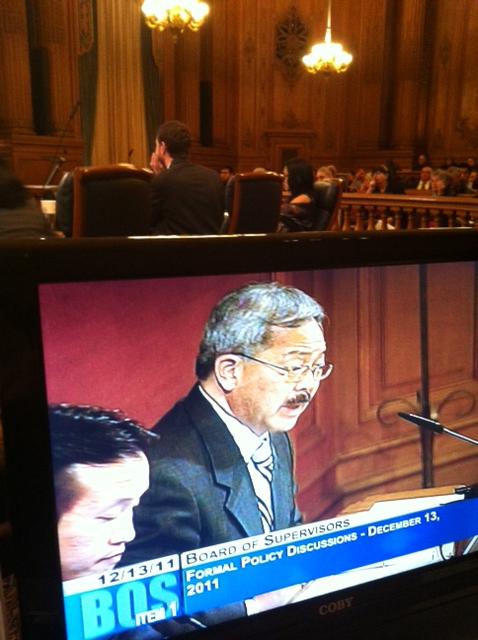
That logic held up in this year’s election when progressive Sup. Ross Mirkarimi — Hennessey’s hand-picked successor — was elected to the post. Mirkarimi, who led a tribute to Hennessey at the Dec. 13 Board of Supervisors meeting, said he’s honored to be able to continue the legacy of someone he called “the most innovative sheriff in the United States.”


LONG RECORD

Hennessey was a 32-year-old Prisoner Legal Services attorney for the Sheriff’s Department in 1979 as he watched then-Sheriff Eugene Brown letting go of reform-minded staffers and ending his predecessor Dick Hongisto’s early experiment with a school in the jail. So Hennessey quit his job and focused on running for the office.

“I said to myself that I’m not sure if I’ll be a good sheriff or not, but I know I’m better than anyone else running,” he told us, later adding, “I certainly never expected to be sheriff for 32 years.”

Rank-and-file deputies — with whom Hennessey has periodically clashed throughout his career — always preferred one of their own in the job. “As seen in this election, they would like to see someone coming from their ranks,” said Hennessey, even though he notes that at this point, he has hired all but three of the department’s nearly 1,000 employees.

But Hennessey’s outsider status allowed him to deal with the inmate population in a way that the average San Franciscan appreciated, even if the average cop didn’t. “When you’re in law enforcement, all you see are criminals, victims, and people in law enforcement. But I would talk to all kinds of people in the community,” Hennessey said, noting that his experience as a jailhouse attorney gave him a holistic view of his job. “I worked in the jail and I got to know prisoners as people.”

They were people who had certain needs and problems, such as substance abuse, a common problem among criminals. And they were people who would be returning to society at some point, as Hennessey constantly reminded those who expected prisoners to be treated harshly or simply warehoused.

So he broke down the wall between the jail and the community, bringing the city’s social service providers and educators to work programs in the jails, and developing anti-recidivism and vocational programs that allowed ex-offenders to re-engage with the local community.

“Take the bold step of inviting the public in, not all the public, but those who can provide services and help address people’s problems,” Hennessey said. “Then we took the same concept and applied it to violent offenders, which is a little riskier.”

But it was a risk that has paid off as recidivism rates among jail inmates has dropped, and it’s been without any serious cases of inmates harming outsiders. Hennessey is particularly proud of the high school he created in the jail, which will graduate its next class on Jan. 3.

He said the school can truly transform those who end up behind bars. “It gives them a leg up and it’s like a booster shot,” Hennessey said. “They’re at the lowest point in their lives when the come to jail, and then they’re given an opportunity to accomplish something they haven’t been able to on the outside.”

One of many controversial moves during Hennessey’s storied career was his decision to allow female inmates to leave the jails and perform in theaters around San Francisco with the Medea Project, which was created by Rhodessa Jones and the Culture Odyssey art collective to turn the stories of female inmates into plays.

“Rhodessa is a very persuasive person who talked me into letting these women out of jail to perform,” Hennessey said, smiling at the memory. “It was very controversial.”


HIRING REFORMERS

Hennessey’s mentor in the Sheriff’s Department — the man who hired him, ran his first campaign, and then became his longtime chief-of-staff — was the late Ray Towbis, a tough activist whose social justice stands on behalf of tenants, prisoners, and other marginalized members of society would sometimes put Hennessey into difficult positions.

“Ray caused me aggravation many times,” said Hennessey, who nonetheless kept a life-sized cutout photo of Towbis in his office long after he was gone, a reminder to fight for the values he believed in.

There was the time when Towbis angrily flipped over a table and cursed at a panel of parole commissioners after failing to win the release of a model inmate, triggering a demand from the presiding judge that Hennessey fire Towbis, which the sheriff ignored.

Later, Towbis adopted a compassionate approach to the evictions that sheriff’s deputies are forced to perform, allowing deputies to spare tenants who were disabled or elderly and personally calling journalists to help publicize cases in which the parties bringing the eviction action might back off. That sensitivity stays with Hennessey today.

“That’s one of the tough spots I’m in is doing these foreclosure evictions,” Hennessey said, clearly troubled by his duty but also aware that it is one that he is required to perform, despite pressure from progressive groups urging him to refuse to carry them out.

As a lawyer, Hennessey said he must respect court orders and avoid being held in contempt of court, as Hongisto was in the mid-1970s for refusing to carry out evictions against tenants in the International Hotel.

Hennessey and his staff have always been willing to help tenants resist eviction. His office has an eviction assistance program, and Towbis would sometimes tip off the media to publicize certain unjust evictions. One time, Hennessey said Towbis even called hotel magnate Leona Helmsley and talked her out of allowing her company to evict an elderly ParkMerced resident. Instead, Helmsley allowed the woman to live rent-free for the rest of her life, an unlikely gesture of kindness from the “queen of mean” that Towbis helped publicize.

Hennessey draws the line at outright refusal to carry out a judge’s eviction order. “The sheriff shouldn’t be a law-breaker,” he says. Yet Hennessey’s lawyerly approach to complex issues also resulted in his recent policy of not honoring federal detention holds on undocumented immigrants in the jail, after discovering that the holds are administrative — different than arrest warrants — so defying them isn’t a crime.

The policy Hennessey created last year was to ignore ICE requests for prisoners who aren’t charged with felonies or domestic violence charges, noting that the latter charges are often brought but eventually dropped against people who are the victims of domestic violence.

Hennessey tapped federal and foundation grant money to fund his new treatment and educational programs, hiring an ex-convict to write his grant proposals, something that particularly irked many of his deputies.

But Hennessey believed that ex-offenders had something to offer the department so he didn’t back down in hiring them, going so far as to elevate Michael Marcum, who had gone to prison for killing his own abusive father, to the top position of undersheriff in 1993.

Police groups were outraged, but Hennessey said he had known Marcum for many years and valued his counsel and perspective on the criminal justice system. “It wasn’t hard because I knew him and I know of his integrity and loyalty,” Hennessey said.

Hennessy also irked conservative cop culture for aggressive efforts to make the department more diverse. “We wanted more minorities, we wanted more women, and we wanted gay people,” said Hennessey, who initiated outreach efforts to each of those communities.

In 1984, when he approved of an outreach event in Chaps, a gay leather bar in the Castro — complete with flyers around the Castro publicizing the event — it generated a furor that made headlines not just locally in the San Francisco Chronicle, but the National Enquirer tabloid as well.

Yet Hennessey was able to ride out each of the controversies, many of which happened to fall years away from his next reelection campaign. “Those are good times to make dramatic changes,” Hennessey said.

And because he also saw to some neglected basics in the Sheriff’s Department — such as improving training and the jails’ physical structures to prevent escapes and instituting policies to reduce violence between inmates and guards — Hennessey endured and became a beloved sheriff.


VICTORY OF PERSISTENCE

“I’ve always felt somewhat isolated in these beliefs,” said Hennessey, who said that the biggest failure of his career was not proselytizing those beliefs to a statewide and national audience more aggressively. Instead, he has focused on San Francisco, quietly turning the city into a national model for a different kind of policing.

Despite his progressive record, Hennessey has won plaudits and respect from across the political spectrum. In the last election, even the cops who sought to replace him and to undermine his endorsement of Mirkarimi — Chris Cunnie, Paul Miyamoto, and David Wong — all praised Hennessey and promised to continue his programs.

During the Dec. 13 board meeting, Sup. Mark Farrell — consistently one of the most conservative votes on the board — said he has known Hennessey almost his entire life (the sheriff and Farrell’s dad were law school classmates). “I cannot think of anyone with more integrity, a more trustworthy and honest person, than I’ve ever know in my life,” Farrell said.

Sup. David Campos said the immigrant community owes Hennessey a tremendous debt of gratitude. “You have been a tremendous champion for civil rights,” Campos said. “For that, history will judge you very kindly.”

It is a history that Mirkarimi pledges to continue. “Who’s going to fill his shoes? It’s impossible,” Mirkarimi said at the board meeting. “But we certainly have an incredible standard to try to live up to.”

As for Hennessey, he has a fairly clear idea of what he plans to do now that his long and unlikely run as one of the city’s top cops is over: “I’m going to goof around.” *

Lots of buzz and politicking around D5 appointment

65

There is eager speculation – and lots of public and private pressure being applied to Mayor Ed Lee – over the question of who he will appoint to fill the District 5 seat on the Board of Supervisors that is being vacated by Sheriff-elect Ross Mirkarimi.

Anti-progressive entities from the San Francisco Chamber of Commerce to the San Francisco Chronicle are urging Lee to appoint a fellow moderate to the solidly progressive seat, despite the outrage that would trigger on the left and the difficulty that appointee would likely have keeping the seat after the November election.

Chron columnist CW Nevius today published a weird little puff piece plugging London Breed – a moderate who wants the D5 seat, a fact he strangely didn’t mention – and her leadership of the African American Art & Cultural Center. Chron columnist Leah Garchik also pumped up Breed as a D5 appointee last week. Nevius’ column in particular seemed to be a thinly veiled attempt to influence the decision, despite the regular insistence by Nevius and others at the Chron that they never have a political agenda or try to influence City Hall. Yeah, right – at least we at the Guardian are honest about our advocacy for more progressive city leadership.

Breed is being strongly pushed by Willie Brown, the former mayor and current Chron columnist, as well as most of the city’s African American ministers, such as Revs. Amos Brown and Arnold Townsend, who showed up at last week’s Board of Supervisors meeting and followed Lee back to his office after his appearance before the board.

Sources connected to the ministers told us that Lee hadn’t returned their phone calls in recent weeks and they were angry about the snub, so they showed up to let him know and mau-mau him into appointing Breed. Indeed, Brown did get a private meeting with Lee after his followers wedged their way into the office.

Reporters had asked Lee about the D5 appointment just moments before and he said that he was in no hurry to make a decision. “I want to pay my respects to many groups in District 5,” Lee said.

While many names have been floated as D5 contenders, there are a few that rise to the top. Malcolm Yeung, public policy director of the Chinatown Community Development Center, is being pushed by Rose Pak, the Chinatown power broker who worked with Brown to get Lee into Room 200.

But given Lee will probably avoid simply choosing between the Brown and Pak choices – unless they can privately coalesce around someone, which is certainly a possibility – most City Hall speculation these days falls on Christina Olague. The Planning Commission president comes from the progressive camp but she also served as a co-chair of Progress for All, creators of the Run, Ed, Run campaign that persuaded Lee to run for a full term.

Speaking to the Guardian in October, Olague denied that her early endorsement of Lee had anything to do with the D5 seat, which she said she wasn’t seeking but would take if offered. “If we get progressives to support him early on, maybe we’ll have a seat at the table,” was how she explained her support for Lee.

On Friday, Olague showed up for Mirkarimi’s art opening and holiday party in his City Hall office, and she chatted with other possible contenders for the D5 seat, including Quintin Mecke, Julian Davis, Gabriel Haaland, Jason Henderson, and Michael O’Connor. Asked by the Guardian if she had any insights into how the appointment was going, she said all she knows is what she’s read online and in the newspapers.

And so we wait.

A step forward and step back for SF’s homeless families

26

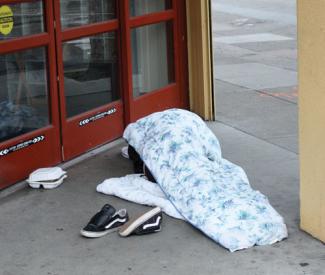
As San Francisco grapples with a record-high number of homeless families seeking shelter space during the holiday season, a pair of homeless policy discussions at yesterday’s Board of Supervisors meeting highlighted shortcomings and missed opportunities in the city’s approach to the issue.

Mayor Ed Lee announced that he is opening up more shelter space and public housing units for homeless families, finally relenting to weeks of pressure to address the pressing problem. Yet the board also narrowly approved turning surplus city property over to neighborhood residents rather than using proceeds from selling it to benefit homeless families, as city policies call for.

The property in question, 341 Corbett Avenue, is a vegetated hillside near Upper Market that the city declared a surplus property in 2004, transferring it to the Mayor’s Office of Housing to either develop as housing for poor families or to put the proceeds from its sale toward that purpose. Providing housing for the homeless is what city policy calls for surplus property to be used for, according to 2002’s Surplus City Property Ordinance. The property was assessed at $2.2 million, but it wasn’t developed because of costs associated with the steep hillside, nor was it listed for sale.

Neighbors of the property have sought to use the property for open space and a community garden, so the district’s Sup. Scott Wiener authored legislation to facilitate a community garden by transferring it to the Department of Public Works. The transfer would involve no money, leaving homeless advocates concerned about depriving homeless families of any revenues from the property.

“There are a lot of public assets we could sell if we wanted to fund this need or that,” Wiener told his colleagues, noting that neighbors would rather see a community garden on the site and that Upper Market lacks adequate open space.

But Sups. Jane Kim and Eric Mar led the opposition to the move, saying they didn’t object to that kind of community use of this property, but that city policies need to be followed, particularly considering the dire need for more resources to address the needs of homeless families. “I do have concerns about the precedent we set and also being consistent,” she said, arguing for a delay in the action until city officials find a way to compensate MOH for at least some of the property’s value.

“Overriding the surplus property ordinance is not something I want to do right now,” Sup. John Avalos said.

But the board voted 6-5 to approve the transfer, with progressive Sups. Kim, Avalos, Mar, David Campos, and Ross Mirkarimi in dissent. Housing advocates upset by the action directly their ire at the swing vote, one-time progressive Sup. David Chiu, with activist Tommi Avicolli Mecca sending out an e-mail blast saying, “david chiu betrayed us again — he wouldn’t support continuing the 341 Corbett item so that affordable housing advocates could try and work out a better deal with the Mayor’s Office on Housing and others.”

Meanwhile, the skyrocketing number of homeless families has become a big issue in town since the Guardian broke the story on Oct. 13, with repeated stories in the Chronicle, Examiner, and other media outlets, and homeless advocates staging rallies outside City Hall and unsuccessfully pushing for a meeting with Mayor Lee on the issue.

During yesterday’s monthly mayoral question time, Kim asked Lee what he was doing to address the “alarming rate” of homeless families in the city – with 267 families now on a wait list for emergency shelter space, a 356 percent increase since 2007 – specifically challenging him to expand the city’s Rental Subsidy Program by 50 families and open new emergency winter shelters. She also noted three recent suicides in the city by individuals facing homelessness.

“I share your concern about family homelessness in San Francisco. My staff has been hard at work for a long time now trying to proactively respond to this very serious challenge and I’m proud to offer some very constructive, tangible solutions,” Lee said. He announced that his administration had just this week starting expediting the placement of homeless families into vacant public housing units, with 18 families now being processed and a goal of placing about 30 of the 79 families now in shelters into public housing units.

Lee also said that SalesForce.com CEO Marc Benioff is donating $1.5 million to the Home for the Holidays program the city is creating to provide rent subsidies and case management to 160 families, a donation that the city will match. “Their generosity is inspiring,” Lee said.

He also pledged to open up an unspecified number of new family shelter spots and, somewhat bizarrely, tried to wrap this issue into his relentless focus on promoting private sector job creation, mostly through tax breaks that actually cut into the city’s ability to provide direct assistance to homeless families. As Lee said, “The long-term goal is to increase these families’ incomes and to place them into permanent unsubsidized housing.”

Editor’s notes

68

tredmond@sfbg.com

Twenty years ago, if you mapped income distribution in San Francisco on a standard graph, you’d see what the economist call a bell curve: At one end were a small number of very poor families, at the other a small number of very rich, and in between the bulk of the city was somewhere roughly close to what you could call middle class.

Take the 2012 census data and make that graph today and you get the opposite — it’s becoming a U-shape, with more people in poverty and more gross wealth and not as much in the center.

You could see that on stark display at City Hall Dec 12.

At 10 a.m., the City Operations and Neighborhood Services Committee heard several hours of testimony on the alarming rise in the number of homeless families. In the end, the Mayor’s Office agreed to find $3 million to help out.

At 1 p.m., the Land Use and Economic Development Committee heard testimony on a plan to build more housing — on the waterfront, for the top one quarter of the top one percent of the richest people in America, people who will need more than $3 million just for the downpayment on their new digs.

The plan calls for 145 of what Port of San Francisco officials call “high end” or “luxury” condominiums, along with 400 underground parking spaces. “It’s going to be tight on three levels,” a Port official testified. “Most of it will be valet parking.” The developer wants to raise the height limit along the waterfront for the first time in half a century.

The Port, which controls some of the land, will get a cut of all the condo sales, maybe as much as $500,000 a year; that money will go to rebuild old piers and fund a long list of Port projects — including the America’s Cup. (Ted Gullicksen of the San Francisco Tenants Union was sitting next to me at the hearing, and he shook his head at that bit of news. “Condos for rich people to pay for boats for rich people,” he said.)

A long list of people, including former City Planning Director Alan Jacobs and former City Attorney Louise Renne — spoke against the project. Jacobs and Renne both explained that this was single-site spot zoning that would change the half-century consensus that the city should “decrease height toward the waterfront so the people can see and enjoy the meeting of land and water,” as Jacobs put it.

Jacobs gave the committee members his one “absolute truth” about city planning: “If a developer accepts and knows that a rule can’t be broken, then it will be economical to build within it. If he or she think it can be changed, then suddenly it will not be economical. It’s called greed.”

In other words, Simon Snellgrove, the developer of 8 Washington, could make money with a lower-scale project that conforms to existing height limits. But he can make more money if the city gives him a big honkin favor.

But it’s not all about height limits for me. It’s not even about the fact that the project will chop up a tennis and swimming club that serves about 2,000 more-or-less middle-class people in an effort to make life nicer for about 145 very rich people.

It’s about what kind of housing we’re building in San Francisco. “Every study that we’ve seen shows that we’ve vastly overbuilt housing for the wealthy,” Gullicksen testified.

And we’re not just talking the ordinary wealthy here. The most compelling testimony came from Frederick Allardyce, a real-estate broker from Sotheby’s who said he had been involved in the sale of about 70 percent of all luxury condos sold from Washington St. to the waterfront. He gave us a glimpse of who would be living — sort of — at 8 Washington.

The cheapest condos would require an income of $469,000, a downpayment of $625,000, and another $493,000 of liquid reserves. Monthly payment: $13,699. The higher-end units would require an annual income of $1.029 million and a downpayment of $6.5 million.

“That’s not the one percent,” he said. “It’s the top one quarter of the top one percent.”

And, Allardyce explained, most of the people who buy that level of property are so rich that they don’t actually live there. It’s a second or third or fourth home, a place to stay a few weeks out of the year. And since the project involves chopping up a tennis and swim club used by some 2,000 people (who are nowhere near that rich), “you’re eliminating the use of that land by the general public” in favor of a tiny elite.

The developer says that the city will get money to build 33 below-market-rate units. That’s nice; by that standard, 80 percent of the new housing goes to the richest people in the world, and 20 percent for everyone else. That percentage ought to be reversed — and until it is (or at least, until we have a plan to build enough affordable housing for the people who really need a place to live in San Francisco) I can’t imagine why we’d want to be doing favors to feed the greed of developers.

What we’re doing in this city is making life harder for low-income people who are increasingly living on the streets and doing big favors for the spectacularly wealthy. There’s no sanity in our housing policy — except to turn San Francisco even more into a city of the rich.

Homeless families still waiting for a meeting … and housing

San Francisco Mayor Ed Lee still has not met with homeless parents organized by the Coalition on Homelessness to discuss their proposed solutions to combat the growing problem of youth homelessness. Nor has the mayor’s office responded to multiple Guardian phone calls inquiring why a meeting hasn’t been scheduled.

Homeless parents organized by the Coalition entered City Hall last Wednesday to raise awareness about a growing problem of San Francisco families lacking a permanent home, and to request a meeting with mayor, whom advocates first contacted Oct. 26.

Coalition on Homeless executive director Jennifer Friedenbach said the mayor’s office had offered to schedule a meeting with a mayoral representative, but not with Lee. “Why would we meet with a representative?” she asked. “We want a meeting with the mayor himself. It should be important for the mayor to meet with parents in a crisis.”

As the Guardian reported last week, the number of homeless families on shelter waitlists citywide has risen to an unprecedented high of 267, while the number of homeless students in public schools identified by San Francisco Unified School District stands at a high of 2,167. Both figures suggest homelessness is on the rise in a city where rents are well above average and the recession has given rise to job loss, evictions, and foreclosures. A nationwide Occupy Our Homes day of action scheduled for today, Dec. 6, is meant to draw attention to tenant evictions and homeowners losing their properties to bank foreclosure.

Part of the problem facing newly homeless families in San Francisco is the lack of availability in public housing and other housing assistance programs such as Section 8 rental assistance vouchers. The waitlist for public housing units in San Francisco stands at between 24,000 and 25,000 — enough would-be tenants to fill the roughly 6,500 units in the city’s public housing system nearly four times over. The San Francisco Housing Authority closed its waitlist for public housing several years ago. The waitlist for Section 8, a separate program administered by the federal government, is also closed.

“Why do waiting lists close? The demand for low-income housing so far outweighs the available vacancy,” said San Francisco Housing Authority (SFHA) spokesperson Rose Dennis. “A number of housing authorities have had to close their waitlists, because we cannot serve the people who are not on the waitlist right now. This is not unique to San Francisco.”

Nevertheless, advocates with the Coalition on Homelessness say part of their strategy is to pressure the mayor to revamp units sitting empty in housing authority properties so they can be used for housing.

Asked about this, Dennis responded that there are relatively few vacancies, and that all vacant units are already in the process of being prepared for new tenants — some of whom have already been identified and promised a unit, and others who are part of a pool of applicants undergoing a screening and selection process.

Housing Rights Committee executive director Sara Shortt, however, told the Guardian public housing tenants she’s worked with have long observed boarded-up units on SFHA properties. She added that they’ve raised concerns about the tendency for empty units to attract rodents, graffiti, or squatters engaged in drug sales or use, which can lead to violence.

Friedenbach said she’d heard from multiple people seeking public housing units who said they’d been promised a unit only to experience delay after delay, for weeks on end. Dennis said it takes SFHA between one and 45 days to move a tenant into a unit once the housing has become available, depending on the status of the tenant.

In addition to the conflicting accounts, another complicating factor is that the actual number of vacancies in housing authority property seems difficult to pin down. Dennis told the Guardian that the occupancy rate in SFHA property typically stands at around 93 percent. Since there are roughly 6,500 units total, this would imply that there are about 450 vacant units. Yet Dennis also stressed that the number of vacant units is always around 225, give or take, and has hovered consistently around that level without any dramatic spikes in vacancy.

A SFHA report to its federal parent agency, the Housing and Urban Development (HUD), which housing advocates received as part of a Freedom of Information request, listed a total of 847 vacant public housing units as of May 2011. That’s nearly twice as high as a 7 percent vacancy rate, and almost four times as high as the 225 vacant units Dennis said the authority consistently has in its system.

“That’s not a vacancy rate,” Dennis explained after we sent her a copy of the document. “That’s a cumulative, historic count that HUD has that is different from day-to-day management. These are not numbers that accurately represent what you would go out and see on a site. These numbers have a lot of other aspects to them.” She added, “The numbers that I gave you are accurate and true.”

The Guardian has placed a call to the Human Services Agency, as well, in hopes of sorting out some of these issues. We’ll update this post if we hear back.

Sup. Elsbernd ducks more Impertinent Questions

4

Well, I am sad to report that my neighborhood supervisor, Sean Elsbernd, has once again refused to answer my Impertinent Questions and to say if he voted for Ed Lee for mayor. Perhaps I will tell you, he says, perhaps not and he chose to perhaps not. He has thus refused to shed light on his role in one of the most fateful nominations in San Francisco history.

 Here’s the latest version of the almost famous Que Syrah correspondence between Elsbernd and me on these critical Impertinent Questions. (As attentive readers of this blog know, I have been trying for months to get Elsbernd to meet me to talk about these questions at Que Syrah, a nifty little wine bar in the West Portal area of Elsbernd’s district. I am still trying.)

 When Willie Brown, Rose Pak, and the downtown gang were plotting their move  to outfox the progressives in City Hall in January  and install Ed Lee as the interim mayor, they chose Sean Elsbernd to take the lead and nominate Lee for this crucial job.

 He intoned at the time and later in writing to me that he was nominating Lee only on condition that Lee would serve as an interim mayor to fulfill the vacancy created by then Mayor Newsom who was off to Sacramento as the newly elected lieutenant governor. Lee, Elsbernd emphasized, thumping the lectern, would not run for mayor.

 Well, the Guardian and many progressives and I said at the time that this was just the Willie and Rose play, to get Lee in as interim mayor and then roll him over to run for mayor in the fall with the major advantage of incumbency.

 And so when Lee as we expected changed his mind and ran for mayor, Elsbernd was left in the position of being a key player in the plot to put Lee into the mayor’s office under false pretenses. And of course in the process he would ace out two more qualified candidates, former Mayor Art Agnos, and retiring sheriff Mike Hennessey.. Both were ready to serve as interim mayor and both pledged they would not run for mayor and most important neither would operate as enablers for Willie, Rose, and their undisclosed clients. (Willie, for starters, is on a  $200,000 plus a year retainer for PG&E, according to PG&E filings with the California Public Utilities Commission.)

 When the tide of sleaze started rising in the mayor’s office and Willie, Rose, and the gang were pounding on Lee to run, I asked Elsbernd another Impertinent Question: Would he have nominated Lee if he knew Lee was going to reverse field and run for mayor?

Elsbernd replied that he had not endorsed anyone, but that “I have been most attracted to the candidacies of City Attorney Dennis Herrera and former Supervisors Alioto-Pier and Bevan Dufty.” He said that these three have the “right combination of qualifications, experience, intelligence, skills and integrity to serve as mayor. Should Mayor Lee run for election, I would only consider endorsing his effort under one circumstance—if, and only if, I was convinced that without his candidacy, Sen. Leland Yee would be elected. That is, if I see that no one else can beat Sen, Yee other than Mayor Lee, then I would support a Mayor Lee campaign. At this point, I’m not convinced of that—I still think any one of the three I mentioned above could beat Sen.Yee.”

Just before election day when Lee was running solidly ahead in the polls, I posed more Impertinent Questions to Elsbernd: who did he support for mayor and why? He replied that he had not yet voted and had not endorsed a candidate and then stated, “Talk to me on November 9 and perhaps I’ll tell you who I voted for. Rest assured, the Bay Guardian’s endorsements will certainly influence my decision-making process.”

And again,  after Lee won handily thanks in large part to the decisive advantage that Elsbernd helped give him, I took Elsbernd up on his promises and emailed him more Impertinent Questions: Who  did he vote for and why? He ducked again and asked me to read his “original email” and to note the significance of the word “perhaps.”

Perhaps he would tell me, perhaps he wouldn’t tell me. He chose not to tell me, and the rest of his constituents,  why he made the nomination as a “neighborhood” supervisor  that helped return Willie, Rose, and the downtown gang to power in City Hall.

His explanation was classic Elsberndese and I quote it in full in all of its elegance.

”Another e-mail?  Another entry in your blog? And now a deadline?  At what point am I going to start receiving a byline in the “Guardian?” I am not going to share with you and your readers for whom I voted.  I’ll keep that one between me and my ballot.  I voted for 3 candidates who I believed had integrity, intelligence , and some grasp of the daunting fiscal challenges facing the State and the City.

“Am I happy with the results?  Again, I’m going to deflect that question because I have learned in the short time I’ve been around here, that focussing on wins and losses of past elections can take you down a rabbit hole from which you’ll never recover.  Rather, the most pragmatic thing I can do for my constituents, which is, after all, what I am here to do, is to recognize the result, accept it, and move forward with it.  Ed Lee is now San Francisco’s Mayor-elect, and I am very excited about being able to work with him during my remaining 13 months in office.  He and I worked extremely well together in developing Proposition C, which the voters overwhelmingly endorsed (and, yes, thank you to the Guardian for your endorsement – you actually got a few right this year).

“We have had some policy disagreements (e.g.  Proposition B), but I have always found him to be open to dialogue, extremely deliberate and thoughtful, and, most importantly, honest.  When we have disagreed, he has explained why and has done so with a logical argument.  While that may sound simple, I can assure you, that is a rare characteristic in this building and it is one I very much appreciate. Have fun parsing this e-mail apart.”

Final Impertinent Questions: If Elsbernd really finds Lee “open to dialogue, extremely deliberate and thoughtful and most importantly honest” and Lee explains his disagreements with Elsbernd with “a logical argument,” how in the world does Elsbernd explain the months of lies and deceptions by Lee before he decided, gosh, golly, gee, that he changed his mind and  was running for mayor after all? How does Elsbernd explain how the sleaze continues to rise in Lee’s office?  How does Elsbernd explain why, as a “neighborhood” supervisor, that he has once again followed the Willie Brown/RosePak/downtown gang agenda by introducing a June 2012 charter amendment to repeal rank choice voting, with public financing and perhaps even district elections in his gun sights? Wasn’t this all part of the master plan to gut progressive measures to level the playing field on local  elections?

Sean? Sean? Let’s talk about all of this this over flights of the wondrous wines from small, locally owned wineries and the Barcelona -style tapas served up  at Que Syrah. To that end, I will keep sending you the notices of Que Syrah special events. B3


More evidence that Occupy is working

19

The Occupy movement has already had an impact on poltics in Washington, DC, and it’s having an impact in California, too. The Chron’s front-page banner headline today reads “Tax measures target wealthy.” By time time the story made it to sfgate, it was buried and carried the downer of a head “Tax-the-rich measures may cancel each other out.” Still, the lead sentence says it all:

The tax-the-rich sentiment behind the Occupy Wall Street movement – and the cash-starved state budget – are reshaping California politics.

I still think at some point Occupy will need to move into the electoral arena (I’d love to see the tent city residents register to vote at Justin Herman Plaza — perfectly legal — and show up to weigh in on the city budget in the spring). But all this talk of the lack of a “clear message” continues to miss the point: Occupy has brought economic injustice back into the mainstream of the political dialogue, and that’s changing the level of discussions from City Hall to Congress.

I’m not saying that Obama and the GOP will suddenly agree to start taxing big corporations and wealthy individuals at the sort of rate they should; it’s not that easy. It won’t be easy to pass a tax measure on the November ballot, either. But just think about the progress we’ve made in a few short months.


Whose park?

150

news@sfbg.com

Golden Gate Park and Ocean Beach have long been destinations for locals and tourists to take in natural beauty within an urban setting, but a controversial plan to build a complex of artificial turf soccer fields at their intersection is drawing opposition from neighbors and environmentalists.

The project seems to belie the original intent of Golden Gate Park as a uniquely wild setting. The Master Plan for Golden Gate Park, drafted in 1995, emphasizes environmental stewardship and maintaining the park in a natural, multi-use way. Among its provisions are “major meadows and lawns should be adaptable to host a wide variety of activities, rather than designed for a specific use.”

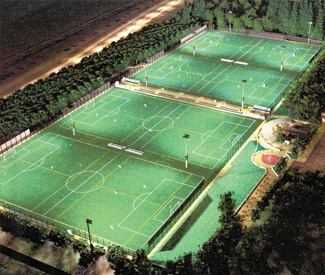
But the Recreation and Park Department (RPD) and sports advocates are pushing a plan to install seven acres of synthetic turf fields, complete with 60-foot, 150,000-watt lighting that will shine until 10 p.m. year-round.

The project will have its first major public hearing before the Planning Commission on Dec. 1 at 5 p.m. in Room 400 at City Hall. Public comments on the project’s Draft Environmental Impact Report, which was released in October, will be accepted at the Planning Department until 5 p.m. on Dec. 12.

Critics of the plan, including the Ocean Edge Steering Committee, have been distributing educational materials and trying to energize people to oppose a project that the group says runs counter to the park’s purpose and which will harm wildlife and cause other negative impacts.

The fields are slated to be installed over the four existing run-down grass fields in the Western Edge of Golden Gate Park, which sits directly across from Ocean Beach and next to the Beach Chalet historical building and restaurant. The project is projected to cost up to $48 million, about $20 million of which comes from the Clean and Safe Neighborhood Parks bond measure approved by city voters in 2008.

Advocates for the synthetic fields — most notably the City Fields Foundation, the main proponent of converting grass to turf in city parks (see “Turf wars,” 10/13/09) — say that this project will only take up a fraction of the natural space in the park, and that turf has many benefits over natural parkland.

“You can put a grass field in, but then you have to limit public access,” said Patrick Hannan, communications director for the City Fields Foundation. “If you want to have grass, there’s only so much sports play that can happen.”

Hannan says that this project is a response to the high demand for usable athletic fields and the limited play provisions of grass fields and availability of usable fields also limits the number of adults and children able to play sports.

RPD spokesperson Connie Chan was not responsive to Guardian questions about the project’s consistency with the Master Plan, and on the main project, she referred to a statement on the RPD website: “We are proposing to renovate the dilapidated Beach Chalet Athletic Fields in the western end of Golden Gate Park with synthetic turf, field lights and other amenities because Beach Chalet is one of three primary ground sports fields in San Francisco but unfortunately, these fields are in abysmal condition, often closed, and lacking spectator seating.”

But activists say the RPD shouldn’t disregard its own planning documents. “It took a long time to draft the Master Plan,” said Shawna McGrew, an activist who worked at RPD for 30 years. “They have no legal obligation, but a moral obligation to uphold the Master Plan.”

The grass soccer fields have been run down due to lack of maintenance and a continuing gopher problem. But environmental advocates argue that installing the planned light fixtures and synthetic turf will interfere with the wildlife, particularly the nesting birds.

“It’s been referred to as the mothership landing,” said Nature Trip tour guide and bird watcher Eddie Bartley, discussing the impact of the proposed lighting fixtures.

Environmentalists are seeking a greener alternative to this project.

“We feel that there’s a compromise alternative that should really satisfy the concerns that everyone has,” said Katherine Howard of the Ocean Edge Steering Committee. She said her group’s goal is “to renovate the athletic fields, but to do it with real grass. They need a good drainage system, a state of the art irrigation system, gopher control barriers, and top notch grass.”

Howard has spent a significant amount of time approaching people at Golden Gate Park to inform them of the upcoming plans. She believes that not enough park users have been notified about the proposal to install the synthetic turf.

“I had no idea that they were going to do that,” native San Francisco resident Rick Rivero said in response to Howard’s description of the plans. “I played soccer in this field myself and I don’t want to see them changed.”

Rivero said that he hadn’t seen any flyers around the park mentioning plans to change the soccer fields.

RPD originally tried to do the project with conducting an EIR to study alternatives and environmental impacts, but groups like the Golden Gate Audubon Society and Ocean Edge objected. The resulting DEIR stated that, after a few alterations and formal recommendations, the project will have a “less than significant impact” on the biological resources of the area. But environmentalists are dissatisfied with the report.

Among their objections was the report labeling some trees as “tall shrubs” in order to allow for their removal. Studies cited in the DEIR state that water toxicity from the runoff of synthetic turf fields — which can contains plastic and other waste products — “decreased over time” and should have no effect on those using them.

But there have been conflicting studies of that issue, the subject of controversy through the country. Environmentalists noted that water used in natural fields filters down into the underground aquifer where it can be reused, whereas runoff from the turf will be need to be treated as wastewater, a fact given short shrift in the DEIR.

“In our opinion, the EIR is inadequate and incomplete,” Howard said. “And we will be submitting letters to that effect before Dec. 12th, as well as testifying to that on Dec. 1st.”

But the DEIR doesn’t wholly endorse the project. For example, it also states that the project’s impact on cultural resources, referring to the original intent of Golden Gate Park, will be “significant and unavoidable.”

Some parents and sports enthusiasts are disappointed with this backlash and argue that the turf fields will provide an important asset to the city.

“I’m 60, but a few decades ago I played soccer on the Beach Chalet Fields. They were in crappy condition [then] and they’re still in crappy condition,” said Tim Colen, a “soccer parent” we were referred to by Hannan. Colen is also executive director of the San Francisco Housing Action Coalition and someone who regularly testifies at City Hall in favor of large development projects.

“It surprises me that a small minority of people has been able to obstruct this project,” Colen said, noting that many parents support the project because the shortage of fields is forcing families out of the city and toward the readily available fields in the suburbs.

Community meetings and even mayoral forums have addressed the proposed Beach Chalet fields. As reported by the RichmondSF blog, mayoral candidate Joanna Rees showed up to a debate wearing her daughter’s soccer jersey and voiced opposition to the artificial turf. Board of Supervisors President David Chiu also reminisced about the joy of playing soccer on grass fields.

Other community meetings have been flooded with youth soccer players from San Francisco and beyond advocating the installation of the turf fields. But local environmentalists say Golden Gate Park was meant to be a refuge for all city residents and visitors.

“Golden Gate Park was created as a place for people to get away from the city,” Howard said. “The amount of contiguous park land is very important.”

About that “acrimonious fall”

Catch this. Mayor Ed Lee’s mayoral victory had nothing to do with millions of dollars in campaign contributions from private interests, a sophisticated get-out-the vote effort targeting Lee supporters, the advantage of incumbency, some funny business, or a calculated campaign strategy concentrating efforts on absentee ballots.

Instead, the fact that Lee triumphed over voters’ second pick, the significantly less well-funded progressive candidate Sup. John Avalos, is proof that the left in San Francisco has plummeted into a dark abyss. In fact, the progressive movement has descended so far into disarray and become so irrelevant that its condition warrants front page news.

That’s essentially the narrative that Benjamin Wachs and Joe Eskenazi of the San Francisco Weekly offer in their cover article, “Progressively Worse: The Tumultuous Rise and Acrimonious Fall of the City’s Left,” in which they refer to the Guardian as “the movement’s cajoling ward boss, kingmaker, and sounding board.” Gosh, I feel so goddamn important right now.

Once the blood pressure returned to normal, my initial reaction to this piece was that Wachs and Eskenazi seem to misunderstand who and what progressives actually are. They portray the city’s left as a caricature, a brash bunch of power mongers now on the losing end that can be easily summed up with pithy video game references, Happy Meal toy bans, and bikes.

Witness the contrast between the Weekly’s portrayal of progressives (helped along by former Newsomite Eric Jaye), and the portrait of the left the Guardian offers this week with an Op-Ed written by NTanya Lee — an actual progressive who volunteered for the Avalos for Mayor campaign.

Here’s the Weekly on the left:

“This is an eclectic group, one often bound not by mutual interests as much as mutual enmity — toward Brown, his successors, and the corporate interests of ‘downtown.’ As a result, progressive principles are often wildly inconsistent. Progressives favor more government control over people’s lives for their own good, as when they effectively banned McDonald’s Happy Meals. But sometimes progressives say the government needs to let people make their own choices … Progressives believe government should subsidize homeless people who choose to drink themselves to death, while forbidding parents from buying McNuggets because fast food is bad for us. … Without consistent principles, it’s easy to associate progressives with the craziest ideas to come out of City Hall, and the movement’s bad ideas are memorable. … Daly’s pledge to say ‘Fuck’ at every public meeting makes a killer Internet meme. Hey, let’s legalize prostitution and outlaw plastic bags!”

Here’s Lee on the left:

“The Avalos coalition was largely community forces: SF Rising’s base in working class Black, Latino, Filipino and Chinese communities; the Bike Coalition’s growing base of mostly white bike riders; affinity groups like Filipinos, Queers, Latinos and Arabs for Avalos; progressive Democrats; social networks of creative, young progressive activists affiliated with the League of Young Voters; and loyal families and neighborhood leaders from John’s own District 11. The campaign prioritized communicating to voters in four languages, and according to the Chinese press, John Avalos was the only non-Chinese candidate with a significant Chinese outreach program. There were stalwarts from progressive labor unions (most notably SEIU 1021 and USWW) who threw down — but overall, labor played it safe and invested resources in other guys. And then, in the great surprise development of the race, supporters of the new national occupy movement came to be a strong part of the Team Avalos base because the campaign was so well positioned to resonate with the call to take on the one percent.”

When it comes to takeaways from the November election, the Weekly’s conclusion is essentially opposite that of progressives. While many on the left see themselves as regaining momentum and building the power to rise even in the face of defeat by the established powers-that-be, the Weekly casts San Francisco’s left as deflated and out-of-touch.

Speaking of out-of-touch, the SF Weekly refers to San Francisco’s “increasingly imaginary working class.”  But in reality, 61 percent of students attending public schools in S.F. Unified School District qualify for free or reduced lunch, and a majority of San Franciscans cannot afford market-rate housing.

However, the Weekly is correct in pointing out that shifting demographics have dealt a blow to the progressive base.

“Between 2000 and 2010, the city grew older (every age group over 50 increased), wealthier (there are now 58 percent more households earning $125,000 or more), and more heavily Asian (up from around 30 to nearly 35 percent of the city’s population): exactly the groups progressives don’t win with. These voters don’t respond well to campaigns against developments or for city services, because they’re often living in those developments and don’t need city services.”

I take issue with the Asian part of that statement as a sweeping generalization, however, having witnessed the solid organizing work of the Chinese Progressive Association, for example.

The Weekly also says progressives and the Guardian never called out former Mayor Gavin Newsom for ripping off their best ideas. Oh, they didn’t?  That’s news to me.

The Weekly article implies that progressives got trounced by moderates because jobs are priority No. 1 for voters, and the left has no feasible economic plan — but at the same time, the article completely dismisses ideas that the Guardian has put forth, like creating a municipal bank, implementing Avalos’ Local Hire legislation, or taxing the rich.

Taxing the rich is precisely the kind of economic solution the international Occupy movement is clamoring for, and the concept has even attracted a few unlikely supporters, like billionaires Warren Buffet and Sean Parker, who is not some conservative a*hole by the way.

“The Guardian … stays on the progressive agenda because they put it there, along with taxing the rich, tapping downtown to subsidize Muni, and other measures … Proposing the same old solutions to every new problem turns policies into punch lines.”

Speaking of predictable, no profile authored by the Weekly mentioning the Guardian would be complete without some dig about public power. “The Guardian has been flogging public power since Tesla invented the alternating-current generator,” the S.F. Weekly squawks. Those clever reporters, turning policies into punch lines.

But wait, I thought the problem was that progressives couldn’t get it together on the job creation thing. Consider the CleanPower SF program, which has been strongly advocated for by progressive Sup. and Sheriff-elect Ross Mirkarimi (who it turns out is “not toxic,” according to the Weekly, since he was elected citywide and all). According to an analysis by the Local Clean Energy Alliance, CleanPowerSF will create 983 jobs — 4,357 jobs when indirect job creation is factored in — over the course of three years, assuming the 51 percent renewable energy target is met. Presented with this kind of information, the Weekly will only yawn and say, “Are we on that again?”

That being said, our friends’ article might actually have a pearl of wisdom or two buried somewhere in that nauseating sea of sarcasm. Everyone needs to engage in self-reflection. So right after you’re done throwing up, think about how to take advantage of the opportunity this article presents for a citywide dialogue about progressivism in San Francisco.

Dickens and drag queens and dreidels (oh my!)

0

culture@sfbg.com

HOLIDAY GUIDE 2011 You know what would be a good present to yourself this holiday season? Some ankle weights. Imagine all the almond cake and vegan eggnog you’ll have shoved into your belly by this time next month, you soon-to-be-less-svelte snowy sexpot. Not into approximating a house arrest prisoner? How about pledging to run about to as many as the Bay’s holiday hotspots as possible this year — you’ll be a Kwanzaa cutie in no time a’tall. And with such jingling gems — from costume fairs to drag queens in Union Square and free chamber orchestra performances — you’ll come out on the other side (2012) cut and cultured. 


Union Square iceskating rink Good news for nervous wall-grabbers and double axel spinners alike: the holiday ice rink is back at Union Square. Cue icicle lights, grand romantic gestures, and seizing onto strangers for suddenly-needed support.

Through Jan. 16. 10 a.m.-11:30 p.m. except for when closed for private parties, $10 for 90-minute session. Union Square, SF. www.unionsquareicerink.com


Great Dickens Fair Before Harry Potter and Kate Middleton transformed young Americans into full-blown Anglophiles, a whole different conception of Britain flourished stateside: the Dickensian version, replete with scones and hot toddies. Walk off your burgeoning middle with a jaunt through the Cow Palace’s temporary lamp-lit alleys.

Saturdays and Sundays through Dec. 18, 11 a.m.-7 p.m., $25. Cow Palace, 2600 Geneva, SF. www.dickensfair.com


“The Best Time of Year” SF Symphony Christmas special concert The San Francisco Symphony and Chorus exhale classical Christmas picks and carols to a fully-bedecked Davies Symphony Hall.

Nov.30-Dec.1, 8 p.m., $25–$68. Davies Symphony Hall, 201 Van Ness, SF. (451) 864-6000, www.sfsymphony.org


Working Solutions holiday gift fair Showcasing San Francisco businesses assisted by Working Solutions’ micro loan programs, this fair lets shoppers pick up everything from Bernal Heights-wrought knives to chunks of Mission-crafted chocolate.

Dec. 1, 5-8 p.m., free. 101 Second St., SF. (415) 655-5433, www.tmcworkingsolutions.org


The Golden Girls: The Christmas Episodes Trannyshack takes on the blue-haired wonder that was The Golden Girls in a glitzy, raucous yearly San Francisco tradition.

Thursdays, Fridays, and Saturdays Dec. 1-23, 8 p.m., $25–$30. Victoria Theater, 2961 16th St., SF. www.trannyshack.com


A Christmas Carol There’s no better way to get in the mistletoe mood than to watch old Ebenezer slowly thaw out his icy, pinched heart in the Deco glory of the ACT Theatre.

Dec. 1-24, 7 p.m., $20–$75. American Conservatory Theatre, 415 Geary, SF. (415) 749-2228, www.act-sf.org


Holiday tree-lighting ceremony Jack London Square becomes a Bay-side holiday crèche two hours with live reindeer, snow, wintry tunes, and a tree-lighting to launch the flurry of the holidays.

Dec. 2, 5-7 p.m., free. Jack London Square, Oakl. www.jacklondonsquare.com


Oakland-Alameda Estuary lighted yacht parade How can yachts parade, you ask? With style, we answer — East Bay boat owners trick out their vessels with festive lights visible from the shore.

Dec. 3, 5:30 p.m., free. Visible from Jack London Square, Oakl. www.lightedyachtparade.com


Fantasy of Lights celebration ‘Tis the season for brilliant night-time lights, and Union Street will not be an exception. Stately Victorians provide the glowing background for a holiday gathering featuring everything from a monkey to Santa and his elves.

Dec. 3, 3-7 p.m., free. Union between Van Ness and Steiner, Fillmore between Union and Lombard, SF. www.sresproductions.com


San Francisco Forest Choir Imagine yourself in a snowy Narnia glen, the Forbidden Forest, or roaming through the woods with Hansel and Gretel to the music of the San Francisco Forest Choir, an all-female group who sing in Japanese and English at the Western Addition library.

Dec. 3, 3-4 p.m., free. Western Addition branch library, 1550 Scott, SF. (415) 355-5727, www.sfpl.org.


Sharon Art Studio winter pottery and craft sale Thousands of gleaming pieces are up for sale by this staple of the Bay Area craft scene; lug your loot home and get your bicep curls out of the way for a week.

Dec. 4, 11 a.m., free. Sharon Art Studio, Children’s Playground, Golden Gate Park, SF. (415) 753-7005, www.sharonartstudio.org


SF Chamber Orchestra holiday family concert Circus Bella and the SF Chamber Orchestra team up for a strangely compelling holiday pairing: clownish acrobatics set to the strains of classical music.

Dec. 4, 3-4 p.m., free with RSVP. Bayview Opera House, 4705 Third St., SF. (415) 824-0386, www.bayviewoperahouse.org


Gourmet Ghetto’s snow day For those Bay citizens unfamiliar with the bliss of a true snow day, the Gourmet Ghetto’s version provides a superior version to the rest of the country’s admittedly frigid ones: real snow, yes, but also crafting, hot cocoa and cookies, a Snow Queen, and the warmth of community.

Dec. 5 10 a.m.-3 p.m., free. Andronico’s parking lot, 1550 Shattuck, Berk.; 1-4 p.m., free. M. Lowe and Co., 1519 Shattuck, Berk.; Noon-4 p.m., free. Twig and Fig, 2110 Vine, Berk. www.gourmetghetto.org


“Winter in the Wineries” Sixteen wineries will stamp your passport for a two-month period starting December 2, enabling you to enjoy unlimited tastings, tours, and meet-and-greets throughout Napa Valley.

Various locations and times, Calistoga. www.calistogavisitors.com. $50 for one passport ticket


Palestinian Craft Fair Straight from the hands of Palestinian artists and craftspeople: olive oil-based soap, embroidery, glassware, ceramics, books, honey, and Dead Sea products sold to benefit their makers an ocean away.

Dec. 4, 10 a.m.-4 p.m., free. Live Oak Park, 1301 Shattuck, Berk. (510) 548-0542, www.mecaforpeace.org


“Songs and Harps to Celebrate the Holiday Season” Harpists of the Bay, unite! The young pluckers of the Bay Area Youth Harp Ensemble join the Triskela Celtic Harp Trio to perform holiday pieces from around the world. Singing along is not only encouraged but expected.

Dec. 6, 6 p.m., free. Main Library, 100 Larkin, SF. (415) 557-4400, www.sfpl.org


“Drag Queens on Ice” Break out your very best glitz for a night spent skating next to legions of SF’s drag personalities. A 9:30 p.m. performance by the queens in question ends the evening.

Dec. 8, 8 p.m., $10 for 90-minute session. Union Square, SF. www.unionsquareicerink.com


“A Very Shut-Ins Xmas” The vanguard leaders of the “hulabilly” sound, the Shut-Ins return with a Christmas show to benefit San Francisco’s Legal Assistance to the Elderly.

Dec. 8, 5:30-8 p.m., $20. 50 Mason Social House, 50 Mason, SF. (415) 538-3333, www.laesf.org


Golden Gate Park tree lighting Golden Gate Park’s hundred-foot Monterey cypress (shouldn’t it have a name by now?) transforms into a light-bedecked behemoth for the 82 year.

Dec. 8, 5 p.m., free. McLaren Lodge, 501 Stanyan, SF.


La Cocina gift fair Its cryptic but tasty-sounding “tamale alley” should provide enough of a draw, but La Cocina’s gift fair also promises local vendors selling organic olive oils, handmade pasta, and mushrooms nourished by recycled coffee grounds. Pretty easy to stomach.

Dec. 9, 5-9 p.m., free. Mission Cultural Center for Latino Arts, 2868 Mission, SF. www.lacocinasf.org


Winter Wunderkammer holiday art sale The most you can spend here on one item is 50 bucks, the least a dollar. Accompanied by spiced wine and tunes, small-format works from local artists are on sale. Proceeds from this walk-in curio cabinet benefit The Lab and participating artists.

Opening party Dec. 9, 6-11 p.m., free. Also Dec. 10, 11 a.m.-4 p.m., free. The Lab, 2948 16th St., SF. (415) 864-885, www.thelab.org


California Revels Ah, the revels. This year, the interactive period presentation will sit you smack down at the Round Table. Dance and sing, young knight — no one’s mocking you at this costume-heavy conclave.

Dec. 9-11, 16-18; Fri. 8 p.m., Sat. and Sun. 1 p.m. and 5 p.m., $19-52. Scottish Rite Theater, 2850 19th Ave., SF. (510) 452-8800, www.californiarevels.org


SF Ballet’s Nutcracker Even with its lampoonable name, the Nutcracker remains a incomparable date choice for its lush costumes, fantastical storyline, and ability to trigger childhood flashbacks.

Dec. 9-25, various times, $25–$285. War Memorial Opera House, 301 Van Ness, SF. (415) 865-2000, www.sfballet.org


Misfit Toy Factory For one evening, artists cobble together sculptures, toys, and gifts under one roof to the beat of DJ Yukon Cornelius. Items are sold at the end of the evening for a fixed price of forty dollars.

Dec. 10, 7-10 p.m., free. Root Division, 3175 17th St., SF. (415) 863-7668, www.rootdivision.org


The Revolutionary Nutcracker Sweetie A radical alternative to the holiday classic, Dance Brigade’s version features Clara, an undocumented worker, a homeless Sugar Plum Fairy, and an angel of resistance.

Dec. 10, 2 p.m. and 6 p.m.; Dec. 11, 1 p.m. and 5 p.m., $15–$17. Brava Theater, 2781 24th St., SF. www.dancemission.com


Hanukah festival of light Geared towards the younger set and their handlers, the JCC East Bay’s festival of light features storytelling, menorah making, dreidel games, and a concert by Isaac Zones, a mainstay in the Bay’s Jewish music scene.

Dec. 11, 10 a.m-2 p.m., $5. JCC East Bay, 1414 Walnut, Berk. www.jcceastbay.org.


“Holidays: Christmas, Chanukah, and Other Festive Celebrations” lecture Library docents present an examination of paintings from around the world dealing with everyone’s favorite subject: the giving, feasting, and receiving endemic to the holiday season.

Dec. 14, 6:30-7:30 p.m., free. Glen Park branch library, 2825 Diamond, SF. (415) 355-2858, www.sfpl.org


Mechanics’ Institute holiday gift and poster sale The staggeringly lovely Mechanics’ Institute hosts a large sale of hard-cover and paperback books, gifts, and posters straight from its library.

Dec. 15, 4:30-6:30 p.m., free. Mechanics’ Institute, 57 Post, SF. (415) 393-0100, www.milibrary.org


Holiday youth mariachi concert Three zestful youth mariachi bands perform traditional Mexican holiday music, providing an energizing segue into a sometimes exhausting season.

Dec. 16, 7:30 p.m., $10. Mission Cultural Center for Latino Arts, 2868 Mission, SF. (415) 643-2785, www.missionculturalcenter.org


Holiday Memories double feature Head back to the times of toboggans and candle-lit windows with two short films recounting rural winters of yesteryear. A Child’s Christmas in Wales visualizes Dylan Thomas’ Welsh childhood; The Sweater animatedly recounts Roch Carrier’s Quebecois, hockey-centered upbringing.

Dec. 17, 2 p.m., free with $15 museum admission. The Exploratorium, 3601 Lyon, SF. (415) 561-0360, www.exploratorium.edu


Renegade Craft Fair holiday market For the third year and showcasing more than 250 makers and craftspeople, the Renegade Craft Fair’s holiday happening can be a bit overwhelming. But it’s an undeniably great answer to gifting woes: pick up jewelry, body products, paper goods, clothing, and way, way more, all DIY enough to satisfy your most loca-ttired friend.

Dec. 17-18, 11 a.m.-6 p.m., free. Concourse Exhibition Center, 635 Eighth St., SF. www.renegadecraft.com


Reclaiming Yule ritual It may be chilly outside, but Sebastapol’s midwinter celebration (led by Starhawk, a leader in Bay Area earth-based spirituality) is indoors and full of warmth-inducing activities, namely dancing in honor of the Earth and Sun.

Dec. 18, 6:30 p.m., $7. Sebastopol Community Center, 390 Morris, Sebastapol. www.reclaiming.org


Solstice Eve celebration With a bonfire and roles doled out to participants (rocks, trees and mists), celebrating the longest night of the year on Ocean Beach is actually rather toasty. Bring items to release into the transformative fire — love letters are just the starting point.

Dec. 20, 3:30 p.m., free. Ocean Beach at Taraval, SF. www.reclaiming.org


Bill Graham menorah lighting The lighting itself takes place at 5 p.m., but the hours-long run-up is by no means lacking: traditional Jewish music, arts and crafts, and menorahs for every child fill Union Square starting at 3 p.m.

Dec. 20, 5 p.m., free. Union Square, SF. www.chabadsf.org


Kujichagulia celebration Kwanzaa’s day of personal definition and expression comes to City Hall, followed by a candle-lighting ceremony and dinner at Gussie’s, known for its fried tasties, red velvet cake, and Southern sweet tea.

Dec. 27, noon, City Hall, SF., 6 p.m., Gussies Chicken and Waffles, 1521 Eddy, SF. www.kwanzaasanfrancisco.com


Ujima celebration On Ujima, the third day of the week-long Kwanzaa holiday, community members gather to celebrate a collective spirit of responsibility and work.

Dec. 28, 3-6 p.m., free. Bayview Hunters Point YMCA, 1601 Lane, SF. www.sfpl.org


Keeping Score: Ives Holiday Symphony screening Unrecognized at the time of his death, experimentalist composer Charles Ives labored over his Holiday Symphony, which now gets fitting recognition by the San Francisco Symphony in a library concert that follows an hour-long documentary on the man.

Dec. 29, noon, free. Main Library, 100 Larkin, SF. (415) 557-4400, www.sfpl.org


Kuumba celebration Fittingly, the main San Francisco celebration of Kwanzaa’s Kuumba (day of creativity) occurs in the Jazz Heritage Center, a space shared by musical hotspot Yoshi’s. Celebrate the Fillmore’s manifold musical virtuosos on the last day of the year.

Dec. 31, 1-5 p.m., free. Jazz Heritage Center, 1330 Fillmore, SF. www.jazzheritagecenter.org

Lessons of the Avalos campaign

157

By N’Tanya Lee

It’s the middle of the night. His two kids and wife are home in bed. Supervisor John Avalos, candidate for mayor, heads downtown in his beat-up family car. He parks and walks over to 101 Market Street, and casually starts talking to members of OccupySF. He’s a city official, but folks camped out are appreciative when they see he’s there to stand with them, to try to stop the cops from harassing them, even though its 1 a.m. and he should be in bed.

John Avalos was the first elected official to personally visit Occupy SF. It wasn’t a publicity stunt — his campaign staff didn’t even know he was going until it was over. He arrived and left without an entourage or TV cameras. This kind of moment — defined by John’s personal integrity and the strength of his personal convictions — was repeated week after week, and provides a much-needed model of progressive political leadership in the city.

John Avalos is more than “a progressive standard bearer,” as the Chronicle likes to call him. He’s also a Spanish-speaking progressive Latino, rooted in community and labor organizing, with a racial justice analysis and real relationships with hundreds of organizers and everyday people outside of City Hall. He’s demonstrated an authentic accountability to the disenfranchised of the city, to communities of color and working people, and he knows that ultimately the future of the city is in our hands.

Some accomplishments of John’s campaign for mayor are already clear: He consolidated the progressive-left with 19%, or nearly 40,000, first-place votes, despite the confusion of a crowded field; he came in a strong second to incumbent Ed Lee despite being considered a long shot even weeks before the election; after RCV tallies, he finished with an incredible 40% of the vote, demonstrating a much wider base of support across the city than he began with, and much broader than former frontrunners Leland Yee and David Chiu, who outspent him 3-1. He won the Castro, placed third in Chinatown (ahead of Yee), and actually won the election-day citywide vote. Not bad. In fact, remarkable, for a progressive Latino from a working class district in the southern part of town, running in his first citywide race.

I believe John Avalos demonstrated what can be accomplished with a new kind of progressive leadership — and suggests the elements of a new progressive coalition that can be created to win races in 2012, and again, in 2015.

It’s Monday afternoon, 1:35pm, time for our weekly Campaign Board meeting. John rushes in, after a dozen appointments already that day. The rest of us file into the ‘cave’ — the one private room in Campaign headquarters, with no windows, a makeshift wall and furniture that looks to be third-hand. The board makes the key strategy, message, and financial decisions. There are no high paid political consultants here. Most of us are, or have been, organizers. Today, we need to approve the campaign platform. Finally. We’ve decided to get people excited about our ideas, an agenda for change. We leave the meeting excited and nervous, wondering if anyone will get excited about the city creating its own Municipal Bank.

We were an unlikely crew to lead a candidate campaign — even a progressive one in San Francisco. We come from membership based community and labor organizations, and share a critique of white progressive political players and electeds who spend too few resources on building power through organizing and operate without accountability to any base. We are policy and politics nerds, but we hate traditional politics. Seventy percent of us are people of color — Black, Filipina, Latino, and Chinese. We are all women except John, the candidate, and nearly half of us are balancing politics with parenting.

The campaign board — including John himself—shared a vision for building progressive power. The campaign plan was explicit and specific about achieving outcomes that included winning room 200 but went beyond that central goal. We set out to strengthen progressive forces, to build towards the 2012 Supervisor races, and increase the capacity of the community-based progressive electoral infrastructure so we can keep building our collective power year-round, for the long-term.

We hope these victories will shape progressive strategy moving forward:

1. In just a few months, Team Avalos consolidated a new and unique progressive bloc. We brought together people and organizations who’d never worked together before — white bike riders and Latino anti-gentrification organizers, queer activists and African American advocates for Local Hire. The Avalos coalition was largely community forces: SF Rising’s base in working class Black, Latino, Filipino and Chinese communities; the Bike Coalition’s growing base of mostly white bike riders; affinity groups like Filipinos, Queers, Latinos and Arabs for Avalos; progressive Democrats; social networks of creative, young progressive activists affiliated with the League of Young Voters; and loyal families and neighborhood leaders from John’s own District 11. The campaign prioritized communicating to voters in four languages, and according to the Chinese press, John Avalos was the only non-Chinese candidate with a significant Chinese outreach program. There were stalwarts from progressive labor unions (most notably SEIU 1021 and USWW) who threw down — but overall, labor played it safe and invested resources in other guys. And then, in the great surprise development of the race, supporters of the new national occupy movement came to be a strong part of the Team Avalos base because the campaign was so well positioned to resonate with the call to take on the one percent.

2) Team Avalos built popular support for key progressive ideas. We used the campaign to build popular support for a citywide progressive agenda. Instead of leading with our candidate we led with bold, distinctive issues that provided a positive alternative vision to the economic crisis: Progressive taxation, municipal banking, and corporate accountability for living wage jobs instead of corporate tax breaks. By the end of the campaign, at least three other candidates came to support the creation of a city-owned bank, and the idea had enough traction that even the San Francisco Business Times was forced to take a position against it.

3) Team Avalos built the electoral capacity of grassroots organizations whose members have the most at stake if progressives gain or lose power in SF: poor and working-class communities of color. We developed the electoral organizing skills of a large new cohort of grassroots leaders and organizers of color with no previous leadership experience in a candidate campaign. They are ready for the next election.

For the last few months, I had the privilege of working with an unusual but extraordinary Avalos campaign team, who were exactly the right people for the right moment in history, to lead a long shot campaign to an unlikely, remarkable and inspiring outcome. Let’s build on these gains. In the coming weeks and months, we must be thorough in our analysis of this election, engage and expand the Avalos coalition base, and build unity around one or more collective demands of Mayor Lee from the left. And in time, we will have a progressive voting majority and a governing bloc in City Hall. We will win, with the mass base necessary to defend gains, hold our own electeds accountable, and truly take on the city’s one percent.

NTanya Lee was the Executive Director of Coleman Advocates for Children & Youth, and served as a volunteer chair of the Avalos for Mayor campaign board. You can find her now at USF or working on her new project about a long-term vision for left governance called Project 2040.


Editor’s notes

0

tredmond@sfbg.com

Occupy Oakland has been very good at exposing one local problem — police brutality. The first raids, and the tear gas and rubber bullets that flew afterward — showed the world how poorly trained the Oakland cops are and how unprepared they were for a largely peaceful demonstration.

But overall, the Occupy movement has been about national issues — or rather, The National Issue, which is income inequality. Nothing else going on in the United States compares. On an economic level, I could argue that nothing else matters — until we resolve the wealth and income gap, the recession will never end, the deficit will never improve, the unemployment rate won’t stabilize, the nation will grow weaker and weaker and more and more unstable … basically, we’re doomed.

But while there have been marches on local banks and corporations, not a lot of Occupy attention has gone to local inequality — to what the folks at San Francisco City Hall, and Oakland City Hall are doing to make the one percent in our own backyards pay its fair share for the services that most impact many of our lives. Mayor Jean Quan got booed for calling in the riot cops, but Mayor Ed Lee isn’t getting booed for corporate tax breaks.

The OccupySF people came out in force to a Board of Supervisors hearing to demand that their camp be left alone. But they aren’t out in force to demand, say, a local fee on bank foreclosures.

That’s not a criticism of a movement that continues to inspire me every day; it’s just a statement about tactics and strategy. And it’s one we all ought to be thinking about.

In a brilliant opinion piece this week, Raj Jayadev, director of Silicon Valley Debug, notes:

“In San Jose, the city that used to promote itself as the capitol of Silicon Valley, city budget cuts have either eliminated or dramatically slashed hours for youth sanctuaries like libraries and community centers. … For us, the one percent are just up the street -– the 101 to be precise. Those tech giants exist in the same Silicon Valley that cannot even keep its library doors open. Why have they not given? Why have we not demanded?”

Good question.

Guardian editorial: Mayor Ed Lee’s challenges

21

 Mayor Ed Lee has always talked about bringing the city together, about avoiding division and harsh conflict. And now  that he’s won a four-year term, he’s must address a wide range of city problems that in the past haven’t responded well to consensus and compromise.
He’s going to have to do it in the wake of an election in which the centrist candidates all finished low in the pack — and the strongest progressive actually won more votes than anyone else on Election Day. And his victory comes at a time when there’s more concern over economic inequality than this country has seen since the 1930s — represented most visibly by the large and growing OccupySF encampment.
The mayor received huge financial support — in the hundreds of thousands of dollars — from some of the same people and businesses that the Occupy movement is targeting. Some of his campaign contributors have an conservative economic agenda that’s way to the right of the center of San Francisco politics. And some of his closest allies (and strongest supporters) are, to put it kindly, ethically challenged. So it’s not going to be easy for the mild-mannered mayor to lead the city — and if he wants to be successful, he needs to work with and not ignore the left.
There are a few critical steps that would show the people who opposed him that he’s not a captive of big-business interests and that he can be trusted:

1. Appoint a real progressive to Sheriff-elect Ross Mirkarimi’s District Five supervisorial seat. If Lee is really mayor who’s above petty politics, the chief criterion for the appointment shouldn’t be loyalty to Lee or Willie Brown or Rose Pak et al.  District Five supported Avalos over Lee by a solid margin (in the Haight, Avalos got twice as many votes as Lee). The district has been represented by two people, Matt Gonzalez and Mirkarimi, both of whom were elected as Green Party members. It’s almost certainly the most left-leaning district in the city, and deserves a supervisor who represents that political perspective. Most of the qualified people who fit that description supported a candidate other than Ed Lee for mayor.

2. Don’t send the cops to roust OccupySF. The movement has support all over the city and is making an historic statement. It’s probably the most important political demonstration in San Francisco since the 1960s. A mayor who has any shred of a progressive soul should recognize that the most important issue facing this city and this nation is the wealth and income gap and help OccupySF make its voice even louder.

3. Present a plan for more than a “cuts only” budget. Yes, the sales tax measure lost, putting a hole in the city budget, and yes, it will be a year before a credible new revenue measure can go on the ballot. But now is the time to start bringing people together to look at what comprehensive tax reforms might be more appealing than a regressive sales tax.4. Don’t give away the city to the One Percent. A developer wants to build 160 condos for the very, very rich on the waterfront at 8 Washington. Mayoral ally Rose Pak supports the project. It’s about as blatant an example as possible of something that only benefits multimillionaires, and it will be one of the first major land-use decisions Lee will have to grapple with. Making his opposition clear would demonstrate his independence.

5. Support public power and community chocie aggregation. And appoint SPUC commissioners with visible, credible public power credentials. PG&E has maintained its illegal private power monopoly in San Francisco for decades  by muscling  mayors to appoint only PG&E-friendly commissioners who keep City Hall safe for PG&E.

6.  Run an open administration. Both previous mayors, Gavin Newsom and Willie Brown, were openly hostile to the press, hostile to open government and and supremely arrogant. Lee has a different personal style and he ought to show that he respects the Sunshine Ordinance by directing his departments to abide by the rulings of the Sunshine Task Force. That’s what good government would look like.

Dick Meister: Strange bedfellows: Labor’s Tim Paulson and the Chamber’s Steve Falk

5

By Dick Meister

Dick Meister, former labor editor of the SF Chronicle and KQED-TV Newsroom and a former city editor of the Oakland Tribune, has covered labor and politics for a half-century as a reporter, editor, author and commentator. Contact him through his website, dickmeister.com, which includes more than 300 of his columns.

It’s hard to imagine organized labor and the thoroughly anti-labor Chamber of Commerce on the same side, especially in a city like San Francisco with a major union presence.

It’s especially hard to imagine it at a time when unions everywhere are joining with Occupy Wall Streeters to demand justice from anti-labor business and corporate leaders like those who control the Chamber.

But consider what Tim Paulson, executive director of SF’s Labor Council, and President Steve Falk of the SF Chamber of Commerce had to say in a joint statement about the results of Tuesday’s election.

They were downright overjoyed about the passage of Proposition C, which will raise the amounts city employees must pay toward their less-than lucrative pensions and limit future cost-of-living raises. That’s a way to avoid raising business taxes to maintain city services in these recessionary times.

Perhaps most distressing, the passage of Prop C shifted control of the City Health Service System from the employees who are covered by the system to City Hall appointees who won’t have to demonstrate any particular experience in health care matters.

At least Paulson and Falk said they were pleased with the defeat of Public Defender Jeff Adachi’s outrageous Prop D – even though it would have changed the city pension system in almost exactly the same ways as Prop C.

In any case, the difference between C and D was not necessarily their content, but how they got on to the ballot.

Why, exclaimed Paulson in a separate, self-congratulatory statement, the results “sent new shock waves across San Francisco and America as workers demonstrated that collaborative democracy is the best way to set public policy.”

Collaborative democracy? By that I guess Tim was referring to the joining together of labor leaders and public employee unions and Chamber of Commerce members in a coalition with city officials, non-profit social agencies and community groups to put Prop C on the ballot.

The collaborators didn’t even include representatives of the retired employees whose health care would be seriously affected and who were quite active in helping elect labor-friendly candidates.

Paulson, a generally ineffective leader who always seems to be seeking approval of the City establishment, singled out billionaire Warren Hellman for being one of the principal collaborators.

Paulson boasted that every city employee union joined in what he actually described as “a real San Francisco way of doing things.” Hardly. If there really were such a thing, it would be a far cry from the “collaborative” approach that involved labor giving in to the wishes of its anti-labor corporate and business opponents.

Paulson and Falk claimed the approach will be “a model for the rest of the country.” Thankfully for the rest of the country, that seems highly unlikely given the widespread demands for actual reform triggered by the Occupy Wall Street protests.

Negotiations between labor and management eventually reach agreements that both can live with, albeit often uncomfortably. But no agreement can be reached, or should be reached, when one party – the Chamber of Commerce in this case – is not seeking real compromise with an enemy – namely unions – that it would like to put out of business, or at least seriously weaken. Unions, of course, have the same feelings about union foes like the Chamber.

Tim Paulson actually declared the election results “a great victory during difficult times.”

Dick Meister, former labor editor of the SF Chronicle and KQED-TV Newsroom and a former city editor of the Oakland Tribune, has covered labor and politics for a half-century as a reporter, editor, author and commentator. Contact him through his website, dickmeister.com, which includes more than 300 of his columns.


The next D5 supervisor

21

Now that it appears Sup. Ross Mirkarimi will be the next sheriff — and Ed Lee will be mayor for the next four years — the speculation is starting over who Lee will name to replace Mirkarimi as District Five supervisor. There are an abundance of qualified candidates, but my sources tell me the Mayor’s Office is looking right now primarily at two people — London Breed, director of the African American Art and Culture Complex and a former redevelopment commissioner, and Malcolm Yeung, an attorney who is president of the Asian American Bar Association and longtime policy person at the Chinatown Comminity Development Center.

Both, of course, were Lee supporters.They have a history of working on progressive causes (Yeung, at CCDC) and strong ties to the community (Breed at AAACC). Breed has spent more time as an activist in D5 (and was appointed to her job by former mayor Willie Brown), but Yeung is reportedly popular with Rose Pak, who clearly has the mayor’s ear.

I don’t know who Lee will be taking to about the appointment, but you can be sure both Brown and Pak will be giving their advice. And so far — although it’s still early — nobody has been talking to the current supervisor.

I called Mirkarimi and asked him who he would suggest, and he told me there were plenty of people — although neither Breed nor Yeung would be on his short list. He didn’t want to name names, but I can: queer/labor activist Gabriel Halland and Community College Board Member John Rizzo are both eminently qualified for the job, and Julian Davis would also be on a lot of short lists. So would Christina Olague, a planning commissioner (and Lee supporter) — but one City Hall insider told me that “Willie would never let that happen.”

Mirkarimi did suggest that he ought to be consulted. “I would think after all the work I’ve done in the district over seven years and two administration that  Mayor Lee would at least want my input,” he said. We’ll see.