Cats

Film Listings

0

Film listings are edited by Cheryl Eddy. Reviewers are Kimberly Chun, Michelle Devereaux, Max Goldberg, Dennis Harvey, Louis Peitzman, Lynn Rapoport, Ben Richardson, and Matt Sussman. For rep house showtimes, see Rep Clock.

OPENING

Apollo 18 Faux-found-footage horror flick about a top-secret moon landing gone terribly awry. (1:26)

The Debt On paper, The Debt has a lot going for it: captivating history-based plot, “it” actor Jessica Chastain, Helen Mirren vs. Nazis. And while the latest from John Madden (1998’s Shakespeare in Love) is fairly entertaining, the film is ultimately forgettable. Chastain plays Rachel, a member of an Israeli team tasked with capturing a Nazi war criminal and bringing him to justice. Mirren is the older Rachel, who is haunted by the long-withheld true story of the mission. Although The Debt traffics in spy secrets, it’s actually rather predictable: the big reveal is shrug-worthy, and the shocking conclusion is expected. So while the entire cast — which also includes Tom Wilkinson, Sam Worthington, and Ciaran Hinds — turn in admirable performances, the script is lacking what it needs to make The Debt an effective drama or thriller. Like 2008’s overrated The Reader, the film tries to hide its inadequacies under heavy themes and the dread with which we remember the Holocaust. (1:54) (Peitzman)

Film Socialisme For the record, Jean-Luc Godard is alive and well and still making thought-provoking films. (1:41) SFFS New People Cinema.

A Good Old Fashioned Orgy Thirtysomethings in the Hamptons do the darndest things. (1:35)

*Higher Ground Higher Ground does not bite off more than it can chew. I guess that should go without saying, but it’s striking how comfortably Vera Farmiga (in her directorial debut) tackles this story of devotion and doubt. Based on the memoirs of Carolyn S. Briggs, who co-wrote the screenplay, this deeply personal film follows Corrine Walker (Vera Farmiga) from her adolescence through the trials of youth and middle age, her marriage to high school sweetheart Ethan (Joshua Leonard), and their lives as members of a small hippie Christian community. Although religion serves as a backdrop for Higher Ground, it doesn’t suffocate the human element of the story; it’s less a film about Christianity than it is about the challenges one woman faces as she tries to find room for herself amidst faith. Farmiga treats her subjects with empathy and humor and crafts a thoughtful, tender slice of sixties Midwest Americana. (1:49) (Cooper Berkmoyer)

*The Interrupters See “Chicago Hope.” (2:05)

*Love Exposure See Trash. (3:57) Roxie.

Seven Days in Utopia If the sports sub-sub-genre “existential golf drama” is your idea of a good time, you’re in luck this week. (1:38)

Shark Night 3D Just realized this movie is rated PG-13. DISLIKE. (1:31)

ONGOING

*Beginners There is nothing conventional about Beginners, a film that starts off with the funeral arrangements for one of its central characters. That man is Hal (Christopher Plummer), who came out to his son Oliver (Ewan McGregor) at the ripe age of 75. Through flashbacks, we see the relationship play out — Oliver’s inability to commit tempered by his father’s tremendous late-stage passion for life. Hal himself is a rare character: an elderly gay man, secure in his sexuality and, by his own admission, horny. He even has a much younger boyfriend, played by the handsome Goran Visnjic. While the father-son bond is the heart of Beginners, we also see the charming development of a relationship between Oliver and French actor Anna (Mélanie Laurent). It all comes together beautifully in a film that is bittersweet but ultimately satisfying. Beginners deserves praise not only for telling a story too often left untold, but for doing so with grace and a refreshing sense of whimsy. (1:44) (Peitzman)

*Bellflower Picture Two Lane Blacktop (1971) drifters armed with “dude”-centric vocabulary and an obsession with The Road Warrior (1981) and its apocalypse-wow survivalist chic. There are so many pleasures in this janky, so-very-DIY, heavy-on-the-sunblasted-atmosphere indie that you’re almost willing to overlook the clichés, the dead zones, and the annoying characters. Seeming every-dudes Woodrow (director-writer-producer Evan Glodell) and Aiden (Tyler Dawson) are far too obsessed with tricking out their cars and building a flamethrower for their own good — the misfits must force themselves out of the metal shop of the mind to meet women. So when Woodrow goes up against Milly (Jessie Wiseman) in a cricket-eating contest at a bar, it’s love at first bite. Their meet-gross morphs into a road trip and eventually a relationship, while the flamethrower nags, unexplained, in the background, like an unfired gun — or an unconsummated, not-funny bromance. These manifestations of male fantasy — muscle cars, weapons, and tough chicks — are cast in a dreamy, saturated, and burnt-at-the-edges light, as Glodell and company weave together barely articulated reveries and bad-new-west imagery with a kind of fuck-all intelligence, culminating in a finale that will either haunt you with its scattershot machismo-romanticism or leave you scratching your noggin wondering what just happened. (1:46) (Chun)

Brighton Rock Writer Rowan Joffe (2010’s The American) moves into the director’s chair for this Graham Greene adaptation, previously filmed in 1947 with an early-career star turn by Richard Attenborough. Joffe’s version updates Greene’s 1938 story to 1964, allowing the brutal actions of small-time hood Pinkie Brown to unfold as Britain’s mods vs. rockers youth riots boil in the background. Don’t get too excited, though — despite a cool premise and even cooler setting, and the presence of veterans Helen Mirren and John Hurt in supporting roles, Brighton Rock rages without a rudder. Pinkie is played by Sam Riley (so good as Ian Curtis in 2007’s Control), who snarls like a sociopathic James Dean and is so transparently hateful it’s hard to root for anything other than his hastened demise. Brighton Rock‘s most memorable element is probably Andrea Riseborough, an on-the-verge young Brit who’s being touted as the next Carey Mulligan. She has the thankless (yet showy) role of Rose, a naïve waitress who becomes entangled in Pinkie’s web after being in the wrong place at the wrong time. A far-from-storybook ending awaits, and you’ll experience little enjoyment watching the characters claw their way there. (1:51) (Eddy)

Buck This documentary paints a portrait of horse trainer Buck Brannaman as a sort of modern-day sage, a sentimental cowboy who helps “horses with people problems.” Brannaman has transcended a background of hardship and abuse to become a happy family man who makes a difference for horses and their owners all over the country with his unconventional, humane colt-starting clinics. Though he doesn’t actually whisper to horses, he served as an advisor and inspiration for Robert Redford’s The Horse Whisperer (1998). Director Cindy Meehl focuses generously on her saintly subject’s bits of wisdom in and out of a horse-training setting — e.g. “Everything you do with a horse is a dance” — as well as heartfelt commentary from friends and colleagues. In the harrowing final act of the film, Brannaman deals with a particularly unruly horse and his troubled owner, highlighting the dire and disturbing consequences of improper horse rearing. (1:28) (Sam Stander)

Captain America: The First Avenger OK, Marvel. I could get behind 2008’s Iron Man (last year’s Iron Man 2, not so much), but after Thor and now Captain America, I’m starting to get cynical about this multi-year build-up to the full-on Avengers movie, due in May 2012. Can even a superhero-stuffed movie directed by Joss Whedon live up to all this hype? There’s plenty of time to ponder, and maybe worry a little, with Captain America’s backstory-explaining picture now in theaters. Chris Evans stars as the 90-pound weakling who morphs into a supersoldier, thanks to the World War II-era tinkerings of a scientist (Stanley Tucci) and an inventor (Dominic Cooper as Howard Stark, a.k.a. Iron Man’s dad). The original plan for the musclebound shield-bearer (fighting Nazis, natch) gets waylaid a bit when the newly famous Captain America becomes a PR prop for the U.S. government; it’s abandoned entirely when a worse-than-Hitler foe, in the guise of power-obsessed Red Skull (Hugo Weaving), threatens the world. Directed by Spielberg cohort Joe Johnston, Captain America is gee-whiz enjoyable enough, but it’s very nearly the same movie as Thor, which no amount of Tommy Lee Jones (as a sarcastic army colonel) wisecracks can conceal. And here’s an anti-spoiler: there’s no post-credits surprise in this one, so you can bolt as soon as they start to roll. (2:09) (Eddy)

Colombiana (1:47)

Conan the Barbarian Neither 3D (unnecessary) nor Game of Thrones‘ Jason Momoa (beefcake-y) are enough to make this Conan the Barbarian competition for the 1982 Schwarzenegger classic. This new take is a barely adequate adventure movie helped along by Rose McGowan’s leering turn as an evil witch with Freddy Krueger claws. Would that everyone involved (including frequent remake director Marcus Nispel) had McGowan’s razor-sharp grasp of tone; as a whole, the film is never quite sure if it’s a camp-tastic voyage (the prologue, containing Conan’s birth and much Ron Perlman nostril-flaring, suggests what might have been) or a semi-straightforward fantasy actioner. A totally forgettable female lead (Rachel Nichols), a he-was-scarier-in-Avatar villain (Stephen Lang), a blah mixture of two tired plots (revenge + “chosen one”) — there’s just not a lot here, aside from a few hilarious lines of dialogue and Momoa’s muscles. He was so great in Game of Thrones, though, I suspect this dud won’t keep his career from skyrocketing. (1:42) (Eddy)

Cowboys and Aliens Here ’tis in a nutshell: the movie’s called Cowboys and Aliens — and that’s exactly, entirely what you’ll get. Director Jon Favreau may never best 2008’s Iron Man (actor Jon Favreau will prob never top 1996’s Swingers, but that’s a debate for another time), but that doesn’t mean he won’t have a good time trying. Cowboys is a genre mash-up in the most literal sense; as the title suggests, it pits Wild West gunslingers (Harrison Ford as a crabby cattleman, Daniel Craig as an amnesiac outlaw) against gold-seeking space invaders who also delight in kidnapping and torturing humans. As stupidly entertaining as it is, this is a textbook example of a pretty OK movie that could have been so much better … if only. If only the alien characters had a little bit more District 9-style personality. If only the story had a shred of suspense — look ye not here for “spooky” and “mysterious;” this shit is 100 percent full-on explosions. If only Craig’s comically fine-tooled physique didn’t outshine his wooden acting. And so forth. (1:58) (Eddy)

Crazy, Stupid, Love Keep the poster’s allusion to 1967’s The Graduate to one side: there aren’t many revelations about midlife crises in this cleverly penned yet strangely flat ensemble rom-com, awkwardly pitched at almost every demographic at the cineplex. There’s the middle-aged romance that’s withered at the vine: nice but boring family man Cal (Steve Carell) finds himself at a hopeless loss when wife and onetime teenage sweetheart Emily (Julianne Moore) tells him she wants a divorce and she’s slept with a coworker (Kevin Bacon). He ends up waxing pathetic at a slick nightclub where he catches the eye of the well-dressed, spray-tanned smoothie Jacob (Ryan Gosling), who appears to have taken his ladies man stance from the Clooney playbook. It’s manly makeover time: GQ meets Pretty Woman (1990)! Cut to Cal and Emily’s babysitter Jessica (Analeigh Tipton), who is crushing out on Cal, while the separated couple’s tween Robbie (Jonah Bobo) hankers for Jessica. Somehow Josh Groban worms his way into the mix as the dullard suitor of Hannah (Emma Stone) in a hanging chad of a storyline that must somehow be resolved in this mad, mad, mad, mad — actually, the problem with Crazy, Stupid, Love is that it isn’t really that crazy. It tries far too hard to please everybody in the theater to its detriment, reminding the viewer of a tidy, episodic TV series (albeit a quality effort) like Modern Family more than an actual film. Likewise I yearned for a way to fast-forward through the too-cute Jessica-Robbie scenes in order to get back to the sleazy-smart, punchy complexity of Gosling, playing adeptly off both Carrell and Stone. (1:58) (Chun)

The Devil’s Double Say hello to my little friend, again— and rest assured, it’s not a dream and you’re seeing double. New Zealand filmmaker Lee Tamahori gets back to his potboiler roots with this campy, claustrophobic look back at the House of Saddam Hussein, based on a true story and designed to win over fans of Scarface (1983) with its portrait of mad excess and deca-dancey ’80s-ish soundtrack. The craziest poseur of all is Hussein’s son Uday (Dominic Cooper), a petty dictator-in-the-making — and, according to this film, a full-fledged murderous pedophile — who chomps cigars and wraps his jaws around schoolgirls while Cooper happily chews scenery. Uday needs a double to sidestep all those troublesome assassination attempts, so he enlists look-alike childhood friend Latif (also Cooper) to get the surgery, pop in the overbite, bray like a madman, make appearances in his stead, and function as a kind of pet human. Never mind Ludivine Sagnier, glassy-eyed and absurd in the role of Uday’s favorite sex kitten Sarrab — Double is completely Cooper’s, who seizes the moment, investing the morally upstanding Latif with a serious sincerity with just his eyes and body language and infusing evil odd job Uday with a dangerous, comic-book unpredictability. To his credit, Cooper imbues such cult-ready, blow-the-doors-off lines as “I love cunt! I love cunt more than god!” with, erm, believability, even as the denouement rings somewhat false. (1:48) (Chun)

Don’t Be Afraid of the Dark If you’re expecting a traditional haunted house story, Don’t Be Afraid of the Dark might be a disappointment. The film, which was co-written by Guillermo del Toro, has a lot in common with his Pan’s Labyrinth (2006) — both movies are more dark fairy tale than horror. They follow a young girl who discovers a mystical world around her, much to the disbelief of the adults around her. It’s worth noting that Don’t Be Afraid of the Dark is lighter fare: despite all the peril involved, it’s actually pretty fun. Young Bailee Madison, who made such an impression in 2009’s Brothers, is a charming lead, precocious but believable. And Katie Holmes is surprisingly sympathetic in her role as the caring stepmother, a nice switch from the standard fairy tale trope. As with Fright Night, the ad campaign for Don’t Be Afraid of the Dark is misleading, so here’s hoping audience members looking for a gory slasher will appreciate a whimsical fable instead. (1:40) (Peitzman)

Fright Night Don’t let the spooky trailer fool you: the Fright Night remake is almost as silly as the original. In fact, it follows the 1985 film closely, as young Charley Brewster (Anton Yelchin) comes to realize that his neighbor Jerry (Colin Farrell) is a vampire. The biggest change is a smart one — this Fright Night transforms late-night TV host Peter Vincent into Criss Angel-type illusionist Peter Vincent (David Tennant). The casting is spot on all-around, and frankly, Farrell is a lot more believable than Chris Sarandon as the seductive bad boy. The only real problem with the new Fright Night — other than the unnecessary 3D — is that it never fully commits to camp the way the original did. There’s a bit too much back-and-forth between serious scares and goofy blood splatters. Luckily, it’s still an entertaining remake that doesn’t crap all over a classic. It’s also a great reminder that vampires don’t have to be moody — remember, they used to be fun. (2:00) (Peitzman)

*The Future Dreams and drawings, cats and fantasies, ambition and aimlessness, and the mild-mannered yet mortifying games people play, all wind their way into Miranda July’s The Future. The future’s a scary place, as many of us fully realize, even if you hide from it well into your 30s, losing yourself in the everyday. But you can’t duck July’s collection of moments, objects, and small gestures transformed into something strangely slanted and enchanted, both weird and terrifying, when viewed through July’s looking glass. Care and commitment — to oneself and others — are two vivid threads running through The Future. Cute couple Sophie (July) and Jason (Hamish Linklater) — unsettling look-alikes with their curly crops — appear at first to be sailing contently, aimlessly toward an undemanding unknown: Jason works from home as a customer-service operator, and Sophie attempts to herd kiddies as a children’s dance instructor. But enormous, frightening demands beckon — namely the oncoming adoption of a special-needs feline named Paw-Paw (voiced by July as if it’s a traumatized, innocent child). Lickety-splitsville, they must be all they can be before Paw-Paw’s arrival. The weirdness of the familiar, and the kindness of strangers, become ways into fantasy and escape when the couple bumps up against the limits of their imagination. This ultra-low-key horror movie of the banal is obviously remote territory for July (2005’s Me and You and Everyone We Know). The Future is her best film to date and finds her tumbling into a kind of magical realism or plastic fantastic, embodied by a talking cat that becomes the conscience of the movie. (1:31) (Chun)

The Guard Irish police sergeant Gerry Boyle (Brendan Gleeson) is used to running his small town on his own terms — not in a completely Bad Lieutenant (1992) kind of way, though he’s not afraid to sample drugs and hang with hookers. More like, he’s been running the show for years, and would prefer that big-city cops stay the hell out of his village. Alas, a gang of drug smugglers is doing business in the area, so an officious group of investigators from Dublin (horrors!) and America (in the form of an FBI agent played by Don Cheadle) soon descend. His mother’s dying, his brand-new partner’s missing, and between all the interlopers on both sides of the law, Boyle’s having a hard time having a pint in peace. Good thing he’s not as simple-minded as all who surround him think he is. Writer-director John Michael McDonagh (brother of playwright Martin, who directed 2008’s In Bruges — also starring Gleeson) puts an affable Irish spin on what’s essentially a pretty typical indie comedy, with some pretty typical crime-drama elements layered atop. Boyle’s character is memorably clever, but the film that contains him never quite elevates to his level. (1:36) (Eddy)

Gun Hill Road Though the visibility of gays and lesbians in cinema remains (largely) confined to independent film, Rashaad Ernesto Green, in his debut feature Gun Hill Road, uses the creative freedom afforded by that closeting to explore issues of race and confused sexuality amid the Latino population of the Bronx. Esai Morales is Enrique, a former drug dealer returning from prison to his wife Angela (Judy Reyes) and teenage son Michael (Harmony Santana). But everyone seems to have moved on with their lives. Angela is having an affair, and Michael has created a new persona, Vanessa. Green’s film focuses on the relationship between the damaged Enrique and Michael, whose cross-dressing and budding transsexuality puts the family members at odds. Nominated for the Grand Jury Prize at Sundance and an entry in this year’s Frameline Film Festival, Gun Hill Road is one in a recent spate of films that deals with coming out in an urban setting. Like Green’s film, Peter Bratt’s La Mission (2009) offered a picture of homophobia in the Latino community. But Gun Hill Road, despite its bulging dramatic heft, shirks the after-school-special formula of La Mission by imagining complex characters rather than hewing them from instantly recognizable, sympathetic archetypes. (1:28) (Ryan Lattanzio)

*Harry Potter and the Deathly Hallows Part 2 Chances are you aren’t going to jump into the Harry Potter series with Harry Potter and the Deathly Hallows Part 2. So while the movie is probably the best Harry Potter film yet, it’s more a fitting conclusion than a standalone film. For fans of the books, there are no real surprises — this is a close adaptation. And for those Harry Potter movie fans who haven’t read the books, shame on you, and kudos if you managed to not get spoiled. It’s hard for me to offer a serious critical analysis of Part 2, because it represents the end of a long and very emotional journey. (Everyone in that audience was crying. Everyone.) I will say that, as was the case in the book, there are a few overdone, schmaltzy moments that aren’t really necessary. But in the context of the series, they’re forgivable — this may not be the great cinematic event of our generation, but Harry Potter as a whole is sure to be one of our most enduring cultural icons. (2:10) (Peitzman)

*The Hedgehog You needn’t possess the rough, everyday refinement of the characters of The Hedgehog to appreciate this debut feature by director-screenwriter Mona Achache — just an appreciation for a delicate touch and a tender heart. Eleven-year-old Paloma (the wonderful Garance Le Guillermic) is too smart for her own good, bored, neglected by her parents, and left to fend for herself with only her considerable imagination and a camcorder. She drifts around her fishbowl of privilege, a deluxe art nouveau-style apartment building in Paris, leveling her all-too-wise gaze on its denizens and plotting certain suicide on her 12th birthday — that is until a new resident appears in her viewfinder: a kindly Japanese gentleman Kakuro Ozu (Togo Igawa). He has as much of a connoisseur’s eye as Paloma — the proof is in his unlikely focus of attention, the building’s concierge Renée Michel (Josiane Balasko, resembling a burly Gertrude Stein), who hides her cultured and bookish inclinations behind a gruff, drab exterior. They recognize in each other a reverence for an almost monkish life of the mind, the austere elegance of wabi-sabi, and the transient beauty of rough-hewn imperfection, even in the sleek, well-heeled heart of the City of Light. To the credit of Achache, working with Muriel Barbery’s novel, these unlikely fragile friendships between outsiders take hold in a way that sidesteps preciousness and stays with you long after its pages have turned. (1:40) Smith Rafael. (Chun)

The Help It’s tough to stitch ‘n’ bitch ‘n’ moan in the face of such heart-felt female bonding, even after you brush away the tears away and wonder why the so-called help’s stories needed to be cobbled with those of the creamy-skinned daughters of privilege that employed them. The Help purports to be the tale of the 1960s African American maids hired by a bourgie segment of Southern womanhood — resourceful hard-workers like Aibileen (Viola Davis) and Minny (Octavia Spencer) raise their employers’ daughters, filling them with pride and strength if they do their job well, while missing out on their own kids’ childhood. Then those daughters turn around and hurt their caretakers, often treating them little better than the slaves their families once owned. Hinging on a self-hatred that devalues the nurturing, housekeeping skills that were considered women’s birthright, this unending ugly, heartbreaking story of the everyday injustices spells separate-and-unequal bathrooms for the family and their help when it comes to certain sniping queen bees like Hilly (Bryce Dallas Howard). But the times they are a-changing, and the help get an assist from ugly duckling of a writer Skeeter (Emma Stone, playing against type, sort of, with fizzy hair), who risks social ostracism to get the housekeepers’ experiences down on paper, amid the Junior League gossip girls and the seismic shifts coming in the civil rights-era South. Based on the best-seller by Kathryn Stockett, The Help hitches the fortunes of two forces together — the African American women who are trying to survive and find respect, and the white women who have to define themselves as more than dependent breeders — under the banner of a feel-good weepie, though not without its guilty shadings, from the way the pale-faced ladies already have a jump, in so many ways, on their African American sisters to the Keane-eyed meekness of Davis’ Aibileen to The Help‘s most memorable performances, which are also tellingly throwback (Howard’s stinging hornet of a Southern belle and Jessica Chastain’s white-trash bimbo-with-a-heart-of-gold). (2:17) (Chun)

Midnight in Paris Owen Wilson plays Gil, a self-confessed “Hollywood hack” visiting the City of Light with his conservative future in-laws and crassly materialistic fiancée Inez (Rachel McAdams). A romantic obviously at odds with their selfish pragmatism (somehow he hasn’t realized that yet), he’s in love with Paris and particularly its fabled artistic past. Walking back to his hotel alone one night, he’s beckoned into an antique vehicle and finds himself transported to the 1920s, at every turn meeting the Fitzgeralds, Gertrude Stein (Kathy Bates), Dali (Adrien Brody), etc. He also meets Adriana (Marion Cotillard), a woman alluring enough to be fought over by Hemingway (Corey Stoll) and Picasso (Marcial di Fonzo Bo) — though she fancies aspiring literary novelist Gil. Woody Allen’s latest is a pleasant trifle, no more, no less. Its toying with a form of magical escapism from the dreary present recalls The Purple Rose of Cairo (1985), albeit without that film’s greater structural ingeniousness and considerable heart. None of the actors are at their best, though Cotillard is indeed beguiling and Wilson dithers charmingly as usual. Still — it’s pleasant. (1:34) (Harvey)

Motherland When Raffi Tang (Francoise Yip) learns of her estranged mother’s death, the prodigal-daughter returns to her hometown, San Francisco, only to discover that nothing is as first supposed. Forced to contend with the protracted legal battle between her late mother and re-married father (Kenneth Tsang) as well as an incompetent (and poorly acted) police detective (Jason Payne), Tang drifts, looking distracted, lost, and maybe vaguely concerned throughout the first two thirds of the film. Yip does little to enliven a flat script rife with stock phrases and worn cinematic conventions, and while her emotional distance seems genuine, it’s boring nonetheless. Motherland is, to its credit, an angry movie — director Doris Yeung drew on her own experience with the murder of her mother — but the rage fizzles when it finally does erupt, smothered by uninspired acting and a directionless screenplay. (1:33) (Berkmoyer)

*My Perestroika Robin Hessman’s very engaging documentary takes one very relatable look at how changes since glasnost have affected some average Russians. The subjects here are five thirtysomethings who, growing up in Moscow in the 70s and 80s, were the last generation to experience full-on Communist Party indoctrination. But just as they reached adulthood, the whole system dissolved, confusing long-held beliefs and variably impacting their futures. Andrei has ridden the capitalist choo-choo to considerable enrichment as the proprietor of luxury Western menswear shops. But single mother Olga, unlucky in love, just scrapes by, while married schoolteachers Lyuba and Boris are lucky to have inherited an apartment (cramped as it is) they could otherwise ill afford. Meanwhile Ruslan, once member of a famous punk band (which he abandoned on principal because it was getting “too commercial”), both disdains and resents the new order just as he did the old one. Home movies and old footage of pageantry celebrating Soviet socialist glory make a whole ‘nother era come to life in this intimate, unexpectedly charming portrait of its long-term aftermath. (1:27) Balboa. (Harvey)

*The Names of Love Arthur (Jacques Gamblin) is a 40-ish scientist being interviewed about the threat of a bird flu epidemic when his radio broadcast is interrupted by 20-something Baya (Sara Forestier), who denounces him on-air as a “fascist” for frightening the public. But then, Baya tends to use that label rather indiscriminately, applying it to anyone who might conceivably have views to the right of the dial — and Arthur is in fact a solid liberal, which means she can bed him for love. As opposed to the many, many other men she beds as a self-described “political whore,” seeking out conservative types in order to seduce them and hopefully induce an idealogical shift by whispering sweet nothings (“Not all Arabs are thieves,” etc.) as they orgasm. Raised by parents whose emotions are so tightly wound his mother won’t acknowledge her parents were Jews killed at Auschwitz, Arthur has a hard time adjusting to a relationship with a lover who is faithful emotionally but sees promiscuity as her propagandic gift to the world. Meanwhile Baya’s largely Algerian family treats garrulous political argument as the very air they breathe. This odd-couple story written by Baya Kasmi and director Michel Leclerc deals with serious issues in both humorous and respectful fashion, making for one of the more novel, delightful and depthed French romantic comedies in a long time. Added plus: lots of antic gratuitous nudity. (1:42) Smith Rafael. (Harvey)

*One Day Why do romantic comedies get such a bad rap? Blame it on the lame set-up, the contrived hurdles artificially buttressed by the obligatory chorus of BFFs, the superficial something-for-every-demographic-with-ADD multinarrative, and the implausible resolutions topped by something as simple as a kiss or as conventional as marriage, but often no deeper, more crafted, or heartfelt than an application of lip gloss. Yet the lite-as-froyo pleasures of the genre don’t daunt Danish director Lone Scherfig, best known for her deft touch with a woman’s story that cuts closer to the bone, with 2009’s An Education. Her new film, One Day, based on the best-selling novel by David Nicholls, flirts with the rom-com form — from the kitsch associations with Same Time, Next Year (1978) to the trailer that hangs its love story on a crush — but musters emotional heft through its accumulation of period details, a latticework of flashbacks, and collection of encounters between its charming protagonists: upper-crusty TV presenter Dexter (Jim Sturgess) and working-class aspiring writer Emma (Anne Hathaway). Their quickie university friendship slowly unfolds, as they meet every St. Swithin’s Day, July 15, over a span of years, into the most important relationship of their lives. Despite the blue-collar female lead and UK backdrop that it shares with An Education, One Day feels like a departure for Scherfig, who first found international attention for her award-winning Dogme 95-affiliated Italian for Beginners (2000). (1:48) (Chun)

*Our Idiot Brother If you thought 1998’s The Big Lebowski had eked all the humor that it could from the Dude, well, screenwriter (and Vanity Fair contributor) Evgenia Peretz, her not-so-idiotic brother (director Jesse Peretz), and star Paul Rudd would differ. They correctly guessed that there are still laughs to be wrung from a shaggy stoner in floral jams, only this time with less fuuuck-s and more benevolent, idiot-savant good vibrations. Dazed and confused broheim 2.0 (Rudd) is glimpsed through the jaded, harried prism of his three dysfunctional, supposedly normal sisters: frumpadelic mom Liz (Emily Mortimer), queen-bitch Vanity Fair writer Miranda (Elizabeth Banks), and slatternly would-be comedian Natalie (Zooey Deschanel). A good-hearted naïf who’s easily entrapped by a uniformed police officer claiming to need some pity doobage, Ned has just emerged from the joint and is now couch-surfing among his sibs, exposing the hypocrisies of bourgie-hipster Brooklyn, as well as the infidelities and vanities of family, friends, and partners (Steve Coogan, Rashida Jones, Adam Scott, and Hugh Dancy) as he goes, in his own good-natured, aw-shucks way. As innocuous (and desexualized) as Andy Griffith beneath the hippie trappings, this dude-with-a-little-d knows where his real family is — with his dog, Willie Nelson, who loves him just as unconditionally. Beastie besties have never seemed so innocent as they are in this proudly feel-good comedy, and despite a cringe-y, saccharine soundtrack and lackadaisical pacing, Rudd’s charismatic sunny slacker and some pointed jabs at the follies of the cooler-than-thou save this indie-that-could. (1:36) (Chun)

*Point Blank Not for nothing did Hollywood remake French filmmaker Fred Cavaye’s last film, Anything for Her (2008) as The Next Three Days (2010) — Cavaye’s latest, tauter-than-taut thriller almost screams out for a similar rework, with its Bourne-like handheld camera work, high-impact immediacy, and noirish narrative economy. Point Blank — not to be confused with the 1967 Lee Marvin vehicle —kicks off with a literal slam: a mystery man (Roschdy Zem) crashing into a metal barrier, on the run from two menacing figures until he is cornered and then taken out of the action by fate. His mind mainly on the welfare of his very pregnant wife Nadia (Elena Anaya), nursing assistant Samuel (Gilles Lellouche) has the bad luck to stumble on a faux doctor attempting to make sure that the injured man never rises from his hospital bed. As police wrangle over whose case this exactly is — the murder of an industrialist seems to have expanded the powers of the stony-faced, monolithic Commandant Werner (Gerard Lanvin) — Samuel gets sucked into the mystery man’s lot, a conspiracy that allows them to trust no one, and seemingly impossibly odds against getting out of the mess alive. Cavaye never quite stops applying the pressure in this clever, unrelenting cat-and-mouse and mouse-and-his-spouse game, topping it with a nerve-jangling search through a messily chaotic police station. (1:24) (Chun)

*Rise of the Planet of the Apes “You gotta love a movie where the animals beat up on the humans,” declared my Rise of the Planet of the Apes companion. Indeed, ape must not kill ape, and this Planet of the Apes prequel-cum-remake of Conquest of the Planet of the Apes (1972) takes the long view, back to the days when ape-human relations were still high-minded enough to forbid smart apes from killing those well-armed, not-so-bright humanoids. I was a fan of the original series, but honestly, I approached Rise with trepidation: I dreaded the inevitable scenes of human cruelty meted out to exploited primates — the current wave of chimp-driven films seems focused on holding a scary, shaming mirror up to the two-legged mammalian violence toward their closest living genetic relatives. It’s a contrast to the original series, which provided prisms with which to peer at race relations and generational conflict. But I needn’t have feared this PG-13 “reboot.” There’s little CGI-driven gore, apart from the visceral opening and the showdown, though the heartbreak remains. Scientist Will (James Franco, brow perpetually furrowed with worry) is working to find a medicine designed to supercharge the brain in the wake of Alzheimer’s — a disease that has struck down his father (John Lithgow). When the experimental chimp that responds to his serum becomes violently aggressive, the project is shut down, although the primate leaves behind a surprise: a baby chimp that Will and his father name Caesar and raise like a beloved child in their idyllic Bay Area Victorian. Growing in intelligence as he matures, Caesar finds himself torn by an existential dilemma: is he a pet or a mammal with rights that must be respected? Rise becomes Caesar’s story, rendered in heart-wrenching, exhilarating ways — to director Rupert Wyatt and his team’s credit you don’t miss the performance finesse of Roddy McDowell and Kim Hunter in groundbreaking prosthetic ape face in the original movies — while resolving at least one question about why humans gave up the globe to the primates. One can only imagine the next edition will take care of the lingering question about how even the cleverest of apes will feed themselves in Muir Woods. (1:50) (Chun)

Sarah’s Key (1:42)

*Senna When Ayrton Senna died in 1994 at the age of 34, he had already secured his legacy as one of the greatest and most beloved Formula One racers of all time. The three-time world champion was a hero in his native Brazil and a respected and feared opponent on the track. This eponymous documentary by director Asif Kapadia is nearly as dynamic as the man himself, with more than enough revving engines and last minute passes to satisfy your lust for speed and a decent helping Ayrton’s famous personality as well. Senna was a champion, driven to win even as the sometimes-backhanded politics of the racing world stood in his way. A tragic figure, maybe, but a legend nonetheless. You don’t have to be an F1 fan to appreciate this film, but you may wind up one by the time the credits roll. (1:44) Smith Rafael. (Berkmoyer)

Sholem Aleichem: Laughing in the Darkness This documentary cuts to the chase right at the beginning: yeah, Sholem Aleichem was the guy who wrote the Tevye stories that inspired Fiddler on the Roof. But filmmaker Joseph Dorman isn’t trying to make Fiddler: Behind the Musical. Instead, he takes an in-depth look at the life, writing career, and cultural significance of “one of the great modern Jewish writers — and our greatest Yiddish writer,” per the film’s press notes. Fans of Jewish lit will be particularly engaged by Sholem Aleichem’s tale; raised in a shtetl in what’s now the Ukraine, he moved around Europe and to the United States pursuing various careers, but always writing the popular stories that addressed not just Jewish life, but broader issues facing turn-of-the-last-century Jews, including the cross-generational conflicts that make up much of Fiddler‘s plot and humor. That said, this film does rely an awful lot on PBS-style slow pans over black-and-white photos and intellectual talking heads; one suspects the subject himself (so devoted was he to entertaining the regular folk who gobbled up his tales) would’ve preferred his life story to unfold in a livelier fashion. (1:33) (Eddy)

*Shut Up Little Man! An Audio Misadventure Once upon a time (1987 to be exact), two young men moved to San Francisco from the Midwest. Eddie Lee “Sausage” and Mitchell “Mitch D” Deprey wound up living in a somewhat derelict apartment in the Lower Haight. The paint was peeling and the walls were thin, but the rent was cheap. What Eddie and Mitch didn’t count on was having Peter J. Haskett and Raymond Huffman as their neighbors. “You blind cocksucker. You wanna fuck with me? You try to touch me and I will kill you in a fucking minute.” “Shut up! Shut up! Shut up! Shut up little man!” The insults, tantrum throwing, and threats of violence coming from next door were constant. Eddie and Mitch started to lose sleep; after one failed attempt at complaining to Raymond’s face (he threatened death), they started tape-recording the endless geyser of vitriol — first, as possible future evidence, but also out of a growing voyeuristic fascination with these two seniors who had to be the world’s oddest and angriest odd couple. The rest is history. Mitch and Eddie started including snippets of Peter and Ray’s bickering on mix tapes for friends. Somehow, the editor of the now-defunct SF noise music zine Bananafish heard a snippet and approached Mitch and Eddie about distributing compilations of the recordings to a large network of found sound fans. Gradually “Peter and Raymond” became known and much-beloved characters. Their warped repartee inspired several theatrical adaptations, short animated films, pages of comic book panels by artists such as Dan Clowes, and even a one-off single from Devo side project the Wipeouters. Matthew Bate’s documentary Shut Up Little Man! An Audio Misadventure is much an attempt to comprehensively recount the above long, strange trip from start to finish; it is also the newest chapter in the now 20-year saga of Peter, Raymond, Mitch, and Eddie. (1:30) Roxie. (Sussman)

30 Minutes or Less In some ways, 30 Minutes or Less is reminiscent of 2008’s Pineapple Express: both are stoner action comedies about normal people shoved into high-stakes criminal activity. But while Pineapple Express was an exciting addition to the genre, 30 Minutes or Less is a flimsy 80-minute diversion that still feels like a waste of time. Jesse Eisenberg plays Nick, a pizza delivery boy who is forced to rob a bank after two would-be criminals strap a bomb to his chest. Strangely, Eisenberg was more charming as Mark Zuckerberg in The Social Network (2010) — and his buddy Chet (Aziz Ansari) doesn’t exactly up the likability factor. There’s actually the potential for an interesting story here: something darker seems appropriate, given that 30 Minutes or Less was inspired by a true story with a very unhappy ending. But the film completely fumbles, delivering an action comedy that’s neither tense nor funny. That means the pizza’s free, right? (1:29) (Peitzman)

The Tree of Life Mainstream American films are so rarely adventuresome that overreactive gratitude frequently greets those rare, self-conscious, usually Oscar-baiting stabs at profundity. Terrence Malick has made those gestures so sparingly over four decades that his scarcity is widely taken for genius. Now there’s The Tree of Life, at once astonishingly ambitious — insofar as general addressing the origin/meaning of life goes — and a small domestic narrative artificially inflated to a maximally pretentious pressure-point. The thesis here is a conflict between “nature” (the way of striving, dissatisfied, angry humanity) and “grace” (the way of love, femininity, and God). After a while Tree settles into a fairly conventional narrative groove, dissecting — albeit in meandering fashion — the travails of a middle-class Texas household whose patriarch (a solid Brad Pitt) is sternly demanding of his three young sons. As a modern-day survivor of that household, Malick’s career-reviving ally Sean Penn has little to do but look angst-ridden while wandering about various alien landscapes. Set in Waco but also shot in Rome, at Versailles, and in Saturn’s orbit (trust me), The Tree of Life is so astonishingly self-important while so undernourished on some basic levels that it would be easy to dismiss as lofty bullshit. Its Cannes premiere audience booed and cheered — both factions right, to an extent. (2:18) (Harvey)

*The Trip Eclectic British director Michael Winterbottom rebounds from sexually humiliating Jessica Alba in last year’s flop The Killer Inside Me to humiliating Steve Coogan in all number of ways (this time to positive effect) in this largely improvised comic romp through England’s Lake District. Well, romp might be the wrong descriptive — dubbed a “foodie Sideways” but more plaintive and less formulaic than that sun-dappled California affair, this TV-to-film adaptation displays a characteristic English glumness to surprisingly keen emotional effect. Playing himself, Coogan displays all the carefree joie de vivre of a colonoscopy patient with hemorrhoids as he sloshes through the gray northern landscape trying to get cell reception when not dining on haute cuisine or being wracked with self-doubt over his stalled movie career and love life. Throw in a happily married, happy-go-lucky frenemy (comic actor Rob Brydon) and Coogan (TV’s I’m Alan Partridge), can’t help but seem like a pathetic middle-aged prick in a puffy coat. Somehow, though, his confused narcissism is a perverse panacea. Come for the dueling Michael Caine impressions and snot martinis, stay for the scallops and Brydon’s “small man in a box” routine. (1:52) (Devereaux)

The Whistleblower (1:58) Smith Rafael.

*!Women Art Revolution Bay Area artist and filmmaker Lynn Hershman Leeson’s vibrant look back at the first waves of feminist art in the ’60s and ’70s is an extremely necessary and impassioned recounting of a history that perpetually seems to be on the edge of erasure. Mixing old and new interviews with artists, critics, and scholars — many of which are from Hershman Leeson’s own personal archive — !W.A.R. lets those who stood at the frontlines of one the most significant movements in contemporary art tell their own stories. Seeing and hearing the testimonies of the likes of Yoko Ono, Cindy Sherman, B. Ruby Rich, Judy Chicago, Carolee Scheeman, Rachel Rosenthal, and Ingrid Sischy, one after another, is dazzling — like being in the presence of an Olympian summit — even as their overlapping tales of pushback, casual misogyny and outright ridicule from critics, the art establishment, and in some cases, their colleagues, paint a damning picture of just how endemic sexism was, and as the need for a film such as !WAR attests to, in many ways still is. (1:23) (Sussman)

 

For the fall of it

0

arts@sfbg.com

FALL ARTS Puppets, fanciful forms of democracy, and disfigured villains are leitmotifs beyond the Beltway this season, as the following theater and performance highlights suggest.

Stuffed and Unstrung Bad puppets, puppets misbehaving, puppets you won’t see on Sesame Street, puppets you don’t want to meet on a darkened street. Eighty of them. And six improvising comedians too: Henson puppeteers gone wild. (Brian Henson, that is, son of puppeteering parents Jim and Jane). Co-presented by SF Sketchfest. (Through Sat/27, Curran Theatre; shnsf.com.)

Roughin’ It: Theater. Oysters. Campfire. Booze. Is one of these things not like the others? No, they are all just like the others. Now you can yell oyster in a crowded campfire and drink like an actor. It seems this unique opportunity (one night only, this weekend) arises because PianoFight is couch surfing right now, very near the actual surf in Tomales Bay. The show-show part of this show consists of new material by local playwrights writing plays for this very moment in time at the Tomales Bay Oyster Company in Point Reyes Station, just in case you were wondering about it. Round-trip shuttle ride from SF available for a few extra clams, and dollar oysters for a dollar. (Sat/27, Tomales Bay Oyster Company, Point Reyes Station; pianofight.com.)

A Delicate Balance Aurora Theatre turns 20 this season too. It has chosen to celebrate by kicking things off with a production of Edward Albee’s great and so great play, A Delicate Balance. And to include in the cast local luminaries Anne Darragh, Charles Dean, and Carrie Paff. This is all just an excellent idea. (Sept. 2-Oct. 9, Aurora Theatre; auroratheatre.org.)

San Francisco Fringe Festival, the 20th annual for god’s sake. Forty-four shows from all over, all over 12 days, all over the lovely Tenderloin. Good theater very cheap, and bad theater, also very cheap. The lottery-based, snob-resistant Fringe: this is what democracy looks like. (Sept. 7–18, Exit Theatre; www.sffringe.org.)

The People: San Francisco Corporations are people too, my friend. So was Hitler. Even I am people apparently. There’s a lesson there somewhere in this Yerba Buena Center for the Arts and Z Space co-production, as the New York–based performance team of Caden Manson and Jemma Nelson (makers of 2009’s wowing S.O.S. at YBCA) bring to the street outside Z Space the local installment of their globetrotting site-specific democracy-curious spectacle, featuring live performance and real-time gi-normous video projections. I’m told there will also be taco trucks. But really: no way you want to miss Big Art Group. (Sept. 16–17, Z Space; bigartgroup.com)

3 For All Maybe the SF Improv Festival has whetted your appetite. Or maybe you already know that this longstanding, outstanding long-form improv trio comprised of Rafe Chase, Stephen Kearin, and Tim Orr are always varied and strange and wonderful. (Sept. 16–17, Bayfront Theatre; www.improv.org.)

Frankenstein Independent Eye’s Conrad Bishop and Elizabeth Fuller present their take on Mary Shelley’s gothic (and profoundly modern) tale, using a trio of actors, a moody mix of sound and image, and their exquisitely crafted puppets. (Oct. 7–30, 6th Street Playhouse; 6thstreetplayhouse.com.)

Richard III Now is the winter of our discontent made glorious with this fall theater-season spectacular starring Kevin Spacey. M’lord. What hump? (Oct. 19–29, Curran Theatre; shnsf.com.)

Desdemona Responding to internationally acclaimed director Peter Sellars’s 2009 staging of Othello, author Toni Morrison and African singer-songwriter Rokia Traoré, together with Sellars himself, channel a conversation between Shakespeare’s unlucky heroine and her African nurse, Barbary, in this intimate and intriguing U.S. premiere. (Oct. 26–29, Zellerbach Playhouse; calperfs.berkeley.edu.)

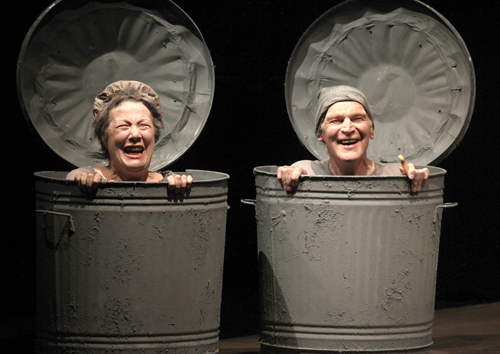
Endgame and Watt Samuel Beckett is not the Gloomy Gus everybody likes to think. All right, sure, he kind of is. But he’s also very funny. And I’m told tidy. He’s also a genius, damn it, and when it comes to interpretations of Beckett nobody has the cred that these Irish cats do, in Gate Theatre of Dublin’s rare visit to Berkeley’s Zellerbach Playhouse. Starring Barry McGovern, who can’t go on but will go on, in the great play Endgame, as well as his own selections from the novel Watt. (Nov. 17–20, Zellerbach Playhouse; calperfs.berkeley.edu.)

Film Listings

0

OPENING

Brighton Rock Writer Rowan Joffe (2010’s The American) moves into the director’s chair for this Graham Greene adaptation, previously filmed in 1947 with an early-career star turn by Richard Attenborough. Joffe’s version updates Greene’s 1938 story to 1964, allowing the brutal actions of small-time hood Pinkie Brown to unfold as Britain’s mods vs. rockers youth riots boil in the background. Don’t get too excited, though — despite a cool premise and even cooler setting, and the presence of veterans Helen Mirren and John Hurt in supporting roles, Brighton Rock rages without a rudder. Pinkie is played by Sam Riley (so good as Ian Curtis in 2007’s Control), who snarls like a sociopathic James Dean and is so transparently hateful it’s hard to root for anything other than his hastened demise. Brighton Rock‘s most memorable element is probably Andrea Riseborough, an on-the-verge young Brit who’s being touted as the next Carey Mulligan. She has the thankless yet showy role of Rose, a naïve waitress who becomes entangled in Pinkie’s web after being in the wrong place at the wrong time. A far-from-storybook ending awaits, and you’ll experience little enjoyment watching the characters claw their way there. (1:51) Embarcadero. (Eddy)

Don’t Be Afraid of the Dark If you’re expecting a traditional haunted house story, Don’t Be Afraid of the Dark might be a disappointment. The film, which was co-written by Guillermo del Toro, has a lot in common with his Pan’s Labyrinth (2006) — both movies are more dark fairy tale than horror. They follow a young girl who discovers a mystical world around her, much to the disbelief of the adults around her. It’s worth noting that Don’t Be Afraid of the Dark is lighter fare: despite all the peril involved, it’s actually pretty fun. Young Bailee Madison, who made such an impression in 2009’s Brothers, is a charming lead, precocious but believable. And Katie Holmes is surprisingly sympathetic in her role as the caring stepmother, a nice switch from the standard fairy tale trope. As with Fright Night, the ad campaign for Don’t Be Afraid of the Dark is misleading, so here’s hoping audience members looking for a gory slasher will appreciate a whimsical fable instead. (1:40) California. (Peitzman)

*The Hedgehog You needn’t possess the rough, everyday refinement of the characters of The Hedgehog to appreciate this debut feature by director-screenwriter Mona Achache — just an appreciation for a delicate touch and a tender heart. Eleven-year-old Paloma (the wonderful Garance Le Guillermic) is too smart for her own good, bored, neglected by her parents, and left to fend for herself with only her considerable imagination and a camcorder. She drifts around her fishbowl of privilege, a deluxe art nouveau-style apartment building in Paris, leveling her all-too-wise gaze on its denizens and plotting certain suicide on her 12th birthday — that is until a new resident appears in her viewfinder: a kindly Japanese gentleman Kakuro Ozu (Togo Igawa). He has as much of a connoisseur’s eye as Paloma — the proof is in his unlikely focus of attention, the building’s concierge Renée Michel (Josiane Balasko, resembling a burly Gertrude Stein), who hides her cultured and bookish inclinations behind a gruff, drab exterior. They recognize in each other a reverence for an almost monkish life of the mind, the austere elegance of wabi-sabi, and the transient beauty of rough-hewn imperfection, even in the sleek, well-heeled heart of the City of Light. To the credit of Achache, working with Muriel Barbery’s novel, these unlikely fragile friendships between outsiders take hold in a way that sidesteps preciousness and stays with you long after its pages have turned. (1:40) Clay, Shattuck, Smith Rafael. (Chun)

Motherland When Raffi Tang (Francoise Yip) learns of her estranged mother’s death, the prodigal-daughter returns to her hometown, San Francisco, only to discover that nothing is as first supposed. Forced to contend with the protracted legal battle between her late mother and re-married father (Kenneth Tsang) as well as an incompetent (and poorly acted) police detective (Jason Payne), Tang drifts, looking distracted, lost, and maybe vaguely concerned throughout the first two thirds of the film. Yip does little to enliven a flat script rife with stock phrases and worn cinematic conventions, and while her emotional distance seems genuine, it’s boring nonetheless. Motherland is, to its credit, an angry movie — director Doris Yeung drew on her own experience with the murder of her mother — but the rage fizzles when it finally does erupt, smothered by uninspired acting and a directionless screenplay. (1:33) Four Star. (Cooper Berkmoyer)

Our Idiot Brother Paul Rudd is the ne’er-do-well sibling to Emily Mortimer, Elizabeth Banks, and Zooey Deschanel. (1:36) Presidio.

*Shut Up Little Man! An Audio Misadventure Once upon a time (1987 to be exact), two young men moved to San Francisco from the Midwest. Eddie Lee “Sausage” and Mitchell “Mitch D” Deprey wound up living in a somewhat derelict apartment in the Lower Haight. The paint was peeling and the walls were thin, but the rent was cheap. What Eddie and Mitch didn’t count on was having Peter J. Haskett and Raymond Huffman as their neighbors. “You blind cocksucker. You wanna fuck with me? You try to touch me and I will kill you in a fucking minute.” “Shut up! Shut up! Shut up! Shut up little man!” The insults, tantrum throwing, and threats of violence coming from next door were constant. Eddie and Mitch started to lose sleep; after one failed attempt at complaining to Raymond’s face (he threatened death), they started tape-recording the endless geyser of vitriol — first, as possible future evidence, but also out of a growing voyeuristic fascination with these two seniors who had to be the world’s oddest and angriest odd couple. The rest is history. Mitch and Eddie started including snippets of Peter and Ray’s bickering on mix tapes for friends. Somehow, the editor of the now-defunct SF noise music zine Bananafish heard a snippet and approached Mitch and Eddie about distributing compilations of the recordings to a large network of found sound fans. Gradually “Peter and Raymond” became known and much-beloved characters. Their warped repartee inspired several theatrical adaptations, short animated films, pages of comic book panels by artists such as Dan Clowes, and even a one-off single from Devo side project the Wipeouters. Matthew Bate’s documentary Shut Up Little Man! An Audio Misadventure is much an attempt to comprehensively recount the above long, strange trip from start to finish; it is also the newest chapter in the now 20-year saga of Peter, Raymond, Mitch, and Eddie. (1:30) Roxie. (Sussman)

*!Women Art Revolution Bay Area artist and filmmaker Lynn Hershman Leeson’s vibrant look back at the first waves of feminist art in the ’60s and ’70s is an extremely necessary and impassioned recounting of a history that perpetually seems to be on the edge of erasure. Mixing old and new interviews with artists, critics, and scholars — many of which are from Hershman Leeson’s own personal archive — !W.A.R. lets those who stood at the frontlines of one the most significant movements in contemporary art tell their own stories. Seeing and hearing the testimonies of the likes of Yoko Ono, Cindy Sherman, B. Ruby Rich, Judy Chicago, Carolee Scheeman, Rachel Rosenthal, and Ingrid Sischy, one after another, is dazzling — like being in the presence of an Olympian summit — even as their overlapping tales of pushback, casual misogyny and outright ridicule from critics, the art establishment, and in some cases, their colleagues, paint a damning picture of just how endemic sexism was, and as the need for a film such as !WAR attests to, in many ways still is. (1:23) Lumiere, Shattuck. (Sussman)

ONGOING

*The Arbor An audaciously conceived and genuinely haunting chronicle of a family, The Arbor reinvents two of the most debased forms of nonfiction film: the venerating portrait of an artist who died young and the voyeuristic confession of abuse. The locus here is the short, bottle-strewn life of Andrea Dunbar, a brilliant playwright whose work distilled the manners and speech of the West Yorkshire housing projects. The Arbor effectively stages some of this work in a park near the same apartments, but the project’s focus is Dunbar’s shambling private life and its devastating effect on friends, lovers, and daughters. Our emotions are strained by their collective fury and grief, but never cheated. Curiously, Clio Barnard accomplishes this by being up front in her manipulations. After collecting interviews with the key players, she cast actors to lip sync the answers — that is, the voices are documentary while the images are staged, an uncanny effect that becomes even more so when Barnard stitches together responses to narrate a single event. The technique is eerie and literally disembodying. In the same way that one affected by trauma may experience a separation from his or her self, so the image of the actor speaking comes unglued from the “real” voice — and so too is there a crucial hesitation in our assigning authenticity to a single, undivided subject. There are shades of Greek tragedy in The Arbor‘s patient, distanced unfolding of its characters’ fates. The speakers are imagined as a chorus, and though the drama is offscreen, long since buried, the pain still lives. (1:34) Roxie. (Goldberg)

*Beginners There is nothing conventional about Beginners, a film that starts off with the funeral arrangements for one of its central characters. That man is Hal (Christopher Plummer), who came out to his son Oliver (Ewan McGregor) at the ripe age of 75. Through flashbacks, we see the relationship play out — Oliver’s inability to commit tempered by his father’s tremendous late-stage passion for life. Hal himself is a rare character: an elderly gay man, secure in his sexuality and, by his own admission, horny. He even has a much younger boyfriend, played by the handsome Goran Visnjic. While the father-son bond is the heart of Beginners, we also see the charming development of a relationship between Oliver and French actor Anna (Mélanie Laurent). It all comes together beautifully in a film that is bittersweet but ultimately satisfying. Beginners deserves praise not only for telling a story too often left untold, but for doing so with grace and a refreshing sense of whimsy. (1:44) Four Star, Lumiere. (Peitzman)

*Bellflower Picture Two Lane Blacktop (1971) drifters armed with “dude”-centric vocabulary and an obsession with The Road Warrior (1981) and its apocalypse-wow survivalist chic. There are so many pleasures in this janky, so-very-DIY, heavy-on-the-sunblasted-atmosphere indie that you’re almost willing to overlook the clichés, the dead zones, and the annoying characters. Seeming every-dudes Woodrow (director-writer-producer Evan Glodell) and Aiden (Tyler Dawson) are far too obsessed with tricking out their cars and building a flamethrower for their own good — the misfits must force themselves out of the metal shop of the mind to meet women. So when Woodrow goes up against Milly (Jessie Wiseman) in a cricket-eating contest at a bar, it’s love at first bite. Their meet-gross morphs into a road trip and eventually a relationship, while the flamethrower nags, unexplained, in the background, like an unfired gun — or an unconsummated, not-funny bromance. These manifestations of male fantasy — muscle cars, weapons, and tough chicks — are cast in a dreamy, saturated, and burnt-at-the-edges light, as Glodell and company weave together barely articulated reveries and bad-new-west imagery with a kind of fuck-all intelligence, culminating in a finale that will either haunt you with its scattershot machismo-romanticism or leave you scratching your noggin wondering what just happened. (1:46) Sundance Kabuki. (Chun)

Buck This documentary paints a portrait of horse trainer Buck Brannaman as a sort of modern-day sage, a sentimental cowboy who helps “horses with people problems.” Brannaman has transcended a background of hardship and abuse to become a happy family man who makes a difference for horses and their owners all over the country with his unconventional, humane colt-starting clinics. Though he doesn’t actually whisper to horses, he served as an advisor and inspiration for Robert Redford’s The Horse Whisperer (1998). Director Cindy Meehl focuses generously on her saintly subject’s bits of wisdom in and out of a horse-training setting — e.g. “Everything you do with a horse is a dance” — as well as heartfelt commentary from friends and colleagues. In the harrowing final act of the film, Brannaman deals with a particularly unruly horse and his troubled owner, highlighting the dire and disturbing consequences of improper horse rearing. (1:28) Opera Plaza. (Sam Stander)

Captain America: The First Avenger OK, Marvel. I could get behind 2008’s Iron Man (last year’s Iron Man 2, not so much), but after Thor and now Captain America, I’m starting to get cynical about this multi-year build-up to the full-on Avengers movie, due in May 2012. Can even a superhero-stuffed movie directed by Joss Whedon live up to all this hype? There’s plenty of time to ponder, and maybe worry a little, with Captain America’s backstory-explaining picture now in theaters. Chris Evans stars as the 90-pound weakling who morphs into a supersoldier, thanks to the World War II-era tinkerings of a scientist (Stanley Tucci) and an inventor (Dominic Cooper as Howard Stark, a.k.a. Iron Man’s dad). The original plan for the musclebound shield-bearer (fighting Nazis, natch) gets waylaid a bit when the newly famous Captain America becomes a PR prop for the U.S. government; it’s abandoned entirely when a worse-than-Hitler foe, in the guise of power-obsessed Red Skull (Hugo Weaving), threatens the world. Directed by Spielberg cohort Joe Johnston, Captain America is gee-whiz enjoyable enough, but it’s very nearly the same movie as Thor, which no amount of Tommy Lee Jones (as a sarcastic army colonel) wisecracks can conceal. And here’s an anti-spoiler: there’s no post-credits surprise in this one, so you can bolt as soon as they start to roll. (2:09) SF Center, Shattuck. (Eddy)

Conan the Barbarian Neither 3D (unnecessary) nor Jason Momoa (beefcake-y) are enough to make this Conan the Barbarian competition for the 1982 Schwarzenegger classic. This new take is a barely adequate adventure movie helped along by Rose McGowan’s leering turn as an evil witch with Freddy Krueger claws. Would that everyone involved (including frequent remake director Marcus Nispel) had McGowan’s razor-sharp grasp of tone; as a whole, the film is never quite sure if it’s a camp-tastic voyage (the prologue, containing Conan’s birth and much Ron Perlman nostril-flaring, suggests what might have been) or a semi-straightforward fantasy actioner. A totally forgettable female lead (Rachel Nichols), a he-was-scarier-in-Avatar villain (Stephen Lang), a blah mixture of two tired plots (revenge + “chosen one”) — there’s just not a lot here, aside from a few hilarious lines of dialogue and Momoa’s muscles. He was so great in Game of Thrones, though, I suspect this dud won’t keep his career from skyrocketing. (1:42) 1000 Van Ness. (Eddy)

Cowboys and Aliens Here ’tis in a nutshell: the movie’s called Cowboys and Aliens — and that’s exactly, entirely what you’ll get. Director Jon Favreau may never best 2008’s Iron Man (actor Jon Favreau will prob never top 1996’s Swingers, but that’s a debate for another time), but that doesn’t mean he won’t have a good time trying. Cowboys is a genre mash-up in the most literal sense; as the title suggests, it pits Wild West gunslingers (Harrison Ford as a crabby cattleman, Daniel Craig as an amnesiac outlaw) against gold-seeking space invaders who also delight in kidnapping and torturing humans. As stupidly entertaining as it is, this is a textbook example of a pretty OK movie that could have been so much better … if only. If only the alien characters had a little bit more District 9-style personality. If only the story had a shred of suspense — look ye not here for “spooky” and “mysterious;” this shit is 100 percent full-on explosions. If only Craig’s comically fine-tooled physique didn’t outshine his wooden acting. And so forth. (1:58) 1000 Van Ness, SF Center. (Eddy)

Crazy, Stupid, Love Keep the poster’s allusion to 1967’s The Graduate to one side: there aren’t many revelations about midlife crises in this cleverly penned yet strangely flat ensemble rom-com, awkwardly pitched at almost every demographic at the cineplex. There’s the middle-aged romance that’s withered at the vine: nice but boring family man Cal (Steve Carell) finds himself at a hopeless loss when wife and onetime teenage sweetheart Emily (Julianne Moore) tells him she wants a divorce and she’s slept with a coworker (Kevin Bacon). He ends up waxing pathetic at a slick nightclub where he catches the eye of the well-dressed, spray-tanned smoothie Jacob (Ryan Gosling), who appears to have taken his ladies man stance from the Clooney playbook. It’s manly makeover time: GQ meets Pretty Woman (1990)! Cut to Cal and Emily’s babysitter Jessica (Analeigh Tipton), who is crushing out on Cal, while the separated couple’s tween Robbie (Jonah Bobo) hankers for Jessica. Somehow Josh Groban worms his way into the mix as the dullard suitor of Hannah (Emma Stone) in a hanging chad of a storyline that must somehow be resolved in this mad, mad, mad, mad — actually, the problem with Crazy, Stupid, Love is that it isn’t really that crazy. It tries far too hard to please everybody in the theater to its detriment, reminding the viewer of a tidy, episodic TV series (albeit a quality effort) like Modern Family more than an actual film. Likewise I yearned for a way to fast-forward through the too-cute Jessica-Robbie scenes in order to get back to the sleazy-smart, punchy complexity of Gosling, playing adeptly off both Carrell and Stone. (1:58) Marina, 1000 Van Ness, Shattuck, Sundance Kabuki. (Chun)

The Devil’s Double Say hello to my little friend, again— and rest assured, it’s not a dream and you’re seeing double. New Zealand filmmaker Lee Tamahori gets back to his potboiler roots with this campy, claustrophobic look back at the House of Saddam Hussein, based on a true story and designed to win over fans of Scarface (1983) with its portrait of mad excess and deca-dancey ’80s-ish soundtrack. The craziest poseur of all is Hussein’s son Uday (Dominic Cooper), a petty dictator-in-the-making — and, according to this film, a full-fledged murderous pedophile — who chomps cigars and wraps his jaws around schoolgirls while Cooper happily chews scenery. Uday needs a double to sidestep all those troublesome assassination attempts, so he enlists look-alike childhood friend Latif (also Cooper) to get the surgery, pop in the overbite, bray like a madman, make appearances in his stead, and function as a kind of pet human. Never mind Ludivine Sagnier, glassy-eyed and absurd in the role of Uday’s favorite sex kitten Sarrab — Double is completely Cooper’s, who seizes the moment, investing the morally upstanding Latif with a serious sincerity with just his eyes and body language and infusing evil odd job Uday with a dangerous, comic-book unpredictability. To his credit, Cooper imbues such cult-ready, blow-the-doors-off lines as “I love cunt! I love cunt more than god!” with, erm, believability, even as the denouement rings somewhat false. (1:48) Empire. (Chun)

*Final Destination 5 The thing about my undying love for the Final Destination series is that it’s completely legitimate and 100 percent sincere. You know exactly what you’re getting with each new movie, and these films never try to tell you otherwise. Yes, everyone will die. Yes, the deaths will be creative and disgusting. Yes, the quality of acting will be sacrificed for some of the more expensive splatter effects. For those of us who understand what the series is all about, Final Destination 5 is a triumph. It’s gory, wickedly funny, and a notable improvement on previous sequels. Not to mention the fact that Tony “Candyman” Todd gets a beefed-up role. For once, the 3D is actually a big help, with some of the best in-your-face effects I’ve seen. As for non-fans, I can’t say Final Destination 5 has much to offer. You have to embrace the absurdity and the mission statement before you can fully appreciate death by laser eye surgery. (1:32) 1000 Van Ness. (Peitzman)

Fright Night Don’t let the spooky trailer fool you: the Fright Night remake is almost as silly as the original. In fact, it follows the 1985 film closely, as young Charley Brewster (Anton Yelchin) comes to realize that his neighbor Jerry (Colin Farrell) is a vampire. The biggest change is a smart one — this Fright Night transforms late-night TV host Peter Vincent into Criss Angel-type illusionist Peter Vincent (David Tennant). The casting is spot on all-around, and frankly, Farrell is a lot more believable than Chris Sarandon as the seductive bad boy. The only real problem with the new Fright Night — other than the unnecessary 3D — is that it never fully commits to camp the way the original did. There’s a bit too much back-and-forth between serious scares and goofy blood splatters. Luckily, it’s still an entertaining remake that doesn’t crap all over a classic. It’s also a great reminder that vampires don’t have to be moody — remember, they used to be fun. (2:00) 1000 Van Ness, Presidio. (Peitzman)

*The Future Dreams and drawings, cats and fantasies, ambition and aimlessness, and the mild-mannered yet mortifying games people play, all wind their way into Miranda July’s The Future. The future’s a scary place, as many of us fully realize, even if you hide from it well into your 30s, losing yourself in the everyday. But you can’t duck July’s collection of moments, objects, and small gestures transformed into something strangely slanted and enchanted, both weird and terrifying, when viewed through July’s looking glass. Care and commitment — to oneself and others — are two vivid threads running through The Future. Cute couple Sophie (July) and Jason (Hamish Linklater) — unsettling look-alikes with their curly crops — appear at first to be sailing contently, aimlessly toward an undemanding unknown: Jason works from home as a customer-service operator, and Sophie attempts to herd kiddies as a children’s dance instructor. But enormous, frightening demands beckon — namely the oncoming adoption of a special-needs feline named Paw-Paw (voiced by July as if it’s a traumatized, innocent child). Lickety-splitsville, they must be all they can be before Paw-Paw’s arrival. The weirdness of the familiar, and the kindness of strangers, become ways into fantasy and escape when the couple bumps up against the limits of their imagination. This ultra-low-key horror movie of the banal is obviously remote territory for July (2005’s Me and You and Everyone We Know). The Future is her best film to date and finds her tumbling into a kind of magical realism or plastic fantastic, embodied by a talking cat that becomes the conscience of the movie. (1:31) California, Sundance Kabuki. (Chun)

Glee: The 3D Concert Movie (1:30) 1000 Van Ness.

The Guard Irish police sergeant Gerry Boyle (Brendan Gleeson) is used to running his small town on his own terms — not in a completely Bad Lieutenant (1992) kind of way, though he’s not afraid to sample drugs and hang with hookers. More like, he’s been running the show for years, and would prefer that big-city cops stay the hell out of his village. Alas, a gang of drug smugglers is doing business in the area, so an officious group of investigators from Dublin (horrors!) and America (in the form of an FBI agent played by Don Cheadle) soon descend. His mother’s dying, his brand-new partner’s missing, and between all the interlopers on both sides of the law, Boyle’s having a hard time having a pint in peace. Good thing he’s not as simple-minded as all who surround him think he is. Writer-director John Michael McDonagh (brother of playwright Martin, who directed 2008’s In Bruges — also starring Gleeson) puts an affable Irish spin on what’s essentially a pretty typical indie comedy, with some pretty typical crime-drama elements layered atop. Boyle’s character is memorably clever, but the film that contains him never quite elevates to his level. (1:36) Embarcadero, Shattuck, Sundance Kabuki. (Eddy)

Gun Hill Road Though the visibility of gays and lesbians in cinema remains (largely) confined to independent film, Rashaad Ernesto Green, in his debut feature Gun Hill Road, uses the creative freedom afforded by that closeting to explore issues of race and confused sexuality amid the Latino population of the Bronx. Esai Morales is Enrique, a former drug dealer returning from prison to his wife Angela (Judy Reyes) and teenage son Michael (Harmony Santana). But everyone seems to have moved on with their lives. Angela is having an affair, and Michael has created a new persona, Vanessa. Green’s film focuses on the relationship between the damaged Enrique and Michael, whose cross-dressing and budding transsexuality puts the family members at odds. Nominated for the Grand Jury Prize at Sundance and an entry in this year’s Frameline Film Festival, Gun Hill Road is one in a recent spate of films that deals with coming out in an urban setting. Like Green’s film, Peter Bratt’s La Mission (2009) offered a picture of homophobia in the Latino community. But Gun Hill Road, despite its bulging dramatic heft, shirks the after-school-special formula of La Mission by imagining complex characters rather than hewing them from instantly recognizable, sympathetic archetypes. (1:28) Sundance Kabuki. (Ryan Lattanzio)

*Harry Potter and the Deathly Hallows Part 2 Chances are you aren’t going to jump into the Harry Potter series with Harry Potter and the Deathly Hallows Part 2. So while the movie is probably the best Harry Potter film yet, it’s more a fitting conclusion than a standalone film. For fans of the books, there are no real surprises — this is a close adaptation. And for those Harry Potter movie fans who haven’t read the books, shame on you, and kudos if you managed to not get spoiled. It’s hard for me to offer a serious critical analysis of Part 2, because it represents the end of a long and very emotional journey. (Everyone in that audience was crying. Everyone.) I will say that, as was the case in the book, there are a few overdone, schmaltzy moments that aren’t really necessary. But in the context of the series, they’re forgivable — this may not be the great cinematic event of our generation, but Harry Potter as a whole is sure to be one of our most enduring cultural icons. (2:10) 1000 Van Ness, Sundance Kabuki. (Peitzman)

The Help It’s tough to stitch ‘n’ bitch ‘n’ moan in the face of such heart-felt female bonding, even after you brush away the tears away and wonder why the so-called help’s stories needed to be cobbled with those of the creamy-skinned daughters of privilege that employed them. The Help purports to be the tale of the 1960s African American maids hired by a bourgie segment of Southern womanhood — resourceful hard-workers like Aibileen (Viola Davis) and Minny (Octavia Spencer) raise their employers’ daughters, filling them with pride and strength if they do their job well, while missing out on their own kids’ childhood. Then those daughters turn around and hurt their caretakers, often treating them little better than the slaves their families once owned. Hinging on a self-hatred that devalues the nurturing, housekeeping skills that were considered women’s birthright, this unending ugly, heartbreaking story of the everyday injustices spells separate-and-unequal bathrooms for the family and their help when it comes to certain sniping queen bees like Hilly (Bryce Dallas Howard). But the times they are a-changing, and the help get an assist from ugly duckling of a writer Skeeter (Emma Stone, playing against type, sort of, with fizzy hair), who risks social ostracism to get the housekeepers’ experiences down on paper, amid the Junior League gossip girls and the seismic shifts coming in the civil rights-era South. Based on the best-seller by Kathryn Stockett, The Help hitches the fortunes of two forces together — the African American women who are trying to survive and find respect, and the white women who have to define themselves as more than dependent breeders — under the banner of a feel-good weepie, though not without its guilty shadings, from the way the pale-faced ladies already have a jump, in so many ways, on their African American sisters to the Keane-eyed meekness of Davis’ Aibileen to The Help‘s most memorable performances, which are also tellingly throwback (Howard’s stinging hornet of a Southern belle and Jessica Chastain’s white-trash bimbo-with-a-heart-of-gold). (2:17) Balboa, California, Empire, 1000 Van Ness, Presidio, SF Center, Sundance Kabuki. (Chun)

Midnight in Paris Owen Wilson plays Gil, a self-confessed “Hollywood hack” visiting the City of Light with his conservative future in-laws and crassly materialistic fiancée Inez (Rachel McAdams). A romantic obviously at odds with their selfish pragmatism (somehow he hasn’t realized that yet), he’s in love with Paris and particularly its fabled artistic past. Walking back to his hotel alone one night, he’s beckoned into an antique vehicle and finds himself transported to the 1920s, at every turn meeting the Fitzgeralds, Gertrude Stein (Kathy Bates), Dali (Adrien Brody), etc. He also meets Adriana (Marion Cotillard), a woman alluring enough to be fought over by Hemingway (Corey Stoll) and Picasso (Marcial di Fonzo Bo) — though she fancies aspiring literary novelist Gil. Woody Allen’s latest is a pleasant trifle, no more, no less. Its toying with a form of magical escapism from the dreary present recalls The Purple Rose of Cairo (1985), albeit without that film’s greater structural ingeniousness and considerable heart. None of the actors are at their best, though Cotillard is indeed beguiling and Wilson dithers charmingly as usual. Still — it’s pleasant. (1:34) Albany, Four Star, Embarcadero, 1000 Van Ness, Piedmont, Sundance Kabuki. (Harvey)

*My Perestroika Robin Hessman’s very engaging documentary takes one very relatable look at how changes since glasnost have affected some average Russians. The subjects here are five thirtysomethings who, growing up in Moscow in the 70s and 80s, were the last generation to experience full-on Communist Party indoctrination. But just as they reached adulthood, the whole system dissolved, confusing long-held beliefs and variably impacting their futures. Andrei has ridden the capitalist choo-choo to considerable enrichment as the proprietor of luxury Western menswear shops. But single mother Olga, unlucky in love, just scrapes by, while married schoolteachers Lyuba and Boris are lucky to have inherited an apartment (cramped as it is) they could otherwise ill afford. Meanwhile Ruslan, once member of a famous punk band (which he abandoned on principal because it was getting “too commercial”), both disdains and resents the new order just as he did the old one. Home movies and old footage of pageantry celebrating Soviet socialist glory make a whole ‘nother era come to life in this intimate, unexpectedly charming portrait of its long-term aftermath. (1:27) Balboa. (Harvey)

*The Names of Love Arthur (Jacques Gamblin) is a 40-ish scientist being interviewed about the threat of a bird flu epidemic when his radio broadcast is interrupted by 20-something Baya (Sara Forestier), who denounces him on-air as a “fascist” for frightening the public. But then, Baya tends to use that label rather indiscriminately, applying it to anyone who might conceivably have views to the right of the dial — and Arthur is in fact a solid liberal, which means she can bed him for love. As opposed to the many, many other men she beds as a self-described “political whore,” seeking out conservative types in order to seduce them and hopefully induce an idealogical shift by whispering sweet nothings (“Not all Arabs are thieves,” etc.) as they orgasm. Raised by parents whose emotions are so tightly wound his mother won’t acknowledge her parents were Jews killed at Auschwitz, Arthur has a hard time adjusting to a relationship with a lover who is faithful emotionally but sees promiscuity as her propagandic gift to the world. Meanwhile Baya’s largely Algerian family treats garrulous political argument as the very air they breathe. This odd-couple story written by Baya Kasmi and director Michel Leclerc deals with serious issues in both humorous and respectful fashion, making for one of the more novel, delightful and depthed French romantic comedies in a long time. Added plus: lots of antic gratuitous nudity. (1:42) Opera Plaza, Smith Rafael. (Harvey)

*One Day Why do romantic comedies get such a bad rap? Blame it on the lame set-up, the contrived hurdles artificially buttressed by the obligatory chorus of BFFs, the superficial something-for-every-demographic-with-ADD multinarrative, and the implausible resolutions topped by something as simple as a kiss or as conventional as marriage, but often no deeper, more crafted, or heartfelt than an application of lip gloss. Yet the lite-as-froyo pleasures of the genre don’t daunt Danish director Lone Scherfig, best known for her deft touch with a woman’s story that cuts closer to the bone, with 2009’s An Education. Her new film, One Day, based on the best-selling novel by David Nicholls, flirts with the rom-com form — from the kitsch associations with Same Time, Next Year (1978) to the trailer that hangs its love story on a crush — but musters emotional heft through its accumulation of period details, a latticework of flashbacks, and collection of encounters between its charming protagonists: upper-crusty TV presenter Dexter (Jim Sturgess) and working-class aspiring writer Emma (Anne Hathaway). Their quickie university friendship slowly unfolds, as they meet every St. Swithin’s Day, July 15, over a span of years, into the most important relationship of their lives. Despite the blue-collar female lead and UK backdrop that it shares with An Education, One Day feels like a departure for Scherfig, who first found international attention for her award-winning Dogme 95-affiliated Italian for Beginners (2000). (1:48) Balboa, Marina, 1000 Van Ness, Piedmont, SF Center, Shattuck. (Chun)

*Point Blank Not for nothing did Hollywood remake French filmmaker Fred Cavaye’s last film, Anything for Her (2008) as The Next Three Days (2010) — Cavaye’s latest, tauter-than-taut thriller almost screams out for a similar rework, with its Bourne-like handheld camera work, high-impact immediacy, and noirish narrative economy. Point Blank — not to be confused with the 1967 Lee Marvin vehicle —kicks off with a literal slam: a mystery man (Roschdy Zem) crashing into a metal barrier, on the run from two menacing figures until he is cornered and then taken out of the action by fate. His mind mainly on the welfare of his very pregnant wife Nadia (Elena Anaya), nursing assistant Samuel (Gilles Lellouche) has the bad luck to stumble on a faux doctor attempting to make sure that the injured man never rises from his hospital bed. As police wrangle over whose case this exactly is — the murder of an industrialist seems to have expanded the powers of the stony-faced, monolithic Commandant Werner (Gerard Lanvin) — Samuel gets sucked into the mystery man’s lot, a conspiracy that allows them to trust no one, and seemingly impossibly odds against getting out of the mess alive. Cavaye never quite stops applying the pressure in this clever, unrelenting cat-and-mouse and mouse-and-his-spouse game, topping it with a nerve-jangling search through a messily chaotic police station. (1:24) Embarcadero, Shattuck. (Chun)

*Rise of the Planet of the Apes “You gotta love a movie where the animals beat up on the humans,” declared my Rise of the Planet of the Apes companion. Indeed, ape must not kill ape, and this Planet of the Apes prequel-cum-remake of Conquest of the Planet of the Apes (1972) takes the long view, back to the days when ape-human relations were still high-minded enough to forbid smart apes from killing those well-armed, not-so-bright humanoids. I was a fan of the original series, but honestly, I approached Rise with trepidation: I dreaded the inevitable scenes of human cruelty meted out to exploited primates — the current wave of chimp-driven films seems focused on holding a scary, shaming mirror up to the two-legged mammalian violence toward their closest living genetic relatives. It’s a contrast to the original series, which provided prisms with which to peer at race relations and generational conflict. But I needn’t have feared this PG-13 “reboot.” There’s little CGI-driven gore, apart from the visceral opening and the showdown, though the heartbreak remains. Scientist Will (James Franco, brow perpetually furrowed with worry) is working to find a medicine designed to supercharge the brain in the wake of Alzheimer’s — a disease that has struck down his father (John Lithgow). When the experimental chimp that responds to his serum becomes violently aggressive, the project is shut down, although the primate leaves behind a surprise: a baby chimp that Will and his father name Caesar and raise like a beloved child in their idyllic Bay Area Victorian. Growing in intelligence as he matures, Caesar finds himself torn by an existential dilemma: is he a pet or a mammal with rights that must be respected? Rise becomes Caesar’s story, rendered in heart-wrenching, exhilarating ways — to director Rupert Wyatt and his team’s credit you don’t miss the performance finesse of Roddy McDowell and Kim Hunter in groundbreaking prosthetic ape face in the original movies — while resolving at least one question about why humans gave up the globe to the primates. One can only imagine the next edition will take care of the lingering question about how even the cleverest of apes will feed themselves in Muir Woods. (1:50) Empire, 1000 Van Ness, Presidio, SF Center, Sundance Kabuki. (Chun)

Sarah’s Key (1:42) Albany, Bridge, Piedmont.

*Senna When Ayrton Senna died in 1994 at the age of 34, he had already secured his legacy as one of the greatest and most beloved Formula One racers of all time. The three-time world champion was a hero in his native Brazil and a respected and feared opponent on the track. This eponymous documentary by director Asif Kapadia is nearly as dynamic as the man himself, with more than enough revving engines and last minute passes to satisfy your lust for speed and a decent helping Ayrton’s famous personality as well. Senna was a champion, driven to win even as the sometimes-backhanded politics of the racing world stood in his way. A tragic figure, maybe, but a legend nonetheless. You don’t have to be an F1 fan to appreciate this film, but you may wind up one by the time the credits roll. (1:44) Embarcadero, Smith Rafael. (Berkmoyer)

Sholem Aleichem: Laughing in the Darkness This documentary cuts to the chase right at the beginning: yeah, Sholem Aleichem was the guy who wrote the Tevye stories that inspired Fiddler on the Roof. But filmmaker Joseph Dorman isn’t trying to make Fiddler: Behind the Musical. Instead, he takes an in-depth look at the life, writing career, and cultural significance of “one of the great modern Jewish writers — and our greatest Yiddish writer,” per the film’s press notes. Fans of Jewish lit will be particularly engaged by Sholem Aleichem’s tale; raised in a shtetl in what’s now the Ukraine, he moved around Europe and to the United States pursuing various careers, but always writing the popular stories that addressed not just Jewish life, but broader issues facing turn-of-the-last-century Jews, including the cross-generational conflicts that make up much of Fiddler‘s plot and humor. That said, this film does rely an awful lot on PBS-style slow pans over black-and-white photos and intellectual talking heads; one suspects the subject himself (so devoted was he to entertaining the regular folk who gobbled up his tales) would’ve preferred his life story to unfold in a livelier fashion. (1:33) Opera Plaza. (Eddy)

Spy Kids: All the Time in the World (1:29) 1000 Van Ness.

30 Minutes or Less In some ways, 30 Minutes or Less is reminiscent of 2008’s Pineapple Express: both are stoner action comedies about normal people shoved into high-stakes criminal activity. But while Pineapple Express was an exciting addition to the genre, 30 Minutes or Less is a flimsy 80-minute diversion that still feels like a waste of time. Jesse Eisenberg plays Nick, a pizza delivery boy who is forced to rob a bank after two would-be criminals strap a bomb to his chest. Strangely, Eisenberg was more charming as Mark Zuckerberg in The Social Network (2010) — and his buddy Chet (Aziz Ansari) doesn’t exactly up the likability factor. There’s actually the potential for an interesting story here: something darker seems appropriate, given that 30 Minutes or Less was inspired by a true story with a very unhappy ending. But the film completely fumbles, delivering an action comedy that’s neither tense nor funny. That means the pizza’s free, right? (1:29) 1000 Van Ness, SF Center, Shattuck. (Peitzman)

The Tree of Life Mainstream American films are so rarely adventuresome that overreactive gratitude frequently greets those rare, self-conscious, usually Oscar-baiting stabs at profundity. Terrence Malick has made those gestures so sparingly over four decades that his scarcity is widely taken for genius. Now there’s The Tree of Life, at once astonishingly ambitious — insofar as general addressing the origin/meaning of life goes — and a small domestic narrative artificially inflated to a maximally pretentious pressure-point. The thesis here is a conflict between “nature” (the way of striving, dissatisfied, angry humanity) and “grace” (the way of love, femininity, and God). After a while Tree settles into a fairly conventional narrative groove, dissecting — albeit in meandering fashion — the travails of a middle-class Texas household whose patriarch (a solid Brad Pitt) is sternly demanding of his three young sons. As a modern-day survivor of that household, Malick’s career-reviving ally Sean Penn has little to do but look angst-ridden while wandering about various alien landscapes. Set in Waco but also shot in Rome, at Versailles, and in Saturn’s orbit (trust me), The Tree of Life is so astonishingly self-important while so undernourished on some basic levels that it would be easy to dismiss as lofty bullshit. Its Cannes premiere audience booed and cheered — both factions right, to an extent. (2:18) Four Star, Lumiere, Shattuck. (Harvey)

*The Trip Eclectic British director Michael Winterbottom rebounds from sexually humiliating Jessica Alba in last year’s flop The Killer Inside Me to humiliating Steve Coogan in all number of ways (this time to positive effect) in this largely improvised comic romp through England’s Lake District. Well, romp might be the wrong descriptive — dubbed a “foodie Sideways” but more plaintive and less formulaic than that sun-dappled California affair, this TV-to-film adaptation displays a characteristic English glumness to surprisingly keen emotional effect. Playing himself, Coogan displays all the carefree joie de vivre of a colonoscopy patient with hemorrhoids as he sloshes through the gray northern landscape trying to get cell reception when not dining on haute cuisine or being wracked with self-doubt over his stalled movie career and love life. Throw in a happily married, happy-go-lucky frenemy (comic actor Rob Brydon) and Coogan (TV’s I’m Alan Partridge), can’t help but seem like a pathetic middle-aged prick in a puffy coat. Somehow, though, his confused narcissism is a perverse panacea. Come for the dueling Michael Caine impressions and snot martinis, stay for the scallops and Brydon’s “small man in a box” routine. (1:52) Opera Plaza. (Devereaux)

*Vigilante Vigilante Eschewing any pretense of objectivity and adopting a civic-journalism approach, Bay Area director Max Good and producer Nathan Wollman exhaustively explore the issues at stake in the current graffiti and street art scene by focusing on some unexpected, once-hidden antagonists: the so-called buffers, graffiti abatement advocates, and self-styled vigilantes who obsessively paint over graffiti in cities like Los Angeles (Joe Connolly) and New Orleans (Fred Radtke). Good wraps his interviews with well-known street artists like Shepard Fairey, cultural critics such as Stefano Bloch, and graf advocates a la SF author Steve Rotman around his central pursuit: he’s trying to uncover the identity of the Silver Buff, the mysterious figure who has splashed silver over artwork and tags in Berkeley for more than a decade. After capturing the Buff on camera in the wee hours of the morn, the documentarian get his story — it’s Jim Sharp, a stubborn preservationist intent on “beautifying” the blight, tearing down street posters, picking up trash, and covering over what he sees as vandalism, even if he has to damage the property he claims to be cleaning up. In a witty twist on if-you-can’t-beat-’em-join-’em, Good and Wollman ratchet their tale up a notch when they follow Sharp with colorful paint of their own, brilliantly driving home an appeal for freedom of expression and a reclamation of public space. (1:26) Roxie. (Chun)

The Whistleblower (1:58) Opera Plaza, Shattuck, Smith Rafael.


Film listings are edited by Cheryl Eddy. Reviewers are Kimberly Chun, Michelle Devereaux, Max Goldberg, Dennis Harvey, Louis Peitzman, Lynn Rapoport, Ben Richardson, and Matt Sussman. For rep house showtimes, see Rep Clock. 

Project Dog brings out the purebred in rescue dogs

0

“I once split my pants photographing a Finnish spitz on the cliffs above Sutro Baths,” the lovely, energetic Kira Stackhouse laughed over drinks at Blackbird Bar in the Castro last week. She was recounting some very interesting stories about her ambitious Project Dog — an attempt to meticulously photograph woofy representatives of all 170 official American Kennel Club registered breeds next to purebred counterparts from dog rescue agencies.

“A big part of my mission is to photograph as many of these dogs as I can in iconic San Francisco and Bay Area settings, sometimes I’m trying to shoot five or six dogs a day. It’s not like I travel around with a change of clothes –but apparently there’s no lengths I won’t go to! So I just tried to hold my legs together until I got the shot.”

Stackhouse, who left a high profile job in marketing to expand her Nuena Pets photography business, launched a Kickstarter campaign earlier this month to help fund a full-color coffeetable book that will come out of Project Dog. (The campaign wraps up in three more days.) I asked her to explain the motivations behind the project — which has become a viral hit in the Bay Area and beyond, and has garnered several local accolades —  and what she hoped to accomplish. 

“It was weird how the idea came about. I love pets, but I always thought of myself as more into cats — until I got a dog of my own a couple years ago and fell completely in love. The dog was a purebred from a breeder, a Boston terrier. And when I would take him out, people would give me such shit about not going to an animal rescue place.

“So I thought, ‘You know, most people don’t know that rescued animals can be purebred — or that almost all official breed groups contain rescue organizations.’ It dawned on me that one way to get this message out would be to start a project that gets these dogs side by side in a format that would be instantly recognizable and appealing to people.

A sample layout from the forthcoming Project Dog book, featuring Basenjis — one from a breeder and one from an animal rescue organization.

“On top of that, I wanted this to be a community effort — so I asked people to submit their purebreds for picture consideration and tell stories about them on the Project Dog site. People really got into that — some of the stories are so funny, and we attracted entries from people like the mayor of Carmel! Then I could see what was out there and choose which dogs to photograph.

“But another community function I wanted to fulfill was building a platform to host the debate about purebred rescue dogs. People feel passionately — some owners are afraid rescue purebreds will diminish the ‘brand’ of the dogs, and some rescue dog fans are really vocal about their opposition to breed fetishization. This is somewhere they can all go at it.

And of course, I get to photograph some really beautiful dogs — and get really creative in a way I feel can benefit the community.”

It’s true, she does — some of the photos and test layouts for the book are stunning. But Project Dog, which is partnered with the SPCA, is also helping to enlarge perceptions of rescue dogs, usually knee-jerked as mangy mutts (not that those aren’t cute!), when in fact any kind of dog can find itself in need of a loving home. The Project Dog motto is, “Every dog is a work of art,” and Stackhouse’s dedication is proving that true. 

Preorder the Project Dog book for three more days on the Project Dog Kickstarter.

Film Listings

0

OPENING

Amigo John Sayles’ career is a fascinating one too varied to fully examine here; suffice it to say, the man’s first big gig was writing 1978’s Piranha before he became the indie auteur behind such notables as 1984’s The Brother from Another Planet, 1987’s Matewan, 1988’s Eight Men Out, and 1996’s Lone Star. He favors large ensemble casts, socially-conscious themes, and an unhurried pace that allows the exploration of various plot threads. Amigo is possibly most similar to 1997’s Men With Guns, in that it’s largely subtitled, is set in a foreign country (here, the Philippines), and plays out against a backdrop of political and military unrest. The film takes place during the Philippine-American War, circa 1900, as U.S. troops (led by Sayles favorite Chris Cooper) roam the just-freed-from-Spain jungles searching for rebels who threaten America’s claim to the land. Also in the mix are town leader Rafael (Filipino superstar Joel Torre), his guerilla brother (Ronnie Lazaro), and a crooked priest (Yul Vázquez) fond of incorrectly translating between sides. Amigo‘s an important film simply because it educates about a little-known conflict — frankly, America’s conduct as occupiers is so cruel that it’s no surprise the history books gloss over it — but it’s slow-moving and heavy-handed, with a tone that pitches uneasily between humor and tragedy. (2:08) Stonestown. (Eddy)

*The Arbor An audaciously conceived and genuinely haunting chronicle of a family, The Arbor reinvents two of the most debased forms of nonfiction film: the venerating portrait of an artist who died young and the voyeuristic confession of abuse. The locus here is the short, bottle-strewn life of Andrea Dunbar, a brilliant playwright whose work distilled the manners and speech of the West Yorkshire housing projects. The Arbor effectively stages some of this work in a park near the same apartments, but the project’s focus is Dunbar’s shambling private life and its devastating effect on friends, lovers, and daughters. Our emotions are strained by their collective fury and grief, but never cheated. Curiously, Clio Barnard accomplishes this by being up front in her manipulations. After collecting interviews with the key players, she cast actors to lip sync the answers — that is, the voices are documentary while the images are staged, an uncanny effect that becomes even more so when Barnard stitches together responses to narrate a single event. The technique is eerie and literally disembodying. In the same way that one affected by trauma may experience a separation from his or her self, so the image of the actor speaking comes unglued from the “real” voice — and so too is there a crucial hesitation in our assigning authenticity to a single, undivided subject. There are shades of Greek tragedy in The Arbor‘s patient, distanced unfolding of its characters’ fates. The speakers are imagined as a chorus, and though the drama is offscreen, long since buried, the pain still lives. (1:34) Roxie. (Goldberg)

*Bellflower Picture Two Lane Blacktop (1971) drifters armed with “dude”-centric vocabulary and an obsession with The Road Warrior (1981) and its apocalypse-wow survivalist chic. There are so many pleasures in this janky, so-very-DIY, heavy-on-the-sunblasted-atmosphere indie that you’re almost willing to overlook the clichés, the dead zones, and the annoying characters. Seeming every-dudes Woodrow (director-writer-producer Evan Glodell) and Aiden (Tyler Dawson) are far too obsessed with tricking out their cars and building a flamethrower for their own good — the misfits must force themselves out of the metal shop of the mind to meet women. So when Woodrow goes up against Milly (Jessie Wiseman) in a cricket-eating contest at a bar, it’s love at first bite. Their meet-gross morphs into a road trip and eventually a relationship, while the flamethrower nags, unexplained, in the background, like an unfired gun — or an unconsummated, not-funny bromance. These manifestations of male fantasy — muscle cars, weapons, and tough chicks — are cast in a dreamy, saturated, and burnt-at-the-edges light, as Glodell and company weave together barely articulated reveries and bad-new-west imagery with a kind of fuck-all intelligence, culminating in a finale that will either haunt you with its scattershot machismo-romanticism or leave you scratching your noggin wondering what just happened. (1:46) (Chun)

Conan the Barbarian Jason Momoa (Game of Thrones), Rose McGowan, and Ron Perlman star (in 3D) in this latest take on the Robert E. Howard hero. (1:42)

*The Future See “Fear and Longing.” (1:31)

Fright Night Don’t let the spooky trailer fool you: the Fright Night remake is almost as silly as the original. In fact, it follows the 1985 film closely, as young Charley Brewster (Anton Yelchin) comes to realize that his neighbor Jerry (Colin Farrell) is a vampire. The biggest change is a smart one — this Fright Night transforms late-night TV host Peter Vincent into Criss Angel-type illusionist Peter Vincent (David Tennant). The casting is spot on all-around, and frankly, Farrell is a lot more believable than Chris Sarandon as the seductive bad boy. The only real problem with the new Fright Night — other than the unnecessary 3D — is that it never fully commits to camp the way the original did. There’s a bit too much back-and-forth between serious scares and goofy blood splatters. Luckily, it’s still an entertaining remake that doesn’t crap all over a classic. It’s also a great reminder that vampires don’t have to be moody — remember, they used to be fun. (2:00) (Peitzman)

Griff the Invisible See “Fortress of Meh.” (1:33) Shattuck.

Gun Hill Road See “Once Upon a Time in the Bronx.” (1:28) Sundance Kabuki.

*One Day See “Deep in the Heart.” (1:48) Balboa.

*Senna When Ayrton Senna died in 1994 at the age of 34, he had already secured his legacy as one of the greatest and most beloved Formula One racers of all time. The three-time world champion was a hero in his native Brazil and a respected and feared opponent on the track. This eponymous documentary by director Asif Kapadia is nearly as dynamic as the man himself, with more than enough revving engines and last minute passes to satisfy your lust for speed and a decent helping Ayrton’s famous personality as well. Senna was a champion, driven to win even as the sometimes-backhanded politics of the racing world stood in his way. A tragic figure, maybe, but a legend nonetheless. You don’t have to be an F1 fan to appreciate this film, but you may wind up one by the time the credits roll. (1:44) Embarcadero, Smith Rafael. (Cooper Berkmoyer)

Sholem Aleichem: Laughing in the Darkness This documentary cuts to the chase right at the beginning: yeah, Sholem Aleichem was the guy who wrote the Tevye stories that inspired Fiddler on the Roof. But filmmaker Joseph Dorman isn’t trying to make Fiddler: Behind the Musical. Instead, he takes an in-depth look at the life, writing career, and cultural significance of “one of the great modern Jewish writers — and our greatest Yiddish writer,” per the film’s press notes. Fans of Jewish lit will be particularly engaged by Sholem Aleichem’s tale; raised in a shtetl in what’s now the Ukraine, he moved around Europe and to the United States pursuing various careers, but always writing the popular stories that addressed not just Jewish life, but broader issues facing turn-of-the-last-century Jews, including the cross-generational conflicts that make up much of Fiddler‘s plot and humor. That said, this film does rely an awful lot on PBS-style slow pans over black-and-white photos and intellectual talking heads; one suspects the subject himself (so devoted was he to entertaining the regular folk who gobbled up his tales) would’ve preferred his life story to unfold in a livelier fashion. (1:33) Opera Plaza. (Eddy)

Spy Kids: All the Time in the World Robert Rodriguez just can’t stop making these. (1:29)

ONGOING

Another Earth After serving a prison sentence for a youthful drunk-driving incident that killed two passengers in another car, Rhoda (Brit Marling) emerges no longer a blithe party girl but a haunted loner who prefers working as a high school janitor. Obsessed by her crime, she starts spying on the man it had left widowed and childless, a onetime composer (William Mapother) who like her has retreated into a solitary shell of depression. She finds a way to integrate herself (without revealing her identity) into his threadbare current existence, the two of them bonding over fascination with a newly discovered planet that appears the exact duplicate of Earth — complete with the possibility of our doubles living a parallel existence there. You can take Mike Cahill’s modestly scaled U.S. indie feature (cowritten with actor Marling) as a familiar drama about grief and repentance with a novel gloss of sci-fi, or as a sci-fi story with unusual attention to character emotions and almost no need of fantasy FX. Either way, it’s earnest, well-acted and interesting if not quite memorable; as has been noted elsewhere, the material could have fit just as effectively into a half-hour Twilight Zone episode. (1:32) Opera Plaza, Shattuck. (Harvey)

*Attack the Block The Goonies go to a South London projects, with more gore, guts, and gumption? With good reason, writer, director, and Edgar Wright/Simon Pegg cohort Joe Cornish’s own project, Attack the Block, has been getting raves at fests for its effortless, energetic originality, discernible through its thick, glottal stop-chomping, Jafaican-draped local brogue. The question posed, ever so entertainingly: what happens when you pit the toughest kids on the block against a ferocious pack of outer-space critters — not quite out to serve man but rather sever him limb from limb? We start out seeing this gang of at-risk, risk-taking youth through the peepers of a vulnerable female mugging victim and neighbor, Sam (Jodie Whittaker) — they seem as scary as any alien invader and she wants to bring down the full force of the law on them. But the pack, led by Moses (John Boyega, who charismatically scowls like a young 50 Cent), has more pressing matters at hand: a mysterious creature has come crashing down from out of the sky, and naturally, being nasty terrors, they kill it, bringing down a intergalactic shit storm of trouble. Their favorite refuge: the top-floor weed room overseen by Ron (Pegg sidekick Nick Frost), where they attempt to suss out why they’ve become the prime prey for wolfish aliens out for blood. Throw in chills, bike chases, a resourceful use of elevators and dumpsters, and an epic, eerie dubstep theme by Basement Jaxx, and you have a very fun horror-thriller that declines to preach but manages to bring home a message reminiscent of Night of the Living Dead (1968). Consider this a whole-hearted, double-fisted antidote to the fearful vigilantism of films like 2009’s Harry Brown. (1:28) Metreon. (Chun)

Beats, Rhymes & Life Actor Michael Rapaport probably didn’t set out to make a hip-hop Metallica: Some Kind of Monster (2004), but that’s pretty much where his portrait of A Tribe Called Quest ends up. The first half of Beats, Rhymes & Life: The Travels of A Tribe Called Quest is predictably worshipful, slathering on low angles and slow motion to cover mediocre live shows. More effectively, Rapaport traces the Queens group’s brief incubation period and subsequent breakthroughs in what would later be called alternative or, more obnoxiously, conscious hip-hop. A slew of notable followers and contemporaries toast Tribe’s first three albums, but by the time Rapaport catches up to the group’s 2008 reunion even their longtime friends De La Soul are wishing they’d call the whole thing off. The documentary slides into the Monster zone of hurt feelings and passive aggressive behavior in accounting for the group’s split after their inappropriately named 1998 album, The Love Movement. Phife Dawg and Q-Tip are the warring egos, though perennially slighted Phife is really no match for the imperially cool Tip. DJ Ali Shaheed Muhammad is the Kirk Hammett of the outfit, looking on helplessly as the two bigger personalities make a mess of things. There’s still novelty in a story about aging in hip-hop, but Rapaport’s portrait is utterly conventional. He also doesn’t pursue more interesting questions of race and politics that naturally follow the band’s crossover appeal. (1:38) Shattuck. (Goldberg)

*Beginners There is nothing conventional about Beginners, a film that starts off with the funeral arrangements for one of its central characters. That man is Hal (Christopher Plummer), who came out to his son Oliver (Ewan McGregor) at the ripe age of 75. Through flashbacks, we see the relationship play out — Oliver’s inability to commit tempered by his father’s tremendous late-stage passion for life. Hal himself is a rare character: an elderly gay man, secure in his sexuality and, by his own admission, horny. He even has a much younger boyfriend, played by the handsome Goran Visnjic. While the father-son bond is the heart of Beginners, we also see the charming development of a relationship between Oliver and French actor Anna (Mélanie Laurent). It all comes together beautifully in a film that is bittersweet but ultimately satisfying. Beginners deserves praise not only for telling a story too often left untold, but for doing so with grace and a refreshing sense of whimsy. (1:44) Lumiere. (Peitzman)

Bride Flight Who doesn’t love a sweeping Dutch period piece? Ben Sombogaart’s Bride Flight is pure melodrama soup, enough to give even the most devout arthouse-goer the bloats. Emigrating from post-World War II Holland to New Zealand with two gal pals, the sweetly staid Ada (Karina Smulders) falls for smarm-ball Frank (Waldemar Torenstra, the Dutchman’s James Franco) and kind of joins the mile high club to the behest of her conscience. The women arrive with emotional baggage and carry-ons of the uterine kind. As the harem adjusts to the country mores of the Highlands, Frank tries a poke at all of them in a series of sex scenes more moldy than smoldery. This Flight, set to a plodding score and stuffy mise-en-scene, never quite leaves the runway. Not to mention the whole picture, pale as a corpse, resembles one of those old-timey photographs of your great grandma’s wedding. These kinds of pastoral romances ought to be put out to, well, pasture. (2:10) Opera Plaza. (Ryan Lattanzio)

*Bridesmaids For anyone burned out on bad romantic comedies, Bridesmaids can teach you how to love again. This film is an answer to those who have lamented the lack of strong female roles in comedy, of good vehicles for Saturday Night Live cast members, of an appropriate showcase for Melissa McCarthy. The hilarious but grounded Kristen Wiig stars as Annie, whose best friend Lillian (Maya Rudolph) is getting hitched. Financially and romantically unstable, Annie tries to throw herself into her maid of honor duties — all while competing with the far more refined Helen (Rose Byrne). Bridesmaids is one of the best comedies in recent memory, treating its relatable female characters with sympathy. It’s also damn funny from start to finish, which is more than can be said for most of the comedies Hollywood continues to churn out. Here’s your choice: let Bridesmaids work its charm on you, or never allow yourself to complain about an Adam Sandler flick again. (2:04) Shattuck. (Peitzman)

Buck This documentary paints a portrait of horse trainer Buck Brannaman as a sort of modern-day sage, a sentimental cowboy who helps “horses with people problems.” Brannaman has transcended a background of hardship and abuse to become a happy family man who makes a difference for horses and their owners all over the country with his unconventional, humane colt-starting clinics. Though he doesn’t actually whisper to horses, he served as an advisor and inspiration for Robert Redford’s The Horse Whisperer (1998). Director Cindy Meehl focuses generously on her saintly subject’s bits of wisdom in and out of a horse-training setting — e.g. “Everything you do with a horse is a dance” — as well as heartfelt commentary from friends and colleagues. In the harrowing final act of the film, Brannaman deals with a particularly unruly horse and his troubled owner, highlighting the dire and disturbing consequences of improper horse rearing. (1:28) Opera Plaza, Shattuck. (Sam Stander)

Captain America: The First Avenger OK, Marvel. I could get behind 2008’s Iron Man (last year’s Iron Man 2, not so much), but after Thor and now Captain America, I’m starting to get cynical about this multi-year build-up to the full-on Avengers movie, due in May 2012. Can even a superhero-stuffed movie directed by Joss Whedon live up to all this hype? There’s plenty of time to ponder, and maybe worry a little, with Captain America’s backstory-explaining picture now in theaters. Chris Evans stars as the 90-pound weakling who morphs into a supersoldier, thanks to the World War II-era tinkerings of a scientist (Stanley Tucci) and an inventor (Dominic Cooper as Howard Stark, a.k.a. Iron Man’s dad). The original plan for the musclebound shield-bearer (fighting Nazis, natch) gets waylaid a bit when the newly famous Captain America becomes a PR prop for the U.S. government; it’s abandoned entirely when a worse-than-Hitler foe, in the guise of power-obsessed Red Skull (Hugo Weaving), threatens the world. Directed by Spielberg cohort Joe Johnston, Captain America is gee-whiz enjoyable enough, but it’s very nearly the same movie as Thor, which no amount of Tommy Lee Jones (as a sarcastic army colonel) wisecracks can conceal. And here’s an anti-spoiler: there’s no post-credits surprise in this one, so you can bolt as soon as they start to roll. (2:09) SF Center, Shattuck, Sundance Kabuki. (Eddy)

The Change-Up This brom-com just might go down as the one where Ryan Reynolds proves his acting chops by playing a creepy Peter Pan and an upstanding family man with Jason Bateman’s physical tics. And it’s almost good enough to wipe out those terrible memories of Reynolds’ dances with CGI in Green Lantern. Yet 2011 summer movies’ MVP Bateman still manages to steal all the best scenes as both the straight man and the kidult-in-a-grown-up’s-body: namely those R-pushing moments he’s changing diapers and taking a face full of baby poo, coming on like a pink-Polo’d jackass at a big-money meeting, and watching the woman of his dreams saunter into the can to cope with backfiring Thai grub. It’s the stuff of fantasy — as well as some clever writing and considerable buddy-buddy chemistry — when career-climbing, do-right lawyer Dave (Bateman) and perpetual playa Mitch (Reynolds) voice envy for each other’s lives while pissing into a magical fountain. The old switcheroo inexplicably occurs the next morning when each chum find himself in the other’s body. Fortunately the Freaky Friday (1976) kookiness that ensues rises a bit above the safe norm by plunging headlong into all the cringey discomfort that comes with watching babies toy with cleavers and electrical outlets. The Change-Up is completely ludicrous, fo’ sho’, and never really strays from the reassuring confines of its story arc, but the laughs accompanying its morning-afters will satisfy more than any new Hangover. (1:52) Four Star, Marina, 1000 Van Ness, Shattuck. (Chun)

Cowboys and Aliens Here ’tis in a nutshell: the movie’s called Cowboys and Aliens — and that’s exactly, entirely what you’ll get. Director Jon Favreau may never best 2008’s Iron Man (actor Jon Favreau will prob never top 1996’s Swingers, but that’s a debate for another time), but that doesn’t mean he won’t have a good time trying. Cowboys is a genre mash-up in the most literal sense; as the title suggests, it pits Wild West gunslingers (Harrison Ford as a crabby cattleman, Daniel Craig as an amnesiac outlaw) against gold-seeking space invaders who also delight in kidnapping and torturing humans. As stupidly entertaining as it is, this is a textbook example of a pretty OK movie that could have been so much better … if only. If only the alien characters had a little bit more District 9-style personality. If only the story had a shred of suspense — look ye not here for “spooky” and “mysterious;” this shit is 100 percent full-on explosions. If only Craig’s comically fine-tooled physique didn’t outshine his wooden acting. And so forth. (1:58) 1000 Van Ness, Presidio, SF Center. (Eddy)

Crazy, Stupid, Love Keep the poster’s allusion to 1967’s The Graduate to one side: there aren’t many revelations about midlife crises in this cleverly penned yet strangely flat ensemble rom-com, awkwardly pitched at almost every demographic at the cineplex. There’s the middle-aged romance that’s withered at the vine: nice but boring family man Cal (Steve Carell) finds himself at a hopeless loss when wife and onetime teenage sweetheart Emily (Julianne Moore) tells him she wants a divorce and she’s slept with a coworker (Kevin Bacon). He ends up waxing pathetic at a slick nightclub where he catches the eye of the well-dressed, spray-tanned smoothie Jacob (Ryan Gosling), who appears to have taken his ladies man stance from the Clooney playbook. It’s manly makeover time: GQ meets Pretty Woman (1990)! Cut to Cal and Emily’s babysitter Jessica (Analeigh Tipton), who is crushing out on Cal, while the separated couple’s tween Robbie (Jonah Bobo) hankers for Jessica. Somehow Josh Groban worms his way into the mix as the dullard suitor of Hannah (Emma Stone) in a hanging chad of a storyline that must somehow be resolved in this mad, mad, mad, mad — actually, the problem with Crazy, Stupid, Love is that it isn’t really that crazy. It tries far too hard to please everybody in the theater to its detriment, reminding the viewer of a tidy, episodic TV series (albeit a quality effort) like Modern Family more than an actual film. Likewise I yearned for a way to fast-forward through the too-cute Jessica-Robbie scenes in order to get back to the sleazy-smart, punchy complexity of Gosling, playing adeptly off both Carrell and Stone. (1:58) Marina, 1000 Van Ness, SF Center, Shattuck, Sundance Kabuki. (Chun)

*Crime After Crime In 1983, Deborah Peagler was sentenced to 25 years to life for first-degree murder in the death of her former boyfriend Oliver Wilson, whom two local L.A. gang members had strangled — supposedly at her behest. Encouraged to plead guilty to avoid the death penalty, Peagler had a juryless trial and was quickly shunted off to prison. There she was repeatedly turned down for parole despite spending the years of her incarceration as a church leader, mentor, and tutor to other inmates; a highly skilled electronics-assembly supervisor; earning two degrees; and sustaining good long-distance relationships with her two daughters. Even most of the victim’s surviving relatives had come to believe she should have been released years earlier. For her part, Peagler always claimed she intended Wilson to be beaten, but had not asked for or condoned his murder. What was missing (or suppressed) from the original trial were the myriad reasons she’d wanted to frighten him away from herself and her family, including the fact that he’d frequently beaten her. Walnut Creek attorneys Nadia Costa and Joshua Safran agreed to take on Peagler’s case pro bono, and they launched what turned into years of effort during which her cause becomes a public cause célèbre, and indications emerge of some very ugly misconduct by the District Attorney’s office. This battle is chronicled in Bay Area filmmaker Yoav Potash’s documentary Crime After Crime. It’s a story with plenty of lurid and tragic revelations, ranging from child sexual abuse to terminal illness to hidden evidence of perjury. The film won’t exactly stoke your faith in the justice system, but this thoroughly engrossing document does affirm that there is hope good people can and will fight the system. (1:33) Smith Rafael. (Harvey)

The Devil’s Double Say hello to my little friend, again— and rest assured, it’s not a dream and you’re seeing double. New Zealand filmmaker Lee Tamahori gets back to his potboiler roots with this campy, claustrophobic look back at the House of Saddam Hussein, based on a true story and designed to win over fans of Scarface (1983) with its portrait of mad excess and deca-dancey ’80s-ish soundtrack. The craziest poseur of all is Hussein’s son Uday (Dominic Cooper), a petty dictator-in-the-making — and, according to this film, a full-fledged murderous pedophile — who chomps cigars and wraps his jaws around schoolgirls while Cooper happily chews scenery. Uday needs a double to sidestep all those troublesome assassination attempts, so he enlists look-alike childhood friend Latif (also Cooper) to get the surgery, pop in the overbite, bray like a madman, make appearances in his stead, and function as a kind of pet human. Never mind Ludivine Sagnier, glassy-eyed and absurd in the role of Uday’s favorite sex kitten Sarrab — Double is completely Cooper’s, who seizes the moment, investing the morally upstanding Latif with a serious sincerity with just his eyes and body language and infusing evil odd job Uday with a dangerous, comic-book unpredictability. To his credit, Cooper imbues such cult-ready, blow-the-doors-off lines as “I love cunt! I love cunt more than god!” with, erm, believability, even as the denouement rings somewhat false. (1:48) California, SF Center, Sundance Kabuki. (Chun)

*Final Destination 5 The thing about my undying love for the Final Destination series is that it’s completely legitimate and 100 percent sincere. You know exactly what you’re getting with each new movie, and these films never try to tell you otherwise. Yes, everyone will die. Yes, the deaths will be creative and disgusting. Yes, the quality of acting will be sacrificed for some of the more expensive splatter effects. For those of us who understand what the series is all about, Final Destination 5 is a triumph. It’s gory, wickedly funny, and a notable improvement on previous sequels. Not to mention the fact that Tony “Candyman” Todd gets a beefed-up role. For once, the 3D is actually a big help, with some of the best in-your-face effects I’ve seen. As for non-fans, I can’t say Final Destination 5 has much to offer. You have to embrace the absurdity and the mission statement before you can fully appreciate death by laser eye surgery. (1:32) 1000 Van Ness. (Peitzman)

*Friends With Benefits If you see only one romantic comedy this summer about a sex-sans-pair-bonding pact between a girl and a guy saddled with intimacy issues — well, chances are, if you tend to see movies with premises like this, you probably already saw No Strings Attached. In which case, poor unlucky Friends with Benefits may be filed away in your brain as that other movie about fuckbuddies, the one in which Ashton Kutcher is played by Justin Timberlake and Natalie Portman (in a slightly eerie cosmic echo of last year’s Black Swan) is played by Mila Kunis. But if you see two such movies this summer, and admit it, you probably might, you’ll likely agree that FWB kicks NSA‘s booty call, particularly in the areas of scriptwriting ingenuity, pacing, and the casting subcategory of basic chemistry between romantic leads, with points possibly taken off for shark-jumping use of flash mobs and the fact that the maddeningly sticky song “Closing Time” will now be with you from closing credits ’til doomsday. This is not a searing, psychologically nuanced portrayal of two young people’s struggles to grapple with modern-day sexual mores and their own crippling pathologies — rather, the pair’s emotional baggage mostly seems to be stuffed with packing peanuts, and scenes in which they catalog their sexual proclivities in a humorously businesslike, gently raunchy fashion reveal them to be hearteningly adept at the art of communication. But such moments keep us entertained as the film, salted with light jabs at the genre’s worn-down touchstones yet utterly complicit, depicts the inevitable stages of a non-relationship relationship. (1:44) Sundance Kabuki. (Rapoport)

*The Future Dreams and drawings, cats and fantasies, ambition and aimlessness, and the mild-mannered yet mortifying games people play, all wind their way into Miranda July’s The Future. The future’s a scary place, as many of us fully realize, even if you hide from it well into your 30s, losing yourself in the everyday. But you can’t duck July’s collection of moments, objects, and small gestures transformed into something strangely slanted and enchanted, both weird and terrifying, when viewed through July’s looking glass. Care and commitment — to oneself and others — are two vivid threads running through The Future. Cute couple Sophie (July) and Jason (Hamish Linklater) — unsettling look-alikes with their curly crops — appear at first to be sailing contently, aimlessly toward an undemanding unknown: Jason works from home as a customer-service operator, and Sophie attempts to herd kiddies as a children’s dance instructor. But enormous, frightening demands beckon — namely the oncoming adoption of a special-needs feline named Paw-Paw (voiced by July as if it’s a traumatized, innocent child). Lickety-splitsville, they must be all they can be before Paw-Paw’s arrival. The weirdness of the familiar, and the kindness of strangers, become ways into fantasy and escape when the couple bumps up against the limits of their imagination. This ultra-low-key horror movie of the banal is obviously remote territory for July (2005’s Me and You and Everyone We Know). The Future is her best film to date and finds her tumbling into a kind of magical realism or plastic fantastic, embodied by a talking cat that becomes the conscience of the movie. (1:31) Shattuck. (Chun)

Glee: The 3D Concert Movie (1:30) 1000 Van Ness.

The Guard Irish police sergeant Gerry Boyle (Brendan Gleeson) is used to running his small town on his own terms — not in a completely Bad Lieutenant (1992) kind of way, though he’s not afraid to sample drugs and hang with hookers. More like, he’s been running the show for years, and would prefer that big-city cops stay the hell out of his village. Alas, a gang of drug smugglers is doing business in the area, so an officious group of investigators from Dublin (horrors!) and America (in the form of an FBI agent played by Don Cheadle) soon descend. His mother’s dying, his brand-new partner’s missing, and between all the interlopers on both sides of the law, Boyle’s having a hard time having a pint in peace. Good thing he’s not as simple-minded as all who surround him think he is. Writer-director John Michael McDonagh (brother of playwright Martin, who directed 2008’s In Bruges — also starring Gleeson) puts an affable Irish spin on what’s essentially a pretty typical indie comedy, with some pretty typical crime-drama elements layered atop. Boyle’s character is memorably clever, but the film that contains him never quite elevates to his level. (1:36) Embarcadero, Shattuck, Sundance Kabuki. (Eddy)

*Harry Potter and the Deathly Hallows Part 2 Chances are you aren’t going to jump into the Harry Potter series with Harry Potter and the Deathly Hallows Part 2. So while the movie is probably the best Harry Potter film yet, it’s more a fitting conclusion than a standalone film. For fans of the books, there are no real surprises — this is a close adaptation. And for those Harry Potter movie fans who haven’t read the books, shame on you, and kudos if you managed to not get spoiled. It’s hard for me to offer a serious critical analysis of Part 2, because it represents the end of a long and very emotional journey. (Everyone in that audience was crying. Everyone.) I will say that, as was the case in the book, there are a few overdone, schmaltzy moments that aren’t really necessary. But in the context of the series, they’re forgivable — this may not be the great cinematic event of our generation, but Harry Potter as a whole is sure to be one of our most enduring cultural icons. (2:10) Empire, 1000 Van Ness, Sundance Kabuki. (Peitzman)

The Help It’s tough to stitch ‘n’ bitch ‘n’ moan in the face of such heart-felt female bonding, even after you brush away the tears away and wonder why the so-called help’s stories needed to be cobbled with those of the creamy-skinned daughters of privilege that employed them. The Help purports to be the tale of the 1960s African American maids hired by a bourgie segment of Southern womanhood — resourceful hard-workers like Aibileen (Viola Davis) and Minny (Octavia Spencer) raise their employers’ daughters, filling them with pride and strength if they do their job well, while missing out on their own kids’ childhood. Then those daughters turn around and hurt their caretakers, often treating them little better than the slaves their families once owned. Hinging on a self-hatred that devalues the nurturing, housekeeping skills that were considered women’s birthright, this unending ugly, heartbreaking story of the everyday injustices spells separate-and-unequal bathrooms for the family and their help when it comes to certain sniping queen bees like Hilly (Bryce Dallas Howard). But the times they are a-changing, and the help get an assist from ugly duckling of a writer Skeeter (Emma Stone, playing against type, sort of, with fizzy hair), who risks social ostracism to get the housekeepers’ experiences down on paper, amid the Junior League gossip girls and the seismic shifts coming in the civil rights-era South. Based on the best-seller by Kathryn Stockett, The Help hitches the fortunes of two forces together — the African American women who are trying to survive and find respect, and the white women who have to define themselves as more than dependent breeders — under the banner of a feel-good weepie, though not without its guilty shadings, from the way the pale-faced ladies already have a jump, in so many ways, on their African American sisters to the Keane-eyed meekness of Davis’ Aibileen to The Help‘s most memorable performances, which are also tellingly throwback (Howard’s stinging hornet of a Southern belle and Jessica Chastain’s white-trash bimbo-with-a-heart of-gold). (2:17) Balboa, California, Empire, 1000 Van Ness, Presidio, SF Center, Sundance Kabuki. (Chun)

Horrible Bosses Lead by a clearly talented ensemble of comic actors, Horrible Bosses is yet another example of a big-budget summer comedy with a promising conceit (see Bad Teacher) that fails to deliver anything but crude alms to the lowest common denominator. Seth Gordon directs Jason Bateman, Jason Sudeikis, and Charlie Day as three pals fed up with their evil employers (Kevin Spacey, Colin Farrell and Jennifer Aniston, respectively) so they hatch a plan to have them killed. Because the answer to their problem obviously lies in a dive bar in the “bad part of town,” Jamie Foxx plays Motherfucker Jones, their murder consultant and the film’s most likable character-stereotype. In the tradition of The Hangover (2009) and its ilk of beer-guzzling, frat-boy cousins, Horrible Bosses is a disastrous pile-up of idiocy that’s more vapid than vulgar despite a few amusing performances. See it for no other reason than Michael Bluth and Charlie Kelly on coke. (1:33) 1000 Van Ness. (Lattanzio)

*Magic Trip How to bottle the lysergic thrills and chills of a monumental road trip that marked the close of the Beat Generation era and the dawn of the hippie years? Remarkably, Ken Kesey and his Merry Pranksters did just that — and with the help of directors-writers Alison Ellwood and Alex Gibney, their efforts have been retrieved from the swamps of yesterday. You don’t have to be a Summer of Love easy rider, Kesey reader, Deadhead, or acid gobbler to appreciate the freewheeling energy and epoch-making antics of Magic Trip, which arrives well-outfitted in much invaluable, real-deal-y footage and audio of Kesey, driver Neal Cassady, and the proto-Merry Pranksters, shot during their 1964 trip from La Honda to the World’s Fair in NYC, off, on, and hovering 10 miles above the paint-strewn school bus named Further. Already viewed through the lens of Tom Wolfe’s The Electric Kool-Aid Acid Test, the trip unfolds in all its truly weird, silly, LSD-laden, improvised, awkward, flailing, freeing glory, as the filmmakers gracefully sidestep the audio sync problems that drove Kesey to give up on assembling the film himself. Instead Ellwood and Gibney contextualize the hijinks with voice-over interviews from Pranksters prepped to look back on the journey’s consciousness-expanding trips, both good and bad, and imaginatively animate memorable asides, including a tape recording of Kesey’s first LSD experiments as a Stanford student. “What long, strange trip,” indeed — and this affectionate document viscerally, wonderfully conveys why it changed lives as well. (1:47) Lumiere. (Chun)

Midnight in Paris Owen Wilson plays Gil, a self-confessed “Hollywood hack” visiting the City of Light with his conservative future in-laws and crassly materialistic fiancée Inez (Rachel McAdams). A romantic obviously at odds with their selfish pragmatism (somehow he hasn’t realized that yet), he’s in love with Paris and particularly its fabled artistic past. Walking back to his hotel alone one night, he’s beckoned into an antique vehicle and finds himself transported to the 1920s, at every turn meeting the Fitzgeralds, Gertrude Stein (Kathy Bates), Dali (Adrien Brody), etc. He also meets Adriana (Marion Cotillard), a woman alluring enough to be fought over by Hemingway (Corey Stoll) and Picasso (Marcial di Fonzo Bo) — though she fancies aspiring literary novelist Gil. Woody Allen’s latest is a pleasant trifle, no more, no less. Its toying with a form of magical escapism from the dreary present recalls The Purple Rose of Cairo (1985), albeit without that film’s greater structural ingeniousness and considerable heart. None of the actors are at their best, though Cotillard is indeed beguiling and Wilson dithers charmingly as usual. Still — it’s pleasant. (1:34) Albany, Embarcadero, 1000 Van Ness, Piedmont, Sundance Kabuki. (Harvey)

*My Perestroika Robin Hessman’s very engaging documentary takes one very relatable look at how changes since glasnost have affected some average Russians. The subjects here are five thirtysomethings who, growing up in Moscow in the 70s and 80s, were the last generation to experience full-on Communist Party indoctrination. But just as they reached adulthood, the whole system dissolved, confusing long-held beliefs and variably impacting their futures. Andrei has ridden the capitalist choo-choo to considerable enrichment as the proprietor of luxury Western menswear shops. But single mother Olga, unlucky in love, just scrapes by, while married schoolteachers Lyuba and Boris are lucky to have inherited an apartment (cramped as it is) they could otherwise ill afford. Meanwhile Ruslan, once member of a famous punk band (which he abandoned on principal because it was getting “too commercial”), both disdains and resents the new order just as he did the old one. Home movies and old footage of pageantry celebrating Soviet socialist glory make a whole ‘nother era come to life in this intimate, unexpectedly charming portrait of its long-term aftermath. (1:27) Balboa. (Harvey)

*The Names of Love Arthur (Jacques Gamblin) is a 40-ish scientist being interviewed about the threat of a bird flu epidemic when his radio broadcast is interrupted by 20-something Baya (Sara Forestier), who denounces him on-air as a “fascist” for frightening the public. But then, Baya tends to use that label rather indiscriminately, applying it to anyone who might conceivably have views to the right of the dial — and Arthur is in fact a solid liberal, which means she can bed him for love. As opposed to the many, many other men she beds as a self-described “political whore,” seeking out conservative types in order to seduce them and hopefully induce an idealogical shift by whispering sweet nothings (“Not all Arabs are thieves,” etc.) as they orgasm. Raised by parents whose emotions are so tightly wound his mother won’t acknowledge her parents were Jews killed at Auschwitz, Arthur has a hard time adjusting to a relationship with a lover who is faithful emotionally but sees promiscuity as her propagandic gift to the world. Meanwhile Baya’s largely Algerian family treats garrulous political argument as the very air they breathe. This odd-couple story written by Baya Kasmi and director Michel Leclerc deals with serious issues in both humorous and respectful fashion, making for one of the more novel, delightful and depthed French romantic comedies in a long time. Added plus: lots of antic gratuitous nudity. (1:42) Clay, Piedmont, Shattuck, Smith Rafael. (Harvey)

*Point Blank Not for nothing did Hollywood remake French filmmaker Fred Cavaye’s last film, Anything for Her (2008) as The Next Three Days (2010) — Cavaye’s latest, tauter-than-taut thriller almost screams out for a similar rework, with its Bourne-like handheld camera work, high-impact immediacy, and noirish narrative economy. Point Blank — not to be confused with the 1967 Lee Marvin vehicle —kicks off with a literal slam: a mystery man (Roschdy Zem) crashing into a metal barrier, on the run from two menacing figures until he is cornered and then taken out of the action by fate. His mind mainly on the welfare of his very pregnant wife Nadia (Elena Anaya), nursing assistant Samuel (Gilles Lellouche) has the bad luck to stumble on a faux doctor attempting to make sure that the injured man never rises from his hospital bed. As police wrangle over whose case this exactly is — the murder of an industrialist seems to have expanded the powers of the stony-faced, monolithic Commandant Werner (Gerard Lanvin) — Samuel gets sucked into the mystery man’s lot, a conspiracy that allows them to trust no one, and seemingly impossibly odds against getting out of the mess alive. Cavaye never quite stops applying the pressure in this clever, unrelenting cat-and-mouse and mouse-and-his-spouse game, topping it with a nerve-jangling search through a messily chaotic police station. (1:24) Embarcadero. (Chun)

*Rise of the Planet of the Apes “You gotta love a movie where the animals beat up on the humans,” declared my Rise of the Planet of the Apes companion. Indeed, ape must not kill ape, and this Planet of the Apes prequel-cum-remake of Conquest of the Planet of the Apes (1972) takes the long view, back to the days when ape-human relations were still high-minded enough to forbid smart apes from killing those well-armed, not-so-bright humanoids. I was a fan of the original series, but honestly, I approached Rise with trepidation: I dreaded the inevitable scenes of human cruelty meted out to exploited primates — the current wave of chimp-driven films seems focused on holding a scary, shaming mirror up to the two-legged mammalian violence toward their closest living genetic relatives. It’s a contrast to the original series, which provided prisms with which to peer at race relations and generational conflict. But I needn’t have feared this PG-13 “reboot.” There’s little CGI-driven gore, apart from the visceral opening and the showdown, though the heartbreak remains. Scientist Will (James Franco, brow perpetually furrowed with worry) is working to find a medicine designed to supercharge the brain in the wake of Alzheimer’s — a disease that has struck down his father (John Lithgow). When the experimental chimp that responds to his serum becomes violently aggressive, the project is shut down, although the primate leaves behind a surprise: a baby chimp that Will and his father name Caesar and raise like a beloved child in their idyllic Bay Area Victorian. Growing in intelligence as he matures, Caesar finds himself torn by an existential dilemma: is he a pet or a mammal with rights that must be respected? Rise becomes Caesar’s story, rendered in heart-wrenching, exhilarating ways — to director Rupert Wyatt and his team’s credit you don’t miss the performance finesse of Roddy McDowell and Kim Hunter in groundbreaking prosthetic ape face in the original movies — while resolving at least one question about why humans gave up the globe to the primates. One can only imagine the next edition will take care of the lingering question about how even the cleverest of apes will feed themselves in Muir Woods. (1:50) Empire, 1000 Van Ness, Presidio, SF Center, Sundance Kabuki. (Chun)

*Salvation Boulevard The ridiculous and ill-reputed worlds of ex-Deadheads and evangelical mega-churches collide in director George Ratliff’s Salvation Boulevard, based on Larry Beinhart’s novel of the same name. When proselytizing pastor Dan Day (Pierce Brosnan) accidentally murders an atheist professor (Ed Harris), churchgoer Carl (Greg Kinnear) tries to forget what he saw. He soon finds himself embroiled in plots involving a kidnapping in Mexico and the fundamentalist takeover of his town. Carl’s god-fearin’, brainwashed wife (Jennifer Connelly) isn’t the least bit understanding, and instead takes to painting demons to exorcise her grief. Though the film often struggles to find a consistent tone, its lampoon of spiritual hogwash (i.e. purity balls) and the sheer inanity of the situational comedy makes for pleasantly amusing satire. The real saint of the film — and no surprise here — is Marisa Tomei as a pothead security guard named Honey. (1:35) Opera Plaza, Shattuck. (Lattanzio)

Sarah’s Key (1:42) Albany, Embarcadero, Piedmont.

Sex and Zen: Extreme Ecstasy (2:09) Four Star.

30 Minutes or Less In some ways, 30 Minutes or Less is reminiscent of 2008’s Pineapple Express: both are stoner action comedies about normal people shoved into high-stakes criminal activity. But while Pineapple Express was an exciting addition to the genre, 30 Minutes or Less is a flimsy 80-minute diversion that still feels like a waste of time. Jesse Eisenberg plays Nick, a pizza delivery boy who is forced to rob a bank after two would-be criminals strap a bomb to his chest. Strangely, Eisenberg was more charming as Mark Zuckerberg in The Social Network (2010) — and his buddy Chet (Aziz Ansari) doesn’t exactly up the likability factor. There’s actually the potential for an interesting story here: something darker seems appropriate, given that 30 Minutes or Less was inspired by a true story with a very unhappy ending. But the film completely fumbles, delivering an action comedy that’s neither tense nor funny. That means the pizza’s free, right? (1:29) 1000 Van Ness, Presidio, SF Center, Shattuck. (Peitzman)

The Tree of Life Mainstream American films are so rarely adventuresome that overreactive gratitude frequently greets those rare, self-conscious, usually Oscar-baiting stabs at profundity. Terrence Malick has made those gestures so sparingly over four decades that his scarcity is widely taken for genius. Now there’s The Tree of Life, at once astonishingly ambitious — insofar as general addressing the origin/meaning of life goes — and a small domestic narrative artificially inflated to a maximally pretentious pressure-point. The thesis here is a conflict between “nature” (the way of striving, dissatisfied, angry humanity) and “grace” (the way of love, femininity, and God). After a while Tree settles into a fairly conventional narrative groove, dissecting — albeit in meandering fashion — the travails of a middle-class Texas household whose patriarch (a solid Brad Pitt) is sternly demanding of his three young sons. As a modern-day survivor of that household, Malick’s career-reviving ally Sean Penn has little to do but look angst-ridden while wandering about various alien landscapes. Set in Waco but also shot in Rome, at Versailles, and in Saturn’s orbit (trust me), The Tree of Life is so astonishingly self-important while so undernourished on some basic levels that it would be easy to dismiss as lofty bullshit. Its Cannes premiere audience booed and cheered — both factions right, to an extent. (2:18) California, Lumiere. (Harvey)

*The Trip Eclectic British director Michael Winterbottom rebounds from sexually humiliating Jessica Alba in last year’s flop The Killer Inside Me to humiliating Steve Coogan in all number of ways (this time to positive effect) in this largely improvised comic romp through England’s Lake District. Well, romp might be the wrong descriptive — dubbed a “foodie Sideways” but more plaintive and less formulaic than that sun-dappled California affair, this TV-to-film adaptation displays a characteristic English glumness to surprisingly keen emotional effect. Playing himself, Coogan displays all the carefree joie de vivre of a colonoscopy patient with hemorrhoids as he sloshes through the gray northern landscape trying to get cell reception when not dining on haute cuisine or being wracked with self-doubt over his stalled movie career and love life. Throw in a happily married, happy-go-lucky frenemy (comic actor Rob Brydon) and Coogan (TV’s I’m Alan Partridge), can’t help but seem like a pathetic middle-aged prick in a puffy coat. Somehow, though, his confused narcissism is a perverse panacea. Come for the dueling Michael Caine impressions and snot martinis, stay for the scallops and Brydon’s “small man in a box” routine. (1:52) Bridge, Shattuck. (Devereaux)

*Vigilante Vigilante Eschewing any pretense of objectivity and adopting a civic-journalism approach, Bay Area director Max Good and producer Nathan Wollman exhaustively explore the issues at stake in the current graffiti and street art scene by focusing on some unexpected, once-hidden antagonists: the so-called buffers, graffiti abatement advocates, and self-styled vigilantes who obsessively paint over graffiti in cities like Los Angeles (Joe Connolly) and New Orleans (Fred Radtke). Good wraps his interviews with well-known street artists like Shepard Fairey, cultural critics such as Stefano Bloch, and graf advocates a la SF author Steve Rotman around his central pursuit: he’s trying to uncover the identity of the Silver Buff, the mysterious figure who has splashed silver over artwork and tags in Berkeley for more than a decade. After capturing the Buff on camera in the wee hours of the morn, the documentarian get his story — it’s Jim Sharp, a stubborn preservationist intent on “beautifying” the blight, tearing down street posters, picking up trash, and covering over what he sees as vandalism, even if he has to damage the property he claims to be cleaning up. In a witty twist on if-you-can’t-beat-’em-join-’em, Good and Wollman ratchet their tale up a notch when they follow Sharp with colorful paint of their own, brilliantly driving home an appeal for freedom of expression and a reclamation of public space. (1:26) Roxie. (Chun)

The Whistleblower (1:58) Embarcadero, Shattuck, Smith Rafael.


Film listings are edited by Cheryl Eddy. Reviewers are Kimberly Chun, Michelle Devereaux, Max Goldberg, Dennis Harvey, Louis Peitzman, Lynn Rapoport, Ben Richardson, and Matt Sussman. For rep house showtimes, see Rep Clock.

Fear and longing

0

arts@sfbg.com

Dreams and drawings, cats and fantasies, ambition and aimlessness, and the mild-mannered yet mortifying games people play, all wind their way into Miranda July’s The Future. The future’s a scary place, as many of us fully realize, even if you hide from it well into your 30s, losing yourself in the everyday. But you can’t duck July’s collection of moments, objects, and small gestures transformed into something strangely slanted and enchanted, both weird and terrifying, when viewed through July’s looking glass.

With The Future, which evolved out of a performance titled Things We Don’t Understand and Definitely Are Not Going to Talk About, July explains, “I think there was a lot of stuff that I didn’t want to talk about — that I found really embarrassing. Why talk about [making art]? Isn’t it a lot cooler just to make a movie that doesn’t have that in it? Since obviously the great fear of someone in my position would be that you wouldn’t be able to make something — and what would happen then? But it’s also really interesting to me that you devote your life to doing this and it doesn’t stop being interesting, like, how ideas come and when they don’t.”

At the moment July (2005’s Me and You and Everyone We Know) seems perfectly imperfectly in step with the world she’s in: an opulently beige meeting room at the Four Seasons. I can’t stop studying her shocking pink lips and matching glittery collar, happily clashing with her camel sweater, as she averts those star-child, sky-blue peepers to stare intently at the pen in her hands. Despite seeming as dazzled by life as a child, she chooses her words scrupulously, as if her existence depended on it, and punctuates the end of almost every sentence with a gently-hurled exclamation point of a “yeah.” The careful consideration coloring her words and appearance obviously finds its way, stumbling and fumbling gracefully, into her films, performances, and short stories, as well as the assignments she assembled with Harrell Fletcher for the online art project Learning to Love You More.

Care and commitment — to oneself and others — are two vivid threads running through The Future. Cute couple Sophie (July) and Jason (Hamish Linklater) — unsettling look-alikes with their curly crops — appear at first to be sailing contently, aimlessly toward an undemanding unknown: Jason works from home as a customer-service operator, and Sophie attempts to herd kiddies as a children’s dance instructor. But enormous, frightening demands beckon — namely the oncoming adoption of a special-needs feline named Paw-Paw (voiced by July as if it’s a traumatized, innocent child). Lickety-splitsville, they must be all they can be before Paw-Paw’s arrival, so the pair quit their jobs as Sophie tries to set up a Julie and Julia-style online stunt designed to make her a YouTube dance hit and Jason drifts into environmental activist work that sends him into the orbits of anyone who answers the door. In the meantime, Sophie gets pulled into the suburban vortex of a random man (David Warshofsky) that Jason meets at Paw-Paw’s shelter. The weirdness of the familiar, and the kindness of strangers, become ways into fantasy and escape when the couple bumps up against the limits of their imagination.

This ultra-low-key horror movie of the banal is obviously remote territory for July. The Future is her best film to date and finds her tumbling into a kind of magical realism or plastic fantastic, embodied by a talking cat that becomes the conscience of the movie. “Sometimes I’d see the cat as Sophie and Jason’s unborn child and sometimes I would see it as one’s own relationship to one’s parents — the part of oneself that’s always waiting for their parent, long past where that makes any sense at all, even for people whose parents are dead,” she explains. “You still, on some level, are waiting for them to come get you, and the death of that hope in a way is both really sad and also maybe the beginning of kind of growing up.”

Certain events in Berkeley-bred July’s life pointed toward the major turning points of The Future. “I got married at that time, and I think that makes me think a lot about the future — and maybe the end of your life more?” she recalls. “You’re committing to someone till the end, so it suddenly seems, at least on paper, that you’ll know one person who will be there at the end — or you’ll be there at the end of their life. That brought time into focus. Also being a woman in my mid-30s, y’know, you have a special relationship to time suddenly, as far as the question of having children — so all those things were swirling.” Yet she claims she never fully realized she’d be grappling with something as potentially horrifying as the future on film: “If I thought I was making a movie about the future, I probably would have not made it —yeah! I don’t really attack subjects like that. It has to be more mysterious than that to me. I’m not that conscious when I’m writing.”

If we could all see into the future, with an oracle’s specs in place, what would we dare to make it out? Peering into the future, as a riot grrrl follower in the late ’90s, I would never have imagined sitting across from July, telling her about my pilgrimage up to Yo-Yo a Go-Go in Olympia, Wash., to see her first full-fledged multimedia performance, Love Diamond. The past and future are still intertwined, much as the riot grrrl years continue to resonate with July: she plans to launch the Web archive of her Joanie4Jackie project, which collected women’s short films via video chain letter and birthed a community of DIY female filmmakers.

“I still have a lot of friends from that time, so we’re all kind of old riot grrrls now!” she says with a little laugh. “It’s still great to see that there are things about it that did matter and were really formative, and we’re all much better for having had each other and this sense of — call it revolution or call it self-importance. Nonetheless, they weren’t easy things we were trying to do, creating a space to feel free and safe to make things in.”

THE FUTURE opens Fri/19 in Bay Area theaters.


Ear plugs

0

caitlin@sfbg.com

FESTIVAL I’m that person at the concert who is facing 90 degrees in the wrong direction when the DJ just busted everyone’s ankles or the guitarist is smashing an axe on the drummer’s head. I’m like: when did this festival relocate the bathrooms to the left of the Sunset Harmony Stage? The things we get excited over. Anyways, Outside Land producer Allen Scott of Another Planet Entertainment gave me (and now you!) some gems to hunt for and meditate on when the attention deficit takes over mid-John Fogerty.

McLaren Pass: You know that elevated pine glade up the hill from the horse corrals? During Hardly Strictly Bluegrass its luxuriously empty shade it is the perfect anti-crowd. In previous years of Outside Lands it’s been purposed as a VIP section — but this year, says Scott “it’ll be a surreal little experience.” The once-mellow path that runs along the ridge will open onto “Food Truck Forest,” a Mexican beer-and-burrito area dubbed “The Mission,” and perhaps most excitingly, “Chocolands,” where licorice lamp posts and gummi bear lanterns designed by a guy who does work for Family Guy and Tim Burton’s films will hang over stands staffed by local chocolatiers.

Some numbers: Outside Lands gives $3 million to the Recreation and Parks Department in exchange for using Speedway Meadows. The festival employs 2,500 people during the course of the weekend, including 500 security guards — some of them mounted on horses for added scariness for all those people who for sure are not sneaking into the festival. 97 percent of the festie workers are local hires.

Tighten it up: I was a serious pain in the ass about asking how people sneak into the festival (er, completely in the spirit of learning about the festival’s infrastructure — obviously I advocate paying lots of money to Outside Lands). Scott, the intelligent festival spokesperson that he is, wouldn’t give me anything juicy except that “we’re beefing up one area of the park that has been an Achilles heel.” And that he thinks that with measures like double fence layers around the festival very few people make it in without paying, so there.

Brush off: Perhaps you’ll notice a distinct lack of underbrush along the north end of the park area between the Twin Peaks and Panhandle stages. This isn’t a festival-driven pruning, Scott tells me — rather, Golden Gate Park arborists are attempting to return Speedway Meadows to its original design, which apparently involved a less bushy look.

Kitty city: I asked Scott what the biggest risk is that Outside Lands poses to Golden Gate Park’s ecosystem. He may or may not have understood what I was asking because he answered: “feral cats.” Apparently the fest has a responsibility to feed the furry devils and mitigate disturbance to their habitat. New area suggestion for next year: Tunalands.

Major lasers: Is the Polo Field feeling particularly level this year? According to Scott, the sense of equilibrium flooding your innermost soul during Phish’s mega-set on Friday will be due in part to Rec and Parks having laser-graded the grassy expanse where the main stage resides.

OUTSIDE LANDS Fri/12-Sun/14, $85-450. Speedway Meadows, Golden Gate Park. www.sfoutsidelands.com


Our Weekly Picks: August 10-16

0

WEDNESDAY 10

MUSIC

Outdoorsmen

Seeking some pissed-as-shit garage rock from San Francisco? Eschewing the contemporary lyrical idiom of pizzas, fun, and friends, the band Outdoorsmen has more in common with early GG Allin (minus the racism, sexism, and other things about the baddest of rock ‘n’ roll’s bad boys that were generally inexcusable, no matter how good he was otherwise) than the Seeds or 13th Floor Elevators. If you want the raging fury of punk run through too many pedals and spat out in songs like “Summer of Hate” and “Decapitated,” these cats are here to save you from the paisley wave of vintage rock wannabes. Get angry! (Cooper Berkmoyer)

With San Francisco Water Cooler

9 p.m., $6

Hemlock Tavern

1131 Polk, SF

(415) 923-0923

www.hemlocktavern.com


MUSIC

Breakestra

I’ve never quite been able to wrap my head around L.A. band Breakestra. With a tendency to change members and labels as frequently as it switches from one break beat to another, the expectation is inconsistency. But instead, its collective effort manages to reach a level of esteem that puts them somewhere between other encyclopedic genre bands like the Roots and the Dap-Kings (or to go back further, the J.B.’s), reliably grooving across funk, hip-hop, and soul. Its last album, 2009’s Dusk Till Dawn, saw the band resurrecting the feel of a Norman Whitfield-era Temptations track one moment, only to later lay down a proper beat for Chali 2na. (Ryan Prendiville)

With California Honeydrops

9 p.m., $15

Brick and Mortar Music Hall

1710 Mission, SF

(415) 800-8782

www.brickandmortarmusic.com


FRIDAY 12

COMEDY

Dave Attell

Often regarded as the epitome of a “comedian’s comedian” while paying his dues in the New York City stand-up circuit, Dave Attell finally caught his well-earned break in 2001 with the debut of Insomniac, his late night reality show on Comedy Central. His blunt and unabashed style, blue-collar looks, and approachability made him the perfect comic to maneuver the run-ins with all the drunks and freaks on that show, and those same qualities translate to his live performances. As a former writer for Saturday Night Live and contributor to The Daily Show, Attell’s credentials run deep, and his balance of the lewd and the incredibly clever has helped make him one of the best and most-respected comics around. (Landon Moblad)

Fri/12-Sat/13, 8 and 10:15 p.m., $35

Cobb’s Comedy Club

915 Columbus, SF

(415) 928-4320

www.cobbscomedyclub.com


MUSIC

Sadies

Comprised of guitarists Dallas and Travis Good (who are also brothers), drummer Mike Belitsky, and bassist Sean Dean, the Sadies have recorded and toured with everyone from John Doe and Neko Case to Andre Williams and Heavy Trash — all for very good reason. The Canadian rockers seamlessly incorporate country, surf, rockabilly, garage rock, and more into their musical foundation, creating a wide sonic pallet to work with. The band shines just as brightly on its own as in its collaborations, as was the case with its latest excellent release, 2010’s Darker Circles — so expect nothing short of an amazing live set tonight. (Sean McCourt)

With Jesse Sykes and the Sweet Hereafter

9 p.m., $17

Great American Music Hall

859 O’Farrell, SF

(415) 885-0750

www.gamh.com


MUSIC

Javelin

Though you may hear descriptors like electro and hip-hop bandied about to describe Javelin’s music, neither really captures the wide-eyed charm of the group’s eccentric cut-and-paste style. Originally from Providence, RI but now rooted in New York City, the duo is comprised of two cousins who are just as intrigued by MPCs and old, dusty vinyl samples as they are by homemade instruments and beat-up toy keyboards. No Mas, Javelin’s 2010 debut, showed off its ability to filter lo-fi psychedelia, playful electronica, and fractured R&B into a perfectly balanced, collage-style mix of live and electronic sounds. Its follow-up, Candy Canyon, is a 24-minute exercise in cowboy folk and spaghetti Western scores. (Moblad)

With Siriusmo, Pictureplane, Krystal Klear, Vin Sol, and Charles McCloud

10 p.m., $15

103 Harriet, SF

(415) 264-1015

www.1015.com/onezerothree


MUSIC

Trainwreck Riders

What do you get when you cross the epic guitar work of stadium rock and the audacity of punk with the drunken swagger of country? A trainwreck? Trainwreck Riders actually. This San Francisco four-piece will have you stumbling along in commiseration and drifting into rock heaven with its boozy lullabies, but that’s only half the equation. As genuinely beautiful and sad as Trainwreck Riders can be (just check out their single “Christmas Time Blues” — goddamn) it’s just as apt to slam you back to earth with leaden shredding and headbanging goodness. Sing along and dance or just let the melodies carry you away. Trainwreck Riders will make a fan of you yet. (Berkmoyer)

With Pine Hill Haints, Mahgeetah, and Pops

8:30 p.m., $12

Café Du Nord

2170 Market, SF

(415) 861-5016

www.cafedunord.com


MUSIC

DJ Lo Down Loretta Brown a.k.a. Erykah Badu

Following a live performance at Outside Lands, Erykah Badu — the reigning queen of whatever genre she’s in — will be donning her DJ Lo Down Loretta Brown persona at Mezzanine. Whether you catch the soulful singer, who’s reportedly working on material with Flying Lotus, following Big Boi at the festival, or just the DJ set, she’ll be keeping the party going for the Ankh Marketing (the people behind Rock the Bells and plenty of Bay Area hip-hop) seventh anniversary celebration. Ankh has delivered on their events — the last time they brought the Roots’ Questlove for a set (which they’ll repeat Saturday at Public Works) Ghostface Killah popped on stage in the two o’clock hour. (Prendiville)

With D-Sharp

9 p.m. Doors, $25 Advance

Mezzanine

444 Jessie, SF

(415) 625-8880

www.mezzaninesf.com


SATURDAY 13

MUSIC

Inciters

Although it hails from Santa Cruz, the band known as Inciters sounds as though it could have come straight out of England circa the late 1960s, steeped in the rich sound and traditions of Northern Soul, albeit with an energy and attitude all its own. Currently recording its next album, the 11-piece outfit has been rocking stages both locally and internationally since 1995, and tonight finds it both performing an opening slot and also acting as the backing band for genre favorite Dean Parrish, known for 1960s hits like “I’m On My Way.” (McCourt)

With Champions, Soul Fox, Shawn and Miss T, and Mattie Valentine

9 p.m., $8

Rockit Room

406 Clement, SF

www.rock-it-room.com


VISUAL ART

“Scab-Free”

Is there anything more fun than a scab? Pick, pick, pick. The tension between patience and raw fulfillment makes them better than blackheads, dandruff, and ingrown hairs combined. And while blood streams through the gutters to the Bay from the tatted-up flesh of everyone from your barista to rock stars to your aunt, before the scabs and permanent skin art came the sketches and paintings. As the co-owners of Black Heart Tattoo, Scott Sylvia, Tim Lehi, and Jeff Rassier are globally renowned knights with tattoo-machine swords, swivel-stool steeds, and holy grails of pigments. Their canvases, and those of five other Black Heart dudes, may not bleed, but they’ll surely inspire your next inky scab. (Kat Renz)

Through Sept. 3

Opening reception tonight, 7 p.m.-midnight, free

Space Gallery

1141 Polk, SF

(415) 377-3325

www.spacegallerysf.com


FILM

Jaws

Discovery Channel’s annual Shark Week wrapped up August 5. As a floundering nation collapses into Great White Withdrawl Syndrome, Bay Area residents can feed (-ing frenzy) their obsession with bloody, toothy good times at Film Night in the Park’s screening of 1975’s Jaws. One of the first-ever summer blockbusters, Steven Spielberg’s seaside classic actually doesn’t feature much fishy footage, thanks to a cranky mechanical shark that taught all involved a valuable lesson about stories actually being scarier when you don’t reveal too much of the monster. But since Discovery just served up plenty of savage shark porn (Top Five Eaten Alive!), bundle up and enjoy Jaws‘ human standouts: Roy Scheider as the sheriff trying to cope with the deadly waters off his beaches; Richard Dreyfuss as the nerdy ichthyologist; Robert Shaw as the crusty shaaak hunter; and composer John Williams, who spun epic menace from a few simple notes and created one of cinema’s most recognizable themes in the process. (Cheryl Eddy)

8 p.m., donations accepted

Dolores Park

19th St. at Dolores, SF

(415) 272-2756

www.filmnight.org


MUSIC

“Incest Fest”

Incest is really bad if you’re a cheetah — one of the fastest species on Earth is nearly extinct because of its shrinking gene pool. Luckily, the Bay Area metal scene is not the African savannah. Here, such cozy relations are less about genetic mutations and all about a healthy synergy. Our local slaying skills are legendary throughout the headbanging realm, and Incest Fest is searing testimony: a dozen musicians composing five bands: Orb of Confusion (last show! CD release!), Hazzard’s Cure, Floating Goat, Owl, and Hellship. The night’s not only celebrating diverse permutations of heaviness; it’s also the birthday of one of the triple-duty guitarists. Buy the man a drink! And cheers to cheetahs, too. (Renz)

10 p.m., $5

Bender’s Bar and Grill

806 South Van Ness, SF

(415) 824-1800

www.bendersbar.com


TUESDAY 16

MUSIC

Heavy Hawaii

Heavy Hawaii aren’t really that heavy. Actually, they aren’t heavy at all. They are very “Hawaii.” What the hell does that mean, you ask? These minimalist weirdoes from San Diego tap into the same dream state that the islands and their beaches inspired in the Beach Boys and Jan and Dean and a whole generation of vacation-going Americans. It’s surf-pop for a new generation, one reared on shoegaze and surrealism. The classic pop vocals are there, and catchy melodies abound, but the instrumentation is an exercise in simplicity and unsettling strangeness that will leave you swaying like kelp in a creepy underwater forest. (Berkmoyer)

With Bleached and Plateaus 9 p.m., $7

Hemlock Tavern 1131 Polk, SF

(415) 923-0923

www.hemlocktavern.com


The Guardian listings deadline is two weeks prior to our Wednesday publication date. To submit an item for consideration, please include the title of the event, a brief description of the event, date and time, venue name, street address (listing cross streets only isn’t sufficient), city, telephone number readers can call for more information, telephone number for media, and admission costs. Send information to Listings, the Guardian Building, 135 Mississippi St., SF, CA 94107; fax to (415) 487-2506; or e-mail (paste press release into e-mail body — no text attachments, please) to listings@sfbg.com. Digital photos may be submitted in jpeg format; the image must be at least 240 dpi and four inches by six inches in size. We regret we cannot accept listings over the phone.

The foodie crackdown

3

news@sfbg.com

Yet another blow was dealt to the San Francisco’s free-thinking food scene on June 11 when the final Underground Market was staged by ForageSF, at least for the time being. The market was shut down by the San Francisco Department of Public Health (SFDPH) in a clash between small-time food businesses and city officials over permitting and regulatory issues.

“I was ready for this for a while,” ForageSF founder Iso Rabins told us. “I thought someone would show up eventually to say something about this, and now they have.”

Rabins began the Underground Market in 2009 as a monthly venue for food entrepreneurs to share their goods without financial and bureaucratic red tape. It’s basically a farmers market without the permits, fees, and commercial kitchen requirements that add thousands of dollars to the cost of staging an event. Throw in live music, drinks, a little subversive thrill, and you’ve got a gathering that has proven enormously popular.

Until now, the market has operated as a private event. It is held in a private space and attendees are required to sign a membership form and pay a $5 entrance fee. It’s become a huge draw for foodies, with 1,500 to 3,200 patrons per event, according to Rabins, so the state government got wind of its largely unregulated operations.

Alicia Saam, the temporary events coordinator with SFDPH, says her department was asked by state officials to observe the market. It’s now too big to be considered private, she says, so it must adhere to health code and public safety regulations just like any other public event.

“One of the things that differentiate private versus public events is how much advertisement goes out there,” Saam said. “Something that is advertised and has grown big enough to have a following, that becomes a concern for us as a public event.”

Without official oversight, rules are bound to be broken. As with any novice venture, mistakes are made. When officials came to the Underground Market, they saw some vendors acting more like friends at a house party than professional food vendors, which is the complicated line that the market tries to toe.

“We observed operators and vendors eating and then handling the food, and that’s a huge contamination hazard for us,” Saam said. “They weren’t washing their hands before continuing food service, nor did they have a hand-washing set-up right there at their booth. There looked to be temperature issues as far as some of the food that was being stored, such as protein foods, sausages, and dairy. Some foods were not protected but were displayed on the table uncovered. People come up and they’re excited and curious, there’s a lot of creativity there, so they’re hovering over the food and possibly contaminating it with all sorts of things. The source of food, such as the kitchen where the food is coming from, needs to be an approved space where there are no animals, or cats like in some homes. It needs to be a commercial space that is properly cleaned and sanitized.”

According to the U.S. Center for Disease Control, one in six Americans get sick each year from eating contaminated food. Salmonella infection is of particular concern because food can be contaminated anywhere from the fields to kitchen surfaces.

The SFDPH has already allowed the Underground Market to operate unregulated for more than a year without any reported food illnesses, but Rabins is quick to agree that these health concerns are real.

“I do believe that these issues of health are important, and although I feel that all the vendors at the market are very careful about what they make, we do want to institute some Serve-Safe classes, basic food safety,” Rabins says.

He says that on the whole, people cooking small batches pay much more attention to their ingredients and processes than industrial food companies do. Rabin said that while the country’s food safety system works pretty well, it doesn’t allow for much locally based innovation in new models for making and sharing food.

“The Health Department’s position makes sense because this is the system that has existed, this is the system that they know and that their jobs support, and it’s a system that works in a lot of ways. But it’s also a system that was really created for industrial processes,” Rabins says. “Unfortunately the way regulations work, top-down is one-size-fits-all, but that’s just not the way it is.”

That gets to the meat of the issue: whether and how much the city should get involved in people’s food habits. Where is the line between public restaurants and private homes — and are there ways of creating hybrids of the two? It’s an ongoing battle in San Francisco between regulating restaurants (and netting taxes) while still promoting an innovative food industry that attracts locals and tourists alike.

In the past few years, the mobile food truck craze has hit San Francisco with little bits of foodie culture from all over the world. Entrepreneurs say it’s too difficult and expensive to start a successful restaurant in SF, so they’re trying small-time pop-ups instead.

At first they went unregulated, but now laws define what they can sell, the permits they need, and limit their mobility. Permits are expensive too, starting at $1660 for initial basic coverage, which is why Rabins says the Underground Market provides an additional support for motivated locals. As city officials have closed big budget deficits year after year without any substantial increases in general tax revenue, fees and permit costs have risen substantially in recent years.

According to Rabins, getting the Underground Market up to code means, “getting all the vendors commercial kitchen space, making them get catering licenses, which is around $600, making them pay for vendor event permits, which is $140 per event, and then I would have to buy a sponsor permit which is another $1200 per event plus event insurance plus, plus, plus all these things that would essentially destroy the spirit of the event. It would make the bar way too high.”

Tightening the membership rules is another option, such as making people sign up weeks in advance or requiring member cards. Richard Lee, the director of environmental health regulatory programs at SFPHD, says that regardless of the vendor’s complaints, the regulations must be met.

“We think that these are reasonable options,” Lee said. “Anyone who is going to sell to the public needs to meet certain requirements, and unfortunately some of those requirements are going to be costly. They have to pay for permits and whatever those permits cost they’re going to have to pay.”

Until some agreement can be reached, the Underground Market won’t be operating, and San Franciscans will have to find their fix at the numerous above ground markets and restaurants. Lee says that he hopes that the market meets city demands, and soon, as this kind of entrepreneurial innovation is essential to a thriving food economy.

“We do encourage the micro-enterprises, and there are possible ways to have that started in San Francisco,” Lee said. “It is possible that there may be legislation in the future that might be supported by the Board [of Supervisors] to make it easier for them to get permitted, so there are things that can be done. For us, though, it is food safety and public health that are the most important things.”

But Rabins is already looking far beyond just the small market model.

“They just want to make it another farmers market,” Rabins said. “I’m not interested in running another farmers market. There are plenty of farmers markets around and people who have been doing them for years and know how to do them.”

He also isn’t interested in conforming to the pre-set expectations and sees the motivation behind the market taking it to new heights. In addition to reopening, he says that ForageSF has secured a kitchen space for helping entrepreneurs launch their small businesses and host public classes.

“We are going to hopefully have a rooftop garden with a movie screen, a retail space in front that sells products being made in the kitchen by vendors, and possibly a small-scale brewery in back,” Rabins said.

He is also reaching out to other similar market organizers, such as some in Los Angeles, to brainstorm ways to make this business model more acceptable across the country. He says they are in the initial phases of creating a model that is reproducible for others who want to start their own markets.

Once again, in the place where the organic food movement first bloomed, people are coming together to create new interactions between producers, consumers, and their food.

Non-accidental tourist

0

le_chicken_farmer@yahoo.com

CHEAP EATS It’s an interesting experience to be a tourist in one’s own town. I recommend it. And I don’t mean showing your visitors to the Golden Gate Bridge and Alcatraz, a big, good dinner, and then going home; I mean sleeping at the hotel with them. Wandering around with a confused expression on your face, asking silly questions, and wearing funny clothes are optional, but encouraged.

Hedgehog is allergic to cats and Stoplight pretty much is one. For me, the decision was easy. As much as I enjoy sleeping with my cute little kitty all tangled in my hair and trying between four and five every morning to scratch out my eyeballs, I prefer the sensation of soft, warm, human skin, along with some other advantages such as sex, intelligent conversation, and sleep.

Hedgehog being for the most part a human being, I subletted my place and puss a little earlier than I had to, and went with her.

One night we stayed at the Edwardian on Market and Gough. This is not my new favorite hotel, but on the plus side it put me in a position to eat three things I might not have otherwise eaten, including a bowl of Italian wedding soup from Caffé Trieste across the street.

As far as I know, there are no other kinds of wedding soup beside the Italian kind. It has, traditionally, escarole in it, and tiny meatballs, in a chicken broth with celery and onions. Some wedding soups also contain pastine, which is both little tiny pasta similar to orzo, and one of my cousins in Ohio.

The Leone family recipe never had pasta in it. Nor did the Rubino family recipe. Maybe because both of my Grandmas came from the same li’l village in Italy. They made, instead, these dense cheesy eggy spongey croutons we called cheesies. And if you ever are lucky enough to have a holiday dinner with any one of my siblings, but especially Maria, there will be wedding soup with cheesies.

I have never had it at a wedding.

But then again, I have never had a wedding. If I do, there will be wedding soup like this, and that will be all I need to know. I personally can’t stop eating it once I start.

Except at a restaurant because then you’re at a restaurant. And if I don’t change the subject soon, this will be a restaurant review, which won’t exactly do. So let me tell you what we watched on television at the Edwardian Hotel that night.

The San Francisco Giants, and the San Jose Giants, who were playing two different teams on two different channels — and at my apartment there isn’t even a TV, so take that, Stoplight.

Tourism 1, Stoplight 0.

I’m just kidding. Before the game(s), we went to Sushi Zone for an early dinner. We got there at 5:30, before the masses, and sat right down at the counter. The place is, of course, miniscule. Two booths and maybe six or eight seats at the bar. By six there was a waiting list, and people were bringing their knitting and pitching tents on the sidewalk.

Can I tell you how smug we felt? Sitting and eating our early-bird dinner? So smug that I almost hated us . . . but loved the worms. Truly, this is top-shelf sushi.

Hedgehog had the baked mussel appetizer, which had mayonnaise in it, so I passed on that and ate a salad. Everything sushi-y that we had was fantastic, including regular old saba, but the show stopper was tuna with mango and something else.

It was the mango and wasabi combination that caught Hedgehog’s attention, and then mine when she showed it to me. I am always looking for new taste sensations and good, ripe mango with wasabi on it — not to mention the fish and ginger and everything — really floated my boat. This carried me over, happinesswise, until our late dinner, which occurred out of nowhere on our way back to the hotel, but we’ll all have to wait until next week, cause I’m out of inches.

For at least 20 minutes, my new favorite restaurant was:

SUSHI ZONE

Mon.-Sat. 5-10 p.m.

1815 Market, S.F.

(415) 621-1114

Beer and wine

Cash only

Best of the Bay 2011: BEST CLUCK CONNECTION

0

You can find dogs and cats anywhere. But say you want to adopt a chinchilla — or perhaps a snake. How about a rat? A rabbit? A couple of birds — or yes, a feathered chicken friend? You’ll have to head down to the San Francisco Animal Shelter. The city shelter is the only place in town that adopts out just about every type of (small) animal that anyone could imagine keeping as a pet. Sadly, most of the creatures arrive there because they were no longer wanted in someone’s home — but that doesn’t mean they aren’t cute, cuddly, bouncy, fun, and ready to take up a (tiny) space in your apartment or backyard. Hell, they might even pay their own way — omelet, anyone?

1200 15th St., SF. (415) 554-6364, www.animalshelter.sfgov.org

Women and circumcision: Leave me out of it

172

Here’s the thing about the circumcision debate: Like everything else between men and their foreskins, women want nothing to do with it.

A while back, I was at a blues club when a tall, slim, blond fellow asked me for a dance. I’d seen him out on the floor and he seemed like a smooth mover (blues dancers, unlike your average oonst-oonsters, tend to trade partners), so I said yes.

Turns out, I was right. He was a good lead: firm but gentle, playful yet clear. The only problem was, about a minute into the song, he started urgently not-quite-whispering about circumcision. Like, did I know it was mutilation? Had I ever slept with a natural guy? Wasn’t it better?

When I told him I wasn’t accustomed to discussing my sex life on the dance floor, he assumed I didn’t and I hadn’t so I couldn’t possibly say – and, in a show of great evangelical fervor, handed me a card directing me to a website of one, Ms. Kristen O’Hara, who’d authored a book called “Sex as Nature Intended It.”

I dismissed him for the sheer absurdity of his timing as much as anything else. But that was before his cause was set to appear on November’s ballot, thanks to the efforts of Lloyd Schofield and the intactivists (band name, anyone?) who’ve collected more than 7,000 signatures from preservation-friendly petitioners.

As an indisputably happy transplant to the land where cheeseburgers come toy-less and cats have their claws, I was perplexed to find myself perplexed by the proposal.

Was it a latent shred of Judaism somehow stirred up? A knee-jerk reaction to state intervention into this most private of matters? The inevitable result of growing up in a society that gets giggly over the merest suggestion of sexuality – Weiner’s wiener being only the latest example?

Or was it because we’re just so culturally inured to the custom that we treat those who oppose it as freaks? (Anyone else remember Alan Tudyk’s caricature of a gay German drug addict lamenting his lost foreskin in 28 Days?)

I wasn’t – and still am not – prepared to say. It’s complex issue, muddled by the phenomenon in which inhibition and hilarity combine to derail honest conversation. Add religion, equal protection, and a loaded term like “nanny state,” and it’s no surprise the matter has billowed into overwrought emotion on all sides.

But let’s forget – for a moment – vicious Monster Mohels who thirst over infant blood, fathers protecting their sons’ locker-room status, and doctors citing STI-prevention studies that were neither conducted in, nor aimed at, populations in this country. Let’s focus on one group that definitely doesn’t belong in the debate: women.

If my erstwhile blues partner was seriously trying to recruit supporters to his way of thinking, he should have known that an unsuspecting woman on the dance floor would not an ideal target make.

Nonetheless, I admit that a mix of consternation and bemused curiosity got the better of me. I ran reconnaissance on the website – a dreadful 90’s flashback minus only the midi – and was horrified to find that, as an unsuspecting women, I was precisely this Mr. Blues’ target. Indeed, I was the crucial component of his argument.

“The surgically altered circumcised penis makes it difficult – in some cases impossible – for most American women to achieve orgasm from intercourse,” the website proclaimed boldly.

Amid jerky, continuous-loop videos that looked like low-def pornos, and first-person testimonials that sounded like amateur online erotica, nary a word could be found about the person behind (or not, as the case may be) the prepuce. The entire site purported to tell me what I, as a woman, would want from my lover. And all signs pointed to extra skin.

Among O’Hara’s various assertions are that cut members miss out on the retracted foreskin bunching up to seal in vaginal moisture; that decreased sensitivity forces circumcised men have rough “adrenalized” sex; that circumcised men must take longer strokes which deny women ideal clitoral contact; and that the coronal “hook” of a circumcised penis rides along the rippled skin of the vagina, creating uncomfortable friction (the accompanying illustrations put me in mind of the Ruffles have R-R-R-Ridges commercials. Of course, Trojans have r-r-r-ridges, too – on the “Her Pleasure” condoms designed for the very purpose of creating friction.)

The website claims that the head of an uncircumcised penis is “soft, like velvet,” but that circumcised sex is like “being poked with a hard broomstick.” All of this to the following conclusion: men who are bad lovers, who pound like jackhammers, who leave their partners sore, simply can’t help it.

I’m sorry. I’m not denying that there may be physical differences, but my book, the unpracticed and unskilled just don’t get off that easy – pun totally intended.

Now, as it turns out – Mom and Dad, if you’re reading this, I sincerely apologize – I’ve had it both ways. And I’m going to go out on a limb here and assume that I speak for a large number of women when I say that I don’t find there to be categorical difference between men who are intact, and those who aren’t.

I’m sure O’Hara and her passionate band of male followers would tell me I’m either vastly lucky, vastly unlucky, or too tuned-out to tell the difference. But I have another analysis: sex is a highly variable, highly personal act.

Take the following unattributed account from O’Hara’s book: a woman describes sex – her first time – with a cut boy on the beach who “literally jumped [her] bones,” pummeled her, and left her feeling “almost dead.” A year later, she had her first natural sex with a boy she’d spent an idyllic summer skinny-dipping and milking cows alongside. Unlike the beach bum, he began the event by kissing her.

Well, no shit she felt differently.

If O’Hara were really a maven of sexuality – or if she paid any attention to the decades of medical literature that precede her – she’d know that sex has as much to do with a person’s head as his or her loins. And if she really had a drum to beat for female satisfaction, she’d be saying anything but “I’m sorry folks, it’s all out of your control. You’re at the mercy of what a masked doctor did 20 or 30 or 40 years ago.”

Women who are in bed with men – indeed, people who are in bed with people –should be encouraged to discuss their needs, say what they want, and help their partners become the best lovers possible. To suggest that a certain kind of sex is the inevitable result of circumcision is not only disempowering, but downright demeaning – for all parties involved.
While O’Hara’s website is clearly over the top, speculation as to women’s preferences pepper online information sharing forums, anti-circumcision websites, and even the literature listed in the resource section of MGMbill.org, which sponsored the San Francisco ballot measure.

To be certain, intact penises have some nifty tricks up their sleeves – thank you, I’m here all night – that circumcised penises just can’t pull off. Or course, if you’re wearing a condom, a lot of them won’t matter. And the – erm – polls can be twisted either way: many say women prefer circumcised penises. Since we’ve put the size debate (for the most part) to rest, it seems fair to reiterate that what you’ve got is less important than how you use it.

I am not trying to say that men shouldn’t get a say in their own anatomy. Even if you call circumcision a personal choice, no matter how you slice it – ok, ok, enough – it’s never really been down to the person who actually matters.

This is about a man’s relationship to his own body, which is why “what women want” shouldn’t play a role.

After all, we’re universally appalled when men’s preferences drive women to seek labiaplasty. (An analogy carefully chosen: it seems greatly unfair to draw a comparison to the vastly more invasive, vastly more dangerous practice of female genital cutting – which, unlike circumcision, has nearly always served to make sex difficult to completely impossible for women .)
There’s a more sinister side to the tendency to make male circumcision into a female issue. It overrides the question of bodily autonomy, and implies that men can only experience their body by acting out their sexual identity through women.

The issue becomes a man’s ability to please women – the equally problematic flip side, of course, being that if a man does a fine job of pleasing his partner, no harm has been done.

Framing the debate in this way cements women’s role as a passive fixture in the relationship, while also diffusing the man’s power (and responsibility) by focusing attention on an external, uncontrollable element.

Making that uncontrollable element controllable sounds great. The problem is, your infant son didn’t choose to be circumcised, but he also didn’t choose not to be. While a neonatal circumcision is irreversible, it’s not like waiting “until he can decide” is wholly without consequences, either.

“I’m glad I’m circumcised,” a friend told me recently, “and I’m sure glad I don’t remember it.”

It’s impossible to say how my friend would have felt about his circumcision had he grown up in a different cultural atmosphere, and mores may well be changing to the point where he would be just as happy whole.

According to the MGM bill’s own website, 90% of male babies already leave Bay Area hospitals intact. It would be foolish to pass a ban based on the assumption that masses of infants are senselessly whisked away to be docked while their mothers, drugged-up and dopey, lay unawares.

And, regardless of your views on the matter, it is likewise foolish to assume that damage between men and women can be introduced or repaired by a foreskin.

Take, for example, Mr. Blues. Now I didn’t ask, but both his fervor on the subject and statistics – as intactivists are fond of pointing out – would indicate that he was altered. side from his attempt bordering-on-low-grade-sexual-harassment to brainwash me, he seemed like a nice guy. And, despite all, we had chemistry. At least on the dance floor.
He was sensitive, attentive, spontaneous – and though I’d never want to be in bed with him, I daresay someone would. Because in the end, all those things matter – at least to women – a lot more than a few inches of skin, nerve-rich though they be.


Tipping point

3

sarah@sfbg.com

On June 14, members of the Board of Supervisors will vote to appoint a new member of the Police Commission — in the wake of a messy string of alleged police misconduct scandals that, progressives argue, underscore why having strong civilian oversight is critical to ensuring a transparent, accountable police department the public can trust.

The appointment comes less than two months after San Francisco native Greg Suhr was sworn in as chief in the wake of Mayor Gavin Newsom’s decision to appoint former Chief George Gascón as the next district attorney — a move that has served to muddy the D.A. Office’s efforts to investigate the alleged police misconduct.

Further complicating the board’s choice is the heated battle that erupted over the appointment, led in part by members of two Democratic clubs that represent lesbian, gay, bisexual, and transgender communities.

The Alice B. Toklas LGBT Democratic Club has officially endorsed Julius Turman, a gay attorney and community activist who was a former assistant U.S. attorney and the first African American president of the Alice club. Turman currently works for Morgan, Lewis & Bockius, where he represents companies in actions for wrongful termination, employment discrimination, and unfair competition. He is also state Sen. Mark Leno’s (D-SF) proxy to the San Francisco Democratic County Central Committee and serves on the Human Rights Commission.

On the other side, members of the Harvey Milk LGBT Democratic Club, the voice of the city’s queer left, are supporting David Waggoner, an attorney and community activist who is a former Milk Club president. Waggoner has worked on police use-of-force policy and as a pro bono attorney for the National Lawyers Guild at the Oakland Citizen’s Police Review Board, and been a passionate advocate for the LGBT community, immigrants’ rights, people with disabilities, and the homeless.

The other two applicants for the post are Vanessa Jackson, a staffer at a women’s shelter with experience in counseling ex-offenders; and Phillip Hogan, a former police officer who serves on the board of the Nob Hill Association and has been trying to get on a commission for years.

Although both Jackson and Hogan have diverse experience with law enforcement — Jackson as an African American woman who claims the police have “no respect for people of color” and Hogan as a former police officer of Lebanese-Irish descent who manages real estate — neither has the support of the LGBT community. The position occupied by Deputy District Attorney James Hammer for the last two years, and Human Rights Commission director Theresa Sparks occupied before that, is widely considered to be an LGBT seat.


WHO’S THE REFORMER?

So now the fight is about whether Turman or Waggoner would be the strongest reformer.

In a recent open letter, former Board Presidents Harry Britt, Aaron Peskin. and Matt Gonzalez expressed support for Waggoner. “While most hardworking police officers perform their jobs admirably, insufficient oversight and poor management systems have led to significant problems,” their letter stated. “Despite these widely reported problems, the Police Commission has failed to adequately address these issues. San Francisco needs real reform, not more of the same. We believe David Waggoner will be that voice at this critical time.”

At the June 2 Rules Committee hearing, Waggoner proposed taking away master keys to single-resident occupancy (SRO) hotels from the police. “Significant abuse of that resulted in seriously tarnishing the department,” he said.

Turman made an equally impassioned — if less stridently reformist-sounding — speech. “Why would we allow an officer to enter a home, regardless of the master key rule, which I’m not a fan of?” Turman asked. He also said Tasers are dangerous weapons with unintended consequences. “I fear communities of color will suffer more from Taser use.”

Waggoner’s supporters noted that their candidate has more than 15 years of police accountability experience. Turman’s supporters vouched for his integrity, maturity, ability to build consensus, and “belief in strategically serving his community.”

In the end, Sups. Sean Elsbernd and Mark Farrell voted for Turman, while Rules Committee Chair Sup. Jane Kim voted for Waggoner.

That means Turman’s name has been forwarded to the full board with a recommendation. But because the Rules Committee interviewed all the candidates, the board can still appoint any of them.

At the Rules Committee, Sup. Scott Wiener voiced support for Turman. And Board President David Chiu recently told the Guardian that he has known Turman for years, has worked with him professionally, and will vote for him. “I found him to be fair, thoughtful, and compassionate,” Chiu said, noting that he believes the role of the commission is “to provide oversight and set policy.”

Sup. David Campos, one of the solid progressive votes on the board and a longtime Milk Club member, believes Waggoner would make an excellent commissioner but is a friend of Turman, and believes he’ll be a strong voice for reform. “Sean [Elsbernd] and Mark [Farrell] could be in for a big surprise if Julius gets appointed,” Campos mused shortly after Elsbernd and Farrell voted for Turman.

Campos recalled how he and Turman started working at the same firm years ago. “So I got to know him well,” he said, adding he is “like a family member.

“By virtue of his involvement with Alice, some folks think Julius will be a certain way,” Campos added. “But I believe he’ll take a progressive point of view on the issues. He has both the knowledge and the experience with the police, he understand the important role that police oversight and the Police Commission play in making the SFPD accountable.”

Kim told us that she primarily voted for Waggoner because she knows him the best, and not out of concern that Turman wouldn’t do a good job. “I’m more familiar with David and that’s what tipped the scale,” Kim said. “It’s great to have two strong LGBT attorneys who have a clear understanding of public safety issues, the law, and are advocates for the community.”

But Debra Walker, who ran against Kim last November, steadfastly supports Waggoner. “Julius has been active in the Alice B. Toklas club for a while, he’s a prosecutor, while David is more of a citizen’s defense attorney,” she said.

Turman continues to be dogged by reports of domestic violence, thanks to a lawsuit that Turman’s former domestic partner Philip Horne filed in March 2006 alleging that Turman came into his house when he was sleeping on New Year’s Day 2006 and tried to strangle him.

Horne claimed he “was terrified that the lack of air supply would cause him to pass out and potentially die at the hands of such a jealous and unmerciful former lover.” He alleged he was able to calm Turman down only to see him get enraged again and punch Horne in the face seven to 10 times. When Horne decided he needed to go to the emergency room, the complaint states, Turman grabbed his phone and keys saying, “If you leave, you’ll never see the cats (alive) again,” and “I will report you to the state bar.”

Horne claimed he ran outside screaming for help and that when SFPD arrived, they arrested Turman for domestic violence and called an ambulance for Horne.

Turman responded in July 2006 to what he described as Horne’s “unverified complaint,” arguing he acted in “self-defense” and that the conduct Horne complained of “constituted mutual combat.” He added that “damages, if any, suffered by Horne were caused in whole or in part by entities or persons other than Turman.”

In the end, no criminal charges were ever filed against Turman and the case was settled out of court. Turman now says “I’ve done nothing wrong and these allegations are false.”

Campos warns people not to jump to conclusions. “We need to remember that there is a presumption of innocence,” Campos said. “Yes, there was a court case, but there was never a conviction. Yes, there was a settlement, but people do that for a lot of reasons.”

Turman told the Rules Committee that the incident was from “an extremely difficult time that is now being used against me as a political sideshow.”

Meanwhile, Campos notes that without a reform-minded mayor, there will be only so much any board-appointed police commissioners can do. “What we really need to implement police reform is a mayor who is willing to do that,” he said. “Otherwise it’s going to be very difficult because the mayor still gets to appoint four commissioners and mayor still gets to control who is in charge of the police department.”


WHAT DIRECTION?

Civil liberties advocates praised as a “first step in the right direction” Suhr’s May 18 decision to issue an order clarifying that SFPD officers assigned to the FBI’s joint terrorism taskforce should adhere to SFPD policies and procedures set by the Police Commission, not FBI guidelines.

But in the coming months, the commission will have to decide whether to push a Portland-style resolution around SFPD involvement with the FBI. The commission also will be dealing with fallout from the other scandals, including the crime lab, the use of force against mentally ill suspects, and videos that allegedly show police conducting warrantless search and seizure raids in single residential occupancy hotels.

These scandals have progressives arguing that it’s critical that the board’s three seats on the commission are occupied by applicants with proven track records of reform.

Waggoner notes that in 2003, voters approved Prop. H., which changed the composition of the commission from five to seven members. Four are appointed by the mayor; three by the board.

Last year, he said, the commission made significant progress in the right direction when it adopted new rules after the Jan. 2 shooting of a man in a wheelchair in SoMa. “That was not the first time an unarmed person with a disability was killed,” he said. “After Prop. H and a crisis, the commission finally took steps. It remains to be seen if Chief Suhr will implement that.”

Waggonner said the current arrangement “creates tension between people who are more willing to defer to the chief on policy issues and being in an advisory capacity, as opposed to people who want to be in the forefront of setting policy.”

That tension played out when Commissioners James Hammer, Angela Chan, and Petra DeJesus tried to find consensus on the Taser controversy last year. “Overall they worked well together. But there’s been no progress yet on Tasers,” he said, noting that the commission eventually decided on a pilot project.

Waggoner said he would be in favor of the commission having a more active role and exerting its authority under the city charter to set policy, but in collaboration with the chief.

The Police Commission’s May 18 joint hearing with the Human Rights Commission about FBI spying concerns was a symbol of the broader issue at the Police Commission. The majority of the commission didn’t see any major problems — but the progressives were highly critical. “Is the commission there to set policy and take leadership, or is it there in an advisory capacity?” Waggoner asked.

With Hammer’s departure, Chan and DeJesus, both board-appointed women of color, are the most progressive members of the commission. Chan hopes Hammer’s replacement believes in strong civilian oversight. “We should never be a rubber stamp for the police department,” he said. “We need to take community concerns very seriously. When the police department is doing great things, we should support them — but if we see something wrong, we should not be afraid to speak out.”

Turman told the Guardian that “being the voice for reform and advising are not mutually exclusive roles — and an effective police commissioner needs to be both.

“I would advocate for series of meetings with representatives from the Arab community, the SFPD, and the FBI to increase communication and understanding of each side’s perspective on exactly what we need to implement in San Francisco,” Turman said.

Asked more about Tasers, Turman said that “one of the things I would be interested in pursuing is a recognition by some that female officers are less likely to incapacitate during an arrest, which could lead to learning for the larger police force.”

But does this means Turman will turn out to be a swing vote for Tasers? Only time — and the board’s June 14 vote — will tell.

Through the lens of hip-hop

1

Photographer/filmmaker Brian Cross charts a musical map of the African diaspora in the Americas — and opens new Summit Peek Gallery show tonight (6/2), “If It Fits in the Backpack: 10 Years on the Road with Mochilla”

Last year, Los Angeles-based production group Mochilla released Timeless,a trilogy film series documenting three concerts performed in L.A., early 2009. For these concerts, the photographer/filmmaker/DJ duo behind Mochilla, Brian Cross and Eric Coleman, shined light on three composers who have helped influence and shape hip-hop in different ways: the originator of Ethio-jazz, Mulatu Astatke; leftfield Brazilian arranger, Arthur Verocai; and a gutsy rendition of J Dilla’s beats crafted by Miguel Atwood-Ferguson with 60-piece orchestra. The films paint intimate portraits of musical exchange and live performance while paying tribute to some of the overlooked giants of the sprawling African musical diaspora.

In many ways Timeless is a culmination of themes explored in Mochilla’s films from the past decade. Their first project, Keepintime: Talking Drums and Whispering Vinyl (2001), and the follow-up live recording and DVD release in 2004, captured improvisational collaboration between L.A. hiphop producers and DJs, such as Madlib and J.Rocc, among others, with some of the powerhouse session drummers who inspired their sample-based work. Brasilintime: Batucada Com Discos (2007) also navigated the dynamic tension between an older generation of drummers, this time including legendary Brazilian percussionists, and the new school of analog producer/turntablists.


But not only did Mochilla depict creative partnership between these two forms of percussionists, they also translated the cut-up aesthetic of the DJ and rhythmic momentum of the drummer to the inner workings of the films themselves. A pastiche of words, music, and imagery composed of still shots and footage drive forward the fragmented stories, and striking moments of reconciliation, which unfold on screen.

More recently, Cross (known more familiarly as B+) set off to Columbia to document the Petronio Alvarez music festival as well as collaborative work between Will Holland (a.k.a. Quantic) and Ernesto “Fruko” Estrada, who could be credited with forging the rootsy, Afro-Columbian take on salsa. Mochilla also shot a good deal of the footage for Banksy’s street art disaster film from last year, Exit Through the Gift Shop, caught wayward rapper Jay Electronica at the Pyramids in Egypt and recording in South Africa, and documented Nas and Damian Marley on tour. To put it short, the dudes put in work.

“I look more for the off-handed moments that can be sustained as photos in themselves,” Cross tells me over the phone, while working in the dark room basement of his home in Los Angeles. He says that he’s excited to see how the large hand-printed photos will look in the upcoming Mochilla showcase at the new Peek Gallery in the Mission, this Thursday. “I’m trying to be iconic, but at the same time I don’t want to make publicity photos for record companies,” Cross says. “The videos, in a way, can be much more interesting because the fluidity allows for a certain kind of candidness.”

Cross, 44, has quite a history with such candidness in his work. Born in Limerick, Ireland, Cross moved to San Francisco’s Mission district in 1990 before attending CalArts in Southern California to study photography. While still completing his degree, Cross started writing what would become a landmark book on the emergence and socio-political implications of hiphop in L.A., It’s Not About a Salary: Rap, Race, and Resistance in Los Angeles (Verso Books, 1993). He is responsible for a number of iconic album covers of underground hiphop acts, from Freestyle Fellowship to Ras Kass and Mos Def. And Cross also made headway with more than a few magazine photo spreads and music videos throughout the past couple decades, notably including an arresting multi-textured piece for DJ Shadow’s “Midnight in a Perfect World” off Entroducing….. (Mo’ Wax Records, 1996).


Looking over Cross’ ever-growing body of work, some primary themes consistently arise: Through the lens of hiphop, Cross orients a number of conversations, multi-generational interchanges, rhythmic confluences, and resistant divergences that weave through the diaspora of African musical traditions in the Americas. “There’s an anthropological side as well as an ethnomusicologist side to it—an attempt to make a map of the diaspora in terms of the music set by the present,” Cross explains. “The goal is ultimately to document in a way that is not strictly historical, but to let the past speak to now rather than the other way round.”

SFBG I find an interesting dynamic in your film work and the documented live performances. On the one hand, you’ll take hiphop producers and DJs and pair them with percussionists, so as to put the contemporary in tension with the recent past that informed those contemporaries. On the other hand, there’s another element of featuring the music of those composers themselves. In what way do you think the past speaks to the present, as you put it, in both those approaches?

Brian Cross The idea is that somehow you don’t want to frame it off. In other words, for Keepintime, we didn’t want to get Paul Humphrey or Earl Palmer involved in something and frame off the dialogue in terms of, ‘Ok Paul, we want you to play the classic break on “One Man Band (Plays all Alone),” and now we’re going to layer something on top of it and develop a routine.’ But that’s not what’s interesting about Paul Humphrey. Yeah, it’s amazing he did that, and that’s why we’re choosing to work with him. But Paul Humphrey is somebody living and breathing; he’s our past, but he’s also our present. We want to open up a space of dialogue that is open to this series of works but isn’t limited to it.

For the Brasilintime project, we could have gone to Brazil and found obscure musicians who made amazing recordings and complete the narrative in the way that normal Eurocentric or Western versions of the story go: We bring them to Carnegie Hall, we do a concert, venerate them, and show them that Carnegie Hall is in fact the best venue in the world and is the most important place to see music. Whoa whoa whoa, back it up, we’re not going to do that. We’re going to go to there and engage, and try to actually build a bridge to the music. Let’s not have this as a one-sided sentence that leads in a single direction. Generally, what we try to do is to de-center, to find ways in which we can open up, because, invariably, when you do these things, that’s when you make discoveries. Oh, Mamao and Wilson das Neves played on the Jose Mauro record, he died before the record came out, and then Dilla sampled it … that’s when you make these discoveries.

You know I don’t mind the Buena Vista Social Club [1997] record. Ry Cooder is a great producer and a great musician, but the film is fucking awful. It’s so fucking wrongheaded. And that director, Wim Wenders, is smarter than that, man. We’re people of the left, he knows better than that. Of course, everybody got involved and was super happy that these guys were finally discovered, and we can fully appreciate how beautiful their music is and the contributions they’ve made. But then Carnegie Hall is put into the equation; we don’t need to reaffirm the same set of cultural values. We don’t need that. Maybe that’s kind of a trite example, but I’m interested in trying to forge ways to talk about music, or to explore possibilities of music, that don’t fall into the same set of traps that most writing and television and documentaries about music fall into.

SFBG Yeah, there are standard methods for placing outsider music, or the marginal narratives of musical traditions and musicianship, into the mainstream narrative, one of validation internal to our own frameworks of understanding. As a photography and filmmaker, how do you approach a sense of the outsider, or the musician who is resistant, or peripheral to the grand narratives? What techniques do you take up in order to engage these musicians and traditions and make them visible for a broader audience?

BC Well, when it comes to Brazilian music, I’m pretty serious about my shit. I do my research thoroughly. I try to put my best foot into it. But other than that, it’s pure human relationships, man. For me, here’s my pet peeve: Too much of the stuff happening right now is done without real social engagement. It’s through the Internet, whether it’s digital digging, or people paying 800 dollars for an obscure record from Ethiopia or Angola, when you could buy a ticket to go there for the same amount. You should be going. That’s the responsibility. The responsibility is to go there, actually experience it, and see what works on the ground.

To go back to Ry Cooder, when he went to Cuba to make Buena Vista, that wasn’t the music people were listening to in Cuba. People were listening to Timba, and Timba is a completely different thing. I just think there’s a lot more to be gained from actually going to say, Baranquilla, and spending time there in the town—meeting people, buying records, meeting musicians—than there is from surfing the Internet and finding the latest hot cumbia re-groove from Argentina or whatever. If you’re serious about your shit you have to go there, engage on the ground, and see what makes sense. You like Wu-Tang? Go to Staten Island. Go for a walk around the projects. Go visit P.L.O. Liquors where all those songs came from. That’s the kind of compliment you need to be paying people. And there’s ways to do this that aren’t touristic. You can go and feel the vibe there. It might seem obvious, but it gets lost in these discussions.

SFBG Do you see that as your primary motivational force? That your projects are prefaced on this desire to travel, meet these musicians that inspire you where they live and make music; find out what they’re doing, why they’re doing it, and be a part of it?

BC Well, the two things are kind of contingent. It’s cyclical somehow. I’m there, experiencing, helping to build bridges as best as I can, and I’m also thinking about photographs because that’s what I do.

SFBG How do you think this approach fits back into your earlier photo work in Los Angeles and your book, ‘It’s Not about a Salary?’

BC It’s an extension of it, really. You know the book is a very primitive thing, if you actually sit there and read it from cover to cover, which I did for a project a couple years ago, and I was highly embarrassed (laughs). But there was no model. It’s not like Can’t Stop Won’t Stop [Picador, 2005] existed, and someone had put that work down. I was 26, I had been into hiphop since I was 17, and I gave it a stab. And, of course, I put myself into a cultural debate that I didn’t know much about, for my own peril.

Ostensibly, the work isn’t much different. In that book, yeah, it’s about hiphop in Los Angeles, but I also managed to talk to Roy Porter, The Watts Prophets, Kamau Daaoood, Horace Tapscott, and a whole slew of other people who didn’t straightforwardly have anything to do with hiphop in Los Angeles. But in another way, they had everything to do with it. What has always been interesting for me with hiphop is that it has this historical reach. That’s what I tried to bring into the book. There’s definitely things which I don’t agree with now, and suppositions that I made or thought what would happen which didn’t. But it was a critical moment, right before The Chronic [Death Row, 1992], which I think was really a world changer.

The amazing thing about the golden era of hiphop, as they call it now, that era up to ‘95 or ’96, is that it was incredibly inclusive music. There was Japanese Koto, all sorts of rhythms from the Caribbean, rock, jazz, funk, you name it. That sourced people into record stores in different ways. The categories didn’t make sense as they did previously. That’s the magnetic lure of it. Somehow, hiphop allowed this extraordinary ability to look at previously recorded things and make them work in the present. For me, that was a critical modernist moment, or as the prevailing discourse has it a post-modernist moment—the collage and montage.

SFBG That brings up another interesting point in your work in the idea that when listening to hiphop not only is the origin of the break or the sample concealed, but also the artist’s background is concealed. The identity of the artist is mystified. Would you say that your projects aim towards making visible the musician as a person rooted in an environment or social setting?

BC The two-sided sword of the invention of youth culture is that it posits a kind of energy and dynamism to what we call youth. The problem is that the way it’s commodified is made contingent on the exclusion of anything outside youthful values or youthful thinking. I don’t agree with that. And if you look at the music of the diaspora, it’s not there. These kind of generational fishers don’t exist in other traditions of music: not in Latin, not in African-oriented music, and in my understanding of European folk traditions, they’re not there either.

While I find aspects of youth admirable, it shouldn’t ever be considered an exclusive category. For instance, David Axelrod is in his late 70s, and he has as much to contribute, and as many interesting things to say now as he did when he was 30. The thing is we’ve consigned him off to a category as if he doesn’t exist. And that seems ridiculous to me. I mean James Gadson still has fire now as a drummer just as he did when he played with Bill Withers. Why would we decide that he no longer has importance? It’s not like people have stopped listening to Bill Withers. But that’s how our music culture works. We fetishize the appearance of youth, but we’re not entirely clear on the implications of that. So, I like the idea of putting the person in the room if I can. For inclusivity, it has to be that.

And we have to get past the old ways of thinking, too. When I was first doing this, it was all super secretive. No one was supposed to know what your samples were or where your drums came from, because that was your tool kit, and if everyone had the same tool kit, it wouldn’t be interesting anymore. But I don’t buy that. In the end, there’s a deluge of information out there, it’s what you do with it that’s important. Your understanding and ability to manipulate the history is what’s important.

SFBG Even when you put out ‘Keepintime,’ I imagine that people worried that you would unveil the alchemic creative process, otherwise covered up, behind a hiphop record.

BC It goes back even before that. Take the video I did for DJ Shadow’s “Midnight In A Perfect World.” It plots out a series of concerns that I’m still interested in. You know, Earl Palmer is in there, and the sample is from a David Axelrod record. And they didn’t clear the sample. Shadow was terrified that Earl was going to recognize the song. But Earl didn’t even remember David Axelrod the person, let alone the record (laughs). They weren’t hits! Earl wasn’t sitting around listening to Axelrod records. But if you’re going to be too scared to talk to him, we’ll never learn anything from the guy. And then he shows up, and we’re transported to a whole different world: New Orleans before World War II.

You could say rock n’ roll came from the soles of Earl Palmer’s shoes. He was a child vaudeville performer, a tap dancer, and he battled against Sammy Davis Junior, and a lot of cats from that era. But he was never the best dude, and he was always interested in drums, so he taught himself how to play drums. So, that shuffle beat, that swamp beat as they call it, which became the foundation of rock n’ roll drumming, came from a guy who’s a tap dancer in black vaudeville as a child, who figured out a way to transform his tap dancing onto a drum kit. Think of the multi-billion dollar industry that rock n’ roll has become, and we still don’t know these things. We have to sit down and talk to these guys to find out these stories.

If It Fits in the Backpack: 10 Years on the Road with Mochilla
Opening photo exhibition w/ film screenings and Q&A
With Brian Cross and Eric Coleman
Thurs./02, 7p.m.-11p.m., free (thru 06/30)
Peek Gallery (Summit SF)
780 Valencia Ave. @19th St., SF
(415) 861-5330
www.thesummit-sf.com/peekgallery.html

Our Weekly Picks: May 11-17, 2011

0

WEDNESDAY 11

PERFORMANCE

“Mayday! Mayday! Mayday!”

Studio Gracia artist-in-residence Bianca Cabrera employs her saucy cabaret style in orchestrating a series of lusty hump days in May. On Wednesday evenings this month, Cabrera performs among “contemporary dance, cover bands, showgirls, cowgirls, and boygirls,” plus “drinking and feasting.” Guest performers for this week’s installment, themed “Camp Songs,” include the Fossettes, Hailey Gaiser, Rasa Vitalia, LevyDance, and Serpent and the Rainbow. Come back the following Wednesdays for “May I be Frank?” and “Dance off! Hands On!” Like a huge airy living room with a dance floor, bar, and comfy couches, Studio Gracia is ideal for salon-type performance gatherings like these. Hedonists welcome. (Julie Potter)

Wed/11, May 18, and May 25, 9 p.m., $10

Studio Gracia

19 Heron, SF

(206) 293-6630

www.studiogracia.com


FRIDAY 13

MUSIC

The Cars

Assuming we all just go ahead and overlook the Ric Ocasek-less, Todd Rundgren-fronted cash cow absurdity that was the New Cars, 2011 marks the first legitimate Cars reunion in more than two decades. With the original lineup intact (minus bassist-vocalist Benjamin Orr, who lost a battle with pancreatic cancer in 2000), the Boston new wave and synthpop innovators have even managed to record an album of all new material. Move Like This is surprisingly solid not just in its execution, but in its avoidance of the trappings of modern trend piggybacking that can often afflict older bands trying to regain relevance. Instead, the group has gone the tasteful route and made an album that perfectly adheres to the style, instrumentation, and production of its classic work. (Landon Moblad)

8 p.m., $49.50

Fox Theater

1807 Telegraph, Oakl.

(510) 302-2277

www.thefoxoakland.com


MUSIC

Peter Bjorn and John

There are some things I will never get sick of. Peanut butter and jelly, for instance: if stuck on an uninhabited, heretofore uncharted island I hope that the coconuts are full of that slightly salty, sweet combination. I want to unabashedly say the same about the other PB&J, but there was a period where “Young Folks” became so oversaturated that just hearing someone whistle made me wish I were marooned. But let’s be honest, someone had to write that song, and the Swedes went for it then as much as now, saying on their cowbell-smacking recent single “You can’t, can’t count on a second chance. A second chance will never be found.” (Ryan Prendiville)

With Bachelorette

9 p.m., $26

Great American Music Hall

859 O’Farrell, SF

(415) 885-0750

www.gamh.com


EVENT

“Go Go Mania!”

All right all you hip cats and crazy chicks — you know you’re still out there — it’s time to grab your dancin’ shoes, slick back your hair, and get ready for a blistering blast from the past tonight at “Go Go Mania!”, a show featuring seductive burlesque set to the rollicking sounds of live rockabilly. The lovely ladies of San Francisco’s Devil-Ettes will strut their stuff; Burlesque A Go Go with La Chica Boom, Kellita, and Kiki Bomband dazzle the eyes; and a who’s who of excellent musicians including Deke Dickerson, Los Shimmy Shakers, Royal Deuces, and more provide the sultry soundtrack. (Sean McCourt)

8 p.m., $10

Rickshaw Stop

155 Fell, SF

(415) 861-2011

www.rickshawstop.com


DANCE

Body Evidence

Choreographer Opiyo Okach presents a work-in-progress showing of his latest solo, Body Evidence — offering an opportunity to engage with the artist in an informal setting and learn about his creative process. Currently working in Kenya and France, Okach’s influences trace back to mime and physical theater training in London, as well as memorable exchanges with legendary Senegalese and French choreographer Germaine Acogny. Okach demonstrates simplicity and elegance through his improvisation style, which examines the role of the body in shaping 21st century global culture and the power of the individual. The artistic director of the first contemporary dance company in Kenya, Okach continues to be a dance leader for the country. (Potter)

Fri/13–Sat/14, 8 p.m., $10

Yerba Buena Center for the Arts

701 Mission, SF

(415) 978-2787

www.ybca.org


MUSIC

Prizehog

After a long five days of work, what’s your preferred Friday night: rocking out or zoning out? Noisy, sludgy, even ambient at times, Prizehog satisfies both. Formed in 2006, the San Francisco foursome resides in the realm of the low and weighted, where droning heaviness is prerequisite. Headliner Diesto, hailing from our sister city Portland, Ore., is similarly massive, having been compared more than once to the uncompromisingly experimental band, the Jesus Lizard and the deep, dark Eyehategod. This show will be the whole bill’s second performance of the evening (following an earlier set at an Oakland café), and just might, or might not, be Prizehog’s first LP release show. (Kat Renz)

With Diesto and Attitude Problem

9:30 p.m., $6

Hemlock Tavern

1131 Polk, SF

(415) 923-0923

www.hemlocktavern.com


PERFORMANCE

CubaCaribe Festival

The sizzling CubaCaribe Festival has become a growth industry. It has jammed Dance Mission Theater with enthusiastic back-talking crowds for the last six years. Now the three-weekend event is expands to the East Bay while also increasing the range of its programming. This year it includes spoken word artist Marc Bamuthi Joseph and Jacinta Vlach’s urban Liberation Dance Theater. The first weekend at the home base in the Mission is dedicated to Haitian-influenced dance and choreography from the New York City-based Danis “La Mora” Pérez’s Oyu Oro and Collete Eloi’s El Wah Movement. The following week offers a kaleidoscopic diaspora mix, and as is the tradition, the last weekend focuses on CubaCaribe artistic director Ramon Ramos Alaya’s own choreography, including the deeply felt 2005 La Madre. (Rita Felciano)

Fri/13–Sat/14, 8 p.m.; Sun/15, 7 p.m., $12–$24

Dance Mission Theater

3316 24th St., SF

May 20–21, 8 p.m.; May 22, 3 p.m., $10–$24

Malonga Casquelourd Theater

1428 Alice, Oakl.

May 26–28, 8 p.m., $12–$24

Laney College Theater

900 Fallon, Oakl.

www.cubacaribe.org


SATURDAY 14

MUSIC

Man Man

Philadelphia’s Man Man is one of the more unabashedly fun bands to operate under the often gaudy guise of “experimental rock.” Mashing up some Rain Dogs-era Tom Waits with bits of Balkan street folk, 1950s doo-wop, and carnival punk, the four-piece somehow manages to craft a recognizable sound despite the eclecticism in its influences. But Man Man’s real strength is never losing sight of song structure and its knack for strong vocal hooks. Stylistic left turns that may initially seem jarring quickly begin to start making sense, as ringleader Honus Honus propels the band’s high-energy live shows with his piano playing and suitably hoarse vocals. The band is touring in support of its new album, Life Fantastic, which it recorded with Mike Mogis from Bright Eyes and Monsters of Folk. (Moblad)

With Shipa Ray and Her Happy Hookers

9 p.m., $18

Bimbo’s 365 Club

1025 Columbus, SF

(415) 474-0365

www.bimbos365club.com


SUNDAY 15

MUSIC

“Vocal Alchemy”

Interdisciplinary performer Meredith Monk joins forces with the eight-member Bay Area women’s vocal arts ensemble, Kitka, in performance. For their first concert together, Monk, a pioneer in extended vocal technique, and Kitka, known for its haunting ancient and contemporary-sounding vocal effects, perform a program of Monk’s trailblazing work, which includes the world premieres of Phantom Voices and Quilting, the West Coast premieres of selections from Quarry, Volcano Songs, American Archeology #1: Roosevelt Island, and The Politics of Quiet, and excerpts from Atlas, Book of Days, Facing North, impermanence, and The Games. Monk’s work invites you to hear the amazing capabilities of the voice. Get ready for an evening of distinct and astonishing sound. (Potter)

7 p.m., $36–$41

Jewish Community Center of San Francisco

Kanbar Hall

3200 California, SF

(415) 292-1200

www.jccsf.org FILM


20,000 Leagues Under the Sea

Walt Disney’s 1954 film adaptation of Jules Verne’s classic novel 20,000 Leagues Under The Sea is a classic in its own right. It’s a picture from the days when the Disney studio pushed the envelope of filmmaking with innovative special effects and visual design — the Nautilus and giant squid among the iconic images — but added a magical mix of a great story and a stellar cast as well. James Mason’s performance as the intensely driven and disturbed Captain Nemo remains the standard for all other portrayals, and Kirk Douglas clearly enjoyed playing the swingin’ and singin’ (“Whale of a Tale!”) harpooner Ned Land. And who can forget his fine, flippered female companion Esmerelda? Not every sea lion gets wined, dined, and serenaded by Hollywood royalty! (McCourt)

2 and 6:40 p.m., $7.50–$10

Castro Theatre

429 Castro, SF

(415) 621-6120

www.castrotheatre.com


MUSIC

Saviours

Local metal darlings Saviours have been diligently writing the band’s fourth full-length record, says vocalist-guitarist Austin Barber. The band is debuting at least half its new songs along this balls out, week-long West Coast tour, a road test to get ready to record next month. Barber called the new tracks “epic and doomy — we pulled back the reins a little bit,” compared to the blatantly thrashy Accelerated Living (Kemado, 2009). Note that it’s an evening show, and Eli’s hardly hesitates to sweep everyone out by 10:59 p.m. (And yeah, there’s an Elbo Room show on Monday, but don’t you love Eli’s back patio?) Regardless, heed Barber’s warning: “The other bands are sick, so get there early.” (Renz)

With Midnight, Lightning Swords of Death, Archons

6 p.m., $10

Eli’s Mile High Club

3629 Marin Luther King Junior Blvd., Oakl.

(510) 350-7818

www.elismilehigh.com

Also Mon/16

9 p.m., $10

Elbo Room

647 Valencia, SF

(415) 552-7788

www.elbo.com


MONDAY 16

MUSIC

“Magic 8-Ball Tour with A-Trak, Kid Sister, Gaslamp Killer, and Jeffrey Paradise”

Half of Kanye West’s success has been in picking collaborators. (The other half is their agreeing to work with him.) West certainly scored a coup bringing A-Trak into his entourage as tour DJ in 2004. Already an honorary member of Invisibl Skratch Piklz, A-Trak had won a DJ World Championship by age 15. Now he’s at the center of the New York City party scene, with the Fool’s Gold label and Armand Van Helden production collab Duck Sauce. (Their song “Barbra Streisand” will either make them your savior or the Antichrist.) This will be a relatively intimate (insane) show for the arena DJ. (Prendiville) With Sleazemore, Eli Glad, and Shane King

8 p.m., $25

Mezzanine

444 Jessie, SF

(415) 625-8880

www.mezzaninesf.com


The Guardian listings deadline is two weeks prior to our Wednesday publication date. To submit an item for consideration, please include the title of the event, a brief description of the event, date and time, venue name, street address (listing cross streets only isn’t sufficient), city, telephone number readers can call for more information, telephone number for media, and admission costs. Send information to Listings, the Guardian Building, 135 Mississippi St., SF, CA 94107; fax to (415) 487-2506; or e-mail (paste press release into e-mail body — no text attachments, please) to listings@sfbg.com. Digital photos may be submitted in jpeg format; the image must be at least 240 dpi and four inches by six inches in size. We regret we cannot accept listings over the phone.

Film Listings

0

Film listings are edited by Cheryl Eddy. Reviewers are Kimberly Chun, Michelle Devereaux, Peter Galvin, Max Goldberg, Dennis Harvey, Johnny Ray Huston, Louis Peitzman, Lynn Rapoport, Ben Richardson, and Matt Sussman. For rep house showtimes, see Rep Clock. For first-run showtimes, see Movie Guide.

SAN FRANCISCO INTERNATIONAL FILM FESTIVAL

The 54th annual San Francisco International Film Festival runs through Thurs/5. Venues are the Sundance Kabuki, 1881 Post, SF; Castro, 429 Castro, SF; New People, 1746 Post, SF; San Francisco Museum of Modern Art, 151 Third, SF; and Pacific Film Archive, 2575 Bancroft, SF. For tickets (most shows $13) and complete schedule visit www.sffs.org.

OPENING

The Beaver See “The Darkness Underneath.” (1:31)

*Cave of Forgotten Dreams The latest documentary from Werner Herzog once again goes where no filmmaker — or many human beings, for that matter — has gone before: the Chauvet-Pont-d’Arc Cave, a heavily-guarded cavern in Southern France containing the oldest prehistoric artwork on record. Access is highly restricted, but Herzog’s 3D study is surely the next best thing to an in-person visit. The eerie beauty of the works leads to a typically Herzog-ian quest to learn more about the primitive culture that produced the paintings; as usual, Herzog’s experts have their own quirks (like a circus performer-turned-scientist), and the director’s own wry narration is peppered with random pop culture references and existential ponderings. It’s all interwoven with footage of crude yet beautiful renderings of horses and rhinos, calcified cave-bear skulls, and other time-capsule peeks at life tens of thousands of years ago. The end result is awe-inspiring. (1:35) (Eddy)

*Incendies When tightly wound émigré Nawal (Luba Azabal) dies, she leaves behind adult twins Jeanne (Mélissa Désormeaux-Poulin) and Simon (Maxim Gaudette) — and leaves them documents that only compound their feelings of grief and anger, suggesting that what little they thought they knew about their background might have been a lie. While resentful Simon at first stays home in Montreal, Jeanne travels to fictive “Fuad” (a stand-in for source-material playwright Wajdi Mouawad’s native Lebanon), playing detective to piece together decades later the truth of why their mother fled her homeland at the height of its long, brutal civil war. Alternating between present-day and flashback sequences, this latest by Canadian director Denis Villeneuve (2000’s Maelstrom) achieves an urgent sweep punctuated by moments of shocking violence. Resembling The Kite Runner in some respects as a portrait of the civilian victimization excused by war, it also resembles that work in arguably piling on more traumatic incidences and revelations than one story can bear — though so much here has great impact that a sense of over-contrivance toward the very end only slightly mars the whole. (2:10) Embarcadero. (Harvey)

Jumping the Broom It’s wedding (movie) season! Angela Bassett and Paula Patton star in this one. (1:48) Shattuck.

Last Night Married for three years and together “since college,” New York City yuppies Michael (Sam Worthington) and Joanna (Keira Knightley) have a comfortable, loving relationship, though it’s unclear how much passion remains. Still, it doesn’t take much for Joanna to bristle jealously when she meets Michael’s co-worker and frequent business-trip companion, Laura (Eva Mendes). As Michael and Laura flirt their way to an overnight meeting in Philly, Joanna runs into an old flame (Guillaume Canet); before long, it becomes a cross-cutting race to see who’ll cheat first. Writer-director Massy Tadjedin isn’t spinning a new story here — and though the film offers a sleek look at contemporary marriage, Last Night takes itself a tad too seriously, purporting to showcase realistic problems and emotions amid a cast beamed directly from Planet Gorgeous Movie Star. Beautiful people: they’re just like us? (1:30) (Eddy)

*Meek’s Cutoff See “Nothing Was Delivered.” (1:44) Albany, Embarcadero.

Queen to Play From first-time feature director Caroline Bottaro comes this drama about … chess. Wait! Before your eyes glaze over, here are a few more fast facts: it’s set in idyllic Corsica and features, as an American expat, Kevin Kline in his first French-speaking role. (Side note: is there a Kline comeback afoot? First No Strings Attached, then The Conspirator, and now Queen to Play. All within a few short months.) Lovely French superstar Sandrine Bonnaire plays Héléne, a hotel maid who has more or less accepted her unremarkable life — until she happens to catch a couple (one half of which is played by Jennifer Beals, cast because Bottaro is a longtime fan of 1983’s Flashdance!) playing chess. An unlikely obsession soon follows, and she asks Kline’s character, a reclusive doctor who’s on her freelance house-cleaning route, to help her up her game. None too pleased with this new friendship are Héléne’s husband and nosy neighbors, who are both suspicious of the doctor and unsure of how to treat the formerly complacent Héléne’s newfound, chess-inspired confidence. Queen to Play can get a little corny (we’re reminded over and over that the queen is “the most powerful piece”), and chess is by nature not very cinematic (slightly more fascinating than watching someone type, say). But Bonnaire’s quietly powerful performance is worth sticking around for, even when the novelty of whiskery, cardigan-wearing, French-spouting Kline wears off. (1:36) Embarcadero, Shattuck, Smith Rafael. (Eddy)

Something Borrowed Kate Hudson and Ginnifer Goodwin play frenemies of the highest order in this rom-com adapted from the best-selling novel. (1:53) Shattuck.

There Be Dragons Dougray Scott and Wes Bentley star in this drama set against the backdrop of the Spanish Civil War. (2:00)

*These Amazing Shadows If you love movies, it’ll be hard to resist These Amazing Shadows (subtitled “A story about the National Film Registry and the power of the movies”) — it’s chock full o’ clips from films that’ve been deemed worthy of inclusion in the National Film Registry’s elite ranks. This includes, of course, the likes of 1942’s Casablanca and 1939’s Gone With the Wind, but also more recent cultural touchstones like 1985’s Back to the Future and a number of experimental, short, and silent works, and even a few cult films too. Along the way film scholars and makers (including locals Barry Jenkins, Rick Prelinger, and Mick LaSalle) chime in on their favorite films and stress why preserving film is important. There’s a healthy dose of film history, as well, with mentions of groundbreaking director Lois Weber (one of early cinema’s most prolific artists, despite her gender) and a discussion of why racially questionable films like 1915’s The Birth of a Nation — a film that Boyz n the Hood (1991) director John Singleton recommended for Registry inclusion — are historically important despite their content. Dedicated film buffs won’t discover any surprises, and there’s not much discussion of queer film (unless John Waters talking about 1939’s The Wizard of Oz counts?), nor any mention of the current shift from film to digital formats (of course preserving old films is important, but will the Registry also start considering digital-only films for inclusion?) But perhaps these are topics for another film, not this nostalgia-heavy warm fuzzy that’ll affect anyone who remembers the magic of seeing a personally significant film — join the mob if it’s 1977’s Star Wars — for the first time. (1:28) Sundance Kabuki. (Eddy)

*Thor When it comes to superhero movies, I’m not easily impressed. Couple that with my complete disinterest in the character of Thor, and I didn’t go into his big-screen debut with any level of excitement. Turns out Kenneth Branagh’s Thor is a genre standout — the best I’ve seen since 2008’s Iron Man. For those who don’t know the mythology, the film follows Thor (Chris Hemsworth) as he’s exiled from the realm of Asgard to Earth. Once there, he must reclaim his mighty hammer — along with his powers — in order to save the world and win the heart of astrophysicist Jane Foster (Natalie Portman). Hemsworth is perfectly cast as the titular hero: he’s adept at bringing charm to a larger-than-life god. The script is a huge help, striking the ideal balance between action, drama, and humor. That’s right, Thor is seriously funny. On top of that, the effects are sensational. Sure, the 3D is once again unnecessary, but it’s admittedly kind of fun when you’re zooming through space. (2:03) (Peitzman)

ONGOING

The Adjustment Bureau As far as sci-fi romantic thrillers go, The Adjustment Bureau is pretty standard. But since that’s not an altogether common genre mash-up, I guess the film deserves some points for creativity. Based on a short story by Philip K. Dick, The Adjustment Bureau takes place in a world where all of our fates are predetermined. Political hotshot David Norris (Matt Damon) is destined for greatness — but not if he lets a romantic dalliance with dancer Elise (Emily Blunt) take precedence. And in order to make sure he stays on track, the titular Adjustment Bureau (including Anthony Mackie and Mad Men‘s John Slattery) are there to push him in the right direction. While the film’s concept is intriguing, the execution is sloppy. The Adjustment Bureau suffers from flaws in internal logic, allowing the story to skip over crucial plot points with heavy exposition and a deus ex machina you’ve got to see to believe. Couldn’t the screenwriter have planned ahead? (1:39) Shattuck. (Peitzman)

African Cats (1:40) 1000 Van Ness, Shattuck.

*Bill Cunningham New York To say that Bill Cunningham, the 82-year old New York Times photographer, has made documenting how New Yorkers dress his life’s work would be an understatement. To be sure, Cunningham’s two decades-old Sunday Times columns — “On the Street,” which tracks street-fashion, and “Evening Hours,” which covers the charity gala circuit — are about the clothes. And, my, what clothes they are. But Cunningham is a sartorial anthropologist, and his pictures always tell the bigger story behind the changing hemlines, which socialite wore what designer, or the latest trend in footwear. Whether tracking the near-infinite variations of a particular hue, a sudden bumper-crop of cropped blazers, or the fanciful leaps of well-heeled pedestrians dodging February slush puddles, Cunningham’s talent lies in his ability to recognize fleeting moments of beauty, creativity, humor, and joy. That last quality courses through Bill Cunningham New York, Richard Press’ captivating and moving portrait of a man whose reticence and personal asceticism are proportional to his total devotion to documenting what Harold Koda, chief curator at the Costume Institute at the Metropolitan Museum of Art, describes in the film as “ordinary people going about their lives, dressed in fascinating ways.” (1:24) Embarcadero, Shattuck. (Sussman)

Certified Copy Abbas Kiarostami’s beguiling new feature signals “relationship movie” with every cobblestone step, but it’s manifestly a film of ideas — one in which disillusionment is as much a formal concern as a dramatic one. Typical of Kiarostami’s dialogic narratives, Certified Copy is both the name of the film and an entity within the film: a book written against the ideal of originality in art by James Miller (William Shimell), an English pedant fond of dissembling. After a lecture in Tuscany, he meets an apparent admirer (Juliette Binoche) in her antique shop. We watch them talk for several minutes in an unbroken two-shot. They gauge each other’s values using her sister as a test case — a woman who, according to the Binoche character, is the living embodiment of James’ book. Do their relative opinions of this off-screen cipher constitute characterization? Or are they themselves ciphers of the film’s recursive structure? Kiarostami makes us wonder. They begin to act as if they were married midway through the film, though the switch is not so out of the blue: Kiarostami’s narrative has already turned a few figure-eights. Several critics have already deemed Certified Copy derivative of many other elliptical romances; the strongest case for an “original” comes of Roberto Rossellini’s Voyage to Italy (1954). The real difference is that while Rossellini’s masterpiece realizes first-person feelings in a third-person approach, Kiarostami stays in the shadow of doubt to the end. (1:46) Opera Plaza, Smith Rafael. (Goldberg)

The Conspirator It may not be your standard legal drama, but The Conspirator is a lot more enjoyable when you think of it as an extended episode of Law & Order. The film chronicles the trial of Mary Surratt (Robin Wright), the lone woman charged in the conspiracy to assassinate Abraham Lincoln. It’s a fascinating story, especially for those who don’t know much of the history past John Wilkes Booth. But while the subject matter is compelling, the execution is hit-or-miss. Wright is sympathetic as Surratt, but the usually great James McAvoy is somewhat forgettable in the pivotal role of Frederick Aiken, Surratt’s conflicted lawyer. It’s hard to say what it is that’s missing from The Conspirator: the cast — which also includes Evan Rachel Wood and Tom Wilkinson — is great, and this is a story that’s long overdue to be told. Still, something is lacking. Could it be the presence of everyone’s favorite detective, the late Lennie Briscoe? (2:02) Embarcadero, Empire, 1000 Van Ness, Piedmont. (Peitzman)

Dylan Dog: Dead of Night (1:47) SF Center.

Fast Five There are plenty of laugh-out-loud moments in Fast Five, in addition to a much demolition derby-style crunch — instances that stretch credulity and simultaneously trigger a chuckle at the OTT fantasy of the entire enterprise. Two unarmed men chained to the ceiling kick their way out of a torture cell, jump favela rooftops to freedom with nary a bullet wound in sight, and, in the movie’s smash-’em-up tour de force, use a bank vault as a hulking pair of not-so-fuzzy dice to pulverize an unsuspecting Rio de Janeiro. Not for nothing is rapper Ludacris attached to this franchise — his name says it all (why not go further than his simple closing track, director Justin Lin, now designated the keeper of Fast flame, and have him providing the rap-eratic score/running commentary throughout?) In this installment, shady hero Dominic (Vin Diesel) needs busting out of jail — check, thanks to undercover-cop-turned-pal Brian (Paul Walker) and Dominic’s sis Mia (Jordana Brewster). Time to go on the lam in Brazil and to bring bossa nova culture down to level of thieving L.A. gearheads, as the gearhead threesome assemble their dream team of thieves to undertake a last big heist that will set ’em up for life. Still, despite the predictable pseudo-twists — can’t we all see the bromance-bonding between testosteroni boys Diesel and Dwayne Johnson coming from miles of blacktop away? — there’s enough genre fun, stunt driving marvels, and action choreography here (Lin, who made his name in ambitious indies like 2002’s Better Luck Tomorrow, has developed a knack for harnessing/shooting the seeming chaos) — to please fans looking for a bigger, louder kick. (1:41) Empire, 1000 Van Ness. (Chun)

*Hanna The title character of Hanna falls perfectly into the lately very popular Hit-Girl mold. Add a dash of The Boys from Brazil-style genetic engineering — Hanna has the unfair advantage, you see, when it comes to squashing other kids on the soccer field or maiming thugs with her bare hands — and you have an ethereal killing/survival machine, played with impassive confidence by Atonement (2007) shit-starter Saoirse Ronan. She’s been fine-tuned by her father, Erik (Eric Bana), a spy who went out into the cold and off the grid, disappearing into the wilds of Scandinavia where he home-schooled his charge with an encyclopedia and brutal self-defense and hunting tests. Atonement director Joe Wright plays with a snowy palette associated with innocence, purity, and death — this could be any time or place, though far from the touch of modern childhood stresses: that other Hannah (Montana), consumerism, suburban blight, and academic competition. The 16-year-old Hanna, however, isn’t immune from that desire to succeed. Her game mission: go from a feral, lonely existence into the modern world, run for her life, and avenge the death of her mother by killing Erik’s CIA handler, Marissa (Cate Blanchett). The nagging doubt: was she born free, or Bourne to be a killer? Much like the illustrated Brothers Grimm storybook that she studies, Hanna is caught in an evil death trap of fairytale allegories. One wonders if the super-soldier apple didn’t fall far from the tree, since evil stepmonster Marissa oversaw the program that produced Hanna — the older woman and the young girl have the same cold-blooded talent for destruction and the same steely determination. Yet there’s hope for the young ‘un. After learning that even her beloved father hid some basic truths from her, this natural-born killer seems less likely to go along with the predetermined ending, happy or no, further along in her storybook life. (1:51) 1000 Van Ness, SF Center. (Chun)

Hoodwinked Too! Hood vs. Evil (1:25) 1000 Van Ness.

*In a Better World Winner of this year’s Best Foreign Language Film Oscar, this latest from Danish director Susanne Bier (2004’s Brothers, 2006’s After the Wedding) and her usual co-scenarist Anders Thomas Jensen (2005’s Adam’s Apples, 2003’s The Green Butchers) is a typically engrossing, complex drama that deals with the kind of rage for “personal justice” that can lead to school and workplace shootings, among other things (like terrorism). Shy, nervous ten-year-old Elias (Markus Rygaard) needs a confidence boost, but things are worrying both at home and elsewhere. His parents are estranged, and his doting father (Mikael Persbrandt) is mostly away as a field hospital in Kenya tending victims of local militias. At school, he’s an easy mark for bullies, a fact which gets the attention of charismatic, self-assured new kid Christian (William Jøhnk Nielsen), who appoints himself Elias’ new (and only) friend — then when his slightly awed pal is picked on again, intervenes with such alarming intensity that the police are called. Christian appears a little too prone to violence and harsh judgment in teaching “lessons” to those he considers in the wrong; his own domestic situation is another source of anger, as he simplistically blames his earnest, distracted executive father (Ulrich Thomsen) for his mother’s recent cancer death. Is Christian a budding little psychopath, or just a kid haplessly channeling his profound loss? Regardless, when an adult bully (Kim Bodnia as a loutish mechanic) humiliates Elias’ father in front of the two boys, Christian pulls his reluctant friend into a pursuit of vengeance that surely isn’t going to end well. With their nuanced yet head-on treatment of hot button social and ethical issues, Bier and Jensen’s work can sometimes border on overly-schematic melodrama, meting out its own secular-humanist justice a bit too handily, like 21st-century cinematic Dickenses. But like Dickens, they also have a true mastery of the creating striking characters and intricately propulsive plotlines that illustrate the points at hand in riveting, hugely satisfying fashion. This isn’t their best. But it’s still pretty excellent, and one of those universally accessible movies you can safely recommend even to people who think they don’t like foreign or art house films. (1:53) Lumiere. (Harvey)

Insidious (1:42) California.

*Jane Eyre Do we really need another adaptation of Jane Eyre? As long as they’re all as good as Cary Fukunaga’s stirring take on the gothic romance, keep ’em coming. Mia Wasikowska stars in the titular role, with the dreamy Michael Fassbender stepping into the high pants of Edward Rochester. The cast is rounded out by familiar faces like Judi Dench, Jamie Bell, and Sally Hawkins — all of whom breathe new life into the material. It helps that Fukunaga’s sensibilities are perfectly suited to the story: he stays true to the novel while maintaining an aesthetic certain to appeal to a modern audience. Even if you know Jane Eyre’s story — Mr. Rochester’s dark secret, the fate of their romance, etc. — there are still surprises to be had. Everyone tells the classics differently, and this adaptation is a thoroughly unique experience. And here’s hoping it pushes the engaging Wasikowska further in her ascent to stardom. (2:00) Albany, Lumiere, Piedmont. (Peitzman)

Kill the Irishman If you enjoy 1970s-set Mafia movies featuring characters with luxurious facial hair zooming around in Cadillacs, flossing leather blazers, and outwitting cops and each other — you could do a lot worse than Kill the Irishman, which busts no genre boundaries but delivers enjoyable retro-gangsta cool nonetheless. Adapted from the acclaimed true crime book by a former Cleveland police lieutenant, the film details the rise and fall of Danny Greene, a colorful and notorious Irish-American mobster who both served and ran afoul of the big bosses in his Ohio hometown. During one particularly conflict-ridden period, the city weathered nearly 40 bombings — buildings, mailboxes, and mostly cars, to the point where the number of automobiles going sky-high is almost comical (you’d think these guys would’ve considered taking the bus). The director of the 2004 Punisher, Jonathan Hensleigh, teams up with the star of 2008’s Punisher: War Zone, Ray Stevenson, who turns in a magnetic performance as Greene; it’s easy to see how his combination of book- and street smarts (with a healthy dash of ruthlessness) buoyed him nearly to the top of the underworld. The rest of the cast is equally impressive, with Vincent D’Onofrio, Val Kilmer, Christopher Walken, and Linda Cardellini turning in supporting roles, plus a host of dudes who look freshly defrosted from post-Sopranos storage. (1:46) Opera Plaza. (Eddy)

Legend of the Fist: The Return of Chen Zhen (1:46) Four Star.

*Limitless An open letter to the makers of Limitless: please fire your marketing team because they are making your movie look terrible. The story of a deadbeat writer (Bradley Cooper) who acquires an unregulated drug that allows him to take advantage of 100 percent of his previously under-utilized brain, Limitless is silly, improbable and features a number of distracting comic-book-esque stylistic tics. But consumed with the comic book in mind, Limitless is also unpredictable, thrilling, and darkly funny. The aforementioned style, which includes many instances of the infinite regression effect that you get when you point two mirrors at each other, and a heavy blur to distort depth-of-field, only solidifies the film’s cartoonish intentions. Cooper learns foreign languages in hours, impresses women with his keen attention to detail, and sets his sights on Wall Street, a move that gets him noticed by businessman Carl Van Loon (Robert DeNiro in a glorified cameo) as well as some rather nasty drug dealers and hired guns looking to cash in on the drug. Limitless is regrettably titled and masquerades in TV spots as a Wall Street series spin-off, but in truth it sports the speedy pacing and tongue-in-cheek humor required of a good popcorn flick. (1:37) 1000 Van Ness, SF Center. (Galvin)

*The Lincoln Lawyer Outfitted with gym’d-tanned-and-laundered manly blonde bombshells like Matthew McConaughey, Josh Lucas, and Ryan Phillippe, this adaptation of Michael Connelly’s LA crime novel almost cries out for an appearance by the Limitless Bradley Cooper — only then will our cabal of flaxen-haired bros-from-other-‘hos be complete. That said, Lincoln Lawyer‘s blast of morally challenged golden boys nearly detracts from the pleasingly gritty mise-en-scène and the snappy, almost-screwball dialogue that makes this movie a genre pleasure akin to a solid Elmore Leonard read. McConaughey’s criminal defense attorney Mickey Haller is accustomed to working all the angles — hence the title, a reference to a client who’s working off his debt by chauffeuring Haller around in his de-facto office: a Lincoln Town Car. Haller’s playa gets truly played when he becomes entangled with Louis Roulet (Phillippe), a pretty-boy old-money realtor accused of brutally attacking a call girl. Loved ones such as Haller’s ex Maggie (Marisa Tomei) and his investigator Frank (William H. Macy) are in jeopardy — and in danger of turning in some delightfully textured cameos — in this enjoyable walk on the sleazy side of the law, the contemporary courtroom counterpart to quick-witted potboilers like Sweet Smell of Success (1957). (1:59) 1000 Van Ness. (Chun)

*My Perestroika Robin Hessman’s very engaging documentary takes one very relatable look at how changes since glasnost have affected some average Russians. The subjects here are five thirtysomethings who, growing up in Moscow in the 70s and 80s, were the last generation to experience full-on Communist Party indoctrination. But just as they reached adulthood, the whole system dissolved, confusing long-held beliefs and variably impacting their futures. Andrei has ridden the capitalist choo-choo to considerable enrichment as the proprietor of luxury Western menswear shops. But single mother Olga, unlucky in love, just scrapes by, while married schoolteachers Lyuba and Boris are lucky to have inherited an apartment (cramped as it is) they could otherwise ill afford. Meanwhile Ruslan, once member of a famous punk band (which he abandoned on principal because it was getting “too commercial”), both disdains and resents the new order just as he did the old one. Home movies and old footage of pageantry celebrating Soviet socialist glory make a whole ‘nother era come to life in this intimate, unexpectedly charming portrait of its long-term aftermath. (1:27) Balboa. (Harvey)

*The Princess of Montpensier Marie (Mélanie Thierry), the titular figure in French director Bertrand Tavernier’s latest, is a young 16th century noblewoman married off to a Prince (Grégoire Leprince-Ringuet) of great wealth and property. But they’ve barely met when he’s called off to war — leaving her alone on his enormous estate, vulnerable to myriad suitors who seem to be forever throwing themselves at her nubile, neglected body. Lambert Wilson (2010’s Of Gods and Men) is touching as the older soldier appointed her protector; he comes to love her, yet is the one man upstanding enough to resist compromising her. If you’ve been jonesing for the kind of lush arthouse period epic that feels like a big fat classic novel, this engrossing saga from a 70-year-old Gallic cinema veteran in top form will scratch that itch for nearly two and a half satisfyingly tragic-romantic hours. (2:19) Opera Plaza, Smith Rafael. (Harvey)

*Of Gods and Men It’s the mid-1990s, and we’re in Tibhirine, a small Algerian village based around a Trappist monastery. There, eight French-born monks pray and work alongside their Muslim neighbors, tending to the sick and tilling the land. An emboldened Islamist rebel movement threatens this delicate peace, and the monks must decide whether to risk the danger of becoming pawns in the Algerian Civil War. On paper, Of Gods and Men sounds like the sort of high-minded exploitation picture the Academy swoons over: based on a true story, with high marks for timeliness and authenticity. What a pleasant surprise then that Xavier Beauvois’s Cannes Grand Prix winner turns out to be such a tightly focused moral drama. Significantly, the film is more concerned with the power vacuum left by colonialism than a “clash of civilizations.” When Brother Christian (Lambert Wilson) turns away an Islamist commander by appealing to their overlapping scriptures, it’s at the cost of the Algerian army’s suspicion. Etienne Comar’s perceptive script does not rush to assign meaning to the monks’ decision to stay in Tibhirine, but rather works to imagine the foundation and struggle for their eventual consensus. Beauvois occasionally lapses into telegraphing the monks’ grave dilemma — there are far too many shots of Christian looking up to the heavens — but at other points he’s brilliant in staging the living complexity of Tibrihine’s collective structure of responsibility. The actors do a fine job too: it’s primarily thanks to them that by the end of the film each of the monks seems a sharply defined conscience. (2:00) California, Opera Plaza. (Goldberg)

*Poetry Sixtysomething Mija (legendary South Korean actor Yun Jung-hee) impulsively crashes a poetry class, a welcome shake-up in a life shaped by unfulfilling routines. In order to write compelling verse, her instructor says, it is important to open up and really see the world. But Mija’s world holds little beauty beyond her cheerful outfits and beloved flowers; most pressingly, her teenage grandson, a mouth-breathing lump who lives with her, is completely remorseless about his participation in a hideous crime. In addition, she’s just been disgnosed with the early stages of Alzheimer’s, and the elderly stroke victim she housekeeps for has started making inappropriate advances. Somehow writer-director Lee Chang-dong (2007’s Secret Sunshine) manages not to deliver a totally depressing film with all this loaded material; it’s worth noting Poetry won the Best Screenplay Award at the 2010 Cannes Film Festival. Yun is unforgettable as a woman trying to find herself after a lifetime of obeying the wishes of everyone around her. Though Poetry is completely different in tone than 2009’s Mother, it shares certain elements — including the impression that South Korean filmmakers have recognized the considerable rewards of showcasing aging (yet still formidable) female performers. (2:19) Smith Rafael. (Eddy)

Pom Wonderful Presents: The Greatest Movie Ever Sold Don’t even think about shortening the title: Morgan Spurlock’s new documentary POM Wonderful Presents: The Greatest Story Ever Sold is ingenious, bitingly funny, and made possible by corporate sponsorship. POM paid good money to earn a spot about the title, so damned if I’m going to leave them out. Instead of keeping product placement subliminal — or at least trying — Spurlock shows exactly what goes into the popular marketing practice. His film isn’t so much critical as it is honest: he doesn’t fight product placement, but rather embraces it to his own advantage. It’s win-win. Spurlock gets to make his movie without losing any cash, and the audience gets a hilarious insider look into a mostly hidden facet of advertising. As he says, it’s about transparency, and no one can claim Spurlock is trying to go behind our backs. And what of the advertising that pops up throughout the film? I can only speak to my own experience, but yes, I’m drinking POM as I write this. (1:26) SF Center, Shattuck. (Peitzman)

Potiche When we first meet Catherine Deneuve’s Suzanne — the titular trophy wife (or potiche) of Francois Ozon’s new airspun comedy — she is on her morning jog, barely breaking a sweat as she huffs and puffs in her maroon Adidas tracksuit, her hair still in curlers. It’s 1977 and Suzanne’s life as a bourgeois homemaker in a small provincial French town has played out as smoothly as one of her many poly-blend skirt suits: a devoted mother to two grown children and loving wife who turns a blind eye to the philandering of husband Robert (Fabrice Luchini), Suzanne is on the fast track to comfortable irrelevance. All that changes when the workers at Robert’s umbrella factory strike and take him hostage. Suzanne, with the help of union leader and old flame Babin (Gerard Depardieu, as big as a house), negotiates a peace, and soon turns around the company’s fortunes with her new-found confidence and business savvy. But when Robert wrests back control with the help of a duped Babin, Suzanne does an Elle Woods and takes them both on in a surprise run for political office. True to the film’s light théâtre de boulevard source material, Ozon keeps things brisk and cheeky (Suzanne sings with as much ease as she spouts off Women’s Lib boilerplate) to the point where his cast’s hammy performances start blending into the cheery production design. Satire needs an edge that Potiche, for all its charm, never provides. (1:43) Clay, Shattuck, Smith Rafael. (Sussman)

Prom (1:44) 1000 Van Ness.

Rio (1:32) 1000 Van Ness, SF Center.

The Robber (1:37) Lumiere, Shattuck.

Scre4m Back in 1996, Wes Craven’s Scream revitalized the slasher genre with a script (by Kevin Williamson) that poked fun at horror clichés while still delivering genuine scares. The sequels offered diminishing returns on this once-clever formula; Scream 4 arrives 11 years past Scream 3, presumably hoping to work that old self-referential yet gory magic on a new crop of filmgoers. But Craven and Williamson’s hall-of-mirrors creation (more self-satisfied than self-referential, scrambling to anticipate a cynical audience member’s every second-guess) is barely more than than a continuation of something that was already tired in 2000, albeit with iPhone and web cam gags pasted in for currency’s sake. Eternal Ghostface target Sidney Prescott (Neve Campbell) returns to her hometown to promote what’s apparently a woo-woo self-help book (Mad Men‘s Alison Brie, as Sidney’s bitchy-perky publicist, steals every scene she’s in); still haunting Woodsboro are Dewey (David Arquette), now the sheriff, and Gale (Courteney Cox), a crime author with writer’s block. When the Munch-faced one starts offing high school kids, local movie nerds (Rory Culkin, Hayden Panettiere) and nubile types (Emma Roberts, Hayden Panettiere) react by screening all seven Stab films, inspired by the “real-life” Woodsboro murders, and spouting off about the rules, or lack thereof in the 21st century, of horror sequels. If that sounds mega-meta exhausting, it is. And, truth be told, not very scary. (1:51) 1000 Van Ness. (Eddy)

I Am File in the dusty back drawer of An Inconvenient Truth (2006) wannabes. The cringe-inducing, pretentious title is a giveaway — though the good intentions are in full effect — in this documentary by and about director Tom Shadyac’s search for answers to life’s big questions. After a catastrophic bike accident, the filmmaker finds his lavish lifestyle as a successful Hollywood director of such opuses as Bruce Almighty (2003) somewhat wanting. Thinkers and spiritual leaders such as Desmond Tutu, Howard Zinn, UC Berkeley psychology professor Dacher Keltner, and scientist David Suzuki provide some thought-provoking answers, although Shadyac’s thinking behind seeking out this specific collection of academics, writers, and activists remains somewhat unclear. I Am‘s shambling structure and perpetual return to its true subject — Shadyac, who resembles a wide-eyed Weird Al Yankovic — doesn’t help matters, leaving a viewer with mixed feelings, less about whether one man can work out his quest for meaning on film, than whether Shadyac complements his subjects and their ideas by framing them in such a random, if well-meaning, manner. And sorry, this film doesn’t make up for Ace Ventura: Pet Detective (1994). (1:16) Shattuck. (Chun)

*Source Code A post-9/11 Groundhog Day (1993) with explosions, Inception (2010) with a heart, or Avatar (2009) taken down a notch or dozen in Chicago —whatever you choose to call it, Source Code manages to stand up on its own wobbly Philip K. Dick-inspired legs, damn the science, and take off on the wings of wish fulfillment. ‘Cause who hasn’t yearned for a do-over — and then a do-over of that do-over, etc. We could all be as lucky — or as cursed — as soldier Colter Stevens (Jake Gyllenhaal), who gets to tumble down that time-space rabbit hole again and again, his consciousness hitching a ride in another man’s body, while in search of the bomber of a Chicago commuter train. On the upside, he gets to meet the girl of his dreams (Michelle Monaghan) — and see her getting blown to smithereens again and again, all in the service of his country, his commander-cum-link to the outside world (Vera Farmiga), and the scientist masterminding this secret military project (Jeffrey Wright). On the downside, well, he gets to do it over and over again, like a good little test bunny in pinball purgatory. Fortunately, director Duncan Jones (2009’s Moon) makes compelling work out of the potentially ludicrous material, while his cast lends the tale a glossed yet likable humanity, the kind that was all too absent in Inception. (1:33) 1000 Van Ness. (Chun)

Stake Land Not gonna lie — the reason I wanted to review this one was because of the film still in the San Francisco International Film Festival catalogue. Rotten-faced vampire with a stake through its neck? Yes, please! But while Jim Mickle’s apocalyptic road movie does offer plenty of gore, it’s more introspective than one might expect, following an orphaned teenage boy, Martin (Connor Paolo, Serena’s little bro on Gossip Girl), and his gruff mentor, Mister (Snake Plissken-ish Nick Damici), on their travels through a ravaged America. As books, films, and comics have taught us, whenever a big chunk of the human race is wiped out (thanks to zombies, vampires, an unknown cataclysm, etc.), the remaining population will either be good (heroic, like Mister and Martin, or helpless, like the stragglers they rescue, including a nun played by Kelly McGillis), or evil — cannibals, rapists, religious nuts, militant survivalists, etc. Stake Land doesn’t throw many curveballs into its end-times narrative, but it’s beautifully shot and doesn’t hold back on the brutality. Larry Fessenden (director of 2006’s The Last Winter) produced and has a brief cameo as a helpful bartender. (1:38) Roxie. (Eddy)

Tyler Perry’s Madea’s Big Happy Family (2:00) 1000 Van Ness, Shattuck.

Water for Elephants A young man named Jacob Jankowski (Robert Pattinson) turns his back on catastrophe and runs off to join the circus. It sounds like a fantasy, but this was never Jacob’s dream, and the circus world of Water for Elephants isn’t all death-defying feats and pretty women on horses. Or rather, the pretty woman also rides an elephant named Rosie and the casualties tend to occur outside the big top, after the rubes have gone home. Stumbling onto a train and into this world by chance, Jacob manages to charm the sadistic sociopath who runs the show, August (Christophe Waltz), and is charmed in turn by August’s wife, Marlena (Reese Witherspoon), a star performer and the object of August’s abusive, obsessive affections. Director Francis Lawrence’s film, an adaptation of Sarah Gruen’s 2006 novel, depicts a harsh Depression-era landscape in which troupes founder in small towns across America, waiting to be scavenged for parts — performers and animals — by other circuses passing through. Waltz’s August is a frightening man who defines a layoff as throwing workers off a moving train, and the anxiety of anticipating his moods and moves supplies most of the movie’s dramatic tension; Jacob and Marlena’s pallid love story feeds off it rather than adding its own. The film also suffers from a frame tale that feels awkward and forced, though Hal Holbrook makes heroic efforts as the elderly Jacob, surfacing on the grounds of — what else? — a modern-day circus to recount his tale of tragedy and romance. (2:00) Empire, 1000 Van Ness, SF Center. (Rapoport)

*Win Win Is Tom McCarthy the most versatile guy in Hollywood? He’s a successful character actor (in big-budget movies like 2009’s 2012; smaller-scale pictures like 2005’s Good Night, and Good Luck; and the final season of The Wire). He’s an Oscar-nominated screenwriter (2009’s Up). And he’s the writer-director of two highly acclaimed indie dramas, The Station Agent (2003) and The Visitor (2007). Clearly, McCarthy must not sleep much. His latest, Win Win, is a comedy set in his hometown of New Providence, N.J. Paul Giamatti stars as Mike Flaherty, a lawyer who’s feeling the economic pinch. Betraying his own basic good-guy-ness, he takes advantage of a senile client, Leo (Burt Young), when he spots the opportunity to pull in some badly-needed extra cash. Matters complicate with the appearance of Leo’s grandson, Kyle (newcomer Alex Shaffer), a runaway from Ohio. Though Mike’s wife, Jackie (Amy Ryan), is suspicious of the taciturn teen, she allows Kyle to crash with the Flaherty family. As luck would have it, Kyle is a superstar wrestler — and Mike happens to coach the local high school team. Things are going well until Kyle’s greedy mother (Melanie Lynskey) turns up and starts sniffing around her father’s finances. Lessons are learned, sure, and there are no big plot twists beyond typical indie-comedy turf. But the script delivers more genuine laughs than you’d expect from a movie that’s essentially about the recession. (1:46) Bridge, California, Piedmont. (Eddy)

REP PICKS

*A Place in the Sun A poor relation to wealthy manufacturers, George Eastman (31-year-old Montgomery Clift) accepts his uncle’s offer of a job, starting at the bottom but proving a quick study. As he rises up the ladder, he acquires an altatross — an atypically demure Shelley Winters as factory girl Alice — that becomes a serious liability as his stature rises enough to attract socialite goddess Angela (17 year-old Elizabeth Taylor). This kickoff to the Mechanics Institute’s month-long Taylor tribute was a sensation in 1951. Taylor had been a juvenile star (1944’s National Velvet), then a teenage ingenue, but this film established her as the most beautiful movie star of her generation — matched with dreamily vague Clift, a newcomer who’d created a sensation himself in 1948’s Red River and 1949s The Heiress. George Stevens — smack amidst his journey from being a lively iconoclast (Astaire and Rogers, Tracy and Hepburn, 1939’s Gunga Din) to the decreasingly prolific maker of solemn Oscar-bait epics — filmed the two of them in swooning, gigantic close ups that were the most star-makingly heated since Garbo met John Gilbert. In 1951, nobody read Clift’s aching sensitivity as gay; women wanted to clutch his bony, Brylcreemed body to their bosoms. Despite the actor’s tragic history — guarantee of his continued mythologizing — he’s a remote screen presence, as opposed to Taylor’s superficial ease. (She became an interesting actress later, when permitted to play harpies and hysterics.) But he’s very poignant in a monologue where George confesses all — well, nearly all — his vulnerable points to a potential future father-in-law. This adaptation of Theodore Dreiser’s 1925 An American Tragedy — an actual Great American Novel, published the same year as yea greater The Great Gatsby — is fairly frank for its era about unwedded pregnancies, the inaccessibility of abortion, and unbridgeable class divides. But it’s also aged unevenly, with awkward use of back-projection and a crucial softening of the novel’s most intense narrative turning point. The climatic courtroom drama is graceless; later progress more Christian-inspirational than Dreiser envisioned; nor does the fabled romance chemistry register as it once did. Still, this is a moment in film history: not one of Elizabeth Taylor’s best performances, but the one that secured her status as upmarket bombshell for a generation. Plus it won six Oscars, including Best Director. (2:02) Mechanics’ Institute. (Harvey)


Thirty years of radical sex, as seen by Michael Rosen

15

It’s been more than three decades since Michael Rosen began photographing radical sex, giving insight into sexual explorations that ridicule the notion of “mainstream” sexuality. People of all shapes, genders, and lifestyles have come out of their bedrooms to play in front of Rosen’s lens, but today it’s the man behind the camera who is giving it away, free of charge. 

Flesh grinds and bodies mount. Rope-entwined nipples seem ready to burst. A whip cracks on a slave’s bare cheeks. They may be still images, but the scenes Rosen captures aren’t static — they’re merely paused for outside reflection. Eyes dart across the images, consuming every engorged cock and clit while the brain attempts to control the influx of its own desires, inhibitions, and assumptions. Rosen’s work is refreshingly bold; a clear look at real, honest sex.

Rosen has published five books of beautifully lustful photographs throughout his career, but in 2007 he posted the entire collection on his website for free. In the three and a half years since, there have been 25,000 downloads. Rosen, a recently retired software developer, is weeks away from celebrating his 69th birthday and has no plans to start charging for his work. I tell him he’s crazy. 

“Didn’t I already mention that this is what I’m meant to do? Did I mention that I’m changing the world?” Rosen reminds me that we’ve already touched on this subject today, but I’m still in awe at his generosity. 

mrosen

Current work and his “timid” nude landscapes from the 70s

I’ve been hanging out in his studio in the basement of his San Francisco home for nearly two hours, flipping through photographs old and new, and listening to the wild stories behind some of his most favorite shoots. There’s a before and after photo of two transmen, first playing together as women and then years later, reconnecting for another romp with male bodies. There’s a striking photo of a man sucking himself off. Rosen points out the easily overlooked lesions on his body — he was dying from AIDS. Then there’s the story about the badass dominatrix best summarized with a series of nouns: slave, duct tape, funnel, piss, cum. 

mrosen

“Are you sure you can put this image on your site?” 

He stares at me with serious intent and tells me he considers himself a “concerned photographer”, dedicated to making important, original work. This is not pornography, but sexual art that offers insight into the curiosities of passion. Between the sheets, on the kitchen counter, or bound in a dungeon, there’s no such thing as right and wrong, only consensual. He presents me with a carefully planned quote, set to some dramatic classical piano pounding from the radio. 

“Whatever your plumbing and whatever the plumbing of your partner, it’s all good so long as you’re having safe, sane, and consensual fun together.”

mrosen2

A model named Becky photographed in 1975

In the early years Rosen’s subjects were exhibitionists who wanted professional prints. Word of mouth brought all kinds of couples, lovers, and individuals to Rosen’s studio and what they did on camera was their choice. He has never arranged stranger encounters — whether the lovers had already slept together or fantasized about the possibility, the desire has always been real.

Today he pays most of his nudes but the same guidelines apply: “They’re all just doing what they do.” He offers little direction besides offering technical suggestions, asking them “whip at a steady pace” so he can time the shot or reminding people to “come to rest at the base of his dick so you don’t hide it.” 

Rosen’s latest project is a series of contact sheets; his version of a Cubist-style sexual portrait. He’s shot over 50 women from head to toe, zooming in on hands, labias, tattoos, and nipples. The multiple simultaneous views of each lady expresses her individual personality, both clothed and naked. A collection of these photographs will be featured at the Seattle Erotic Art Festival next month and tentatively, this fall they’ll be showing at the SF Center for Sex and Culture. Although the layout veers away from his previous work, that real, tangible intimacy remains. 

“This is real and these are real people,” he looks around the room, scanning over the years of faces and bodies. “For some of these people, it was the first time they had sex and for others it was their last. That’s real life.”

mrosen4

Sexual art and cats dominate Rosen’s home

I ask him what it’s like to be so closely involved with all this steamy sex. The moaning, the orgasms– does he ever get distracted? Excited?  He quotes photographer Jim Duvall. “I’m not a very good photographer with a hard on,” he cracks a small smirk and twiddles his thumbs. “It’s hard sometimes. But it’s ok.” 


Film Listings

0

Film listings are edited by Cheryl Eddy. Reviewers are Kimberly Chun, Michelle Devereaux, Peter Galvin, Max Goldberg, Dennis Harvey, Johnny Ray Huston, Louis Peitzman, Lynn Rapoport, Ben Richardson, and Matt Sussman. For rep house showtimes, see Rep Clock. For first-run showtimes, see Movie Guide.

SAN FRANCISCO INTERNATIONAL FILM FESTIVAL

The 54th annual San Francisco International Film Festival runs through May 5. Venues are the Sundance Kabuki, 1881 Post, SF; Castro, 429 Castro, SF; New People, 1746 Post, SF; San Francisco Museum of Modern Art, 151 Third, SF; and Pacific Film Archive, 2575 Bancroft, SF. For tickets (most shows $13) and complete schedule visit www.sffs.org.

OPENING

*…But Film is My Mistress and Images from the Playground Swedish critic Stig Bjorkman will visit the Rafael with two recent documentaries he’s made about

his country’s–and one of the last century’s–greatest filmmakers, Ingmar Bergman. The feature-length Mistress adds commentary from admiring colleagues Olivier Assayas, John Sayles, Arnaud Desplechin, Bertolucci, Scorcese, Lars von Trier and Woody Allen to a scrutiny of Bergman’s working methods, as glimpsed in eight features from 1966’s Persona to 2003’s Saraband. It’s fascinating to watch Liv Ullmann and Ingrid Bergman endlessly questioning their scenes on 1978’s Autumn Sonata, charming to watch the director walk arm-in-arm down a street with his invaluable cinematographer Sven Nykvist. Bjorkman’s half-hour Images from the Playground is comprised of home movies and behind-the-scenes footage mostly shot by Bergman himself from the early 1950s onward, accompanied by audio reflections from him and major collaborators. In contrast to the filmmaker’s rep for doom and gloom, these clips show everybody having a pretty good time on the job, goofing for the camera, while his unbridled enthusiasm for his actresses suggests something was swinging in Sweden well before the Sixties. Dennis (1:35) Smith Rafael. (Harvey)

Dylan Dog: Dead of Night Brandon Routh stars as the titular supernatural investigator in this adaptation of the Italian comic-book series. (1:47)

Fast Five Vin Diesel and Paul Walker: still furious after all these years. (1:41)

Hoodwinked Too! Hood vs. Evil Hayden Panettiere, Glenn Close, and Joan Cusack lend their voices to this 3D animated sequel. (run time not available) Legend of the Fist: The Return of Chen Zhen Donnie Yen stars in Andrew Lau’s period martial arts actioner. (1:46) Four Star.

*My Perestroika Robin Hessman’s very engaging documentary takes one very relatable look at how changes since glasnost have affected some average Russians. The subjects here are five thirtysomethings who, growing up in Moscow in the 70s and 80s, were the last generation to experience full-on Communist Party indoctrination. But just as they reached adulthood, the whole system dissolved, confusing long-held beliefs and variably impacting their futures. Andrei has ridden the capitalist choo-choo to considerable enrichment as the proprietor of luxury Western menswear shops. But single mother Olga, unlucky in love, just scrapes by, while married schoolteachers Lyuba and Boris are lucky to have inherited an apartment (cramped as it is) they could otherwise ill afford. Meanwhile Ruslan, once member of a famous punk band (which he abandoned on principal because it was getting “too commercial”), both disdains and resents the new order just as he did the old one. Home movies and old footage of pageantry celebrating Soviet socialist glory make a whole ‘nother era come to life in this intimate, unexpectedly charming portrait of its long-term aftermath. (1:27) Balboa. (Harvey)

*The Princess of Montpensier Marie (Mélanie Thierry), the titular figure in French director Bertrand Tavernier’s latest, is a young 16th century noblewoman married off to a Prince (Grégoire Leprince-Ringuet) of great wealth and property. But they’ve barely met when he’s called off to war — leaving her alone on his enormous estate, vulnerable to myriad suitors who seem to be forever throwing themselves at her nubile, neglected body. Lambert Wilson (2010’s Of Gods and Men) is touching as the older soldier appointed her protector; he comes to love her, yet is the one man upstanding enough to resist compromising her. If you’ve been jonesing for the kind of lush arthouse period epic that feels like a big fat classic novel, this engrossing saga from a 70-year-old Gallic cinema veteran in top form will scratch that itch for nearly two and a half satisfyingly tragic-romantic hours. (2:19) Smith Rafael. (Harvey)

Prom Every teen movie has a prom scene; this ensemble movie’s just cutting to the chase is all. (1:44)

The Robber A bank robber uses his marathoning skills to escape crime scenes in this Austrian thriller based on a true story. (1:37)

Stake Land See “Land of the Undead.” (1:38) Roxie.

Too Perfect Five 14-year-old boys come of age in this Bay Area-made film. (1:15) Orinda.

ONGOING

The Adjustment Bureau As far as sci-fi romantic thrillers go, The Adjustment Bureau is pretty standard. But since that’s not an altogether common genre mash-up, I guess the film deserves some points for creativity. Based on a short story by Philip K. Dick, The Adjustment Bureau takes place in a world where all of our fates are predetermined. Political hotshot David Norris (Matt Damon) is destined for greatness — but not if he lets a romantic dalliance with dancer Elise (Emily Blunt) take precedence. And in order to make sure he stays on track, the titular Adjustment Bureau (including Anthony Mackie and Mad Men‘s John Slattery) are there to push him in the right direction. While the film’s concept is intriguing, the execution is sloppy. The Adjustment Bureau suffers from flaws in internal logic, allowing the story to skip over crucial plot points with heavy exposition and a deus ex machina you’ve got to see to believe. Couldn’t the screenwriter have planned ahead? (1:39) (Peitzman)

African Cats (1:40)

Arthur (1:45)

Atlas Shrugged (1:57)

*Bill Cunningham New York To say that Bill Cunningham, the 82-year old New York Times photographer, has made documenting how New Yorkers dress his life’s work would be an understatement. To be sure, Cunningham’s two decades-old Sunday Times columns — “On the Street,” which tracks street-fashion, and “Evening Hours,” which covers the charity gala circuit — are about the clothes. And, my, what clothes they are. But Cunningham is a sartorial anthropologist, and his pictures always tell the bigger story behind the changing hemlines, which socialite wore what designer, or the latest trend in footwear. Whether tracking the near-infinite variations of a particular hue, a sudden bumper-crop of cropped blazers, or the fanciful leaps of well-heeled pedestrians dodging February slush puddles, Cunningham’s talent lies in his ability to recognize fleeting moments of beauty, creativity, humor, and joy. That last quality courses through Bill Cunningham New York, Richard Press’ captivating and moving portrait of a man whose reticence and personal asceticism are proportional to his total devotion to documenting what Harold Koda, chief curator at the Costume Institute at the Metropolitan Museum of Art, describes in the film as “ordinary people going about their lives, dressed in fascinating ways.” (1:24) (Sussman)

Ceremony It’s easy to dismiss Ceremony as derivative. The plot isn’t exactly original. But recycled material aside, it’s an entertaining indie diversion and a promising feature-length debut from writer-director Max Winkler. The underrated Michael Angarano stars as Sam Davis, a pretentious shit who owes a lot to Holden Caulfield by way of Rushmore‘s Max Fischer. Sam tricks his best friend Marshall (Reece Thompson) into accompanying him on a weekend getaway, with the real objective of winning back his lost love Zoe (Uma Thurman). But Zoe is all set to marry blowhard Whit Coutell (Lee Pace) and is not too keen on blowing off her wedding. None of the characters are all that likable — a quirky indie comedy must — and there are few surprises. But Winkler’s script is cute, and his cast is charming enough to carry the material along. The scenes between Angarano and Thompson are the film’s best. Here’s hoping they stand out enough to earn these young actors the recognition they deserve. (1:40) (Peitzman)

Certified Copy Abbas Kiarostami’s beguiling new feature signals “relationship movie” with every cobblestone step, but it’s manifestly a film of ideas — one in which disillusionment is as much a formal concern as a dramatic one. Typical of Kiarostami’s dialogic narratives, Certified Copy is both the name of the film and an entity within the film: a book written against the ideal of originality in art by James Miller (William Shimell), an English pedant fond of dissembling. After a lecture in Tuscany, he meets an apparent admirer (Juliette Binoche) in her antique shop. We watch them talk for several minutes in an unbroken two-shot. They gauge each other’s values using her sister as a test case — a woman who, according to the Binoche character, is the living embodiment of James’ book. Do their relative opinions of this off-screen cipher constitute characterization? Or are they themselves ciphers of the film’s recursive structure? Kiarostami makes us wonder. They begin to act as if they were married midway through the film, though the switch is not so out of the blue: Kiarostami’s narrative has already turned a few figure-eights. Several critics have already deemed Certified Copy derivative of many other elliptical romances; the strongest case for an “original” comes of Roberto Rossellini’s Voyage to Italy (1954). The real difference is that while Rossellini’s masterpiece realizes first-person feelings in a third-person approach, Kiarostami stays in the shadow of doubt to the end. (1:46) Smith Rafael. (Goldberg)

*Circo The old notion of “running away with the circus” seldom seemed appealing — conjuring images of following an elephant around with a shovel — and it grows even less so after watching Aaron Schock’s warm, touching documentary. The kids here might one day run away from the circus. They’re born into Grand Circo Mexico, one of four circuses run by the Ponce family, which has been in this business for generations; if they’re old enough to walk, they’re old enough to perform, and help with the endless setup and breakdown chores. (Presumably child labor laws are an innovation still waiting to happen here.) Touring Mexico’s small towns in trucks with a variety of exotic animals, it’s a life of labor, with on-the-job training in place of school — arguably not much of a life for child, as current company leader Tino’s wife Ivonne (who really did run away with the circus, or rather him, at age 15) increasingly insists. Other family members have split for a normal life, and Tino is caught between loyalty to his parents’ ever-struggling business and not wanting to lose the family he’s raised himself. This beautifully shot document, scored by Calexico and edited by Mark Becker (of 2005’s marvelous Romantico), is a disarming look at a lifestyle that feels almost 19th century, and is barely hobbling into the 21st one. (1:15) (Harvey)

The Conspirator It may not be your standard legal drama, but The Conspirator is a lot more enjoyable when you think of it as an extended episode of Law & Order. The film chronicles the trial of Mary Surratt (Robin Wright), the lone woman charged in the conspiracy to assassinate Abraham Lincoln. It’s a fascinating story, especially for those who don’t know much of the history past John Wilkes Booth. But while the subject matter is compelling, the execution is hit-or-miss. Wright is sympathetic as Surratt, but the usually great James McAvoy is somewhat forgettable in the pivotal role of Frederick Aiken, Surratt’s conflicted lawyer. It’s hard to say what it is that’s missing from The Conspirator: the cast — which also includes Evan Rachel Wood and Tom Wilkinson — is great, and this is a story that’s long overdue to be told. Still, something is lacking. Could it be the presence of everyone’s favorite detective, the late Lennie Briscoe? (2:02) (Peitzman)

*Hanna The title character of Hanna falls perfectly into the lately very popular Hit-Girl mold. Add a dash of The Boys from Brazil-style genetic engineering — Hanna has the unfair advantage, you see, when it comes to squashing other kids on the soccer field or maiming thugs with her bare hands — and you have an ethereal killing/survival machine, played with impassive confidence by Atonement (2007) shit-starter Saoirse Ronan. She’s been fine-tuned by her father, Erik (Eric Bana), a spy who went out into the cold and off the grid, disappearing into the wilds of Scandinavia where he home-schooled his charge with an encyclopedia and brutal self-defense and hunting tests. Atonement director Joe Wright plays with a snowy palette associated with innocence, purity, and death — this could be any time or place, though far from the touch of modern childhood stresses: that other Hannah (Montana), consumerism, suburban blight, and academic competition. The 16-year-old Hanna, however, isn’t immune from that desire to succeed. Her game mission: go from a feral, lonely existence into the modern world, run for her life, and avenge the death of her mother by killing Erik’s CIA handler, Marissa (Cate Blanchett). The nagging doubt: was she born free, or Bourne to be a killer? Much like the illustrated Brothers Grimm storybook that she studies, Hanna is caught in an evil death trap of fairytale allegories. One wonders if the super-soldier apple didn’t fall far from the tree, since evil stepmonster Marissa oversaw the program that produced Hanna — the older woman and the young girl have the same cold-blooded talent for destruction and the same steely determination. Yet there’s hope for the young ‘un. After learning that even her beloved father hid some basic truths from her, this natural-born killer seems less likely to go along with the predetermined ending, happy or no, further along in her storybook life. (1:51) (Chun)

Henry’s Crime Keanu Reeves is one of those actors who’s spectacularly franchise-wealthy — due to those Matrix movies wherein his usual baffled solemnity was ideal — yet whom the public otherwise feels scant evident loyalty toward, and producers don’t know what to do with. Now that he’s aging out of his looks, can he transform into a character actor? Maybe. Reeves played charming suitors in Something’s Gotta Give (2003) and The Private Lives of Pippa Lee (2009), both very much supporting roles. He seems increasingly interested in indie films, which he surely doesn’t need to pay the rent, and he’s certainly the best reason to see Henry’s Crime, a pleasant, middling, retro crime caper costarring frequently better actors at dimmer wattage than usual. The film is an old hat out of the Damon Runyon trunk, in which lovable crooks mix it up with hoity theatrical types and nobody gets hurt except (barely) the really bad guys. James Caan — who starred in similar enterprises during their post-The Sting heyday plays the veteran convict-conman who schools Reeves’ hapless Buffalo, N.Y., toll-taker Henry after our hero is slammer-thrown for an armed robbery he didn’t know he was embroiled in until it was over. Upon release, Henry discovers the targeted bank and nearby theater had a Prohibition-era secret tunnel between them. Having already done the time, he figures he might as well do the crime by finishing the aborted bank job for real. He enlists local stage diva Julie (Vera Farmiga) as well as Caan’s parole-coaxed Max. Resulting wacky hijinks render Max a theater “volunteer” and Henry as Julie’s Cherry Orchard costar, all so they can access the walled-up passageway to the bank vault. Much of this is ridiculous, of course, and not intentionally so. The climax is classic movies-getting-how-theater-works-wrong. But its contrivance functions to some extent because the lead actor convinces us it should. (1:48) (Harvey)

Hop (1:30)

*In a Better World Winner of this year’s Best Foreign Language Film Oscar, this latest from Danish director Susanne Bier (2004’s Brothers, 2006’s After the Wedding) and her usual co-scenarist Anders Thomas Jensen (2005’s Adam’s Apples, 2003’s The Green Butchers) is a typically engrossing, complex drama that deals with the kind of rage for “personal justice” that can lead to school and workplace shootings, among other things (like terrorism). Shy, nervous ten-year-old Elias (Markus Rygaard) needs a confidence boost, but things are worrying both at home and elsewhere. His parents are estranged, and his doting father (Mikael Persbrandt) is mostly away as a field hospital in Kenya tending victims of local militias. At school, he’s an easy mark for bullies, a fact which gets the attention of charismatic, self-assured new kid Christian (William Jøhnk Nielsen), who appoints himself Elias’ new (and only) friend — then when his slightly awed pal is picked on again, intervenes with such alarming intensity that the police are called. Christian appears a little too prone to violence and harsh judgment in teaching “lessons” to those he considers in the wrong; his own domestic situation is another source of anger, as he simplistically blames his earnest, distracted executive father (Ulrich Thomsen) for his mother’s recent cancer death. Is Christian a budding little psychopath, or just a kid haplessly channeling his profound loss? Regardless, when an adult bully (Kim Bodnia as a loutish mechanic) humiliates Elias’ father in front of the two boys, Christian pulls his reluctant friend into a pursuit of vengeance that surely isn’t going to end well. With their nuanced yet head-on treatment of hot button social and ethical issues, Bier and Jensen’s work can sometimes border on overly-schematic melodrama, meting out its own secular-humanist justice a bit too handily, like 21st-century cinematic Dickenses. But like Dickens, they also have a true mastery of the creating striking characters and intricately propulsive plotlines that illustrate the points at hand in riveting, hugely satisfying fashion. This isn’t their best. But it’s still pretty excellent, and one of those universally accessible movies you can safely recommend even to people who think they don’t like foreign or art house films. (1:53) (Harvey)

*Jane Eyre Do we really need another adaptation of Jane Eyre? As long as they’re all as good as Cary Fukunaga’s stirring take on the gothic romance, keep ’em coming. Mia Wasikowska stars in the titular role, with the dreamy Michael Fassbender stepping into the high pants of Edward Rochester. The cast is rounded out by familiar faces like Judi Dench, Jamie Bell, and Sally Hawkins — all of whom breathe new life into the material. It helps that Fukunaga’s sensibilities are perfectly suited to the story: he stays true to the novel while maintaining an aesthetic certain to appeal to a modern audience. Even if you know Jane Eyre’s story — Mr. Rochester’s dark secret, the fate of their romance, etc. — there are still surprises to be had. Everyone tells the classics differently, and this adaptation is a thoroughly unique experience. And here’s hoping it pushes the engaging Wasikowska further in her ascent to stardom. (2:00) (Peitzman)

Kill the Irishman If you enjoy 1970s-set Mafia movies featuring characters with luxurious facial hair zooming around in Cadillacs, flossing leather blazers, and outwitting cops and each other — you could do a lot worse than Kill the Irishman, which busts no genre boundaries but delivers enjoyable retro-gangsta cool nonetheless. Adapted from the acclaimed true crime book by a former Cleveland police lieutenant, the film details the rise and fall of Danny Greene, a colorful and notorious Irish-American mobster who both served and ran afoul of the big bosses in his Ohio hometown. During one particularly conflict-ridden period, the city weathered nearly 40 bombings — buildings, mailboxes, and mostly cars, to the point where the number of automobiles going sky-high is almost comical (you’d think these guys would’ve considered taking the bus). The director of the 2004 Punisher, Jonathan Hensleigh, teams up with the star of 2008’s Punisher: War Zone, Ray Stevenson, who turns in a magnetic performance as Greene; it’s easy to see how his combination of book- and street smarts (with a healthy dash of ruthlessness) buoyed him nearly to the top of the underworld. The rest of the cast is equally impressive, with Vincent D’Onofrio, Val Kilmer, Christopher Walken, and Linda Cardellini turning in supporting roles, plus a host of dudes who look freshly defrosted from post-Sopranos storage. (1:46) (Eddy)

The King’s Speech Films like The King’s Speech have filled a certain notion of “prestige” cinema since the 1910s: historical themes, fully-clothed romance, high dramatics, star turns, a little political intrigue, sumptuous dress, and a vicarious taste of how the fabulously rich, famous, and powerful once lived. At its best, this so-called Masterpiece Theatre moviemaking can transcend formula — at its less-than-best, however, these movies sell complacency, in both style and content. In The King’s Speech, Colin Firth plays King George VI, forced onto the throne his favored older brother Edward abandoned. This was especially traumatic because George’s severe stammer made public address tortuous. Enter matey Australian émigré Lionel Logue (Geoffrey Rush, mercifully controlled), a speech therapist whose unconventional methods include insisting his royal client treat him as an equal. This ultimately frees not only the king’s tongue, but his heart — you see, he’s never had anyone before to confide in that daddy (Michael Gambon as George V) didn’t love him enough. Aww. David Seidler’s conventionally inspirational script and BBC miniseries veteran Tom Hooper’s direction deliver the expected goods — dignity on wry, wee orgasms of aesthetic tastefulness, much stiff-upper-lippage — at a stately promenade pace. Firth, so good in the uneven A Single Man last year, is perfect in this rock-steadier vehicle. Yet he never surprises us; role, actor, and movie are on a leash tight enough to limit airflow. (1:58) Castro. (Harvey)

*Limitless An open letter to the makers of Limitless: please fire your marketing team because they are making your movie look terrible. The story of a deadbeat writer (Bradley Cooper) who acquires an unregulated drug that allows him to take advantage of 100 percent of his previously under-utilized brain, Limitless is silly, improbable and features a number of distracting comic-book-esque stylistic tics. But consumed with the comic book in mind, Limitless is also unpredictable, thrilling, and darkly funny. The aforementioned style, which includes many instances of the infinite regression effect that you get when you point two mirrors at each other, and a heavy blur to distort depth-of-field, only solidifies the film’s cartoonish intentions. Cooper learns foreign languages in hours, impresses women with his keen attention to detail, and sets his sights on Wall Street, a move that gets him noticed by businessman Carl Van Loon (Robert DeNiro in a glorified cameo) as well as some rather nasty drug dealers and hired guns looking to cash in on the drug. Limitless is regrettably titled and masquerades in TV spots as a Wall Street series spin-off, but in truth it sports the speedy pacing and tongue-in-cheek humor required of a good popcorn flick. (1:37) (Galvin)

*The Lincoln Lawyer Outfitted with gym’d-tanned-and-laundered manly blonde bombshells like Matthew McConaughey, Josh Lucas, and Ryan Phillippe, this adaptation of Michael Connelly’s LA crime novel almost cries out for an appearance by the Limitless Bradley Cooper — only then will our cabal of flaxen-haired bros-from-other-‘hos be complete. That said, Lincoln Lawyer‘s blast of morally challenged golden boys nearly detracts from the pleasingly gritty mise-en-scène and the snappy, almost-screwball dialogue that makes this movie a genre pleasure akin to a solid Elmore Leonard read. McConaughey’s criminal defense attorney Mickey Haller is accustomed to working all the angles — hence the title, a reference to a client who’s working off his debt by chauffeuring Haller around in his de-facto office: a Lincoln Town Car. Haller’s playa gets truly played when he becomes entangled with Louis Roulet (Phillippe), a pretty-boy old-money realtor accused of brutally attacking a call girl. Loved ones such as Haller’s ex Maggie (Marisa Tomei) and his investigator Frank (William H. Macy) are in jeopardy — and in danger of turning in some delightfully textured cameos — in this enjoyable walk on the sleazy side of the law, the contemporary courtroom counterpart to quick-witted potboilers like Sweet Smell of Success (1957). (1:59) (Chun)

Miral (1:42)

*Of Gods and Men It’s the mid-1990s, and we’re in Tibhirine, a small Algerian village based around a Trappist monastery. There, eight French-born monks pray and work alongside their Muslim neighbors, tending to the sick and tilling the land. An emboldened Islamist rebel movement threatens this delicate peace, and the monks must decide whether to risk the danger of becoming pawns in the Algerian Civil War. On paper, Of Gods and Men sounds like the sort of high-minded exploitation picture the Academy swoons over: based on a true story, with high marks for timeliness and authenticity. What a pleasant surprise then that Xavier Beauvois’s Cannes Grand Prix winner turns out to be such a tightly focused moral drama. Significantly, the film is more concerned with the power vacuum left by colonialism than a “clash of civilizations.” When Brother Christian (Lambert Wilson) turns away an Islamist commander by appealing to their overlapping scriptures, it’s at the cost of the Algerian army’s suspicion. Etienne Comar’s perceptive script does not rush to assign meaning to the monks’ decision to stay in Tibhirine, but rather works to imagine the foundation and struggle for their eventual consensus. Beauvois occasionally lapses into telegraphing the monks’ grave dilemma — there are far too many shots of Christian looking up to the heavens — but at other points he’s brilliant in staging the living complexity of Tibrihine’s collective structure of responsibility. The actors do a fine job too: it’s primarily thanks to them that by the end of the film each of the monks seems a sharply defined conscience. (2:00) (Goldberg)

*Poetry Sixtysomething Mija (legendary South Korean actor Yun Jung-hee) impulsively crashes a poetry class, a welcome shake-up in a life shaped by unfulfilling routines. In order to write compelling verse, her instructor says, it is important to open up and really see the world. But Mija’s world holds little beauty beyond her cheerful outfits and beloved flowers; most pressingly, her teenage grandson, a mouth-breathing lump who lives with her, is completely remorseless about his participation in a hideous crime. In addition, she’s just been disgnosed with the early stages of Alzheimer’s, and the elderly stroke victim she housekeeps for has started making inappropriate advances. Somehow writer-director Lee Chang-dong (2007’s Secret Sunshine) manages not to deliver a totally depressing film with all this loaded material; it’s worth noting Poetry won the Best Screenplay Award at the 2010 Cannes Film Festival. Yun is unforgettable as a woman trying to find herself after a lifetime of obeying the wishes of everyone around her. Though Poetry is completely different in tone than 2009’s Mother, it shares certain elements — including the impression that South Korean filmmakers have recognized the considerable rewards of showcasing aging (yet still formidable) female performers. (2:19) Smith Rafael. (Eddy)

Pom Wonderful Presents: The Greatest Movie Ever Sold Don’t even think about shortening the title: Morgan Spurlock’s new documentary POM Wonderful Presents: The Greatest Story Ever Sold is ingenious, bitingly funny, and made possible by corporate sponsorship. POM paid good money to earn a spot about the title, so damned if I’m going to leave them out. Instead of keeping product placement subliminal — or at least trying — Spurlock shows exactly what goes into the popular marketing practice. His film isn’t so much critical as it is honest: he doesn’t fight product placement, but rather embraces it to his own advantage. It’s win-win. Spurlock gets to make his movie without losing any cash, and the audience gets a hilarious insider look into a mostly hidden facet of advertising. As he says, it’s about transparency, and no one can claim Spurlock is trying to go behind our backs. And what of the advertising that pops up throughout the film? I can only speak to my own experience, but yes, I’m drinking POM as I write this. (1:26) (Peitzman)

Potiche When we first meet Catherine Deneuve’s Suzanne — the titular trophy wife (or potiche) of Francois Ozon’s new airspun comedy — she is on her morning jog, barely breaking a sweat as she huffs and puffs in her maroon Adidas tracksuit, her hair still in curlers. It’s 1977 and Suzanne’s life as a bourgeois homemaker in a small provincial French town has played out as smoothly as one of her many poly-blend skirt suits: a devoted mother to two grown children and loving wife who turns a blind eye to the philandering of husband Robert (Fabrice Luchini), Suzanne is on the fast track to comfortable irrelevance. All that changes when the workers at Robert’s umbrella factory strike and take him hostage. Suzanne, with the help of union leader and old flame Babin (Gerard Depardieu, as big as a house), negotiates a peace, and soon turns around the company’s fortunes with her new-found confidence and business savvy. But when Robert wrests back control with the help of a duped Babin, Suzanne does an Elle Woods and takes them both on in a surprise run for political office. True to the film’s light théâtre de boulevard source material, Ozon keeps things brisk and cheeky (Suzanne sings with as much ease as she spouts off Women’s Lib boilerplate) to the point where his cast’s hammy performances start blending into the cheery production design. Satire needs an edge that Potiche, for all its charm, never provides. (1:43) Smith Rafael. (Sussman)

Red, White and Blue (1:42) Roxie.

Rio (1:32)

Scre4m Back in 1996, Wes Craven’s Scream revitalized the slasher genre with a script (by Kevin Williamson) that poked fun at horror clichés while still delivering genuine scares. The sequels offered diminishing returns on this once-clever formula; Scream 4 arrives 11 years past Scream 3, presumably hoping to work that old self-referential yet gory magic on a new crop of filmgoers. But Craven and Williamson’s hall-of-mirrors creation (more self-satisfied than self-referential, scrambling to anticipate a cynical audience member’s every second-guess) is barely more than than a continuation of something that was already tired in 2000, albeit with iPhone and web cam gags pasted in for currency’s sake. Eternal Ghostface target Sidney Prescott (Neve Campbell) returns to her hometown to promote what’s apparently a woo-woo self-help book (Mad Men‘s Alison Brie, as Sidney’s bitchy-perky publicist, steals every scene she’s in); still haunting Woodsboro are Dewey (David Arquette), now the sheriff, and Gale (Courteney Cox), a crime author with writer’s block. When the Munch-faced one starts offing high school kids, local movie nerds (Rory Culkin, Hayden Panettiere) and nubile types (Emma Roberts, Hayden Panettiere) react by screening all seven Stab films, inspired by the “real-life” Woodsboro murders, and spouting off about the rules, or lack thereof in the 21st century, of horror sequels. If that sounds mega-meta exhausting, it is. And, truth be told, not very scary. (1:51) (Eddy)

Soul Surfer (1:46)

*Source Code A post-9/11 Groundhog Day (1993) with explosions, Inception (2010) with a heart, or Avatar (2009) taken down a notch or dozen in Chicago —whatever you choose to call it, Source Code manages to stand up on its own wobbly Philip K. Dick-inspired legs, damn the science, and take off on the wings of wish fulfillment. ‘Cause who hasn’t yearned for a do-over — and then a do-over of that do-over, etc. We could all be as lucky — or as cursed — as soldier Colter Stevens (Jake Gyllenhaal), who gets to tumble down that time-space rabbit hole again and again, his consciousness hitching a ride in another man’s body, while in search of the bomber of a Chicago commuter train. On the upside, he gets to meet the girl of his dreams (Michelle Monaghan) — and see her getting blown to smithereens again and again, all in the service of his country, his commander-cum-link to the outside world (Vera Farmiga), and the scientist masterminding this secret military project (Jeffrey Wright). On the downside, well, he gets to do it over and over again, like a good little test bunny in pinball purgatory. Fortunately, director Duncan Jones (2009’s Moon) makes compelling work out of the potentially ludicrous material, while his cast lends the tale a glossed yet likable humanity, the kind that was all too absent in Inception. (1:33) (Chun)

Trust Outta-hand sexting and predatory online pedophilia gets Schwimmerized with Trust, which creeps into the theaters with all the sudden stealth of a—surprise!—predatory online pedophile. Nevertheless, like any relevant drama torn from the headlines, Trust starts off with promise, as director David Schwimmer attempts to replicate the budding chat-room romance of Annie (Liana Liberato) and her supposed male tween counterpart with playful onscreen text. The constant, increasingly intimate chatting takes a sexy turn while the crush confesses that he’s actually in college, then older still, and finally instigates a meet-up. Few can accuse Annie’s ad-man father Will (Clive Owen) and quirky mom Lynn (Catherine Keener) of being uncaring—but the consequences of Annie’s relationship quickly upend the family in ways that have the frustrated, guilt-ridden Owen rampaging with the barely capped rage that he does so well (a skill that threatens to typecast him). Liberato, who flips from fresh-faced hope to utter desperation, and Keener, who can make drinking a glass of water compelling, do much better, though Trust never truly grabs even the most wired social networker. Must be all that annoying texting. (1:55) (Chun)

Tyler Perry’s Madea’s Big Happy Family (2:00)

Water for Elephants A young man named Jacob Jankowski (Robert Pattinson) turns his back on catastrophe and runs off to join the circus. It sounds like a fantasy, but this was never Jacob’s dream, and the circus world of Water for Elephants isn’t all death-defying feats and pretty women on horses. Or rather, the pretty woman also rides an elephant named Rosie and the casualties tend to occur outside the big top, after the rubes have gone home. Stumbling onto a train and into this world by chance, Jacob manages to charm the sadistic sociopath who runs the show, August (Christophe Waltz), and is charmed in turn by August’s wife, Marlena (Reese Witherspoon), a star performer and the object of August’s abusive, obsessive affections. Director Francis Lawrence’s film, an adaptation of Sarah Gruen’s 2006 novel, depicts a harsh Depression-era landscape in which troupes founder in small towns across America, waiting to be scavenged for parts — performers and animals — by other circuses passing through. Waltz’s August is a frightening man who defines a layoff as throwing workers off a moving train, and the anxiety of anticipating his moods and moves supplies most of the movie’s dramatic tension; Jacob and Marlena’s pallid love story feeds off it rather than adding its own. The film also suffers from a frame tale that feels awkward and forced, though Hal Holbrook makes heroic efforts as the elderly Jacob, surfacing on the grounds of – what else? – a modern-day circus to recount his tale of tragedy and romance. (2:00) (Rapoport)

White Irish Drinkers What is 20-year TV veteran John Gray (of series The Ghost Whisperer) doing writing-directing yet another indie Mean Streets (1973) knockoff? That’s fresh-outta-film-school business. Why is anyone doing one of those so long after the expiration date for that second (or by now third) generation shit? This trip down some very familiar roads — 1997’s Good Will Hunting and 1977’s Saturday Night Fever being others — stars SF native Nick Thurston as a 1975 Brooklyn youth with a violent alcoholic father (Stephen Lang), long-suffering mother (Karen Allen), and an older brother drifting into criminality (Geoffrey Wigdor). As outside influences this talented closet artist has the requisite upscaling girl (Leslie Murphy) urging him to dream big, and a wistfully downtrodden employer (Peter Riegert) providing the plot gimmick as a failing movie-palace owner who hopes to turn around his fortunes with a one-night-stand by the Rolling Stones. Everything about White Irish Drinkers feels recycled from other movies. Though the performers work hard and the progress is entertaining enough, there’s way too much déjà vu here for one film to bear and still stand on its own punch-drunk legs. (1:49) (Harvey)

*Win Win Is Tom McCarthy the most versatile guy in Hollywood? He’s a successful character actor (in big-budget movies like 2009’s 2012; smaller-scale pictures like 2005’s Good Night, and Good Luck; and the final season of The Wire). He’s an Oscar-nominated screenwriter (2009’s Up). And he’s the writer-director of two highly acclaimed indie dramas, The Station Agent (2003) and The Visitor (2007). Clearly, McCarthy must not sleep much. His latest, Win Win, is a comedy set in his hometown of New Providence, N.J. Paul Giamatti stars as Mike Flaherty, a lawyer who’s feeling the economic pinch. Betraying his own basic good-guy-ness, he takes advantage of a senile client, Leo (Burt Young), when he spots the opportunity to pull in some badly-needed extra cash. Matters complicate with the appearance of Leo’s grandson, Kyle (newcomer Alex Shaffer), a runaway from Ohio. Though Mike’s wife, Jackie (Amy Ryan), is suspicious of the taciturn teen, she allows Kyle to crash with the Flaherty family. As luck would have it, Kyle is a superstar wrestler — and Mike happens to coach the local high school team. Things are going well until Kyle’s greedy mother (Melanie Lynskey) turns up and starts sniffing around her father’s finances. Lessons are learned, sure, and there are no big plot twists beyond typical indie-comedy turf. But the script delivers more genuine laughs than you’d expect from a movie that’s essentially about the recession. (1:46) (Eddy)

Your Highness One of the dangers of reviewing a film like Your Highness is that stoner comedies have a very specific intended audience. A particular altered state is recommended to maximize one’s enjoyment. I tend not to show up for professional gigs with Mary Jane as my plus-one, so I had to view the latest from Pineapple Express (2008) director David Gordon Green through un-bloodshot eyes. While Express was more explicitly ganja-themed, Your Highness is instead a comedy that approximates the experience of getting as high as possible, then going directly to Medieval Times. Never gut-bustingly funny, Your Highness still reaps chuckles from its hard-R dialogue and plenty of CG-assisted sight gags involving genetalia. James Franco and Danny McBride star as princes, one heroic and one ne’er-do-well, who quest to save a maiden kidnapped by an evil wizard (Justin Theroux). Natalie Portman turns up as a thong-wearing warrior, just ’cause it’s that kind of movie. Forget the box office; only time and the tastes of late-night movie watchers will dictate whether Your Highness is a success or a bust. Case in point: nobody thought much of Half Baked (1998) when it was released, but in certain circles, it’s become a bona fide classic. Say it with me now: “Fuck you, fuck you, fuck you, you’re cool, and fuck you. I’m out!” (1:42) (Eddy)


What to watch

0

THURS/21

Beginners (Mike Mills, U.S., 2010) There is nothing conventional about Beginners, a film that starts off with the funeral arrangements for one of its central characters. That man is Hal (Christopher Plummer), who came out to his son Oliver (Ewan McGregor) at the ripe age of 75. Through flashbacks, we see the relationship play out — Oliver’s inability to commit tempered by his father’s tremendous late-stage passion for life. Hal himself is a rare character: an elderly gay man, secure in his sexuality and, by his own admission, horny. He even has a much younger boyfriend, played by the handsome Goran Visnjic. While the father-son bond is the heart of Beginners, we also see the charming development of a relationship between Oliver and French actor Anna (Melanie Laurent). It all comes together beautifully in a film that is bittersweet but ultimately satisfying. Beginners deserves praise not only for telling a story too often left untold, but for doing so with grace and a refreshing sense of whimsy. Thurs/21, 7 p.m., Castro. (Louis Peitzman)


FRI/22

The Good Life (Eva Mulvad, Denmark, 2010) Portraits of the formerly wealthy are often guilty of peddling secondhand nostalgia for some ancien regime while simultaneously stoking schadenfreude toward the now-deposed (just ask Vanity Fair). Eva Mulvad’s melancholy character study of 50-something Annemette Beckmann and her aged mother, Mette, avoids both traps even as her subjects — formerly wealthy Danish expats living on the dole in a cramped apartment in a coastal Portuguese town — offer few inroads for sympathy. Narcissistic and petulant, Annemette blames the loss of her family’s wealth on the 1974 nationalization of Portugal’s then-Communist government, and claims that her cosseted upbringing has made it hard to find a job (“Work doesn’t become me,” she gratingly protests at one point). Mette, who is more likeable, is a resigned realist whose sole comfort, aside from the pet dog, seems to be her knowledge that she is not long for this world. Comparisons to Grey Gardens (1975) are inevitable here, but the Beckmanns simply aren’t as interesting or possessed by as idiosyncratic a joie de vivre as the Beales, making The Good Life a tough slog. Fri/22, 3:45 p.m.; April 28, 6:45 p.m.; and May 1, 9:30 p.m., Kabuki. (Matt Sussman)

Hahaha (Hong Sang-soo, South Korea, 2010) Do you remember a time you behaved badly (not horribly, but bad enough that you felt ashamed) but you didn’t really think about it until long after the fact, say, when getting drinks with an old friend? If you can’t, than the latest from South Korean director Hong Sang-soo will probably jog your memory. As with many of Hong’s films, Hahaha’s premise is similar to the above scenario: two 30-something buds get together and reminisce about their recent trips to the same seaside town. Shown in episodic flashbacks, we start to realize that the incidents and players in their separate accounts overlap into one story filled with terrible poetry, domineering mothers, stalker-ish behavior, and poorly made choices. Hong’s films are primers in how not to treat your fellow human beings (straight dudes are usually the culprits), so take notes. Fri/22, 9:15 p.m.; Mon/25, 9 p.m.; and Tues/26, 3:30 p.m., Kabuki. (Sussman)

I’m Glad My Mother is Alive (Claude Miller and Nathan Miller, France, 2009) Codirected with his son Nathan, this latest by veteran French director Claude Miller is an about-face from his acclaimed 2007 period epic A Secret. Viscerally up-to-the-moment in content and handheld-camera style, it’s a small story that builds toward an enormous punch. Thomas (played by Maxime Renard as a child, then Vincent Rottiers) is a lifelong malcontent whose troubles are rooted in his abandonment at age five by an irresponsible mother (Sophie Cattani). Neither the attentions of well-meaning adoptive parents or the influence of his better-adjusted younger brother can quell Thomas’ mix of furious resentment and curiosity toward his mere, whom he finally develops a relationship with as a young adult. As usual, Miller doesn’t “explain” his characters or let them explain themselves, yet everything feels emotionally true — right up to a narrative destination both that feels both shocking and inevitable. Fri/22, 6:45 p.m., and Mon/25, 9:30 p.m., Kabuki. (Dennis Harvey)

Meek’s Cutoff (Kelly Reichardt, U.S., 2010) After three broke down road movies (1994’s River of Grass, 2006’s Old Joy, 2008’s Wendy and Lucy), Kelly Reichardt’s new frontier story tilts decisively toward socially-minded existentialism. It’s 1845 on the choked plains of Oregon, miles from the fertile valley where a wagon train of three families is headed. They’ve hired the rogue guide Meek to show them the way, but he’s got them lost and low on water. When the group captures a Cayeuse Indian, Solomon proposes they keep him on as a compass; Meek thinks it better to hang him and be done with it. The periodic shots of the men deliberating are filmed from a distance — the earshot range of the three women (Michelle Williams, Zoe Kazan, and Shirley Henderson) who set up camp each night. It’s through subtle moves like these that Meek’s Cutoff gives a vivid taste of being subject to fate and, worse still, the likes of Meek. Reichardt winnows away the close-ups, small talk, and music that provided the simple gifts of her earlier work, and the overall effect is suitably austere. Fri/22, 9 p.m., and Mon/25, 4:30 p.m., Kabuki. (Max Goldberg)

Stake Land (Jim Mickle, U.S., 2010) Not gonna lie — the reason I wanted to review this one was because of the film still in the SFIFF catalog. Rotten-faced vampire with a stake through its neck? Yes, please! But while Jim Mickle’s apocalyptic road movie does offer plenty of gore, it’s more introspective than one might expect, following an orphaned teenage boy, Martin (Connor Paolo, Serena’s little bro on Gossip Girl), and his gruff mentor, Mister (Snake Plissken-ish Nick Damici), on their travels through a ravaged America. As books, films, and comics have taught us, whenever a big chunk of the human race is wiped out (thanks to zombies, vampires, an unknown cataclysm, etc.), the remaining population will either be good (heroic, like Mister and Martin, or helpless, like the stragglers they rescue, including a nun played by Kelly McGillis), or evil — cannibals, rapists, religious nuts, militant survivalists, etc. Stake Land doesn’t throw many curveballs into its end-times narrative, but it’s beautifully shot and doesn’t hold back on the brutality. Larry Fessenden (director of 2006’s The Last Winter) produced and has a brief cameo as a helpful bartender. Fri/22, 11:30 p.m., and Mon/25, 9:45 p.m., Kabuki. (Cheryl Eddy)


SAT/23

The Autobiography of Nicolae Ceausescu (Andrei Ujica, Romania, 2010) Andrei Ujica’s three-hour documentary uses decades of propagandic footage to let the late Romanian dictator — who was overthrown by popular revolt and executed in 1989 — hang himself with his own grandiose image-making. While the populace suffered (off-screen, you might want to bone up on the facts before seeing this ironical, commentary-free portrait), the “great leader” and his wife Elena were constantly seen holding state dances, playing volleyball, hunting bear, and vacationing hither and yon. (We even see them on the Universal Studios tour.) There’s no surprise in seeing them greeted with enormous pageantry in China; but it’s a little shocking to see this tyrant welcome Nixon (in the first-ever U.S. presidential visit to a Communist nation), lauded by Jimmy Cartner, and hobnobbing with Queen Elizabeth. This grotesque parade of self-glorifying public moments has a happy ending, however. Sat/23, 12:45 p.m., Kabuki; Sun/24, 5:15 p.m., New People; May 1, 1:30 p.m., PFA. (Harvey)

Life, Above All (Oliver Schmitz, South Africa/Germany, 2010) It’s tough enough to simply grow up, let alone care for a parent with AIDS and deal with the suspicions and fears of the no-nothing adults all around you. Rising above easy preaching and hand-wringing didacticism, Life, Above All takes as its blueprint the 2004 best-seller by Allan Stratton, Chandra’s Secrets, and makes compelling work of the story of 12-year-old Chandra (Khomotso Manyaka) and her unfortunate family, unable to get effective help amid the thicket of ignorance regarding AIDS in Africa. After her newborn sister dies, Chandra finds her loyalty torn between her bright-eyed best friend Esther (Keaobaka Makanyane), who’s rumored to hooking among the truck drivers in their dusty, sun-scorched rural South African hometown, and her mother (Lerato Mvelase), who listens far too closely to her bourgie friend Mrs. Tafa (an OTT Harriet Manamela), for her own good. Cape Town native director Oliver Schmitz sticks close to the action playing across his actors’ faces, and he’s rewarded, particularly by the graceful Manyaka, in this life-affirmer about little girls forced to shoulder heart-breaking responsibility far too soon. Sat/23, 4 p.m., and April 28, 6 p.m., Kabuki. (Kimberly Chun)

The Mill and the Cross (Lech Majewski, Poland/Sweden, 2010) One of the clichés often told about art is that it is supposed to speak to us. Polish director Lech Majewski’s gorgeous experiment in bringing Flemish Renaissance painter Peter Bruegel’s sprawling 1564 canvas The Procession to Calvary to life attempts to do just that. Majeswki both re-stages Bruegel’s painting — which draws parallels between its depiction of Christ en route to his crucifixion and the persecution of Flemish citizens by the Spanish inquisition’s militia — in stunning tableaux vivant that combine bluescreen technology and stage backdrops, and gives back stories to a dozen or so of its 500 figures. Periodically, Bruegel himself (Rutger Hauer) addresses the camera mid-sketch to dolefully explain the allegorical nature of his work, but these pedantic asides speak less forcefully than Majeswki’s beautifully lighted vignettes of the small joys and many hardships that comprised everyday life in the 16th century. Beguiling yet wholly absorbing, this portrait of a portrait is like nothing else at the festival. Sat/23, 12:30 p.m., SFMOMA, and April 27, 9 p.m., Kabuki. (Sussman)

Mind the Gap Experimental film fans: come for the big names, but don’t miss out on the newcomers. Locals Jay Rosenblatt (melancholy found-footage bio The D Train), Kerry Laitala (psychedelic 3-D brain-dazzler Chromatastic), and Skye Thorstenson (mannequin-horror music video freak out Tourist Trap, featuring the acting and singing stylings of the Guardian’s Johnny Ray Huston) offer strong entries in an overall excellent program. International bigwigs Peter Tscherkassky (the 25-minute Coming Attractions, a layered study of airplanes, Hollywood, and Hollywood airplanes — not for the crash-phobic) and Jonathan Caouette (“Lynchian” has been used to describe the Chloë Sevigny-starring All Flowers In Time, though it contains a scary-faces contest that’d spook even Frank Booth) are also notable. New names for me were Zachary Drucker, whose Lost Lake introduces a transsexual, pervert-huntin’ vigilante for the ages, and my top pick: Kelly Sears’ Once it started it could not end otherwise, a deliciously sinister hidden-history lesson imagined via 1970s high-school yearbooks. Sat/23, 4:45 p.m., and May 1, 9:45 p.m., Kabuki. (Eddy)

The Troll Hunter (André Ovredal, Norway, 2010) Yes, The Troll Hunter riffs off The Blair Witch Project (1999) with both whimsy and, um, rabidity. Yes, you may gawk at its humongoid, anatomically correct, three-headed trolls, never to be mistaken for grotesquely cute rubber dolls, Orcs, or garden gnomes again. Yes, you may not believe, but you will find this lampoon of reality TV-style journalism, and an affectionate jab at Norway’s favorite mythical creature, very entertaining. Told that a series of strange attacks could be chalked up to marauding bears, three college students (Glenn Erland Tosterud, Tomas Alf Larsen, and Johanna Morck) strap on their gumshoes and choose instead to pursue a mysterious poacher Hans (Otto Jespersen) who repeatedly rebuffs their interview attempts. Little did the young folk realize that their late-night excursions following the hunter into the woods would lead at least one of them to rue his or her christening day. Ornamenting his yarn with beauty shots of majestic mountains, fjords, and waterfalls, Norwegian director-writer André Ovredal takes the viewer beyond horror-fantasy — handheld camera at the ready — and into a semi-goofy wilderness of dark comedy, populated by rock-eating, fart-blowing trolls and overshadowed by a Scandinavian government cover-up sorta-worthy of The Girl with the Dragon Tattoo (2009). Sat/23, 11:30 p.m., Kabuki; Mon/25, 6:15 p.m., New People. (Chun)

World on a Wire (Rainer Werner Fassbinder, Germany, 1973) The words “Rainer Werner Fassbinder” and “science fiction film” are enough to get certain film buffs salivating, but the Euro-trashy interior décor is almost reason enough to see this restored print of the New German Cinema master’s cyber thriller. Originally a two-part TV miniseries, World on a Wire is set in an alternate present (then 1973) in which everything seems to be made of concrete, mirror, Lucite, or orange plastic. When the inventor of a supercomputer responsible for generating an artificial world mysteriously disappears, his handsome predecessor must fight against his corporate bosses to find out what really happened, and in the process, stumbles upon a far more shattering secret about the nature of reality itself. Riffing off the understated cool of Godard’s Alphaville (1965) while beating 1999’s The Matrix to the punch by some 25 years, World on a Wire is a stylistically singular entry in Fassbinder’s prolific filmography. Sat/23, 8:45 p.m., Kabuki, and April 30, 2 p.m., PFA. (Sussman) SUN/24

A Cat in Paris (Alain Gagnol and Jean-Loup Felicioli, France/Belgium/Netherlands/Switzerland, 2010) Save your pocket poodles, please: Paris, as cities go, is most decidedly feline. From 1917’s silent serial Les Vampires to its uber-cool 1990s update Irma Vep, cat burglars and the Parisian skyline have gone together like café and au lait. Add actual cats and jazz to the mix for good measure (even Disney saw fit to set its jazzy 1970 Aristocats in the City of Light). At just over an hour long, the animated A Cat in Paris is an enjoyable little amuse-bouche that employs all the standards of the cats-in-Paris meme: Billie Holiday warbling on the soundtrack, a dashingly heroic antihero who scales the rooftops as if he studied parkour under Spider-Man, and the titular untamable black cat who serves as his partner in crime. Complete with a climatic Hitchcockian set piece on the rooftops of Notre Dame Cathedral, A Cat in Paris has a refreshingly angular and graphic, almost cubist, feel. Directors Alain Gagnol and Jean-Loup Felicioli’s work certainly doesn’t rank among that of countryman Sylvain Chomet (2010’s The Illusionist), but this family film is worth checking out if kitties up to no good in Purr-ree simply make you want to le squee. Sun/24, 12:30 p.m., Kabuki, and May 1, 12:30 p.m., New People. (Michelle Devereaux)


MON/25

Cave of Forgotten Dreams (Werner Herzog, U.S., 2010) The latest documentary from Werner Herzog once again goes where no filmmaker — or many human beings, for that matter — has gone before: the Chauvet-Pont-d’Arc Cave, a heavily-guarded cavern in Southern France containing the oldest prehistoric artwork on record. Access is highly restricted, but Herzog’s 3D study is surely the next best thing to an in-person visit. The eerie beauty of the works leads to a typically Herzog-ian quest to learn more about the primitive culture that produced the paintings; as usual, Herzog’s experts have their own quirks (like a circus performer-turned-scientist), and the director’s own wry narration is peppered with random pop culture references and existential ponderings. It’s all interwoven with footage of crude yet beautiful renderings of horses and rhinos, calcified cave-bear skulls, and other time-capsule peeks at life tens of thousands of years ago. The end result is awe-inspiring. Mon/25, 7 p.m., and Tues/26, 9:30 p.m., Kabuki. (Eddy)


TUES/26

Nostalgia for the Light (Patricio Guzmán, France/Chile/Germany, 2010) Chile’s Atacama Desert, the setting for Patricio Guzmán’s lyrically haunting and meditative documentary, is supposedly the driest place on earth. As a result, it’s also the most ideal place to study the stars. Here, in this most Mars-like of earthly landscapes, astronomers look to the heavens in an attempt to decode the origins of the universe. Guzmán superimposes images from the world’s most powerful telescopes — effluent, gaseous nebulas, clusters of constellations rendered in 3-D brilliance — over the night sky of Atacama for an even more otherworldly effect, but it’s the film’s terrestrial preoccupations that resonate most. For decades, a small, ever dwindling group of women have scoured the cracked clay of Atacama searching for loved ones who disappeared early in Augusto Pinochet’s regime. They take their tiny, toy-like spades and sift through the dirt, finding a partial jawbone here, an entire mummified corpse there. Guzmán’s attempt through voice-over to make these “architects of memory,” both astronomers and excavators alike, a metaphor for Chile’s reluctance to deal with its past atrocities is only marginally successful. Here, it’s the images that do all the talking — if “memory has a gravitational force,” their emotional weight is as inescapable as a black hole. Tues/26, 6:30 p.m., Kabuki, and April 28, 6:15 p.m., PFA. (Devereaux)

The Sleeping Beauty (Catherine Breillat, France, 2010) Fairytales are endemically Freudian; perhaps it has something to with their use of subconscious fantasy to mourn — and breathlessly anticipate — the looming loss of childhood. French provocateuse Catherine Breillat’s feminist re-imagining of The Sleeping Beauty carries her hyper-sexualized signature, but now she also has free reign to throw in bizarre and beastly metaphors for feminine and masculine desire in the form of boil-covered, dungeon-dwelling ogres, albino teenage princes, and icy-beautiful snow queens. The story follows Anastasia, a poor little aristocrat, who longs to be a boy (she calls herself “Sir Vladimir”). When her hand is pricked with a yew spindle (more of a phallic impalement, really), Anastasia falls into a 100-year adventurous slumber, eventually awakening as a sexually ripe 16-year-old. It all plays like an anchorless, Brothers Grimm version of Sally Potter’s 1992 Orlando. And while it’s definitely not for the kiddies, it’s hard to believe that many adults would find its overt symbolism and plodding narrative any more than a sporadically entertaining exercise in preciousness. Your own dreams will undoubtedly be more interesting — perhaps you can catch a few zzz’s in a theater screening this movie. Tues/26, 6:15 p.m., and April 27, 6:30 p.m., Kabuki. (Devereaux)

THE 54TH ANNUAL SAN FRANCISCO INTERNATIONAL FILM FESTIVAL runs April 21–May 5. Venues are the Sundance Kabuki, 1881 Post, SF; Castro, 429 Castro, SF; New People, 1746 Post, SF; San Francisco Museum of Modern Art, 151 Third, SF; and Pacific Film Archive, 2575 Bancroft, SF. For tickets (most shows $13) and complete schedule visit www.sffs.org>.

Film Listings

0

Film listings are edited by Cheryl Eddy. Reviewers are Kimberly Chun, Michelle Devereaux, Peter Galvin, Max Goldberg, Dennis Harvey, Johnny Ray Huston, Louis Peitzman, Lynn Rapoport, Ben Richardson, and Matt Sussman. For rep house showtimes, see Rep Clock. For first-run showtimes, see Movie Guide.

SAN FRANCISCO INTERNATIONAL FILM FESTIVAL

The 54th annual San Francisco International Film Festival runs April 21–May 5. Venues are the Sundance Kabuki, 1881 Post, SF; Castro, 429 Castro, SF; New People, 1746 Post, SF; San Francisco Museum of Modern Art, 151 Third, SF; and Pacific Film Archive, 2575 Bancroft, SF. For tickets (most shows $13) and complete schedule visit www.sffs.org.

THURS/21

Castro Beginners 7.

FRI/22

Kabuki The Place In Between 2. “Irresistable Impulses” (shorts program) 3:15. The Good Life 3:45. Miss Representation 6. Hahaha 6:15. I’m Glad My Mother is Alive 6:45. Attenberg 7. Walking Too Fast 8:45. Meek’s Cutoff 9. Microphone 9:15. The City Below 9:30. Stake Land 11:30.

New People Hot Coffee 6:30. Nainsukh 9:15.

PFA Silent Souls 7. Jean Gentil 8:40.

SAT/23

Kabuki “Youth Media Mash-Up” noon. Mysteries of Lisbon 12:15. The Autobiography of Nicolae Ceausescu 12:45. The Colors of the Mountain 1. Year Without a Summer 3. Life, Above All 4. “Mind the Gap” (shorts program) 4:45. Better This World 6. The Future 6:15. Le Quattro Volte 6:45. The Light Thief 7:15. World on a Wire 8:45. Living On Love Alone 9:30. “Get With the Program” (shorts program) 9:45. The Troll Hunter 11:30.

New People Pink Saris 1. The Last Buffalo Hunt 3:20. The Pipe 6. Hospitalité 9.

SFMOMA The Mill and the Cross 12:30. !Women Art Revolution 3.

PFA Foreign Parts 2:15. The Green Wave 4. Autumn 6:15. The High Life 8:40.

SUN/24

Kabuki “Irresistable Impulses” (shorts program) noon. A Cat in Paris 12:30. Jean Gentil 1. Nainsukh 2:30. The Green Wave 2:45. Walking Too Fast 3. “Cupid With Fangs” (shorts program) 3:15. Silent Souls 4:45. Crime After Crime 6. At Ellen’s Age 6:15. The Colors of the Mountain 6:30. “The Deep End” (shorts program) 7. Asleep in the Sun 8:45. “State of Cinema: Christine Vachon” 9. The Stool Pigeon 9:15. “From A to Zellner” (shorts program) 9:45.

New People A Useful Life noon. Microphone 2. The Autobiography of Nicolae Ceausescu 5:15. The Future 9:15.

PFA Something Ventured 2. Children of the Princess of Cleves 4:15. Chantrapas 6:15. The Arbor 8:45.

MON/25

Kabuki Children of the Princess of Cleves 2. The City Below 4. Meek’s Cutoff 4:30. Hot Coffee 6:30. Autumn 6:45. Cave of Forgotten Dreams 7. She Monkeys 7:15. Salon: The Social Justice Documentary 8:30. Hahaha 9. The Light Thief 9:15. I’m Glad My Mother is Alive 9:30. Stake Land 9:45.

New People The Troll Hunter 6:15. Year Without a Summer 9:15.

PFA A Useful Life 7. !Women Art Revolution 8:40.

TUES/26

Kabuki Hot Coffee 2. Hahaha 3:30. Ulysses 4. Chantrapas 6. Jean Gentil 6. The Sleeping Beauty 6:15. Nostalgia for the Light 6:30. She Monkeys 8:45. New Skin For the Old Ceremony 9. The Whistleblower 9:15. Cave of Forgotten Dreams 9:30.

New People The Last Buffalo Hunt 6:30. “Cupid With Fangs” (shorts program) 9.

PFA Better This World 6:30. Position Among the Stars 8:50.

OPENING

African Cats This Earth Day release, narrated by Samuel L. Jackson, follows cheetah and lions on the African savanna. (1:40) Shattuck.

Ceremony It’s easy to dismiss Ceremony as derivative. The plot isn’t exactly original. But recycled material aside, it’s an entertaining indie diversion and a promising feature-length debut from writer-director Max Winkler. The underrated Michael Angarano stars as Sam Davis, a pretentious shit who owes a lot to Holden Caulfield by way of Rushmore‘s Max Fischer. Sam tricks his best friend Marshall (Reece Thompson) into accompanying him on a weekend getaway, with the real objective of winning back his lost love Zoe (Uma Thurman). But Zoe is all set to marry blowhard Whit Coutell (Lee Pace) and is not too keen on blowing off her wedding. None of the characters are all that likable — a quirky indie comedy must — and there are few surprises. But Winkler’s script is cute, and his cast is charming enough to carry the material along. The scenes between Angarano and Thompson are the film’s best. Here’s hoping they stand out enough to earn these young actors the recognition they deserve. (1:40) Lumiere. (Peitzman)

Pom Wonderful Presents: The Greatest Movie Ever Sold Don’t even think about shortening the title: Morgan Spurlock’s new documentary POM Wonderful Presents: The Greatest Story Ever Sold is ingenious, bitingly funny, and made possible by corporate sponsorship. POM paid good money to earn a spot about the title, so damned if I’m going to leave them out. Instead of keeping product placement subliminal — or at least trying — Spurlock shows exactly what goes into the popular marketing practice. His film isn’t so much critical as it is honest: he doesn’t fight product placement, but rather embraces it to his own advantage. It’s win-win. Spurlock gets to make his movie without losing any cash, and the audience gets a hilarious insider look into a mostly hidden facet of advertising. As he says, it’s about transparency, and no one can claim Spurlock is trying to go behind our backs. And what of the advertising that pops up throughout the film? I can only speak to my own experience, but yes, I’m drinking POM as I write this. (1:26) SF Center. (Peitzman)

Red, White and Blue Noah Taylor stars in this mystery punctuated by shocking twists. (1:42) Roxie.

Trust A teenager is victimized by an internet predator in this drama. Clive Owen and Catherine Keener play her horrified parents. (1:55) Opera Plaza.

Tyler Perry’s Madea’s Big Happy Family She’s baaack. (2:00) Shattuck.

Water for Elephants A young man (Robert Pattinson) joins a circus (populated by the likes of Reese Witherspoon and Christoph Waltz) in this drama based on the best-selling novel. (2:00) Balboa, Marina.

White Irish Drinkers What is 20-year TV veteran John Gray (of series The Ghost Whisperer) doing writing-directing yet another indie Mean Streets (1973) knockoff? That’s fresh-outta-film-school business. Why is anyone doing one of those so long after the expiration date for that second (or by now third) generation shit? This trip down some very familiar roads — 1997’s Good Will Hunting and 1977’s Saturday Night Fever being others — stars SF native Nick Thurston as a 1975 Brooklyn youth with a violent alcoholic father (Stephen Lang), long-suffering mother (Karen Allen), and an older brother drifting into criminality (Geoffrey Wigdor). As outside influences this talented closet artist has the requisite upscaling girl (Leslie Murphy) urging him to dream big, and a wistfully downtrodden employer (Peter Riegert) providing the plot gimmick as a failing movie-palace owner who hopes to turn around his fortunes with a one-night-stand by the Rolling Stones. Everything about White Irish Drinkers feels recycled from other movies. Though the performers work hard and the progress is entertaining enough, there’s way too much déjà vu here for one film to bear and still stand on its own punch-drunk legs. (1:49) Lumiere, Shattuck. (Harvey)

ONGOING

The Adjustment Bureau As far as sci-fi romantic thrillers go, The Adjustment Bureau is pretty standard. But since that’s not an altogether common genre mash-up, I guess the film deserves some points for creativity. Based on a short story by Philip K. Dick, The Adjustment Bureau takes place in a world where all of our fates are predetermined. Political hotshot David Norris (Matt Damon) is destined for greatness — but not if he lets a romantic dalliance with dancer Elise (Emily Blunt) take precedence. And in order to make sure he stays on track, the titular Adjustment Bureau (including Anthony Mackie and Mad Men‘s John Slattery) are there to push him in the right direction. While the film’s concept is intriguing, the execution is sloppy. The Adjustment Bureau suffers from flaws in internal logic, allowing the story to skip over crucial plot points with heavy exposition and a deus ex machina you’ve got to see to believe. Couldn’t the screenwriter have planned ahead? (1:39) Balboa, Shattuck. (Peitzman)

Arthur (1:45) Empire, 1000 Van Ness, SF Center.

Atlas Shrugged (1:57) Shattuck, SF Center.

*Bill Cunningham New York To say that Bill Cunningham, the 82-year old New York Times photographer, has made documenting how New Yorkers dress his life’s work would be an understatement. To be sure, Cunningham’s two decades-old Sunday Times columns — “On the Street,” which tracks street-fashion, and “Evening Hours,” which covers the charity gala circuit — are about the clothes. And, my, what clothes they are. But Cunningham is a sartorial anthropologist, and his pictures always tell the bigger story behind the changing hemlines, which socialite wore what designer, or the latest trend in footwear. Whether tracking the near-infinite variations of a particular hue, a sudden bumper-crop of cropped blazers, or the fanciful leaps of well-heeled pedestrians dodging February slush puddles, Cunningham’s talent lies in his ability to recognize fleeting moments of beauty, creativity, humor, and joy. That last quality courses through Bill Cunningham New York, Richard Press’ captivating and moving portrait of a man whose reticence and personal asceticism are proportional to his total devotion to documenting what Harold Koda, chief curator at the Costume Institute at the Metropolitan Museum of Art, describes in the film as “ordinary people going about their lives, dressed in fascinating ways.” (1:24) Embarcadero, Shattuck. (Sussman)

Certified Copy Abbas Kiarostami’s beguiling new feature signals “relationship movie” with every cobblestone step, but it’s manifestly a film of ideas — one in which disillusionment is as much a formal concern as a dramatic one. Typical of Kiarostami’s dialogic narratives, Certified Copy is both the name of the film and an entity within the film: a book written against the ideal of originality in art by James Miller (William Shimell), an English pedant fond of dissembling. After a lecture in Tuscany, he meets an apparent admirer (Juliette Binoche) in her antique shop. We watch them talk for several minutes in an unbroken two-shot. They gauge each other’s values using her sister as a test case — a woman who, according to the Binoche character, is the living embodiment of James’ book. Do their relative opinions of this off-screen cipher constitute characterization? Or are they themselves ciphers of the film’s recursive structure? Kiarostami makes us wonder. They begin to act as if they were married midway through the film, though the switch is not so out of the blue: Kiarostami’s narrative has already turned a few figure-eights. Several critics have already deemed Certified Copy derivative of many other elliptical romances; the strongest case for an “original” comes of Roberto Rossellini’s Voyage to Italy (1954). The real difference is that while Rossellini’s masterpiece realizes first-person feelings in a third-person approach, Kiarostami stays in the shadow of doubt to the end. (1:46) Opera Plaza, Smith Rafael. (Goldberg)

*Circo The old notion of “running away with the circus” seldom seemed appealing — conjuring images of following an elephant around with a shovel — and it grows even less so after watching Aaron Schock’s warm, touching documentary. The kids here might one day run away from the circus. They’re born into Grand Circo Mexico, one of four circuses run by the Ponce family, which has been in this business for generations; if they’re old enough to walk, they’re old enough to perform, and help with the endless setup and breakdown chores. (Presumably child labor laws are an innovation still waiting to happen here.) Touring Mexico’s small towns in trucks with a variety of exotic animals, it’s a life of labor, with on-the-job training in place of school — arguably not much of a life for child, as current company leader Tino’s wife Ivonne (who really did run away with the circus, or rather him, at age 15) increasingly insists. Other family members have split for a normal life, and Tino is caught between loyalty to his parents’ ever-struggling business and not wanting to lose the family he’s raised himself. This beautifully shot document, scored by Calexico and edited by Mark Becker (of 2005’s marvelous Romantico), is a disarming look at a lifestyle that feels almost 19th century, and is barely hobbling into the 21st one. (1:15) Lumiere, Shattuck. (Harvey)

The Conspirator It may not be your standard legal drama, but The Conspirator is a lot more enjoyable when you think of it as an extended episode of Law & Order. The film chronicles the trial of Mary Surratt (Robin Wright), the lone woman charged in the conspiracy to assassinate Abraham Lincoln. It’s a fascinating story, especially for those who don’t know much of the history past John Wilkes Booth. But while the subject matter is compelling, the execution is hit-or-miss. Wright is sympathetic as Surratt, but the usually great James McAvoy is somewhat forgettable in the pivotal role of Frederick Aiken, Surratt’s conflicted lawyer. It’s hard to say what it is that’s missing from The Conspirator: the cast — which also includes Evan Rachel Wood and Tom Wilkinson — is great, and this is a story that’s long overdue to be told. Still, something is lacking. Could it be the presence of everyone’s favorite detective, the late Lennie Briscoe? (2:02) Embarcadero, Empire, 1000 Van Ness, Piedmont, Presidio. (Peitzman)

*Hanna The title character of Hanna falls perfectly into the lately very popular Hit-Girl mold. Add a dash of The Boys from Brazil-style genetic engineering — Hanna has the unfair advantage, you see, when it comes to squashing other kids on the soccer field or maiming thugs with her bare hands — and you have an ethereal killing/survival machine, played with impassive confidence by Atonement (2007) shit-starter Saoirse Ronan. She’s been fine-tuned by her father, Erik (Eric Bana), a spy who went out into the cold and off the grid, disappearing into the wilds of Scandinavia where he home-schooled his charge with an encyclopedia and brutal self-defense and hunting tests. Atonement director Joe Wright plays with a snowy palette associated with innocence, purity, and death — this could be any time or place, though far from the touch of modern childhood stresses: that other Hannah (Montana), consumerism, suburban blight, and academic competition. The 16-year-old Hanna, however, isn’t immune from that desire to succeed. Her game mission: go from a feral, lonely existence into the modern world, run for her life, and avenge the death of her mother by killing Erik’s CIA handler, Marissa (Cate Blanchett). The nagging doubt: was she born free, or Bourne to be a killer? Much like the illustrated Brothers Grimm storybook that she studies, Hanna is caught in an evil death trap of fairytale allegories. One wonders if the super-soldier apple didn’t fall far from the tree, since evil stepmonster Marissa oversaw the program that produced Hanna — the older woman and the young girl have the same cold-blooded talent for destruction and the same steely determination. Yet there’s hope for the young ‘un. After learning that even her beloved father hid some basic truths from her, this natural-born killer seems less likely to go along with the predetermined ending, happy or no, further along in her storybook life. (1:51) Empire, Four Star, 1000 Van Ness, SF Center. (Chun)

Henry’s Crime Keanu Reeves is one of those actors who’s spectacularly franchise-wealthy — due to those Matrix movies wherein his usual baffled solemnity was ideal — yet whom the public otherwise feels scant evident loyalty toward, and producers don’t know what to do with. Now that he’s aging out of his looks, can he transform into a character actor? Maybe. Reeves played charming suitors in Something’s Gotta Give (2003) and The Private Lives of Pippa Lee (2009), both very much supporting roles. He seems increasingly interested in indie films, which he surely doesn’t need to pay the rent, and he’s certainly the best reason to see Henry’s Crime, a pleasant, middling, retro crime caper costarring frequently better actors at dimmer wattage than usual. The film is an old hat out of the Damon Runyon trunk, in which lovable crooks mix it up with hoity theatrical types and nobody gets hurt except (barely) the really bad guys. James Caan — who starred in similar enterprises during their post-The Sting heyday plays the veteran convict-conman who schools Reeves’ hapless Buffalo, N.Y., toll-taker Henry after our hero is slammer-thrown for an armed robbery he didn’t know he was embroiled in until it was over. Upon release, Henry discovers the targeted bank and nearby theater had a Prohibition-era secret tunnel between them. Having already done the time, he figures he might as well do the crime by finishing the aborted bank job for real. He enlists local stage diva Julie (Vera Farmiga) as well as Caan’s parole-coaxed Max. Resulting wacky hijinks render Max a theater “volunteer” and Henry as Julie’s Cherry Orchard costar, all so they can access the walled-up passageway to the bank vault. Much of this is ridiculous, of course, and not intentionally so. The climax is classic movies-getting-how-theater-works-wrong. But its contrivance functions to some extent because the lead actor convinces us it should. (1:48) Embarcadero. (Harvey)

Hop (1:30) 1000 Van Ness, Shattuck.

*In a Better World Winner of this year’s Best Foreign Language Film Oscar, this latest from Danish director Susanne Bier (2004’s Brothers, 2006’s After the Wedding) and her usual co-scenarist Anders Thomas Jensen (2005’s Adam’s Apples, 2003’s The Green Butchers) is a typically engrossing, complex drama that deals with the kind of rage for “personal justice” that can lead to school and workplace shootings, among other things (like terrorism). Shy, nervous ten-year-old Elias (Markus Rygaard) needs a confidence boost, but things are worrying both at home and elsewhere. His parents are estranged, and his doting father (Mikael Persbrandt) is mostly away as a field hospital in Kenya tending victims of local militias. At school, he’s an easy mark for bullies, a fact which gets the attention of charismatic, self-assured new kid Christian (William Jøhnk Nielsen), who appoints himself Elias’ new (and only) friend — then when his slightly awed pal is picked on again, intervenes with such alarming intensity that the police are called. Christian appears a little too prone to violence and harsh judgment in teaching “lessons” to those he considers in the wrong; his own domestic situation is another source of anger, as he simplistically blames his earnest, distracted executive father (Ulrich Thomsen) for his mother’s recent cancer death. Is Christian a budding little psychopath, or just a kid haplessly channeling his profound loss? Regardless, when an adult bully (Kim Bodnia as a loutish mechanic) humiliates Elias’ father in front of the two boys, Christian pulls his reluctant friend into a pursuit of vengeance that surely isn’t going to end well. With their nuanced yet head-on treatment of hot button social and ethical issues, Bier and Jensen’s work can sometimes border on overly-schematic melodrama, meting out its own secular-humanist justice a bit too handily, like 21st-century cinematic Dickenses. But like Dickens, they also have a true mastery of the creating striking characters and intricately propulsive plotlines that illustrate the points at hand in riveting, hugely satisfying fashion. This isn’t their best. But it’s still pretty excellent, and one of those universally accessible movies you can safely recommend even to people who think they don’t like foreign or art house films. (1:53) Embarcadero, Shattuck. (Harvey)

Insidious (1:42) 1000 Van Ness.

*Jane Eyre Do we really need another adaptation of Jane Eyre? As long as they’re all as good as Cary Fukunaga’s stirring take on the gothic romance, keep ’em coming. Mia Wasikowska stars in the titular role, with the dreamy Michael Fassbender stepping into the high pants of Edward Rochester. The cast is rounded out by familiar faces like Judi Dench, Jamie Bell, and Sally Hawkins — all of whom breathe new life into the material. It helps that Fukunaga’s sensibilities are perfectly suited to the story: he stays true to the novel while maintaining an aesthetic certain to appeal to a modern audience. Even if you know Jane Eyre’s story — Mr. Rochester’s dark secret, the fate of their romance, etc. — there are still surprises to be had. Everyone tells the classics differently, and this adaptation is a thoroughly unique experience. And here’s hoping it pushes the engaging Wasikowska further in her ascent to stardom. (2:00) Albany, Embarcadero, Piedmont, Presidio. (Peitzman)

Kill the Irishman If you enjoy 1970s-set Mafia movies featuring characters with luxurious facial hair zooming around in Cadillacs, flossing leather blazers, and outwitting cops and each other — you could do a lot worse than Kill the Irishman, which busts no genre boundaries but delivers enjoyable retro-gangsta cool nonetheless. Adapted from the acclaimed true crime book by a former Cleveland police lieutenant, the film details the rise and fall of Danny Greene, a colorful and notorious Irish-American mobster who both served and ran afoul of the big bosses in his Ohio hometown. During one particularly conflict-ridden period, the city weathered nearly 40 bombings — buildings, mailboxes, and mostly cars, to the point where the number of automobiles going sky-high is almost comical (you’d think these guys would’ve considered taking the bus). The director of the 2004 Punisher, Jonathan Hensleigh, teams up with the star of 2008’s Punisher: War Zone, Ray Stevenson, who turns in a magnetic performance as Greene; it’s easy to see how his combination of book- and street smarts (with a healthy dash of ruthlessness) buoyed him nearly to the top of the underworld. The rest of the cast is equally impressive, with Vincent D’Onofrio, Val Kilmer, Christopher Walken, and Linda Cardellini turning in supporting roles, plus a host of dudes who look freshly defrosted from post-Sopranos storage. (1:46) Opera Plaza. (Eddy)

The King’s Speech Films like The King’s Speech have filled a certain notion of “prestige” cinema since the 1910s: historical themes, fully-clothed romance, high dramatics, star turns, a little political intrigue, sumptuous dress, and a vicarious taste of how the fabulously rich, famous, and powerful once lived. At its best, this so-called Masterpiece Theatre moviemaking can transcend formula — at its less-than-best, however, these movies sell complacency, in both style and content. In The King’s Speech, Colin Firth plays King George VI, forced onto the throne his favored older brother Edward abandoned. This was especially traumatic because George’s severe stammer made public address tortuous. Enter matey Australian émigré Lionel Logue (Geoffrey Rush, mercifully controlled), a speech therapist whose unconventional methods include insisting his royal client treat him as an equal. This ultimately frees not only the king’s tongue, but his heart — you see, he’s never had anyone before to confide in that daddy (Michael Gambon as George V) didn’t love him enough. Aww. David Seidler’s conventionally inspirational script and BBC miniseries veteran Tom Hooper’s direction deliver the expected goods — dignity on wry, wee orgasms of aesthetic tastefulness, much stiff-upper-lippage — at a stately promenade pace. Firth, so good in the uneven A Single Man last year, is perfect in this rock-steadier vehicle. Yet he never surprises us; role, actor, and movie are on a leash tight enough to limit airflow. (1:58) Shattuck. (Harvey)

*Limitless An open letter to the makers of Limitless: please fire your marketing team because they are making your movie look terrible. The story of a deadbeat writer (Bradley Cooper) who acquires an unregulated drug that allows him to take advantage of 100 percent of his previously under-utilized brain, Limitless is silly, improbable and features a number of distracting comic-book-esque stylistic tics. But consumed with the comic book in mind, Limitless is also unpredictable, thrilling, and darkly funny. The aforementioned style, which includes many instances of the infinite regression effect that you get when you point two mirrors at each other, and a heavy blur to distort depth-of-field, only solidifies the film’s cartoonish intentions. Cooper learns foreign languages in hours, impresses women with his keen attention to detail, and sets his sights on Wall Street, a move that gets him noticed by businessman Carl Van Loon (Robert DeNiro in a glorified cameo) as well as some rather nasty drug dealers and hired guns looking to cash in on the drug. Limitless is regrettably titled and masquerades in TV spots as a Wall Street series spin-off, but in truth it sports the speedy pacing and tongue-in-cheek humor required of a good popcorn flick. (1:37) California, Four Star, 1000 Van Ness, SF Center. (Galvin)

*The Lincoln Lawyer Outfitted with gym’d-tanned-and-laundered manly blonde bombshells like Matthew McConaughey, Josh Lucas, and Ryan Phillippe, this adaptation of Michael Connelly’s LA crime novel almost cries out for an appearance by the Limitless Bradley Cooper — only then will our cabal of flaxen-haired bros-from-other-‘hos be complete. That said, Lincoln Lawyer‘s blast of morally challenged golden boys nearly detracts from the pleasingly gritty mise-en-scène and the snappy, almost-screwball dialogue that makes this movie a genre pleasure akin to a solid Elmore Leonard read. McConaughey’s criminal defense attorney Mickey Haller is accustomed to working all the angles — hence the title, a reference to a client who’s working off his debt by chauffeuring Haller around in his de-facto office: a Lincoln Town Car. Haller’s playa gets truly played when he becomes entangled with Louis Roulet (Phillippe), a pretty-boy old-money realtor accused of brutally attacking a call girl. Loved ones such as Haller’s ex Maggie (Marisa Tomei) and his investigator Frank (William H. Macy) are in jeopardy — and in danger of turning in some delightfully textured cameos — in this enjoyable walk on the sleazy side of the law, the contemporary courtroom counterpart to quick-witted potboilers like Sweet Smell of Success (1957). (1:59) Four Star, 1000 Van Ness. (Chun)

Miral (1:42) California.

*Of Gods and Men It’s the mid-1990s, and we’re in Tibhirine, a small Algerian village based around a Trappist monastery. There, eight French-born monks pray and work alongside their Muslim neighbors, tending to the sick and tilling the land. An emboldened Islamist rebel movement threatens this delicate peace, and the monks must decide whether to risk the danger of becoming pawns in the Algerian Civil War. On paper, Of Gods and Men sounds like the sort of high-minded exploitation picture the Academy swoons over: based on a true story, with high marks for timeliness and authenticity. What a pleasant surprise then that Xavier Beauvois’s Cannes Grand Prix winner turns out to be such a tightly focused moral drama. Significantly, the film is more concerned with the power vacuum left by colonialism than a “clash of civilizations.” When Brother Christian (Lambert Wilson) turns away an Islamist commander by appealing to their overlapping scriptures, it’s at the cost of the Algerian army’s suspicion. Etienne Comar’s perceptive script does not rush to assign meaning to the monks’ decision to stay in Tibhirine, but rather works to imagine the foundation and struggle for their eventual consensus. Beauvois occasionally lapses into telegraphing the monks’ grave dilemma — there are far too many shots of Christian looking up to the heavens — but at other points he’s brilliant in staging the living complexity of Tibrihine’s collective structure of responsibility. The actors do a fine job too: it’s primarily thanks to them that by the end of the film each of the monks seems a sharply defined conscience. (2:00) Albany, Opera Plaza. (Goldberg)

*Poetry Sixtysomething Mija (legendary South Korean actor Yun Jung-hee) impulsively crashes a poetry class, a welcome shake-up in a life shaped by unfulfilling routines. In order to write compelling verse, her instructor says, it is important to open up and really see the world. But Mija’s world holds little beauty beyond her cheerful outfits and beloved flowers; most pressingly, her teenage grandson, a mouth-breathing lump who lives with her, is completely remorseless about his participation in a hideous crime. In addition, she’s just been disgnosed with the early stages of Alzheimer’s, and the elderly stroke victim she housekeeps for has started making inappropriate advances. Somehow writer-director Lee Chang-dong (2007’s Secret Sunshine) manages not to deliver a totally depressing film with all this loaded material; it’s worth noting Poetry won the Best Screenplay Award at the 2010 Cannes Film Festival. Yun is unforgettable as a woman trying to find herself after a lifetime of obeying the wishes of everyone around her. Though Poetry is completely different in tone than 2009’s Mother, it shares certain elements — including the impression that South Korean filmmakers have recognized the considerable rewards of showcasing aging (yet still formidable) female performers. (2:19) Shattuck, Smith Rafael. (Eddy)

Potiche When we first meet Catherine Deneuve’s Suzanne — the titular trophy wife (or potiche) of Francois Ozon’s new airspun comedy — she is on her morning jog, barely breaking a sweat as she huffs and puffs in her maroon Adidas tracksuit, her hair still in curlers. It’s 1977 and Suzanne’s life as a bourgeois homemaker in a small provincial French town has played out as smoothly as one of her many poly-blend skirt suits: a devoted mother to two grown children and loving wife who turns a blind eye to the philandering of husband Robert (Fabrice Luchini), Suzanne is on the fast track to comfortable irrelevance. All that changes when the workers at Robert’s umbrella factory strike and take him hostage. Suzanne, with the help of union leader and old flame Babin (Gerard Depardieu, as big as a house), negotiates a peace, and soon turns around the company’s fortunes with her new-found confidence and business savvy. But when Robert wrests back control with the help of a duped Babin, Suzanne does an Elle Woods and takes them both on in a surprise run for political office. True to the film’s light théâtre de boulevard source material, Ozon keeps things brisk and cheeky (Suzanne sings with as much ease as she spouts off Women’s Lib boilerplate) to the point where his cast’s hammy performances start blending into the cheery production design. Satire needs an edge that Potiche, for all its charm, never provides. (1:43) Clay, Shattuck, Smith Rafael. (Sussman)

Rio (1:32) 1000 Van Ness, Presidio, SF Center.

Scre4m Back in 1996, Wes Craven’s Scream revitalized the slasher genre with a script (by Kevin Williamson) that poked fun at horror clichés while still delivering genuine scares. The sequels offered diminishing returns on this once-clever formula; Scream 4 arrives 11 years past Scream 3, presumably hoping to work that old self-referential yet gory magic on a new crop of filmgoers. But Craven and Williamson’s hall-of-mirrors creation (more self-satisfied than self-referential, scrambling to anticipate a cynical audience member’s every second-guess) is barely more than than a continuation of something that was already tired in 2000, albeit with iPhone and web cam gags pasted in for currency’s sake. Eternal Ghostface target Sidney Prescott (Neve Campbell) returns to her hometown to promote what’s apparently a woo-woo self-help book (Mad Men‘s Alison Brie, as Sidney’s bitchy-perky publicist, steals every scene she’s in); still haunting Woodsboro are Dewey (David Arquette), now the sheriff, and Gale (Courteney Cox), a crime author with writer’s block. When the Munch-faced one starts offing high school kids, local movie nerds (Rory Culkin, Hayden Panettiere) and nubile types (Emma Roberts, Hayden Panettiere) react by screening all seven Stab films, inspired by the “real-life” Woodsboro murders, and spouting off about the rules, or lack thereof in the 21st century, of horror sequels. If that sounds mega-meta exhausting, it is. And, truth be told, not very scary. (1:51) 1000 Van Ness. (Eddy)

Some Days Are Better Than Others First-time director Matt McCormick doesn’t break any new stylistic or thematic ground with his ensemble drama, but Some Days Are Better Than Others does boast an interesting bit of stunt casting. Indie rock fans will recognize the Shins’ James Mercer as mopey Eli, who drifts between temp jobs trying to earn enough money to go back to school because he hates working so much; fellow musician Carrie Brownstein appears as Katrina, a recently-dumped, reality TV-obsessed dog-shelter worker; her character is the kind of emo thrift-shopper that Portlandia would had no trouble poking fun at. Other points on this sad-sack square are a lonely woman ((Renee Roman Nose) who finds an erstwhile cremation urn, and an elderly man (David Wodehouse) obsessed with the kaleidoscope-like patterns he captures while filming soap bubbles. Moments of wry humor (Katrina checks messages at “mumblemail.net”) and some Ghost World-ish jabs at mainstream go-getters (including a moving-company douchebag who hires Eli to help clean out a recently-deceased woman’s house) keep Some Days from being a total downer, but be warned: this is one melancholy movie. Shins fans will enjoy the scene where Eli, alone in his room, rehearses for a yearned-for karaoke date with a Bonnie Tyler classic. (1:33) Roxie. (Eddy)

Soul Surfer (1:46) 1000 Van Ness, SF Center.

*Source Code A post-9/11 Groundhog Day (1993) with explosions, Inception (2010) with a heart, or Avatar (2009) taken down a notch or dozen in Chicago —whatever you choose to call it, Source Code manages to stand up on its own wobbly Philip K. Dick-inspired legs, damn the science, and take off on the wings of wish fulfillment. ‘Cause who hasn’t yearned for a do-over — and then a do-over of that do-over, etc. We could all be as lucky — or as cursed — as soldier Colter Stevens (Jake Gyllenhaal), who gets to tumble down that time-space rabbit hole again and again, his consciousness hitching a ride in another man’s body, while in search of the bomber of a Chicago commuter train. On the upside, he gets to meet the girl of his dreams (Michelle Monaghan) — and see her getting blown to smithereens again and again, all in the service of his country, his commander-cum-link to the outside world (Vera Farmiga), and the scientist masterminding this secret military project (Jeffrey Wright). On the downside, well, he gets to do it over and over again, like a good little test bunny in pinball purgatory. Fortunately, director Duncan Jones (2009’s Moon) makes compelling work out of the potentially ludicrous material, while his cast lends the tale a glossed yet likable humanity, the kind that was all too absent in Inception. (1:33) Balboa, Marina, 1000 Van Ness. (Chun)

*Win Win Is Tom McCarthy the most versatile guy in Hollywood? He’s a successful character actor (in big-budget movies like 2009’s 2012; smaller-scale pictures like 2005’s Good Night, and Good Luck; and the final season of The Wire). He’s an Oscar-nominated screenwriter (2009’s Up). And he’s the writer-director of two highly acclaimed indie dramas, The Station Agent (2003) and The Visitor (2007). Clearly, McCarthy must not sleep much. His latest, Win Win, is a comedy set in his hometown of New Providence, N.J. Paul Giamatti stars as Mike Flaherty, a lawyer who’s feeling the economic pinch. Betraying his own basic good-guy-ness, he takes advantage of a senile client, Leo (Burt Young), when he spots the opportunity to pull in some badly-needed extra cash. Matters complicate with the appearance of Leo’s grandson, Kyle (newcomer Alex Shaffer), a runaway from Ohio. Though Mike’s wife, Jackie (Amy Ryan), is suspicious of the taciturn teen, she allows Kyle to crash with the Flaherty family. As luck would have it, Kyle is a superstar wrestler — and Mike happens to coach the local high school team. Things are going well until Kyle’s greedy mother (Melanie Lynskey) turns up and starts sniffing around her father’s finances. Lessons are learned, sure, and there are no big plot twists beyond typical indie-comedy turf. But the script delivers more genuine laughs than you’d expect from a movie that’s essentially about the recession. (1:46) Bridge, California, Piedmont. (Eddy)

Your Highness One of the dangers of reviewing a film like Your Highness is that stoner comedies have a very specific intended audience. A particular altered state is recommended to maximize one’s enjoyment. I tend not to show up for professional gigs with Mary Jane as my plus-one, so I had to view the latest from Pineapple Express (2008) director David Gordon Green through un-bloodshot eyes. While Express was more explicitly ganja-themed, Your Highness is instead a comedy that approximates the experience of getting as high as possible, then going directly to Medieval Times. Never gut-bustingly funny, Your Highness still reaps chuckles from its hard-R dialogue and plenty of CG-assisted sight gags involving genetalia. James Franco and Danny McBride star as princes, one heroic and one ne’er-do-well, who quest to save a maiden kidnapped by an evil wizard (Justin Theroux). Natalie Portman turns up as a thong-wearing warrior, just ’cause it’s that kind of movie. Forget the box office; only time and the tastes of late-night movie watchers will dictate whether Your Highness is a success or a bust. Case in point: nobody thought much of Half Baked (1998) when it was released, but in certain circles, it’s become a bona fide classic. Say it with me now: “Fuck you, fuck you, fuck you, you’re cool, and fuck you. I’m out!” (1:42) 1000 Van Ness, SF Center. (Eddy) 


Music Listings

0

Music listings are compiled by Cheryl Eddy. Since club life is unpredictable, it’s a good idea to call ahead to confirm bookings and hours. Prices are listed when provided to us. Submit items for the listings at listings@sfbg.com. For further information on how to submit items for the listings, see Picks.

WEDNESDAY 13

ROCK/BLUES/HIP-HOP

Broken Social Scene, Gord Downie Warfield. 8pm, $27.

Francis and the Lights, Oh Land, Sunday Ghost Café Du Nord. 9:30pm, $15.

Girls in Trouble, Jascha vs. Jascha Viracocha, 998 Valencia, SF; www.viracochasf.com. 8pm, $5-10.

Hammerlock, Scheisse Minnelli, Seven Crowns, Lecherous Gaze Thee Parkside. 8pm, $6.

Black Joe Lewis and the Honeybears, Those Darlins Independent. 8pm, $18.

Lightning Bolt, Tits, High Castle Rickshaw Stop. 8pm, $12.

Majesty, Sweet Chariot, Tarantula Tango Knockout. 9pm, $6.

Curtis Peoples, Keaton Simons, Whitney Nichols Hotel Utah. 8pm, $10.

Porch, Bone Dweller Hemlock Tavern. 9pm, $6.

Rural Alberta Advantage, Lord Huron, Birdmonster Bottom of the Hill. 9pm, $14.

Chelsea TK and the Tzigane Society, Parlour Suite, Starfish in the Clouds, Uni and Her Ukelele, DJ Neil Martinson Elbo Room. 9pm, $7.

Yacht, Bobby Birdman Bimbo’s 365 Club. 8pm, $20.

JAZZ/NEW MUSIC

Cosmo Alleycats Le Colonial, 20 Cosmo, SF; www.lecolonialsf.com. 7pm.

Dink Dink Dink, Gaucho, Michael Abraham Amnesia. 7pm, free.

Jazz All-Stars Revolution Café, 3248 22nd St, SF; (415) 642-0474. 8:30pm, free.

Ben Marcato and the Mondo Combo Top of the Mark. 7:30pm, $10.

New Rite Spot All-Stars Rite Spot, 2099 Folsom, SF; www.ritespotcafe.net. 9pm, free.

Rudy Simone 50 Mason Social House, 50 Mason, SF; www.50masonsocialhouse.com. 9pm, free.

DANCE CLUBS

Booty Call Q-Bar, 456 Castro, SF; www.bootycallwednesdays.com. 9pm. Juanita Moore hosts this dance party, featuring DJ Robot Hustle.

Buena Onda Little Baobab, 3388 19th St., SF; (415) 643-3558. 10pm, $3. Soul, funk, swing, and rare grooves with residents Dr. Musco and DJB.

Cannonball Beauty Bar. 10pm, free. Rock, indie, and nu-disco with DJ White Mike.

Jam Fresh Wednesdays Vessel, 85 Campton, SF; (415) 433-8585. 9:30pm, free. With DJs Slick D, Chris Clouse, Rich Era, Don Lynch, and more spinning top40, mashups, hip hop, and remixes.

Mary-Go-Round Lookout, 3600 16th St, SF; (415) 431-0306. 10pm, $5. A weekly drag show with hosts Cookie Dough, Pollo Del Mar, and Suppositori Spelling.

Mod vs. Rocker Make-Out Room. 10pm, free. DJs all night spinning 60s pop; come at 7:30 p.m. (cover $7) for a live concert with Bond Girl and 10 ft. 5.

No Room For Squares Som., 2925 16th St, SF; (415) 558-8521. 6-10pm, free. DJ Afrodite Shake spins jazz for happy hour.

Obey the Kitty Vessel. 10pm, $10. With a Ladytron DJ set.

Respect Wednesdays End Up. 10pm, $5. Rotating DJs Daddy Rolo, Young Fyah, Irie Dole, I-Vier, Sake One, Serg, and more spinning reggae, dancehall, roots, lovers rock, and mash ups.

Strutter El Rio. 9pm, $3. DeeJay Andre spins electro, booty bass, hip-hop, and more for lesbians and friends.

Synchronize Il Pirata, 2007 16th St, SF; (415) 626-2626. 10pm, free. Psychedelic dance music with DJs Helios, Gatto Matto, Psy Lotus, Intergalactoid, and guests.

“When I Was a Youth: Big Up Magazine Issue Release” Mezzanine. 9pm, $10. With Breakage, Goth Trad, and a screening of the documentary Bassweight.

THURSDAY 14

ROCK/BLUES/HIP-HOP

Cults, Magic Kids, White Arrows Independent. 8pm, $13.

Cute Lepers, Re-Volts, Complaints, Lydia and the Projects Thee Parkside. 9pm, $10.

Delorean, Water Borders Slim’s. 9pm, $21.

“Eddie Dane Memorial” DNA Lounge. 9pm, $5 suggested donation. With Hi-Rhythm Hustlers and burlesque performances.

Ellie Goulding, Knocks Rickshaw Stop. 9pm, $13.

Joy Formidable, Lonely Forest Bottom of the Hill. 8:30pm, $12.

Lake, AgesandAges, Michael Beach Hemlock Tavern. 9pm, $8.

Little Mercury, Exit Wonderland, Curly El Rio. 8pm, $5.

Vonda Shephard Yoshi’s San Francisco. 8pm, $25.

Tomihara, My Second Surprise, Haberdasher Red Devil Lounge. 8pm, $6.

Two Door Cinema Club, Globes, Work Drugs Fillmore. 8pm, $20.

Matt Wertz, Ben Rector Swedish American Hall (upstairs from Café Du Nord). 8pm, $15.

JAZZ/NEW MUSIC

Zach Hash Revolution Café, 3248 22nd St, SF; (415) 642-0474. 8:30pm, free.

Organsm featuring Jim Gunderson and “Tender” Tim Shea Bollyhood Café. 6:30-9pm, free.

Ken Sealy Rite Spot, 2099 Folsom, SF; www.ritespotcafe.net. 9pm, free.

SF Jazz Hotplate Series Amnesia. 9pm.

Scott Sier Café Royale, 800 Post, SF; (415) 641-6033. 8pm, free.

Stompy Jones Top of the Mark. 7:30pm, $10.

FOLK/WORLD/COUNTRY

Meredith Axelrod 50 Mason Social House, 50 Mason, SF; www.50masonsocialhouse.com. 9pm, free.

Bay Island Ramblers Atlas Café. 8-10pm, free.

Amy Obienski Mama Art Café, 4754 Mission, SF; www.mamasf.com. 8pm, free.

Yeye Suárez Red Poppy Art House. 7pm, $12-15.

“Twang! Honky Tonk” Fiddler’s Green, 1330 Columbus, SF; www.twanghonkytonk.com. 5pm.

DANCE CLUBS

Afrolicious Elbo Room. 9:30pm, $5. DJs Pleasuremaker and Señor Oz spin Afrobeat, tropicália, electro, samba, and funk.

CakeMIX SF Wish, 1539 Folsom, SF; www.wishsf.com. 10pm, free. DJ Carey Kopp spinning funk, soul, and hip hop.

Caribbean Connection Little Baobab, 3388 19th St, SF; (415) 643-3558. 10pm, $3. DJ Stevie B and guests spin reggae, soca, zouk, reggaetón, and more.

Culture Corner Koko Cocktails, 1060 Geary, SF; www.kokococktails.com. 10pm, free. Roots reggae, dub, rocksteady, and classic dancehall with DJ Tomas, Yusuke, Vinnie Esparza, and Basshaka and ILWF.

Drop the Pressure Underground SF. 6-10pm, free. Electro, house, and datafunk highlight this weekly happy hour.

Electric Feel Lookout, 2600 16th St, SF; www.fringesf.com. 9pm, $2. Indie music video dance party with subOctave and Blondie K.

80s Night Cat Club. 9pm, $6 (free before 9:30pm). Two dance floors bumpin’ with the best of 80s mainstream and underground with Dangerous Dan, Skip, Low Life, and guests. This week’s theme is Duran Duran; come dressed as a member of the band and get in free before 11pm.

Guilty Pleasures Gestalt, 3159 16th St, SF; (415) 560-0137. 9:30pm, free. DJ TophZilla, Rob Metal, DJ Stef, and Disco-D spin punk, metal, electro-funk, and 80s.

Jivin’ Dirty Disco Butter, 354 11th St., SF; (415) 863-5964. 8pm, free. With DJs spinning disco, funk, and classics.

Kissing Booth Make-Out Room. 9pm, free. DJs Jory, Commodore 69, and more spinning indie dance, disco, 80’s, and electro.

Mestiza Bollywood Café, 3376 19th St, SF; (415) 970-0362. 10pm, free. Showcasing progressive Latin and global beats with DJ Juan Data.

Motion Sickness Vertigo, 1160 Polk, SF; (415) 674-1278. 10pm, free. Genre-bending dance party with DJs Sneaky P, Public Frenemy, and D_Ro Cyclist.

1984 Mighty. 9pm, $2. The long-running New Wave and 80s party has a new venue, featuring video DJs Mark Andrus, Don Lynch, and celebrity guests.

Peaches Skylark, 10pm, free. With an all female DJ line up featuring Deeandroid, Lady Fingaz, That Girl, and Umami spinning hip hop.

Thursday Special Tralala Revolution Café, 3248 22nd St, SF; (415) 642-0474. 5pm, free. Downtempo, hip-hop, and freestyle beats by Dr. Musco and Unbroken Circle MCs.

FRIDAY 15

ROCK/BLUES/HIP-HOP

Blank Tapes, Little Wings, Kacey Johansing, Rad Cloud Great American Music Hall. 8:30pm, $13.

Burmese, CCR Headcleaner, Crib Death Hemlock Tavern. 9:30pm, $7.

“Cheerleader Graduation Party” Rickshaw Stop. 8pm, $10. With Cock-Ts, Devil-Ettes, Boner Jams, and Six Million Dollar Band.

Entrance Band, Rachel Fannan, Nick Waterhouse, Allah Las, DJ Selections by KC Bull Slim’s. 9pm, $13.

Gr’ups, Swann Danger, Street Eaters, Hounds and Harlots Thee Parkside. 9pm, $8.

Katdelic, DJ K-Os Boom Boom Room. 9:30pm, $15.

Naked Fiction Amnesia. 7pm.

Night Call, Purple Rhinestone Eagle, Bad Dream El Rio. 9pm, $5.

Nodzzz, Art Museums, Gun Outfit Bottom of the Hill. 10pm, $10.

Residents Bimbo’s 365 Club. 9pm, $30.

Raphael Saadiq, Quadron Regency Ballroom. 9pm, $39.50-49.50.

Scissor Sisters, Oh Land Warfield. 9pm, $37.

Upsets 50 Mason Social House, 50 Mason, SF; www.50masonsocialhouse.com. 9pm, free.

JAZZ/NEW MUSIC

Emily Anne Revolution Café, 3248 22nd St, SF; (415) 642-0474. 9pm, free.

“B3 Bash” Herbst Theatre, 401 Van Ness, SF; www.sfjazz.org. 8pm, $25-60. With Dr. Lonnie Smith and Barbara Dennerlein Trio.

Black Market Jazz Orchestra Top of the Mark. 9pm, $10.

Chelle! and friends Red Poppy Art House. 8pm, $12-15.

Melees, Ken Sealy Rite Spot, 2099 Folsom, SF; www.ritespotcafe.net. 9pm, free.

Maceo Parker Yoshi’s San Francisco. 8 and 10pm, $20-30.

FOLK/WORLD/COUNTRY

Deke Dickerson, B-Stars, Golddigger Elbo Room. 9pm, $13.

Amjad Ali Khan Palace of Fine Arts, 3301 Lyon, SF; www.ciis.edu/publicprograms. 8pm, $25-100.

Amy Obienski Velo Rouge Café, 798 Arguello, SF; www.velorougecafe.com. 7pm, free.

Pine Box Boys, Hubba Hubba Revue, Possum and Lester Café Du Nord. 9:30pm, $14.

Shakulintang Rancho Parnassus, 505 Minna, SF; www.ranchoparnassus.com. 8pm, $10-15.

DANCE CLUBS

Afro Bao Little Baobab, 3388 19th St, SF; (415) 643-3558. 10pm, $5. Afro and world music with rotating DJs including Stepwise, Steve, Claude, Santero, and Elembe.

Chase and Status, 2cents, Lukeino, Kuze DNA Lounge. 10pm, $20.

DJ Momentum Medjool, 2522 Mission, SF; www.medjoolsf.com. 10:30pm, $10.

DJ What’s His Fuck Riptide. 9pm, free. Old-school punk and other gems.

Dirty Rotten Dance Party Madrone Art Bar. 9pm, $5. With DJs Morale, Kap10 Harris, and Shane King spinning electro, bootybass, crunk, swampy breaks, hyphy, rap, and party classics.

Exhale, Fridays Project One Gallery, 251 Rhode Island, SF; (415) 465-2129. 5pm, $5. Happy hour with art, fine food, and music with Vin Sol, King Most, DJ Centipede, and Shane King.

Fubar Fridays Butter, 354 11th St., SF; (415) 863-5964. 6pm, $5. With DJs spinning retro mashup remixes.

Good Life Fridays Apartment 24, 440 Broadway, SF; (415) 989-3434. 10pm, $10. With DJ Brian spinning hip hop, mashups, and top 40.

Mary Anne Hobbs 1015 Folsom. 10pm, $15. With Joy Orbison, Kode9, Lorn, Gonja Sufi, and more.

Hot Chocolate Milk. 9pm, $5. With DJs Big Fat Frog, Chardmo, DuseRock, and more spinning old and new school funk.

Radioactivity 222 Hyde, SF; (415) 440-0222. 6pm. Synth sounds of the cold war era.

Rockabilly Fridays Jay N Bee Club, 2736 20th St, SF; (415) 824-4190. 9pm, free. With DJs Rockin’ Raul, Oakie Oran, Sergio Iglesias, and Tanoa “Samoa Boy” spinning 50s and 60s Doo Wop, Rockabilly, Bop, Jive, and more.

Some Thing Stud. 10pm, $7. VivvyAnne Forevermore, Glamamore, and DJ Down-E give you fierce drag shows and afterhours dancing.

Vintage Orson, 508 Fourth St, SF; (415) 777-1508. 5:30-11pm, free. DJ TophOne and guest spin jazzy beats for cocktalians.

SATURDAY 16

ROCK/BLUES/HIP-HOP

All Time Low, Yellowcard, Hey Monday, Summer Set Warfield. 7pm, $27.

Arrival, Luvplanet, Relay Company Showroom, 1000 Van Ness, SF; (415) 346-5597. 8:30pm, $12-15.

Crazy Alligators Revolution Café, 3248 22nd St, SF; (415) 642-0474. 9pm, free.

Forrest Day, Bayonics, Ghost and the City Great American Music Hall. 9pm, $14.

Druglords of the Avenues, Fracas, Street Justice Bender’s, 806 S. Van Ness, SF; www.bendersbar.com. 9:30pm, $5.

Duran Duran Fillmore. 9pm, $57.50.

Full on Flyhead, Lavish Green, Ben Benkert Band, Scholar and the Melting Pot Slim’s. 9pm, $14.

Heavy Liquid, Tempermentals Thee Parkside. 3pm, free.

Maserati, Kenseth Thibideau, Glaciers Hemlock Tavern. 9:30pm, $10.

OONA, Super Adventure Club, Dogcatcher Bottom of the Hill. 10pm, $10.

Orgone, Quinn Deveaux and the Blue Beat Review Independent. 9pm, $16.

Residents Bimbo’s 365 Club. 9pm, $30.

Stymie and the Pimp Jones Love Orchestra Café Du Nord. 9pm, $15-25.

JAZZ/NEW MUSIC

Billy White Quintet West Red Poppy Art House. 8pm, $12-20.

JP and the Rhythm Chasers, Petunia and the Vipers Verdi Club, 2424 Mariposa, SF; www.oldtimey.net. 8pm, $15.

Maceo Parker Yoshi’s San Francisco. 8 and 10pm, $30.

Proverb Trio with Dafnis Prieto, Kokyai, and Jason Lindner Swedish American Hall (upstairs from Café Du Nord). 8pm, $30.

FOLK/WORLD/COUNTRY

Culann’s Hounds, Lucia Comnes St. Cyprian’s Church, 2097 Turk, SF; www.noevalleymusicseries.com. 8pm, $20.

Octomutt, Lily Taylor Rite Spot, 2099 Folsom, SF; www.ritespotcafe.net. 9pm.

Craig Ventresco and Meredith Axelrod Atlas Café. 4pm, free.

DANCE CLUBS

Afro Bao Little Baobab, 3388 19th St, SF; (415) 643-3558. 10pm, $5. Afro and world music with rotating DJs including Stepwise, Steve, Claude, Santero, and Elembe.

Cock Fight Underground SF. 9pm, $7. Gay locker room antics galore with electro-spinning DJ Earworm, MyKill, and Dcnstrct.

Bootie SF: Bootiechella DNA Lounge. 9pm, $8-15. Coachella artists get mashed up by Adrian and Mysterious D, and more.

DJ Nik Medjool, 2522 Mission, SF; www.medjoolsf.com. 10:30pm, $10.

Fringe Madrone Art Bar. 9pm, $5. Indie music video dance party with DJ Blondie K and subOctave bringing the best of Coachella to SF.

Full House Gravity, 3505 Scott, SF; (415) 776-1928. 9pm, $10. With DJs Roost Uno and Pony P spinning dirty hip hop.

HYP Club Eight, 1151 Folsom, SF; www.eightsf.com. 10pm, free. Gay and lesbian hip-hop party, featuring DJs spinning the newest in the top 40s hip hop and hyphy.

Prince vs. Michael Madrone Art Bar. 8pm, $5. With DJs Dave Paul and Jeff Harris battling it out on the turntables with album cuts, remixes, rare tracks, and classics.

Saturday Night Soul Party Elbo Room. 10pm, $10. Sixties soul with DJs Lucky, Phengren Oswald, and Paul Paul.

Spirit Fingers Sessions 330 Ritch. 9pm, free. With DJ Morse Code and live guest performances.

SUNDAY 17

ROCK/BLUES/HIP-HOP

“Bands for the Rising Sun: Benefit for Japan Tsumani Quake Relief” Maggie McGarry’s, 1353 Grant, SF; bandsfortherisingsun@gmail.com. 2-9pm, donations accepted. With Dyno Cats, Deepest Purple, Project Gojira, and more.

“Battle of the Bands” DNA Lounge. 5:30pm, $12. With Glorious Birds, Style Like Revelators, and more.

Black Wizard Hemlock Tavern. 9pm, $6.

Foxtails Brigade, Rachel Fannan Swedish American Hall (upstairs from Café Du Nord). 8pm, $15.

Hauschka, Magik*Magik Orchestra Great American Music Hall. 8pm, $18.

Goh Nakamura, Come Gather Round Us, Yea-Ming Café Du Nord. 8pm, $10.

Vostok-Zapad Rickshaw Stop. 7pm, $25.

Wire Slim’s. 9pm, $21.

JAZZ/NEW MUSIC

“Bruno’s/Wayne Niethold Tribute” Public Works, 161 Erie, SF; www.publicsf.com. 4-10pm, $15-50. With DJ Chase Gowdy, Todd Sickafoose Group, Graham Connah’s Sour Note Seven, Scott Amendola Quartet, and more.

Jennifer Bryce and Josh Workman Bliss Bar, 4026 24th St., SF; www.blissbarsf.com. 4:30pm, $10.

Jazz jam 50 Mason Social House, 50 Mason, SF; www.50masonsocialhouse.com. 9pm, free.

Ellis Marsalis Herbst Theatre, 401 Van Ness, SF; www.sfjazz.org. 7pm, $25-65.

Tom Lander Duo Medjool, 2522 Mission, SF; www.medjoolsf.com. 6-9pm, free.

FOLK/WORLD/COUNTRY

Andy y Callao El Rio. 4-8pm, $8.

Family Folk Explosion Revolution Café, 3248 22nd St, SF; (415) 642-0474. 8:30pm, free.

Silver Threads, Kitchen Fire Thee Parkside. 4pm, free.

Venezuelan Music Project Yoshi’s San Francisco. 7pm, $16.

DANCE CLUBS

Batcave Cat Club. 10pm, $5. Death rock, goth, and post-punk with Steeplerot Necromos and c_death.

Call In Sick Skylark. 9pm, free. DJs Animal and I Will spin danceable hip-hop.

Chocolate Sundays Beauty Bar. 9pm. With DJs 4AM and Automatic Transmission, plus a drunken spelling bee.

Dub Mission Elbo Room. 9pm, $6. Dub, roots, and classic dancehall with DJ Sep, Vinnie Esparza, and guest DJ Ripley.

Gloss Sundays Trigger, 2344 Market, SF; (415) 551-CLUB. 7pm. With DJ Hawthorne spinning house, funk, soul, retro, and disco.

Honey Soundsystem Paradise Lounge. 8pm-2am. “Dance floor for dancers – sound system for lovers.” Got that?

La Pachanga Blue Macaw, 2565 Mission, SF; www.thebluemacawsf.com. 6pm, $10. Salsa dance party with live Afro-Cuban salsa bands.

MONDAY 18

ROCK/BLUES/HIP-HOP

!!! Independent. 9pm, $20.

New Pornographers, Menomena Regency Ballroom. 8pm, $32.

One Way Station, Califia, Songs for Snakes Elbo Room. 9pm.

Spiral Bombs, Narooma, Hazel’s Wart El Rio. 7pm, $5.

Tame Impala, Yuck Fillmore. 8pm, $20.

DANCE CLUBS

Death Guild DNA Lounge. 9:30pm, $3-5. Gothic, industrial, and synthpop with Joe Radio, Decay, and Melting Girl.

Krazy Mondays Beauty Bar. 10pm, free. With DJs Ant-1, $ir-Tipp, Ruby Red I, Lo, and Gelo spinning hip hop.

M.O.M. Madrone Art Bar. 6pm, free. With DJ Gordo Cabeza and guests playing all Motown every Monday.

Network Mondays Azul Lounge, One Tillman Pl, SF; www.inhousetalent.com. 9pm, $5. Hip-hop, R&B, and spoken word open mic, plus featured performers.

Sausage Party Rosamunde Sausage Grill, 2832 Mission, SF; (415) 970-9015. 6:30-9:30pm, free. DJ Dandy Dixon spins vintage rock, R&B, global beats, funk, and disco at this happy hour sausage-shack gig.

Skylarking Skylark. 10pm, free. With resident DJs I & I Vibration, Beatnok, and Mr. Lucky and weekly guest DJs.

TUESDAY 19

ROCK/BLUES/HIP-HOP

Marcia Ball Yoshi’s San Francisco. 8pm, $20.

“Beyond the Music Label Series” Boom Boom Room. 6-9pm, free. With Blind Willies.

Grooming the Crow, Scott Gagner El Rio. 7pm, free.

Janet Jackson Bill Graham Civic Auditorium, 99 Grove, SF; www.ticketmaster.com. 8pm, $49.50-149.50.

Pains of Being Pure at Heart Amoeba, 1855 Haight, SF; www.amoeba.com. 6pm, free.

Pains of Being Pure at Heart, Twin Shadow, Catwalk Great American Music Hall. 8pm, $17.

Rubber O Cement, Dental Work, Shortwave Surfers, Terror Apart Hemlock Tavern. 9pm, $6.

FOLK/WORLD/COUNTRY

Bomba Estéreo, Bayonics Independent. 8pm, $18.

Lumanation, Dubtown Dread John Colins, 138 Minna, SF; www.johncolins.com. 9pm, $5.

Sue Quigley Café Royale, 800 Post, SF; (415) 641-6033. 8pm, free.

DANCE CLUBS

Boomtown Little Baobab, 3388 19th St, SF; www.bissapbaobab.com. 9pm, free. DJ Mundi spins roots, ragga, dancehall, and more.

Brazilian Wax Elbo Room. 9pm, $7. Forro and samba with Razteria, DJ Carioca, and DJ P-Shot.

Eclectic Company Skylark, 9pm, free. DJs Tones and Jaybee spin old school hip hop, bass, dub, glitch, and electro.

Share the Love Trigger, 2344 Market, SF; (415) 551-CLUB. 5pm, free. With DJ Pam Hubbuck spinning house.


The Guardian endorses: Jello Biafra for Mayor!

On every level, the San Francisco mayor’s race is critical. San Franciscans will decide whether a fiscally conservative candidate backed by downtown interests will continue Gavin Newsom’s legacy of gutting critical services while refusing to raise taxes, or if a progressive will lead the city into a new era.

San Francisco needs a mayor who is motivated not by campaign donations from corporate fat cats, but by true San Francisco values. The city needs some one who is ready to fight the war on fun, by boldly having more fun than the warmongers can possibly stand.

What San Francisco needs is Jello Biafra. In a rare early endorsement, the Guardian has thrown its support behind Biafra for mayor. Formerly the lead singer of legendary punk rock group the Dead Kennedys, he is now the front man of Jello Biafra and the Guantanamo School of Medicine. In 1979, Biafra ran for mayor against former Mayor Dianne Feinstein and former state Sen. Quentin Kopp. His campaign motto was There’s Always Room for Jello.

“I am honored,” Biafra said when he was notified that he had received the Guardian’s endorsement for mayor. “After all, how could I be any worse than the last elected mayor, who turned out to be a horrible Frankenstein of Dianne Feinstein, Gray Davis and Tom Cruise?”

Biafra went on to talk about his campaign platform. “I would immediately reverse all [Newsom’s] mean-spirited, bigoted, anti-homeless laws, and instead hire all the panhandlers to work for the city on a 50 percent commission to help balance the budget,” he said.

Biafra said San Francisco could take a cue from Austin, Texas for another revenue-generating measure. “I would … declare the outlying strip on 11th and Folsom to be a music district, like they did on Sixth Street in Austin Texas, instead of having the police harass them and shut them down. This has brought in a huge amount of tax revenue for Austin, by the way.”

As part of this plan, the city could “use the revenue to buy back KUSF for the people of the city,” he added.

Biafra has a refreshing approach to ending police misconduct and promoting reform within the San Francisco Police Department. “Police officers should be an elected position,” he told the Guardian. “Every four years, you run for election, voted on by the district you patrol. You couldn’t just run off and hide in Novato after beating and shooting people anymore.”

An honest mayoral candidate, Biafra doesn’t pull any punches – not even when it comes to criticizing the Guardian, which has been the only publication to endorse his campaign so far. “I think the Guardian blew it when they came out against the initiative to rename our sewage plant after George W. Bush,” he said. “I think that would be a great idea. I’ll bring that one back, too.”
Rather than minimum wage, Biafra would like to implement a maximum wage, which has been proposed by the California Green Party.

“What should the wage be? Let’s be generous: Two hundred grand, and then you’re done,” Biafra decided. “You can live really well on that kind of money. Everything else goes back to the public purse, and you’ve got schools, you’ve got health care for everybody, transportation for everybody, people can even go to law school on the public’s dime – and why not? I mean, what about just giving some of that money back to people who didn’t make the $200,000 and guarantee people income, instead of talking about welfare cheats?”

When he ran for mayor in 1979, Biafra generated a great deal of attention with his proposal to require businessmen to wear clown suits between the hours of nine and five. But he said this required some explanation: “This is only in downtown,” he noted, “because this is a response to Feinstein’s campaign to clean up Market Street. She meant the Tenderloin, I meant downtown where Chevron and Bechtel and Bank of America and the other looters hold court.”

http://www.youtube.com/watch?v=bPhfUOsT71c&feature=related

Biafra said he also planned to bring back another proposal from his first mayoral bid: “Create a board of bribery, to set fair standards and public rates for liquor licenses, building code exemptions, police protection, and most importantly, protection from the police,” he explained.

As for the re-naming of Candlestick Park, Biafra had a flash of inspiration during his endorsement interview. “Isn’t there those little bags of junk food under the brand Emperor Norton for, you know, dried bread chips and stuff? How about, if they’re going to sell off the name Candlestick Park — or for that matter, finally name our baseball stadium after something other than a phone company — how about Emperor Norton Park?” Biafra suggested.

Vote for Jello Biafra for Mayor of San Francisco. After all, as he told us, “I would definitely be better than the last elected mayor. Then again, so would a cockroach.”

Vote early, vote often, and vote like your city depended on it!

P.S.: If Jello Biafra doesn’t win, we’ll kill ourselves.

Jello Biafra and the Guantanamo School of Medicine will launch their latest album, Enhanced Methods of Questioning, at Slim’s on June 4.

April Fool’s. Kinda.