Cats

Animal instinct

0

PETS A pet-free existence — who needs it? Creature comfort can’t be underestimated, whether you’re ready for a one-time volunteer session, a casual relationship, or some long-term lovin’.


ADOPT AWAY

In this country of serious pet overpopulation, there’s no need to buy your next animal companion from a pet store. Whatever you’re looking for — cats, dogs, parakeets, rabbits, mice, rats, chickens, snakes, lizards, even chinchillas — the odds are good that some local shelter or rescue group will have one waiting to be adopted.

Animal advocates (and even some pet stores) urge seekers of furry, scaly, or feathered companions to think adoption first. “That’s been our message for years,” said Jennifer Scarlett, co-president of the San Francisco SPCA.

In most cases adopted pets work out better for the animal and the human, notes Deb Campbell, spokesperson for the city’s Animal Control Commission. “People who impulsively buy pets tend to have more problems,” she said.

In this city alone, there are too many unwanted dogs and cats — many the result of backyard breeders and owners who fail to get their animals spayed or neutered. And with the recession, more people have been forced to give up their pets. So adoptable creatures abound.

If dogs are your thing, the SPCA (www.sfspca.org) and the city shelter (www.animalshelter.sfgov.org) have dozens waiting for the right home. So do several local rescue groups. Wonder Dog Rescue (www.wonderdogrescue.org), Rocket Dog Rescue (www.rocketdogrescue.org), Family Dog Rescue (www.norcalfamilydogrescue.org), and Grateful Dogs Rescue (www.gratefuldogsrescue.org) all offer large and small pups of all ages and breeds for adoption— you can even snag a ex-racer from Golden State Greyhound Rescue (www.goldengreyhounds.com).

Many adoption programs are able to give you the lowdown on your prospective pet’s personality. “Our dogs all live in foster homes, so we have a real sense of what they’re like and how they interact,” says Wonder Dog’s Linda Beenau.

Muttville (www.muttville.org) specializes in placing older dogs. “With a senior dog, you know exactly what you’re going to get,” said Sherri Franklin, the group’s founder. “We evaluate the people who are looking to adopt, evaluate the dogs, and try to fill everyone’s need. We’re matchmakers.”

Shelters and rescue groups spend a lot of money making sure the animals they adopt out are in good medical condition (and won’t reproduce).

Cats are the most popular pets in the city, and the SPCA and the city shelter both offer cat adoptions. “We adopt out about 4,000 animals a year, and two-thirds are cats,” said Scarlett. There’s even a working-cat program for feral cats that may not be cuddly but can offer businesses an organic solution to rodent problems.

But the list doesn’t stop there. The city shelter “adopts out small exotic animals, fish, birds, poultry — you name it,” Campbell said. “It’s illegal to buy a rabbit in San Francisco, but you can adopt one from us.”

“Chickens are very popular pets these days,” she added. “They can give you breakfast.” (Tim Redmond)


FOSTER BLISS

We don’t know about you, but seeing precious pets cooped up in cramped shelter cages — well, it makes us knock over garbage cans, spray urine on an expensive sofa, and caterwaul at the moon. And this is a country that euthanizes between 50 percent and 70 percent of its shelter animals. Sorry to be a bummer. But you can help, even if you’re not ready for a 10-year commitment. Really — you can!

Fostering a pet serves a lot of purposes. First, for us flighty city creatures, it provides a low-commitment avenue to pet ownership. Second, to foster is to play a vital role in the shelter system. Many of the city’s smaller animal rescue organizations and humane societies couldn’t exist without a network of caring foster homes to nurture pets while their shelter facilities are full. And for some, saving animals from shelter euthanasia wouldn’t be possible without temporary homes.

“We’re a grassroots organization that doesn’t have a brick and mortar location besides our three adoption sites,” says Lana Bajsel of Give Me Shelter cat rescue, a group that typically cares for 54 cats at a time. “The fosters serve as our safety net. Their role is crucial.”

Cats and dogs aren’t the only cuddly creatures that can join your family for a short period of time. Wonder Cat (wondercatrescue.petfinder.com), Pets in Need (www.petsinneed.org), Furry Friends Rescue (www.furryfriendsrescue.org), and Rocket Dog Rescue do concentrate on dogs and cats, but you can also foster a rabbit through Save A Bunny (www.saveabunny.org) or birds through Mickaboo Companion Bird Rescue (www.mickaboo.org).

Foster systems provide a way for many shelters to save furry friends that are long-shot adoptees or would fare poorly in cages. The SPCA’s “fospice” program can match you with a chronically ill (but not contagious) pet that needs your love. As in most foster programs, the SPCA will pay for any medical care fospice animals need (although as a foster parent, you’re usually responsible for food and other daily needs).

Organizational requirements vary from group to group, but Bajsel says that most of the time all it takes to be a foster parent is a safe home (for example, no windows without screens that open onto busy streets), your landlord’s permission, and preferably, a little animal savvy. “But we’ve placed cats with fosters who have never had one before. In those cases, we can provide a little more hand holding” she says.

With such demonstrable need, most organizations will accept any help you can give — even if it means a little something before you leave on your summer vacation. It’s really contingent on you, the foster parent. “The time commitment can be as little as two weeks,” Bajsel says. (Caitlin Donohue)


VICARIOUS

Say your flea trap apartment or Scrooge-like landlord prohibits adopting or fostering — you can always volunteer at one of the many Bay Area organizations dedicated to animal welfare. Once you catch the scent of the needy pooches, cats, rats, and people dedicated to saving them, it’ll be tough not to volunteer.

Cat lovers will feel right at home at Give Me Shelter cat rescue, which can use your help with anything from petting a purr-er to cleaning cages to lending a hand at adoption events. If you’re more of a man’s best friend kind of gal or boy, lend a hand at one of the city’s incredible dog shelters. Muttville can hook you up with a variety of ways to get involved, including matching elderly dogs with lonely older folks as part of its heart-melting “seniors for seniors” program.

Rocket Dog Rescue is another all-breed dog rescue organization with a mission to save animals “at the speed of light.” Learn more at one of its volunteer orientations on second Sundays of the month.

Bad Rap (www.badrap.org) stands for Bay Area Dog Lovers Responsible About Pit Bulls, a group that’s serious about reeducating the public about pits, as well as getting perfectly adoptable pits placed with loving owners. Volunteers with the group will discover the secret world of big, barrel-headed sweethearts — and their ardent admirers. Bad Rap needs volunteers who can show up on Saturdays to train pits on leash skills at Berkeley Animal Care Service.

It doesn’t take an overly sappy soul to see the appeal in puppies and kitties, but can all our rodent people please stand up? Rattie Ratz (www.rattieratz.com) is a sweet-hearted organization in Woodside that rescues rats and treats these surprisingly amenable pets with respect. The group is all about rat rescue, resources, and referrals, and needs volunteers to help with animal therapy programs, adoption, fostering, and education.

Finally, we know that some of the sweetest creatures can’t be happily held — but they can still use your help! You can lend a hand at the Marine Mammal Center (www.marinemammalcenter.org) by getting trained to find and transport stranded animals and bring them to medical centers. Wild Care also (www.wildcarebayarea.org) has plenty of volunteer opportunities to help save Bay Area wildlife — it needs folks to work the hotline call center, do outreach education, and work directly with pet hospital staff. (Hannah Tepper)

When kitties attack

0

sarah@sfbg.com

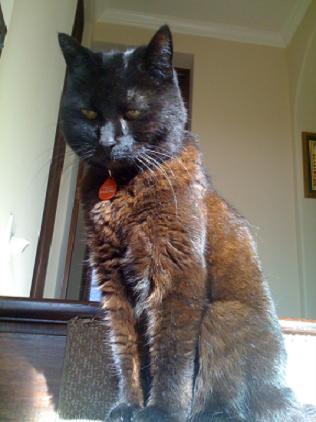
PETS Our cat Spartacus has a reputation for being a bit of a badass. But we never thought he’d end up under house arrest with a rap sheet from the police.

It’s true that he still has the tightly muscled body of a tomcat who came in from the cold a couple of winters ago and stayed after we gave him food and a safe place to sleep. But he’s settled down a lot since we got him fixed. He’ll still bounce other cats from our yard and growls if you tip him out of his favorite chair. But he doesn’t bite people. Or so I thought, until I scooped him out of the path of an unleashed dog one February night and he sunk his teeth into my wrist so fast I didn’t even realize I’d been bitten.

But my wrist began to feel like it had been stung, and soon I noticed a swelling the size of a marble with four tiny tooth marks adorning my wrist. Since it happened at midnight, and since my tetanus shots and Spartacus’ rabies vaccinations were up to date, I simply washed and disinfected the wound, planning to see my doctor the following morning.

“They’re like snake bites,” veterinarian Marie-Anne Wooley told me when I sought solace for Spartacus’ sins. “A cat’s teeth are long and sharp and when they pull out, the holes seal over, trapping the bacteria. Dogs mash things around so their bites are more open, making them easier to clean.”

The doc immediately put me on antibiotics and said to come back if my wrist — already stiff and swollen — got worse. When a rash began spreading up my arm the following night, I headed for the emergency room, where they gave me an intravenous infusion of antibiotics.

“You have an infection of the skin called cellulitis,” the ER doctor said, drawing ink lines on my skin to show how the infection had spread to my elbow and fingers.

She ordered me keep my arm elevated above my heart to prevent the infection from reaching my heart. And before I left the hospital, a police officer took an animal bite report. Animal Control told me to keep Spartacus inside for 10 days.

Even though I spent the next day bedridden, the bite tingled, hurt, and itched every time I lowered my hand. It took three visits to the ER, four days off from work, and two weeks of heavy-duty antibiotics before I was fully healed.

Judy Kivowitz, a nurse at Noe Valley Pediatrics, has seen squirrel, rat, snake, chipmunk, spider, even possible bat bites in the course of her work, and says treating animal bites varies widely.

“It depends on the animal — whether they are a pet and have had their rabies shots.” If you have been bitten by someone’s pet, you should wash, disinfect, apply Neosporin to the area, and inquire about the animal’s vaccine status. Kivowitz notes that even if the animal is known, it should be quarantined for 10 days after biting someone.

Maybe we could all learn from Kivowitz’s three basic steps in animal interaction, which she teaches in an animal-handling class she holds for toddlers. “Ask permission from the animal’s mom and dad to touch it. Do one-finger petting. And don’t look an animal in the eye — even if you know them.”

Or perhaps more to the point, you can do what my doctor told me to do if it happens again with Spartacus. “Next time, try dousing the cat and dog with water instead of putting your arm in the way.” Duh.

Beyond Fido

0

culture@sfbg.com

PETS You can’t keep a hedgehog, ferret, or sugar glider as a pet — legally — in California. But don’t worry, there are still plenty of options when it comes to unusual creatures to keep your pad rad. Read on for exotic animals you can enjoy right here in the city.


A BLUNT RUMP ONLY A MOTHER COULD LOVE

In addition to what he claims is the largest exotic bug store in the country, Ken the Bug Guy (www.kenthebugguy.com) is the proud parent of tail-less whip scorpions that he’s raised from babies. At two and a half years old, they’re only half-grown, but Ken is eagerly monitoring their progression from weanling to adult.

“We don’t usually get to see the whole process,” he says, explaining that most of his scorpions — which hail from the order amblypygi, meaning “blunt rump” — are imported from breeders abroad. A mama amblypygid lays a sac of eggs and carries it under her belly until the eggs hatch. In the wild, she would then pile the babies on her back, protecting and feeding them. In captivity (where food is plentiful and predators scarce), the babies are separated from their mother to sell to a distributor like Ken.

The benefits of a blunt rump to call your own? They’re “crazy-looking, like an alien,” according to Ken. They also live seven to 10 years, don’t sting or bite, and have interesting, complex social structures like wolves.

“They’re completely harmless,” Ken emphasizes. “Little kids can hold them and play with them, and they only need to be fed once a week and have their cage misted a bit.”


PYTHON PERFORMANCE: WHY SHOULD BRITNEY HAVE ALL THE FUN?

Get it straight: dancer Jim Berenholtz’s red tail boas, African ball pythons, and Central American boas aren’t his pets — they’re flatmates.

“They’re other beings that share my living space, but I don’t own them, and they don’t own me. We’re all equal partners,” he tells us. They’re also costars.

Berenholtz has been performing with his snakes since 1989, when he debuted his act on his birthday, the eve of the Chinese Year of the Snake. A “powerful dream” prompted him to try snake dancing and in 2003, he started Serpentium, a troupe that dances for corporate events and for celebrities in the Bay Area and beyond. Over the years, Berenholtz has performed with some 16 to 20 different animals, sometimes with as many as seven at a time.

“I respond to their movements, and they respond to mine,” he says. “You may have seen belly dancers performing with snakes as props. But for me they’re not props. They’re living beings that I interact with as if they were a human partner.”

At home, his menagerie has grown organically — some of his animals have bred and produced offspring, others he adopted when previous owners could no longer care for them.

Though nearly all reptiles need to stay under heat lamps in this chilly city — East Bay Vivarium (www.eastbayvivarium.com) has space heaters for your scaly ones — Berenholtz will occasionally take his snake friends out of their aquariums and allow them to wrap their bodies around his while he’s lounging to “give them time outside of their tanks and to enjoy their presence.”


ALL SWEET, NO SNEEZE

Love the kitties, but not their dander? You may have heard that hairless cats can provide your feline fix sans sneezes. But if the alarmingly naked critters give you the cold willies over the warm fuzzies, there’s another way.

Patty Royall owns Sugar, a Cornish Rex with extremely fine, soft, curly hair. The breed, along with the related Devon Rex, is defined by a lack of all fur except a thin undercoat of down, which is said to be hypoallergenic. The breed’s characteristics are the result of a genetic mutation preserved from a litter born in 1950s Cornwall in the United Kingdom.

Like most Rexes, Sugar is often cold. The cats are known to hang out around light bulbs and computer monitors, but Sugar takes a more straightforward approach: she’ll simply jump under the bed covers and stay curled up all day, Royall says. Luckily, if you’re considering a Rex of your own, Royall has found a convenient solution for the chills. She uses a microwaveable heating pad that stays hot for about nine hours. Try a SnuggleSafe heat pad (www.snugglesafe.co.uk/), available at Pawtrero pet supply store (www.pawtrero.com).

What about baking in the summer sun? Royall has heard that some people use sunscreen on their Cornish Rexes, but — given how cats groom themselves by licking — she doesn’t think that’s the best idea.


CUTE COOING

Elizabeth Young is the founding director of Mickacoo Pigeon and Dove Rescue (www.mickacoo.org, a division of SF-based Mickaboo Companion Bird Rescue), but if you’re thinking about the greasy green-and-gray birds you plow through every day on the sidewalk, think again. The birds Young rescues are primarily king pigeons, a pure white domestic breed that — unlike San Fran’s feral flocks — can’t survive outdoors on their own.

“They’re good-natured, easygoing, adaptable pets,” Young says. “They’re experts at the leisure arts — lounging, flirting, snacking, napping.” She adds that because of their mellow nature, they’re not demanding companions and do very well indoors or in an outdoor aviary.

Young says her seven pigeons have distinct personalities and form monogamous pairs — a characteristic that leads her to personify her birds’ love lives as though they were soap-opera biddies, describing, for example, how once-shy Frances eventually won the heart of widowed Country.

The birds are affectionate toward people, too. The aforementioned Frances comes hurtling down the hall when Young calls him, screeching by and then turning on a dime to locate Young. Because the birds are quiet, don’t chew, and don’t bite, they are ideal for homes where dogs are not an option.

The only problem with pigeons is that, unlike dogs, they can’t be housebroken. Luckily, the fine people at BirdWearOnline.com (www.birdwearonline.com) have invented pigeon pants — stylish suits that Young heartily endorses.

Paw bump

0

For the past couple of years, Pawesome.net has been the Gawker of fuzzy cuddliness, collecting all the coolest, most relevant pet news onto one — yes — awesome blog. From in depth stories about Dogs of the Ninth Ward and Japanese disaster animal rescue help to peeps at intriguing and sometimes scandalous pet trends and products, Pawesome covers it all with fine feathered flair. Local BFF founders Sonia Zjawinski and Sarah Han (formerly of the Guardian) chatted with us over e-mail. 

SFBG Pawesome is very active about animal welfare — what are some of the issues you’ve covered that have meant the most to you?

Sonia Zjawinski It’s the awful stories of abuse and neglect that often go viral, but for every horrible person out there we believe there are thousands of kind, selfless people who truly care about animals. For example, last year we posted about a group of Brooklyn bartenders who got together to save an abused and sick stray puppy. A lot of people walk past animals in need and think there’s nothing they can do, but this generous group proved that it doesn’t take much to help and the reward is priceless.

Sarah Han I’m a huge advocate for getting people to adopt from shelters and rescue groups. I find it really sad that there are so many perfectly adoptable animals in shelters that are at risk of being put down because people are still buying pets from breeders and pet stores. I’m all for the ban of selling animals in pet stores in San Francisco, and everywhere else in the country. I’m also a fan of rescue groups that focus on older pet adoptions, like Muttville in San Francisco. I love senior cats and dogs because they’re usually pretty chill dudes.

SFBG Which Pawesome post is your favorite?

SZ Last year’s April Fool’s joke — we wrote that Stephen Colbert bought Cat Fancy and was rebranding the magazine as Colbert’s Cat Nation. No calls from Colbert’s people asking us to come on the show yet, though.

SFBG What are some interesting trends or story lines happening now on the pet scene?

SZ One of the most exciting areas in the pet industry is the influx of goods on Etsy. The world of toys and accessories used to be very limited, and you were stuck with ones made out of eco-unfriendly materials produced in even more eco-unfriendly countries. With Etsy, there’s an amazing collection of handmade gear crafted out of organic or sustainable materials, and made right here in the States. And it’s stuff you won’t gag at when you see it in your home.

SH I’ve noticed that people are paying more attention to what their pets are eating these days. The pet food recalls definitely got people thinking about all the crap that big commercial companies (and even some pet “health food” companies) get away with. People are also concerned with pet obesity. As our lives get busier, we get fatter and so do our pets. There’s a pet-people gym in Bernal Heights (Fit Bernal Fit) and doggy yoga classes for folks to get in shape while exercising their dogs, too.

I think we’ll be hearing about more of those kinds of services in the future, and maybe because of the off-leash dog issue that’s been raging in SF. Dog owners are feeling very threatened by the GGNRA possibly ending their off-leash privileges in outdoor spaces. I’m torn on the issue because I think dogs need and love outdoor time, but I also believe in protecting what wildlife we have left in the city. Hopefully we can come to an agreement that allows for everyone, including dogs, to enjoy the outdoors.

5 Things: March 22, 2011

0

>>SUPERMOON SUPERSOUND Miss the GIANT SUPERMOON this weekend? Hell, we all did – it  was storming cats and dogs (interestingly enough, Polish soulful techno DJ duo Catz ‘n Dogz were here this weekend as well, and they were magnificent, as always.) In any case, in memoriam and fantasy, here’s a special electronic “Supermoon Mix” by DJ Deevice, voted Best Radio DJ in our 2010 Best of the Bay Readers Poll:

DJ Deevice “Super Moon” mix by DJ Deevice

>>IN OTHER NATURE NEWS Octopi are storming the Embaracadero – and ready your barbed wire trucks, because they’re here to stop you from skateboarding. We don’t know how long these lovingly crafted, yet grind-deterring metal starfish, sea tortises, and eight-legged have been adorning the lips of concrete benches over by Waterbar and the Raygun Gothic Spaceship, but the fun police has arrived, and it is packing tentacles.

This week on octopus fun police… 

>>CAUTION: ANOTHER THING TO WASTE YOUR TIME ON THE INTERNET In a city that knows how to toe the line between fun and just plain foolish, it’s good to know that we have resources available to help keep safety, if not at the forefront, then at least in the marginalized auxilIary regions of everyone’s mind. So whether you’re planning on unleashing live bison at your next warehouse rager, upgrading your upcoming Critical Mass ride to include a contingent of flame-throwing robotic rhinoceroses, or setting up a road-side stand for DIY weld-on chastity belts, just remember: there’s a sign for that.

>>WHITE LINES FOR YOU AND FOR ME Two wags of our handlebars for the new Potrero Hill 17th street bike lanes! The Bike Coalition explains this was all part of their nefarious plan for 30 miles of (relatively) worry-free bike glory.

>>SADDLE UP YOUR BAY MARE … and ride out for an upcoming exploration of our outer neighborhood’s high-steppin’ pony days — the adorably monikered Woody LaBounty of the Western Neighborhood’s Association, purveyor of amazing snippets from San Franciscos past like the book about the Sunset’s boho gypsy street car roots, will be sharing the story of the neighborhood that’s the midway point between City College and SF State. His yarn takes place Tuesday, March 28 and will involve horsies, a turf rivalry with Bayview, and what it all said about the country’s developement at the time… go here for info. 

Beats the K-Ingleside any day


Music Listings

0

WEDNESDAY 16

ROCK/BLUES/HIP-HOP

Boulder Acoustic Society, Victoria Vox, Naomi Greenwald Hotel Utah. 8pm, $10.

Caroliner Rainbow Shade is Natural Composure, Gumball Rimpoche, Tony Dryer, Coagulator, PantyKhrist Café Du Nord. 8:30pm, $10.

Trevor Childs and the Beholders, Headslide, Bobbleheads El Rio. 8pm, $5.

Clean White Lines Hemlock Tavern. 9pm, $10.

Crosstops, Undead Boys, Ruleta Rusa, Face the Rail, Street Justice Elbo Room. 8pm, $8.

Vows, Gipsy Moonlight Band, Stirling Says, DJ Mr. Soft Bottom of the Hill. 9pm, $8.

JAZZ/NEW MUSIC

Dink Dink Dink, Gaucho, Michael Abraham Amnesia. 7pm, free.

Ben Marcato and the Mondo Combo Top of the Mark. 7:30pm, $10.

Pamela Rose’s Wild Women of Song Yoshi’s San Francisco. 8pm, $18.

Michael Parsons Revolution Café, 3248 22nd St, SF; (415) 642-0474. 8:30pm, free.

Paul Drescher Ensemble 25th Anniversary Z Space, 450 Florida, SF; www.brownpapertickets.org. 7pm, $20.

Marc Ribot Yerba Buena Center for the Arts, 701 Mission, SF; www.sfjazz.org. 7:30pm, $20-35. Accompanying a screening of The Kid (1921).

DANCE CLUBS

Booty Call Q-Bar, 456 Castro, SF; www.bootycallwednesdays.com. 9pm. Juanita Moore hosts this dance party, featuring DJ Robot Hustle.

Bueno Onda Little Baobab, 3388 19th St., SF; (415) 643-3558. 10pm, $2. Soul, funk, swing, and rare grooves with residents Dr. Musco, DJB, and guest Gaselection.

Cannonball Beauty Bar. 10pm, free. Rock, indie, and nu-disco with DJ White Mike.

Jam Fresh Wednesdays Vessel, 85 Campton, SF; (415) 433-8585. 9:30pm, free. With DJs Slick D, Chris Clouse, Rich Era, Don Lynch, and more spinning top40, mashups, hip hop, and remixes.

Mary-Go-Round Lookout, 3600 16th St, SF; (415) 431-0306. 10pm, $5. A weekly drag show with hosts Cookie Dough, Pollo Del Mar, and Suppositori Spelling.

No Room For Squares Som., 2925 16th St, SF; (415) 558-8521. 6-10pm, free. DJ Afrodite Shake spins jazz for happy hour.

Respect Wednesdays End Up. 10pm, $5. Rotating DJs Daddy Rolo, Young Fyah, Irie Dole, I-Vier, Sake One, Serg, and more spinning reggae, dancehall, roots, lovers rock, and mash ups.

Synchronize Il Pirata, 2007 16th St, SF; (415) 626-2626. 10pm, free. Psychedelic dance music with DJs Helios, Gatto Matto, Psy Lotus, Intergalactoid, and guests.


THURSDAY 17

ROCK/BLUES/HIP-HOP

Dwele Yoshi’s San Francisco. 8 and 10pm, $28.

Ex, Death Sentence: Panda!, Street Eaters Bottom of the Hill. 9pm, $15.

La Gente, Ziva, Anita Lofton Project, Cassandra Farrar and the Left Brains Café Du Nord. 9pm, $10.

Horns of Happiness, Bad Paradise Hotel Utah. 9pm, $7.

Laurie Morvan Band Biscuits and Blues. 8 and 10pm, $15.

Elliot Randall and the Deadmen, Walty, Brad Brooks Red Devil Lounge. 8pm, $8.

Sporting Life, Somehow at Sea, White Cloud Knockout. 10pm, $6.

Tenderloins, DJs Omar and Party Ben Rickshaw Stop. 10pm, $10.

Tunnel, Buffalo Tooth, Poor Sons, That Ghost Thee Parkside. 9pm, $5.

Wounded Stag, Scission Stud. 9pm.

JAZZ/NEW MUSIC

Royal Hartigan, Hafez Modirzadeh Red Poppy Art House. 7pm, $10-15.

Marcus Roberts Trio Yerba Buena Center for the Arts, 701 Mission, SF; www.ybca.org. 7:30pm, $30-50.

“Rrazz Room Third Anniversary Gala Celebration” Rrazz Room. 8pm. With Sarah Dash, Joyce DeWitt, Sally Kellerman, and more; benefit for St. Jude Children’s Research Hospital.

Stompy Jones Top of the Mark. 7:30pm, $10.

FOLK/WORLD/COUNTRY

Culann’s Hounds, Brothers Comatose, Fucking Buckaroos Great American Music Hall. 8pm, $20.

Saddie Cats Atlas Café. 8-10pm, free.

DANCE CLUBS

Afrolicious Elbo Room. 9:30pm, $5. DJs Pleasuremaker and Señor Oz spin Afrobeat, tropicália, electro, samba, and funk.

Caribbean Connection Little Baobab, 3388 19th St, SF; (415) 643-3558. 10pm, $3. DJ Stevie B and guests spin reggae, soca, zouk, reggaetón, and more.

Club Jammies Edinburgh Castle. 10pm, free. DJs EBERrad and White Mice spinning reggae, punk, dub, and post punk.

Delhi 2 Dublin, DJ Dragonfly, Pleasuremaker, Dgiin Mezzanine. 9pm.

Drop the Pressure Underground SF. 6-10pm, free. Electro, house, and datafunk highlight this weekly happy hour.

80s Night Cat Club. 9pm, $6 (free before 9:30pm). Two dance floors bumpin’ with the best of 80s mainstream and underground with Dangerous Dan, Skip, Low Life, and guests. This week: “Madonna Music Video Spectacular.”

Guilty Pleasures Gestalt, 3159 16th St, SF; (415) 560-0137. 9:30pm, free. DJ TophZilla, Rob Metal, DJ Stef, and Disco-D spin punk, metal, electro-funk, and 80s.

Hot Mess: St. Paddy’s Day Bash Ambassador Lounge, 673 Geary, SF; www.ambassador415.com. 10pm, free. Indie, booty, and electro with DJs White Mike, Greg J, and Audio 1.

Jivin’ Dirty Disco Butter, 354 11th St., SF; (415) 863-5964. 8pm, free. With DJs spinning disco, funk, and classics.

Mestiza Bollywood Café, 3376 19th St, SF; (415) 970-0362. 10pm, free. Showcasing progressive Latin and global beats with DJ Juan Data.

Nightvision Harlot, 46 Minna, SF; (415) 777-1077. 9:30pm, $10. DJs Danny Daze, Franky Boissy, and more spinning house, electro, hip hop, funk, and more.

1984 Mighty. 9pm, $2. The long-running New Wave and 80s party has a new venue, featuring video DJs Mark Andrus, Don Lynch, and celebrity guests.

Peaches Skylark, 10pm, free. With an all female DJ line up featuring Deeandroid, Lady Fingaz, That Girl, and Umami spinning hip hop.

St. Patrick’s Day Electro Party Supperclub, 657 Harrison, SF; www.blast-sf.com. 10pm, $10. With Digital Freq, B333Son, Liam Shy, Dizzy, and more.

Thursday Special Tralala Revolution Café, 3248 22nd St, SF; (415) 642-0474. 5pm, free. Downtempo, hip-hop, and freestyle beats by Dr. Musco and Unbroken Circle MCs.


FRIDAY 18

ROCK/BLUES/HIP-HOP

Devo, Octopus Project Warfield. 9pm, $37.50-99.50.

Dwele Yoshi’s San Francisco. 8 and 10pm, $30.

East of Western, Dogcatcher, Velvet Diplomacy Café Du Nord. 9pm, $15.

Finches, Coconut, Mist and Mast Hemlock Tavern. 9:30pm, $8.

Funk Revival Orchestra, Yung Mars Project, 40 Watt Hype Elbo Room. 10pm, $13.

Katdelic, DJ K-Os Boom Boom Room. 9:30pm, $15.

New Mastersounds Independent. 9pm, $22.

Cece Peniston Rrazz Room. 9:15pm, $35.

Punch Brothers, Chris Thile, Sweetback Sisters Great American Music Hall. 9pm, $26.

Soul of John Black Biscuits and Blues. 8 and 10pm, $15.

State Radio, Ton Tons Fillmore. 9pm, $21.

Marnie Stern, Tera Melos, Amaranth Bottom of the Hill. 10pm, $12.

Vegas is North, Dylan Fox and the Wave, Sunshine Estates, Taking’s Not Stealing Slim’s. 8pm, $13.

JAZZ/NEW MUSIC

Black Market Jazz Orchestra Top of the Mark. 9pm, $10.

Emily Anne’s Delights Revolution Café, 3248 22nd St, SF; (415) 642-0474. 9pm, free.

“Go Home: Ben Goldberg, Ellery Eskelin, Charlie Hunter, Scott Amendola” Yerba Buena Center for the Arts, 701 Mission, SF; www.sfjazz.org. 8pm, $20-35.

Amanda McBroom Rrazz Room. 7:30pm, $35.

Paul Drescher Ensemble 25th Anniversary Z Space, 450 Florida, SF; www.brownpapertickets.org. 8pm, $20.

JL Stiles Red Poppy Art House. 8pm, $8-12.

FOLK/WORLD/COUNTRY

“Bluegrass Bonanza!” Plough and Stars. 9pm, $6-10. With Bluegrass Revolution and Trespassers.

Brass Menazeri, Michael Musika, Toshio Hirano, DJ Zeljko Rickshaw Stop. 8pm, $12.

Colm O’Riain St. Cyprian’s Church, 2097 Turk, SF; www.noevalleymusicseries.com. 8pm.

DANCE CLUBS

Afro Bao Little Baobab, 3388 19th St, SF; (415) 643-3558. 10pm, $5. Afro and world music with rotating DJs including Stepwise, Steve, Claude, Santero, and Elembe.

Dirty Rotten Dance Party Madrone Art Bar. 9pm, $5. With DJs Morale, Kap10 Harris, and Shane King spinning electro, bootybass, crunk, swampy breaks, hyphy, rap, and party classics.

Exhale, Fridays Project One Gallery, 251 Rhode Island, SF; (415) 465-2129. 5pm, $5. Happy hour with art, fine food, and music with Vin Sol, King Most, DJ Centipede, and Shane King.

Fubar Fridays Butter, 354 11th St., SF; (415) 863-5964. 6pm, $5. With DJs spinning retro mashup remixes.

Good Life Fridays Apartment 24, 440 Broadway, SF; (415) 989-3434. 10pm, $10. With DJ Brian spinning hip hop, mashups, and top 40.

Hot Chocolate Milk. 9pm, $5. With DJs Big Fat Frog, Chardmo, DuseRock, and more spinning old and new school funk.

Oldies Night Knockout. 9pm, $2-4. Doo-wop, one-hit wonders, soul, and more with DJs Primo, Daniel, and Lost Cat.

Radioactivity 222 Hyde, SF; (415) 440-0222. 6pm. Synth sounds of the cold war era.

Rockabilly Fridays Jay N Bee Club, 2736 20th St, SF; (415) 824-4190. 9pm, free. With DJs Rockin’ Raul, Oakie Oran, Sergio Iglesias, and Tanoa “Samoa Boy” spinning 50s and 60s Doo Wop, Rockabilly, Bop, Jive, and more.

Salted vs. Green Gorilla Lounge Public Works, 161 Erie, SF; (415) 932-0955. 9pm, $10-15. With Miguel Migs.

SF-RES Milk. 9pm, $5. Live beats and electronics with Secret Sidewalk, Broken Figures, and Bento and Jermski, plus DJs MuddBird, DnZ, and Modest Mark.

Some Thing Stud. 10pm, $7. VivvyAnne Forevermore, Glamamore, and DJ Down-E give you fierce drag shows and afterhours dancing.

Trannyshack: David Bowie Tribute DNA Lounge. 9:30pm, $15. With special guest Angie Bowie.

Vintage Orson, 508 Fourth St, SF; (415) 777-1508. 5:30-11pm, free. DJ TophOne and guest spin jazzy beats for cocktalians.

DJ What’s His Fuck Riptide Tavern. 9pm, free. Old-school punk rock and other gems.


SATURDAY 19

ROCK/BLUES/HIP-HOP

Cartographer, Pegataur, Tigon Hemlock Tavern. 9:30pm, $6.

Dwele Yoshi’s San Francisco. 8 and 10pm, $30.

Eric McFaddin Trio, Jeff Cotton’s Gin Joint, Terese Taylor, Carroll Glenn Café Du Nord. 9pm, $12.

Foreverland Showroom, 1000 Van Ness, SF; www.theshowroomsf.com. 10pm, $15.

Greg Ginn and the Royal We, Big Scenic Nowhere, Glitter Wizard Thee Parkside. 9pm, $8.

Gino Matteo Biscuits and Blues. 8 and 10pm, $20.

MegaFlame, Gomorran Social Aid and Pleasure Club Bottom of the Hill. 10pm, $12. With a burlesque performance by Delilah.

Murderess, Countdown to Armageddon, Fix My Head Elbo Room. 5pm.

New Mastersounds Independent. 9pm, $22.

Paris King Band, Jaymie Arrendondo Thee Parkside. 3pm, free.

Cece Peniston Rrazz Room. 9:15pm, $35.

Slowness, Gosta Berling, Tied to Branches Odes Retox Lounge. 8pm, $5.

Zion-I and the Grouch Fillmore. 9pm, $25.

JAZZ/NEW MUSIC

Patricia Barber Yerba Buena Center for the Arts, 701 Mission, SF; www.sfjazz.org. 8pm, $30-50.

Dave Mihaly Hoonsut Society Revolution Café, 3248 22nd St, SF; (415) 642-0474. 9pm, free.

Amanda McBroom Rrazz Room. 7:30pm, $35.

Paul Drescher Ensemble 25th Anniversary Z Space, 450 Florida, SF; www.brownpapertickets.org. 2 and 8pm, $20.

FOLK/WORLD/COUNTRY

Trio Garufa Red Poppy Art House. 8pm, $15.

Craig Ventresco and Meredith Axelrod Atlas Café. 4pm, free.

DANCE CLUBS

Afro Bao Little Baobab, 3388 19th St, SF; (415) 643-3558. 10pm, $5. Afro and world music with rotating DJs including Stepwise, Steve, Claude, Santero, and Elembe.

Bootie SF: Brides of March DNA Lounge. 9pm, $8-15. Mash-ups.

Booty Bassment Knockout. 10pm, $5. Hip-hop with DJs Ryan Poulsen and Dimitri Dickinson.

Cock Fight Underground SF. 9pm, $7. Gay locker room antics galore with electro-spinning DJ Earworm, MyKill, and Dcnstrct.

Full House Gravity, 3505 Scott, SF; (415) 776-1928. 9pm, $10. With DJs Roost Uno and Pony P spinning dirty hip hop.

Go Bang! Deco Lounge, 510 Larkin, SF; (415) 346 – 2025. 9pm, $5. Recreating the diversity and freedom of the 70’s/ 80’s disco nightlife with DJs Steve Fabus, Tres Lingerie, Sergio, and more.

Hacienda Deco Lounge, 510 Larkin, SF; www.decosf.com. 10pm. With Bobby Browser and resident DJs Jase of Bass, Tristes Tropiques, and Nihar.

Hot Flash Dance: Experience the Magic Ruby Skye. 5-9pm, $15. For older women who like to dance, with DJ Rockaway.

HYP Club Eight, 1151 Folsom, SF; www.eightsf.com. 10pm, free. Gay and lesbian hip-hop party, featuring DJs spinning the newest in the top 40s hip hop and hyphy.

Non Stop Bhangra Rickshaw Stop. 9pm, $10-20. Bhangra, hip-hop, reggae, and electronica.

Prince vs. Michael Madrone Art Bar. 8pm, $5. With DJs Dave Paul and Jeff Harris battling it out on the turntables with album cuts, remixes, rare tracks, and classics.

Rock City Butter, 354 11th St., SF; (415) 863-5964. 6pm, $5 after 10pm. With DJs spinning party rock.

Saturday Night Soul Party Elbo Room. 10pm, $5-10. DJs Lucky, Phengren Oswald, and Paul Paul spin sixties soul.

Spirit Fingers Sessions 330 Ritch. 9pm, free. With DJ Morse Code and live guest performances.

True Skool Sessions Bruno’s. 10pm, $10. With DJ Jah Yzer, Ren the Vinyl Archaeologist, and DJ Franky Fresh spinning hip-hop classics, funk, and more.


SUNDAY 20

ROCK/BLUES/HIP-HOP

Acid King, Carlton Melton, Qumran Orphics Bottom of the Hill. 2pm, $8.

“Battle of the Bands” DNA Lounge. 5:30pm, $12.

Grand Lake, Devotionals Amnesia. 9pm.

Ian Fays, Hobbits NYC, Amber Field Rickshaw Stop. 6pm, $15. Ipads for Autism benefit.

Lucas Nelson and Promise of the Real, Reflectacles Café Du Nord. 8pm, $10.

Mist Giant, Withered Hand, Future Twin Hemlock Tavern. 9pm, $6.

She’s, Rotten Kids, Flaming Horizons Slim’s. 4pm, $10.

Zion-I and the Grouch Amnesia, 1855 Haight, SF; www.amoeba.com. 2pm, free.

JAZZ/NEW MUSIC

Yasmin Levy Herbst Theatre, 401 Van Ness, SF; www.sfjazz.org. 7pm, $25-65.

Amanda McBroom Rrazz Room. 7:30pm, $35.

Montana Skies Red Poppy Art House. 7pm, $10-15.

Paul Drescher Ensemble 25th Anniversary Z Space, 450 Florida, SF; www.brownpapertickets.org. 2pm, $20.

Regina Carter’s Reverse Thread Yoshi’s San Francisco. 5pm, $5-22.

Tom Lander Duo Medjool, 2522 Mission, SF; www.medjoolsf.com. 6-9pm, free.

FOLK/WORLD/COUNTRY

Danilo y Universal El Rio. 4pm, $8.

Family Folk Explosion Revolution Café, 3248 22nd St, SF; (415) 642-0474. 8pm, free.

Grooming the Crow, Going Away Party Thee Parkside. 4pm, free.

Louise Pitre Rrazz Room. 5pm, $30.

DANCE CLUBS

Call In Sick Skylark. 9pm, free. DJs Animal and I Will spin danceable hip-hop.

DiscoFunk Mashups Cat Club. 10pm, free. House and 70’s music.

Dub Mission Elbo Room. 9pm, $6. Dub, roots, and classic dancehall with DJ Sep, Ludachris, and guest Mexican Dubwiser.

Fresh Ruby Skye. 6pm-midnight, $20-25. With DJ Kimberly S.

Gloss Sundays Trigger, 2344 Market, SF; (415) 551-CLUB. 7pm. With DJ Hawthorne spinning house, funk, soul, retro, and disco.

Honey Soundsystem Paradise Lounge. 8pm-2am. “Dance floor for dancers – sound system for lovers.” Got that?

La Pachanga Blue Macaw, 2565 Mission, SF; www.thebluemacawsf.com. 6pm, $10. Salsa dance party with live Afro-Cuban salsa bands.

Swing-out Sundays Rock-It Room. 7pm, free (dance lessons $15). DJ B-Bop spins 20s through 50s swing, jive, and more with varying live band weekly.


MONDAY 21

ROCK/BLUES/HIP-HOP

Destroyer, War on Drugs, Devon Williams, DJ Britt Govea Great American Music Hall. 8pm, $16.

Fujiya and Miyagi, Fol Chen Independent. 8pm, $15.

Jimmy Thackery Biscuits and Blues. 8 and 10pm, $18.

JAZZ/NEW MUSIC

Regina Carter’s Reverse Thread Yoshi’s San Francisco. 8pm, $22.

Tom Shaw Trio, Shelley, Victoria Theodore, Sheelagh Murphy, Suzanna Smith, Benn Bacot Café Du Nord. 9pm, $30. Benefit for Lyon Martin Health Services.

DANCE CLUBS

Death Guild DNA Lounge. 9:30pm, $3-5. Gothic, industrial, and synthpop with Joe Radio, Decay, and Melting Girl.

Krazy Mondays Beauty Bar. 10pm, free. With DJs Ant-1, $ir-Tipp, Ruby Red I, Lo, and Gelo spinning hip hop.

M.O.M. Madrone Art Bar. 6pm, free. With DJ Gordo Cabeza and guests playing all Motown every Monday.

Network Mondays Azul Lounge, One Tillman Pl, SF; www.inhousetalent.com. 9pm, $5. Hip-hop, R&B, and spoken word open mic, plus featured performers.

Sausage Party Rosamunde Sausage Grill, 2832 Mission, SF; (415) 970-9015. 6:30-9:30pm, free. DJ Dandy Dixon spins vintage rock, R&B, global beats, funk, and disco at this happy hour sausage-shack gig.

Skylarking Skylark. 10pm, free. With resident DJs I & I Vibration, Beatnok, and Mr. Lucky and weekly guest DJs.


TUESDAY 22

ROCK/BLUES/HIP-HOP

Beta State, Dylan Fox and the Wave, Nouveau-Expo Bottom of the Hill. 9pm, $8.

Bong-Ra, End.User, Bonk, VJ Slackness Elbo Room. 9pm, $12.

Majors, Scott Alan Simmons El Rio. 7pm, free.

Coco Montoya Yoshi’s San Francisco. 8pm, $18.

Niners, Ex-Girlfriends Club, Lotus Moons, Harlowe and the Great North Woods Kimo’s. 8:30pm.

Slow Trucks, Cutter, Maxirad Hemlock Tavern. 9pm, $6.

Jimmy Thackery Biscuits and Blues. 8 and 10pm, $18.

Unko Atama, Cutter, Ragenet, DJ Lightnin’ Jeff G. Knockout. 9:30pm, $5.

DANCE CLUBS

Boomtown Little Baobab, 3388 19th St, SF; www.bissapbaobab.com. 9pm, free. DJ Mundi spins roots, ragga, dancehall, and more.

Eclectic Company Skylark, 9pm, free. DJs Tones and Jaybee spin old school hip hop, bass, dub, glitch, and electro.

Share the Love Trigger, 2344 Market, SF; (415) 551-CLUB. 5pm, free. With DJ Pam Hubbuck spinning house


Music listings are compiled by Cheryl Eddy. Since club life is unpredictable, it’s a good idea to call ahead to confirm bookings and hours. Prices are listed when provided to us. Submit items for the listings at listings@sfbg.com. For further information on how to submit items for the listings, see Picks.


Is David Crane just another Kochhead?

24

This week the Chronicle majorly attacked State Sen. Leland Yee, claiming Yee tried “to distort the words” of billionaire investment banker and UC Regent David Crane on collective bargaining.

The Chron’s attack came on the heels of Yee’s attempt to block Crane’s UC Regents confirmation. And Yee’s attempt to block Crane came in response to an op-ed Crane wrote for the Chron titled “Should public employees have collective bargaining rights?”

In its counter-counter attack editorial this week, the Chronicle accused Yee of falsely claiming that Crane had “called for an end to collective bargaining rights for California teachers, nurses, firefighters, university employees and other public sector worker.”

“What the former adviser to Gov.Arnold Schwarzenegger did was present a history of collective bargaining in California and explain how a 1977 law had changed the balance of power by giving public employees power over their compensation and benefits,” the Chronicle stated. “Crane did assert that extending collective bargaining to employees who already have civil service protections ‘serves to reduce benefits for citizens and to raise costs for taxpayers. Anyone who would argue with that fact has not been paying attention to what is happening with state and local budgets lately.”

The Chronicle finished by praising Crane, who is currently a lecturer on Public Policy at Stanford University and is reportedly working with former Fed Chairman Paul Volcker to form a task force to examine current state budget practices. Crane, the Chron asserted, has “long been widely respected as a teller of inconvenient truths about the rising costs of public-employee pensions and benefits. He should not be silenced – or misquoted by opportunistic politicians. The Senate should vote to confirm him as regent.”

Now, when Schwarzenegger appointed Crane as a UC Regent in December 2010 as one of his last acts as Governor, the Sacramento Bee described Crane as Schwarzenegger’s “chief public employee pension critic.” But here in San Francisco, the Chron didn’t bother to flesh out Crane’s history of employment, campaign contributions, prior statements on collective bargaining, and financial investments.

Maybe it was because these public records reveal Crane to be less a dyed-in-the-wool Democrat and more of a Bushocrat, an ultra-rich investor who supported G.W. Bush through two elections, and repeatedly frames the collective bargaining rights of government employees as an obstacle standing in the way of pension reform and budget balancing.

Campaign finance records show that in March 1999, when Democrats were trying to hang onto the White House in the wake of Clinton’s sex scandals, Crane gave $1,000 to Bush. And in June 2003, just three months after Bush invaded Iraq on a false pretext, Crane saw fit to give Bush another $2,000.

The good news? Crane didn’t support Sarah Palin and John McCain in 2008. But he did donate $7,200 to Republican Tom Campbell’s unsuccessful 2010 bid for US Sen. Barbara Boxer’s seat. And here in San Francisco, Crane was one of several billionaires who wrote big fat checks last fall in support of Measure B, which sought to curb the pension and health benefits of city workers, most of whom will make a fraction in their lifetime of what Crane rakes in each year from his widely diversified financial portfolio.

Crane’s 2009 statement of economic interest shows he has over $1 million invested in Farallon Capital Partners, one of the world’s largest hedge funds, many of whose investors include top university endowments.

Crane also has over $1 million invested in Acacia Partners, over $1 million in Bislett Partners, over $1 million in Kensico Partners, over $1 million in Semper Vic Partners, over $1 million in Berkshire Hathaway, whose CEO is Warren Buffet, over $1 million in the HCP Absolute Return Fund, whose Board includes Warren Hellman, and up to $1 million in Hall Capital Management, whose Board includes Hellman and Gap heir John Fisher. Crane also owns several million dollars stake in real estate investments, and has sizeable stock in Wells Fargo, Chesapeake Energy, Microsoft, Google, Pangloss Oil, Whole Foods Market, M&T Bank Corp., IBM, American Express, WalMart and Exxon.

And he gets income from Acacia Partners and Babcock & Brown, where he was a former partner from 1979 to 2003. While at Babcock, Crane reportedly brokered a controversial jet-lease deal between Arnold Schwarzenegger and Singapore Airlines that allowed Schwarzenegger to defer taxes on millions of dollars. And in 2004, Crane went to work for then Republican Gov. Schwarzenegger as special advisor for Jobs and Economic Growth. The Terminator returned the favor by appointing Crane to the California Commission in Economic Development and the California High Speed Rail Authority. But Crane was rejected in Senate confirmation proceedings for a position on the board of California State Teachers Retirement System.

Now, clearly it’s not a crime to be a billionaire, even though the way some folks make their billions is criminal. But you have to wonder if UC really needs another ultra-rich Regent on its Board. You also have to wonder why the wealthy Crane sought reimbursements of $2,812 from UC in 2009, if he cares about saving the state money.

And Crane has made plenty of statements about collective bargaining rights and pension reform in recent months that seem to frame government employees as the bogey men, not just in California, but across the entire nation.

Take his April 2010 comments to the Los Angeles Times: “State legislators are afraid even to utter the words ‘pension reform’ for fear of alienating what has become — since passage of the Dills Act in 1978, which endowed state public employees with collective bargaining rights on top of their civil service protections — the single most politically influential constituency in our state: government employees,” Crane said.

Or what he said in August 2010 to the Fox Business Network: “Even if you took care of every one of these spiked above the iceberg level pensions in California, you would not take care of the pension problem in California, which is true of virtually every state in the country, at least those where, you know, government employees have collective bargaining rights,” Crane said

In December 2010, he told the L.A. Times that the year 1978, ”wasn’t notable just because of Proposition 13. That was also the year public employees gained a power Franklin D. Roosevelt had warned against: collective bargaining rights.”

“California hasn’t been the same since,” Crane continued. “Public workers have gained at the expense of private workers as government spending was redirected from infrastructure and education to higher salaries, pensions and other benefits.”

And in his Feb. 27 Chronicle op-ed, Crane claimed that, “The battle in Wisconsin is not over collective bargaining rights generally but rather the appropriateness of those rights in the public sector ”

“Collective bargaining is a good thing when it’s needed to equalize power, but when public employees already have that equality because of civil service protections, collective bargaining in the public sector serves to reduce benefits for citizens and to raise costs for taxpayers,” Crane continued. “Citizens and taxpayers should consider this as they watch events unfold in Madison.”

As of today, letters are circulating in Sacramento opposing Crane’s confirmation. And Sen. Ted W. Lieu (D-Torrance), Chair of the Labor and Industrial Relations Committee in Sacramento, has already signaled his opposition.

“I cannot support someone for the powerful post of UC Regent who continues to perpetuate the myth that collective bargaining caused our state economic crisis and has a fundamental misunderstanding of how our state budget operates,” Lieu said in a statement. He noted that in the Chron op-ed Crane claimed that because of collective bargaining, “general fund spending on higher education, parks and environmental protection was flat or lower.” 
“As a matter of historical fact, that is false,” Lieu countered. “ Our general fund spending generally declined because of a national economic recession.  The recession was not caused by collective bargaining or public sector unions, but by private sector, out of control Wall Street firms at the time.”

“The specific reason our general fund spending sharply declined was because the person Mr. Crane advised, former Gov. Arnold Schwarzenegger, reduced the Vehicle License Fee and replaced it with . . . nothing,” Lieu continued. “As a result, the state general fund lost over $5 to $6 billion in revenues per year for every year Mr. Schwarzenegger was in office.  The VLF reduction has resulted in a total loss of over $30 billion to the state, an amount in excess of the current California budgetary shortfall.  How conveniently Mr. Crane forgot to mention that critical fact when it doesn’t suit his ideological assault on public sector unions.”

“Now that Mr. Crane senses his confirmation may be in jeopardy, he attempts to marginalize his own Op-Ed by releasing a new statement saying he really didn’t mean to attack all public sector unions, just those who happen to have statutory civil service protections,” Lieu added. “For those in Ivory Towers that distinction may have some academic meaning, but for everyone else in the real world that is a distinction without a difference. Civil Service protections do not prevent employees from being terminated or laid off, they provide standards for government to follow when firing or disciplining employees. Such protections do not guarantee appropriate wages or benefits, nor address a plethora of other issues, such as workforce safety issues.”
 
“Mr. Crane’s Op-Ed also discusses political spending by public sector unions, “Lieu concluded. “In his world view, political spending by the California Teachers Association is inappropriate, but the massive political spending by the Koch Brothers would presumably be acceptable. I cannot, and will not, support someone for the post of UC Regent who blames public sector employees, such as teachers, for somehow being responsible for our economic crisis or the resulting decline in general fund spending.  We need UC Regents who are interested in solving problems, not those who twist historical facts to suit an ideological agenda.”

So, as I wait for Crane to return my call, I’ll leave you with something reporter Peter Byrne, who authored the award-winning investigative series ‘Investor’s Club” How the Regents of the University of California spin public funds into private profit,” said to me yesterday when I asked him about the wisdom of putting investment bankers on the UC Regents Board. “Putting investment bankers in front of a plate of $63 billion is like putting a pound of hamburger in front of a bunch of feral cats. They are going to eat it. It’s in their nature.”

So, would confirming Crane be like adding another feral cat to the mix? Is he just another Kochhead? Or is he just maligned and misunderstood, as the Chron vehemently implies?

Film Listings

0

SAN FRANCISCO INTERNATIONAL ASIAN AMERICAN FILM FESTIVAL

The 29th SFIAAFF runs March 10-20 at the Asian Art Museum, 200 Larkin, SF; Castro, 429 Castro, SF; Clay, 2261 Fillmore, SF; Pacific Film Archive, 2776 Bancroft, Berk.; Sundance Kabuki, 1881 Post; and Viz Cinema, New People, 1746 Post, SF. For tickets (most shows $12) and additional program information, visit www.caamedia.org. All times pm.

THURS/10

Castro West Is West 7.

FRI/11

Clay The Learning 6. When Love Comes 9. Histeria 11:30.

Kabuki Dooman River 4:30. One Kine Day 6:30. The House of Suh 9:15. “Life, Interrupted” 9:30.

PFA Abrazas 7. Break Up Club 9:20.

Viz Summer Pasture 6:30. “Chicken Proof” (shorts program) 9:30.

SAT/12

Clay It’s a Wonderful Afterlife 12:15. The Fourth Portrait 3. The Taqwacores 5:30. I Wish I Knew 8.

Kabuki Gold and Copper 12:15. Anna May Wong: In Her Own Words with “Slaying the Dragon Reloaded” 12:45. Stepping Forward 2. Saigon Electric 3:15. Open Season 5:30. Dog Sweat 6. Resident Aliens with “Fumiko Hayashida: The Woman Behind the Symbol” 7:30. “Living Life Large” (shorts program) 8:30. Nang Nak 9:30.

PFA Summer Pasture 4. Piano in a Factory 6:30. Living in Seduced Circumstances 9.

Viz M/F Remix 4. “Tainted Love” (shorts program) 8:45.

SUN/13

Castro The Man From Nowhere noon. Emir 3. Clash 6:30. Raavanan 9:30.

Clay Almost Perfect 1. Bend It Like Beckham 4. One Voice 6:45. Break Up Club 9.

Kabuki Peace noon. “3rd I South Asian International Shorts” (shorts program) 1:15. The House of Suh 2. Passion 4. “Play/House” (shorts program) 4:30. Made in India 6. Piano in a Factory 8:30. Sampaguita, National Flower 9:15.

PFA Anna May Wong: In Her Own Words with “Slaying the Dragon Reloaded” 2:30. Charlie Chan at the Olympics 6. Bi, Don’t Be Afraid! 8.

Viz “Silent Rituals and Hovering Proxies” (shorts program) 2:15. Tales of the Waria 5. Gold and Copper 7. Living in Seduced Circumstances 9:30.

MON/14

Kabuki “Chicken Proof” (shorts program) 4. Summer Pasture 4:30. Sampaguita, National Flower 6:30. Abraxas 6:45. Saigon Electric 8:30. Dooman River 9:30.

Viz One Kine Day 4. “Suite Suite Chinatown” (shorts program) 7. Affliction 9.

TUES/15

Kabuki “3rd I South Asian International Shorts” (shorts program) 4:15. Tales of the Waria 4:45. Almost Perfect 6:45. Open Season 7. M/F Remix 9. “Play/House” (shorts program) 9:30.

PFA I Wish I Knew 7.

Viz Resident Aliens with “Fumiko Hayashida: The Woman Behind the Symbol” 4:15. The Imperialists Are Still Alive! 6:30. Amin 9.

OPENING

Battle: Los Angeles Aliens invade L.A. and Will Smith isn’t involved? SoCal is doomed. (1:57) California.

Carbon Nation This polished, surprisingly optimistic doc from director Peter Byck (1996’s Garbage) takes on the world’s current over-reliance on carbon-based energy — with a focus on the greediest “Carbon Nation” around, the U.S. — and lays out several logical and seemingly do-able scenarios and solutions that just might help slow the rapidly changing climate. Though Carbon Nation reality-checks itself on more than one occasion (noting the reluctance of politicians and corporations to help mainstream the green movement), this doc is unerringly hopeful, and it entertains with an array of real-life characters: a good ol’ boy Texas wind farmer, a quirky Alaskan geothermal expert, a former rock n’ roller who turned to recycling refrigerators after a near-death experience, and charismatic Bay Area activist Van Jones. Carbon Nation‘s droll narration and snappy graphics at times suggest the film is aimed at lowest-common-denominator types who don’t even recycle their soda cans — but really, isn’t that the type of person who most deserves a clean-energy wake-up call? (1:22) Opera Plaza. (Eddy)

Happythankyoumoreplease Director, writer, and star Josh Radnor gets the prize for most unwieldy, hard-to-remember title in a while — and a tiny gold star for revealing the most heart within one so-called hipster. In this indie feel-gooder, writer Sam (Radnor) is lost at sea, completely adrift at the close of his twenties and unable to sell his novel. The aimlessness is beginning to seem less than cute to the random ladies that pass in the night and chums like Annie (Malin Akerman), who happens to have Alopecia and whose merry outlook is battling with her lack of self-confidence, and Mary Catherine (Zoe Kazan), who is puzzling whether to follow her boyfriend Charlie (Pablo Schreiber) to LA or to retain her life as a an artist in NYC. It takes a lost little boy, Rasheen (Michael Algieri), to bring out the selfless nurturer in Sam’s self-conscious man-child, giving him the courage to approach the local hottie-slash-waitress-slash-cabaret-singer Mississippi (Kate Mara). Radnor — who resembles a likable, every-guy Ben Affleck, though he’s hindered with an expressiveness that ranges from bemused to bemused — himself points to the similarities between Woody Allen’s hymns to Manhattan intelligentsia-bohemia and his own aria to NYC singles on the brink of hooking up with adulthood. Waxing cute rather than critical, Happythankyoumoreplease lacks Allen’s early bite, but its guileless sweetness just might do the trick and satisfy some. (1:40) Embarcadero. (Chun)

I Saw the Devil This latest by South Korean wunderkind Kim Ji-woon (2008’s The Good, The Bad, The Weird; 2003’s A Tale of Two Sisters) aims to push serial-killer thriller conventions to new extremes in intensity, violent set-piece bravado, and sheer length. Intelligence agent Joo-yeong (Lee Byung-hun) is inconsolably horrified when his fiancée — a police chief’s daughter — is abducted, tortured and murdered by giddily remorseless Kyung-chul (Choi Min-sik). The latter is a rural schoolbus driver who stalks his prey on and off the job, hauling them to a rigged-up shack where he enjoys their protracted final writhings. Once our hero tracks down this grotesque villain, he demonstrates a perverse, obsessive side by letting the “devil” loose again — each time after serious physical punishment — so that he can live in terror of his avenger. The trouble with that concept is that our upright, fanatical hero thus allows remorseless Kyung-chul to abuse new victims every time he’s let loose, which simply doesn’t make psychological sense. I Saw the Devil has some dazzling action set-pieces and outre content. But the dependency on slasher genre-style harm toward pretty young women sounds a sour, conventional note. And while it reserves a delicious irony or two for the end, this glorified horror flick simply goes on way too long. (2:21) Lumiere, Shattuck. (Harvey)

Mars Needs Moms A young boy must fight to save his kidnapped-by-aliens mother in this 3D animated Disney comedy. (1:28)

Red Riding Hood Amanda Seyfried stars in Catherine Hardwicke’s edgy (i.e., the Big Bad Wolf is now a werewolf) fairy-tale update. (1:38) Shattuck.

*William S. Burroughs: A Man Within William S. Burroughs, as director John Waters puts it in this long-overdue documentary, became famous before any of his peers, “for all the things you were supposed to hide: he was gay; he was a junkie; he shot his wife.” Of course, that isn’t the entire story. Examining the cultural forces and tragic biographical events that shaped The Naked Lunch author, director Yony Lesler attempts with varying degrees of success to separate the intensely private man from the countercultural raconteur in the gray flannel suit Burroughs would become later in his life. Combining interviews with a who’s who of famous associates, friends, and admirers, rare and never-before seen archival footage, and clips from Burroughs’ own experimental films and later home movies, Lesler makes a convincing case for Burroughs as a perennial outsider, even to himself. His Harvard education and wealthy pedigree set him apart from his crunchier Beat compatriots and he openly disdained the label of “gay revolutionary” even as his writing boldly envisioned same-sex desire as something truly queer. And although his dour mien and conservative dress would later become personal trademarks, he in fact privately mourned the death of his wife, Joan Vollmer, who he shot in Mexico playing a drunken round of William Tell (he was never tried), and his estranged son, Bill Burroughs Jr., who died attempting to approximate his father’s former junkie lifestyle. The film’s talking heads variously credit Burroughs with everything from punk rock to performance art, but the sad, all-too-human story behind the hagiography is what’s most compelling here. (1:38) Roxie. (Sussman)

ONGOING

The Adjustment Bureau As far as sci-fi romantic thrillers go, The Adjustment Bureau is pretty standard. But since that’s not an altogether common genre mash-up, I guess the film deserves some points for creativity. Based on a short story by Philip K. Dick, The Adjustment Bureau takes place in a world where all of our fates are predetermined. Political hotshot David Norris (Matt Damon) is destined for greatness — but not if he lets a romantic dalliance with dancer Elise (Emily Blunt) take precedence. And in order to make sure he stays on track, the titular Adjustment Bureau (including Anthony Mackie and Mad Men‘s John Slattery) are there to push him in the right direction. While the film’s concept is intriguing, the execution is sloppy. The Adjustment Bureau suffers from flaws in internal logic, allowing the story to skip over crucial plot points with heavy exposition and a deus ex machina you’ve got to see to believe. Couldn’t the screenwriter have planned ahead? (1:39) 1000 Van Ness, Piedmont, SF Center, Shattuck, Sundance Kabuki. (Peitzman)

*Another Year Mike Leigh’s latest represents a particularly affecting entry among his many improv-based, lives-of-everyday-Brits films. More loosely structured than 2008’s Happy-Go-Lucky, which featured a clear lead character with a well-defined storyline, the aptly-titled Another Year follows a year in the life of a group of friends and acquaintances, anchored by married couple Tom (Jim Broadbent) and Gerri (Ruth Sheen). Tom and Gerri are happily settled into middle-class middle age, with a grown son (Oliver Maltman) who adores them. So far, doesn’t really sound like there’ll be much Leigh-style heightened emotion spewing off the screen, traumatizing all in attendance, right? Well, you haven’t met the rest of the ensemble: there’s a sad-sack small-town widower, a sad-sack overweight drunk, a near-suicidal wife and mother (embodied in one perfect, bitter scene by Imelda Staunton), and Gerri’s work colleague Mary, played with a breathtaking lack of vanity by Lesley Manville. At first Mary seems to be a particularly shrill take on the clichéd unlucky-in-love fiftysomething woman — think an unglamorous Sex in the City gal, except with a few more years and far less disposable income. But Manville adds layers of depth to the pitiful, fragile, blundering Mary; she seems real, which makes her hard to watch at times. That said, anyone would be hard-pressed to look away from Manville’s wrenching performance. (2:09) Shattuck. (Eddy)

Barney’s Version The charm of this shambling take on Mordecai Richler’s 1997 novel lies almost completely in the hang-dog peepers of star Paul Giamatti. Where would Barney’s Version be without him and his warts-and-all portrayal of lovable, fallible striver Barney Panofsky — son of a cop (Dustin Hoffman), cheesy TV man, romantic prone to falling in love on his wedding day, curmudgeon given to tying on a few at a bar appropriately named Grumpy’s, and friend and benefactor to the hard-partying and pseudo-talented Boogie (Scott Speedman). So much depends on the many nuances of feeling flickering across Giamatti’s pale, moon-like visage. Otherwise Barney’s Version sprawls, carries on, and stumbles over the many cute characters we don’t give a damn about — from Minnie Driver’s borderline-offensive JAP of a Panofsky second wife to Bruce Greenwood’s romantic rival for Barney’s third wife Miriam (Rosamund Pike). A mini-who’s who of Canadian directors surface in cameos — including Denys Arcand, David Cronenberg, and Atom Egoyan — as a testament to the respect Richler commands. Too bad director Richard J. Lewis didn’t get a few tips on dramatic rigor from Cronenberg or intelligent editing from Egoyan — as hard as it tries, Barney’s Version never rises from a mawkish middle ground. (2:12) Opera Plaza. (Chun)

Beastly The problem with a title like Beastly is that it’s difficult to avoid the obvious line: the movie lives up to its name. But indeed, this modernized take on the Beauty and the Beast tale is wretched on all fronts — a laughable script, endless plot holes, and the kind of wooden acting that makes you long for the glory days of Twilight (2008). New “It Boy” Alex Pettyfer stars as Kyle, a vapid popular kid who is cursed to look like a slightly less attractive version of himself by a vengeful witch (Mary-Kate Olsen). Only the love of kind-hearted Lindy (Vanessa Hudgens) can cure him of his fate. There is so much wrong with Beastly, it’s hard to zone in on its individual faults: this is a film in which the opening scene has Kyle telling his ugly classmates to “embrace the suck”—and then getting elected to student government anyway. Embrace Beastly‘s suck if you can’t live without Pettyfer’s washboard abs, but you’re far better off rewatching the Disney or Cocteau versions. (1:35) 1000 Van Ness. (Peitzman)

Biutiful Uxbal (Javier Bardem) has problems. To name but a few: he is raising two young children alone in a poor, crime-beset Barcelona hood. He is making occasional attempts to rope back in their bipolar, substance-abusive mother (Maricel Álvarez), a mission without much hope. He is trying to stay afloat by various not-quite legal means while hopefully doing the right thing by the illegals — African street drug dealers and Chinese sweatshop workers — he acts as middleman to, standing between them and much less sympathetically-inclined bossmen. He’s got a ne’er-do-well brother (Eduard Fernandez) to cope with. Needless to say, with all this going on (and more), he isn’t getting much rest. But when he wearily checks in with a doc, the proverbial last straw is stacked on his camelback: surprise, you have terminal cancer. With umpteen odds already stacked against him in everyday life, Uxbal must now put all affairs in order before he is no longer part of the equation. This is Alejandro González Iñárritu’s first feature since an acrimonious creative split with scenarist Guillermo Arriaga. Their films together (2006’s Babel, 2003’s 21 Grams, 2000’s Amores Perros) have been criticized for arbitrarily slamming together separate baleful storylines in an attempt at universal profundity. But they worked better than Biutiful, which takes the opposite tact of trying to fit several stand-alone stories’ worth of hardship into one continuous narrative — worse, onto the bowed shoulders of one character. Bardem is excellent as usual, but for all their assured craftsmanship and intense moments, these two and a half hours collapse from the weight of so much contrived suffering. Rather than making a universal statement about humanity in crisis, Iñárritu has made a high-end soap opera teetering on the verge of empathy porn. (2:18) SF Center, Sundance Kabuki. (Harvey)

*Black Swan “Lose yourself,” ballet company head Thomas (Vincent Cassel) whispers to his leading lady, Nina (Natalie Portman), moments before she takes the stage. But Nina is already consumed with trying to find herself, and rarely has a journey of self-discovery been so unsettling. Set in New York City’s catty, competitive ballet world, Black Swan samples from earlier dance films (notably 1948’s The Red Shoes, but also 1977’s Suspiria, with a smidgen of 1995’s Showgirls), though director Darren Aronofsky is nothing if not his own visionary. Black Swan resembles his 2008 The Wrestler somewhat thematically, with its focus on the anguish of an athlete under ten tons of pressure, but it’s a stylistic 180. Gone is the gritty, stripped-down aesthetic used to depict a sad-sack strongman. Like Dario Argento’s 1977 horror fantasy, the gory, elegantly choreographed Black Swan is set in a hyper-constructed world, with stabbingly obvious color palettes (literally, white = good; black = evil) and dozens of mirrors emphasizing (over and over again) the film’s doppelgänger obsession. As Nina, Portman gives her most dynamic performance to date. In addition to the thespian fireworks required while playing a goin’-batshit character, she also nails the role’s considerable athletic demands. (1:50) Shattuck, Sundance Kabuki. (Eddy)

Carmen in 3D (2:55) SF Center.

*Cedar Rapids What if The 40 Year Old Virgin (2005) got so Parks and Rec‘d at The Office party that he ended up with a killer Hangover (2009)? Just maybe the morning-after baby would be Cedar Rapids. Director Miguel Arteta (2009’s Youth in Revolt) wrings sweet-natured chuckles from his banal, intensely beige wall-to-wall convention center biosphere, spurring such ponderings as, should John C. Reilly snatch comedy’s real-guy MVP tiara away from Seth Rogen? Consider Tim Lippe (Ed Helms of The Hangover), the polar opposite of George Clooney’s ultracompetent, complacent ax-wielder in Up in the Air (2009). He’s the naive manchild-cum-corporate wannabe who never quite graduated from Timmyville into adulthood. But it’s up to Lippe to hold onto his firm’s coveted two-star rating at an annual convention in Cedar Rapids. Life conspires against him, however, and despite his heartfelt belief in insurance as a heroic profession, Lippe immediately gets sucked into the oh-so-distracting drama, stirred up by the dangerously subversive “Deanzie” Ziegler (John C. Reilly), whom our naif is warned against as a no-good poacher. Temptations lie around every PowerPoint and potato skin; as Deanzie warns Lippe’s Candide, “I’ve got tiger scratches all over my back. If you want to survive in this business, you gotta daaance with the tiger.” How do you do that? Cue lewd, boozy undulations — a potbelly lightly bouncing in the air-conditioned breeze. “You’ve got to show him a little teat.” Fortunately Arteta shows us plenty of that, equipped with a script by Wisconsin native Phil Johnston, written for Helms — and the latter does not disappoint. (1:26) California, Empire, Piedmont, Sundance Kabuki. (Chun)

Drive Angry 3D It says something about the sad state of Nicolas Cage’s cinematic choices when the killer-B, grindhouse-ready Drive Angry 3D is the finest proud-piece-o-trash he’s carried since The Bad Lieutenant: Port of Call New Orleans (2009), which doesn’t say much — the guy works a lot. Here, in his quest to become the paycheck-happy late-Brando of comic book, sci-fi, and fantasy flicks, Cage gets to work that anguished hound-dog mien, while meting out the punishment against grotty Satanists, in this cross between Constantine (2005), bible comics, and Shoot ‘Em Up (2007). Out for blood and sprung from the deepest, darkest hole a bad boy can find himself in, vengeful grandpa Milton (Cage) — a sop for Paradise Lost readers — is determined to rescue his infant granddaughter. She’s in the hands of Jonah King (Billy Burke), a devil-worshipping cult leader with a detestable soul patch who killed Milton’s daughter and carries her femur around as a souvenir. Along for the ride is the hot-pants-clad hottie Piper (Amber Heard), who’s as handy with her fists as she is randy with the busboys (she drives home from work, singing along to Peaches’ “Fuck the Pain Away” — ‘nuf said), and trailing Milton is the mysterious Accountant (William Fichtner). Gore, boobs, fast cars, undead gunfighters, and cheese galore — it’s a fanboy’s fantasy land, as handed down via the tenets of our fathers Tarantino and Rodriguez — and though the 3D seems somewhat extraneous, it does come in, ahem, handy during the opening salvo. (1:44) 1000 Van Ness. (Chun)

Even the Rain It feels wrong to criticize an “issues movie” — particularly when the issues addressed are long overdue for discussion. Even the Rain takes on the privatization of water in Bolivia, but it does so in such an obvious, artless way that the ultimate message is muddled. The film follows a crew shooting an on-location movie about Christopher Columbus. The film-within-a-film is a less-than-flattering portrait of the explorer: if you’ve guessed that the exploitation of the native people will play a role in both narratives, you’d be right. The problem here is that Even the Rain rests on our collective outrage, doing little to explain the situation or even develop the characters. Case in point: Sebastian (Gael García Bernal), who shifts allegiances at will throughout the film. There’s an interesting link to be made between the time of Columbus and current injustice, but it’s not properly drawn here, and in the end, the few poignant moments get lost in the shuffle. (1:44) Lumiere, Shattuck, Smith Rafael. (Peitzman)

The Fighter Once enough of a contenda to have fought Sugar Ray Leonard — and won, though there are lingering questions about that verdict’s justice — Dicky (Christian Bale) is now a washed-up, crack-addicted mess whose hopes for a comeback seem just another expression of empty braggadocio. Ergo it has fallen to the younger brother he’s supposedly “training,” Micky (Mark Wahlberg), to endure the “managerial” expertise of their smothering-bullying ma (Melissa Leo) and float their large girl gang family of trigger-tempered sisters. That’s made even worse by the fact that they’ve gotten him nothing but chump fights in which he’s matched someone above his weight and skill class in order to boost the other boxer’s ranking. When Micky meets Charlene (Amy Adams), an ambitious type despite her current job as a bartender, this hardboiled new girlfriend insists the only way he can really get ahead is by ditching bad influences — meaning mom and Dicky, who take this shutout as a declaration of war. The fact-based script and David O. Russell’s direction do a good job lending grit and humor to what’s essentially a 1930s Warner Brothers melodrama — the kind that might have had Pat O’Brien as the “good” brother and James Cagney as the ne’er-do-well one who redeems himself by fadeout. Even if things do get increasingly formulaic (less 1980’s Raging Bull and more 1976’s Rocky), the memorable performances by Bale (going skeletal once again), Wahlberg (a limited actor ideally cast) and Leo (excellent as usual in an atypically brassy role) make this more than worthwhile. As for Adams, she’s just fine — but by now it’s hard to forget the too many cutesy parts she’s been typecast in since 2005’s Junebug. (1:54) 1000 Van Ness, SF Center, Sundance Kabuki. (Harvey)

Gnomeo and Juliet If you willingly see a movie titled Gnomeo and Juliet, you probably have a keen sense of what you’re in for. And as long as that’s the case, it’s hard not to get sucked into the film’s 3D gnome-infested world. Believe it or not, this is actually a serviceable adaptation of Shakespeare’s classic — minus the whole double-suicide downer ending. But at least the movie is conscious of its source material, throwing in several references to other Shakespeare plays and even having the Bard himself (or, OK, a bronze statue) comment on the proceedings. It helps that the cast is populated by actors who could hold their own in a more traditional Shakespearean context: James McAvoy, Emily Blunt, Maggie Smith, and Michael Caine. But Gnomeo and Juliet isn’t perfect — not because of its outlandish concept, but due to a serious overabundance of Elton John. The film’s songwriter and producer couldn’t resist inserting himself into every other scene. Aside from the final “Crocodile Rock” dance number, it’s actually pretty distracting. (1:24) 1000 Van Ness, SF Center. (Peitzman)

Hall Pass There are some constants when it comes to a Farrelly Brothers movie: lewd humor, full-frontal male nudity, and at least one shot of explosive diarrhea. Hall Pass does not disappoint on the gross-out front, but it’s a letdown in almost every other way. Rick (Owen Wilson) and Fred (Jason Sudeikis) are married men obsessed with the idea of reliving their glory days. Lucky for them, wives Maggie (Jenna Fischer) and Grace (Christina Applegate) decide to give them a week-long “hall pass” from marriage. Of course, once Rick and Fred are able to go out and snag any women they want, they realize most women aren’t interested in being snagged by dopey fortysomethings. On paper, Hall Pass has the potential to be a sharp, anti-bro comedy. Instead, it wallows in recycled toilet humor that’s no longer edgy enough to make us squirm. At least there are still moments of misogyny to provide that familiar feeling of discomfort. (1:38) 1000 Van Ness. (Peitzman)

I Am File in the dusty back drawer of An Inconvenient Truth (2006) wannabes. The cringe-inducing, pretentious title is a giveaway — though the good intentions are in full effect — in this documentary by and about director Tom Shadyac’s search for answers to life’s big questions. After a catastrophic bike accident, the filmmaker finds his lavish lifestyle as a successful Hollywood director of such opuses as Bruce Almighty (2003) somewhat wanting. Thinkers and spiritual leaders such as Desmond Tutu, Howard Zinn, UC Berkeley psychology professor Dacher Keltner, and scientist David Suzuki provide some thought-provoking answers, although Shadyac’s thinking behind seeking out this specific collection of academics, writers, and activists remains somewhat unclear. I Am‘s shambling structure and perpetual return to its true subject — Shadyac, who resembles a wide-eyed Weird Al Yankovic — doesn’t help matters, leaving a viewer with mixed feelings, less about whether one man can work out his quest for meaning on film, than whether Shadyac complements his subjects and their ideas by framing them in such a random, if well-meaning, manner. And sorry, this film doesn’t make up for Ace Ventura: Pet Detective (1994). (1:16) Lumiere, Shattuck, Smith Rafael. (Chun)

I Am Number Four Do you like Twilight? Do you think aliens are just as sexy — if not sexier! — than vampires? I Am Number Four isn’t a rip-off of Stephenie Meyer’s supernatural saga, but the YA novel turned film is similar enough to draw in that coveted tween audience. John (Alex Pettyfer) is a teenage alien with extraordinary powers who falls in love with a human girl Sarah (Dianna Agron). But they’re from two different worlds! To be fair, star-crossed romance isn’t the issue here: the real problem is I Am Number Four‘s “first in a series” status. Rather than working to establish itself as a film in its own right, the movie sets the stage for what’s to come next, a bold presumption for something this mediocre. It lazily drops some exposition, then launches into big, loud battles without pausing to catch its breath. I Am Number Four only really works if it gets a sequel, and we all know how well that turned out for The Golden Compass (2007). (1:44) 1000 Van Ness. (Peitzman)

*The Illusionist Now you see Jacques Tati and now you don’t. With The Illusionist, aficionados yearning for another gem from Tati will get a sweet, satisfying taste of the maestro’s sensibility, inextricably blended with the distinctively hand-drawn animation of Sylvain Chomet (2004’s The Triplets of Belleville). Tati wrote the script between 1956 and 1959 — a loving sendoff from a father to a daughter heading toward selfhood — and after reading it in 2003 Chomet decided to adapt it, bringing the essentially silent film to life with 2D animation that’s as old school as Tati’s ambivalent longing for bygone days. The title character should be familiar to fans of Monsieur Hulot: the illusionist is a bemused artifact of another age, soon to be phased out with the rise of rock ‘n’ rollers. He drags his ornery rabbit and worn bag of tricks from one ragged hall to another, each more far-flung than the last, until he meets a little cleaning girl on a remote Scottish island. Enthralled by his tricks and grateful for his kindness, she follows him to Edinburgh and keeps house while the magician works the local theater and takes on odd jobs in an attempt to keep her in pretty clothes, until she discovers life beyond their small circle of fading vaudevillians. Chomet hews closely to bittersweet tone of Tati’s films — and though some controversy has dogged the production (Tati’s illegitimate, estranged daughter Helga Marie-Jeanne Schiel claimed to be the true inspiration for The Illusionist, rather than daughter and cinematic collaborator Sophie Tatischeff) and Chomet neglects to fully detail a few plot turns, the dialogue-free script does add an intriguing ambiguity to the illusionist and his charge’s relationship — are they playing at being father and daughter or husband and wife? — and an otherwise straightforward, albeit poignant tale. (1:20) Embarcadero, Smith Rafael. (Chun)

Inside Job Inside Job is director Charles Ferguson’s second investigative documentary after his 2007 analysis of the Iraq War, No End in Sight, but it feels more like the follow-up to Alex Gibney’s Enron: The Smartest Guys in the Room (2005). Keeping with the law of sequels, more shit blows up the second time around. As with No End in Sight, Ferguson adeptly packages a broad overview of complex events in two hours, respecting the audience’s intelligence while making sure to explain securities exchanges, derivatives, and leveraging laws in clear English (doubly important when so many Wall Street executives hide behind the intricacy of markets). The revolving door between banks, government, and academia is the key to Inside Job‘s account of financial deregulation. At times borrowing heist-film conventions (it is called Inside Job, after all), Ferguson keeps the primary players in view throughout his history so that the eventual meltdown seems anything but an accident. The filmmaker’s relentless focus on the insiders isn’t foolproof; tarring Ben Bernanke, Henry Paulson, and Timothy Geithner as “made” guys, for example, isn’t a substitute for evaluating their varied performances over the last two years. Inside Job makes it seem that the entire crisis was caused by the financial sector’s bad behavior, and this too is reductive. Furthermore, Ferguson does not come to terms with the politicized nature of the economic fallout. In Inside Job, there are only two kinds of people: those who get it and those who refuse to. The political reality is considerably more contentious. (2:00) Bridge. (Goldberg)

The King’s Speech Films like The King’s Speech have filled a certain notion of “prestige” cinema since the 1910s: historical themes, fully-clothed romance, high dramatics, star turns, a little political intrigue, sumptuous dress, and a vicarious taste of how the fabulously rich, famous, and powerful once lived. At its best, this so-called Masterpiece Theatre moviemaking can transcend formula — at its less-than-best, however, these movies sell complacency, in both style and content. In The King’s Speech, Colin Firth plays King George VI, forced onto the throne his favored older brother Edward abandoned. This was especially traumatic because George’s severe stammer made public address tortuous. Enter matey Australian émigré Lionel Logue (Geoffrey Rush, mercifully controlled), a speech therapist whose unconventional methods include insisting his royal client treat him as an equal. This ultimately frees not only the king’s tongue, but his heart — you see, he’s never had anyone before to confide in that daddy (Michael Gambon as George V) didn’t love him enough. Aww. David Seidler’s conventionally inspirational script and BBC miniseries veteran Tom Hooper’s direction deliver the expected goods — dignity on wry, wee orgasms of aesthetic tastefulness, much stiff-upper-lippage — at a stately promenade pace. Firth, so good in the uneven A Single Man last year, is perfect in this rock-steadier vehicle. Yet he never surprises us; role, actor, and movie are on a leash tight enough to limit airflow. (1:58) Albany, Embarcadero, Empire, 1000 Van Ness, Piedmont, Sundance Kabuki. (Harvey)

*Last Lions It’s hard being a single mom. Particularly when you are a lioness in the Botswana wetlands, your territory invaded and mate killed by an invading pride forced out of their own by encroaching humanity. Add buffalo herds (tasty yes, but with sharp horns they’re not afraid to use) and crocodiles (no upside there), and our heroine is hard-pressed to keep herself alive, let alone her three small cubs. Derek Joubert’s spectacular nature documentary, narrated by Jeremy Irons (in plummiest Lion King vocal form) manages a mind-boggling intimacy observing all these predators. Shot over several years, while seeming to depict just a few weeks or months’ events, it no doubt fudges facts a bit to achieve a stronger narrative, but you’ll be too gripped to care. Warning: those kitties sure are cute, but this sometimes harsh depiction of life (and death) in the wild is not suitable for younger children. (1:28) Embarcadero, Shattuck. (Harvey)

*Machotaildrop Every once in a while you see the Best Film Ever Made. Meaning, the movie that is indisputably the best film ever made at least for the length of time you’re watching it. Illustrative examples include Dr. Seuss musical The 5,000 Fingers of Dr. T (1953), Superstar (Todd Haynes’ 1987 Barbie biopic about Karen Carpenter), Nina Paley’s 2008 animation Sita Sings the Blues, several Buster Keaton vehicles, and Paul Robeson sightings — anything that delights unceasingly. Now there is Machotaildrop, which the Roxie had the excellent sense to book for an extended run after its local debut at SF IndieFest, a year and a half after its premiere at Toronto mystifyingly failed to set the entire world on fire. Corey Adams and Alex Craig’s debut takes place in a gently alternative universe where pro skateboarders play pro skateboarders who aspire to belonging in the media kingdom and island fiefdom of ex-tightrope-walking corporate titan the Baron (James Faulkner). Such is the lucky fate of gormless small-town lad Walter (Anthony Amedori), though naturally there proves to be something sinister going on here to kinda drive the kinda-plot along. When that disruption of skating paradise takes central focus after about an hour, what was hitherto something of pure joy — a genial, laid-back surrealist joke without identifiable cinematic precedent — becomes just a wee more conventional. But Machotaildrop still offers fun on a level so high it’s seldom legal. (1:31) Roxie. (Harvey)

Nora’s Will There’s certainly something to be said for the uniqueness of Nora’s Will: I can’t think of any other Mexican-Jewish movies that cover suicide, Passover, and cooking with equal attention. But while it sounds like the film is overloaded, Nora’s Will is actually too subtle for its own good. It meanders along, telling the story of the depressed Nora, her conflicted ex-husband, and the family she left behind. When the movie focuses on the clash between Judaism and Mexican culture, the results are dynamic, but more often that not, it simply crawls along. It’s not that Nora’s Will is boring: it’s just easily forgettable, which is surprising given its subject matter. Meanwhile, it walks that fine line between comedy and drama, never bringing the laughs or the emotional catharsis it wants to offer. The only real reaction it inspires is hunger, particularly if the idea of a Mexican-Jewish feast sounds appealing. Turns out “gefilte fish” is the same in every language. (1:32) Opera Plaza, Shattuck, Smith Rafael. (Peitzman)

*Of Gods and Men It’s the mid-1990s, and we’re in Tibhirine, a small Algerian village based around a Trappist monastery. There, eight French-born monks pray and work alongside their Muslim neighbors, tending to the sick and tilling the land. An emboldened Islamist rebel movement threatens this delicate peace, and the monks must decide whether to risk the danger of becoming pawns in the Algerian Civil War. On paper, Of Gods and Men sounds like the sort of high-minded exploitation picture the Academy swoons over: based on a true story, with high marks for timeliness and authenticity. What a pleasant surprise then that Xavier Beauvois’s Cannes Grand Prix winner turns out to be such a tightly focused moral drama. Significantly, the film is more concerned with the power vacuum left by colonialism than a “clash of civilizations.” When Brother Christian (Lambert Wilson) turns away an Islamist commander by appealing to their overlapping scriptures, it’s at the cost of the Algerian army’s suspicion. Etienne Comar’s perceptive script does not rush to assign meaning to the monks’ decision to stay in Tibhirine, but rather works to imagine the foundation and struggle for their eventual consensus. Beauvois occasionally lapses into telegraphing the monks’ grave dilemma — there are far too many shots of Christian looking up to the heavens — but at other points he’s brilliant in staging the living complexity of Tibrihine’s collective structure of responsibility. The actors do a fine job too: it’s primarily thanks to them that by the end of the film each of the monks seems a sharply defined conscience. (2:00) Albany, Embarcadero. (Goldberg)

127 Hours After the large-scale, Oscar-draped triumph of 2008’s Slumdog Millionaire, 127 Hours might seem starkly minimalist — if director Danny Boyle weren’t allergic to such terms. Based on Aron Ralston’s memoir Between a Rock and a Hard Place, it’s a tale defined by tight quarters, minimal “action,” and maximum peril: man gets pinned by rock in the middle of nowhere, must somehow free himself or die. More precisely, in 2003 experienced trekker Ralston biked and hiked into Utah’s Blue John Canyon, falling into a crevasse when a boulder gave way under his feet. He landed unharmed … save a right arm pinioned by a rock too securely wedged, solid, and heavy to budge. He’d told no one where he’d gone for the weekend; dehydration death was far more likely than being found. For those few who haven’t heard how he escaped this predicament, suffice it to say the solution was uniquely unpleasant enough to make the national news (and launch a motivational-speaking career). Opinions vary about the book. It’s well written, an undeniably amazing story, but some folks just don’t like him. Still, subject and interpreter match up better than one might expect, mostly because there are lengthy periods when the film simply has to let James Franco, as Ralston, command our full attention. This actor, who has reached the verge of major stardom as a chameleon rather than a personality, has no trouble making Ralston’s plight sympathetic, alarming, poignant, and funny by turns. His protagonist is good-natured, self-deprecating, not tangibly deep but incredibly resourceful. Probably just like the real-life Ralston, only a tad more appealing, less legend-in-his-own-mind — a typical movie cheat to be grateful for here. (1:30) Opera Plaza. (Harvey)

Rango (1:47) Empire, 1000 Van Ness, Sundance Kabuki.

Take Me Home Tonight Just because lame teen comedies existed in the ’80s doesn’t mean that they need to be updated for the ’10s. Nary an Eddie Money song disgraces the soundtrack of this unselfconscious puerile, pining sex farce — the type one assumes moviemakers have grown out of with the advent of smarty-pants a la Apatow and Farrell. Take Me Home Tonight would rather find its feeble kicks in major hair, big bags of coke, polo shirts with upturned collars, and “greed is good” affluenza. Matt (Topher Grace) is an MIT grad who’s refused to embrace the engineer within and is instead biding his time as a clerk at the local Suncoast video store when he stumbles on his old high school crush Tori (Teresa Palmer), a budding banker. In an effort to impress, he tells her he works for Goldman Sachs and trails after her to the rip-roaring last-hooray-before adulthood bash. Pal Barry (Dan Fogler) gets to play the Belushi-like buffoon when he swipes a Mercedes from the dealership he just got fired from, and ends up with a face full of powder in the arms of a kinky ex-supermodel (Angie Everhart). Despite cameos by comedians like Demetri Martin and a trailer and poster that make it all seem a bit cooler than it really is, Take Me Home Tonight doesn’t really touch the coattails of Jonathan Demme or even Cameron Crowe — in the hands of director Michael Dowse, it feels nowhere near as heartfelt, rock ‘n’ roll, or at the very least, cinematically competent. (1:37) 1000 Van Ness, Shattuck. (Chun)

*True Grit Jeff Bridges fans, resist the urge to see your Dude in computer-trippy 3D and make True Grit your holiday movie of choice. Directors Ethan and Joel Coen revisit (with characteristic oddball touches) the 1968 Charles Portis novel that already spawned a now-classic 1969 film, which earned John Wayne an Oscar for his turn as gruff U.S. Marshall Rooster Cogburn. (The all-star cast also included Dennis Hopper, Glen Campbell, Robert Duvall, and Strother Martin.) Into Wayne’s ten-gallon shoes steps an exceptionally crusty Bridges, whose banter with rival bounty hunter La Boeuf (a spot-on Matt Damon) and relationship with young Mattie Ross (poised newcomer Hailee Steinfeld) — who hires him to find the man who killed her father — likely won’t win the recently Oscar’d actor another statuette, but that doesn’t mean True Grit isn’t thoroughly entertaining. Josh Brolin and a barely-recognizable Barry Pepper round out a cast that’s fully committed to honoring two timeless American genres: Western and Coen. (1:50) 1000 Van Ness, SF Center, Sundance Kabuki. (Eddy)

“2011 Academy Award-Nominated Short Films, Live-Action and Animated” (Live-action, 1:50; animated, 1:25) Opera Plaza.

*Uncle Boonmee Who Can Recall His Past Lives There are very few contemporary filmmakers who grasp narrative as an expressive instrument in itself, and even among them Apichatpong Weerasethakul (2000’s Mysterious Object at Noon, 2004’s Tropical Malady) seems special. For those yet convinced, it’s important to note that while Apichatpong is sometimes pegged as a critic’s darling, he’s also highly esteemed by other filmmakers. I think this is because he entrusts the immersive qualities of sound and image and the intuitive processes of narrative. Like animals, his films change form as they move. Their regenerative story structures and sensuous beauty betray a motivating curiosity about the nature of perception as filtered through memory, desire, landscape, spirituality and social ties. All of Apichatpong’s films have a science-fiction flavor — the imaginative leap made to invent parallel worlds which resemble our reality but don’t quite behave — but Uncle Boonmee is the first to dress the part. That the film won the Palme d’Or at the 2010 Cannes Film Festival was instantly claimed as a triumph for film culture (which it was), but Uncle Boonmee has something to say to those interested in Buddhism, installation art, Jung, astrophysics, experimental music, animism … I could go on. If that list makes it sound a very San Francisco-appropriate movie, that’s not wrong either. (1:53) Sundance Kabuki. (Goldberg)

Unknown Everything is blue skies as Dr. Martin Harris (Liam Neeson) flies to Germany for a biotech conference, accompanied by lovely wife Elizabeth (January Jones in full Betty Draper mode). Landing in Berlin things quickly become grey, as he’s separated from his wife and ends up in a coma. Waking in a hospital room, Harris experiences memory loss, but like Harrison Ford he’s getting frantic with an urgent need to find his wife. Luckily she’s at the hotel. Unluckily, so is another man, who she and everyone else claims is the real Dr. Harris. What follows is a by-the-numbers thriller, with car chases and fist fights, that manages to entertain as long as the existential question is unanswered. Once it’s revealed to be a knock-off of a successful franchise, the details of Unknown‘s dated Cold War plot don’t quite make sense. On the heels of 2008’s Taken, Neeson again proves capable in action-star mode. Bruno Ganz amuses briefly as an ex-Stasi detective, but the vacant parsing by bad actress Jones, appropriate for her role on Mad Men, only frustrates here. (1:49) 1000 Van Ness, SF Center. (Ryan Prendiville)

*We Were Here Reagan isn’t mentioned in David Weissman’s important and moving new documentary about San Francisco’s early response to the AIDS epidemic, We Were Here — although his communications director Pat Buchanan and Moral Majority leader Jerry Falwell get split-second references. We Were Here isn’t a political polemic about the lack of governmental support that greeted the onset of the disease. Nor is it a kind of cinematic And the Band Played On that exhaustively lays out all the historical and medical minutiae of HIV’s dawn. (See PBS Frontline’s engrossing 2006 The Age of AIDS for that.) And you’ll find virtually nothing about the infected world outside the United States. A satisfying 90-minute documentary couldn’t possibly cover all the aspects of AIDS, of course, even the local ones. Instead, Weissman’s film, codirected with Bill Weber, concentrates mostly on AIDS in the 1980s and tells a more personal and, in its way, more controversial story. What happened in San Francisco when gay people started mysteriously wasting away? And how did the epidemic change the people who lived through it? The tales are well told and expertly woven together, as in Weissman’s earlier doc The Cockettes. But where We Were Here really hits home is in its foregrounding of many unspoken or buried truths about AIDS. The film will affect viewers on a deep level, perhaps allowing many to weep openly about what happened for the first time. But it’s a testimony as well to the absolute craziness of life, and the strange places it can take you — if you survive it. (1:30) Castro. (Marke B.)

*The Woman Chaser First widely noted as Elaine’s emotionally deaf boyfriend on Seinfield, in recent years Patrick Warburton has starred in successful network sitcoms Rules of Engagement and Less than Perfect. They followed The Tick, a shortlived Fox superhero parody series everyone loved but the viewing public. He’s voiced various characters on Family Guy (a man’s gotta work), as well as endearing villain Kronk in The Emperor’s New Groove (2000). That latter reunited him with Eartha Kitt, also a co-star in his screen debut: 1987’s campsterpiece Mandingo (1975) rip-off Dragonard, which he played a race traitor Scottish hunk on an 18th century Caribbean slaving isle also populated by such punishing extroverts as boozy Oliver Reed, chesty Claudia Uddy, and creaky Pink Panther boss Herbert Lom. These days, Warburton is promoting a past project he’d rather remember: 1999’s The Woman Chaser, billed as his leading-role debut. It was definitely the first feature for Robinson Devor (2005’s Police Beat, 2007’s Zoo), one of the most stubbornly idiosyncratic and independent American directors to emerge in recent years. Derived from nihilist pulp master’s Charles Willeford 1960 novel, this perfect B&W retro-noir miniature sets Warburton’s antihero to swaggering across vintage L.A. cityscapes. Sloughing off an incestuously available mother and other bullet-bra’d she cats, his eye on one bizarre personal ambition, he’s a vintage man’s man bobbing obliviously in a sea of delicious, droll irony. (1:30) Roxie. (Harvey)


Film listings are edited by Cheryl Eddy. Reviewers are Kimberly Chun, Michelle Devereaux, Peter Galvin, Max Goldberg, Dennis Harvey, Johnny Ray Huston, Louis Peitzman, Lynn Rapoport, Ben Richardson, and Matt Sussman. For rep house showtimes, see Rep Clock. For first-run showtimes, see Movie Guide.

Film Listings

0

OPENING

The Adjustment Bureau In this drama adapted from a Philip K. Dick story, a congressman (Matt Damon) and a dancer (Emily Blunt) fall in love, much to the annoyance of the mysterious suits (portrayed by Mad Men‘s John Slattery, among others) tasked with controlling the politician’s destiny. (1:39) Marina, Piedmont, Shattuck.

Beastly Beauty (Vanessa Hudgens) meets beast (Alex Pettyfer) in this teen-oriented drama. Neil Patrick Harris is also involved, hopefully playing a singing tea kettle. (1:35)

Carmen in 3D Bizet’s popular opera hits the big screen, thanks to RealD and London’s Royal Opera House. (2:55)

I Am File in the dusty back drawer of An Inconvenient Truth (2006) wannabes. The cringe-inducing, pretentious title is a giveaway — though the good intentions are in full effect — in this documentary by and about director Tom Shadyac’s search for answers to life’s big questions. After a catastrophic bike accident, the filmmaker finds his lavish lifestyle as a successful Hollywood director of such opuses as Bruce Almighty (2003) somewhat wanting. Thinkers and spiritual leaders such as Desmond Tutu, Howard Zinn, UC Berkeley psychology professor Dacher Keltner, and scientist David Suzuki provide some thought-provoking answers, although Shadyac’s thinking behind seeking out this specific collection of academics, writers, and activists remains somewhat unclear. I Am‘s shambling structure and perpetual return to its true subject — Shadyac, who resembles a wide-eyed Weird Al Yankovic — doesn’t help matters, leaving a viewer with mixed feelings, less about whether one man can work out his quest for meaning on film, than whether Shadyac complements his subjects and their ideas by framing them in such a random, if well-meaning, manner. And sorry, this film doesn’t make up for Ace Ventura: Pet Detective (1994). (1:16) Lumiere, Shattuck, Smith Rafael. (Chun)

*Last Lions It’s hard being a single mom. Particularly when you are a lioness in the Botswana wetlands, your territory invaded and mate killed by an invading pride forced out of their own by encroaching humanity. Add buffalo herds (tasty yes, but with sharp horns they’re not afraid to use) and crocodiles (no upside there), and our heroine is hard-pressed to keep herself alive, let alone her three small cubs. Derek Joubert’s spectacular nature documentary, narrated by Jeremy Irons (in plummiest Lion King vocal form) manages a mind-boggling intimacy observing all these predators. Shot over several years, while seeming to depict just a few weeks or months’ events, it no doubt fudges facts a bit to achieve a stronger narrative, but you’ll be too gripped to care. Warning: those kitties sure are cute, but this sometimes harsh depiction of life (and death) in the wild is not suitable for younger children. (1:28) Embarcadero. (Harvey)

*Machotaildrop Every once in a while you see the Best Film Ever Made. Meaning, the movie that is indisputably the best film ever made at least for the length of time you’re watching it. Illustrative examples include Dr. Seuss musical The 5,000 Fingers of Dr. T (1953), Superstar (Todd Haynes’ 1987 Barbie biopic about Karen Carpenter), Nina Paley’s 2008 animation Sita Sings the Blues, several Buster Keaton vehicles, and Paul Robeson sightings — anything that delights unceasingly. Now there is Machotaildrop, which the Roxie had the excellent sense to book for an extended run after its local debut at SF IndieFest, a year and a half after its premiere at Toronto mystifyingly failed to set the entire world on fire. Corey Adams and Alex Craig’s debut takes place in a gently alternative universe where pro skateboarders play pro skateboarders who aspire to belonging in the media kingdom and island fiefdom of ex-tightrope-walking corporate titan the Baron (James Faulkner). Such is the lucky fate of gormless small-town lad Walter (Anthony Amedori), though naturally there proves to be something sinister going on here to kinda drive the kinda-plot along. When that disruption of skating paradise takes central focus after about an hour, what was hitherto something of pure joy — a genial, laid-back surrealist joke without identifiable cinematic precedent — becomes just a wee more conventional. But Machotaildrop still offers fun on a level so high it’s seldom legal. (1:31) Roxie. (Harvey)

Nora’s Will There’s certainly something to be said for the uniqueness of Nora’s Will: I can’t think of any other Mexican-Jewish movies that cover suicide, Passover, and cooking with equal attention. But while it sounds like the film is overloaded, Nora’s Will is actually too subtle for its own good. It meanders along, telling the story of the depressed Nora, her conflicted ex-husband, and the family she left behind. When the movie focuses on the clash between Judaism and Mexican culture, the results are dynamic, but more often that not, it simply crawls along. It’s not that Nora’s Will is boring: it’s just easily forgettable, which is surprising given its subject matter. Meanwhile, it walks that fine line between comedy and drama, never bringing the laughs or the emotional catharsis it wants to offer. The only real reaction it inspires is hunger, particularly if the idea of a Mexican-Jewish feast sounds appealing. Turns out “gefilte fish” is the same in every language. (1:32) Albany, Bridge, Smith Rafael. (Peitzman)

*Of Gods and Men It’s the mid-1990s, and we’re in Tibhirine, a small Algerian village based around a Trappist monastery. There, eight French-born monks pray and work alongside their Muslim neighbors, tending to the sick and tilling the land. An emboldened Islamist rebel movement threatens this delicate peace, and the monks must decide whether to risk the danger of becoming pawns in the Algerian Civil War. On paper, Of Gods and Men sounds like the sort of high-minded exploitation picture the Academy swoons over: based on a true story, with high marks for timeliness and authenticity. What a pleasant surprise then that Xavier Beauvois’s Cannes Grand Prix winner turns out to be such a tightly focused moral drama. Significantly, the film is more concerned with the power vacuum left by colonialism than a “clash of civilizations.” When Brother Christian (Lambert Wilson) turns away an Islamist commander by appealing to their overlapping scriptures, it’s at the cost of the Algerian army’s suspicion. Etienne Comar’s perceptive script does not rush to assign meaning to the monks’ decision to stay in Tibhirine, but rather works to imagine the foundation and struggle for their eventual consensus. Beauvois occasionally lapses into telegraphing the monks’ grave dilemma — there are far too many shots of Christian looking up to the heavens — but at other points he’s brilliant in staging the living complexity of Tibrihine’s collective structure of responsibility. The actors do a fine job too: it’s primarily thanks to them that by the end of the film each of the monks seems a sharply defined conscience. (2:00) Embarcadero. (Goldberg)

Rango Pirates of the Caribbean series director-star duo Gore Verbinski and Johnny Depp re-team for this animated comedy about a chameleon’s Wild West adventures. (1:47) Presidio.

Take Me Home Tonight Just because lame teen comedies existed in the ’80s doesn’t mean that they need to be updated for the ’10s. Nary an Eddie Money song disgraces the soundtrack of this unselfconscious puerile, pining sex farce — the type one assumes moviemakers have grown out of with the advent of smarty-pants a la Apatow and Farrell. Take Me Home Tonight would rather find its feeble kicks in major hair, big bags of coke, polo shirts with upturned collars, and “greed is good” affluenza. Matt (Topher Grace) is an MIT grad who’s refused to embrace the engineer within and is instead biding his time as a clerk at the local Suncoast video store when he stumbles on his old high school crush Tori (Teresa Palmer), a budding banker. In an effort to impress, he tells her he works for Goldman Sachs and trails after her to the rip-roaring last-hooray-before adulthood bash. Pal Barry (Dan Fogler) gets to play the Belushi-like buffoon when he swipes a Mercedes from the dealership he just got fired from, and ends up with a face full of powder in the arms of a kinky ex-supermodel (Angie Everhart). Despite cameos by comedians like Demetri Martin and a trailer and poster that make it all seem a bit cooler than it really is, Take Me Home Tonight doesn’t really touch the coattails of Jonathan Demme or even Cameron Crowe — in the hands of director Michael Dowse, it feels nowhere near as heartfelt, rock ‘n’ roll, or at the very least, cinematically competent. (1:37) California. (Chun)

*Uncle Boonmee Who Can Recall His Past Lives See “Something Wild.” (1:53) Sundance Kabuki.

When We Leave See “Choose or Lose.” (1:59) Opera Plaza, Shattuck.

ONGOING

*Another Year Mike Leigh’s latest represents a particularly affecting entry among his many improv-based, lives-of-everyday-Brits films. More loosely structured than 2008’s Happy-Go-Lucky, which featured a clear lead character with a well-defined storyline, the aptly-titled Another Year follows a year in the life of a group of friends and acquaintances, anchored by married couple Tom (Jim Broadbent) and Gerri (Ruth Sheen). Tom and Gerri are happily settled into middle-class middle age, with a grown son (Oliver Maltman) who adores them. So far, doesn’t really sound like there’ll be much Leigh-style heightened emotion spewing off the screen, traumatizing all in attendance, right? Well, you haven’t met the rest of the ensemble: there’s a sad-sack small-town widower, a sad-sack overweight drunk, a near-suicidal wife and mother (embodied in one perfect, bitter scene by Imelda Staunton), and Gerri’s work colleague Mary, played with a breathtaking lack of vanity by Lesley Manville. At first Mary seems to be a particularly shrill take on the clichéd unlucky-in-love fiftysomething woman — think an unglamorous Sex in the City gal, except with a few more years and far less disposable income. But Manville adds layers of depth to the pitiful, fragile, blundering Mary; she seems real, which makes her hard to watch at times. That said, anyone would be hard-pressed to look away from Manville’s wrenching performance. (2:09) Shattuck. (Eddy)

Barney’s Version The charm of this shambling take on Mordecai Richler’s 1997 novel lies almost completely in the hang-dog peepers of star Paul Giamatti. Where would Barney’s Version be without him and his warts-and-all portrayal of lovable, fallible striver Barney Panofsky — son of a cop (Dustin Hoffman), cheesy TV man, romantic prone to falling in love on his wedding day, curmudgeon given to tying on a few at a bar appropriately named Grumpy’s, and friend and benefactor to the hard-partying and pseudo-talented Boogie (Scott Speedman). So much depends on the many nuances of feeling flickering across Giamatti’s pale, moon-like visage. Otherwise Barney’s Version sprawls, carries on, and stumbles over the many cute characters we don’t give a damn about — from Minnie Driver’s borderline-offensive JAP of a Panofsky second wife to Bruce Greenwood’s romantic rival for Barney’s third wife Miriam (Rosamund Pike). A mini-who’s who of Canadian directors surface in cameos — including Denys Arcand, David Cronenberg, and Atom Egoyan — as a testament to the respect Richler commands. Too bad director Richard J. Lewis didn’t get a few tips on dramatic rigor from Cronenberg or intelligent editing from Egoyan — as hard as it tries, Barney’s Version never rises from a mawkish middle ground. (2:12) Opera Plaza. (Chun)

Big Mommas: Like Father, Like Son (1:47) 1000 Van Ness.

Biutiful Uxbal (Javier Bardem) has problems. To name but a few: he is raising two young children alone in a poor, crime-beset Barcelona hood. He is making occasional attempts to rope back in their bipolar, substance-abusive mother (Maricel Álvarez), a mission without much hope. He is trying to stay afloat by various not-quite legal means while hopefully doing the right thing by the illegals — African street drug dealers and Chinese sweatshop workers — he acts as middleman to, standing between them and much less sympathetically-inclined bossmen. He’s got a ne’er-do-well brother (Eduard Fernandez) to cope with. Needless to say, with all this going on (and more), he isn’t getting much rest. But when he wearily checks in with a doc, the proverbial last straw is stacked on his camelback: surprise, you have terminal cancer. With umpteen odds already stacked against him in everyday life, Uxbal must now put all affairs in order before he is no longer part of the equation. This is Alejandro González Iñárritu’s first feature since an acrimonious creative split with scenarist Guillermo Arriaga. Their films together (2006’s Babel, 2003’s 21 Grams, 2000’s Amores Perros) have been criticized for arbitrarily slamming together separate baleful storylines in an attempt at universal profundity. But they worked better than Biutiful, which takes the opposite tact of trying to fit several stand-alone stories’ worth of hardship into one continuous narrative — worse, onto the bowed shoulders of one character. Bardem is excellent as usual, but for all their assured craftsmanship and intense moments, these two and a half hours collapse from the weight of so much contrived suffering. Rather than making a universal statement about humanity in crisis, Iñárritu has made a high-end soap opera teetering on the verge of empathy porn. (2:18) California, SF Center, Sundance Kabuki. (Harvey)

*Black Swan “Lose yourself,” ballet company head Thomas (Vincent Cassel) whispers to his leading lady, Nina (Natalie Portman), moments before she takes the stage. But Nina is already consumed with trying to find herself, and rarely has a journey of self-discovery been so unsettling. Set in New York City’s catty, competitive ballet world, Black Swan samples from earlier dance films (notably 1948’s The Red Shoes, but also 1977’s Suspiria, with a smidgen of 1995’s Showgirls), though director Darren Aronofsky is nothing if not his own visionary. Black Swan resembles his 2008 The Wrestler somewhat thematically, with its focus on the anguish of an athlete under ten tons of pressure, but it’s a stylistic 180. Gone is the gritty, stripped-down aesthetic used to depict a sad-sack strongman. Like Dario Argento’s 1977 horror fantasy, the gory, elegantly choreographed Black Swan is set in a hyper-constructed world, with stabbingly obvious color palettes (literally, white = good; black = evil) and dozens of mirrors emphasizing (over and over again) the film’s doppelgänger obsession. As Nina, Portman gives her most dynamic performance to date. In addition to the thespian fireworks required while playing a goin’-batshit character, she also nails the role’s considerable athletic demands. (1:50) Shattuck, Sundance Kabuki. (Eddy)

*Blue Valentine Sometimes a performance stands out and grabs attention for embodying a particular personality type or emotional state that’s instantly familiar yet infrequently explored in much depth at the movies. What’s most striking about Derek Cianfrance’s Blue Valentine is the primary focus it lends Michelle Williams’ role as the more disgruntled half of a marriage that’s on its last legs whether the other half knows that or not. Ryan Gosling has the showier part — his Dean is mercurial, childish, more prone to both anger and delight, a babbler who tries to control situations by motor-mouthing or goofing through them. But Williams’ Cindy has reached the point where all his sound and fury can no longer pass as anything but static that must be tuned out as much as possible so that things get done. Things like parenting, going to work, getting the bills paid, and so forth. It’s taken a few years for Cindy to realize that she’s losing ground in her lifelong battle for self-improvement with every exasperating minute she continues to tolerate him. Williams’ bile-swallowing silences and the involuntary recoil that greets Dean’s attempts to touch Cindy are the film’s central emotional color: that state in which the loyalty, obligation, fear, pity, or whatever has kept you tied to a failing relationship is being whittled away by growing revulsion. Gosling’s excellent stab at an underwritten part is at a disadvantage compared to Williams, who just about burns a hole through the screen. (1:53) Four Star, SF Center, Shattuck, Sundance Kabuki. (Harvey)

*Cedar Rapids What if The 40 Year Old Virgin (2005) got so Parks and Rec‘d at The Office party that he ended up with a killer Hangover (2009)? Just maybe the morning-after baby would be Cedar Rapids. Director Miguel Arteta (2009’s Youth in Revolt) wrings sweet-natured chuckles from his banal, intensely beige wall-to-wall convention center biosphere, spurring such ponderings as, should John C. Reilly snatch comedy’s real-guy MVP tiara away from Seth Rogen? Consider Tim Lippe (Ed Helms of The Hangover), the polar opposite of George Clooney’s ultracompetent, complacent ax-wielder in Up in the Air (2009). He’s the naive manchild-cum-corporate wannabe who never quite graduated from Timmyville into adulthood. But it’s up to Lippe to hold onto his firm’s coveted two-star rating at an annual convention in Cedar Rapids. Life conspires against him, however, and despite his heartfelt belief in insurance as a heroic profession, Lippe immediately gets sucked into the oh-so-distracting drama, stirred up by the dangerously subversive “Deanzie” Ziegler (John C. Reilly), whom our naif is warned against as a no-good poacher. Temptations lie around every PowerPoint and potato skin; as Deanzie warns Lippe’s Candide, “I’ve got tiger scratches all over my back. If you want to survive in this business, you gotta daaance with the tiger.” How do you do that? Cue lewd, boozy undulations — a potbelly lightly bouncing in the air-conditioned breeze. “You’ve got to show him a little teat.” Fortunately Arteta shows us plenty of that, equipped with a script by Wisconsin native Phil Johnston, written for Helms — and the latter does not disappoint. (1:26) California, Empire, Piedmont, Sundance Kabuki. (Chun)

Drive Angry 3D It says something about the sad state of Nicolas Cage’s cinematic choices when the killer-B, grindhouse-ready Drive Angry 3D is the finest proud-piece-o-trash he’s carried since The Bad Lieutenant: Port of Call New Orleans (2009), which doesn’t say much — the guy works a lot. Here, in his quest to become the paycheck-happy late-Brando of comic book, sci-fi, and fantasy flicks, Cage gets to work that anguished hound-dog mien, while meting out the punishment against grotty Satanists, in this cross between Constantine (2005), bible comics, and Shoot ‘Em Up (2007). Out for blood and sprung from the deepest, darkest hole a bad boy can find himself in, vengeful grandpa Milton (Cage) — a sop for Paradise Lost readers — is determined to rescue his infant granddaughter. She’s in the hands of Jonah King (Billy Burke), a devil-worshipping cult leader with a detestable soul patch who killed Milton’s daughter and carries her femur around as a souvenir. Along for the ride is the hot-pants-clad hottie Piper (Amber Heard), who’s as handy with her fists as she is randy with the busboys (she drives home from work, singing along to Peaches’ “Fuck the Pain Away” — ‘nuf said), and trailing Milton is the mysterious Accountant (William Fichtner). Gore, boobs, fast cars, undead gunfighters, and cheese galore — it’s a fanboy’s fantasy land, as handed down via the tenets of our fathers Tarantino and Rodriguez — and though the 3D seems somewhat extraneous, it does come in, ahem, handy during the opening salvo. (1:44) 1000 Van Ness. (Chun)

The Eagle The mysterious fate of Rome’s Ninth Legion is all the rage lately — well, so sayeth the wee handful of people who caught Neil Marshall’s Centurion last year. For all who missed that flawed if worthy release, The Eagle arrives with a bigger budget and a bigger-name cast to puzzle out exactly what happened when thousands of Roman soldiers marched into what’s now Scotland, circa 120 AD, and never returned. The Eagle‘s Kevin Macdonald (2006’s The Last King of Scotland) bases his film on Rosemary Sutcliff’s popular children’s book, The Eagle of the Ninth, but the theory advanced here resembles Centurion‘s: the army was wiped out by hostile (and occasionally body-painted) natives. Much of The Eagle takes place decades after the disappearance, with the son of a Roman commander (Channing Tatum) scuttling past Hadrian’s Wall to seek truth, clear his family name, and reclaim a highly symbolic bronze eagle. Providing muscle and street smarts (or whatever the equivalent — backwoods smarts?) is slave Jamie Bell. The Eagle is handsomely shot, with some semi-thrilling PG-13 battle scenes, and any spin on Unsolved Mysteries: The Ninth Legion can’t really suck outright. But while Tatum has clearly clocked in the gym time to embody a Roman soldier, he doesn’t possess nearly enough depth (or any interesting qualities whatsoever) to play a character who supposedly has a lot of big emotions to work through. Bell does what he can with his sidekick role, short of performing CPR on his pulse-free costar, but it ain’t enough. Was Vin Diesel unavailable, or what? (1:54) 1000 Van Ness. (Eddy)

Even the Rain It feels wrong to criticize an “issues movie” — particularly when the issues addressed are long overdue for discussion. Even the Rain takes on the privatization of water in Bolivia, but it does so in such an obvious, artless way that the ultimate message is muddled. The film follows a crew shooting an on-location movie about Christopher Columbus. The film-within-a-film is a less-than-flattering portrait of the explorer: if you’ve guessed that the exploitation of the native people will play a role in both narratives, you’d be right. The problem here is that Even the Rain rests on our collective outrage, doing little to explain the situation or even develop the characters. Case in point: Sebastian (Gael García Bernal), who shifts allegiances at will throughout the film. There’s an interesting link to be made between the time of Columbus and current injustice, but it’s not properly drawn here, and in the end, the few poignant moments get lost in the shuffle. (1:44) Lumiere, Shattuck, Smith Rafael. (Peitzman)

The Fighter Once enough of a contenda to have fought Sugar Ray Leonard — and won, though there are lingering questions about that verdict’s justice — Dicky (Christian Bale) is now a washed-up, crack-addicted mess whose hopes for a comeback seem just another expression of empty braggadocio. Ergo it has fallen to the younger brother he’s supposedly “training,” Micky (Mark Wahlberg), to endure the “managerial” expertise of their smothering-bullying ma (Melissa Leo) and float their large girl gang family of trigger-tempered sisters. That’s made even worse by the fact that they’ve gotten him nothing but chump fights in which he’s matched someone above his weight and skill class in order to boost the other boxer’s ranking. When Micky meets Charlene (Amy Adams), an ambitious type despite her current job as a bartender, this hardboiled new girlfriend insists the only way he can really get ahead is by ditching bad influences — meaning mom and Dicky, who take this shutout as a declaration of war. The fact-based script and David O. Russell’s direction do a good job lending grit and humor to what’s essentially a 1930s Warner Brothers melodrama — the kind that might have had Pat O’Brien as the “good” brother and James Cagney as the ne’er-do-well one who redeems himself by fadeout. Even if things do get increasingly formulaic (less 1980’s Raging Bull and more 1976’s Rocky), the memorable performances by Bale (going skeletal once again), Wahlberg (a limited actor ideally cast) and Leo (excellent as usual in an atypically brassy role) make this more than worthwhile. As for Adams, she’s just fine — but by now it’s hard to forget the too many cutesy parts she’s been typecast in since 2005’s Junebug. (1:54) Four Star, 1000 Van Ness, SF Center, Sundance Kabuki. (Harvey)

Gnomeo and Juliet If you willingly see a movie titled Gnomeo and Juliet, you probably have a keen sense of what you’re in for. And as long as that’s the case, it’s hard not to get sucked into the film’s 3D gnome-infested world. Believe it or not, this is actually a serviceable adaptation of Shakespeare’s classic — minus the whole double-suicide downer ending. But at least the movie is conscious of its source material, throwing in several references to other Shakespeare plays and even having the Bard himself (or, OK, a bronze statue) comment on the proceedings. It helps that the cast is populated by actors who could hold their own in a more traditional Shakespearean context: James McAvoy, Emily Blunt, Maggie Smith, and Michael Caine. But Gnomeo and Juliet isn’t perfect — not because of its outlandish concept, but due to a serious overabundance of Elton John. The film’s songwriter and producer couldn’t resist inserting himself into every other scene. Aside from the final “Crocodile Rock” dance number, it’s actually pretty distracting. (1:24) 1000 Van Ness, Presidio, SF Center. (Peitzman)

*The Green Hornet I still don’t understand why this movie had to be in 3D, or what Cameron Diaz’s character has to do with anything, but I liked The Green Hornet in spite of myself. Only in Hollywood could artsy director Michel Gondry hook up with self-satisfied comedian Seth Rogen, who stars in and co-wrote this surprisingly amusing (if knowingly lightweight) superhero entry. After the death of his father (a megarich newspaper owner — how retro!), Rogen’s party boy Britt Reid decides, either out of boredom or misdirected rebellion, to become an anti-crime vigilante only pretending to be a criminal. (And that’s about as complicated as this movie gets.) Helping him, which is to say creating all of the cool cars and gadgets and single-handedly winning all of the fist fights, is Kato (Taiwanese actor Jay Chou, taking over the role Bruce Lee made famous). As himself, Reid is so obnoxious he pisses off newspaper editor Axford (Edward James Olmos); as the Hornet, he’s so obnoxious he pisses off actual crime boss Chudnofsky, played by movie highlight Christoph Waltz — more or less doing a Eurotrash twist on his Oscar-winning Inglourious Basterds (2009) Nazi. (1:29) SF Center. (Eddy)

Hall Pass There are some constants when it comes to a Farrelly Brothers movie: lewd humor, full-frontal male nudity, and at least one shot of explosive diarrhea. Hall Pass does not disappoint on the gross-out front, but it’s a letdown in almost every other way. Rick (Owen Wilson) and Fred (Jason Sudeikis) are married men obsessed with the idea of reliving their glory days. Lucky for them, wives Maggie (Jenna Fischer) and Grace (Christina Applegate) decide to give them a week-long “hall pass” from marriage. Of course, once Rick and Fred are able to go out and snag any women they want, they realize most women aren’t interested in being snagged by dopey fortysomethings. On paper, Hall Pass has the potential to be a sharp, anti-bro comedy. Instead, it wallows in recycled toilet humor that’s no longer edgy enough to make us squirm. At least there are still moments of misogyny to provide that familiar feeling of discomfort. (1:38) 1000 Van Ness, Presidio. (Peitzman)

How I Ended This Summer (2:04) Sundance Kabuki.

I Am Number Four Do you like Twilight? Do you think aliens are just as sexy — if not sexier! — than vampires? I Am Number Four isn’t a rip-off of Stephenie Meyer’s supernatural saga, but the YA novel turned film is similar enough to draw in that coveted tween audience. John (Alex Pettyfer) is a teenage alien with extraordinary powers who falls in love with a human girl Sarah (Dianna Agron). But they’re from two different worlds! To be fair, star-crossed romance isn’t the issue here: the real problem is I Am Number Four‘s “first in a series” status. Rather than working to establish itself as a film in its own right, the movie sets the stage for what’s to come next, a bold presumption for something this mediocre. It lazily drops some exposition, then launches into big, loud battles without pausing to catch its breath. I Am Number Four only really works if it gets a sequel, and we all know how well that turned out for The Golden Compass (2007). (1:44) 1000 Van Ness, Shattuck. (Peitzman)

*The Illusionist Now you see Jacques Tati and now you don’t. With The Illusionist, aficionados yearning for another gem from Tati will get a sweet, satisfying taste of the maestro’s sensibility, inextricably blended with the distinctively hand-drawn animation of Sylvain Chomet (2004’s The Triplets of Belleville). Tati wrote the script between 1956 and 1959 — a loving sendoff from a father to a daughter heading toward selfhood — and after reading it in 2003 Chomet decided to adapt it, bringing the essentially silent film to life with 2D animation that’s as old school as Tati’s ambivalent longing for bygone days. The title character should be familiar to fans of Monsieur Hulot: the illusionist is a bemused artifact of another age, soon to be phased out with the rise of rock ‘n’ rollers. He drags his ornery rabbit and worn bag of tricks from one ragged hall to another, each more far-flung than the last, until he meets a little cleaning girl on a remote Scottish island. Enthralled by his tricks and grateful for his kindness, she follows him to Edinburgh and keeps house while the magician works the local theater and takes on odd jobs in an attempt to keep her in pretty clothes, until she discovers life beyond their small circle of fading vaudevillians. Chomet hews closely to bittersweet tone of Tati’s films — and though some controversy has dogged the production (Tati’s illegitimate, estranged daughter Helga Marie-Jeanne Schiel claimed to be the true inspiration for The Illusionist, rather than daughter and cinematic collaborator Sophie Tatischeff) and Chomet neglects to fully detail a few plot turns, the dialogue-free script does add an intriguing ambiguity to the illusionist and his charge’s relationship — are they playing at being father and daughter or husband and wife? — and an otherwise straightforward, albeit poignant tale. (1:20) Clay, Shattuck, Smith Rafael. (Chun)

Inside Job Inside Job is director Charles Ferguson’s second investigative documentary after his 2007 analysis of the Iraq War, No End in Sight, but it feels more like the follow-up to Alex Gibney’s Enron: The Smartest Guys in the Room (2005). Keeping with the law of sequels, more shit blows up the second time around. As with No End in Sight, Ferguson adeptly packages a broad overview of complex events in two hours, respecting the audience’s intelligence while making sure to explain securities exchanges, derivatives, and leveraging laws in clear English (doubly important when so many Wall Street executives hide behind the intricacy of markets). The revolving door between banks, government, and academia is the key to Inside Job‘s account of financial deregulation. At times borrowing heist-film conventions (it is called Inside Job, after all), Ferguson keeps the primary players in view throughout his history so that the eventual meltdown seems anything but an accident. The filmmaker’s relentless focus on the insiders isn’t foolproof; tarring Ben Bernanke, Henry Paulson, and Timothy Geithner as “made” guys, for example, isn’t a substitute for evaluating their varied performances over the last two years. Inside Job makes it seem that the entire crisis was caused by the financial sector’s bad behavior, and this too is reductive. Furthermore, Ferguson does not come to terms with the politicized nature of the economic fallout. In Inside Job, there are only two kinds of people: those who get it and those who refuse to. The political reality is considerably more contentious. (2:00) Lumiere. (Goldberg)

Just Go With It Only within the hermetically sealed landscape of the Hollywood romantic comedy can a man’s sociopathic impulse (to lie about being unhappily married to every gullible young woman he sleeps with over the course of two action-filled decades) be smoothed over into a laughable character defect that the right woman will see through or look past and then cure him of. But here we are in Hollywood, or rather, in Beverly Hills, where, as depicted by Just Go With It, the moral continuum seems to range from plastic surgeons who perform good boob jobs to plastic surgeons who perform bad ones. Adam Sandler is one of the good-fake-boob kinds but also the liar liar, and Jennifer Aniston is the long-suffering office assistant and single mom who joins forces with him in the cause of smoothing out a wrinkle in his ersatz romantic life. This involves the construction of an improvisatory tissue of lies so vast that it envelops an entire fake blended family (including not one but two creepily precocious children) and necessitates a trip to Hawaii and nearly two hours of penile-implant, mammary-gland, and alimentary-canal humor to be untangled sufficiently for a happy ending. Sandler and Aniston have a decent comic rapport going, at least until the sappy, sick-making moment of truth, and this reviewer may have snickered at one or two moments, or even periodically throughout the film, but is deeply ashamed of it now. (1:56) 1000 Van Ness. (Rapoport)

Justin Bieber: Never Say Never 3D (1:45) 1000 Van Ness.

The King’s Speech Films like The King’s Speech have filled a certain notion of “prestige” cinema since the 1910s: historical themes, fully-clothed romance, high dramatics, star turns, a little political intrigue, sumptuous dress, and a vicarious taste of how the fabulously rich, famous, and powerful once lived. At its best, this so-called Masterpiece Theatre moviemaking can transcend formula — at its less-than-best, however, these movies sell complacency, in both style and content. In The King’s Speech, Colin Firth plays King George VI, forced onto the throne his favored older brother Edward abandoned. This was especially traumatic because George’s severe stammer made public address tortuous. Enter matey Australian émigré Lionel Logue (Geoffrey Rush, mercifully controlled), a speech therapist whose unconventional methods include insisting his royal client treat him as an equal. This ultimately frees not only the king’s tongue, but his heart — you see, he’s never had anyone before to confide in that daddy (Michael Gambon as George V) didn’t love him enough. Aww. David Seidler’s conventionally inspirational script and BBC miniseries veteran Tom Hooper’s direction deliver the expected goods — dignity on wry, wee orgasms of aesthetic tastefulness, much stiff-upper-lippage — at a stately promenade pace. Firth, so good in the uneven A Single Man last year, is perfect in this rock-steadier vehicle. Yet he never surprises us; role, actor, and movie are on a leash tight enough to limit airflow. (1:58) Albany, Embarcadero, Marina, 1000 Van Ness, Piedmont, Sundance Kabuki. (Harvey)

No Strings Attached The worst thing about No Strings Attached is its advertising campaign. An eyeroll-worthy tagline — “Can sex friends stay best friends?” distracts from the fact that this is a sharp and satisfying romantic comedy. Perhaps it’s not the most likely follow-up to Black Swan (2010), but Natalie Portman is predictably charming, and Ashton Kutcher proves he’s leading man material after all. They’re aided by an exceptional supporting cast, including indie darlings Greta Gerwig and Olivia Thirlby, and underrated comic actors Lake Bell and Mindy Kaling. No Strings Attached is a welcome return to form from director Ivan Reitman, who gave us classics like Ghostbusters (1984) before tainting his image with Six Days Seven Nights (1998) and My Super Ex-Girlfriend (2006). There are likely going to be many who will dismiss Reitman’s latest out of hand — and with those misleading trailers and posters, it’s hard to blame them. But I advise you to give No Strings Attached a chance: at the very least, it’ll counter the image of Portman tearing at a stubborn hangnail. (1:50) 1000 Van Ness. (Peitzman)

127 Hours After the large-scale, Oscar-draped triumph of 2008’s Slumdog Millionaire, 127 Hours might seem starkly minimalist — if director Danny Boyle weren’t allergic to such terms. Based on Aron Ralston’s memoir Between a Rock and a Hard Place, it’s a tale defined by tight quarters, minimal “action,” and maximum peril: man gets pinned by rock in the middle of nowhere, must somehow free himself or die. More precisely, in 2003 experienced trekker Ralston biked and hiked into Utah’s Blue John Canyon, falling into a crevasse when a boulder gave way under his feet. He landed unharmed … save a right arm pinioned by a rock too securely wedged, solid, and heavy to budge. He’d told no one where he’d gone for the weekend; dehydration death was far more likely than being found. For those few who haven’t heard how he escaped this predicament, suffice it to say the solution was uniquely unpleasant enough to make the national news (and launch a motivational-speaking career). Opinions vary about the book. It’s well written, an undeniably amazing story, but some folks just don’t like him. Still, subject and interpreter match up better than one might expect, mostly because there are lengthy periods when the film simply has to let James Franco, as Ralston, command our full attention. This actor, who has reached the verge of major stardom as a chameleon rather than a personality, has no trouble making Ralston’s plight sympathetic, alarming, poignant, and funny by turns. His protagonist is good-natured, self-deprecating, not tangibly deep but incredibly resourceful. Probably just like the real-life Ralston, only a tad more appealing, less legend-in-his-own-mind — a typical movie cheat to be grateful for here. (1:30) Opera Plaza. (Harvey)

*True Grit Jeff Bridges fans, resist the urge to see your Dude in computer-trippy 3D and make True Grit your holiday movie of choice. Directors Ethan and Joel Coen revisit (with characteristic oddball touches) the 1968 Charles Portis novel that already spawned a now-classic 1969 film, which earned John Wayne an Oscar for his turn as gruff U.S. Marshall Rooster Cogburn. (The all-star cast also included Dennis Hopper, Glen Campbell, Robert Duvall, and Strother Martin.) Into Wayne’s ten-gallon shoes steps an exceptionally crusty Bridges, whose banter with rival bounty hunter La Boeuf (a spot-on Matt Damon) and relationship with young Mattie Ross (poised newcomer Hailee Steinfeld) — who hires him to find the man who killed her father — likely won’t win the recently Oscar’d actor another statuette, but that doesn’t mean True Grit isn’t thoroughly entertaining. Josh Brolin and a barely-recognizable Barry Pepper round out a cast that’s fully committed to honoring two timeless American genres: Western and Coen. (1:50) Empire, SF Center, Shattuck, Sundance Kabuki. (Eddy)

“2011 Academy Award-Nominated Short Films, Live-Action and Animated” (Live-action, 1:50; animated, 1:25) Opera Plaza, Shattuck.

Unknown Everything is blue skies as Dr. Martin Harris (Liam Neeson) flies to Germany for a biotech conference, accompanied by lovely wife Elizabeth (January Jones in full Betty Draper mode). Landing in Berlin things quickly become grey, as he’s separated from his wife and ends up in a coma. Waking in a hospital room, Harris experiences memory loss, but like Harrison Ford he’s getting frantic with an urgent need to find his wife. Luckily she’s at the hotel. Unluckily, so is another man, who she and everyone else claims is the real Dr. Harris. What follows is a by-the-numbers thriller, with car chases and fist fights, that manages to entertain as long as the existential question is unanswered. Once it’s revealed to be a knock-off of a successful franchise, the details of Unknown‘s dated Cold War plot don’t quite make sense. On the heels of 2008’s Taken, Neeson again proves capable in action-star mode. Bruno Ganz amuses briefly as an ex-Stasi detective, but the vacant parsing by bad actress Jones, appropriate for her role on Mad Men, only frustrates here. (1:49) 1000 Van Ness, Presidio, SF Center. (Ryan Prendiville)

*We Were Here Reagan isn’t mentioned in David Weissman’s important and moving new documentary about San Francisco’s early response to the AIDS epidemic, We Were Here — although his communications director Pat Buchanan and Moral Majority leader Jerry Falwell get split-second references. We Were Here isn’t a political polemic about the lack of governmental support that greeted the onset of the disease. Nor is it a kind of cinematic And the Band Played On that exhaustively lays out all the historical and medical minutiae of HIV’s dawn. (See PBS Frontline’s engrossing 2006 The Age of AIDS for that.) And you’ll find virtually nothing about the infected world outside the United States. A satisfying 90-minute documentary couldn’t possibly cover all the aspects of AIDS, of course, even the local ones. Instead, Weissman’s film, codirected with Bill Weber, concentrates mostly on AIDS in the 1980s and tells a more personal and, in its way, more controversial story. What happened in San Francisco when gay people started mysteriously wasting away? And how did the epidemic change the people who lived through it? The tales are well told and expertly woven together, as in Weissman’s earlier doc The Cockettes. But where We Were Here really hits home is in its foregrounding of many unspoken or buried truths about AIDS. The film will affect viewers on a deep level, perhaps allowing many to weep openly about what happened for the first time. But it’s a testimony as well to the absolute craziness of life, and the strange places it can take you — if you survive it. (1:30) Castro. (Marke B.)

*The Woman Chaser First widely noted as Elaine’s emotionally deaf boyfriend on Seinfield, in recent years Patrick Warburton has starred in successful network sitcoms Rules of Engagement and Less than Perfect. They followed The Tick, a shortlived Fox superhero parody series everyone loved but the viewing public. He’s voiced various characters on Family Guy (a man’s gotta work), as well as endearing villain Kronk in The Emperor’s New Groove (2000). That latter reunited him with Eartha Kitt, also a co-star in his screen debut: 1987’s campsterpiece Mandingo (1975) rip-off Dragonard, which he played a race traitor Scottish hunk on an 18th century Caribbean slaving isle also populated by such punishing extroverts as boozy Oliver Reed, chesty Claudia Uddy, and creaky Pink Panther boss Herbert Lom. These days, Warburton is promoting a past project he’d rather remember: 1999’s The Woman Chaser, billed as his leading-role debut. It was definitely the first feature for Robinson Devor (2005’s Police Beat, 2007’s Zoo), one of the most stubbornly idiosyncratic and independent American directors to emerge in recent years. Derived from nihilist pulp master’s Charles Willeford 1960 novel, this perfect B&W retro-noir miniature sets Warburton’s antihero to swaggering across vintage L.A. cityscapes. Sloughing off an incestuously available mother and other bullet-bra’d she cats, his eye on one bizarre personal ambition, he’s a vintage man’s man bobbing obliviously in a sea of delicious, droll irony. (1:30) Roxie. (Harvey)


Film listings are edited by Cheryl Eddy. Reviewers are Kimberly Chun, Michelle Devereaux, Peter Galvin, Max Goldberg, Dennis Harvey, Johnny Ray Huston, Louis Peitzman, Lynn Rapoport, Ben Richardson, and Matt Sussman. For rep house showtimes, see Rep Clock. For first-run showtimes, see Movie Guide.


5 Things: March 1, 2011

1

Each day, our editors pick five (or so) things that might interest you

>>1. FEEL THE HEAT Here is a map of downtown San Francisco’s extensive underground steam delivery system.

>>2. BOARDING FELIX A new cat hotel “experience” is opening this month in the Mission — Mission: Cats, natch. “Our facility is specifically designed for the cat adventure: from teetering wall ledges and looming cat towers to hidden cat nap caves and prime window frontage (sun bathing and bird watching included).” Yes, but what about true Mission adventure: saggy unwashed stretch-jean butt, recombinated fixies, and leftover “you know you’re gonna still eat it” burritos? Goodness, Mission hipster jokes are tired. Bring on the kitties!

>>3. ASSANGE FEVER Well we’ve gone and missed Oakland Museum‘s Political Poster Jam, hellfire. Luckily, SF artist Eddie Colla has helpfully blogged about his contribution to the Fri/25 radical art-in, a stencil piece of Julian Assange™ surrounded by words like “information is power,” “domino effect,” and “freedom of speech.” The museum also invited the Great Tortilla Conspiracy Theory and the SF Print Collective and we’re officially blue about finding out about it after the fact. (h/t Demotix)

>>4. A RIOT, A QUEEN RIP Jane Russell, noted bombshell and bigot. In any case, at least this little number from Gentlemen Prefer Blondes proves that, no matter what, at least the closeted gay bodybuilders of the ’50s still salute you. As did the queens in the fabulous recreation below of that very number, “Ain’t There Anyone Here For Love,” from a 2004 tribute at the Castro Theatre, starring drag chameleon Matthew Martin. Russell was in the audience, and, according to the event’s organizer, Marc Huestis, she “thought it was a RIOT. What a SHOWGIRL she was.”

>>5. HEY DJ or music producer or instrumentalis or vocalist or anyone at all interested in an all-expenses-paid month in Tokyo as part of the Red Bull Music Academy: have you sent in your application yet? If you want to know more about what it’s all about, hit up this special orientation party on Monday, with Beats in Space DJ Tim Sweeney, analog synth and drum machine inventors Dave Smith and Roger Linn, and RBMA Academy alum B. Bravo. It starts at Public Works and then moves to SOM for extra dancing and hobnobbin’. Should be a real who’s who of Bay Area talent.

Back to the streets

2

Coronel knew an old man in Granada who said

(who often said):

“I wish I were a foreigner, so that I

Could go home

— Zero Hour, Ernesto Cardenal

I first came into contact with the work of poet Roberto Vargas a couple of years ago, when I saw his face, projected several stories tall, on a wall just off Valencia Street.

I was riding my bike to the Day of the Dead procession when I came across filmmaker Veronica Majano screening historical footage of the old Mission District on the wall of Dog Eared Books. The footage of Vargas was from a movie called Back to the Streets, and it showed a Latino hippie fest in Precita Park circa-1970. Long-haired Chicanos smoked weed and danced and played bongos on the grass while Vargas read from a stage. On today’s Valencia Street, Vargas was a ghost returned from a long-lost Mission, now standing twenty feet tall on the bookstore’s wall, reading a powerful poem that angrily denounced the SFPD for the mysterious death of a Mission Latino youth in police custody.

The film of Vargas was a beautiful snapshot of Latino youth culture in the neighborhood before gang violence and gentrification, like a Mission High School yearbook scene from an exhilarating era of Latino self-determination. In 1970, the Free Los Siete movement was feeding the community at a free breakfast program out of St. Peter’s Church on Alabama Street and had started free clinics and legal aid programs in the Mission. In the years to follow, the neighborhood would see the founding of the Mission Cultural Center and Galeria de la Raza and the inception of many of the neighborhood’s now world-famous mural projects.

Looking at the groovy scene in the park, it was hard to imagine that just a few short years later, Vargas and other kids from the Mission would be fighting alongside the Sandinistas in the jungles and mountains of Nicaragua. Yet the utopian promise of the era’s poetry, art, and youth culture in many ways culminated in the guerrilla war in which Vargas and other poets from San Francisco would fight and ultimately — in 1979 — help defeat the forces of Nicaraguan dictator Anastasio Somoza.

On Feb. 24, the day of his 70th birthday, Roberto Vargas makes a rare return to San Francisco to perform in a poetry event at the Mission Cultural Center in honor of that Nicaraguan solidarity movement of the 1970s. A video will be shown of footage from that struggle — classic scenes of Vargas and others taking over the Nicaraguan consulate in San Francisco; of the famed nightly candlelight vigils at 24th and Mission BART Plaza in support of the Sandinistas — and Vargas will be reunited on stage to read with old poet friends like Lawrence Ferlinghetti, Diane di Prima, Alejandro Murguía, and Vargas’ old compañero from San Francisco State University’s Third World Liberation Front, actor Danny Glover. The event is not open to the public. Invitations have been given out and the small MCC theater’s 150 seats have already been filled. Yet the event provides an opportunity to publicly honor Roberto Vargas’ contributions to the Mission, and to reflect on the hopes and dreams of Mission past.


POETRY AND REVOLUTIONARY VISION

Poetry was a part of Vargas’ world from the beginning. Vargas was born in Nicaragua, but came to the United States when he was a small child. In his 1980 collection of poems Nicaragua Te Canto Besos, Balas, y Sueños, he writes of “living in an offbeat alley called Natoma Street (where I always imagined a lost Mayan city existed beneath the factories).” By the late 1950s, Vargas may have been the first Mission District Latino Beat poet. “I graduated from Mission High School in 1958 and used to hang out in North Beach, going around to see all the poets,” he says. “I met Allen Ginsberg when I was just a 19-year-old kid running around in North Beach. Diane di Prima, Bob Kaufman, Ted Berrigan — all the major poets knew me when I was in my teens.”

After a stint in the U.S. Marine Corps and an attempt at a boxing career that ended with a detached retina (an injury that also helped him avoid the Vietnam-era draft), Vargas went to SF State, where he was heavily active in the student strike of 1968-69. Students walked out of campus and battled riot police while standing on picket lines for five months to demand an ethnic studies program at the university.

In the spirit of the times, Vargas and other poets — including a young Mission Chicano named Alejandro Murguía — joined the Pocho-Che Collective to publish poetry by local Latino poets. The poets went to cut sugar cane in the Venceremos Brigade in Cuba. They put out small poetry chapbooks in the Mission, full of poems that linked Che Guevara’s call for Third World revolution with the experience of the Chicano barrios of the United States in a new vision tropical. In the era after the SF State strike, the city started funding community arts projects in the ghettos. Like all classic zines, the first copies of Pocho-Che were scammed, in this case late at night at Vargas’ new job in the Mission’s Neighborhood Arts Program. In the years to come, the group would eventually publish hardbound books by Vargas, Nina Serrano, and others.

Today, Murguía is a professor in the ethnic studies program at SF State that the strikers fought to originate. He is the author of the American Book Award-winning short story collection This War Called Love (2002) and the memoir The Medicine of Memory (2002). He remembers, “The poetry scene was incipient, very young, and the readings weren’t always very formal. Sometimes they were at community events or protest rallies. But we had contact with Latin America. We knew people who had been in Chile, like Dr. Fernando Alegría.”

Alegría was a poet who had been the cultural attaché to the U.S. under Allende in Washington. Vargas recalls, “Alegría had myself and some other young poets come to Chile and spend a month or two studying with [Pablo] Neruda. But, of course, our plans were canceled by the coup in Chile.”

Murguia remembers the September 1973 coup in Chile that overthrew the popularly elected Socialist democracy of Salvador Allende caused the young poets to organize rare formal readings at Glide Memorial Church in protest. “We had several big ones there,” he says. “There was a broad range of poets — Michael McClure, Fernando Alegría, Jack Hirschman, Bob Kaufman, Janice Mirikitami all read. There was a line going down the block to get in.”

In addition to their mentor, Alegría, Vargas, and Murguía also knew one of their heroes, the Nicaraguan Marxist poet and priest, Ernesto Cardenal. Cardenal lived under the Somoza dictatorship in a sort-of internal exile in a religious artist commune called Solentiname. Vargas wanted to bring Cardenal to read in the United States, but Somoza would not allow the poet, who was critical of the Nicaraguan dictator, to travel outside the country. Vargas went to his old pal Ginsberg for help.

“Because Allen knew me when I was a kid, he helped me with my organizing for Nicaragua,” says Vargas. “Allen was part of PEN, and in 1973 or ’74 he went to the State Department with other writers to put pressure on [Anastasio] Somoza. Eventually Somoza relented and we brought Cardenal to New York for a reading.”

The poetry of Cardenal was a north star to the young Mission poets. Cardenal’s epic 1957-60 masterwork Zero Hour is perhaps the literary foundation of revolution in Nicaragua. Influenced formally by Ezra Pound, Zero Hour weaves a sprawling history of Somozan oppression and U.S. intervention in Nicaragua together with lyrical imagery of Nicaragua’s natural beauty and wildlife. The poem creates a poignant sense that Nicaraguans, unable to enjoy and own these natural riches, had under Somoza become exiles within their own country.

Of particular interest to the young Mission poets, though, was Cardenal’s Homage to the American Indians (1969), a book-length meditation on the glory of Mayan and North American native civilizations. “For us, the work of Cardenal was very important,” says Murguía. “Homage to the American Indians is a continental vision of Native Americans — everything from the San Blas Indians of Panama to the Indians of Omaha to the Indians of Mexico City and Peru.”

In Homage, Cardenal evokes a lost Indian Utopia “so democratic that archaeologists know nothing about their rulers,” where “their pyramids were built with no forced labor, the peak of their civilization did not lead to an empire, and the word wall does not exist in their language.” He writes:

But how to write anew the hieroglyph,

How to paint the jaguar anew,

How to overthrow the tyrants?

How to build our tropical acropolis anew

Cardenal’s poems of this lost glorious past were to Vargas more pointedly a vision of a Latin American utopia that can also be regained in the future. In Cardenal’s work, says Vargas, “There is a longing for the simplicity of that civilization — the creativity, the innocence, the tribalism. Can we get it back after all the dictatorships, after all that capitalism has done? Cardenal showed us what we were, what we had, what we lost.”

Under Cardenal’s influence, the Mission poets turned seeing lost Mayan cities beneath the city’s factories into a literary movement. By 1975, members of Pocho-Che had started a magazine called El Tin Tan with Murguia as editor and Vargas as contributor. El Tin Tan presented a sweeping utopian vision of a borderless invisible Latino republic united culturally and politically under the sign of the palm tree. The poets situated the capital of this world right here in the Mission District.

“To tropicalize the Mission — to see it as a tropical pueblo — was a political act of defiance and self-determination,” says Murguía. “We were saying that we put this particular neighborhood — our pueblo, in a way — not in a context of North American history but in the context of Latin American history. The history of the eastern U.S. doesn’t affect California until 1848 when the first illegal immigrants came to California — not from the South, but from the East.

El Tin Tan,” Murguía continues, “was probably the first magazine that was intercontinental in scope, a combination of politics and literature and art and different trends from the Mission to Mexico City to Argentina and everywhere in between.” He proudly recalls that it ran the first North American essays on Salvadoran poetry, and translated and printed a short story by Nelson Marra, a writer imprisoned by the Uruguayan dictatorship.

Yet for all its international perspective, El Tin Tan remained firmly rooted in the Mission. Columns by Nuyorican poet Victor Hernández Cruz and news of the assassination of Salvadoran guerrilla poet Roque Dalton ran side by side with the first comics by future Galeria de la Raza founder Rene Yáñez, all folded between wildly colorful cover art by neighborhood favorites like the famed Chicano artist Rupert Garcia and the muralist Mike Rios.

“The magazines were colorful — tropical — on the outside, but very political on the inside,” says Murguía. “That was a metaphor for our own work.”

By this time, Vargas had become an Associate Director at the SF Arts Commission. From within City Hall, he started to pump city arts money into the Mission, helping to fund projects like Mike Rios’ mural of the people holding BART on their backs at 24th and Mission BART Plaza and the Balmy Alley Mural Project — art that can still be seen in public today.

Once, Vargas commissioned a Chuy Campesano mural for the Bank of America building at 22nd and Mission. “I read a poem called “Boa” and had the crowd dancing and chanting, Es la Boa, Es la Boa,” says Vargas. “We were trying to say, ‘You made your millions off our farmers, but now you are on our turf in the Mission here in occupied Mexico. So we’ll put hieroglyphics on the walls of your bank like we used to do!’ Someone from the bank tried to take the mic from me and cops came and escorted us out.”

Vargas’s story of the mural’s dedication ceremony captures the bravado of the era. “It was a beautiful time, all of us young and thinking we were going to change the world. We wanted to change the world through culture.”

The poets organized the community to demand a neighborhood’s arts center, too. In 1977, the dream was realized when the City, with pressure from Vargas from within City Hall in the Arts Commission, purchased an old, five-floor furniture store at 24th and Mission to be made into the Mission Cultural Center. Murguia became the center’s first director.

The Mission utopia was becoming a reality for Vargas. In Nicaragua Te Canto, he wrote:

We used to drive

Our lowered down Plymouths and Chevys

On top of the breast of a mountain to

Make love and drink wine… Never

Knowing what was going to happen after

Mission High School

The Mission is now an expression of real culture, a many-faceted being … both plus and minus with the soul of a human rainbow…My people watching slides of Sandino and Nica history … White children wearing guarachas and afros trippin’ down the streets to party. Young Salvadoran poets discussing the assassination of Roque Dalton … The Mission is now an implosion/explosion of human color, of walls being painted by muralistas. There is a collective feeling of compassion for each other Nicas Blacks Chicanos Chilenos Oppressed Indios. The sense of collective survival, histories full of Somozas, Wounded Knees written on the walls.

In Zero Hour, Cardenal wrote of Nicaragua’s trees and birds and lakes, and their call to revolution, as seen from its mountains:

What’s that light way off there? Is it a star?

Its Sandino’s light shining in the black mountain


Vargas, the excited Mission kid, echoed in his work:


Tonight I am sitting on a mountain called Bernal Hill

Tonight I see the flames of America Latina spreading from here …


STRUGGLE AND VICTORY — AND STRUGGLE

Perhaps inevitably, the Latin American Utopia Vargas and company created in poetry would seem so tantalizingly close to actualization that they would be forced to pick up the gun and fight for its existence.

When the enormous earthquake of 1972 left Nicaragua’s capital, Managua, in ruins, Nicaraguan refugees flocked to SF’s Mission District. Soon, San Francisco was home to more Nicaraguans than any place on Earth outside of Nicaragua. The family of Anastasio Somoza had controlled Nicaragua with brutal repression for generations. Somoza’s embezzling of relief funds for earthquake victims led to increased revolutionary activity against his rule. Taking their name from Augusto Sandino, a Nicaraguan revolutionary who led resistance against U.S. occupation of Nicaragua in the 1930s, La Frente Sandinista de Liberacion Nacional (FSLN) — or the Sandinistas, as they were popularly known — began guerrilla activities in late 1974 by taking government officials and Somoza relatives hostage in a raid on the house of the minister of agriculture. They received a $2 million ransom and had their communiqué printed in the national newspaper. Thus was born the Sandinista revolution.

In the Mission, Vargas, Murguía, and others were in touch with La Frente, and began organizing Sandinista solidarity rallies to coordinate with La Frente’s actions in Nicaragua. Out of offices in the Mission Cultural Center, along with El Tin Tan, the poets published a newspaper called La Gaceta about the situation in Nicaragua. The paper had a circulation of 5000 copies and was available for free all over the district. The sight of pro-Sandinista rallies at 24th and BART Plaza became so common that the plaza was popularly nicknamed Plaza Sandino.

Vargas organized takeovers of the Nicaraguan consulate in San Francisco and traveled the US, speaking about Nicaragua. Yet, soon, this kind of support didn’t seem like enough. In Cardenal’s poetry, victory was inevitable. Cardenal had written that Indian time was circular, that “history became prophecy,” and that therefore the “empire will always fall.” He had also written, “The hero is reborn when he dies. And the green grass is reborn from the ashes.” In poetry, Vargas and Murguia found inspiration to go to war.

In 1976 and 1977, Mission District residents, in solidarity with the FSLN, began quietly leaving San Francisco to join up with La Frente and pick up the gun in the Sandinista Revolution. Among them were Roberto Vargas and Alejandro Murguía.

“It was very romantic,” says Murguía. “If you grew up in the time after Che’s death, when you had Che’s figure calling for “1,2,3, many Vietnams” and a lot of different armed struggles going on all over Latin America, then it would seem logical, I think, if you were kind of young and crazy, that you would want to participate in some of these situations besides just doing solidarity work or organizing rallies. Also, the coup in Chile crushed our generation’s hope for electoral change in Latin America.”

Today, Murguía tries to situate the poets’ embrace of armed struggle within the spirit of those long ago times, but one senses that Vargas would not hesitate to join a guerrilla war tomorrow morning. When I ask him how the young poets made the leap from verse to bullets, he is incredulous at the question.

“We had to fight! There was no other way!” Vargas says. “We had the historical perspective and as a people we were worthless if we let that situation stand. We had our own books out. But are we really revolutionary poets if we just sit back and collect our laurels?”

Murguía compares the Sandinista war with the Spanish Civil War, when there were many international brigades in which writers had been involved. He suggests the poets went to war because they were poets. “If you knew the situation intimately in Nicaragua and you were reading Cardenal’s poems,” he says, “it was easy to see the connection between poets and political necessity.”

Vargas began organizing small, tight-knit cadres for battle in Nicaragua, recruiting his Sandinista guerrillas right off of the streets of the Mission. “I was secretive and I found them one by one,” he explains. “We were very clandestine and very compartmentalized. We never had more than a dozen people in our committee at once.”

Men who were menial laborers in San Francisco would one day be among the most respected heroes of the Nicaraguan Revolution. “When I recruited Chombo [Walter Ferretti], he was a cook at the Hyatt Regency,” says Vargas. “Later, Chombo would become a head of national security in Nicaragua. Another recruit was a former pilot, so I went to talk to him where he pumped gas at 21st and South Van Ness. That was Commandante Raúl Venerio. After the triumph of 1979, he would become the Chief of the Nicaraguan Air Force.”

When in San Francisco, Venerio later served as the editor of La Gaceta. In Nicaragua, the former gas station attendant became a real hero. “They got an airplane and attacked the National Palace,” says Vargas, laughing. “They hit it and split, and got away — real Mission boys!”

Before heading off to join La Frente, Vargas’ recruits would undergo a regimen of training and political education, an informal boot camp largely hidden in plain sight in the Bay Area.

“It was primitive,” remembers Murguía. “We didn’t really have someone with a military background to train us. We got just guns at pawn shops on Mission Street and practiced shooting at the firing range in Sharp Park down in Pacifica. We worked out with a friend who was a black belt in karate.”

Murguía says the most difficult part of training was the daily pre-dawn run of five laps around Bernal Hill. “We would run up the hill counter-clockwise — because that way is more difficult,” he says, “and we would wear these combat boots we bought at Leed’s Shoes on Mission.”

Besides being a part of physical conditioning, the run was a litmus test of the recruits’ commitment. “Doing activity like that is almost impossible if you’re not really psychologically into it,” says Murguía. “Try running five times around Bernal Hill! You start wondering after your third lap, ‘Goddamn! Why am I doing this?‘ Especially when no one is forcing you to do it!”

When I ask if the daily jog of 10 or 12 Latino men in combat boots on the hill at sunrise did not attract any, uh, attention, Murguía shrugs. “There were less people on the hill in those days,” he says. He recalls that the Mission cadres trained in complete anonymity: “We got money to rent planes and we took turns learning to fly the planes around the Bay Area. Nobody suspected anything because nobody knew anything about Nicaragua then.”

When I try to imagine a phalanx of Sandinistas at dawn on today’s Bernal Hill, surrounded by a crowd of early morning dog walkers, I can’t help but laugh. But the cadre’s training was deadly serious, and Murguía says its value was far more than psychological. “What I discovered when I went to the Southern Front was that our San Francisco cadres were some of the most advanced in the war,” he explains. “We understood the political situation and the tactic of insurrection and we had a minimum of physical conditioning. But some of these other cats, man! They literally just walked in off the street!”

For a time, Murguía remained the director of the Mission Cultural Center, while making regular trips to fight in Nicaragua. In 1977, Vargas resigned from the Arts Commission and went to battle for six or seven months. He and Murguía would spend the next couple of years rotating back and forth from the war front in Nicaragua to their solidarity work in the Mission. Murguía describes his entry into Nicaragua, his stay in various guerrilla safe houses in Costa Rica, and his experiences in the war in his 1991 American Book Award-winning fictionalized memoir, Southern Front.

Though Murguía says the actual military war on the ground was largely a stalemate between the Sandinistas and the Somozas’ National Guard, the Sandinistas were at last able to triumph through international pressure, strategic military victories, and a general strike. Somoza fled in July of 1979, and the Sandinistas entered Managua victorious on July 19 of the same year. Cardenal’s poem “Lights” describes the city as seen from a plane that brought the elder poet into a Managua free from the Somoza family’s rule for the first time in 43 years. In Managua, street graffiti declared, El triunfo de la revolución el triunfo de la poesía.

Vargas and Murguía, however, did not enter Managua with the victorious army. The Southern Front did not go to Managua, and Vargas had recently been sent back to the U.S., to coordinate a simultaneous take over of the Nicaraguan consulates in major U.S. cities from coast to coast to coincide with the victory in Managua.

Vargas’ work for Nicaragua did not end with victory. The Mission High kid now found himself serving in the new revolutionary government as cultural attaché to the United States. “I was jailed in the takeover of the DC consulate,” Vargas says, laughing, “but then I came back several months later to serve there!”

The voluble poet grows uncharacteristically silent when I ask him what it felt like to actually win the war.

“To win?,” he asks, pronouncing the word as if he was hearing it for the very first time. “Well … it’s like taking off a huge load, man. Like taking mountains off your back.” He is silent for a bit and then adds, “But what do you win? You win the right to continue the struggle.”

“To win was to reach the objective of getting rid of the Somoza family once and for all,” Vargas says. “But it was not really a win/lose situation.” Indeed, the Sandinistas inherited a country in ruins and in debt, with an estimated 50,000 war dead, and 600,000 homeless. Nicaragua’s left-wing powers would become an obsession for the Reagan Administration, who for the next ten years offered heavy financial assistance and training to the Contras, a coalition of pro-Somoza and anti-Sandinista guerrillas who fought to overthrow the revolutionary government. The U.S. strangled Nicaragua’s economy with a trade embargo like it employed against Cuba. In reality, for the Sandinistas, the war literally never ended.

“Somoza bombed everything in Nicaragua before he left the country. Reagan was spending — what? — $100 million a year annually against us at that time?” says Vargas. “They spent so much for a decade to destroy our little country.”

Nonetheless, poetry remained in the forefront of the Nicaraguan revolution. Cardenal was named Ministry of Culture, and he instituted poetry workshops across Nicaragua as part of a highly successful literacy campaign that raised literacy from just 12 percent to over 50 percent in the first 6 months of the revolutionary government. Soon, poetry was being written and taught in the tiniest villages and in the fields.

“We tried,” Vargas says bluntly. “We were doing very important land reform, incredible stuff for the economy. But it was dangerous to be a good example. We had the potential, but we had to hold off this enormous power [of the U.S.] for decades. Ultimately, we had to step back so they would not destroy Nicaragua.”

In 1990, Nicaraguan voters, weary of war and economic misery, chose to elect FSLN President Daniel Ortega’s U.S.-backed opponent, Violetta Chamorro, in the presidential election. “We lost the elections,” says Vargas. “But we had to allow them to demonstrate that we were not like Cuba or other revolutions. We lost beautiful young men and women to get that liberty.”

I ask Vargas to consider the successes and failures of the Nicaraguan revolution. He pauses and then seemingly changes the subject, excitedly telling me of the time he brought Ginsberg to meet the Sandinista soldiers. “Ginsberg was fascinated by the Sandinistas,” says Vargas. “And he wanted to see what he had been supporting on my behalf all these years. So I took him to the fighting along the Honduras border in 1984, during the Contra war.”

When Ginsberg went to the war zone, he brought not a rifle but a concertina. “I took him to meet these young soldiers in a trench. They see Allen with the concertina and they were like, ‘Who the hell is this guy?’ I told them he was a very famous poet. At once, they all started taking bits of paper out of their pockets that they had written poems on and started reading them to Allen. So there we are, with these soldiers in the trench with their rifles reading poetry, and Allen just wailing away on this concertina!”

I think of the strange road from Cardenal’s vision of lost Mayan cities to Vargas’ dreams of a Bernal Hill utopia to Ginsberg listening to soldiers’ poetry in a Nicaraguan trench, and I see that Vargas has answered my question with his own, the question asked by revolutionary poetry.


LOST CITIES, AND NEW ONES

The lost moment with Ginsberg in the trenches is like a missing chapter out of Roberto Bolaño’s Savage Detectives. Indeed Vargas’ story in many ways embodies that of Bolaño’s exile poet generation, of which he wrote, “They dreamed of a Latin American paradise and died in a Latin American hell.” Except for one crucial difference: Vargas is very much alive and still fighting.

Today, Vargas still puts in a tireless 50-hour work week as a labor organizer for the American Federation of Teachers in San Antonio, TX. During our conversation, he excitedly tells me of an action he is organizing for next month, a march of teachers on the Texas capital to protest budget cuts to education. “I camp out in the teacher’s lounge and talk to them when they are on break,” he says. “I signed up 50 new members last week!”

As he nears 70, the poet shows no signs of slowing down. “I can’t afford to!” he says. “My youngest son is only 17. When I get finished putting him through college, then maybe I can take a break.”

But work seems like more than necessity to Vargas; political struggle is the central theme of his life’s work. “Work, work, work, Erick,” he tells me. “That is what we have to do. I could go back and forth about what went wrong in Nicaragua, but there is more work to do and I have to stay positive. It is all part of the process.”

When Vargas comes back to the Mission Cultural Center this week, he will literally return, full circle, to a building he helped build. “We had no money to hire laborers, so we’d be there with our kids every weekend, building the place,” he remembers.

One of those kids was Vargas’ son, Mission poet Ariel Vargas, who will read in public with his father for the first time this week. “Cardenal baptized him when Ernesto came to bless the new Mission Cultural Center in 1977,” Vargas says. “He had offered to baptize any children who also might be there. In the end, there was a line of families around the block on 24th Street who had brought their children for Ernesto Cardenal to baptize. Ariel had already been there every weekend on his hands and knees sanding those huge gymnasium-like floors with us. The Mission Cultural Center is still there and that is our monument.” As he discusses the Mission, Vargas forgets the problems of the Nicaraguan revolution and begins talking nonstop again at last. He comes back to the stories that started our conversation. “You know, I lived at 110 Mullen on Bernal Hill,” he says, his excitement gathering. “Mike Rios was my neighbor. Rene Yáñez lived on the block. So it was all happening right there! Carlos Santana lived down the block at around 180 Mullen or something. We used to hear him and his band jamming all the time. The Arts Commission had a stage truck and I’d take it out to Precita Park and put the stage down for Carlos to play on.” I think of Cardenal’s vision of the repeating cycle of time, the promise that the empire will always fall and the hero will always be reborn. Much in the Mission has changed. But Vargas, the old poet, still looks out from Bernal Hill today and sees lost cities beneath the surface.


L.A. Confidential

0

arts@sfbg.com

FILM Patrick Warburton occupies his own special niche. He is a big (6 feet, 3 inches), hirsute, square-jawed kinda white guy — the kind who saved screaming ingénues from gorillas or Martians in 1950s B flicks — who’s flourished parodying macho blowhards. Who doesn’t love Warburton? People who don’t know who he is, obviously.

They probably know him regardless, if not by name. First widely noted as Elaine’s emotionally deaf boyfriend on Seinfield, in recent years he’s starred in successful network sitcoms Rules of Engagement and Less than Perfect. They followed The Tick, a short-lived Fox superhero parody series everyone loved but the viewing public. He’s voiced various characters on Family Guy (a man’s gotta work), as well as loftier ‘toons including The Venture Bros., Kim Possible, and Scooby-Doo! Mystery Incorporated, playing Buzz Lightyear in Toy Story spinoffs, as well as endearing villain Kronk in The Emperor’s New Groove (2000).

The Emperor’s New Groove reunited him with Eartha Kitt, also a costar in his screen debut: 1987’s WTF Mandingo (1975) rip-off Dragonard, in which he played a race traitor Scottish hunk on an 18th century Caribbean slaving isle populated by such punishing extroverts as boozy Oliver Reed, chesty Claudia Uddy, and creaky Pink Panther boss Herbert Lom. This campsterpiece features steamy sex intercut with chicken sacrifice, a character called “Manroot,” appalling homosexual caricatures, much library music, and other incitements to drinking-game joy. (Start trolling eBay for used VHS copies now.)

These days, Warburton is promoting a past project he’d rather remember: 1999’s The Woman Chaser, billed as both his leading-role debut (hello! Dragonard!!) It was definitely the first feature for Robinson Devor (2005’s Police Beat, 2007’s Zoo), one of the most stubbornly idiosyncratic and independent American directors to emerge in recent years.

Derived from nihilist pulp master’s Charles Willeford 1960 novel, this perfect B&W retro-noir miniature sets Warburton’s antihero to swaggering across vintage L.A. cityscapes. Sloughing off an incestuously available mother and other bullet-bra’d she cats, his eye on one bizarre personal ambition, he’s a vintage man’s man bobbing obliviously in a sea of delicious, droll irony. Warburton appears with Devor at the Roxie for The Woman Chaser‘s theatrical-revival opening night. I caught up with the actor via phone last week.

SFBG Did The Woman Chaser have a significant impact on your career?

Patrick Warburton It should have. We debuted at the New York Film Festival, an amazing experience, then went to Sundance. The film got a nice little art house release in 15 or 20 cities. But after that, there were ownership issues, [and] it never went to DVD. So the audience has been extremely limited.

SFBG Yet a whole lot of people here seem to know and love it.

PW Of course I’ve always known San Francisco and its residents to possess far more beauty and art and culture than this desolate hell-hole we call Los Angeles.

SFBG Were you at all familiar with Charles Willeford before?

PW No, my first peek was Rob Devor’s screenplay adaptation, which was originally entitled King Size, then went back to the original [novel’s] title.

SFBG: A strange title, because the hero isn’t chasing women. In fact, he’s completely self-absorbed and alarmingly misogynist.

PW No, this isn’t about a guy chasing women. I guess that’s the way you sold a pulp novel back then, putting a man with a topless woman in a convertible on the cover of a paperback with a title like The Woman Chaser — even though Willeford’s interests were much more psychological. I was [36] years old, playing this role had my sexual interest at an all-time low. I didn’t get it. Meanwhile the actor, Patrick Warburton, was probably knocking one off in his dressing room once a day back then.

SFBG: Once?

PW Well, I was eating whatever the fuck I wanted, cuz this guy is a chain-smoking, whiskey-drinking car salesman. I got heavier than I’d ever been in my life, about 250 pounds. My wife was not pleased. [This character] was certainly an odd fellow, a misogynist.

SFBG How did you get involved?

PW My agent said “Here’s a script,” I met Rob, and we clicked. What’s interesting is it was right after the ninth season of Seinfeld. Anything else coming my way was because of that. But [Devor] had never seen an episode — I still don’t know if he has.

SFBG The movie does an incredible job recreating 1960 L.A. on a budget.

PW It was a grind. We’d procured a handful of permits, but mostly just ran into locations with our guerilla crew and stole shots. Rob really did have a vision. When you’re working long hours, you’re not getting paid a dime, you’re working with a director who has such a specific idea what he wants — he’s going to be a little bit of a pain in the ass. But it’s an experience I’ve come to appreciate over time. Because I’ve been on the other side, where you can’t believe what a piece of garbage you’re a part of. That movie was what it was wholly because of Rob. He’s truly an artist. You don’t get such opportunities very often in this business. We’ve talked about [working together] again, and the right thing hasn’t come up. But I would love that more than anything.

SFBG: On another subject, I must quote 12 words of dialogue: “Sometimes being a slave is a man more dignity than being free!” So ungrammatical, for starters. Please reveal every last thing about Dragonard.

PW Oh, God. It was the first thing I ever did, and I knew after that experience … well. You have to be able to accept it. The most you can ask for [in this industry] are experiences where you learn and in the end get a great product. Like doing The Dish (2000) in Australia was great. I spent quality time with Sam Neill and Geoffrey Wright, then this delightful film came out of it. But with something like Dragonard, if you’re going to grow as an actor, you’ve got to just shit it out. You’ve got to say, not only is this the most awful movie ever made, but I am the worst thing in it.

THE WOMAN CHASER

Feb. 25–March 3, 7 and 9:15 p.m. (also Sat/26, 2 and 4:30 p.m.), $$5–$9.75

Roxie

3117 16th St., SF

(415) 863-1087

www.roxie.com


L.A. confidential: Patrick Warburton on “The Woman Chaser” — and “Dragonard”

0

Patrick Warburton occupies his own special niche. He is a big (6 feet, 3 inches), hirsute, square-jawed kinda white guy — the kind who saved screaming ingénues from gorillas or Martians in 1950s B flicks — who’s flourished parodying macho blowhards. Who doesn’t love Warburton? People who don’t know who he is, obviously.

They probably know him regardless, if not by name. First widely noted as Elaine’s emotionally deaf boyfriend on Seinfield, in recent years he’s starred in successful network sitcoms Rules of Engagement and Less than Perfect. They followed The Tick, a short-lived Fox superhero parody series everyone loved but the viewing public. He’s voiced various characters on Family Guy (a man’s gotta work), as well as loftier ’toons including The Venture Bros., Kim Possible, and Scooby-Doo! Mystery Incorporated, playing Buzz Lightyear in Toy Story spinoffs, as well as endearing villain Kronk in The Emperor’s New Groove (2000).

The Emperor’s New Groove reunited him with Eartha Kitt, also a costar in his screen debut: 1987’s WTF Mandingo (1975) rip-off Dragonard, in which he played a race traitor Scottish hunk on an 18th century Caribbean slaving isle populated by such punishing extroverts as boozy Oliver Reed, chesty Claudia Uddy, and creaky Pink Panther boss Herbert Lom. This campsterpiece features steamy sex intercut with chicken sacrifice, a character called “Manroot,” appalling homosexual caricatures, much library music, and other incitements to drinking-game joy. (Start trolling eBay for used VHS copies now.)

These days, Warburton is promoting a past project he’d rather remember: 1999’s The Woman Chaser (opening Fri/25 at the Roxie), billed as both his leading-role debut (hello! Dragonard!!) It was definitely the first feature for Robinson Devor (2005’s Police Beat, 2007’s Zoo), one of the most stubbornly idiosyncratic and independent American directors to emerge in recent years.

Derived from nihilist pulp master’s Charles Willeford 1960 novel, this perfect B&W retro-noir miniature sets Warburton’s antihero to swaggering across vintage L.A. cityscapes. Sloughing off an incestuously available mother and other bullet-bra’d she cats, his eye on one bizarre personal ambition, he’s a vintage man’s man bobbing obliviously in a sea of delicious, droll irony. Warburton appears with Devor at the Roxie for The Woman Chaser‘s theatrical-revival opening night. I caught up with the actor via phone last week.

SFBG Did The Woman Chaser have a significant impact on your career?
Patrick Warburton It should have. We debuted at the New York Film Festival, an amazing experience, then went to Sundance. The film got a nice little art house release in 15 or 20 cities. But after that, there were ownership issues, [and] it never went to DVD. So the audience has been extremely limited.

SFBG Yet a whole lot of people here seem to know and love it.
PW Of course I’ve always known San Francisco and its residents to possess far more beauty and art and culture than this desolate hell-hole we call Los Angeles.

SFBG Were you at all familiar with Charles Willeford before?
PW No, my first peek was Rob Devor’s screenplay adaptation, which was originally entitled King Size, then went back to the original [novel’s] title.

SFBG A strange title, because the hero isn’t chasing women. In fact, he’s completely self-absorbed and alarmingly misogynist.
PW No, this isn’t about a guy chasing women. I guess that’s the way you sold a pulp novel back then, putting a man with a topless woman in a convertible on the cover of a paperback with a title like The Woman Chaser — even though Willeford’s interests were much more psychological. I was [36] years old, playing this role had my sexual interest at an all-time low. I didn’t get it. Meanwhile the actor, Patrick Warburton, was probably knocking one off in his dressing room once a day back then.

SFBG Once?
PW Well, I was eating whatever the fuck I wanted, cuz this guy is a chain-smoking, whiskey-drinking car salesman. I got heavier than I’d ever been in my life, about 250 pounds. My wife was not pleased. [This character] was certainly an odd fellow, a misogynist.

SFBG How did you get involved?
PW My agent said “Here’s a script,” I met Rob, and we clicked. What’s interesting is it was right after the ninth season of Seinfeld. Anything else coming my way was because of that. But [Devor] had never seen an episode — I still don’t know if he has.

SFBG The movie does an incredible job recreating 1960 L.A. on a budget.
PW It was a grind. We’d procured a handful of permits, but mostly just ran into locations with our guerilla crew and stole shots. Rob really did have a vision. When you’re working long hours, you’re not getting paid a dime, you’re working with a director who has such a specific idea what he wants — he’s going to be a little bit of a pain in the ass. But it’s an experience I’ve come to appreciate over time. Because I’ve been on the other side, where you can’t believe what a piece of garbage you’re a part of. That movie was what it was wholly because of Rob. He’s truly an artist. You don’t get such opportunities very often in this business. We’ve talked about [working together] again, and the right thing hasn’t come up. But I would love that more than anything.

SFBG On another subject, I must quote 12 words of dialogue: “Sometimes being a slave is a man more dignity than being free!” So ungrammatical, for starters. Please reveal every last thing about Dragonard.
PW Oh, God. It was the first thing I ever did, and I knew after that experience … well. You have to be able to accept it. The most you can ask for [in this industry] are experiences where you learn and in the end get a great product. Like doing The Dish (2000) in Australia was great. I spent quality time with Sam Neill and Geoffrey Wright, then this delightful film came out of it. But with something like Dragonard, if you’re going to grow as an actor, you’ve got to just shit it out. You’ve got to say, not only is this the most awful movie ever made, but I am the worst thing in it.

http://www.youtube.com/watch?v=OKKWHkMlzPc

SFBG It doesn’t even sound like your speaking voice in that film.
PW I tell people I was dubbed.

SFBG You were?
PW No. I just say that to minimize all responsibility. Going down to South Africa at age 22 for my first movie … my very first day was with Oliver Reed, drunk on whiskey as usual at 10 a.m., doing a sword fight. Terrifying. I decided hey, I’m in prime drinking condition, I’ll try to keep up, though I refused to start before 5 p.m. I ended up going on pretty much a two-month bender with him.

SFBG Plus Dragonard had the late Eartha Kitt, another famously trying person to work with.
PW Eartha Kitt was a fascinating woman. When I got back from South Africa, she was performing [in concert] and I went to see her. Afterwards she invited me to her hotel room. I really didn’t know what the fuck I was doing there. I’m on the couch, she’s on the bed, petting one of her cats like Cruella de Vil. “How are you daaahling.” I must have been shaking. Years later we worked together in [Disney cartoon] The Emperor’s New Groove. Looking at the relationship between [her evil queen] Yzma and [his clueless musclehead sidekick] Kronk in that, I had to laugh. It’s so strange sometimes, how life imitates art, or art imitates life.

SFBG I believe there’s an actual website for devotees of onscreen flogging, and you are the absolute champ. [Warburton’s character is lashed for an onscreen eternity.]
PW I guess that was one way they figured to keep the budget down. “Hey, let’s just kill five minutes watching this guy get whipped!”

SFBG It’s funny, because making fun of the kind of heroic jocktard Dragonard takes seriously turned became your metier. Did you always see comedy as your strength, or did it just evolve that way?
PW No, it pretty much just evolved that way. After Dragonard I thought, “No one is ever going to take you seriously as an actor again — do something else!” [In recent years] I’ve watched it, with friends, after a lot of drinks. It definitely takes a few beers. But for a long time, I hoped every copy of that movie had been lost or destroyed, more than Paris Hilton or whoever wishes their sex tapes were just erased. Or maybe they don’t … anyway, I kinda went into hiding after that movie and thought: “OK, you asshole, are you going to be an actor or not?”

SFBG Yet you perservered.
PW I did. I did persevere.

THE WOMAN CHASER
Feb. 25–March 3, 7 and 9:15 p.m. (also Sat/26, 2 and 4:30 p.m.), $5–$9.75
Roxie
3117 16th St., SF
(415) 863-1087
www.roxie.com

Mad science

2

Is the Bay Area’s experimental beat scene finally coming together? After a few years of lagging behind the explosion of beat conductor talent in Los Angeles, and suffering a steady exodus of potential down south, the Bay Area’s time for creating a forward leaning psychedelia — composed from the bass-infused backbone of instrumental hip-hop — might have arrived.

This week, San Francisco’s DJ veteran Mophono releases his debut full-length, Cut Form Crush, on his upstart CB Records. It’s a colossal experiment in deconstructed percussive patterns and warped synth keys, washed with distorted textures, panning effects, and field recordings. Since 2006, Mophono has hosted the weekly party Change the Beat, guided by only one principle: blow up the soundsystem with unlikely combinations of sounds.

Last week, Change the Beat resident and SF mainstay Salva also dropped his first full-length effort, Complex Housing (Friends of Friends), an excellent dance record that glides across an array of genres infatuated with the interplay of bass, groove, and melody: hip-hop, house, UK funky, Chicago juke, and ghetto-tech all get equal treatment.

Here’s the rub: Although Salva insists that the Bay is still home, especially through his SF-grounded imprint Frite Nite, which supports bubbling acts like Ana Sia and B.Bravo, he was practically unpacking boxes in his new L.A. crib when I spoke to him on the phone before writing this article. On the other hand, another L.A. force of sonic gravity, Low End Theory — Daddy Kev’s acclaimed weekly, which helped form the social fabric that pushed Flying Lotus, the Gaslamp Killer, and Daedalus, among many others, to international attention — has kicked off a monthly residence in San Francisco. Ultimately, both cities can benefit from creative exchange, so let’s just say that California’s got it going on.

Born Benji Illgen, Mophono has been rocking parties in the Bay Area for nearly 20 years as DJ Centipede. His early obsession with digging for records — one that’s amassed a vinyl vault of around 6,000 records — defied genre and era for a love of percussion in all its forms, including conspicuous absence. “I’m drawn to rhythm, both as a DJ and as this metronome-carrier-guy who maintains turntables,” Illgen tells me over the phone, as raucous noise and strange bangs reverberate in the background.

Cut Form Crush could be called a study of drums: percussive patterns unfold and disappear, giving rise to new formations set on their own uneasy path toward self-dissolution. While the drums, crunchy and multilayered, degenerate, a barrage of synth noise and warped textures dance frenetically around the pockets of space jarred open by the percussive momentum. This record alarms as much it disorients.

In many ways, Cut is the product of all the music Illgen has absorbed over the course of the past two decades. From closely following the development of hip-hop and U.K. electronic genres and digging into psychedelic rock, musique concrète, jazz-funk, Kosmische, and post-punk, Illgen became interested in the way imaginative music is made through improvisation. “Bands in the ’60s would get in these zones, really rhythmic areas, and they would tap into a minimal expression,” says Illgen. “I’m interested in those minimal, odd breakdowns, when these cats just jam out on some craziness.”

Rather than just sampling loops and bits from these sources, Illgen decided to reproduce the creative environments that shaped their genesis. “I’d get groups and musicians together in my little studio who aren’t necessarily band mates but are involved in the same sort of music community,” says Illgen. “Then we’d just vibe out. We’d create these recordings that later I’d access and reconfigure the sounds.”

One of the outcomes of this recording process is the dizzying song “Cut Form Crunch,” extracted from multiple sessions with Flying Lotus and later edited into a condensed can of musical psychosis. Thick-bodied synth keys vibrate over muddled bass thumps and compressed percussive claps as if dubstep’s basic components were thrown together into a washing machine, cycling in rotation. “Electric Kingdom” maneuvers through dubstep’s signature helicopter wobble, curdling an off-kilter rhythm with sequenced claps and blips. In “Cut Form Crush Groove,” Illgen reworks the early disco breaks that established the basic framework of hip-hop in circa-1980s South Bronx. A Vocoder-dissimulated MC channels the cosmic frequency of Afrika Bambaataa, calling us to respect the foundation. But even these more conventional drum patterns and familiar vocal refrains wisp away into static and gurgling fuzz.

What Illgen emphasizes in his recording technique is a preference for textural environment over the clarity and crispness often associated with quality. “I see experimentation as an open-minded direction to making music,” he says. “I don’t know what I’m going to find, but if I open my ears, I’ll find something. And I’ll let that dictate where the music goes.”

Paul Salva takes a similar improvisational approach to music production. “Without all the theory and formal training, I have to relish this time where I’m feeling out the instruments and learning what to do with them,” he says. “As amateurs, and coming from a place of ignorance, kids are doing amazing shit — by accident.”

Despite his Chicago upbringing, Salva initially gravitated to West Coast backpacker hip-hop and the East Coast stylings of the Diggin’ In The Crates (DITC) crew before taking an interest in his hometown-bred house and its ghetto-tech offspring. “Record store culture really helped solidify my eclecticism,” he says. “Through working at Gramaphone Records in Chicago and also in Miami, I got into IDM, drum ‘n’ bass, and whatever else caught my ears.” Recently, as genre allegiances have begun to dissolve among young musicians and listeners, Salva grew comfortable with the idea of consolidating his diverse tastes and producing a record on his own terms. Although Complex Housing takes influences from a flux of emerging ideas and sounds across the spectrum of today’s future bass and beat scene innovators, it finds an enduring coherence in being, very simply, a well-crafted dance record.

“Wake Ups” has Salva showing his chops on the synthesizer and the drum machine, layering lush boogie-funk chords over a skittering rhythmic grind. In “Keys Open Doors,” he anchors dirty disco arpeggios with poly-percussion pilfered from the odd-shuffle of UK funky and grime. In these songs, the gritty underside of club music — recalling its many places of origin and evolution in abandoned warehouses and neon-lit bars, juiced from electric outlets in public parks and now the outer zones of the Internet — emerges from layers of shimmering production. The record reaches toward its apex with “I’ll Be Your Friend,” a future-funk rendition of Robert Owens’ early ’90s house classic of the same title. Salva edits Owens’ longing hook into a repetitive chant, spliced around a minimal rhythmic knock and atmospheric washes of sound that delicately grow and just as softly decay.

What consistently stands out within the record is Salva’s ability for crafting effusive melodies over rolling bass lines. It’s an absolutely seductive combination that hinges on a resilient tension in the music: a mechanistic but unsteady beat underpins the expressive quality of the chord progressions. Salva owes this effect at least in part to his recording technique of combining live instrumentation on the keyboard with laptop robotics. “When I’m making music with live instruments, I have more of an open palette,” he says. “When I’m in the computer, in the sequencer — the options are nearly limitless — anything goes. And because of that, my creativity can be stifled if I don’t place restrictions on myself.”

Salva and Mophono both figure out surprising and compelling ways to tap into the elusive formula of creativity. In the end, the search for the future beat is more of a mad science than an exact one.

FIX UP PRESENTS: SALVA COMPLEX HOUSING RELEASE PARTY

With Shlomo, B.Bravo, Epcot, and more

Thurs./17, 9 p.m.; $8

222 Hyde

222 Hyde, SF

(415) 345-8222

www.222hyde.com


CB RECORDS PRESENTS: MOPHONO CUT FORM CRUSH RELEASE PARTY

With Gaslamp Killer and Citizen Ten

Sat./19, 10 p.m.; call for price

SOM

2925 16th St., SF

(415) 558-8521

www.som-bar.com

Ficks’ picks: Sundance and Slamdance ’11

0

1. Take Shelter (Jeff Nichols, US)
The creepiest film at this year’s Sundance follows Curtis, a hard working father and husband who is either truly having premonitions that a terrifying storm is a-comin’, or is slowly slipping into a mental breakdown. Michael Shannon’s performance is not only played to an absolute perfection, but the director’s script truly takes the time to let these characters earn their merit badges. And similar to previous festival experiences like Donnie Darko (2001) and Downloading Nancy (2008), the eerie tone and consistent pacing will either send you for the exit door (quite a few impatient audience members stormed out) or it will clamp around you, not letting go until the jaw-droppingly unexpected finale. The metaphor-filled Take Shelter is a genuine treasure that lingers for days after — here’s hoping it gets a higher-profile post-festival life than the previous Nichols-Shannon collaboration, the impressive Shotgun Stories (2007).

2. The Off Hours (Megan Griffiths, US)
Originally chosen to compete in the Dramatic Competition, this haunting ensemble piece was unexpectedly bumped into the NEXT category, which showcases innovative low-budget features.

http://www.youtube.com/watch?v=0TzI-gfP1Ko

Whatever the reasons the film was shifted around, Megan Griffiths (who also produced Todd Rohal’s wacked-out Catechism Cataclysm) has created the type of movie that used to rake in Sundance awards. Spiraling around a group of stagnated small-towners, these late-night diner waitresses and regional truck drivers are portrayed with complexity, depth, and the kind of melancholy that makes you want to jump into the screen and help them get out of there. Griffiths (who wrote, directed, and edited the film) makes you care about every single character — special nod to both Amy Seimetz, the shining star of Adam Wingard’s brilliant little horror flick A Horrible Way to Die (2010), and Ross Partridge, who crackled in the Duplass Brothers’ Baghead (2008). Did I mention Griffiths shot this on a digital Canon camera (5D)? Suggestion: turn this film into a quiet, off-beat TV show for IFC. It’s on par with Martin Scorsese’s Alice Doesn’t Live Here Anymore (1974) and should not be missed.
 
3. Meek’s Cutoff (Kelly Reichardt, US)
It was my favorite film at the Toronto Film Festival and it only got better this second time around. Not only is Jon Raymond’s subtle and layered script one of the most important of this era, the film’s artistic reveal is as profound as the genuine cinematic classics that it was inspired by. With this “minimalist Western,” Kelly Reichardt has delivered yet another astonishing, contemplative road trip (see: 2006’s Old Joy and 2008’s Wendy and Lucy). Do whatever it takes to see this on the big screen. Due to it being shot in the now rare 1932-1952 Academy ratio (1.37:1) format, only a limited number of screens in the world even have the capability to properly project this gorgeous square frame. Not only does cinematographer Chris Blauvelt’s camera masterfully pack in countless vertical horizons throughout this Oregon Trail trek, Reichardt edits this nuanced journey pitch-perfectly. Take a deep breath, pay attention to the small details of these pioneers’ struggles, and let the film happen all around you. It’s one of those small films that doesn’t patronize you for one second, yet it is able to confront our country’s very serious political confusion. Reichardt and Raymond have made a movie for the ages.

4. Pioneer (David Lowery, US)
This 15-minute short Pioneer stars Will Oldham (aka singer Bonnie “Prince” Billy, star of Reichardt’s Old Joy) as a father telling a bedtime story to his son; it’s easily as powerful as any of the 37 features (out of the 120 programmed) that I saw at this year’s festival. As dad continues to read the book and as the story continues to go deeper and darker, the simple and priceless interaction between father and son may remind you of some moments long forgotten. If you are looking for an hypnotic child actor for your next film, track down Myles Brooks immediately!

5. Old Cats (Pedro Peirano and Sebastián Silva, Chile)
This follow-up to Peirano and Silva’s stunning second film, 2009’s The Maid, is yet another mini-masterpiece, this time following an elderly woman who is disrupted one afternoon by her angry, bulldozing daughter who won’t stop complaining for one single minute. The film plays out in real time and you truly feel as if you are stuck in this apartment with the characters. With Peirano and Silva writing, directing, and even shooting this hypnotic cinema-verite, they yet again capture family dynamics in a way that is sometimes too much to bear. Small stories about small people seem to hit the hardest and I was truly a wreck when the lights came up.

6. Uncle Kent (Joe Swanberg, US)
Amy Taubin (Film Comment’s enfant terrible) unabashedly stated three years ago that Joe Swanberg’s films LOL (2006) and Hannah Takes the Stairs (2007) were so useless, they were “reason enough to bring back the draft.” But this has not stopped one of the originators of the mumblecore genre. (Unfamiliar? Mumblcore = modern-day hipsters sitting around rambling about stuff like Seinfeld episodes, Ebay auctions, and who sexted them last night.) While Swanberg has been smoothing out his cocky kinks the past few years, he has delivered some extremely rewarding films, including the spot-on take on the frustrations of long distance relationships in Nights and Weekends (2008), and Alexander the Last (2009) which sensitively uncovers the difficulty of being an artistic young married couple.

Uncle Kent is hands-down his greatest achievement to date. An exploration of social networking, this little ditty follows Kent, a down-on-his-luck 40-year-old, over the course of one weekend as he meets up with a girl from Chatroulette, and follows them as they go on Craigslist to find a partner for a threesome. (This layered, poignant, Greenberg-esque look at the boundaries of modern day relationships even won over Taubin, who admitted to me that she “really liked the film”!) If you’ve never heard of Swanberg or think he’s a waste of time, start with this short (72 minute), smart, and sexy flick.

7. In a Better World (Susanne Bier, Denmark/Sweden)
Susanne Bier’s latest accomplishment not only won the Golden Globe this year for Best Foreign Film, but is a good bet to take home the Oscar later this month. It’s a hypnotic look at how similarly confusing childhood and adulthood can be. Showcasing many Dogme 95 actors, this Danish gem swims nicely alongside Claire Denis’ most recent masterpiece White Material (2009).

8. Without (Mark Jackson, US)
That’s right, yet another low-budget indie film made in the Northwest. But boy, is it memorable. Winning a Special Jury Mention at this year’s Slamdance Film Festival for Joslyn Jensen’s “creative, nuanced and moving performance”, you can’t help but feel isolated and even trapped in this character study’s life. The almost-silent film follows a young girl as she tends to every detail for an invalid over a three-day period; it captures that alone time that for many is the ultimate fear. Warning: this film is not what it seems. A truly chilling and meditative experience all at the same time!

9. Pariah (Dee Rees, US) and Circumstance (Maryam Keshavarz, USA/Iran/Lebanon)
Both of these films bravely and triumphantly confront familial conflicts in the context of modern day same-sex relationships. Fleshing out Rees’ brillant 27 minute short film by the same name in 2007, Pariah not only embodies that gritty New York realism that independent filmmakers dream of, it succeeds just as powerfully due to its bar-none vision and sincerity to each one of its diverse characters. (Not only that, newcomer Adepero Oduye needs to be nominated for an Oscar.)

http://www.youtube.com/watch?v=wJq_rsfagO4

After Iranian filmmaker Jafar Panahi (1995’s The White Balloon; 2006’s Offside) was recently sentenced to prison (six years!) for making films that explore controversial subject matter, the director of the Audience Award-winning Circumstance filmed her movie in Lebanon to protect her cast and crew. Many of them are now banned from ever returning to Iran. The feelings of impossibility and utter frustration towards life, love, and everything in between reach amazing heights in Keshavarz’s debut feature. The film blends Deepa Mehta’s Fire (1996) and Steve McQueen’s art-house exploitation film Hunger (2007), all the while premiering during the first days of Egypt’s uprising. Looking for this year’s Winter’s Bone (2010)? It’s gonna be Pariah or Circumstance — hopefully both.

10. Martha Marcy May Marlene (Sean Durkin, US)
Mary Kate and Ashley’s younger sister Elizabeth Olsen delivers one of the best performances of the year (I know it’s early but trust me on this) as a young girl who falls prey to a modern day cult. John Hawkes gives another captivating performance though slightly less complex than his Oscar nominated role in Winter’s Bone. This is a gen-u-ine horror film and if you let it work, you will have goosebumps running down your arms all the way down to the last freakin’ shot.

11. Submarine (Richard Ayoade, UK)
I’m calling it now. This is the best grumpy teen romance of the year!

http://www.youtube.com/watch?v=6CAntLzsQ74

12. The Mill and Cross (Lech Majewski, Poland/Sweden)
Experimental art cinema for the digital age! It’s truly like taking a class on Bruegel’s The Procession to Calvary. But seriously, the film has at one point 143 digital layers! Even if that doesn’t make any sense to you, know that this director is insane and profound all at the same time.

13. Like Crazy (Drake Dremus, US)
This Grand Jury Prize winner will be a hard sell to people wanting relief from their own difficult relationships. For those that stick through it, it will expose your darkest and weakest secrets about your fears of being alone versus being with someone to fill the void.

14. Hobo With a Shotgun (Jason Eisener, Canada)
Just like Machete (2010), Hobo With a Shotgun was a fake trailer before it became a real movie. (Eisener won a South by Southwest competition held by Tarantino and Rodriguez, circa 2007’s Grindhouse, and the trailer was included with certain screenings of that film.) Brace yourself for Rutger Hauer playing… a hobo with a shotgun. This first-time filmmaker captures the perfect balance of irony and sincerity.

Original trailer:

New trailer (for the movie made after the original trailer):

http://www.youtube.com/watch?v=ssHEAOrAdCU

15. The Troll Hunter (André Øvredal, Norway)
This Norwegian horror film sits perfectly right along side Sweden’s Let the Right One In (2008) and Finland’s Rare Exports: A Christmas Tale (2010). It starts with the age-old folklore of trolls, revises the details into very tangible mythology, and presents it in the “found footage” style of Blair Witch Project (1999) and you’ve got yourself yet another contemporary Scandinavian horror hit.

Check back soon for Ficks’ picks, 2.0: 2011 Sundance documentaries!

Jesse Hawthorne Ficks has been teaching Film History at the Academy Art University for six years and has curated MiDNiTES FOR MANiACS for 10 years, a film series devoted to screening 35mm prints of dismissed, underrated, and overlooked films in a neo-sincere way.

Local tokens

0

V-DAY No need to go far for an anti-lame gift for the Feb. 14. C’mon hot child, live in the city — and snag your valentine a lil’ somethin’ from this list of SF-made gift ideas, sure to show your honey that you care about the local economy as well as that special something you guys have going on.

>> Rickshaw Bags’ precious Pipsqueak handlebar bag ($25) means an end to your valentine fumbling about in their messenger tote for Chapstick or a cell phone. Bike safety: so, so sexy.

Rickshaw Bags, 994 22nd St., SF; (877) 503-9542, www.rickshawbags.com

>> Your love’s got roots, but not without healthy soil. Get a pound of red wigglers ($20) for your favorite gardener from this vermi-composting stay-at-home-mom. Mama’s Worm Composting, available for pick-up in SF.

www.mamaswormcomposting.com

>> Blakely Bass, owner of RAG clothing gallery, makes Native American-inspired leather hair wraps ($15-20) with hides she buys at a SoMa tannery. Not only are the accessories uber local, but they’re beautiful and will be a hit with the long hairs who can’t be bothered with strands in their face.

RAG Residents’ Apparel Gallery, 541 Octavia, SF. (415) 621-7718, www.ragsf.com

>> Convinced your fates are intertwined? Have a batch of customized fortune cookies ($5 for a batch of 100) baked to reflect your bright future together, with a crunch. Same-day printing is available.

Golden Gate Fortune Cookies, 56 Ross, SF. (415) 781-3956

>> We get it: you wanna be original. But hey Juliet, sometimes the tested-and-true got to be that way for a reason, so spring for some chocolate. Sweeten ’em up with some Poco Dolce popcorn toffee squares ($16) — these ain’t your grandma’s box of brittle. Available in various SF grocery stores.

www.pocodolce.com

>> Your baby deserves a nice new ‘fit to step out in. We’re betting the sweet pleats dress ($110) from Noo Works — a chic company that sells its well-fitting, stylin’, yet casual clothes out of its Mission District storefront — will bring some spring to her strut.

Noo Works, 395 Valencia, SF. (415) 821-7623, www.nooworks.com

>> Blossom Organics Pure Pleasure Arousal Gel ($16) has amassed quite a following in the city — which shouldn’t come as a surprise. After all, if you can’t make a lube to light up San Franciscans’ x’s and o’s, then we’re going about it all wrong.

Good Vibrations, Various SF locations. www.goodvibes.com

>> No sk8r boy (or boi) is gonna coast off from a love note accompanied by these Spitfire skateboard wheels ($24 for four) — a V-Day gift like these says “I’ll never bolt my ledges.”

DLX Skateboards, 1831 Market, SF. (415) 626-5588, www.dlxsf.com

>> Kitty-cats and doggies need love too! Jeffery’s Natural Pet Foods stocks great options for your four-legged friend — the foods come in raw varieties that go easy on their fuzzy tummies.

Jeffery’s Natural Pet Foods, 3809 18th St., SF. (415) 864-1414 and 1841 Powell, SF. (415) 402-0342, www.jefferysnaturalpetfood.com

>> Zine-and-crafteria Needles and Pens has all sorts of SF-made goodies that look swell wrapped up in red construction paper. Try Matt Furie and Sam Gaskin’s recently released zine Hot Topik ($5) for your boo-boo who is into stoner humor or vinyl heart earrings made from repurposed records ($20) for LP lovers.

Needles and Pens, 3253 16th St., SF. (415) 255-1534, www.needles-pens.com

>> But enough of the hearts and kitty-cats — when do we get to the dead bug gifts? Local jeweler Bug Under Glass makes a surprisingly sweet butterfly wing necklace that’ll give your little love bug ants in their pants — in a good way. Available at various SF stores.

www.bugunderglass.com

>> SF-made fetish wear: a real turn-on for City by the Bay pervs. Hook her with the heartbreaker pasties from Madame S — encourage her to give them a test drive and hey howdy! Happy Valentine’s Day to you!

Madame S, 385 Eighth St., SF. (415) 863-7734, www.madame-s.com

Century-old smut hits the Red Vic

0

Sex education, y’all. Despite the fact that today’s parents outsource math lessons to Blue’s Clues, play time to iPhones, and secret homosexual programming to Gabba Gabba Hey!, the continuing furor over sex education in schools just refuses to quit talking, finish its drink, and go home. But, as a reclaimed 1900s reel of French brothel movies showing at the Red Vic Movie House this weekend (Fri/28 – Mon/31) proves, sex ed has always been around – it just used to happen in whorehouses.

The Good Old Naughty Days is a 69 (ha! Really!)-minute collection of silent shorts that were found in a well-to-do French family’s attic nearly a century after they were filmed. Most likely, according to the film’s producer Michel Reilhac, they were shot by conventional film crews on their day off. They’re low-budget affairs whose most salient expense was the fees of the prostitutes who starred in them — men and women whose bodies are un-siliconed and unaware of the histrionic boinking that would some day pass for erotic film. The movies were co-opted by brothels, who would play them in their waiting rooms as young gentleman killed time before their whoring. 

Which was, of course, where young cats learned about sex back in those days. When they showed up as virgins to the bordello, berets and handlebar mustaches a-twitchin’, these were the films to at least prevent them from shouting “qu’est-ce que c’est!” when their lady of the evening shuffled off her chemise (or their gentleman of the night his breeches, lest we forget). There’s gay and lesbian couplings, even priests and nuns — these last having a good time with candles.

Judging from The Good Old Naughty Days, them last century folk even got down in ways that we cultured cyborgs might find a wee bit mutt-like – apparently there’s a scene with a pooch unconcerned with which species recieves his Rover. In an interview with the UK Guardian (our namesake, holler), Reilhac says a few women took offense at this inter-mammal consorting at an early screening, to which he had this to offer: “thank God I took out the duck scene.”

But do not mourn the loss of this duck scene, San Francisco. Go out and be ever so naughty at the Red Vic – the two and four p.m. showings on Saturday and Sunday might make for a tasty post-brunch educational session. Just remember there is no sex-for-money waiting for you by the popcorn machine. Just wooden bowls, probably.


The Good Old Naughty Days

Fri/28 – Mon/31 7:15 and 9:15 p.m. (also Sat/29 – Sun/30 2 and 4 p.m.), $8

Red Vic Movie House

1727 Haight, SF

(415) 668-3994

www.redvicmoviehouse.com


Our Weekly Picks: January 12-18

0

WEDNESDAY 12

DANCE

“The A.W.A.R.D. Show!”

It had to happen: life imitating television. If you’ve ever wanted to put your body on the line and participate in judging a reality TV dance show, this is your opportunity. “The A.W.A.R.D. Show!” is a six-city endeavor in which 12 local choreographers (four per night) get evaluated by you and presenters from each participating entity. You get to vote for one artist each night. Each evening’s winner proceeds to Saturday’s final, where one will walk away with $10,000 check — chicken feed in television land, but a nice chunk for choreographers trying to find the cash for their next work. First on will be Manuelito Biag, Liss Fain, Katie Faulkner, and Catherine Galasso. (Rita Felciano)

Wed/12–Sat/15, 8 p.m., $20

ODC Theater

3153 17th St., SF

(415) 863-9834

www.odctheater.org


THEATER

Clue

Who killed Mr. Boddy? Was it Mrs. Peacock in the conservatory with the revolver? Or was it Professor Plum in the billiard room with the candlestick? Find out in Boxcar Theatre’s Clue, written and directed by Peter Matthews and Nick A. Olivero. First a popular board game, then a cult classic movie, this new version (adapted from the 1985 film) features a life-size board game with the audience watching six feet above. Secret passageways, murderous hilarity, and multiple possible endings make this whodunnit a must-see. Hot tip: get your tickets now — presale popularity has been so high that Boxcar has already added some performances to its run. (Emmaly Wiederholt)

Through Feb. 19

Wed.–Fri. 8 p.m.; Sat, 7 and 10 p.m., $15-$25

Boxcar Playhouse

505 Natoma, SF

(415) 776-1747

www.boxcartheatre.org


THURSDAY 13

FILM

“For Your Consideration: A Selection of Oscar Submissions from Around the World”

So you’ve been a good little film geek and seen all of 2010’s likely Oscar contenders: The King’s Speech, The Social Network, Toy Story 3, etc. etc. But what about those films submitted for Best Foreign Language Film consideration that get extremely limited stateside releases (if they even make here at all)? Though the films in the Smith Rafael’s “For Your Consideration” series probably aren’t destined to rake in massive box office dollars (see: 2000’s Crouching Tiger, Hidden Dragon), they still represent what each country felt was worthy of worldwide notice. “For Your Consideration” presents a handful of hand-picked selections, including Spain’s Even the Rain, starring Gael García Bernal as a filmmaker intent on making a film about Christopher Columbus; Crab Trap, about Colombia’s isolated Pacific coast community; and Poland’s All That I Love, the story of four friends who form a punk band amid early-1980s Communist unrest. (Cheryl Eddy)

Jan. 13–20, $6.75–$10.25

Christopher B. Smith Rafael Film Center

1118 Fourth St, San Rafael

(415) 454-1222

www.cafilm.org


PERFORMANCE

Women on the Way Festival

For the next three weeks, expect sassy women to please, surprise, and shake you during the 11th Women on the Way Festival. The format pairs newcomers (for example, Norwegian Muslim comedian Shabana Rehman), with established artists (like San Francisco poet Genny Lim). If you are into multimedia and dance theater, the Shotwell Studios are your place to go. If dance — more or less pure — is your bag, the Garage is opening its red door. W.O.W.’s Producer Mary Alice Fry, who has made a career of spotting new talent, says she was delighted to see that so many women are working with live and often original music. The festival’s website, www.ftloose.org, offers succinct, detailed information on the individual artists and the work they’ll present. (Felciano)

Through Jan. 30, $15–$20

Shotwell Studios

3252-A 19th St., SF

Garage

975 Howard, SF

1-800-838-3006

www.brownpapertickets.com/producer/5930


EVENT

Bay Area Puma Project

If you’re not sick of cougar jokes by now, I feel sorry for you. After all, most of the appeal is in giving up dominance, and really honey, you were never the top predator in the first place. Real cougars — as in mountain lions — are the last large animals in California with a substantial population, aside from us; their habitat covers about half our huge state. Join wildcat conservationist Zara McDonald, founder of the Felidae Conservation Fund, to hear about the first major, decade-long study of pumas in the Bay Area, efforts to protect them, and tips on coexisting with these elusive cats. Don’t you know 2011 is the year of the silver fox, anyway? (Kat Renz)

7:30–9:00 p.m., free

Randall Museum

199 Museum Way, SF

(415) 225-3830

www.sfns.org


COMEDY

SF Sketchfest

In 2002, I excitedly wrote about a brand-new event right here in these very pages: the first annual San Francisco Sketch Comedy Festival, a monthlong comedy smorgasbord featuring six local acts. Organizers, I wrote, foresaw “a Fringe Festival-style expansion that will bring comedy to the masses for years to come.” Well, that totally happened. Sketchfest, now in its 10th year, is the West Coast’s premiere comedy festival (in your face, L.A.), and it annually features superstars galore. This year’s sure-to-sell-out events include a 25th anniversary tribute to It’s Garry Shandling’s Show, tributes to Murphy Brown and Airplane! (1980), plus appearances by boldface names like James L. Brooks, Cloris Leachman, Dan Aykroyd, and David Byrne. And yeah, there are still some locals in the mix: SF native Greg Proops pops up in improv show Whose Live Anyway?, plus there’ll be a reunion show featuring the original six sketch groups (including Kasper Hauser and the Meehan Brothers) who got this party started in the first place. (Eddy)

Through Feb. 5, $15–$60

Various venues, SF

www.sfsketchfest.com


FRIDAY 14

EVENT

“Salute to Supernatural

In the television graveyard of contemporary TV dramas centered around vampires, werewolves, or horror-related themes, one of the more mainstream ones that doesn’t deserve a stake firmly implanted in its creators is the CW show Supernatural. Following the adventures of Sam and Dean Winchester, a pair of demon-hunting brothers, the program has become a hit with viewers over the past five years. At this weekend’s special Supernatural convention, Bay Area fans can meet the two lead actors, Jensen Ackles and Jared Padalecki, along with several costars, in addition to listening to talks, going to themed parties, perusing vendors, and much more. (Sean McCourt)

Fri/14, 1–6 p.m.; Sat/15, 11:30 a.m.–7 p.m.;

Sun/16, 10 a.m.–5:30 p.m., $20–$50

Westin St. Francis

335 Powell, SF

(818) 409-0960

www.creationent.com.


COMEDY

Norm MacDonald

Coming to fame as a cast member of Saturday Night Live from 1993-98, comedian Norm MacDonald made his name as the biting host of that show’s “Weekend Update” segment, along with his hilarious impersonations of celebrities including Burt Reynolds, Bob Dole, and Larry King. Though his departure from SNL was marred by controversy, MacDonald has continued to have a successful career in show business, punctuated by a variety of movie and television roles along with several writing gigs. Be prepared for laugh-induced side aches — the funnyman comes to the Fillmore for two special live shows tonight, taping a TV special for Comedy Central. (McCourt)

7:30 and 10 p.m., $35.25

Fillmore

1805 Geary, SF

(415) 346-6000

www.thefillmore.com


SATURDAY 15

FILM

A Brighter Summer Day

Tender and wise, Edward Yang’s A Brighter Summer Day (1991) is simply one of the finest historical dramatizations ever put to celluloid, ambitiously proportioned (four hours long, a cast of hundreds) but fine-grained in the telling. Yang traces Taiwan’s tumultuous midcentury history in the erring lives of teenagers. Between the deft staging of intergenerational conflict, Proustian attention to objects, and existential portraits of alienation, there’s enough material here for several filmmaking careers. Long inaccessible in the U.S., the film has been restored by Martin Scorsese’s laudably internationalist World Cinema Foundation. The Pacific Film Archive screens a selection of the organization’s recent projects throughout the month. (Max Goldberg)

6:30 p.m., $9.50

Pacific Film Archive

2575 Bancroft, Berk.

(510) 642-1412

www.bampfa.berkeley.edu


PERFORMANCE

Corpo/Ilicito: The Post Human Society

“It’s going to be a very wild performance,” performance artist Guillermo Gomez-Peña told Time Out Chicago about his troupe Pocha Nostra’s piece Corpo/Illicito. They’ll be performing at the closing reception of SOMArts’ group exhibit, “It’s All a Blur,” a reflection on empowerment and enfranchisement via the American dream. La Pocha Nostra is famed for using its performers’ bodies as canvases for its art, so get ready for some made-up, bound, embellished, and politically ostentatious artists gone wild. As for the exhibit’s more static installations, Dale Hoyt’s videos and drawings will be on view, as will Tony Labat’s Blanket Policy, a tent made of Goodwill paintings, and Labat’s 12-foot tall barbeque. To art and freshly grilled meat products! (Caitlin Donohue)

SOMArts Cultural Center

934 Brannan, SF

(415) 552-1770

www.somarts.org


MONDAY 17

EVENT

“Dr. Martin Luther King Jr. Birthday Celebration”

Hooray for MLK! Maybe this year we can eschew the sappy television specials and get a little work done on that old dream of his? That’s what’s going down at the Yerba Buena Gardens, where a daylong celebration dubbed “Sustaining the Dream: Through Community and Service” offers free admission to the Museum of the African Diaspora and the Contemporary Jewish Museum. The event also features a kid’s reading fest and a plethora of local health care providers doling out diabetes tests, children’s dental screenings, and a passel of other helpful services. Once they’ve got you feeling good, stick around for “King in Five Vignettes” at 12:15 p.m., music and performance dedicated to the man with the plan. (Donohue)

9 a.m.–5 p.m., free

Yerba Buena Gardens

Mission between Fourth and Third streets., SF

www.norcalmlk.org


TUESDAY 18

VISUAL ART

“Twist and Crawl”

The Bay Area is a major center for artists with disabilities, thanks to sites such as Oakland’s Creative Growth, San Francisco’s Creativity Explored, and the NIAD Center for Art and Disabilities in Richmond. Starting from an awareness that some major names in contemporary art work with disabilities, the new exhibition “Twist and Crawl” brings together work by 14 artists to bridge gaps and blur boundaries between traditionally-acknowledged painters, photographers, and sculptors and their disabled counterparts. “Twist and Crawl,” which takes its name from a frenetic song by the English Beat, is the first installment in a thematically arranged three-part series organized by artist and curator Timothy Buckwalter. Continuing through August, it syncs up with an upcoming traveling Berkeley Art Museum exhibition devoted to Creative Growth, Creativity Explored, and NIAD. (Johnny Ray Huston)

Through March 16

National Institute of Art and Disabilities (NIAD) Gallery

551 23rd St., Richmond

www.niadart.org


The Guardian listings deadline is two weeks prior to our Wednesday publication date. To submit an item for consideration, please include the title of the event, a brief description of the event, date and time, venue name, street address (listing cross streets only isn’t sufficient), city, telephone number readers can call for more information, telephone number for media, and admission costs. Send information to Listings, the Guardian Building, 135 Mississippi St., SF, CA 94107; fax to (415) 487-2506; or e-mail (paste press release into e-mail body — no text attachments, please) to listings@sfbg.com. Digital photos may be submitted in jpeg format; the image must be at least 240 dpi and four inches by six inches in size. We regret we cannot accept listings over the phone.

Music Listings

0

Music listings are compiled by Cheryl Eddy. Since club life is unpredictable, it’s a good idea to call ahead to confirm bookings and hours. Prices are listed when provided to us. Submit items for the listings at listings@sfbg.com. For further information on how to submit items for the listings, see Picks.

WEDNESDAY 12

ROCK/BLUES/HIP-HOP

Anthony B Independent. 9pm, $25.

Buxter Hoot’n, Mark Matos and Os Beaches, Magic Leaves Bottom of the Hill. 9pm, $8.

Family Stone Yoshi’s San Francisco. 8pm, $26.

Foolproof Four Grant and Green. 8pm, free.

Gypsy Moonlight, Horror-X Hemlock Tavern. 9pm, $5.

Makepeace Brothers, Essence, Love Isabel Café Du Nord. 8:30pm, $10.

Otis Taylor Band Biscuits and Blues. 8 and 10pm, $20.

Sprains, Hail the Sun, Daikon El Rio. 8pm, $5.

JAZZ/NEW MUSIC

Gaucho, Michael Abraham Amnesia. 7pm, free.

Little Vamp Tomato and friends Revolution Café, 3248 22nd St, SF; (415) 642-0474. 8:30pm, free.

Ben Marcato and the Mondo Combo Top of the Mark. 7:30pm, $10.

Vanessa Tomlinson zBug Meridian Gallery, 535 Powell, SF; www.meridiangallery.com. 7:30pm, $10.

FOLK/WORLD/COUNTRY

*Willie Nelson Fillmore. 8pm, $55.

New World Ape, Osseynou Kouyate Yoshi’s San Francisco Lounge. 9pm, $7.

DANCE CLUBS

Booty Call Q-Bar, 456 Castro, SF; www.bootycallwednesdays.com. 9pm. Juanita Moore hosts this dance party, featuring DJ Robot Hustle.

Cannonball Beauty Bar. 10pm, free. Rock, indie, and nu-disco with DJ White Mike.

Hands Down! Bar on Church. 9pm, free. With DJs Claksaarb, Mykill, and guests spinning indie, electro, house, and bangers.

Jam Fresh Wednesdays Vessel, 85 Campton, SF; (415) 433-8585. 9:30pm, free. With DJs Slick D, Chris Clouse, Rich Era, Don Lynch, and more spinning top40, mashups, hip hop, and remixes. Mary-Go-Round Lookout, 3600 16th St, SF; (415) 431-0306. 10pm, $5. A weekly drag show with hosts Cookie Dough, Pollo Del Mar, and Suppositori Spelling.

Obey the Kitty Vessel, 85 Campton, SF; www.vesselsf.com. 9pm, free. All genres of music from DJ Cobra with a fashion element provided by Betsey Johnson.

Respect Wednesdays End Up. 10pm, $5. Rotating DJs Daddy Rolo, Young Fyah, Irie Dole, I-Vier, Sake One, Serg, and more spinning reggae, dancehall, roots, lovers rock, and mash ups.

“Subcon and Beyond Fest” Elbo Room. 8:30pm, $20. With Cevin Key, Tokyo Decadence, Dead Voices on Air, and more.

Synchronize Il Pirata, 2007 16th St, SF; (415) 626-2626. 10pm, free. Psychedelic dance music with DJs Helios, Gatto Matto, Psy Lotus, Intergalactoid, and guests.

THURSDAY 13

ROCK/BLUES/HIP-HOP

Chris Kid Anderson Biscuits and Blues. 8 and 10pm, $15.

Family Stone Yoshi’s San Francisco. 8 and 10pm, $20-26.

Floozy, Influence, Trillick Kimo’s. 9pm.

Love Dimension Revolution Café, 3248 22nd St, SF; (415) 642-0474. 8:30pm, free.

Michael Musicka, Obo Martin, F Pod B Pod Hemlock Tavern. 9pm, $6.

Reverse Gravity, Mavalour, Whiskey Pils Fiasco Bottom of the Hill. 9pm, $8.

Trainwreck Riders, Jesse Morris and the Man Cougars, Cutter, Slow Poisoner Eagle Tavern. 9:30pm, $7.

JAZZ/NEW MUSIC

“SF Jazz Hotplate Series” Amnesia. 9pm.

Stompy Jones Top of the Mark. 7:30pm, $10.

FOLK/WORLD/COUNTRY

Beauty Operators Bluegrass Band 50 Mason Social House, 50 Mason, SF; (415) 433-5050. 9pm, free.

Jarrod Dickenson, Dave Hanley Club Waziema, 543 Divisadero, SF; (415) 346-6641. 8pm.

Huun Huur Tu Great American Music Hall. 8pm, $26.

Kentucky Twisters Atlas Café. 8pm, free.

Possum and Lester, Earl Brothers, Hang Jones, Walking in Sunlight Café Du Nord. 8pm, $10-20.

Ziva Red Poppy Art House. 7pm, $10-15.

DANCE CLUBS

Afrolicious Elbo Room. 9:30pm, $10. DJs Pleasuremaker and Señor Oz spin Afrobeat, tropicália, electro, samba, and funk.

CakeMIX SF Wish, 1539 Folsom, SF; www.wishsf.com. 10pm, free. DJ Carey Kopp spinning funk, soul, and hip hop.

Caribbean Connection Little Baobab, 3388 19th St, SF; (415) 643-3558. 10pm, $3. DJ Stevie B and guests spin reggae, soca, zouk, reggaetón, and more.

Drop the Pressure Underground SF. 6-10pm, free. Electro, house, and datafunk highlight this weekly happy hour.

Good Foot Som., 2925 16th St, SF; (415) 558-8521. 10pm, free. With resident DJs Haylow, A-Ron, Prince Aries, Boogie Brown, Ammbush, plus food carts and community creativity.

Guilty Pleasures Gestalt, 3159 16th St, SF; (415) 560-0137. 9:30pm, free. DJ TophZilla, Rob Metal, DJ Stef, and Disco-D spin punk, metal, electro-funk, and 80s.

Jivin’ Dirty Disco Butter, 354 11th St., SF; (415) 863-5964. 8pm, free. With DJs spinning disco, funk, and classics.

Kissing Booth Make-Out Room. 9pm, free. DJs Jory, Commodore 69, and more spinning indie dance, disco, 80’s, and electro.

Koko Puffs Koko Cocktails, 1060 Geary, SF; (415) 885-4788. 10pm, free. Dubby roots reggae and Jamaican funk from rotating DJs.

Motion Sickness Vertigo, 1160 Polk, SF; (415) 674-1278. 10pm, free. Genre-bending dance party with DJs Sneaky P, Public Frenemy, and D_Ro Cyclist.

Peaches Skylark, 10pm, free. With an all female DJ line up featuring Deeandroid, Lady Fingaz, That Girl, and Umami spinning hip hop.

Popscene Rickshaw Stop. 9pm, $15. With Wombats and Magician plus DJs Aaron and Omar.

FRIDAY 14

ROCK/BLUES/HIP-HOP

Seth Augustus Revolution Café, 3248 22nd St, SF; (415) 642-0474. 9pm, free.

Colin L. Orchestra, Common Eider King Eider, CSC Funkband Hemlock Tavern. 9:30pm, $7.

DRI Slim’s. 8pm, $17.

English Beat, Impalers AKA Bimbo’s 365 Club. 9pm, $30.

Infamous Stringdusters, Arann Harris and the Farm Band Independent. 9pm, $14.

Dennis Jones Biscuits and Blues. 8 and 10pm, $20.

Chaka Khan, Chrisette Michele Warfield. 8pm.

Maus Haus, Sleeptalks, DJ Neil Martinson Knockout. 9pm, $7.

La Plebe Bottom of the Hill. 9pm, $12.

*Public Enemy Yoshi’s San Francisco. 8 and 10pm, $40.

Martha Reeves Rrazz Room. 8pm, $40-45.

Still Flyin’, Social Studies, La Corde Rickshaw Stop. 8:30pm, $10.

Sweet Apple, Dead Meadow, Carlton Melton Café Du Nord. 9:30pm, $15.

Tortured Genies, Lambs, Coconut El Rio. 9pm, $5.

Tribal Seeds, Fortunate Youth, Thrive Great American Music Hall. 9pm, $16.

JAZZ/NEW MUSIC

Black Market Jazz Orchestra Top of the Mark. 9pm, $10.

FOLK/WORLD/COUNTRY

California Honeydrops Red Poppy Art House. 8pm, $15.

DANCE CLUBS

Club Dope’s Dope Ass Winter Ball II Club Six. 9pm, $10. Hip-hop with Planet Asia, Dub Esquire, and more.

Exhale, Fridays Project One Gallery, 251 Rhode Island, SF; (415) 465-2129. 5pm, $5. Happy hour with art, fine food, and music with Vin Sol, King Most, DJ Centipede, and Shane King.

Fat Stack Fridays Koko Cocktails, 1060 Geary, SF; (415) 885-4788. 10pm, free. With rotating DJs B-Cause, Vinnie Esparza, Mr. Robinson, Toph One, and Slopoke.

Fubar Fridays Butter, 354 11th St., SF; (415) 863-5964. 6pm, $5. With DJs spinning retro mashup remixes.

Good Life Fridays Apartment 24, 440 Broadway, SF; (415) 989-3434. 10pm, $10. With DJ Brian spinning hip hop, mashups, and top 40.

Heartical Roots Bollywood Café. 9pm, $5. Recession friendly reggae.

Hot Chocolate Milk. 9pm, $5. With DJs Big Fat Frog, Chardmo, DuseRock, and more spinning old and new school funk.

Hubba Hubba Revue: Soviet Union DNA Lounge. 9pm, $10-15. Bolshevik burlesque and communist comedy.

Indy Slash Amnesia. 10pm. With DJ Danny White.

Rockabilly Fridays Jay N Bee Club, 2736 20th St, SF; (415) 824-4190. 9pm, free. With DJs Rockin’ Raul, Oakie Oran, Sergio Iglesias, and Tanoa “Samoa Boy” spinning 50s and 60s Doo Wop, Rockabilly, Bop, Jive, and more.

Some Thing Stud. 10pm, $7. VivvyAnne Forevermore, Glamamore, and DJ Down-E give you fierce drag shows and afterhours dancing.

Treat ‘Em Right Elbo Room. 10pm, $5. DJs Vinnie Esparza and B. Cause spin hip-hop, funk, and reggae.

Vintage Orson, 508 Fourth St, SF; (415) 777-1508. 5:30-11pm, free. DJ TophOne and guest spin jazzy beats for cocktalians.

SATURDAY 15

ROCK/BLUES/HIP-HOP

Nicki Bluhm, Blank Tapes, Dave Mulligan, DJ Charles Gonzalez Café Du Nord. 9:30pm, $12.

Budos Band Independent. 9pm, $20.

Company Car, Seeking Empire, Please Do Not Fight Bottom of the Hill. 10pm, $10.

Crocodiles, Fresh and Onlys, Magic Bullets Slim’s. 9pm, $15.

Dashboard Confessional, Chris Conley, Lady Danville Regency Ballroom. 8pm, $28.

Fawnmower, Butch Berry, Symbolic Jews Brainwash, 1122 Folsom, SF; (415) 861-3663. 9pm, free.

Gestapo Khazi, Airfix Kits, Better Maker, Culture Corpse Hemlock Tavern. 9pm, $7.

K-9, Earwigs Thee Parkside. 3pm, free.

*Neurosis, YOB, U.S. Christmas Great American Music Hall. 9pm, $21.

Public Enemy Yoshi’s San Francisco. 8 and 10pm, $40.

Reducers SF, Meat Sluts, Complaints, Paper Bags Thee Parkside. 9pm, $7.

Martha Reeves Rrazz Room. 8pm, $40-45.

Lavay Smith Biscuits and Blues. 8 and 10pm, $20.

Wee the Band, Aaron Blyth El Rio. 6pm, free.

JAZZ/NEW MUSIC

Blue Belles Revolution Café, 3248 22nd St, SF; (415) 642-0474. 9pm, free.

Los Angeles Guitar Quartet Herbst Theatre, 401 Van Ness, SF; www.sfperformances.org. 8pm, $30-45.

zBug Meridian Gallery, 535 Powell, SF; www.meridiangallery.com. 8pm, $10.

FOLK/WORLD/COUNTRY

Charming Hostess Red Poppy Art House. 8pm, $12-20.

One Soul Music Collective Plough and Stars. 9pm, $6.

Craig Ventresco and Meredith Axelrod Atlas Café. 4pm, free.

DANCE CLUBS

Bar on Church 9pm. Rotating DJs Foxxee, Joseph Lee, Zhaldee, Mark Andrus, and Nuxx.

Bootie: The Donner Party DNA Lounge. 9pm, $6-12. Mash-ups with a stage-show-meets-DJ-set paying tribute to cannibal pioneers by John!John!

Fire Corner Koko Cocktails, 1060 Geary, SF; (415) 885-4788. 9:30pm, free. Rare and outrageous ska, rocksteady, and reggae vinyl with Revival Sound System and guests.

Fringe Madrone Art Bar. 9pm, $5. Indie music video dance party with DJ Blondie K and subOctave.

Full House Gravity, 3505 Scott, SF; (415) 776-1928. 9pm, $10. With DJs Roost Uno and Pony P spinning dirty hip hop.

HYP Club Eight, 1151 Folsom, SF; www.eightsf.com. 10pm, free. Gay and lesbian hip-hop party, featuring DJs spinning the newest in the top 40s hip hop and hyphy.

Non Stop Bhangra Rickshaw Stop. 9pm, $15. Bhangra beats with live drumming and dancing.

Rock City Butter, 354 11th St., SF; (415) 863-5964. 6pm, $5 after 10pm. With DJs spinning party rock.

Saturday Night Soul Party Elbo Room. 10pm, $5-10. Sixties soul with DJs Lucky, Phengren Oswald, and Paul Paul.

Spirit Fingers Sessions 330 Ritch. 9pm, free. With DJ Morse Code and live guest performances.

Strobe Deco Lounge, 510 Larkin, SF; www.decosf.com. 9pm. Disco with DJ Tweaka Turner, BeBe Sweetbriar, and Duplicity Dilemma.

SUNDAY 16

ROCK/BLUES/HIP-HOP

Bad Books, Right Away Great Captain!, Gobotron Biscuits and Blues. 7:30pm, $17.

“Battle of the Bands” DNA Lounge. 5:30pm, $12. With Swain Turay, Mahgeetah, Genius of Jack, and more.

Budos Band Independent. 9pm, $20.

Cowboy Mouth, Dash Rip Rock Slim’s. 8pm, $22.

Gregory Douglass, Acoustic Minds Café Du Nord. 8pm, $10-25.

Jerry Lawson and Talk of the Town Yoshi’s San Francisco. 7pm, $30.

*Neurosis, Saviours, U.S. Christmas Great American Music Hall. 9pm, $21.

Rantouls, Wrong Words, Tropical Sleep Hemlock Tavern. 9pm, $6.

Martha Reeves Rrazz Room. 7pm, $40-45.

Twice as Good Biscuits and Blues. 8 and 10pm, $15.

JAZZ/NEW MUSIC

Michael Zisman, Larry Vuckovich, Nat Johnson Bliss Bar, 4026 24th St, SF; www.blissbarsf.com. 4:30pm, $10.

FOLK/WORLD/COUNTRY

Everlovin’, Coburns Thee Parkside. 4pm, free.

Woody Pines Revolution Café, 3248 22nd St, SF; (415) 642-0474. 9pm, free.

DANCE CLUBS

DiscoFunk Mashups Cat Club. 10pm, free. House and 70’s music.

Dub Mission Elbo Room. 9pm, $15. Dub, roots, and classic dancehall with DJs Sep and guest Zion Train featuring Neil Perch and Rocker T.

Gloss Sundays Trigger, 2344 Market, SF; (415) 551-CLUB. 7pm. With DJ Hawthorne spinning house, funk, soul, retro, and disco.

Honey Soundsystem Paradise Lounge. 8pm-2am. “Dance floor for dancers – sound system for lovers.” Got that?

Kick It Bar on Church. 9pm. Hip-hop with DJ Zax.

Religion Bar on Church. 3pm. With DJ Nikita.

Swing Out Sundays Rock-It Room. 7pm, free (dance lessons $15). DJ BeBop Burnie spins 20s through 50s swing, jive, and more.

MONDAY 17

ROCK/BLUES/HIP-HOP

Songs for Snakes, Time Traveling Assassins, Bite El Rio. 7pm, $5.

Velvetwinos, Brian Ravizza Café Du Nord. 8pm, $10.

JAZZ/NEW MUSIC

Amiri Baraka and Roscoe Mitchell Yoshi’s San Francisco. 8 and 10pm, $12-18.

Lavay Smith Swinget with Jules Broussard Enrico’s, 504 Broadway, SF; (415) 982-6223. 7pm, free.

DANCE CLUBS

Black Gold Koko Cocktails, 1060 Geary, SF; (415) 885-4788. 10pm-2am, free. Senator Soul spins Detroit soul, Motown, New Orleans R&B, and more — all on 45!

Death Guild DNA Lounge. 9:30pm, $3-5. Gothic, industrial, and synthpop with Joe Radio, Decay, and Melting Girl.

Krazy Mondays Beauty Bar. 10pm, free. With DJs Ant-1, $ir-Tipp, Ruby Red I, Lo, and Gelo spinning hip hop.

M.O.M. Madrone Art Bar. 6pm, free. With DJ Gordo Cabeza and guests playing all Motown every Monday.

Manic Mondays Bar on Church. 9pm. Drink 80-cent cosmos with Djs Mark Andrus and Dangerous Dan.

Network Mondays Azul Lounge, One Tillman Pl, SF; www.inhousetalent.com. 9pm, $5. Hip-hop, R&B, and spoken word open mic, plus featured performers.

Skylarking Skylark. 10pm, free. With resident DJs I & I Vibration, Beatnok, and Mr. Lucky and weekly guest DJs.

TUESDAY 18

ROCK/BLUES/HIP-HOP

Defiance Ohio, Kimya Dawson, Songs for Moms Thee Parkside. 8pm, $8.

Entrance, 3 Leafs, Nectarine Pie, Moccretro Slim’s. 8pm, $5.

Era Escape, Tokyo Raid, DownDownDown Bottom of the Hill. 9pm, $8.

Moondoggies, Quiet Life Independent. 8pm, $12.

Ryp, Carmichael and the Frijalitas El Rio. 7pm, free.

Shants, Son Cats, Cave Country Hemlock Tavern. 9pm, $6.

Snoop Dogg Fillmore. 8pm, $37.50. FOLK/WORLD/COUNTRY Aurelio Martinez Group Yoshi’s San Francisco. 8pm, $20. Bhi Bhiman Revolution Café, 3248 22nd St, SF; (415) 642-0474. 8:30pm, free. JAZZ/NEW MUSIC Ricardo Scales Top of the Mark. 6:30pm, $5. Paula West and the George Mesterhazy Quartet Rrazz Room. 8pm, $35. DANCE CLUBS Alcoholocaust Presents Argus Lounge. 9pm, free. With DJ Big Dwayne and DJ Eye-Man. Brazilian Wax Elbo Room. 9pm, $7. With Grupo Das Sete featuring Eric Dos Santos, featuring DJs Carioca and P-Shot. Eclectic Company Skylark, 9pm, free. DJs Tones and Jaybee spin old school hip hop, bass, dub, glitch, and electro. Extra Classic DJ Night Little Baobab, 3388 19th St, SF; www.bissapbaobab.com. 10pm. Dub, roots, rockers, and reggae from the 60s, 70s, and 80s. Salem, Disco Shawn Rickshaw Stop. 8pm, $10. Share the Love Trigger, 2344 Market, SF; (415) 551-CLUB. 5pm, free. With DJ Pam Hubbuck spinning house. Womanizer Bar on Church. 9pm. With DJ Nuxx.

Cash and Carrey

0

arts@sfbg.com

FILM You had to forgive most of the gay press for getting a little too excited over Brokeback Mountain (2005). Oh, no doubt it’s a great movie, or that the Oscar going to the fraudulent Crash (2004) said less about that film’s virtues than a skittishness that other movie stirred. But its excellence and commercial success induced widespread bouts of wishful thinking in the form of announcing new trends that never came to pass.

Five years later, there hasn’t been another mainstream American film in which a gay relationship is taken seriously and granted central importance. (You could argue for The Kids Are All Right, but that’s mostly a comedy, a big arthouse hit rather than even a modest mainstream one — and the fact remains that lesbians played by attractive actresses aren’t nearly as threatening to the sanity, morality, masculinity, and private parts of many Americans as gay men.) Nor has a single major movie star come out as gay or bi, despite the hilarity induced by excuses for such police-intervention activities as “offering a ride” to transgender sex workers at 4 a.m. or getting mugged while “walking the dog” in a well-known cruising park (also at 4 a.m.). In all these regards, television has leapt well ahead of the big screen.

Given typically imitation-crazed Hollywood’s failure to built on Brokeback‘s success — or see it as anything more than a fluke — the case of I Love You Phillip Morris is interesting for what it is and isn’t. It is, somewhat by default, the biggest onscreen gay romance (not including foreign and indie productions, which are always ahead of the curve) since that earlier film, even if it is (again) primarily a comedy, and one whose true-story basis provides the leavening element of stranger-than-fiction curiosity. (Nobody’s bothered by the gayness of movies like 2005’s Capote because we accept the otherness of real people too famous and/or peculiar to be relatable.)

What Phillip Morris is not, however, is a Hollywood or even American film, all appearances to the contrary. Its financing was primarily French — presumably because there wasn’t enough willing coin on this side of the Atlantic. Yes, not even for a comedy starring Jim Carrey. And for a while it didn’t even look like Phillip Morris would be an American release, even after it had played (and done pretty well) virtually everywhere else, from Europe to Latin America to Southeast Asia to frikkin’ Kazakhstan. The reasons (some legal) are unclear, but it seems pretty certain the aforementioned squeamishness around guys kissing and cuddling and diddling factored in — never mind that those guys are Carrey and Ewan McGregor.

Free at last, albeit without much fanfare, Phillip Morris proves to have a whole lot more in common with Steven Soderburgh’s The Informant! (2009) — true tale turned farcical caper, to diverting if mixed results — than to tragic Brokeback, even if love runs a rather sad, thwarted course here, too. We meet Steven Jay Russell as an uber-perky all-American lad — a nascent Jim Carrey — perhaps permanently warped at age eight by the discovery that he’s adopted. Nonetheless he proceeds along the road of dead-center normality, getting married (Leslie Mann manages to be both very droll and very Christian as Debbie), having kids, being a loveable Mr. Policeman, and fucking guys only on the QT.

A near-fatal accident, however, induces him to merrily chuck it all — he’s so nice the family can’t help wishing him well — and live life to the fullest by moving from Georgia to South Beach and becoming a “big fag.” He soon discovers that “being gay is really expensive,” or at least his chosen A-lister lifestyle is. Having been schooled by his adoption trauma, Steve figures if everything you think you know can so easily turn out to be a lie, why not becoming a fibbing superstar? He begins diverting funds from his corporate employer, amazed at what a chief financial officer position and a golf-playing, polo-shirt-wearing front can get away with. At least to a point — the point that commences several ensuing revolving-door years of cons, captures, prison stints, and ingenious escapes.

It is during one hoosegow stay that he meets the non-tobacco-related Phillip Morris (McGregor), a sweet Southern sissy who got there by sheer haplessness rather than criminal guile. Steven is an ardent, protective lover — if he’s also slippery as an eel, that’s at least partly because he thinks his lies protect those he loves — and Phillip is a slavishly adoring 1950s housewife who just happens to have been born with a penis.

Like The Informant!, Phillip Morris fudges the facts a bit for narrative convenience and strains at times for an antic tone that makes life itself a sort of genre parody. In his genius-IQ mind, does Russell see himself as the hero of a perfect if artificial sitcom-type world? Or does casting Carrey require the same sort of hyperreal gloss routinely applied to gimmick-driven vehicles like Yes Man (2008), Bruce Almighty (2003), and Liar Liar (1997), because he bends any context like a funhouse mirror? (Only once, in 1998’s The Truman Show, did that context meaningfully amplify his cartoonishness; and only once, in 2004’s Eternal Sunshine of the Spotless Mind, has he calmed down to ordinary human proportions.) Glenn Ficarra and John Requa, making their directorial debut after team-writing a bewildering trio of mainstream comedies (2001’s Cats and Dogs, 2003’s Bad Santa, and 2005’s The Bad News Bears), approach their fascinating material with brashness and some skill, but without the control to balance its steep tonal shifts.

Surprisingly, it’s in the “love” part that they often succeed best. While their comic aspects sometimes tip into shrill, destabilizing caricature — the excess that brilliant but barely-manageable Carrey will always drift toward unless tightly leashed — this movie’s link to Brokeback is that it never makes the love between two men look inherently ridiculous, as nearly all mainstream comedies now do to get a cheap throwaway laugh or three.

Russell’s scenes with AIDS-fallen first boyfriend Jimmy (Rodrigo Santoro) are very poignant. And the many more with McGregor, who plays white-trash nelly with an uncondescending delicacy that’s both amusing and wistful, are quite lovely. There’s one scene of them chatting in their prison cell — viewed overhead in bed, Phillip’s head in the crook of Steven’s arm — that’s so affectionately intimate you can see exactly why the movie took two years to get a U.S. release. Even the prior scene of Carrey riding a different man’s ass like a bucking bronco isn’t as half so threatening as this, an utterly unguarded moment with two famous faces that both happen to be male conveying a perfectly synched love.

I LOVE YOU PHILLIP MORRIS opens Fri/3 in San Francisco.


Sync up, time’s come for Zion I’s Atomic Clock

0

Bay Area hip-hop heads are grateful that Zion I walks these mean streets. Emcee Zumbi and DJ Amp Live have been expanding the boundaries of what dope beats and lifted lyrics can be ever since they fled the industry culture of Atlanta and hit the Oakland scene with 1997’s underground hit Enter the Woods. Their vibe’s stayed positive while resisting major label affliation and a lot of the turf warring that plagues hip-hop in a weird, stereotype-enhancing way around some of the Bay’s venues.

We spoke with Morehouse College grad Zumbi over the phone on the cusp of the duo’s weekend-long Slim’s celebration (Sat/20 and Sun/21) in honor of new album Atomic Clock, and the gig will be the duo’s last before hitting the road on tour. Clock is a bangin’, lifted affair studded with gems like “Always” and “Girlz” featuring Martin Luther’s sweet hook — but all the same, we still found ourselves talking politics. Sheesh.

San Francisco Bay Guardian: What’s your definition of a conscious emcee? I hear a lot of people call themselves “backpack rappers” and then come out with a song telling girls to shake faster, make that money. How can you tell who the conscious rappers are? 

Zumbi: For one, I don’t think consciousness is dictated by sexuality. For instance Common is a cat who’s a pretty consistently conscious person. But then he comes out talking about getting head — I think in most of his music there’s an awareness. For me, Jacka has conscious music because he reflects on spirituality and Allah. Even though he’s got the gangster stuff he’s analyzing society and spirituality, mixing it together. It’s about the dominant sense you get from the music. I feel you though, there are people that say they’re a conscious rapper and then their album just doesn’t feel that way. For me, consciousness doesn’t make you dope necessarily, even though most of the people I respect have it. 


SFBG: I’ve read in past interviews that your parents attended the March on Washington and that you were at the Million Man March yourself. Can you tell me what your political beliefs are? 

Z: I don’t really think of myself as a political person. I don’t totally believe in Democrats and Republicans and voting. I’m not sold on those things. I think there’s manipulation involved in all of that, and I don’t consider myself political, because I don’t think the political system is just. I just think people should be able to get what they need, that they should be able to have a full life. That’s why I’ve chosen music: it’s a little more direct. People have to jump through hoops with politics, I see it as kind of fraternity. 

Zion I’s latest, Atomic Clock, tells the time

SFBG: But you have musical talent you can use as a forum to express your beliefs – how do people make a difference who don’t have that platform?

Z: By being present and really standing for what you believe – just show up. I don’t call myself political, but take something like Oscar Grant, I was down there at the BART station, I was at City Hall the second time, I was taking pictures and trying to get footage. I think it’s more about that: standing up and making your voice known. Your clothes, your fashion sense, riding a bike instead of driving cars. There’s a disconnect between what people want and how people live their lives. You don’t want to be a slave to the system, so why do you put on clothes you don’t want to wear and go do something that someone tells you that you don’t want to do every day of your life? That’s what life is about, what you choose to do. Living in the United States, we can pretty much say what we want to say. It’s not a country that’s overly oppressive on the intellectual level. Physically it is, but you can pretty much say what you want. Just get out there and be it instead of complaining about everything, be the change you want to see in the world.


SFBG: Tell me your take on Obama’s presidency so far.

Z: It’s very interesting. You couldn’t write this stuff, this is a movie in action. When he got elected there was this passion, everyone was so over George Bush. It was like we were ushering in this whole level of politics in the US. And then, because things didn’t change… for me, I voted for Obama, but I don’t think the president makes all the decisions. He’s just the face man for the government. It’s not like this guy was going to change all evils in the world! But now reality is setting in. And because he is Black, it’s encouraged this other thing, the Tea Party? That’s just ridiculous, it’s engendered this backlash, there’s this ideal that there is no racism but in reality there’s more racism than before. Michael Vick — whose dog killed a man on his property — he served two years. Obama to me is a symbol of something – I’m not sure what it is yet, some kind of transformation hopefully, but people are pushing back against what change could be because they’re frustrated, there’s no jobs – they’re looking for a way out. It’s a strange story, it’s like a movie I’m watching. 


SFBG: I’ve heard that in Zion I, one of you studied to be a doctor and another, a psychologist. Which is which? How’d you chose that course of study?

Z: (laughs) I might again, you never know, I was just looking at grad schools online. The fact that it had to do with the mind in general. In college I was undeclared for the first two years and then I was getting to that point, so I was like psychology. I like the power of the mind, what the new age thing-movement is all about now, meditation, clearing your mind, intuition,


SFBG: Atomic Clock has been described as “moody and emotional.” Are you guys getting moody these days?

Z: Yeah a bit. The record, we did it really quickly in two and a half, three weeks. We proposed it to the label, hoping that they’d pass on it initially but they optioned it. It was a quick sprint all of a sudden, it went from this cool idea to something we had to rush to finish it. Because of that we had a moody attitude to it, the timing added this urgent feeling. Also, like the thing about Obama, it’s where things are, everything is in this transitional period, everyone’s stressed. 


SFBG: What do you think of the influx of dance beats in hip hop these days?

Z: I think its cool. I n the beginning, hip hop was always dance music. Sugar Hill Gang was the first quote-unquote rap record. For cats to be doing [dance beats], it’s a natural thing. That’s a part of hip hop. In the late ’90s, early ’00s hip hop kind of left the club, and then the South brought us back into the club. This music is about celebrating, having a good time. 


Zion I Atomic Clock CD release parties

Sat/20: featuring Locksmith, Hold Up, Bayliens, DJ Kevvy Kev

8:30 p.m., $20-23

Sun/21: featuring Eligh w/ Scarub, Bang Data, Hold Up, Oakland Faders

8 p.m., $20-23

Slim’s

333 11th St., SF

(415) 255-0333

www.slims-sf.com


Music Listings

0

Music listings are compiled by Cheryl Eddy. Since club life is unpredictable, it’s a good idea to call ahead to confirm bookings and hours. Prices are listed when provided to us. Submit items for the listings at listings@sfbg.com. For further information on how to submit items for the listings, see Picks.

WEDNESDAY 3

ROCK/BLUES/HIP-HOP

Hudson Bell, Winechuggers Café Du Nord. 9:30pm, $10.

Aloe Blacc with the Grand Scheme, Maya Jupiter, DJ Matthew Africa Rickshaw Stop. 8pm, $14.

Caldecott, Spooky Flowers, Guns for San Sebastian, Ansel Bottom of the Hill. 9pm, $8.

Paula Cole Yoshi’s San Francisco. 8pm, $26.

Dr. Dog Fillmore. 8pm, $25.

Lila Downs Herbst Theatre, 401 Van Ness, SF; www.sfjazz.org. 7:30pm, $25-65.

Elsinore, Dot Punto, Elissa P, Ash Reiter Elbo Room. 9pm, free.

Sean Hayes, Arann Harris and the Farm Band Independent. 8pm, $17.

Hypnotist Collectors, Sweet Bones, Starfish in the Clouds Milk Bar, 1840 Haight, SF; www.milksf.com. 9pm.

Candye Kane Biscuits and Blues. 8pm, $18.

No Joy, La Sera, Wax Idols Hemlock Tavern. 9pm, $7.

Eliza Rickman, Chris Trapper, Jason Adamo Hotel Utah. 8pm, $10.

Ryuichi Sakamoto Regency Ballroom. 8pm, $30-37.50.

DANCE CLUBS

Booty Call Q-Bar, 456 Castro, SF; www.bootycallwednesdays.com. 9pm. Juanita Moore hosts this dance party, featuring DJ Robot Hustle.

Hands Down! Bar on Church. 9pm, free. With DJs Claksaarb, Mykill, and guests spinning indie, electro, house, and bangers.

Jam Fresh Wednesdays Vessel, 85 Campton, SF; (415) 433-8585. 9:30pm, free. With DJs Slick D, Chris Clouse, Rich Era, Don Lynch, and more spinning top40, mashups, hip hop, and remixes.

Mary-Go-Round Lookout, 3600 16th St, SF; (415) 431-0306. 10pm, $5. A weekly drag show with hosts Cookie Dough, Pollo Del Mar, and Suppositori Spelling.

RedWine Social Dalva. 9pm-2am, free. DJ TophOne and guests spin outernational funk and get drunk.

Respect Wednesdays End Up. 10pm, $5. Rotating DJs Daddy Rolo, Young Fyah, Irie Dole, I-Vier, Sake One, Serg, and more spinning reggae, dancehall, roots, lovers rock, and mash ups.

Synchronize Il Pirata, 2007 16th St, SF; (415) 626-2626. 10pm, free. Psychedelic dance music with DJs Helios, Gatto Matto, Psy Lotus, Intergalactoid, and guests.

THURSDAY 4

ROCK/BLUES/HIP-HOP

Natacha Atlas Herbst Theatre, 401 Van Ness, SF; www.sfjazz.org. 7:30pm, $25-65.

Bayside, Senses Fail, Title Fight, Balance and Composure Regency Ballroom. 7:30pm, $18.

Avi Buffalo, AB and the Sea, Colleen Green Bottom of the Hill. 9pm, $14.

Roger Clyne and the Peacemakers, High Five Revival Café Du Nord. 8:30pm, $16.

Djavan Warfield. 8pm, $37.50-62.50.

Dr. Dog Fillmore. 8pm, $25.

Foxtail Somersault, Tomihira, Vir, Tracing Figures Rickshaw Stop. 8pm, $10.

Grand Nationals, Good Luck Jimmy, Uncle Frank and the Co-Defendants, Ash Gray Hotel Utah. 8pm, $8.

Mean Jeans, Shannon and the Clams, Margaret Doll Rod, Therapists, Skumby Thee Parkside. 9pm, $8.

Monarch, Trees, Al Qaeda Hemlock Tavern. 9pm, $7.

Two Door Cinema Club, Generationals, Funeral Party Slim’s. 8pm, $17.

Joe Louis Walker Biscuits and Blues. 8pm, $20.

Wild Thing, SF Blows Knockout. 9:30pm, $5.

DANCE CLUBS

Afrolicious Elbo Room. 9:30pm, $10. DJs Pleasuremaker and Señor Oz spin Afrobeat, tropicália, electro, samba, and funk.

Caribbean Connection Little Baobab, 3388 19th St, SF; (415) 643-3558. 10pm, $3. DJ Stevie B and guests spin reggae, soca, zouk, reggaetón, and more.

Club Jammies Edinburgh Castle. 10pm, free. DJs EBERrad and White Mice spinning reggae, punk, dub, and post punk.

Drop the Pressure Underground SF. 6-10pm, free. Electro, house, and datafunk highlight this weekly happy hour.

Electric Feel Lookout, 3600 16th St, SF; (415) 431-0306. 9pm, free. With DJs subOctave and Blondie K spinning indie music videos.

Good Foot Som., 2925 16th St, SF; (415) 558-8521. 10pm, free. With DJs spinning R&B, Hip hop, classics, and soul.

Holy Thursday Underground SF. 10pm, $5. Bay Area electronic hip hop producers showcase their cutting edge styles monthly.

Jivin’ Dirty Disco Butter, 354 11th St., SF; (415) 863-5964. 8pm, free. With DJs spinning disco, funk, and classics.

Koko Puffs Koko Cocktails, 1060 Geary, SF; (415) 885-4788. 10pm, free. Dubby roots reggae and Jamaican funk from rotating DJs.

Lacquer Beauty Bar. 10pm-2am, free. DJs Mario Muse and Miss Margo bring the electro.

Mestiza Bollywood Café, 3376 19th St, SF; (415) 970-0362. 10pm, free. Showcasing progressive Latin and global beats with DJ Juan Data.

Peaches Skylark, 10pm, free. With an all female DJ line up featuring Deeandroid, Lady Fingaz, That Girl, and Umami spinning hip hop.

FRIDAY 5

ROCK/BLUES/HIP-HOP

Bear in Heaven, Lower Dens, Sun Airway Independent. 9pm, $14.

Darondo Café Du Nord. 9pm, $15.

Rick Estrin and the Night Cats Biscuits and Blues. 8pm, $20.

Funk Revival Orchestra, Karyn Page Boom Boom Room. 9:30pm, $10.

Mark Growden a.Muse Gallery, 614 Alabama, SF; www.brownpapertickets.com. 7:30pm, $20-90.

Hillstomp, McDougall Thee Parkside. 9pm, $8.

I The Mighty, Of Shape and Sound, 5606, Hometown Bottom of the Hill. 9pm, $12.

Ray Manzarek and Roy Rogers Yoshi’s San Francisco. 8 and 10pm, $18-25.

Moanin’ Dove, Goldenhearts with Kaboom String Band, Linda Perry, Soft White Sixties Cellspace, 2050 Bryant, SF; www.tiny.cc/3uvwz. 8pm, $12.

Patsychords, Coyote Grace, Alessi’s Ark, Kelli Scarr Hotel Utah. 8pm, $8.

La Plebe, Lenny Lashley’s Gang of MDC, Classics of Love, Nino Zombi Slim’s. 8:30pm, $15.

Roche, Sex Worker, Bookworms Li Po Lounge. 8pm.

Walken, Lesbian, Grayceon Hemlock Tavern. 9:30pm, $8.

JAZZ/NEW MUSIC

Francis Wong Old First Church, 1751 Sacramento, SF; (415) 474-1608. 8pm.

FOLK/WORLD/COUNTRY

Afrofunk Experience Coda. 10pm, $10.

Heather Ambler and Jim Goodkind Mercury Café, 201 Octavia, SF; (415) 753-7855. 7:30pm, free.

Brass Tax Amnesia. 10pm, $5.

SambaDa Great American Music Hall. 9pm, $16.

DANCE CLUBS

Bearracuda DNA Lounge. 9pm, $10. House music dance party for bears and other wildlife, with live performances by Christeene, Smash-Up Derby, and more.

Braza! Som.10pm, $10. One-year anniversary celebration with DJ Spinna, plus residents Kento, Vanka, and Elan and live batucada with Fogo Na Ropa.

Club Dragon Club Eight, 1151 Folsom, SF; www.eightsf.com. 9pm, $8. A gay Asian paradise. Featuring two dance floors playing dance and hip hop, smoking patio, and 2 for 1 drinks before 10pm.

Deeper 222 Hyde, 222 Hyde, SF; (415) 345-8222. 9pm, $10. With rotating DJs spinning dubstep and techno.

Dirty Rotten Dance Party Madrone Art Bar. 9pm, $5. With DJs Morale, Kap10 Harris, and Shane King spinning electro, bootybass, crunk, swampy breaks, hyphy, rap, and party classics. Exhale, Fridays Project One Gallery, 251 Rhode Island, SF; (415) 465-2129. 5pm, $5. Happy hour with art, fine food, and music with Vin Sol, King Most, DJ Centipede, and Shane King.

Family Vibes Elbo Room. 10pm, $8-10. Dub, bhangra, and Latin with Non Stop Bhangra, Locura, and Surya Dub,

Fat Stack Fridays Koko Cocktails, 1060 Geary, SF; (415) 885-4788. 10pm, free. With rotating DJs B-Cause, Vinnie Esparza, Mr. Robinson, Toph One, and Slopoke.

Fubar Fridays Butter, 354 11th St., SF; (415) 863-5964. 6pm, $5. With DJs spinning retro mashup remixes.

Good Life Fridays Apartment 24, 440 Broadway, SF; (415) 989-3434. 10pm, $10. With DJ Brian spinning hip hop, mashups, and top 40.

Hot Chocolate Milk. 9pm, $5. With DJs Big Fat Frog, Chardmo, DuseRock, and more spinning old and new school funk.

Oldies Night Knockout. 9pm, $2-4. Doo-wop, one-hit wonders, and more with DJs Primo, Daniel, and Lost Cat.

Rick Preston, Michelle Sanz, Christian Intrigue Triple Crown. 9pm. Spinning house to raise money for the American Red Cross to help victims of the San Bruno disaster.

Popscene vs. Loaded Rickshaw Stop. 10pm, $10. With Young the Giant, Geographer, DJ Aaron Axelson, and DJ Omar.

Rockabilly Fridays Jay N Bee Club, 2736 20th St, SF; (415) 824-4190. 9pm, free. With DJs Rockin’ Raul, Oakie Oran, Sergio Iglesias, and Tanoa “Samoa Boy” spinning 50s and 60s Doo Wop, Rockabilly, Bop, Jive, and more.

Some Thing The Stud. 10pm, $7. VivvyAnne Forevermore, Glamamore, and DJ Down-E give you fierce drag shows and afterhours dancing.

Strangelove Cat Club, 1190 Folsom, SF; (415) 703-8965. 9:30pm, $6. With DJs Tomas Diablo, Joe Radio, Fact 50, and Prince Charming spinning goth and industrial.

SATURDAY 6

ROCK/BLUES/HIP-HOP

Big Light, Big Universe, Scraping for Change, Distorted Harmony, Lost Cosmonauts, Body or Brain Great American Music Hall. 7pm, $15.

Browntown West, Okie Rosette, Starr King Pops Bottom of the Hill. 2:15-5:15pm, $15. Starr King Elementary School benefit.

Colour Revolt, Cast of Thousands, Polaris at Noon Bottom of the Hill. 9:30pm, $10.

David J with Jill Tracy, Oddbird, Five Beats One Café Du Nord. 9:30pm, $15.

Evolution: The Ultimate Tribute to Journey, La Ventana Slim’s. 9pm, $16.

Ruth Gerson Hotel Utah. 8pm, $10.

Mark Growden a.Muse Gallery, 614 Alabama, SF; www.brownpapertickets.com. 7:30pm, $20-90.

Laurie Morvan Band Biscuits and Blues. 8pm, $20.

Ledisi Palace of Fine Arts, 3301 Lyon, SF; www.sfjazz.org. $30-75.

Left Alone, Rocketz, Howlers, Bum City Saints Thee Parkside. 9pm, $8-10.

Magic Leaves, Moccretro, Spurm Hemlock Tavern. 9:30pm, $6.

Mondo Drag, Your Cannons, Rachel Fannan Fivepoints Arthouse, 72 Tehama, SF; (415) 989-1166. 8pm, $5.

Pepper, Fishbone, Pour Habit Warfield. 8pm, $28.

Small Black, Class Actress, Young Prisms Independent. 9pm, $14.

Mavis Staples and Billy Bragg Fillmore. 8pm, $36.50.

Chelsea TK and the Tzigane Society, Love Dimension, Moon Balloons Hotel Utah. 9:30pm, $6.

Trans Am, Nice Nice, Jonas Reinhardt, Beat Broker Rickshaw Stop. 8:30pm, $15.

Jody Watley Yoshi’s San Francisco. 8 and 10pm, $28-36.

JAZZ/NEW MUSIC

Roy Haynes and the Fountain of Youth Band Herbst Theatre, 401 Van Ness, SF; www.sfjazz.org. 8pm, $25-65.

“Switchboard Music Festival Preview” Porto Franco Records Art Parlor, 953 Valencia, SF; (650) 678-8020. 8pm, $15. With Telepathy and Happy Hour Jazz Quintet.

Zachary James Watkins, Kenneth Atchley Li Po Lounge. 9pm, $5. With films by John Reily with soundtracks by Lars Hidde and Charles Kremenak.

FOLK/WORLD/COUNTRY

Africa Rising feat. DJ Jerimiah Coda. 10pm, $10.

Magic System, Les Twins Mezzanine. 8pm, $30.

Tango No. 9 Noe Valley Ministry, 1021 Sanchez, SF; www.noevalleymusicseries.com. 8:15pm, $17.

DANCE CLUBS

Bar on Church 9pm. Rotating DJs Foxxee, Joseph Lee, Zhaldee, Mark Andrus, and Nuxx.

Debaser Knockout. 9pm, $5. Nineties alternative with DJ Jamie Jams and Emdee.

Everlasting Bass 330 Ritch. 10pm, $5-10. Bay Area Sistah Sound presents this party, with DJs Zita and Pam the Funkstress spinning hip-hop, soul, funk, reggae, dancehall, and club classics. Fire Corner Koko Cocktails, 1060 Geary, SF; (415) 885-4788. 9:30pm, free. Rare and outrageous ska, rocksteady, and reggae vinyl with Revival Sound System and guests.

Foundation Som., 2925 16th St., SF; (415) 558-8521. 10pm.

Gemini Disco Underground SF. 10pm, $5. Disco with DJ Derrick Love and Nicky B. spinning deep disco.

HYP Club Eight, 1151 Folsom, SF; www.eightsf.com. 10pm, free. Gay and lesbian hip hop party, featuring DJs spinning the newest in the top 40s hip hop and hyphy.

Kontrol Endup. 10pm, $20. With resident DJs Alland Byallo, Craig Kuna, Sammy D, and Nikola Baytala spinning minimal techno and avant house.

Leisure Paradise Lounge. 10pm, $7. DJs Omar, Aaron, and Jet Set James spinning classic britpop, mod, 60s soul, and 90s indie.

New Wave City: Duran Duran Tribute DNA Lounge. 9pm, $7-12. With DJs Skip and Shindog.

Rock City Butter, 354 11th St., SF; (415) 863-5964. 6pm, $5 after 10pm. With DJs spinning party rock.

Saturday Night Soul Party Elbo Room. 10pm, $10. Sixties soul with DJs Lucky, Phengren Oswald, and Paul Paul.

Souf Club Six. 9pm, $7. With DJs Jeanine Da Feen, Motive, and Bozak spinning southern crunk, bounce, hip hop, and reggaeton.

Soundscape Vortex Room, 1082 Howard, SF; www.myspace.com/thevortexroom. With DJs C3PLOS, Brighton Russ, and Nick Waterhouse spinning Soul jazz, boogaloo, hammond grooves, and more.

Spirit Fingers Sessions 330 Ritch. 9pm, free. With DJ Morse Code and live guest performances.

SUNDAY 7

ROCK/BLUES/HIP-HOP

Terry Adams Yoshi’s San Francisco. 8pm, $25.

Azalea Snail, Werewolves, Art of Shooting, Technicolor Yawn Hemlock Tavern. 5pm, $7.

Circa Survive, Dredg, Codeseven, Animals As Leaders Regency Ballroom. 7pm, $20.

A Decent Animal, Manatee, Graham Patzner Hotel Utah. 8pm, $7.

George Glass, Grimoon, Silent Pictures Knockout. 9pm, $7.

Johnny Flynn, Cheyenne Marie Mize, Goh Nakamura Rickshaw Stop. 8pm, $12.

Kegels, Penny Dreadfuls, Dead Panic Bottom of the Hill. 9pm, $10.

Rubbersidedown, Burn River Burn, Dead Neck Café Du Nord. 8pm, $10.

JAZZ/NEW MUSIC

Kally Price with Old Blues and Jazz Band, Emperor Norton’s Jazz Band Amnesia. 9pm, $7-10.

FOLK/WORLD/COUNTRY

José James and Jef Neve Florence Gould Theatre, Legion of Honor, 100 Legion of Honor Dr, SF; www.sjfazz.org. 2pm, $30.

Yellowjackets: The Jeff Lorber Fusion feat. Randy Brecker and Eric Marienthal Palace of Fine Arts, 3301 Lyon, SF; www.sfjazz.org. 7pm, $25-65.

DANCE CLUBS

Afterglow Nickies, 466 Haight, SF; (415) 255-0300. An evening of mellow electronics with resident DJs Matt Wilder, Mike Perry, Greg Bird, and guests.

Call In Sick Skylark. 9pm, free. DJs Animal and I Will spin danceable hip-hop.

Dance Social Knockout. 5pm, free. Northern soul, Motown, rocksteady, and more with DJs Dr. Scott and Revival Sound System.

DiscoFunk Mashups Cat Club. 10pm, free. House and 70’s music.

DJ Anthony Atlas Hemlock Tavern. 9pm, free.

Dub Mission Elbo Room. 9pm, $6. Dub, dubstep, roots, and dancehall with DJ Sep, Vinnie Esparza, and guest Antiserum.

Gloss Sundays Trigger, 2344 Market, SF; (415) 551-CLUB. 7pm. With DJ Hawthorne spinning house, funk, soul, retro, and disco.

Honey Soundsystem Paradise Lounge. 8pm-2am. “Dance floor for dancers – sound system for lovers.” Got that?

Kick It Bar on Church. 9pm. Hip-hop with DJ Zax.

Pachanga Coda. 5pm, $10. Salsa with DJs Fab Fred and Antonio with Jesus Diaz y su QBA.

Swing Out Sundays Rock-It Room. 7pm, free (dance lessons $15). DJ BeBop Burnie spins 20s through 50s swing, jive, and more.

MONDAY 8

ROCK/BLUES/HIP-HOP

Average White Band Yoshi’s San Francisco. 8pm, $25.

Marc Cohn, Sahara Smith Palace of Fine Arts, 3301 Lyon, SF; www.ticketmaster.com. 8pm, $38.50.

Combichrist, Aesthetic Perfection, (iVardensphere), God Module, DJ Decay Slim’s. 7:30pm, $24.

Heavy Independent. 8pm, $14.

Lucabrazzi, Vatos Locos, Spawn Atomic, Bckup Razor Elbo Room. 9pm, $5.

Supervillains, Ballyhoo!, Agent Deadlies Bottom of the Hill. 8:30pm, $10.

KT Tunstall, Hurricane Bells Warfield. 8pm, $30-40.

DANCE CLUBS

Black Gold Koko Cocktails, 1060 Geary, SF; (415) 885-4788. 10pm-2am, free. Senator Soul spins Detroit soul, Motown, New Orleans R&B, and more — all on 45!

Death Guild DNA Lounge. 9:30pm, $3-5. Gothic, industrial, and synthpop with DJs Decay, Joe Radio, and Melting Girl.

Krazy Mondays Beauty Bar. 10pm, free. With DJs Ant-1, $ir-Tipp, Ruby Red I, Lo, and Gelo spinning hip hop.

M.O.M. Madrone Art Bar. 6pm, free. With DJ Gordo Cabeza and guests playing all Motown every Monday.

Manic Mondays Bar on Church. 9pm. Drink 80-cent cosmos with Djs Mark Andrus and Dangerous Dan.

Musik for Your Teeth Revolution Café, 3248 22nd St., SF; (415) 642-0474. 5pm, free. Soul cookin’ happy hour tunes with DJ Antonino Musco.

Network Mondays Azul Lounge, One Tillman Pl, SF; www.inhousetalent.com. 9pm, $5. Hip-hop, R&B, and spoken word open mic, plus featured performers.

Skylarking Skylark. 10pm, free. With resident DJs I & I Vibration, Beatnok, and Mr. Lucky and weekly guest DJs.

TUESDAY 9

ROCK/BLUES/HIP-HOP

Average White Band Yoshi’s San Francisco. 8 and 10pm, $16-25.

Brookhaven Amnesia. 9pm.

Nectarine Pie, TRMRS, Apache Hemlock Tavern. 9pm, $6.

OK Sweetheart, Parlor Hawk, Desert Noises, Sean Barnett Hotel Utah. 8pm, $10.

Pains of Being Pure at Heart, Weekend, Grave Babies Independent. 8pm, $15.

Kurt Vile and the Violators, Soft Pack, Purling Hiss Rickshaw Stop. 8pm, $12.

DANCE CLUBS

Eclectic Company Skylark, 9pm, free. DJs Tones and Jaybee spin old school hip hop, bass, dub, glitch, and electro.

Share the Love Trigger, 2344 Market, SF; (415) 551-CLUB. 5pm, free. With DJ Pam Hubbuck spinning house.

Womanizer Bar on Church. 9pm. With DJ Nuxx.