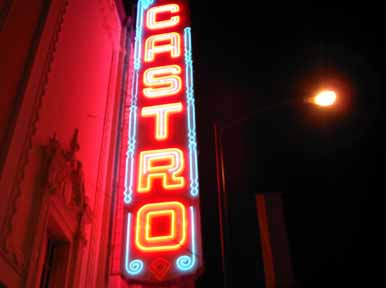
Castro Theatre

Cheap dates!

0

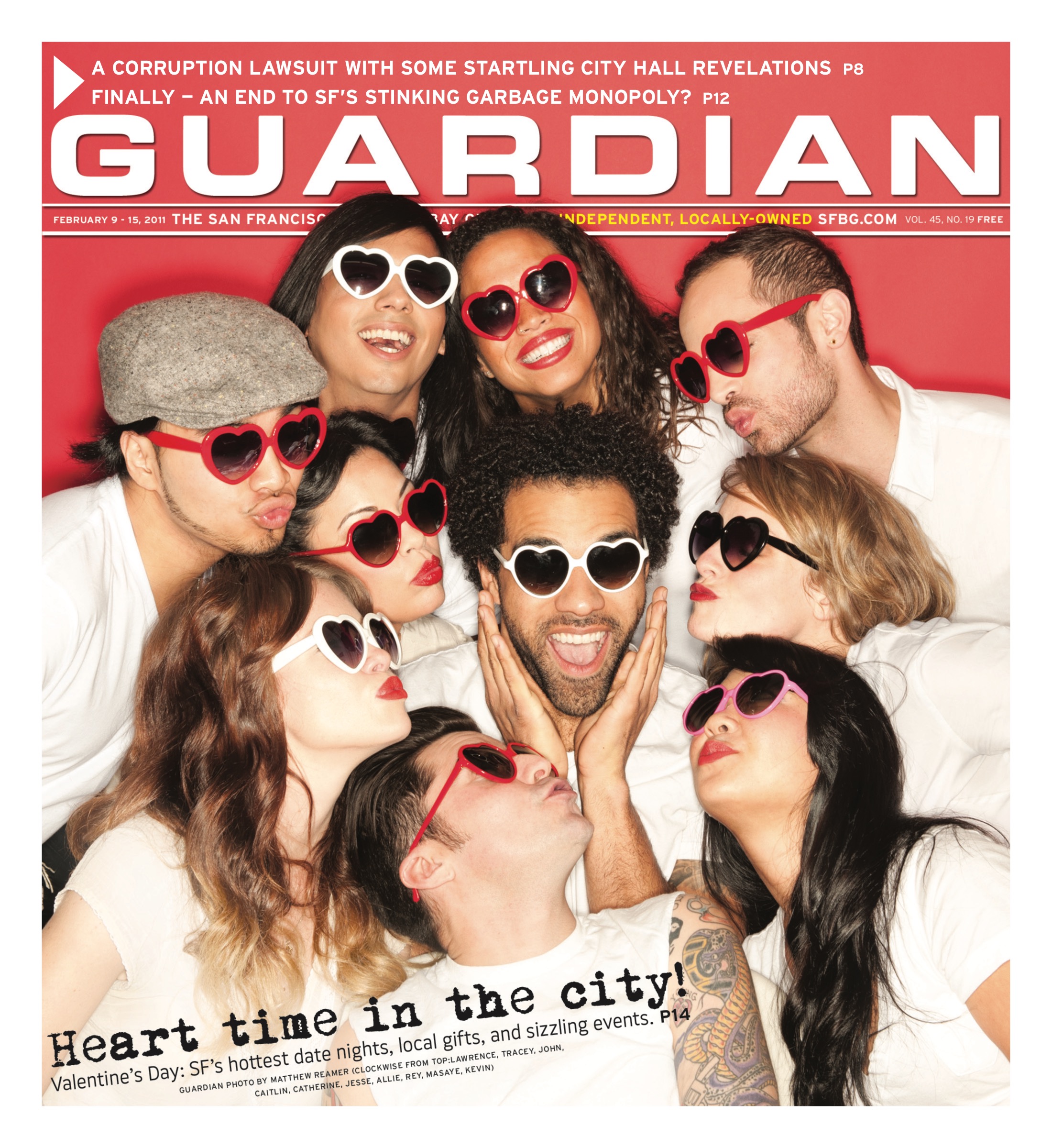
VALENTINE’S Whether you’re hopelessly in love, completely philophobic, or somewhere in between, here’s a sweet slew of events on the horizon that won’t tap you dry. We’ve chosen our favorites that are all less than $20 (except for a couple worthwhile charity fundraisers). Now go out and get starry-eyed, you kid.  


——-

WEDNESDAY 8

Aphrodesia Afterhours Valentine’s Day Conservatory of Flowers, Golden Gate Park, 100 John F. Kennedy, SF. (415) 831-2090, www.conservatoryofflowers.org. 6 p.m.-10 p.m., $10. Chocolate is hands down the best part of Valentine’s Day. Join local chocolatier TCHO’s chief chocolate guru, Brad Kintzer, for his demonstration on how to transform beans into bliss. Afterwards, grab a love potion from the Cocktail Lab, frolic amongst the orchids, and enjoy a live performance by Le Quartet de Jazz. Remember to take a picture in the photobooth — a night dedicated to chocolate is a night to remember.

Love on Wheels dating game Public Works, 161 Erie, SF. (415) 932-0955, www.sfbike.org. 6 p.m., $5 for SF Bicycle Coalition members; $10 for non-members. The cutest people always seem to be railing past each other on their bikes. The SF Bicycle Coalition is going to sit all you guys down so you can date already. Lovebirds will quiz three potential dates (hidden from view) and go on a date provided by one of the sponsors. This annual tradition is a cute hoot.


——-

THURSDAY 9

“Animal Attraction” NightLife aquarium gallery and sex talk California Academy of Sciences, 55 Music Concourse, SF. (415) 379-8000, www.calacademy.org. 6 p.m.-10 p.m., $12. Cal Academy’s weekly Thursday evening party, NightLife, is launching a new gallery for fish-lovers (and friends!) with a series of reproduction-themed talks. Various experts will be talking about mating strategies in the animal kingdom, penis bones of different species, and the sex life of Zodiac signs. Dr. Carol Queen from Good Vibrations will be sharing her knowledge about the science of orgasms. So let’s do like they do on the Discovery Channel.

“Cupid’s Back” sixth annual Valentine’s Day party Supperclub, 657 Harrison, SF. (415) 348-0900, cupidsback.kintera.org. 8 p.m.-midnight, $30-35. Gay charity impressario Mark Rhoades is back — like Cupid, you might say — with this popular shindig that brings together oodles of hot men. DJ Juanita More will fluff the crowd, and it all goes to help out our invaluable GLBT Historical Society. Shoot your arrow and it goes real high …

“Go Deep” lube wrestling for the boys El Rio, 3158 Mission, SF. (415) 379-8000, www.calacademy.org/events/nightlife. 8 p.m.-11:30 p.m., $10–$15. What says romance more than watching half-naked queer boys with fantastical monikers like Yogzar and Red Dragon wrestling in a vat of lube? Slide your way into V-Day at this monthly (second Thursdays) grip ‘n slip put on by neo-Vaudevillian troupe SF Boylesque, with DJ Drama Bin Laden, a performance by the Bohemian Brethren, and Cajon food from Family Meal available on the back patio.


——–

FRIDAY 10

 ——–

FRIDAY 10

Bardot A Go Go Pre-Valentine’s Dance Rickshaw Stop, 155 Fell, SF. (415) 861-2011, www.bardotagogo.com. 9 p.m., $10. “Music by French people for everybody” is the motto of the neato longtime roving Bardot A Go Go — and that includes a bubbly beretful of cute folks who revel in 1960s pop glamour filtered through contemporary va-va-voom. Live band Nous Non Plus is très adorable, and DJs Pink Frankenstein, Brother Grimm, and Cali Kid bring French kisses galore. Plus: free hairstyling by Peter Thomas Hair Design, d’accord.

I Heart Some Thing The Stud, 399 9th St., SF. (415) 863-6623, www.studsf.com. 10 p.m.-late, $8. “We love love! We just love it!” scream the awesome queens of Some Thing, the mind-altering weekly friday drag show and party at the Stud. You may detect a hint of the sardonic in there, but the smart Some Thingers always cover their bases with a healthy dose of sincerity to go with the staged pop culture send-ups. heart-shaped performers include Glamamore, Manicure Versace, Cricket Bardot, and Nikki Sixx Mile. Afterhours dancing, too.

Mortified’s Annual Doomed Valentine’s Show DNA Lounge, 375 11th St., SF. (415) 626-1409, www.getmortified.com. 7:30 p.m., $14 adv; $21 at door. Do you remember your first kiss when you went in for the gold, missed completely, and your lips puckered mid-air? Well, the folks at Mortified sure do. They have sorted through the oldest and nerdiest notebooks, letters, photos, and shoeboxes so that they can share with you their most humiliating romantic encounters. Reinvigorate your disdain for this holiday by taking comedic comfort in the mishaps of these thick-skinned Valentine’s veterans.

Ninth Annual Food from the Heart Festival Ferry Building Marketplace, 1 Ferry Building, SF. (415) 983-8000, www.ferrybuildingmarketplace.com. Through Saturday. 5:30-8 p.m., free entrance. Nothing says “I love you” like food. Give the gift of a happy stomach to your lover this Valentine’s in the candlelit Grand Nave of the Ferry Building, with a night of dancing and eating. Revel in the magic of the waterfront, sip on wine poured by local Napa Vinters, and taste a scrumptious hors-d’oeuvre or five.

“On The Edge 2” erotic photography exhibition Gallery 4N5, 863 Mission, SF. (415) 522-2400, www.gallery4n5.com. Through Sunday. Gallery hours Fri., 4 p.m.-9 p.m.; Sat., 11 p.m.-9 p.m.; Sun., noon-5 p.m., free. Valentine’s Day may be about romance for some people, but for us it’s about getting naked. (And eating, but mostly getting naked.) This group exhibition features 400 pictures of artful sexiness taken by 25 erotic photographers who bring on the nudes.


——–

SATURDAY 11

“Drunk with Love” with Carol Peters The Emerald Tablet, 80 Fresno, SF. (415) 500-2323, www.carolpeters.net. 8 p.m., $10. Carol Peters, a.k.a. “Velvet Voice,” is known for her passionate and amorous renderings. For one steamy night in light of Valentine’s Day, Peters will grace the stage to croon sensual tunes that capture the many dimensions of love.

Valentine’s Surprise SF Lindy Ball Womens Building, 3543 18th St., SF. sfswingjam.eventbee.com. 7:30 p.m.-12:30 a.m., $22 This Lindy Hop and Swing ball is actually the centerpiece of a three-day swing summit in celebration of romance (check the website for full line-up) — because what says, “I love you” more than artfully mopping the floor with your partner? We sure don’t know. Hoppin’ workshops and technique tune-up sessions complement the ball, which consists of a Lindy contest, live swing music, and a surprise 91st birthday celebration for classic movie star Ray Hirsch. Lessons offered!

Watson’s “Naked at the Art Museum Scavenger Hunt” Legion of Honor, 34th Ave, SF. (415) 750-3600, legionofhonor.famsf.org. Through Sunday. 2 p.m.-4:30 p.m., $20. Who said museums had to be tame? Bring a lover or friend this weekend to the Legion of Honor for a sexy scavenger hunt. You will scope the halls for studly sculptures, titillating paintings, bathing beauties, and many sexy inanimate objects more. Museums will never be the same again.


———-

SUNDAY 12

SF Mixtape Society’s “Under The Covers” music exchange and contest The Make-Out Room, 3225 22nd St, SF. (415) 440-4177, www.sfmixtapesociety.com. 6 p.m., free with mix. Don’t have someone to make a mixtape for this year? It’s OK. Your ex’s music taste was awful anyways! Put that playlist you love on a CD, cassette, or USB drive and have it land right in the ears of a random yet lucky someone. You’ll end the night with someone else’s coveted mix, and everyone will get to vote for the playlist with the best track listings and artwork.


———

MONDAY 13

Litquake Literary Festival presents: Love Hurts readings of grief-stricken passages of love and lust The Make-Out Room, 3225 22nd St, SF. (415) 440-4177, www.litquake.org. 7 p.m., $10. Ten Bay Area writers will give their own cynical (and mostly hilarious) twists on the forlorn words of some of the most melancholic and/or melodramatic novels ever written. Come sort out the parallels between drug dependency and romance in Valley of the Dolls, the masochistic plotline of The Story of O, and many more classics that well forewarned of broken hearts.


———

TUESDAY 14

Club Neon’s Eighth Annual Valentine’s Day Underwear Party The Knockout, 3223 Mission, SF. (415) 550-6884, www.theknockoutsf.com. 10 p.m.-2 a.m., $5, free with no pants before 11 p.m.! This is THE event for fresh and nubile indie heartbreakers, stripping down to make you all “damn!” and stuff. One of our favorite annual pantsless throwdowns, with steamy rock DJs Jamie Jams and EmDee making you want to take it all off.

The Fifth Annual Poetry and Music Battle of ALL of the Sexes Uncle Al and Mama Dee’s Cafe at POOR Magazine, 2940 16th St, SF. (415) 865-1932, www.poormagazine.org. 7 p.m., $5-$20 suggested donation for dinner and show. Instead of scribbling your words in to a Hallmark card, show off your love this Valentine’s in rhyme and verse. All proceeds will support POOR magazine, a local arts organization that advocates education and media access for struggling communities. The theme is 1950s, but the beats will be timeless.

Love Story film showing and gala with Justin MX Bond Castro Theatre, 429 Casto, SF. (415) 621-6120, www.castrotheatre.com. 8 p.m., $10 film only; $25 for gala tickets. Relive the drama, the tragic heartaches, and the swooning love story of the 1970 film classic. Ali MacGraw will be at the Castro mezzanine in person, “Theme from Love Story” will be sung by Katya Smirnoff-Skyy, and special guest Mx Justin Vivian bond will be doing a “sorry” medley.

http://www.youtube.com/watch?v=oMjsuYytrkg

Passion Punch Valentine’s day kickboxing class UFC Gym, 1975 Diamond, Concord. (925) 265-8130, www.ufcgyms.com. 6:30 p.m., free. Valentine’s got you foaming at the mouth? Let it out. This 60-minute class will incorporate dynamic boxing moves so that you can punch away all the annoyances you will be feeling by the end of this day.

The Crackpot Crones present “I Hate Valentine’s Day” sketch comedy and improv show The Dark Room, 2263 Mission, SF. (415) 648-5244, www.crackpotcrones.com. 8 p.m., $20. Outrageous duo Terry Baum and Carolyn Myers are providing a public service for the romantically challenged. They will be making fun of everything Valentine’s related — especially silly little concepts like true love and soul mates. Belt along to the song, “The Twelve Days of Being Dumped,” and give your best evil cackle at this sketch comedy show.

Valentine’s Day Party with T.I.T.S and Uzi Rash Hemlock, 1131 Polk, SF. (415) 923-0923, www.hemlocktavern.com. 9 p.m., free. There is no need for all the fuss, the fancy gifts, the cutesy ribbons, or the overpriced dinner. If you’re sick of the pink, come dance your anti-heart out at this doom punk show. Flowers wilt anyways.

On the Cheap Listings

0

Submit items for the listings at listings@sfbg.com. For further information on how to submit items for the listings, see Picks.

WEDNESDAY 1

“Singing the Golden State” early Californian music exhibition Society of California Pioneers, 300 Fourth St., SF. (415) 957-1849, www.californiapioneers.org. Through Dec. 7. Gallery hours Wed.-Fri., 10-4 p.m.; $2.50 for seniors and students; $5 general admission. The Frederick Sherman Collection and the private collection of James M. Keller join musical forces to bring to you two floors of sheet music and recording samples of songs composed in California from1849 through the 1930s. This is equivalent to striking gold for any music lover, especially those who are nostalgic for the sounds of California pre-Katy Perry.

“Acknowledged: Portraits of Project Homeless Connect” exhibition opening San Francisco Public Library, 100 Larkin, SF. (415) 557-4400, www.sfpl.org. Through March 25. Library hours Mon., 10-6 p.m.; Tue.-Thurs., 9-8 p.m.; Fri., noon-6 p.m.; Sat., 10-6 p.m.; Sun., noon-5 p.m.; free. A picture is worth a thousand words — and you need would need even more than that to describe what it’s like to be homeless in San Francisco. Photographer Joe Ramos has partnered up with Project Homeless Connect to feature 55 program participants in this powerful look at our society’s unhoused.

THURSDAY 2

“Bourbon and Bull” NightLife at the Academy California Academy of Sciences, 55 Music Concourse, SF. (415) 379-8000, www.calacademy.org/nightlife. 6-10 p.m., $12. Mix a shot of George Dickel Whisky and a sample of Bulleit Bourbon with the acoustic tunes of Jeanie and Chuck’s Country Roundup. Now add an electric bull to the mix. Sounds like our dream cocktail.

After Dark: Heartworks Exploratorium, 3601 Lyon, SF. (415) 563-7337, www.exploratorium.edu. 6-10 p.m., free with museum admission. With Valentine’s Day looming annoyingly close, many are already weary at any mention of the word “heart.” But before writing off love as an esoteric fib, join the Exploratorium for a hands-on experiment with a man-made metal heart — and maybe leave with a more tangible understanding of what makes your ticker skip a beat.

Bicycle Bingo fundraising event and launch party Actual Cafe, 6334 San Pablo, Oakl. (510) 653-8386, www.actualcafe.com. 7-9 p.m., free. Make Thursday night a bingo night and win an assortment of prizes while giving back to the Bay Area community at the debut of this weekly charity funtacular. All bingo card proceeds, along with 10 percent of cafe revenues, will go directly to the nonprofit of the week. Tonight, play for the East Bay Bicycle Coalition. Next week: Rebuilding Together Oakland.

FRIDAY 3

Secession from the Broadcast: The Challenge to Create on the Same Scale as We Can Destroy film screening and director presentation YBCA, 701 Mission, SF. (415) 978-2787, www.ybca.org. 7:30pm., $6–$10. Gene Youngblood has been talking about alternative cinema and media democracy since the 1970s. He used to write about things like the Beatles and George Lucas — tonight you can join him as he talks about the new shriek-inducing fad, the Internet.

UrbanYenta launch party Roe Nightclub, 651 Howard, SF. (415) 227-0288, www.roe-sf.com. 6-8 p.m., free. Did your last online date just completely freak you out? Now when dates goes wrong, you have an actual human matchmaker to go cry to, instead of frantically checking off comment boxes home alone on a Saturday night. UrbanYenta hopes to match you not just with a pixilated image, but a partner who will do you right.

SATURDAY 4

“The Uncomfortable Zones of Fun” experimental performance workshop Temescal Art Center, 511 48th St., Oakl. (510) 526-7858, www.temescalartcenter.org. 8 p.m., free. “Uncomfortable” and “fun” are often hard to use in the same sentence. But leave it Frank Moore, world-known performance artist, to pair the two in his improv dance, acting, and music class. Bring your instruments and sense of humor.

Little Song sonnet writing workshop Pro Arts Gallery, 150 Frank Ogawa Plaza, Oakl. (510) 763-4361, www.proartsgallery.org. 1-3 p.m., free. Poetry is said to be a way of taking life by the throat — take hold and express your soul’s desires in this sonnet workshop. There will be a limit of 30 people and seating will be first-come, first-served.

Upcycle Ball San Francisco Yellow Bike Project fundraiser and dance party Rickshaw Stop, 155 Fell, SF. (415) 861-2011, www.rickshawstop.com. 8 p.m., $10 presale; $12-25 at door. A bike-enthusiast’s version of what prom never was. Raise funds for the volunteer-powered community shop while you dance your wheels off to live performances by maus haus, Hottub, DJ Deep, and Mr. Pillz.

Bernal Yoga Literary Series author readings The Bernal Yoga Studio, 461 Cortland, SF. (415) 643-9007, www.bernalyogaseries.wordpress.com. 8 p.m., $5 suggested donation. A literary event packed with breathtaking readings from local authors. The evening will feature writers Jeff Hoffman, Li Miao Lovett, and Peter Orner, plus local authors Tom Comitta, Lara Durback, and Marisela Treviño Orta.

SUNDAY 5

Year of the Dragon celebration Asian Art Museum, 200 Larkin, SF. (415) 581-3500, www.asianart.org. 11 a.m.-4 p.m., free. Celebrate the Year of the Dragon with lion dancers, a chance to listen to dragon tales, arts and crafts, and even a yoga flow session at the end of the day. This event is perfect for people who already gave up on their New Year’s resolution and want a re-do.

MONDAY 6

The Right to Love: An American Family film premiere Castro Theatre, 429 Castro, SF. (415) 621-6120, www.castrotheatre.com. 4 p.m., $10; free for students. Bay Area filmmaker Cassie Jaye follows Jay and Bryan Leffew, a legally married gay couple living in Santa Rosa, and their two adopted kids, Daniel and Selena. The family became a YouTube sensation after posting their home videos on a channel called “Gay Family Values.” Meet with the awesome Leffews at the first public screening of their documentary.

TUESDAY 7

Exit Strategies Granta & Zyzzyva literary event and launch party City Lights Books, 261 Columbus, SF. (415) 362-8193, www.citylights.com. 6:30 p.m., free. Do you find yourself repeatedly scratching your way out of the hole you dug with your own hands? Daniel Alarcon zooms in on this conundrum in his latest novel rightly titled, Exit Strategies. He will be followed up by ZYZZYVA, who will present their latest winter issue, which includes 200 pages of poetry, prose, and visual art made by West Coast writers and artists.

So long, farewell

0

arts@sfbg.com

FILM When Ingrid Eggers announced that 2012 would mark her last German Gems film festival, the news came as a bittersweet reminder that nothing lasts forever.

Perhaps not coincidentally, this theme is perfectly summed up by the quintet of films that comprise German Gems’ final line-up. From the scandal-inducing, incestuous love affair (and its slow-burning aftermath) between artistic siblings Georg and Margarethe Trackl in Christoph Stark’s Taboo: The Soul is a Stranger on Earth, to the rejection of childhood dreams portrayed in Robert Thalheim’s Westwind, this year’s festival deals overwhelmingly with the impacts and lingering reverberations of loss. Whether Eggers planned it this way — to help us work through our grief at losing her curatorial prowess — isn’t clear, but in any event, the selection does prepare the viewer emotionally to accept her graceful auf Wiedersehen.

An understated portrait of Germany’s relationship with nuclear power, Under Control is a quietly compelling observational documentary. Crafted simply from footage taken inside nuclear power plants across Germany and Austria, along with interviews with various plant operators and nuclear energy experts regarding each particular plant’s focus and future, Under Control offers an intriguing look at a side of nuclear power we’re not normally privy to: the somewhat banal day-to-day operations which go into its generation.

These glimpses include stark imagery of long, sterile white corridors; retro-futuristic control rooms filled with panels and flashing monitors; plant employees being scanned for radiation; steam curling above bucolic countryside from the giant mouths of cooling towers; a subterranean bunker where contaminated washrags go to be buried; and a tense emergency-preparedness training session during which a reactor shutdown is simulated.

By the film’s end an unexpected realization becomes apparent: the almost foregone conclusion that Germany’s nuclear age is drawing to an end. As filmmakers Volker Sattel and Stefan Stefanescu are given a tour of the remains of what was once the Kalkar nuclear facility, completed in 1985 but never taken "online," their guide mourns the loss of jobs, and more importantly, of the billions of Deutschmarks used to fund the construction of a doomed power plant.

"Chernobyl broke our backs," he asserts almost wistfully, while astonishing footage of a modern-day carnival ride built inside the shell of the old cooling tower spirals onscreen.

A film dealing more directly with loss of the utterly human variety, Jan Schomburg’s Above Us Only Sky follows Martha (Sandra Hüller), a soft-spoken schoolteacher married to PhD student Paul (Felix Schmidt-Knopp), with whom she plans to move to Marseilles after he accepts a job offer at a hospital there. Or so she thinks. In a series of brief, clipped scenes, she discovers that the man she has been living with for years has been leading a secret life she’s known nothing about.

Struggling to regain her bearings, she meets Alexander (Georg Friedrich), a charismatic, tattooed professor at Paul’s former university, and in a series of awkwardly-engineered moments, initiates a relationship with him. As their attachment grows, their pairing begins to resemble Martha’s previous relationship — right down to a discussion about moving to Marseilles. The main attraction of this film is Hüller’s nuanced performance, and her disarming veneer of almost girlish delicacy and neurotic sexuality concealing an iron will. Her previous tragedy informing her actions, she keeps her motivations to herself, revealing as little as possible for as long as possible, a stubborn survivalist strategy which finally unravels just enough for Alexander to be able to reveal his own hidden past.

A first feature for Schomburg, the deceptively simple Above Us Only Sky doesn’t waste a frame while tracing the subtle contours of a paradise lost, and one regained.


GERMAN GEMS

Sat/14, $8-$10

Castro Theatre

429 Market, SF

Sun/15, $8-$10

Arena Theatre

214 Main, Point Arena
www.germangems.com

The Shining Holiday Spectacular

0

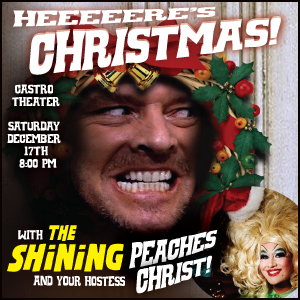
HEEEEEEEEEERE’S CHRISTMAS!

The Shining Holiday Spectacular is an insane Christmas extravaganza full of holiday madness and mayhem hosted by Peaches Christ and stars the fabulous Midnight Mass Players.
 
The historic Castro Theatre is proud to host Peaches’ screening of The Shining – especially the Torrance Family Christmas Review hosted by Jack, Wendy, and Danny Torrance, starring Peaches Christ and the Midnight Mass Players with special performances by The Twins, Lady in a Bathtub, and more!
 
Watch as the Castro Theatre is transformed into the Overlook Hotel and visit the Haunted Ballroom Bar in the mezzanine or order cocktails from a dead man. Dress up for the Crazy Christmas Costume Contest where your mentally ill wardrobe can win big prizes….and be ready to barely make it out alive.

For more information and to purchase tickets, fooooollow this link!

Saturday, December 17at 8pm @ Castro Theater, 429 Castro, SF

Rare and juicy

1

FILM Longtime San Francisco resident George Kuchar’s death this September was a reminder of how many had been influenced by his loveably eccentric movies, from famous early fans like Andy Warhol and John Waters to the hundreds of students who passed through his San Francisco Art Institute courses over the decades. Among the latter, for a long time his most famous protégé — at least locally — was Curt McDowell, who started out as a teacher’s pet, moved on to heavy petting with teacher, and remained close to Kuchar as both friend and collaborator until his own AIDS-related demise in 1987.

George Kuchar’s half-century-plus output was always joyfully accessible “avant-garde” cinema, its mixture of the personal and the purple drawing on the conventions of those Hollywood melodramas he and brother Mike (who’s taking over George’s teaching responsibilities at SFAI) grew up watching in the 1950s Bronx. His films’ popularity was perhaps most hindered by the simple fact that he only felt moved to direct something in the more marketable feature length form once — 1973’s The Devil’s Cleavage.

McDowell’s films, often heavily influenced by George Kuchar’s (even when the latter wasn’t operating as scenarist and actor on them), also had a wide streak of camp parody, a Warholian mini-constellation of “stars,” a vivid aesthetic, and impulse toward autobiography. They were much more aggressively sexual, and ambitious — during his much-too-short career he made no less than four features, two of which were porn in the graphic-content if not commercial sense. The hour-long Peed in the Wind (1972), the same year’s Lunch, and 1985’s very-long-in-the-making Sparkle’s Tavern are basically forgotten now, the last not screened in the Bay Area for at least a decade, the others possibly unseen since the 1970s.

Thundercrack! (1975) — an even more daft shot at “adult” cinema than the experimental-minded Lunch — is better known, having had at least the beginnings of a midnight movie cult following. But with all its baroque, still-singular The Old Dark House (1932) meets Tennessee Williams charms (there is surely no other porn flick remotely like it), why isn’t it now as well known as, say, Pink Flamingos (1972) or Eraserhead (1977)? Part of that doubtless has to do with the disarray McDowell’s body of work has been in, access-wise, for nearly 25 years now. Some of his films are distributed by (but seldom rented from) Canyon Cinema. Others are in storage, or presumed lost. Nothing is available on DVD, and any videotapes have long gone out of print. Whether this is due to strife, disorganization, or financial limitations among the guardians of his trust remains as murky as it was in the 1990s, when the last, brief issue of Thundercrack! and some shorts on VHS occurred.

Thus, it’s sadly rare to get a McDowell program even here in SF, where his memory should flourish rather than be slowly slipping from public awareness. Just such an occasion arrives this week at the Roxie — co-founded by his longtime creative and domestic partner, Robert Evans — as two shows spread over three days reprise some (relatively) familiar as well as barely-seen material.

The main attraction, as well as the scarcest, is 1980’s 55-minute Taboo (The Single and the LP), which will be shown on projected VHS due to a typical bad-luck hurdle: its original materials, plus those for other films, were sent to New York’s Museum of Modern Art years ago, only to go missing in transit.

While McDowell often echoed George Kuchar’s use of narrative more as an erratic reference point than a rule to follow, Taboo has an unusually abstract relation to story even by his standards, at least those of his longer works. Purportedly crafted over four years — his output slowed considerably after Evans had replaced the incredibly prolific Kuchar as boyfriend — it has buxom, blonde-bewigged sis Melinda McDowell, recently departed Thundercrack! mad diva Marion Eaton, and a glowering Kuchar as three parts of a tempestuous two-couple marital equation variously simmering with unmet desire and boiling over with orgiastic excess.

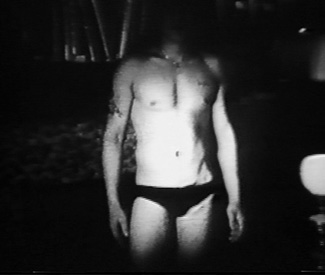
But it’s the fourth player who dominates the filmmaker’s attention. One of his numerous onscreen Joe Dallesandros, but evidently a source of particular longtime obsession, Fahed (a.k.a. David) Martha hailed from a Palestinian family that owned the grocery store next to the Roxie; his petite yet muscle-bound Sal Mineo-like appeal piqued McDowell, who didn’t mind the frequent presence of an equally young girlfriend. (In fact, he freely admitted “really getting turned on by straight men.”) Throughout Taboo‘s mix of the poetical and camp, the black and white camera salivates over this nearly-naked Adonis’ body and cocky attitude; in turn, he displays an exhibitionist zeal he probably didn’t know he had in him. A producer here and close friend, former Castro Theatre programmer and current San Francisco Silent Film Festival artistic director Anita Monga says McDowell “just saw the deep sexual beauty in everyone,” turning them on with the sheer voracity of his admiring gaze.

In one of the shorts the Roxie is showing in a separate program, 1972’s Confessions, McDowell interviews friends and lovers, asking them to describe his best and worst qualities. Perhaps straddling both, one confides “You’ve always had this energy, it’s like an explosion. I think when people see your films they have to understand, like, sex. It seems like you need so much more sex than other people.” A satyr-like omnivorous seduction and insatiability still sweats off many of his films as if through pores, most notoriously 1985’s Loads (a Dionysian compilation of guys he’d lured up to masturbate and service in his Mission studio).

McDowell was a happily self-corrupted transplant from the Heartland (with typical alliterative flair, Kuchar called him “curt, cute, controversial, and not celibate … poet of the plebeian and perverse”); he enjoyed shocking the staid society left behind — 1970’s A Visit to Indiana is his amusingly sulky chronicle of a most reluctant trip home.

Also on the Roxie bill are such examples of pure, impish silliness as 1972’s Siamese Twin Pin Heads, a short perhaps dated by a “look ma, we’re naked!” glee that looked a lot more rebellious back then. But 1973’s Boggy Depot is a homemade musical anticipating Thundercrack!‘s puppet theater-Gothic look. Its variously scheming and schemed-against protagonists trill their ridiculous operetta-style lyrics to found orchestral tracks. This is one McDowell film in which people keep their pants on, but these 17 sublime minutes are orgasmically pleasurable nonetheless.

“LOADS OF CURT MCDOWELL”

Sat/26-Sun/17, 1 p.m.; Mon/28, 10 p.m., $5-9.75

Roxie

3117 16th St., SF

(415) 863-1087

www.roxie.com


GOLDIES 2011 Lifetime Achievement: Ingrid Eggers

0

GOLDIES In a city that boasts far more film festivals than movie theaters, one of the most singularly focused is the annual Berlin and Beyond Film Festival — the largest German-language film festival in the United States. Carefully curated for 14 years by Dr. Ingrid Eggers, former program coordinator of the San Francisco branch of the Goethe-Institut, Berlin and Beyond has showcased an eclectic mix of movies by established filmmakers, debut features, documentaries, shorts, and silent films, from Germany, Austria, and Switzerland. Eggers’ major criteria — that the movies be filmed primarily in German, a language she felt was often missing from San Francisco’s foreign film scene — still left plenty of room for variety. Over the years, quirky documentaries about East German break dancers (Nico Raschick’s 2006 Here We Come) have shared screen space with gritty culture clashes such as Fatih Akin’s 2004 Head-On, wartime dramas such as Margarethe von Trotta’s 2003 Rosenstrasse, and non-traditional romances, such as Andreas Dresen’s 2008 Cloud 9.

Now, two-and-a-half years after her unanticipated removal from the Berlin and Beyond helm, which shocked the San Francisco film community, Eggers insists on looking forward. “We have made our peace,” she says genially, referring to the current incarnation of Berlin and Beyond, which just celebrated its sweet 16 in October.

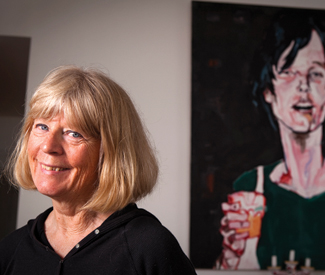
When Eggers talks film, whether in a café in the Mission or on the stage of the Castro Theatre, her whole face lights up, a beatific glow. She may have reached Germany’s mandatory retirement age of 65 a few years ago, but her youthful vigor attests to a university background in physical education (along with history and literature) and her personal propensity for sport. Every film of the over 500 she’s presented — from the smallest short to the biggest blockbuster — has received a notably warm introduction, and more than one person has remarked in my presence that it is as if she were born to be a festival host. Yet it’s Eggers’ unassuming, collaborative nature rather than any kind of cult of personality that made Berlin and Beyond so successful. For example, it was by working closely with Anita Monga, former Castro programmer, that Eggers learned the ropes of festival scheduling.

“For our opening night in 1996 she insisted we show Fassbinder’s Martha,” Eggers reminisces. “A very difficult film; we had people walk out.”

From early partnerships with the then-San Francisco-based International Film Financing Conference and Kinofest Lünen, a sister festival in Germany’s North Rhine-Westphalia state, to later ones with corporate sponsors such as Kuehne + Nagel, who underwrote the shipping costs of the film canisters, Eggers’ ability to forge unique partnerships has served her in good stead. Her current film festival project — the smaller-scale German Gems — is set to screen for a third year in January 2012.

After that, Eggers is not so sure. “It’s incredibly expensive to put on even such a small festival,” she admits ruefully, though her many years of festival directing has provided her with the unquantifiable currency of influence. The first German Gems festival, a jam-packed day in 2010 at the Castro (with an encore performance in Point Arena), included von Trotta’s biopic of Hildegarde von Bingen, Vision, and received an official blessing from Dieter Kosslick, director of the prestigious Berlin International Film Festival.

Since she’s less interested in competing with than enhancing the selections at Berlin and Beyond, Eggers has shifted German Gems’ focus toward student and first feature films, one of her favorite components of B and B festivals past. But like any proud parent, she still speaks fondly of her first-born festival, pointing out the big-name film personalities who graced Berlin and Beyond’s stage: Bruno Ganz, Michael Verhoeven, and Wim Wenders — coups that put the event on the map, even in Germany. It won’t ever be quite the same without her, but thanks to Eggers’ persistent efforts over the years, the future of San Francisco’s premiere showcase of German cinema seems assured.

3rd i’s International South Asian Film Festival

0

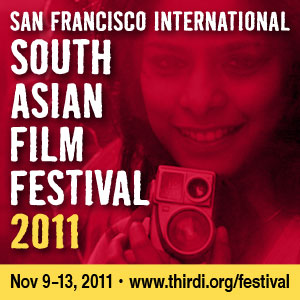
The ninth installment of 3rd i’s SFISAFF will present 16 programs featuring films from India, Pakistan, Nepal, South Africa, Sri Lanka,Tibet, and the US.

Highlights include a special Focus on Sri Lanka, with filmmaker Asoka Handagama in attendance. South Asian Americans shine this year, with 8 programs featuring films by American filmmakers — including five programs showcasing Bay Area talent. As always, docs and indie-narratives take centerstage, and our Saturday Night at the Castro takes Bollywood in a whole new direction.

Wednesday, November 9-Sunday, Novenmber 13 @ The Roxie Theater, 3117 16th Street, SF and The Castro Theatre, 429 Castro Street, SF. Click here for films and showtimes.

Foreplay: Two pre-Folsom scenes

0

As Folsom Street Fair (Sat/24) looms over us like a leather daddy with an itchy whip paw, the city readies itself for the roughest, naughiest, sweatiest weekend of the year. Yesterday, I ran all over the city checking in with the sex scene. I kept my clothes mostly on, but then it is only Thursday… 

Monarchy-Andrew Wedge fitting at Mr. S Leather

“This is Spartaaa!” I’m standing outside one of SoMa’s crucial leather one-stops with an old hand local kink photographer Rich Trove (check his site after the Fair for shots of your flings in the sunshine) and a fashion journalist from the Chronicle. Guess which one is trying to explain to the other what a traditional S&M harness looks like?

Our motley crew has been assembled by Folsom Street Fair’s executive director Demetri Moshoyannis to lurk around Mr. S‘s fitting room while British synthpoppers Monarchy was being fitted for their custommade Andrew Wedge harnesses. The band will be wearing them at their FSF performance on Sunday at 5:10 p.m. on the 12th Street stage. 

“We have no idea what we’re in for,” smiled a member of the band’s entourage. Of course, that wasn’t exactly true — keyboardist Andrew Armstrong attended the fair with a friend six years ago. 

“It kind of freaked me out in a good way,” said Armstrong, modeling the tight neoprene half-tank that Wedge (who vends high end fur and leather designs from places like the Castro’s Sui Generis) had fit over he and his bandmate’s white dress shirts and under the sharp black blazers they were sporting. 

“There’s something a bit religious about it,” he said of Wedge’s designs, which had been agreed upon after a series of emails between the two of them. “It’s futuristic, but masculine as well. Even though we’re basically wearing bra tops.”

“England is very prudish. Well, we take these things seriously, but we do it behind closed doors,” he continued. Again, I found it hard to take him at his word, seeing as the band supplied its own imposing, matching black latex masks for the occasion. They don’t go out in public without them, it turns out, a comment on the nature of celebrity. 

The crew and designer lined up for one last photo opportunity in front of Mr. S’s black leather and harness covered four post king-sized bed. “Not in front of the dildos!” cautioned Moshoyannis. “We want these to be pictures they can use.” Clearly he meant in the Chronicle. 

Side note: if you’re still checking for some sexy threads for this weekend, you could do worse than check out Mr. S’s new sports section. Complete with urinals on the walls and an impressive selection of wrestling singlets, I found myself especially turned on by the display of $12 Style Pig knee socks. I picked some up in red, or as the helpful sales assistant clarified, fisting.


Good Vibrations’ Indie Erotic Film Festival at the Castro Theatre

Best reason to finally buy an iPhone: the Ohmibod Freestyle G. I snagged the mp3 compatible vibrator (really, really feel the rhythmn on your favorite beats) at the IXFF’s pre-party upstairs at the Castro, where Jiz Lee, Carol Queen, Kitty Stryker, and other SF local lustfuls drank cocktails of St. George absinthe and rootbeer, slapped on costume mustaches and generally enjoyed the burlesque stylings of Twilight Vixen Revue. 

When the short erotic film competition began, it got surprisingly jocky. Lucia Aniello’s Dildo Sport, Kelly Robinson and Oscar Salisbury’s Fight, Flight, Or Fuck, and Rollo Wenlock’s computer-aged 30 Love all featured tennis, so I guess the New York Times article was onto something with that balls metaphor

“30 love” – short film. from Rollo Wenlock on Vimeo.


Not everything was heavy breathing-appropriate, either. SF’s own Levni Yilmaz entered one of his backlit Magic Marker-ed creations from his series “Tales of Mere Existence,” What Would Penis Do?, a look at his awkward childhood forays into sexual activity. There was the quirky bunnies and peanuts and women’s rooms in Always, Only, Ever — an entry from Barbara Benas of Brooklyn — not to mention an I-guess-hot tryst between a female American soldier and burkha-clad woman in a designer cave, Julien Rotterman’s Salam and Love

But some of it was. Erika Lust — who earlier this week had an IXFF evening dedicated to her erotic, high glamour European flicks — shared Love Hotel, a threesome flick that made a trip to Barcelona seem highly advisable. Sadly, as the evening’s hosts (Peaches Christ, Hugs Bunny, Lady Bear, and Dr. Carol Queen — when Carol Queen plays the evening’s straightman you know you’re in for it) pointed out, Lust edited out all signs of genitals. Sigh.

The evening’s winner, as determined by an overwhelming audience response at the end of the night, was La Putiza. Created by Mexican director Gerardo Delgado, the short flick combined erotic comic art, overblown superhero crusading, and joyful, copious amounts of gay sex. Sure, the aesthetic was refined and the lead actor was fuckable, but one suspects that the secret to Delgado’s success, entering into this most phallic of all SF weekends, went back to Peaches Christ’s gleeful promise at the start of the night’s program: 30-foot penises. For Good Vibes’ interview with the filmmaker, voyage here

Thanks Castro Theatre, hope we didn’t make too much of a mess. 

Our Weekly Picks: August 24-30

0

WEDNESDAY 24

MUSIC

Tim Cohen’s Magic Trick

Tim Cohen may just be the hardest working man in rock ‘n’ roll. He pours time and energy into singer-songwriting the Fresh & Onlys, guest musicianing friends’ bands, and masterminding his own side project, Magic Trick. He released a Magic Trick album in February and he recently released another, just half a year later. The LP, The Glad Birth of Love, is a piece of musical achievement: four lengthy rock ballads and guest spots from members of Thee Oh Sees, the Sandwitches, and Citay. It saw a limited release on July 19 (Cohen’s birthday) but was wide-released yesterday, Aug. 23. Tonight, Cohen will be feted with an album release show at the Rickshaw Stop that includes the last show ever for fellow SF rockers Magic Bullets. (Emily Savage)

With Magic Bullets, PreTeen, and Tambo Rays

8 p.m., $8

Rickshaw Stop

155 Fell, SF

(510) 861-2011

www.rickshawstop.com


MUSIC

Vaz

It’s been described as “scum-pop,” “cock rock,” and “creep-rock,” but all you really need to know is this: Vaz is loud as fuck. The hard-hitting Brooklyn trio rose from the ashes of ’90s band Hammerhead in the early aughts and somehow managed to make an even noisier sound in the years that followed. Vaz has also label-jumped in said years, putting out albums, tapes, and splits on Gold Standard Laboratories, Damage Rituals, Narnack, and Load Records, among others. Wherever the band’s outputs land, vocalist-guitarist Paul Erickson continues to wail on post-metal, rapid-paced cuts and drummer Jeff Moordian looks and sounds as though he’s having a convulsive, orgasmic meltdown behind the set (a good thing). (Savage)

With Pygmy Shrews, Unstoppable Death Machine, and Dead

9 p.m., $8.

Hemlock Tavern

1131 Polk, SF

(415) 923-0923

www.hemlocktavern.com


THURSDAY 25

EVENT

“Dinosaur Nightlife”

Though they died out 65 million years ago, Dinosaurs continue to fascinate us, stoking our imaginations, piquing our curiosities, and sometimes even stalking through our nightmares. If you’re yearning to unleash your inner 8-year-old pretend paleontologist and celebrate your love of these “terrible lizards,” then head over to the California Academy of Sciences for tonight’s Dinosaurs! Nightlife event, part of a weekly series of after-hours science-themed parties for the 21 and over portion of visitors. Tonight’s prehistoric party will feature a fossil show and tell, a special planetarium show, live music, drinks, and even a “Dino Burlesque” show. (Sean McCourt)

6-10 p.m., $10–$12

California Academy of Sciences

55 Music Concourse, SF

(415) 379-8000

www.calacademy.org


MUSIC

The Soft Moon

The Soft Moon is back! After touring America in support of its debut album, San Francisco’s most promising new band has finally returned. The band plays the coldest cold wave to come out of the bay in . . . forever? Seriously, it’s like 70 degrees outside and I feel like I have to put on a sweater every time I listen to a song. It’s unsettling. Frenchmen with angular haircuts and vows of silence make this kind of music, not Californians. The Soft Moon isn’t just playing at being the most ice cool band in the bay, though. The music is terse and cinematic; sparse vocals and guitar hover delicately above driving rhythm as lights and images dance across the stage completing the performance. Brrr. (Cooper Berkmoyer)

With Craft Spells

9 p.m., $10

Rickshaw Stop

155 Fell, SF

(415) 861-2011

www.rickshawstop.com


MUSIC

Sallie Ford & the Sound Outside

It’s easy to see how Sallie Ford & the Sound Outside has so quickly risen the ranks of the Portland music scene. The band’s breezy blend of rockabilly, jumpy jazz, and 1950s rock ‘n’ roll is contagiously effective, punctuated with walking stand-up bass lines, lively percussion, and just the right amount of rebellious energy. But it’s Ford herself that steals the show and lends the group its most compelling element. Channeling the yelping spirit of 1920s and 1930s-era blues singers such as Bessie Smith and Ida Cox, the wildly unhinged and raw passion in her voice has quickly won the band scores of fans, including the Avett Brothers, which the band accompanied for several shows throughout the West Coast and Colorado in 2009. (Landon Moblad)

With il gato

9 p.m., $12 Cafe Du Nord

2170 Market, SF

(415) 861-5016

www.cafedunord.com


MUSIC

White Mystery

Goddamn can Alex White sing. On guitar and vocals, Alex is half of Chicago, Ill. brother-sister duo White Mystery. Her brother Francis White, on drums, is the other half of this stripped down rock ‘n’ roll combo. The Bikini Kill comparisons are perhaps inescapable thanks to her powerful pipes and punchy riffs, but White Mystery is a different beast, one with two full heads of red hair that fly back and forth with each drum strike. The songs are simple and energetic: even as a two-piece, White Mystery sounds full with attitude that demands your attention. “I have an idea,” says Alex at the beginning of its song “Party:” “let’s have a party!” Yes, let’s. (Berkmoyer)

With Burnt Ones

9 p.m., $7

Hemlock Tavern

1131 Polk, SF

(415) 923-0923

www.hemlocktavern.com


FRIDAY 26

FILM

Edgar Wright

Gaining American mainstream exposure with 2004’s zombie smash hit Shaun Of The Dead, continuing with the 2007 action farce Hot Fuzz, and most recently with last year’s comic adaptation Scott Pilgrim vs. The World, writer and director Edgar Wright has brought us some of the most darkly hilarious and entertaining movies in recent memory. The British filmmaker visits the Castro Theatre tonight for a special “Midnights For Maniacs” event that will feature screenings of all three previously mentioned films, an assortment of shorts including the Grindhouse faux trailer Don’t, plus a live onstage interview in conversation with host Jesse Hawthorne Ficks. (McCourt)

7 p.m., $15

Castro Theatre

429 Castro, SF.

(415) 621-6120

www.castrotheatre.com


MUSIC

Traditional Fools

Snotty, sloppy and drunken, the Traditional Fools is everything garage rock should be. Notes crash into each other and vocals are kind of slurred over the consequent blur of fuzz, but something holds it all together for a few minutes until one song ends and another starts. “1-2-3-4!” It’s a party in three pieces: Andrew, David, and Ty (of eponymous Ty Segall fame) are heir to the Mummies’ budget rock sound with a twist of their own. If John Waters ever made a skate video (don’t ask me, I don’t know why he would, but if he did) the Traditional Fools would play in every scene. Does that make any sense? I’m not sure it does. (Berkmoyer)

With Outdoorsmen, Uzi Rash, and Shrouds

9 p.m., $10

Thee Parkside

1600 17th St., SF

(415) 252-1330

www.theeparkside.com


SATURDAY 27

MUSIC

J-Pop Summit Festival

Any day of the year you can stop by New People — that glowing white box/contemporary mall in the heart of Japantown — for a brief, colorful dose of j-pop. But if you really want to do it right, and get maximum exposure to the current pop culture trends of Japan, the yearly J-Pop Summit Festival is your best bet. The festival, which is hosted by New People this year, takes place on Post Street from Webster to Laguna, encompassing both the mall and the Peace Plaza of Japantown. There will be live music by Danceroid, Layla Lane, K-ON!, SpacEKrafT, the Patsychords, and teen duo the Bayonettes (which formed at the Bay Area Girls Rock Camp) along with DJs spinning modern j-pop. The fest also includes film screenings and avant-garde Elegant Gothic Lolita-style fashion by h. Naoto, so you can dress the part as well. (Savage)

Through Sun/28

11 a.m.-6 p.m., free

New People

1746 Post, SF

(415) 525-8630

www.newpeopleworld.com


FILM

“Showgirls: The Peaches Christ Experience”

It’s hard to believe anyone (ahem, director Paul Verhoeven and writer Joe Eszterhas) thought for two seconds that 1995’s Showgirls would be received as anything other than extreme high camp to the zillionth power. Faster than you can say “I like your nails,” however, Showgirls’ true destiny — as audience participation classic — was embraced, and one of its fiercest champions has been our very own Peaches Christ. Surely San Francisco’s hunger for the on-screen antics of Nomi Malone and Peaches’ accompanying hijinks (including a “Volcanic Goddess” pre-show and an army of 100 lap dancers) can barely be contained by any four walls, but among all possible venues, the Castro Theatre seems equipped for the challenge. Thrust it! (Cheryl Eddy)

8 p.m., $25–$45

Castro Theatre

429 Castro, SF

www.peacheschrist.com


SUNDAY 28

MUSIC

Sway Machinery

For those not of the Jewish faith, cantorial music is basically synagogue tunage. If Brooklyn-based, edged-out cantorial-meets-blues music isn’t your thing, try it tangled up with West African drumming and Malian vocals. At some point, Sway Machinery will get your attention. The band went to Mali, recorded two full albums with musicians there including local superstar Khaira Arby, then tread a bumpy road back to the States. Dynamic singer-songwriter-guitarist Jeremiah Lockwood often leads the Sway Machinery in Hebrew, though on the group’s most recent, inextricably Mali-influenced records, he takes two steps away from the traditional, and experiments with different vocal stylings. It’s true that the bloggers have made it clear they’re sick of indie-afro-pop, but this is an exception to that rule, it’s an old-world away from appropriation. (Savage)

8 p.m., $12

Beatbox

314 11th St., SF

www.beatboxsf.com


TUESDAY 30

MUSIC

Butthole Surfers

Boasting one of the most infamous monikers in music history and a harried reputation for wild antics that more than matched, the Butthole Surfers have been attacking stages and ear drums for the past 30 years. Still led by the core trio of Gibby Haynes, Paul Leary, and King Koffey, the band may have flirted with some mainstream success back in the 90s with tunes such as “Who Was In My Room Last Night?” and “Pepper,” but they still continue to mix a crazy concoction of underground punk, psychedelic rock, and noise that may confound the casual listener, while the hardcore fans go rabid at its shows. (McCourt)

With 400 Blows.

8 p.m., $30

Regency Ballroom

1290 Sutter, SF

www.theregencyballroom.com 


The Guardian listings deadline is two weeks prior to our Wednesday publication date. To submit an item for consideration, please include the title of the event, a brief description of the event, date and time, venue name, street address (listing cross streets only isn’t sufficient), city, telephone number readers can call for more information, telephone number for media, and admission costs. Send information to Listings, the Guardian Building, 135 Mississippi St., SF, CA 94107; fax to (415) 487-2506; or e-mail (paste press release into e-mail body — no text attachments, please) to listings@sfbg.com. Digital photos may be submitted in jpeg format; the image must be at least 240 dpi and four inches by six inches in size. We regret we cannot accept listings over the phone.

Our Weekly Picks: August 17-23

0

WEDNESDAY 17

FILM

Better than Something

Before his death in 2008 at the age of 29, Jimmy Lee Lindsey Jr., a.k.a. Jay Reatard, released more material in ten years than most musicians dream of in a lifetime. He was at the peak of his career, and documentarians Alex Hammond and Ian Markiewicz were able to spend a week filming with Reatard just before he passed. The result is Better than Something, a feature length film about the life and death of Jay Reatard with footage culled from live performances, interviews, and the personal time the crew spent with him. Catch a glimpse into the mind of a man who rocked hard, lived fast, and, unfortunately, died young — the essential rock and roll fable. (Cooper Berkmoyer)

7:30 and 9:30 p.m., $10

Roxie Theater

3117 16th St., SF

(415) 863-1087

www.roxie.com


MUSIC

Diamond Head

Formed in 1976, U.K rockers Diamond Head would go on to become one of the leaders of a musical movement known as the “new wave of British heavy metal.” Diamond Head heavily influenced bands like Metallica, which covered Diamond Head tunes such as “Am I Evil” in its early days, and continue to do so today. Lead by founding member and guitarist Brian Tatler — who has been cited as a major influence by metal titans including Megadeth’s Dave Mustaine — the band’s current lineup is hitting the states for the very first time. In Europe, Diamond Head plays huge festivals; don’t miss this rare headbanger’s dream show. (Sean McCourt)

9 p.m., $15–$20

Elbo Room

647 Valencia, SF

(415) 552-7788

www.elbo.com


THURSDAY 18

COMEDY

SF Improv Festival

Making shit up. It’s become a serious job skill in the new non-economy, where bullshitting, winging it, and blind leaps have taken the place of an industrial base and steady employment. What I’m saying, I guess, is that you can totally rationalize going to the SF Improv Festival on economic grounds. But you don’t have to treat it like career day, even if it is a local and nationwide convention of expert improvisers where anything can happen. It’s must-see, or might-see, as is the case with New York’s famed Improv Everywhere, popping up in Union Square earlier this week. Founder Charlie Todd appears in conversation tonight as part of the festival. Improv festival highlights include group performances and workshops for careerists. Check the website for the complete program. (Robert Avila)

Through Aug. 27, most events $10–$25

Eureka Theater

215 Jackson, SF

www.sfimprovfestival.com


PERFORMANCE

Henson Alternative: Stuffed and Unstrung

Brian Henson started working with his dad Jim Henson when he was just a child. As fans know, he has gone on to be an incredibly talented artist in his own right, and has worked on a wide variety of well-known projects. His latest creation is the hilarious stage show Henson Alternative: Stuffed and Unstrung, which features a cast of 80 puppets and six puppeteers, and combines the imaginative world of puppetry with the mapcap world of improv comedy. In the adult-oriented show, audience members will offer story suggestions while the skilled puppeteers will bring the zany action to life on stage — with the amount of guaranteed laughs in store, even Statler and Waldorf would be impressed. (McCourt)

Thurs/18 and Aug. 25, 8 p.m.; Fri/19-Sat/20 and Aug. 26-27, 7 and 10:30 p.m., $30–$65

Curran Theatre

445 Geary, SF

1-888-746-1799

www.shnsf.com


MUSIC

EDAN

In Edan’s perfect world, hip-hop probably never would have evolved past the old-school beats and playful lyricism of late 1980s rappers like Big Daddy Kane and Slick Rick. A shaggy-haired, Berklee College of Music-trained white kid from the suburbs of Baltimore, Md. might seem like an odd choice to carry the retro torch in a world of auto-tune and over-polished production, but he pulls it off with impressive conviction, showcasing his quirky delivery and clever wordplay along the way. Beauty and the Beat, Edan’s 2005 LP, is an underground classic overflowing with 1960s rock and psychedelia-inspired beats, dusty funk grooves, eclectic samples, and the lighthearted sense of humor that has made him one of the more interesting personalities in alternative, vintage-minded hip-hop. (Landon Moblad)

With Cut Chemist and Mr. Lif

9 p.m., $20

Mezzanine

444 Jessie, SF

(415) 625-8880

www.mezzaninesf.com


MUSIC

James Pants

Skipping out on prom to go record shopping with Peanut Butter Wolf in his hometown of Austin, Tex. led James Pants to an internship at the idiosyncratic Stones Throw record label. Apparently, he learned a lot over there. Since his debut album Welcome (2008) — supposedly culled from 100 demos — initially pegged him as a DIY weirdo with a serious fetish for cheap 70s soul and cheaper 80s hip-hop, subsequent releases have been surprising in the best way. (2010’s New Tropical EP is a summer dance party essential.) His latest, a self-titled album, focuses on a creepy, 50s-style Twin Peaks pop rock sound, with anachronistic synths and krautrock beats thrown in according to Pants’ unpredictable logic. (Ryan Prendiville)\

9 p.m., free with RSVP

Clift Hotel

495 Geary, SF

www.morganshotelgroup.com/rsvp/clift-sessions.html


MUSIC

U.S. Bombs

U.S. Bombs have cultivated an incendiary reputation thanks to singer, legendary skateboarder, and all around “Master of Disaster,” Duane Peters. Combining sounds culled from old school influences like the Clash and mixing them with the raw adrenaline pumping attitude needed to attack a half pipe, the band’s lineup has gone through several variations, but no matter which members of punk rock royalty he has behind him, Peters is guaranteed to steal the spotlight and make for a show you won’t likely soon forget. (McCourt)

With Meat Sluts and Johnny Mapcap and the Distractions.

9 p.m., $10

Thee Parkside

1600 17th St., SF

(415) 252-1330

www.theeparkside.com


FRIDAY 19

MUSIC

RUN DMT

Things I learned this week: English muffins are better cooked on the stovetop, kites are fun, there are two acts with the name RUN DMT. One is from Baltimore, Md. plays psych rock, and is sometimes covered in maple syrup. The other is from Austin, Tex., DJs electronic, and has a good hand for dubstep or just plain bass heavy remixes across genres (having reworked Busta Rhymes, Butthole Surfers, and Cutty Ranks). It’s the second, producers Lemiwinks and Parson, that will be making their SF debut after a tour including sets at NY’s Camp Bisco and Portland, Ore.’s Fire in the Canyon festivals, so leave your waffles at home. (Prendiville)

With DJs BOGL vs DIALS

9 p.m., $10

Rickshaw Stop

155 Fell, SF

(415) 861-2011

www.rickshawstop.com


SATURDAY 20

FILM

Labyrinth

For those of us that grew up in the 1980s, it may be hard to believe, but it has now been 25 years since the beloved film Labyrinth was released. Although the movie’s human actors — including David Bowie and Jennifer Connelly — were great in their roles, to us kids back then, the real stars were the amazing puppets that were brought to life by the geniuses at the Jim Henson Company. At tonight’s screening and celebration, puppeteers Brian Henson, David Goelz, and Karen Prell will appear in conversation with Adam Savage of Mythbusters for a look behind the scenes at how they created creatures and characters such as “Hoggle,” “Didymus,” and “The Worm.”(McCourt)

5 p.m., $15

Castro Theatre

429 Castro, SF

www.sfsketchfest.com


MUSIC

Ray Manzarek and Robby Krieger

Last month may have marked the 40th anniversary of the death of Jim Morrison, but his band’s powerful music has lived on for both original fans and the multiple generations that have come since his passing. Celebrating that mythical force, Ray Manzarek and Robby Krieger of the Doors are on tour performing the group’s classic songs, giving audiences a taste of what it was like back at the Whisky A Go Go circa 1966. No one will ever be able to really fill the shoes (or leather pants) of the Lizard King, but guest vocalist Dave Brock does a great job singing alongside the original guitarist and keyboard player, keeping the Doors’ music and spirit alive and well in 2011. (McCourt)

9 p.m., $45

Regency Ballroom

1290 Sutter, SF

www.theregencyballroom.com


SUNDAY 21

MUSIC

“Daytime Realness”

“It’ll be the perfect way to spend a lazy gay Sunday,” says Hard French gadabout DJ Carnita of his and Heklina’s shiny new drag patio dance party. Daytime Realness’ second installation wants to sun-soak your soul in 30 years of backyard jams — yacht rock, early ’90s Top 40 hip-hop, disco, funk — brought to you by Vienetta Discotheque’s Stanley Frank, DJ BootieKlap, and DJ Rapid Fire. Did I mention drag? Hourly performances to keep your ass stationed in the El Rio backyard, served with a side of chicken ‘n’ waffles. “It’s really amazing seeing all these queens in full face in the middle afternoon. I mean, it’s a little jarring,” chirps Temprano. Step into the light, y’all. (Caitlin Donohue)

3-8 p.m., $6-8

El Rio

3158 Mission, SF

(415) 282-3325

www.elriosf.com


MUSIC

Apache “What can you say about a band with songs like “Fingerbanger” and “Faster Louder” that doesn’t speak for itself? Apache, from Oakland, likes rock ‘n’ roll. And fingerbanging, apparently. (Also, really, MS Word? Fingerbanging isn’t in your spell check repertoire?) Apache plays long hair-sporting, flared jean-wearing, sunglasses at night rock music that’s heavy enough to satisfy garage purists and snotty enough to keep it fun. Stripped down and straight-forward, Apache is a no-duh addition to Burger Record’s ever expanding empire and a credit to the East Bay’s reputation as one of the last frontiers for the “fuck you” punk attitude we’ve all come to know and love, even when it means getting kicked in the shins every now and then. (Berkmoyer)

With Daddy Long Legs and the Fever Machine

9 p.m., $6

Knockout

3223 Mission, SF

(415) 550-6994

www.theknockoutsf.com


TUESDAY 23

MUSIC

Steve Lake When word got round that Steve Lake, founding member of seminal anarcho-punk band Zounds, was still touring, the news left many a little surprised. I think we’ve gotten so accustomed to the idea of “growing old and settling down,” of the people we admire packing it in at 27 or fading away, that we’ve forgotten how vital a musician can be even as his youth dwindles. Zounds was one of the more inspired and intelligent bands of the early British punk scene, and Steve Lake was at its heart. Although his solo material sounds more like Billy Bragg than Crass or Omega Tribe, the man that wrote “Subvert” and “Dirty Squatters” is still going strong. (Berkmoyer)

With Tommy Strange

9 p.m., $7

Hemlock Tavern

1131 Polk, SF

(415) 923-0923

www.hemlocktavern.com


The Guardian listings deadline is two weeks prior to our Wednesday publication date. To submit an item for consideration, please include the title of the event, a brief description of the event, date and time, venue name, street address (listing cross streets only isn’t sufficient), city, telephone number readers can call for more information, telephone number for media, and admission costs. Send information to Listings, the Guardian Building, 135 Mississippi St., SF, CA 94107; fax to (415) 487-2506; or e-mail (paste press release into e-mail body — no text attachments, please) to listings@sfbg.com. Digital photos may be submitted in jpeg format; the image must be at least 240 dpi and four inches by six inches in size. We regret we cannot accept listings over the phone.

Face time

0

I never regret the morning after — but sometimes the night before can stick to my face like Ragu to Tupperware, child. It’s not always pretty! OK it is, but sometimes it’s slightly less so. So when I heard that the nifty new vintage-groomin’ F.S.C. Barber in the Mission was offering something called the Hangover Treatment facial, I leaped to try it.

I mean, I’m usually about as resistant to professional beauty treatments as I am to shaved chests on porn stars or pulmonary tuberculosis. I hope. But the rituals of modern manhood are startling — one day you’re lighting up a Cuban fedora with a baseball bat you shot at par nine while building your own Playboy smoking jacket. The next you’re lying back in a beautiful vintage barber chair (complementing F.S.C.’s 120-year-old restored mahogany barber stations from the Chicago World’s Fair) while an amiable, impeccably fashionable tattooed guy named Brett massages your face. 

It was bliss, a multi-part treatment of lavender and eucalyptus hot towels with a bubbling Malin + Goetz mask that really did make me feel like “a million buckaroos.” (It costs $25.) Who wants more cocktails?

F.S.C., which is all the rage in its Manhattan homebase where there are two branches already, may put out a men’s club vibe, but it’s not really that uptight or theme-y. It has a tasty little clothing shop attached called the Freemans Sporting Club, and manager Jonah Buffa, who opened the SF outpost (his brother Sam is the F.S.C. founder), is as sweet and laid back as they come, a true Missionite raising his kid in the neighborhood.

To all you tech guys who aren’t sure what to do with your look, or aren’t even sure you should have one: please go here. They will help you! It will help all of us!

F.S.C. Barber 696 Valencia, SF. (415) 621-9000, www.fscbarber.com

T.I.M.F. T.M.I. The lineup for this year’s ever-zesty Treasure Island Music Festival (October 15 and 16, www.treasureislandfestival.com) was announced last week, and as usual it’s unofficially segregated into a “dance” day (Saturday) and a “rock” day (Sunday). On my personal “dance day” must-see list? Flying Lotus, Buraka Som Sistema, Shabazz Palaces, Battles, and — hurray for random — Death From Above 1979. There’s no over-the-top pop-dance draw this year (although grime-rapper Dizzee Rascal’s latest “Bonkers” incarnation should please any, goddess help us, Steve Aoki or LMFAO fans).

Also as usual, there’s the merest appearance of Bay Area talent — lovely local chamber-pop outfit Geographer pops in to start things off on Saturday. It seems a shame, and a failure of nerve, since we have so much worthy homegrown dance talent. Could they set up a dance tent with continuously spinning local DJs, as an alternative to the stage acts? That would be dandy.


NIKE7UP

Monthly based-goth, witch house and deathrock party 120 Minutes goes darker than ever with a live set by Nike7UP, who melts the chirpy underbelly of chart-pop into a suicidal wish-blorp. GuMMyBeAR, Nako, WhITCH, Teams, and more haunt your earholes.

Fri/5, 10 p.m., $10 ($5 before 11 p.m.). Elbo Room, 647 Valencia, SF. www.elbo.com


STEFFI AND MIKE HUCKABY

Huckaby was long the secret weapon of Detroit’s techno scene, a DJ’s DJ who was key in introducing a lot of the Big Names to new sounds. He’s finally getting the breakout recognition he deserves — in May, I saw him open the reconfigured garden of Berlin’s huge Berghain club, bringing a welcome dose of deep to that spring affair. (Listen to his awesome new mix for XLR8R here.) Steffi, whose hit “Yours” might as well be from Detroit in 1988, comes to us from Amsterdam via Berlin, and she’s aces.

http://www.youtube.com/watch?v=9hCJrvfBdw0

Fri/5, 9 p.m.-4 a.m., $15 ($10 before 10 p.m.) Public Works, 161 Erie, SF. www.publicsf.com


DUB FILLMORE FESTIVAL

At last, a free, all-ages, daytime dubstep and reggae festival to wobble away the summer hours. One helluvalotta DJs and performers, including Mochipet, Jah Yzer, Nebakaneza, and Johnny5, bring the blaster to two outdoor stages in the Fillmore. Look out below!

Sat/6, 10 a.m.-6:30 p.m., free, all ages. Corner of Fillmore and O’Farrell Streets, SF.


ESL SHOWCASE

Ready for funkytime? The ESL label brings out soulfully gifted DJ Nickodemus of sunny house party Turntables on the Hudson for a throwdown with the Afrolicious boys (featuring live drums!), and Rob Garza of Thievery Corporation. Plus: two of my fave clubs, Surya Dub and Dub Mission, duke it out on the upstairs dance floor of Public Works, with DJ Sep and Kush Arora taking turns at the tables. Kush tells me he’s breaking out some rare kuduro and deep afro-house, so get ready to drop.

Sat/6, 9:30 p.m.-3 a.m., $10 advance. Public Works, 161 Erie, SF. www.publicsf.com


SPEEDY J

The Dutch master of hard techno was famous in the 1990s for wigging crowds out, true to his name. He still brings the wiggy floor-stomp, but after moving to Berlin and embracing a few minimal and experimental tricks, he’s gone deeper and broader, killing it with painterly tech effects. He’ll be blowing the monthly Kontrol party away with opener M. Gervais.

Sat/6, 10 p.m.-6 a.m., $20. EndUp, 401 Sixth St., SF. www.kontrolsf.com


FOREVER’S GONNA START TONIGHT

Last month, the nightlife community lost one of its true legends, Vicki Marlane of the Hot Boxxx Girls revue at Aunt Charlie’s Lounge. At 76, she lived an incredibly rambunctious life and was thought to be the oldest continuously appearing transgender stage performer in the country. She gave every number her all — and considering her propensity for epic numbers like “Total Eclipse of the Heart,” that was a lot of all!

Come celebrate her gorgeousness on Sat/6 at the Castro Theatre, when the awesome and informative 2010 documentary about her, Forever’s Gonna Start Tonight, screens at midnight with bonus performance footage that will bowl you over. It’s a benefit for the AIDS Emergency Fund — appropriate for Vicki’s generous spirit.

Sat/6, midnight, $10. Castro Theatre, 429 Castro, SF. www.castrotheatre.com

The ol’ Vic-trola

0

arts@sfbg.com

SOUND TO SPARE The potential closing of Haight Street’s Red Vic Theater has unsettled me. With one less place to go out and enjoy, what’s a shut-in-prone type like me to do?

Fortunately, when I spoke to Sam Sharkey, one of the co-op’s managing partners, he offered a ray of hope by saying that the Red Vic Movie House is here, organized — it just partnered with the Haight Street Fair and the California Jug Band Association for a benefit — and best of all, still screening movies, some of them music-related.

Let me take a breath for a minute to reflect and appreciate some of the carefully curated films I’ve encountered at this fine establishment. I’ve transcended the mundane through Ziggy Stardust’s gender-bending, screwed-up-eyes stage persona in Ziggy Stardust and the Spiders from Mars. Director D.A. Pennebaker, better known for documenting Bob Dylan in the 1960s, tried his hand at capturing the Bowie in full glam garb during a 1973 tour. Mick Ronson shreds on guitar to undeniably comical proportions. I recall the audience cracking up, something you just don’t get when you’ve opted to Netflix at home.

The less acclaimed — but equally gorgeous — somber sounds of a pop-star- turned-recluse proved to be quite a treat. Scott Walker: 30th Century Man (2006) was one of those films I didn’t know I needed to see, until the rainy day someone sent me a YouTube link to his song “It’s Raining Today.” The opening atmospheric sounds alone on this track are enough to captivate, but as it moves forward into Walker’s commanding crooning voice, you realize that he has the ability to convey dread and beauty at once. The film is a concrete testament to his influence on contemporary musicians.

Later I was given the soundtrack to boxing’s “Rumble in the Jungle,” set in early 1970s Zaire, where a showcase of mostly familiar soul artists pulled off a hugely successful stadium concert. Soul Power (2008) sort of serves as a musical counterpart to 1996’s When We Were Kings, which was the cinematic predecessor dealing with the same Ali vs. George fight. The symbolic implications of the event for African and African American pride are brought to the fore, and the concept of power is examined, whether it is achieved physically, politically or even musically.

Sharkey said that declining attendance was the Red Vic’s main obstacle. Single-screen theaters aren’t as much of a sustainable business anymore, as evidenced by the number that have closed in the last 10 to 20 years. The Castro Theatre and the Roxie in the Mission seem to be surviving, though — I wondered why people weren’t coming out for movies in the Haight anymore. Was it a bad rap from all the sit-lie buzz? Sharkey didn’t seem convinced on that argument, trusting that his patrons wouldn’t buy into that hype. He leaned toward more technology, calling this an age of competition and noting that the accessibility of movies via broadband Internet is just too convenient.

If you’re a music fan who wants to help curb the trend against local establishments falling by the wayside, then the no-brainer is to hit the Red Vic for the following music films. Rock out for the cause — or you may end up drowning in a sea of Whole Foods.

June 26-28, Phil Ochs: There But for Fortune. The unsung 1960s antiwar folksinger (who doesn’t mind taking a backseat to Dylan) gets the full doc treatment.

July 14, The Hippie Temptation. Vintage 1967 footage of the Haight-Ashbury scene in its glorious heyday as seen through the eyes of CBS News. Originally aired on TV, this “hilariously biased” take on flower power should have you craving the street peddlers’ wares immediately after the show.

July 15-16, Stop Making Sense. Classic Talking Heads circa 1984 at L.A.’s Pantages Theatre. Watching a jittery David Byrne working the crowd in his oversized boxy white suit should be worth the price of admission alone.

July 19-20, The Last Waltz. This one’s cool for a couple of reasons. First, it’s directed by Martin Scorsese and, second, it captures The Band’s final show at San Francisco’s old Winterland Ballroom, a place I’ve often dreamed of seeing a show.

Our Weekly Picks: June 1-7, 2011

0

THURSDAY 2


MUSIC

Architecture in Helsinki

Some bands like to have fun. Not in trashing hotel rooms or humiliating groupies with fish, but actually in the music. OK Go, Los Campesinos!, and Of Montreal: different tones, different levels of schizophrenia, but always a pervasive sense of enjoyment in making music. Australia’s Architecture in Helsinki has always had a random streak: shifting vocal harmonies of its members atop music that might emerge from a glockenspiel one second, an mbira the next. The latest album, Moment Bends, finds the group embracing a more polished, electronic sound. But one thing remains true: no matter what adjective precedes it, any description of the band is still going to contain the word “pop.” (Ryan Prendiville)

With Hooray For Earth

9 p.m., $21

Great American Music Hall

859 O’Farrell, SF

(415) 885-0750

www.gamh.com

9 p.m., $21

Slim’s

333 11th St., SF

(415) 255-0333

www.slims-sf.com


EVENT

Fred Armisen

One of the brightest stars on the roster of players on Saturday Night Live, Fred Armisen has created a host of hilarious characters and is a master of side-splitting celebrity impersonations, channeling people such as President Obama, Larry King, and former New York governor David Paterson. Armisen’s latest project is the outstanding Portlandia, which he cocreated and costars in with former Sleater-Kinney guitarist Carrie Brownstein. Fans won’t want to miss tonight’s special event, where Armisen will engage in an on stage conversation with Mythbusters host Adam Savage about his career and life. (Sean McCourt)

8 p.m., $23

Herbst Theatre

401 Van Ness, SF

(415) 392-4400

www.cityarts.net


DANCE

Zeropoint

Choreographer Sara Shelton Mann and media artist David Szlasa join forces for Zeropoint, a multimedia performance event presented by Z Space and Mixed Bag Productions, tackling nuclear meltdown, perception, and world healing. Composed of dance, video, and social experiment, this world premiere rises on the heels of the team’s powerful recent production, Tribes/Dominion. Shelton Mann, the longtime leader of Contraband (a group of artists working together during the 1980s and ’90s who profoundly influenced Bay Area dance), continues to employ cross-disciplinary work addressing human potential in a time of global change. Don’t miss the latest creation by this dynamic duo layering video and contemporary performance. (Julie Potter)

Thurs/2–Sat/4, 8 p.m., $25

Z Space

450 Florida, SF

(415) 626-0453

www.zspace.org


FRIDAY 3


DANCE

Embodiment Project

Nicole Klaymoon’s Embodiment Project bridges modern dance with the longstanding cultural tradition of street dance in Of Her Rib, a hip-hop drama. Singer-songwriter Valerie Troutt performs live vocals and special guest performances include L.A. funk and hip-hop band, the Elevaters as well as Bay Area hip-hop dance company, Mix’d Ingrdnts to open the evening. Having worked with Rennie Harris and Marc Bamuthi Joseph, Klaymoon is among a growing number of artists folding street dance into theatrical contexts. Through song, movement, and spoken word, the Embodiment Project initiates a conversation about unity, action, and strength. (Potter)

Fri/3–Sun/5, 8 p.m., $20–$28

Dance Mission Theater

3316 24th St., SF

(415) 826-4441

www.dancemission.com


DANCE

Anne Bluethenthal and Dancers

Anne Bluethenthal’s work is so embedded in San Francisco’s dance culture that we tend to take it for granted. Not a good idea. She started out as a gorgeous dancer making exquisite solos for herself and expanded into choreography grounded in the vulnerable human heart. A few years ago, producing had become financially so onerous that she almost gave up. Fortunately, she didn’t. Somewhere she picked up more energy and has been as productive as ever. In its 26th year, her company is presenting a triple bill, Goin’ Gaga, which looks at generational differences between queer women; ABD’s Year of Guerrilla Art, a documentation of weekly public dance making; and excerpts from Daughters Untold, a work that examines violence and sexual exploitation. A rich program by a rich artist. (Rita Felciano)

Fri/3–Sat/4, 8 p.m.; Sun/5, 6 p.m., $15–$20

CounterPULSE

1310 Mission, SF

1-800-838-3006

www.counterpulse.org


DANCE

Rotunda Dance Series

Long before the gold rush settlers and Spanish missionaries descended on the Bay Area, the Ohlone people populated the region, living in a hunter-gatherer society with a culture of sweat lodges, talking circles, and healing ceremonies. The tribe shares their traditions with a free Rotunda Dance Series performance by Rumsen Ohlone Tribe’s Humaya Singers and Dancers presented by Dancers’ Group and World Arts West. As the kickoff for the 2011 Ethnic Dance Festival, this special opening ceremony illustrates an important part of Bay Area history and the Ohlone’s enduring heritage, presence, and cultural life. (Potter)

Noon, free

San Francisco City Hall Rotunda

1 Dr. Carlton B. Goodlett, SF

(415) 920-9181

www.dancersgroup.org


SATURDAY 4


FILM

The Love Bug

Featuring the wacky adventures of Herbie, the beloved Volkswagen Beetle with a mind of its own, Walt Disney’s 1968 movie The Love Bug remains an endearing family favorite. Set in San Francisco and boasting shots of a variety of local landmarks and locations, the film is a great selection for an afternoon matinee to help celebrate the 75th anniversary of Cliff’s Variety, the neighborhood store that stands in the Castro Theatre’s original location. Tickets, soda, and popcorn are all 75 cents, and as an added treat, kids and kids at heart will be able to have their pictures taken with ol’ No. 53 himself. (McCourt)

Noon, 75 cents

Castro Theatre

429 Castro, SF

(415) 621-6120

www.castrotheatre.com


MUSIC

Saturn Returns

Unlike our frantic Earth, with its 365- day orbit, the ringed planet Saturn moseys through the cosmos, revolving around the sun only once every 29 years. Some say this three-decade cycle symbolizes a person saying astrological sayonara to one major phase of existence and entering another, a.k.a. your “Saturn return.” Saturn Returns — a localized super group made up of members of Old Grandad, Acid King, and Night After Night, all bands with various metallic tendencies — might be melodically embodying this starry maxim. With a softness unlike any of their other projects, it’s almost as though they’ve rocked across some fiery threshold and into a focused, dare I say, pretty, melancholy on the other side. Heavy mellow. (Kat Renz)

With Walken and Aerial Ruin

9:30 p.m., $7

Thee Parkside

1600 17th St., SF

(415) 252-1330

www.theeparkside.com


SUNDAY 5


VISUAL ART

“Court Sketches From the New Frontier”

Best known ’round these parts as a David Lynch-inspired singer-songwriter after her critically-acclaimed 2008 album The Ideal Hunter, Kira Lynn Cain originally trained as a fine artist at the San Francisco Art Institute. Her first solo art show hangs in the site that hosted her first musical performance, the appropriately noir-ish Rite Spot. The highly detailed pen-and-ink drawings in “Court Sketches From the New Frontier” are indeed inspired by a new frontier — Cain’s recent move from the Mission District to the historic town of Nevada City, a gold rush-meets-New Age hideout in the Sierra foothills. Cain’s surreal, playfully grim works incorporate strange creatures, even stranger landscapes, and a distinctively dreamlike sensibility. Come out, and be enchanted. (Cheryl Eddy)

Through Aug. 6 (reception tonight, 6–8 p.m., free)

Rite Spot

2099 Folsom, SF

(415) 552-6066

www.ritespotcafe.net


MONDAY 6


MUSIC

Winter’s Bone: The Complete Musical Score”

Get ready for a musical journey deep into the Ozarks, steeped in the rich traditions of classic Americana as the musicians behind the stellar soundtrack to the Oscar-nominated 2010 movie Winter’s Bone come to the city tonight as part of their first-ever national tour. Marideth Sisco, Blackberry Winter, Bo Brown, Van Colbert, Dennis Crider, Tedi May, and Linda Stoffel will all perform the songs — including “Missouri Waltz” and “High On A Mountain” — that helped set the stark tone and created a rich backdrop for the excellent film. (McCourt)

8 p.m., $20

Great American Music Hall

859 O’Farrell, SF

(415) 885-0750

www.gamh.com


TUESDAY 7


MUSIC

Gates of Slumber

It may have taken bruising Indianapolis power trio Gates of Slumber awhile to unleash its full potential, but now that it’s untrammeled, nothing can stand in its way. New platter The Wretch features a new, more thunderous drummer, improved production, and a stripped-down, somber songwriting style that showcases singer-guitarist Karl Simon’s haunting vocals. Lyrics about barbarians with battle-axes — a staple of the band’s previous offerings — make way for tortured, introspective ruminations on life’s many vicissitudes. Also augmented is the presence of bassist Jason McCash’s languid, groovy low-end. Touring in support of UK legends Orange Goblin, these mournful Midwesterners are a must-see. (Ben Richardson)

With Naam and DJ Rob Metal

9 p.m., $14

Bottom of the Hill

1233 17th St., SF

(415) 621-4455

www.bottomofthehill.com 


The Guardian listings deadline is two weeks prior to our Wednesday publication date. To submit an item for consideration, please include the title of the event, a brief description of the event, date and time, venue name, street address (listing cross streets only isn’t sufficient), city, telephone number readers can call for more information, telephone number for media, and admission costs. Send information to Listings, the Guardian Building, 135 Mississippi St., SF, CA 94107; fax to (415) 487-2506; or e-mail (paste press release into e-mail body — no text attachments, please) to listings@sfbg.com. Digital photos may be submitted in jpeg format; the image must be at least 240 dpi and four inches by six inches in size. We regret we cannot accept listings over the phone.

This place

0

arts@sfbg.com

LIT Begun in part as a series of maps accompanying public lectures, Rebecca Solnit’s Infinite City: A San Francisco Atlas (University of California Press, 167 pages, $24.95) is a remarkable act of gathering, one that presents myriad versions and visions of San Francisco and its surrounding areas that can inform a reader’s experience.

Infinite City was recently selected by the Northern California Independent Booksellers as one of its 2011 winners. Duality is a fundamental aspect of the book’s breadth and depth and sense of sharply critical appreciation — structurally, Solnit pairs distinct maps with corresponding chapter-length essays. In keeping with that characteristic, and also with the book’s group spirit (though admittedly on a much smaller and less intensive scale), I asked different Guardian contributors to share appraisals of one, or in most cases two, of the 22 sections. The result provides just a hint of what can be found within Infinite City. (Johnny Ray Huston)

MAP 3. “Cinema City: Muybridge Inventing Movies, Hitchcock Making Vertigo

The map for this chapter tracks the San Francisco life of Eadweard (sic) Muybridge, alongside landmarks from Alfred Hitchcock’s Bay Area masterpiece Vertigo. In “The Eyes of the Gods,” Solnit, who won the National Book Critics Circle award for her 2003 Muybridge bio River of Shadows, writes of the 19th century artist’s breakthrough high-speed photography, “It was as though the ice of frozen photographic time had broken free into a river of images.”

Many such rivers flowed all over this fair city when Vertigo premiered at the Stage Door Theatre at 420 Mason St. on May 9, 1958. Alas, only 10 of the more than 60 single-screen venues extant that year, all demarcated on Shizue Seigel’s fine map, are still functioning. Solnit rightly describes the shift to watching films on various digital delivery mechanisms as leaving contemporary culture with a “curious imagistic poverty.” As she concisely describes watching Milk and Once Upon a Time in the West on the Castro Theatre’s giant screen, we’re reminded that there is no comparison between enjoying cinema in such a grand setting and staring at a laptop. The great 20th century memoirist and observer Quentin Crisp wrote, “We ought to visit a cinema as we would go to a church. Those of us who wait for films to be made available for television are as deeply suspicious as lost souls who claim to be religious but who boast that they never go to church.”

That applies to you too, Netflix subscribers! The Roxie, Castro, Red Vic, Clay, and a small number of other houses of worship are still in business, so what are you waiting for? (Ben Terrall)

MAP 4. “Right Wing of the Dove: The Bay Area as Conservative/Military Brain Trust”

In “The Sinews of War are Boundless Money and the Brains of War Are in the Bay Area,” Solnit argues that antiwar, green, and left Bay Area hotspots are well known and don’t need to be charted again — unlike military contractors and assorted other forces of reaction in the region.

Solnit notes that many military bases that used to operate in the Bay Area are closed, “but the research, development, and profiteering continue as a dense tangle of civilian and military work, technological innovation, economic muscle, and political maneuvering for both economic and ideological purposes.”

Among the hard-right compounds providing counterevidence for that demonstration chestnut “the people united will never be defeated”: Lawrence Livermore National Labs (birthplace of Star Wars — the Reagan era money pit, not the George Lucas movie); Lockheed Martin, world’s largest “defense” contractor; the Hoover Institution, Stanford’s reactionary think tank; and Northrop Grumman, missile component designer. It’s useful to have so many of them in one place, if queasy-making.

On the lower left of the map sits Sandow Birk’s beautifully warped code of arms, which features the Cicero quote (Nervi belli pecunia infinita) that Solnit cites in her chapter title, under a half eagle/half dove, a rifle-toting soldier, and a scythe-clutching skeleton. It should be on the door of every U.S. military recruiting center. (Terrall)

MAP 6. “Monarchs and Queens: Butterfly Habits and Queer Public Spaces”

“How thoroughly the lexical landscape of gay history is invested with [a] paradigm of emergence,” notes poet Aaron Shurin in “Full Spectrum,” the chapter accompanying Infinite City‘s sixth map. Like one of the dazzlingly-named butterfly species rendered by Mona Caron on the map, Shurin flits gracefully between memoir and historiography as he tracks San Francisco’s ongoing evolution as a locus for queer emergence.

From North Beach to Polk Gulch, from Folsom to Castro, LGBT folk — be they American painted ladies, Satyr angel wings, or Mission blues — have continually migrated to and within the city to shed their cocoons and show their true colors. Local faux-queen Fauxnique traced this metamorphosis at the 2003 Miss Trannyshack Pageant when she climatically emerged as a regal butterfly to Elton John’s “Someone Saved My Life Tonight” (apropos to Shurin’s royalty motif, she won the crown). So too did the late Age of Aquarius painter Chuck Arnett, who often nestled butterfly imagery into his portraits of SoMa’s leather demimonde, and whose murals once adorned some of the many now-extinct bars also denoted by Ben Pease’s cartography. Only more than half a dozen of these “wildlife sanctuaries,” in Shurin’s parlance, have survived, with the Eagle Tavern’s announced closure marking another loss of habitat. Queers, though, are if anything adaptive, and my hope is that the future fluttering tribes of San Francisco will keep alighting on new ground to unfurl their wings. (Matt Sussman)

MAP 7. “Poison/Palate: The Bay Area in Your Body”

“Food is part of the Bay Area you hear about nowadays, exquisite upscale food at famous restaurants and gourmet markets. But it’s so boring we couldn’t stay focused on it in this map.” These refreshing, if rarely uttered words come two-thirds of the way through the chapter that accompanies the “Poison/Palate” map, Rebecca Solnit’s “What Doesn’t Kill You Makes You Gourmet.”

The phony Tuscany of Napa and the once-orchard-filled, now-EPA-Superfund-site-speckled Silicon Valley are wisely singled out for derision, a convenient duality in both geography and culture and the perfect framework on which to hang a critique of the local culinary community’s smug, myopic self-indulgence, by raising the not-so-elite-specters in Bay Area food history (the It’s It, the Popsicle, the Hangtown Fry, the Rice-a-Roni), and reintroducing the politics of food into the conversation, in the form of the chemical tonnage used to produce wine grapes, food giveaways at community gardens, Diet for a Small Planet, and Black Panther breakfast programs for school-kids. The sprawling topic is almost given too short a shrift, threatening to leap its mutant-mermaid-bedecked map.

Better is the 18th chapter, “How to Get From Ethiopia to Ocean Beach.” Solnit begins by loosely charting the ingredients that go into your cuppa joe: the water from Hetch Hetchy, the milk from West Marin, the coffee that courses through the port of Oakland, and, impishly, the leavings that flow toward the Southeast Water Pollution Control Plant. All that’s missing from the equation is the sugar that I need to make the darkest, brandy-and-cherry-tinged brew palatable. SF’s cafe culture is also deservedly lionized — though some might want to hurl china due to the exclusions on the accompanying map: why, for instance, call out Blue Danube Coffee House and not the grungier, more Chinese-populated Java Source? (Kimberly Chun)

MAP 8. “Shipyards and Sounds: The Black Bay Area since World War II”

Though author Joshua Jelly-Schapiro opens this chapter, subtitled “High Tide, Low Ebb,” with an eloquent invocation of Otis Redding’s “(Sittin’ on) The Dock of the Bay” — penned in Sausalito, by the way — it was the slight mention of Lowell Fulson’s “San Francisco Blues” that most resonated with me. “Ohh, San Francisco,” the lyric goes, “Please make room for me.” The facts presented in “Shipyards and Sounds” record The City’s answer as a genteel and progressive “No nigger.”

Beginning at the start of WWII, when Southern blacks migrated to the Bay Area to build ships in Hunters Point, Jelly-Schapiro points out that the main areas of wartime shipbuilding (Richmond, Hunters Point, Marin City) are “places that today remain centers of black population and of black poverty.” Indicating, to me, that little has changed since the 1940s in some significant ways. Don’t get mad at me, I didn’t say it. Jelly-Schapiro did.

Jelly-Schapiro also shows how terms like “redevelopment” displaced black Fillmore District residents to housing projects they’d been banned from during the war and land-grab euphemisms like “urban renewal” decimated black neighborhoods such as West Oakland. Electoral laws mandating that the SF Board of Supervisors be elected by citywide contests and not by district allowed a city that desegregated its schools and transit system in the 1860s to remain progressive and very, very white.

Jelly-Schapiro’s conclusion contains a critique of Bay Area celebrations when “Negro president” Barack Obama was elected in 2008. What he won’t say is covered in Shizue Seigel’s map. A sidebar shows the dwindling soul of a city, while the headers cover the founding of the Black Panthers and Sylvester’s solo debut at Bimbo’s. (D. Scot Miller)

MAP 9. “Fillmore: Promenading the Boulevard of Gone”

After the damned disheartening facts presented in the previous chapter, it’s both merciful and hopeful that “Little Pieces of Many Wars” — though just as rage-inducing — establishes some kind of equilibrium.

Gent Sturgeon’s incredible Rorschach-inspired artwork opens a thoroughly-researched piece on Fillmore Street and its many incarnations. Mary Ellen Pleasant’s abolitionist work and her eucalyptus trees — which still stand on the corners of Bush and Octavia streets — are a starting point for a leisurely stroll with Solnit, who runs the voodoo down, “The war between the states left its traces here,” she says, “as did the Second World War, and the war on poverty, the war on drugs, the stale and ancient war of racism, and the various forms of freelance violence.”

She remembers San Francisco as an abolitionist headquarters, and Fillmore Street as the first place Allen Ginsberg read “Howl.” Recalling the Fillmore’s rich heritage of jazz, poetry, and art, Solnit takes it even further, adding, “The wealthy sometimes claim to bring civilization to rough neighborhoods, but the Upper Fillmore neighborhood that was so culturally rich when it was the property of poor people in the 1950s is smoothed over in significance now.”

The tragedy of Japanese internment, and the cross-cultural exchange that was demolished by it and redevelopment loom like white sheets over the city to this day. But Solnit closes with an optimistic sense of resurgence, even though Nickie’s has gone Irish.

Ben Pease’s cartography shows the cross-currents of culture of yesterday’s Fillmore Street, but not much else. That’s not a complaint, really. (Miller)

 MAP 13. “The Mission: North of Home, South of Safe”

Two 2009 shootings on 24th Street pop out, in blood red, on the map accompanying Adriana Camarena’s “The Geography of the Unseen,” in much the same way that the spate of shooting deaths the previous year marked my brief time spent living in the Mission. In ’08, I lived in a Victorian flat at Treat and 23rd, distinguished by the fact that it was a favorite hang for the teenaged homies — its steps were slightly tucked back off the street, ideal when it came to hiding out, smoking dope, and snacking out — until my landlords installed a fence, ostensibly to keep the steps free of spit.

We were on the same block as an appliance-loaded junkyard; the last stop of an ancient Mission industrial railroad; and the Parque Niños Unidos, with its swampy, grassy corner, so often cordoned off to keep the tots from wading in the mud, its circling ice cream carts and its de facto refreshment stand, El Gallo Giro taco truck; and the community garden, where the feral kittens tumbled and hid and fresh produce was given away free every Sunday afternoon.

The Parque likely was the last thing 18-year-old poet Jorge Hurtado saw when he was shot and killed on our corner at 1 a.m. that year. I remember waking up that night to what sounded like a cannon boom, only the first of a slew that sweltering, ominous summer — Mark Guardado, president of the SF chapter of the Hells Angels, was killed a little over a week later, down Treat, in front of Dirty Thieves. The tension was thick and gooey in the air — who was next? The beauty of Shizue Seigel’s Mission map lies in how intimate it is, how it’s threaded around the shaggy-dog snatches of yarns Camarena catches among the day laborers waiting at Cesar Chavez and Bayshore, from the long litany of splintered families, time spent in the refuge of gangs at 24th and Shotwell, and then, in Frank Pena’s case, lives cut sadly short farther up 24th at Potrero. The included stories, rarely straying beyond the tellers’ voices and the facts they choose to reveal, stay with you — even if her sources’ internal lives remain, as the chapter’s subtitle goes, “the Geography of the Unseen.” (Chun)


NORTHERN CALIFORNIA INDEPENDENT BOOKSELLERS 2011 BOOK OF THE YEAR AWARDS


FICTION


Gold Boy, Emerald Girl, stories, Yiyun Li (Random House, 240 pages, $25)

Nonfiction

Packing for Mars: The Curious Science of Life in the Void, Mary Roach (W.W. Norton and Company, 336 pages, $15.95)

Honorable Mention: Autobiography of Mark Twain, Vol. 1, (University of California, 760 pages, $34.95)


POETRY

Come On All You Ghosts, Matthew Zapruder (Copper Canyon, 96 pages, $16)

Food Writing

My Calabria: Rustic Family Cooking from Italy’s Undiscovered South, Rosetta Costantino, Janet Fletcher, and Shelley Lindgren (W.W. Norton and Company, 416 pages, $35)

Children’s Picture Book

The Quiet Book, Deborah Underwood and Renata Liwska (Houghton Mifflin Books for Children, 32 pages, $12.95)

Honorable mention: Zero, Kathryn Otoshi (KO Kids, 32 pages, $17.95)


TEEN LIT

The Sky is Everywhere, Jandy Nelson (Dial, 288 pages, $17.99)

Honorable mention: The Mockingbirds, Daisy Whitney (Little, Brown Books for Young Readers, 352 pages, $16.99)


REGIONAL TITLE

Infinite City: A San Francisco Atlas, Rebecca Solnit (University of California, 167 pages, $24.95)

Honorable mention: A State of Change: Forgotten Landscapes of California, Laura Cunningham (Heyday, 352 pages, $50)


Transylvania twist

0

arts@sfbg.com

FILM For many devoted fans of horror films who grew up in the 1980s — especially those who were monster kids in spirit or became one in the ensuing years — the 1987 movie The Monster Squad has a special, firmly staked place in their hearts.

Paying tribute to the icons of the classic Universal monster pantheon while weaving a modern storyline into the mix, writer and director Fred Dekker created a now-cult favorite, a film that is scary and funny, entertaining and touching all at the same time.

Dekker, who was born in San Francisco and grew up in Marin County, will appear for a post-screening Q&A after The Monster Squad unspools at the Castro Theatre, part of Midnites for Maniacs’ “Heavy Metal Monster Mash” (the rest of the mash: 1981’s Heavy Metal, 1984’s This is Spinal Tap, 1986’s Trick or Treat, and 1984’s Monster Dog).

“I loved the Universal monster movies and would stay up on Saturday nights and watch those on TV, but I also loved The Little Rascals and Our Gang and Abbott and Costello,” Dekker says. “The Monster Squad came out of my idea to kind of do a new take on Our Gang — kids with a club who all have their own lives apart from their parents and grown-ups — [mixed] with the Abbott and Costello Meet Frankenstein (1948) approach, where they meet the classic Universal monsters. That was the genesis of it in a nutshell.”

Although the film has finally gotten some of the recognition it deserves over the past several years, culminating in a two-disc 20th anniversary edition DVD release, along with several tributes and live events around the country, it was not considered a success at the box office when initially released.

“It was a little depressing for me because I had worked so hard on it and I felt like I hadn’t connected, but I’m happy that we made the movie that we wanted to make,” the director says. “We made a very peculiar kind of movie. We made it for ourselves, and a lot of the choices that seem a little politically incorrect now actually make the movie, I think, hold up better because we were true to the characters and our experience as kids. I think that people respond to that, the verisimilitude of it.”

In addition to the bold, creative reimagining of the monsters and their design and characteristics, Dekker added another layer of depth to the story with the character referred to as “Scary German Guy.” Viewers discover he’s a survivor of a Nazi concentration camp when he tells the kids that he has dealt with “monsters” before, and the camera zooms in on his camp tattoo.

“I believe that genre stuff only really works if it’s got some foot in reality that an audience can relate to,” Dekker explains. “I think you have to imagine that the world you’re seeing in the movie is the world you live in. It makes those fantastical elements more believable.”

Dekker didn’t realize that The Monster Squad had become such a beloved part of so many people’s lives until a few years ago, when he was invited to a tribute event in Austin. These days, he enjoys attending screenings and events, and is looking forward to answering questions from local fans on Saturday.

“I found that the movie had this enormous following from the people who had grown up with it and taken it to heart because they saw themselves in it,” he says. “It’s been really gratifying in a weird way, because it did find its audience — it just took 20 years.” 

MIDNITES FOR MANIACS: HEAVY METAL MONSTER MASH

Sat/16, 2:30 p.m. (Monster Squad, 4:45 p.m.)

$13 for all five films

Castro Theatre

429 Castro, SF

(415) 621-6120

www.castrotheatre.com

As close to the lens as possible: A (too brief) Q&A with David Weissman

0

One of the strongest aspects of the film We Were Here is the intimacy and depth of its interviews (read our review here), so it’s with embarrassment and regret that I’m presenting this relatively casual Q&A with director David Weissman with the caveat that it’s been marred by a snafu. While transcribing, I discovered that the ‘Rec’ button on my ancient tape recorder had been triggered when it was in my carrying bag, and a sizable portion of the talk – including passages about archives, filmmaking, community, San Francisco, the cultural influence of The Cockettes, and a younger generation’s view of AIDS – had been replaced by the muffled sound of footsteps and traffic. The conversation is lost, but the story isn’t: We We Here is screening at the Castro Theatre through Thurs/3. Here’s some of what Weissman and I discussed.

SFBG What was the response to We Were Here like at Sundance?
David Weissman Sundance was great. We’d had a sneak preview at the Castro, and an even earlier one in Portland at the festival [the Portland Gay and Lesbian Film Festival] that I curate with Russ Gage up there, but Sundance was the first really mixed audience. The Salt Lake City screening was particularly fantastic.

SFBG How so?
DW You can feel the energy in the room, and people cry a lot at this movie. But I think that people cry in a way that by the end of the movie they feel good. That was one of the most important things to me – I didn’t want to make a movie that would just be devastating. It was important to me that it be inspiring. In almost every review and every response, people talk about it being uplifting.

Trailer for We Were Here:

SFBG In some ways We Were Here continues a tradition in San Francisco of oral history in documentary. I wanted to ask about your methodology in terms of doing interviews, because spoken interview accounts are a fundamental, powerful part of the film. You really devote time to the people whose stories you tell, or to flip it, those who tell their stories.
DW The only person I knew I was going to interview at the beginning was Ed [Wolf] and that’s because we’d known each other through doing HIV work, and I knew he had a passion about this story being told, and there was enough existing personal trust between us that I knew he would be an easy person to experiment with.
Right before I interviewed him, I woke up in the middle of the night with a start and thought, “Oh my god, I’ve done no research and have no notes. What am I thinking?” On The Cockettes [2002] we’d done tremendous research before each interview. Then I quickly calmed down and realized, “This is my story. This is my history. I lived through this entire thing.”
The interviews were totally unplanned and they went where they went. Rather than being conventional subject-object interviews, they were deep, mutually therapeutic conversations between people who shared a painful history.

SFBG How did you find and choose the film’s subjects?
DW It was completely intuitive. Other than Ed, the only way any of these people wound up in the film is that I bumped into them somewhere. In the course of conversation, I’d think, “Oh, you’d be good,” and [from] their unambiguous [affirmative] response, I’d decide to go with it. To some degree, their willingness to be interviewed is reflective of their generosity during the years of the epidemic. They clearly got a lot out of being interviewed personally. Having that kind of focus on such an intense part of one’s life for the first time is a powerful experience. But each of them really did it for the community and for the world.

SFBG Some of the answers are obvious, but how was making this film different from making The Cockettes, as an experience?
DW In many ways, the two films are very similar. The experience was different emotionally simply because there was so much pain involved in revisiting [We Were Here‘s] history. But both ultimately wound up being films in which a very large historical moment is evoked by a very small number of people, without a lot of extenuating materials to contextualize the times. The idea was to have the times emerge from the storytellers. There’s a great similarity in that choice.
The intention of the two films is also similar. In describing my intention with The Cockettes over the years, I’d say it had a twofold purpose, in validating the complexity and beauty of a period of time for the people who lived through it, and illuminating it in a rich and complex way for people who didn’t know anything about it. I’d use the exact same language for We Were Here.
The emotional aspect was much different. This film was much less celebratory and more wrenching. But there was something gratifying about being strong enough to engage with the material. The working experience with [co-director] Bill [Weber], the shared quality, was profoundly beautiful and extraordinary.

SFBG In making this film, I’d think any tasks or parts of the process you did on your own would be difficult.
DW When I see other documentaries and look at the credits, there’s name after name, but basically, it’s me and Bill. Each of us wears multiple hats. There’s also the production crew, Marsha [Kahm] and Loretta [Mollitor], who were incredible, and we had some archival help, too. But the big tasks of the movie belonged to me and Bill.

SFBG How did the film structure and approach of the film develop? Was it an intuitive process, as you suggested earlier?
DW The Cockettes had a clear narrative arc that Bill and I [as co-directors] agreed on from the beginning, and it didn’t have the burden of an entire community of people who had a stake in the story being told. The burden of how people would respond to We Were Here was a huge one that I worried about every day.
I don’t think Bill initially trusted that we could do [We Were Here] with this few people. From my vantage point, it was the fewer the better. And the less music the better. I came into it at the beginning saying, “No music at all.” Bill said, “You’re insane, we’re going to need some,” and I decided, “When we get there, let’s deal with it, but I want to start from zero.”

We evolved together, and Bill’s an enormously sensitive editor, both visually and with music. We were a good team. Bill said he kept having to unlearn his normal way of doing things, because some of what we were doing was so contrary – people are on screen for a long time, and they breathe, and they pause, and they make mistakes, and there is no augmentation of sentiment through music.

Sundance Film Festival: David Weissman:

SFBG Did you both do the film’s interviews?
DW I did all the interviews. With The Cockettes, we were co-directors. With We Were Here, I’m the producer and director, and Bill is the editor, and he got a co-director credit because his editorial role was so important.

SFBG Were there points while looking at archival material or doing interviews where you encountered anything that changed your ideas about what you were making?
DW Yes. One of the more conventional beliefs when making a film about recent events is that filmmakers generally prefer to use moving images instead of archival and still images. At a certain point, we shifted away from that, particularly when covering the pre-epidemic period in San Francisco. We focused on faces, and almost all of  the faces are looking directly into the lens. That sense of personal intimacy is central to how the whole film works.

SFBG There’s a counterbalance that works well in direct relation to that decision – you move from those still images to the footage of people in clinics.
DW Some of that footage came from Tina Di Feliciantonio’s Living With AIDS [1987], and from Marc Huestis’s Chuck Solomon film [Chuck Solomon: Coming of Age, 1987]. I don’t know if we got any clinic footage from Ellen Seidler’s Fighting For Our Lives [1987], but we got a lot of footage from it. All of those films were made between 1985 and 1986. And there’s the footage from Silverlake Life [1993]. I still can’t bring myself to watch Silverlake Life all the way through. Bill did, and he chose the footage.
When I’m interviewing – and this is also true with The Cockettes – I sit with my ear literally on the camera. I want people looking as close to the lens as possible.


5 Things: March 1, 2011

1

Each day, our editors pick five (or so) things that might interest you

>>1. FEEL THE HEAT Here is a map of downtown San Francisco’s extensive underground steam delivery system.

>>2. BOARDING FELIX A new cat hotel “experience” is opening this month in the Mission — Mission: Cats, natch. “Our facility is specifically designed for the cat adventure: from teetering wall ledges and looming cat towers to hidden cat nap caves and prime window frontage (sun bathing and bird watching included).” Yes, but what about true Mission adventure: saggy unwashed stretch-jean butt, recombinated fixies, and leftover “you know you’re gonna still eat it” burritos? Goodness, Mission hipster jokes are tired. Bring on the kitties!

>>3. ASSANGE FEVER Well we’ve gone and missed Oakland Museum‘s Political Poster Jam, hellfire. Luckily, SF artist Eddie Colla has helpfully blogged about his contribution to the Fri/25 radical art-in, a stencil piece of Julian Assange™ surrounded by words like “information is power,” “domino effect,” and “freedom of speech.” The museum also invited the Great Tortilla Conspiracy Theory and the SF Print Collective and we’re officially blue about finding out about it after the fact. (h/t Demotix)

>>4. A RIOT, A QUEEN RIP Jane Russell, noted bombshell and bigot. In any case, at least this little number from Gentlemen Prefer Blondes proves that, no matter what, at least the closeted gay bodybuilders of the ’50s still salute you. As did the queens in the fabulous recreation below of that very number, “Ain’t There Anyone Here For Love,” from a 2004 tribute at the Castro Theatre, starring drag chameleon Matthew Martin. Russell was in the audience, and, according to the event’s organizer, Marc Huestis, she “thought it was a RIOT. What a SHOWGIRL she was.”

>>5. HEY DJ or music producer or instrumentalis or vocalist or anyone at all interested in an all-expenses-paid month in Tokyo as part of the Red Bull Music Academy: have you sent in your application yet? If you want to know more about what it’s all about, hit up this special orientation party on Monday, with Beats in Space DJ Tim Sweeney, analog synth and drum machine inventors Dave Smith and Roger Linn, and RBMA Academy alum B. Bravo. It starts at Public Works and then moves to SOM for extra dancing and hobnobbin’. Should be a real who’s who of Bay Area talent.

Where were you?

1

marke@sfbg.com

FILM Amid the worshipful bromides that attended the 100th birthday of zombie Ronald Reagan on Feb. 6, gay blogger Joe.My.God. helped bring back to light a transcript of a 1982 press briefing Q&A session between Reagan administration spokesman Larry Speakes and journalist Lester Kinsolving. It’s the first known time that AIDS was brought up at the White House.

Lester Kinsolving: Larry, does the president have any reaction to the announcement — the Centers for Disease Control in Atlanta, that AIDS is now an epidemic and have over 600 cases?

SPEAKES: What’s AIDS?

LK: Over a third of them have died. It’s known as “gay plague.” (Laughter.) No, it is. I mean it’s a pretty serious thing that one in every three people that get this have died. And I wondered if the president is aware of it?

SPEAKES: I don’t have it. Do you? (Laughter.)

LK No, I don’t …

SPEAKES: How do you know? (Laughter.)

LK: In other words, the White House looks on this as a great joke?

The answer, as the briefing spiraled into hysterics, was yes. It’s long been a source of bitterness that Reagan didn’t publicly refer to AIDS until 1987, after the disease had officially killed 20,849 Americans, been identified in 113 countries, and started to be “normalized” by the infection of young white children and closeted Hollywood superstars. But it was the laughter as gays lay dying that brought an angry population together, and that still rings in the ears of those who survived.

Reagan isn’t mentioned in David Weissman’s important and moving new documentary about San Francisco’s early response to the AIDS epidemic, We Were Here — although his communications director Pat Buchanan and Moral Majority leader Jerry Falwell get split-second references, as does the heinous Proposition 64, the heroically defeated 1986 California ballot measure that could have led the way to quarantining gays. We Were Here isn’t a political polemic about the lack of governmental support that greeted the onset of the disease. Nor is the film a kind of cinematic And the Band Played On, exhaustively laying out all the historical and medical minutiae of HIV’s dawn. (See PBS Frontline’s engrossing 2006 The Age of AIDS for that.) There’s no mention of crystal meth, the Internet, the HIV denialist movement, protease inhibitors, depression, or survivor guilt. ACT-UP and the AIDS quilt are discussed only briefly. And you’ll find virtually nothing about the infected world outside the United States or the ongoing fight against the disease.

A satisfying 90-minute documentary couldn’t possibly cover all the aspects of AIDS, of course, even the local ones. Instead, Weissman’s film, codirected with Bill Weber and full of often astonishing tidbits, concentrates mostly on AIDS in the 1980s and tells a more personal and, in its way, more controversial story. What happened in San Francisco when gay people started mysteriously wasting away? And how did the epidemic change the people who lived through it?

The first question provides the narrative framework of the film. In the beginning, we’re introduced to five quintessentially San Franciscan characters, identified only by their first names: Ed, Paul, Daniel, Guy, and Eileen. As they tell their stories about how and why they came to San Francisco, and familiar-yet-still-striking archival photos of an unfettered 1970s Castro District fill the screen, you begin to realize Weissman’s impressive canniness in choosing to focus on these wise and almost preternaturally calm people, who turn out to be major players in the horror that slowly engulfs the film. (And We Were Here is indeed structured like a horror flick, with subtle early notes of discord foreshadowing the graphic images to come. The only thing missing is the screaming.)

Guy, for example, is Guy Clark of the legendary Guy’s Flowers in the Castro. He leads the story from the “San Francisco (Be Sure to Wear Flowers in Your Hair)” era through the flower-bedecked funerals of the stricken — touching for a moment on the reaction in SF’s African American community — before bearing witness to a recent miraculous recovery, a man actually rising from a wheelchair to walk again. Other participants tell the stories of SF General Hospital’s groundbreaking AIDS Ward 5B/5A, the Shanti Project, Visual AIDS, and the “San Francisco model” of multifaceted, compassionate care for people with AIDS* before contemporary treatments became available.

The tales are well told and expertly woven together, as in Weissman’s earlier doc The Cockettes. Most of these people necessarily focused on the daily work of trying to help in order to stay sane. But where We Were Here really hits home is in its foregrounding of many unspoken or buried truths about that specific AIDS period that are in danger of being lost (one of which is that people who lived with HIV back then were often scaldingly candid about what was happening to their bodies.)

AIDS was annoying — it just went on and on. Participant Ed talks honestly about how he had to give up caring for patients out of exhaustion. AIDS got gay people where it really hurt: their vanity. The whole thing really fucked with your look. AIDS was bewildering. Suddenly people who had dropped out and run away to the Gay Mecca had to become medical experts, their recreational chemicals replaced with excruciating concoctions of exotic panic treatments. And women actually existed during AIDS. One of the most touching stories is about how the lesbian community rushed to donate blood.

The biggest act of emotional archeology, however, is the acknowledgement that some good came of AIDS. Not just in the well-known sense that it brought a marginalized community together and showed gay people as humans. It also personally transformed the narrators. Most of them found their calling, maybe lifelong satisfaction, during the AIDS crisis. We Were Here will affect viewers on a deep level, perhaps allowing many to weep openly about what happened for the first time. But it’s no mere sobfest. (My dead friends would have hated that.) It’s a testament to the absolute craziness of life, and the strange places it can take you — if you survive it.

WE WERE HERE OPENING PARTY with Rufus Wainwright Fri/25, 7:30 p.m., $25. Castro Theatre, 429 Castro, SF. Film plays the Castro Theatre through March 3. www.castrotheatre.com, www.wewereherefilm.com

*An earlier version of this article used the term “AIDS victims” to refer to those who had passed away from the disease. That term has a long and derogatory history, and still offended some readers, even when not used to refer to persons living with AIDS (PWAs), so we have replaced it above. It’s good evidence of how this film is re-enlivening debates. 

Crack-ups

0

arts@sfbg.com

FILM Who wants to die for art? That question, immortally screamed by Divine at the climax of John Waters’ Female Trouble (1974), has most recently been taken up by Darren Aronofsky’s campy psychological thriller Black Swan (2010), in which Natalie Portman’s fragile ballerina discovers that giving her all as the good and evil leads in an edgy production of Swan Lake requires giving up her sanity, and eventually, her life.

The somewhat romantic notion that an overinvestment in one’s art can lead to a psychotic break with reality also underlies Ronald Colman’s far more gripping, Oscar-winning performance in George Cukor’s 1947 backstage noir A Double Life, a film Black Swan perhaps owes as much a debt to as it does to its other cinematic antecedents such as The Red Shoes (1948) or All About Eve (1950) (2007’s I Know Who Killed Me also deserves a lesser place on that list).

In the film — which screens at the Castro Theatre in a new archival print as part of Noir City 9 — Colman stars as Anthony John, a celebrated stage actor with a nasty temper who winds up playing the title role in a production of Othello opposite his ex-wife Brita (Signe Hasso), who has been cast as Desdemona. As John gets deeper into his character, his own lingering frustrations over his failed marriage become cross-wired with Othello’s jealous rage resulting in a fatal instance of life imitating art. "What seems a fairly safe profession, acting," wrote New York Times film critic Bosley Crowther in his review of the film, "is as dangerous as they come."

Cowritten by husband-and-wife team Ruth Gordon and Garson Kanin (who themselves were no strangers to the stage) and photographed with Expressionistic verve by Milton R. Krasner, A Double Life is — true to its title — filled with mirror imagery, split frames, and opposites locked in conflict. It also sets the stage, if you will, for the other titles in this year’s Noir City program, many of which turn on a character struggling to keep from splitting in two.

So often in film noir, the burden of proof is so great as to drive our hero or heroine mad as they try to convince those around them that they’re innocent, in danger, or more often than not, both. Such is the case with Pat O’Brien’s museum curator in Crack-Up (1947), who survives a horrible accident only to be told it never happened, or Barbara Stanwyck’s imperiled, bed-ridden rich girl in 1948’s Sorry, Wrong Number (Stanwyck, it should be noted, is all over this year’s festival, including a blistering starring turn as the titular addict in 1949’s The Lady Gambles).

In some cases, as with two of this year’s many not-on-DVD rarities, the protagonists actually do have evil twins. Olivia de Havilland beat Hayley Mills to the punch playing both sisters in Robert Siodmak’s The Dark Mirror (1946), in which the evil de Havilland uses her physical resemblance to frame her sweet sister (also de Havilland) for murder. Meanwhile, in Among the Living (1941), Albert Dekker goes up against himself as a brain-damaged psychopath who terrorizes a small town and the fraternal twin who must take him out.

This year’s nuttiest film by far is Fritz Lang’s Freudian roller-coaster ride The Secret Beyond the Door (1948). Faster than you can say Rebecca (1940), Joan Bennett’s naïve newlywed has been whisked off to her new husband’s big, dark house full of repressed secrets and a spinsterish head housekeeper. As gorgeous to look at is its plot is difficult to follow, The Secret Beyond the Door is a film you’d have to be nuts not to see.

NOIR CITY 9

Jan. 21–30, $10

Castro Theatre

429 Castro, SF

(415) 621-6120

www.noircity.com