Cars

Muni reform that might actually work

7

EDITORIAL The 2007 ballot measure that was supposed to give Muni more political independence and more money has failed to provide either. It’s time to say that Proposition A, which we supported, hasn’t worked — in significant part because the administration of Mayor Gavin Newsom hasn’t allowed it to work. It’s time for a new reform effort, one that looks at Muni’s governance structure, funding, and the way it spends money.

There are several proposals in the works. Sup. David Campos has asked for a management audit of the Municipal Transportation Agency, which runs Muni, and that’s likely to show some shoddy oversight practices and hugely wasteful overtime spending. Sup. Sean Elsbernd wants to change the way Muni workers get paid, and Sups. Ross Mirkarimi and David Chiu are talking about changing the way the MTA board is appointed. There are merits to all the reform plans, but in the end, none of them will work if they don’t address the fundamental fact that Muni doesn’t have enough money to provide the level of transit service San Francisco needs.

The basic outlines of what a progressive Muni reform measure would look like are pretty obvious. It ought to include three basic principles: work-rule and overtime reform; a change in the way other departments, particularly the police, charge Muni for work orders — and a sizable new source of revenue.

The work orders are, in many ways, the easiest issue. Last year, the San Francisco Police Department charged Muni more than $12 million in work orders. For what? Well, for doing what the Police Department gets paid to do anyway: patrolling Muni garages, putting cops on the buses, and dealing with Muni-related traffic issues. And a lot of that $12 million is police overtime.

The labor and revenue issues are trickier — mostly because they’re being addressed separately. Elsbernd, for example, wants to Muni workers to engage in the same collective bargaining that other city unions do, which makes a certain amount of sense. But he’s wrong to make it appear that the union and the workers are the major source of Muni’s financial problems — and that approach won’t get far. The bus drivers and mechanics didn’t make millions on large commercial developments that put a huge strain on the transit system — and the developers who profit from having bus service for the occupants of their buildings have never paid their fair share. Nor is it the fault of the union that car traffic downtown clogs the streets and makes it hard for buses to run on time.

We agree that the transit union needs to come to the table and talk, seriously, about work-rule changes. Every other city union, particularly SEIU Local 1021, whose members are among the lowest-paid workers in the city, has given something up to help the city’s budget problems.

But any attempt to change Muni’s labor contract needs to be paired with a serious new revenue program aimed at putting the transit system on a stronger financial footing — and traffic management plans that give buses an advantage over cars. The city can add a modest fee on car owners now, and if a Democratic governor wins in November, it’s likely that state Sen. Mark Leno’s bill to allow a local car tax will become law. That’s part of the solution, as is expanded parking meter hours. (And someone needs to talk about charging churchgoers for parking in the middle of the streets on Sundays.) But Muni also needs a regular stream of income from fees on developers.

And a seven-member MTA appointed entirely by the mayor does nothing for political independence; at the very least, the supervisors should get three of the appointments.

The city badly needs Muni reform — and the elements are all in place. But it can’t be a piecemeal approach.

Carville: like Black Rock City, but more history-like

0

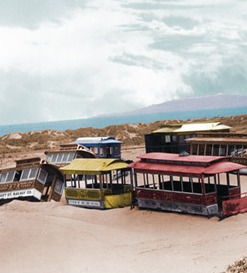
Repurposed streetcars perch haphazardly in dunes not yet cowed by asphalt and the Java Beach coffeeshops. They’re homes to a community of urban escapists and artists. Some of them have front porches, some of them house bicycle clubs. It’s like a Dali painting, it’s like the boxcar children — but it’s also an accurate picture of the first non-indigenous inhabitants of the Sunset, on whom local historian Woody LaBounty has written an awesome book, Carville-by-the-Sea.

The book’s images of 19th century Carville are chicken soup for the boho soul. I want one. My room mate wants one. LaBounty himself says he’d live in one — were the lone streetcars still surviving in the western neighborhoods’ not firmly in the grips of their current owners. There’s even one still-standing house built in 1908 that’s made of three cars; a two street car living room, and a bedroom from one that was horse drawn.

One of Carville-by-the-Sea‘s trippy colorized historical photographs

There used to be hundreds of these things. People moved out to Ocean Beach despite the subpar public transit service that places without sidewalks are often subject to — when the community was first started in 1895 was a steam car that ran out Lincoln Way down to the Cliff House, a service intended mainly for the weekend day trippers. They went to escape the city, to improve their health. There were bars and restaurants in street cars, shoe repair stores, artist studios.

So how did I not know about these things before? LaBounty says he grew up in the Richmond in the ‘60s and 70’s, a few blocks from one of the surviving streetcars, which latched a steampunk-sized hold in his childhood psyche.

More pages from Carville-by-the-Sea. Where’s a Delorean when you need one?

“I loved planes, trains, and automobiles, so living in a street car — it just seemed like the coolest thing in the world,” says LaBounty, who is one of the founders of the Western Neighborhoods Project, proprietor of what is reportedly the most popular SF history website/propagator of history walks, plays, and films by teenagers who interview older residents in their neighborhoods. “I used to watch Wild, Wild West, the ‘60s TV show, and they were living in a train, which I thought was great.”

To research, he began interviewing historians he knew, and motor vehicle enthusiastists, and learning all he could about the old community on the beach. Though he’s privy to all kinds of juicy info on the town’s colorful past, LaBounty found interest in his stories of the bohos and families living on the cars really captured listeners. “We all thought, there needs to be a book on this,” he says. “And then I realized that I should probably write it.”

So here it is, colorized like the postcards of yore for that extra oomph of fantasy creation. Newspaper articles from the 19th century on the streetcars, biographies of the community’s founding members, lots of lovely photos from the dunes.

La Bounty’s doing a series of live talks on his Carville expertise which are open to the public. Just be forewarned: he’s not versed in how to get you a steetcar of your own. Still fun to hear, though.

Carville-by-the-Sea presentation
Wed/19 7 p.m., free
History Guild of Daly City/Colma
Doelger Senior Center
Westlake Park
101 Lake Merced, Daly City
www.carville-book.com

Pigs in Oakland

0

arts@sfbg.com

LIT/NCIBA One gets the sense that Novella Carpenter can do anything. A girl from rural Idaho, she knows how to hack it in "scruffy, loud, and unkempt" Oakland, the murder capital of the United States, amid the drug deals, gun fights, and open prostitution on the urban fringe. She also maintains a healthy, active relationship with her auto mechanic boyfriend (described as "a love sponge"), her many friends, and her local community.

On top of these already impressive competencies, she probably knows as much as Laura Ingalls Wilder about farming: she can grow more types of vegetables than most of us have eaten or even heard of; harvest rainwater; keep bee colonies; make honey; and raise and slaughter chickens, geese, ducks, turkeys, rabbits, goats, and — Jesus Christ!pigs. You learn all this and more in Carpenter’s urban farming memoir, Farm City: The Education of an Urban Farmer (Penguin, 288 pages, $16), winner in the Food Writing category of this year’s Northern California Independent Bookseller Awards. Unlike many others who’ve published books on their stellar accomplishments, Carpenter is bitingly funny, an immensely gifted storyteller, and likeable throughout.

Carpenter always knew that farming made her happy. But recalling the solitude she felt as a child growing up on a farm in Idaho, "a place of isolation, full of beauty — maybe — but mostly loneliness," she "chose to live in the city." At first she couldn’t decide which city she wanted to live in, despite the dearth of progressive cities to choose from. Portland was out of the question for being "too perfect." Austin was "too in the middle of Texas," and in Brooklyn there was "too little recycling." San Francisco was "filled with successful, polished people." So she chose to move to Oakland, which was "just right." In Farm City, Carpenter points to Oakland’s "down-and-out qualities" — the music scene, the scruffy citizenry "who drove cars as old and beat-up as ours" — that made it feel most like home.

Moving to Oakland was the first leg of Carpenter’s journey. The next was to turn her small part of the city into a "modified, farm animal-populated version." Indeed, it is Carpenter’s relationship with her fellow animals that provides the biggest, most startling revelations in Farm City. If you’re an animal lover at heart, as Carpenter is, it seems nothing short of barbaric to raise your own animals, grow to love them, and then stoically kill them one day. But Carpenter thinks the matter through in philosopher’s terms, describing animal husbandry as "a dialogue with life." Raising her animals to be eaten is not a matter Carpenter takes lightly — she recalls the many hours spent Dumpster diving for enough food to feed her ravenous pigs — and, part and parcel, she assumes their slaughter as her responsibility. To render the experience is one of her duties as a writer.

But turning her Oakland habitat into a farm was not an easy process. Farm City, which begins with a cheeky nod to Isak Dinesen’s Out of Africa ("I have a farm on a dead-end street in the ghetto"), chronicles the obstacles, frustrations, fumbles, and profound satisfactions of achieving a major accomplishment through innumerable and successive trials and errors. Carpenter may have a clucking henhouse today, but at one point she had to use Q-Tips and, when they failed, her own fingers to remove backed-up fecal matter from the "blocked buttholes" of her baby chicks (when you have them shipped, they tend to develop digestion problems). In her learning process, Carpenter leaves no stone unturned and no detail — not even baby chicken butts — unexamined.

Dude, where’s my car share?

2

By Brady Welch


news@sfbg.com

GREEN CITY Owning and storing a car in San Francisco is neither cheap nor efficient, so car-sharing companies have become increasingly popular in recent years. So why can’t individual car owners share or rent their vehicles? Right now, insurance law makes that difficult, but new legislation could make it easier for people to share their cars.

California Assembly Member Dave Jones (D-Sacramento), a candidate for Insurance Commissioner, unveiled the legislation during an April 28 press conference in San Francisco. Flanked by City CarShare CEO Rick Hutchinson and Sunil Paul, chief of a car-sharing start-up called Spride, Jones outlined legislation that would allow car owners to rent their vehicles to car-sharing organizations without risk of losing their individual auto insurance. Think of the idea as a more decentralized — but not quite DIY, at least not yet — version of other successful car-sharing organizations.

Hutchinson said there would likely be little difference between current City CarShare members’ experience and these new ventures. The change would be most significant in less dense areas where economic and logistical conditions prevent companies like City CarShare from expanding. By contracting with individual car owners, Spride is proposing to cut out much of the financial and logistical overhead, bringing the benefits of car sharing to a wider array of people. Folks would still reserve vehicles online or over the phone, and the cars would be maintained and tracked using City CarShare’s technology.

Vehicle owners could potentially earn "hundreds of dollars" per month through Spride, Paul said. Although owners wouldn’t be able to set their own rates under Spride’s pilot program, Paul did mention the possibility of pricing "flexibility" if the model proves successful. Owners would set the hours for the vehicle’s availability.

California law is unclear about the insurance ramifications of individual car sharing. The snags concern commercial use of the vehicle and insurance liability. Currently, if you charge people to borrow your car, insurance companies can technically revoke your insurance. This, in turn, leads to the issue of whose insurance policy covers the person who is driving at any given time.

Jones’ bill would clarify that. "Participating in car sharing is something we want to encourage," he said. The legislation would specifically define personal vehicle sharing in car sharing organizations as noncommercial usage. This is significant because commercial insurance is more expensive than personal insurance. By "expanding what City CarShare has pioneered" with the company’s technology and network of members, Jones said that California can "take it to the next level" by promoting and expanding the practice to new markets and individuals.

Even so, the bill still doesn’t address the ramifications of person-to-person car sharing, so don’t rush off to Craigslist in hopes of renting out your Pinto for some extra scratch. It’s still legal to lend your car to friends and family for free, but if donations are offered, you might want to keep that secret from your insurer.

The Association of California Insurance Companies opposes Jones’ legislation. But according to ACIC vice president Mark Sektnan, amending it could bring the group’s members on board. "We want to make sure that people who put their cars into these operations are protected. And we want to make sure the car sharing organization fixes" the vehicle if it’s involved in a crash. As currently written, the bill only provides the car owner with liability insurance. Sektnan wants something more comprehensive. "The car sharing club has to provide appropriate insurance to the people who lend the cars," he said.

Sarah Moussa, a field representative in Jones’ office, said it’s an issue Jones is working on. "The bill only addresses liability, but they want to see more comprehensive coverage," she said. "Right now, we’re working closely with the insurance industry to make sure those amendments are addressed."

Jones noted that the legislation would play a big role in promoting clean air and mitigating traffic congestion. If this change passes and works well, it could be the first step toward getting the most efficiency out of the least green transportation option.

What’s wrong with taxing car owners?

13

It’s almost as if we need a full-time blogger to monitor the backwards ideas coming from the Chron’s C.W. Nevius. Today’s case in point: Nevius thinks the idea of charging for Sunday parking is “the dumbest idea since the imitation crab meat cocktail.” 


His brilliant investigative observation:


For all the talk about the fees on Sunday turning over parking spaces, you never read very far into one of these parking enforcement stories before you get to the bottom line — an estimated $2.8 million a year in this case if the Sunday-charge system was implemented citywide.


That’s exactly right, Chuck: This is a way to bring in money for Muni. And I don’t get what’s wrong with that. People who drive cars (and I admit, I’m one of them) have an outsized impact on the city; they take up a huge amount of space (San Francisco devotes more urban land to streets than parks), they pollute the air, they increase the nation’s reliance on fossil fuels and they contribute to global warming. And they don’t pay anywhere near enough taxes and fees to mitigate the impacts of their behavior.


I’m all for higher gas taxes, for example; taxes should not just be a source of revenue but should, when possible, be targeted to discourage socially detrimental behavoir. And charging people a little money to drive their cars to Sunday brunch instead of walking or taking public transit isn’t a terribly radical, unusual or disturbing idea. (In fact, we ought to charge the churches for the right to turn the streets into private parking lots on Sunday mornings).


Nevius complains that car drivers aren’t bad:


But c’mon. These aren’t evil people. They aren’t trying to scam the city, pee on the street, or break car windows and steal backpacks. We could fine the aggressive panhandler and the petty break-in artists, but they don’t have any money.


And I agree: They aren’t bad. But the same way taxes on cigarettes both defray the social cost of tobacco use and discourage the dangerous and noxious habit, a modest little fee for parking your car helps pay for public transit and might just encourage a few people not to drive their cars. That’s something everyone in the city should support.

The Circus is back in SF

0

By Chhavi Nanda

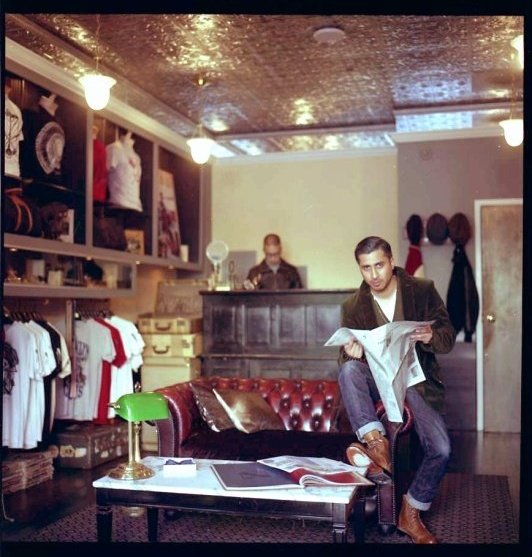
In the remains of what was left of Brooklyn Circus SF, I joined Gabe Garcia, BKC’s art director, for an intimate interview in the heart of San Francisco, the Fillmore.  Recently, the SF branch of the awesome men’s clothiers was forced to close for a few weeks due to a flood from the apartment building above. The damages caused the joint to pack up for a bit. The circus must go on, though, and Brooklyn Circus SF will be reopening this Fri/23, just like new. Thankfully Gabe, even in his frenzied panic to get the store back up and running,  talked to me about his career, the direction of fashion in San Francisco and New York City, and the industry in general. 


SFBG: Do you feel like your formal education at FIT in NYC helped prepare you for working in the industry?

Gabe Garcia: No, not at all.  FIT taught me the fundamentals of sewing, patternmaking, and things of that sort, but most of all what taught me the most was New York City itself. Living in NYC made me actually discipline myself. I didn’t even really know anyone in the city. I tried to get most out of school that I could, but NYC — being such a creative place — prepared me most for the industry.

SFBG: How do you compare fashion and the motivation behind designers in NYC in contrast to San Francisco? What would you like to see in fashion that is lacking in San Francisco, but prominent in NYC?

GG: San Francisco has a more laid-back attitude. Energy in the air is very infectious, so a majority of the people in San Francisco are very casual.  When people dress up to leave their house in the morning here, people are less motivated, which is cool, but peoples’ attitudes do transfer to their outfits. In NYC there is more pressure, desire and intrest. Life is about inspiration and how your surroundings inspire you. Each day I am in NYC I am inspired. Right now, what I am most inspired by is old cars. And all antiques in general, furniture, cars, etc.

SFBG: BKC is not only a fashion label, not it is also considered a lifestyle. Being a part of the BKC team means not only do you focus on the design aspect of the company, but also production, sales, finance, advertising, marketing, photography and blogging. Another than design, how else do you contribute to the BKC team?

GG: My position has evolved since I’ve been with the company. When we started I was standing right by Ouiji (the Brooklyn Circus owner) painting the walls of the store in Brooklyn. I started under Ouigi’s wing. Then I wanted to bring Brooklyn back to San Francisco. I found a way to do what I love while still living close to home. I built a bridge for my career and myself. The first thing we did was scout a perfect location. I am mostly involved with art direction, the creative concept and process, never avoiding the creative process.

SFBG: Can we anticipate any Brooklyn Circus collaborations anytime soon? What is your perspective on collaborations?
GG: Brand and image direction is really important to us right now. I have learned the things that you do wrong are just as impactful, if not more impactful, as the right decision. If you make a decision to go left instead of right, you could take the brand into the wrong direction. We want our brand to be here for the long run. We want to practice the fundaments of these big brands that have been here forever. If we do collaborate it just needs to make sense. It has to be a part of the big picture. Only if it a long term endeavor, we stay. The true importance is to stay with your brand vision. For example Porshe had approached Lacoste with a collaboration idea. Although Porshe is a huge company, Lacoste didn’t jump at that opportunity, because it just wasn’t in the DNA of the company. You see what I mean?  

SFBG: Would you ever consider starting your own label?
I have thought about it. Mostly small capsule collections though, like wallets, hats, neckwear, things like that. I really enjoy working in a team; I like people to bounce my creative ideas of. I like to think of myself as a visionary.

That po’ boy

0

le.chicken.farmer@gmail.com

CHEAP EATS There is something pretty exquisite about being stood up by a date. When I find out what it is, I’ll be sure to let you know. Meanwhile, you’ll just have to take my word for it. Words.

The stander-upper was someone I’d bonked back before I accidentally fell in love with whatsername. We’d had a long coffee date that turned into a long walk in the park that turned into making out for a long time on a park bench, which of course turned into going to the grocery store to buy pork.

And a bottle of wine.

Now, I had a very strict policy back then of never having sex with someone on a first date. I have since added an amendment forbidding me to have more than one date with a person in a single day. Because somewhere between the pork and the wine we determined that since we’d driven separate cars from the grocery store to my house, this dinnery business was technically our second date.

So, yes, sex happened. Then, like a lot of guys who sleep with me once, he became obsessed with two seemingly contradictory thoughts: how to sleep with me again, and how to never ever, under any circumstances, sleep with me again. Thus he would e-mail me every other night: He had to see me immediately or else, as I read it, his hair would catch on fire and his penis would rocket away from his body, through the roof of his house, into outer space, and then back down into the atmosphere where of course it too would be consumed in flames and therefore ruined.

Not wanting that, I would cancel whatever plans were cluttering my calendar and we’d make a date — which he would cancel at the last minute because his mom had a tumor, or his car blew up, or his son or sister (or in many cases both) had been taken aboard an alien spacecraft and needed everyone’s prayers for a while.

I’m a trusting sort, and pretty patient, I think, but after 60 times I told this cat to get lost. Instead, he went into therapy. So I got lost. In Germans and Germany and so forth. Well, around the time things were busting apart for me there, I got another e-mail from him here saying he can’t stop thinking about me, he can’t believe he blew it with me, he’s gotten his shit together finally and wondered if I would give him another chance.

The man is tall. Very tall. So tall that I can wear four-inch heels and still only come up to his chin. For the first time in nine months, I wrote back. I said I was a broken woman, that I was coming home, and that eventually I would have coffee with him. That that was all we would have this time. No pork.

So we did, eventually, have our second first date — just coffee — and then, even more eventually, a very nice and only slightly less platonic dinner date, which ended with a soft, sweet kiss in his car.

It was our third (or in other words, fifth) date when he stood me up. And as I sat there waiting at my for-real favorite restaurant, Just For You, listening to live violin music, I decided that being stood up was pretty exquisite, maybe because it implies just dating, which implies uncertainty — and then when you finally give up and place your order, and the waitressperson as-discreetly-as-possible clears away that other place setting … then you do know. It’s decided, done, or over before it started, and sad, yes — but it’s a delicious sadness, because you still get to eat.

As I drenched my fried oyster po’boy in Crystal hot sauce, which somehow seemed even more romantic than violins, I decided that even if he was in the hospital having heart attacks, I would not give this tall man another “another chance.”

Three days later I finally heard from him. By e-mail. He’d been in the hospital, having heart attacks. Hopes I’ll still see him.

That same day eating with Last Straw’s childerns at Sunflower, Larkstraw, age 10, who aspires to be a writer, asked how long I’d been writing about restaurants, how much I get paid, do I ever write about the same place more than once, and if so, why?

“Any excuse I can find,” I said. Happy 20-Year Anniversary to: 

JUST FOR YOU

Mon.–Fri. 7:30 a.m.– 9 p.m.; Sat.–Sun. 8 a.m. – 3 p.m.

732 22nd St., S.F.

(510) 647-3033

MC/V

Beer and wine


Driving up the cost of housing

0

By Jobert Poblette

news@sfbg.com

GREEN CITY If you think living in the Bay Area is expensive, think about what it would be like if you didn’t have access to public transportation. A new report by Chicago-based think tank Center for Neighborhood Technology (CNT) considers just that problem, offering a new way of understanding just what constitutes affordable housing.

The CNT report — dubbed the Housing and Transportation (H+T) Affordability Index (www.htaindex.cnt.org) — maps housing affordability for 337 metropolitan areas and provides before-and-after snapshots that show how affordability changes when transportation costs are taken into account.

Affordable housing is usually defined as consuming 30 percent or less of a household’s income, but CNT proposes a redefinition. Under CNT’s new definition, housing is only considered affordable if the sum of housing and transportation costs constitutes 45 percent or less of household income. That redefinition would have dramatic effects on the Bay Area’s affordability picture.

Many communities in the region that would have been considered affordable under the old definition — including large swaths of Hayward, Marin County, Sacramento, and Stockton — would be unaffordable under the new standard. And San Francisco, well served by public transit, would be deemed a lot more affordable.

The difference that smart planning and public transportation make can be huge, especially for households already feeling the pinch of a weak economy. According to CNT, transportation costs in “location efficient” neighborhoods — its term for “compact, mixed-use communities with a balance of housing, jobs, and stores, and easy access to transit” — can be as low as 12 percent of a household’s budget versus up to 32 percent for less efficient neighborhoods where residents must drive to jobs and services.

For example, CNT calculated an annual transportation cost difference of $2,780 between Oakland’s Rockridge neighborhood, which it calls “compact,” and the city of Antioch, which it considers “dispersed.”

CNT says “location efficiency” in development can translate to big savings. According to its report, if 50 percent of new growth in the Bay Area occurs in compact rather than dispersed neighborhoods, the region could collectively save more than $1.1 billion in transportation costs.

Besides reducing a community’s environmental impact and improving residents’ quality of life, the report argues that things like walkability, proximity to jobs and services, and efficient public transportation help make an area more livable and affordable. The report also raises questions about the wisdom of cutting public transportation, especially in a period when many households are being forced out of their homes.

CNT hopes that its analysis will lead to more awareness for policy makers and more transparency for consumers. “What we’re looking for is a new definition of affordability, transportation cost disclosures for consumers, and incentives to build more compact communities around transit,” CNT spokesperson Nicole Gotthelf told us.

Gotthelf said the Bay Area has been at the forefront of this issue, specifically mentioning the work of the Bay Area Metropolitan Transportation Commission (MTC), the agency that plans, coordinates, and finances transportation in the nine counties that make up the region. “They’ve been actively trying to understand the housing and transportation trade-offs for Bay Area households.”

In turn, MTC offered support for the principles behind the CNT study. “We agree that it is good policy to promote the development of affordable housing at or near transit hubs,” MTC spokesperson John Goodwin told the Guardian.

In its “Transportation 2035 Plan for the San Francisco Bay Area,” which outlines how the agency will spend $218 billion in transportation funds over the next 25 years, MTC even sets out a goal of “decreas[ing] by 10 percent the combined share of low-income and lower-middle-income residents’ household income consumed by transportation and housing.”

Goodwin told us the agency is committed to smart growth principles: “The Bay Area is not unique, but I think the Bay Area is part of a vanguard … We are among the leading metro areas in making this a policy priority, and I feel confident in saying that this priority will continue to be affirmed.”

Goodwin pointed to the agency’s Transportation for Livable Communities (TLC) program, which is designed to promote development that “revitalizes central cities and older suburbs, supports and enhances public transit, promotes walking and bicycling, and preserves open spaces and agricultural lands.” Now in its 12th year, the TLC program has helped fund scores of transportation-related and affordable housing projects.

The MTC also administers the Housing Incentive Program, which “rewards communities … when they successfully promote high-density housing and mixed-use developments at transit stops to support transit use.” The program provides up to $3 million in grants to local governments that partner with developers to build housing near transit hubs.

Conversely, the agency also won’t approve funding for new transit stops that aren’t in dense areas. The thresholds require a minimum number of housing units within a half-mile radius of new transit stops, from 750 units for new ferry terminals to 3,850 units for new BART stations.

But the MTC’s efforts represent only one part of the equation. Goodwin said that coordination is key. “What we have here in the Bay Area is that decisions about transportation funding — for the most part — are conducted at the regional level, while land-use decisions are made at the local level. So it requires coordination between regional agencies like MTC and local cities and counties.”

In spite of the MTC’s efforts, huge problems plague the region. Housing costs in the Bay Area are among the highest in the nation. A recent report conducted by the Urban Land Institute — based on research conducted by CNT — found that, on average, Bay Area households spent $41,420 a year on housing and transportation, a whopping 59 percent of median income.

With budget crises affecting many of the region’s public transit providers, service cuts and fare hikes make the picture bleaker. Recently, AC Transit and Muni services were cut by almost 10 percent, causing longer waits and crowded buses — and a huge budget deficit could mean deep cuts in Caltrain service this summer. If these cuts force more Bay Area households to turn to cars, the region’s affordability can be adversely affected, even as households deal with the pressures of a weak economy.

On the national stage, several developments offer signs that smart growth principles — including the link between housing affordability and transportation — may be gaining wider traction. These developments are presenting smart growth and public transportation advocates with opportunities to push for reform.

Last year, three federal agencies — the Department of Housing and Urban Development, the Department of Transportation, and the Environmental Protection Agency — announced a partnership that would have the agencies working together on housing and transportation initiatives. The partnership laid out six “livability principles,” including commitments to provide more transportation choices, “promote equitable, affordable housing,” support existing communities, and “value communities and neighborhoods.” The new partnership’s rhetoric includes references to location and energy efficiency, transit-oriented and mixed-use development, and walkable neighborhoods.

On Capitol Hill, Congress is working on a new omnibus transportation bill to replace a bill that expired in 2009. The bill would provide billions in federal funding for highways and other forms of surface transportation. Consideration of the new bill in both the House and Senate has stalled, but some proposals emphasize the creation of transportation choices and livable communities. Transportation for America (www.t4america.org), a coalition of housing, transportation, environmental, and other groups, is mobilizing to promote public transportation and sustainable development in the new transportation bill, seeking to make CNT’s way of looking at the world into official U.S. policy.

Emerald city

0

GREEN ISSUE Walk out your front door today and you won’t find a corner store that doesn’t sell “organic food,” a restaurant whose we-buy-sustainable addendum reads “whenever possible,” a trash can with a precious separate compartment for your all-natural soda cans. It’s hard to forget that it’s not all another secret plan from the government to make your life less fun. But it’s not! Below, please find assembled an all-star list of resources that are honest-to-goodness designed to help you help out our little ball, spinning all terrestrially out in space.

RECYCLING
They’ve tried to make it easy on you. Compost goes in green! Beer bottles in blue! Devil Styrofoam — where’d you get that? — in black! But still, you have questions. What about the bottle caps? Can I recycle the bag my Korean taco came in? Can I get a new green bin without a rat-hole in it? (Yes! No, that’s compost! Yes, but work on that vermin problem!) One quick stop at the Recology SF Web site has you sorted. You’ll also find info on the dump’s sculpture garden — the world’s only garbage company’s art park.

GROWING THAT GREEN
Because that window box in your bedroom hasn’t contributed anything to dinner in way too long, SF Garden Resource Organization maintains a database on everything you need to grow your own sustenance in the city. Find within its welcoming Internet embrace info on cheap local classes to turn that idle thumb green, all kinds of gardening pointers, and the lowdown on which community gardens are accepting new plot tenders.

PESTICIDES AND JUNK MAIL
They’re awful, aren’t they? And they’re all around us, which is why the Environmental Health Association of Nova Scotia’s toxicity guide for everyday lotions, cleaners, and pet products is so nice to have on hand. Thanks, Nova Scotia! For up close and personal commerce, the friendly worker-owners at Rainbow Grocery can steer you toward natural household products. An there are a bajillion lovely shops like Marie Veronique Organics (1790 Fifth St., Berk.) that’ll sell you the good local stuff. Kill your junk mail with the support of the helpful folks at Bay Area Recycling Outreach Coalition.

SHOPPING
Go organic or go secondhand. For natural fiber or recycled fabric gear, the Bay’s got lots of flash spots like Ladita (827 Cortland, SF. 415-648-4397 www.shopladita.com) or Eco Citizen (1488 Vallejo, SF. 415-614-0100. www.ecocitizenonline.com). Little Otsu (849 Valencia, SF. 415-255-7900 www.littleotsu.com) is all you need for gift shopping, with unique posters, books, and various assorted preciousness. But for the broke environmentalists, wait for the $2 per item of clothing sales at Goodwill (Various locations, www.goodwill.com), Mission Thrift (2330 Mission, SF. 415-821-9560), or even one of the several consignment stores along Fillmore like Repeat Performance (2436 Fillmore, SF. 415-563-3123) or Seconds to Go (2252 Fillmore, SF. 415-563-7806) to feel good about confounding consumerism. The big fish in our green pond, however, remains the invaluable Green Zebra coupon book, with hundreds of deals on earth-lovin’ spas, goods, and adventures.

OUT ON THE TOWN
There are oodles of spots to help you make a night of it without playing our environment for a fool. Terroir (1116 Folsom, SF. (415) 558-9546, www.terroirsf.com) serves elegant, chemical-free wines that taste even better if the wine-bar’s adorably scruffy owners pour them. Thirsty Bear Brewpub (661 Howard, SF. (415) 974-0905. www.thirstybear.com) has a stellar system of low-waste operation and serves only organic brews through its taps. For the club kids, the eco spot de rigueur is Temple (540 Howard, SF. (415) 978-8853 www.templesf.com), where owner Paul Hemming’s Zen Compound concept is expanding to include a roof garden, global art gallery, and dance floor that harnesses the energy expended on beats.

ACTIVISM
Of course, you could always do something outside your day’s normal scope. Hit up the following organizations to make change in your little corner of the world: Roots of Change for food sustainability issues, Livable City for hopes of a future outside our cars, and Planning and Conservation League for work on issues like global warming and water usage.

Mission statement

0

By Elise-Marie Brown

arts@sfbg.com

FILM Che Rivera, a strong, middle-aged Latino man, approaches his son with festering anger and fury in his eyes. With outrage, he yells, “Why does this motherfucker have his tongue down your fucking throat?” as he points to a photo of his teenage son kissing another man. “Why do you think?” his son replies in a sharp tone. His rage surfacing, Che leans over, beats the boy, and forces him to leave their Mission District home.

Tackling issues of homophobia, masculinity, and violence, independent film La Mission uncovers the inner struggle of an obstinate father (Benjamin Bratt) learning to accept his son, Jesse (Jeremy Ray Valdez) for being gay. Throughout the film, Che is a dominating machismo presence. By day he works as a Muni driver who strives to keep his bus in line by fighting off difficult passengers. At night he customizes low rider cars and leads a group of friends and family through cruises in the city.

“Che is kind of the alpha male within Latino culture, as well as the alpha male in the dominant culture,” said director and writer Peter Bratt during a recent phone interview alongside younger brother Benjamin. “Something about the Latino community and having a gay son threatens the idea of being a powerful male.”

The role of Che was based on a real Mission resident, a fact that Bratt believes gives the movie more of an authentic feel. “The real Che is a larger-than-life persona. When he walks into the room, you feel his presence,” Peter said. “He’s a brown and proud Chicano who we thought represented the passion and vibrancy of the neighborhood.”

As the film unfolds, the audience starts to learn that Che is more than just a man of aggression. He also feels a strong love for his son and community, despite having a difficult time expressing that love.

“We found it intriguing to take a character like [Che] who appears to be one way and start to peel the layers back,” Benjamin explained. “A real tenderness exists. You don’t see it expressed in words or a physical action, But it comes in other forms.”

After looking back at films that portray men of color as one-dimensional, the actor decided his character would embody an array of emotions and struggles that previous stories had not explored. “When you look at a lot of representations of men of color, they’re often drawn as people to be feared,” Benjamin continued. “Che is a very familiar character that we’ve seen in cholo and urban films. We wanted to pull back the layers and actually show that there is a complex being underneath the swagger and stance.”

When it came to starting the production of the film and choosing a location, the Bratt brothers — who grew up in San Francisco — didn’t hesitate to base the story in the Mission.

“Benjamin and I had already dreamed of making a film in the Mission,” Peter said. “We know about Harlem, Brooklyn, and Queens from filmmakers like Woody Allen and Martin Scorsese. We feel like the Mission is up there with those neighborhoods. It’s just as vibrant, politically and culturally.”

In the four weeks it took to shoot the film, members of the community helped by working behind the cameras as well as in front of them. “We cast a lot of people right from the Mission, which we thought lent a certain level of authenticity,” Peter said.

Although the film takes place in a neighborhood with multiple cultures, traditions, and social issues, the Bratts believe the particular journey undertaken by their characters isn’t something everyone in the community goes through.

“There are a million and one stories going on in the Mission at any given time and this was not our attempt to create the definitive Mission story,” Benjamin said. “Our goal was to create something authentic and ultimately something that would entertain and enlighten you.” *

LA MISSION opens in Bay Area theaters Fri/16.


Fashion Armageddon? Nah, it’s just the great American Apocalypse

3

By Chhavi Nanda

The majority of mankind is under the misconception that an apocalypse is primarily associated with the end of the world – some sort of eschatological final battle. Perhaps it’s the slew of movies such as 2012 or The Road influencing our mind to veer into that territory. But an apocalypse doesn’t necessarily mean an ending — even adherents of the Book of Revelations know there’s a next chapter. An apocalypse is defined as “the lifting of a veil or a revelation.”  Late last month, a fashionable veil was lifted: a new collective Web site of vintage fashion, entitled American Apocalypse, was exposed to the world.

I attended the first editorial shoot for American Apocalypse. The motif of the shoot was “Clown, Chola”. Although Urban Dictionary defines chola as “the girls my brother gets pregnant,” there’s much more to a chola than that, obviously. The chola aesthetic includes thick eyeliner, thin drawn on eyebrows, lip liner, gelled hair, high pony tails, gold chains, piercings, tattoos, flannel shirts, Converse or Nikes. And of course she has to be a ruthless gangbanger. You know, like that Lean Like a Chola song says “lean like a chola way up high, thick eye liner in my eye, cruise all day, drink all night, got four kids with three guys.”

I walked down Geary Street at around 11:30am; the models were standing outside of Harput’s Union smoking their cigarettes in anticipation for the shoot to start. None of them had their makeup on yet and their hair wasn’t done either. I didn’t feel as guilty walking into the shoot hung over from the Friday night before. The owner of the store, Gus, greeted me kindly. Then the models, photographers, clothing stylist, make up artist, and the rest of the crew scurried down to the gritty basement of Harputs, where the shoot took place.

There were boxes, bags, and racks full of beautiful clothes and accessories. I was overwhelmed, and for a brief second wanted to jeopardize everything to run away with all these clothes, hoping no one would notice, but in my better judgment, I just stuck around for the shoot. The hairsprays, gels, doorknocker earrings, and – yes! — the paisley bandanas came out. As hair and make-up was being done, a nice mix of Spice Girls, Gucci Mane, and indubitably Bone Thugs and Harmony played in the background, to get the girls in a “Thug Life” mood.

Witnessing all the make-up and hair getting done I could finally see the vision coming in clearly. Envision this scenario with me: Bozo the Clown meets Frida Kahlo, if Frida Kahlo lived in this day in age and was a little more badass. After hours and hours (and several eyeliners), the girls were ready.  They modeled both in the basement and on the busy streets around Union Square. People in traffic and pedestrians watched curiously.

The shoot included some of San Francisco most exclusive models; Fernanda Toledo, Alexis Hutt, Alexandra Kammen, Annalise Lundeen, and Ali Lovell. The mastermind that painted their faces so they were ready to perform in the Chola Circus was Matt Wanaraksa. The hair was a collective effort from the models and stylists.

The creative minds behind the shoot were Sam Banks along with Brooke Candy, also assisting on the set was Rachel Esterline. Esterline has been a stylist for the last six years and has generously opened up not only her own wardrobe, but also several of her clients’ to give a helping hand while American Apocalypse builds up its stock. Her clients include some of San Francisco most elite and fashion-conscious women that strut down Maiden Lane after their weekly yoga and meditation classes. Although Rachel is a prominent stylist, Brooke Candy and Sam Banks were the visionaries behind this shoot. Sam and Brooke, coordinated, conducted creative direction, and styled the models head to toe, while Rachel directed and did the photography for the shoot.

At some point in this decade, the word vintage was added to the fashion bible. Vintage used to be a word that was applied to wines or some grandfather’s Bentley. But somehow between drinking vintage wine and driving vintage cars, a woman walking in to a room with a vintage dress suddenly gained the right to have a holier-than-thou persona. If you admire my dress, I would retort with a smirk, “I know you want it, but too fucking bad, it’s vintage.  You can’t have it. “  There is just something about rummaging through an obscure thrift shop or junk yard, or the closet of a underground fashionista that gives one a thrill of being an individual. American Apocalypse gives us the opportunity to have those pieces in our closet that we know no one else out there has, while still remaining fashionable. It isn’t the end of the world, just a fashion revelation.  

AMERICAN APOCALYPSE

www.americanapocalypse415.com

SF smokers kicked to curb, by the cars

9

By Adam Lesser

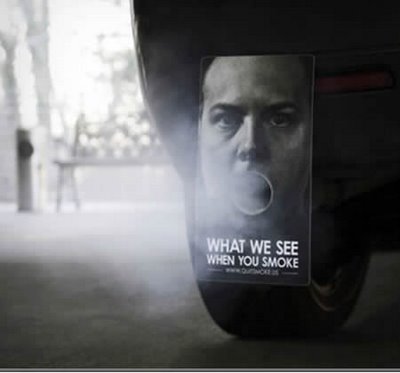
San Francisco smokers will be hit with the latest in a long lines of restrictions starting April 25, when they’ll be kicked to the curb, out by the cars whose tailpipes are at least as dangerous as secondhand smoke.

But drivers haven’t been as easy to demonize as smokers. Light up within 15 feet of a building entrance and you’ll be breaking the law. Other spots where smokers will be barred include outdoor areas at cafes and restaurants, farmer’s markets, and charity bingo games (grandma can take her wheelchair to the curb if she needs a puff).

But pot smokers need not fear. The new law maintains a provision allowing you to light up in licensed dispensaries. Smoking patios at bars are still okay, though smokers probably shouldn’t get too comfortable.

            The San Francisco Department of Public Health frames the smoking debate in terms of the impacts of secondhand smoke. And there’s some good data there. People tend to think lungs and cancer when they think smoking, but the real problem with second hand smoke is heart attacks.  A 2005 estimate from the California EPA put the number of heart attack deaths from second hand smoke at 3,600 annually. Second hand smoke contains a host of toxins from benzene to arsenic.

But it’s hard to know the incremental benefits of moving smokers to the curb. Almost all of the positive data on public health improvements from smoking bans has come from measures the city has already taken. But Mele Lau-Smith of DPH gave me a preview of the potential next battleground: third hand smoke.

“The new science that’s coming out on third hand smoke is interesting. Third hand smoke is everything that clings to furniture and hair and takes longer to dissipate. They’re smaller particles that get deeper into the lungs,” she says. The term was coined last year in the journal Pediatrics and a 2010 paper showed that nicotine reacts with nitrous acid to form carcinogenic molecules that hang around long after a smoker has left the room.

            So the news gets worse for smokers, and the anti-smoking crusade to completely eliminate smoking gains an inch. The smoking prevalence rate in California is among the lowest in the country at 14.3 percent. Most states are in the 18-20 percent range.

            And while it’s all well and good, one wonders if there are other problems in the air besides second hand smoke. Choosing to live in an urban area like San Francisco lowers one’s life expectancy by two years, and one of the major reasons for that is auto exhaust and illnesses related to poorer air quality.

            Mark Jacobson, Professor of Civil and Environmental Engineering at Stanford University, believes the government should keep regulating until smoking is eliminated. But when comparing deaths from automobile emissions versus second hand smoke, he added, “If you look at the mass of the automobile exhaust, then you’re looking at a much bigger figure than second hand smoke. Vehicle exhaust is still way under regulated for addressing health concerns.” Over 2 million people die globally from air pollution each year. About 500,000 die from second hand smoke.

            In the end, Jacobson says it comes down to combustion. When you start burning, you release toxins that eventually hurt or kill people. It doesn’t matter if it’s diesel fuel, gasoline, or tobacco. Combustible products harm public health, and in the case of oil, the environment.

Smokers have proven ideal targets for taxes. San Francisco smokers pay $2.08 in taxes on every pack of cigarettes. When you’re in the minority and the government needs cash, it’s a political no brainer. A 20 cent cigarette tax was tacked on by the Board of Supervisors last October, done under the argument that the money was needed to clean up cigarette butts. Recent proposals to add a local 10 cent tax on gasoline in order to help various cash strapped public transit agencies haven’t found much traction.

So smokers, enjoy the summer. It’ll be the last summer you can light up after an outdoor sunset meal. The smoking ban at restaurants won’t be implemented for another six months.

But come November you’ll be enjoying that smoke out by the curb, where you’ll also be treated to some car exhaust. But, hey, at this point you’re probably all in anyways.

Inside the squat

1

By Evan DuCharme

news@sfbg.com

Homes Not Jails (HNJ) has fought diligently for two decades to shed light on the economic disparity that exists in San Francisco, where the number of homeless people would fit almost perfectly into the supply of vacant homes.

So on a cold Saturday night, April 3, as I sit shivering in the back of a van waiting for my group’s turn to covertly enter a vacant house, I’m surprised at the calmness on some of the members’ faces. This group of eight is planning to enter and occupy apartments at 572 and 572A San Jose Avenue. And while only a few have been through this before, the rest make up for their lack of experience with a passion for the cause.

Around 2 a.m., the group somehow manages to enter the building without being caught, but it’s not easy. Between the drunken couple arguing on the street, the cops breaking up a bar fight nearby, and a neighboring couple who keep shining flashlights at the units, the group should never have made it in. But it does, and at the moment there’s no time to dwell on luck because there’s food and water to unpack, entrances to secure, and rooms to search, all while remaining perfectly silent and unseen.

Typically HNJ, a project of the San Francisco Tenants Union, conducts weekly searches it calls “urban exploring” in the hopes of finding useable vacant property to set up as a “squat” for people looking for a place to live rent-free. Every so often, its activism goes mainstream in the form of public occupations like this one, when the media is notified.

The immediate goal is to simply enter, secure, and occupy the apartment until noon the next day when a rally starting at 24th and Mission streets will march right in front of the building. Once there, they are supposed to let fly a couple HNJ banners while the rally outside features speeches, chants, and music by the Brass Liberation Orchestra.

But the catch is that the squatters cannot be seen before the rally arrives outside, otherwise their cover will be blown, they could be arrested, and the goal of shedding light on this waste of vacant housing will be ruined.

After attending HNJ meetings and events for a few weeks, I was allowed to follow the group into the apartment and report on their occupation from the inside as long as I protected the anonymity of those who wanted it. With that in mind, the group included Tim, one of the most experienced HNJ members; SFSU grad-student Aaron Buchbinder; Elihu Hernandez, a candidate for the District 6 seat on the Board of Supervisors; Matt, another experienced HNJ member; and local activists Carling, Scott, and a seventh member who asked to remain anonymous.

The building they targeted had strong symbolic value; it was where an elderly man was forced out by the landlord using the Ellis Act, which for the past decade has been the root cause of a large number of what the group sees as unjust and immoral evictions.

The Ellis Act was adopted in 1985 to give landlords the right to clear their rent-controlled buildings of tenants and get out of the rental business, expanding their previous rights to evict tenants through Owner Move-In (OMI) evictions, which allowed landlords and their immediate family members to oust renters.

Once a landlord invokes the Ellis Act, tenants in the building are given 120 days to move out, although seniors and those with disabilities must be given a year’s notice. Tenants are entitled to almost $5,000 each in relocation costs, or a maximum of almost $15,000 per unit. Seniors and those with disabilities get an extra $3,300 each.

After the building is vacated, it is usually taken off of the rental market for at least five years. During that time, the former tenants retain the right to reoccupy their old units at their original rent for 10 years. If the building is re-rented within five years, the landlord can only charge what the previous tenants were paying. These restrictions are attached to the deed and apply to subsequent property owners as well.

Although the restrictions were meant to discourage the eviction of tenants from rent-controlled units, they also have encouraged some property owners to keep buildings vacant while they wait for property values to increase or to re-rent their units at higher prices. If the landlord wants to convert, remodel, or add any additions to the property, they still must seek the city’s approval.

This landlord power is the primary reason HNJ chose to occupy 572 and 572A San Jose Avenue. A few years ago, the property was purchased by Ara Tehlirian, who sought to remodel it and live there himself, evicting 82-year-old Jose Morales in the process. Morales had been legally renting the property since 1965 and challenged his eviction in court.

Morales won when the judge ruled that it was illegal to evict him for the sole purpose of renovating the building for the new landlord. But Morales’ success was short-lived. Tehlirian invoked the Ellis Act, so Morales was no longer legally able to live in his home. When Tehlirian subsequently asked for permission to renovate his house as he had initially planned, the judge denied the request citing that landlords cannot invoke the Ellis Act for an OMI eviction.

One reason the Ellis Act is used so frequently traces back to the passage of Proposition G in 1998, which prevented the type of eviction initially tried on Morales. Prop. G requires landlords invoking an OMI eviction to move into the evicted tenant’s unit within three months of the eviction and to stay for a minimum of three years.

Furthermore, it limited such evictions to one person per building and banned them if a comparable unit was open in the building. Finally, and the reason cited in Morale’s case, it made permanent an existing law that was set to expire in June of that year that prohibited any OMI eviction of senior, disabled, or catastrophically ill tenants.

Tehlirian, like many others before him, decided to use the Ellis Act to bypass these OMI restrictions. Ted Gullicksen, director of the Tenants Union, said Prop. G had the unintended effect of encouraging property owners to clear their buildings of tenants, a requirement of Ellis Act.

“A vacant building is generally worth 20 to 30 percent more than a building occupied with tenants because the landlord can do whatever he wants with the units, including selling them or renting at market rate,” he told us.

So Morales was forced out of what remains a vacant building. This is why HNJ illegally occupied the property, arguing that trying to effect change through legal avenues is at times just as difficult as Morales’ individual struggle against the Ellis Act. It highlighted the human cost of property rights.

“People who keep vacant buildings for profit tend to be the same ones who donate money to political campaigns,” Tim said. Which is why he is resorting to a form of civil disobedience that is very likely to end with him in handcuffs.

Around 1 p.m. Sunday, April 4, the rally met in front of the property and the occupiers frantically rushed to hang banners and secure any entrance the San Francisco police might find. As the first drops of rain fell, the Brass Liberation Orchestra played, speakers including Gullicksen and Morales said a few words, and the Food Not Bombs organization supplied free food to occupiers and members of the rally.

After a few hours, the rally dispersed with much appreciation from those inside the apartment and what started as a group of seven SFPD squad cars dwindled to two. Tim, Elihu, Scott, Aaron, and Matt decided to remain in the building while the rest of us said goodbye and climbed out an open window.

The remaining members spent their second night in the building, but this time they didn’t have to be quiet. Supporters brought the group pizzas and a neighbor offered to supply water to the group as long as they didn’t mind if it came from her tap. They huddled in the same room playing cards and joking until Tehlirian and the SFPD made it through the front door, ending the occupation.

Each member was cited and released on the premises at 1:35 p.m. April 5 under penal code 602m for trespassing. Tehlirian stood by and observed while his lawyer, Zach Andrews, unsuccessfully pressed him to charge the group with breaking and entering. When the group dispersed, Tehlirian and a few members of the SFPD broke through a second door to gain access to the bottom level of the property.

When Tehlirian came out for a break, I tried to speak with him but he refused to answer my questions. Shortly afterward, I met up with the HNJ group at the Tenants Union and asked Tim if he thought they were successful in accomplishing their goals. “Not completely,” he said. “But we made the most with what we had.”

Tenants may not have the law on their side in many cases, but in a city that is two-thirds renters, they have each other. And for a few days, they had one more home. The group’s feelings seemed to be summed up by this quote on a HNJ pamphlet: “We are too valuable to live huddled in the rain, in the parks, in dangerous unhealthy shelters. Freezing, dying so that others can realize profits.”

Access denied

3

rebeccab@sfbg.com

If tuition goes up to $40 per course unit at the community college where Dielly Diaz is working toward her associate of arts degree, she’s not sure she’ll be able to afford it. But Diaz isn’t just worried about her own shot at an education. She also wonders what’s in store for her 19-year-old daughter, a student at Laney Community College in Oakland. For parents scrambling in the face of the economic downturn even as their kids prepare for the future, she said, “it’s like we’re getting hit both ways.”

Diaz, who is 39 and originally from Venezuela, says she decided to enter Berkeley City College’s adult education program to earn her degree because the recession threw her into a precarious position, shaking the stability of her job as a mortgage loan officer. When she started just a year ago, tuition was $20 per course unit. It has since gone up to $26, and now the California Legislative Analyst’s Office is recommending ratcheting it up to $40.

Even as students are being asked to shell out more, California’s community colleges are reeling from the impacts of budget cuts: faculty layoffs, swelling class sizes, fewer available courses, and reductions in student services. For students hoping to transfer to other public institutions in the California State University (CSU) or University of California (UC) systems — or even for those seeking to develop a skill set that can garner a living wage — maneuvering the shredded educational framework can be frustrating. This past year, roughly 250,000 students statewide were denied access to community colleges due to a lack of course availability, according to education advocacy group Against Cuts.

“When you see all that, it’s like OK, I feel like I really need to do something,” Diaz said. “It’s not like we can just sit and wait, letting the cuts happen. I think we can really get organized.”

Between school, work, and being a mom, Diaz started pitching in on community outreach for Against Cuts, a grassroots effort that took shape last fall in the wake of devastating education cutbacks. It was one of hundreds of organizations that collectively launched mass demonstrations decrying funding slashes to education on March 4. The newly energized education movement plans to propel another mass rally to descend on Sacramento in the fall, Diaz noted, in the meantime focusing on awareness-raising efforts like an April 17 teach-in at Berkeley City College.

California’s community colleges are unique among the state’s higher education institutions in that they represent a gateway for nontraditional students to get a foothold for career advancement or a fresh start for people trying to improve their lives. They also offer an affordable option to complete lower-division coursework before transferring, a path that’s starting to become a bottleneck since courses needed to meet transfer requirements have been affected by cuts.

Yet even as fees climb and class sizes balloon, more people are opting to go the community college route, and demand for enrollment is only expected to increase. Some are college-age students whose families have been priced out of other institutions.

“We’re having this flood of people from the CSUs and UCs now trying to do their freshmen and sophomore year with us and then transfer,” notes Berkeley City College faculty member Joan Berezin. Others are individuals who can’t find work in an economic climate marked by 12.5 percent unemployment. “When we get hog-tied and cut and restricted, we close off possibilities to everyone,” Berezin says. “People who’ve just lost their jobs, people whose parents have lost their jobs, they’re all coming to us.”

Of the nearly 3 million students attending community college statewide, women and people of color are in the majority, and 80 percent work while attending school. It’s still a relative bargain for education, but fees are keeping pace with the rising costs of housing, transportation, childcare, and food.

“I have students who are homeless, who are living in their cars,” Berezin notes. “So we can say, oh, $40 a unit, that’s not a big deal. But if you’re taking 12 units and you have no income — and you don’t qualify for financial aid ’cause you don’t have an address … that’s a huge amount of money.”

Financial aid is available, but with narrow eligibility requirements — and even some of that funding may be headed for sacrifice on the budgetary chopping block. Gov. Arnold Schwarzenegger’s budget for the 2010-11 fiscal year proposes suspending new awards for the Competitive Cal Grant Program, for a savings of $45.5 million. About 70 percent of Cal Grant award recipients attend community colleges.

“This award is dispersed according to income and GPA,” explained Theresa Tena, director of fiscal policy at the Community College League of California. “Many of our students have a high GPA and a low income.” Some 22,500 students receiving this financial help would be affected by the proposal — and Tena says more than 150,000 eligible students already compete for the award packages.

Research increasingly shows that students from working-class families are being priced out of college — even community college — and that it’s harder to pay their own way without taking on serious amounts of debt. A California Postsecondary Education Commission (CPEC) report found that in 1975, a community college student would have earned well over the amount needed for a year of school, including housing and other expenses, by working a summer job in retail. Today that same student would only be able to scrape together about two-thirds of the needed amount — and that’s assuming every single penny was saved.

“In the old days, going to community college was a break-even proposition,” notes Adrian Griffin, assistant director of research and policy development for the CPEC. “With stagnating wages at the low end of the job market, it doesn’t work this way anymore.”

The blow to community colleges caused by a loss in state revenue and consequential budget cuts mirrors the damage done to the entire public education system. While the recession has triggered especially hard times, this low point follows a long-term trend of diminishing state funding for education. In 1965, the state general fund provided $15 for every $1 paid in fees by UC or CSU students, according to the CPEC. By 2009–10, that state contribution had declined to $1.40 for every dollar paid in fees. “We’ve gone from a taxpayer-supported system to a semi-privatized system,” Griffin observed.

This point hasn’t been lost on the education advocates at Against Cuts, who are pushing for reform in tax policy as a solution for restoring public education in California. An information packet created by the group highlights a nearly 50 percent decline in the share of corporate income paid in taxes since 1981, even as corporate profits have shot up.

“There is no reason for education to be cut in California, the world’s eighth-largest economy,” Diaz said. “We can’t just continue to accept and accept and accept. Having a population that does not have access to education is dangerous.”

Music listings

0

Music listings are compiled by Paula Connelly and Cheryl Eddy. Since club life is unpredictable, it’s a good idea to call ahead to confirm bookings and hours. Prices are listed when provided to us. Submit items at listings@sfbg.com.

WEDNESDAY 7

ROCK/BLUES/HIP-HOP

Boy in the Bubble, Actors, Catholic Radio, DJ Dudehouse El Rio. 9pm, $6.

*Faith and the Muse, Jill Tracy, Tell Tale Heartbreakers, Sunshine Blind DNA Lounge. 9pm, $15.

Gram Rabbit, Spindrift, Foxtail Somersault Red Devil Lounge. 8pm, $8.

Adam Green, Dead Trees Café du Nord. 9:30pm, $15.

*Patty Griffin, Buddy Miller Fillmore. 8pm, $35.

Moira Scar, Attic Ted, Slow Poisoner Hemlock Tavern. 9pm, $5.

Moldover, Nonagon, Celeste Lear Hotel Utah. 8pm.

Curtis Salgado Biscuits and Blues. 8pm, $18.

Sherwood, Seabird, Black Gold, Reece Rickshaw Stop. 7pm, $15.

DANCE CLUBS

Afreaka! Attic, 3336 24th St, SF; souljazz45@gmail.com. 10pm, free. Psychedelic beats from Brazil, Turkey, India, Africa, and across the globe with MAKossa.

Booty Call Q-Bar, 456 Castro, SF; www.bootycallwednesdays.com. 9pm. Juanita Moore hosts this dance party, featuring DJ Robot Hustle.

Hands Down! Bar on Church. 9pm, free. With DJs Claksaarb, Mykill, and guests spinning indie, electro, house, and bangers.

Jam Wednesday Infusion Lounge. 10pm, free. DJ Slick Dee.

Machine Sloane, 1525 Mission, SF; (415) 621-7007. 10pm, free. Warm beats for happy feet with DJs Sergio, Conor, and André Lucero.

Mary-Go-Round Lookout, 3600 16th St, SF; (415) 431-0306. 10pm, $5. A weekly drag show with hosts Cookie Dough, Pollo Del Mar, and Suppositori Spelling.

RedWine Social Dalva. 9pm-2am, free. DJ TophOne and guests spin outernational funk and get drunk.

Respect Wednesdays End Up. 10pm, $5. Rotating DJs Daddy Rolo, Young Fyah, Irie Dole, I-Vier, Sake One, Serg, and more spinning reggae, dancehall, roots, lovers rock, and mash ups.

Synchronize Il Pirata, 2007 16th St, SF; (415) 626-2626. 10pm, free. Psychedelic dance music with DJs Helios, Gatto Matto, Psy Lotus, Intergalactoid, and guests.

Yoruba Dance Sessions Bacano! Som., 2925 16th St, SF; (415) 558-8521. 9pm, free. With resident DJ Carlos Mena and guests spinning afro-deep-global-soulful-broken-techhouse.

THURSDAY 8

ROCK/BLUES/HIP-HOP

Growlers, Sandwitches Rickshaw Stop. 8pm, $10.

Miles Kurosky, Pancho-san, Lia Rose Bottom of the Hill. 8:30pm, $12.

Late Young, Jaws Knockout. 9:30pm, $7.

Light This City, Comadre, Funeral Pyre, Early Graves Thee Parkside. 9:30pm, $12.

Montana 1948, DownDownDown, Beta State, Brooks Was Here Café du Nord. 8:30pm, $10.

Murder By Death, Ha Ha Tonka, Linfinity Slim’s. 9pm, $16.

*Ty Segall, Numerators, Bridez Hemlock Tavern. 9pm, $6.

"Stevie Ray Vaughn Tribute with Alan Iglesias" Biscuits and Blues. 8pm, $16.

White Buffalo, Joey Ryan Hotel Utah. 9pm, $12.

JAZZ/NEW MUSIC

Graham Connah Socha Café, 3235 Mission, SF; (415) 643-6848. 8:30pm, free.

FOLK/WORLD/COUNTRY

Valerie Orth Band Revolution Café, 3248 22nd St, SF; (415) 642-0474. 8:30pm, free.

DANCE CLUBS

Afrolicious Elbo Room. 9:30pm, $5-7. DJs Pleasuremaker and Señor Oz spin Afrobeat, Tropicália, electro, samba, and funk.

CakeMIX SF Wish, 1539 Folsom, SF; www.wishsf.com. 10pm, free. DJ Carey Kopp spinning funk, soul, and hip hop.

Caribbean Connection Little Baobab, 3388 19th St, SF; (415) 643-3558. 10pm, $3. DJ Stevie B and guests spin reggae, soca, zouk, reggaetón, and more.

Drop the Pressure Underground SF. 6-10pm, free. Electro, house, and datafunk highlight this weekly happy hour.

Funky Rewind Skylark. 9pm, free. DJ Kung Fu Chris, MAKossa, and rotating guest DJs spin heavy funk breaks, early hip-hop, boogie, and classic Jamaican riddims.

Good Foot Yoruba Dance Sessions Bacano! Som., 2925 16th St, SF; (415) 558-8521. 9pm, free. A James Brown tribute with resident DJs Haylow, A-Ron, and Prince Aries spinning R&B, Hip hop, funk, and soul.

Heat Icon Ultra Lounge. 10pm, free. Hip-hop, R&B, reggae, and soul.

Kick It Bar on Church. 9pm. Hip-hop with DJ Jorge Terez.

Kissing Booth Make-Out Room. 9pm, free. DJs Jory, Commodore 69, and more spinning indie dance, disco, 80’s, and electro.

Koko Puffs Koko Cocktails, 1060 Geary, SF; (415) 885-4788. 10pm, free. Dubby roots reggae and Jamaican funk from rotating DJs.

Mestiza Bollywood Café, 3376 19th St, SF; (415) 970-0362. 10pm, free. Showcasing progressive Latin and global beats with DJ Juan Data.

Motion Sickness Vertigo, 1160 Polk, SF; (415) 674-1278. 10pm, free. Genre-bending dance party with DJs Sneaky P, Public Frenemy, and D_Ro Cyclist.

Peaches Skylark, 10pm, free. With an all female DJ line up featuring Deeandroid, Lady Fingaz, That Girl, and Umami spinning hip hop.

Popscene 330 Rich. 10pm, $10. Rotating DJs spinning indie, Britpop, electro, new wave, and post-punk.

Represent Icon Lounge. 10pm, $5. With Resident DJ Ren the Vinyl Archaeologist and guest.

FRIDAY 9

ROCK/BLUES/HIP-HOP

Citizen Cope Fillmore. 8pm, $25.

*Fear Factory, Amon Amarth, Eluveitie, Dirge Within Regency Ballroom. 7pm, $27.

Roy Gaines Biscuits and Blues. 8 and 10pm, $22.

John n Jesse, Ziggy King and the Jokers Epicenter Café, 764 Harrison, SF; (415) 543-5436. 7pm.

Karl Denson’s Tiny Universe, DJ Logic Independent. 9pm, $25.

Love of Diagrams, Weekend, Fever Dream Hemlock Tavern. 9:30pm, $7.

Miko Marks, Andre Thierry Slim’s. 9pm, $16.

Noodles, All Ages, Golda and the Gunz, El Nino Red Devil Lounge. 8pm, $12.

Retribution Gospel Choir, Carta, Sarah June Hotel Utah. 9pm, $10.

7 Walkers featuring Bill Kreutzmann and Papi Mali with George Porter Jr. Great American Music Hall. 9pm, $25.

Rube Waddell, Sweet Bones, Cheetahs on the Moon, Unpopable Bottom of the Hill. 9:30pm, $9.

JAZZ/NEW MUSIC

Audium 9 1616 Bush, SF; (415) 771-1616. 8:30pm, $15.

Black Market Jazz Orchestra Top of the Mark. 9pm, $10.

Eric Kurtzrock Trio Ana Mandara, Ghirardelli Square, 891 Beach, SF; (415) 771-6800. 8pm, free.

Sounds of Blackness Yoshi’s San Francisco. 8 and 10pm, $24-34.

Thorny Brocky Red Poppy Art House. 8pm, $10-15.

FOLK/WORLD/COUNTRY

Jackie Rago and the Venezuelan Music Project El Rio. 4pm, $10-25 sliding scale. With DJ La Rumorosa.

Jonathan Shue Socha Café, 3235 Mission, SF; (415) 643-6848. 8:30pm, free.

"That Night in Rio" Café du Nord. 9pm, $15. Samba party with Grupo Samba Rio and Dj Fausto Sousa.

Matt Turk Revolution Café, 3248 22nd St, SF; (415) 642-0474. 8:45pm, free.

DANCE CLUBS

Activate! Lookout, 3600 16th St, SF; (415) 431-0306. 9pm, $3. Face your demigods and demons at this Red Bull-fueled party.

Bar on Church 9pm. Rotating DJs Zax, Zhaldee, and Nuxx.

Blow Up Rickshaw Stop. 10pm, $10. With rotating DJs.

Evil Breaks DNA Lounge. 9:30pm, $20. Breaks with Fine Cut Bodies, Left/Right, Aaron Jae, and more.

Exhale, Fridays Project One Gallery, 251 Rhode Island, SF; (415) 465-2129. 5pm, $5. Happy hour with art, fine food, and music with Vin Sol, King Most, DJ Centipede, and Shane King.

Fat Stack Fridays Koko Cocktails, 1060 Geary, SF; (415) 885-4788. 10pm, free. With rotating DJs Romanowski, B-Love, Tomas, Toph One, and Vinnie Esparza.

Fo’ Sho! Fridays Madrone Art Bar. 10pm, $5. DJs Kung Fu Chris, Makossa, and Quickie Mart spin rare grooves, soul, funk, and hip-hop classics.

Gay Asian Paradise Club Eight, 1151 Folsom, SF; www.eightsf.com. 9pm, $8. Featuring two dance floors playing dance and hip hop, smoking patio, and 2 for 1 drinks before 10pm.

Good Life Fridays Apartment 24, 440 Broadway, SF; (415) 989-3434. 10pm, $10. With DJ Brian spinning hip hop, mashups, and top 40.

Gui Boratto Mighty. 10pm, $15. With Nikola Baytala and more spinning techno.

Gymnasium Stud. 10pm, $5. With DJs Violent Vickie and guests spinning electro, disco, rap, and 90s dance and featuring performers, gymnastics, jump rope, drink specials, and more.

Hot Chocolate Milk. 9pm, $5. With DJs Big Fat Frog, Chardmo, DuseRock, and more spinning old and new school funk.

Look Out Weekend Bambuddha Lounge. 4pm, free. Drink specials, food menu and resident DJs White Girl Lust, Swayzee, Philie Ocean, and more.

M4M Fridays Underground SF. 10pm-2am. Joshua J and Frankie Sharp host this man-tastic party.

Menage a Birthday Party Rickshaw Stop. 9pm, $10. Benefit for Northern California Youth Leadership Seminar with DJs spinning music celebrating famous threesomes (like TLC!)

Rockabilly Fridays Jay N Bee Club, 2736 20th St, SF; (415) 824-4190. 9pm, free. With DJs Rockin’ Raul, Oakie Oran, Sergio Iglesias, and Tanoa "Samoa Boy" spinning 50s and 60s Doo Wop, Rockabilly, Bop, Jive, and more.

Sensitive Thug Club Six. 9pm, $7. With DJs Whooligan and J. Boogie spinning hip hop, soul, funk, dancehall, and breaks.

Strictly Video 111 Minna. 9pm, $10. With VDJs Shortkut, Swift Rock, GoldenChyld, and Satva spinning rap, 80s, R&B, and Dancehall.

Treat Em Right Elbo Room. 10pm, $5. Hip-hop, funk, and more with DJs Vinnie Esparza, B. Cause, and guest Joe Quixx.

SATURDAY 10

ROCK/BLUES/HIP-HOP

*Exene Cervenka Rasputin Music, 67 Powell, SF; www.rasputinmusic.com. 4pm.

Citizen Cope Fillmore. 8pm, $25.

"Fifth Annual Funk Out with R.O.C.K." Café du Nord. 9pm, $15-25. With Stymie and the Pimp Jones Luv Orchestra.

*Grannies, Fast Takers, Blank Stares El Rio. 10pm, $7.

Karl Denson’s Tiny Universe, DJ Logic Independent. 9pm, $25.

*Kowloon Walled City, Hollow Mirrors, Across Tundras, Lost Machine Thee Parkside. 9pm, $7.

*McCabe and Mrs. Miller, Orange Peels, Ralph Carney’s Serious Jass Project Hemlock Tavern. 9:30pm, $7.

Society Dog, Hot Farm, Empireslum Thee Parkside. 3pm, free.

Tender Mercies, Naked Barbies, Yard Sale Hotel Utah. 9pm, $8.

Tornado Rider, Stomacher, 3rd Rail, I the Mighty Great American Music Hall. 8pm, $14.

Phillip Walker Biscuits and Blues. 8pm, $20.

We Are Wolves, Parlovr, Off Campus Bottom of the Hill. 9pm, $10.

JAZZ/NEW MUSIC

Audium 9 1616 Bush, SF; (415) 771-1616. 8:30pm, $15.

Bobby McFerrin’s VOCAbuLarieS Nob Hill Masonic Center, 1111 California, SF; www.sfjazz.org. 8pm, $25-85.

Eric Kurtzrock Trio Ana Mandara, Ghirardelli Square, 891 Beach, SF; (415) 771-6800. 8pm, free.

Ricardo Scales Top of the Mark. 9pm, $15.

Sounds of Blackness Yoshi’s San Francisco. 8 and 10pm, $34.

FOLK/WORLD/COUNTRY

Bryan Byrnes Socha Café, 3235 Mission, SF; (415) 643-6848. 8:30pm, free.

Derek Lassiter Red Poppy Art House. 8pm, $15.

DANCE CLUBS

Audio Alchemy Yoshi’s San Francisco. 10:30pm, $15-25. With Mix Master Mike, DJ Shortkut, and Jazz Mafia All-Stars.

Bar on Church 9pm. Rotating DJs Foxxee, Joseph Lee, Zhaldee, Mark Andrus, and Niuxx.

Blowoff Slim’s. 10pm, $15. With DJs Bob Mould and Rich Morel.

Bootie DNA Lounge. 9pm, $6-12. DJ Earworm headlines this mash-up party.

Cockblock Rickshaw Stop. 10pm, $7. DJ Nuxx and guests spin at this queer-friendly dance party.

Dead After Dark Knockout. 6pm, free. With DJ Touchy Feely.

Electricity Knockout. 10pm, $4. A decade of 80s with DJs Omar, Deadbeat, and Yule Be Sorry.

Frolic Stud. 9pm, $3-7. DJs Dragn’Fly, NeonBunny, and Ikkuma spin at this celebration of anthropomorphic costume and dance. Animal outfits encouraged.

HYP Club Eight, 1151 Folsom, SF; www.eightsf.com. 10pm, free. Gay and lesbian hip hop party, featuring DJs spinning the newest in the top 40s hip hop and hyphy.

Mini Non-Stop Bhangra Rickshaw Stop. Noon-3pm, $5-10. Family-friendly Bollywood dance party.

No Way Back 222 Hyde, 222 Hyde, SF; (415) 345-8222. 10pm, $10. With DJs Trevor Jackson, Solar, and Conor.

Same Sex Salsa and Swing Magnet, 4122 18th St, SF; (415) 305-8242. 7pm, free.

Social Club Lookout, 3600 16th St, SF; (415) 431-0306. 9pm. Shake your money maker with DJs Lee Decker and Luke Fry.

Spirit Fingers Sessions 330 Ritch. 9pm, free. With DJ Morse Code and live guest performances.

Spotlight Siberia, 314 11th St, SF; (415) 552-2100. 10pm. With DJs Slowpoke, Double Impact, and Moe1.

Tormenta Tropical Elbo Room. 10pm, $5-10. Electro cumbia with Ghosts on Tape, Disco Shawn, Oro11, and more.

SUNDAY 11

ROCK/BLUES/HIP-HOP

"Battle of the Bands" DNA Lounge. 5:30pm, $12. With Amalgrama, Ten Days New, Wheels Have Eyes, and more.

Edie Sedgwick, Pozor, Leslie Q Hemlock Tavern. 9pm, $6.

Ordstro, Tigon, Former Thieves, Benoit, Caulfield, Deadman, Versions Submission Art Space, 2183 Mission, SF; (415) 503-1425. 7pm, $6.

P.K. 14, Carsick Cars, AV Okubo Bottom of the Hill. 9pm, $10.

Michael Rose, R2D2, Reggae City Slim’s. 9pm, $30.

Serena Ryder, Ryan Star Café du Nord. 8pm, $12.

*Slough Feg, Bible of the Devil, Orchid Thee Parkside. 8pm, $10.

JAZZ/NEW MUSIC

Lua Hadar, Jason Martineau Bliss Bar, 4026 24th St, SF; (415) 826-6200. 4:30pm, $10.

Noertker’s Moxie Musicians Union Hall, 116 Ninth St, SF; www.noertker.com. 7:30pm, $10.

Sounds of Blackness Yoshi’s San Francisco. 2 and 7pm, $5-34.

Tomasz Stanko Quintet Florence Gould Theatre, Legion of Honor, 100 Legion of Honor Dr, SF; www.sfjazz.org. 2pm, $25-40.

FOLK/WORLD/COUNTRY

Country Casanovas Thee Parkside. 3pm, free.

DANCE CLUBS

DiscoFunk Mashups Cat Club. 10pm, free. House and 70’s music.

Dub Mission Elbo Room. 9pm, $6. Dub, roots, and classic dancehall with J Boogie and Vinnie Esparza.

Gloss Sundays Trigger, 2344 Market, SF; (415) 551-CLUB. 7pm. With DJ Hawthorne spinning house, funk, soul, retro, and disco.

Honey Soundsystem Paradise Lounge. 8pm-2am. "Dance floor for dancers – sound system for lovers." Got that?

Jock! Lookout, 3600 16th St, SF; (415) 431-0306. 3pm, $2. This high-energy party raises money for LGBT sports teams.

Kick It Bar on Church. 9pm. Hip-hop with DJ Zax.

Lonely Teardrops Rock n’ Roll Night Knockout. 9pm, $4. With DJs dX the Funky Granpaw and Sergio Iglesias.

Lowbrow Sunday Delirium. 1pm, free. DJ Roost Uno and guests spinning club hip hop, indie, and top 40s.

Movement Temple. 9pm, $15. A benefit for CommuniTree and after party for the Green Festival featuring a live performance by Abstract Rude with DJ Drez, and DJs Ana Sia, David Satori, Aima the Dreamer, Sake One, and Abai.

Religion Bar on Church. 3pm. With DJ Nikita.

Stag AsiaSF. 6pm, $5. Gay bachelor parties are the target demo of this weekly erotic tea dance.

MONDAY 12

ROCK/BLUES/HIP-HOP

Buxter Hoot’n, Mark Matos and Os Beaches, Nick Jaina Elbo Room. 8:30pm, $5.

MGMT Fillmore. 7pm, $30.

Ruby Suns, Toro y Moi, Dreamdate Bottom of the Hill. 9pm, $10.

DANCE CLUBS

Bacano! Som., 2925 16th St, SF; (415) 558-8521. 9pm, free. With resident DJs El Kool Kyle and Santero spinning Latin music.

Black Gold Koko Cocktails, 1060 Geary, SF; (415) 885-4788. 10pm-2am, free. Senator Soul spins Detroit soul, Motown, New Orleans R&B, and more — all on 45!

Death Guild DNA Lounge. 9:30pm, $3-5. Gothic, industrial, and synthpop with Decay, Joe Radio, and Melting Girl.

M.O.M. Madrone Art Bar. 6pm, free. With DJ Gordo Cabeza and guests playing all Motown every Monday.

Manic Mondays Bar on Church. 9pm. Drink 80-cent cosmos with Djs Mark Andrus and Dangerous Dan.

Monster Show Underground SF. 10pm, $5. Cookie Dough and DJ MC2 make Mondays worth dancing about, with a killer drag show at 11pm.

Network Mondays Azul Lounge, One Tillman Pl, SF; www.inhousetalent.com. 9pm, $5. Hip-hop, R&B, and spoken word open mic, plus featured performers.
Skylarking Skylark. 10pm, free. With resident DJs I & I Vibration, Beatnok, and Mr. Lucky and weekly guest Djs.
Spliff Sessions Tunnel Top. 10pm, free. DJs MAKossa, Kung Fu Chris, and C. Moore spin funk, soul, reggae, hip-hop, and psychedelia on vinyl.
TUESDAY 13
ROCK/BLUES/HIP-HOP
Taina Asili y la Banda Rebelde, Lila Rose, Genie Café du Nord. 9:30pm, $10.
Blue Scholars, Bambu Slim’s. 9pm, $13.
Fat Tuesday Band Biscuits and Blues. 8pm, $15.
Jen Grady, Kevin Florence, Ploughman Club Waziema, 543 Divisadero, SF; (415) 346-6641. 8pm, free.
Jel, Serengeti, Odd Nosdam Bottom of the Hill. 9pm, $20. Benefit for Haitian relief by Sustainable Organic Integrated Livelihoods (SOIL).
Little Dragon, VV Brown, Hottub Independent. 9pm, $20.
MGMT Fillmore. 7pm, $30.
Neighbors, Lazer Zeppelin, Ghost to Falco Hemlock Tavern. 9pm, $6.
Robot Bombshelter, Marrow, Girls N Boomboxes Elbo Room. 9pm.
DANCE CLUBS
Alcoholocaust Presents Argus Lounge. 9pm, free. With DJ What’s His Fuck and DJ Crystal Meth.
Eclectic Company Skylark, 9pm, free. DJs Tones and Jaybee spin old school hip hop, bass, dub, glitch, and electro.
La Escuelita Pisco Lounge, 1817 Market, SF; (415) 874-9951. 7pm, free. DJ Juan Data spinning gay-friendly, Latino sing-alongs but no salsa or reggaeton.
Rock Out Karaoke! Amnesia. 7:30pm. With Glenny Kravitz.
Share the Love Trigger, 2344 Market, SF; (415) 551-CLUB. 5pm, free. With DJ Pam Hubbuck spinning house.
Womanizer Bar on Church. 9pm. With DJ Nuxx.


Zion I is home and grown

1

Marriage, jobs, cars— ten years can be a stretch for a lot of things in our world, but the hip-hop created by Zion I is still fresh after a decade, the signs of wear and tear only showing on the albums themselves. Producer AmpLive and emcee Zumbi make up the Bay Area duo—playing Thurs/1 at the Rickshaw Stop and Fri/2 at the Independent— who have just returned from a 35-city tour around the country. Zumbi says they’re officially “ready to vibe with the hometown crowd.”

“The tour was great, but I need to get my life and routine back together,” Zumbi said over the phone while prepping for his regular show on Oakland’s Youth Radio. Sharing the bill with Cali-raggae stars Rebelution and Soja, the laid-back hippy crowd proved to be quite different than the fans Zion I usually sees when they share the stage with other hip-hop artists. 


“A lot less ego and a lot more energy,” he said, noting that the tour consistently had an average of one to three thousand people in the audience. “Usually on a tour, it fluctuates. Some nights are big and others just have 50 people. The consistency brought out a lot of energy. Every night was so exciting— never a drag.”


His favorite stop on the tour was definitely New Orleans. The massive amounts of reconstruction throughout the city reminded him a lot of where he calls home— West Oakland. 


“The old Victorian houses, next to the new condos and all the construction. New Orleans was like my neighborhood three times over. It was nuts.”


Zion I


Back on his home turf, Zion I is the same cat you met back in the late ‘90s: prominently loaded with thick, luscious beats from AmpLive’s unpredictable bag of tricks and smooth, conscious lyrics from the mouth of Zumbi. Funk, soul, D&B, and space vibes remain as they have throughout Zion I’s career, but their sixth and most recent release, The Takeover (Gold Dust Media, 2009), really hits home by honing in on these qualities. Sharp hooks, anchored melodies and beats that bump make this album congruent with Kanye-style hits. 


“We switched up our process and did lots of revisions on this album. We’d change up one song like two, three or four times. I’d write three or four raps for each beat,” he said, which is quite a contrast to the previously process: Amp would make the beat, Zumbi would write the rhyme and they’d record. 


Such a drastic change in work ethic doesn’t just come out of nowhere. 


“Well, we’ve been in this for ten years…” he starts out. “And Amp just got married and had baby. And we both just bought houses.” The truth comes out: they’ve grown up. And so has their music. “We’re ready to take on more responsibilities. This is where we are. We are grown men with something to say.”


Zumbi considers each song like a journal entry, a story in each song that reflects where these two men have been, what they’ve seen and the thoughts the journey has inspired. 


And he wraps it up in one perfect statement: “One of the most beautiful things in life is to watch an artist evolve.”


Zion I


Thurs/April 1

Rickshaw Stop 

155 Fell St, SF

9pm, $18/20

www.rickshawstop.com


Fri/April 2

Independent

628 Divisadero Street, SF

9pm, $18/20

www.theindependentsf.com


For Jim: Jim Marshall, 1936-2010

2

Legendary Bay-based rock photographer Jim Marshall, who was featured in a Guardian cover story on March 3, 2010, passed away in his sleep Tuesday night in New York at the age of 74. The people who worked with him on the cover story, Johnny Ray Huston and Mirissa Neff, remember him.

Johnny Ray Huston, writer: When someone dies it’s impossible not to think of the last time you saw them. With Jim Marshall, I wish that last time had been different. Jim had called me in the morning to see if I wanted to meet him at his favorite dinner spot. That night, I arrived about 15 minutes late, finding him alone at a table in the center of the place with a glass of wine. It was noisy, and I had to shout more than usual for Jim to hear what I said. I showed him some crummy digital shots I’d taken of a few Bay Area musicians I’d daydreamed about him really photographing, but he seemed distracted, quieter than usual. When we said goodbye later on the corner by his apartment, I assumed his mind was on the future. He was about to leave on a trip, first going to Texas for the monster that is South by Southwest, and then to New York, for a gallery show of his photography and the release of Match Prints, his latest book, a collaboration with Timothy White.

Jim was unfailingly generous. On the day the article I’d written about him was published, he called to say he wanted to give me a print, any print, from his body of work. This kind of offering was second nature for him, but overwhelming for me to contemplate considering the breadth of his vision. At a time when music photography is consumed and tamed by style, all one has to do is look to Jim’s photos for their untamed depth. When my boyfriend Cedar recently interviewed Nancy Wilson, he was amazed to hear her say she had always styled herself for album cover photos. Jim’s peak photos are of true musical artists who had been styling themselves for years. They stepped in front of Jim’s camera without some trite go-between in the way, and with a trust forged by their relationship to him and respect for what he did.

One night after some whiskey at my apartment, I coerced Jim to go to a birthday party for one of my friends, even though it was a Chinese restaurant and Jim hated Chinese food. Jim’s matter-of-fact profanity or vulgarity could be hilarious, as when crab rangoon was placed on the table in front of him and he suspiciously grabbed some, muttering under his breath, “This better not make me puke.” Jim took the tab, even though he had only met the birthday host an hour before. Jim always took the tab.

Jim loved Cadillacs. It was a pleasure to ride with him because of how well he knew his cars. In his newest model, it could also be funny — he didn’t wear a seat belt, so a drive with him meant listening to the incessant ringing of the seat belt alarm coupled with the instructive but useless voice of the GPS. He was blissfully oblivious to both, thanks to deafening encounters with the likes of Jimi Hendrix.

My best friend Corina works at the place where Jim most loved to eat, and while I’m forever grateful to Tim Redmond for encouraging me to meet Jim, I’d first heard about him from her. One Sunday Corina texted me that Jim was at the restaurant and wanted me to come over for drinks after dinner. Corina, Cedar, Corina’s boyfriend Nathan and I all wound up at Jim’s place, as well as a young woman visiting from another country who Jim was romancing when I first got to the restaurant. She had been eating at a different table, but he’d soon gotten her to sit with him. Back at Jim’s apartment, as we talked and drank, the woman put on a CD. It turned out she was a musician, and she wanted us to hear her band. They weren’t bad in an avant-folk 12-piece way, but Jim’s critique of their off-kilter noise was merciless and entertaining. (And it didn’t stop him from getting a kiss from her later.)

When Jim – “Jaguar Jim” back in the Beat era’s heyday – found out that Cedar was a poet with a book due from City Lights, he gave him some rare volumes, including one by David Meltzer. I remember standing on Jim’s front steps that night talking with Nathan about how great the young year was, and how glad I was to be getting to know Jim. At that moment, partly through Corina’s affection for him, I found myself alone with my boyfriend and two best friends in the city, something that wasn’t happening often enough.

Jim had lived in his apartment in the Castro for decades, and he liked to joke that they’d have to wheel him out of it, so it’s one of those deep ironies of life and death that he left this world in New York City. To have met Jim so late in his life is something I can’t fully understand right now. There are so many people I wanted Jim to meet and get to know. But he knew plenty, and many of the best, perhaps better than they could know him. Because of how well he saw them. I feel lucky to have met him, and am grateful he showed me the scrapbook he kept when he was first dreaming about owning a camera. More attention is going to be paid to Jim’s work in the coming months and years. He had a lot of famous admirers, but his day-to-day life in San Francisco was buoyed by people like his friend and assistant Amelia Davis, and Corina and the people at La Med. I can still hear Jim’s pirate-y laugh, and that craggy, lively voice that Corina and I loved to imitate. I can still see his photos.

Mirissa Neff, art director: I met Jim Marshall just a few weeks ago. Our senior arts editor Johnny Ray Huston was interviewing him for the cover story and thought I should meet Jim to go over images, saying “he’d love you.” We all met at his Castro apartment and then walked around the corner to his regular lunch spot, La Mediterranee. For a little guy of 74 Jim had an outsized personality, a gruff demeanor, and a nose that showed signs of his old coke addiction (he was happy to complain to anyone who’d listen that his doctor had made him quit a few years back).

Yet Jim remained completely endearing. As Johnny and I flipped through hundreds of Jim’s stellar portraits, attempting to choose a few images to run (which was no easy task), Jim centered the conversation around an art opening he wanted to attend that night. After describing the event he looked at me and said, “So I’ll pick you up in my Cadillac around 7?” It was less of a question than a directive. I couldn’t make it… which of course I now regret. But being in his presence for that afternoon was a gift.