Cars

Sunday Streets contrasts with SF’s bike injunction

1

A day after bicyclists and pedestrians took over the streets of the Mission for the popular, incident-free Sunday Streets, and a day before the court hearing on whether to end the four-year-old injunction against bike-related projects in San Francisco, Judge Peter Busch today (6/21) issued a noncommital tentative ruling in the case, indicating he needs a hearing on myriad technical details to reach a decision.

Most members of the city’s bicycling community see the injunction as surreal and are simply unable to understand how the California Environmental Quality Act could be used to hinder a transportation option that is clearly a boon for the environment. The answer, say critics, lawyers, and Judge Busch, is that the city should have done an expensive EIR first to probe the finest of details of exactly how more bike lanes would disrupt traffic.

Or as Busch put it in his temporary ruling, he wants to explore questions such as: “1) WHAT OTHER ALTERNATIVES OR MITIGATION MEASURES DOES PLAINTIFF CONTEND RESPONDENT SHOULD HAVE ANALYZED OR CONSIDERED? 2) WAS RESPONDENT REQUIRED TO INCLUDE DATA UNDERLYING TRAFFIC LOS AND, IF SO, DID IT SATISFY THE REQUIREMENT? 3) DID RESPONDENT ABUSE ITS DISCRETION BY USING A SIX-MINUTE THRESHOLD TO ANALYZE TRANSIT IMPACTS?”

It’s a level of detail that only lawyers and traffic engineers can appreciate, and to the casual observer, it’s a level of detail that could maddeningly extend this entirely unreasonable injunction. And Sunday Streets was a great example of why it’s so unreasonable. Here’s an event that disrupted far more cars and buses than the Bike Plan would over a month, and it was done with no EIR and with no major problems.

Why? Because CEQA has an exception for temporary events, which is certainly a good thing. But if CEQA is used to extend this injunction for another month, or a year, then it’s time to revisit this unreasonable law and whether this was ever a reasonable ruling.  Because the harm he’s doing by dragging this case out for a year after the city completed the EIR – to bicyclist safety and to the environment when people are afraid to bike and choose to drive — certainly outweighs any harm this plan will do.

No traffic lights on Market Street!

3

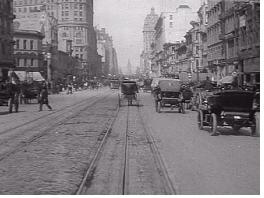
No stop signs, either. Just an amazing collection of horses, cars, trolleys and — yes! — bicycles crowding the city’s main drag, just four days before the 1906 quake. Check out the footage here. 


Bicycles sharing the street with cars (and also horses, and people who just run right out in front of traffic), police foot patrols, multi-modal transportation … good times. It’s great film, and fun to watch.


From the email Larry Fahn, former Sierra Club president sent me:


This film, originally thought to be from 1905 until David Kiehn with the Niles Essanay Silent Film Museum figured out exactly when it was shot. From New York trade papers announcing the film showing to the wet streets from recent heavy rainfall & shadows indicating time of year & actual weather and conditions on historical record, even when the cars were registered (he even knows who owned them and when the plates were issued!).. It was filmed only four days before the quake and shipped by train to NY for processing. Amazing but true!


SF’s bike project ban is coming to an end

5

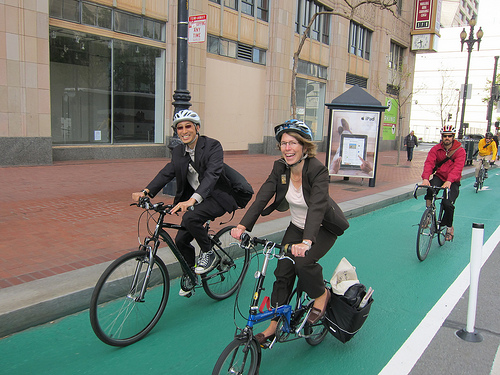
Despite high-profile recent improvements to San Francisco’s bicycle network – including a half-dozen new bike lanes since last fall, a green bike lane on Market Street separated from cars, and new on-street bike parking on Valencia and Divisidero streets – the city is still prevented by a court injunction from creating bike lanes that have been sought for a decade. But that could change as early as next week.

On Tuesday, June 22, Superior Court Judge Peter Busch will hear oral arguments and consider whether to end the four-year-old injunction against the city executing any of the projects or policies outlined in its Bicycle Plan, a ban perversely created by the court finding the plan violated the California Environmental Quality Act because it wasn’t subjected to a full-blown environmental impact report, which cost more than a million bucks and took two years.

Despite the fact that EIR was completed and certified last year, the plaintiffs who sued the city over the plan five years ago – anti-bike activist Rob Anderson and his attorney, Mary Miles – sued again, claiming the study was inadequate and decrying how the plan would take space from cars to improve bicycle safety.

In her brief, Miles noted how the EIR finds “89 significant impacts of traffic, transit, and loading but fails to mitigate or offer feasible alternatives to each of these impacts.” Referring to the near universal political support in San Francisco for making improvements to the bike network despite these impacts, Anderson told the Guardian last month,“It’s a leap of faith they’re making here that this will be good for the city.”

But the brief that the city filed in the case argues that leap of faith is a decision for policymakers, whether or not Anderson and Miles agree with it. The city position is that cars have ruled the roads for long enough and now it’s time they shared some space with the fastest growing transportation choice in San Francisco, where the number of regular cyclists has nearly doubled in recent years.

“Petitioners are clearly disappointed that, despite the disproportionate number of drivers over bicyclists, City decisionmakers chose to implement improvements to the bicycle network that may inconvenience some drivers and some transit riders on certain streets at certain times. But the CEQA process does not approve or deny projects; it merely requires that decisions be made with environmental consequences in mind. By improving the City’s bicycle network, the decisionmakers determined that the City would encourage more people to use a bicycle for everyday transportation,” Deputy City Attorney Audrey Williams Pearson wrote in her brief.

With oil continuing to spew into the Gulf of Mexico, the atmosphere becoming steadily more concentrated with planet-threatening fossil fuel emissions, and the politicians in Washington DC offering only hollow rhetoric about our stubborn addiction to oil-powered convenience, San Francisco elected officials from across the ideological spectrum took a small but important step in promoting safer bicycling.

Now, it’s up to Judge Busch (who partially lifted the injunction last fall, allowing the handful of projects I mentioned above) to take the next step, which he will do probably within days (or weeks at the latest) after hearing from both sides June 22 starting at 9:30 a.m. in Superior Court, Department 301, at the corner of Polk and McAllister streets.


P.S. If you want to celebrate the impending end of the bike injunction with thousands of other bicyclists, walkers, dancers, and other non-motorized movers and shakers, show up on car-free Valencia, Harrison, and 24th streets this Sunday from 10 a.m. to 3 p.m. for the latest installment of Sunday Streets.

On the Cheap listings

0

On the Cheap listings are compiled by Paula Connelly. Submit items for the listings at listings@sfbg.com.

THURSDAY 17

Another Science Fiction Get Lost Travel Books, 1885 Market, SF; (415) 437-0529. 7pm, free. San Francisco author and archivist Megan Prelinger will discuss and show images from her new book, Another Science Fiction: Advertising the space race 1957-1962, where she presents 100s of advertisement images from a time that marked the beginning of space research as well as the golden age of science fiction writing.

FRIDAY 18

FINKTOONS Element Lounge, 1028 Geary, SF; (415) 440-0111. 10pm, free if you say "FINKTOONS" at the door. What do you get when you cross sketch comedy, horror movies, cartoons, and bizarre short films? FINKTOONS, of course. Enjoy a night of never before seen sketches and cartoons, including a live performance by the project’s co-creators Brandon Fink and Tyler Moazed.

Giants County Fair McCovey Cove, Giants Lot A, behind AT&T Park, SF; www.sfgiants.com/fair. Fri./11-Sun/20, free. This old-fashioned county fair with a San Francisco spin features games, fair food, music, a CUESA urban farming tent dedicated to cooking and gardening, and over 20 carnival rides, including a Ferris wheel, bumper cars, super-swings, and more. $5 per ride or $20 for unlimited rides. The fair will overlap with six Giants games, including the Bay Bridge Series against the A’s.

SATURDAY 19

Breaking Ground San Francisco County Fair Building, 9th Ave. at Lincoln, Golden Gate Park, SF; (415) 750-5110. 9am-1pm, free. This urban gardening youth conference is open to all Bay Area high school students featuring youth led, hands on workshops, information about jobs and paid internship opportunities, food and entertainment, tours of some of San Francisco’s coolest gardens, and more.

Mission Community Market 22nd St. between Mission and Bartlett, SF; http://missioncommunitymarket.blogspot.com. 4pm-8pm, free. Attend the kick off to this weekly summer outdoor market that celebrates the Mission by promoting healthy eating, locally owned businesses, community programs, public space, and live music in the street. Proceeds from all food bought at Lolo’s, Café Revolution, and Escape from New York Pizza will be donated to the MCM Fund. All market profits will be reinvested into public space improvements. Featuring live music by Seth Augustus, Diana Gameros, Santos Perdidos, and King City and live performances from Abada Capoeira, Danza Azteca, and Sirron Norris.

"Obviously You’re Not a Golfer" Kokoro Studio, 682 Geary, SF; (415) 400-4110. 7pm, free.

The Flat Earth Collective presents this literary event featuring readings by Tom Andes, David Holler, Erica Lewis, and Sara Mumolo and dramatic performances of new work by Sarah Ciston and Tavia Stewart-Streit.

StreetSmARTS African American Art and Culture Complex, 762 Fulton, SF; www.sfartscommission.org/streetsmarts. 6pm, free. Celebrate StreetSmARTS pilot-program murals, a program that connects established muralists with San Francisco private property owners to create vibrant art based on visual concepts reflecting the fabric of the neighborhood and make property less likely to be vandalized. Festivities to feature live muraling, film screenings, speakers, DJs, and a break-dance contest. A StreetSmARTS art exhibition will be unveiled at midnight.

Tetris Tournament II The Lab, 2948 16th St., SF; (415) 864-8855. 8pm, $5-$15 sliding scale. Test your skills with the world’s most popular puzzle game at this karaoke-style arcade competition. Musician, media artist, and performer Bryan Von Reuter rigged it so the highest scoring players will reap all the glory on a jumbo-tron projected screen and score board with DJ Middle D spinning records all night.

SUNDAY 20

Cardboard Tube Fighting League Hayes Valley Farm, 450 Laguna, SF; www.tubeduel.com. 3pm, free. Come in your best cardboard armor attire, bring food to participate in the picnic potluck, and vie for a chance to win a legendary cardboard sword. Prizes also awarded for best cardboard costume. If you need a costume go to the free Cardboard Amor Building Workshop Sat/19 3pm at Hayes Valley Farm. Bring scissors, glue, twine, and anything you think you might need to build righteous armor.

Rock the Bike Valencia and 24th St., SF; www.projectsoundwave.com. The ongoing green sound festival, Project Soundwave, teamed up with Rock the Bike to bring you this unique free environmental music event at the Mission District Sunday Streets program featuring the acoustic punk sounds of Kemo Sabe brought to you by pedal powered mics, amps, and instruments.

MONDAY 21

BAY AREA

Summer Solstice Celebration Muir Beach, Golden Gate National Recreation Area, Route 1, Marin; (415) 388-2596. 6pm, free. Celebrate the longest day of the year at this bonfire solstice party featuring storytelling and songs. Dress warmly and bring a mug for hot drinks. No reservations required.

Ubiquity Anniversary Exhibit Guerilla Art Café, 1620 Shattuck, Berk.; (510) 845-CAFÉ. 6pm, free. Attend the opening of this art exhibit celebrating the 20th anniversary of Bay Area funk and soul from Ubiquity Records with paints of, and inspired by, Darondo, Eugene Blacknell, Sugarpie Desanto, and Twilight. The opening will feature Guerilla Café art collective and Ubiquity artists live painting and creating a video montage. Throughout the show, Guerilla will host guest appearances by the musicians and DJ sets playing their music.

For Lit, Talks, and Benefits listings, visit the Pixel Vision blog at

Bread and Circuses: Mexico and the World Cup

0

MEXICO CITY (June 11th) — The Caliente Sports Book down the street is buzzing with betters studying dog and horse races, Major League Baseball, even golf, on the multiple screens. Of particular interest are those channels running wrap-ups of the afternoon match between Mexico and 2006 World Cup champion Italy, from which the national team emerged victorious in a final prelim before this year’s edition of the Copa del Mundo gets underway later this week.


Italy, it may be remembered, won the much-coveted cup four years ago on penalty kicks after France was reduced to playing with ten men on the field when super-star Zenedine Zidane was disqualified for ferociously head-butting a rival who purportedly called his mother and sister “whores.” Beating Italy was a decided plus for Mexico’s downtrodden spirits as the Mundiales approach.


One group of aficionados was not much interested in Mexico’s fortunes in the upcoming fandango in South Africa. Instead, they gathered around a big screen in one corner of the betting parlor cheering on the Los Angeles Lakers in a National Basketball Association Finals match-up with the Boston Celtics. “Forget about football,” sneered “El Guerro” Gonzalez, a regular, “this is where the real money gets made.” Because pro basketball games routinely rack up hundred-point scores, betters have multiple opportunities to wager on winners and losers, over and under point spreads, total points in a quarter, and whether Kobe Bryant will hit the next three-pointer.


But the basketball euphoria will dissipate post haste as the World Cup takes center stage. Although the NBA’s despotic commissioner David Stern promotes his product as the world game, basketball hardly holds a candle to what the U.S. provincially terms “soccer” and the rest of the Planet Earth calls football.


Indeed, the “Copa del Mundo” (“Cup of the World”) will soon sweep every other sporting event from the screens — let alone political scandal, of which there is plenty in this distant neighbor nation, including the upcoming Super Sunday gubernatorial elections July 4th, and even droughts, floods, and other natural disasters. The interminable drug war that has taken 23,000 lives in the past three years will move to the backburner. Ditto an economy that is tailspinning out of control — a million workers lost their jobs in the first three months of this year alone despite President Felipe Calderon’s rosy claims of “recovery.”


Speculation about the disappearance of one of the nation’s most powerful politicians will fade from the primetime news, and the first year anniversary of the incineration of 49 babies in a government-run day care center owned in part by the first lady’s cousin will not even be noticed. The military takeover of the great Cananea copper mine and the dissolution of the miners union, is not news. New revolutions — this is, after all, the hundredth year anniversary of our landmark revolution — could rock the land, but for the next month, Mexico will live and die on what happens to the national team in South Africa.
“In football, we find our revenge against the adversaries of our lives,” philosophizes sociologist Jose Maria Candia in a recent Contralinea magazine interview, “if it goes badly at work, in the economy, politics, the project of the nation, when 11 boys put on the green jersey and do well in an international tournament, we feel vindicated by life.”
With 32 national teams from all five continents in the competition for the World Cup, the fate of the “seleccion” will have palpable impact on domestic tranquility. The political outfall of the Mundiales is unpredictable. Pumped up on toxic nationalism and xenophobia, football is a blood sport in southern climes. Honduras and El Salvador once fought a full-fledged war over soccer.


If the national team wins or acquits itself well, success will strengthen the government in charge no matter how poorly it has served the country. Likewise, a shoddy performance can topple rulers. In Mexico, increasingly unpopular president Felipe Calderon, who won high office in fraud-marred elections three years ago, is banking on the national selection’s triumphs in the opening round to invigorate his deteriorating image. Calderon’s bet is hardly a sure thing.


Mexico, Number 17 on the Federation of World Football Federation’s rankings (now the Coca Cola FIFA rankings), plays host South Africa in the inaugural match of the tournament, and “His Excellency” Felipe Calderon (dixit South African president Jacob Zuma) will be a guest of honor. The “Bafana Bafana” (“Boys Boys”) as the locals are worshipped, have won their last four prelim matches and in the 2009 Confederation Cup took Spain, which some football gurus fix as the best team in the world, into overtime. Their fanatics’ incessantly droning “vuvazelas” or plastic trumpets are said to drive opponents mad.


On the other hand, should Mexico beat sentimental favorite South Africa, it will make Calderon few friends on the African continent — five other African teams are in the draw, with war-torn Cote d’Ivoire the cream of the crop.


Aside from the Bafana Bafana, France and Uruguay are the real class of Mexico’s four-team group — while the French have appeared lackadaisical of late, whipping the South Americans is improbable. Anything less than reaching the quarterfinals will not rehabilitate Calderon’s popularity.


Mexico has a young team that fluctuates between indifference and playing out of control. It is anchored by seven Mexican players from the European and Turkish leagues, and the wily but slow-footed veteran Cuauhtemoc Blanco. Burned repeatedly by the national team’s poor performances in the Mundiales, many fans such as Manuel Garcia, a waiter at the old quarter Mexico City eatery Café La Blanca, consider that only divine intervention can save Mexico — and Calderon — from ignominious elimination.


When and if Mexico wins its matches though, wild celebrations are guaranteed to erupt around the gilded Angel of Independence on the bustling Paseo de Reforma — drunkenness, fisticuffs, and hooliganism are de rigor. Flag-draped caravans of honking cars will jam the boulevards of this conflictive megalopolis. On game days, half the population of Mexico, led by its president, will don green jerseys and play hooky from work and school. Saloons will fill to the brim with fans spilling out into the streets, jostling for a peek at the plasma screens. Masses to insure that God is on Mexico’s side will be pronounced from the altars and saints dressed up in the national colors.


Although football is tantamount to religion in this country where 70% of the population lives in and around the poverty line, only the super rich will have the wherewithal to jet off to Africa. Instead, the underclass will monitor the Mundiales at the “FIFA Fan Fest” on giant screens erected in the great Zocalo plaza from which nearly a hundred hunger-striking members of the Mexican Electricity Workers Union (SME), near death after a month of voluntary starvation, will no doubt be evicted so as not to dampen the fiesta.


Televisa and TV Azteca, Mexico’s two-headed television monopoly, which will transmit the games (the premium package includes 3-D) will have the nation eating out of its hands (and guzzling Corona beer.)  The TV monoliths have leased rights to broadcast the Mundiales from the Swiss-based FIFA, the absolute dictator of the sport for the past 106 years that counts 204 out of 208 football federations worldwide on its roster. FIFA TV revenues are expected to top $167,000,000 for the 2010 World Cup.


This year’s Copa del Mundo is awash with drama. Will the Argentine selection, a perennial favorite, graced by the world’s best player, Leonel “the Flea” Messi, blow up under their sometimes psychotic coach Diego Maradona, himself a Mundiales’ immortal? Will the first round match between England and the U.S. (14th on the FIFA listings with a world-class star, Landon Donovan, to prove it) invoke the star-crossed Yanqui upset of the Brits 60 years ago in 1950 in Brazil, the only time these two teams have ever met in the World Cup?


If the U.S. gets by England, a match between Mexico and its hated gringo rival would up the drama quotient here considerably. A face-off between South Korea and North Korea, both of which are in the draw albeit in separate groups, could lead to nuclear confrontation.


How will tiny, bruised Honduras, which played through a coup d’etat to qualify, fare against the big guns? What kind of karmic reward is in store for France, which slimed its way into the World Cup with mega-star Thierry Henry’s illegal hand-slap goal against the Irish? Will Germany be dispirited by the suicide of its troubled veteran goalie (is this a Wim Wenders’ film)? Will five-time champ Brazil, which is hosting both the 2014 World Cup and the 2016 Olympics, be so overloaded with hubris that the selection will forget to play football?


But unquestionably the drama of dramas is focused on host South Africa, the land of blood and gold, Nelson Mandela, Steve Biko, Joe Slovo, and the last great struggle for liberation from colonialism.


South Africa, an unlikely site for the World Cup, was promised the games by Swiss football impresario Joseph Batter during his 1998 campaign to become the czar of the FIFA. Blatter, who was said to have been backed by Middle East oil money, needed African votes to put him over the top. Although Nigeria and Morocco were also proposed to host the 2010 Cup, South Africa, the continent’s fastest-growing economy, was chosen both as a tribute to African football and to Nelson Mandela. Blatter even flew the frail, aging apostle of African liberation, to London to ballyhoo the designation.
Whether the beloved Mandiba will be well enough to attend the inauguration is the drama within the drama.


In his youth, Nelson Mandela was a keen amateur boxer and enthusiasm for sports has colored his life. Football is indeed the national sport of black South Africans, 75% of the population. During Mandela’s 28 years of imprisonment on Robbin Island for the crime of defying apartheid, his fellow prisoners and comrades in the African National Congress (ANC), played football incessantly, taping up rags into balls, and booting them up and down the narrow prison corridors. But Madiba was held in isolation and could never participate.


Nelson Mandela’s vision for the new South Africa encompassed sports as a path to racial reconciliation. If football was a black sport in South Africa, rugby is an Afrikaner obsession — the Springboks were the maximum icon of the apartheid regime. As president, Mandela brought the 1995 World Rugby Cup to Johannesburg, a story fictionalized in the film “Invictus,” and won the hearts and minds of his former persecutors. Now the World Cup 2010 is slated to project South Africa before the world as a dynamic, multi-racial powerhouse.


The truth is always more diffuse. Jacob Zuma, the country’s very corruptible third president, and his predecessors have sunk between $3.7 and $6 billion USD in infrastructure to burnish their images in a nation where 43% of South Africa’s 45.000.000 peoples live on $2 or less a day. The gleaming $300,000,000 Soccer City Stadium where the July 11th finals will be staged, abuts Soweto, the festering high-crime enclave of 3,000,000 mostly threadbare citizens, 30% of whom suffer from AIDS, according to the World Health Organization. Gangs of orphaned children rule the street.


Similarly, the stadium at Port Elizabeth on Nelson Mandela Bay, which came in at $287,000,000, was built over a slum from which hundreds were evicted. A school complex was demolished to make way for the Neusprot venue (only $140,000,000) — 13 such stadiums have risen from the dust amidst a storm of charges of kickbacks, bribery, and favoritism.
If recent history is any hint, the new stadiums will quickly become certifiable white elephants. Even Beijing’s much-praised “Birds’ Nest” coliseum designed for the 2008 Olympics is reportedly tenantless, and the Greek economy just collapsed in part thanks to  the burden of debt incurred for infrastructure for its Olympic Games. 


With a population scuffling just to feed itself, filling all this dazzling stadia with paying customers is problematic. Even the $18 cheap seats — a week’s wages in the cities and a month’s income in some rural areas — are mostly out of reach in a country where 50% of the work force is out of work. To deflect a grave social crisis in the making, the FIFA is offering 120,000 free admissions, about 2,200 seats for each of the World Cup’s 62 contests. Riots have already occurred at “friendly” preliminary games.


Ever since the bad old days of ancient Rome, bread and circuses have been a powerful formula for social control. In South Africa, as in Mexico, the World Cup is designed to make the discontented forget their discontent. For the next month, the violence, corruption, and class and race hatreds that dominate daily life in Mexico, South Africa, and the rest of what used to be called the third world will disappear beneath the social surface.


Although conflict is my bread and butter, I’m not going to miss the 2010 Mundiales for the world. 


John Ross is at home in the maw of the Monstruo watching the World Cup. You can complain to him at johnross@igc.org


Goodbye, 49ers — and do we really care?

4

Tony Winnicker, the mayor’s press secretary, was chatting with a group of folks at the Newsom victory party on election night, and Steven T. Jones, the Guardian city editor, asked how the stadium vote was going down in Santa Clara. “Oh, it’s winning, but it’s never going to get built,” Winnicker said. “Cities building stadiums is an economic loser.”


He’s right, of course — although it’s an odd comment coming from a press staffer for a mayor who is still dead set on building a stadium for the 49ers at Candlestick Point. I agree with Randy Shaw: The loss of the 49ers would be a good thing for San Francisco — particularly if the alternative is to pour public money into another expensive boondoggle like Candlestick Park.


Here’s the thing: You can argue that urban baseball stadiums bring economic benefits to the community. You can argue that the (mostly) privately financed Giants stadium has spruced up that neighborhood, spurred the creation of new bars and restaurants, brought in new tax dollars and created jobs. (It also displaced some blue-collar jobs and some poor people, but that’s a different argument.)


In fact, with limited parking and good transit access, the Giants ballpark encourages foot traffic, which encourages people to patronize local businesses before and after the game.


Football stadiums are traditionally very different. Football fans are tailgaters — they drive cars, bring their food and drinks to the parking lot, set up grills and picnic tables, go to the game — and then go right home. Almost nobody who attends a 49ers game at Candlestick stays around in the neighborhood afterward; the people who live nearby get virtually zero economic benefits.


Even as part of a shiny new development package, that won’t change much. The plans for a 49ers stadium in the new redevelopment area include a new roadway and bridge to make it easier to drive in and out, and a parking garage with room for tailgating; the fan base is largely from the Peninsula anyway. And in nearly every city that’s put up public money for a football stadium, the taxpayers have gotten screwed.


I love football, I love the 49ers, but I never go to the games, anyway — way too expensive. The TV feed from Santa Clara will be just fine.


The NY Times discovers illegal church parking

7

The Bay Citizen-New York Times partnership is already jazzing up the quality of what was a very weak Northern California section in the Times. And now the pair have discovered one of the dirty little secrets of San Francisco Sundays — illegal parking by church-goers who just leave their cars in the middle of the street.


This is one of my favorite crusades, and I’ve been on it for quite a while. The Times/Bay Citizen story tries to sort out what the rules are and why this is allowed to happen. The SF Appeal tried to figure it out, too. But when you talk to the cops on the beat in the Mission, here’s what they’ll tell you: There are no rules. There is no law. The church-goers have no legal right to park in the middle of the damn street. It’s just a tradition that goes back so long that nobody wants to defy it.


And whatever the cops and the MTA say, it’s not a public service for community events. It’s about religious gatherings. If you want to go to a secular gathering — say, a Yoga class — and park in the streets Sunday morning, you get a ticket. In fact, I know somone who tried that; she said a cop on the scene asked where she was going, and she said yoga, and the cop said she couldn’t park there. It’s only “for church services.”


I’m all in favor of closing streets to traffic, but turning them into parking lots — and allowing private institutions to use city property, at no cost, to promote religious events is not only a violation of church and state. It’s wrong.

Lock and load

0

le.chicken.farmer@gmail.com

CHEAP EATS Speaking of pickup trucks, I borrowed the Pod’s for the weekend because Hollywood was coming to San Francisco. It was my turn to drive. As you may know, 20-year-old Toyota pickup trucks aren’t sports cars, but I figured this was a step in the right direction, especially since it’s lesbian-owned.

My brother’s 25-year-old Toyota van, which I babysit, was bought off of lesbians. Still, it’s got very little mystique at this point: just a badly cracked windshield, a badly battered body, one working low-beam, and no brights whatsoever. I feel lucky not to be pulled over by the police every time I move it for street cleaning.

My brother hauls boards and tools and garbage in this van. To pick up a date in it, I feel, would be the end of the date. Once I drove it to a probably-already-doomed-anyway first meeting at a Peet’s in a North Bay shopping center, thinking: shopping center … I could park anonymously! But the damn dude was waiting outside, watching for me, and saw.

So that date was over before it started. I’m not sure what it says about this one that Hollywood wound up taking a cab to the airport. I don’t know, is it a wild weekend, or a wonky one, when by Monday morning you have entirely lost the keys to your friend’s Toyota?

While Hollywood was taking an airplane to L.A., and even for a couple hours afterward, I was still running around like a chicken with its head still on, turning my purses inside out, emptying laundry baskets, unmaking and remaking the bed. I even looked in the refrigerator. I called or went to everywhere we’d been the night before.

After a tow-trucker let me in, I turned Pod’s pickup inside out.

The Club was locked onto the steering wheel, and no, no one had a spare key. There wasn’t one. I’d called her. In Oregon.

Finally I started going into places we hadn’t been the night before, and one of them, a restaurant that was closed (I’d thought) when we’d parked in front of it, had me my keys, praise the lard. And praise the person who picked them up and put them there, whoever you are. I love you.

Loving you, loving life, living lunch, I unlocked the door, unlocked the Club, turned the key in the ignition, and drove to West Oakland to feed Pod’s cats and swap out her truck for my brother’s van. In the act of which — no lie — I lost her house key.

Chickens and waffles is not brain food. It’s soul food. This week they happened at the Hard Knox Café in Dogpatch, and were particularly hard to order because the restaurant was crowded with people eating smothered pork chops, jambalaya, po’boys, mac and cheese, and other good-lookingly soulful woowoo that made me wonder why I only ever eat chicken and waffles.

It’s the perfect time for such wonderings, since I am officially out of ideas, chicken and wafflewise, as well as brain cells in general. If anyone else here does the duo … you tell me.

Hard Knox’s fried chickens were not as good as expected. The drumstick was perfectish, but both thighs were a little overdone and undermeaty. The waffle was great. Nevertheless, if I ever again crave chickens with them (and I might not for a pretty long time), you will find me up the road at Auntie April’s, or down it at Little Skillet.

Oh, but Hard Knox rocks, in many ways, one of which is collard greens with a few squirts of Crystal hot sauce, and then a few more. And then a few more. The Maze made some real nice noises when he bit into his fried catfish po’boy. Which in fact I tasted, and yeah, it was damn good.

And the sweet tea, too. And, like I said, all the smothered stuff sure looked good and smothered. Plus I just love the place! With its corrugated tin walls and old funky signs, you really do feel like you’re somewhere else. Like, say, the South. I love being transported by meals and atmosphere. In fact — trucks and trains be damned — food might be my new favorite method of transportation. *

HARD KNOX CAFE

Mon.–Sat. 11 a.m.–9 p.m.; Sun. 11 a.m.–5 p.m.

2526Third St., S.F.

(415) 648-3770

MC/V

Beer and wine

When the rich can sit on the sidewalks

77

By Tiny


OPINION Steel gates, steeds with silver spurs, lush red carpet lining the streets, uniformed officers guarding velvet-roped grand entrances to fancy costume balls while commoners are arrested if they so much as stop to rest on a nearby sidewalk. Sounds like the days of feudal England, or Marie Antoinette’s Paris. Guess again — its San Francisco, circa 2010.

In the wake of the proposed sit-lie law, which would make it illegal for poor people to sit or lie on any public sidewalk or street, the San Francisco is increasingly giving public streets and sidewalks away to large corporate festivals where rich, mostly white people stumble around with open containers, drunk and disorderly.

Since last month’s expanding Bay to Breakers "race," at which drunk, oddly dressed white people sat on curbs, stumbled into doorways, toppled onto the streets, and partied with entitled impunity as only people with race and class privilege can in this country, I have felt uneasy. This so-called run, supported by large corporations, has increased its land grab of several blocks of city streets, causing increased traffic, pollution, and blocked arteries for pedestrians, cyclists, and cars — all so that white people can party in undisturbed inebriation all across the city.

And if you think it was just a benign day of public drunkenness, think again. Several of my friends of color who made the mistake of being outside on race day were subjected to an onslaught of hate speech from some very threatening gang members (from the INGCHARLESSCHWABSTANFORD Gang. "You think this is Arizona?" "Are you here to be a valet?" "Go Back to Mexico."

I was riding my bicycle a week later only to be stopped on my route up Van Ness Street because of the two-day preparation, and then almost 24-hour exclusive usage of McAllister and Van Ness streets for the Black and White Ball. Again: a state-sanctioned, corporate-and-private-philanthro-pimped event for rich white people to get drunk and party on city streets.

Why is it that white people in a corporate-sanctioned party are seen as more safe or civilized than the rest of us — and how do houseless people, poor people, and people of color get criminalized in our own communities for the sole act of convening, standing, talking, or being?

It’s important to note that the rhetoric and propaganda in support of sit-lie has gone so far as to cite the struggle of disabled people to get by sidewalks "cluttered" with houseless people or businesses having their customers scared away by houseless folks convening. Yet the plethora of drunk people lying on sidewalks after Bay to Breakers are not seen as an obstacle to safety.

Tiny, a.k.a Lisa Gray-Garcia, is editor of POOR Magazine.

Road rules

0

caitlin@sfbg.com

CULTURE Dear cars: I’m only doing my part to keep the air clean, and I promise you, I’m trying to stay in my lane when I have one. I’m looking as cute as I can astraddle my fly new ride, puffing up hills for health. Alas, your intermittent, unwarranted honk is a sorry companion to my bike high. “Get a car!” is a bummer too. Bicyclists sure enough have to put up with some shit.

Which is why we’re glad to have Eben Weiss, New York City’s outspoken Bike Snob. He’s won raves among the two-wheeled for his blog (www.bikesnobnyc.blogspot.com), which pointedly voices the frustrations of the biking masses. Sure, Weiss is opinionated — don’t get him started on brakeless bikes for civilian use — but in our recent phone interview, he articulated his ideas about transportation with an aplomb and wit I seldom hear elsewhere.

And by gosh, it’s only right he follow grand blogging tradition and put out a book. My chat with Weiss coincided with the start of his tour to promote Bike Snob: Systematically and Mercilessly Realigning the World of Cycling — he hits San Francisco Thursday, June 17 — a project that compelled him to shed the cloak of anonymity under which he had blogged for years. (Turns out he’s a looker.)

Right off the bat he told me, “There’s no such thing as ‘bike culture.'” Them’s fightin’ words in SF, which reveres the idea of a biking class that generates its own social mores, political convictions, and tasty microbrews. “As far as I’m concerned, I like to ride. So my ‘common cause’ is just to be happy. You have a lot of different kinds of cyclists. They do it for fitness, they’re into the environment … It’s like anything else: a lot of people doing a lot of things for a lot of reasons.”

Weiss is of the opinion that terms like “bike culture” have been used by the cycling industry to sell us things, a ploy that leads to the type of fashion victimology so snarkily snapped and captioned on his blog. “A decent bike and a good lock,” Weiss says. “And that’s really all you need. I think part of the reason the cycling media can drive you a little bit crazy is that there’s such an emphasis on equipment. You can spend hundreds or thousands on cycling-specific sneakers, on a bike that looks a certain way. I recommend that you get a bike, any bike. Spend as little money as possible — just you and the bike, that’s it.”

It’s refreshing advice, the kind you don’t usually hear from people who have been city-biking as long as Weiss has. I also asked him about traffic laws — he’s questioned their relevance to biking in the past. Do we obey the stop signs, Bike Snob?

“I think it’s important to remember that breaking a rule because it really doesn’t apply to you is different than breaking a rule because it’s exciting,” he tells me. “Anything that involves stopping is good. People who ride bikes think putting your foot down is an admission of defeat. I think they need to get over that. You have to be nice to pedestrians. You have to treat others with the same respect you want motorists to treat you with. Not riding on sidewalks is a good rule.”

Indeed. He’s also got words for nonbikers that they would do well to heed. Avoid referring to your cyclists friends as “Lance Armstrong,” groping on their top tubes without permission, and asking them whether they’re impotent.

And for God’s sake, quit asking if bike accident victims were wearing a helmet. Weiss, in the traffic safety chapter of his book entitled “Why is Everyone Trying to Kill Me?” has gone on record about his neutrality regarding society’s “all helmet, all the time” insistence, calling it something of a misguided fixation. This is not the politically correct line to walk for a bike activist. He’s caught flack for being seen at road races lacking the proper headgear.

But unlike other prominent figures in the bike world who rally fellow cyclists under one flag or another, Weiss doesn’t consider himself an activist so much as a curmudgeon. (Albeit a curmudgeon with a hot blog, a new book, and a heady slew of good ideas.) His popularity may be a result of his non-hectoring, yet still bitingly impish, attitude — an attitude that, whether he likes it or not, jibes well with the current bike culture. Ride on, Bike Snob, we’ll be reading.

BIKE SNOB BOOK SIGNING

Thurs/17 6:30–8 p.m., free

Sports Basement

1590 Bryant, SF

(415) 575-3000

www.chroniclebooks.com/bikesnob

Political juggernaut

3

sarah@sfbg.com

City officials are scrambling to secure final approvals to allow Lennar Corp. to move forward with its 770-acre Candlestick/Hunters Point Shipyard redevelopment of San Francisco’s impoverished and polluted southeast sector. But the community remains divided on the project, raising concerns that wary residents will end up being steamrolled by this politically powerful juggernaut.

Some groups say the project needs major amendments, but fear it will be rushed to the finish for political reasons. Others say they are hungry to work and desperate to move into better housing units, so they don’t want all the myriad project details to slow that progress. And Mayor Gavin Newsom’s administration is arguing that approving the project’s final environmental impact report by June 3 is crucial if San Francisco wants to keep the San Francisco 49ers in town.

But many observers fear Lennar wants its entitlements now before its project can be subjected to greater scrutiny that could come with the November elections. Newsom, who made Lennar’s project the centerpiece of his housing policy, will be replaced as mayor if he wins the lieutenant governor’s race. And a crowded field of candidates, many of them progressives concerned about the project’s impacts on the poor and the environment, are vying to replace termed-out Sup. Sophie Maxwell, whose district includes Lennar’s massive territory.

“It’s 180 percent about the 49ers,” land use attorney Sue Hestor told the Guardian, referring to the city’s proposed rush job, as evidenced by a rapid entitlement schedule that the Newsom’s administration wants city commissions and the board to follow.

Under that schedule, which Hestor procured from the Mayor’s Office, Planning and Redevelopment commissioners are expected to certify the project’s final 6,000-page EIR, adopt California Environmental Quality Act findings, approve amendments to the project’s original disposition and development agreement, and authorize land trust and open space reconfigurations — all during a June 3 meeting where public comment will likely last for many hours.

Saul Bloom, executive director of Arc Ecology, a community-based nonprofit that tracks the development, says this schedule stretches the credulity that this is a deliberative process. “There’s no way anyone could make a functional reasoned assessment,” Bloom told us. “How do you have any meaningful public conversation under those circumstances?”

Michael Cohen, Newsom’s chief economic advisor, asserted in an April 29 article in The New York Times that Lennar’s plan is a “really, really good project,” echoing the glowing praise he’s heaped on the project since its conception.

“But there’s nothing new in their proposal,” Bloom told us. “That’s because they haven’t been listening to the public’s concerns. [Cohen] says, ‘Haven’t we talked enough? The community’s been waiting all these years!’ But waiting to get what done?”

Lennar’s project — which had early backing from Newsom, U.S. Sen. Dianne Feinstein, and other political power brokers — was sold as creating “jobs, housing, and parks” and “revitalizing the abandoned shipyard” when voters approved the Lennar-financed Proposition G in 2008.

“Proposition G is from the community and for the community,” Lennar’s campaign promised. “You can turn the abandoned Hunters Point Shipyard into a clean, healthy, sustainable, livable neighborhood — a place where people can raise their children.”

The shipyard once employed thousands of workers, including African Americans who were recruited from the South in the 1940s and ’50s. But the district’s economic engine fell into disrepair when the military left in 1974. Today the neighboring Hunters Point and Bayview neighborhoods have the highest unemployment and crime rates and the largest concentration of African American families in the city.

But the city’s final EIR for the project, which the Planning Department released mid-May, shows that 68 percent of the developer’s proposed 10,500 new housing units will be sold at market rates unaffordable to area residents, and that many of these units will be built on state park land at Candlestick Point.

Lennar is also proposing to build a bridge across the environmentally sensitive Yosemite Slough, significantly changing the southeast waterfront. Lennar says it plans to develop the project’s remaining 3,000 units at below market prices, including one-for-one replacement of rundown Alice Griffith public housing units. Its proposal includes a dozen high-rise towers, 2.7 million square feet of commercial space, 1 million square feet of retail space, a performing arts theater, and an artists colony.

Lennar claims its proposal will create 1,500 construction jobs annually during the project’s 20-year build-out, along with 10,000 permanent jobs, thanks to a United Nations Global Compact Sustainability Center and a vaguely defined green technology office park.

The project and its impacts are already an issue in this year’s District 10 supervisor’s race (see “The battle for the forgotten district,” Feb. 23). Candidate Chris Jackson says Lennar’s proposal is weak when it comes to creating well-paying, low-skilled green collar jobs. He supports Arc’s proposal to including green maritime industrial use at the shipyard.

Arc recommends that the city’s final EIR allow recycling and repairing of ships, including the Suisun Bay Ghost fleet — decommissioned U.S. Navy, cruise, and ferry ships — arguing that “ship recycling and repair are resurgent strategic industrial activities yielding employment opportunities for our existing pool of skilled and unskilled workers.”

Jackson, who was elected to the Community College Board in 2008 and recently jumped into the District 10 race, wants the city to assert that the project is not a regional housing plan.

“It’s a local housing plan for local residents,” Jackson asserts. “It’s not here to provide housing for Silicon Valley. It’s for Bayview-Hunters Point and District 10 residents.”

Jackson understands why some local residents want no delays on final EIR approval: “I can never blame folks in Alice Griffith public housing for coming out and saying ‘no delays.’ They really want something real, housing that is not rat and cockroach infested.”

As a policy analyst (a position he’s quitting to focus on the District 10 race) for the San Francisco Labor Council — which gave key backing to the project in the 2008 election — Jackson knows labor is frustrated by all the project meetings. “I try to tell them it’s better to get this project right than rush it through and find out later that it goes against the interests of labor,” Jackson said.

In May 2008, the Labor Council signed a community benefits agreement (CBA) with Lennar. Since then labor leaders have urged no delays on the project’s draft EIR review. But Jackson believes the city must demand that financial consequences, such as liquidated damages, be a project approval condition if the developer reneges on the CBA.

“Right now the only push-back the city has is to threaten to kill the whole project if Lennar doesn’t meet its timeline,” Jackson said. “But people are really invested in this project, and I don’t believe anyone would pull the trigger and end the entire development. We don’t need to throw everything out; we just need to change them.”

Jackson wants to see the inclusion of a special-use district that would create a cooperative land trust to ensure affordability and home ownership opportunities for local residents. “I love open space and sustainability, but I also want affordable housing and real light-industrial opportunities that can employ people living in the district now.”

Special-use districts, Jackson argues, give city commissioners a way to amend this project to make it more acceptable.

Jackson wants to see strong tenant protections for public housing residents. “The vast majority of those residents are African American. At the end of the day, I want to see economic and environmental justice, so we can say we brought the right change to our community.”

Jackson also would like to see a more independent Mayor’s Office. “Don’t you feel like its 2002/2003, and that if you speak out against the project, it’s like you are speaking out against the Iraq war, and all of a sudden you are not patriotic?”

Fellow District 10 candidate Eric Smith concurred. “The powers that be are definitely moving this thing forward,” he said. “And this is a monster train, a juggernaut that is gathering steam. But how it shakes out down the road remains to be seen. My whole mantra is that there needs to be greater transparency down the line. If I become the sheriff, I’ll be shining a light on all this stuff.”

Smith warned that the community needs to work together or it won’t win a better deal. “It’s clear that folks in the city are hoping against all odds that Lennar can pull this stuff off so they can prove all the naysayers wrong and these community benefits can be realized, and that scrutiny of the projects can go on while all this happens,” he said.

But Arthur Feinstein, the Sierra Club’s political chair, worries that the city’s rush job is resulting in seriously flawed documents and decision-making. “It’s difficult for folks to digest 6,000 pages of comments and responses on the draft EIR in the three weeks since planning posted them online,” Feinstein said. “And nothing has changed despite all the comments, which is why it continues to be a nonsense process.”

Feinstein says the Sierra Club’s top concerns are the Parcel E-2 cleanup on the shipyard, a deal to transfer 23 acres at Candlestick Park for development, and the bridge over Yosemite Slough.

“You can cover most of the site,” he said. “But when it comes to Parcel E-2, where the dump burned for six months in 2002, that’s only 20 acres, it could and should be removed. This is the environmental justice issue that has the community up in arms.”

Feinstein worries about the precedent that selling a state park for condos sets. “This is our park, and they are shrinking it.” He is also concerned that the developer wants to bridge Yosemite Slough for cars.

How many of these concerns will be addressed at the June 3 hearing, which is just days before Santa Clara County voters decide whether to try to lure away the 49ers with a new publicly financed stadium? We’ll see.

Film listings

0

Film listings are edited by Cheryl Eddy. Reviewers are Kimberly Chun, Michelle Devereaux, Max Goldberg, Dennis Harvey, Johnny Ray Huston, Erik Morse, Louis Peitzman, Lynn Rapoport, Ben Richardson, and Matt Sussman. For rep house showtimes, see Rep Clock. For first-run showtimes, see Movie Guide. Due to the Memorial Day holiday, theater information was incomplete at presstime.

OPENING

*Best Worst Movie See "Green is Good." (1:33)

Get Him to the Greek At this point movie execs can throw producer Judd Apatow’s name on the marquee of a film and it’s a guaranteed blockbuster. It’s hard to say whether this Forgetting Sarah Marshall (2008) spin-off benefits from the Apatow sign of approval or if it would be better off standing on its own, but it definitely doesn’t benefit from comparisons to its predecessor. Russell Brand returns as the British rock star Aldous Snow, and Jonah Hill, playing a different character this time, is given the task of chaperoning the uncooperative Snow from London to LA in 48 hours. Despite a great cast, including a surprisingly animated P. Diddy, the story is pretty bland and can’t match the blend of drama and comedy that Marshall achieved. Of course, none of that matters because the movie execs are right: if you like Apatow’s brand of humor, you’re going to have a good time anyway. (1:49) (Galvin)

Killers Katherine Heigl and Ashton Kutcher star in this comedy about marriage and hired assassins. (1:40)

Living in Emergency Filmmakers follow four volunteers of Médecins Sans Frontiéres (MSF) in Liberia and the Congo, from the initial shock of a first-timer to the overwhelming exhaustion of a veteran. Morally ambiguous decisions have left many of them arrogant and bitter and it’s apparent that these people are not the inflated heroes that we might wish, but normal people who were drawn to test themselves in circumstances of little hope. Some fail. Living in Emergency is an interesting glimpse into a provocative world, and the morally icky stuff is sometimes worse than the blood and death on screen. But a glimpse is all it is. The filmmakers clearly have an agenda that doesn’t include time for exploring the lives of any of the doctors, patients or procedures, and they leave the audience wondering whether there might be more lurking beneath the surface. (1:33) (Galvin)

Marmaduke Big. Talking. Dog. (1:27)

Micmacs See "Cute Is What He Aims For." (1:44) Smith Rafael.

*Ran Akira Kurosawa’s 1985 historical epic Ran brings the old adage that absolute power corrupts absolutely to life with such veracity and ambition, such magnificence and devastation, that its like has never been equaled since. Storyboarded by Kurosawa in paintings a decade prior to filming and equipped with the largest budget for a Japanese film up until that time, Ran is gorgeous to behold (in no small part to Emi Wada’s Oscar-winning costumes and thousands of extras) and harrowing to experience. Kurosawa fuses the premise of Shakespeare’s King Lear with historical accounts of Warring States-era general Mori Motonari to tell the tragedy of Lord Hidetora (Tatsuya Nakadai), the senile patriarch of the once powerful Ichimonji clan who erroneously decides to divide his kingdom among his three sons. Like his Shakespearean counterpart, Hidetora is certainly a fool, but unlike Lear, he’s also a merciless despot who learns firsthand, as his empire crumbles around him and he sinks further into dementia, that bloodshed can only be repaid with further bloodshed. Nakadai, his face made up to resemble the furrowed intensity of a Noh mask, turns out a performance as resplendent as it is terrifying, equaled only by Mieko Harada’s turn as the Lady MacBeth-like Lady Kaede, who welcomes Hidetora’s downfall with vengeful relish.Catch this 35mm restored print while you can, since no home entertainment system, no matter how pimped out, can truly do Kurosawa’s late masterpiece justice. (2:42) (Sussman)

Solitary Man Michael Douglas has a (post?) midlife crisis. (1:30)

*Splice See "In the Cut." (1:45)

*Trash Humpers What is Trash Humpers? Is it filmmaker Harmony Korine’s rage against his experiences making 2007’s Mister Lonely? Despite being characteristically bizarre, with tales of celebrity impersonators and flying nuns, Mister Lonely was Korine’s most technically polished (i.e., expensive-looking) film to date. By contrast, Trash Humpers, shot on the quick and mega-cheap, literally looks like "an old VHS tape that was in some attick [sic] or buried in some ditch," per the film’s charmingly lo-fi press kit. There’s also Trash Humpers’ rather, uh, subversive content. Basically, it’s 78 minutes of shenanigans, starring a trio of ne’er-do-wells who are either wearing elderly-burn-victim masks or are actually supposed to be elderly burn victims. The creepy crew and their pals cavort through an unidentified Nashville, smashing TVs, slipping razor blades into apples, guzzling booze, spanking hookers, setting off firecrackers, cracking racist and/or homophobic jokes, eating pancakes doused in dish soap, and humping trash cans. Lots of trash cans. Primitive video technology (the film was edited on two VCRs) makes everything look even worse, if that’s even possible. Now, if you or I submitted Trash Humpers, the programmers at the Toronto International Film Festival would chuckle condescendingly and fling it into the nearest (humpable) trash bin. But you have to consider the source: Salon recently dubbed Korine "the most hated man in art-house cinema," which if true is probably the director’s most cherished triumph. (1:18) Yerba Buena Center for the Arts. (Eddy)

Women Without Men Potent imagery has always been at the forefront of photographer and installation artist Shirin Neshat’s explorations of gender in Islamic society, and her debut feature Women Without Men certainly has its share. Loosely based on Shahrnush Parsipur’s novel of the same name, the film follows four Iranian women (down from the novel’s original five) — Fakhri, an upper-class military wife who longs to reconnect with an old lover; Zarin, a traumatized prostitute who escapes captivity; Munis, a housebound young woman reborn as a political dissident; and her friend, Faezeh, who longs to marry Munis’ domineering brother — in the days leading up to the 1953 coup d’etat that overturned democracy and restored the Shah to power. From the suicidal leap — filmed so as to suggest flight as much as falling — which opens the film, to the mist-shrouded groves of a rural orchard that becomes a refuge for the women, each shot is as striking for its beauty as it is uneven in conveying the allegorical significance behind all the lushness. The casts’ largely stilted performances don’t help much in this regard either. "All that we wanted to was to find a new form, a new way," says Munis in voiceover. As a creative act of mourning for Iran’s short-lived experiment in democracy — a moment, Neshat acknowledges in the film’s postscript, that clearly resonated with last year’s Green revolution — Women Without Men ambitiously attempts, albeit with mixed success, to envision just that. (1:35) (Sussman)

ONGOING

Alice in Wonderland Tim Burton’s take on the classic children’s tale met my mediocre expectations exactly, given its months of pre-release hype (in the film world, fashion magazines, and even Sephora, for the love of brightly-colored eye shadows). Most folks over a certain age will already know the story, and much of the dialogue, before the lights go down and the 3-D glasses go on; it’s up to Burton and his all-star cast (including numerous big-name actors providing voices for animated characters) to make the tale seem newly enthralling. The visuals are nearly as striking as the CG, with Helena Bonham Carter’s big-headed Red Queen a particularly marvelous human-computer creation. But Wonderland suffers from the style-over-substance dilemma that’s plagued Burton before; all that spooky-pretty whimsy can’t disguise the film’s fairly tepid script. Teenage Alice (Mia Wasikowska) displaying girl-power tendencies is a nice, if not surprising, touch, but Johnny Depp’s grating take on the Mad Hatter will please only those who were able to stomach his interpretation of Willy Wonka. (1:48) (Eddy)

*Babies Thomas Balmes’ camera records the first year in the lives of four infants in vastly different circumstances. They’re respectively born to hip young couple in Tokyo’s high-tech clutter; familiar moderately alterna-types (the father is director Frazer Bradshaw of last year’s excellent indie drama Everything Strange and New) in SF’s Mission District; a yurt-dwelling family isolated in the vast Mongolian tundra; and a Namibian village so maternally focused that adult menfolk seem to have been banished. Yes, on one level this is the cutest li’l documentary you ever saw. But if you were planning to avoid thinking that is all (or most) of what Babies would be like, you will miss out big time. Void of explanatory titles, voice-over narration, or subtitle translations, this is a purely observatory piece that reveals just how fascinating the business of being a baby is. There’s very little predictable pooping, wailing, or coddling. Instead, Balmes’ wonderful eye captures absorbing moments of sussing things out, decision-making, and skill learning. While the First World tykes firstborns both — are hauled off to (way) pre-school classes, the much less day planned Third Worlders have more complex, unmediated dealings with community. Those range from fending off devilish older siblings to Mongol Bayarjargal’s startlingly casual consorting with large furry livestock. (Imagine the horror of parents you know were their baby found surrounded by massive cows — a situation that here causes no concern whatsoever for adults, children, or bovines.) So accustomed to the camera that it doesn’t influence their behavior, the subjects here are viewed with an intimacy that continually surprises. Babies is getting a wider-than-usual release for a documentary, one cannily timed to coincide with Mother’s Day. But don’t be fooled: this movie is actually very cool. (1:19) Smith Rafael. (Harvey)

*Big River Man Some people are just larger than life. Martin Strel is 53-year-old overweight, alcoholic, endurance swimmer from Slovenia who has made it his calling to swim the world’s longest rivers. Borut Strel, his son and primary publicist, might say his father does it to increase awareness about pollution or, in the Amazon’s case, deforestation, but we quickly see that there is a deeper compulsion that goes into Martin’s swims. Big River Man chronicles Martin’s descent down the Amazon river, from Peru to Brazil, as he scoffs at piranhas and alligators, all while drinking two bottles of wine a day. Martin is definitely a funny guy and he helps make Big River Man a funny film, but most impressive is the subtle shift from quirky human interest documentary to Heart of Darkness-style thriller when too many days in the sun cause Martin to lose his grip on reality. (1:34) Roxie. (Peter Galvin)

*City Island The Rizzo family of City Island, N.Y. — a tiny atoll associated historically with fishing and jurisdictionally with the Bronx — have reached a state where their primary interactions consist of sniping, yelling, and storming out of rooms. These storm clouds operate as cover for the secrets they’re all busy keeping from one another. Correctional officer Vince (Andy Garcia) pretends he’s got frequent poker nights so he can skulk off to his true shameful indulgence: a Manhattan acting class. Perpetually fuming spouse Joyce (Julianna Margulies) assumes he’s having an affair. Daughter Vivian (Dominik García-Lorido) has dropped out of school to work at a strip joint, while the world class-sarcasms of teenager Vinnie (Ezra Miller) deflect attention from his own hidden life as an aspiring chubby chaser. All this (plus everyone’s sneaky cigarette habit) is nothing, however, compared to Vince’s really big secret: he conceived and abandoned a "love child" before marrying, and said guilty issue has just turned up as a 24-year-old car thief on his cell block. Writer-director Raymond De Felitta made a couple other features in the last 15 years, none widely seen; if this latest is typical, we need more of him, more often. Perfectly cast, City Island is farcical without being cartoonish, howl-inducing without lowering your brain-cell count. It’s arguably a better, less self-conscious slice of dysfunctional family absurdism than Little Miss Sunshine (2006) — complete with an Alan Arkin more inspired in his one big scene here than in all of that film’s Oscar-winning performance. (1:40) (Harvey)

The City of Your Final Destination In James Ivory’s latest literary adaptation, Omar (Omar Metwally), an Iranian American graduate student of Latin American literature, precipitously descends on a rural estate in Paraguay, hoping to petition the relatives of deceased writer Jules Gund for authorization to write his biography. Numbering among the somewhat complicated ménage are Gund’s widow, Caroline (Laura Linney), his mistress, Arden (Charlotte Gainsbourg), their child, Portia (Ambar Mallman), the author’s brother, Adam (Anthony Hopkins), and Adam’s lover, Pete (Hiroyuki Sanada), a household that the film depicts as caught in a sedative isolation obstructing any progress or flourishing or change. But where Gund’s violent suicide has failed to produce a cataclysmic shift, the somewhat hapless Omar manages to interrupt their idle routines and mobilize them, stirring up sentiment and ambition. The notion of redirected fate is telegraphed by the title, but what the film does best is show the calm before the storm (really more of a heavy downpour) — and showcase the fineness of Hopkins’s and Linney’s dramatic abilities. In the final act, we see the characters being moved about rather than moved, and the sound of screeching brakes applied as the film reaches its conclusion undoes much of the subtlety invested in their performances. (1:58) (Rapoport)

Clash of the Titans The minds behind Clash of the Titans decided their movie should be 3D at the last possible moment before release. Consequently, the 3D is pretty janky. I don’t know what the rest of the film’s excuse is. Clash of the Titans retreads the 1981 cult classic with reasonable faithfulness, though Ray Harryhausen’s stop-motion effects have been (of course) replaced with CG renderings of all the expected monsters, magic, gods, etc. Liam Neeson and Ralph Fiennes — as other reviews have pointed out: Schindler’s List (1993) reunion! — glow and glower as Zeus and Hades, while Sam Worthington (2009’s Avatar) once again fills the role of bland hero, this time as a snooze-worthy Perseus. You might have fun in the moment with Clash of the Titans, but it’s hardly memorable, and certainly nowhere near epic. (1:58) (Eddy)

*Exit Through the Gift Shop Exit Through the Gift Shop is not a film about the elusive graffiti-cum-conceptual artist and merry prankster known as Banksy, even though he takes up a good chunk of this sly and by-no-means impartial documentary and is listed as its director. Rather, as he informs us — voice electronically altered, face hidden in shadow — in the film’s opening minutes, the film’s real subject is one Thierry Guetta, a French expat living in LA whose hangdog eyes, squat stature, and propensity for mutton chops and polyester could pass him off as Ron Jeremy’s long lost twin. Unlike Jeremy, Guetta is not blessed with any prodigious natural talent to propel him to stardom, save for a compulsion to videotape every waking minute of his life (roughly 80 percent of the footage in Exit is Guetta’s) and a knack for being in the right place at the right time. When Guetta is introduced by his tagger cousin to a pre-Obamatized Shepard Fairey in 2007, he realizes his true calling: to make a documentary about the street art scene that was then only starting to get mainstream attention. Enter Banksy, who, at first, is Guetta’s ultimate quarry. Eventually, the two become chummy, with Guetta acting as lookout and documenter for the artist just as the art market starts clambering for its piece of, "the Scarlet Pimpernel of street art," as one headline dubs him. When, at about three quarters of the way in, Guetta, following Banksy’s casual suggestion, drops his camcorder and tries his hand at making street art, Exit becomes a very different beast. Guetta’s flashy debut as Mr. Brainwash is as obscenely successful as his "art" is terribly unimaginative — much to the chagrin of his former documentary subjects. But Guetta is no Eve Harrington and Banksy, who has the last laugh here, gives him plenty of rope with which to truss himself. Is Mr. Brainwash really the ridiculous and inevitable terminus of street art’s runaway mainstream success (which, it must be said, Banksy has handsomely profited from)? That question begs another: with friends like Banksy, who needs enemies? (1:27) (Sussman)

*The Father of My Children Grégoire Canvel (Louis-Do de Lencquesaing) is a perpetual motion machine: a Paris-based veteran film producer of complicated multinational whose every waking moment is spent pleading, finessing, reassuring, and generally putting out fires of the artistic, logistic, or financial kind. But lately the strain has begun to surpass even his Herculean coping abilities. Debtors are closing in; funding might collapse for a brilliant but uncommercial director’s already half-finished latest. After surviving any number of prior crises, Gregoire’s whole production company might finally dissolve into a puddle of red ink and lawsuits. He barely has time to enjoy his perfect family, with Italian wife Sylvia (Chiara Caselli) and three young daughters happily ensconced in a charming country house. Something’s got to give — and when it does, writer-director Mia Hansen-Love’s drama (very loosely based on the life of a late European film producer) drastically shifts its focus midway. Her film’s first half is so arresting — with its whirlwind glimpse at a job so few of us know much about, yet which couldn’t be more important in keeping cinema afloat — that the second half inevitably seems less interesting by comparison. Still, for about 55 minutes The Father of My Children offers something you haven’t quite seen before, an experience well worthwhile even if the subsequent 55 are less memorable. (1:50) (Harvey)

*The Ghost Writer Roman Polanski’s never-ending legal woes have inspired endless debates on the interwebs and elsewhere; they also can’t help but add subtext to the 76-year-old’s new film, which is chock full o’ anti-American vibes anyway. It’s also a pretty nifty political thriller about a disgraced former British Prime Minister (Pierce Brosnan) who’s hanging out in his Martha’s Vineyard mansion with his whip-smart, bitter wife (Olivia Williams) and Joan Holloway-as-ice-queen assistant (Kim Cattrall), plus an eager young biographer (Ewan McGregor) recently hired to ghost-write his memoirs. But as the writer quickly discovers, the politician’s past contains the kinds of secrets that cause strange cars with tinted windows to appear in one’s rearview mirror when driving along deserted country roads. Polanski’s long been an expert when it comes to escalating tension onscreen; he’s also so good at adding offbeat moments that only seem tossed-off (as when the PM’s groundskeeper attempts to rake leaves amid relentless sea breezes) and making the utmost of his top-notch actors (Tom Wilkinson and Eli Wallach have small, memorable roles). Though I found The Ghost Writer‘s ZOMG! third-act revelation to be a bit corny, I still didn’t think it detracted from the finely crafted film that led up to it. (1:49) (Eddy)

*The Girl With the Dragon Tattoo By the time the first of Stieg Larsson’s so-called "Millennium" books had been published anywhere, the series already had an unhappy ending: he died (in 2004). The following year, The Girl With the Dragon Tattoo became a Swedish, then eventually international sensation, its sequels following suit. The books are addicting, to say the least; despite their essential crime-mystery-thriller nature, they don’t require putting your ear for writing of some literary value on sleep mode. Now the first of three adaptive features shot back-to-back has reached U.S. screens. (Sorry to say, yes, a Hollywood remake is already in the works — but let’s hope that’s years away.) Even at two-and-a-half hours, this Girl With the Dragon Tattoo by necessity must do some major truncating to pack in the essentials of a very long, very plotty novel. Still, all but the nitpickingest fans will be fairly satisfied, while virgins will have the benefit of not knowing what’s going to happen and getting scared accordingly. Soon facing jail after losing a libel suit brought against him by a shady corporate tycoon, leftie journalist Mikael Blomkvist (Michael Nyqvist) gets a curious private offer to probe the disappearance 40 years earlier of a teenage girl. This entangles him with an eccentric wealthy family and their many closet skeletons (including Nazi sympathies) — as well as dragon-tattooed Lisbeth Salander (Noomi Rapace), androgynous loner, 24-year-old court ward, investigative researcher, and skillful hacker. Director Niels Arden Oplev and his scenarists do a workmanlike job — one more organizational than interpretive, a faithful transcription without much style or personality all its own. Nonetheless, Larsson’s narrative engine kicks in early and hauls you right along to the depot. (2:32) Smith Rafael. (Harvey)

Harry Brown Shades of Dirty Harry (1971) for the tea cozy and tweed set: elegantly rendered and very nicely played, Harry Brown might be the dark, late-in-the-day elder brother to 1971’s Get Carter, in the hands of eponymous lead Michael Caine. He’s a pensioner mourning the passing of his beloved wife, his mysterious life as a Marine stationed in Northern Ireland firmly behind him. Then his chess-playing pal Leonard (David Bradley) is terrorized and killed by the unsavory gang of heroin dealing hoodlums who lurk near their projects in a tunnel walkway like gun-toting, foul-mouthed, sociopathic trolls. Harry Brown is, er, forced to forsake a vow of peace and go commando on the culprits’ asses, triggering some moments of ultraviolence that are unsettling in their whole-hearted embrace of vigilante justice. Like predecessors similarly fixated on vengeance in their respective urban hells, a la Hardcore (1979) and Taxi Driver (1976) (Harry Brown echoes key moments in the latter, in particular — see, for instance, its keenly tense, eerily humorous gun shopping scene), Harry Brown is essentially an arch-conservative film, if good looking and even likable with Caine meting out the punishment. The overall denouement just might make some seniors feel very, very good about the coiled potential for hurt embedded in their aging frames. (1:42) (Chun)

How to Train Your Dragon (1:38)

The Human Centipede (First Sequence) Director Tom Six had a vision, a glorious dream of surgically connecting three human beings via their gastro-intestinal systems, or as Kevin Smith would say — "ass to mouth." When two girlfriends on a road trip across Europe get a flat tire, they stumble upon the home of a mad doctor (Dieter Laser) with a similar dream, who drugs them and ties them up in his basement laboratory. The Human Centipede is an entry into the torture porn arena, but it feels especially icky because you just know that the girls have zero chance of escaping the "100 percent medically accurate!" surgery. Once hooked up, there’s nowhere for the film to go and two out of three actors can’t talk because they are sewn to someone else’s anus. Still, as one-note as The Human Centipede is, I think we’d do well to encourage more films to be as batshit insane as this one. (1:30) (Galvin)

*Iron Man 2 Tony Stark (Robert Downey Jr.) returns, just as rich and self-involved as before, though his ego his inflated to unimaginable heights due to his superheroic fame. Pretty much, he’s put the whole "with great power comes great responsibility" thing on the back burner, exasperating everyone from Girl Friday Pepper Potts (Gwyneth Paltrow); to BFF military man Rhodey (Don Cheadle, replacing the first installment’s Terrence Howard); to certain mysterious Marvels played by Samuel L. Jackson and Scarlett Johansson; to a doofus-y rival defense contractor (Sam Rockwell); to a sanctimonius Senator (Garry Shandling). Frankly, the fact that a vengeful Russian scientist (Mickey Rourke) is plotting Tony’s imminent death is a secondary threat here — for much of the film, Tony’s biggest enemy is himself. Fortunately, this is conveyed with enjoyable action (props to director Jon Favreau, who also has a small role), a witty script (actor Justin Theroux — who knew? He also co-wrote 2008’s Tropic Thunder, by the way), and gusto-going performances by everyone, from Downey on down. Stay for the whole credits or miss out on the geek-gasm. (2:05) (Eddy)

Just Wright (1:51)

*Kick-Ass Based on a comic book series by Mark Millar, whose work was also the model for 2008’s Wanted, Kick Ass is a similarly over-the-top action flick that plays up its absurdity to even greater comedic effect. High school nerd Dave (Aaron Johnson) decides to become the world’s first real superhero. Donning a green wetsuit he bought on the internet and mustering some unlikely courage, he takes to the streets to avenge wrongdoing. Unsurprisingly, Dave is immediately beaten almost to death because he’s just a kid who has no idea what he’s doing, but Kick-Ass‘ greatest achievement is knowing exactly how to subvert audience expectations. Scenes that marry the film’s innocent story with enormously exaggerated violence enhance the otherwise Superbad-lite high-school comedy unfolding around them, and a parallel plot-line involving Nicolas Cage instructing his 12-year-old daughter to commit grievous murders will probably end up being the most gratifying aspect of the film. Though too much set-up and spinning gears mars the middle act, it’s hard to fault the film for competently setting up one of the most crowd-pleasing endings in recent memory. (1:58) (Galvin)

Kites As randomly exuberant, shamelessly cheesy, and as garishly OTT as an amalgam of Bollywood song-and-dance flash and ’80s Hollywood blockbuster can get, Kites is a lovable mutt through and through — ready for its stateside close-up with by way of a forthcoming Brett Ratner English-language "remix" treatment. But first the two-hour original: J (Hrithik Roshan) is a poor but studly, V-chested dance teacher who hits the jackpot in Vegas with Gina (Kangna), his besotted student and the daughter of a powerful and deadly casino owner. Their dance competition number — jumpily cut like a hybrid of Dancing With the Stars, Saturday Night Fever (1977), and Fame (1980) — lands J in the bosom of Gina’s family, where he meets her sadistic bro, Tony (Nick Brown), and his fiancée, Natasha (Barbara Mori), an illegal immigrant from Mexico. But J and Natasha have met briefly before, when she hired him to marry her for a green card. How can a connected, killer family possibly get in the way of true love — between two leads who resemble a youthful, performance-enhanced, manically happily Nicolas Cage and Megan Fox? Smoothly integrating the dance numbers into the predictable narrative, Kites has polished off any possible edge from its high-energy Bollywood riff on the movies of Michael Bay and Ridley Scott, but that doesn’t mean you can tear your eyes from the screen, or stop the music. (1:30) (Chun)

Letters to Juliet If you can stomach the inevitable Barbara Cartland/Harlequin-romance-style clichés — and believe that Amanda Seyfried as a New Yorker fact-checker — then Letters to Juliet might be the ideal Tuscan-sunlit valentine for you. Seyfried’s Sophie is on a pre-honeymoon trip to Verona with her preoccupied chef-restaurateur intended, Victor (Gael Garcia Bernal), who’s more interested in sampling cheese and purchasing vino than taking in the romantic attractions of Verona with his fiancée. Luckily she finds the perfect diversion for a wannabe scribe: a small clutch of diehard romantics enlisted by the city of Verona to answer the letters to Juliet posted by lovelorn ladies. They’re Juliet’s secretaries — never mind that Juliet never managed to maintain a successful or long-term relationship herself. When Sophie finds a lost, unanswered letter from the ’50s, she sets off sequence of unlikely events, as the letter’s English writer, Claire (Vanessa Redgrave), returns to Verona with her grandson Charlie (Christopher Egan), in search of her missed-connection, Lorenzo. Alas, Lorenzo’s long gone, and the fact-checker decides to help the warm-hearted, hopeful Claire find her lost lover. Unfortunately Sophie’s chemistry with both her matches isn’t as powerful as Redgrave’s with real-life husband Franco Nero — after all he was Lancelot to her Guenevere in 1967’s Camelot and the father of her son. Still, Redgrave’s power as an actress — and her relationship with Nero — adds a resonance that takes this otherwise by-the-numbers romance to another level. (1:46) (Chun)

*Looking for Eric Eric Bishop (Steve Everts) is a single dad, frustrated at his inability to bond with his teenage sons and heartbroken over his failed marriage to Lily (Stephanie Bishop), the woman he walked out on 20 years ago but never managed to get over. Just when things are looking dire, Eric is delivered in surprising, magical fashion by hallucinatory visitations from Eric Cantona, his favorite soccer player, a philosophical Frenchman who was as renowned for his inscrutable press conferences as he was for his scintillating goals. Cantona plays himself, and passes pensive joints with Bishop as they slowly piece his shattered life back together. American viewers might be have trouble deciphering the intricacies of soccer culture or the molasses-thick Mancunian accents, but at its heart the movie (by Brit director Ken Loach) is an amusing, tautly crafted fable of middle-aged alienation giving way to hope and gumption. (1:57) Smith Rafael. (Richardson)

MacGruber Mudflaps, moptops, box-office flippity-flops, such is the sad transition Saturday Night Live skits make to the big screen. Handicapped as such MacGruber also has a very specific demographic in mind: the Gen-Xers who popularized the use of MacGyver as a verb and harbor a picture-tube-deep ironic affection for the lousy ’80s TV action shows of their youth. Does anyone younger — or older — than that population get MacGruber‘s interest in Howard Stern-style transgressive humor, its "Cunth"/dick/poop/butt jokes, and its shameful identification with badly dated hair styles? That said, MacGruber isn’t half bad if one keeps expectations nice ‘n’ low, much like its hero’s brow, and one enjoys a comic antihero who uses his buds as human shields and can’t MacGyver a weapon out of a tennis ball and rubber-band to save his life. Laughs can be had — as long as your bad Gen-X self is still in touch with your inner 13-year-old. MacGruber won’t make the Bay Area-born-and-bred Will Forte a superstar, but at least it gives Kristen Wiig fans another, if somewhat inexplicable, chance to glimpse their heroine in action, with little to do — someone get this smart, likable actress into a Nicole Holofcener comedy ASAP. (1:39) (Chun)

*Mid-August Lunch Gianni Di Gregorio’s loose, engaging comedy is about an aging bachelor still living with his ancient mum in their Rome flat. When his landlord offers to forgive some debts in return for briefly taking in his own elderly ma, Gianni (played by the director himself) soon finds himself in cat-herding charge of no less than five old ladies who delight in one another’s company while running him ragged. Gomorrah (2008) screenwriter Di Gregorio used nonprofessionals to play those parts in this semi improvised miniature, which is as light and flavorful as a first course of prosciutto and mozzarella. It’s a solid addition to the canon of palate-pleasing culinary flicks such as Big Night (1996) and Babette’s Feast (1987), as opposed to the repulsive ones like Super Size Me (2004) or Monty Python’s The Meaning of Life (1983). (1:15) (Harvey)

La Mission A veteran S.F. vato turned responsible — if still muy macho — widower, father, and Muni driver, fortysomething Che (Benjamin Bratt) isn’t the type for mushy displays of sentiment. But it’s clear his pride and joy is son Jess (Jeremy Ray Valdez), a straight-A high school grad bound for UCLA. That filial bond, however, sustains some serious damage when Che discovers Jes has a secret life — with a boyfriend, in the Castro, just a few blocks away from their Mission walkup but might as well be light-years away as far as old-school dad is concerned. This Bratt family project (Benjamin’s brother Peter writes-directs, his wife Talisa Soto Bratt has a supporting role) has a bit of a predictable TV-movie feel, but its warm heart is very much in the right place. (1:57) Roxie. (Harvey)

Mother and Child Adoption advocates who railed against Orphan (2009) should turn their sights on Mother and Child, a ridiculous melodrama with a thoroughly vile message. I’d wager writer-director Rodrigo García didn’t set out to make an anti-adoption film: this is a movie about the relationship between mothers and daughters. But the undertones are impossible to miss. Annette Bening plays Karen, a miserable woman consumed by regret for putting her daughter up for adoption 37 years ago. That biological daughter is Elizabeth (Naomi Watts), who — despite having been adopted at birth — speaks dismissively of her "adoptive" parents as though they were never really hers. She’s cold and manipulative, sleeping with her boss and married neighbor because she can. Mother and Child offers no real explanation for why these women are so unpleasant, so we’re forced to conclude it’s the four decades-old adoption. Despite a stellar cast, which also includes Kerry Washington, Samuel L. Jackson, and S. Epatha Merkerson, the film’s misguided politics are too distracting to ignore. (2:06) (Peitzman)

*OSS 117: Lost in Rio The Cold War heated up a public appetite for spy adventures well before James Bond became a pop phenomenon. In fact, Ian Fleming hadn’t yet created 007 in 1949, when Jean Bruce commenced writing novels about Hubert Bonisseur de La Bath, a.k.a. Agent OSS 117. This French superspy was ready-made to join the ranks of umpteen 007 wannabes, appearing in somewhere between six and 11 films (it’s unclear whether all involved de La Bath, or were just Bruce-based) through 1970, played by at least four actors. The series remained well-known enough to get a new life in 2006 when director Michel Hazanavicius and top French comedy star Jean Dujardin sought to spoof 1960s espionage flicks a la Austin Powers: International Man of Mystery (1997). That was a big hit, so now we’ve got a sequel. OSS 117: Lost in Rio isn’t as fresh or funny as the preceding Cairo, Nest of Spies. But it’s still a whole lot fresher and funnier than Austin Powers Nos. two (1999) and three (2002). Dujardin’s de La Bath is the very model of jet-set masculinity, twisting the night away at a ski chalet with umpteen soon-to-be-machine gunned "Oriental" lovelies in the opening sequence. Of course such pleasure pursuits take place strictly between car chases, shootouts, and karate fights. Agreeably silly, Lost in Rio doesn’t go for Hollywood-style slapstick and gross out yuks. Instead, its biggest laughs are usually droll throwaways, as when 117 explains a shocking sudden costume change with the unlikely declaration "I sew," or during an LSD-dosed hippie orgy proves quite willing to go with the flow — even when that involves another guy’s groovy finger breaching security up the pride of French intelligence’s derriere. (1:37) (Harvey)

*Please Give Manhattan couple Kate (Catherine Keener) and Alex (Oliver Platt) are the proprietors of an up-market vintage furniture store — they troll the apartments of the recently deceased, redistributing the contents at an astonishing markup — and they’ve purchased the entire apartment of their elderly next-door neighbor (Ann Guilbert). As they wait for her to expire so they can knock down a wall, they try not to loom in anticipation in front of her granddaughters, the softly melancholic Rebecca (Rebecca Hall) and the brittle pragmatist Mary (Amanda Peet). Filmmaker Nicole Holofcener has entered this territory before, examining the interpersonal pressures that a sizable income gap can exert in 2006’s Friends with Money. Here she turns to the pangs and blunderings of the liberal existence burdened with the discomforts of being comfortable and the desire to do some good in the world. The film capably explores the unexamined impulses of liberal guilt, though the conclusion it reaches is unsatisfying. Like Holofcener’s other work, Please Give is constructed from the episodic material of mundane, intimate encounters between characters whose complexity forces us to take them seriously, whether or not we like them. Here, though, it offers these private connections as the best one can hope for, a sort of domestic grace accrued by doing right, authentically, instinctively, by the people in your immediate orbit, leaving the larger world to muddle along on its axis as best it can. (1:30) (Rapoport)

Prince of Persia: The Sands of Time It takes serious effort to make a movie with a story dumber than the video game it’s based on. Director Mike Newell somehow accomplishes this feat with Prince of Persia: The Sands of Time, a Disneyfied flop that flails clumsily in the PG-13 demilitarized zone, delivering sanitized violence, chaste romance, and dreary drama. Jake Gyllenhaal plays Dastan, an urchin boy — one jump, ahead of the bread line — adopted by the king and raised to be the wise-cracking black sheep in a family of feuding princes. He’s got Middle East ninja skills — one swing, ahead of the sword — and his infiltration of a sacred city nets him the magical Dagger of Time, a gilded rewind button coveted by his evil uncle Nizam (Ben Kingsley), who wants to use it for, well, evil, and Princess Tamina (Gemma Arterton), who’s sworn to protect it. Pressing a button on the dagger’s hilt allows its wielder to undo past events. If you have the misfortune of seeing this movie, you’ll want one for yourself. (2:10) (Richardson)

Princess Kaiulani Well-meaning and controversial (the independent’s first title, Barbarian Princess, and the tragic events it depicts has distressed some native Hawaiians) in its own inoffensive way, Princess Kaiulani is unfortunately overshadowed by star Q’orianka Kilcher’s first film, 2005’s The New World, in which she portrayed Pocahontas. The Hawaii-raised Kilcher appears to be getting typecast as a tragic, romanticized native royal. Still, if you can get past director Marc Forby’s weak attempts to match New World director Terrence Malick’s searingly poetic montages and the clunky History Channel-by-the-numbers screenplay, you might give a little credit to the makers for bringing to the screen the tale of Hawaii’s last intelligent, beautiful, and accomplished princess — a young woman determined to fight an overthrow of the Hawaiian monarchy and battle its annexation against the white land owners and descendents of missionaries who tried to block the voting rights of native Hawaiians. Kilcher possesses some of the noble charisma claimed by the real Kaiulani, but the obligatory romance superimposed on the narrative and the neglect of some of genuinely promising threads, such as Kaiulani’s friendship with Robert Louis Stevenson, make Princess Kaiulani feel as faux as those who pretended to Hawaii’s rule. (2:10) (Chun)

Robin Hood Like it or not, we live in the age of the origin story. Ridley Scott’s Robin Hood introduces us to the outlaw while he’s still in France, wending his way back to Albion in the service of King Richard III. The Lionheart soon takes an arrow in the neck in order to demonstrate the film’s historical bona fides, and yeoman archer Robin Longstride (Russell Crowe) — surrounded by a nascent band of merry men — accidentally embroils himself in a conspiracy to wrest control of England. The complications of this intrigue hie Robin to Nottingham, where he is thrown together with Maid Marion (Cate Blanchett), a plucky rural aristocrat who likes getting her hands dirty almost as much as she likes a bit of smoldering Crowe seduction. A lot of hollow medieval verisimilitude ensues, along with a good bit of slow-mo swordplay, but the cumulative effect is tepid and rote. (2:20) (Richardson)

The Secret in Their Eyes (2:07)

Sex and the City 2 Sex and the City 2 couldn’t be anymore brazenly shameless, dizzyingly shallow, or patently offensive if it tried. This is aspiration porn, pure and simple, kitted out in the Orientalist trappings of a Vogue spread and with all the emotional intelligence of a 12 year-old brat. As the first SATC film nearly made short work of any shred of nuance or humanity that Carrie, Samantha, Charlotte, and Miranda carried over from their televised selves, SATC 2 fully embraces the bad pun-spewing, couture-clad clichés the girls have hardened into. Sure they have kids, husbands, career changes, and menopause to deal with, but who cares about those tired signposts of middle age when there is more shit to buy, more champagne to swill, private airlines to fly on, $22,000-a-night luxury suites to inhabit, Helen Reddy songs to butcher, and whole other peoples — specifically, the people of Abu Dhabi, who speak funny, dress funnier, and have craaazy notions about what it means to be "one of the girls" — to alternately boss around, offend, and pity? (Fun SATC2 fact: did you know that in the "new Middle East" women secretly wear designer duds underneath their abayas?) Oh, that one tiny pang of sympathy you feel during the tipsy confessional between Charlotte and Miranda in which they bond over how being a mother and giving up one’s life ambition is difficult? A mirage. Because really, the greater concern is flying back to JFK first class or bust. And let’s not even get into the few bones the film tosses to the homos, such as the opening set piece: a gay wedding only a straight man could’ve thought up, replete with a shopworn Liza Minnelli having her Gene Kelly-in-Xanadu moment. But seriously, Michael Patrick King, don’t get it twisted: Stanford may call it such, but it’s not "cheating" if you’re already in an open relationship. Then again, if being a foil for your straight BFF’s insecurities about the luxe confines of monogamy gets you a gift registry at Bergdorf’s, why not? The laughs are cheaper this time around, but SATC 2‘s fuckery is strictly price-upon-request. (2:24) Castro. (Sussman)

Shrek Forever After 3D It’s easy to give Dreamworks a hard time for pumping out a fourth sequel to a film that never really needed a sequel in the first place. But Shrek Forever After isn’t all that bad — it’s mostly just irrelevant. The film does begin on an interesting note, with Shrek discovering the consequences of settling down with a wife and kids: serious ennui. It’s refreshing to see a fairy tale in which "happily ever after" is revealed to be rather mundane. But soon there are wacky magical hijinks that spawn an alternate universe, a cheap way to inject new life into tired old characters. (You like Puss in Boots? Well, he’s fat now.) Luckily, the voice actors are still game and the animation remains top-notch. The 3D effects are well used for once, fleshing out Shrek’s world rather than providing an unnecessary distraction. The end result is a mildly entertaining addition to the franchise, but like the alternate universe in which Shrek finds himself stranded, there’s no real reason it should exist. (1:33) (Peitzman)

Survival of the Dead George A. Romero’s 2007 Diary of the Dead was a surprise hit, and with an eye toward delivering similar results, Survival of the Dead spins off one of its predecessor’s minor characters. Amid a zombie attack that already seems like old news by movie’s start, a disaffected soldier (Alan Van Sprang) goes AWOL with a few comrades and a teenage drifter they meet along the way. A possible refuge from the undead presents itself in the form of Plum Island, which despite being in the United States is populated by two extremely Irish families with a long-standing hillbilly-style feud that simply won’t be mended, zombies be damned. Props to Romero for finding a way to make movies on his own terms; the horror legend is back to working with a small budget and enjoying the kind of creative control that shaped his earliest films. But Survival of the Dead is tonally uneven, and its Western-inspired story veers into the ridiculous (surprise twins?!) End result: there’s more human drama than zombie fun. (1:30) (Eddy)

Touching Home Hometown boys (Logan and Noah Miller) make good in this based-on-a-true-story tale of identical twins who must divide their time at home between training for major league baseball and looking after their alcoholic father. The brothers, who also wrote and directed the film, aim for David Gordon Green by way of Marin, but fall short of mastering that director’s knack for natural dialogue. Ed Harris is, unsurprisingly, compelling as the alcoholic father, but the actors in the film who are not named Ed Harris tend to contribute to the script’s distracting histrionics. Touching Home has some amazing NorCal cinematography, and I could see how family audiences might enjoy its "feel bad, then feel good" style of melodrama. But while it’s awkward to say that someone’s real-life experiences come off as trite, there are moments here that feel as clichéd as a Lifetime movie. (1:48) Smith Rafael. (Galvin)

Music Listings

0

Music listings are compiled by Paula Connelly and Cheryl Eddy. Since club life is unpredictable, it’s a good idea to call ahead to confirm bookings and hours. Prices are listed when provided to us. Submit items at listings@sfbg.com. For further information on how to submit items for the listings, see Picks.

WEDNESDAY 26

ROCK/BLUES/HIP-HOP

Arcadio Great American Music Hall. 7:30pm, $50.

Blind Willies Bollyhood Café, 3372 19th St, SF; (415) 970-0362. 8:30pm, free.

Rozzi Crane, Luke Walton Band, Sarah Ames, Down to Funk Slim’s. 7:30pm, $15.

Hanzel und Gretyl, Everything Goes Cold, After the Apex DNA Lounge. 8pm, $15.

Insomniacs Biscuits and Blues. 8pm, $15.

Massive Attack, Martina Topley-Bird, MNDR Warfield. 8pm, $47.50-52.50.

Minus the Bear, Everest, Young the Giant Regency Ballroom. 8pm, $24.

OK Go, Early Greyhound, Grand Lake Fillmore. 8pm, $22.50.

*Vetiver, Mumlers Bottom of the Hill. 9pm, $15.

Patrick Watson Café du Nord. 8:30pm, $14.

White Barons, Space Vacation Hemlock Tavern. 9pm, $7.

DANCE CLUBS

Booty Call Q-Bar, 456 Castro, SF; www.bootycallwednesdays.com. 9pm. Juanita Moore hosts this dance party, featuring DJ Robot Hustle.

Club Shutter Elbo Room. 10pm, $5. Goth with DJs Nako, Omar, and Justin.

Hands Down! Bar on Church. 9pm, free. With DJs Claksaarb, Mykill, and guests spinning indie, electro, house, and bangers.

Machine Sloane, 1525 Mission, SF; (415) 621-7007. 10pm, free. Warm beats for happy feet with DJs Sergio, Conor, and André Lucero.

Mary-Go-Round Lookout, 3600 16th St, SF; (415) 431-0306. 10pm, $5. A weekly drag show with hosts Cookie Dough, Pollo Del Mar, and Suppositori Spelling.

Mod vs. Rockers Madrone Art Bar. 8pm, free. With DJs Jetset James and Major Sean spinning 60s R&B, ska, britpop, and more.

RedWine Social Dalva. 9pm-2am, free. DJ TophOne and guests spin outernational funk and get drunk.

Respect Wednesdays End Up. 10pm, $5. Rotating DJs Daddy Rolo, Young Fyah, Irie Dole, I-Vier, Sake One, Serg, and more spinning reggae, dancehall, roots, lovers rock, and mash ups.

60s-70s Night Knockout. 9pm, $7. With DJs Sergio Iglesias and Neil Martinson, plus a live performance by Xoel Lopez.

Synchronize Il Pirata, 2007 16th St, SF; (415) 626-2626. 10pm, free. Psychedelic dance music with DJs Helios, Gatto Matto, Psy Lotus, Intergalactoid, and guests.

Yoruba Dance Sessions Bacano! Som., 2925 16th St, SF; (415) 558-8521. 9pm, free. With resident DJ Carlos Mena and guests spinning afro-deep-global-soulful-broken-techhouse.

THURSDAY 27

ROCK/BLUES/HIP-HOP

“Chasing the Moon” Blue Macaw, 2565 Mission, SF; www.thebluemacawsf.com. 7pm. Music video podcast screening with live music by Indianna Hale, Dina Maccabee, Jesse Olsen, and Helene Renaut.

Dance Gavin Dance, A Night in Hollywood, The Story So Far Bottom of the Hill. 8pm, $12.

Enablers, Carlton Melton, Ruby Howl Hemlock Tavern. 9pm, $6.

Eric McFadden Trio and guests, JL Stiles, Jenny Kerr Café du Nord. 9pm, $12.

Nada Surf, Telekenisis Great American Music Hall. 9pm, $21.

Shane Dwight Band Biscuits and Blues. 8 and 10pm, $15.

*Edward Sharpe and the Magnetic Zeros Fillmore. 9pm, $25.

Tune-Yards, Eux Autres, Social Studies, Knight School Rickshaw Stop. 8pm, $12. Part of San Francisco Popfest 2010.

Tribal Seeds Rock-It Room. 8pm, $10.

Union Pulse, Gravy Trainwreck Grant and Green. 8pm, free.

Yacht, Bobby Birdman, Little Wings Independent. 9pm, $17.

FOLK/WORLD/COUNTRY

Bluegrass and Old Time Jam Atlas Café. 8pm, free.

Carmen Milagro Band Harry Denton Starlight Room, 450 Powell, SF; (415) 395-8595?. 9pm, $10.

Rose’s Pawn Shop Amnesia. 10:30pm, free.

SanFolk Disco Café Du Nord. 9pm, $12. With the Eric McFadden Trio, JL Stiles, Jenny Kerr, and more.

Silian Rail, By Sunlight, Ash Reiter, Devotionals Milk. 8pm, $5.

Tipsy House Plough and Stars. 9pm.

DANCE CLUBS

Afrolicious Elbo Room. 9:30pm, $5-7. DJs Pleasuremaker and Señor Oz spin Afro-tropical, samba, and funk.

Caribbean Connection Little Baobab, 3388 19th St, SF; (415) 643-3558. 10pm, $3. DJ Stevie B and guests spin reggae, soca, zouk, reggaetón, and more.

Dirty Dishes LookOut, 3600 16th St., SF; (415) 431-0306. 9pm, $2. DJs B-Haul, Gordon Gartrell, and guests.

Drop the Pressure Underground SF. 6-10pm, free. Electro, house, and datafunk highlight this weekly happy hour.

Get Physical Vessel, 85 Campton, SF; (415) 433-8585. 9:30pm. With DJ Philipp of M.A.N.D.Y.

Gigantic Beauty Bar. 8pm, free. With DJs White Mike and guests.

Good Foot Yoruba Dance Sessions Bacano! Som., 2925 16th St, SF; (415) 558-8521. 9pm, free. A James Brown tribute with resident DJs Haylow, A-Ron, and Prince Aries spinning R&B, Hip hop, funk, and soul.

Gymnasium Matador, 10 Sixth St, SF; (415) 863-4629. 9pm, free. With DJ Violent Vickie and guests spinning electro, hip hop, and disco.

Koko Puffs Koko Cocktails, 1060 Geary, SF; (415) 885-4788. 10pm, free. Dubby roots reggae and Jamaican funk from rotating DJs.

Meat DNA Lounge. 9:30pm, $2-5. Industrial with BaconMonkey and Netik.

Mestiza Bollywood Café, 3376 19th St, SF; (415) 970-0362. 10pm, free. Showcasing progressive Latin and global beats with DJ Juan Data.

Peaches Skylark, 10pm, free. With an all female DJ line up featuring Deeandroid, Lady Fingaz, That Girl, and Umami spinning hip hop.

Popscene 330 Rich. 10pm, $10. Rotating DJs spinning indie, Britpop, electro, new wave, and post-punk.

Solid Thursdays Club Six. 9pm, free. With DJs Daddy Rolo and Tesfa spinning roots, reggae, dancehall, soca, and mashups.

Sublife Triple Crown. 9:30pm, $7. With DJ Rene, Mal, Sharp, Lukelino, and more spinning drum and bass.

FRIDAY 28

ROCK/BLUES/HIP-HOP

Birds and Batteries, Judgement Day, Sister Crayon Rickshaw Stop. 10pm, $12.

Casiotone for the Painfully Alone, Nodzzz, Antarctica Takes It!, English Singles Bottom of the Hill. 9pm, $12. Part of San Francisco Popfest 2010.

Chris Cain Biscuits and Blues. 8 and 10pm, $20.

Cobra Starship, 3OH!3, Travis McCoy and the Lazarus Project, I Fight Dragons Warfield. 7pm, $27.

Complaints, Love Collector, Bad Tickers Great American Music Hall. 9:30pm, $6.

David Hidalgo and Louie Pérez Yoshi’s San Francisco. 8 and 10pm, $35.

Lee Vilenski Trio Rite Spot, 2099 Folsom, SF; www.myspace.com/ritespot. 6pm, free.

*Little Brother Independent. 9pm, $20.

Luce, Astra Kelly, Last of the Steam Powered Trains, Lael Neale Red Devil Lounge. 8pm, $7.

Malconent, Kid With Katana, 21st Century, OOH!, Distorted Harmony, Kristin Lagasse Great American Music Hall. 7:30pm, $15.

Mr. Otis Socha Café, 3235 Mission, SF; (415) 643-6848. 8:30pm, free.

Sonic Avenues, Myonics, Shari La Las, Poonteens Pissed-Off Pete’s, 4528 Mission, SF; (415) 584-5122, www.pissedoffpetes.com. 9pm.

Tainted Love, Love Fool Bimbo’s 365 Club. 8pm, $23.

Tigon, Hanalei, New Trust, Abominable Iron Sloth Thee Parkside. 9:45pm, $8.

Zepparella, Dolorata, Ol’ Cheeky Bastards Slim’s. 9pm, $15.

JAZZ/NEW MUSIC

Audium 9 1616 Bush, SF; (415) 771-1616. 8:30pm, $15.

Black Market Jazz Orchestra Top of the Mark. 9pm, $10.

Doug Martin Avatar Ensemble Red Poppy Art House. 8pm, $10-15.

Eric Kurtzrock Trio Ana Mandara, Ghirardelli Square, 891 Beach, SF; (415) 771-6800. 8pm, free.

Bryan Girard Cliff House, 1090 Point Lobos, SF; (415) 386-3330. 7pm, free.

Regina Carter Quintet, Mads Tolling Quartet Herbst Theatre, 401 Van Ness, SF; www.sfjazz.org. 8pm, $25-50.

SF State Afro Cuban Ensemble Coda. 10pm, $5.

FOLK/WORLD/COUNTRY

“The Carnaval Party” Elbo Room. 10pm. With Samba Da and friends.

Dunes El Rio. 8pm, $5.

Toshio Hirano Mercury Café, 201 Octavia, SF; (415) 252-7855. 7:30pm, free.

Mission Three Plough and Stars. 9pm.

Montana Slim String Band, Kate Gaffney Café du Nord. 9:30pm, $12.

Rob Reich and Craig Ventresco Amnesia. 7pm, free.

Sharon Hazel Township Dolores Park Café. 7pm; free, donations accepted.

DANCE CLUBS

Activate! Lookout, 3600 16th St, SF; (415) 431-0306. 9pm, $3. Face your demigods and demons at this Red Bull-fueled party.

BASSment Milk. 8pm, $7. With Feelosophy.

Blow Up Rickshaw Stop. 10pm, $10. With rotating DJs.

DJ What’s His Fuck Riptide Tavern. 9pm, free. Old-school punk rock and other gems.

Exhale, Fridays Project One Gallery, 251 Rhode Island, SF; (415) 465-2129. 5pm, $5. Happy hour with art, fine food, and music with Vin Sol, King Most, DJ Centipede, and Shane King.

Fat Stack Fridays Koko Cocktails, 1060 Geary, SF; (415) 885-4788. 10pm, free. With rotating DJs Romanowski, B-Love, Tomas, Toph One, and Vinnie Esparza.

Gay Asian Paradise Club Eight, 1151 Folsom, SF; www.eightsf.com. 9pm, $8. Featuring two dance floors playing dance and hip hop, smoking patio, and 2 for 1 drinks before 10pm.

Good Life Fridays Apartment 24, 440 Broadway, SF; (415) 989-3434. 10pm, $10. With DJ Brian spinning hip hop, mashups, and top 40.

Gymnasium Stud. 10pm, $5. With DJs Violent Vickie and guests spinning electro, disco, rap, and 90s dance and featuring performers, gymnastics, jump rope, drink specials, and more.

Hot Chocolate Milk. 9pm, $5. With DJs Big Fat Frog, Chardmo, DuseRock, and more spinning old and new school funk.

Laila Ruby Skye. 9pm, $20. With DJs Aykut, Nader, and Dr T.

Look Out Weekend Bambuddha Lounge. 4pm, free. Drink specials, food menu and resident DJs White Girl Lust, Swayzee, Philie Ocean, and more.

M4M Fridays Underground SF. 10pm-2am. Joshua J and Frankie Sharp host this man-tastic party.

Psychedelic Radio Club Six. 9pm, $7. With DJs Kromstar, Dread Foxx, Hellefire Machina, Sam Supa, Lukeino, and more spinning dubstep.

Rockabilly Fridays Jay N Bee Club, 2736 20th St, SF; (415) 824-4190. 9pm, free. With DJs Rockin’ Raul, Oakie Oran, Sergio Iglesias, and Tanoa “Samoa Boy” spinning 50s and 60s Doo Wop, Rockabilly, Bop, Jive, and more.

Strength in Flavor DNA Lounge. 9pm, $15. Hip-hop and soul with Naka B-Boy Edition, Flo-Ology, All the Way Live, and more.

Teenage Dance Craze Party Knockout. 10pm, $3. Teen beat and twisters with DJ Sergio Iglesias, Russell Quann, and dX the Funky Gran Paw.

SATURDAY 29

ROCK/BLUES/HIP-HOP

All Girl Summer Fun Band, Still Flyin’, Cars Can Be Blue, Art Museums, BOAT Rickshaw Stop. 8pm, $14. Part of San Francisco Popfest 2010.

Mose Allison Yoshi’s San Francisco. 8 and 10pm, $22.

Quinn Deveaux Revolution Café, 3248 22nd St, SF; (415) 642-0474. 8:45pm, free.

Far, Dead Country, Death Valley High Slim’s. 9pm, $16.

Frog Eyes, Mt. St. Helens Vietnam Band, Dominique Leone Hemlock Tavern. 9:30pm, $10.

Good Luck Thee Parkside. 9pm, $8.

Impalers, Boss 501, Franco Nero Knockout. 9:30pm, $6.

Jibbers, Vultures Await, Rebel Set Pissed-Off Pete’s, 4528 Mission, SF; (415) 584-5122, www.pissedoffpetes.com. 9pm.

Jubilee Players Socha Café, 3235 Mission, SF; (415) 643-6848. 8:30pm, free.

Orange Peels, Dream Diary, Leaving Mornington Crescent, Corner Laughers Hotel Utah. 2:30pm, $6. Part of San Francisco Popfest 2010.

Pack of Wolves, Actors, American Studies El Rio. 9pm, $7.

Pitbull Warfield. 8pm, $37.50-45.

Lavay Smith and Her Red Hot Skillet Lickers Café du Nord. 9pm, $15.

Tainted Love Bimbo’s 365 Club. 8pm, $23.

Earl Thomas and the Blues Ambassadors Biscuits and Blues. 8 and 10pm, $22.

Trainwreck, Mavalour, Struts, Blag Dahlia Bottom of the Hill. 10pm, $12.

Voxtrot, International Waters Great American Music Hall. 9pm, $18.

JAZZ/NEW MUSIC

Audium 9 1616 Bush, SF; (415) 771-1616. 8:30pm, $15.

Lou Donaldson Herbst Theatre, 401 Van Ness, SF; www.sfjazz.org. 8pm, $25-50.

Eric Kurtzrock Trio Ana Mandara, Ghirardelli Square, 891 Beach, SF; (415) 771-6800. 8pm, free.

“Jazz Mafia Presents Remix: Live” Coda. 10pm, $10.

FOLK/WORLD/COUNTRY

“The Carnaval Party” Elbo Room. 10pm. With Samba Da and friends.

Jordan Carp Java Beach Café, 2650 Sloat, SF; (415) 731-2965. 8pm, free.

Forró Brazuca Red Poppy Art House. 8pm, $16-$25.

Kamp Camille, Fat Opie, Sameer Tolani a.Muse Gallery, 614 Alabama, SF; (415) 279-6281. 7pm, $8-$10. Presented by the Songbird Festival.

Hanni El Khatib, Very Be Careful, Grisha Goryachev, Lonious Mink Amnesia. 9pm, $7.

Toshio Hirano Rite Spot, 2099 Folsom, SF; www.myspace.com/ritespot. 6pm, free.

Patrick Maley, Brian Huggins Plough and Stars. 9pm.

Rovar 17 Amnesia. 7pm, free.

DANCE CLUBS

Alter Ego Mighty. 10pm, $20.

Bar on Church 9pm. Rotating DJs Foxxee, Joseph Lee, Zhaldee, Mark Andrus, and Niuxx.

Ceremony DNA Lounge. 10pm, $25. House with Tony Moran and Jamie J. Sanchez.

Dead After Dark Knockout. 6-9pm, free. With DJ Touchy Feely.

HYP Club Eight, 1151 Folsom, SF; www.eightsf.com. 10pm, free. Gay and lesbian hip hop party, featuring DJs spinning the newest in the top 40s hip hop and hyphy.

King Brit Vessel, 85 Campton, SF; (415) 433-8585. 8pm, $10-$20.

POP 2010: The Dream Cow Palace, 2600 Geneva, SF; www.ticketmaster.com. 4pm, $85. With Infected Mushroom, Boys Noize, and more.

Social Club Lookout, 3600 16th St, SF; (415) 431-0306. 9pm. Shake your money maker with DJs Lee Decker and Luke Fry.

Spirit Fingers Sessions 330 Ritch. 9pm, free. With DJ Morse Code and live guest performances.

Surya Dub Club Six. 9pm, $15. With DJs Poirier, Maneesh the Twister, Kid Kameleon, Ripley, Kush Arora, and more spinning dubstep, ragga, dread bass, reggae, dancehall, and more.

We All We Got Club Six. 9pm, $10. With live hip hop performances by Napo Entertainment, Audio Assasins, New Aira, Selassie, and more.

SUNDAY 30

ROCK/BLUES/HIP-HOP

Mose Allison Yoshi’s San Francisco. 7 and 9pm, $22.

Joseph Arthur, Patrick Park Café du Nord. 8pm, $15.

Cats on Fire, Tyde, Math and Physics Club, My Teenage Stride, Devon Williams Rickshaw Stop. 8pm, $14. Part of San Francisco Popfest 2010.

Evacuee, Monarchs, Slow Trucks, Pentacles, Hobo Nephews of Uncle Frank, Thralls, Stirling Says, MC Aspect, DJ Z Murder Thee Parkside. 8pm, $7.

Math and Physics Club, Watercolor Paintings, Team AWESOME!, Hairs, Normandie Wilson, Girl Band Dolores Park, Dolores between 19th and 20th Sts, SF; http://sfpopfest.moonfruit.com. 2pm, free. Part of San Francisco Popfest 2010.

Mister Loveless, Magic Bullets, Transfer Bottom of the Hill. 9pm, $10.

Loudon Wainwright III, Lucy Wainwright Roche Great American Music Halll. 7:30pm, $25.

Mitch Woods Biscuits and Blues. 8 and 10pm, $20.

*Young Prisms, Weekend, Swanifant, Grave Babies Hemlock Tavern. 9pm, $8.

JAZZ/NEW MUSIC

Brian Andres and the Afro-Cuban Jazz Cartel Coda. 8pm, $10.

Donald Arquilla Martuni’s, Four Valencia, SF; (415) 241-0205. 7pm, $5.

Kurt Elling with the Count Basie Orchestra Davies Symphony Hall, 201 Van Ness, SF; www.sfjazz.org. 7pm, $25-80.

FOLK/WORLD/COUNTRY

Andy y Callao El Rio. 4pm, $8.

Driftwood Singers Amensia. 7pm, free.

Gayle Lynn and Her Hired Hands Thee Parkside. 4pm, free.

Jack Gilder, Kevin Bemhagen, Richard Mandel and friends Plough and Stars. 9pm.

Kally Price Band, George Cole Quintet Amnesia. 9pm, $7-$10.

Music from Around the World St. Mary’s Cathedral, 1111 Gough, SF; (510) 548-3326. 3:30pm, $10. An evening of harp music with the Triskela Celtic Harp Trio and the Bay Area Youth Harp Emsemble.

DANCE CLUBS

Club Gossip Cat Club, 1190 Folsom, SF; (415) 703-8965. 9:30pm, $8. With VJs SubOctave, Blondie K, and more spinning rock and 80’s.

DiscoFunk Mashups Cat Club. 10pm, free. House and 70’s music.

Dub Mission Elbo Room. 9pm, $8-11. Dub, roots, and classic dancehall with DJ Sep and guests Nickodemus and the Spy from Cairo.

45 Club Annual Memorial Day Sunday Big Bash Knockout. 10pm, $2. Funky soul with dX the Funky Gran Paw, Dirty Dishes, and English Steve.

Fresh Ruby Skye. 5pm, $20. With Candis Cayne and DJ Manny Lehman.

Gloss Sundays Trigger, 2344 Market, SF; (415) 551-CLUB. 7pm. With DJ Hawthorne spinning house, funk, soul, retro, and disco.

Honey Soundsystem Paradise Lounge. 8pm-2am. “Dance floor for dancers – sound system for lovers.” Got that?

Jock! Lookout, 3600 16th St, SF; (415) 431-0306. 3pm, $2. This high-energy party raises money for LGBT sports teams.

Kick It Bar on Church. 9pm. Hip-hop with DJ Zax.

Lowbrow Sunday Delirium. 1pm, free. DJ Roost Uno and guests spinning club hip hop, indie, and top 40s.

Religion Bar on Church. 3pm. With DJ Nikita.

Stag AsiaSF. 6pm, $5. Gay bachelor parties are the target demo of this weekly erotic tea dance.

Summer Love Beauty Bar. 8pm, free. With DJs Dials and White Mike.

Trannyshack DNA Lounge. 10pm, $12. Madonna tribute.

MONDAY 31

ROCK/BLUES/HIP-HOP

*Black Cobra, Slough Feg, Gates of Slumber, Salvador Thee Parkside. 8pm, $10.

“Blues Broads: Angela Strehli, Annie Sampson, Dorothy Morrison, Tracy Nelson” Biscuits and Blues. 8 and 10pm, $24.

Dark Tranquillity, Threat Signal, Mutiny Within Slim’s. 8pm, $18.

“Fifteenth Annual El Rio Shit Kickin’ Memorial Day” El Rio. 4pm, $10. With Red Meat, 77 el Deora, East Bay Grease, Gypsy Moonlight Band, and Scott Young.

“Live 105’s BFD Local Band Showcase” Bottom of the Hill. 1pm, $5.

Very Best Independent. 8pm, $18.

DANCE CLUBS

Bacano! Som., 2925 16th St, SF; (415) 558-8521. 9pm, free. With resident DJs El Kool Kyle and Santero spinning Latin music.

Black Gold Koko Cocktails, 1060 Geary, SF; (415) 885-4788. 10pm-2am, free. Senator Soul spins Detroit soul, Motown, New Orleans R&B, and more — all on 45!

Death Guild DNA Lounge. 9:30pm, $3-5. Gothic, industrial, and synthpop with Decay, Joe Radio, and Melting Girl.

DJ Marty Hard Pissed-Off Pete’s, 4528 Mission, SF; (415) 584-5122, www.pissedoffpetes.com. 9pm.

Krazy Mondays Beauty Bar. 10pm, free. With DJs Ant-1, $ir-Tipp, Ruby Red I, Lo, and Gelo spinning hip hop.

M.O.M. Madrone Art Bar. 6pm, free. With DJ Gordo Cabeza and guests playing all Motown every Monday.

Manic Mondays Bar on Church. 9pm. Drink 80-cent cosmos with Djs Mark Andrus and Dangerous Dan.

Monster Show Underground SF. 10pm, $5. Cookie Dough and DJ MC2 make Mondays worth dancing about, with a killer drag show at 11pm.

Network Mondays Azul Lounge, One Tillman Pl, SF; www.inhousetalent.com. 9pm, $5. Hip-hop, R&B, and spoken word open mic, plus featured performers.

Skylarking Skylark. 10pm, free. With resident DJs I & I Vibration, Beatnok, and Mr. Lucky and weekly guest DJs.

Very Best Independent. 8pm, $20.

TUESDAY 1

ROCK/BLUES/HIP-HOP

DBC, Bronze Knockout. 9:30pm, $6.

Fat Tuesday Band with Edna Love Biscuits and Blues. 8 and 10pm, $15.

Friendo, Cannons and Clouds, Wise Wives Bottom of the Hill. 9pm, $10. Monks of Doom, Jonathan Segel Hemlock Tavern. 9pm, $10. Roman Numerals, Open Hand Elbo Room. 9pm, $6. 16 Volt, Chemlab, Left Spine Down, Slave Unit DNA Lounge. 9pm, $15. DANCE CLUBS Alcoholocaust Presents Argus Lounge. 9pm, free. With DJ What’s His Fuck and Taypoleon. Eclectic Company Skylark, 9pm, free. DJs Tones and Jaybee spin old school hip hop, bass, dub, glitch, and electro. La Escuelita Pisco Lounge, 1817 Market, SF; (415) 874-9951. 7pm, free. DJ Juan Data spinning gay-friendly, Latino sing-alongs but no salsa or reggaeton. Rock Out Karaoke! Amnesia. 7:30pm. With Glenny Kravitz. Share the Love Trigger, 2344 Market, SF; (415) 551-CLUB. 5pm, free. With DJ Pam Hubbuck spinning house. Sunset Analog Happy Hour Som., 2925 16th St., SF; (415) 558-8521. 6pm, free. With DJs MAKossa and Sean Julian spinning lo-fi, psych, obscure, hip hop, funk, and more. Womanizer Bar on Church. 9pm. With DJ Nuxx.


Film Listings

0

Film listings are edited by Cheryl Eddy. Reviewers are Kimberly Chun, Michelle Devereaux, Max Goldberg, Dennis Harvey, Johnny Ray Huston, Erik Morse, Louis Peitzman, Lynn Rapoport, Ben Richardson, and Matt Sussman. For rep house showtimes, see Rep Clock. For first-run showtimes, see Movie Guide.

OPENING

*Big River Man Some people are just larger than life. Martin Strel is 53-year-old overweight, alcoholic, endurance swimmer from Slovenia who has made it his calling to swim the world’s longest rivers. Borut Strel, his son and primary publicist, might say his father does it to increase awareness about pollution or, in the Amazon’s case, deforestation, but we quickly see that there is a deeper compulsion that goes into Martin’s swims. Big River Man chronicles Martin’s descent down the Amazon river, from Peru to Brazil, as he scoffs at piranhas and alligators, all while drinking two bottles of wine a day. Martin is definitely a funny guy and he helps make Big River Man a funny film, but most impressive is the subtle shift from quirky human interest documentary to Heart of Darkness-style thriller when too many days in the sun cause Martin to lose his grip on reality. (1:34) Roxie. (Peter Galvin)

*The Father of My Children Grégoire Canvel (Louis-Do de Lencquesaing) is a perpetual motion machine: a Paris-based veteran film producer of complicated multinational whose every waking moment is spent pleading, finessing, reassuring, and generally putting out fires of the artistic, logistic, or financial kind. But lately the strain has begun to surpass even his Herculean coping abilities. Debtors are closing in; funding might collapse for a brilliant but uncommercial director’s already half-finished latest. After surviving any number of prior crises, Gregoire’s whole production company might finally dissolve into a puddle of red ink and lawsuits. He barely has time to enjoy his perfect family, with Italian wife Sylvia (Chiara Caselli) and three young daughters happily ensconced in a charming country house. Something’s got to give — and when it does, writer-director Mia Hansen-Love’s drama (very loosely based on the life of a late European film producer) drastically shifts its focus midway. Her film’s first half is so arresting — with its whirlwind glimpse at a job so few of us know much about, yet which couldn’t be more important in keeping cinema afloat — that the second half inevitably seems less interesting by comparison. Still, for about 55 minutes The Father of My Children offers something you haven’t quite seen before, an experience well worthwhile even if the subsequent 55 are less memorable. (1:50) Embarcadero. (Harvey)

*Looking for Eric Eric Bishop (Steve Everts) is a single dad, frustrated at his inability to bond with his teenage sons and heartbroken over his failed marriage to Lily (Stephanie Bishop), the woman he walked out on 20 years ago but never managed to get over. Just when things are looking dire, Eric is delivered in surprising, magical fashion by hallucinatory visitations from Eric Cantona, his favorite soccer player, a philosophical Frenchman who was as renowned for his inscrutable press conferences as he was for his scintillating goals. Cantona plays himself, and passes pensive joints with Bishop as they slowly piece his shattered life back together. American viewers might be have trouble deciphering the intricacies of soccer culture or the molasses-thick Mancunian accents, but at its heart the movie (by Brit director Ken Loach) is an amusing, tautly crafted fable of middle-aged alienation giving way to hope and gumption. (1:57) Opera Plaza, Smith Rafael. (Richardson)

Prince of Persia: The Sands of Time Jake Gyllenhaal stars as the titular hero this video game adaptation. (2:10) California, Presidio.

Sex and the City 2 Oh my god, (more) shoes. (2:24) Castro, Cerrito, Marina, Presidio, Shattuck.

Survival of the Dead See Trash. (1:30) Lumiere, Shattuck.

ONGOING

Alice in Wonderland Tim Burton’s take on the classic children’s tale met my mediocre expectations exactly, given its months of pre-release hype (in the film world, fashion magazines, and even Sephora, for the love of brightly-colored eye shadows). Most folks over a certain age will already know the story, and much of the dialogue, before the lights go down and the 3-D glasses go on; it’s up to Burton and his all-star cast (including numerous big-name actors providing voices for animated characters) to make the tale seem newly enthralling. The visuals are nearly as striking as the CG, with Helena Bonham Carter’s big-headed Red Queen a particularly marvelous human-computer creation. But Wonderland suffers from the style-over-substance dilemma that’s plagued Burton before; all that spooky-pretty whimsy can’t disguise the film’s fairly tepid script. Teenage Alice (Mia Wasikowska) displaying girl-power tendencies is a nice, if not surprising, touch, but Johnny Depp’s grating take on the Mad Hatter will please only those who were able to stomach his interpretation of Willy Wonka. (1:48) SF Center. (Eddy)

*Babies Thomas Balmes’ camera records the first year in the lives of four infants in vastly different circumstances. They’re respectively born to hip young couple in Tokyo’s high-tech clutter; familiar moderately alterna-types (the father is director Frazer Bradshaw of last year’s excellent indie drama Everything Strange and New) in SF’s Mission District; a yurt-dwelling family isolated in the vast Mongolian tundra; and a Namibian village so maternally focused that adult menfolk seem to have been banished. Yes, on one level this is the cutest li’l documentary you ever saw. But if you were planning to avoid thinking that is all (or most) of what Babies would be like, you will miss out big time. Void of explanatory titles, voice-over narration, or subtitle translations, this is a purely observatory piece that reveals just how fascinating the business of being a baby is. There’s very little predictable pooping, wailing, or coddling. Instead, Balmes’ wonderful eye captures absorbing moments of sussing things out, decision-making, and skill learning. While the First World tykes firstborns both — are hauled off to (way) pre-school classes, the much less day planned Third Worlders have more complex, unmediated dealings with community. Those range from fending off devilish older siblings to Mongol Bayarjargal’s startlingly casual consorting with large furry livestock. (Imagine the horror of parents you know were their baby found surrounded by massive cows — a situation that here causes no concern whatsoever for adults, children, or bovines.) So accustomed to the camera that it doesn’t influence their behavior, the subjects here are viewed with an intimacy that continually surprises. Babies is getting a wider-than-usual release for a documentary, one cannily timed to coincide with Mother’s Day. But don’t be fooled: this movie is actually very cool. (1:19) Albany, Empire, 1000 Van Ness, Piedmont, Smith Rafael, Sundance Kabuki. (Harvey)

*City Island The Rizzo family of City Island, N.Y. — a tiny atoll associated historically with fishing and jurisdictionally with the Bronx — have reached a state where their primary interactions consist of sniping, yelling, and storming out of rooms. These storm clouds operate as cover for the secrets they’re all busy keeping from one another. Correctional officer Vince (Andy Garcia) pretends he’s got frequent poker nights so he can skulk off to his true shameful indulgence: a Manhattan acting class. Perpetually fuming spouse Joyce (Julianna Margulies) assumes he’s having an affair. Daughter Vivian (Dominik García-Lorido) has dropped out of school to work at a strip joint, while the world class-sarcasms of teenager Vinnie (Ezra Miller) deflect attention from his own hidden life as an aspiring chubby chaser. All this (plus everyone’s sneaky cigarette habit) is nothing, however, compared to Vince’s really big secret: he conceived and abandoned a “love child” before marrying, and said guilty issue has just turned up as a 24-year-old car thief on his cell block. Writer-director Raymond De Felitta made a couple other features in the last 15 years, none widely seen; if this latest is typical, we need more of him, more often. Perfectly cast, City Island is farcical without being cartoonish, howl-inducing without lowering your brain-cell count. It’s arguably a better, less self-conscious slice of dysfunctional family absurdism than Little Miss Sunshine (2006) — complete with an Alan Arkin more inspired in his one big scene here than in all of that film’s Oscar-winning performance. (1:40) Lumiere, Shattuck. (Harvey)

The City of Your Final Destination In James Ivory’s latest literary adaptation, Omar (Omar Metwally), an Iranian American graduate student of Latin American literature, precipitously descends on a rural estate in Paraguay, hoping to petition the relatives of deceased writer Jules Gund for authorization to write his biography. Numbering among the somewhat complicated ménage are Gund’s widow, Caroline (Laura Linney), his mistress, Arden (Charlotte Gainsbourg), their child, Portia (Ambar Mallman), the author’s brother, Adam (Anthony Hopkins), and Adam’s lover, Pete (Hiroyuki Sanada), a household that the film depicts as caught in a sedative isolation obstructing any progress or flourishing or change. But where Gund’s violent suicide has failed to produce a cataclysmic shift, the somewhat hapless Omar manages to interrupt their idle routines and mobilize them, stirring up sentiment and ambition. The notion of redirected fate is telegraphed by the title, but what the film does best is show the calm before the storm (really more of a heavy downpour) — and showcase the fineness of Hopkins’s and Linney’s dramatic abilities. In the final act, we see the characters being moved about rather than moved, and the sound of screeching brakes applied as the film reaches its conclusion undoes much of the subtlety invested in their performances. (1:58) Embarcadero, Shattuck. (Rapoport)

Clash of the Titans The minds behind Clash of the Titans decided their movie should be 3D at the last possible moment before release. Consequently, the 3D is pretty janky. I don’t know what the rest of the film’s excuse is. Clash of the Titans retreads the 1981 cult classic with reasonable faithfulness, though Ray Harryhausen’s stop-motion effects have been (of course) replaced with CG renderings of all the expected monsters, magic, gods, etc. Liam Neeson and Ralph Fiennes — as other reviews have pointed out: Schindler’s List (1993) reunion! — glow and glower as Zeus and Hades, while Sam Worthington (2009’s Avatar) once again fills the role of bland hero, this time as a snooze-worthy Perseus. You might have fun in the moment with Clash of the Titans, but it’s hardly memorable, and certainly nowhere near epic. (1:58) SF Center. (Eddy)

*Dirty Hands The 1990s-ish iconoclastic, workaholic breed of Asian hipster is obsessively worked by David Choe in Dirty Hands. Exhaustively documenting the Los Angeles-born artist for eight years as he matures before our eyes, director Harry Kim charts the growth spurts: from mischievous tot to shoplifter and graf artist to porn illustrator to street-art superstar to spiritual penitent after a stint in a Tokyo jail. The filmmaker doesn’t seem to know quite when to stop, but then neither does his subject: an obviously intelligent, playful talent who specializes in compulsively analyzing himself and pushing himself to the limits of the law, his work, and his own (r)evolution as a human being. So driven in his pursuit of edge-skating experiences that he comes off as less hipster than haunted, Choe and his Bukowskian tendencies, Vice aesthetics, and “deep” thoughts rivet long after the bodily fluids and sensory overload murals congeal. (1:33) Roxie. (Chun)

*Exit Through the Gift Shop Exit Through the Gift Shop is not a film about the elusive graffiti-cum-conceptual artist and merry prankster known as Banksy, even though he takes up a good chunk of this sly and by-no-means impartial documentary and is listed as its director. Rather, as he informs us — voice electronically altered, face hidden in shadow — in the film’s opening minutes, the film’s real subject is one Thierry Guetta, a French expat living in LA whose hangdog eyes, squat stature, and propensity for mutton chops and polyester could pass him off as Ron Jeremy’s long lost twin. Unlike Jeremy, Guetta is not blessed with any prodigious natural talent to propel him to stardom, save for a compulsion to videotape every waking minute of his life (roughly 80 percent of the footage in Exit is Guetta’s) and a knack for being in the right place at the right time. When Guetta is introduced by his tagger cousin to a pre-Obamatized Shepard Fairey in 2007, he realizes his true calling: to make a documentary about the street art scene that was then only starting to get mainstream attention. Enter Banksy, who, at first, is Guetta’s ultimate quarry. Eventually, the two become chummy, with Guetta acting as lookout and documenter for the artist just as the art market starts clambering for its piece of, “the Scarlet Pimpernel of street art,” as one headline dubs him. When, at about three quarters of the way in, Guetta, following Banksy’s casual suggestion, drops his camcorder and tries his hand at making street art, Exit becomes a very different beast. Guetta’s flashy debut as Mr. Brainwash is as obscenely successful as his “art” is terribly unimaginative — much to the chagrin of his former documentary subjects. But Guetta is no Eve Harrington and Banksy, who has the last laugh here, gives him plenty of rope with which to truss himself. Is Mr. Brainwash really the ridiculous and inevitable terminus of street art’s runaway mainstream success (which, it must be said, Banksy has handsomely profited from)? That question begs another: with friends like Banksy, who needs enemies? (1:27) Embarcadero, Shattuck, Sundance Kabuki. (Sussman)

*The Ghost Writer Roman Polanski’s never-ending legal woes have inspired endless debates on the interwebs and elsewhere; they also can’t help but add subtext to the 76-year-old’s new film, which is chock full o’ anti-American vibes anyway. It’s also a pretty nifty political thriller about a disgraced former British Prime Minister (Pierce Brosnan) who’s hanging out in his Martha’s Vineyard mansion with his whip-smart, bitter wife (Olivia Williams) and Joan Holloway-as-ice-queen assistant (Kim Cattrall), plus an eager young biographer (Ewan McGregor) recently hired to ghost-write his memoirs. But as the writer quickly discovers, the politician’s past contains the kinds of secrets that cause strange cars with tinted windows to appear in one’s rearview mirror when driving along deserted country roads. Polanski’s long been an expert when it comes to escalating tension onscreen; he’s also so good at adding offbeat moments that only seem tossed-off (as when the PM’s groundskeeper attempts to rake leaves amid relentless sea breezes) and making the utmost of his top-notch actors (Tom Wilkinson and Eli Wallach have small, memorable roles). Though I found The Ghost Writer‘s ZOMG! third-act revelation to be a bit corny, I still didn’t think it detracted from the finely crafted film that led up to it. (1:49) Elmwood, Opera Plaza. (Eddy)

*The Girl With the Dragon Tattoo By the time the first of Stieg Larsson’s so-called “Millennium” books had been published anywhere, the series already had an unhappy ending: he died (in 2004). The following year, The Girl With the Dragon Tattoo became a Swedish, then eventually international sensation, its sequels following suit. The books are addicting, to say the least; despite their essential crime-mystery-thriller nature, they don’t require putting your ear for writing of some literary value on sleep mode. Now the first of three adaptive features shot back-to-back has reached U.S. screens. (Sorry to say, yes, a Hollywood remake is already in the works — but let’s hope that’s years away.) Even at two-and-a-half hours, this Girl With the Dragon Tattoo by necessity must do some major truncating to pack in the essentials of a very long, very plotty novel. Still, all but the nitpickingest fans will be fairly satisfied, while virgins will have the benefit of not knowing what’s going to happen and getting scared accordingly. Soon facing jail after losing a libel suit brought against him by a shady corporate tycoon, leftie journalist Mikael Blomkvist (Michael Nyqvist) gets a curious private offer to probe the disappearance 40 years earlier of a teenage girl. This entangles him with an eccentric wealthy family and their many closet skeletons (including Nazi sympathies) — as well as dragon-tattooed Lisbeth Salander (Noomi Rapace), androgynous loner, 24-year-old court ward, investigative researcher, and skillful hacker. Director Niels Arden Oplev and his scenarists do a workmanlike job — one more organizational than interpretive, a faithful transcription without much style or personality all its own. Nonetheless, Larsson’s narrative engine kicks in early and hauls you right along to the depot. (2:32) Bridge, Piedmont, Shattuck, Smith Rafael. (Harvey)

Harry Brown Shades of Dirty Harry (1971) for the tea cozy and tweed set: elegantly rendered and very nicely played, Harry Brown might be the dark, late-in-the-day elder brother to 1971’s Get Carter, in the hands of eponymous lead Michael Caine. He’s a pensioner mourning the passing of his beloved wife, his mysterious life as a Marine stationed in Northern Ireland firmly behind him. Then his chess-playing pal Leonard (David Bradley) is terrorized and killed by the unsavory gang of heroin dealing hoodlums who lurk near their projects in a tunnel walkway like gun-toting, foul-mouthed, sociopathic trolls. Harry Brown is, er, forced to forsake a vow of peace and go commando on the culprits’ asses, triggering some moments of ultraviolence that are unsettling in their whole-hearted embrace of vigilante justice. Like predecessors similarly fixated on vengeance in their respective urban hells, a la Hardcore (1979) and Taxi Driver (1976) (Harry Brown echoes key moments in the latter, in particular — see, for instance, its keenly tense, eerily humorous gun shopping scene), Harry Brown is essentially an arch-conservative film, if good looking and even likable with Caine meting out the punishment. The overall denouement just might make some seniors feel very, very good about the coiled potential for hurt embedded in their aging frames. (1:42) Embarcadero, Sundance Kabuki. (Chun)

How to Train Your Dragon (1:38) 1000 Van Ness.

The Human Centipede (First Sequence) Director Tom Six had a vision, a glorious dream of surgically connecting three human beings via their gastro-intestinal systems, or as Kevin Smith would say — “ass to mouth.” When two girlfriends on a road trip across Europe get a flat tire, they stumble upon the home of a mad doctor (Dieter Laser) with a similar dream, who drugs them and ties them up in his basement laboratory. The Human Centipede is an entry into the torture porn arena, but it feels especially icky because you just know that the girls have zero chance of escaping the “100 percent medically accurate!” surgery. Once hooked up, there’s nowhere for the film to go and two out of three actors can’t talk because they are sewn to someone else’s anus. Still, as one-note as The Human Centipede is, I think we’d do well to encourage more films to be as batshit insane as this one. (1:30) Lumiere. (Galvin)

*Iron Man 2 Tony Stark (Robert Downey Jr.) returns, just as rich and self-involved as before, though his ego his inflated to unimaginable heights due to his superheroic fame. Pretty much, he’s put the whole “with great power comes great responsibility” thing on the back burner, exasperating everyone from Girl Friday Pepper Potts (Gwyneth Paltrow); to BFF military man Rhodey (Don Cheadle, replacing the first installment’s Terrence Howard); to certain mysterious Marvels played by Samuel L. Jackson and Scarlett Johansson; to a doofus-y rival defense contractor (Sam Rockwell); to a sanctimonius Senator (Garry Shandling). Frankly, the fact that a vengeful Russian scientist (Mickey Rourke) is plotting Tony’s imminent death is a secondary threat here — for much of the film, Tony’s biggest enemy is himself. Fortunately, this is conveyed with enjoyable action (props to director Jon Favreau, who also has a small role), a witty script (actor Justin Theroux — who knew? He also co-wrote 2008’s Tropic Thunder, by the way), and gusto-going performances by everyone, from Downey on down. Stay for the whole credits or miss out on the geek-gasm. (2:05) California, Castro, Empire, Four Star, Marina, 1000 Van Ness, Presidio, Sundance Kabuki. (Eddy)

Just Wright (1:51) 1000 Van Ness.

*Kick-Ass Based on a comic book series by Mark Millar, whose work was also the model for 2008’s Wanted, Kick Ass is a similarly over-the-top action flick that plays up its absurdity to even greater comedic effect. High school nerd Dave (Aaron Johnson) decides to become the world’s first real superhero. Donning a green wetsuit he bought on the internet and mustering some unlikely courage, he takes to the streets to avenge wrongdoing. Unsurprisingly, Dave is immediately beaten almost to death because he’s just a kid who has no idea what he’s doing, but Kick-Ass‘ greatest achievement is knowing exactly how to subvert audience expectations. Scenes that marry the film’s innocent story with enormously exaggerated violence enhance the otherwise Superbad-lite high-school comedy unfolding around them, and a parallel plot-line involving Nicolas Cage instructing his 12-year-old daughter to commit grievous murders will probably end up being the most gratifying aspect of the film. Though too much set-up and spinning gears mars the middle act, it’s hard to fault the film for competently setting up one of the most crowd-pleasing endings in recent memory. (1:58) 1000 Van Ness. (Galvin)

Kites As randomly exuberant, shamelessly cheesy, and as garishly OTT as an amalgam of Bollywood song-and-dance flash and ’80s Hollywood blockbuster can get, Kites is a lovable mutt through and through — ready for its stateside close-up with by way of a forthcoming Brett Ratner English-language “remix” treatment. But first the two-hour original: J (Hrithik Roshan) is a poor but studly, V-chested dance teacher who hits the jackpot in Vegas with Gina (Kangna), his besotted student and the daughter of a powerful and deadly casino owner. Their dance competition number — jumpily cut like a hybrid of Dancing With the Stars, Saturday Night Fever (1977), and Fame (1980) — lands J in the bosom of Gina’s family, where he meets her sadistic bro, Tony (Nick Brown), and his fiancée, Natasha (Barbara Mori), an illegal immigrant from Mexico. But J and Natasha have met briefly before, when she hired him to marry her for a green card. How can a connected, killer family possibly get in the way of true love — between two leads who resemble a youthful, performance-enhanced, manically happily Nicolas Cage and Megan Fox? Smoothly integrating the dance numbers into the predictable narrative, Kites has polished off any possible edge from its high-energy Bollywood riff on the movies of Michael Bay and Ridley Scott, but that doesn’t mean you can tear your eyes from the screen, or stop the music. (1:30) SF Center. (Chun)

Letters to Juliet If you can stomach the inevitable Barbara Cartland/Harlequin-romance-style clichés — and believe that Amanda Seyfried as a New Yorker fact-checker — then Letters to Juliet might be the ideal Tuscan-sunlit valentine for you. Seyfried’s Sophie is on a pre-honeymoon trip to Verona with her preoccupied chef-restaurateur intended, Victor (Gael Garcia Bernal), who’s more interested in sampling cheese and purchasing vino than taking in the romantic attractions of Verona with his fiancée. Luckily she finds the perfect diversion for a wannabe scribe: a small clutch of diehard romantics enlisted by the city of Verona to answer the letters to Juliet posted by lovelorn ladies. They’re Juliet’s secretaries — never mind that Juliet never managed to maintain a successful or long-term relationship herself. When Sophie finds a lost, unanswered letter from the ’50s, she sets off sequence of unlikely events, as the letter’s English writer, Claire (Vanessa Redgrave), returns to Verona with her grandson Charlie (Christopher Egan), in search of her missed-connection, Lorenzo. Alas, Lorenzo’s long gone, and the fact-checker decides to help the warm-hearted, hopeful Claire find her lost lover. Unfortunately Sophie’s chemistry with both her matches isn’t as powerful as Redgrave’s with real-life husband Franco Nero — after all he was Lancelot to her Guenevere in 1967’s Camelot and the father of her son. Still, Redgrave’s power as an actress — and her relationship with Nero — adds a resonance that takes this otherwise by-the-numbers romance to another level. (1:46) Elmwood, 1000 Van Ness, Piedmont, SF Center, Sundance Kabuki. (Chun)

MacGruber Mudflaps, moptops, box-office flippity-flops, such is the sad transition Saturday Night Live skits make to the big screen. Handicapped as such MacGruber also has a very specific demographic in mind: the Gen-Xers who popularized the use of MacGyver as a verb and harbor a picture-tube-deep ironic affection for the lousy ’80s TV action shows of their youth. Does anyone younger — or older — than that population get MacGruber‘s interest in Howard Stern-style transgressive humor, its “Cunth”/dick/poop/butt jokes, and its shameful identification with badly dated hair styles? That said, MacGruber isn’t half bad if one keeps expectations nice ‘n’ low, much like its hero’s brow, and one enjoys a comic antihero who uses his buds as human shields and can’t MacGyver a weapon out of a tennis ball and rubber-band to save his life. Laughs can be had — as long as your bad Gen-X self is still in touch with your inner 13-year-old. MacGruber won’t make the Bay Area-born-and-bred Will Forte a superstar, but at least it gives Kristen Wiig fans another, if somewhat inexplicable, chance to glimpse their heroine in action, with little to do — someone get this smart, likable actress into a Nicole Holofcener comedy ASAP. (1:39) 1000 Van Ness, SF Center. (Chun)

*Mid-August Lunch Gianni Di Gregorio’s loose, engaging comedy is about an aging bachelor still living with his ancient mum in their Rome flat. When his landlord offers to forgive some debts in return for briefly taking in his own elderly ma, Gianni (played by the director himself) soon finds himself in cat-herding charge of no less than five old ladies who delight in one another’s company while running him ragged. Gomorrah (2008) screenwriter Di Gregorio used nonprofessionals to play those parts in this semi improvised miniature, which is as light and flavorful as a first course of prosciutto and mozzarella. It’s a solid addition to the canon of palate-pleasing culinary flicks such as Big Night (1996) and Babette’s Feast (1987), as opposed to the repulsive ones like Super Size Me (2004) or Monty Python’s The Meaning of Life (1983). (1:15) Opera Plaza. (Harvey)

La Mission A veteran S.F. vato turned responsible — if still muy macho — widower, father, and Muni driver, fortysomething Che (Benjamin Bratt) isn’t the type for mushy displays of sentiment. But it’s clear his pride and joy is son Jess (Jeremy Ray Valdez), a straight-A high school grad bound for UCLA. That filial bond, however, sustains some serious damage when Che discovers Jes has a secret life — with a boyfriend, in the Castro, just a few blocks away from their Mission walkup but might as well be light-years away as far as old-school dad is concerned. This Bratt family project (Benjamin’s brother Peter writes-directs, his wife Talisa Soto Bratt has a supporting role) has a bit of a predictable TV-movie feel, but its warm heart is very much in the right place. (1:57) Opera Plaza, Shattuck. (Harvey)

Mother and Child Adoption advocates who railed against Orphan (2009) should turn their sights on Mother and Child, a ridiculous melodrama with a thoroughly vile message. I’d wager writer-director Rodrigo García didn’t set out to make an anti-adoption film: this is a movie about the relationship between mothers and daughters. But the undertones are impossible to miss. Annette Bening plays Karen, a miserable woman consumed by regret for putting her daughter up for adoption 37 years ago. That biological daughter is Elizabeth (Naomi Watts), who — despite having been adopted at birth — speaks dismissively of her “adoptive” parents as though they were never really hers. She’s cold and manipulative, sleeping with her boss and married neighbor because she can. Mother and Child offers no real explanation for why these women are so unpleasant, so we’re forced to conclude it’s the four decades-old adoption. Despite a stellar cast, which also includes Kerry Washington, Samuel L. Jackson, and S. Epatha Merkerson, the film’s misguided politics are too distracting to ignore. (2:06) Sundance Kabuki. (Peitzman)

*OSS 117: Lost in Rio The Cold War heated up a public appetite for spy adventures well before James Bond became a pop phenomenon. In fact, Ian Fleming hadn’t yet created 007 in 1949, when Jean Bruce commenced writing novels about Hubert Bonisseur de La Bath, a.k.a. Agent OSS 117. This French superspy was ready-made to join the ranks of umpteen 007 wannabes, appearing in somewhere between six and 11 films (it’s unclear whether all involved de La Bath, or were just Bruce-based) through 1970, played by at least four actors. The series remained well-known enough to get a new life in 2006 when director Michel Hazanavicius and top French comedy star Jean Dujardin sought to spoof 1960s espionage flicks a la Austin Powers: International Man of Mystery (1997). That was a big hit, so now we’ve got a sequel. OSS 117: Lost in Rio isn’t as fresh or funny as the preceding Cairo, Nest of Spies. But it’s still a whole lot fresher and funnier than Austin Powers Nos. two (1999) and three (2002). Dujardin’s de La Bath is the very model of jet-set masculinity, twisting the night away at a ski chalet with umpteen soon-to-be-machine gunned “Oriental” lovelies in the opening sequence. Of course such pleasure pursuits take place strictly between car chases, shootouts, and karate fights. Agreeably silly, Lost in Rio doesn’t go for Hollywood-style slapstick and gross out yuks. Instead, its biggest laughs are usually droll throwaways, as when 117 explains a shocking sudden costume change with the unlikely declaration “I sew,” or during an LSD-dosed hippie orgy proves quite willing to go with the flow — even when that involves another guy’s groovy finger breaching security up the pride of French intelligence’s derriere. (1:37) Lumiere, Smith Rafael. (Harvey)

*Please Give Manhattan couple Kate (Catherine Keener) and Alex (Oliver Platt) are the proprietors of an up-market vintage furniture store — they troll the apartments of the recently deceased, redistributing the contents at an astonishing markup — and they’ve purchased the entire apartment of their elderly next-door neighbor (Ann Guilbert). As they wait for her to expire so they can knock down a wall, they try not to loom in anticipation in front of her granddaughters, the softly melancholic Rebecca (Rebecca Hall) and the brittle pragmatist Mary (Amanda Peet). Filmmaker Nicole Holofcener has entered this territory before, examining the interpersonal pressures that a sizable income gap can exert in 2006’s Friends with Money. Here she turns to the pangs and blunderings of the liberal existence burdened with the discomforts of being comfortable and the desire to do some good in the world. The film capably explores the unexamined impulses of liberal guilt, though the conclusion it reaches is unsatisfying. Like Holofcener’s other work, Please Give is constructed from the episodic material of mundane, intimate encounters between characters whose complexity forces us to take them seriously, whether or not we like them. Here, though, it offers these private connections as the best one can hope for, a sort of domestic grace accrued by doing right, authentically, instinctively, by the people in your immediate orbit, leaving the larger world to muddle along on its axis as best it can. (1:30) Clay, SF Center, Shattuck. (Rapoport)

Princess Kaiulani Well-meaning and controversial (the independent’s first title, Barbarian Princess, and the tragic events it depicts has distressed some native Hawaiians) in its own inoffensive way, Princess Kaiulani is unfortunately overshadowed by star Q’orianka Kilcher’s first film, 2005’s The New World, in which she portrayed Pocahontas. The Hawaii-raised Kilcher appears to be getting typecast as a tragic, romanticized native royal. Still, if you can get past director Marc Forby’s weak attempts to match New World director Terrence Malick’s searingly poetic montages and the clunky History Channel-by-the-numbers screenplay, you might give a little credit to the makers for bringing to the screen the tale of Hawaii’s last intelligent, beautiful, and accomplished princess — a young woman determined to fight an overthrow of the Hawaiian monarchy and battle its annexation against the white land owners and descendents of missionaries who tried to block the voting rights of native Hawaiians. Kilcher possesses some of the noble charisma claimed by the real Kaiulani, but the obligatory romance superimposed on the narrative and the neglect of some of genuinely promising threads, such as Kaiulani’s friendship with Robert Louis Stevenson, make Princess Kaiulani feel as faux as those who pretended to Hawaii’s rule. (2:10) Elmwood, Embarcadero. (Chun)

Robin Hood Like it or not, we live in the age of the origin story. Ridley Scott’s Robin Hood introduces us to the outlaw while he’s still in France, wending his way back to Albion in the service of King Richard III. The Lionheart soon takes an arrow in the neck in order to demonstrate the film’s historical bona fides, and yeoman archer Robin Longstride (Russell Crowe) — surrounded by a nascent band of merry men — accidentally embroils himself in a conspiracy to wrest control of England. The complications of this intrigue hie Robin to Nottingham, where he is thrown together with Maid Marion (Cate Blanchett), a plucky rural aristocrat who likes getting her hands dirty almost as much as she likes a bit of smoldering Crowe seduction. A lot of hollow medieval verisimilitude ensues, along with a good bit of slow-mo swordplay, but the cumulative effect is tepid and rote. (2:20) Cerrito, Empire, 1000 Van Ness, Sundance Kabuki. (Richardson)

The Secret in Their Eyes (2:07) Albany, Embarcadero.

Shrek Forever After 3D It’s easy to give Dreamworks a hard time for pumping out a fourth sequel to a film that never really needed a sequel in the first place. But Shrek Forever After isn’t all that bad — it’s mostly just irrelevant. The film does begin on an interesting note, with Shrek discovering the consequences of settling down with a wife and kids: serious ennui. It’s refreshing to see a fairy tale in which “happily ever after” is revealed to be rather mundane. But soon there are wacky magical hijinks that spawn an alternate universe, a cheap way to inject new life into tired old characters. (You like Puss in Boots? Well, he’s fat now.) Luckily, the voice actors are still game and the animation remains top-notch. The 3D effects are well used for once, fleshing out Shrek’s world rather than providing an unnecessary distraction. The end result is a mildly entertaining addition to the franchise, but like the alternate universe in which Shrek finds himself stranded, there’s no real reason it should exist. (1:33) Four Star, 1000 Van Ness, Presidio, Sundance Kabuki. (Peitzman)

Touching Home Hometown boys (Logan and Noah Miller) make good in this based-on-a-true-story tale of identical twins who must divide their time at home between training for major league baseball and looking after their alcoholic father. The brothers, who also wrote and directed the film, aim for David Gordon Green by way of Marin, but fall short of mastering that director’s knack for natural dialogue. Ed Harris is, unsurprisingly, compelling as the alcoholic father, but the actors in the film who are not named Ed Harris tend to contribute to the script’s distracting histrionics. Touching Home has some amazing NorCal cinematography, and I could see how family audiences might enjoy its “feel bad, then feel good” style of melodrama. But while it’s awkward to say that someone’s real-life experiences come off as trite, there are moments here that feel as clichéd as a Lifetime movie. (1:48) Smith Rafael. (Galvin)

Dems in Sacto want to raise taxes — what about Newsom?

0

Well, the Democrats in Sacramento have finally decided that they aren’t completely terrified of tax hikes; they’re proposing a $5 billion package to help make the bloody cuts for next year a little less horrible. It’s mostly stuff that a majority of the voters would approve — a modest income tax hike on high earners, an increase in the vehicle license fee, and the reduction of some corporate tax breaks. And it’s nowhere near enough — but it’s a start. In fact, politically it’s a huge deal, because it puts the debate in the right place: Tax cars and rich people, or devastate public education, public safety and social services.


So here’s the question: Now that the leaders of the not-terribly-progressive state Senate are willing to talk about new sources of revenue, where is the mayor of San Francisco?

Film listings

0

Film listings are edited by Cheryl Eddy. Reviewers are Kimberly Chun, Michelle Devereaux, Max Goldberg, Dennis Harvey, Johnny Ray Huston, Erik Morse, Louis Peitzman, Lynn Rapoport, Ben Richardson, and Matt Sussman. The film intern is Peter Galvin. For rep house showtimes, see Rep Clock. For first-run showtimes, see Movie Guide.

OPENING

The City of Your Final Destination In James Ivory’s latest literary adaptation, Omar (Omar Metwally), an Iranian American graduate student of Latin American literature, precipitously descends on a rural estate in Paraguay, hoping to petition the relatives of deceased writer Jules Gund for authorization to write his biography. Numbering among the somewhat complicated ménage are Gund’s widow, Caroline (Laura Linney), his mistress, Arden (Charlotte Gainsbourg), their child, Portia (Ambar Mallman), the author’s brother, Adam (Anthony Hopkins), and Adam’s lover, Pete (Hiroyuki Sanada), a household that the film depicts as caught in a sedative isolation obstructing any progress or flourishing or change. But where Gund’s violent suicide has failed to produce a cataclysmic shift, the somewhat hapless Omar manages to interrupt their idle routines and mobilize them, stirring up sentiment and ambition. The notion of redirected fate is telegraphed by the title, but what the film does best is show the calm before the storm (really more of a heavy downpour) — and showcase the fineness of Hopkins’s and Linney’s dramatic abilities. In the final act, we see the characters being moved about rather than moved, and the sound of screeching brakes applied as the film reaches its conclusion undoes much of the subtlety invested in their performances. (1:58) Embarcadero, Shattuck. (Rapoport)

*Dirty Hands The 1990s-ish iconoclastic, workaholic breed of Asian hipster is obsessively worked by David Choe in Dirty Hands. Exhaustively documenting the Los Angeles-born artist for eight years as he matures before our eyes, director Harry Kim charts the growth spurts: from mischievous tot to shoplifter and graf artist to porn illustrator to street-art superstar to spiritual penitent after a stint in a Tokyo jail. The filmmaker doesn’t seem to know quite when to stop, but then neither does his subject: an obviously intelligent, playful talent who specializes in compulsively analyzing himself and pushing himself to the limits of the law, his work, and his own (r)evolution as a human being. So driven in his pursuit of edge-skating experiences that he comes off as less hipster than haunted, Choe and his Bukowskian tendencies, Vice aesthetics, and "deep" thoughts rivet long after the bodily fluids and sensory overload murals congeal. (1:33) Roxie. (Chun)

Kites This Bollywood action-romance is "presented by" Brett Ratner (apparently, he helped re-edit this English version). (1:30)

MacGruber Will Forte’s bemulleted, MacGyver-biting Saturday Night Live character gets his own movie. (1:39)

Paper Man Though certainly offbeat enough to fall into the quirky indie category, Paper Man reminds us that weird is not always good. There’s very little original about the main conceit: plagued by writer’s block, Richard Dunn (Jeff Daniels) rents a house in Montauk where he befriends outcast Abby (Emma Stone), a teenage girl with a tragic past. The film’s unique addition is Richard’s imaginary friend Captain Excellent, played by Ryan Reynolds in full-on superhero attire. But Captain Excellent is so absurdly campy that he’s almost too much to take — which wouldn’t be such a problem if Paper Man weren’t asking us to take it seriously. The wacky superhero scenes are mostly out-of-place, and all the heavy drama moments fall flat. But even without the muddled tone, Paper Man is riddled with clichés. We’ve seen enough of the zany manchild learning valuable life lessons, and the troubled teen forming an unlikely bond. At this point, there’s nothing super about it. (1:50) Lumiere. (Peitzman)

Shrek Forever After 3D Mike Myers has sure gotten a lot of longevity out of his Scottish accent. (1:33) Four Star, Presidio.

ONGOING

Alice in Wonderland Tim Burton’s take on the classic children’s tale met my mediocre expectations exactly, given its months of pre-release hype (in the film world, fashion magazines, and even Sephora, for the love of brightly-colored eyeshadows). Most folks over a certain age will already know the story, and much of the dialogue, before the lights go down and the 3-D glasses go on; it’s up to Burton and his all-star cast (including numerous big-name actors providing voices for animated characters) to make the tale seem newly enthralling. The visuals are nearly as striking as the CG, with Helena Bonham Carter’s big-headed Red Queen a particularly marvelous human-computer creation. But Wonderland suffers from the style-over-substance dilemma that’s plagued Burton before; all that spooky-pretty whimsy can’t disguise the film’s fairly tepid script. Teenage Alice (Mia Wasikowska) displaying girl-power tendencies is a nice, if not surprising, touch, but Johnny Depp’s grating take on the Mad Hatter will please only those who were able to stomach his interpretation of Willy Wonka. (1:48) SF Center. (Eddy)

*Babies Thomas Balmes’ camera records the first year in the lives of four infants in vastly different circumstances. They’re respectively born to hip young couple in Tokyo’s high-tech clutter; familiar moderately alterna-types (the father is director Frazer Bradshaw of last year’s excellent indie drama Everything Strange and New) in S.F.’s Mission District; a yurt-dwelling family isolated in the vast Mongolian tundra; and a Namibian village so maternally focused that adult menfolk seem to have been banished. Yes, on one level this is the cutest li’l documentary you ever saw. But if you were planning to avoid thinking that is all (or most) of what Babies would be like, you will miss out bigtime. Void of explanatory titles, voice-over narration, or subtitle translations, this is a purely observatory piece that reveals just how fascinating the business of being a baby is. There’s very little predictable pooping, wailing, or coddling. Instead, Balmes’ wonderful eye captures absorbing moments of sussing things out, decision-making, and skill learning. While the First World tykes firstborns both — are hauled off to (way) pre-school classes, the much less day planned Third Worlders have more complex, unmediated dealings with community. Those range from fending off devilish older siblings to Mongol Bayarjargal’s startlingly casual consorting with large furry livestock. (Imagine the horror of parents you know were their baby found surrounded by massive cows — a situation that here causes no concern whatsoever for adults, children, or bovines.) So accustomed to the camera that it doesn’t influence their behavior, the subjects here are viewed with an intimacy that continually surprises. Babies is getting a wider-than-usual release for a documentary, one cannily timed to coincide with Mother’s Day. But don’t be fooled: this movie is actually very cool. (1:19) Albany, Empire, 1000 Van Ness, Piedmont, Smith Rafael, Sundance Kabuki. (Harvey)

The Back-Up Plan (1:40) SF Center.

*Casino Jack and the United States of Money Casino Jack is big-budget documentary filmmaking, glossy and prone to expensive music cues, but I suppose you get a license to be flashy when you’ve proven to be as good at it as Alex Gibney. The director of Enron: The Smartest Guys in the Room (2005) and Academy Award winner Taxi to the Dark Side (2007), Gibney sets his sights on Washington lobbyist Jack Abramoff with an abundantly in-depth exploration of government greed and fraud. Investigating Abramoff’s indiscretions, from his introduction as chairman of the College Republicans, to his illegal selling of House votes for sweatshops in the Mariana Islands and over-billing of numerous Indian casinos, Gibney solidly serves Abramoff his just desserts. The director is equally interested in questioning the kind of government America has fostered that turns a blind eye to this sort of behavior. (2:02) Opera Plaza, Shattuck. (Galvin)

*City Island The Rizzo family of City Island, N.Y. — a tiny atoll associated historically with fishing and jurisdictionally with the Bronx — have reached a state where their primary interactions consist of sniping, yelling, and storming out of rooms. These storm clouds operate as cover for the secrets they’re all busy keeping from one another. Correctional officer Vince (Andy Garcia) pretends he’s got frequent poker nights so he can skulk off to his true shameful indulgence: a Manhattan acting class. Perpetually fuming spouse Joyce (Julianna Margulies) assumes he’s having an affair. Daughter Vivian (Dominik García-Lorido) has dropped out of school to work at a strip joint, while the world class-sarcasms of teenager Vinnie (Ezra Miller) deflect attention from his own hidden life as an aspiring chubby chaser. All this (plus everyone’s sneaky cigarette habit) is nothing, however, compared to Vince’s really big secret: he conceived and abandoned a "love child" before marrying, and said guilty issue has just turned up as a 24-year-old car thief on his cell block. Writer-director Raymond De Felitta made a couple other features in the last 15 years, none widely seen; if this latest is typical, we need more of him, more often. Perfectly cast, City Island is farcical without being cartoonish, howl-inducing without lowering your brain-cell count. It’s arguably a better, less self-conscious slice of dysfunctional family absurdism than Little Miss Sunshine (2006) — complete with an Alan Arkin more inspired in his one big scene here than in all of that film’s Oscar-winning performance. (1:40) Lumiere, Shattuck. (Harvey)

Clash of the Titans The minds behind Clash of the Titans decided their movie should be 3D at the last possible moment before release. Consequently, the 3D is pretty janky. I don’t know what the rest of the film’s excuse is. Clash of the Titans retreads the 1981 cult classic with reasonable faithfulness, though Ray Harryhausen’s stop-motion effects have been (of course) replaced with CG renderings of all the expected monsters, magic, gods, etc. Liam Neeson and Ralph Fiennes — as other reviews have pointed out: Schindler’s List (1993) reunion! — glow and glower as Zeus and Hades, while Sam Worthington (2009’s Avatar) once again fills the role of bland hero, this time as a snooze-worthy Perseus. You might have fun in the moment with Clash of the Titans, but it’s hardly memorable, and certainly nowhere near epic. (1:58) SF Center. (Eddy)

Date Night By today’s comedy standards, Date Night is positively old-fashioned: a case of mistaken identity causes a struggling married couple (Steve Carell and Tina Fey) to be tangled in a ransom plot for a stolen flash drive that belongs to a local mob boss. Unfussy plots are par for the course for films belonging to the all-but-lost "madcap all-nighter" genre, and in this case the simplicity of the set-up becomes Date Night‘s greatest asset, allowing Carell and Fey free reign to joke and ad lib lines. Like it or loathe it, the pair’s trademark senses of humor are the movie, and they arrange some pretty gleefully entertaining bits on the fly. Toss in a bunch of cameos from the likes of Ray Liotta and Mark Wahlberg and you’ve got yourself a bona fide movie-film, but it’s difficult not to see what Date Night might have been with just a smidge more effort. (1:27) 1000 Van Ness, SF Center. (Galvin)

*Exit Through the Gift Shop Exit Through the Gift Shop is not a film about the elusive graffiti-cum-conceptual artist and merry prankster known as Banksy, even though he takes up a good chunk of this sly and by-no-means impartial documentary and is listed as its director. Rather, as he informs us — voice electronically altered, face hidden in shadow — in the film’s opening minutes, the film’s real subject is one Thierry Guetta, a French expat living in LA whose hangdog eyes, squat stature, and propensity for mutton chops and polyester could pass him off as Ron Jeremy’s long lost twin. Unlike Jeremy, Guetta is not blessed with any prodigious natural talent to propel him to stardom, save for a compulsion to videotape every waking minute of his life (roughly 80 percent of the footage in Exit is Guetta’s) and a knack for being in the right place at the right time. When Guetta is introduced by his tagger cousin to a pre-Obamatized Shepard Fairey in 2007, he realizes his true calling: to make a documentary about the street art scene that was then only starting to get mainstream attention. Enter Banksy, who, at first, is Guetta’s ultimate quarry. Eventually, the two become chummy, with Guetta acting as lookout and documenter for the artist just as the art market starts clambering for its piece of, "the Scarlet Pimpernel of street art," as one headline dubs him. When, at about three quarters of the way in, Guetta, following Banksy’s casual suggestion, drops his camcorder and tries his hand at making street art, Exit becomes a very different beast. Guetta’s flashy debut as Mr. Brainwash is as obscenely successful as his "art" is terribly unimaginative — much to the chagrin of his former documentary subjects. But Guetta is no Eve Harrington and Banksy, who has the last laugh here, gives him plenty of rope with which to truss himself. Is Mr. Brainwash really the ridiculous and inevitable terminus of street art’s runaway mainstream success (which, it must be said, Banksy has handsomely profited from)? That question begs another: with friends like Banksy, who needs enemies? (1:27) Embarcadero, Shattuck, Smith Rafael, Sundance Kabuki. (Sussman)

Furry Vengeance (1:32) SF Center.

*The Ghost Writer Roman Polanski’s never-ending legal woes have inspired endless debates on the interwebs and elsewhere; they also can’t help but add subtext to the 76-year-old’s new film, which is chock full o’ anti-American vibes anyway. It’s also a pretty nifty political thriller about a disgraced former British Prime Minister (Pierce Brosnan) who’s hanging out in his Martha’s Vineyard mansion with his whip-smart, bitter wife (Olivia Williams) and Joan Holloway-as-ice-queen assistant (Kim Cattrall), plus an eager young biographer (Ewan McGregor) recently hired to ghost-write his memoirs. But as the writer quickly discovers, the politician’s past contains the kinds of secrets that cause strange cars with tinted windows to appear in one’s rearview mirror when driving along deserted country roads. Polanski’s long been an expert when it comes to escalating tension onscreen; he’s also so good at adding offbeat moments that only seem tossed-off (as when the PM’s groundskeeper attempts to rake leaves amid relentless sea breezes) and making the utmost of his top-notch actors (Tom Wilkinson and Eli Wallach have small, memorable roles). Though I found The Ghost Writer‘s ZOMG! third-act revelation to be a bit corny, I still didn’t think it detracted from the finely crafted film that led up to it. (1:49) Opera Plaza, Presidio. (Eddy)

*The Girl With the Dragon Tattoo By the time the first of Stieg Larsson’s so-called "Millennium" books had been published anywhere, the series already had an unhappy ending: he died (in 2004). The following year, The Girl With the Dragon Tattoo became a Swedish, then eventually international sensation, its sequels following suit. The books are addicting, to say the least; despite their essential crime-mystery-thriller nature, they don’t require putting your ear for writing of some literary value on sleep mode. Now the first of three adaptive features shot back-to-back has reached U.S. screens. (Sorry to say, yes, a Hollywood remake is already in the works — but let’s hope that’s years away.) Even at two-and-a-half hours, this Girl With the Dragon Tattoo by necessity must do some major truncating to pack in the essentials of a very long, very plotty novel. Still, all but the nitpickingest fans will be fairly satisfied, while virgins will have the benefit of not knowing what’s going to happen and getting scared accordingly. Soon facing jail after losing a libel suit brought against him by a shady corporate tycoon, leftie journalist Mikael Blomkvist (Michael Nyqvist) gets a curious private offer to probe the disappearance 40 years earlier of a teenage girl. This entangles him with an eccentric wealthy family and their many closet skeletons (including Nazi sympathies) — as well as dragon-tattooed Lisbeth Salander (Noomi Rapace), androgynous loner, 24-year-old court ward, investigative researcher, and skillful hacker. Director Niels Arden Oplev and his scenarists do a workmanlike job — one more organizational than interpretive, a faithful transcription without much style or personality all its own. Nonetheless, Larsson’s narrative engine kicks in early and hauls you right along to the depot. (2:32) Bridge, Piedmont, Shattuck. (Harvey)

The Greatest Lofty title aside, there’s nothing particularly extraordinary about The Greatest. In many ways, it’s your standard grief porn, in that it focuses on a group of characters mourning a dead teenager for an hour and a half. On the other hand, the cast is tremendous — Susan Sarandon and Pierce Brosnan are solid as the parents of the broken Brewer family, but the young actors give the most memorable performances. Fresh off her Oscar nomination for An Education (2009), Carey Mulligan continues to mingle precociousness and naiveté. The Greatest also showcases the very talented Johnny Simmons, whose past films — Hotel for Dogs (2009) and Jennifer’s Body (2009) — haven’t exactly earned him exposure. For its genre, then, The Greatest is actually quite good. It has plenty of charm mixed with moments of genuine emotion, often marked by much welcome restraint. But even with a slight twist on the convention (Mulligan’s Rose is pregnant with the dead kid’s baby), it’s still just a well-made tearjerker. (1:36) Smith Rafael. (Peitzman)

Harry Brown Shades of Dirty Harry (1971) for the tea cozy and tweed set: elegantly rendered and very nicely played, Harry Brown might be the dark, late-in-the-day elder brother to 1971’s Get Carter, in the hands of eponymous lead Michael Caine. He’s a pensioner mourning the passing of his beloved wife, his mysterious life as a Marine stationed in Northern Ireland firmly behind him. Then his chess-playing pal Leonard (David Bradley) is terrorized and killed by the unsavory gang of heroin dealing hoodlums who lurk near their projects in a tunnel walkway like gun-toting, foul-mouthed, sociopathic trolls. Harry Brown is, er, forced to forsake a vow of peace and go commando on the culprits’ asses, triggering some moments of ultraviolence that are unsettling in their whole-hearted embrace of vigilante justice. Like predecessors similarly fixated on vengeance in their respective urban hells, a la Hardcore (1979) and Taxi Driver (1976) (Harry Brown echoes key moments in the latter, in particular — see, for instance, its keenly tense, eerily humorous gun shopping scene), Harry Brown is essentially an arch-conservative film, if good looking and even likable with Caine meting out the punishment. The overall denouement just might make some seniors feel very, very good about the coiled potential for hurt embedded in their aging frames. (1:42) Embarcadero, Shattuck, Sundance Kabuki. (Chun)

How to Train Your Dragon (1:38) 1000 Van Ness.

The Human Centipede (First Sequence) Director Tom Six had a vision, a glorious dream of surgically connecting three human beings via their gastro-intestinal systems, or as Kevin Smith would say — "ass to mouth." When two girlfriends on a road trip across Europe get a flat tire, they stumble upon the home of a mad doctor (Dieter Laser) with a similar dream, who drugs them and ties them up in his basement laboratory. The Human Centipede is an entry into the torture porn arena, but it feels especially icky because you just know that the girls have zero chance of escaping the "100 percent medically accurate!" surgery. Once hooked up, there’s nowhere for the film to go and two out of three actors can’t talk because they are sewn to someone else’s anus. Still, as one-note as The Human Centipede is, I think we’d do well to encourage more films to be as batshit insane as this one. (1:30) Bridge. (Galvin)

*Iron Man 2 Tony Stark (Robert Downey Jr.) returns, just as rich and self-involved as before, though his ego his inflated to unimaginable heights due to his superheroic fame. Pretty much, he’s put the whole "with great power comes great responsibility" thing on the back burner, exasperating everyone from Girl Friday Pepper Potts (Gwyneth Paltrow); to BFF military man Rhodey (Don Cheadle, replacing the first installment’s Terrence Howard); to certain mysterious Marvels played by Samuel L. Jackson and Scarlett Johansson; to a doofus-y rival defense contractor (Sam Rockwell); to a sanctimonius Senator (Garry Shandling). Frankly, the fact that a vengeful Russian scientist (Mickey Rourke) is plotting Tony’s imminent death is a secondary threat here — for much of the film, Tony’s biggest enemy is himself. Fortunately, this is conveyed with enjoyable action (props to director Jon Favreau, who also has a small role), a witty script (actor Justin Theroux — who knew? He also co-wrote 2008’s Tropic Thunder, by the way), and gusto-going performances by everyone, from Downey on down. Stay for the whole credits or miss out on the geek-gasm. (2:05) California, Castro, Empire, Four Star, Marina, 1000 Van Ness, Presidio, Sundance Kabuki. (Eddy)

Just Wright (1:51) 1000 Van Ness.

*Kick-Ass Based on a comic book series by Mark Millar, whose work was also the model for 2008’s Wanted, Kick Ass is a similarly over-the-top action flick that plays up its absurdity to even greater comedic effect. High school nerd Dave (Aaron Johnson) decides to become the world’s first real superhero. Donning a green wetsuit he bought on the internet and mustering some unlikely courage, he takes to the streets to avenge wrongdoing. Unsurprisingly, Dave is immediately beaten almost to death because he’s just a kid who has no idea what he’s doing, but Kick-Ass‘ greatest achievement is knowing exactly how to subvert audience expectations. Scenes that marry the film’s innocent story with enormously exaggerated violence enhance the otherwise Superbad-lite high-school comedy unfolding around them, and a parallel plot-line involving Nicolas Cage instructing his 12-year-old daughter to commit grievous murders will probably end up being the most gratifying aspect of the film. Though too much set-up and spinning gears mars the middle act, it’s hard to fault the film for competently setting up one of the most crowd-pleasing endings in recent memory. (1:58) 1000 Van Ness, SF Center. (Galvin)

Letters to Juliet If you can stomach the inevitable Barbara Cartland/Harlequin-romance-style clichés — and believe that Amanda Seyfried as a New Yorker fact-checker — then Letters to Juliet might be the ideal Tuscan-sunlit valentine for you. Seyfried’s Sophie is on a pre-honeymoon trip to Verona with her preoccupied chef-restaurateur intended, Victor (Gael Garcia Bernal), who’s more interested in sampling cheese and purchasing vino than taking in the romantic attractions of Verona with his fiancée. Luckily she finds the perfect diversion for a wannabe scribe: a small clutch of diehard romantics enlisted by the city of Verona to answer the letters to Juliet posted by lovelorn ladies. They’re Juliet’s secretaries — never mind that Juliet never managed to maintain a successful or long-term relationship herself. When Sophie finds a lost, unanswered letter from the ’50s, she sets off sequence of unlikely events, as the letter’s English writer, Claire (Vanessa Redgrave), returns to Verona with her grandson Charlie (Christopher Egan), in search of her missed-connection, Lorenzo. Alas, Lorenzo’s long gone, and the fact-checker decides to help the warm-hearted, hopeful Claire find her lost lover. Unfortunately Sophie’s chemistry with both her matches isn’t as powerful as Redgrave’s with real-life husband Franco Nero — after all he was Lancelot to her Guenevere in 1967’s Camelot and the father of her son. Still, Redgrave’s power as an actress — and her relationship with Nero — adds a resonance that takes this otherwise by-the-numbers romance to another level. (1:46) Marina, 1000 Van Ness, Piedmont, SF Center, Sundance Kabuki. (Chun)

The Little Traitor Lynn Roth’s film is set in 1947 Palestine, shortly before Israel became a state. Young Proffi Liebowitz (Ido Port) wasn’t yet born when his parents fled the Holocaust in Poland, but he’s politically tuned-in enough to form a mini-resistance group with his neighborhood pals, who plot against the occupying British forces (sample act of rebellion: "British Go Home" graffiti). Caught one night scampering home after the citywide curfew, Proffi meets Sergeant Dunlop (Alfred Molina), whose kindness makes the boy realize his black-and-white view of the enemy might have some room for color after all. Of course, Proffi’s friendship with the Brit, who teaches him to play snooker and pronounce complicated English words like "flatulence," is not received well by his community (see: film’s title). Despite its political undertones, this is a pretty standard coming-of-age tale (including the de rigueur "peeping on the sexy neighbor" subplot). Too bad the director decided to film so much of it in English — kid actor Port is far less cloying when he’s speaking his native Hebrew. (1:29) Opera Plaza. (Eddy)

*Mid-August Lunch Gianni Di Gregorio’s loose, engaging comedy is about an aging bachelor still living with his ancient mum in their Rome flat. When his landlord offers to forgive some debts in return for briefly taking in his own elderly ma, Gianni (played by the director himself) soon finds himself in cat-herding charge of no less than five old ladies who delight in one another’s company while running him ragged. Gomorrah (2008) screenwriter Di Gregorio used nonprofessionals to play those parts in this semi improvised miniature, which is as light and flavorful as a first course of prosciutto and mozzarella. It’s a solid addition to the canon of palate-pleasing culinary flicks such as Big Night (1996) and Babette’s Feast (1987), as opposed to the repulsive ones like Super Size Me (2004) or Monty Python’s The Meaning of Life (1983). (1:15) Opera Plaza, Shattuck. (Harvey)

La Mission A veteran S.F. vato turned responsible — if still muy macho — widower, father, and Muni driver, fortysomething Che (Benjamin Bratt) isn’t the type for mushy displays of sentiment. But it’s clear his pride and joy is son Jess (Jeremy Ray Valdez), a straight-A high school grad bound for UCLA. That filial bond, however, sustains some serious damage when Che discovers Jes has a secret life — with a boyfriend, in the Castro, just a few blocks away from their Mission walkup but might as well be light-years away as far as old-school dad is concerned. This Bratt family project (Benjamin’s brother Peter writes-directs, his wife Talisa Soto Bratt has a supporting role) has a bit of a predictable TV-movie feel, but its warm heart is very much in the right place. (1:57) Opera Plaza, Shattuck, SF Center. (Harvey)

Mother and Child Adoption advocates who railed against Orphan (2009) should turn their sights on Mother and Child, a ridiculous melodrama with a thoroughly vile message. I’d wager writer-director Rodrigo García didn’t set out to make an anti-adoption film: this is a movie about the relationship between mothers and daughters. But the undertones are impossible to miss. Annette Bening plays Karen, a miserable woman consumed by regret for putting her daughter up for adoption 37 years ago. That biological daughter is Elizabeth (Naomi Watts), who — despite having been adopted at birth — speaks dismissively of her "adoptive" parents as though they were never really hers. She’s cold and manipulative, sleeping with her boss and married neighbor because she can. Mother and Child offers no real explanation for why these women are so unpleasant, so we’re forced to conclude it’s the four decades-old adoption. Despite a stellar cast, which also includes Kerry Washington, Samuel L. Jackson, and S. Epatha Merkerson, the film’s misguided politics are too distracting to ignore. (2:06) Shattuck, Sundance Kabuki. (Peitzman)

A Nightmare on Elm Street I’ll say this about the remake of A Nightmare on Elm Street: it could have been worse. Yes, it’s pointless and unimaginative and producer Michael Bay should still be ashamed, but I didn’t hate every minute of it. Don’t get me wrong, the movie is not good. It’s not terrible, if only because it has a few decent scares — all of which are, of course, shamelessly lifted from the original. Mostly, however, A Nightmare on Elm Street is a waste of time, updating Freddy Krueger with an icky twist (which I won’t spoil here) and culling together more jump scares than should ever be shoved into one film. The cast is passable, with relative newbie Rooney Mara taking on Nancy — she’s fine but forgettable. Jackie Earle Haley does a solid job with Freddy, but he was doomed from the start, just by virtue of not being Robert Englund. This Freddy is more brutal, to be sure, but he’s also far less fun. One pun in the entire movie? He might as well be Jason Voorhees. (1:42) 1000 Van Ness. (Peitzman)

*October Country In taking on the subject of family in the documentary October Country, co-directors Michael Palmieri and Donal Mosher face some imposing specters, and I’m not just talking about the varied stories of the Mosher family. If there’s any micro-genre within documentary that has become embattled over the past decade, it’s the family portrait, thanks to controversial or contentious works such as Andrew Jarecki’s Capturing the Friedmans and Jonathan Caouette’s Tarnation (both from 2003), son-of-Grey Gardens freakouts which incited claims of exploitation and sensationalism on their paths to a larger public profile. Palmieri’s and Mosher’s movie is a quieter work, yet it isn’t folksy in a complacent Sundance manner, either. The list of the maladies plaguing the Mosher clan — physical abuse, drug abuse, war trauma, custody battles, and abortion, to name a handful — would provoke an ambulance-chasing impulse in some filmmakers, blood ties be damned. But Palmieri (who edited and did cinematography) and Mosher (a former San Francisco resident whose photo essays on his family were shown at Artists’ Television Access) realize these are common American problems, and their treatment of them is at once deeper and more ephemeral. They use the passage of a year from one Halloween to the next to reveal the changes wrought — or evident — on a person’s face, and when they can, a person’s life. (1:20) Roxie. (Huston)

*OSS 117: Lost in Rio The Cold War heated up a public appetite for spy adventures well before James Bond became a pop phenomenon. In fact, Ian Fleming hadn’t yet created 007 in 1949, when Jean Bruce commenced writing novels about Hubert Bonisseur de La Bath, a.k.a. Agent OSS 117. This French superspy was ready-made to join the ranks of umpteen 007 wannabes, appearing in somewhere between six and 11 films (it’s unclear whether all involved de La Bath, or were just Bruce-based) through 1970, played by at least four actors. The series remained well-known enough to get a new life in 2006 when director Michel Hazanavicius and top French comedy star Jean Dujardin sought to spoof 1960s espionage flicks a la Austin Powers: International Man of Mystery (1997). That was a big hit, so now we’ve got a sequel. OSS 117: Lost in Rio isn’t as fresh or funny as the preceding Cairo, Nest of Spies. But it’s still a whole lot fresher and funnier than Austin Powers Nos. two (1999) and three (2002). Dujardin’s de La Bath is the very model of jet-set masculinity, twisting the night away at a ski chalet with umpteen soon-to-be-machine gunned "Oriental" lovelies in the opening sequence. Of course such pleasure pursuits take place strictly between car chases, shootouts, and karate fights. Agreeably silly, Lost in Rio doesn’t go for Hollywood-style slapstick and grossout yuks. Instead, its biggest laughs are usually droll throwaways, as when 117 explains a shocking sudden costume change with the unlikely declaration "I sew," or during an LSD-dosed hippie orgy proves quite willing to go with the flow — even when that involves another guy’s groovy finger breaching security up the pride of French intelligence’s derriere. (1:37) Lumiere, Shattuck, Smith Rafael. (Harvey)

*Please Give Manhattan couple Kate (Catherine Keener) and Alex (Oliver Platt) are the proprietors of an up-market vintage furniture store — they troll the apartments of the recently deceased, redistributing the contents at an astonishing markup — and they’ve purchased the entire apartment of their elderly next-door neighbor (Ann Guilbert). As they wait for her to expire so they can knock down a wall, they try not to loom in anticipation in front of her granddaughters, the softly melancholic Rebecca (Rebecca Hall) and the brittle pragmatist Mary (Amanda Peet). Filmmaker Nicole Holofcener has entered this territory before, examining the interpersonal pressures that a sizable income gap can exert in 2006’s Friends with Money. Here she turns to the pangs and blunderings of the liberal existence burdened with the discomforts of being comfortable and the desire to do some good in the world. The film capably explores the unexamined impulses of liberal guilt, though the conclusion it reaches is unsatisfying. Like Holofcener’s other work, Please Give is constructed from the episodic material of mundane, intimate encounters between characters whose complexity forces us to take them seriously, whether or not we like them. Here, though, it offers these private connections as the best one can hope for, a sort of domestic grace accrued by doing right, authentically, instinctively, by the people in your immediate orbit, leaving the larger world to muddle along on its axis as best it can. (1:30) Clay, SF Center, Shattuck. (Rapoport)

Princess Kaiulani Well-meaning and controversial (the independent’s first title, Barbarian Princess, and the tragic events it depicts has distressed some native Hawaiians) in its own inoffensive way, Princess Kaiulani is unfortunately overshadowed by star Q’orianka Kilcher’s first film, 2005’s The New World, in which she portrayed Pocahontas. The Hawaii-raised Kilcher appears to be getting typecast as a tragic, romanticized native royal. Still, if you can get past director Marc Forby’s weak attempts to match New World director Terrence Malick’s searingly poetic montages and the clunky History Channel-by-the-numbers screenplay, you might give a little credit to the makers for bringing to the screen the tale of Hawaii’s last intelligent, beautiful, and accomplished princess — a young woman determined to fight an overthrow of the Hawaiian monarchy and battle its annexation against the white land owners and descendents of missionaries who tried to block the voting rights of native Hawaiians. Kilcher possesses some of the noble charisma claimed by the real Kaiulani, but the obligatory romance superimposed on the narrative and the neglect of some of genuinely promising threads, such as Kaiulani’s friendship with Robert Louis Stevenson, make Princess Kaiulani feel as faux as those who pretended to Hawaii’s rule. (2:10) Embarcadero. (Chun)

Robin Hood Like it or not, we live in the age of the origin story. Ridley Scott’s Robin Hood introduces us to the outlaw while he’s still in France, wending his way back to Albion in the service of King Richard III. The Lionheart soon takes an arrow in the neck in order to demonstrate the film’s historical bona fides, and yeoman archer Robin Longstride (Russell Crowe) — surrounded by a nascent band of merry men — accidentally embroils himself in a conspiracy to wrest control of England. The complications of this intrigue hie Robin to Nottingham, where he is thrown together with Maid Marion (Cate Blanchett), a plucky rural aristocrat who likes getting her hands dirty almost as much as she likes a bit of smoldering Crowe seduction. A lot of hollow medieval verisimilitude ensues, along with a good bit of slow-mo swordplay, but the cumulative effect is tepid and rote. (2:20) Empire, 1000 Van Ness, Presidio, Sundance Kabuki. (Richardson)

The Secret in Their Eyes (2:07) Albany, Embarcadero.

Touching Home Hometown boys (Logan and Noah Miller) make good in this based-on-a-true-story tale of identical twins who must divide their time at home between training for major league baseball and looking after their alcoholic father. The brothers, who also wrote and directed the film, aim for David Gordon Green by way of Marin, but fall short of mastering that director’s knack for natural dialogue. Ed Harris is, unsurprisingly, compelling as the alcoholic father, but the actors in the film who are not named Ed Harris tend to contribute to the script’s distracting histrionics. Touching Home has some amazing NorCal cinematography, and I could see how family audiences might enjoy its "feel bad, then feel good" style of melodrama. But while it’s awkward to say that someone’s real-life experiences come off as trite, there are moments here that feel as clichéd as a Lifetime movie. (1:48) Smith Rafael. (Galvin)

Vincere Given the talent involved, Vincere should be a better film that it is. Director Marco Bellocchio has a lengthy track record of successes, and star Giovanna Mezzogiorno is one of the biggest names in contemporary Italian cinema. The based-on-a-true-story plot is certainly worthy of being filmed: Mezzogiorno plays Ida Dalser, secret wife of Mussolini and mother of the dictator’s first-born son. When Ida begins to make trouble for Il Duce by publicly proclaiming their marriage, she is locked away in a mental hospital. But while Vincere‘s subject is compelling, the film as a whole falls flat. Moments of greatness are few and far between, and the rest of the movie gets by on mediocrity. It’s likely the fault lies with the script, which is too scattered and unfocused to maintain an audience’s focus. Why after almost two hours of watching Ida’s struggle are we suddenly left with her son’s descent into madness? How depressing that a film about a woman forgotten by history is, itself, mostly forgettable. (2:02) Smith Rafael. (Peitzman)

Hayes Valley Farm grows an urban farming community

3

Don Wiepert hasn’t always enjoyed the view out his bedroom window as much as he does now. An eight year resident of Oak Street, the senior citizen has a wonderful vantage point of the highway on-ramp covered in potted fruit trees and fava beans by Hayes Valley Farm, where he volunteers on a weekly basis. Before the community farming effort, he says, the parcel of land’s only crops were slightly less savory.

“This was a place for homeless living,” he tells me on my recent trip to see the fruits of the exciting new neighborhood project. “It was fenced off, ugly, inaccessible. Now it’s wonderful.”

His enthusiasm seems to be shared by everyone who enters into the Hayes Valley lot. On this windy Thursday afternoon, volunteers are collaborating on the various steps needed to make this exercise in urban farming a success. In one corner, a greenhouse is being erected. Over there, fellow volunteers plant the seedlings nutured in Wiepert’s own living room. Small hills that were once home to nothing but trees languishing under ivy covered, and oil soaked ground support rows of fava beans, and young lettuce.

Organizer Jay Rosenberg explains the process to me as we tour the fields he helped to envision. Back in 1964, neighborhood activists, including the Hayes Valley Neighborhood Association organized to stop the progress of the central freeway that would connect US-101 to the Golden Gate. The show of community force was impressive, but it stranded the planned highway on and off-ramps on a block of land between Octavia and Laguna Streets. “They left them here standing like ruins,” Rosenberg tells me. “This was a 2.2 acre forgotten space.”

The blocks, designated parcels “P” and “O” by the city, devolved into a gothic, ivy covered problem for the neighborhood. They were claimed by drug users and homeless tent communities — until Rosenberg, Christopher Burley, and David Cody, three young men with experience in sustainable entrepreneurship and permaculture, identified the land as yhe ideal spot to bring a self-sustaining food system into the neighborhood.

At first meeting weekly with community members at nearby Suppenkuche, the three formulated a plan to start an urban farming education and research center. On January 22nd, 2010, after months of permit-wrangling with the city and work with the Office of Economic and Workforce Development, they had the keys to the cyclone fences that surround the property.

Which really, was just the beginning. The trees on the lot were slowly being choked by the insidious ivy that had infiltrated the area, and the soil itself was highly toxic from years of brake dust, lead-based oils, and carbon monoxide emissions from cars. Even what crops to plant was at issue. Due to it’s heavy winds, chilly summer nights and minimal rainfall “San Francisco is a cool, Mediterranean-like, foggy desert,” says Rosenberg, making for unique agricultural conditions.

All sizable challenges, but they’re no match for the combined brain power of the Hayes Valley Farm team. The three, and an ever-growing army of neighborhood volunteers, got to work planting fava beans; natural nitrogen producers whose very shoots enrich the soil around them, as well as producing food. They’re adding the chopped down ivy to 80,000 pounds of donated cardboard, and mulch from the city’s regular landscaping program to turbo-fertilize their new farm.

They’ve also found ways to kickstart the harvest while the soil repairs itself. Rosenberg proudly walks me down the rows of what volunteers like to call “San Francisco’s largest patio garden,” over 150 sapling fruit trees and 1,500 plants that sit happily on Parcel P’s old freeway on-ramp. The “freeway food forest,” as Rosenberg calls it, is already helping to feed the 1,000 community members who have already put in 4,000 hours of volunteer time on the farm since January.

It’s merely the beginning for the farm. Although organizers have heard rumors that the city intends on building condos on their land in the next three to five years, Rosenberg says “We championed to be here in a temporary fashion.” An interactive classroom is in the works, one wall to be formed by a mural painted by students at the Chrissy Field Center. Although someday Rosenberg envisions produce and fruit tree sales, he hopes to continue offering the volunteers that help the farm flourish fruits and veggies to take home with them.

For Wiepert, though, the farm is more than just an outdoor larder. “I appreciate the opportunity to hang out with the younger people and their energy here,” the man tells me, moments before flinging a stick for one of the farm’s part-time dogs to chase after. “I think this place facilitates a feeling for a lot of people that they’re doing something meaningful,”

To welcome the farm into the neighborhood, organizers are planning a series of outdoor screenings of films that educate on soil depletion and other environmental topics. Popcorn and live entertainment included.

Hayes Valley Farm Film Night feat. Dirt! The Movie
Tues/18 Gates open at 7:30 p.m., films start at 8:15, $5-18
Hayes Valley Farm
450 Laguna, SF
www.hayesvalleyfarm.com

Bicycling set a record in SF today

7

It was only two years ago that bicycle advocates celebrated Bike to Work Day traffic surveys that for the first time counted more bikes than cars on Market Street during the morning commute, a feat repeated last year. But today (5/13), that ratio had jumped to three bicycles for every car. The counts, which found a record-breaking 75 percent of vehicles were bikes, were performed by employees of the San Francisco Municipal Transportation Authority and announced in a press release from the San Francisco Bicycle Coalition.

“I was thrilled to ride alongside Mayor Newsom and scores of smiling people this morning in the newly separated and green Market Street bike lanes. So many more people are bicycling on Market, because they feel safer in these separated, green bike lanes,” Renee Rivera, acting Executive Director of the SF Bicycle Coalition, said in the press release, which also quoted Newsom as saying, “We are taking hold of an incredible opportunity to transform Market Street into one of the greatest streets in the world. San Francisco is an innovator and this newly separated, green bike lane is one example of how we can make Market Street safer and more bike friendly for the tens of thousands of people who use it everyday.”

For his part, Newsom seemed to be riding a cooler bike than in years past, when he rode a Blazing Saddles rental. But some bike advocates still grumbled about his choice of attire: he once again donned a sweat suit, rather than work clothes, which doesn’t exactly send the message that cycling can be an everyday transportation option. But for bike advocates, this was a day for celebration, both of the huge numbers and recent improvements such as the five on-street bicycle parking areas that have been added to Valencia Street in the last week, part of a trend toward rethinking the streets of San Francisco.

Court to Chevron: consider climate change

0

By Adam Lesser

news@sfbg.com

GREEN CITY When a California appellate court rejected Chevron Corporation’s attempt to expand its Richmond refinery without clarifying whether it intends to process heavier, more polluting crude oil two weeks ago, planetary concerns loomed even larger than local impacts.

Environmental and local groups celebrated a ruling against a project that would have fouled Bay Area air, but legal experts have pointed out that the long-term impact of the ruling may have less to do with crude oil refining and more to do with global warming.

Justice Ignacio John Ruvolo took nine pages of the 35-page decision specifically to address the fact that the environmental impact report (EIR) failed to outline how Chevron was going to mitigate the approximately 898,000 metric tons of carbon dioxide emissions the refinery expansion would create. The Richmond refinery is already the largest emitter of CO2 in California, clocking in at just under 4.8 million metric tons annually.

The appellate court’s ruling is the first to state that it is illegal under the California Environmental Quality Act (CEQA) to defer to a later date the mitigation of greenhouse gases. Ruvolo, representing the 3-0 ruling, wrote “incremental increases in greenhouse gases would result in significant adverse impacts to global warming, the EIR was now legally required to describe, evaluate, and ultimately adopt feasible mitigation measures that would ‘mitigate or avoid’ those impacts.”

Ruvolo goes on to point out that if the greenhouse gas mitigation is worked out later, the public wouldn’t have a chance to comment on how best to offset those emissions. Or worse: maybe adequate mitigation isn’t even possible. An amicus brief filed by the Center for Biological Diversity pointed out that mitigating 898,000 tons of greenhouse gases is equivalent to taking 160,000 cars off the road. That’s a tall order, and the appellate court wants a better EIR that lays out adequate measures to offset the added emissions.

“There was absolutely no specificity on whether the mitigation could be accomplished,” said Matt Vespa, who wrote the amicus brief. “There needs to be a clear road map of what will happen.”

Possible mitigation measures include internal efficiencies at the refinery, ranging from improved heat exchangers to carbon sequestration. But Vespa and Earthjustice attorney Will Rostov, who argued the case, are hopeful that a plan could include measures that would aid the Richmond community, such as retrofitting low income homes or installing clean sources of energy like solar panels.

The issue of mitigating greenhouse gases comes as Democrats in the U.S. Senate prepare to introduce a cap-and-trade bill. Rostov expressed concern that mitigation could occur far away from Richmond, where residents could suffer environmental harm and receive no benefits from Chevron.

Chevron has not yet said what its plans are, only that it is reviewing its options. They include cooperating with a new EIR, halting the expansion, or appealing the ruling to the California Supreme Court. On the possibility of appealing, Vespa commented, “I certainly don’t think the decision was a stretch in terms of the law.”

For now, the community waits. Richmond has a 19 percent unemployment rate and there have been mixed reactions to the project ever since a Contra Costa Superior Court halted the expansion last summer. The project had support from trade unions in need of jobs, although many residents are fearful of more pollution from a corporation it views as a bad and untrustworthy neighbor.

The political fight between the city and Chevron got worse this year as a battle over how much utility tax Chevron should pay became irresolvable. The situation is heading for a showdown in November, with both sides authoring competing ballot measures and the potential for the city to lose $10 million in revenue. A proposed 15-year agreement recently has been outlined.

The conflict over taxes is another milestone in a difficult relationship between Chevron and the citizens of Richmond. The near-term victory for those living in Richmond is a legal framework for holding Chevron responsible for pollutants it puts in the air Richmond citizens breathe.

“CEQA has been around for 40 years and it’s been protecting air and water,” Rostov told the Guardian. “This case shows that CEQA is going to protect the public health from greenhouse gases.”

Democratizing the streets

steve@sbg.com

It’s hard to keep up with all the changes occurring on the streets of San Francisco, where an evolving view of who and what roadways are for cuts across ideological lines. The car is no longer king, dethroned by buses, bikes, pedestrians, and a movement to reclaim the streets as essential public spaces.

Sure, there are still divisive battles now underway over street space and funding, many centered around the San Francisco Municipal Transportation Agency, which has more control over the streets than any other local agency, particularly after the passage of Proposition A in 2007 placed all transportation modes under its purview.

Transit riders, environmentalists, and progressive members of the Board of Supervisors are frustrated that Mayor Gavin Newsom and his appointed SFMTA board members have raised Muni fares and slashed service rather than tapping downtown corporations, property owners, and/or car drivers for more revenue.

Board President David Chiu is leading the effort to reject the latest SFMTA budget and its 10 percent Muni service cut, and he and fellow progressive Sups. David Campos, Eric Mar, and Ross Mirkarimi have been working on SFMTA reform measures for the fall ballot, which need to be introduced by May 18.

But as nasty as those fights might get in the coming weeks, they mask a surprising amount of consensus around a new view of streets. “The mayor has made democratizing the streets one of his major initiatives,” Newsom Press Secretary Tony Winnicker told the Guardian.

And it’s true. Newsom has promoted removing cars from the streets for a few hours at a time through Sunday Streets and his “parklets” in parking spaces, for a few weeks or months at a time through Pavement to Parks, and permanently through Market Street traffic diversions and many projects in the city’s Bicycle Plan, which could finally be removed from a four-year court injunction after a hearing next month.

Even after this long ban on new bike projects, San Francisco has seen the number of regular bicycle commuters double in recent years. Bike to Work Day, this year held on May 13, has become like a civic holiday as almost every elected official pedals to work and traffic surveys from the last two years show bikes outnumbering cars on Market Street during the morning commute.

If it wasn’t for the fiscal crisis gripping this and other California cities, this could be a real kumbaya moment for the streets of San Francisco. Instead, it’s something closer to a moment of truth — when we’ll have to decide whether to put our money and political will into “democratizing the streets.”


RECONSIDERING ROADWAYS

After some early clashes between Newsom and progressives on the Board of Supervisors and in the alternative transportation community over a proposal to ban cars from a portion of John F. Kennedy Drive in Golden Gate Park — a polarizing debate that ended in compromise after almost two acrimonious years — there’s been a remarkable harmony over once-controversial changes to the streets.

In fact, the changes have come so fast and furious in the last couple of years that it’s tough to keep track of all the parking spaces turned into miniparks or extended sidewalks, replacement of once-banished benches on Market and other streets, car-free street closures and festivals, and healthy competition with other U.S. cities to offer bike-sharing or other green innovations.

So much is happening in the streets that SF Streetsblog has quickly become a popular, go-to clearinghouse for stories about and discussions of our evolving streets, a role that the San Francisco Bicycle Coalition — itself the largest grassroots group in the city, with more than 11,000 paid members — recently recognized with its Golden Wheel award.

“I think we are at a tipping point. All these little things have been percolating,” said San Francisco Planning Urban Research Association director Gabriel Metcalf, listing examples such as the creative reuse of San Francisco street space by Rebar and other groups (see “Seizing space,” 11/18/09), experiments in New York and other cities to convert traffic lanes to bicycle and pedestrian spaces, a new generation of more forward-thinking traffic engineers and planning professionals working in government, and more aggressive advocacy work by the SFBC, SPUR, and other groups.

“I think it’s all starting to coalesce,” Metcalf said. “Go to 17th and Valencia [streets] and feel what it’s like to have a sidewalk that’s wide enough to be comfortable. Or go ride in the physically separated bike lane on Market Street. Or take your kids to the playground at Hayes Green that used to be a freeway ramp.”

Politically, this is a rare area of almost universal agreement. “This is an issue where this mayor and this board have been very aligned,” Metcalf said. Winnicker, Newsom’s spokesperson, agreed: “The mayor and the board do see this issue very similarly.”

Mirkarimi, a progressive who chairs the Transportation Authority, also agreed that this new way of looking at the streets has been a bright spot in board-mayoral relations. “It is evolving and developing, and that’s a very good thing,” Mirkarimi said.

Both Winnicker and Mirkarimi separately singled out the improvements on Divisidero Street — where the median and sidewalks have been planted with trees and vegetation and some street parking spaces have been turned into designated bicycle parking and outdoor seating — as an example of the new approach.

“It really is a microcosm of an evolving consciousness,” Mirkarimi said of the strip.

Sunday Streets, a series of events when the streets are closed to cars and blossom with life, is an initiative proposed by SFBC and Livable City that has been championed by Newsom and supported by the board as it overcame initial opposition from the business community and some car drivers.

“There is a growing synergy toward connecting the movements that deal with repurposing space that has been used primarily for automobiles,” Sunday Streets coordinator Susan King told us.

Newsom has cast the greening initiatives as simply common sense uses of space and low-cost ways of improving the city. “A lot of what the mayor and the board have disagreements on, some of that is ideological,” Winnicker said. “But streets, parks, medians, and green spaces, they are not ideological.”

Maybe not, but where the rubber is starting to meet the road is on how to fund this shift, particularly when it comes to transit services that aren’t cheap — and to Newsom’s seemingly ideological aversion to new taxes or charges on motorists.

“We’re completely aligned when it comes to the Bike Plan and testing different things as far as our streets, but that all changes with the MTA budget,” said board President David Chiu, who is leading the charge to reject the budget because of its deep Muni service cuts. “Progressives are focused on the plight of everyday people who can’t afford to drive and park a car and have to rely on Muni. So it’s a question of on whose back will you balance the MTA budget.”


WHOSE STREETS?

The MTA governs San Francisco’s streets, from deciding how their space is allocated to who pays for their upkeep. The agency runs Muni, sets and administers parking policies, regulates taxis, approves bicycle-related improvements, and tries to protect pedestrians.

So when the mayoral-appointed MTA Board of Directors last month approved a budget that cuts Muni service by 10 percent without sharing the pain with motorists or pursuing significant new revenue sources — in defiance of pleas by the public and progressive supervisors over the last 18 months — it triggered a real street fight.

The Budget and Finance Committee will begin taking up the MTA budget May 12. And progressive supervisors, frustrated at having to replay this fight for a second year in a row, are pursuing a variety of MTA reforms for the November ballot, which must be submitted by May 18.

“We’re going to have a very serious discussion about MTA reform,” Chiu said, adding, “I expect there to be a very robust discussion about the MTA and balancing that budget on the backs of transit riders.”

Among the reforms being discussed are shared appointments between the mayor and board, greater ability for the board to reject individual initiatives rather than just the whole budget, changes to Muni work rules and compensation, and revenue measures like a local surcharge on vehicle license fees or a downtown transit assessment district.

Last week Chiu met with Newsom on the MTA budget issue and didn’t come away hopeful that there will be a collaborative solution such as last year’s compromise. But Chiu said he and other supervisors were committed to holding the line on Muni service cuts.

“I think the MTA needs to get more creative. We have to make sure the MTA isn’t being used as an ATM with these work orders,” Chiu said, referring to the $65 million the MTA pays to the Police Department and other agencies every year, a figure that steeply increased after 2007. “My hope is that the MTA board does the right thing and rolls back some of these service reductions.”

Transit riders have been universal in condemning the MTA budget. “The budget is irresponsible and dishonest,” said San Francisco Transit Riders Union project director Dave Snyder. “It reveals the hypocrisy in the mayor’s stated environmental commitments. This action will cut public transit permanently and that’s irresponsible.”

But the Mayor’s Office blames declining state funding and says the MTA had no choice. “It’s an economic reality. None of us want service reductions, but show us the money,” Winnicker said.

That’s precisely what the progressive supervisors are trying to do by exploring several revenue measures for the November ballot. But they say Newsom’s lack of leadership on the issue has made that difficult, particularly given the two-third vote requirement.

“There’s been a real failure of leadership by Gavin Newsom,” Mirkarimi said.

Newsom addressed the issue in December as he, Mirkarimi, and other city officials and bicycle advocates helped create the city’s first green “bike box” and honor the partial lifting of the bike injunction, sounding a message of unity on the issue.

“I can say this is the best relationship we’ve had for years with the advocacy community, with the Bicycle Coalition. We’ve begun to strike a nice balance where this is not about cars versus bikes. This is about cars and bikes and pedestrians cohabitating in a different mindset,” Newsom said.

Yet afterward, during an impromptu press conference, Newsom spoke with disdain about those who argued that improving the streets and maintaining Muni service during hard economic times requires money, and Newsom has been the biggest impediment to finding new revenue sources.

“Everyone is just so aggressive on trying to raise revenue. We’ve been increasing the cost of going on Muni the last few years. I think people need to consider that,” Newsom said. “We’ve increased the cost of parking tickets, increased the cost of using a parking meter, and we’ve raised the fares. It’s important to remind people of that. The first answer to every question shouldn’t be, OK, we’re going to tax people more or increase their costs.

“You have to be careful about that,” he continued. “So my answer to your question is two-fold. We’re going to look at revenue, but not necessarily tax increases. We’re going to look at revenue, but not necessarily fine increases. We’re going to look at revenue, but not necessarily parking meter increases. We’re going to look at new strategies.”

Yet that was six months ago, and with the exception of grudgingly agreeing to allow a small pilot program in a few commercial corridors to eliminate free parking in metered spots on Sunday, Newsom still hasn’t proposed any new revenue options.

“The voters aren’t receptive to new taxes now,” Winnicker said last week. Mirkarimi doesn’t necessarily agree, citing polling data showing that voters in San Francisco may be open to the VLF surcharge, if we can muster the same kind of political will we’re applying to other street questions.

“It polls well, even in a climate when taxation scares people,” Mirkarimi said.


BIKING IS BACK

It was almost four years ago that a judge stuck down the San Francisco Bicycle Plan, ruling that it should have been subjected to a full-blown environmental impact report (EIR) and ordering an injunction against any projects in the plan.

That EIR was completed and certified by the city last year, but the same anti-bike duo who originally sued to stop the plan again challenged it as inadequate. The case will finally be heard June 22, with a ruling on lifting the injunction expected within a month.

“The San Francisco Bicycle Plan project eliminates 56 traffic lanes and more than 2,000 parking spaces on city streets,” attorney Mary Miles wrote in her April 23 brief challenging the plan. “According to City’s EIR, the project will cause ‘significant unavoidable impacts’ on traffic, transit, and loading; degrade level of service to unacceptable levels at many major intersections; and cause delays of more than six minutes per street segment to many bus lines. The EIR admits that the “near-term” parts of the project alone will have 89 significant impacts of traffic, transit, and loading but fails to mitigate or offer feasible alternatives to each of these impacts.”

Yet for all that, elected officials in San Francisco are nearly unanimous in their support for the plan, signaling how far San Francisco has come in viewing the streets as more than just conduits for cars.

City officials deny that the bike plan is legally inadequate and they may quibble with a few of the details Miles cites, but they basically agree with her main point. The plan will take away parking spaces and it will slow traffic in some areas. But they also say those are acceptable trade-offs for facilitating safe urban bicycling.

The city’s main overriding consideration is that we must do more to get people out of their cars, for reasons ranging from traffic congestion to global warming. City Attorney’s Office spokesperson Matt Dorsey said that it’s absurd that the state’s main environmental law has been used to hinder progress toward the most environmentally beneficial and efficient transportation option.

“We have to stop solving for cars, and that’s an objective shared by the Board of Supervisors, and other cities, and the mayor as well,” Dorsey said.

Even anti-bike activist Rob Anderson, who brought the lawsuit challenging the bike plan, admits the City Hall has united around this plan to facilitate bicycling even if it means taking space from automobiles, although he believes that it’s a misguided effort.

“It’s a leap of faith they’re making here that this will be good for the city,” Anderson told us. “This is a complicated legal argument, and I don’t think the city has made the case.”

A judge will decide that question following the June 22 hearing. But whatever way that legal case is decided, it’s clear that San Francisco has already changed its view of its streets and other once-marginalized transportation choices like the bicycle.

Even the local business community has benefited from this new sensibility, with bicycle shops thriving around San Francisco and local bike messenger bag companies Timbuk2 and Rickshaw Bags experiencing rapid growth thanks to a doubling of the number of regular bicyclists in recent years.

“That’s who we’re aiming at, people who bike every day and make bikes a central part of their lives,” said Mike Waffenfels, CEO of Timbuk2, which in February moved into a larger location to handle it’s growth. “It’s about a lifestyle.”

For urban planners and advocates, it’s about making the streets of San Francisco work for everyone. As Metcalf said, “People need to be able to get where they’re going without a car.”

Our Weekly Picks

0

WEDNESDAY 12

MUSIC

Fishtank Ensemble

It takes more than a swift set of strings or a Balkan backbeat to be able to stake a claim on the Gypsy music bandwagon, but the Bay Area’s Fishtank Ensemble slides smartly into what basically amounts to an ephemeral category by embracing its wider implications. From sinuous, sepia-toned swing to muscular gitano Flamenco to Serbian drinking standards, Fishtank Ensemble’s new CD Woman in Sin highlights their flexible musicality. Its tightly-knit collaborative compositions evoke both the roving influences of the Roma, and their far-flung connectivity. Skillfully balancing the talents of an operatic saw-playing chanteuse, Romani-trained violinist, slap-happy Serbian bassist, and Andalusian-inspired ax man, their endless variety leads to sublime cohesion. (Nicole Gluckstern)

8 p.m., $18.50–$19.50

Freight and Salvage Coffeehouse

2020 Addison, Berk.

(510) 548-1761

www.thefreight.org

THURSDAY 13

EVENT

A Fundraiser for the Haight-Ashbury Street Fair

Bands will battle, cars will crash, people will rage — tonight is not for the faint of heart. Join five Bay Area bands as they duke it out on stage to win the headlining slot at the 33rd annual Haight-Ashbury Street Fair. The contestants are the Jugtown Pirates, the Tell-Tale Heartbreakers, Project Pimento, Franco Nero, and the Swamees. All proceeds benefit the street fair, a cultural celebration for San Francisco that spotlights emerging and established bands and artists. The night concludes with a crash-up derby contest. (Lilan Kane)

9 p.m. (doors at 8 p.m.), $7

Paradise Lounge

1501 Folsom, SF

(415) 252-5017

www.paradisesf.com

FRIDAY 14

FILM

The Big Surf Weekend

Despite the fact that the ocean in these parts scares the shit out of me, I harbor a dreamy fondness for surfing. Tan boys with nice upper backs, VW vans — oh, and the zen of riding the waves, obviously. Viz Cinema’s surfing film festival provides an excellent reason to paddle out to Japantown — they’ll be showing a double header of the first two Endless Summers, and a unique triple feature of Japanese shorts. It includes the daredevil beach bums of Monster Wave in Cape Ashizuri, and Glacier Diary, which is not about surfing, but as the Viz Cinema website assures us, employs “similar filming techniques used to capture waves.” Pretty sure they mean the film crew pulled a wake and bake, and used “brah” as endearment while filming. (Caitlin Donohue)

Various show times (through Sat/15), $10

Viz Cinema @ New People

1746 Post, SF

(415) 525-8000

www.newpeopleworld.com

SATURDAY 15

EVENT

Tejiendo Justicia en Chiapas

Chiapas, Mexico is home to some of the most badass populist activists the world has ever seen. Merely witness the Zapatistas 1994 takeover of San Cristobol de las Casas City Hall when NAFTA took effect (you can, too — the Zapatistas’ skilled use of media marked them as early freedom fighters of the information age). But resistance takes less combative forms in the state, also. This free bilingual presentation highlights the efforts of Tzotzil and Tseltal indigenous women who have formed an artisan co-operative in their villages to autonomously improve their economic circumstances, preserve artistic heritage, and remain independent from domestic servitude and forced matrimony. Co-founder Celia Santiz-Ruiz is ready to teach. ¡Viva la lucha! (Donohue)

2 p.m. and 4 p.m., free

Mission Cultural Center for Latino Arts

2868 Mission, SF

(415) 821-1155

www.missionculturalcenter.org

PERFORMANCE

Kevin Simmonds’ MASS (Making All St. Sebastian)

Next to a crucified Christ, the most prolific image of Christian martyrdom is St. Sebastian. Sebastian was led by soldiers to a stake in a field, whereupon they “shot at [him] till he was as full of arrows as an urchin.” For artist Kevin Simmonds, Sebastian’s arrow-laden body — which healed completely, hence the saintliness — is a sex symbol and a reason for “celebrating and recasting male sexuality.” Simmonds has gathered over 25 men and had them pose as the hapless holy and hole-y figure in MASS (Making All St. Sebastian), a multimedia work that updates the martyr and culminates with a quasi Catholic mass. That’s good blasphemy right there. (Miller)

7–8:30 p.m., free

Good Vibrations

1620 Polk, SF

(415) 345-0500

www.goodvibes.com

LIT

Naked Girls Reading: The Wild Party

The Wild Party by Joseph M. March is a narrative poem that has to be read to be believed. Banned in 1928, the story captured the decadent age of prohibition and has called forth the wild and wicked natures of readers for nearly 100 years. William Burroughs claimed it as “the book that made me want to be a writer.” Could there be anything more alluring than an all-female cast reading this smoky, gin-soaked homage to lust, kink, and betrayal? How about if they’re naked? Founded one year ago in Chicago by burlesque queen Michelle L’Amour, Naked Girls Reading has inspired franchises all over the world, including this inaugural event in San Francisco organized by “Queen of the Fire Tassels,” Lady Monster. The regular readers on board tonight are Dottie Lux, Isis Starr, Kimberlee Cline, Lady Monster, Ruby Vixen and special guest Carol Queen. See you there. (Paula Connelly and D. Scot Miller)

7 p.m., $15 ($20 for the front row)

Center for Sex and Culture

1519 Mission, SF

www.nakedgirlsreading.net

EVENT

SF Vintage Paper Fair

Encompassing a vast array of what was at one time considered disposable paper products — now beloved as archival gems by those in the know — the ever-growing ephemera market places great value on artifacts. Revealing a sizable portion of our culture’s history, a treasure trove of these goods will be available at this weekend’s annual Vintage Paper Fair, be they original pin-up calendars by artists such as Alberto Vargas, historic post cards of places long gone, timetables of discontinued railways, or posters for classic films. Discerning collectors and amateur hobbyists alike are bound to find a priceless paper gem. (Sean McCourt)

10–6 p.m. (also Sun./16), free

Hall of Flowers, SF County Fair Building

Ninth Ave. and Lincoln, SF

(415) 668-1636

www.vintagepaperfair.com

DANCE/EVENT

Hip-Hop 4 Hope Dance Competition

If you like America’s Next Best Dance Crew, then tune in to this event. The Asian American Donor Program (AADP) is presenting the first Hip-Hop 4 Hope Dance Competition, a showcase for Bay Area dance crews with special guest judges. The crews include Soulidified Project, For the Cause, FUSION, FMC, VIP Vallejo, Alliance Streetdance, Eight Count, and Hydef. They’ll compete for a chance to win a $1,000 grand prize, while the rest of the proceeds will benefit AADP. You can purchase combo tickets for the after party at Suite 181 online. (Lilan Kane)

7 p.m., $15

Palace of Fine Arts

3301 Lyon , SF

(415) 567-6642

www.palaceoffinearts.org

FOOD/EVENT

SF Oysterfest

Oysters have long been associated with stout — when the dark beer was first emerging in the 1700s, the tasty bivalves were common food in pubs. Presented by O’Reilly’s, one of the city’s favorite Irish pubs, the 11th annual Oysterfest brings great food — there are plenty of other options besides the briny treats of the sea — and voluminous drink together, once again. Along for the ride is this year’s impressive live music lineup, including Cake and the Raveonettes. There will be cooking demos. (McCourt)

11 a.m., $30 (14 and under free)

Great Meadow at Fort Mason Center

Laguna and Bay, SF

www.oreillysoysterfestival.com

SUNDAY 16

EVENT

Forbidden Island’s Luau

If you can’t make it to Hawaii this year, you can still get leied by a native on the exotic island of Alameda, during Forbidden Island’s third annual Luau. Tiki lovers have suffered some setbacks lately with the closing of the San Francisco Trader Vic’s, and the rumored closing of the Tonga Room in the Fairmont Hotel to make way for some (gag) condos. But local tiki culture is far from dead: there’s a hot new tiki bar in Hayes Valley called Smuggler’s Cove, and Forbidden Island continues to celebrate the tiki spirit, with a straw thatched interior, giant statues, and a long cocktail menu of scorpion bowls, flaming drinks, and other rum-based, fresh-squeezed fruity surprises. So don your best Hawaiian shirt and haole smile and head to the, um, island for some live hula and fire dancing, Hawaiian BBQ, and live surf music by the Faux Hawaiians and Drifting Sand. (Connelly)

2 p.m.–10 p.m., free

Forbidden Island Tiki Lounge

1304 Lincoln, Alameda

(510) 749-0332

www.forbiddenislandalameda.com

FOOD/EVENT

SF Food Wars: Amuse Brunch (Brunch in a Bite)

Food culture in San Francisco is always changing. Whether it involves downing tasty treats from the Crème Brulée Cart, eating $50 truffle hamburgers, or spending $11 on a cocktail from Bourbon and Branch, foodies are on the scene. So whenever SF Food Wars has a new event around the corner, tickets sell out — fast. With past installments revolving around mini cupcakes, gourmet macaron and cheese, and chocolate cookies, the savory food competition has built a reputation. This time, competitors are crafting up unique brunch dishes capable of bringing your grandma’s frittata recipe to its knees. Warning: this event is not for tiny appetites. (Elise-Marie Brown)

12 p.m., $15

Thirsty Bear Brewery

661 Howard

(415) 974-0905

www.sffoodwars.com

EVENT

Bay to Breakers 2010

It’s been a long time since 1912, the year the first Bay to Breakers took place, raising the city’s morale after the big quake in 1906. Ninety-eight years later, the tradition lives on, as drunken debauchery specialists, nudists, and people in eccentric costumes all strive forward with one goal in mind — making it from one end of the peninsula to the other without passing out. So pull up that gorilla suit, pump the keg, and lace up those Asics, because running outside with your San Francisco brothers

and sisters beats a boring day inside watching reruns of Entourage. (Brown)

8:00 a.m., $39–$50

Steuart and Howard, SF

(415) 359-2800

www.ingbaytobreakers.com

TUESDAY 18

MUSIC

Shout Out Louds

In 2005, the world was introduced to Stockholm quintet the Shout Out Louds, thanks to their upbeat debut album Howl Howl Gaff Gaff. After worldwide success, tours and two successful records, these indie darlings decided to hide away and record their third album Work in a barn on the outskirts of Seattle. The results, as ever, are melodious and danceable and worthy of praise. (Brown)

8 p.m., $17

Great American Music Hall

859 O’Farrell, SF

(415) 885-0750

www.gamh.com

The Guardian listings deadline is two weeks prior to our Wednesday publication date. To submit an item for consideration, please include the title of the event, a brief description of the event, date and time, venue name, street address (listing cross streets only isn’t sufficient), city, telephone number readers can call for more information, telephone number for media, and admission costs. Send information to Listings, the Guardian Building, 135 Mississippi St., SF, CA 94107; fax to (415) 487-2506; or e-mail (paste press release into e-mail body — no text attachments, please) to listings@sfbg.com. We cannot guarantee the return of photos, but enclosing an SASE helps. Digital photos may be submitted in jpeg format; the image must be at least 240 dpi and four inches by six inches in size. We regret we cannot accept listings over the phone.


Editor’s Notes

1

Tredmond@sfbg.com

San Francisco has a lot of streets. Take a look at an aerial picture, or just look at the land-use statistics. More of this city is devoted to paved roads — pathways used largely and designed primarily for private automobiles — than any other single use. Parks, for example, don’t even come close.

That’s partially a matter of urban density. In more suburban-type cities like Berkeley or Portland or Seattle, the lots are bigger, yards are bigger, houses are bigger, and there’s more space between the strips of pavement.

But that density gives us a choice other cities don’t have. Maybe we don’t really need that much pavement.

I know it’s kind of a crazy thought, but imagine what some San Francisco neighborhoods would look like if we closed down, let’s say, one out of every four streets. I don’t mean open that land up for development, either — leave it as a passageway, a thoroughfare — but not for cars. Tear up the concrete, plant grass, make pathways for walking and biking … make the streets places where people can gather, kids can play, stores can enjoy the kind of traffic that only comes with a pedestrian mall, and restaurants can have outdoor seating in what would amount to a strip of mixed-use urban parkland.

Closing streets to cars creates plenty of problems, but I don’t think they’re insurmountable. Seniors and disabled people might have trouble with eliminating bus routes and parking in front of their houses, and that’s a legit concern. (Of course, the number of pedestrian seniors and disabled people killed or maimed by cars might go down too.) So maybe some streets could be turned into one-lane strips, and only people with disabled placards could use them. And ambulances and police and fire vehicles can already drive on car-free pathways in parks. And Muni could run a fleet of electric golf carts to ferry people with mobility issues up and down the grassy lanes.

Those of us who have cars would give up a certain amount of convenience; people without cars would get more of the benefits. That might discourage car use, which is good.

But even for drivers, I wonder. Would I be willing to give up the relative ease of parking near my house in exchange for letting my kids just open the front door of the house and run out and play in a safe, vehicle-free park that used to be a street? Would you?

The world is changing; the days of car culture driven by cheap oil are almost over. More and more people are going to be living in cities (that particular demographic trend is one of the most consistent in modern history). When we talk about the Streets of San Francisco, let’s stop for a moment and ask: does it all have to be about cars?

Muni reform that might actually work

0

EDITORIAL The 2007 ballot measure that was supposed to give Muni more political independence and more money has failed to provide either. It’s time to say that Proposition A, which we supported, hasn’t worked — in significant part because the administration of Mayor Gavin Newsom hasn’t allowed it to work. It’s time for a new reform effort, one that looks at Muni’s governance structure, funding, and the way it spends money.

There are several proposals in the works. Sup. David Campos has asked for a management audit of the Municipal Transportation Agency, which runs Muni, and that’s likely to show some shoddy oversight practices and hugely wasteful overtime spending. Sup. Sean Elsbernd wants to change the way Muni workers get paid, and Sups. Ross Mirkarimi and David Chiu are talking about changing the way the MTA board is appointed. There are merits to all the reform plans, but in the end, none of them will work if they don’t address the fundamental fact that Muni doesn’t have enough money to provide the level of transit service San Francisco needs.

The basic outlines of what a progressive Muni reform measure would look like are pretty obvious. It ought to include three basic principles: work-rule and overtime reform; a change in the way other departments, particularly the police, charge Muni for work orders — and a sizable new source of revenue.

The work orders are, in many ways, the easiest issue. Last year, the San Francisco Police Department charged Muni more than $12 million in work orders. For what? Well, for doing what the Police Department gets paid to do anyway: patrolling Muni garages, putting cops on the buses, and dealing with Muni-related traffic issues. And a lot of that $12 million is police overtime.

The labor and revenue issues are trickier — mostly because they’re being addressed separately. Elsbernd, for example, wants to Muni workers to engage in the same collective bargaining that other city unions do, which makes a certain amount of sense. But he’s wrong to make it appear that the union and the workers are the major source of Muni’s financial problems — and that approach won’t get far. The bus drivers and mechanics didn’t make millions on large commercial developments that put a huge strain on the transit system — and the developers who profit from having bus service for the occupants of their buildings have never paid their fair share. Nor is it the fault of the union that car traffic downtown clogs the streets and makes it hard for buses to run on time.

We agree that the transit union needs to come to the table and talk, seriously, about work-rule changes. Every other city union, particularly SEIU Local 1021, whose members are among the lowest-paid workers in the city, has given something up to help the city’s budget problems.

But any attempt to change Muni’s labor contract needs to be paired with a serious new revenue program aimed at putting the transit system on a stronger financial footing — and traffic management plans that give buses an advantage over cars. The city can add a modest fee on car owners now, and if a Democratic governor wins in November, it’s likely that state Sen. Mark Leno’s bill to allow a local car tax will become law. That’s part of the solution, as is expanded parking meter hours. (And someone needs to talk about charging churchgoers for parking in the middle of the streets on Sundays.) But Muni also needs a regular stream of income from fees on developers.

And a seven-member MTA appointed entirely by the mayor does nothing for political independence; at the very least, the supervisors should get three of the appointments.

The city badly needs Muni reform — and the elements are all in place. But it can’t be a piecemeal approach.