California

Editor’s notes

0

tredmond@sfbg.com

It’s hard for California cities to raise taxes. Almost anything that amounts to a tax hike has to go before the voters, and most of the time, it requires a two-thirds vote.

But in a year when the local legislators are also up for election — and six of the supervisorial districts are up this fall — the voters can pass taxes with a simple majority.

That’s one reason that 2012 is a perfect year for tax reform in San Francisco. The other is the spirit of Occupy.

The tent-city protests changed the political dynamics all over the country, putting the message of economic injustice on the agenda and on the front pages. That’s even more true in this city, which was one of the epicenters of the national movement.

Mayor Ed Lee announced in his inauguration speech that he’s going to be the mayor “of the 100 percent,” an effort to preach the message that we’re all good pals and we all love each other here in this great city of ours, but the truth is we aren’t, and we don’t. The very rich in San Francisco not only have little in common with the rest of us; for the most part, they like it that way. The biggest corporations and wealthiest individuals have an interest in preserving economic injustice, and they’ve shown repeatedly that they will go to great lengths to prevent progressive change.

San Francisco needs to change the way it raises revenue, and one of the key elements of that is the local business tax. Right now it’s a flat tax on payroll, and a lot of people (including me) don’t like it. So there’s movement for a new type of tax, maybe on gross receipts.

That’s fine — but it has to be more than a shift in how taxes are determined. San Francisco desperately needs more money — probably at least $250 million a year — to balance the budget without further cuts and to make up for what the state and federal government have taken away. And a new business tax needs to be progressive — to hit the biggest and the richest harder than the small and struggling.

I fear the mayor is not going to be pushing that kind of agenda, so someone on the board has to do it. This is the year that a “tax the one percent” measure can win. But we need to get started now.

Guardian editorial: Mixed report on Mayor Lee

21

EDITORIAL Mayor Ed Lee’s first big decision — the appointment of a District 5 supervisor — demonstrated something very positive:

The mayor knows that he can’t do what his predecessor did and ignore and dismiss the progressive community.

His inauguration speech demonstrated something else: That he has no intention of being a mayor who takes on and defies the interests of downtown.

Part of the reason Gavin Newsom was a failure as mayor is that he was constantly at war with the left. He ran the city as if his was the only way, as if there were no good ideas coming out of anywhere except his office — and as if anyone who disgreed with or voted against him was his enemy.

That didn’t work, and it doesn’t seem to be Lee’s style. He was under pressure to appoint a supervisor who would go along with him on key votes, but he also knew that a moderate or a lackey would deeply offend the voters in D5, who supported John Avalos for mayor and remain among the most progressive voters in the city. The choice of Christina Olague shows a willingless to accept that progressives play a significant role in San Francisco politics. (It also shows that he is better than any mayor in recent memory at keeping a secret — nobody outside of his inner circle had any idea who his choice was until he announced it Jan 9.)

Olague was, overall, an excellent planning commissioner, and has the potential to be an excellent supervisor. But she will need to make clear from the start that she is representing the district, not the person who gave her the job. Because on some of the key issues that will come before the board this spring, her constituents are well to the left of the mayor. If she can’t vote against his wishes, she’ll have trouble in November.

Olague also needs to be sure that some of the issues her predecessor, Sheriff Ross Mirkarimi, championed (public power and community policing, for example) don’t fall by the wayside. Her expertise in land use issues should be helpful as the board wrangles with waterfront development, affordable housing and the giant California Pacific Medical Center hospital project.

Lee’s inaugural speech was mostly a typical political speech for a new mayor, but it contained a nugget that’s worthy of note. He proclaimed that San Francisco should be a “city of the 100 percent,” a takeoff on the Occupy movement’s 99 percent slogan. And while that’s mostly rhetoric, it’s also a sign that the former housing activist is not going to be a mayor who wants to make a legacy of challenging the economic and political powers of San Francisco.

Working together is fine — but there are a small number of very wealthy and powerful people who have interests that are utterly opposed to the interests of the rest of us. Economic injustice is every bit as real in this city as it is elsewhere in the country — and that’s something the mayor didn’t even mention or acknowledge. Pacific Gas and Electric Co., the big real-estate developers, the landlords out at ParkMerced, the Chamber of Commerce,  and the Board of Realtors … they don’t want to work together. They want their way.

So it’s a mixed report for Mayor Lee — and over the next few months, he’s going to have to realize that everyone in the city can’t and shouldn’t work together, that there are battles where politicians have to take sides, and that all of us will be watching very closely to see where he draws the line.

Coachella lineup revealed, many reunited acts

0

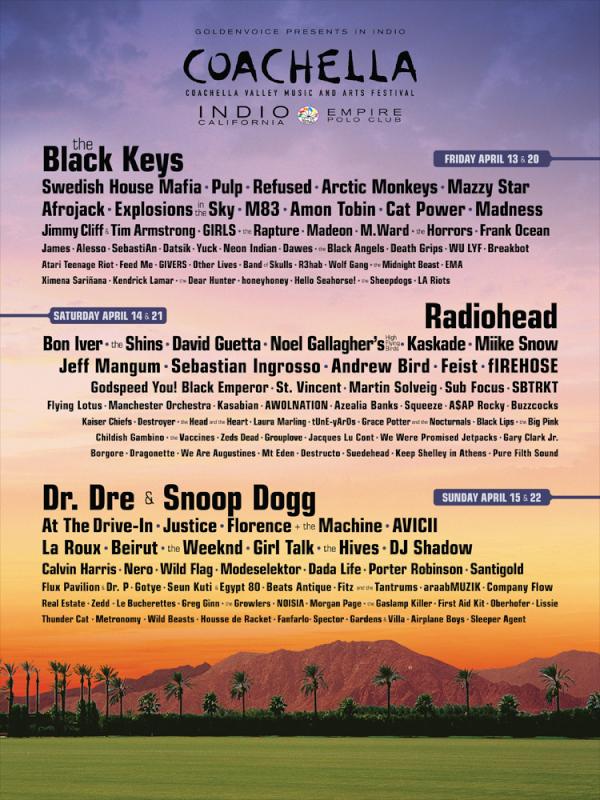
It’s official: the Coachella lineup for 2012 is out and it’s a doozy. The mix of acts in the sunbaked California desert will surely please all camps; there’s the hip new guard, and more importantly, there are some thrilling reunions.

Friday night headliners include the Black Keys, Pulp, Refused, Arctic Monkeys, and Mazzy Star; the mid-range boasts Tim Armstrong, Girls, Rapture, Frank Ocean, Yuck, and Neon Indian, and below those some newbies such as WU LYF, EMA, and LA Riots are listed (along with dozens of others).

Saturday brings back Radiohead and gains the elusive Jeff Mangum, along with the Shins, Bon Iver, fIREHOSE, Andrew Bird, Feist, A$AP ROCKY, Buzzcocks — the list surely goes on and on.

Sunday seems perhaps the most eclectic lineup with Dr. Dre and Snoop Dogg headlining, softly below that a reunited At The Drive-In, along with Justice, Florence and the Machine, Beirut, the Hives (huh?), Wild Flag, Greg Ginn, araabMUZIK, and just gaggles more.

I’m running out of ways to say additional bands here. Why not take a look for yourself.

Tickets go on sale Friday at 10 a.m. PST. Or you could stay in San Francisco and soak up our cooling fog.

Gun control, race, and the founding fathers

27

KPFA’s Mitch Jeserich, one of my favorite people on the radio, had a fascinating discussion this morning with Adam Winkler, who’s written an new book about the history of gun control. Everyone who fights with me on this blog knows I’m not a big fan of guns, and Winkler, a professor of constitutional law at UCLA, doesn’t completely agree with me.

But there’s some interesting stuff in his book and it’s worth listening to the show — in part because it shows just how inconsistent the gun nuts have been over the years and how their claims about the Second Amendment don’t hold up when you look at history.

For starters, Winkler told Jeserich, the noble founding fathers, those folks who put the right to keep and bear arms in the founding document of this great nation, were not at all opposed to gun control. They had all kinds of gun laws — most notably laws barring black people from owning guns. They also required that all muskets be regularly inspected and registered.

The racial element of gun control is nothing new, but Winkler shows some of the hypocrisy: In the 1960s, when the Black Panthers began carrying loaded guns on the streets (for self-defense against violent, racist white cops) the California Legislature set out to limit the right to bear arms in public — and Ronald Reagan, that staunch Second-Amendment guy who is worshiped by the NRA, fully supported the restrictions. In fact, he said in public that nobody should have the right to carry a loaded weapon on a public street.

At least, not as long as black people were doing it.

Even the NRA was not founded as a pro-gun group. It emerged after the Civil War to teach northerners better marksmanship. That mission continues, to a certain extent — I still have my NRA Marksman First Class medal, earned in summer camp in the 1960s, when they let kids do shit like that. But these days, it’s all about fighting any limits at all on the right to carry any weapons you can imagine.

So it’s worth remembering: The gun lobby didn’t always lobby for free access to guns (particularly not for guns for African-Americans). And the folks who wrote the Second Amendment were all in favor of a “well-regulated militia” whose members — at that time, the general (white) populace — had to declare, register and present to government agents on a regular basis all of their firearms.


Stuck in reverse

18

Some days, you wake up, check the news, and wonder just what the hell happened to this country. And I’m not talking about that nutty right-wing view that we’ve strayed from the original vision laid out for us by the authors of the Constitution or the Bible. I have just the opposite view: I’m wondering why those people seem so intent on dragging us back into the bad old days of bygone centuries, when white male property owners ran things as they saw fit.

A dangerously intolerant religious fundamentalist who longs for the Puritan days, Rick Santorum, essentially tied for first place in the Iowa Republican presidential caucuses. And he was part of an entire field of candidates that wants to revoke women’s reproductive and LGBT rights, deny that industrialization has affected the environment and should be addressed, dismantle already decimated government agencies, simply let the strong exploit the weak, and hope that Jesus comes back to save us from ourselves. Their strange reverence for the Constitution apparently stems from wanting to drag us back into the 18th century.

And don’t even get me started on President Barack Obama and his worthless Democratic Party, which is only a bit better than the truly heinous Republicans. At least Obama says some of the right things – like wanting to raise taxes on millionaires, reverse Bush-era attacks on civil liberties, respect states’ medical marijuana laws, and use diplomacy rather than only bellicosity with concerning countries like Iran – even though he acts in contradiction of those statements, over and over again.

It’s no better in the Golden State, where the yestercentury crowd now wants to abandon plans for a high-speed rail system that has already been awarded $3.5 billion in federal transportation funding and for which California voters authorized another $10 billion in bond funding. Why? Because a panel headed by an Orange County douchebag says the business plan isn’t detailed enough and the money for the entire $100 billion buildout isn’t nailed down yet. Well guess what? California also doesn’t have a plan for when its highway and airport systems get overwhelmed by population growth over the next 20 years. And criticizing the viability of high-speed rail – something most other advanced countries figured out how to build decades ago – isn’t exactly going to help secure private equity commitments. It’s a super fast train, folks – not some scary satanic iron horse from the future – people will pay to ride it.

But the situation must be better here in liberal San Francisco, right? Wrong! Mayor Ed Lee, the San Francisco Chronicle, and all their business community allies continue to relentlessly push their belief that the main job of government is to create private sector jobs, even though most economists say a politician’s ability to do so is limited at best.

Lee is pushing for all city legislation to be measured by whether it creates private sector jobs, as if protecting the environment, preserving public sector jobs, or safeguarding the health, welfare, and workers’ rights of citizens weren’t also under the purview of local government. A Chronicle editorial today called Lee the most “realistic city leader in memory. He’s all about creating jobs, repaving streets, sprucing up faded Market Street and fixing Muni’s flaws,” the same goals the paper was focused on a century ago.

But the main trust of the editorial was calling for Lee to also focus on homelessness. Not poverty, mind you, but homelessness. “A decrease in jobless numbers is important, but so are fewer shopping carts pushed along sidewalks and a drop in the numbers of mentally ill in doorways and on park benches,” they wrote. In other words, they just don’t want to see poor people on the streets, because that newspaper and its fiscally conservative editorial writers and base of readers certainly haven’t been calling for a fairer distribution of this city’s wealth, or even higher taxes on the rich that might fund more subsidized housing programs or mental health treatment. I get the feeling they’d be content to just allow shanty towns on our southern border where our low-wage workers can live, just like the Third World cities that they seem to want to emulate.

Ugh, so depressing, so ridiculous, so regressive. I think I’m going back to bed now.

Time is now

0

emilysavage@sfbg.com

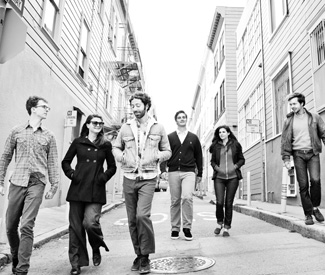
Music Last spring there was no end in sight. The future seemed bleak for what was once a promising project — the chance of a lifetime for Bay Area septet the 21st Century. Now, a full year after its intended release, the colorful debut album, The City, will see the light of day.

The struggle for The City began in 2010 with Kickstarter. Well, technically it began with an idea. Multi-instrumentalist Bevan Herbekian had been bouncing around the world since graduating from U.C. Santa Cruz. He’d come to San Francisco, the city closest to his Northern California-born heart, then promptly traveled to Europe, back to SF, next out to the Middle East — Israel, Egypt, Jordan — a quick stop in New Orleans and he was again back to the Bay. During those years, he was collecting sound. A guitarist, bassist, pianist and singer-songwriter since age 12, he fiddled with mandolin and banjo. In Jerusalem, he was gifted a small guitar and ended up busking a few times at a local shuk.

Upon Herbekian’s return to San Francisco, he decided to create the band of his dreams, an expansive folk-pop act with intricate arrangements, multi-part harmonies, and plenty of acoustic instruments. He gathered up friends, former bandmates, and a few Craigslisters, and created the 21st Century. The band now includes a lead guitarist, rhythm guitarist, bassist, drummer, keyboardists, a trumpet player, a set of musical sisters, and the occasional live saxophonist.

Herbekian then worked on a set of creamy folk-pop tunes with abstract lyrics touching on the darkness and ebullient light of moving to a new city, specifically San Francisco (though he now resides in Berkeley). Sitting in the eternally packed Mission Pie, Herbekian recounts crafting the songs for The City, while he was living just down the street from the restaurant, near 25th and Bryant. “[the song] ‘We Are Waiters’ has some specifics about living in San Francisco, in the Mission,” he pauses, taking a moment to collect his thoughts, “[it’s] about being young, living in this city, and going back and forth between feeling exuberant and like you don’t know how to reconcile that with adulthood.” A common refrain in this adult-kid city of ours.

He recounts the battle to release The City. “It honestly felt like this project was fated to never be completed. There was always some catch, some snag.” In the summer of 2010 the band met a producer who wanted to record and promote the album. Void of funds enough to travel and record, the 21st Century turned to Kickstarter and brought in $11,000, which Herbekian describes as “nuts” and “truly amazing.”

With funding in place, the band flew to Texas, recorded the album, then returned home to await mixing. Something got lost in translation however, and the mixes, which was returned to them months after recording (in spring of 2011) were “way off the mark.”

“[Our music] is relatively pop-based, but I like to think that there’s a sense of artistry to it. We really pay attention to the details and do all these big arrangements, but the mixes just sounded like glossy top 40 pop,” explains Herbekian. He wanted more Brian Wilson, less Justin Bieber. He next made the difficult decision to part ways with the producer, gather the loose tracks, and find another way to finish the album. A few band members left at this point, and Herbekian felt the pressure weighing down.

“Four weeks after that decision was made we were left with a fraction of our musical family, still in debt, and no relationship with the person who we were hoping was going to be our ticket to something — and all these sessions we had no idea what to do with.” Herbekian had worked on home recording projects, but nothing of this scale.

By chance, one of the band members was pals with Ben Tanner, a touring musician and producer who works at Fame Studios in Muscle Shoals, Alabama. “I had him take a shot at the song that I thought was the absolute worst and he resurrected it.” Tanner continued to resurrect the album, piece by piece, working closely with Herbekian. The two wrote tireless emails and many late night phone calls transpired; they were sending mixes back and forth for months. “I’ve never met him in person but he’s a saint to me,” Herbekian enthuses.

The hard work has paid off, and Herbekian beams as he finally holds the completed album in his hands. The City‘s release party is this weekend at Red Devil Lounge and he can hardly believe it. At this point the process has taken so long that the band already has a batch of new songs, two full albums-worth. For this one, Herbekian says, “We might just go back to recording it ourselves.” *


The 21st Century

With the Blank Tapes, Mark David Ashworth, and Muralismo

Fri/6, 8 p.m., $10

Red Devil Lounge

1695 Polk, SF

(415) 921-1695

www.reddevillounge.com

Our Weekly Picks: January 4-10

0

WEDNESDAY 4

Starfucker

Reptilians, the latest LP from Portland, Ore.’s Starfucker, shows a clear obsession with death. But, you might not realize it from the opening track, “Born,” which takes a Flaming Lips style approach and brings some rock skuzz to a child-like stare into the abyss. This band keeps getting bigger (as does its audience — this Oakland date was added after two scheduled shows this week sold out,) and now with five touring members, the sounds gotten more expansive: euphoric electronica, Australian/Minogue-ish pop, 8bit arpeggios, Pixies’ bass lines, plus the signature Alan Watts samples. It could be a little much for a synth rock group, but for now, considering impending annihilation, Starfucker doesn’t seem to give a fuck. (Ryan Prendiville)

With Painted Palms, and Feelings

9 p.m., $20–$23

New Parish

579 18th St., Oakl.

(415) 371-1631

www.thenewparish.com


Week End

Yes, there was a standout 2011 movie called Weekend — Nottingham guy meets bound-for-America Nottingham guy for a one-night stand that turns out to be something more — but this screening is of another film with a very similar name, 1967’s Week End. Pro-tip: add Weekend to your Netflix queue and add Week End to your weekend plans. Jean-Luc Godard’s surreal, prescient satire of our ever-declining civilization, featuring cinema’s most epic (and most epically-filmed) traffic jam, unspools on the big screen in the form of a brand-new 35mm print. Oui-kend! (Cheryl Eddy)

Fri/6-Sun/8, 7 and 9:15 p.m. (also Sat/7-Sun/8, 2:30 and 4:45 p.m.), $7.50–<\d>$10

Castro Theatre

429 Castro, SF

(415) 621-6120


Grass Widow

Celebrate the first Friday of 2012 in Oakland with a free performance by San Francisco’s popular harmonizing punk trio, Grass Widow. Traipse through forward-thinking art instillations at nearby galleries as part of Art Murmur, then pop into the Uptown for an early start — doors are at 6 p.m. so there’s ample drinking time before bands. And those bands are high quality. Every time I see Grass Widow live, I’m smacked with its sheer blistering force; last catching the act upon its return from tour at a Public Works show featuring the resurgent Erase Errata, I was again swept up by the pummeling skills of guitarist Raven Mahon, drummer Lillian Maring, and bassist Hannah Lew. Art, drinks, and cheap-o rock’n’roll, it’ll be a solid First Fridays escape from reality. (Emily Savage)

With Culture Kids, Churches, and Wave Array

9 p.m., free

Uptown 1928 Telegraph, Oakl.

(510) 451-8100

www.uptownnightclub.com


Stripmall Architecture

The video for Stripmall Architecture’s “Radium Girls” features a neon-painted Rebecca Coseboom making weird “come hither” faces as she sings into the camera. It’s trippy and alluring, and it’s precisely how I would describe the local quartet’s dark-tinted pop music. Though Stripmall Architecture might be somewhat under your radar, founding couple Rebecca and Ryan Coseboom have worked with DJ Shadow, and Cocteau Twins guitarist Robin Guthrie, and toured the country with Bob Mould. The group wails on guitars and synthesizers, but Rebecca’s angelic voice is the driving force of its sound. After watching “Radium Girls,” I found a bunch of clips of the freaky light show the band puts on for live performances. So, you should probably check them out. (Frances Capell)

With Return to Mono and TIGERcat

9 p.m., $10

Rickshaw Stop

155 Fell, SF

(415) 861-2011

www.rickshawstop.com


FRIDAY 6

Frank & Tony

Francis Harris (a.k.a. Adultnapper) has a gift for building minimal tracks. One of the best songs of the last year, “Idiot Fair (feat. Black Light Smoke)” was a restrained bit of deep tech house released on Berlin’s Poker Flat Recordings. A steady bump with a little shake and some alternating clipped keys and snares for five minute — it didn’t slow build, it pleasantly idled — until a pair of brooding, stressed male vocals dropped into play. While Scissor and Thread — a Brooklyn-based label Harris started with players including French DJ (Tony) Anthony Collins — bills itself as an independent rather than dance imprint, the releases so far from Harris and Black Light Smoke sound quite promising. (Prendiville)

With Adnan Sharif (Forward), Michael Perry (Fedora)

9:30 p.m., $10–$15

Public Works

161 Erie, SF

(415) 932-0955

www.publicsf.com


The Proud

Local playwright Aaron Loeb’s previous work was entitled Abraham Lincoln’s Big, Gay Dance Party and featured a chorus line of dancin’ beardos in stovepipe hats. His latest, The Proud, workshopping at Dance Brigade’s Dance Mission Theater, features a more serious subject matter (presented in collaboration with Iraq Vets Against the War, the play is about post-traumatic stress disorder) — but a no less memorable chorus, in the form of Dance Bridgade’a formidable drummers and dancers. The Proud is drawn from interviews with Bay Area veterans of Iraq and Afghanistan, focusing on both PTSD and — in keeping with Dance Brigade’s commitment to feminist themes — the treatment of women in the military. Even in “staged reading” form, The Proud promises to be powerful stuff. (Eddy)

Sat/7, 8 p.m.; Sun/8, 6 p.m.; Mon/9, 5 p.m., free

Dance Mission Theater

3316 24th St., SF

(415) 826-4441

www.dancemission.com


SATURDAY 7

“Primo”

What gentle vibrations run through a family that produces a plural of career artists? Somewhere back in the generations was a genetic seed planted, later blooming into progeny given to walking the world with paint-spattered paws and dreamy gazes fixed on rooftops or the curvature of a cat’s cheekbones? Pending a scientific conclusion, we can look to the new art exhibition by cousins Hugh and David D’Andrade for clues. Budding geneticists will find comparisons of the two’s bodies of work — Hugh’s illustrative dream world most recently featured on an iconic Occupy flier, David’s sweeps of pigment that seem almost sculpture-like — to be catnip for the dabbler in DNA studies. (Caitlin Donohue)

Through Feb. 18

Opening reception: 6-9:30 p.m., free

a.Muse gallery

614 Alabama, SF

(415) 279-6281

www.yourmusegallery.com


“Accordions with Love II”

This event is actually a double whammy, two full shows of squeezebox pride. First, there’s the early show, “Accordion Babes Review” which kicks off at happy hour and includes accordion-filled sets by Yeti, Amber Lee & the Anomalies, Luz Gaxiola & Circus Finelli, Vagabondage, and more. Next up, there’s “The Big Squeeze,” the nighttime show beginning at 9 p.m. This one features Mark Growden, Gabrielle Ekedal & Angus Matin, Eggplant Casino, and yes, even more. It’s a packed lineup, one that should envitably lead to your perfect come-on for the night, “My, how your accordion bellows.” (Savage)

5 p.m. and 9 p.m., $10 per show

Amnesia

835 Valencia, SF

(415) 970-0012

www.amnesiathebar.com

Phonte and 9th Wonder

It’s a little hard to wrap my head around the notion that Charity Starts At Home, released in September, is the debut solo album from North Carolina Justus League rapper Phonte. One of the most straight-talking, artistically varied artists around, Phonte has done practically everything but a solo album: classic underground records with the group Little Brother, the electronic R&B project Foreign Exchange with Dutch producer Nicolay (hip-hop’s answer to the Postal Service), and alter-egos like Tigallo and the hilariously authentic old school soul singer, Percy Miracles. Among it’s highlights, Charity sees the MC once again collaborating (after a 6 year break) with top-tier producer and former Little Brother member 9th Wonder. (Prendiville)

With Median, Rapsody

9 p.m., $22-40

New Parish

579 18th St., Oakl.

(415) 371-1631

www.thenewparish.com


SUNDAY 8

The Future of Motive Power

Nikola Tesla died at the New Yorker Hotel in 1943, alone and without a cent to his name. In the last years of his life, the “electric wizard” behind wireless communication and the induction motor had been promoting a death ray, subsisting on vegetable potions, and obsessing about pigeons (he claimed to love one pigeon like “a man loves a woman”). Future Motive Power, a play by the local performance ensemble Mugwumpin, is inspired by the inventor-wizard’s life, its peculiarities and myths, and the science that lives in its wake. Created specifically for the historic Old Mint, it’s a self-proclaimed “performative fever dream.” (James H. Miller)

8 p.m., $30 includes drinks and hors d’oeuvres

Old Mint

88 Fifth St., SF

(415) 967-1574

www.mugwumpin.org


MONDAY 9

Soft White Sixties

A congregant at the church of classic, mind-reeling Seventies rock, Soft White Sixties once described its sound as “Rock ‘n’ roll, heavy on the roll, dipped in soul.” This audio-fanatic show is particularly fitting for SWS and its followers for it’s part of Communion, a live music forum began in the UK by Mumford & Sons’ Ben Lovett, Kevin Jones, and noted producer Ian Grimbl. Established in 2006 London, Communion began as a monthly showcase for emerging singer-songwriters, a modern-day creative salon. It came to San Francisco near the end of last year, and continues to produce unique lineups and fanciful collaborations monthly at Cafe Du Nord. (Savage)

With Zane Carney, Big Eagle, Gabriel Kelly, and Amy Blashkie

8:30pm, $12.

Cafe Du Nord

2170 Market, SF

(415) 861-5016

www.cafedunord.com


TUESDAY 10

Thee Cormans

In the grand tradition of costumed surf punk bands that straddle rock’n’roll and comedic timing (Phantom Surfers, Mummies), here comes Thee Cormans, a green-skinned, gorilla-masked, bug-eyed gang of wily monster motorcyclists in ripped vests riding curling waves of reverb. And like its rowdy foreparents, this fuzzed out Southern California based band has a live show that puts tender mumbling indie acts to shame. That exuberance also fits in neatly with Thee Cormans’ label, In the Red, which itself is making waves for a future-retro mishmosh output of eccentric weirdos, cultured punks, and generally genre-less acts. Viva costumery. (Savage)

With the Shrouds, the Khans, and Swiss Family Skiers

8:30 p.m., $6

Hemlock Tavern

1131 Polk, SF

(415) 923-0923

www.hemlocktavern.com 

The Guardian listings deadline is two weeks prior to our Wednesday publication date. To submit an item for consideration, please include the title of the event, a brief description of the event, date and time, venue name, street address (listing cross streets only isn’t sufficient), city, telephone number readers can call for more information, telephone number for media, and admission costs. Send information to Listings, the Guardian Building, 135 Mississippi St., SF, CA 94107; fax to (415) 487-2506; or e-mail (paste press release into e-mail body — no text attachments, please) to listings@sfbg.com. Digital photos may be submitted in jpeg format; the image must be at least 240 dpi and four inches by six inches in size. We regret we cannot accept listings over the phone.

King of the beach

0

emilysavage@sfbg.com

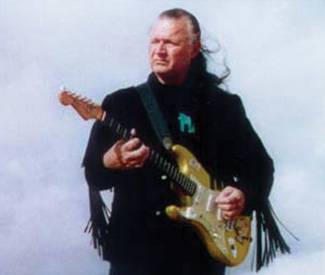
Music In the beginning, the ocean was quiet. And before Dick Dale, the chords were thin, flat, and sweet. A young surfer growing up in picturesque 1950s Southern California, Dale changed the course of rock’n’roll with the thick, wet reverberating sound of Middle Eastern-influenced surf guitar and a little song called “Misirlou.”

On that same album, 1962’s Surfer’s Choice (Deltone), he released crashing waves of perma-hits, from the similarly instrumental first hit “Let’s Go Trippin'” with its walking guitar line, to juicy-hippie pop track “Peppermint Man.” In the decades that followed, Dale influenced an expanding scope of musicians with innovative style, new amp sounds created with the help of pal Leo Fender, and his own signature guitars. He’s lead a paradoxical life, the eccentric icon keeping exotic animals (most notably, a pet jaguar), but also a ’60s-famous rocker who never touched a drug in his life. Thanks to healthy living and strong values, he’s in a continuous prime despite lifelong illnesses; he keeps playing, keeps touring, and has hopes to get back to the beach soon.

I spoke with the maestro on the phone days before the holidays in anticipation of his Oakland show this weekend; in a friendly, frank, and meandering conversation he openly discussed his storied past, his eternal love for the water, and a surprising favorite instrument:

San Francisco Bay Guardian You’re about to go back out on tour?

Dick Dale We just finished another tour — 20 concerts on the East Coast where I was born. And now I’m going up to Washington and back. I go to Solana Beach, San Jose, and Oakland at the Uptown. We play all over the world though. In Europe we play to 490,000 people outdoors, then we go play fairs. But I like the club circuit, I’ve been doing it so many years. It’s good because it’s a personal thing. I’ve been dealing with cancer for the last five years and diabetes on top of that, and when they see me on stage, it’s like a big club [atmosphere], and they say ‘how can he do that without taking drugs?’

I’ve never had a drug in my body in all my life. I don’t take pain pills, never had alcohol in my body in my life. Your body is your temple. I’ve been a vegetarian for many years, never ate anything with a face. That’s what gave me the strength to fight the cancer. The people, they see me performing and say ‘wow, how do you keep doing that?’

When I was 20 they gave me three months to live from rectal cancer. I’m still here at 74, doing 30 concerts in a row. When I get to performing I just don’t leave. I get at the doorway with my wife Lana and I talk with the people and sign until everybody leaves.

SFBG Where’s your home base now?

DD I live near Twentynine Palms, actually Wonder Valley above Palm Springs. I still have my boats in Balboa in Newport Beach though, I came there in 1955. I came first to Southwest LA then to Balboa where I created what I created in the Rendezvous Ballroom — [it was] where all the big bands played in the late ’50s.

I created the first power amplifiers with Leo Fender, we put transformers and big 15-inch speakers. That’s why they call me not only the King of the Surf Guitar — ’cause I was surfing everyday — but also the Father of Heavy Metal because I played on 60-gauge guitar strings, and strings are normally small, thin, but mine, they called ’em telephone cables, because I wanted a big, fat sound.

SFBG When did you first discover an interest in music?

DD When I was a kid back in Boston. I’m self-taught. Never took a lesson. Piano being my favorite. And I always played trumpet, sax, accordions, and harmonicas — you name it! I was just inducted into the Musicians Hall of Fame & Museum in Nashville. That’s the real deal, that’s where you’re voted upon by over a hundred thousand players, musicians.

SFBG And how’d that feel? It must’ve been exciting.

DD That was the real thing! That other [rock history museum], that’s just governed by a dozen people around a table. I really never paid attention to any of these though really, I’ve always been a rebel in the business. The big agencies and recording companies, they don’t like me, haven’t liked me since I was a beginner in this business because I knew what they were doing when they had these kids sign — they were taking away all their royalties. I tell the kids now, don’t sign with a big company, the minute you sign, you sign over your rights.

SFBG Do you meet a lot of younger bands? Do you see your influence on their music?

DD Yeah, they all open up for me. It’s been going on and on though. I found Jimi Hendrix when he was playing bass for Little Richard in a bar in Pasadena for 20 people. Stevie Ray Vaughan, his first records he learned on were Dick Dale records. I’m the guy who created the first power amplifiers with Leo Fender. In fact, I just got through doing one of the songs on the album for Glen Campbell’s last album. Glen played backup guitar in my recording sessions back at Capitol [in the 1960s].

http://www.youtube.com/watch?v=KCCJtR-RjHg&feature=fvst

SFBG Do you ever think about releasing new material?

DD My son, Jimmy [who’s 19], he matches me note to note, but I also taught him drums like Gene Krupa. Jimmy and I, we do dueling guitars. We just created two new guitars. Jimmy has one called the Jimmy Dale Signature Kingman guitar, and I have the Dick Dale Signature Malibu guitar. And my guitar is about three-quarters size so you can put it in a car and play it. It’s something I’ve been screaming about for 20 years, nobody would listen. Finally Fender wanted to me to do something and I said I won’t do it unless you make this guitar.

On acoustic guitars it’s usually six-to-eight inches deep to make a big sound, but they don’t realize its unnatural for the average human to put their arm over the top of the guitar and start strumming, you get a cramp in your back, the older you get, the quicker that comes. I’ve always said ‘why can’t I just drop my arm straight down?’ Instead of eight inches deep, make it three inches. They all said ‘you’re not going to get the sound.’

When you have molecules for mahogany, they’re a certain shape, you strike a note with a string, it’ll go ‘BING!’ The note wants to travel like a tsunami wave, a continuation, so it travels through the back, up the side, but when it goes to the top base with a different wood, it’s like somebody changed the recipe for your soup. You’re going to hear the string, but you’ll never hear the color of the sound, the pureness, undisturbed.

I tried to explain that to them using one wood so it’ll be all the same molecules. I convinced them to do that, they made that guitar then I had them put on two pick guards, one on top, so you save the face of the guitar, then I had them put on a tuner. Then I had them strum it and those techs, their jaws just dropped. I said, ‘see? The world is no longer flat, fellas.’

The last tour we did, was only just Jimmy and I doing dueling guitars. We sat in two chairs like the Smothers Brothers, picking on each other, father and son. Now we’re doing the tour with my band, and now he’s doing drums for me.

SFBG I saw that you were inducted into the Surfing Walk of Fame in Huntington Beach.

DD Yeah, everybody can walk all over me now. No, I’m just joking, I make fun of everything. I used to surf the pier all the time. I’ll be back in the water again, it’s just that we’ve been on such a hellacious schedule that I don’t even have time. When I go back, I’ll be back in the water. To me that’s the greatest healer.


Dick Dale

With The Bitter Honeys, and the Dirty Hand Family Band

Sat/7, 10 p.m., $20

Uptown

1928 Telegraph, Oakl.

(510) 451-8100

www.uptownnightclub.com

By the roots

0

caitlin@sfbg.com

HERBWISE Where (besides this column, of course) do you get the latest on marijuana? When it comes to distributing accurate information about buds, Steph Sherer, executive director of medical cannabis advocacy group Americans for Safe Access (ASA), makes no bones about her organization’s role. “Most of our members depend on us for news,” she told the Guardian in a recent phone interview.

Even when clashes between marijuana proponents and the government are brought to light — not always a given in this political climate — Sherer finds the one note handling of cannabis issues by the mainstream media troubling. “[Cannabis] gets thrown on [journalists covering] judicial beats instead of getting picked up by the human interest, or the health and science side of things,” she said.

ASA’s response to this dearth of useful reporting on cannabis was to develop a free iPhone application that serves as a media catch-all for medical marijuana advocates. At no cost, anyone concerned with losing their right to access their medicine safely — or who wants to learn the latest about the sticky green — can now download an interface that pulls together news updates, alerts for upcoming political actions, and materials that can add to one’s activism repertoire; things like phone numbers for legal counsel and advocacy training videos.

For Sherer, the app has the potential to empower the people in the crossfire of the ongoing clashes between the federal government and state-legal growing and retail facilities: patients. “We are creating a platform that empowers people to be their own advocate. The people who can advocate for this the best are the people who are affected.” 

ASA EXECUTIVE DIRECTOR STEPH SHERER’S TOP 6 CANNABIS STORIES YOU MIGHT HAVE MISSED IN 2011

1. In March, the National Cancer Institute recognized marijuana’s medical benefit, classifying it as a “complementary alternative medicine.” Days later, the reference was diluted on its website, per the recommendation of the National Institutes on Drug Abuse.

2. After Obama’s Justice Department fought their appeal, Californian breast cancer survivor Dr. Mollie Frye and her husband were sent to prison in April for five years because of their state-legal growing operation.

3. In October, California patient advocates sued the Obama Administration for violating the 10th Amendment by coercing and obstructing local and state officials, preventing them from implementing medical marijuana laws.

4. The governors of Washington State and Rhode Island petitioned the federal government to reschedule cannabis to allow for medical use.

5. In Connecticut and New Jersey, governors continue to move forward with cannabis access legislation despite threats from US Attorneys.

6. 63-year old Norman Smith uses cannabis to mitigate the symptoms of his inoperable liver cancer. Smith is being denied a transplant from Los Angeles’ Cedar Sinai Medical Center until he agrees to stop using cannabis.


Events Listings

0

On the Cheap listings are compiled by Lucy Schiller and Caitlin Donohue. Submit items for the listings at listings@sfbg.com. For further information on how to submit items for the listings, see Picks.

WEDNESDAY 4

2012 showing Chinatown Meeting Room, Chinatown Library, 1135 Powell, SF; www.sfpl.org. 2:30-5:30pm, free. Ring in the purported year of our doom with a little cinematic apocalypse: John Cusack and Danny Glover battling mega-tsunamis, an irate Yellowstone super-volcano, and the inevitable detachment of California from the continental U.S.

BAY AREA

“Being and Ideal Grace: Love and Spirituality in Robert and Elizabeth Browning’s Letters” lecture Northbrae Community Church, 941 the Alameda, Berk; (510) 526-3805. 7:30pm, $5 donation suggested. Bay Area actor Julian Lopez-Morillas explores the written missives shot between Robert and Elizabeth Browning, two 19th century romantic poets who penned some of the steamiest pre-Victorian prose known to Fabio.

THURSDAY 5

Lands End restoration Lands End, Presidio, SF; www.parksconservancy.org. 1-4pm, free. The coastal bluffs of the Presidio are calling out for a little TLC. Help plant, water, and weed in a spot more naturally beautiful than any human-made garden.

FRIDAY 6

“Get Lucky” opening reception SOMArts Cultural Center, 934 Brannan, SF; www.somarts.org. 6-9pm, free. Celebrating experimental music pioneer and artist John Cage’s hundredth birthday, SOMArts stages an indeterminacy-themed evening, featuring the creation of a living tarot deck and an involved, improvised poem.

“Taking Stock’ opening reception Z Space, 450 Florida, SF; www.zspace.org. 6:30-8:30pm, free. Venturing daily into the packaged wilderness of grocery stores in San Francisco and Denver, artists Emily Heller and Leah Rosenberg took pains documenting and replicating how food is presented to the American public.

Sharon Lockhart’s pop-up “Lunch Break” SFMOMA, 151 Third St., SF; (415) 357-4035, www.sfmoma.org. 11:30 a.m.-1:30pm, free. An ongoing exhibition looking at the activities Americans pursue on our lunch breaks gets free and interactive today, hosting Vietnamese pop-up cafe Rice Paper Scissors, Blue Bottle Coffee, and a Skype chat with curator Sharon Lockhart. Share your lunch break traditions at a community table that will be set up to encourage conversation among fellow laborers.

“Working Conditions” closing reception Southern Exposure, 3030 20th St., SF; www.soex.org. 7-9pm, free. For almost two months, nine artists have worked in view of the public under the theme of labor and process, and with varying degrees of audience interaction. Jennie Ottinger’s method serves as one example; she promised a certificate of recognition to visitors willing to mix her paints and clean her brushes. Nathaniel Parsons is another; he bestowed a thoughtful woodcarving on every visitor who accompanied him on a walk-and-talk.

SATURDAY 7

Vintage Paper Fair Hall of Flowers, Golden Gate Park, SF; www.vintagepaperfair.com. Through Sun/8. 10am-6 pm, free. “Ephemera” can bring to mind molding moth wings and mildew spots as much as forgotten treasures of yesteryear. But Hal Lutsky’s annual vintage paper fair promises nothing but pristinely-preserved postcards, brochures — even stereoviews.

SUNDAY 8

Battle reenactment Frankenart Mart, 515 Balboa, SF; www.frankenartmart.com. Noon-6 pm, free. A hotdog-fixated art gallery in the Inner Richmond, Frankenart Mart staged a multi-month series of battles and battle-related artwork. Today’s reenactments (participant-led, nonviolent, and accompanied by hotdogs) are less Appomattox as they are Thanksgiving Day.

BAY AREA

“Hiram Johnson and Woman’s Suffrage Vote 1911” lecture Berkeley History Center, 1931 Center, Berk; www.lwvbae.org. 2pm, free. Sure, we’ve got the vote. But failing to learn about our dark(er) past will only doom us to repeat it – reason enough to head to this free lecture at the Berkeley History Center on the progressive revolution sparked by California governor Hiram Johnson. After you get your fill of the talk, all visitors are invited to tour the exhibit on our state’s voting women, which is stacked with memorabilia and facts from the last century.

TUESDAY 10

Word Is Out: A Queer Film Classic book launch SF Public Library, 100 Larkin, SF; www.sfpl.org. 6pm, free. In 1977, a documentary on the lives of gays and lesbians helped shift the political dialogue of the United States – or at least, so says author Greg Youmans, who recently penned a book exploring the significance of the film. At this roundtable discussion with Youmans, an original promoter of the film, and the Word Is Out‘s makers, rarely-seen footage of the video pre-interviews conducted for the documentary will be screened.

City Hall’s 2012 agenda

16

EDITORIAL There’s so much on the to-do list for San Francisco in 2012 that it’s hard to know where to start. This is a city in serious trouble, with unstable finances, a severe housing crisis, increased poverty and extreme wealth, a shrinking middle class, crumbling and unreliable infrastructure, a transportation system that’s a mess, no coherent energy policy — and a history of political stalemate from mayors who have refused to work with progressives on the Board of Supervisors.

Now that Ed Lee has won a four-year term, he and the supervisors need to start taking on some of the major issues — and if the mayor wants to be successful, he needs to realize that he can’t be another Gavin Newsom, someone who is an obstacle to real reform.

Here are just a few of the things the mayor and the board should put on the agenda for 2012:

• Fill Sup. Ross Mirkarimi’s seat with an economic progressive. This will be one of the first and most telling moves of the new Lee administration — and it’s critical that the mayor appoint a District 5 supervisor who is a credible progressive, someone who supports higher taxes on the rich and better city services for the needy and is independent of Lee’s more dubious political allies.

• Make the local tax code more fair — and bring in some new revenue. Everybody’s talking about changing the payroll tax, which makes sense: Only a small fraction of city businesses even pay the tax (which is not a “job killer” but is far too limited). Sup. David Chiu had a good proposal last year that he abandoned; it called for a gross receipts tax combined with a commercial rent tax — a way to get big landlords and companies (like law firms) that pay no business tax at all to contribute their fair share. That’s a good starting point — but in the end, the city needs more money, and the new system should be set up to bring in at least $100 million more a year.

• Create a linkage between affordable and market-rate housing. This has to be one of the key priorities for the next year: San Francisco’s housing stock is way out of balance, and it’s getting worse. The city’s own General Plan mandates that 60 percent of all new housing should be available at below-market-rate prices; the best San Francisco ever gets from the developers of condos for the rich is 20 percent. The supervisors need to enact legislation tying the construction of new market-rate housing to an acceptable minimum level of affordable housing to keep the city from becoming a place where only the very rich can live.

• Demand a good community-benefits agreement from CPMC. The California Pacific Medical Center has a massive new hospital project planned for Van Ness Avenue — and so far, CPMC officials are refusing to provide the housing, transportation and public health mitigations that the city is asking for. This will be a key test of the new Lee administration — the mayor has to demonstrate that he’s willing to play hardball, and refuse to allow the project to move forward unless hospital officials reach agreement with community activists on an acceptable benefits agreement.

• Make CleanEnergySF work. A recent study by the website Energy Self-Reliant States shows that by 2017 — in just five years — the cost of solar energy in San Francisco will drop below the cost of Pacific Gas and Electric Company’s fossil-fuel and nuclear mix. So the city’s new electricity program, CleanEnergySF, needs to be planning now to build out both a large-scale solar infrastructure system and small-scale distributed generation facilities on residential and commercial roofs and set the agenda of offering clean, cheaper energy to everyone in the city. The money from the city’s generation can be used to purchase distribution facilities to phase out PG&E altogether.

• Don’t let Oracle Corp. take over even more of the waterfront. The America’s Cup continues to move forward — but at every step of the way, multibillionaire Oracle CEO Larry Ellison is trying to squeeze the city for more. Mayor Lee has to make it clear: We’ve given one of the richest people in the world vast amounts of valuable real estate already. He doesn’t need a giant TV screen in the Bay or more land swaps or more city benefits. Enough is enough.

There’s plenty more, but even completing part of this list would put the city on the right road forward. Happy new year.

Yee offers a package of government sunshine bills

1

California Sen.Leland Yee (D-SF) may have finished in a disappointing fifth place in the mayor’s race, garnering just 7.5 percent of the first place votes. But now he’s back to working in a realm where he’s really distinguished himself as a politician: opening up government agencies to greater sunshine and public scrutiny.

When the California Legislature reconvenes tomorrow (Wed/4) morning, Yee says he will introduce a series of bills giving the public better access to information. That builds on a record for championing sunshine, which earned Yee a James Madison Freedom of Information Award from the Northern California chapter of the Society of Professional Journalists in 2010.

In the past, he’s taken on the University of California and California State University systems, including a measure last year aimed at the latter for trying to keep secret high speaker’s fees paid to Sarah Palin. This time, Yee’s first target is the California Public Utilities Commission (CPUC) and its cozy and secretive approach to regulating Pacific Gas & Electric and other utilities. 

Senate Bill 1000 would subject the CPUC to the same California Public Records Act disclosure requirements as other state agencies, ending special exemptions granted to the agency back in the 1950s. CPUC documents are assumed to be confidential unless overtly made public by the CPUC board — the polar opposite standard of the CPRA, which assumes all documents are public unless they meet specific exemption requirements.

As the Bay Guardian, San Francisco Chronicle, and other media outlets have reported in the wake of PG&E’s deadly gas pipeline explosion in San Bruno, the CPUC has blocked release of incident reports, pipeline safety inspections, audits, and other information that could show what other areas might be at risk of a similar tragedy and evidence of exposed PG&E’s negligence in the explosion, as a federal review panel concluded. A CPUC spokesperson said the agency is studying the legislation and didn’t have an immediate comment. 

“The CPUC is supposed to be there to protect us and not as a barrier to public access,” Yee said in a public statement.

SB 1001 would double the $50 annual registration fee paid by lobbyists in California and use that revenue to improve the Cal-Access campaign finance and lobbying database operated by the Secretary of State’s Office. That system has periodically crashed in recent months because of outdated technology. 

“It is simply unacceptable that the public cannot access basic information on campaign contributions and lobbying activity,” said Yee.  “The crash of Cal-Access not only prevents public access, it means government is not being transparent or being held accountable.”

SB 1002 would require that when government agencies are asked for public documents that are available in electronic form, that they do so using formats that are easily searchable by keyword using current technology. That has been a big issue for years in San Francisco, where sunshine advocates have long called for the city to be more user-friendly when it complies with the Sunshine Ordinance.

“Producing a 2,000 page electronic document that cannot be searched or sorted is inadequate and almost useless,” said Yee. “For too long, many government agencies – either by choice or inertia – have been living in the Stone Age when it comes to producing public documents.”

SF 2003 would amend the Brown Act open meeting law to allow for injunctive or declaratory relief for past violations, thus preventing agencies from repeatedly violating that law. It addresses a loophole created by the court’s interpretation of the act in its McKee v. County of Tulare decision. 

Finally, Yee is also pushing for the Assembly to approve Senate Constitutional Amendment 7, which the Senate approved last year. It would exempt the Brown Act from requirements that the state pay for mandates on local government, which last year caused the Commission on State Mandates to pay out $20 million from the state budget to local governments for acts such as posting agendas and which has caused the Brown Act to be temporarily suspended during past state fiscal crises.

“Our open meeting laws are too important to be made optional every time the state runs short of money,” Yee said. “SCA 7 will ensure government agencies provide the public the information they deserve.”

Peter Scheer, executive director of the California First Amendment Coalition, praised Yee’s efforts.

“It’s a very valuable and important package of measures to plug loopholes, some recently created and some that have been with us for too long,” Scheer told us.

While most of the legislation takes on fairly narrow issues, Scheer said each address very real and important problems that journalists and the general public have encountered. “None would be particularly difficult to implement,” he said. “But collectively, they would make it easier to hold public officials accountable.”

Guardian editorial: City Hall’s 2012 agenda

20

EDITORIAL There’s so much on the to-do list for San Francisco in 2012 that it’s hard to know where to start. This is a city in serious trouble, with unstable finances, a severe housing crisis, increased poverty and extreme wealth, a shrinking middle class, crumbling and unreliable infrastructure, a transportation system that’s a mess, no coherent energy policy — and a history of political stalemate from mayors who have refused to work with progressives on the Board of Supervisors.

Now that Ed Lee has won a four-year term, he and the supervisors need to start taking on some of the major issues — and if the mayor wants to be successful, he needs to realize that he can’t be another Gavin Newsom, or Willie Brown, mayors who were an obstacle  to real reform.

Here are just a few of the things the mayor and the board should put on the agenda for 2012:

+Fill Sup. Ross Mirkarimi’s seat with an economic progressive. This will be one of the first and most telling moves of the new Lee administration — and it’s critical that the mayor appoint a District 5 supervisor who is a credible progressive, someone who supports higher taxes on the rich and better city services for the needy and is independent of Lee’s more dubious political allies.

+Make the local tax code more fair — and bring in some new revenue. Everybody’s talking about changing the payroll tax, which makes sense: Only a small fraction of city businesses even pay the tax (which is not a “job killer” but is far too limited). Sup. David Chiu had a good proposal last year that he abandoned; it called for a gross receipts tax combined with a commercial rent tax — a way to get big landlords and companies (like law firms) that pay no business tax at all to contribute their fair share. That’s a good starting point — but in the end, the city needs more money, and the new system should be set up to bring in at least $100 million more a year.

+Create a linkage between affordable and market-rate housing. This has to be one of the key priorities for the next year: San Francisco’s housing stock is way out of balance, and it getting worse. The city’s own General Plan mandates that 60 percent of all new housing should be available at below-market-rate prices; the best San Francisco ever gets from the developers of condos for the rich is 20 percent. The supervisors need to enact legislation tying the construction of new market-rate housing to an acceptable minimum level of affordable housing to keep the city from becoming a place where only the very rich can live.

+Demand a good community-benefits agreement from CPMC. The California Pacific Medical Center has a massive new hospital project planned for Van Ness Avenue — and so far, CPMC officials are refusing to provide the housing, transportation and public health mitigations that the city is asking for. This will be a key test of the new Lee administration — the mayor has to demonstrate that he’s willing to play hardball, and refuse to allow the project to move forward unless hospital officials reach agreement with community activists on an acceptable benefits agreement.

+Make CleanEnergySF work. A recent study by the website Energy Self-Reliant States shows that by 2017 — in just five years — the cost of solar energy in San Francisco will drop below the cost of Pacific Gas and Electric Company’s fossil-fuel and nuclear mix. So the city’s new electricity program, CleanEnergySF, needs to be planning now to build out both a large-scale solar infrastructure system and small-scale distributed generation facilities on residential and commercial roofs and set the agenda of offering clean, cheaper energy to everyone in the city. The money from the city’s generation can be used to purchase distribution facilities to phase out PG&E altogether.

+Don’t let Oracle Corp. take over even more of the waterfront. The America’s Cup continues to move forward — but at every step of the way, multibillionaire Oracle CEO Larry Ellison is trying to squeeze the city for more. Mayor Lee has to make it clear: We’ve given one of the richest people in the world vast amounts of valuable real estate already. He doesn’t need a giant TV screen in the Bay or more land swaps or more city benefits. Enough is enough.

There’s plenty more, but even completing part of this list would put the city on the right road forward. Happy new year.


Period Piece: Palou Avenue

3

Guardian history writer Lucy Schiller is exploring the city street-by-street in the slow week inter-holiday weekends. Today, learn about Junipero Serra’s right-hand man who now has a Bayview street named after him. Click here for yesterday’s installment on Laguna and McAllister Streets.


Palou Avenue

Named for Fray Francisco Palou, Franciscan padre, explorer, biographer

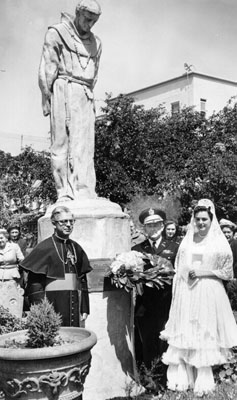
Francisco Palou (1723-1789) was an agent of Spanish colonialism and the right-hand man of Junipero Serra, another San Francisco street namesake. At one point, Palou singlehandedly controlled the operations of all the Baja California missions. After a few years he moved northward with his teacher and mentor Serra. Palou was also responsible for baptizing the first Ohlone Indian, founding Mission Dolores, and establishing the Presidio. His recounting of the Franciscans’ travels throughout California is regarded as a crucial primary source. The street named for Palou runs from Hunter’s Point to the Western reaches of Bayview. 


Following court ruling, SF Redevelopment seeks a “legislative fix”

1

Redevelopment agencies were dealt a statewide hit after a unanimous ruling Dec. 29 by the California Supreme Court decided not only that lawmakers had the ability to terminate the agencies, but that those agencies could not continue forward with redevelopment projects as smaller entities.


Assembly Bills 1X 26, which eliminates redevelopment agencies but makes existing redevelopment housing projects an “enforceable obligation,” and 1X 27, which would have required agencies to make payments to the state of California in exchange for continuing to exist in smaller form, both came under scrutiny by the state Supreme Court. AB26 was upheld, but AB27 was considered illegal.

While large-scale redevelopment projects in San Francisco have generated no shortage of criticism and controversy, Mayor Ed Lee described the decision as disappointing and harmful for the city’s future.

“Redevelopment has not only played a critical role in creating jobs, transforming disadvantaged communities and delivering affordable housing, but it has spurred economic growth for our entire City at a time when we needed it most,” Lee said in a statement issued earlier today.

Gov. Jerry Brown introduced the idea of eliminating redevelopment agencies about a year ago as part of budget cuts designed to revitalize the state economy, as the Guardian reported last January. Today’s decision, which leaves the state with $1.7 billion more to work with in the first year of implementation of this plan, may help cushion the blow as state legislators seek to balance the budget.

However, the San Francisco Redevelopment Agency isn’t giving up.

“We are aggressively looking at solutions, most likely a legislative fix, to provide for redevelopment to continue,” S.F. Redevelopment Agency executive director, Tiffany Bohee, told the Guardian. “The state will do what it needs to do to fill the hole [in the state budget] but there are unintended consequences.”

Private funding from companies like Lennar Homes supplementing state funding has made the continuation of redevelopment projects in San Francisco’s Mission Bay, Bayview Hunters Point Shipyard, and Treasure Island possible. Lee maintains that these areas will remain unaffected.

The legislation does, however, affect future projects. “We call on the state to find a legislative solution to this problem” Lee’s statement noted. “And while we are committed to working with the state, we have already started to look at local solutions and alternatives.”

Bohee echoed the mayor’s resolve. “We are committed to the long haul and focused on what the next steps are,” she said.

Period Piece: Green and Gilbert Streets sense

0

Guardian history writer Lucy Schiller is exploring the city street-by-street in the slow week inter-holiday weekends. Today, learn about a newspaper editor that died in a duel and a ghost from Philadelphia. Click here for yesterday’s installment on Brannan Street and Geary Boulevard.

Gilbert Street

Named for Edward Gilbert, newspaper editor, congressman

Like many a valiant man before him, Edward Gilbert died in a duel. The newspaperman exercised editorial control over The Alta California, which in 1848 was San Francisco’s only newspaper, and he made his positions on political matters clear as day. He served a single term in the U.S. Congress before returning to his post at the Alta and attacking General James Denver for mismanaging supplies meant for stranded, West-moving immigrants. Gilbert was 33 at the time of his death by Denver’s hand in a duel near Sacramento. His incongruously tiny street runs a block between Sixth and Seventh Streets in SoMa. 


Green Street

Named for Talbot Green, fraudulent businessman

Like any early pioneer to San Francisco, businessman Talbot Green left a lot behind back east. In his case, though, it was an entire identity along with a family and some pretty massive debt. No one in San Francisco knew of his checkered past and Green rose to prominence as a successful civic leader, which ultimately got him recognized by a ghost from his previous Pennsylvanian life. Green denied the serious charges – that he was operating under a fake name, that he had abandoned his family, that he embezzled large amounts of money. But he disappeared the day after accusations were made and his reputation never recovered, though he attempted to return to San Francisco years later. A major artery in North Beach, Green Street runs from the Presidio to the Embarcadero.


Our Weekly Picks: December 25-31

0

WEDNESDAY 28

Doe Eye

When Maryam Qudus — sole member of local indie-pop project, Doe Eye — sings “I Hate You,” it’s hard to believe her. It’s cute as hell. But the point of the song is indeed that. She doesn’t hate the faceless “you,” but is tortured by the affection. It’s that kind of thoughtfulness with an added ear for pop charm that makes Doe Eye a project you can espouse. Doe Eye released the EP, Run, Run, Run, in August, and sure, it’s about as radio-friendly as you can get. But the instrumentation, with its orchestral and wavy synth touches, is undoubtedly inspired by indie-rock acts around today, be it Beach House or St. Vincent. (James H. Miller)

With The Trims, Pounders, and Miles the DJ

9 p.m., $8

Bottom of the Hill

1233 17th St., SF

(415) 621-4455

www.bottomofthehill.com


Mara Hruby

Michael Jackson doing “Ain’t No Sunshine.” Al Green doing “Light My Fire.” Nina Simone doing “Rich Girl.” (Yeah, Hall and Oates, look it up.) While a cover rarely make the original irrelevant, a good one should make it the artist’s own. On From Her Eyes, a free EP she reportedly sang, arranged, recorded, and engineered, Oakland’s Mara Hruby lent her sweet, soulfully agile voice to tracks by Mos Def, Andre 3000, Bob Marley, Jamiroquai, and others, rendering each different and new. Since then Hruby has been at work on her debut album, teasing songs “Lucky (I Love You)” and “The Love Below” online, and will be including new material at this show. (Ryan Prendiville)

With Chris Turner

8 p.m., $15

Yoshi’s Oakland

510 Embarcadero West, Oakl.

(510) 238-9200

www.yoshis.com


THURSDAY 29

The Umbrellas of Cherbourg and A Woman is a Woman

A double bill of The Umbrellas of Cherbourg (1964) and A Woman is a Woman (1961) at the Castro is the stuff cinephilia is made of. Those sweet on The Artist should be sure to check in with these earlier Gallic interpretations of Hollywood razzle dazzle. The first, Jacques Demy’s Umbrellas is the purer confection in many ways, but the film’s tender sentimentalism and radiant color design flow towards a soulful poetry of the everyday. The second, by Jean-Luc Godard, is an early distillation of his complex movie love and a poignant offering to actress Anna Karina. Both films feature scores by Michel Legrand, so they carry their complex register of emotions with a lightness that escapes words. (Max Goldberg)

3:25 and 7 p.m., $10

Castro Theatre

429 Market, SF

(415) 621-6120

www.castrotheatre.com


Pictureplane

What do you get when you cross a gutter punk b-boy with a space goth? Sprinkle him with a little MDMA and you’ve got Travis Egedy, a.k.a. Pictureplane. Egedy works clubby ’90s vocal samples and celestial beats into infectious pop songs, which he sings over in a breathy, lusty moan. With effervescent dance anthems like “Black Nails” and “Trancegender,” Egedy gives goths something to freak to. And you’re just as likely to shake it as you are to wind up in the center of a mosh pit. We should all thank our lucky stars for the weird amalgam of personas that is Pictureplane. Speaking of stars, did I mention he’s really, really into space? (Frances Capell)

With Popscene DJs

10 p.m., $12

Rickshaw Stop

155 Fell, SF

(415) 861-2011

www.rickshawstop.com


Asher Roth

Let’s face it. A lot of us love rap, but many of us can’t relate to carrying guns or moving kilos of cocaine. Luckily there’s Asher Roth, a gifted 26-year-old MC who raps about things the everyman can identify with — like partying with friends and soaking up sunshine. Roth may be a college bro, but he’s legit enough to have earned props from the likes of Ludacris and Slick Rick. Roth prides himself on his live performances and makes them unforgettable by bringing along a full band. If that’s not incentive enough, Thursday is the release show for Roth’s fresh new Pabst & Jazz Sessions mixtape produced by Blended Babies. (Capell)

10 p.m., $25

330 Ritch, SF

(415) 542-9574

www.330ritch.com


FRIDAY 30

Wizard Of Oz

For more than 70 years and counting, The Wizard of Oz has entertained and fascinated viewers; at the time of its original release, the film’s breathtaking color sequences enthralled audiences still stuck on black and white, and the soundtrack’s beloved songs introduced the world to the talents of Judy Garland. For the majority of us who have grown up watching the movie on television, we are in for a special treat tonight when the grand old Paramount hosts a screening, a rare chance to see such a classic piece of cinema on the big screen, the way it was meant to be viewed. Just watch out for flying monkeys! (Sean McCourt)

8 p.m., $5

Paramount Theatre

2025 Broadway, Oakl.

(510) 465-6400

www.paramounttheatre.com


X

Taking the same searing energy that propelled its contemporary punk counterparts then add the rock solid drumming of DJ Bonebrake, the guitar virtuosity of Billy Zoom, and the poetic lyrics and intimate vocal interplay of John Doe and Exene Cervenka. Legendary Los Angeles punk rockers X have always distinguished themselves from the other bands of the genre. This holiday season finds the band celebrating with “The Xmas Traveling Rock & Roll Revival,” where fans are sure to hear all of their favorite iconic tunes, and probably a couple of revved-up holiday favorites as well. (McCourt)

With Sean Wheeler & Zander Schloss, and the Black Tibetans.

8 p.m. Fri.; 9 p.m. Sat/31, $33–$50

Slim’s, 333 11th St., SF

(415) 255-0333

www.slimspresents.com


Agent Orange

In the mid through late 1970s, Southern California was one of the hubs of hardcore punk, with bands like Black Flag, Circle Jerks, and Wasted Youth all forming in the region. It was also a center of skateboarding, thanks to — among other things — a newly developed polyurethane wheel and a drought that left scores of pools empty. The band Agent Orange was a by-product of both of these phenomenons. Formed in Orange County in 1979 by lead singer and guitar player Mike Palm, bassist James Levesque, and drummer Scott Miller, the band took a Dick Dale spin on hardcore and became synonymous with early incarnations of “skate punk.” Skateboarders needed an identity of their own, and Agent Orange helped with that task. Now, 30 years later, you don’t need to know how to do a kick flip to understand why they were so essential. (Miller)

With Inferno of Joy, Tokyo Raid, The Nerv, Suggies

8:30 p.m., $15

330 Ritch, SF

(925) 541-9574

www.330ritch.com


Gavin Russom

“I hear you’re buying a synthesizer and an arpeggiator.” James Murphy tipped his hand when he wrote that a decade ago, but while would-be musicians could have gone straight past the irony to eBay, one thing they wouldn’t have was Gavin Russom. The ace up the sleeve, Russom is the tech wizard, creating analog synths for LCD Soundsystem and others. But more guru than a Radio Shack hobbyist, Russon has performed, DJ’ed, and created music on his own and under the aliases of the Crystal Ark and Meteoric Black Star. His latest “Night Sky,” is an epic, speedily slow building, sexually suggestive track that proves, as usual, he knows what you really want. (Prendiville)

With LA Vampires, Bobby Browser, Magic Touch, and Pickpocket

9:30 p.m., $10

Public Works

161 Erie, SF

(415) 932-0955

www.publicsf.com


SATURDAY 31

Primus

Is one of your New Years’ resolutions to go Sailing The Seas Of Cheese? Do you plan on serving up some Frizzle Fry? Imbibing in some Pork Soda? Well, any way you look at it, the two club shows this week by musical boundary-busting Bay Area rock favorites Primus are a rare treat for local fans to see the band up close and personal. You can choose to ring in the New Year with Les Claypool and company on Saturday, or if you prefer, you can work off your holiday hangover on Sunday with the band, which will be performing two sets each night at its Hawaiian Hukilau-themed parties. (McCourt)

9 p.m.; 8 p.m. Sun/1, $50–$65

Great American Music Hall

859 O’Farrell St., SF

(415) 885-0750

www.slimspresents.com


Thee Oh Sees

There’s no shortage of New Year’s Eve events taking place in the city, but you’re hard-pressed to find a more definitively San Francisco way to spend the evening than with local psych-pop darlings Thee Oh Sees. Though many a band has hopped on the fuzzy garage train in recent years, these guys have been blazing the trail for well over a decade (under various monikers). Each new release, including the spanking new Carrion Crawler/The Dream (In The Red) finds Thee Oh Sees shredding harder and better, but its live shows will melt your face clean off. Enjoy some gnarly guitar riffage, kiss a stranger, and partake in the vices you’ve resolved to quit come sunrise. (Capell)

With The Fresh & Onlys and White Fence

9 p.m., $15–$20

Brick & Mortar Music Hall

1710 Mission, SF

(415) 371-1631

www.brickandmortarmusic.com


“Sea of Dreams NYE 2012”

Part carnivale, part circus, part burn, part Halloween, part massive: the annual Sea of Dreams event takes the promise of a wild New Year’s Eve and adds more. In part it has to do with the crowd, drawing some serious do-it-themself-ers with fantastically creative outfits. But whatever distractions are off stage, there will be hard competition from a triple bill of headliners including local favorites Beats Antique, infectious dance MC Santigold (who has new material to debut live), and the return of Amon Tobin’s deafening, eyeball melting ISAM set. (Prendiville)

With Claude VanStroke, MarchFourth Marching Band, An-ten-nae, Diego’s Umbrella, and more

8 p.m., $75–$145

SF Concourse Exhibition Center

635 8th St., SF

www.seaofdreamsnye.com


SUNDAY 1

Eliza Rickman

With her little toy piano Eliza Rickman makes bewitching alternative folk rock. Listening to her EP, Gild the Lily, is like walking through a life size dollhouse and feeling not sure whether to be frightened or enchanted. There’s something about the nature of the toy piano — its sparkling sound can be at once blood curdling and tender (like John Cages’ Suites for Toy Piano, which popularized the instrument). Similarly, Rickman’s voice has a plucked from the garden pleasantness, but her words tend toward the tragic. This balance between adorable and dreary can even be seen in the titles of her songs, like “Black Rose” and “Cinnamon Bone.” In any event, whether she’s cinnamon, bone, or both, the toy piano under her hands is more than a novelty. (Miller)

7 p.m., free

Amnesia

853 Valencia, SF

(415) 970-0012

www.amnesiathebar.com


The Guardian listings deadline is two weeks prior to our Wednesday publication date. To submit an item for consideration, please include the title of the event, a brief description of the event, date and time, venue name, street address (listing cross streets only isn’t sufficient), city, telephone number readers can call for more information, telephone number for media, and admission costs. Send information to Listings, the Guardian Building, 135 Mississippi St., SF, CA 94107; fax to (415) 487-2506; or e-mail (paste press release into e-mail body — no text attachments, please) to listings@sfbg.com. Digital photos may be submitted in jpeg format; the image must be at least 240 dpi and four inches by six inches in size. We regret we cannot accept listings over the phone. *

On the Cheap Listings

0

Submit items for the listings at listings@sfbg.com. For further information on how to submit items for the listings, see Picks.

WEDNESDAY 28

Glen Canyon habitat restoration Elk and Chenery Sts., SF. www.sfrecpark.org. 9 a.m.-noon, free. Glen Canyon Park has been to quite a few things over the years, from Alfred Nobel’s Giant Powder Factory to today’s multitudinous flora and fauna. Volunteers work tirelessly towards the urban oasis’s restoration and maintenance.

Chanukah Night 8: Jeremiah Lockwood concert The Tivka Store, 3191 Mission, SF. www.idelsohnsociety.com. 7 p.m., free with RSVP (see website). The Idelsohn Society, dedicated to the preservation and dissemination of classic Jewish music, hosts a psych rock folk jam by Jeremiah Lockwood, Luther Dickinson (The Black Crowes, North Mississippi Allstars), and Ethan Miller (Comets on Fire, Howlin Rain).

THURSDAY 29

Kwanzaa celebration Bayview Hunters Point YMCA, 1601 Lane, SF. www.sfpl.org. 3-6 p.m., free. Ujima, the third day of Kwanzaa, honors communal work and responsibility; fittingly, the SFPL and YMCA team up to put on a veritable blow-out of a holiday. The celebration is part of a seven-night series celebrating the guiding principles of Kwanzaa.

FRIDAY 30

I Like Ludwig concert Herbst Theater, 401 Van Ness, SF. www.sfchamberorchestra.org. 8 p.m., free with RSVP online or to (415) 692-5258. Nothing like some Beethoven to violently, excitably ring in the New Year. L.V.B.’s Second Symphony and Violin Concerto get the royal treatment by soloist Robin Sharp.

SATURDAY 31

Last Vampire Tour California and Taylor Streets, SF. www.vampiretoursf.com. 8 p.m., $20. Vampiress Mina Harker has been alive for 100 years and leading Gothic tours of Nob Hill for 10. Tonight marks her last gory and guided gallivant.

All Day Punk Rock New Year’s Eli’s Mile High Club, 3629 Martin Luther King Jr. Blvd., Oakl. www.elismilehigh.com, 2 p.m. – 12:30 a.m., $10. Considering we’re about to embark upon another year full of economic gloom and doom, the band names from Eli’s lineup aren’t too uplifting. But at least they’re angry. World of Shit, Short Changed, Society Dog, and others perform in deliciously spirited form all day and all night.

1984 New Year’s Eve Mighty, 119 Utah, SF. www.mighty119.com. 9 p.m.-2 a.m., free. Light on the Orwellian totalitarianism and heavy on ceaselessly pumping ’80s music, Mighty throws a period-themed New Year’s Eve soiree complete with champagne toast.

New Year’s fireworks show Pier 14, Embarcadero, SF. 12 a.m., free. The damp, strength-sapping chill of midnight on the Embarcadero is still worth the 15 minutes of promised pyrotechnic glory. Ring in the New Year with thousands of San Franciscans huddled together under the sky.

SUNDAY 1

Opulent Temple New Year’s Day party Mission Rock, 817 Terry Francois, SF. www.missionrockcafe.com. 6 a.m.-4:20 p.m., $5 with RSVP. Dedicated to maintaining their sacred space in Black Rock City for top-notch electronic music, OT holds an all-day fundraiser commemorating its 10th year of existence. Music, food, bathrooms, and familiar faces grace Mission Rock.

What the new year brings

0

caitlin@sfbg.com

HERBWISE 2011 was a harsh year for medical marijuana. During its first half, the number of California dispensaries burgeoned. But a federal crackdown in September has left much of the industry shaking in its buds. By bombarding landlords with cease-and-desist letters threatening 40 years of jail time if they continue to let marijuana be sold on their property, the Department of Justice has effectively closed down walk-up operations for many smaller dispensaries.

But as we head into the year of the Mayan overhaul, one thing seems certain: advocates for safe and available access to medical cannabis aren’t going anywhere. How can they? Since Proposition 215 made it legal in 1996, 200,000 Californians have gotten physician recommendations to alleviate health concerns with marijuana. People use it for chronic pain, to make it through chemotherapy, for multiple sclerosis, severe anxiety.

“We can’t wait for the federal government to do the right thing in California,” said the state director of Americans for Safe Access Don Duncan. “As the state of California gets its marijuana house in order there will be less incentive for the feds to come in.”

Duncan and his organization were co-authors of the Medical Marijuana Regulation, Control, and Taxation Act — a unified voter initiative that was turned in to the California Secretary of State’s office last Wednesday, Dec. 21. Other contributors include NORML, the California Cannabis Association, the Humboldt Growers Associations, and the United Food and Commercial Workers — the union that now represents workers across the state, including Oaksterdam University employees.

“We’re hoping that this policy will reassure people that we can have a rational system,” continued Duncan in a phone interview with the Guardian. Duncan is convinced that the recent aggression by the Obama administration can be traced to people’s discomfort with the industry’s wild growth, and that a good faith effort to institute a comprehensive regulation system will assuage people’s confusion and fears about marijuana.

His initiative calls for the establishment of a centralized bureau of medical marijuana enforcement, to be comprised of 21 members from various state government offices, patients, advocates, a physician, a nurse, individuals from the marijuana research and policy fields and six people with experience in dispensary operations.

The bureau would be in charge of cannabis registration, industry regulations, and the use of funds that are generated by administrative fees. The initiative also calls for a sales tax of 2.5 percent on medical marijuana retail sales and states that cities — unless voters approve other guidelines — must follow a minimum zoning restriction of a dispensary for every 50,000 people.

In January, a campaign supporting the initiative will begin to drum up awareness. Backers are hoping that by instituting stricter and more consistent controls of dispensaries and growing operations, 2012 will look a lot brighter for the 200,000 Californians that have relied on their marijuana prescription to live their lives.

“I think this is really going to resonate with voters,” said Duncan. “We just need for officials to be able to step outside the controversy of it all.” It’s a hopeful stance. Let’s see how it holds up in the roiling of the upcoming election year.

Zero for conduct

1

arts@sfbg.com

YEAR IN FILM American cinema lost several of its troubadours this past year: genuine independents like Robert Breer, Owen Land, Adolfas Mekas, Richard Leacock, Jordan Belson, and George Kuchar. Critical appraisal of these sui generis filmmakers tends to rest upon masterpieces and technique, but several were also influential as teachers.

Mekas founded the film department at Bard College, which today boasts a remarkable faculty including Peter Hutton and Kelly Reichardt. German filmmaker Helga Fanderl dedicated her San Francisco Cinematheque show earlier this fall to Breer, her mentor at Cooper Union. Leacock used his post at MIT in the 1970s to develop relatively affordable video systems for student filmmaking. Kuchar brought several generations of San Francisco Art Institute kids into moviemaking laboratories flying under banners like “AC/DC Psychotronic Teleplays” and “Electro-graphic Sinema.” After Kuchar’s passing SFAI professor and administrator Jeannene Przyblyski wrote, “I will very much miss waking up at night worrying about what might be going on in Studio 8.”

Teaching remains an underappreciated aspect of the whole adventure of avant-garde filmmaking. The late 2010 release Radical Light: Alternative Film and Video in the San Francisco Bay Area, 1945–2000 (University of California Press) lovingly detailed the instructional incubators that have contributed to a long-flourishing Bay Area avant-garde, but one still hungers for more particular chronicles along the lines of “Professor Ken,” Michael Zryd’s contribution to Optic Antics: The Cinema of Ken Jacobs (Oxford University Press). Zryd persuasively links Jacobs’ intensive teaching style at SUNY Binghamton to his thrilling feature-length frame analysis, Tom, Tom, the Piper’s Son (1969). The story of the American avant-garde’s alliance with the academy has everything to do with the mid-century college boom and the rise of theory, but this general view doesn’t take into account those outlying autodidact instructors who reoriented the teacher-student exchange in much the same way that they called upon a different kind of spectatorship.

Among the many treasures in the SFAI archive’s George Kuchar file are a couple of his syllabuses: “In this workshop atmosphere we all embark on making a moving picture using the equipment at school and … whatever else falls into our hands.” Class participation is what the class was. It’s also discretionary: “Come as frequently as you wish so that we can showcase your unique talents or specialty acts and help us try to solve the many technical and creative problems involved in making moving pictures.” Asked about his unorthodox teaching materials, Kuchar responded, “Am I going to show the students Potemkin and then talk about our class movies? With the kind of words I use and my accent? It’ll be like sacrilege or something … It’s stupid anyway. Renting movies is expensive as hell, and you can put that money into making a movie.”

Kuchar’s creativity took a liberating form in the classroom. Elsewhere in the SFAI file, the filmmaker reflects upon having to rescue terrible class productions in the editing room. One laughs at first and then is touched that he considered these real movies, imperfect but necessary to see through.


RAY OF LIGHT, RAY OF DARKNESS


One of the year’s most significant film restorations originated in a comparable workshop environment. Nicholas Ray arrived at SUNY Binghamton in 1971 not having directed since 55 Days at Peking (1963). As in Kuchar’s workshops, he took his students as collaborators: everyone rotated production jobs and worked toward the common ends of We Can’t Go Home Again, an unspooled picture of dissolution spanning the election years of 1968 and 1972. The workshop process became central to the psychodrama itself. As in other films of the era by John Cassavetes, Robert Kramer, and Shirley Clarke, the filmmaking style dives deep into breakdown narratives: he and four students charting out self-destructing versions of themselves.

In Leo Tolstoy’s prescriptive essay “Are the Peasant Children to Learn to Write from Us, or Are We to Learn from the Peasant Children?”, the great Russian author dramatizes his teaching experience to show how an attuned instructor can enrich a student’s intrinsic sense of harmony. Ray evinces a similar degree of trust in his pupils, but towards the ends of drawing out their intrinsic disharmony (this was Nixon time, after all). The composition of the drama and the drama itself bleed into one another; performance is inescapable, the film grasping how the phrase “the personal is political” was reversing itself.

We Can’t Go Home Again — which plays in a restored and reconstructed version along with Susan Ray’s contextualizing documentary Don’t Expect Too Much at Yerba Buena Center for the Arts in January 2012 — was long thought unsalvageable for both technical and artistic reasons. Ray conceived the film as a multi-projector performance, with several streams of narration playing simultaneously and various 16 mm/Super 8 mm frames affecting a kind of cinematic Guernica. The limitations of the novice crew are readily apparent, though the amateur acting likely plays differently in our present media environment. Ray continued to tinker long after presenting a version at the 1973 Cannes Film Festival, and the present reconstruction doesn’t claim to be definitive. It does, however, make Ray’s vision a feasible if still challenging theatrical proposition.

As always in the director’s work, the characters’ emotions are primary and sharply defined in space. Vulnerable figures reach across their loneliness; improvised family units emerge from the ashes of corruption and betrayal. The thin veneer of middle-class reality that gives 1955’s Rebel Without a Cause and 1956’s Bigger Than Life their magnificent tension is gone, leaving only the characters’ own psychological mirrors and Ray himself clad in James Dean’s red jacket. Student Tom Farrell is the last of Ray’s boy angels, a bewildered innocent suffering moral estrangement from his policeman father (whom he loves). The agonizing close-up in which he shears his beard in front of both a mirror and Ray’s camera is both visceral and symbolically telling, the beating heart of the film.

Though deeply marked by shame and pain, We Can’t Go Home Again also has a comic streak. The counterculture dream is pictured as eating raw cauliflower without any pants on. As he prepares to act out his suicide Ray mutters to himself, “I made ten goddamned westerns, and I can’t even tie a noose.” Of course this kind of flaunted martyrdom requires its own vanity, which might lead one to wonder about the lasting impact of Ray’s teaching — that is, whether his ferocious movie might have superseded the students’ learning.

His colleague Ken Jacobs certainly thought so: “I had the dumb idea that he would balance the little department, teaching from his narrative/Hollywood experience but he was self-aggrandizing BS throughout, with tantalizing glimpses of a former self.” Don’t Expect Too Much justifiably avoids department politics to focus on the film itself, but knowing this acrimonious background colors Ray’s former students’ awed remembrances of the Great Artist. There’s a lot of talk about the director working by instinct, exactly the kind of mystification Jacobs targets when he draws a distinction between “living through the cinema” and “using film to enrich your engagement with life and the real world”: “One is an experience that dominates while the other condemns you to be free.” The irony is that it’s hard to imagine a public university giving either man so much freedom today — if they even hired them at all.

Pop your cork

0

Below are our picks to ring in the new. Events are listed alphabetically. Parties end at 2 a..m. except where noted. For more New Year’s parties, see This Week’s Picks. For New Year’s Day parties, click here. Lampshade hats not included.


1984

Light on the Orwellian totalitarianism and heavy on ceaselessly pumping ’80s music, longtime favorite retro night 1984 takes you back to the future once again. And it is free!

9 p.m.-2 a.m., free. Mighty, 119 Utah, SF. www.mighty119.com


ALL DAY PUNK ROCK NEW YEAR’S

Considering we’re about to embark upon another year full of economic gloom and doom, the band names from Eli’s lineup — World of Shit, Short Changed, Society Dog — aren’t too uplifting. But at least they’ll help you rage through.

2 p.m.–12:30 a.m., $10. Eli’s Mile High Club, 3629 Martin Luther King Jr. Blvd., Oakl. www.elismilehigh.com


BEARRACUDA

What could possibly say New Year more than a hunky mass of sweaty, hairy gay bears getting down until the wee hours? You in the middle! DJs Craig Gaibler and Brian Maier keep it steamy.

8 p.m.-3a.m., $25. Club 8, 1151 Folsom, SF. www.bearracuda.com


BOBB SAGGETH

Elbo Room’s NYE spectacular includes the West Coast’s greatest Black Sabbath cover band* Bobb Saggeth, featuring members of Saviours, Citay, 3 Leafs, Sean Smith. Plus, it’s dark metal lords Black Cobra’s homecoming show. *Note: the “greatest Black Sabbath cover band” descriptor is self-inflicted though accurate. With Black Cobra.

9 p.m., $20. Elbo Room, 647 Valencia, SF. www.elbo.com


BOOTIE

Mashup mayhem galore at the original bastard pop party, whose special NYE installment includes mashup band Smash-Up Derby performing live and DJs Adrian and Mysterious D., Mykill, and Dada. Plus: ballon drop!

9 p.m.-3 a.m., $25–$50. Mezzanine, 444 Jessie, SF. www.mezzaninesf.com


CALIFORNIA HONEYDROPS

With raucous group efforts towards blues, gospel, New Orleans jazz, and R&B, California Honeydrops tend bring the sonic party wherever they play — why should NYE be any different? Admission price gets you live Americana music and a drink of your choosing.

11 p.m., $40. Pizzaiolo, 5008 Telegraph, Oakl. (510) 652-4888, www.pizzaiolooakland.com


ECLECTIC FEVER

A glowing, global party to dive into, with the effervescent Zap Mama, plus Sila, Non Stop Bhangra, Sambaxe Dance, and DJs J-Boogie, Jimmy Love, DJ Jeremiah, and Matt Haze. A real ear-opener for 2012.

8:30-4 a.m., $65. 1290 Fillmore, SF. zapmama.eventbrite.com


EL SUPERRITMO!

We have a soft spot for this weekly throwdown of tuneful styles from Latin America — cumbia, baile funk, reggaeton, and more. This promises be a wild installment with residents El Kool Kyle and DJ Roger Más joined by Ricky Garay, aka Señor Mucho Musica.

9 p.m., $20. Makeout Room, 3225 22nd St., SF. www.makeoutroom.com


FOREVERLAND

The show stars 14-piece Michael Jackson tribute band Foreverland, but there also will be the frisky Kitty Kitty Bang Bang Burlesque, an appearance by “the girl in the fishbowl” (a vintage Bimbo’s tradition), complimentary bubbly, party favors, and a traditional balloon drop at countdown. With Slim Jenkins, the Cottontails.

8 p.m., $65. Bimbo’s, 1025 Columbus, SF. www.bimbos365club.com


GO BANG!

This awesome, mixed-crowd monthly disco party has zero attitude but all the glamour. It’s like a Studio 54 you can actually get into. Atlanta’s DJ Osmose will bring his scratching turntable technique to bear on some rare disco tracks this NYE, along with Doc Sleep, Eddie House, and hosts Sergio and Steve Fabus. Good times!

9 p.m.-late, $10. Deco Lounge, 510 Larkin, SF. wwwdecosf.com


KINK

The colorful boys behind two of the Bay’s most vital party machines — Honey Soundsystem and Pacific Sound (Sunset) — join forces to bring in hot and heavy Bulgarian techno hero KiNK. He’ll be playing live, with a few melted minds sure to follow. Eight other DJs on two floors will help it all out.

9 p.m.-5 a.m., $15-$30. Public Works, 161 Erie, SF. www.publicsf.com


KREAYSHAWN

Yep. The controversial, anti-Gucci mini-rapper in thick black frames is back, playing her biggest SF venue to date. The show is all ages and the event is titled “Never Coming Down.” With Wallpaper, Roach Gigz, Starting Six, DJ Amen.

9pm, $38. , Regency Ballroom, 1300 Van Ness, SF. www.theregencyballroom.com


LEA DELARIA

The much-lauded Broadway star, swingin’ jazz musician, and fabulously blue comedian is back in the town to ring in the new year with peals of laughter. Latest show “Last Butch Standing” promises to be a full-on entertaining eve, topped with some outrageous New Year’s surprises, of course.

7 p.m. and 9 p.m., $30–$35, Victoria Theatre, 2961 16th St., SF. www.therhino.org


LEXINGTON NYE BLACKOUT

If you can’t remember who you kissed at midnight, does it really count? Find out at SF’s favorite lesbian bar, when rockin’ DJs Andre and Jenna Riot and host Sara Goodman turn out your lights — and turn on the craziness. Oblivion awaits!

9 p.m., free. Lexington Club, 3464 19th St., SF. www.lexingtonclub.com


MAGIC LEAVES

Presented by Seaweed Sway, Loving Cup Presents, and Song Bird, the show boasts a glut of crunchy local freak-folk and a singular midnight champagne toast. Should be a delightfully analog evening. With Little Wings, Range of Light Wilderness, Au Dunes.

9 p.m., $15–$20. Amnesia, 853 Valencia, SF. www.amnesiathebar.com


MIDNIGHT NYE 2012

Get ready for a blast of warm tropicalia and clouds of fun, as Club Six rocks steady to reggae, dancehall, and global bass sounds, courtesy of the Daddy Rolo, Spicey, Dee Cee Shakedown crews. With DJs Shawn Reynaldo, Jah Warrior Shelter Hi-Fi, Pam the Funkstress, and many more on two floors.

8 p.m.-4 a.m., $20–$30. Club Six, 66 Sixth St., SF. www.clubsix1.com


“NEW YEAR’S EVE SHAKE”

This party is all about the shimmy-n-shake, soul, surf, and all other 1960s rock’n’roll sounds. There’ll be live music courtesy of the Barbary Coasters, the Ogres, and the TomorrowMen, along with go-go dancing by the Mini Skirt Mob (which features members of the Devile-Ettes. And of course, the requisite champagne and balloons.

9:30 p.m., $10–$15. Starry Plough, 3101 Shattuck, Berk. www.starryploughpub.com.


NEW YEAR’S FIREWORKS SHOW

The damp, strength-sapping chill of midnight on the Embarcadero is still worth the 15 minutes of promised pyrotechnic glory. Thousands of San Franciscans huddled together under the sky = magic.

12 a.m., free. Pier 14, Embarcadero, SF.


NYE CONFIDENCE STARTER 2012

A nice little bash on the edge of the Tenderloin with some quality local peeps. DJ Ed Dee Pee will play “down tempo, New neo-soultronica imports, and broken beat-ish styles.”

9 p.m.-3 a.m., $10. Siete Potencias Africanas Gallery, 777 O’Farrell, SF.


OLDIES NIGHT’S NASTY ASS LATE NEW YEAR’S EVE PARTY

The title is a mouthful, but it should be a good one. There’ll be a live performance by the Cuts along with Oldies Night regulars DJ Primo and Daniel spinning that twist-worthy doo-wop, one hit wonders, soul, and scratchy seven-inch rock ‘n roll.

9 p.m.-4 a.m., $10. Knockout, 3223 Mission, SF. www.theknockoutsf.com


OPEL NYE

The spiritually minded, breaks-oriented underground collective rises to the 2012 occasion with and a mad, possibly fire-twirling free-for-all with the UK’s Lee Coombs, plus members of the Strategik and Ambient Mafia crews.

9 p.m.-4 a.m., $25–$40. Mission Rock, 817 Terry Francois, SF. opelnye.eventbrite.com


SWEATERFUNK

Fuzzy local weekly party Sweaterfunk has kept the lights on for soulful boogie — and its more contemporary twists and turns — in this city for a wonderful while. For NYE, special Swedish future-funker guests Opolopo and Amalia should really turn you inside out.

9 p.m.-3 a.m., $20–$30. SOM, 2925 16th St., SF. www.som-bar.com


THE ITALIAN JOB

Get a little swanky at North Beach’s lovely Monroe club, with some pumpin’ house from Italy’s Rufus plus a “family” of DJs, including Stef “The Baron,” Francesco Signorile, and Carol.

10 p.m., $20–$25. Monroe, 473 Broadway, SF. www.monroesf.com


THIS MUST BE THE PLACE

This festive affair gives you a number of reasons to welcome 2012 into Oakland, among them a bang-up lineup of techno and house DJs from the Space Cowboys crew and an awesome onslaught of funk and hip-hop from the likes of Sake One, Platurn, and Joe Quixx. What up, East Bay!

9 p.m., $25–$85. Oakland Metro, 630 Third St., SF. stayeastbay.eventbrite.com


TRANNYSHACK NYE

Queens, queens, and more queens — they’ll be gushing out like a waterfall at this annual drag hoo-haw, with performances by Heklina, Suppositori Spelling, Holy McGrail, Honey Mahogany, Matthew Martin and a million more.

9:30 p.m.-3 a.m., $25–$39. DNA Lounge, 375 11th St., SF. www.trannyshack.com


VELVET TEEN

This is your twee, feel-good option, the soaring-sweet vocals and sharp riffs of perennial Bay Area indie rock favorites Velvet Teen will assure a night of arms slung around waists and peachy full body sways. With Happy Body Slow Brain, Fake Your Own Death.

10 p.m., $17. Bottom of the Hill, 1233 17th St., SF. www.bottomofthehill.com


WAX IDOLS AND TERRY MALTS

And then there are the new local favorites, Wax Idols and Terry Malts — both bands are part of an exciting, classic garage punk rock surge in the Bay Area music scene. And if punks indeed have no future, celebrate the end of times at the Hemlock. The show also includes champagne toast at midnight.

9 p.m., $10. Hemlock Tavern, 1131 Polk, SF. www.hemlocktavern.com

Period Piece: Brannan Street sense (and Geary Boulevard, too)

0

Guardian history writer Lucy Schiller is exploring the city street-by-street in the slow week inter-holiday weekends. Today, learn about Samuel Brannan’s shipment of Mormons to San Francisco and John Geary side jobs (which include governor of Philadelphia). Click here for yesterday’s installment on Baker Street.

Brannan Street 

Named for Samuel Brannan, Mormon, ex-Mormon, journalist, Gold Rush instigator

Samuel Brannan (1819-1889) brought 240 Mormons to San Francisco on a ship along with a printing press, effectively tripling the tiny town’s population. And though he himself steered clear of panning for gold, Brannan was the first man to capitalize on the Gold Rush. And capitalize he did, publishing news of California’s gleaming bounty in his newspaper The California Star, while simultaneously selling mining supplies out of a well-placed general store. Brannan quickly became a millionaire, and with his notoriety, his character displayed itself. After being expelled from the church for some pretty questionable tithe diversions, Brannan became an integral member of San Francisco’s notorious citizen police force, the Vigilance Committee. Brannan Street runs in a fittingly prominent path parallel to Market.

Geary Boulevard

Named for John Geary, postmaster, mayor, governor

Just like the street named in his honor, John Geary (1819-1873) was a bustling behemoth, standing around six and a half feet tall and holding the dubious honor of more than 10 war wounds. He also managed to hold an impressive array of titles throughout his violent life, working as San Francisco’s first postmaster, last alcade (premier authority during Mexican rule), first mayor, military general, governor of Kansas, and governor of Pennsylvania. Geary levied the first taxes on San Franciscans, established the first jail (a stinking, unsanitary mess on the ship Euphemia), and ensured that both Washington Square and Union Square remain public spaces.