California

Nite Trax: The Eagle flies again

41

I hung out yesterday evening with the new occupants of the Eagle Tavern (now known as the SF Eagle, apparently) at a celebration of the lease-signing at the Lone Star Saloon. Alex Montiel and Mike Leon seem perfect to replace the former Eagle operators Joe and John: Tough-looking and leather-bearish, a tad gruff at first but friendly once they warm to you, and a wee bit shy of the press right now.

They’ll be releasing their full plans for the storied queer bar in a couple weeks, but I did manage to squeeze some juicy info out of Alex. They hope to open the bar in time for Halloween, the liquor license has indeed been secured (in fact, they have two!), and they’ll be doing their best to return some of the Eagle’s ambiance to the now-pretty-much-gutted space, with a few slight modifications to the bar layout for code and traffic flow reasons.   

It’s certainly been a long, winding, super-convoluted road to get to this point!

I’m not sure anyone can convey all the twists and turns and backroom mechanations of the whole thing — Jay Barmann at Grubstreet has done some excellent reporting on it all, but there were still many, many balls in the air, shall we say, and the shady politics got slightly out of control. The fight to keep a historically queer space queer — despite the previous occupants’ quasi-abandonment, despite the lucrative offers from upscale restaurants, despite the limited power and will of the city to legislate such things — was a bit of a hot gay potato for the past year. (The Eagle’s infamous, charitable Sunday Beer Busts lived on in monthly form at El Rio in the Mission, at least.)

Even the idea of a “historic queer space” was questioned: if the Sisters of Perpetual Indulgence had sanctified it, and the ashes of multiple queer people were scattered about a place that raised tens of throusands of dollars for amazing local causes and was regarded as the heart of the old school gay leather rock ‘n roll biker community, was it important enough to fight for?

Hats off to Milk Club president and outspoken queer activist Glendon Anna Conda Hyde for saying, “Hell yes!”

Glendon (identified slightly incorrectly in a recent Chron story as the Norm of the Eagle’s “Cheers” — that was actually the frizzy-haired dear in the thong and flip-flops who stood around clutching a goblet of piss) kept the Eagle issue at the forefront of the city’s debate about gentrification and the loss of queer nightlife spaces, angering some fussy queens with his usual passion and stridency, but in the end succeeding in rallying an assortment of powerful players to the Eagle’s defense.

I talked to Glendon today about how the whole thing went down. His basic summation was that Supervisors David Campos and Jane Kim did excellent jobs of making sure the Eagle stayed queer (Sup. Scott Weiner does not get very high marks from him in this regard), and that dubious dealings by the person supposedly representing the owner of the building — who lives north of the city, and who Glendon said had indeed wanted to welcome in new queer owners all along — were what kept screwing everything up. Finally the building owner (actually, the manager of a trust that includes several elderly owners) awarded the lease to Mike and Alex after he realized what was happening with his representation and the reaction of the community.

“I think it’s so great,” Glendon told me. “People keep saying that you can’t revitalize queer nightlife in SoMa — but that’s just a lazy excuse for gentrification. I’m glad we could band together to ensure a future for queer spaces in this city. We should be proud of what happened here. Our shared queer history is a powerful force. 

“We’re still fighting for an officially recognized queer historical district in SoMa that will honor those who came before us, and also help preserve lively alternative queer spaces. Supervisor Christina Olague and CMAC [California Music and Culture Association] is working hard on that. One of the major problems is that it’s illegal to say something has to be or remain ‘gay.’ I think we saw here that it can be done within the limits of current boundaries.”

As for the future of the Eagle? “Mike and Alex have indicated that while they’ll still be preserving the main traditions and atmosphere — as well as probably hiring some of the old staff back — they are hoping it will be a much more open space. Already the Lexington Club is planning to host a fundraiser to help them remodel, so that suggests the Eagle will be more women-friendly, and there may be new parties there from some of the city’s younger promoters as well.”

My favorite part of this whole thing — besides the colorful faux-funeral outside Foreign Cinema restaurant, or the “assless chaps” takeover of the Skylark bar (both at one point identified as villains in the Eagle saga)? Beyond the banding together of the community to save an actually cool place that is a huge and drunken part of my life (also, DJ Don Baird on Sundays was secretly the best DJ in the city)?

At one point it was announced that the Eagle was to become a fancy pizza place with a wood-fired oven on the back patio. Glendon turned to me and hissed: “I always knew the straights wanted to put us in the oven!” 

Music Listings

0

Since club life is unpredictable, it’s a good idea to call ahead or check the venue’s website to confirm bookings and hours. Prices are listed when provided to us. Visit www.sfbg.com/venue-guide for venue information. Submit items for the listings at listings@sfbg.com. For further information on how to submit items for the listings, see Picks.

WEDNESDAY 29

ROCK/BLUES/HIP-HOP

Black Cobra Vipers, French Cassettes, Brass Bed Rickshaw Stop. 8pm, $10.

Bleached Palms, Big Drag, Standard Poodle, Apopka Darkroom Cafe Du Nord. 9pm, $7.

Civil Twilight, Morning Parade, Vanaprasta Independent. 8pm, $14.

Desaparecidos, Velvet Teen Regency Ballroom. 8pm, $25.

Guella, Grand Nationals, One Way Station Elbo Room. 9pm, $7.

Johnny Legend, Top Ten, Chuckleberries Brick and Mortar Music Hall. 9pm, $7.

Nathan and Rachel Johnny Foley’s. 9pm, free.

"SF Underground Music Fest" 50 Mason Social House, SF; www.50masonsocialhouse.com. With Mr. Kind, Phoenix Twins, Felsen.

Virgil Shaw and the Killer Views, Human Condition, Devotionals Great American Music Hall. 8pm, $10.

Thee Oh Sees, Enorchestra, Dirty Power Bottom of the Hill. 9pm, $14.

Versions, Monuments Collapse, Cascabel, Braeg Noafa Hemlock Tavern. 8:30pm, $6.

Greg Zema vs Joel Nelson Johnny Foley’s Dueling Pianos. 9:30pm.

JAZZ/NEW MUSIC

Cat’s Corner with Nathan Dias Savanna Jazz. 9pm, $10.

Cosmo AlleyCats Le Colonial, 20 Cosmo Place, SF; www.lecolonialsf.com. 7-10pm.

Dink Dink Dink, Gaucho, Eric Garland’s Jazz Session Amnesia. 7pm, free.

Bela Fleck and the Marcis Roberts Trio Yoshi’s SF. 8pm, $30; 10pm, $26.

Ricardo Scales Top of the Mark, 999 California, SF; www.topofthemark.com. 6:30pm, $5.

DANCE CLUBS

Booty Call Q-Bar, 456 Castro, SF; www.bootycallwednesdays.com. 9pm. Juanita MORE! and Joshua J host this dance party.

Coo-Yah! Som., 2925 16th St, SF; (415) 558-8521. 10pm, free. DJs Daneekah and Green B spin reggae and dancehall.

Hardcore Humpday Happy Hour RKRL, 52 Sixth St, SF; (415) 658-5506. 6pm, $3.

THURSDAY 30

ROCK/BLUES/HIP-HOP

Black Mountain, Quest for Fire Independent. 8pm, $17.

Hello Echo, Tzigane Society, Campbell Society Amnesia. 9pm, $7-$10.

John Lawton Trio Johnny Foley’s. 9pm, free.

Lusjoints, Extra Classic, Sun Life Cafe Du Nord. 8:30pm, $10.

Jason Marion vs JC Rockit Johnny Foley’s Dueling Pianos. 9:30pm.

Pains of Being Pure at Heart, A B & the Sea, popscene DJs Rickshaw Stop. 9:30pm, $15-$17.

Erica Sunshine Lee, Windy Hill Brick and Mortar Music Hall. 9pm, $5-$7.

Two Gallants Amoeba Music. 6pm, free.

Ugly Winner, Hazel’s Wart, Big Mittens Hemlock Tavern. 9pm, $6.

Why?, Doseone, Serengti Great American Music Hall. 9pm, $18.

Yonat & Her Muse, Juanita and the Rabbit, Bye Bye Blackbirds Bottom of the Hill. 9pm, $10.

JAZZ/NEW MUSIC

Bela Fleck and the Marcis Roberts Trio Yoshi’s SF. 8pm, $30; 10pm, $26.

Stompy Jones Top of the Mark, 999 California, SF; www.topofthemark.com. 7:30pm, $10.

Ned Boyton Trio Bottle Cap, 1707 Powell, SF; www.bottlecapsf.com. 7-10pm.

Savanna Jazz Jam with Eddy Ramirez Savanna Jazz. 7:30pm, $5.

FOLK/WORLD/COUNTRY

Twang! Honky Tonk Fiddler’s Green, 1330 Columbus, SF; www.twanghonkytonk.com. 5pm. Live country music, dancing, and giveaways.

DANCE CLUBS

Afrolicious Elbo Room. 9:30pm, $5-$7. With DJ-host Pleasuremaker spinning spin Afrobeat, Tropicália, electro, samba, and funk.

All 80s Thursday Cat Club. 9pm, $6 (free before 9:30pm). ’80s mainstream and underground with DJ’s Damon, Steve Washington, and Dangerous Dan.

Tropicana Madrone Art Bar. 9pm, free. Salsa, cumbia, reggaeton, and more with DJs Don Bustamante, Apocolypto, Sr. Saen, Santero, and Mr. E.

FRIDAY 31

ROCK/BLUES/HIP-HOP

Back Pages Johnny Foley’s. 9pm, free.

Rome Balestrieri, Jason Marion, Guido Johnny Foley’s Dueling Pianos. 9pm.

A.A. Bondy, ESP, UFO Great American Music Hall. 9pm, $17.

B. Hamilton, Chrystian Rawk, Feral Cat Amnesia. 9pm, $7-$10.

Chixdiggit!, Meat Sluts, Boats! Thee Parkside. 9pm, $10.

CyClub, East Bay Brass Band Hemlock Tavern. 9:30pm, $7.

Ryan Darton Hotel Utah. 9pm, $8.

Go Van Gogh Make-Out Room. 7:30pm, $8.

Jounce, Elephants in Mud Brick and Mortar Music Hall. 7:30pm, $5-$8.

Modern Heist Brainwash Cafe. 8pm, free.

Revision Evenodds, Under the Musical Direction of Kev Choice Brick and Mortar Music Hall. 10pm, $8-$10.

Solwave, Super Adventure Club, Major Powers and the Lo-Fi Symphony Bottom of the Hill. 9:30pm, $10.

Swamp Angel, Fascinating Creatures of the Deep, Badmen Cafe Du Nord. 9pm, $10.

Turbonegro Slim’s. 9pm, $28.

Vaselines Independent. 9pm, $22.

JAZZ/NEW MUSIC

Audium 1616 Bush, SF; www.audium.org. 8:30pm, $20. Theater of sound-sculptured space.

Black Jazz Orchestra Top of the Mark, 999 California, SF; www.topofthemark.com. 9pm, $10.

Terry Disely Bottle Cap, 1707 Powell, SF; www.bottlecapsf.com. 5:30-8:30pm.

Bela Fleck and the Marcis Roberts Trio Yoshi’s SF. 8 and 10pm, $40.

Bryan Girard, Graham Bruce Palindrome Savanna Jazz. 7:30pm.

FOLK/WORLD/COUNTRY

Baxtalo Drom Amnesia. 9pm, $7-$10. With live music, gypsy punk, belly dancing.

Taste Fridays 650 Indiana, SF; www.tastefridays.com. 8pm, $18. Salsa and bachata dance lessons, live music.

Chucho Valdes Pena Pachamama, 1630 Powell, SF; (415) 646-0018. 8pm, $20-$39.95.

DANCE CLUBS

Joe Lookout, 3600 16th St.,SF; www.lookoutsf.com. 9pm. Eight rotating DJs, shirt-off drink specials.

Old School JAMZ El Rio. 9pm. Fruit Stand DJs spinning old school funk, hip-hop, and R&B.

Original Plumbing Elbo Room. 10pm, $3-$7.Trans dance party with DJs Chelsea Starr and Rapid Fire.

Paris to Dakar Little Baobab, 3388 19th St, SF; (415) 643-3558. 10pm, $5. Afro and world music with rotating DJs including Stepwise, Steve, Claude, Santero, and Elembe.

SATURDAY 1

ROCK/BLUES/HIP-HOP

Band of Heathens, Trishas, Birdhouse Cafe Du Nord. 9:30pm, $12-$15.

Brown Bird, These United States Independent. 9pm, $14.

Burn River Burn, Fortress, Cormorant, Prizehog Slim’s. 8:30pm, $8.

Citizen’s Arrest, Yadokai, Rat Damage, Wartrash, Stressors Thee Parkside. 2pm, $10.

Foxtails Brigade, Yesway, Whiskerman Bottom of the Hill. 10pm, $10.

Goldenboy, New Familiar Thee Parkside. 9pm, $8.

Honey Wilders Band Riptide. 9:30pm, free.

Lost Bayou Ramblers Brick and Mortar Music Hall. 8pm, $7-$10.

Promise Ring, One AM Radio Fillmore. 9pm, $25.

Sands, 3 Leafs, Body Swap Hemlock Tavern. 9:30pm, $7.

Nathan Temby, Jason Marion, Guido Johnny Foley’s Dueling Pianos. 9pm.

Ticket to Ride Johnny Foley’s. 9pm, free.

JAZZ/NEW MUSIC

Audium 1616 Bush, SF; www.audium.org. 8:30pm, $20. Theater of sound-sculptured space.

Bela Fleck and the Marcis Roberts Trio Yoshi’s SF. 8 and 10pm, $40.

FOLK/WORLD/COUNTRY

Craig Ventresco and Meredith Axelrod Atlas Cafe, 3049 20th St, SF; www.atlascafe.net. 4-6pm.

DANCE CLUBS

Bearracuda Rickshaw Stop. 9pm, $6-$8.

Bootie SF DNA Lounge. 9pm, $10-$15.

Haceteria Acid Meltdown with Exillon Deco Lounge, 510 Larkin, SF; www.decosf.com. 9pm, $5. With Nihar, Tristes Tropiques, and Jason P.

Paris to Dakar Little Baobab, 3388 19th St, SF; (415) 643-3558. 10pm, $5. Afro and world music with rotating DJs including Stepwise, Steve, Claude, Santero, and Elembe.

Saturday Night Soul Party Elbo Room. 10pm, $5-$10. With DJs Lucky, Paul Paul, Phengren Oswald.

SUNDAY 2

ROCK/BLUES/HIP-HOP

Dropdead, Bumbklaat, Permanent Ruin, Vacuum, Elegy Thee Parkside. 1pm, $10.

John Lawton Trio Johnny Foley’s. 9pm, free.

Laurie Morvan Band Biscuits and Blues. 8 and 10pm, $15.

Melody and Tyler, Ali May 50 Mason Social House, SF; www.50masonsocialhouse.com. 8pm.

Men Independent. 9pm, $12.

Old 97s, Those Darlins, Rhett Miller Fillmore. 8pm, $26.50.

Sandro Perri, Steer the Stars, Max Porter Rickshaw Stop. 8pm, $10.

Pharcyde Yoshi’s SF Lounge. 9pm, $26.

Tidelands, Yassou Benedict, Hannah Werdmuller Hemlock Tavern. 9pm, $7.

Vektor, Hatchet, Apocryphon Thee Parkside. 8pm, $10.

JAZZ/NEW MUSIC

Mike Greensill Trio Old First Church, 1751 Sacramento, SF; (415) 474-1608. 4pm. $14-$17.

FOLK/WORLD/COUNTRY

Kally Price Old Blues and Jazz Band Amnesia. 8-11pm, $5.

DANCE CLUBS

Dancing Ghosts Raven, 1151 Folsom, SF; www.ravenbarsf.com. 9:30pm, $5. Darkwave dance party with DJs Xander and Sage.

Domingos Latinos Blue Macaw, 2565 Mission, SF; www.thebluemacawsf.com. 6pm, $10. Salsa dance party with live Afro-Cuban salsa bands.

Dub Mission Elbo Room. 9pm, $8-$10. With DJ Sep, Ludichris, Vinnie Esparza, and soundsystem set with Mista Chatman.

Hero White Party Ruby Skye, 420 Mason, SF; www.rubyskye.com. 6pm-midnight. With David Aude, and Jamie J. Sanchez.

Jock Lookout, 3600 16th St, SF; www.lookoutsf.com. 3pm, $2.

MONDAY 3

ROCK/BLUES/HIP-HOP

"Cowgirlpalooza" El Rio. 3pm, $10. With 77 El Deora, Rumble Strippers, Patsychords, Kit and the Branded Men, Kitty Rose.

Damir Johnny Foley’s. 9pm, free.

Gold Panda, Doldrums, Nanosaur Great American Music Hall. 9pm, $16-$18.

Hot Snakes, Mrs. Magician Slim’s. 8pm, $19.50-$23.

John Maus Independent. 9pm, $13.

Superhumanoids, JJAMZ, Teenage Sweater Cafe Du Nord. 8pm, $12.

JAZZ/NEW MUSIC

James Cotton Superharp Yoshi’s SF. 8, $28; 10pm, $20.

Bossa Nova Tunnel Top, 601 Bush, SF; (415) 722-6620. 8-11:30pm, free. Live acoustic Bossa Nova.

FOLK/WORLD/COUNTRY

Belle Monroe and Her Brewglass Boys Amnesia. 9pm, free.

DANCE CLUBS

Death Guild DNA Lounge. 9:30pm, $3-5. Gothic, industrial, and synthpop with Joe Radio, Decay, and Melting Girl.

Crazy Mondays Beauty Bar, 2299 Mission, SF; www.thebeautybar.com. 10pm, free. Hip-hop and other stuff.

M.O.M. Madrone Art Bar. 6pm, free. DJs Timoteo Gigante, Gordo Cabeza, and Chris Phlek playing all Motown every Monday.

Soul Cafe John Colins Lounge, 138 Minna, SF; www.johncolins.com. 9pm. R&B, hip-hop, reggae, dancehall, and salsa with DJ Jerry Ross.

Vibes’N’Stuff El Amigo Bar, 3355 Mission, SF; (415) 852-0092. 10pm, free. Conscious jazz and hip-hop with DJs Luce Lucy, Vinnie Esparza, and more.

TUESDAY 4

ROCK/BLUES/HIP-HOP

Big Business, Federation X, Pins of Light Bottom of the Hill. 9pm, $12.

Fat Tuesday Band Biscuits and Blues. 8 and 10pm, $15.

Ferocious Few, Tumbleweed Wanderers Brick and Mortar Music Hall. 9pm, free.

Heavy, Silent Comedy Slim’s. 8pm, $16.

King Khan and the Shrines, Apache Great American Music Hall. 8pm, $16.

Kishi Bashi, Last Bison Cafe Du Nord. 7:30pm, $10-$12.

Lightning Bolt, No Babies, Future Twin Rickshaw Stop. 8pm, $12.

Something Fierce, Occult Detective Club Hemlock Tavern. 9pm, $7.

SparkBox, Annie Girl & the Flight, Emily Jane White Amnesia. 9pm.

Stan Erhart Band Johnny Foley’s. 9pm, free.

True Mutants, Apogee Sound Club, Yes Gos Knockout. 9:30pm, $6.

JAZZ/NEW MUSIC

Debo Band Yoshi’s SF. 8pm, $16.

Gaucho Bottle Cap, 1707 Powell, SF; www.bottlecapsf.com. 7-10pm.

Marty Eggers Pier 23, Embarcadero at Filbert, SF; (415) 362-5125. 5-8pm.

DANCE CLUBS

Eclectic Company Skylark, 9pm, free. DJs Tones and Jaybee spin old school hip hop, bass, dub, glitch, and electro.

Stage Listings

0

Stage listings are compiled by Guardian staff. Performance times may change; call venues to confirm. Reviewers are Robert Avila, Rita Felciano, and Nicole Gluckstern. Submit items for the listings at listings@sfbg.com. For further information on how to submit items for the listings, see Picks.

THEATER

OPENING

Henry V Presidio of San Francisco, Main Post Parade Ground Lawn, SF; www.sfshakes.org. Free. Opens Sat/1, 2pm. Runs Sat-Sun and Mon/3, 2pm. Through Sept 23. The San Francisco Shakespeare Festival celebrates the 30th anniversary of Free Shakespeare in the Park with this history play.

Twelfth Night San Francisco Maritime National Historic Park, Hyde Street Pier, 2905 Hyde, SF; www.weplayers.org. $30-80. Previews Sat/1-Sun/2, 5:30pm. Opens Sept 7, 5:30pm. Runs Fri-Sun, 5:30pm (also Sat-Sun, noon; matinee only Sept 22; no performances Sept 29; evening performances only Oct 6-7). Through Oct 7. We Players board the Balclutha and the Eureka for this jazzy take on Shakespeare’s romance.

BAY AREA

Chinglish Berkeley Repertory Theatre, Roda Theatre, 2015 Addison, Berk; www.berkeleyrep.org. $14.50-99. Opens Wed/29, 8pm. Runs Tue and Thu-Sat, 8pm (also Sat, 2pm; no show Oct 5; no 2pm show Sept 8; additional 2pm shows Sept 6 and Oct 4); Wed and Sun, 7pm (also Sun, 2pm). Through Oct 7. Berkeley Rep presents the West Coast premiere of David Henry Hwang’s Broadway comedy.

The Death of the Novel San Jose Rep, 101 Paseo de San Antonio, San Jose; www.sjrep.com. $23-69. Previews Thu/30, 7:30pm; Fri/31-Sun/2, 2pm (also Sun/2), 7pm. Opens Sept 5, 7:30pm. Check web site for schedule. Through Sept 23. Vincent Kartheiser (a.k.a. Pete Campbell from Mad Men) stars in Jonathan Marc Feldman’s drama about creativity in post-9/11 America at San Jose Rep.

ONGOING

Daughter of the Red Tzar Thick House Theatre, 1695 18th St, SF; www.thickhouse.org. $30. Fri/31-Sun/2, 8pm. ScolaVox and First Look Sonoma present the world premiere of Lisa Scola-Prosek’s chamber opera about a meeting between Churchill, Stalin, and Stalin’s teenage daughter.

My Fair Lady SF Playhouse, 533 Sutter, SF; www.sfplayhouse.org. $30-70. Tue-Thu, 7pm; Fri-Sat, 8pm (also Sat, 3pm). Through Sept 29. SF Playhouse and artistic director Bill English (who helms) offer a swift, agreeable production of the Alan Jay Lerner and Frederick Loewe musical, based on George Bernard Shaw’s Pygmalion. The iconic class-conscious storyline revolves around a cocky linguist named Higgins (Johnny Moreno) who bets colleague Colonel Pickering (Richard Frederick) he can transform an irritable flower girl, Eliza Doolittle (Monique Hafen), into a “lady” and pass her off in high society. A battle of wills and wits ensues — interlarded with the “tragedy” of Alfred Doolittle (a shrewd and gleaming Charles Dean) and his reluctant upward fall into respectability — and love (at least in the musical version) triumphs. The songs (“Wouldn’t It Be Loverly,” “I Could Have Danced All Night,” “Get Me to the Church on Time,” and the rest) remain evergreen in the cast’s spirited performances, supported by two offstage pianos (brought to life by David Dobrusky and musical director Greg Mason) and nimble choreography from Kimberly Richards. Hafen’s Eliza is especially admirable, projecting in dialogue and song a winning combination of childlike innocence and feminine potency. Moreno’s Higgins is also good, unusually virile yet heady too, a convincingly flawed if charming egotist. And Frederick, who adds a passing hint of homoerotic energy to his portrayal of the devoted Pickering, is gently funny and wholly sympathetic. (Avila)

Rights of Passage New Conservatory Theatre Center, 25 Van Ness, SF; www.nctcsf.org. $25-45. Wed-Sat, 8pm; Sun, 2pm. Through Sept 16. New Conservatory Theatre Center presents the world premiere of Ed Decker and Robert Leone’s multimedia play, inspired by global human rights laws in relation to sexual orientation.

Vital Signs Marsh San Francisco, 1062 Valencia, SF; (415) 282-3055, www.themarsh.org. $15-50. New show day and date: Sun, 7pm. Extended through Sept 16. The Marsh San Francisco presents Alison Whittaker’s behind-the-scenes look at nursing in America.

The Waiting Period MainStage, Marsh San Francisco, 1062 Valencia, SF; (415) 282-3055, www.themarsh.org. $15-50. Fri, 8pm (starting Sept 6: also Thu, 8pm); Sat, 5pm. Extended through Sept 29. Brian Copeland (comedian, TV and radio personality, and creator-performer of the long-running solo play Not a Genuine Black Man) returns to the Marsh with a new solo, this one based on more recent and messier events` in Copeland’s life. The play concerns an episode of severe depression in which he considered suicide, going so far as to purchase a handgun — the title coming from the legally mandatory 10-day period between purchasing and picking up the weapon, which leaves time for reflections and circumstances that ultimately prevent Copeland from pulling the trigger. A grim subject, but Copeland (with co-developer and director David Ford) ensures there’s plenty of humor as well as frank sentiment along the way. The actor peoples the opening scene in the gun store with a comically if somewhat stereotypically rugged representative of the Second Amendment, for instance, as well as an equally familiar “doood” dude at the service counter. Afterward, we follow Copeland, a just barely coping dad, home to the house recently abandoned by his wife, and through the ordinary routines that become unbearable to the clinically depressed. Copeland also recreates interviews he’s made with other survivors of suicidal depression. Telling someone about such things is vital to preventing their worst outcomes, says Copeland, and telling his own story is meant to encourage others. It’s a worthy aim but only a fitfully engaging piece, since as drama it remains thin, standing at perhaps too respectful a distance from the convoluted torment and alienation at its center. (Avila)

War Horse Curran Theatre, 445 Geary, SF; www.shnsf.com. $31-300. Wed-Sat, 8pm (also Wed and Sat, 2pm); Sun, 2pm. Through Sept 9. The juggernaut from the National Theatre of Great Britain, via Broadway and the Tony Awards, has pulled into the Curran for its Bay Area bow. The life-sized puppets are indeed all they’re cracked up to be; and the story of a 16-year-old English farm boy (Andrew Veenstra) who searches for his beloved horse through the trenches of the Somme Valley during World War I, while peppered with much elementary humor too, is a good cry for those so inclined. The claim to being an antiwar play is only true to the extent that any war-is-hell backdrop and a plea for tolerance count a melodrama as “antiwar,” but this is not Mother Courage and no serious attempt is made to investigate the subject. Closer to say it’s Lassie Come Home where Lassie is a horse — very ably brought to life by Handspring Puppet Company’s ingenious puppeteers and designers, and amid a transporting and generally riveting mise-en-scène (complete with pointedly stirring live and recorded music). But the simplistic storyline and its obvious, somewhat ham-fisted resolution (adapted by Nick Stafford from Michael Morpurgo’s novel) are too formulaic to be taken that seriously. And at two-and-a-half-hours, it’s a long time coming. A shorter war, the Falklands say, would have done just as well and gotten people out before the ride began to chafe. (Avila)

BAY AREA

Blithe Spirit Bruns Amphitheater, 100 California Shakespeare Theater Way, Orinda; www.calshakes.org. $35-71. Wed/29-Thu/30, 7:30pm; Fri/31-Sat/1, 2pm; Sun/2, 4pm. Noël Coward’s 1941 comedy, not exactly a paean to marriage, is nevertheless a romantic romp with just enough meat on its ethereal subject to make a meal of its triangular love affair. Appearing as the relevant points on that geometric form are a witty Coward-esque writer, Charles Condomine (Anthony Fusco), his confident equal and second wife Ruth (René Augesen), and the uninvited ghost of his first wife, Elvira (Jessica Kitchens). The unwieldy ménage arises from Charles’s invitation to a local medium (Domenique Lozano), from whom he hopes to cull a juicy detail or two for his next book. He and Ruth, as well as their other dinner guests, Dr. and Mrs. Bradman (Kevin Rolston and Melissa Smith), do get a fine show out of the eccentric soiree, but soon Charles finds he’s also now being haunted by Elvira, who only he can actually see and hear and who adamantly refuses to leave. Um, yeah: awkward. Anyway, what happens next is solidly entertaining in director Mark Rucker’s polished production for Cal Shakes. Fusco and Augesen are a droll pair, while a beaming Kitchens brings a much appreciated brightness to the proceedings, even as Lozano’s exuberant innocent, Madame Arcati, comes over as perhaps the most persuasive of all. (Avila)

The Elaborate Entrance of Chad Deity Aurora Theatre, 2081 Addison, Berk; (510) 843-4822, www.auroratheatre.org. $32-60. Previews Wed/29, 8pm. Opens Thu/30, 8pm. Runs Tue and Sun, 7pm (also Sun, 2pm); Wed-Sat, 8pm. Through Sept 30. Aurora Theatre Company opens its 21st season with Kristoffer Diaz’s comedy about pro wrestlers.

The Fisherman’s Wife La Val’s Subterranean, 1834 Euclid, Berk; www.impacttheatre.com. $10-20. Thu-Sat, 8pm. Through Sept 29. The latest from playwright Steve Yockey (Bellwether, Skin) is an exercise in pure pleasure, not least for the devious sea creatures preying lustily and unashamedly on the hapless human flesh of a small coastal town. There, in cracked fairytale fashion, an unsuccessful fisherman named Cooper Minnow (an endearingly nerdy but passionate Maro Guevara) is preparing to set out to sea, leaving at home frustrated wife Vanessa (a wonderfully, volcanically bitchy yet complex Eliza Leoni) and their sinking marriage, when he meets an oddly brazen pair of sexy, sassy bathers in old-fashioned beach attire (the swimmingly synchronized duo of Sarah Coykendall and Roy Landaverde). At more or less the same moment, a devilishly dashing yet prim traveling salesman (poised, nicely offbeat Adrian Anchondo) is offering a clearly aroused Vanessa an erotic woodcut featuring monstrous tentacles groping human victims at a very familiar-looking dock. Will she take the woodcut? Will she ever! And later she’ll defend her husband’s honor and swap places with him too, much to the commercial advantage of the ever-accommodating salesman who — like Yockey’s smart and sure sex farce — has a little something for everyone. Directed with smooth precision by Ben Randle for Berkeley’s Impact Theatre, The Fisherman’s Wife again finds Yockey playing productively with the fine fuzzy line separating human nature from nature at large (as in Large Animal Games, the winning 2009 co-production from Impact and Dad’s Garage). The animals come through for playwright and company once more, with a thoroughly enjoyable comedy whose borrowed maritime mythos has just enough metaphorical pull to lead those so inclined out beyond the shallow waters. (Avila)

For the Greater Good, Or The Last Election This week: Nicholl Park, Richmond; www.sfmt.org. Free (donations accepted). Thu/30, 7pm. Also Dolores Park, 19th St at Dolores, SF; www.sfmt.org. Free (donations accepted). Sat/1-Mon/3, 2pm. Various venues through Sept. 8. “Don’t they understand that without us they don’t have anything?” asks Gideon Bloodgood (Ed Holmes), investment banker at the top of the San Francisco Mime Troupe’s vivisection of the “real” American Dream, For the Greater Good, Or the Last Election. But surely the hero of a Mime Troupe show cannot possibly be a billionaire? Well, sort of. Though Bloodgood enriches himself dishonestly with precarious investments and outright theft in this Occupy-era melodrama, he actually does occasionally spare a sentiment for Mom and apple pie, or anyway his daughter Alida (Lisa Hori-Garcia) and cookies baked by the unsuspecting victim of his ill-gotten gains, the Widow Fairweather (Keiko Shimosato Carreiro) — now living at the last Occupy encampment standing in the city. Alida, however, displays no compunction in throwing aside his affection and her prospective seat in Congress, running off to join the occupiers for reasons that truthfully appear about as politically motivated as her father’s parasitic avarice, leaving him to join forces instead with the most unlikely of allies — the impeccable, ingenuous Lucy Fairweather (Velina Brown), heiress to a stolen legacy, and staunch patriot. Based loosely on 19th century play The Poor of New York, The Last Election attempts to turn a presumptive ode to the free market into its swan song with good-humored, if predictable, results. (Gluckstern)

Keith Moon/The Real Me TheaterStage at the March Berkeley, 2120 Allston, Berk; www.themarsh.org. $15-50. Sept 13, 20, and 27, 8pm. Mike Berry workshops his new musical, featuring ten classic Who songs performed with a live band.

The Kipling Hotel: True Misadventures of the Electric Pink ’80s Marsh Berkeley, 2120 Allston, Berk; (415) 282-3055, www.themarsh.org. $20-50. Sat, 8:30pm; Sun, 7pm. Extended through Oct 14. This new autobiographical solo show by Don Reed, writer-performer of the fine and long-running East 14th, is another slice of the artist’s journey from 1970s Oakland ghetto to comedy-circuit respectability — here via a partial debate-scholarship to UCLA. The titular Los Angeles residency hotel was where Reed lived and worked for a time in the 1980s while attending university. It’s also a rich mine of memory and material for this physically protean and charismatic comic actor, who sails through two acts of often hilarious, sometimes touching vignettes loosely structured around his time on the hotel’s young wait staff, which catered to the needs of elderly patrons who might need conversation as much as breakfast. On opening night, the episodic narrative seemed to pass through several endings before settling on one whose tidy moral was delivered with too heavy a hand, but if the piece runs a little long, it’s only the last 20 minutes that noticeably meanders. And even with some awkward bumps along the way, it’s never a dull thing watching Reed work. (Avila)

A Midsummer Night’s Dream Forest Meadows Amphitheater, 890 Belle, Dominican University of California, San Rafael; www.marinshakespeare.org. $20-35. Check website for schedule. Through Sept 30. Marin Shakespeare Company performs the Bard’s classic, transported to the shores of Hawaii.

Our Country’s Good Redwood Amphiteatre, Marin Art and Garden Center, 30 Sir Francis Drake, Ross; www.porchlight.net. $15-30. Thu-Sun, 7:30pm. Through Sept 8. Porchlight Theatre Company presents an outdoor performance of Timberlake Wertenbaker’s play about Royal Marines and prisoners in an 18th century New South Wales prison colony.

Precious Little Ashby Stage, 1901 Ashby, Berk; www.shotgunplayers.org. $18-25. Wed-Thu, 7pm; Fri-Sat, 8pm (also Sat/1 and Sept 8, 3pm); Sun, 5pm. Through Sept 16. Shotgun Players presents Madeleine George’s new play about an expectant mother who studies near-dead languages and befriends a “talking” gorilla.

Time Stands Still TheatreWorks at the Mountain View Center for the Performing Arts, 500 Castro, SF; www.theatreworks.org. $23-73. Tue-Wed, 7:30pm; Thu-Sat, 8pm (also Sat, 2pm); Sun, 2 and 7pm. Through Sept 16. TheatreWorks performs Donald Marguelis’ drama about a couple — one a photojournalist, one a war correspondent — struggling with their recent experiences covering a war.

PERFORMANCE/DANCE

BATS Improv Bayfront Theater, B350 Fort Mason Center, Marina at Laguna, SF; www.improv.org. Thu-Sat, 8pm. Through Sept 8. $10-25. This week: “The Fosse Posse and From Scratch” (Thu/30); “Romantic Comedy Musical” (Fri/1); “Bond…Improvised Bond” (Sat/2).

“Elect to Laugh” Studio Theater, Marsh San Francisco, 1062 Valencia, SF; (415) 282-3055, www.themarsh.org. Tue, 8pm. Through Nov 6. $15-50. Veteran political comedian Will Durst emphasizes he’s watching the news and keeping track of the presidential race “so you don’t have to.” No kidding, it sounds like brutal work for anyone other than a professional comedian — for whom alone it must be Willy Wonka’s edible Eden of delicious material. Durst deserves thanks for ingesting this material and converting it into funny, but between the ingesting and out-jesting there’s the risk of turning too palatable what amounts to a deeply offensive excuse for a democratic process, as we once again hurtle and are herded toward another election-year November, with its attendant massive anticlimax and hangover already so close you can touch them. Durst knows his politics and comedy backwards and forwards, and the evolving show, which pops up at the Marsh every Tuesday in the run-up to election night, offers consistent laughs born on his breezy, infectious delivery. One just wishes there were some alternative political universe that also made itself known alongside the deft two-party sportscasting. (Avila)

“RAWdance presents the Concept Series: 12” 66 Sanchez Studio, SF; www.rawdance.org. Sat/1-Sun/2, 8pm (also Sun/2, 3pm). Pay what you can. Informal and intimate salon of contemporary dance, with Smith/Wymore Disappearing Acts, Yayoi Kambara, Palanza Dance, detour dance, and Chris Black.

Brian Regan Cobb’s, 915 Columbus, SF; www.cobbscomedyclub.com. Fri/31, 8 and 10:15pm; Sat/1, 7:30 and 9:45pm. $45. The comedian performs a rare club date.

“The Romane Event Comedy Show” Make-Out Room, 3225 22nd St, SF; www.pacoromane.com. Wed/29, 8pm. $10. Comedy with Joe Tobin, Mike Spiegelman, Sergio Barajas, Sandra Risser, and host Amy Miller.

“Tagabanua” Union Square Park, Geary and Stockton, SF; www.kularts.org. Sun/2, 2pm. Free. Kularts attempts a world record for largest Palawan dance event with an outdoor performance of Jay Loyola’s folkloric work. Learn the choreography at Kularts’ website and join the flash mob.

Film Listings

0

Film listings are edited by Cheryl Eddy. Reviewers are Kimberly Chun, Dennis Harvey, and Lynn Rapoport. For rep house showtimes, see Rep Clock.

OPENING

The Ambassador Mads Brügger’s Danish documentary might be considered a cross between Borat (2006) and Jackass — its subject impersonates a fictional character to interact with real people in a series of reckless stunts that could conceivably be fatal. But the journalist-filmmaker-protagonist is up to something considerably more serious, and dangerous, than showing Americans doing stupid pet tricks. He buys a (fake) international diplomatic credential from a European broker, then uses his status as an alleged ambassador representing Liberia to set up a gray-market trade smuggling blood diamonds under the thin cover of building a never-to-be matchstick factory in the Central African Republic. What surprises is not so much how corrupt officials make that possible at every step, but how confoundedly easy it is — even if Brügger might well be in mortal peril from time to time. Clearly, leeching money out of Africa into First World hands is everyday big business, with few questions asked and no risk of having to share the spoils with those invisible ordinary citizens whose toil (in, for instance, diamond mines) makes it all possible. All the above is filmed by hidden cameras, offering damning proof of a trade many know about but few will actually admit exists. This amusing, appalling expose is “controversial,” of course — the Liberian government and that purveyor of instant diplo-cred have already threatened legal action against Brügger for his “ethical violations” posing as someone he’s not to reveal their own very real ethical violations. Which underlines that truly corrupted people seldom have any sense of humor, or irony. (1:37) Roxie. (Harvey)

The Bullet Vanishes Veteran Hong Kong actor Lau Ching-wan stars as a Sherlock Holmes type in 1930s Shanghai, bumped up from prison-guard detail to homicide detective by top brass impressed with his talent, if not his unusual methods. Good timing, since there’s been a series of killings at the local munitions factory, an operation run by a Scooby Doo-ish villain — in cahoots with corrupt cops — who’s prone to snappy hats and checkered overcoats. Adding to the mystery: a tragic back story involving Russian roulette and blood-written graffiti promising “The phantom bullets will kill you all!” Helping solve the crimes is Nicholas Tse as “the fastest gun in Tiancheng,” no slouch of an investigator himself; together, the sleuths compile evidence and recreate scenes of murders, including one that seemingly transpired in a locked room with only one exit. The Bullet Vanishes contains more plot twists, slightly fewer steampunk flourishes, and way less slo-mo fist action than Guy Ritchie’s recent attempts at Holmes; though it’s no masterpiece, it’s a fun enough whodunit, with a reliably great and quirky performance from Lau. (2:00) Metreon. (Eddy)

Flying Swords of Dragon Gate See “Live By the Sword.” (2:01) Bay Street 16 Emeryville, Mercado 20 Santa Clara.

For a Good Time, Call&ldots; Suffering the modern-day dilemmas of elapsed rent control and boyfriend douchebaggery, sworn enemies Katie (Ari Graynor) and Lauren (Lauren Miller) find themselves shacking up in Katie’s highly covetable Manhattan apartment, brought together on a stale cloud of resentment by mutual bestie Jesse (Justin Long, gamely delivering a believable version of your standard-issue young hipster NYC gay boy). The domestic glacier begins to melt somewhere around the time that Lauren discovers Katie is working a phone-sex hotline from her bedroom; equipped with a good head for business, she offers to help her go freelance for a cut of the proceeds. Major profitability ensues, as does a friendship evoking the pair bonding at the center of your garden-variety romantic comedy, as Katie trains Lauren to be a phone-sex operator and the two share everything from pinkie swears and matching pink touch-tone phones to intimate secrets and the occasional hotline threesome. Directed by Jamie Travis and adapted from a screenplay by Miller and Katie Anne Naylon, the film is a welcome response to the bromance genre, and with any luck it may also introduce linguistic felicities like “phone-banging” and “let’s get this fuckshow started” into the larger culture. The raunchy telephonic interludes include cameos by Kevin Smith and Seth Rogen (Miller’s husband) as customers calling from such unfurtive locations as a public bathroom stall and the front seat of a taxicab. But the two roomies supply plenty of dirty as Katie, an abashed wearer of velour and denim pantsuits, helps the more restrained Lauren discover the joys of setting free her inner potty mouth. (1:25) (Rapoport)

Lawless See “Heavy Drinking.” (1:55) California, Four Star, Marina, Vogue.

Little White Lies In the wake of a serious accident that puts magnetic Ludo (Jean Dujardin, just briefly seen) in the hospital, his circle of closest friends go without him on their annual vacation at a beachfront summer home, courtesy of well-off restaurateur Max (Francois Cluzet) and wife Vero (Valerie Bonneton). But this year they’ve all got a lot of drama going on. Marie (Marion Cotillard) is suffering the uncomfortable consequences of all the lovers (male and female) she’s run out on when “commitment” reared its head. Similarly, the roving eye of actor Eric (Gilles Lellouche) threatens the stable relationship he’s finally sorta settled on. Hapless boy-man Antoine (Laurent Lafitte) obsesses over the longtime girlfriend who’s dumping him. And Vincent (Benoit Magimel) endangers his marriage to Isabelle (Pascale Arbillot) by privately proclaiming more-than-platonic love for best friend Max — whose discomfort manifests itself in hostile behaviors that threaten to ruin everyone’s stay. Actor Guillaume Canet’s third film as writer-director (following the 2006 hit thriller Tell No One) has been compared, even by himself, to 1983’s The Big Chill. But while that slick, somewhat glib seriocomedy’s characters had 1960s activist pasts and faded ideals to square with encroaching midlife, this slicker, glibber ensemble piece is about people who’ve never shared much more than good times and mutual self-absorption. Though Canet has worked with most of these actors before, and developed Lies in collaboration with them, the thinly amusing, often contrived results hardly tax anyone’s resources. (Nor are they equal-opportunity: star attraction Cotillard aside, he barely seems interested in the women here.) It takes two and a half hours for this overblown fluff to arrive at a group-hug freeze frame (ugh), aiming for emotional heft it still hasn’t earned. (2:34) Albany, Bridge, Smith Rafael. (Harvey)

The Oogieloves in the Big Balloon Adventure Strictly for kids and parents, this comedy starring costumed characters encourages audience members to sing and dance along with the action. (1:28)

The Possession What kind of an asshole sells an antique box filled with supernatural evil to a child at a yard sale? Ticked-off father Jeffrey Dean Morgan would like to have a word with you. (1:31) Shattuck.

Red Hook Summer It seems like lifetimes ago that Michelle and Barack found each other beneath the flicker of filmmaker Spike Lee’s Do the Right Thing (1989), so the director-cowriter’s cameo in his now-graying, still-pizza-delivering Mookie guise, in this hot, bothered return to Brooklyn, reverberates with meaning. Less polemical and now complicated by an acute, confused love and loathing for certain places and faces, Red Hook Summer takes a different tact — the Red Hook projects rather than the streets of Bedford-Stuyvesant — and narrows its focus on Flik Royale (Jules Brown), the reluctant young visitor to the humble home of his grandfather, Da Good Bishop Enoch Rouse (Clarke Peters from Treme and The Wire). A true child of his time and place, the introverted, rebellious Atlanta kid would rather hide behind his favorite screen, a.k.a. the iPad that he’s using to document his world, than engage with reality, even when it’s raging in his face by way of his grandfather’s fiery sermons or threats from the glowering rapper Box (Nate Parker). Only a charismatic girl his age, Chazz Morningstar (Toni Lysaith), seems to get through, despite the Bishop’s passionate efforts to bond with the boy. Alas, Lee himself doesn’t seem to quite get his youthful protagonist — one who’s predisposed to turn inward rather than turn a politicized lens outward — and instead casts about restlessly to the detriment of this supposed coming-of-age narrative. No shock that somehow Red Hook Summer gets caught in the undertow of the magnetic Peters, who will turn heads with his take on a tormented believer, eager to forgive and equally hopeful for forgiveness. (2:01) Metreon, Shattuck. (Chun)

Sleepwalk with Me Every year lots of movies get made by actors and comedians who want to showcase themselves, usually writing and often directing in addition to starring. Most of these are pretty bad, and after a couple of festival appearances disappear, unremembered by anyone save the credit card companies that vastly benefited from its creation. Mike Birbiglia’s first feature is an exception — maybe not an entirely surprising one (since it’s based on his highly praised Off-Broadway solo show and best-seller), but still odds-bucking. Particularly as it’s an autobiographical feeling story about an aspiring stand-up comic (Mike as Matt) who unfortunately doesn’t seem to have much natural talent in that direction, but nonetheless obsessively perseveres. This pursuit of seemingly fore destined failure might be causing his sleep disorder, or it might be a means of avoiding taking the martial next step with long-term girlfriend (Lauren Ambrose, making something special out of a conventional reactive role) everyone else agrees is the best thing in his life. Yep, it’s another commitment-phobic man-boy/funny guy who regularly talks to the camera, trying to find himself while quirky friends and family stand around like trampoline spotters watching a determined clod. If all of these sounds derivative and indulgent, well, it ought to. But Sleepwalk turns a host of familiar, hardly foolproof ideas into astute, deftly performed, consistently amusing comedy with just enough seriousness for ballast. Additional points for “I zinged him” being the unlikely most gut-busting line here. (1:30) Embarcadero, Shattuck. (Harvey)

ONGOING

Ai Weiwei: Never Sorry Unstoppable force meets immovable object — and indeed gets stopped — in Alison Klayman’s documentary about China’s most famous contemporary artist. A larger than life figure, Ai Weiwei’s bohemian rebel persona was honed during a long (1981-93) stint in the U.S., where he fit right into Manhattan’s avant-garde and gallery scenes. Returning to China when his father’s health went south, he continued to push the envelope with projects in various media, including architecture — he’s best known today for the 2008 Beijing Olympics’ “Bird’s Nest” stadium design. But despite the official approval implicit in such high-profile gigs, his incessant, obdurate criticism of China’s political repressive politics and censorship — a massive installation exposing the government-suppressed names of children killed by collapsing, poorly-built schools during the 2008 Sichuan earthquake being one prominent example — has tread dangerous ground. This scattershot but nonetheless absorbing portrait stretches its view to encompass the point at which the subject’s luck ran out: when the film was already in post-production, he was arrested, then held for two months without official charge before he was accused of alleged tax evasion. (He is now free, albeit barred from leaving China, and “suspected” of additional crimes including pornography and bigamy.) (1:31) Smith Rafael. (Harvey)

Alps Yorgos Lanthimos is well on his way to a reputation for sick yet oddly charming high-concept spectacles. Here, a group calling themselves Alps offers substitution services for the recently bereaved — that’s right, they’ll play your dead loved one to fill that hole in your life. Pitch-black comic moments abound, and the sensibility that made 2009’s Dogtooth so thrilling is distinctly present here, if not quite as fresh. Beyond the absurd logline, the plot is rather more conventional: things get out of hand when Alps member Anna (Aggeliki Papoulia, the eldest daughter from Dogtooth) gets too invested in one of her assignments, and the power structure of Alps turns on her. If Alps is not exactly a revelation, it’s still a promising entry in a quickly blossoming auteur’s body of work. (1:33) Roxie. (Sam Stander)

The Amazing Spider-Man A mere five years after Sam Raimi and Tobey Maguire’s Spider-Man 3 — forgettable on its own, sure, but 2002’s Spider-Man and especially 2004’s Spider-Man 2 still hold up — Marvel’s angsty web-slinger returns to the big screen, hoping to make its box-office mark before The Dark Knight Rises opens in a few weeks. Director Marc Webb (2009’s 500 Days of Summer) and likable stars Andrew Garfield (as the skateboard-toting hero) and Emma Stone (as his high-school squeeze) offer a competent reboot, but there’s no shaking the feeling that we’ve seen this movie before, with its familiar origin story and with-great-power themes. A little creativity, and I don’t mean in the special effects department, might’ve gone a long way to make moviegoers forget this Spidey do-over is, essentially, little more than a soulless cash grab. Not helping matters: the villain (Rhys Ifans as the Lizard) is a snooze. (2:18) Metreon. (Eddy)

The Apparition Does this horror flick stand a ghost of a chance against its predecessors? So many bodies, so many mysteriously slammed doors, so many girl ghouls — they all surface in this obviously low-budget cash-in on the coattails of the Paranormal Activity franchise. Look to the signs: the slow build of zero-CGI/bucks tension-building devices like flung-open doors that are supposed to be locked, scarily grainy, nausea-inducing handheld video footage and spastic editing, and screams in pitch blackness—with a dash of everything from 1979’s Phantasm to Fulci to J-Horror. Prefaced by the story of psychics’ attempts to rouse a spirit, then a flashback to a group of college students’ try at recreating the séance by magnifying their brainwaves, The Apparition opens on the cute, perfectly made-up, and way-too-glamorous-for-suburbia Kelly (Ashley Greene) and her boyfriend Ben (Sebastian Stan), who have just moved into a new faceless development in the middle of nowhere, into a house her family has bought as an investment. Turns out they aren’t the only ones playing house, as the building’s alarm is continually bypassed, mysterious mold appears, and the neighbor’s adorable pup whimpers at thin air and obligingly dies in their laundry room. Matters go from bad to worst, as some invisible force does in Kelly’s cactus, messes up her closet, and blows the lights — all of which also sounds like the antics of a lousy roommate. Add in choppy, continuity-destroying editing; throwaway dialogue; music that sounds like it came from Kelly’s favorite store, Costco; overt appropriations like a slithery, long-haired ghoul girl that slimes her way out of a cardboard box; and that important, indelibly spooky image that comes far too late to count — and you’ll find yourself rooting for the fiend to put these kids out of their misery. (1:22) Metreon, 1000 Van Ness. (Chun)

The Awakening In 1921 England Florence Cathcart (Rebecca Hall) is a best-selling author who specializes in exposing the legions of phony spiritualists exploiting a nation still grieving for its World War I dead. She’s rather rudely summoned to a country boys’ boarding school by gruff instructor Robert (Dominic West), who would be delighted if she could disprove the presence of a ghost there — preferably before it frightens more of his young charges to death. Borrowing tropes from the playbooks of recent Spanish and Japanese horror flicks, Nick Murphy’s period thriller is handsome and atmospheric, but disappointing in a familiar way — the buildup is effective enough, but it all unravels in pat logic and rote “Boo!” scares when the anticlimactic payoff finally arrives. The one interesting fillip is Florence’s elaborate, antiquated, meticulously detailed arsenal of equipment and ruses designed to measure (or debunk) possibly supernatural phenomena. (1:47) Sundance Kabuki. (Harvey)

Beasts of the Southern Wild Six months after winning the Grand Jury Prize at Sundance (and a Cannes Camera d’Or), Beasts of the Southern Wild proves capable of enduring a second or third viewing with its originality and strangeness fully intact. Magical realism is a primarily literary device that isn’t attempted very often in U.S. cinema, and succeeds very rarely. But this intersection between Faulkner and fairy tale, a fable about — improbably — Hurricane Katrina, is mysterious and unruly and enchanting. Benh Zeitlin’s film is wildly cinematic from the outset, as voiceover narration from six-year-old Hushpuppy (Quvenzhané Wallis) offers simple commentary on her rather fantastical life. She abides in the Bathtub, an imaginary chunk of bayou country south of New Orleans whose residents live closer to nature, amid the detritus of civilization. Seemingly everything is some alchemical combination of scrap heap, flesh, and soil. But not all is well: when “the storm” floods the land, the holdouts are forced at federal gunpoint to evacuate. With its elements of magic, mythological exodus, and evolutionary biology, Beasts goes way out on a conceptual limb; you could argue it achieves many (if not more) of the same goals Terrence Malick’s 2011 The Tree of Life did at a fraction of that film’s cost and length. (1:31) California, Embarcadero, Presidio, Smith Rafael. (Harvey)

The Bourne Legacy Settle down, Matt Damon fans — the original Bourne appears in The Bourne Legacy only in dialogue (“Jason Bourne is in New York!”) and photograph form. Stepping in as lead badass is Jeremy Renner, whose twin powers of strength and intelligence come courtesy of an experimental-drug program overseen by sinister government types (including Edward Norton in an utterly generic role) and administered by lab workers doing it “for the science!,” according to Dr. Rachel Weisz. Legacy‘s timeline roughly matches up with the last Damon film, The Bourne Ultimatum, which came out five years ago and is referenced here like we’re supposed to be on a first-name basis with its long-forgotten plot twists. Anyway, thanks to ol’ Jason and a few other factors involving Albert Finney and YouTube, the drug program is shut down, and all guinea-pig agents and high-security-clearance doctors are offed. Except guess which two, who manage to flee across the globe to get more WMDs for Renner’s DNA. Essentially one long chase scene, The Bourne Legacy spends way too much of its time either in Norton’s “crisis suite,” watching characters bark orders and stare at computer screens, or trying to explain the genetic tinkering that’s made Renner a super-duper-superspy. Remember when Damon killed that guy with a rolled-up magazine in 2004’s The Bourne Supremacy? Absolutely nothing so rad in this imagination-free enterprise. (2:15) 1000 Van Ness, Presidio, SF Center, Sundance Kabuki. (Eddy)

Brave Pixar’s latest is a surprisingly familiar fairy tale. Scottish princess Merida (voiced by Kelly Macdonald) would rather ride her horse and shoot arrows than become engaged, but it’s Aladdin-style law that she must marry the eldest son of one of three local clans. (Each boy is so exaggeratedly unappealing that her reluctance seems less tomboy rebellion than common sense.) Her mother (Emma Thompson) is displeased; when they quarrel, Merida decides to change her fate (Little Mermaid-style) by visiting the local spell-caster (a gentle, absent-minded soul that Ursula the Sea Witch would eat for brunch). Naturally, the spell goes awry, but only the youngest of movie viewers will fear that Merida and her mother won’t be able to make things right by the end. Girl power is great, but so are suspense and originality. How, exactly, is Brave different than a zillion other Disney movies about spunky princesses? Well, Merida’s fiery explosion of red curls, so detailed it must have had its own full-time team of animators working on it, is pretty fantastic. (1:33) Shattuck. (Eddy)

The Campaign (1:25) California, 1000 Van Ness, Presidio, SF Center.

Celeste and Jesse Forever Married your best friend, realized you love but can’t be in love with each other, and don’t want to let all those great in-jokes wither away? Such is the premise of Celeste and Jesse Forever, the latest in what a recent wave of meaty, girl-centric comedies penned by actresses — here Rashida Jones working with real-life ex Will McCormack; there, Zoe Kazan (Ruby Sparks), Zoe Lister Jones (Lola Versus), and Lena Dunham (Girls) — who have gone the DIY route and whipped up their own juicy roles. There’s no mistaking theirs for your average big-screen rom-com: they dare to wallow harder, skew smarter, and in the case of Celeste, tackle the thorny, tough-to-resolve relationship dilemma that stubbornly refuses to conform to your copy-and-paste story arc. Nor do their female protagonists come off as uniformly likable: in this case, Celeste (Jones) is a bit of an aspiring LA powerbitch. Her Achilles heel is artist Jesse (Andy Samberg), the slacker high school sweetheart she wed and separated from because he doesn’t share her goals (e.g., he doesn’t have a car or a job). Yet the two continue to spend all their waking hours together and share an undeniable rapport, extending from Jesse’s encampment in her backyard apartment to their jokey simulated coitus featuring phallic-shaped lip balm. Throwing a wrench in the works: the fact that they’re still kind of in love with each other, which all their pals, like Jesse’s pot-dealer bud Skillz (McCormack), can clearly see. It’s an shaggy, everyday breakup yarn, writ glamorous by its appealing leads, that we too rarely witness, and barring the at-times nausea-inducing shaky-cam under the direction of Lee Toland Krieger, it’s rendered compelling and at times very funny — there’s no neat and tidy way to say good-bye, and Jones and McCormack do their best to capture but not encapsulate the severance and inevitable healing process. It also helps that the chemistry practically vibrates between the boyish if somewhat one-note Samberg and the soulful Jones, who fully, intelligently rises to the occasion, bringing on the heartbreak. (1:31) Balboa, Marina, Metreon, Shattuck, Sundance Kabuki. (Chun)

Compliance No film at this year’s Sundance Film Festival encountered as much controversy as Craig Zobel’s Compliance. At the first public screening, an all-out shouting match erupted, with an audience member yelling “Sundance can do better!” You can’t buy that kind of publicity. Every screening that followed was jam-packed with people hoping to experience the most shocking film at Sundance, and the film did not disappoint. (Beware: every review I have happened upon has unnecessarily spoiled major plots in the film, which is based on true events.) What is so impressive about Zobel’s film is how it builds up a sense of ever-impending terror. In fact, I would go as far as to say that the film steps into Psycho (1960) terrain, as it boldly aims to confront a society filled with people who are trained to follow rules without questioning them. Magnolia Pictures, which previously collaborated with Zobel on his debut film Great World of Sound (which premiered at Sundance in 2007), picked up the film for theatrical release; if you dare to check it out, prepare to be traumatized as well as intellectualized. You’ll be screaming about one of the most audacious movies of 2012 — and that’s exactly why the film is so brilliant. For an interview with Zobel, visit www.sfbg.com/pixel_vision. (1:30) Lumiere. (Jesse Hawthorne Ficks)

Cosmopolis With end times nigh and the 99 percent battering the gates of the establishment, it’s little wonder David Cronenberg’s rendition of the Don DeLillo novel might rotate, with the stately rhythm of a royal funeral and deliciously tongue-in-cheek humor, around one of the most famed vampire heartthrobs at the cineplex. Sadly, a recent paparazzi scandal threatens to eclipse this latest, enjoyably blighted installment in the NYC urban nightmare genre. Robert Pattinson’s billionaire asset manager Eric Packer takes meetings with his new wife Elise (Sarah Gadon) and staffers like his monetary theorist Vija (Samantha Morton) in his moving office: a white, leather-bound stretch limo that materializes like a sleek, imposing extension of his pale frame. Seriously disassociated from reality on multiple levels, Eric is a 28-year-old boy in a bubble, speaking of himself in third person and willing to spend all day making his way across town to get a haircut at his father’s old barbershop, even though his head of security (Kevin Durand) warns him that at least one “credible threat” has designs on his life. The passing of his favorite Sufi rapper (K’Naan), a possible Rothko for sale, a mad pie-thrower, and an asymmetrical prostate all threaten to capsize those, as it turns out, not-so-humble plans. Warning: the brainier members of Team Edward might plan on finding their minds blown by this thoughtful and mordantly humorous meditation on this country’s cult of money, while Cronenberg watchers will be gratified to pluck out his recurring themes, here dealt with a lighter hand than usual. At this date, rather than telegraphing how one might feel about a scene by way of, say, music, the director is increasingly comfortable with the ambiguity — and the uneasy, pleasing mix of sneaking repulsion and gimlet-eyed humor, of these scenes and their language. Thus the autoerotic-car fetishism of Crash (1996) and hallucinatory culture grazing of Naked Lunch (1991) — and that fascination with how a body intersects sexually or otherwise with a machine or “other” — seems completely natural here. Or perhaps it’s a measure of how much Cronenberg’s preoccupations and cinematic language have made themselves at home in the vernacular. (1:49) Embarcadero, Shattuck. (Chun)

The Dark Knight Rises Early reviews that called out The Dark Knight Rises‘ flaws were greeted with the kind of vicious rage that only anonymous internet commentators can dish out. And maybe this is yet another critic-proof movie, albeit not one based on a best-selling YA book series. Of course, it is based on a comic book, though Christopher Nolan’s sophisticated filmmaking and Christian Bale’s tortured lead performance tend to make that easy to forget. In this third and “final” installment in Nolan’s trilogy, Bruce Wayne has gone into seclusion, skulking around his mansion and bemoaning his broken body and shattered reputation. He’s lured back into the Batcave after a series of unfortunate events, during which The Dark Knight Rises takes some jabs at contemporary class warfare (with problematic mixed results), introduces a villain with pecs of steel and an at-times distractingly muffled voice (Tom Hardy), and unveils a potentially dangerous device that produces sustainable energy (paging Tony Stark). Make no mistake: this is an exciting, appropriately moody conclusion to a superior superhero series, with some nice turns by supporting players Gary Oldman and Joseph Gordon-Levitt. But in trying to cram in so many characters and plot threads and themes (so many prisons in this thing, literal and figural), The Dark Knight Rises is ultimately done in by its sprawl. Without a focal point — like Heath Ledger’s menacing, iconic Joker in 2008’s The Dark Knight — the stakes aren’t as high, and the end result feels more like a superior summer blockbuster than one for the ages. (2:44) Metreon, 1000 Van Ness, Sundance Kabuki. (Eddy)

The Expendables 2 (1:43) Metreon, 1000 Van Ness.

Farewell, My Queen (Benoît Jacquot, France, 2012) Opening early on the morning of July 14, 1789, Farewell, My Queen depicts four days at the Palace of Versailles on the eve of the French Revolution, as witnessed by a young woman named Sidonie Laborde (Léa Seydoux) who serves as reader to Marie Antoinette (Diane Kruger). Sidonie displays a singular and romantic devotion to the queen, while the latter’s loyalties are split between a heedless amour propre and her grand passion for the Duchess de Polignac (Virginie Ledoyen). These domestic matters and other regal whims loom large in the tiny galaxy of the queen’s retinue, so that while elsewhere in the palace, in shadowy, candle-lit corridors, courtiers and their servants mingle to exchange news, rumor, panicky theories, and evacuation plans, in the queen’s quarters the task of embroidering a dahlia for a projected gown at times overshadows the storming of the Bastille and the much larger catastrophe on the horizon. (1:39) Opera Plaza, Shattuck. (Rapoport)

Hermano As a child, Julio (Eliu Armas) discovered foundling Daniel (Fernando Moreno) abandoned in a dumpster; taken in by the former’s mom (Marcela Giron), the two boys are raised as brothers. They’re close as can be, even if Julio is physically slight, shy, and straight-arrow, while strapping Daniel is a born leader and survivor quite willing to cross the legal line when it serves his purposes. One area in which they’re of the same mind is the soccer field, where both (especially Daniel) are talented players with hopes of going pro. But that seems a remote dream in their violence-ridden slum. Marcel Rasquin’s Venezuelan sports-crime drama is built on some hoary clichés — the “good” brother/”bad” brother dynamic, the tragedy that sparks revenge that sparks more tragedy, etc. — but is so unpretentious, energetic, sincere. and well-cast that skeptical resistance is futile. It’s a modest movie, but a true, satisfying pleasure. (1:37) Metreon. (Harvey)

Hit and Run Annie (Kristen Bell) has a Stanford doctorate but is treading in the academic backwaters until the prospect is raised of an ideal department-heading position at UCLA. She’s thrilled, but also conflicted, because live-in beau Charlie (Dax Shepard) is in the Federal Witness Protection program, and can’t leave the nowhere burg he lives in incognito — particularly for Los Angeles — without risking serious personal harm. However, for love he decides he’ll risk everything so she can take the job. Unfortunately, this fast attracts the attention of various people very much interested in halting this exodus, for various reasons: notably Charlie’s inept U.S. Marshall “protector” (Tom Arnold), Annie’s psycho ex (Smallville’s Michael Rosenbaum), and a guy with an even more serious grudge against Charlie (Bradley Cooper in a dreadlock wig). A whole lot of wacky chases and stunt driving ensues. The second feature Shepard’s co-directed (with David Palmer) and written, this aims for a cross between 1970s drive-in demolition derbies (1977’s Smokey and the Bandit, 1974’s Dirty Mary, Crazy Larry, etc.) and envelope-pushing comedy thrillers like 1993’s True Romance. There’s a lot of comic talent here, including some notable cameos, yet Hit and Run is one of those cases where the material is almost there, but not quite. It moves breezily enough but some of the characters are more annoying than funny; the dialogue is an awkward mix of bad taste and PC debates about bad taste; and some ideas that aim to be hilarious and subversive (naked old people, a long discussion about jailhouse rape) just sit there, painfully. Which makes this only the second-best Dax Shepard movie with incarceration rape jokes, after 2006’s Let’s Go to Prison. (1:38) Metreon, 1000 Van Ness. (Harvey)

Hope Springs Heading into her 32nd year of matrimony with aggressively oblivious Arnold (Tommy Lee Jones), desperate housewife Kay (Meryl Streep) sets aside her entrenched passivity in a last-ditch effort to put flesh back on the skeleton of a marriage. Stumbling upon the guidance of one Dr. Bernard Feld (Steve Carell) in the self-help section of a bookstore, Kay (barely) convinces Arnold to accompany her to a weeklong session at Feld’s Center for Intensive Couples Counseling, in Hope Springs, Maine. The scenes from a marriage leading up to their departure, as well as the incremental advances and crippling setbacks of their therapeutic sojourn, are poignant and distressing and possibly familiar. Some slow drift, long ago set in motion, though we don’t know by what, has settled them in concrete in their separate routines — and bedrooms. It’s the kind of thing that, if it were happening in real life — say, to you — might make you weep. But somehow, through the magic of cinema and the uncomfortable power of witnessing frankly depicted failures of intimacy, we laugh. This is by no means a wackiness-ensues sort of sexual comedy, though. Director David Frankel (2006’s The Devil Wears Prada and, unfortunately, 2008’s Marley & Me) and Jones and Streep, through the finely detailed particularities of their performances, won’t let it be, while Carell resists playing the therapeutic scenes for more than the gentlest pulses of humor. More often, his empathetic silences and carefully timed queries provide a place for these two unhappy, inarticulate, isolated people to fall and fumble and eventually make contact. (1:40) 1000 Van Ness, Piedmont, Presidio, SF Center, Shattuck, Sundance Kabuki. (Rapoport)

Ice Age: Continental Drift (1:27) Metreon.

The Imposter A family tragedy, an international thriller, a Southern-fried mystery, and a true story: The Imposter is all of these things. This unique documentary reveals the tale of Frédéric Bourdin, dubbed “the Chameleon” for his epic false-identity habit. His ballsiest accomplishment was also his most heinous con: in 1997, he claimed to be Nicholas Barclay, a San Antonio teen missing since 1994. Amazingly, the impersonation worked for a time, though Bourdin (early 20s, brown-eyed, speaks English with a French accent) hardly resembled Nicholas (who would have been 16, and had blue eyes). Using interviews — with Nicholas’ shell-shocked family, government types who unwittingly aided the charade, and Bourdin himself — and ingenious re-enactments that borrow more from crime dramas than America’s Most Wanted, director Bart Layton weaves a multi-layered chronicle of one man’s unbelievable deception. (1:39) Lumiere. (Eddy)

The Intouchables Cries of “racism” seem a bit out of hand when it comes to this likable albeit far-from-challenging French comedy loosely based on a real-life relationship between a wealthy white quadriplegic and his caretaker of color. The term “cliché” is more accurate. And where were these critics when 1989’s Driving Miss Daisy and 2011’s The Help — movies that seem designed to make nostalgic honkies feel good about those fraught relationships skewed to their advantage—were coming down the pike? (It also might be more interesting to look at how these films about race always hinge on economies in which whites must pay blacks to interact with/educate/enlighten them.) In any case, Omar Sy, portraying Senegalese immigrant Driss, threatens to upset all those pundits’ apple carts with his sheer life force, even when he’s shaking solo on the dance floor to sounds as effortlessly unprovocative, and old-school, as Earth, Wind, and Fire. In fact, everything about The Intouchables is as old school as 1982’s 48 Hrs., spinning off the still laugh-grabbing humor that comes with juxtaposing a hipper, more streetwise black guy with a hapless, moneyed chalky. The wheelchair-bound Philippe (Francois Cluzet) is more vulnerable than most, and he has a hard time getting along with any of his nurses, until he meets Driss, who only wants his signature for his social services papers. It’s not long before the cultured, classical music-loving Philippe’s defenses are broken down by Driss’ flip, somewhat honest take on the follies and pretensions of high culture — a bigger deal in France than in the new world, no doubt. Director-writer Olivier Nakache and Eric Toledano aren’t trying to innovate —they seem more set on crafting an effervescent blockbuster that out-blockbusters Hollywood — and the biggest compliment might be that the stateside remake is already rumored to be in the works. (1:52) Lumiere. (Chun)

Killer Joe William Friedkin made two enormously popular movies that have defined his career (1971’s The French Connection and 1973’s The Exorcist), but his resumé also contains an array of lesser films that are both hit-and-miss in critical and popular appeal. Most have their defenders. After a couple biggish action movies, it seemed a step down for him to be doing Bug in 2006; though it had its limits as a psychological quasi-horror, you could feel the cracking recognition of like minds between cast, director, and playwright Tracy Letts. Letts and Friedkin are back in Killer Joe, which was a significant off-Broadway success in 1998. In the short, violent, and bracing film version, Friedkin gets the ghoulish jet-black-comedic tone just right, and his actors let themselves get pushed way out on a limb to their great benefit — including Matthew McConaughey, playing the title character, who’s hired by the Smith clan of Texas to bump off a troublesome family member. Needless to say, almost nothing goes as planned, escalating mayhem to new heights of trailer-trash Grand Guignol. Things get fugly to the point where Killer Joe becomes one of those movies whose various abuses are shocking enough to court charges of gratuitous violence and misogyny; unlike the 2010 Killer Inside Me, for instance, it can’t really be justified as a commentary upon those very entertainment staples. (Letts is highly skilled, but those looking for a message here will have to think one up for themselves.) Still, Friedkin and his cast do such good work that Killer Joe‘s grimly humorous satisfaction in its worst possible scenarios seems quite enough. (1:43) Opera Plaza, Shattuck, Sundance Kabuki. (Harvey)

Moonrise Kingdom Does Wes Anderson’s new film mark a live-action return to form after 2007’s disappointingly wan Darjeeling Limited? More or less. Does it tick all the Andersonian style and content boxes? Indubitably. In the most obvious deviation Anderson has taken with Moonrise, he gives us his first period piece, a romance set in 1965 on a fictional island off the New England coast. After a chance encounter at a church play, pre-teen Khaki Scout Sam (newcomer Jared Gilman) instantly falls for the raven-suited, sable-haired Suzy Bishop (Kara Hayward, ditto). The two become pen pals, and quickly bond over the shared misery of being misunderstood by both authority figures and fellow kids. The bespectacled Sam is an orphan, ostracized by his foster parents and scout troop (much to the dismay of its straight-arrow leader Edward Norton). Suzy despises her clueless attorney parents, played with gusto by Bill Murray and Frances McDormand in some of the film’s funniest and best scenes. When the two kids run off together, the whole thing begins to resemble a kind of tween version of Godard’s 1965 lovers-on the-lam fantasia Pierrot le Fou. But like most of Anderson’s stuff, it has a gauzy sentimentality more akin to Truffaut than Godard. Imagine if the sequence in 2001’s The Royal Tenenbaums where Margot and Richie run away to the Museum of Natural History had been given the feature treatment: it’s a simple yet inspired idea, and it becomes a charming little tale of the perils of growing up and selling out the fantasy. But it doesn’t feel remotely risky. It’s simply too damn tame. (1:37) Four Star, Piedmont, SF Center, Shattuck, Sundance Kabuki. (Michelle Devereaux)

The Odd Life of Timothy Green (2:05) 1000 Van Ness, SF Center.

ParaNorman (1:32) Balboa, Metreon, 1000 Van Ness.

Premium Rush “Fixed gear. Steel frame. No brakes. Can’t stop … don’t want to.” Thus goes the gear breakdown and personal philosophy of New York City bike messenger Wilee (Joseph Gordon-Levitt), an aggro rider who uses his law school-refined brain to make split-second decisions regarding which way to dart through Midtown traffic. Though bike messengers had a pop culture moment in the 1990s, Premium Rush is set in the present day, with one of Wilee’s numerous voice-overs explaining the job’s continued importance even in the digital era. One such example: a certain envelope he’s tasked with ferrying across the city, given to him by the troubled roommate (Jamie Chung) of the pretty fellow messenger (Dania Ramirez) he’s romantically pursuing. The contents of the envelope, and the teeth-gnashingly evil-cop-with-a-gambling-problem (Michael Shannon, adding some weird flair to what’s essentially a stock villain) who would dearly love to get his mitts on it, are less crucial to Premium Rush than the film’s many, many chase scenes featuring Wilee outwitting all comers with his two-wheeled Frogger moves. Silly fun from director David Koepp (2008’s Ghost Town), but not essential unless you’re a fixie fanatic or a JGL completist. (1:31) Metreon, 1000 Van Ness. (Eddy)

The Queen of Versailles Lauren Greenfield’s obscenely entertaining The Queen of Versailles takes a long, turbulent look at the lifestyles lived by David and Jackie Siegel. He is the 70-something undisputed king of timeshares; she is his 40-something (third) wife, a former beauty queen with the requisite blonde locks and major rack, both probably not entirely Mother Nature-made. He’s so compulsive that he’s never saved, instead plowing every buck back into the business. When the recession hits, that means this billionaire is — in ready-cash as opposed to paper terms — suddenly sorta kinda broke, just as an enormous Las Vegas project is opening and the family’s stupefyingly large new “home” (yep, modeled after Versailles) is mid-construction. Plugs must be pulled, corners cut. Never having had to, the Siegels discover (once most of the servants have been let go) they have no idea how to run a household. Worse, they discover that in adversity they have a very hard time pulling together — in particular, David is revealed as a remote, cold, obsessively all-business person who has no use for getting or giving “emotional support;” not even for being a husband or father, much. What ultimately makes Queen poignantly more than a reality-TV style peek at the garishly wealthy is that Jackie, despite her incredibly vulgar veneer (she’s like a Jennifer Coolidge character, forever squeezed into loud animal prints), is at heart just a nice girl from hicksville who really, really wants to make this family work. (1:40) Opera Plaza, Smith Rafael. (Harvey)

Robot and Frank Imagine the all-too-placid deadpan of Hal from 2001: A Space Odyssey (1968) coming out of a home-healthcare worker, and you get just part of the appeal of this very likable comedy debut with a nonrobotic pulse directed by Jake Schreier. Sometime in the indeterminate near future, former jewel thief and second-story man Frank (Frank Langella) can be found quietly deteriorating in his isolated home, increasingly forgettable and unable to care for himself and assemble a decent bowl of Cap’n Crunch (though he can still steal fancy soaps from the village boutique). In an effort to cover his own busy rear, Frank’s distracted son (James Marsden) buys him a highly efficient robotic stand-in (voiced by Peter Sarsgaard), much to his father’s grim resistance (“That thing is going to murder me in my sleep”) and the dismay of crunchy sibling Madison (Liv Tyler). The robot, however, is smarter than it looks, as it bargains with Frank to eat better, get healthier, and generally reanimate: it’s willing to learn to pick locks, participate in a robbery, and even plan a jewel heist, provided, say, Frank agrees to a low-sodium diet. Frank flourishes, like the garden the robot nurtures in a vain attempt to interest his human charge, and even goes on a date with his librarian crush (Susan Sarandon), though can the self-indulgent idyll last forever? A tale about aging as much as it is about rediscovery, Robot tells an old story, but one that’s wise beyond its years and willing to dress itself up in some of the smooth, sleek surfaces of an iGeneration. (1:30) Albany, Embarcadero, Piedmont, Sundance Kabuki. (Chun)

Ruby Sparks Meta has rarely skewed as appealingly as with this indie rom-com spinning off a writerly version of the Pygmalion and Galatea tale, as penned by the object-of-desire herself: Zoe Kazan. Little Miss Sunshine (2006) directors Jonathan Dayton and Valerie Faris helm this heady fantasy about a crumpled, geeky novelist, Calvin (Paul Dano), who’s suffering from the sophomore slump — he can’t seem to break his rock-solid writers block and pen a follow-up to his hit debut. He’s a victim of his own success, especially when he finally begins to write, about a dream girl, a fun-loving, redheaded artist named Ruby (scriptwriter Kazan), who one day actually materializes. When he types that she speaks nothing but French, out comes a stream of the so-called language of diplomacy. Calvin soon discovers the limits and dangers of creation — say, the hazards of tweaking a manifestation when she doesn’t do what you desire, and the question of what to do when one’s baby Frankenstein grows bored and restless in the narrow circle of her creator’s imagination. Kazan — and Dayton and Faris — go to the absurd, even frightening, limits of the age-old Pygmalion conceit, giving it a feminist charge, while helped along by a cornucopia of colorful cameos by actors like Annette Bening and Antonio Banderas as Calvin’s boho mom and her furniture-building boyfriend. Dano is as adorably befuddled as ever and adds the crucial texture of every-guy reality, though ultimately this is Kazan’s show, whether she’s testing the boundaries of a genuinely codependent relationship or tugging at the puppeteer’s strings. (1:44) Four Star, Piedmont. (Chun)

Searching for Sugar Man The tale of the lost, and increasingly found, artist known as Rodriguez seems to have it all: the mystery and drama of myth, beginning with the singer-songwriter’s stunning 1970 debut, Cold Fact, a neglected folk rock-psychedelic masterwork. (The record never sold in the states, but somehow became a beloved, canonical LP in South Africa.) The story goes on to parse the cold, hard facts of vanished hopes and unpaid royalties, all too familiar in pop tragedies. In Searching for Sugar Man, Swedish documentarian Malik Bendjelloul lays out the ballad of Rodriguez as a rock’n’roll detective story, with two South African music lovers in hot pursuit of the elusive musician — long-rumored to have died onstage by either self-immolation or gunshot, and whose music spoke to a generation of white activists struggling to overturn apartheid. By the time Rodriguez himself enters the narrative, the film has taken on a fairy-tale trajectory; the end result speaks volumes about the power and longevity of great songwriting. (1:25) Clay. (Chun)

Sparkle What started as a vehicle for American Idol‘s Jordin Sparks will now forever be known as Whitney Houston’s Last Movie, with the fallen superstar playing a mother of three embittered by her experiences in the music biz. Her voice is hoarse, her face is puffy, and her big singing moment (“His Eye Is on the Sparrow” in a church scene) is poorly lip-synced — but dammit, she’s Whitney Houston, and she has more soul than everything else in Sparkle combined and squared. The tale of an aspiring girl group in late-60s Detroit, Sparkle‘s other notable points include flawless period outfits, hair, and make-up (especially the eyeliner), but the rest of the film is a pretty blah mix of melodrama and clichés: the sexpot older sister (Carmen Ejogo) marries the abusive guy and immediately starts snorting coke; the squeaky-clean youngest (Sparks, sweet but boring) is one of those only-in-the-movie songwriters who crafts intricate pop masterpieces from her diary scribblings. As far as Idol success stories go, Dreamgirls (2006) this ain’t; Houston fans would do better to revisit The Bodyguard (1992) and remember the diva in her prime. (1:56) Metreon, 1000 Van Ness. (Eddy)

Ted Ah, boys and their toys — and the imaginary friends that mirror back a forever-after land of perpetual Peter Pans. That’s the crux of the surprisingly smart, hilarious Ted, aimed at an audience comprising a wide range of classes, races, and cultures with its mix of South Park go-there yuks and rom-commie coming-of-age sentiment. Look at Ted as a pop-culture-obsessed nerd tweak on dream critter-spirit animal buddy efforts from Harvey (1950) to Donnie Darko (2001) to TV’s Wilfred. Of course, we all know that the really untamable creature here wobbles around on two legs, laden with big-time baggage about growing up and moving on from childhood loves. Young John doesn’t have many friends but he is fortunate enough to have his Christmas wish come true: his beloved new teddy bear, Ted (voice by director-writer Seth MacFarlane), begins to talk back and comes to life. With that miracle, too, comes Ted’s marginal existence as a D-list celebrity curiosity — still, he’s the loyal “Thunder Buddy” that’s always there for the now-grown John (Mark Wahlberg), ready with a bong and a broheim-y breed of empathy that involves too much TV, an obsession with bad B-movies, and mock fisticuffs, just the thing when storms move in and mundane reality rolls through. With his tendency to spew whatever profanity-laced thought comes into his head and his talents are a ladies’ bear, Ted is the id of a best friend that enables all of John’s most memorable, un-PC, Hangover-style shenanigans. Alas, John’s cool girlfriend Lori (Mila Kunis) threatens that tidy fantasy setup with her perfectly reasonable relationship demands. Juggling scary emotions and material that seems so specific that it can’t help but charm — you’ve got to love a shot-by-shot re-creation of a key Flash Gordon scene — MacFarlane sails over any resistance you, Lori, or your superego might harbor about this scenario with the ease of a man fully in touch with his inner Ted. (1:46) Metreon. (Chun)

To Rome with Love Woody Allen’s film legacy is not like anybody else’s. At present, however, he suffers from a sense that he’s been too prolific for too long. It’s been nearly two decades since a new Woody Allen was any kind of “event,” and the 19 features since Bullets Over Broadway (1994) have been hit and-miss. Still, there’s the hope that Allen is still capable of really surprising us — or that his audience might, as they did by somewhat inexplicably going nuts for 2011’s Midnight in Paris. It was Allen’s most popular film in eons, if not ever, probably helped by the fact that he wasn’t in it. Unfortunately, he’s up there again in the new To Rome With Love, familiar mannerisms not hiding the fact that Woody Allen the Nebbish has become just another Grumpy Old Man. There’s a doddering quality that isn’t intended, and is no longer within his control. But then To Rome With Love is a doddering picture — a postcard-pretty set of pictures with little more than “Have a nice day” scribbled on the back in script terms. Viewers expecting more of the travelogue pleasantness of Midnight in Paris may be forgiving, especially since it looks like a vacation, with Darius Khondji’s photography laying on the golden Italian light and making all the other colors confectionary as well. But if Paris at least had the kernel of a good idea, Rome has only several inexplicably bad ones; it’s a quartet of interwoven stories that have no substance, point, credibility, or even endearing wackiness. The shiny package can only distract so much from the fact that there’s absolutely nothing inside. (1:52) SF Center, Shattuck, Sundance Kabuki. (Harvey)

Total Recall Already the source material for Paul Verhoeven’s campy, quotable 1990 film (starring the campy, quotable Arnold Schwarzenegger), Philip K. Dick’s short story gets a Hollywood do-over, with meh results. The story, anyway, is a fine nugget of sci-fi paranoia: to escape his unsatisfying life, Quaid (Colin Farrell) visits a company capable of implanting exciting memories into his brain. When he chooses the “secret agent” option, it’s soon revealed he actually does have secret agent-type memories, suppressed via brain-fuckery by sinister government forces (led by Bryan Cranston) keeping him in the dark about his true identity. Shit immediately gets crazy, with high-flying chases and secret codes and fight scenes all over the place. The woman Quaid thinks is his wife (Kate Beckinsale) is actually a slithery killer; the woman he’s been seeing in his dreams (Jessica Biel) turns out to be his comrade in a secret rebel movement. Len Wiseman (writer and sometimes director of the Underworld films) lenses futuristic urban grime with a certain sleek panache, and Farrell is appealing enough to make highly generic hero Quaid someone worth rooting for — until the movie ends, and the entire enterprise (save perhaps the tri-boobed hooker, a holdover from the original) becomes instantly forgettable, no amnesia trickery required. (1:58) Metreon, 1000 Van Ness. (Eddy)

2 Days in New York Messy, attention-hungry, random, sweet, pathetic, and even adorable — such is the latest dispatch from Julie Delpy, here with her follow-up to 2007’s 2 Days in Paris. It’s also further proof that the rom-com as a genre can yet be saved by women who start with the autobiographical and spin off from there. Now separated from 2 Days in Paris‘s Jake and raising their son, artist Marion is happily cohabiting with boyfriend Mingus (Chris Rock), a radio host and sometime colleague at the Village Voice, and his daughter, while juggling her big, bouncing bundle of neuroses. Exacerbating her issues: a visit by her father Jeannot (Delpy’s real father Albert Delpy), who eschews baths and tries to smuggle an unseemly selection of sausages and cheeses into the country; her provocative sister Rose (Alexia Landeau), who’s given to nipple slips in yoga class and Marion and Mingus’ apartment; and Rose’s boyfriend Manu (Alexandre Nahon), who’s trouble all around. The gang’s in NYC for Marion’s one-woman show, in which she hopes to auction off her soul to the highest, and hopefully most benevolent, bidder. Rock, of course, brings the wisecracks to this charming, shambolic urban chamber comedy, as well as, surprisingly, a dose of gravitas, as Marion’s aggrieved squeeze — he’s uncertain whether these home invaders are intentionally racist, cultural clueless, or simply bonkers but he’s far too polite to blurt out those familiar Rock truths. The key, however, is Delpy — part Woody Allen, if the Woodman were a maturing, ever-metamorphosing French beauty — and part unique creature of her own making, given to questioning her identity, ideas of life and death, and the existence of the soul. 2 Days in New York is just a sliver of life, but buoyed by Delpy’s thoughtful, lightly madcap spirit. You’re drawn in, wanting to see what happens next after the days are done. (1:31) Embarcadero, Shattuck, Smith Rafael. (Chun)


The agri-chem industry’s secrets

3

OPINION This November, California voters will decide on a question that affects us all: Do we have the right to know what’s in the food we’re eating and feeding our families?

This high-stakes food fight has become the most expensive issue of the upcoming election. Pesticide and junk-food corporations have already poured $25 million into an effort to defeat Proposition 37, a simple labeling measure that would inform California consumers about whether our food has been genetically engineered.

What is it that these corporations don’t want us to know?

Right now, many foods on supermarket shelves, from baby formula to corn chips, contain genetically engineered ingredients that are hidden from consumers. Also called GMOs, these are crops that have been artificially altered in a lab with the DNA of other species in ways that cannot occur in nature.

Numerous studies link genetically engineered foods to allergies and other adverse health effects. But the U.S. government requires no safety studies of GMOs, no long-term health studies have been conducted, and no labeling is required to notify consumers so we can make our own choices about whether we want to eat these foods.

Genetically engineered foods are also linked to serious environmental concerns, including an overall increase in pesticide use, a rise in super weeds that are threatening farm land, and the unintentional contamination of organic crops.

These concerns have led 50 other countries to require GMO labeling. But here in the U.S., the agri-chemical companies have deployed their massive lobby power to stop the federal government and at least 19 U.S. states from passing simple labeling bills.

Now it’s up to the voters of California — and the heavy-artillery corporate lobbying campaign is heading our way.

The Yes on 37 Campaign is currently tracking far ahead in the polls. But the voters have not yet been subjected to the wave of deceptive television ads designed to convince us that GMO labeling is too scary or too expensive.

When you see these ads, consider the source. The largest funders of No on 37 are Monsanto and DuPont, two corporations that hardly have a track record of integrity when it comes to truth in advertising. These are the same companies that told us DDT and Agent Orange were safe.

Major funders of the No campaign also include junk-food companies that have a long history of opposing common-sense labels to give consumers information about their food. Look for these companies to spend tens of millions trying to convince voters that adding a few words to food labels will force them to raise the cost of groceries “hundreds of dollars a year.”

Over on the Yes on 37 side is a true people’s movement made up of millions of moms, dads, and consumers in California, and the many farmers and California businesses that are part of the state’s thriving natural and sustainable food industry.

Now is the time and this is our chance to make sure we have the right to know what’s in our food. Visit Yes on 37 at Carighttoknow.org to volunteer, donate and stay up to date with the latest news about this historic campaign.

Stacy Malkan is the media director for Yes on 37, the California Right to Know campaign to label genetically engineered foods.

Portable pollution

11

news@sfbg.com

With its decidedly hip aesthetic and clientele, San Francisco’s food truck trend may be naturally assumed to be environmentally sound and health conscious. But the rapidly expanding craze may actually be creating air pollution and endangering the health of their employees in ways that aren’t yet being regulated.

Although the mobile eateries are held to a few of the same standards as their brick and mortar counterparts, such as food hygiene and sanitation, the gas-powered portable generators that provide needed energy to the trucks are a tricky beast to tame. The exhaust-heavy portable generators do not fall under the San Francisco Department of Public Health’s radar of regulation, according to its Food Safety Program Director Richard Lee.

“There are combustion products from the generators being generated while the truck is parked and operating,” he told the Guardian. “The generators are needed to power lights, fans, refrigerators, etcetera. SFDPH does not monitor or regulate the generators.”

The lack of monitoring on the generators may not be due to a lack of need for regulation, but rather the difficulty in doing so. Given that most of the generators are used to power relatively small vehicles, their small size inhibits them from meriting the attention of the California Air Resources Board (CARB) after their initial manufacture.

A CARB-compliant generator has met with the organization’s restrictions on various organic gases, nitrogen oxides, sulfuric oxides, carbon monoxide, carbon dioxide, and particulate matter. However, the generators are only monitored at the point of manufacture, with their in-use emissions going unregulated.

Furthermore, Bay Area Air Quality Management District spokesperson Aaron Richardson tells us that despite the BAAQMD’s 28 air monitor stations, the localization of the fad and the trucks themselves would make it difficult to see the effects of the generators as a regional issue.

“The concern would be they may not all operate in the same ways,” he said. “I think that if the trucks…are running back up generators, it’s going to emit some pollution. It’s something I think we will be doing more research on, but at this point it’s not looking like it’s a dramatic impact on air quality. CARB regulates all mobile sources, and lot of these trucks use individual generators. At this point, we only regulate back up diesel generators…of 50 horse power or above.”

So BAAQMD doesn’t regulate the generators because they’re gas-powered, and they don’t trigger CARB’s post-production attention, despite that agency’s current efforts to reduce the state’s carbon footprint.

CARB spokesperson John Swanton explained that given the small size and localization of the generators, it’s up to the individual communities to decide how to approach the situation.

“It’s up to the community to decide if they can bear the expense of a highly regulated community. In the terms of restaurants — which is what food trucks are — what are the community’s standards and regulations?” he said. “When we sell, say, a Honda generator, we have ideas of how that’s going to be used…We try to make it as clean as practically possible, but the idea is that it’s not gonna run 24/7 at the same location. If it’s going into a food truck and the food truck is going into a particular district, then it becomes the decision of the city and the air quality management [district].”

It seems, then, that no one is really regulating the exhaust emissions coming from the hordes of trucks that travel up Haight, down Market, into Fort Mason, and sit in clusters downtown, in SoMa, around City Hall, and other spots around town.

But at least they aren’t dirty diesel fuel, right? Perhaps the BAAQMD and the city of San Francisco have no need to regulate the teensy-eensy bit of gasoline generator exhaust.

Yet according to SFDPH spokesperson Imelda Rayes, there are now approximately 300 (registered) mobile food facilities in San Francisco. That means the number has nearly tripled since the mere 120 registered MFFs that were scouring the streets in 2009. What they lack in horse power, the generators may make up for in sheer multitude.

“In a period of three years, the number has increased almost 250 percent and [we’re] still getting more applications,” she said.

In addition to cumulative impacts, there are also questions about the health impacts on food truck employees.

Studies like such as the 2009 “Modeling the Effects of Outdoor Gasoline Powered Generator Use on Indoor Carbon Monoxide Exposures” by academics Liangzhu Wang and Steven Emmerich brings up a different concern: gasoline generators create emissions of poisonous carbon monoxide.

“The generators are always positioned outside of the vehicle. The workers are inside,” Lee said. “We would not expect that there is significant employee exposure to the generator exhaust to the employees.”

Yet the U.S. Centers for Disease Control and Prevention (CDC) reported that half of non-fatal carbon monoxide poisoning incidents in the 2004 and 2005 hurricane seasons were due to the gas-powered generators used to heat homes, even when placed outside the homes themselves.

Food truck generators, given their smaller size, are often placed much closer to the trucks and their workers than in the case of houses and their inhabitants. Furthermore, the trucks often idle for long periods to keep the food warm and utilities working.

“At this point, it’s enough of a new thing…We’re interested in finding out more about them, but at this point we are not receiving many complaints,” Richardson said. “A lot of variables are involved. It’s something I think we will be doing more research on.”

After the game of verbal hot potato that was research for this article — it seems every agency deferred to another in terms of exactly who is monitoring these things — Swanton assured us that the danger doesn’t seem imminent.

“In general, small engines [portable generators] are dirtier than an engine providing motor power to a vehicle,” he said. “But the sheer number of these cleaner engines dwarfs everything.”

True, but the food trucks that run for more than a few hours at one location are increasing in numbers at a rapid pace. With the high number of mobile food trucks in operation, most of which utilize some form of generator or another, it may be time to nail down those pesky variables involved and draw some conclusive evidence on the potential environmental and health effects of our city’s seemingly innocent snack time.

Alerts

0


Wednesday 29

Bernal Heights outdoor cinema Roccapulco Supper Club, 3140 Mission, SF; www.bhoutdoorcine.org. 7pm, $10 suggested donation. The first of five nights of film screenings in Bernal Heights. At this kickoff party, enjoy drinks, food and music from the Bernal Jazz Quintet before a lineup of short films celebrating community and organizing in the Bay Area. Films include Berkeley High School students on heritage and identity, “Occupy the Auctions Dance Party!” in which Occupy Bernal and ACCE stop evictions on the steps of City Hall, and a tour of Alemany Farm (also the beneficiary of the event’s ticket price), among others. The event also includes the announcement of winners of the Best of Bernal and Spirit of Bernal Awards and the first-year recipients of the Mauricio Vela Youth Film Scholarship.

Occupy, the state of the movement Mediterranean Café, 2475 Telegraph, Berk; www.occupyoakland.org. 7-10pm, free. Einar Stensson, a sociologist at Stockholm University and activist at Occupy Stockholm during the fall of 2011, studied Occupy Oakland for two months. Why did the movement start and spread so quickly around the globe? How is Occupy organized? Who matters in the movement and why? What is the future of Occupy? Come hear his perspectives on where Occupy is, locally and internationally.

Friday 31

Occupy the Bay The 25th Street Collective, 477 25th St., Oakl; www.occupyoakland.org. 6pm, $25. “This week in Oakland, California will go down as a watershed moment. People across America were disgusted by what they saw here. Average Americans trying to stand up and peacefully assemble, to be brutally savaged and attacked by the police department that they pay for.” So said Michael Moore to a fired up crowd in the wake of the Oct. 26 Occupy Oakland eviction that rained tear gas and rubber bullets on demonstrators. This is just one of the many historic events caught on tape by filmmakers Jonathan Riley and Kevin Pina, whose documentary Occupy the Bay is screening around the Bay Area before it starts showing in film festivals. On Friday, stick around for special musical performances from Jabari Shaw, Shareef Ali and Super Natural.

Enemies of the state: In their own words Station 40, 3030B 16th St., SF; station40events.wordpress.com. 7pm, free. After a year of Occupy and years more of struggle by people who are not down with the state, there are a lot of people in jail and prison. At this event, organizers will read writing from those locked up. Poems and statements from Truth and Kali of Occupy Oakland and a statement from Jesse Nesbitt, the May Day brick-thrower we profiled (“Who is the Brick Thrower?” 5/8/12). As the event description says, “Any effort at anti-repression in the face of lengthy prison terms must be aimed at bringing down separation at all costs.” Come fight the separation and connect.

Original Plumbing birthday celebration Elbo Room, 647 Valencia, SF; www.originalplumbing.com. 10pm, $3-6. Original Plumbing, the trans male quarterly magazine, is throwing a party celebrating its third year on this planet. It now lives in the Brooklyn part of the planet, but it all started in San Francisco, and they’re coming back here to party. “We feel that there is no single way to sum up what it means to be a trans man because we each have different beliefs, life experiences, and relationships to our own bodies,” say the organizers, and they started the magazine to document this diversity of experiences. Celebrate with the editors Amos Mac and Rocco Katastrophe, and performances by Rocco Katastrophe with special guests Billie Elizabeth, Nicky Click & Jenna Riot. Birthday cupcakes available!

Tuesday 4

Rally to save City College City Hall steps, 1 Polk, SF; ProtectOurCityCollege@gmail.com. 12pm, free. A rally in support of Prop A, the local ballot measure that would create a parcel tax for revenue to City College of San Francisco. “If City College is to survive and maintain accessibility, educational quality and the mission of serving low-income and underrepresented students with the best educators and staff, we must pass Prop A,” say organizers of the rally, which include students, teachers, staff and supporters.

Homeless camp raided

41

California Highway Patrol police, San Francisco police, Cal Trans workers, Department of Public Works, and workers from the mayor’s Homeless Outreach Team descended today on an encampment on Fourth and King.

Yesterday, 40-50 people lived on the sidewalk and under the freeway overpass next to the Caltrain tracks. The encampment had tents, mobile units, and other makeshift housing. One group of residents had a large tent with a well-maintained garden in the front yard.

Another, a woman who several residents said suffered from mental illness, had built a home out of metal that looked like parts of carts, wood, sheets and mattresses. After about four hours this morning, most other residents were moved out of the camp, but she remained, moving and packing suitcases. After Homeless Outreach Team members, police, workers, and humanitarian volunteers approached her, she took a single suitcase and walked to the sidewalk, then sat and watched as her other suitcases, mattresses, and the structures that constituted her house were thrown into a garbage truck.

The eviction began around 8am. Some residents said they were told they could take with them only what they could carry or, if they had something wheeled like a shopping or bike cart, what they could push. Others said they hadn’t been told one way or another what they could take, just that they had to get out.
 
The items in the dump trucks, said CHP Officer Sarah Wrathall, is “the stuff they said they don’t want.” Wrathall said people were given the chance to keep whatever they wanted to, and that items they wanted to keep but could not carry would be stored and tagged for retrieval later.

Jamie Crisco, a resident of the camp who was moving out, said that this was an unusual eviction. “There isn’t usually this dog and pony show,” said Crisco. A large amount of media was present at the eviction.

“Usually they will tell people to get out, and people will start packing. And in the process the workers will come and start taking stuff and throwing it away,” said Crisco, a veteran who had been living in a small trailer for a year.

“I don’t understand that,” added Crisco. “You’re creating a criminal element when you do that. You’re putting people in a position where they have to steal to acquire what just got taken from them.”

According to John Gallagher, an organizer with the Coalition on Homelessness who did outreach at the encampment before it was evicted, trash was pushed safely to the side and the camp was clean and peaceful before this morning’s “clean up.”

“We’re respectful, we’re quiet. Honestly, we keep this area cleaner than they ever could dream to,” agreed one person who was staying in the camp.

Wrathall described a very different situation, saying that the area under the overpass had amassed trash, waste and rats.

She said that the eviction was based on complaints from neighbors and other residents.

“People have a right to complain if they can’t walk down the sidewalk to get to Caltrain,” said Wrathall. She said that some people feared the dogs that lived in the camp.

She said illegal lodging and trespassing was reason enough to evict the camp’s residents. “It doesn’t have to be any other kind of crime.”

No citations were issued this morning.

Camp resident Margaret Stallings said that the camp was very peaceful and neighbors walked on the sidewalk and parked their cars in the adjacent parking lots without issues.

“This is a dead end street,” she said. The area under the freeway is out of the way of most city life and, according to Stallings, “Some people have been underneath there for eight years.”

In an outreach report written based on Gallagher’s observations, he stated that “This camp is so peaceful that I saw more that four people on their way to work walk unafraid right down the middle of camp.”

Patrice Perkins, who had been living in the camp for two and a half months, said that the encampment’s location was relatively tucked away. He expressed frustration that many of the residents will be pushed out towards other parts of SoMa and downtown.

“We found a place where you’re not in public. We’re not bothering anybody here,” he said. He pointed out the no parking signs along the street.

“See, no parking. It’s not being used.”

His neighbor in the camp, James Belcher, said that the eviction was causing him to miss two classes at Laney College. “I missed Civil War History this morning, and I’ll miss math at 10:30,” he said. Belcher said he has been studying for a few solid semesters and earning good  grades while looking for work, but struggling, based in part on issues associated with being a disabled veteran.

“It’s difficult for me to study in this little tent and stay in school,” he said.

One resident, who said she provided first aid at the camp, shared disinfectant wipes with a DPW worker when he expressed a need for them.

One of the city’s stated concerns with the camp was the presence of children, and in Gallagher’s outreach statement he said at least two children lived in the camp. None were present this morning, and Wrathall said that in her previous visits to the camp, she hadn’t seen any.

“I’ve never seen kids here, but if I did, I would take them to CPS [Child Protective Services]. Of if they’re older, 16 or 17, I would connect them to services like Huckleberry House. I would never walk away from someone who is 18 or under in the encampment. Its not safe,” she said.
 
“Homelessness is not a crime. People are afraid for the public to see their children because they will be taken away from them. And for what, the crime of being poor?” said Gallagher.

The Homeless Outreach Team secured rooms for several of the people who were evicted, including Stallings and Crisco.

“They’re housing me. I’ve been waiting on the VA list for housing for four and a half years,” said Crisco. “I’m a combat vet. I used to be a business owner. But life does things to you. Ends up putting you in places you didn’t plan on being.”

Crisco said he was happy to accept the room, but frustrated in general with the way the homeless are pushed around.

“I’m only human. I can only take so much pushing and prodding,” he said. “Sometimes, someone’s going to snap. And they’ll say, it’s the drugs. They never say, maybe it’s us. Maybe its what we’re doing to them.”

The gays ARE very active here!

5

The mother of extremely gay-faced, Prop 8-pushing, SF Archbishop-to-be Salvatore Cordileone, while very proper-Catholically blaming herself for his drunk driving arrest in San Diego over the weekend, puts her finger on exactly why he’s so delighted to be moving to the city: She fears for him, see, because, “The gays are very active there.”

We hope he’ll be OK too, Mama Cordileone! Something tells us his taste for refilling his glass at house parties for visiting Europeans will help him survive:

San Diego, California News Station – KFMB Channel 8 – cbs8.com

Dick Meister: Let’s count our blessings on Labor Day!

2

By Dick Meister

Dick Meister, former labor editor of the SF Chronicle and KQED-TV Newsroom, has covered labor and politics for more than a half-century. Contact him through his website, www.dickmeister.com, which includes more than 350 of his columns.

OK, it’s time to celebrate Labor Day, time to celebrate the labor movement that won a wide range of benefits for working people. That includes, of course, a paid day off on Labor Day and other holidays or extra pay for working on the holidays. But there’s much more than that. Much more.

We can also thank unions for:

* The eight-hour workday with meal and rest breaks.

* Forty-hour work weeks and three-day holiday weekends.

* Overtime pay and paid vacations, sick leave and maternity leave.

 * Major help in the enactment of anti-child labor law laws and increased public education funding.

* Medicare and retirement and disability benefits.

* Job security and other workers’ rights.

* A strong political voice for unions that helped enact Social Security, unemployment insurance, workers compensation, health and safety and minimum wage laws and has helped elect pro-worker office holders.

* Important help in the passage of key civil rights and civil liberties laws that have particularly helped political dissidents, women and minorities and military veterans.

Certainly not every worker enjoys all the union-backed benefits. But even the non-union workers who make up the vast majority of working people these days have many of the benefits. And, thanks to the efforts of unions, they have the opportunity to win all of the benefits.

You can be sure that on this Labor Day, as on all others, political candidates will have lots to say about unions.  You can expect, however, that not much will be heard from Republicans. Their usual ranting in behalf of their moneyed backers about the evils of “Big Labor” and “union bosses” will be muted, lest they offend potential blue-collar supporters. Democrats undoubtedly will voice their usual support for union members and workers generally, many sincerely, some simply in hopes of gaining blue-collar support.

Union opponents seem to forget that unions are democratic organizations, whose members generally have a strong voice in their unions’ activities.  Union officers are elected, after all, and so are answerable to their members.

Union positions on political candidates and issues, as well as financial contributions to candidates, are not dictated by union officers, despite what anti-union politicians assert. Union positions and union political spending are determined by the votes of union members, usually on the recommendations of their Committees on Political Education (COPE). Officers who don’t reflect their members’ position face replacement by membership vote.

Once, Labor Day meant big parades in cities nationwide. But no more. Although union numbers continue shrinking, unions are surely here to stay. They’ve fought their way into the Establishment. They still parade here and there, but no longer feel that parading is necessary to show their strength and importance.

Unions are much more likely to mark Labor Day with the political activity that has become as important to them as economic activity since their arrival into the ranks of the economically accepted.

Thus the Labor Day messages of union leaders will stress politics. That will largely include support for President Obama, despite union complaints that he has not worked hard enough to overcome congressional opposition to pro-labor reforms that he’s proposed or supported. From labor’s point-of-view, Obama is nevertheless very much preferable to Mitt Romney, just as most other Democrats are preferable to their Republican opponents.

Despite much opinion to the contrary, the union stress on politics, rather on winning broader public support for unionization, does not mean that all unions have reached a permanent, unshakeable position in society.

Nor does it mean that unions are not still fighting battles that are as almost as significant as those of the 1930s and 1940s that drew broad support from a public which sometimes frowns on unions, now that they have secured the strong position in society which the public helped them win.

Labor influence is not measured strictly by the number of union members, because of labor’s strong influence in politics and because the wages and conditions of unionized workers set the standard for all workers. Yet numbers are important, and unions generally have been struggling just to keep overall membership steady.

Currently, only about 12 percent of privately employed workers are unionized. But while their numbers have remained low, the figure for unionized public employees has grown to nearly 40 percent. That has put public employee unions in the vanguard of the labor movement, and given the movement new, badly needed strength, although also raising strong political opposition to public employee unions.

There are some fairly solid reasons for the decline in union membership overall, ironically including the unions’ loss of their position as underdogs, the widespread granting of union conditions to non-union workers and illegal employer interference in voting by workers on whether to unionize.

Perhaps the most important reason for the decline in union membership has been a fundamental change in the workforce. Once dominated by blue-collar production workers, it has come to be dominated by white-collar service workers. But organized labor sometimes has been slow to move into white-collar fields outside of public employment.

Labor Day should cause us to reflect on the great importance of the labor movement’s vital mission – its organizing of workers to win economic and political strength and helping elect pro-worker officeholders, its help in creating jobs and otherwise aiding the millions of Americans who remain unemployed or otherwise in economic distress.

So while you may not be able to see a parade on Labor Day, labor is still doing many other things well worth watching, and well worth supporting.

A footnote: Despite what the standard history books say, the first real Labor Day celebration was not held in New York City in 1882, but 14 years earlier right here in San Francisco. That was on February 21, 1868. Three thousand paraded the city’s streets by torchlight to mark enactment of the 8-hour-day law in California.

Happy Labor Day!

Dick Meister, former labor editor of the SF Chronicle and KQED-TV Newsroom, has covered labor and politics for more than a half-century. Contact him through his website, www.dickmeister.com, which includes more than 350 of his columns.

Removal of large homeless encampment scheduled for tomorrow morning

11

The Coalition on Homelessness received word that a homeless encampment at Fourth and King is scheduled for eviction tomorrow. According to an outreach report from John Gallagher, a human rights organizer at the coalition, about 40 people live in the encampment including at least two children. It has approxamitely 15 tent and 3-4 mobile structures.

Some excerpts from the report:

There are essentially two campsites, one under the overpass on Cal Train property and subject to the jurisdiction on the CHP and a sidewalk next to a bike path subject to SFPD.
4 persons using wheel chairs – and most of the people had at least some disability (their own words).
The camp community is clean and free of any smells and what rubbish there is has been set out of the way. They seem in general to be a law abiding community even keeping their tents away from the fire hydrant. There are bathrooms across the street in a park that is kept neat and clean.
Residents of this small community were proud to tell me that people who park cars next to the camp felt more security than those who parked away from camp. This camp is so peaceful that I saw more that four people on their way to work walk unafraid right down the middle of camp.
I was informed that several of the residents are “working poor.” they get up for 9 to 5 daily. There were two American flags displayed and potted plans are scattered around works of “Art” decoratively in from of most tents. There is a community garden bordered and well keep by the residents at the part of the overpass that receives the most sun. Clean laundry hangs drying on a chain link fence. This is a community of families, Artists, writers (two brothers), displaced persons and pet owners. ( Three healthy well fed dogs)

The eviction will likeley occur at 8 or 9am tomorrow. As Gallagher says in his report, part of the camp is on SFPD turf, and part is CalTrain property policed by the California Highway Patrol. Neither agency could be reached for comment.

Appetite: Outside Lands, as seen by a food writer

0

This year’s Outside Lands, the three-day extravaganza of some of the top musical acts in the world and quality food and drink (this is SF, after all) in the beauty of Golden Gate Park, felt more packed than ever. But despite throngs descending on SF from all over the country that turning Golden Gate Park into a sea of trash — thanks clean-up crews! — Outside Lands magic happened each day.

For example on Sunday, when performer Jack White popped up for an impromptu set, surprising fans who happened to be traversing the eucalyptus groves near Choco Lands. It was magic eating local foods in a festival setting, like dreamy Italian Del Popolo (although hour-plus lines and daily sell-outs were a drag) or everything from Ryan Farr’s two 4505 Meats stands sustaining us on those long walks between stages with the perfect “damn good cheeseburger” and “yum yum” fried chicken sandwich. You could feel the magic in the new-this-year Beer Lands, where one could sip craft beers while taking in the Foo Fighters, Regina Spektor, or Beck (Although the training given to those pouring beers was far from magic. One pourer for The Bruery on Saturday told me confidently that this incredible brewery from the O.C. was from San Diego.)

Magic occurred when Metallica, flames, lasers, and all, delivered the tightest, hardest-rocking set of the weekend. Not long after the noon hour, fun. swept up the entire Polo Field in their rousing anthems. Magic reigned at Stevie Wonder’s set on Sunday night. His voice sounded as tight and beautiful as ever, even at age 62. His joy and wisdom radiated from the moment he took the stage, streaming out to a field full of thousands basking in waves of pink, blue, and green lights, foggy Pacific Ocean air, and the voice of a legend.

Full captions: 

1.  Ryan Farr’s ridiculously good Chicken “yum yum” sandwich was one of the festival’s best eats. Watch for it at Ferry Plaza Farmers Market

2. 4505 Meats’ chicharrones bars were like rice krispie treats made with Ryan Farr’s unparalleled chicharrones, puffed rice, marshmallow, and Apple Jacks or Cocoa Puffs

3. Misty, dreamy lighting changes colors, illuminating Golden Gate Park trees at night

4. The hilarious, improvisational Reggie Watts rocked comedy and music Friday afternoon (and here, in the media tent following his set)

5. The Wine Lands tent impressed once again with 49 wineries. 2012 highlights included Villa Creek, Robert Sinskey, Qupe, Kermit Lynch, Palmina, The Scholium Project, and Wind Gap 

6. Beck keeps the crowd happy at the Land’s End stage on Friday

7. The new-this-year Beer Lands hosted 16 California breweries selected by brewmaster Dave McLean of Magnolia Pub. Highlights included the Bruery’s brilliantly bitter Humulus APA and Sierra Nevada’s Outside Lands saison 

8. Under faux Victorian facades, chef John Fink of The Whole Beast grilled eight to 10 whole lambs per day at Lamb Lands, an excellent 2012 addition to Outside Land’s food selection

9. Michael Mina’s RN74 and Bourbon Steak served whole roasted lamb gyros, lamb poutine, sweet corn in lamb sausage crumbs at Lamb Lands

10. Thousands swarm the Polo Fields

11. Saturday in the media tent, Magnolia and Alembic brewer Dave McLean (center) talks Beer Lands and The Whole Beast’s John Fink dishes on lamb

12. Choco Lands was an enchanted, Tim Burton-esque fantasy in the eucalyptus groves, with Day of the Dead accents and an array of chocolate carts and treats

13. Outside Lands ends with best set of all: Stevie Wonder exudes joy and life to thousands in the Polo Field, his voice in top form

Subscribe to Virgina’s twice-monthly newsletter, The Perfect Spot


Guardian voices: Finally, rights for domestic workers

7

The national domestic workers’ movement is on the cusp of making history in California. Any day now, the state’s Domestic Bill of Rights (AB 899) – only the second such piece of legislation in the country – could be passed on the Senate floor, finally bringing respect and recognition to 200,000 workers who have been systematically excluded from labor laws for 74 years.

In what could be the final hours of this hard-fought, multi-year campaign, grassroots domestic worker leaders are counting on a rising tide of public support to finally bring victory. Earlier in the month, the New York Times endorsed the bill (sponsored by our own Assemblyman Tom Ammiano), and last week’s video of support from “Rec & Park” actress Amy Poehler has led to a new surge in national support. You can learn about the group’s work and weigh in here, today.

I’ve been inspired by the National Domestic Workers Alliance since its founding in 2007, and have been carefully watching its cutting-edge approach to women’s leadership, grassroots organizing, worker rights, and movement-building. But it was not until last week, when I talked at length with one of the movement’s grassroots leaders, that the politics of this struggle became personal.

On Aug. 21, I spoke to Emiliana Acopio, a caregiver with a gentle but strong voice, fiercely proud of the love and care she provides to elderly people and a determined leader of the CA Domestic Worker Bill of Rights campaign. She was on her way to Sacramento with hundreds of domestic workers and their supporters, for possibly the 12th time (she’s lost count), to educate legislators about domestic workers’ need for basic rights like a minimum wage, overtime, and the right to at least one day of rest each week. And in the process, she educated me.

I don’t think of myself as someone who depends on a domestic worker. But Acopio helped me to recognize that my 94 year-old grandfather’s mind, body, and spirit are all in such amazing shape in no small measure because of the devoted daily care of a remarkable woman named Sandra. I love my Grandpa Lee like a second father, but the home he treasures is in Delaware and my home is here, 3,000 away. He is famously sharp for 94, still able to tell hilarious and detailed coming-of-age stories from more than 70 years ago. He still sings in the church choir every Sunday. But the reality is that every day, he needs help.

Sandra arrives every morning at the same time. Grandpa is already sitting in his favorite chair, awaiting her arrival. She asks about Grandpa’s night, how he’s feeling today. She makes his coffee, with just the right amount of the same sugar and creamer he’s been using for decades.  She puts ice in his cereal, just the way he likes it. At the kitchen counter, she carefully counts out his many medications and pounds them into a little paste. She pauses in front of all those bottles, making note of which refills are needed. She mixes her perfect little paste with applesauce and gently sets the bowl and spoon in front of him. His day begins.

Sandra is not a biological relative, but the care and compassion she shows to my Grandpa Lee far exceeds what some of my own kin are capable of. She tell us that she does it as a labor of love — but the reality is that she is a caregiver worker, and like Acopio and 2.5 million other domestic workers in the nation, she does not have the labor protections that most US workers take for granted. Her wages and working conditions are completely dependent on my family’s sense of fairness. Should we fail or forget to pay her wages, she has little recourse. Should we lose our minds and begin demanding much more work for no more pay, what could she do? She is not a wealthy woman, and her family needs the income just as much as my Grandfather needs her support.

Acopio knows about the fundamental vulnerability of domestic workers – working behind closed doors, under-valued and exploited in the privacy of other people’s homes:

They hired me to take care of their elderly parents but then expected me to cook, clean, and care for the entire family. And they were very disrespectful to me. I did all I could to make sure their needs were met, and it was important to me that their aging family members felt loved and respected. But it hurt me, especially as a Filipina taking care of a Filipino family, that I was not given that same basic respect. That’s what this is all about. Our work makes all other work possible; we need the Domestic Workers Bill of Rights because we deserve respect, recognition, and dignity.

Acopio shared with me the challenges of organizing domestic workers, the need to share personal stories and organizing victories to break through the immobilizing fear so many women – mostly immigrant women of color – face.  We were talking on the phone with the help of a translator, and it wasn’t until the interview was over that her translator explained to me that Acopio – grassroots leader, fighter for worker rights, and a longtime caregiver for the elderly – was elderly herself. At 79, she continues to work to help provide for her family back home in the Philippines.

It’s been 74 years since federal labor law finally gave most US workers rights like the eight-hour day, overtime, and breaks. But farmworkers and domestic workers were intentionally excluded from that law. The legacy of white supremacy and slavery meant that at the time, fully 65 percent of all Black workers labored in one of those two occupations, and there was a white elite interested in keeping it that way. Black domestic workers and civil rights leaders lobbied against this clearly racist exclusion, but that legacy of racism remains with us to this day.

Despite the organized efforts of Black domestic workers and other women of color – like the groundbreaking campaigns of the National Domestic Workers Union founded by Black domestic worker Dorothy Bolden in 1968 – it wasn’t until the National Domestic Worker Alliance consolidated more than 30 domestic worker organizations and won the groundbreaking NY Domestic Worker Bill of Rights in 2010  that hundreds of thousands of women of color workers finally have basic labor protections.

While the historic role of Black women as domestic workers – as exploited workers, courageous organizers, and even as the critical foot soldiers of the victorious Mongtomery Bus Boycott — is unfortunately ignored or misrepresented in the media, history books, and even sometimes in multi-racial settings, it is never, ever too late to fight the legacy of racism in the United States. The modern-day domestic worker’s movement is largely led by Asian and Latina immigrant women, and their fierce, creative, multi-generational and holistic approach to building this movement has lessons for everyone who cares about justice.

Time Magazine named NDWA director Ai-Jen Poo as one of the world’s most influential people back in April of this year. It was incredible, and provided an entirely new level of national attention to campaigns like the CA Domestic Worker Bill of Rights. But media attention is not the victory that 2.5 million workers want – it’s protection under the law.

What my grandfather’s caregiver receives in wages could not ever properly compensate her for her labor of love. All domestic workers – caregivers, childcare providers and housekeepers– do their work with care and compassion. They also have the right to basic respect, recognition and rights in the workplace. The thousands of stories of wage theft, failure to provide time for rest for live-in workers, and never-ending vulnerability to other acts of exploitation are simply unacceptable.

Stand with me, thousands of organized domestic workers, hundreds of domestic worker employers, the AFL-CIO, the state NAACP and more than 14,000 petition-signers; support the CA Domestic Worker Bill of Rights today. Call your Senator or Governor Jerry Brown today at (916), 445-2841. Go here for more information and help make history.

Stage Listings

0

Stage listings are compiled by Guardian staff. Performance times may change; call venues to confirm. Reviewers are Robert Avila, Rita Felciano, and Nicole Gluckstern. Submit items for the listings at listings@sfbg.com. For further information on how to submit items for the listings, see Picks.

THEATER

OPENING

Daughter of the Red Tzar Thick House Theatre, 1695 18th St, SF; www.thickhouse.org. $30. Opens Fri/24, 8pm. Runs Sat-Sun and Aug 31, 8pm. Through Sept 2. ScolaVox and First Look Sonoma present the world premiere of Lisa Scola-Prosek’s chamber opera about a meeting between Churchill, Stalin, and Stalin’s teenage daughter.

BAY AREA

The Elaborate Entrance of Chad Deity Aurora Theatre, 2081 Addison, Berk; (510) 843-4822, www.auroratheatre.org. $32-60. Previews Fri/24-Sat/23 and Aug 29, 8pm; Sun/26, 2pm; Tue/28, 7pm. Opens Aug 30, 8pm. Runs Tue and Sun, 7pm (also Sun, 2pm); Wed-Sat, 8pm. Through Sept 30. Aurora Theatre Company opens its 21st season with Kristoffer Diaz’s comedy about pro wrestlers.

The Fisherman’s Wife La Val’s Subterranean, 1834 Euclid, Berk; www.impacttheatre.com. $10-20. Previews Thu/23-Fri/24, 8pm. Opens Sat/25, 8pm. Runs Thu-Sat, 8pm. Through Sept 29. Impact Theatre performs Steve Yockey’s tentacle-porn-inspired sex farce.

Time Stands Still TheatreWorks at the Mountain View Center for the Performing Arts, 500 Castro, SF; www.theatreworks.org. $23-73. Previews Wed/22-Fri/24, 8pm. Opens Sat/25, 8pm. Runs Tue-Wed, 7:30pm; Thu-Sat, 8pm (also Sat, 2pm); Sun, 2 and 7pm. Through Sept 16. TheatreWorks performs Donald Marguelis’ drama about a couple — one a photojournalist, one a war correspondent — struggling with their recent experiences covering a war.

ONGOING

Believers Stage Werx, 446 Valencia, SF; www.wilywestproductions.com. $20-25. Thu/23-Sat/25, 8pm. As a couple of research scientists and a former couple to boot, Rocky Wise (Casey Fern) and Grace Wright (Maria Giere Marquis) are simply mad about love in Wily West’s world premiere of local playwright Patricia Milton’s exuberant but patchy comedy. Employed by a small, less than scrupulous pharmaceutical firm reeling from a product recall and attendant lawsuits, reclusive Rocky toils away after a formula for a drug that will inoculate the user against love — a secret agenda of his own inspired by the broken heart Grace left him with several years earlier. His boss (a comically brassy Jon Fast) thinks he’s working on a commissioned "love activator," and to that end woos back former employee Grace to keep the fires burning in the lab. The strained reunion does the trick, if not exactly in the way intended. Meanwhile, a wacky born-again receptionist (Kate Jones) —"only recently come to the Lord" (and her Texan drawl by the sound of it) — fields calls from desperate people in a world despoiled by corporate greed and seemingly already in the throes of the end times. There are some moments worthy of a titter or two, but director Sara Staley’s cast is less than precise or compelling with dialogue that is already hit-and-miss. Despite a promising scenario, Believers remains too uneven and muddled to generate much love beyond the stage. (Avila)

Dog Sees God Boxcar Playhouse, 505 Natoma, SF; www.boxcartheatre.org. $16. Wed/22-Sat/25, 8pm. There was always a lightly subversive if not latently radical bent to Charles M. Schulz’s Peanuts strip, with its implicit championing of nonconformity, its restless and half-confused longing, and its convincing blend of gentleness and cruelty. Playwright Bert V. Royal mines it all with inspired confidence and fighting spirit in his portrait of the Peanuts gang as a fractured set of contemporary fucked-up if formidable teens. First among them is a sullen but resilient CB (Andrew Humann), blockhead of the title, reeling from the death of his dog and his awakened love for broodingly gifted, deeply estranged pal Beethoven (Bobby Conte-Thornton). In Boxcar’s winning production, the boisterous, often hilarious and poignant story — which includes real-life issues of grief, abuse, abortion, homophobia, and suicide — comes animated by a talented and thoroughly persuasive young cast under beautifully calibrated direction by artistic director Nick A. Olivero. (Avila)

Les Misérables Orpheum Theatre, 1192 Market, SF; www.bestofbroadway-sf.com. $83-155. Wed/22-Sat/25, 8pm (also Wed/22 and Sat/25, 2pm); Sun/26, 2pm. SHN’s Best of Broadway series brings to town the new 25th anniversary production of Cameron Mackintosh’s musical giant, based on the novel by Victor Hugo. The revival at the Orpheum does without the famous rotating stage but nevertheless spares no expense or artistry in rendering the show’s barrage of colorful Romantic scenes (with Matt Kinley’s scenic design drawing painterly inspiration from Hugo’s own oils) or its larger-than-life characters — first and foremost Jean Valjean (a slim but passionate Peter Lockyer), nemesis Javert (Andrew Varela), and rescued orphan beauty Cosette (Lauren Wiley). Chris Jahnke contributes new orchestrations to the rollicking original score by Claude-Michel Schönberg (music) and Herbert Kretzmer (lyrics) in this flagrantly sentimental, somewhat problematic but still-stirring meld of music and melodrama in dutiful overlapping service of box office treasure and powerful humanist aspirations. (Avila)

My Fair Lady SF Playhouse, 533 Sutter, SF; www.sfplayhouse.org. $30-70. Tue-Thu, 7pm; Fri-Sat, 8pm (also Sat, 3pm). Through Sept 29. SF Playhouse and artistic director Bill English (who helms) offer a swift, agreeable production of the Alan Jay Lerner and Frederick Loewe musical, based on George Bernard Shaw’s Pygmalion. The iconic class-conscious storyline revolves around a cocky linguist named Higgins (Johnny Moreno) who bets colleague Colonel Pickering (Richard Frederick) he can transform an irritable flower girl, Eliza Doolittle (Monique Hafen), into a "lady" and pass her off in high society. A battle of wills and wits ensues — interlarded with the "tragedy" of Alfred Doolittle (a shrewd and gleaming Charles Dean) and his reluctant upward fall into respectability — and love (at least in the musical version) triumphs. The songs ("Wouldn’t It Be Loverly," "I Could Have Danced All Night," "Get Me to the Church on Time," and the rest) remain evergreen in the cast’s spirited performances, supported by two offstage pianos (brought to life by David Dobrusky and musical director Greg Mason) and nimble choreography from Kimberly Richards. Hafen’s Eliza is especially admirable, projecting in dialogue and song a winning combination of childlike innocence and feminine potency. Moreno’s Higgins is also good, unusually virile yet heady too, a convincingly flawed if charming egotist. And Frederick, who adds a passing hint of homoerotic energy to his portrayal of the devoted Pickering, is gently funny and wholly sympathetic. (Avila)

The Princess Bride: Live! Dark Room Theater, 2263 Mission, SF; foulplaysf.com/princessbride. $20. Thu/23-Sat/25, 8pm. Dark Room Productions presents a live tribute to the cult fairy-tale movie.

Rights of Passage New Conservatory Theatre Center, 25 Van Ness, SF; www.nctcsf.org. $25-45. Previews Wed/22-Fri/24, 8pm. Opens Sat/25, 8pm. Runs Wed-Sat, 8pm; Sun, 2pm. Through Sept 16. New Conservatory Theatre Center presents the world premiere of Ed Decker and Robert Leone’s multimedia play, inspired by global human rights laws in relation to sexual orientation.

Vital Signs Marsh San Francisco, 1062 Valencia, SF; (415) 282-3055, www.themarsh.org. $15-50. Sat/25, 8:30pm. The Marsh San Francisco presents Alison Whittaker’s behind-the-scenes look at nursing in America.

The Waiting Period MainStage, Marsh San Francisco, 1062 Valencia, SF; (415) 282-3055, www.themarsh.org. $15-50. Fri, 8pm (starting Sept 6: also Thu, 8pm); Sat, 5pm. Extended through Sept 29. Brian Copeland (comedian, TV and radio personality, and creator-performer of the long-running solo play Not a Genuine Black Man) returns to the Marsh with a new solo, this one based on more recent and messier events` in Copeland’s life. The play concerns an episode of severe depression in which he considered suicide, going so far as to purchase a handgun — the title coming from the legally mandatory 10-day period between purchasing and picking up the weapon, which leaves time for reflections and circumstances that ultimately prevent Copeland from pulling the trigger. A grim subject, but Copeland (with co-developer and director David Ford) ensures there’s plenty of humor as well as frank sentiment along the way. The actor peoples the opening scene in the gun store with a comically if somewhat stereotypically rugged representative of the Second Amendment, for instance, as well as an equally familiar "doood" dude at the service counter. Afterward, we follow Copeland, a just barely coping dad, home to the house recently abandoned by his wife, and through the ordinary routines that become unbearable to the clinically depressed. Copeland also recreates interviews he’s made with other survivors of suicidal depression. Telling someone about such things is vital to preventing their worst outcomes, says Copeland, and telling his own story is meant to encourage others. It’s a worthy aim but only a fitfully engaging piece, since as drama it remains thin, standing at perhaps too respectful a distance from the convoluted torment and alienation at its center. (Avila)

War Horse Curran Theatre, 445 Geary, SF; www.shnsf.com. $31-300. Wed-Sat, 8pm (also Wed and Sat, 2pm); Sun, 2pm. Through Sept 9. The juggernaut from the National Theatre of Great Britain, via Broadway and the Tony Awards, has pulled into the Curran for its Bay Area bow. The life-sized puppets are indeed all they’re cracked up to be; and the story of a 16-year-old English farm boy (Andrew Veenstra) who searches for his beloved horse through the trenches of the Somme Valley during World War I, while peppered with much elementary humor too, is a good cry for those so inclined. The claim to being an antiwar play is only true to the extent that any war-is-hell backdrop and a plea for tolerance count a melodrama as "antiwar," but this is not Mother Courage and no serious attempt is made to investigate the subject. Closer to say it’s Lassie Come Home where Lassie is a horse — very ably brought to life by Handspring Puppet Company’s ingenious puppeteers and designers, and amid a transporting and generally riveting mise-en-scène (complete with pointedly stirring live and recorded music). But the simplistic storyline and its obvious, somewhat ham-fisted resolution (adapted by Nick Stafford from Michael Morpurgo’s novel) are too formulaic to be taken that seriously. And at two-and-a-half-hours, it’s a long time coming. A shorter war, the Falklands say, would have done just as well and gotten people out before the ride began to chafe. (Avila)

BAY AREA

Circle Mirror Transformation Marin Theatre Company, 397 Miller, Mill Valley; www.marintheatre.org. $20-57. Wed/22, 7:30pm; Thu/23-Sat/25, 8pm (also Sat/25, 2pm); Sun/26, 2 and 7pm. Annie Baker has enjoyed a wave of Bay Area premieres this year, beginning with Aurora’s sharp staging of Body Awareness, followed by SF Playhouse’s triumph with The Aliens. Now Marin Theatre Company and co-producers Encore Theatre Company offer Baker’s other "Vermont play," set in a community center drama therapy class run by baby-boomer groovy lady Marty (Julia Brothers). She’s joined in a series of drama exercises (and ill-masked personal convolutions) by her husband James (L. Peter Callender), fretting over his estrangement from his daughter by his first marriage; Schultz (Robert Parsons), a middle-aged recent divorcé smitten with the cute girl in the class; Theresa (Arwen Anderson), said cute girl, a nubile 30-something and recent New York transplant; and Lauren (Marissa Keltie), a reluctant, cloudy teen perpetually absent her mother’s check for the class. If Boxcar Theatre’s current production, Dog Sees God, builds flesh and bone from a comic strip, Baker’s amusing, bite-sized scenes (separated by blackouts) tend to lean in the other direction. Despite elaboration of a certain dramatic metaphor flagged in the title, the play’s thematic possibilities are restrained by an easy if highly palatable humor that flirts knowingly with caricature but to only middling affect. There’s a move in the final scene that nicely expands the reach of the action, but that limited if affecting turn is two hours in the making. That said, this fine production insures it’s no great burden getting there. The cast under director Kip Fagan is uniformly enjoyable. Brothers is terrific in giving Marty a bounding personality and just enough ambiguity to make her positive vibes suspect, and Callender finds wonderful opportunities for fleshing out the character of a charming but frustrated man who has not realized his potential. Parsons’ at first foolishly giddy then bitterly imploded Schultz is wholly convincing opposite Anderson’s zany but compelling Theresa. And Keltie’s sly and sullen teen is rightly the smartest tool in the shed. (Avila)

For the Greater Good, Or The Last Election This week: Montclair Ball Field, Montclair; www.sfmt.org. Free (donations accepted). Thu/23, 7pm. Willard Park, Berk; www.sfmt.org. Free (donations accepted). Sat/25-Sun/26, 2pm. Various venues through Sept. 8. "Don’t they understand that without us they don’t have anything?" asks Gideon Bloodgood (Ed Holmes), investment banker at the top of the San Francisco Mime Troupe’s vivisection of the "real" American Dream, For the Greater Good, Or the Last Election. But surely the hero of a Mime Troupe show cannot possibly be a billionaire? Well, sort of. Though Bloodgood enriches himself dishonestly with precarious investments and outright theft in this Occupy-era melodrama, he actually does occasionally spare a sentiment for Mom and apple pie, or anyway his daughter Alida (Lisa Hori-Garcia) and cookies baked by the unsuspecting victim of his ill-gotten gains, the Widow Fairweather (Keiko Shimosato Carreiro) — now living at the last Occupy encampment standing in the city. Alida, however, displays no compunction in throwing aside his affection and her prospective seat in Congress, running off to join the occupiers for reasons that truthfully appear about as politically motivated as her father’s parasitic avarice, leaving him to join forces instead with the most unlikely of allies — the impeccable, ingenuous Lucy Fairweather (Velina Brown), heiress to a stolen legacy, and staunch patriot. Based loosely on 19th century play The Poor of New York, The Last Election attempts to turn a presumptive ode to the free market into its swan song with good-humored, if predictable, results. (Gluckstern)

Happy Hour with Kim Jong Il Cabaret at the Marsh Berkeley, 2120 Allston, Berk; (415) 826-5750,l www.themarsh.org. Free. Fri/24, 6pm. Comedy work-in-progress by Kenny Yun, with live music by cabaret singer Candace Roberts.

Henry V Sequoia High School, 1201 Brewster, Redwood City; www.redwoodcity.org. Free. Sat/25, 7:30pm; Sun/26, 2pm. San Francisco Shakespeare Festival presents the Bard’s history play as part of its "Free Shakespeare in the Park" series.

Keith Moon/The Real Me TheaterStage at the March Berkeley, 2120 Allston, Berk; www.themarsh.org. $15-50. Sept 13, 20, and 27, 8pm. Mike Berry workshops his new musical, featuring ten classic Who songs performed with a live band.

The Kipling Hotel: True Misadventures of the Electric Pink ’80s Marsh Berkeley, 2120 Allston, Berk; (415) 282-3055, www.themarsh.org. $20-50. Sat, 8:30pm; Sun, 7pm. Extended through Oct 14. This new autobiographical solo show by Don Reed, writer-performer of the fine and long-running East 14th, is another slice of the artist’s journey from 1970s Oakland ghetto to comedy-circuit respectability — here via a partial debate-scholarship to UCLA. The titular Los Angeles residency hotel was where Reed lived and worked for a time in the 1980s while attending university. It’s also a rich mine of memory and material for this physically protean and charismatic comic actor, who sails through two acts of often hilarious, sometimes touching vignettes loosely structured around his time on the hotel’s young wait staff, which catered to the needs of elderly patrons who might need conversation as much as breakfast. On opening night, the episodic narrative seemed to pass through several endings before settling on one whose tidy moral was delivered with too heavy a hand, but if the piece runs a little long, it’s only the last 20 minutes that noticeably meanders. And even with some awkward bumps along the way, it’s never a dull thing watching Reed work. (Avila)

A Midsummer Night’s Dream Forest Meadows Amphitheater, 890 Belle, Dominican University of California, San Rafael; www.marinshakespeare.org. $20-35. Check website for schedule. Through Sept 30. Marin Shakespeare Company performs the Bard’s classic, transported to the shores of Hawaii.

Our Country’s Good Redwood Amphiteatre, Marin Art and Garden Center, 30 Sir Francis Drake, Ross; www.porchlight.net. $15-30. Thu-Sun, 7:30pm. Through Sept 8. Porchlight Theatre Company presents an outdoor performance of Timberlake Wertenbaker’s play about Royal Marines and prisoners in an 18th century New South Wales prison colony.

Precious Little Ashby Stage, 1901 Ashby, Berk; www.shotgunplayers.org. $18-25. Wed-Thu, 7pm; Fri-Sat, 8pm (also Sept 1 and 8, 3pm); Sun, 5pm. Through Sept 16. Shotgun Players presents Madeleine George’s new play about an expectant mother who studies near-dead languages and befriends a "talking" gorilla.

PERFORMANCE/DANCE

"Along the Way" Dance Mission Theater, 3316 24th St, SF; www.caitlinelliotdance.com, www.detourdance.com. Fri/24-Sun/26, 8pm. $15-30. Caitlin Elliott Dance Collective and Detour Dance present this evening of world premieres, including performances Fancy and Imitations of Intimacy, and the dance film Pedestrian Crossing.

BATS Improv Bayfront Theater, B350 Fort Mason Center, Marina at Laguna, SF; www.improv.org. Thu-Sat, 8pm. Through Sept 8. $10-25. This week: "Original Broadway Cast and Moments of Transition" (Thu/23); "Double Feature" (Fri/24); "The Naked Stage" (Sat/25).

Circus Finelli 50 Mason Social House, 50 Mason, SF; www.circusfinelli.com. Thu/23, 7-10pm. $6. Clowns, cocktails, comedy, and klezmer rule in this performance of "Big Time and Little Something’s Big Adventure."

"Elect to Laugh" Studio Theater, Marsh San Francisco, 1062 Valencia, SF; (415) 282-3055, www.themarsh.org. Tue, 8pm. Through Nov 6. $15-50. Veteran political comedian Will Durst emphasizes he’s watching the news and keeping track of the presidential race "so you don’t have to." No kidding, it sounds like brutal work for anyone other than a professional comedian — for whom alone it must be Willy Wonka’s edible Eden of delicious material. Durst deserves thanks for ingesting this material and converting it into funny, but between the ingesting and out-jesting there’s the risk of turning too palatable what amounts to a deeply offensive excuse for a democratic process, as we once again hurtle and are herded toward another election-year November, with its attendant massive anticlimax and hangover already so close you can touch them. Durst knows his politics and comedy backwards and forwards, and the evolving show, which pops up at the Marsh every Tuesday in the run-up to election night, offers consistent laughs born on his breezy, infectious delivery. One just wishes there were some alternative political universe that also made itself known alongside the deft two-party sportscasting. (Avila)

"Jump Into Dance! ODC School Family Day Open House" ODC Dance Commons, 351 Shotwell, SF; www.odcdance.org. Sun/26, 8:45am-3:30pm. Free. Children, teens, and their families are invited to check out the ODC School Youth and Teen Program, with sample dance classes and faculty on hand to answer questions.

Rome Kanda Main Pagoda Stage, Japantown’s Peace Plaza, Geary and Buchanan, SF; www.j-pop.com. Sat/25, 2:30pm; Sun/26, 1pm. Free. The Japanese comedian stops by the J-Pop Summit Festival for a stage appearance and signing of his new digital manga series, Samurai Spirit: The Story of Rome Kanda.

Maurya Kerr/tinypistol Z Space, 450 Florida, SF; www.brownpapertickets.com. Mon/27, 8pm. $18-23. WestWave Dance presents this evening of works, including world premiere FreakShow.

"Measure for Measure" Café Royale, 800 Post, SF; sftheaterpub.wordpress.com. Mon/27, 8pm. Free ($5 suggested donation). SF Theater Pub performs the Shakespeare play.

"San Francisco Drag King Contest" DNA Lounge, 375 11th St, SF; www.sfdragkingcontest.com. Thu/23, 9pm. $20-35. The popular, raucous contest returns for its 17th annual incarnation.

"San Francisco Improv Festival" Eureka Theater, 215 Jackson, SF; www.sfimprovfestival.com. Wed/22-Sat/25. $5-35. With local improv talent including BATS Improv, Un-Scripted Theater Company, San Jose ComedySportz, and more.

"Sea Music Festival" San Francisco Maritime National Historic Park, Hyde Street Pier, SF; nps.gov/safr. Sat/25, 9:30am-5pm. $5 (15 and under, free). Singers, intrumentalists, and dance troupes perform in celebration of maritime heritage to coincide with the America’s Cup races.

"Soundwave 5: Revelation Zen" San Francisco Zen Center, 300 Page, SF; www.projectsoundwave.com. Sat/25, 6-9pm. $12-25. Performances by En, Sean McCann, and Marielle V. Jakobsons.

"Work More!" CounterPULSE, 1310 Mission, SF; www.counterpulse.org. Thu/24-Sat/26, 8pm. $15-20. Theater performance meets nightlife experience in this drag installation with Mica Sigourney/VivvyAnne ForeverMORE and Ox.

Film Listings

0

Film listings are edited by Cheryl Eddy. Reviewers are Kimberly Chun, Max Goldberg, Dennis Harvey, and Lynn Rapoport. For rep house showtimes, see Rep Clock.

OPENING

Alps Yorgos Lanthimos is well on his way to a reputation for sick yet oddly charming high-concept spectacles. Here, a group calling themselves Alps offers substitution services for the recently bereaved — that’s right, they’ll play your dead loved one to fill that hole in your life. Pitch-black comic moments abound, and the sensibility that made 2009’s Dogtooth so thrilling is distinctly present here, if not quite as fresh. Beyond the absurd logline, the plot is rather more conventional: things get out of hand when Alps member Anna (Aggeliki Papoulia, the eldest daughter from Dogtooth) gets too invested in one of her assignments, and the power structure of Alps turns on her. If Alps is not exactly a revelation, it’s still a promising entry in a quickly blossoming auteur’s body of work. (1:33) Roxie. (Sam Stander)

The Apparition A couple with a ghost problem (Ashley Greene and Sebastian Stan) hire Slytherin’s own Tom Felton to help clean house. (1:22)

Compliance No film at this year’s Sundance Film Festival encountered as much controversy as Craig Zobel’s Compliance. At the first public screening, an all-out shouting match erupted, with an audience member yelling "Sundance can do better!" You can’t buy that kind of publicity. Every screening (public and press) that followed was jam-packed with people hoping to experience the most shocking film at Sundance, and the film does not disappoint. (Beware: every review I have happened upon has unnecessarily spoiled major plots in the film, which is based on true events.) What is so impressive about Zobel’s film is how it builds up a sense of ever-impending terror. In fact, I would go as far as to say that the film steps into Psycho (1960) terrain, specifically in the final act of the film. Compliance aims to confront a society filled with people who are trained to follow rules without questioning them. Magnolia Pictures, which previously collaborated with Zobel on his debut film Great World of Sound (which premiered at Sundance in 2007), picked up the film for theatrical release; if you dare to check it out, prepare to be traumatized. You’ll be screaming about one of the most audacious movies of 2012 — and that’s exactly why the film is so brilliant. For an interview with Zobel, visit www.sfbg.com/pixel_vision. (1:30) Bridge, Shattuck. (Jesse Hawthorne Ficks)

Cosmopolis David Cronenberg directs Robert Pattinson in this Don DeLillo adaptation. (1:49) Embarcadero, Shattuck.

"Global Threats Film Series" The San Francisco Film Society’s "Global Threats" series continues with a double dose of stuff that’ll kill ya. Though separated by six decades, both features are remarkably similar for their matter-of-fact, location-shot, non-pulp treatment of a prime (if infrequently used) thriller topic: the desperate attempts by health officials to contain a deadly virus before it spreads to the whole population. While in some quarters it was criticized for being too docu-drama-esque and not "thriller" enough, Steven Soderbergh’s Contagion last year was admirably cool-headed in its depiction of various global, national, and local authorities (played by an all-star cast) frantically coping with an outbreak of something that yuppie slut Gwyneth Paltrow brought home from a business trip. A year before A Streetcar Named Desire (which was, contrastingly, almost entirely shot on studio soundstages), Elia Kazan ventured to the real New Orleans for Panic in the Streets (1950), in which another traveler imports an actual plague to the Big Easy. US Public Health Service physician Richard Widmark is tasked with tracking down the rapidly growing number of the infected, which is complicated by the fact that several of them (including Jack Palance and Zero Mostel) are criminal-underground types naturally averse to cooperating with the cops or any other governmental representative. If Contagion irked some for being a little too nuts-and-bolts procedural, the brilliantly black-and-white-shot Panic excited audiences and critics at the time for its unusual realism. That extends to the warmly credible marital relationship between workaholic Widmark (very appealing in one of his few nice-guy leads) and neglected but understanding spouse Barbara Bel Geddes. SF Film Society Cinema. (Harvey)
Hermano As a child, Julio (Eliu Armas) discovered foundling Daniel (Fernando Moreno) abandoned in a dumpster; taken in by the former’s mom (Marcela Giron), the two boys are raised as brothers. They’re close as can be, even if Julio is physically slight, shy, and straight-arrow, while strapping Daniel is a born leader and survivor quite willing to cross the legal line when it serves his purposes. One area in which they’re of the same mind is the soccer field, where both (especially Daniel) are talented players with hopes of going pro. But that seems a remote dream in their violence-ridden slum. Marcel Rasquin’s Venezuelan sports-crime drama is built on some hoary clichés — the "good" brother/"bad" brother dynamic, the tragedy that sparks revenge that sparks more tragedy, etc. — but is so unpretentious, energetic, sincere. and well-cast that skeptical resistance is futile. It’s a modest movie, but a true, satisfying pleasure. (1:37) Metreon. (Harvey)

Hit and Run Annie (Kristen Bell) has a Stanford doctorate but is treading in the academic backwaters until the prospect is raised of an ideal department-heading position at UCLA. She’s thrilled, but also conflicted, because live-in beau Charlie (Dax Shepard) is in the Federal Witness Protection program, and can’t leave the nowhere burg he lives in incognito — particularly for Los Angeles — without risking serious personal harm. However, for love he decides he’ll risk everything so she can take the job. Unfortunately, this fast attracts the attention of various people very much interested in halting this exodus, for various reasons: notably Charlie’s inept U.S. Marshall "protector" (Tom Arnold), Annie’s psycho ex (Smallville’s Michael Rosenbaum), and a guy with an even more serious grudge against Charlie (Bradley Cooper in a dreadlock wig). A whole lot of wacky chases and stunt driving ensues. The second feature Shepard’s co-directed (with David Palmer) and written, this aims for a cross between 1970s drive-in demolition derbies (1977’s Smokey and the Bandit, 1974’s Dirty Mary, Crazy Larry, etc.) and envelope-pushing comedy thrillers like 1993’s True Romance. There’s a lot of comic talent here, including some notable cameos, yet Hit and Run is one of those cases where the material is almost there, but not quite. It moves breezily enough but some of the characters are more annoying than funny; the dialogue is an awkward mix of bad taste and PC debates about bad taste; and some ideas that aim to be hilarious and subversive (naked old people, a long discussion about jailhouse rape) just sit there, painfully. Which makes this only the second-best Dax Shepard movie with incarceration rape jokes, after 2006’s Let’s Go to Prison. (1:38) (Harvey)

Premium Rush Joseph Gordon-Levitt stars as a New York City bike messenger who accidently runs (cycles?) afoul of some dirty cops. (1:31)

Robot and Frank Imagine the all-too-placid deadpan of Hal from 2001: A Space Odyssey (1968) coming out of a home-healthcare worker, and you get just part of the appeal of this very likable comedy debut with a nonrobotic pulse directed by Jake Schreier. Sometime in the indeterminate near future, former jewel thief and second-story man Frank (Frank Langella) can be found quietly deteriorating in his isolated home, increasingly forgettable and unable to care for himself and assemble a decent bowl of Cap’n Crunch (though he can still steal fancy soaps from the village boutique). In an effort to cover his own busy rear, Frank’s distracted son (James Marsden) buys him a highly efficient robotic stand-in (voiced by Peter Sarsgaard), much to his father’s grim resistance ("That thing is going to murder me in my sleep") and the dismay of crunchy sibling Madison (Liv Tyler). The robot, however, is smarter than it looks, as it bargains with Frank to eat better, get healthier, and generally reanimate: it’s willing to learn to pick locks, participate in a robbery, and even plan a jewel heist, provided, say, Frank agrees to a low-sodium diet. Frank flourishes, like the garden the robot nurtures in a vain attempt to interest his human charge, and even goes on a date with his librarian crush (Susan Sarandon), though can the self-indulgent idyll last forever? A tale about aging as much as it is about rediscovery, Robot tells an old story, but one that’s wise beyond its years and willing to dress itself up in some of the smooth, sleek surfaces of an iGeneration. (1:30) Albany, Embarcadero, Piedmont. (Chun)

Sinister A true-crime writer (Ethan Hawke) encounters a demon who looks an awful lot like a refugee from Norway’s 1990 black metal scene. (1:50)

$upercapitalist Greed is good … fodder for cinematic drama these days as all assembled struggle to get out from under the Great Recession and look to immerse themselves in the boardroom battlefields of films like 2011’s Margin Call. Spinning off his time working for CNN in Hong Kong in the halcyon mid-’00s, lead actor, writer, and producer Derek Ting stars as a bright, eager-to-please hedge fund trader from New York, transplanted in the wild, wild East, and forced to learn a lesson about unchecked, profit-driven gamesmanship. In Hong Kong, Conner (Ting) only looks as Chinese as the rest — otherwise he’s American through and through. Unlike, say, the old-fashioned family-run corporation he’s assigned to take down, Conner is estranged from his family and has few loyalties, apart from Quentin (Darren E. Scott), the fellow trader who shows him the ropes and gets him hooked on hand-tailored suits, flash cars, and attractive arm candy, and Natalie (Kathy Uyen), a publicist who’s as brainy as she is beautiful. Unfortunately the game Conner’s playing has real costs for the people around him — and he finds himself questioning his loyalties. Ting and director Simon Yin have the makings of a compelling thriller — nothing is more tempting than a peep behind the curtain of a closed world like Chinese big business — and though the overall narrative pulls you in, they get tripped up on the details, namely easy clichés like $upercapitalist‘s pampered, playboy son of a business dynasty, or the rote devices like the middle-class family rigged to reveal that Conner does indeed have a soul. Much like their hero, Ting and company take a bit for granted, from the viewer’s patience with tired Hollywood conventions to the very system — capitalist, supercapitalist, or socialist market economy — that supports them. (1:36) Opera Plaza. (Chun)

ONGOING

Ai Weiwei: Never Sorry Unstoppable force meets immovable object — and indeed gets stopped — in Alison Klayman’s documentary about China’s most famous contemporary artist. A larger than life figure, Ai Weiwei’s bohemian rebel persona was honed during a long (1981-93) stint in the U.S., where he fit right into Manhattan’s avant-garde and gallery scenes. Returning to China when his father’s health went south, he continued to push the envelope with projects in various media, including architecture — he’s best known today for the 2008 Beijing Olympics’ "Bird’s Nest" stadium design. But despite the official approval implicit in such high-profile gigs, his incessant, obdurate criticism of China’s political repressive politics and censorship — a massive installation exposing the government-suppressed names of children killed by collapsing, poorly-built schools during the 2008 Sichuan earthquake being one prominent example — has tread dangerous ground. This scattershot but nonetheless absorbing portrait stretches its view to encompass the point at which the subject’s luck ran out: when the film was already in post-production, he was arrested, then held for two months without official charge before he was accused of alleged tax evasion. (He is now free, albeit barred from leaving China, and "suspected" of additional crimes including pornography and bigamy.) (1:31) Shattuck, Smith Rafael. (Harvey)

The Amazing Spider-Man A mere five years after Sam Raimi and Tobey Maguire’s Spider-Man 3 — forgettable on its own, sure, but 2002’s Spider-Man and especially 2004’s Spider-Man 2 still hold up — Marvel’s angsty web-slinger returns to the big screen, hoping to make its box-office mark before The Dark Knight Rises opens in a few weeks. Director Marc Webb (2009’s 500 Days of Summer) and likable stars Andrew Garfield (as the skateboard-toting hero) and Emma Stone (as his high-school squeeze) offer a competent reboot, but there’s no shaking the feeling that we’ve seen this movie before, with its familiar origin story and with-great-power themes. A little creativity, and I don’t mean in the special effects department, might’ve gone a long way to make moviegoers forget this Spidey do-over is, essentially, little more than a soulless cash grab. Not helping matters: the villain (Rhys Ifans as the Lizard) is a snooze. (2:18) Metreon. (Eddy)

The Awakening In 1921 England Florence Cathcart (Rebecca Hall) is a best-selling author who specializes in exposing the legions of phony spiritualists exploiting a nation still grieving for its World War I dead. She’s rather rudely summoned to a country boys’ boarding school by gruff instructor Robert (Dominic West), who would be delighted if she could disprove the presence of a ghost there — preferably before it frightens more of his young charges to death. Borrowing tropes from the playbooks of recent Spanish and Japanese horror flicks, Nick Murphy’s period thriller is handsome and atmospheric, but disappointing in a familiar way — the buildup is effective enough, but it all unravels in pat logic and rote "Boo!" scares when the anticlimactic payoff finally arrives. The one interesting fillip is Florence’s elaborate, antiquated, meticulously detailed arsenal of equipment and ruses designed to measure (or debunk) possibly supernatural phenomena. (1:47) Sundance Kabuki. (Harvey)

Beasts of the Southern Wild Six months after winning the Grand Jury Prize at Sundance (and a Cannes Camera d’Or), Beasts of the Southern Wild proves capable of enduring a second or third viewing with its originality and strangeness fully intact. Magical realism is a primarily literary device that isn’t attempted very often in U.S. cinema, and succeeds very rarely. But this intersection between Faulkner and fairy tale, a fable about — improbably — Hurricane Katrina, is mysterious and unruly and enchanting. Benh Zeitlin’s film is wildly cinematic from the outset, as voiceover narration from six-year-old Hushpuppy (Quvenzhané Wallis) offers simple commentary on her rather fantastical life. She abides in the Bathtub, an imaginary chunk of bayou country south of New Orleans whose residents live closer to nature, amid the detritus of civilization. Seemingly everything is some alchemical combination of scrap heap, flesh, and soil. But not all is well: when "the storm" floods the land, the holdouts are forced at federal gunpoint to evacuate. With its elements of magic, mythological exodus, and evolutionary biology, Beasts goes way out on a conceptual limb; you could argue it achieves many (if not more) of the same goals Terrence Malick’s 2011 The Tree of Life did at a fraction of that film’s cost and length. (1:31) California, Embarcadero, Smith Rafael. (Harvey)

Beloved There is a touch of Busby Berkeley to the first five or so minutes of Christophe Honoré’s Beloved — a fetishy, mid-’60s-set montage in which a series of enviably dressed Parisian women stride purposefully in and out of a shoe shop, trying on an endless array of covetable pumps. As for the rest, it’s a less delightful tale of two women, a mother and a daughter, and the unfathomable yet oft-repeated choices they make in their affairs of the heart. It helps very little that the mother is played by Ludivine Sagnier and then Catherine Deneuve — whose handsome Czech lover (Rasha Bukvic) is somewhat unkindly but perhaps deservedly transformed by the years into Milos Forman — or that the daughter, as an adult, is played by Deneuve’s real-life daughter, Chiara Mastroianni. And it helps even less that the film is a musical, wherein one character or another occasionally takes the opportunity, during a moment of inexplicable emotional duress, to burst into song and let poorly written pop lyrics muddy the waters even further. The men are sexist cads, or children, or both, and if they’re none of those, they’re gay. The women find these attributes to be charming and irresistible. None of it feels like a romance for the ages, but nonetheless the movie arcs through four interminable decades. When tragedy strikes, it’s almost a relief, until we realize that life goes on and so will the film. (2:15) Opera Plaza. (Rapoport)

Bernie Jack Black plays the titular new assistant funeral director liked by everybody in small-town Carthage, Tex. He works especially hard to ingratiate himself with shrewish local widow Marjorie (Shirley MacLaine), but there are benefits — estranged from her own family, she not only accepts him as a friend (then companion, then servant, then as virtual "property"), but makes him her sole heir. Richard Linklater’s latest is based on a true-crime story, although in execution it’s as much a cheerful social satire as I Love You Philip Morris and The Informant! (both 2009), two other recent fact-based movies about likable felons. Black gets to sing (his character being a musical theater queen, among other things), while Linklater gets to affectionately mock a very different stratum of Lone Star State culture from the one he started out with in 1991’s Slacker. There’s a rich gallery of supporting characters, most played by little-known local actors or actual townspeople, with Matthew McConaughey’s vainglorious county prosecutor one delectable exception. Bernie is its director’s best in some time, not to mention a whole lot of fun. (1:39) Smith Rafael. (Harvey)

The Bourne Legacy Settle down, Matt Damon fans — the original Bourne appears in The Bourne Legacy only in dialogue ("Jason Bourne is in New York!") and photograph form. Stepping in as lead badass is Jeremy Renner, whose twin powers of strength and intelligence come courtesy of an experimental-drug program overseen by sinister government types (including Edward Norton in an utterly generic role) and administered by lab workers doing it "for the science!," according to Dr. Rachel Weisz. Legacy‘s timeline roughly matches up with the last Damon film, The Bourne Ultimatum, which came out five years ago and is referenced here like we’re supposed to be on a first-name basis with its long-forgotten plot twists. Anyway, thanks to ol’ Jason and a few other factors involving Albert Finney and YouTube, the drug program is shut down, and all guinea-pig agents and high-security-clearance doctors are offed. Except guess which two, who manage to flee across the globe to get more WMDs for Renner’s DNA. Essentially one long chase scene, The Bourne Legacy spends way too much of its time either in Norton’s "crisis suite," watching characters bark orders and stare at computer screens, or trying to explain the genetic tinkering that’s made Renner a super-duper-superspy. Remember when Damon killed that guy with a rolled-up magazine in 2004’s The Bourne Supremacy? Absolutely nothing so rad in this imagination-free enterprise. (2:15) Balboa, 1000 Van Ness, Presidio, SF Center, Sundance Kabuki. (Eddy)

Brave Pixar’s latest is a surprisingly familiar fairy tale. Scottish princess Merida (voiced by Kelly Macdonald) would rather ride her horse and shoot arrows than become engaged, but it’s Aladdin-style law that she must marry the eldest son of one of three local clans. (Each boy is so exaggeratedly unappealing that her reluctance seems less tomboy rebellion than common sense.) Her mother (Emma Thompson) is displeased; when they quarrel, Merida decides to change her fate (Little Mermaid-style) by visiting the local spell-caster (a gentle, absent-minded soul that Ursula the Sea Witch would eat for brunch). Naturally, the spell goes awry, but only the youngest of movie viewers will fear that Merida and her mother won’t be able to make things right by the end. Girl power is great, but so are suspense and originality. How, exactly, is Brave different than a zillion other Disney movies about spunky princesses? Well, Merida’s fiery explosion of red curls, so detailed it must have had its own full-time team of animators working on it, is pretty fantastic. (1:33) 1000 Van Ness, Shattuck. (Eddy)

The Campaign (1:25) California, 1000 Van Ness, Presidio, SF Center, Vogue.

Celeste and Jesse Forever Married your best friend, realized you love but can’t be in love with each other, and don’t want to let all those great in-jokes wither away? Such is the premise of Celeste and Jesse Forever, the latest in what a recent wave of meaty, girl-centric comedies penned by actresses — here Rashida Jones working with real-life ex Will McCormack; there, Zoe Kazan (Ruby Sparks), Zoe Lister Jones (Lola Versus), and Lena Dunham (Girls) — who have gone the DIY route and whipped up their own juicy roles. There’s no mistaking theirs for your average big-screen rom-com: they dare to wallow harder, skew smarter, and in the case of Celeste, tackle the thorny, tough-to-resolve relationship dilemma that stubbornly refuses to conform to your copy-and-paste story arc. Nor do their female protagonists come off as uniformly likable: in this case, Celeste (Jones) is a bit of an aspiring LA powerbitch. Her Achilles heel is artist Jesse (Andy Samberg), the slacker high school sweetheart she wed and separated from because he doesn’t share her goals (e.g., he doesn’t have a car or a job). Yet the two continue to spend all their waking hours together and share an undeniable rapport, extending from Jesse’s encampment in her backyard apartment to their jokey simulated coitus featuring phallic-shaped lip balm. Throwing a wrench in the works: the fact that they’re still kind of in love with each other, which all their pals, like Jesse’s pot-dealer bud Skillz (McCormack), can clearly see. It’s an shaggy, everyday breakup yarn, writ glamorous by its appealing leads, that we too rarely witness, and barring the at-times nausea-inducing shaky-cam under the direction of Lee Toland Krieger, it’s rendered compelling and at times very funny — there’s no neat and tidy way to say good-bye, and Jones and McCormack do their best to capture but not encapsulate the severance and inevitable healing process. It also helps that the chemistry practically vibrates between the boyish if somewhat one-note Samberg and the soulful Jones, who fully, intelligently rises to the occasion, bringing on the heartbreak. (1:31) Metreon, Shattuck, Sundance Kabuki. (Chun)

The Dark Knight Rises Early reviews that called out The Dark Knight Rises‘ flaws were greeted with the kind of vicious rage that only anonymous internet commentators can dish out. And maybe this is yet another critic-proof movie, albeit not one based on a best-selling YA book series. Of course, it is based on a comic book, though Christopher Nolan’s sophisticated filmmaking and Christian Bale’s tortured lead performance tend to make that easy to forget. In this third and "final" installment in Nolan’s trilogy, Bruce Wayne has gone into seclusion, skulking around his mansion and bemoaning his broken body and shattered reputation. He’s lured back into the Batcave after a series of unfortunate events, during which The Dark Knight Rises takes some jabs at contemporary class warfare (with problematic mixed results), introduces a villain with pecs of steel and an at-times distractingly muffled voice (Tom Hardy), and unveils a potentially dangerous device that produces sustainable energy (paging Tony Stark). Make no mistake: this is an exciting, appropriately moody conclusion to a superior superhero series, with some nice turns by supporting players Gary Oldman and Joseph Gordon-Levitt. But in trying to cram in so many characters and plot threads and themes (so many prisons in this thing, literal and figural), The Dark Knight Rises is ultimately done in by its sprawl. Without a focal point — like Heath Ledger’s menacing, iconic Joker in 2008’s The Dark Knight — the stakes aren’t as high, and the end result feels more like a superior summer blockbuster than one for the ages. (2:44) Metreon, 1000 Van Ness, Sundance Kabuki. (Eddy)

Diary of a Wimpy Kid: Dog Days (1:34) Metreon.

The Expendables 2 (1:43) Metreon, 1000 Van Ness.

Farewell, My Queen (Benoît Jacquot, France, 2012) Opening early on the morning of July 14, 1789, Farewell, My Queen depicts four days at the Palace of Versailles on the eve of the French Revolution, as witnessed by a young woman named Sidonie Laborde (Léa Seydoux) who serves as reader to Marie Antoinette (Diane Kruger). Sidonie displays a singular and romantic devotion to the queen, while the latter’s loyalties are split between a heedless amour propre and her grand passion for the Duchess de Polignac (Virginie Ledoyen). These domestic matters and other regal whims loom large in the tiny galaxy of the queen’s retinue, so that while elsewhere in the palace, in shadowy, candle-lit corridors, courtiers and their servants mingle to exchange news, rumor, panicky theories, and evacuation plans, in the queen’s quarters the task of embroidering a dahlia for a projected gown at times overshadows the storming of the Bastille and the much larger catastrophe on the horizon. (1:39) Albany, Opera Plaza. (Rapoport)

Hope Springs Heading into her 32nd year of matrimony with aggressively oblivious Arnold (Tommy Lee Jones), desperate housewife Kay (Meryl Streep) sets aside her entrenched passivity in a last-ditch effort to put flesh back on the skeleton of a marriage. Stumbling upon the guidance of one Dr. Bernard Feld (Steve Carell) in the self-help section of a bookstore, Kay (barely) convinces Arnold to accompany her to a weeklong session at Feld’s Center for Intensive Couples Counseling, in Hope Springs, Maine. The scenes from a marriage leading up to their departure, as well as the incremental advances and crippling setbacks of their therapeutic sojourn, are poignant and distressing and possibly familiar. Some slow drift, long ago set in motion, though we don’t know by what, has settled them in concrete in their separate routines — and bedrooms. It’s the kind of thing that, if it were happening in real life — say, to you — might make you weep. But somehow, through the magic of cinema and the uncomfortable power of witnessing frankly depicted failures of intimacy, we laugh. This is by no means a wackiness-ensues sort of sexual comedy, though. Director David Frankel (2006’s The Devil Wears Prada and, unfortunately, 2008’s Marley & Me) and Jones and Streep, through the finely detailed particularities of their performances, won’t let it be, while Carell resists playing the therapeutic scenes for more than the gentlest pulses of humor. More often, his empathetic silences and carefully timed queries provide a place for these two unhappy, inarticulate, isolated people to fall and fumble and eventually make contact. (1:40) Four Star, Marina, 1000 Van Ness, Piedmont, SF Center, Shattuck, Sundance Kabuki. (Rapoport)

Ice Age: Continental Drift (1:27) Metreon.

The Imposter A family tragedy, an international thriller, a Southern-fried mystery, and a true story: The Imposter is all of these things. This unique documentary reveals the tale of Frédéric Bourdin, dubbed "the Chameleon" for his epic false-identity habit. His ballsiest accomplishment was also his most heinous con: in 1997, he claimed to be Nicholas Barclay, a San Antonio teen missing since 1994. Amazingly, the impersonation worked for a time, though Bourdin (early 20s, brown-eyed, speaks English with a French accent) hardly resembled Nicholas (who would have been 16, and had blue eyes). Using interviews — with Nicholas’ shell-shocked family, government types who unwittingly aided the charade, and Bourdin himself — and ingenious re-enactments that borrow more from crime dramas than America’s Most Wanted, director Bart Layton weaves a multi-layered chronicle of one man’s unbelievable deception. (1:39) Lumiere, Shattuck. (Eddy)

The Intouchables Cries of "racism" seem a bit out of hand when it comes to this likable albeit far-from-challenging French comedy loosely based on a real-life relationship between a wealthy white quadriplegic and his caretaker of color. The term "cliché" is more accurate. And where were these critics when 1989’s Driving Miss Daisy and 2011’s The Help — movies that seem designed to make nostalgic honkies feel good about those fraught relationships skewed to their advantage—were coming down the pike? (It also might be more interesting to look at how these films about race always hinge on economies in which whites must pay blacks to interact with/educate/enlighten them.) In any case, Omar Sy, portraying Senegalese immigrant Driss, threatens to upset all those pundits’ apple carts with his sheer life force, even when he’s shaking solo on the dance floor to sounds as effortlessly unprovocative, and old-school, as Earth, Wind, and Fire. In fact, everything about The Intouchables is as old school as 1982’s 48 Hrs., spinning off the still laugh-grabbing humor that comes with juxtaposing a hipper, more streetwise black guy with a hapless, moneyed chalky. The wheelchair-bound Philippe (Francois Cluzet) is more vulnerable than most, and he has a hard time getting along with any of his nurses, until he meets Driss, who only wants his signature for his social services papers. It’s not long before the cultured, classical music-loving Philippe’s defenses are broken down by Driss’ flip, somewhat honest take on the follies and pretensions of high culture — a bigger deal in France than in the new world, no doubt. Director-writer Olivier Nakache and Eric Toledano aren’t trying to innovate —they seem more set on crafting an effervescent blockbuster that out-blockbusters Hollywood — and the biggest compliment might be that the stateside remake is already rumored to be in the works. (1:52) Clay. (Chun)

Jiro Dreams of Sushi Celebrity-chef culture has surely reached some kind of zeitgeist, what with the omnipresence of Top Chef and other cooking-themed shows, and the headlines-making power of people like Paula Deen (diabetes) and Mario Batali (sued for ripping off his wait staff). Unconcerned with the trappings of fame — you’ll never see him driving a Guy Fieri-style garish sports car — is Jiro Ono, 85-year-old proprietor of Sukiyabashi Jiro, a tiny, world-renowned sushi restaurant tucked into Tokyo’s Ginza station. Jiro, a highly-disciplined perfectionist who believes in simple, yet flavorful food, has devoted his entire life to the pursuit of "deliciousness" — to the point of sushi invading his dreams, as the title of David Gelb’s reverential documentary suggests. But Jiro Dreams of Sushi goes deeper than food-prep porn (though, indeed, there’s plenty of that); it also examines the existential conflicts faced by Jiro’s two middle-aged sons. Both were strongly encouraged to enter the family business — and in the intervening years, have had to accept the soul-crushing fact that no matter how good their sushi is, it’ll never be seen as exceeding the creations of their legendary father. (1:21) Four Star. (Eddy)

Killer Joe William Friedkin made two enormously popular movies that have defined his career (1971’s The French Connection and 1973’s The Exorcist), but his resumé also contains an array of lesser films that are both hit-and-miss in critical and popular appeal. Most have their defenders. After a couple biggish action movies, it seemed a step down for him to be doing Bug in 2006; though it had its limits as a psychological quasi-horror, you could feel the cracking recognition of like minds between cast, director, and playwright Tracy Letts. Letts and Friedkin are back in Killer Joe, which was a significant off-Broadway success in 1998. In the short, violent, and bracing film version, Friedkin gets the ghoulish jet-black-comedic tone just right, and his actors let themselves get pushed way out on a limb to their great benefit — including Matthew McConaughey, playing the title character, who’s hired by the Smith clan of Texas to bump off a troublesome family member. Needless to say, almost nothing goes as planned, escalating mayhem to new heights of trailer-trash Grand Guignol. Things get fugly to the point where Killer Joe becomes one of those movies whose various abuses are shocking enough to court charges of gratuitous violence and misogyny; unlike the 2010 Killer Inside Me, for instance, it can’t really be justified as a commentary upon those very entertainment staples. (Letts is highly skilled, but those looking for a message here will have to think one up for themselves.) Still, Friedkin and his cast do such good work that Killer Joe‘s grimly humorous satisfaction in its worst possible scenarios seems quite enough. (1:43) Lumiere, Shattuck, Sundance Kabuki. (Harvey)

Love in the City By 1953 Italian cinema had begun to export bombshells (Silvana Mangano from 1949’s Bitter Rice, then Sophia Loren and Gina Lollobrigida); soon would come the sword and sandal epics and international coproductions that would make Rome a crazy hive of commercial filmmaking. Neorealism was on its way out, but as a brand it still had familiarity and a certain market appeal. Ergo a "second generation" of directors were introduced via Love in the City (1953), a recently restored six-part omnibus feature opening for a week at the San Francisco Film Society Cinema. It isn’t a great film so much as a great curio, and a crystal ball forecasting where the local industry would be head for the next 20 years or more. Little of that was immediately apparent, but just months later Federico Fellini (the sole director here who’d already made several well-received features) would cause a sensation with La Strada (1954). The others, including Michelangelo Antonioni, would eventually follow with breakthroughs of their own. The two surviving today are still active — in fact Francesco Maselli and Carlo Lizzani just contriburted to a new omnibus feature last year. (1:45) SF Film Society Cinema. (Harvey)

Moonrise Kingdom Does Wes Anderson’s new film mark a live-action return to form after 2007’s disappointingly wan Darjeeling Limited? More or less. Does it tick all the Andersonian style and content boxes? Indubitably. In the most obvious deviation Anderson has taken with Moonrise, he gives us his first period piece, a romance set in 1965 on a fictional island off the New England coast. After a chance encounter at a church play, pre-teen Khaki Scout Sam (newcomer Jared Gilman) instantly falls for the raven-suited, sable-haired Suzy Bishop (Kara Hayward, ditto). The two become pen pals, and quickly bond over the shared misery of being misunderstood by both authority figures and fellow kids. The bespectacled Sam is an orphan, ostracized by his foster parents and scout troop (much to the dismay of its straight-arrow leader Edward Norton). Suzy despises her clueless attorney parents, played with gusto by Bill Murray and Frances McDormand in some of the film’s funniest and best scenes. When the two kids run off together, the whole thing begins to resemble a kind of tween version of Godard’s 1965 lovers-on the-lam fantasia Pierrot le Fou. But like most of Anderson’s stuff, it has a gauzy sentimentality more akin to Truffaut than Godard. Imagine if the sequence in 2001’s The Royal Tenenbaums where Margot and Richie run away to the Museum of Natural History had been given the feature treatment: it’s a simple yet inspired idea, and it becomes a charming little tale of the perils of growing up and selling out the fantasy. But it doesn’t feel remotely risky. It’s simply too damn tame. (1:37) Four Star, Metreon, 1000 Van Ness, Piedmont, Shattuck, Sundance Kabuki. (Michelle Devereaux)

The Odd Life of Timothy Green (2:05) 1000 Van Ness, Presidio, SF Center.

Painted Skin: The Resurrection A sort-of sequel to 2008’s Painted Skin (which one need not have seen to enjoy Resurrection), this lavish fantasy stars two of China’s most glamorous leading ladies and follows the adventures of fox demon Xiaowei (Xun Zhou), who can become human only if someone voluntarily offers up his or her heart (as in, the actual blood-pumping muscle). Though she’s been rampaging cross-country trying to find a suitable man-donor, she spots a likelier candidate in Princess Jing (Vicki Zhao), who wears a delicate gold mask to conceal her scarred face. Jing has fled her royal duties to confront her true love, General Huo (Chen Kun), who is a generally nice guy and most excellent archer, but not a huge fan of the messed-up face. But wait! Supernaturally pretty Xiaowei has just the solution, and it definitely involves swapping bodies (and all-important internal organs). But Huo is secondary here. Less a love story than the tale of a toxic friendship, Resurrection adds levity with a subplot about a demon hunter (William Feng) who falls for Xiaowei’s bird-demon sidekick (Mini Yang), and has plenty of over-the-top flair, with abundantly obvious CG and Kris Phillips’ campy performance as an evil wizard. It was a huge hit in China but will probably only reach a small audience here, so don’t miss your chance. (2:11) Metreon. (Eddy)

ParaNorman (1:32) Balboa, Metreon, 1000 Van Ness, Presidio.

The Queen of Versailles Lauren Greenfield’s obscenely entertaining The Queen of Versailles takes a long, turbulent look at the lifestyles lived by David and Jackie Siegel. He is the 70-something undisputed king of timeshares; she is his 40-something (third) wife, a former beauty queen with the requisite blonde locks and major rack, both probably not entirely Mother Nature-made. He’s so compulsive that he’s never saved, instead plowing every buck back into the business. When the recession hits, that means this billionaire is — in ready-cash as opposed to paper terms — suddenly sorta kinda broke, just as an enormous Las Vegas project is opening and the family’s stupefyingly large new "home" (yep, modeled after Versailles) is mid-construction. Plugs must be pulled, corners cut. Never having had to, the Siegels discover (once most of the servants have been let go) they have no idea how to run a household. Worse, they discover that in adversity they have a very hard time pulling together — in particular, David is revealed as a remote, cold, obsessively all-business person who has no use for getting or giving "emotional support;" not even for being a husband or father, much. What ultimately makes Queen poignantly more than a reality-TV style peek at the garishly wealthy is that Jackie, despite her incredibly vulgar veneer (she’s like a Jennifer Coolidge character, forever squeezed into loud animal prints), is at heart just a nice girl from hicksville who really, really wants to make this family work. (1:40) Lumiere, Smith Rafael. (Harvey)

Ruby Sparks Meta has rarely skewed as appealingly as with this indie rom-com spinning off a writerly version of the Pygmalion and Galatea tale, as penned by the object-of-desire herself: Zoe Kazan. Little Miss Sunshine (2006) directors Jonathan Dayton and Valerie Faris helm this heady fantasy about a crumpled, geeky novelist, Calvin (Paul Dano), who’s suffering from the sophomore slump — he can’t seem to break his rock-solid writers block and pen a follow-up to his hit debut. He’s a victim of his own success, especially when he finally begins to write, about a dream girl, a fun-loving, redheaded artist named Ruby (scriptwriter Kazan), who one day actually materializes. When he types that she speaks nothing but French, out comes a stream of the so-called language of diplomacy. Calvin soon discovers the limits and dangers of creation — say, the hazards of tweaking a manifestation when she doesn’t do what you desire, and the question of what to do when one’s baby Frankenstein grows bored and restless in the narrow circle of her creator’s imagination. Kazan — and Dayton and Faris — go to the absurd, even frightening, limits of the age-old Pygmalion conceit, giving it a feminist charge, while helped along by a cornucopia of colorful cameos by actors like Annette Bening and Antonio Banderas as Calvin’s boho mom and her furniture-building boyfriend. Dano is as adorably befuddled as ever and adds the crucial texture of every-guy reality, though ultimately this is Kazan’s show, whether she’s testing the boundaries of a genuinely codependent relationship or tugging at the puppeteer’s strings. (1:44) California, Four Star, Piedmont. (Chun)

Searching for Sugar Man The tale of the lost, and increasingly found, artist known as Rodriguez seems to have it all: the mystery and drama of myth, beginning with the singer-songwriter’s stunning 1970 debut, Cold Fact, a neglected folk rock-psychedelic masterwork. (The record never sold in the states, but somehow became a beloved, canonical LP in South Africa.) The story goes on to parse the cold, hard facts of vanished hopes and unpaid royalties, all too familiar in pop tragedies. In Searching for Sugar Man, Swedish documentarian Malik Bendjelloul lays out the ballad of Rodriguez as a rock’n’roll detective story, with two South African music lovers in hot pursuit of the elusive musician — long-rumored to have died onstage by either self-immolation or gunshot, and whose music spoke to a generation of white activists struggling to overturn apartheid. By the time Rodriguez himself enters the narrative, the film has taken on a fairy-tale trajectory; the end result speaks volumes about the power and longevity of great songwriting. (1:25) Embarcadero. (Chun)

Sparkle What started as a vehicle for American Idol‘s Jordin Sparks will now forever be known as Whitney Houston’s Last Movie, with the fallen superstar playing a mother of three embittered by her experiences in the music biz. Her voice is hoarse, her face is puffy, and her big singing moment ("His Eye Is on the Sparrow" in a church scene) is poorly lip-synced — but dammit, she’s Whitney Houston, and she has more soul than everything else in Sparkle combined and squared. The tale of an aspiring girl group in late-60s Detroit, Sparkle‘s other notable points include flawless period outfits, hair, and make-up (especially the eyeliner), but the rest of the film is a pretty blah mix of melodrama and clichés: the sexpot older sister (Carmen Ejogo) marries the abusive guy and immediately starts snorting coke; the squeaky-clean youngest (Sparks, sweet but boring) is one of those only-in-the-movie songwriters who crafts intricate pop masterpieces from her diary scribblings. As far as Idol success stories go, Dreamgirls (2006) this ain’t; Houston fans would do better to revisit The Bodyguard (1992) and remember the diva in her prime. (1:56) Marina, Metreon, 1000 Van Ness. (Eddy)

Ted Ah, boys and their toys — and the imaginary friends that mirror back a forever-after land of perpetual Peter Pans. That’s the crux of the surprisingly smart, hilarious Ted, aimed at an audience comprising a wide range of classes, races, and cultures with its mix of South Park go-there yuks and rom-commie coming-of-age sentiment. Look at Ted as a pop-culture-obsessed nerd tweak on dream critter-spirit animal buddy efforts from Harvey (1950) to Donnie Darko (2001) to TV’s Wilfred. Of course, we all know that the really untamable creature here wobbles around on two legs, laden with big-time baggage about growing up and moving on from childhood loves. Young John doesn’t have many friends but he is fortunate enough to have his Christmas wish come true: his beloved new teddy bear, Ted (voice by director-writer Seth MacFarlane), begins to talk back and comes to life. With that miracle, too, comes Ted’s marginal existence as a D-list celebrity curiosity — still, he’s the loyal "Thunder Buddy" that’s always there for the now-grown John (Mark Wahlberg), ready with a bong and a broheim-y breed of empathy that involves too much TV, an obsession with bad B-movies, and mock fisticuffs, just the thing when storms move in and mundane reality rolls through. With his tendency to spew whatever profanity-laced thought comes into his head and his talents are a ladies’ bear, Ted is the id of a best friend that enables all of John’s most memorable, un-PC, Hangover-style shenanigans. Alas, John’s cool girlfriend Lori (Mila Kunis) threatens that tidy fantasy setup with her perfectly reasonable relationship demands. Juggling scary emotions and material that seems so specific that it can’t help but charm — you’ve got to love a shot-by-shot re-creation of a key Flash Gordon scene — MacFarlane sails over any resistance you, Lori, or your superego might harbor about this scenario with the ease of a man fully in touch with his inner Ted. (1:46) Metreon. (Chun)

To Rome with Love Woody Allen’s film legacy is not like anybody else’s. At present, however, he suffers from a sense that he’s been too prolific for too long. It’s been nearly two decades since a new Woody Allen was any kind of "event," and the 19 features since Bullets Over Broadway (1994) have been hit and-miss. Still, there’s the hope that Allen is still capable of really surprising us — or that his audience might, as they did by somewhat inexplicably going nuts for 2011’s Midnight in Paris. It was Allen’s most popular film in eons, if not ever, probably helped by the fact that he wasn’t in it. Unfortunately, he’s up there again in the new To Rome With Love, familiar mannerisms not hiding the fact that Woody Allen the Nebbish has become just another Grumpy Old Man. There’s a doddering quality that isn’t intended, and is no longer within his control. But then To Rome With Love is a doddering picture — a postcard-pretty set of pictures with little more than "Have a nice day" scribbled on the back in script terms. Viewers expecting more of the travelogue pleasantness of Midnight in Paris may be forgiving, especially since it looks like a vacation, with Darius Khondji’s photography laying on the golden Italian light and making all the other colors confectionary as well. But if Paris at least had the kernel of a good idea, Rome has only several inexplicably bad ones; it’s a quartet of interwoven stories that have no substance, point, credibility, or even endearing wackiness. The shiny package can only distract so much from the fact that there’s absolutely nothing inside. (1:52) Opera Plaza, Shattuck, Sundance Kabuki. (Harvey)

Total Recall Already the source material for Paul Verhoeven’s campy, quotable 1990 film (starring the campy, quotable Arnold Schwarzenegger), Philip K. Dick’s short story gets a Hollywood do-over, with meh results. The story, anyway, is a fine nugget of sci-fi paranoia: to escape his unsatisfying life, Quaid (Colin Farrell) visits a company capable of implanting exciting memories into his brain. When he chooses the "secret agent" option, it’s soon revealed he actually does have secret agent-type memories, suppressed via brain-fuckery by sinister government forces (led by Bryan Cranston) keeping him in the dark about his true identity. Shit immediately gets crazy, with high-flying chases and secret codes and fight scenes all over the place. The woman Quaid thinks is his wife (Kate Beckinsale) is actually a slithery killer; the woman he’s been seeing in his dreams (Jessica Biel) turns out to be his comrade in a secret rebel movement. Len Wiseman (writer and sometimes director of the Underworld films) lenses futuristic urban grime with a certain sleek panache, and Farrell is appealing enough to make highly generic hero Quaid someone worth rooting for — until the movie ends, and the entire enterprise (save perhaps the tri-boobed hooker, a holdover from the original) becomes instantly forgettable, no amnesia trickery required. (1:58) California, Metreon, 1000 Van Ness. (Eddy)

2 Days in New York Messy, attention-hungry, random, sweet, pathetic, and even adorable — such is the latest dispatch from Julie Delpy, here with her follow-up to 2007’s 2 Days in Paris. It’s also further proof that the rom-com as a genre can yet be saved by women who start with the autobiographical and spin off from there. Now separated from 2 Days in Paris‘s Jake and raising their son, artist Marion is happily cohabiting with boyfriend Mingus (Chris Rock), a radio host and sometime colleague at the Village Voice, and his daughter, while juggling her big, bouncing bundle of neuroses. Exacerbating her issues: a visit by her father Jeannot (Delpy’s real father Albert Delpy), who eschews baths and tries to smuggle an unseemly selection of sausages and cheeses into the country; her provocative sister Rose (Alexia Landeau), who’s given to nipple slips in yoga class and Marion and Mingus’ apartment; and Rose’s boyfriend Manu (Alexandre Nahon), who’s trouble all around. The gang’s in NYC for Marion’s one-woman show, in which she hopes to auction off her soul to the highest, and hopefully most benevolent, bidder. Rock, of course, brings the wisecracks to this charming, shambolic urban chamber comedy, as well as, surprisingly, a dose of gravitas, as Marion’s aggrieved squeeze — he’s uncertain whether these home invaders are intentionally racist, cultural clueless, or simply bonkers but he’s far too polite to blurt out those familiar Rock truths. The key, however, is Delpy — part Woody Allen, if the Woodman were a maturing, ever-metamorphosing French beauty — and part unique creature of her own making, given to questioning her identity, ideas of life and death, and the existence of the soul. 2 Days in New York is just a sliver of life, but buoyed by Delpy’s thoughtful, lightly madcap spirit. You’re drawn in, wanting to see what happens next after the days are done. (1:31) Embarcadero, Shattuck, Smith Rafael. (Chun)
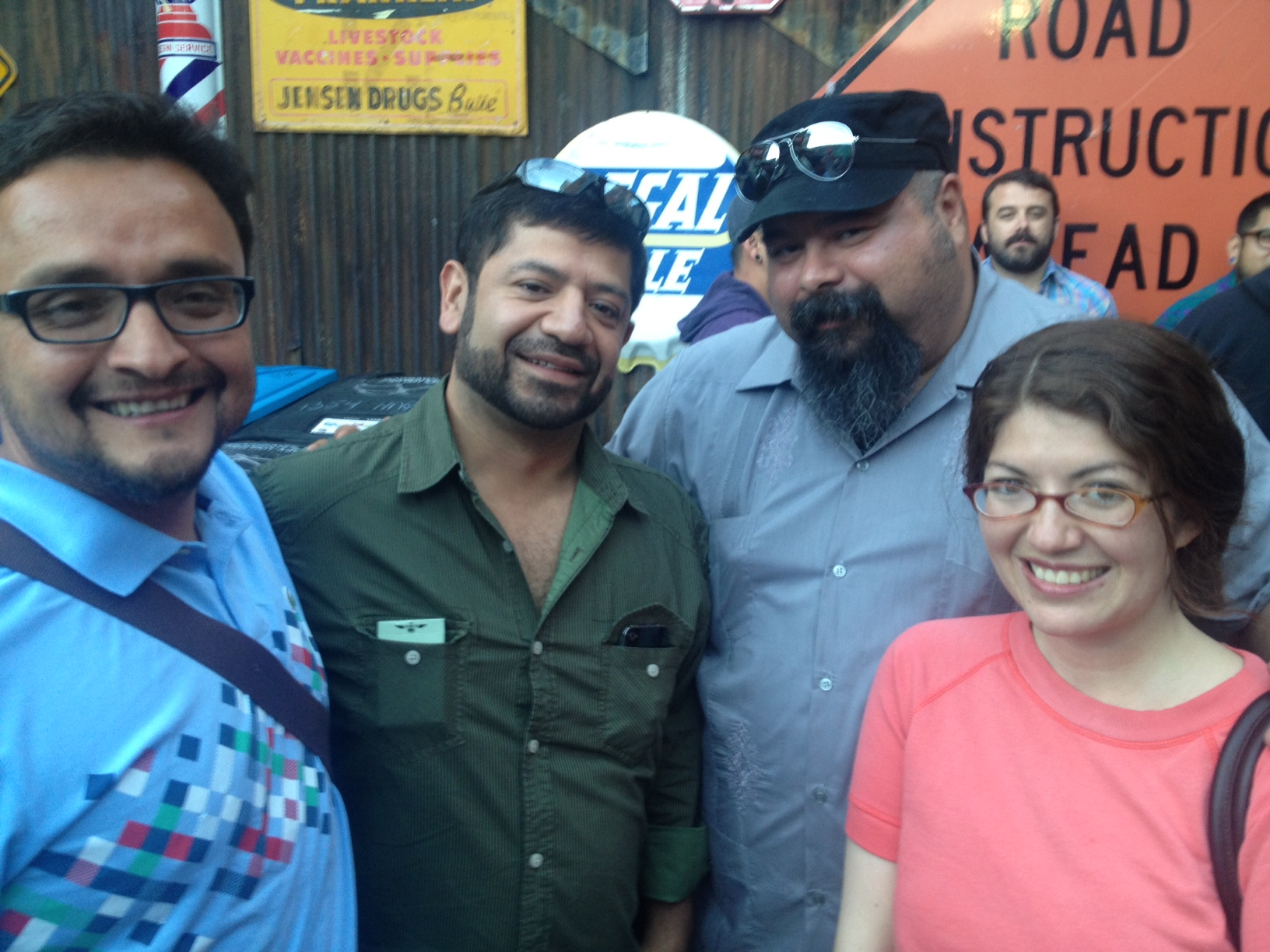
Music Listings

0

Since club life is unpredictable, it’s a good idea to call ahead or check the venue’s website to confirm bookings and hours. Prices are listed when provided to us. Visit www.sfbg.com/venue-guide for venue information. Submit items for the listings at listings@sfbg.com. For further information on how to submit items for the listings, see Picks.

WEDNESDAY 22

ROCK/BLUES/HIP-HOP

Am & Shawn Lee, Nino Moschella Cafe Du Nord. 8pm, $12-$14.

Emperor Norton Lost Church, 65 Capp, SF; thelostchurch.com. 8pm, $10-$20.

Keith Crossan Blues Showcase with Tom Pollitzer Biscuits and Blues. 8 and 10pm, $15.

Nobunny, Apache Dropout, Burnt Ones Hemlock Tavern. 9pm, $10.

Ocha La Rocha, Sweet Chariot Brick and Mortar Music Hall. 9pm, $8-$10.

Pine, Band Practice, Lady Stardust Bottom of the Hill. 9pm, $8.

Terry Savastano Johnny Foley’s. 9pm, free.

Greg Zema vs JC Rockit Johnny Foley’s Dueling Pianos. 9:30pm.

JAZZ/NEW MUSIC

Cat’s Corner with Nathan Dias Savanna Jazz. 9pm, $10.

Barbara Cook Rrazz Room. 8pm, $55-$75.

Cosmo AlleyCats Le Colonial, 20 Cosmo Place, SF; www.lecolonialsf.com. 7-10pm.

Dink Dink Dink, Gaucho, Eric Garland’s Jazz Session Amnesia. 7pm, free.

Kenny Neal Yoshi’s SF. 8pm, $15; 10pm, $22.

Ricardo Scales Top of the Mark, 999 California, SF; www.topofthemark.com. 6:30pm, $5.

DANCE CLUBS

Booty Call Q-Bar, 456 Castro, SF; www.bootycallwednesdays.com. 9pm. Juanita MORE! and Joshua J host this dance party.

Coo-Yah! Som., 2925 16th St, SF; (415) 558-8521. 10pm, free. DJs Daneekah and Green B spin reggae and dancehall with weekly guests.

Full-Step! Tunnel Top. 10pm, free. Hip-hop, reggae, soul, and funk with DJs Kung Fu Chris and Bizzi Wonda.

Mary Go Round Lookout, 3600 16th St, SF; www.lookoutsf.com. 10pm, $5. Drag with Suppositori Spelling, Mercedez Munro, and Ginger Snap.

Megatallica Fiddler’s Green, 1333 Columbus, SF; www.megatallica.com. 7pm, free. Heavy metal hangout.

Shutter Elbo Room. 10pm, $5. With DJs Nako, Omar, and Justin.

THURSDAY 23

ROCK/BLUES/HIP-HOP

Alex Clare Mezzanine. 8pm, $10.53.

Animal Kingdom, Atlas Genius, popscene DJs Rickshaw Stop. 9:30pm, $13.

Bayonics, Comet Empire, Edison, Beautiful Machines, Pollux, BangBang Slim’s. 7pm, free.

El Cajon, Steakhouse, Warbler Hemlock Tavern. 9pm, $6.

Gunshy Johnny Foley’s. 9pm, free.

John Lee Hooker Jr. Biscuits and Blues. 8 and 10pm, $22.

Iguanas, Beso Negro Great American Music Hall. 8pm, $16.

Eleni Mandell, David Dondero, SHEL Cafe Du Nord. 8pm, $12-$14.

Two Star Symphony, Not An Airplane, Fleeting Trance Amnesia. 9pm, $10.

Matthew Stewart, Paige and the Thousand, Roem Baur Brick and Mortar Music Hall. 7pm, $10.

St. Valentinez, Handshake, Fever Charm Bottom of the Hill. 9pm, $10.

Rags Tuttle vs Greg Zema Johnny Foley’s Dueling Pianos. 9:30pm.

JAZZ/NEW MUSIC

Barbara Cook Rrazz Room. 8pm, $55-$75.

Ned Boyton Trio Bottle Cap, 1707 Powell, SF; www.bottlecapsf.com. 7-10pm.

Lydia Pense & Cold Blood Yoshi’s SF. 8pm, $16; 10pm, $20.

Savanna Jazz Jam with Eddy Ramirez Savanna Jazz. 7:30pm, $5.

FOLK/WORLD/COUNTRY

Kentucky Twisters Atlas Cafe, 3049 20th St, SF; www.atlascafe.net. 8-10pm, free.

Twang! Honky Tonk Fiddler’s Green, 1330 Columbus, SF; www.twanghonkytonk.com. 5pm. Live country music, dancing, and giveaways.

DANCE CLUBS

Afrolicious Elbo Room. 9:30pm, $8. With Funk Ark, and DJ-host Pleasuremaker spins Afrobeat, Tropicália, electro, samba, and funk.

Get Low Som., 2925 16th St, SF; (415) 558-8521. 10pm, free. Jerry Nice and Ant-1 spin Hip-Hop, ’80s and Soul with weekly guests.

Thursdays at the Cat Club Cat Club. 9pm, $6 (free before 9:30pm). The best of the 80s with DJs Damon, Steve Washington, Dangerous Dan, and guests.

Tropicana Madrone Art Bar. 9pm, free. Salsa, cumbia, reggaeton, and more with DJs Don Bustamante, Apocolypto, Sr. Saen, Santero, and Mr. E.

FRIDAY 24

ROCK/BLUES/HIP-HOP

Alan Evans Trio Brick and Mortar Music Hall. 10pm, $5-$13.

Albino!, Fog Dub Elbo Room. 10pm, $10.

American Steel, Reckless Kind, Ilona Staller Bottom of the Hill. 9pm, $12.

Be My Baby: Hot Toddies, She’s, DJs Wham Bam Ashleyanne and the Whiz Rickshaw Stop. 9pm, $10.

Easy Leaves, Alison Harris and the Barn Owl, TV Mike and the Scarecrows, Emily Bonn and the Vivants Independent. 8pm, $12.

Rick Estrin & the Nightcats Biscuits and Blues. 8 and 10pm, $20.

Fast Times Red Devil Lounge. 8pm, $10.

Hank 3, Hellbilly, Attention Deficit Domination, 3 Bar Ranch Regency Ballroom. 8:30pm, $28.

Mermen, Red Meat Great American Music Hall. 9pm, $15.

“Rockabilly Boogie Pt. 1” Cafe Du Nord. 9pm, $12-$14. With Texas Steve & the Tornados, Rumble Strippers, Golden West Trio.

Slow Club Brick and Mortar Music Hall. 7:30pm, $10-$13.

Tall Shadows Johnny Foley’s. 9pm, free.

Turks, Winter Ox Hemlock Tavern. 9:30pm, $7.

Very Best Mezzanine. 9pm, $15.

Womp, John Beaver, Frank Nitty, Switchblade Slim’s. 9pm, $18.

Greg Zema, Rome Balestrieri, Randy Johnny Foley’s Dueling Pianos. 9pm.

JAZZ/NEW MUSIC

Audium 1616 Bush, SF; www.audium.org. 8:30pm, $20. Theater of sound-sculptured space.

Barbara Cook Rrazz Room. 8pm, $55-$75.

Terry Disely Bottle Cap, 1707 Powell, SF; www.bottlecapsf.com. 5:30-8:30pm.

Carol Luckenbach Savanna Jazz. 7:30pm, $8.

FOLK/WORLD/COUNTRY

Baxtalo Drom Amnesia. 9pm, $7-$10. With live music, gypsy punk, belly dancing.

Rafael Mendoza Mission Cultural Center Theater, 2868 Mission, SF; www.missionculturalcenter.org. 7:30pm, $12-$15.

Taste Fridays 650 Indiana, SF; www.tastefridays.com. 8pm, $18. Salsa and bachata dance lessons, live music.

DANCE CLUBS

Anomie Belle, Blockhead, Yppah Public Works. 9:30pm, $12. Ninja Tune showcase.

Chase, Pharaohs, Jason Kendig, Ash Williams Public Works. 9pm, $5-$10.

Joe Lookout, 3600 16th St.,SF; www.lookoutsf.com. 9pm. Eight rotating DJs, shirt-off drink specials.

Old School JAMZ El Rio. 9pm. Fruit Stand DJs spinning old school funk, hip-hop, and R&B.

Paris to Dakar Little Baobab, 3388 19th St, SF; (415) 643-3558. 10pm, $5. Afro and world music with rotating DJs including Stepwise, Steve, Claude, Santero, and Elembe.

True Skool 13-Year Anniversary Mighty SF. With Sake 1, Jah Yzer, Platurn, Ren the Vinyl Archaeologist, Davey D, and more.

SATURDAY 25

ROCK/BLUES/HIP-HOP

Rome Balestrieri, Greg Zema, Jason Marion Johnny Foley’s Dueling Pianos. 9pm.

Brownout, Will Magid Trio, Senor Oz Elbo Room. 10pm, $12.

Cutthroats 9, Rock Bottom Bender’s. 9pm, $5.

Dirty Hand Family Band Riptide. 9pm, free.

Foreverland with strings Bimbo’s. 9pm, $22.

Fred Frith and friends play Gravity Slim’s. 9pm, $20.

Fusion Johnny Foley’s. 9pm, free.

Gliss, City of Women Rickshaw Stop. 9pm, $8.

Hammerlock Thee Parkside. 3pm, free.

Paula Harris Biscuits and Blues. 8 and 10pm, $20.

Hooks, Chris Von Sneidern, Eastern Span, InterChords Bottom of the Hill. 9pm, $10.

In Rare Form, New Up, Sean Leahy Trio, Blisses B Brick and Mortar Music Hall. 9pm, $10-$13.

Mantles, English Singles, New Faultlines Hemlock Tavern. 9:30pm, $8.

Petty Theft, Minks Cafe Du Nord. 9:30pm, $15.

Roadside Bombs, Sydney Ducks, Synthetic ID Thee Parkside. 8:30pm, $10-$15.

Ronkat Spearman’s Katdelic Boom Boom Room. 9:30pm, $15.

JAZZ/NEW MUSIC

Audium 1616 Bush, SF; www.audium.org. 8:30pm, $20. Theater of sound-sculptured space.

Barbara Cook Rrazz Room. 8pm, $55-$75.

FOLK/WORLD/COUNTRY

“Chinatown Music Festival” Portsmouth Square, Kearny Street between Clay and Washington, SF; www.c-c-c.org. 11am-5pm, free.

Good Luck Thrift Store Outfit, Tresspassers, Harmed Brothers Great American Music Hall. 9pm, $15.

“J-Pop Summit” SF Japantown, 1746 Post, SF; www.j-pop.com. 11am-6pm, free.

Craig Ventresco and Meredith Axelrod Atlas Cafe, 3049 20th St, SF; www.atlascafe.net. 4-6pm.

DANCE CLUBS

Bootie SF: Michael Jackson’s Birthday DNA Lounge. 9pm, $15. With DJs Tripp, Tyme and Nathan Scot, Dada, Smash-Up Derby.

Burner Bon Voyage Public Works. 9pm, $5-$10. With M.A.N.D.Y., Dejan.

Go BANG! Deco Lounge, 510 Larkin, SF; www.decosf.com. 9pm, $5. Atomic dancefloor disco action with Marke B. birthday set, Derek Opperman, Carlos Corcho, and more.

Icee Hot: Hieroglyphic Being, Roche Public Works Loft. 10pm.

Paris to Dakar Little Baobab, 3388 19th St, SF; (415) 643-3558. 10pm, $5. Afro and world music with rotating DJs including Stepwise, Steve, Claude, Santero, and Elembe.

SUNDAY 26

ROCK/BLUES/HIP-HOP

Col. Bruce Hampton Brick and Mortar Music Hall. 7:30pm, $3.50-$10.

Crashfaster, Minusbaby, Awkward Terrible DNA Lounge. 8pm, $16.

Kristin Hersh, Moore Brothers, Terese Taylor Cafe Du Nord. 9pm, $17-$20.

Theophilus London Mezzanine. 8pm, $18.

OK Go, Family Crest Sigmund Stern Grove, 19 Avenue and Sloat Boulevard, SF; www.sterngrove.org. 2pm, free.

Park starring Happy Mayfield & Nate Mercereau, Buttercream Gang Brick and Mortar Music Hall. 9pm, free.

Terry Savastano Johnny Foley’s. 9pm, free.

JAZZ/NEW MUSIC

Barbara Cook Rrazz Room. 3 and 7pm, $55-$75.

Adrian Areas Latin Jazz Band Savanna Jazz. 7pm, $7.

FOLK/WORLD/COUNTRY

Alex Cuba Yoshi’s SF. 7pm, $18.

Heeldraggers Amnesia. 8pm, $7-$10.

“J-Pop Summit” SF Japantown, 1746 Post, SF; www.j-pop.com. 11am-6pm, free.

Twang Sunday Thee Parkside. 4pm, free. With Alabaster, Tell River.

DANCE CLUBS

Dub Mission Elbo Room. 9pm, 6. With DJ Sep, Maneesh the Twister, Taal Mala.

Jock Lookout, 3600 16th St, SF; www.lookoutsf.com. 3pm, $2. Raise money for LGBT sports teams while enjoying DJs and drink specials.

La Pachanga Blue Macaw, 2565 Mission, SF; www.thebluemacawsf.com. 6pm, $10. Salsa dance party with live Afro-Cuban salsa bands.

MONDAY 27

ROCK/BLUES/HIP-HOP

Bomb the Music Industry, Classics of Love, Street Eaters, Point of View Bottom of the Hill. 8:30pm, $9.

Brian Bergeron Johnny Foley’s. 9pm, free.

Clip’d Beaks, Creepers, Feral Kizzy, Disappearing People Elbo Room. 9pm, $5.

Turquoise Jeep Hemlock Tavern. 8pm, $15.

JAZZ/NEW MUSIC

Bossa Nova Tunnel Top, 601 Bush, SF; (415) 722-6620. 8-11:30pm, free. Live acoustic Bossa Nova.

FOLK/WORLD/COUNTRY

Earl Brothers, Water Tower Bucket Boys Amnesia. 9pm.

DANCE CLUBS

Death Guild DNA Lounge. 9:30pm, $3-5. Gothic, industrial, and synthpop with Joe Radio, Decay, and Melting Girl.

Krazy Mondays Beauty Bar, 2299 Mission, SF; www.thebeautybar.com. 10pm, free. Hip-hop and other stuff.

M.O.M. Madrone Art Bar. 6pm, free. DJs Timoteo Gigante, Gordo Cabeza, and Chris Phlek playing all Motown every Monday.

Vibes’N’Stuff El Amigo Bar, 3355 Mission, SF; (415) 852-0092. 10pm, free. Conscious jazz and hip-hop from 1960s-early ’90s with DJs Luce Lucy, Vinnie Esparza, and more.

TUESDAY 28

ROCK/BLUES/HIP-HOP

Ash Reiter, Kapowski, Sugar Candy Mountain Amnesia. 9:15pm, $7.

Desaparecidos, Velvet Teen Bottom of the Hill. 9pm, $25.

Beres Hammond, 9Tomorrows, DJ Inferno Hemlock Tavern. 9pm, $30.

Kayo Dot, Author & Punisher, miRthkon, Atomic Bomb Audition Elbo Room. 9pm, $8.

Mallard, Cool Ghouls, Dead Ghosts Knockout. 10pm, $7.

Mean Jeans, Big Eyes, Meat Market El Rio. 7pm, $7.

Stan Erhart Band Johnny Foley’s. 9pm, free.

Windham Flat, Side Hackers, Los Broskis Hemlock Tavern. 9pm, $6.

JAZZ/NEW MUSIC

Gaucho Bottle Cap, 1707 Powell, SF; www.bottlecapsf.com. 7-10pm.

Virginia Tichenor Pier 23, Embarcadero at Filbert, SF; (415) 362-5125. 5-8pm.

DANCE CLUBS

Eclectic Company Skylark, 9pm, free. DJs Tones and Jaybee spin old school hip hop, bass, dub, glitch, and electro.

Post-Dubstep Tuesdays Som., 2925 16th St, SF; (415) 558-8521.10pm, free. DJs Dnae Beats, Epcot, Footwerks spin UK Funky, Bass Music.

Study Hall John Colins Lounge, 138 Minna, SF; www.johncolins.com. 9pm. Hip-hop, dancehall, and Bay slaps with DJ Left Lane.

What will Jerry do?

14

A few good bills have emerged from the madness of the end of the Legislative session in Sacramento — including measures by Assemblymember Tom Ammiano and Sen. Leland Yee — and now we have to wait for the governor, who isn’t thinking much beyond Prop. 30.

Jerry’s always odd and unpredictable, but this year, I’m told, he’s focused almost entirely on getting his tax measure approved. He’s told everyone in the state how much everything will suck if we don’t vote Yes, and he’s made it something of a referendum on his leadership. If it goes down, he’s facing almost unthinkable cuts to education and public services — cuts that will make him hugely unpopular. When class sizes go up and UC rejects qualified students and cops get laid off, the voters won’t blame themselves for rejecting Prop. 30; they’ll blame the guv. And Jerry knows it.

So he’s gone all in on this one — and he’s viewing everything he does, including every bill he might sign, through that lens.

Which leaves some very worth legislation up in the air — or rather, since it’s Jerry Brown, up in the ozone.

Ammiano managed to win approval for a measure that would allow the news media to interview inmates in state prisons — something that the California Department of Corrections and Rehabilitation has blocked since 1996. Right now, the only way reporters get access to the inside of prisons is on special tours that CDCR sets up — and the jailers get to decide which “random” inmates can talk to the press. It’s pretty basic — In San Francisco, the Sheriff’s Department allows reporters to talk to any prisoner who consents to an interview, and nothing bad has happened. We spend so many billions of dollars on prisons, and we know so little about where it goes. Even the prison guard’s union (Jerry’s BFFs) supports this. Jerry? Who knows.

Another Ammiano bill, AB 889, would require that domestic workers (people who do child care, housecleaning etc.) get basic labor rights, including lunch breaks and overtime. Seems like a no-brainer (and no, it doesn’t apply to your casual high-school babysitter). Lots of support, and it’s hard to see what this has to do with tax policy, but nobody’s sure about the guv.

And everyone’s really unsure what will happen with Sen. Leland Yee’s latest attempt to give juveniles who are sentenced to life without parole at least some opportunity to get out of prison before they die. SB 9 is pretty moderate — it states that a person convicted of a crime as a youth who has already served 15 (FIFTEEN) years can petition a court to reduce the sentence to 25 (TWENTY FIVE) years. Nobody’s getting out without serving some long, hard time, but since someone who is an accessory to murder at 15 almost certainly doesn’t have the brain development of an adult, and no other industrialized nation in the world allows LWOP for anyone under 18, and since there are only 300 people in the who state prison system who would be eligible for sentence changes under this law, I can’t imagine anyone opposing it. Seriously, Jerry. Can you veto something like this? The Jesuits would go batty.


A week after police crack down, People’s Library still operating in East Oakland

13

The building where activists, some from Occupy Oakland, created a free library and garden August 13 was raided by police that night. But that was Monday, this is Friday– and the Biblioteca Popular Victor Martinez, or People’s Library, is still in full form.

The books and garden have moved from the building, which was built in 1918 in the Spanish Colonial Revival style, to the sidewalk. But it’s still a lively scene. Books are shelved the block in front of the old library’s entrace, and around the corner participants have built gadren beds. In the sidewalk library and garden, children browse books, play chess, dig holes for seeds, water plants, ride bikes and scooters, and casually work on the fence around the building with pliers. 

The building at 1449 Miller was donated to the city of Oakland as part of a grant from Andrew Carnegie, and functioned as a library until 1979. It was one of eight libraries closed by the City Librarian following the passage of Prop 13, according to Harry Hamilton, City of Oakland public information officer. It was subsequently used for the Emiliano Zapata Street Academy, an alternative high school that now operates on 29th street. It was owned by the Oakland Redevelopment Agency, whose members allocated money to it in their 2005 five-year plan, but no redevelopment of the building had begun when redevelopment agencies across California were dissolved last fall. It is now owned by the the Redevelopment Successor Agency housed within the City of Oakland’s Office of Neighborhood Investment, and, for all official purposes, remains vacant.

On Monday morning, activists entered the building, intent to revitalize it themselves. Empty wooden bookshelves covered the walls, and the floor was strewn with trash. A few mattresses indicated that the officially vacant building certainly hasn’t been.

Those building the People’s Library brought in brooms, sponges and trashbags. A few hours later, the place was cleaned up and hundreds of donated books lined the long-empty shelves. Neighbors came in through the open doors, helping to clean, checking out books, and reading to their kids. In the backyard, kids and adults built raised beds and started planting in them.

At 6:30, there was a potluck and a poetry reading. Most families had wandered off by 10pm. At 11:30, about a dozen people remained. That’s when 80 police arrived, blocked off the street for two blocks in all directions, and told them that they had 15 minutes to gather their books and exit the building, or risk arrest.

The creators of the Victor Martinez People’s Library did as they were told. But they didn’t go far. The next morning, they set up the library again, this time on the sidewalk outside the now-boarded up building. The kids and families came back. Police did, too, but they stayed in cars on corners around the building, watching.

Now, it’s been a week, and what organizer Jaime Yassin calls “the only 24-hour library in the US” is still here.

“That was on their agenda, at some point, to do this. What the people are doing now,” said Emji Spero, a poet who heard about the action from people invovled in Monday’s poetry reading. “But instead, they’re spending money on police to come shut it down. Someone said to me, I can see the dollar signs floating off the police cars as they run their engines.”

“This is the social reform that the city is supposed to be doing,” said Khalid Shakur, another Oakland resident who was involved in setting up the library.

On Wednesday Yassin, who had been researching the building’s history, sat down with me on a couch by the library. He explained that the clean sidewalk where the couch now sits was an unofficial garbage dump days earlier, covered in old clothes, drug paraphenalia, and other trash.

Yassin showed me a 2005 report from the Urban Ecology 23rd Avenue Working Group. the plan, a result of focus groups and surveys of people in the neighborhood of the People’s Library, includes a plan to “rehabilitate Miller Library” as a top priority for beneficial development in the neighborhood.

“Renovation, however, will be expensive and require the city’s help,” the report reads. “the city-owned library needs seismic reinforcement, repair to flood damage, asbestos removal and handicap accesibility improvements.”

As I spoke with Yassin, a 10-year-old who had been gardening and playing on the sidewalk scooted up. He handed some scissors, just retrieved from his home a block away, to one of the people making signs to organize the library.

“I never saw nobody use it using it since I got here,” he said when I asked him about the building.

“I liked it when you guys came,” he added to Yassin, smiling, before racing off on his scooter.

Juan Delgadillo, who owns Plaza Automotive, a business across the street from the library, said he plans to borrow some books from the People’s Library. “It’s a very good idea,” said Delgadillo. “I support it.”

The group has been holding nightly potlucks, and is planning to host a community barbecue tomorrow (August 18) at 2pm.

Dick Meister: The billionaire’s bill of rights

8

By Dick Meister

Dick Meister, former labor editor of the SF Chronicle and KQED-TV Newsroom, has covered labor and politics for more than a half-century. Contact him through his website, www.dickmeister, which includes more than 350 of his columns.

Billionaire corporate interests and other well financed anti-labor forces are waging a major drive to stifle the political voice of workers and their unions in California that is certain to spread nationwide if not stopped – and stopped now.

At issue is a highly deceptive measure, Proposition 32, on the November election ballot, that its anti-labor sponsors label as an even-handed attempt to limit campaign spending. But actually, it would limit – and severely – only the spending of unions while leaving corporations and other moneyed special interests free to spend as much as they like.

Unions would be prohibited from making political contributions with money collected from voluntary paycheck deductions authorized by their members, which is the main source of union political funds.

 But there would be no limits on corporations, whose political funds come from their profits, their customers or suppliers and the contributions of corporate executives. Nor would there be any limit on the political spending of the executives or any other wealthy individuals. What’s more, corporate special interests and billionaires could still give unlimited millions to secretive “Super PACs” that can raise unlimited amounts of money anonymously to finance their political campaigns.

The proposition would have a “devastating impact” on unions, notes Professor John Logan, director of labor and employment studies at San Francisco State University, writing in  the Hill’s Congress blog.  As he says, it would likely all but eliminate political spending by unions while greatly increasing political spending by business interests and wealthy individuals.

 Anti-labor interests are already outspending unions nationwide by a ratio of more than $15 for every $1 spent by unions. Between 2000 and 2011, that amounted to  $700 million spent by anti-labor forces, while unions spent just a little more than $284 million.

 Proposition 32 would even restrict unions in their communications with their own members on political issues. That’s because money raised by payroll deductions pays for the preparation and mailing of communications to union members, including political materials.

Unfortunately, there’s even more – much more –to Proposition 32. It also would prohibit unions from making contributions to political parties and defines public employee unions as “government contractors” that would be forbidden from attempting to influence any government agency with whom they have a contract.

That restriction applies not only to unions. It also would cover political action committees established by any membership organization,  “any agency or employee representation committee or plan,” such as those seeking stronger civil rights or environmental protections.

Proposition 32 seeks to weaken, that is, any membership group which might seek reforms opposed by wealthy individuals or corporations and their Republican allies.  It’s no wonder the measure is actively opposed, not only by organized labor, but also by the country’s leading good-government groups, including Common Cause and the League of Women Voters.

Yet the proposition’s sponsors have the incredible gall to bill their measure as genuine campaign finance reform. They obviously hope that claim, which Common Cause accurately describes as a “laughable deception,” will win over the many voters who have been demanding reforms and who, in their eagerness, will fail to recognize the measure’s true nature.

“This is not genuine campaign finance reform,” as San Francisco State’s John Logan says, “but a bill of rights for billionaires.”

The losers would include teachers, nurses, police, firefighters and other union members and those who benefit from the essential services they provide – students, the elderly, and the ailing, the poverty stricken, those who work and live in unsafe conditions and other needy citizens, and consumers, environmentalists and others who also are neglected by the profit-chasing corporate interests that dominate political and economic life.

Make no mistake: Lots of money is being funneled into the Proposition 32 campaign by some of the same wealthy backers who bankrolled such anti-labor efforts as the campaign that blocked the massive attempt to recall virulently anti-labor GOP Gov. Scott Walker of Wisconsin this year.

Should the anti-union forces also prevail, it will undoubtedly lead to what Logan says “will promote a tsunami of ballot initiatives in 2013 at the local level and in 2014 at the state level designed to drive down working conditions in both the public and private sectors.”

Logan adds, “Lacking the ability to oppose these reactionary measures under the new election rules, California’s workers could soon face the weakest labor standards in the country”. But if the measure is rejected, it “may slow the momentum behind other attempts to increase the corrosive impact of money in politics.”

It’s true that some states already have laws and regulations seriously limiting labor’s influence. But it’s certain that victory by the anti-labor forces in California will slow any attempts at reform in other states and lead as well to attempts to impose anti-union measures elsewhere, as well as expanding those that already exist.

The stakes are huge. If the 1 percent have their way in California, the country’s largest state, other states are certain to follow.

For more from John Logan, check his piece in the East Bay Express, “If you liked Citizen United, you’ll love Prop 32.” http://www.eastbayexpress.com/ebx/if-you-liked-citizens-united-youll-love-prop-32/Content?oid=330613

Dick Meister, former labor editor of the SF Chronicle and KQED-TV Newsroom, has covered labor and politics for more than a half-century. Contact him through his website, www.dickmeister, which includes more than 350 of his columns.