California

Film Listings

0

Film listings are edited by Cheryl Eddy. Reviewers are Kimberly Chun, Dennis Harvey, Lynn Rapoport, and Sara Maria Vizcarrondo. For rep house showtimes, see Rep Clock.

OPENING

Broken City It’s a tough guy-off when an ex-cop (Mark Wahlberg) dares to take on New York’s corrupt mayor (Russell Crowe). (1:49)

Hellbound? See "Damnation Investigation." (1:25) Yerba Buena Center for the Arts.

The Last Stand In Arnold Schwarzenegger’s first leading role since that whole Governator business, he plays a small-town sheriff doing battle with an escaped drug kingpin. (1:47) Shattuck.

The Law in These Parts Ra’anan Alexandrowicz’s documentary is a rather extraordinary historical record: he interviews numerous retired Israeli judges and lawyers who shaped and enforced the country’s legal positions as occupiers of Palestinian land and "temporary guardians" of a Palestinian populace living under foreign occupation. The key word there is "temporary" — in using here a different (military rather than civil) justice from the one Israeli citizens experience, Israel has been able to exert the extraordinary powers of an invading force in wartime. But what is "temporary" about an occupation that’s now lasted nearly 45 years? How can the state justify (under Geneva Convention rules, for one thing) building permanent Jewish settlements that now house about half a million Israelis on land that is as yet not legally Israel’s? By constantly changing the terms and laws of occupation, they do just that. If many policies have been perhaps necessary to control terrorist attacks, one can argue that they and other policies have created the climate in which oppositional fervor and terroristic acts were bound to flourish. That, of course, is a political-ethical judgement far beyond the public purview of the judges and others here, whose dry legalese admits no personal culpability — and indeed sometimes seems almost absurdly divorced from real-world ethics and consequence, which of course serves an increasingly rigid governmental stance just fine. Without preaching, The Law in These Parts raises a number of discomfiting questions about bending law to suit an agenda that in any other context would seem frankly unlawful. (1:40) Roxie. (Harvey)

Let Fury Have the Hour Though its message — that creative expression is a powerful, meaningful way to fight oppression — is a valuable one, Antonino D’Ambrosio’s Let Fury Have the Hour covers turf well-trod for anyone who has ever seen a documentary about punk rock and social justice. (Especially when it contains usual suspects like Ian MacKaye, Shepard Fairey, and Billy Bragg waxing nostalgic about how nonconformist they were in the 1980s.) In truth, Fury is more collage than doc, pasting together talking-head interviews (also here: Chuck D, John Sayles, Van Jones, Tom Morello, Boots Riley, and Wayne Kramer, plus a few token women, chiefly Eve Ensler) with a mish-mash of sepia-toned stock footage that more or less thematically compliments what’s being discussed at the time. A more focused examination of D’Ambrosio’s thesis might have resulted in a more effective film — like, say, an in-depth look at how Sayles’ politically-themed films (here, he reads from the script for 1987’s Matewan in a frustratingly brief segment) are echoed in works by contemporary artists and citizen journalists, particularly now that the internet has opened up a global platform for protest films. Listen: I admire what the film is trying to do. I am OK with watching yet another doc that contains the phrase "Punk rock politicized me." But with too much lip service and precious little depth, Fury‘s fury ends up feeling a bit diluted. (1:40) Balboa. (Eddy)

LUV Baltimore native Sheldon Candis drew from his own childhood for this coming-of-age tale, which takes place in a single day as 11-year-old "little man" Woody (Michael Rainey Jr.) tags along with his uncle, Vincent (Common), recently out of jail and rapidly heading back down the criminal path. With both parents out of the picture, Woody’s been raised by his grandmother (Lonette McKee), so he idolizes Vincent even though it’s soon clear the short-tempered man is no hero. Of course, things go horribly awry, bloody lessons are learned, tears are shed, etc. Despite the story’s autobiographical origins, the passable LUV suffers greatly by inviting comparisons to The Wire — the definitive docudrama examining drug crime in Baltimore. Most blatantly, sprinkled into an all-star cast (Dennis Haysbert, Danny Glover, Charles S. Dutton) are supporting characters played by Wire icons Michael K. "Omar" Williams (as a cop) and Anwan "Slim Charles" Glover (as a meaner Slim Charles, basically). Perhaps if you’ve never seen the show this wouldn’t be distracting — but if that’s the case, you should really be watching The Wire instead of LUV anyway. (1:34) (Eddy)
Mama Two long-lost children bring something supernatural home with them in this horror flick starring Jessica Chastain and Nikolaj "Jaime Lannister" Coster-Waldau. (1:40) California.

The Rabbi’s Cat A rabbi, a Muslim musician, two Russians (a Jew and a boozy Christian), and two talking animals hop into an antique Citroën for a road trip across Africa. No, it’s not the set-up for a joke; it’s the premise for this charming animated film, adapted from Joann Sfar’s graphic novel (the author co-directs with Antoine Delesvaux). In 1930s Algiers, a rabbi’s pet cat suddenly develops the ability to talk — and read and write, by the way — and wastes no time in sharing opinions, particularly when it comes to religion ("God is just a comforting invention!") When a crate full of Russian prayer books — and one handsome artist — arrives at the rabbi’s house, man and cat are drawn into the refugee’s search for an Ethiopian city populated by African Jews. Though it’s not suitable for younger kids (there’s kitty mating, and a few bursts of surprising violence) or diehard Tintin fans (thanks to a randomly cranky spoof of the character), The Rabbi’s Cat is a lushly illustrated, witty tale of cross-cultural clashes and connections. Rockin’ soundtrack, too. (1:29) Smith Rafael. (Eddy)

ONGOING

Amour Arriving in local theaters atop a tidal wave of critical hosannas, Amour now seeks to tempt popular acclaim — though actually liking this perfectly crafted, intensely depressing film (from Austrian director Michael Haneke) may be nigh impossible for most audience members. Eightysomething former music teachers Georges and Anne (the flawless Jean-Louis Trintignant and Emmanuelle Riva) are living out their days in their spacious Paris apartment, going to classical concerts and enjoying the comfort of their relationship. Early in the film, someone tries to break into their flat — and the rest of Amour unfolds with a series of invasions, with Anne’s declining health the most distressing, though there are also unwanted visits from the couple’s only daughter (an appropriately self-involved Isabelle Huppert), an inept nurse who disrespects Anne and curses out Georges, and even a rogue pigeon that wanders in more than once. As Anne fades into a hollow, twisted, babbling version of her former self, Georges also becomes hollow and twisted, taking care of her while grimly awaiting the inevitable. Of course, the movie’s called Amour, so there’s some tenderness involved. But if you seek heartwarming hope and last-act uplift, look anywhere but here. (2:07) Albany, Clay, Smith Rafael. (Eddy)

Anna Karenina Joe Wright broke out of British TV with the 9,000th filmed Pride and Prejudice (2005), unnecessary but quite good. Too bad it immediately went to his head. His increasing showiness as director enlivened the silly teenage-superspy avenger fantasy Hanna (2011), but it started to get in the way of Atonement (2007), a fine book didn’t need camera gymnastics to make a great movie. Now it’s completely sunk a certified literary masterpiece still waiting for a worthy film adaptation. Keira Knightley plays the titular 19th century St. Petersburg aristocrat whose staid, happy-enough existence as a doting mother and dutiful wife (to deglammed Jude Law’s honorable but neglectful Karenin) is upended when she enters a mutually passionate affair with dashing military officer Count Vronsky (Aaron Taylor-Johnson, miscast). Scandal and tragedy ensue. There’s nothing wrong with the screenplay, by Tom Stoppard no less. What’s wrong is Wright’s bright idea of staging the whole shebang as if it were indeed staged — a theatrical production in which nearly everything (even a crucial horse race) takes place on a proscenium stage, in the auditorium, or "backstage" among riggings. Whenever we move into a "real" location, the director makes sure that transition draws attention to its own cleverness as possible. What, you might ask, is the point? That the public social mores and society Anna lives in are a sort of "acting"? Like wow. Add to that another brittle, mannered performance by Wright’s muse Knightley, and there’s no hope of involvement here, let alone empathy — in love with its empty (but very prettily designed) layers of artifice, this movie ends up suffocating all emotion in gilded horseshit. The reversed-fortune romance between Levin (Domhall Gleeson) and Kitty (Alicia Vikander) does work quite well — though since Tolstoy called his novel Anna Karenina, it’s a pretty bad sign when the subsidiary storyline ends up vastly more engaging than hers. (2:10) Embarcadero, Opera Plaza, Shattuck. (Harvey)

Argo If you didn’t know the particulars of the 1979 Iranian Revolution, you won’t be an expert after Argo, but the film does a good job of capturing America’s fearful reaction to the events that followed it — particularly the hostage crisis at the US embassy in Tehran. Argo zeroes in on the fate of six embassy staffers who managed to escape the building and flee to the home of the sympathetic Canadian ambassador (Victor Garber). Back in Washington, short-tempered CIA agents (including a top-notch Bryan Cranston) cast about for ways to rescue them. Enter Tony Mendez (Ben Affleck, who also directs), exfil specialist and father to a youngster wrapped up in the era’s sci-fi craze. While watching 1973’s Battle for the Planet of the Apes, Tony comes up with what Cranston’s character calls "the best bad idea we have:" the CIA will fund a phony Canadian movie production (corny, intergalactic, and titled Argo) and pretend the six are part of the crew, visiting Iran for a few days on a location shoot. Tony will sneak in, deliver the necessary fake-ID documents, and escort them out. Neither his superiors, nor the six in hiding, have much faith in the idea. ("Is this the part where we say, ‘It’s so crazy it just might work?’" someone asks, beating the cliché to the punch.) Argo never lets you forget that lives are at stake; every painstakingly forged form, every bluff past a checkpoint official increases the anxiety (to the point of being laid on a bit thick by the end). But though Affleck builds the needed suspense with gusto, Argo comes alive in its Hollywood scenes. As the show-biz veterans who mull over Tony’s plan with a mix of Tinseltown cynicism and patiotic duty, John Goodman and Alan Arkin practically burst with in-joke brio. I could have watched an entire movie just about those two. (2:00) Embarcadero, Castro, 1000 Van Ness, Piedmont, Sundance Kabuki. (Eddy)

Cirque du Soleil: Worlds Away (1:31) Metreon, Shattuck.

Cloud Atlas Cramming the six busy storylines of David Mitchell’s wildly ambitious novel into just three hours — the average reader might have thought at least 12 would be required — this impressive adaptation directed (in separate parts) by Tom Twyker (1998’s Run Lola Run) and Matrix siblings Lana and Andy Wachowski has a whole lot of narrative to get through, stretching around the globe and over centuries. In the mid 19th century, Jim Sturgess’ sickly American notory endures a long sea voyage as reluctant protector of a runaway-slave stowaway from the Chatham Islands (David Gyasi). In 1931 Belgium, a talented but criminally minded British musician (Ben Whishaw) wheedles his way into the household of a famous but long-inactive composer (Jim Broadbent). A chance encounter sets 1970s San Francisco journalist Luisa (Halle Berry) on the path of a massive cover-up conspiracy, swiftly putting her life in danger. Circa now, a reprobate London publisher’s (Broadbent) huge windfall turns into bad luck that gets even worse when he seeks help from his brother (Hugh Grant). In the not-so-distant future, a disposable "fabricant" server to the "consumer" classes (Doona Bae) finds herself plucked from her cog-like life for a rebellious higher purpose. Finally, in an indeterminately distant future after "the Fall," an island tribesman (Tom Hanks) forms a highly ambivalent relationship toward a visitor (Berry) from a more advanced but dying civilization. Mitchell’s book was divided into huge novella-sized blocks, with each thread split in two; the film wastes very little time establishing its individual stories before beginning to rapidly intercut between them. That may result in a sense of information (and eventually action) overload, particularly for non-readers, even as it clarifies the connective tissues running throughout. Compression robs some episodes of the cumulative impact they had on the page; the starry multicasting (which in addition to the above mentioned finds many uses for Hugo Weaving, Keith David, James D’Arcy, and Susan Sarandon) can be a distraction; and there’s too much uplift forced on the six tales’ summation. Simply put, not everything here works; like the very different Watchmen, this is a rather brilliant "impossible adaptation" screenplay (by the directors) than nonetheless can’t help but be a bit too much. But so much does work — in alternating currents of satire, melodrama, pulp thriller, dystopian sci-fi, adventure, and so on — that Cloud Atlas must be forgiven for being imperfect. If it were perfect, it couldn’t possibly sprawl as imaginatively and challengingly as it does, and as mainstream movies very seldom do. (2:52) Castro. (Harvey)

Django Unchained Quentin Tarantino’s spaghetti western homage features a cameo by the original Django (Franco Nero, star of the 1966 film), and solid performances by a meticulously assembled cast, including Jamie Foxx as the titular former slave who becomes a badass bounty hunter under the tutelage of Dr. Schultz (Christoph Waltz). Waltz, who won an Oscar for playing the evil yet befuddlingly delightful Nazi Hans Landa in Tarantino’s 2009 Inglourious Basterds, is just as memorable (and here, you can feel good about liking him) as a quick-witted, quick-drawing wayward German dentist. There are no Nazis in Django, of course, but Tarantino’s taboo du jour (slavery) more than supplies motivation for the filmmaker’s favorite theme (revenge). Once Django joins forces with Schultz, the natural-born partners hatch a scheme to rescue Django’s still-enslaved wife, Broomhilda (Kerry Washington), whose German-language skills are as unlikely as they are convenient. Along the way (and it’s a long way; the movie runs 165 minutes), they encounter a cruel plantation owner (Leonardo DiCaprio), whose main passion is the offensive, shocking "sport" of "Mandingo fighting," and his right-hand man, played by Tarantino muse Samuel L. Jackson in a transcendently scandalous performance. And amid all the violence and racist language and Foxx vengeance-making, there are many moments of screaming hilarity, as when a character with the Old South 101 name of Big Daddy (Don Johnson) argues with the posse he’s rounded up over the proper construction of vigilante hoods. It’s a classic Tarantino moment: pausing the action so characters can blather on about something trivial before an epic scene of violence. Mr. Pink would approve. (2:45) Four Star, Metreon, 1000 Van Ness, Presidio, Sundance Kabuki. (Eddy)

Gangster Squad It’s 1949, and somewhere in the Hollywood hills, a man has been tied hand and foot to a pair of automobiles with the engines running. Coyotes pace in the background like patrons queuing up for a table at Flour + Water, and when dinner is served, the presentation isn’t very pretty. We’re barely five minutes into Ruben Fleischer’s Gangster Squad, and fair warning has been given of the bloodletting to come. None of it’s quite as visceral as the opening scene, but Fleischer (2009’s Zombieland) packs his tale of urban warfare with plenty of stylized slaughter to go along with the glamour shots of mob-run nightclubs, leggy pin-curled dames, and Ryan Gosling lounging at the bar cracking wise. At the center of all the gunplay and firebombing is what’s framed as a battle for the soul of Los Angeles, waged between transplanted Chicago mobster Mickey Cohen (Sean Penn) — who wields terms like "progress" and "manifest destiny" as a rationale for a continental turf war — and a police sergeant named John O’Mara (Josh Brolin), tasked with bringing down Cohen’s empire. The assignment requires working under cover so deep that only the police chief (Nick Nolte) and the handpicked members of O’Mara’s "gangster squad" — ncluding Gosling, a half-jaded charmer who poaches Cohen’s arm candy (Emma Stone) — know of its existence. This leaves plenty of room for improvisation, and the film pauses now and again to wonder about what happens when you pit brutal amorality against brutal morality, but it’s a rhetorical question, and no one shows much interest in it. Dragged down by talking points that someone clearly wanted wedged in (as well as by O’Mara’s ponderous voice-overs), the film does better when it abandons gravitas and refocuses on spinning its mythic tale of wilder times in the Golden State. (1:53) Metreon, 1000 Van Ness. (Rapoport)

The Guilt Trip (1:35) Metreon.

A Haunted House (1:25) Metreon, 1000 Van Ness.

Hitchcock On the heels of last year’s My Week With Marilyn comes another biopic about an instantly recognizable celebrity viewed through the lens of a specific film shoot. Here, we have Anthony Hopkins (padded and prosthetic’d) playing the Master of Suspense, mulling over which project to pursue after the success of 1959’s North by Northwest. Even if you’re not a Hitch buff, it’s clear from the first scene that Psycho, based on Robert Bloch’s true crime-inspired pulpy thriller, is looming. We open on "Ed Gein’s Farmhouse, 1944;" Gein (Michael Wincott) is seen in his yard, his various heinous crimes — murder, grave-robbing, body-part hoarding, human-skin-mask crafting, etc. — as yet undiscovered. Hitchcock, portrayed by the guy who also played the Gein-inspired Hannibal Lecter, steps into the frame with that familiar droll greeting: "Guhhd eevvveeeening." And we’re off, following the veteran director as he muses "What if somebody really good made a horror picture?" Though his wife and collaborator, Alma (Helen Mirren), cautions him against doing something simply because everyone tells him not to, he plows ahead; the filmmaking scenes are peppered with behind-the-scenes moments detailed in Stephen Rebello’s Alfred Hitchcock and the Making of Psycho, the source material for John J. McLaughlin’s script. But as the film’s tagline — "Behind every Psycho is a great woman" — suggests, the relationship between Alma and Hitch is, stubbornly, Hitchcock‘s main focus. While Mirren is effective (and I’m all for seeing a lady who works hard behind the scenes get recognition), the Hitch-at-home subplot exists only to shoehorn more conflict into a tale that’s got plenty already. Elsewhere, however, Hitchcock director Sacha Gervasi — making his narrative debut after hit 2008 doc Anvil: The Story of Anvil — shows stylistic flair, working Hitchcock references into the mise-en-scène. (1:32) Embarcadero, New Parkway. (Eddy)

The Hobbit: An Unexpected Journey Make no mistake: the Lord of the Rings trilogy represented an incredible filmmaking achievement, with well-deserved Oscars handed down after the third installment in 2003. If director Peter Jackson wanted to go one more round with J.R.R. Tolkien’s beloved characters for a Hobbit movie, who was gonna stop him? Not so fast. This return to Middle-earth (in 3D this time) represents not one but three films — which would be self-indulgent enough even if part one didn’t unspool at just under three hours, and even if Jackson hadn’t decided to shoot at 48 frames per second. (I can’t even begin to explain what that means from a technical standpoint, but suffice to say there’s a certain amount of cinematic lushness lost when everything is rendered in insanely crystal-clear hi-def.) Journey begins as Bilbo Baggins (a game, funny Martin Freeman) reluctantly joins Gandalf (a weary-seeming Ian McKellan) and a gang of dwarves on their quest to reclaim their stolen homeland and treasure, batting Orcs, goblins, Gollum (Andy Serkis), and other beasties along the way. Fan-pandering happens (with characters like Cate Blanchett’s icy Galadriel popping in to remind you how much you loved LOTR), and the story moves at a brisk enough pace, but Journey never transcends what came before — or in the chronology of the story, what comes after. I’m not quite ready to declare this Jackson’s Phantom Menace (1999), but it’s not an unfair comparison to make, either. (2:50) California, Metreon, 1000 Van Ness, Sundance Kabuki. (Eddy)

Hyde Park on Hudson Weeks after the release of Lincoln, Hyde Park on Hudson arrives with a lighthearted (-ish) take on Franklin D. Roosevelt’s 1939 meeting with King George VI (of stuttering fame) and Queen Elizabeth at FDR’s rural New York estate. Casting Bill Murray as FDR is Hyde Park‘s main attraction, though Olivia Williams makes for a surprisingly effective Eleanor. But the thrust of the film concerns FDR’s relationship with his cousin, Daisy — played by Laura Linney, who’s relegated to a series of dowdy outfits, pouting reaction shots, and far too many voice-overs. The affair has zero heat, and the film is disappointingly shallow — how many times can one be urged to giggle at someone saying "Hot dogs!" in an English accent? — not to mention a waste of a perfectly fine Bill Murray performance. As that sideburned Democrat bellows in Lincoln, "Howwww dare you!" (1:35) Albany, Embarcadero. (Eddy)

The Impossible Spanish director Juan Antonio Bayona (2007’s The Orphanage) directs The Impossible, a relatively modestly-budgeted take on the 2004 Indian Ocean tsunami, based on the real story of a Spanish family who experienced the disaster. Here, the family (Naomi Watts, Ewan McGregor, three young sons) is British, on a Christmas vacation from dad’s high-stress job in Japan. Beachy bliss is soon ruined by that terrible series of waves; they hit early in the film, and Bayona offers a devastatingly realistic depiction of what being caught in a tsunami must feel like: roaring, debris-filled water threatening death by drowning, impalement, or skull-crushing. And then, the anguish of surfacing, alive but injured, stranded, and miles from the nearest doctor, not knowing if your family members have perished. Without giving anything away (no more than the film’s suggestive title, anyway), once the survivors are established (and the film’s strongest performer, Watts, is relegated to hospital-bed scenes) The Impossible finds its way inevitably to melodrama, and triumph-of-the-human-spirit theatrics. As the family’s oldest son, 16-year-old Tom Holland is effective as a kid who reacts exactly right to crisis, morphing from sulky teen to thoughtful hero — but the film is too narrowly focused on its tourist characters, with native Thais mostly relegated to background action. It’s a disconnect that’s not quite offensive, but is still off-putting. (1:54) California, Piedmont, SF Center, Sundance Kabuki. (Eddy)

Jack Reacher (2:10) Metreon, 1000 Van Ness.

Life of Pi Several filmmakers including Alfonso Cuarón, Jean-Pierre Jeunet, and M. Night Shyamalan had a crack at Yann Martel’s "unfilmable" novel over the last decade, without success. That turns out to have been a very good thing, since Ang Lee and scenarist David Magee have made probably the best movie possible from the material — arguably even an improvement on it. Framed as the adult protagonist’s (Irrfan Khan) lengthy reminiscence to an interested writer (Rafe Spall) it chronicles his youthful experience accompanying his family and animals from their just shuttered zoo on a cargo ship voyage from India to Canada. But a storm capsizes the vessel, stranding teenaged Pi (Suraj Sharma) on a lifeboat with a mini menagerie — albeit one swiftly reduced by the food chain in action to one Richard Parker, a whimsically named Bengal tiger. This uneasy forced cohabitation between Hindu vegetarian and instinctual carnivore is an object lesson in survival as well as a fable about the existence of God, among other things. Shot in 3D, the movie has plenty of enchanted, original imagery, though its outstanding technical accomplishment may lie more in the application of CGI (rather than stereoscopic photography) to something reasonably intelligent for a change. First-time actor Sharma is a natural, while his costar gives the most remarkable performance by a wild animal this side of Joaquin Phoenix in The Master. It’s not a perfect film, but it’s a charmed, lovely experience. (2:00) New Parkway, 1000 Van Ness, Presidio, SF Center. (Harvey)

Lincoln Distinguished subject matter and an A+ production team (Steven Spielberg directing, Daniel Day-Lewis starring, Tony Kushner adapting Doris Kearns Goodwin, John Williams scoring every emotion juuust so) mean Lincoln delivers about what you’d expect: a compelling (if verbose), emotionally resonant (and somehow suspenseful) dramatization of President Lincoln’s push to get the 13th amendment passed before the start of his second term. America’s neck-deep in the Civil War, and Congress, though now without Southern representation, is profoundly divided on the issue of abolition. Spielberg recreates 1865 Washington as a vibrant, exciting place, albeit one filled with so many recognizable stars it’s almost distracting wondering who’ll pop up in the next scene: Jared Harris as Ulysses S. Grant! Joseph Gordon-Levitt as Robert Lincoln! Lena Dunham’s shirtless boyfriend on Girls (Adam Driver) as a soldier! Most notable among the huge cast are John Hawkes, Tim Blake Nelson, and a daffy James Spader as a trio of lobbyists; Sally Field as the troubled First Lady; and likely Oscar contenders Tommy Lee Jones (as winningly cranky Rep. Thaddeus Stevens) and Day-Lewis, who does a reliably great job of disappearing into his iconic role. (2:30) 1000 Van Ness, Presidio, SF Center, Shattuck, Sundance Kabuki. (Eddy)

Les Misérables There is a not-insignificant portion of the population who already knows all the words to all the songs of this musical-theater warhorse, around since the 1980s and honored here with a lavish production by Tom Hooper (2010’s The King’s Speech). As other reviews have pointed out, this version only tangentially concerns Victor Hugo’s French Revolution tale; its true raison d’être is swooning over the sight of its big-name cast crooning those famous tunes. Vocals were recorded live on-set, with microphones digitally removed in post-production — but despite this technical achievement, there’s a certain inorganic quality to the proceedings. Like The King’s Speech, the whole affair feels spliced together in the Oscar-creation lab. The hardworking Hugh Jackman deserves the nomination he’ll inevitably get; jury’s still out on Anne Hathaway’s blubbery, "I cut my hair for real, I am so brave!" performance. (2:37) Marina, 1000 Van Ness, SF Center, Shattuck, Sundance Kabuki. (Eddy)

Monsters, Inc. 3D (1:35) Metreon.

My Worst Nightmare First seen locally in the San Francisco Film Society’s 2012 "French Cinema Now" series, My Worst Nightmare follows icy art curator Agathe (Isabelle Huppert) as her airless, tightly-controlled world begins to crumble — thanks in no small part to an exuberantly uncouth, down-on-his-luck Belgian contractor named Patrick (Benoît Poelvoorde). (His obnoxious, freewheeling presence in Agathe’s precision-mapped orbit gives rise to the film’s title.) Director and co-writer Anne Fontaine (2009’s Coco Before Chanel) injects plenty of offbeat, occasionally raunchy humor into what could’ve been a predictable personal-liberation tale — the sight of classy dame Huppert driving through a bikini car wash, for instance. (1:43) Smith Rafael. (Eddy)

Not Fade Away How to explain why the Beatles have been tossed so many cinematic bon mots and not the Stones? The group’s relatively short lifespan — and even the tragic, unexpectedly dramatic passing of John Lennon — seem to have all played into the band’s nostalgia-marinated legend, while the Stones’ profitable tour rotation and shocking physical resilience have lessened their romantic charge. So it reads as a counterintuitive, and a bit random, that Sopranos creator David Chase would open his first feature film with a black and white re-creation of the Mick Jagger and Keith Richards meet-up, before switching to the ’60s coming-of-age of New Jersey teen geek Douglas (John Magaro), trapped in an oppressively whiny nuclear family headed up by his Pep Boy grouch of a dad (James Gandolfini) — at least until rock ‘n’ roll saves his soul and he starts beating the skins. Graduating to better-than-average singer after his band’s frontman Eugene (Boardwalk Empire‘s Jack Huston) inhales a joint, Douglas not only finds his voice, but also wins over dream girl Grace (Bella Heathcote). Sure, Not Fade Away is about sex, drugs, and rock ‘n’ roll — and much attention is dutifully squandered on basement shows, band practice, and politics, and posturing with wacky new haircuts and funny cigarettes, thanks to Chase’s own background in garage bands and executive producer, music supervisor, and true believer Steve Van Zandt’s considerable passion. Yet despite the amount screen time devoted to rock’s rites, those familiar gestures never rise above the clichéd, and Not Fade Away only finds its authentic emotional footing when Gandolfini’s imposing yet trapped patriarch and the rest of Douglas’s beaten-down yet still kicking family enters the picture — they’re the force that refuses to fade away, even after they disappear in the rear view. (1:52) Shattuck. (Chun)

Only the Young First seen locally at the 2012 San Francisco International Film Festival, this documentary from Elizabeth Mims and Jason Tippet is styled like a narrative and often shot like a fine art photograph (or at least a particularly bitchin’ Instagram), with an unexpectedly groovy soundtrack. It follows a pair of high schoolers with ever-changing hairstyles in dried-up Santa Clarita, Calif. — a burg of abandoned mini-golf courses and squatter’s houses, and a place where the owner of the local skate shop seems equally obsessed with tacos and Jesus. It’s never clear where Garrison and Kevin fall on the religious spectrum — though "the church" has a looming importance, influencing relationships if not wardrobe choices — but one gets the feeling all they really care about is skateboarding, with their own friendship a close second. Less certain are Garrison’s feelings about punky, tough-yet-sweet gal pal Skye — especially when they begin spending time with new flames. Only the Young‘s seemingly random choice of subjects works to its advantage, capturing the kids’ unaffected, surprisingly honest point of view on subjects as varied as cars, dating, college, the economy, and Gandalf Halloween costumes. (1:10) Roxie. (Eddy)

Parental Guidance (1:36) Metreon.

The Perks of Being a Wallflower Move over, Diary of a Wimpy Kid series — there’s a new shrinking-violet social outcast in town. These days, life might not suck quite so hard for 90-pound weaklings in every age category, what with so many films and TV shows exposing, and sometimes even celebrating, the many miseries of childhood and adolescence for all to see. In this case, Perks author Stephen Chbosky takes on the directorial duties — both a good and bad thing, much like the teen years. Smart, shy Charlie is starting high school with a host of issues: he’s painfully awkward and very alone in the brutal throng, his only friend just committed suicide, and his only simpatico family member was killed in a car accident. Charlie’s English teacher Mr. Andersen (Paul Rudd) appears to be his only connection, until the freshman strikes up a conversation with feline, charismatic, shop-class jester Patrick (Ezra Miller) and his magnetic, music- and fun-loving stepsister Sam (Emma Watson). Who needs the popular kids? The witty duo head up their gang of coolly uncool outcasts their own, the Wallflowers (not to be confused with the deeply uncool Jakob Dylan combo), and with them, Charlie appears to have found his tribe. Only a few small secrets put a damper on matters: Patrick happens to be gay and involved with football player Brad (Johnny Simmons), who’s saddled with a violently conservative father, and Charlie is in love with the already-hooked-up Sam and is frightened that his fragile equilibrium will be destroyed when his new besties graduate and slip out of his life. Displaying empathy and a devotion to emotional truth, Chbosky takes good care of his characters, preserving the complexity and ungainly quirks of their not-so-cartoonish suburbia, though his limitations as a director come to the fore in the murkiness and choppily handled climax that reveals how damaged Charlie truly is. (1:43) Opera Plaza.. (Chun)

Promised Land Gus Van Sant’s fracking fable — co-written by stars Matt Damon and John Krasinski, from a story by Dave Eggers — offers a didactic lesson in environmental politics, capped off by the earth-shattering revelation that billion-dollar corporations are sleazy and evil. You don’t say! Formulated like a Capra movie, Promised Land follows company man Steve Butler (Matt Damon) as he and sales partner Sue (Frances McDormand) travel to a small Pennsylvania town to convince its (they hope) gullible residents to allow drilling on their land. But things don’t go as smoothly as hoped, when the pair faces opposition from a science teacher with a brainiac past (Hal Holbrook), and an irritatingly upbeat green activist (Krasinski) breezes into town to further monkey-wrench their scheme. That Damon is such a likeable actor actually works against him here; his character arc from soulless salesman to emotional-creature-with-a-conscience couldn’t be more predictable or obvious. McDormand’s wonderfully biting supporting performance is the best (and only) reason to see this ponderous, faux-folksy tale, which targets an audience that likely already shares its point of view. (1:46) 1000 Van Ness, SF Center. (Eddy)

Rise of the Guardians There’s nothing so camp as "Heat Miser" from The Year Without a Santa Claus (1974) in Rise of the Guardians,, but there’s plenty here to charm all ages. The mystery at its center: we open on Jack Frost (voiced by Chris Pine) being born, pulled from the depths of a frozen pond by the Man on the Moon and destined to spread ice and cold everywhere he goes, invisible to all living creatures. It’s an individualistic yet lonely lot for Jack, who’s styled as an impish snowboarder in a hoodie and armed with an icy scepter, until the Guardians — spirits like North/Santa Claus (Alec Baldwin), the Tooth Fairy (Isla Fisher), and the Easter Bunny (Hugh Jackman) — call on him to join them. Pitch the Boogeyman (Jude Law) is threatening to snuff out all children’s hopes and dreams with fears and nightmares, and it’s up to the Guardians must keep belief in magic alive. But what’s in it for Jack, except the most important thing: namely who is he and what is his origin story? Director Peter Ramsey keeps those fragile dreams aloft with scenes awash with motion and animation that evokes the chubby figures and cozy warm tones of ’70s European storybooks. And though Pine verges on blandness with his vocal performance, Baldwin, Jackman, and Fisher winningly deliver the jokes. (1:38) Metreon. (Chun)

Rust and Bone Unlike her Dark Knight Rises co-star Anne Hathaway, Rust and Bone star Marion Cotillard never seems like she’s trying too hard to be sexy, or edgy, or whatever (plus, she already has an Oscar, so the pressure’s off). Here, she’s a whale trainer at a SeaWorld-type park who loses her legs in an accident, which complicates (but ultimately strengthens) her relationship with Ali (Belgian actor Matthias Schoenaerts, so tremendous in 2011’s Bullhead), a single dad trying to make a name for himself as a boxer. Jacques Audiard’s follow-up to 2009’s A Prophet gets a bit overwrought by its last act, but there’s an emotional authenticity in the performances that makes even a ridiculous twist (like, the kind that’ll make you exclaim "Are you fucking kidding me?") feel almost well-earned. (2:00) Embarcadero, Shattuck. (Eddy)

Searching for Sugar Man The tale of the lost, and increasingly found, artist known as Rodriguez seems to have it all: the mystery and drama of myth, beginning with the singer-songwriter’s stunning 1970 debut, Cold Fact, a neglected folk rock-psychedelic masterwork. (The record never sold in the states, but somehow became a beloved, canonical LP in South Africa.) The story goes on to parse the cold, hard facts of vanished hopes and unpaid royalties, all too familiar in pop tragedies. In Searching for Sugar Man, Swedish documentarian Malik Bendjelloul lays out the ballad of Rodriguez as a rock’n’roll detective story, with two South African music lovers in hot pursuit of the elusive musician — long-rumored to have died onstage by either self-immolation or gunshot, and whose music spoke to a generation of white activists struggling to overturn apartheid. By the time Rodriguez himself enters the narrative, the film has taken on a fairy-tale trajectory; the end result speaks volumes about the power and longevity of great songwriting. (1:25) Opera Plaza. (Chun)

The Sessions Polio has long since paralyzed the body of Berkeley poet Mark O’Brien (John Hawkes) from the neck down. Of course his mind is free to roam — but it often roams south of the personal equator, where he hasn’t had the same opportunities as able-bodied people. Thus he enlists the services of Cheryl (Helen Hunt), a professional sex surrogate, to lose his virginity at last. Based on the real-life figures’ experiences, this drama by Australian polio survivor Ben Lewin was a big hit at Sundance this year (then titled The Surrogate), and it’s not hard to see why: this is one of those rare inspirational feel-good stories that doesn’t pander and earns its tears with honest emotional toil. Hawkes is always arresting, but Hunt hasn’t been this good in a long time, and William H. Macy is pure pleasure as a sympathetic priest put in numerous awkward positions with the Lord by Mark’s very down-to-earth questions and confessions. (1:35) New Parkway, Opera Plaza. (Harvey)

Silver Linings Playbook After guiding two actors to Best Supporting Oscars in 2010’s The Fighter, director David O. Russell returns (adapting his script from Matthew Quick’s novel) with another darkly comedic film about a complicated family that will probably earn some gold of its own. Though he’s obviously not ready to face the outside world, Pat (Bradley Cooper) checks out of the state institution he’s been court-ordered to spend eight months in after displaying some serious anger-management issues. He moves home with his football-obsessed father (Robert De Niro) and worrywart mother (Jacki Weaver of 2010’s Animal Kingdom), where he plunges into a plan to win back his estranged wife. Cooper plays Pat as a man vibrating with troubled energy — always in danger of flying into a rage, even as he pursues his forced-upbeat "silver linings" philosophy. But the movie belongs to Jennifer Lawrence, who proves the chops she showcased (pre-Hunger Games megafame) in 2010’s Winter’s Bone were no fluke. As the damaged-but-determined Tiffany, she’s the left-field element that jolts Pat out of his crazytown funk; she’s also the only reason Playbook‘s dance-competition subplot doesn’t feel eye-rollingly clichéd. The film’s not perfect, but Lawrence’s layered performance — emotional, demanding, bitchy, tough-yet-secretly-tender — damn near is. (2:01) Four Star, Piedmont, Presidio, SF Center, Shattuck. (Eddy)

Skyfall Top marks to Adele, who delivers a magnificent title song to cap off Skyfall‘s thrilling pre-credits chase scene. Unfortunate, then, that the film that follows squanders its initial promise. After a bomb attack on MI6, the clock is running out for Bond (Daniel Craig) and M (Judi Dench), accused of Cold War irrelevancy in a 21st century full of malevolent, stateless computer hackers. The audience, too, will yearn for a return to simpler times; dialogue about "firewalls" and "obfuscated code" never fails to sound faintly ridiculous, despite the efforts Ben Whishaw as the youthful new head of Q branch. Javier Bardem is creative and creepy as keyboard-tapping villain Raoul Silva, but would have done better with a megalomaniac scheme to take over the world. Instead, a small-potatoes revenge plot limps to a dull conclusion in the middle of nowhere. Skyfall never decides whether it prefers action, bon mots, and in-jokes to ponderous mythologizing and ripped-from-the-headlines speechifying — the result is a unsatisfying, uneven mixture. (2:23) Metreon, Shattuck, Sundance Kabuki. (Ben Richardson)

Texas Chainsaw 3D (1:32) Metreon, 1000 Van Ness.

This is 40 A spin-off of sorts from 2007’s Knocked Up, Judd Apatow’s This is 40 continues the story of two characters nobody cared about from that earlier film: Debbie (Leslie Mann, Apatow’s wife) and Pete (Paul Rudd), plus their two kids (played by Mann and Apatow’s kids). Pete and Debbie have accumulated all the trappings of comfortable Los Angeles livin’: luxury cars, a huge house, a private personal trainer, the means to throw catered parties and take weekend trips to fancy hotels (and to whimsically decide to go gluten-free), and more Apple products than have ever before been shoehorned into a single film. But! This was crap they got used to having before Pete’s record label went into the shitter, and Debbie’s dress-shop employee (Charlene Yi, another Knocked Up returnee who is one of two people of color in the film; the other is an Indian doctor who exists so Pete can mock his accent) started stealing thousands from the register. How will this couple and their whiny offspring deal with their financial reality? By arguing! About bullshit! In every scene! For nearly two and a half hours! By the time Melissa McCarthy, as a fellow parent, shows up to command the film’s only satisfying scene — ripping Pete and Debbie a new one, which they sorely deserve — you’re torn between cheering for her and wishing she’d never appeared. Seeing McCarthy go at it is a reminder that most comedies don’t make you feel like stabbing yourself in the face. I’m honestly perplexed as to who this movie’s audience is supposed to be. Self-loathing yuppies? Masochists? Apatow’s immediate family, most of whom are already in the film? (2:14) Metreon, 1000 Van Ness, Shattuck, Vogue. (Eddy)

Wreck-It Ralph Wreck-It Ralph cribs directly from the Toy Story series: when the lights go off in the arcade, video game characters gather to eat, drink, and endure existential crises. John C. Reilly is likable and idiosyncratic as Ralph, the hulking, ham-fisted villain of a game called Fix-It-Felix. Fed up with being the bad guy, Ralph sneaks into gritty combat sim Hero’s Duty under the nose of Sergeant Calhoun (Jane Lynch), a blond space marine who mixes Mass Effect‘s Commander Shepard with a PG-rated R. Lee Ermey. Things go quickly awry, and soon Ralph is marooned in cart-racing candyland Sugar Rush, helping Vanellope Von Schweetz (a manic Sarah Silverman), with Calhoun and opposite number Felix (Jack McBrayer) hot on his heels. Though often aggressively childish, the humor will amuse kids, parents, and occasionally gamers, and the Disney-approved message about acceptance is moving without being maudlin. The animation, limber enough to portray 30 years of changing video game graphics, deserves special praise. (1:34) Metreon, Shattuck. (Ben Richardson)

Zero Dark Thirty The extent to which torture was actually used in the hunt for Osama Bin Ladin may never be known, though popular opinion will surely be shaped by this film, as it’s produced with the same kind of "realness" that made Kathryn Bigelow’s previous film, the Oscar-winning The Hurt Locker (2008), so potent. Zero Dark Thirty incorporates torture early in its chronology — which begins in 2003, after a brief opening that captures the terror of September 11, 2001 using only 911 phone calls — but the practice is discarded after 2008, a sea-change year marked by the sight of Obama on TV insisting that "America does not torture." (The "any more" goes unspoken.) Most of Zero Dark Thirty is set in Pakistan and/or "CIA black sites" in undisclosed locations; it’s a suspenseful procedural that manages to make well-documented events (the July 2005 London bombings; the September 2008 Islamabad Marriott Hotel bombing) seem shocking and unexpected. Even the raid on Bin Ladin’s HQ is nail-bitingly intense. The film immerses the viewer in the clandestine world, tossing out abbreviations ("KSM" for al-Qaeda bigwig Khalid Sheikh Mohammed) and jargon ("tradecraft") without pausing for a breath. It is thrilling, emotional, engrossing — the smartest, most tightly-constructed action film of the year. At the center of it all: a character allegedly based on a real person whose actual identity is kept top-secret by necessity. She’s interpreted here in the form of a steely CIA operative named Maya, played to likely Oscar-winning perfection by Jessica Chastain. No matter the film’s divisive subject matter, there’s no denying that this is a powerful performance. "Washington says she’s a killer," a character remarks after meeting this seemingly delicate creature, and he’s proven right long before Bin Ladin goes down. Some critics have argued that character is underdeveloped, but anyone who says that isn’t watching closely enough. Maya may not be given a traditional backstory, but there’s plenty of interior life there, and it comes through in quick, vulnerable flashes — leading up to the payoff of the film’s devastating final shot. (2:39) Balboa, Marina, 1000 Van Ness, SF Center, Sundance Kabuki. (Eddy)
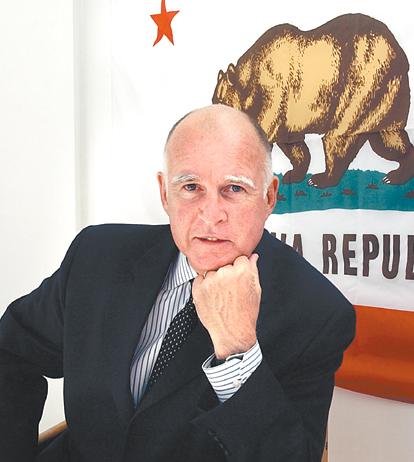

No Oscar for the guv’s budget

4

OPINION Given that Gov. Jerry Brown put out his proposed budget the same day that Oscar nominations came out, it’s tempting to make some comparisons.

Brown’s budget, like the nominated musical “Les Misérables,” has plenty of numbers, and will make some people cry.

But I take the new budget seriously, the same as every budget I’ve seen since I got to Sacramento. Unlike most of the recent budgets, this one doesn’t feature a big deficit. Give the Governor some credit for that, but let’s look at how he’s done it. Not all of it is pretty.

To start with, education gets a boost. That’s clearly what California’s voters wanted when they passed Proposition 30 in November. The budget will give more generous increases to the school districts that have more education challenges, and it boosts funding for higher education. We can cheer that.

It also funds the next steps for implementing federal health care reform. That bodes well for efforts to make sure all Americans and all Californians are insured. Under ideal circumstances, of course, we’d be talking about single payer.

There are other, less cheerful things in our future.

There’s an across-the board 20 percent cut to In-home Health Supportive Services beginning in November. This comes from an odd “optimistic” assumption from the governor that the courts that kept him from making those cuts earlier will let him do it now.

Child care funding is flat, which would be tolerable if it weren’t for past cuts. It’s hard to find a better investment in our state than child care. Kids in good child-care programs do better when they get to school. Child care allows more people to work and attend job training. Restoring child-care funding is critical for the state.

Keeping CalWORKS benefits at half of what they used to be is similarly shortsighted, as are cuts to the AIDS Drug Assistance Program, reductions in Medi-Cal provider rates and funding changes for students in higher education.

While preaching austerity, Brown keeps pouring money into a prison system that needs more reform. Sentencing and release programs could be altered to reduce the need for overstuffing prisons without risk to Californians. Overcrowding continues, with one women’s prison in the Central Valley at 180 percent of capacity. This is not stewardship that inspires confidence.

Prison programs to help people beat drug addictions and find jobs when they come out are gone. We are missing a chance for long-term reductions based on rehabilitation. Instead we continue to shuffle bodies around.

Spending choices are not the only problem. The governor skipped some ways of boosting revenue. What about the rules surrounding Proposition 13? Local jurisdictions would benefit from closing loopholes that allow corporations to avoid reassessment when property changes ownership.

I also want discussion of an oil severance tax. Here in the Bay Area — in Richmond and San Bruno — we’ve seen and lived with major downsides of the energy industry. I think it’s time that the oil producers who continue to make big profits pay a tax for the oil that’s taken out of California.

You can see that the Governor’s “director’s cut” budget doesn’t deserve a little gold statue — even if it is the best picture (fiscally) we’ve seen in a few years. We’ll look for silver linings when the Legislature starts working on our playbook.

Assemblymember Tom Ammiano represents the 13th District.

Jerrry Brown and UC

34

So the guv is going to start showing up at UC and CSU board meetings, where he will be able to sit next to his pal Gavin Newsom. And he’s going to tell the administrators that they have to start getting serious about cost-cutting — as if they haven’t whacked billions out of their budgets in the past few years.

I’m with Jerry on one thing: The Number One, absolute, top priority of the institutions of higher education in this state has to be avoiding hikes in tuition and fees. In fact, I’d put a five-year moratorium on anything that would increase costs for students. It’s already too expensive to go to a state school, middle-class parents are getting priced out, and kids are graduating with so much debt that they’re financially paralyzed for years.

The promise of an affordable, quality college education that Jerry’s dad created in this state is gone, and it’s not coming back until the price of a four-year degree comes back into synch with what Californians can pay. (Yes: UC is still a huge bargain compared to private schools. But you can go to college in Canada for half the price of UC, even if you’re an American. If you’re a Canadian citizen, you can go to really great colleges for almost nothing. That’s the way California used to be.

And no question: There’s bloat at UC. Administrators make too much money. I refuse to believe that you have to pay such giant salaries to attract people who can run the schools.

But that’s a small part of the overall UC and CSU budget. And Brown has to understand that higher education isn’t like most businesses. The productivity increases that corporate America (and that many other parts of state government) have seen in the digital era don’t translate directly to colleges. A company can lay off lots of staff that did things like answer phones and replace them with (annoying) voice-mail robots, and accountants can work faster and machines can make cars better than (expensive) labor forces did. But it still takes one full human being to teach English Lit, and he or she can still only teach a certain number of students, and grade a certain number of papers. And if all the smartest physicists and electrical engineers want to go to work for Oracle or Google, you have to pay more to get them to get a few to pursue careers in academia.

Brown’s proposal seems to be online classes, which would allow one prof to reach thousands of students, without anyone showing up in a classroom. Nice idea, but teaching isn’t just giving a lecture. Sure, some classes work fine on the web, but a lot don’t and never will.

Seriously, guv: Would you rather have this bloody fight that could damage your dad’s enduring legacy, or go along with an oil severance tax?


Gangsters, death, and spaghetti westerns: must be another week of movies!

0

Well, they announced the Oscar nominations yesterday, and much-lauded import Amour is opening today (review below the jump), so if you’re curious about the hype and don’t mind having a downer of a Friday night … you’re set. Other films opening this week include the Robert Carlyle drama California Solo (Dennis Harvey’s review here), Marlon Wayans horror spoof A Haunted House, Ryan Gosling-in-a-fedora cop flick Gangster Squad, and (at the Roxie), teen-skater doc Only the Young.

Also! The Pacific Film Archive’s “The Hills Run Red: Italian Westerns, Leone, and Beyond” series starts this week. Plenty of good spaghetti western action to be had; check out my round-up here. Read on for more short takes on this week’s releases.

Amour Arriving in local theaters atop a tidal wave of critical hosannas, Amour now seeks to tempt popular acclaim — though actually liking this perfectly crafted, intensely depressing film (from Austrian director Michael Haneke) may be nigh impossible for most audience members. Eightysomething former music teachers Georges and Anne (the flawless Jean-Louis Trintignant and Emmanuelle Riva) are living out their days in their spacious Paris apartment, going to classical concerts and enjoying the comfort of their relationship. Early in the film, someone tries to break into their flat — and the rest of Amour unfolds with a series of invasions, with Anne’s declining health the most distressing, though there are also unwanted visits from the couple’s only daughter (an appropriately self-involved Isabelle Huppert), an inept nurse who disrespects Anne and curses out Georges, and even a rogue pigeon that wanders in more than once. As Anne fades into a hollow, twisted, babbling version of her former self, Georges also becomes hollow and twisted, taking care of her while grimly awaiting the inevitable. Of course, the movie’s called Amour, so there’s some tenderness involved. But if you seek heartwarming hope and last-act uplift, look anywhere but here. (2:07) (Cheryl Eddy)

Gangster Squad It’s 1949, and somewhere in the Hollywood hills, a man has been tied hand and foot to a pair of automobiles with the engines running. Coyotes pace in the background like patrons queuing up for a table at Flour + Water, and when dinner is served, the presentation isn’t very pretty. We’re barely five minutes into Ruben Fleischer’s Gangster Squad, and fair warning has been given of the bloodletting to come. None of it’s quite as visceral as the opening scene, but Fleischer (2009’s Zombieland) packs his tale of urban warfare with plenty of stylized slaughter to go along with the glamour shots of mob-run nightclubs, leggy pin-curled dames, and Ryan Gosling lounging at the bar cracking wise. At the center of all the gunplay and firebombing is what’s framed as a battle for the soul of Los Angeles, waged between transplanted Chicago mobster Mickey Cohen (Sean Penn) — who wields terms like “progress” and “manifest destiny” as a rationale for a continental turf war — and a police sergeant named John O’Mara (Josh Brolin), tasked with bringing down Cohen’s empire. The assignment requires working under cover so deep that only the police chief (Nick Nolte) and the handpicked members of O’Mara’s “gangster squad” — ncluding Gosling, a half-jaded charmer who poaches Cohen’s arm candy (Emma Stone) — know of its existence. This leaves plenty of room for improvisation, and the film pauses now and again to wonder about what happens when you pit brutal amorality against brutal morality, but it’s a rhetorical question, and no one shows much interest in it. Dragged down by talking points that someone clearly wanted wedged in (as well as by O’Mara’s ponderous voice-overs), the film does better when it abandons gravitas and refocuses on spinning its mythic tale of wilder times in the Golden State. (1:53) (Lynn Rapoport)

http://www.youtube.com/watch?v=AKooIgzaQMg

Only the Young First seen locally at the 2012 San Francisco International Film Festival, this documentary from Elizabeth Mims and Jason Tippet is styled like a narrative and often shot like a fine art photograph (or at least a particularly bitchin’ Instagram), with an unexpectedly groovy soundtrack. It follows a pair of high schoolers with ever-changing hairstyles in dried-up Santa Clarita, Calif. — a burg of abandoned mini-golf courses and squatter’s houses, and a place where the owner of the local skate shop seems equally obsessed with tacos and Jesus. It’s never clear where Garrison and Kevin fall on the religious spectrum — though “the church” has a looming importance, influencing relationships if not wardrobe choices — but one gets the feeling all they really care about is skateboarding, with their own friendship a close second. Less certain are Garrison’s feelings about punky, tough-yet-sweet gal pal Skye — especially when they begin spending time with new flames. Only the Young‘s seemingly random choice of subjects works to its advantage, capturing the kids’ unaffected, surprisingly honest point of view on subjects as varied as cars, dating, college, the economy, and Gandalf Halloween costumes. (1:10) Roxie. (Cheryl Eddy)

Clergy summons sexy undead (local Episcopalian priest pens racy vamp novel)

0

It is perhaps indicative of my professional scope that I was nervous to talk to Amber Belldene, Bay Area author of a “racy romance” vampire novel (her words.) But be advised, my anxiety was due less to her literary pursuits and more with the fact that she is an ordained Episcopalian priest. Religion, it would seem, is a harder passion to penetrate for me than undead sex scenes. 

On her end, Belldene sees no conflict between the two. “Romance novels are really about love, and so is being Christian,” the neatly-attired writer, who “fell down a slippery vampire slope” when she was a young thing told me during her visit to my office. The tagline on her website reads “Mystically Sexy Paranormal Romance…because Desire is Divine.” [sic]

Blood Vine, Belldene’s debut novel, does present a few conflicts with the Christian faith, however. For one, the protagonist is undead. What would Jesus do? 

Though she came to her calling via a mystical experience in her early teens, the priest is far from one of those religious types who seek ban Harry Potter as a tool of the devil. “For me, fiction is just fiction,” she explains. And when she was bedbound pregnant with her twins, she felt the renewal of the connection to vampire novels she had as a child — so much so that she began to devour blood-based books at rates of one to two a day. (For the record, she started with Discovery of Witches and has never read the Twilight series, although she is fond of True Blood.) 

“It was a gut interest,” she says of this affinity for fanged folk. Vampire lit, she felt, “turns our hunger and longing for things into something visceral. [Vampires are] our exaggeration of our human traits.”

And longevity makes for some interesting plot lines. Belldene (her pen name — to protect those she works with, she also won’t reveal the place where she serves as priest) says she banged out Blood Vine rather quickly, and was able to get women-owned, indie publishing house Omnific to print the book on a per-order basis. The day of our interview she still didn’t have a copy of the thing, a fact that she shrugged off in a rather confusing, if charming manner.

She was inspired by some grapevines at a winery she visited in Sonoma County upon discovering that the vines had come from Croatia. The vines, as is obvious from the title, play a starring role in the book. “I think it sounds sillier than it reads,” the author half-apologies as she explains the plot. It is: hunky Andre Maras the vampire lives on a Sonoma vineyard. Far from his homeland, he is wasting away — a common vampire trait when separated from one’s birthplace, Belldene tells me. He hits upon grafting vines from his native country onto plants in California in the hopes of deriving ancestral pep from the wine made from the berries. 

Since Andre wants the best for all his fellow vamps, he starts producing the wine on a mass scale. And since that of course entails a cohesive publicity campaign, he hires a PR firm — a PR firm who assigns a rep, Zoey Porter, to his account that he finds quite comely. The rest is neck bites. (Figure of speech, I haven’t read it and you know how these undead novels go, surely it’s not that simple.)

>>ANDRE THE VAMPIRE INTERVIEWS BELLDENE ABOUT BEING A SEXY STORY-WRITING MINISTER? IT’S TRUE!

The plot is far from X-rated, Belldene tells me, but “this is solidly romance. But on the spicy level, not sweet and sensual.” 

What’s been the reaction from those who know her as a holy woman? Mainly positive, the priest of seven years says, and she counts among her supporters prominent members of the Bay Area Episcopalian scene, although many “appreciate the fact I have a pen name.” And for those who have been a bit more confused by the unholy Andre and crew, Belldene has practiced tolerance as any good Christian would. “I have been supportive of their questions,” she says. 

Belldene has two sequels to the novel in the works, 

The Performant: Music men

0

Mark Growden’s solo show and variations on a theme with Hand to Mouth 

There’s something so charmingly unassuming about the Red Poppy Art House — a by-now venerable institution on the Mission District’s quirk-centric music scene — it makes you want to invite it home for a Hangtown Fry and mimosas. From the mismatched chairs to the frayed curtains, the whitewashed walls to the cramped toilet, the Red Poppy’s overall ambiance is that of a sort of ramshackle country parlor, right down to the upright piano.

Though you’d never mistake him for a church lady, Bay Area bard Mark Growden does exude a touch of the rustic — a down-home demeanor rooted in his rural Northern California upbringing. From the moment he opened his set on Friday night at the Red Poppy with a haunting, desert lament played ingeniously on his signature set of bicycle handlebars, it was as if he were unfolding a map of the hidden pockets of America and inviting us on an introspective journey through them.

Assisted ably by trumpeter Chris Grady, who employed a number of mutes throughout the show, probably to keep him from blowing the heads off the front row seated literally at his feet, Growden worked his way through a repertoire of old songs and new which hearkened to the barroom backrooms of the South, the windswept plains of the American West, and the lonesome riverbanks of the Truckee, and the Mississippi.

Though much of Growden’s music is tinged with a fragile darkness, the mood of the evening was light, jovial, the banter flying thick and fast between stage and oddience, and slyly humorous counterpoint provided by Grady. By the time it came around to the group sing-a-long, we were all good friends, a chummy crew, no doubt assisted in part by the closeness of our quarters, the conviviality of claustrophilia.

Music was also the theme at monthly comedy event Hand to Mouth at the Dark Room Theatre. Since 2011, Hand to Mouth has been hosting eclectic lineups of funny-persons who are encouraged to perform sets that relate to a pre-announced topic, and much of the fun comes from discovering how each comic will interpret the theme.

Sure, there were a few comics who merely riffed on the topic by dissing bands they didn’t like or making fun of raves, easy targets all, but co-host James Fluty broke the trend by coming out onstage with a guitar and playing a lewd ballad about Mormons (take that Trey Parker and Matt Stone) and Jesse Elias shattered what was left of it by giving a totally hilarious power-point presentation he called “A Lecture of Music History.” Ostensibly a comparison of the evolution of classical to contemporary music, Elias spent time comparing music from “Der Gloeckner von Notre Dame” and “Wicked,” introducing us to the “orchestra hit” sample, and comparing the “two distinct sounds referred to as ‘electric piano’” which involved a straight-faced comparison of various video games soundtracks versus Disney credits music.

Keeping it weird, DJ Real (a.k.a. Nick Stargu) contributed a retiree version of a NIN tune (“I Want to Play Some Canasta”), the Unwatchables sold their souls to the devil in order to be able to play the blues for Bruce Willis, and Drennon Davis ended the show on a literal high note by turning himself into a radio with the help of a loop station and station-appropriate DJ patter that ranged from the growling bro-down of hard rock station “Radio K-O-C-K” to the passive-aggressive mellow of “Free Jazz Radio” (“just want to clarify something about our name, we are not ‘free’. We are listener-supported.”)

It would appear allowing comedians to stretch their creativity to encompass yet redefine a specific theme is as good for them as it was for us—and makes it easy to look forward to their February installment at Lost Weekend Video, when the theme will be “Jobs”. Hell, I’ve got a few jokes about that myself….

The downside of Jerry Brown’s budget

9

The guv is quite proud of his new budget: He’s eliminated the chronic deficits, he’s giving some more money to the schools, and he’s vowing that the state will live “within its means.” Which sounds like no more taxes. And gee, just about everyone in Sacramento is singing Kumbaya; the praise is coming not just from Democrats but from Republicans.

But there’s a downside to the Brown budget: He has, to his credit, stopped the red ink, and he’s presenting things in a brilliant way that makes him look like the grownup the state has needed for many years — but he’s doing very little to replace the the money that services for the poor have lost in the past five years.

“At first blush, it has some good things,” Assemblymember Tom Ammiano told me. “But I don’t see restoration of the cuts for the disenfranchised.”

Ammiano is calling for closing Prop. 13 loopholes and passing an oil severance tax as part of the budget process. And with Democrats holding a two-thirds majority in both houses, those kinds of changes are possible. At the very least, it seems, the progressives ought to demand from Brown a plan to backfill what social service providers have lost. If it can’t all happen this year, it ought to be part of the future budget process.

State Sen. Mark Leno, who chairs the Senate Budget Commitee, was a bit more politic than Ammiano, but he also is concerned that the budget move the state forward:

“With the improvement of our fiscal outlook comes the opportunity to continue our work to restore California. While our recent efforts have focused largely on making cuts in the least harmful manner possible, we will now have more capacity to refine our work to improve essential programs and analyze the role of government and its effectiveness. I look forward to working with Governor Brown and my colleagues in the Legislature to evaluate this year’s budget to help ensure it is the best possible plan for a state on the mend.”

On the mend is right — because the state of California is in way worse shape than it was when Arnold Schwarzenegger took over and screwed things up, and the goal shoudn’t be to keep at a steady state that’s unacceptable. It ought to be returning California to its role as a leader in progressive policy. Sorry, Jerry: A balanced budget alone isn’t good enough.

Oh, and Californians United for a Reponsible Budget, which seeks to cut prison spending, points out that this budget is hardly tough on the bloated corrections budget:

The administration has deserted plans to shrink California’s over-sized prison population, ignoring clear messages from voters. The proposed budget increases prison spending $250 million including a $52 million General Fund increase, bringing the total Corrections budget over $11 billion. Despite the passage of Prop. 36 and continuing realignment,  It also projects an increase in the prison population by 2,262 people over the 2012 Budget Act projections. ”If the Governor believes that ‘we can’t pour more and more dollars down the rat hole of incarceration’ then why is he increasing spending on Corrections, planning for more prisoners rather than fewer and defying the demands of the Federal Court and the voters to further shrink the prison system?” asked Diana Zuñiga, Field Organizer for Californians United for a Responsible Budget.

It’s no surprise that the prison guards’ union is happy.

UPDATE: An analysis by Ammiano’s office shows a few other lowlights of the budget: It reduced AIDS Drug Assistance Program money by $16.9 million. It doesn’t restore any of the deep cuts to the state’s Welfare to Work Program. It cuts community college funding by tying state money to student completion, not student enrollment. It offers no additional funding for child care programs. It caps the number of courses students are allowed to take if they want to receive Cal Grants.

The Leg needs to take a hard look at this before it signs off on all these cuts.

Despite settlement, Wells Fargo still in housing activists’ crosshairs

Federal regulators cut a deal with 10 major banks to “speed up housing relief,” major news outlets reported earlier this week – but to exactly no one’s surprise, the amount promised to struggling homeowners is a pittance compared with the overwhelming losses sustained during the foreclosure crisis. National consumer advocates criticized the deal as a lost opportunity to demand some accountability from Wall Street. In San Francisco, neighborhood activists with Occupy Bernal dismissed the agreement as falling short and vowed to continue campaigning against Wells Fargo, a primary mortgage lender based in San Francisco and one of the 10 financial institutions to sign on. 

The bank settlement replaced a mandatory, independent foreclosure review process that financial institutions were required to take on following revelations of widespread abuses, like robo-signing. Created to benefit homeowners who faced foreclosure in the wake of these shady lending practices, the program was ultimately chalked up as a failure for being too slow, costly and ineffective. Not only did it reach just a tiny fraction of those eligible to file claims, said Bruce Mirken of the Greenlining Institute, but “as of the end of the year, nobody had actually gotten any money.”

Instead of continuing down that fraught path, big lenders such as Bank of America, Wells Fargo, JPMorgan Chase and others agreed to shell out $8.5 billion to settle the claims. Under a process that remains far from clear, payments are supposed to be distributed among 3.8 million struggling households nationwide – some of whom went through foreclosure in 2009 and 2010, and others currently in danger of losing their homes.

Local housing activists were cynical. “Wells Fargo and the other big banks have agreed to paying principal reductions and affordable permanent loan modifications about 20 times. They haven’t done it yet, and they’re not going to do it unless we make ’em,” said Buck Bagot, a neighborhood activist who has been organizing around foreclosure issues with Occupy Bernal. In San Francisco alone, more than 1,200 foreclosed properties turned up in a quick search on Trulia.com – many listed at prices exceeding $500,000.

The situation is far worse in the East Bay. From 2006 to 2011, one out of every 14 Oakland households faced foreclosure and had their property reverted back to the bank, according to data compiled by the Urban Strategies Council, an Oakland-based nonprofit working on anti-poverty issues. East Oakland was hit hardest, with data visualizations showing between 165 and 409 properties per census tract that had reverted back to lenders in 2008. (You can view detailed geographic foreclosure data compiled by the Council here.)

“The amount of wealth that has been sucked out of communities is astonishing,” said Mirken, of the Greenlining Institute, a Berkeley-based research advocacy organization focused on economic justice. “It’s not at all clear that the $8.5 billion is at all in relation to the trillions in wealth that was drained from communities in the foreclosure crisis.” In California there are currently 208,435 foreclosed homes up for sale, according to data recently accessed on housing tracking site RealtyTrac, with average price listings of around $273,000. The amount that stands to be gained by selling off bank-owned properties exceeds the total settlement payout by many orders of magnitude. 

Mirken said he was glad the banks are promising at least some form of relief to struggling homeowners, even if it’s small potatoes. “I’m not dismissing this as nothing,” he said. “But it feels like the response has never matched the scale of the problem.”

Meanwhile, some nationwide consumer advocates blasted the deal. “The capped pool of cash payments is wholly inadequate in light of the scale of the harm,” said Alys Cohen, staff attorney for the National Consumer Law Center. “If the reviews had been done right the first time, banks would have been on the hook to pay far more to homeowners, even though the planned scheme fell far short of full compensation.”

Occupy Bernal staged a protest at the Bayview branch of Wells Fargo several weeks ago in an effort to draw attention to abusive lending practices that disproportionately affected African American, Asian and Latino homeowners. Bagot told the Guardian there are more to come. As for the bank settlement deal, he scoffed: “These governmental chickens live in the chicken coop that’s run by the fox.”

Our Weekly Picks: January 9-15

0

WEDNESDAY 9

RADAR Reading Series

Like a literary-focused Parisian salon, but with vibrant SF genderfucking and homemade desserts, this monthly showcase of emerging, underground writers and artists is routinely the most enticing potpourri of need-to-know talent. The RADAR Reading Series is part of local treasure/Sister Spit(ter) Michelle Tea’s nonprofit, RADAR Productions. This time, there’s visual artist D-L Alvarez, Gaga Feminism author Jack Halberstam (who writes often of gender queerness, pop culture, and bad TV), transnational interdisciplinary artist and cultural organizer Favianna Rodriguez, and author Grace Krilanovich — whose 2010 debut novel, The Orange Eats Creep,was named one of Amazon’s top science fiction/fantasy books that year. With Tea hosting the follow-up Q&A, you know there will be cookies on hand. (Emily Savage)

6pm, free

San Francisco Public Library, Main Branch

Latino Reading Room

100 Larkin, SF

www.radarproductions.org


THURSDAY 10

“Unknown but Knowable States”

Dorothea Tanning’s surreal paintings provide a window into the female subconscious with as much style and punch as her male contemporaries. There will be a few of these crisp, symbolic painting in the upcoming exhibit, Known but Unknowable States, but it will also show a different side of her work — one that could easily fit in with ethereal figure painting seen in contemporary art. The most striking works are what she called “prism” paintings, which twist the female form into abstract visions with soft brushwork and unique color combinations. To go along with these will be some of her soft sculptures of strange creatures made of fabric, fur, and a sewing machine. (Molly Champlin)

Through March 2

Opening reception, 5pm, free

Gallery Wendi Norris

161 Jessie, SF

(415) 346-7812

www.gallerywendinorris.com


The Art and Legacy of Crime Photographer Weegee

It should come as no surprise that Eddie Muller took a shining to the work of 1930s and ’40s press photographer Arthur Fellig, a.k.a. Weegee. Muller’s the founder of the SF Noir Film Festival, whose hardboiled flicks go perfectly with Weegee’s steely-gazed shots of crime scenes. The photographer is widely credited with bringing aesthetic concern to crime scene photography. Today, Muller explains why the man’s work still matters now, in the era of Instagram and meme mania, with this talk, punctuated by video interludes. (Caitlin Donohue)

6:30-8pm, $5

Contemporary Jewish Museum

736 Mission, SF

(415) 655-7800

www.thecjm.org


FRIDAY 11

“Risk is This…”

If you want to see what Cutting Ball Theatre’s next season might look like, you’d do well to check out this season’s new experimental plays festival, “Risk is This….” Past festivals have foreshadowed full productions of some of Cutting Ball’s most memorable pieces including Marcus Gardley’s “…and Jesus Moonwalks the Mississippi” and Eugenie Chan’s “Tontlawald”, and this year’s lineup looks to be just as full of future potential, with new plays written by Sean San José, Dipika Guha, and Basil Kreimendahl, plus exciting new translations of Alfred Jarry’s “Ubu Roi” and the Capek brothers’ “Insect Play.” Presented over five weekends of staged readings, the five plays range topically from transgenderism to crack-cocaine to the corrupting influence of power — which certainly sounds like the very definition of risk to us. (Nicole Gluckstern)

Fridays and Saturdays through Feb. 9

8pm, free–$20 donation

EXIT on Taylor

177 Taylor, SF

(415) 525-1205

www.cuttingball.com


“Alfred Hitchcock: The Shape of Suspense”

Alfred Hitchcock is just coming off his best year in decades, with a biopic starring Anthony Hopkins and the news that his 1958 psychological drama Vertigo leapfrogged past the almighty Citizen Kane (1941) in at least one “best films of all time…ever…full stop” poll of influential film critics. Not bad for a guy who died in 1980. The Pacific Film Archive shines a well-timed spotlight on the prolific Master of Suspense with an extensive retrospective of works well-known (1954’s Rear Window, 1959’s North by Northwest, 1960’s Psycho, and — of course — Vertigo) and more obscure (1931’s Rich and Strange, 1937’s Young and Innocent, 1947’s The Paradine Case) — not to mention often-overshadowed underdogs like the series kick-off film, made by Hitch in his pre-Hollywood days: 1935’s The 39 Steps. (Cheryl Eddy)

Through April 24, 7pm, $5.50–$9.50

Pacific Film Archive

2575 Bancroft, Berk.

bampfa.berkeley.edu


Mister Lies

Nick Zanca played in several punk bands in high school until he was introduced to electronic music and production in college. This happened about a year ago. Since then he’s caused quite the stir, catching a record deal and tour as Mister Lies. The deep, almost spiritual electronica, or “experimental avant-garde pop” as he prefers, draws inspiration from diverse artists — spanning Steve Reich to Missy Elliot. His generally downtempo vibe might be better scheduled at four in the morning. But hey, there’s no right time to unwind your mind a bit, particularly when it’s Mister Lies’ gospel-infused sound paired with the smooth dream pop of San Francisco local, Giraffage. (Champlin)

With Some Ember

9:30pm, $12

Bottom of the Hill

1233 17th St., SF

(415) 621-4455

www.bottomofthehill.com


SATURDAY 12

“Rituals of Water”

The most recent work of local artist, Rodney Ewing, manages to distil a lot of history and ideas into a coherent show about water. This theme is embedded even in the creation of the art: the large scale paintings are made of ink, salt, and mostly, water. Through figures and words that seem to be dissolving on paper, he looks at four moments in the history of African American people, the transatlantic slave trade, baptism, civil rights, and Hurricane Katrina. Though his works are heavily political, they don’t seek to make a statement. Instead they perform a sort of ritual in which the viewer and artist strengthen African history by reclaiming memories and stories once lost through diaspora. (Champlin)

Through March 1

Opening reception, 6pm, free

IcTus Gallery

1769 15th St., SF

(510) 912-0792

www.ictusgallery.com


Mary Armentrout

Old Will wasn’t exactly thinking about installation pieces when he proclaimed, “all the world’s a stage.” Still there is something about the connection between “living” and “performing” that today many dance artists explore by stretching that fragile tie between the two. One way is by abandoning the proscenium theater for more flexible environments. Few, however, go as far as the ever adventuresome Mary Armentrout who is traveling her “reveries and elegies,” essentially a solo piece for herself, from two Oakland locations first to CounterPULSE this weekend, then (Feb. 23-24) to Bakers’ Beach. Each time she shows these “reveries,” she will do the same, of course, not at all. Ideally one would see the whole cycle but since Armentrout has assembled the piece from fragments, fragments is what we’ll get. And that’s OK. (Rita Felciano)

Also Sun/13, 4:15pm, $20

CounterPULSE

1310 Mission, SF

(510) 845-8604

www.eventbrite.com


Kicker

Newish Bay Area band Kicker features members of Neurosis, Filth, and Dystopia, and sounds like late ’70s anarcho-punk à la Subhumans. Which makes perfect sense, really, as lead vocalist Pete the Roadie grew up in England, went to the same school as Subhumans and Organized Chaos, and has been a part of the worldwide punk scene since that formative year of ’77. Really need another reason to go to this $5 Bender’s show? OK: Bad Cop/Bad Cop — the LA rock’n’roll band with members of Cocksparrer tribute act Cunt Sparrer — opens the whole thing up. (Savage)

With Pang!

10pm, $5

Bender’s

800 S. Van Ness, SF

(415) 824-1800

www.bendersbar.com


MONDAY 14

The Great American Pop-Up

The Great American Pop-Up is back. Because who wants to make dinner on a Monday night? At the first installment, patrons scarfed chocolate raspberry cookies, sustainable sushi, and salty spiced sausages. At this second round — again inside the iconic Tenderloin site, recently named one California’s most beautiful music venues — a few of those patron-pleasing vendors will return: sustainable sushi via Rice Cracker Sushi, Asian fusion dishes via Harro-Arigato and Ronin, along with Dora’s Donuts and Donna’s Tamales. The house Chef James Whitmore will be whipping up dishes, and there will be some crafty vendors including a Yes & Yes Designs booth, should you be in the market for one-of-a-kind jewelry made from recycled books as a delicious side dish to your sushi. DJs Children of the Funk will provide the background beats to your fine (club) dining experience. (Savage)

Great American Music Hall

859 O’Farrell, SF (415) 885-0750

www.slimspresents.com


TUESDAY 15

Shabazz Palaces

The retro-future of space hip-hop is here, in disparate senses among headliner Shabazz Palaces and opener Ensemble Mik Nawooj. Led by Palaceer Lazaro — formerly of jazz-rap group Digable Planets — and multi-instrumentalist Tendai “Baba” Maraire, Seattle’s Shabazz Palaces are part of a cosmic collective of forward-thinking artists, including Sub Pop labelmates, THEESatisfaction. Their latest release, 2011’s Black Up, was a vortex of jazz, soul, and rap with African percussion keeping the beat. And then there’s Ensemble Mik Nawooj, the East Bay crew behind that alternate universe chamber hip-hop opera, Great Integration, a similarly genre-busting production that follows five malevolent lords who control the physical world, and the assassin who slays them. Prepare to elevate your mind. Countdown to launch. (Savage)

With Ensemble Mik Nawooj, Duckwrth, DJ Orfeu

9pm, $15

New Parish

579 18th St., Oakl.

(415) 371-1631

www.thenewparish.com


The Guardian listings deadline is two weeks prior to our Wednesday publication date. To submit an item for consideration, please include the title of the event, a brief description of the event, date and time, venue name, street address (listing cross streets only isn’t sufficient), city, telephone number readers can call for more information, telephone number for media, and admission costs. Send information to Listings, the Guardian, 225 Bush, 17th Flr., SF, CA 94105; or e-mail (paste press release into e-mail body — no attachments, please) to listings@sfbg.com. Digital photos may be submitted in jpeg format; the image must be at least 240 dpi and four inches by six inches in size. We regret we cannot accept listings over the phone.

Film Listings

0

Film listings are edited by Cheryl Eddy. Reviewers are Kimberly Chun, Dennis Harvey, Lynn Rapoport, and Sara Maria Vizcarrondo. For rep house showtimes, see Rep Clock.

OPENING

Amour Arriving in local theaters atop a tidal wave of critical hosannas, Amour now seeks to tempt popular acclaim — though actually liking this perfectly crafted, intensely depressing film (from Austrian director Michael Haneke) may be nigh impossible for most audience members. Eightysomething former music teachers Georges and Anne (the flawless Jean-Louis Trintignant and Emmanuelle Riva) are living out their days in their spacious Paris apartment, going to classical concerts and enjoying the comfort of their relationship. Early in the film, someone tries to break into their flat — and the rest of Amour unfolds with a series of invasions, with Anne’s declining health the most distressing, though there are also unwanted visits from the couple’s only daughter (an appropriately self-involved Isabelle Huppert), an inept nurse who disrespects Anne and curses out Georges, and even a rogue pigeon that wanders in more than once. As Anne fades into a hollow, twisted, babbling version of her former self, Georges also becomes hollow and twisted, taking care of her while grimly awaiting the inevitable. Of course, the movie’s called Amour, so there’s some tenderness involved. But if you seek heartwarming hope and last-act uplift, look anywhere but here. (2:07) Clay. (Eddy)

California Solo Whatever happened to &ldots;? In a sense, Robert Carlyle — lost too long to US movie audiences while marooned on SGU Stargate Universe — might have found the ideal role in this soulful indie turn as a Scottish rock star on the decline. Lachlan (Carlyle) was once the guitarist in a Britpop-band-on-the-verge called the Cranks —now he’s grounding himself by working at a farm outside LA and doing his humble part in the music world with a podcast on spectacular rock ‘n’ roll deaths. But Lachlan’s attempts to hold steady are dashed when he’s slapped with a DUI and his immigration status is threatened. With few bucks saved and a life that has gone strictly solo for far too long, the free spirit is forced to reckon with his past — an old manager (Michael Des Barres), the ex-wife (Kathleen Wilhoite) and daughter (Savannah Lathem) he never sees — in an attempt to avoid getting deported. Echoes of both Dennis Wilson’s and Noel Gallagher’s rock histories reverberate through California Solo, as do 1983’s Tender Mercies, 2009’s Crazy Heart, and other music films about charismatic old reprobates coming to terms with their misdeeds. The intense, sexy Carlyle, however, makes it clear through the specifics of his performance that this story, and these sins, is his extremely flawed, charmingly self-absorbed character’s own. Will he or won’t he fabulously flame out rather than fade away, asks writer-director Marshall Lewy (2007s Blue State)? The more heroic path, according to California Solo, might be waking up to face yet another day. For a longer review of this film, see "The Damage Done." (1:34) Opera Plaza. (Chun)

Gangster Squad Ryan Gosling leads a fedora-wearing cast in this cops ‘n’ mobsters tale set in 1949 Los Angeles. (1:53)

A Haunted House Marlon Wayans stars in this spoof of the Paranormal Activity series and other "found footage" films. Mocking the trend means it’s on its way out, right? (1:25)

Only the Young First seen locally at the 2012 San Francisco International Film Festival, this documentary from Elizabeth Mims and Jason Tippet is styled like a narrative and often shot like a fine art photograph (or at least a particularly bitchin’ Instagram), with an unexpectedly groovy soundtrack. It follows a pair of high schoolers with ever-changing hairstyles in dried-up Santa Clarita, Calif. — a burg of abandoned mini-golf courses and squatter’s houses, and a place where the owner of the local skate shop seems equally obsessed with tacos and Jesus. It’s never clear where Garrison and Kevin fall on the religious spectrum — though "the church" has a looming importance, influencing relationships if not wardrobe choices — but one gets the feeling all they really care about is skateboarding, with their own friendship a close second. Less certain are Garrison’s feelings about punky, tough-yet-sweet gal pal Skye — especially when they begin spending time with new flames. Only the Young‘s seemingly random choice of subjects works to its advantage, capturing the kids’ unaffected, surprisingly honest point of view on subjects as varied as cars, dating, college, the economy, and Gandalf Halloween costumes. (1:10) Roxie. (Eddy)

ONGOING

Anna Karenina Joe Wright broke out of British TV with the 9,000th filmed Pride and Prejudice (2005), unnecessary but quite good. Too bad it immediately went to his head. His increasing showiness as director enlivened the silly teenage-superspy avenger fantasy Hanna (2011), but it started to get in the way of Atonement (2007), a fine book didn’t need camera gymnastics to make a great movie. Now it’s completely sunk a certified literary masterpiece still waiting for a worthy film adaptation. Keira Knightley plays the titular 19th century St. Petersburg aristocrat whose staid, happy-enough existence as a doting mother and dutiful wife (to deglammed Jude Law’s honorable but neglectful Karenin) is upended when she enters a mutually passionate affair with dashing military officer Count Vronsky (Aaron Taylor-Johnson, miscast). Scandal and tragedy ensue. There’s nothing wrong with the screenplay, by Tom Stoppard no less. What’s wrong is Wright’s bright idea of staging the whole shebang as if it were indeed staged — a theatrical production in which nearly everything (even a crucial horse race) takes place on a proscenium stage, in the auditorium, or "backstage" among riggings. Whenever we move into a "real" location, the director makes sure that transition draws attention to its own cleverness as possible. What, you might ask, is the point? That the public social mores and society Anna lives in are a sort of "acting"? Like wow. Add to that another brittle, mannered performance by Wright’s muse Knightley, and there’s no hope of involvement here, let alone empathy — in love with its empty (but very prettily designed) layers of artifice, this movie ends up suffocating all emotion in gilded horseshit. The reversed-fortune romance between Levin (Domhall Gleeson) and Kitty (Alicia Vikander) does work quite well — though since Tolstoy called his novel Anna Karenina, it’s a pretty bad sign when the subsidiary storyline ends up vastly more engaging than hers. (2:10) Albany, Embarcadero. (Harvey)

Argo If you didn’t know the particulars of the 1979 Iranian Revolution, you won’t be an expert after Argo, but the film does a good job of capturing America’s fearful reaction to the events that followed it — particularly the hostage crisis at the US embassy in Tehran. Argo zeroes in on the fate of six embassy staffers who managed to escape the building and flee to the home of the sympathetic Canadian ambassador (Victor Garber). Back in Washington, short-tempered CIA agents (including a top-notch Bryan Cranston) cast about for ways to rescue them. Enter Tony Mendez (Ben Affleck, who also directs), exfil specialist and father to a youngster wrapped up in the era’s sci-fi craze. While watching 1973’s Battle for the Planet of the Apes, Tony comes up with what Cranston’s character calls "the best bad idea we have:" the CIA will fund a phony Canadian movie production (corny, intergalactic, and titled Argo) and pretend the six are part of the crew, visiting Iran for a few days on a location shoot. Tony will sneak in, deliver the necessary fake-ID documents, and escort them out. Neither his superiors, nor the six in hiding, have much faith in the idea. ("Is this the part where we say, ‘It’s so crazy it just might work?’" someone asks, beating the cliché to the punch.) Argo never lets you forget that lives are at stake; every painstakingly forged form, every bluff past a checkpoint official increases the anxiety (to the point of being laid on a bit thick by the end). But though Affleck builds the needed suspense with gusto, Argo comes alive in its Hollywood scenes. As the show-biz veterans who mull over Tony’s plan with a mix of Tinseltown cynicism and patiotic duty, John Goodman and Alan Arkin practically burst with in-joke brio. I could have watched an entire movie just about those two. (2:00) Embarcadero, Castro, Piedmont, Sundance Kabuki. (Eddy)

The Central Park Five Acclaimed documentarian Ken Burns takes on the 1989 rape case that shocked and divided a New York City already overwhelmed by racially-charged violence. The initial crime was horrible enough — a female jogger was brutally assaulted in Central Park — but what happened after was also awful: cops and prosecutors, none of whom agreed to appear in the film, swooped in on a group of African American and Latino teenagers who had been making mischief in the vicinity (NYC’s hysterical media dubbed the acts "wilding," a term that became forever associated with the event). Just 14 to 16 years old, the boys were questioned for hours and intimidated into giving false, damning confessions. Already guilty in the court of public opinion, the accused were convicted in trials — only to see their convictions vacated years after they’d served their time, when the real assailant was finally identified. Using archival news footage (in one clip, Gov. Mario Cuomo calls the crime "the ultimate shriek of alarm that says none of us are safe") and contemporary, emotional interviews with the Five, Burns crafts a fascinating study of a crime that ran away with itself, in an environment that encouraged it, leaving lives beyond just the jogger’s devastated in the process. (1:59) Roxie. (Eddy)

Cirque du Soleil: Worlds Away (1:31) Metreon, 1000 Van Ness, Shattuck.

Cloud Atlas Cramming the six busy storylines of David Mitchell’s wildly ambitious novel into just three hours — the average reader might have thought at least 12 would be required — this impressive adaptation directed (in separate parts) by Tom Twyker (1998’s Run Lola Run) and Matrix siblings Lana and Andy Wachowski has a whole lot of narrative to get through, stretching around the globe and over centuries. In the mid 19th century, Jim Sturgess’ sickly American notory endures a long sea voyage as reluctant protector of a runaway-slave stowaway from the Chatham Islands (David Gyasi). In 1931 Belgium, a talented but criminally minded British musician (Ben Whishaw) wheedles his way into the household of a famous but long-inactive composer (Jim Broadbent). A chance encounter sets 1970s San Francisco journalist Luisa (Halle Berry) on the path of a massive cover-up conspiracy, swiftly putting her life in danger. Circa now, a reprobate London publisher’s (Broadbent) huge windfall turns into bad luck that gets even worse when he seeks help from his brother (Hugh Grant). In the not-so-distant future, a disposable "fabricant" server to the "consumer" classes (Doona Bae) finds herself plucked from her cog-like life for a rebellious higher purpose. Finally, in an indeterminately distant future after "the Fall," an island tribesman (Tom Hanks) forms a highly ambivalent relationship toward a visitor (Berry) from a more advanced but dying civilization. Mitchell’s book was divided into huge novella-sized blocks, with each thread split in two; the film wastes very little time establishing its individual stories before beginning to rapidly intercut between them. That may result in a sense of information (and eventually action) overload, particularly for non-readers, even as it clarifies the connective tissues running throughout. Compression robs some episodes of the cumulative impact they had on the page; the starry multicasting (which in addition to the above mentioned finds many uses for Hugo Weaving, Keith David, James D’Arcy, and Susan Sarandon) can be a distraction; and there’s too much uplift forced on the six tales’ summation. Simply put, not everything here works; like the very different Watchmen, this is a rather brilliant "impossible adaptation" screenplay (by the directors) than nonetheless can’t help but be a bit too much. But so much does work — in alternating currents of satire, melodrama, pulp thriller, dystopian sci-fi, adventure, and so on — that Cloud Atlas must be forgiven for being imperfect. If it were perfect, it couldn’t possibly sprawl as imaginatively and challengingly as it does, and as mainstream movies very seldom do. (2:52) Castro. (Harvey)

Django Unchained Quentin Tarantino’s spaghetti western homage features a cameo by the original Django (Franco Nero, star of the 1966 film), and solid performances by a meticulously assembled cast, including Jamie Foxx as the titular former slave who becomes a badass bounty hunter under the tutelage of Dr. Schultz (Christoph Waltz). Waltz, who won an Oscar for playing the evil yet befuddlingly delightful Nazi Hans Landa in Tarantino’s 2009 Inglourious Basterds, is just as memorable (and here, you can feel good about liking him) as a quick-witted, quick-drawing wayward German dentist. There are no Nazis in Django, of course, but Tarantino’s taboo du jour (slavery) more than supplies motivation for the filmmaker’s favorite theme (revenge). Once Django joins forces with Schultz, the natural-born partners hatch a scheme to rescue Django’s still-enslaved wife, Broomhilda (Kerry Washington), whose German-language skills are as unlikely as they are convenient. Along the way (and it’s a long way; the movie runs 165 minutes), they encounter a cruel plantation owner (Leonardo DiCaprio), whose main passion is the offensive, shocking "sport" of "Mandingo fighting," and his right-hand man, played by Tarantino muse Samuel L. Jackson in a transcendently scandalous performance. And amid all the violence and racist language and Foxx vengeance-making, there are many moments of screaming hilarity, as when a character with the Old South 101 name of Big Daddy (Don Johnson) argues with the posse he’s rounded up over the proper construction of vigilante hoods. It’s a classic Tarantino moment: pausing the action so characters can blather on about something trivial before an epic scene of violence. Mr. Pink would approve. (2:45) Four Star, Metreon, 1000 Van Ness, Presidio, Sundance Kabuki. (Eddy)

The Guilt Trip (1:35) Metreon, 1000 Van Ness, Shattuck.

Hitchcock On the heels of last year’s My Week With Marilyn comes another biopic about an instantly recognizable celebrity viewed through the lens of a specific film shoot. Here, we have Anthony Hopkins (padded and prosthetic’d) playing the Master of Suspense, mulling over which project to pursue after the success of 1959’s North by Northwest. Even if you’re not a Hitch buff, it’s clear from the first scene that Psycho, based on Robert Bloch’s true crime-inspired pulpy thriller, is looming. We open on "Ed Gein’s Farmhouse, 1944;" Gein (Michael Wincott) is seen in his yard, his various heinous crimes — murder, grave-robbing, body-part hoarding, human-skin-mask crafting, etc. — as yet undiscovered. Hitchcock, portrayed by the guy who also played the Gein-inspired Hannibal Lecter, steps into the frame with that familiar droll greeting: "Guhhd eevvveeeening." And we’re off, following the veteran director as he muses "What if somebody really good made a horror picture?" Though his wife and collaborator, Alma (Helen Mirren), cautions him against doing something simply because everyone tells him not to, he plows ahead; the filmmaking scenes are peppered with behind-the-scenes moments detailed in Stephen Rebello’s Alfred Hitchcock and the Making of Psycho, the source material for John J. McLaughlin’s script. But as the film’s tagline — "Behind every Psycho is a great woman" — suggests, the relationship between Alma and Hitch is, stubbornly, Hitchcock‘s main focus. While Mirren is effective (and I’m all for seeing a lady who works hard behind the scenes get recognition), the Hitch-at-home subplot exists only to shoehorn more conflict into a tale that’s got plenty already. Elsewhere, however, Hitchcock director Sacha Gervasi — making his narrative debut after hit 2008 doc Anvil: The Story of Anvil — shows stylistic flair, working Hitchcock references into the mise-en-scène. (1:32) Embarcadero, Four Star. (Eddy)

The Hobbit: An Unexpected Journey Make no mistake: the Lord of the Rings trilogy represented an incredible filmmaking achievement, with well-deserved Oscars handed down after the third installment in 2003. If director Peter Jackson wanted to go one more round with J.R.R. Tolkien’s beloved characters for a Hobbit movie, who was gonna stop him? Not so fast. This return to Middle-earth (in 3D this time) represents not one but three films — which would be self-indulgent enough even if part one didn’t unspool at just under three hours, and even if Jackson hadn’t decided to shoot at 48 frames per second. (I can’t even begin to explain what that means from a technical standpoint, but suffice to say there’s a certain amount of cinematic lushness lost when everything is rendered in insanely crystal-clear hi-def.) Journey begins as Bilbo Baggins (a game, funny Martin Freeman) reluctantly joins Gandalf (a weary-seeming Ian McKellan) and a gang of dwarves on their quest to reclaim their stolen homeland and treasure, batting Orcs, goblins, Gollum (Andy Serkis), and other beasties along the way. Fan-pandering happens (with characters like Cate Blanchett’s icy Galadriel popping in to remind you how much you loved LOTR), and the story moves at a brisk enough pace, but Journey never transcends what came before — or in the chronology of the story, what comes after. I’m not quite ready to declare this Jackson’s Phantom Menace (1999), but it’s not an unfair comparison to make, either. (2:50) California, Metreon, 1000 Van Ness, Sundance Kabuki. (Eddy)

Holy Motors Holy moly. Offbeat auteur Leos Carax (1999’s Pola X) and frequent star Denis Lavant (1991’s Lovers on the Bridge) collaborate on one of the most bizarrely wonderful films of the year, or any year. Oscar (Lavant) spends every day riding around Paris in a white limo driven by Céline (Edith Scob, whose eerie role in 1960’s Eyes Without a Face is freely referenced here). After making use of the car’s full complement of wigs, theatrical make-up, and costumes, he emerges for "appointments" with unseen "clients," who apparently observe each vignette as it happens. And don’t even try to predict what’s coming next, or decipher what it all means, beyond an investigation of identity so original you won’t believe your eyes. This wickedly humorous trip through motion-capture suits, graveyard photo shoots, teen angst, back-alley gangsters, old age, and more (yep, that’s the theme from 1954’s Godzilla you hear; oh, and yep, that’s pop star Kylie Minogue) is equal parts disturbing and delightful. Movies don’t get more original or memorable than this. (1:56) Roxie. (Eddy)

Hyde Park on Hudson Weeks after the release of Lincoln, Hyde Park on Hudson arrives with a lighthearted (-ish) take on Franklin D. Roosevelt’s 1939 meeting with King George VI (of stuttering fame) and Queen Elizabeth at FDR’s rural New York estate. Casting Bill Murray as FDR is Hyde Park‘s main attraction, though Olivia Williams makes for a surprisingly effective Eleanor. But the thrust of the film concerns FDR’s relationship with his cousin, Daisy — played by Laura Linney, who’s relegated to a series of dowdy outfits, pouting reaction shots, and far too many voice-overs. The affair has zero heat, and the film is disappointingly shallow — how many times can one be urged to giggle at someone saying "Hot dogs!" in an English accent? — not to mention a waste of a perfectly fine Bill Murray performance. As that sideburned Democrat bellows in Lincoln, "Howwww dare you!" (1:35) Albany, Embarcadero. (Eddy)

The Impossible Spanish director Juan Antonio Bayona (2007’s The Orphanage) directs The Impossible, a relatively modestly-budgeted take on the 2004 Indian Ocean tsunami, based on the real story of a Spanish family who experienced the disaster. Here, the family (Naomi Watts, Ewan McGregor, three young sons) is British, on a Christmas vacation from dad’s high-stress job in Japan. Beachy bliss is soon ruined by that terrible series of waves; they hit early in the film, and Bayona offers a devastatingly realistic depiction of what being caught in a tsunami must feel like: roaring, debris-filled water threatening death by drowning, impalement, or skull-crushing. And then, the anguish of surfacing, alive but injured, stranded, and miles from the nearest doctor, not knowing if your family members have perished. Without giving anything away (no more than the film’s suggestive title, anyway), once the survivors are established (and the film’s strongest performer, Watts, is relegated to hospital-bed scenes) The Impossible finds its way inevitably to melodrama, and triumph-of-the-human-spirit theatrics. As the family’s oldest son, 16-year-old Tom Holland is effective as a kid who reacts exactly right to crisis, morphing from sulky teen to thoughtful hero — but the film is too narrowly focused on its tourist characters, with native Thais mostly relegated to background action. It’s a disconnect that’s not quite offensive, but is still off-putting. (1:54) California, Piedmont, SF Center, Sundance Kabuki. (Eddy)
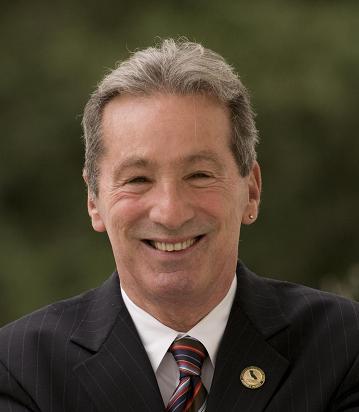
Jack Reacher (2:10) Metreon, 1000 Van Ness.

Killing Them Softly Lowest-level criminal fuckwits Frankie (Scoot McNairy) and Russell (Ben Mendelsohn) are hired to rob a mob gambling den, a task which miraculously they fail to blow. Nevertheless, the repercussions are swift and harsh, as a middleman suit (Richard Jenkins) to the unseen bosses brings in one hitman (Brad Pitt), who brings in another (James Gandolfini) to figure out who the thieves are and administer extreme justice. Based on a 1970s novel by George V. Higgins, this latest collaboration by Pitt and director-scenarist Andrew Dominik would appear superficially to be a surer commercial bet after the box-office failure of their last, 2007’s The Assassination of Jesse James By the Coward Robert Ford — one of the great films of the last decade. But if you’re looking for action thrills or even Guy Ritchie-style swaggering mantalk (though there is some of that), you’ll be disappointed to find Killing more in the abstracted crime drama arena of Drive (2011) or The American (2010), landing somewhere between the riveting former and the arid latter. This meticulously crafted tale is never less than compelling in imaginative direction and expert performance, but it still carries a certain unshakable air of so-what. Some may be turned off by just how vividly unpleasant Mendelsohn’s junkie and Gandolfini’s alchie are. Others will shrug at the wisdom of re-setting this story in the fall of 2008, with financial-infrastructure collapse and the hollow promise of President-elect Obama’s "Change" providing ironical background noise. It’s all a little too little, too soon. (1:37) New Parkway. (Harvey)

Life of Pi Several filmmakers including Alfonso Cuarón, Jean-Pierre Jeunet, and M. Night Shyamalan had a crack at Yann Martel’s "unfilmable" novel over the last decade, without success. That turns out to have been a very good thing, since Ang Lee and scenarist David Magee have made probably the best movie possible from the material — arguably even an improvement on it. Framed as the adult protagonist’s (Irrfan Khan) lengthy reminiscence to an interested writer (Rafe Spall) it chronicles his youthful experience accompanying his family and animals from their just shuttered zoo on a cargo ship voyage from India to Canada. But a storm capsizes the vessel, stranding teenaged Pi (Suraj Sharma) on a lifeboat with a mini menagerie — albeit one swiftly reduced by the food chain in action to one Richard Parker, a whimsically named Bengal tiger. This uneasy forced cohabitation between Hindu vegetarian and instinctual carnivore is an object lesson in survival as well as a fable about the existence of God, among other things. Shot in 3D, the movie has plenty of enchanted, original imagery, though its outstanding technical accomplishment may lie more in the application of CGI (rather than stereoscopic photography) to something reasonably intelligent for a change. First-time actor Sharma is a natural, while his costar gives the most remarkable performance by a wild animal this side of Joaquin Phoenix in The Master. It’s not a perfect film, but it’s a charmed, lovely experience. (2:00) 1000 Van Ness, SF Center. (Harvey)

Lincoln Distinguished subject matter and an A+ production team (Steven Spielberg directing, Daniel Day-Lewis starring, Tony Kushner adapting Doris Kearns Goodwin, John Williams scoring every emotion juuust so) mean Lincoln delivers about what you’d expect: a compelling (if verbose), emotionally resonant (and somehow suspenseful) dramatization of President Lincoln’s push to get the 13th amendment passed before the start of his second term. America’s neck-deep in the Civil War, and Congress, though now without Southern representation, is profoundly divided on the issue of abolition. Spielberg recreates 1865 Washington as a vibrant, exciting place, albeit one filled with so many recognizable stars it’s almost distracting wondering who’ll pop up in the next scene: Jared Harris as Ulysses S. Grant! Joseph Gordon-Levitt as Robert Lincoln! Lena Dunham’s shirtless boyfriend on Girls (Adam Driver) as a soldier! Most notable among the huge cast are John Hawkes, Tim Blake Nelson, and a daffy James Spader as a trio of lobbyists; Sally Field as the troubled First Lady; and likely Oscar contenders Tommy Lee Jones (as winningly cranky Rep. Thaddeus Stevens) and Day-Lewis, who does a reliably great job of disappearing into his iconic role. (2:30) 1000 Van Ness, Presidio, SF Center, Shattuck, Sundance Kabuki. (Eddy)

Les Misérables There is a not-insignificant portion of the population who already knows all the words to all the songs of this musical-theater warhorse, around since the 1980s and honored here with a lavish production by Tom Hooper (2010’s The King’s Speech). As other reviews have pointed out, this version only tangentially concerns Victor Hugo’s French Revolution tale; its true raison d’être is swooning over the sight of its big-name cast crooning those famous tunes. Vocals were recorded live on-set, with microphones digitally removed in post-production — but despite this technical achievement, there’s a certain inorganic quality to the proceedings. Like The King’s Speech, the whole affair feels spliced together in the Oscar-creation lab. The hardworking Hugh Jackman deserves the nomination he’ll inevitably get; jury’s still out on Anne Hathaway’s blubbery, "I cut my hair for real, I am so brave!" performance. (2:37) Balboa, Marina, 1000 Van Ness, SF Center, Shattuck, Sundance Kabuki. (Eddy)

Monsters, Inc. 3D (1:35) Metreon.

My Worst Nightmare First seen locally in the San Francisco Film Society’s 2012 "French Cinema Now" series, My Worst Nightmare follows icy art curator Agathe (Isabelle Huppert) as her airless, tightly-controlled world begins to crumble — thanks in no small part to an exuberantly uncouth, down-on-his-luck Belgian contractor named Patrick (Benoît Poelvoorde). (His obnoxious, freewheeling presence in Agathe’s precision-mapped orbit gives rise to the film’s title.) Director and co-writer Anne Fontaine (2009’s Coco Before Chanel) injects plenty of offbeat, occasionally raunchy humor into what could’ve been a predictable personal-liberation tale — the sight of classy dame Huppert driving through a bikini car wash, for instance. (1:43) Smith Rafael. (Eddy)

Not Fade Away How to explain why the Beatles have been tossed so many cinematic bon mots and not the Stones? The group’s relatively short lifespan — and even the tragic, unexpectedly dramatic passing of John Lennon — seem to have all played into the band’s nostalgia-marinated legend, while the Stones’ profitable tour rotation and shocking physical resilience have lessened their romantic charge. So it reads as a counterintuitive, and a bit random, that Sopranos creator David Chase would open his first feature film with a black and white re-creation of the Mick Jagger and Keith Richards meet-up, before switching to the ’60s coming-of-age of New Jersey teen geek Douglas (John Magaro), trapped in an oppressively whiny nuclear family headed up by his Pep Boy grouch of a dad (James Gandolfini) — at least until rock ‘n’ roll saves his soul and he starts beating the skins. Graduating to better-than-average singer after his band’s frontman Eugene (Boardwalk Empire‘s Jack Huston) inhales a joint, Douglas not only finds his voice, but also wins over dream girl Grace (Bella Heathcote). Sure, Not Fade Away is about sex, drugs, and rock ‘n’ roll — and much attention is dutifully squandered on basement shows, band practice, and politics, and posturing with wacky new haircuts and funny cigarettes, thanks to Chase’s own background in garage bands and executive producer, music supervisor, and true believer Steve Van Zandt’s considerable passion. Yet despite the amount screen time devoted to rock’s rites, those familiar gestures never rise above the clichéd, and Not Fade Away only finds its authentic emotional footing when Gandolfini’s imposing yet trapped patriarch and the rest of Douglas’s beaten-down yet still kicking family enters the picture — they’re the force that refuses to fade away, even after they disappear in the rear view. (1:52) Metreon, 1000 Van Ness, Shattuck. (Chun)

Parental Guidance (1:36) Metreon, 1000 Van Ness.

The Perks of Being a Wallflower Move over, Diary of a Wimpy Kid series — there’s a new shrinking-violet social outcast in town. These days, life might not suck quite so hard for 90-pound weaklings in every age category, what with so many films and TV shows exposing, and sometimes even celebrating, the many miseries of childhood and adolescence for all to see. In this case, Perks author Stephen Chbosky takes on the directorial duties — both a good and bad thing, much like the teen years. Smart, shy Charlie is starting high school with a host of issues: he’s painfully awkward and very alone in the brutal throng, his only friend just committed suicide, and his only simpatico family member was killed in a car accident. Charlie’s English teacher Mr. Andersen (Paul Rudd) appears to be his only connection, until the freshman strikes up a conversation with feline, charismatic, shop-class jester Patrick (Ezra Miller) and his magnetic, music- and fun-loving stepsister Sam (Emma Watson). Who needs the popular kids? The witty duo head up their gang of coolly uncool outcasts their own, the Wallflowers (not to be confused with the deeply uncool Jakob Dylan combo), and with them, Charlie appears to have found his tribe. Only a few small secrets put a damper on matters: Patrick happens to be gay and involved with football player Brad (Johnny Simmons), who’s saddled with a violently conservative father, and Charlie is in love with the already-hooked-up Sam and is frightened that his fragile equilibrium will be destroyed when his new besties graduate and slip out of his life. Displaying empathy and a devotion to emotional truth, Chbosky takes good care of his characters, preserving the complexity and ungainly quirks of their not-so-cartoonish suburbia, though his limitations as a director come to the fore in the murkiness and choppily handled climax that reveals how damaged Charlie truly is. (1:43) New Parkway, Opera Plaza.. (Chun)

Promised Land Gus Van Sant’s fracking fable — co-written by stars Matt Damon and John Krasinski, from a story by Dave Eggers — offers a didactic lesson in environmental politics, capped off by the earth-shattering revelation that billion-dollar corporations are sleazy and evil. You don’t say! Formulated like a Capra movie, Promised Land follows company man Steve Butler (Matt Damon) as he and sales partner Sue (Frances McDormand) travel to a small Pennsylvania town to convince its (they hope) gullible residents to allow drilling on their land. But things don’t go as smoothly as hoped, when the pair faces opposition from a science teacher with a brainiac past (Hal Holbrook), and an irritatingly upbeat green activist (Krasinski) breezes into town to further monkey-wrench their scheme. That Damon is such a likeable actor actually works against him here; his character arc from soulless salesman to emotional-creature-with-a-conscience couldn’t be more predictable or obvious. McDormand’s wonderfully biting supporting performance is the best (and only) reason to see this ponderous, faux-folksy tale, which targets an audience that likely already shares its point of view. (1:46) 1000 Van Ness, Presidio, SF Center. (Eddy)

Rise of the Guardians There’s nothing so camp as "Heat Miser" from The Year Without a Santa Claus (1974) in Rise of the Guardians,, but there’s plenty here to charm all ages. The mystery at its center: we open on Jack Frost (voiced by Chris Pine) being born, pulled from the depths of a frozen pond by the Man on the Moon and destined to spread ice and cold everywhere he goes, invisible to all living creatures. It’s an individualistic yet lonely lot for Jack, who’s styled as an impish snowboarder in a hoodie and armed with an icy scepter, until the Guardians — spirits like North/Santa Claus (Alec Baldwin), the Tooth Fairy (Isla Fisher), and the Easter Bunny (Hugh Jackman) — call on him to join them. Pitch the Boogeyman (Jude Law) is threatening to snuff out all children’s hopes and dreams with fears and nightmares, and it’s up to the Guardians must keep belief in magic alive. But what’s in it for Jack, except the most important thing: namely who is he and what is his origin story? Director Peter Ramsey keeps those fragile dreams aloft with scenes awash with motion and animation that evokes the chubby figures and cozy warm tones of ’70s European storybooks. And though Pine verges on blandness with his vocal performance, Baldwin, Jackman, and Fisher winningly deliver the jokes. (1:38) Metreon. (Chun)

Rust and Bone Unlike her Dark Knight Rises co-star Anne Hathaway, Rust and Bone star Marion Cotillard never seems like she’s trying too hard to be sexy, or edgy, or whatever (plus, she already has an Oscar, so the pressure’s off). Here, she’s a whale trainer at a SeaWorld-type park who loses her legs in an accident, which complicates (but ultimately strengthens) her relationship with Ali (Belgian actor Matthias Schoenaerts, so tremendous in 2011’s Bullhead), a single dad trying to make a name for himself as a boxer. Jacques Audiard’s follow-up to 2009’s A Prophet gets a bit overwrought by its last act, but there’s an emotional authenticity in the performances that makes even a ridiculous twist (like, the kind that’ll make you exclaim "Are you fucking kidding me?") feel almost well-earned. (2:00) Embarcadero, Shattuck. (Eddy)

The Sessions Polio has long since paralyzed the body of Berkeley poet Mark O’Brien (John Hawkes) from the neck down. Of course his mind is free to roam — but it often roams south of the personal equator, where he hasn’t had the same opportunities as able-bodied people. Thus he enlists the services of Cheryl (Helen Hunt), a professional sex surrogate, to lose his virginity at last. Based on the real-life figures’ experiences, this drama by Australian polio survivor Ben Lewin was a big hit at Sundance this year (then titled The Surrogate), and it’s not hard to see why: this is one of those rare inspirational feel-good stories that doesn’t pander and earns its tears with honest emotional toil. Hawkes is always arresting, but Hunt hasn’t been this good in a long time, and William H. Macy is pure pleasure as a sympathetic priest put in numerous awkward positions with the Lord by Mark’s very down-to-earth questions and confessions. (1:35) Opera Plaza. (Harvey)

Silver Linings Playbook After guiding two actors to Best Supporting Oscars in 2010’s The Fighter, director David O. Russell returns (adapting his script from Matthew Quick’s novel) with another darkly comedic film about a complicated family that will probably earn some gold of its own. Though he’s obviously not ready to face the outside world, Pat (Bradley Cooper) checks out of the state institution he’s been court-ordered to spend eight months in after displaying some serious anger-management issues. He moves home with his football-obsessed father (Robert De Niro) and worrywart mother (Jacki Weaver of 2010’s Animal Kingdom), where he plunges into a plan to win back his estranged wife. Cooper plays Pat as a man vibrating with troubled energy — always in danger of flying into a rage, even as he pursues his forced-upbeat "silver linings" philosophy. But the movie belongs to Jennifer Lawrence, who proves the chops she showcased (pre-Hunger Games megafame) in 2010’s Winter’s Bone were no fluke. As the damaged-but-determined Tiffany, she’s the left-field element that jolts Pat out of his crazytown funk; she’s also the only reason Playbook‘s dance-competition subplot doesn’t feel eye-rollingly clichéd. The film’s not perfect, but Lawrence’s layered performance — emotional, demanding, bitchy, tough-yet-secretly-tender — damn near is. (2:01) Piedmont, Presidio, SF Center, Shattuck. (Eddy)

Skyfall Top marks to Adele, who delivers a magnificent title song to cap off Skyfall‘s thrilling pre-credits chase scene. Unfortunate, then, that the film that follows squanders its initial promise. After a bomb attack on MI6, the clock is running out for Bond (Daniel Craig) and M (Judi Dench), accused of Cold War irrelevancy in a 21st century full of malevolent, stateless computer hackers. The audience, too, will yearn for a return to simpler times; dialogue about "firewalls" and "obfuscated code" never fails to sound faintly ridiculous, despite the efforts Ben Whishaw as the youthful new head of Q branch. Javier Bardem is creative and creepy as keyboard-tapping villain Raoul Silva, but would have done better with a megalomaniac scheme to take over the world. Instead, a small-potatoes revenge plot limps to a dull conclusion in the middle of nowhere. Skyfall never decides whether it prefers action, bon mots, and in-jokes to ponderous mythologizing and ripped-from-the-headlines speechifying — the result is a unsatisfying, uneven mixture. (2:23) Metreon, 1000 Van Ness, Shattuck, Sundance Kabuki. (Ben Richardson)

Texas Chainsaw 3D (1:32) Metreon, 1000 Van Ness.

Tchopitoulas Three adolescent brothers enjoy a dusk-to-dawn night in the Big Easy — New Orleans, baby — in this impressionistic documentary that blurs the line between staged and sampled lyricism. Bill and Turner Ross’ film sets the trio loose in the French Quarter and beyond, where they sample the company of various drunks, buskers, oyster shuckers, painted ladies, and so forth. No laws are conspicuously broken, though a few get bent — it’s safe to say these kids probably won’t be visiting several environs again until they’re of legal drinking age. The long night is an inebriate dream of color and sound, strange but seldom menacing. Like the "city symphony" movies of the 1920s and 30s, this is less nonfiction cinema in a strict vérité vein than a poetically contrived ode to life — a life that’s sturdier than it looks, since Tchoupitoulas finds NO back to the business of partying like Katrina never happened. If you’re looking for a harder-edged portrait of the burg’s status quo, there are plenty of other documentaries to choose from; the Ross’ provide a woozy mash note rather than a sober pulse-taking. You’ll definitely want to go bar-hopping afterward. (1:20) Roxie. (Harvey)

This is 40 A spin-off of sorts from 2007’s Knocked Up, Judd Apatow’s This is 40 continues the story of two characters nobody cared about from that earlier film: Debbie (Leslie Mann, Apatow’s wife) and Pete (Paul Rudd), plus their two kids (played by Mann and Apatow’s kids). Pete and Debbie have accumulated all the trappings of comfortable Los Angeles livin’: luxury cars, a huge house, a private personal trainer, the means to throw catered parties and take weekend trips to fancy hotels (and to whimsically decide to go gluten-free), and more Apple products than have ever before been shoehorned into a single film. But! This was crap they got used to having before Pete’s record label went into the shitter, and Debbie’s dress-shop employee (Charlene Yi, another Knocked Up returnee who is one of two people of color in the film; the other is an Indian doctor who exists so Pete can mock his accent) started stealing thousands from the register. How will this couple and their whiny offspring deal with their financial reality? By arguing! About bullshit! In every scene! For nearly two and a half hours! By the time Melissa McCarthy, as a fellow parent, shows up to command the film’s only satisfying scene — ripping Pete and Debbie a new one, which they sorely deserve — you’re torn between cheering for her and wishing she’d never appeared. Seeing McCarthy go at it is a reminder that most comedies don’t make you feel like stabbing yourself in the face. I’m honestly perplexed as to who this movie’s audience is supposed to be. Self-loathing yuppies? Masochists? Apatow’s immediate family, most of whom are already in the film? (2:14) Metreon, 1000 Van Ness, Shattuck, Vogue. (Eddy)

Tristana The morality tale rarely gets as twisted as it does in Luis Buñuel’s 1970 late-in-the-day beauty Tristana. Working with Benito Perez Galdos’s novel, the filmmaker gleefully picked up a thread entwining erotic politics and S&M — explored to exquisite effect in 1967’s Belle de Jour and again offset by the immaculate bone structure of anti-heroine Catherine Deneuve — while bringing a corrosive intimacy to his black-humored disembowelment of a self-serving aristocracy, hypocritical church, and Franco-era fascism. Today it feels like one of Buñuel’s most personal and Spanish films, with the director-cowriter basing the impressionable Tristana on his sister Conchita. The starting point is an archetypal innocent "strange flower" clad in black, Tristana (Deneuve). She has been placed in the care of the aristocratic Don Lope (Buñuel regular Fernando Rey), a dissolute "senorito" (akin to Buñuel’s own father) who lives off his inheritance and espouses a kind of anti-clerical, antiauthoritarian, albeit elitist, libertine lifestyle. The patriarch can hardly deny himself anything, let alone his gorgeous ward, who is confined to the house like a prisoner and learns at Don Lope’s feet to despise the man who admits he’s her father or her husband, depending on when it suits him. Enter a dashing young artist Horacio (Franco Nero, the original Django) to spirit the increasingly embittered Tristana away from the battered, mazelike streets of Toledo, Spain. But that feat is far from easy when the "fallen" woman’s daydreams of teaching piano pale in comparison to a recurring nightmare of Don Lope’s head at the end of a rather phallic church bell clapper. What follows — photographed with disciplined, earthy beauty by cinematographer Jose Aguayo and now restored to its dusky, lustrous good looks—is a de-evolution of sorts, as both an innocent and corruptor are defiled, though Tristana‘s psychosexual reverberations, which would have given both Freud and the Marquis de Sade palpitations, echo out beyond the closing montage, its tolling bell, and the repeated heavy thud of a prosthetic slamming into the floor. (1:38) Opera Plaza. (Chun)

Wreck-It Ralph Wreck-It Ralph cribs directly from the Toy Story series: when the lights go off in the arcade, video game characters gather to eat, drink, and endure existential crises. John C. Reilly is likable and idiosyncratic as Ralph, the hulking, ham-fisted villain of a game called Fix-It-Felix. Fed up with being the bad guy, Ralph sneaks into gritty combat sim Hero’s Duty under the nose of Sergeant Calhoun (Jane Lynch), a blond space marine who mixes Mass Effect‘s Commander Shepard with a PG-rated R. Lee Ermey. Things go quickly awry, and soon Ralph is marooned in cart-racing candyland Sugar Rush, helping Vanellope Von Schweetz (a manic Sarah Silverman), with Calhoun and opposite number Felix (Jack McBrayer) hot on his heels. Though often aggressively childish, the humor will amuse kids, parents, and occasionally gamers, and the Disney-approved message about acceptance is moving without being maudlin. The animation, limber enough to portray 30 years of changing video game graphics, deserves special praise. (1:34) Metreon. (Ben Richardson)

Zero Dark Thirty The extent to which torture was actually used in the hunt for Osama Bin Ladin may never be known, though popular opinion will surely be shaped by this film, as it’s produced with the same kind of "realness" that made Kathryn Bigelow’s previous film, the Oscar-winning The Hurt Locker (2008), so potent. Zero Dark Thirty incorporates torture early in its chronology — which begins in 2003, after a brief opening that captures the terror of September 11, 2001 using only 911 phone calls — but the practice is discarded after 2008, a sea-change year marked by the sight of Obama on TV insisting that "America does not torture." (The "any more" goes unspoken.) Most of Zero Dark Thirty is set in Pakistan and/or "CIA black sites" in undisclosed locations; it’s a suspenseful procedural that manages to make well-documented events (the July 2005 London bombings; the September 2008 Islamabad Marriott Hotel bombing) seem shocking and unexpected. Even the raid on Bin Ladin’s HQ is nail-bitingly intense. The film immerses the viewer in the clandestine world, tossing out abbreviations ("KSM" for al-Qaeda bigwig Khalid Sheikh Mohammed) and jargon ("tradecraft") without pausing for a breath. It is thrilling, emotional, engrossing — the smartest, most tightly-constructed action film of the year. At the center of it all: a character allegedly based on a real person whose actual identity is kept top-secret by necessity. She’s interpreted here in the form of a steely CIA operative named Maya, played to likely Oscar-winning perfection by Jessica Chastain. No matter the film’s divisive subject matter, there’s no denying that this is a powerful performance. "Washington says she’s a killer," a character remarks after meeting this seemingly delicate creature, and he’s proven right long before Bin Ladin goes down. Some critics have argued that character is underdeveloped, but anyone who says that isn’t watching closely enough. Maya may not be given a traditional backstory, but there’s plenty of interior life there, and it comes through in quick, vulnerable flashes — leading up to the payoff of the film’s devastating final shot. (2:39) Balboa, Marina, SF Center, Sundance Kabuki. (Eddy)

Write it out

1

culture@sfbg.com

CAREERS AND ED If your New Year’s resolutions include finally finishing that post-apocalyptic S&M fantasy novel, or maybe just starting the memoir about your childhood as the illegitimate offspring of a ’70s soap opera star, you’re in the right place — and time. Here in the Bay Area, you can’t throw a copy of Robert McKee’s literary how-to “Story” without hitting a writing teacher — and January is when most writing classes ramp up. The trick is choosing the right one.

Best to begin with these 3 steps:

DECIDE EXACTLY WHAT KIND OF CLASS YOU WANT

Are you looking for a lot of lecture on writing craft, or would you rather spend more time workshopping your writing? Do you want to be assigned reading homework, or would you prefer writing exercises? All this information should be in the class description, and if it isn’t, email the teacher and ask. You’re allowed, you’re a grown-up now.

ASSESS YOUR MOTIVATION LEVEL

About mid-February it’ll be a cold, rainy night and that TiVoed episode of Downton Abbey and some takeout Indian food will seem more appealing than the experimental fiction course you signed up for. Decide now if you’re better committing to an afternoon class or a weekend workshop. Or if you should sign up with a friend so you’ll have somebody to shame you going.

VET THE INSTRUCTOR

Reading the teacher’s bio is as important as reading the course description. If you’re taking a class in novel-writing, you might want to know if your instructor has actually published (and not self-published) a novel — and if it was in the last couple of decades. This is useful information to have when you’re asking about real-world topics, such as getting an agent or dealing with publishers.

Of course, being published doesn’t necessarily make someone a good teacher. Writing is a profession that attracts people who like to lock themselves up in rooms with imaginary characters. Always check out the Yelp reviews for any place you’re thinking of taking a class. You’ll find plenty of individual teacher comments, pro and con.

*******

While there are other options, here is my personal list of the best places to take writing classes in the Bay Area:

THE WRITING SALON

Started in 1999 by a former newspaper editor, the Writing Salon (www.writingsalons.com)now has two locations, one in Potrero Hill and another in Berkeley. The Writing Salon offers intimate classes, four times a year in all genres (fiction, poetry, playwriting, even erotica) that are real crowd-pleasers. The Writing Salon won the SFBG Best of the Bay Readers’ Poll in Adult Education in 2011 and 2012.

THE SAN FRANCISCO WRITERS’ GROTTO

The Grotto began offering classes in 2008, and has seen their program grow to more than 15 classes per week. Begun in 1994 by Po Bronson, Ethan Canin, and Ethan Watters, the San Francisco Writers’ Grotto (www.sfgrotto.org) is a collective of working writers who share office space South of Market, where classes are held. Grotto classes are taught by Grotto members, as well as visiting colleagues, such as their agents, editors, and author friends. Grotto classes have perhaps the most stringent criteria for their teachers. No instructor can teach a Grotto class in a genre he or she is not published in. The Grotto has recently partnered with Litquake to sponsor the Bay Area’s first juried writers conference, Lit Camp, to be held this April.

BOOK PASSAGE

Easily the best independent bookstore in the country, Book Passage (www.bookpassage.com) in Corte Madera is also an excellent place to take a writing class. Often authors on their way through town on book tour will teach here. Book Passage is justifiably famous for its three big conferences — Children’s Writers and Illustrators, Mystery Writers, and Travel Writers and Photographers — which take place in the spring and summer. Elaine Petrocelli, the brains behind Book Passage, packs these conferences with agents and editors, and then sends them out to mingle with the students. More than one local writer has had his or her career made at a Book Passage conference.

GOING ALL IN — GRADUATE SCHOOL

If attending these writing classes has you thinking about taking your skill set to the next level, you don’t have to leave town. San Francisco State has one of the best, and for California residents, one of the least expensive Creative Writing graduate programs. It’s not easy to get into, but the upside is that once you’re in, reading your fellow students’ work is a pleasure. SF State (creativewriting.sfsu.edu) offers an MA and an MFA program, and you can go part time.

Another good, although pricier, choice is California College of the Arts, which offers a two-year MFA program at its SF campus (www.cca.edu/academics/graduate/writing).

Learned

1

ONGOING

Rockin’ Kids Singalong

Licensed clinical social worker and former punk rock singer-guitarist Stephanie Pepitone leads this musical play group for kids of all ages. Stephanie “leads families in about an hour’s worth of singing, dancing, music-making, and fun/chaos” with original tunes and familiar favorites.

Fridays, 10:30-11:30am, $10 per family. La Pena Cultural Center, 3105 Shattuck, Berk. www.lapena.org

JAN 12

Haitian Folkloric Dance

Live drumming accompanies instructor Portsha Jefferson’s class for all levels, which promises that “you will experience the meditative Yanvalou, the fiery rhythms of Petwo, the playful and celebratory dances of Banda and Rara. Expect a high energy class in celebration of a rich, spiritual tradition. Bring a long, flowy skirt if you have one.”

1:30-3pm, $13. Dance Mission Theater, 3316 24th St., SF. www.dancemission.com

JAN 16

Feeding Your Soul: Mindful Cooking and Eating in the New Year

Let the onslaught of New Year’s resolution-keeping commence. Kick off the year with an intro to mindful eating, and get away from psychologically compulsive, physically harming habits when it comes to nourishing yourself. Life coach Carley Hauck and chef Greg Lutes (known for his uni crème brulee!) team up deliver a lecture and cooking demo — aimed at helping you recognize wasteful food behaviors and reinvigorate your love for creating and enjoying healthful dishes.

$25 18 Reasons members, $35 others. 18 Reasons, 3674 18th St., SF. www.18reasons.org

JAN 17

Understanding Chinese Medicine

A six-week course at the American College of Traditional Chinese Medicine that will introduce you to the basic life force concept of Qi, and then broaden your knowledge into acupuncture, Chinese herbs, tongue and pulse diagnostics, yin and yang, five elements, and the Chinese concept of internal organs.

Thursdays, 6pm-8pm, $120. Pioneer Square and Shuji Goto Library, 555 De Haro, SF. www.actcm.edu

JAN 19

New Year, New Poems: Celebrate Your Muse!

“In our day together we’ll read and talk about an array of accessible, provocative poems by fine writers including current poet laureates Kathleen Flenniken, Juan Felipe Herrera, and Natasha Trethewey, and we’ll do some whimsical, illuminating writing exercises to bypass our inner critics and experiment with themes and tones, phrases and rhythms. We’ll listen closely and encouragingly to each other’s voices. By the end of the day we’ll have shaped a handful of budding poems and sharpened our vision for future writing projects,” says Writing Salon teacher Kathleen McClung.

10am-4pm, $95 Writing Salon members, $110 others. Writing Salon, 720 York, SF. www.writingsalons.com

JAN 19

Kongolese Contemporary Dance

Extremely charismatic instructor Byb Chanel Bibene revisits his Congolese roots, in which contemporary and traditional movements intertwined to produce a unique, exhilarating style. No experience in dance is necessary for this warm, fun, and inviting workshop.

10am-noon, $12-15 sliding scale. Also Jan. 20. Counterpulse, 1310 Mission, SF. www.counterpulse.org


JAN 25


Exploring San Francisco District Six

Sometimes education begins with looking more closely at your community. Supervisor Jane Kim leads a tour of her district — including South of Market, Mid-Market and Tenderloin neighborhoods — highlighting some of the recent successes and challenges affecting its residents’ quality of life.

3:30pm, $10. See www.spur.org/events for more info.

JAN 27

Bagel Making Workshop

Hole yes! You’ll never need complain about the state of West Coast bagelry again when the good folks of Sour Flour workshops lead you through the basics. You’ll begin by mixing flour, starter, salt, and water and then learning to develop the glutens through various techniques. Finally you’ll find out about boiling and baking techniques. Bring a plate to roll your creation home.

12:30-2:30pm, $80. La Victoria Bakery, 2937 24th St., SF. www.sourflour.org/workshops

FEB 2

Introduction to Coptic Bookbinding

The Coptic style of bookbinding allows a book to be laid open flat, making it ideal for sketchbooks and journals. Offered at Techshop, the epicenter of hands-on DIY yumminess, this seminar allows you to take home your own handmade journal! (To blog about?)

10am-4pm, $95 TechShop members, $110 others. TechShop, 926 Howard, SF. www.techshop.ws

FEB 5

Basic Mysteries

Revered Beat poet, former New College professor, and Guardian GOLDIE Lifetime Achievement Award-winner David Meltzer takes us on a uniquely persona tour of poetry and poetics, exploring “the roots of poetry, the invention and mythology of writing systems, divination, Kabbalah, and the page.” The four-week course (Tuesdays through February) will cover a lot of transcendent ground.

7:00-9:30pm, $200. Mythos, 930 Dwight Way #10, Berk. Contact julmind@mtashland.net for more info.

FEB 8

Career Toolbox with Suzanne Vega

The acclaimed neo-folk singer introduces us to her concept of the “career toolbox,” which “contains a unique mix of creative, strategic and marketing skills that helped her in the early stages of her career.” Honest self-reflection and an understanding of necessary skills to survive a competitive marketplace are key. Plus, hello, Suzanne Vega.

11am-2pm, $52 CIIS members, $65 others. California Institute of Integral Studies, 1453 Mission, SF. www.ciis.edu

FEB 19

Wild Oakland: Nature Photography Basics at Lake Merritt

Amid its passel of no-cost classes, including weekly courses on Eskrima, the Filipino combat system and herbal medicine, the East Bay Free Skool offers great one-off tutorials. Nature group Wild Oakland hosts a few of these that entail happy tromps about Lake Merritt. Today’s is a wildlife photography class taught by Damon Tighe, whose freelance shots appear in Bay Nature and other publications.

Noon, free. Meet in front of Rotary Nature Center, 600 Bellevue, Oakl. eastbayfreeskool.wikia.com

MARCH 17

Introduction to Neon

Surely there are few among us who could not use a custom-made neon sign. Perhaps you would like it to be clear that you are open for business. Maybe your roommate could use a permanent reminder that please Buddha Christ our savior we don’t leave our coffee mugs on the dining room table (ahem.) At any rate, this is one of this West Oakland metal mecca’s entry-level courses — check its online course schedule for more offerings in blacksmithing, welding, jewelry, glass, and more.

Sundays through 10am-6pm, $400. The Crucible, 1260 Seventh St., Oakl. www.thecrucible.org


The shape of stage to come

0

culture@sfbg.com

CAREERS AND ED Like most skills, acting can be honed and refined, and the number of disciplines and techniques an actor could familiarize themselves with are practically infinite. Fortunately for the professional and amateur actor alike, there’s a number of theater companies who offer the same actor trainings to the public that they utilize in the creation of their own work.

Ranging from techniques such as Suzuki Method or Viewpoints, skill sets such as improv or stage combat, or theatrical forms such as Bouffon or Kyogen, these classes help keep working actors in artistic shape, and offer a way for even rank beginners to acquire translatable performance skills. And since unlike acting schools or conservatories, there’s rarely an audition process or prerequisite for attendance, they’re accessible to a fairly broad demographic.

Ensemble theater-making is East Bay company Ragged Wing‘s focus, and therefore also the focus of the trainings it offers to the public. Utilizing techniques such as Viewpoints, mask performance, puppetry, music, and myth-based story creation, Ragged Wing introduces actors and theater-makers of all levels (including total newbies) to concepts such as devised theater, imagination play, and the psycho-physical exercises of Michael Chekhov. It even offers a workshop for teachers in applying ensemble theater techniques in the classroom. Visit its website for an overview of last year’s program, and this year’s upcoming dates, which will occur later this spring.

www.raggedwing.org/training

We like this next class so much we awarded it a Best of the Bay in 2011! Taught by Naked Empire Bouffon Company artistic director Nathaniel Justiniano, the Intro to Bouffon Workshop guides up to 20 participants on a journey to find their “personal bouffon” (or “inner psychopath,” as we termed it). Alternating between weekend intensives and four-week workshops of two-hour sessions (one of which just started on January 15), Intro to Bouffon includes instruction on creating within ecstatic play, movement-and-vocal-based improv, and blatantly violations of the usual boundaries drawn between audience and performer. In addition to teaching at the warehouse Main Street Theater, Justiniano has also recently joined the Circus Center faculty where he will teach a seven-week course on Bouffon beginning in April.

$60–$80, 20-hour intensives $200, Circus Center intensive $3200. www.nakedempirebouffon.org

Another theater company offering training in the specialized theatrical format it also performs is Theatre of Yugen, which offers a series of art of performance workshops as well as an apprenticeship program on Kyogen and Noh techniques. This year’s public trainings begin on January 26 with a weekend intensive on “Physical Character” in the Kyogen style of performance. Private apprenticeships are granted by audition, and last for an entire calendar year during which apprentices train and eventually perform with the company, sometimes staying on as company members after their graduation.

$80–$100 (with discount for taking multiple classes.) Enrollment is limited. www.theatreofyugen.org

Sure you can act if someone hands you a script. But how about when there isn’t one? At its best, improvisational theater makes use of a whole range of techniques, and requires a huge amount of focus and cooperation between players in order for a scene to work. It’s also one of the most accessible theatrical art forms for beginners to get involved with, particularly in the Bay Area. One of the newer kids on the block, EndGames Improv is nonetheless one of the most pedigreed. Offering instruction in “long form improvisation” à la Upright Citizens Brigade and Second City, EndGames Improv holds classes in four levels and stages weekly performances at Stagewerx, including its infamous “F!#&ing Free Fridays.” Seven-week classes are capped at 16 participants. January is sold out, but keep an eye on the website for future dates.

$199; $225 for upper levels. www.endgamesimprov.com

They’re not a stand-alone theater company, but I can’t resist mentioning Dueling Arts San Francisco. Providing instruction to performing artists in a wide range of stage combat skills — including quarterstaff (what up Little John?), rapier, dagger, broadsword, and unarmed combat — the instructors of Dueling Arts are also accomplished fight directors and performers in their own right, for a diverse array of companies including IMPACT Theatre, Shotgun Players, Thrillpeddlers, ACT, Berkeley Rep, San Jose Rep, SF Playhouse, and California Shakespeare Theatre. Certification class sizes are generally between six to 12 students, and there are no prerequisites for the beginning levels.

Quarterstaff Level 1 Certification Class begins March 17, $200. www.duelingartssf.com


The damage done

5

arts@sfbg.com

FILM Robert Carlyle is the kind of actor who usually elicits a slow-dawning response in realm of “Oh, right … that guy. What was he in again?” Well, a lot, but if you’re not British (let alone Scottish), his visibility has probably been erratic and infrequent — plus he does that exasperating English thing of taking TV assignments like they’re perfectly OK, as opposed to the US approach of doing series work only when your big-screen career is in the toilet.

His persona, to simplify a bit, is usually that of the aging boy-man sad sack whose self-deprecation and pleading eyes are attractive until you realize he’s as likely to slide out of any commitment with a muttered excuse as easily as he’ll slide off that bar stool. In other words, a long-odds but redeemable loser. In that vein his quintessential role was as the main guy trying not to disappointment everyone yet again in The Full Monty (1997), an unusually bleak and satisfying “feel good” movie that spawned umpteen softer ones. He’s played variants on that part enough times that you might forget just one year earlier he was the terrifyingly vivid psychotic Begbie in Trainspotting.

Indeed, he’s played a Bond villain (albeit in 1999’s The World Is Not Enough), a cannibal (in 1999’s Ravenous), an evil wizard (2006’s Eragon), even Hitler (in a little-seen 2003 TV film), and if you get BBC America you might well think he’s the most versatile actor on the planet. But the projects in which he most frequently surfaces here — discounting American broadcast money gigs like SGU Stargate Universe — are little UK art house dramas. Often directed by people such as Ken Loach or Shane McMeadows, they customarily find him as protagonists who’d have been Angry Young Men a generation or two earlier. But now they’re not even angry; defeat has been bred in since the cradle, and there’s likely to be a good deal of pathos in any attempts to buck the odds.

http://www.youtube.com/watch?v=mSiiqp5J30w

Bruised losers going down — albeit not without one last noble act or effort — can be a beautiful line for an actor to make his own, from Jean Gabin to Liam Neeson (before he abruptly turned geriatric action hero). If the shabby shoe fits, might as well wear it. So Carlyle is a producer on California Solo, the kind of movie that often prompts critics to evoke ones from an earlier era (1972’s Fat City, 1981’s Cutter’s Way, 1975’s Rafferty and the Gold Dust Twins, etc.) No one went to those, either. But they were good, small, “personal” films with a genuine fondness for gritty characters and milieus.

Writer-director Marshall Lewy’s drama revolves around Lachlan MacAldonich, a lanky fortysomething Scotsman who’s somehow found himself managing an organic farm for its cranky but loyal owner (A Martinez) in that deep SoCal nowhere rendered agricultural only by the contortions of water-rights trafficking politicians.

He lives alone, he drinks alone; whatever past he’s got is one he’s cut himself off from. He does have an interesting “hobby” that might provide a clue: boozily hosting a weekly podcast from his kitchen table called Flameouts, “the show where we discuss the tragic and sometimes spectacular deaths of the world’s greatest musicians.” If anybody actually listens, we aren’t told, and he probably doesn’t care.

But Lachlan’s genial not caring much about anything, it seems, when he’s stopped careening home down the highway after bar-time. The resulting DUI charge, even its four-month drivers’ license suspension, wouldn’t be such a big deal if it didn’t turn out that a long-prior pot conviction makes him eligible for deportation despite his green card. And Lachlan really, really does not want to go back to the UK He’s buried himself here precisely to avoid the massive fuckup that no one there would be likely to have forgotten — that he was once the guitarist in “Britain’s biggest band” (at least for one NME minute), and that the major casualty of his stupid rock-star antics was the “British Kurt Cobain,” his brother Jed. When he crawls to the Beverly Hills manse of erstwhile music biz associate Wendell (Michael Des Barres, disturbingly well cast as an oily industry survivor) to beg for immigration lawyer money, the latter snaps “I was never your manager. I was never your friend. Jed was the band.”

Cue further self-destructive impulses, not at all eased by the pleading cow eyes Lachlan makes at sympathetic Beau (Alexia Rasmussen), a much younger customer he chats up at the farmer’s market each Sunday. (It’s even more embarrassing when Danny Masterson as her age-appropriate DJ boyfriend realizes “who he is,” and pours on the hero worship.) Even more painful are Lachlan’s attempts to re-establish some relationship with the bitter mother (Kathleen Wilhoite) of his now-teenaged daughter (Savannah Lathern) so he can claim his deportation would be a hardship to them.

Those last sequences are truly squirm-inducing, because the gap between Lachlan’s desire to do something right for a change and his haplessness at actually doing it is so palpable — we know it’s unfair he’s looking like a “reet eedyut,” but we also know he’s entirely brought it on himself. This is where an actor like Caryle knows how to go for the throat without seeming to reach for effect at all. He makes the depth of Lachlan’s self-loathing so palpable you want to hug him. After you’ve slapped him … but still.

Lewy also wrote and directed the very astute indie drama Blue State (2007), and if he didn’t craft Solo specifically for its Carlyle’s floppy-haired, ever-apologetic charm — well, didn’t he? This is the kind of very good movie that surprises when it actually turns up in theaters, however few. No matter that whoever actually sees the undeniably depressing-sounding California Solo will likely find it — and its star — endearing, poignant, ultimately upbeat. It’s even sort of a perfect early-date movie, softening up the emotions with male fragility redeemable by female generosity and forgiveness.


CALIFORNIA SOLO opens Fri/11 in Bay Area theaters.

Corporations and carpools

60

I absolutely love this story: A Marin activist named Jonathan Frieman, who runs a small nonprofit corporation (the JoMiJo Foundation) was driving in the carpool lane on highway 101 in Marin when he was stopped by a cop and given a $478 ticket. Ah, but Frieman insists he wasn’t driving alone; beside him in the car were the articles of incorporation and other relevant corporate paperwork for his foundation — and in the United States, corporations are considered people. In fact, the California Vehicle Code refers to “natural persons or corporations.”

So Frieman is challening his ticket in traffic court, and is willing to spend his own money to appeal the case as far as he can. He wants to force the courts to decide: If a corporation is a person, then it gets to ride with a driver in the carpool lane, and his ticket has to be dismissed. If it’s not a person, then maybe it can’t make political contributions.In fact, if a corporation isn’t a person, a whole lot of evil stuff might come to an end.

Could a traffic fine be the ticket to that ruling? Who knows — and at the very least, Frieman is helping point up the absurdity of the current state of the law.

This is no fluke, by the way: Frieman, a longtime community activist, has been looking for ways to challenge corporate personhood for more than a decade. He’s convened legal scholars, looked for avenues to challenge the notion that corporations have the same rights as the rest of us — and along the way, came up with this idea.

It’s taken a while because the California Highway Patrol hasn’t been all that vigilant. “I’ve been driving up and down 101 in the carpool lane with my corporate papers for years,” Frieman told me. “I never got a ticket until October 2.”

His first hearing is in Marin’s traffic court in San Rafael on Jan. 7.


Will narrow business interests continue to dominate SF’s political agenda?

44

Will the narrow, deceptive, and disempowering “jobs” rhetoric of the last two years continue to dominate San Francisco politics in 2013? Or can San Franciscans find the will and organizing ability to create a broader political agenda that includes livability, sustainability, and affordability?

If it’s up to the San Francisco Chamber of Commerce – whose perspective has been aired in both the Examiner and Chronicle over the last two days – private sector profits will continue to be our only metric of civic success.

Just take a look at the “Pinkslips and Paychecks Scorecard” that the Chamber released yesterday, rating members of the Board of Supervisors based on a series of 16 votes for tax cuts and public subsidies for businesses, approvals of projects serving the rich, rollbacks of government regulations, business surcharges on consumers, maintaining PG&E’s dirty energy monopoly, and blocking an expansion of developer fees to improve Muni.

That aggressive neoliberal agenda, which is shared by Mayor Ed Lee and his big corporate backers, was reinforced by Chamber VP Jim Lazarus in an op-ed in today’s Examiner. Ignoring the rising housing and other living costs that plague the average San Francisco, Lazarus uses hopeful language about how we’re all “poised for success in 2013,” burying the Chamber’s aggressive and exclusive agenda in the subtext.

At the top of his agenda are: “Approval of the California Pacific Medical Center rebuild, reforming San Francisco’s California Environmental Quality Act appeals process, and rule-making for the upcoming gross-receipts tax.” In other words, let CPMC have what it wants, make it more difficult to challenge developers on environmental grounds, and ensure business taxes remain as low as possible.

And to ensure supervisors get the message, he closes by noting that business leaders are “energized and ready” to push their agenda with tools such as the Alliance for Jobs and Sustainable Growth, which waged some of the nastiest and most deceptive political attack ads on progressive candidates in the last election cycle.

The progressive movement of San Francisco has its problems and issues, including a recently widening schism between environmental and transportation activists on one side and the nonprofit housing and social justice faction on the other. And in the current economic and political climate, both sides too often find themselves partnering with corporate and neoliberal interests to get things done.

But now, more than ever, San Francisco needs to broaden into political dialogue, and that means a reconstitution and expansion of its progressive movement. That’s something that the Guardian has long focused on facilitating and publicizing – something that will be my personal focus as well – and we have some idea percolating that we’ll discuss in the coming weeks and months.

Then maybe all San Franciscans can be poised for success in 2013 and beyond.

Why the GOP gets away with obstructing Congress

91

There’s an interesting piece on Calitics talking about what California can teach the nation in terms of ending Republican obstructionism. Robert Cruickshank, as usual, is right on target — and he points to the real problem in Washington. Republicans in the House no longer worry about losing their seats to Democrats; the GOP has been so good about gerrymandering that only maybe 30 or 40 seats in the entire nation are still competitive. What these increasingly right-wing loonies worry about is a primary challenge from an even loonier, even right-wingier candidate — so they refuse to vote for any taxes and they’re willing to bring down the entire economy if that’s what it takes.

The problem is it’s not as easy to fix nationally as it was in California. We’re talking long-term efforts to change governors and state Legislatures so they can rewrite Congressional districts (or create California-style independent redistricting, which I initially opposed but hasn’t turned out so bad). The Constitution mandages redistricting every ten years, but I don’t think there’s any rule saying you can’t draw new districts more often, or that you can’t create a new way of drawing them and put that in place right away. But again, that’s not immediate.

Meanwhile, Obama’s going to have to force as much as he can through a reluctant Congress and do as much as he can with executive orders.

Appetite: 12 reasons to love Nevada City and Grass Valley

22

Imagine if the Wild West collided with a European village. There might be winding, narrow streets through neighboring towns, plotting through pine trees. Old West saloons, wood sidewalks and columns, classic homes in walkable small towns. Not far from Lake Tahoe, at the foothills of the Sierra Mountains, there are two such tiny towns. The Gold Country towns of Grass Valley, a charming, relaxed Old West town, and its sister merely four miles away, Nevada City, the smaller, more funky-artsy and visually striking of the two. Historically, I’d trek 30 minutes off the 80 on the way back from Lake Tahoe to spend an afternoon in these towns, particularly when fall leaves are at their peak. This fall, I decided to spend the weekend here instead of Tahoe – and a restorative weekend it was.

While you’re in Grass Valley, foodies and cooks don’t miss Tess’ Kitchen Store, three floors of every cooking accoutrement you can think of, and Back Porch Market, a small but well-curated gourmet deli of cheese, salumi, wine and gourmet foods (P.S. inhaling the house pasta sauce cooking as you enter is intoxicating).


In Grass Valley, Big A Drive In may look a little forlorn, a historic drive-in serving freezes, malts, burgers and hot dogs, but their cheeseburger is unexpectedly classic and satisfying – some even say the best in the area. If there in the fall, take the slower but lovely drive along Colfax Highway at least one way to and from the 80 freeway so you can stop off at Bierwagen’s Donner Trail Fruit & Farm Market, an idyllic apple farm selling jams, pies, an array of seasonal produce, and, yes, apples.

Between nature, architecture, food, and even unexpected nightlife, here are just a few reasons to love these Gold Country towns.

1. NEW ENGLAND VIBRANT FALL COLORS AND CHRISTMAS CELEBRATIONS – When friends from New England told me this was THE spot they’d go for equally radiant fall colors, I was skeptical. But from my first visit in November years past, I walked through neighborhoods of old Victorians and 1800s homes, awash in the brilliant reds, yellows and oranges of my favorite season, dramatically cast against the green of mountain pines.

Besides warm fall days, crisp mountain nights and stunning fall colors, winter is a festive time in these two towns that pull out all the stops for Christmas. There’s a Victorian Christmas street festival complete with horse-drawn carriages and wandering carolers, and the Sierra Foothills Christmas Festival, known locally as Cornish Christmas, as the early, late 1800s population of Grass Valley was predominantly Cornish. Now just wish for snow for added magic.

2. ROADHOUSE EXTRAORDINAIRE: THE WILLO The Willo has been around for decades, a roadhouse on Highway 49, about 15 minutes drive from Grass Valley. Part redneck party in the rowdy bar, part retro dream with neon sign shining like a beacon from a dark, two-lane road in the middle of the pines, it is easily my favorite restaurant in the region.

Locavores and dainty eaters beware. This place is about thick cuts of NY steak (you cook or they cook on the big grill between the restaurant and bar) and local character. For less than $20, one can pig out on hearty, old school fare. Although requested “cheese” with a $1.85 baked potato is a deli slice, taste does not suffer here. When you ask for medium rare steak, you get it: juicy, delicious.

In fact, after numerous meals at more modern restaurants in the area, even those with local ingredients and attention to produce and meat sources, most were highly inconsistent and well behind  even average big city standards. With The Willo, I felt like I got exactly what I came for: local flair, delicious food appropriate for bracing mountain air. We brought our own bottle of wine ($10 corkage), well worth it considering what was on offer, although the festive bar was doing just fine with big name liquor brands and country on the jukebox.

The dated, wood-paneled dining room is lined with Elvis, The Duke (John Wayne), and scripture verse clocks, while a Friday night only special of BBQ pulled pork sandwich ($12) is surprisingly good ‘que, and hard-working waitresses ensure you’re right at home with a “hon” and a smile. Dining at this packed roadhouse felt like the kind of meal my grandparents would have enjoyed, of the celebratory, unfussy kind in my childhood.

3. UNEXPECTED NIGHTLIFE AND MUSIC SCENE – Though I struggled to find strong restaurants outside of The Willo or Sushi in the Raw, Nevada City nightlife, though not in the same breath as a big city, can get surprisingly rowdy. Being here days before Halloween meant Day of the Dead parties, concerts at historic Miners Foundry with everyone in costume, revelers wandering the streets, reminiscent of raucous nights in party towns like Savannah and New Orleans.

There wasn’t an evening I didn’t catch street musicians singing along the streets, a few of them exceptional, like a girl with a soulful, R&B voice belting along to one guy beatboxing, the other with a guitar. On sleepier nights, the historic Mine Shaft Saloon is the dive bar in town. Crusty bartenders, chatty locals, plenty of personality, and bowls of hot and sour soup arrive through the swinging door at next door’s Fred’s Szechuan Chinese Restaurant.

4. WINE COUNTRY – As with many parts of California, the Sierra Foothills is home to a strong community of wineries. The best afternoon of my recent weekend was spent driving around local vineyards, off scenic country roads, tucked in between valleys and mountain views. My other afternoon highlight was an hour tasting wine with Alex Szabo of Szabo Vineyards in his downtown Nevada City tasting room. With big personality and opinionated passion for wine, he’s lived in Europe and San Francisco, now winemaking here. He knew every local who came through the door, his friendly repartee and stories of his Hungarian family with winemaking roots back to 1780 particularly engaging – he grew up taking “a few pulls of wine from the jug” in his Grandpa’s basement.

His tasting room is full of hand-crafted pieces like a striking bar made from red gum eucalyptus trees salvaged in Berkeley’s Tilden Park after a fire. Launching Szabo in 2003 with 40 acres (15 of them vines, the rest sustainable forest), Szabo’s winemaking style is “balanced wines that you can still grab onto.” He mentioned being the only winemaker in area growing all his own grapes on premises, and his wines do represent balance rather than merely bold fruit. Tasting through a flight ($6), I noted the pleasant funkiness of a 2010 Grenache ($23 a bottle) which he describes as a “dusty Spanish road”, but was surprised to find I preferred the Zinfandel, a varietal I rarely gravitate towards ($18 a bottle). Though there are intense blackberry notes, there’s no residual sugar and the berry is balanced by tannins and an earthiness. Balance is also found in a sweet dessert wine, an off-dry 2011 Muscat redolent of orange blossom with a creamy mouthfeel. Best of all, his Voila, at $28 a bottle, is the highest priced of any of Szabo wine.

5. GOURMET ICE CREAM – Every time I’m in Nevada City, I don’t miss ice cream at Treats. Gourmet flavors hit the mark, like plum shiso or saffron rose pistachio. Childhood favorites like Swiss orange chip, and a handful of daily gelatos (such as chocolate cherry), are made with big city-quality and standards.

6. CORNISH HISTORY
– With over 60% of Grass Valley’s population being Cornish in the late 1800’s, the influence of Cornwall, England, can be felt in the fact that this small town has more than one pasty shop. But there is only one you need to visit: Marshall’s. These flaky, filled pastries are certainly old school – even the tiny shop evokes 1970’s. Marshall’s has been churning them out for decades, with your choice of vinegar or ketchup alongside a classic beef and potato or sweet, spiced apple in sugary vanilla sauce.

7. CAFFEINE FIX
– Hipsterization has even reached this small foothills town, but it’s a pleasure at Curly Wolf, an espresso house with Victorian wallpaper and couches on Nevada City’s main street. This form of retro/Old World hipster feels right home off wood sidewalks, serving properly prepared cappuccinos, coffees, cold brew iced coffee, even a chocolate orange espresso reminiscent of a Caffe Nico at LA’s Caffe Luxxe.

In Grass Valley, Caroline’s Coffee Roasters is a roaster and shop of the old school kind, not necessarily a coffee geek’s dream. But when in Grass Valley, it’s where locals congregate on a Saturday morning talking arts and sports (the SF Giants, naturally) over bracing cups of coffee.

8. SUSHI HOTSPOT – One doesn’t expect to find a sushi haven in towns this small. In fact, I’ve been to bigger towns around the country that lack a sushi restaurant as good as Sushi in the Raw. The fish is fresh and pristine and the environment in a converted Victorian boasts quirky charm, feeling like a hidden big city gem.

That being said, sushi aficionados and purists, while delighting at house pickled ginger and only sustainable fish will also notice an excess of sauce on or with most sushi, a “no-no” many a hardcore sushi master from Japan has warned us against. Though wishing I could taste the cleanness of fish apart from muddles of sauce (and this is coming from a sauce fanatic), Sushi in the Raw is still one of the better meals to be found in the area, though good luck getting a reservation. You MUST call ahead no matter the night of the week – they book weeks in advance. Husband/wife owners, Susan Frizzle and Executive Chef Kaoru “Ru” Suzuki, have created that small town rarity: a coveted hot spot everyone seems dying to get into.

Octopus/tako salad ($11.50), though thoughtfully presented, was surprisingly bland  drowning in spicy sauce with kelp, carrots and shredded nori, and the popular black truffled sashimi ($10/17), made with “best fish of the day” (each piece was different: salmon, yellowtail, kanpachi, albacore, trout) was overwhelmed by Italian black truffle, truffle salt, soy vinaigrette and French black truffle oil (tasting a number of truffle sashimi dishes over the years, a light hand is needed). While a sashimi platter arrives with five different bright cuts of fish, again, one is served a generous side of three sauces… with sashimi! So the drowning continues.

Rolls/maki are solid, like the Susan Roll ($14.50) of avocado, mango, smelt roe, crab mix, green onion, ginger, while scallop shooters ($3 each or $4 “drunken”) are vividly fresh with green mussel, mango and quail egg, particularly fun ordered drunken with a shot of shochu. On the drink side, a plum refresher ($4) is a lovely way to go with organic plum wine, lightened but not diluted by lemon, ice and sparkling water. “Ru’s pick” for sake, Kikusui KaraKuchi Dry ($5.50 glass/$33 bottle) is a crisp, pleasant accompaniment.

9. JUICE CENTRAL – As with a number of small California towns, you’ll find a healthy dose of hippies and back-to-the-earth folk. In Nevada City, Fudenjuce is a blissed out roadside hut with outdoor picnic tables, serving wraps, salads and rice bowls – but go for the juice. Though you may reek afterwards, a garlic heavy Immune Enhancer is an eye-opener with carrot, apple, parsley, spinach, ginger, while Planet Favorite is tart with lots of lemon, carrot, apple. Unlike most juice shops, everything, even 24 oz. pours, are affordably under $7. Only downside is that wheatgrass shots tasted sickly sweet – I like wheatgrass for that fresh-cut grass taste and wished it had been noted that it was sweetened so I could opt out. http://www.fudenjuce.com

Flour Garden Bakery
is mainly a bakery but also whips up a few fresh (and a couple thankfully green) juices in the Neal Street shopping center location of downtown Grass Valley.

10. GRAB A PINT – Though far from my top California brewery, Ol’ Republic Brewery is the first local brewery in town. The sterile, low ceiling space does have a front patio and Saturday nights draw live bands and crowds. The IPA English Ale strikes a fine balance of hoppy notes, and their range includes Bavarian Black Lager, Dead Canary (German lager), Celtic Red, Schwarzbier and Export Stout. Pretty much across the street from Ol’ Republic, Jernigan’s Tap House & Grill has a rotating draft selection of beers from around California.

11. AND ONE MORE ROADHOUSE: THE OLD 5 MILE HOUSE – Just follow the bikers (motorcycles parked out front) who congregate at The Old 5 Mile House, an 1890 roadhouse and former stagecoach stop off forested Highway 20 just 5 miles out of Nevada City. You’ll find a cozy, dark wood respite with fireplace, bocce area and back patio under massive trees. It’s a bar with decent beer selection and surprisingly tart, tasty margaritas, and a restaurant with far better-than-expected food. Recommended dishes: Piadine (aka pizza crust topped with salad) – the arugula version with tender skirt steak, chimichurri sauce, red onions and blue cheese ($14.99), the pizzas (some are better than others), and hearty 5 Mile Corned Beef Hash ‘n Eggs ($10.99).

12. HOT TUBBING UNDER THE STARS
– Though my room felt a bit cavelike on the bottom floor with only one small window and minimal light at Grass Valley Courtyard Suites (ask for an upstairs room with more windows), the room was otherwise comfortable, the owners and service exceptionally friendly, with an unexpectedly pleasant hotel breakfast in a cozy dining room, a day spa and comfortable gym,  easily walkable in old town Grass Valley, and best of all, the hot tub next to the pool was the ideal way to unwind every night. The stars appeared in all their glory and crisp foothill air invigorated as I relaxed in soothing, hot waters. http://www.gvcourtyardsuites.com

Subscribe to Virgina’s twice-monthly newsletter, The Perfect Spot, www.theperfectspotsf.com

Music Listings

0

Music listings are compiled by Emily Savage. Since club life is unpredictable, it’s a good idea to call ahead or check the venue’s website to confirm bookings and hours. Prices are listed when provided to us. Visit www.sfbg.com/venue-guide for venue information. Submit items for the listings at listings@sfbg.com. For further information on how to submit items for the listings, see Picks.

WEDNESDAY 2

ROCK/BLUES/HIP-HOP

Keith Crossan Blues Showcase Biscuits and Blues. 8pm, $15.

Jason Marion vs JC Rockit Johnny Foley’s Dueling Pianos. 9pm, free.

Nathan and Rachel Johnny Foley’s. 9pm, free.

Lia Rose, Danny Paul Grody, Deep Ellum Brick and Mortar Music Hall. 8pm, $7-$10.

Royal Teeth, Gentlemen Hall, Mister Loveless Rickshaw Stop. 8pm, $10-$12.

Weather Side Whiskey Band, Creak, Jessi Philips Cafe Du Nord. 9:30pm, $8.

JAZZ/NEW MUSIC

Dink Dink Dink, Gaucho, Eric Garland’s Jazz Session Amnesia. 7pm, free.

Roy Hargrove residency Yoshi’s SF. 8pm, $26; 10pm, $16.

Ricardo Scales Top of the Mark, 999 California, SF; www.topofthemark.com. 6:30pm, $5.

FOLK/WORLD/COUNTRY

Cha-Ching Boom Boom Room. 8pm, $5. Salsa, cumbia, Cuban funk.

Timba Dance Party Bissap Baobab, 3372 19th St, SF; www.bissapbaobab.com. 10pm, $5. Timba and salsa cubana with DJ Walt Diggz.

DANCE CLUBS

Booty Call Q-Bar, 456 Castro, SF; www.bootycallwednesdays.com. 9pm. Juanita MORE! and Joshua J host this dance party.

Coo-Yah! Slate Bar, 2925 16th St, SF; www.slate-sf.com. 10pm, free. With Vinyl Ambassador, DJ Silverback, DJs Green B and Daneekah.

Martini Lounge John Colins, 138 Minna, SF; www.johncolins.com. 7pm.

THURSDAY 3

ROCK/BLUES/HIP-HOP.

Anthony B Independent. 9pm, $25.

Ron Hacker Biscuits and Blues. 8 and 10pm, $15.

John Lawton Trio Johnny Foley’s. 9pm, free.

Daniel Krass vs Rags Tuttle Johnny Foley’s Dueling Pianos. 9pm, free.

Pops, Beggars Who Give, Posole Brick and Mortar Music Hall. 9pm, $5-$8.

JAZZ/NEW MUSIC

Roy Hargrove residency Yoshi’s SF. 8pm, $26; 10pm, $16.

Stompy Jones Top of the Mark, 999 California, SF; www.topofthemark.com. 7:30pm, $10.

FOLK/WORLD/COUNTRY

Country Casanovas Atlas Cafe, 3049 20 St, SF; www.atlascafe.net. 8-10pm.

Misisipi Mike and the Midnight Gamblers Amnesia. 7pm.

Twang! Honky Tonk Fiddler’s Green, 1330 Columbus, SF; www.twanghonkytonk.com. 5pm. Live country music.

DANCE CLUBS

Afrolicious Elbo Room. 9:30pm, $5-$7. With DJ-host Pleasuremaker.

All 80s Thursday Cat Club. 9pm, $6 (free before 9:30pm). The best of ’80s mainstream and underground.

Ritual Dubstep Temple. 10pm-3am, $5. Trap and bass.

Supersonic Lookout, 3600 16th St., SF; www.lookoutsf.com. 9pm. Global beats paired with food from around the world by Tasty. Resident DJs Jaybee, B-Haul, amd Diagnosis.

Tropicana Madrone Art Bar. 9pm, free. Salsa, cumbia, reggaeton, and more with DJs Don Bustamante, Apocolypto, Sr. Saen, Santero, and Mr. E.

FRIDAY 4

ROCK/BLUES/HIP-HOP

Back Pages Johnny Foley’s. 9pm, free.

Dandelion War, In Letter Form, Catharsis For Cathedral, Tracing Figures Cafe Du Nord. 8:30pm, $10-$12.

Easy Leaves, Tiny Television, Misisipi Mike Great American Music Hall. 9pm, $15.

Funkin’ Fridays with Swoop Unit Amnesia. 6pm.

Good Luck Thrift Store Outfit, Human Condition, Fox and Woman Independent. 9pm, $15.

Happy Body Slow Brain, Gavin Castleton, Case in Theory, Belmont Lights Bottom of the Hill. 9pm, $12.

Love Dimension, Free Moral Agents, Saything, Buzzmutt Brick and Mortar Music Hall. 9pm, $5-$8.

Steve Lucky and the Rhumba Buns Biscuits and Blues. 8 and 10pm, $20.

"Tip Your Hat to the Blues: West Coast Songwriter Session" Slim’s. 8pm, $15. With Ron Hacker, Steve Freund and Jan Fanucci, and more.

Violent Change, Swiftumz, Wet Spots Hemlock Tavern. 9:30pm, $7.

Greg Zema, Daniel Krass, Jason Marion Johnny Foley’s Dueling Pianos. 9pm, free.

JAZZ/NEW MUSIC

Audium 1616 Bush, SF; www.audium.org. 8:30pm, $20. Theater of sound-sculptured space.

Black Market Jazz Orchestra Top of the Mark, 999 California, SF; www.topofthemark.com. 9pm, $10.

Roy Hargrove residency Yoshi’s SF. 8pm, $28; 10pm, $22.

FOLK/WORLD/COUNTRY

Sarah Cabrel Bissap Baobab, 3372 19th St, SF; www.bissapbaobab.com. 7pm, free. Live Brazilian lounge music.

Eddy Nava and Pena Pachamama Band Pena Pachamama, 1630 Powell, SF; www.pachamamacenter.org. 8:30pm. $15-$19.

DANCE CLUBS

All Night Long with Peter Blick Public Works. 10pm, $5.

DJ Audio1 Cellar, 685 Sutter, SF; www.cellarsf.com. 10pm, $10.

Go Bang! Stud. 9pm, free before 10pm. With Michael Serafini, Tyrel Williams, Steve Fabus, Sergio Fedasz.

Joe Lookout, 3600 16th St.,SF; www.lookoutsf.com. 9pm. Eight rotating DJs, shirt-off drink specials.

Old School JAMZ El Rio. 9pm. Fruit Stand DJs spinning old school funk, hip-hop, and R&B.

Paris to Dakar Little Baobab, 3388 19th St, SF; (415) 643-3558. 10pm, $5. Afro and world music with rotating DJs including Stepwise, Steve, Claude, Santero, and Elembe.

Ron Reeser, Adam Cova Vessel, 85 Campton Place, SF; www.vesselsf.com. 10pm, $20-$30.

Twitch DNA Lounge. 10pm, $5-$8. With Red Red Red, Excuses, DJs Justin, Omar, and more. .

Zing DNA Lounge. 9pm, $10. With Tranz Am, Frank Nitty, Krishna, Taj, and more.

SATURDAY 5

ROCK/BLUES/HIP-HOP

"Bowie and Elvis Birthday Bash" Edinburgh Castle, 950 Geary, SF; www.castlenews.com. 9pm, $5.

Fever Charm, False Priest, Rin Tin Tiger, Everyone is Dirty Bottom of the Hill. 8:30pm, $10.

French Cassettes, Coast Jumper, A Yawn Worth Yelling, Mr. Kind Brick and Mortar Music Hall. 9pm, $5-$8.

Future Twin, Pamela, Deep Teens, Standard Poodle, Skunks, Dancer Thee Parkside. 9pm, $5.

Gypsy Moonlight Band Riptide Tavern. 9:30pm, free.

Hope Chest, Astral, Tomihira Rickshaw Stop. 8pm, $10.

Jesus and the Rabbis Boom Boom Room. 8pm, $12.

Daniel Krass, Greg Zema, Jason Marion Johnny Foley’s Dueling Pianos. 9pm, free.

Marissa Nadler Chapel, 777 Valencia, SF; www.thechapelsf.com. 9pm, $12-$15.

EC Scott Biscuits and Blues. 8 and 10pm, $20.

"SF Cares: Hurricane Sandy Benefit" Cafe Du Nord. 9pm, $8. With Elena Ovalle, Liz O Show, Katie Gribaldi, Gyasi Ross.

Skin Divers Johnny Foley’s. 9pm, free.

VKTMS, Meat Sluts, Scrapers Hemlock Tavern. 9:30pm, $7.

Zoo Station: Complete U2 Experience, Petty Theft Slim’s. 9pm, $15-$20.

JAZZ/NEW MUSIC

Audium 1616 Bush, SF; www.audium.org. 8:30pm, $20. Theater of sound-sculptured space.

Roy Hargrove residency Yoshi’s SF. 8pm, $28; 10pm, $22.

FOLK/WORLD/COUNTRY

Craig Ventresco and Meredith Axelrod Atlas Cafe, 3049 20 St, SF; www.atlascafe.net. 4-6pm.

DANCE CLUBS

Bootie SF DNA Lounge. 9pm, $10-$15. Mashups.

Cockfight Underground SF, 424 Haight, SF; (415) 864-7386. 9pm, $7. Rowdy dance night for gay boys .

Foundation Som., 2925 16th St, SF; (415) 558-8521. 10pm, $5-$10. DJs Shortkut, Apollo, Mr. E, Fran Boogie spin Hip-Hop, Dancehall, Funk, Salsa.

Haceteria Deco Lounge, 510 Larkin, SF; www.decosf.com. 9pm, free before 11pm, $3 after.

Paris to Dakar Little Baobab, 3388 19th St, SF; (415) 643-3558. 10pm, $5. Afro and world music with rotating DJs.

Saturday Night Soul Party Elbo Room. 10pm, $5-$10. With DJs Lucky, Paul Paul, Phengren Oswald.

Tall Sasha, Jason Kwan, Ks Thant Vessel, 85 Campton Place, SF; www.vesselsf.com. 10pm, $20-$30.

SUNDAY 6

ROCK/BLUES/HIP-HOP

John Lawton Trio Johnny Foley’s. 9pm, free.

Jugtown Pirates, Dylan Chambers and the Midnight Transit, Highway Poets Brick and Mortar Music Hall. 8pm, $5-$8.

Kally Price Old Blues and Jazz Band Amnesia. 8pm, $5.

Reel Big Fish, Pilfers, Dan Potthast Regency Ballroom. 8pm, $22.

Sad Boys, Drapetomania, Neon Piss, Kommplex Knockout. 3:30-8pm, $5.

Some Ember, Excuses, Believe Hemlock Tavern. 6pm, $6.

JAZZ/NEW MUSIC

Charles Hamilton, Eric Hunt Bliss Bar, 4026 24th St, SF; www.blissbarsf.com. 4:30pm, $10.

Roy Hargrove residency Yoshi’s SF. 7 and 9pm, $22.

FOLK/WORLD/COUNTRY

Brazil and Beyond Bissap Baobab, 3372 19th St, SF; www.bissapbaobab.com. 6:30pm, free. Brazilian music with La Dee Da and Ro-Z.

DANCE CLUBS

Beats for Brunch Thee Parkside. 11am, free. With Chef Josie and DJ Motion Potion.

Dub Mission Elbo Room. 9pm, $6. With DJ Sep, Vinnie Esparza, and Mexican Dubwiser.

Jock Lookout, 3600 16th St, SF; www.lookoutsf.com. 3pm, $2.

MONDAY 7

ROCK/BLUES/HIP-HOP

Augustana, Lauren Shera Independent. 8pm, $15.

Damir Johnny Foley’s. 9pm, free.

Guntown, Dulldrums, Treemotel, Brasil Elbo Room. 9pm, $6.

FOLK/WORLD/COUNTRY

Belle Monroe and Her Brewglass Boys Amnesia. 9pm.

DANCE CLUBS

Crazy Mondays Beauty Bar, 2299 Mission, SF; www.thebeautybar.com. 10pm, free. Hip-hop and other stuff.

Death Guild DNA Lounge. 9:30pm, $5. Gothic, industrial, and synthpop with Decay, Joe Radio, Melting Girl, and more.

M.O.M. Madrone Art Bar. 6pm, free. DJs Timoteo Gigante, Gordo Cabeza, and Chris Phlek playing all Motown every Monday.

Soul Cafe John Colins Lounge, 138 Minna, SF; www.johncolins.com. 9pm. R&B, Hip-Hop, Neosoul, reggae, dancehall, and more with DJ Jerry Ross.

Vibes’N’Stuff El Amigo Bar, 3355 Mission, SF; (415) 852-0092. 10pm, free. Conscious jazz and hip-hop.

TUESDAY 8

ROCK/BLUES/HIP-HOP

Blank Tapes, Treemotel, Travis Marks Amnesia. 9pm.

Bombshell Betty and Her Burlesqueteers Elbo Room. 9pm, $10.

Daneil Castro Biscuits and Blues. 8 and 10pm, $15.

Coyote Trickster Boom Boom Room. 8pm, $5.

NslashA, Starskate, ilona Staller Bottom of the Hill. 9pm, $10.

Shape, Mountain Tamer, Midnight Snackers Hemlock Tavern. 8:30pm, $6.

Stan Erhart Band Johnny Foley’s. 9pm, free.

Tender Buttons, Bitter Fruit, No Bone Knockout. 9:30pm, $6.

JAZZ/NEW MUSIC

Elliott Yamin Yoshi’s SF. 8pm, $22.

On the Cheap Listings

0

On the Cheap listings by Caitlin Donohue. Submit items for the listings at listings@sfbg.com. For further information on how to submit items for the listings, see Picks.

WEDNESDAY 2

Westin St. Francis sugar castle Westin St. Francis, 335 Powell, SF. www.westinstfrancis.com. Through Thu/3. 24 hours/day, free. There’s still time (until tomorrow, to be precise) to visit this sugar-spun site in the lobby of these venerable Union Square lodgings, a yearly tradition that for the first time this year features the movers and shakers of our times – Gavin Newsom and Lady Gaga are included, if not exactly within hand-shaking distance of each other.

Brooklyn Visits Heath Heath Ceramics, 2900 18th St., SF. www.heathceramics.com. Through Jan. 13. Today: 5-8pm, free. Brooklyn-based craftspeople have trundled their wares out to the West Coast for a six-week showing at Heath Ceramics’ SF location. An excellent chance to check out East Coast design, and to visit the venerable Sausalito ceramics company’s relatively new showroom in the Mission.

THURSDAY 3

Litquake’s Epicenter Tosca Cafe, 242 Columbus, SF. www.litquake.org. 7-8:30pm, $5-10 suggested donation. Looking for a cultured Thursday? This manifestation of the city’s favorite year-round lit fest should do the trick. Author Stuart Neville will be on hand to discuss Ratlines, his rip-roaring whodunnit featuring JFK, Jr., the Irish government, and a handful of dead Nazis.

FRIDAY 4

“Speak Your Peace” SOMArts Cultural Center, 934 Brannan, SF. www.somarts.org. Through Jan. 24. 6-9pm, free. Nathera Mawla’s take on sex and identity should not be missed at this group exhibition of Bay Area-based artists of all medias. The Iranian-born artist provides a much-needed perspective of a Persian women in an era when we hear more about Middle-Eastern femininity than from it.

SUNDAY 6

Free first Sunday at the Oakland Museum of California 1000 Oak, Oakl. www.museumca.org. Museum hours: 11am-5pm. The perfect day to enjoy art, natural science, and history under one soaring roof – today’s free admission to OMCA will gain you entrance to the California studio glass exhibit, the “we/customize” open studio workshop from 1-4pm, and of course, time to sit and reflect on the many wonders in the lovely little Blue Oak Cafe.

MONDAY 7

The Imperfectionists book club Commonwealth Club office, 595 Market, Second floor, SF. www.commonwealthclub.org. 5:30pm, free to members, $5 general public. The comic debut novel by Brit author Tom Rachman takes place in the offices an English language newspaper in Rome. Come prepared with discussion questions – the Commonwealth Club crowd at this book club meeting should be rife with the involved, informed sort of city-dweller.

TUESDAY 8

“Breaking News” SOMArts Cultural Center, 934 Brannan, SF. www.somarts.org. 7:30-9pm, $5. Have you heard The News? Kolmel WithLove’s year-old monthly exploration of queer artists is one of the most consistently unpredictable performance series in the city, which means that this extravaganza version curated by experimental performer Laura Arrington will be some kind of explosive. The list of artists reads as a who’s-who of queer SF art today, and includes some of our faves: drag monster Vain Hain, “No Fags on the Moon” provocateur Philip Huang, and 2012 Goldies winner Mica Sigourney.

The Debt-Free Spending Plan: An Amazingly Simple Way to Take Control of Your Finances Once and For All The Booksmith, 1644 Haight, SF. www.booksmith.com. 7:30pm, free. We love you, author Joannah Nagler. You have not only overcome the crushing ubiquity of debt in this American life, but written a to-the-point guide so that others can do the same. Today, you will share secrets in the charming back area of The Booksmith, and we can only hope you don’t throw too much math at us.


Dick Meister: Good news for our neediest workers

13

By Dick Meister

Bay Guardian columnist Dick Meister, former labor editor of the SF Chronicle and KQED-TV Newsroom has covered labor and politics for more than a half-century. Contact him through his website, www.dickmeister.com, which includes more than 350 of his columns.

Here’s some good news for the new year: Ten states are set to raise their minimum wage rates on January first.

The National Employment Law Project (NELP) calculates that the increased rates will boost the pay of more than 850,000  low-income  workers in Arizona, Colorado, Florida, Missouri, Montana, Ohio, Oregon, Rhode Island, Vermont and Washington.

The rates, raised in accord with state laws requiring automatic adjustments to keep pace with the rising cost of living, will go up by 10 to 35 cents an hour depending on the state. NELP figures that will mean $190 to $510 more a year for the four million workers who are paid at the minimum in those states.

That may not seem like much in today’s economy, but most of the workers are living at or near the poverty level, and it will mean a lot to them and their families. Another 140,000 needy low-paid workers will get indirect raises as pay rates are adjusted upward to reflect the new minimum wage in their states.

Nineteen states, including California, plus the District of Columbia will now have rates higher than the federal minimum. But though the increases in state minimum wages are vital, what’s needed now is also to raise the federal minimum so that all minimum wage workers are paid at a higher and uniform rate.  The federal rate has remained at $7.25 an hour  – about $15,000 a year for the average minimum wage worker – since it was set in 2007, although inflation has continued to erode its purchasing power

A bill now pending in Congress would raise the federal rate to $9.80 an hour by 2014, set the rate for tipped workers at 70 percent of that, and provide for the rates to rise to match future increases in the cost of living.

Federal action is badly needed, notes NELP’s executive director, Christine Owens, to “make sure workers earn wages that will at the very least support their basic needs. But earning an income that meets basic needs shouldn’t depend on the state where a working family lives.”

OK, but won’t increasing the pay of minimum wage workers discourage employers from hiring more workers and thus weaken the economy and hurt jobless workers? That’s often claimed by fiscal conservatives, but it’s simply not so.

NELP cites a large body of research clearly showing that “raising the minimum wage is an effective way to boost the incomes of low-paid workers without reducing employment.” NELP notes in particular research showing that “even during times of high unemployment, minimum wage increases did not lead to job loss.”

On the contrary. NELP estimates that increased spending by workers paid at the new state minimums will pump an estimated $183 million into the economy, creating the equivalent of more than 100,000 full-time jobs. Other estimates indicate that every dollar increase in wages for workers at the minimum rate would trigger more than $3000 in new spending.

But can employers afford to pay a higher minimum? Wouldn’t it be a burden on small businesses, as those opposing a raise often claim? No. NELP found that more than two-thirds of minimum wage workers are employed by large companies, and that many of the companies could easily afford a raise, especially since they “have fully recovered from the recession and are enjoying strong profits.”

There’s no excuse for inaction.  Ten states have done the right thing for their neediest working citizens. It’s time for Congress and President Obama to do their part.

Bay Guardian columnist Dick Meister, former labor editor of the SF Chronicle and KQED-TV Newsroom has covered labor and politics for more than a half-century. Contact him through his website, www.dickmeister.com, which includes more than 350 of his columns.

City College’s new divide

156

Despite recent voter approval of Proposition A, the parcel tax expected to bring $14 million annually to City College of San Francisco, faculty there are enduring pay cuts and layoffs, a reality that has rankled union leaders and others who have rallied to save the school. 

In the face of the school’s accreditation crisis, which if not addressed by March could lead to its closure, the college was a united front to keep the school open and pass Prop. A, which was approved by over 70 percent of San Francisco voters on the same night as President Obama’s reelection.

But a combination of timing (the money won’t roll in until later in 2013), the depth of the district’s fiscal hole, and declining student enrollment have left CCSF with essentially status quo funding. District officials appear to be leaning toward using most of the surplus it does get to beef up its scant reserve funds, which was one of the things that triggered the accreditation crisis.  

After the good news of Prop. A’s passage, CCSF discovered it wasn’t on track to meet its required enrollment numbers — and the number of students enrolled dictates state funding.

“[The administration] was focused on these accreditation reports. It’s a big job. It was very disruptive to change chancellors kind of midstream,” said John Rizzo, the college’s board president. “We had to switch administrations, and that’s been very difficult.”

City College has been through three different chancellors in the past year: longtime Chancellor Don Q. Griffin left in April due to illness, Pamila Fisher was interim chancellor until October, and now Thelma Scott-Skillman is the current chancellor.

Whatever the reason, City College has 3,000 fewer students enrolled than it expected to have for the Spring, potentially putting it $6.5 million in the hole this coming year. It has until the end of summer to boost those numbers. Now, despite all the cards coming up aces for them in the polls, the college still needs to save millions of dollars somewhere else in the budget.

It has started by slashing faculty and administration wages 8.8 percent, and not renewing contracts for more than 30 part time teachers, 18 part time counselors, and 30 clerical staff. Notably, Scott-Skillman — whose office negotiated the plan, which the board discussed on Dec. 13 — will also take a paycut.

Alisa Messer, president of the faculty union at City College, thinks cutting teachers, and therefore classes, flies in the face of what the voters bargained for with Prop. A. “There’s no discussion here about accountability to San Francisco voters,” Messer told us. And with the loss of competitive wages, the faculty has already started to come apart at the seams.

“We have unfortunately heard from quite a few faculty that they will be looking for jobs out of state,” Messer said. “Many said they’ll have to change their living situation or move out of San Francisco.”

She said that would hurt CCSF: “These things have to do with the long term viability of the college.”

Steve Ngo, a trustee on the college’s board, thinks that the Prop. A money should be used to shore up the school’s reserve fund, as dictated by the accreditation team that threatens the school with closure. Unfortunately, this means losing teachers now rather than later.

“If you want to frame it in terms of labor, there’s nothing worse to do than spending money now [to retain teachers] and laying off teachers in the future,” Ngo said. “Those are younger teachers. The people there now will be retired.”

Due to increased focus on diversity in hiring, CCSF’s more diverse and younger teachers tend to be the newer ones, and part time faculty, Ngo said. Those are the teachers most at risk — and the ones that students will end up losing.

Amidst the arguments about proper use of funding, teachers at the school are seeing their wages cut. Some, like Danny Halford, are losing their jobs.

Halford taught English as a Second Language at City College for seven years. A friendly and outgoing middle-aged guy, Halford is a veritable man about town, and can be seen at City College fundraisers, and was among the college’s most ardent Prop. A supporters, waving picket signs and attending rallies.

He was also one of the part time faculty members to lose his job in the Spring.

“Greg Keech, our super-wonderful ESL Dept. chair, wrote me a very nice letter to inform me that due to budget cuts there will be no job for me next semester,” Halford said. He had also recently lost his job as an organist at the College Avenue Presbyterian Church, which he’d had for 10 years, when a new pastor had “a new music concept that I don’t fit,” he said.

One of his favorite memories from City College was of a student named Elmer, from Guatemala. “He came into my Literacy class in May 2006, near the end of my first semester, with almost no English.  He made progress quickly.”

“When he got his G.E.D. diploma, I was so proud of him, I could have bust,” Halford said. “I’ve watched him grow, off and on, for six years now. He has no family here, and I think of him as my nephew.”

He may even be re-hired next fall, but until then he waits in limbo. He’ll try to substitute teach at the college for now, he said, but ruled out looking at other schools for work. As he said, “There are no jobs at other colleges because all colleges are in the same boat.”

Ngo said that the choice is basically between drastic change, or the closure of the school.

“It’s mathematically impossible to keep that payrate now,” Ngo said. “My hope is to provide the best wages and benefits in the long run, but we can’t offer it if it’s a facade. We can’t maintain payrates as they are now because we have too many faculty…There’s no agreement if there’s no college.”

City College’s faculty’s union, American Federation of Teachers 2121, filed an unfair labor practice charge Dec. 21 with the Public Employee Relations Board, a state entity that has the power to enforce labor law in California. The charge alleges that the college’s paycuts are unlawful.

A recent email to their union members outlines the AFT 2121’s grievances with the college: “At Monday’s bargaining session, the District finally outlined its claim that it will cut wages to recover last year’s ongoing state cuts of $13 million—even though the parties bargained in good faith, reaching agreement on June 20, 2012 to address these losses, including the 2.85% wage reduction this year and millions of dollars in savings through attrition and program cuts. The District is essentially overriding the previous agreement by now moving to cut wages to recover $13 million on top of the already agreed to concessions.”

College spokesperson Larry Kamer said he hadn’t seen the charges yet, as the college is on vacation, but that “we respectfully disagree with AFT 2121’s characterization of the situation.”

“City College is facing an immediate budget shortfall due to a second straight year of missed enrollment targets,” he said. “In the past, City College might have papered over such a budget gap with money it didn’t have, but those days are over. The college remains in a perilous situation with regard to accreditation and has no choice but to respond to the crisis with swift action and a request for shared sacrifice.”

And there’s the rub. In the midst of reforming the school to meet the requirements of the accreditation team by March or face closure, the college failed to keep its eye on their enrollment.

“The unions were trying to help, calling prospective students and trying a pitch,” Rizzo said. “‘Hey enroll!’ That kind of thing. They’re helping. A lot of people are trying to chip in to help this.”

“Ultimately it’s the people in the administration who are responsible for the enrollment,” he said.

With City College’s newest Chancellor Scott-Skillman on track to stay for at least a year, some stability may return to college’s administration. But City College’s dilemma, to potentially strain its budget to the breaking point or to lose valued and experienced teachers, has no easy answers  — and either way the losers may end up being the students.

To register for classes at City College, visit ccsf.edu. Enrollment for Spring is open.


CCSF by the numbers:

Prop A - $14 million a year for 8 years starting in 2013
 
3,000 - the number of students city college needs to enroll in order to meet its budget expectations, or lose money
 
$6.5 million - the amount CCSF loses if it doesn't enroll 3,000 students
 
8.8 percent, the amount faculty wages are being cut
 
160 - faculty lost in the past year due to attrition - retirement, quitting
 
30 - part time faculty not rehired next semester, including ESL teacher Danny Halford
 
30 - clerical staff not rehired for next semester
 
18 - part time counselors not rehired next semester
 
3 - number of chancellors running City College over the past year