California

Opposing sides rally troops for tech bus throw-down

39

Tomorrow’s (Tue/1) San Francisco Board of Supervisors meeting will feature a hearing on the environmental impact of commuter shuttles, including Google buses. In what promises to be a telling moment in a polarizing controversy that started in late 2013, supervisors will be forced to pick a side.

This past January, the San Francisco Municipal Transportation Agency (SFMTA) voted to approve a pilot program that would allow private shuttle operators, including a host of tech companies, to stop in designated Muni bus areas for a fee of $1 per stop, per day.

The narrative is by now well-worn, with the well-connected, deep-pocketed tech industry on one side and seasoned local activists concerned about gentrification and private use of public bus stops on the other. 

While tomorrow’s hearing comes amid a larger debate about the tech sector’s role in fueling displacement through rising housing prices, it will focus on whether or not to sanction an appeal of the pilot program under the California Environmental Quality Act. 

The proponents of the shuttles — Google, Genentech, Apple and others — maintain they take cars off the road. Many workers commuting to the South Bay, for instance, would drive were it not for the existence of the shuttles.

The CEQA appeal was filed by the SEIU 1021, the League of Pissed Off Voters, and the Harvey Milk LGBT Democratic Club. The groups contend that the private shuttle system is helping to push long-time residents out of the city. Studies show that in areas around the shuttle stops, rents fly high and displacement is rampant

A key argument in favor of conducting an environmental review is that those displaced workers then have to drive into SF to get to work from places like the East Bay, negating any environmental benefits. By calling for a CEQA study, appellants hope to city will study how shuttles are linked to displacement and its associated environmental impacts. 

Tomorrow, the Board must decide whether to allow the 18-month pilot program to move ahead, or to delay it until after an Environmental Impact Review has been completed.

In preparation for tomorrow’s hearing, both sides are drumming up support from their ranks.

SF.citi, an alliance of San Francisco tech companies, sent out an email blast (and web post) that reads like a call to arms: “Divisive shuttle opponents are now suing the City to challenge this pilot program before it has the chance to get off the ground. We need YOU to tell the Board of Supervisors in person that you want them reject this lawsuit and let the pilot program go forward.”

The activists’ call to action takes a similar tone, with liberal use of caps lock: “PLEASE JOIN US TO SUPPORT THE APPEAL AND TO TELL THE CITY TO HOLD BIG TECH ACCOUNTABLE FOR THE ACTUAL IMPACT THEY HAVE ON OUR COMMUNITIES AND NEIGHBORHOODS! 

“We can not do this without a thorough review, which includes robust research and study of what the actual broad impact is. Without it, we can not be assured that tech is paying the fair price for their use of our streets and our transit infrastructure.”

To have your say, go to San Francisco City Hall tomorrow afternoon for the Board meeting

Massage therapists hope for a happy ending

41

The California Massage Therapy Council, a statewide body that licenses massage practitioners, may expire at the end of this year unless extended by the California Legislature. Some anti-prostitution crusaders say reverting to local control will make it easier to shut down covert brothels, but the practitioners fear a return to the bad old days, when stigmas and stereotypes overcomplicated their lives.

On one side of the debate are the massage therapists, who say that the council protects them from unfair discrimination, replaces a patchwork of local ordinances, and provides a greater level of respectability to their profession. However, an array of city officials, police departments, and powerful groups such as the League of California Cities argue that the CAMTC makes it easier for illicit massage parlors to get away with prostitution and human trafficking.

“I receive complaints from neighbors all the time about certain establishments,” said Sup. Katy Tang about her supervisorial district in San Francisco’s Sunset District. “We can inspect, but we have no ability to enforce any of our regulations. If there are any penalties, we can’t enforce them.”

Tang’s frustration stems from Senate Bill 731, legislation that was signed into law in 2008. That bill created the CAMTC, a non-profit organization that has the authority to certify massage practitioners and therapists in California. Prior to the creation of this body, each city and county enacted its own certification procedures, leading to a messy patchwork of rules all over the state.

Before the CAMTC, “there were 550 different kinds of regulations from city to city,” said Ahmos Netanel, CEO of the organization. “Within a radius of one mile, you can have a situation where different cities have their own standards. One city may require no training, and another right next door may require 1,000 hours.”

A massage provider working in California pre-2009 not only had to be savvy with the medley of laws, but also needed to purchase expensive licenses for each city he or she planned to practice in. The CAMTC creates a universal—though voluntary—system, where licensed practitioners can travel and work freely around the state.

The contentious part of the law comes from the protection that it offers to licensed practitioners. Any establishment that employs all CAMTC-certified massage providers is exempt from city ordinances that target massage businesses. Law enforcement agencies claim that these restrictions impede their ability to crack down on illegal parlors, but the massage therapists say that they are necessary to fight off discriminatory laws.

Some of these unfair regulations targeted entire establishments, such as zoning rules that forced all massage businesses into run-down or dangerous parts of town, with the assumption that they were brothels. Massage providers argued that this was neither fair nor safe for, say, a 75-year-old woman seeking out massage for arthritis, or a soon-to-be mom trying to obtain a pre-natal massage.

Other laws targeted the therapists themselves. Stacey DeGooyer, a certified massage therapist in the Bay Area, remembers times when practicing massage meant mandatory STD testing and reminders from police to not wear undergarments as exterior clothing.

“I remember thinking, ‘Wow, this is for my profession?’” DeGooyer said.

To massage practitioners’ chagrin, they are still lumped into the same category as adult entertainers and subjected to “archaic prostitution laws,” according to DeGooyer, while similar legitimate therapies, such as physical rehabilitation, are overlooked. Most massage providers aren’t looking to be on par with physicians, but they don’t want to be on par with prostitutes, either.

Bodywork in San Francisco

Currently, the city of San Francisco has its own certification program that is regulated by the Department of Public Health. To practice massage in the city, the provider must have a license from either the city or the CAMTC. However, only those who have the state CAMTC license can legally call themselves a “licensed massage” therapist or practitioner.

Tang has been one of the most outspoken critics of the CAMTC in San Francisco, urging the Legislature to let the body sunset at the end of the year.

“I wouldn’t say that I’m against [the CAMTC], but there are structural flaws in how it was designed,” Tang said. “It was created for good reasons, since there were so many jurisdictions and they wanted to standardize it and create a cohesive process.

“But there are jurisdictions like San Francisco where we have our own robust process, but when an establishment uses all CAMTC practitioners, they can bypass all rules. More and more people are starting to become aware of this and are starting to do CAMTC instead, and the city can’t do anything.”

But Netanel disagrees.

“Some cities are claiming that the CAMTC makes it more difficult for law enforcement, but that’s not the reality,” he said. “We even got a thank you letter from the Santa Monica Police saying we made it easier for them, not harder. Cities that cooperate and partner with CAMTC greatly benefit from our tools and protocols to go after bad apples. Other cities have a misinterpretation of the law, and choose to take a different approach.”

Netanel said that even though some cities, such as San Francisco, compete with the CAMTC by providing their own massage licenses, over 150 other California cities have made CAMTC certification mandatory within their jurisdictions. He also points out that many applicants who are denied a license by the CAMTC often turn around and obtain a license within their cities, which generally have lower standards than the state organization.

The number of massage establishments have surged since the adoption of the CAMTC, which critics use as evidence for a growing number of illicit parlors. But Netanel referenced multiple points in the original bill which allows law enforcement to do its job to prevent prostitution. The CAMTC has no real enforcement power to go after illegal establishments itself, but instead works to prevent them from existing in the first place. Out of over 63,000 applicants, Netanel said, they have never certified a single person who has been convicted of illicit activities. They also utilize an online complaint form to report questionable behavior, and respond to all complaints within 24 hours.

The Department of Public Health and the SFPD—the two city entities which police illegal massage business—both ignored multiple requests from the Bay Guardian to find out exactly how and if the CAMTC makes their work more difficult.

The CAMTC is set to be dissolved at the beginning of next year, unless the Legislature decides to extend the original law. A current bill in the California Assembly would extend the CAMTC’s authority until 2019, an additional four years, and massage therapists across the state are pleading for that to happen.

“Even with those who criticize [the CAMTC], we share the same goals,” Netanel said. “We want a safe, healthy, and reliable certification process, so consumers can trust their therapists. Even more, we want to put an end to illegal massage parlors so they are no longer categorized with honest providers.”

Complaint against Yee includes firearms trafficking and envelopes full of cash

54

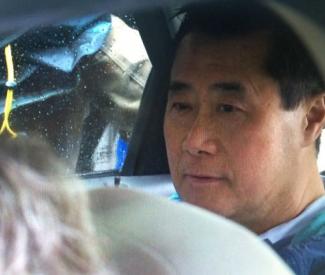
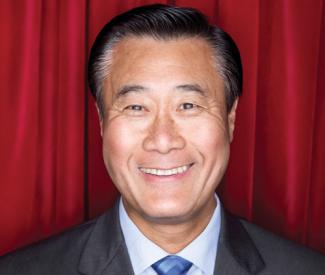
The federal criminal charges filed today against Sen. Leland Yee (D-SF), local political consultant Keith Jackson, reputed Chinatown organized crime boss Raymond “Shrimp Boy” Chow, and 23 other defendants allege a vast criminal conspiracy that was penetrated by undercover FBI agents, who say they then gave Yee envelopes full of cash in exchange for official favors.

Among the many bizarre aspects of this blockbuster case, Yee stands accused of taking part in a conspiracy to illegally smuggle firearms into the country, and using those deals to help secure campaign contributions for his current campaign for Secretary of State, while he was sponsoring a trio of gun control bills that were signed into law last year.

Yee, who reportedly faces 16 years in prison for two felony counts of wire fraud and conspiracy to deal firearms without a license and to illegally import firearms, was arrested this morning during a series of early morning police raids, pleaded not guilty at his arraignment this afternoon, and was freed after posting a $500,000 unsecured bond.

Chow had a long criminal history as the admitted head of the Hop Sing gang in SF’s Chinatown, serving prison time. “Chow’s criminal history includes a guilty plea in federal court for racketeering, involving murder for hire, conspiracy to distribute heroin, arson, and conspiracy to collect extensions of credit,” the complaint notes. (You can read the full complaint here.)

Chow publicly claimed to go legit after being released from federal prison in 2006, and he has cultivated many high-profile business and political connections in San Francisco. But the 137-page criminal complaint that was unsealed today alleges that “Chow is currently the Dragonhead, or leader, of the San Francisco-based Chee Kung Tong organization,” which it describerd as a criminal syndicate connected to Hung Mun, a criminal dynasty that began in 17th century China, “also referred to as a Chinese secret society and the Chinese Freemasons.”

It says Chow was sworn in as CKT head in August 2006 after being released from federal prison, soon after the still-unsolved murder of CKT head Allen Ngai Leung. Chow’s swearing-in was reported in local Chinese media sources, so SFPD and FBI conducted surveillance there and launched an investigation.

CKT is allegedly part of Triad, an international Chinese organized crime group with ties to China and Hong Kong, and in San Francisco it is said to be comprised of Chow’s Hop Sing, a street gang with 200-300 members, and the Wah Ching gang headed by George Nieh, who was charged with a variety of crimes today.

“Nieh said he was in charge of the Wah Ching gang and Chow was in charge of the Hop Sing gang. Nieh said they used to be enemies, but banded together instead,” the complaint says, relating what they allegedly told FBI informants who had infiltrated the organization.

The FBI says it began infiltrating CKT five years ago, including an undercover FBI agent dubbed UCE 4599, who in May 2010 was introduced to Chow, who “then introduced UCE 4599 to many of the target subjects.”

Chow allegedly told UCE 4599 that he oversees all of CKT criminal enterprises, but doesn’t actively run them anymore, acting as a arbiter, or as a judge when one CKT member kills another. Nieh allegedly heads the criminal activities division and reports to Chow.

They are accused of laundering money made from “illegal activities, specifically illegal gambling, bookmaking, sports betting, drugs, and outdoor marijuana grows.” They allegedly laundered $2.3 million between March 2011 and December 2013 for UCE 4599, with members collecting a 10 percent fee for doing so.

UCE 4599 told Chow he was a member of La Cosa Nostra, an Italian mob, and in March 2012 he was inducted into CKT as a “Consultant,” the complaint alleges. It says that Jackson — a former San Francisco school board member and political consultant who has worked for Lennar Urban and Singer Associates — had also be inducted into CKT as a “Consultant,” participating in various criminal conspiracies.

The complaint says Jackson “has a long-time relationship with Senator Yee,” and “has been involved in raising funds for” Yee’s run for mayor “and for Senator Yee’s current campaign in the California Secretary of State election.” And much of the complaint details deeds allegedly committed by Jackson and Yee.

In fact, the second person named in the complaint, right after Chow, is Yee, “aka California State Senator Leland Yee, aka Uncle Leland.”

“Senator Yee and Keith Jackson were involved in a scheme to defraud the citizens of California of their rights to honest services, and Senator Yee, [Daly City resident Dr. Wilson] Lim, and Keith Jackson were involved in a conspiracy to traffic firearms,” the complaint alleges.

Yee and Jackson met UCE 4599 through Chow, and then Jackson allegedly solicited him to make donations to Yee’s 2011 San Francisco mayoral campaign “in excess of the $500 individual donation limit. UCE 4599 declined to make any donations to Senator Yee, but introduced Keith Jackson and Senator Yee to a purported business associate, UCE 4773, another undercover FBI agent,” who made a $5,000 donation to Yee’s mayoral campaign.

Yee had $70,000 in debt after that mayor’s race and worked with Jackson on ways to pay off that debt. “This included soliciting UCE 4773 for additional donations and in the course of doing so, Senator Yee and Keith Jackson agreed that Senator Yee would perform certain official acts in exchange for donations from UCE 4773.”

Yee allegedly agreed to “make a telephone call to a manager with the California Department of Public Health in support of a contract under consideration with UCE 4773’s purported client, and would provide an official letter of support for the client, in exchange for a $10,000 donation. Senator Yee made the call on October 18, 2012 and provided the letter on or about January 13, 2013,” and Jackson allegedly took the cash donation from the agent.

Meanwhile, it says Jackson and Yee continued raising money for his Secretary of State race by soliciting donations from UCE 4599 and UCE 4180, another undercover agent. “They agreed that in exchange for donations from UCE 4599 and UCE 4180, Senator Yee would perform certain officials acts requested by UCE 4599 and UCE 4180.”

That included Yee issuing an “official state Senate proclamation honoring the CKT in exchange for a $6,800 campaign donation, the maximum individual donation allowed by law.” Yee allegedly did so, and it was presented by one of his staff members at the CKT anniversary celebration on March 29, 2013.

Yee and Jackson are also accused of introducing a donor to state legislators working on pending medical marijuana legislation, the donor being another undercover agent who claimed to be a medical marijuana businessman from Arizona looking to expand into California, “and in payment for that introduction, UCE 4180 delivered $11,000 cash to Senator Yee and Keith Jackson on June 22, 2013.”

In September, after making another introduction, Yee and Jackson allegedly received another $10,000 cash donation for their services.

In August of last year, in an effort to raise more money, “Jackson told UCE 4599 that Senator Yee, had a contact who deals in arms trafficking.” Jackson then allegedly requested UCE 4599 make another donation “to facilitate a meeting with the arms dealer with the intent of UCE 4599 to purportedly purchase a large number of weapons to be imported through the Port of Newark, New Jersey…Senator Yee discussed certain details of the specific types of weapons UCE 4599 was interested in buying and importing.”

The complaint, a declaration by FBI Agent Emmanuel Pascua, does indicate that both Chow and Yee sometimes tried to declare their legitimacy to the FBI agents.

“It should be noted that throughout this investigation, Chow has made several exculpatory statements about how he strives to become legitimate and no longer participates in criminal activity,” it says.

For example, Chow has been working on book and movie deals about his life, and he would regularly make statements attempting to distance himself from CKT’s alleged criminal activities, as well as building connections in the political world. Chow posed for photos with then-Mayor Gavin Newsom and other local political figures.  

“Chow has also been portrayed in many Chinese newspapers as being involved in community affairs and has been photographed posing with local politicians and other community leaders. For example, in August of 2006, Chow was photographed hold a Certificate of Honor from the San Francisco Board of Supervisors for community service of the CKT,” it reads.

But the complaint also said that Chow continued to make incriminating statements to the undercover agents “confirming his knowledge of and involvement in criminal activity.”

The complaint says that Yee also made many exculpatory statements and expressed discomfort with how openly UCE 4180 discussed overt “pay to play” links between cash donations and official actions.

“Despite complaining about UCE 4180’s tendency to speak frankly and tie payment to performance, and threatening to cut off contact with UCE 4180, Senator Yee and Keith Jackson continued to deal with UCE 4180 and never walked away from quid pro quo requests make by UCE 4180. In fact, Senator Yee provided the introductions sought by UCE 4180 and accepted cash payments which UCE 4180 expressly tied to the making of the introductions.”

Yee’s attorney, Paul DeMeester, told reporters they will contest the charges: “We will always in every case enter not guilty pleas, then the case takes on a life of its own.”

Officials in San Francisco and Sacramento are still reeling from the allegations. “I think the whole city is in shock at the moment,” Board of Supervisors President David Chiu, who represents Chinatown and ran against Yee in the 2011 mayor’s race, told us. “Today’s widespread law enforcement actions are incredibly disturbing. The detail and scale of the criminal activities are shocking.”

California Senate President Darrell Steinberg told reporters today that he has asked for Yee’s resignation and that he plans to introduce a resolution Friday to suspend Yee and two other Democrats chargeed with political corruption, Rod Wright and Ron Calderon.

Sen. Mark Leno (D-SF), who took part in that briefing, told the Guardian, “I’m frustrated and angered on behalf of my constituents that my Senate colleagues and I are there each day to create positive changes and all of these situations are distracting…It reflects badly on a great institution.”

Guardian reporter Joe Rodriguez Fitzgerald, who contributed to this report, has been covering this case from the federal courthouse today, and we’ll have more on this unfolding story in the coming days and the next issue of the Guardian. 

Yee had a reputation for political corruption even before the federal indictment

21

Long before Sen. Leland Yee’s surprise arrest and arraignment on federal corruption charges today, Yee already had a reputation for, at best, political pandering and influence peddling; or at worst, corruption, a label for Yee long used in private conversations among figures in the local political establishment.

It was usually assumed to be the kind of low-level, quasi-legal corruption that is endemic to the political system: voting against one’s values and constituent interests in order to curry favor and financial contributions from wealthy special interests. In Yee’s case, his recent voting record seems to indicate that he was cultivating support from landlords and the pharmaceutical, banking, oil, and chemical industries for his current campaign for the Secretary of State’s Office.

But today’s indictment — which is expected to be released at any minute, and which we’ll detail in a separate post — seems to go much further, the culmination of a four-year FBI investigation tying Yee to notorious Chinatown gangster Raymond “Shrimp Boy” Chow, who was also arrested today. They and 24 others arrested in the case today are now being arraigned in federal court.  

The Bay Guardian has covered Yee throughout his 26-year political career, and we wrote a comprehensive profile of this controversial figure when he ran for mayor in 2011. More recently, in September, we wrote about some of his suspicious votes and refusal to offer credible explanations for them to activists he’s worked with before.

After that article, confidential sources contacted us urging us to investigate a series of strange votes Yee had cast in the last year, and we’ve been holding off on publishing that until Yee would sit down to talk to us about them. But each time we scheduled an interview with him, starting in November, he would cancel them at the last minute.

Maybe he was aware of the federal criminal investigation, or perhaps he had just decided that he not longer needed to cooperate with the Guardian as he sought statewide office, but he became increasingly hostile to our inquiries. Last month, when Yee saw San Francisco Media Co. (which owns the Guardian) CEO Todd Vogt having dinner with Board of Supervisors President David Chiu in a local restaurant, Vogt said Yee angrily accused the Guardian of being motivated by an anti-Asian bias in our inquiries and criticism, an incident that Vogt described to us as bizarre.

Guardian calls to staffers in Yee’s office, today and in recent weeks, haven’t been returned.

Yee has been a champion of sunshine (last week, the Society of Professional Journalists NorCal gave him a James Madison Freedom of Information Award for defending the California Public Records Act) and gun control, last year getting three such bills signed into law. SB 755 expands the list of crimes that would disqualify and individual from owning a gun, SB 374 prohibited semiautomatic rifles with detachable magazines, and SB 53 made background checks a requisite step in purchasing ammunition.

But he’s disappointed liberal and progressive constituencies — renters, environmentalists, seniors, students, the LGBT community — in San Francisco and beyond with most of his other votes, some of which ended up killing important legislation.

Yee voted against SB 405, which would have extended San Francisco’s plastic bag ban statewide. He also said no to regulating gasoline price manipulation by voting against SB 441, siding with the Big Oil over his constituents. And then he sided with Big Pharma in voting against SB 809, which would have taxed prescription drugs to help fund a state program designed to reduce their abuse, partially by creating a database to track prescriptions.

In addition to the Pharma-loving, ocean-shunning, oil-chugging votes Yee has cast, he has also turned a cold shoulder towards the elderly (by voting against SB 205, a bill that would make prescription font larger or, as the elderly would like to say, “readable”), the LGBTQ community (by voting against SB 761, which protects employees that use Paid Family Leave), students (by abstaining from a vote on AB 233, which would allow debt collectors to garnish the wages of college students with outstanding student loans), and tenants (by voting against the SB 510, the Mobile Home Park Conversion bill, and SB 603, which protects tenants from greedy landlords).

This year, as San Francisco’s other legislative representatives — Sen. Mark Leno and Assemblymembers Tom Ammiano and Phil Ting — announced efforts to reform the Ellis Act to address the escalating eviction epidemic in San Francisco, Yee has pointedly refused to support or even take a position on the effort.

In 2013, Yee sided with the Republican Party nine times on key votes, earning the scorn of many of his Democratic Party colleagues. Yee even voted for SCR 59, which would have created highway signs honored former Sen. Pete Knight, the late conservative Republican who authored Prop. 22 in 2000, strengthening California’s stand against same-sex marriage at the time.

Since we ran our “The real Leland Yee” article on Aug. 30, 2011, Yee has voted on 88 “key” pieces of legislation, according to the non-partisan, non-profit educational organization Project Vote Smart, and his final recorded vote has been “Yea” 80 times. He has abstained from voting six times, and has voted “Nay” just twice.

One of those votes came in response to a bill that was deemed “unnecessary” by Gov. Jerry Brown, but the other bill, SB 376, would have prohibited the harvesting and sale of shark fins in California.

In 2013, his voting record more closely aligns with Sen. Mark Wyland, a Republican from Carlsbad, than it does with any other Democrat on the Senate, finishing just ahead of Sen. Ron Calderon, the Southern California Democrat who was also indicted by the federal government on corruption charges last month after allegedly accepting bribes from an undercover FBI agent.

Throughout his legislative career, Yee has regularly supported Pacific Gas & Electric’s stranglehold on San Francisco’s energy market and benefitted from the company’s corrupting largesse. None of this may have crossed the line into actual criminal conduct — but for those familiar with Yee and his transactional approach to politics and governance, today’s indictment isn’t a huge surprise. 

Music Listings: July 2-July 8, 2014

0

WEDNESDAY 2
ROCK
Bottom of the Hill: 1233 17th St., San Francisco. Middlesleep, Halsted, Cazadero, 9pm, $8.
El Rio: 3158 Mission, San Francisco. Jet Trash, The Nurseries, Yet, The Riders, 8pm, $6.
Elbo Room: 647 Valencia, San Francisco. Sean O’Brien & His Dirty Hands, Spider Heart, New American Farmers, 9pm, $8.
The Independent: 628 Divisadero, San Francisco. EMA, Mas Ysa, 8pm, $15.
Milk Bar: 1840 Haight, San Francisco. Down Dirty Shake, The Love Dimension, Buzzmutt, Talk of Shamans, DJ Darragh Skelton, 8pm, $5.
Rickshaw Stop: 155 Fell, San Francisco. Be Calm Honcho, The She’s, Owl Paws, 8pm, $10.
DANCE
Beaux: 2344 Market, San Francisco. “BroMance: A Night Out for the Fellas,” 9pm, free.
The Cafe: 2369 Market, San Francisco. “Sticky Wednesdays,” w/ DJ Mark Andrus, 8pm, free.
Cat Club: 1190 Folsom, San Francisco. “Bondage-A-Go-Go,” w/ DJ Damon, Tomas Diablo, guests, 9:30pm, $7-$10.
Club X: 715 Harrison, San Francisco. “Electro Pop Rocks: EPR USA,” 18+ dance night with Far Too Loud, 9pm
F8: 1192 Folsom, San Francisco. “Housepitality,” w/ King Britt, Fil Latorre, Mike Bee, 9pm, $5-$10.
Infusion Lounge: 124 Ellis, San Francisco. “Indulgence,” 10pm
Lookout: 3600 16th St., San Francisco. “What?,” 7pm, free.
Madrone Art Bar: 500 Divisadero, San Francisco. “Rock the Spot,” 9pm, free.
MatrixFillmore: 3138 Fillmore, San Francisco. “Reload,” w/ DJ Big Bad Bruce, 10pm, free.
Monarch: 101 Sixth St., San Francisco. “Advance,” w/ Flaco, Tchphnx, Professor Bang, Shadow Spirit, Joe Mousepad, 9pm, $5 (free before 10pm).
Q Bar: 456 Castro, San Francisco. “Booty Call,” w/ Juanita More, 9pm, $3.
HIP-HOP
Brick & Mortar Music Hall: 1710 Mission, San Francisco. Evenodds, Equipto, DJ H Holla, 10pm, $10-$15.
Skylark Bar: 3089 16th St., San Francisco. “Mixtape Wednesday,” w/ resident DJs Strategy, Junot, Herb Digs, & guests, 9pm, $5.
ACOUSTIC
Cafe Divine: 1600 Stockton, San Francisco. Craig Ventresco & Meredith Axelrod, 7pm, free.
Fiddler’s Green: 1333 Columbus, San Francisco. Terry Savastano, Every other Wednesday, 9:30pm, free/donation.
Hotel Utah: 500 Fourth St., San Francisco. Karmen Buttler, Bekah Barnett, 8pm, $10.
Plough & Stars: 116 Clement, San Francisco. Jeanie & Chuck’s Bluegrass Country Jam, First Wednesday of every month, 9pm, free.
JAZZ
Amnesia: 853 Valencia, San Francisco. Gaucho, Eric Garland’s Jazz Session, The Amnesiacs, 7pm, free.
Balancoire: 2565 Mission, San Francisco. “Cat’s Corner,” 9pm, $10.
Burritt Room: 417 Stockton St., San Francisco. Terry Disley’s Rocking Jazz Trio, 6pm, free.
Cafe Claude: 7 Claude, San Francisco. The Monroe Trio, 7:30pm, free.
Jazz Bistro at Les Joulins: 44 Ellis, San Francisco. Charles Unger Experience, 7:30pm, free.
Le Colonial: 20 Cosmo, San Francisco. The Cosmo Alleycats featuring Ms. Emily Wade Adams, 7pm, free.
Level III: 500 Post, San Francisco. Sony Holland, Wednesdays-Fridays, 5-8pm, free.
Pier 23 Cafe: Pier 23, San Francisco. Gary Zellerbach, 6pm, free.
Revolution Cafe: 3248 22nd St., San Francisco. Michael Parsons, First Wednesday of every month, 9pm
Savanna Jazz Club: 2937 Mission, San Francisco. Savanna Jazz Jam with Eric Tillman, 7pm, $5.
Top of the Mark: One Nob Hill, 999 California, San Francisco. Ricardo Scales, Wednesdays, 6:30-11:30pm, $5.
Zingari: 501 Post, San Francisco. Anne O’Brien, First Wednesday of every month, 7:30pm, free.
INTERNATIONAL
Bissap Baobab: 3372 19th St., San Francisco. “Baobab!,” timba dance party with DJ WaltDigz, 10pm, $5.
Cafe Cocomo: 650 Indiana, San Francisco. “Bachatalicious,” w/ DJs Good Sho & Rodney, 7pm, $5-$10.
Make-Out Room: 3225 22nd St., San Francisco. “Frigo-Bar,” First Wednesday of every month, 9pm, free.
BLUES
Biscuits and Blues: 401 Mason, San Francisco. Eddie Neon, 7:30 & 9:30pm, $15.
Union Square Park: 333 Post, San Francisco. Dr. Mojo, 6pm, free.
SOUL
Monarch: 101 Sixth St., San Francisco. “Color Me Badd,” coloring books and R&B jams with Matt Haze, DJ Alarm, Broke-Ass Stuart, guests, Wednesdays, 5:30-9:30pm, free.
THURSDAY 3
ROCK
Bottom of the Hill: 1233 17th St., San Francisco. Marine Life, Whiskerman, Mild Meddle, 9pm, $8.
Brick & Mortar Music Hall: 1710 Mission, San Francisco. Sit Kitty Sit, Bent Knee, Strange Hotel, 9pm, $7-$10.
The Chapel: 777 Valencia, San Francisco. Phox, 9pm, $12.
Hemlock Tavern: 1131 Polk, San Francisco. Male Gaze, Thunders, Pat Thomas, 8:30pm, $6.
Make-Out Room: 3225 22nd St., San Francisco. Swiftumz, Dirty Ghosts, DJ Foodcourt, 7:30pm, $8.
Milk Bar: 1840 Haight, San Francisco. The Burning of Rome, The Bixby Knolls, Kingsborough, 8:30pm, $5.
DANCE
1015 Folsom: 1015 Folsom, San Francisco. “The Big Bang,” w/ Giraffage, Crnkn, Jacuzzi, Pumpkin, The Human Experience, Nico Luminous, DJ Dials, Insightful, Releece, Getright, Chad Salty, more, 10pm, $20 advance.
Abbey Tavern: 4100 Geary, San Francisco. DJ Schrobi-Girl, 10pm, free.
Aunt Charlie’s Lounge: 133 Turk, San Francisco. “Tubesteak Connection,” w/ DJ Bus Station John, 9pm, $5-$7.
Beaux: 2344 Market, San Francisco. “Twerk Thursdays,” 9pm, free.
The Cafe: 2369 Market, San Francisco. “¡Pan Dulce!,” 9pm, $5.
Cat Club: 1190 Folsom, San Francisco. “Class of 1984,” ‘80s night with DJs Damon, Steve Washington, Dangerous Dan, and guests, 9pm, $6 (free before 9:30pm).
The Cellar: 685 Sutter, San Francisco. “XO,” 10pm, $5.
Club X: 715 Harrison, San Francisco. “The Crib,” 18+ LGBT dance party, 9:30pm, $10.
The Cosmo Bar & Lounge: 440 Broadway, San Francisco. “Thumpday Thursday,” 9:30pm, $10.
Elbo Room: 647 Valencia, San Francisco. “Hi Life,” w/ resident DJs Pleasuremaker & Izzy*Wize, 9:30pm, $6.
F8: 1192 Folsom, San Francisco. “Beat Church,” w/ resident DJs Neptune & Kitty-D, First Thursday of every month, 10pm, $10.
Harlot: 46 Minna, San Francisco. “#Y2KTHURS,” w/ DJ Mei-Lwun, 9pm, free.
Infusion Lounge: 124 Ellis, San Francisco. “I Love Thursdays,” 10pm, $10.
Madrone Art Bar: 500 Divisadero, San Francisco. “Night Fever,” 9pm, $5 after 10pm
Monarch: 101 Sixth St., San Francisco. “As You Like It,” w/ Marcel Fengler, Sigha, Mossmoss, Brian Knarfield, 9pm, $15-$25.
OMG: 43 Sixth St., San Francisco. “Techno Fun,” w/ Lisa Rose, Mozaic, Lt. Daaan, 9pm, $5.
Raven: 1151 Folsom, San Francisco. “1999,” w/ VJ Mark Andrus, 8pm, free.
Rickshaw Stop: 155 Fell, San Francisco. “Popscene,” w/ Tove Lo, Aaron Axelsen, Miles the DJ, 9pm, sold out.
Ruby Skye: 420 Mason, San Francisco. “Torq,” w/ Autoerotique, 9pm, $10-$25.
Temple: 540 Howard, San Francisco. Pre-Independence Day Party, 18+ dance night with Discopill, Matt Haze, Neon Neo, DJ Imani, 10pm, $10 (free before midnight with RSVP).
Trax: 1437 Haight, San Francisco. “Beats Reality: A Psychelelic Social,” w/ resident DJs Justime & Jim Hopkins, 9pm, free.
Underground SF: 424 Haight, San Francisco. “Bubble,” 10pm, free.
Vessel: 85 Campton, San Francisco. “Big Fun,” w/ Ejeca, 10pm, $5-$10.
HIP-HOP
John Colins: 138 Minna, San Francisco. “Future Flavas,” w/ DJ Natural, 10pm, free.
Mezzanine: 444 Jessie, San Francisco. “Cream of Beat,” w/ Keith Murray, JT the Bigga Figga, Mind Motion, Ivan, Dark Money, Apollo, Mr. E, D-Sharp, Miles Medina, Remedy, 9pm, $20-$50.
Skylark Bar: 3089 16th St., San Francisco. “Peaches,” w/ lady DJs DeeAndroid, Lady Fingaz, That Girl, Umami, Inkfat, and Andre, 10pm, free.
ACOUSTIC
Amnesia: 853 Valencia, San Francisco. The Blue Ribbon Healers, Western Justice, Misisipi Mike & The Midnight Gamblers, 9pm, $7.
Atlas Cafe: 3049 20th St., San Francisco. Bermuda Grass, 8pm, free.
Bazaar Cafe: 5927 California, San Francisco. Acoustic Open Mic, 7pm
Hotel Utah: 500 Fourth St., San Francisco. Songwriters in the Round with Heather Combs, Melissa Phillips & James DePrato, James Nash, Anne Heaton, 8pm, $8.
Musicians Union Local 6: 116 Ninth St., San Francisco. San Francisco Singer-Songwriters’ Workshop, hosted by Robin Yukiko, First Thursday of every month, 6:30pm, $25 (free for AFM members).
Plough & Stars: 116 Clement, San Francisco. The Shannon Céilí Band, First Thursday of every month, 9pm, free.
Red Poppy Art House: 2698 Folsom, San Francisco. Ila Cantor, Jacob Aranda, 7:30pm, $15-$20.
JAZZ
Cafe Claude: 7 Claude, San Francisco. Marcus Shelby Trio, 7:30pm, free.
Jazz Bistro at Les Joulins: 44 Ellis, San Francisco. Eugene Pliner Quartet with Tod Dickow, First and Third Thursday of every month, 7:30pm, free.
Le Colonial: 20 Cosmo, San Francisco. Steve Lucky & The Rhumba Bums, 7:30pm
Level III: 500 Post, San Francisco. Sony Holland, Wednesdays-Fridays, 5-8pm, free.
Pier 23 Cafe: Pier 23, San Francisco. Snakebite & Friends, 7pm, free.
The Royal Cuckoo: 3202 Mission, San Francisco. Charlie Siebert & Chris Siebert, 7:30pm, free.
Savanna Jazz Club: 2937 Mission, San Francisco. Savanna Jazz Jam with Eric Tillman, 7pm, $5.
Top of the Mark: One Nob Hill, 999 California, San Francisco. Pure Ecstasy, 7:30pm, $10.
Yoshi’s San Francisco: 1330 Fillmore, San Francisco. David Murray Infinity Quartet, 8 & 10pm, $19-$28.
INTERNATIONAL
Blush! Wine Bar: 476 Castro, San Francisco. Americano Social Club, 7:30pm, free.
Roccapulco Supper Club: 3140 Mission, San Francisco. Avance, 8pm
Sheba Piano Lounge: 1419 Fillmore, San Francisco. Gary Flores & Descarga Caliente, 8pm
Verdi Club: 2424 Mariposa, San Francisco. The Verdi Club Milonga, w/ Christy Coté, DJ Emilio Flores, guests, 9pm, $10-$15.
Yerba Buena Gardens: Fourth St. & Mission, San Francisco. Les Gwan Jupons, 12:30pm, free.
REGGAE
Pissed Off Pete’s: 4528 Mission St., San Francisco. Reggae Thursdays, w/ resident DJ Jah Yzer, 9pm, free.
BLUES
50 Mason Social House: 50 Mason, San Francisco. Bill Phillippe, 5:30pm, free.
Biscuits and Blues: 401 Mason, San Francisco. Cole Fonseca, 7:30 & 9:30pm, $15.
The Saloon: 1232 Grant, San Francisco. Chris Ford, First Thursday of every month, 4pm
COUNTRY
McTeague’s Saloon: 1237 Polk, San Francisco. “Twang Honky Tonk,” w/ Sheriff Paul, Deputy Saralynn, and Honky Tonk Henry, 7pm
The Parlor: 2801 Leavenworth, San Francisco. “Honky Tonk Thursdays,” w/ DJ Juan Burgandy, 9pm, free.
EXPERIMENTAL
Center for New Music: 55 Taylor, San Francisco. Of Land & Sea: Natural-Object Instruments by Cheryl Leonard, 6pm, free.
The Luggage Store: 1007 Market, San Francisco. Earth Blind, The Norman Conquest, 8pm, $6-$10.
ROCKABILLY
Tupelo: 1337 Green, San Francisco. Whisky Pills Fiasco, First Thursday of every month, 9pm
SOUL
The Independent: 628 Divisadero, San Francisco. Young & Sick, 8pm, $12-$14.
FRIDAY 4
ROCK
Amnesia: 853 Valencia, San Francisco. Should We Run, 7pm, free.
Bottom of the Hill: 1233 17th St., San Francisco. Cuban Cigar Crisis, The Record Winter, Panic Is Perfect, 9pm, $8.
El Rio: 3158 Mission, San Francisco. Ninth Annual El Rio Big Time Freedom Fest, With Golden Void, Bobb Saggeth, Once & Future Band, and Fine Points., 2pm, $8.
Hemlock Tavern: 1131 Polk, San Francisco. The Old Firm Casuals, Pressure Point, Roadside Bombs, 5pm, $12; The Chuckleberries, Thunderroads, 10pm, $5.
Milk Bar: 1840 Haight, San Francisco. The American Professionals, When Particles Collide, The Honey Wilders, 8:30pm, $5.
Thee Parkside: 1600 17th St., San Francisco. Thee Parkside’s Lowdown Throwdown, With Chrome Eagle, Dirty Denim, The Yes-Go’s, DJ Longshot, tricycle races, arm wrestling, and more., 1pm, free.
DANCE
1015 Folsom: 1015 Folsom, San Francisco. Protoculture & Shogun, w/ Taj, Blurr, Meikee Magnetic, MytyMyke, Adam Cova, Kepik, NovaSpace, Non Sequitur, Mario Mar, more, 10pm, $20-$25 advance.
Amnesia: 853 Valencia, San Francisco. “Brass Tax,” w/ resident DJs JoeJoe, Ding Dong, Ernie Trevino, Mace, First Friday of every month, 10pm, $5.
Audio Discotech: 316 11th St., San Francisco. Grum, Kirin Rider, Grensta, 9:30pm, $10 advance.
Beaux: 2344 Market, San Francisco. “Manimal,” 9pm
The Cafe: 2369 Market, San Francisco. “Boy Bar,” 9pm, $5.
Cat Club: 1190 Folsom, San Francisco. “Strangelove: Military Fashion Show,” w/ DJs Tomas Diablo, Lexor, Xander, and Fact.50, 9:30pm, $8 ($5 before 10pm).
The Cellar: 685 Sutter, San Francisco. “F.T.S.: For the Story,” 10pm
DNA Lounge: 375 11th St., San Francisco. “So Stoked: ‘Merica! Fuck Yeah!,” w/ Luna-C, Rhythmics, No Left Turn, Tranz Am, Rafer Rawb, Anglerfish, Darko, DJ Carrotkore, 7pm, $10-$20.
The EndUp: 401 Sixth St., San Francisco. “Trade,” 10pm, free before midnight.
The Grand Nightclub: 520 Fourth St., San Francisco. “We Rock Fridays,” 9:30pm
Infusion Lounge: 124 Ellis, San Francisco. “Flight Fridays,” 10pm, $20.
Lookout: 3600 16th St., San Francisco. “HYSL: Handle Your Shit Lady,” 9pm, $3.
Madrone Art Bar: 500 Divisadero, San Francisco. “Dirty Rotten Dance Party,” w/ Kap10 Harris, Shane King, guests, First Friday of every month, 9pm, $5.
MatrixFillmore: 3138 Fillmore, San Francisco. “F-Style Fridays,” w/ DJ Jared-F, 9pm
Mercer: 255 Rhode Island, San Francisco. “All of the Above,” w/ King Most, Freddy Anzures, Marky, First Friday of every month, 9pm, $10 (free before 10pm).
Mezzanine: 444 Jessie, San Francisco. “Future Fridays,” w/ Kill Paris, TastyTreat, Tech Minds, 9pm, $15.
Mighty: 119 Utah, San Francisco. “Heart Phoenix: Independance,” w/ Justin Jay, Daniel Dubb, David Hohme, Derek Hena, Bo, Deckard, Boris Levit, Josh Vincent, Vitamindevo, Zita Molnar, Alastair,am Rebel, 9pm, $10-$15 advance.
Monarch: 101 Sixth St., San Francisco. “Green Gorilla 4th of July,” w/ Sleight of Hands, Shiny Objects, Bells & Whistles, Joey Alaniz, Jamie James, Joel Conway, Kimmy Le Funk, Mr. Perry, 9pm, $10.
Neck of the Woods: 406 Clement, San Francisco. “That ‘80s Show,” w/ DJ Dave Paul (downstairs), First Friday of every month, 8pm, $5.
OMG: 43 Sixth St., San Francisco. “Deep Inside,” 9pm, free.
Powerhouse: 1347 Folsom, San Francisco. “Nasty,” First Friday of every month, 10pm, $5.
Q Bar: 456 Castro, San Francisco. “Pump: Worq It Out Fridays,” w/ resident DJ Christopher B, 9pm, $3.
Temple: 540 Howard, San Francisco. Independence Day with Monika, DJ Rose, Reflecta, Deejay Tone, 10pm, $15.
Treasure Island Event Venue: 401 California Ave., San Francisco. “Independence Island: 4th of July Raveolution Massive,” 18+ dance party with G. Jones, Sam F, Entyme, SwitchBlade, Carlos Alfonzo, Infusion, Omega, Linx, Nico Crispy, Ross.FM, Frank Nitty, more, 9pm, $15+ advance.
Vessel: 85 Campton, San Francisco. Maor Levi, SNR, Daun Giventi, 10pm, $10-$30.
HIP-HOP
DNA Lounge: 375 11th St., San Francisco. “Indepen-DANCE Day,” w/ DJs Dave Paul, Myster C, and Mr. Washington, 9pm, $5 advance.
EZ5: 682 Commercial, San Francisco. “Decompression,” Fridays, 5-9pm
Manor West: 750 Harrison, San Francisco. “Popular Demand: July 4th Takeover,” w/ P-Lo, DJ ASAP, Caprise, 10pm, $20.
ACOUSTIC
The Sports Basement: 610 Old Mason, San Francisco. “Breakfast with Enzo,” w/ Enzo Garcia, 10am, $5.
St. Cyprian’s Episcopal Church: 2097 Turk, San Francisco. First Fridays Song Circle, First Friday of every month, 7pm, $5-$10.
JAZZ
Atlas Cafe: 3049 20th St., San Francisco. The Emergency Ensemble, First Friday of every month, 7:30pm, free.
Bird & Beckett: 653 Chenery, San Francisco. Don Prell’s SeaBop Ensemble, First Friday of every month, 5:30pm, $10 suggested donation per adult.
Cliff House: 1090 Point Lobos, San Francisco. John Kalleen Group, First Friday of every month, 7pm
Jazz Bistro at Les Joulins: 44 Ellis, San Francisco. Charles Unger Experience, 7:30pm, free.
Level III: 500 Post, San Francisco. Sony Holland, Wednesdays-Fridays, 5-8pm, free.
The Royale: 800 Post, San Francisco. Wrapped in Plastic, First Friday of every month, 9pm, free.
Savanna Jazz Club: 2937 Mission, San Francisco. Savanna Jazz Trio with Eric Tillman, 7:30pm, $8.
Top of the Mark: One Nob Hill, 999 California, San Francisco. Black Market Jazz Orchestra, 9pm, $10.
Zingari: 501 Post, San Francisco. Joyce Grant, 8pm, free.
INTERNATIONAL
Bissap Baobab: 3372 19th St., San Francisco. “Paris-Dakar African Mix Coupe Decale,” 10pm, $5.
Cafe Cocomo: 650 Indiana, San Francisco. Taste Fridays, featuring local cuisine tastings, salsa bands, dance lessons, and more, 7:30pm, $15 (free entry to patio).
Elbo Room: 647 Valencia, San Francisco. “Copa,” w/ DJs Vanka, Zamba, and Elan, 10pm, $5-$10.
Pachamama Restaurant: 1630 Powell, San Francisco. Cuban Night with Fito Reinoso, 7:30 & 9:15pm, $15-$18.
Roccapulco Supper Club: 3140 Mission, San Francisco. Fuego Latino, 9pm
REGGAE
Gestalt Haus: 3159 16th St., San Francisco. “Music Like Dirt,” 7:30pm, free.
Showdown: 10 Sixth St., San Francisco. “How the West Was Won,” w/ Nowtime Sound, First Friday of every month, 10pm, free.
BLUES
Biscuits and Blues: 401 Mason, San Francisco. Junior Watson, 7:30 & 10pm, $20.
Tupelo: 1337 Green, San Francisco. Jinx Jones & The KingTones, First Friday of every month, 9pm
FUNK
Boom Boom Room: 1601 Fillmore, San Francisco. Turkuaz, DJ K-Os, 9:30pm, $15 advance.
SOUL
Edinburgh Castle: 950 Geary, San Francisco. “Soul Crush,” w/ DJ Serious Leisure, 10pm, free.
The Knockout: 3223 Mission, San Francisco. “Oldies Night,” w/ DJs Primo, Daniel, Lost Cat, friends, First Friday of every month, 10pm, $5.
Red Poppy Art House: 2698 Folsom, San Francisco. Gillian Harwin & Reverse Double Clutch, 7:30pm, $10-$15.
SATURDAY 5
ROCK
Bottom of the Hill: 1233 17th St., San Francisco. Daikon, Bang Bang, C’est Dommage, 9:30pm, $7.
The Chapel: 777 Valencia, San Francisco. The Fresh & Onlys, Cold Beat, Devon Williams, 9pm, $15.
El Rio: 3158 Mission, San Francisco. Hung Like a Nun, Bones of a Feather, Middle Class Murder, 9pm, $5.
Hemlock Tavern: 1131 Polk, San Francisco. Balms, Couches, No Maps, Drivers, 9pm, $7.
Make-Out Room: 3225 22nd St., San Francisco. Windham Flat, Sunhaze, 7:30pm, $8.
Neck of the Woods: 406 Clement, San Francisco. People of the Sun, Little Galaxies, Christian Francisco, 9:30pm, $8.
Slim’s: 333 11th St., San Francisco. Kiwi Time, Vela Eyes, Fever Charm, DJ Alex Starfire, 9pm, $11.
Sub-Mission Art Space (Balazo 18 Gallery): 2183 Mission, San Francisco. Bum City Saints, Bloodshot & Dilated, Blank Spots, Instant Gratification, Baja Sociedad, 7pm, $8.
Thee Parkside: 1600 17th St., San Francisco. Black Pussy, Mothership, 9pm, $8.
Tupelo: 1337 Green, San Francisco. Shantytown, 9pm
DANCE
Audio Discotech: 316 11th St., San Francisco. Doctor Dru, Pacific Disco, Papa Lu, Bryan Boogie, 9:30pm, $5-$20.
BeatBox: 314 11th St., San Francisco. “Chaos,” w/ DJs Andrew Gibbons & Tristan Jaxx, 10pm, $10-$20.
Cat Club: 1190 Folsom, San Francisco. “Leisure,” w/ DJs Aaron, Omar, & Jetset James, First Saturday of every month, 10pm, $7.
DNA Lounge: 375 11th St., San Francisco. “Bootie S.F.,” w/ A+D, DJ Tripp, DJ Fox, Mei-Lwun, J-Ev, Joseph Lee, DJ Freccero, John!John!, more, 9pm, $10-$15.
The EndUp: 401 Sixth St., San Francisco. “Play,” w/ Jay Tripwire, Clarian, Nick Williams, Dao & Pwny, 10pm, $15-$20.
Il Pirata: 2007 16th St., San Francisco. “Requiem,” w/ DJs Xiola, MD, and Mystical Krystal, 10pm, $5 before 11:30pm
Lookout: 3600 16th St., San Francisco. “Bounce!,” 9pm, $3.
Madrone Art Bar: 500 Divisadero, San Francisco. “The Prince & Michael Experience,” w/ DJ Dave Paul, First Saturday of every month, 9pm, $5.
Mezzanine: 444 Jessie, San Francisco. Finger Lickin’ Fort Mason After Party, w/ Gareth Emery, Christina Noveli, Mossberg Pump, 10pm, $25-$35.
Mighty: 119 Utah, San Francisco. “Mighty Real,” w/ Dimitri from Paris, David Harness, 10pm, $15-$20 advance.
Monarch: 101 Sixth St., San Francisco. “Stars & Stripes,” w/ DJs Mancub, Sol, Tamo, and Seven, 9:30pm, $10 (free before 10pm).
Public Works: 161 Erie, San Francisco. Cosmic Kids, Honey Soundsystem (Jason Kendig, Jackie House, Robot Hustle), plus a screening of the Tycho Boiler Room performance from 6/26, free with RSVP.
The Regency Ballroom: 1290 Sutter, San Francisco. Finger Lickin’ Fort Mason After Party, w/ 3lau, Don Diablo, WhiteNoize, 10pm, $20-$30.
Slide: 430 Mason, San Francisco. “Lights Out,” w/ Phonat, 10pm, $10 advance.
The Stud: 399 Ninth St., San Francisco. “Go Bang!,” w/ Homero Espinosa, Allen Craig, Tobirus Mozelle, Steve Fabus, Sergio Fedasz, Prince Wolf, 9pm, $7 (free before 10pm).
Supperclub San Francisco: 657 Harrison, San Francisco. “America Fu*k Yeah,” w/ DJs Michael Anthony, B. Smiley, and Yewplay, 10pm
Temple: 540 Howard, San Francisco. Landis, Michael Milano, Philt3r, Gill Trip, Mr. Kitt, A2D, 10pm, $20.
Underground SF: 424 Haight, San Francisco. “Push the Feeling,” w/ Silver Hands, Yr Skull, Epicsauce DJs, 9pm, $6.
Vessel: 85 Campton, San Francisco. Lazy Rich, Hot Mouth, Feldy, 10pm, $10-$30.
HIP-HOP
John Colins: 138 Minna, San Francisco. “N.E.W.: Never Ending Weekend,” w/ DJ Jerry Ross, First Saturday of every month, 9pm, free before 11pm
Slate Bar: 2925 16th St., San Francisco. “Musicology,” w/ DJs Jah Yzer & Ren the Vinyl Archaeologist, 10pm, $5 (free before 11pm).
ACOUSTIC
Atlas Cafe: 3049 20th St., San Francisco. Craig Ventresco and/or Meredith Axelrod, Saturdays, 4-6pm, free.
Bazaar Cafe: 5927 California, San Francisco. David Whitaker, 7pm
Bender’s: 806 S. Van Ness, San Francisco. Sweetdeluxe (Jimmy Sweetwater & Dick Deluxe), 10pm, $5.
Hotel Utah: 500 Fourth St., San Francisco. Salet, Autumn Sky, Karmen Kimball & Alex Lasner, 9pm, $10.
The Independent: 628 Divisadero, San Francisco. S. Carey, The Pines, 9pm, $15.
Pa’ina: 1865 Post, San Francisco. Ukulenny, 7pm, free.
Plough & Stars: 116 Clement, San Francisco. Red, White, and Bluegrass, With music by The Trespassers, The Mountain Men, and One Grass Two Grass Red Grass Bluegrass., 9pm, $10-$15.
Revolution Cafe: 3248 22nd St., San Francisco. Seth Augustus, First Saturday of every month, 9:30pm, free/donation.
St. Cyprian’s Episcopal Church: 2097 Turk, San Francisco. Molly Tuttle Trio with Bill Evans, 8pm, $15-$18.
JAZZ
Biscuits and Blues: 401 Mason, San Francisco. Lavay Smith & Her Red Hot Skillet Lickers, 7:30 & 10pm, $22.
Cafe Claude: 7 Claude, San Francisco. Lori Carsillo, 7:30pm, free.
Jazz Bistro at Les Joulins: 44 Ellis, San Francisco. Bill “Doc” Webster & Jazz Nostalgia, 7:30pm, free.
Red Poppy Art House: 2698 Folsom, San Francisco. Prasant Radhakrishnan & Rohan Krishnamurthy, Kavita Shah, 7:30pm, $15-$20.
Sheba Piano Lounge: 1419 Fillmore, San Francisco. The Robert Stewart Experience, 9pm
INTERNATIONAL
1015 Folsom: 1015 Folsom, San Francisco. “Pura,” 9pm, $20.
Bissap Baobab: 3372 19th St., San Francisco. “Paris-Dakar African Mix Coupe Decale,” 10pm, $5.
Make-Out Room: 3225 22nd St., San Francisco. “El SuperRitmo,” w/ DJs Roger Mas & El Kool Kyle, 10pm, $5-$10.
Pachamama Restaurant: 1630 Powell, San Francisco. Eddy Navia & Pachamama Band, 8pm, free.
Space 550: 550 Barneveld, San Francisco. “Club Fuego,” 9:30pm
REGGAE
Neck of the Woods: 406 Clement, San Francisco. Mango Kingz, Pacific Soul Band, 9pm, $12-$15.
BLUES
Pier 23 Cafe: Pier 23, San Francisco. Bobbie Webb & Smooth Blues, 8pm, free.
The Saloon: 1232 Grant, San Francisco. The Jukes, First Saturday of every month, 4pm; Daniel Castro, First Saturday of every month, 9:30pm
COUNTRY
The Riptide: 3639 Taraval, San Francisco. The Riptide 10th Anniversary Party with Red Meat, 9:30pm, free.
FUNK
Boom Boom Room: 1601 Fillmore, San Francisco. Steppin’, noon, free; Turkuaz, DJ K-Os, 9:30pm, $12-$15.
SOUL
El Rio: 3158 Mission, San Francisco. “Hard French,” w/ DJs Carnita & Brown Amy, First Saturday of every month, 2pm, $7.
Elbo Room: 647 Valencia, San Francisco. “Saturday Night Soul Party,” w/ DJs Lucky, Phengren Oswald, & Paul Paul, First Saturday of every month, 10pm, $10 ($5 in formal attire).
Yoshi’s San Francisco: 1330 Fillmore, San Francisco. “Yoshi’s Got Soul,” w/ Current Personae, The Original Jambassadors, No Water After Midnight (in Yoshi’s lounge), 1pm, free.
SUNDAY 6
ROCK
The Chapel: 777 Valencia, San Francisco. Dot Hacker, 8pm, $15.
DANCE
Audio Discotech: 316 11th St., San Francisco. “London Calling: Chapter 7 – The Final Chapter,” w/ Matt Tolfrey, Nikita, Jason Kendig, Fedora, Spesh, Scott Carrelli, more, 2pm, $10 advance.
The Cellar: 685 Sutter, San Francisco. “Replay Sundays,” 9pm, free.
The Edge: 4149 18th St., San Francisco. “’80s at 8,” w/ DJ MC2, 8pm
Elbo Room: 647 Valencia, San Francisco. “Dub Mission,” w/ DJ Sep & Adam Twelve, 9pm, $6 (free before 9:30pm).
The EndUp: 401 Sixth St., San Francisco. “Sundaze,” 1pm, free before 3 p.m; “BoomBox,” First Sunday of every month, 8pm
F8: 1192 Folsom, San Francisco. “Stamina: 3-Year Anniversary,” w/ Ben Soundscape, Collette Warren, Gridlok, Submorphics, Bachelors of Science, Flaco, Method One, Jamal, 10pm, free.
The Knockout: 3223 Mission, San Francisco. “Sweater Funk,” 10pm, free.
Lookout: 3600 16th St., San Francisco. “Jock,” Sundays, 3-8pm, $2.
MatrixFillmore: 3138 Fillmore, San Francisco. “Bounce,” w/ DJ Just, 10pm
Monarch: 101 Sixth St., San Francisco. “Werd,” 7pm, $5-$10.
The Parlor: 2801 Leavenworth, San Francisco. “Sunday Sessions,” w/ DJ Marc deVasconcelos, 9pm, free.
Q Bar: 456 Castro, San Francisco. “Gigante,” 8pm, free.
Temple: 540 Howard, San Francisco. “Sunset Arcade,” 18+ dance party & game night, 9pm, $10.
HIP-HOP
Boom Boom Room: 1601 Fillmore, San Francisco. “Return of the Cypher,” 9:30pm, free.
El Rio: 3158 Mission, San Francisco. “Swagger Like Us,” First Sunday of every month, 3pm
Public Works: 161 Erie, San Francisco. EMC (featuring Masta Ace, Punchline, Wordsworth, and Stricklin), Opio, BPos, Equipto, Ren the Vinyl Archaelogist, 8pm, $15-$18.
Skylark Bar: 3089 16th St., San Francisco. “Shooz,” w/ DJ Raymundo & guests, First Sunday of every month, 10pm, free.
ACOUSTIC
Bazaar Cafe: 5927 California, San Francisco. Rebecca Chapa, 6pm
The Chieftain: 198 Fifth St., San Francisco. Traditional Irish Session, 6pm
Hotel Utah: 500 Fourth St., San Francisco. Gipsy Moon, Mercury’s Antennae, Emily Yates, 8pm, $10.
The Lucky Horseshoe: 453 Cortland, San Francisco. Bernal Mountain Bluegrass Jam, 4pm, free.
Madrone Art Bar: 500 Divisadero, San Francisco. Spike’s Mic Night, Sundays, 4-8pm, free.
Plough & Stars: 116 Clement, San Francisco. Seisiún with Sean O’Donnell, 9pm
JAZZ
Amnesia: 853 Valencia, San Francisco. Kally Price Old Blues & Jazz Band, First Sunday of every month, 9pm, $7-$10.
Bird & Beckett: 653 Chenery, San Francisco. Buena Vista Jazz, 4:30pm
Black Coalition on AIDS/Rafiki Wellness: 601 Cesar Chavez, San Francisco. Wajeedah Hameed, 4-6pm, $8-$10.
Cafe Claude: 7 Claude, San Francisco. Jean Ramirez, 7pm, free.
Jazz Bistro at Les Joulins: 44 Ellis, San Francisco. Bill “Doc” Webster & Jazz Nostalgia, 7:30pm, free.
Madrone Art Bar: 500 Divisadero, San Francisco. “Sunday Sessions,” 10pm, free.
Musicians Union Local 6: 116 Ninth St., San Francisco. Noertker’s Moxie, DunkelpeK, 7:30pm, $8-$10.
Pier 23 Cafe: Pier 23, San Francisco. Josh Jones Quartet, 5pm, free.
The Royal Cuckoo: 3202 Mission, San Francisco. Lavay Smith & Chris Siebert, 7:30pm, free.
Savanna Jazz Club: 2937 Mission, San Francisco. Savanna Jazz Jam with David Byrd, 7pm, $5.
INTERNATIONAL
50 Mason Social House: 50 Mason, San Francisco. “Sabor Sundays,” w/ Fito Reinoso, 6pm, $10.
Atmosphere: 447 Broadway, San Francisco. “Hot Bachata Nights,” w/ DJ El Guapo, 5:30pm, $10-$20.
Bissap Baobab: 3372 19th St., San Francisco. “Brazil & Beyond,” 6:30pm, free.
Butterfly: Pier 33, San Francisco. “La Tardeada,” w/ resident DJs Mind Motion, WaltDigz, and I-Cue, Sundays, 4-10pm, free.
Revolution Cafe: 3248 22nd St., San Francisco. Balkan Jam Night, 8:30pm
Thirsty Bear Brewing Company: 661 Howard, San Francisco. “The Flamenco Room,” 7:30 & 8:30pm
BLUES
Biscuits and Blues: 401 Mason, San Francisco. Kara Grainger, 7 & 9pm, $24.
The Saloon: 1232 Grant, San Francisco. Blues Power, 4pm
Sheba Piano Lounge: 1419 Fillmore, San Francisco. Bohemian Knuckleboogie, 8pm, free.
Swig: 571 Geary, San Francisco. Sunday Blues Jam with Ed Ivey, 9pm
COUNTRY
The Riptide: 3639 Taraval, San Francisco. Hillbilly Hootenanny West Side Revue, First Sunday of every month, 7:30pm, free.
FUNK
Boom Boom Room: 1601 Fillmore, San Francisco. Steppin’, noon, free.
SOUL
Yoshi’s San Francisco: 1330 Fillmore, San Francisco. “Yoshi’s Got Soul,” w/ Big Blu Soul Revue, Soul Mechanix, The Jurassic (in Yoshi’s lounge), 1pm, free; Teedra Moses, 1-O.A.K., 7 & 9pm, $20-$26.
MONDAY 7
ROCK
Amoeba Music: 1855 Haight, San Francisco. Cloud Nothings, 6pm, free.
Elbo Room: 647 Valencia, San Francisco. Serpent Crown, Tetrach, Hysteria, 9pm, $6.
Hemlock Tavern: 1131 Polk, San Francisco. The Gizmos, Dancer, 8:30pm, $10-$12.
Rickshaw Stop: 155 Fell, San Francisco. Amen Dunes, Axxa/Abraxas, Vaniish, 8pm, $10-$12.
DANCE
DNA Lounge: 375 11th St., San Francisco. “Death Guild,” 18+ dance party with DJs Decay, Joe Radio, Melting Girl, & guests, 9:30pm, $3-$5.
Q Bar: 456 Castro, San Francisco. “Wanted,” w/ DJs Key&Kite and Richie Panic, 9pm, free.
HIP-HOP
Brick & Mortar Music Hall: 1710 Mission, San Francisco. Clipping, Signor Benedick, 9pm, $10-$12.
ACOUSTIC
Amnesia: 853 Valencia, San Francisco. Front Country, Lindsay Lou & The Flatbellys, 9pm, free.
Fiddler’s Green: 1333 Columbus, San Francisco. Terry Savastano, 9:30pm, free/donation.
Hotel Utah: 500 Fourth St., San Francisco. Open Mic with Brendan Getzell, 8pm, free.
Osteria: 3277 Sacramento, San Francisco. “Acoustic Bistro,” 7pm, free.
The Saloon: 1232 Grant, San Francisco. Peter Lindman, 4pm
JAZZ
Cafe Divine: 1600 Stockton, San Francisco. Rob Reich, First and Third Monday of every month, 7pm
Jazz Bistro at Les Joulins: 44 Ellis, San Francisco. Eugene Pliner Quartet with Tod Dickow, 7:30pm, free.
Le Colonial: 20 Cosmo, San Francisco. Le Jazz Hot, 7pm, free.
Make-Out Room: 3225 22nd St., San Francisco. “The Monday Make-Out,” w/ Beauty School, Host Family, Larry Ochs/Donald Robinson Duo, 8pm, free.
Sheba Piano Lounge: 1419 Fillmore, San Francisco. City Jazz Instrumental Jam Session, 8pm
Tupelo: 1337 Green, San Francisco. Carol Doda, Dick Winn, and Friends, First Monday of every month, 8pm
REGGAE
Skylark Bar: 3089 16th St., San Francisco. “Skylarking,” w/ I&I Vibration, 10pm, free.
BLUES
Elite Cafe: 2049 Fillmore, San Francisco. “Fried Chicken & Blues,” 6pm
The Saloon: 1232 Grant, San Francisco. The Bachelors, 9:30pm
SOUL
Madrone Art Bar: 500 Divisadero, San Francisco. “M.O.M. (Motown on Mondays),” w/ DJ Gordo Cabeza & Timoteo Gigante, 8pm, $3 after 9pm
TUESDAY 8
ROCK
Amnesia: 853 Valencia, San Francisco. City Tribe, 9:15pm continues through July 29.
Bottom of the Hill: 1233 17th St., San Francisco. Man with a Mission, Growwler, The Chuckleberries, 9pm, $12.
El Rio: 3158 Mission, San Francisco. Sad Tires, Clumsy Concentration, G.A.F., 7pm, $5.
Hotel Utah: 500 Fourth St., San Francisco. Direction, Grit & Gold, We Is Shore Dedicated, 8pm, $8.
The Knockout: 3223 Mission, San Francisco. TV.Static, The 100 Keens, Dirty Denim, DJ Lacy Lust, 9:30pm, $6.
DANCE
Aunt Charlie’s Lounge: 133 Turk, San Francisco. “High Fantasy,” w/ DJ Viv, Myles Cooper, & guests, 10pm, $2.
Boom Boom Room: 1601 Fillmore, San Francisco. “Time Warp Tuesdays,” w/ DJ Madison, 9pm, free.
Brick & Mortar Music Hall: 1710 Mission, San Francisco. Ryan Farish, Blackburner, T-Mass, Foxchild, 9pm, $10-$12.
Harlot: 46 Minna, San Francisco. “Tutu Tuesday,” w/ resident DJ Atish, Second Tuesday of every month, 9pm, $7 ($2 in a tutu before 11pm).
Monarch: 101 Sixth St., San Francisco. “Soundpieces,” 10pm, free-$10.
Q Bar: 456 Castro, San Francisco. “Switch,” w/ DJs Jenna Riot & Andre, 9pm, $3.
Underground SF: 424 Haight, San Francisco. “Shelter,” 10pm, free.
HIP-HOP
Double Dutch: 3192 16th St., San Francisco. “Takin’ It Back Tuesdays,” w/ DJs Mr. Murdock & Roman Nunez, Second Tuesday of every month, 10pm, free.
ACOUSTIC
Bazaar Cafe: 5927 California, San Francisco. Songwriter in Residence: Bonnie Sun, 7pm continues through July 29.
The Chapel: 777 Valencia, San Francisco. JimBo Trout, 8pm, free.
Plough & Stars: 116 Clement, San Francisco. Seisiún with Vinnie Cronin, 9pm
Revolution Cafe: 3248 22nd St., San Francisco. CelloJoe, Second Tuesday of every month, 9pm
JAZZ
Burritt Room: 417 Stockton St., San Francisco. Terry Disley’s Rocking Jazz Trio, 6pm, free.
Cafe Divine: 1600 Stockton, San Francisco. Chris Amberger, 7pm
Jazz Bistro at Les Joulins: 44 Ellis, San Francisco. Clifford Lamb, Mel Butts, and Friends, 7:30pm, free.
Le Colonial: 20 Cosmo, San Francisco. Lavay Smith & Her Red Hot Skillet Lickers, 7pm
Verdi Club: 2424 Mariposa, San Francisco. “Tuesday Night Jump,” w/ Stompy Jones, 9pm, $10-$12.
Wine Kitchen: 507 Divisadero St., San Francisco. Hot Club Pacific, 7:30pm
Yoshi’s San Francisco: 1330 Fillmore, San Francisco. Tommy Igoe Big Band, 8pm, $22.
INTERNATIONAL
Cafe Cocomo: 650 Indiana, San Francisco. Salsa Tuesday, w/ DJs Good Sho & El de la Clave, 8:30pm, $10.
The Cosmo Bar & Lounge: 440 Broadway, San Francisco. Conga Tuesdays, 8pm, $7-$10.
F8: 1192 Folsom, San Francisco. “Underground Nomads,” w/ rotating resident DJs Amar, Sep, and Dulce Vita, plus guests, 9pm, $5 (free before 9:30pm).
REGGAE
Milk Bar: 1840 Haight, San Francisco. “Bless Up,” w/ Jah Warrior Shelter Hi-Fi, 10pm
BLUES
Biscuits and Blues: 401 Mason, San Francisco. “Bay City Blues,” w/ Chris Cain, 7:30 & 9:30pm, $20.
SOUL
Make-Out Room: 3225 22nd St., San Francisco. “Lost & Found,” w/ DJs Primo, Lucky, and guests, 9:30pm, free.


Sen. Leland Yee arrested on corruption charges UPDATED

53

 California Sen. Leland Yee (D-SF) has reportedly been arrested on corruption charges following an FBI sting and raid on his office. In addition to our 2011 profile of Yee’s checkered voting history, over the last six months we at the Guardian have also been investigating Yee’s unseemly votes and actions on behalf of monied interests, so check back later to read our findings and more on today’s unfolding actions against Yee.

UPDATE: We posted a story on Yee’s unseemly reputation and voting history here, and we’ll soon be posting details of his indictment, which is just now being unsealed.  

UPDATE: We and other journalists are still pouring through the 137-page criminal complaint against Yee and 25 other defendants, but in short it charges that Raymond “Shrimp Boy” Chow “is currently the Dragonhead, or leader, of the San Francisco-based Chee Kung Tong organization,” an organized crime syndicate involved in widespread criminal activities and money laundering. And it charges that Yee, “aka California State Senator Leland Yee, aka Uncle Leland,” helped run an illegal firearms trafficking operation along with political consultant Keith Jackson, a member of the CKT syndicate. Yee is charged with wire fraud and conspiracy to deal firearms without a license and to illegally import firearms, which is ironic given that his legislative bright spot last year was the passage of three tough gun control bills, as we discuss in our related story on his political history. 

Rep Clock: March 26 – April 1, 2014

0

Schedules are for Wed/26-Tue/1 except where noted. Director and year are given when available. Double and triple features marked with a •. All times pm unless otherwise specified.

ARTISTS’ TELEVISION ACCESS 992 Valencia, SF; www.atasite.org. $7-12. “Gaze #7: Generation Loss,” independent films and videos made by women, Thu, 8. Other Cinema: “Christian Divine’s Imperial 80s Cinema,” Sat, 8:30.

BALBOA THEATRE 3630 Balboa, SF; cinemasf.com/balboa. $10. “Popcorn Palace:” The Wizard of Oz (Fleming, 1939), Sat, 10am. Matinee for kids.

BERKELEY FELLOWSHIP OF UNITARIAN UNIVERSALISTS 1924 Bonita, Berk; www.bfuu.org. $5-10. •International Inquiry into 9/11, and 9/11 Into the Academic Community, Thu, 7. With filmmaker Ken Jenkins and Peter Phillips of Project Censored.

CASTRO 429 Castro, SF; (415) 621-6120, www.castrotheatre.com. $8.50-11. “Philip Seymour Hoffman (1967-2014):” •Synedoche, New York (Kaufman, 2008), Wed, 7, and Punch-Drunk Love (Anderson, 2002), Wed, 9:15; •Jack Goes Boating (Hoffman, 2010), Thu, 6, and Magnolia (Anderson, 1999), Thu, 8; “Midnites for Maniacs:” •Happiness (Solondz, 1998), Fri, 7:20, and 25th Hour (Lee, 2002), Fri, 9:45. “Drag Queens of Comedy,” with Coco Peru, Sasha Soprano, Lady Bunny, Shangela, Pandora Boxx, Bianca Del Rio, and DWV, Sat, 7 and 10. Hosted by Heklina and Peaches Christ. Advance tickets ($35-100) at thedragqueensofcomedy.eventbrite.com. Beauty and the Beast (Trousdale and Wise, 1991), presented sing-along style, March 30-April 6, 7 (also Sun/30 and April 6, 2:30; no show April 5).

CHRISTOPHER B. SMITH RAFAEL FILM CENTER 1118 Fourth St, San Rafael; (415) 454-1222, www.cafilm.org. $6.50-$10.75. times. Le Week-End (Michell, 2013), Wed-Thu, call for times. Nymphomaniac: Volume I (von Trier, 2013), March 28-April 3, call for times. “Science On Screen:” Journey of the Universe (Kennard and Northcutt, 2011), Mon, 7.

CLAY 2261 Fillmore, SF; www.landmarktheatres.com. $10. “Midnight Movies:” The Rocky Horror Picture Show (Sharman, 1975), Sat, midnight. with the Bawdy Caste performing live.

HUMANIST HALL 390 27th St, Oakl; www.humanisthall.org. $5. Human Resources Part II (Noble), Wed, 6:30.

JEWISH COMMUNITY CENTER OF SF Kanbar Hall, 3200 California, SF; jccsf.org/arts. $25. “Jewish Cult Classics Marathon:” •The Plot Against Harry (Roemer, 1969); The Mad Adventures of Rabbi Jacob (Oury, 1973); and The Troupe (Nesher, 1978), Sun, noon.

MECHANICS’ INSTITUTE 57 Post, SF; milibrary.org/events. $10. “CinemaLit Film Series: Mystique of the City: Films Shot in San Francisco:” Tucker: The Man and His Dream (Coppola, 1988), Fri, 6.

PACIFIC FILM ARCHIVE 2575 Bancroft, Berk; (510) 642-5249, bampfa.berkeley.edu. $5.50-9.50. “Jokers Wild: American Comedy, 1960-1989:” “Everything You Always Wanted to Know About Sex:* but Were Afraid to Ask (Allen, 1972), Fri, 7; Young Frankenstein (Brooks, 1974), Fri, 8:50. “The Brilliance of Satyajit Ray:” Days and Nights in the Forest (1970), Sat, 6:30; The Adversary (1970), Sun, 5:15. “Jean-Luc Godard: Expect Everything from Cinema:” Two or Three Things I Know About Her (1966), Sat, 8:45. “Afterimage: Ross McElwee and the Cambridge Turn:” Backyard (McElwee, 1984), plus other biographical shorts, Sun, 2:30; Photographic Memory (McElwee, 2011), Tue, 7.

ROXIE 3117 and 3125 16th St, SF; (415) 863-1087, www.roxie.com. $6.50-11. “I Wake Up Dreaming” benefit: The Argyle Secrets (Endfield, 1948), Wed, 7, and D.O.A. (Maté, 1950), Wed, 9:30. This event, $25; benefits the upcoming noir film series (May 16-25) at the Roxie. “Frameline Encore:” Intersexion (Lahood, 2012), Thu, 7. Free screening. Cheap Thrills (Katz, 2014), March 28-April 3, 7, 9 (also Sat-Sun, 5). Mistaken for Strangers (Berninger, 2013), March 28-April 3, 7, 8:45 (also Sat-Sun, 3:30, 5). “Czech That Film: A Festival of Current Czech Cinema:” Honeymoon (Hrebejk, 2013), Sun, 4; Don Juans (Menzel, 2013), Mon, 7; Colette (Cieslar, 2013), Tue, 7; Lousy Bastards (Kašparovský, 2013), April 2, 7.

YERBA BUENA CENTER FOR THE ARTS 701 Mission, SF; www.ybca.org. $8-10. “Design and Architecture Films Showcase:” •Tadao Ando: From Emptiness to Infinity (Frick, 2013), and The Successor of Kakiemon (Raes, 2012), Thu, 7:30; Sagrada: The Mystery of Creation (Haupt, 2013), Sat, 7:30, and Sun, 2. *


Film Listings: March 26 – April 1, 2014

0

Film listings are edited by Cheryl Eddy. Reviewers are Kimberly Chun, Dennis Harvey, Lynn Rapoport, Sam Stander, and Sara Maria Vizcarrondo. For rep house showtimes, see Rep Clock.

OPENING

Cesar Chavez “You always have a choice,” Cesar Chavez (Michael Peña) tells his bullied son when advising him to turn the other cheek. Likewise, actor-turned-director Diego Luna had a choice when it came to tackling his first English-language film; he could have selected a less complicated, sprawling story. So he gets props for that simple act — especially at a time when workers’ rights and union power have been so dramatically eroded — and for his attempts to impact some complicated nuance to Chavez’s fully evident heroism. Painting his moving pictures in dusty earth tones and burnt sunlight with the help of cinematographer Enrique Chediak, Luna vaults straight into Chavez’s work with the grape pickers that would come to join the United Farm Workers — with just a brief voiceover about Chavez’s roots as the native-born son of a farm owner turned worker, post-Depression. Uprooting wife Helen (America Ferrera) and his family and moving to Delano as a sign of activist commitment, Chavez is seemingly quickly drawn into the 1965 strike by the Mexican workers’ sometime rivals: Filipino pickers (see the recent CAAMFest short documentary Delano Manongs for some of their side of the story). From there, the focus hones in on Chavez, speaking out against violence and “chicken shit macho ideals,” hunger striking, and activating unions overseas, though Luna does give voice to cohorts like Dolores Huerta (Rosario Dawson), growers like Bogdanovitch (John Malkovich), and the many nameless strikers — some of whom lost their lives during the astonishingly lengthy, taxing five-year strike. Luna’s win would be a blue-collar epic on par with 1979’s Norma Rae, and on some levels, he succeeds; scanning the faces of the weathered, hopeful extras in crowd scenes, you can’t help but feel the solidarity. The people have the power, as a poet once put it, and tellingly, his choice of Peña, stolidly opaque when charismatic warmth is called for, might be the key weakness here. One suspects the director or his frequent costar Gael García Bernal would make a more riveting Chavez. (1:38) (Chun)

Cheap Thrills Craig (Pat Healy) is having the worst day of his life — but it’s going to get a lot worse before a new day dawns. Already in dire financial need supporting his loving wife (Amanda Fuller) and baby, he discovers they’re about to be evicted from their apartment. And far from getting a hoped-for raise at his job, he’s being laid off. Amidst this bitter news he runs into party-hearty, slightly gamey old high school bud Vince (Ethan Embry), who convinces him that the best immediate medicine is a drink or three. At the bar they are aggressively befriended by a deep pocketed couple consisting of overly palsy Colin (David Koechner) and his frigidly cool — but hawt — younger wife Violet (Sara Paxton). On the pretext that it’s in pursuit of fun on her birthday, these strangers propose a series of dares to be performed (and competed over) by the two reunited classmates. The cash-money stakes rise as the “dares” escalate in antisocial behavior, humiliation, harm to others, and harm to oneself; milquetoast Craig’s desperate circumstances make him a reluctant but willing participant dismayed to discover that Vince is a greedy competitor whose empathy vanishes at the sight of a greenback. This cheerfully mean black comedy, written by Trent Haaga and David Chirchirillo, is a first directorial feature for E.L. Katz, who’d previously contributed as a scenarist to some interesting early features by indie horror regulars Adam Wingard and Adam Gierasch. This kind of exercise in can-we-top-this-yes-we-can bad taste has been done better on occasion — and less well on many more. Cheap Thrills ultimately balances the cynical, clever, and exploitative to degrees that give good guilty pleasure, particularly if you’re not the guilt-inclined type. (1:25) Roxie. (Harvey)

Ernest & Celestine Belgian animators Vincent Patar and Stéphane Aubier are best known for the stop-motion shorts series (and priceless 2009 subsequent feature) A Town Called Panic, an anarchic, absurdist, and hilarious creation suitable for all ages. Their latest (co-directed with Benjamin Renner) is … not like that at all. Instead, it’s a sweet, generally guileless children’s cartoon that takes its gentle, watercolor-type visual style from late writer-illustrator Gabrielle Vincent’s same-named books. Celestine (voiced by Pauline Brunner) is an orphaned girl mouse that befriends gruff bear Ernest (the excellent Lambert Wilson), though their improbable kinship invites social disapproval and scrapes with the law. There are some clever satirical touches, but mostly this is a softhearted charmer that will primarily appeal to younger kids. Adults will find it pleasant enough — but don’t expect any Panic-style craziness. (1:20) Embarcadero, Shattuck. (Harvey)

“I Wake Up Dreaming 2014 Preview Night” Elliot Lavine’s latest Roxie film noir series, which starts May 16, gets an advance jump-start with this special fundraiser evening Wed/26. The program will include live music, intoxicating libations, the auctioning of relevant memorabilia, and more. Plus, of course, there are movies. The big attraction is The Argyle Secrets, an extremely rare 1948 mystery-thriller (even Lavine hadn’t seen it until this 16mm print surfaced just recently) written and directed by the intriguing Cy Endfield, a Yalie whose idiosyncratic screen career spanned from novelty MGM shorts to programmers (1949’s Joe Palooka in the Big Fight, 1952’s Tarzan’s Savage Fury) to big-budget adventures (Mysterious Island, Zulu) and 1969’s Fellini-esque kinkfest misfire DeSade. Based on his own radio drama, Secrets revolves around a sheath of incriminating papers (we never really find out more about them) sought by a variety of shady types. Caught up in their midst is a William Gargan’s exceptionally loutish “hero,” a newspaper reporter not at all shy about misleading police or manhandling (even punching out) women in pursuit of a good story. (The two ladies he plays rough with here had very wholesome futures: Barbara Billingsley later essayed Mrs. Clever on Leave It to Beaver, while San Francisco-born Marjorie Lord likewise played mom on the even longer-running sitcom Make Room for Daddy.) It’s a dirt-cheap independent production with a rather seedy atmosphere, colorfully broad character types and one very convoluted, possibly senseless plot. The festivities will also include Rudolph Mate’s classic original 1950 D.O.A., with Edmund O’Brien as an accountant whose San Francisco vacation turns into a desperate race to discover who has fatally poisoned him, and why. Roxie. (Harvey)

Jodorowsky’s Dune See “Lost in Space.” (1:30) Embarcadero.

Mistaken for Strangers Tom Berninger, brother to the National vocalist Matt Berninger, is the maker of this doc — ostensibly about the band but a really about brotherly love, competition, and creation. It spins off a somewhat genius conceit of brother vs. brother, since the combo is composed of two sets of siblings: twins Aaron and Bryce Dessner on guitars and Scott and Bryan Devendorf on bass and drums respectively. The obvious question — what of singer Matt and his missing broheim? Turns out little bro Tom is one of those rock fans — of metal and not, it seems, the National — more interested in living the life and drinking the brewskis than making the music. So when Matt reaches out to Tom, adrift in their hometown of Cincinnati, to work as a roadie for the outfit, it’s a handout, sure, but also a way for the two to spend time together and bond. A not-quite-realized moviemaker who’s tried to make his own Z-budget scary flicks but never seems to finish much, Tom decides to document, and in the process gently poke fun at, the band (aka his authority-figures-slash-employers), which turns out to be much more interesting than gathering their deli platters and Toblerone. The National’s aesthetic isn’t quite his cup of tea: they prefer to wrap themselves in slinky black suits like Nick Cave’s pickup band, and the soft-spoken Matt tends to perpetually stroll about with a glass of white wine or bubbly in hand when he isn’t bursting into fourth-wall-busting high jinks on stage. Proud of his sib yet also intimidated by the National’s fame and not a little envious of the photo shoots, the Obama meetings, and the like, Tom is all about having fun. But it’s not a case of us vs. them, Tom vs. Matt, he discovers; it’s a matter of connecting with family and oneself. In a Michael Moore-ian sense, the sweet-tempered Mistaken for Strangers is as much, if not more so, about the filmmaker and the journey to make the movie than the supposed subject. (1:15) Roxie. (Chun)

Noah Russell Crowe, Jennifer Connelly, and Emma Watson star in Darren Aronofsky’s take on the Bible tale. (2:07) Presidio, Shattuck.

Sabotage Arnold Schwarzenegger plays the head of a DEA task force that runs afoul of a drug cartel. (1:49)

ONGOING

Afternoon of a Faun: Tanaquil Le Clercq Writer-director Nancy Buirski’s documentary follows the short, brilliant career of a young dancer named Tanaquil Le Clercq, who came up in the New York City ballet world of the 1940s and ’50s. Le Clercq was discovered by George Balanchine, married him (as three other dancers had done before her), sparked a paradigm shift in the ballet world regarding what was considered the quintessential dancer’s body, had numerous ballets set on her by Balanchine and Jerome Robbins, and then, at the peak of her career, at age 27, was stricken by polio and left paralyzed in both legs. The film takes its time moving toward this catastrophe, recounting Le Clercq’s early adult life through interviews with her contemporaries and tracking her professional progress through gorgeous archival footage of her performances. Equally moving archival material are the letters from a longtime correspondence between Le Clercq and Robbins that documented two very different periods of her life: the first, when Robbins was choreographing ballets for her, including Afternoon of a Faun, and professing his love; the second, after her paralysis, when she wrote him a series of poignant communications describing her impressions of her illness and her new, circumscribed world. The film has some trouble holding on to its center — as in life, Balanchine proves a magnetic force, and Afternoon of a Faun feels inexorably drawn to his professional and personal details. We don’t get enough of Le Clercq, which you could say is the tragedy of her story — nobody did. But the letters do provide a sense of someone resourceful and responsive to life’s richness and joys, someone who would get past this crisis and find a way to reshape her life. (1:31) Opera Plaza. (Rapoport)

American Hustle David O. Russell’s American Hustle is like a lot of things you’ve seen before — put in a blender, so the results are too smooth to feel blatantly derivative, though here and there you taste a little Boogie Nights (1997), Goodfellas (1990), or whatever. Loosely based on the Abscam FBI sting-scandal of the late 1970s and early ’80s (an opening title snarks “Some of this actually happened”), Hustle is a screwball crime caper almost entirely populated by petty schemers with big ideas almost certain to blow up in their faces. It’s love, or something, at first sight for Irving Rosenfeld (Christian Bale) and Sydney Prosser (Amy Adams), who meet at a Long Island party circa 1977 and instantly fall for each other — or rather for the idealized selves they’ve both strained to concoct. He’s a none-too-classy but savvy operator who’s built up a mini-empire of variably legal businesses; she’s a nobody from nowhere who crawled upward and gave herself a bombshell makeover. The hiccup in this slightly tacky yet perfect match is Irving’s neglected, crazy wife Rosalyn (Jennifer Lawrence), who’s not about to let him go. She’s their main problem until they meet Richie DiMaso (Bradley Cooper), an ambitious FBI agent who entraps the two while posing as a client. Their only way out of a long prison haul, he says, is to cooperate in an elaborate Atlantic City redevelopment scheme he’s concocted to bring down a slew of Mafioso and presumably corrupt politicians, hustling a beloved Jersey mayor (Jeremy Renner) in the process. Russell’s filmmaking is at a peak of populist confidence it would have been hard to imagine before 2010’s The Fighter, and the casting here is perfect down to the smallest roles. But beyond all clever plotting, amusing period trappings, and general high energy, the film’s ace is its four leads, who ingeniously juggle the caricatured surfaces and pathetic depths of self-identified “winners” primarily driven by profound insecurity. (2:17) Metreon, 1000 Van Ness, Piedmont, Shattuck. (Harvey)

Anita In 1991, Anita Hill found herself at the center of a political firestorm when she testified about being sexually harassed by US Supreme Court nominee Clarence Thomas. “The issue became my character as opposed to the character of the nominee,” she recalls in Anita, a revealing new documentary from Academy Award-winning filmmaker Freida Mock (1994’s Maya Lin: A Strong Clear Vision). Twenty years after she first made headlines, Hill recounts her story in the same eloquent voice familiar to anyone who watched her testimony; her first-person narrative, paired with accounts by her supporters, stresses the consequences many women suffer from daring to speak out. The documentary, which shows how one woman’s forthrightness about sexual harassment can upturn her life, also explores the ways in which Hill’s Bush-era notoriety laid the foundation for a prolific career dedicated to battling sexual harassment and women’s oppression. She became an unlikely icon, and a role model for women battling similar circumstances. On the other hand, Thomas still sits on the bench. (1:17) Opera Plaza. (Laura B. Childs)

Bad Words Settling a grudge score whose precise origin remains unclear until late in the game, world-class misanthrope Guy Trilby (Jason Bateman) is celebrating his 40th birthday by competing in a national spelling bee. Yes, spelling bees are generally for children, and so is this one. But Guy has found a legal loophole permitting his participation, and the general hate wending his way from contest staff (Allison Janney, Philip Baker Hall) — let alone the tiger-mom-and-dad parents ready to form a lynch mob — is just icing on the cake where he’s concerned. What’s more, as some sort of majorly underachieving near-genius, he’s in fact well equipped to whup the bejesus out of overachieving eight-year-olds when it comes to saying the right letters out loud. The only people on his side, sorta, are the online journalist (Kathryn Hahn) reporting on his perverse quest, and the insidiously cute Indian American competitor (Rohan Chand) who wants to be besties, or perhaps just to psych him out. (Note: The tyke’s admitted favorite word is “subjugate.”) Written by Andrew Dodge, this comedy in the tradition (a little too obviously) of 2003’s Bad Santa and such provides the always enjoyable Bateman with not only a tailor-made lead role, but a directorial debut as well. He does just fine by both. Yet as nicely crafted and frequently-pretty-funny Bad Words is, at core it’s a rather petty movie — small, derivative, and cynically mean-spirited without the courage of genuine biliousness. It’s at once not-half-bad, and not half as badass as it pretends to be. (1:29) Marina, Piedmont, Shattuck, SF Center. (Harvey)

Child’s Pose The Romanian New Wave that began making waves internationally about a decade ago is as far from guilty pleasure genre terrain as possible, being heavy on the very long takes, cryptic narratives, and bleak realism of a particular, stratifying form of high art cinema. At last, however, it has its very own terrifying monster movie of sorts — since nothing has been quite as skin-crawling a filmic experience in a while as watching Luminita Gheorghiu as a Bucharest grande dame practicing her particular form of Machiavellian maternal concern in Child’s Pose. Gheorghiu’s Cornelia is introduced kvetching about her son’s girlfriend; you sense right away she wouldn’t approve of anyone who complicated her successful apron-string strangulation of said only child. When she gets an emergency call with some bad news — her thirtysomething “boy,” driving recklessly on a country road, has hit and killed an actual boy — she immediately sets about intimidating the local police. This might be a heartrending tale of sacrifice and love under tragic circumstances, if it weren’t for the fact that Cornelia is palpably a horrible, horrible person, and her son — who shows no signs of being much better — hates her guts. This Golden Bear winner by Calin Peter Netzer, who co-wrote it with Razvan Radulescu, is a bit over infatuated with hand-held jerky-cam at first, a distracting aesthetic choice that does not heighten the immediacy of its mostly cold, conversational scenes. But Netzer settles down after a while, his film’s impact gathering as the camera grows more and more still. When Cornelia meets with the parents of the dead child, she tries every trick in the book to manipulate them. It’s a bravura performance of grief, empathy, and desperation, such that Cornelia might even believe it herself. Like her peroxided hair, the emotions she expresses have been inauthentic for so long she can no longer tell the difference. (1:52) Opera Plaza. (Harvey)

Dallas Buyers Club Dallas Buyers Club is the first all-US feature from Jean-Marc Vallée. He first made a splash in 2005 with C.R.A.Z.Y., which seemed an archetype of the flashy, coming-of-age themed debut feature. Vallée has evolved beyond flashiness, or maybe since C.R.A.Z.Y. he just hasn’t had a subject that seemed to call for it. Which is not to say Dallas is entirely sober — its characters partake from the gamut of altering substances, over-the-counter and otherwise. But this is a movie about AIDS, so the purely recreational good times must eventually crash to an end. Which they do pretty quickly. We first meet Ron Woodroof (Matthew McConaughey) in 1986, a Texas good ol’ boy endlessly chasing skirts and partying nonstop. Not feeling quite right, he visits a doctor, who informs him that he is HIV-positive. His response is “I ain’t no faggot, motherfucker” — and increased partying that he barely survives. Afterward, he pulls himself together enough to research his options, and bribes a hospital attendant into raiding its trial supply of AZT for him. But Ron also discovers the hard way what many first-generation AIDS patients did — that AZT is itself toxic. He ends up in a Mexican clinic run by a disgraced American physician (Griffin Dunne) who recommends a regime consisting mostly of vitamins and herbal treatments. Ron realizes a commercial opportunity, and finds a business partner in willowy cross-dresser Rayon (Jared Leto). When the authorities keep cracking down on their trade, savvy Ron takes a cue from gay activists in Manhattan and creates a law evading “buyers club” in which members pay monthly dues rather than paying directly for pharmaceutical goods. It’s a tale that the scenarists (Craig Borten and Melisa Wallack) and director steep in deep Texan atmospherics, and while it takes itself seriously when and where it ought, Dallas Buyers Club is a movie whose frequent, entertaining jauntiness is based in that most American value: get-rich-quick entrepreneurship. (1:58) Sundance Kabuki. (Harvey)

Divergent Based on the blockbuster dystopian-future YA novel by Veronica Roth (the first in a trilogy), Divergent is set in a future city-state version of Chicago in which society is divided into five character-based, color-coded factions: Erudite, Amity, Candor, Abnegation, and Dauntless. Like her peers, Beatrice Prior (Shailene Woodley), the film’s Abnegation-born teenage heroine, must choose a permanent faction — with the help of a standardized aptitude test that forgoes penciling in bubbles in favor of virtual reality psychic manipulation. When the test fails to triangulate her sole innate personality trait, she learns that she belongs to a secret, endangered sixth category: Divergent, an astonishing set of people who are not only capable of, say, acts of selflessness but can also produce intelligent thought, or manifest bravery in the face of danger. Forced to hide her aberrant nature in a society whose leaders (Kate Winslet) are prone to statements like “The future belongs to those who know where they belong,” and seemingly bored among Abnegation’s hive of gray cardigan-wearing worker bees, Beatrice chooses Dauntless, a dashing gang of black-clad, alterna-rock music video extras who jump on and off moving trains and live in a warehouse-chic compound whose dining hall recalls the patio at Zeitgeist. Fittingly, a surly, tattooed young man named Four (Theo James) leads Beatrice, now Tris, and her fellow initiates through a harsh proving regimen that, if they fail, will cast them into an impoverished underclass. Director Neil Burger (2006’s The Illusionist, 2011’s Limitless) and the behemoth marketing force behind Divergent are clearly hoping to stir up the kind of madness stoked by the Twilight and Hunger Games series, but while there are bones a-plenty to pick with those franchises, Divergent may have them beat for pure daffiness of premise and diameter of plot holes — and that’s after screenwriters Evan Daugherty and Vanessa Taylor’s major suturing of the source material’s lacunae. The daffiness doesn’t translate into imaginative world-building, and while a couple of scenes convey the visceral thrills of life in Dauntless, the tension between Tris and Four is awkwardly ratcheted up, and the film’s shift into a mode of crisis is equally jolting without generating much heat. (2:20) Balboa, Marina, Metreon, 1000 Van Ness, Sundance Kabuki. (Rapoport)

Frozen (1:48) Metreon.

The Grand Budapest Hotel Is this the first Wes Anderson movie to feature a shootout? It’s definitely the first Anderson flick to include a severed head. That’s not to say The Grand Budapest Hotel, “inspired by” the works of Austrian novelist Stefan Zweig, represents too much of a shift for the director — his intricate approach to art direction is still very much in place, as are the deadpan line deliveries and a cast stuffed with Anderson regulars. But there’s a slightly more serious vibe here, a welcome change from 2012’s tooth-achingly twee Moonrise Kingdom. Thank Ralph Fiennes’ performance as liberally perfumed concierge extraordinaire M. Gustave, which mixes a shot of melancholy into the whimsy, and newcomer Tony Revolori as Zero, his loyal lobby boy, who provides gravitas despite only being a teenager. (Being played by F. Murray Abraham as an older adult probably helps in that department.) Hotel‘s early 20th century Europe setting proves an ideal canvas for Anderson’s love of detail — the titular creation rivals Stanley Kubrick’s rendering of the Overlook Hotel — and his supporting cast, as always, looks to be enjoying the hell out of being a part of Anderson’s universe, with Willem Dafoe, Jeff Goldblum, and Adrien Brody having particularly oversized fun. Is this the best Wes Anderson movie since 2001’s The Royal Tenenbaums? Yes. (1:40) California, 1000 Van Ness, Piedmont, Presidio, SF Center, Sundance Kabuki, Vogue. (Eddy)

Gravity “Life in space is impossible,” begins Gravity, the latest from Alfonso Cuarón (2006’s Children of Men). Egghead Dr. Ryan Stone (Sandra Bullock) is well aware of her precarious situation after a mangled satellite slams into her ship, then proceeds to demolition-derby everything (including the International Space Station) in its path. It’s not long before she’s utterly, terrifyingly alone, and forced to unearth near-superhuman reserves of physical and mental strength to survive. Bullock’s performance would be enough to recommend Gravity, but there’s more to praise, like the film’s tense pacing, spare-yet-layered script (Cuarón co-wrote with his son, Jonás), and spectacular 3D photography — not to mention George Clooney’s warm supporting turn as a career astronaut who loves country music almost as much as he loves telling stories about his misadventures. (1:31) Metreon. (Eddy)

The Great Beauty The latest from Paolo Sorrentino (2008’s Il Divo) arrives as a high-profile contender for the Best Foreign Language Film Oscar, already annointed a masterpiece in some quarters, and duly announcing itself as such in nearly every grandiose, aesthetically engorged moment. Yes, it seems to say, you are in the presence of this auteur’s masterpiece. But it’s somebody else’s, too. The problem isn’t just that Fellini got there first, but that there’s room for doubt whether Sorrentino’s homage actually builds on or simply imitates its model. La Dolce Vita (1960) and 8 1/2 (1963) are themselves swaying, jerry-built monuments, exhileratingly messy and debatably profound. But nothing quite like them had been seen before, and they did define a time of cultural upheaval — when traditional ways of life were being plowed under by a loud, moneyed, heedless modernity that for a while chose Rome as its global capital. Sorrentino announces his intention to out-Fellini Fellini in an opening sequence so strenuously flamboyant it’s like a never-ending pirouette performed by a prima dancer with a hernia. There’s statuary, a women’s choral ensemble, an on-screen audience applauding the director’s baffled muse Toni Servillo, standing in for Marcello Mastroianni — all this and more in manic tracking shots and frantic intercutting, as if sheer speed alone could supply contemporary relevancy. Eventually The Great Beauty calms down a bit, but still its reason for being remains vague behind the heavy curtain of “style.” (2:22) Four Star, Opera Plaza. (Harvey)

Her Morose and lonely after a failed marriage, Theodore (Joaquin Phoenix) drifts through an appealingly futuristic Los Angeles (more skyscrapers, less smog) to his job at a place so hipster-twee it probably will exist someday: beautifulhandwrittenletters.com, where he dictates flowery missives to a computer program that scrawls them onto paper for paying customers. Theodore’s scripting of dialogue between happy couples, as most of his clients seem to be, only enhances his sadness, though he’s got friends who care about him (in particular, Amy Adams as Amy, a frumpy college chum) and he appears to have zero money woes, since his letter-writing gig funds a fancy apartment equipped with a sweet video-game system. Anyway, women are what gives Theodore trouble — and maybe by extension, writer-director Spike Jonze? — so he seeks out the ultimate gal pal: Samantha, an operating system voiced by Scarlett Johansson in the year’s best disembodied performance. Thus begins a most unusual relationship, but not so unusual; Theodore’s friends don’t take any issue with the fact that his new love is a machine. Hey, in Her‘s world, everyone’s deeply involved with their chatty, helpful, caring, always-available OS — why wouldn’t Theo take it to the next level? Inevitably, of course, complications arise. If Her‘s romantic arc feels rather predictable, the film acquits itself in other ways, including boundlessly clever production-design touches that imagine a world with technology that’s (mostly) believably evolved from what exists today. Also, the pants they wear in the future? Must be seen to be believed. (2:00) Sundance Kabuki. (Eddy)

The Lego Movie (1:41) 1000 Van Ness, SF Center.

The Lunchbox Ila (Nimrat Kaur) is a self-possessed housewife and a great cook, whose husband confuses her for another piece of furniture. She tries to arouse his affections with elaborate lunches she makes and sends through the city’s lunchbox delivery service. Like marriage in India, lunchbox delivery has a failure rate of zero, which is what makes aberrations seem like magical occurrences. So when widow Saajan (Irrfan Khan) receives her adoring food, he humbly receives the magical lunches like a revival of the senses. Once Ila realizes her lunchbox is feeding the wrong man she writes a note and Saajan replies — tersely, like a man who hasn’t held a conversation in a decade — and the impossible circumstances lend their exchanges a romance that challenges her emotional fidelity and his retreat from society. She confides her husband is cheating. He confides his sympathy for men of lower castes. It’s a May/December affair if it’s an affair at all — but the chemistry we expect the actors to have in the same room is what fuels our urge to see it; that’s a rare and haunting dynamic. Newcomer Kaur is perfect as Ila, a beauty unmarked by her rigorous distaff; her soft features and exhausted expression lend a richness to the troubles she can’t share with her similarly stoic mother (Lillete Dubey). Everyone is sacrificing something and poverty seeps into every crack, every life, without exception — their inner lives are their richness. (1:44) Albany, Clay. (Vizcarrondo)

The Monuments Men The phrase “never judge a book by its cover” goes both ways. On paper, The Monuments Men — inspired by the men who recovered art stolen by the Nazis during World War II, and directed by George Clooney, who co-wrote and stars alongside a sparkling ensemble cast (Cate Blanchett, Matt Damon, John Goodman, Jean Dujardin, Bob Balaban, Hugh “Earl of Grantham” Bonneville, and Bill Fucking Murray) — rules. Onscreen, not so much. After they’re recruited to join the cause, the characters fan out across France and Germany following various leads, a structural choice that results in the film’s number one problem: it can’t settle on a tone. Men can’t decide if it wants to be a sentimental war movie (as in an overlong sequence in which Murray’s character weeps at the sound of his daughter’s recorded voice singing “White Christmas”); a tragic war movie (some of those marquee names die, y’all); a suspenseful war movie (as the men sneak into dangerous territory with Michelangelo on their minds); or a slapstick war comedy (look out for that land mine!) The only consistent element is that the villains are all one-note — and didn’t Inglourious Basterds (2009) teach us that nothing elevates a 21st century-made World War II flick like an eccentric bad guy? There’s one perfectly executed scene, when reluctant partners Balaban and Murray discover a trove of priceless paintings hidden in plain sight. One scene, out of a two-hour movie, that really works. The rest is a stitched-together pile of earnest intentions that suggests a complete lack of coherent vision. Still love you, Clooney, but you can do better — and this incredible true story deserved way better. (1:58) Four Star, Metreon, Piedmont. (Eddy)

Mr. Peabody and Sherman Mr. P. (voiced by Ty Burrell) is a Nobel Prize-winning genius dog, Sherman (Max Charles) his adopted human son. When the latter attends his first day of school, his extremely precocious knowledge of history attracts jealous interest from bratty classmate Penny (Ariel Winter), with the eventual result that all three end up being transported in Peabody’s WABAC time machine to various fabled moments — involving Marie Antoinette, King Tut, the Trojan Horse, etc. — where Penny invariably gets them in deep trouble. Rob Minkoff’s first all-animation feature since The Lion King 20 years ago is spun off from the same-named segments in Jay Ward’s TV Rocky and Bullwinkle Show some decades earlier. It’s a very busy (sometimes to the brink of clutter), often witty, imaginatively constructed, visually impressive, and for the most part highly enjoyable comic adventure. The only minuses are some perfunctory “It’s about family”-type sentimentality — and scenarist Craig Wright’s determination to draw from history the “lesson” that nearly all women are pains in the ass who create problems they must then be rescued from. (1:30) Four Star, 1000 Van Ness, Presidio, SF Center. (Harvey)

Muppets Most Wanted Building on the success of The Muppets, Jim Henson’s beloved creations return to capitalize on their revitalized (and Disney-owned) fame. This follow-up from Muppets director James Tobin — technically, it’s the seventh sequel to the original 1979 Muppet Movie, as Dr. Bunsen Honeydew points out in one of the film’s many meta moments — improves upon the 2011 film, which had its charms but suffered by concentrating too much on the Jason Segal-Amy Adams romance, not to mention annoying new kid Walter. Here, human co-stars Ricky Gervais, Tina Fey, and others (there are more cameos than you can count) are relegated to supporting roles, with the central conflict revolving around the Muppets’ inability to notice that Constantine, “the world’s most dangerous frog,” has infiltrated their group, sending Kermit to Siberian prison in his place. Constantine and his accomplice (Gervais, whose character’s last name is “Badguy”) use the Muppets’ world tour as a front for their jewel-heist operation; meanwhile, his infatuated warden (Fey) forces Kermit to direct the annual gulag musical. Not helping matters are a bumbling Interpol agent (Ty Burrell) and his CIA counterpart (Sam the American Eagle, natch). Really, all that’s needed is a simple plot, catchy songs, and plenty of room to let the Muppets do their thing — Miss Piggy and Animal are particularly enjoyable here; Walter’s still around, but he’s way more tolerable now that he’s gotten past his “man or muppet” angst — and the film delivers. All the knowing winks to the grown-up fans in the audience are just an appreciated bonus. (1:46) Balboa, 1000 Van Ness, Presidio, SF Center, Shattuck. (Eddy)

Need for Speed Speed kills, in quite a different way than it might in Breaking Bad, in Aaron Paul’s big-screen Need for Speed. “Big” nonetheless signals “B” here, in this stunt-filled challenge to the Fast and the Furious franchise, though there’s no shame in that — the drive-in is paved with standouts and stinkers alike. Tobey (Paul) is an ace driver who’s in danger of losing his auto shop, also the hangout for his pals (Scott Mescudi, Rami Malek, Ramon Rodriguez) and young sidekick Pete (Harrison Gilbertson), when archrival Dino (Dominic Cooper) arrives with a historic Mustang in need of restoration. Tragedy strikes, and Tobey must hook up with that fateful auto once more to win a mysterious winner-takes-all race, staged by eccentric, rich racing-fiend Monarch (Michael Keaton). Along for the ride are the (big) eyes and ears for the Mustang’s new owner — gearhead Julia (Imogen Poots). All beside the point, since the racing stunts, including a showy helicopter canyon save, are the real stars of Speed, while the touchstone for stuntman-turned-director Scott Waugh — considering the car and the final SF and Northern California race settings — is, of course, Bullitt (1968), which is given an overt nod in the opening drive-in scene. The overall larky effect, however, tends toward Smokey and the Bandit (1977), especially with Keaton’s camp efforts at Wolfman Jack verbiage-slanging roaring in the background. And despite the efforts of the multicultural gallery of wisecracking side guys, this script-challenged popcorn-er tends to blur what little chemistry these characters have with each other, skip the residual car culture insights of the more specific, more urban Fast series, and leave character development, in particular Tobey’s, in the dust in its haste to get from point A to B. (2:10) Metreon, 1000 Van Ness. (Chun)

Non-Stop You don’t want to get between Liam Neeson and his human shield duties. The Taken franchise has restyled the once-gentle acting giant into the type of weather-beaten, all-business action hero that Harrison Ford once had a lock on. Throw in a bit of the flying-while-addled antihero high jinks last seen in Flight (2012) and that pressured, packed-sardine anxiety that we all suffer during long-distance air travel, and we have a somewhat ludicrous but nonetheless entertaining hybrid that may have you believing that those salty snacks and the seat-kicking kids are the least of your troubles. Neeson’s Bill Marks signals the level of his freestyle alcoholism by giving his booze a stir with a toothbrush shortly before putting on his big-boy air marshal pants and boarding his fateful flight. Marks is soon contacted by a psycho who promises, via text, to kill one person at a time on the flight unless $150 million is deposited into a bank account that — surprise — is under the bad-good air marshal’s name. The twists and turns — and questions of who to trust, whether it’s Marks’ vaguely likeable seatmate (Julianne Moore) or his business class flight attendant (Michelle Dockery) — keep the audience on edge and busily guessing, though director Jaume Collet-Serra doesn’t quite dispel all the questions that arise as the diabolical scheme plays out and ultimately taxes believability. The fun is all in the getting there, even if the denouement on the tarmac deflates. (1:50) 1000 Van Ness, SF Center. (Chun)

Nymphomaniac: Volume I Found battered and unconscious in a back alley, Joe (Charlotte Gainsbourg) is taken in by good Samaritan Seligman (Stellan Skarsgaard), to whom she explains “It’s all my fault — I’m just a bad human being.” But he doesn’t believe there are such things. She seeks to enlighten him by narrating the story of her life so far, from carnally curious childhood to sexually voracious adulthood. Stacy Martin plays her younger self through a guided tour of excesses variously involving Christian Slater and Connie Nielsen as her parents; a buncha guys fucked on a train, on a teenage dare; Uma Thurman as one histrionically scorned woman; and Shai LaBeouf as a first love who’s a cipher either because he’s written that way, or because this particular actor can’t make sense out of him. For all its intended provocation, including some graphic but unsurprisingly (coming from this director) unerotic XXX action, von Trier’s latest is actually less offensive than much of his prior output: He’s regained his sense of humor here, and annoying as its “Look at me, I’m an unpredictable artist” crap can be (notably all the stuff about fly-fishing, cake forks, numerology, etc. that seems randomly drawn from some Great Big Book of Useless Trivia), the film’s episodic progress is divertingly colorful enough. But is Joe going to turn out to be more than a two-dimensional authorial device from a director who’s never exactly sussed women (or liked people in general)? Will Nymphomaniac arrive at some pointed whole greater than the sum of its naughty bits? The answer to both is probably “Nah.” But we won’t know for sure until the two-hour second half arrives (April 4) of a movie that, in fairness, was never really intended to be split up like this. (1:50) Embarcadero, Shattuck, Smith Rafael. (Harvey)

Particle Fever “We are hearing nature talk to us,” a physicist remarks in awe near the end of Particle Fever, Mark Levinson’s intriguing doc about the 2012 discovery of the Higgs boson particle. Earlier, another scientist says, “I’ve never heard of a moment like this in [science] history, where an entire field is hinging on a single event.” The event, of course, is the launch of the Large Hardon Collider, the enormous machine that enabled the discovery. Though some interest in physics is probably necessary to enjoy Particle Fever, extensive knowledge of quarks and such is not, since the film uses elegant animation to refresh the basics for anyone whose eyes glazed over during high-school science. But though he offers plenty of context, Levinson wisely focuses his film on a handful of genial eggheads who are involved in the project, either hands-on at the European Organization for Nuclear Research (CERN), or watching from afar as the mighty LHC comes to life. Their excitement brings a welcome warmth to the proceedings — and their “fever” becomes contagious. (1:39) Embarcadero, Shattuck. (Eddy)

RoboCop Truly, there was no need to remake 1987’s RoboCop, Paul Verhoeven’s smart, biting sci-fi classic that deploys heaps of stealth satire beneath its ultraviolent imagery. But the inevitable do-over is here, and while it doesn’t improve on what came before, it’s not a total lost cause, either. Thank Brazilian filmmaker José Padilha, whose thrilling Elite Squad films touch on similar themes of corruption (within police, political, and media realms), and some inspired casting, including Samuel L. Jackson as the uber-conservative host of a futuristic talk show. Though the suit that restores life to fallen Detroit cop Alex Murphy is, naturally, a CG wonder, the guy inside the armor — played by The Killing‘s Joel Kinnaman — is less dynamic. In fact, none of the characters, even those portrayed by actors far more lively than Kinnaman (Michael Keaton, Gary Oldman, Jackie Earle Haley), are developed beyond the bare minimum required to serve RoboCop‘s plot, a mixed-message glob of dirty cops, money-grubbing corporations, the military-industrial complex, and a few too many “Is he a man…or a machine?” moments. But in its favor: Though it’s PG-13 (boo), it’s also shot in 2D (yay). (1:50) Metreon. (Eddy)

Shirin in Love This blandly TV-ready romantic comedy stars Nazanin Boniadi as a ditzy child of privilege in Beverly Hills’ Iranian-American community. Sent by her aggressively shallow magazine-editor mother (Anita Khalatbari) to find an elusive best-selling novelist for an interview, she not only stumbles upon that author (Amy Madigan) but discovers she’s already had a meet-cute with the latter’s hunky son (Riley Smith) under embarrassing circumstances. Will Shirin be able to shrug off the future her family has planned for her (including Maz Jobrani as a plastic-surgeon fiancé ) in order to, y’know, find herself? The very obvious answer takes its sweet time arriving in writer-director Ramin Niami’s innocuous film, which hews to a stale lineup of formulaic genre conventions even when relying on whopping coincidences to advance its predictable plot. The novelty of its particular social milieu goes unexplored in a movie that reveals even less about assimilated modern US Persian culture than My Big Fat Greek Wedding (2002) did about Greek Americans. (1:45) AMC Bay Street 16. (Harvey)

300: Rise of An Empire We pick up the 300 franchise right where director Zack Snyder left off in 2006, with this prequel-sequel, which spins off an as-yet-unreleased Frank Miller graphic novel. In the hands of director Noam Murro, with Snyder still in the house as writer, 300: Rise of an Empire contorts itself, flipping back and forth in time, in an attempt to explain the making of Persian evil prince stereotype Xerxes (Rodrigo Santoro) —all purring androgyny, fashionable piercings, and Iran-baiting, Bush-era malevolence — before following through on avenging 300‘s romantically outnumbered, chesty Spartans. As told by the angry, mourning Spartan Queen Gorgo (Lena Headey of Game of Thrones), the whole mess apparently began during the Battle of Marathon, when Athenian General Themistokles (Sullivan Stapleton) killed Xerxes’s royal father with a well-aimed miracle arrow. That act ushers in Xerxes’s transformation into a “God King” bent on vengeance, aided and encouraged by his equally vengeful, elegantly mega-goth naval commander Artemisia (Eva Green), a Greek-hating Greek who likes to up the perversity quotient by making out with decapitated heads. In case you didn’t get it: know that vengeance is a prime mover for almost all the parties (except perhaps high-minded hottie Themistokles). Very loosely tethered to history and supplied with plenty of shirtless Greeks, taut thighs, wildly splintering ships, and even proto-suicide bombers, Rise skews toward a more naturalistic, less digitally waxy look than 300, as dust motes and fire sparks perpetually telegraph depth of field, shrieking, “See your 3D dollars hard at work!” Also working hard and making all that wrath look diabolically effortless is Green, who as the pitch-black counterpart to Gorga, turns out to be the real hero of the franchise, saving it from being yet another by-the-book sword-and-sandal war-game exercise populated by wholesome-looking, buff, blond jock-soldiers. Green’s feline line readings and languid camp attitude have a way of cutting through the sausage fest of the Greek pec-ing order, even during the Battle of, seriously, Salamis. (1:43) Metreon, 1000 Van Ness, Sundance Kabuki. (Chun)

Tiger and Bunny: The Rising Based on the Japanese anime series (and a 2012 film, Tiger and Bunny: The Beginning), this lighthearted look at superheroes with human problems imagines a world in which the blaring Hero TV channel tracks the movements of various caped crusaders, who compete against each other for points as they race to defeat random villains. All of the heroes, who we meet both in and out of costume, work for the same parent company, and each has a corporate sponsor whose logo is a prominent part of his or her ensemble. (Heroes are big business, after all.) In the first film, we met “Wild Tiger,” a bumbling single dad, who’s reluctantly paired with talented new kid “Bunny.” They clash at first, but eventually prove a powerful team. In The Rising, a douchey new boss relegates Tiger to the junior-varsity Second League, while Bunny gets an annoying new partner, “Golden Ryan.” Meanwhile, a mysterious trio of baddies menaces the city, forcing all of the heroes to work together whether they want to or not. The most surprising part of The Rising is its sensitive development of the “Fire Emblem” character. Presented as a mincing gay stereotype in the first film, here he’s given a sympathetic back story via dream sequences that detail his youthful exploration of cross-dressing and personal identity struggles. Encouraging, to say the least. (1:48) New People. (Eddy)

Veronica Mars Since the cult fave TV show Veronica Mars went off the air in 2007, fans of the series, about a smart, cynical teenager who solves mysteries and battles her high school’s 1 percenters — a sort of adolescent noir minus the ex nihilo patois of Rian Johnson’s 2005 Brick — have had their hopes raised and dashed several times regarding the possibility of a big-screen coda. While that sort of scenario usually involves a few of the five stages of grief, this one has a twist happy ending: a full-length film, directed by show creator Rob Thomas and cowritten by Thomas and show producer-writer Diane Ruggiero (with a budget aided by a crowdfunding campaign), that doesn’t suck. It’s been a decade since graduation, and Veronica Mars (Kristen Bell) has put a continent between herself and her creepy, class war–torn hometown of Neptune, Calif. — leaving behind her P.I. vocation and a track record of exposing lies, corruption, and the dark side of the human soul in favor of a Columbia law degree and a career of covering up same. But when Logan Echolls (Jason Dohring), her brooding, troubled ex, gets charged with the murder of his pop star girlfriend and asks Veronica for help, she can’t resist the pull of what she admits is a pathological impulse. Plus, it’s her 10-year reunion. And indeed, pretty much anyone who had a character arc during the show’s three seasons makes an appearance — plus (naturally) James Franco, Dax Shepard (Bell’s husband), and (oddly) Ira Glass. It could have been a cameo fusillade, but the writing here is as smart, tight, funny, and involving as it was on the TV series, and Thomas and Ruggiero for the most part manage to thread everyone in, taking pressure off a murder mystery that falls a little flat, updating the story to reflect current states of web surveillance and pop cultural mayhem, and keeping the focus on the joy of seeing Veronica back where she belongs. (1:43) Metreon, 1000 Van Ness. (Rapoport)

Le Week-End Director Roger Michell and writer Hanif Kureishi first collaborated two decades ago on The Buddha of Suburbia, when the latter was still in the business of being Britain’s brashest multiculti hipster voice. But in the last 10 years they’ve made a habit of slowing down to sketching portraits of older lives — and providing great roles for the nation’s bottomless well of remarkable veteran actors. Here Lindsay Duncan and Jim Broadbent play a pair of English academics trying to re-create their long-ago honeymoon’s magic on an anniversary weekend in Paris. They love each other, but their relationship is thorny and complicated in ways that time has done nothing to smooth over. This beautifully observed duet goes way beyond the usual adorable-old-coot terrain of such stories on screen; it has charm and humor, but these are unpredictable, fully rounded characters, not comforting caricatures. Briefly turning this into a seriocomedy three-way is Most Valuable Berserker Jeff Goldblum as an old friend encountered by chance. It’s not his story, but damned if he doesn’t just about steal the movie anyway. (1:33) Albany, Embarcadero, Smith Rafael, Sundance Kabuki. (Harvey)

The Wind Rises Hayao Miyazaki announced that Oscar nominee The Wind Rises would be his final film before retiring — though he later amended that declaration, as he’s fond of doing, so who knows. At any rate, it’d be a shame if this was the Japanese animation master’s final film before retirement; not only does it lack the whimsy of his signature efforts (2001’s Spirited Away, 1997’s Princess Mononoke), it’s been overshadowed by controversy — not entirely surprising, since it’s about the life of Jiro Horikoshi, who designed war planes (built by slave labor) in World War II-era Japan. Surprisingly, a pacifist message is established early on; as a young boy, his mother tells him, “Fighting is never justified,” and in a dream, Italian engineer Giovanni Caproni assures him “Airplanes are not tools for war.” But that statement doesn’t last long; Caproni visits Jiro in his dreams as his career takes him from Japan to Germany, where he warns the owlish young designer that “aircraft are destined to become tools for slaughter and destruction.” You don’t say. A melodramatic romantic subplot injects itself into all the plane-talk on occasion, but — despite all that political hullabaloo — The Wind Rises is more tedious than anything else. (2:06) California, Embarcadero, Sundance Kabuki. (Eddy) *


Poll says SF loves tech buses, doesn’t ask Spanish speakers

163

San Franciscans love tech, they’re totally cool with the Google buses, and care more about job creation than the cost of living, according to a newly released poll of San Franciscans by the Bay Area Council.

But though the poll asked respondents these questions in English and Cantonese, the pollsters left out one pretty important group of people in this debate: Spanish speakers. Yes, a poll about tech buses and the tech industry, and tangentially gentrification — which is now hitting the Mission District hard — failed to ask Spanish speaking voters any questions in their native tongue.

“Considering the tech industry’s impact on the Mission district, that’s a little suspcious,” Cynthia Crews, of the League of Pissed Off Voters told us. That’s an understatement. The “Our Mission: No Eviction” protest last October turned out hundreds of Mission residents, many Latino, against the gentrification of the neighborhood (and the lax regulations of the Google buses). The first Google bus protest took place on 24th and Valencia, in the Mission district.

Assemblyman Tom Ammiano said it was especially important to include Spanish-speaking voters. “San Francisco is a very multicultural city,” he said. “Even if the [polling] results were the same,” by polling Spanish speakers, “it would be a truer picture.”

The San Francisco Municipal Transportation Agency announced a pilot program to study the use of commuter shuttles, including tech buses (known commonly as Google buses), but also shuttles from hospitals and universities. The pilot program came to a halt when a coalition of advocates filed an appeal of the pilot program under the California Environmental Quality Act, known as CEQA. Those concerns will be heard at City Hall next Tuesday. The shuttles impacted Latino populations in the Mission particularly hard, leading advocates to say question why their voices were not heard in the poll.

Rufus Jeffris, a spokesperson for the Bay Area Council, who commissioned the poll, told us they just wanted answers on how to move the conversation around tech forward. “Clearly we’re in a time of economic growth, but we want to make sure we’re focused ont he right solutions,” he said.

And the number of Spanish-speaking likely voters was not significant enough to warrant the expense of including them in that conversation, Jeffris told us.

The poll said San Francisco voters’ opinions differed from news coverage of the shuttles: “Despite what it may look like from recent media coverage, a majority of voters have a positive opinion of the shuttle buses and support allowing buses to use Muni stops.”

Of course you’ll find a lot of voters in favor of the Google buses if you fail to interview a major voting bloc of the city that actually lives near them. Latinos make up 15 percent of the city’s population, according to 2012 US Census data. But Jeffris said that may not matter.

“The universe of likely voters does not always mirror [the population],” he said. “Not everyone in the city’s population votes.” Ruth Bernstein, a principal of EMC Research, the pollsters, said the Cantonese speakers usually comprise 9 percent of likely voters.

The poll found that “Tech workers are viewed unfavorably by only a minority.” Just 17 percent of respondents were unfavorable of the tech industry to some degree, while 70 percent were favorable in some fashion. 

pollshuttle

An excerpt from the poll saying most San Franciscans view Google buses favorably.

 But the methodology of the poll may have been flawed regardless of who they talked to. Bernstein told the Guardian that the questions were crafted in sessions between the EMC Research and the Bay Area Council.

“We did a draft,” she said, “and then worked with the Bay Area Council until they were satisfied with what we did.”

The Bay Area Council is a noted pro-business organization, casting a particular narrative behind the questions it asks. Notably, it didn’t ask about the shuttles’ direct ties to displacement in neighborhoods. It did, however, ask many questions about the Google buses, or “shuttles.”

“All I can tell you is what we saw,” Berstein told us, of her company’s methodology. “There are certainly people not happy about [the shuttles]. The voters aren’t opposed to them, but they want regulations.” 

SEIU Local 1021 Political Director Chris Daly was more plain spoken about the business interests behind this poll. “Well it looks like Jim Wunderman seeking a paycheck!” Daly said, referring to the Bay Area Council’s CEO and President. “Get the nice folks at EMC to do a poll for you, probably costs you close to 20 grand. They’ll get a good day of press out of it tomorrow.”

But even if the poll turned out to be the same, or similar, if it included voices of Spanish speakers, Daly said it still wouldn’t get to the heart of the issue.

“Even if the public does like tech shuttles, it has no bearing on the CEQA hearing Tuesday to determine if the City followed categorical law on this ridiculous policy,” he said. “They claim [the shuttles have] no significant environmental impact. “When it comes to displacement, when it comes to air quality and cancer rates, clearly these things are having a huge impact on San Francisco’s environment.”

And though the corporate shuttles do take cars off the road, if those same shuttles displace low-income workers into the suburbs, those low-income workers will then have to drive into San Francisco for work.

The tech workers get to ditch their cars, and the low-income workers will be forced to drive. Sounds just about as equitable as this poll.

If you’d like to see the poll for yourself, we’ve embedded the slides showing the results below.

San Francisco Shuttle Survey by FitztheReporter

Unanswered question on SF housing

3

Nobody has a good answer to San Francisco’s most basic housing problem: How do we build the housing that existing city residents need? It was a question the Guardian has been posing for many years, and one that I again asked a panel of journalists and housing advocates on March 14, again getting no good answers.

The question is an important one given Mayor Ed Lee’s so-called "affordability agenda" and pledge to build 30,000 new housing units, a third of them somehow affordable, by 2020. And it’s a question that led to the founding 30 years ago of Bridge Housing, the builder of affordable and supportive housing that assembled this media roundtable.

"There really isn’t one thing, there needs to be a lot of changes in a lot of areas to make it happen," was the closest that Bridge CEO Cynthia Parker came to answering the question.

One of those things is a general obligation bond measure this fall to fund affordable housing and transportation projects around the Bay Area, which Bridge and a large coalition of other partners are pushing. That would help channel some of the booming Bay Area’s wealth into its severely underfunded affordable housing and transit needs.

When I brought up other ideas from our March 12 Guardian editorial ("Lee must pay for his promises") for capturing more of the city’s wealth — such as new taxes on tech companies, a congestion pricing charge, and downtown transit assessment districts — Parker replied, "We’d be in favor of a lot of that."

Yet it’s going to take far more proactive, aggressive, and creative actions to really bridge the gap between the San Francisco Housing Element’s analysis that 60 percent of new housing should be below-market-rate and affordable to those earning 120 percent or less of the area median income, and the less than 20 percent that San Francisco is actually building and promoting through its policies. (Steven T. Jones)


No charges in CCSF protest

The two formerly jailed City College student protesters can now breathe a sigh of relief, as they learned March 19 that the District Attorney’s Office won’t be filing criminal charges against them.

Otto Pippenger, 20, and Dimitrios Philliou, 21, were detained by SFPD following a violent clash during a City College protest on March 13. Their ideological and physical fight for democracy at their school is also the subject of one of our print articles in this week’s Guardian ("Democracy for none," March 18). Philliou’s attorney confirmed to the Guardian that charges were not pursued by the District Attorney’s Office.

"The charges have been dropped for now, in terms of the criminal case," said Rachel Lederman, president of the San Francisco chapter of the National Lawyers Guild, which is representing Philliou.

But, she noted, they’re not out of the fire yet.

"The fight is not over for them," she said, "as it’s possible they’ll face school discipline."

Heidi Alletzhauser, Pippenger’s mother, told the Guardian that Vice Chancellor Faye Naples indicated the two would face some sort of disciplinary hearing, though Naples told Alletzhauser that Pippenger would not be expelled. (Joe Fitzgerald Rodriguez)


Activists cross the border

Last November, the Guardian profiled Alex Aldana, a queer immigration activist who was born in Mexico but came to Pomona, California with his mother and sister on a visa at the age of 16 ("Undocumented and unafraid," 11/12/14).

On March 18, Aldana joined a group of undocumented immigrants in a protest at the US border crossing at Otay Mesa in San Diego. Chanting together as a group, they marched over the border and presented themselves to U.S. Immigration and Customs and Border protection agents, whom they asked for asylum.

Among the immigrants who surrendered to immigration agents were women, children, and teens. Some are separated from their husbands, children, and families in the US and, like my own mother (see "They deported my mom," March 11), wish to be reunited.

The youth protesters were brought to the US earlier in childhood, but deported to Mexico after being taken into custody and detained by US Immigration and Customs Enforcement. Some would have qualified to remain under the Dream Act, but were forced to leave the country before it was signed into law.

The protesters marched toward the turnstiles that separate Mexico and the US, chanting "Yes we can," and "No human is illegal."

A few feet from the gates, the group paused to listen to a final pep talk from Aldana.

The action was captured and recorded in real time on U-Stream. About 16 minutes into the video, he can be seen addressing the crowd, fist raised. "We have nothing to lose but our chains," Aldana told the group. Then, in Spanish, he said, "Without papers," to which his fellow protesters responded, "without fear."

They made their way to the turnstiles and one by one they walked through, straight into custody of US border guards. As they crossed the border, they told a cameraperson where they hoped to go. They named cities, such as Phoenix and Tucson, and states, such as Alabama, Oregon, and North Carolina. But each one said, in English or Spanish, "we’re going home."

It was part of a series of organized border crossings by the National Immigrant Youth Alliance, to highlight the experiences of young people who lived for years in the United States but were deported due to their immigration status. In Aldana’s case, he traveled to Mexico voluntarily, due to a family emergency. (Francisco Alvarado)


Oakland settles with injured Occupier

Iraq War veteran and injured Occupy Oakland protester Scott Olsen, 26, won a settlement of $4.5 million from the city of Oakland in a federal lawsuit, his attorneys announced March 21.

At the tail end of a thousands-strong 2011 Occupy Oakland protest, an Oakland Police Department officer fired a beanbag directly into Olsen’s head, causing serious and lasting brain injury. His attorney, Rachel Lederman, said that was why the payout was so high.

"His bones were shattered, part of his brain was destroyed," she told the Guardian. "He’d been working as a computer system network administrator. He’s not going back to that kind of work, and it compensates him for his wage loss for his lifetime."

But in the end, she said, "No amount of money can put his head back together." (Joe Fitzgerald Rodriguez)


Guardian seeks columnists

The Bay Guardian is looking for a pair of new freelance writers to do separate monthly columns covering the technology industry and economic/social justice issues. The two new columns would go into a rotation we’re tentatively calling Soul of the City, along with Jason Henderson’s Street Fight column and a new environmental column by News Editor Rebecca Bowe that we’ll debut in our Earth Day issue.

For the technology column, we want someone with a deep understanding of this industry, its economic and personality drivers, and the role it could and should play in the civic life of San Francisco and nearby communities. We aren’t looking for gadget reviews or TechCrunch-style evangelizing or fetishizing of the tech sector, but someone with an illuminating, populist perspective that appeals to a broad base of Guardian readers.

The other column, on economic and social justice issues, would cover everything from housing rights to labor to police accountability issues, with an eye toward how San Francisco can maintain its diversity and cultural vibrancy. We want someone steeped in Bay Area political activism and advocacy, but with an independent streak and fearless desire to speak truth to power.

We strongly encourage candidates of color, young people, and those representing communities that need a stronger voice in the local political discourse to apply.

If you’re interested, please sent your qualifications and concepts, along with one sample column and ideas for future columns, to Editor-in-Chief Steven T. Jones at steve@sfbg.com. Help us escalate this fight for the soul of the city by adding your voice to the Guardian’s mix.

Draining the tank

0

rebecca@sfbg.com

When University of California Berkeley students Ophir Bruck and Victoria Fernandez first made contact with the University of California Board of Regents, it was a far cry from the genial hobnobbing they engaged in over lunch at the March 19 Regents meeting in San Francisco, as special guests called Student Advocates to the Regents.

About a year ago, they were outside a Regents meeting in Sacramento and, joined by about 60 other students, symbolically locked to a pair of handmade, 10-foot-tall models of oil rigs they’d set up outside the conference center.

“The idea was the symbolism of us being chained to an extractive economy that’s not sustainable,” Bruck explained to us. The message they hoped to impart to the Regents was: “They have the keys to our fossil freedom.”

Taking advantage of the public comment session to get their point across, the students were there to call on the Regents to withdraw UC investment holdings in companies such as Exxon, Chevron, BP, and other leading fossil fuel companies. The campaign, Fossil Free Cal, is just one of dozens of student-led efforts nationwide seeking to convince campus administrations to withdraw funds from oil and gas companies as a way of curbing greenhouse gas emissions and fighting climate change.

Some local institutions of higher education have already committed to divestment from fossil fuels. Oakland’s Peralta Community College District, the Foothill-DeAnza Community College Foundation, and the San Francisco State University Foundation have made commitments to divest.

But other prominent schools have declined. Last October, Harvard University announced that it would not honor students’ request to withdraw investment holdings from the fossil fuel sector, saying such a move would “position the university as a political actor rather than an academic institution,” and could “come at a substantial economic cost.” A student effort to have Brown University divest from fossil fuels also went down the tubes.

Divestment by California’s flagship public university system would have a significant impact. UC Berkeley’s endowment is $3 billion, while the total UC system endowment is $11 billion. Fossil Free Cal organizers estimate that about 5 percent of that money is tied up in the fossil fuel sector.

Beginning with the kickoff to their divestment campaign at that first Regents’ meeting in Sacramento, the students’ message seems to have resonated. In the time since, they’ve attended every Regents meeting, met individually with certain board members, submitted reports in support of divestment, and earned an official endorsement from the UC Students’ Association, a student government that spans all UC campuses. Some individual regents have been receptive — but so far, the powerful UC governing board has not seriously taken up the question of divestment.

“We’re worried about what our future looks like, and what they are doing with our money,” Fernandez said. “We’re saying, if we’re invested in fossil fuels, we’re inherently invested in the destruction of students’ future.”

Nationwide, the campaign to divest from fossil fuels is a proactive, youth-led movement hinged on a moral argument: Since climate scientists have said it is dangerous to continue burning fossil fuels at current rates, universities have an ethical obligation to withdraw support from those corporations sticking to existing business models for extracting and burning fossil fuels.

To argue their case, the students are highlighting a quandary. There’s global scientific consensus that burning fossil fuels is the reason climate change is occurring, and this has led the international community to take action. In 2010, members of the United Nations agreed to take steps to prevent an average global temperature increase above 2 degrees Celsius.

But according to a 2012 report issued by the Carbon Tracker Institute, a London-based think tank, the amount of carbon stored in reserves by the world’s leading 200 leading fossil fuel companies is enough to trigger that temperature increase five times over, if all the reserves were extracted and burned. That would severely alter the global climate with dangerous and irreversible impacts, according to climate modeling scenarios.

To lessen that damage, students are advising their campus administrators to withdraw from fossil fuels, arguing that it makes good business sense. Internationally, some economists have begun referring to a “carbon bubble,” with Green Party members of the European Parliament releasing a study last month to warn of the effect it could have on the pension funds, banks, and insurance companies in the European Union.

Even with the dawning realization that fossil fuel companies’ holdings can’t be burned if the international community is to meet its goals to fight climate change, the UC Regents have yet to make any clear indication on whether they will continue to keep millions of dollars tied up in that sector.

“All successful student movements took sit-ins and mass mobilizations,” Bruck said during an interview at UC Berkeley’s Free Speech Café, named for the historic campus movement.

It may well go there, but at this stage, organizers are still hoping the Regents will take leadership in response to their campaign. Specifically, they’re pushing for UC to drop all existing investments in fossil fuel companies over the next five years, and roll out a climate change investment strategy.

On April 4, organizers behind this effort will host 300 students representing 100 schools from across the United States and Canada, for a conference on the fossil fuel divestment movement. The two-day strategy session, which will be held at San Francisco State University, aims to strengthen the youth-led movement to fight climate change by getting at the economic root of the problem, through divestment.

“Our goal is divesting in the next two semesters,” Fernandez said. But since students cycle out of the universities over four years, and Regents are appointed for terms lasting 12 years, she realizes accomplishing this goal might mean relying on newly engaged students: “Maybe our freshmen right now will have to bring it home.”

SFPD to answer questions on fatal shooting of Alejandro Nieto

San Francisco Police Chief Greg Suhr will be on hand this evening [Tue/25] for a town hall meeting to discuss last week’s officer-involved shooting in Bernal Heights Park. The shooting victim, 28-year-old Alejandro Nieto, was a City College of San Francisco student, a Latino, and Bernal Heights resident who had hoped to become a youth probation officer.

Just before sunset last night [Mon/24], a group of about 150 friends, family members, and community supporters gathered for a vigil at the spot where he was gunned down by multiple police officers.

The community members lit candles, sang, burned incense, and conducted Buddhist chants in honor of his spiritual practice. Those who knew Nieto, whom they called Alex, described him as caring, ambitious, and committed to nonviolence.

“He was such a bright person,” said Ben Bac Sierra, an author and instructor at City College who knew Nieto through shared ties in the neighborhood. Nieto had been helping Bacsierra organize community events and book readings, he said. They’d rolled down Mission Street together in a classic low-rider for a parade, shouting “si se puede!” while onlookers cheered them on.

Torrance Bynum, former dean at City College’s Evans and Southeast Center campus and a former instructor of Administration of Justice, described himself to the Bay Guardian as Nieto’s mentor. “I would give him rides home from class,” he said. Nieto would stop by to visit him, and “if I was in a meeting, he would wait for me.” Bynum said he’d phoned Nieto on his birthday just a few weeks ago, March 4.

On Monday night, major questions still lingered about the events leading up to Nieto’s death.

A statement issued by the SFPD on March 21, about three hours after the shooting, said officers had arrived at the park in response to “911 calls of a male subject with a gun.” Police “encountered a male subject with a weapon,” the statement went on. “The male subject pointed a weapon at the officers, and multiple officers discharged their firearms.” (In an interview with the San Francisco Chronicle, Deputy Police Chief Lyn Tomioka indicated that he “appeared to draw a weapon.”) He was pronounced dead, the statement noted, “and an additional weapon was found.”

In the days following the shooting, however, friends and family members told reporters that Nieto had a stun gun, not a firearm, because he worked as a security guard at a nightclub. They also said Nieto was peacefully eating a burrito just before the shooting occurred.

According to California Bureau of Security and Investigative Services records, Nieto obtained registration to work as a guard/patrolperson in June of 2007, and obtained a permit to carry a baton in September of 2013. Security guards must complete a 40-hour course of required training before registering with the state.

A report in the San Francisco Chronicle suggested that just before the shooting, Nieto was “acting erratically and threatening passersby,” quoting an unnamed witness who said a man had threatened his dog with a “pistol-type stun gun” and yelled profanities. It also referenced a past incident involving Nieto’s alleged use of a stun gun.

A person who declined to be named told the Bay Guardian that about half an hour before the shooting occurred, two men who were walking down the pedestrian pathway on the north slope of Bernal Heights Park alerted a jogger that there was a man ahead wearing a gun on his hip.

They told the jogger that they had called the police. The jogger, who was about 50 feet from the man and started moving away from him after receiving the warning, was too far away to see whether he had a weapon but noticed that he was “pacing back and forth” and “air boxing.”

When the Bay Guardian phoned the SFPD to ask what sort of weapon had been discovered, Sgt. Danielle Newman said she could not release that information.

“He was never arrested in his life,” Bac Sierra said of Nieto during the vigil. “He wanted to be a good person – and he was.”

Bac Sierra later told the Bay Guardian he’d first heard the news Saturday night, and spoke with members of Nieto’s family the following day. The family was not notified of what happened until 3pm the day after the shooting, he said. The report was that Nieto had been shot 14 times.

Sup. John Avalos, who represents the Excelsior District, said he had worked with Nieto in the past and knew him from Coleman Advocates for Children & Youth. “I was making sure that his life was going in a positive direction, and what we saw in Alejandro was that he had a really big heart,” Avalos said at last night’s vigil. “He gave it to a lot of people, and often probably didn’t give it enough to himself.”

He added, “Blood’s been shed, in this case, by people we’re supposed to trust. But … we have a lot of difficulty trusting our police, because from time to time these things happen.”

Avalos also mentioned that when it comes to dealing with subjects who are mentally ill, SFPD has an established protocol. Under a program that began in 2011, specially trained officers with the department’s Crisis Intervention Team are to be dispatched to the scene when calls involve a mentally ill individual.

At tonight’s meeting, Suhr is expected to answer questions from community members. Friends and supporters of Nieto are still in shock from the news.

“I don’t know what it’s going to take, but I think all of us here should call on the Office of Citizen Complaints, and make sure they do an investigation,” Avalos said. “We need to make sure that the officer who – I really hope, despite all the shots that were fired, are having trouble with their consciences right now. Because taking anybody’s life, or hurting anyone in such a way, is unconscionable. This young man, he deserves that from all of us, to make sure the senseless taking of his life was not done in vain, that it leads to something better.”

Avalos said he was also there on behalf of Mission District Sup. David Campos, who was unable to attend because he was in a hearing.

The SFPD town hall is scheduled for 6pm at Leonard Flynn Elementary School, located at 3125 Cesar Chavez Street.

Bac Sierra urged everyone gathered at the vigil to attend the town hall meeting. “Those cops have to feel this,” he said. “This neighborhood has to feel this.”

Uber’s secret, “proprietary” insurance policy leaked

182

An anonymous leaker emailed Uber’s previously secreted, hidden insurance plans to the Bay Guardian and a number of taxi industry advocates over the weekend, and who is and who is not insured by Uber may give riders cause for worry.

The insurance policy describes exclusions, limits, and explicit descriptions of who is insured, all details that evaded the public, the taxi industry, and some regulatory bodies trying to investigate Uber and its insurance coverage.

Uber confirmed with the Guardian that the leaked policy was legitimate, but did not directly answer our questions about the consequences of it being leaked.

William Rouse, general manager of Los Angeles Yellow Cab and a former president of the Taxicab Association, said the insurance document raised some troubling questions.

The first problem lies in a semantics game the company may use to distance itself from paying out insurance, he said. “Uber is insuring through Rasier LLC, but contractually drivers contract with Uber. They state in the policy that it kicks in only when Raiser is liable. What we have here is a shell game. Who is Rasier?”

Uber is the parent company of Rasier, Andrew Noyes, an Uber spokesperson, told us. But how listing Rasier versus Uber as the main insurance carrier will affect insurance claims down the road remains to be seen. 

Exclusions in the policy are many, such as one for the “movement of property by mechanical device.”

It states: “‘Bodily injury’ or ‘property damage’ resulting from the movement of property by a mechanical device (other than a hand truck) unless the device is attached to the covered ‘auto’” is excluded from coverage. Spokesperson Andrew Noyes said this exclusion deals with unloading and offloading of material from a vehicle via a pallet jack or forklift.

One wonders what exclusion Uber used to argue against insurance payment in an incident last year, when a driver using Uber drove into a fire hydrant, which flew 81 feet down Divisadero and landed on a woman named Claire Fahrbach. The resulting geyser flooded several nearby businesses. Fahrbach is suing Uber for medical coverage, litigation that is still ongoing. 

Many revelations from the document are sure to come, and the Guardian will seek analysis from insurance industry experts on the leaked document.

hydrant

Uber’s insurance practices came under sharp investigation after the New Year’s Eve death of six year old Sofia Liu, who died after a collision with a car driven by a driver who had been using the Uber app.

“We have not made the policy — in its entirety — public,” Noyes wrote to us. But now that Uber’s insurance policy is released, advocates and the public can openly discuss the legitimacy and reach of Uber’s insurance. 

San Francisco. New York. Seattle. Cities and states across the country are grappling to regulate the so called rideshare companies, known legally as Transportation Network Companies, such as Uber, Sidecar and Lyft.

The municipalities grappled with many questions: who pays the medical bills, the fees to repair or replace damaged autos, or pay for the damage to property in an car accidents with Uber vehicles? A number of lawsuits filed against Uber so far show that the company has been unwilling to pick up the tab.

At a state insurance hearing in Sacramento last week, the personal automobile insurance industry blasted Uber for shifting some insurance liability onto its drivers’ personal insurance policies.

“It is well documented and publicized that the business model does attempt to shift the cost and the risk to the drivers personal auto insurance,” said Armand Feliciano, the vice president of the Association of California Insurance Companies. But personal insurance is not for people driving what is essentially a taxi cab, he said.

“The risks are fundamentally different,” Feliciano said to the state insurance commissioner. Rideshare companies need to “step up and be the insurers of their drivers. That’s the right policy decision.”

Uber has repeatedly stated they do not want their insurance policy revealed to the public.

“We have spent a great deal of time and effort acquiring this policy and do not share it publicly for competitive reasons,” Noyes told the Seattle Times earlier this month.

When we repeatedly asked him if it was troubling to Uber that their insurance policy was leaked, despite public affirmations that it remain private, Noyes wrote to us “not sure what you mean.” 

The California Public Utilities Commission directly regulates rideshares, or Transportation Network Companies, is one of the few regulatory bodies to have a copy of the policy, but so far it has declined to distribute it openly.

We contacted the CPUC for clarification as to why they withheld the documents, but they asked for more time to get back to us, and did not reply before press time. 

Now that’s changed. We’re embedding Uber’s insurance policy below. If you have any analysis, tips or concerns, please email us at news@sfbg.com

Leaked Uber Insurance Policy by FitztheReporter


Youth immigration activists cross the border to protest deportations

Last November, the Guardian profiled Alex Aldana, a queer immigration activist who was born in Mexico but came to Pomona, California with his mother and sister on a visa at the age of 16.

Yesterday [Tue/18], Aldana joined a group of undocumented immigrants in a protest at the U.S. border crossing at Otay Mesa in San Diego.

Chanting together as a group, they marched over the border and presented themselves to U.S. Immigration and Customs and Border protection agents, whom they asked for asylum.

Among the immigrants who surrendered to immigration agents were women, children, and teens. Some are separated from their husbands, children, and families in the US and, like my own mother, wish to be reunited.

The youth protesters were brought to the U.S. earlier in childhood, but deported to Mexico after being taken into custody and detained by U.S. Immigration and Customs Enforcement. Some would have qualified for the Dream Act, but were forced to leave the country before it was signed into law.

The protesters marched toward the turnstiles that separate Mexico and the U.S., chanting “Yes we can,” and “No human is illegal.”

A few feet from the gates, the group paused to listen to a final pep talk from Aldana.

The action was captured and recorded in real time on U-Stream. About 16 minutes into the video, he can be seen addressing the crowd, fist raised. “We have nothing to lose but our chains,” Aldana told the group. Then, in Spanish, he said, “Without papers [documents],” to which his fellow protesters responded, “without fear.”

They made their way to the turnstiles and one by one they walked through, straight into custody of U.S. border protection agents. As they crossed the border, they told a cameraperson where they hoped to go. They named cities, such as Phoenix and Tucson, and states, such as Alabama, Oregon, and North Carolina. But each one said, in English or Spanish, “we’re going home.”

It was part of a series of organized border crossings, organized by the National Immigrant Youth Alliance, to highlight the experiences of young people who lived for years in the United States but were deported due to their immigration status.

In Aldana’s case, he traveled to Mexico voluntarily, due to a family emergency.

“After ten years in California, Alex traveled to Mexico three months ago to care for his ill grandmother,” notes an online petition addressed to President Barack Obama and Secretary of Homeland Security Jeh Johnson, circulated by the Dream Activist network in support of allowing Aldana to return.

The Gay-Straight Alliance network has also voiced support, saying LGBT deportees are in especially precarious situations because they are more likely to be targeted with violence.

“Over these past few months, [Aldana] has been shocked to discover how crime and corruption make life particularly difficult for the LGBTQ community in Mexico,” the Dream Activist petition notes. “In Guadalajara alone, 128 gay and lesbian people have been killed, and none were reported as hate crimes. Now he wants to return to La Quinta because his mother and siblings need him.”

Activist Yordy Cancino Mendez, who also participated in an organized border crossing, become a target of violence in Mexico due to his sexual orientation. “He has been followed from the metro to his house trying to be kidnapped. He fears daily for his life,” according to the petition written in his support.

Here’s a video of him speaking about what life has been like in Mexico, uploaded by the National Immigrant Youth Alliance.

As a teenager in the U.S., Aldana and his family faced severe domestic violence at home at the hands of their father, who harassed him for being gay and tried to stop him from going to school. For a time, he lived in shelters to escape that abusive situation.

Now Aldana wishes to return to the U.S., to continue his education and support his sister, who qualifies for the California Dream Act. As an activist, he’s widely admired as a “courageous and visionary leader in both the LGBT and immigrant rights communities,” said Jon Rodney of the California Immigrant Policy Center.

A birds’ eye view of the Otay Detention Facility, from Google maps.

Media representatives from the U.S. Department of Homeland Security could not be reached for comment. Officials at the Otay Detention Facility, where Aldana was reportedly being held as of Tue/18, declined to comment.  

Film Listings: March 19 – 25, 2014

0

Film listings are edited by Cheryl Eddy. Reviewers are Kimberly Chun, Dennis Harvey, Lynn Rapoport, Sam Stander, and Sara Maria Vizcarrondo. For rep house showtimes, see Rep Clock.

OPENING

Afternoon of a Faun: Tanaquil Le Clercq Writer-director Nancy Buirski’s documentary follows the short, brilliant career of a young dancer named Tanaquil Le Clercq, who came up in the New York City ballet world of the 1940s and ’50s. Le Clercq was discovered by George Balanchine, married him (as three other dancers had done before her), sparked a paradigm shift in the ballet world regarding what was considered the quintessential dancer’s body, had numerous ballets set on her by Balanchine and Jerome Robbins, and then, at the peak of her career, at age 27, was stricken by polio and left paralyzed in both legs. The film takes its time moving toward this catastrophe, recounting Le Clercq’s early adult life through interviews with her contemporaries and tracking her professional progress through gorgeous archival footage of her performances. Equally moving archival material are the letters from a longtime correspondence between Le Clercq and Robbins that documented two very different periods of her life: the first, when Robbins was choreographing ballets for her, including Afternoon of a Faun, and professing his love; the second, after her paralysis, when she wrote him a series of poignant communications describing her impressions of her illness and her new, circumscribed world. The film has some trouble holding on to its center — as in life, Balanchine proves a magnetic force, and Afternoon of a Faun feels inexorably drawn to his professional and personal details. We don’t get enough of Le Clercq, which you could say is the tragedy of her story — nobody did. But the letters do provide a sense of someone resourceful and responsive to life’s richness and joys, someone who would get past this crisis and find a way to reshape her life. (1:31) Opera Plaza. (Rapoport)

Anita In 1991, Anita Hill found herself at the center of a political firestorm when she testified about being sexually harassed by US Supreme Court nominee Clarence Thomas. “The issue became my character as opposed to the character of the nominee,” she recalls in Anita, a revealing new documentary from Academy Award-winning filmmaker Freida Mock (1994’s Maya Lin: A Strong Clear Vision). Twenty years after she first made headlines, Hill recounts her story in the same eloquent voice familiar to anyone who watched her testimony; her first-person narrative, paired with accounts by her supporters, stresses the consequences many women suffer from daring to speak out. The documentary, which shows how one woman’s forthrightness about sexual harassment can upturn her life, also explores the ways in which Hill’s Bush-era notoriety laid the foundation for a prolific career dedicated to battling sexual harassment and women’s oppression. She became an unlikely icon, and a role model for women battling similar circumstances. On the other hand, Thomas still sits on the bench. (1:17) Embarcadero, Shattuck. (Laura B. Childs)

Bad Words Settling a grudge score whose precise origin remains unclear until late in the game, world-class misanthrope Guy Trilby (Jason Bateman) is celebrating his 40th birthday by competing in a national spelling bee. Yes, spelling bees are generally for children, and so is this one. But Guy has found a legal loophole permitting his participation, and the general hate wending his way from contest staff (Allison Janney, Philip Baker Hall) — let alone the tiger-mom-and-dad parents ready to form a lynch mob — is just icing on the cake where he’s concerned. What’s more, as some sort of majorly underachieving near-genius, he’s in fact well equipped to whup the bejesus out of overachieving eight-year-olds when it comes to saying the right letters out loud. The only people on his side, sorta, are the online journalist (Kathryn Hahn) reporting on his perverse quest, and the insidiously cute Indian American competitor (Rohan Chand) who wants to be besties, or perhaps just to psych him out. (Note: The tyke’s admitted favorite word is “subjugate.”) Written by Andrew Dodge, this comedy in the tradition (a little too obviously) of 2003’s Bad Santa and such provides the always enjoyable Bateman with not only a tailor-made lead role, but a directorial debut as well. He does just fine by both. Yet as nicely crafted and frequently-pretty-funny Bad Words is, at core it’s a rather petty movie — small, derivative, and cynically mean-spirited without the courage of genuine biliousness. It’s at once not-half-bad, and not half as badass as it pretends to be. (1:29) Shattuck. (Harvey)

Child’s Pose See “Smotherly Love.” (1:52) Opera Plaza, Shattuck.

Dark House Nick (Luke Kleintank) has the most depressing superpower since X-Men‘s Rogue: whenever he touches someone destined for a violent death, he has a vision of his or her terrible demise. On a rare visit to his institutionalized mother (Lesley-Anne Down), amid her ravings about “things in the walls,” she confesses that Nick’s father is still alive. After she dies, he inherits a folder stuffed with wrinkled papers — including the deed to an old mansion that’s been haunting his dreams since childhood. With his best friend and pregnant girlfriend in tow, Nick sets out to find the apparently cursed dwelling (wide-eyed locals refer to it as “Wormwood”). What they find is best not revealed here, though it does involve Tobin “Jigsaw from the Saw movies” Bell. This latest from controversial director Victor Salva borrows multiple elements from his 2001 horror breakout Jeepers Creepers (backwoods locations and folklore, murderous fellows in duster coats, superstition vis-à-vis the number 23, etc.) but sprawls beyond that film’s taut road-trip-from-hell structure, and has far more characters prone to making stupid decisions. There’s also the issue of having a certain, uh, monster intone orders to its followers via any available furnace vent — it’s funny every time, and it sure ain’t intended to be. (1:42) Presidio. (Eddy)

Divergent Shailene Woodley stars as a post-apocalyptic hero in this sci-fi action film based on the popular YA novel by Veronica Roth. (2:20) Balboa, Marina.

Enemy Adam (Jake Gyllenhaal) is an associate history professor living the usual life of quiet desperation in a very smoggy, beige, vaguely dystopian Toronto when he makes a startling discovery: glimpsed in the background of an otherwise forgettable movie rental is someone who is his complete doppelganger. Intrigued, he discovers the identity of actor Anthony (Jake again), and pokes around in the latter’s life enough to discover that they both have blonde partners (Adam’s girlfriend Mélanie Laurent, the other dude’s pregnant wife Sarah Gadon), though beyond that and the eerie physical-vocal resemblances, they’re near-opposites — Anthony is more confident, successful, assertive, and belligerent by far. Their paths-crossing isn’t going to be a good thing. Just how bad it will get depends on how you read a mysterious, perverse opening sequence and some increasingly surreal imagery scattered throughout. The second of director Denis Villeneuve’s back-to-back Gyllenhaal collaborations is very different from last year’s long, intricate, real-world thriller Prisoners. Based on a José Saramago novel (The Double), it sports the same ominous, metaphorical fantasticism that was previously translated to the screen in the widely disliked (but faithful) 2008 Blindness — another movie that played better if you know where its source material is coming from. This intriguing Kafkaesque paranoid puzzle is not to be confused with Richard Ayoade’s forthcoming Dostoevsky-derived The Double, starring Jesse Eisenberg. Actually, go ahead and confuse them — they’re stylistically distinct but otherwise practically the same fable-nightmare. (1:30) Marina, Vogue. (Harvey)

Le Week-End Director Roger Michell and writer Hanif Kureishi first collaborated two decades ago on The Buddha of Suburbia, when the latter was still in the business of being Britain’s brashest multiculti hipster voice. But in the last 10 years they’ve made a habit of slowing down to sketching portraits of older lives — and providing great roles for the nation’s bottomless well of remarkable veteran actors. Here Lindsay Duncan and Jim Broadbent play a pair of English academics trying to re-create their long-ago honeymoon’s magic on an anniversary weekend in Paris. They love each other, but their relationship is thorny and complicated in ways that time has done nothing to smooth over. This beautifully observed duet goes way beyond the usual adorable-old-coot terrain of such stories on screen; it has charm and humor, but these are unpredictable, fully rounded characters, not comforting caricatures. Briefly turning this into a seriocomedy three-way is Most Valuable Berserker Jeff Goldblum as an old friend encountered by chance. It’s not his story, but damned if he doesn’t just about steal the movie anyway. (1:33) Embarcadero, Smith Rafael. (Harvey)

Muppets Most Wanted On a European tour, the Muppets get caught up in a comedic criminal caper (as they do), with human supporting characters played by Tina Fey, Ricky Gervais, and Ty Burrell. (1:46) Balboa, Presidio.

Nymphomaniac: Volume I Found battered and unconscious in a back alley, Joe (Charlotte Gainsbourg) is taken in by good Samaritan Seligman (Stellan Skarsgaard), to whom she explains “It’s all my fault — I’m just a bad human being.” But he doesn’t believe there are such things. She seeks to enlighten him by narrating the story of her life so far, from carnally curious childhood to sexually voracious adulthood. Stacy Martin plays her younger self through a guided tour of excesses variously involving Christian Slater and Connie Nielsen as her parents; a buncha guys fucked on a train, on a teenage dare; Uma Thurman as one histrionically scorned woman; and Shai LaBeouf as a first love who’s a cipher either because he’s written that way, or because this particular actor can’t make sense out of him. For all its intended provocation, including some graphic but unsurprisingly (coming from this director) unerotic XXX action, von Trier’s latest is actually less offensive than much of his prior output: He’s regained his sense of humor here, and annoying as its “Look at me, I’m an unpredictable artist” crap can be (notably all the stuff about fly-fishing, cake forks, numerology, etc. that seems randomly drawn from some Great Big Book of Useless Trivia), the film’s episodic progress is divertingly colorful enough. But is Joe going to turn out to be more than a two-dimensional authorial device from a director who’s never exactly sussed women (or liked people in general)? Will Nymphomaniac arrive at some pointed whole greater than the sum of its naughty bits? The answer to both is probably “Nah.” But we won’t know for sure until the two-hour second half arrives (April 4) of a movie that, in fairness, was never really intended to be split up like this. (1:50) Embarcadero, Shattuck. (Harvey)

Shirin in Love This blandly TV-ready romantic comedy stars Nazanin Boniadi as a ditzy child of privilege in Beverly Hills’ Iranian-American community. Sent by her aggressively shallow magazine-editor mother (Anita Khalatbari) to find an elusive best-selling novelist for an interview, she not only stumbles upon that author (Amy Madigan) but discovers she’s already had a meet-cute with the latter’s hunky son (Riley Smith) under embarrassing circumstances. Will Shirin be able to shrug off the future her family has planned for her (including Maz Jobrani as a plastic-surgeon fiancé ) in order to, y’know, find herself? The very obvious answer takes its sweet time arriving in writer-director Ramin Niami’s innocuous film, which hews to a stale lineup of formulaic genre conventions even when relying on whopping coincidences to advance its predictable plot. The novelty of its particular social milieu goes unexplored in a movie that reveals even less about assimilated modern US Persian culture than My Big Fat Greek Wedding (2002) did about Greek Americans. (1:45) AMC Bay Street 16. (Harvey)

Tiger and Bunny: The Rising Based on the Japanese anime series (and a 2012 film, Tiger and Bunny: The Beginning), this lighthearted look at superheroes with human problems imagines a world in which the blaring Hero TV channel tracks the movements of various caped crusaders, who compete against each other for points as they race to defeat random villains. All of the heroes, who we meet both in and out of costume, work for the same parent company, and each has a corporate sponsor whose logo is a prominent part of his or her ensemble. (Heroes are big business, after all.) In the first film, we met “Wild Tiger,” a bumbling single dad, who’s reluctantly paired with talented new kid “Bunny.” They clash at first, but eventually prove a powerful team. In The Rising, a douchey new boss relegates Tiger to the junior-varsity Second League, while Bunny gets an annoying new partner, “Golden Ryan.” Meanwhile, a mysterious trio of baddies menaces the city, forcing all of the heroes to work together whether they want to or not. The most surprising part of The Rising is its sensitive development of the “Fire Emblem” character. Presented as a mincing gay stereotype in the first film, here he’s given a sympathetic back story via dream sequences that detail his youthful exploration of cross-dressing and personal identity struggles. Encouraging, to say the least. (1:48) New People. (Eddy)

ONGOING

About Last Night (1:40) Metreon.

American Hustle David O. Russell’s American Hustle is like a lot of things you’ve seen before — put in a blender, so the results are too smooth to feel blatantly derivative, though here and there you taste a little Boogie Nights (1997), Goodfellas (1990), or whatever. Loosely based on the Abscam FBI sting-scandal of the late 1970s and early ’80s (an opening title snarks “Some of this actually happened”), Hustle is a screwball crime caper almost entirely populated by petty schemers with big ideas almost certain to blow up in their faces. It’s love, or something, at first sight for Irving Rosenfeld (Christian Bale) and Sydney Prosser (Amy Adams), who meet at a Long Island party circa 1977 and instantly fall for each other — or rather for the idealized selves they’ve both strained to concoct. He’s a none-too-classy but savvy operator who’s built up a mini-empire of variably legal businesses; she’s a nobody from nowhere who crawled upward and gave herself a bombshell makeover. The hiccup in this slightly tacky yet perfect match is Irving’s neglected, crazy wife Rosalyn (Jennifer Lawrence), who’s not about to let him go. She’s their main problem until they meet Richie DiMaso (Bradley Cooper), an ambitious FBI agent who entraps the two while posing as a client. Their only way out of a long prison haul, he says, is to cooperate in an elaborate Atlantic City redevelopment scheme he’s concocted to bring down a slew of Mafioso and presumably corrupt politicians, hustling a beloved Jersey mayor (Jeremy Renner) in the process. Russell’s filmmaking is at a peak of populist confidence it would have been hard to imagine before 2010’s The Fighter, and the casting here is perfect down to the smallest roles. But beyond all clever plotting, amusing period trappings, and general high energy, the film’s ace is its four leads, who ingeniously juggle the caricatured surfaces and pathetic depths of self-identified “winners” primarily driven by profound insecurity. (2:17) Metreon, 1000 Van Ness, Piedmont, Sundance Kabuki. (Harvey)

Better Living Through Chemistry (1:31) Metreon.

Dallas Buyers Club Dallas Buyers Club is the first all-US feature from Jean-Marc Vallée. He first made a splash in 2005 with C.R.A.Z.Y., which seemed an archetype of the flashy, coming-of-age themed debut feature. Vallée has evolved beyond flashiness, or maybe since C.R.A.Z.Y. he just hasn’t had a subject that seemed to call for it. Which is not to say Dallas is entirely sober — its characters partake from the gamut of altering substances, over-the-counter and otherwise. But this is a movie about AIDS, so the purely recreational good times must eventually crash to an end. Which they do pretty quickly. We first meet Ron Woodroof (Matthew McConaughey) in 1986, a Texas good ol’ boy endlessly chasing skirts and partying nonstop. Not feeling quite right, he visits a doctor, who informs him that he is HIV-positive. His response is “I ain’t no faggot, motherfucker” — and increased partying that he barely survives. Afterward, he pulls himself together enough to research his options, and bribes a hospital attendant into raiding its trial supply of AZT for him. But Ron also discovers the hard way what many first-generation AIDS patients did — that AZT is itself toxic. He ends up in a Mexican clinic run by a disgraced American physician (Griffin Dunne) who recommends a regime consisting mostly of vitamins and herbal treatments. Ron realizes a commercial opportunity, and finds a business partner in willowy cross-dresser Rayon (Jared Leto). When the authorities keep cracking down on their trade, savvy Ron takes a cue from gay activists in Manhattan and creates a law evading “buyers club” in which members pay monthly dues rather than paying directly for pharmaceutical goods. It’s a tale that the scenarists (Craig Borten and Melisa Wallack) and director steep in deep Texan atmospherics, and while it takes itself seriously when and where it ought, Dallas Buyers Club is a movie whose frequent, entertaining jauntiness is based in that most American value: get-rich-quick entrepreneurship. (1:58) Embarcadero. (Harvey)

Elaine Stritch: Shoot Me The last time Elaine Stritch was in San Francisco was in 2003 for the Tony-winning Elaine Stritch: At Liberty. Then in her mid-70s, the legendary actress and singer appeared on a bare stage for a revealing song-studded solo confessional about love, ambition, alcoholism, and the jumble of a career in a theatrical golden age. It was an irresistible look back at (and behind) a brilliant and rocky career that began in 1946, and continues. She advances and expands that conversation in director and producer Chiemi Karasawa’s 80-minute portrait, Elaine Stritch: Shoot Me. Arguably still more fascinating and frank in her mid-80s, Stritch proves once again an undeniable presence — uncensored, irascible, charming, and witty — but it’s all now balanced with a more pronounced vulnerability, captured in disarmingly honest moments of reflection, struggle, and even crisis. Made over the course of two years of intimate observation, the film chronicles Stritch as she prepares for a number of returns. One is to the stage, to sing Stephen Sondheim again, the composer with whom she is indelibly identified; the other is her relocation back to Michigan, where she grew up in the 1930s. The two years spent shooting the life of a living legend, an elderly yet very active one with a well-earned reputation for being difficult, could not have been a walk in the park. Shoot Me (whose playful title might be thought to run in two directions at once) makes a virtue of that at times, no doubt, exasperating bargain; the camera, there every step of the way, seems thoroughly mesmerized. (1:21) Opera Plaza. (Robert Avila)

Frozen (1:48) Metreon, 1000 Van Ness.

The Grand Budapest Hotel Is this the first Wes Anderson movie to feature a shootout? It’s definitely the first Anderson flick to include a severed head. That’s not to say The Grand Budapest Hotel, “inspired by” the works of Austrian novelist Stefan Zweig, represents too much of a shift for the director — his intricate approach to art direction is still very much in place, as are the deadpan line deliveries and a cast stuffed with Anderson regulars. But there’s a slightly more serious vibe here, a welcome change from 2012’s tooth-achingly twee Moonrise Kingdom. Thank Ralph Fiennes’ performance as liberally perfumed concierge extraordinaire M. Gustave, which mixes a shot of melancholy into the whimsy, and newcomer Tony Revolori as Zero, his loyal lobby boy, who provides gravitas despite only being a teenager. (Being played by F. Murray Abraham as an older adult probably helps in that department.) Hotel‘s early 20th century Europe setting proves an ideal canvas for Anderson’s love of detail — the titular creation rivals Stanley Kubrick’s rendering of the Overlook Hotel — and his supporting cast, as always, looks to be enjoying the hell out of being a part of Anderson’s universe, with Willem Dafoe, Jeff Goldblum, and Adrien Brody having particularly oversized fun. Is this the best Wes Anderson movie since 2001’s The Royal Tenenbaums? Yes. (1:40) SF Center, Sundance Kabuki. (Eddy)

Gravity “Life in space is impossible,” begins Gravity, the latest from Alfonso Cuarón (2006’s Children of Men). Egghead Dr. Ryan Stone (Sandra Bullock) is well aware of her precarious situation after a mangled satellite slams into her ship, then proceeds to demolition-derby everything (including the International Space Station) in its path. It’s not long before she’s utterly, terrifyingly alone, and forced to unearth near-superhuman reserves of physical and mental strength to survive. Bullock’s performance would be enough to recommend Gravity, but there’s more to praise, like the film’s tense pacing, spare-yet-layered script (Cuarón co-wrote with his son, Jonás), and spectacular 3D photography — not to mention George Clooney’s warm supporting turn as a career astronaut who loves country music almost as much as he loves telling stories about his misadventures. (1:31) Castro, Metreon, 1000 Van Ness. (Eddy)

The Great Beauty The latest from Paolo Sorrentino (2008’s Il Divo) arrives as a high-profile contender for the Best Foreign Language Film Oscar, already annointed a masterpiece in some quarters, and duly announcing itself as such in nearly every grandiose, aesthetically engorged moment. Yes, it seems to say, you are in the presence of this auteur’s masterpiece. But it’s somebody else’s, too. The problem isn’t just that Fellini got there first, but that there’s room for doubt whether Sorrentino’s homage actually builds on or simply imitates its model. La Dolce Vita (1960) and 8 1/2 (1963) are themselves swaying, jerry-built monuments, exhileratingly messy and debatably profound. But nothing quite like them had been seen before, and they did define a time of cultural upheaval — when traditional ways of life were being plowed under by a loud, moneyed, heedless modernity that for a while chose Rome as its global capital. Sorrentino announces his intention to out-Fellini Fellini in an opening sequence so strenuously flamboyant it’s like a never-ending pirouette performed by a prima dancer with a hernia. There’s statuary, a women’s choral ensemble, an on-screen audience applauding the director’s baffled muse Toni Servillo, standing in for Marcello Mastroianni — all this and more in manic tracking shots and frantic intercutting, as if sheer speed alone could supply contemporary relevancy. Eventually The Great Beauty calms down a bit, but still its reason for being remains vague behind the heavy curtain of “style.” (2:22) Four Star, Opera Plaza. (Harvey)

Her Morose and lonely after a failed marriage, Theodore (Joaquin Phoenix) drifts through an appealingly futuristic Los Angeles (more skyscrapers, less smog) to his job at a place so hipster-twee it probably will exist someday: beautifulhandwrittenletters.com, where he dictates flowery missives to a computer program that scrawls them onto paper for paying customers. Theodore’s scripting of dialogue between happy couples, as most of his clients seem to be, only enhances his sadness, though he’s got friends who care about him (in particular, Amy Adams as Amy, a frumpy college chum) and he appears to have zero money woes, since his letter-writing gig funds a fancy apartment equipped with a sweet video-game system. Anyway, women are what gives Theodore trouble — and maybe by extension, writer-director Spike Jonze? — so he seeks out the ultimate gal pal: Samantha, an operating system voiced by Scarlett Johansson in the year’s best disembodied performance. Thus begins a most unusual relationship, but not so unusual; Theodore’s friends don’t take any issue with the fact that his new love is a machine. Hey, in Her‘s world, everyone’s deeply involved with their chatty, helpful, caring, always-available OS — why wouldn’t Theo take it to the next level? Inevitably, of course, complications arise. If Her‘s romantic arc feels rather predictable, the film acquits itself in other ways, including boundlessly clever production-design touches that imagine a world with technology that’s (mostly) believably evolved from what exists today. Also, the pants they wear in the future? Must be seen to be believed. (2:00) Sundance Kabuki. (Eddy)

The Lego Movie (1:41) 1000 Van Ness, SF Center.

Love and Demons A man (Chris Pfleuger) in the midst of a midlife crisis, a woman (Lucia Frangione) starting to realize she’s completely dissatisfied with her life — does this relationship have a chance? Enter each partner’s personal demon, eager to have a hand in shaping events in what turns into a not-so-friendly competition. At first, the intervention seems helpful; the male demon encourages the man, a wannabe screenwriter, to get a better job, clean up the apartment, and blurt out feel-good-isms like “I want to build something together.” But what’s this about murder? Meanwhile, the female demon (Arnica Skulstad Brown) appears to be the ultimate gal pal, stroking the woman’s ego by telling her she could do so much better, going on shopping sprees with her, and sharing her stay-skinny coke stash. Temptations ahoy! Written, directed by, and costarring local filmmaker JP Allen (as the male demon, he’s the cast’s cigarette-smoking, smirking high point) this intriguing look at modern love earns bonus points for its excellent use of SF locations — and creative editing that helps break up the film’s many voice-overs and fourth-wall-breaking moments. (1:24) Roxie. (Eddy)

The Lunchbox Ila (Nimrat Kaur) is a self-possessed housewife and a great cook, whose husband confuses her for another piece of furniture. She tries to arouse his affections with elaborate lunches she makes and sends through the city’s lunchbox delivery service. Like marriage in India, lunchbox delivery has a failure rate of zero, which is what makes aberrations seem like magical occurrences. So when widow Saajan (Irrfan Khan) receives her adoring food, he humbly receives the magical lunches like a revival of the senses. Once Ila realizes her lunchbox is feeding the wrong man she writes a note and Saajan replies — tersely, like a man who hasn’t held a conversation in a decade — and the impossible circumstances lend their exchanges a romance that challenges her emotional fidelity and his retreat from society. She confides her husband is cheating. He confides his sympathy for men of lower castes. It’s a May/December affair if it’s an affair at all — but the chemistry we expect the actors to have in the same room is what fuels our urge to see it; that’s a rare and haunting dynamic. Newcomer Kaur is perfect as Ila, a beauty unmarked by her rigorous distaff; her soft features and exhausted expression lend a richness to the troubles she can’t share with her similarly stoic mother (Lillete Dubey). Everyone is sacrificing something and poverty seeps into every crack, every life, without exception — their inner lives are their richness. (1:44) Clay, Smith Rafael. (Vizcarrondo)

The Monuments Men The phrase “never judge a book by its cover” goes both ways. On paper, The Monuments Men — inspired by the men who recovered art stolen by the Nazis during World War II, and directed by George Clooney, who co-wrote and stars alongside a sparkling ensemble cast (Cate Blanchett, Matt Damon, John Goodman, Jean Dujardin, Bob Balaban, Hugh “Earl of Grantham” Bonneville, and Bill Fucking Murray) — rules. Onscreen, not so much. After they’re recruited to join the cause, the characters fan out across France and Germany following various leads, a structural choice that results in the film’s number one problem: it can’t settle on a tone. Men can’t decide if it wants to be a sentimental war movie (as in an overlong sequence in which Murray’s character weeps at the sound of his daughter’s recorded voice singing “White Christmas”); a tragic war movie (some of those marquee names die, y’all); a suspenseful war movie (as the men sneak into dangerous territory with Michelangelo on their minds); or a slapstick war comedy (look out for that land mine!) The only consistent element is that the villains are all one-note — and didn’t Inglourious Basterds (2009) teach us that nothing elevates a 21st century-made World War II flick like an eccentric bad guy? There’s one perfectly executed scene, when reluctant partners Balaban and Murray discover a trove of priceless paintings hidden in plain sight. One scene, out of a two-hour movie, that really works. The rest is a stitched-together pile of earnest intentions that suggests a complete lack of coherent vision. Still love you, Clooney, but you can do better — and this incredible true story deserved way better. (1:58) Four Star, Metreon, 1000 Van Ness, Piedmont. (Eddy)

Mr. Peabody and Sherman Mr. P. (voiced by Ty Burrell) is a Nobel Prize-winning genius dog, Sherman (Max Charles) his adopted human son. When the latter attends his first day of school, his extremely precocious knowledge of history attracts jealous interest from bratty classmate Penny (Ariel Winter), with the eventual result that all three end up being transported in Peabody’s WABAC time machine to various fabled moments — involving Marie Antoinette, King Tut, the Trojan Horse, etc. — where Penny invariably gets them in deep trouble. Rob Minkoff’s first all-animation feature since The Lion King 20 years ago is spun off from the same-named segments in Jay Ward’s TV Rocky and Bullwinkle Show some decades earlier. It’s a very busy (sometimes to the brink of clutter), often witty, imaginatively constructed, visually impressive, and for the most part highly enjoyable comic adventure. The only minuses are some perfunctory “It’s about family”-type sentimentality — and scenarist Craig Wright’s determination to draw from history the “lesson” that nearly all women are pains in the ass who create problems they must then be rescued from. (1:30) Four Star, 1000 Van Ness, Presidio, SF Center. (Harvey)

Need for Speed Speed kills, in quite a different way than it might in Breaking Bad, in Aaron Paul’s big-screen Need for Speed. “Big” nonetheless signals “B” here, in this stunt-filled challenge to the Fast and the Furious franchise, though there’s no shame in that — the drive-in is paved with standouts and stinkers alike. Tobey (Paul) is an ace driver who’s in danger of losing his auto shop, also the hangout for his pals (Scott Mescudi, Rami Malek, Ramon Rodriguez) and young sidekick Pete (Harrison Gilbertson), when archrival Dino (Dominic Cooper) arrives with a historic Mustang in need of restoration. Tragedy strikes, and Tobey must hook up with that fateful auto once more to win a mysterious winner-takes-all race, staged by eccentric, rich racing-fiend Monarch (Michael Keaton). Along for the ride are the (big) eyes and ears for the Mustang’s new owner — gearhead Julia (Imogen Poots). All beside the point, since the racing stunts, including a showy helicopter canyon save, are the real stars of Speed, while the touchstone for stuntman-turned-director Scott Waugh — considering the car and the final SF and Northern California race settings — is, of course, Bullitt (1968), which is given an overt nod in the opening drive-in scene. The overall larky effect, however, tends toward Smokey and the Bandit (1977), especially with Keaton’s camp efforts at Wolfman Jack verbiage-slanging roaring in the background. And despite the efforts of the multicultural gallery of wisecracking side guys, this script-challenged popcorn-er tends to blur what little chemistry these characters have with each other, skip the residual car culture insights of the more specific, more urban Fast series, and leave character development, in particular Tobey’s, in the dust in its haste to get from point A to B. (2:10) Metreon, 1000 Van Ness. (Chun)

Non-Stop You don’t want to get between Liam Neeson and his human shield duties. The Taken franchise has restyled the once-gentle acting giant into the type of weather-beaten, all-business action hero that Harrison Ford once had a lock on. Throw in a bit of the flying-while-addled antihero high jinks last seen in Flight (2012) and that pressured, packed-sardine anxiety that we all suffer during long-distance air travel, and we have a somewhat ludicrous but nonetheless entertaining hybrid that may have you believing that those salty snacks and the seat-kicking kids are the least of your troubles. Neeson’s Bill Marks signals the level of his freestyle alcoholism by giving his booze a stir with a toothbrush shortly before putting on his big-boy air marshal pants and boarding his fateful flight. Marks is soon contacted by a psycho who promises, via text, to kill one person at a time on the flight unless $150 million is deposited into a bank account that — surprise — is under the bad-good air marshal’s name. The twists and turns — and questions of who to trust, whether it’s Marks’ vaguely likeable seatmate (Julianne Moore) or his business class flight attendant (Michelle Dockery) — keep the audience on edge and busily guessing, though director Jaume Collet-Serra doesn’t quite dispel all the questions that arise as the diabolical scheme plays out and ultimately taxes believability. The fun is all in the getting there, even if the denouement on the tarmac deflates. (1:50) 1000 Van Ness, Presidio, SF Center. (Chun)

Particle Fever “We are hearing nature talk to us,” a physicist remarks in awe near the end of Particle Fever, Mark Levinson’s intriguing doc about the 2012 discovery of the Higgs boson particle. Earlier, another scientist says, “I’ve never heard of a moment like this in [science] history, where an entire field is hinging on a single event.” The event, of course, is the launch of the Large Hardon Collider, the enormous machine that enabled the discovery. Though some interest in physics is probably necessary to enjoy Particle Fever, extensive knowledge of quarks and such is not, since the film uses elegant animation to refresh the basics for anyone whose eyes glazed over during high-school science. But though he offers plenty of context, Levinson wisely focuses his film on a handful of genial eggheads who are involved in the project, either hands-on at the European Organization for Nuclear Research (CERN), or watching from afar as the mighty LHC comes to life. Their excitement brings a welcome warmth to the proceedings — and their “fever” becomes contagious. (1:39) Embarcadero. (Eddy)

RoboCop Truly, there was no need to remake 1987’s RoboCop, Paul Verhoeven’s smart, biting sci-fi classic that deploys heaps of stealth satire beneath its ultraviolent imagery. But the inevitable do-over is here, and while it doesn’t improve on what came before, it’s not a total lost cause, either. Thank Brazilian filmmaker José Padilha, whose thrilling Elite Squad films touch on similar themes of corruption (within police, political, and media realms), and some inspired casting, including Samuel L. Jackson as the uber-conservative host of a futuristic talk show. Though the suit that restores life to fallen Detroit cop Alex Murphy is, naturally, a CG wonder, the guy inside the armor — played by The Killing‘s Joel Kinnaman — is less dynamic. In fact, none of the characters, even those portrayed by actors far more lively than Kinnaman (Michael Keaton, Gary Oldman, Jackie Earle Haley), are developed beyond the bare minimum required to serve RoboCop‘s plot, a mixed-message glob of dirty cops, money-grubbing corporations, the military-industrial complex, and a few too many “Is he a man…or a machine?” moments. But in its favor: Though it’s PG-13 (boo), it’s also shot in 2D (yay). (1:50) Metreon, 1000 Van Ness. (Eddy)

Stalingrad Behold, Russia’s highest-grossing blockbuster of all time, which presents (in 3D IMAX) a very small story contained within the enormous titular World War II battle, previously dramatized by the West in 2001’s Enemy at the Gates. Stalingrad begins in the aftermath of the 2011 Japanese earthquake, in which an aid worker tells stories to a group of trapped German tourists as they await rescue. Seems the man’s mother, a Russian teenager during the Battle of Stalingrad, met five Red Army soldiers who bonded while fighting the invading Nazis, and helped her survive while all kinda, sorta, falling for her at the same time. There are plenty of lavish battle scenes for war-movie buffs — likely the only people who will seek out this film during its limited US run, and it is interesting to see a WW2 tale with zero American perspective or involvement — but the film is earnest to a fault, with plot holes that may or may not be a result of cultural and language barriers. And speaking of the plot: isn’t the bloody, epic tale of Stalingrad compelling enough without awkward romance(s) shoehorned in? Eliminate that, and you eliminate the need for that ham-fisted frame story, too. (2:15) Metreon. (Eddy)

3 Days to Kill (1:40) 1000 Van Ness.

300: Rise of An Empire We pick up the 300 franchise right where director Zack Snyder left off in 2006, with this prequel-sequel, which spins off an as-yet-unreleased Frank Miller graphic novel. In the hands of director Noam Murro, with Snyder still in the house as writer, 300: Rise of an Empire contorts itself, flipping back and forth in time, in an attempt to explain the making of Persian evil prince stereotype Xerxes (Rodrigo Santoro) —all purring androgyny, fashionable piercings, and Iran-baiting, Bush-era malevolence — before following through on avenging 300‘s romantically outnumbered, chesty Spartans. As told by the angry, mourning Spartan Queen Gorgo (Lena Headey of Game of Thrones), the whole mess apparently began during the Battle of Marathon, when Athenian General Themistokles (Sullivan Stapleton) killed Xerxes’s royal father with a well-aimed miracle arrow. That act ushers in Xerxes’s transformation into a “God King” bent on vengeance, aided and encouraged by his equally vengeful, elegantly mega-goth naval commander Artemisia (Eva Green), a Greek-hating Greek who likes to up the perversity quotient by making out with decapitated heads. In case you didn’t get it: know that vengeance is a prime mover for almost all the parties (except perhaps high-minded hottie Themistokles). Very loosely tethered to history and supplied with plenty of shirtless Greeks, taut thighs, wildly splintering ships, and even proto-suicide bombers, Rise skews toward a more naturalistic, less digitally waxy look than 300, as dust motes and fire sparks perpetually telegraph depth of field, shrieking, “See your 3D dollars hard at work!” Also working hard and making all that wrath look diabolically effortless is Green, who as the pitch-black counterpart to Gorga, turns out to be the real hero of the franchise, saving it from being yet another by-the-book sword-and-sandal war-game exercise populated by wholesome-looking, buff, blond jock-soldiers. Green’s feline line readings and languid camp attitude have a way of cutting through the sausage fest of the Greek pec-ing order, even during the Battle of, seriously, Salamis. (1:43) Metreon, 1000 Van Ness, Sundance Kabuki. (Chun)

12 Years a Slave Pop culture’s engagement with slavery has always been uneasy. Landmark 1977 miniseries Roots set ratings records, but the prestigious production capped off a decade that had seen some more questionable endeavors, including 1975 exploitation flick Mandingo — often cited by Quentin Tarantino as one of his favorite films; it was a clear influence on his 2012 revenge fantasy Django Unchained, which approached its subject matter in a manner that paid homage to the Westerns it riffed on: with guns blazing. By contrast, Steve McQueen’s 12 Years a Slave is nuanced and steeped in realism. Though it does contain scenes of violence (deliberately captured in long takes by regular McQueen collaborator Sean Bobbitt, whose cinematography is one of the film’s many stylistic achievements), the film emphasizes the horrors of “the peculiar institution” by repeatedly showing how accepted and ingrained it was. Slave is based on the true story of Solomon Northup, an African American man who was sold into slavery in 1841 and survived to pen a wrenching account of his experiences. He’s portrayed here by the powerful Chiwetel Ejiofor. Other standout performances come courtesy of McQueen favorite Michael Fassbender (as Epps, a plantation owner who exacerbates what’s clearly an unwell mind with copious amounts of booze) and newcomer Lupita Nyong’o, as a slave who attracts Epps’ cruel attentions. (2:14) 1000 Van Ness. (Eddy)

Veronica Mars Since the cult fave TV show Veronica Mars went off the air in 2007, fans of the series, about a smart, cynical teenager who solves mysteries and battles her high school’s 1 percenters — a sort of adolescent noir minus the ex nihilo patois of Rian Johnson’s 2005 Brick — have had their hopes raised and dashed several times regarding the possibility of a big-screen coda. While that sort of scenario usually involves a few of the five stages of grief, this one has a twist happy ending: a full-length film, directed by show creator Rob Thomas and cowritten by Thomas and show producer-writer Diane Ruggiero (with a budget aided by a crowdfunding campaign), that doesn’t suck. It’s been a decade since graduation, and Veronica Mars (Kristen Bell) has put a continent between herself and her creepy, class war–torn hometown of Neptune, Calif. — leaving behind her P.I. vocation and a track record of exposing lies, corruption, and the dark side of the human soul in favor of a Columbia law degree and a career of covering up same. But when Logan Echolls (Jason Dohring), her brooding, troubled ex, gets charged with the murder of his pop star girlfriend and asks Veronica for help, she can’t resist the pull of what she admits is a pathological impulse. Plus, it’s her 10-year reunion. And indeed, pretty much anyone who had a character arc during the show’s three seasons makes an appearance — plus (naturally) James Franco, Dax Shepard (Bell’s husband), and (oddly) Ira Glass. It could have been a cameo fusillade, but the writing here is as smart, tight, funny, and involving as it was on the TV series, and Thomas and Ruggiero for the most part manage to thread everyone in, taking pressure off a murder mystery that falls a little flat, updating the story to reflect current states of web surveillance and pop cultural mayhem, and keeping the focus on the joy of seeing Veronica back where she belongs. (1:43) Metreon, 1000 Van Ness. (Rapoport)

The Wind Rises Hayao Miyazaki announced that Oscar nominee The Wind Rises would be his final film before retiring — though he later amended that declaration, as he’s fond of doing, so who knows. At any rate, it’d be a shame if this was the Japanese animation master’s final film before retirement; not only does it lack the whimsy of his signature efforts (2001’s Spirited Away, 1997’s Princess Mononoke), it’s been overshadowed by controversy — not entirely surprising, since it’s about the life of Jiro Horikoshi, who designed war planes (built by slave labor) in World War II-era Japan. Surprisingly, a pacifist message is established early on; as a young boy, his mother tells him, “Fighting is never justified,” and in a dream, Italian engineer Giovanni Caproni assures him “Airplanes are not tools for war.” But that statement doesn’t last long; Caproni visits Jiro in his dreams as his career takes him from Japan to Germany, where he warns the owlish young designer that “aircraft are destined to become tools for slaughter and destruction.” You don’t say. A melodramatic romantic subplot injects itself into all the plane-talk on occasion, but — despite all that political hullabaloo — The Wind Rises is more tedious than anything else. (2:06) Embarcadero, Sundance Kabuki. (Eddy)

The Wolf of Wall Street Three hours long and breathless from start to finish, Martin Scorsese’s tale of greed, stock-market fraud, and epic drug consumption has a lot going on — and the whole thing hinges on a bravado, breakneck performance by latter-day Scorsese muse Leonardo DiCaprio. As real-life sleaze Jordan Belfort (upon whose memoir the film is based), he distills all of his golden DiCaprio-ness into a loathsome yet maddeningly likable character who figures out early in his career that being rich is way better than being poor, and that being fucked-up is, likewise, much preferable to being sober. The film also boasts keen supporting turns from Jonah Hill (as Belfort’s crass, corrupt second-in-command), Matthew McConaughey (who has what amounts to a cameo — albeit a supremely memorable one — as Belfort’s coke-worshiping mentor), Jean Dujardin (as a slick Swiss banker), and newcomer Margot Robbie (as Belfort’s cunning trophy wife). But this is primarily the Leo and Marty Show, and is easily their most entertaining episode to date. Still, don’t look for an Oscar sweep: Scorsese just hauled huge for 2011’s Hugo, and DiCaprio’s flashy turn will likely be passed over by voters more keen on honoring subtler work in a shorter film. (2:59) 1000 Van Ness, SF Center, Sundance Kabuki. (Eddy) *


On the Rise: Nu Dekades

0

“If Rakim and MC Lyte had a baby” is the short version, when you ask the Oakland duo Nu Dekades — made up of writer-emcees RyanNicole and K.E.V., for Kickin’ Every Verse — for a description of their sound. But the longer version is worth hearing, too.

“By iTunes standards, we are defined simply as hip-hop, but we describe our sound as the convergence of Black music combining elements of jazz, funk, soul, and reggae…as expressed through hip hop,” explains RyanNicole, an Oakland native who’s also stage actress — this spring she’ll appear in the California Shakespeare Theater’s production of A Raisin In The Sun. The pair considers themselves anthropologists for the genre, describing their second full-length album, 2013’s NEXUS, as “a love song to our people…people of the African diaspora, experiencing life in the context of color, be it beautiful or tragic.”

What that means sonically: A warm, energetic landscape of old-school hip-hop built over the French producer Dela’s jazzy beats, be-bop influences that recall Digable Planets, but with the emcees trading verses that displays a thoroughly modern determination — a lyrical focus that’s not afraid to be directly political or spiritual, or both at the same time.

“We’re not studio revolutionaries,” says RyanNicole. “Kev and I are products and servants of our community, and our stances and statements do not come from a thin veneer of political experience or social awareness, as may be the case with many ‘conscious’ artists.” The duo is at work on their third record, tentatively titled Recomposition, and have plans to tour in the second half of 2014.

How do you survive here as a musician? What’s the best and worst thing about being a musician in the Bay Area?

A mentor of ours used to say to us that “Real MCs have day jobs.” We certainly do, as we are the primary funders of our own projects&ldots;also, we are learning that, ironically, as much as we love the Bay, the best way for the Bay to love us back is to perform elsewhere. Gil Scott Heron said “home is where the hatred is.” We’ve come to learn that home doesn’t necessarily love you until another place validates you. That truism is the best and worst thing about being a musician in the Bay.

Weirdest /coolest thing that’s happened at a show?

Everything about performing is cool and weird! Rocking shows and being respected in cyphers with people we grew up listening to, like MC Lyte, Camp Lo, and Phife of A Tribe Called Quest. One of our weirdest shows — we performed in front of a very small audience of mostly drug addicts. It was one of the smallest and liveliest crowds we’ve ever rocked!

Nu Dekades on Bandcamp

On the Rise: Annie Girl & the Flight

0

The first time I saw Annie Girl & the Flight play, I started thinking about what it is, exactly, that makes a frontwoman: Annie Girl’s voice is a disaffected sing-song (Mazzy Star meets Kathleen Hanna?) that belies a dark, jagged well of feeling at the heart of the music; that’s surely front and center, layered over bandmate Josh Pollock’s slow-building wall of guitar. But it’s her absolute lack of showiness, her refusal to be anything other than exactly what she is, and her tendency to attract the entire room’s focus and energy not in spite of but because of that quality that makes her someone to watch: She has all the specific makings of a star who doesn’t seem to give a shit that she’s a star.

A Colorado native, Annie moved to the Bay Area three years ago, at age 17, on something of a whim: “I’d been attending community college, getting ready to transfer to the state school, when the dean accidentally gave me the wrong date for the application deadline,” she says. “I missed it by a day, took that as a sign, and bought a one-way ticket to San Francisco.”

Having grown up playing in Denver punk bands, she found that Northern California brought out a different sound in her songwriting — what she now calls the band’s mix of “super slow, hypnotic folk and loud, trance-inducing, art-rock.”

Add in supporting players who are veteran musicians — Pollock’s played with psych-rock giants like Gong as well as SF bands like Foxtails Brigade and the one and only Bobb Saggeth; bassist Joe Lewis is a regular on the local folk circuit (Rupa and the April Fishes, Kacey Johansing, Fpodbod), drummer Nick Ott also plays with Emily Jane White and Vanish — and the result is magnetic. Their recently released single “Betray the Sea” is the first off their new EP, Pilot Electric, which they’ll debut May 2 at The Chapel.

https://www.youtube.com/watch?v=YJsZPwRfKx4

Best and worst thing about being a musician in the Bay Area?

Josh: The best thing is that it’s the Bay Area, which seems to be one of the better places to live on this Earth. Also, if you want to do something artistically, you can do just do it — you don’t need a Kickstarter campaign, or a board of directors, or investors, you can just do it. Maybe no one will care, but you don’t have to wait around for some higher power to give you the keys to the kingdom. The worst thing is that everyone knows this, so everyone wants to live here, so it’s laceratingly expensive.

Most underrated local act (other than you)?

Nick: Most underrated local act is probably Bronze. They are the best psychedelic art rock band since Silver Apples.

Annie: Ash Reiter, Everyone is Dirty, Li Xi, Yesway, FpodBpod, Lee Gallagher & The Hallelujah, Sugar Candy Mountain, Kelly McFarling, Michael Musika. The Bay Area is overflowing with incredible music, all you have to do is go out and find it.

First record you remember loving?

Annie: “Once In A Lifetime” by the Talking Heads. When I was a baby my parents discovered that playing the Talking Heads kept me from crying.

www.anniegirlmusic.com


Uber adjusts insurance policy in wake of fatal collision

0

Transportation Network Companies, more commonly known as “rideshares,” have operated in legal limbo regarding their insurance since their creation. This came to a head on New Year’s Eve with the death of six-year-old Sofia Liu, who was killed in a collision with an Uber car driven by a man named Syed Muzzafar. Uber claimed in a blog post that because Muzzafar was not ferrying a passenger at the time, and only using the app to search for fares, that he was not officially covered by their insurance.

That insurance gap left Muzzafar on the hook for the little girl’s death and the injuries of her family, the subject of a lawsuit that could end up seeking some $20 million in damages.

So far, Uber has not provided any compensation to Liu’s family. But it has revised its insurance policy, suggesting future collisions may be covered.

In a blog post, Uber announced that “in order to fully address any ambiguity or uncertainty around insurance coverage for ridesharing services,” it would expand drivers’ insurance “to cover any potential ‘insurance gap’ for accidents that occur while drivers are not providing transportation service for hire but are logged onto the Uber network and available to accept a ride.”

Uber’s new policy will cover up to $100,000 per incident for bodily injuries and $25,000 per incident for property damage. But the blog specifies that the money will not kick in if a driver’s personal insurance covers a collision, as appears to be the case with the New Year’s Eve incident.

In an interview with the San Francisco Chronicle, Uber CEO and co-founder Travis Kalanick said that the Syed Muzzafar’s personal insurance policy had offered to pay the claim, but had not yet followed through.

Uber’s spokesperson Andrew Noyes declined to comment when we asked him about this.

Notably, a coalition of rideshares including Lyft and Sidecar and a handful of insurance companies banded together to develop new insurance policies. The group’s work is ongoing, though the intent looks positive — new insurance policies specific to Transportation Network Companies developed by a coalition of industries would be a great step for driver, passenger and pedestrians alike.

But for now, commercial and personal insurance policies rarely, if ever, cover TNC drivers. And Uber’s new insurance? It’s great, as long as Uber follows through. (Joe Fitzgerald Rodriguez)

Indecisive Democrats let real-estate developers win

By a slim margin, the governing body of the San Francisco Democratic Party voted Wed/12 to oppose a controversial June ballot measure, Proposition B, concerning waterfront height limits.

The initiative would require city officials to get voter approval before approving new building projects that are taller than what’s legally sanctioned under a comprehensive waterfront land-use plan. Prop. B stems from an effort last November, authored by the same proponents, to reverse approval for a luxury waterfront development project called 8 Washington, which exceeded building height limits. In the run-up to that election, the DCCC sided against the 8 Washington developers, and aligned itself with those seeking to strike down the 8 Washington height-limit increase in order to kill the project.

But this time, under the leadership of chair Mary Jung — who is employed as a lobbyist for the San Francisco Association of Realtors — the DCCC came down on the side of powerful real-estate developers.

The vote was surprising to some longtime political observers, given that until recently the DCCC was known as a progressive stronghold in San Francisco politics. Its slate cards are distributed to Democrats throughout San Francisco, and Democrats make up the vast majority of city voters.

In a politically significant outcome, the DCCC’s opposition to Prop. B was decided by a slim 13 to 12 vote. The threshold for it to pass or fail was much lower than usual, because so many DCCC members simply refused to take a stand.

San Francisco Board of Supervisors President David Chiu — who not only opposed 8 Washington but helped gather signatures for the referendum to challenge it — was among those who abstained. Chiu’s decision to abstain sets him apart from Campos, his opponent in the upcoming Assembly race, who voted to endorse Prop. B. Had Chiu voted, Prop. B’s opponents would not have had the votes to get the upper hand.

When reached for comment, Chiu told the Bay Guardian he still hasn’t formed an opinion on the measure, and that he’s waiting on a pending city analysis and the outcome of a lawsuit challenging it.

“There’s been very little analysis and I could take money away from affordable housing and cost the city money fighting a lawsuit,” he said, citing the money that developers would be spending on political campaigns as the potential source of affordable housing money.

“I am open to supporting the measure, as someone who passionate about waterfront development,” he added, citing the lead role he took in opposing the 8 Washington project. (Rebecca Bowe)


Local support for national LGBT housing rights

At the Tue/11 Board of Supervisors meeting, Sup. David Campos introduced legislation to encourage large-scale developers to protect the housing rights of the LGBT community.

Same-sex couples nationwide are more likely to experience discrimination in their search for senior housing, a study by the Washington, D.C. based Equal Rights Center found.

To investigate, testers posed as gay or straight couples with otherwise nearly identical credentials, then submitted inquiries on senior housing in 10 different states. They discovered that in 96 out of 200 tests, those posing as lesbian, gay or bisexual residents experienced at least one type of adverse, differential treatment.

Meanwhile, according to the National Center for Transgender Equality, one in five transgender U.S. residents has been refused a home or apartment, and more than one in ten has been evicted, because of their gender identity.

Federal law does not expressly prohibit discrimination based on sexual orientation or gender identity. California law does, as do laws in 19 other states. Given these gaps in legal protection, real-estate providers can adopt their own policies to prohibit LGBT discrimination.

Campos’ proposal would require large-scale developers who wish to build in San Francisco to prove their commitment to equal housing opportunities.

“We want to know whether a developer hoping to build in San Francisco is protecting LGBT housing rights when they own or manage housing in states where legal protections don’t exist,” Campos explained. “By collecting this information, we can highlight best practices and urge those who do not have these policies to do the right thing.”