Budget

City College forum questions new reforms as deadline looms

11

More than 300 of City College of San Francisco’s students and faculty piled into a meeting hall at the school’s Mission campus last night, Feb.7, all waiting to hear the answer to one question: What can we do to save City College?

CCSF failed to meet a list of six requirements to improve the school that the Accrediting Commission of Community and Junior Colleges gave it to complete in 2006, notably in measuring student learning outcomes and in managing its finances. Failing to meet those deadlines, the ACCJC told City College last June that it had until March 15, 2013 to fix their school, or it would face losing its accreditation — which means the college would lose state funding, and the degrees it offered from that point on would be almost worthless.

Concerned for the future of their college, a coalition of students, faculty and community members started “Save CCSF,” the group that organized the teach-in at Mission campus.

Students occupied every chair, standing shoulder-to-shoulder in the back of the hall. The meeting was about education, the first speaker announced, meant to inform students about the crisis. How did CCSF come under threat of closure? Who is the accreditation body that posed the threat? The answers were complicated, and filled with accusations against the ACCJC, and the school’s own Board of Trustees.

We do accept there are deficiencies at City College,” student Inder Grewal, 20, said to the crowd. “But the administration is making change at a pace that is hurting faculty and students at our school.”

Notable speakers came out to show their support for the diverse students at City College. Wisconsin State Senator Spencer Coggs, one of the “Wisconsin 14” who fled the state to deny Governor Scott Walker quorum in the senate over his union-busting legislation, spoke in his support of City College’s labor force.

We believe in justice for workers rights, correct?” he said to the crowd, to cheers. “You in California supported us in Wisconsin, we in Wisconsin support you in California.”

State Assemblyman Tom Ammiano, who represents San Francisco, sent a representative to show his support for the Save CCSF coalition. “We have been working on this issue,” Kimberly Alvarenga, Ammiano’s district director, said to the coalition supporters. “Last week we had a meeting with Assemblymember Ting, labor, and a rep from the [California Community College] state chancellor’s office to get a conversation started. We’re in solidarity with you.”

Just today, Ting held a press conference to support City College. Notably, CCSF faculty union leader Alisa Messer, staff union head Athena Steff, and SF Labor Council head Tim Paulson spoke as well, perhaps signaling Ting’s support of labor at the college.

At the press conference, college spokesperson Larry Kamer acknowledged the disagreements within the college, and offered to find middle ground.

There’s a lot we don’t agree on,” he said. “But one thing we do agree on is we want City College to remain accredited, we want people to recognize the work that’s been done, we want them to appreciate what we still have to do. But the headline today is we want people to enroll.”

Above, video of the press conference courtesy of The Guardsman, the newspaper of City College of San Francisco

The makeup of the crowd of currently enrolled students at the coalition meeting last night was a good indicator of exactly who stands to lose in City College’s shakeup. Easily half the room was filled with Latino students of every age and stripe, and many of them answered that they were English as Second Language students worried about their future.

I was a dishwasher, a janitor, everything,” said a man who wanted to be identified only as Jose because he is an undocumented student. Jose emigrated from El Salvador 10 years ago, and decided to take ESL classes at City College so he could get a new lease on life. He hasn’t decided on his major yet, maybe natural sciences, creative writing, or social science. The world is open to him, he said, because of his ESL classes.

If I hadn’t taken classes at City College, I couldn’t be talking to you now.”

He and other students were there for answers, and the answers they got were alarming.

Changes for the worse

The Save CCSF coalition urged the hundreds of students and faculty in attendance to bring anyone they could to rally at City Hall on March 14 — the day before City College is set to deliver its “show cause report” to the ACCJC. The report is a detailed report of the progress the college has made to address the ACCJC’s requirements for change. You can read the draft here.

In order to meet the ACCJC’s requirements, the board of trustees and administration have been making stark changes to the college, ones that the people in the meeting that night said were harming students.

Who’s been to the Bayview district?” Shanell Williams, associated students president, asked the crowd. Easily 30 hands went up. “There was a van students were using to get to their campus without getting shot, that the college cut out of the budget. It’s about access.”

The college is cutting funds wherever it can, and the private bus that shuttled students across gang lines in the Bayview was only the first of many changes. The Save CCSF coalition also told the crowd that they were fighting to restore the jobs of the over 30 classified staff and 50 faculty that weren’t rehired for this school year — essentially let go.

Use the Proposition A funds as promised,” Tarik Farrar, chair of African American studies said. He was referring to the language in Prop. A that went before San Francisco voters last November saying the $14 million parcel tax would be used to stop faculty layoffs at City College. “It’s explicit, not vague. The interim chancellor and special trustee does not have the right to use the money as they choose.”

Protecting labor isn’t strictly about protecting teachers because ultimately, the loss of faculty shrinks class offerings and class sizes.

Farrar was especially concerned that the belt tightening at the school would shrink the population it sets out to serve, something the college has already put into writing, by rewriting its mission statement.

“If you turn CCSF into a school of 20,000 students it will not be accessible,” he said. “The students that will be hurt disproportionately by this school will be the students I teach, people who look like this room, mostly.”

It is important to note that City College is still open, and is still accredited. The school is currently under-enrolled to the tune of about 3,000 students. The loss of that many students could possibly result in the state withdrawing funds for the school to the tune of at least $5 million, according to school officials in public meetings.

For further reading on the City College crisis from the students themselves, check out the following:

Can City College students transfer to SF State if the college closes
?

25 percent of community colleges in California are under sanction

Pot hearing cancelled — but why?

1

The state Senate Business, Professions, and Economic Development Committee was slated to hold a hearing Feb. 11 on Assemblymember Tom Ammiano’s efforts to create a regulatory framework for medical marijuana. That’s a fairly common practice when a new set of professional regulations is proposed; it’s called a “sunrise” hearing, and the idea is to get all the players in the room and see what kinds of concerns they have. A bill Ammiano introduced last year, AB 2312, would have put the authority to set state regs under the Department of Consumer Affairs; it died in the state Senate, but it will come back in some form or another.

So the committee chair, Sen. Curren D. Price, a Los Angeles Democrat, set the hearing, and committee staff went about rounding up witnesses — and then five days before the gavel dropped, the whole thing was called off.

What happened? Couple of things.

For starters, the office of Gov. Jerry Brown officially doesn’t like marijuana. And the DCA is part of the governor’s office. And the attorney general, Kamala Harris, has been awfully careful about getting into the medical marijuana fray. And the feds — or at least, the US attorney for Northern California — officially hates anything to do with the devil weed.

And all of those people should have been part of the regulatory discussion, except that somehow, they couldn’t quite make it to the hearing. “We had difficulty getting representatives of the administration and the attorney general to come,” Committee Consultant G. V. Ayers told me.

Then there’s the fact that Price is running for Los Angeles City Council (funny — in San Francisco, the supervisors want to be in the state Legislature. In LA, the state legislators want to be on the City Council. Possibly because there are no term limits, and there’s a huge city budget). And the election is in March. And anything Price (who has supported medical marijuana in the past) said or did that suggested he loves loco weed might get slung at him in the waning days of a long, expensive campaign.

So in 2013, everyone’s still afraid of pot. “What’s up with marijuana?” Ammiano asked me. “You can’t even have a hearing?”

Apparently not.

Milk’s real legacy

11

OPINION Ever since Supervisor David Campos announced his proposal to add Harvey Milk’s name to SFO, there’s been an unending string of criticism — mostly from one source — that has an eerily familiar ring to it.

We heard it years ago when we tried to change the name of Douglas School in the Castro to Harvey Milk Civil Rights Academy. Believe it or not, it took seven years before the School Board finally voted for the name change — and there was still bitterness. This was a school in Harvey’s neighborhood that Harvey personally helped when he was alive.

And of course Harvey heard it himself, when he was constantly told not to rock the boat, not to make waves, not to be so out about being gay. Why? Because it would be divisive, alarm our friends, empower the gay community’s enemies, and set the movement back. And forty years later, people are still saying that.

It’s not just Harvey Milk. When we went to change the name of Army Street to Cesar Chavez, the same cast of characters voiced the same empty complaints, and it wasn’t until a vote of the people that it was finally settled.

Now we come to Campos’s courageous proposal to add Harvey’s name to San Francisco International Airport. For the city that wildly celebrated gay marriages at City Hall (another event that naysayers were quick to criticize), the city that is the emotional heart of the gay civil rights movement, and the city in which Harvey Milk lived, rose to prominence, and died — this should be a no-brainer. People say this is divisive? In fact, it should be an issue that unites us.

Yes, it will cost the airport some money to change its signage. But this can be done over time, through attrition, and can be far less than the estimates. (Which still only amount to one-half of one percent of the airport’s annual budget.)

But by far the most pernicious charge against the proposal is that it would tarnish Harvey’s legacy if it loses. Let me tell you — a little adversity never scared off Harvey Milk. He knew how to take a punch. And he knew how to move the civil rights agenda forward through provocative proposals.

For example, did you know before this that 80 airports in the United States are named after individuals, and not one is gay? How long are we going to be second-class citizens?

I commend Supervisor Campos for having the guts to put this proposal forward. That’s the real legacy of Harvey Milk: a city with openly gay elected officials who are willing to put their own careers on the line to challenge the status quo. Harvey would be proud.

And, as the powers that be sanctimoniously intone that we shouldn’t name the airport after any individual, our great city itself is named after St. Francis.

If being named after an inspiring individual is good enough for our city, it’s good enough for our airport.

Assemblymember Tom Ammiano represents the 17th District.


Avalos to call on SF retirement system to divest from fossil fuels

San Francisco’s city pension fund may have as much as $1 billion tied up in companies that control fossil fuel reserves, such as Exxon, BP, Shell and Chevron. At the Board of Supervisor’s meeting this afternoon, Sup. John Avalos plans to introduce a resolution calling on the San Francisco Employees Retirement System (SFERS) to divest from leading fossil fuel giants. 

The resolution, which urges the San Francisco Retirement Board to stop investing in stocks and and mutual funds with shares in coal, oil and gas companies, was created with input from nationwide environmental organization 350.org. Last year, 350.org launched a campaign calling on universities to divest from 200 targeted fossil fuel companies as a way to tackle global climate change.

“They’re the companies that own the vast majority of the world’s fossil fuel reserves – who actually own the carbon that’s sitting in the ground,” explains Jamie Henn, cofounder and communications director of 350.org. When these fossil fuel reserves are extracted and burned to generate power, they’ll emit greenhouse gases such as carbon dioxide, worsening the impact of global climate change.

Scientists have calculated that from here on out, a total of 565 gigatons of carbon dioxide can be emitted into the atmosphere before the planet’s global average temperature increases by two degrees Celsius. Despite widespread international consensus that crossing this threshold would bring unacceptable consequences, says Henn, the 200 targeted companies can access enough oil and gas reserves to eventually emit five times as much CO2 into the atmosphere.

“Their share prices are based on their ability to burn those reserves,” Henn said. “The only way we can tackle climate change in this country is if we weaken the fossil fuel industry.”

To that end, Avalos is acting locally.

“San Francisco has aggressive goals to address climate change,” the District 11 supervisor noted. “It’s important that we apply these same values when we decide how to invest our funds, so we can limit our financial contributions to fossil fuels and instead promote renewable alternatives.”

Supervisors do not have control over the investment decisions of the San Francisco Retirement Board, which controls the city’s $16 billion pension fund, so Avalos’ resolution would not impose a legal obligation to divest. Yet a Budget & Finance Committee hearing about the proposed resolution could help raise awareness of the issue, noted Jeremy Pollock, a legislative aide to Avalos. The idea is to start a conversation about “what our social investment policy is, with regard to retirement funding,”  he explained.

If Avalos’ resolution to divest in fossil fuels is ultimately approved by the full board, San Francisco would become the second city in the nation to take such a step. Seattle Mayor Mike McGinn called on city retirement funds to abandon stocks in coal, oil and gas companies last December.

In addition to the resolution calling for divestment from fossil fuels, Avalos also plans to introduce a resolution urging the San Francisco Retirement Board to divest from publicly traded manufacturers of firearms and ammunition.

America’s new Progressive Era?

13

By Jeffrey D. Sachs
Jeffrey D. Sachs is Professor of Sustainable Development, Professor of Health Policy and Management, and Director of the Earth Institute at Columbia University. He is also Special Adviser to the United Nations Secretary-General on the Millennium Development Goals.

NEW YORK – In 1981, US President Ronald Reagan came to office famously declaring that, “Government is not the solution to our problem. Government is the problem.” Thirty-two years and four presidents later, Barack Obama’s recent inaugural address, with its ringing endorsement of a larger role for government in addressing America’s – and the world’s – most urgent challenges, looks like it may bring down the curtain on that era.

Reagan’s statement in 1981 was extraordinary. It signaled that America’s new president was less interested in using government to solve society’s problems than he was in cutting taxes, mainly for the benefit of the wealthy. More important, his presidency began a “revolution” from the political right – against the poor, the environment, and science and technology – that lasted for three decades, its tenets upheld, more or less, by all who followed him: George H. W. Bush, Bill Clinton, George W. Bush, and, in some respects, by Obama in his first term.

The “Reagan Revolution” had four main components: tax cuts for the rich; spending cuts on education, infrastructure, energy, climate change, and job training; massive growth in the defense budget; and economic deregulation, including privatization of core government functions, like operating military bases and prisons. Billed as a “free-market” revolution, because it promised to reduce the role of government, in practice it was the beginning of an assault on the middle class and the poor by wealthy special interests.

These special interests included Wall Street, Big Oil, the big health insurers, and arms manufacturers. They demanded tax cuts, and got them; they demanded a rollback of environmental protection, and got it; they demanded, and received, the right to attack unions; and they demanded lucrative government contracts, even for paramilitary operations, and got those, too.

For more than three decades, no one really challenged the consequences of turning political power over to the highest bidders. In the meantime, America went from being a middle-class society to one increasingly divided between rich and poor. CEOs who were once paid around 30 times what their average workers earned now make around 230 times that amount. Once a world leader in the fight against environmental degradation, America was the last major economy to acknowledge the reality of climate change. Financial deregulation enriched Wall Street, but ended up creating a global economic crisis through fraud, excessive risk-taking, incompetence, and insider dealing.

Maybe, just maybe, Obama’s recent address marks not only the end of this destructive agenda, but also the start of a new era. Indeed, he devoted almost the entire speech to the positive role of government in providing education, fighting climate change, rebuilding infrastructure, taking care of the poor and disabled, and generally investing in the future. It was the first inaugural address of its kind since Reagan turned America away from government in 1981.

If Obama’s speech turns out to mark the start of a new era of progressive politics in America, it would fit a pattern explored by one of America’s great historians, Arthur Schlesinger, Jr., who documented roughly 30-year intervals between periods of what he called “private interest” and “public purpose.”

In the late 1800’s, America had its Gilded Age, with the creation of large new industries by the era’s “robber barons” accompanied by massive inequality and corruption. The subsequent Progressive Era was followed by a temporary return to plutocracy in the 1920’s.

Then came the Great Depression, Franklin Roosevelt’s New Deal, and another 30 years of progressive politics, from the 1930’s to the 1960’s. The 1970’s were a transition period to the Age of Reagan – 30 years of conservative politics led by powerful corporate interests.

It is certainly time for a rebirth of public purpose and government leadership in the US to fight climate change, help the poor, promote sustainable technologies, and modernize America’s infrastructure. If America realizes these bold steps through purposeful public policies, as Obama outlined, the innovative science, new technology, and powerful demonstration effects that result will benefit countries around the world.

It is certainly too early to declare a new Progressive Era in America. Vested interests remain powerful, certainly in Congress – and even within the White House. These wealthy groups and individuals gave billions of dollars to the candidates in the recent election campaign, and they expect their contributions to yield benefits. Moreover, 30 years of tax cutting has left the US government without the financial resources needed to carry out effective programs in key areas such as the transition to low-carbon energy.

Still, Obama has wisely thrown down the gauntlet, calling for a new era of government activism. He is right to do so, because many of today’s crucial challenges – saving the planet from our own excesses; ensuring that technological advances benefit all members of society; and building the new infrastructure that we need nationally and globally for a sustainable future – demand collective solutions.

Implementation of public policy is just as important to good governance as the vision that underlies it. So the next task is to design wise, innovative, and cost-effective programs to address these challenges. Unfortunately, when it comes to bold and innovative programs to meet critical human needs, America is out of practice. It is time to begin anew, and Obama’s full-throated defense of a progressive vision points the US in the right direction.


Jeffrey D. Sachs is Professor of Sustainable Development, Professor of Health Policy and Management, and Director of the Earth Institute at Columbia University. He is also Special Adviser to the United Nations Secretary-General on the Millennium Development Goals.

Copyright: Project Syndicate, 2013.
www.project-syndicate.org

Norman Solomon: Verbal tics and political routines

1

By Norman Solomon

Norman Solomon is co-founder of RootsAction.org and founding director of the Institute for Public Accuracy. His books include “War Made Easy: How Presidents and Pundits Keep Spinning Us to Death.” He writes the Political Culture 2013 column.

A lot of what we say and do becomes habit-forming. Groundhog Day 2013 could serve as a reminder that some political habits should be kicked. Here are a few:

**  “Defense budget

No, it’s not a defense budget. It’s a military budget.

But countless people and organizations keep saying they want to cut “the defense budget” or reduce “defense spending.”

Anyone who wants to challenge the warfare state should dispense with this misnomer. We don’t object to “defense” — what we do oppose, vehemently, is military spending that has nothing to do with real defense and everything to do with killing people, enforcing geopolitical control and making vast profits for military contractors. And no, they’re not “defense contractors.”

President Eisenhower’s farewell address didn’t warn against a “defense-industrial complex.”

The fact that there’s something officially called the Department of Defense — formerly the Department of War, until 1947 — doesn’t make its huge budget a “defense budget,” any more than renaming the Bureau of Prisons “the Bureau of Love” would mean we should talk about wanting to cut the “love budget.”

**  “Pro-life”

Last week, midway through a heated debate on the PBS “NewsHour,” the president of NARAL Pro-Choice America said that some politicians get elected while hiding their extreme anti-abortion positions — but would be rejected at the ballot box “if they ran on their pro-life values.”

“Pro-life” values? Not a label that abortion-rights advocates should use for opponents of a woman’s right to choose an abortion. One of the main reasons those opponents keep calling themselves “pro-life” is they want to imply that supporters of abortion rights are anti-life. Why help?

**  “Globalization”

In many realms, globalization can be positive, even essential. For instance, wonderful results flow from globalizing solidarity among workers around the world. Likewise, the planetary spread of awareness and cooperation among people taking action to protect the environment, stop human-rights abuses and end war.

Corporate globalization is another matter. Its destructive effects are lashing every continent with voracious commercialization along with exploitive races to the bottom for cheap labor, extraction of raw materials, privatization, flattening of protective tariffs, overriding of national laws that protect workers and replacement of democratic possibilities with the rule of big money.

Putting “corporate” before “globalization” may seem cumbersome, but it’s worth another three syllables. There’s a world of difference between globalization for human cooperation and corporate globalization. Blurring it all together misses the chance to clarify the distinct possibilities.

**  “Moderates”

Fifty-five years ago, in his book “The Causes of World War Three,” sociologist C. Wright Mills wrote about what he called “crackpot realism” — policy nostrums widely touted by mass media outlets and other powerful institutions as wisely reasonable, yet actually disastrous.

In a similar groove, these days, we hear about how certain elected officials are “moderates.” And we might refer to them that way ourselves. But the grim results of crackpot moderation — climate change and environmental degradation, incessant warfare, more poverty, widening economic inequities, abuse of civil liberties and so much more — are all around us. So-called “moderates” fuel the infernos of catastrophe.

What’s moderate about the extreme injustices and destructiveness of the status quo?

**  Skimming the headlines

We all do it sometimes — glancing at headlines and scarcely reading the stories — one of the reasons why, all too often, what we think we know actually isn’t so.

Case in point: a headline at the top of the New York Times front page days ago, no doubt leaving many quick readers with the belief that President Obama is getting tough on Wall Street.

Well, that’s what the headline conveyed. “SIGNAL TO STREET IN OBAMA’S PICK FOR REGULATORS,” it began, followed by an elaboration in big type just below: “A Renewed Resolve to Hold Financial Firms Accountable.”

Mostly focusing on the appointment of Mary Jo White to chair the Securities and Exchange Commission, the article offered a fleeting indication in its eighth paragraph that the “renewed resolve” might actually be wobbly. “While Ms. White is best known as an aggressive prosecutor,” the article noted, “she also built a lucrative legal practice defending Wall Street executives, a potential concern for consumer advocates.”

The basis for that potential concern, however, did not gain any further elucidation until the article’s twenty-sixth paragraph, which provided the other mention of why consumer advocates might be concerned: “Ms. White could face additional questions about her career, a revolving door in and out of government. In private practice, she defended some of Wall Street’s biggest names, including Kenneth D. Lewis, a former chief of Bank of America. As the head of litigation at Debevoise & Plimpton, she also represented JPMorgan Chase and the board of Morgan Stanley.”

So much for headlines

Norman Solomon is co-founder of RootsAction.org and founding director of the Institute for Public Accuracy. His books include “War Made Easy: How Presidents and Pundits Keep Spinning Us to Death.” He writes the Political Culture 2013 column.

On the Cheap Listings

0

On the Cheap listings by Cortney Clift. Submit items for the listings at listings@sfbg.com. For further information on how to submit items for the listings, see Picks.

WEDNESDAY 23

“From Vision to Icon: Building the Golden Gate Bridge” Sports Basement, 1590 Bryant, SF. www.sfwalksandtalks.com. 7pm, free. Local writer, producer, and narrator Peter Moylan presents the story of the Golden Gate Bridge, exploring all the triumphs and challenges encountered throughout its creation The lecture will be told with over 120 historic photos in the live documentary style SF Walks and Talks is known for.

THURSDAY 24

“Pixilated Drift” Johansson Projects, 2300 Telegraph, Oakl. www.johanssonprojects.net. Through March 16. Noon-6pm, free. The show will feature Andrew Benson’s hypnotic pixel prints, David O’ Brien’s explosive and abstract video stills, and Tamara Albaitis’ sound sculptures, sure to be as entrancing and mysterious to look at as they are to listen to.

FRIDAY 25

“Full Wolf Moon” Cotton Mill Studios, 1091 Calcot, Oakl. www.f3oakland.com. 6-10pm, free. F3 at the Cotton Mill will be showing off resident and guest artists’ new work in the collective’s eighth event. The evening will be a bit of a cultural smorgasbord with various galleries and studios open throughout the building, live music, dance, and spoken word in the “Wolf Den,” a design bazaar, and food trucks. Free shuttle transportation will be provided to the Cotton Mill Studios from the Fruitvale BART station from 6-10:30pm.

Fundraiser for KPOO Radio Mercury Café, 201 Page, SF. 7-10pm, free. For over 40 years local nonprofit radio station has been discussing issues facing underserved communities such as GLBT folks, low-income families and young people as well as playing music largely absent in mainstream media. But KPOO has recently lost a significant source of funding due to budget cuts. Head over to Mercury Café for a night of food, drinks, and music to help keep the station on the air. 10 percent of all sales will go to KPOO.

“Deviant Type Press Benefit Show” Temescal Arts Center, 511 Eighth St., Oakl. 7pm, $10 donation suggested. Hosted by Jezebel Delilah X, this evening will consist of readings by Mia McKenzie, fat activist Virgie Tovar, Sister Spit-Valencia queer author Michelle Tea, and Manish Vaidya. After the readings Bay Area band Gaymous rocks.

SATURDAY 26

“All You Can Dance” Alonzo King LINES Dance Center, 26 Seventh St., fifth floor, SF. www.linesballet.org. 1-5pm, $5. Whether you’ve been itching to brush up on your ballet skills or wanting to test your talent in Zimbabwean dance, the $5 entry fee allows you try out any and all classes on today’s schedule. Offering everything from Bollywood dance to Pilates to Argentinean tango, you’re free to dance ’til you drop.

Roe Vs. Wade 40th anniversary celebration Justin Herman Plaza, SF. www.oursilverribbon.org. 10am-noon, free. Reproductive rights pioneer Pat Maginnis, president of the San Francisco Board of Supervisors David Chiu, and other speakers will be addressing women’s issues today in remembrance of the legendary court case that gave us our reproductive rights. It may not technically be a carnival, but there will be face-paining, airbrush tattoos, balloon artists, a bubble artist, and a performance by One Billion Rising, a radical gang of flash mobbers.

SUNDAY 27

“San Francisco Poet Laureate Alejandro Murguía’s Inaugural Address” San Francisco Main Library, Koret Auditorium, 100 Larkin, SF. www.sfpl.org. 1-3pm, free. Murguía will give his inaugural address as the city’s sixth poet laureate and speak about the connection Latino history and San Francisco history have to one another as well as how poetry has affected the local Latino community. A reception will follow his wise words, so you’ll have ample time to chew them over.

“Drunken Spelling Bee” Café Royal, 800 Post, SF. www.caferoyale-sf.com. 6pm, free. Hosted by Jimi Moran, this event is exactly what it sounds like. Maybe you dominated in your sixth grade spelling bee, but how are your skills after a few beers? No iPhone spell checks allowed.

“Oakland Youth Orchestra ‘Russian Romance’ Winter Concert” Holy Names University, 3500 Mountain, Oakl. www.oyo.org. 3pm, free. Get classy Sunday afternoon at what is sure to be something far better than an average high-school music recital. The 75 musicians who make up the Oakland Youth Orchestra range from ages 12 to 22 but possess musical skills far beyond their years. The concert will include festive pieces by Dimitri Shostakovich, Pyotr Ilyich Tchaikovsky, and Sergei Rachmaninov.

MONDAY 28

Berkeley Arts & Letters presents Adam Mansbach’s Rage is Back The Marsh Berkeley, 2120 Allston, Berk. www.berkeleyarts.org. 7:30pm, $5/students, $12/advance. The author of the No. 1 New York Times bestseller Go the F**k to Sleep is back to tell the story of a clever kid, the father who left him, and the greatest graffiti stunt New York City has ever seen in his new book titled Rage is Back. Today Mansbach will read and discuss his new release. The Marsh Cabaret Bar will be open before, during, and after the program.

TUESDAY 29

Recology art exhibit and panel discussion Reception at 503 Tunnel, SF. 5-7pm, free. Panel discussion at 401 Tunnel, SF. 7pm, free. Exhibition also on display Fri/25, 5-9pm; Sat/26, 1-3pm. www.recologysf.com. Recology’s artist in residence program will exhibit work created by Michael Damm, Julia Goodman, and Jeff Hantman over the past four months, made from scavenged materials found at the dump. After the exhibit, head a few doors down to catch the artists talking about their experience working to create art in trashland.

Peace of mind

9

culture@sfbg.com

HEALTH AND WELLNESS When New Leaf Services closed its doors in 2010, after 35 years of providing vital mental health and substance abuse services to the queer community of San Francisco, a huge gap was left in its wake. New Leaf was the victim of budget shortfalls when the city reduced funding allocated for various nonprofits.

In response, four like-minded New Leaf colleagues — Nancy Heilner, Chris Holleran, Stacey Rodgers and Joe Voors — banded together to create a safe space in which LGBTQQI (Lesbian, Gay, Bisexual, Transgender, Queer, Questioning, Intersex) people can receive client-directed services specifically oriented toward their community. Just days after the closing of New Leaf, the four opened SF Therapy Collective, a marriage and family therapist corporation owned and operated by the colleagues in the heart of the Castro.

In July of 2011 the group launched Queer LifeSpace, an LGBTQQI-focused nonprofit counseling agency located on the same floor as SF Therapy Collective that provides quality, low-cost mental-health and substance-abuse care with a focus on people who have been historically marginalized or who are at risk, as well as individuals who belong to underserved communities.

Although the four colleagues supervise and serve as the staff for Queer LifeSpace, the nonprofit’s services are provided by a team of nine trainees who come from four different graduate schools in the Bay Area, as well as six volunteer postgrad interns who receive LGBTQQI-specialized training hours to count toward their licensure.

The Queer LifeSpace team provides therapy in individual, couples, and group settings, addressing issues that commonly affect the lives of queer people including anxiety, depression, relationship and intimacy issues, substance-abuse issues, trauma, HIV/AIDS-related issues, gender identity issues and aging-related concerns. Depending on a client’s income, the service provides low-fee, sliding-scale therapy at $20 for individual sessions, $40 for couples sessions and $5 for group therapy.

Included in Queer LifeSpace’s roster of services are support groups for trans and gender-variant individuals, queer people of color, individuals seeking to address such issues as men’s relationships, and sober folks, and the intersex community (the sole services of their kind available in the city.) The operation has been tremendously successful, having provided 1,800 units of service to 215 clients as of December 2012 — a goal they hadn’t anticipated reaching until the end of 2013.

Queer LifeSpace was founded not only to provide services that had previously been available at New Leaf, but also to serve as a vanguard institution for the next generation of queer trainees in psychotherapy. Given the tenuous nature of government funding for nonprofits, the formation of the service was a risky undertaking, and one that the group commenced against the advice of nearly everyone they spoke to.

As executive director Nancy Heilner recalls, “It wasn’t our intention to open a nonprofit, but what happened was people began calling and needing services at a fee lower than what we offered [at the Collective]. We also discovered that we couldn’t have a training program if we were to remain a for-profit corporation. And having a training program was something we felt really strongly about.”

What’s most remarkable about the service is that it’s entirely volunteer-run. As Heilner describes it, Queer LifeSpace has been a “labor of love. Nobody gets paid for it. We have donated at least half our workweek to making it a reality.”

In spite of their success to date, the colleagues recently learned that the lease for Queer LifeSpace cannot be renewed after April. As the staff and board of the nonprofit look toward the future, they are eager to reach their fundraising goal of $60,000 to cover the costs of moving and establishing plans for a long-term center that can serve 350 members by the end of 2013.

Eventually, they hope to expand their capacity for clients and trainees in the new space and develop a financial model for long-term success and sustainability. But in the meantime, they face the crisis of not having a home in the spring.

As Heilner made clear, “Our next step is finding funds to sustain growth and reach. We’ve been reassuring people that we will make it through this. We will.”

Queer LifeSpace 470 Castro, Suite 202, SF. (415) 358-2000, www.queerlifespace.org.

Harmon’s way

0

arts@sfbg.com

THEATER Dan Harmon, performing at this year’s SF Sketchfest, is on the phone, talking about therapy. He’s explaining his belief that a person can find a mental illness for anything they can name, with some fetishistic examples. “There are people out there who like to be walked on,” the creator and former show runner of NBC’s Community says. “There’s people who like to eat human fecal matter. There’s people who want to have sex with kites.”

“Hold on, Dan. Are there really?” I ask, making a note to Google it later.

“I guarantee it. I promise you. There are six billion people in the world and there’s gotta be someone who wants to have sex with a kite. But I don’t know if you’d ever find someone that craves the feeling of being alone.”

We’re on the subject because of Harmontown, the comedy show-town hall meeting-podcast Harmon regularly holds in the back of an LA comic shop, based around “one day forming a colony of like-minded misfits.” Harmon’s about to take the show on a daunting cross-country tour, that will stop in SF for Sketchfest before returning to LA. It’s been eight months since Harmon was unceremoniously fired from the much-analyzed, but little-watched sitcom Community by Sony, and had a public feud with actor Chevy Chase that brought a TMZ level of public scrutiny. Subsequently, the Harmontown episodes have frequently taken on the air of a psychiatric session, with the audience filling an important role.

“The whole point of therapy is the therapist doesn’t particularly matter. You’re listening to yourself talk and I think some people are more comfortable talking to one guy holding a clipboard if they’re going to say ‘Hey, I put a Sharpie pen up my ass the other day, does that make me a pervert?’ I feel weirder saying that to one guy with a masters degree and a tiny office who doesn’t laugh than I do telling it to eight people in the back of a comic book store. It feels healthier to do the latter.”

Harmon doesn’t hold much back; after all, this is a guy that earlier in his career broke ground (and insert obvious pun here) with the self-explanatory “Laser Fart” web series for the no-budget, no restrictions, faux-TV network/film festival, Channel101.com (which he co-founded.) A performer only as a hobby, a “self-destructive writer” by trade, there’s no stand-up at Harmontown and ideally little planning. Instead, alcohol-enabled improv and tangents can lead to talking about being hit with a belt by his father, getting dangerously close to breaking up with frequent guest and girlfriend Erin McGathy on stage, or having Ricki Lake Show-styled heart-to-hearts with the audience.

It could be alienating, but Harmon’s uproarious logic, perspective, and self-awareness (an overabundance of which has caused his work to frequently be deemed “meta”) has gained him a following. “Where I tend to go,” says Harmon, “I tend to start asking the question ‘Am I a good person? Am I a good person?’ over and over again, and a kind of family forms around me. Or everyone else gets repelled.”

Channel101.com was at one time the focal point for this quasi-family. “It was like a barn raising, a church, something we did each month,” recalls Harmon. “We had a thing that we did and a belief system, and that was definitely something that I craved and wanted.” But as Community took over his life for three years, Harmon no longer could make the monthly films required, and moved into a fatherly rather than brotherly role.

Harmontown‘s filled that space, in a culty sort of way, with white-boy freestyle raps and live Dungeons and Dragons. The show tends to draw out bright millennials, eager Aspergians, and closeted creatives who find Harmon’s neuroses at least amusing but more often inspiring (also: nerds). It’s a mix that suit-wearing co-host Jeff B. Davis (Whose Line Is It Anyway?) best termed a “mutual anxiety association.” Harmontown isn’t meant for everybody. But that’s clearly by design. And as he hits the road with the show, Harmon’s looking for his people. 

HARMONTOWN

Jan. 31, 8pm, sold out

Punch Line Comedy Club

444 Battery, SF

www.sfsketchfest.com


The Performant: Manic pixies

4

‘Manic Pixie Dream Girl’ and ‘The Witch House’ roil with fantastickal energies

It was only a matter of time before the familiar genre of the comic book movie migrated to the stage. But don’t expect any muscle-bound jocks in colorful spandex roaming the aisles of A.C.T.’s intimate mid-Market venue, The Costume Shop. Not only is the titular “Manic Pixie Dream Girl,” of their current production not a superhero with mutant powers bestowed upon her by a quirk of DNA or gamma rays, but in a twist, the comic book involved actually originates from the play — not the other way around.

The play centers mainly around a youthfully shiftless, struggling painter Tallman (Joshua Roberts), whose dire straits and afternoon drinking habits lead to a chance encounter with one of cinematic fiction’s most enduring tropes, the Nathan Rabin-dubbed MPDG Lilly (Lyndsy Kail), a woman who “exists solely in the fevered imaginations of sensitive writer-directors to teach broodingly soulful young men to embrace life and its infinite mysteries and adventure.”

It’s a problematic relationship model on so many levels it’s hard to even know where to begin. Lilly is conveniently mute so she never has to share her feelings, or even her last name, but somehow, within an afternoon of their meeting, she’s moved into Tallman’s hovel, from which he is about to be evicted (by his ex-girlfriend’s new lover, smarmy real estate agent Rick [Lucas Hatton] no less). She never expresses a desire for anything beyond colorful scarves and starburst candy, and Tallman, in the middle of a painting frenzy, is so self-absorbed he can’t bring himself to question his “luck.” Even his sympathetic-to-a-point best friend Porter (Michael Barrett Austin) becomes disgusted with his lack of awareness. “Liking the way someone makes you feel is not the same as liking an actual person,” he observes astutely before abandoning Tallman to his fate.

The comic book, or rather, graphic novel, is represented as a series of projections which serve as backdrop and counterpoint to the live action unfolding onstage. Drawn by local actor and graphic artist Rob Dario, the panels form a silent but urgent backdrop to the narrative, adding visual heft to the bare bones set of stools, a humble futon, and primer-splotched countertop/bar. Or rather, presumably they do. Due to technical glitches, many of the images refused to project when cued, and the promise of a wholly symbiotic graphic-novel-play was under-realized the evening I went to see it.

But the images that did make it through, deceptively simple black-and-white line drawings somewhat reminiscent of the art of Brian Wood, gave Tallman’s inner struggles an external medium to be expressed through as his mysterious affair unfolded. Doubtlessly constrained by budget and time considerations, what the company failed to produce (but should have) was a companion comic as takeaway. I could have filed it next to my oft-referenced Transmetropolitan collection.

Meanwhile, up the road a ways at The Garage, Morgan Bassichis’ “The Witch House” involves a whole panoply of characters who are not quite pixies, but certainly manic. A pair of pre-adolescent boys dabbling in witchcraft set off for Salem in order to cast a spell for a third youth, and all three find themselves possessed by the restless spirits of witch trial accusers Abigail Williams, Ann Putnam Jr., and Mary Walcott.

A fairly oblique examination of gender roles and the justice system, what “The Witch House,” does offer is a wealth of intriguing visuals mainly provided by the largish cast of “bees” (also shades of the accused) who writhe and dance across the stage, simulating the emotional storms brewing thereon. Also, the company has designed a series of original “playing cards” to give away, with art by Lis Goldschmidt and a poetic speech penned by Bassichis, a savvy promotional tactic that even PlayGround (who coproduced “Manic Pixie Dream Girl”) can learn from.

Norman Solomon: The progressive caucus: Enabling Obama’s rightwing moves?

111

By Norman Solomon

Norman Solomon is co-founder of RootsAction.org and founding director of the Institute for Public Accuracy. He co-chairs the Healthcare Not Warfare campaign organized by Progressive Democrats of America. His books include “War Made Easy: How Presidents and Pundits Keep Spinning Us to Death.” He writes the Political Culture 2013 column.

The failure of the Congressional Progressive Caucus to stand up to President Obama on many vital matters of principle is one of the most important – and least mentioned – political dynamics of this era.

As the largest caucus of Democrats on Capitol Hill, the Progressive Caucus has heavyweight size but flyweight punch.

During the last four years, its decisive footwork has been so submissive to the White House that you can almost hear the laughter from the West Wing when the Progressive Caucus vows to stand firm.

A sad pattern of folding in the final round has continued. When historic votes come to the House floor, party functionaries are able to whip the Progressive Caucus into compliance. The endgame ends with the vast majority of the caucus members doing what Obama wants.

That’s what happened on the first day of this year, when the “bipartisan” fiscal deal came down. Widely denounced by progressive analysts, the bill passed on the House floor by a margin of 44 votes – with the Progressive Caucus providing the margin. Out of 75 caucus members, only seven voted against it.

Over the years, we’ve seen that President Obama is willing – even satisfied – to be rolled by Republican leaders on Capitol Hill. But that’s just part of the problem. We should also come to terms with the reality that the Progressive Caucus is routinely rolled by the president.

A two-step prototype hit the ground running in September 2009 when Progressive Caucus co-chairs sent a public letter to Obama on behalf of the caucus – pledging to vote against any healthcare bill “without a robust public option.” Six months later, on the House floor, every member of the Progressive Caucus wilted under pressure and voted for a healthcare bill with no public option at all.

Since then, similar dynamics have persisted, with many Progressive Caucus members making fine statements of vigorous resolve – only to succumb on the House floor under intense pressure from the Obama administration.

We need Progressive Caucus members who are progressives first and loyal Democrats second, not the other way around. When the party hierarchy cracks the whip, they should strive to halt the rightward drift of congressional legislation, not add to it.

In the new session of Congress, the Progressive Caucus – with 72 members – retains major potential. It often puts out solid position papers like the recent Budget for All. And its leadership includes some of the sharpest progressive blades in the House. Congressmen Keith Ellison and Raul Grijalva just won re-election as caucus co-chairs, and Congresswoman Barbara Lee just became the caucus whip.

Still, none of the more than half-dozen Progressive Caucus leaders were among the seven caucus members who voted against the New Year’s Day fiscal deal – and more serious capitulation may soon be on the near horizon.

Early this month, right after the fiscal deal, the Progressive Caucus put its best foot forward by issuing a “Progressive Principles for the Next Deal” statement that vowed to “protect” Medicare, Medicaid and Social Security benefits. But those programs will be in jeopardy before spring in tandem with votes on “sequestration” and raising the debt ceiling.

The results are likely to be very grim unless members of the Progressive Caucus are truly prepared – this time – to stand their progressive ground. Without an attitude adjustment, they’re on track to help the president betray Social Security and other essential parts of the social compact.

On a vast array of profound issues – ranging from climate change and civil liberties to drone strikes, perpetual war and a huge military budget – some individual progressives in Congress introduce outstanding bills and make excellent statements. But when the chips are down and minority leader Nancy Pelosi offloads presidential weight onto House Democrats, the Progressive Caucus rarely shows backbone with cohesive action.

What we have witnessed so far is surrender in stages – a chronic confluence of conformity and undue party loyalty, with brave talk from caucus members habitually followed by contrary votes on the floor of the House of Representatives. From the grassroots, progressives must mobilize to pressure every member of the Congressional Progressive Caucus to let them know we will hold them accountable

Norman Solomon is co-founder of RootsAction.org and founding director of the Institute for Public Accuracy. He co-chairs the Healthcare Not Warfare campaign organized by Progressive Democrats of America. His books include “War Made Easy: How Presidents and Pundits Keep Spinning Us to Death.” He writes the Political Culture 2013 column.

No Oscar for the guv’s budget

4

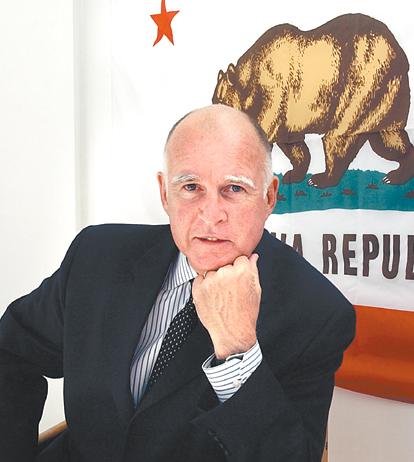
OPINION Given that Gov. Jerry Brown put out his proposed budget the same day that Oscar nominations came out, it’s tempting to make some comparisons.

Brown’s budget, like the nominated musical “Les Misérables,” has plenty of numbers, and will make some people cry.

But I take the new budget seriously, the same as every budget I’ve seen since I got to Sacramento. Unlike most of the recent budgets, this one doesn’t feature a big deficit. Give the Governor some credit for that, but let’s look at how he’s done it. Not all of it is pretty.

To start with, education gets a boost. That’s clearly what California’s voters wanted when they passed Proposition 30 in November. The budget will give more generous increases to the school districts that have more education challenges, and it boosts funding for higher education. We can cheer that.

It also funds the next steps for implementing federal health care reform. That bodes well for efforts to make sure all Americans and all Californians are insured. Under ideal circumstances, of course, we’d be talking about single payer.

There are other, less cheerful things in our future.

There’s an across-the board 20 percent cut to In-home Health Supportive Services beginning in November. This comes from an odd “optimistic” assumption from the governor that the courts that kept him from making those cuts earlier will let him do it now.

Child care funding is flat, which would be tolerable if it weren’t for past cuts. It’s hard to find a better investment in our state than child care. Kids in good child-care programs do better when they get to school. Child care allows more people to work and attend job training. Restoring child-care funding is critical for the state.

Keeping CalWORKS benefits at half of what they used to be is similarly shortsighted, as are cuts to the AIDS Drug Assistance Program, reductions in Medi-Cal provider rates and funding changes for students in higher education.

While preaching austerity, Brown keeps pouring money into a prison system that needs more reform. Sentencing and release programs could be altered to reduce the need for overstuffing prisons without risk to Californians. Overcrowding continues, with one women’s prison in the Central Valley at 180 percent of capacity. This is not stewardship that inspires confidence.

Prison programs to help people beat drug addictions and find jobs when they come out are gone. We are missing a chance for long-term reductions based on rehabilitation. Instead we continue to shuffle bodies around.

Spending choices are not the only problem. The governor skipped some ways of boosting revenue. What about the rules surrounding Proposition 13? Local jurisdictions would benefit from closing loopholes that allow corporations to avoid reassessment when property changes ownership.

I also want discussion of an oil severance tax. Here in the Bay Area — in Richmond and San Bruno — we’ve seen and lived with major downsides of the energy industry. I think it’s time that the oil producers who continue to make big profits pay a tax for the oil that’s taken out of California.

You can see that the Governor’s “director’s cut” budget doesn’t deserve a little gold statue — even if it is the best picture (fiscally) we’ve seen in a few years. We’ll look for silver linings when the Legislature starts working on our playbook.

Assemblymember Tom Ammiano represents the 13th District.

Chiu’s committee assignments keep the moderates in charge

42

A week after engineering his unanimous re-election to an unprecedented third consecutive term as president of the Board of Supervisors, David Chiu today announced his assignments to board committees, placing fiscal conservatives into two of the most powerful posts and making himself a key swing vote on the Land Use Committee.

“I believe these committee assignments reflect a balanced approach and the diverse interests and talent of the supervisors,” Chiu said just after 4pm during the Roll Call portion of today’s meeting.

But some progressive activists were immediately grousing about some of the selections, which seem to reflect Chiu’s neoliberal approach to governance, preventing progressives from doing much to challenge development interests or the appointment of Establishment insiders to city commissions.

The Land Use Committee is perhaps the most powerful and impactful, particularly as the Warriors arena and other controversial waterfront developments and the CPMC hospital deal come to the board. Scott Wiener – a moderate who is already perhaps the most prolific supervisor – gains far more power as he is named to chair that committee. It is balanced out by Chiu and Sup. Jane Kim, both of whom have some progressive impulses on land use issues but also personal ambitions and a penchant for cutting deals. Developers have to be happy about this lineup.

Sup. Mark Farrell was named chair of the Budget Committee, succeeding Sup. Carmen Chu – a pair that are indisputably the most conservative supervisors on the board. While progressive Sups. Eric Mar and John Avalos will help balance out the permanent committee, their influence will be offset by the temporary members added during budget season: Sups. London Breed and Wiener.

That roster essentially puts Breed in the swing vote role, which should immediately give her some clout. Chiu’s defenders note that Budget’s balance of power is essentially status quo (with Breed now in the same swing vote role that Sup. Malia Cohen played) – and that the committee’s work last year was supported by labor and business interests alike.

Chiu is proposing to combine the Public Safety and City Operations & Neighborhood Services committees, naming Sup. David Campos as chair, Mar as vice-chair, and new Sup. Norman Yee as its third member. Yee, who nominated Chiu for president last week, was also rewarded with a chair on the Rules Committee – controlling appointments, it arguably the board’s third most influential committee after Land Use and Budget – with that committee filled out by Breed and Sup. Malia Cohen.

Speculation that Cohen and Kim would be rewarded for withdrawing their nominations as president before the vote last week don’t seem to have materialized in these appointments. Cohen was also named to the Government Operations Committee, along with Campos, which Sup. Carmen Chu will chair. That doesn’t give Cohen, who told us that she wanted to be on Land Use, much power.

Similarly, Kim was named chair of the City & School District Committee – nice, but not exactly a political launching pad – and Kim’s only real power on Land Use will come when Chiu is opposing some project, as he did with the controversial 8 Washington project that Kim and seven of her colleagues supported.

Aaron Peskin, Chiu’s predecessor as board president, said that he vaguely saw some semblance of Chiu’s claimed strategy of having conservative committee chairs balanced out by liberal majorities (although even that depends on how you define your terms). Yet Peskin questions that approach, and sees committees unlikely to really gel around good decisions or policies.

“It’s a recipe for dysfunction,” Peskin told us. “But it certainly will be fun to watch.”

Jerrry Brown and UC

34

So the guv is going to start showing up at UC and CSU board meetings, where he will be able to sit next to his pal Gavin Newsom. And he’s going to tell the administrators that they have to start getting serious about cost-cutting — as if they haven’t whacked billions out of their budgets in the past few years.

I’m with Jerry on one thing: The Number One, absolute, top priority of the institutions of higher education in this state has to be avoiding hikes in tuition and fees. In fact, I’d put a five-year moratorium on anything that would increase costs for students. It’s already too expensive to go to a state school, middle-class parents are getting priced out, and kids are graduating with so much debt that they’re financially paralyzed for years.

The promise of an affordable, quality college education that Jerry’s dad created in this state is gone, and it’s not coming back until the price of a four-year degree comes back into synch with what Californians can pay. (Yes: UC is still a huge bargain compared to private schools. But you can go to college in Canada for half the price of UC, even if you’re an American. If you’re a Canadian citizen, you can go to really great colleges for almost nothing. That’s the way California used to be.

And no question: There’s bloat at UC. Administrators make too much money. I refuse to believe that you have to pay such giant salaries to attract people who can run the schools.

But that’s a small part of the overall UC and CSU budget. And Brown has to understand that higher education isn’t like most businesses. The productivity increases that corporate America (and that many other parts of state government) have seen in the digital era don’t translate directly to colleges. A company can lay off lots of staff that did things like answer phones and replace them with (annoying) voice-mail robots, and accountants can work faster and machines can make cars better than (expensive) labor forces did. But it still takes one full human being to teach English Lit, and he or she can still only teach a certain number of students, and grade a certain number of papers. And if all the smartest physicists and electrical engineers want to go to work for Oracle or Google, you have to pay more to get them to get a few to pursue careers in academia.

Brown’s proposal seems to be online classes, which would allow one prof to reach thousands of students, without anyone showing up in a classroom. Nice idea, but teaching isn’t just giving a lecture. Sure, some classes work fine on the web, but a lot don’t and never will.

Seriously, guv: Would you rather have this bloody fight that could damage your dad’s enduring legacy, or go along with an oil severance tax?


The downside of Jerry Brown’s budget

9

The guv is quite proud of his new budget: He’s eliminated the chronic deficits, he’s giving some more money to the schools, and he’s vowing that the state will live “within its means.” Which sounds like no more taxes. And gee, just about everyone in Sacramento is singing Kumbaya; the praise is coming not just from Democrats but from Republicans.

But there’s a downside to the Brown budget: He has, to his credit, stopped the red ink, and he’s presenting things in a brilliant way that makes him look like the grownup the state has needed for many years — but he’s doing very little to replace the the money that services for the poor have lost in the past five years.

“At first blush, it has some good things,” Assemblymember Tom Ammiano told me. “But I don’t see restoration of the cuts for the disenfranchised.”

Ammiano is calling for closing Prop. 13 loopholes and passing an oil severance tax as part of the budget process. And with Democrats holding a two-thirds majority in both houses, those kinds of changes are possible. At the very least, it seems, the progressives ought to demand from Brown a plan to backfill what social service providers have lost. If it can’t all happen this year, it ought to be part of the future budget process.

State Sen. Mark Leno, who chairs the Senate Budget Commitee, was a bit more politic than Ammiano, but he also is concerned that the budget move the state forward:

“With the improvement of our fiscal outlook comes the opportunity to continue our work to restore California. While our recent efforts have focused largely on making cuts in the least harmful manner possible, we will now have more capacity to refine our work to improve essential programs and analyze the role of government and its effectiveness. I look forward to working with Governor Brown and my colleagues in the Legislature to evaluate this year’s budget to help ensure it is the best possible plan for a state on the mend.”

On the mend is right — because the state of California is in way worse shape than it was when Arnold Schwarzenegger took over and screwed things up, and the goal shoudn’t be to keep at a steady state that’s unacceptable. It ought to be returning California to its role as a leader in progressive policy. Sorry, Jerry: A balanced budget alone isn’t good enough.

Oh, and Californians United for a Reponsible Budget, which seeks to cut prison spending, points out that this budget is hardly tough on the bloated corrections budget:

The administration has deserted plans to shrink California’s over-sized prison population, ignoring clear messages from voters. The proposed budget increases prison spending $250 million including a $52 million General Fund increase, bringing the total Corrections budget over $11 billion. Despite the passage of Prop. 36 and continuing realignment,  It also projects an increase in the prison population by 2,262 people over the 2012 Budget Act projections. ”If the Governor believes that ‘we can’t pour more and more dollars down the rat hole of incarceration’ then why is he increasing spending on Corrections, planning for more prisoners rather than fewer and defying the demands of the Federal Court and the voters to further shrink the prison system?” asked Diana Zuñiga, Field Organizer for Californians United for a Responsible Budget.

It’s no surprise that the prison guards’ union is happy.

UPDATE: An analysis by Ammiano’s office shows a few other lowlights of the budget: It reduced AIDS Drug Assistance Program money by $16.9 million. It doesn’t restore any of the deep cuts to the state’s Welfare to Work Program. It cuts community college funding by tying state money to student completion, not student enrollment. It offers no additional funding for child care programs. It caps the number of courses students are allowed to take if they want to receive Cal Grants.

The Leg needs to take a hard look at this before it signs off on all these cuts.

Honest Abe and everyone else: Oscar nominations

0

Congratulations, Mr. President. Better luck next time, Ms. Bigelow, Mr. Affleck, and Mr. Anderson.

Yep, as you already know, the Oscar nominations were handed down this AM. Like every year, there were some predictable picks and some shocks, snubs, and head-scratchers. The ceremony is Feb. 24; I predict it’ll be a three-way tie for Best Dressed among Jennifer Lawrence, Denzel Washington, and Quvenzhané Wallis. As for the big five categories … let’s discuss. (Full list of nominees here!)

Best Picture: Nine nominees but no spot for The Master or dark horse The Dark Knight Rises. Lincoln, which raked in the highest number of nominations overall, is a shoo-in. Second place: Silver Linings Playbook, followed by upstart indie Beasts of the Southern Wild.

The rest: Amour (will win Best Foreign Language Film); Argo, Django Unchained, Les Miserables, and my original pick to win, Zero Dark Thirty (these all have lesser chances, since their directors weren’t nominated); and Life of Pi (likely to clean up in the technical categories).

Best Actor: Daniel Day-Lewis for Lincoln. Like, duh. Time to start practicing your “Happy for you, bro!” reaction shots, Bradley Cooper (who should really be stoked just for the invitation, what with The Words and multiple Hangover sequels; here, he’s nominated for Silver Linings Playbook); Hugh Jackman (Les Miserables); Joaquin Phoenix (The Master — though I might wager he won’t even show up, Brando-style); and Denzel Washington (Flight).

Best Actress: I was certain before today that Jessica Chastain was a lock for Zero Dark Thirty. But with the snubbing of Kathryn Bigelow in the director category, I’m starting to think the Academy didn’t love the film as much as I did. So Jennifer Lawrence, so good in Silver Linings Playbook (not to mention her Hunger Games-propelled rise to megastardom in 2012), may sneak in instead. Unless, of course, the Academy’s surprising affection for Amour gets Emmanuelle Riva (who turns 86 the day of the ceremony!) in there.

On the other end of the age spectrum, nine-year-old Beasts of the Southern Wild‘s Quvenzhané Wallis, rocking the “Welcome to the club” nomination, is the youngest Best Actress nominee ever. Naomi Watts should have won for 2001’s Mulholland Dr., in my opinion; she spends half of The Impossible in a coma, so this is looking like one of those “It’s nice to be nominated” nominations. Hold fast, Naomi. You’ll get your gold man eventually.

Best Supporting Actor: Still believe Tommy Lee Jones is gonna podium for Lincoln. Alan Arkin (Argo) and Christoph Waltz (Django Unchained) were both the comedic high points of their respective films, but they’ve won in this category fairly recently, for parts not totally unlike the ones they played in 2012. Robert De Niro could sail in on Silver Linings Playbook love — also, he’s Robert Fucking De Niro, which counts for a lot — or, perhaps the Academy will throw a bone to The Master and let Philip Seymour Hoffman in. Doubt it though.

Best Supporting Actress: Love Jacki Weaver, but why is she in here? Can you remember one thing she did in Silver Linings Playbook, other than look nervous and wear sweatshirts? Shoulda nominated Shirley Maclaine for Bernie instead. At any rate, still a two-woman race: Sally Field (Lincoln) and the dreaded Anne Hathaway (Les Miserables). Will the Academy honor weight gain and veteran status, or weight (and hair) loss and ingenue status? Hathaway might have an advantage, since Oscar loves singing. Thank you for playing, Helen Hunt (The Sessions), Amy Adams (aces in The Master), and Weaver.

Best Director: Pick your jaw off the floor, because Zero Dark Thirty‘s Kathryn Bigelow and The Master‘s PT Anderson are both MIA. Hope Lincoln‘s Steven Spielberg has his speech ready … may I suggest “Four score and seven years ago” as an opener?

Also in the mix: Michael Haneke (Amour), Ang Lee (Life of Pi), and David O. Russell (Silver Linings Playbook), plus surprise entry Behn Zeitlin, who wrangled magic, a teeny star, and an even teenier budget for Beasts of the Southern Wild.

**

And for good measure: PARANORMAN for best animated film! Make it happen, voters!

http://www.youtube.com/watch?v=0zIjLA8NGLY

Behind today’s unanimous vote for Chiu

37

For all the high-minded talk about diversity and working together on behalf of the public – and the relentless praising of their political colleagues and supporters – today’s unanimous re-election of David Chiu as president of the Board of Supervisors once again demonstrated that much of the people’s business is done behind closed doors.

As most of the supervisors acknowledged publicly or in comments to the Guardian, in recent days there was a flurry of meetings about the president vote among the supervisors, despite the prohibition in the state’s Brown Act against “seriatim meetings,” in which elected officials have serial meetings with each other until an quorum of supervisors has illegally discussed some topic.

How else could Malia Cohen, Jane Kim, and Scott Wiener – all hopefuls for the president’s seat who withdrew themselves from consideration before a vote was cast – have all known that Chiu had the votes he needed to win an unprecedented third consecutive term? But they did know, as they all told the Guardian.

“The reality was the support wasn’t there,” Cohen told reporters after the vote when asked why she withdrew her nomination just before the supervisors were about to vote, just after Kim had done the same thing, leaving Chiu as the sole nominee.

I asked whether she was promised anything in return for withdrawing from consideration, and Cohen said, “There’s always negotiations involved in everything, from committee assignments to appointment to regional bodies…The full story will come out later.”

Cohen even obliquely suggested that Chiu – who is known to have his sights set on Tom Ammiano’s Assembly seat, which comes open in two years – may not serve his full two years as president and that was part of the backroom discussions. In the more immediate future, Cohen said she wants to serve on the Land Use Committee, so don’t be surprised if Chiu appoints her as chair of that powerful body.

“It may seem like a small setback today, but it sets the stage for greater conversations going forward,” Cohen said of her decision to voluntarily step down.

Kim also told reporters that she knew Chiu had the votes – saying “we know there was broad support for David for another term” – and that the decision that she and Cohen made to nominate one another was mostly symbolic, intended to make a point about the need for women of color to be in leadership positions: “I thought it was important that we put the dialogue out there.”

Kim said she really appreciated the opportunity to speak with more fellow supervisors privately in the last few days than she had before. “All of this was last minute. There were really only discussions in the last three days,” Kim told me. “I got a good sense of people’s policies and priorities.” As for Kim’s priorities, she said she wants to serve on the Budget Committee, so don’t be surprised when Chiu names her as chair.

Wiener also told me that he realized a couple days ago that he didn’t have the votes but that Chiu did. “It would have been an honor to serve as board president, but it wasn’t in the cards,” Wiener said.

Some of what the cards showed was made clear as the nominations for president opened today and new Dist. 7 Sup. Norman Yee spoke first and nominated Chiu, thus making it clear that Kim probably didn’t have the six votes she needed. As former Sup. Chris Daly, a veteran vote counter, told me, “Norman Yee and Eric Mar could have made Jane Kim board president. They were the deciding bloc, but it would taken both of them.”

Yet Mar told us that he was caught off guard by how the voting unfolded today. “I was surprised that people dropped out before the vote,” he told me.

Yet he acknowledged that it was perhaps a smart move by the progressive supervisors, who voted against Chiu two years ago and were punished with bad committee assignments, to instead get behind Chiu now and hand him a unanimous victory.

“I think that was the hope when people dropped out. It would have been hard if they didn’t, but these negotiations [with Chiu over committee assignments] will go on over the next few days,” Mar said, noting that he will push for strong representation by supporters of labor and other progressive constituencies on key committees.

Asked about his negotiations with fellow supervisors, Chiu would only say, “My conversation with everyone was very consistent.” As for his pending decision on committee assignments, he told me, “We have a board that is very diverse and we’ll have committees that reflect that.”

During his speech in Board Chambers, Chiu talked about running the board in a way that would let each supervisor have her/his moments in the spotlight to provide leadership on issues they care about, comparing it to the San Francisco Giants and the contributions that so many players made to their World Series sweep.

“They took turns making the big plays,” Chiu said, going on to tick off the list of how he’ll help his colleagues shine. “Whether it’s Sup. Mar advocating for a healthy environment, Sup. Farrell addressing out looming health care costs, whether it’s Sup. Chu disciplining our budget, Sup. Breed getting the jobs that young people need, Sup. Kim making sure that all our kids graduate, Sup. Yee making sure that small businesses succeed, Sup. Wiener fighting for better transportation options, Sup. Campos fighting against wage theft, or Sup. Cohen curbing gun violence, and Sup. Avalos delivering on local hire, by the end of our season, if we’re going to help each other succeed in getting these things done, we are all going to win.”

Sunday metering begins in SF but few notice

15

Yesterday, after years of heated conflicts over the issue, San Francisco officially began charging motorists to use metered parking spaces between noon and 6pm on Sundays – and nobody seemed to notice.

For the first few weeks, parking control officers with the San Francisco Municipal Transportation Agency are going to be issuing warnings rather than expensive parking tickets. But as Streetsblog SF reported today, even that didn’t seem to be happen. Its street survey in the Haight and Mission districts found that most parkers didn’t pay, and they received no warnings that they were supposed to.

SFMTA spokespersons that didn’t respond to Streetsblog inquiries also haven’t responded to questions from the Guardian about what happened and how many warnings were issued (UPDATED BELOW).

Sunday metering is intended to create more parking turnover in busy commercial corridors and bolster the SFMTA’s budget, capturing more money for Muni. But for now, it seems that everyone involved is still trying to shake off their holiday hangovers and get up to speed.

UPDATE 5:45: SFMTA spokesperson Paul Rose just returned our call to say parking control officers were indeed busy issuing warnings yesterday. “We issued about 4,000 warnings yesterday. That’s part of getting the word out,” he said. As far as Streetsblog’s observations, he said it could have been a fluke of timing or the fact that meters don’t indicate when someone pre-pays or pays by cell phone. “In the Haight, specifically, we issued about 600 warnings, and about 1,000 in the Mission,” he said. In addition to the direct warnings, the SFMTA has been publicizing the Sunday metering on billboards and Muni posters, through merchant groups, in the media, and on the meters themselves. 

Enforcement with actual tickets begins on Jan. 27.

Still the fairest

1

arts@sfbg.com

FILM One of the few upbeat by-products of the increasing infantilization of popular movies is that the same impulse to dumb down live action for permanently adolescent tastes also raises the bar for animation, which no longer has to target grade schoolers as its primary audience. Even not-so-special 2012 had more sophisticated and interesting animated features than you’d find in any given year a couple decades or more ago. Wreck-It Ralph won’t win the Best Picture Oscar. But it will almost certainly be better than whatever movie does.

The notion that adults actually want to see full-length cartoons, however, seemed preposterous to myriad soon-to-be-crow-eating people 75 years ago. That was when Walt Disney unleashed Snow White and the Seven Dwarfs on the public — to an enormous success no one had predicted. In fact, all bets were placed on “Disney’s folly” sinking the studio that had foolishly invested all its resources (and a lot of borrowed money) in a venture whose cost overruns and dim prospects had been the talk of Hollywood. (No doubt a few studio heads were happily anticipating hiring Walt’s newly at-liberty talent at cut rates for their own animation divisions.)

http://www.youtube.com/watch?v=5kWr9e4JN5I

Of course, the naysayers were proven wrong — opening up the floodgates to more cartoon features, then Disney live-action films, nature documentaries, TV series, theme parks … a whole empire of “brand” that for better and worse has shaped American culture (and its perception abroad) ever since. The double-disc 2009 DVD release of Snow White features, among its extras, one latter-day observer calling the film “one of the great American success stories of all time.” (The official Disney history offered up in such self promotional products is relentlessly hyperbolic. The same package also offers an “all-new music video” rendition of “Someday My Prince Will Come” by one Tiffany Thornton that is so horrifyingly kitsch you can be sure it will be erased from the official Disney history forthwith.) Snow White would set a record for being the highest-grossing film of all time — but not for long, since a little thing called Gone with the Wind came out in 1939 and stole that title for another quarter-century.

I doubt Mr. Disney could have imagined the world in which his Snow White — which plays the Castro in a newly restored digital print this week, by the way — would be celebrating that septuagenarian anniversary. One in which prevailing tastes decreed two big-budget live-action spins on that same Bavarian fairy tale would be among 2012’s major releases for grown-ups; a mass murder of his target demographic would dominate year-end news; and the unions he famously opposed would be popularly vilified.

That ripple effect is more than this movie should have to bear — let alone that it was apparently Hitler’s favorite. Because Snow White is still a charmer, gorgeous in the depth and detail of its backgrounds, seamless in traversing the bridge between score and song, and timelessly adorable (to use the heroine’s favorite adjective).

It seems less dated than just about any other movie from 1937, even if Snow White herself remains an insipid blank with the voice of Betty Boop doing operetta. (Subsequent Disney cartoon heroines would be feistier, though heroes would remain problematic — Walt’s animators found Snow’s Prince Charming so difficult to depict they wound up simply cutting his screen time to the bone.) The most one can say for her is that she seems to have majored in Home Ec, though the evil queen hooked on being “fairest of them all” kick-started a fine legacy of excellent Disney villains. (Notably absent were such grisly original fairy-tale details as the step mum’s death from dancing in red-hot iron shoes at Snow’s wedding.)

You can blame Snow White for cementing Disney’s transition from the rambunctious to the harmless. But 75 years later that formula still works — in this instance, at least. The art itself remains near-timeless, even if the subsequent Pinocchio (1940) and Bambi (1942) are arguably much better films. Few movies had anywhere near the same impact, on the medium’s development or life in general.

It had a more direct impact on the Radio City Music Hall, whose seats had to be replaced after a record-breaking run because children kept wetting themselves during the scarier sequences. Adorable! 

SNOW WHITE AND THE SEVEN DWARFS

Wed/2-Sun/6, 1:30, 3:45, 6, and 8:15pm

Castro Theatre

429 Castro, SF

www.castrotheatre.com


Bigger than Bigelow

2

cheryl@sfbg.com

FILM There was hella hoopla over Kathryn Bigelow being the first woman to win an Oscar for Best Director, for 2010’s The Hurt Locker. It’s a good possibility she’ll soon be the first woman to win two directing Oscars, if Zero Dark Thirty‘s remarkable haul of critical kudos continues into statuette season.

But even if Zero (more on that below) doesn’t claim cinema’s top prize, Bigelow will probably win another Best Directing Oscar before another woman anyway. She’s just about the only female director making films that work Oscar’s magic formula: critically praised, culturally significant, headline-grabbing, and popularly loved (with box-office hauls to match). Women may be making inroads on the screenwriting end of things (and you’ll find lauded female names among documentary, foreign-language, and film-producing credits), but the most successful post-millennial female directors — Sofia Coppola (a Best Original Screenplay winner for 2003’s Lost in Translation), Catherine Hardwicke, Andrea Arnold, Debra Granick, Lisa Cholodenko, Lynn Shelton, Kelly Reichardt, and Sarah Polley, to name a few — haven’t been able to tick enough of those golden boxes.

Whether or not a film wins an Oscar is hardly a measure of its true worth. But hoisting a Best Directing Oscar does count for something important, particularly in an industry that largely runs on male power. Bigelow’s success is particularly notable because she does not make so-called “women’s pictures,” whatever that may mean (she did make a vampire flick long before Hardwicke, though, as fans of 1987’s Near Dark will recall). With the exception of 2000’s little-seen The Weight of Water and 1989’s Blue Steel (would anyone remember that movie, if not for Derek Zoolander?) — with honorable mention for Angela Bassett’s formidable supporting turn in 1995’s Strange Days — Bigelow’s films tend to be, uh, “men’s pictures.”

http://www.youtube.com/watch?v=cAtWcvCxPhc

The surfing, skydiving, bank-robbin’ three-punch of Point Break (1991) allowed Keanu Reeves to set a course for action-hero superstardom (without it, he’d never have been cast in 1994’s Speed); though the film features a traditional romantic subplot, it’s mostly about the bromance between Reeves’ undercover FBI agent and Patrick Swayze’s New Age macho man. K-19: The Widowmaker (2002) was Bigelow’s first foray into a military milieu; its tale of trouble aboard a Soviet nuclear submarine, circa 1961, was couched in a $100 million production that neither earned back its budget nor convinced anyone of Harrison Ford’s ability to do a Russian accent. (Interestingly, the film’s Rotten Tomatoes summary foreshadows the reception to date of Zero Dark Thirty: “A gripping drama even though the filmmakers have taken liberties with the facts.”)

Bigelow rebounded with The Hurt Locker (2008) — scooping up her accolades in front of ex-husband and former film-production partner James Cameron, whose 2008 Avatar grossed billions but didn’t win over Academy voters. Set during the Iraq War, The Hurt Locker follows the high-stakes, high-tension routine of a three-man bomb disposal team. It launched actor Jeremy Renner to stardom, and earned a screenwriting Oscar for Mark Boal, a journalist who’d been embedded with a US Army bomb squad. Along with the 2008 HBO mini-series Generation Kill (based on a book written by a journalist embedded with the Marines at almost the same time as Boal), The Hurt Locker — a tense, gritty thriller shot using hand-held cameras — was one of the first large-scale docu-dramas based on the months immediately following the 2003 invasion.

After the Oscars, rumor had it that Bigelow and Boal’s next film would be a South American “drug parable,” with big names like Tom Hanks and Johnny Depp floated as possible stars. Clearly, a more exciting project took precedence — one that’s already raked in critic’s association prizes, and raised the ire of government types, including Sen. Dianne Feinstein, who insist that it has “taken liberties with the facts.”

Front-loaded with equal parts acclaim and controversy, Zero Dark Thirty moves into wider release this week, and larger audiences will be able to make up their own minds about it. It’s certainly edgier than another 2012 film about CIA heroics. (There’s no waterboarding in Argo.) “What I want you to know is that Zero Dark Thirty is a dramatization, not a realistic portrayal of the facts,” CIA Acting Director Michael Morell explained in a recent statement, taking issue not just with the depiction of “enhanced interrogation techniques” (that’s “torture” to you and me), but also the way the film singles out one character as masterminding the operation to take down Osama bin Laden.

“The point was to immerse the audience in this landscape, not to pretend to debate policy,” Bigelow responded in an interview with entertainment site the Wrap. “Was it difficult to shoot? Yes. Do I wish [torture] was not part of that history? Yes, but it was.”

The extent to which torture was actually used in the hunt for bin Laden may never be known, though popular opinion will surely be shaped by this film, as it’s produced with the same kind of “realness” that made The Hurt Locker so potent. Zero Dark Thirty incorporates torture early in its chronology — which begins in 2003, after a brief opening that captures the terror of September 11, 2001 using only 911 phone calls — but the practice is discarded after 2008, a sea-change year marked by the sight of Obama on TV insisting that “America does not torture.” (The “any more” goes unspoken.)

Most of Zero Dark Thirty is set in Pakistan and/or “CIA black sites” in undisclosed locations; it’s a suspenseful procedural that manages to make well-documented events (the July 2005 London bombings; the September 2008 Islamabad Marriott Hotel bombing; the December 2009 bombing of Camp Chapman in Afghanistan) seem shocking and unexpected. Even the raid on bin Laden’s HQ is nail-bitingly intense. The film immerses the viewer in the clandestine world, tossing out abbreviations (“KSM” for al-Qaeda bigwig Khalid Sheikh Mohammed) and jargon (“tradecraft”) without pausing for a breath. It is thrilling, emotional, engrossing — the smartest, most tightly-constructed action film of the year.

At the center of it all: a character allegedly based on a real person whose actual identity is kept top-secret by necessity. She’s interpreted here in the form of a steely CIA operative named Maya, played to likely Oscar-winning perfection by Jessica Chastain. No matter the film’s divisive subject matter, there’s no denying that this is a powerful performance. Maya is the perfect Bigelow lead; she succeeds in a male-dominated world by focusing solely on her job and her ultimate goal, sexism and gender politics be damned. “Washington says she’s a killer,” a character remarks after meeting this seemingly delicate creature, and he’s proven right long before bin Laden goes down.

Some critics have argued that the character is underdeveloped, but anyone who says that isn’t watching closely enough. Maya may not be given a traditional back story (all we know is she was recruited into the agency after high school), or any outside life to speak of (even Renner’s unhinged Hurt Locker vet is shown going home to a wife and kid), or the desire to distract herself with romance (“I’m not the girl who fucks … it’s unbecoming” she explains at one point, dismissing a colleague’s inquiry into her social life). But there’s plenty of interior life there, and it comes through in quick, vulnerable flashes — leading up to the payoff of the film’s devastating final shot.


ZERO DARK THIRTY opens Fri/4 in Bay Area theaters.

The next board president

9

EDITORIAL The president of the Board of Supervisors does more than bang the gavel at meetings, tell people to put their clothes back on, and run for higher office. It’s a powerful position largely because the president makes appointments — to the Planning Commission, the Police Commission — and unilaterally decides who serves on which board committees.

Two years ago, Sup. David Chiu, who won the top post in 2009 with progressive support, wanted re-election, and the left wasn’t siding with him anymore. So he cut a deal with the conservative members, appointing the right-wing of the board to plum committee posts — and making life harder for progressives who wanted to pass Legislation or prevent bad developments from happening.

He clearly likes the job and would love to hold it for a third term. But that won’t be easy — Sup. Scott Wiener, who is to the right of Chiu on many issues, is also interested, as is Sup. Jane Kim, who has always been close to Chiu, and Sup. David Campos, who is one of the leading progressives. None of the candidates can count to six right now, so somebody’s going to have to back down or make a deal.

And before that happens, the candidates ought to tell us something about what they plan to do.

Chiu’s 2011 committee appointments were a bit of a shocker, although, in retrospect, the horse trading shouldn’t have surprised anyone. In fact, after he made his decisions, and put Carmen Chu, one of the most conservative supervisors, in charge of the Budget and Finance Committee and put the conservative Scott Wiener and the moderate Malia Cohen on Land Use and Economic Development, and put conservative Sean Elsbernd in charge of two committees, he told us that he felt he had no choice. If the progressives had voted for him, he wouldn’t have had to reward the conservatives.

This time around, with two new supervisors taking office (a more centrist Norman Yee replacing Elsbernd and a more moderate London Breed replacing Christina Olague) everything is up in the air. The progressives still have a solid three votes, and can sometimes count on Jane Kim and Chiu. That’s not enough to elect a president, but it’s coming pretty close.

Based on experience, skills, and temperament, our first choice for board president is Campos, who would be fair to everyone, approachable, and a voice for open government and community participation. But if Campos can’t get six votes, he and his progressive colleagues should ask anyone who want their support to be open about what he or she plans to do.

Who will be on the budget committee? Rules? Land Use? Where will he or she look for candidates for commissions? We know it would look unsightly if, say, Chiu named in advance his preferences for key committees — and then those people voted for him. But the reality is, those discussions are happening anyway, those deals being cut — and it’s happening behind closed doors, where the public (and the other supervisors) can’t watch.

Let’s bring all of the discussions into the sunshine, and have an open debate about the next board president.


Manhattanization forgotten, Transbay Tower moves without the trains

101

Times in San Francisco have changed since the battles in the ‘80s against increased high-rise development and the “Manhattanization of San Francisco,” which peaked in 1986 with the passage of Prop. M placing limits on the rapid development pushed by then-Mayor Dianne Feinstein and her downtown allies.

Now, in 2012, the tallest building on the West Coast — Transbay Tower, the first in a series of new high-rises envisioned for downtown — gathered its final approvals with only scattered opposition (such as Quentin Kopp, the former judge and legislator, who derides the project as nothing but a “real estate scheme” involving lucrative publicly owned land being turned over private developers).

Whether we were all too distracted by a year of political scandals real and contrived, or whether it was the project proponents’ savvy marriage of the real estate deal to the high-speed rail project and Caltrain extension that environmentalists want to see become a reality, this behemoth building is now all but a done-deal.

Yet despite the slick and compelling interactive videos and project descriptions on the Transit Joint Powers Authority website, San Franciscans aren’t really on the verge of realizing this utopian urban vision of 21st century high-speed rail burrowing its way into SoMa over the next few years.

“The projection of that is less clear now. The delays with the high-speed rail have created some challenges for us,” said Adam Alberti of the high-powered communications firm Singer Associates, which represents the TJPA. Contributing to the delay and uncertainty is the indefinitely delayed plan for the electricification of Caltrain tracks that would be a precursor to bringing the trains downtown.

Now, even though the current Transbay Terminal rebuild (scheduled for completion in 2017) includes a “train box,” funding hasn’t yet been identified for the tunneling to get the trains there. That depends on federal allocations and the New Starts program administered by the Metropolitan Transportation Commission.

“Those things take awhile. It’s a long process,” Alberti said.

But the 930-foot Transbay Tower has its approvals, with the property scheduled to be formally transferred to the Hines/Boston Properties building team in the next couple months, followed in the coming years by other parcels in the area for more high-rises.

“The other parcels will be metered out and put out when we get maximum return for taxpayers,” Alberti said. “The transit center itself is on schedule and on budget, so it’s moving forward.”

That’s great, even if it’s just going to be a glorified bus station for the foreseeable future as the high-rises that are being built as part of this trade-off for trains help inch San Francisco a bit closer to Manhattanization