Books

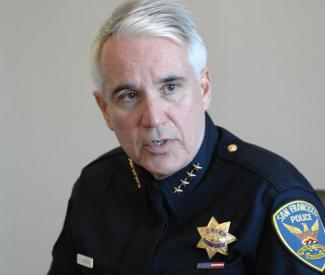
George Gascon, longtime Republican

51

One thing I didn’t know when I wrote about former police chief George Gascón’s shocking Jan. 9 appointment as San Francisco’s next district attorney is that he has Republican roots. But then I came across a January 10 Los Angeles Times article that revealed that in 2008, Gascón described himself to the L.A. Times “as a longtime Republican.”

Gascón is now registered as “decline-to-state” but his Republican leanings could become an issue in the D.A.’s race this November, depending on what happens between now and then, in terms of decisions Gascón makes, especially around cases the San Francisco Police Department refer to his new office.

Paul Henderson, who was D.A. Kamala Harris’ chief of staff before she won the Attorney General’s race, was rumored to be Harris’ preferred choice as her replacement. But he now finds himself in the awkward position of reporting to the man he will be running against this fall.

“I respect Gascón as a law enforcement officer and I appreciate that he called me personally to inform me of the mayor’s decision,” Henderson told me. “D.A. Gascón and I will be discussing next steps and I stand ready to help him address the pressing issues facing the office.”

Henderson said the atmosphere over at the D.A.’s office is “a little crazy these days.”

“Everyone is trying to figure out what is going to happen,” Henderson said.  “All of this happened out of the blue, out of left field.”

Or right field, if you consider Gascón’s former voter registration.

“I think a lot of people were expecting something and someone different,” Henderson observed. “That’s the reality and the truth. I know I have a lot of support, but I need a little time to weigh and evaluate things.”

Political consultant Jim Stearns told the Guardian that he believes Gascón and Newsom when they say Newsom’s offer of the post to Gascón was a spur-of-the-moment decision

“I know for a fact that [Board President] David Chiu was offered the D.A. position and that Chiu and Newsom were genuinely confused about whether Chiu was going to take it or not,” Stearns said. “Chiu had discussed it at length a long time ago and rejected the notion. But then, when the offer was actually made, he said ‘I don’t know’ for a few days. Then, when he turned it down, the Mayor’s Office was in a quandary. So, I think Newsom was trying to pull a rabbit out of the hat, but this is one of those appointments that you might not make, if you really thought about it.”

As Stearns notes, Gascón had only been SFPD Chief for 18 months, and before that he was chief in Mesa, Arizona, which as Stearns puts it, “is not what you’d call a big city.”

And while Gascón, who was former high-ranking official in the Los Angeles Police Department, has since scored high marks for reducing violent crime, there were a lot of issues between SFPD and the D.A.’s office during his tenure, leaving him at risk of being accused of conflict of interest in his new role.

Perhaps the biggest of these conflicts is the question of police misconduct, which became a political hot potato during the Attorney General’s race, when attention was brought to a law that’s been on the books since 1963, when the Supreme Court ruled in Brady vs. Maryland that the government has a duty to disclose material evidence to the defense which could tend to change the outcome of the trial.

In 1972, “Brady” was expanded to require District Attorneys to turn over any information that could impeach the credibility or veracity of a police officer’s testimony, or if an officer has a past record of falsifying reports or other conduct that could impact their truthfulness. But it turned out that San Francisco had never formalized a “Brady” policy. It’s true that Gascón as SFPD Chief requested that searches be done as far back as 1980 for any sustained discipline actions that could be interpreted as possible “Brady” issues, but his move to D.A. raises the issue afresh.

“What better way to keep a lid on it,” Stearns opined.

So far, the D.A.’s office has not released a statement on how Gascón intends to handle potential conflicts of interests, but I’ll update this post, if it does.

Stearns speculates that part of the decision to appoint Gascón was a result of the foot-dragging that went on as a result of Chiu’s indecision, allowing lots of competing camps to canvass for their preferred picks.

“The Gettys were pushing Bock,” Stearns said, referring to Alameda County Deputy District Attorney Sharmin Bock, an expert in human trafficking. “Others were pushing for [Assistant D.A.] Andy Clark, Paul Henderson, and [Deputy City Attorney] Sean Connelly [who represented the city in police excessive force cases].”

Other names floated were Chief Assistant District Attorney David Pfeifer, David Onek, senior fellow at the Berkeley Center for Criminal Justice; and San Francisco attorney John Keker.

“Newsom may have concluded that if he pushed for any of these folks, he’d be taking sides, and that if he went for Gascón, he wouldn’t be pissing anyone off,” Stearns said.

But now it seems the whole law enforcement world in San Francisco is in an uproar, as folks start to try and figure out how the appointment impacts the D.A.’s race in November.

‘The politics of a D.A.’s office is unique,” Stearns observed. “You can be thrown a curve ball at any moment. You never know what crime is going to be committed, and all of a sudden you have to make a decision that can impact the race.”

Stearns notes that Gascón has some positives going for him.
“He has fairly well-known name recognition, he had good grades, mostly, from the mainstream press for the work he has done as police chief, and it sounds like he is a pretty good manager and administrator.”

On the downside, there’s his statement that he’s “not philosophically opposed to the death penalty,” and the latest shocker that he’s been a longtime Republican.

And then there are the vagaries of running for elected office under San Francisco’s instant run-off voting (IRV) system.
“He could end up like Don Perata,” Stearns said, referring to Perata’s recent loss to Jean Quan in the race for Oakland mayor. “He could have the most money, the most endorsements and even the most votes, but no second and third place votes, and therefore he loses. But that depends on who else is going to run against him.”

Calls to David Onek, who filed in the D.A.’s race last summer and has already raised over $130,000 and collected a ton of endorsements, went unreturned, but if he gets back, I’ll be sure to post his comments here.

And as Henderson previously stated, he doesn’t plan to make any decisions until he has a substantive conversation with Gascón.

“Paul is pretty anti-death penalty, but like Gascón he came out in favor of sit-lie,” Stearns said, noting that Gascón may not feel he has to actively campaign to win in November.

“It’s a shock to the system what you have to go through to campaign in this city, especially if you believe in authority and hierarchy, and all of a sudden you have to go to every Democratic Club in town and listen to everyone’s questions and comments. But he sounds pretty serious about running, and I certainly believe that every election is competitive, so it remains to be seen what kind of candidate Gascón is and the deals he makes”.

Music Listings

0

Music listings are compiled by Cheryl Eddy. Since club life is unpredictable, it’s a good idea to call ahead to confirm bookings and hours. Prices are listed when provided to us. Submit items for the listings at listings@sfbg.com. For further information on how to submit items for the listings, see Picks.

WEDNESDAY 12

ROCK/BLUES/HIP-HOP

Anthony B Independent. 9pm, $25.

Buxter Hoot’n, Mark Matos and Os Beaches, Magic Leaves Bottom of the Hill. 9pm, $8.

Family Stone Yoshi’s San Francisco. 8pm, $26.

Foolproof Four Grant and Green. 8pm, free.

Gypsy Moonlight, Horror-X Hemlock Tavern. 9pm, $5.

Makepeace Brothers, Essence, Love Isabel Café Du Nord. 8:30pm, $10.

Otis Taylor Band Biscuits and Blues. 8 and 10pm, $20.

Sprains, Hail the Sun, Daikon El Rio. 8pm, $5.

JAZZ/NEW MUSIC

Gaucho, Michael Abraham Amnesia. 7pm, free.

Little Vamp Tomato and friends Revolution Café, 3248 22nd St, SF; (415) 642-0474. 8:30pm, free.

Ben Marcato and the Mondo Combo Top of the Mark. 7:30pm, $10.

Vanessa Tomlinson zBug Meridian Gallery, 535 Powell, SF; www.meridiangallery.com. 7:30pm, $10.

FOLK/WORLD/COUNTRY

*Willie Nelson Fillmore. 8pm, $55.

New World Ape, Osseynou Kouyate Yoshi’s San Francisco Lounge. 9pm, $7.

DANCE CLUBS

Booty Call Q-Bar, 456 Castro, SF; www.bootycallwednesdays.com. 9pm. Juanita Moore hosts this dance party, featuring DJ Robot Hustle.

Cannonball Beauty Bar. 10pm, free. Rock, indie, and nu-disco with DJ White Mike.

Hands Down! Bar on Church. 9pm, free. With DJs Claksaarb, Mykill, and guests spinning indie, electro, house, and bangers.

Jam Fresh Wednesdays Vessel, 85 Campton, SF; (415) 433-8585. 9:30pm, free. With DJs Slick D, Chris Clouse, Rich Era, Don Lynch, and more spinning top40, mashups, hip hop, and remixes. Mary-Go-Round Lookout, 3600 16th St, SF; (415) 431-0306. 10pm, $5. A weekly drag show with hosts Cookie Dough, Pollo Del Mar, and Suppositori Spelling.

Obey the Kitty Vessel, 85 Campton, SF; www.vesselsf.com. 9pm, free. All genres of music from DJ Cobra with a fashion element provided by Betsey Johnson.

Respect Wednesdays End Up. 10pm, $5. Rotating DJs Daddy Rolo, Young Fyah, Irie Dole, I-Vier, Sake One, Serg, and more spinning reggae, dancehall, roots, lovers rock, and mash ups.

“Subcon and Beyond Fest” Elbo Room. 8:30pm, $20. With Cevin Key, Tokyo Decadence, Dead Voices on Air, and more.

Synchronize Il Pirata, 2007 16th St, SF; (415) 626-2626. 10pm, free. Psychedelic dance music with DJs Helios, Gatto Matto, Psy Lotus, Intergalactoid, and guests.

THURSDAY 13

ROCK/BLUES/HIP-HOP

Chris Kid Anderson Biscuits and Blues. 8 and 10pm, $15.

Family Stone Yoshi’s San Francisco. 8 and 10pm, $20-26.

Floozy, Influence, Trillick Kimo’s. 9pm.

Love Dimension Revolution Café, 3248 22nd St, SF; (415) 642-0474. 8:30pm, free.

Michael Musicka, Obo Martin, F Pod B Pod Hemlock Tavern. 9pm, $6.

Reverse Gravity, Mavalour, Whiskey Pils Fiasco Bottom of the Hill. 9pm, $8.

Trainwreck Riders, Jesse Morris and the Man Cougars, Cutter, Slow Poisoner Eagle Tavern. 9:30pm, $7.

JAZZ/NEW MUSIC

“SF Jazz Hotplate Series” Amnesia. 9pm.

Stompy Jones Top of the Mark. 7:30pm, $10.

FOLK/WORLD/COUNTRY

Beauty Operators Bluegrass Band 50 Mason Social House, 50 Mason, SF; (415) 433-5050. 9pm, free.

Jarrod Dickenson, Dave Hanley Club Waziema, 543 Divisadero, SF; (415) 346-6641. 8pm.

Huun Huur Tu Great American Music Hall. 8pm, $26.

Kentucky Twisters Atlas Café. 8pm, free.

Possum and Lester, Earl Brothers, Hang Jones, Walking in Sunlight Café Du Nord. 8pm, $10-20.

Ziva Red Poppy Art House. 7pm, $10-15.

DANCE CLUBS

Afrolicious Elbo Room. 9:30pm, $10. DJs Pleasuremaker and Señor Oz spin Afrobeat, tropicália, electro, samba, and funk.

CakeMIX SF Wish, 1539 Folsom, SF; www.wishsf.com. 10pm, free. DJ Carey Kopp spinning funk, soul, and hip hop.

Caribbean Connection Little Baobab, 3388 19th St, SF; (415) 643-3558. 10pm, $3. DJ Stevie B and guests spin reggae, soca, zouk, reggaetón, and more.

Drop the Pressure Underground SF. 6-10pm, free. Electro, house, and datafunk highlight this weekly happy hour.

Good Foot Som., 2925 16th St, SF; (415) 558-8521. 10pm, free. With resident DJs Haylow, A-Ron, Prince Aries, Boogie Brown, Ammbush, plus food carts and community creativity.

Guilty Pleasures Gestalt, 3159 16th St, SF; (415) 560-0137. 9:30pm, free. DJ TophZilla, Rob Metal, DJ Stef, and Disco-D spin punk, metal, electro-funk, and 80s.

Jivin’ Dirty Disco Butter, 354 11th St., SF; (415) 863-5964. 8pm, free. With DJs spinning disco, funk, and classics.

Kissing Booth Make-Out Room. 9pm, free. DJs Jory, Commodore 69, and more spinning indie dance, disco, 80’s, and electro.

Koko Puffs Koko Cocktails, 1060 Geary, SF; (415) 885-4788. 10pm, free. Dubby roots reggae and Jamaican funk from rotating DJs.

Motion Sickness Vertigo, 1160 Polk, SF; (415) 674-1278. 10pm, free. Genre-bending dance party with DJs Sneaky P, Public Frenemy, and D_Ro Cyclist.

Peaches Skylark, 10pm, free. With an all female DJ line up featuring Deeandroid, Lady Fingaz, That Girl, and Umami spinning hip hop.

Popscene Rickshaw Stop. 9pm, $15. With Wombats and Magician plus DJs Aaron and Omar.

FRIDAY 14

ROCK/BLUES/HIP-HOP

Seth Augustus Revolution Café, 3248 22nd St, SF; (415) 642-0474. 9pm, free.

Colin L. Orchestra, Common Eider King Eider, CSC Funkband Hemlock Tavern. 9:30pm, $7.

DRI Slim’s. 8pm, $17.

English Beat, Impalers AKA Bimbo’s 365 Club. 9pm, $30.

Infamous Stringdusters, Arann Harris and the Farm Band Independent. 9pm, $14.

Dennis Jones Biscuits and Blues. 8 and 10pm, $20.

Chaka Khan, Chrisette Michele Warfield. 8pm.

Maus Haus, Sleeptalks, DJ Neil Martinson Knockout. 9pm, $7.

La Plebe Bottom of the Hill. 9pm, $12.

*Public Enemy Yoshi’s San Francisco. 8 and 10pm, $40.

Martha Reeves Rrazz Room. 8pm, $40-45.

Still Flyin’, Social Studies, La Corde Rickshaw Stop. 8:30pm, $10.

Sweet Apple, Dead Meadow, Carlton Melton Café Du Nord. 9:30pm, $15.

Tortured Genies, Lambs, Coconut El Rio. 9pm, $5.

Tribal Seeds, Fortunate Youth, Thrive Great American Music Hall. 9pm, $16.

JAZZ/NEW MUSIC

Black Market Jazz Orchestra Top of the Mark. 9pm, $10.

FOLK/WORLD/COUNTRY

California Honeydrops Red Poppy Art House. 8pm, $15.

DANCE CLUBS

Club Dope’s Dope Ass Winter Ball II Club Six. 9pm, $10. Hip-hop with Planet Asia, Dub Esquire, and more.

Exhale, Fridays Project One Gallery, 251 Rhode Island, SF; (415) 465-2129. 5pm, $5. Happy hour with art, fine food, and music with Vin Sol, King Most, DJ Centipede, and Shane King.

Fat Stack Fridays Koko Cocktails, 1060 Geary, SF; (415) 885-4788. 10pm, free. With rotating DJs B-Cause, Vinnie Esparza, Mr. Robinson, Toph One, and Slopoke.

Fubar Fridays Butter, 354 11th St., SF; (415) 863-5964. 6pm, $5. With DJs spinning retro mashup remixes.

Good Life Fridays Apartment 24, 440 Broadway, SF; (415) 989-3434. 10pm, $10. With DJ Brian spinning hip hop, mashups, and top 40.

Heartical Roots Bollywood Café. 9pm, $5. Recession friendly reggae.

Hot Chocolate Milk. 9pm, $5. With DJs Big Fat Frog, Chardmo, DuseRock, and more spinning old and new school funk.

Hubba Hubba Revue: Soviet Union DNA Lounge. 9pm, $10-15. Bolshevik burlesque and communist comedy.

Indy Slash Amnesia. 10pm. With DJ Danny White.

Rockabilly Fridays Jay N Bee Club, 2736 20th St, SF; (415) 824-4190. 9pm, free. With DJs Rockin’ Raul, Oakie Oran, Sergio Iglesias, and Tanoa “Samoa Boy” spinning 50s and 60s Doo Wop, Rockabilly, Bop, Jive, and more.

Some Thing Stud. 10pm, $7. VivvyAnne Forevermore, Glamamore, and DJ Down-E give you fierce drag shows and afterhours dancing.

Treat ‘Em Right Elbo Room. 10pm, $5. DJs Vinnie Esparza and B. Cause spin hip-hop, funk, and reggae.

Vintage Orson, 508 Fourth St, SF; (415) 777-1508. 5:30-11pm, free. DJ TophOne and guest spin jazzy beats for cocktalians.

SATURDAY 15

ROCK/BLUES/HIP-HOP

Nicki Bluhm, Blank Tapes, Dave Mulligan, DJ Charles Gonzalez Café Du Nord. 9:30pm, $12.

Budos Band Independent. 9pm, $20.

Company Car, Seeking Empire, Please Do Not Fight Bottom of the Hill. 10pm, $10.

Crocodiles, Fresh and Onlys, Magic Bullets Slim’s. 9pm, $15.

Dashboard Confessional, Chris Conley, Lady Danville Regency Ballroom. 8pm, $28.

Fawnmower, Butch Berry, Symbolic Jews Brainwash, 1122 Folsom, SF; (415) 861-3663. 9pm, free.

Gestapo Khazi, Airfix Kits, Better Maker, Culture Corpse Hemlock Tavern. 9pm, $7.

K-9, Earwigs Thee Parkside. 3pm, free.

*Neurosis, YOB, U.S. Christmas Great American Music Hall. 9pm, $21.

Public Enemy Yoshi’s San Francisco. 8 and 10pm, $40.

Reducers SF, Meat Sluts, Complaints, Paper Bags Thee Parkside. 9pm, $7.

Martha Reeves Rrazz Room. 8pm, $40-45.

Lavay Smith Biscuits and Blues. 8 and 10pm, $20.

Wee the Band, Aaron Blyth El Rio. 6pm, free.

JAZZ/NEW MUSIC

Blue Belles Revolution Café, 3248 22nd St, SF; (415) 642-0474. 9pm, free.

Los Angeles Guitar Quartet Herbst Theatre, 401 Van Ness, SF; www.sfperformances.org. 8pm, $30-45.

zBug Meridian Gallery, 535 Powell, SF; www.meridiangallery.com. 8pm, $10.

FOLK/WORLD/COUNTRY

Charming Hostess Red Poppy Art House. 8pm, $12-20.

One Soul Music Collective Plough and Stars. 9pm, $6.

Craig Ventresco and Meredith Axelrod Atlas Café. 4pm, free.

DANCE CLUBS

Bar on Church 9pm. Rotating DJs Foxxee, Joseph Lee, Zhaldee, Mark Andrus, and Nuxx.

Bootie: The Donner Party DNA Lounge. 9pm, $6-12. Mash-ups with a stage-show-meets-DJ-set paying tribute to cannibal pioneers by John!John!

Fire Corner Koko Cocktails, 1060 Geary, SF; (415) 885-4788. 9:30pm, free. Rare and outrageous ska, rocksteady, and reggae vinyl with Revival Sound System and guests.

Fringe Madrone Art Bar. 9pm, $5. Indie music video dance party with DJ Blondie K and subOctave.

Full House Gravity, 3505 Scott, SF; (415) 776-1928. 9pm, $10. With DJs Roost Uno and Pony P spinning dirty hip hop.

HYP Club Eight, 1151 Folsom, SF; www.eightsf.com. 10pm, free. Gay and lesbian hip-hop party, featuring DJs spinning the newest in the top 40s hip hop and hyphy.

Non Stop Bhangra Rickshaw Stop. 9pm, $15. Bhangra beats with live drumming and dancing.

Rock City Butter, 354 11th St., SF; (415) 863-5964. 6pm, $5 after 10pm. With DJs spinning party rock.

Saturday Night Soul Party Elbo Room. 10pm, $5-10. Sixties soul with DJs Lucky, Phengren Oswald, and Paul Paul.

Spirit Fingers Sessions 330 Ritch. 9pm, free. With DJ Morse Code and live guest performances.

Strobe Deco Lounge, 510 Larkin, SF; www.decosf.com. 9pm. Disco with DJ Tweaka Turner, BeBe Sweetbriar, and Duplicity Dilemma.

SUNDAY 16

ROCK/BLUES/HIP-HOP

Bad Books, Right Away Great Captain!, Gobotron Biscuits and Blues. 7:30pm, $17.

“Battle of the Bands” DNA Lounge. 5:30pm, $12. With Swain Turay, Mahgeetah, Genius of Jack, and more.

Budos Band Independent. 9pm, $20.

Cowboy Mouth, Dash Rip Rock Slim’s. 8pm, $22.

Gregory Douglass, Acoustic Minds Café Du Nord. 8pm, $10-25.

Jerry Lawson and Talk of the Town Yoshi’s San Francisco. 7pm, $30.

*Neurosis, Saviours, U.S. Christmas Great American Music Hall. 9pm, $21.

Rantouls, Wrong Words, Tropical Sleep Hemlock Tavern. 9pm, $6.

Martha Reeves Rrazz Room. 7pm, $40-45.

Twice as Good Biscuits and Blues. 8 and 10pm, $15.

JAZZ/NEW MUSIC

Michael Zisman, Larry Vuckovich, Nat Johnson Bliss Bar, 4026 24th St, SF; www.blissbarsf.com. 4:30pm, $10.

FOLK/WORLD/COUNTRY

Everlovin’, Coburns Thee Parkside. 4pm, free.

Woody Pines Revolution Café, 3248 22nd St, SF; (415) 642-0474. 9pm, free.

DANCE CLUBS

DiscoFunk Mashups Cat Club. 10pm, free. House and 70’s music.

Dub Mission Elbo Room. 9pm, $15. Dub, roots, and classic dancehall with DJs Sep and guest Zion Train featuring Neil Perch and Rocker T.

Gloss Sundays Trigger, 2344 Market, SF; (415) 551-CLUB. 7pm. With DJ Hawthorne spinning house, funk, soul, retro, and disco.

Honey Soundsystem Paradise Lounge. 8pm-2am. “Dance floor for dancers – sound system for lovers.” Got that?

Kick It Bar on Church. 9pm. Hip-hop with DJ Zax.

Religion Bar on Church. 3pm. With DJ Nikita.

Swing Out Sundays Rock-It Room. 7pm, free (dance lessons $15). DJ BeBop Burnie spins 20s through 50s swing, jive, and more.

MONDAY 17

ROCK/BLUES/HIP-HOP

Songs for Snakes, Time Traveling Assassins, Bite El Rio. 7pm, $5.

Velvetwinos, Brian Ravizza Café Du Nord. 8pm, $10.

JAZZ/NEW MUSIC

Amiri Baraka and Roscoe Mitchell Yoshi’s San Francisco. 8 and 10pm, $12-18.

Lavay Smith Swinget with Jules Broussard Enrico’s, 504 Broadway, SF; (415) 982-6223. 7pm, free.

DANCE CLUBS

Black Gold Koko Cocktails, 1060 Geary, SF; (415) 885-4788. 10pm-2am, free. Senator Soul spins Detroit soul, Motown, New Orleans R&B, and more — all on 45!

Death Guild DNA Lounge. 9:30pm, $3-5. Gothic, industrial, and synthpop with Joe Radio, Decay, and Melting Girl.

Krazy Mondays Beauty Bar. 10pm, free. With DJs Ant-1, $ir-Tipp, Ruby Red I, Lo, and Gelo spinning hip hop.

M.O.M. Madrone Art Bar. 6pm, free. With DJ Gordo Cabeza and guests playing all Motown every Monday.

Manic Mondays Bar on Church. 9pm. Drink 80-cent cosmos with Djs Mark Andrus and Dangerous Dan.

Network Mondays Azul Lounge, One Tillman Pl, SF; www.inhousetalent.com. 9pm, $5. Hip-hop, R&B, and spoken word open mic, plus featured performers.

Skylarking Skylark. 10pm, free. With resident DJs I & I Vibration, Beatnok, and Mr. Lucky and weekly guest DJs.

TUESDAY 18

ROCK/BLUES/HIP-HOP

Defiance Ohio, Kimya Dawson, Songs for Moms Thee Parkside. 8pm, $8.

Entrance, 3 Leafs, Nectarine Pie, Moccretro Slim’s. 8pm, $5.

Era Escape, Tokyo Raid, DownDownDown Bottom of the Hill. 9pm, $8.

Moondoggies, Quiet Life Independent. 8pm, $12.

Ryp, Carmichael and the Frijalitas El Rio. 7pm, free.

Shants, Son Cats, Cave Country Hemlock Tavern. 9pm, $6.

Snoop Dogg Fillmore. 8pm, $37.50. FOLK/WORLD/COUNTRY Aurelio Martinez Group Yoshi’s San Francisco. 8pm, $20. Bhi Bhiman Revolution Café, 3248 22nd St, SF; (415) 642-0474. 8:30pm, free. JAZZ/NEW MUSIC Ricardo Scales Top of the Mark. 6:30pm, $5. Paula West and the George Mesterhazy Quartet Rrazz Room. 8pm, $35. DANCE CLUBS Alcoholocaust Presents Argus Lounge. 9pm, free. With DJ Big Dwayne and DJ Eye-Man. Brazilian Wax Elbo Room. 9pm, $7. With Grupo Das Sete featuring Eric Dos Santos, featuring DJs Carioca and P-Shot. Eclectic Company Skylark, 9pm, free. DJs Tones and Jaybee spin old school hip hop, bass, dub, glitch, and electro. Extra Classic DJ Night Little Baobab, 3388 19th St, SF; www.bissapbaobab.com. 10pm. Dub, roots, rockers, and reggae from the 60s, 70s, and 80s. Salem, Disco Shawn Rickshaw Stop. 8pm, $10. Share the Love Trigger, 2344 Market, SF; (415) 551-CLUB. 5pm, free. With DJ Pam Hubbuck spinning house. Womanizer Bar on Church. 9pm. With DJ Nuxx.

Revolution 101

1

caitlin@sfbg.com

CAREERS AND ED Of course, you could just stop paying for school all together. Instead of putting their hopes for the future of education behind state reinvestment in university systems, a group of SF radical intellectuals are seeking to revamp the definition of learning by introducing the Free University of San Francisco. The nascent institution holds its first teach-in Feb. 5-6.

“Education is revolution,” says the incubator of the Free University, writer and poet Alan Kaufman. This ain’t Kaufman’s first rodeo. In 2004, while an instructor at SF’s Academy of Art University, he organized a student walk-out to protest the school’s violations of free speech rights. Employed through a temporary contract with the academy, Kaufman was not hired back the next term.

For him, it was a wake-up call that the current university system was teaching for the wrong reasons, not the least of which was the hefty price tag for classes that left his pupils in poverty. One student, he said in a recent phone interview with SFBG, had been “starving before my eyes, surviving on Ramen Noodle Cups” — all she could afford on top of tuition fees. He gave her $60 for food. But it wasn’t enough. Something had to be done.

When asked what he thinks the point of education is, Kaufman barely hesitates. “Liberation, freedom.” The current trends of privatization in public colleges, coupled with soaring school fees that far outpace students’ budgets, is symptomatic of a system that, as he prettily puts it, “funnels hearts and minds into narrowing corridors of survival. Creating profits for the university — that is the end game.”

He’s not the only person who thinks so. Kaufman and other Free University supporters have organized a teach-in next month that will feature college-level lectures from leading Bay Area artists and intellectuals, including Beat poet and SF poet laureate Diane Did Prima, former president of the Board of Supervisors Matt Gonzalez, and Pirate Cat Radio’s Diamond Dave Whitaker. The courses are no-credit, but the event is a symbol that the current educational system isn’t fulfilling some basic student needs. Instructors will teach on subjects that range from 19th-century poetry to natural geography.

Eventually Kaufman he envisions an “actual mobile university” capable of bringing the possibility of a college education to places where such a thing might be considered unattainable. And it wouldn’t just be beneficial to students. Guest faculty could experience “a kind of cleansing,” a temporary return to their original ideal of academia.

Of course, there are a few — ahem — challenges involved in starting a school that has no tuition, teacher salaries, or even monetary donors (Kaufman says the Free University will accept gifts in the form of books or other resources, but no cash). University supporters have decided to eschew accreditation for now, and true to Kaufman’s nomadic vision of the school, no location for classes has been set. First the teach-in, Kaufman says, and based on feedback, the consensus-based, hierarchy-free project will take it from there. The idea of the Free University, it would seem, is the thing for now.

It’s been done before. In the wake of the French Revolution, France established its Grandes Écoles system, a 250-school system that remains for the large part, tuition-free. The East Bay Free Skool is one outlet in the Bay that offers skill training, gratis. So for all the pie-in-the-sky idealism involved, perhaps the true test of the Free University of San Francisco won’t be its creation at all — crazy things have happened, haven’t they? Instead, it may be the extent that humanist students can steel a harsh economic climate that tends to reward monetarily-driven educations.

So why would a student chuck their pursuit of an accredited degree to participate in an uncertain radicalization of education? “Would it have practical application in a corporatized universe? Good question!” Kaufman chuckles. He launches into a torrid Marxist prediction: that our patently unfair education system cannot stand. “The system must be changed. When the pain is bad enough, people start to change.” *

FREE UNIVERSITY TEACH-IN

Feb. 5–6, 9 a.m.–5 p.m., free

Viracocha

998 Valencia, SF

(415) 374-7048

fusf.wordpress.com

New thing

0

arts@sfbg.com

MUSIC In his 1963 essay “Jazz and the White Critic,” Amiri Baraka (then Leroi Jones) writes, “The New Thing, as recent jazz is called, is a reaction to the hard bop-funk-groove-soul camp, which itself came into being in protest against the squelching of most of the blues elements in cool and progressive jazz. Funk (groove, soul) has become as formal and clichéd as cool or swing, and opportunities for imaginative expression have dwindled almost to nothing.”

In today’s “almost to nothing” post-everything musical wasteland, there is a persistent dwindling yet again. So much musical freedom has given way to downloaded snippets and the time restrictions of YouTube videos. Even our old popular rebel friends, hip-hop and punk rock, have lost their teeth to corporate bling or easy-bake obscurity. Improvisation, experimentation, and innovation are still so hard to come by that I can’t help but wonder — don’t we need a new thing?

The “New Thing” that Baraka defends in his essay is now the mainstay of a modern, and still thriving, jazz movement that included the likes of Coltrane and Eric Dolphy. Today you can find it in the sounds of musicians such as Ornette Coleman and Roscoe Mitchell.

In 1965, Mitchell helped found the Association for the Advancement of Creative Musicians (AACM). His 1966 album Sound (Delmark) is heralded by many as a milestone that helped usher in “The New Thing.” Along with Henry Threadgill, Anthony Braxton, Wadada Leo Smith, and others, Mitchell became a founding member of The Art Ensemble of Chicago in the late 1960s. He’s since continued to explore the fringes of avant-garde jazz, noise, classical, folk, and world music to create hybrid compositions that mesmerize and provoke.

This week, on Martin Luther King Jr.’s birthday, Yoshi’s is inviting Mitchell to join Baraka, the author of more than 40 books, poet icon, revolutionary activist, and father of Afrosurreal Expressionism.

Baraka is renowned as the founder of the Black Arts Movement in Harlem in the 1960s, just as Mitchell is revered as the founder of the AACM in Chicago around the same time. Both men have a reputation for the type of work regimens and standards of excellence that produce results. Baraka is a master performer and reader. Mitchell is a master musician who, along with saxophone, plays clarinet, flute, piccolo, oboe, and many handmade “little instruments” that create ethereal, and eerily familiar, sounds. In short, having these two men on stage doing their thing is like having more than 100 years of the radical avant-garde blowing fire and ice in your face. You’ll like it. Trust me.

The idea that American music never fully explored “The New Thing” when it emerged nearly 50 years ago is slowly coming to light, thanks to Soul Jazz’s 2004 compilation New Thing! and a recent resurgence of interest in — and reissuing of — works by Sun Ra, Thelonious Monk, and George Lewis. It leaves me to wonder: is the old “New Thing” just the new “New Thing” we’ve been waiting for?

AMIRI BARAKA AND ROSCOE MITCHELL

Mon./17, 8 and 10 p.m., $12–$18

Yoshi’s San Francisco

1330 Fillmore, SF

(415) 655-5600

www.yoshis.com

Our Weekly Picks: January 5-11, 2011

0

THURSDAY 6

THEATER

Strange Travel Suggestions

Jeff Greenwald’s life is a trip, and he’s happy to take you along for the ride. The Oakland-based travel writer has made a name for himself slaking an unquenchable wanderlust in lively, enlightening books like Shopping for Buddhas and, most recently, Snake Lake, a memoir of one year (1990) that saw a poignant collision between Nepalese revolution and personal upheaval. But many who know the writer don’t know the performer. A natural storyteller, Greenwald returns this week to the Marsh with his improvised, low-key but engrossing Strange Travel Suggestions. Making use of an idiosyncratic “wheel of fortune,” the journey changes each night, relying like all good wanderings on the collective mood and dumb chance. (Robert Avila)

Through Jan. 22

Thurs.–Fri., 8 p.m.; Sat., 5 p.m., $20–$50

Marsh Berkeley Cabaret

2120 Allston, Berk.

1-800-838-3006

www.themarsh.org


MUSIC

Blaqk Audio

Alas, I lost the thread and completely missed the moment when emo reached its New Romantic period. Which is sad, because right around 2007, I really could have used a sharp-shirted, electro-emo stomper from Blaqk Audio called “Semiotic Love.” I think at that point in my mope-rock attention, I was too busy gawking at footage of the punks vs. emos riots breaking out across Mexico. (According to one punky hater, emos “are stupid, they cry about stupid things.”) Too bad those rowdy Mexican kids didn’t know about Blaqk Audio, a side project of Davey Havoc and Jade Puget of Ukiah stalwarts AFI, which fluffs a punk pedigree and emo self-longing into synthy, baroque, slightly dark power pop. Think Depeche Confessional or maybe My Chemical Numan — or just be pulled into Blaqk Audio’s chilly, wriggling embrace at weekly club Popscene. (Marke B.)

With DJs Aaron Axelson and Nako

9 p.m., $18

Rickshaw Stop

155 Fell, SF

www.popscene-sf.com


MUSIC

George Winston

Grammy-award winning pianist George Winston is known in the music world for a wide variety of his projects, ranging from his own outstanding original material to his reworkings of Vince Guaraldi’s beloved Peanuts compositions, as well as reinterpreting music from the Doors. During his 30 years and counting music career, Winston has long worked with various food banks and service organizations throughout the country when he tours — he donates 100 percent of his merchandise sales to the organizations he works with at each show. Tonight benefits the Berkeley Food Bank, so prepare for an evening of good music for a good cause. (Sean McCourt)

8 p.m., $39.50

Freight and Salvage Coffeehouse

2020 Addison, Berk.

(510) 644-2020

www.thefreight.org


FRIDAY 7

MUSIC

Velvet Teen

This month sees the release of the Velvet Teen’s first new material since 2006, an EP titled No Star. That’s a big gap in the band’s discography, particularly for a group that released three albums and a handful of EPs between 2000 and 2006. But tragedy takes priority in life, and while fans of the Santa Rosa indie rockers certainly have been eager for new sounds, there’s also a sense that things take time, particularly after the loss of original drummer Logan Whitehurst in 2006. Tonight’s show, the CD release, is a chance to see what the Velvet Teen has made of the intervening years. (Ryan Prendiville)

With Silian Rail and Low-five

10 p.m., $12

Bottom of the Hill

1233 17th St., SF

(415) 621-4455

www.bottomofthehill.com


SATURDAY 8

MUSIC

“Bowie and Elvis Birthday Bash”

Used to be, you’d have to choose which rock superstar to celebrate come Jan. 8. Would you meticulously apply glittery makeup and sway to “Life on Mars?” or slick your hair into a pompadour and pound a peanut-butter-and-banana concoction to the beat of “Suspicious Minds”? This year, head to the Edinburgh Castle’s “Bowie and Elvis Birthday Bash,” offering equal time to each rock titan on their shared birthday (Ziggy’s 64th, and what would’ve been the King’s 76th). Shindog and Skip spin tunes “from Hound Dog to Diamond Dog,” poet Alan Black pays tribute, and there’ll be a costume contest in the image of each legend. If you already own a sparkly jumpsuit, a two-in-one homage is certainly possible. (Cheryl Eddy)

9 p.m.–2 a.m., $5

Edinburgh Castle Pub

950 Geary, SF

www.castlenews.com


MUSIC

Optimo

There was no single club whose aesthetic ruled world dance floor sensibilities in 2010 (this may be a good thing). No Berghain, no Misshapes, no Hollertronix, no Body & Soul, no Fabric, no Space — and unfortunately no Optimo (Espacio), the wee Glasgow joint that helped birth one of the most thrilling recent trends in DJ styling, the “never know what you’re gonna get, but it’ll be amaaazing” thing. Optimo shut down in April, and the San Francisco scene mourned the loss of a sister spirit. Honey Soundsystem even mounted an elaborate wake on the same night Optimo closed. Fortunately, Optimo’s wildly diverse musical policy lives on. DJ JD Twitch founded the club with JG Wilkes — Twitch will hopefully beat through the snow to bring his club’s still-thriving vibe to 222 Hyde, along with unexpected sonic goodies from Midnight Star and Chicks on Speed to Gui Boratto and beyond. (Marke B.)

9:30 p.m., $5–$10

222 Hyde, SF

www.222hyde.com


FILM

“Hitchcock”

Rear Window   (1954), Vertigo   (1958), Psycho   (1960) — not only have you seen ’em multiple times, you can recite all the dialogue and catch yourself miming along with the shower scene. It’s likely even Alfred Hitchcock diehards haven’t gotten around to watching all of the prolific director’s 60-something works. But thanks to the Castro Theatre, you can skip a random TV viewing and catch some of Hitch’s lesser-known but no less compelling films on the big, glorious screen (as he’d no doubt rather prefer). Highlights include The Lady Vanishes (1938), Rope (1948), The Trouble With Harry (1955), and The Wrong Man (1956), though there’s not a bad double-feature during the six-day event. (Eddy)

Jan. 8–13, $7.50–$10

Castro Theatre

429 Castro, SF

(415) 621-6120

www.castrotheatre.com


EVENT

Oshogatsu Matsuri Festival

Traditions central to the Japanese New Year: the pounding of boiled sticky rice into mochi, Beethoven’s Ninth Symphony, and well-meaning gaijin galuts asking everybody where the Chinese dragon is. Unversed in the dawn of the new year in the Land of the Rising Sun? This Japantown community center is holding a day to honor the Year of the Rabbit’s arrival, which Japan celebrates in tune with the Gregorian calendar along with the Western world. Bring the kiddos for art activities and make yourself comfortable for demonstrations of mochitsuki (the aforementioned rice preparation), kendo sword-fighting, and odori, the dance to welcome the dead. (Caitlin Donohue)

11 a.m.–3 p.m., free

Japanese Cultural and Community Center of Northern California

1840 Sutter, SF

(415) 567-5505

www.jcccnc.org


MUSIC

Los Lobos

Had he not died in a helicopter crash after leaving a 1991 Huey Lewis concert, legendary San Francisco rock promoter Bill Graham would have turned 80 today — local music fans can celebrate his birthday at tonight’s concert, featuring Los Lobos and Jackie Greene, all benefiting the Bill Graham Memorial Foundation. Run by a group that includes members of Graham’s family and other community leaders, the foundation strives to raise money for a variety of social and charitable causes. Raise your glass to Wolfgang (a childhood nickname for Graham, born Wolodia Grajonca) at this fitting tribute — remember, the reason Graham was at the concert that fateful night was to plan a benefit show to help victims of the 1991 Oakland firestorm. (McCourt)

9 p.m., $50

Fillmore

1805 Geary, SF

(415) 346-6000

www.thefillmore.com


MUSIC

Talib Kweli

What does it mean to be a “conscious” rapper? That label has been applied to Talib Kweli ever since he emerged on the musical scene in the mid-1990s, particularly for Black Star, a 1998 collaboration with fellow Brooklyn artist Mos Def and DJ Hi-Tek. Beyond charity work, it means being able to get past the divisive beefing that plagues hip-hop. That ability has kept Kweli busy with guest appearances between albums, on tracks with the Roots, Little Brother, UGK, Gucci Mane, and beyond. His new album, Gutter Rainbows, is out Jan. 25. (Prendiville)

With Be Brown, Skins and Needles, My-G and Rose, and Lowriderz

10 p.m., $25

Public Works

161 Erie, SF

www.publicsf.com


SUNDAY 9

MUSIC

Willie Nelson

“Outlaw” is a term that tends to be thrown around a little bit too liberally these days, particularly when it comes to discussing musicians. But one man who undoubtedly deserves that title is Willie Nelson, whose five-decades-and-counting career as a singer, songwriter, poet, author, and social activist has been forged entirely on his own terms. Known for his own recording hits, his partnerships with artists such as Johnny Cash, his slew of songwriting successes (notably the classic tune “Crazy” as made famous by Patsy Cline), and more recently his newsmaking, weed-related tour bus arrests, the 77-year-old icon continues to prove that he is a musical and social force to be reckoned with. (McCourt)

Through Jan 12

9 p.m., $55

Fillmore

1805 Geary, SF

(415) 346-6000

www.thefillmore.com


MONDAY 10

EVENT

BCS National Championship Game

The University of Oregon Duck is a champ. Omnivorous, excellent paddler, wearer of fetching sailor shirts — a gentleman and a scholar, truly. Except when he’s beating up the University of Houston’s Cougar (as seen in a popular YouTube clip), but that happened all the way back in 2007! This year, his football Ducks ended the regular season undefeated to face the Auburn Tigers in the national championships. Though we may not have the benefit of a fine Oregon drizzle to fully appreciate the Duck’s waddle, there is a lovely vantage point from which to watch the mayhem: the Independent, where the game will be played on its pull-down movie screen and microbrews will flow like the mighty Willamette. (Donohue)

5:30 p.m., free

Independent

628 Divisadero, SF

(415) 771-4421

www.theindependentsf.com


The Guardian listings deadline is two weeks prior to our Wednesday publication date. To submit an item for consideration, please include the title of the event, a brief description of the event, date and time, venue name, street address (listing cross streets only isn’t sufficient), city, telephone number readers can call for more information, telephone number for media, and admission costs. Send information to Listings, the Guardian Building, 135 Mississippi St., SF, CA 94107; fax to (415) 487-2506; or e-mail (paste press release into e-mail body — no text attachments, please) to listings@sfbg.com. Digital photos may be submitted in jpeg format; the image must be at least 240 dpi and four inches by six inches in size. We regret we cannot accept listings over the phone.

Eat, pray, defend chick lit

1

caitlin@sfbg.com

LIT I read Eat, Pray Love a while ago, and I’m nervous to tell you that I liked it. Ever since bottle blonde Julia Roberts assumed her best worried-kitten face for the book’s film version, no self-respecting lit snob would ever admit to having enjoyed Elizabeth Gilbert’s account of her year of finances-be-damned travel, healing from divorce, and fulminations on the belabored pursuit of love.

The release of her follow-up, Committed (Viking Adult), a socio-historical look at marriage couched in the story of Gilbert’s own unexpected union to her green card-challenged hubby Felipe — and the announcement of her Jan. 14 appearance at the Yoga Journal Conference — goaded me to examine just why people are down on Gilbert. After perusing the con side (a blog called Drink Curse Hate was enlightening) I found that the ire seems to hinge on two precepts: that she is self-centered, and that her writing is what we diminutively refer to as chick lit. Well three, if you count complaints about her flippant usage of Eastern spirituality for self-help. But I’m not sure I have much to answer back to on that front.

First, a self-centered writer? Well stomp my keyboard and call me Danielle Steele. Writers write because we think we have something interesting and important to say. There are plenty of writers who write about themselves, and only themselves, and whom people fall over themselves to love. Hey, David Sedaris. Eat, Pray, Love is indeed all about Gilbert, but that doesn’t make it uninteresting. Glamorous travel writer leaves unsatisfying marriage, mends heart with an empowering trek around the world, yoga, Italian food, and impressively hunky Brazilian men encountered along the way. Hate on, haters, you’d write about it if it happened to you.

Second, chick lit. Literature written for chicks, by chicks, about chicks — am I getting the definition right? This term can stop being a pejorative one yesterday, as far as I’m concerned. And really, any book that teaches women that it’s okay to long for more than children and complete kitchen sets (which EPL does in spades) should be applauded in these uncertain times.

The funny thing about Gilbert is that before Eat, Pray, Love, she had a thriving writing career. Her creative nonfiction books were about men, of all things: an account of the macho culture of a Maine fishing village (named Stern Men) and the tale of an awe-inspiring, if prickly master outdoors-man (this titled The Last Man in America). Gilbert was a regular contributor at Spin and GQ, for which she penned the article on her days bartending at one of Manhattan’s most testosterone-heavy dives, Coyote Ugly Saloon. There was a movie based on that one, by the way.

“I couldn’t believe that Disney wanted to buy this story, it was so raunchy,” Gilbert tells me over the phone from the converted New Jersey church where she and Felipe had set up shop just prior to the onset of Eat, Pray, Love fever. “I still don’t know how they did it — I was like no! I can still smell the vomit.”

No, she could never have anticipated the last book’s zeitgeist-level success. No, she doesn’t expect Committed to replicate those sales numbers. The Eat, Pray, Love mania was “like a big circus parade going on just outside my door nonstop. I spend my day washing dishes and doing laundry and then I look out the window and go, ‘Wow, there’s that circus out there — they have dancing bears!’ and then I go back to doing what I’m doing.”

As far as she’s concerned, the book was the pinnacle of her career — and that’s fine. “The definition of a phenomenon is that it only happens once and you don’t know why it happened.”

But my money’s on Committed to be a success in its own right. The premise: Gilbert’s just not that into marriage. But marry she must, to secure Brazilian hubs Felipe the right to live in the country they’ve made their home, so she embarks on finding out what the hell it is about societally recognized partnership that people down through history have found acceptable, even appealing. She comes up with divergent and fascinating tidbits: that early Christians eschewed marriage, a socially conservative writer’s thesis that marriage is in itself a subversive act.

I read the book in a day. Gilbert’s conversational flow carries you through her life’s intimate details, like the transcribed list of personal faults she complied for Felipe. (She includes her need for attention and overly enthusiastic cold shoulder, yet leaves out the inevitability that every iota of their relationship will at one point be discussed by book clubs around the country.) A tone as engaging as hers has rarely been applied to the question of what marriage means in this day and age, and it’s refreshing to see that matter given some thought — even if her research is by her own admission not exhaustive. Hey, I probably wouldn’t have read the book if it had been.

I wanted to give the book to my newly sprouted crop of married friends, see how my mom reacts to Gilbert’s conclusions on child rearing, copy a chapter on the importance of solo travel for my boyfriend to read.

But they’d probably make fun of me. Elizabeth Gilbert? Please, that’s chick lit.

YOGA JOURNAL CONFERENCE: AN EVENING WITH ELIZABETH GILBERT

Jan. 14, 7:30 p.m.,

$29–$39 conference attendees, $49–$59 regular admission

Hyatt Regency

5 Embarcadero Center, SF

(800) 561-7407

www.yjevents.com


How Brown can save California

4

EDITORIAL There are two things Gov. Jerry Brown has to do to get California back on track, and he needs to start right away. He has to restore at least a degree of public faith in state government — and he has to put a series of tax increases on the June ballot.

The first step ought to be right in the Brown playbook. The public is fed up with the secrecy, lies, machinations, and policy failures of the Schwarzenegger administration, and Brown can start off by telling people the truth. The budget situation is frightening; it can’t all be solved by cuts without destroying the state of California as we know it. But it also requires an understanding that the taxpayers don’t want to see their money wasted.

Brown has done the right thing by offering to cut his own staff by 25 percent and by denouncing the demands of the highest-paid University of California staffers who want even larger pensions. He might also take a look at some of the outmoded, expensive commissions in the state (do we really need a 21-member California Film Commission?) None of these are big money-savers, and none address the budget crisis in any meaningful way. But they’ll show that Brown’s cautious with a buck.

Then he needs to tell the voters that the state does, indeed, have a revenue problem, not just a spending problem. And he should start right away with a blue-ribbon panel of tax experts to look at what reforms ought to go on the June ballot.

It’s crazy to say that solving a $28 billion budget shortfall is easy, but a few basic changes could go a very long way to balancing the books. If the voters approve an oil severance tax (something every other oil-producing state in the nation has), an end to the commercial property loophole in Prop. 13, and the restoration of the vehicle license fee that Arnold Schwarzenegger abolished, the state would be about $10 billion richer. A modest increase in the income tax on the very richest Californians would add a few billion more. And suddenly the problem wouldn’t look so insurmountable.

Brown has an advantage: he’s taking over for a terribly unpopular governor. He will be able to work with a Legislature that now has the ability to pass a budget with a simple majority. And while his victory in November was hardly a landslide, it was substantial enough that he’s got a valid mandate for change.

He and the legislative leaders should adopt a budget that includes the expected revenue from a June tax package — and then offer an alternative budget that doesn’t. Give the voters a clear choice. Do they want to eliminate hundreds of public schools, raise elementary school class sizes to 40, shut down a couple of University of California campuses, shutter the state parks, and let 30,000 prisoners go free? Of do they want the oil companies and the richest Californians to pay a little bit more to keep the state functioning?

Brown can make history this spring. The passage of Prop. 13, during his last term as governor, set off a nationwide tax-cutting frenzy that’s damaged the entire country. By pushing back just a little bit, and demanding a little bit of tax fairness, he can demonstrate that California is still a leader in progressive public policy.

He’ll have to put his political capital, his credibility, and all the money he can raise behind the effort. If he doesn’t, his administration, and the state, will be a total failure.

Editorial: How Brown can save California

0

There are two things Gov. Jerry Brown has to do to get California back on track, and he needs to start right away. He has to restore at least a degree of public faith in state government and he has to put a series of tax increases on the June ballot.

The first step ought to be right in the Brown playbook. The public is fed up with the secrecy, lies, machinations, and policy failures of the Schwarzenegger administration, and Brown can start off by telling people the truth. The budget situation is frightening; it can’t all be solved by cuts without destroying the state of California as we know it. But it also requires an understanding that the taxpayers don’t want to see their money wasted.

Brown has done the right thing by offering to cut his own staff by 25 percent and by denouncing the demands of the highest-paid University of California staffers who want even larger pensions. He might also take a look at some of the outmoded, expensive commissions in the state (do we really need a 21-member California Film Commission?) None of these are big money-savers, and none address the budget crisis in any meaningful way. But they’ll show that Brown’s cautious with a buck.

Then he needs to tell the voters that the state does, indeed, have a revenue problem, not just a spending problem. And he should start right away with a blue-ribbon panel of tax experts to look at what reforms ought to go on the June ballot.

It’s crazy to say that solving a $28 billion budget shortfall is easy, but a few basic changes could go a very long way to balancing the books. If the voters approve an oil severance tax (something every other oil-producing state in the nation has), an end to the commercial property loophole in Prop. 13, and the restoration of the vehicle license fee that Arnold Schwarzenegger abolished, the state would be about $10 billion richer. A modest increase in the income tax on the very richest Californians would add a few billion more. And suddenly the problem wouldn’t look so insurmountable.

Brown has an advantage: he’s taking over for a terribly unpopular governor. He will be able to work with a Legislature that now has the ability to pass a budget with a simple majority. And while his victory in November was hardly a landslide, it was substantial enough that he’s got a valid mandate for change.

He and the legislative leaders should adopt a budget that includes the expected revenue from a June tax package and then offer an alternative budget that doesn’t. Give the voters a clear choice. Do they want to eliminate hundreds of public schools, raise elementary school class sizes to 40, shut down a couple of University of California campuses, shutter the state parks, and let 30,000 prisoners go free? Of do they want the oil companies and the richest Californians to pay a little bit more to keep the state functioning?

Brown can make history this spring. The passage of Prop. 13, during his last term as governor, set off a nationwide tax-cutting frenzy that’s damaged the entire country. By pushing back just a little bit, and demanding a little bit of tax fairness, he can demonstrate that California is still a leader in progressive public policy.

He’ll have to put his political capital, his credibility, and all the money he can raise behind the effort. If he doesn’t, his administration, and the state, will be a total failure.  


RCV lessons for the SF mayor’s race

12

OPINION Elections using ranked choice voting (RCV) in both San Francisco and Oakland contain important lessons for the upcoming SF mayoral election. Rather than rely on traditional endorsements and funding advantages, winning candidates need to get out in the community, meet people, and build coalitions.

Jean Quan became the first Asian American woman elected mayor of a major city by coming from behind to beat the favorite, former state Senate president and powerbroker Don Perata. Perata outspent her five to one, but Quan countered by attending far more community meetings, forums, and house parties. She would knock on the door of a voter with an opponent’s yard sign and say, “I know I’m not your first choice, but please make me your second or third choice.”

She also reached out to her progressive opponents, especially Rebecca Kaplan, saying, “In case I don’t win, I think Rebecca should be your second choice.” As a result, Quan received three times more runoff rankings from the supporters of Kaplan, who finished third, than Perata did. That propelled Quan to victory.

Perata, meanwhile, used the traditional front-runner strategy of spending more money. His campaign never figured out that he needed to seek the second and third rankings from the supporters of other candidates by finding common ground.

A similar story also played out in SF’s supervisorial Districts 2 and 10. In those races, victors also won by coming from behind and picking up more second and third rankings from other candidates’ supporters.

In D10, some people seem to think that winner Malia Cohen wasn’t a strong candidate because she wasn’t one of the top-two finishers in first rankings. But this reflects a misunderstanding of this race’s dynamics. In the final results, Cohen finished third in first rankings (not fourth, as the early results showed), yet she was only five votes behind Tony Kelly for second place and only 53 votes behind Lynette Sweet in first place.

So Cohen was as much a front-runner as either Kelly or Sweet in an extremely close race with 22 candidates. She prevailed by picking up more second and third rankings from other candidates’ supporters, resulting in an African American candidate winning this traditionally black district.

Note that if D10 had used San Francisco’s old December runoff, the voter turnout would have plummeted from the high of a November gubernatorial race, and the winner would have won with a handful of votes. The RCV system worked to pick the candidate preferred by the most voters in a single November election.

In D2, fiscal conservative Mark Farrell beat the progressive’s choice, Janet Reilly. But this district is not a progressive one, and that’s supposed to be one of the benefits of district elections (which was a progressive reform), i.e. each district is able to elect its own representative who conforms to the majority of its district instead of what Big Money interests want. Unfortunately, that also means a progressive candidate probably won’t win a nonprogressive district. Farrell built an effort that attracted more second and third rankings from other candidates’ supporters, allowing him to come from a point behind to win a close race.

That’s the way you win with RCV. With no clear frontrunner, the candidate who can draw significant numbers of second and third rankings is most likely to win. In our overly adversarial, winner-take-all society, the incentives of RCV to find common ground and build coalitions with ranked ballots is a relief for most voters. Mayoral candidates should take note. 

Steven Hill is author of 10 Steps to Repair American Democracy (www.10Steps.net), Europe’s Promise (www.EuropesPromise.org) and other books, opeds, and articles. Visit his website at www.Steven-Hill.com.

Editor’s Notes

0

tredmond@sfbg.com

Art Agnos spent six terms in the California Assembly and four years as mayor; he doesn’t need my political advice. But I gave it to him anyway the last time I saw him, when he expressed an interest in serving out the remainder of Gavin Newsom’s term.

Agnos and I were not close when he was running San Francisco; the Guardian supported him strongly for the job, but we were quickly disillusioned, not just by his nearly instant sellout to Pacific Gas and Electric Co., but by his apparent disdain for public process. But now he’s retired, and living on Potrero Hill near the Guardian office, and I see him on the streets when I’m going to buy lunch at Hazel’s and he’s walking his dog, and we have pleasant chats about politics. He’s mellowed. At 72, he seems to have a bit more perspective on what he did right — and wrong.

At any rate, when he told me that he’d be willing to serve as a caretaker mayor — and I got a sense that he’d actually like to do it — I told him this: you can’t just talk to me and a few supervisors. You want to be mayor of San Francisco, even for 11 months, you have to go out and talk to the people who spend their lives trying to make this a better place. The same goes for Ed Harrington, Mike Hennessey, and anyone else who wants the job.

Here’s the odd thing about the next mayor: For better or for worse, the person who takes over whenever Newsom finally decides to go to Sacramento will be directly accountable only six supervisors (or seven or eight, in the unlikely event that anyone gets that kind of majority). If the interim mayor is really a caretaker and never seeks reelection, it’s possible that the voters and the activist groups that define San Francisco won’t be part of the next administration’s political calculus.

And that would be a mistake.

The progressive movement in San Francisco is much stronger and more organized than it was when Agnos first ran for mayor in 1987. And if the progressive majority on the board chooses a mayor, there will be high expectations — not just for policy, but for openness and inclusiveness. After being shut out for seven years, a whole lot of people are going to want to be able to walk into the Mayor’s Office and feel welcome.

And that process starts now.

There are all kinds of arcane state laws that limit the ability of the current or incoming supervisors to campaign for the mayor’s job. But we already know who they are — they’ve been campaigning and meeting with groups and constituents regularly over the past couple of years. Not so with the outside candidates.

What mix of new revenue and cuts would Harrington seek to balance the budget? How would Hennessey address pension reform? Where’s Agnos on implementing community choice aggregation? I’m not the only one who wants to know.

There’s this ethos among these guys that it’s unseemly to be trying too hard to get the job, that it’s better to sit back and be asked — and part of that is the reality that it’s going to suck trying to balance the city’s books, and it won’t be a fun 11 months, and some of them would just as soon not bother. But there’s no shame in wanting to be mayor, or interim mayor. If you want it, say so — and tell us all what you’d do.

I’m moderating a Harvey Milk Club panel discussion Jan. 3 and all the prospective candidates are invited. The least any potential mayor can do is show up and answer questions.

Appetite: 2010, the year in absinthe

0

Read up, absinthe seekers… whether you’re intrigued by the (false) claims of hallucinogenic effects or an aficionado taken in by the culture surrounding the green fairy, a little reading will take you deeper. This year has produced three new absinthe books furthering knowledge of an artful drink best enjoyed with leisure and attention.

Absinthe Cocktails
by Kate Simon
This pretty little tome is an elegant black and grey with hints of green. Kate Simon is editor-at-large for the ultimate drink magazine, Imbibe. Her drink knowledge is used to educate on what absinthe is and isn’t in Absinthe Cocktails‘ brief primer section. A handy buying guide recommends fine absinthes made in the US (Viuex Carre, Leopold Bros.) and Switzerland (the incredible Duplais), France (Vieux Pontarlier) and Spain (Obsello). The majority of the book is cocktail recipes, from classics like the absinthe frappe (which I crave on a hot day in New Orleans), to “The New Guard”, a section on modern classics from a number of the world’s best bartenders (including some of our own like The Alembic’s Daniel Hyatt and Brian MacGregor formerly of Jardiniere). Photos are lush, the romantic look making it an ideal coffee table book.

A Taste for Absinthe by R. Winston Guthrie with James F. Thompson

I wrote about this book upon its October release, my top pick of the three and another coffee table looker. With lovely photography by Liza Gershman, it offers a wide range of cocktail recipes, more in-depth history, lore and cultural references. A Taste for Absinthe is also a welcome primer on the green fairy but goes deeper with details on the culture that grew around it: poster art, spoons, glasses, fountains, even film references. The book is broken down into five recipe sections: classics, fruit and citrus, whiskey and gin, liqueurs and bitters, and modern classics compiled from some of our country’s best bartenders, again including many SF locals. This one is a necessary addition to the library of any absinthe geek.

The Little Green Book of Absinthe by Paul Owens and Paul Nathan
Minus photos, The Little Green Book of Absinthe is a simpler, straightforward recipe reference book. In its initial pages lie interesting details on absinthe’s history, including early formulas, louching tips, and background on key brands. But for me the lack comes in the recipes which make up a majority of the book. Their chosen mixologist, Dave Herlong, is from a Vegas hotspot, apparent in the common inclusion of nasty ingredients like Red Bull, Blue Curacao, sweet and sour mix, or Apple Schnapps. These ingredients appeal to the masses and general American sweet tooth, but a drink aficionado or basically anyone who has developed a taste for authentic flavors versus unnaturally processed, will find less to appeal here. A handful of intriguing recipes are present, including bubbly cocktails under “Decadent Concoctions.” There’s worthwhile material in the factual sections of this book but I could not recommend as a recipe reference.

–Subscribe to Virgina’s twice monthly newsletter, The Perfect Spot

Ma seeks to ban raves in latest War on Fun offensive

11

Someone needs to tell Assembly member Fiona Ma that the ’90s – with its myopic War on Drugs mentality, ascendant rave scene, and chest-beating “tough on crime” political one-upsmanship – are over, even though we’re still paying that era’s bills. Because Ma just introduced AB 74, which seeks to bans raves in California.

Why now? Well, her website says this “historic legislation” was written “on the heels of recent drug-related tragedies in Los Angeles and the Bay Area,” referring to three drug-related deaths at two events last May and June. And even though the same statement claims “attendance at raves can range from 16,000 to 185,000 people,” Ma somehow thinks that a few overdoses justifies a broad ban on dance parties (although she pointedly exempts live concerts, for reasons she doesn’t explain, even though the exact same argument can be made about concerts).

As a representative from the vibrant city of San Francisco, Ma (who did not return our calls for comment) is an embarrassment, taking the already-regressive War on Fun efforts by so-called “moderate” politicians to a new low. But unfortunately, the effort to ban public dance parties has already gained traction at the federal level with provisions of the long-controversial RAVE Act – promoted by top Democrats as well as Republicans — finally sneaking their way onto the books last year.

And now, Ma wants to get into the act, as always seeking to curry favor with the cops in the process (not to mention the alcohol industry, a prime funder of the War on Drugs and the ambitions of its political foot soldiers such as Ma). If they get their way, nothing short of our basic constitutional right of freedom of assembly is at risk, and that should be of concern to people of all ideological stripes.

Page street

0

Rebecca Solnit’s Infinite City: A San Francisco Atlas (University of California Press, 158 pages, $24.95) is one of the best ideas a writer has come up with in a long time. By combining private and public support, Solnit was able to give away portions of the atlas in full-color, full-spread map handouts. (My favorite tracked both famous/infamous queer public spaces and the migration of butterflies throughout the city.). In the process, she also gave lectures in public spaces, providing a public service in the name of history and inclusion before dropping this tome on the book-buying masses. Gent Sturgeon’s version of a city-fied Rorschach alone is worth the price of the ticket. From insect habitats to serial killers, Zen Buddhist centers to the culture wars of the Fillmore and South of Market that some call redevelopment; Solnit and her cadre of artists, writers, cartographers, and researchers — Chris Carlsson, Guillermo Gómez-Peña, and Mona Caron among them — give us the infinite depths and limitless potential that can be found in 49 square miles. (D. Scot Miller)

A lot of good and even great books came from the Bay Area this year, but one stands out: a book of poetry, Cedar Sigo’s Stranger in Town (City Lights, 100 pages, $13.95). He is a young writer who improves dramatically each time I hear him read, and his poetry and critical writing are among the wonders of our age. And of the age before, since through him speak the dead poets David Rattray, John Wieners, Robert Creeley, Denton Welch, Philip Whalen, Salvador Dali, Jean Cocteau, Eartha Kitt, Raymond Roussel, Lorine Niedecker, and Cole Porter. When new writers come to San Francisco, they ask me if I’ve met Cedar Sigo. If they don’t know Sigo’s work, then I hand them a copy of the new collection. Don’t have to say much, I just step back a little to avoid the stars and diamonds and apples popping out of their eyes like toast from a toaster, because this crazy work is that crazy good. (Kevin Killian)

Compared with the prosaic grind of the inner city, the Sunset can seem like a — albeit foggy — vacation. Wide streets, surf breaks, dunes fit to get lost in: the neighborhood is just right for an offbeat bohemian getaway. But maybe those are just the reverberations of the past, which western neighborhood historian Woody LaBounty has dug up in Carville-by-the-Sea (Outside Lands Media, 144 pages, $35). This coffee table book illustrates the lives of the Sunset’s first modern-day inhabitants, who constructed a seaside village of retired street cars to inhabit back in the days before the N-Judah. Colorized at times for an Oz-like effect, the photos LaBounty digs up to illustrate “Cartown” reveal a community of artists, families, and enthusiasts — even a women’s cycling club — amid an untamed, oscillating sandscape. Those converted SoMa warehouse apartments suddenly don’t seem quite so rugged, do they now? (Caitlin Donohue)

In a city that boasts literally hundreds of theatrical world premieres per year, it’s astounding how few make it to the printed page. Bravo, then, to EXIT Press, new publishing arm of the venerable EXIT Theatre, for helping to ensure that at least some of our local play-writing talents will be preserved for posterity. And who better to inaugurate the series than Mark Jackson, whose professional development has been closely tied to the EXIT, and to the San Francisco Fringe Festival, which it produces? Far from being merely a collection of “Fringe-y” experimentation, Ten Plays (EXIT Press, 492 pages, $19.95) is a testament to the tenacity of vision. From reimagined Shakespearean classics (R&J, I Am Hamlet) to Jackson’s breakout hit The Death of Meyerhold, the bleakly comedic American $uicide, and the stirring Kurosawa-esque epic The Forest War, what these plays have in common is an audacious commitment to the illimitable possibilities of live theater. Of which, giving these works an opportunity to reach a wider audience is but one. (Nicole Gluckstern)

By any good political standard, John Lescroart’s Damage (Dutton, 416 pages, $26.95) is awful. It’s all about how a criminal uses the technicalities of law to get released (damn liberal judges) and how his family — newspaper publishers with ties to the (damn liberal) political establishment — protects him even as he continues to rape young women. Reminds me of that atrocious movie Pacific Heights, which is supposed to convince you that eviction protection and tenants rights are unfair to the poor landlords. But Lescroart writes about San Francisco, and does a pretty good job describing the city, and his characters are so real and well-crafted that I’m able to set aside the politics. In this case, Ro Curtlee, the rapist, is such an evil, evil bad guy — but a plausible, privileged evil bad guy — that he comes to life in a way that makes you want to kill him yourself. And makes you understand why a cop might feel the same way. And in the world of crime fiction, making you feel pain is half the game. It’ll be out in paper this spring. (Tim Redmond)

What Carl Rakosi was to Objectivism — a significant poet who dropped out of sight only to reemerge an old master — Richard O. Moore is to the SF Renaissance. The 90-year-old Moore was active in Kenneth Rexroth’s libertarian-anarchist circle in the 1940s, but abandoned poetry publishing for the more efficacious mass media of radio and TV, cofounding both KPFA and KQED in the process (and shooting the only footage of Frank O’Hara to boot). But Moore never stopped writing, and his debut volume Writing the Silences (University of California Press, $19.95) offers a brief but tantalizing introduction to more than 60 years of poetic activity. Moore’s diction is spare but memorable; a hawk’s wings, for example, “balance on the blind/ push of air.” Yet his low-key tones are wedded to an experimental sensibility; witness 1960’s “Ten Philosophical Asides,” which might be the first poem in English riffing on Wittgenstein, more than a decade before language poetry. Writing the Silences is thus belated yet ahead of its time. (Garrett Caples)

I commissioned three of the works in Veronica De Jesus’s Here Now From Everywhere (Allone Co. Editions, 130 pages, $26). Her portraits of Michael Jackson and Jay Reatard ran in the Guardian, while I paid out of pocket for her to render a tribute to the poet John Wieners for my boyfriend. Along with just-announced SECA Award winner Colter Jacobsen, who published this book, De Jesus is my favorite creator of drawings in the Bay Area. Like Jacobsen, she delves into memory — her memorial portraits can be seen for free on the windows of Dog Eared Books, where this book is for sale. The charm and value of Here Now From Everywhere is immediate, but the book reveals more of its multfaceted personality with each return visit. De Jesus’ illustrated dictionary of inspirational icons ranges from superstars to half-forgotten pop heroes, from cultural figures to obscure female athletes. It’s a gift. (Johnny Ray Huston)

“I told Micah last night that my new book would be a haunted house.” Berkeley-based poet Julian Poirier’s El Golpe Chileño (Ugly Duckling Presse, 128 pages, $15) is filled with the ghosts of past and present. Essentially a bildungsroman, it tracks Poirier’s protagonist’s growth from youthful journeyman into adulthood though a kind of mixed-genre Theatre of the Absurd. Vaudeville, comics, memoir, film pitch, epistolary, failed novel, poetry, the carnival, and travelogue are all wielded brilliantly in the hands of Poirier, making for a phantasmagoric reading experience where the whole emerges defiantly greater than the sum of its parts. Poirier writes, “I turned my whole brain into a city and wrote down everything I saw happening there.” And indeed it certainly feels that way — the book is ripe with the names of places, of friends living and dead; with lists of dates and years; and with drawings and photographs, making up what Poirier somewhat obliquely labels “The Stolen Universe.” El Golpe Chileño is truly a success of form and content, of the high and low, of pop and elegy. (John Sakkis)

Appetite: Last minute foodie gifts

0

I’ve shared with you come of my recommended gifts for foodies and for cocktailians, but for those still searching for presents that appeal to the palate, here are some more.

SAM ADAMS INFINIUM:  There are many who would be more jazzed to toast in the new year with a fine beer rather than champagne. What if there was a drink that combined the best elements of both? Venerable Sam Adams comes out with a special holiday brew every year, but this year’s is unique. Infinium ($19.99) released this month as a two-year collaboration between Sam Adams brewer/founder Jim Koch and Dr. Josef Schrädler of Weihenstephan Brewery in Germany. It’s the first new German beer style created under the Reinheitsgebot in over a hundred years (sometimes called the German Beer Purity Law, limiting the production of beer to four ingredients – water, barely, hops, yeast). While this beer sticks to Reinheitsgebot standards, it pushes boundaries with an acidic, bubbly profile. It’s dry and tart like a champagne, malty, rich as a beer, bracing at 10.3% alcohol by volume. You can find it at many local specialty beer stores.

PURE DARK CHOCOLATE POP-UP SHOP: In the true spirit of last minute gifts, Pure Dark, a popular new New York artisan chocolate line, heads West for the first time with a pop-up shop opening December 22nd at 1775 Union Street (at the corner of Octavia). With plans to remain open until at least March 2011, they’ll sell their chocolates (slabs, bark, rounds), chocolate-dipped fruits and nuts, cocoa nibs for cooking, and holiday gift sets, including samplers. Their product has a global/roots feel, whether in gift packaging of burlap sacks or hand-woven African baskets, or in three cacao “levels”: Striking (level 1 – 60% cacao), Serious (level 2 – 70%), Stunning (level three – 80%). Opt for plain dark or go for chocolate laced with the likes of caramelized nibs, mango, cherries, macadamia nuts. This is chocolate for the hardcore: earthy, intense, robust in flavor, rustically modern in it’s rugged slabs.

HAPPY GIRL KITCHEN: Central Coast-based Happy Girl Kitchen is one of those special, family-run companies both current and vintage in their approach to canning and preserving foods from their farm. Simple packaging appeals but the real joy is the quality and taste of products from owners Todd and Jordan Champagne. A jar of Happy Girl ($5-10) is a fine representation of the boundless wealth of California produce for family or friends further afield. Happy Girl’s pickles please the pickle-obsessed. But venture beyond with spicy carrots or pickled beets, lush jams, crushed heirloom tomatoes, and seasonal offerings like preserved Bing cherries. There’s convenient samplers ($37-$43) to give a range. Find Happy Girl at the Ferry Plaza Farmers Market or order online.

ZAGAT’S SMARTBOX: TABLE FOR TWO: I’ve been a Zagat member for years. Though some bemoan their lists not being the most up-to-date, paid memberships weed out some of the yahoos you get posting “reviews” on free-for-all sites (plus I like to feverishly mark up their books with my own notes). Recently landed on my desk? Zagat Smartbox, which operates as choose-your-own-dining experience or a $99 gift card in a box. A booklet details 39 eligible Bay Area restaurants and what each offers with the card: all include at least three courses for two people, some offer four or add on drinks. For one who dines out as much as I do, I’d prefer more restaurants and no menu limitations (some have them, some do not). But for the indecisive, or to give your recipient a range of options, Smartbox narrows down and even highlights under-the-radar gems locals would do well to visit, like Saha, Albona Ristorante, Matterhorn, or Lolo. There’s also Bay Area restaurants such as the winning Central Market in Petaluma, or Camino and Mezze in Oakland. P.S. There’s a Smartbox for NY, LA, Chicago and DC.

–Subscribe to Virgina’s twice monthly newsletter, The Perfect Spot

The Performant: Child’s play

0

The Mission gets a lot of ink these days for being a nexus of youthful, responsibility-free hipsterdom — but despite the skinny jeans and thick mustaches, the neighborhood still retains a surprisingly family-friendly vibe. For one, it’s still rife with community arts spaces, so it’s a good place for kids to get involved creatively: from Loco Bloco percussion classes, to brass band and capoeira courses at the Mission Cultural Center and Precita Eyes‘ lessons in mural installation.

Thanks in large part to the winter holidays, December is a great time to explore the youth arts scene as next wave performers strengthen their stage chops and strut their stuff and this last weekend played host to some of the best and brightest of these stage openings.

First up: the Community Music Center held their annual La Posarela at the Victoria Theatre. The production was a combination of Mexico’s traditional December plays, the posadas and pastorelas, which are both Catholic theatrical rites meant to re-enact the story of the birth of the baby Jesus. CMC’s starred members of its various classes and groups, including its children’s chorus, Latin vocal workshop, Coro del Pueblo, and Mission District young musicians programs.

In the flower of their youthitude: Revolutionary Nutcracker Sweetie plays Brava

Other youth openings included the Marsh Youth Theatre‘s relaunch of its now-perennial Siddhartha: The Bright Path and Krissy Keefer’s revamped Revolutionary Nutcracker Sweetie, which took the stage at the Brava Theater Center and was adapted for Dance Brigade’s various youth dance programs: beginning ballet was represented, as was hip-hop, belly dance, and taiko drumming.

A note on this last show: there’s something strangely inspiring about watching a group of determined girls wallop the heck out of a sturdy row of giant drums, fight off the annoying machinations of a pack of devious rats, overcome racial innuendo and classism, and dress up as jellyfish all in one production — and though pop culture references abounded throughout the production (party guests included Lady Gaga and the Jersey Shore kids), the delicate snowflake core of The Nutcracker did not melt under their onslaught. 

Like Waters for (hot) chocolate: the infamous film knave plays a holiday show at the Roxie. Photo by David Magnusson

But of course the Mission would not be the Mission if there weren’t holiday treats for big kids too, and John Waters’ appearance at the Roxie Theatre‘s 101st anniversary fundraiser was definitely one of those. After waxing rhapsodic about the possibility of receiving sticks and stones curated by artists such as Richard Serra, pulp fiction bookstore KAYO Books, and Alvin and the Chipmunks, he moved on to sharing his holiday wishlist of big ideas. This included opening a movie theater with gay and straight water fountains just to watch the fur fly, hosting an abortion film festival, going on a “Don’t Ask, Don’t Tell” USO Tour with Beth Ditto, Pee Wee Herman, and Iggy Pop, and having a nervous breakdown onstage.

As it was, no-one had a nervous breakdown at all — but here’s hoping at the very least Waters’ less comedic desire to see the Roxie thrive for another 101 years will be fulfilled.

Q&A: The unexpurgated Books

0

Accurately summing up the music The Books create is a tall order. Folktronica, indie-pop, cut & paste, experimental — all these tags can loosely be assigned to it, but none can fully capture the group’s mix of acoustic virtuosity and trippy electronics. First meeting in New York City in 1999, Nick Zammuto and Paul de Jong soon began crafting their unique combination of found sounds, cello, guitars, vocals and studio experimentation. Their work has led to four albums, a remix collaboration with Prefuse 73, and a commission to create elevator music for the Ministry of Culture in Paris. Zammuto took some time to chat about the group’s use of samples and its newest release, The Way Out (Temporary Residence Limited). Below is a longer version of a Q&A that recently ran in the Guardian.

SFBG You guys seem to put a lot of thought into the venues you perform at. How do you choose?

Nick Zammuto At first, beggars can’t be choosers, so we kinda just played wherever people would have us. And then I think the promoters started to realize that our show just works better when there’s a little more focus and when the ceiling is high enough for our projection to look the way it should. More than anything, the venue — the shape of it and the sound of it — creates the evening. And it’s amazing how it brings out different characteristics in an audience. Part of it is what they bring and part of it is what we do. But there’s that third element, which is the venue. It’s a mysterious thing. I love shows that are sitting down because I think it brings out this more careful detail that we try to bring out in our records, which is difficult to translate to the stage when it’s a noisy environment and beers bottles clinking and stuff like that. But then again, I love the energy of shows that are standing up because people can express themselves easier and we get more feedback from the audience. So both have their benefits.

SFBG You’re playing with Gene Back this tour, which will be the first time you’ll be performing as a three-piece. How did this come about?
 
NZ He’s a guy from Brooklyn who we met through a project we did with a cellist named Zach Miskin. He was kinda Zach’s right-hand man for this project and he came up to record at my place and I was just really taken with his playing. He can play anything you put in front of him. He learns really fast, so it’s been great to throw stuff at him to see what he can do. He doesn’t disappoint.

SFBG How much of a collaborative process was it in terms of him adding or not adding his own touches to the existing material you guys will be performing?

NZ It depends on your definition of collaboration, but I think the energy he brings with his playing, it changes our set drastically and that’s definitely something we have no control over, you know. That’s his thing. He’s tried to execute the parts that we’ve created for him, but he’s also solved a lot of problems that we wouldn’t have foreseen, not being able to play them ourselves. And he loves to dive into things. For example, he can actually play the guitar riff on “Tokyo.” He came up to us and was like, “Hey, look what I can do.” That’s something we never expected to be able to play live, and sure enough, it’s in the set now because of him.

SFBG Speaking of the guitar line on “Tokyo,” that’s one of many parts on your guys’ albums that makes you wonder how exactly it was created and recorded.

NZ I think nothing is really what it seems on our records and we do a lot of work to cover our tracks in terms of where things come from and how things were made. But essentially, I played that guitar line just as it appears on the record, except it was about half the speed when I originally played it. I just sped it up to see what it would sound like. And it turned the tambour of the guitar into this high-strung, mandolin kind of sound, which was cool, so we kept it. My fingers just don’t move that fast. But luckily there are people out there who can execute my ideas (laughing).

SFBG As diverse as your music can be, there is still a very recognizable overall sound. But it’s not always easy to describe. After all these years, have you guys settled on a fallback response when someone asks what kind of music you make?

NZ The word we go back to because it’s kind of open-ended is “collage.” We pull things from all different places and try to put them together in some compelling way, and I guess the most basic word for that is collage. I think people try to attach all kinds of genre names to it, but none of it has really felt comfortable to us. We just kinda do what we do. But you know, sampling is a big part of what we’ve always done. Figuring out a way to connect all these disparate elements is the basic work we do. So, it feels like collage.

SFBG I’ve always been curious about how you find the material you sample. Where did the material featured on The Way Out come from?

NZ During our tours in 2006 and 2007, we stopped at thrift shops all along the way, wherever we could. We’d pick [up] VHS tapes and audio tapes. Paul is kind of in charge of the audio side of the collection and I do more of the video side. Basically, we take the tapes and digitize them and then go through them and save all the stuff we think might be useful, having no idea what it might be used for. If it kind of has this memorable, emotional quality, we save it and keep it around. And the cream rises to the surface, in a way. We end up with these samples that are so far and above anything that anyone would expect, and you just have to use them. So, we throw all those in a folder called “Must Be Used.” And that’s what starts a lot of the ideas for the compositions.

SFBG The answering machine messages in “Thirty Incoming” are simultaneously touching and kind of silly. How do you decide what musical tone and context you’re going to frame a sample in once you decide to use it?

NZ A sample like that just speaks to everyone, you know. And it’s interesting how the interpretation of that phone message varies from “Wow, this is the most sincere man I’ve ever heard in my life” — which was my interpretation when I first heard it — to “That’s creepy. I don’t know what I’d think if I got that message on my phone.” So, it just has this sort of supercharged quality to it where it means a lot to everyone who hears it, but for different reasons. You can’t really go wrong with it, unless you were to counteract its tone somehow. What it suggested to me was this oceanic kind of sound. Those lines go so deep, that it had to be this wave after wave of pulsating sound coming in and then receding. Then we tried to find musical elements that could achieve that sound. So, we ended up using cello and effected vocals, electric guitar and bass to pull it all together. And also this drum tom that I recorded last summer while we were in London. This is the first time we’ve used real drum sounds in forever. It was fun to work with that quality of sound.

SFBG Hearing drums sprinkled throughout was a nice surprise on this album. I particularly like the hi-hat pattern throughout “I Didn’t Know That.”

NZ That was a lucky find. It was from a rare record with only like 500 copies made in the 1970s. It’s from this black history record. And it’s just this great hi-hat riff that’s just there between these two spoken word tracks. When we heard it, we were like, “Wow, that’s totally amazing.”

SFBG Have you ever been contacted by someone who appears in one of the found samples you’ve used throughout your career?

NZ People ask this a lot, and we haven’t, I think for a couple of reasons. Like going back to the “30 Incoming” samples, that tape must be 20 years old already, so who knows how old those people are now. And you know, we’re a pretty small band and it doesn’t really go outside of a certain circle of people who listen to this kind of thing. So, I don’t know how it would get to them, unless it was through some crazy kind of way. Maybe it will happen someday.

It would probably take some crazy series of connections. But it’d have to be a crazy feeling for someone to stumble upon a song that contains something they said or did and most likely forgot about 20 or 30 years ago.

It feels like archeology, even though it’s of the recent past. It feels like there’s some distance between now and then, so it takes on a totally different meaning. There’s all this inadvertent cultural information in these tapes. Stuff that was in the background when people were making them, but now they become the foreground because it’s so different from how we are now. And it often comes across as funny. But it also has this unconscious quality to it, which is what I like about it. That none of this stuff is planned. It’s not preconceived what this stuff means. It’s really honest in the way it comes though. It’s just people being themselves.

SFBG As meticulous as you guys seem to be at crafting albums and each individual song, do you ever struggle with deciding when something is done being worked on?

NZ Yeah. I mean, I compose the stuff and it takes forever (laughing). And it’s a completely exhausting process. But you just kinda know when you’re done, because you don’t want to work on it anymore. It becomes like a zero-sum game. Nothing you can do can make it any better than what it is, so you just let it go. Tracks are never finished, they just kind of escape.

SFBG You switched from the European label Tomlab to the US-based Temporary Residence Limited for The Way Out. Is there a difference between how Europeans and Americans approach your music?

NZ I think Europeans think of us as kind of like a freak show (laughing). And they like us for that reason. But I think when we play in the US, there’s this familiarity because there’s more nostalgia to it. Because we all grew up in the times that we’re sampling from, the ’80s and ’90s mostly. It’s less of a freak show and more of a warm look at the past and where we came from. Kind of reclaiming our childhoods in a way.

SFBG What kind of music inspired you both during the creation of the new album? And is there something you’ve been particularly into as of late?

NZ Me personally, I’ve been on a big Police kick. I don’t know why. But going back to their catalog, I love the way their records are produced. And I especially love Stewart Copeland’s contribution. He can play the drums like no one else. It all has this clarity and precision and energy to it that I really love. So, I’ve kind of been studying that from more of a production standpoint. As for inspiration during The Way Out, during our visit to London in 2009, Nigel Godrich’s engineer Drew Brown invited us to Nigel’s studio for about a week. Nigel was away working on something else and Drew was like, “You should just go and play,” and we were like, “Are you kidding me?” (laughing). And seeing how that studio is put together and the music that has come out of it, Nigel’s and Drew’s way or working is really inspiring to me in terms of getting a mix that’s kind of warm and transparent but also really powerful. I think that had a direct effect on our record.

Libidinous literature with Naked Girls Reading

1

I had asked Lady Monster, over a pair of red wine glasses and the pleasant buzz of nearby patrons at Revolution Cafe, to tell me what story she’d read at the Halloween installation of her Naked Girls Reading literary series. We were chatting in anticipation of her International Day to End Violence Against Sex Workers edition of NGR (Fri/17) which will take place at the Center for Sex and Culture after the day’s City Hall vigil and march.

The curvaceous redhead is quite the story teller, even clothed. “I did the elevator scene from The Shining,” she told me, launching into a brief summary of the Torrance family’s elevator travails. By the end of it I had the crap scared out of me – and she was fully clothed! Imagine what this lady can get done in the buff – surely, a live literary luminary not to be trifled with.

Lady Monster first heard of the Naked Girls Reading series circa its Chicago inception by burlesque showgirl Michelle L’Amour in 2009. The series sits down sex-positive female role models (SF’s chapter features sexologist Carol Queen, sex activists, and burlesque beauty Dottie Lux among others) for a theme night of literary lustiness. The event struck a chord (books and boobies yay!), and not just among Chicago pervs – the series has been featured on the Carson Daly show and has spread to nine other cities. “Like wild blazes,” says Monster.

“Almost immediately Michelle had people wanting to franchise the series,” she continues. Naked girls getting brainy? Lady Monster had an inkling that her own San Francisco community would gag for a NGR chapter of their own. She scheduled NGR’s SF breakout in May of this year and the show’s played to packed houses every two months since – and will score a regular monthly gig at Viracocha come the new year. “It’s so much fun, so silly. It’s all about being comfortable in your own skin,” Monster asserts.

That’s something that she’s had little trouble with – even growing up on an Ohio farm, Monster started hosting her (initially PG-13 rated) play parties in fifth grade. “I’d have all my friends over and make sure everyone was coupled off. Then we’d go into my room and close the door. At first we’d all just make out, but as we got older it got more serious. I was my own sexually liberated role model!” With a little help from some open-minded parents, of course. “They didn’t bother us, they let us have our time together.”

From grade school groping, Monster graduated to more advanced expressions of sexuality. She worked the graveyard shift at a phone sex line and loved the intimacy and honesty she could find in horny men just getting home from last call. “I wanted to hear their secrets all the time,” she confesses. But she wanted it to happen face to face, so she tripped her way into a job doing “legal escort work.” Private peep show stuff, for which Monster would strip or faux-masturbate for a paying customer. 

Only it wasn’t legal, a fact that her employer neglected to tell her. And even though she was getting face to face time, the sexual intimacy she’d felt with men on the other end of the phone line was gone. “There was no talking! Yeah, the money was a lot better but I had to get out of there.” All the way to San Francisco, in fact – where Monster has put her open sexuality to work in service to SF Sex Information and pens sex stories and erotic poetry. She’s also a long time performer in the burlesque scene – she’s been known to create her own astronomically-inspired LED-lit costumes and accesorize with glitter-dipped viking axes. Oh, and she toured with Ministry.

Like NGR, The International Day to End Violence Against Sex Workers was created by an empowered sexual superstar and has grown into a far-reaching event, marked by vigils in cities around the globe and marches of men and women carrying red umbrellas (the adopted symbol of the movement). It was started by the Bay’s own feminist porn star Annie Sprinkle, an ex-sex worker who Monster counts amongst her role models: “she’s not really a mother figure, more like a respected aunt,” Monster says.

“Sex workers need protection,” she continues, noting that Sprinkle started the annual day of memorial after reading a serial killer’s confession that he killed over 40 prostitutes because he knew they were less likely to be reported missing or inspire dedicated police investigations.

Lady Monster’s convinced that sex worker safety is an issue that carries particular import this year for a variety of reasons. First: shitty profits. “Business is definitely being affected by the economy,” she says. “And on top of that the market’s flooded,” with all the men and women out of work in other industries. Lack of work can make it harder to avoid risky working situations that put sex workers at risk of withheld wages, assault, or rape. The shut-down of Craigslist’s casual encounters listings has made it more difficult to find clients in the first place, and in the midst of all of this, SFPD has adopted an evidenciary policy that discourages condom usage: if cops find a rubber on a suspected prostitute, they’ll use it as evidence of intent to have sex for money. 

That’s why Monster’s event Friday (which follows a vigil and march from City Hall that starts at 4 p.m.) will give voice to those that often go unheard in our society. Monster, her regular NGR cast, and Sprinkle will all read from literature penned by sex workers, including Jillian Lauren’s memoir of her time in the prince of Brunei’s harem and Scarlet Harlot’s account of becoming a radical prostitute, Unrepentant Whore.

“This is such a great opportunity for feminism and art,” Monster says. Undeniably, giving naked women a stage on which to talk about reclamation of body and sex issues is a unique approach. NGR, sex worker edition: sure to be a hot night, but also a reflection of the power of corpus woman when framing its own literary discourse. 


Naked Girls Reading: International Day to End Violence Against Sex Workers 

Fri/17 9 p.m., $15-20

Center for Sex and Culture

1519 Mission, SF

(415) 255-1155

www.nakedgirlsreading.com


Hooking starts at home

0

Well goddammit if it’s not raining again. San Francisco is not a town that is built for this: we don’t have fenders on our bikes, our bomber jackets are all made of suede, and our skin melts in even the slightest drizzle. So why not use this shut-in time to create smutty presents for your seductee-to-be this holiday season? Is this pillow turning you on?

“I’ve been a hooker since I was 11 years old. Back then it was all about smiley faces and rainbows, but I’ve matured and so have my designs,” states Brooklyn-via-Castro photographer-hooker Kevin L. Muth by way of introduction to his Dirty Pillowz DIY kits ($35). His kits supply all that you need to create retro-looking, shaggy pillows that look like the lead up to a killer money shot. Designs include four stills of man-on-man loving – including one lovely homage to the tube sock — and two booby pillow pleasers (every woman has them).

Muth and his boyfriend spent many an hour trolling through 70s classic porn “purely for the sake of this project!” to find the best images for aspiring Martha Stewarts to turn into unique bordello décor items. Que artiste! Apparently it is quite the challenge to get the pixel-stitches ratio right, so it is quite astounding that Muth was able to accomplish it in the off hours of his day job cookin’ the books at “a fancy Pilates studio and being nice to super rich Upper West side ladies.”

The beauty of his pillowz is that like the Monets hanging in the Louvre, one must step back a few to fully grok their motif. Up close, they just look like a bunch of yarn. Which is good for when Mother comes over, come to think of it – a situation for which Muth also recommends flipping them over to their less explicit side. 

Pillow kits come equipped with precut yarn, canvas, latch hook, and easy instructions for hooking (though sadly these don’t include high heel repair pointers or even what to do now that Craig’s List has gone prude.) Last Xmas ordering day for SF-ites is Thurs/16. Collect all six designs and your couch can play orgy. Go get ’em go!

www.dirtypillowz.net


Where everybody knows your name

0

arts@sfbg.com

HAIRY EYEBALL It can be easy to get cynical about the business side of art, so it’s always refreshing when a local labor of love such as Romer Young — the small Dogpatch gallery formerly known as Ping Pong — demonstrates that growth doesn’t necessarily entail compromising one’s vision.

That vision has always been driven by husband and wife team Vanessa Blaikie and Joey Piziali’s commitment to work that is consistently smart, challenging and often surprisingly personal: from recent Goldie winner Amanda Curreri’s conceptual prompts at forging new social connections, to, most recently, James Sterling Pitt’s table-full of sculpted art-related books and ephemera, an affectionate take on how material possessions can shape creative practice.

“We’ve had very special relationships with our artists because this has always been about putting their work first,” explains Blaikie, when I meet with her and Piziali in the gallery’s cozy back room, which adjoins Piazali’s studio. Inspired by the work of many of their classmates in San Francisco Art Institute’s MFA program, but dismayed by the lack of spaces willing to take a chance on art that was more conceptual or performance-based, Blaikie and Piziali took matters into their own hands and started putting together exhibits.

The gallery’s unusual former name came from the quarterly, ping-pong happy hours Blaikie and Piziali held, a nod to 1970s Bay Area conceptual artist Tom Marioni’s famous statement, “Drinking beer with friends is the highest form of art.”

“We were really trying to activate the space as social sculpture through a non-art event,” Piziali recalls, “but we also had our share of calls asking about equipment rentals.”

Five years later, as the partnerships Blaikie and Piziali formed early on have led to a roster of repeat-showers and a more prominent profile, they decided it was time to change names and reassess how best to shift their operation. “Once you’re not an exhibition space, you start looking at the model of ‘gallery’ and see what that means, “explains Piziali. “But you don’t start a space like this with blood, sweat, and tears only to ask every time, ‘Did we make the bottom line?'”

Though the paddles have been hung up in favor of the, let’s face it, more professional-sounding Romer Young — a combination of Blaikie and Piziali’s mothers’ maiden names — Blaikie’s and Piziali’s core commitment hasn’t changed. Fittingly, they have decided to inaugurate the newly christened space with a solo exhibit by the now New York City-based conceptual artist Chad Stayrook, who contributed one of Ping Pong’s earliest shows.

“It felt only right to honor the growth we’ve undergone,” reflects Blaikie. “When we started, we were doing it because we loved it, and now we’re doing it because we love it and we want it to make sure it can keep growing.”


DOWN MEXICO WAY

Upon entering “Disponible — a kind of Mexican show” at SFAI’s Walter and McBean Galleries, you hear Manuel Rocha Iturbide’s sound installation I play the drum with frequency before you see it — what you see is Hector Zamora’s massive arrangement of hanging metal drying racks. Suspended with fishing line in tiered formations, the drying racks play off of the Brutalist, concrete interior of the Walter gallery while imbuing the space with an ethereal density. The ricocheting clinks, low-end buzzes, and sonorous clangs emitted by Iturbide’s piece — installed in a lofted area above the main gallery — bring Zamora’s installation to life as a fog bank-turned-carousel organ.

Both pieces are less impressive, however, when you attempt to view them individually. Without the extra visual accompaniment, Iturbide’s deconstructed drum kit — played via algorithmically-controlled speaker cones whose vibrations sound the cymbals and drum heads they’re attached to — loses its initial impact. Likewise, separated from Iturbide’s soundtrack, Zamora’s piece resembles the forgotten remains of a half-finished install job.

This creeping feeling of “is that all there is?” that both Zamora’s and Iturbide’s pieces evokes seems, at least partially, by design. The exhibit takes its name from the text on empty advertising billboards throughout Mexico, in which disponible is followed by a phone number. Playing off the double meaning of disponible as “available” and also “potentially changeable” or “disposable,” the curatorial team of Hou Hanru, SFAI’s director of exhibitions and public programs, and Guillermo Santamarina, an independent curator based in Mexico City, aren’t so much devaluing the pieces they’ve selected as they are loosening the conceptual strictures implicit in putting on a show of contemporary Mexican art. I can’t wait to see what Hanru and Santamarina have in store for phase two of the exhibit, which opens in February.

CHAD STAYROOK: UNATTAINABLE BEAST

Fri/10 through Jan. 15, 2011

Romer Young Gallery

1240 22nd St., SF

(415) 550-7483

www.romeryounggallery.com

DISPONIBLE — A KIND OF MEXICAN SHOW (PHASE ONE)

Through Jan. 22

Walter and McBean Galleries, San Francisco Art Institute

800 Chestnut, SF

(415) 749-4563

www.waltermcbean.com

The prop. 8 hearing

2

Watching the hearing was a couple of hours well spent; it’s not often that you get to see an actual live oral argument before a federal appeals court. And it’s not often that you get to see three judges, not all of them liberals by any stretch, take apart the fundamental claims of the anti-gay-marriage folks.


There’s a nice live-blog and analysis here.


One of the most interesting elements in this case is the possibility that the legality of same-sex marriage in California may hinge on whether a deputy clerk in Imperial County has the right to represent the people of California in a legal appeal. See, the governor and the attorney general usually defend state laws when they’re challenged in court, but in this case, both Arnold Schwarzenegger and Jerry Brown declined. In essence, they both said they thought Judge Vaugh Walker’s decision overturning Prop. 8 was just fine.


So the supporters of Prop. 8 have to make the case they have legal “standing” to appeal — and the judges seemed more than a little dubious about that. The political group that backed Prop. 8 was in trouble from the start, and couldn’t really demonstrate what legal authority it had to handle the appeal. The deputy clerk from Imperial County, which has a population of 166,000, argued through her lawyer that she would have to sign marriage certificates, and that Prop. 8 directly affects her job. That didn’t get very far, either. And if the appeals court tosses the case on the standing issue, nothing else matters. Walker’s ruling is affirmed and same-sex marriage is legal in California.


Then to the meat of the case. Judge Hawkins instantly asked Charles Cooper, attorney for the Prop. 8 proponents, if the voters of the state of California could legally amend the state Constitution to re-segregate the public schools. Cooper: No. The point was pretty clear: The voters have the right to amend the Constitution, but not in a way that violates fundamental rights.


Cooper went on with what rapidly devolved into lunacy, eg: “When a relationship between a man and a woman becomes sexual, society has a profound interest.” In other words, a man and a woman have sex; they might conceive a child, who might be born “out of wedlock” and raised by a single parent, which would be a bad thing. Judge Reinhardt: That’s a good argument for prohibiting divorce — but isn’t really on point here.


Theodore Olson, representing the plaintiffs, pretty much knocked it out of the park in his first few minutes, noting that California has effectively engineered discrimination into the Constitution by eliminating a right that the U.S. Supreme Court has said repeatedly (14 times, according to Olson) is fundamental. He pointed out that in Lawrence v. Texas, which overturned the sodomy laws, the U.S. Supremes determined that sexual conduct between consenting adults of any gender is protected. So how, he asked, can you take away marriage rights because of a Constitutionally protected activity?


Since the Prop. 8-ers have argued that same-sex marriage would force children to have “a premature interest in sexual activity,” Olson suggested that the court would have to “ban comic books, video games and conversations with other children.”


The judges, as is typical, interrupted all the lawyers to ask questions — until Theresa Stewart stood up, representing the San Francisco City Attorney’s Office. She was sharp, quick on her feet, perfectly prepared — and for most of her short presentation, the judges simply listened. Her point: When it comes to children, family law in California treats same-sex couples and opposite-sex couples precisely and exactly the same; why should marriage be any different?


In the end, what I saw was three judges struggling not with the outcome of the case — Walker’s decision seems likely to be upheld — but with how broad they want the final decision to be. Based on the questioning at the end, it seemed as if they’d rather uphold Walker’s ruling without making a sweeping statement that gay marriage is Constitutionally protected and must be the law of the land everywhere in the United States.


But unless they try to duck the real issues and rule only on standing, that’s going to be a stretch. Any honest, logical ruling can only come to one conclusion — that treating lesbians and gay men differently than straight people violates the Equal Protection provisions of the U.S. Constitution. And if the Supreme Court agrees, it will be the end of gay marriage bans, the end of Don’t Ask, Don’t Tell and the beginning of a new era in America.


UPDATE (thanks to Nichole Dial for research);


Lots of news media coverage on the some good, some lame. The Prop. 8 Trial Tracker website had some of the best breaking stuff. The Mercury News did a live blog by Howard Mintz that was full of details. SF Weekly covered the more amusing accounts such as the crowd outside the court room.  The Bay Citizen also had a live blog and analysis.


Brian at Calitics had one of the best quick analyses and the Chron’s Bob Egelko came out with a really fast story that touches on the major themes of the case.


The AP postings on the Huffington Post covered the highlights as well as an overview of the background of prop 8. The New York Times used the same article, then later added a short, fairly superficial piece by Jesse McKinley  (what, the Times had no live blogger on this?)


Appetite: Delicious giving

0

FOR THE WINO Secrets of the Sommeliers by Rajat Parr and Jordan Mackay — Secrets of the Sommeliers, a new book from local SF treasures (sommelier extraordinaire Rajat Parr and drink writer Jordan Mackay is the best wine book to come across my desk in awhile. Stories from a range of the world’s best somms and winemakers stand alongside insights on tasting, purchasing, storing, pairing, ordering and serving wine. Sections “Thinking Like A Sommelier” and “The Wine List” deliver a true insider’s perspective and expertise. This intelligent, understated book is a must for any wine lover, budding or educated.

FOR THE TIKI FANATIC Beachbum Berry Remixed by Jeff Berry — Whether a retro tiki fanatic or one who prefers drinks reminiscent of an island getaway, this book from modern-day master of tropical cocktails, Jeff Berry (aka Beachbum Berry), satiates. Colorful vintage photos and graphics illumine mid-century history and tiki culture. I’ve tried out a number of the recipes on friends, some from top bartenders, many classic, never-before-published or “lost” exotic drink recipes. I have not run across one yet that is less than crowd-pleasing. Remixed combines Berry’s first two books, Grog Log and Intoxica!, adding 107 recipes for one comprehensive collection.

FOR THE CONSCIENTIOUS COOK Miss Dahl’s Voluptuous Delights: Recipes for Every Season, Mood, and Appetite by Sophie Dahl — A cookbook by a famous model is among the last places I’d look to as a cooking inspiration (I’m skeptical enough of ultra-skinny cooks like Giada). But Dahl is no typical model, having written three books and as a self-professed, avid eater. She’s the daughter of brilliant writer Roald Dahl and actress Patricia Neal. Her oft-discussed weight, modeling at real world sizes (like 10), convinces me she understands “voluptuous”. Her recipes may not be the most challenging on the shelf, rather they are approachable as the book’s layout is charming. Dahl she does not eat red meat: there’s plenty here for a vegetarian. Whether you’re making brown rice risotto with pumpkin or something as simple as flapjacks, Dahl’s personable approach draws you in while her seasonal recipes comfort.

FOR THE DRINK AFICIONADO Boozehound: On the Trail of the Rare, the Obscure, and the Overrated in Spirits by Jason Wilson — Though Boozehound by Washington Post’s spirits columnist Jason Wilson contains over 50 drink recipes, it is more a study on a range of spirits, history mixed with personal experience. His journeys to distilleries around the globe play as engaging travelogue, with breakthrough moments sipping an unusual liqueur or uncovering hype around others. It’s like reading a food memoir but with drink as the backdrop and instigator. The chapter “Bitter is Bella” made me miss Italy’s fabulously bitter palate; I began craving aquavit and bacalao reading Water of Life. His stories of researching tequila in Jalisco, Mexico, or chatting with Borje Karlsson (Karlsson’s Gold Vodka) rekindle my own memories. He explores sips as far-ranging as bianco vermouth, sloe gin, Barolo Chinato and pisco. There is education here, certainly, but via a pleasurable, relaxing read. Like a fine drink, at its finish, I found myself thirsty for more.

FOR THE COCKTAILIAN Speakeasy: The Employees Only Guide to Classic Cocktails Re-Imagined by Jason Kosmas & Dushan Zaric – An elegant book from bartenders behind Employees Only (http://www.employeesonlynyc.com/) in NYC’s West Village, this book lists a range of recipes from classics (e.g. the Martinez) to new drinks that play like classics, such as the Provencal. We have seen compendiums of classic recipes before, but this one ups the game with thoughtful directions and NY flair. Four sections cover categories like aperitifs, punches, cordials and homemade syrups. Inspired by Prohibition-era speakeasies, these two were doing “speakeasy” long before it became a trend. As they state in the section Mastering the Perfect Cocktail: “Every Cocktail Has A Story.” Speakeasy helps you tell stories through the preparation of a drink.

–Subscribe to Virgina’s twice monthly newsletter, The Perfect Spot

Saint Gravy

2

There is a certain faction of society — I think it’s pretty large, if you judge by NorCal standards — that regards Wavy Gravy as some sort of mystical deity from their parents’ generation. We’re not sure what he did, but you should probably address him as Mr. Gravy ’til he tells you not to.

This is a perception that is left unquibbled-with by director Michelle Esrick’s ten year labor of docu-love, Saint Misbehavin’: The Wavy Gravy Movie (opening Fri/3 in Bay Area theaters), and further untouched by my interview with Esrick and the man himself.

Saint Misbehavin’ opening scenes are an iteration of a tie-died holy man’s daily routine. We start out in Wavy’s corner bedroom, awash in sitting Buddha figurines, plastic Disney toys, beads, books, and other sacred objects. Wavy enters, and says a pray and a brief recitation of his heroes. 

This spoken list serves as a blueprint for the bio-pic to come: Jesus, Mohammed, Ghandi, MLK Jr., Jerry Garcia are among those name-dropped. They serve as a background compass for the movie’s neatly plotted trajectory of Wavy’s life: Gravy is born in New York, goes from folk-beatnik Greenwich Village, to acid be-ins with Kesey in California, to the Further Bus.

And then: a stint with the Hopi tribe, and later, off to the East: to Nepal to heal blindness (with the aide of his international medical non-profit Seva). Of course, his creation of Camp Winnarainbow, a summer camp that has been teaching West Coast flower children how to play for three generations now. Today, Wavy is an elder statesman of hippies and their descendents as well as a frozen dessert. His sold-out birthday spectaculars attract crowds like a Phish concert. 

A more recognizable Gravy. Photo Courtesy of Ripple Effect Films

But for our movie-viewing purposes those names at the start also essential because we don’t get to hear a whole lot about Wavy’s inner monolouge in the flick – he’s onstage here, clowning away as he does, well everywhere, not really dishing per se. Saint Misbehavin’ is no E! True Hollywood Story

So when I got the chance to sit face to face with the man (I wore a Ringling Brothers clown hat, he had on a blue bowler and carried his familiar fish on a leash), I thought maybe we’d talk a little about how he got so Gravy. “It’s not too many kids that grow up to be a seminal member of so many artistic scenes,” I say. “Washington Park in the early ’60s, SF during the ’60s, Woodstock… but what was special about Hugh Romney (that was his square name from before he was Wavy — even before his first nom de nonsense Al Dente), how’d you get to where you are today?”

Gravy, just a little sleepy-looking in the warm office building where our interview takes place, tells me “one thing just followed from another, listing off his general path across the world.” Such is the role of a tribe elder talking to a youngster: there are things that we are not to know. What more do we need to know, really? He quotes Thelonius Monk, a friend who stand-up comedian Hugh Romney opened for. “Everyone is a genius by just being themselves.”

That’s his deal: the rainbow he travels on is available to us all, if we can only see it and trust to it’s pretty suspended bands of color. Luckily, we do have Saint Misbehavin’ to get literal with. Esrick has put together a wild ride and the information it contains teaches about Wavy’s contributions to the hippie and anti-Vietnam war movement. He was on the front lines back then – Esrick tells me that the way he deals with the chronic pain he sustains from police beatings from those days is one of the most impressive things she learned about Wavy in the 10 years she spent researching for the film with him. 

I ask Wavy his reaction to seeing his epic life laid out on celluloid for thousands of strangers’ viewing pleasure. He refused to see early versions of the film when Esrick was still editing: what was it like to finally view the real thing? “You realize what a long strange trip it was – and continues to be,” he says after a moment’s pause. “It was the only time I’ve ever seen Wavy speechless,” Esrick smiles.

And so I leave our interview without really having gained any insider info on the life of Gravy. But I haven’t departed without a few gems, the primos being the story of meeting his wife (“she put peanuts in my hamburger and I fell in love,”) tips for graceful protests: “I always gave the best cop my rose. They were always very touched,” vegetarianism: “remember you are not what you eat, you are what you don’t shit,”and the truth about relations with the Middle East, spoken by a man who traveled through Iraq and Afghanistan on a rainbow bus in the 1970s: “They know the difference – there are ugly Americans that you see, and there are fellow travelers on the path of life. They recognized us as the latter.”

This from Michelle: “A full biography of Wavy’s would be 10 movies. I was interested in stringing a necklace of pearls together.” Maybe there are things we’re not supposed to know about those on high, or rather, that we don’t have to in order to know that they’re up there.

Epilogue: To gauge what maybe I am missing from the story of Wavy by virtue of not having been there in the glory days, I texted my mom today. “What did Wavy Gravy mean to you back in the day? Was he cool?” She wrote back “I don’t remember him!” Which of course, means she was really there. 


Saint Misbehavin’: The Wavy Gravy Movie opens Fri/3 in Bay Area theaters.  


Live Shots: The Books, Palace of Fine Arts, 11/30/2010

0

How do I describe the music of The Books? When I’m listening to it, there seems to be no beginning or end, I’m just immersed in it, floating in some exotic place and it’s hard to know how I even got there. Seriously, sometimes I wonder, “What is going on?” (Even they sometimes feel that way.)

The Books sound is an eclectic mix of found soundbites teamed with their own stellar cello and guitar playing. They performed Tuesday to a super ecstatic hipster crowd as part of a tour for the release of their new album The Way Out, which includes pieces about golf, hypnotherapy, and my favorite, crazy kids. “A Cold Freezin’ Night” (the crazy kid one) takes snippets from cassette tapes that the band found at thrift stores of kids in the ’80s and ’90s, ranting and raving and getting pretty mad about who-knows-what. It’s beyond hilarious and also slightly creepy. But I love it. The Books also make odd and perfectly timed videos to go with their music and showed them during the concert, several of which sparked tons of laughter due to their honesty and downright weirdness.

The opening band, the Black Heart Procession, were not exactly my cup of tea. Their whiny and depressing tunes were also backed with a visual slide show, but the images were at times so disturbing I feared nightmares would come to haunt me if I stared at them too long. Luckily they were soon forgotten as I found my brain quickly absorbed by the ever stimulating talent of The Books.